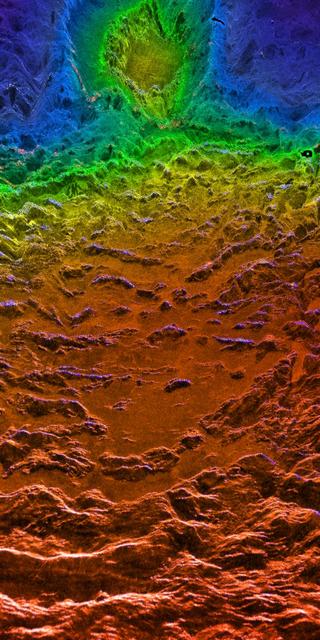
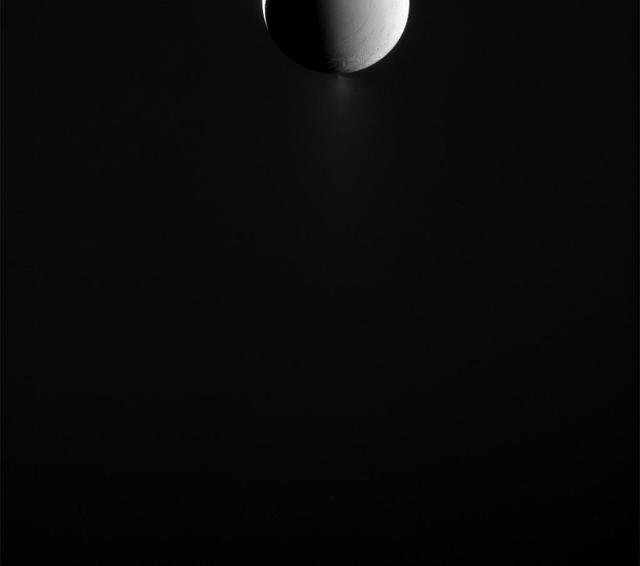
As NASA Magellan mission progressed, areas of Venus became accessible for a second look. During Magellan second 243-day global mapping cycle, the spacecraft was rotated 180 degrees to view the surface from the opposite direction.  http://photojournal.jpl.nasa.gov/catalog/PIA00260
Venus - Comparison of Left and Right Looking Views of Imdr Region
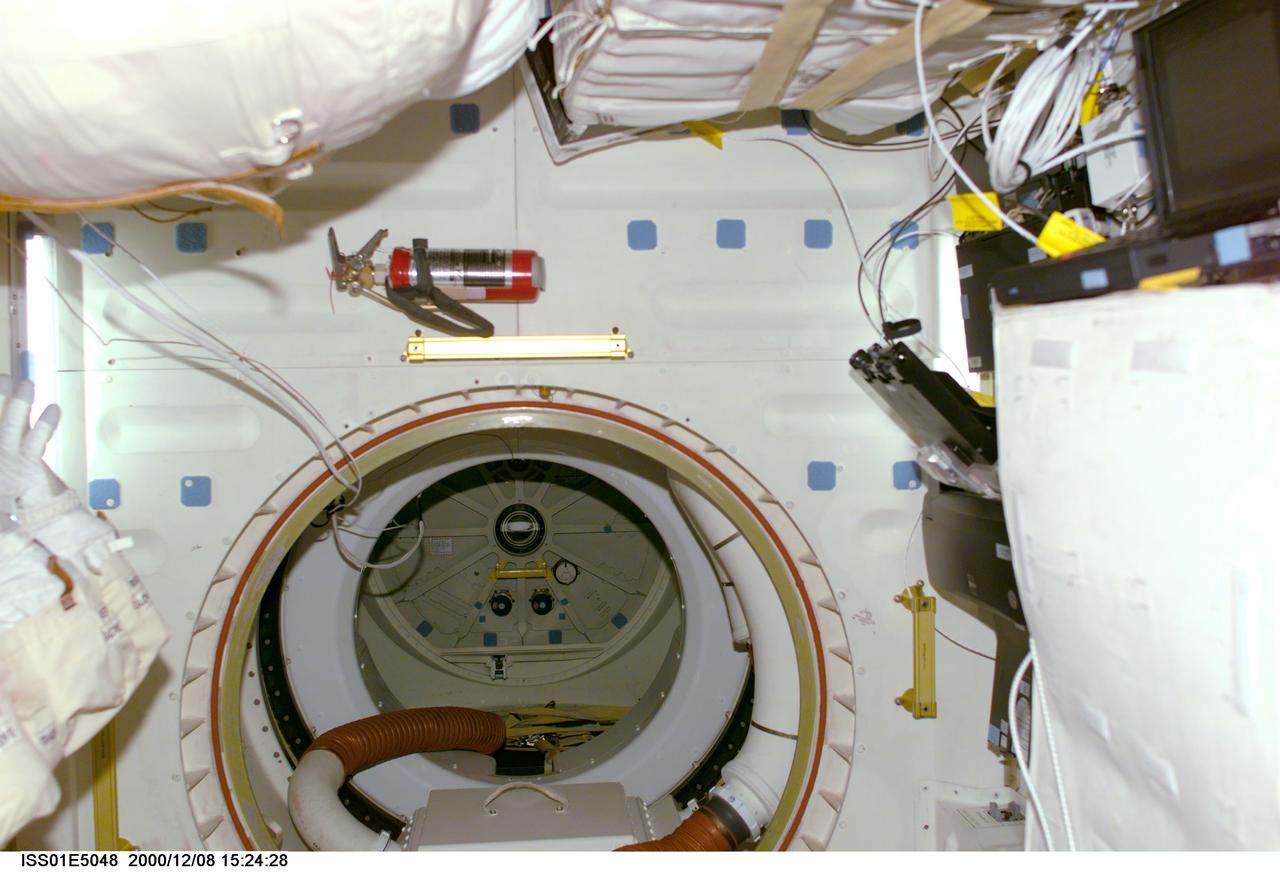
ISS01-E-5048 (8 December 2000) ---This digital still camera's view was taken in the International Space Station's Primary Mating Adapter-3 (PMA-3) looking into the tunnel that leads to the Unity node.
View in PMA-3 looking into connecting tunnel
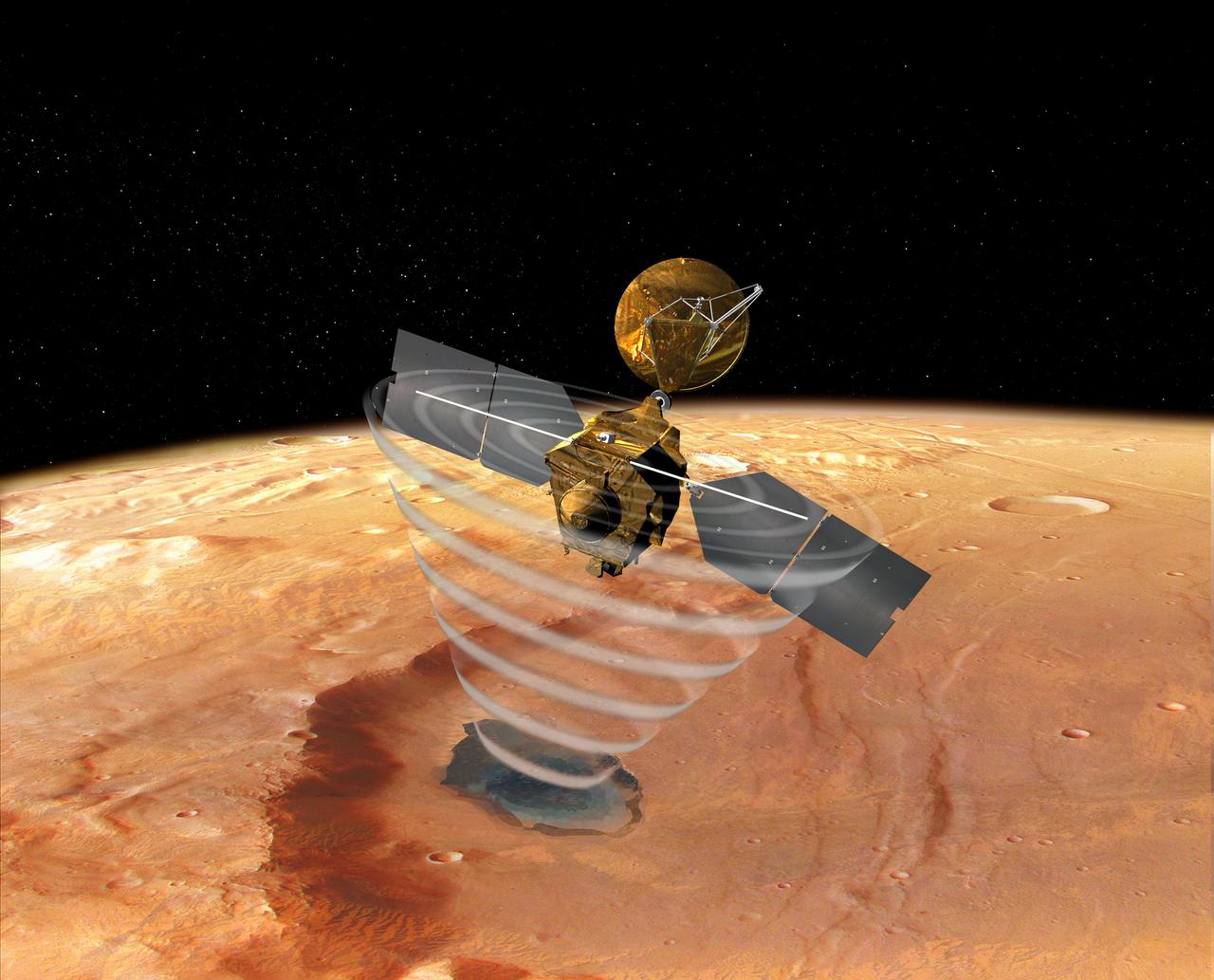
This image is an artist concept of a view looking down on NASA Mars Reconnaissance Orbiter.
Mars Reconnaissance Orbiter Radar, Top View Artist Concept
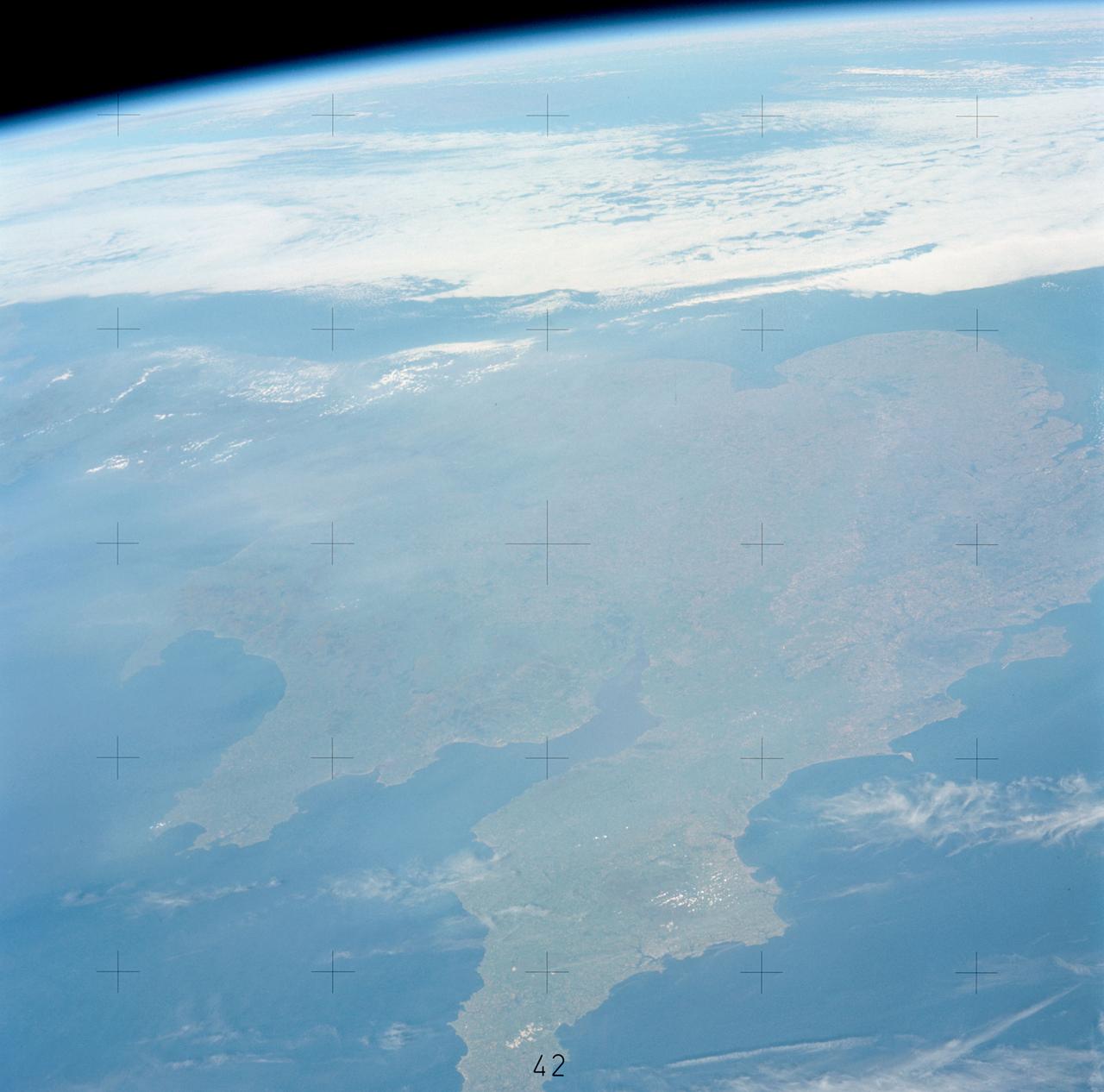
SL3-121-2445 (July-September 1973) --- An oblique view of a portion of Great Britain looking northeastward across England and Wales, as photographed by one of the Skylab 3 crewmen aboard the Skylab space station in Earth orbit. The picture was taken with a hand-held 70mm Hasselblad camera using a 100mm lens and SO-368 medium-speed Ektacrome film. The English Channel is at lower right. The Bristol Channel is at lower left. The North Sea with much cloud cover is in the background. Photo credit: NASA
View of a portion of Great Britain looking northeastward
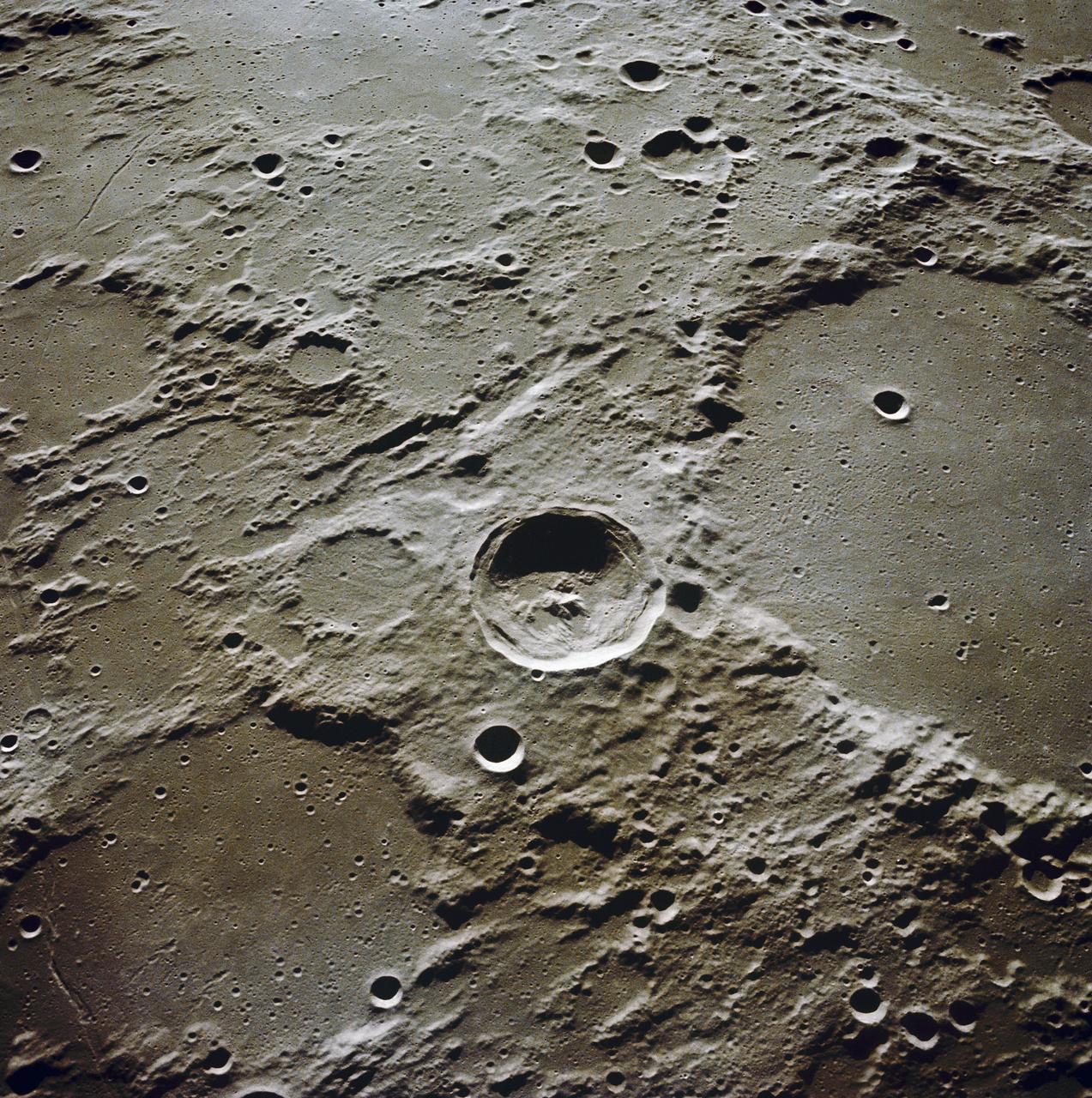
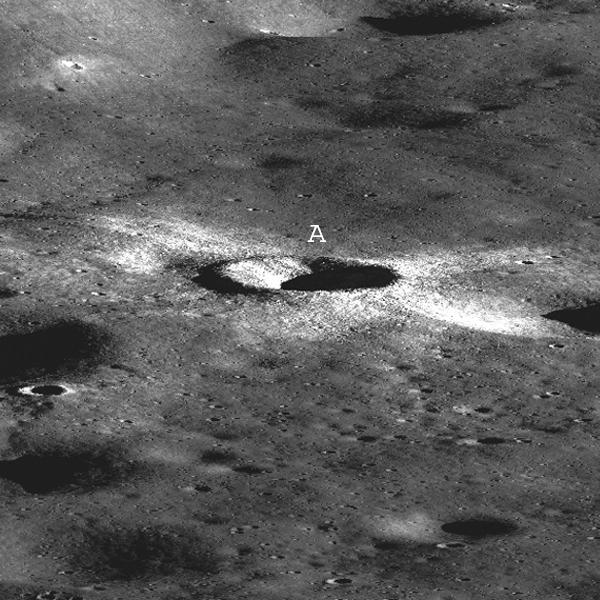
AS12-50-7431 (19 Nov 1969) --- This low oblique view, taken from the Apollo 12 spacecraft, is looking toward  the southeast and it shows the highland area around the large crater  Ptolemaeus (right center). Herschel is the terraced crater with central peaks in center of photo.
Oblique view looking toward southeast shows highland area crater Ptolemaeus
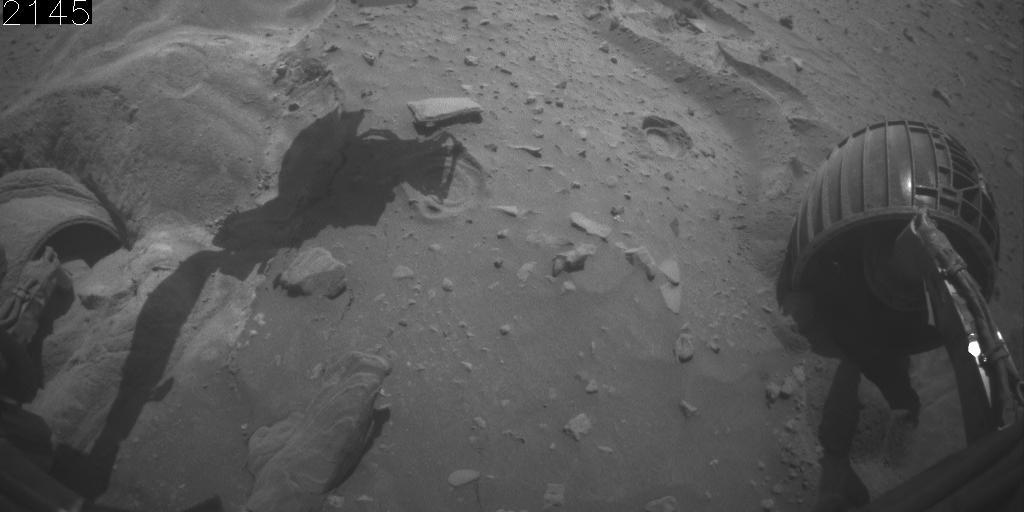
This NASA Spirit image view is toward the north, looking down at Spirit front wheels. It is one of a series of wide-angle views shown one after the other. Go to the Photojournal to view the animation.
Front Camera View of Backward Drive, Sols 2145-2154
This NASA Spirit image view is toward the south, looking down at Spirit rear wheels. It is one of a series of wide-angle views shown one after the other. Go to the Photojournal to view the animation.
Rear Camera View of Backward Drive, Sols 2145-2154
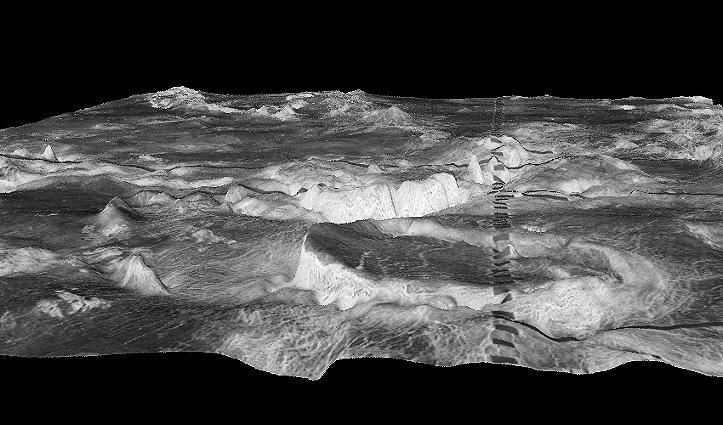
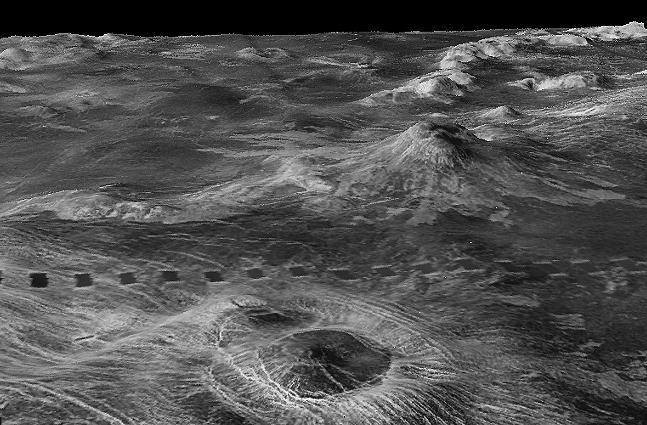
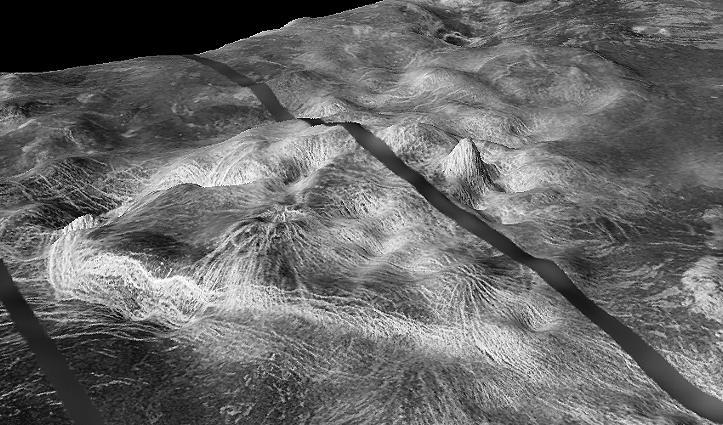
The view from NASA's Magellan spacecraft shows most of Galindo V-40 quadrangle looking east; Atete Corona, in the foreground, is a 600-km-long and about 450-km-wide, circular volcano-tectonic feature.  http://photojournal.jpl.nasa.gov/catalog/PIA00096
Three-dimensional perspective views of Venusian Terrains composed of reduced resolution left-looking synthetic-aperture radar images merged with altimetry data from the Magellan spacecraft.
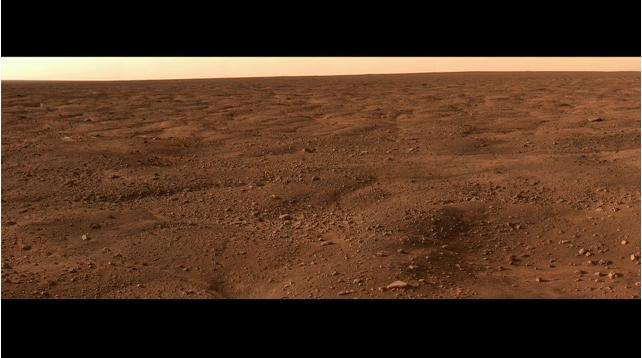
Images taken by NASA Phoenix Mars Lander Surface Stereo Imager, combined into a panoramic view looking north from the lander.
Phoenix Animation Looking North
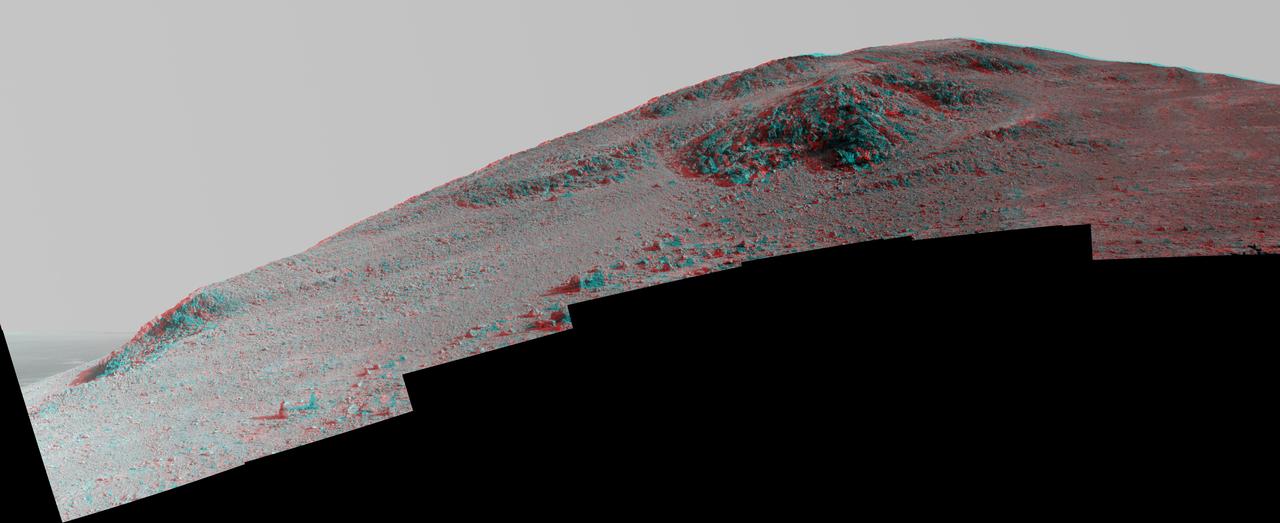
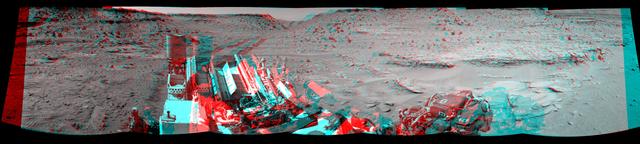
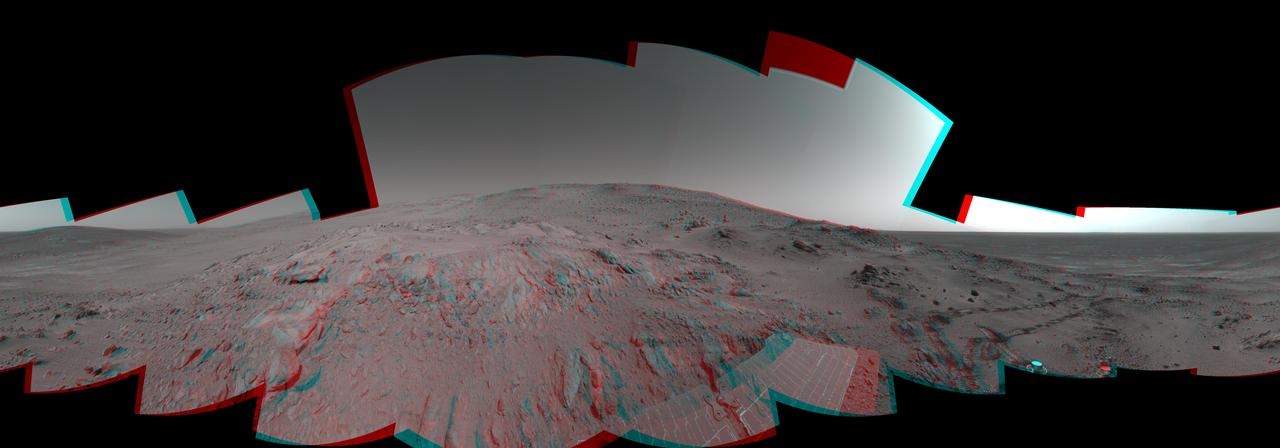
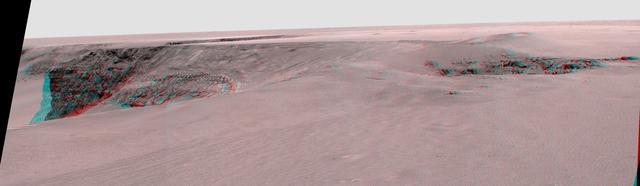
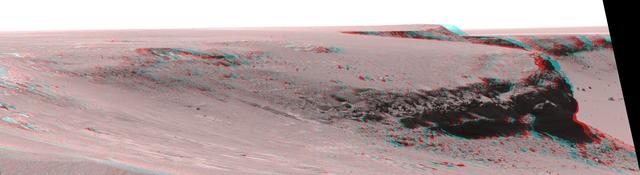
This sweeping look at the unusual rock outcropping near NASA Mars Exploration Rover Opportunity. 3D glasses are necessary to view this image.
Not of this Earth
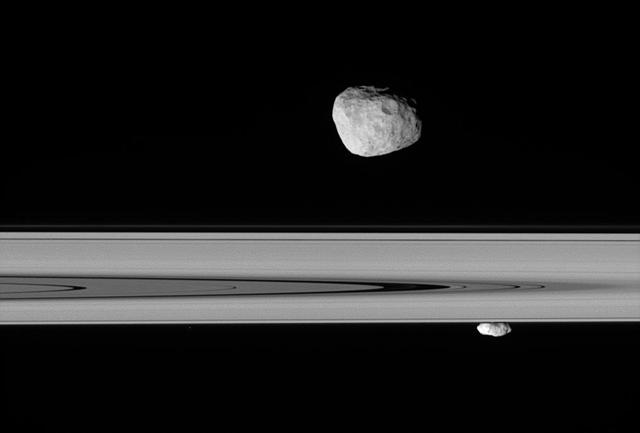
Saturn moons Janus and Prometheus look close enough to touch in this  stunningly detailed view
So Close…
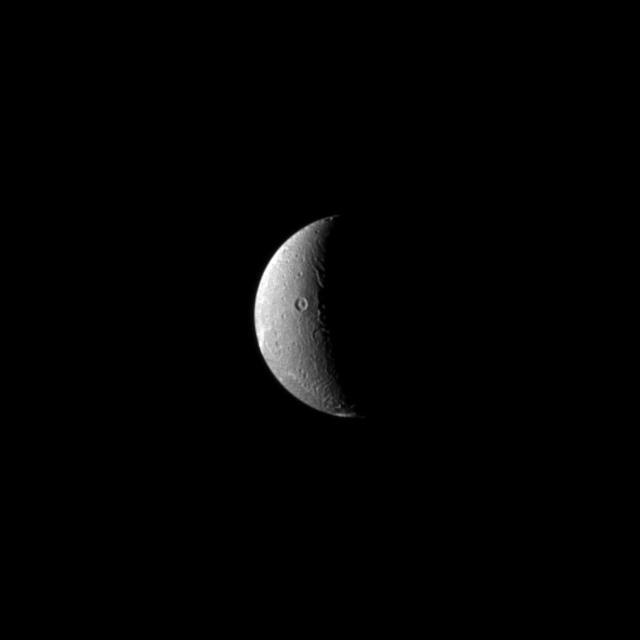
The fractured terrain so distinctive to Dione curves away toward the south in this view, which looks down at the moon northern hemisphere
Down on Dione
The fractured terrain so distinctive to Dione curves away toward the south in this view, which looks down at the moon northern hemisphere
The Rings Variety
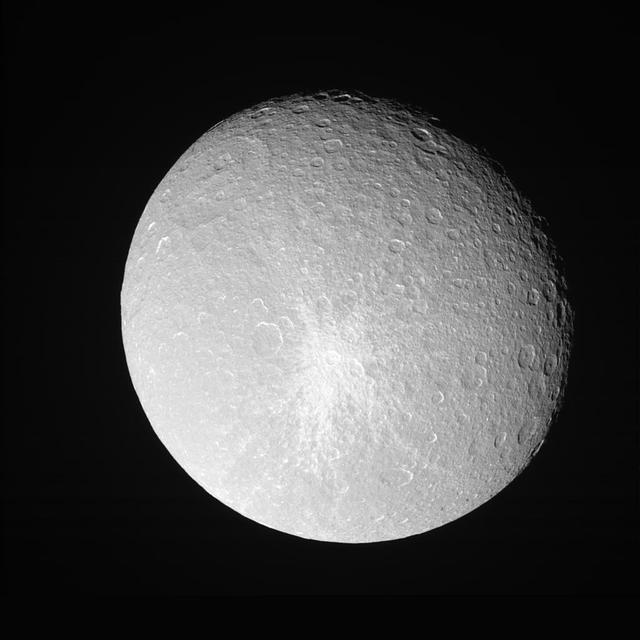
Rhea shows off her bright, fresh-looking impact crater in this Cassini  view taken during a close approach
Revisiting the Splat
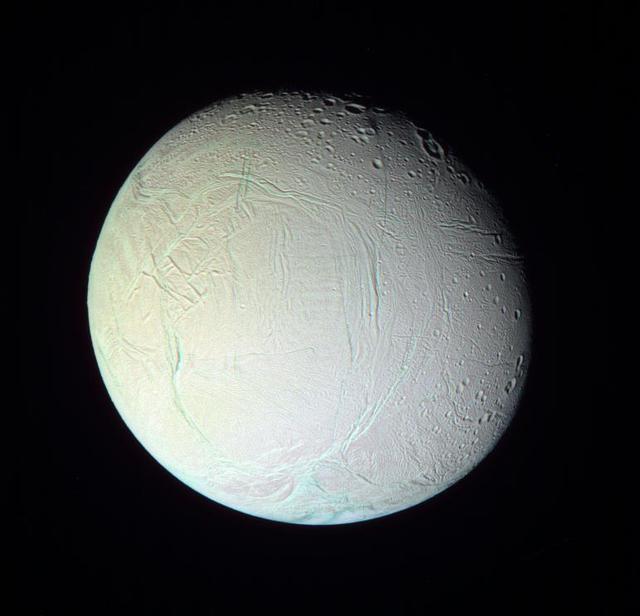
A false color look reveals subtle details on Enceladus that are not  visible in natural color views
Fresh Features on Enceladus False color
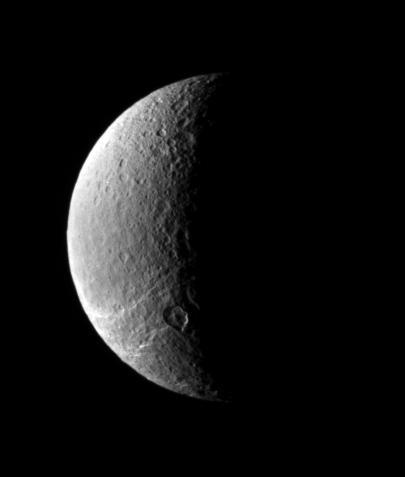
This view looks toward Rhea north polar region, where icy fractures slither away toward the south
Barren Pole
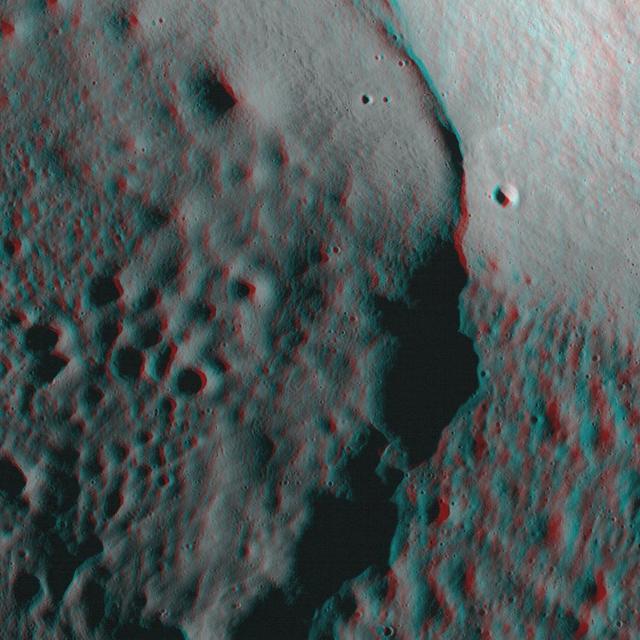
NASA Lunar Reconnaissance Orbiter looks at the Moon in 3D. 3D glasses are necessary to view this image.
The Moon in 3-D
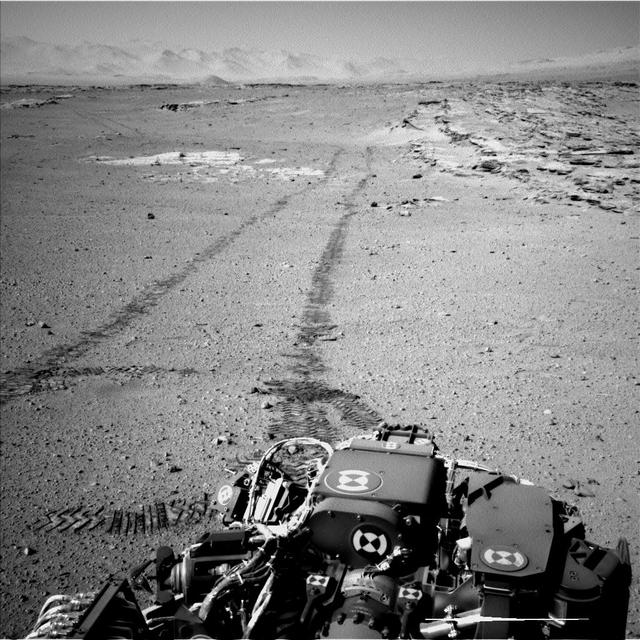
On Feb. 19, 2014, NASA Curiosity Mars rover looked back after finishing a long drive. The rows of rocks just to the right of the fresh wheel tracks in this view are an outcrop called Junda. This view is looking toward the east-northeast.
Curiosity View Back After Passing Junda Striations
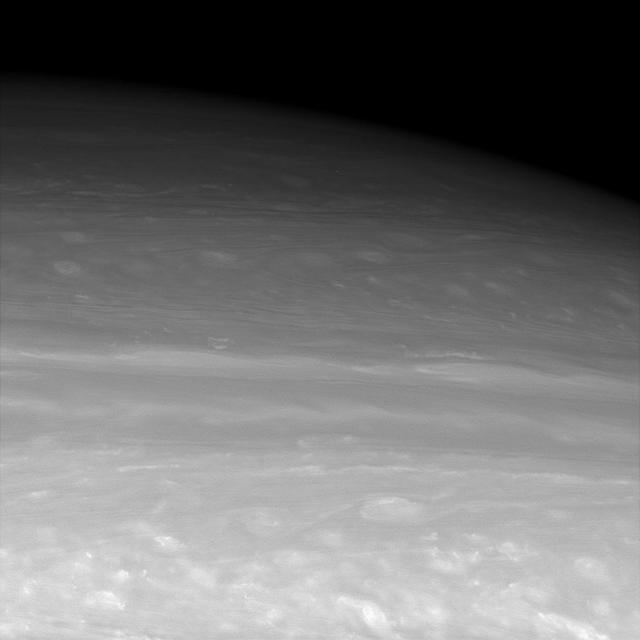
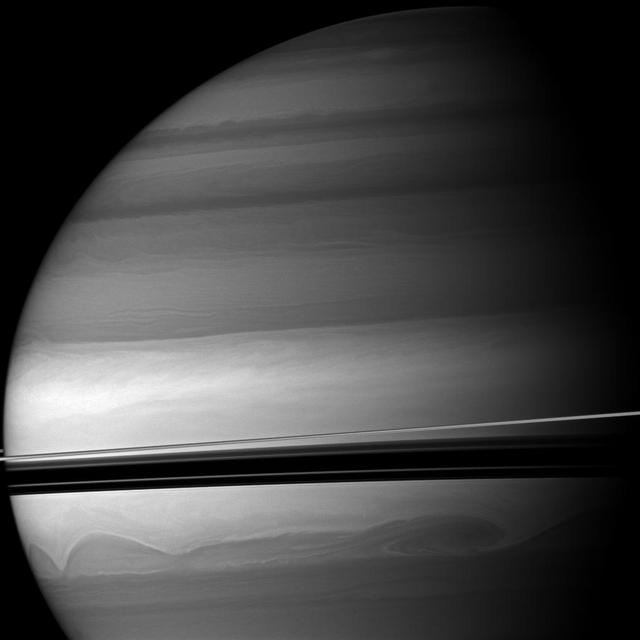
This infrared view looks toward middle to high northern latitudes on Saturn, revealing entrancing meanders in the clouds. The cloud patterns transition from puffier looking in the south -- possibly a region of shear -- to smoother oval shapes in the north
View to the North
The view from NASA's Magellan spacecraft shows part of Galindo V40 quadrangle looking north; Nagavonyi Corona is in the foreground. Coronae are roughly circular, volcanic features believed to form over hot upwellings of magma within the Venusian mantle.  http://photojournal.jpl.nasa.gov/catalog/PIA00095
Three-dimensional perspective views of Venusian Terrains composed of reduced resolution left-looking synthetic-aperture radar images merged with altimetry data from the Magellan spacecraft.
This oblique view of Saturn shows what may be localized upwellings in the clouds of Saturn southern hemisphere. Although the contrast is low, a vortex is visible near lower right.This view looks toward the unlit side of the rings
Saturn Aslant
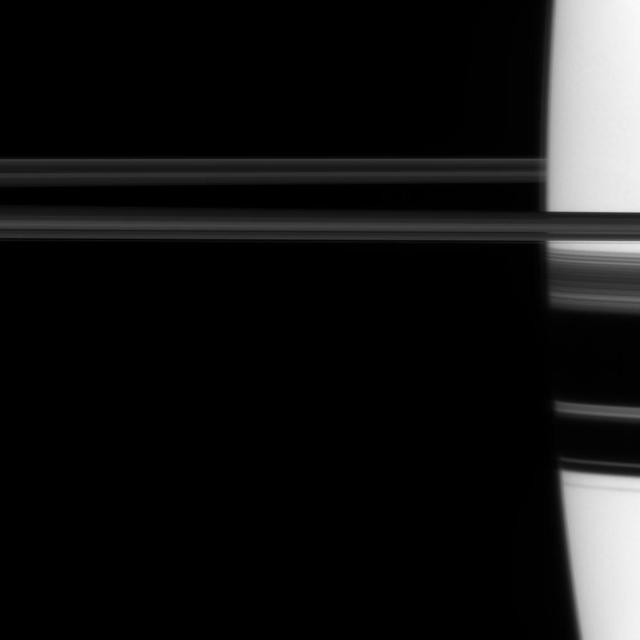
NASA Cassini spacecraft looks toward the limb of Saturn and, on the right of this image, views part of the rings through the planet atmosphere. Saturn atmosphere can distort the view of the rings from some angles.
Rings Through Atmosphere
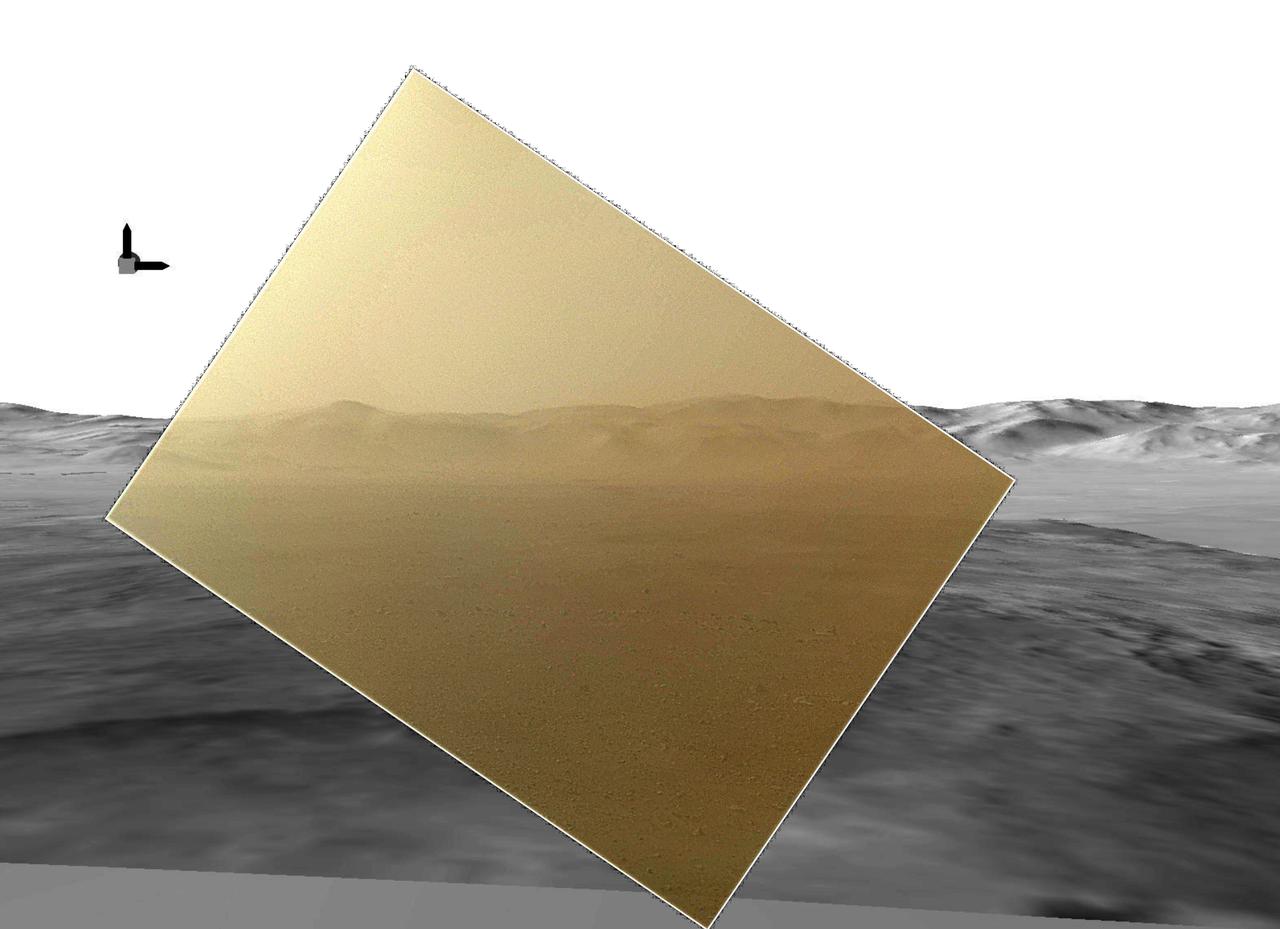
This picture from NASA Curiosity rover puts a color view obtained by the rover in the context of a computer simulation derived from images acquired from orbiting spacecraft. The view looks north, showing the distant ridge of Gale Crater.
Curiosity Landscape Portrait in Context
Cassini looks toward northern latitudes on Saturn and out across the ringplane. This infrared view probes clouds beneath the hazes that obscure the planet depths in natural color views
Depth Sounding
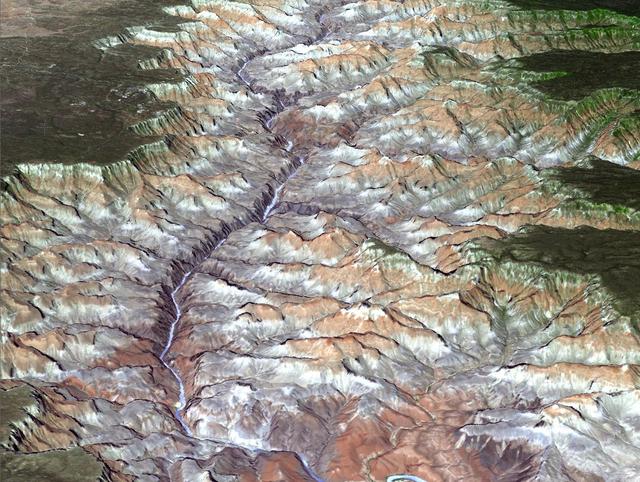
NASA Terra spacecraft provided this view of the eastern part of Grand Canyon National Park in northern Arizona in this image on July 14, 2011. This view looks to the west, with tourist facilities of Grand Canyon Village visible in the upper left.
A Spacebird-eye View of the Grand Canyon from NASA Terra Spacecraft
This stereo view from NASA Mars Exploration Rover Opportunity looks upward at Knudsen Ridge on the southern edge of Marathon Valley from inside the valley. You need 3-D glasses to view this image.
Steep Knudsen Ridge Along Marathon Valley on Mars Stereo
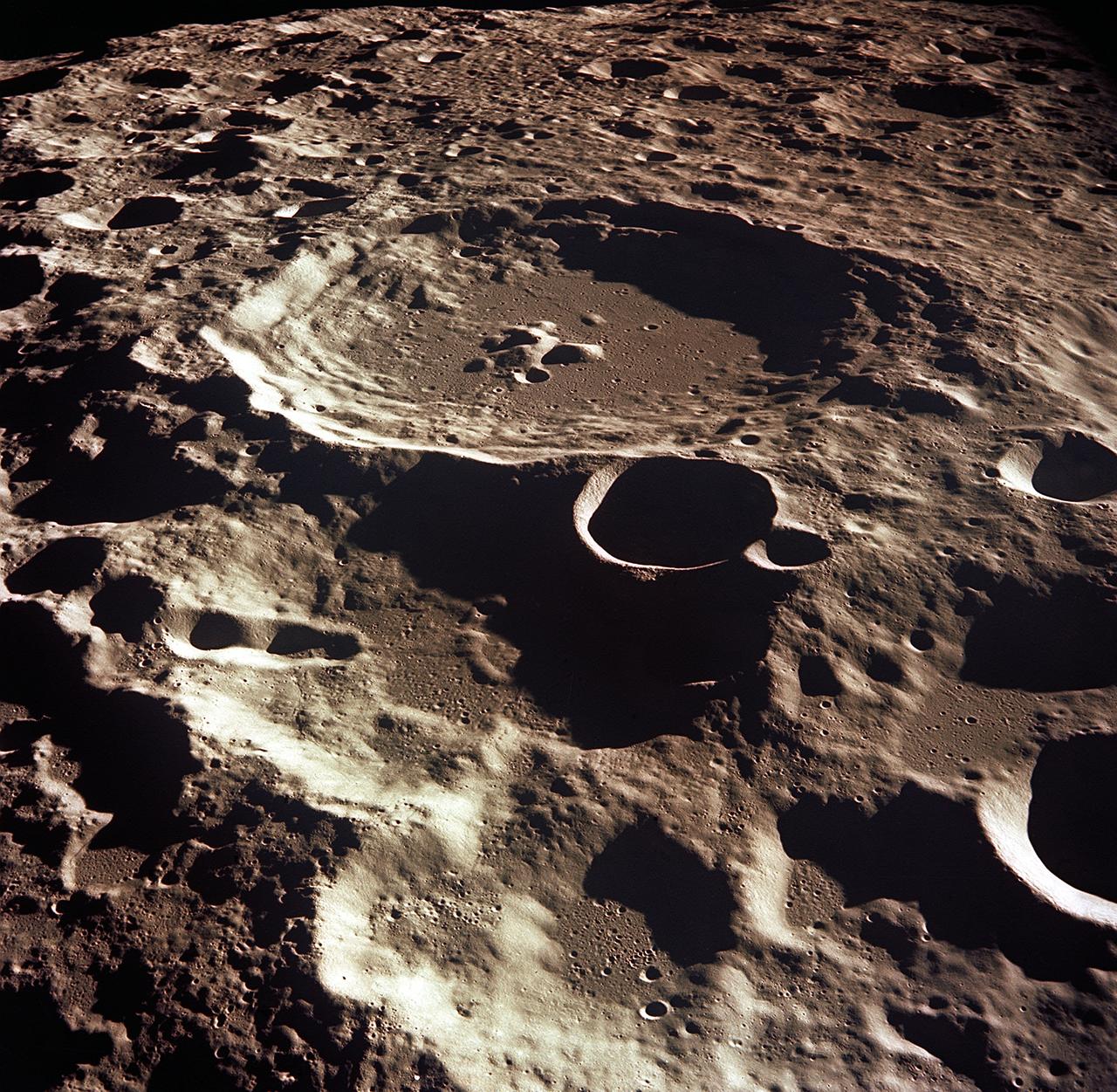
AS11-44-6609 (16-24 July 1969) --- An oblique of the Crater Daedalus on the lunar farside as seen from the Apollo 11 spacecraft in lunar orbit. The view looks southwest. Daedalus (formerly referred to as I.A.U. Crater No. 308) is located at 179 degrees east longitude and 5.5 degrees south latitude. Daedalus has a diameter of about 50 statute miles. This is a typical scene showing the rugged terrain on the farside of the moon. While astronauts Neil A. Armstrong, commander, and Edwin E. Aldrin Jr., lunar module pilot, descended in the Lunar Module (LM) "Eagle" to explore the Sea of Tranquility region of the moon, astronaut Michael Collins, command module pilot, remained with the Command and Service Modules (CSM) "Columbia" in lunar orbit.
Oblique view of lunar farside photographed from orbit looking southwest
This is a synthetic perspective view looking south from the Apollo 16 landing area, topography is rendered naturally as seen by NASA Lunar Reconnaissance Orbiter.
First LROC Stereo Results
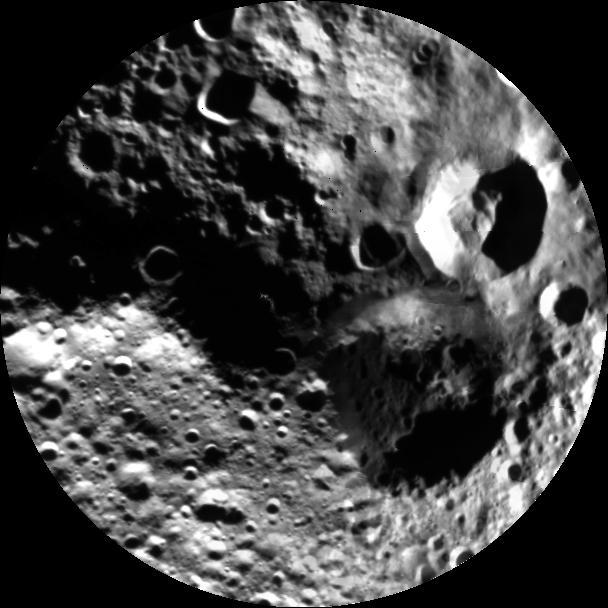
This image from NASA Dawn mission shows a shadowy view of the northern hemisphere of the giant asteroid Vesta during Dawn last look back.
Best Northern View of Vesta
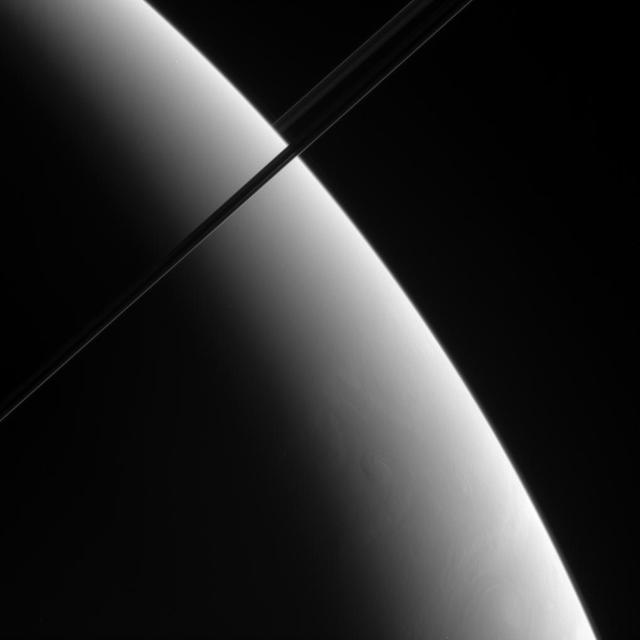
NASA Cassini spacecraft looks past the night side of Saturn, dimly lit on the left of this image by ringshine, for a subtly distorted view of the planet rings.
Atmospheric Distortion
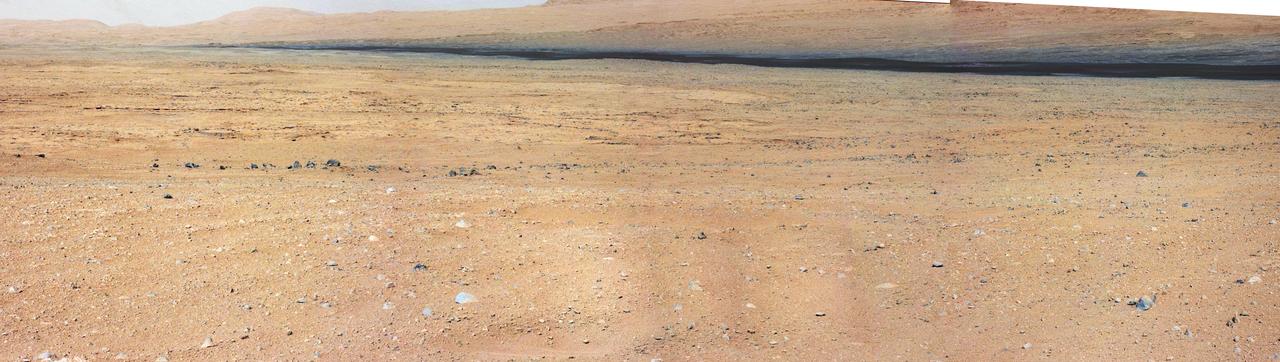
This mosaic from the Mast Camera on NASA Curiosity rover shows the view looking toward the Glenelg area, where three different terrain types come together.
On the Road to Glenelg
This image from NASA Terra spacecraft shows a perspective view, looking toward the Aso volcanic caldera, which indicates the epicenter with a red star.
NASA Satellite Shows Site of Devastating Japan Quakes
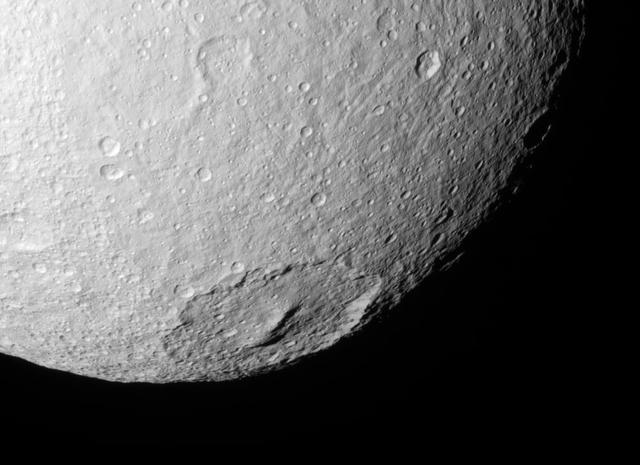
NASA Cassini spacecraft takes a detailed look at the northern part of the huge Odysseus Crater on Saturn moon Tethys. The crater dominates the left half of this view of Tethys.
Northern Odysseus
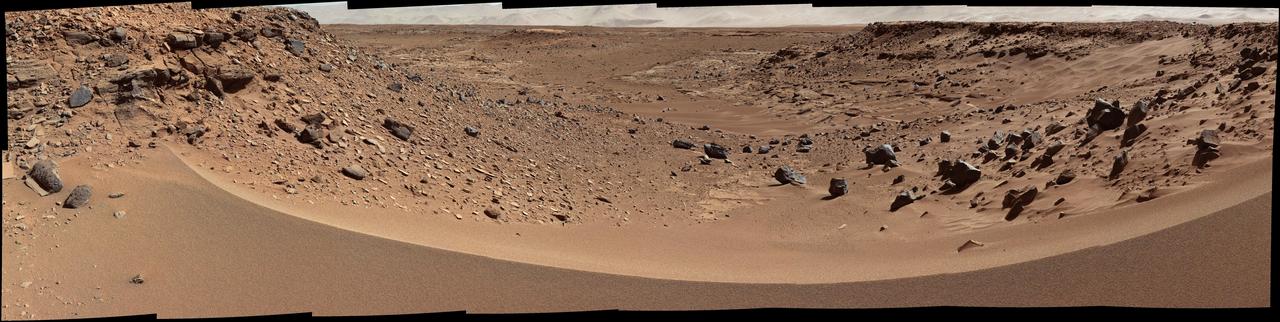
This view combines several frames taken by NASA Mars rover Curiosity, looking into a valley to the west from the eastern side of a dune at the eastern end of the valley.
Martian Valley May Be Curiosity Route
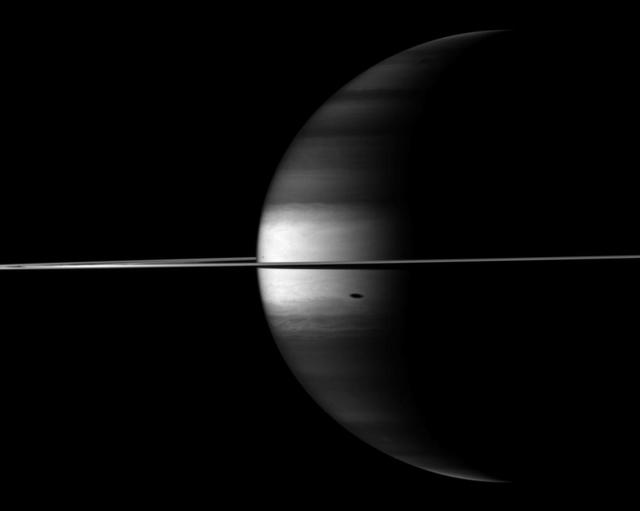
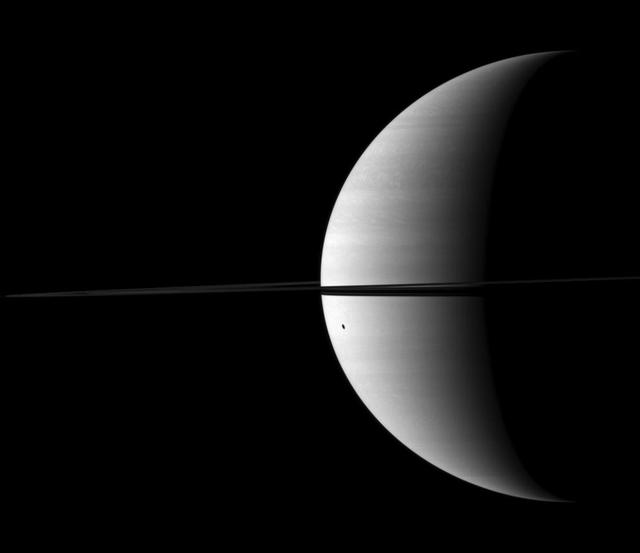
NASA Cassini spacecraft camera looks in near-infrared light at a dramatic view of Saturn, its ringplane and the shadows of a couple of its moons.
Scene Seen in the Near-Infrared
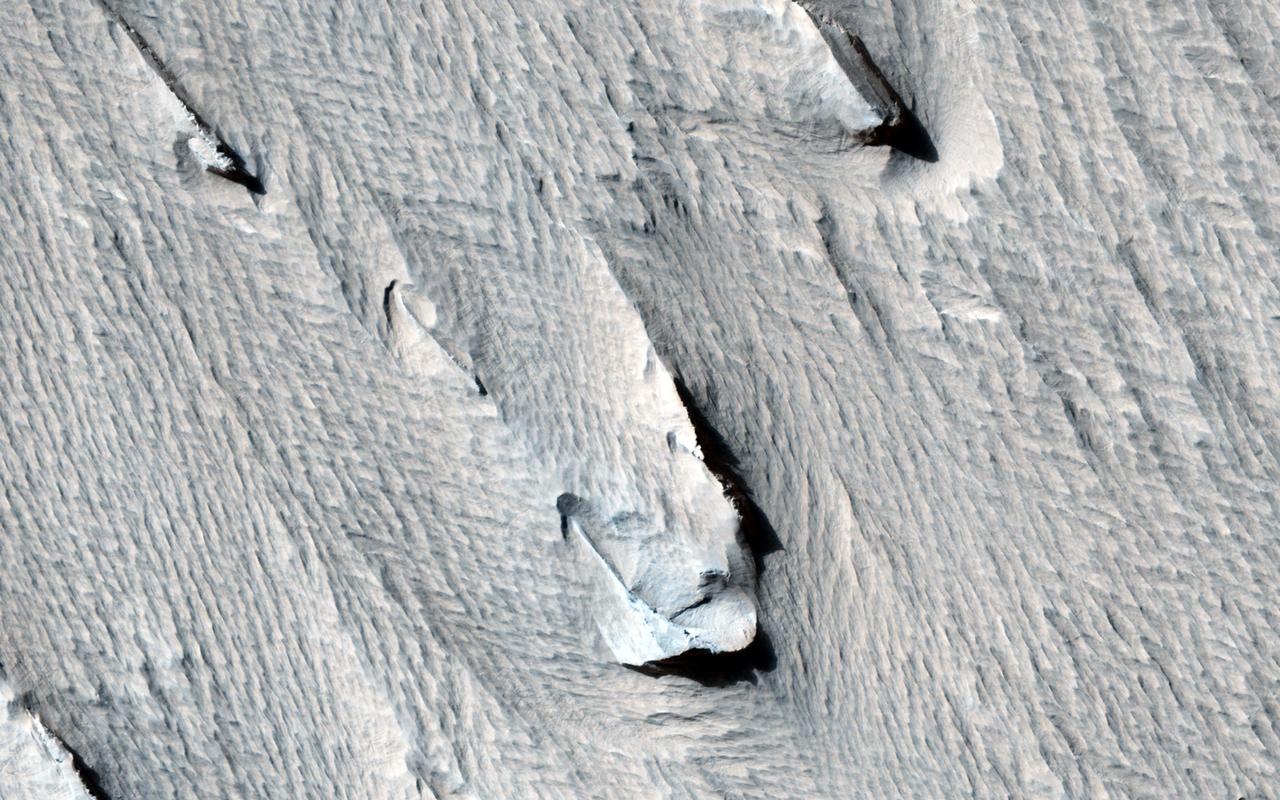
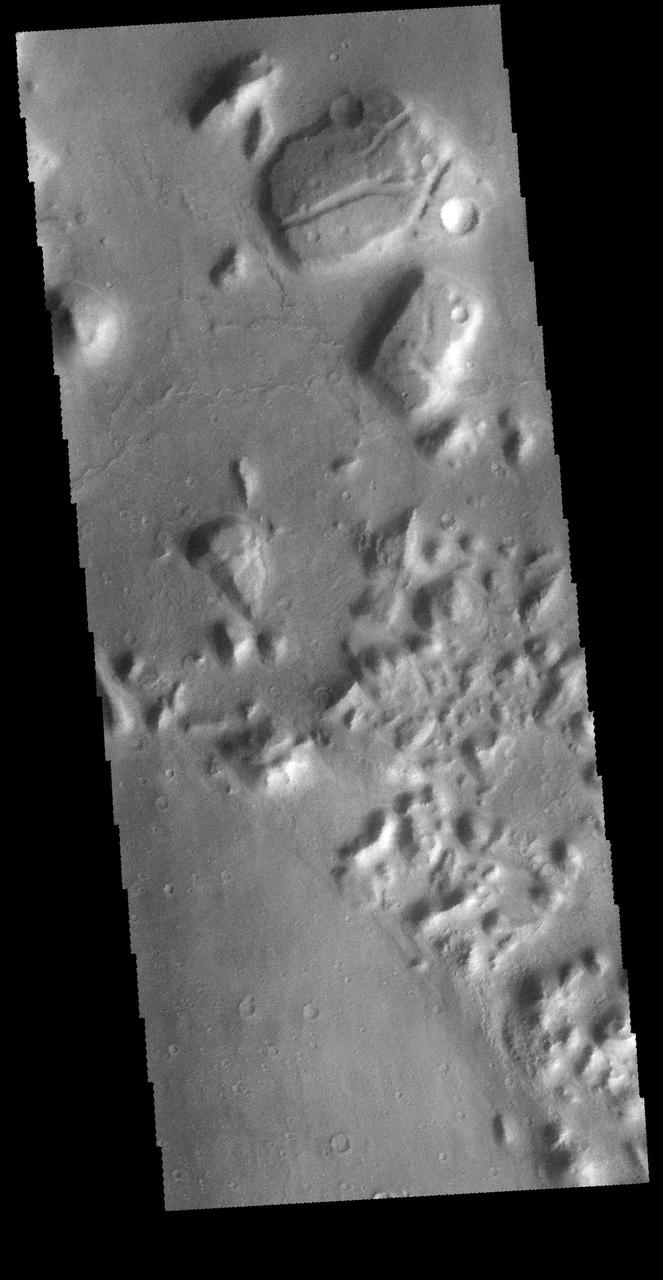
Yardangs are streamlined hills that are carved by wind erosion from bedrock. NASA Mars Reconnaissance Orbiter viewed these yardangs which can look like the hull of a boat.
Yardangs Forming Near Gordii Dorsum
A large storm roils Saturn atmosphere on the left of this NASA Cassini spacecraft image. This view looks toward a region centered at 24 degrees south of the planet equator.
Oval of a Storm
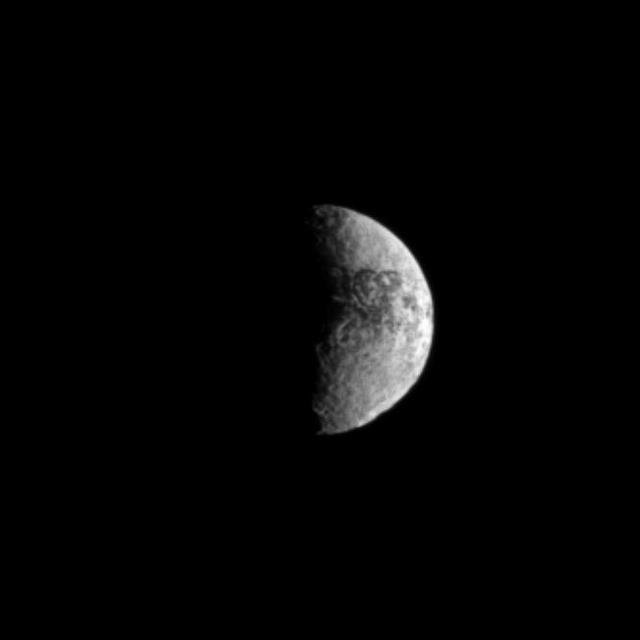
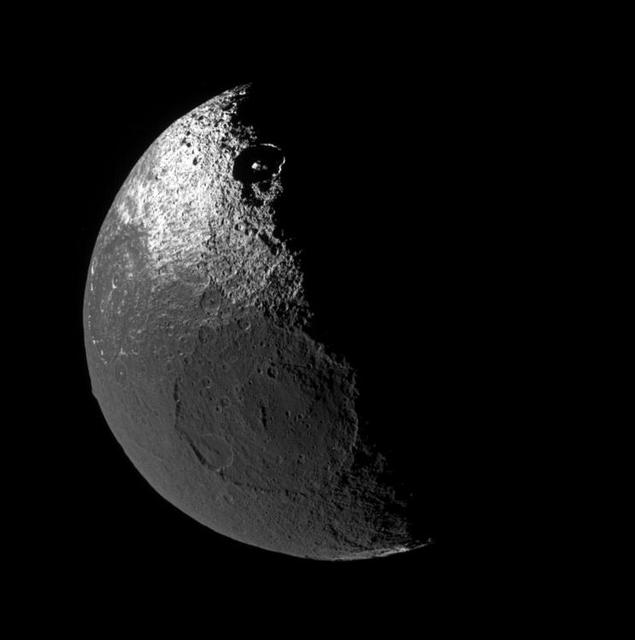
Craters give a rugged look to surface of Iapetus, especially in the large basin of Engelier visible along the southern limb of the moon in this view captured by NASA Cassini spacecraft.
Crater at the Edge
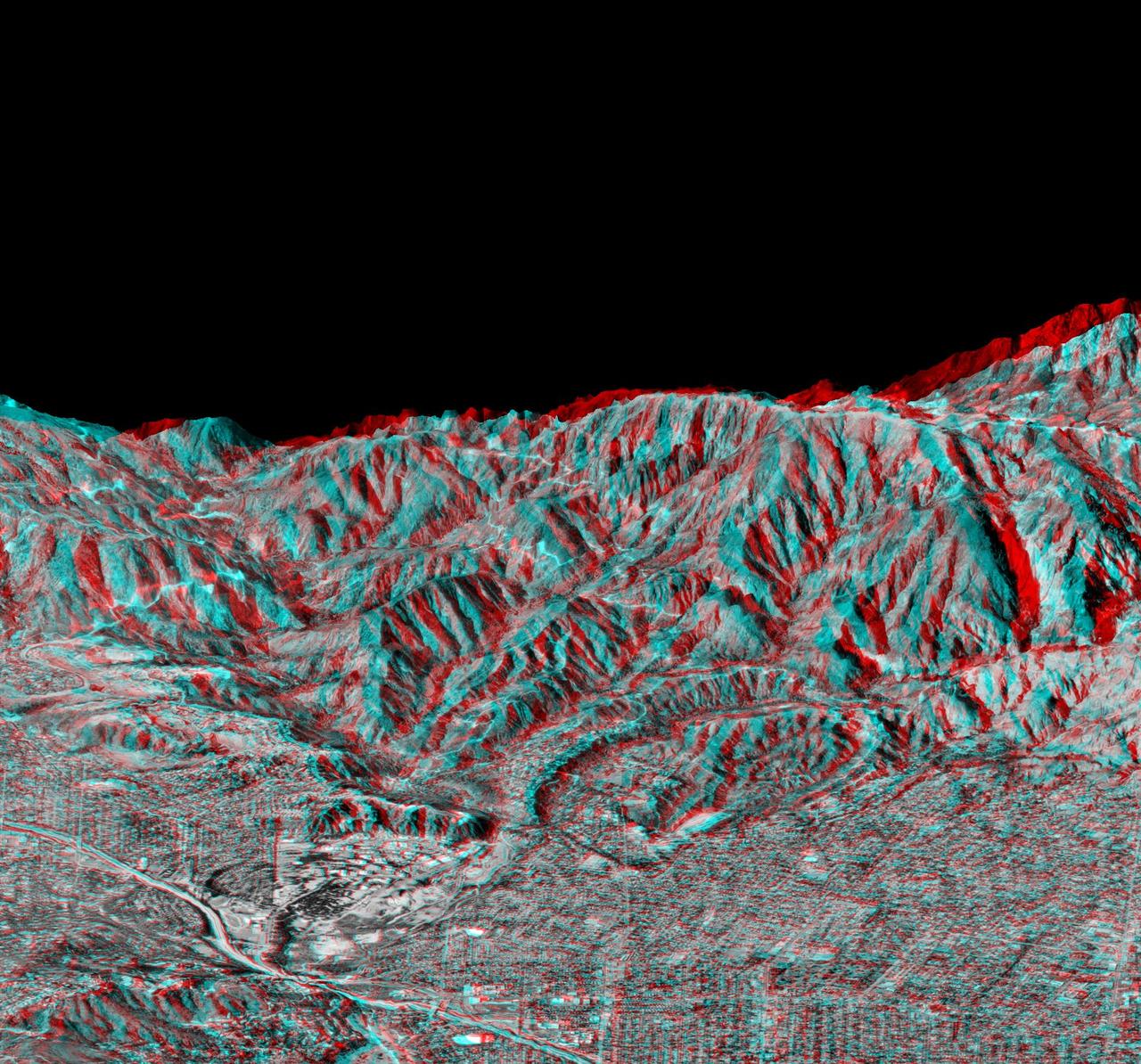
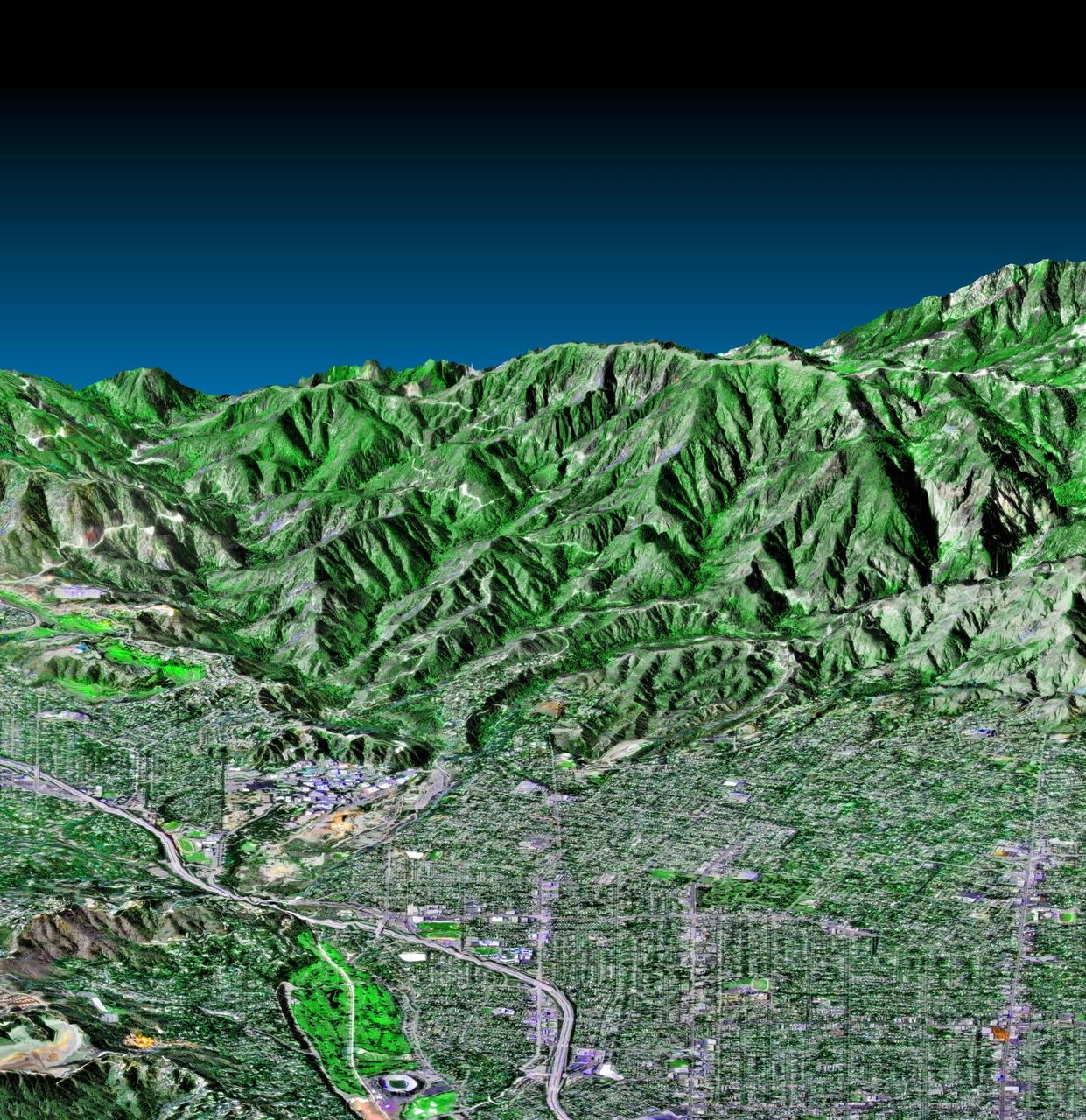
This anaglyph, from NASA Shuttle Radar Topography Mission, is of Pasadena, California, looking north toward the San Gabriel Mountains. 3D glasses are necessary to view this image.
Anaglyph of Perspective View with Aerial Photo Overlay Pasadena, California
This dramatic view from NASA Cassini spacecraft looks across the region of Enceladus geyser basin and down on the ends of the Baghdad and Damascus fractures that face Saturn.
Elevated View of Enceladus South Pole
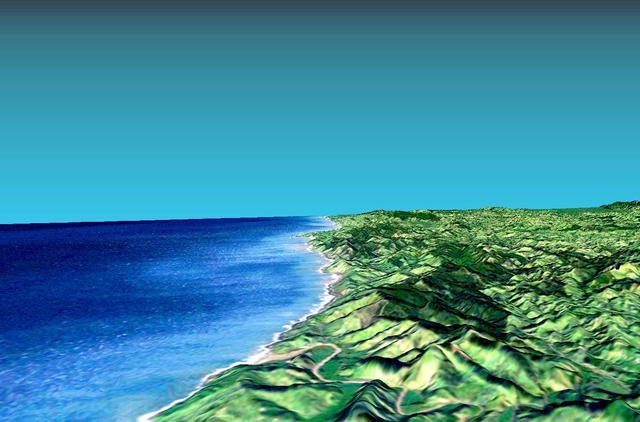
This 3-D perspective view looks south along the southeast coast of the North Island of New Zealand. The capital city of Wellington is off the right side of the image.
Perspective View with Landsat Overlaid Owahanga, New Zealand
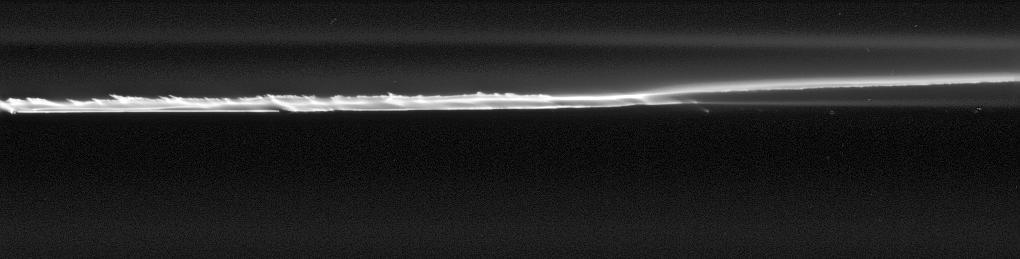
This close-up view of the core of Saturn narrow outlying F ring provides an unprecedented look at the fine scale structure of this highly perturbed ring
Shearing Core
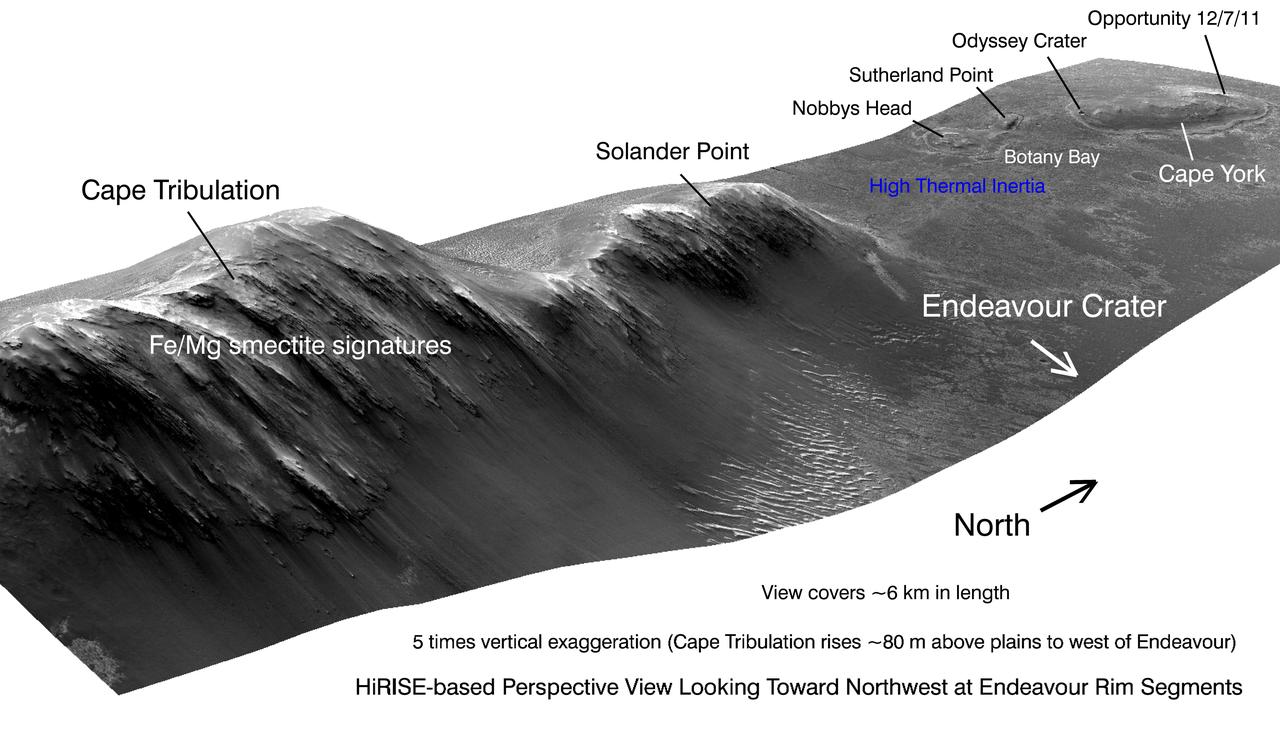
This view from NASA Mars Reconnaissance Orbiter shows portions of the western rim of Endeavour Crater on Mars from a perspective looking toward the northwest.
West Rim of Endeavour with Vertical Exaggeration
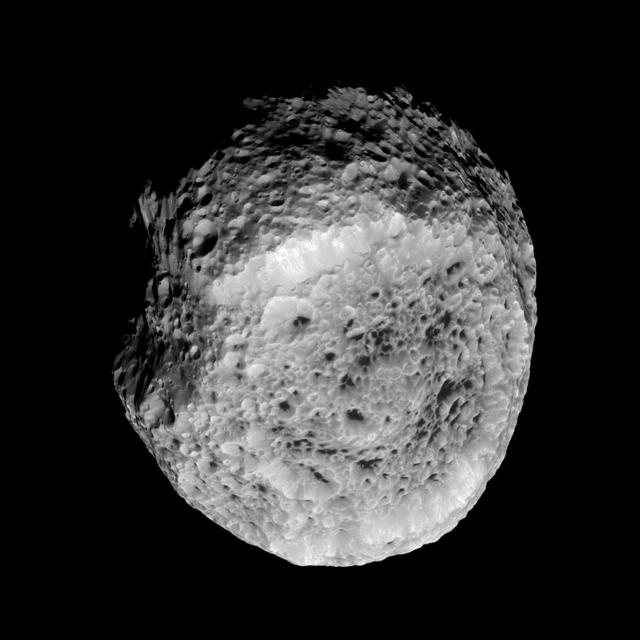
NASA Cassini spacecraft looks at Saturn highly irregular moon Hyperion in this view from the spacecraft flyby of the moon on Aug. 25, 2011.
Odd Hyperion
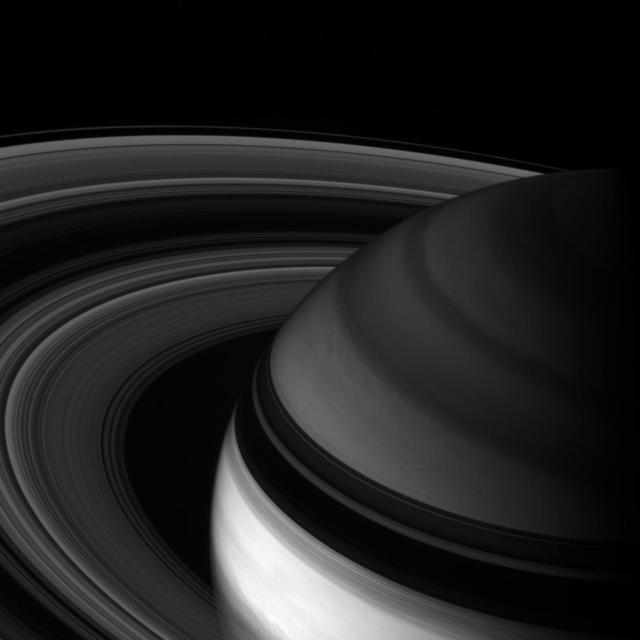
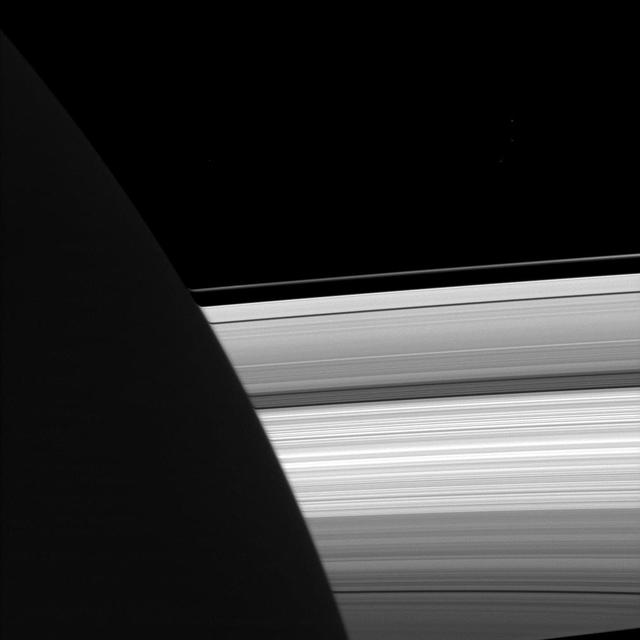
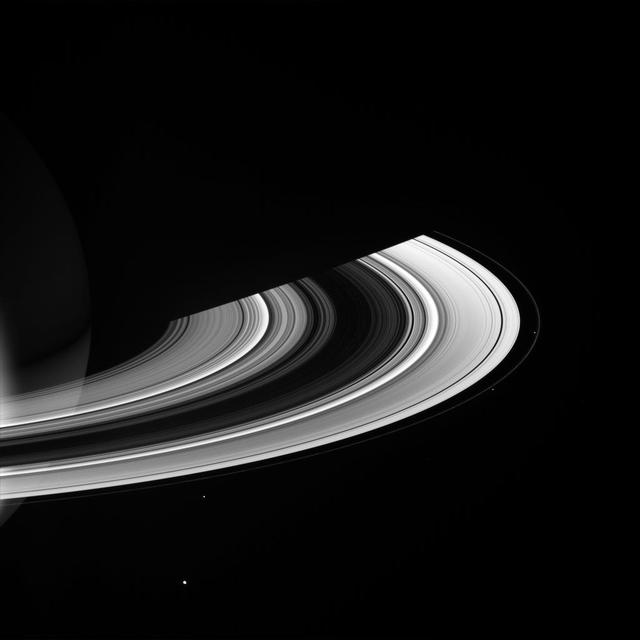
This view, acquired by NASA Cassini spacecraft, looks toward the unilluminated side of Saturn rings from about 47 degrees below the ringplane.
Still Alive
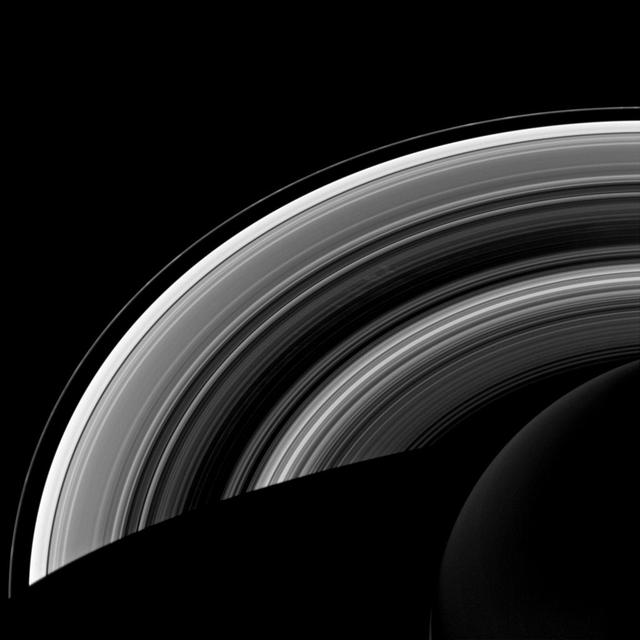
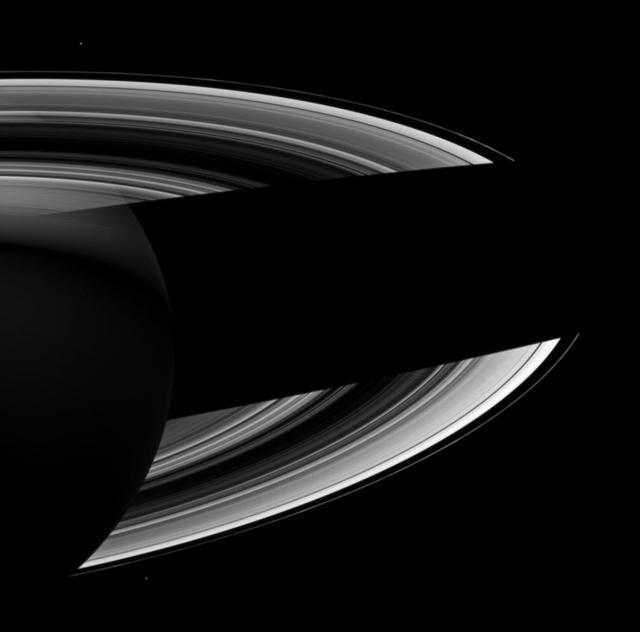
Cassini takes in a sweeping view of Saturn south polar region as the planet shadow masks the rings and bright, icy Mimas looks on from left
Shadowcaster
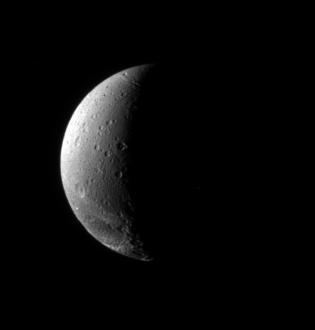
In this recent view of Dione, the Cassini spacecraft looks on as the moon slow rotation brings the terrain from day into night. Dione rotation period is 66 hours.
Dusk on Dione
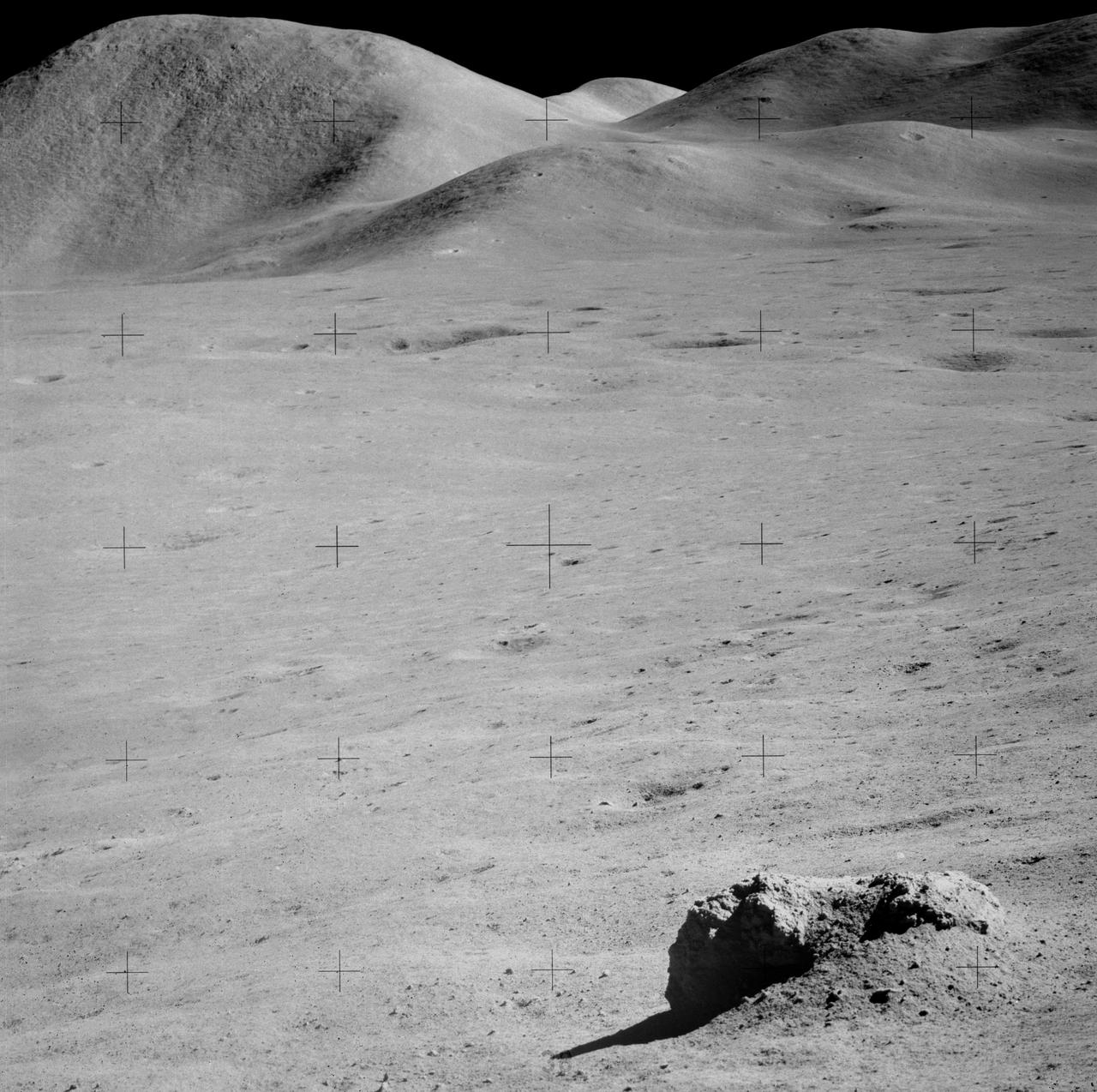
AS15-90-12187 (31 July-2 Aug. 1971) --- This view, looking generally north, shows the tall Mount Hadley in the left background. The photograph was taken from the slope of Hadley Delta during Apollo 15 extravehicular activity (EVA). The crewmen of Apollo 15 noted the visible layering feature of the mountain. Note boulder in foreground. Mount Hadley rises approximately 14,765 feet (about 4,500 meters) above the plain.
View looking north showing Mount Hadley photographed during Apollo 15 EVA
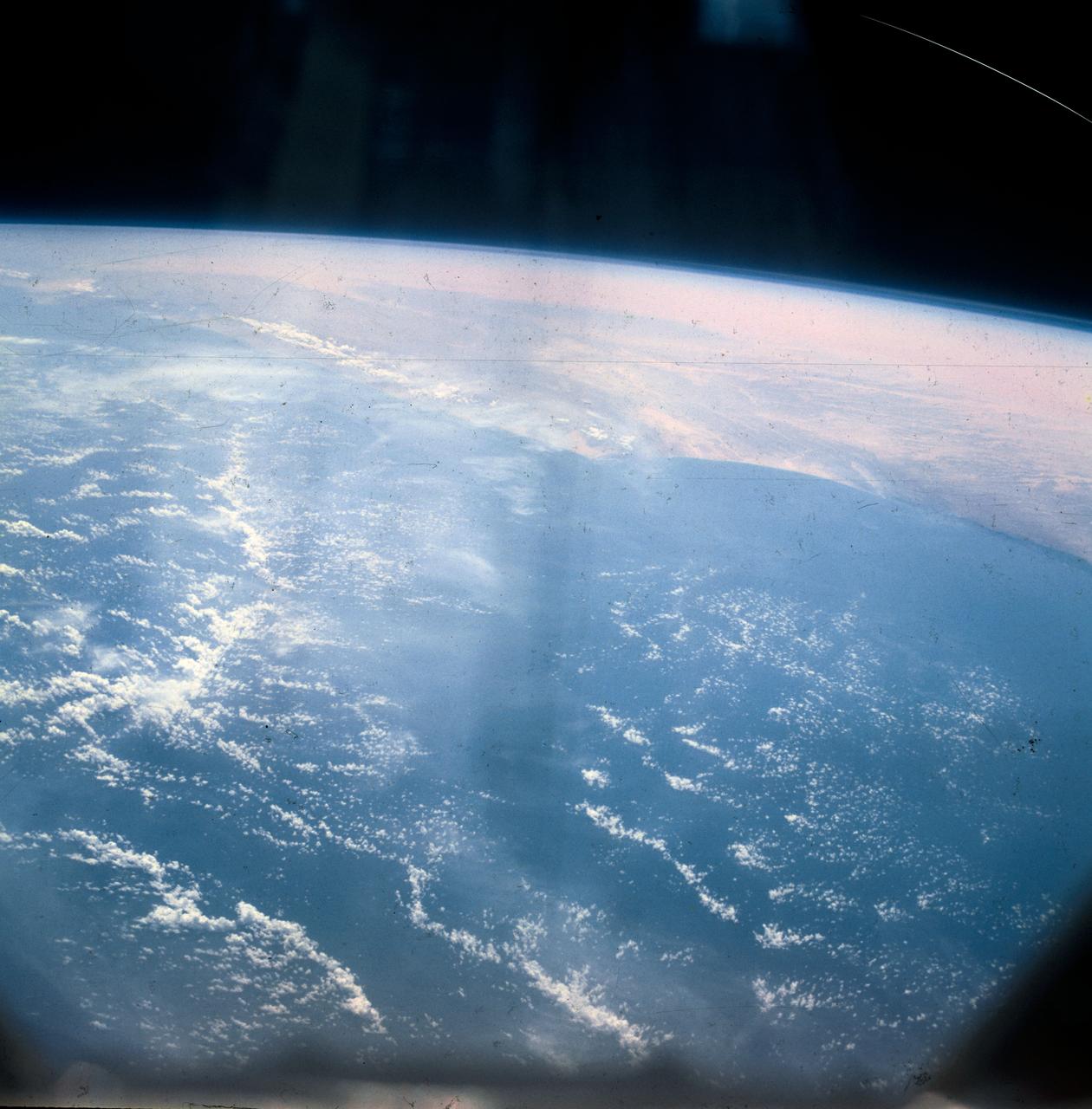
S63-06434 (15-16 May 1963) --- East looking view across Atlantic waters toward Africa, showing Mauritania and Spanish Sahara photographed from the Mercury-Atlas 9 (MA-9) capsule by astronaut L. Gordon Cooper Jr., during his 22-orbit MA-9 spaceflight. Photo credit: NASA
East-looking view across Atlantic waters during MA-9 22 orbit
This artist's concept depicts an aerial view of what the Jezero Crater area of Mars may have looked like billions of years ago.  https://photojournal.jpl.nasa.gov/catalog/PIA22907
Lake Jezero (Artist's Concept)
This view captured by NASA's 2001 Mars Odyssey spacecraft looks like a dinosaur head at the top of the image.  Orbit Number: 65488 Latitude: 4.92808 Longitude: 126.933 Instrument: VIS Captured: 2016-09-18 03:24  https://photojournal.jpl.nasa.gov/catalog/PIA21698
THEMIS Art #139
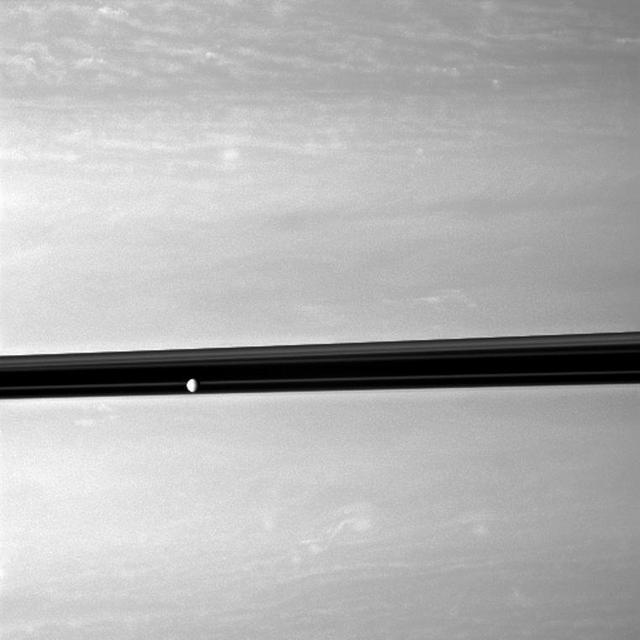
<p>  The Cassini spacecraft looks toward the unilluminated side of Saturn rings to spy on the moon Pan as it cruises through the Encke Gap.  </p>  <p>  This view looks toward the rings from about 13 degrees above the ringplane. At the top of the image
Entourage
S71-44667 (31 July-2 Aug. 1971) --- An oblique view of the Hadley-Apennine area, looking north, as photographed by the Fairchild metric camera in the Scientific Instrumentation Module (SIM) bay of the Apollo 15 Command and Service Modules (CSM) in lunar orbit. Hadley Rille meanders through the lower center of the picture. The Apennine Mountains are at lower right. The Apollo 15 Lunar Module (LM) touchdown point is on the east side of the "chicken beak" of Hadley Rille. The Caucasus Mountains are at upper right. The dark mare area at the extreme upper right is a portion of the Sea of Serenity. The Marsh of Decay is at lower left. The large crater near the horizon is Aristillus, which is about 55 kilometers (34.18 statute miles) in diameter. The crater just to the south of Aristillus is Autolycus, which is about 40 kilometers (25 statute miles) in diameter. The crater Cassini is barely visible on the horizon at upper right. The three-inch mapping camera was one of eight lunar orbital science experiments mounted in the SIM bay.
View of Hadley-Apennine area, looking north, photographed by Apollo 15
NASA Mars Exploration Rover Spirit looked up at the Columbia Hills from its location on the 265th martian day, or sol, of its mission Sept. 30, 2004 and captured this 3-D view. 3D glasses are necessary to view this image.
Spirit View of Columbia Hills 3-D
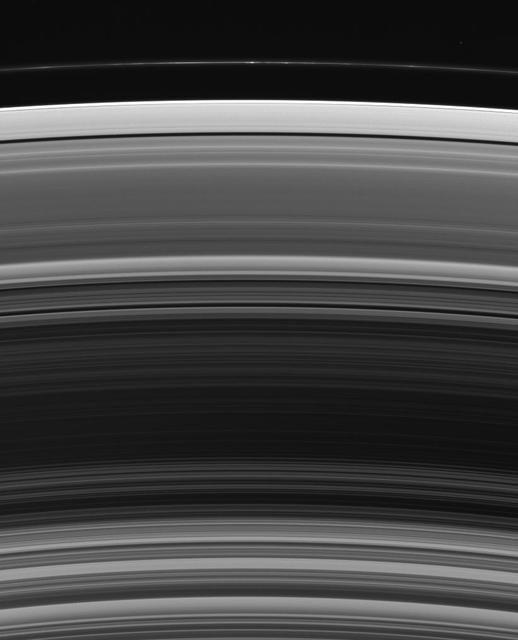
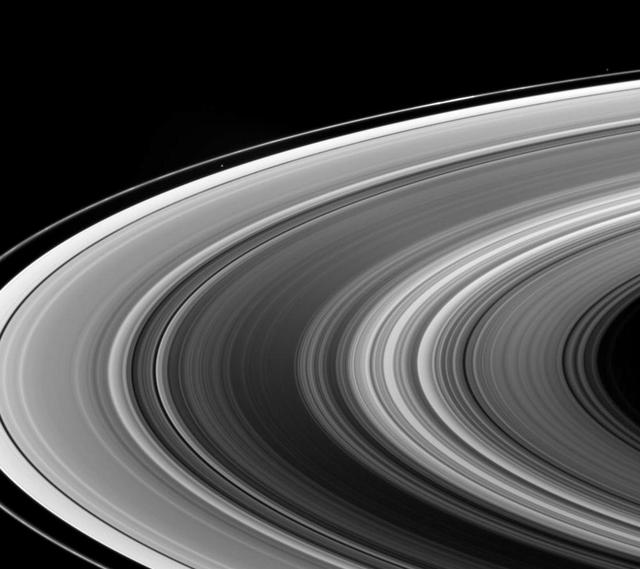
This view looks down onto the unlit side of Saturn ringplane. It nicely shows a near-arm/far-arm brightness asymmetry in the B ring: The near arm of the B ring is notably darker from this viewing geometry than is the far arm
Saturn Shine
This stereo view combining images taken on Feb. 10, 2014, by the Navigation Camera Navcam on NASA Curiosity Mars rover looks back to where the rover crossed a dune at Dingo Gap four days earlier. You need 3D glasses to view this image.
Panoramic View From West of Dingo Gap Stereo
This perspective view of Venus, generated by computer from NASA Magellan data and color-coded with emissivity, is a look westward across the Fortuna Tessera toward the slopes of Maxwell Montes.  http://photojournal.jpl.nasa.gov/catalog/PIA00315
Looking Westward Across the Fortuna Tessera Left Member of a Synthetic Stereo Pair
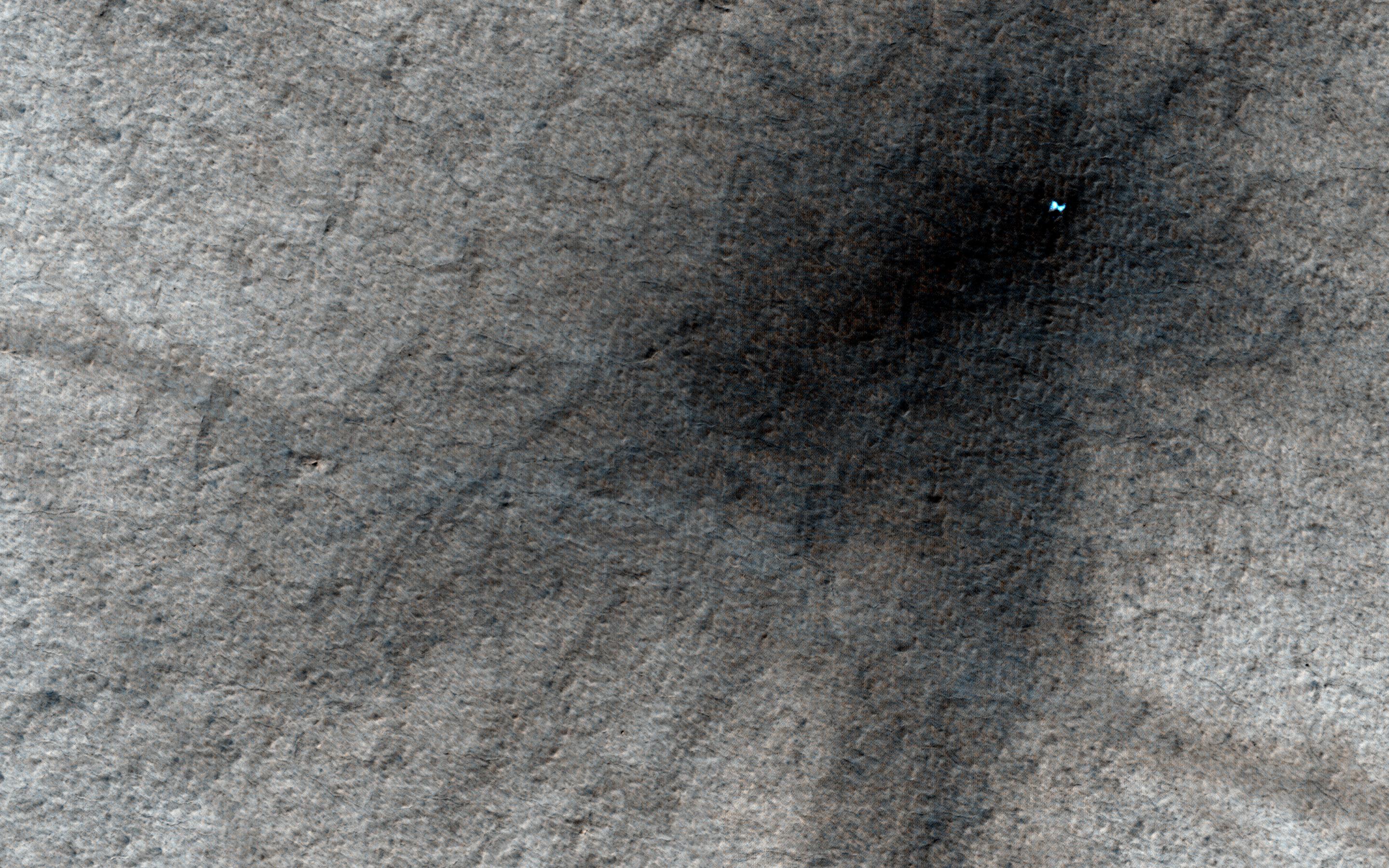
These craters on Tharsis are first visible as new dark spots observed by NASA Mars Reconnaissance Orbiter Context Camera CTX, which can view much larger areas, and then imaged by HiRISE for a close-up look.
An Icy Crater on Mars
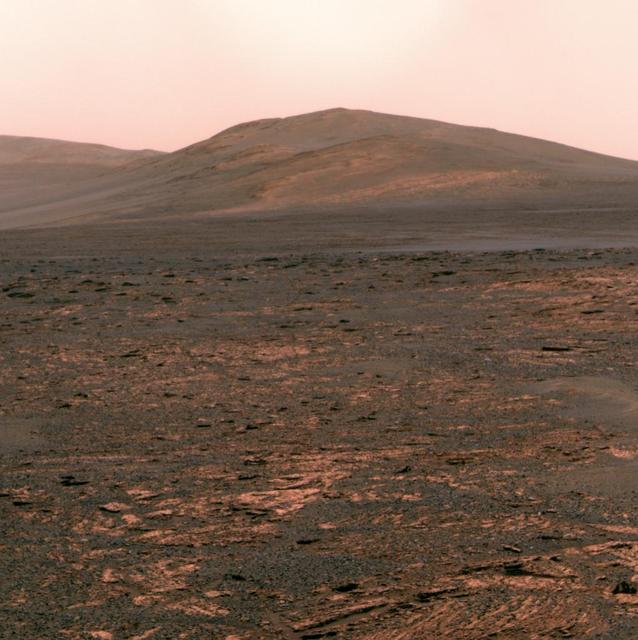
NASA Mars Exploration Rover Opportunity used its panoramic camera Pancam to acquire this view of Solander Point. The southward-looking scene, presented in true color, shows Solander Point on the center horizon.
Opportunity view of Solander Point
In this view captured by NASA Cassini spacecraft on its closest-ever flyby of Saturn moon Mimas, large Herschel Crater dominates Mimas, making the moon look like the Death Star in the movie Star Wars.
Flying by the Death
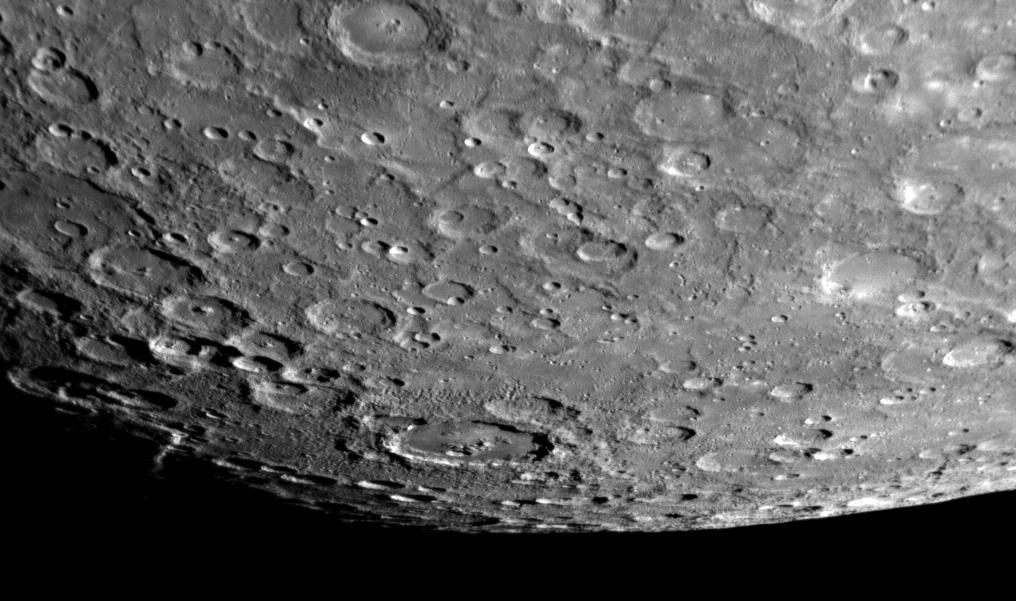
On January 14, 2008, NASA MESSENGER spacecraft passed 200 kilometers 124 miles above the surface of Mercury and snapped the first pictures of a side of Mercury not previously seen, with a view looking toward Mercury south pole.
Looking Toward the South Pole of Mercury
Saturn moon Enceladus orbits serenely before a backdrop of clouds roiling the atmosphere the planet in this image taken by NASA Cassini spacecraft. This view looks toward the northern, sunlit side of the rings from just above the ringplane.
Beyond the Tumult
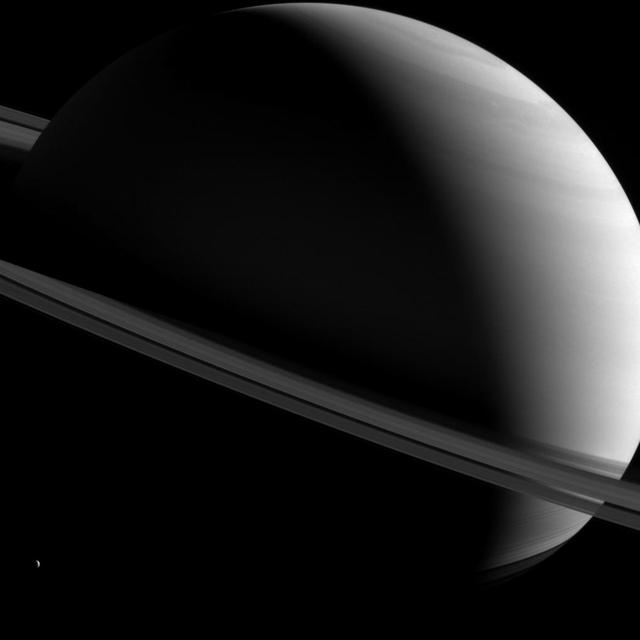
NASA Cassini spacecraft captured this image of Saturn as it views the planet and its expansive rings from all sorts of angles. Here, a half-lit Saturn sits askew as tiny Dione looks on from lower left.
Saturn Askew
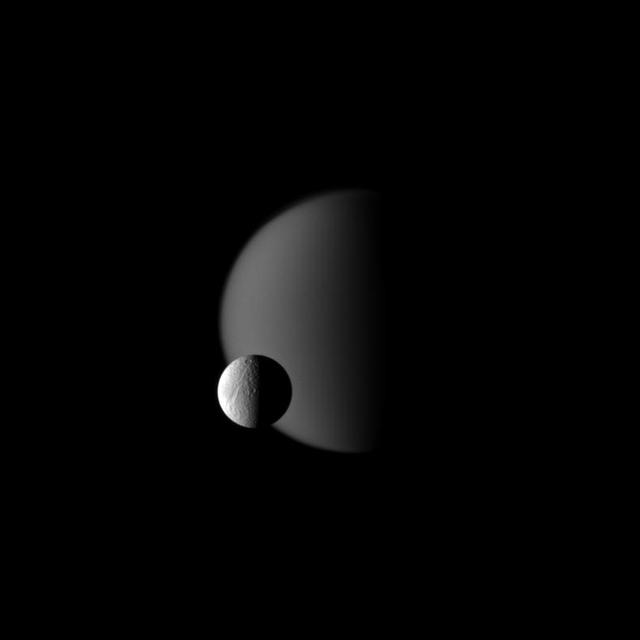
Terrain on Saturn moon Tethys, defined with craters, is shown in front of the hazy atmosphere of the larger moon Titan in this image from NASA Cassini spacecraft. This view looks toward the Saturn-facing sides of Titan and Tethys.
Tethys Before Titan
This stereo vista from NASA Mars Rover Opportunity shows Wdowiak Ridge, from left foreground to center, as part of a northward look. You will need 3-D glasses to view this image.
Opportunity Northward View of Wdowiak Ridge Stereo
The view from NASA's Magellan spacecraft shows Yavine Corona, looking northeast. Coronae are roughly circular, volcanic features believed to form over hot upwellings of magma within the Venusian mantle.  http://photojournal.jpl.nasa.gov/catalog/PIA00098
Close-up View of Yavine Corona
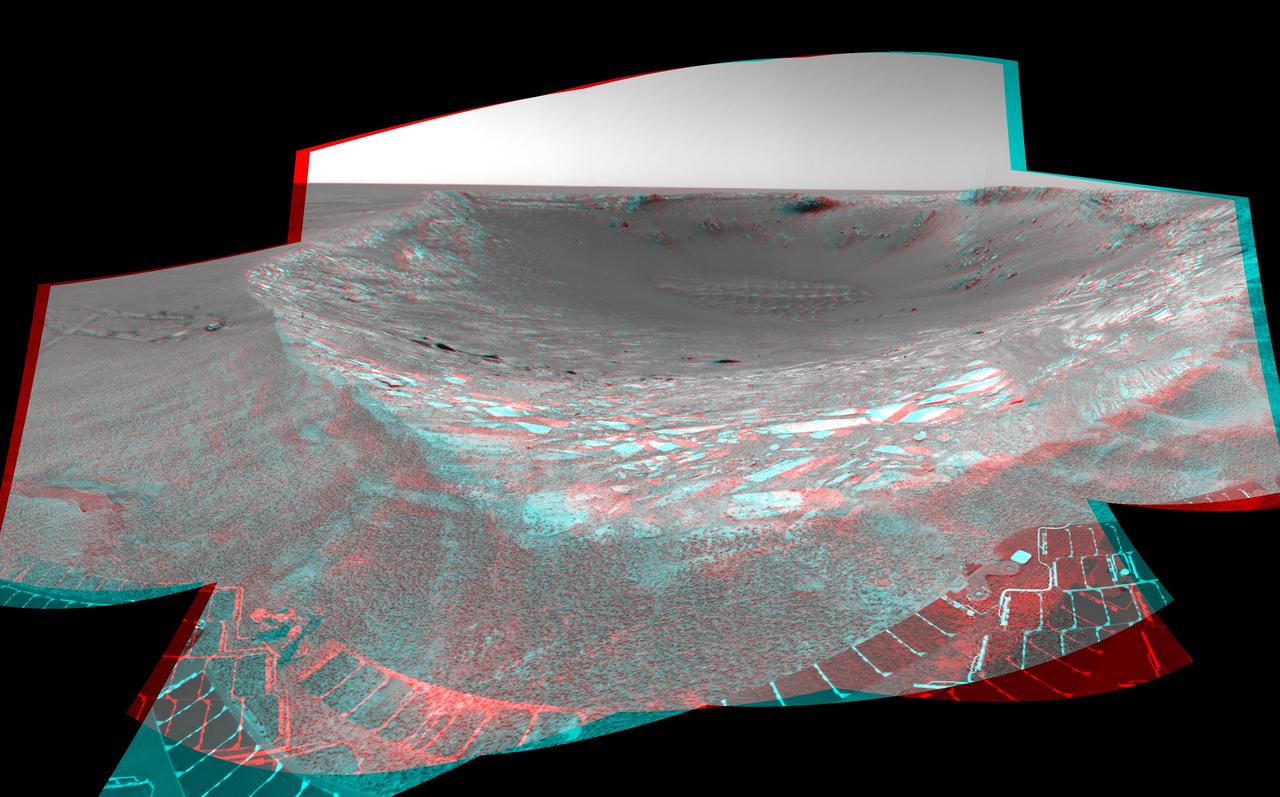
This anaglyph from from NASA Mars Exploration Rover Opportunity is of Victoria crater, looking north from Duck Bay towards the dramatic promontory called Cape Verde. 3D glasses are necessary to view this image.
Layers of Cape Verde in Victoria Crater Stereo
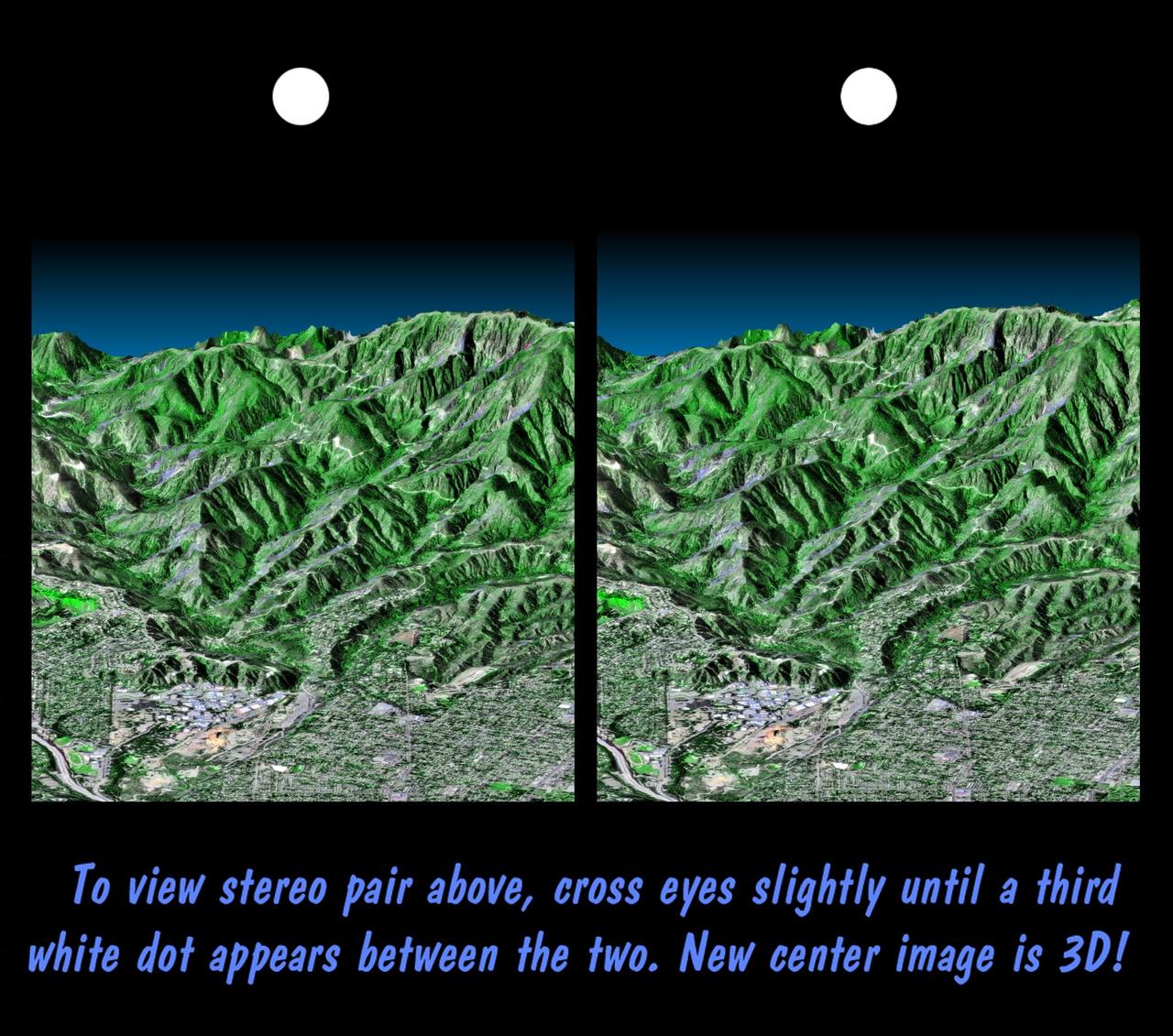
This stereoscopic image pair is a perspective view that shows the western part of the city of Pasadena, California, looking north toward the San Gabriel Mountains. Portions of the cities of Altadena and La Canada Flintridge are also shown.
Stereo Pair, Pasadena, California
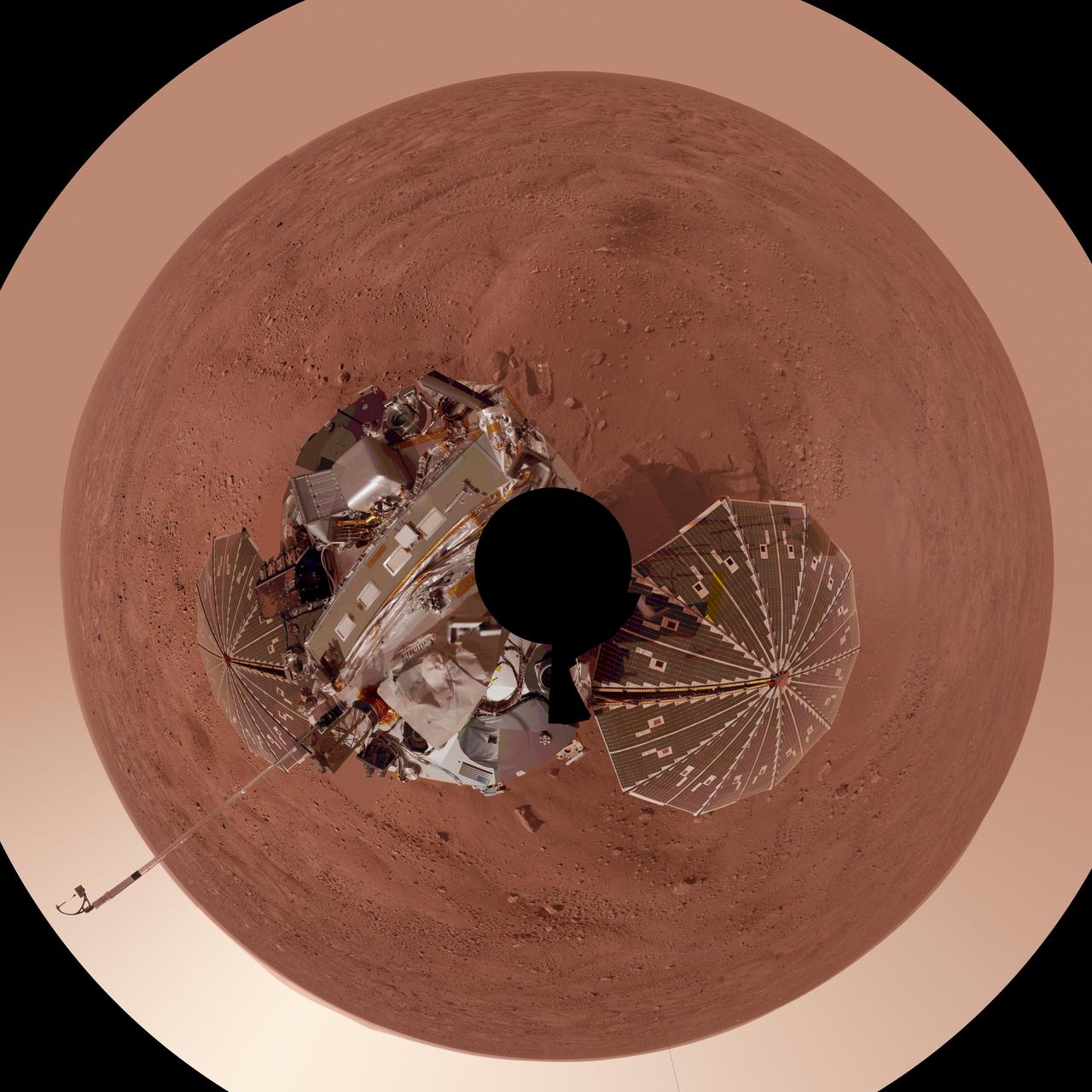
This view is a polar projection that combines more than 500 exposures taken by the Surface Stereo Imager camera on NASA Mars Phoenix Lander and projects them as if looking down from above.
Phoenix Lander on Mars with Surrounding Terrain, Polar Projection
This anaglyph from from NASA Mars Exploration Rover Opportunity is of Victoria crater is looking southeast from Duck Bay towards the dramatic promontory called Cabo Frio. 3D glasses are necessary to view this image.
Layers of Cabo Frio in Victoria Crater Stereo
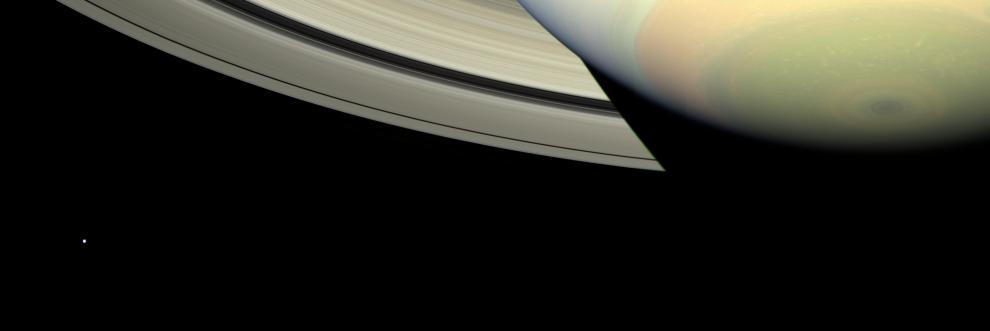
Saturn casts a wide shadow across its rings in view from NASA Cassini spacecraft which looks toward the darkened southern hemisphere of the night side of the planet.
Night Side Rings
Dione shadow is elongated as it is cast onto the round shape of Saturn in this image taken by NASA Cassini spacecraft. The moon is not visible here. This view looks toward the northern, sunlit side of the rings from just above the ringplane.
Dione Distorted Shadow
What does Earth look like when viewed from Mars? At 13:00 GMT on 8 May 2003, NASA Mars Global Surveyor MGS Mars Orbiter Camera MOC had an opportunity to find out.
Earth and Jupiter as viewed from Mars
The moon Tethys occupies the right foreground of this Saturnian scene. This view from NASA Cassini spacecraft looks toward the anti-Saturn side of Tethys and toward the northern, sunlit side of the rings from just above the ringplane.
Tethys in the Fore
This view from NASA Cassini spacecraft look toward the south polar region of Saturn largest moon, Titan, and show a depression within the moon orange and blue haze layers near the south pole.
Orange and Blue Hazes
On Feb. 26, 2005, NASA Mars Exploration Rover Spirit had drive 2 meters 7 feet on this sol to get in position on Cumberland Ridge for looking into Tennessee Valley to the east. 3D glasses are necessary to view this image.
Spirit 360-Degree View on Sol 409 3-D
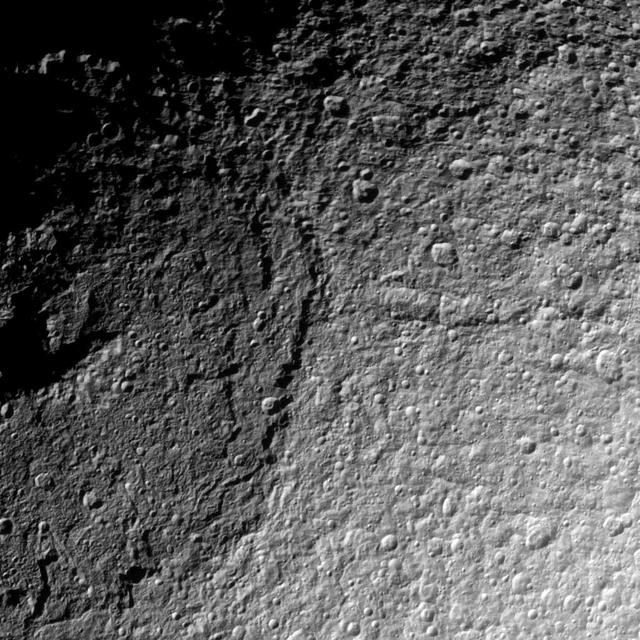
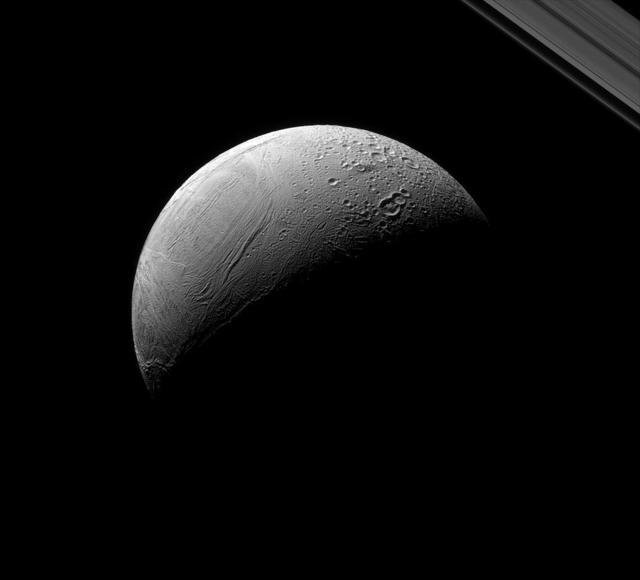
Enceladus dramatically displays the contrast between its older and newer terrain as seen by NASA Cassini spacecraft. This view looks toward the anti-Saturn side of Enceladus. North on Enceladus is up and rotated 36 degrees to the right.
Enceladus, Old and New
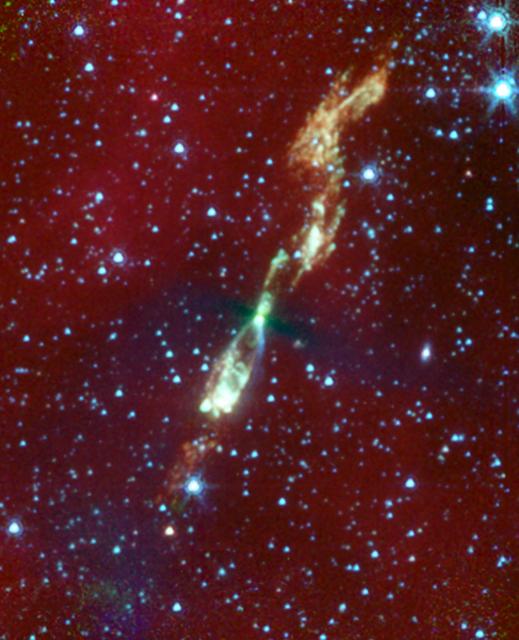
A rare, infrared view of a developing star and its flaring jets taken by NASA Spitzer Space Telescope shows us what our own solar system might have looked like billions of years ago.
Baby Picture of our Solar System
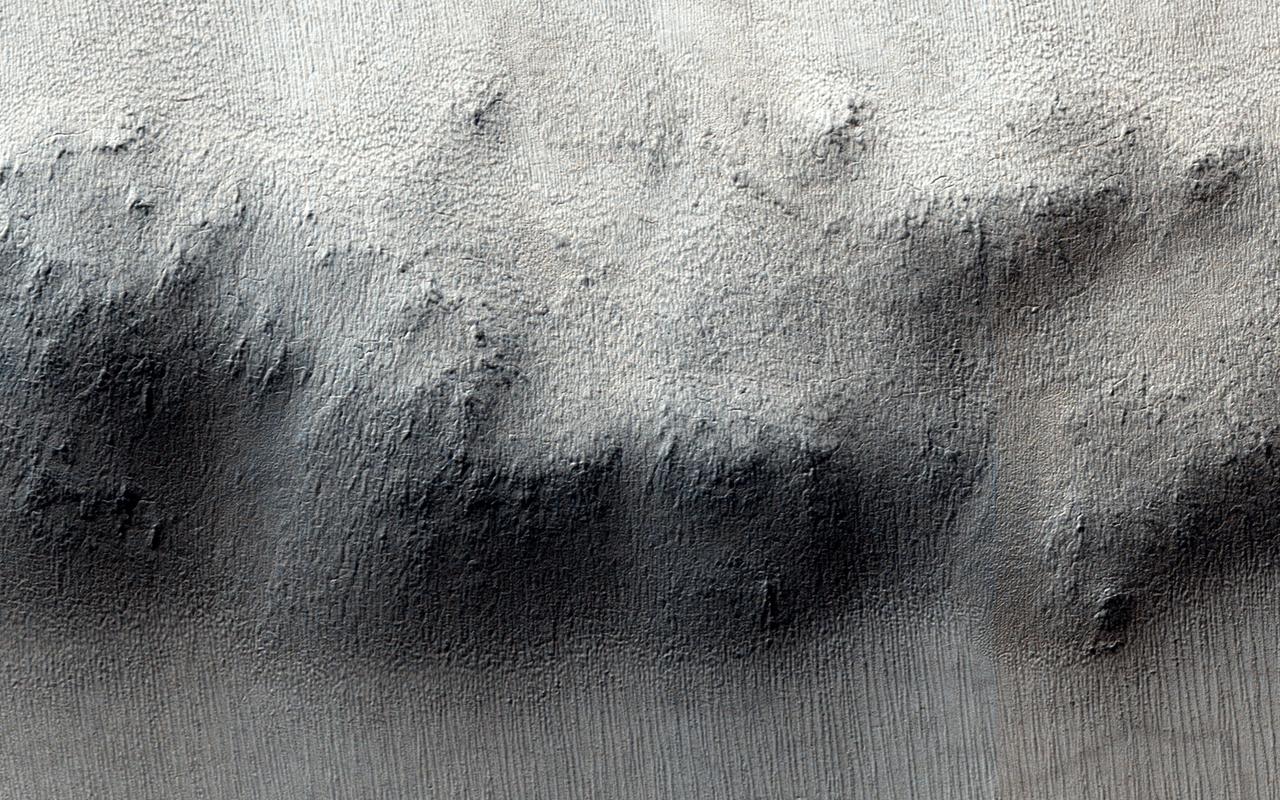
These craters on Tharsis are first visible as new dark spots observed by NASA Mars Reconnaissance Orbiter Context Camera CTX, which can view much larger areas, and then imaged by HiRISE for a close-up look.
Knob in the South Polar Layered Deposits of Mars
This perspective view of Venus, generated by computer from NASA Magellan data and color-coded with emissivity, is a look westward across the Fortuna Tessera toward the slopes of Maxwell Montes.  http://photojournal.jpl.nasa.gov/catalog/PIA00316
Looking Westward Across the Fortuna Tessera Right Member of a Synthetic Stereo Pair
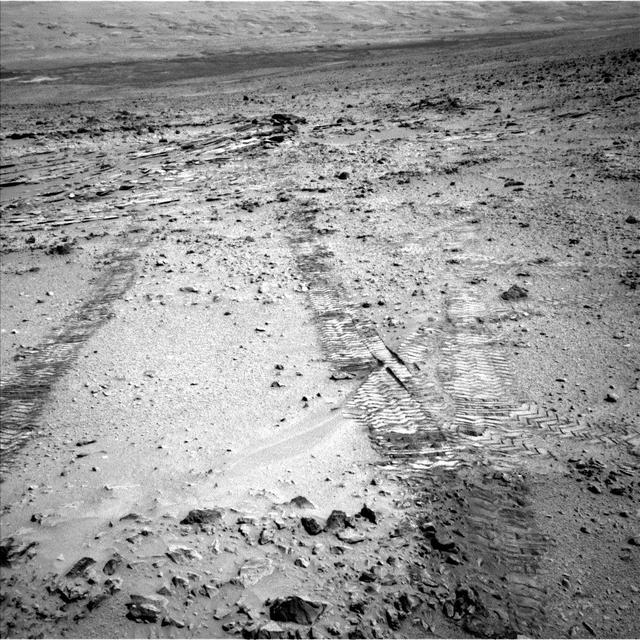
This view from the left Navigation Camera Navcam of NASA Mars Rover Curiosity looks back at wheel tracks made during the first drive away from the last science target in the Glenelg area.
First Leg of Long Trek Toward Mount Sharp
This stereo anaglyph from NASA Mars Exploration Rover Spirit looks toward the northeast across Endurance Crater in Mars Meridiani Planum region. 3D glasses are necessary to view this image.
Ready to Enter Endurance 3-D
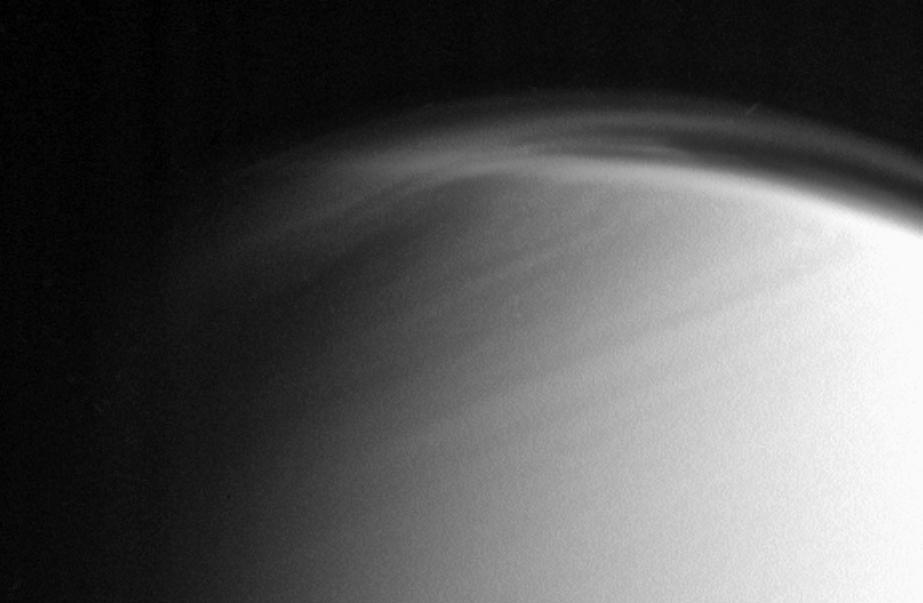
The complex and dynamic atmosphere of Titan displays multiple haze layers near the north pole in this view, which also provides an excellent look at the detached stratospheric haze layer that surrounds the moon at lower latitudes
Shifting Northern Hazes
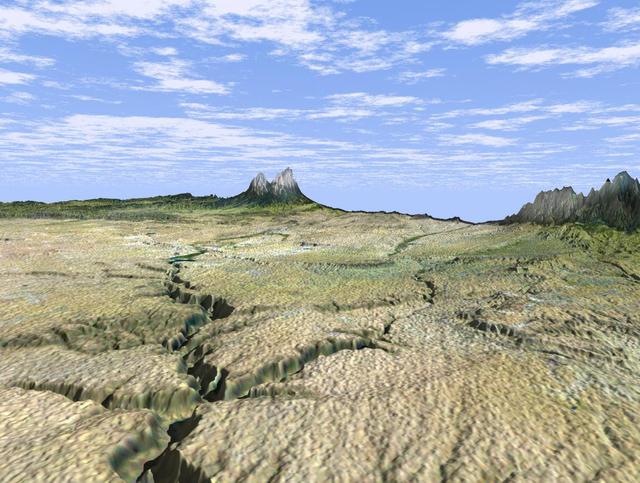
This dramatic view looks west along the Cucharas River Canyon in Colorado toward the 4,152 meter 13,623 ft high Spanish Peaks, in the foothills of the Sangre De Cristo Mountains.
SRTM Perspective View with Landsat Overlay: Cucharas Canyon & Spanish Peaks, Colorado
Although it is no longer uncharted land, the origin of the dark territory  of Cassini Regio on Iapetus remains a mystery. The view looks down onto the northern hemisphere of Iapetus and shows terrain on the moon leading  hemisphere
A Moon with Two Dark Sides
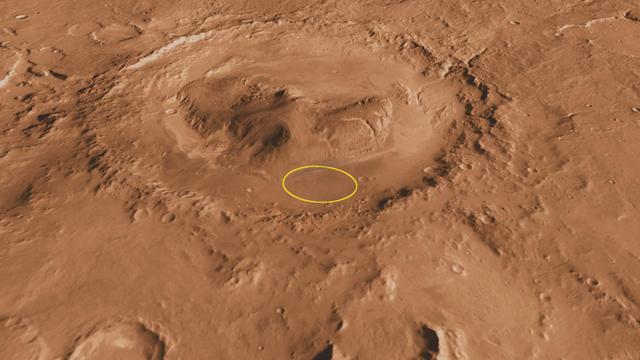
This oblique, southward-looking view of Gale crater shows the mound of layered rocks that NASA Mars Science Laboratory will investigate. The mission selected landing site is just north of the mound inside the crater.
Context of Curiosity Landing Site in Gale Crater
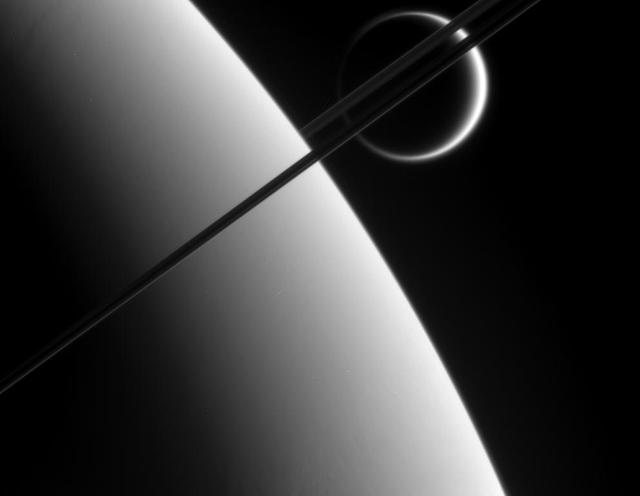
This view was taken from above the ringplane and looks toward the unlit side of the rings. Here, the probe gazes upon Titan in the distance beyond Saturn and its dark and graceful rings
A Sight to Behold
Huge clouds swirl through the southern latitudes of Saturn where the rings cast dramatic shadows. This view from NASA Cassini spacecraft looks toward the northern, sunlit side of the rings from just above the ringplane.
Sizeable Swirls
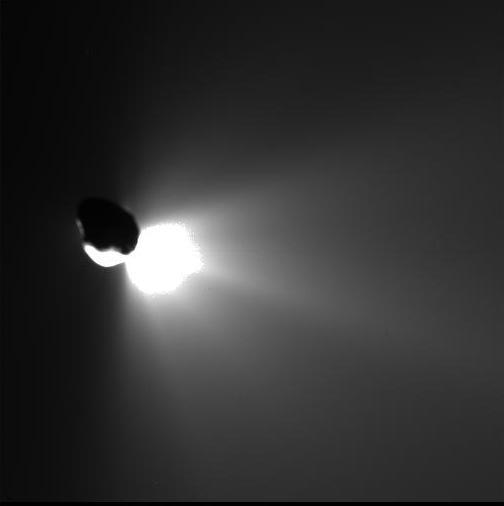
This image shows the view from NASA Deep Impact flyby spacecraft as it turned back to look at comet Tempel 1. Fifty minutes earlier, the spacecraft probe was run over by the comet.
Looking Back at a Job Well Done
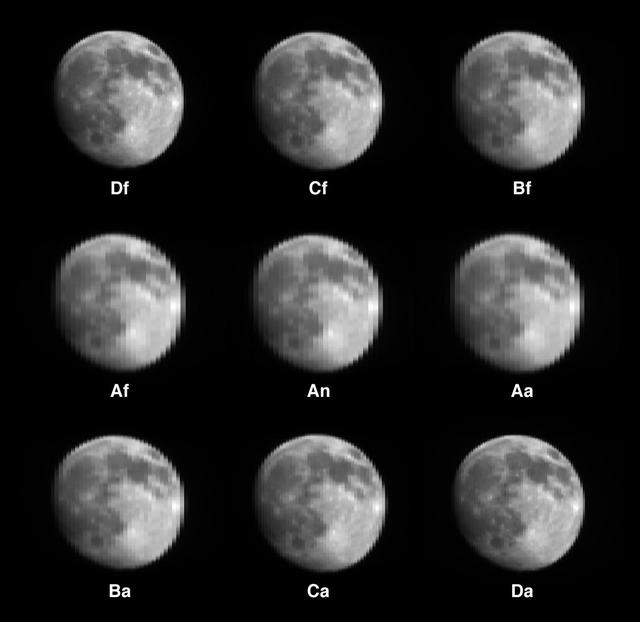
A special maneuver of NASA Terra spacecraft was performed as it traversed the nightside enabling a backward somersault of the spacecraft, allowing the normally Earth-viewing instruments to look at deep space and the waxing gibbous Moon.
MISR Views the Moon
This perspective view, acquired by NASA Shuttle Radar Topography Mission SRTM in Feb. 2000, shows the western part of the city of Pasadena, California, looking north towards the San Gabriel Mountains.
Pasadena, California Perspective View with Aerial Photo and Landsat Overlay
Cassini looks into the 245-kilometer 150-mile wide crater Melanthius in this view of the southern terrain on Tethys. The crater possesses a prominent cluster of peaks in its center which are relics of its formation
Toward Melanthius
St. Thomas, St. John, Tortola, and Virgin Gorda are the four main islands front to back of this east-looking view of the U.S. Virgin Islands and British Virgin Islands, along the northeast perimeter of the Caribbean Sea.
SRTM Perspective with Landsat Virgin Islands, Carribean
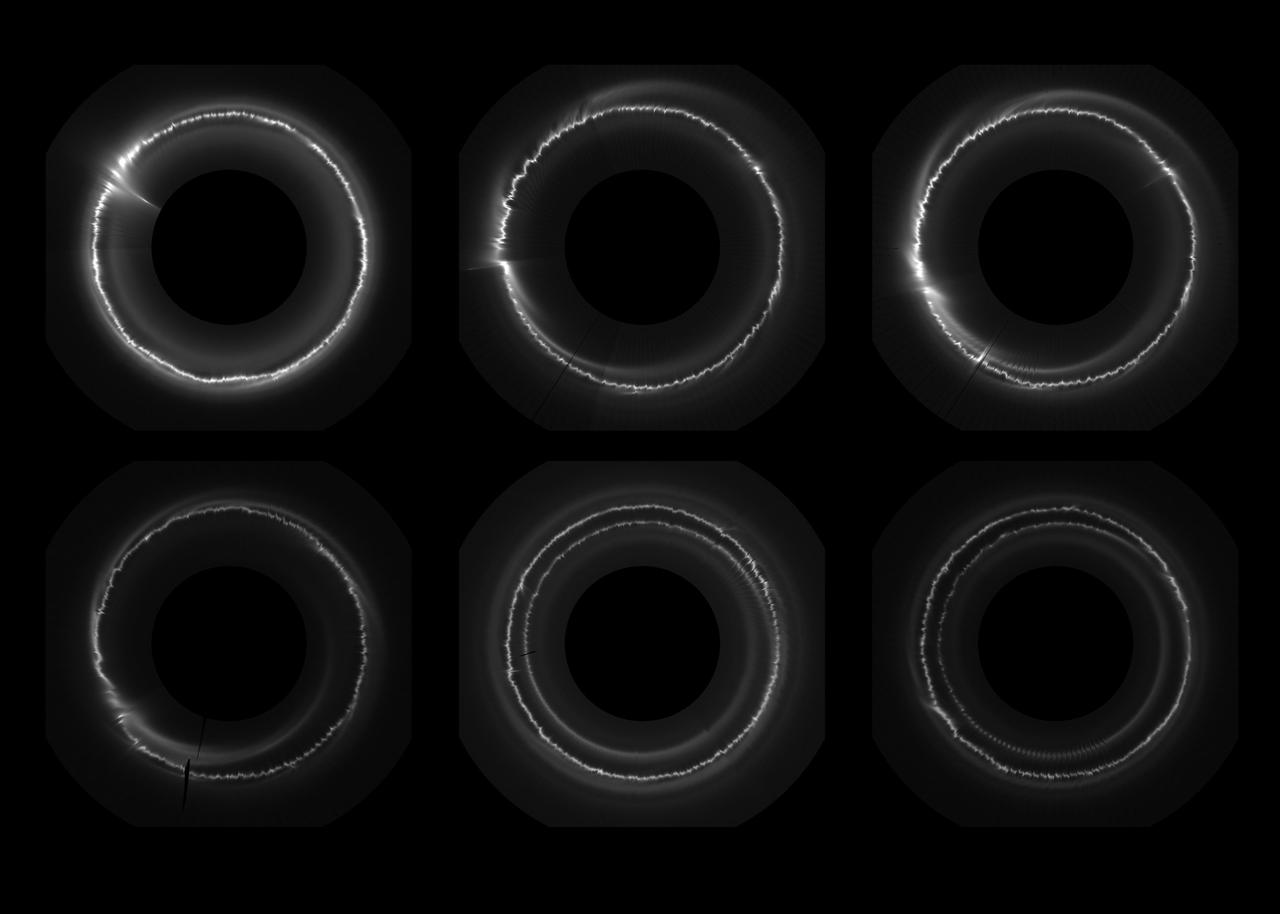
The constant change in Saturn wavy, wiggly F ring is on display in this image obtained by NASA Cassini spacecraft. The image shows a view looking directly down onto the ring with the planet removed from the center.
Wavy, Wiggly Ring
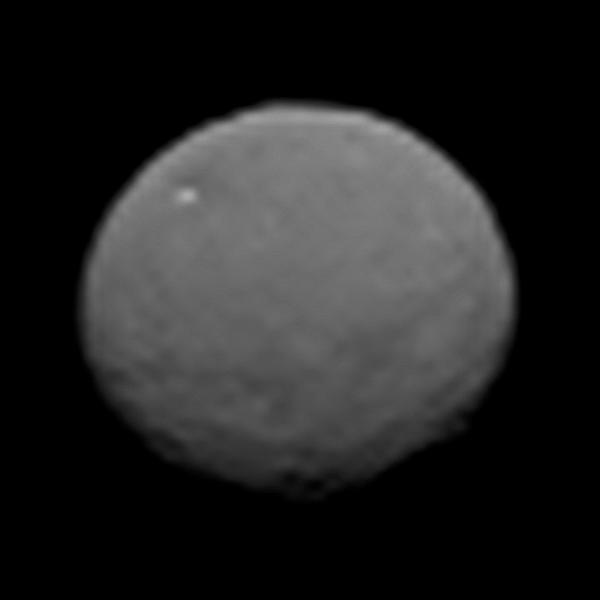
This image, taken 147,000 miles 237,000 kilometers from Ceres on January 25, 2015 by NASA Dawn spacecraft, is part of a series of views representing the best look so far at the dwarf planet.  http://photojournal.jpl.nasa.gov/catalog/PIA19172
Ceres Sharper Than Ever
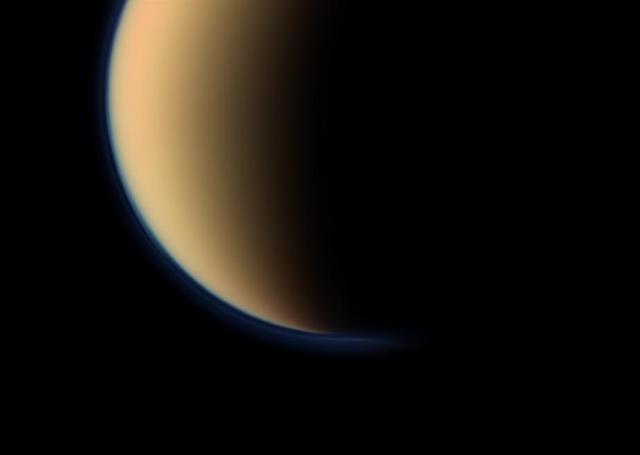
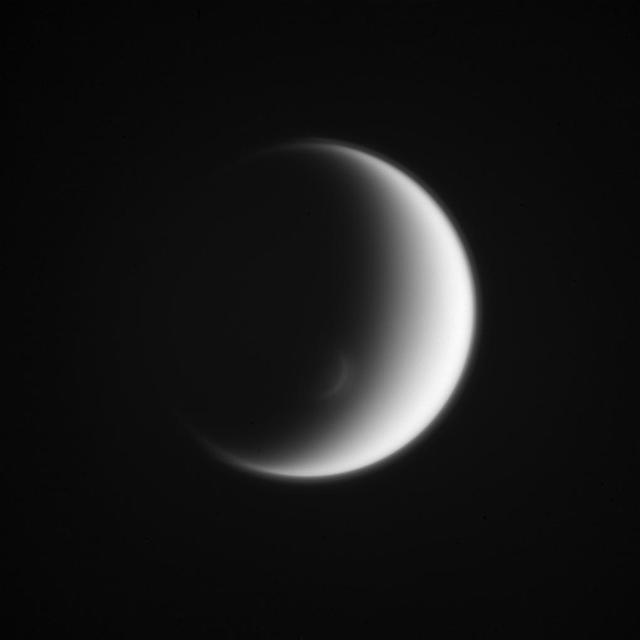
This view captured by NASA Cassini spacecraft looks toward the trailing hemisphere of Titan. Titan south polar vortex mimics the moon itself, creating an elegant crescent within a crescent.
Titan Crescents
NASA Hubble Space Telescope sharp view was used to look for gravitational arcs and rings which are produced when one galaxy acts as a lens to magnify and distort the appearance of another galaxy behind it.
Quasar Lenses
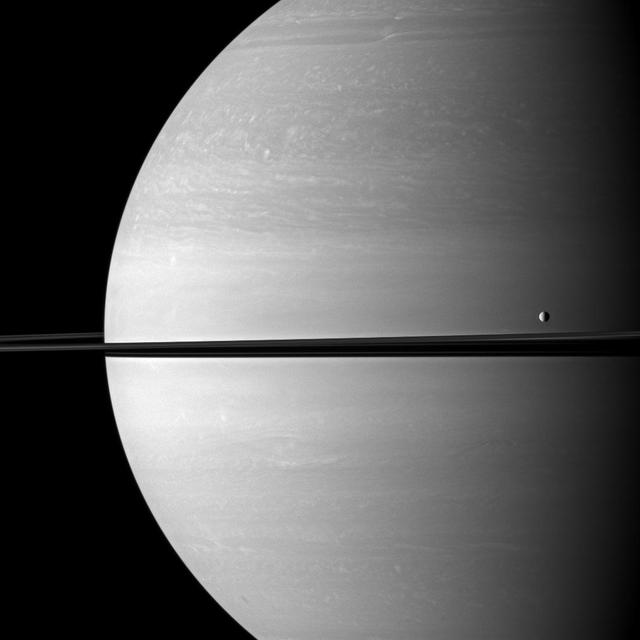
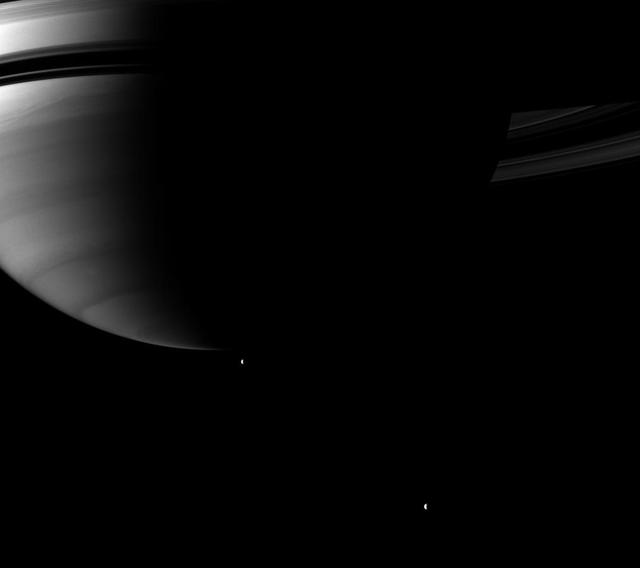
Looking up toward Saturn southern hemisphere, NASA Cassini spacecraft pictures a pair of the planet moons orbiting in the distance. Tethys and Rhea orbit in the plane of the planet rings, but appear to be below the planet in this view.
Beyond Saturn South
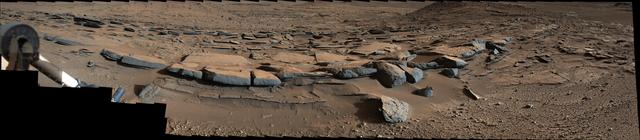
On March 25, 2014, view from the Mastcam on NASA Curiosity Mars rover looks southward at the Kimberley waypoint. Multiple sandstone beds show systematic inclination to the south suggesting progressive build-out of delta sediments.
Bedding Pattern Interpreted as Martian Delta Deposition
Enceladus looks as though it is half lit by sunlight in this view from NASA's Cassini spacecraft, but looks can be deceiving. The area on the right, where surface features can be made out, are actually illuminated by light reflected off of Saturn. A sliver of surface illuminated by direct sunlight is visible on the left.  Images like this one are designed to capture the extended plume of icy material spraying from the moon's south polar region. Such images need to be taken with Cassini looking toward the icy moon's night side, since the small particles in the plume are most easily seen when backlit by the sun.  This view looks toward the leading hemisphere of Enceladus. North on Enceladus is up. The image was taken in visible light with Cassini's narrow-angle camera on May 10, 2015. Enceladus is 313 miles (504 kilometers) across.  The view was acquired at a distance of approximately 226,000 miles (364,000 kilometers) from Enceladus and at a Sun-Enceladus-spacecraft, or phase, angle of 152 degrees. Image scale is 1.4 miles (2.2 kilometers) per pixel.   http://photojournal.jpl.nasa.gov/catalog/PIA18328
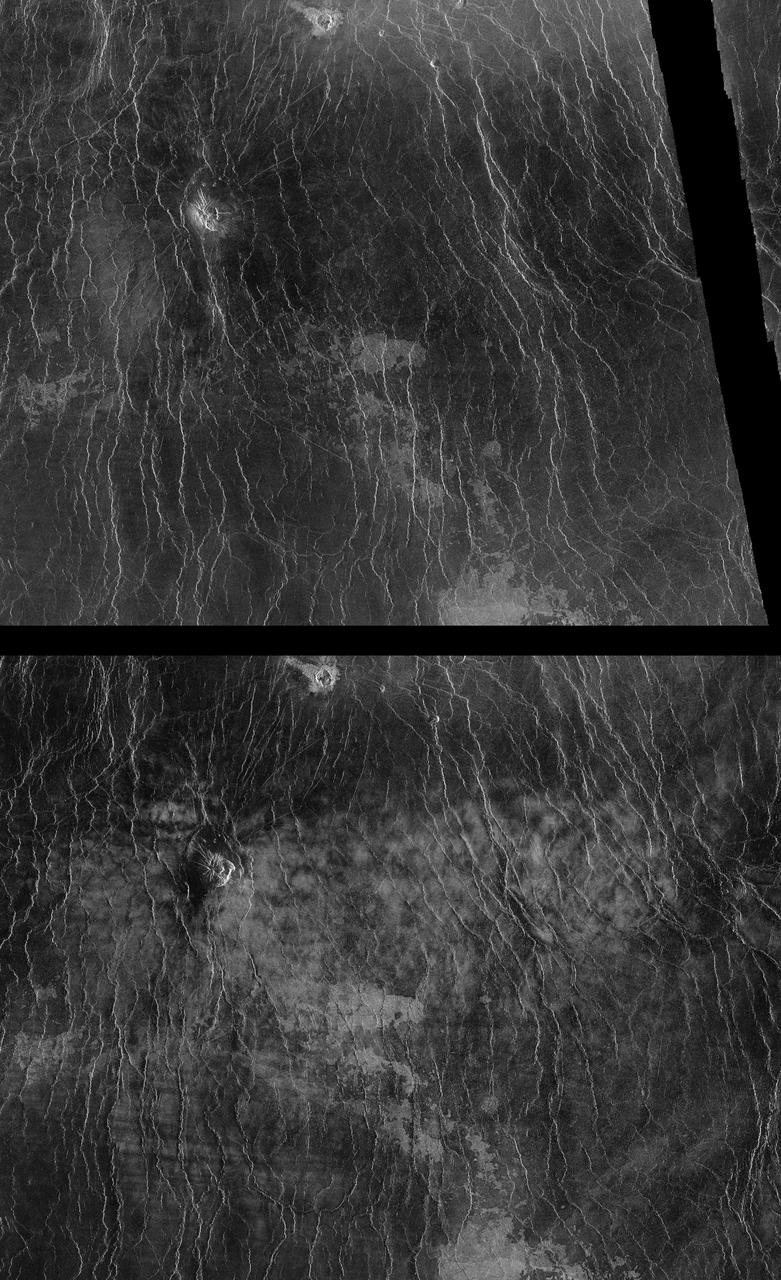
Dark Side of the Moon: Enceladus