
National Weather Service Director Louis Uccellini and deputy director Mary Erickson hear from Short-term Prediction Research and Transition (SPoRT) team members during a visit Sept. 11 to the National Space Science and Technology Center. Managed by NASA’s Marshall Space Flight Center, SPoRT is a project to transition unique Earth observations and research capabilities to the operational weather community to improve short-term forecasts on a regional scale.

National Weather Service Director Louis Uccellini and deputy director Mary Erickson hear from Short-term Prediction Research and Transition (SPoRT) team members during a visit Sept. 11 to the National Space Science and Technology Center. Managed by NASA’s Marshall Space Flight Center, SPoRT is a project to transition unique Earth observations and research capabilities to the operational weather community to improve short-term forecasts on a regional scale.

National Weather Service Director Louis Uccellini and deputy director Mary Erickson hear from Short-term Prediction Research and Transition (SPoRT) team members during a visit Sept. 11 to the National Space Science and Technology Center. Managed by NASA’s Marshall Space Flight Center, SPoRT is a project to transition unique Earth observations and research capabilities to the operational weather community to improve short-term forecasts on a regional scale.
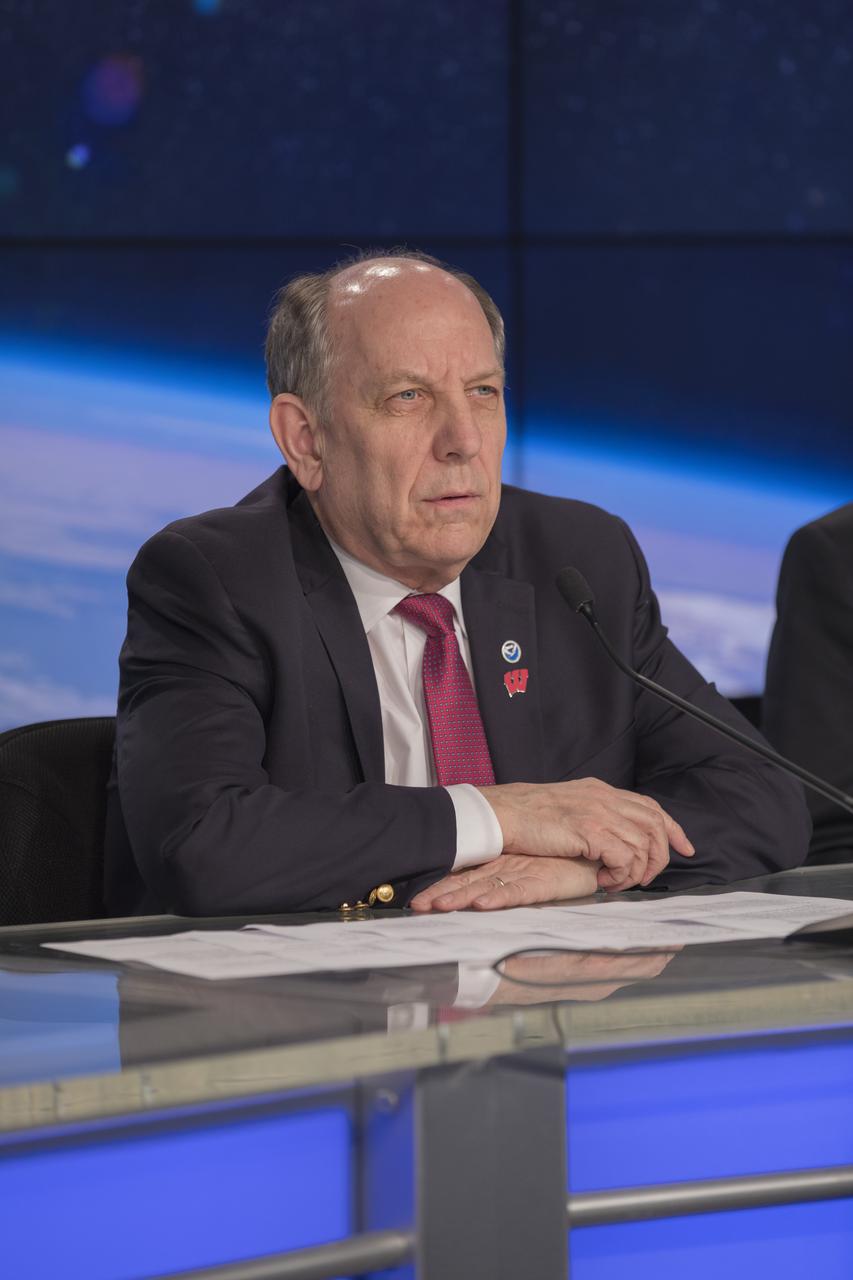
In the Kennedy Space Center's Press Site auditorium, Louis Uccellini, director of the National Weather Service for NOAA, speaks to members of the media at a mission briefing on National Oceanic and Atmospheric Administration's, or NOAA's, Geostationary Operational Environmental Satellite, or GOES-S. The spacecraft is the second satellite in a series of next-generation NOAA weather satellites. It will launch to a geostationary position over the U.S. to provide images of storms and help predict weather forecasts, severe weather outlooks, watches, warnings, lightning conditions and longer-term forecasting. GOES-S is slated to lift off at 5:02 p.m. EST on March 1, 2018 aboard a United Launch Alliance Atlas V rocket
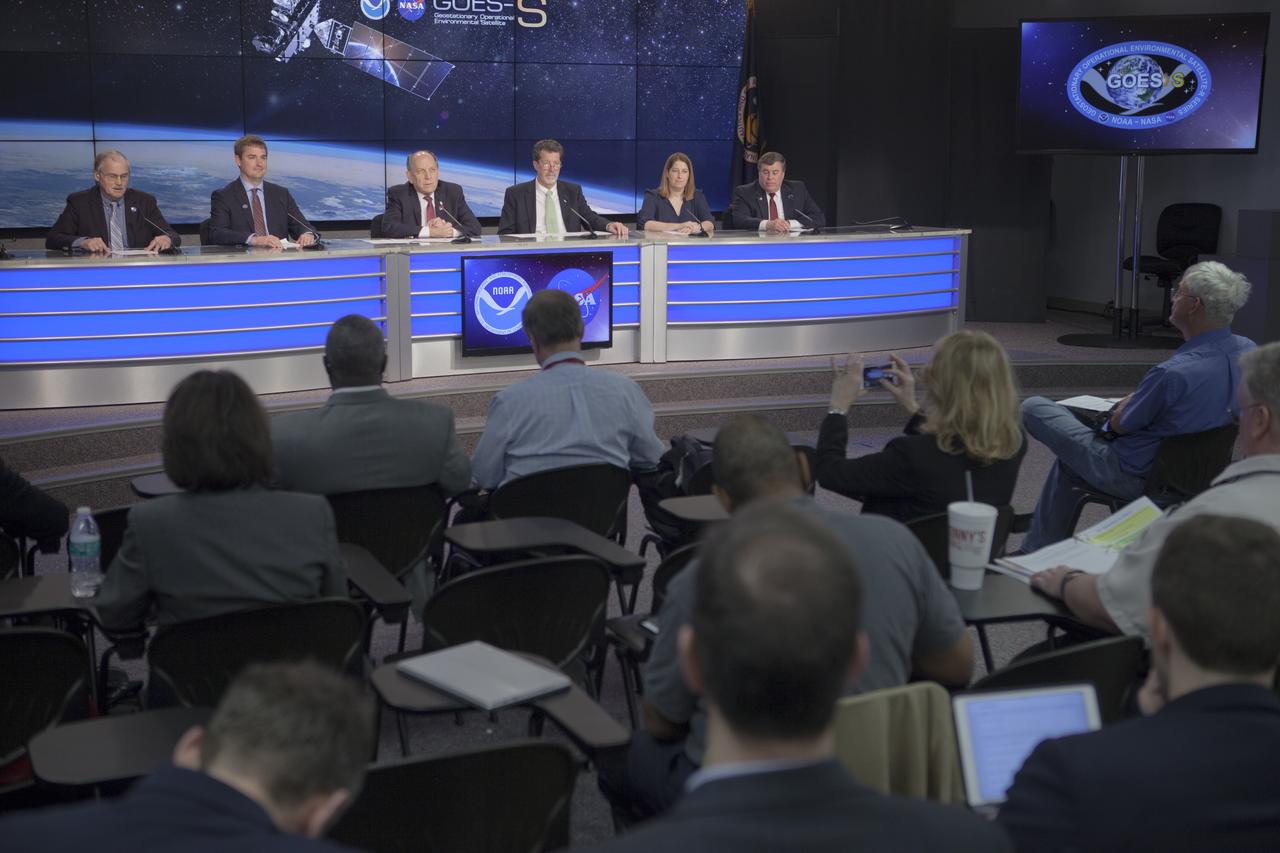
In the Kennedy Space Center's Press Site auditorium, members of the media participate in a mission briefing on National Oceanic and Atmospheric Administration's, or NOAA's, Geostationary Operational Environmental Satellite, or GOES-S. Briefing participants from left are: Steve Cole of NASA Communications; Dan Lindsey, GOES-R senior scientific advisor for NOAA; Louis Uccellini, director of the National Weather Service for NOAA; Jim Roberts, a scientist with the Earth System Research Laboratory's Office of Atmospheric Research for NOAA; Kristin Calhoun, a research scientist with NOAA's National Severe Storms Laboratory, and George Morrow, deputy director of NASA's Goddard Space Flight Center in Greenbelt, Maryland. GOES-S is the second satellite in a series of next-generation NOAA weather satellites. It will launch to a geostationary position over the U.S. to provide images of storms and help predict weather forecasts, severe weather outlooks, watches, warnings, lightning conditions and longer-term forecasting. GOES-S is slated to lift off at 5:02 p.m. EST on March 1, 2018 aboard a United Launch Alliance Atlas V rocket.