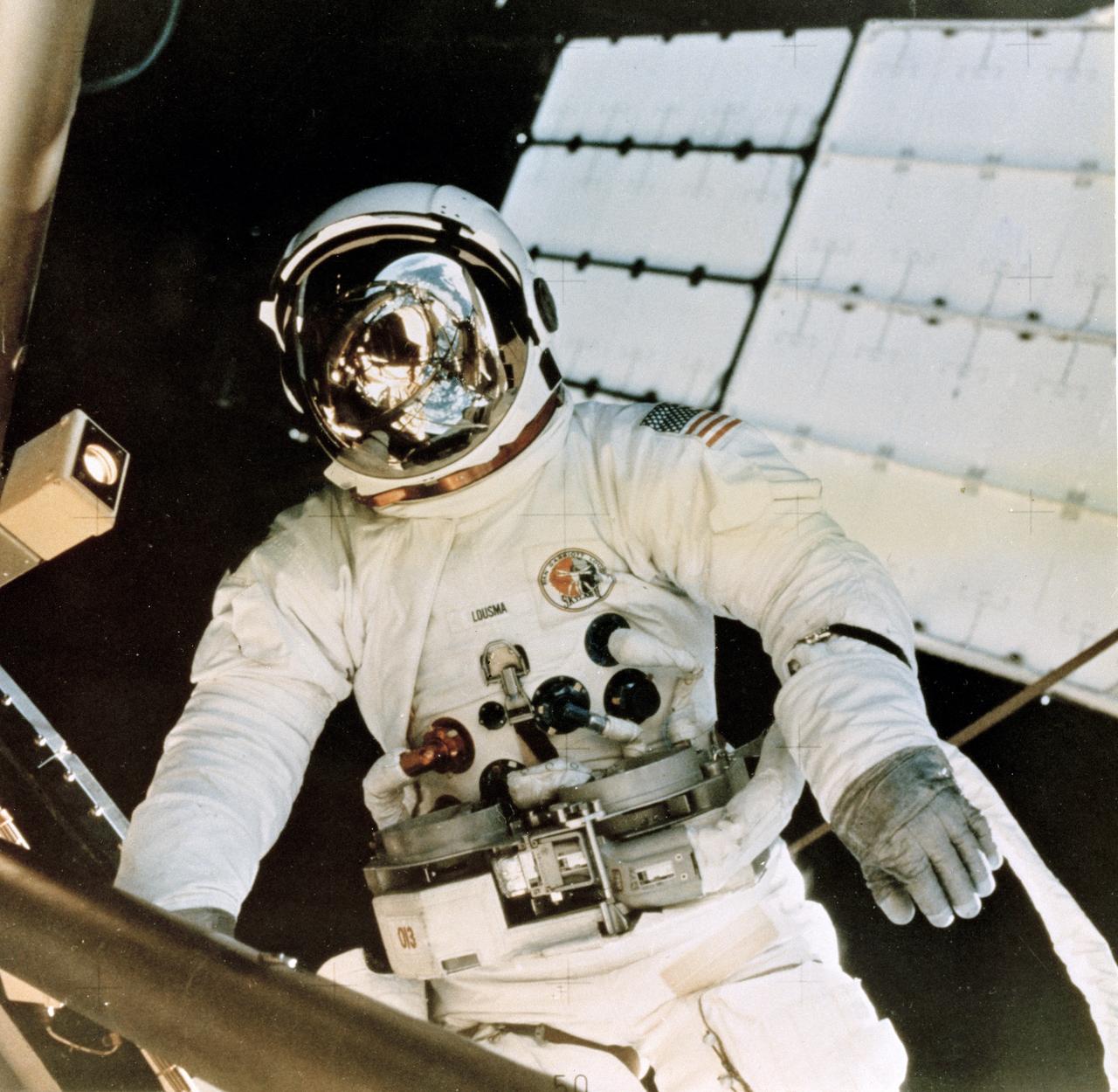
Skylab-3 was the second marned mission in the skylab project. The crew spent 59 days in orbit. In this photo, Astronaut Jack Lousma deploys the Twin Pole Sun Shield created by Marshall Space Flight Center team members to replace the micrometeoroid shield, a thin protective cylinder surrounding the workshop protecting it from tiny space particles and the sun's scorching heat. The shield was damaged during the Skylab-2 mission.
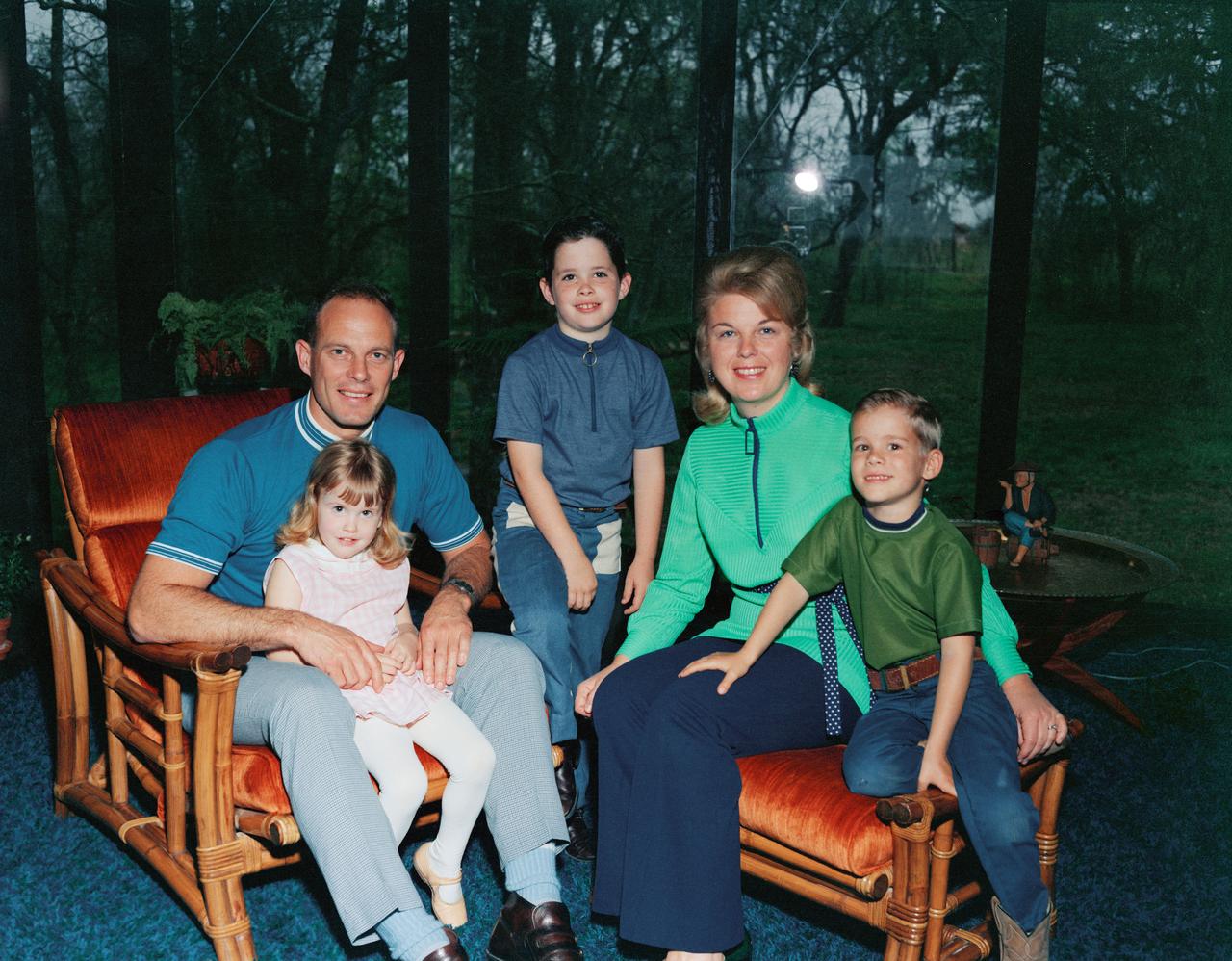
S72-31432 (November 1972) --- Astronaut Jack R. Lousma poses for a family portrait with his wife, Gratia Kay, and their three children, left to right, Mary 4; Timothy, 9; and Matthew, 7. Lousma is the pilot for the Skylab 3 or second manned Skylab mission. Photo credit: NASA
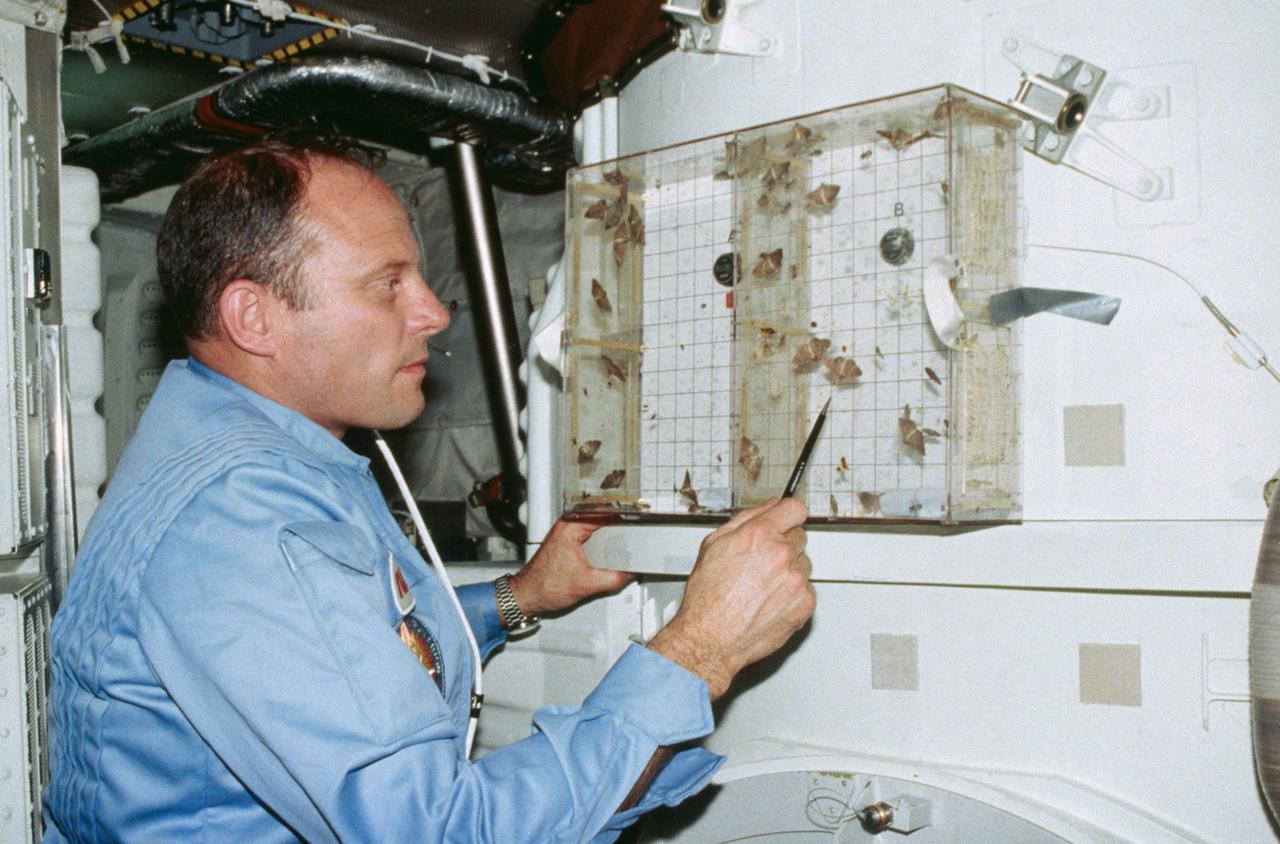
Commander Jack Lousma examines Insect Flight Motion Study (Student Experiment) taped to the airlock on the aft middeck. Lousma points to velvetbean caterpillar moth activity with a pen.
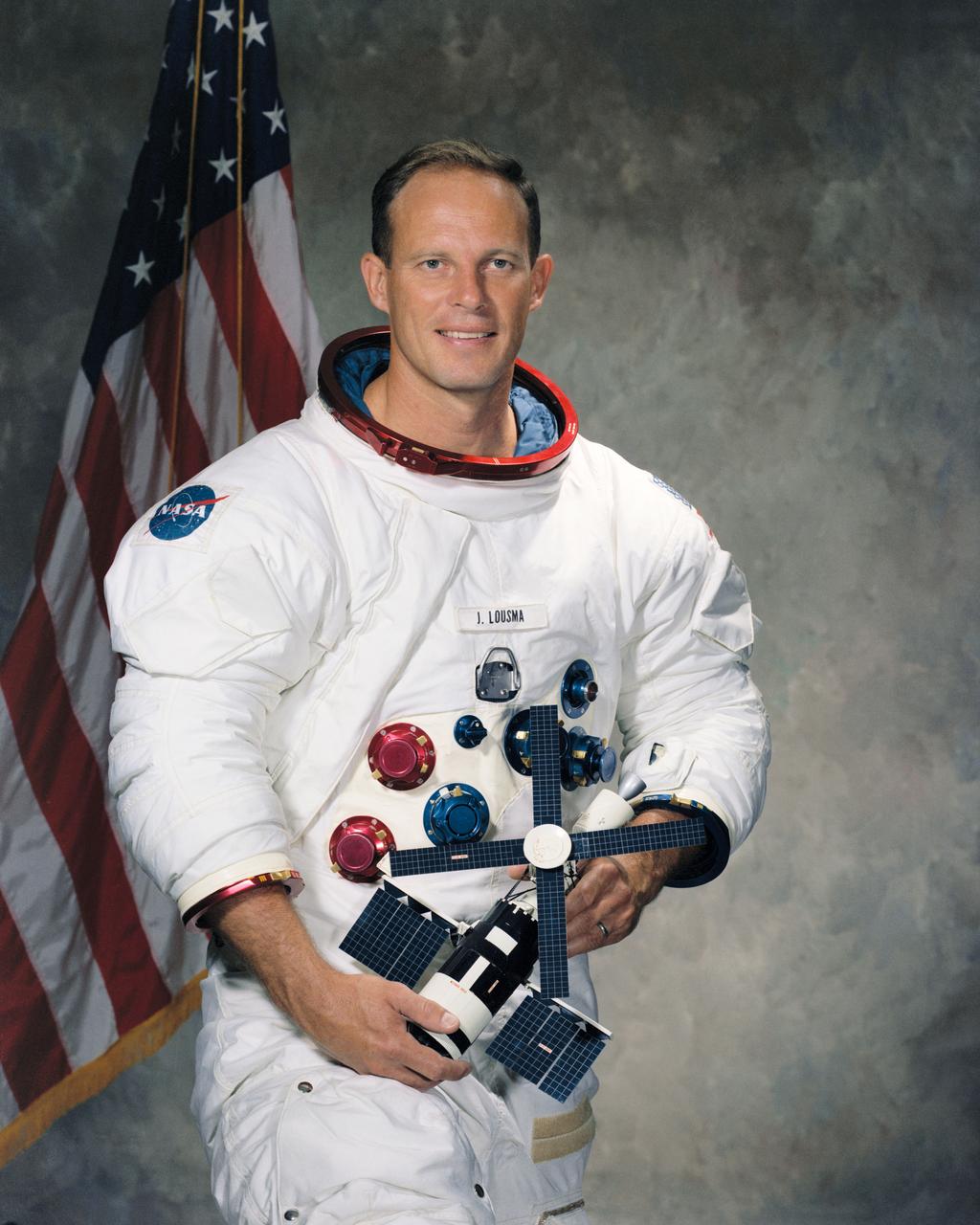
S71-52262 (December 1971) --- Astronaut Jack R. Lousma. Photo credit: NASA
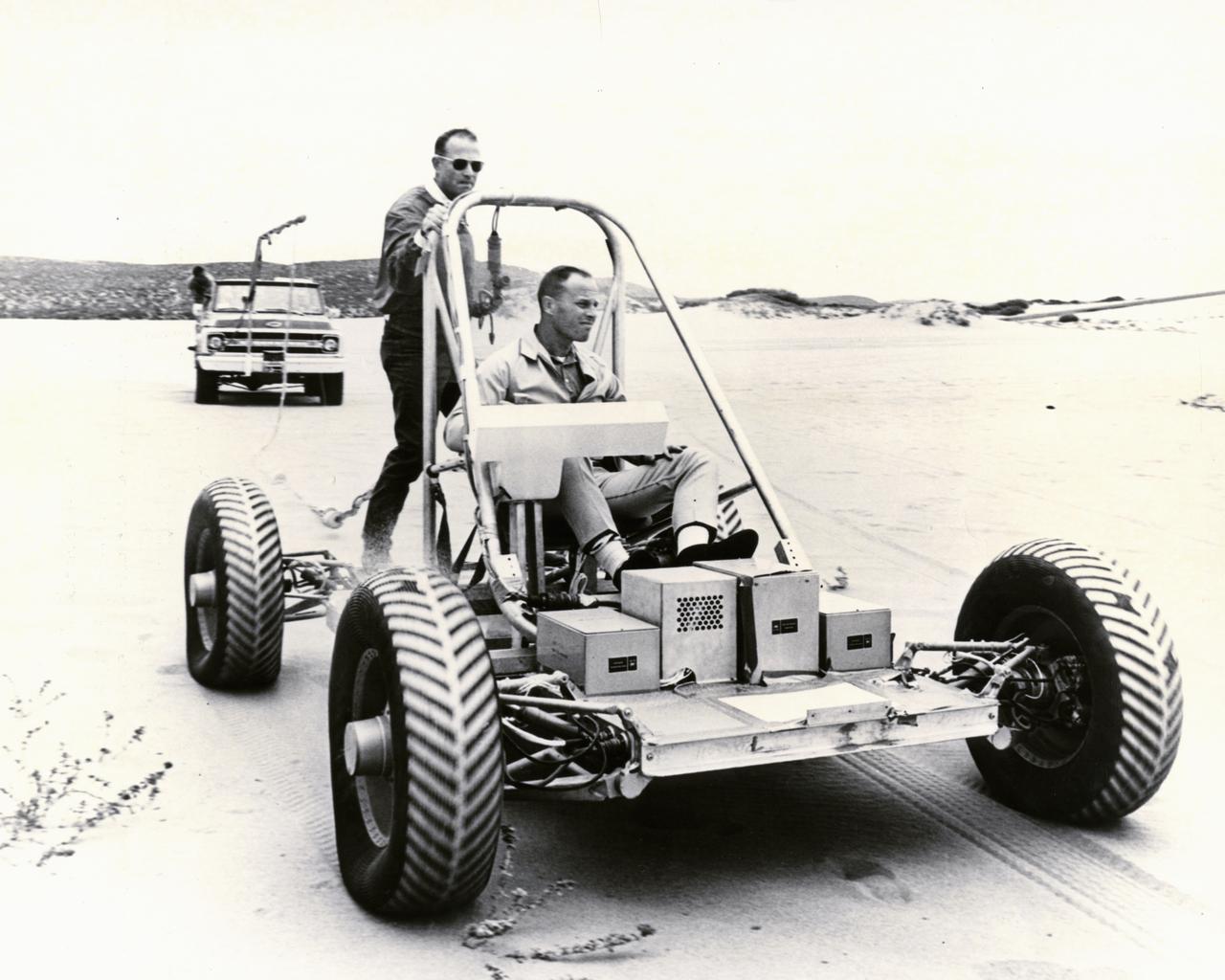
Astronauts Jack Lousma (seated) and Gerald Carr tested the Lunar Roving Vehicle (LRV) training unit on the sands near Pismo Beach. The vehicle was built by the AC Delco electronics division of General Motors Corporation. Under the direction of Marshall Space Flight Center (MSFC), the LRV was designed to allow Apollo astronauts a greater range of mobility during lunar exploration missions. The LRVs were deployed during the last three Apollo missions; Apollo 15, Apollo 16, and Apollo 17.
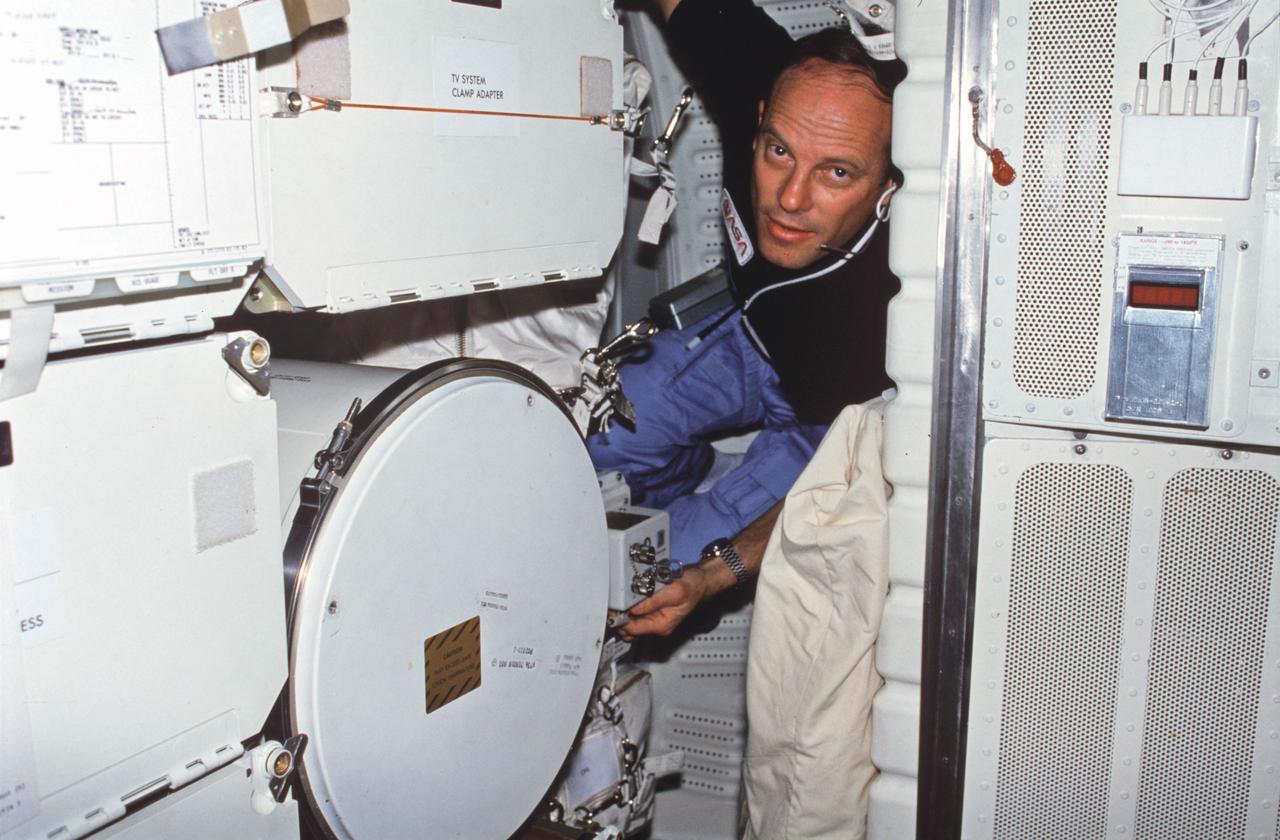
STS003-22-127 (22-30 March 1982) --- Astronaut Jack R. Lousma, STS-3 commander, wearing communications kit assembly (assy) mini-headset, adjusts controls on Monodisperse Latex Reactor (MLR) experiment located in forward middeck lockers MF57H and MF57K. To reach MLR support electronics assy controls, Lousma squeezes in between forward lockers and Development Flight Instrument (DFI) unit on starboard bulkhead. Photo credit: NASA
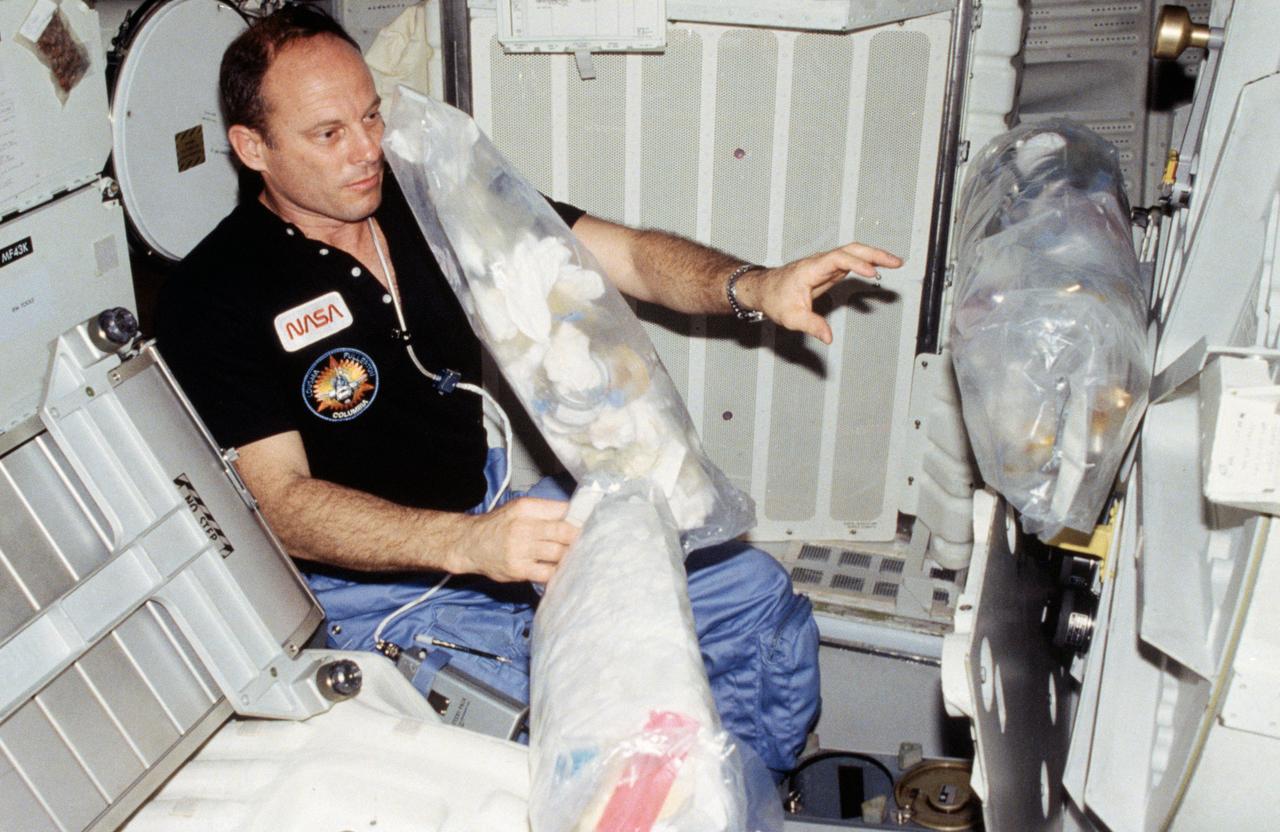
STS003-25-231 (22-30 March 1982) --- Astronaut Jack R. Lousma, STS-3 commander, wearing communication kit assembly mini headset, gathers three freefloating plastic trash bags filled with empty containers, paper towels, straws, etc. Lousma will stow them in a designated stowage volume. Photo credit: NASA
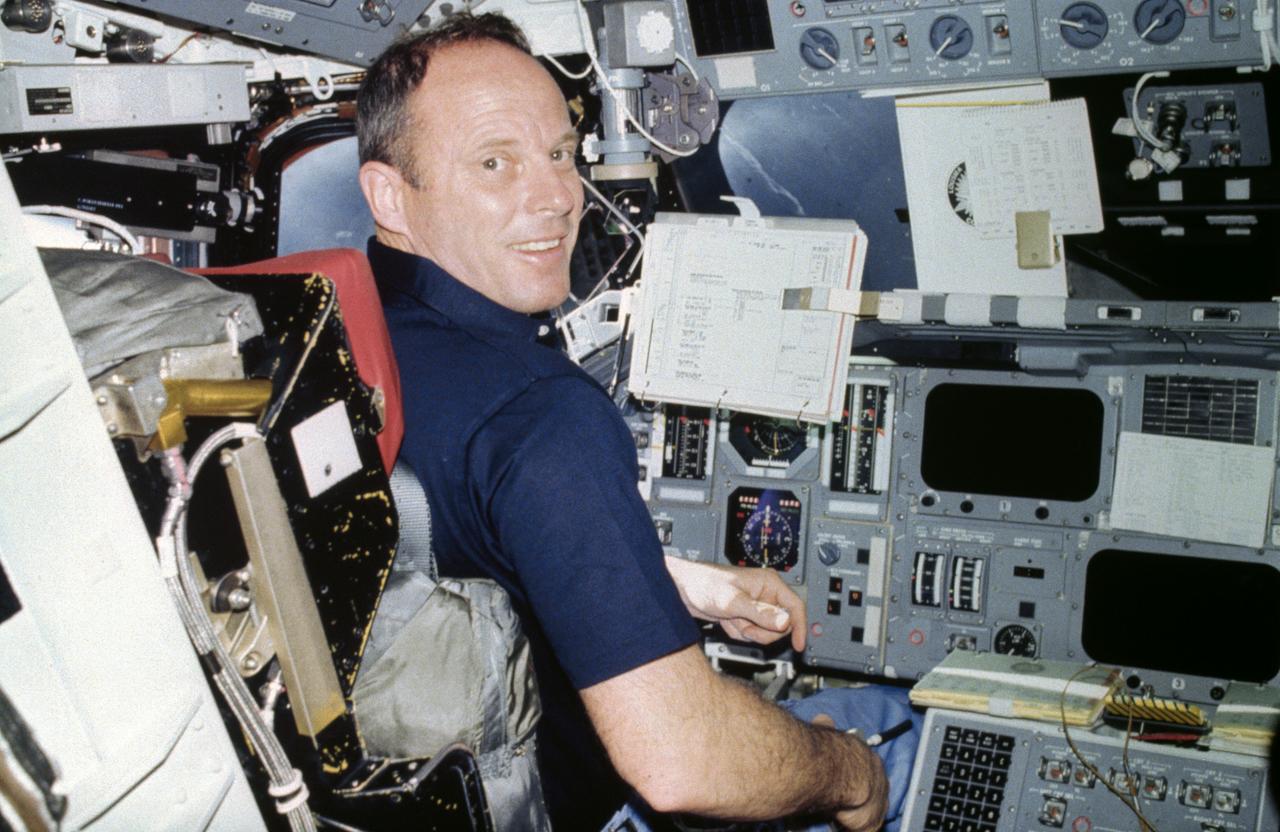
S82-28907 (March 1982) --- Astronaut Jack R. Lousma turns toward astronaut C. Gordon Fullerton and smiles into the lens of the 35mm camera Fullerton used to expose this frame onboard the busy Earth-orbiting space shuttle Columbia. Lousma is at the commander's station of the forward flight deck on the Columbia. His front window view is of Earth below (note river upper right center). Lousma is wearing the trouser and shirt of a three-piece (jacket temporarily not worn) constant-wear garment. Except for entry and launch phases, shuttle crews wear the CWG throughout their awake hours. A data acquisition camera (DAC) is at upper left, along with a TV camera. Photo credit: NASA
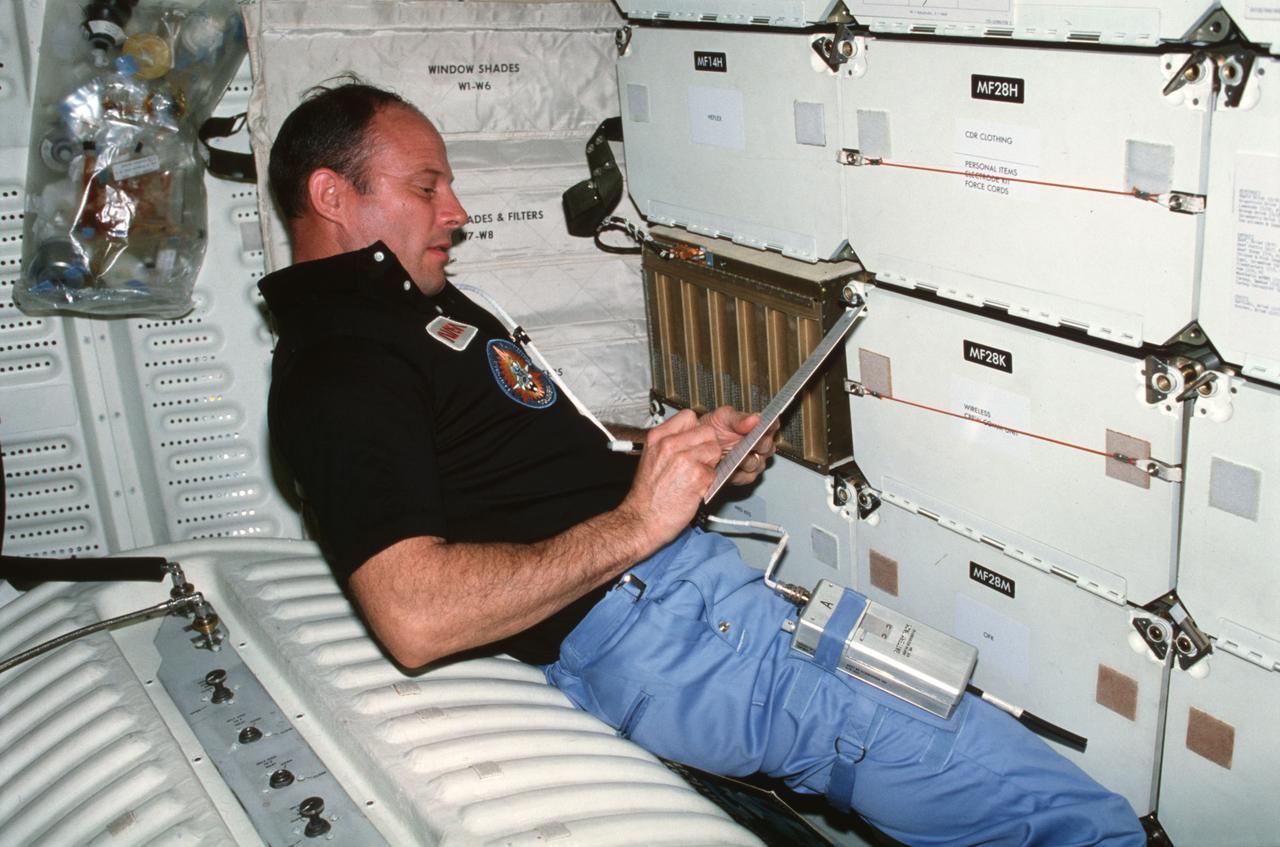
STS003-22-122 (30 March 1982) --- STS-3 Commander Lousma, wearing communications kit assembly (ASSY) mini-headset (HDST), records Plant Growth Unit (PGU) data for the Influence of Weightlessness on Plant Lignification Experiment at forward middeck locker MF14K. The experiment is designed to demonstrate the effect of weightlessness on the quantity and rate of lignin formation in different plant species during early stages of development. Port side bulkhead with window shade and filter kit appears behind Lousma and potable water tank below him. Trash bag also appears in view. Photo credit: NASA

S78-34037 (31 July 1978) --- Astronaut Jack R. Lousma, geared with a parachute, is pulled along behind a boat in Gulf waters at Homestead Air Force Base in Florida during a water survival training course attended by several NASA astronauts. The overall course is designed to familiarize astronauts with proper procedures to take in the event of ejection from an aircraft over water. Photo credit: NASA (NOTE: Since this photograph was made, astronaut Jack R. Lousma was named commander of STS-3, scheduled for launch in early spring of 1982.)
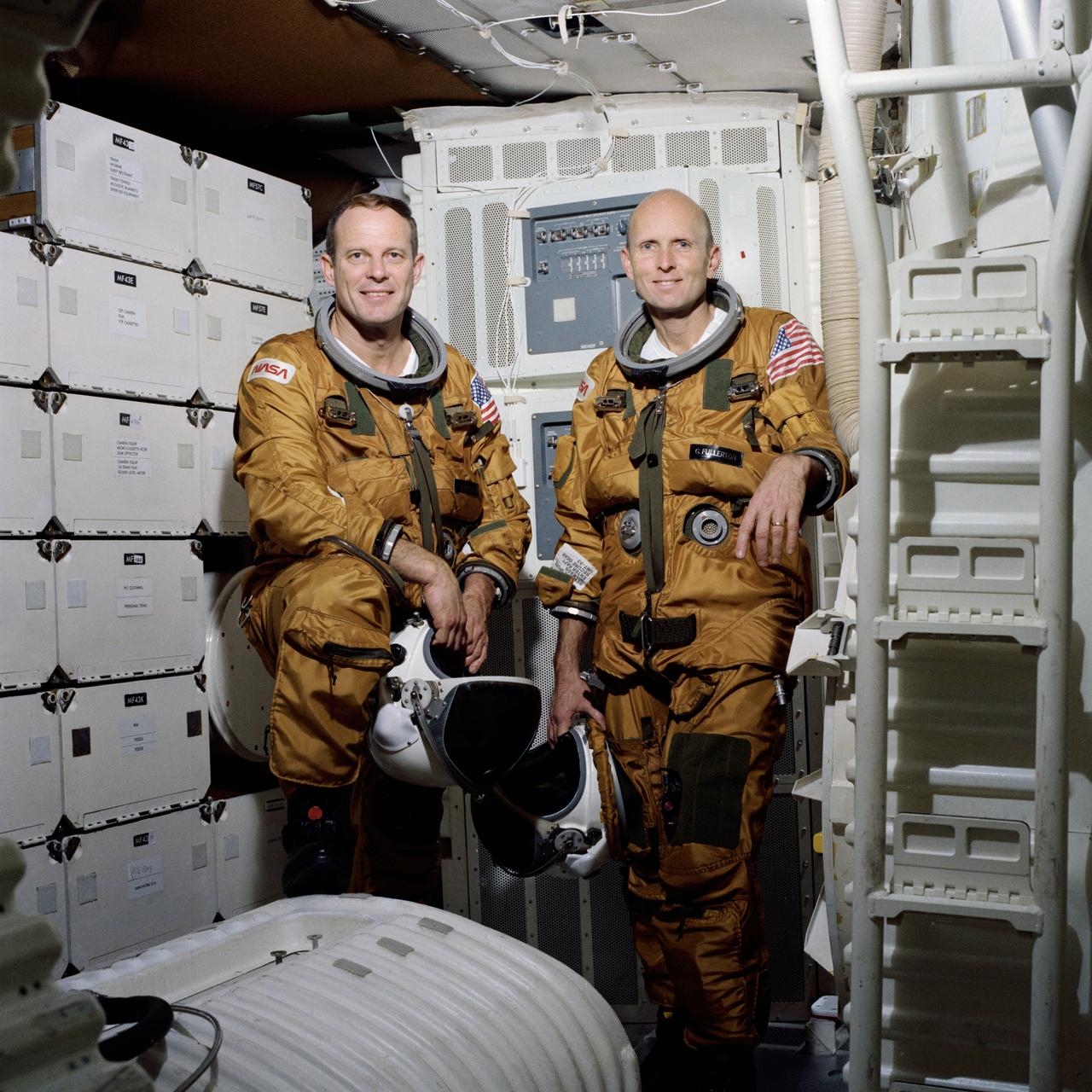
S82-25504 (20 Jan. 1982) --- These two veteran astronauts were named as prime crew members for STS-3 in the space shuttle Columbia. Wearing modified USAF-type altitude pressure garments in their Earth-bound shuttle trainer are astronauts Jack R. Lousma (left), commander, and C. Gordon Fullerton, pilot. Lousma was pilot on the second of three NASA astronaut crews to visit the Earth-orbiting Skylab space station in 1973. Fullerton was pilot for three free flights in the space shuttle Enterprise during approach and landing tests (ALT) in 1977. Photo credit: NASA

SL3-115-1833 (6 Aug. 1973) --- Astronaut Jack R. Lousma, Skylab 3 pilot, participates in the Aug. 6, 1973, extravehicular activity (EVA) during which he and astronaut Owen K. Garriott, science pilot, deployed the twin pole solar shield to help shade the Orbital Workshop (OWS). Note the striking reflection of the Earth in Lousma?s helmet visor. This photograph was taken with a 70mm hand-held Hasselblad camera. Photo credit: NASA
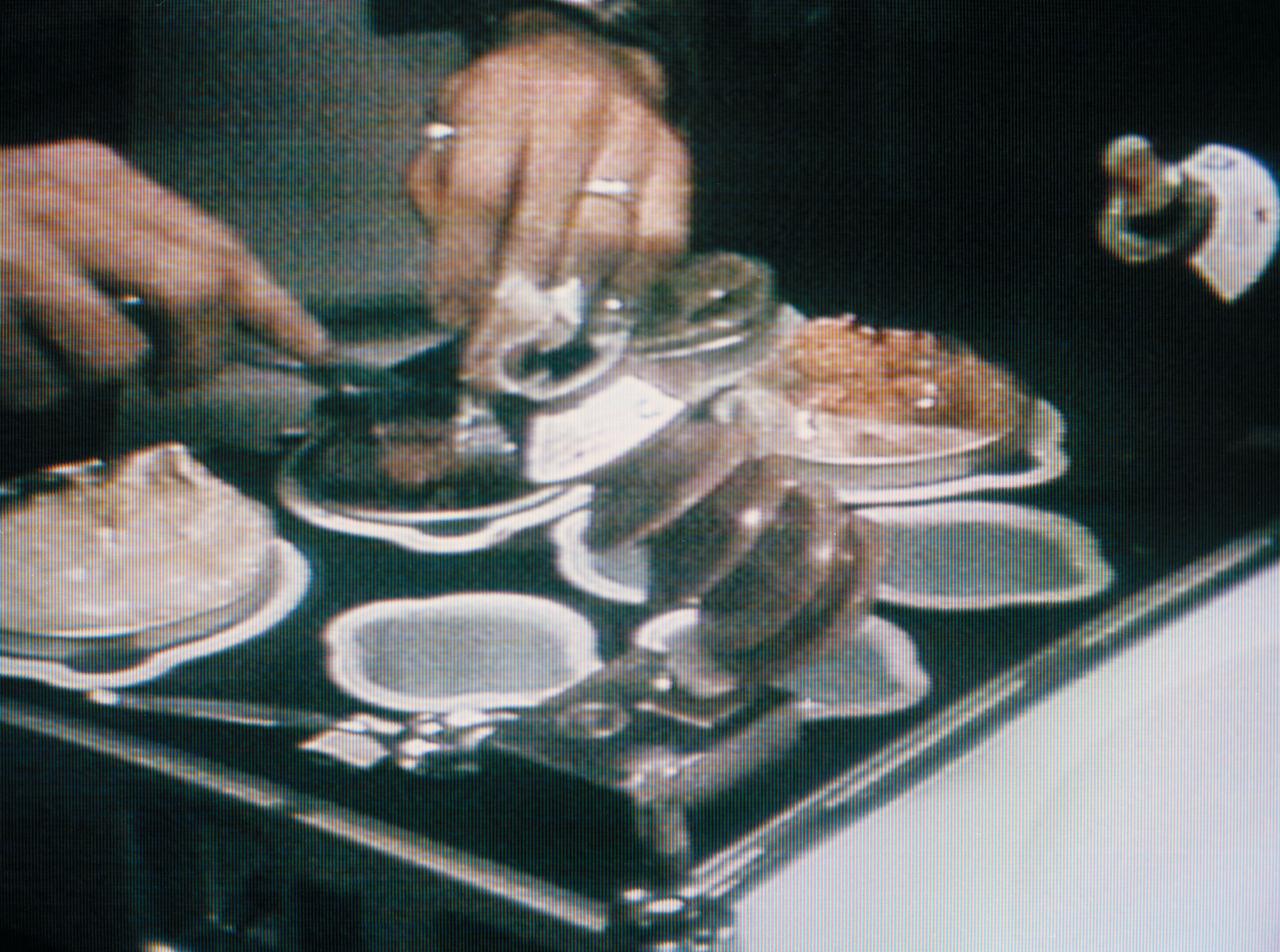
S73-34198 (1 Aug. 1973) --- A close-up view of the hands of astronaut Jack R. Lousma, Skylab 3 pilot, using a silverware utensil to gather food at the food station, in this photographic reproduction taken from a television transmission made by a color TV camera aboard the Skylab space station in Earth orbit. Astronaut Alan L. Bean, commander, had just zoomed the TV camera in for this close-up of the food tray following a series of wide shots of Lousma at the food station. Photo credit: NASA
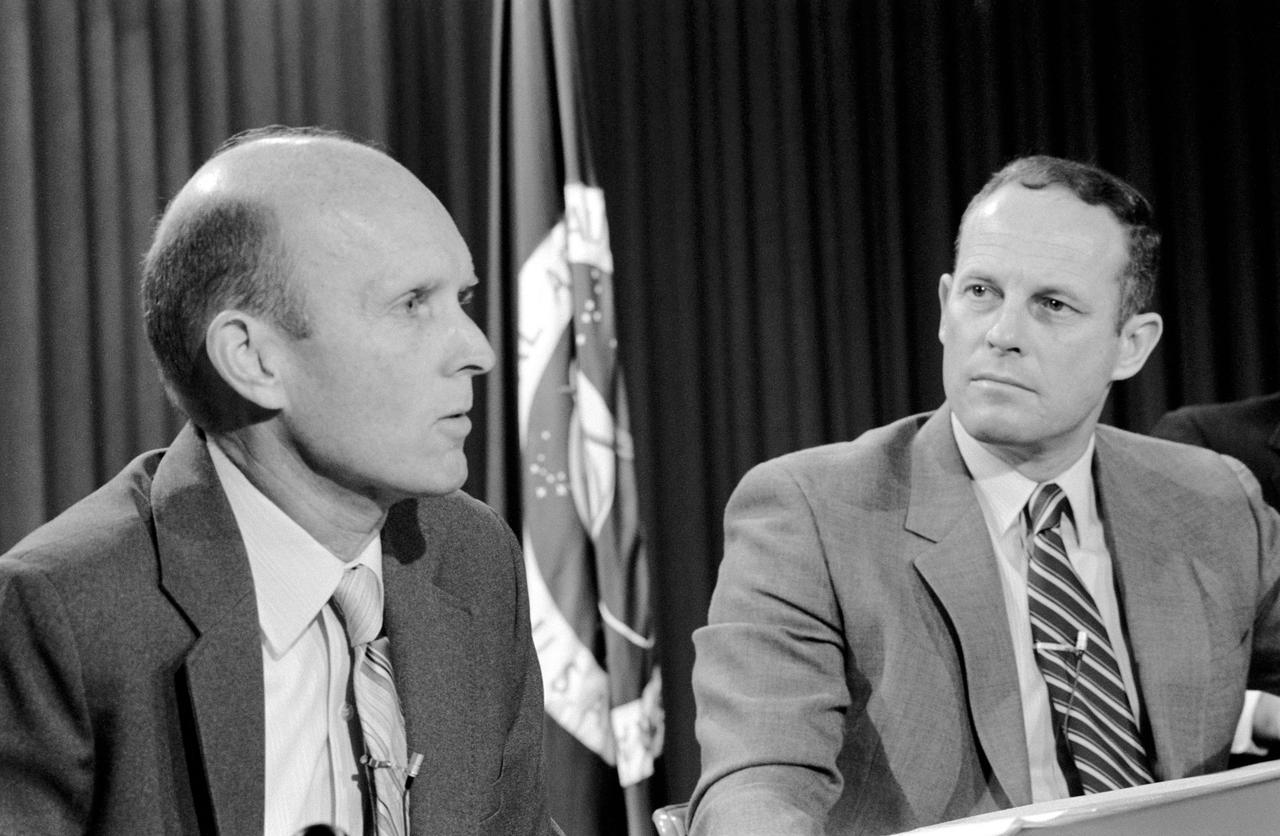
S82-25900 (21 Jan. 1982) --- Astronaut Jack R. Lousma, right, and C. Gordon Fullerton greet the press during a pre-STS-3 press conference in JSC?s Public Affairs Building. Lousma, commander and Fullerton, pilot, are scheduled to man the Columbia when it is launched in early spring from Kennedy Space Center launch pad 39A. Photo credit: NASA
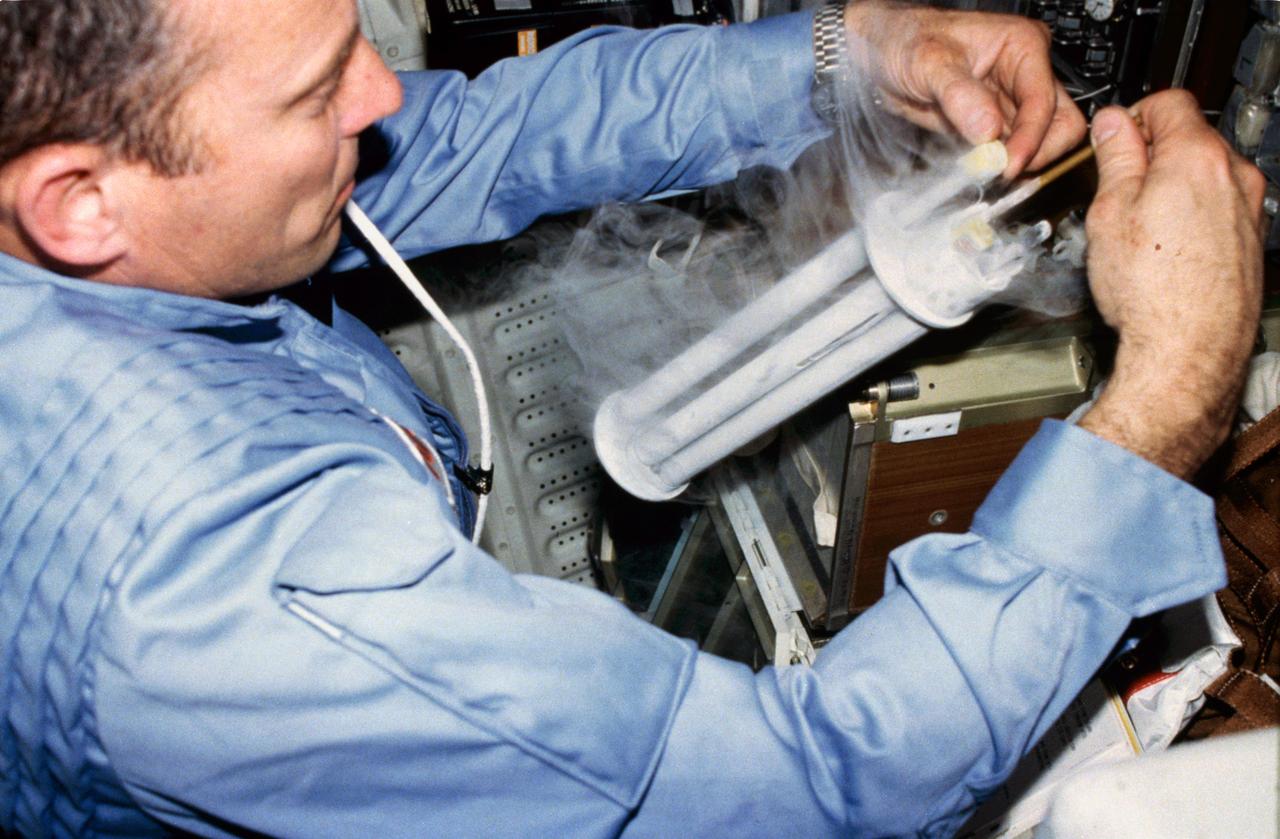
Commander Jack Lousma works with Electrophoresis Equipment Verification Test (EEVT) electrophoresis unit, cryogenic freezer and tube, and stowage locker equipment located on crew compartment middeck aft bulkhead.
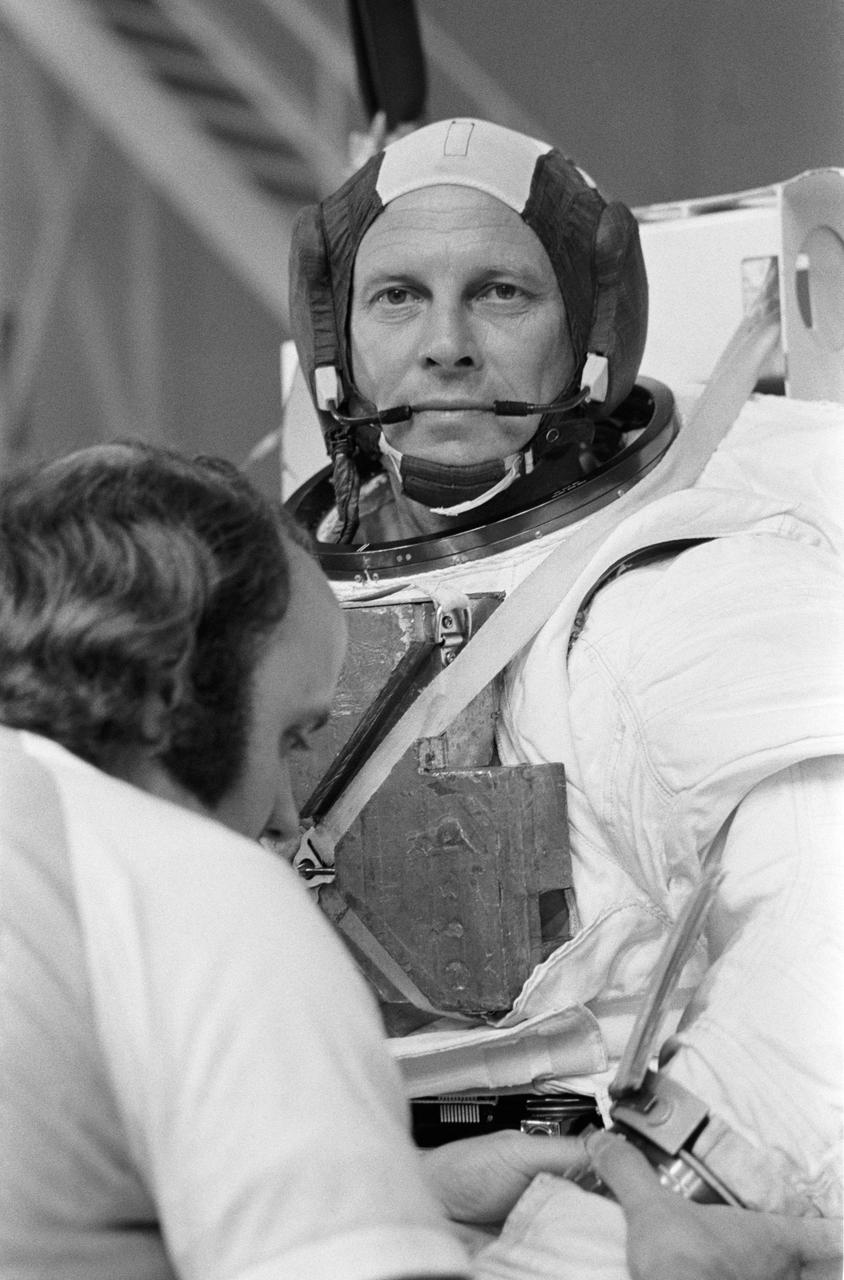
Portrait view of astronaut Jack Lousma in the Extravehicular Mobility Unit (EMU) at bldg 29 Weightless Environment Training Facility (WETF). He is wearing the EMU minus the helmet.
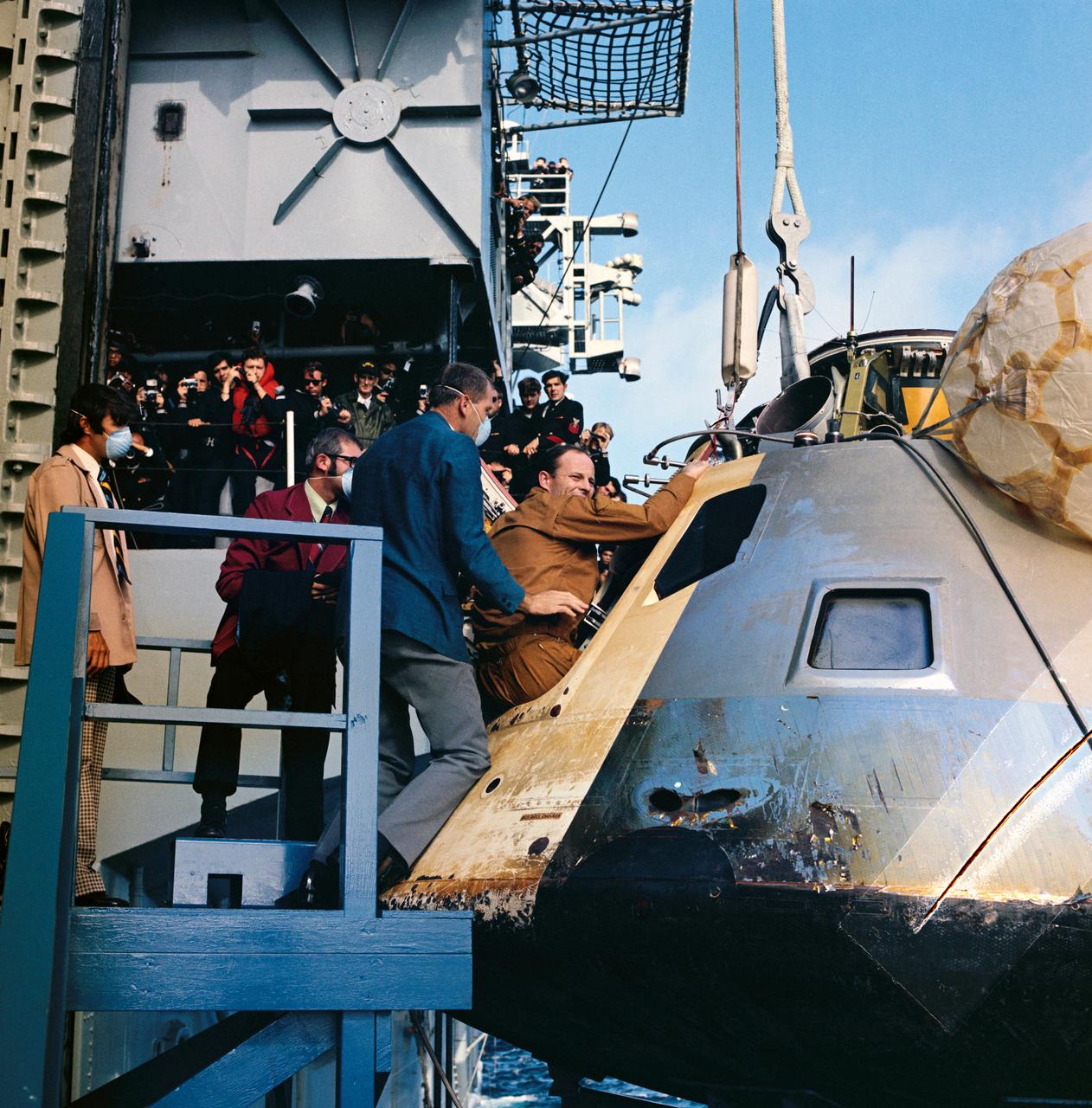
S73-36435 (25 Sept. 1973) --- Astronaut Jack R. Lousma, Skylab 3 pilot, egresses the Skylab 3 Command Module aboard the prime recovery ship, USS New Orleans, during recovery operations in the Pacific Ocean. Astronauts Lousma; Alan L. Bean, commander; and Owen L. Garriott, science pilot, had just completed a successful 59-day visit to the Skylab space station in Earth orbit. The Skylab 3 spacecraft splashed down in the Pacific about 230 miles southwest of San Diego, California. Photo credit: NASA
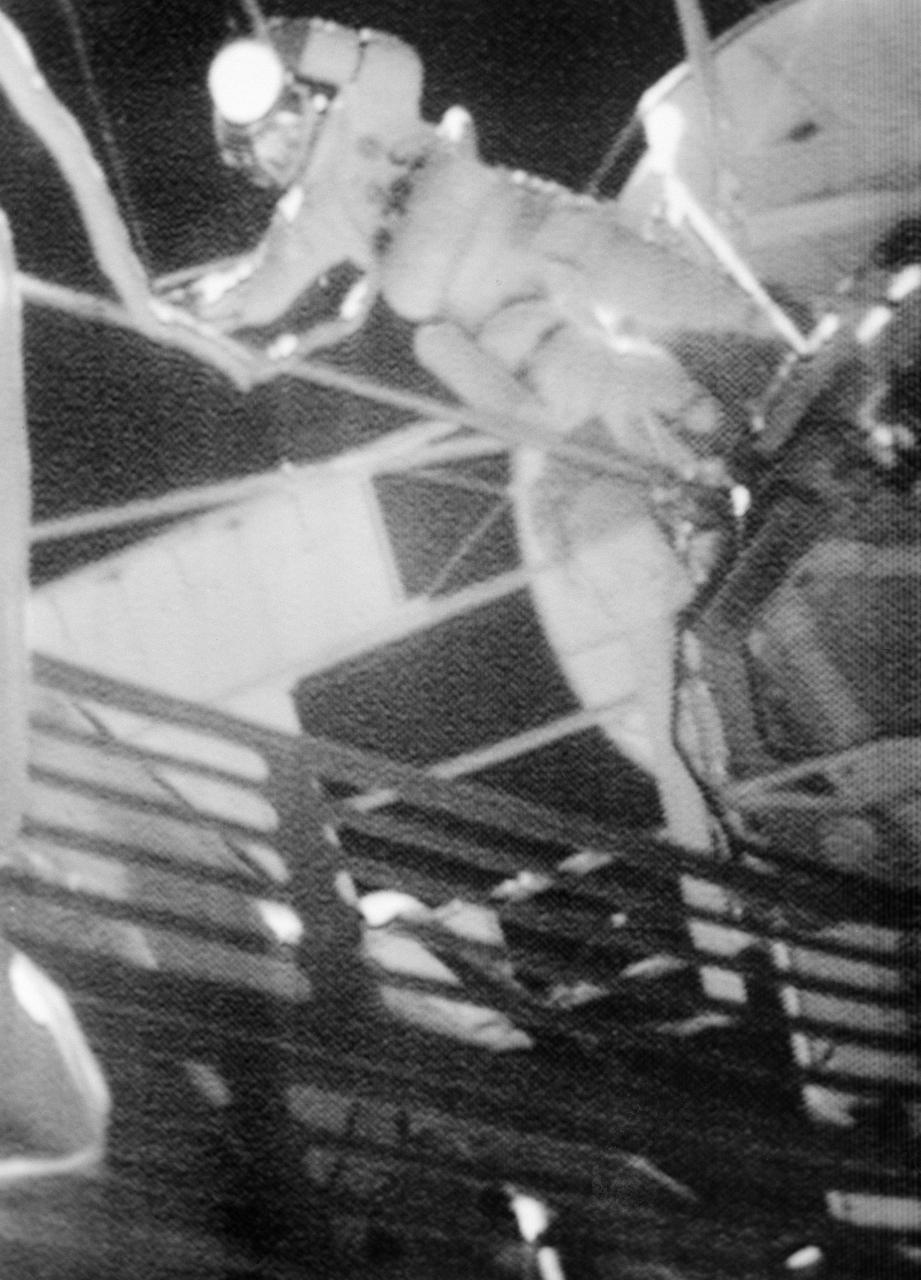
S73-31976 (5 Aug. 1973) --- Astronaut Jack R. Lousma, Skylab 3 pilot, is seen outside the Skylab space station in Earth orbit during the Aug. 5, 1973 Skylab 3 extravehicular activity (EVA) in this photographic reproduction taken from a television transmission made by a color TV camera aboard the space station. Scientist-astronaut Owen K. Garriott, Skylab 3 science pilot, participated in the EVA with Lousma. During the EVA the two crewmen deployed the twin pole solar shield to help shade the Orbital Workshop. Photo credit: NASA
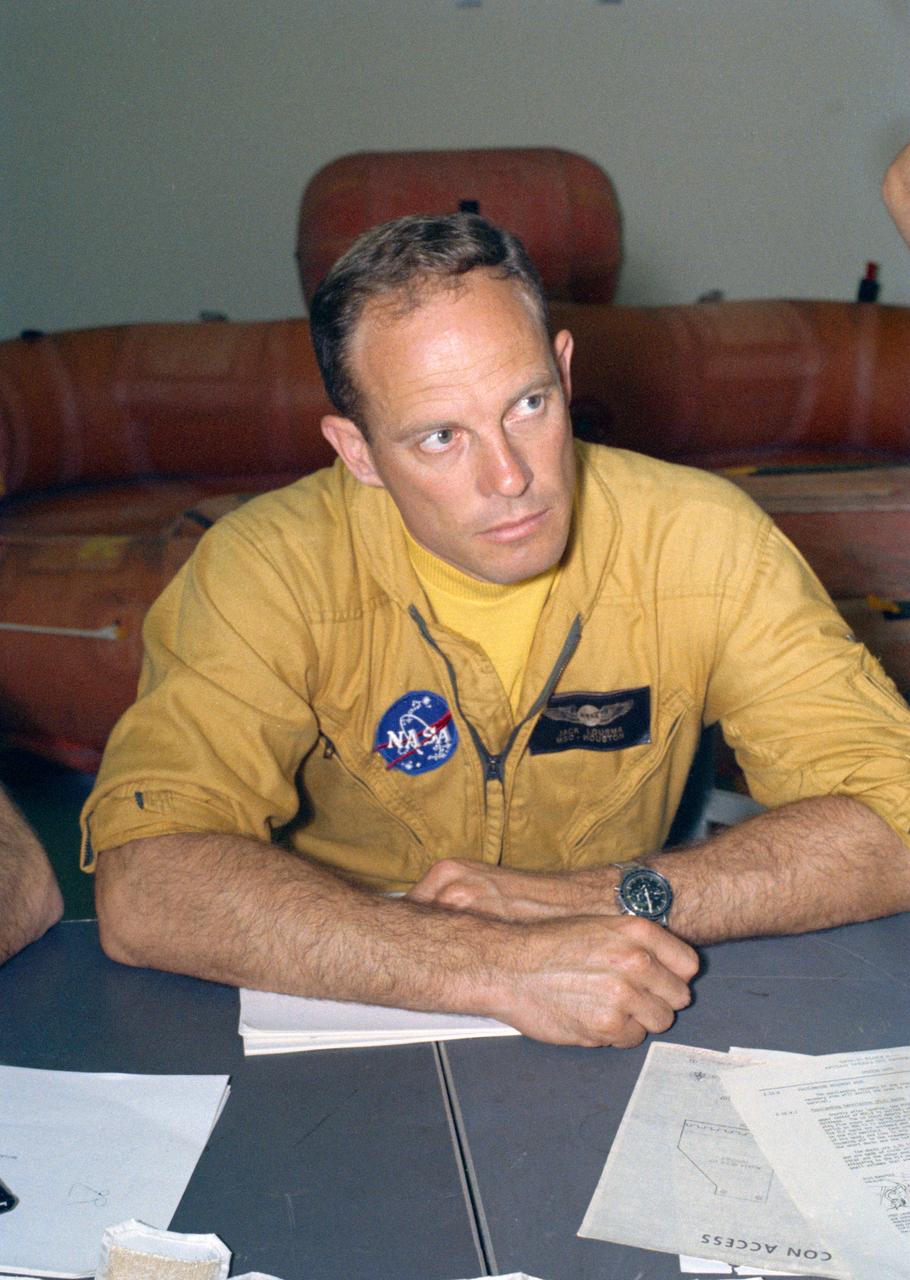
S73-27770 (1 May 1973) --- Astronaut Jack R. Lousma, Skylab 3 pilot, sits at a table with fellow crewmen and the flight surgeon prior to water egress training at the Johnson Space Center, Houston. Photo credit: NASA
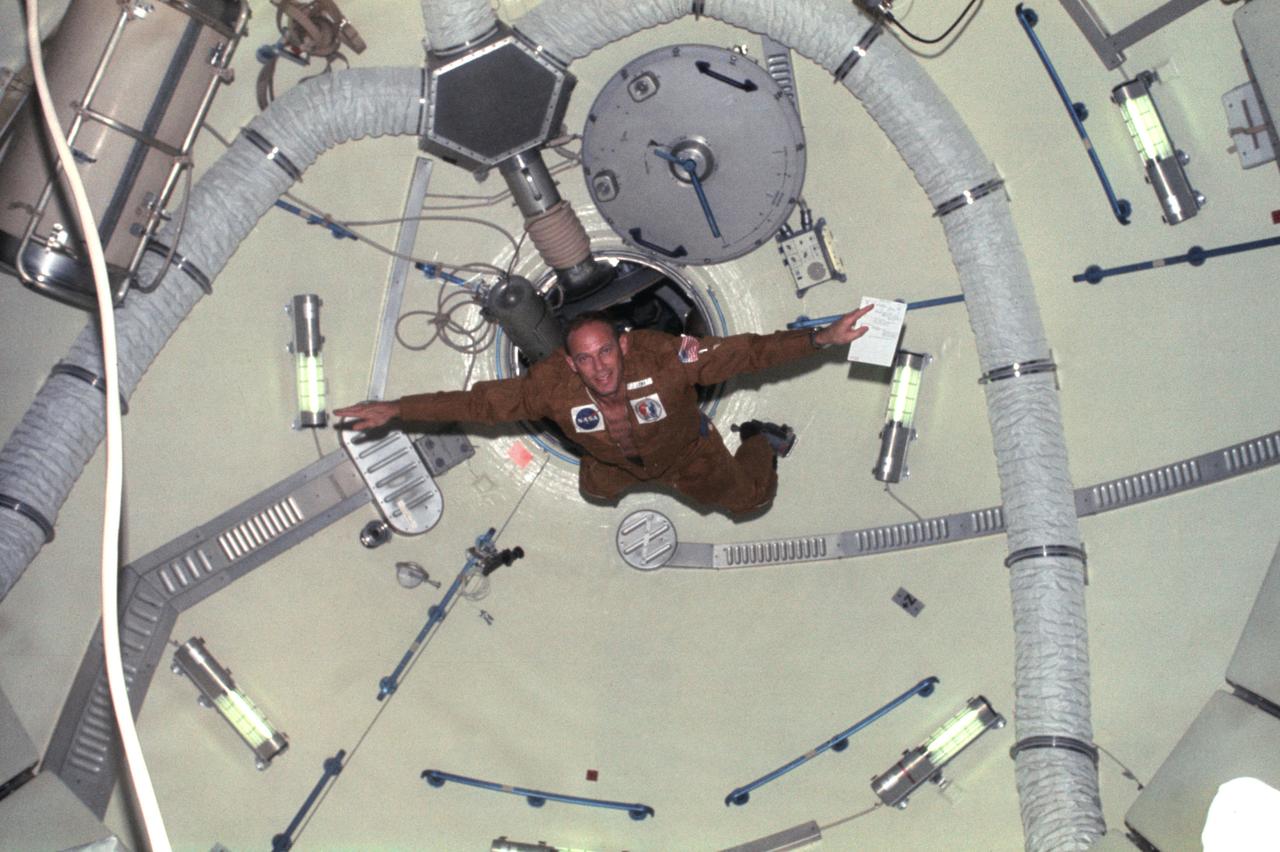
Astronaut Jack R. Lousma, Skylab 3 pilot, doing acrobatics in the dome area of the Orbital Workshop (OWS) on the space station cluster in Earth orbit. The dome area is about 22 feet in diameter and 19 feet from top to bottom.
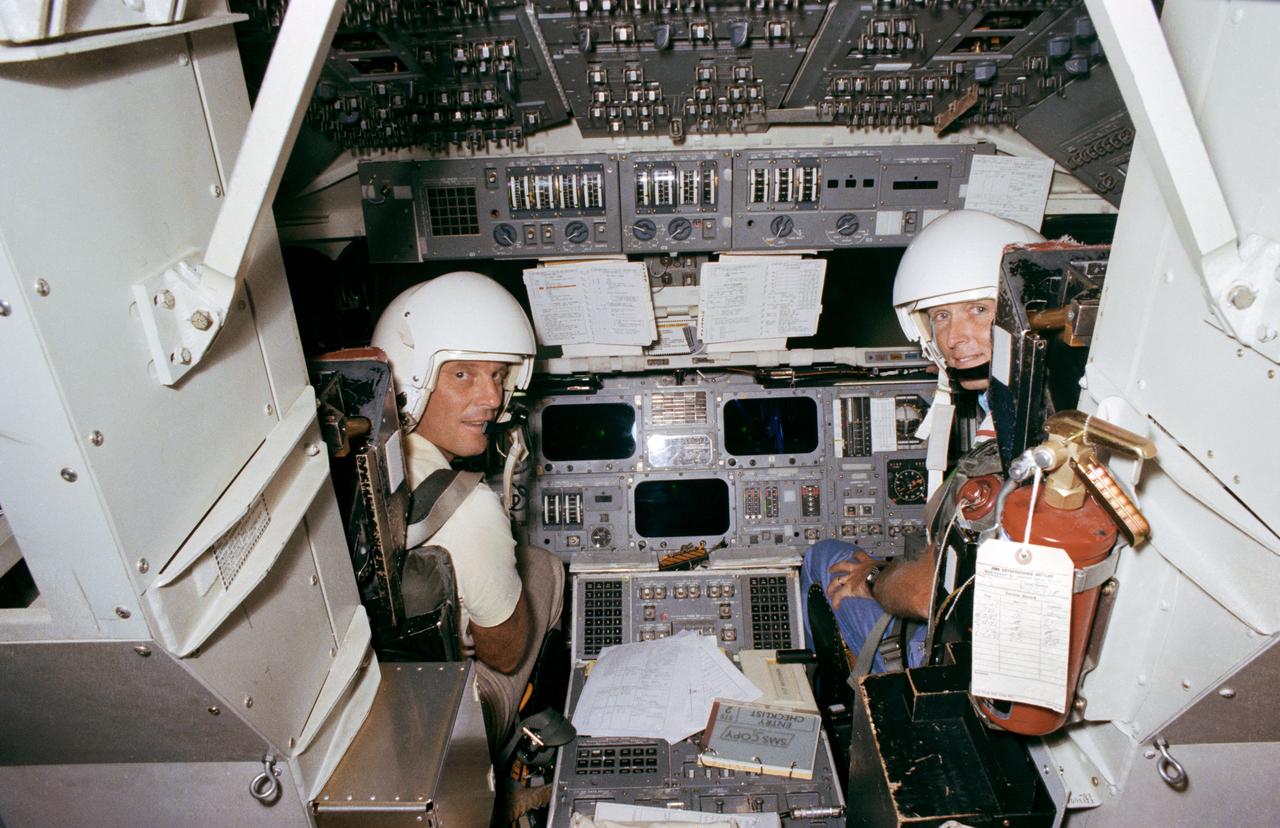
S81-36714 (14 Nov. 1981) --- These two veteran astronauts were named today as the official prime crew members of STS-3 in the space shuttle Columbia. Commander for NASA?s third space shuttle orbital flight test is astronaut Jack R. Lousma, left, seated in a Shuttle Mission Simulator (SMS) at NASA's Johnson Space Center (JSC). Astronaut C. Gordon Fullerton, right, will serve as pilot. Lousma was pilot on the second of three NASA crews to visit the Earth orbiting Skylab space station in 1973. Fullerton, though never having been in space, is a veteran of three free flights of the shuttle during approach and landing tests (ALT) with space shuttle Enterprise in 1977. Photo credit: NASA
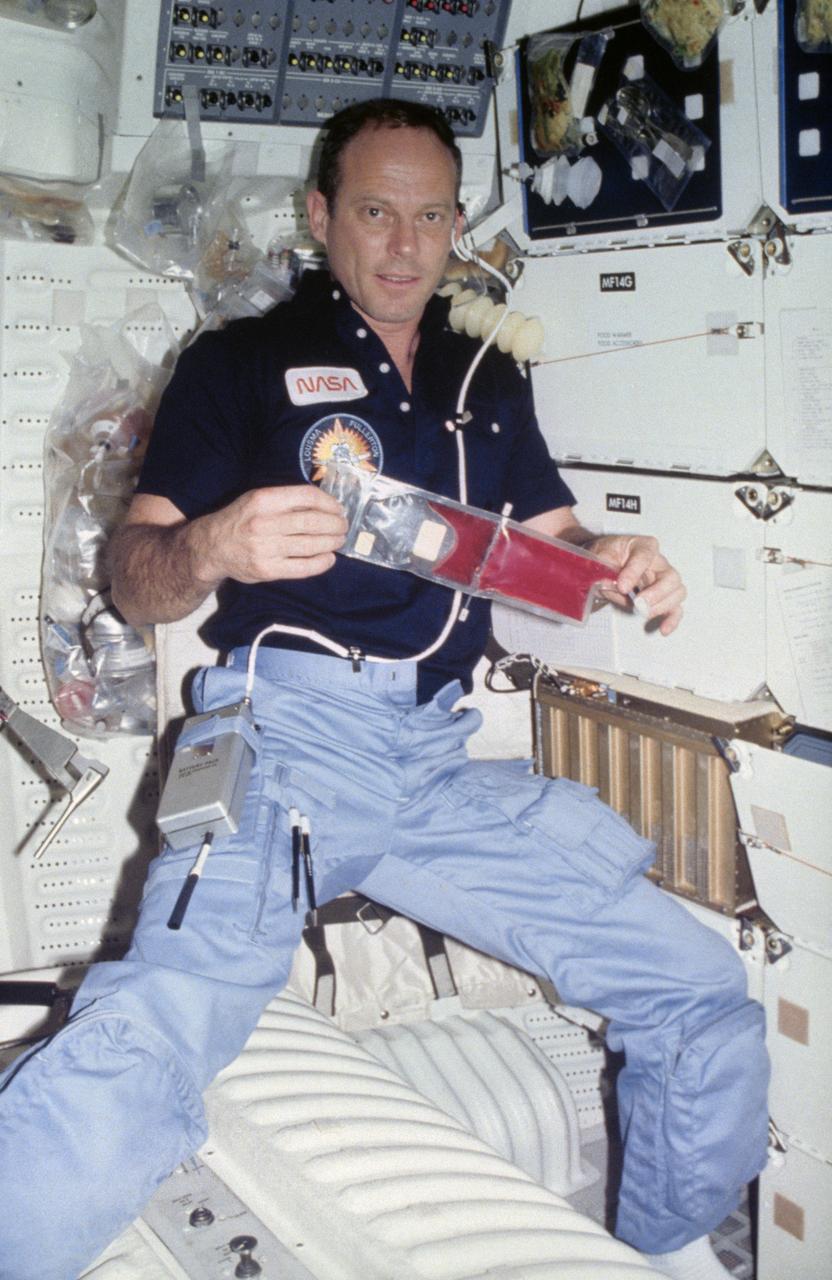
S82-28914 (26 March 1982) --- Astronaut Jack R. Lousma, STS-3 commander, spins a package of colored liquid in zero-gravity aboard the Earth-orbiting space shuttle Columbia. He was actually creating a centrifuge to conduct a test involving the separation of bubbles from the liquid rehydrated strawberry powder for visible clarity. The gas from liquid experiment is a test devised by scientist-astronaut William E. Thornton. The gun-like device at center of left edge is a water-dispenser which the astronauts use in rehydrating food packets, many of which can be seen in the background of this middeck area of the Columbia. Astronaut C. Gordon Fullerton, pilot, exposed this frame with a 35mm camera. Photo credit: NASA
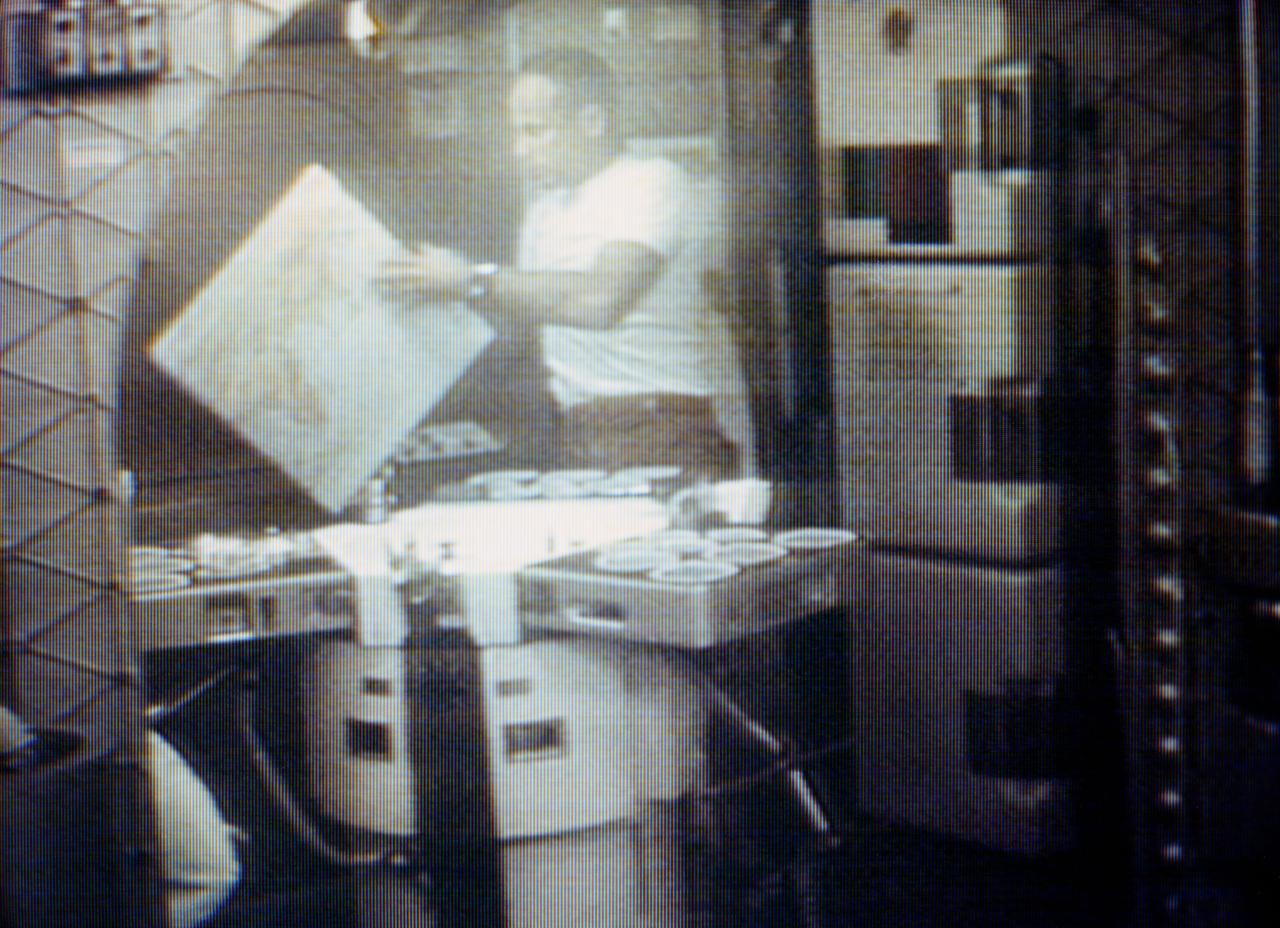
S73-34193 (1 Aug. 1973) --- Astronaut Jack R. Lousma, Skylab 3 pilot, looks at a map of Earth at the food table in the ward room of the Orbital Workshop (OWS). In this photographic reproduction taken from a television transmission made by a color TV camera aboard the Skylab space station cluster in Earth orbit. Photo credit: NASA
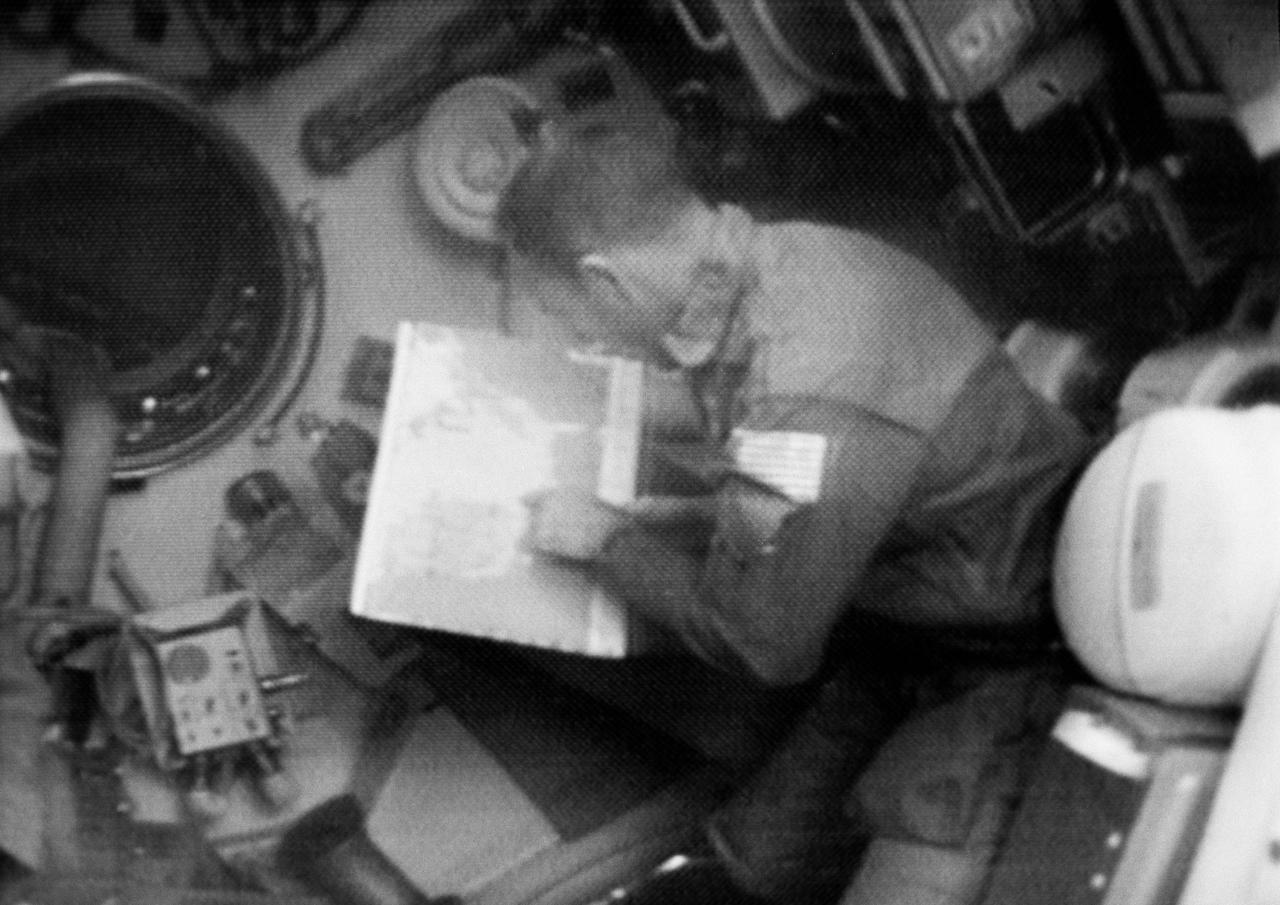
S73-31845 (3 Aug. 1973) --- Astronaut Jack R. Lousma, Skylab 3 pilot, studies a map of the U.S. during a Skylab EREP pass across the United States, as seen in this photographic reproduction taken from a television transmission made by a color TV camera aboard the Skylab space station in Earth orbit. EREP is an acronym for Earth Resources Experiments Package. Photo credit: NASA
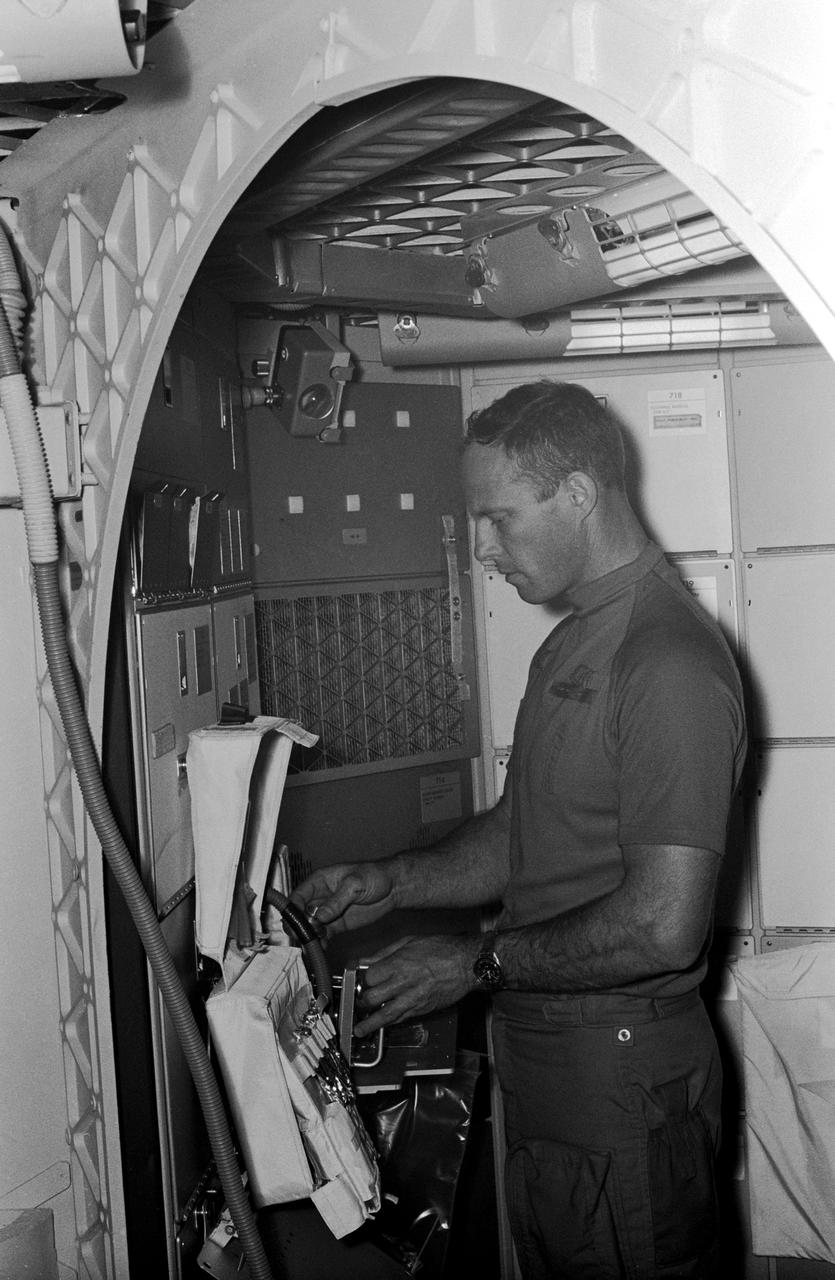
S73-28423 (16 June 1973) --- Astronaut Jack R. Lousma, Skylab 3 pilot, reaches into a medical kit, part of the Inflight Medical Support System (IMSS), during training for the second manned Skylab Earth-orbital mission. This activity took place in the OWS trainer in the Mission Simulation and Training Facility at the Johnson Space Center (JSC). Other Skylab 3 crewmen are astronaut Alan L. Bean, commander, and scientist-astronaut Owen K. Garriott, science pilot. Photo credit: NASA
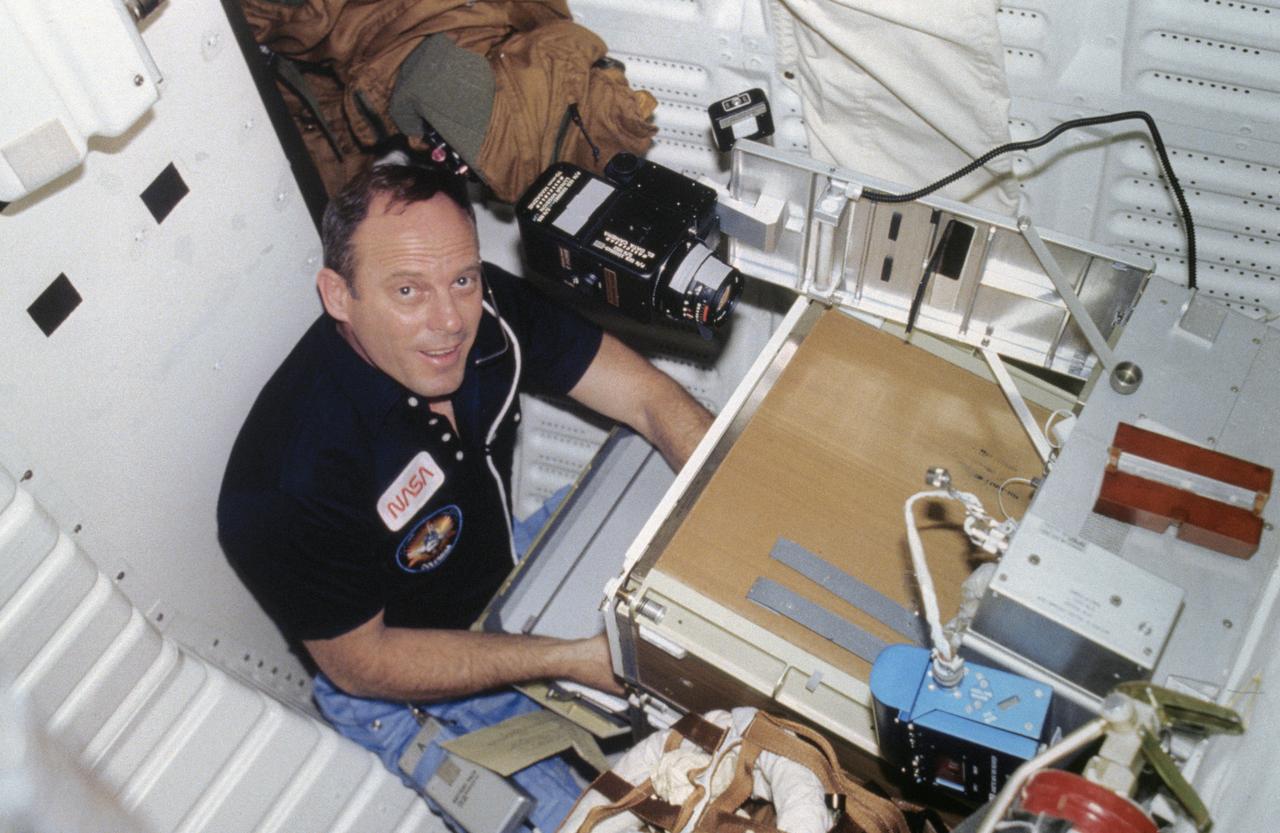
S82-28911 (March 1982) --- The L-shaped experiment in the right half of this photo was one of a number of scientific experiments which made the trip for NASA's third space transportation system (STS-3) mission, along with astronauts Jack R. Lousma, pictured, and C. Gordon Fullerton. The experiment, making encore in space (it also flew on the Apollo Soyuz Test Project in 1985), is designed to evaluate the feasibility of separating cells according to their surface electrical charge. It is a forerunner to planned experiments with other equipment that will purify biological materials in the low gravity environment of space. The process of electrophoresis utilizes an electric field to separate cells, and other biological material in fluids without damaging the cells which can then be used in the study of cell biology, immunology and medical research. This photograph was taken with a 35mm camera by Fullerton. Photo credit: NASA
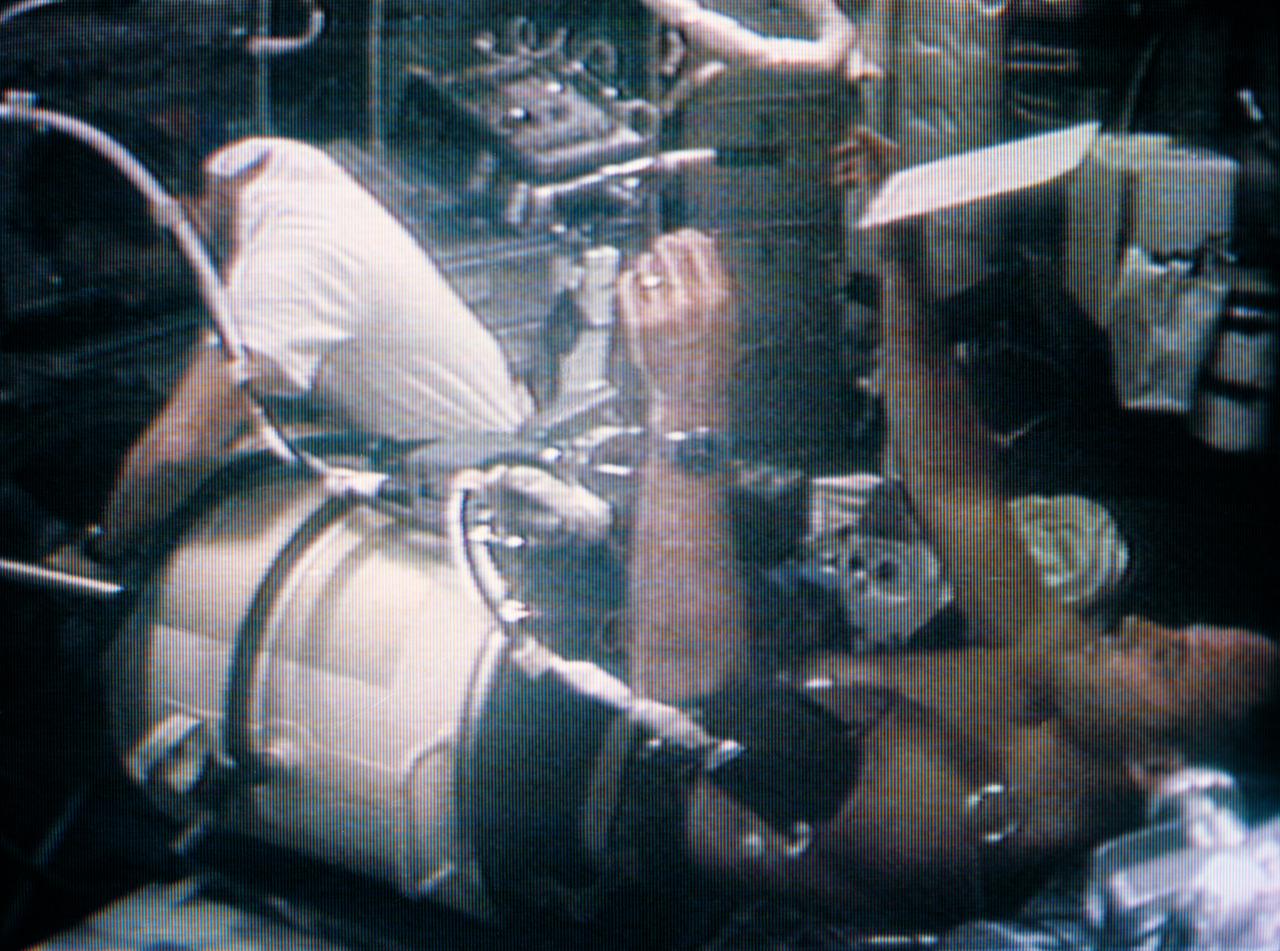
S73-34180 (7 Aug. 1973) --- A medium close-up view of astronaut Jack R. Lousma, Skylab 3 pilot, in the Lower Body Negative Pressure Device (LBNPD), as astronaut Alan L. Bean, commander, works around the leg band area. This portion of the LBNPD MO-92 experiment was televised on Aug. 7, 1973. The LBNPD experiment is to provide information concerning the time course of cardiovascular adaptation during flight, and to provide in-flight data for predicting the degree of orthostatic intolerence and impairment of physical capacity to be expected upon returning to Earth environment. The bicycle ergometer is in the background, partially visible behind Bean. Photo credit: NASA
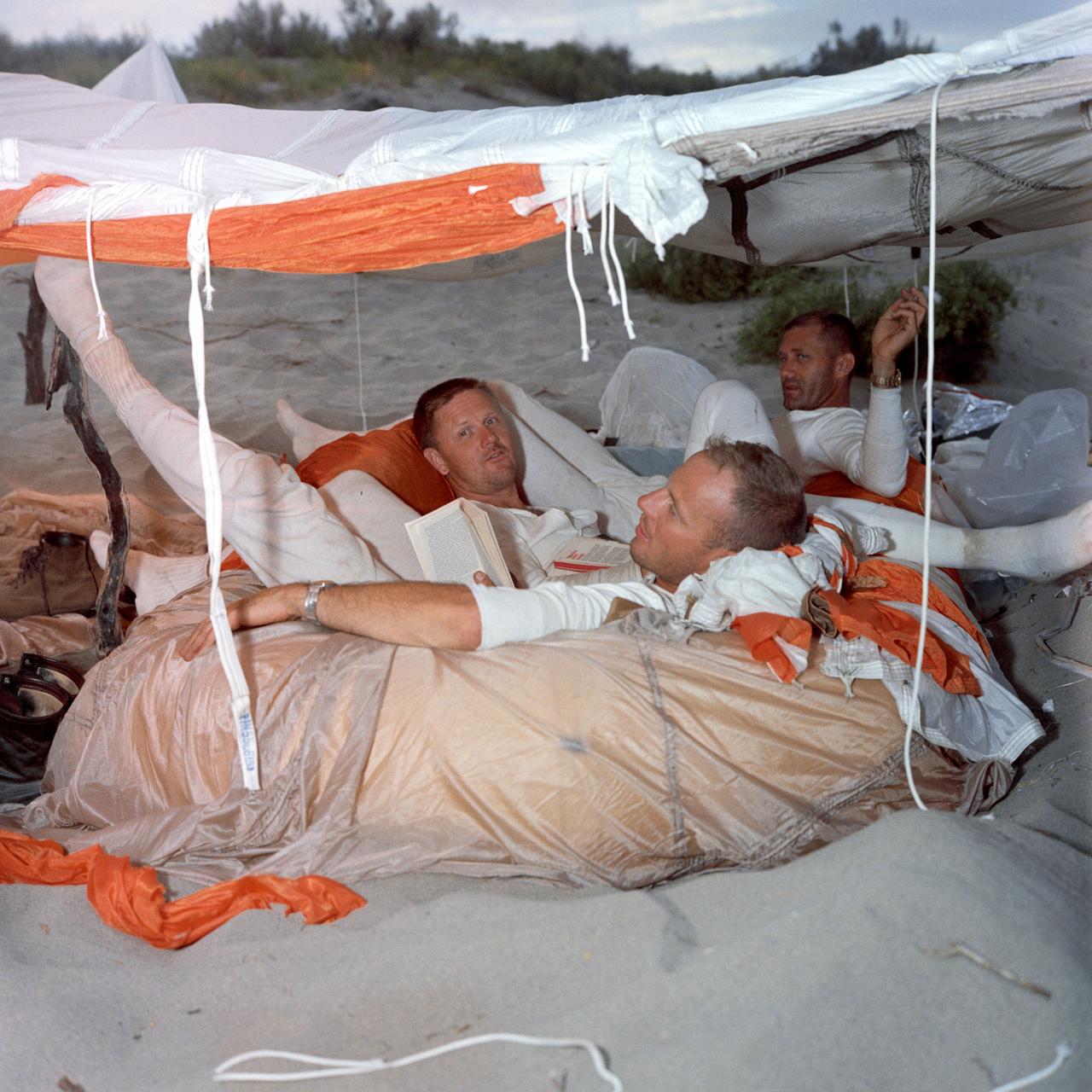
Desert Survival Training with Astronauts Lousma, Ling, and Pogue. PASCO, WA
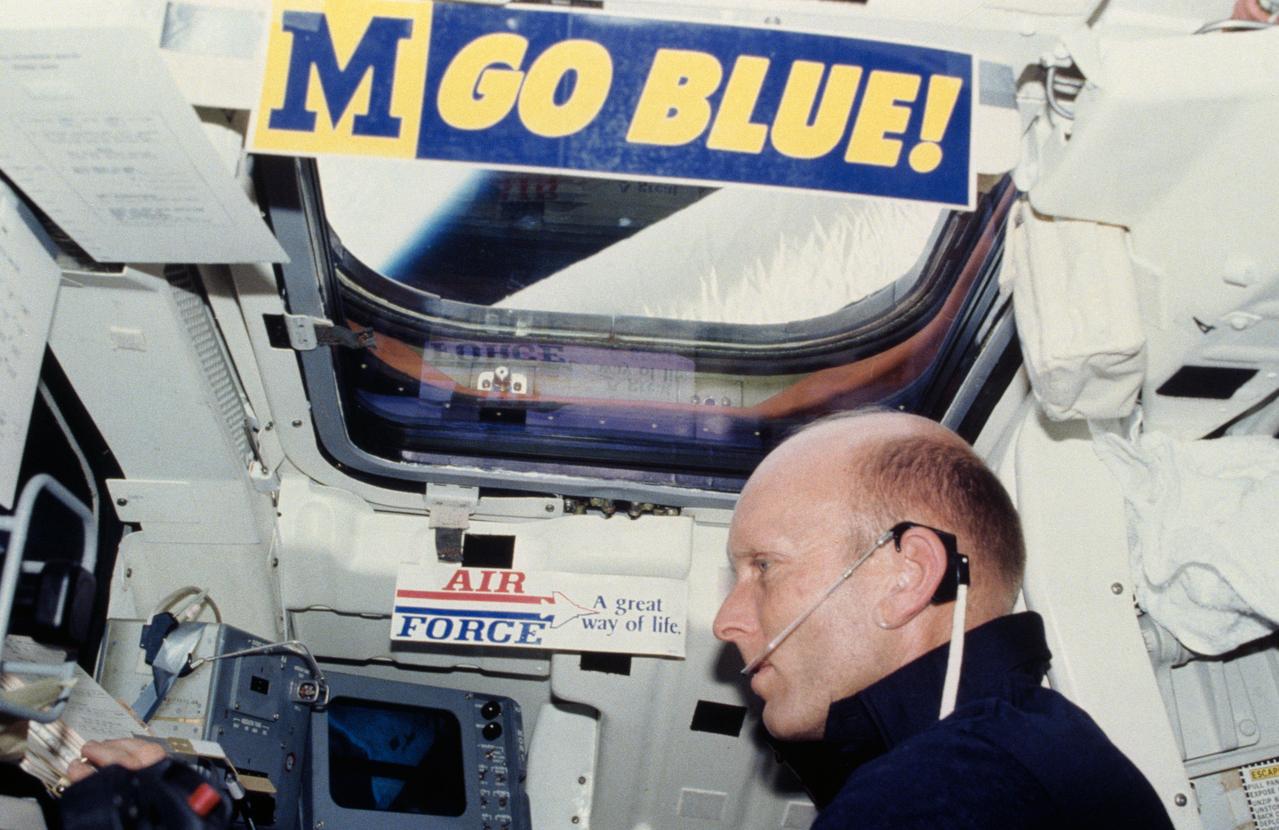
S82-28906 (27 March 1982) --- Astronaut C. Gordon Fullerton, STS-3 pilot, mans the right hand aft station of the flight deck on the Earth-orbiting Columbia. The photograph was taken with a 35mm camera by astronaut Jack R. Lousma, crew commander. The "Go Blue" sticker is a University of Michigan memento of Lousma, and the Air Force sign was put up by Fullerton, a USAF colonel. Lousma, a USMC colonel, received his BS degree in aeronautical engineering in 1959 from UM. One of two aft windows for cargo bay viewing and one of two ceiling windows are visible in the photo. Fullerton and Lousma watched the activity of the remote manipulator system (RMS) arm out the lower window and they took a number of photos of Earth from the upper window. Photo credit: NASA
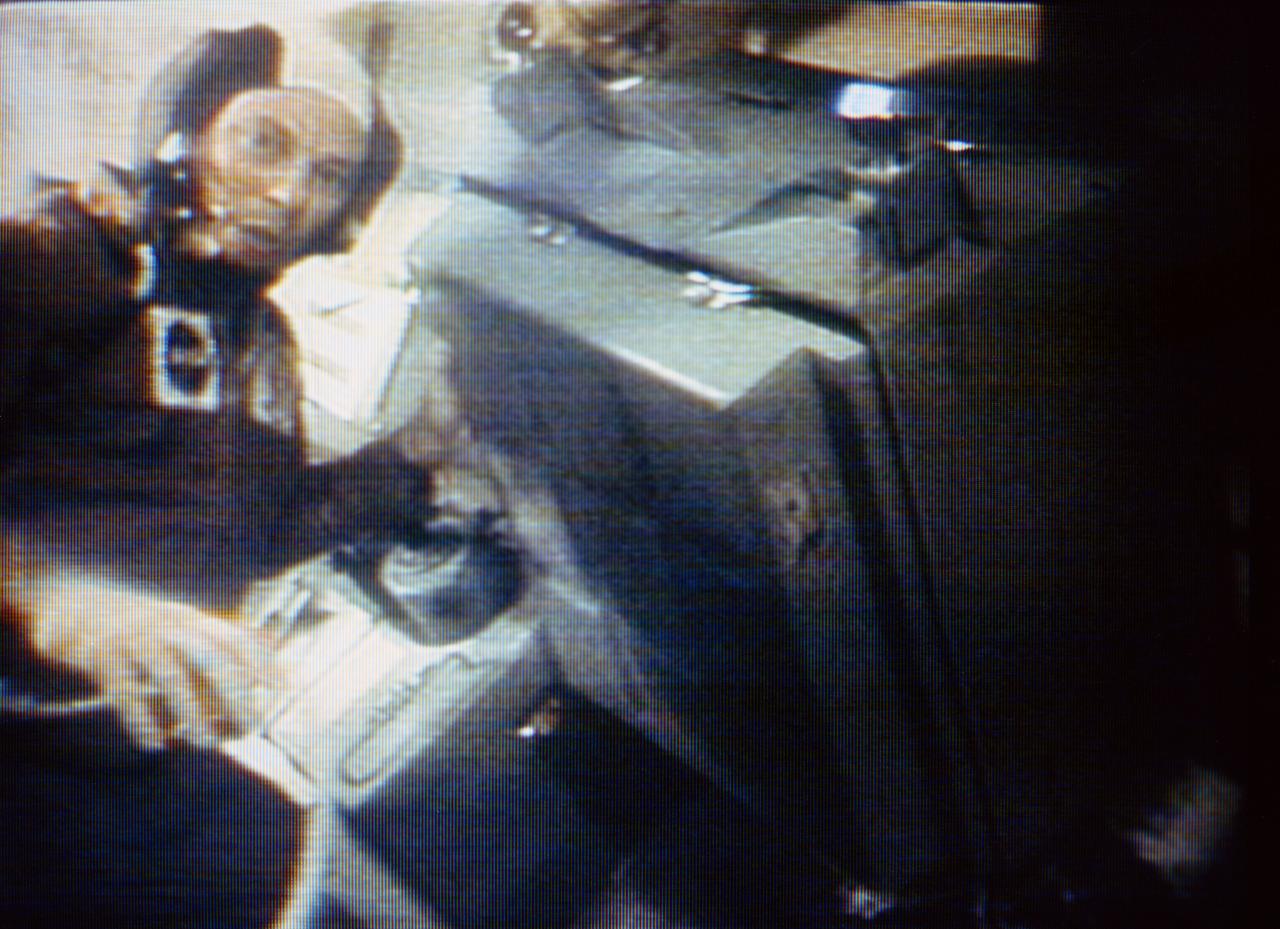
S73-34181 (July-September 1973) --- Astronaut Jack R. Lousma, Skylab 3 pilot, works at the S190A multispectral camera experiment in the Multiple Docking Adapter (MDA), seen from a color television transmission made by a TV camera aboard the Skylab space station cluster in Earth orbit. Lousma later used a small brush to clean the six lenses of the multispectral camera. Photo credit: NASA
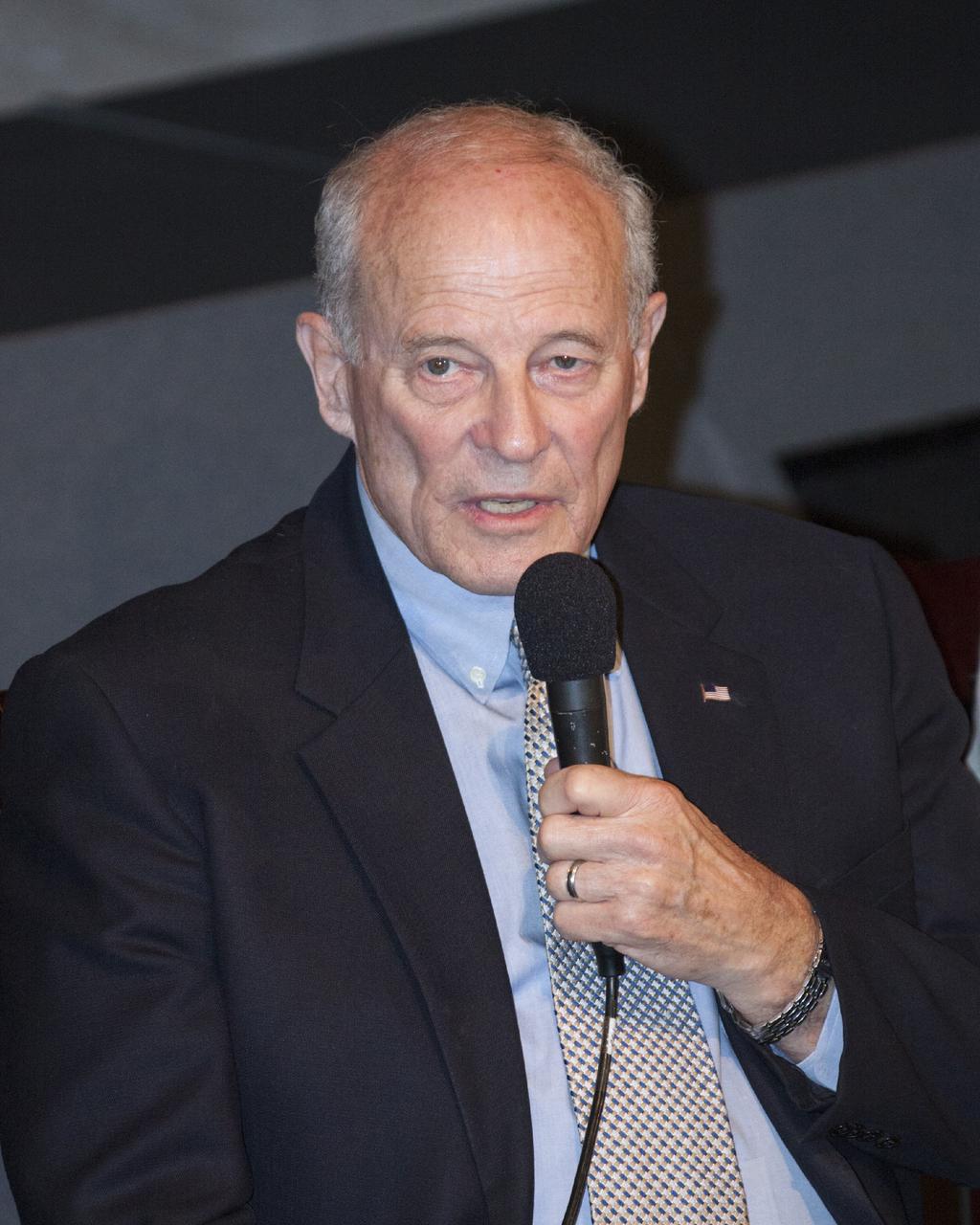
CAPE CANAVERAL, Fla. – At the Kennedy Space Center's Apollo/Saturn V Center, former NASA astronaut Jack Lousma speaks to guests at the Astronaut Scholarship Foundation's event celebrating the 40th anniversary of Skylab. Lousma served as pilot on Skylab 3, the second piloted mission to the space station. Lousma went on to command a mission of the space shuttle. The gala commemorating the 40th anniversary of Skylab included six of the nine astronauts who flew missions to America's first space station. The orbiting laboratory was launched unpiloted from Kennedy on May 14, 1973. Between May 25, 1973 and Feb. 8, 1974, crews of three spent 28, 59 and 84 days living and working in low-Earth orbit aboard the station. For more information, visit http://www.nasa.gov/mission_pages/skylab/ Photo credit: NASA/Kim Shiflett
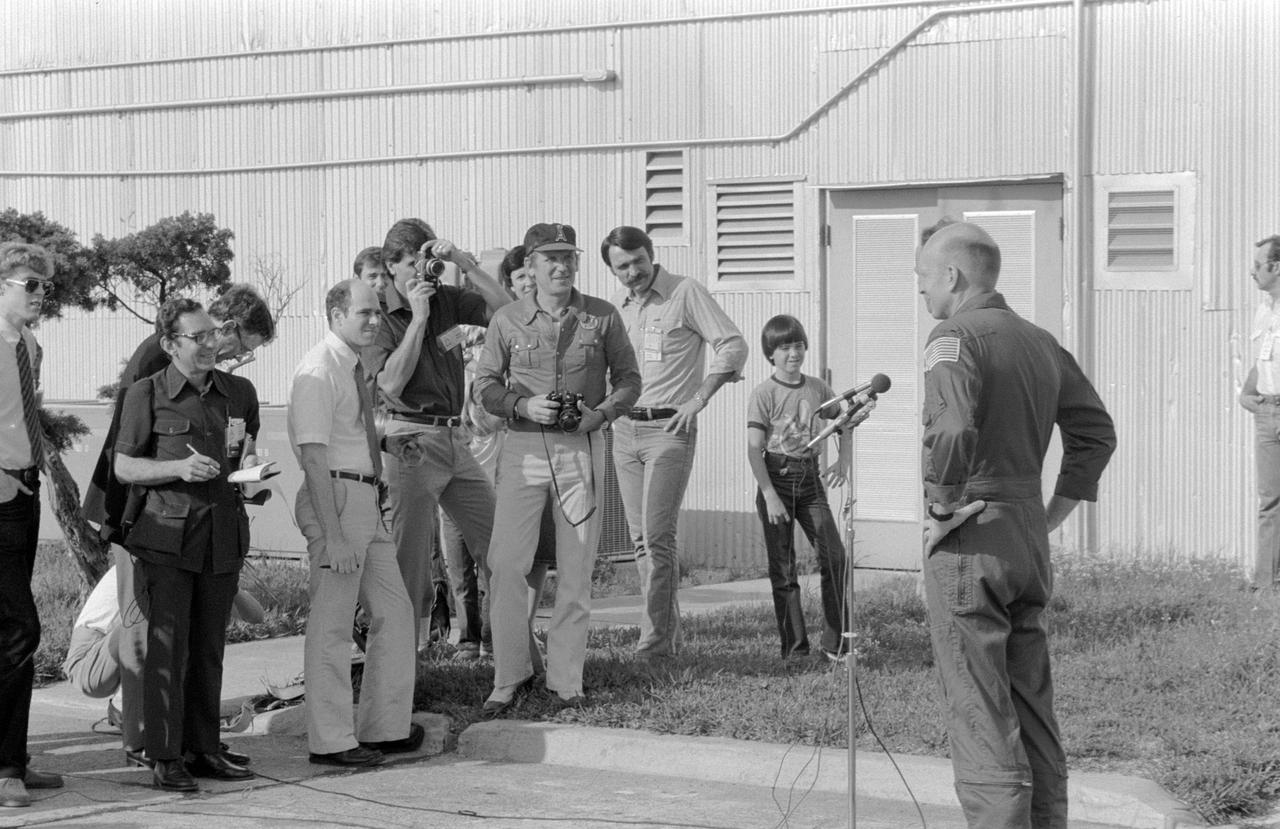
Views of the STS-3 Crew, Astronauts Lousma and Fullerton, during departure activities with family and friends to include Astronaut Brewster Shaw. 1. ASTRONAUT SHAW, BREWSTER - STS-3 EAFB, HOUSTON, TX
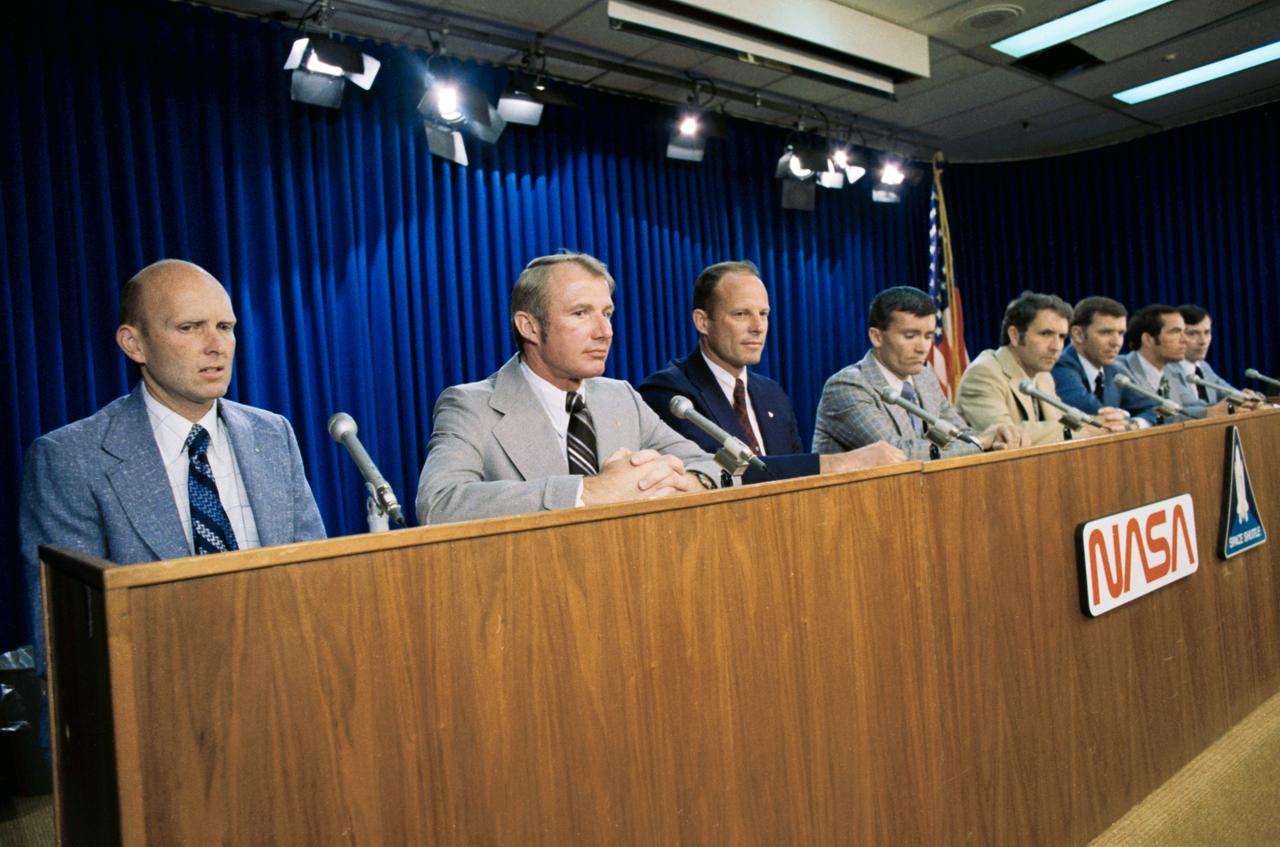
S78-27531 (22 March 1978) --- These eight men have been named on four two-man crews who will fly the space shuttle orbiter vehicle during orbital flight tests (OFT) scheduled to begin in 1979. Pictured during their press conference, right to left, astronauts John W. Young, Robert L. Crippen, Joe H. Engle, Richard H. Truly, Fred W. Haise Jr., Jack R. Lousma, Vance D. Brand and C. Gordon Fullerton. Young and Crippen are commander and pilot, respectively, for the first OFT mission. Other crews are comprised of Engle, commander, and Truly, pilot; Haise, commander, and Lousma, pilot; Brand, commander, and Fullerton, pilot. Photo credit: NASA
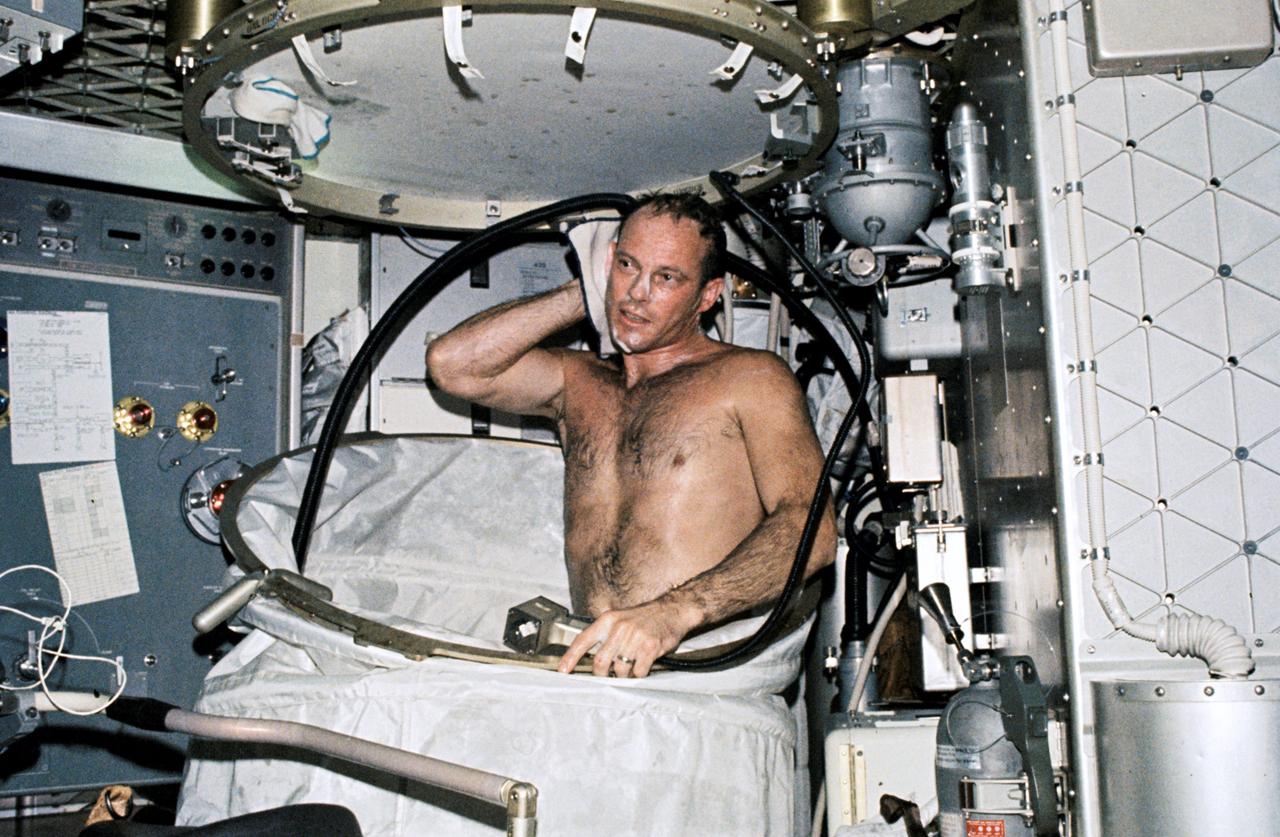
SL3-108-1295 (July-September 1973) --- A close-up view of astronaut Jack R. Lousma, Skylab 3 pilot, taking a hot bath in the crew quarters of the Orbital Workshop (OWS) of the Skylab space station cluster in Earth orbit. This picture was taken with a hand-held 35mm Nikon camera. Astronauts Lousma, Alan L. Bean and Owen K. Garriott remained with the Skylab space station in orbit for 59 days conducting numerous medical, scientific and technological experiments. In deploying the shower facility the shower curtain is pulled up from the floor and attached to the ceiling. The water comes through a push-button shower head attached to a flexible hose. Water is drawn off by a vacuum system. Photo credit: NASA
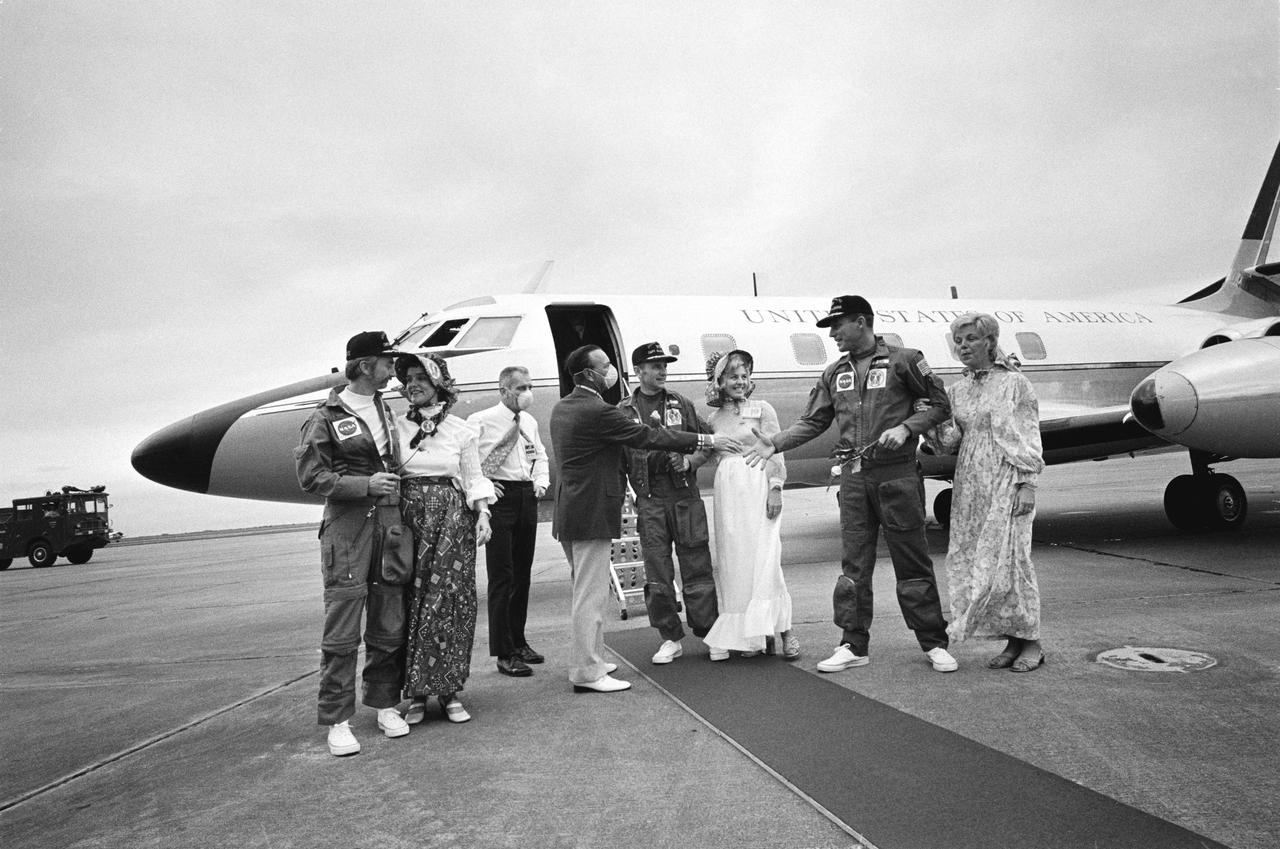
S73-34615 (27 Sept. 1973) --- Dr. Christopher C. Kraft Jr., center, shakes hands with astronaut Jack R. Lousma, Skylab 3 pilot, during welcome ceremonies following crew arrival at Ellington Air Force Base. The crewmen greet their wives after spending 59.5 days in the Skylab space station cluster in Earth orbit. From left to right are scientist-astronaut Owen K. Garriot, science pilot; Mrs. Garriott; Dr. Donald K. Slayton, Director of Flight Crew Operations at JSC; Dr. Kraft; astronaut Alan L. Bean, commander; Mrs. Bean; and the Lousmas. The group stands in front of the VC-140 (Jet Star) which flew the crewmen from San Diego to Ellington Air Force Base. Photo credit: NASA
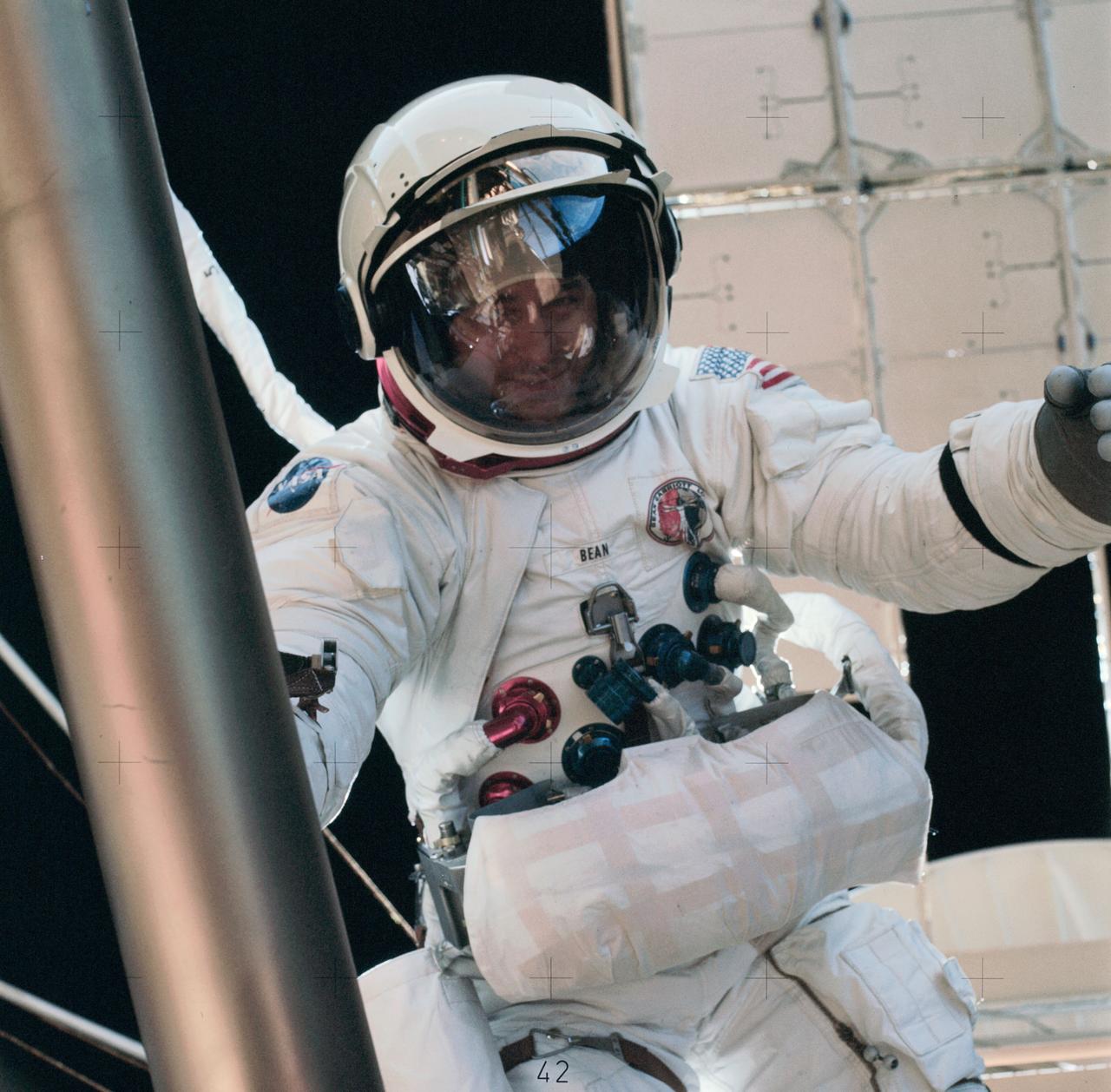
SL3-122-2612 (6 Aug. 1973) --- Astronaut Alan L. Bean, Skylab 3 commander, participates in the final Skylab 3 extravehicular activity (EVA), during which a variety of tasks were performed. Here, Bean is near the Apollo Telescope Mount (ATM) during final film change out for the giant telescope facility. Astronaut Owen K. Garriott, who took the picture, is reflected in Bean's helmet visor. The reflected Earth disk in Bean's visor is so clear that the Red Sea and Nile River area can delineated. Photo credit: NASA
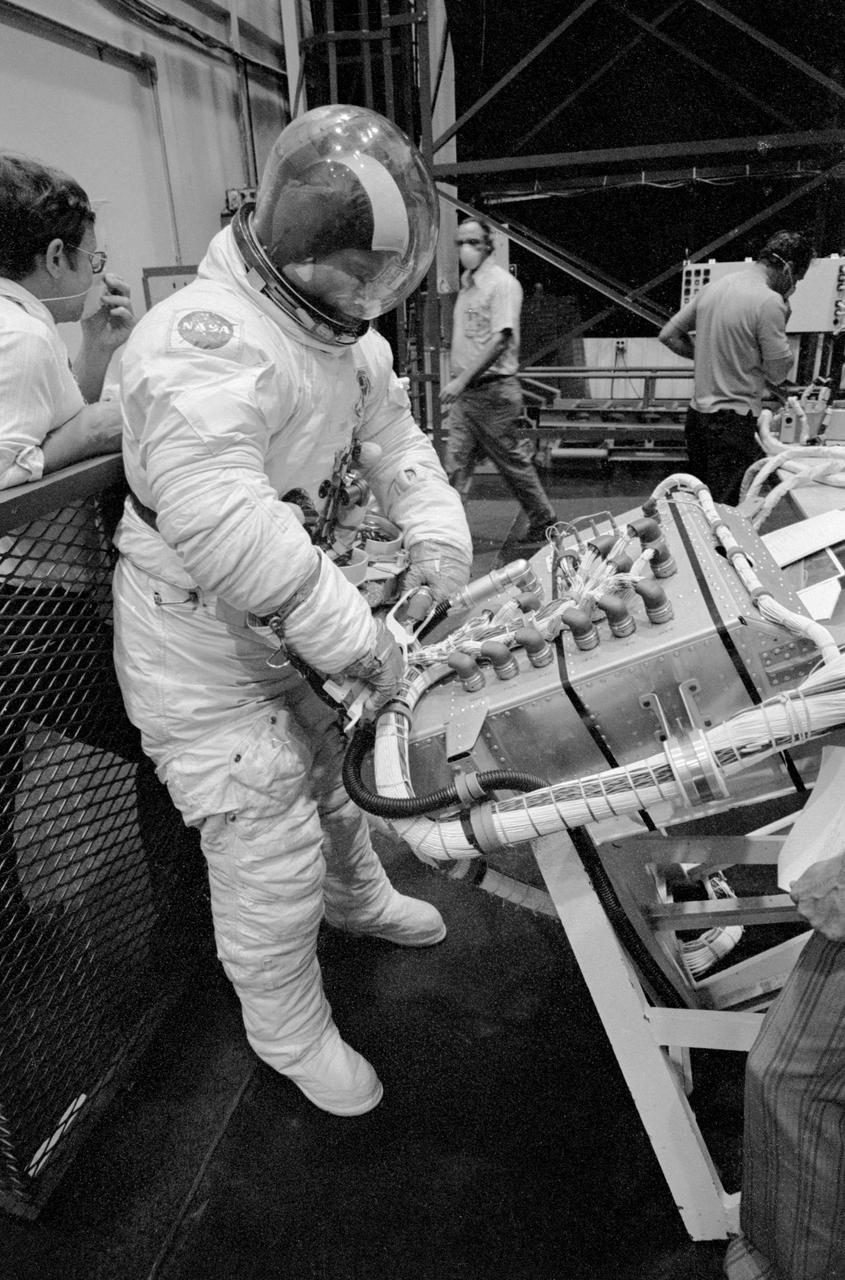
S73-31323 (30 June 1973) --- Astronaut Jack R. Lousma, Skylab 3 pilot, practices procedures for extravehicular activity (EVA) in his Extravehicular Mobility Unit (EMU) spacesuit during Skylab 3 prelaunch training at Johnson Space Center. He is working with a mock-up of a trunion plug plate which is on the space station's deployment assembly. Photo credit: NASA
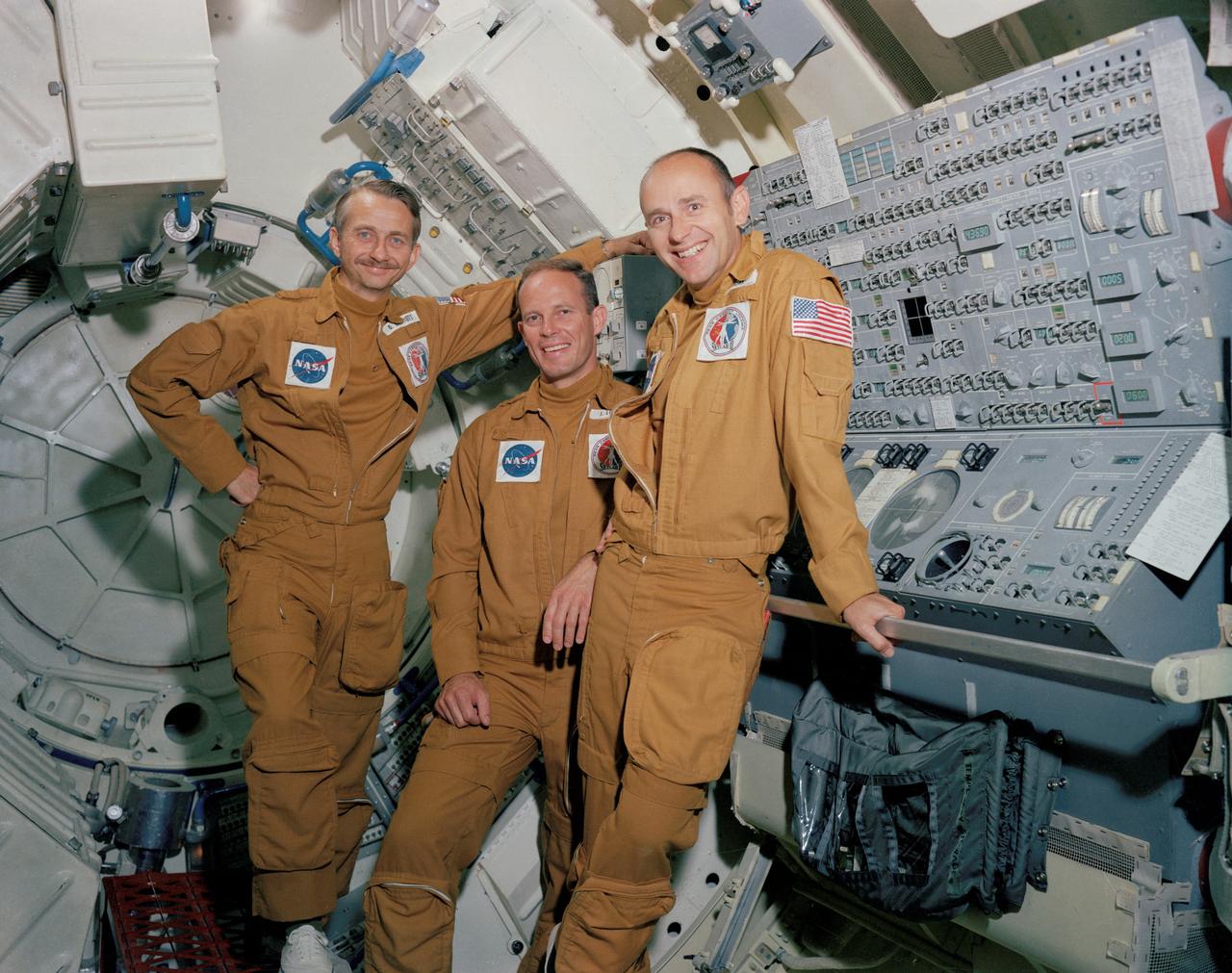
S73-28714 (29 June 1973) --- These three men are the prime crewmen for the Skylab 3 mission. Pictured in the one-G trainer Multiple Docking Adapter (MDA) at the Johnson Space Center (JSC) are, left to right, scientist-astronaut Owen K. Garriott, science pilot; and astronauts Jack R. Lousma and Alan L. Bean, pilot and commander, respectively. Photo credit: NASA
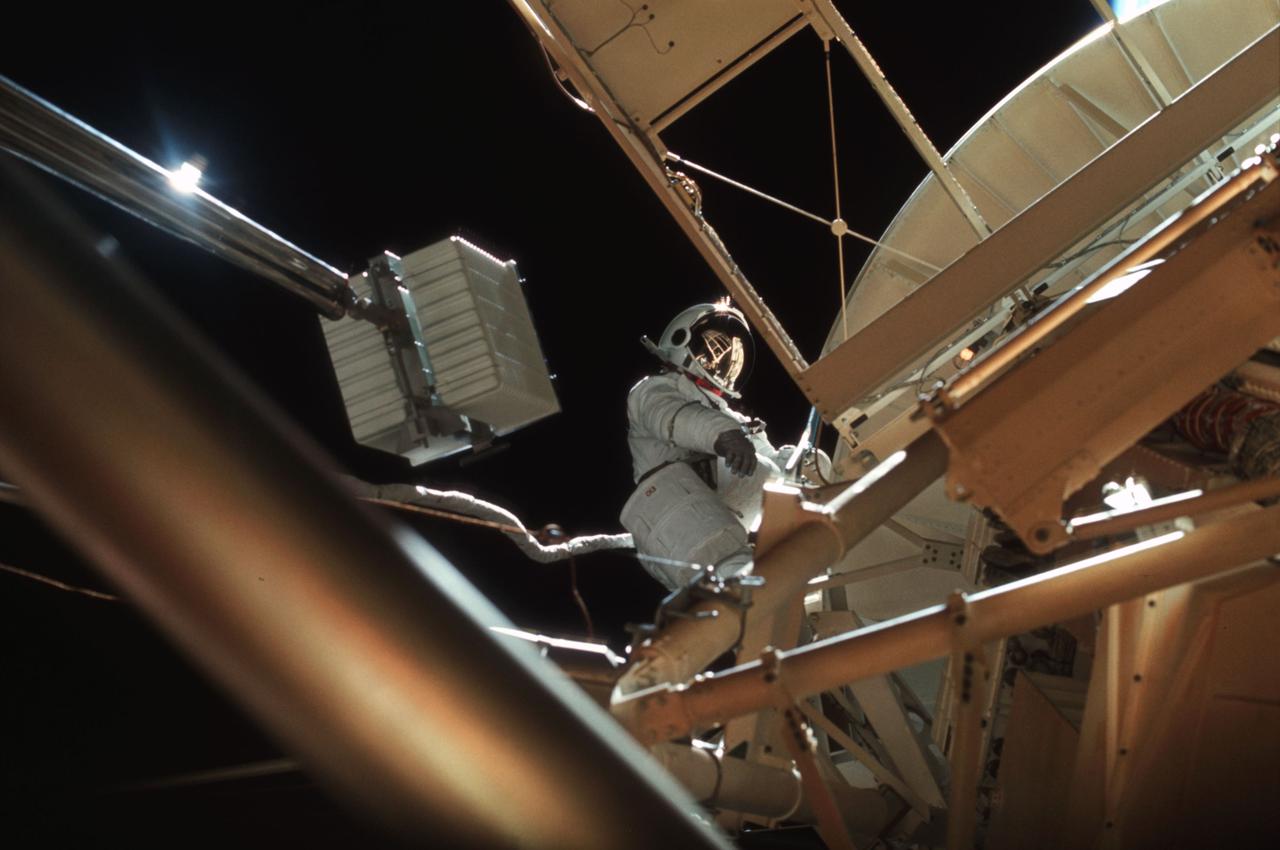
SL3-117-2109 (6 Aug. 1973) --- Scientist-astronaut Owen K. Garriott, Skylab 3 science pilot, participates in the Aug. 6, 1973 extravehicular activity (EVA) during which he and astronaut Jack Lousma, Skylab 3 pilot, deployed the twin pole solar shield to help shade the Orbital Workshop (OWS). Note the reflection of the solar shield in Garriott's helmet visor. Photo credit: NASA

SL3-122-2610 (6 Aug. 1973) --- Scientist-astronaut Owen K. Garriott, Skylab 3 science pilot, looks at the camera as he participates in the Aug. 6, 1973 extravehicular activity (EVA) during which he and astronaut Jack R. Lousma, pilot, deployed the twin pole solar shield to help shade the Orbital Workshop (OWS). Photo credit: NASA
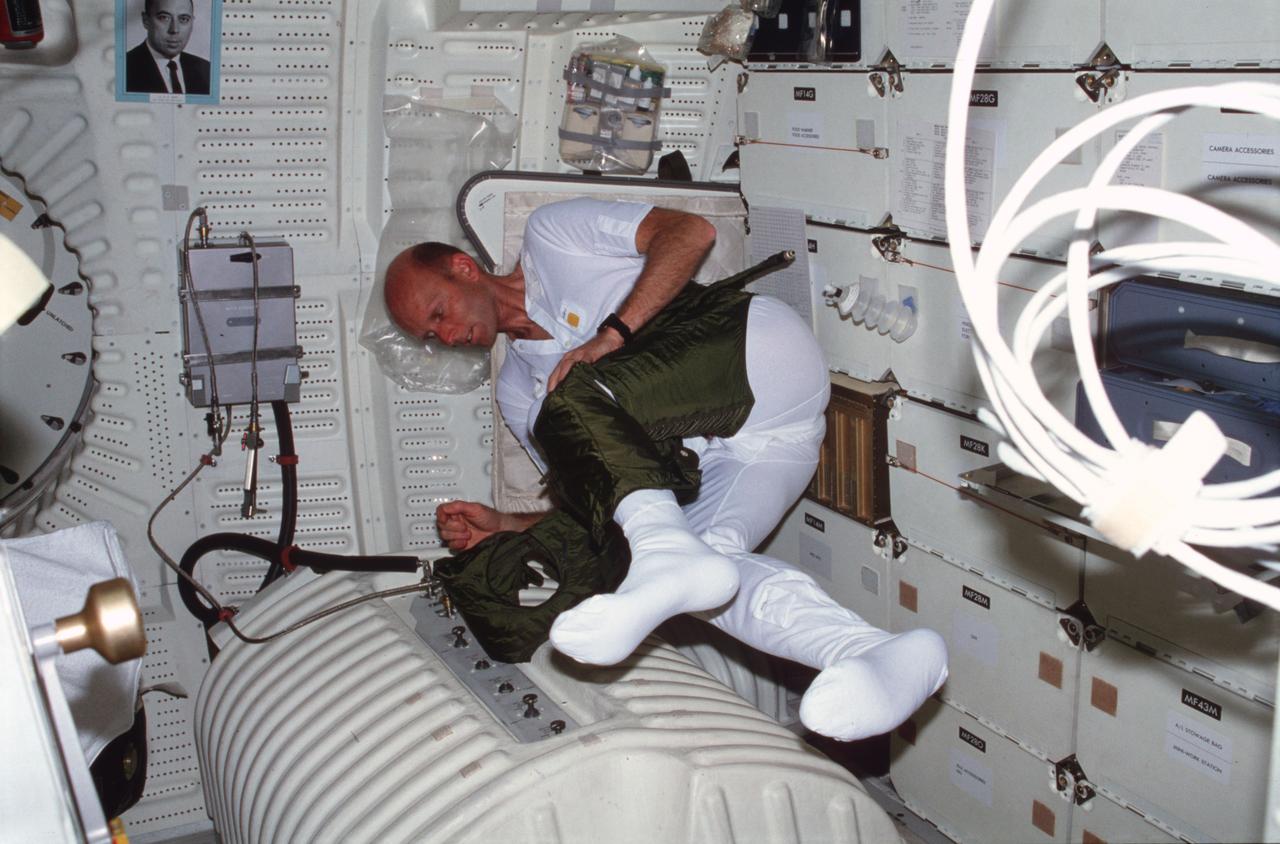
STS003-23-161 (24 March 1982) --- Astronaut C. Gordon Fullerton, STS-3 pilot, dons an olive drab inner garment which complements the space shuttle Extravehicular Mobility Unit (EMU) spacesuit. Since there are no plans for an extravehicular activity (EVA) on the flight, Fullerton is just getting some practice time ?in the field? as he is aboard the Earth-orbiting Columbia. He is in the middeck area of the vehicle. The photograph was taken with a 35mm camera by astronaut Jack R. Lousma, STS-3 commander. Photo credit: NASA
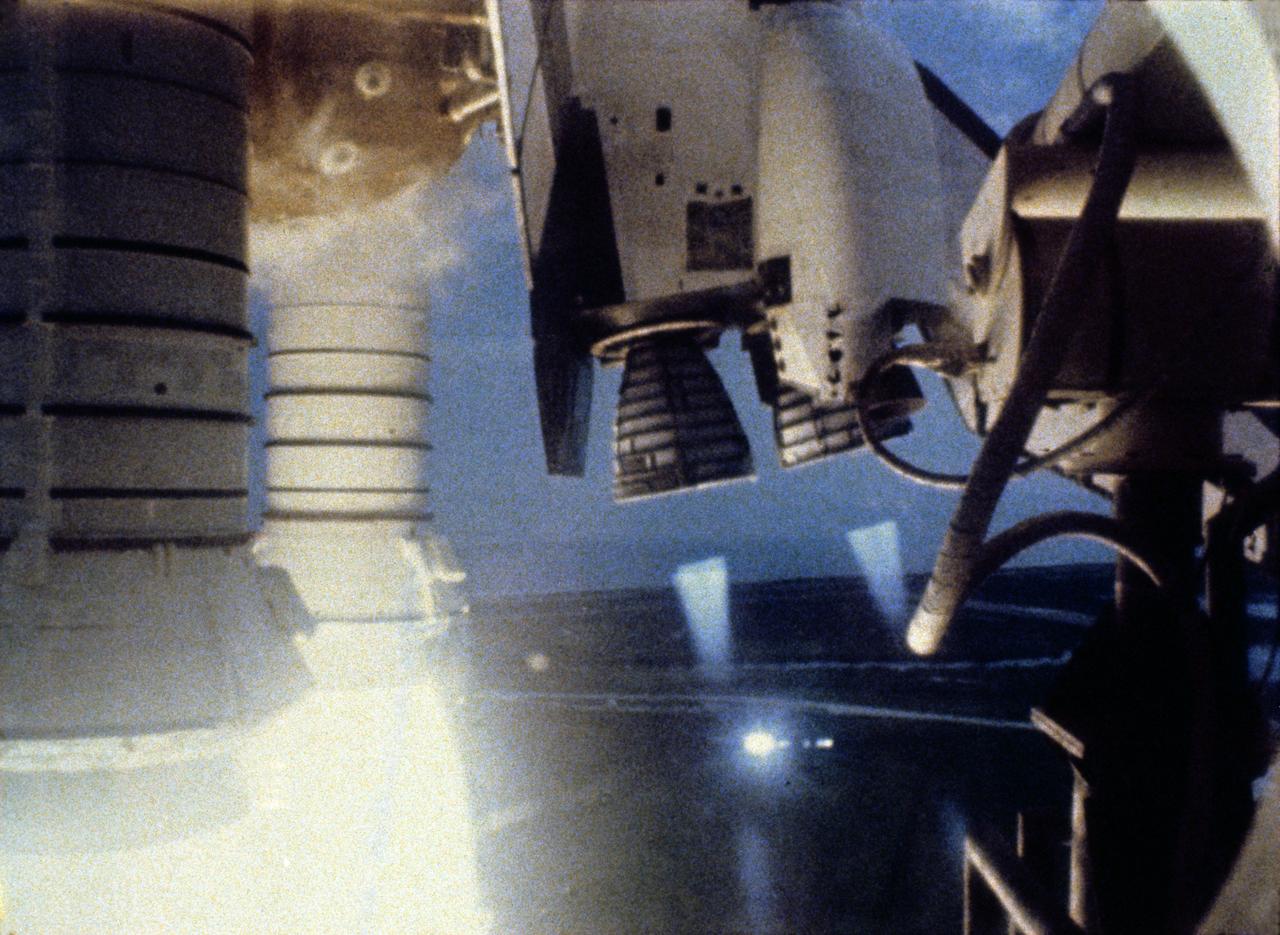
S82-28757 (22 March 1982) --- This close-up view featuring the space shuttle Columbia?s main engines and solid rocket boosters (SRB) was captured on video during the launch sequence for the STS-3 mission from NASA's Kennedy Space Center (KSC). Onboard were astronauts Jack R. Lousma, commander; and C. Gordon Fullerton, pilot. Photo credit: NASA
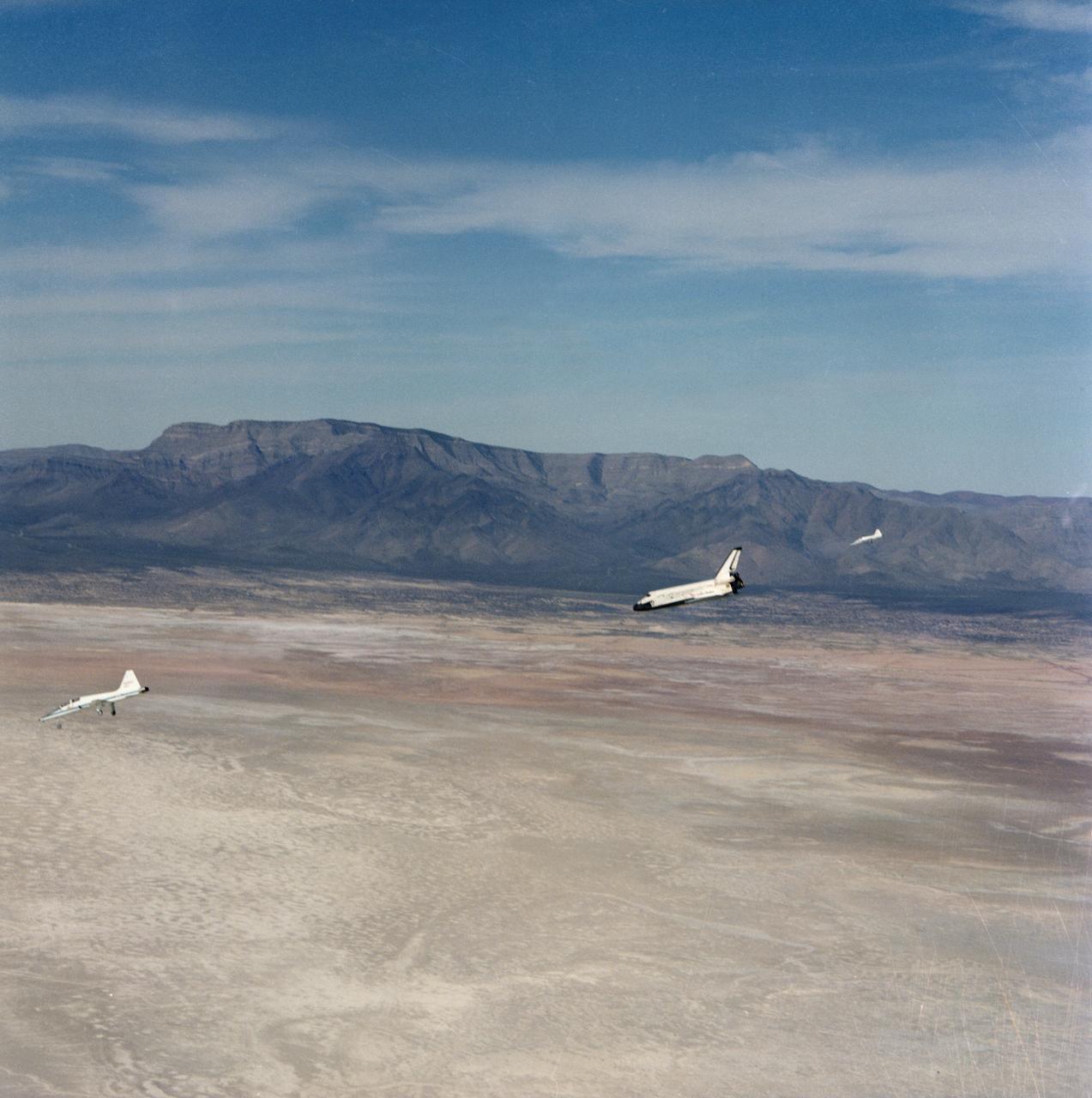
S82-28840 (30 March 1982) --- T-38 chase planes remain relatively close to the NASA reusable space shuttle Columbia (STS-3) as it heads for a completion of an eight-day mission on the White Sands Missile Range's Northrup strip. Astronauts Jack R. Lousma and C. Gordon Fullerton were aboard the craft. This view was photographed from another T-38. Photo credit: NASA

SL3-122-2609 (6 Aug. 1973) --- Scientist-astronaut Owen K. Garriott, Skylab 3 science pilot, looks at the camera as he participates in the Aug. 6, 1973 extravehicular activity (EVA) during which he and astronaut Jack R. Lousma, pilot, deployed the twin pole solar shield to help shade the Orbital Workshop (OWS). Photo credit: NASA
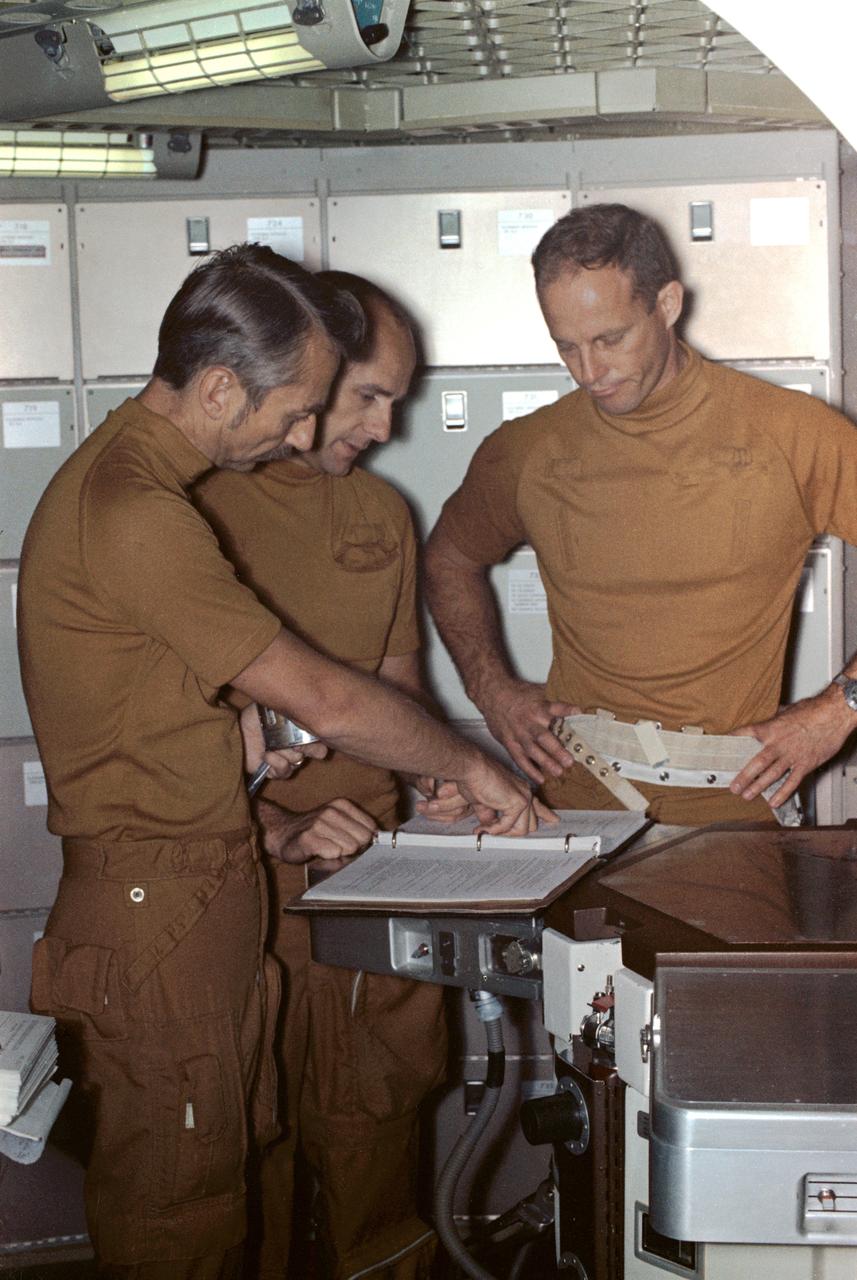
S73-28793 (16 July 1973) --- The three crewmen of the second manned Skylab mission (Skylab 3) go over a checklist during preflight training at the Johnson Space Center. They are, left to right, scientist-astronaut Owen K. Garriott, science pilot; astronaut Alan L. Bean, commander; and astronaut Jack R. Lousma, pilot. They are in the crew quarters of the Orbital Workshop trainer in the Mission Training and Simulation Facility, Building 5, at JSC. Skylab 3 is scheduled as a 59-day mission in Earth orbit. Photo credit: NASA
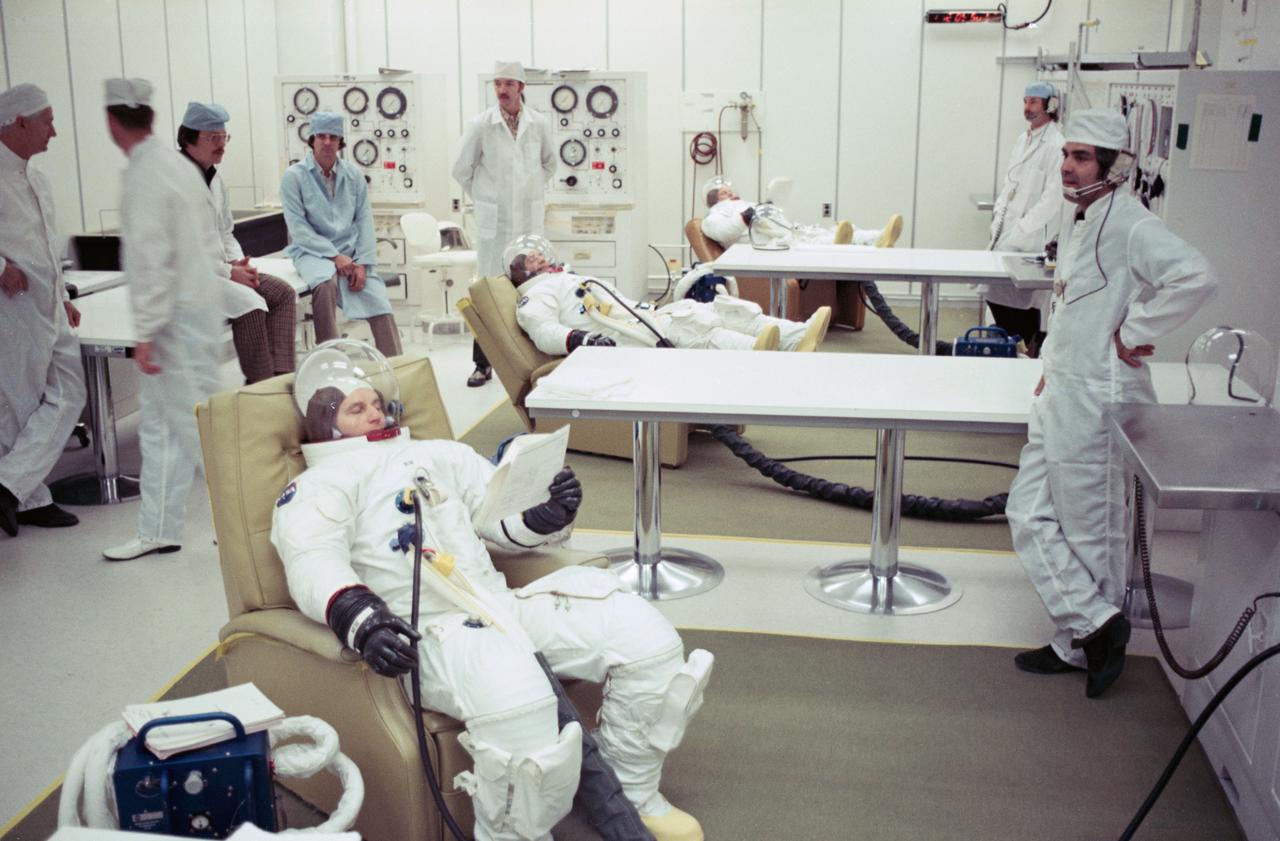
S75-21063 (January 1975) --- The three members of the American ASTP backup crew are suited up for the testing of the Apollo spacecraft at the Kennedy Space Center. They are (from foreground) astronauts Alan L. Bean, commander; Ronald E. Evans, command module pilot; and Jack R. Lousma, docking module pilot. Later, they entered the Apollo Command Module in an altitude chamber for tests of spacecraft systems. The testing was in preparation for the joint U.S.?USSR Apollo-Soyuz Test Project docking mission in Earth orbit scheduled for July 1975.
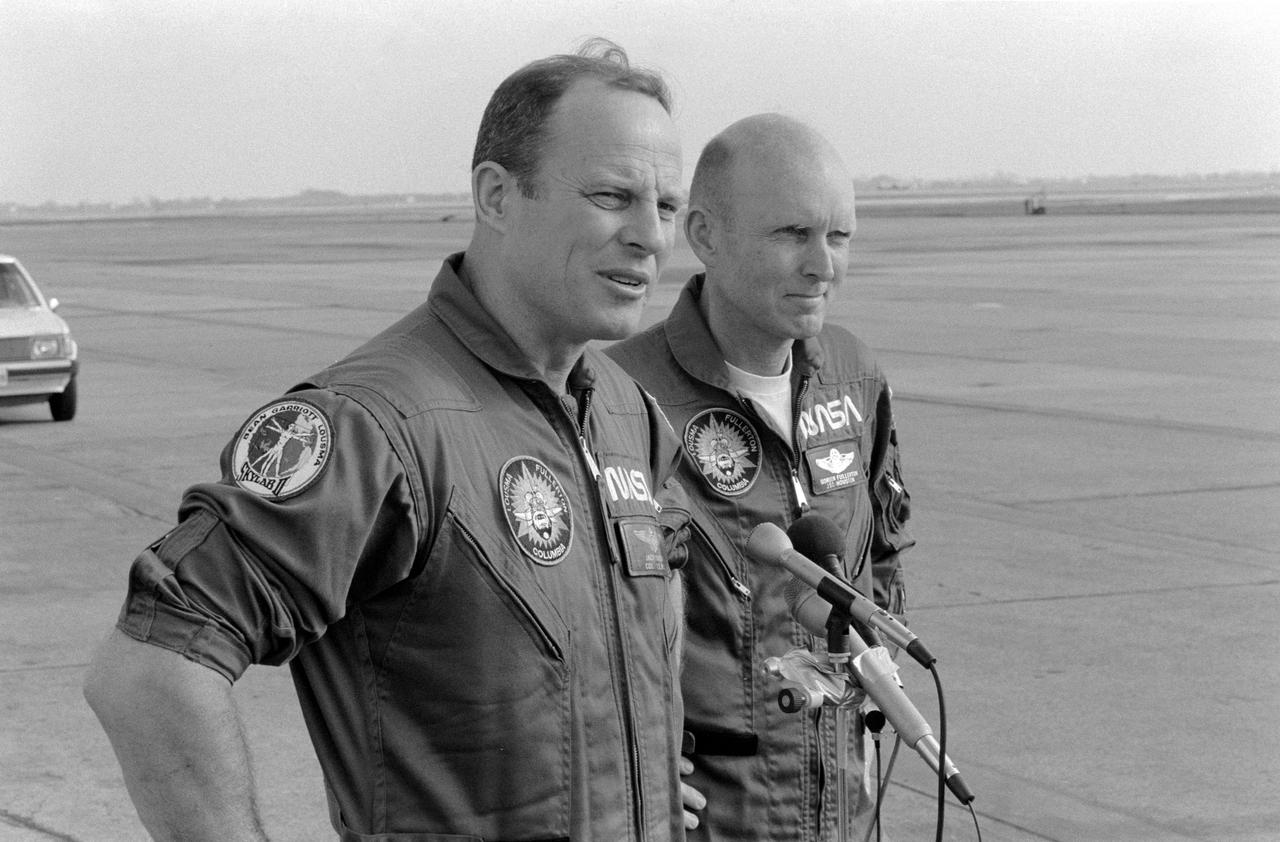
S82-28705 (20 March 1982) --- Astronaut Jack R. Lousma, left, and C. Gordon Fullerton pause for a moment at Ellington Air Force Base prior to their departure in T-38 aircraft to get to NASA?s Kennedy Space Center in time for last minute preparations for their Monday morning launch in the STS-3 space shuttle Columbia. Ellington Air Force Base is just a few miles north of the LBJ Space Center. Photo credit: NASA
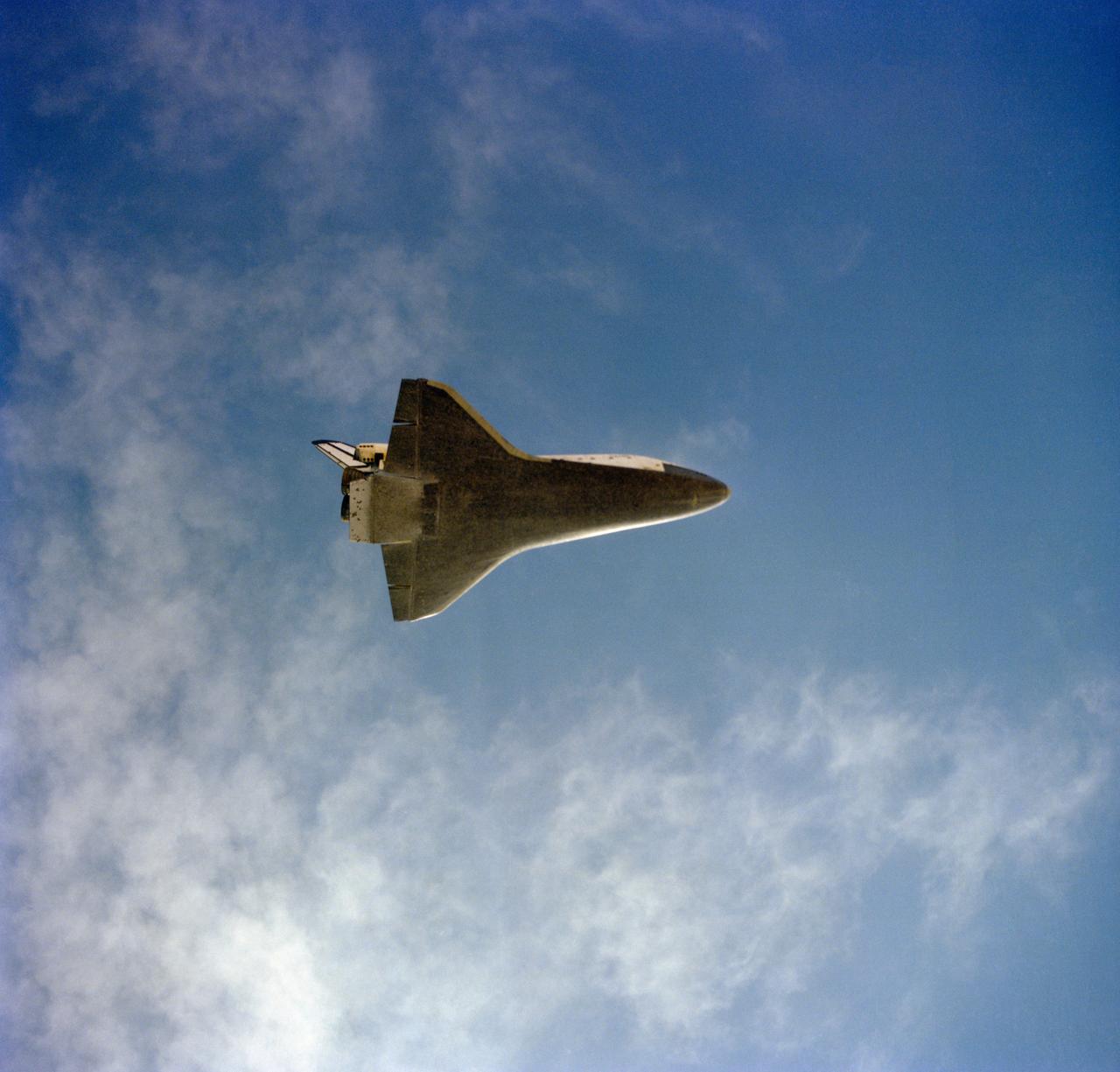
S82-28835 (30 March 1982) --- This unique view of the underside of the space shuttle orbiter Columbia was taken with a handheld camera aboard a T-38 chase plane over the White Sands Missile Range in New Mexico. Bad weather here yesterday vanished and the STS-3 crew of astronaut Jack R. Lousma and C. Gordon Fullerton greeted a pleasant climate along with a large crowd of spectators upon their landing. The successful landing was the first attempted in the actual orbiter on New Mexico soil. Photo credit: NASA

S82-28456 (19 Feb. 1982) --- Astronauts Jack R. Lousma, left, STS-3 commander, and C. Gordon Fullerton, pilot, are briefed on emergency procedures at Launch Pad 39A by Buck Tomlinson, a safety instructor with Wackenhut Services, Inc. Also pictured is astronaut Daniel C. Brandenstein, STS-8 pilot. The men were at Kennedy Space Center (KSC) for participation in a countdown demonstration test (CDDT). Photo credit: NASA
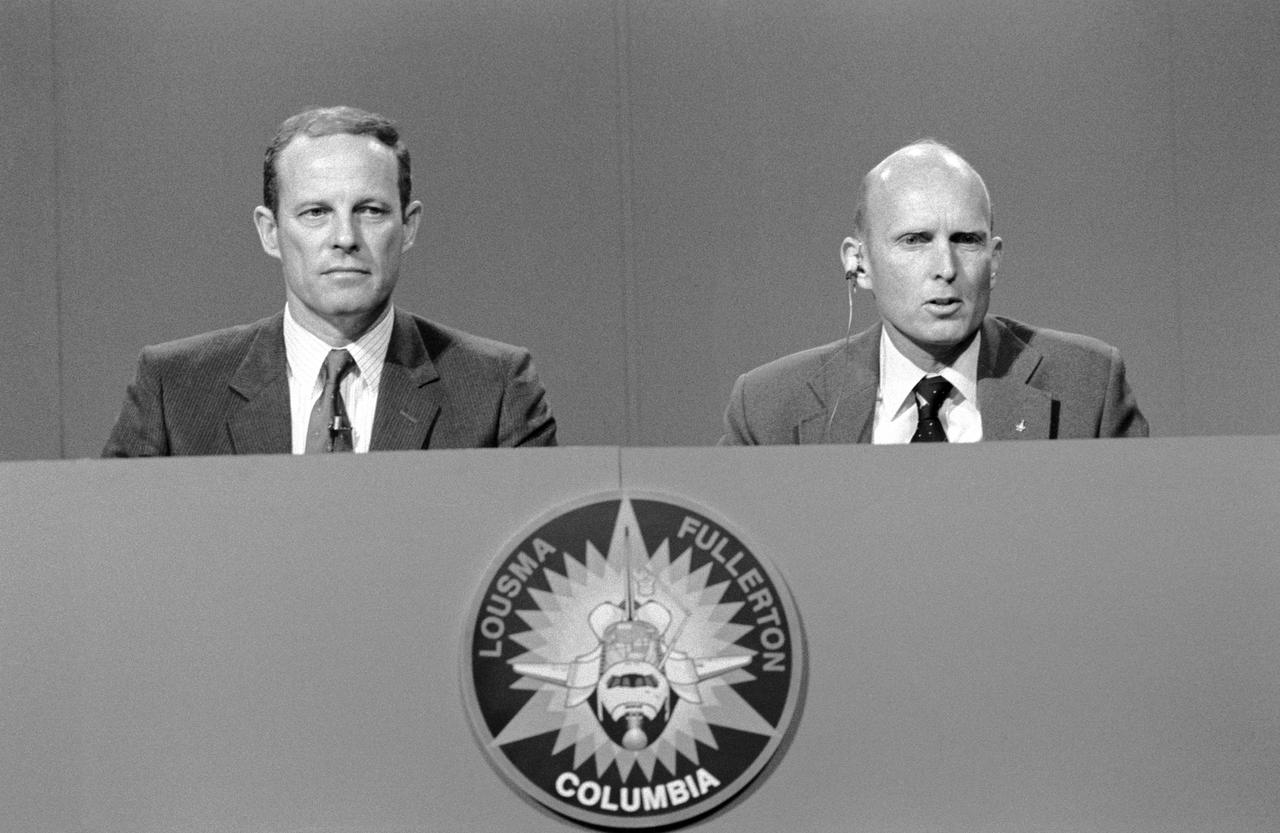
S82-27686 (26 Feb. 1982) --- Astronauts Jack R. Lousma, left, commander, and C. Gordon Fullerton, pilot, answer questions from the press corps during their final pre-STS-3 press conference on Feb. 26, 1982. The two will man the space shuttle Columbia when it launches on March 22, 1982, from the Kennedy Space Center's Launch Pad 39A. Photo credit: NASA
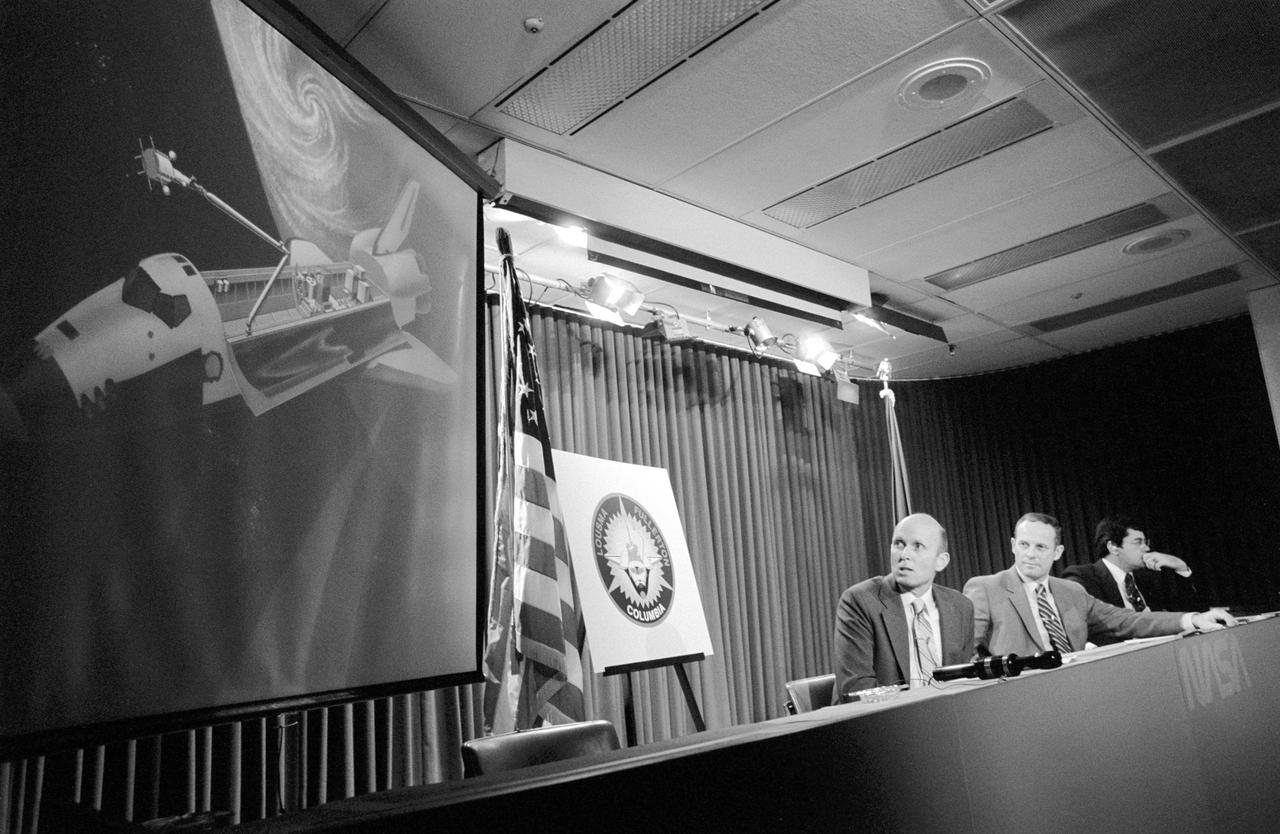
S82-25903 (21 Jan. 1982) --- Astronaut Jack R. Lousma, center, and C. Gordon Fullerton, left, respond to a visual depicting the Columbia and its remote manipulator system in space during a pre-STS-3 press conference in JSC?s pubic affairs building. Dr. John Lawrence, public information specialist who introduced the crew to news media representatives, is at far right. Photo credit: NASA
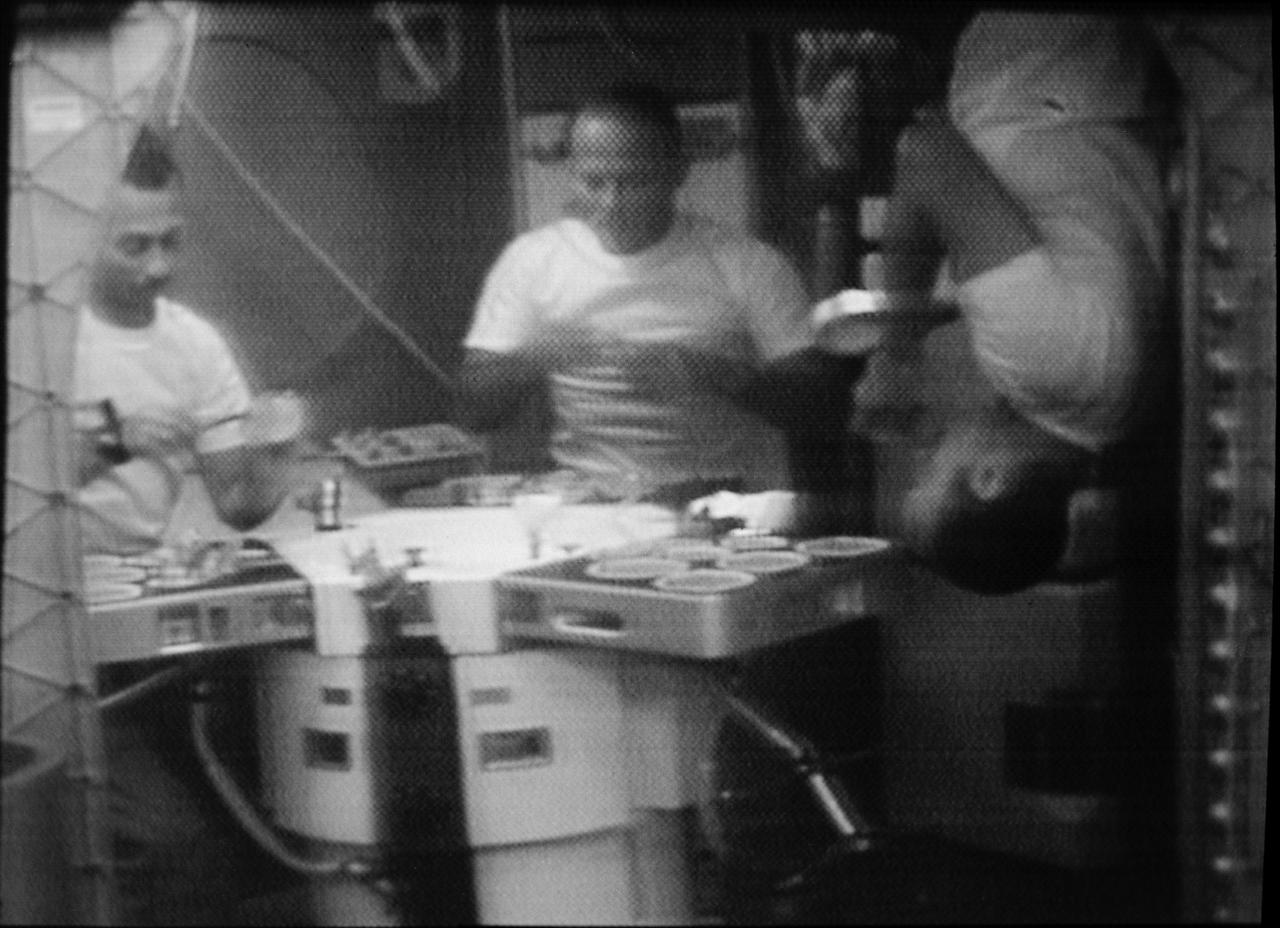
S73-31705 (1 Aug. 1973) --- The three Skylab 3 crewmen are shown eating in the Orbital Workshop (OWS) wardroom of the Skylab space station in Earth orbit, in this photographic reproduction taken from a television transmission made by a color TV camera aboard the OWS. Astronaut Alan L. Bean (right), commander, illustrates eating under zero-gravity conditions upsidedown. The two other crewmen are scientist-astronaut Owen K. Garriott (left), science pilot; and astronaut Jack R. Lousma, pilot. Photo credit: NASA
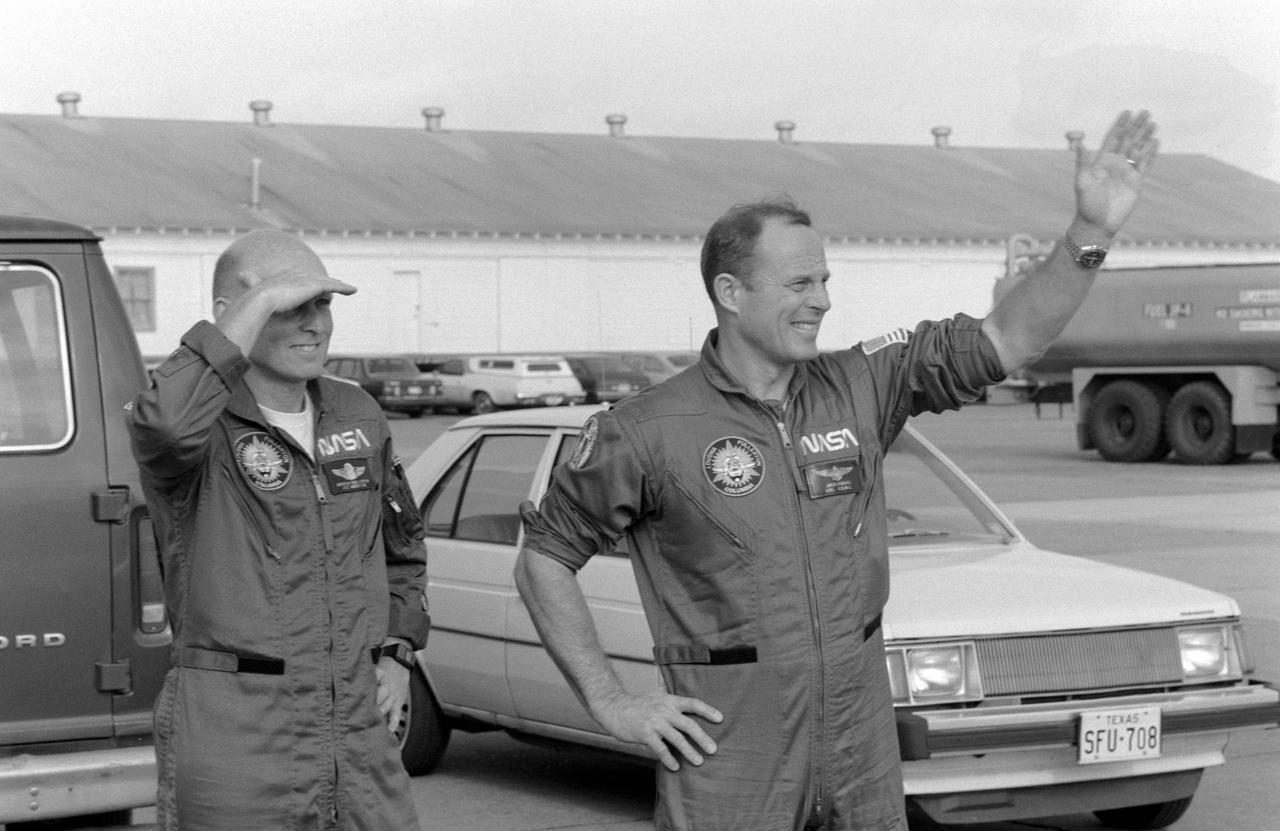
S82-28706 (20 March 1982) --- Astronaut Jack R. Lousma, right, STS-3 commander, and C. Gordon Fullerton, greet a crowd on hand at Ellington Air Force Base to bid them farewell prior to their departure to KSC in a pair of T-38 jet aircraft. The two are scheduled to liftoff in less than 48 hours from the Kennedy Space Center?s Launch Pad 39A, for the third in a series of space transportation system (STS-3) flights. Photo credit: NASA
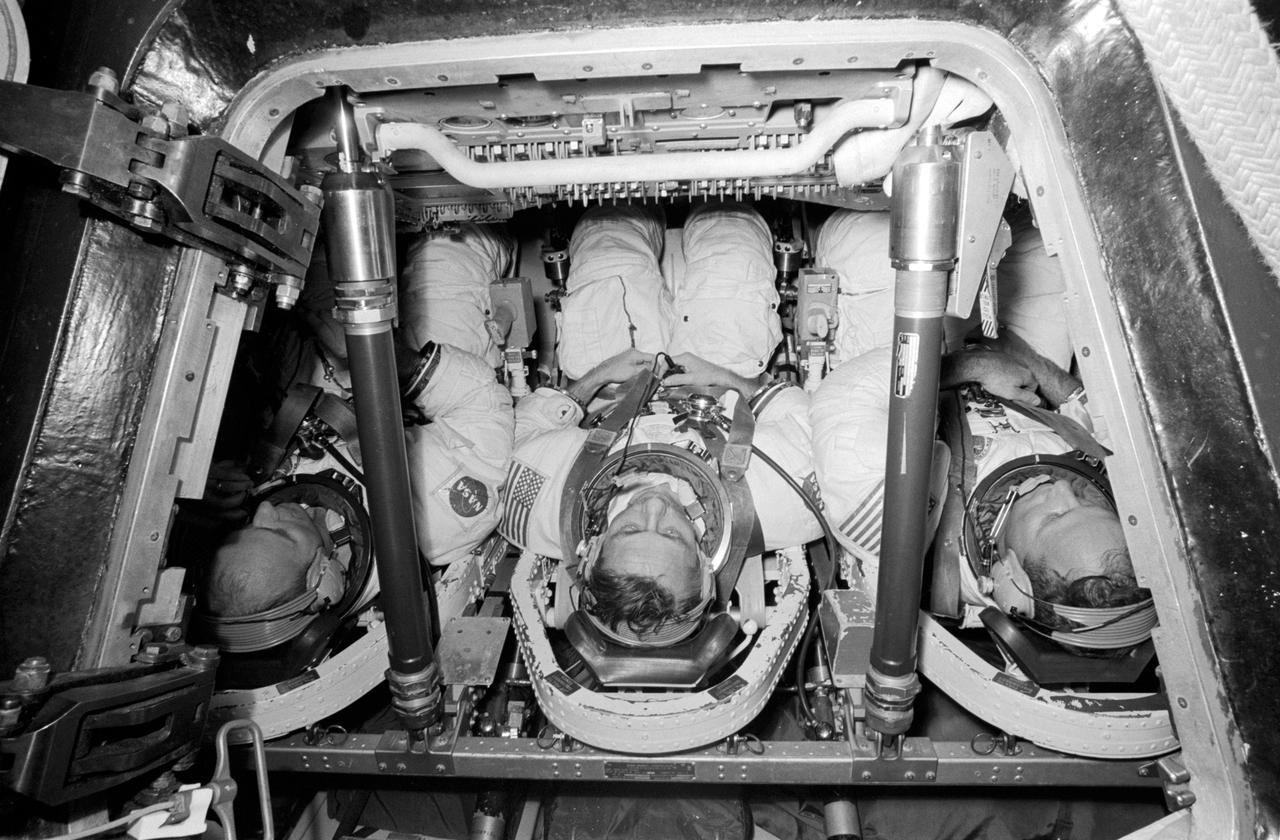
S73-27787 (1 May 1973) --- The three members of the prime crew of the second manned Skylab mission participate in prelaunch training, specifically water egress simulations, at the Johnson Space Center (JSC), Houston. They are, left to right, astronaut Alan J. Bean, commander; scientist-astronaut Owen K. Garriott, science pilot; and astronaut Jack R. Lousma, pilot. This training took place in JSC?s Building 220 on May 1, 1973. Photo credit: NASA
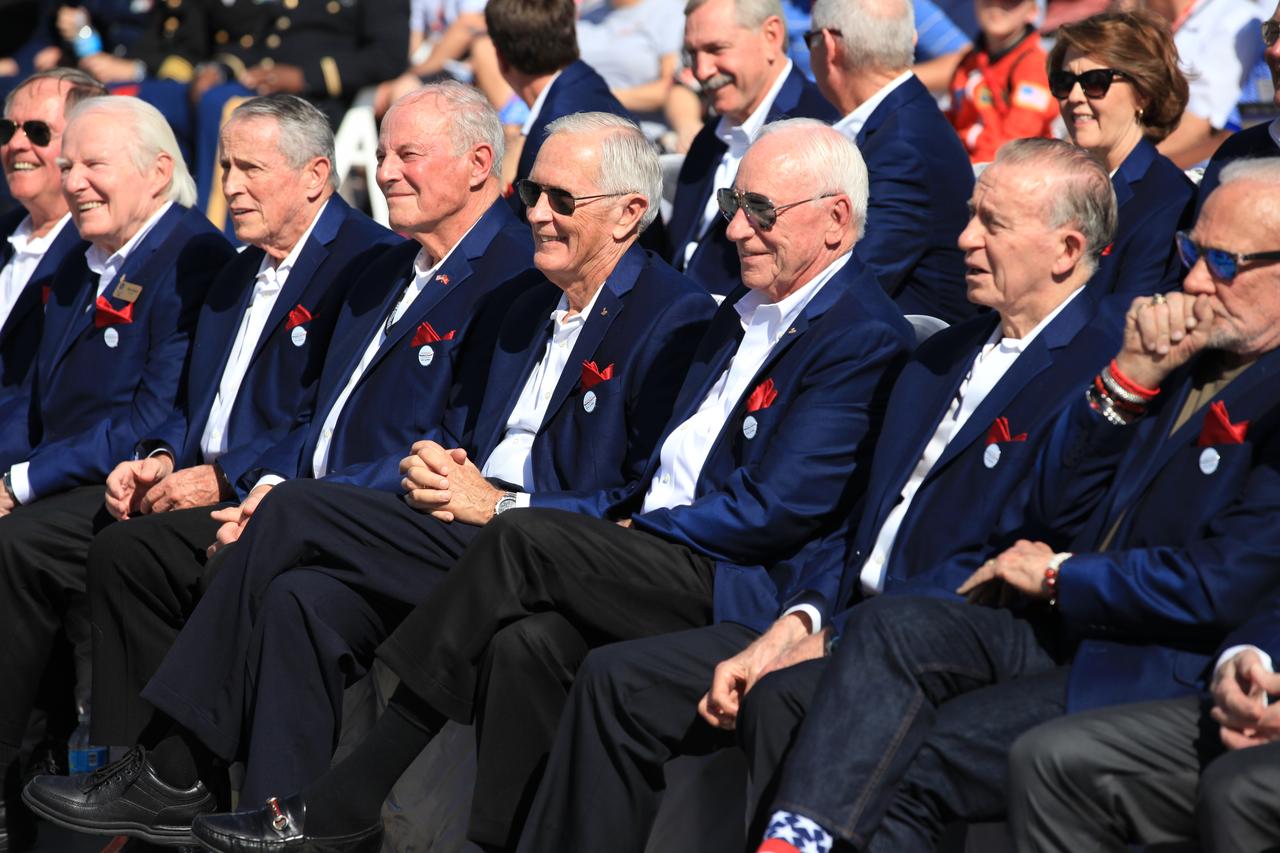
Members of the U.S. Astronaut Hall of Fame listen to speakers during the opening of the Heroes and Legends attraction at the Kennedy Space Center Visitor Complex. From the left are: Bob Crippen, Vance Brand, Ed Gibson, Jack Lousma, Charlie Duke, Al Worden, Walt Cunningham and Buzz Aldrin. The new facility includes the U.S. Astronaut Hall of Fame and looks back to the pioneering efforts of Mercury, Gemini and Apollo. It sets the stage by providing the background and context for space exploration and the legendary men and women who pioneered the nation's journey into space.
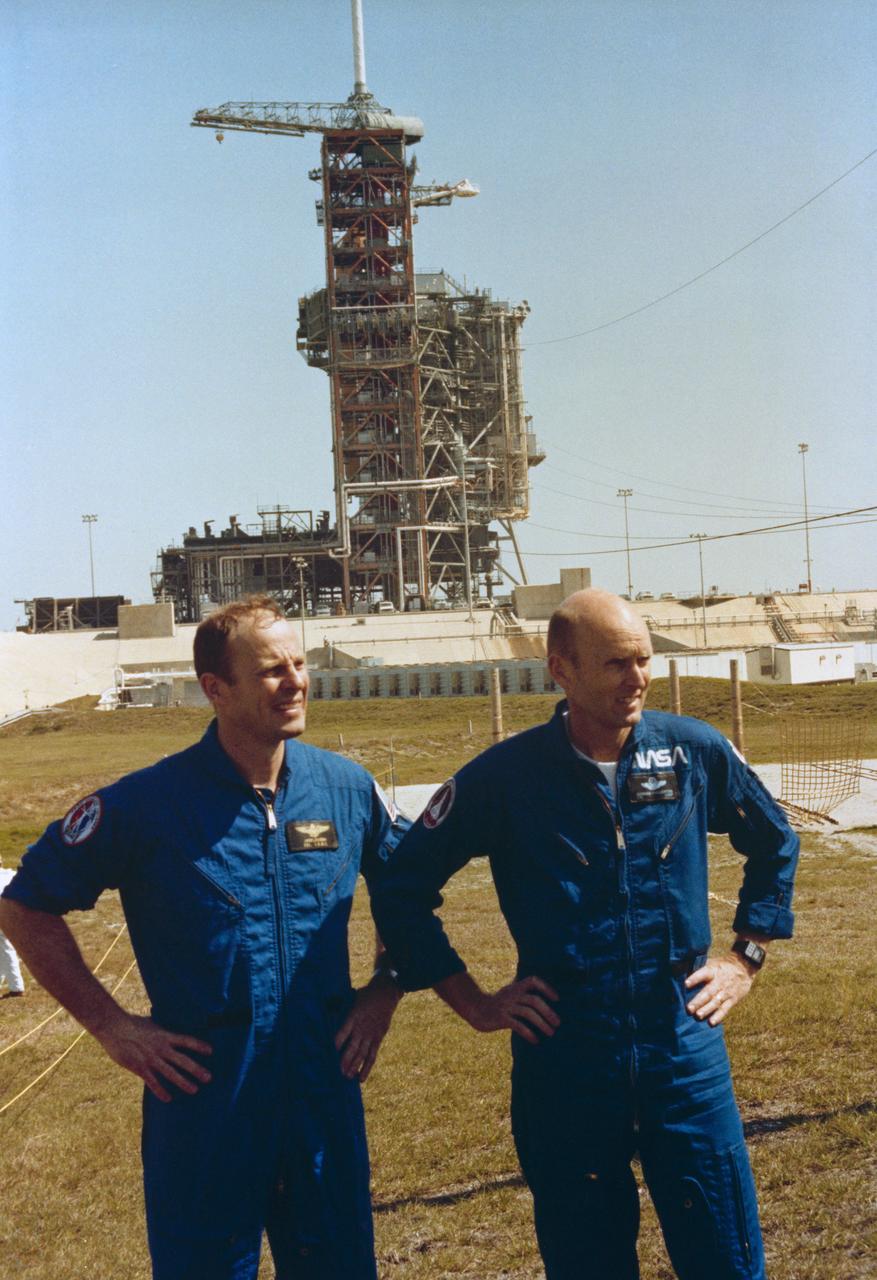
S82-28455 (19 Feb. 1982) --- The prime crew members for STS-3 take a break in their training schedule at KSC to pose for a few pictures. Astronaut Jack R. Lousma, left, is crew commander; and C. Gordon Fullerton, pilot, for STS-3 scheduled to launch this spring. Launch Pad 39A is in the background. Photo credit: NASA
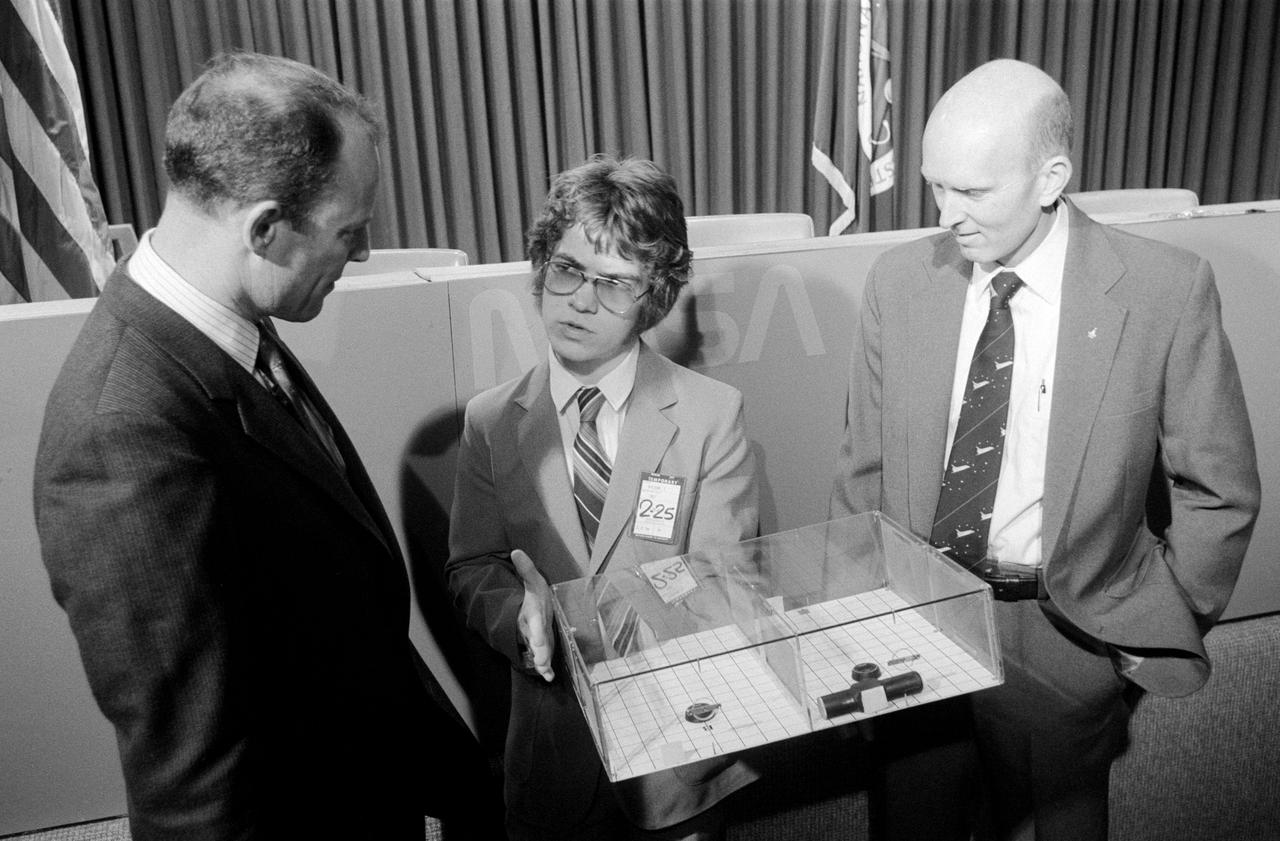
S82-27604 (26 Feb. 1982) --- The astronaut crew members for NASA?s third space transportation system (STS-3) flight meet with Todd E. Nelson, who devised a scientific experiment to fly on their mission. Astronauts Jack R. Lousma, left, commander, and C. Gordon Fullerton, pilot, along with the 18-year-old high school senior, discussed the experiment, entitled ?Insects in Flight Motion Study,? during a press briefing in JSC?s public affairs facility. Photo credit: NASA
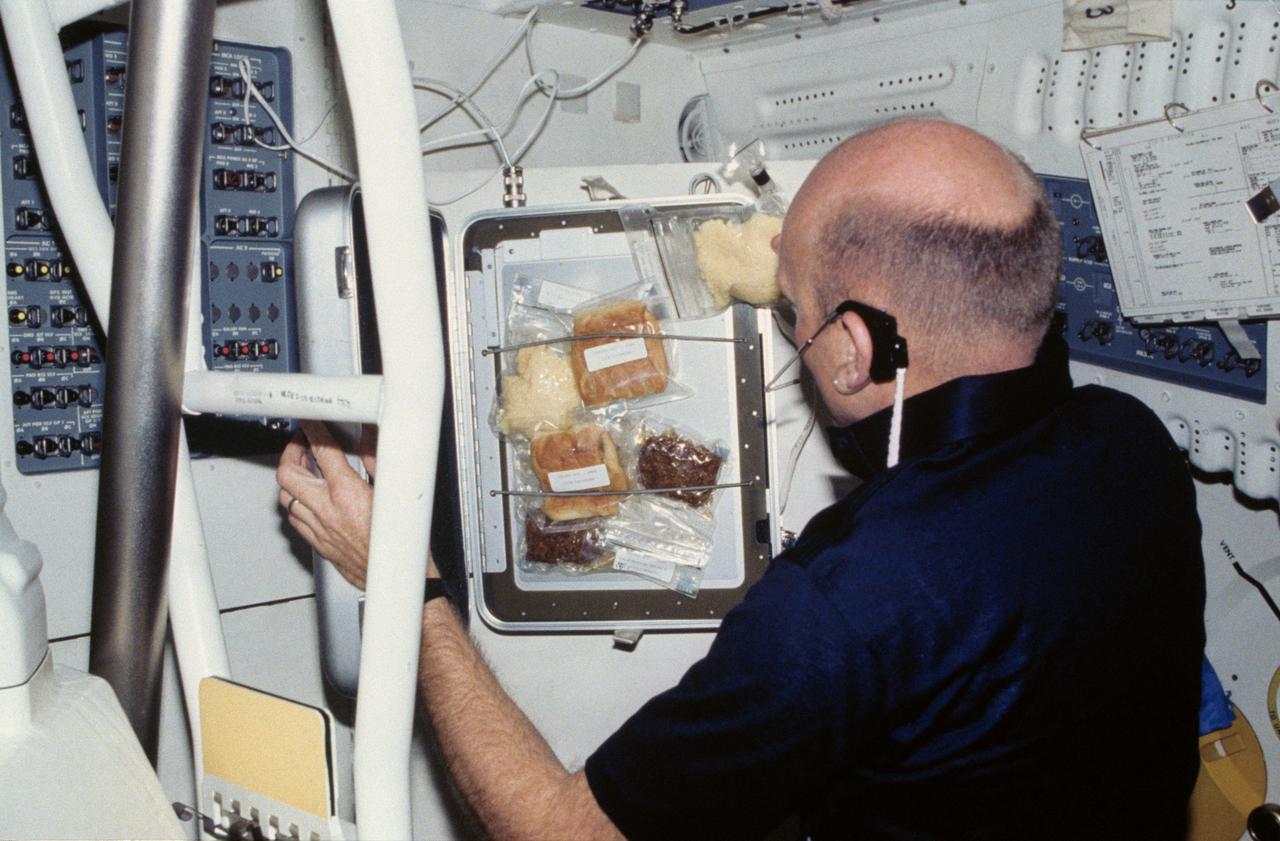
S82-28923 (March 1982) --- Astronaut C. Gordon Fullerton, STS-3 pilot, uses both hands to retrieve part of a meal from an orbital flight test food warmer in the middeck area of the Earth-orbiting space shuttle Columbia. The food warmer is a versatile briefcase-like device developed by life sciences personnel at the Johnson Space Center (JSC). Astronaut Jack R. Lousma, STS-3 commander, took this photograph with a 35mm camera. Photo credit: NASA
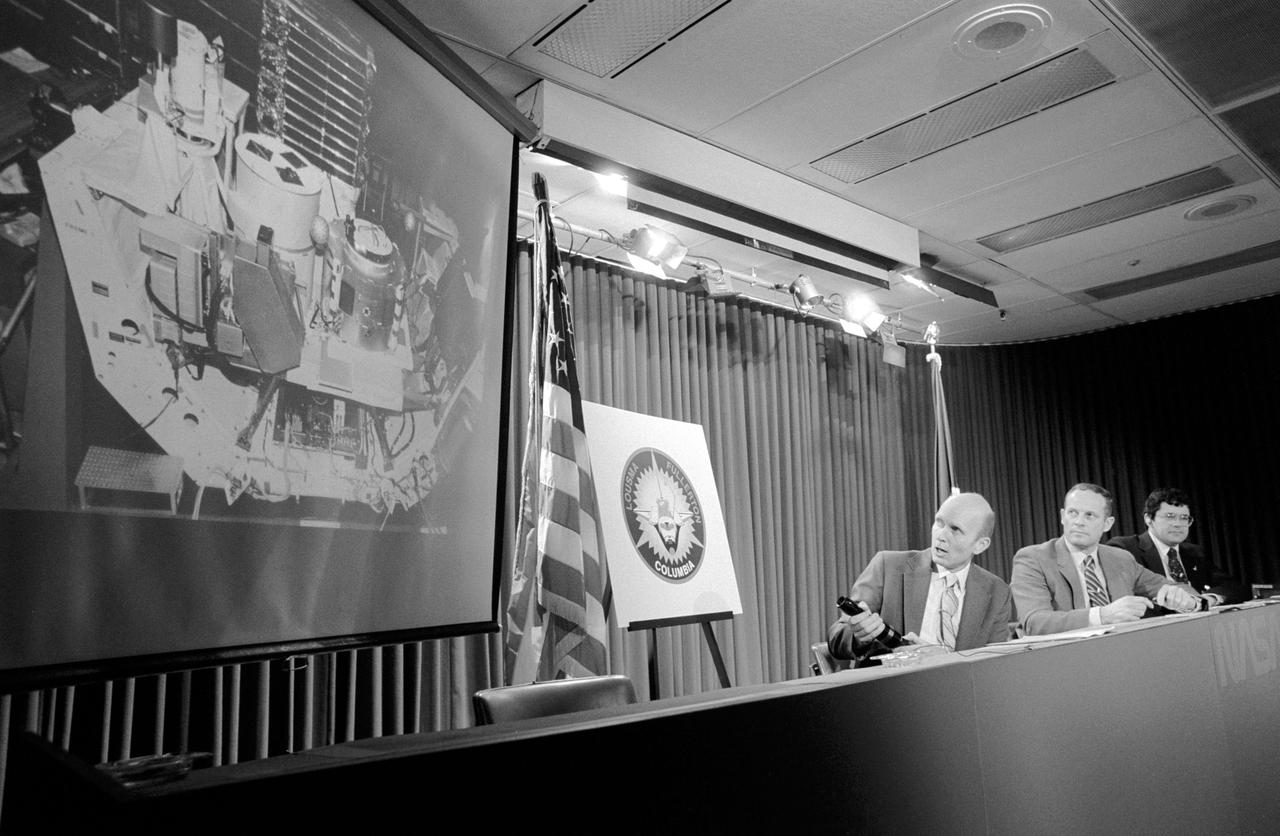
S82-25905 (21 Jan. 1982) --- Astronaut C. Gordon Fullerton uses an electronic pointer to localize an area on a projected visual of the OSS payload package to be carried in the cargo bay of the Columbia on STS-3. Fullerton is pilot for the flight and Jack R. Lousma, center, is mission commander. The two were holding one of a series of pre-STS-3 press briefings. They were introduced by Dr. John Lawrence, far right, a public information specialist for JSC?s Office of Public Affairs. Photo credit: NASA
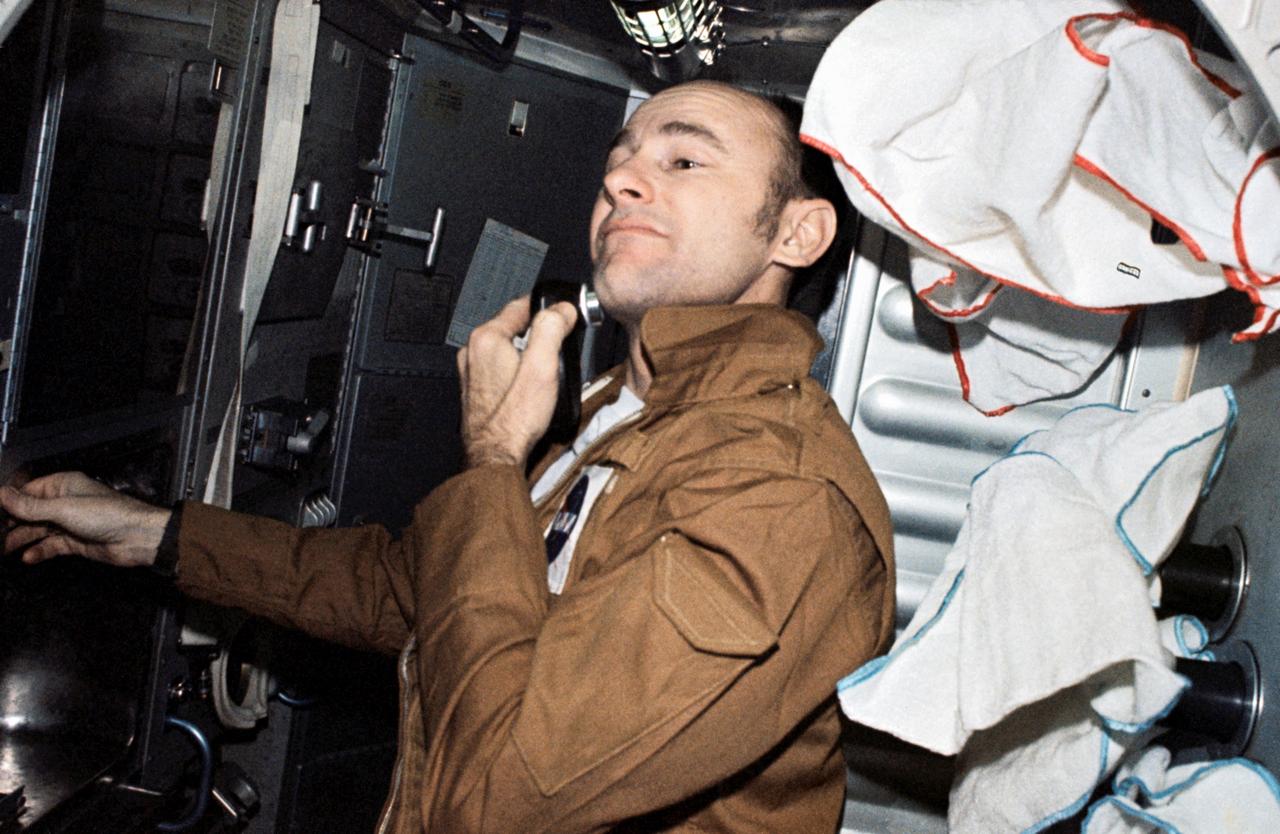
SL3-111-1516 (July-September 1973) --- Astronaut Alan L. Bean, Skylab 3 commander, uses a battery powered shaver in the crew quarters of the Orbital Workshop (OWS) aboard the Skylab space station cluster in Earth orbit. Astronaut Bean, Owen K. Garriott, science pilot, and Jack R. Lousma, pilot, went on to successfully complete 59 days aboard the Skylab cluster in Earth orbit. Photo credit: NASA
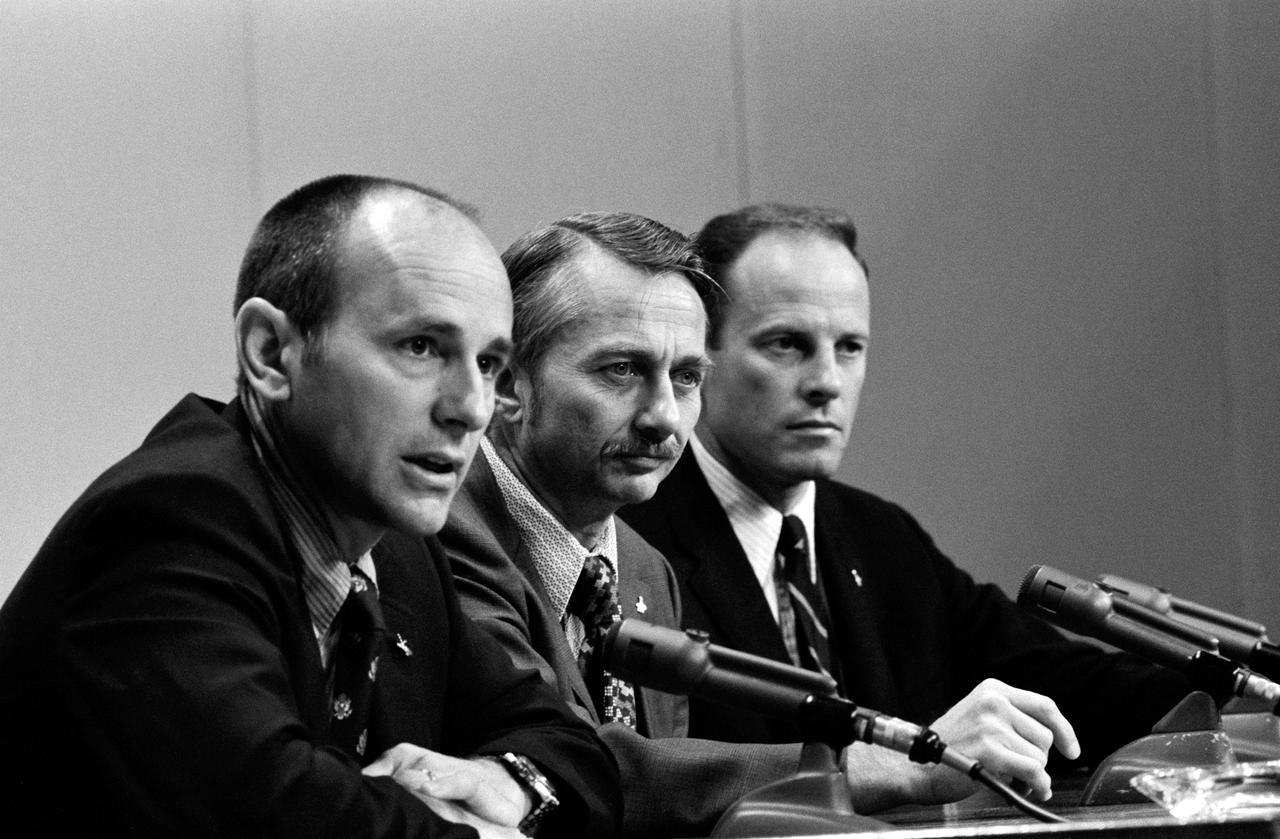
S73-30110 (30 June 1973) --- The three members of the prime crew of the second manned Skylab mission (Skylab 3) discuss their scheduled 56-day flight before a gathering of news media representatives in the large auditorium of Building 1 at the Johnson Space Center (JSC), Houston, Texas, on June 30, 1973. They are, left to right, astronaut Alan L. Bean, commander; scientist-astronaut Owen K. Garriott, science pilot; and astronaut Jack R. Lousma, pilot. Photo credit: NASA
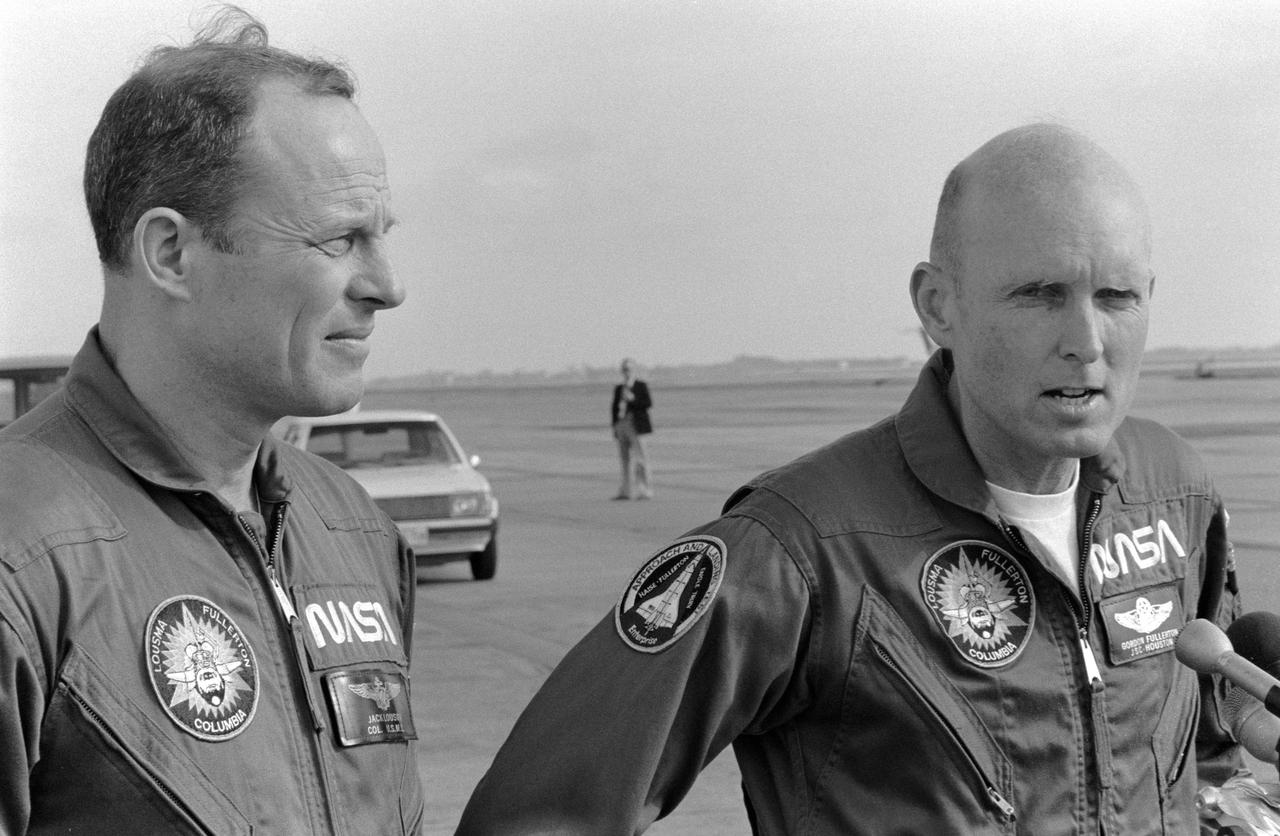
S82-28700 (20 March 1982) --- Astronauts Jack R. Lousma, left, and C. Gordon Fullerton pause for a moment at Ellington Air Force Base prior to their departure in T-38 aircraft to get to NASA?s Kennedy Space Center in time for last minute preparations for their Monday morning launch in the STS-3 space shuttle Columbia. Ellington Air Force Base is just a few miles north of the LBJ Space Center. Photo credit: NASA
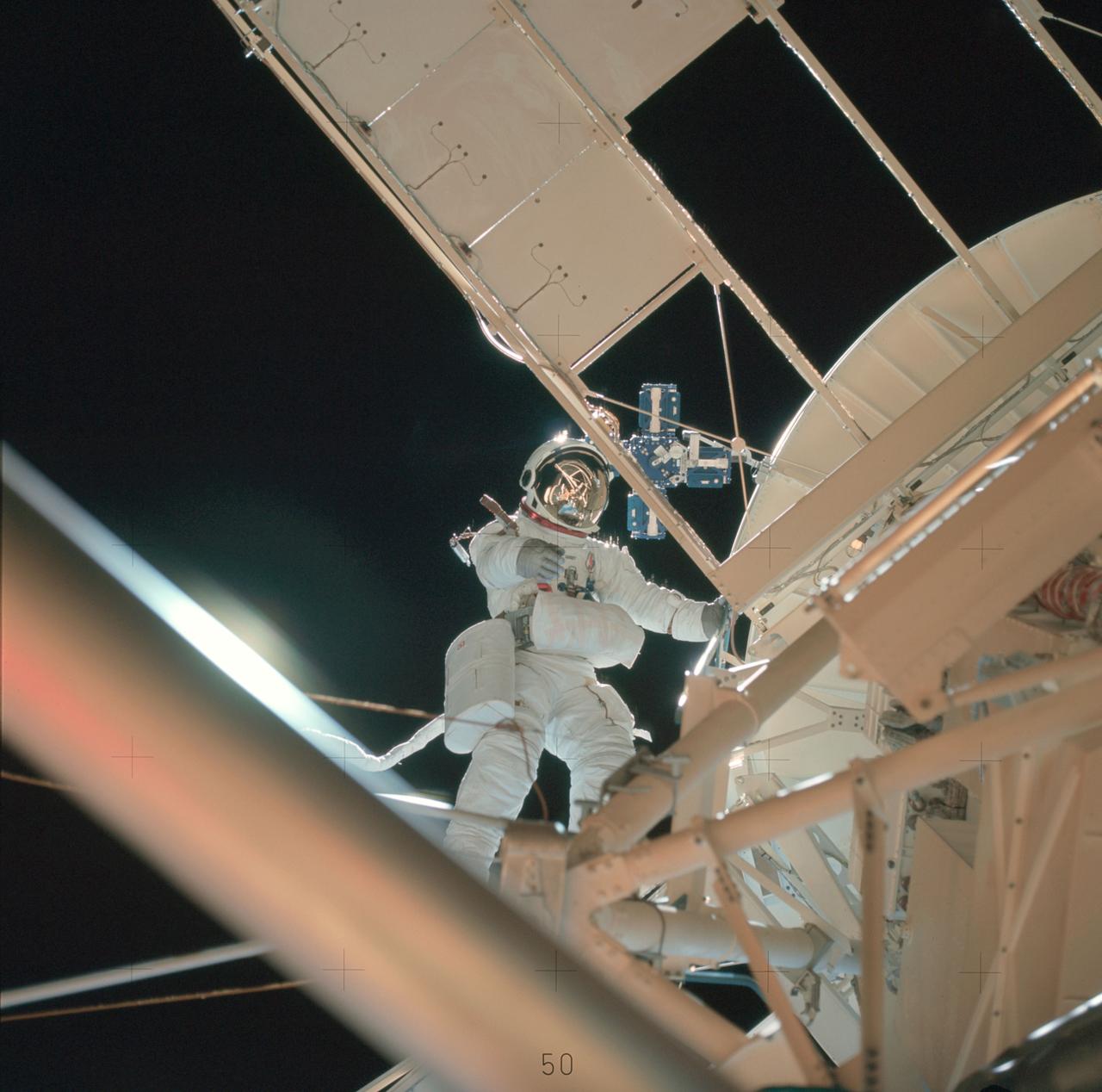
Scientist-Astronaut Owen K. Garriott, Skylab 3 science pilot, participates in the August 6, 1973 extravehicular activity (EVA) during which he and Astronaut Jack Lousma, Skylab pilot, deployed the twin pole solar shield to help shade the Orbital Workshop (OWS). Note the reflection of the solar shield in Garriett's helmet visor.
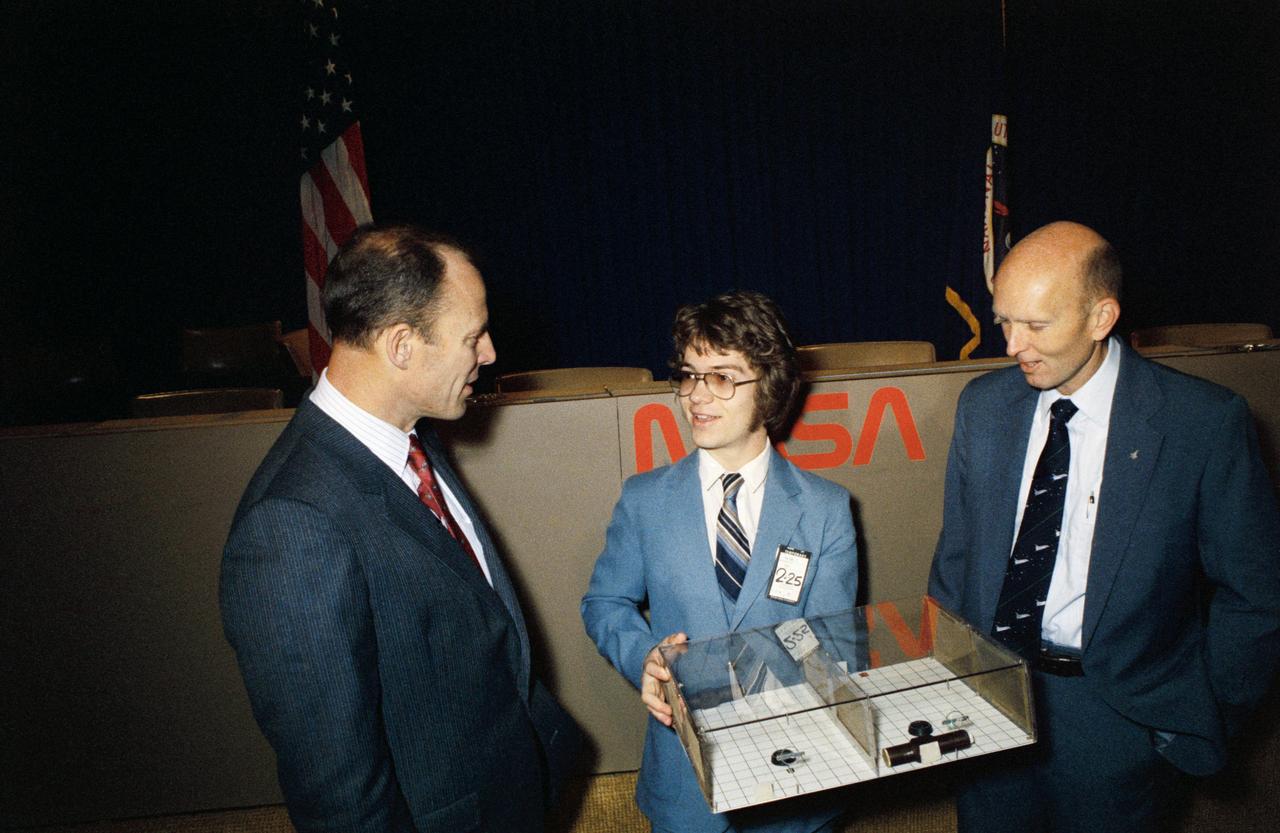
S82-27835 (26 Feb. 1982) --- The astronaut crew members for NASA?s third space transportation system (STS-3) flight meet with Todd E. Nelson, who devised a scientific experiment to fly on their mission. Astronauts Jack R. Lousma, left, commander, and C. Gordon Fullerton, pilot, along with the 18-year-old high school senior, discussed the experiment, entitled ?Insects in Flight Motion Study,? during a press briefing in JSC?s public affairs facility. Photo credit: NASA
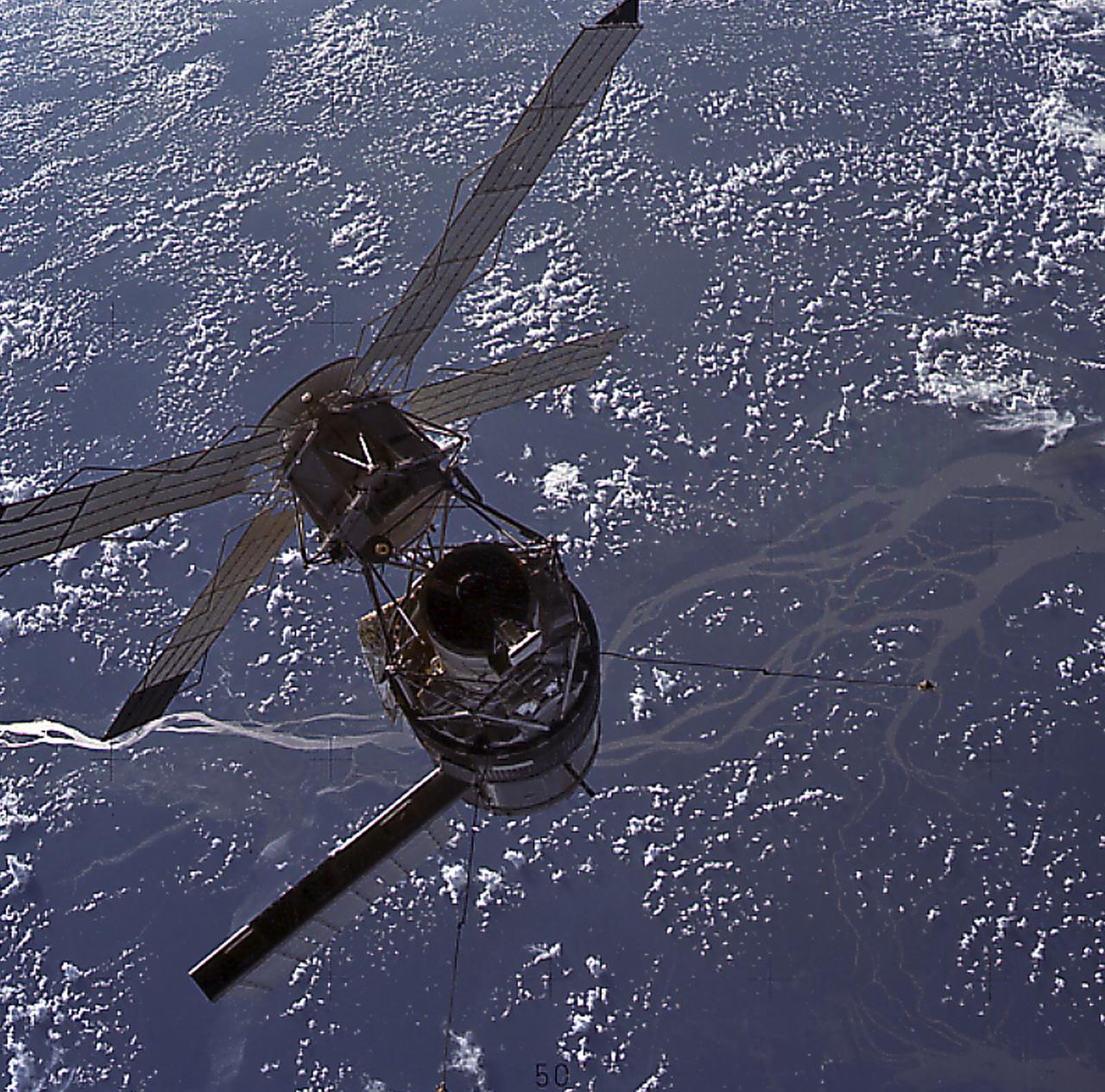
This striking image of Skylab was photographed by Astronaut Jack Lousma (Skylab-3), as the second crew reached the orbiting laboratory over the delta of the mighty Amazon River. Skylab's solar arrays were exposed directly to the Sun's rays. Solar energy was transformed into electrical power for operation of all spacecraft systems. The proper operation of these solar arrays was vital to the mission.
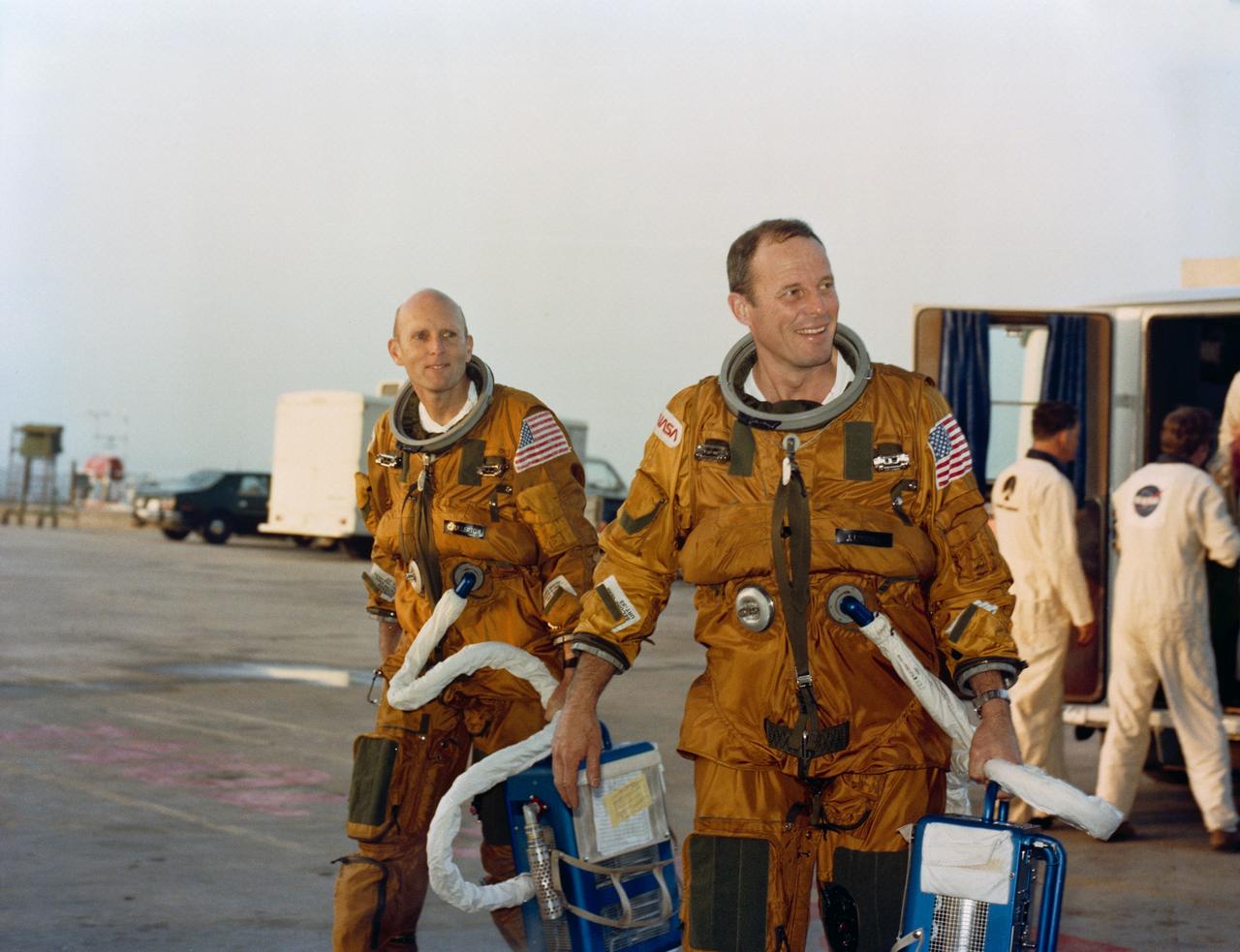
S82-28454 (19 Feb. 1982) --- Astronaut Jack R. Lousma, right, STS-3 commander, and C. Gordon Fullerton, pilot, carry portable spacesuit air controllers as they walk from a transport van to Launch Pad 39A to participate in a simulated countdown and launch. This countdown demonstration test (CDDT) is part of the preparations for NASA?s third orbital flight test in the space shuttle Columbia. The two are scheduled to spend a week orbiting Earth in Columbia this spring. Photo credit: NASA
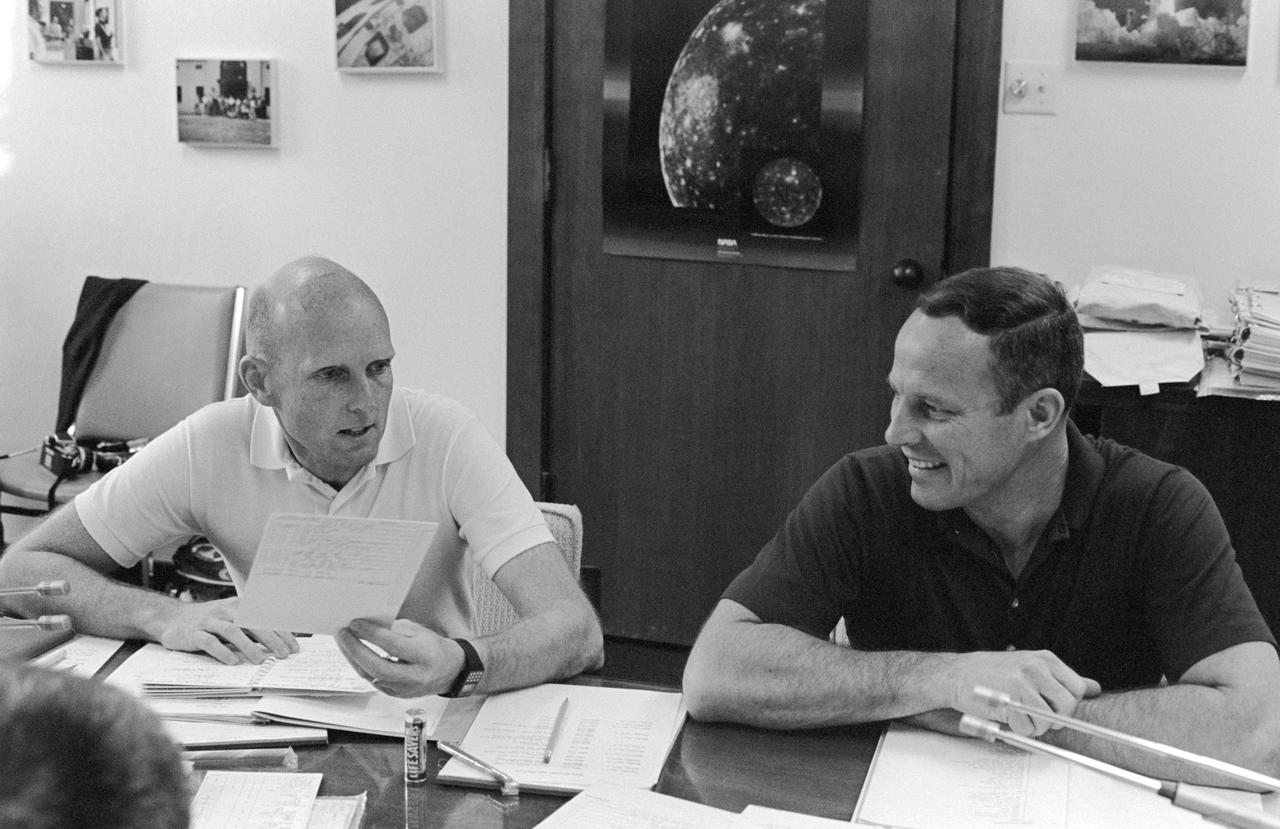
S82-28951 (1 April 1982) --- A light moment takes charge of a debriefing session for STS-3 and brings a smile to the face of its commander, astronaut Jack R. Lousma, right. Astronaut C. Gordon Fullerton, STS-3 pilot, left was one of eight other participants in the debriefing session. The two spent eight full days orbiting the Earth and conducting experiments for NASA?s third space transportation system mission aboard the Columbia. Photo credit: NASA
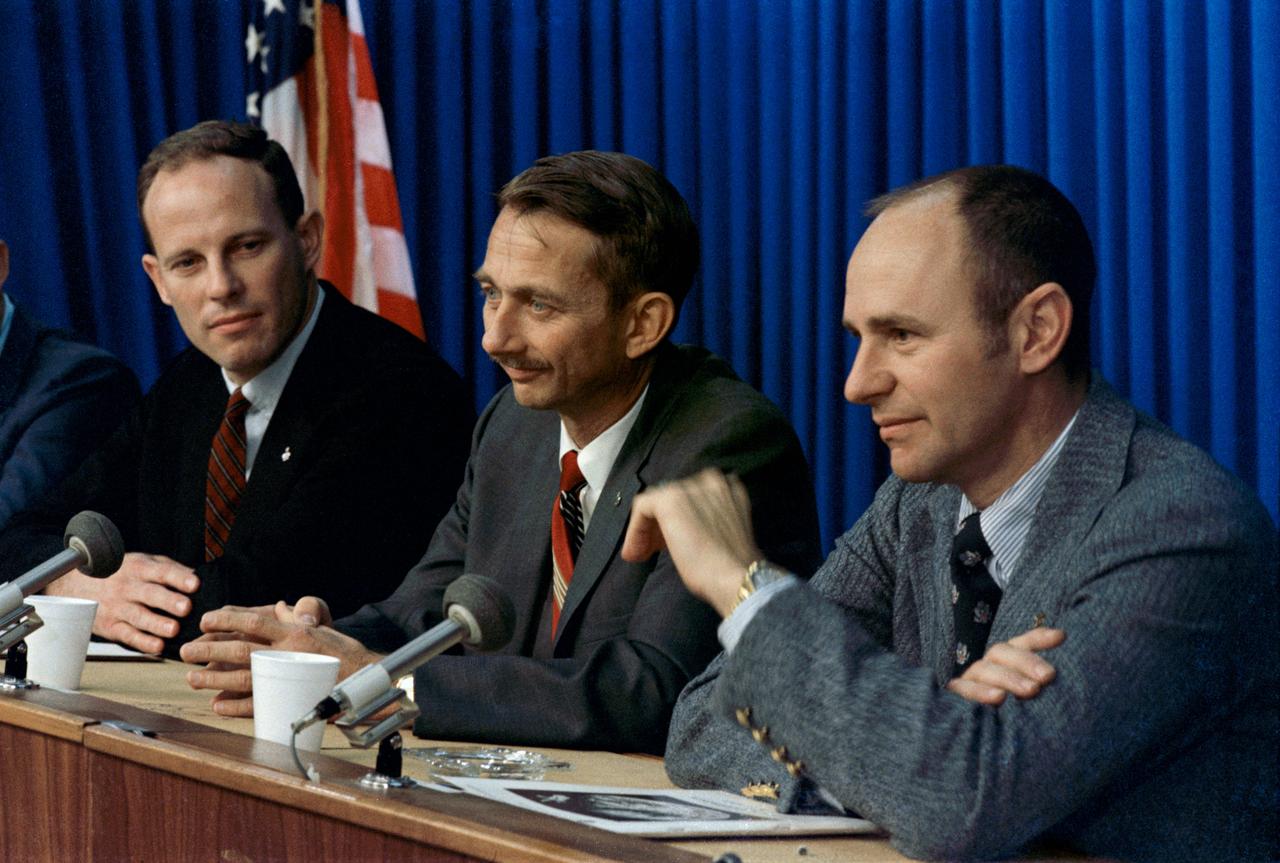
S72-46699 (19 Jan. 1972) --- Prime crew members of the scheduled second Skylab mission are introduced to the media during a press conference in January 1972 at the Manned Spacecraft Center (MSC). From left to right are astronauts Jack R. Lousma, pilot; Owen K. Garriott, science pilot, and Alan L. Bean, commander. Photo credit: NASA
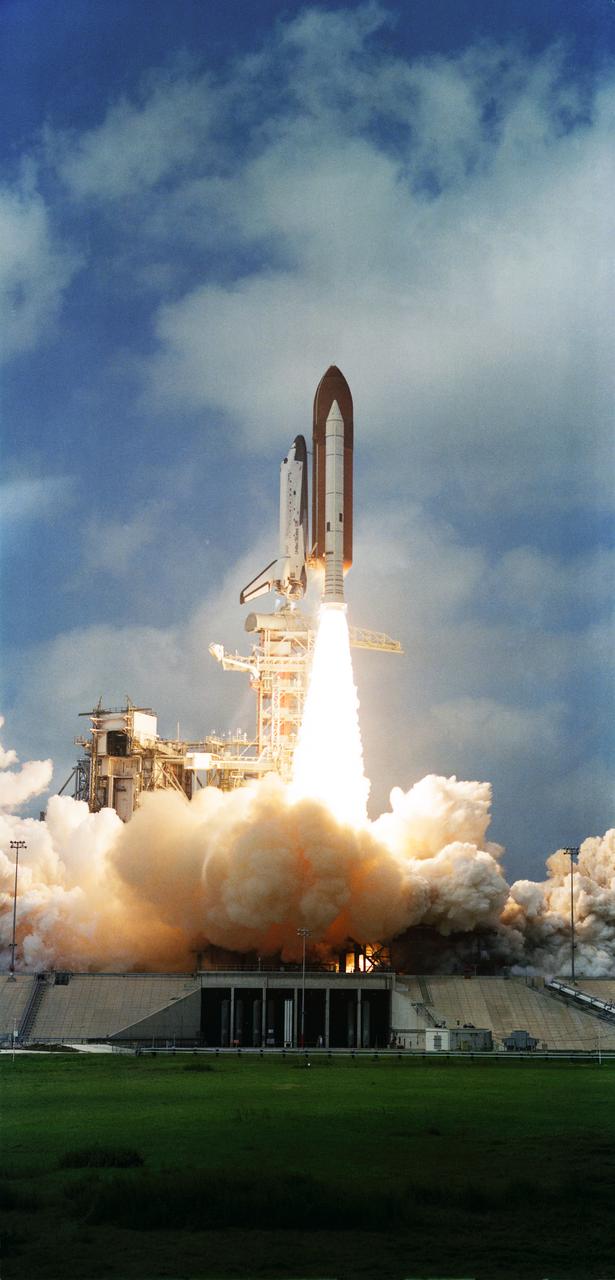
S82-28746 (22 March 1982) --- The space shuttle Columbia, with its third crew aboard, two solid rocket boosters (SRB) and external fuel tank (ET) are photographed as they clear the launch pad at Kennedy Space Center?s Launch Complex 39. Astronauts Jack R. Lousma, STS-3 commander, and C. Gordon Fullerton, pilot, were in Earth orbit some ten minutes later looking ahead to seven days of work in space. The external tank is unpainted for the first time, appearing a dark orange in the color photos and dark gray in black and white. Photo credit: NASA
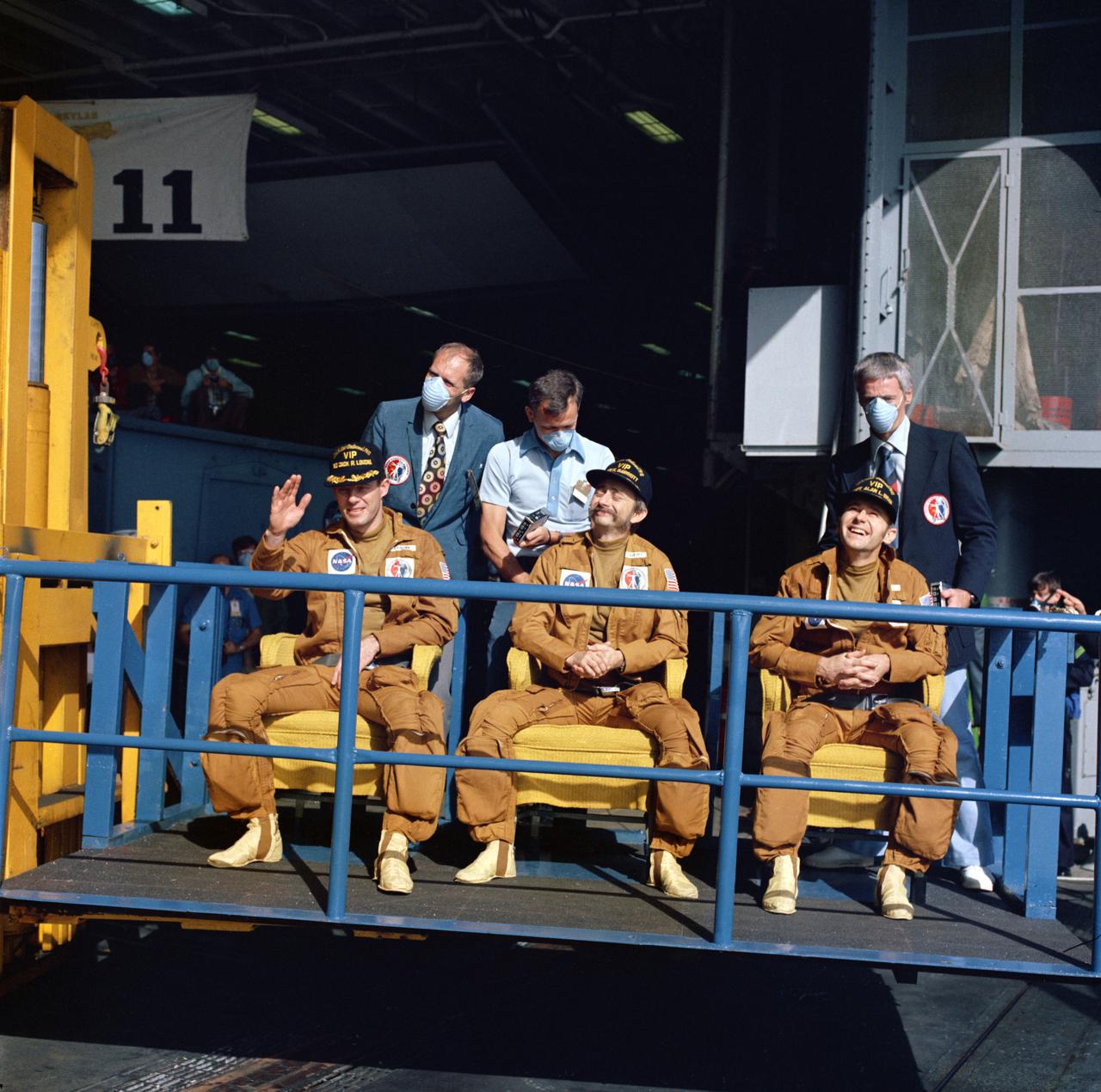
S73-36451 (25 Sept. 1973) --- The three crewmen of the Skylab 3 mission are seen aboard the prime recovery ship, USS New Orleans, following their successful 59-day visit to the Skylab space station in Earth orbit. They are, left to right, astronaut Jack R. Lousma, pilot; scientist-astronaut Owen K. Garriott, science pilot; and astronaut Alan L. Bean, commander. The Skylab 3 Command Module with the three crewmen aboard splashed down in the Pacific about 230 miles southwest of San Diego, California. They are seated atop a platform of a fork-lift dolly. Recovery support personnel are wearing face masks to prevent exposing the crewmen to disease. Photo credit: NASA

S73-31104 (17 July 1973) --- The wife and children of astronaut Alan L. Bean are photographed at their home near the Johnson Space Center (JSC), where their husband and father is preparing for NASA?s second manned Skylab mission. Bean is commander of the Skylab 3 Earth-orbital mission and will be joined by scientist-astronaut Owen K. Garriott, science pilot, and astronaut Jack R. Lousma, pilot for the schedule two-month mission. With Mrs. Sue Bean are the couple?s children Clay, 17, and Amy Sue, 10; and the family?s pet dog. Photo credit: NASA
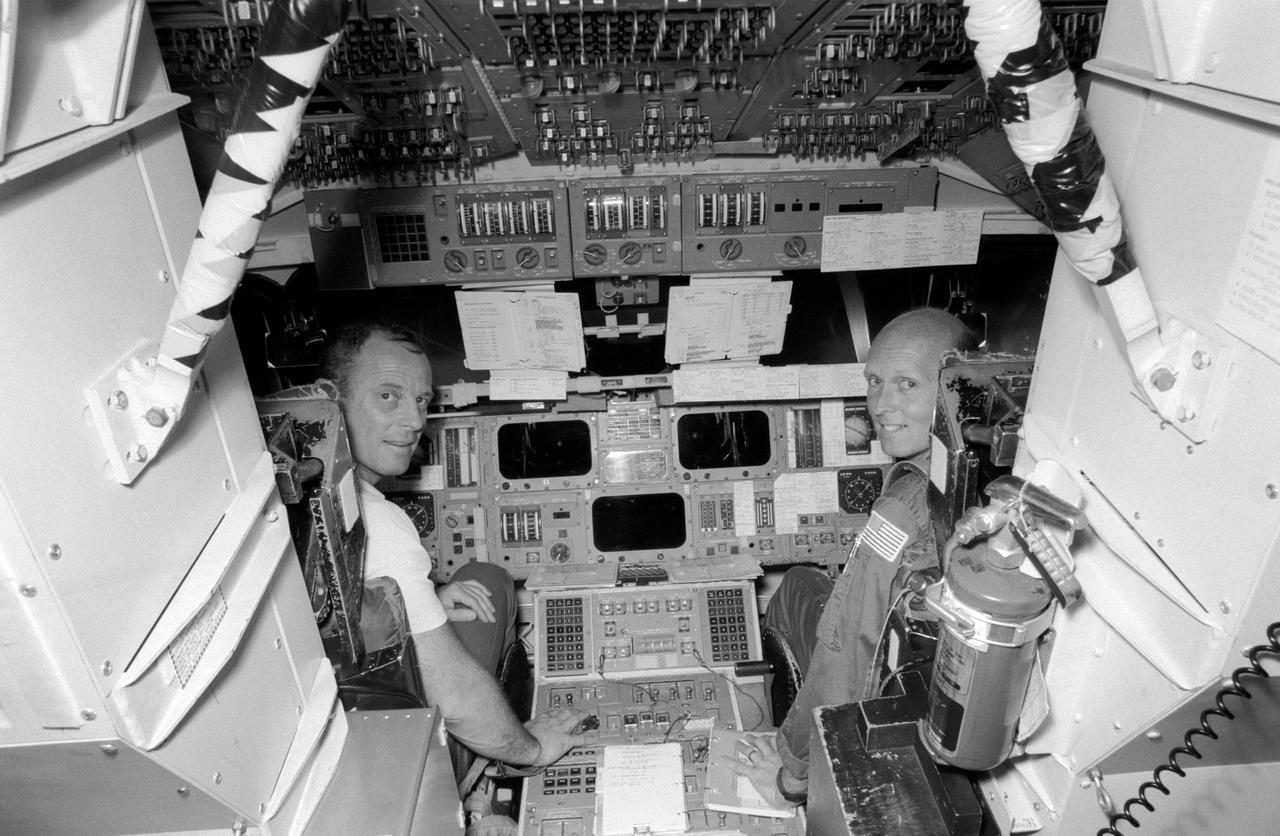
S82-28534 (16 March 1982) --- Astronauts Jack R. Lousma, left, and C. Gordon Fullerton are at the commander and pilot?s station, respectively, in the shuttle mission simulator at the LBJ Space Centers mission simulation and training facility. They have less than a week of training left in preparation for NASA?s third space transportation system (STS-3) flight. Scheduled to launch on March 22, STS-3 in expected to give space shuttle Columbia its longest stay (seven days) thus far. Photo credit: NASA
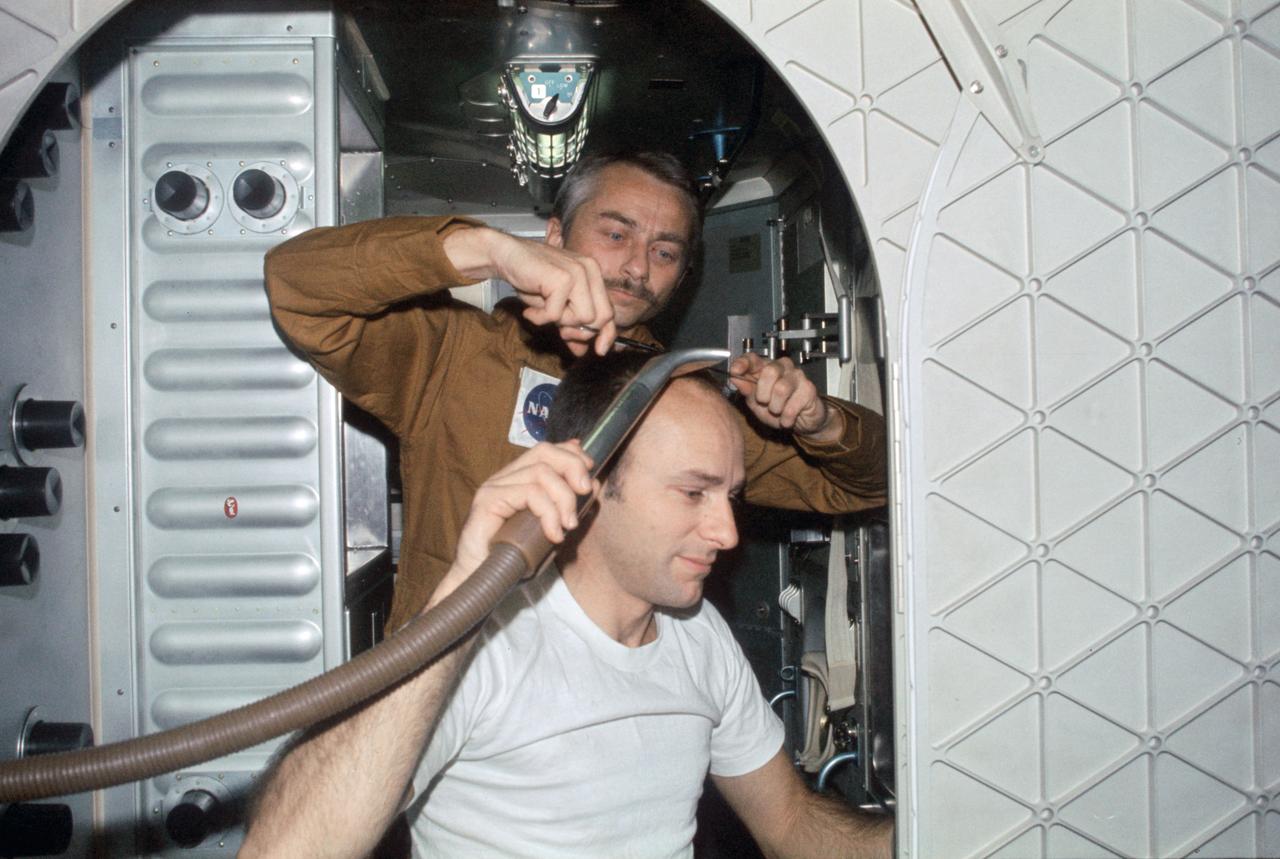
SL3-108-1292 (19 Aug. 1973) --- Scientist-astronaut Owen K. Garriott, Skylab 3 science pilot, trims the hair of astronaut Alan L. Bean, commander, in this onboard photograph from the Skylab Orbital Workshop (OWS) in Earth orbit. Astronaut Jack R. Lousma, pilot, took this picture with a 35mm Nikon camera. Bean holds a vacuum hose to gather in loose hair. The crew of the second manned Skylab flight went on to successfully complete 59 days aboard the Skylab space station cluster in Earth orbit. Photo credit: NASA
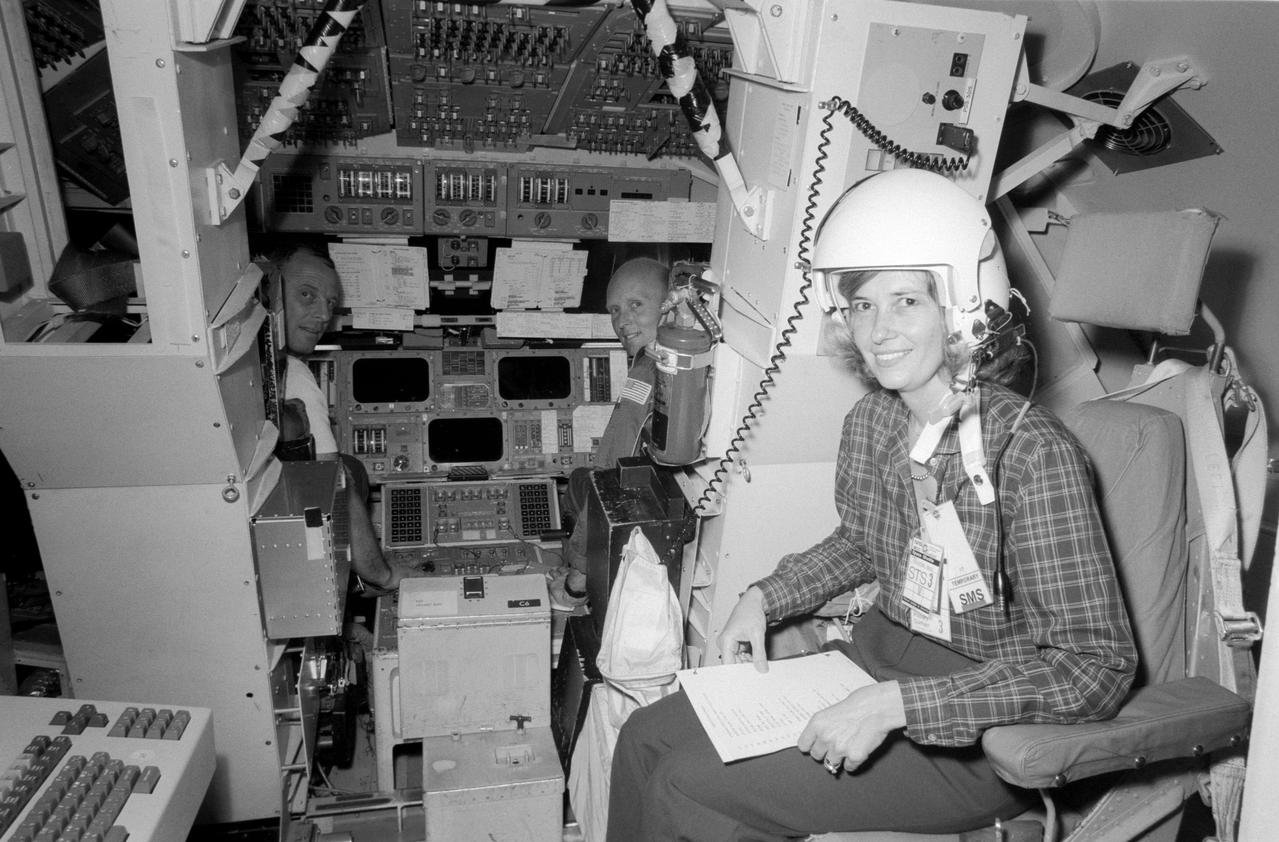
S82-28535 (16 March 1982) --- One of the more pleasant surprises of what are usually routine training sessions today was Mrs. Marie Fullerton, seated in the foreground in a special chair. Astronauts Jack R. Lousma, left background, and C. Gordon Fullerton, center, take a brief break in their simulation session to look back toward their visitor, wife of the pilot for NASA?s next flight. They are in the shuttle mission simulator (SMS) in the LBJ Space Center?s mission simulation and training facility. The crew is in training for its scheduled March 22 launch aboard the space shuttle Columbia for a week?s stay in Earth orbit. Photo credit: NASA
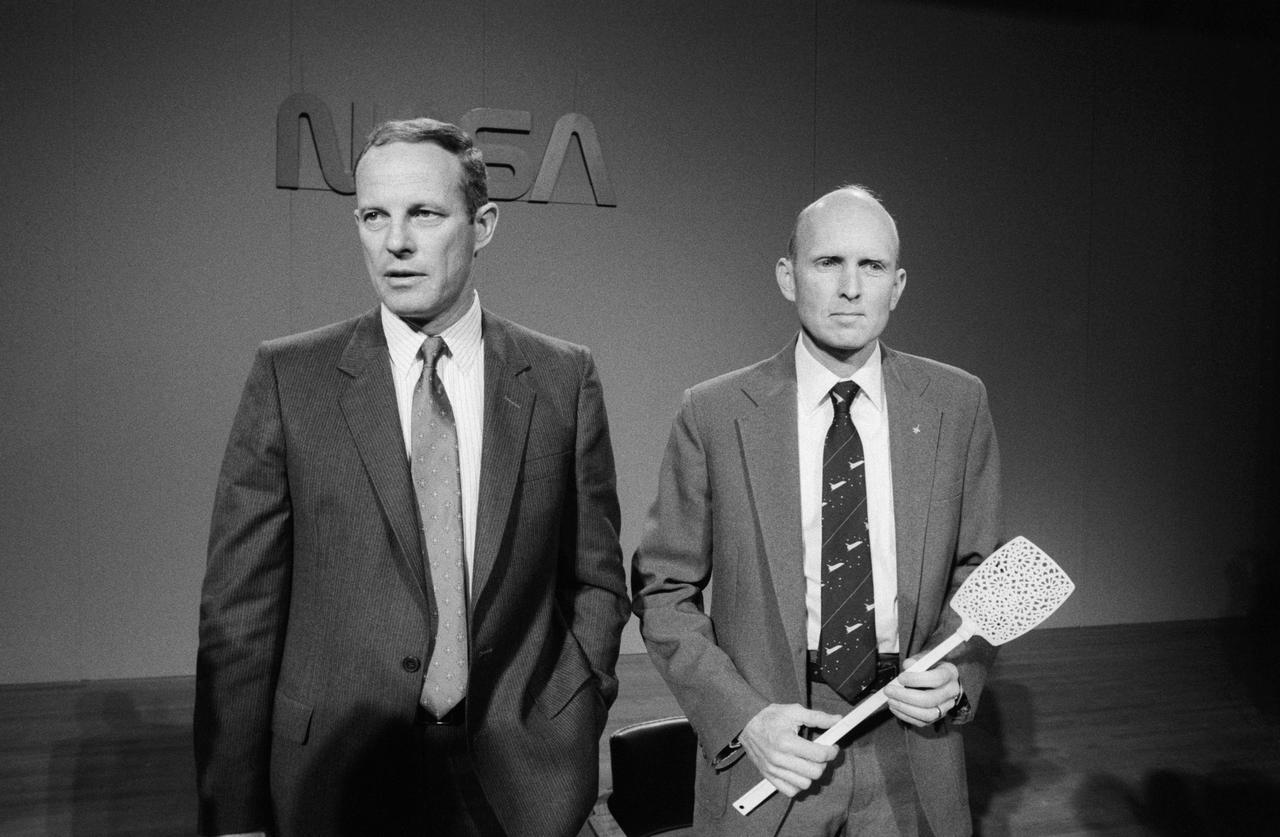
S82-27684 (26 Feb. 1982) --- Astronauts Jack R. Lousma, left, commander, and C. Gordon Fullerton, pilot, enjoy a light moment following their final STS-3 press conference before the scheduled launch of the space shuttle Columbia. Fullerton holds a fly swatter in his hand. During the conference, the crew had joked about insects onboard the craft and suggested the swatter as a means to control the ?critters.? A student experiment entitled ?Insects in Fight Motion Study? will fly with the crew on NASA?s third orbital flight test (STS-3). Photo credit: NASA
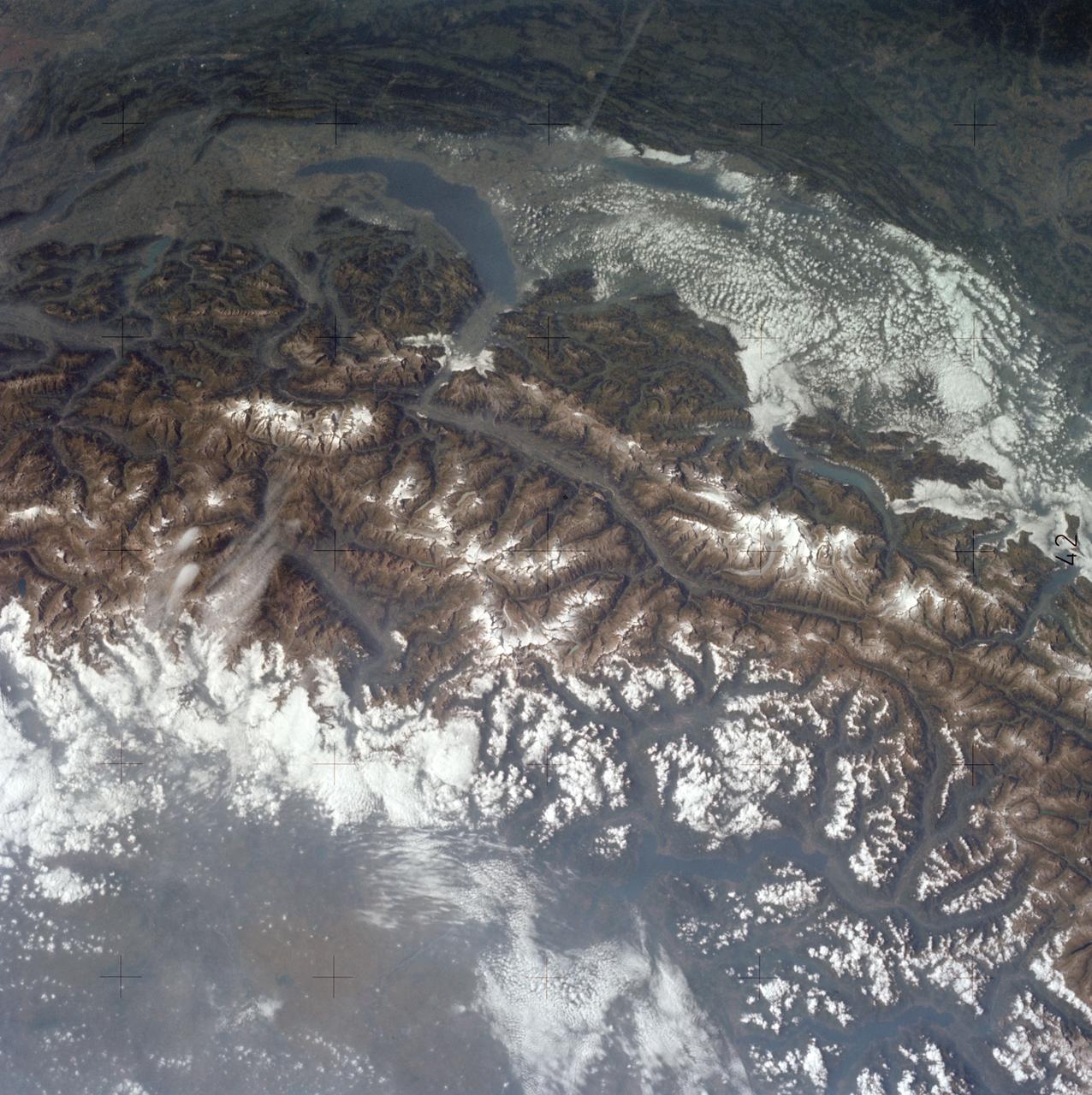
SL3-121-2438 (July-September 1973) --- The Alps of Switzerland, France and Italy are featured in this exceptional photograph taken by a hand-held camera from the Skylab space station during the second manned Skylab mission. Also visible in the out-the-window 70mm Hasselblad view are Lake Geneva, Lake of Lucerne, Rhone River and many other features. The Skylab 3 crewmen, astronauts Alan L. Bean, Owen K. Garriott and Jack R. Lousma completed a 59-day mission with a successful splashdown on Sept. 25, 1973. Photo credit: NASA
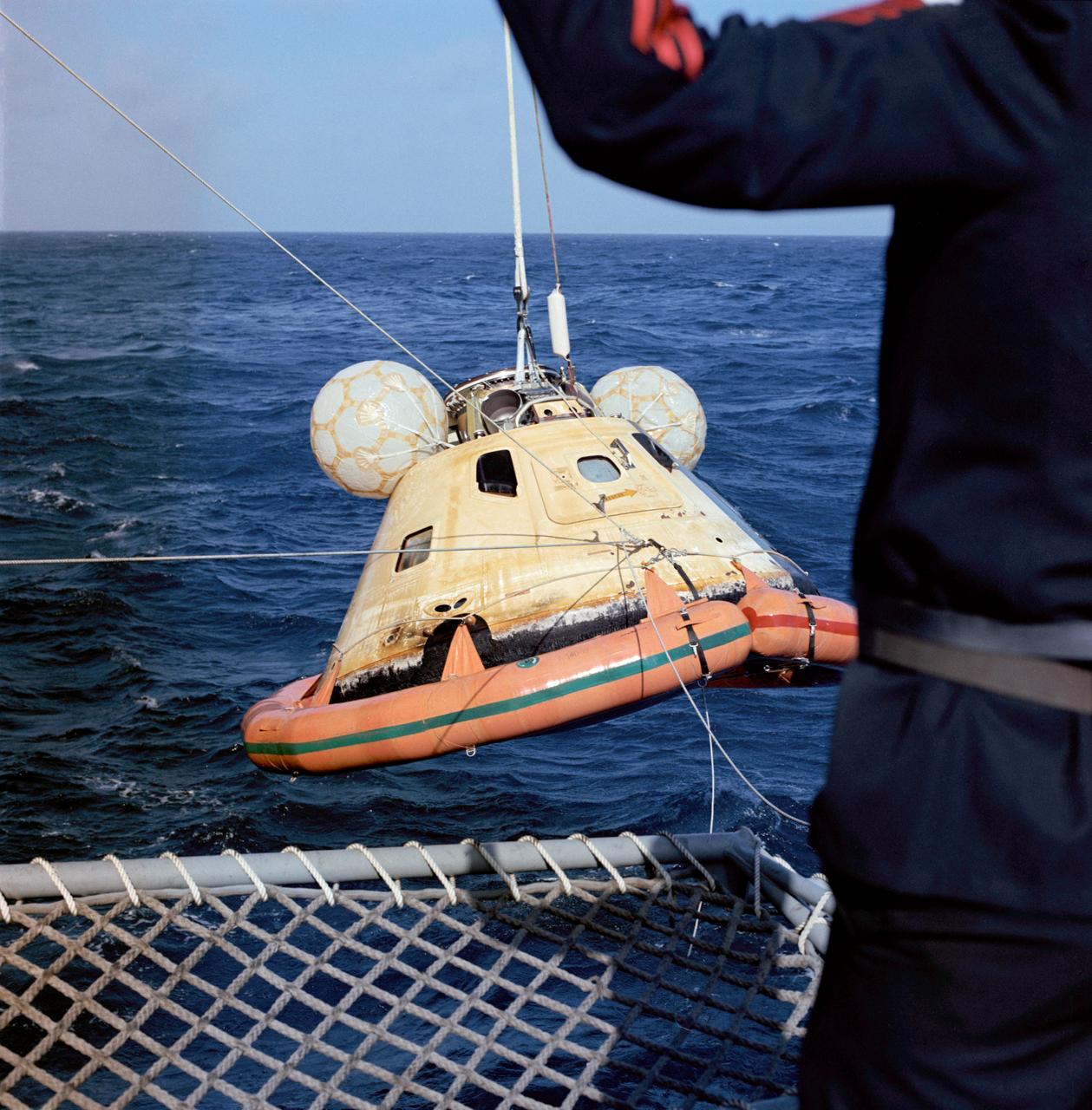
S73-36423 (25 Sept. 1973) --- The Skylab 3 Command Module, with astronauts Alan L. Bean, Owen K. Garriott and Jack R. Lousma still inside, is hoisted aboard the prime recovery ship, USS New Orleans, during recovery operations in the Pacific Ocean. The three crewmen had just completed a successful 59-day visit to the Skylab space station in Earth orbit. The Command Module splashed down in the Pacific about 230 miles southwest of San Diego, California. Earlier in the recovery operations a team of U.S. Navy swimmers attached the flotation collar to the spacecraft to improve its buoyancy. Photo credit: NASA
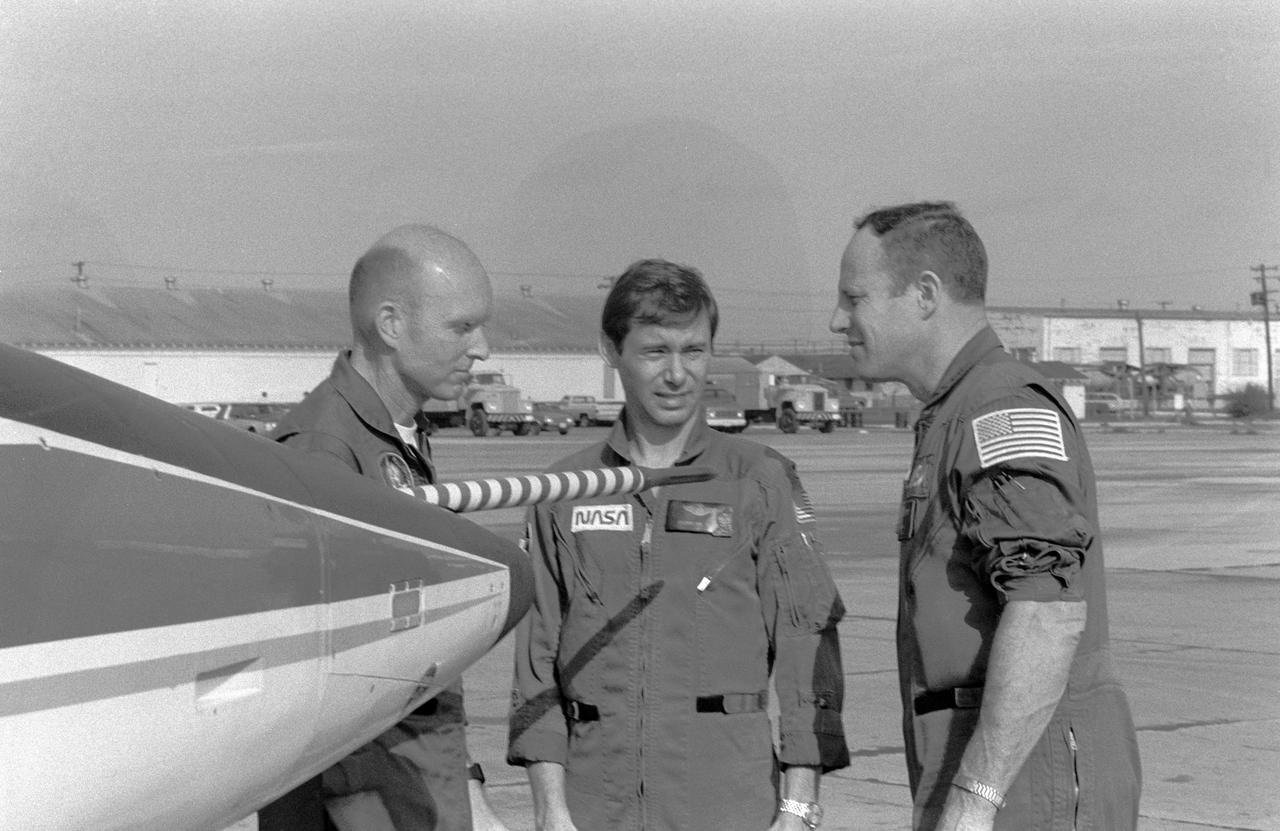
S82-28704 (20 March 1982) --- Astronaut Jack R. Lousma, STS-3 commander, seems to be saying, "?see you guys down there," prior to boarding a T-38 jet trainer and heading for KSC in Florida. Astronaut C. Gordon Fullerton, left, STS-3 pilot, will man the front seat of another T-38, with astronaut Brewster H. Shaw, center, as rear sat passenger. The STS-3 crew has just bade farewell to news media representatives and members of the general public on hand for the departure. Photo credit: NASA

SL3-114-1682 (28 July 1973) --- A close-up view of the Skylab Space Station photographed against an Earth background from the Skylab 3 Command and Service Modules (CSM) during station-keeping maneuvers prior to docking. Aboard the Command Module (CM) were astronauts Alan L. Bean, Owen K. Garriott and Jack R. Lousma, who remained with the Skylab Space Station in Earth orbit for 59 days. This picture was taken with a hand-held 70mm Hasselblad camera using a 100mm lens and SO-368 medium speed Ektachrome film. Photo credit: NASA
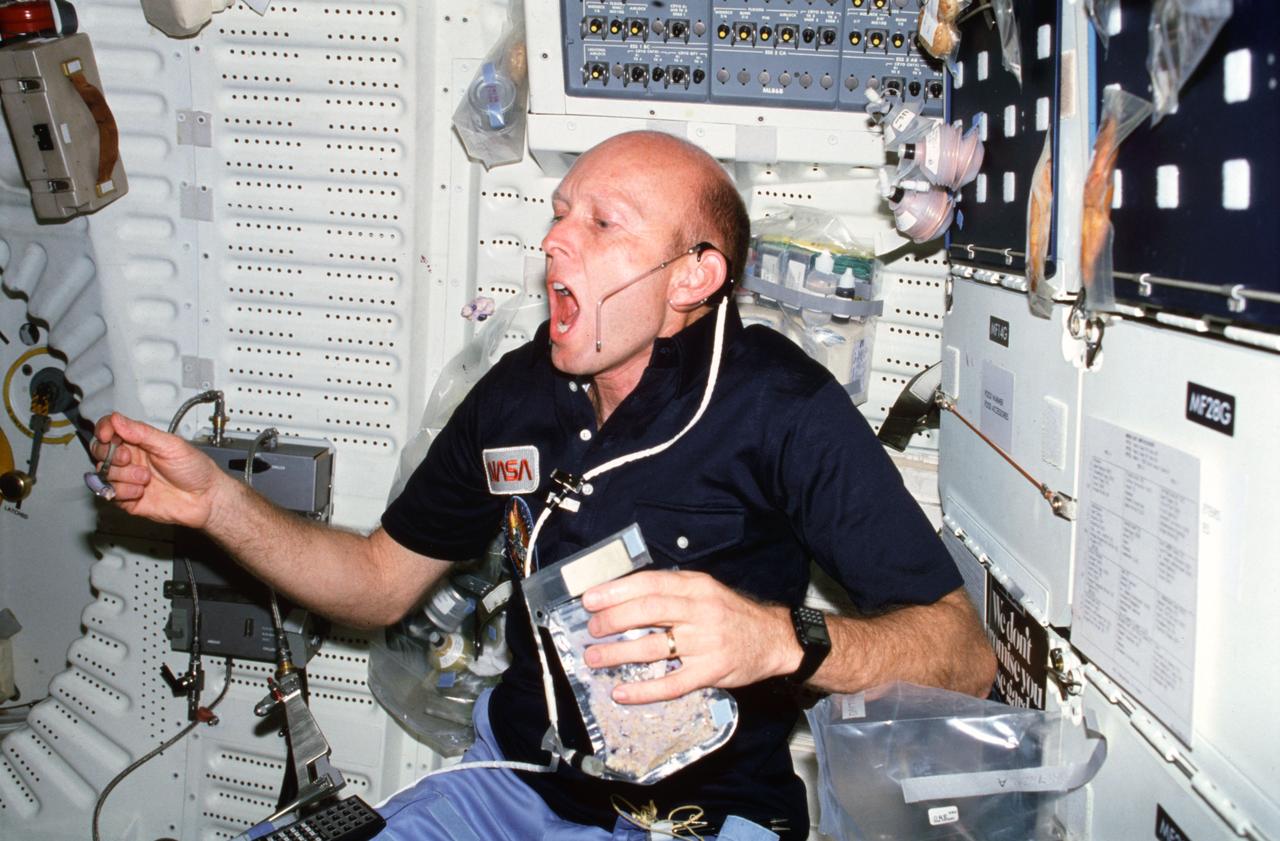
STS003-26-260 (26 March 1982) --- From mid-air, astronaut C. Gordon Fullerton, STS-3 pilot, grabs a bite of cereal which he had just spooned from a plastic food container on the space shuttle Columbia's middeck. Fullerton, pilot for three Approach and Landing Tests (ALT) with the space shuttle Enterprise, was making his first true spaceflight and had never before experienced microgravity. Astronaut Jack R. Lousma, mission commander, exposed this frame with a 35mm camera. Photo credit: NASA
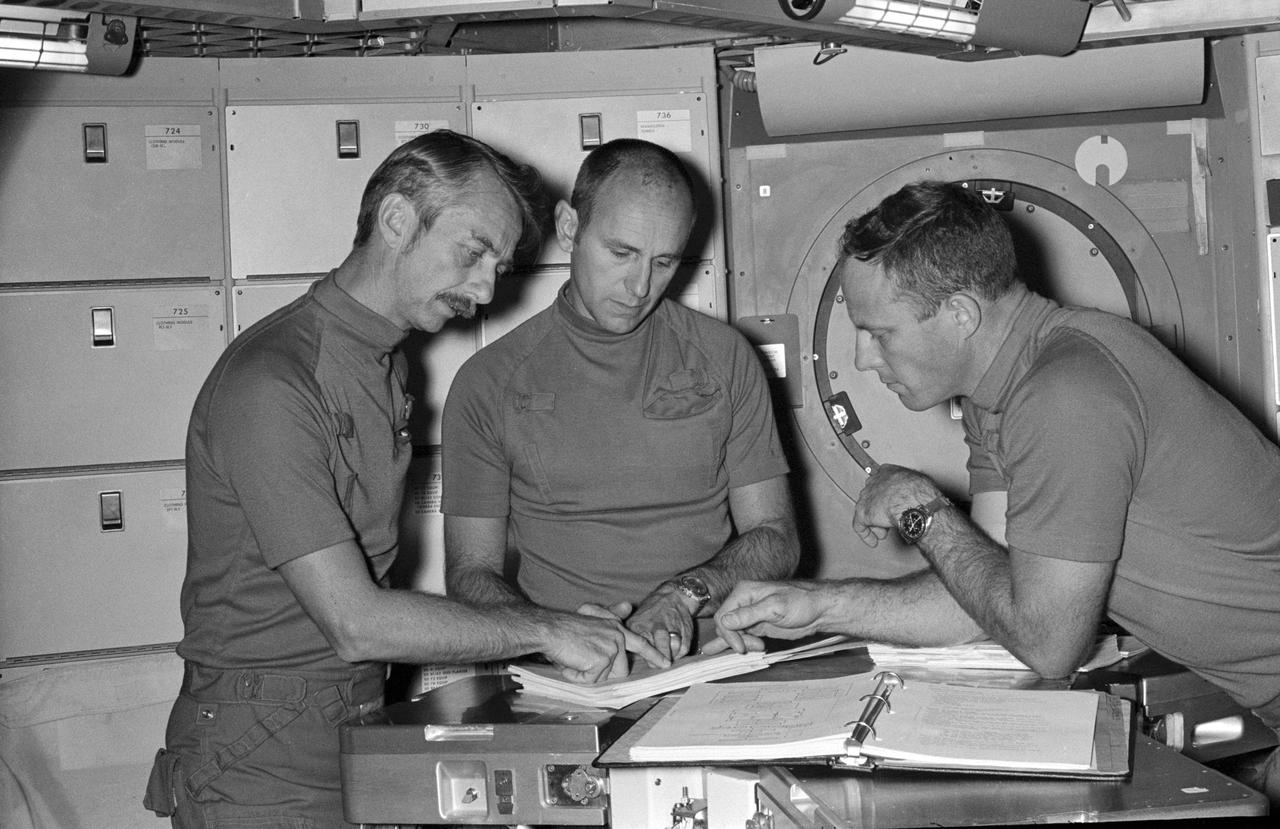
S73-28419 (16 June 1973) --- The three prime crewmen of the Skylab 3 mission check over flight data during a training session in the crew quarters of the Orbital Workshop (OWS) trainer in the Mission Simulation and Training Facility at the Johnson Space Center (JSC). They are, from left to right, scientist-astronaut Owen K. Garriott, science pilot; and astronauts Alan L. Bean, commander, and Jack R. Lousma, pilot. The 56-day, second manned Skylab Earth-orbital mission is scheduled for liftoff in the latter part of July 1973. Photo credit: NASA
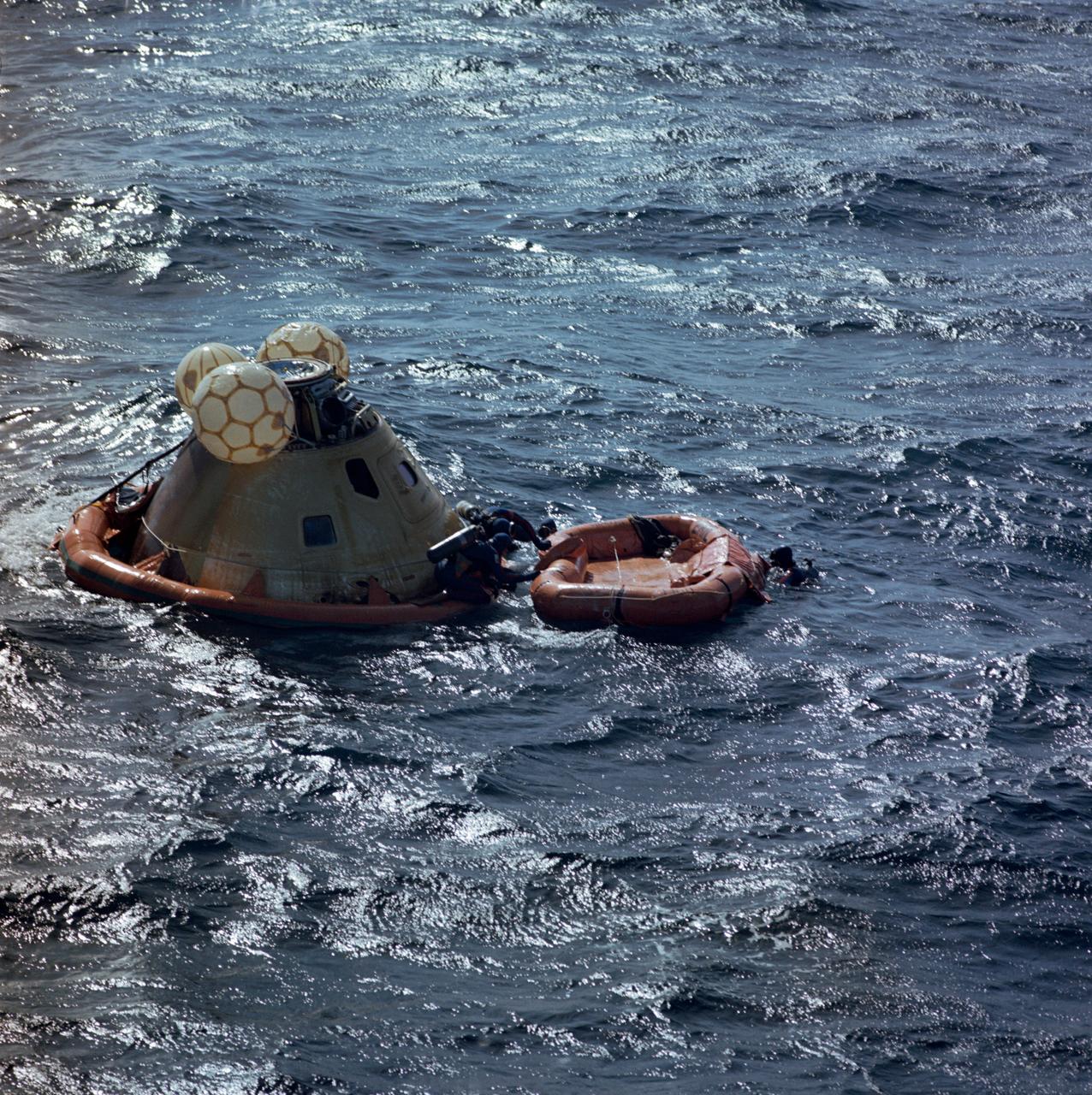
S73-36401 (25 Sept. 1973) --- A team of U.S. Navy swimmers assists with the recovery of the Skylab 3 Command Module following its splashdown in the Pacific Ocean about 230 miles southwest of San Diego, California. The swimmers had just attached a flotation collar to the spacecraft to improve its buoyancy. Aboard the Command Module were astronauts Alan L. Bean, Owen K. Garriott and Jack R. Lousma, who had just completed a successful 59-day visit to the Skylab space station in Earth orbit. Minutes later the Command Module with the three crewmen still inside was hoisted aboard the prime recovery ship, the USS New Orleans. Photo credit: NASA
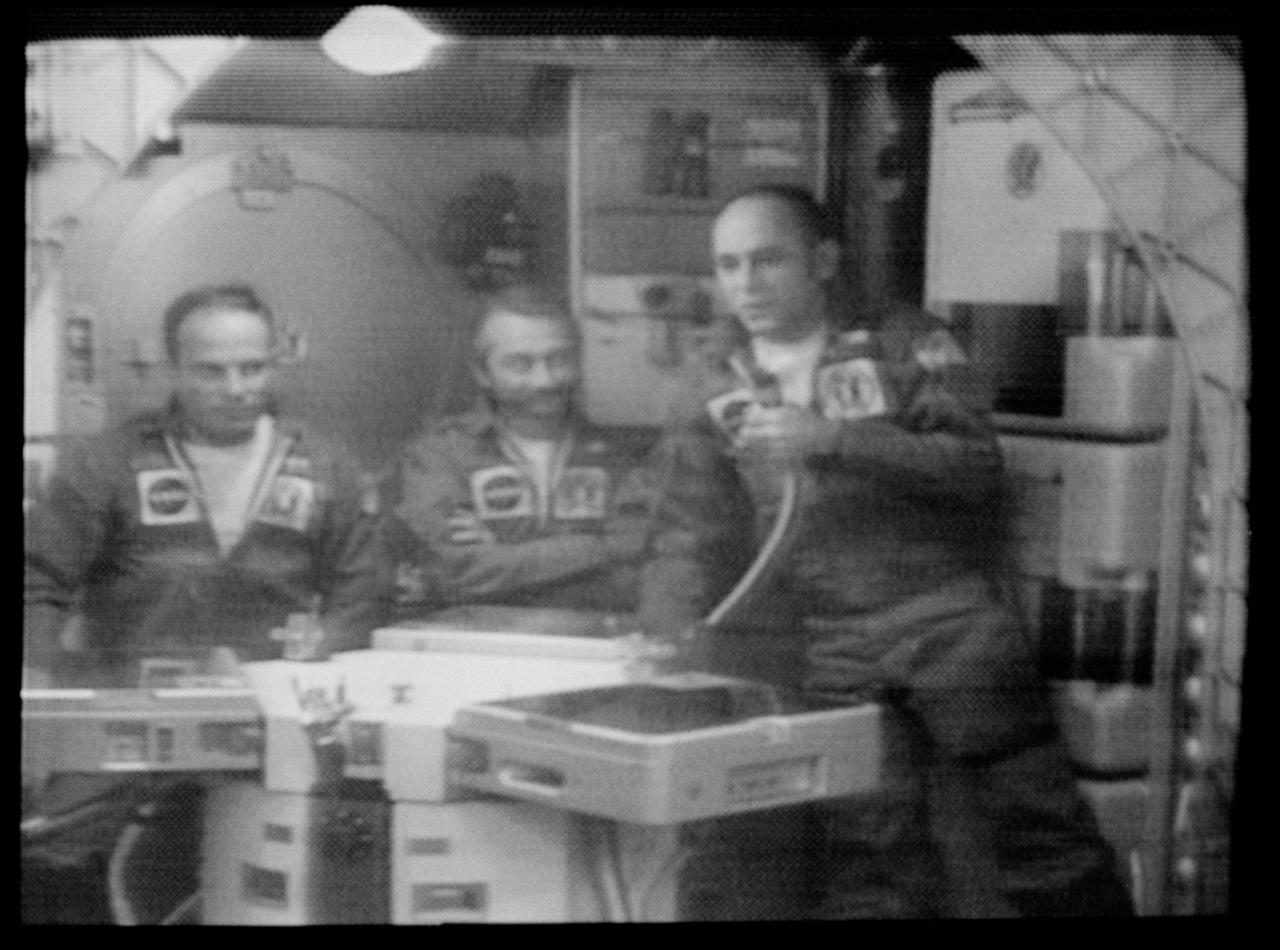
S73-34339 (21 Sept. 1973) --- Astronaut Alan L. Bean, right, Skylab 3 commander, answers a question during the Sept. 21, 1973 press conference from the Skylab space station in Earth orbit. This is a black and white reproduction taken from a television transmission made by a TV camera aboard the Skylab space station. Scientist-astronaut Owen K. Garriott, center, science pilot; and astronaut Jack R. Lousma, left, pilot, await queries from newsmen on the ground to be sent up by scientist-astronaut Story Musgrave, CAPCOM for this shift of Skylab 3. Photo credit: NASA
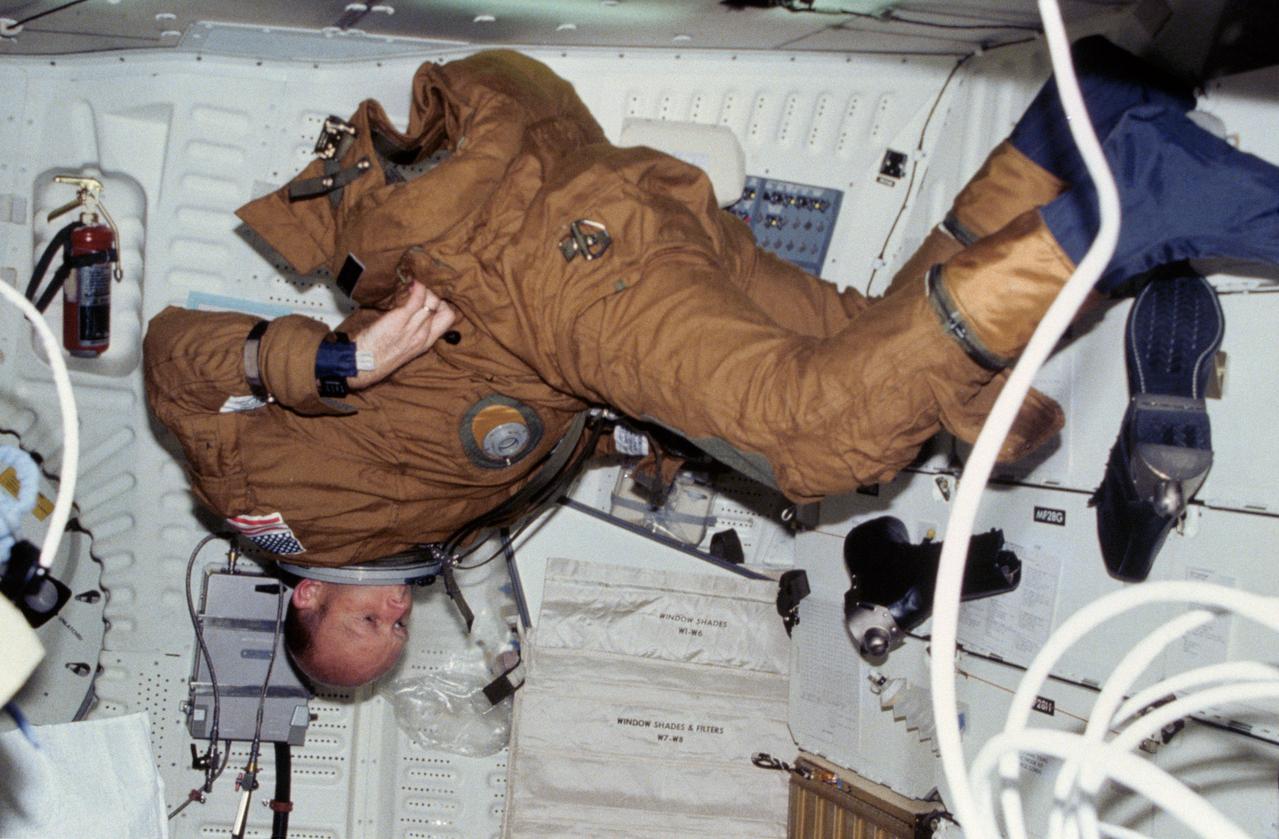
S82-28922 (30 March 1982) --- Astronaut C. Gordon Fullerton, STS-3 pilot, floats upside down in the zero-gravity environment of the middeck area of the Earth-orbiting space shuttle Columbia as he dons a modified USAF high altitude pressure garment. The brownish ejection/escape suit is used by the astronauts at launch and entry. Most of the remainder of their mission time, they are attired in a blue constant-wear garment. Astronaut Jack R. Lousma, crew commander, took this picture with a 35mm camera. The crew spent eight full days in the reusable spacecraft, a shuttle record. Photo credit: NASA
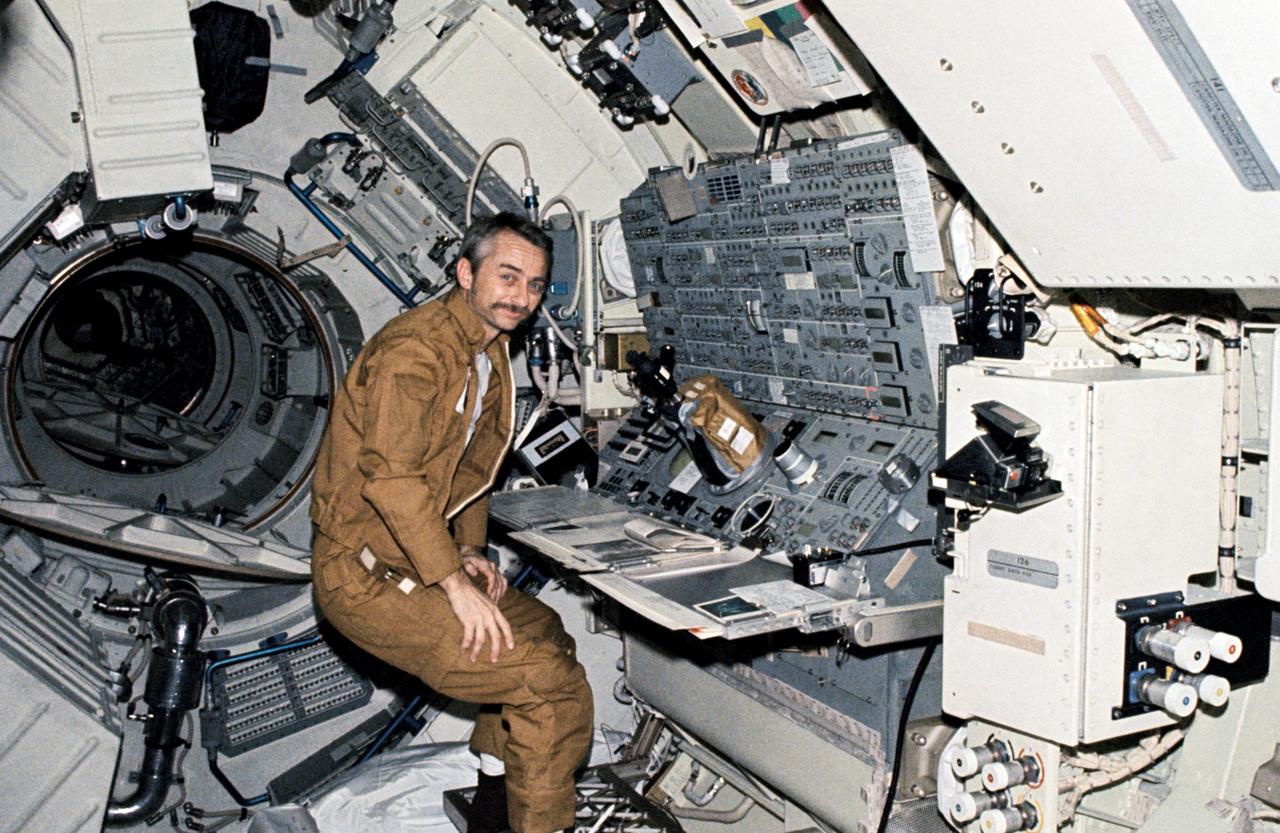
SL3-108-1288 (July-Sept. 1973) --- Astronaut Owen K. Garriott, science pilot of the Skylab 3 mission, is stationed at the Apollo Telescope Mount (ATM) console in the Multiple Docking Adapter (MDA) of the Skylab space station in Earth orbit. This picture was taken with a handheld 35mm Nikon camera. Astronauts Garriott, Alan L. Bean and Jack R. Lousma remained with the Skylab space station cluster in orbit for 59 days conducting numerous medical, scientific and technological experiments. In orbit the MDA functions as a major experiment control center for solar observations. From this console the astronauts actively control the ATM solar physics telescopes. Photo credit: NASA
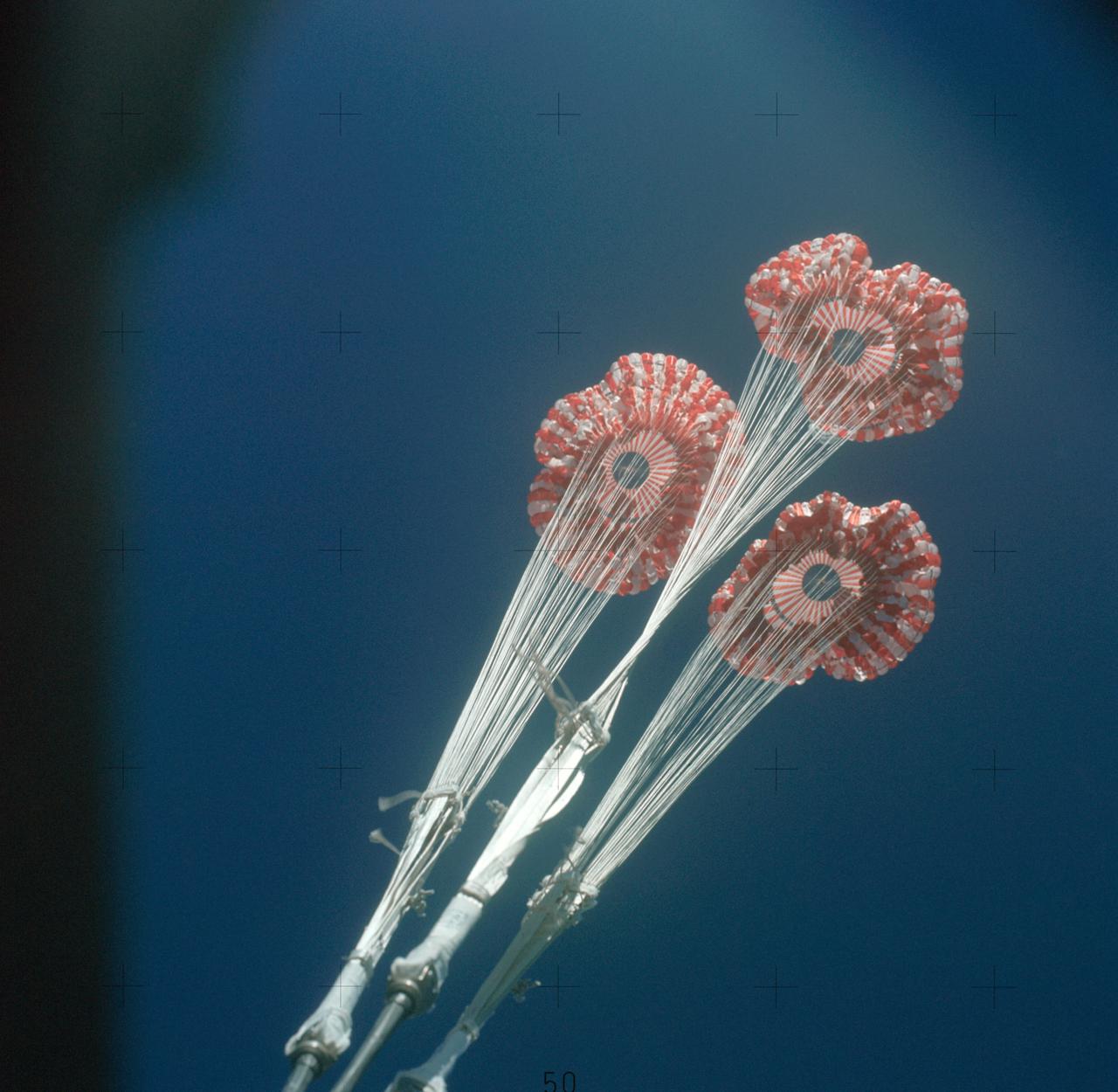
SL3-114-1760 (25 Sept. 1973) --? An excellent view of the three main ring sail parachutes of the Skylab 3 command module as they unfurl during descent to a successful splashdown in the Pacific Ocean. This picture was taken by a hand-held 70mm Hasselblad camera, looking up through a window of the command module. These parachutes open at approximately 10,000 feet altitude. Aboard the CM were astronauts Alan L. Bean, Owen K. Garriott and Jack R. Lousma, who had just completed a 59-day visit to the Skylab space station in Earth orbit. Photo credit: NASA

KENNEDY SPACE CENTER, FLA. - At the Astronaut Hall of Fame Induction Ceremony, new inductee Bruce McCandless (left) receives the medal from Chairman Owen Garriott. Seen behind them are current Hall of Famers Walt Cunningham and Bill Anders (at left), Al Worden (center), and Charlie Duke and Jack Lousma. The other new inductees are Joe Allen and Gordon Fullerton. The event is being held in the Kennedy Space Center Visitor Complex’s Apollo_Saturn V Center. Recognized for their individual flight accomplishments and contributions to the success and future success of the U.S. space program, this elite group of inductees is among only 60 astronauts to be honored in the Hall of Fame and the fourth group of Space Shuttle astronauts named.
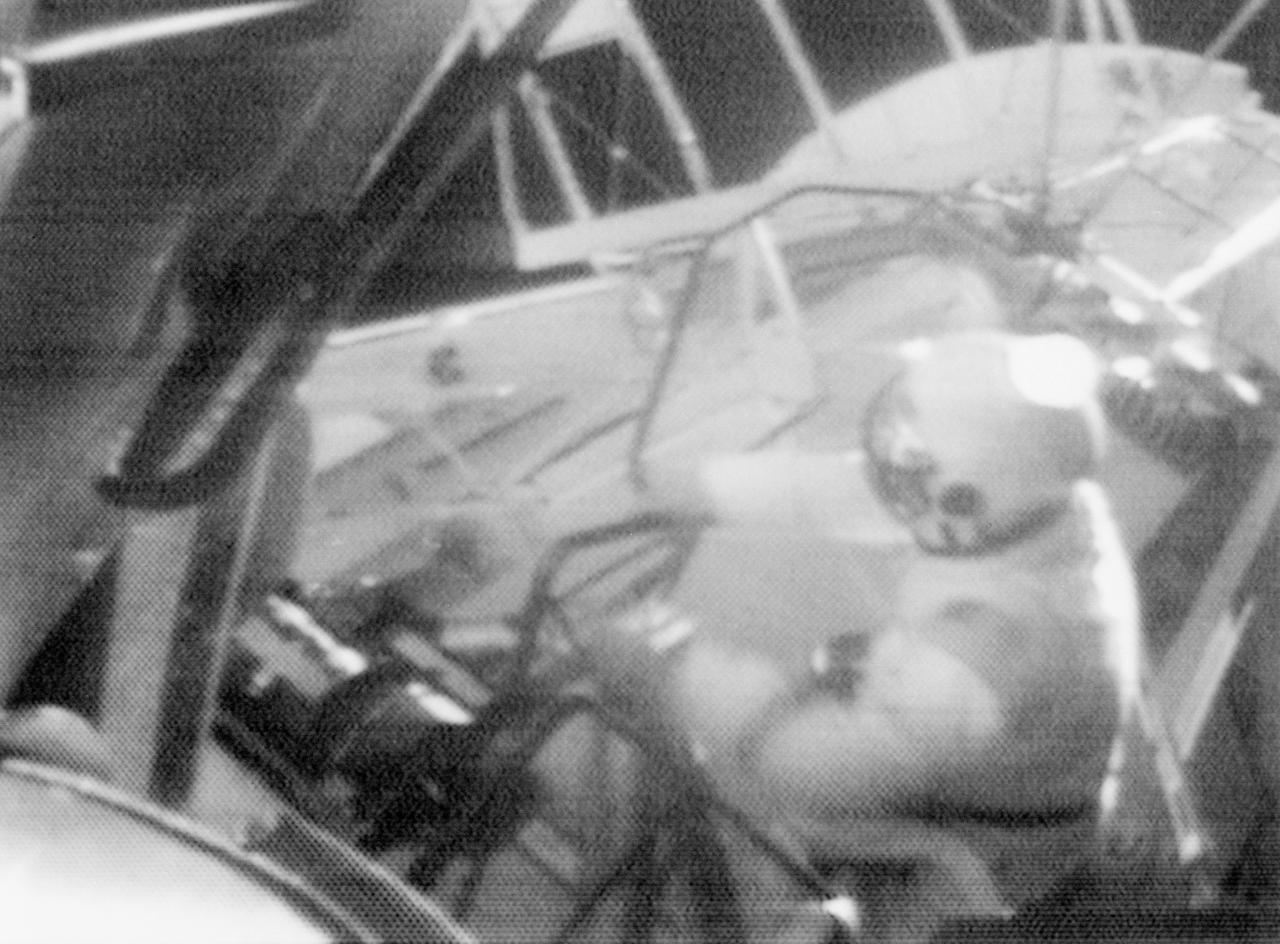
S73-33161 (24 Aug. 1973) --- Astronaut Jack R. Lousma, Skylab 3 pilot, hooks up a 23-foot, two-inch connecting cable for the rate gyro six pack during extravehicular activity (EVA) on Aug. 24, 1973, as seen in this photographic reproduction taken from a color television transmission made by a TV camera aboard the Skylab space station in Earth orbit. The rate gyros were mounted inside the Multiple Docking Adapter opposite the Apollo Telescope Mount control and display console. Photo credit: NASA
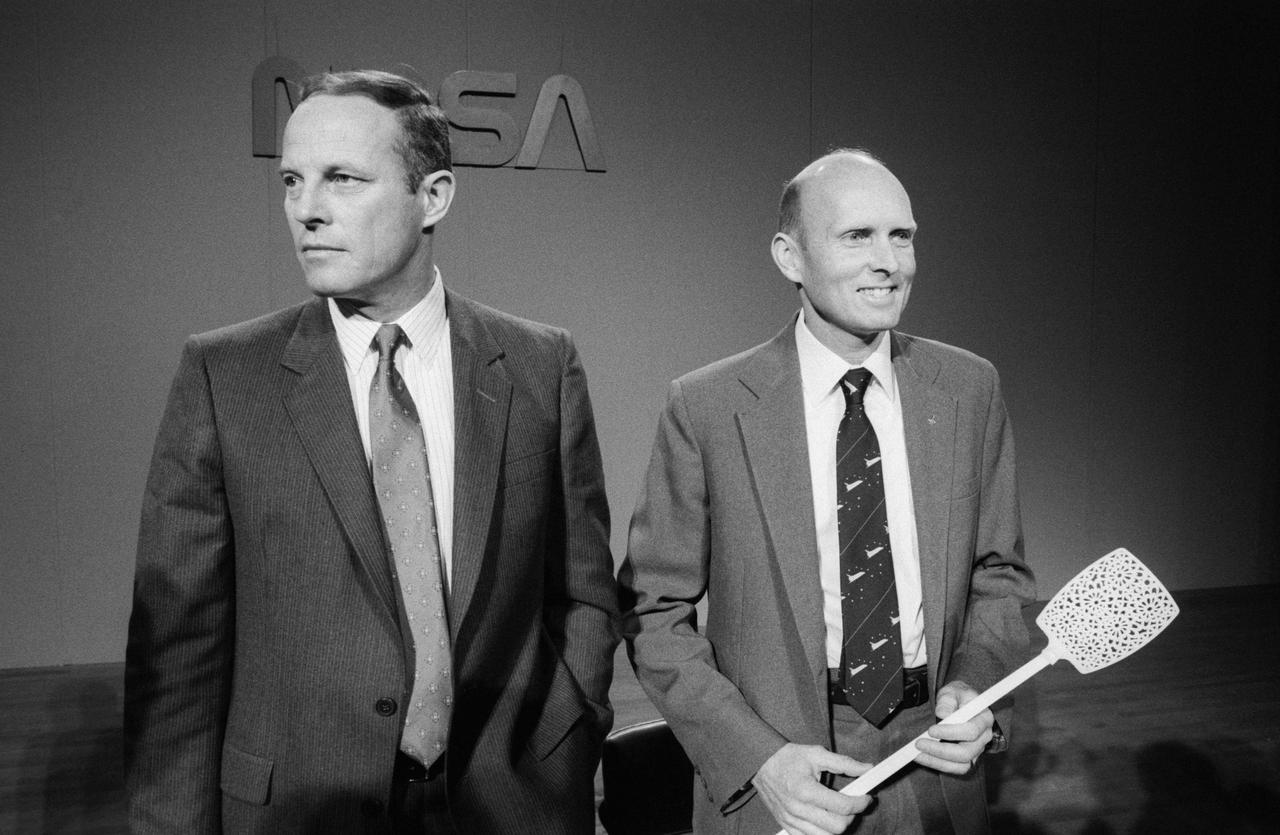
S82-27685 (26 Feb. 1982) --- Astronauts Jack R. Lousma, commander, and C. Gordon Fullerton, pilot, enjoy a light moment following their final STS-3 press conference before the scheduled launch of the space shuttle Columbia. Fullerton holds a fly swatter in his hand. During the conference, the crew had joked about insects onboard the craft and suggested the swatter as a means to control the ?critters.? A student experiment entitled ?Insects in Flight Motion Study? will fly with the crew on NASA?s third orbital fight test (STS-3). Photo credit: NASA
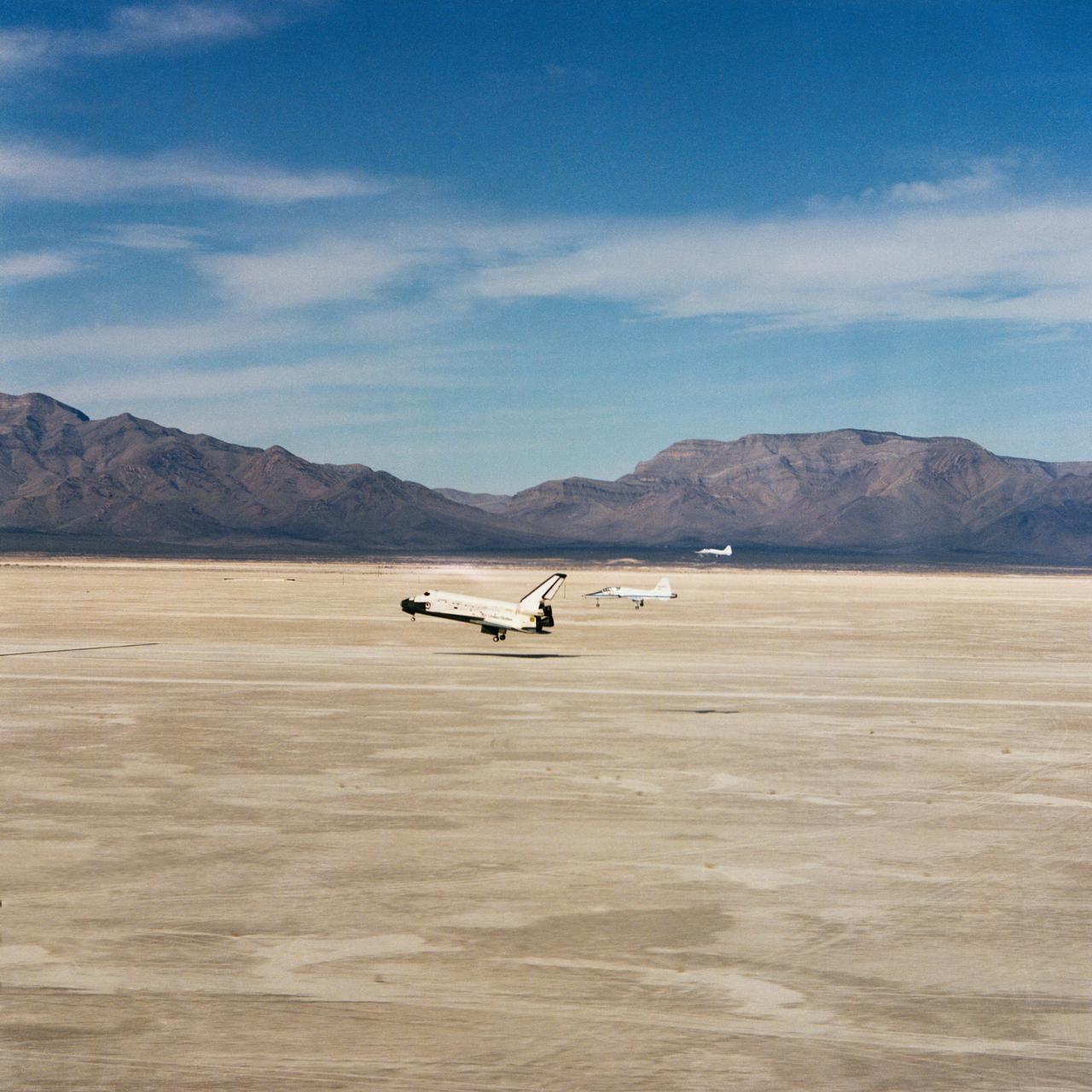
S82-28839 (30 March 1982) --- Seconds from touchdown, the space shuttle Columbia (STS-3), with astronauts Jack R. Lousma and C. Gordon Fullerton aboard, comes into view of a large crowd on hand to greet it at the Northrup strip on White Sands Missile Range in New Mexico. The successful eight-day mission was the first to end on New Mexico soil. Two T-38 chase planes can be seen in the photograph, while a third (out of view) was carrying the photographer that took this frame with a hand-held camera. Photo credit: NASA
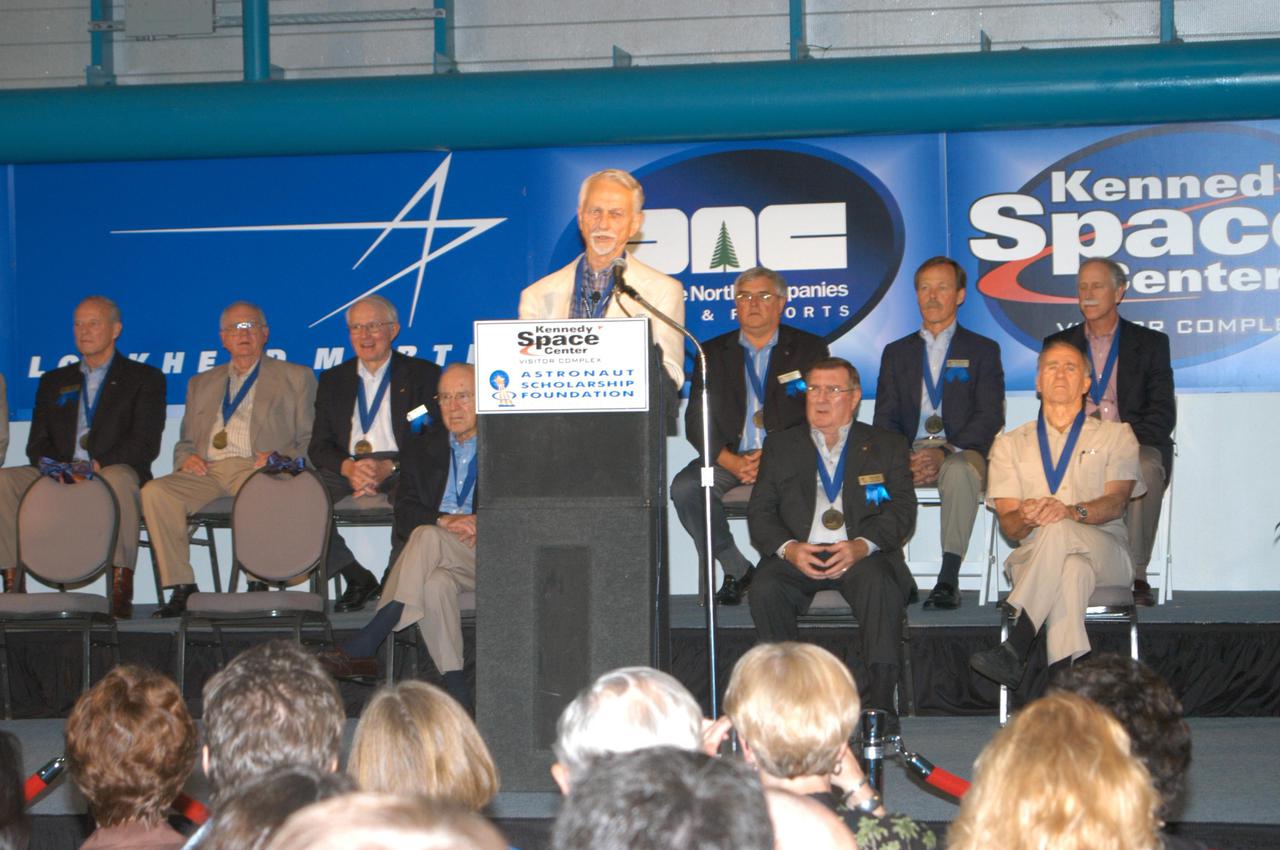
KENNEDY SPACE CENTER, FLA. - Owen Garriott, chairman of the Astronaut Hall of Fame, speaks to guests at the Induction Ceremony of three new additions to the Hall of Fame: Gordon Fullerton, Bruce McCandless and Joe Allen. Seated on stage are current Hall of Famers, from left in the back row, Charles Duke, Jack Lousma, Bill Pogue, Dan Brandenstein, Robert “Hoot” Gibson and Stephen Covey; in front row, Jim Lovell, Fred Haise and Vance Brand. Recognized for their individual flight accomplishments and contributions to the success and future success of the U.S. space program, this elite group of inductees is among only 60 astronauts to be honored in the Hall of Fame and the fourth group of Space Shuttle astronauts named.
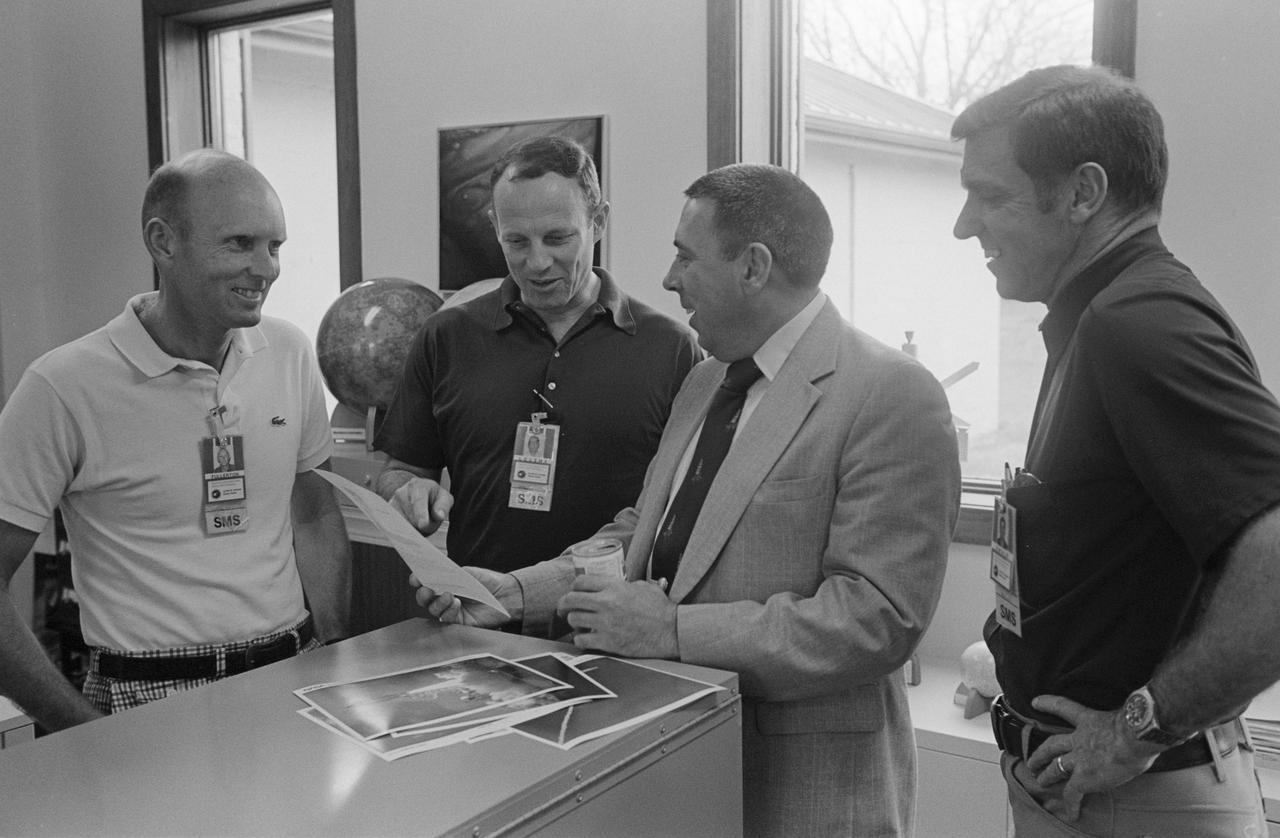
S82-28950 (1 April 1982) --- During a break from a debriefing session, the STS-3 crew members look over some of the photography of their launch from the Kennedy Space Center along with other participants of the meeting. Astronaut Jack R. Lousma is second from left; astronaut C. Gordon Fullerton is at left. They are commander and pilot, respectively, of STS-3. George W. S. Abbey, director of flight operations at JSC, is second from right, and astronaut Joe H. Engle, STS-2 commander, is at right. Photo credit: NASA
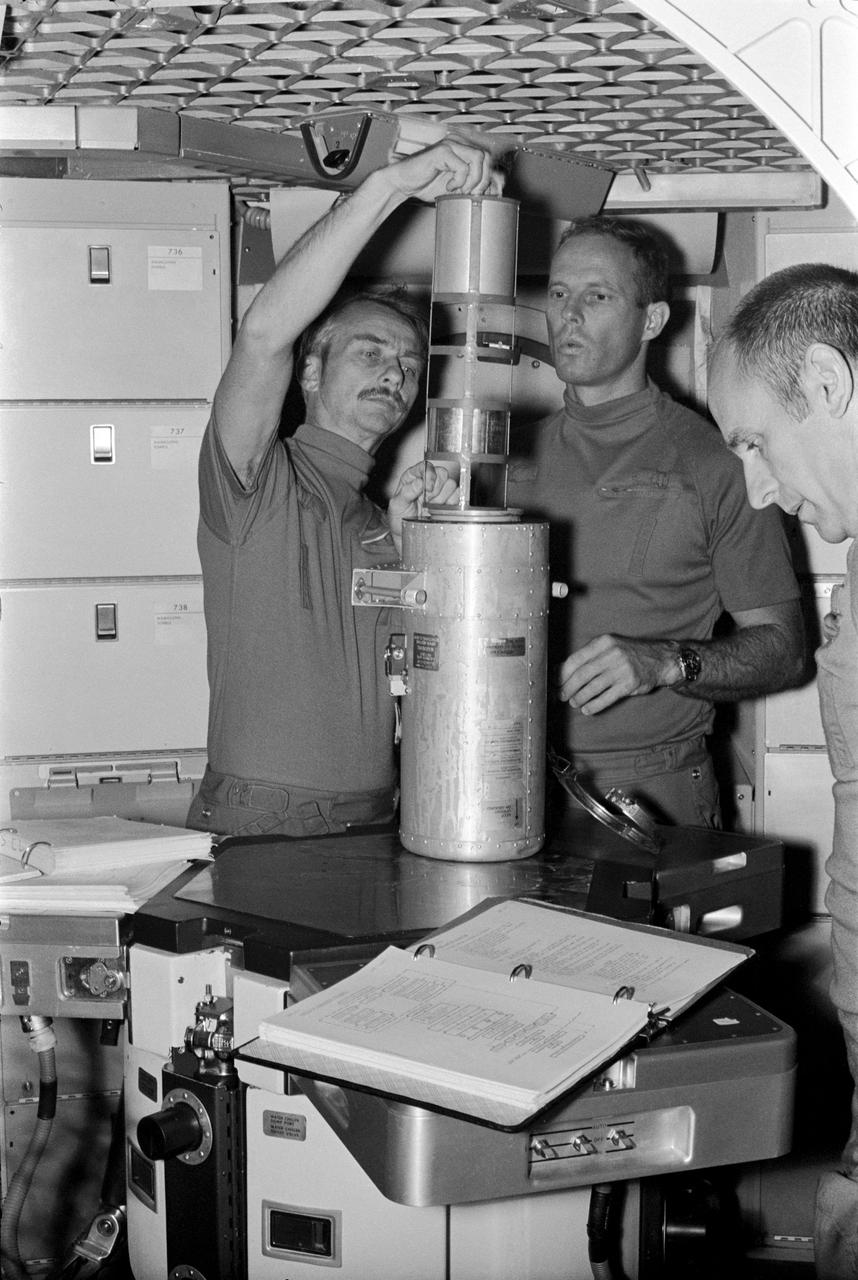
S73-28420 (16 June 1973) --- The three prime crewmen of the Skylab 3 mission check over flight data during a training session in the crew quarters of the Orbital Workshop (OWS) trainer in the Mission Simulation and Training Facility at the Johnson Space Center (JSC). Skylab 3 crew work with Inflight Medical Support System (IMSS) resupply container atop the food table in the OWS. They are from left to right, scientist-astronaut Owen K. Garriott, science pilot; and astronauts Jack R. Lousma, pilot; and Alan L. Bean, commander. Photo credit: NASA

SL3-122-2611 (22 Sept. 1973) --- Astronaut Alan L. Bean, Skylab 3 commander, participates in the final extravehicular activity (EVA) for that mission, during which a variety of tasks were performed. Here, Bean is near the Apollo Telescope Mount (ATM) during final film change out for the giant telescope facility. Astronaut Owen K. Garriott, who took the picture, is reflected in Bean's helmet visor. The reflected Earth disk in Bean's visor is so clear that the Red Sea and Nile River area can delineated. Photo credit: NASA
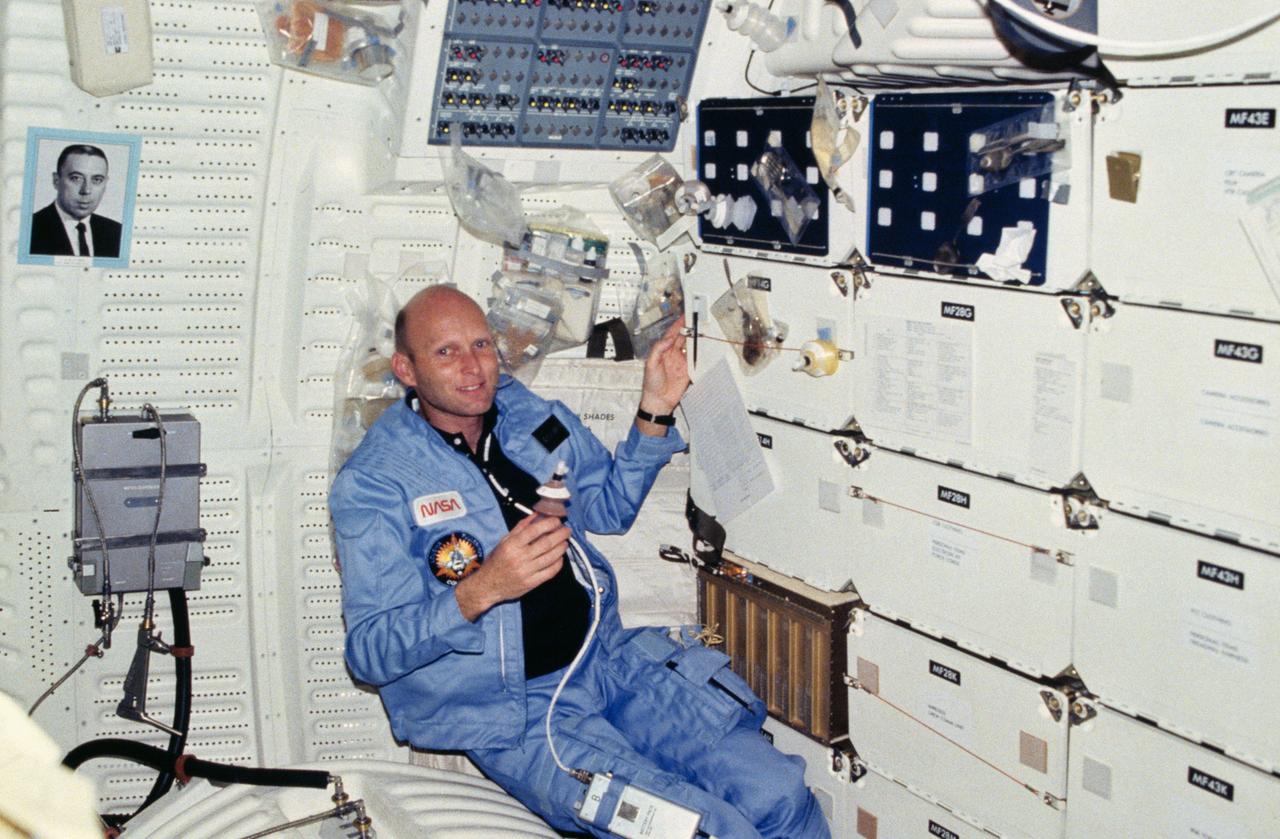
S82-28912 (March 1982) --- This picture, photographed with a 35mm camera operated by astronaut Jack R. Lousma, STS-3 commander, shows astronaut C. Gordon Fullerton, crew pilot, busy with mealtime preparations aboard the Earth-orbiting Columbia. The astronaut has positioned himself in the corner of the middeck area. Fullerton holds a beverage in his right hand in an accordion-like squeeze dispenser. Many packages of pre-packaged dehydrated foods and other meal items can be seen in the photo. Many are fastened to the locker doors and to trays in the locker doors by velcro. Reminiscent of STS-2 days, a portrait of George W. S. Abbey, director of flight operations at JSC, is at left edge. Photo credit: NASA
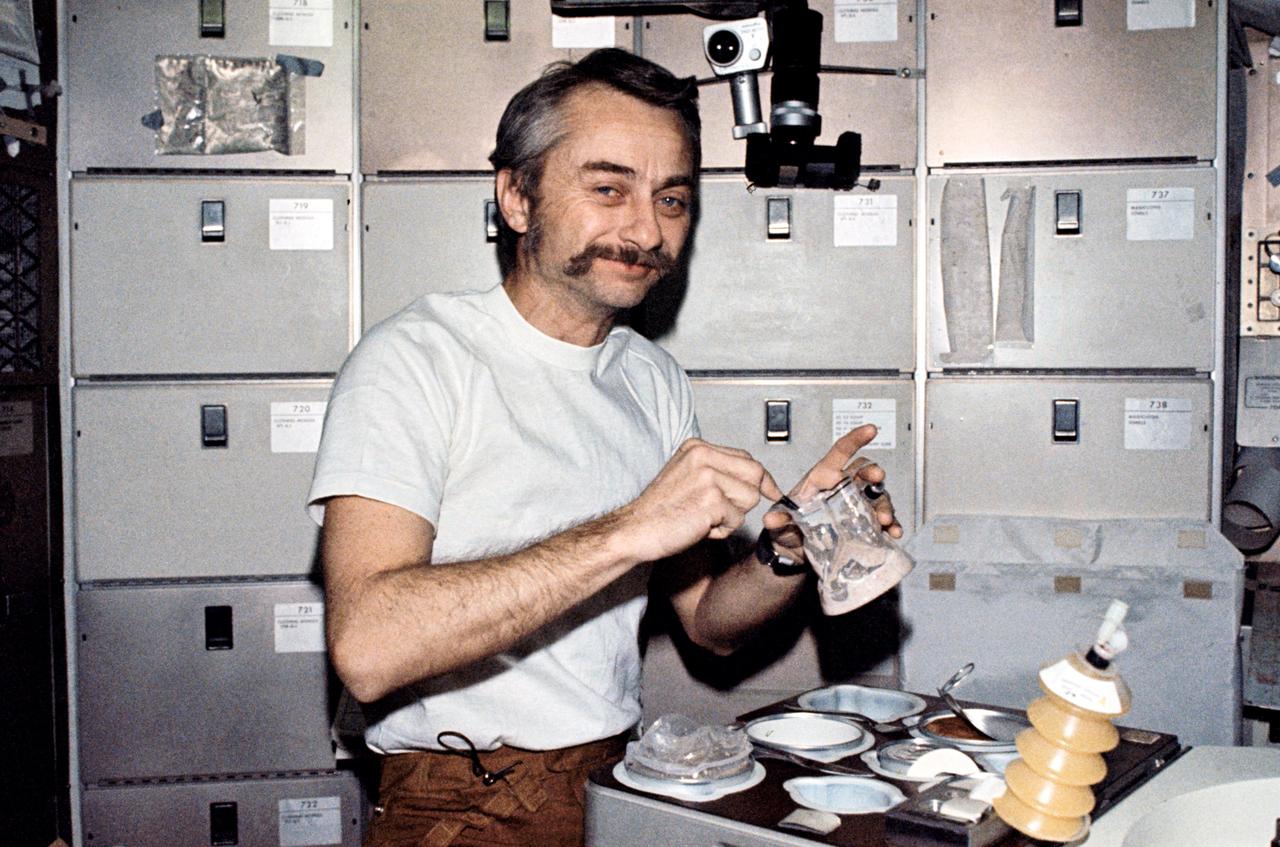
SL3-111-1519 (6 Aug. 1973) --- Scientist-astronaut Owen K. Garriott, Skylab 3 science pilot, reconstitutes a pre-packaged container of food at the crew quarters ward room table of the Orbital Workshop (OWS) of the Skylab Space Station cluster. This picture was taken with a hand-held 35mm Nikon camera. Astronauts Garriott, Alan L. Bean and Jack R. Lousma remained with the Skylab Space Station in Earth orbit for a total of 59 days conducting numerous medical, scientific and technological experiments. Note the knife and fork on the food tray and the utensil with which Garriott stirs the food mixed with water. Skylab is the first manned space program by NASA which affords the crew men an opportunity to eat with the same type utensils used on Earth. Photo credit: NASA
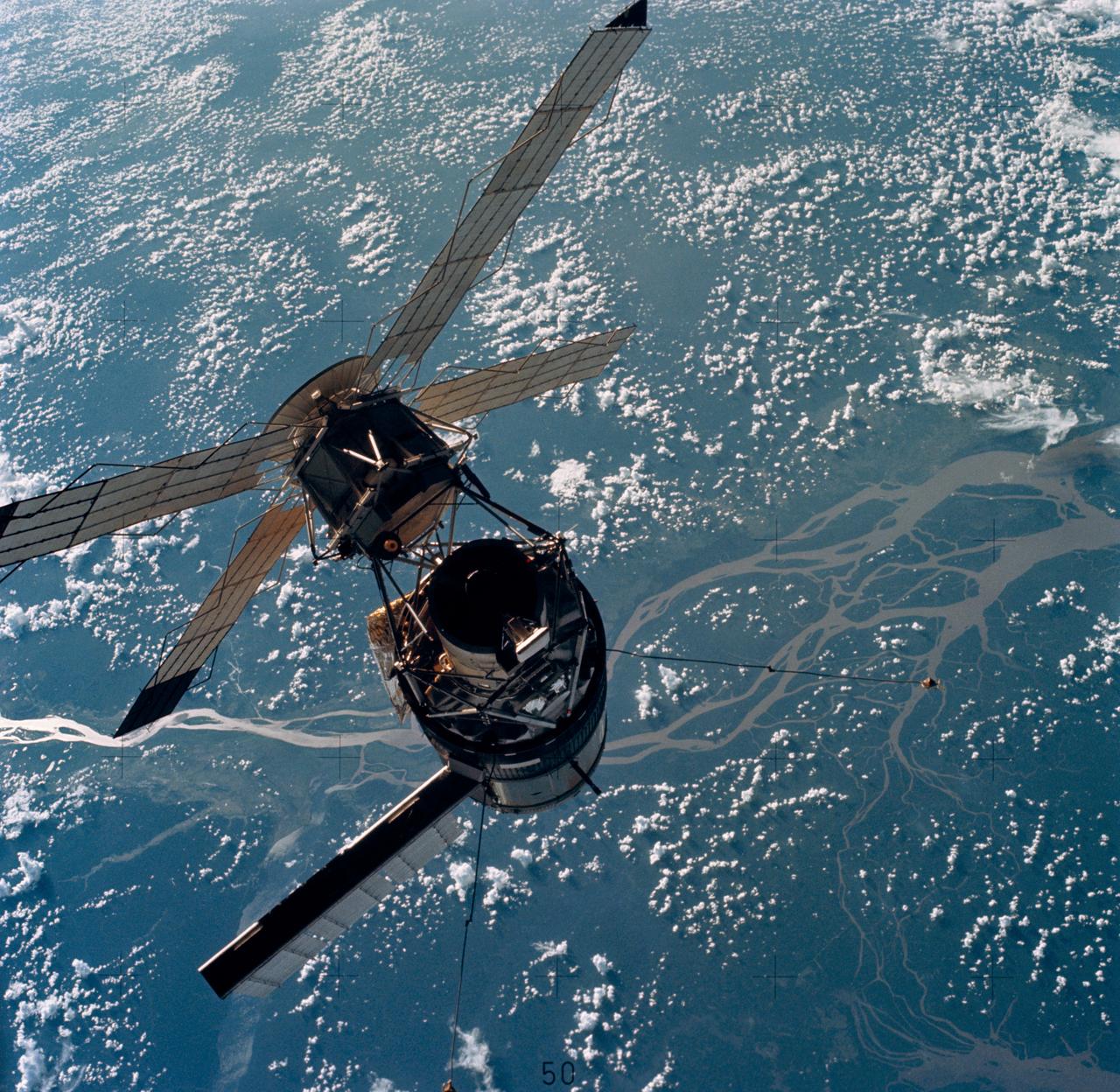
SL3-114-1683 (28 July 1973) --- A close-up view of the Skylab space station photographed against an Earth background from the Skylab 3 Command and Service Modules (CSM) during station-keeping maneuvers prior to docking. Aboard the Command Module (CM) were astronauts Alan L. Bean, Owen K. Garriott and Jack R. Lousma, who remained with the Skylab Space Station in Earth orbit for 59 days. This picture was taken with a hand-held 70mm Hasselblad camera using a 100mm lens and SO-368 medium speed Ektachrome film. Note the one solar array system wing on the Orbital Workshop (OWS) which was successfully deployed during extravehicular activity (EVA) on the first manned Skylab flight. The parasol solar shield which was deployed by the Skylab 2 crew can be seen through the support struts of the Apollo Telescope Mount (ATM). Photo credit: NASA
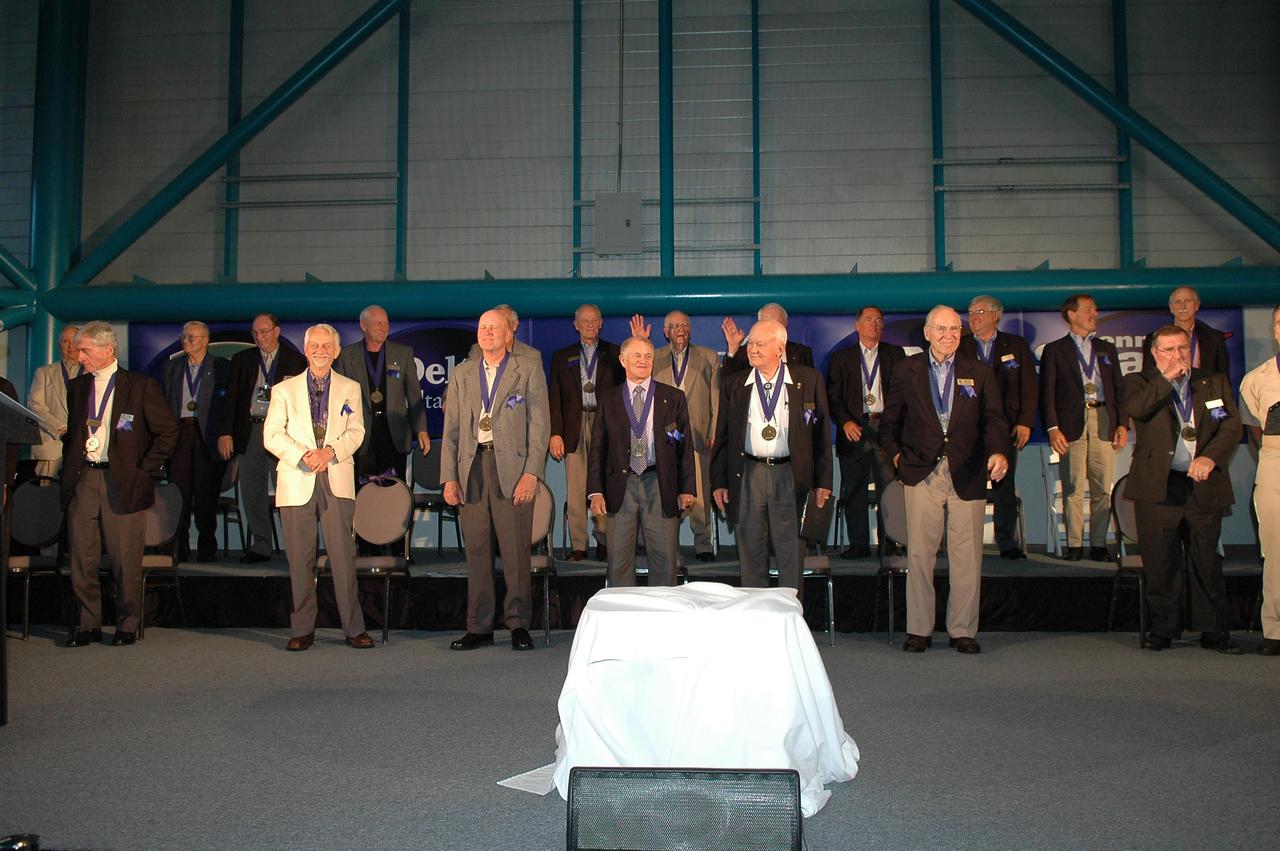
KENNEDY SPACE CENTER, FLA. - Members of the Astronaut Hall of Fame are applauded by the guests at the Astronaut Hall of Fame Induction Ceremony held at the Kennedy Space Center Visitor Complex’s Apollo_Saturn V Center. From left are Al Gordon, John Young, Walt Cunningham, Bill Anders, Owen Garriott, Ed Mitchell, Gordon Fullerton, Al Worden, Charlie Duke, Joe Allen, Jack Lousma, Bruce McCandless, Bill Pogue, Robert Crippen, Jim Lovell, Dan Brandenstein, Robert “Hoot” Gibson, Fred Haise, and Stephen Covey. Not pictured are Scott Carpenter and Vance Brand. McCandless, Allen and Fullerton are the 2005 inductees. Recognized for their individual flight accomplishments and contributions to the success and future success of the U.S. space program, this elite group of inductees is among only 60 astronauts to be honored in the Hall of Fame and the fourth group of Space Shuttle astronauts named.
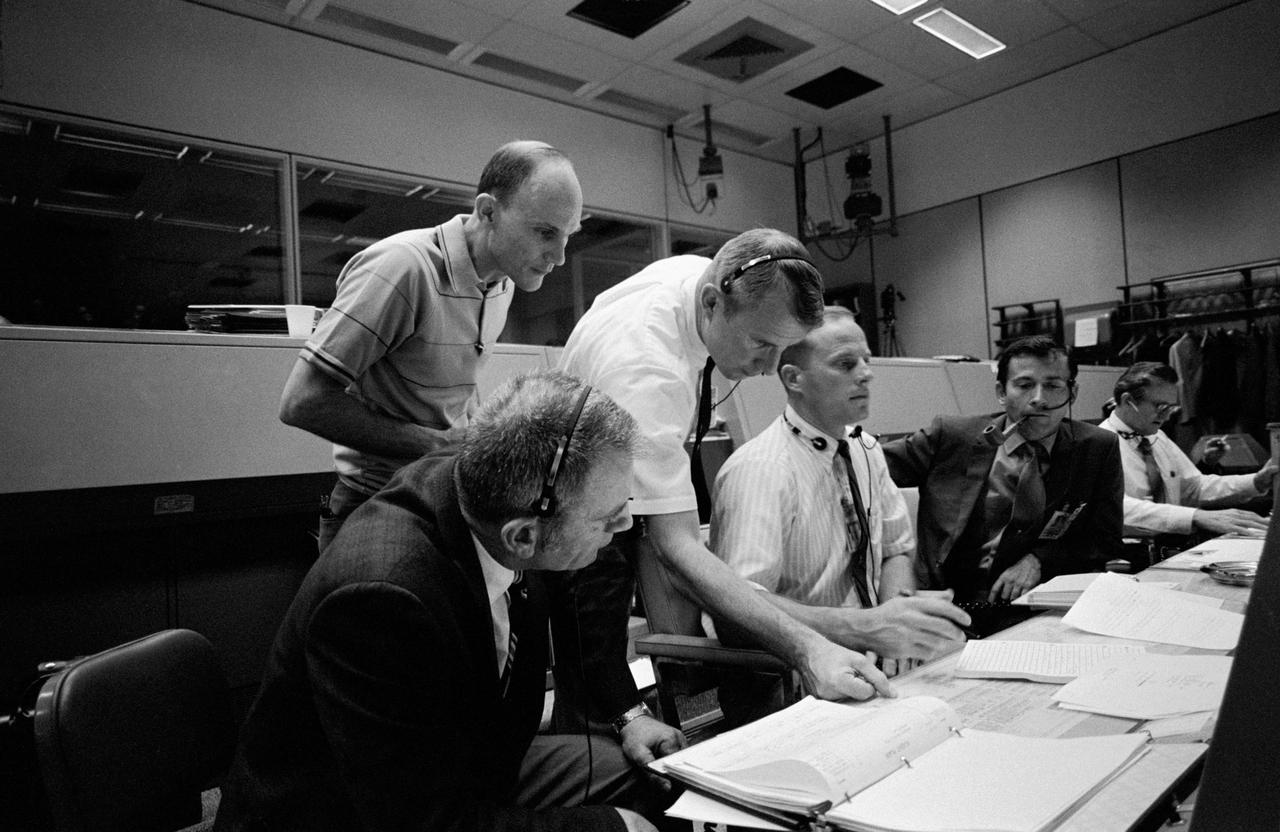
S70-34902 (14 April 1970) --- Several persons important to the Apollo 13 mission, at consoles in the Mission Operations Control Room (MOCR) of the Mission Control Center (MCC). Seated at consoles, from left to right, are astronauts Donald K. Slayton, director of flight crew operations; astronaut Jack R. Lousma, Shift 3 spacecraft communicator; and astronaut John W. Young, commander of the Apollo 13 backup crew. Standing, left to right, are astronaut Tom K. Mattingly II, who was replaced as Apollo 13 command module pilot after it was learned he may come down with measles, and astronaut Vance D. Brand, Shift 2 spacecraft communicator. Several hours earlier, in the late evening hours of April 13, crew members of the Apollo 13 mission reported to MCC that trouble had developed with an oxygen cell on their spacecraft.
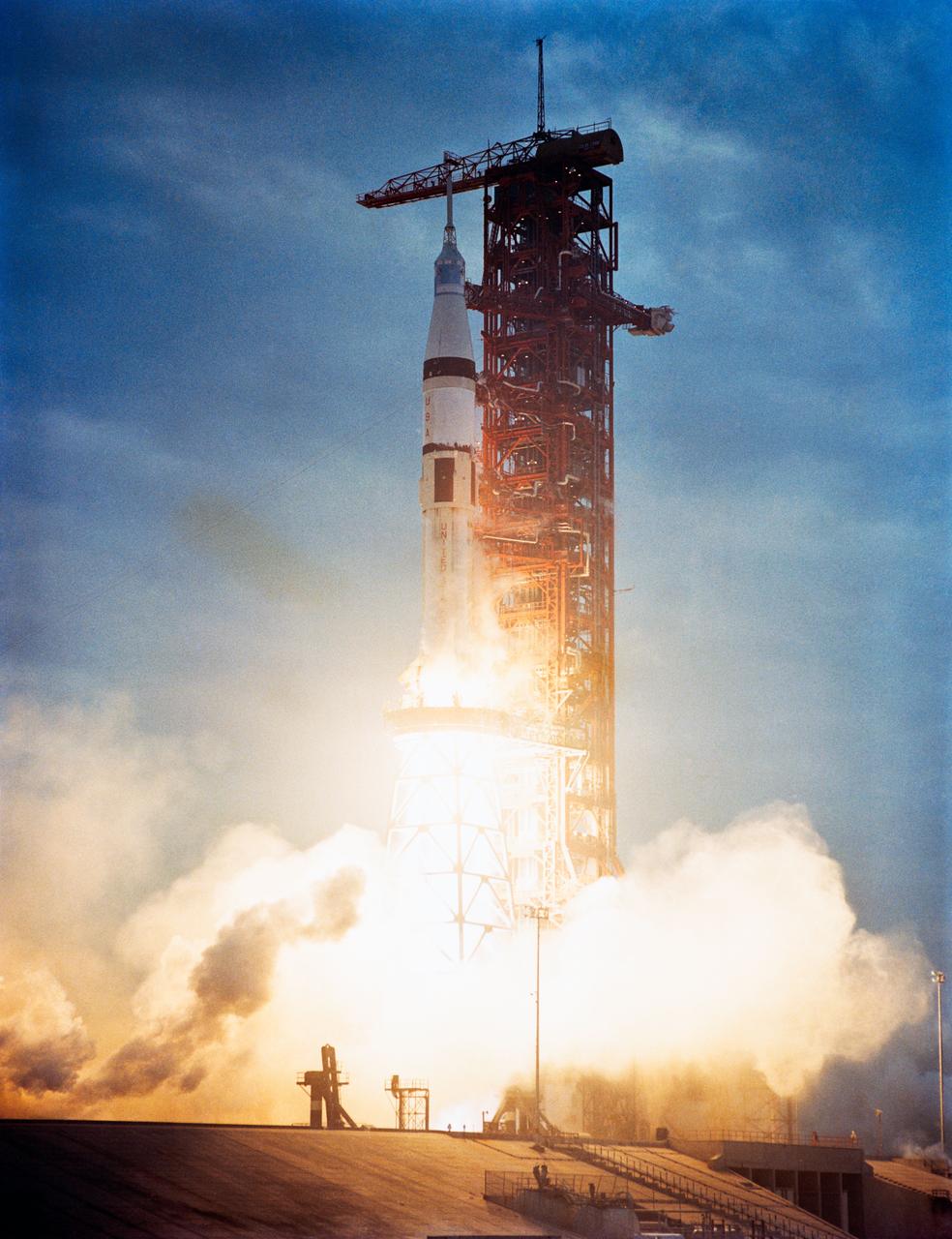
S73-32570 (28 July 1973) --- The Skylab 3/Saturn 1B space vehicle is launched from Pad B, Launch Complex 39, Kennedy Space Center, Florida, at 7:11 a.m. (EDT), Saturday, July 28, 1973. Skylab 3 is the second of three scheduled Skylab manned missions. Aboard the Skylab 3 Command/Service Module were astronauts Alan L. Bean, Owen K. Garriott and Jack R. Lousma. The Skylab 3 CSM later docked with the Skylab space station cluster in Earth orbit. In addition to the CSM and its launch escape system, the Skylab 3 space vehicle consisted of the Saturn 1B first (S-1B) stage and the Saturn 1B second (S-1VB) stage. (The Skylab 1/Saturn V space vehicle with the space station payload was launched from Pad A on May 14, 1973). Photo credit: NASA