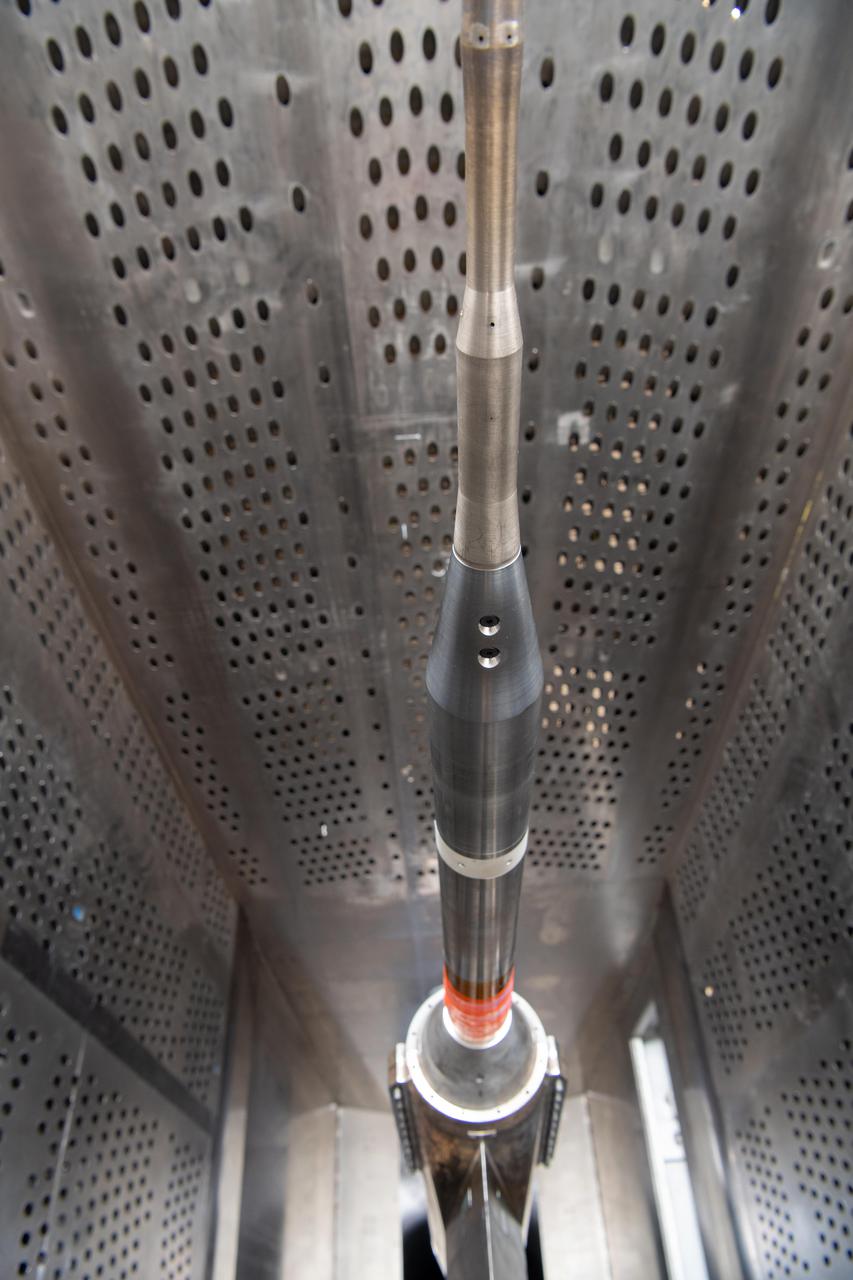
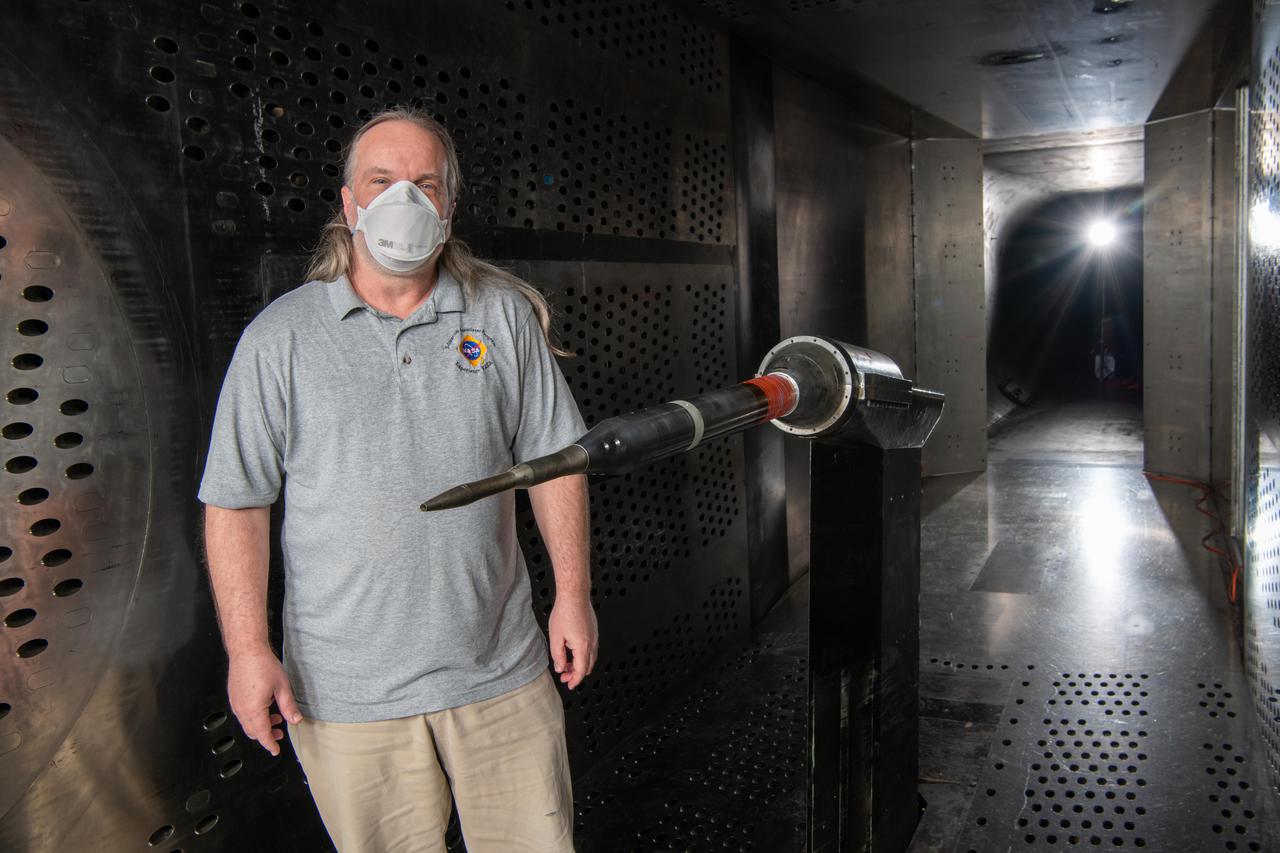
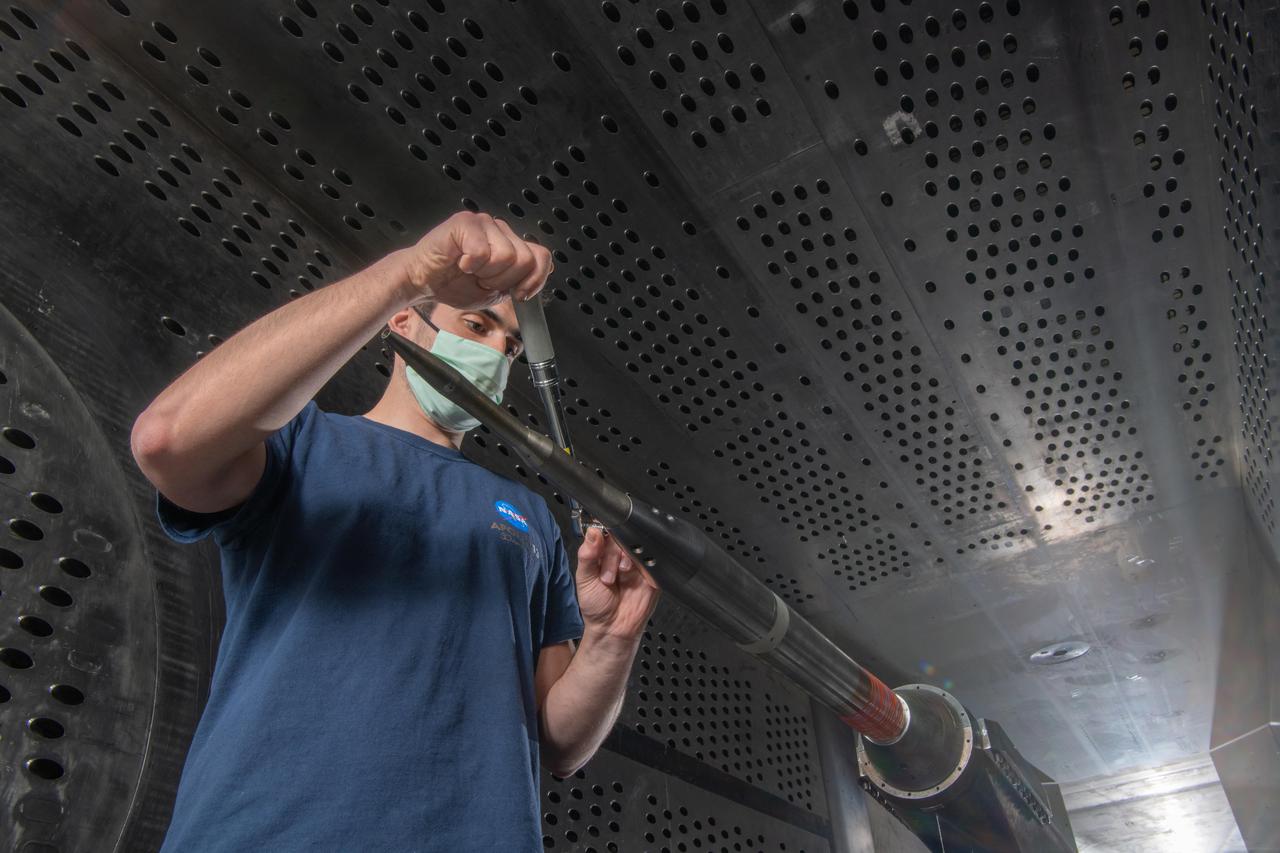
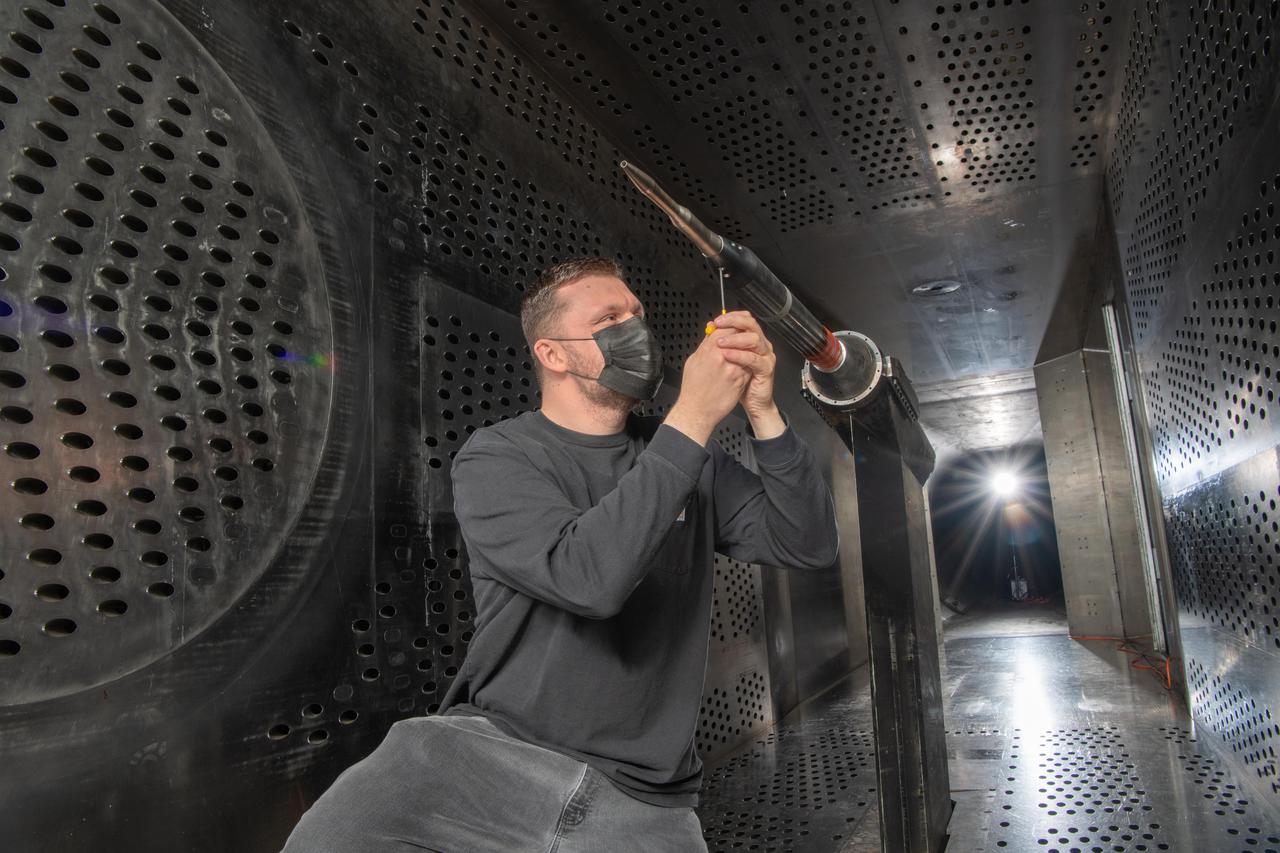
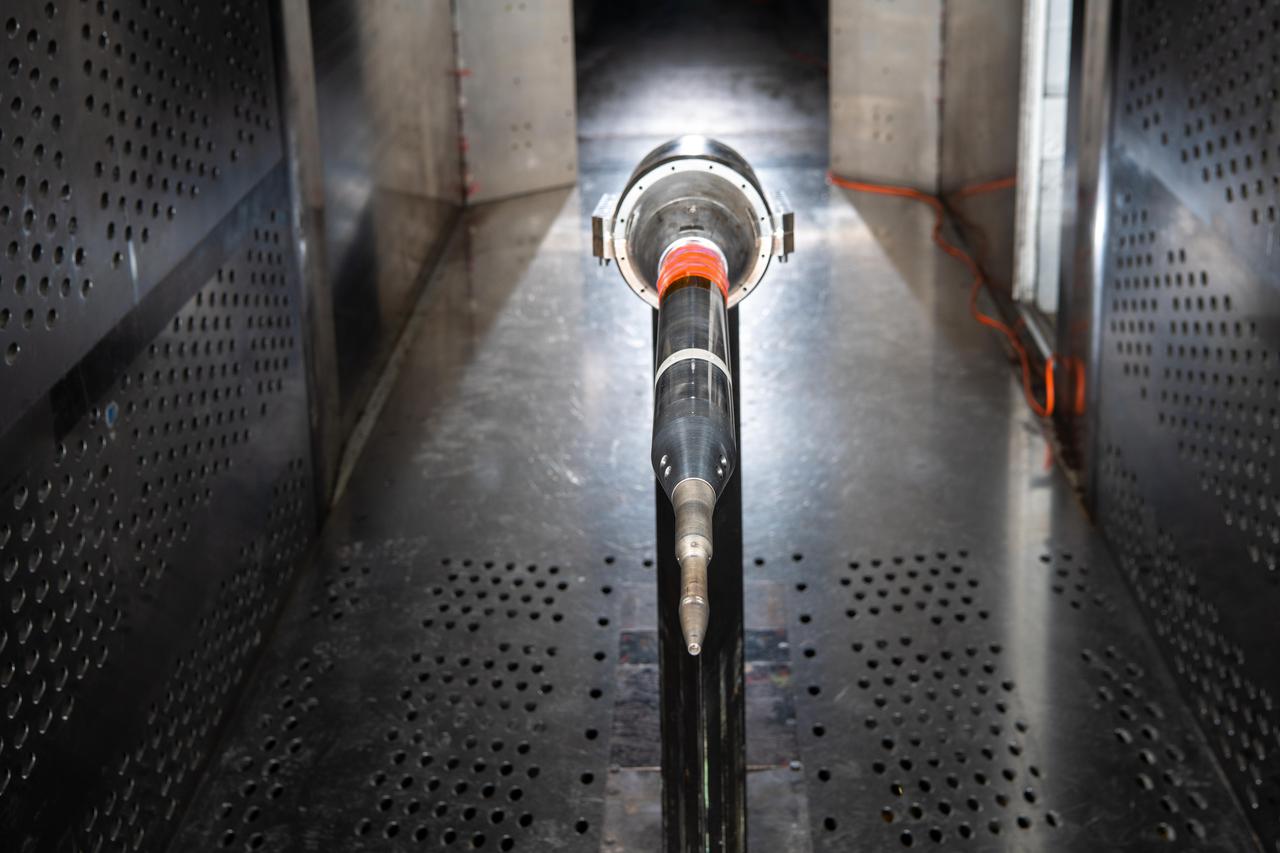
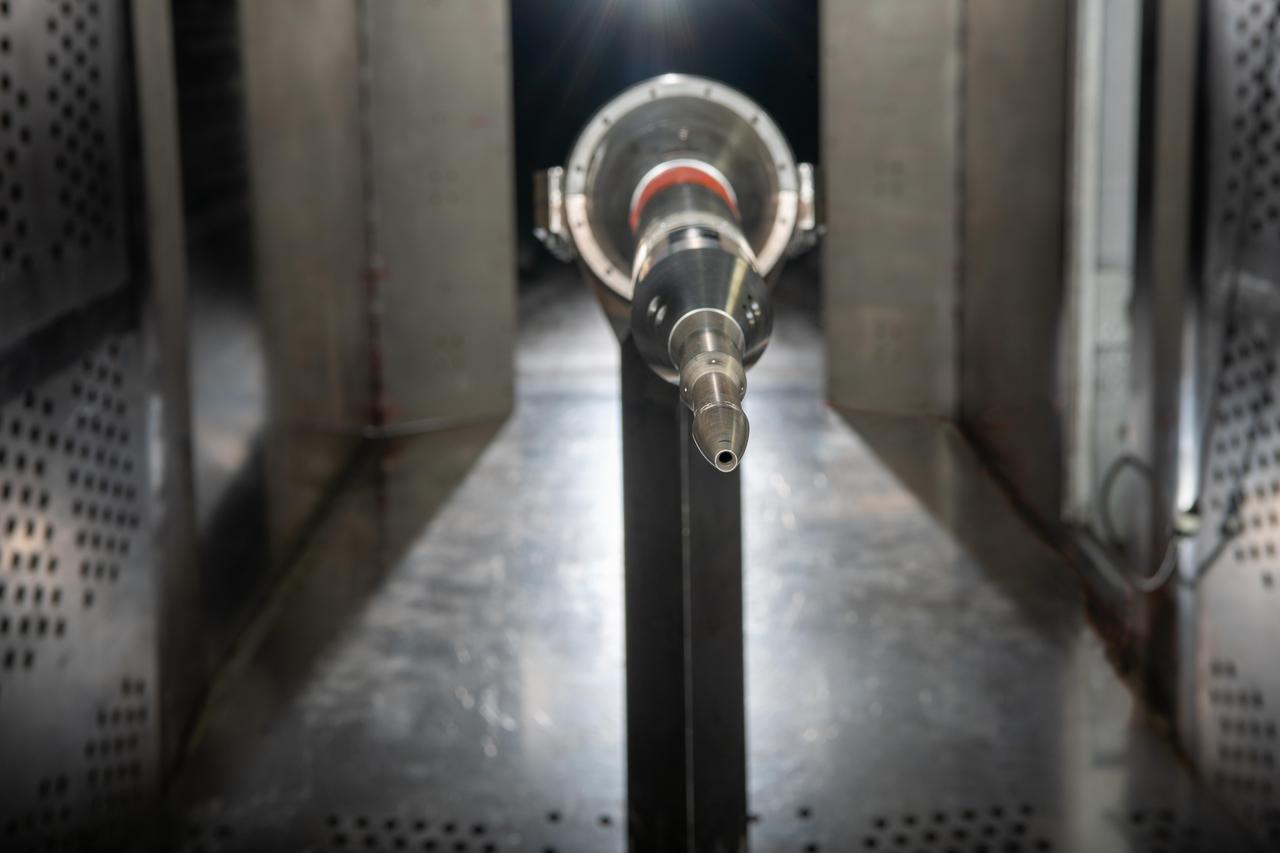
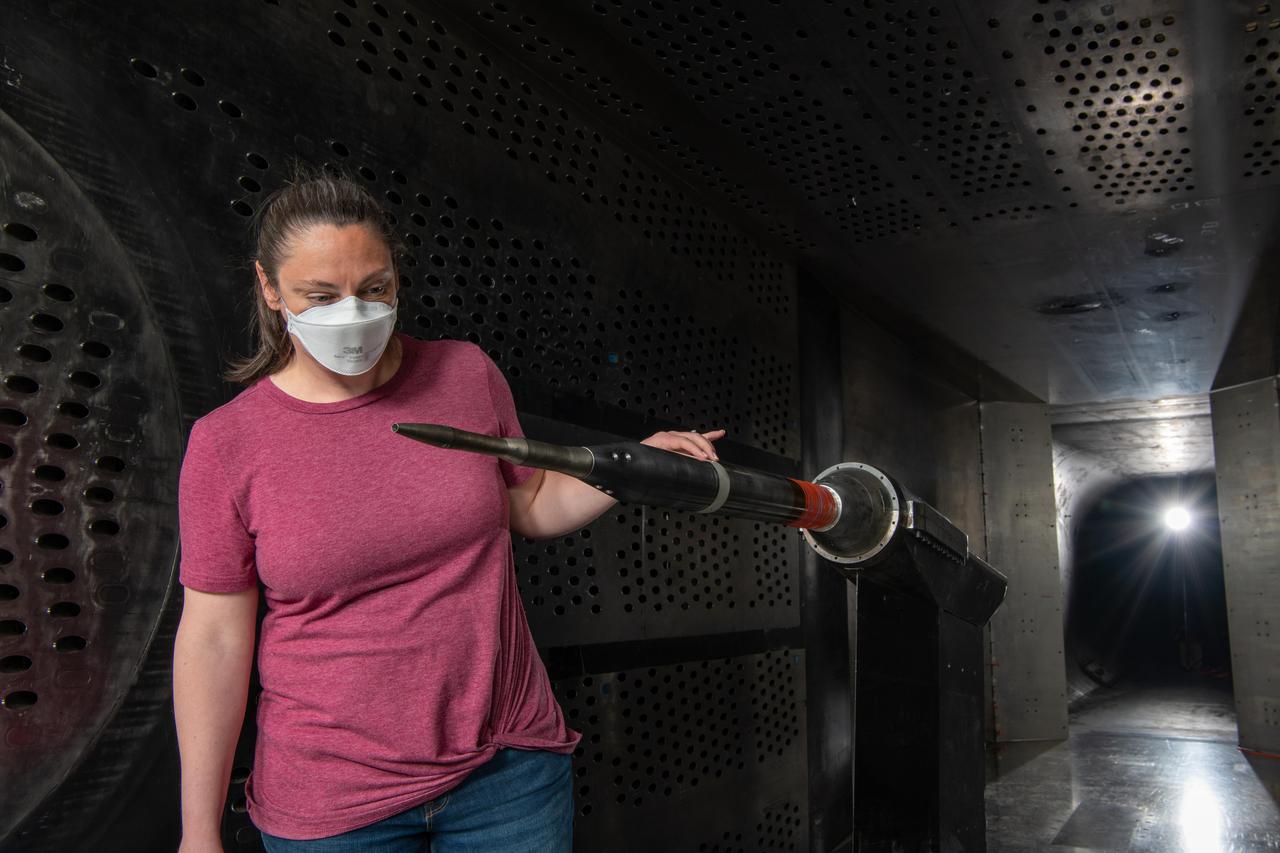
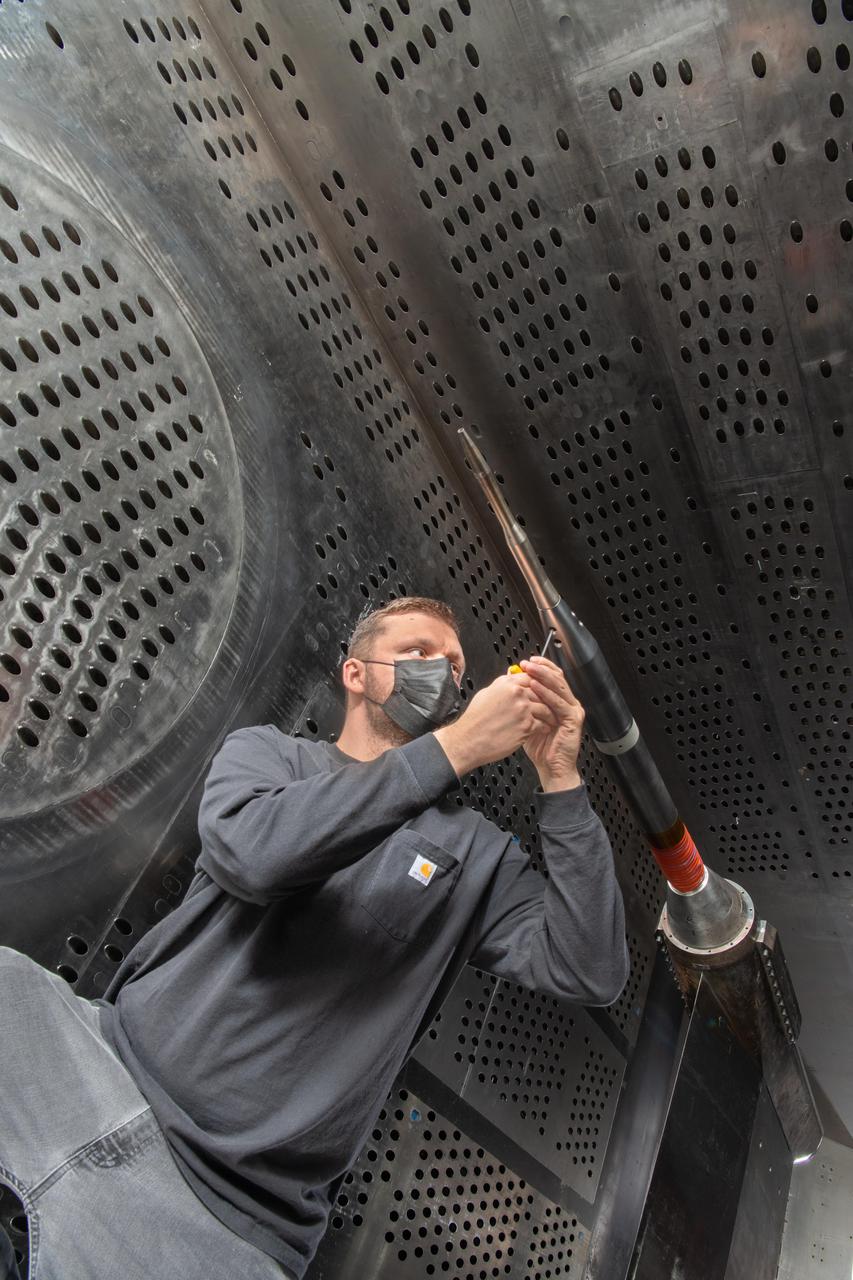
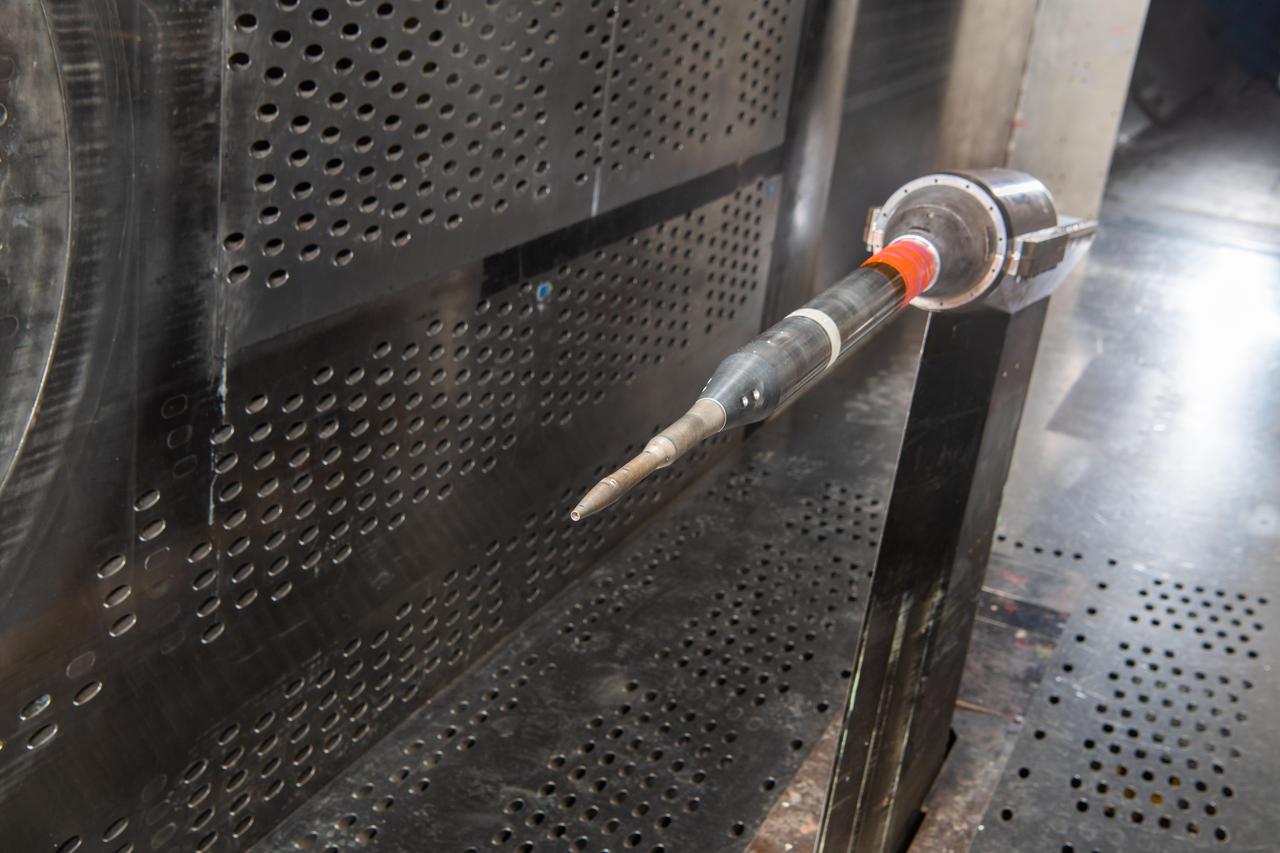
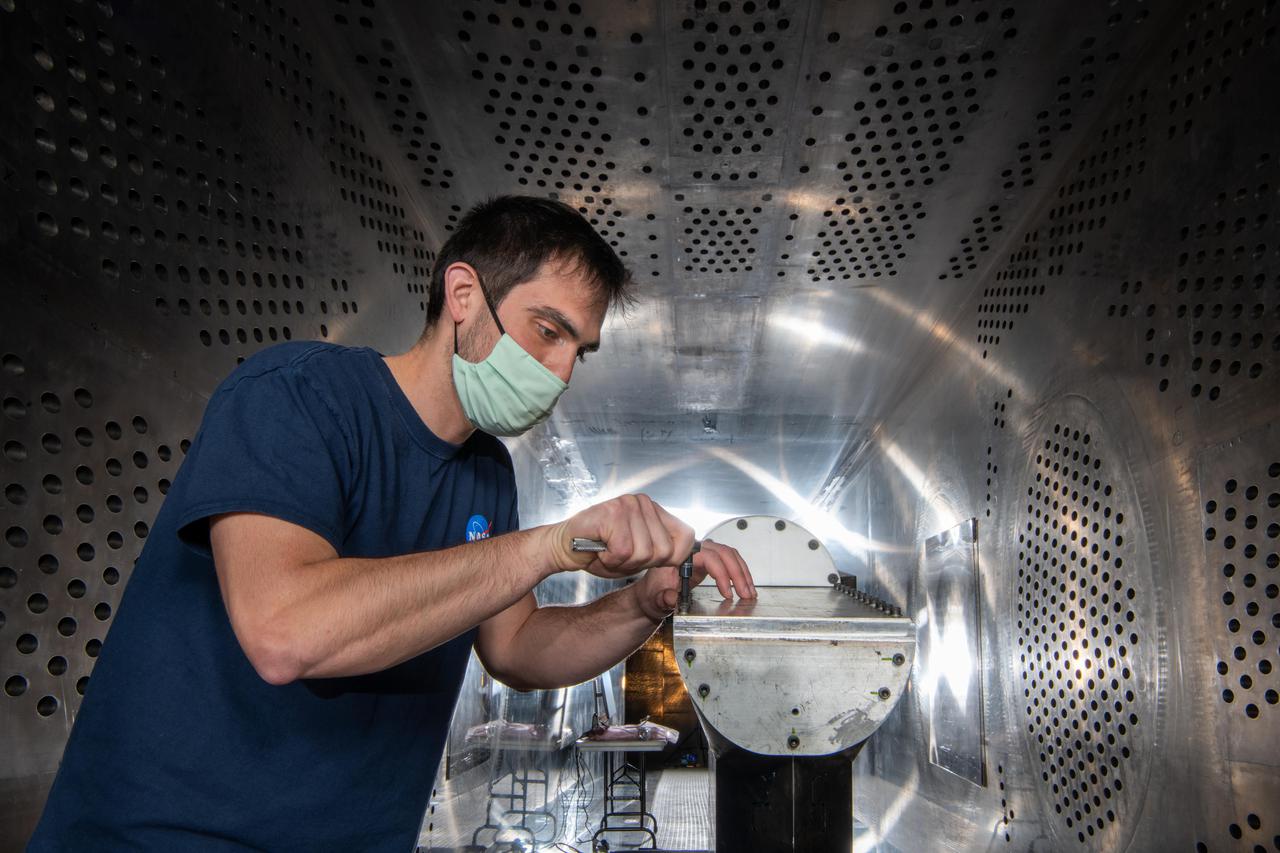
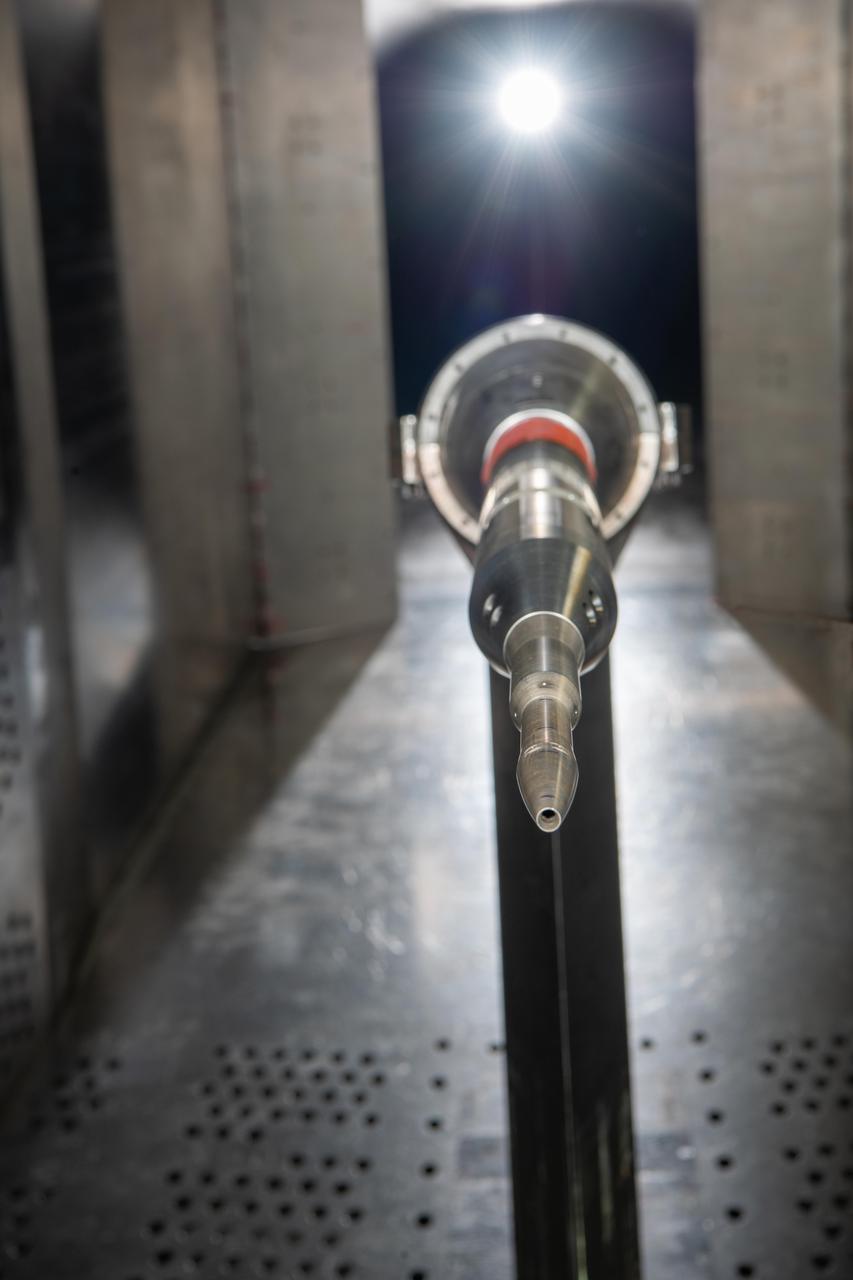
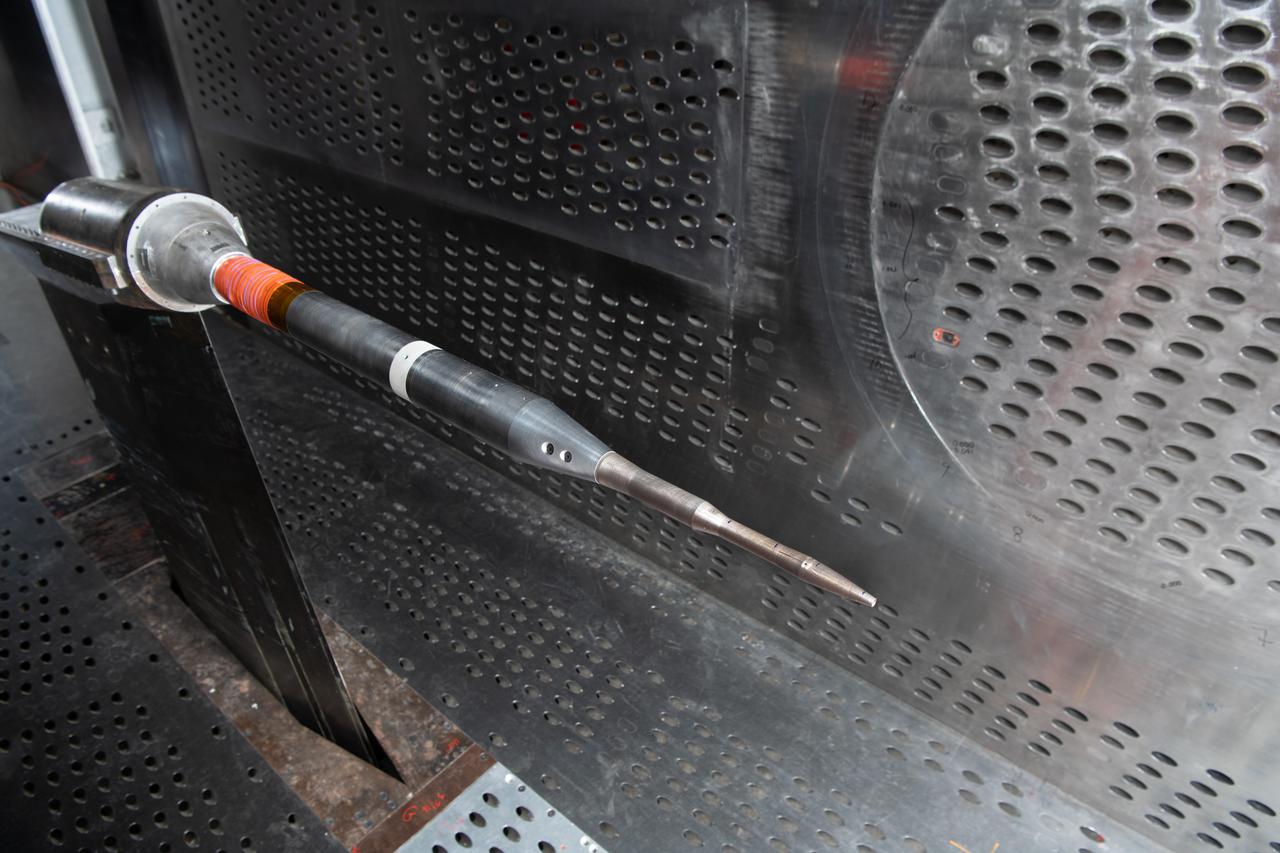
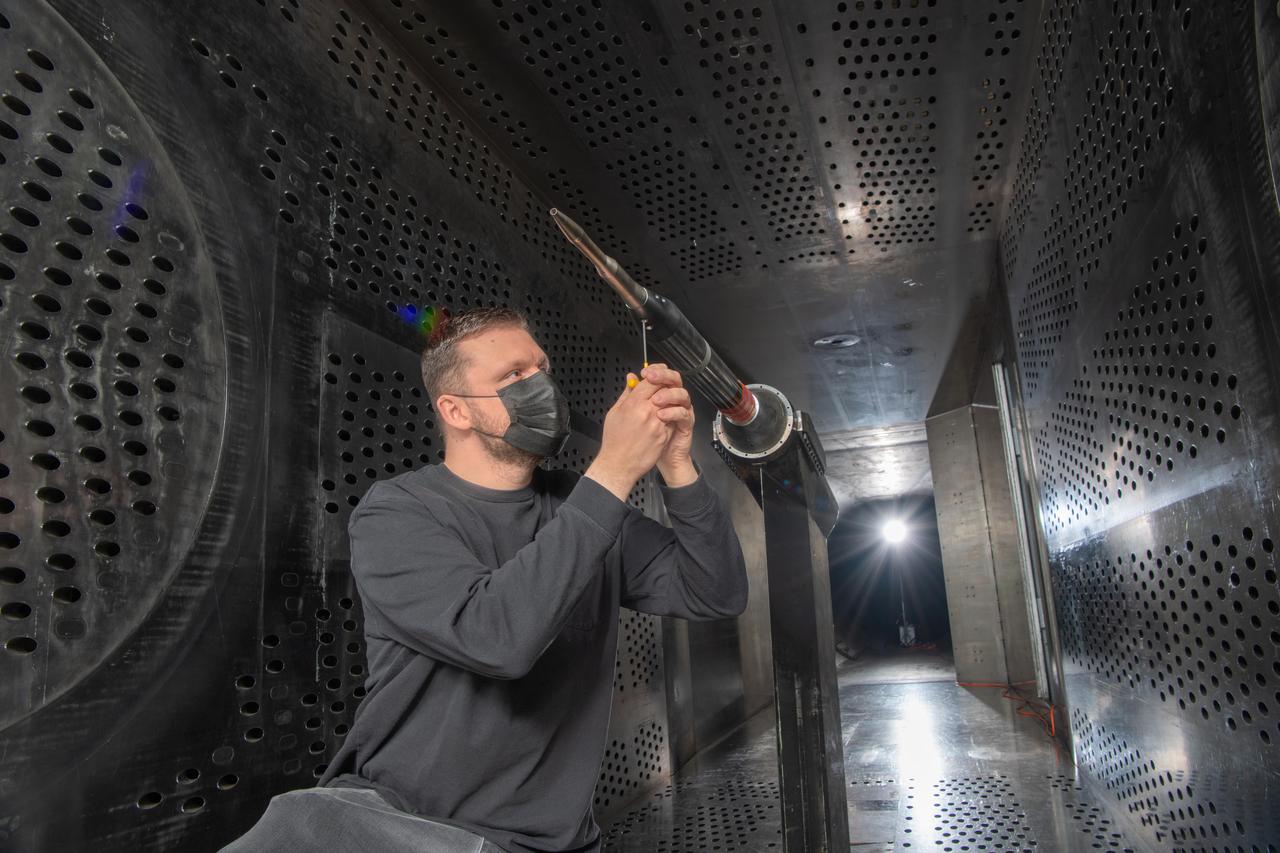
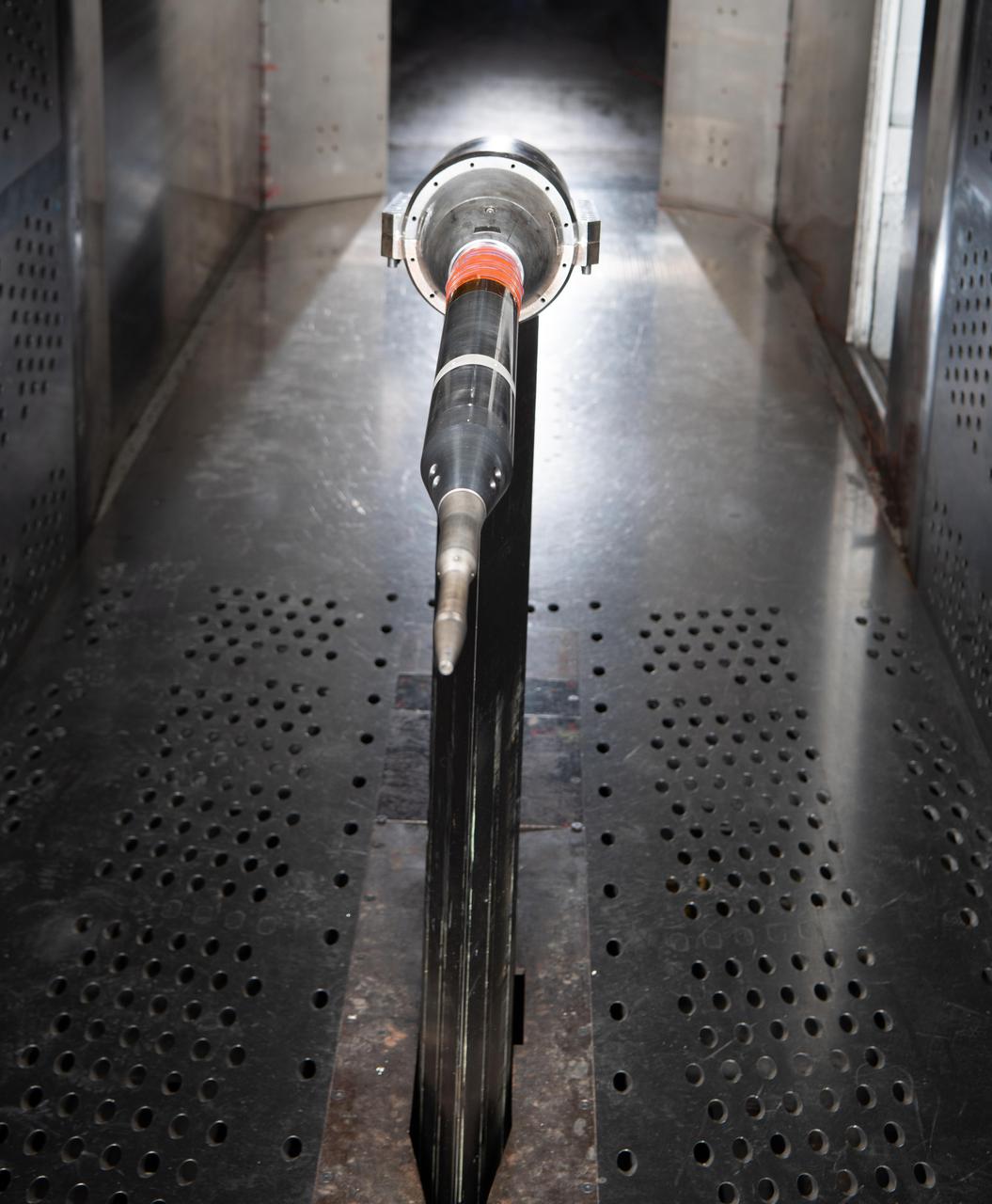
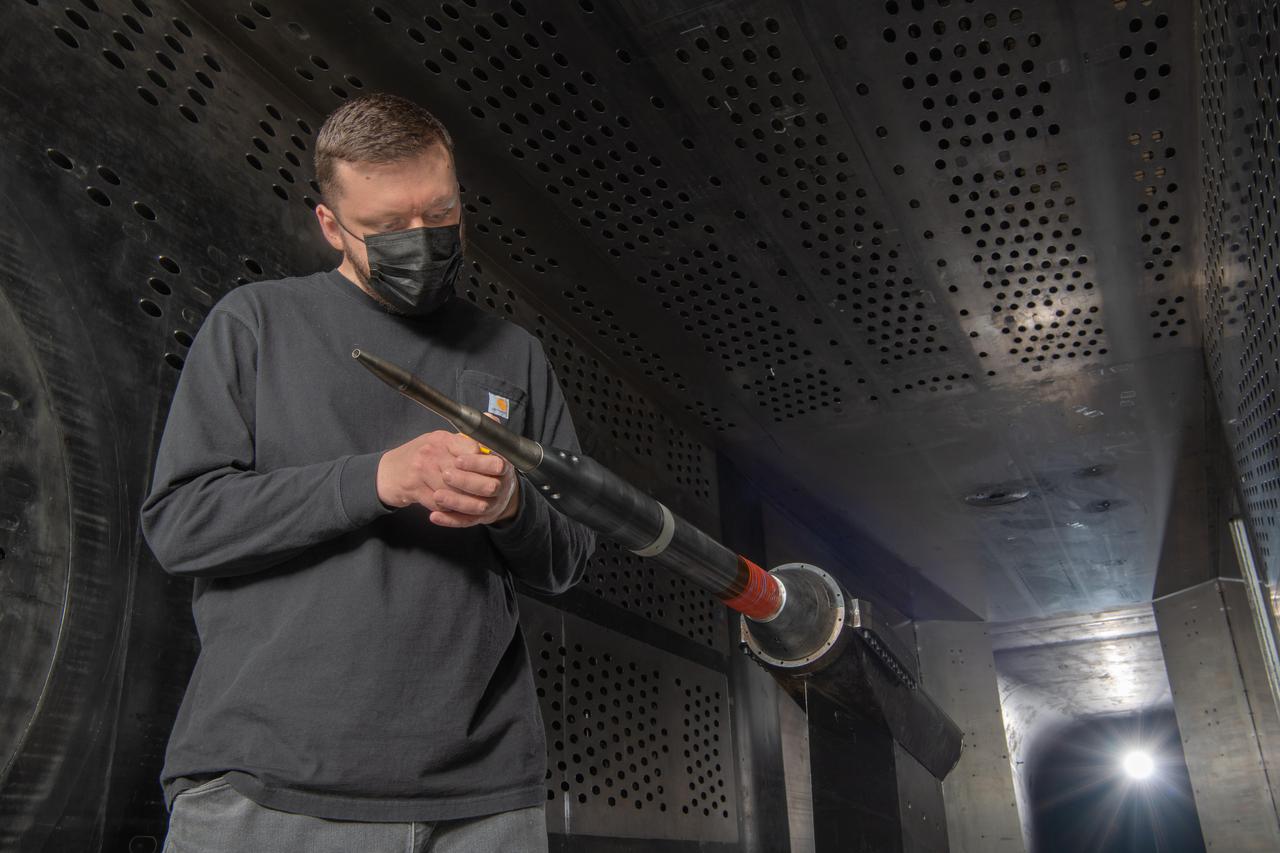
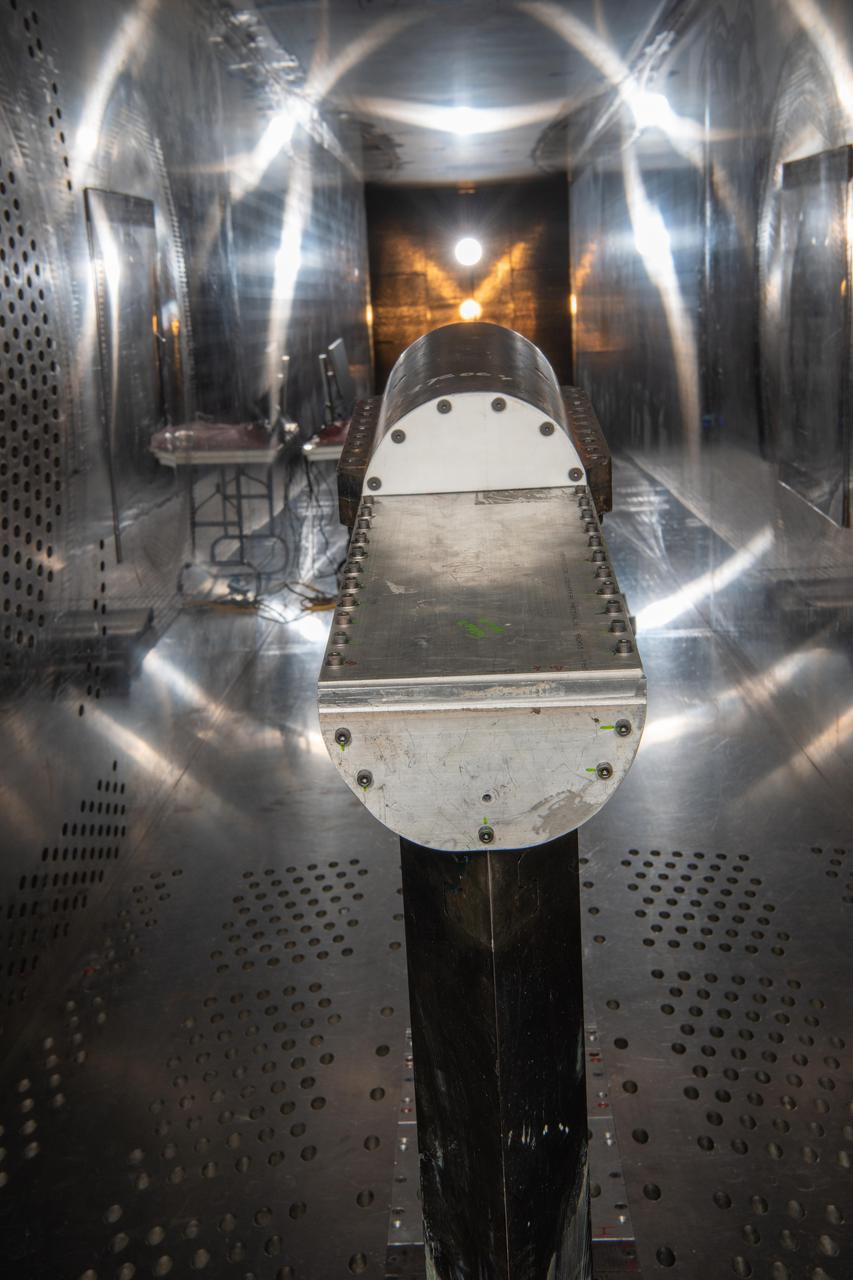
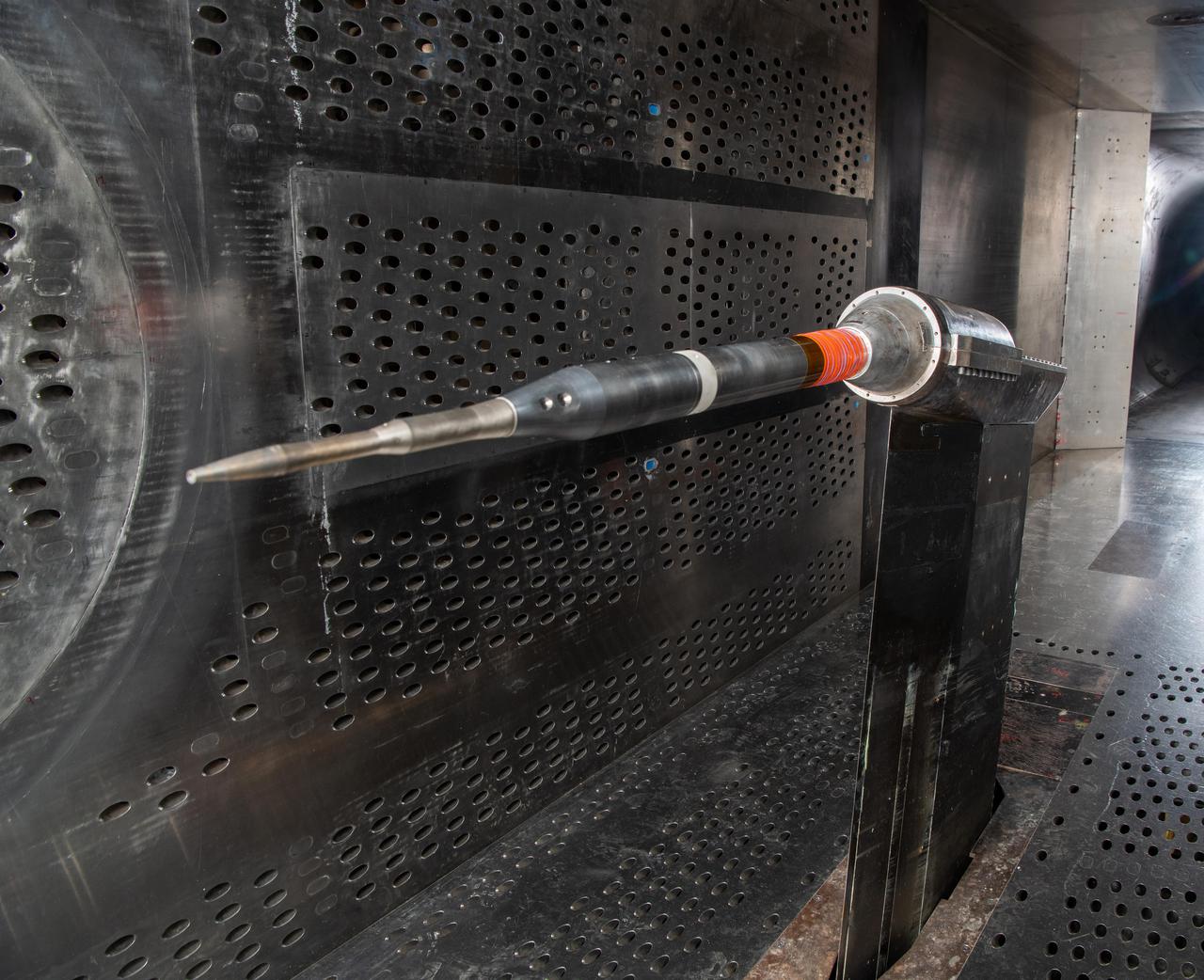
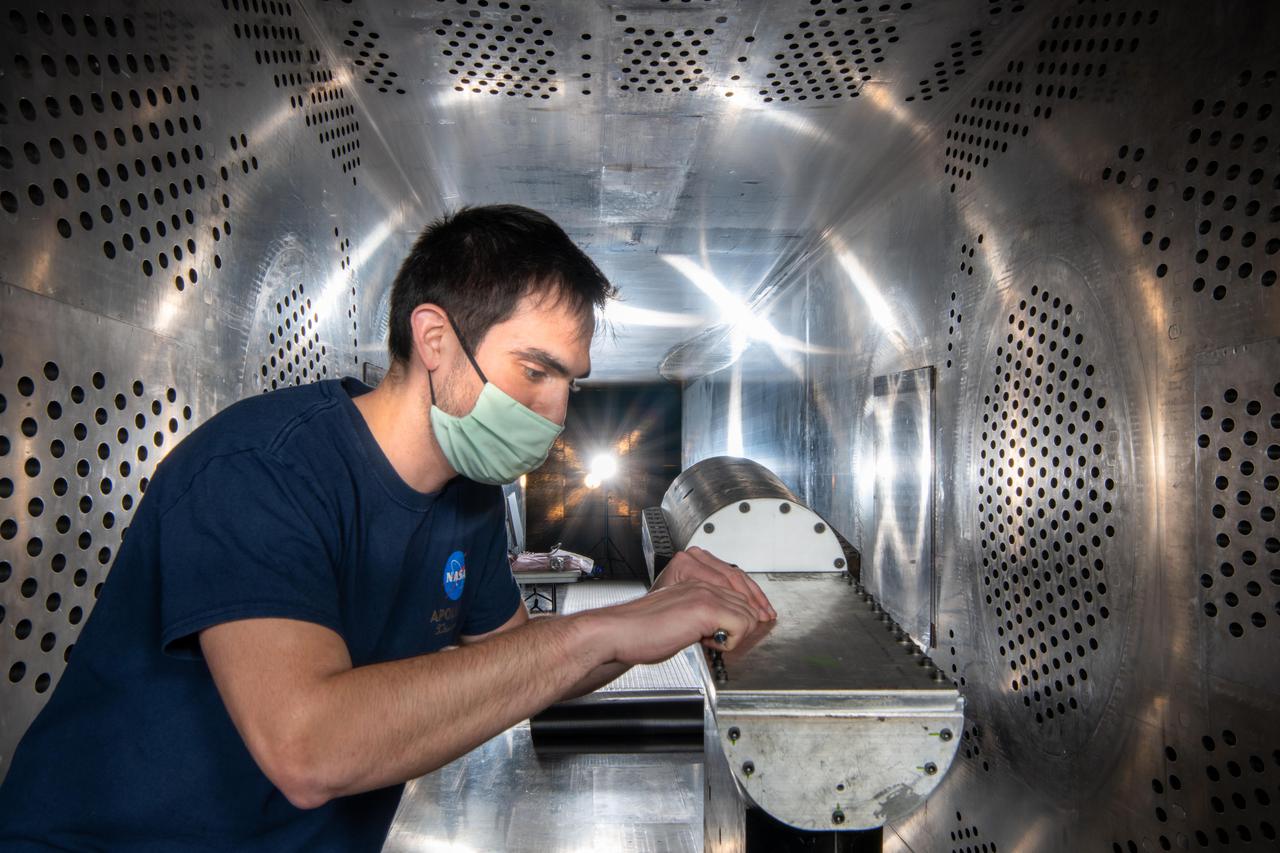
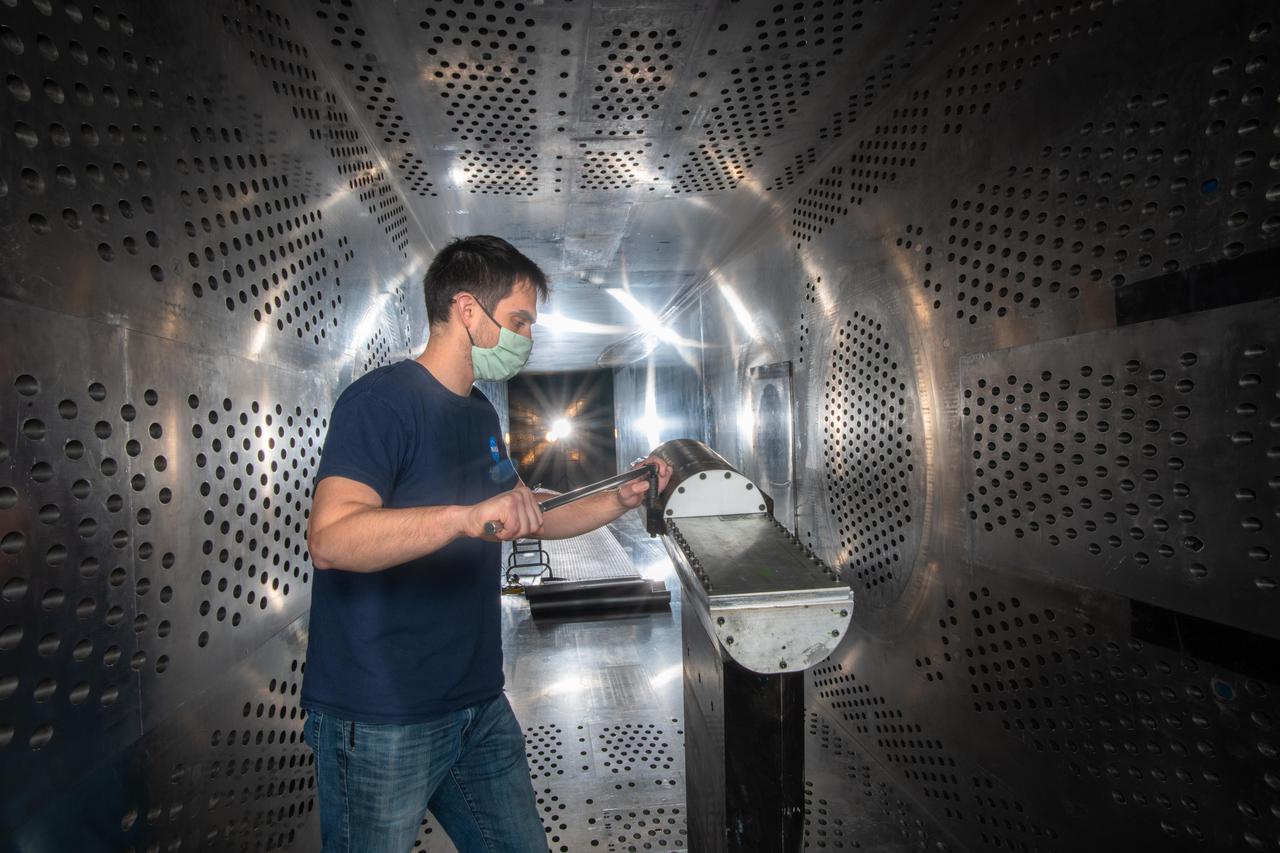
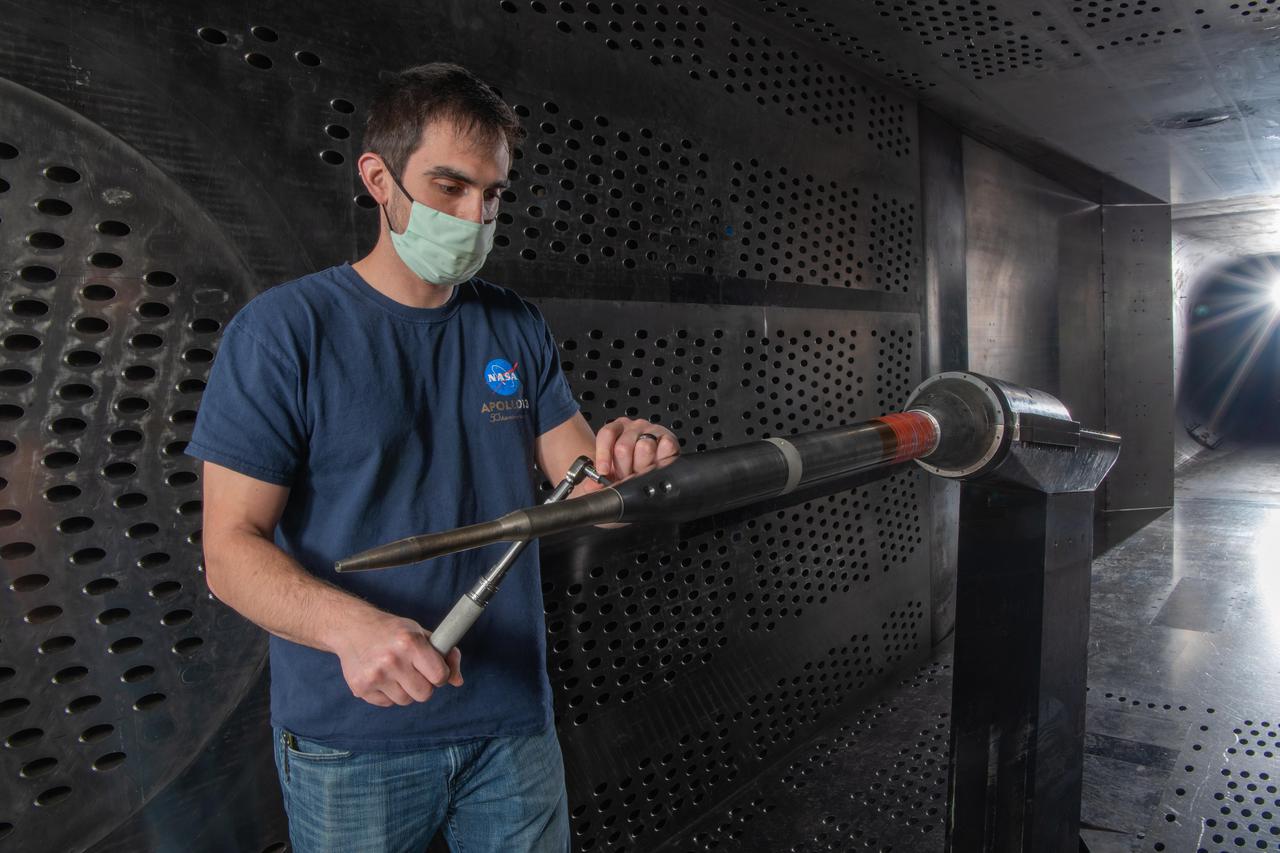
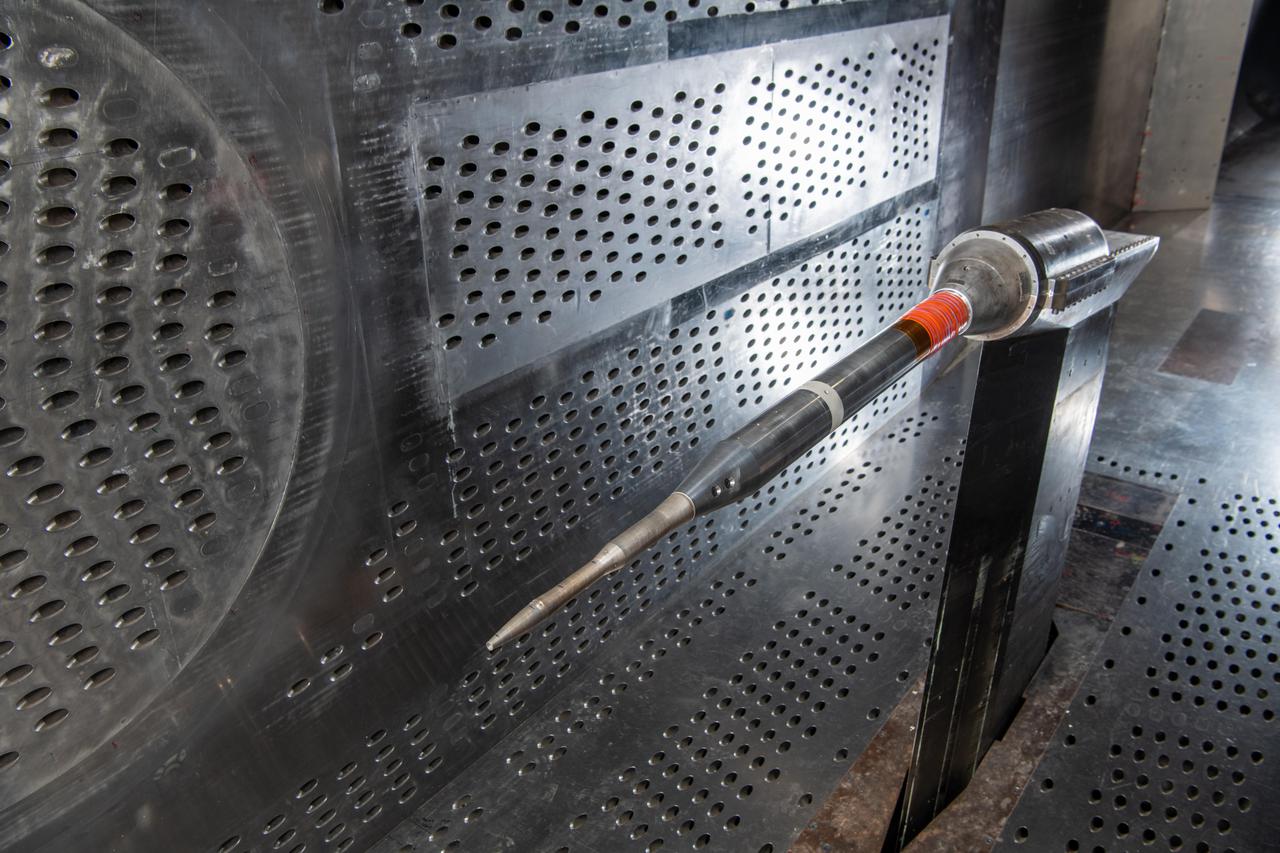
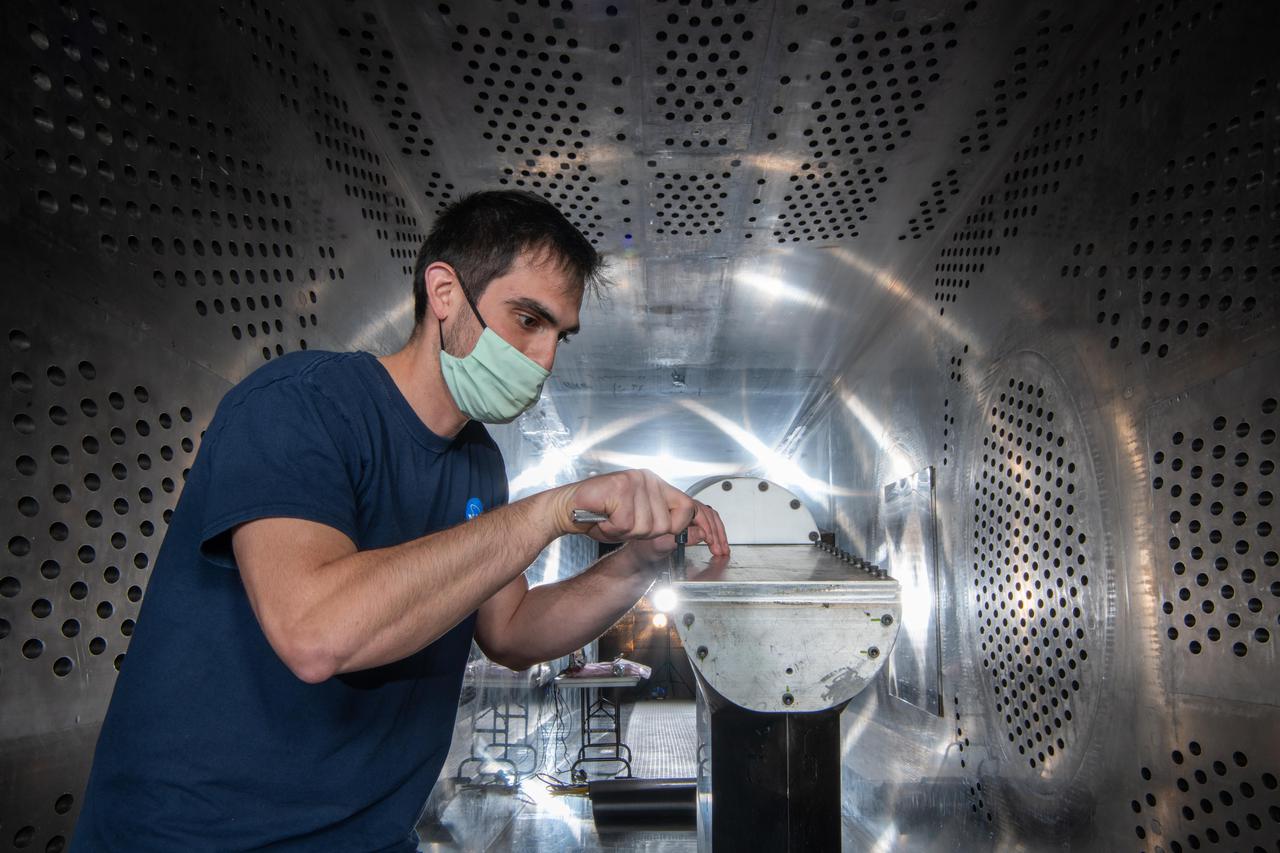
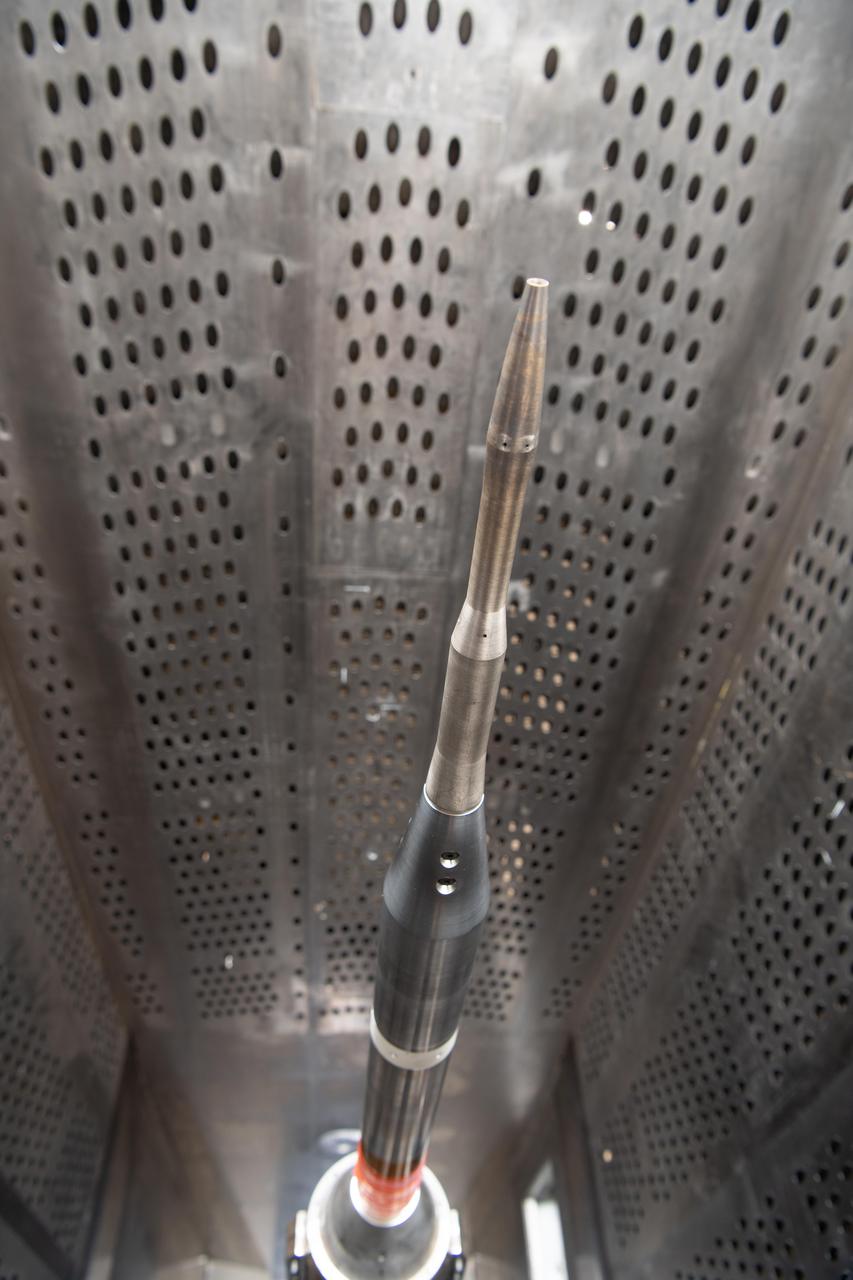
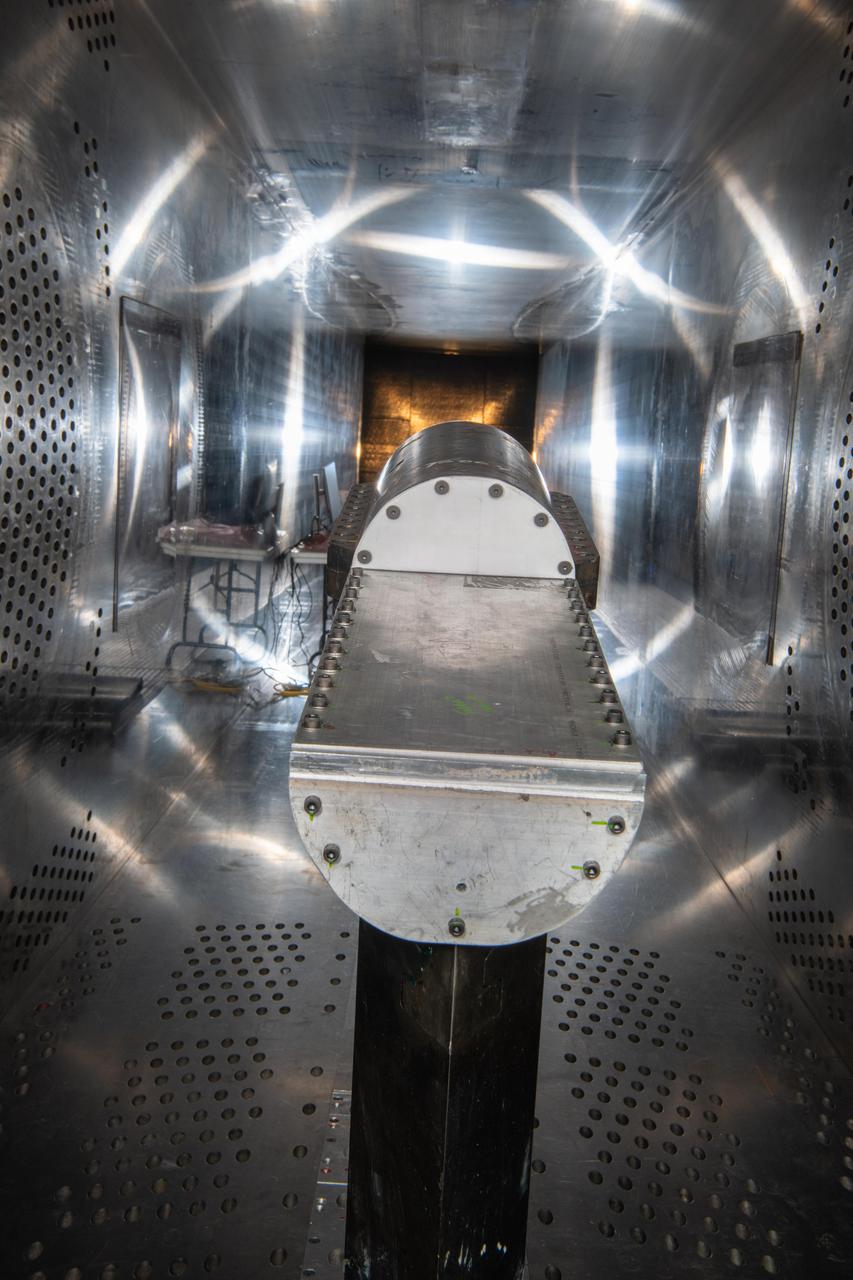
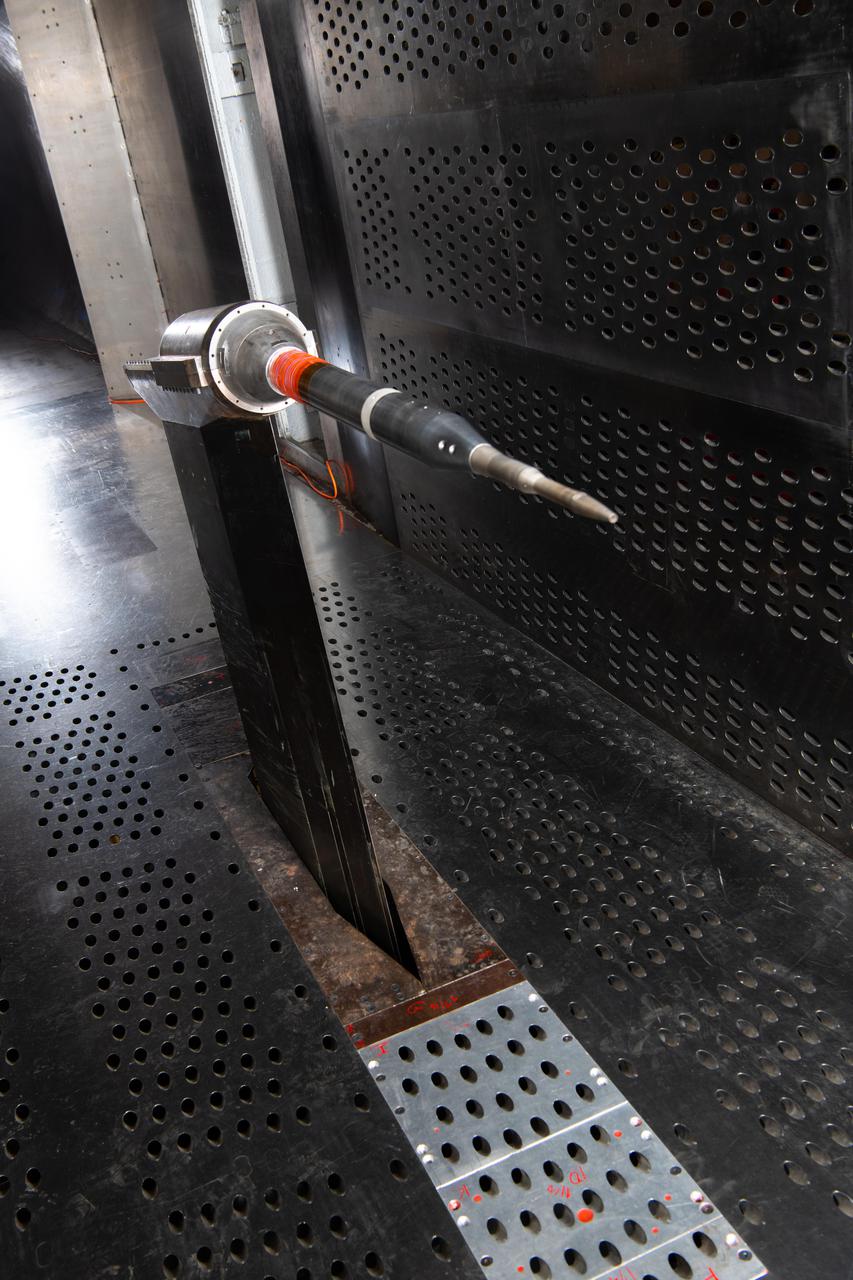
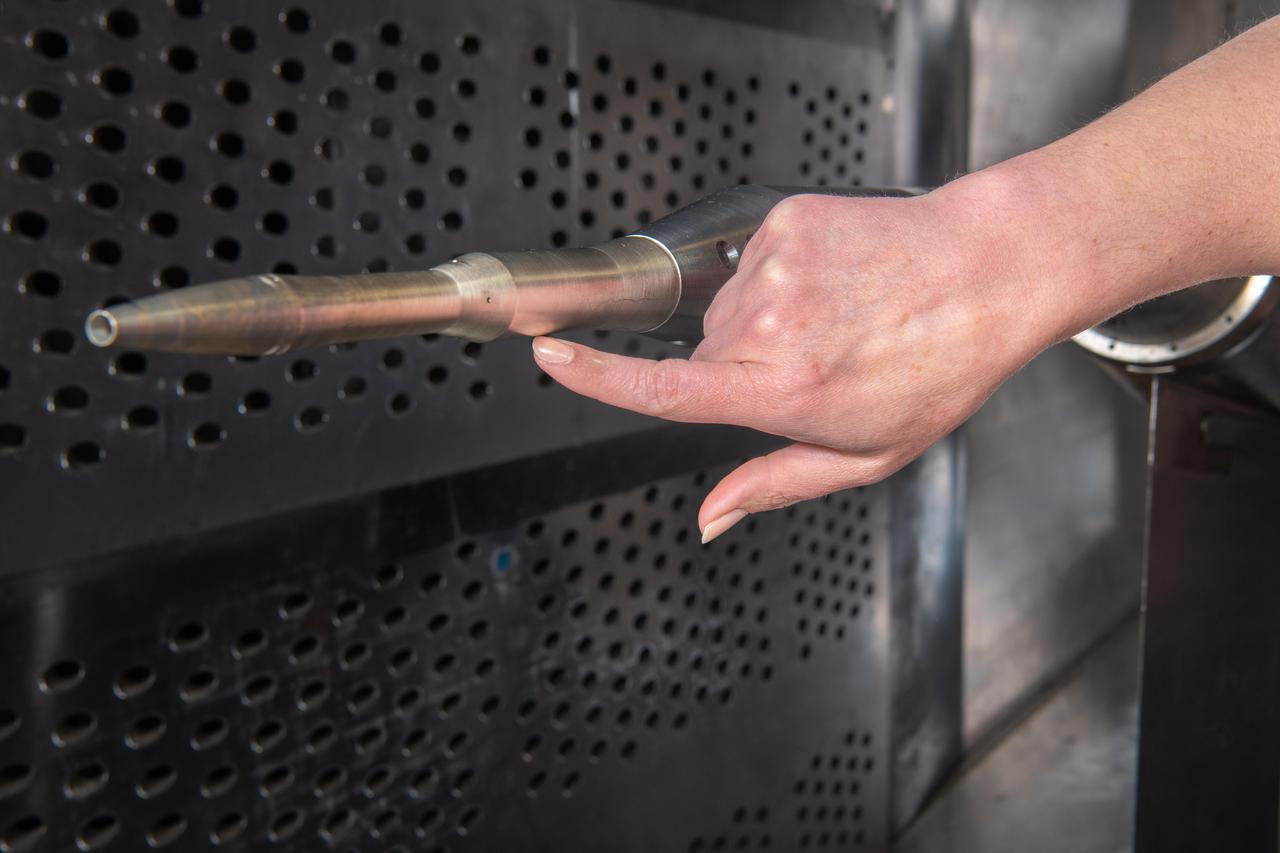
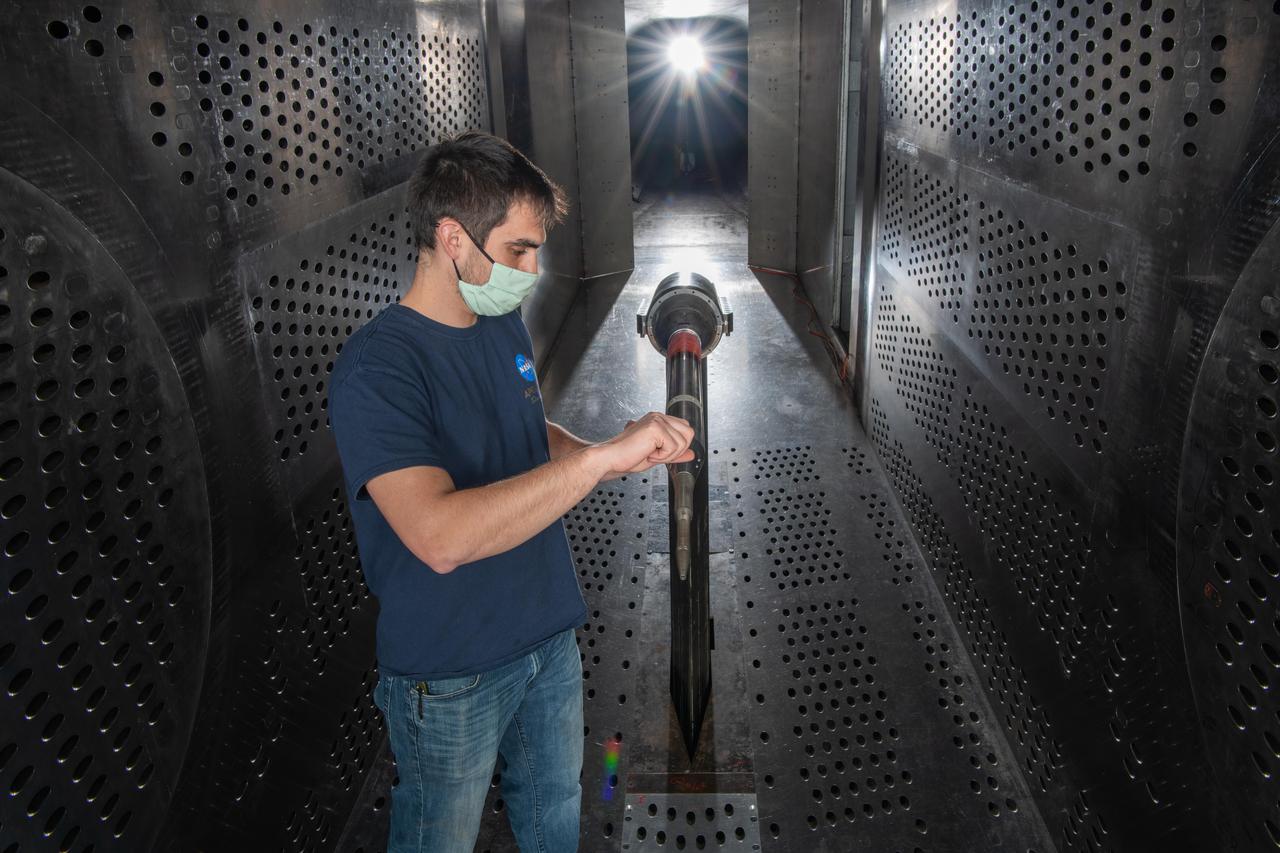
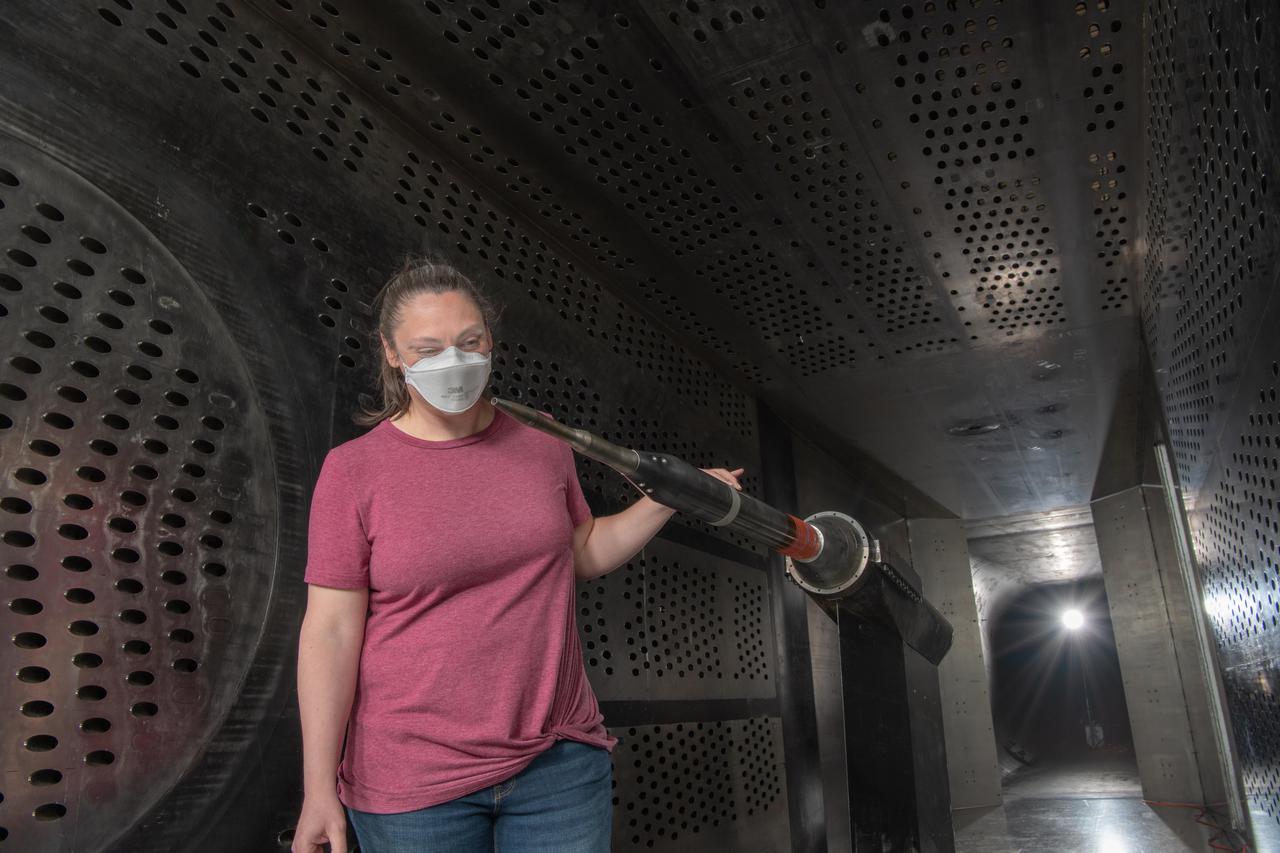
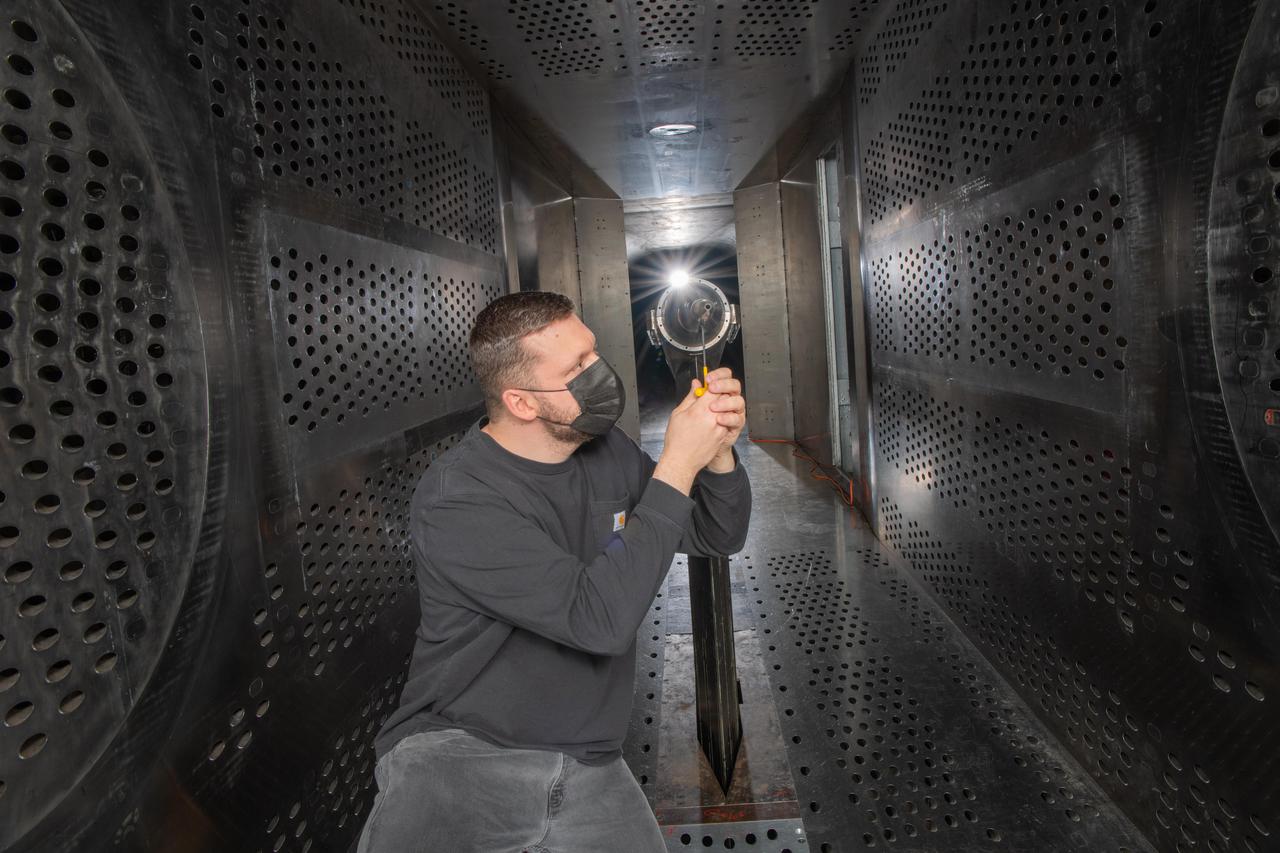
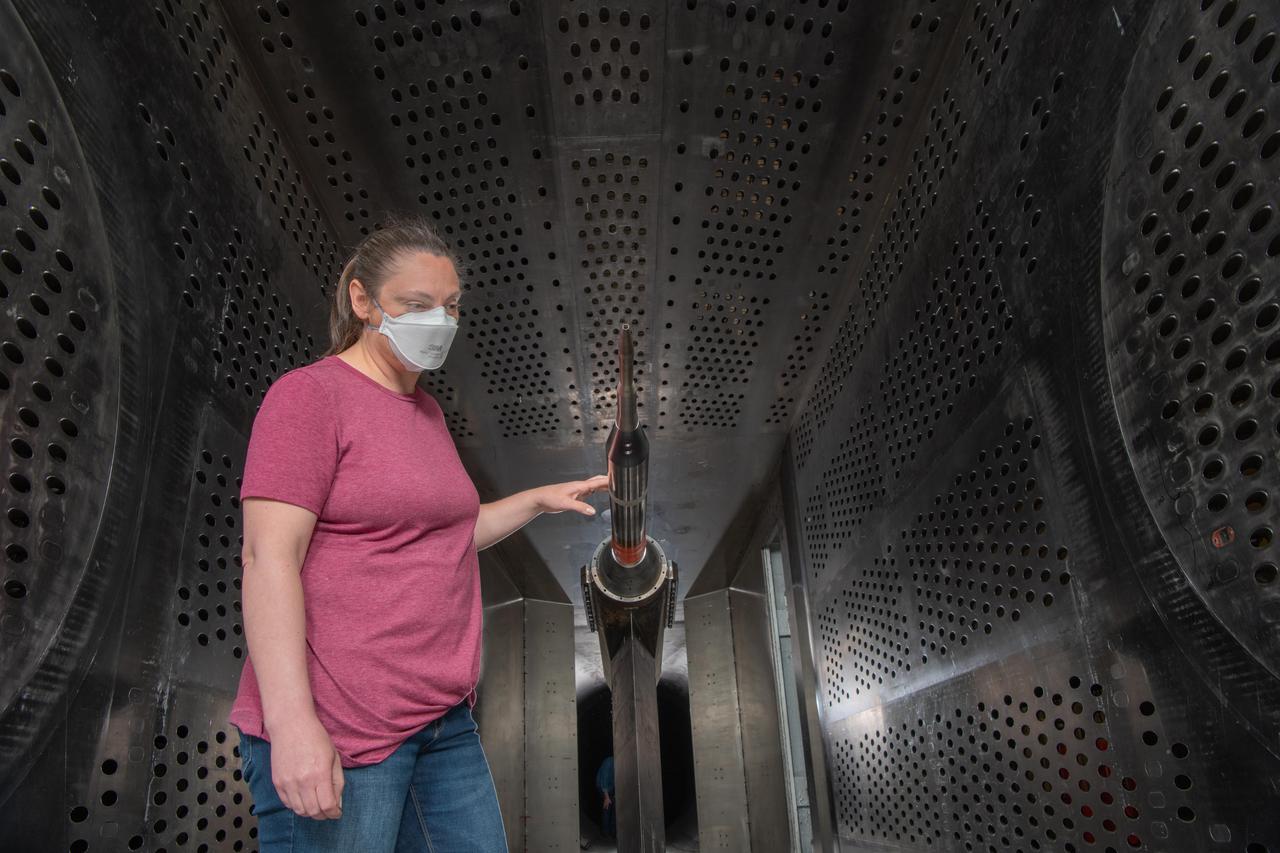
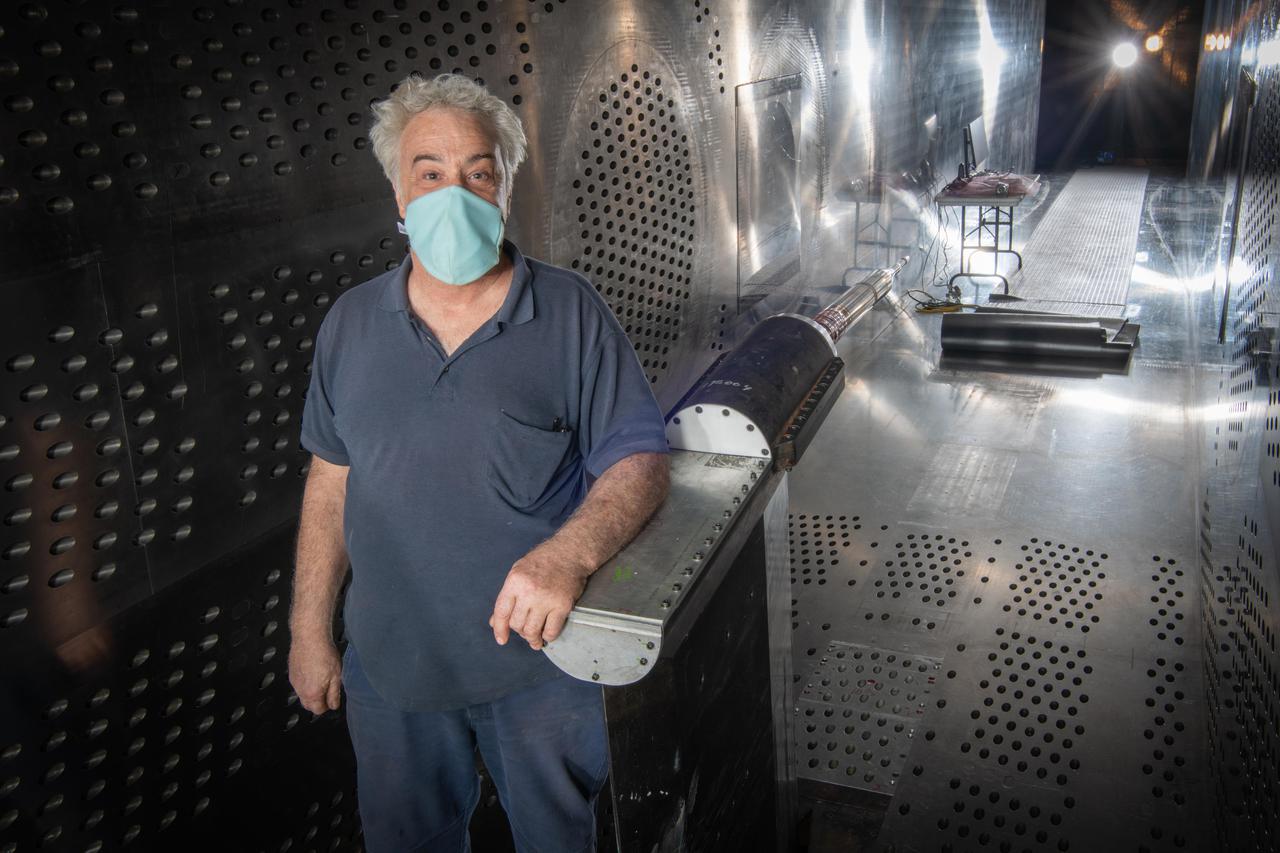
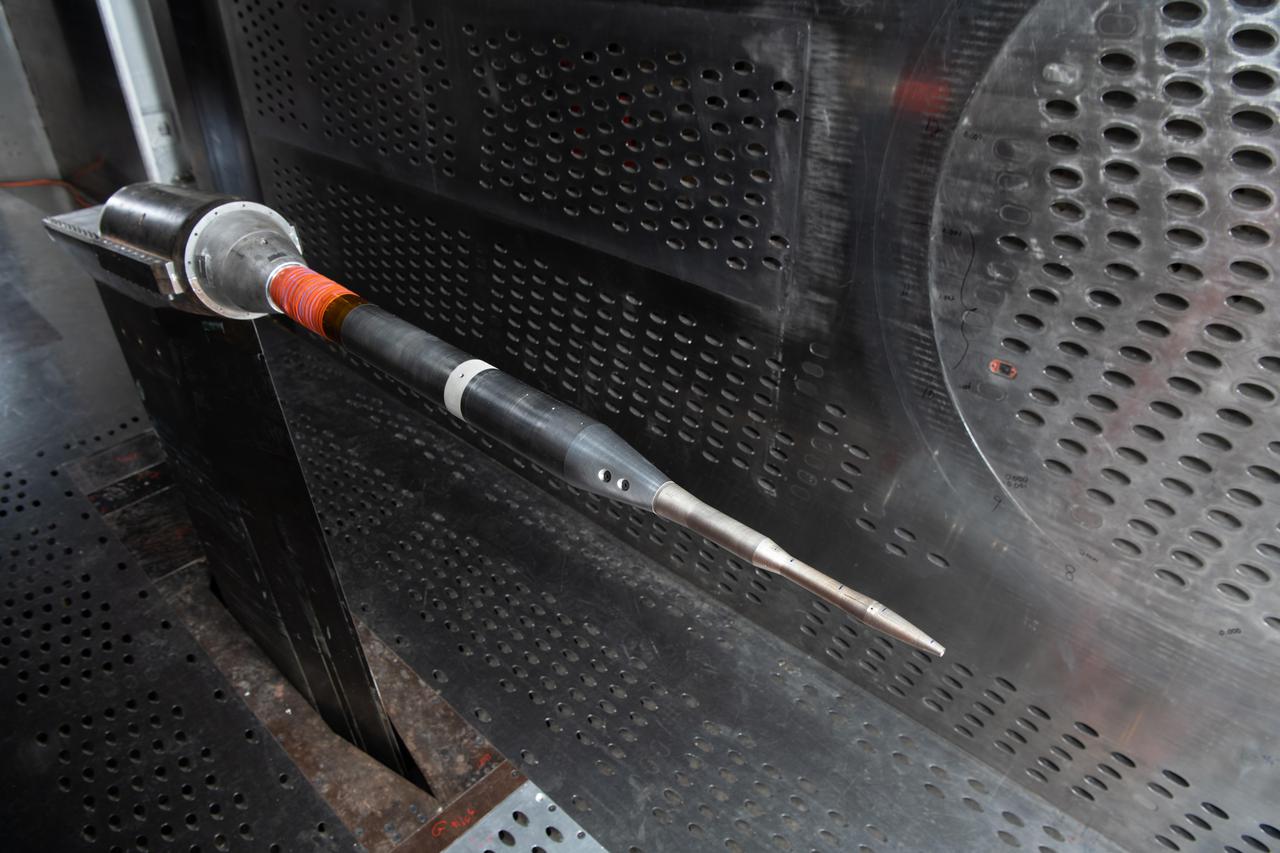
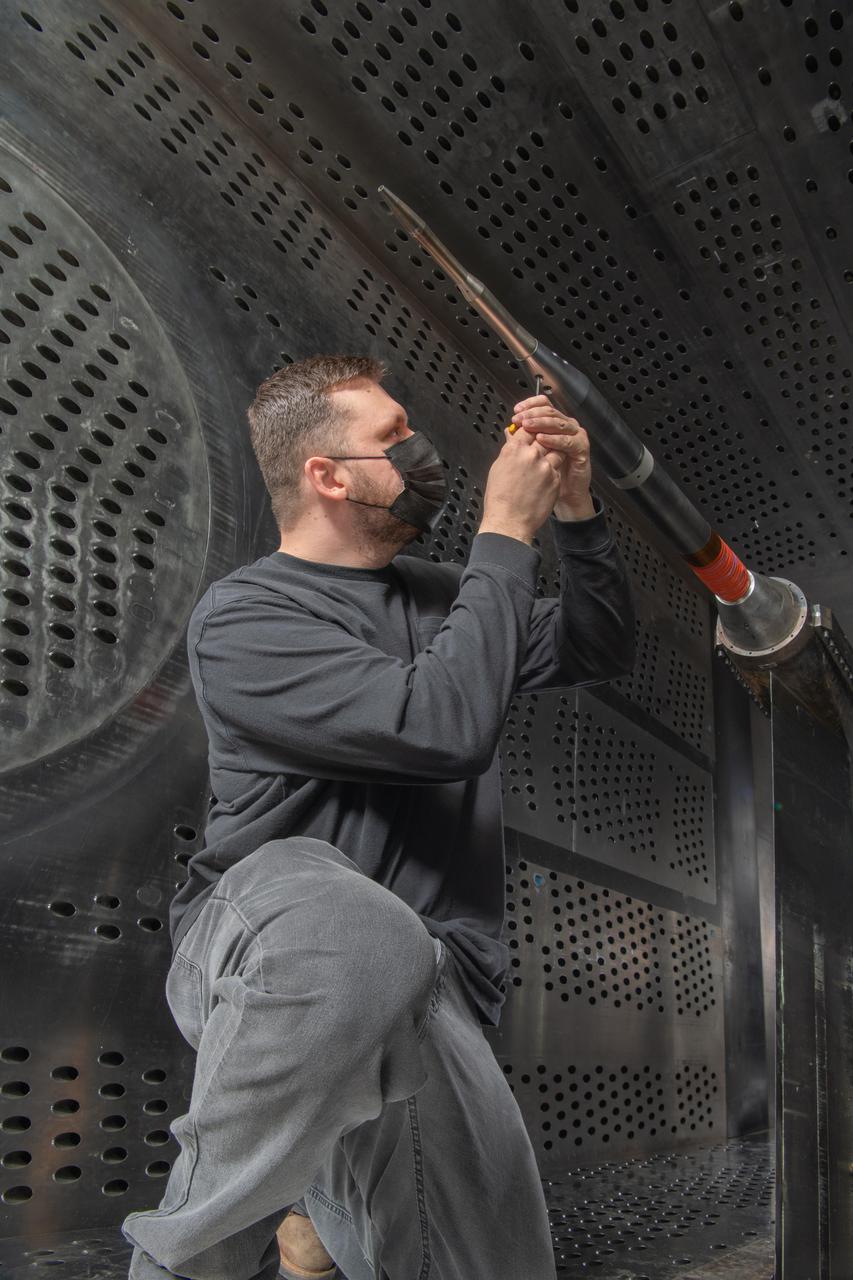
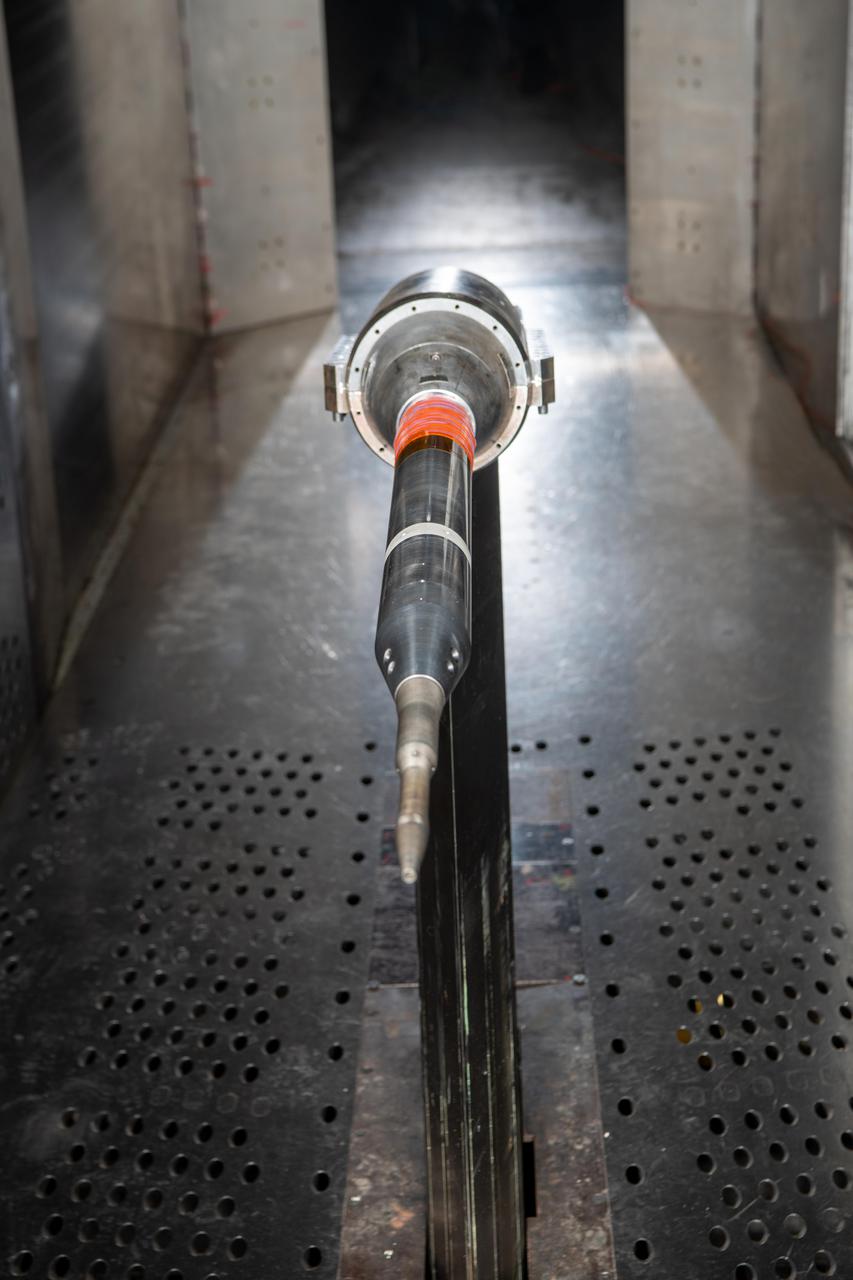
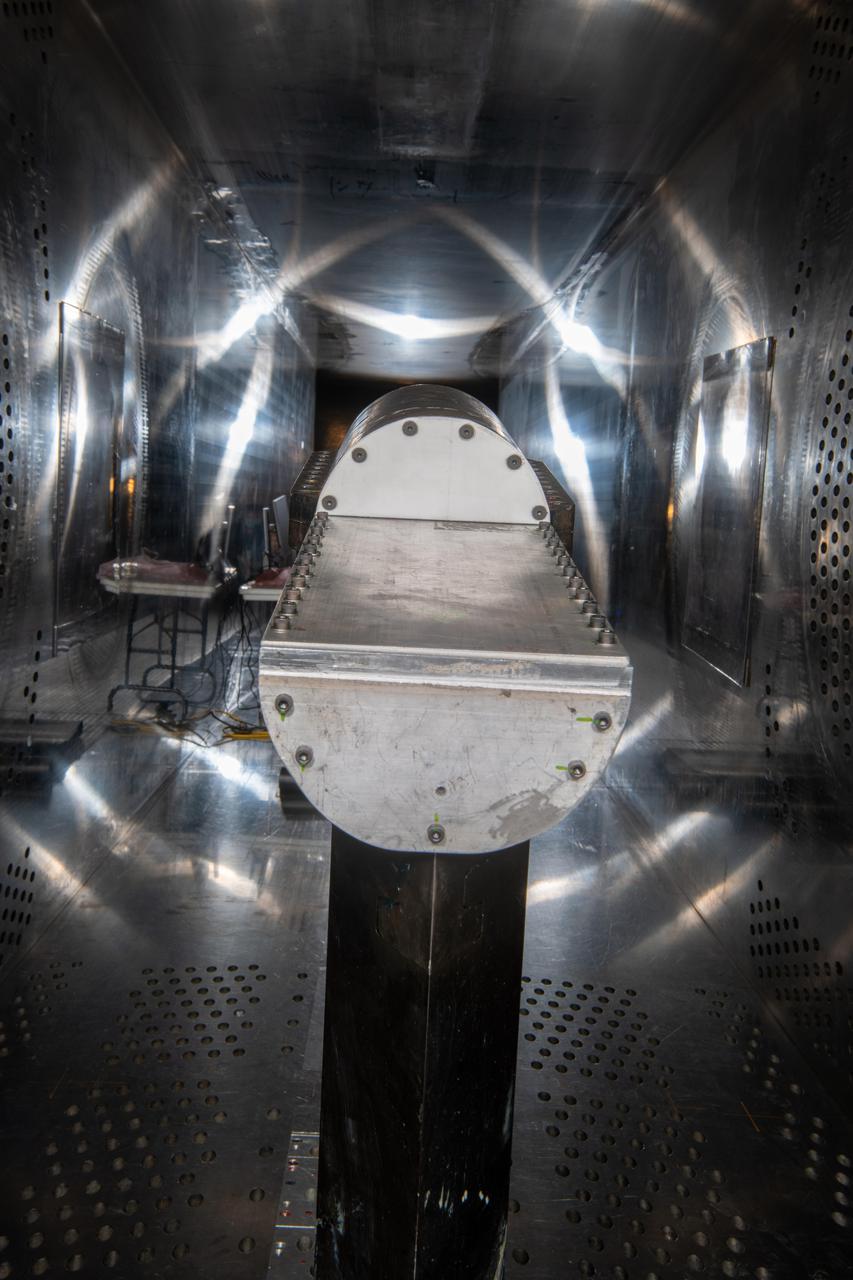
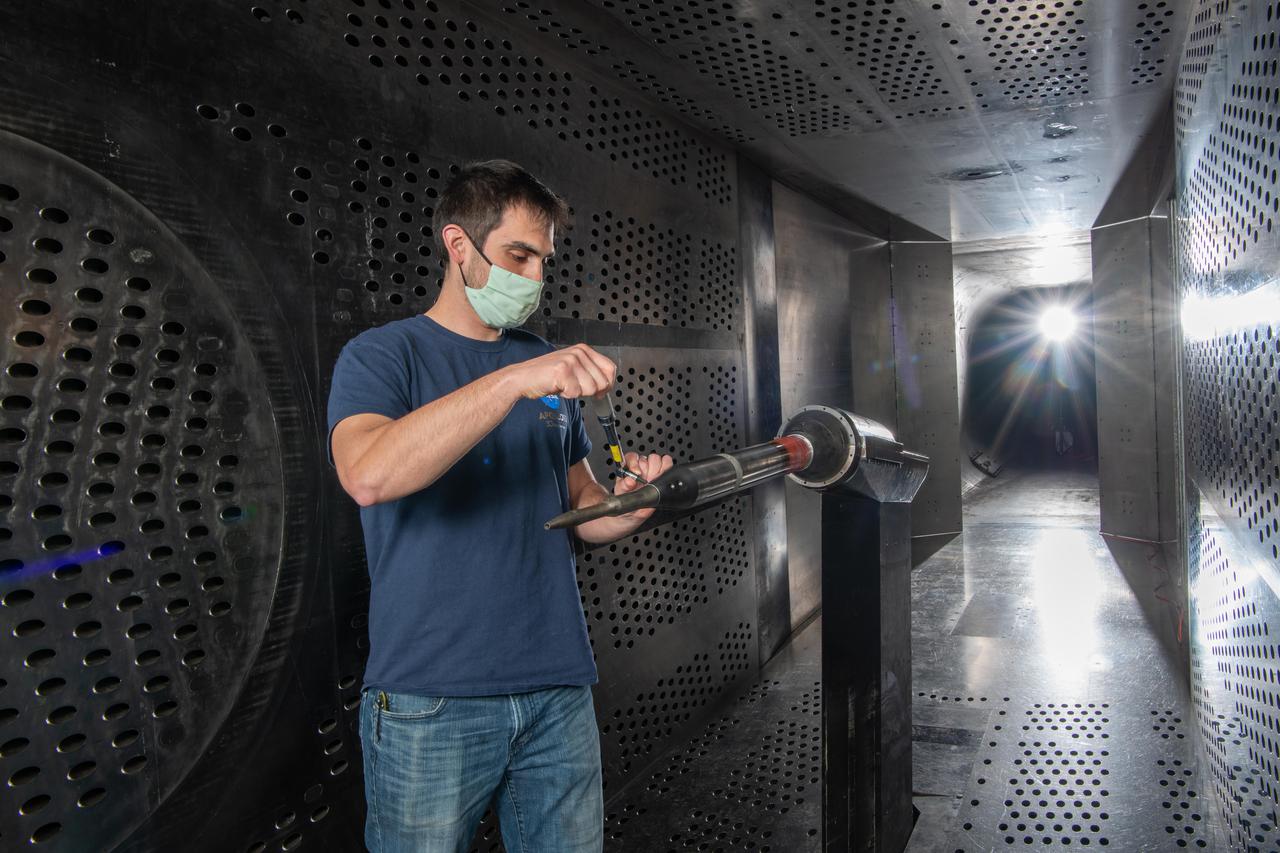
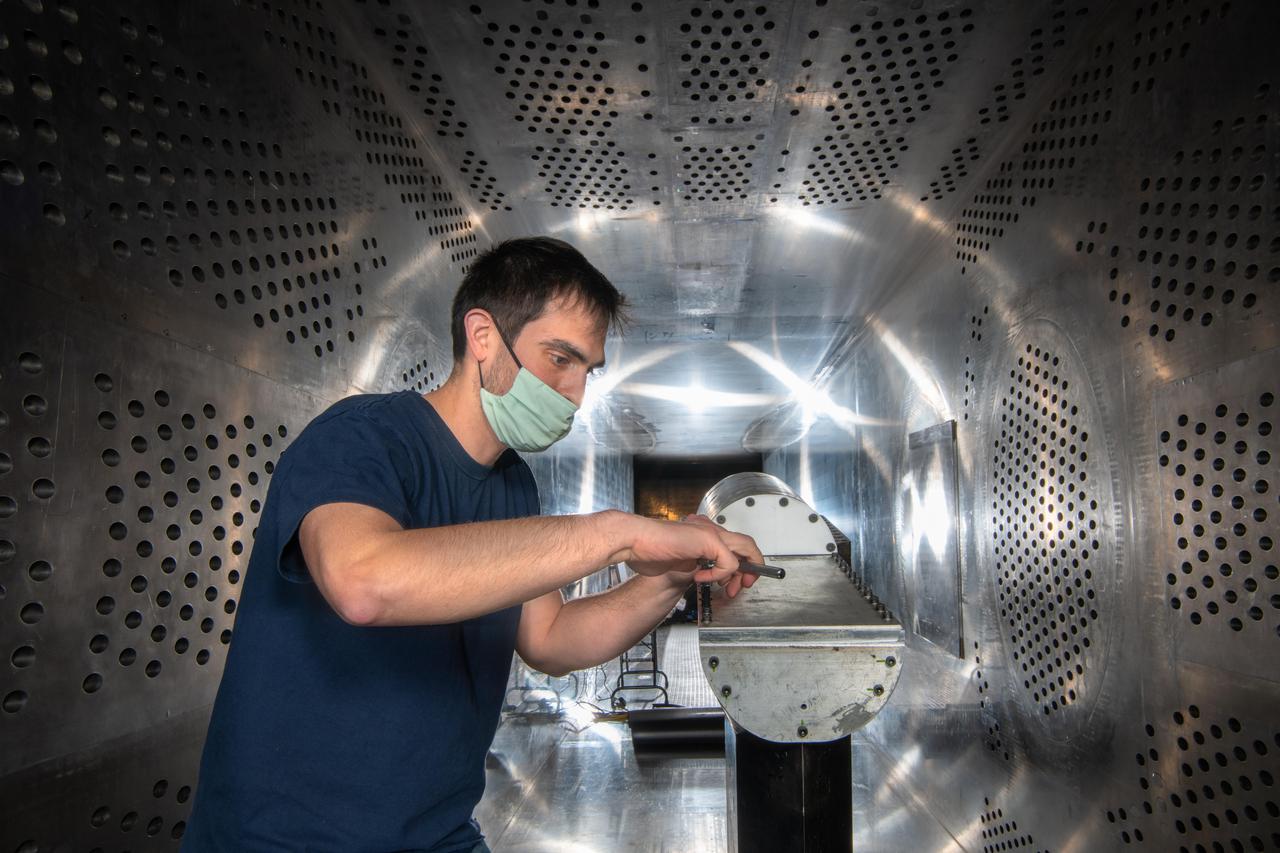
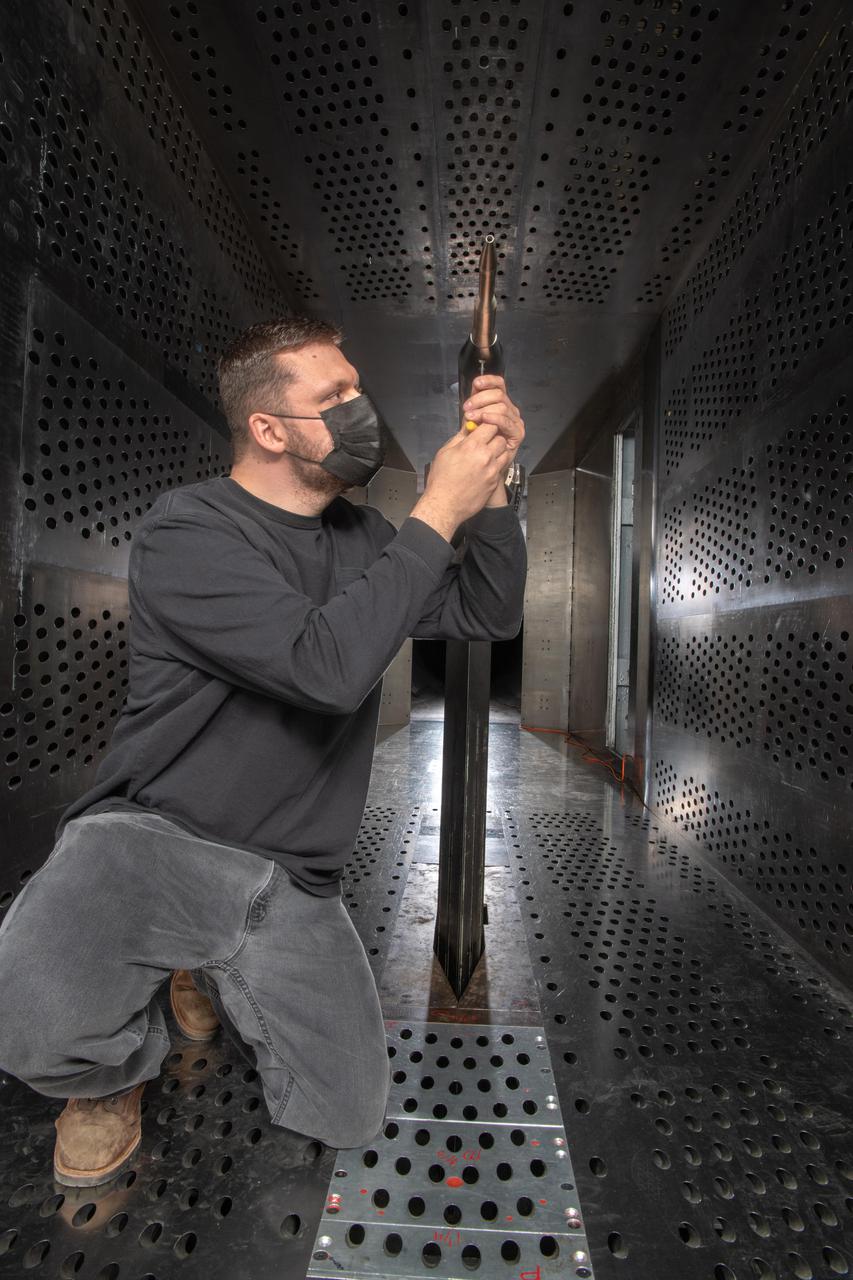
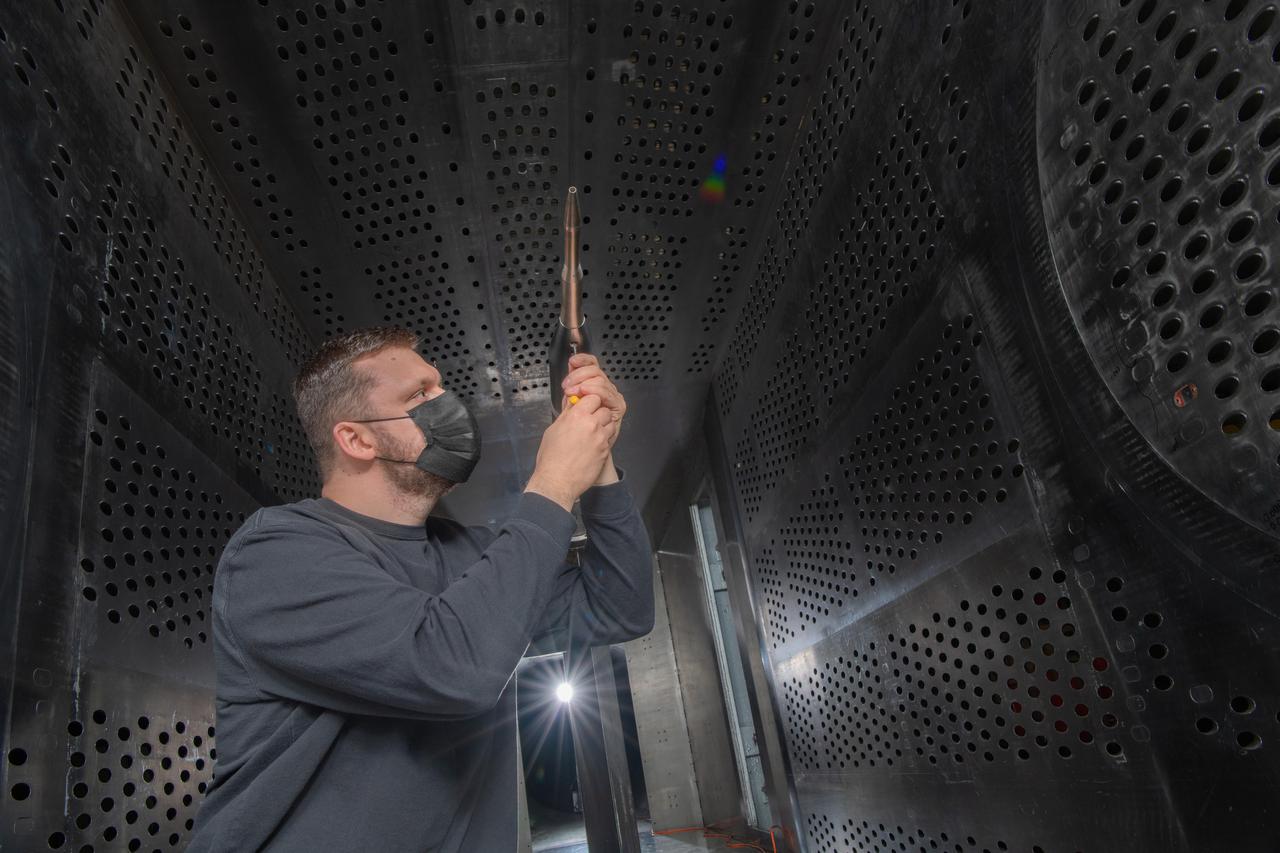
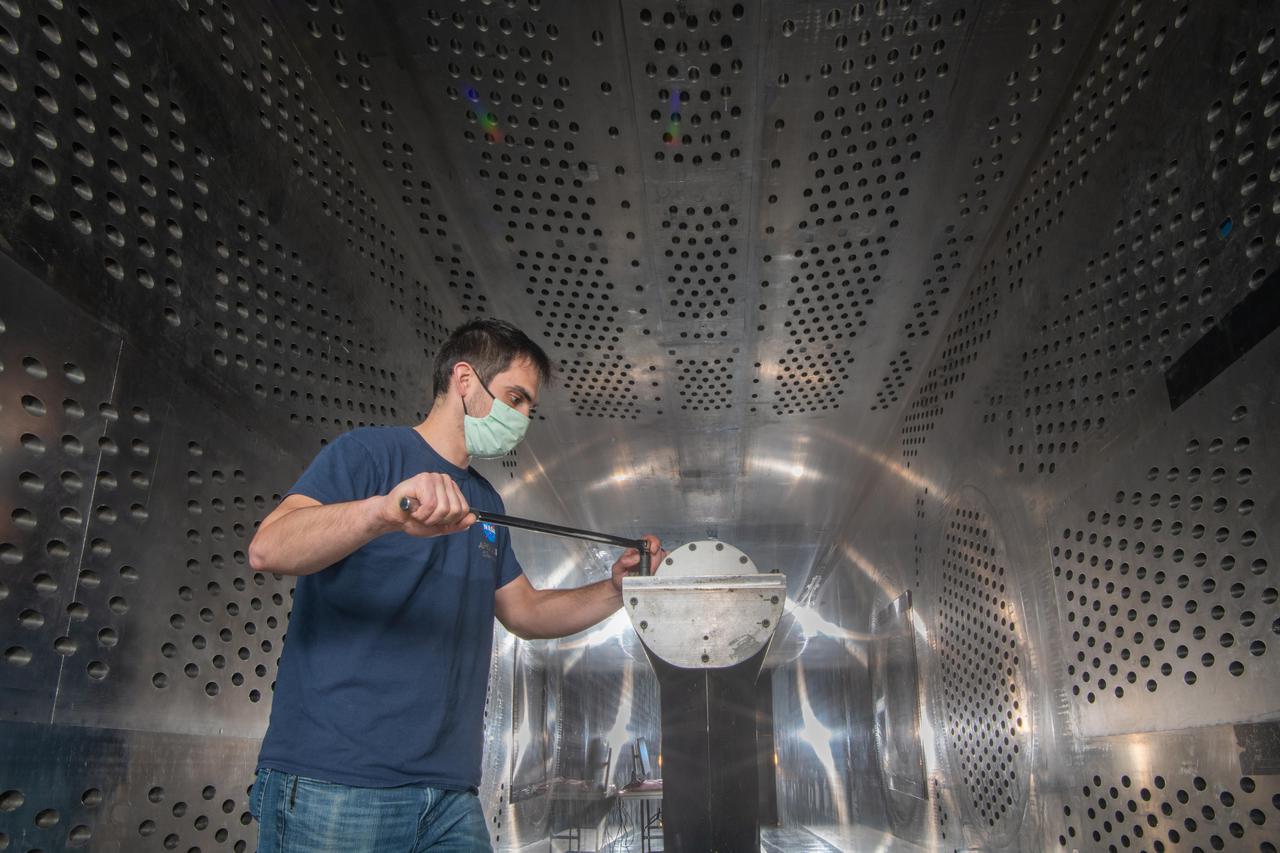
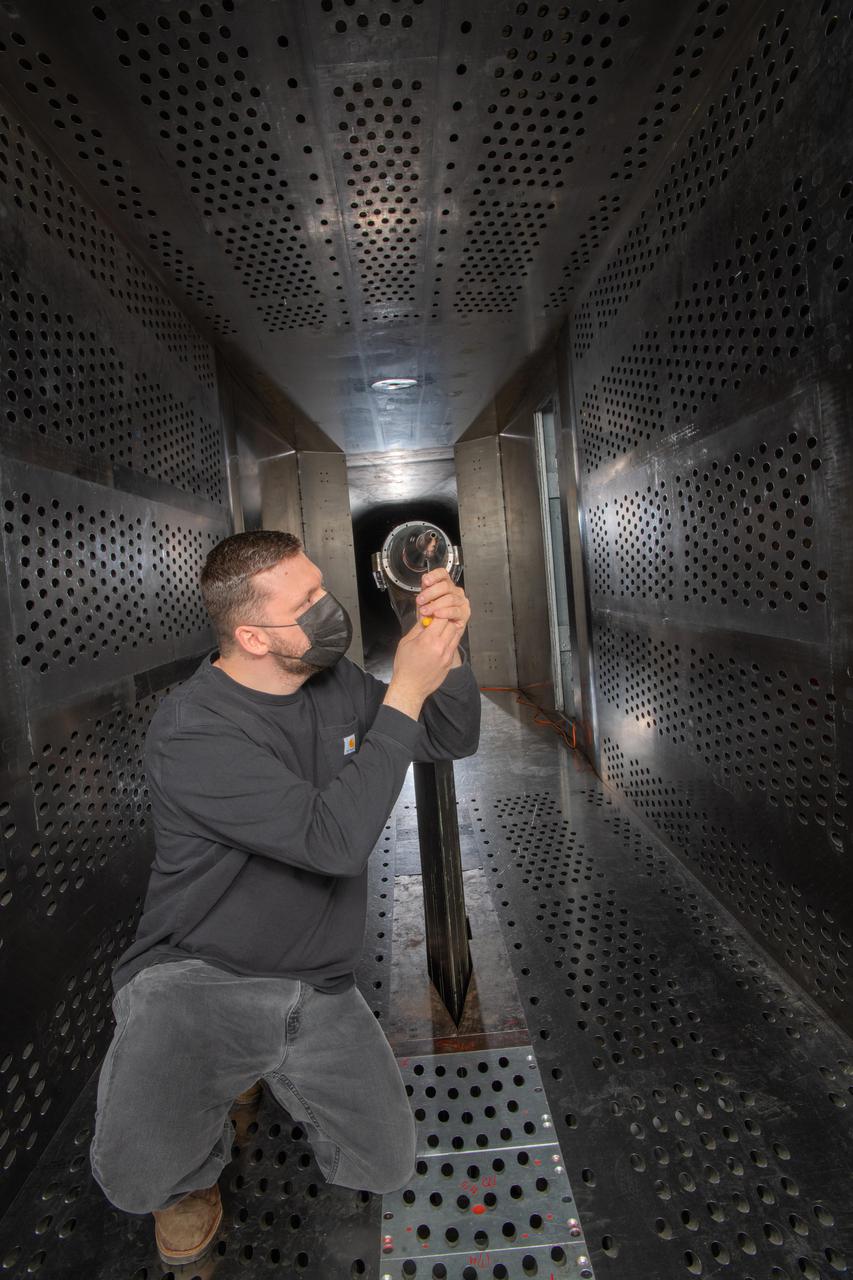
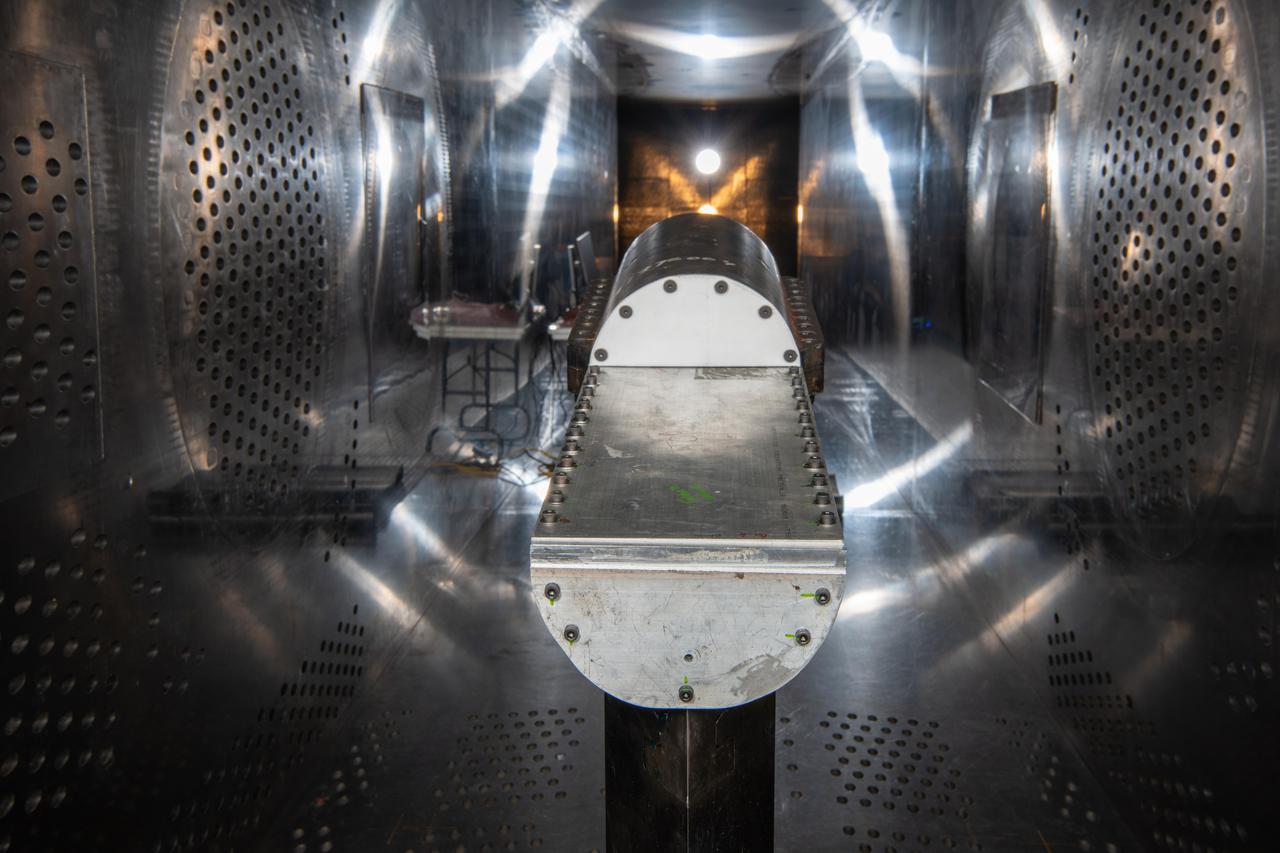
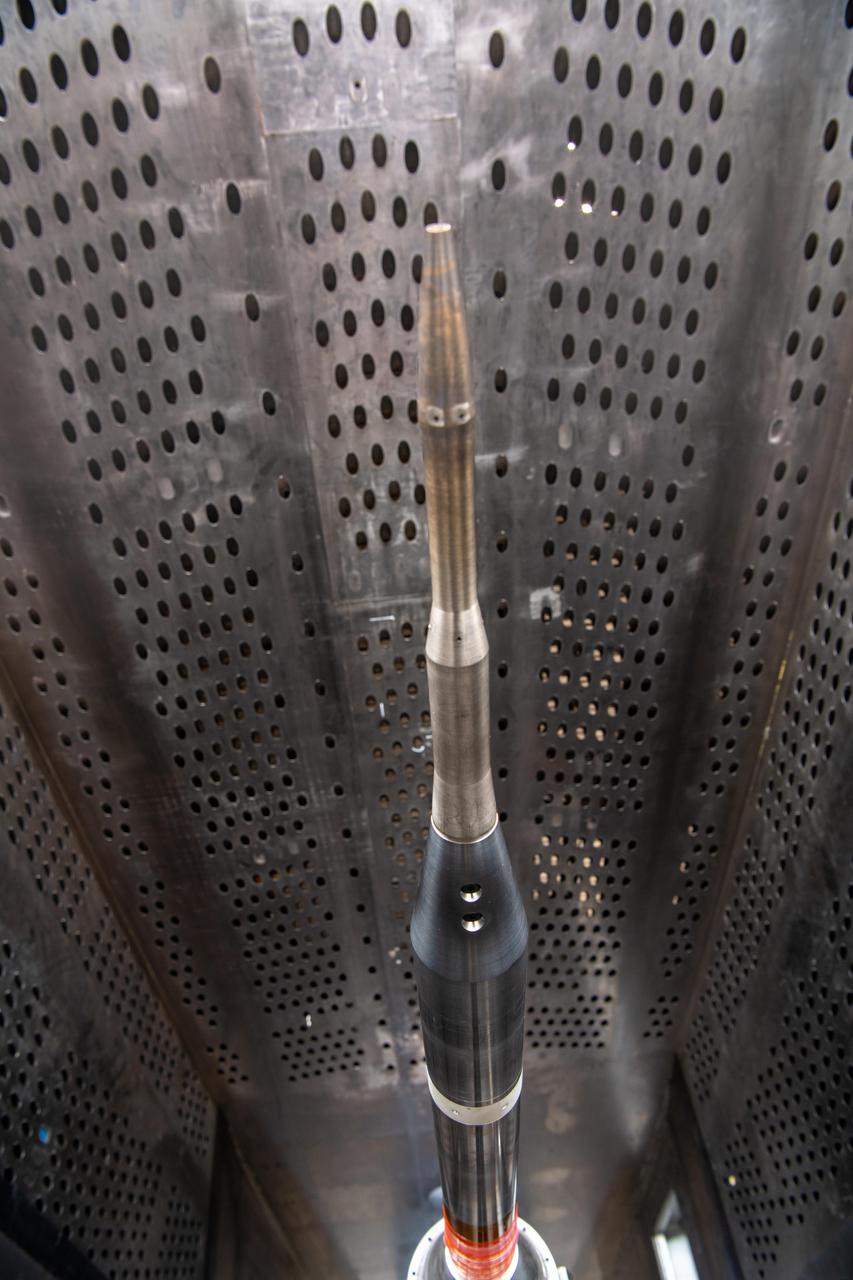
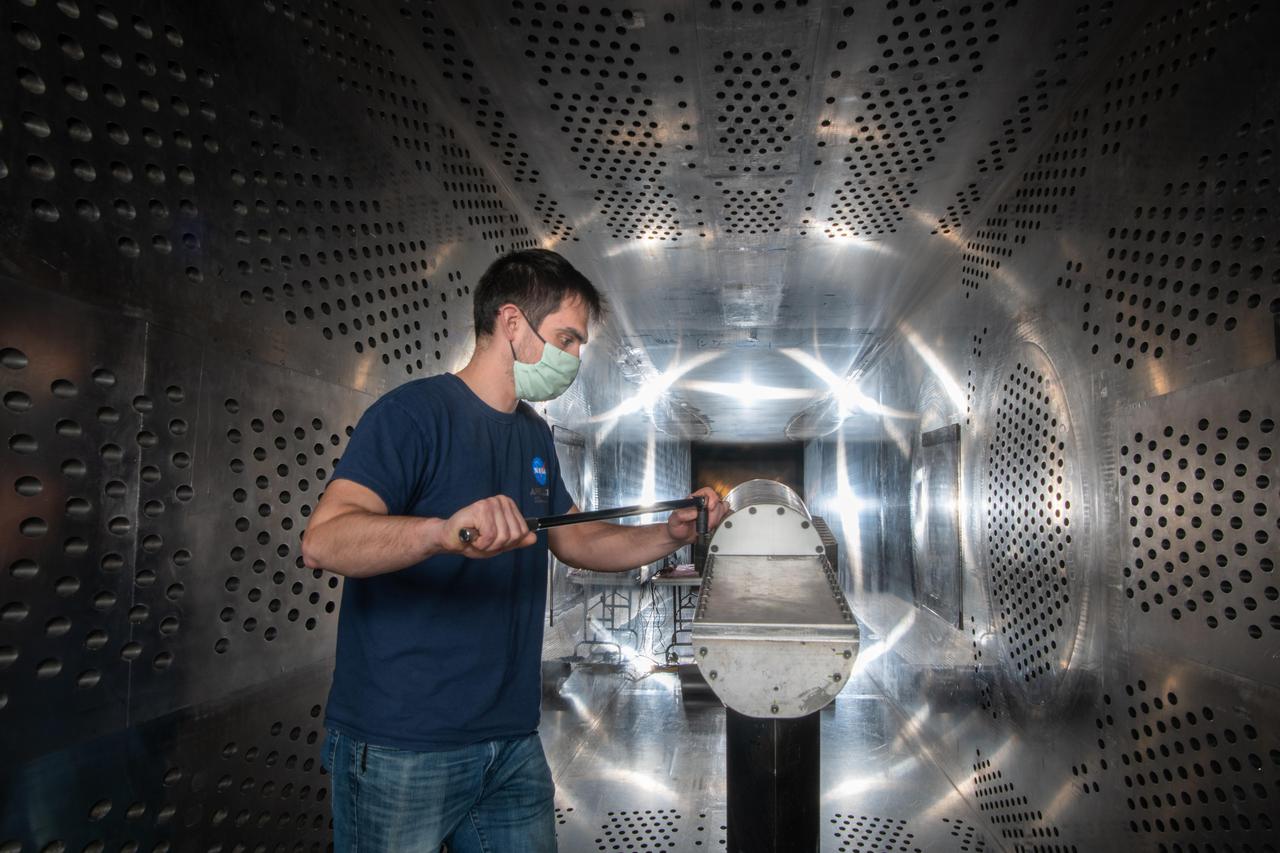
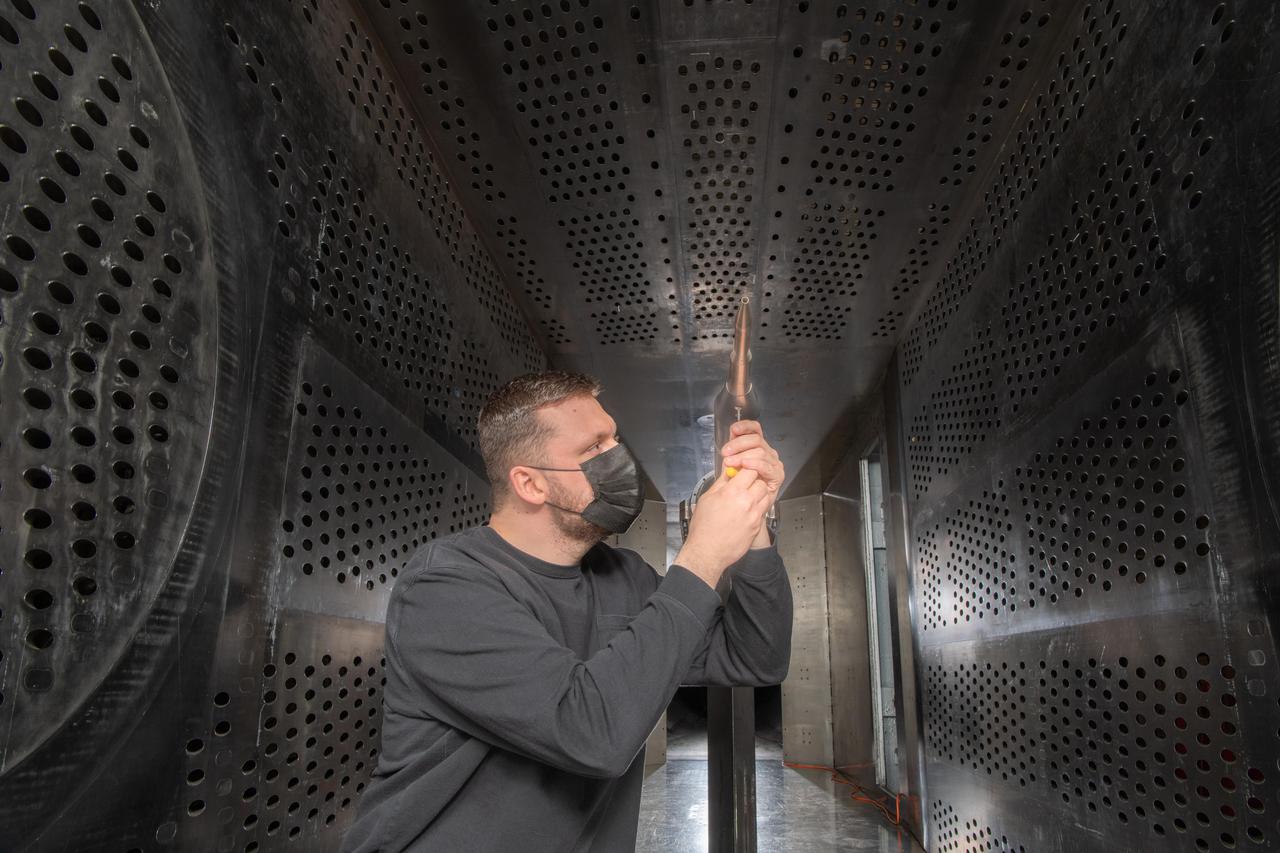
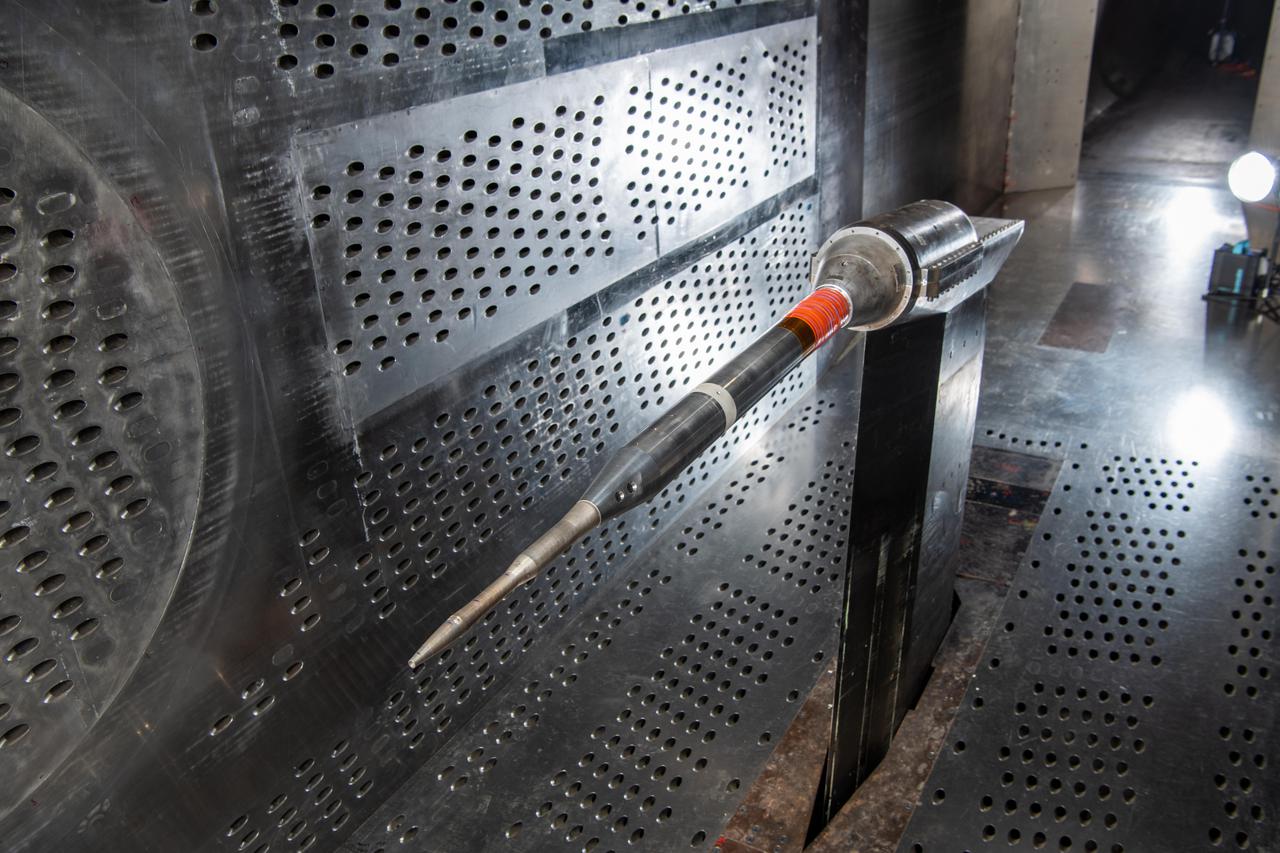
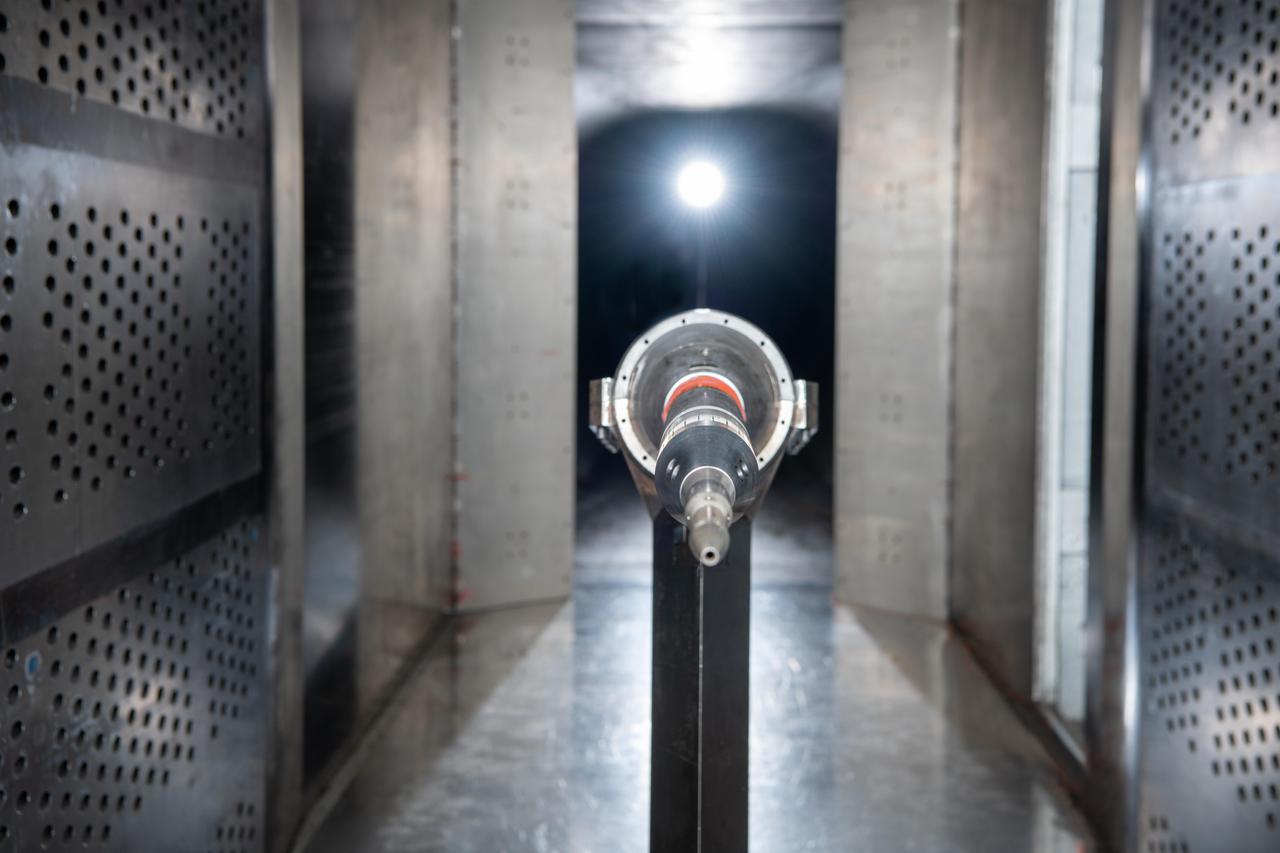
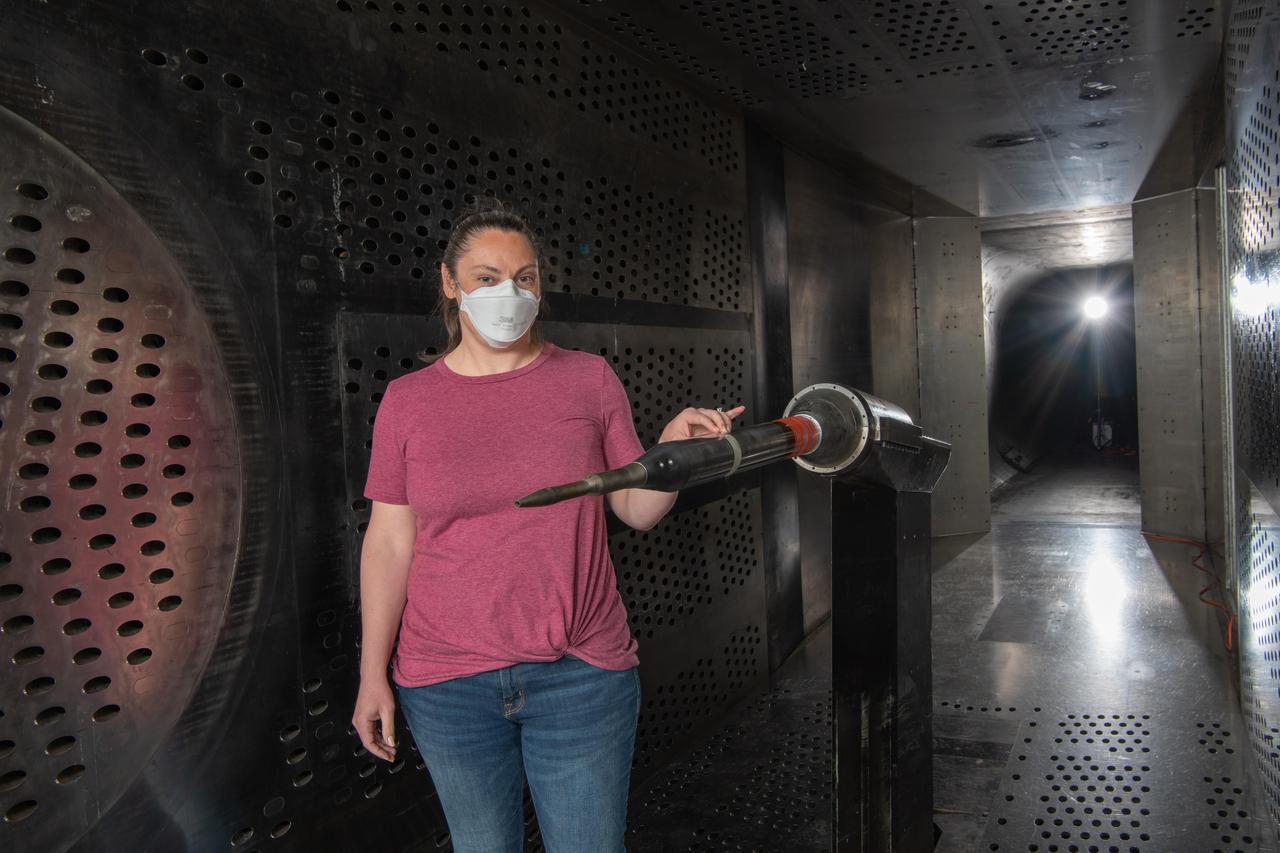
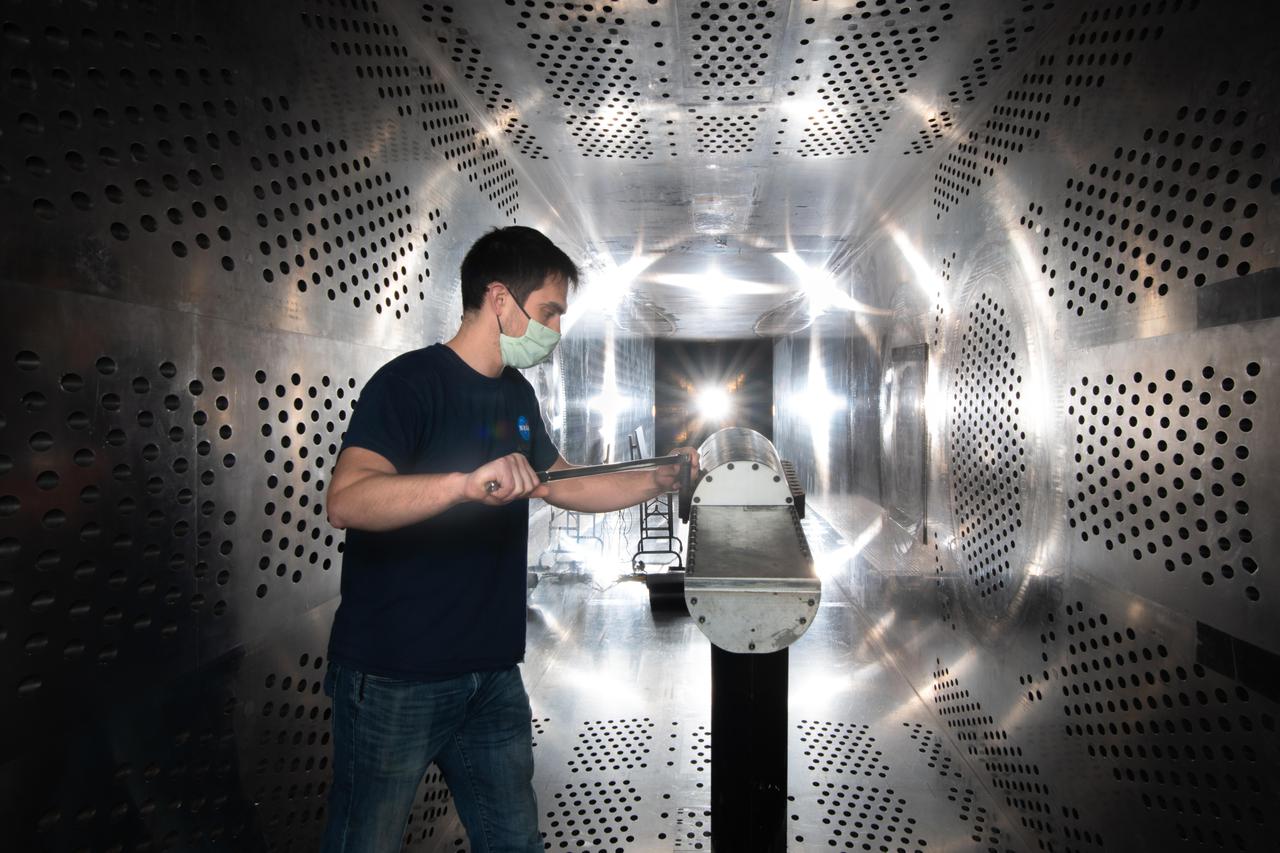
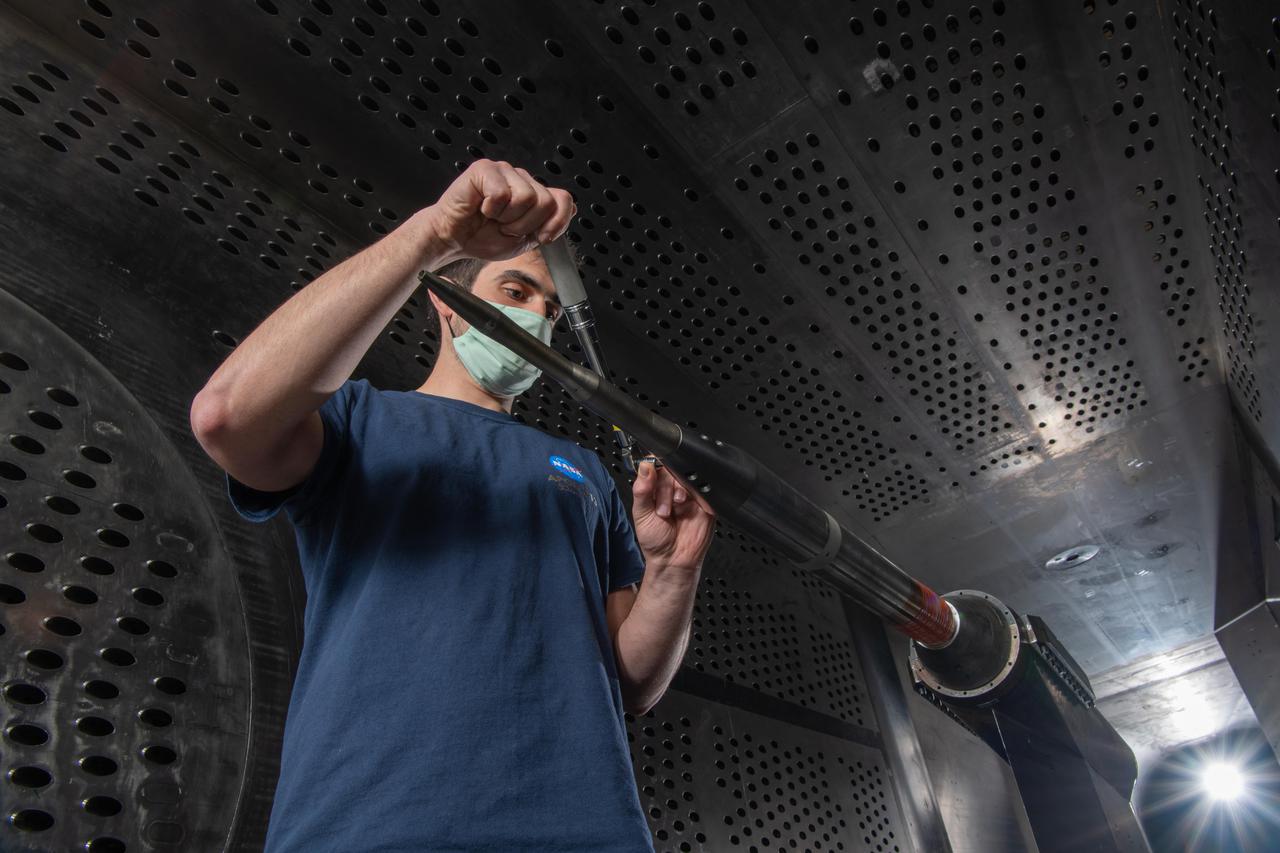
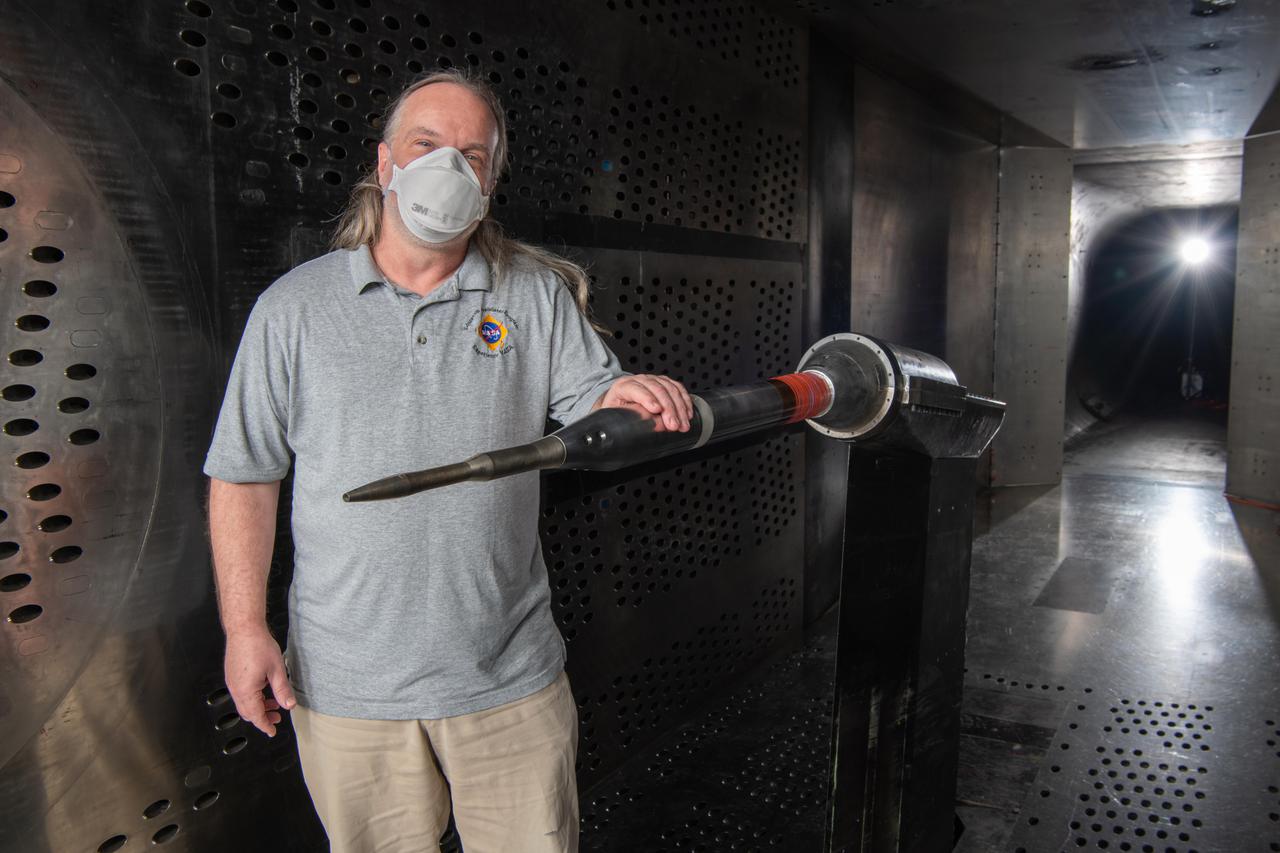
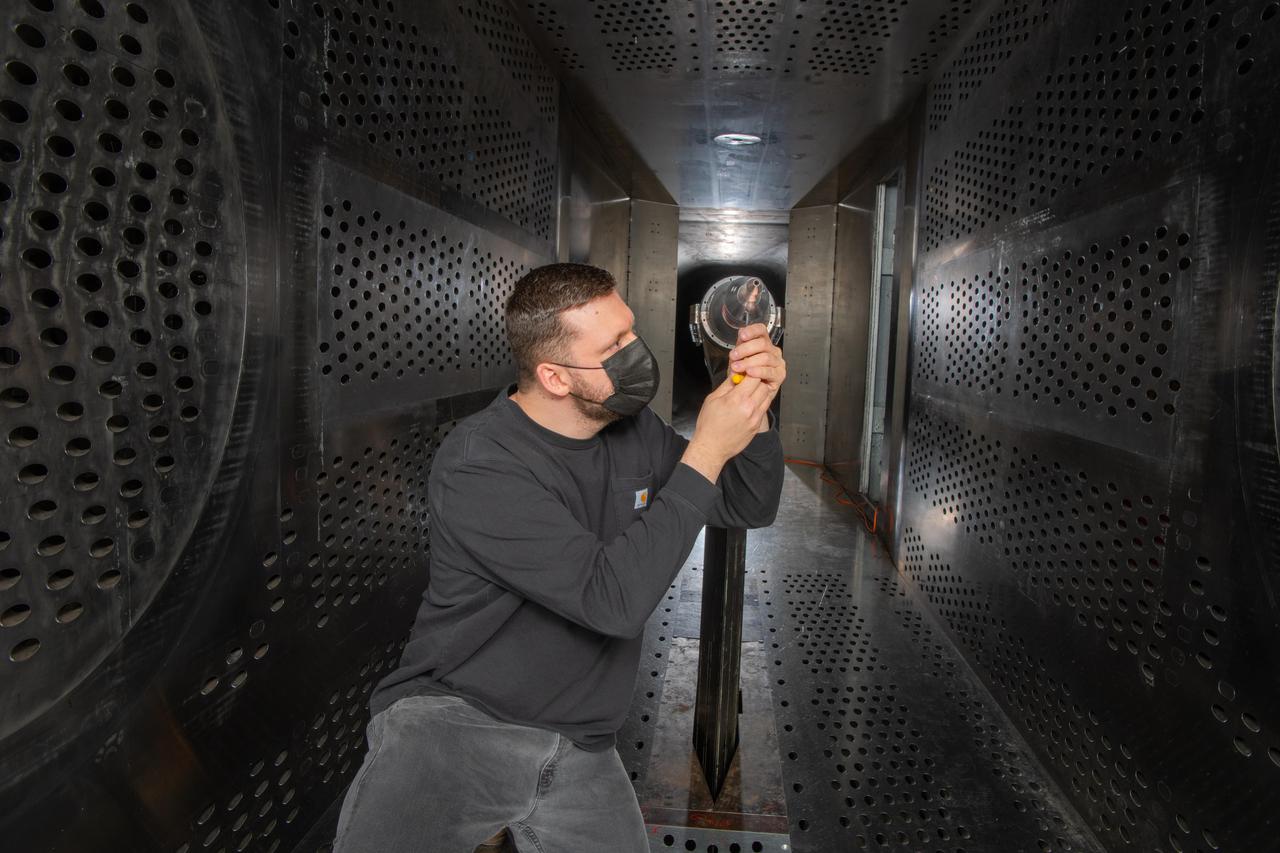
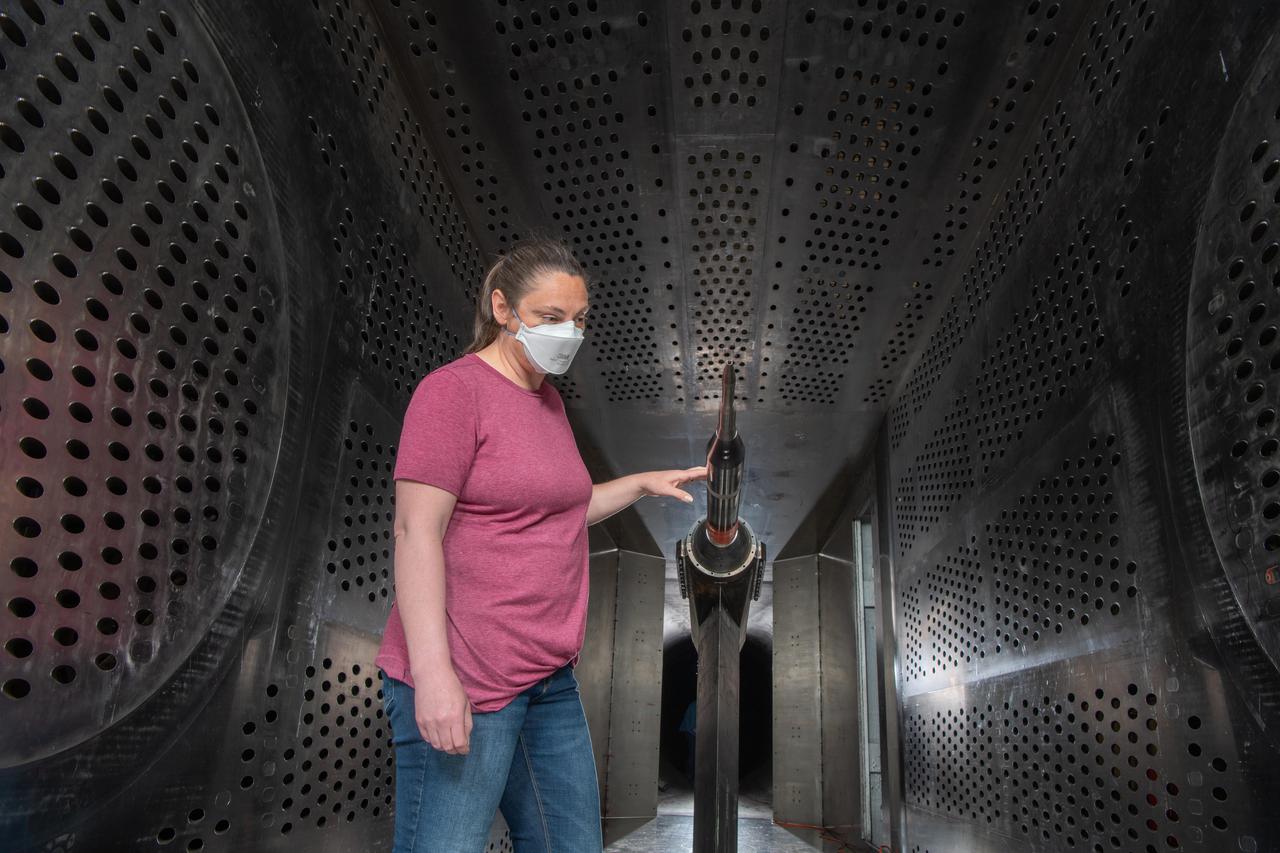
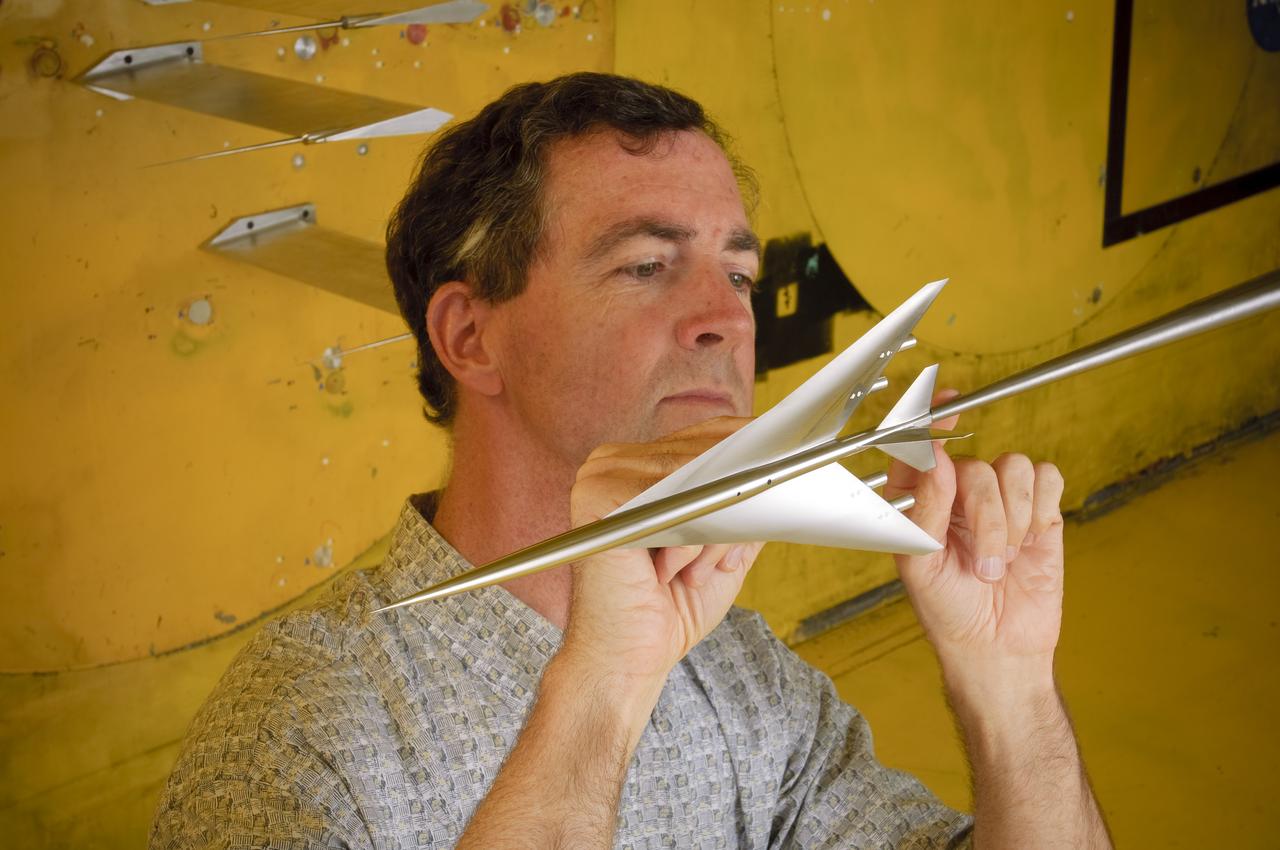
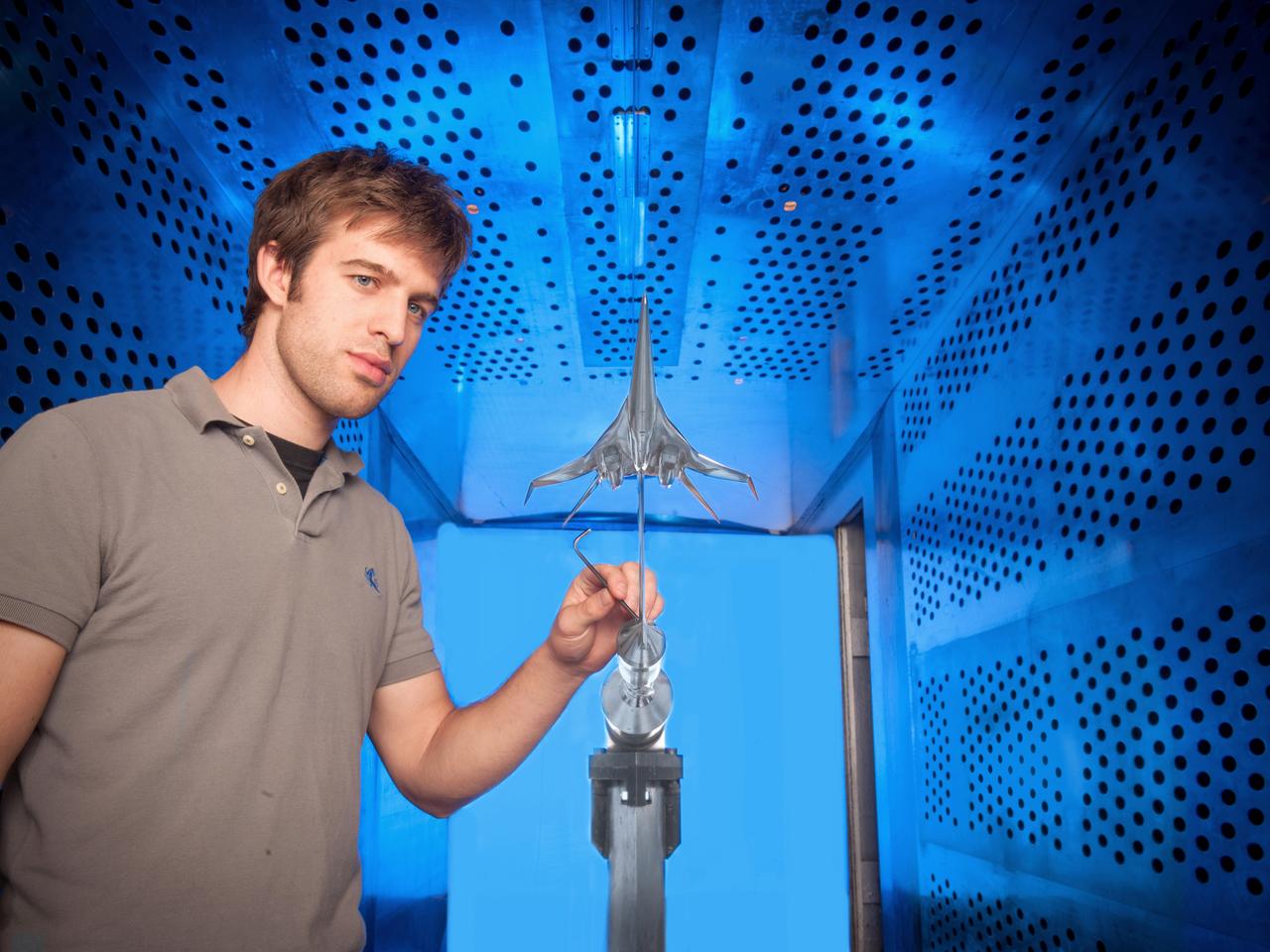
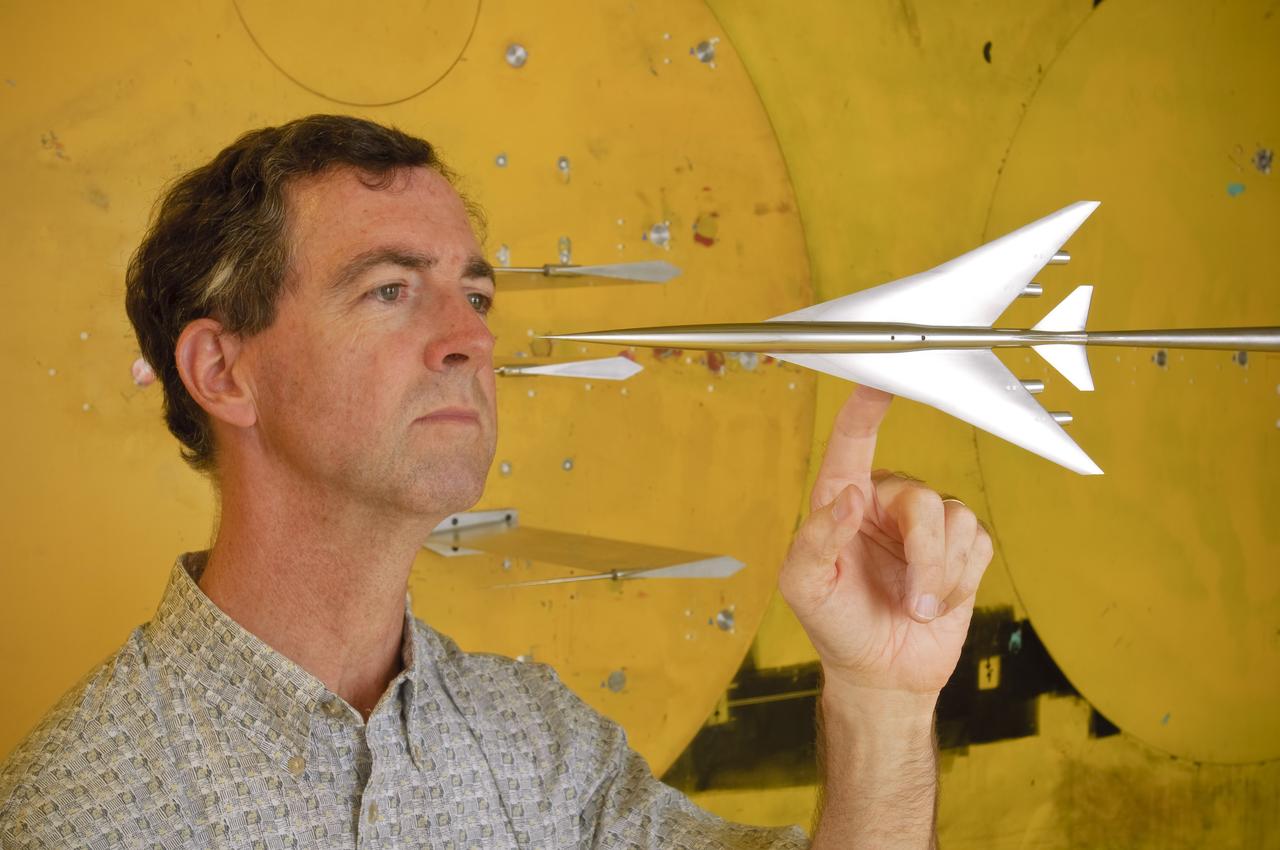
NASA Glenn engineer Gary Williamson with a small model of a future low-boom supersonic aircraft used for testing in the 8' x 6' Supersonic Wind Tunnel at NASA Glenn Research Center.
Low-boom Supersonic Aircraft
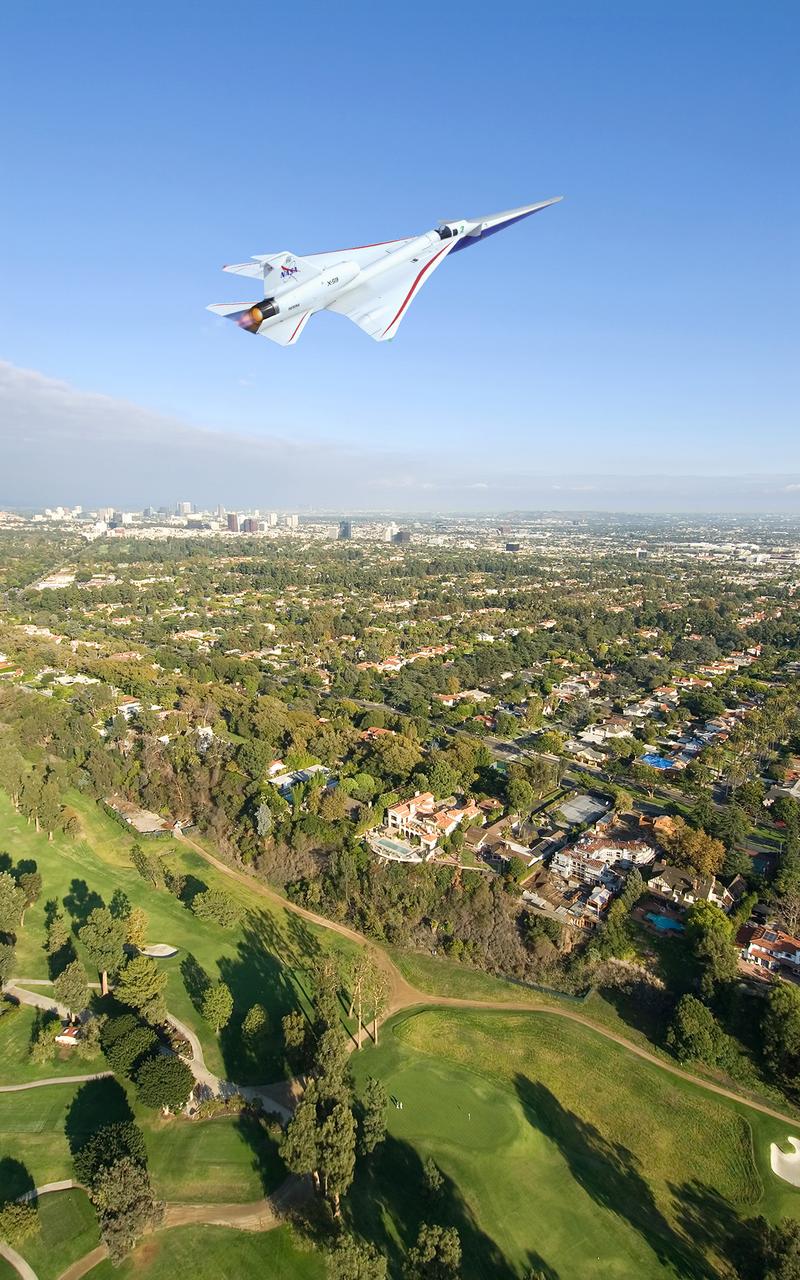
An artist illustration of the Low-Boom Flight Demonstration vehicle flying over a community.
Low-Boom Flight Demonstration over land
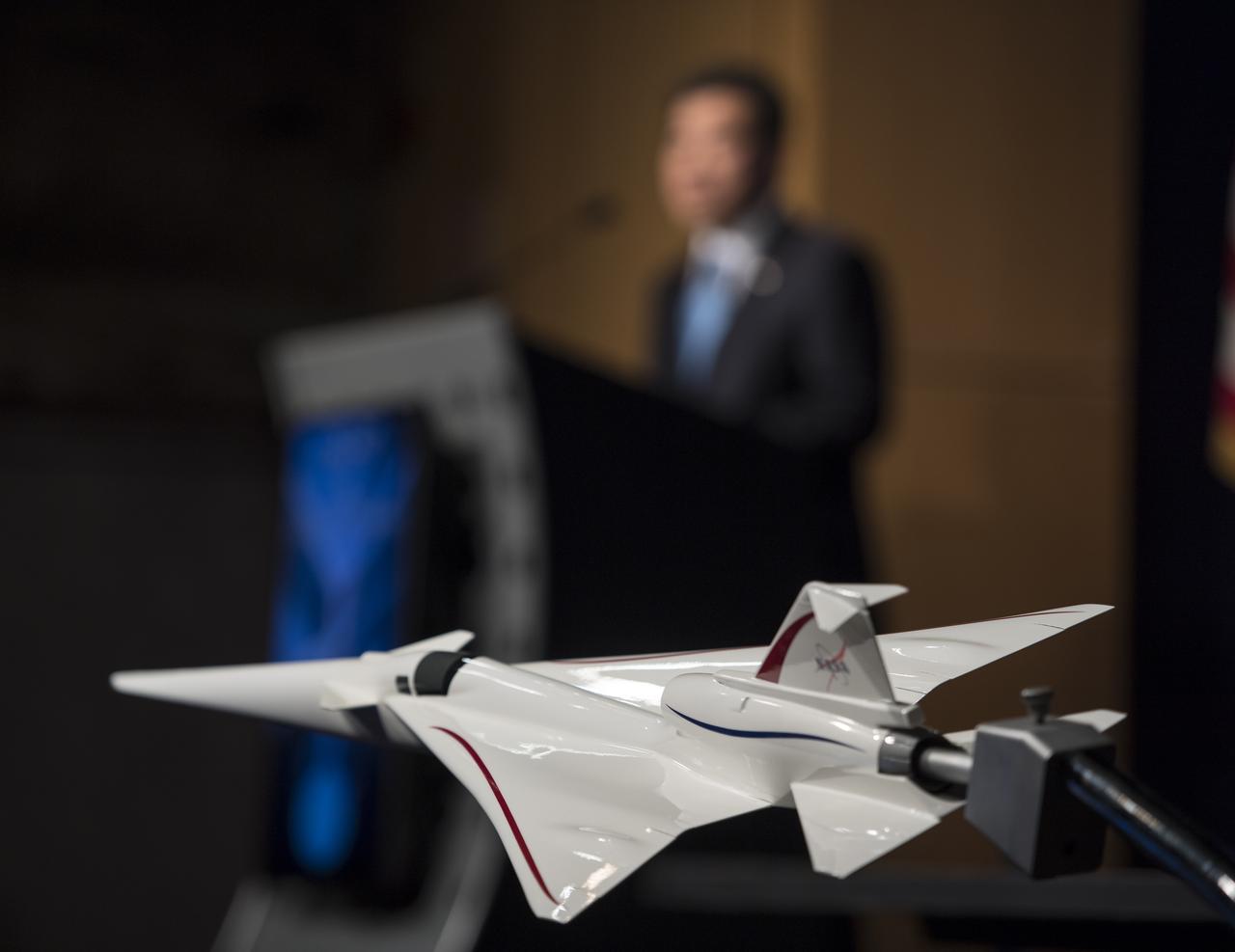
A model of the first Low Boom Flight Demonstrator is seen at a briefing on Tuesday, April 3, 2018 at NASA Headquarters in Washington. This new experimental aircraft will cut cross country travel times in half by flying faster than the speed of sound without creating a sonic boom, enabling travel from New York to Los Angeles in two hours. Photo Credit: (NASA/Aubrey Gemignani)
Low Boom Flight Demonstrator Briefing
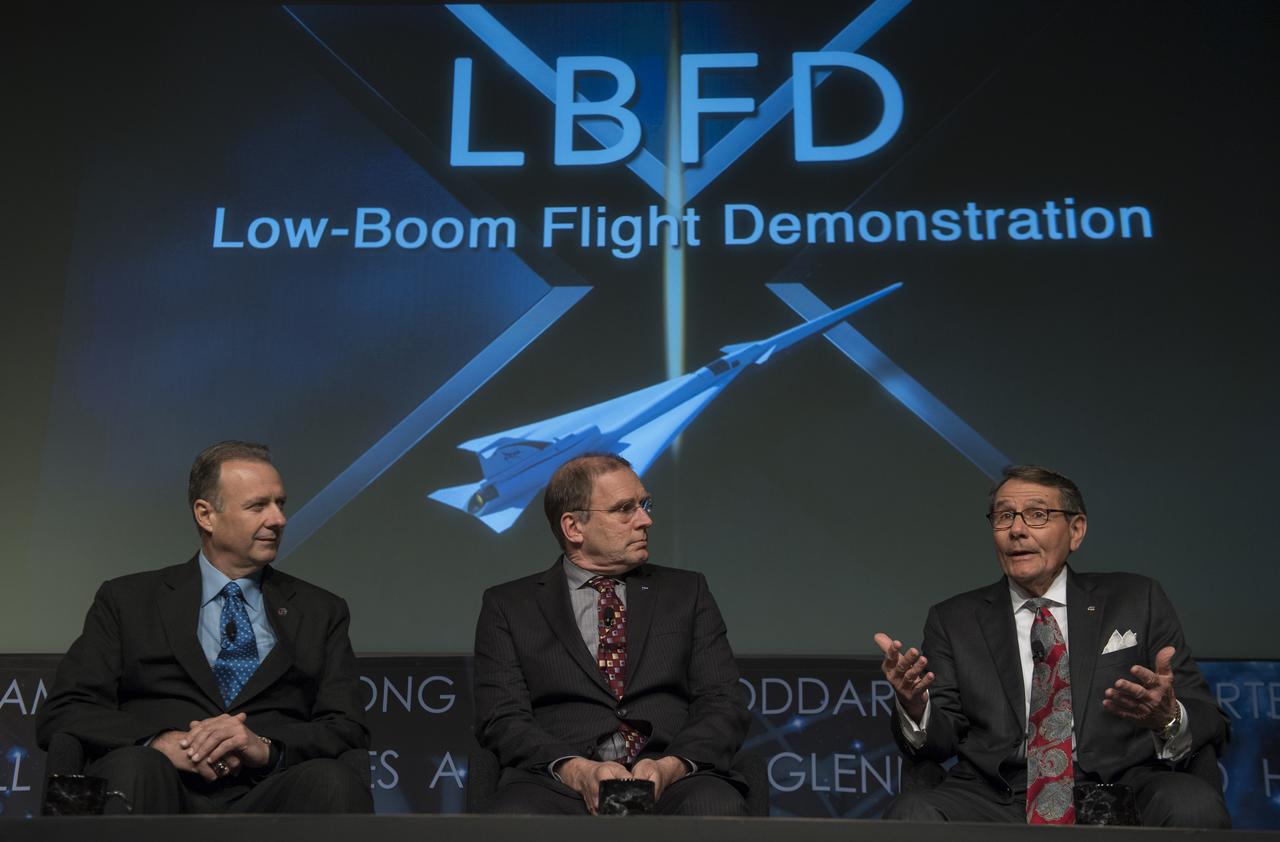
Dr. Ed Waggoner, program director, Integrated Aviation Systems Program, NASA, right, speaks on a panel with Peter Iosifidis, program manager, Low-Boom Flight Demonstrator, Lockheed Martin Skunk Works, left, and Peter Coen, project manager, Commercial Supersonics Technology Project, Langley Research Center, NASA, center, at a briefing on the Low Boom Flight Demonstrator, Tuesday, April 3, 2018 at NASA Headquarters in Washington. This new experimental aircraft will cut cross country travel times in half by flying faster than the speed of sound without creating a sonic boom, enabling travel from New York to Los Angeles in two hours. Photo Credit: (NASA/Aubrey Gemignani)
Low Boom Flight Demonstrator Briefing
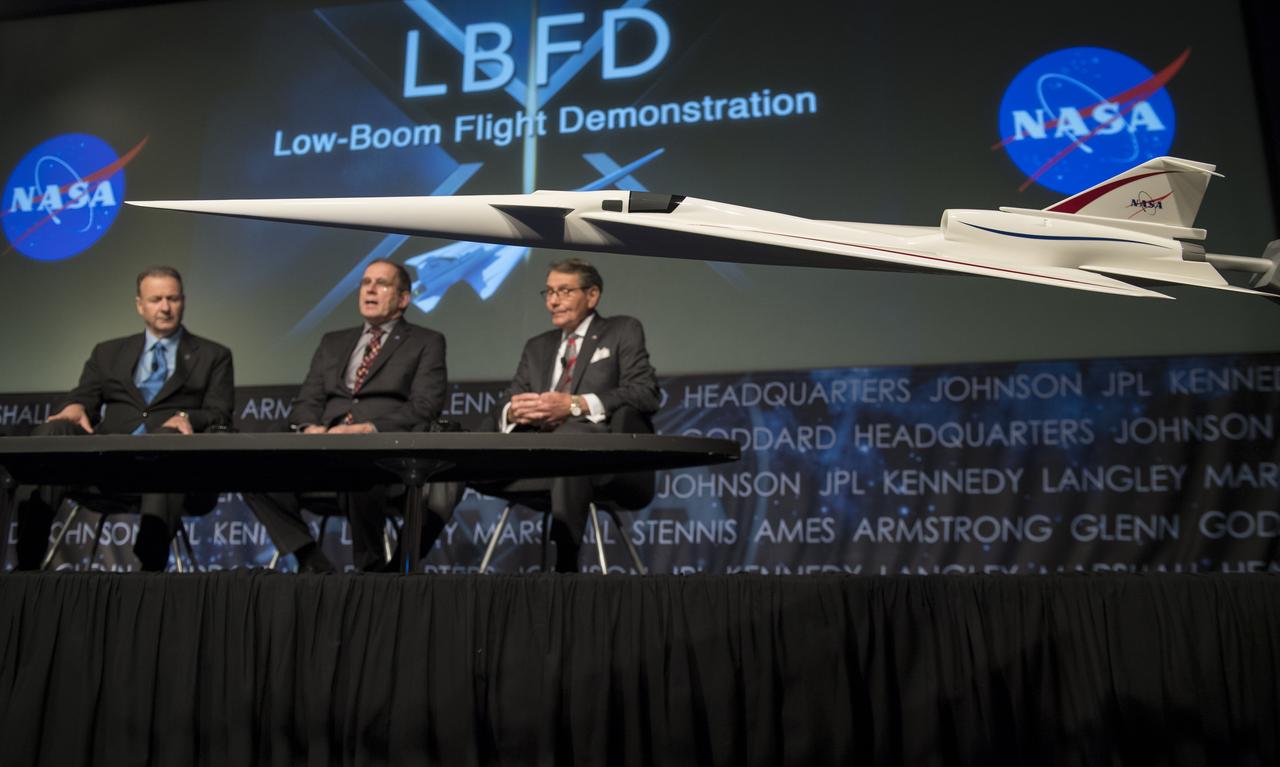
Panelists Peter Iosifidis, program manager, Low-Boom Flight Demonstrator, Lockheed Martin Skunk Works, left, Peter Coen, project manager, Commercial Supersonics Technology Project, Langley Research Center, NASA, center, and Dr. Ed Waggoner, program director, Integrated Aviation Systems Program, NASA, right, are seen behind a model of the Low Boom Flight Demonstrator at a briefing, Tuesday, April 3, 2018 at NASA Headquarters in Washington. This new experimental aircraft will cut cross country travel times in half by flying faster than the speed of sound without creating a sonic boom, enabling travel from New York to Los Angeles in two hours. Photo Credit: (NASA/Aubrey Gemignani)
Low Boom Flight Demonstrator Briefing
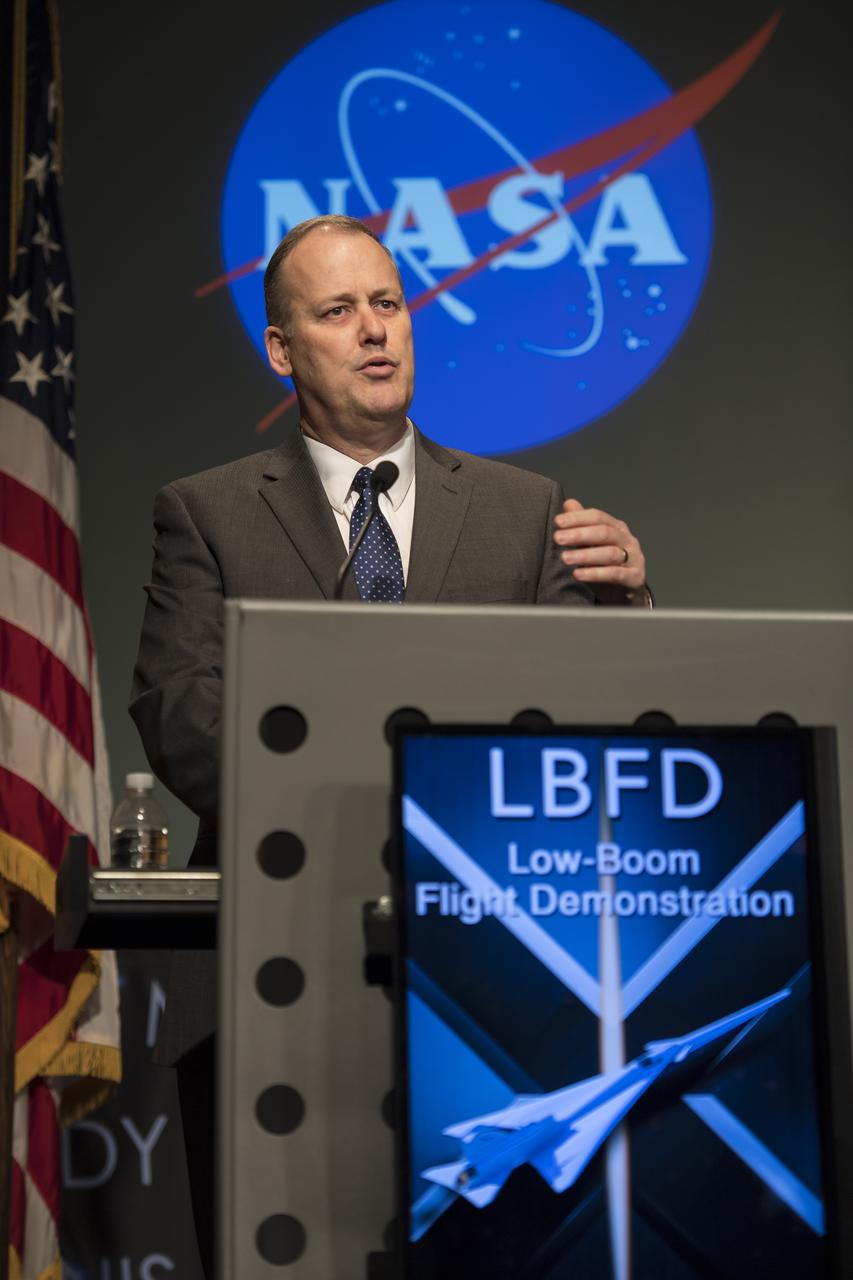
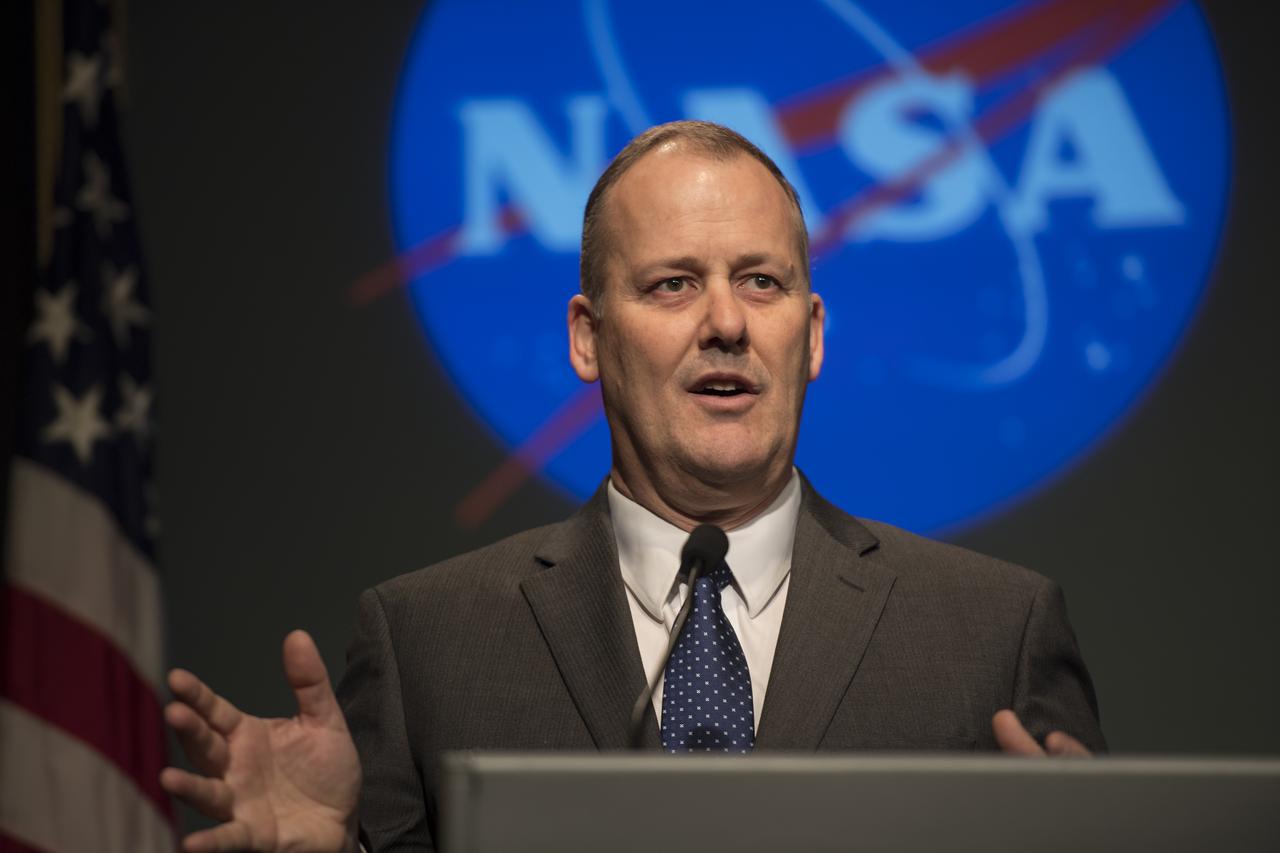
Dr. Ed Waggoner, program director, Integrated Aviation Systems Program, NASA, speaks at a briefing on the Low Boom Flight Demonstrator, Tuesday, April 3, 2018 at NASA Headquarters in Washington. This new experimental aircraft will cut cross country travel times in half by flying faster than the speed of sound without creating a sonic boom, enabling travel from New York to Los Angeles in two hours. Photo Credit: (NASA/Aubrey Gemignani)
Low Boom Flight Demonstrator Briefing
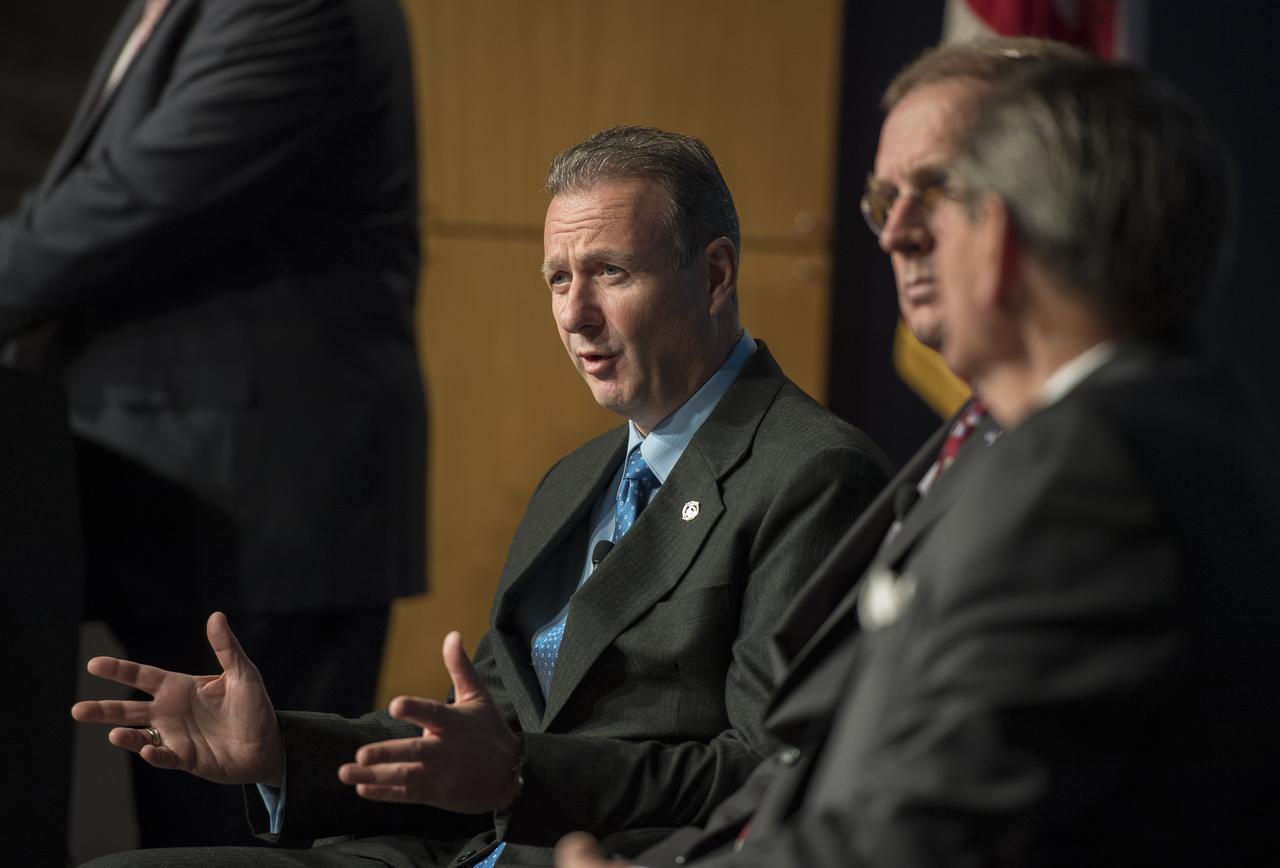
Dr. Jaiwon Shin, associate administrator for the Aeronautics Research Mission Directorate, NASA, announces Lockheed Martin as the winner of the contract to develop a Low Boom Flight Demonstrator at a briefing, Tuesday, April 3, 2018 at NASA Headquarters in Washington. This new experimental aircraft will cut cross country travel times in half by flying faster than the speed of sound without creating a sonic boom, enabling travel from New York to Los Angeles in two hours. Photo Credit: (NASA/Aubrey Gemignani)
Low Boom Flight Demonstrator Briefing
Dr. Jaiwon Shin, associate administrator for the Aeronautics Research Mission Directorate, NASA, announces Lockheed Martin as the winner of the contract to develop a Low Boom Flight Demonstrator at a briefing, Tuesday, April 3, 2018 at NASA Headquarters in Washington. This new experimental aircraft will cut cross country travel times in half by flying faster than the speed of sound without creating a sonic boom, enabling travel from New York to Los Angeles in two hours. Photo Credit: (NASA/Aubrey Gemignani)
Low Boom Flight Demonstrator Briefing
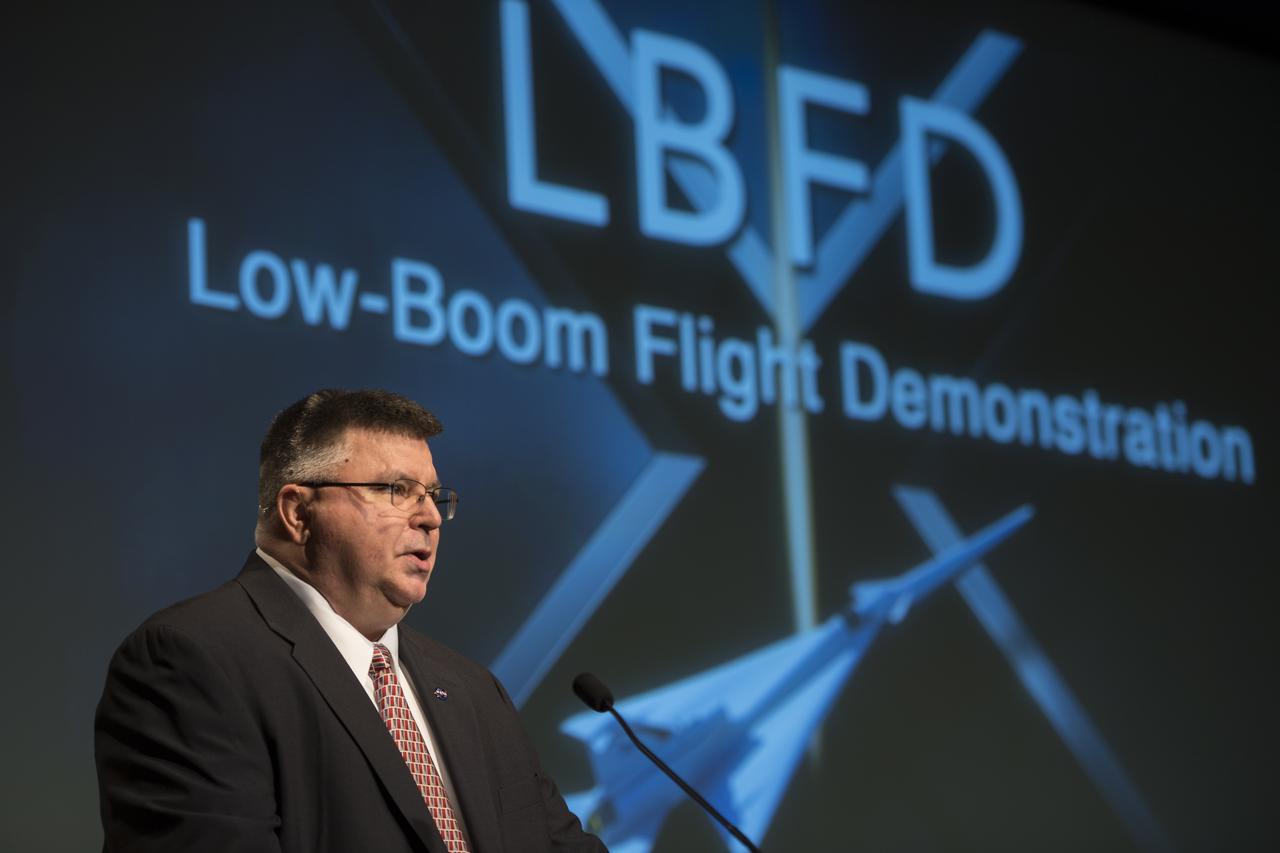
Peter Iosifidis, program manager, Low-Boom Flight Demonstrator, Lockheed Martin Skunk Works, speaks on a panel at a briefing after Lockheed Martin was awarded the contract to develop the first X-plane, Tuesday, April 3, 2018 at NASA Headquarters in Washington. This new experimental aircraft will cut cross country travel times in half by flying faster than the speed of sound without creating a sonic boom, enabling travel from New York to Los Angeles in two hours. Photo Credit: (NASA/Aubrey Gemignani)
Low Boom Flight Demonstrator Briefing
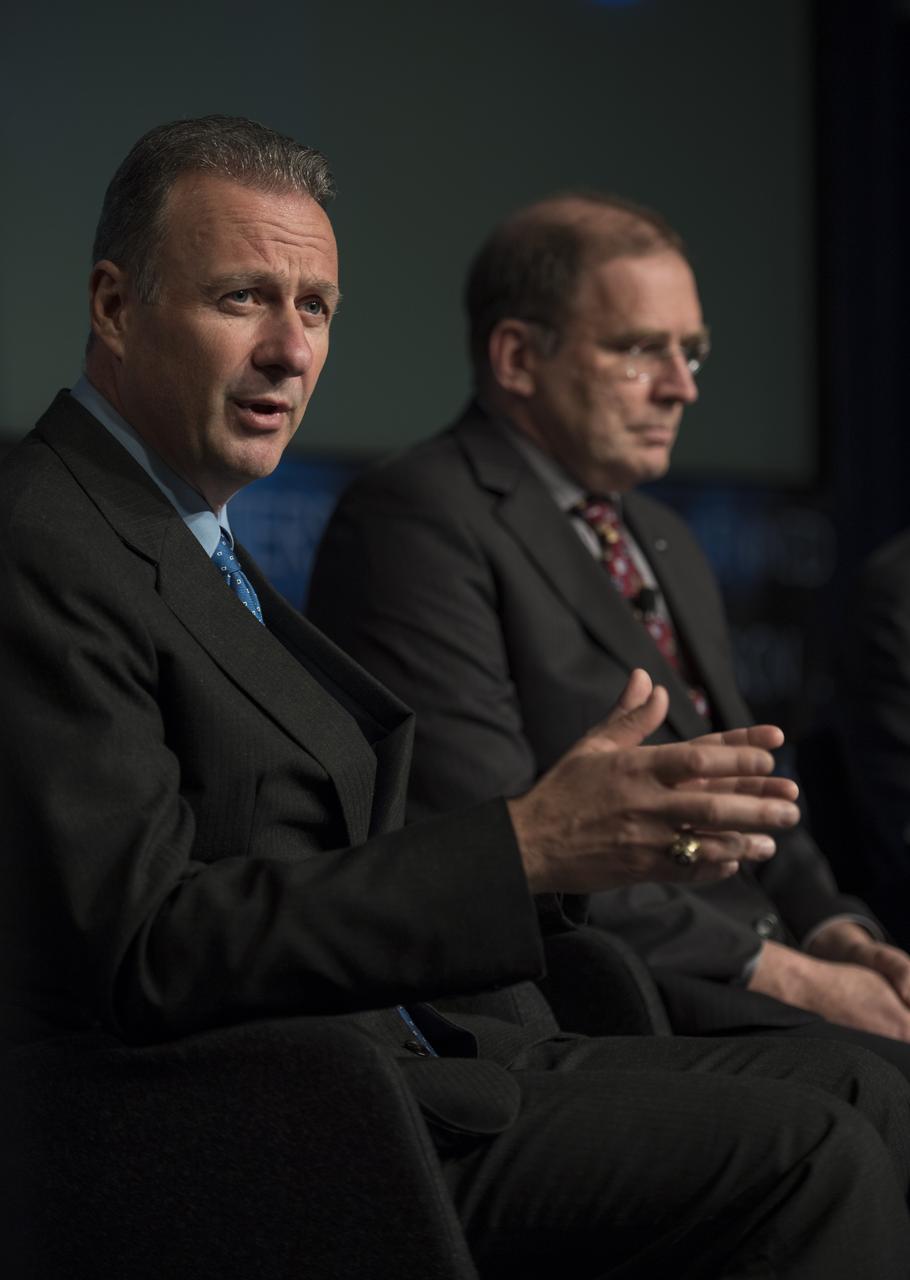
J.D. Harrington, public affairs officer, Aeronautics Mission Directorate, NASA, speaks at a briefing on the Low Boom Flight Demonstrator, Tuesday, April 3, 2018 at NASA Headquarters in Washington. This new experimental aircraft will cut cross country travel times in half by flying faster than the speed of sound without creating a sonic boom, enabling travel from New York to Los Angeles in two hours. Photo Credit: (NASA/Aubrey Gemignani)
Low Boom Flight Demonstrator Briefing
Peter Iosifidis, program manager, Low-Boom Flight Demonstrator, Lockheed Martin Skunk Works, speaks on a panel at a briefing after Lockheed Martin was awarded the contract to develop the first X-plane, Tuesday, April 3, 2018 at NASA Headquarters in Washington. This new experimental aircraft will cut cross country travel times in half by flying faster than the speed of sound without creating a sonic boom, enabling travel from New York to Los Angeles in two hours. Photo Credit: (NASA/Aubrey Gemignani)
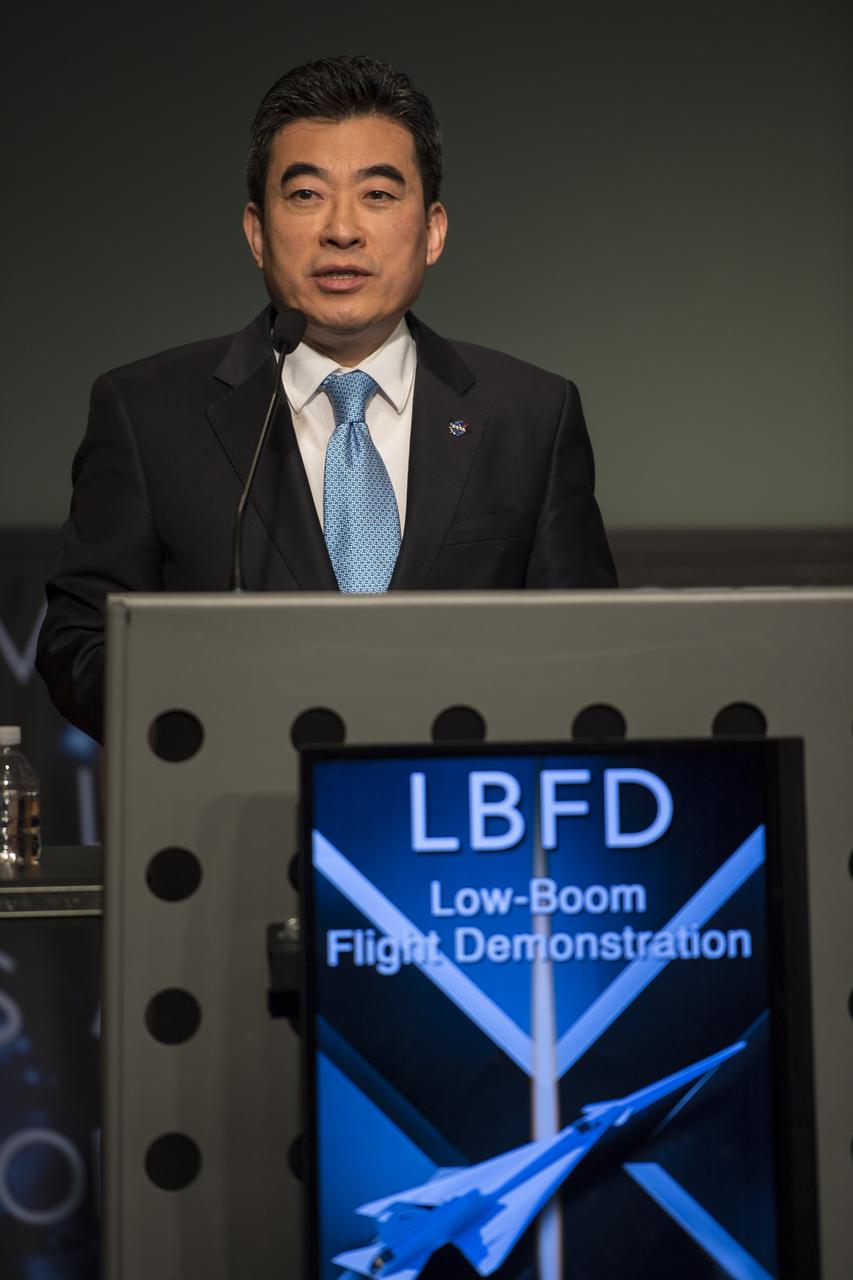
Low Boom Flight Demonstrator Briefing
Peter Coen, project manager, Commercial Supersonics Technology Project, Langley Research Center, NASA, center, speaks on a panel with Peter Iosifidis, Lockheed Martin, left, and Dr. Ed Waggoner, NASA, right, at a briefing on the Low Boom Flight Demonstrator, Tuesday, April 3, 2018 at NASA Headquarters in Washington. This new experimental aircraft will cut cross country travel times in half by flying faster than the speed of sound without creating a sonic boom, enabling travel from New York to Los Angeles in two hours. Photo Credit: (NASA/Aubrey Gemignani)
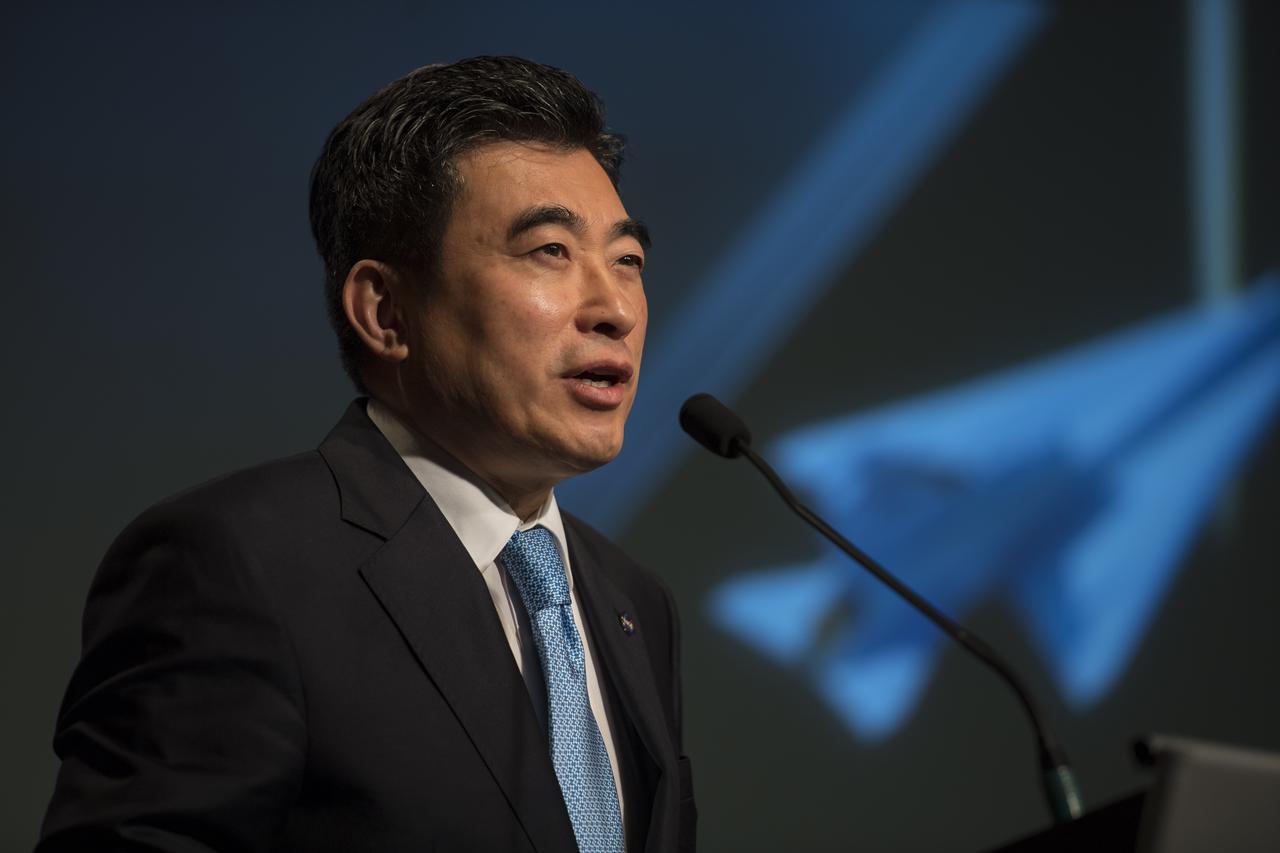
Low Boom Flight Demonstrator Briefing
Peter Coen, project manager, Commercial Supersonics Technology Project, Langley Research Center, NASA, speaks on a panel with Peter Iosifidis, Lockheed Martin, left, and Dr. Ed Waggoner, NASA, right, at a briefing on the Low Boom Flight Demonstrator, Tuesday, April 3, 2018 at NASA Headquarters in Washington. This new experimental aircraft will cut cross country travel times in half by flying faster than the speed of sound without creating a sonic boom, enabling travel from New York to Los Angeles in two hours. Photo Credit: (NASA/Aubrey Gemignani)

Low Boom Flight Demonstrator Briefing
Peter Coen, project manager, Commercial Supersonics Technology Project, Langley Research Center, NASA, speaks on a panel with Peter Iosifidis, Lockheed Martin, left, and Dr. Ed Waggoner, NASA, right, at a briefing on the Low Boom Flight Demonstrator, Tuesday, April 3, 2018 at NASA Headquarters in Washington. This new experimental aircraft will cut cross country travel times in half by flying faster than the speed of sound without creating a sonic boom, enabling travel from New York to Los Angeles in two hours. Photo Credit: (NASA/Aubrey Gemignani)
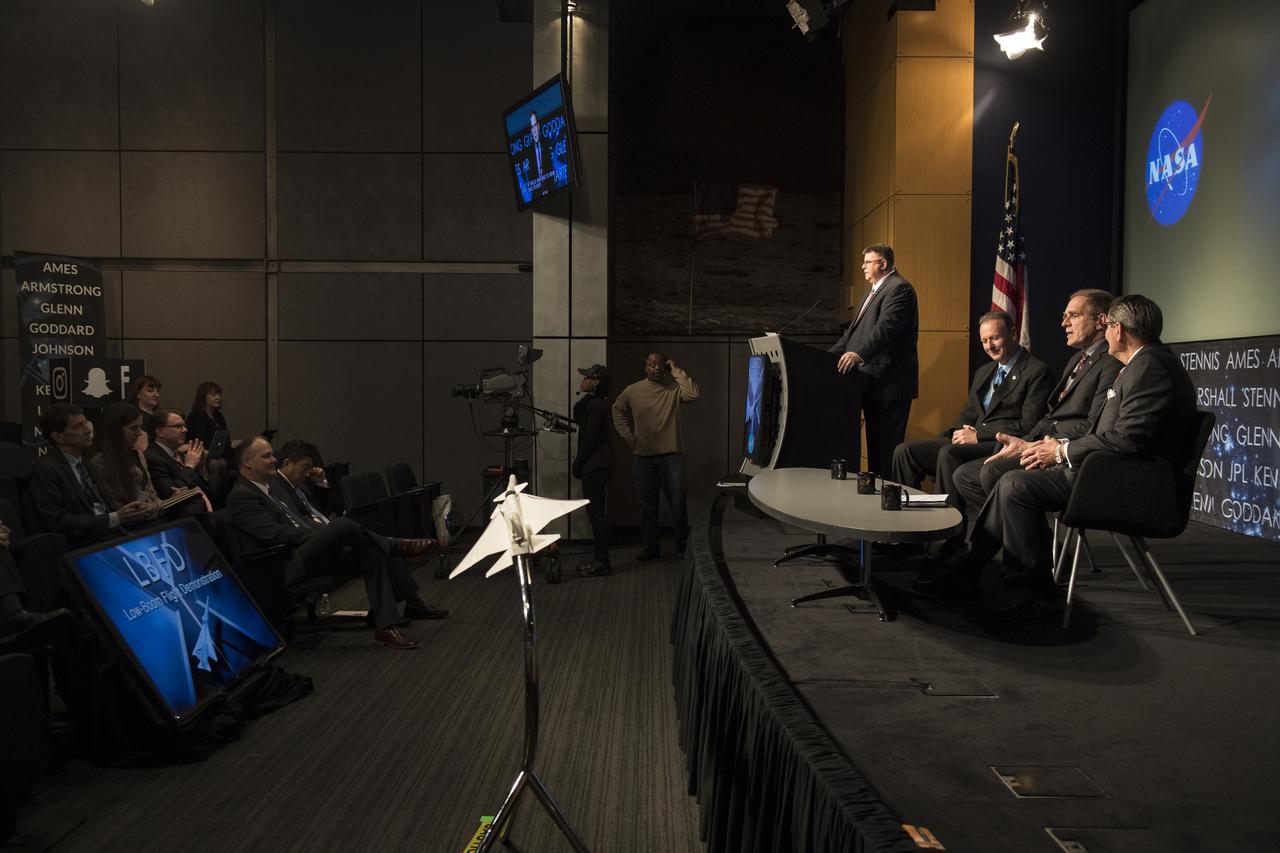
Low Boom Flight Demonstrator Briefing
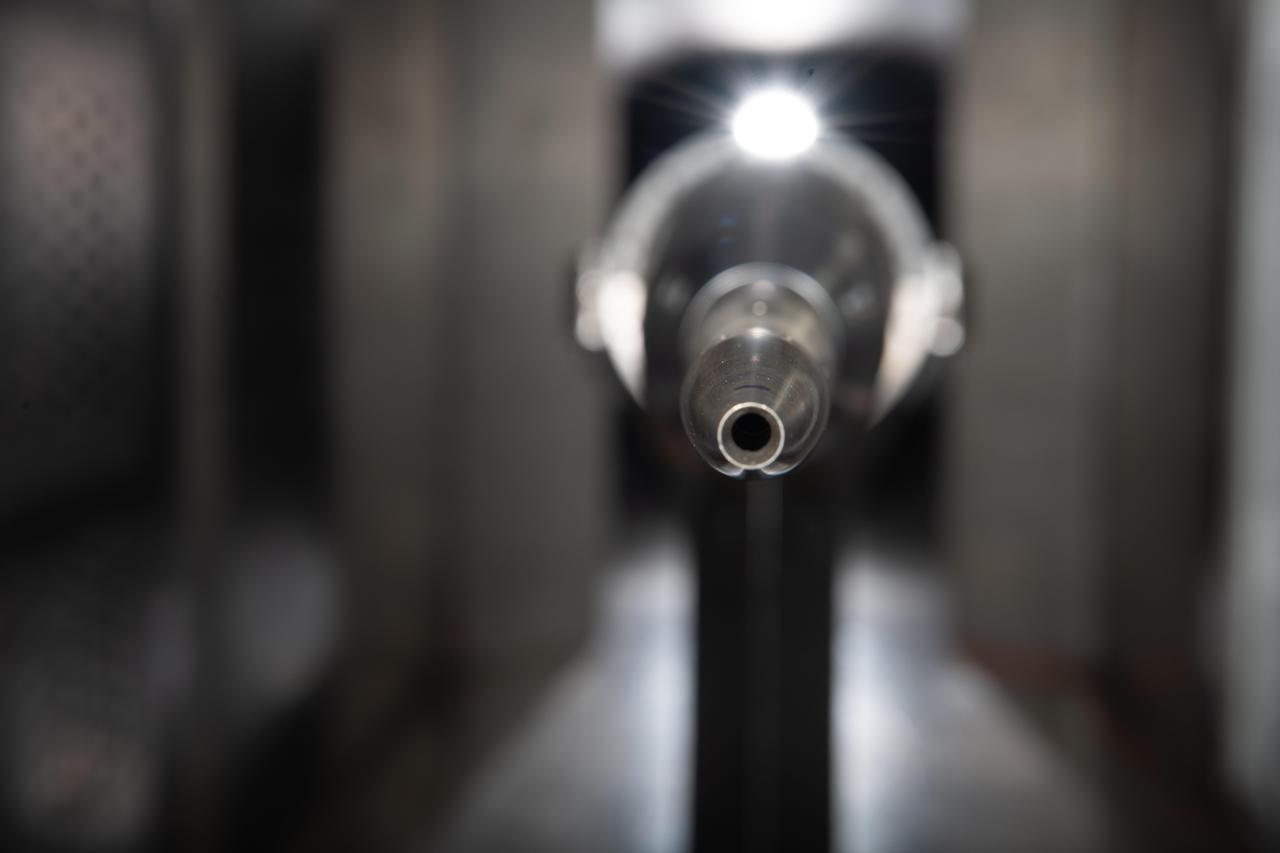
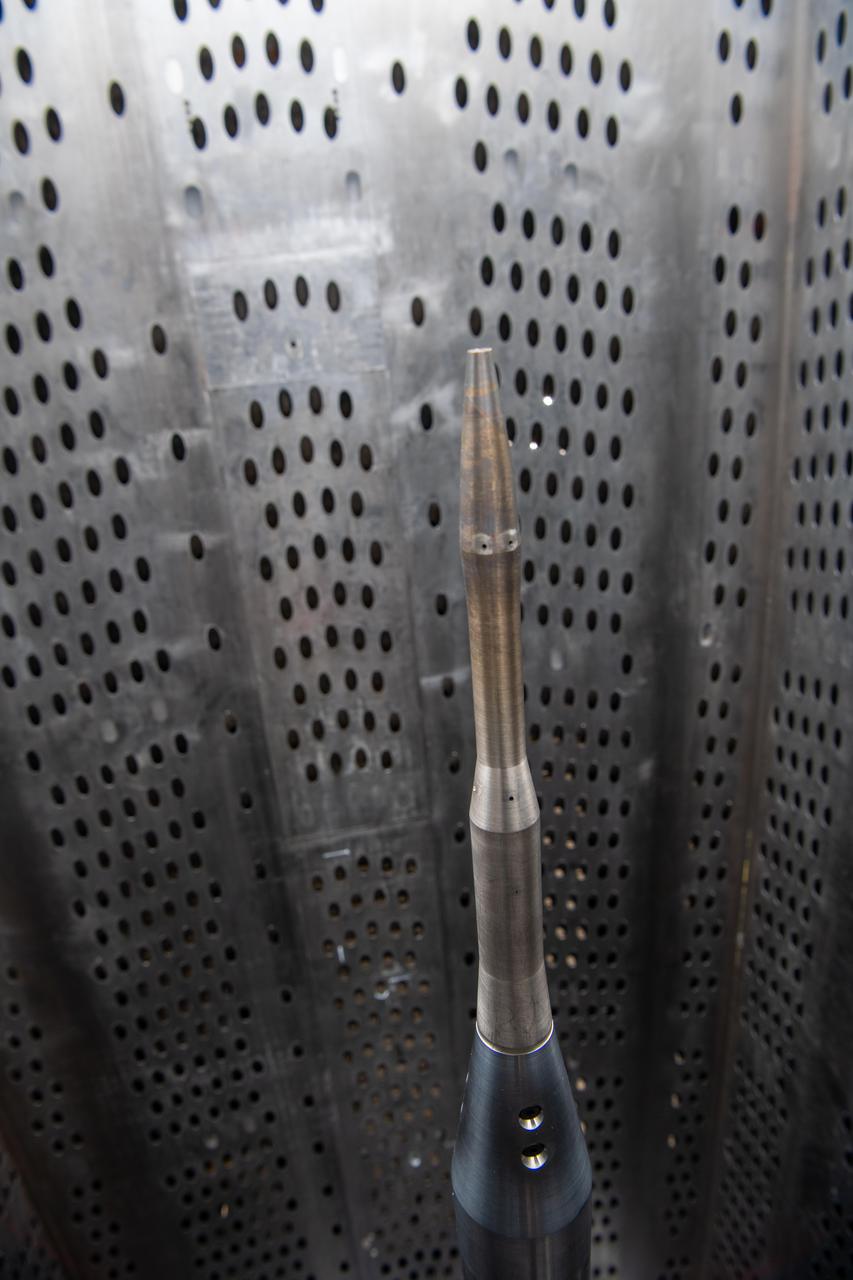
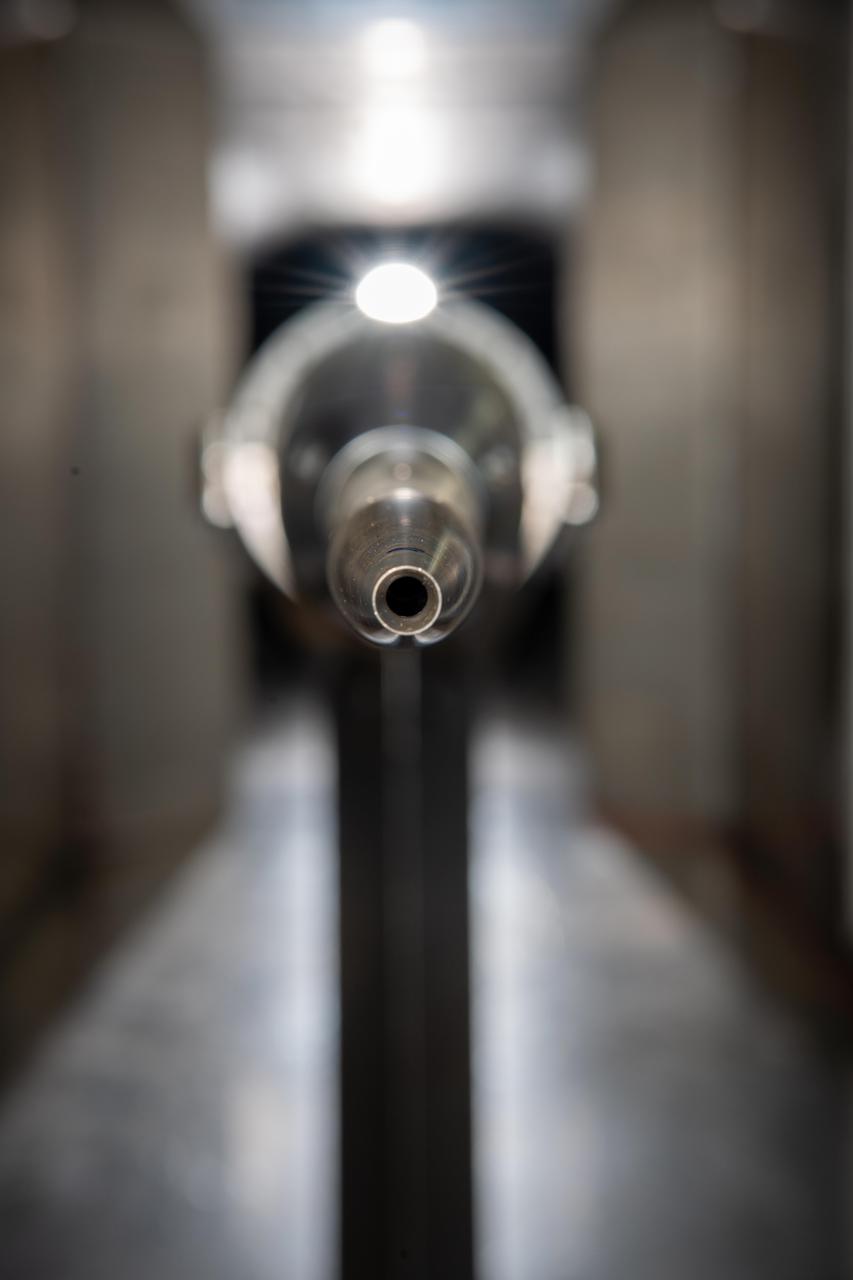
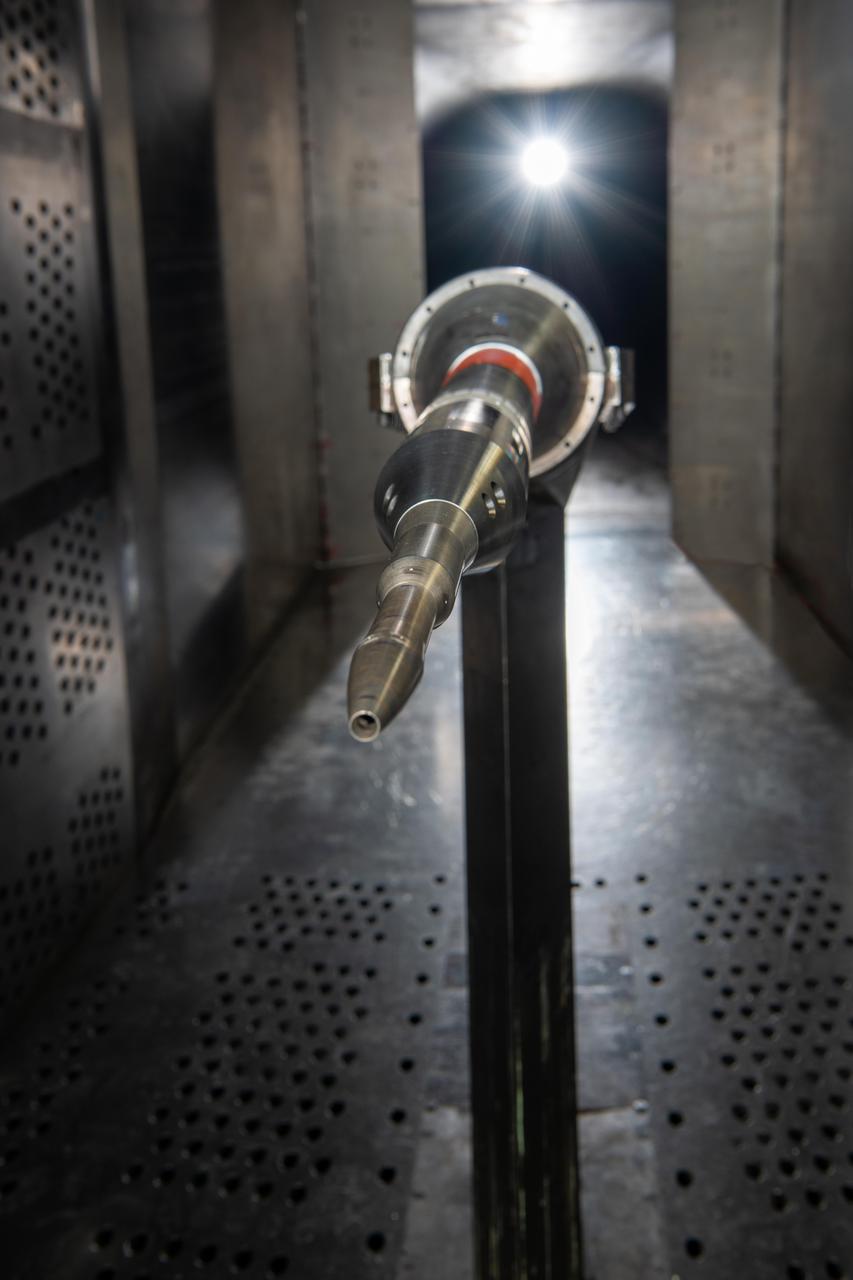
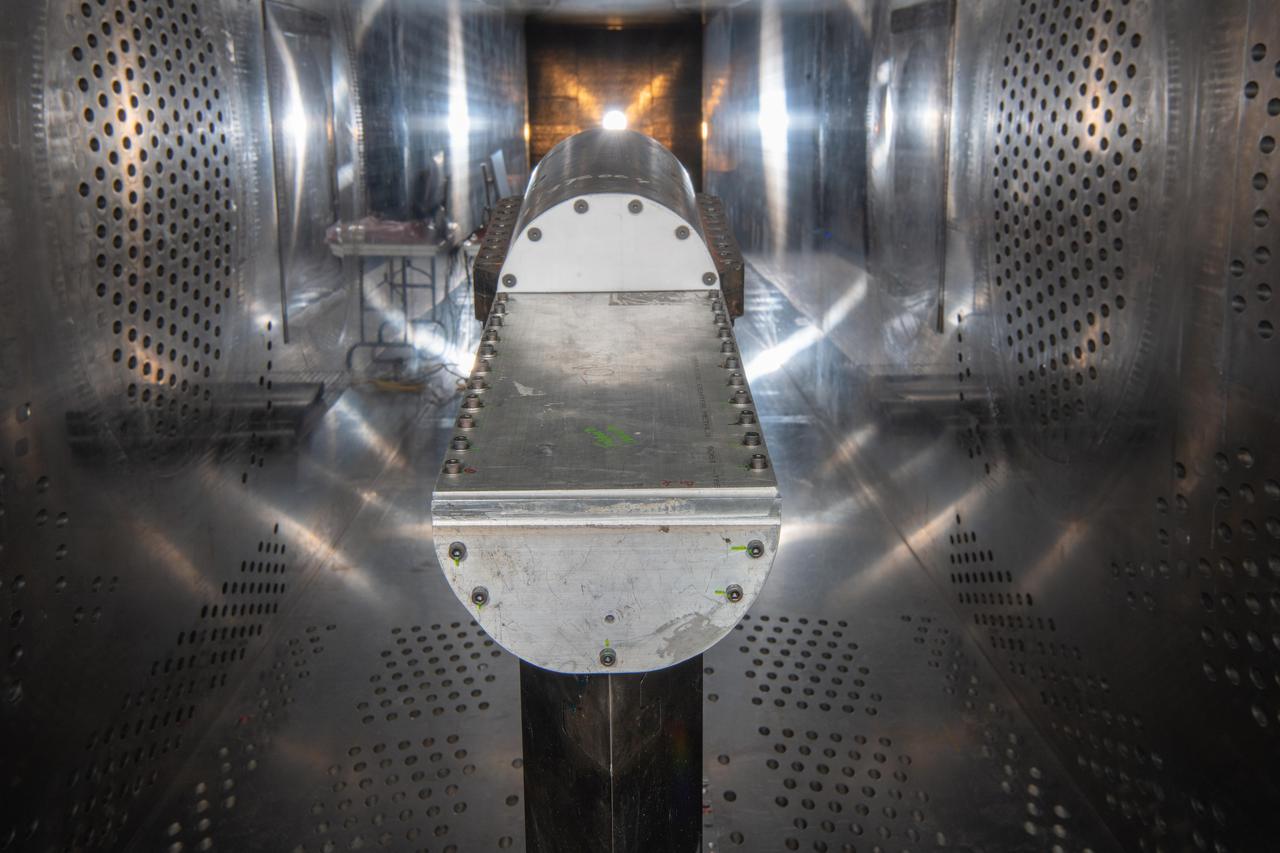
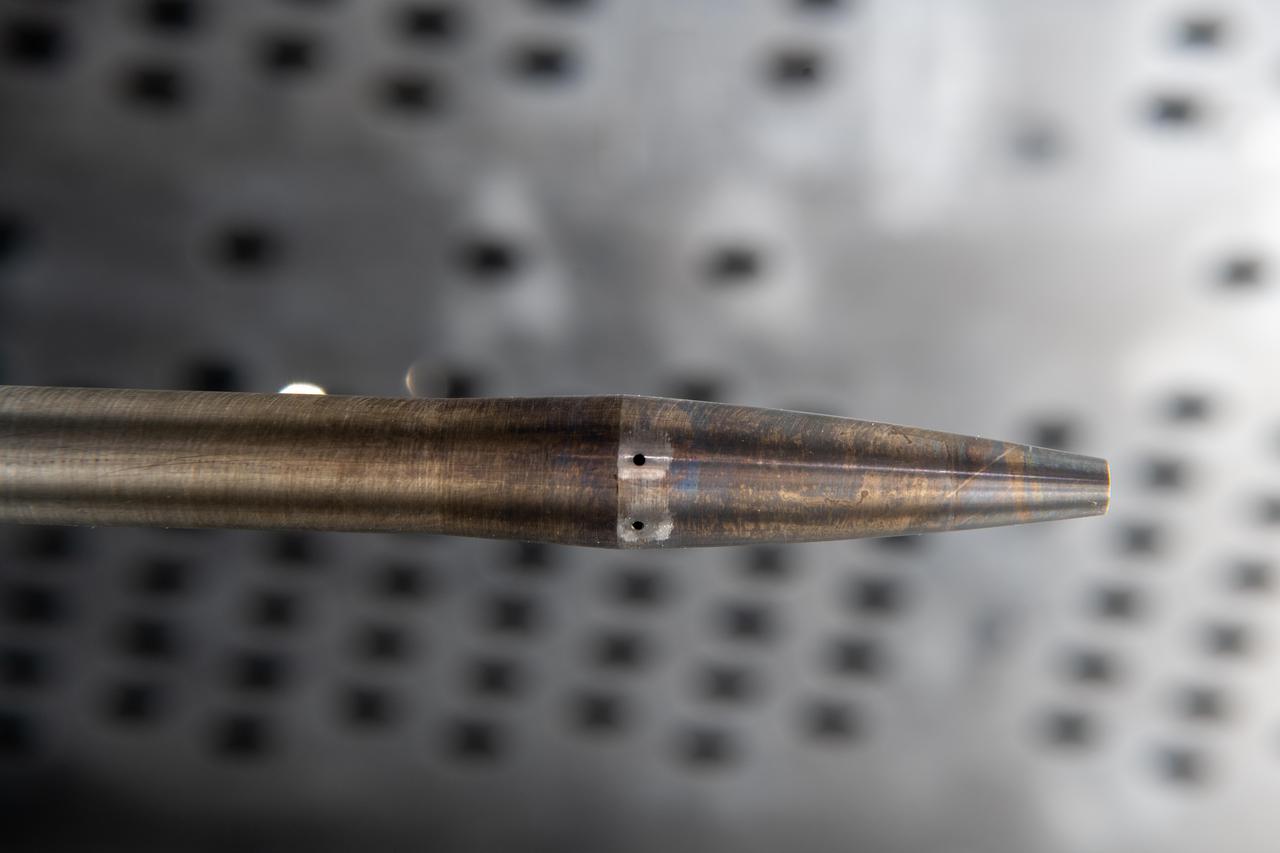
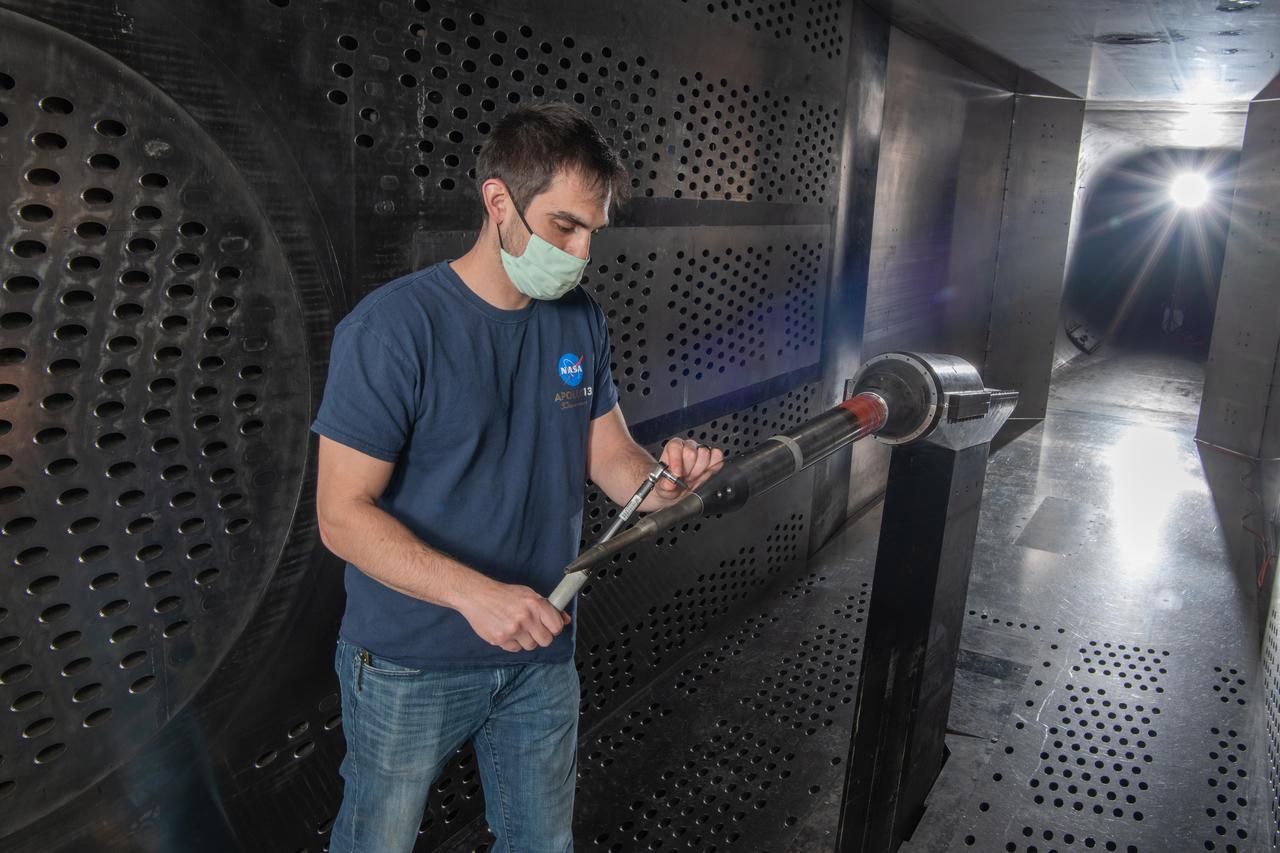
X-59 Low Boom Flight Demonstrator, LBFD Probe Calibration Test
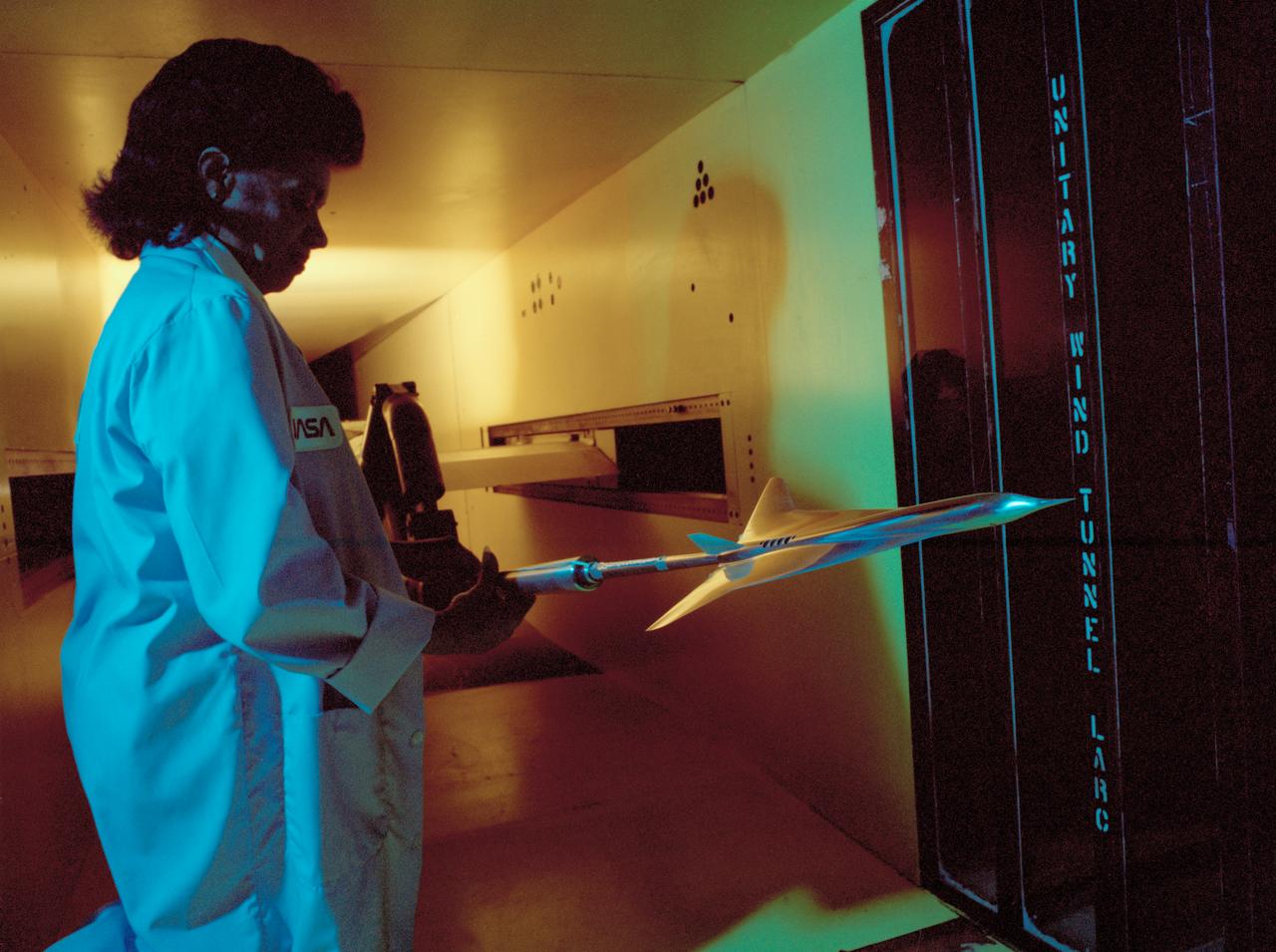
Low-boom Model Mach II in Unitary Tunnel with Christine Darden
Low-boom Model Mach II in Unitary Tunnel
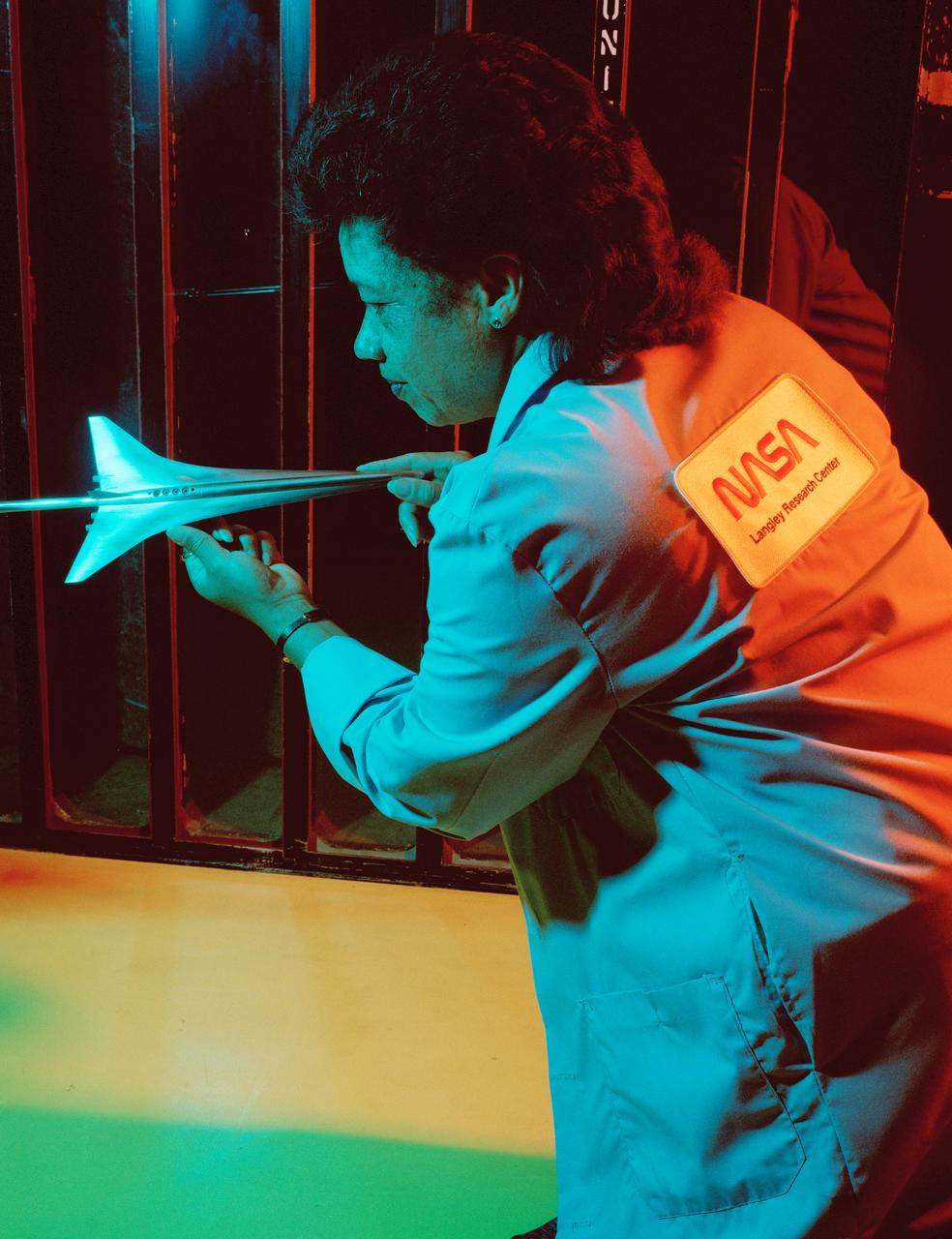
Low-boom Model Mach II in Unitary Tunnel with Christine Darden
Low-boom Model Mach II in Unitary Tunnel
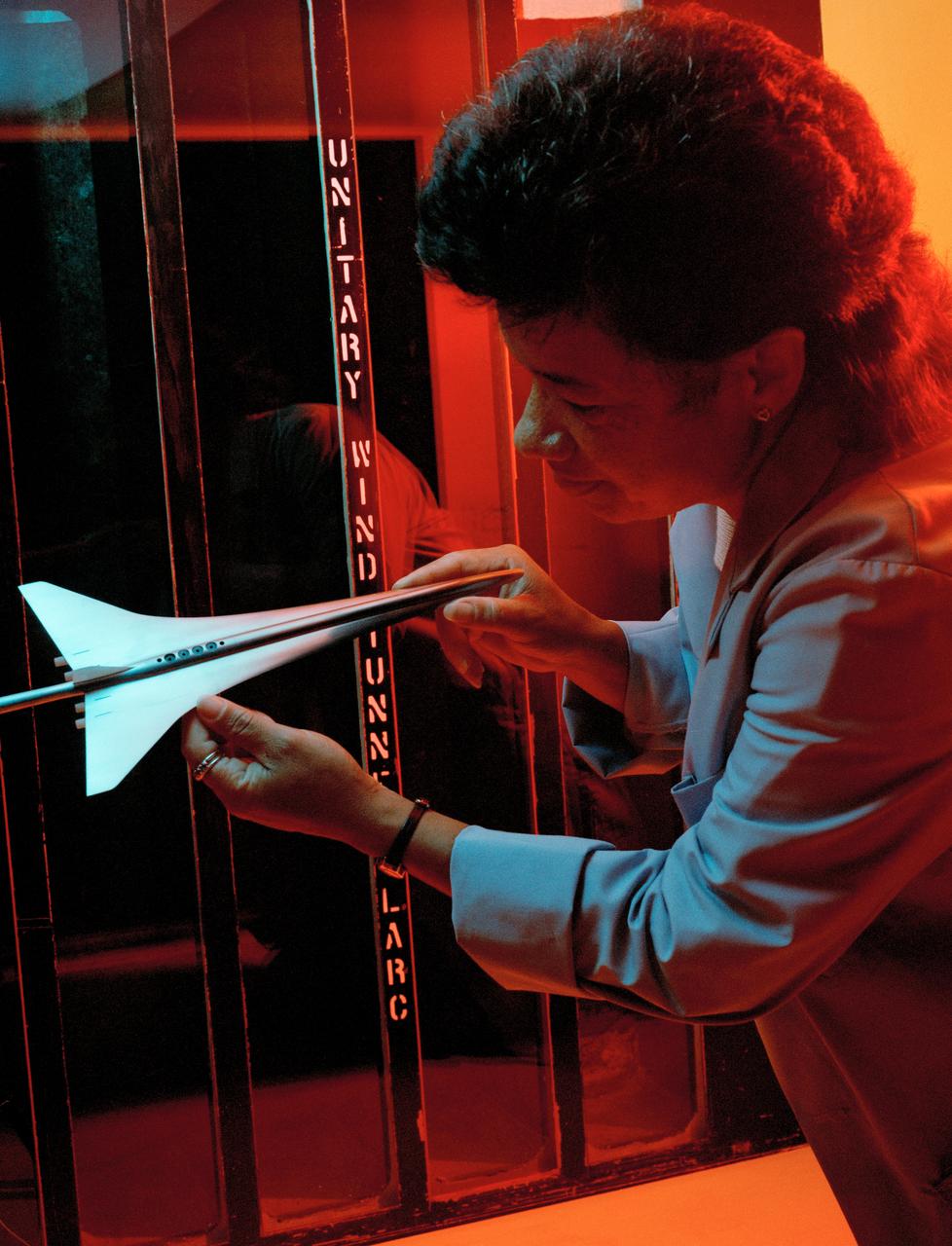
Low-boom Model Mach II in Unitary Tunnel with Christine Darden
Low-boom Model Mach II in Unitary Tunnel
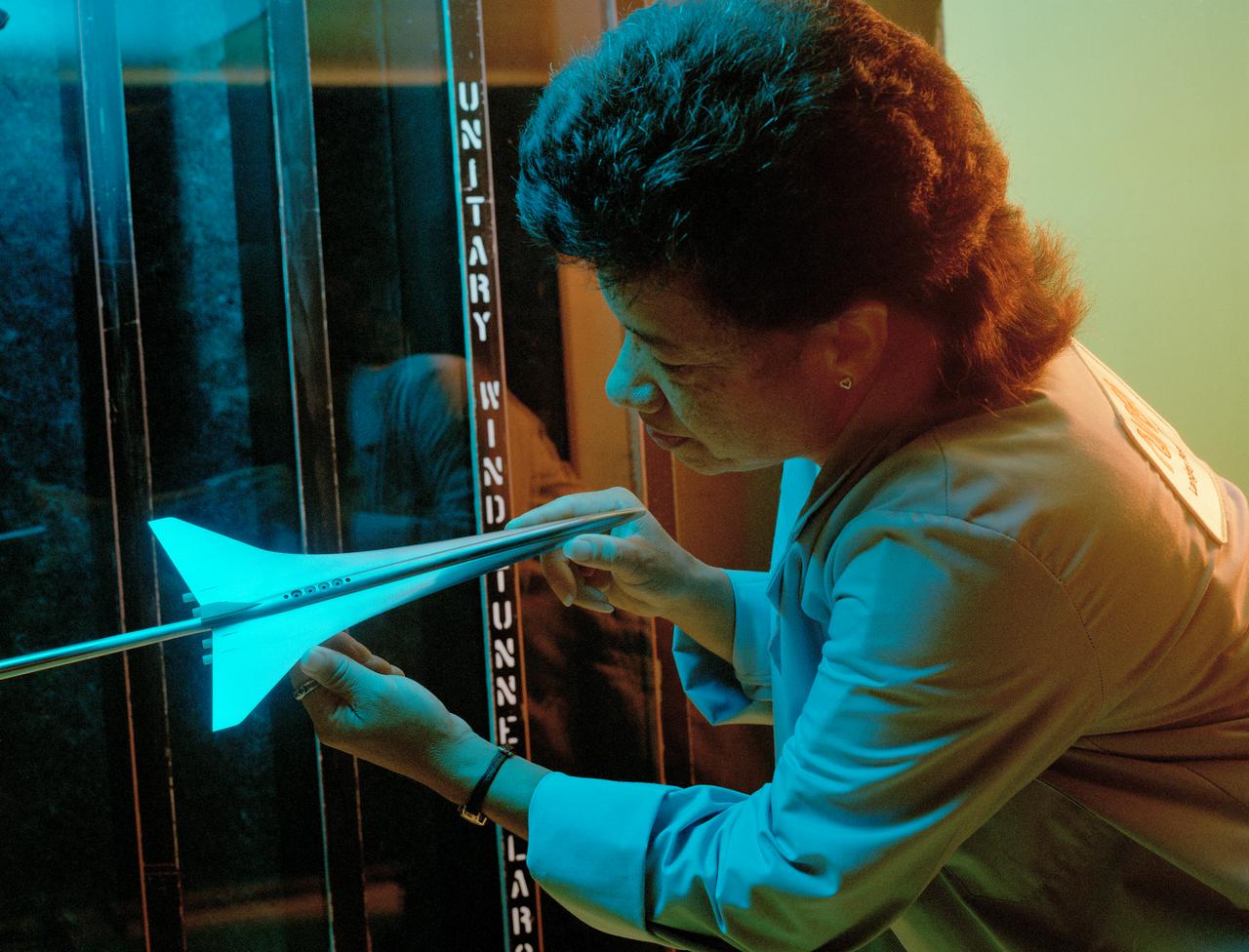
Low-boom Model Mach II in Unitary Tunnel with Christine Darden
Low-boom Model Mach II in Unitary Tunnel
Dave Richardson, director, Air Vehicle Design and Technologies, Lockheed Martin Skunk Works, speaks after the announcement that Lockheed Martin won the contract to develop the first X-plane at a briefing, Tuesday, April 3, 2018 at NASA Headquarters in Washington. This new experimental aircraft will cut cross country travel times in half by flying faster than the speed of sound without creating a sonic boom, enabling travel from New York to Los Angeles in two hours. Photo Credit: (NASA/Aubrey Gemignani)
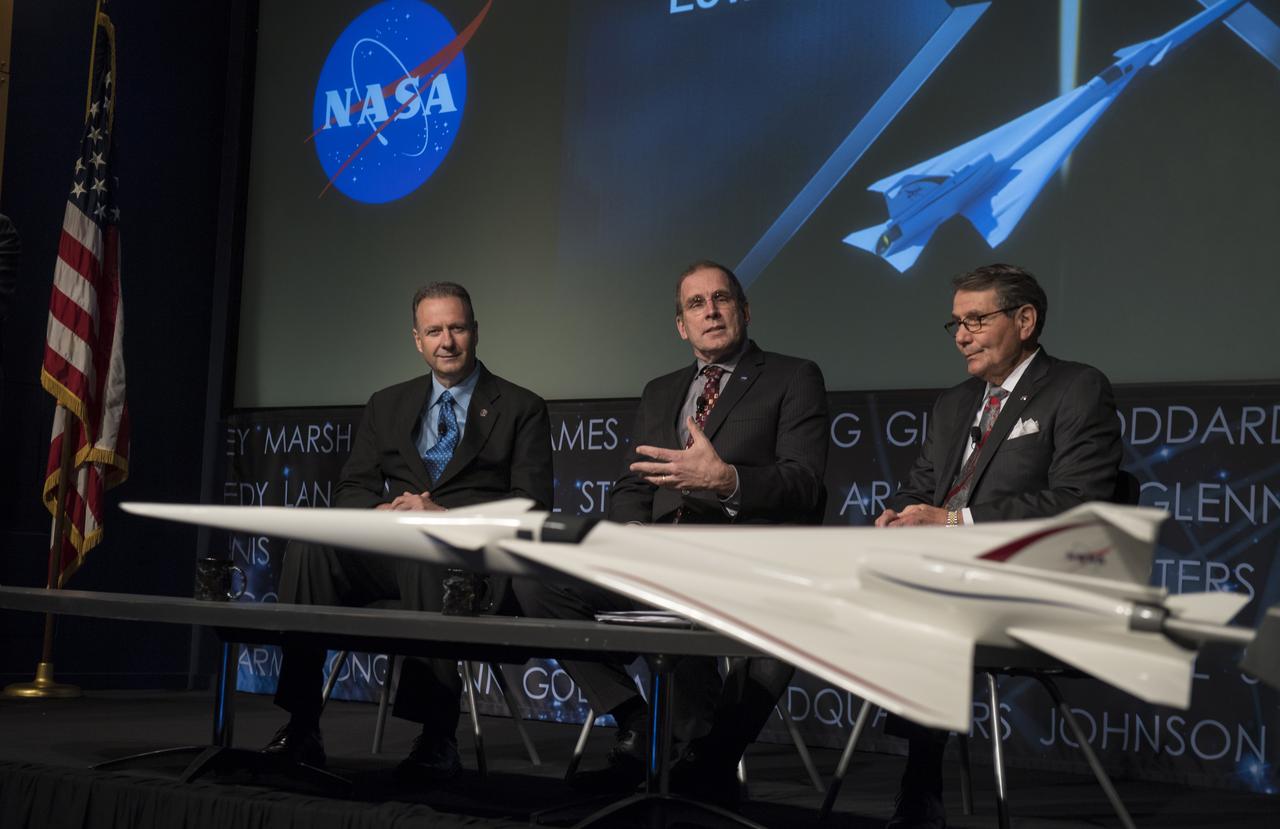
Low Boom Flight Demonstrator Briefing
Dave Richardson, director, Air Vehicle Design and Technologies, Lockheed Martin Skunk Works, speaks after the announcement that Lockheed Martin won the contract to develop the first X-plane at a briefing, Tuesday, April 3, 2018 at NASA Headquarters in Washington. This new experimental aircraft will cut cross country travel times in half by flying faster than the speed of sound without creating a sonic boom, enabling travel from New York to Los Angeles in two hours. Photo Credit: (NASA/Aubrey Gemignani)
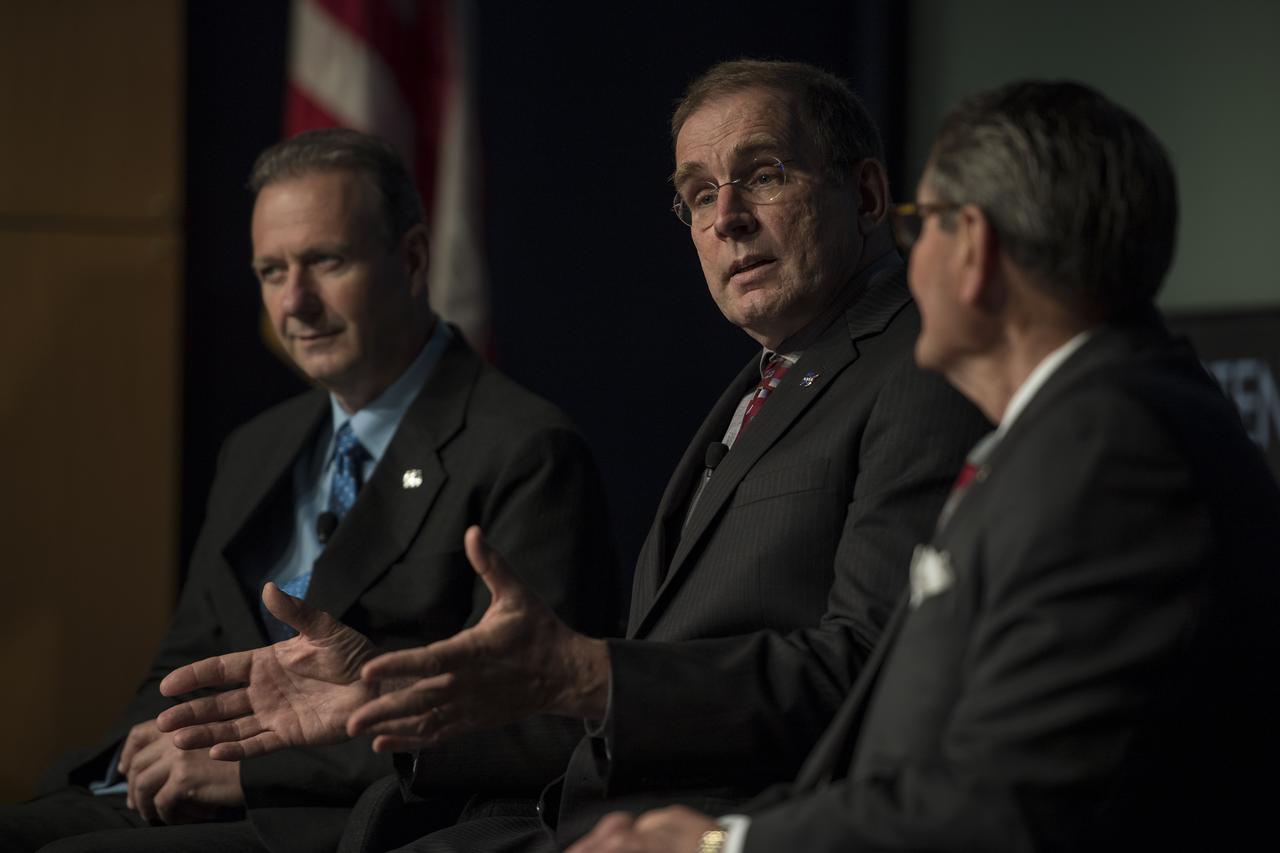
Low Boom Flight Demonstrator Briefing
Event: Horizontal Stabilator Install The Low Boom Flight Demonstrator manufacturing team installed the horizontal stabilizers to the aircraft.  These are used along with the flight control computers to keep the airplane flying safely and providing the pitch control so that the pilot can fly the missions envisioned for the X-59
Horizontal Stabilator Install
Event: Horizontal Stabilator Install The Low Boom Flight Demonstrator manufacturing team installed the horizontal stabilizers to the aircraft.  These are used along with the flight control computers to keep the airplane flying safely and providing the pitch control so that the pilot can fly the missions envisioned for the X-59.
Horizontal Stabilator Install
Event: Horizontal Stabilator Install The Low Boom Flight Demonstrator manufacturing team installed the horizontal stabilizers to the aircraft.  These are used along with the flight control computers to keep the airplane flying safely and providing the pitch control so that the pilot can fly the missions envisioned for the X-59.
Horizontal Stabilator Install
Event: Horizontal Stabilator Install The Low Boom Flight Demonstrator manufacturing team installed the horizontal stabilizers to the aircraft.  These are used along with the flight control computers to keep the airplane flying safely and providing the pitch control so that the pilot can fly the missions envisioned for the X-59.
Horizontal Stabilator Install
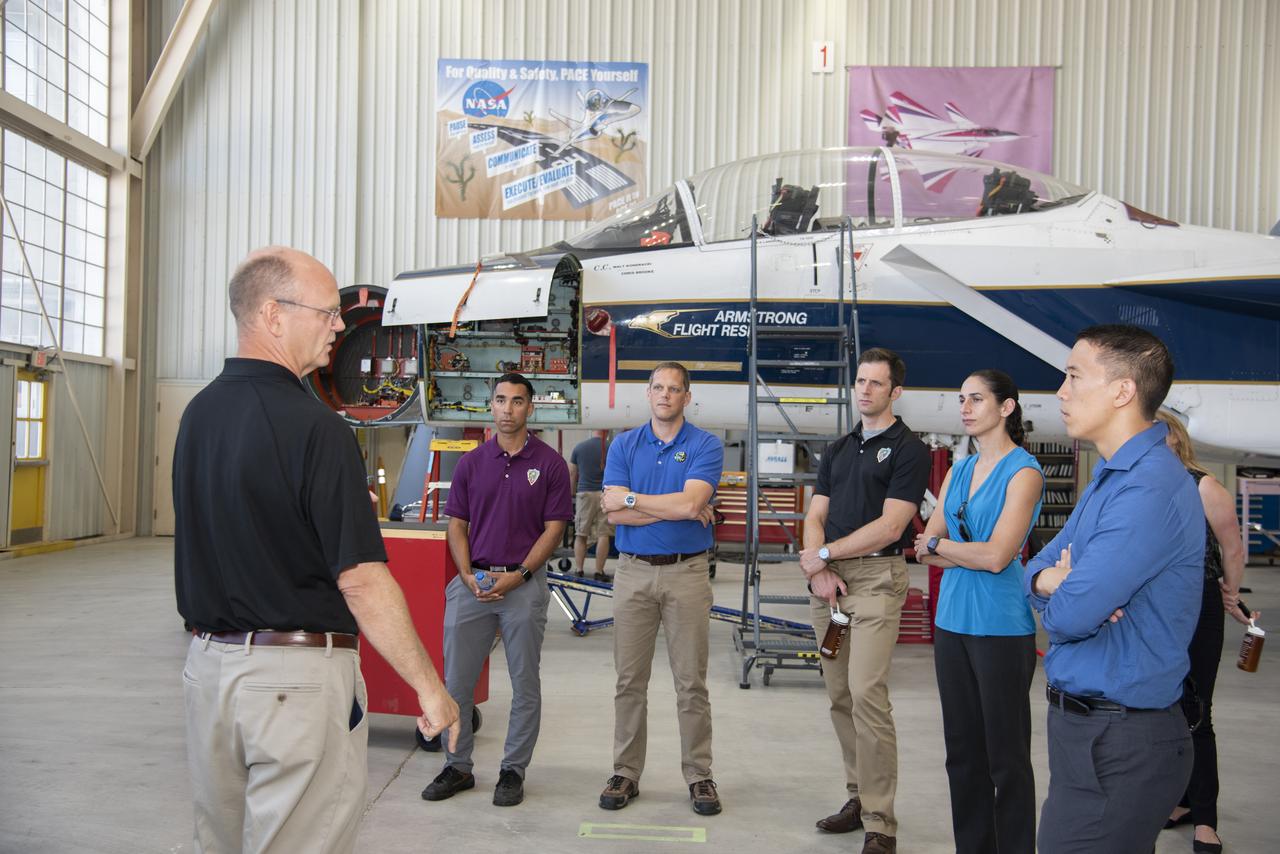
NASA’s 2017 astronaut candidates (L to R) Raja Chari, Bob Hines, Joshua Kutryk, Jasmin Moghbeli, Jonny Kim, and Jessica Watkins toured aircraft hangar at Armstrong Flight Research Center, in Southern California. On the left, NASA’s, X-59 pilot, briefs them on use of F-15 for studying sonic booms during the development of the low-boom X-59 aircraft that is planned to fly supersonically over land.  Low-level supersonic flight is not allowed at this time because of the loud noise levels generated when flying beyond the speed of sound.
Astronauts Tour Aircraft Hangar at Armstrong Flight Research Center
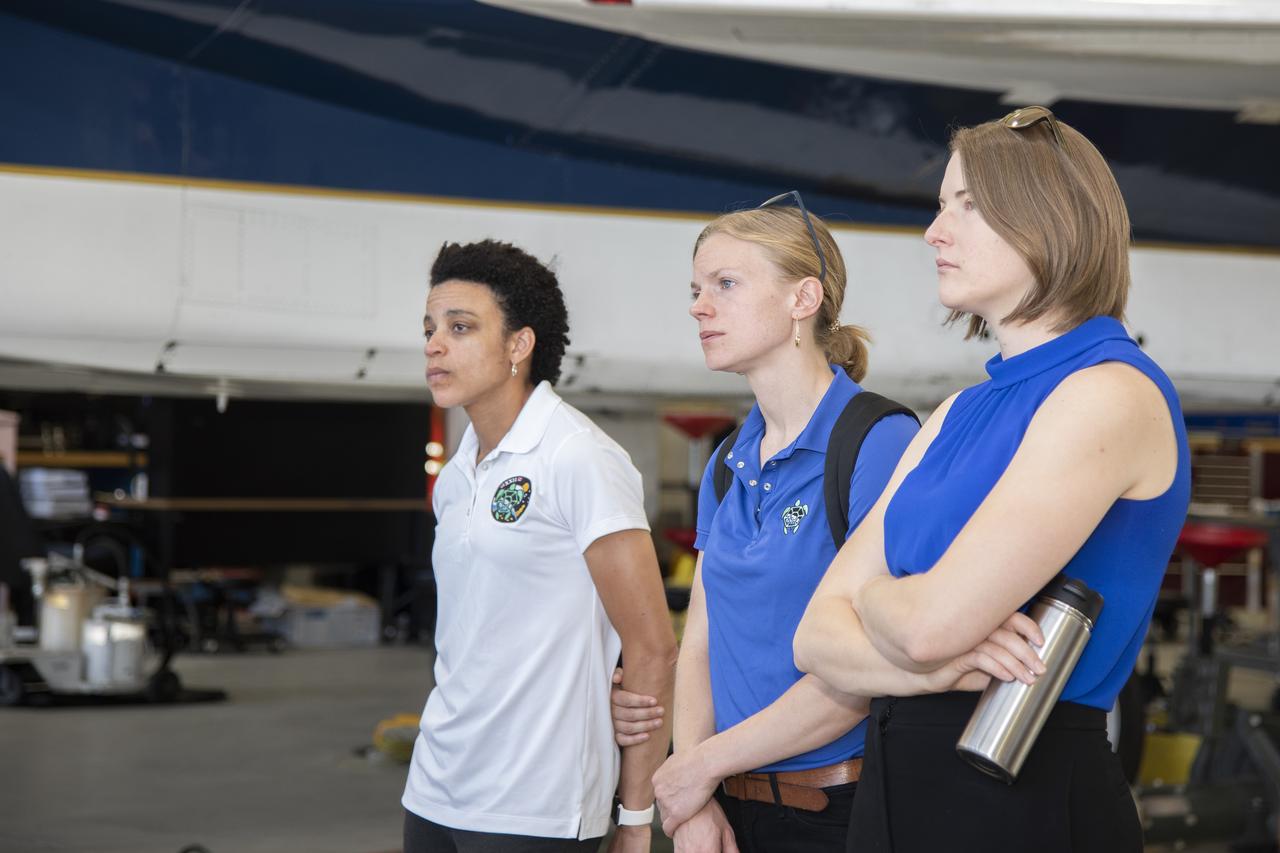
NASA’s 2017 astronaut candidates (L to R) Jessica Watkins, Zena Cardman, Kayla Barron toured aircraft hangar at Armstrong Flight Research Center, in Southern California where they were briefed on the use of Armstrong's F-15 and F-18 aircraft for studying sonic booms.  The aircraft will be used during the development of the low-boom X-59 aircraft that is planned to fly supersonically over land, which is not allowed at this time because of the loud noise created when flying beyond the speed of sound.
Pilot Nils Larsen Speaks to Astronauts on X-59 Research Using Jets
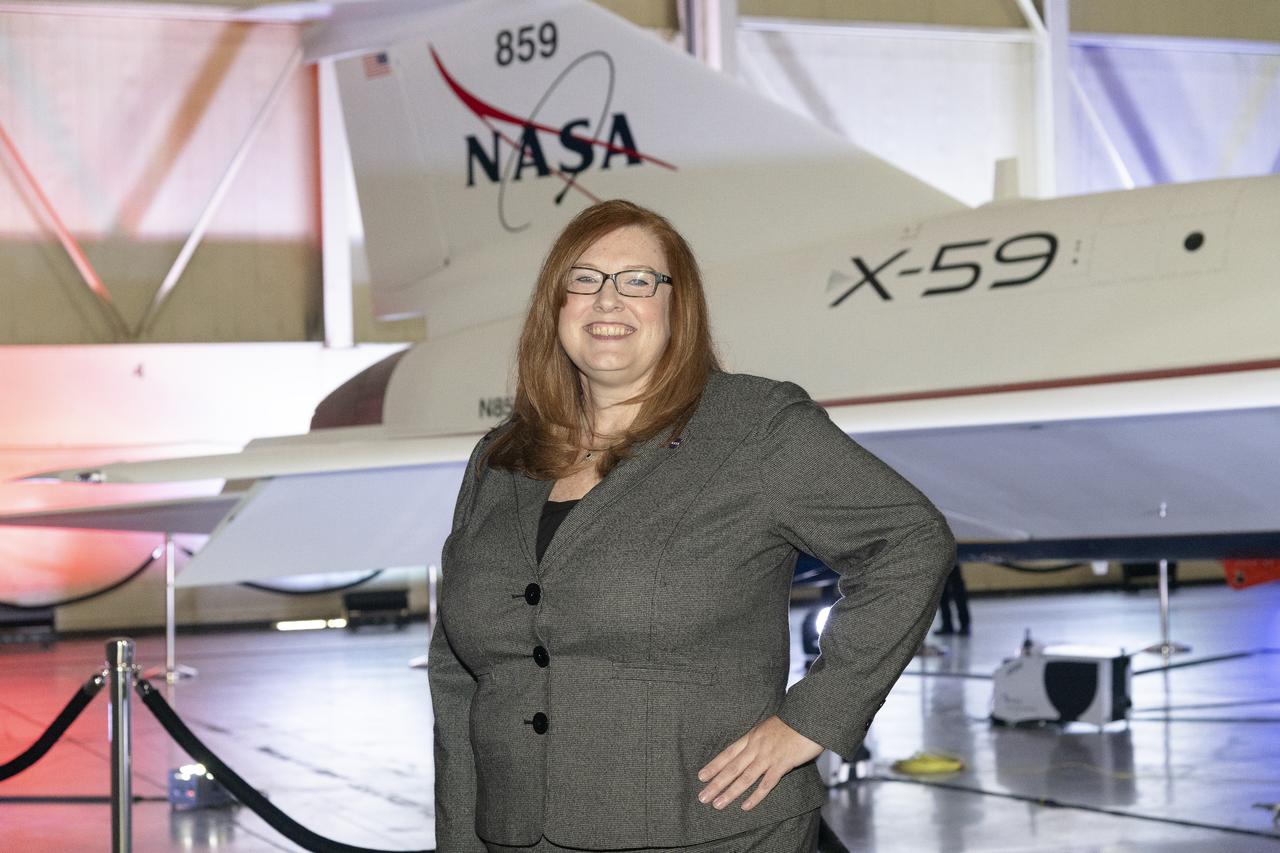
NASA’s project manager for the Low Boom Flight Demonstrator project, Cathy Bahm, poses in front of the agency’s X-59 quiet supersonic research aircraft at a January 12, 2024 event at Lockheed Martin Skunk Works in Palmdale, California. The X-59 is the centerpiece of NASA’s Quesst mission, which seeks to solve one of the major barriers to supersonic flight over land, currently banned in the United States, by making sonic booms quieter.
Project Manager Cathy Bahm Poses in Front of Unveiled X-59
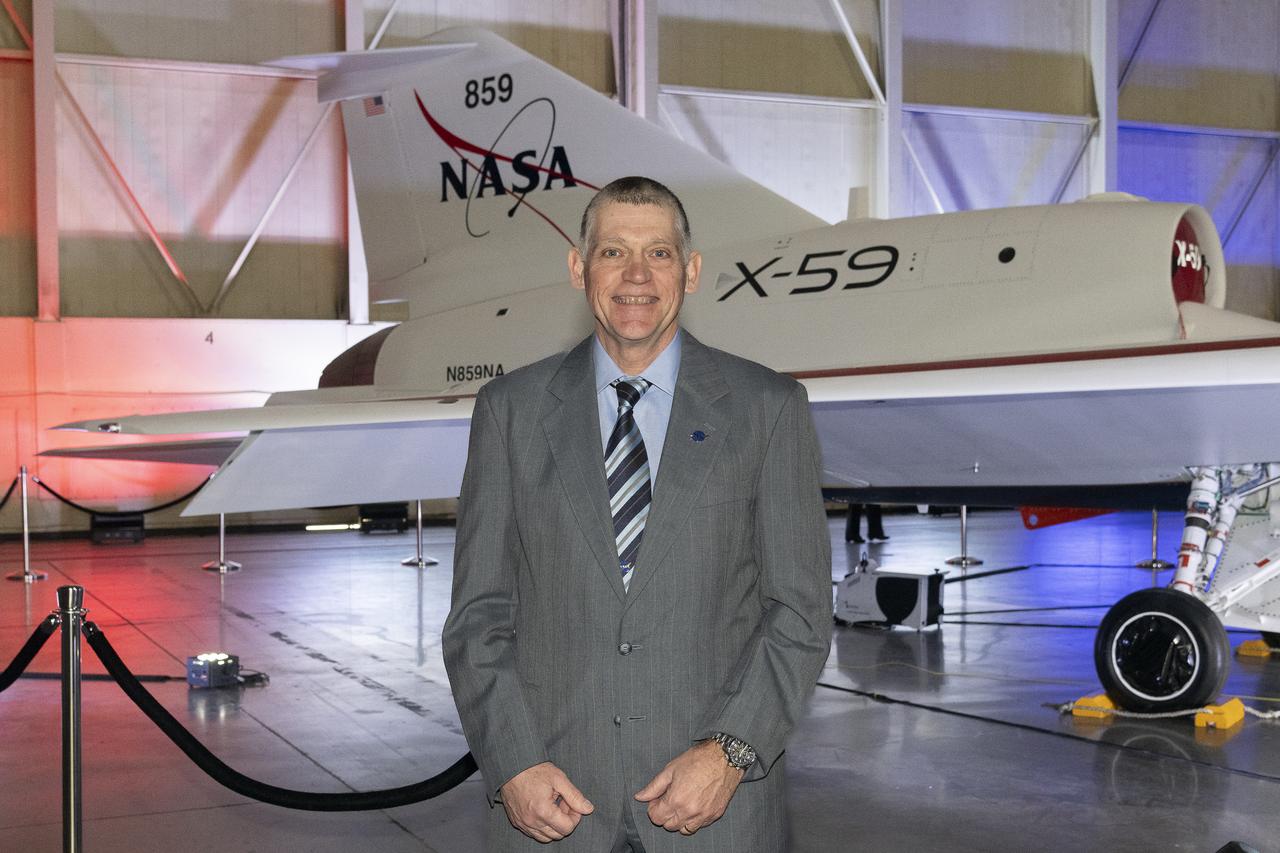
NASA’s chief engineer for the Low Boom Flight Demonstrator project, Jay Brandon, poses in front of the agency’s X-59 quiet supersonic research aircraft at a January 12, 2024 event at Lockheed Martin Skunk Works in Palmdale, California. The X-59 is the centerpiece of NASA’s Quesst mission, which seeks to solve one of the major barriers to supersonic flight over land, currently banned in the United States, by making sonic booms quieter.
NASA Engineer Poses in Front of Unveiled X-59
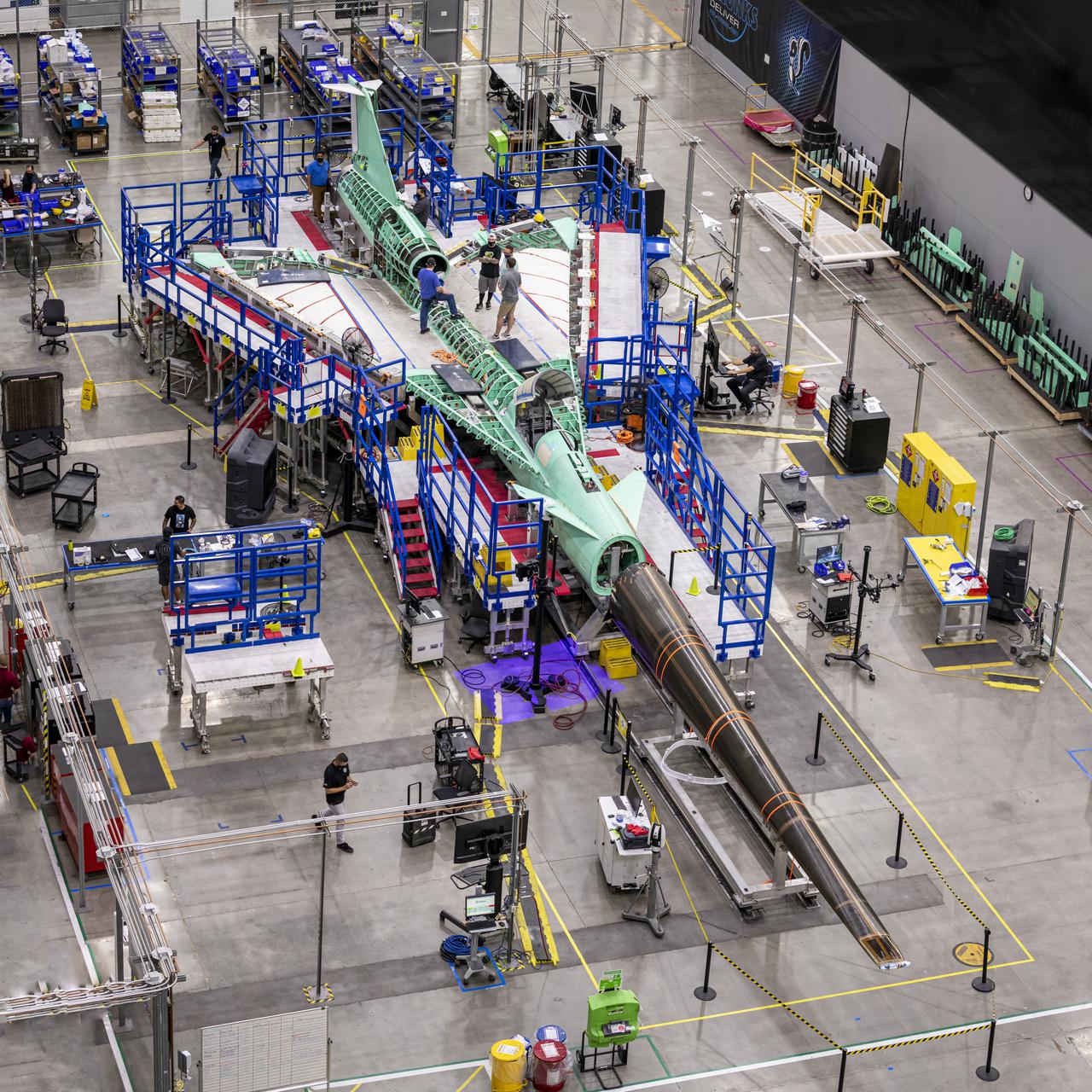
The X-59 Quiet SuperSonic Technology (QueSST) aircraft is taking shape at the Lockheed Martin Skunk Works facility in Palmdale, California. The team positioned the X-59 QueSST's nose at the front of the aircraft.   As one of the more recognizable features of the X-59, the nose makes up almost a third of the aircraft length and will be essential in shaping shock waves during supersonic flight, resulting in quiet sonic thumps instead of loud sonic booms. The nose was attached and then removed from the front of the aircraft in preparation for its shipment to Fort Worth, Texas where it will undergo additional testing. The X-59 will fly at supersonic speeds above communities as part of the Low-Boom Flight Demonstration mission, during which NASA will gather community feedback to the sound of quiet supersonic flight. These findings will be shared with regulators to inform decisions on current restrictions of supersonic flight over land.  Lockheed Martin Photography By Garry Tice 1011 Lockheed Way, Palmdale, Ca. 93599 Event: Manufacturing Area From Above Date: 8/18/2021 Additional Info:
Manufacturing Area From Above
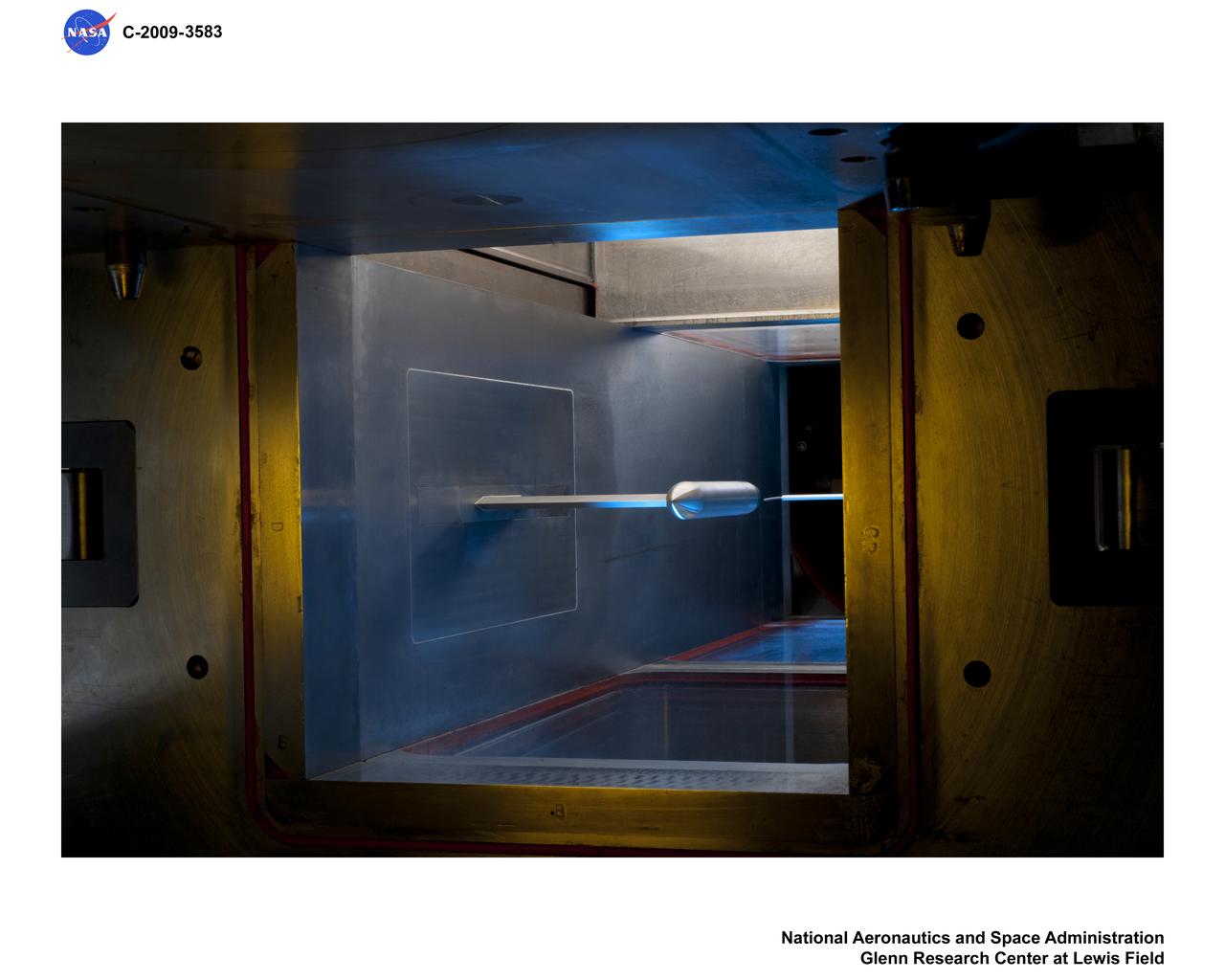
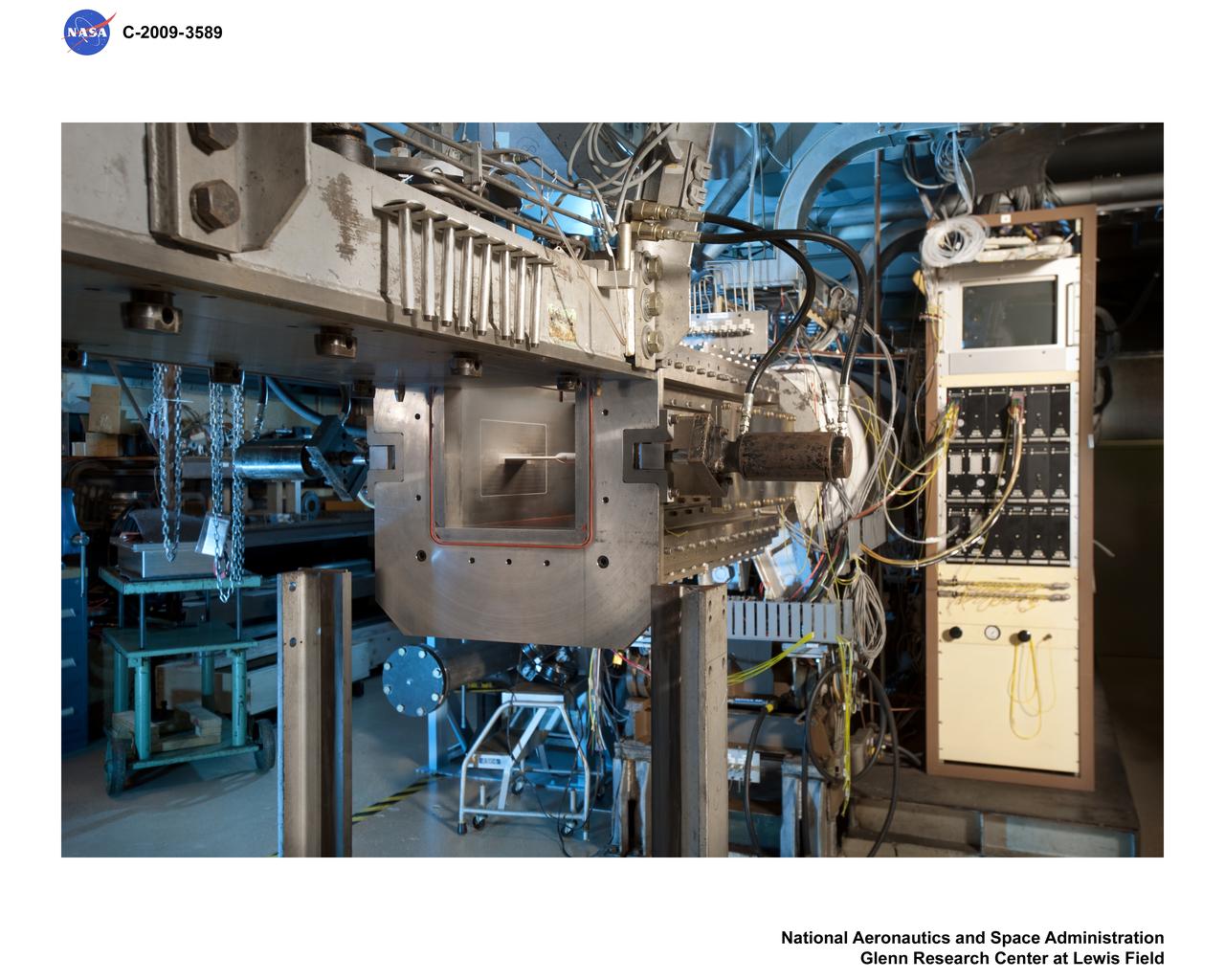
Low Boom GRC Advanced Nozzle Consepts, Exhaust Nozzle Plume Effects on Sonic Boom Hardware in 1x1 Supersonic Wind Tunnel
GRC-2009-C-03583
Sonic Boom Test using Ames HSR-Low Boom Wing Tail in the 9x7ft transonic wind tunnel (Test-97-0190)  Test hardware
ARC-2008-ACD08-0171-038
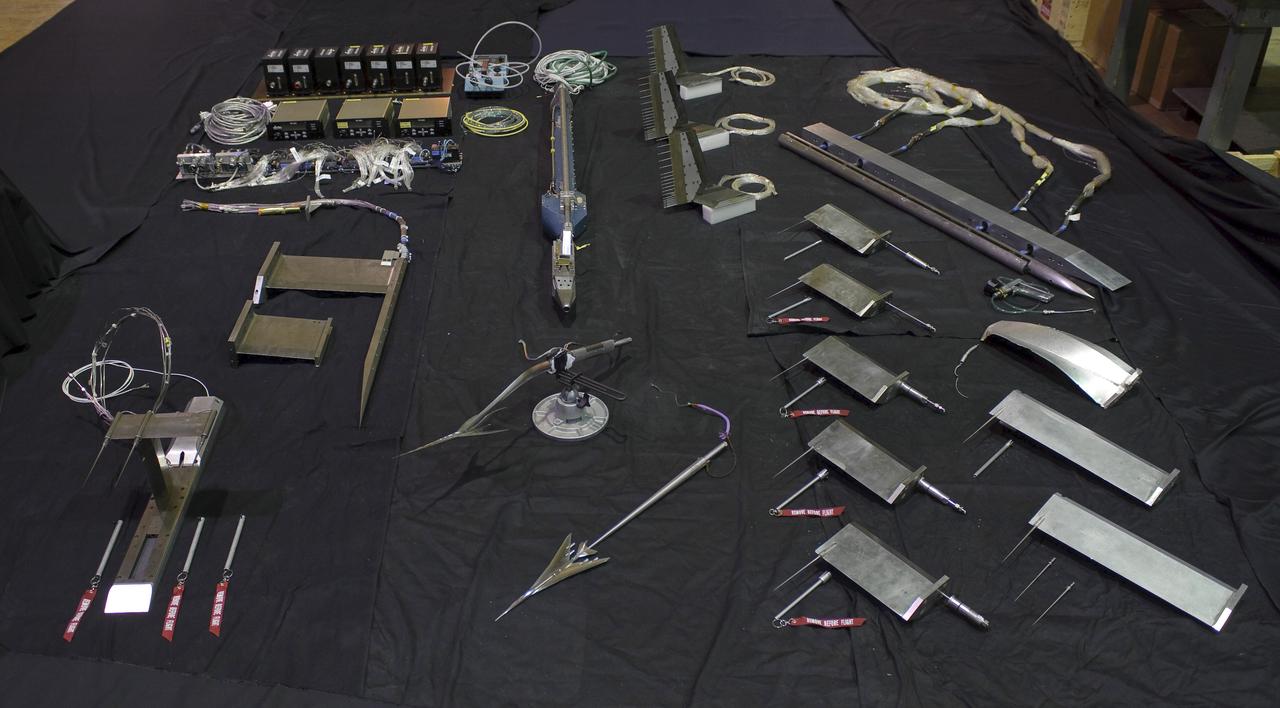
Low Boom GRC Advanced Nozzle Consepts, Exhaust Nozzle Plume Effects on Sonic Boom Hardware in 1x1 Supersonic Wind Tunnel
GRC-2009-C-03589
Sonic Boom Test using Ames HSR-Low Boom Wing Tail in the 9x7ft transonic wind tunnel (Test-97-0190) with Ted Garbeff
ARC-2008-ACD08-0171-024
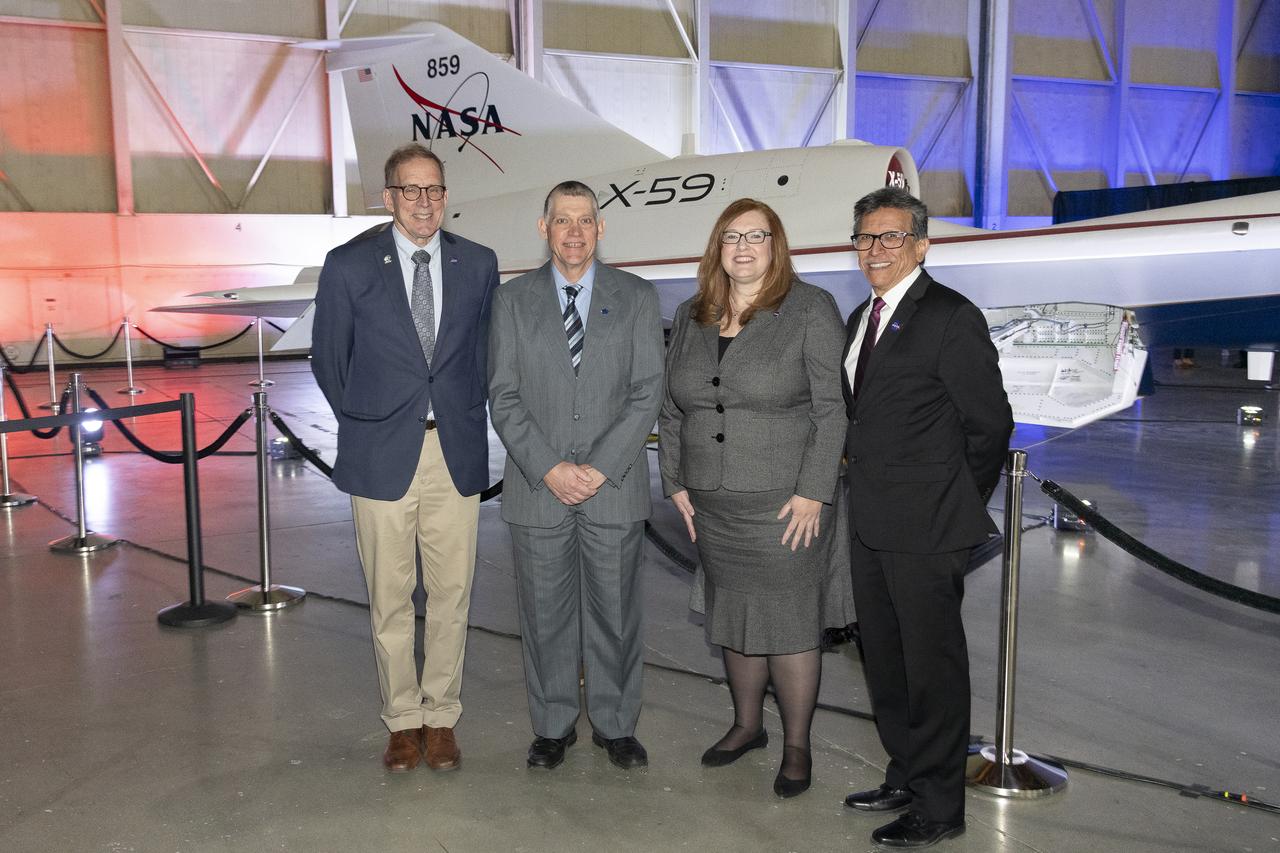
(from left to right), Quesst Mission Integration Manager Peter Coen, Chief Engineer Jay Brandon, Low Boom Flight Demonstrator Project Manager Cathy Bahm, and Structures Lead Dr. Walt Silva pose in front of the agency’s X-59 quiet supersonic research aircraft at a January 12, 2024 event at Lockheed Martin Skunk Works in Palmdale, California. The X-59 is the centerpiece of NASA’s Quesst mission, which seeks to solve one of the major barriers to supersonic flight over land, currently banned in the United States, by making sonic booms quieter.
NASA Representatives in Front of Unveiled X-59
Sonic Boom Test using Ames HSR-Low Boom Wing Tail in the 9x7ft transonic wind tunnel (Test-97-0190) with Don Durston and Steve Buchholz
ARC-2008-ACD08-0171-021
Sonic Boom Test using Ames HSR-Low Boom Wing Tail in the 9x7ft transonic wind tunnel (Test-97-0190) with Don Durston and Steve Buchholz
ARC-2008-ACD08-0171-010