
Students from the University of Virginia accept an award during NASA’s 2026 Lunabotics Challenge competition on Thursday, May 21, 2026, inside the Astronauts Memorial Foundation’s Center for Space Education at the Kennedy Space Center Visitor Complex in Florida. Forty-seven teams from around the U.S. designed and built remote-controlled robots capable of traversing challenging lunar terrain while constructing regolith-based berm under conditions similar to those the agency will face as it returns to the lunar surface through Artemis.

Students from the University of Alabama accept the Caterpillar Autonomy Award during NASA’s 2026 Lunabotics Challenge competition on Thursday, May 21, 2026, inside the Astronauts Memorial Foundation’s Center for Space Education at the Kennedy Space Center Visitor Complex in Florida. Forty-seven teams from around the U.S. designed and built remote-controlled robots capable of traversing challenging lunar terrain while constructing regolith-based berm under conditions similar to those the agency will face as it returns to the lunar surface through Artemis.

Students from Michigan Technological University accept an award during NASA’s 2026 Lunabotics Challenge competition on Thursday, May 21, 2026, inside the Astronauts Memorial Foundation’s Center for Space Education at the Kennedy Space Center Visitor Complex in Florida. Forty-seven teams from around the U.S. designed and built remote-controlled robots capable of traversing challenging lunar terrain while constructing regolith-based berm under conditions similar to those the agency will face as it returns to the lunar surface through Artemis.

Students from San Diego State University prepare their prototype lunar robot for its turn during the finals for NASA’s 2026 Lunabotics Challenge competition on Wednesday, May 20, 2026, inside the Astronauts Memorial Foundation’s Center for Space Education at the Kennedy Space Center Visitor Complex in Florida. Forty-seven teams from around the U.S. designed and built remote-controlled robots capable of traversing challenging lunar terrain while constructing regolith-based berm under conditions similar to those the agency will face as it returns to the lunar surface through Artemis.

Students from the University of Virginia prepare their prototype lunar robot for its turn during the finals for NASA’s 2026 Lunabotics Challenge competition on Wednesday, May 20, 2026, inside the Astronauts Memorial Foundation’s Center for Space Education at the Kennedy Space Center Visitor Complex in Florida. Forty-seven teams from around the U.S. designed and built remote-controlled robots capable of traversing challenging lunar terrain while constructing regolith-based berm under conditions similar to those the agency will face as it returns to the lunar surface through Artemis.

Students from New Mexico Tech prepare their prototype lunar robot for its turn during the finals for NASA’s 2026 Lunabotics Challenge competition on Tuesday, May 19, 2026, inside the Astronauts Memorial Foundation’s Center for Space Education at the Kennedy Space Center Visitor Complex in Florida. Forty-seven teams from around the U.S. designed and built remote-controlled robots capable of traversing challenging lunar terrain while constructing regolith-based berm under conditions similar to those the agency will face as it returns to the lunar surface through Artemis.

Students from Iowa State University prepare their prototype lunar robot for its turn during the finals for NASA’s 2026 Lunabotics Challenge competition on Wednesday, May 20, 2026, inside the Astronauts Memorial Foundation’s Center for Space Education at the Kennedy Space Center Visitor Complex in Florida. Forty-seven teams from around the U.S. designed and built remote-controlled robots capable of traversing challenging lunar terrain while constructing regolith-based berm under conditions similar to those the agency will face as it returns to the lunar surface through Artemis.

Students from the University of Alabama prepare to enter the simulated lunar regolith competition area with their prototype lunar robot during the finals for NASA’s 2026 Lunabotics Challenge competition on Thursday, May 20, 2026, inside the Astronauts Memorial Foundation’s Center for Space Education at the Kennedy Space Center Visitor Complex in Florida. Forty-seven teams from around the U.S. designed and built remote-controlled robots capable of traversing challenging lunar terrain while constructing regolith-based berm under conditions similar to those the agency will face as it returns to the lunar surface through Artemis.

Students from San Diego State University prepare to enter the simulated lunar regolith competition area with their prototype lunar robot during the finals for NASA’s 2026 Lunabotics Challenge competition on Wednesday, May 20, 2026, inside the Astronauts Memorial Foundation’s Center for Space Education at the Kennedy Space Center Visitor Complex in Florida. Forty-seven teams from around the U.S. designed and built remote-controlled robots capable of traversing challenging lunar terrain while constructing regolith-based berm under conditions similar to those the agency will face as it returns to the lunar surface through Artemis.

Students from the University of Virginia prepare their prototype lunar robot for its turn during the finals for NASA’s 2026 Lunabotics Challenge competition on Tuesday, May 19, 2026, inside the Astronauts Memorial Foundation’s Center for Space Education at the Kennedy Space Center Visitor Complex in Florida. Forty-seven teams from around the U.S. designed and built remote-controlled robots capable of traversing challenging lunar terrain while constructing regolith-based berm under conditions similar to those the agency will face as it returns to the lunar surface through Artemis.

Students from the University of Utah prepare their prototype lunar robot for its turn during the finals for NASA’s 2026 Lunabotics Challenge competition on Tuesday, May 19, 2026, inside the Astronauts Memorial Foundation’s Center for Space Education at the Kennedy Space Center Visitor Complex in Florida. Forty-seven teams from around the U.S. designed and built remote-controlled robots capable of traversing challenging lunar terrain while constructing regolith-based berm under conditions similar to those the agency will face as it returns to the lunar surface through Artemis.

Students from Michigan Technological University prepare their prototype lunar robot for its turn during the finals for NASA’s 2026 Lunabotics Challenge competition on Wednesday, May 20, 2026, inside the Astronauts Memorial Foundation’s Center for Space Education at the Kennedy Space Center Visitor Complex in Florida. Forty-seven teams from around the U.S. designed and built remote-controlled robots capable of traversing challenging lunar terrain while constructing regolith-based berm under conditions similar to those the agency will face as it returns to the lunar surface through Artemis.
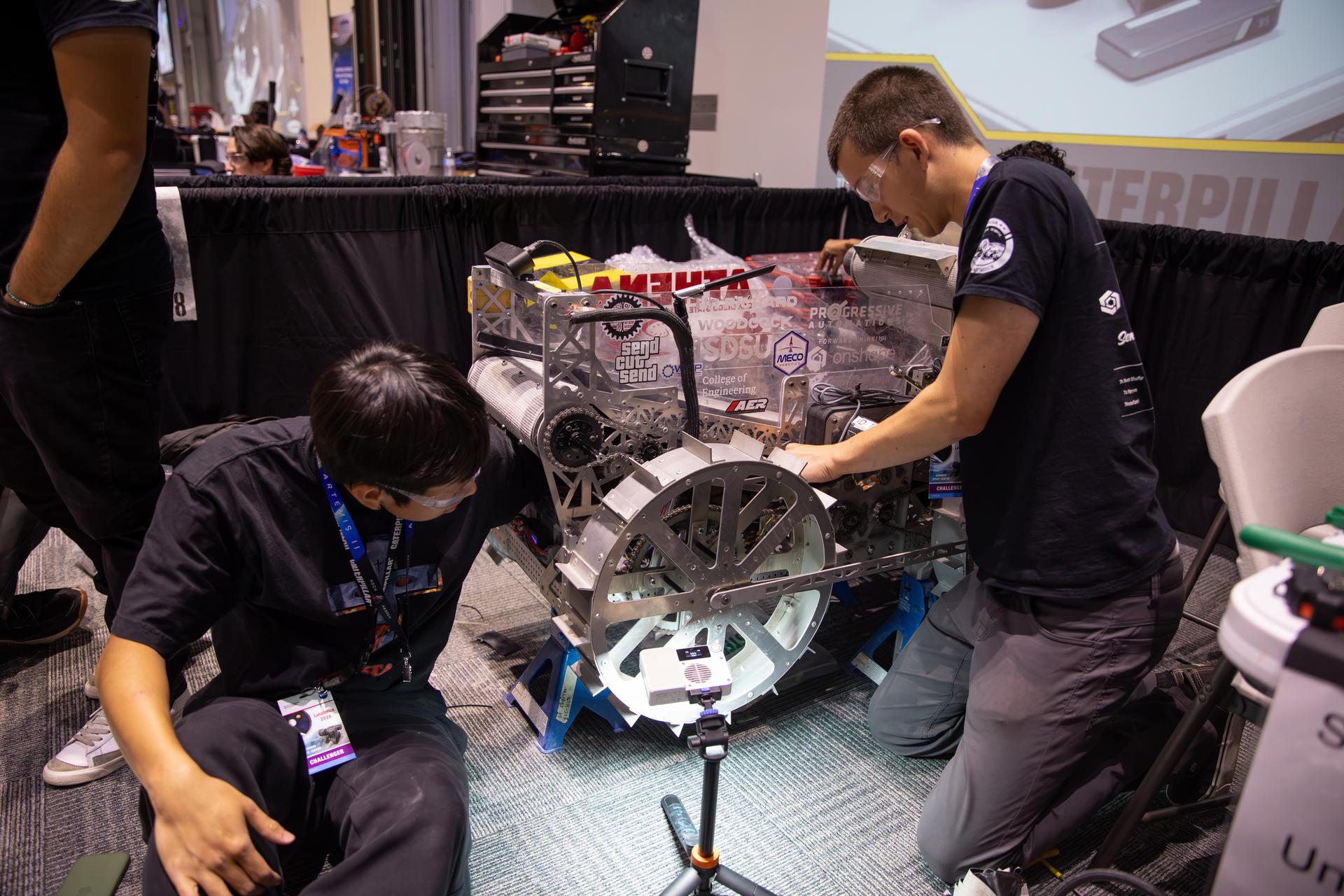
Students from San Diego State University prepare their prototype lunar robot for its turn during the finals for NASA’s 2026 Lunabotics Challenge competition on Tuesday, May 19, 2026, inside the Astronauts Memorial Foundation’s Center for Space Education at the Kennedy Space Center Visitor Complex in Florida. Forty-seven teams from around the U.S. designed and built remote-controlled robots capable of traversing challenging lunar terrain while constructing regolith-based berm under conditions similar to those the agency will face as it returns to the lunar surface through Artemis.

Students from the University of Alabama prepare to enter the simulated lunar regolith competition area with their prototype lunar robot during the finals for NASA’s 2026 Lunabotics Challenge competition on Wednesday, May 19, 2026, inside the Astronauts Memorial Foundation’s Center for Space Education at the Kennedy Space Center Visitor Complex in Florida. Forty-seven teams from around the U.S. designed and built remote-controlled robots capable of traversing challenging lunar terrain while constructing regolith-based berm under conditions similar to those the agency will face as it returns to the lunar surface through Artemis.

Students from Michigan Technological University prepare their prototype lunar robot for its turn during the finals for NASA’s 2026 Lunabotics Challenge competition on Wednesday, May 20, 2026, inside the Astronauts Memorial Foundation’s Center for Space Education at the Kennedy Space Center Visitor Complex in Florida. Forty-seven teams from around the U.S. designed and built remote-controlled robots capable of traversing challenging lunar terrain while constructing regolith-based berm under conditions similar to those the agency will face as it returns to the lunar surface through Artemis.
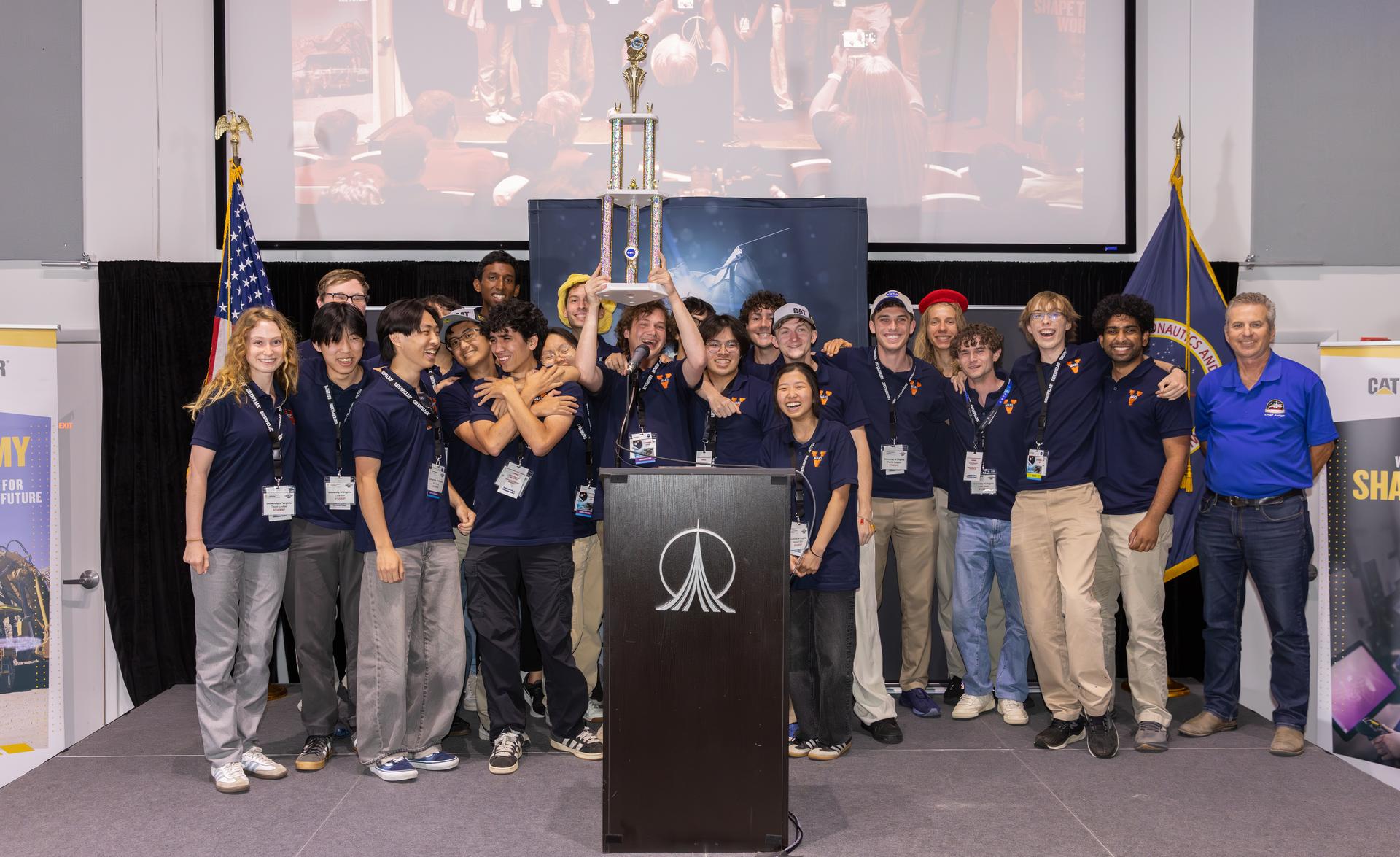
Students from the University of Virginia pose for a photograph after winning the grand prize during NASA’s 2026 Lunabotics Challenge competition on Thursday, May 21, 2026, inside the Astronauts Memorial Foundation’s Center for Space Education at the Kennedy Space Center Visitor Complex in Florida. Forty-seven teams from around the U.S. designed and built remote-controlled robots capable of traversing challenging lunar terrain while constructing regolith-based berm under conditions similar to those the agency will face as it returns to the lunar surface through Artemis.
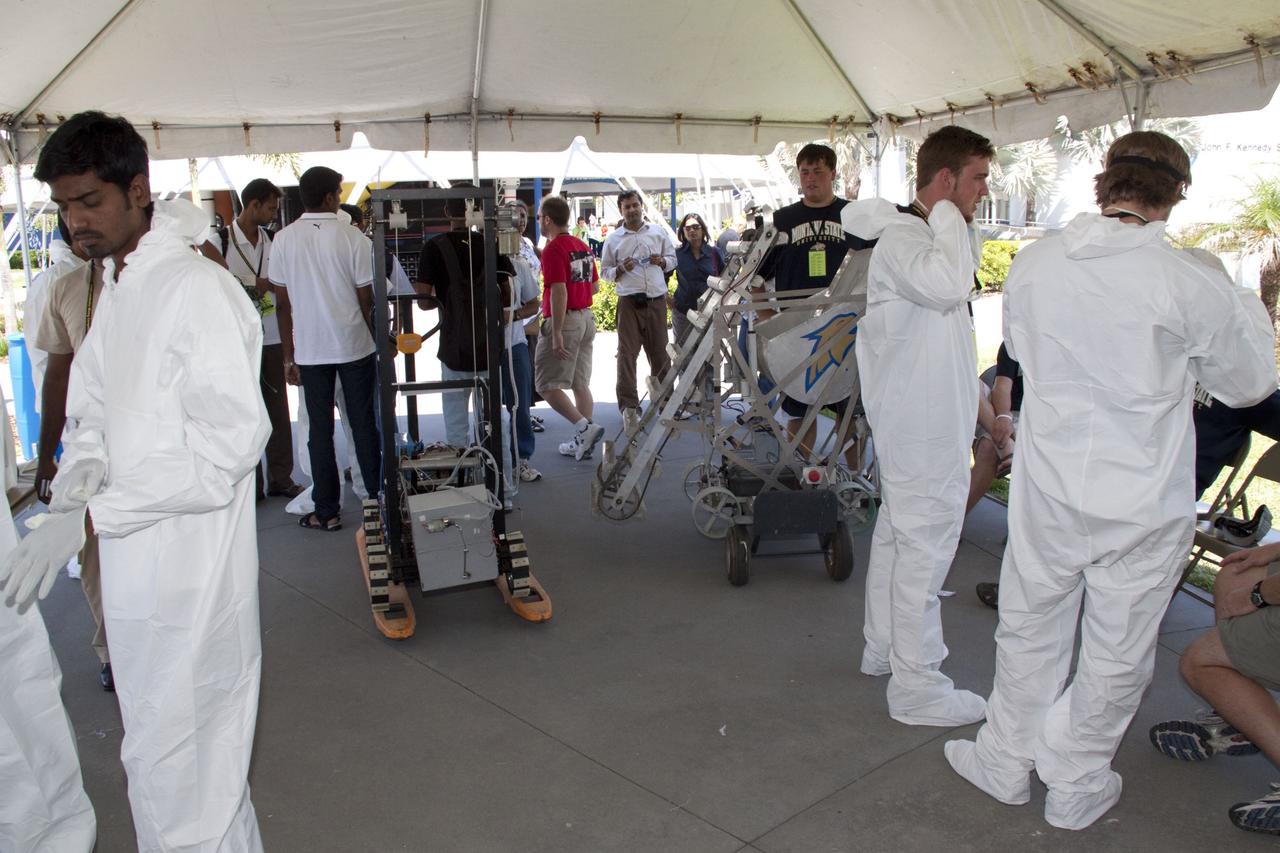
CAPE CANAVERAL, Fla. -- University students wait their turn to compete in NASA's second annual Lunabotics Mining Competition at the Kennedy Space Center Visitor Complex in Florida. Thirty-six teams of undergraduate and graduate students from the United States, Bangladesh, Canada, Colombia and India will participate in NASA's Lunabotics Mining Competition May 26 - 28 at the agency's Kennedy Space Center in Florida. The competition is designed to engage and retain students in science, technology, engineering and mathematics (STEM). Teams will maneuver their remote controlled or autonomous excavators, called lunabots, in about 60 tons of ultra-fine simulated lunar soil, called BP-1. The competition is an Exploration Systems Mission Directorate project managed by Kennedy's Education Division. The event also provides a competitive environment that could result in innovative ideas and solutions for NASA's future excavation of the moon. Photo credit: NASA/Jack Pfaller
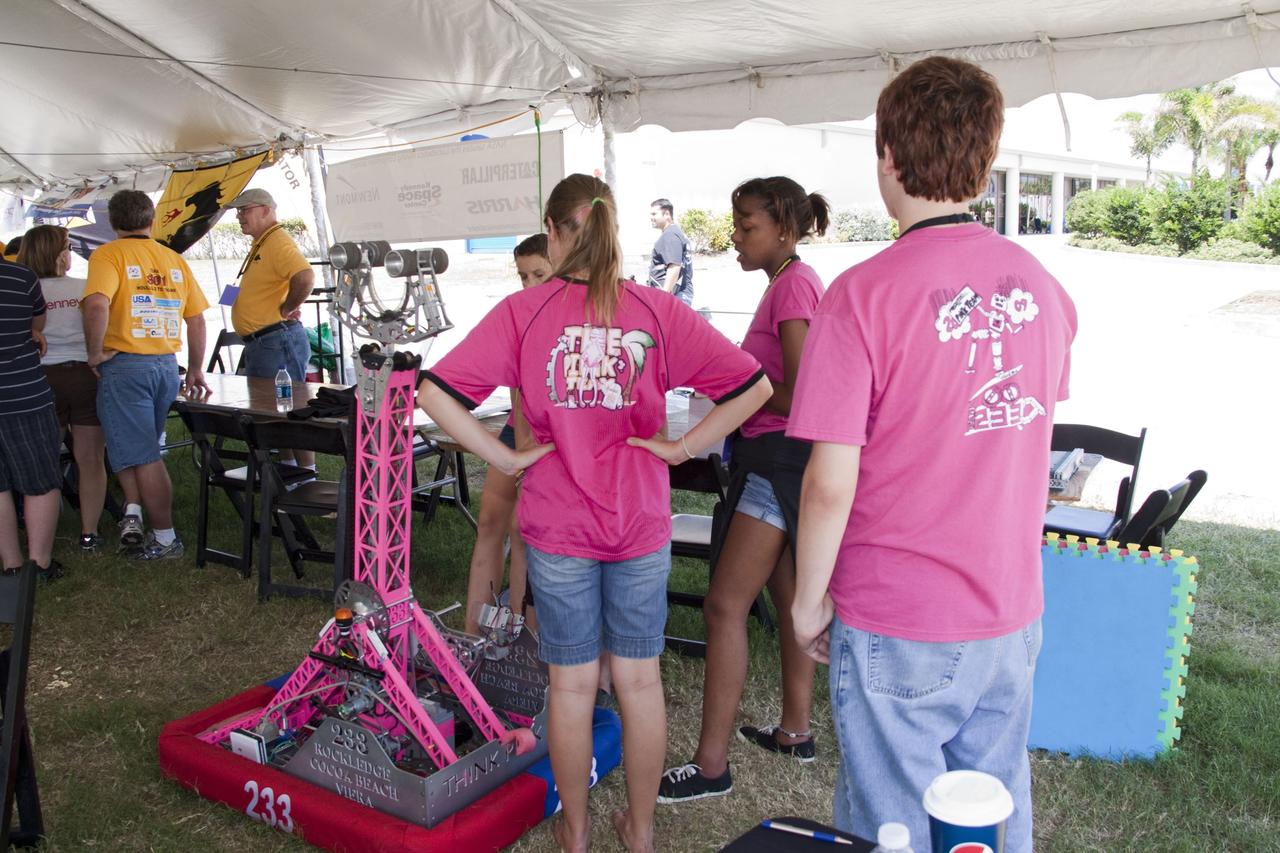
CAPE CANAVERAL, Fla. -- University students wait their turn to compete in NASA's second annual Lunabotics Mining Competition at the Kennedy Space Center Visitor Complex in Florida. Thirty-six teams of undergraduate and graduate students from the United States, Bangladesh, Canada, Colombia and India will participate in NASA's Lunabotics Mining Competition May 26 - 28 at the agency's Kennedy Space Center in Florida. The competition is designed to engage and retain students in science, technology, engineering and mathematics (STEM). Teams will maneuver their remote controlled or autonomous excavators, called lunabots, in about 60 tons of ultra-fine simulated lunar soil, called BP-1. The competition is an Exploration Systems Mission Directorate project managed by Kennedy's Education Division. The event also provides a competitive environment that could result in innovative ideas and solutions for NASA's future excavation of the moon. Photo credit: NASA/Jack Pfaller
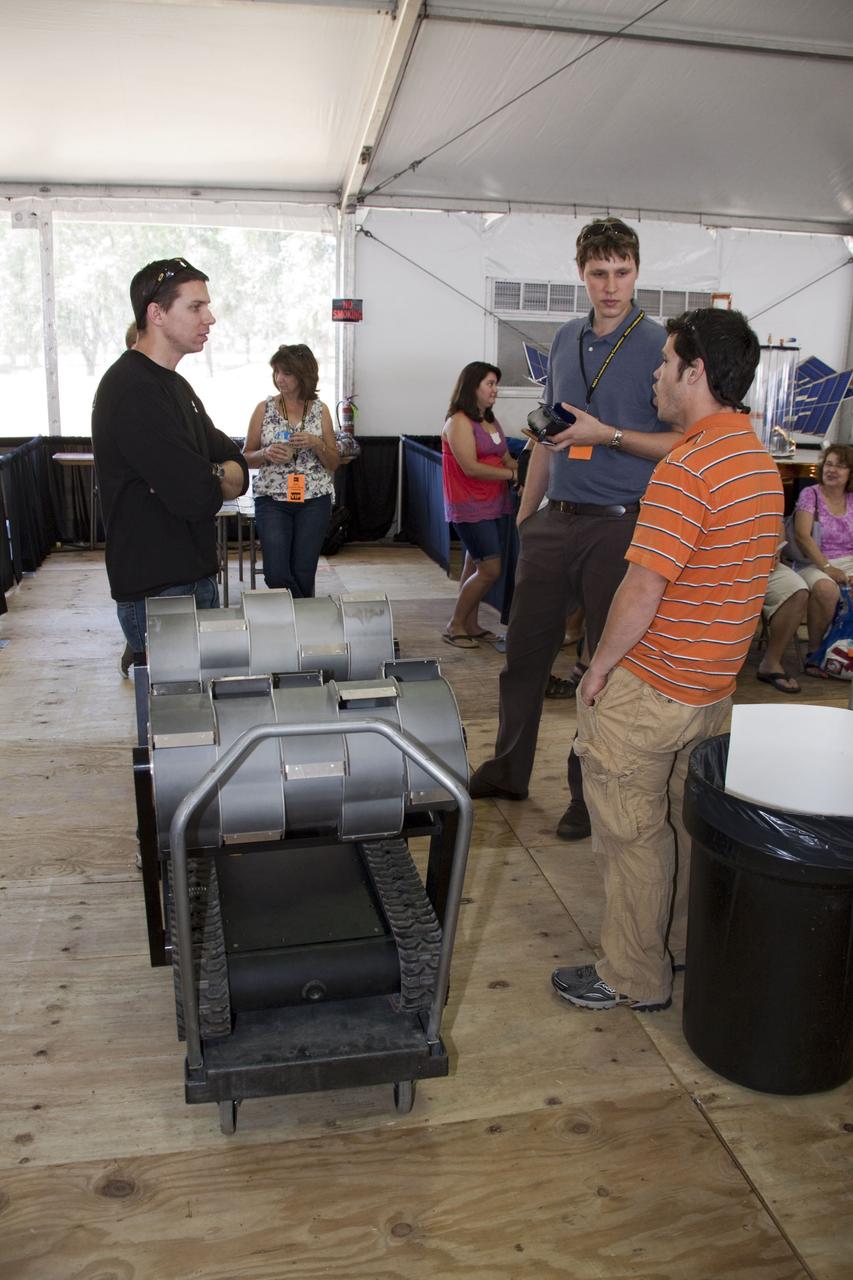
CAPE CANAVERAL, Fla. -- University students wait their turn to compete in NASA's second annual Lunabotics Mining Competition at the Kennedy Space Center Visitor Complex in Florida. Thirty-six teams of undergraduate and graduate students from the United States, Bangladesh, Canada, Colombia and India will participate in NASA's Lunabotics Mining Competition May 26 - 28 at the agency's Kennedy Space Center in Florida. The competition is designed to engage and retain students in science, technology, engineering and mathematics (STEM). Teams will maneuver their remote controlled or autonomous excavators, called lunabots, in about 60 tons of ultra-fine simulated lunar soil, called BP-1. The competition is an Exploration Systems Mission Directorate project managed by Kennedy's Education Division. The event also provides a competitive environment that could result in innovative ideas and solutions for NASA's future excavation of the moon. Photo credit: NASA/Jack Pfaller
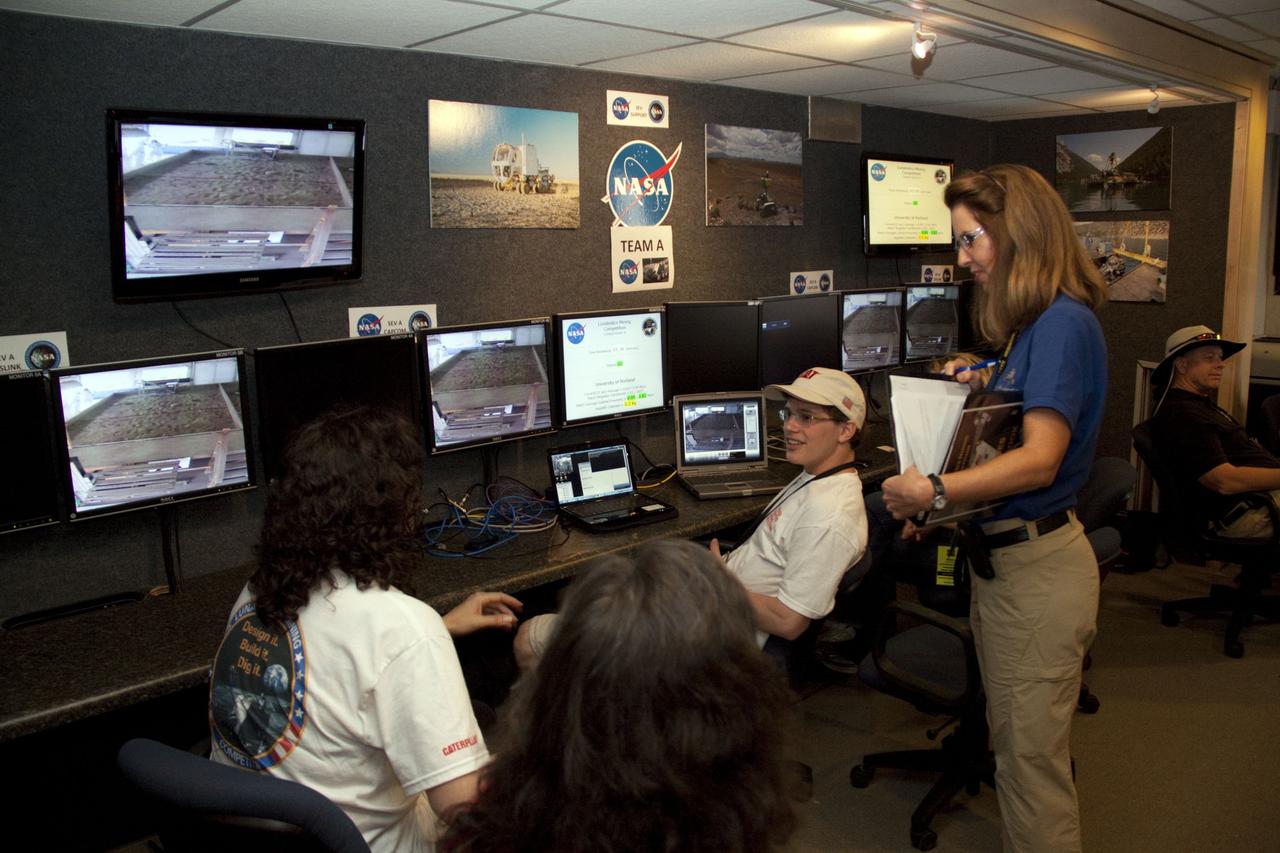
CAPE CANAVERAL, Fla. -- While an event judge looks on, university students monitor their team's remote controlled or autonomous excavator, called a lunabot, as it is maneuvered in a "sand box" of ultra-fine simulated lunar soil during NASA's second annual Lunabotics Mining Competition at the Kennedy Space Center Visitor Complex in Florida. Thirty-six teams of undergraduate and graduate students from the United States, Bangladesh, Canada, Colombia and India will participate in NASA's Lunabotics Mining Competition May 26 - 28 at the agency's Kennedy Space Center in Florida. The competition is designed to engage and retain students in science, technology, engineering and mathematics (STEM). Teams will maneuver their remote controlled or autonomous excavators, called lunabots, in about 60 tons of ultra-fine simulated lunar soil, called BP-1. The competition is an Exploration Systems Mission Directorate project managed by Kennedy's Education Division. The event also provides a competitive environment that could result in innovative ideas and solutions for NASA's future excavation of the moon. Photo credit: NASA/Jack Pfaller
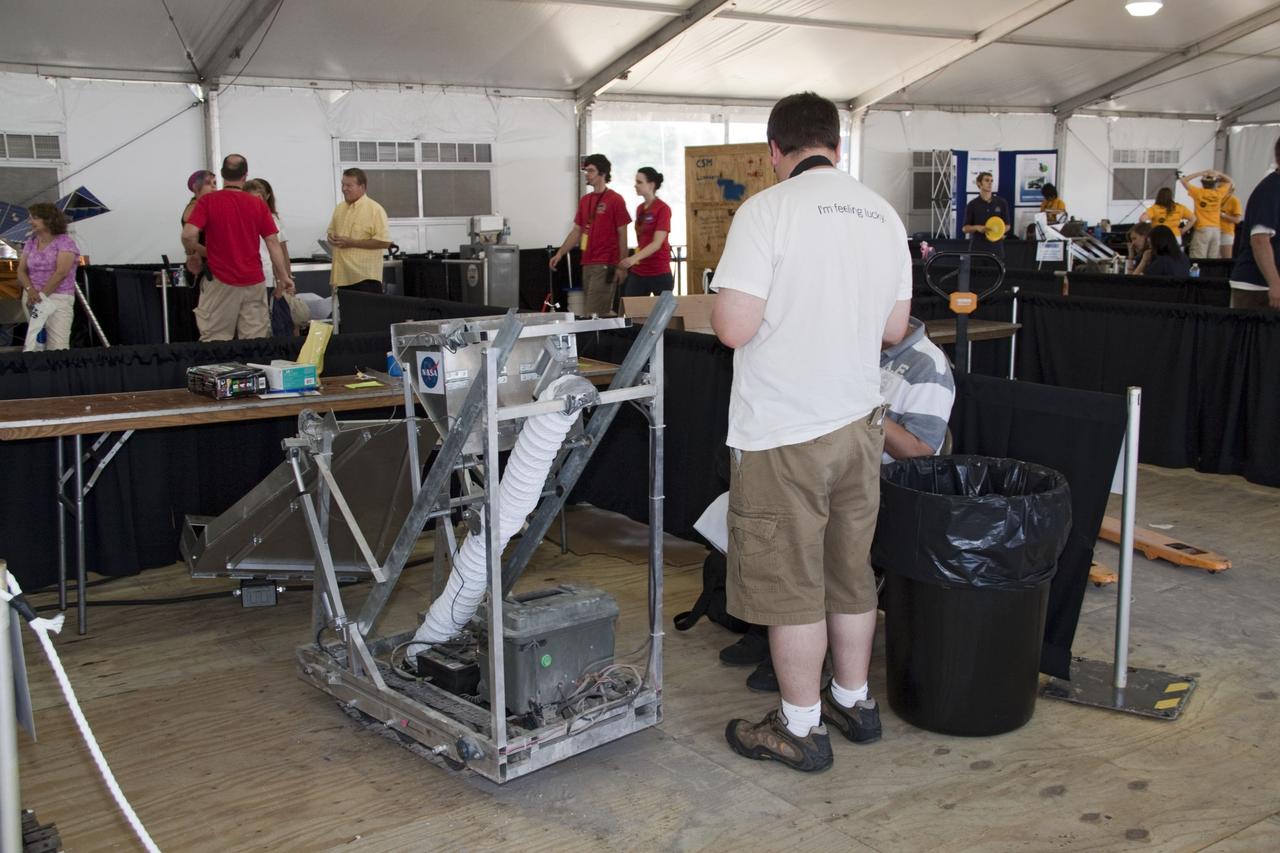
CAPE CANAVERAL, Fla. -- University students wait their turn to compete in NASA's second annual Lunabotics Mining Competition at the Kennedy Space Center Visitor Complex in Florida. hirty-six teams of undergraduate and graduate students from the United States, Bangladesh, Canada, Colombia and India will participate in NASA's Lunabotics Mining Competition May 26 - 28 at the agency's Kennedy Space Center in Florida. The competition is designed to engage and retain students in science, technology, engineering and mathematics (STEM). Teams will maneuver their remote controlled or autonomous excavators, called lunabots, in about 60 tons of ultra-fine simulated lunar soil, called BP-1. The competition is an Exploration Systems Mission Directorate project managed by Kennedy's Education Division. The event also provides a competitive environment that could result in innovative ideas and solutions for NASA's future excavation of the moon. Photo credit: NASA/Jack Pfaller
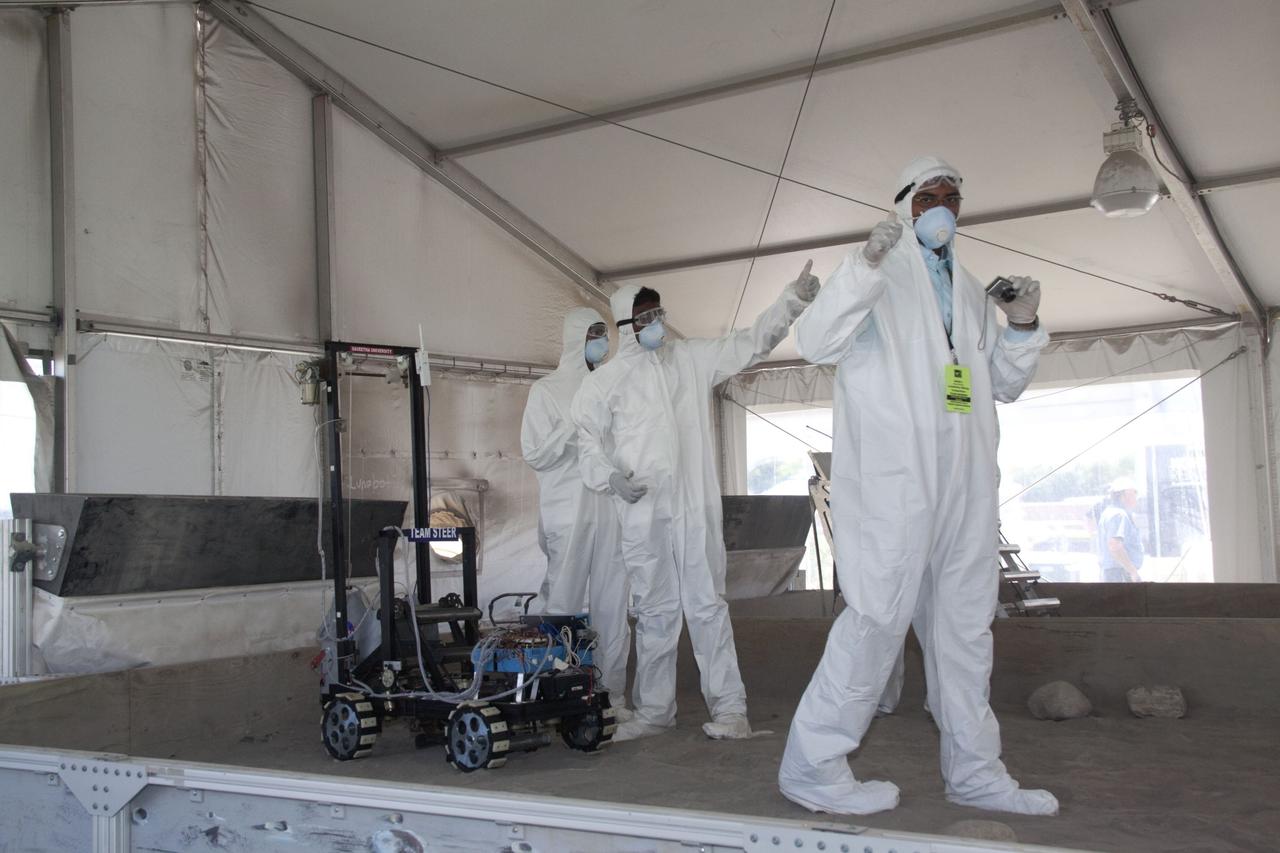
CAPE CANAVERAL, Fla. -- Inside the "Lunarena" at the Kennedy Space Center Visitor Complex in Florida, university students give their "thumbs up" after maneuvering their remote controlled or autonomous excavators, called lunabots, in a "sand box" of ultra-fine simulated lunar soil during NASA's second annual Lunabotics Mining Competition. Thirty-six teams of undergraduate and graduate students from the United States, Bangladesh, Canada, Colombia and India will participate in NASA's Lunabotics Mining Competition May 26 - 28 at the agency's Kennedy Space Center in Florida. The competition is designed to engage and retain students in science, technology, engineering and mathematics (STEM). Teams will maneuver their remote controlled or autonomous excavators, called lunabots, in about 60 tons of ultra-fine simulated lunar soil, called BP-1. The competition is an Exploration Systems Mission Directorate project managed by Kennedy's Education Division. The event also provides a competitive environment that could result in innovative ideas and solutions for NASA's future excavation of the moon. Photo credit: NASA/Jack Pfaller
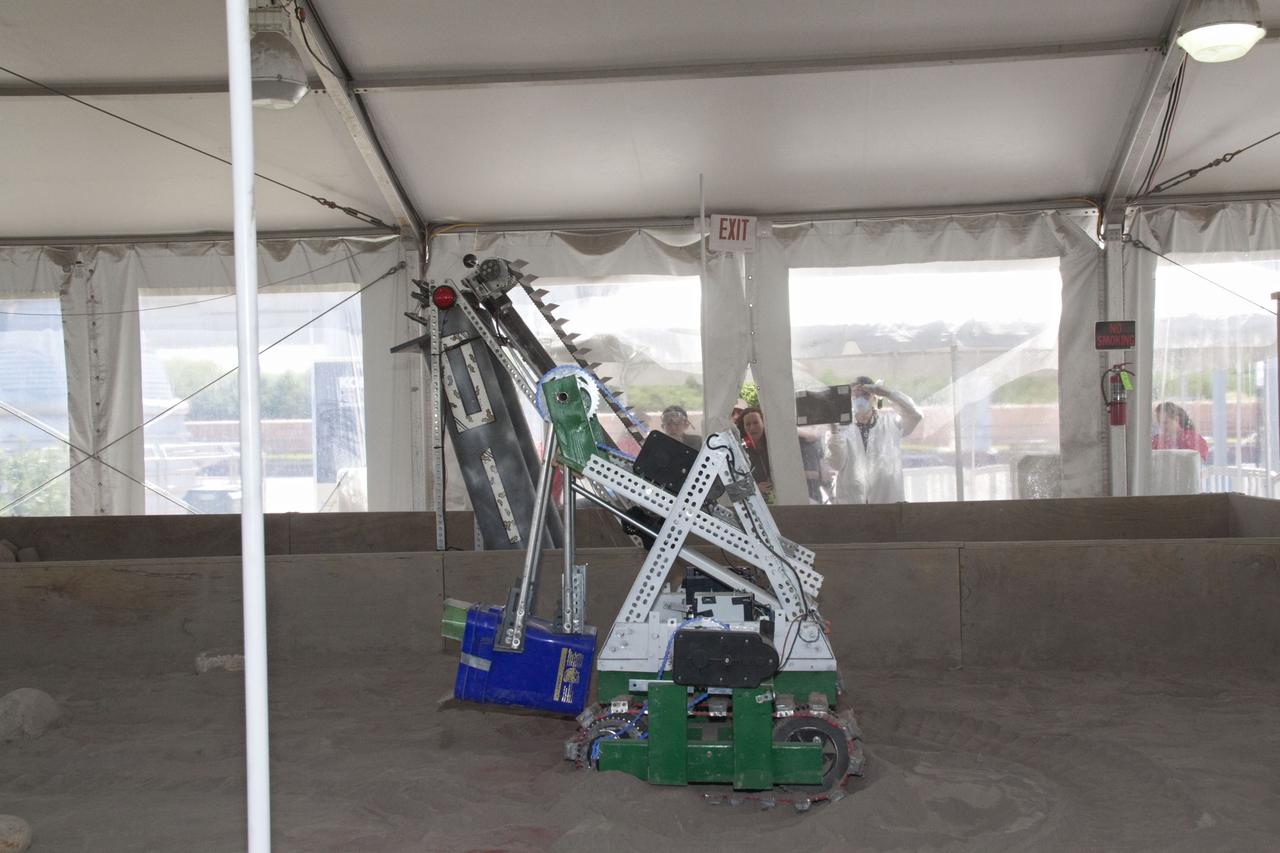
CAPE CANAVERAL, Fla. -- Inside the "Lunarena" at the Kennedy Space Center Visitor Complex in Florida, university students maneuver their remote controlled or autonomous excavators, called lunabots, in a "sand box" of ultra-fine simulated lunar soil during NASA's second annual Lunabotics Mining Competition. Thirty-six teams of undergraduate and graduate students from the United States, Bangladesh, Canada, Colombia and India will participate in NASA's Lunabotics Mining Competition May 26 - 28 at the agency's Kennedy Space Center in Florida. The competition is designed to engage and retain students in science, technology, engineering and mathematics (STEM). Teams will maneuver their remote controlled or autonomous excavators, called lunabots, in about 60 tons of ultra-fine simulated lunar soil, called BP-1. The competition is an Exploration Systems Mission Directorate project managed by Kennedy's Education Division. The event also provides a competitive environment that could result in innovative ideas and solutions for NASA's future excavation of the moon. Photo credit: NASA/Jack Pfaller
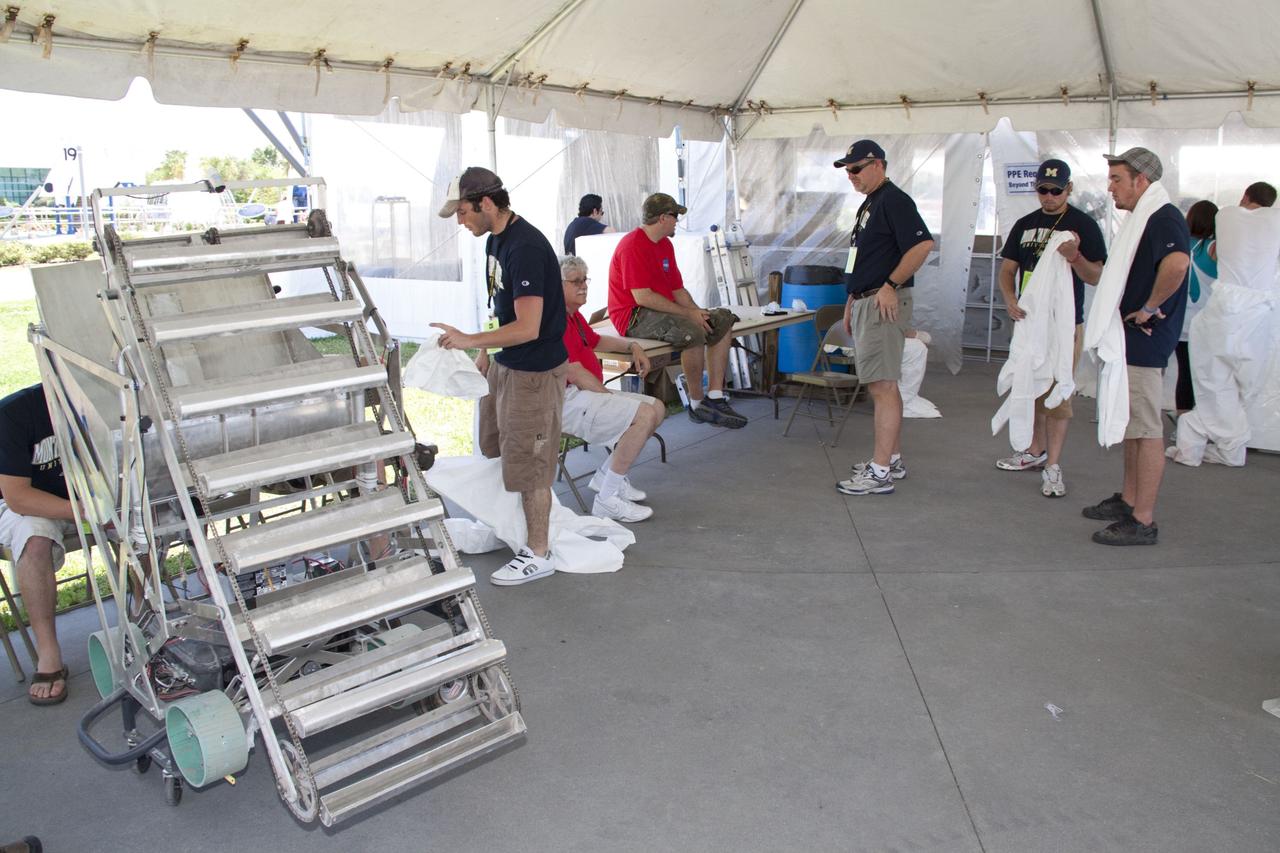
CAPE CANAVERAL, Fla. -- University students wait their turn to compete in NASA's second annual Lunabotics Mining Competition at the Kennedy Space Center Visitor Complex in Florida. Thirty-six teams of undergraduate and graduate students from the United States, Bangladesh, Canada, Colombia and India will participate in NASA's Lunabotics Mining Competition May 26 - 28 at the agency's Kennedy Space Center in Florida. The competition is designed to engage and retain students in science, technology, engineering and mathematics (STEM). Teams will maneuver their remote controlled or autonomous excavators, called lunabots, in about 60 tons of ultra-fine simulated lunar soil, called BP-1. The competition is an Exploration Systems Mission Directorate project managed by Kennedy's Education Division. The event also provides a competitive environment that could result in innovative ideas and solutions for NASA's future excavation of the moon. Photo credit: NASA/Jack Pfaller
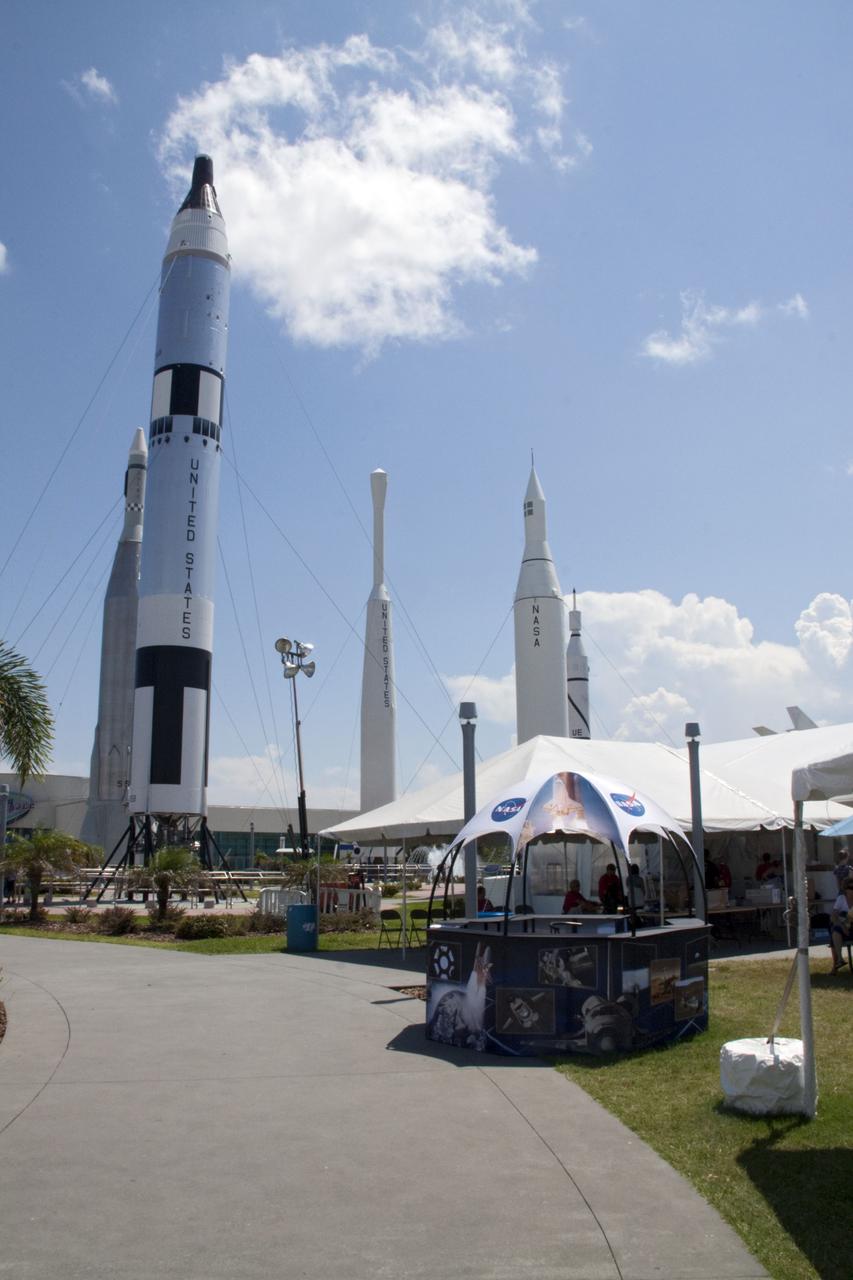
CAPE CANAVERAL, Fla. -- University students wait their turn to compete in NASA's second annual Lunabotics Mining Competition at the Kennedy Space Center Visitor Complex in Florida taking place near the complex's Rocket Garden. Thirty-six teams of undergraduate and graduate students from the United States, Bangladesh, Canada, Colombia and India will participate in NASA's Lunabotics Mining Competition May 26 - 28 at the agency's Kennedy Space Center in Florida. The competition is designed to engage and retain students in science, technology, engineering and mathematics (STEM). Teams will maneuver their remote controlled or autonomous excavators, called lunabots, in about 60 tons of ultra-fine simulated lunar soil, called BP-1. The competition is an Exploration Systems Mission Directorate project managed by Kennedy's Education Division. The event also provides a competitive environment that could result in innovative ideas and solutions for NASA's future excavation of the moon. Photo credit: NASA/Jack Pfaller
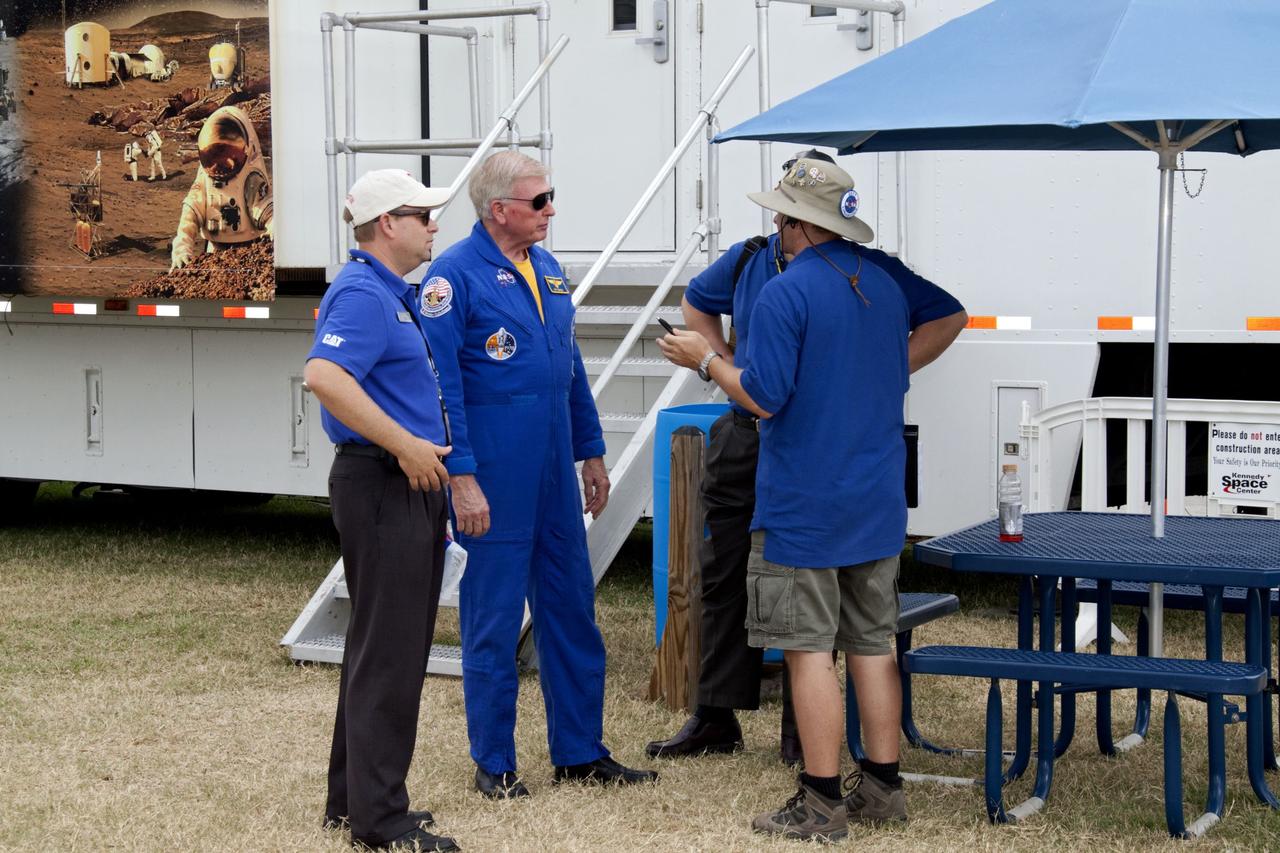
CAPE CANAVERAL, Fla. -- Outside the "Lunarena" at the Kennedy Space Center Visitor Complex in Florida, NASA astronaut John McBride (center) discusses the day's events with event leaders during NASA's second annual Lunabotics Mining Competition. Thirty-six teams of undergraduate and graduate students from the United States, Bangladesh, Canada, Colombia and India will participate in NASA's Lunabotics Mining Competition May 26 - 28 at the agency's Kennedy Space Center in Florida. The competition is designed to engage and retain students in science, technology, engineering and mathematics (STEM). Teams will maneuver their remote controlled or autonomous excavators, called lunabots, in about 60 tons of ultra-fine simulated lunar soil, called BP-1. The competition is an Exploration Systems Mission Directorate project managed by Kennedy's Education Division. The event also provides a competitive environment that could result in innovative ideas and solutions for NASA's future excavation of the moon. Photo credit: NASA/Jack Pfaller
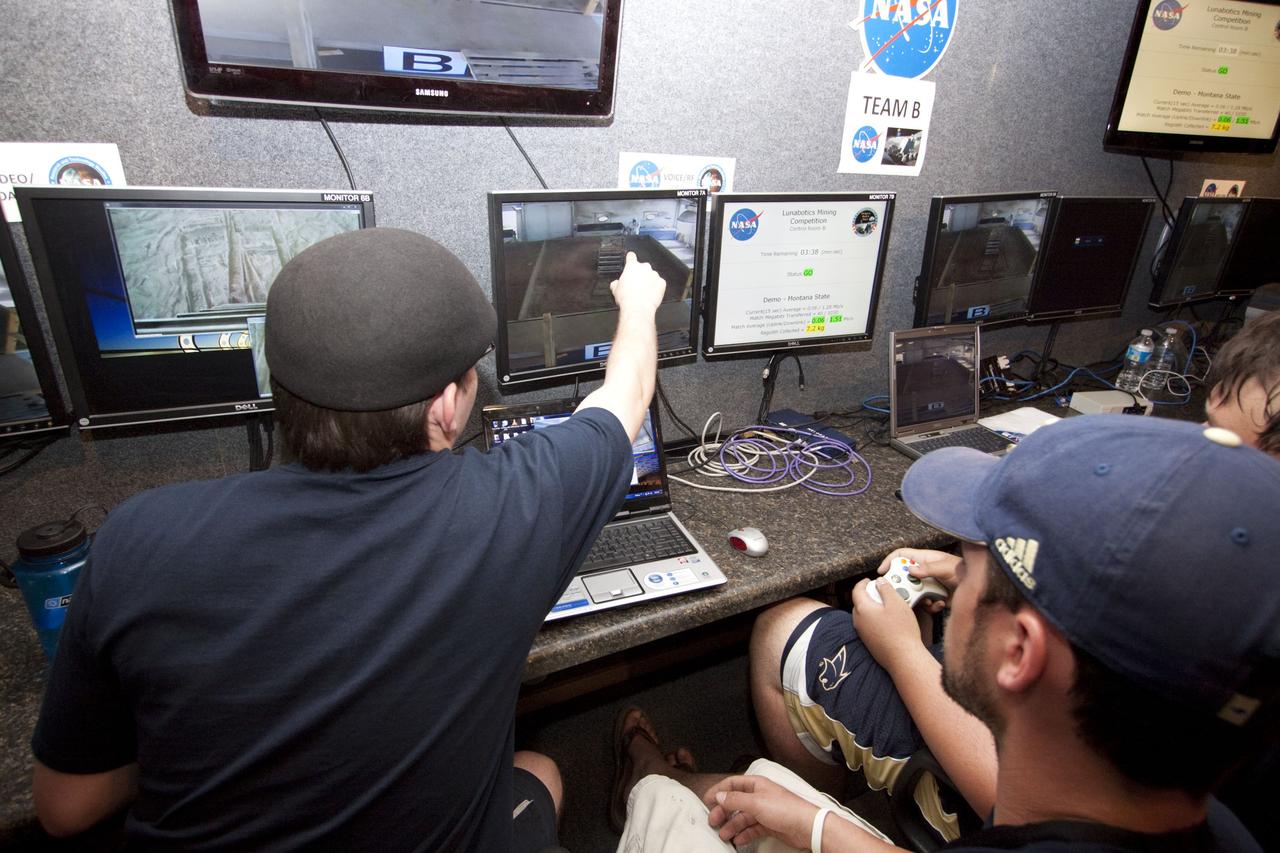
CAPE CANAVERAL, Fla. -- University students monitor their team's remote controlled or autonomous excavator, called a lunabot, as it is maneuvered in a "sand box" of ultra-fine simulated lunar soil during NASA's second annual Lunabotics Mining Competition at the Kennedy Space Center Visitor Complex in Florida. Thirty-six teams of undergraduate and graduate students from the United States, Bangladesh, Canada, Colombia and India will participate in NASA's Lunabotics Mining Competition May 26 - 28 at the agency's Kennedy Space Center in Florida. The competition is designed to engage and retain students in science, technology, engineering and mathematics (STEM). Teams will maneuver their remote controlled or autonomous excavators, called lunabots, in about 60 tons of ultra-fine simulated lunar soil, called BP-1. The competition is an Exploration Systems Mission Directorate project managed by Kennedy's Education Division. The event also provides a competitive environment that could result in innovative ideas and solutions for NASA's future excavation of the moon. Photo credit: NASA/Jack Pfaller
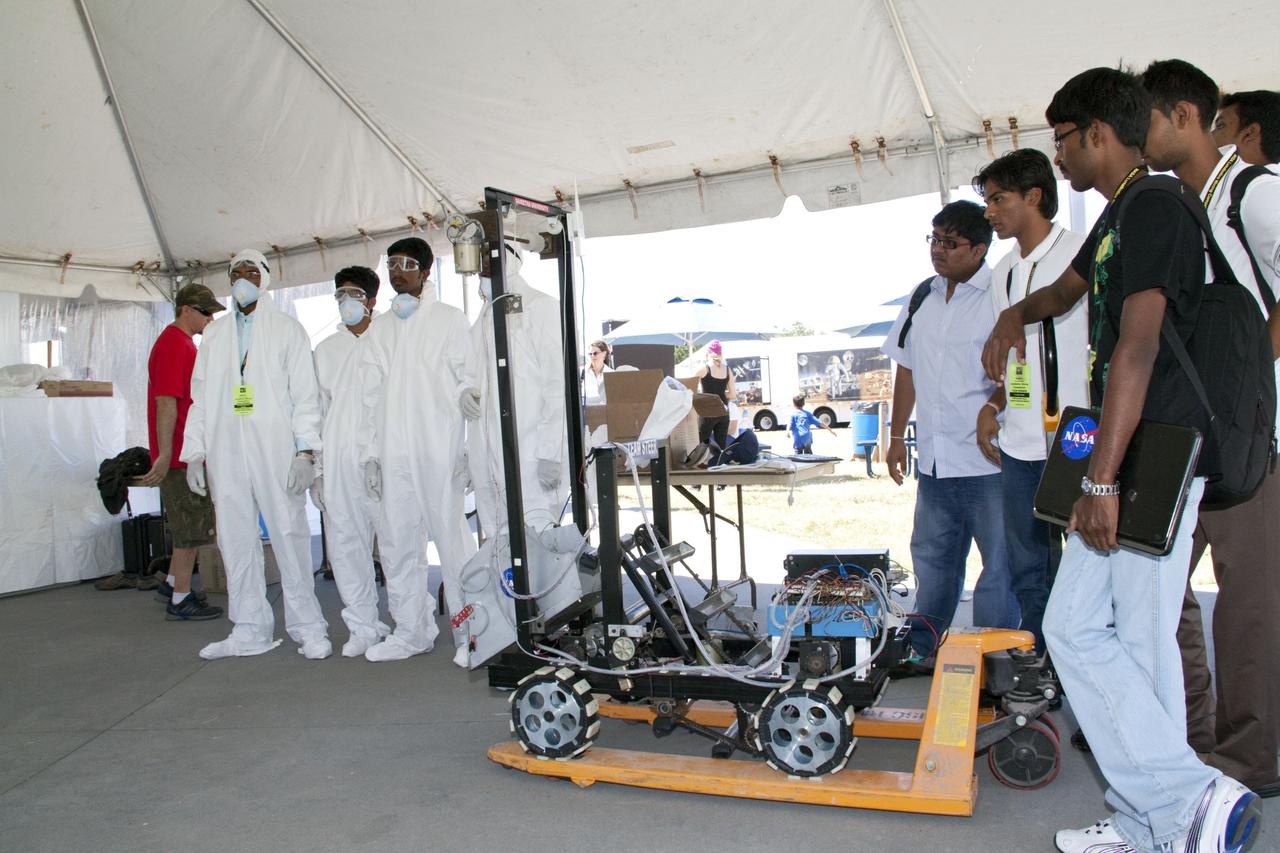
CAPE CANAVERAL, Fla. -- University students wait their turn to compete in NASA's second annual Lunabotics Mining Competition at the Kennedy Space Center Visitor Complex in Florida. Thirty-six teams of undergraduate and graduate students from the United States, Bangladesh, Canada, Colombia and India will participate in NASA's Lunabotics Mining Competition May 26 - 28 at the agency's Kennedy Space Center in Florida. The competition is designed to engage and retain students in science, technology, engineering and mathematics (STEM). Teams will maneuver their remote controlled or autonomous excavators, called lunabots, in about 60 tons of ultra-fine simulated lunar soil, called BP-1. The competition is an Exploration Systems Mission Directorate project managed by Kennedy's Education Division. The event also provides a competitive environment that could result in innovative ideas and solutions for NASA's future excavation of the moon. Photo credit: NASA/Jack Pfaller
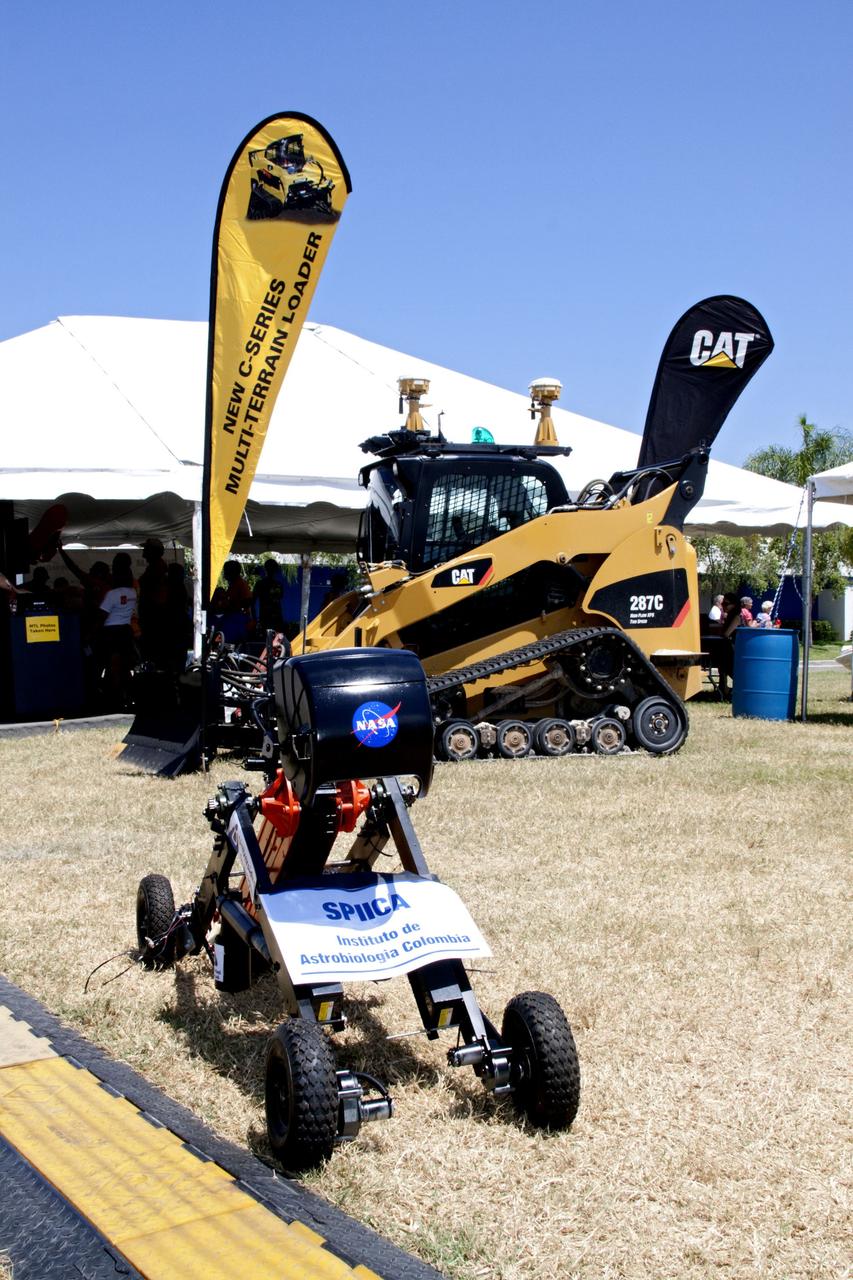
CAPE CANAVERAL, Fla. -- A remote controlled or autonomous excavator, called a lunabot, is on display outside of the "Lunarena" at the Kennedy Space Center Visitor Complex in Florida where university students maneuver their remote controlled lunabots, in a "sand box" of ultra-fine simulated lunar soil during NASA's second annual Lunabotics Mining Competition. Thirty-six teams of undergraduate and graduate students from the United States, Bangladesh, Canada, Colombia and India will participate in NASA's Lunabotics Mining Competition May 26 - 28 at the agency's Kennedy Space Center in Florida. The competition is designed to engage and retain students in science, technology, engineering and mathematics (STEM). Teams will maneuver their remote controlled or autonomous excavators, called lunabots, in about 60 tons of ultra-fine simulated lunar soil, called BP-1. The competition is an Exploration Systems Mission Directorate project managed by Kennedy's Education Division. The event also provides a competitive environment that could result in innovative ideas and solutions for NASA's future excavation of the moon. Photo credit: NASA/Jack Pfaller
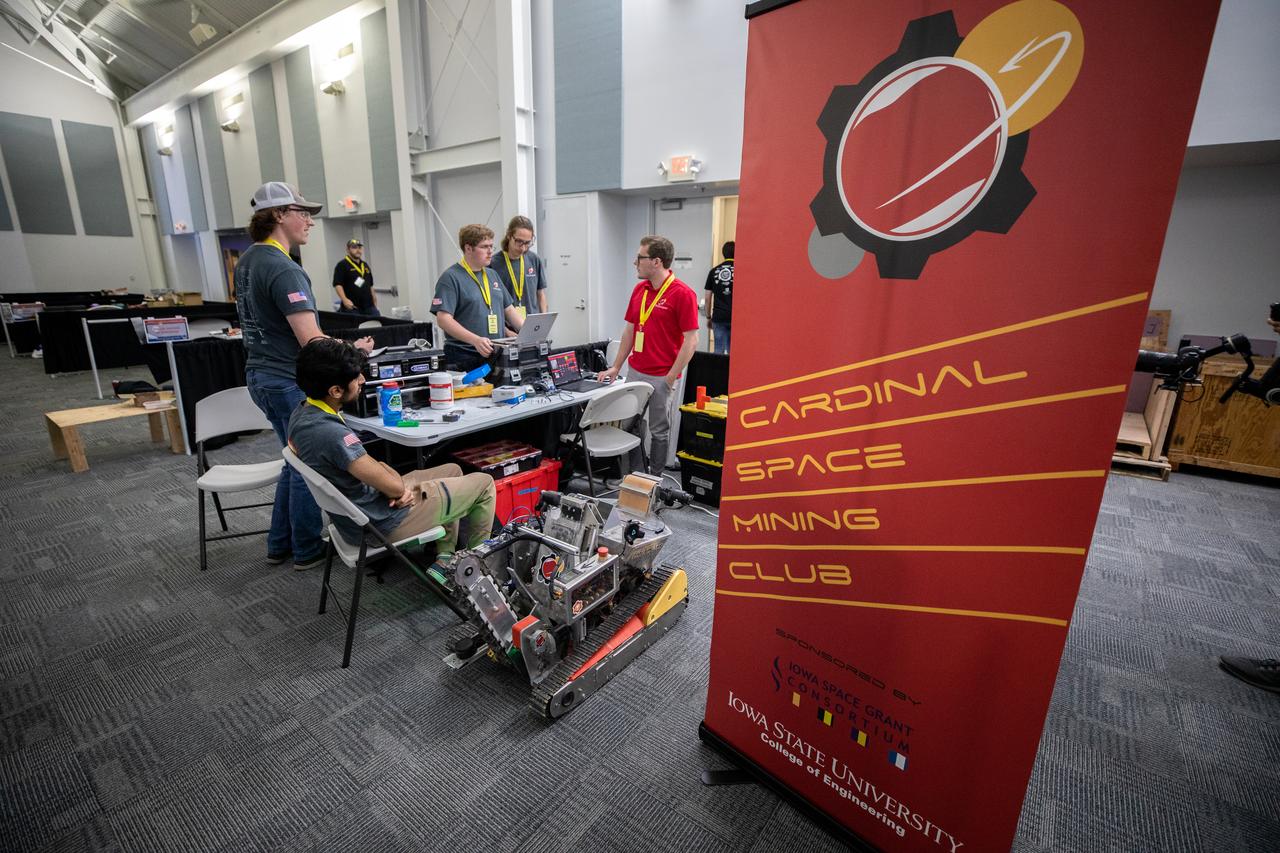
Students from Iowa State University College students prepare their robotic miner for its turn to dig in the mining arena during NASA’s LUNABOTICS competition on May 23, 2022, at the Center for Space Education near the Kennedy Space Center Visitor Complex in Florida. More than 35 teams from around the U.S. have designed and built remote-controlled robots for the mining competition. Teams use their autonomous or remote-controlled robots to maneuver and dig in a supersized sandbox filled with rocks and simulated lunar soil, or regolith. The objective of the challenge is to see which team’s robot can collect and deposit the most rocky regolith within a specified amount of time.
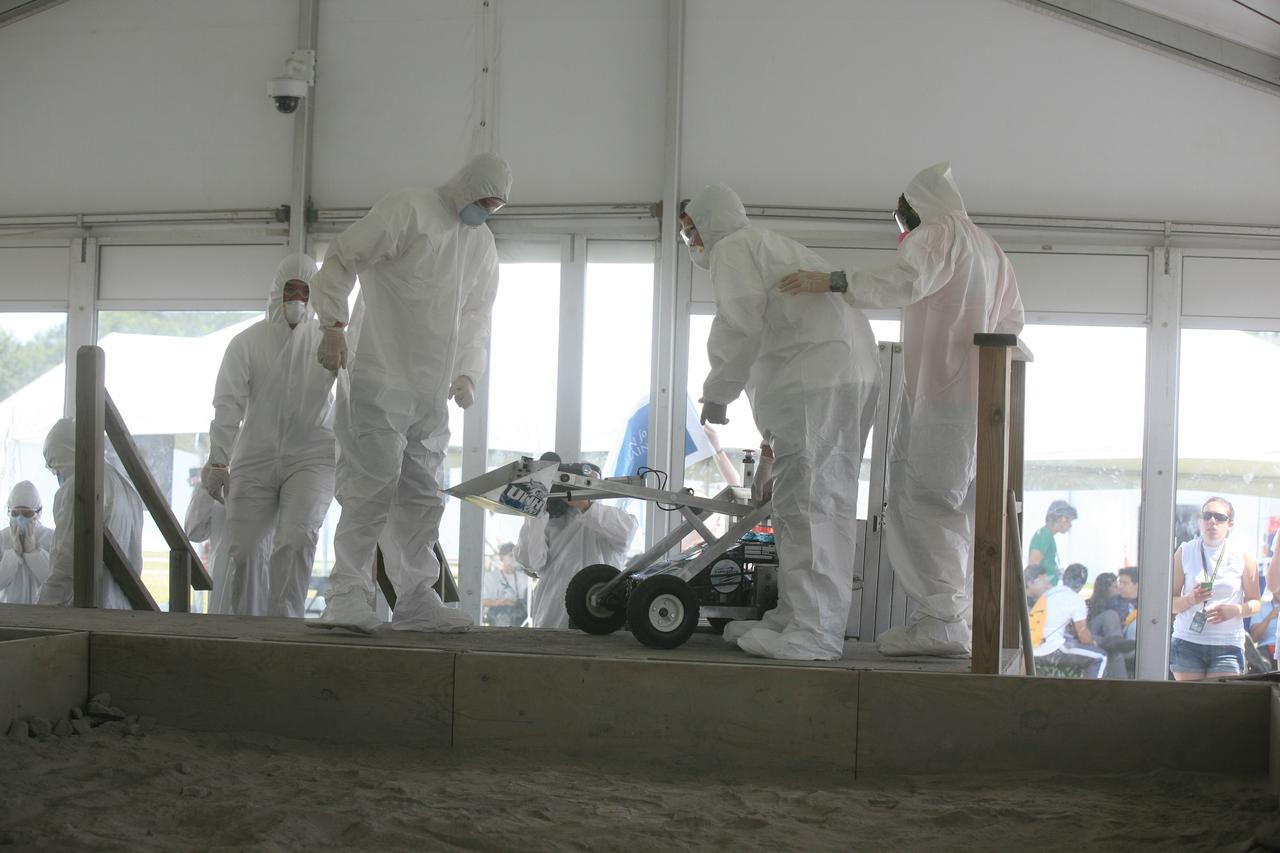
CAPE CANAVERAL, Fla. – A team of competitors works with a robotic vehicle taking part in NASA's Lunabotics Mining Competition at the Kennedy Space Center Visitor Complex in Florida. The competition challenges university students to build machines that can collect soil such as the material found on the moon. Working inside the Caterpillar LunArena, the robotic craft dig soil that simulates lunar material. The event is judged by a machine's abilities to collect the soil, its design and operation, size, dust tolerance and its level of autonomy. Photo credit: NASA/Glenn Benson
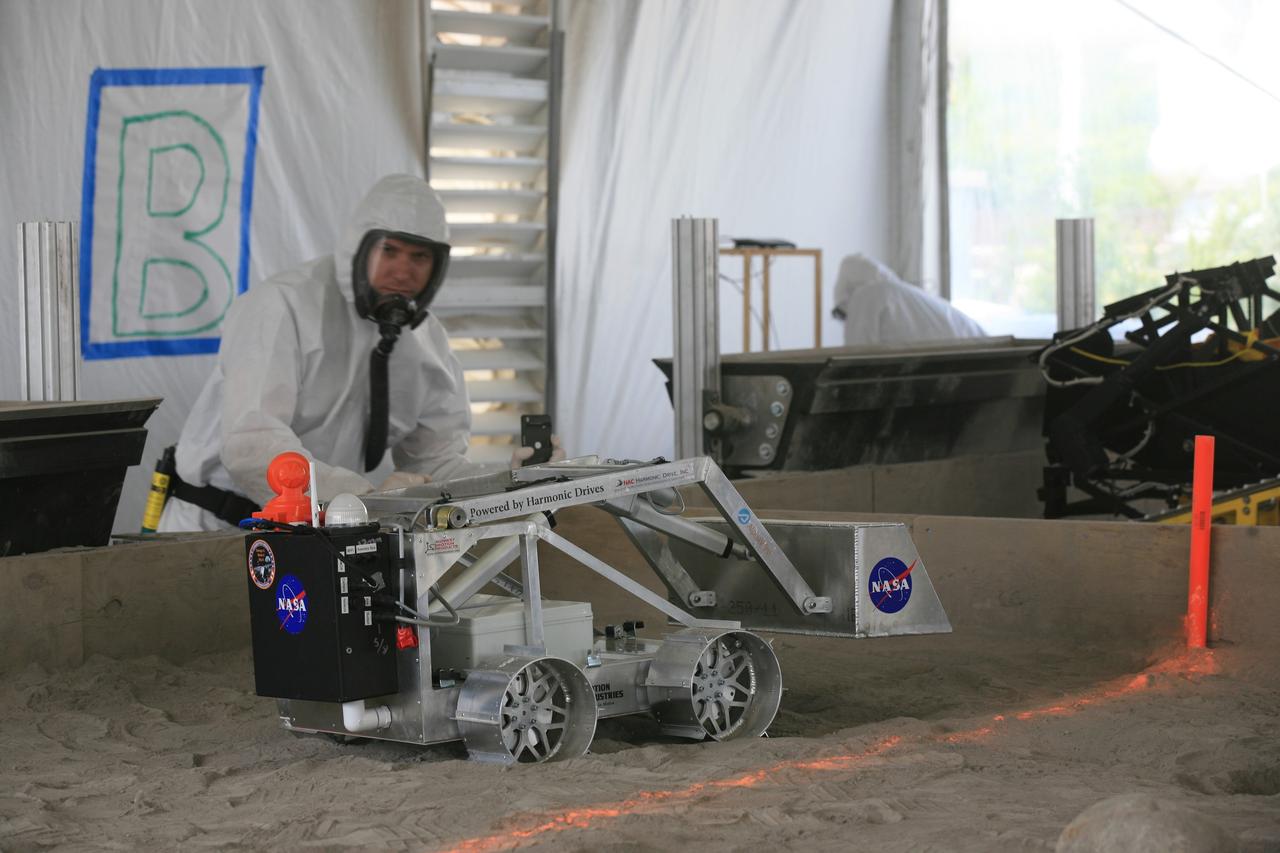
CAPE CANAVERAL, Fla. – A robotic vehicle takes part in NASA's Lunabotics Mining Competition at the Kennedy Space Center Visitor Complex in Florida. The competition challenges university students to build machines that can collect soil such as the material found on the moon. Working inside the Caterpillar LunArena, the robotic craft dig soil that simulates lunar material. The event is judged by a machine's abilities to collect the soil, its design and operation, size, dust tolerance and its level of autonomy. Photo credit: NASA/Glenn Benson
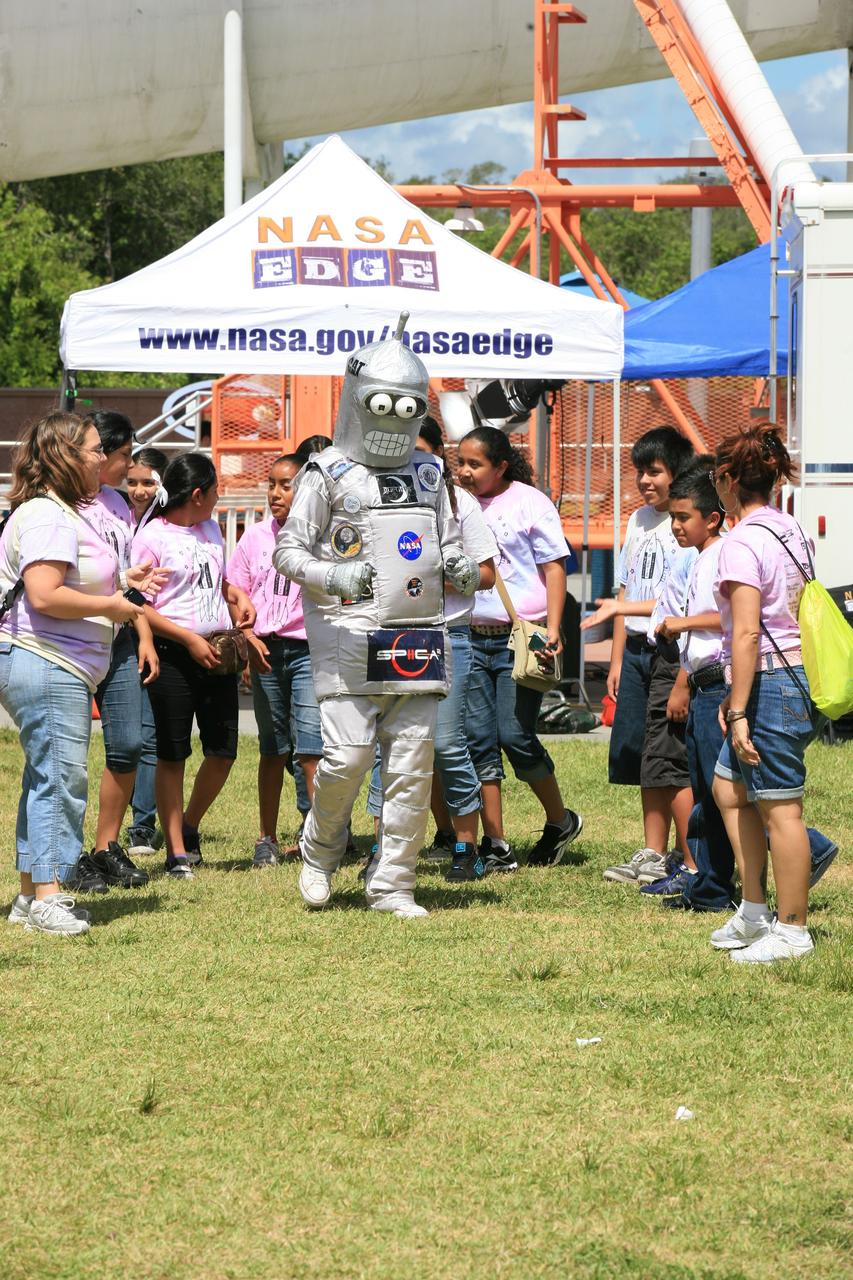
CAPE CANAVERAL, Fla. – A robotic mascot moves among participants during NASA's Lunabotics Mining Competition at the Kennedy Space Center Visitor Complex in Florida. The competition challenges university students to build machines that can collect soil such as the material found on the moon. Working inside the Caterpillar LunArena, the robotic craft dig soil that simulates lunar material. The event is judged by a machine's abilities to collect the soil, its design and operation, size, dust tolerance and its level of autonomy. Photo credit: NASA/Glenn Benson
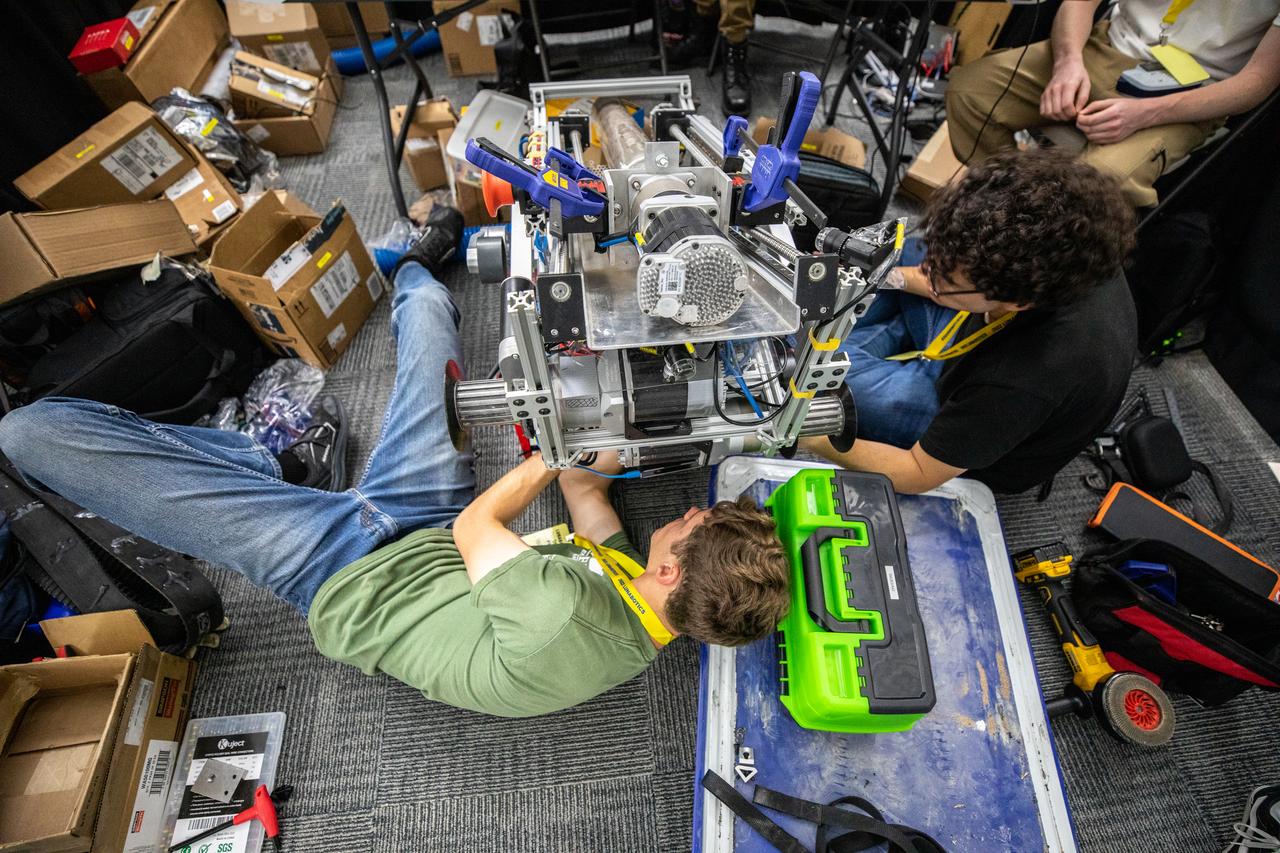
New Mexico Tech students prepare their robotic miner for its turn to dig in the mining arena during NASA’s LUNABOTICS competition on May 23, 2022, at the Center for Space Education near the Kennedy Space Center Visitor Complex in Florida. More than 35 teams from around the U.S. have designed and built remote-controlled robots for the mining competition. Teams use their autonomous or remote-controlled robots to maneuver and dig in a supersized sandbox filled with rocks and simulated lunar soil, or regolith. The objective of the challenge is to see which team’s robot can collect and deposit the most rocky regolith within a specified amount of time.
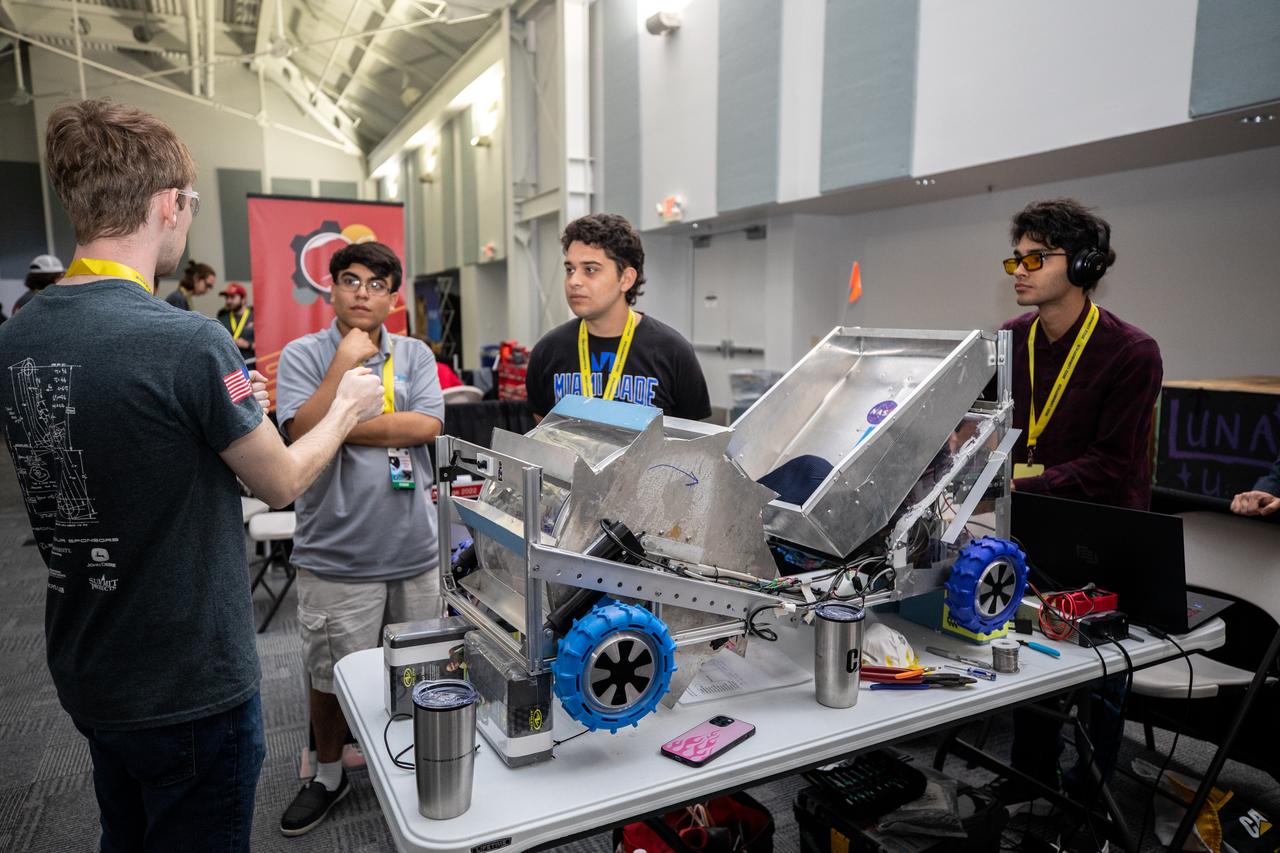
Students from Miami-Dade College at Kendall prepare their robotic miner for its turn to dig in the mining arena during NASA’s LUNABOTICS competition on May 24, 2022, at the Center for Space Education near the Kennedy Space Center Visitor Complex in Florida. More than 35 teams from around the U.S. have designed and built remote-controlled robots for the mining competition. Teams use their autonomous or remote-controlled robots to maneuver and dig in a supersized sandbox filled with rocks and simulated lunar soil, or regolith. The objective of the challenge is to see which team’s robot can collect and deposit the most rocky regolith within a specified amount of time.
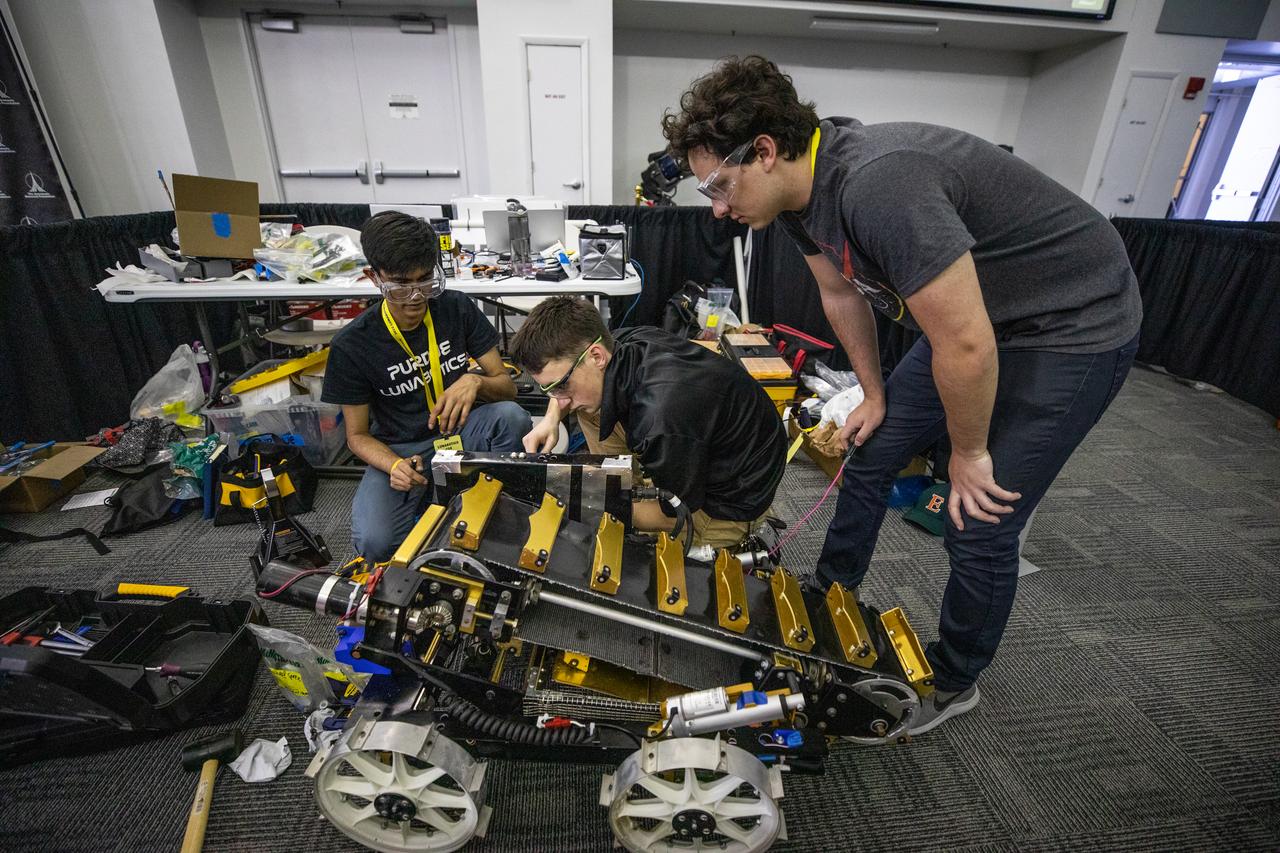
Students from Purdue University prepare their robotic miner for its turn to dig in the mining pit during NASA’s LUNABOTICS competition on May 23, 2022, at the Center for Space Education near the Kennedy Space Center Visitor Complex in Florida. More than 35 teams from around the U.S. have designed and built remote-controlled robots for the mining competition. Teams use their autonomous or remote-controlled robots to maneuver and dig in a supersized sandbox filled with rocks and simulated lunar soil, or regolith. The objective of the challenge is to see which team’s robot can collect and deposit the most rocky regolith within a specified amount of time.
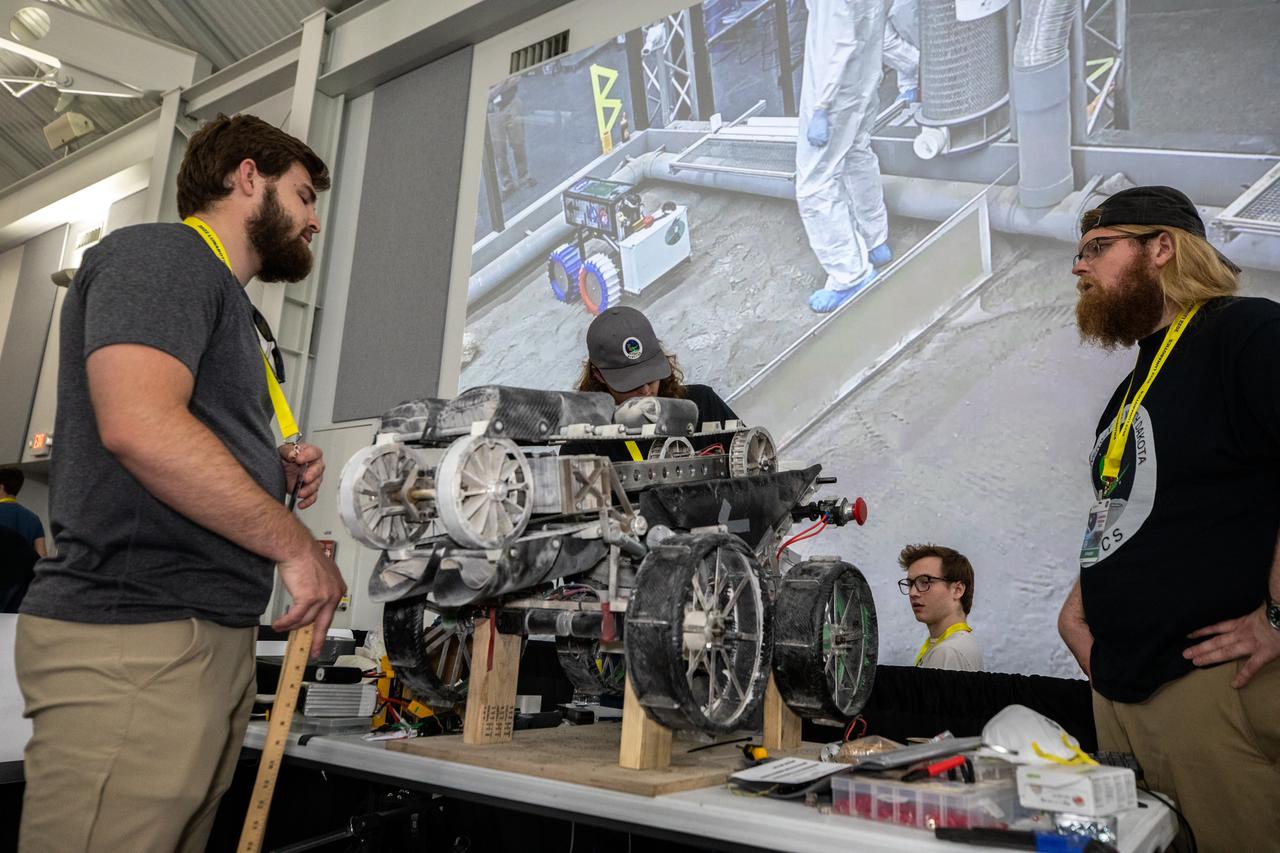
Students from the University of North Dakota prepare their robot miner for its turn to dig in the mining arena during NASA’s LUNABOTICS competition on May 26, 2022, at the Center for Space Education near the Kennedy Space Center Visitor Complex in Florida. More than 35 teams from around the U.S. have designed and built remote-controlled robots for the mining competition. Teams use their semi-autonomous or remote-controlled robots to maneuver and dig in a supersized sandbox filled with rocks and simulated lunar soil, or regolith. The objective of the challenge is to see which team’s robot can collect and deposit the most rocky regolith within a specified amount of time.
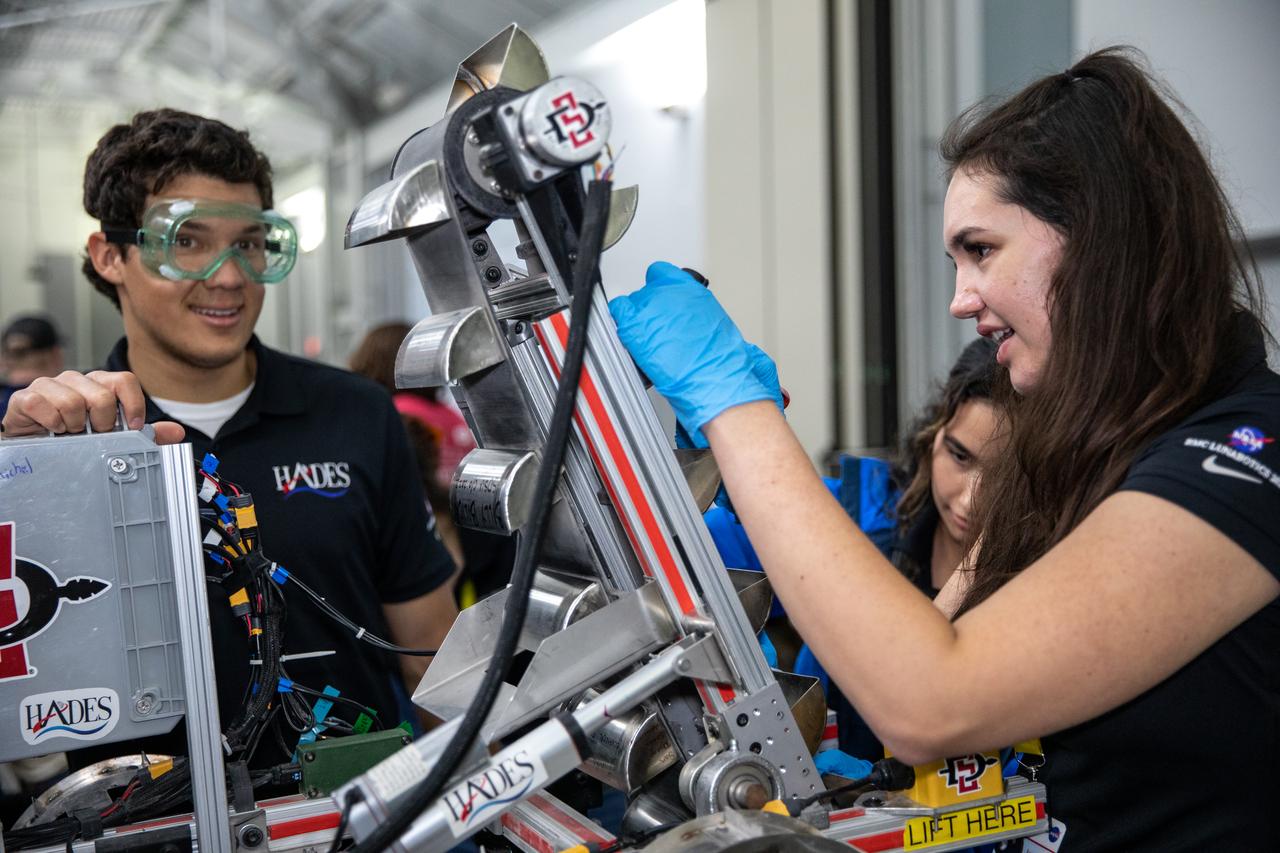
Students from San Diego State College prepare their robotic miner for its second turn to dig in the mining arena during NASA’s LUNABOTICS competition on May 27, 2022, at the Center for Space Education near the Kennedy Space Center Visitor Complex in Florida. More than 35 teams from around the U.S. have designed and built remote-controlled robots for the mining competition. Teams used their autonomous or remote-controlled robots to maneuver and dig in a supersized sandbox filled with lunar simulant and rocks. The objective of the challenge is to see which team’s robot can collect and deposit the most rocky regolith within a specified amount of time.
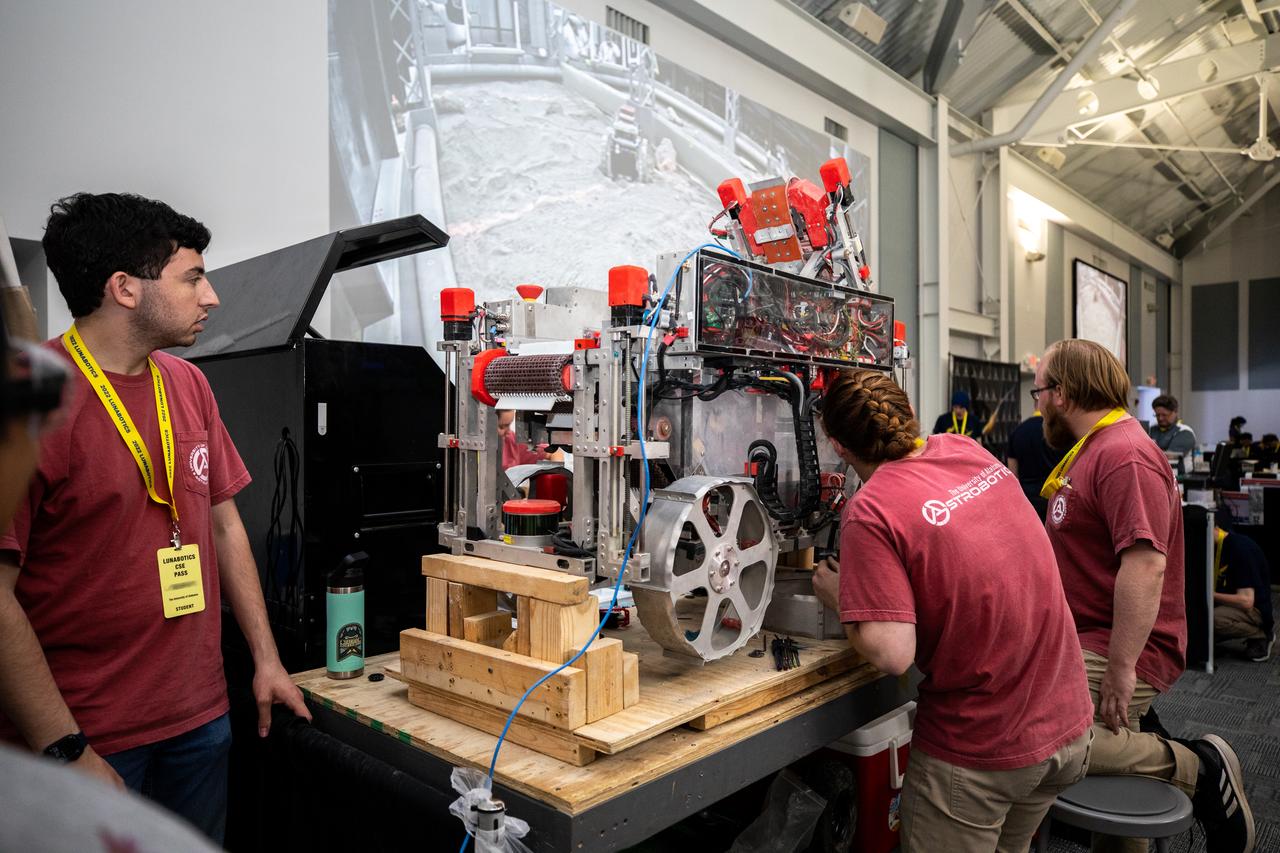
Students from the University of Alabama prepare their robotic miner for its turn to dig in the mining arena during NASA’s LUNABOTICS competition on May 24, 2022, at the Center for Space Education near the Kennedy Space Center Visitor Complex in Florida. More than 35 teams from around the U.S. have designed and built remote-controlled robots for the mining competition. Teams use their autonomous or remote-controlled robots to maneuver and dig in a supersized sandbox filled with rocks and simulated lunar soil, or regolith. The objective of the challenge is to see which team’s robot can collect and deposit the most rocky regolith within a specified amount of time.
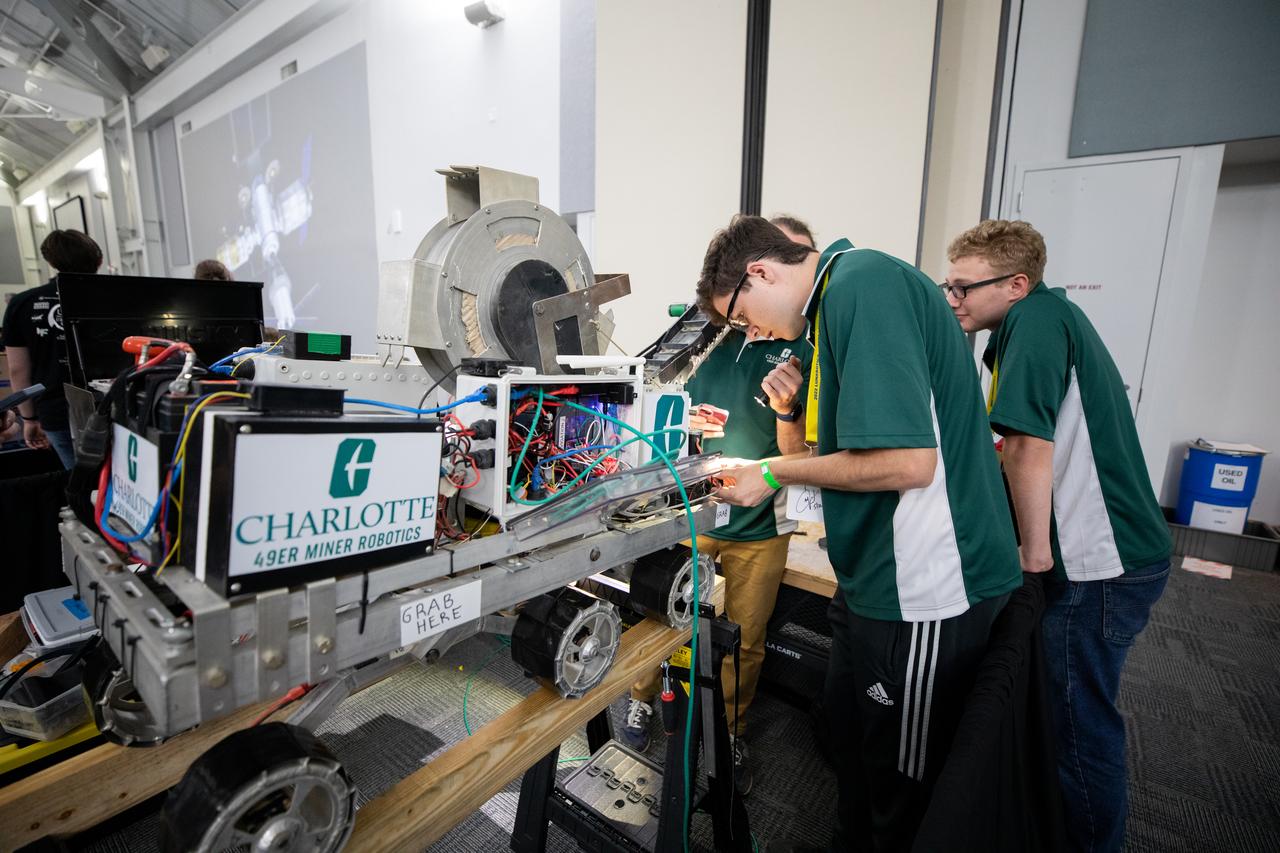
Students from the University of North Carolina at Charlotte prepare their robotic miner for its turn to dig in the mining arena during NASA’s LUNABOTICS competition on May 23, 2022, at the Center for Space Education near the Kennedy Space Center Visitor Complex in Florida. More than 35 teams from around the U.S. have designed and built remote-controlled robots for the mining competition. Teams use their autonomous or remote-controlled robots to maneuver and dig in a supersized sandbox filled with rocks and simulated lunar soil, or regolith. The objective of the challenge is to see which team’s robot can collect and deposit the most rocky regolith within a specified amount of time.
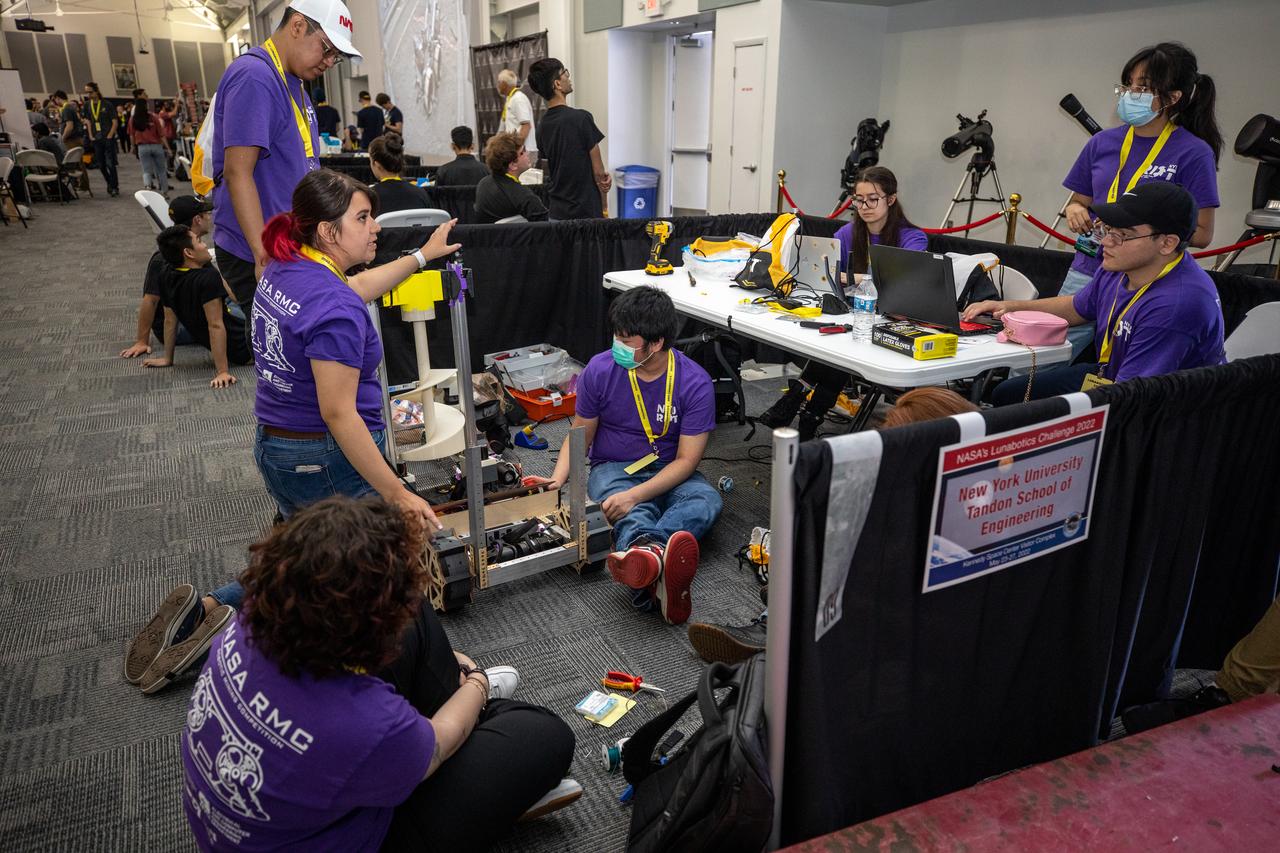
Students from the New York University Tandon School of Engineering prepare their robot for its turn to dig in the mining arena during NASA’s LUNABOTICS competition on May 24, 2022, at the Center for Space Education near the Kennedy Space Center Visitor Complex in Florida. More than 35 teams from around the U.S. have designed and built remote-controlled robots for the mining competition. Teams use their autonomous or remote-controlled robots to maneuver and dig in a supersized sandbox filled with rocks and simulated lunar soil, or regolith. The objective of the challenge is to see which team’s robot can collect and deposit the most rocky regolith within a specified amount of time.
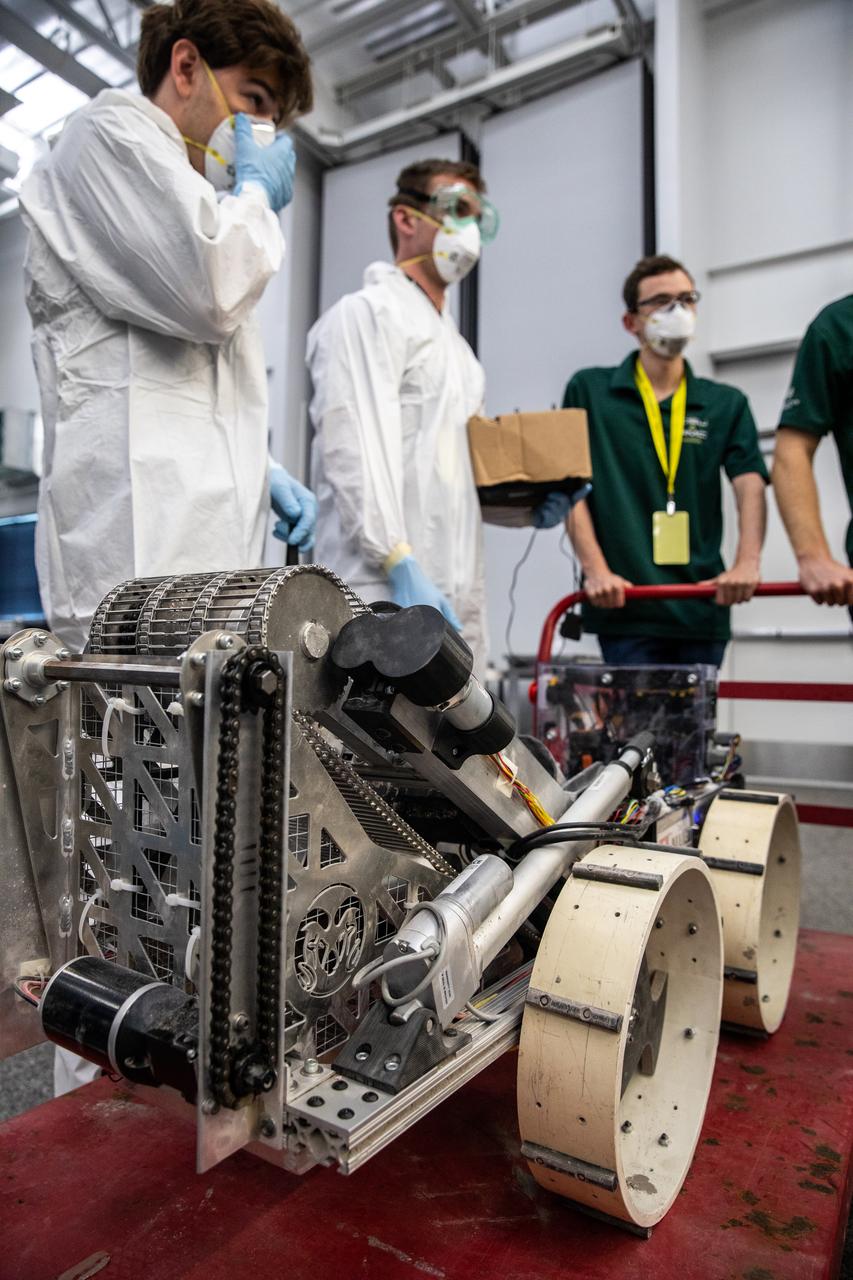
Students from Colorado State University prepare their robotic miner for its turn to dig in the mining arena during NASA’s LUNABOTICS competition on May 24, 2022, at the Center for Space Education near the Kennedy Space Center Visitor Complex in Florida. More than 35 teams from around the U.S. have designed and built remote-controlled robots for the mining competition. Teams use their autonomous or remote-controlled robots to maneuver and dig in a supersized sandbox filled with rocks and simulated lunar soil, or regolith. The objective of the challenge is to see which team’s robot can collect and deposit the most rocky regolith within a specified amount of time.
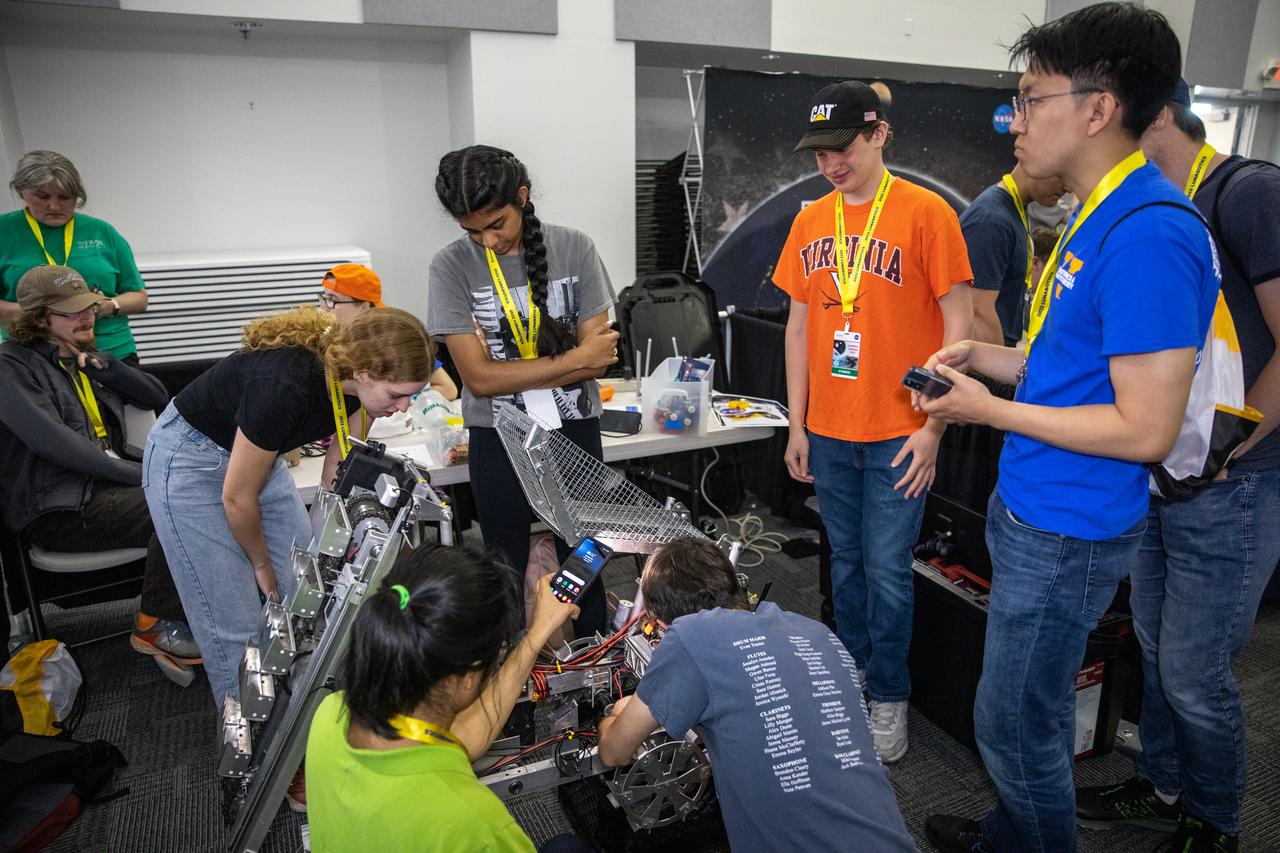
Students from the University of Virginia prepare their robotic miner for its turn to dig in the mining arena during NASA’s LUNABOTICS competition on May 26, 2022, at the Center for Space Education near the Kennedy Space Center Visitor Complex in Florida. More than 35 teams from around the U.S. have designed and built remote-controlled robots for the mining competition. Teams use their semi-autonomous or remote-controlled robots to maneuver and dig in a supersized sandbox filled with rocks and simulated lunar soil, or regolith. The objective of the challenge is to see which team’s robot can collect and deposit the most rocky regolith within a specified amount of time.
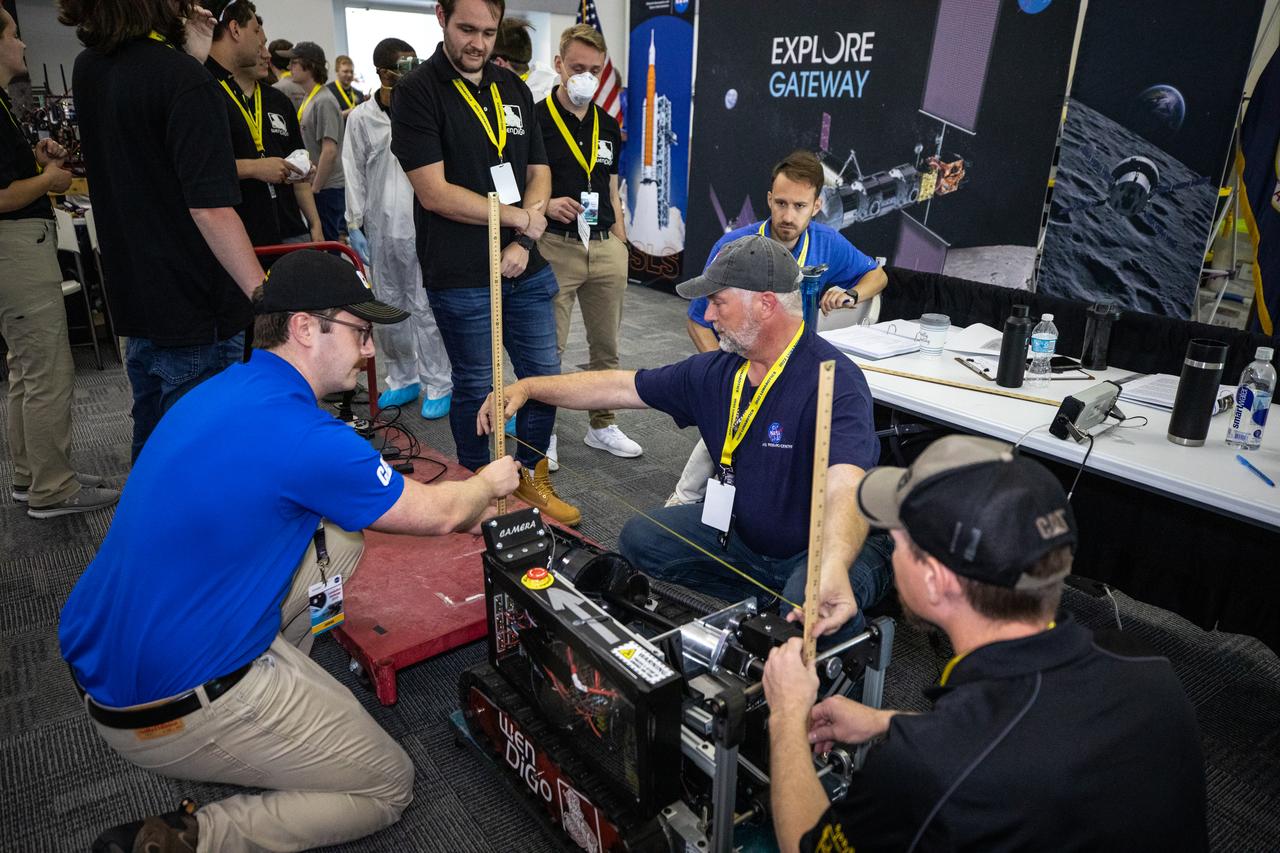
Students from the University of Nebraska-Lincoln prepare their robotic miner for its turn to dig in the mining arena during NASA’s LUNABOTICS competition on May 26, 2022, at the Center for Space Education near the Kennedy Space Center Visitor Complex in Florida. More than 35 teams from around the U.S. have designed and built remote-controlled robots for the mining competition. Teams use their semi-autonomous or remote-controlled robots to maneuver and dig in a supersized sandbox filled with rocks and simulated lunar soil, or regolith. The objective of the challenge is to see which team’s robot can collect and deposit the most rocky regolith within a specified amount of time.

Students from California State University, Long Beach, prepare their robotic miner for its turn to dig in the mining arena during NASA’s LUNABOTICS competition on May 24, 2022, at the Center for Space Education near the Kennedy Space Center Visitor Complex in Florida. More than 35 teams from around the U.S. have designed and built remote-controlled robots for the mining competition. Teams use their autonomous or remote-controlled robots to maneuver and dig in a supersized sandbox filled with rocks and simulated lunar soil, or regolith. The objective of the challenge is to see which team’s robot can collect and deposit the most rocky regolith within a specified amount of time.
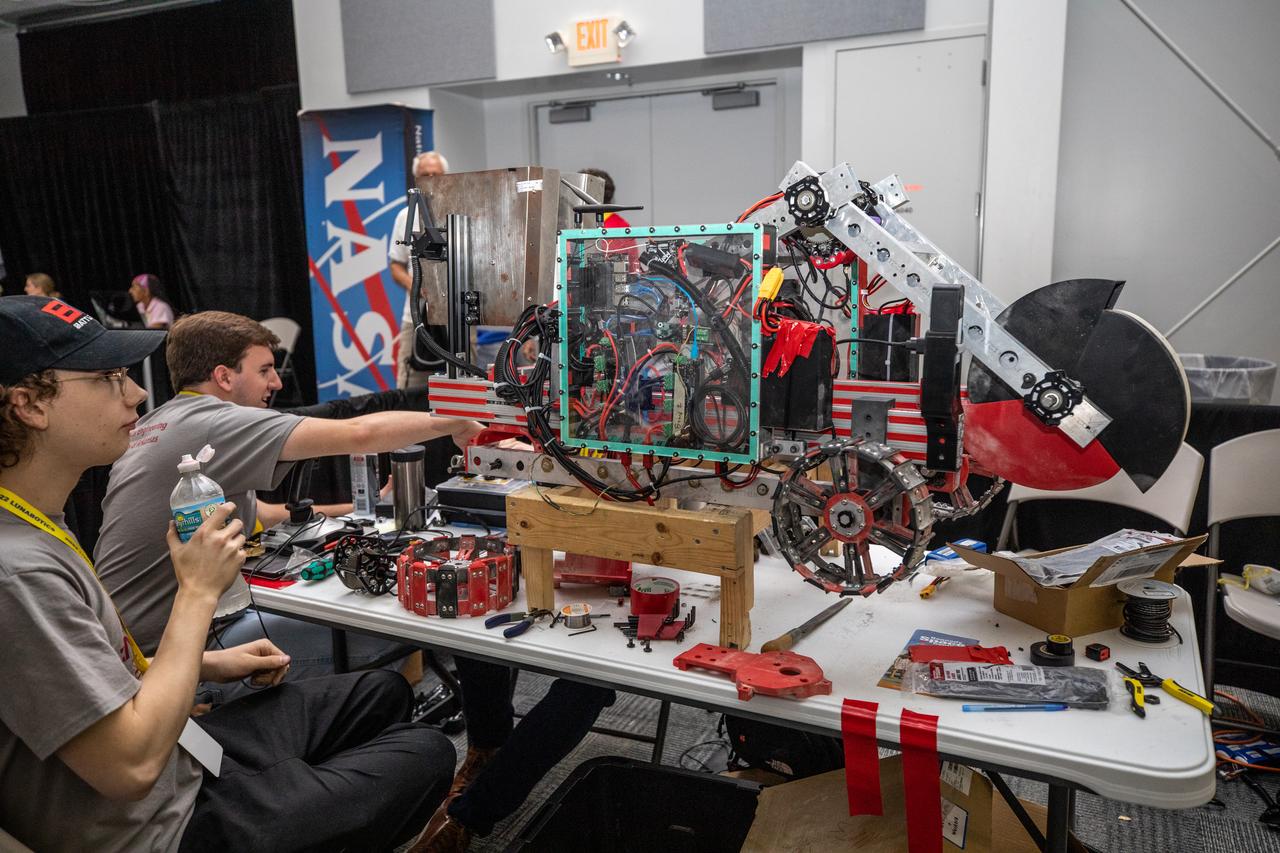
Students from the University of Arkansas prepare their robot for its turn to dig in the mining arena during NASA’s LUNABOTICS competition on May 24, 2022, at the Center for Space Education near the Kennedy Space Center Visitor Complex in Florida. More than 35 teams from around the U.S. have designed and built remote-controlled robots for the mining competition. Teams use their autonomous or remote-controlled robots to maneuver and dig in a supersized sandbox filled with rocks and simulated lunar soil, or regolith. The objective of the challenge is to see which team’s robot can collect and deposit the most rocky regolith within a specified amount of time.

Students from the University of Illinois at Chicago prepare their robotic miner for its turn to dig in the mining arena during NASA’s LUNABOTICS competition on May 26, 2022, at the Center for Space Education near the Kennedy Space Center Visitor Complex in Florida. More than 35 teams from around the U.S. have designed and built remote-controlled robots for the mining competition. Teams use their autonomous or remote-controlled robots to maneuver and dig in a supersized sandbox filled with rocks and simulated lunar soil, or regolith. The objective of the challenge is to see which team’s robot can collect and deposit the most rocky regolith within a specified amount of time.
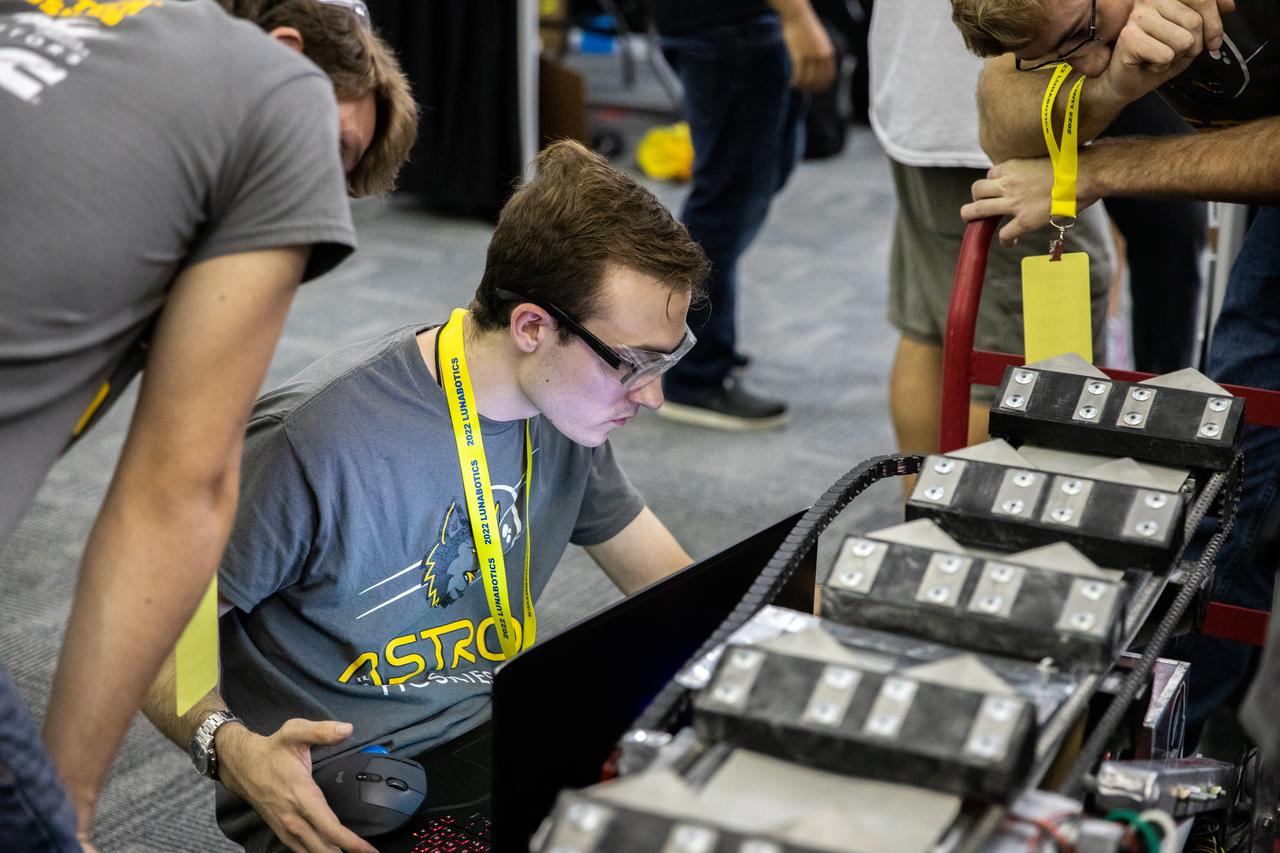
Students from the University of Rochester prepare their robotic miner for its turn to dig in the mining arena during NASA’s LUNABOTICS competition on May 23, 2022, at the Center for Space Education near the Kennedy Space Center Visitor Complex in Florida. More than 35 teams from around the U.S. have designed and built remote-controlled robots for the mining competition. Teams use their autonomous or remote-controlled robots to maneuver and dig in a supersized sandbox filled with rocks and simulated lunar soil, or regolith. The objective of the challenge is to see which team’s robot can collect and deposit the most rocky regolith within a specified amount of time.
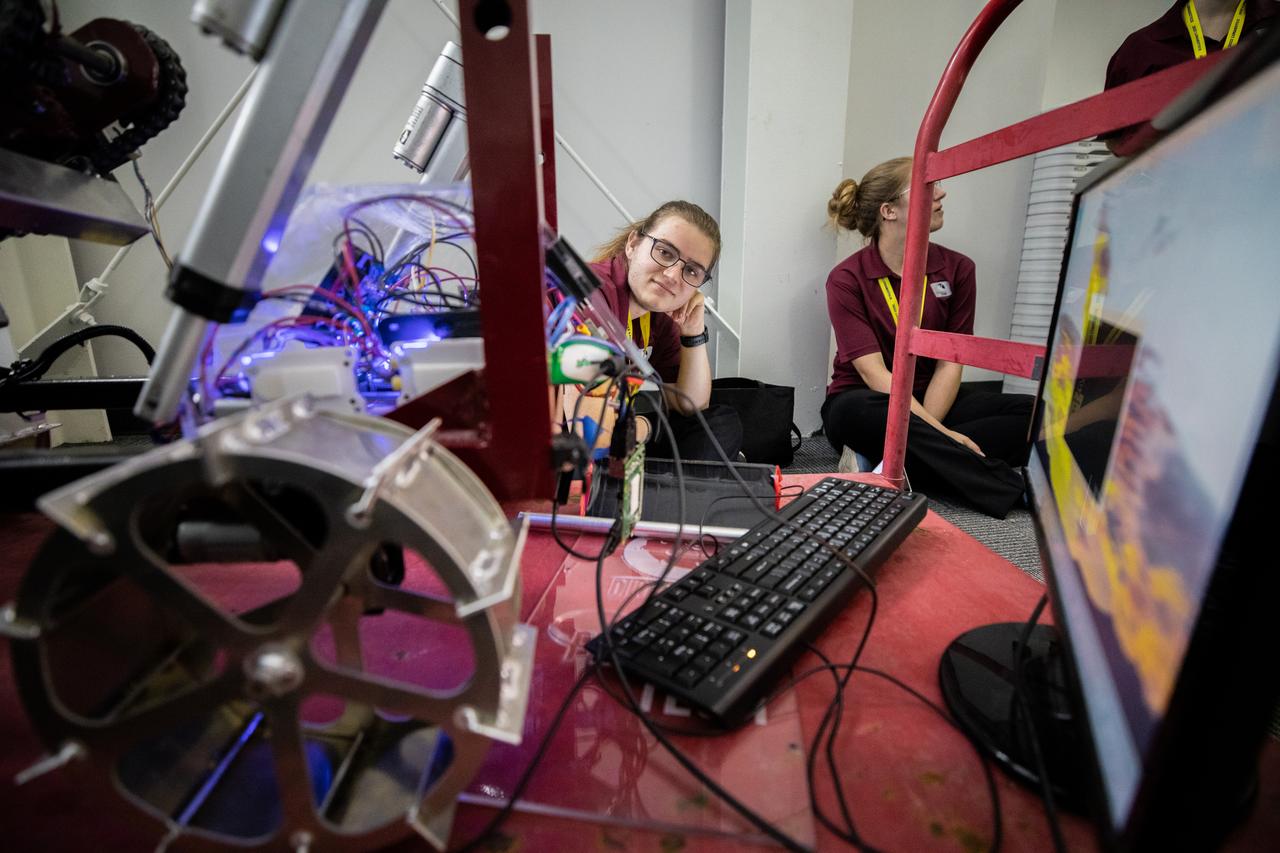
Students with Florida Technological University prepare their robotic miner for its turn to dig in the mining arena during NASA’s LUNABOTICS competition on May 23, 2022, at the Center for Space Education near the Kennedy Space Center Visitor Complex in Florida. More than 35 teams from around the U.S. have designed and built remote-controlled robots for the mining competition. Teams use their autonomous or remote-controlled robots to maneuver and dig in a supersized sandbox filled with rocks and simulated lunar soil, or regolith. The objective of the challenge is to see which team’s robot can collect and deposit the most rocky regolith within a specified amount of time.
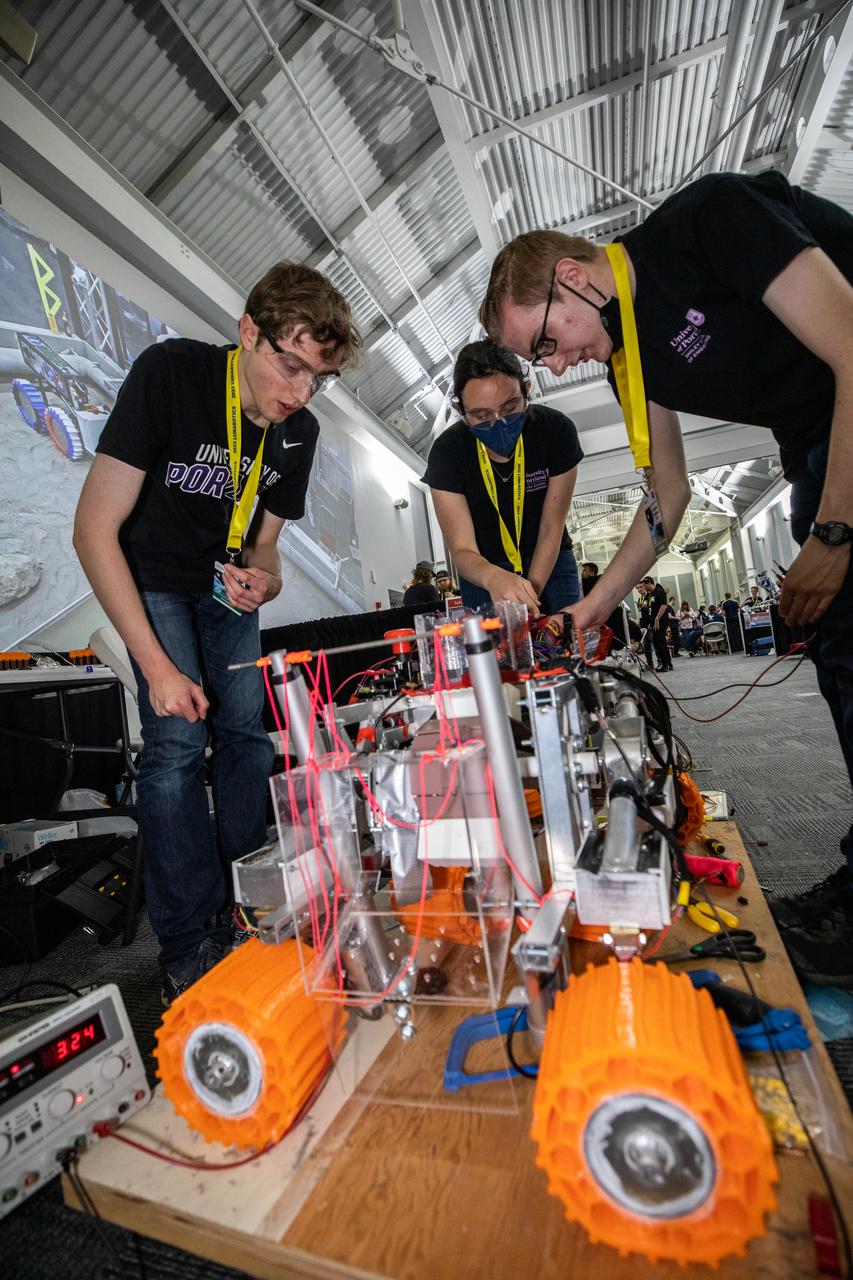
Students from the University of Portland in Oregon prepare their robot miner for its turn to dig in the mining arena during NASA’s LUNABOTICS competition on May 26, 2022, at the Center for Space Education near the Kennedy Space Center Visitor Complex in Florida. More than 35 teams from around the U.S. have designed and built remote-controlled robots for the mining competition. Teams use their semi-autonomous or remote-controlled robots to maneuver and dig in a supersized sandbox filled with rocks and simulated lunar soil, or regolith. The objective of the challenge is to see which team’s robot can collect and deposit the most rocky regolith within a specified amount of time.
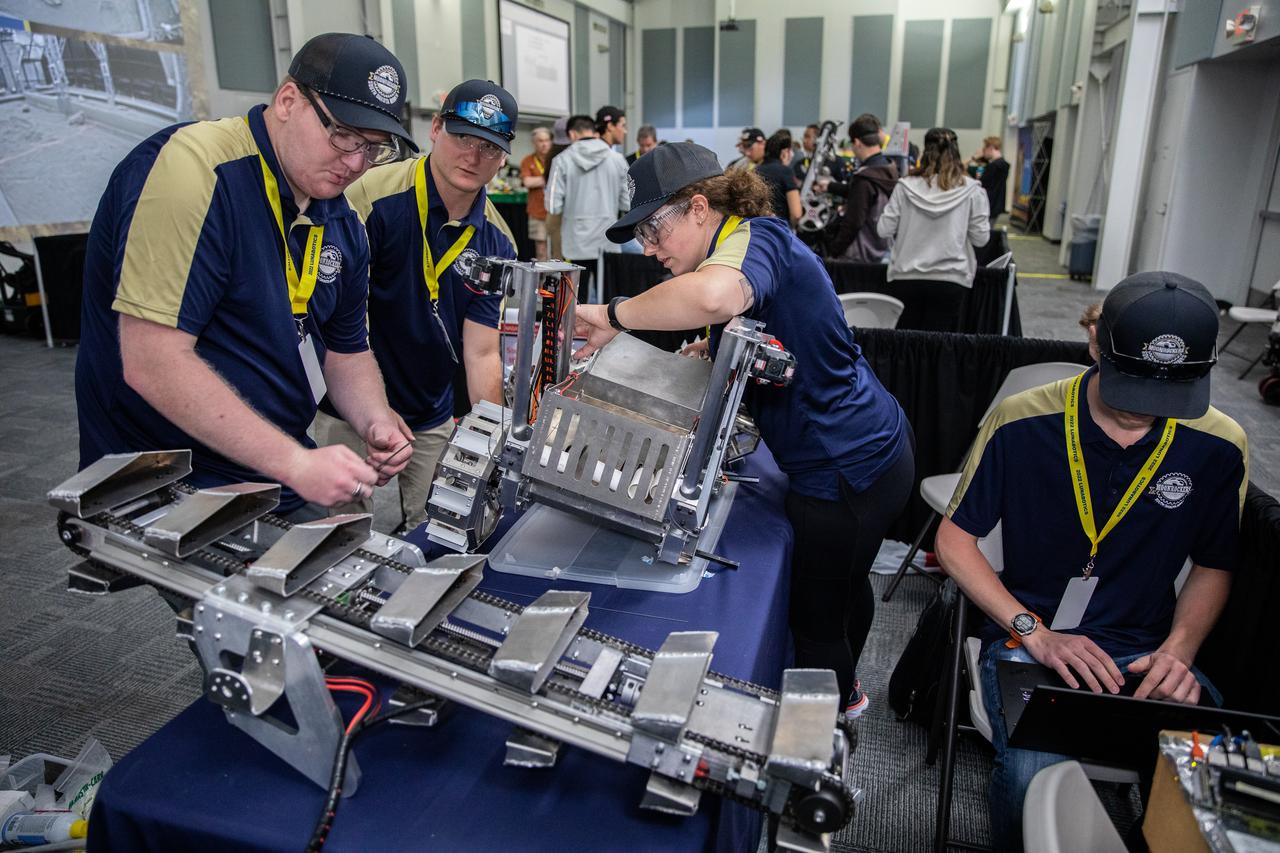
Students from the South Dakota School of Mines and Technology prepare their robotic miner for its turn to dig in the mining arena during NASA’s LUNABOTICS competition on May 26, 2022, at the Center for Space Education near the Kennedy Space Center Visitor Complex in Florida. More than 35 teams from around the U.S. have designed and built remote-controlled robots for the mining competition. Teams use their semi-autonomous or remote-controlled robots to maneuver and dig in a supersized sandbox filled with rocks and simulated lunar soil, or regolith. The objective of the challenge is to see which team’s robot can collect and deposit the most rocky regolith within a specified amount of time.
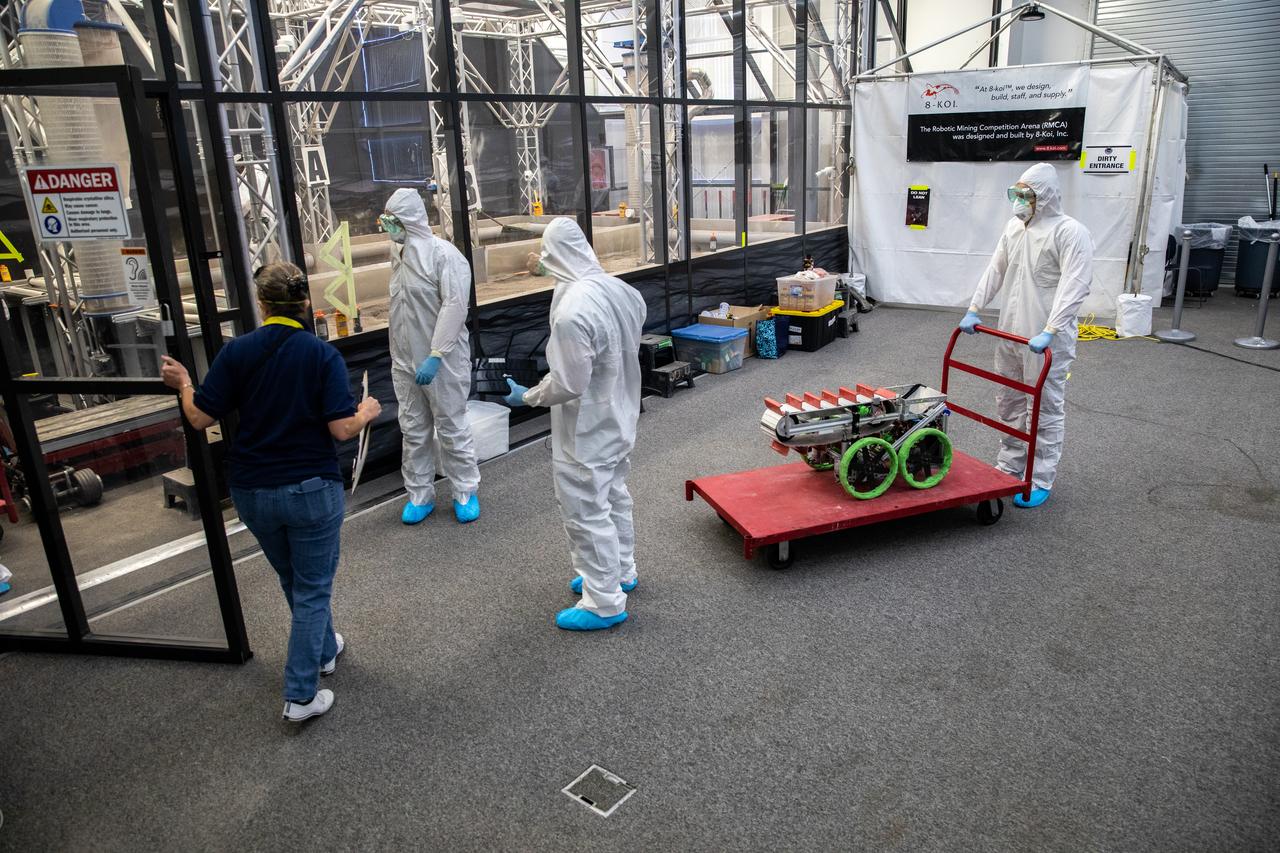
Students from the United States Military Academy (West Point), dressed in safety gear, prepare to enter the mining arena with their robotic miner during NASA’s LUNABOTICS competition on May 24, 2022, at the Center for Space Education near the Kennedy Space Center Visitor Complex in Florida. More than 35 teams from around the U.S. have designed and built remote-controlled robots for the mining competition. Teams use their autonomous or remote-controlled robots to maneuver and dig in a supersized sandbox filled with rocks and simulated lunar soil, or regolith. The objective of the challenge is to see which team’s robot can collect and deposit the most rocky regolith within a specified amount of time.
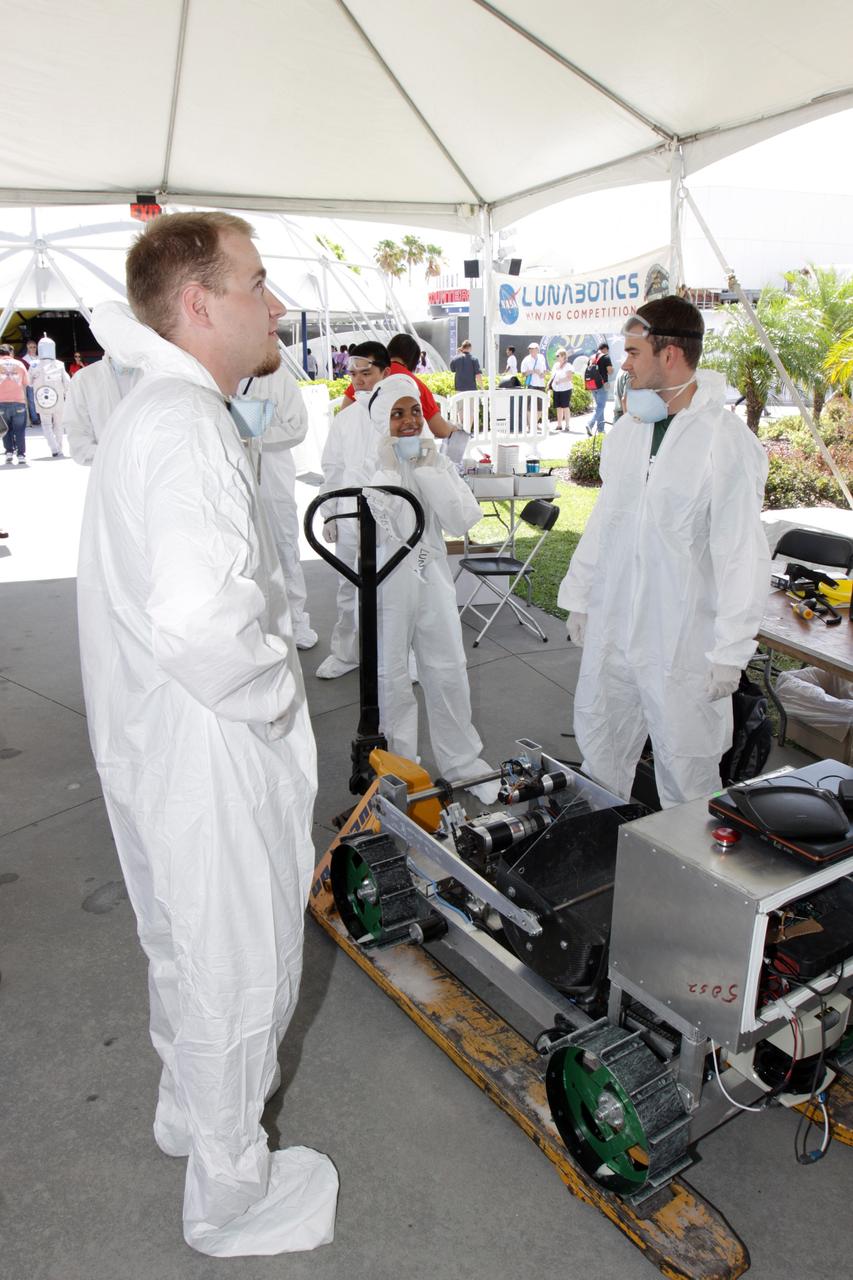
CAPE CANAVERAL, Fla. – A team of competitors waits for a turn in NASA's Lunabotics Mining Competition at the Kennedy Space Center Visitor Complex in Florida. The competition challenges university students to build machines that can collect soil such as the material found on the moon. Working inside the Caterpillar LunArena, the robotic craft dig soil that simulates lunar material. The event is judged by a machine's abilities to collect the soil, its design and operation, size, dust tolerance and its level of autonomy. Photo credit: NASA/Glenn Benson
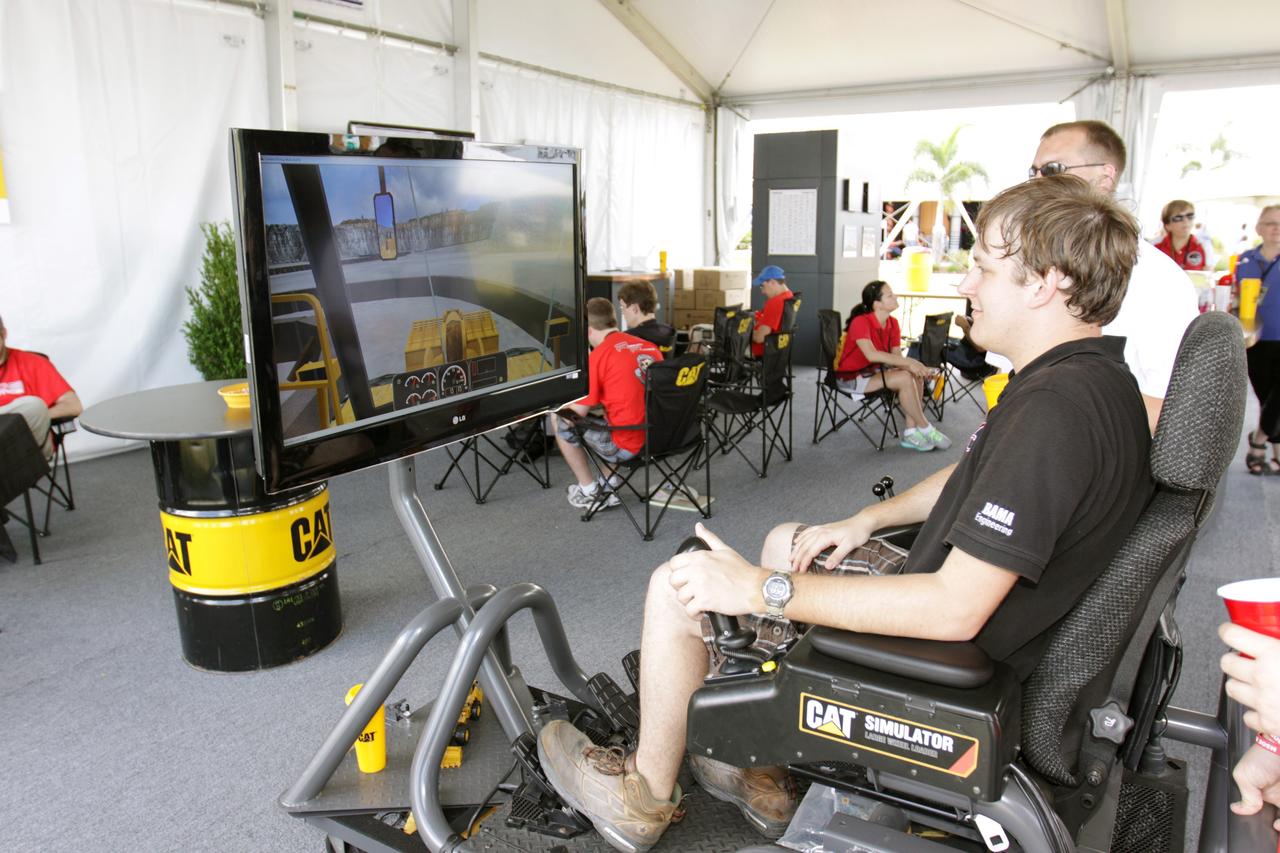
CAPE CANAVERAL, Fla. – A videogame simulates driving excavators during NASA's Lunabotics Mining Competition at the Kennedy Space Center Visitor Complex in Florida. The competition challenges university students to build machines that can collect soil such as the material found on the moon. Working inside the Caterpillar LunArena, the robotic craft dig soil that simulates lunar material. The event is judged by a machine's abilities to collect the soil, its design and operation, size, dust tolerance and its level of autonomy. Photo credit: NASA/Glenn Benson

CAPE CANAVERAL, Fla. – A team of competitors works with its machine during NASA's Lunabotics Mining Competition at the Kennedy Space Center Visitor Complex in Florida. The competition challenges university students to build machines that can collect soil such as the material found on the moon. Working inside the Caterpillar LunArena, the robotic craft dig soil that simulates lunar material. The event is judged by a machine's abilities to collect the soil, its design and operation, size, dust tolerance and its level of autonomy. Photo credit: NASA/Glenn Benson
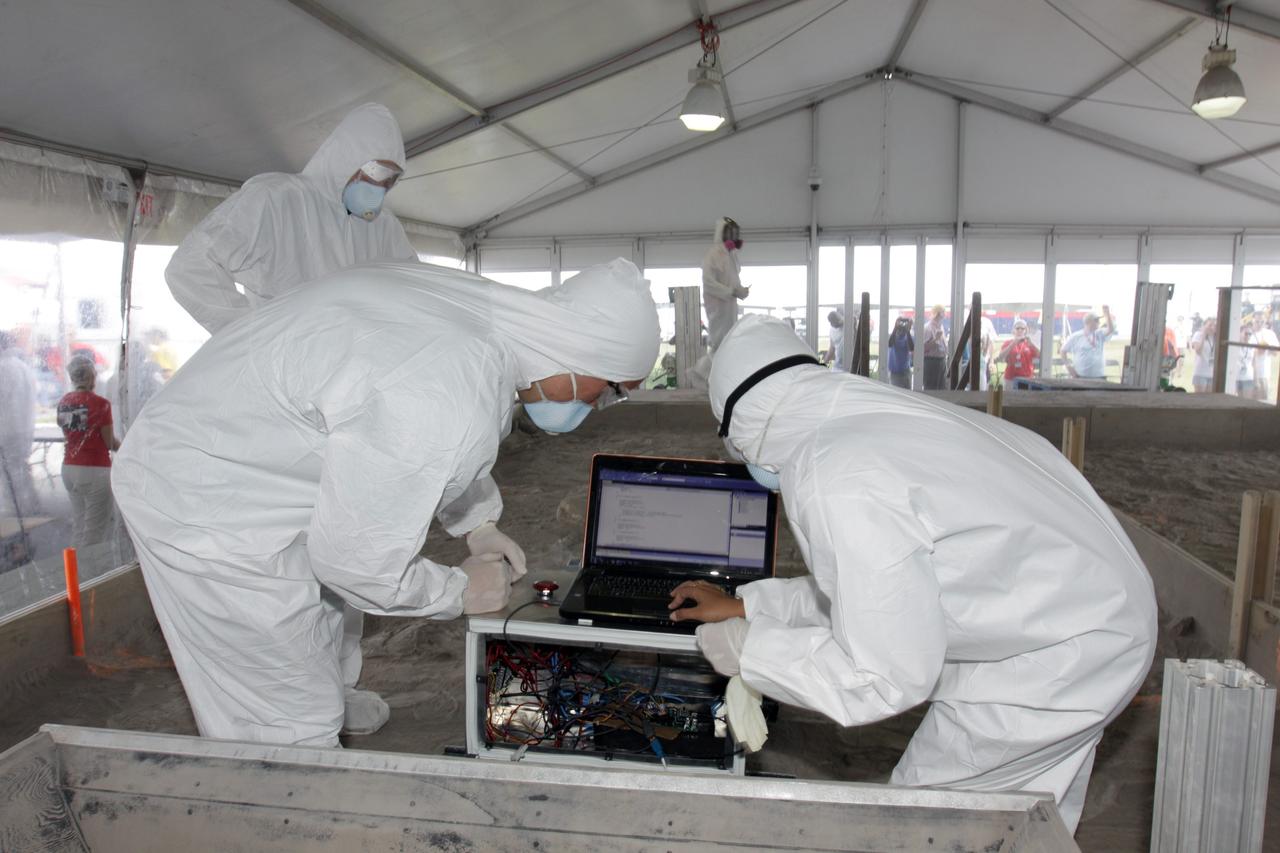
CAPE CANAVERAL, Fla. – A team of competitors works with its machine during NASA's Lunabotics Mining Competition at the Kennedy Space Center Visitor Complex in Florida. The competition challenges university students to build machines that can collect soil such as the material found on the moon. Working inside the Caterpillar LunArena, the robotic craft dig soil that simulates lunar material. The event is judged by a machine's abilities to collect the soil, its design and operation, size, dust tolerance and its level of autonomy. Photo credit: NASA/Glenn Benson
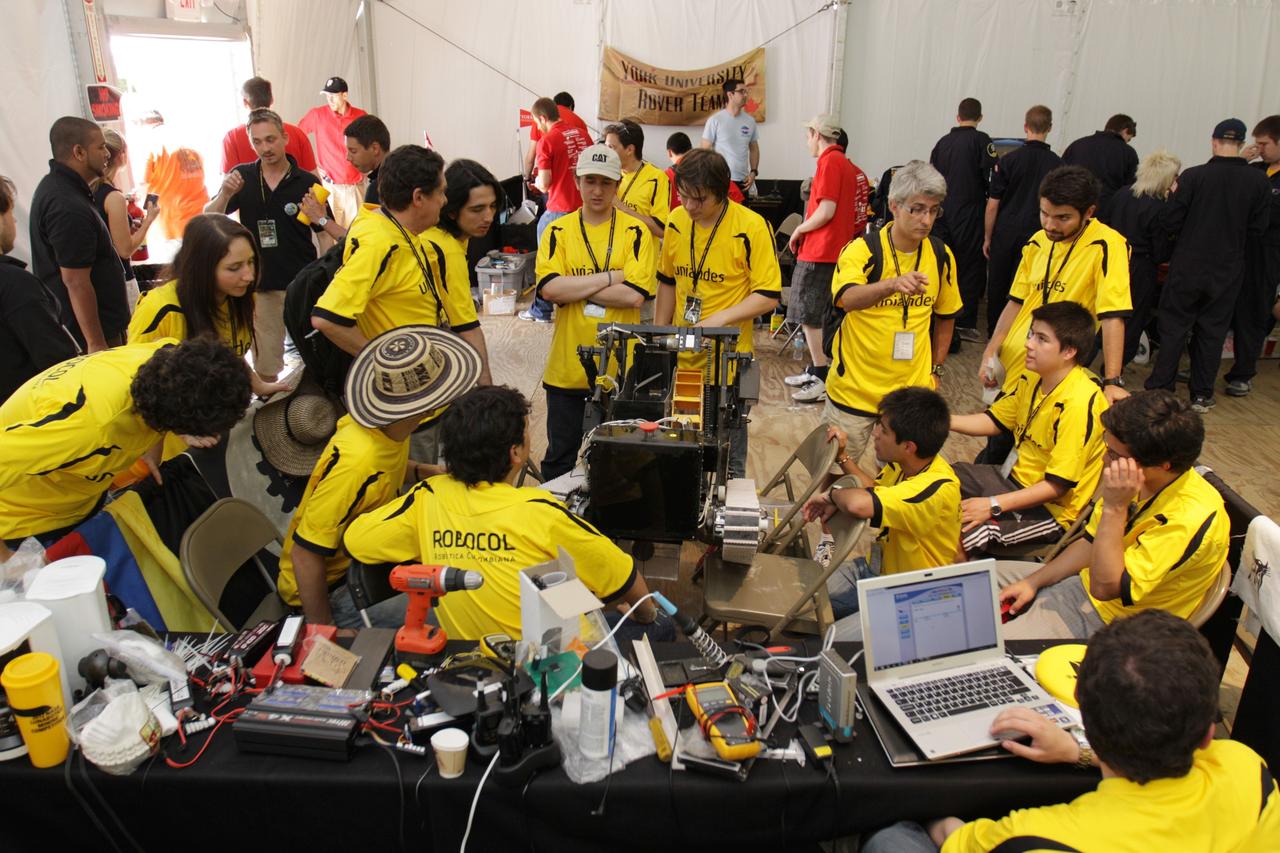
CAPE CANAVERAL, Fla. – A team of competitors works with its machine during NASA's Lunabotics Mining Competition at the Kennedy Space Center Visitor Complex in Florida. The competition challenges university students to build machines that can collect soil such as the material found on the moon. Working inside the Caterpillar LunArena, the robotic craft dig soil that simulates lunar material. The event is judged by a machine's abilities to collect the soil, its design and operation, size, dust tolerance and its level of autonomy. Photo credit: NASA/Glenn Benson
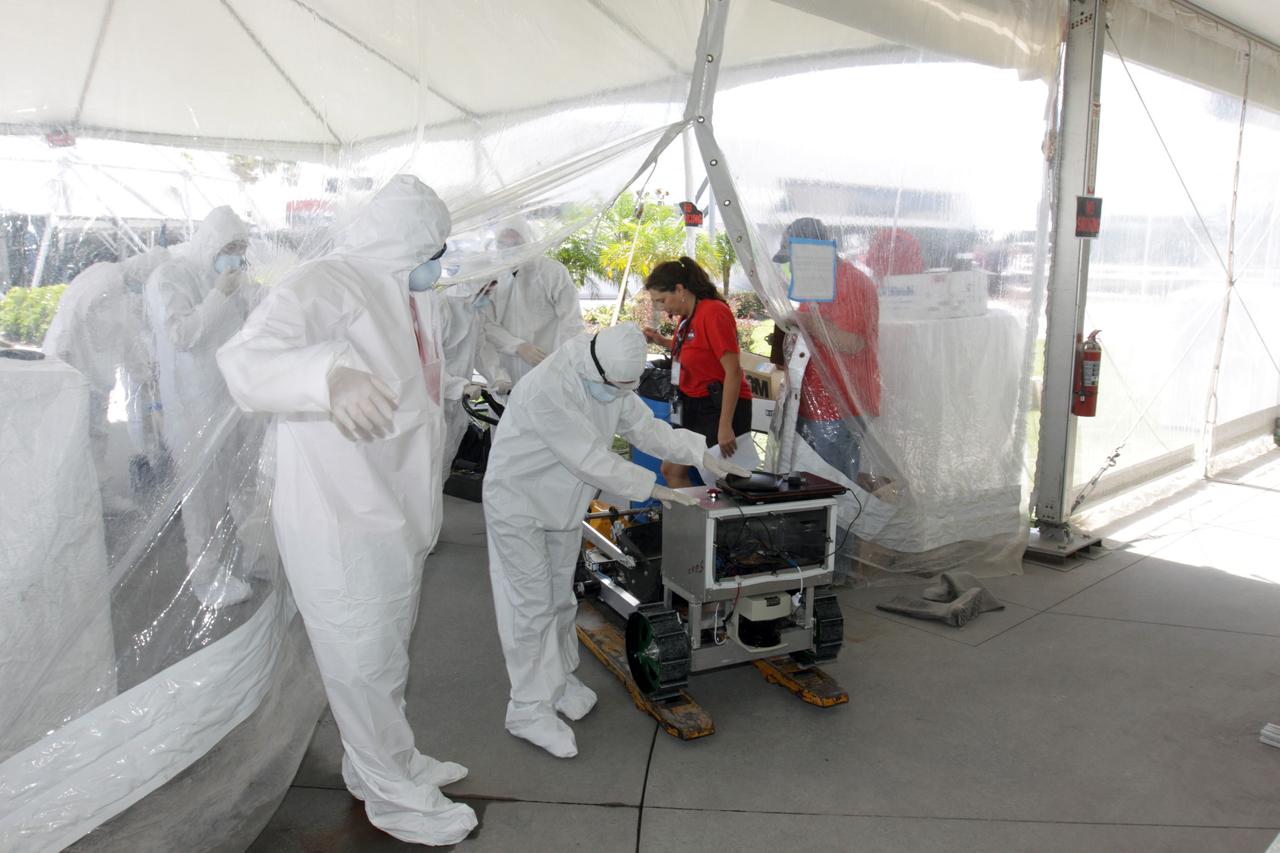
CAPE CANAVERAL, Fla. – A team of competitors prepares for a turn in NASA's Lunabotics Mining Competition at the Kennedy Space Center Visitor Complex in Florida. The competition challenges university students to build machines that can collect soil such as the material found on the moon. Working inside the Caterpillar LunArena, the robotic craft dig soil that simulates lunar material. The event is judged by a machine's abilities to collect the soil, its design and operation, size, dust tolerance and its level of autonomy. Photo credit: NASA/Glenn Benson
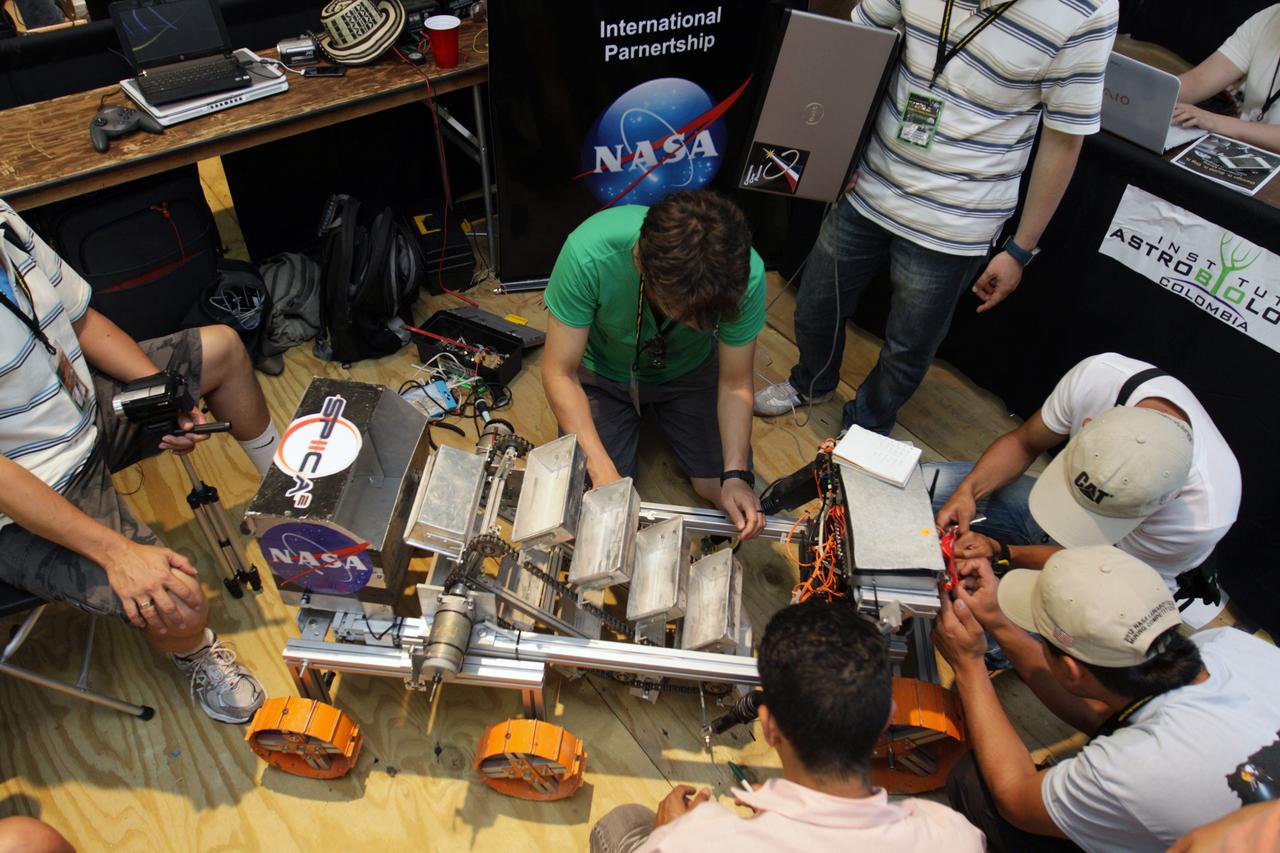
CAPE CANAVERAL, Fla. – A team of competitors works with its machine during NASA's Lunabotics Mining Competition at the Kennedy Space Center Visitor Complex in Florida. The competition challenges university students to build machines that can collect soil such as the material found on the moon. Working inside the Caterpillar LunArena, the robotic craft dig soil that simulates lunar material. The event is judged by a machine's abilities to collect the soil, its design and operation, size, dust tolerance and its level of autonomy. Photo credit: NASA/Glenn Benson
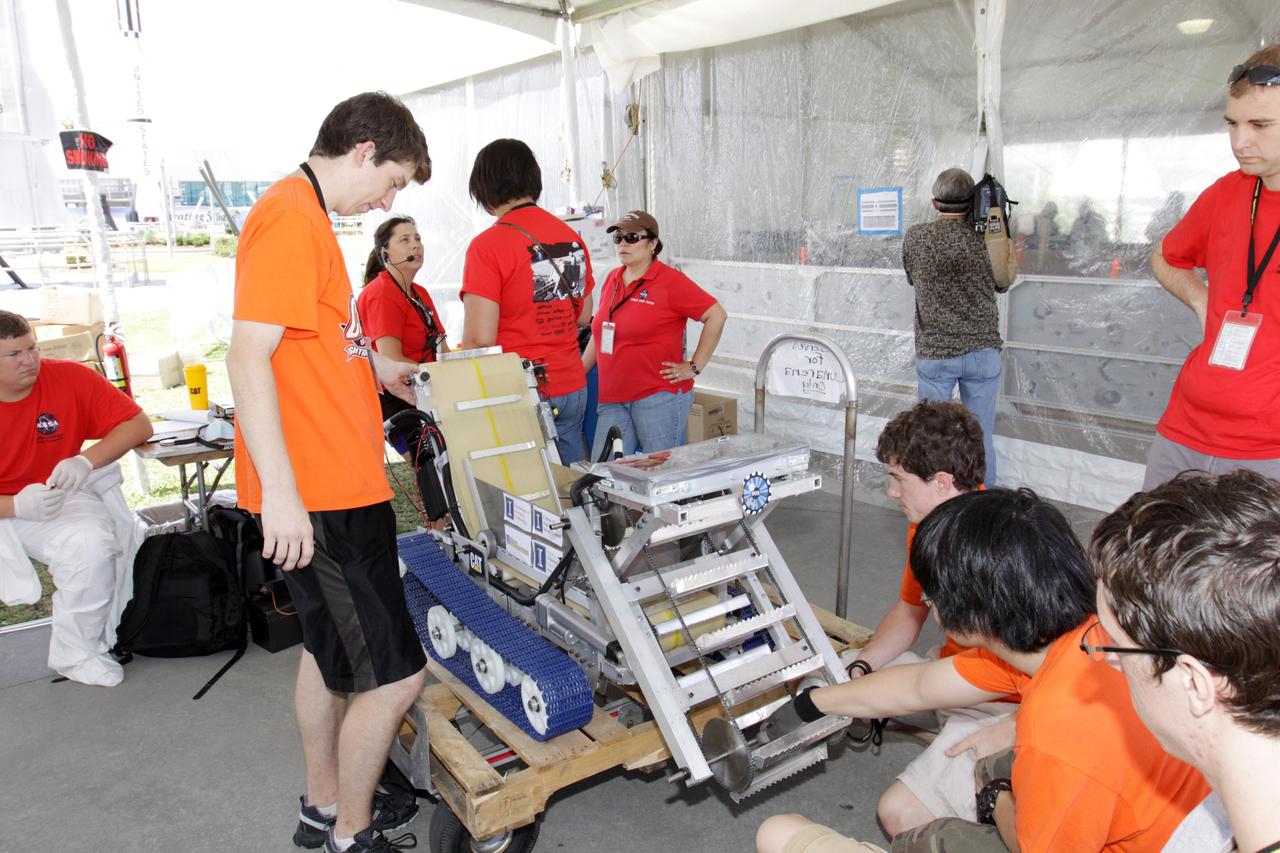
CAPE CANAVERAL, Fla. – A team of competitors prepares for a turn in NASA's Lunabotics Mining Competition at the Kennedy Space Center Visitor Complex in Florida. The competition challenges university students to build machines that can collect soil such as the material found on the moon. Working inside the Caterpillar LunArena, the robotic craft dig soil that simulates lunar material. The event is judged by a machine's abilities to collect the soil, its design and operation, size, dust tolerance and its level of autonomy. Photo credit: NASA/Glenn Benson
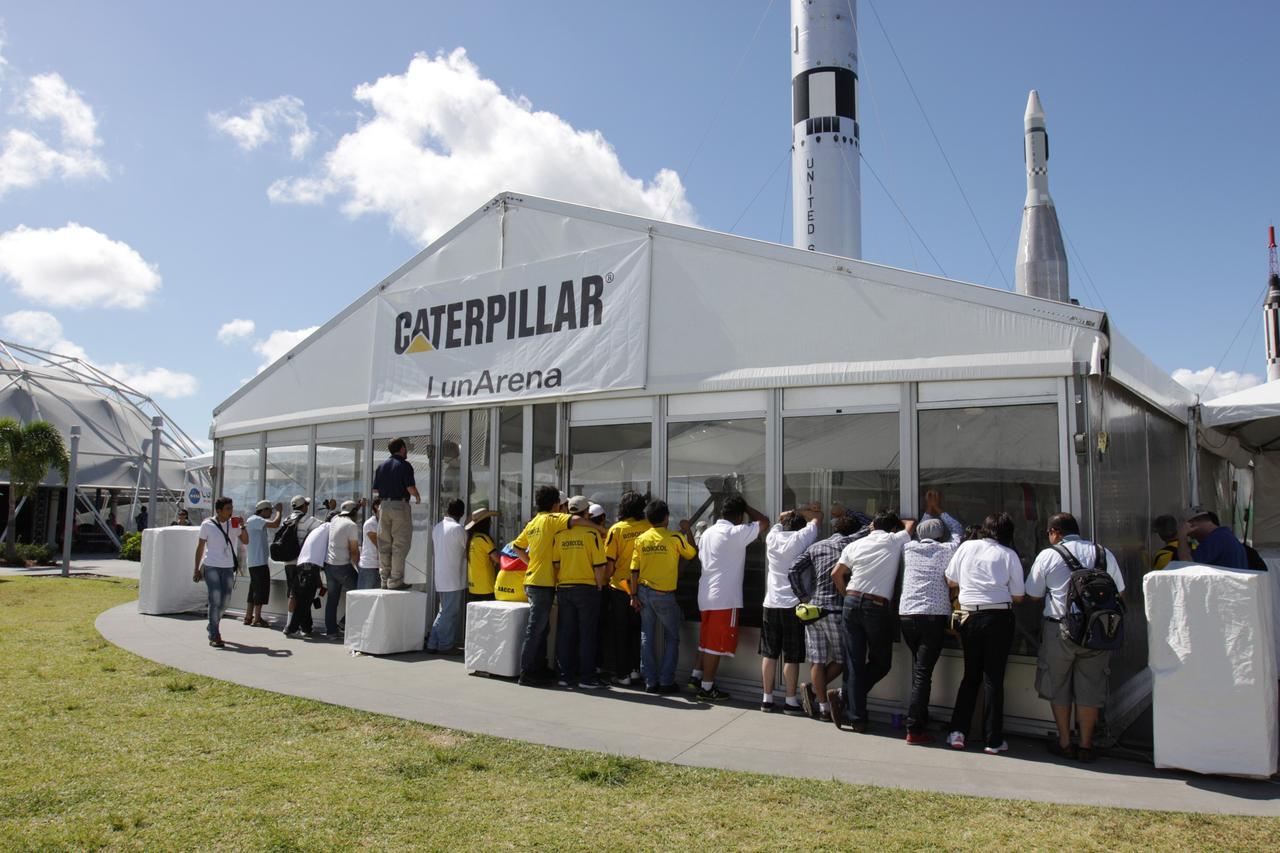
CAPE CANAVERAL, Fla. – Participants watch NASA's Lunabotics Mining Competition at the Kennedy Space Center Visitor Complex in Florida. The competition challenges university students to build machines that can collect soil such as the material found on the moon. Working inside the Caterpillar LunArena, the robotic craft dig soil that simulates lunar material. The event is judged by a machine's abilities to collect the soil, its design and operation, size, dust tolerance and its level of autonomy. Photo credit: NASA/Glenn Benson
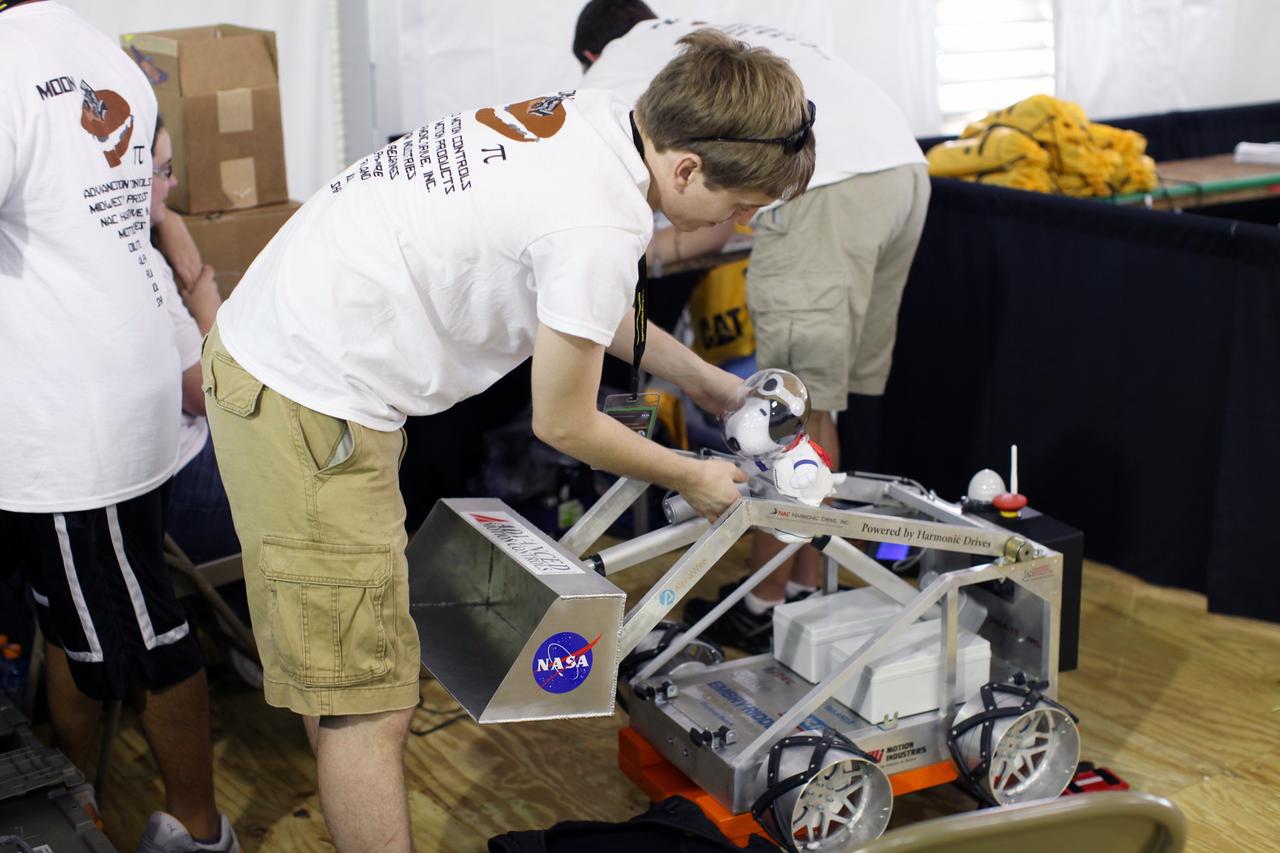
CAPE CANAVERAL, Fla. – “Snoopy” catches a ride aboard the lunabot built by the students from Embry-Riddle Aeronautical University, in Daytona Beach, Fla., during a practice session for the third annual Lunabotics Mining Competition at NASA’s Kennedy Space Center Visitor Complex in Florida. More than 50 teams of undergraduate and graduate students from eight countries are participating. The teams have designed and built remote-controlled or autonomous robots that can excavate simulated lunar soil. During the competition, the teams' designs, known as lunabots, will go head-to-head to determine whose machine can collect and deposit the most simulated moon dust within a specified amount of time. The competition is a NASA Human Exploration and Operations Mission Directorate project designed to engage and retain students in the science, technology, engineering and mathematics, or STEM, fields of study. The project provides a competitive environment that may result in innovative ideas and solutions that potentially could be applied to future NASA missions. For more information, visit http://www.nasa.gov/lunabotics. Photo credit: NASA/Frankie Martin
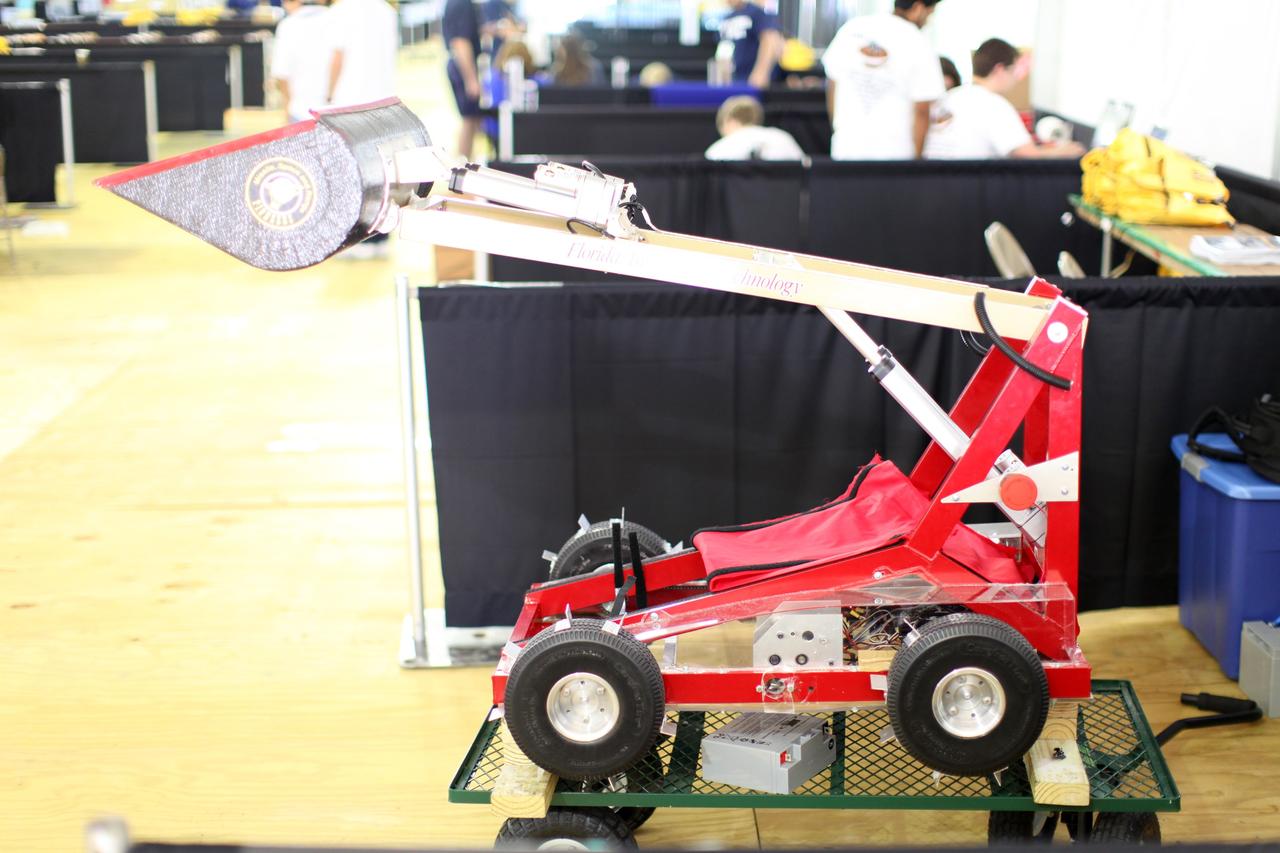
CAPE CANAVERAL, Fla. – A colorful lunabot built by the students from the Florida Institute of Technology, in Melbourne, Fla., is prepared for the “smackdown” coming during the third annual Lunabotics Mining Competition at NASA’s Kennedy Space Center Visitor Complex in Florida. More than 50 teams of undergraduate and graduate students from eight countries are participating. The teams have designed and built remote-controlled or autonomous robots that can excavate simulated lunar soil. During the competition, the teams' designs, known as lunabots, will go head-to-head to determine whose machine can collect and deposit the most simulated moon dust within a specified amount of time. The competition is a NASA Human Exploration and Operations Mission Directorate project designed to engage and retain students in the science, technology, engineering and mathematics, or STEM, fields of study. The project provides a competitive environment that may result in innovative ideas and solutions that potentially could be applied to future NASA missions. For more information, visit http://www.nasa.gov/lunabotics. Photo credit: NASA/Frankie Martin
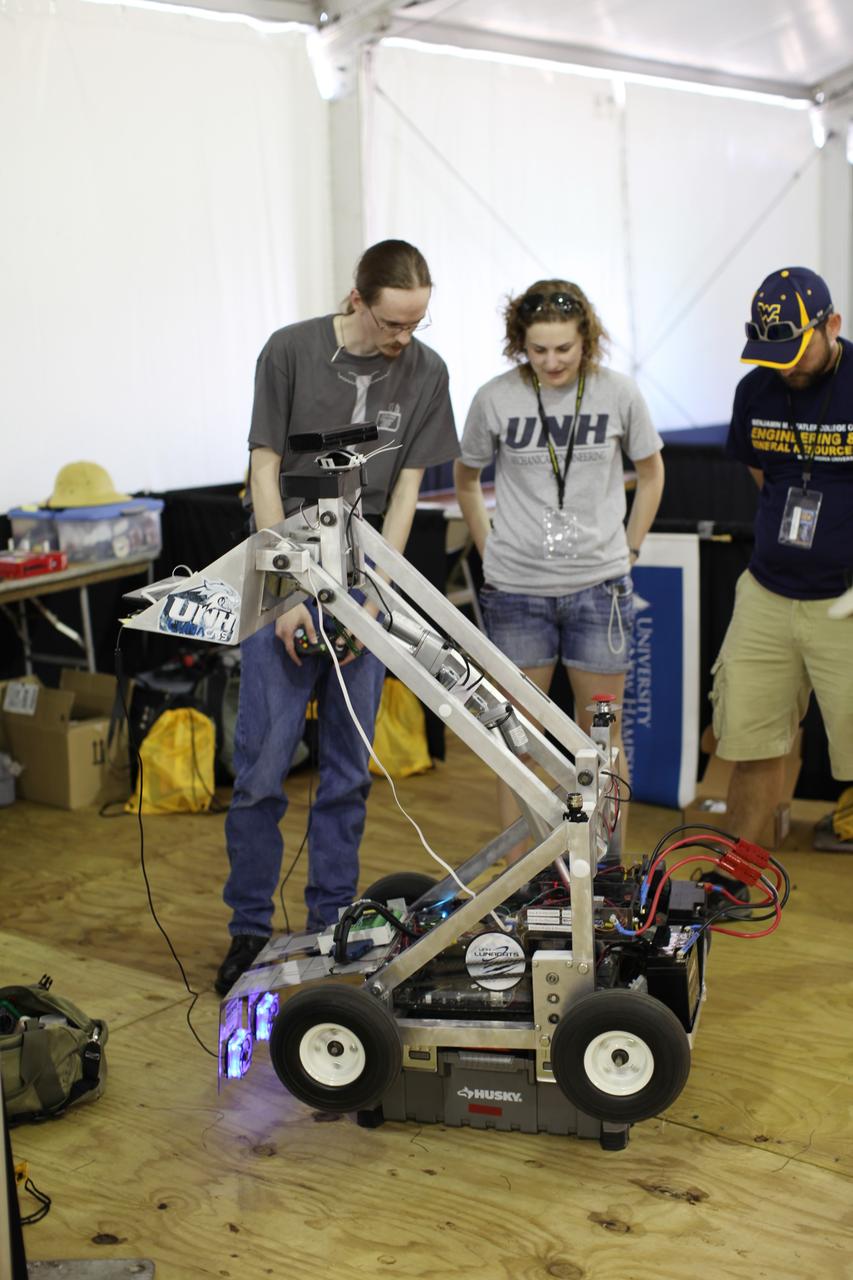
CAPE CANAVERAL, Fla. – Students from the University of New Hampshire, in Durham, N.H., put their lunabot through its paces during a practice session for the third annual Lunabotics Mining Competition at NASA’s Kennedy Space Center Visitor Complex in Florida. More than 50 teams of undergraduate and graduate students from eight countries are participating. The teams have designed and built remote-controlled or autonomous robots that can excavate simulated lunar soil. During the competition, the teams' designs, known as lunabots, will go head-to-head to determine whose machine can collect and deposit the most simulated moon dust within a specified amount of time. The competition is a NASA Human Exploration and Operations Mission Directorate project designed to engage and retain students in the science, technology, engineering and mathematics, or STEM, fields of study. The project provides a competitive environment that may result in innovative ideas and solutions that potentially could be applied to future NASA missions. For more information, visit http://www.nasa.gov/lunabotics. Photo credit: NASA/Frankie Martin
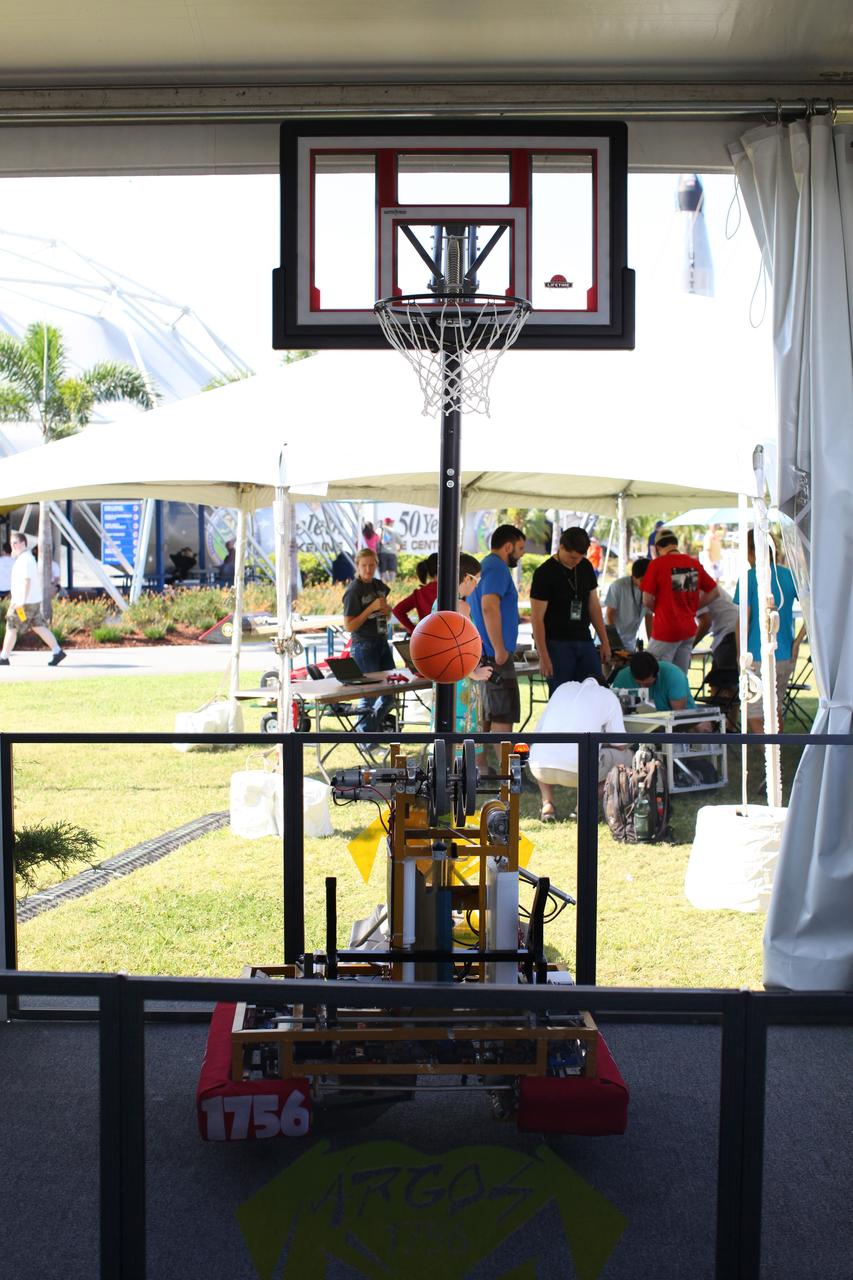
CAPE CANAVERAL, Fla. – At NASA’s Kennedy Space Center Visitor Complex in Florida, the For Inspiration and Recognition of Science and Technology FIRST Argos Team 1756 robot from Limestone Community, Brimfield and Richwoods High Schools in Peoria, Ill., is on display in Caterpillar’s sponsor booth at NASA’s Lunabotics Mining Competition. The mining competition is sponsored by NASA Kennedy Space Center’s Education Office for the agency’s Exploration Systems Mission Directorate. Undergraduate and graduate students from more than 50 universities and colleges in the U.S. and other countries use their remote-controlled Lunabots to maneuver and dig in a supersized sandbox filled with a crushed material that has characteristics similar to lunar soil. For more information, visit www.nasa.gov/lunabotics. Photo credit: NASA/Frankie Martin
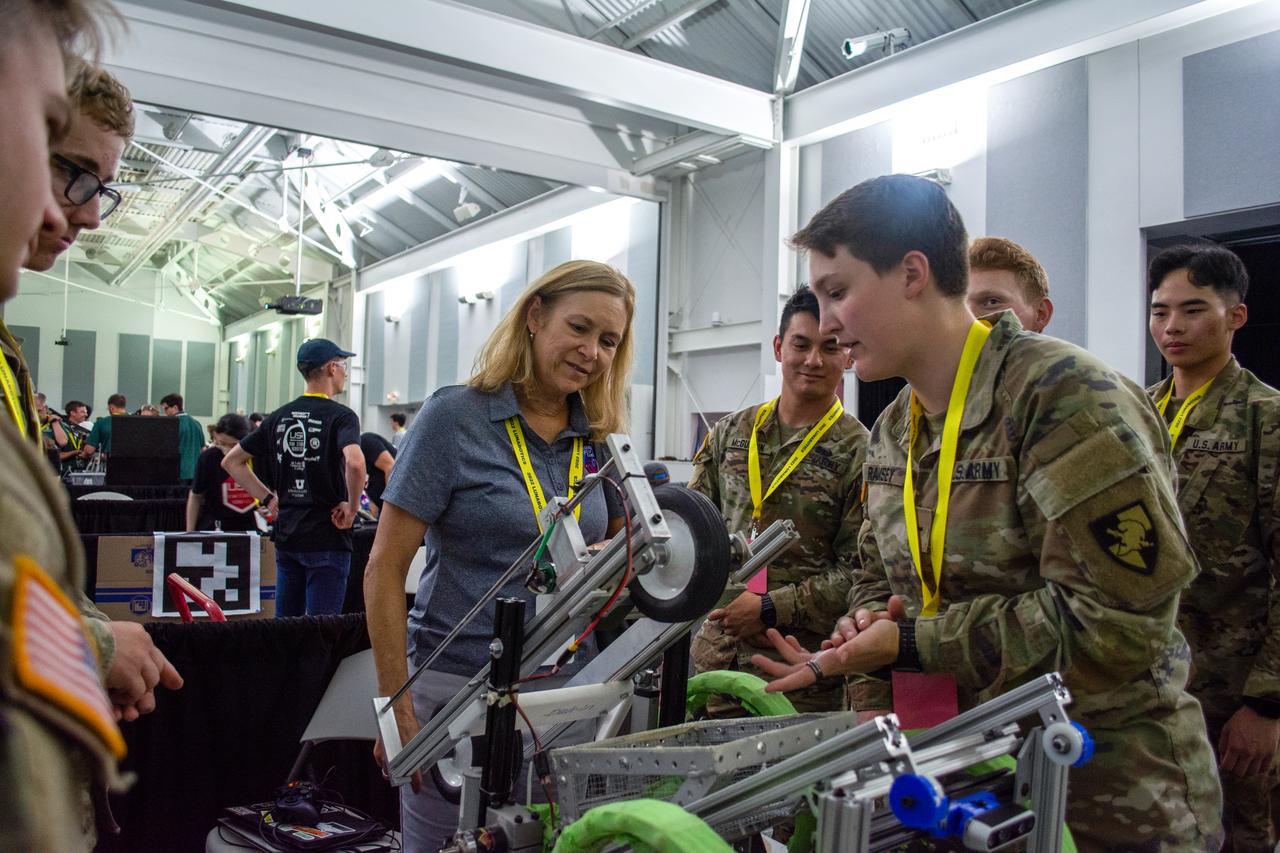
Kennedy Space Center Director Janet Petro, in the center, visits with students from the United States Military Academy (West Point), during NASA’s LUNABOTICS competition on May 23, 2022, at the Center for Space Education near the Kennedy Space Center Visitor Complex in Florida, on May 23, 2022. The students are preparing their robotic miner for its turn to dig in the mining arena. More than 35 teams from around the U.S. have designed and built remote-controlled robots for the mining competition. Teams use their autonomous or remote-controlled robots to maneuver and dig in a supersized sandbox filled with rocks and simulated lunar soil, or regolith. The objective of the challenge is to see which team’s robot can collect and deposit the most rocky regolith within a specified amount of time.

Judges inspect the New Mexico Institute of Mining and Technology team’s prototype lunar robot during the finals for NASA’s 2026 Lunabotics Challenge competition on Thursday, May 21, 2026, inside the Astronauts Memorial Foundation’s Center for Space Education at the Kennedy Space Center Visitor Complex in Florida. Forty-seven teams from around the U.S. designed and built remote-controlled robots capable of traversing challenging lunar terrain while constructing regolith-based berm under conditions similar to those the agency will face as it returns to the lunar surface through Artemis.

Cameron Symonds, of New Mexico Tech, prepares his team’s prototype lunar robot for its turn during the finals for NASA’s 2026 Lunabotics Challenge competition on Tuesday, May 19, 2026, inside the Astronauts Memorial Foundation’s Center for Space Education at the Kennedy Space Center Visitor Complex in Florida. Forty-seven teams from around the U.S. designed and built remote-controlled robots capable of traversing challenging lunar terrain while constructing regolith-based berm under conditions similar to those the agency will face as it returns to the lunar surface through Artemis.

Judges inspect the San Diego State University team’s prototype lunar robot during the finals for NASA’s 2026 Lunabotics Challenge competition on Wednesday, May 20, 2026, inside the Astronauts Memorial Foundation’s Center for Space Education at the Kennedy Space Center Visitor Complex in Florida. Forty-seven teams from around the U.S. designed and built remote-controlled robots capable of traversing challenging lunar terrain while constructing regolith-based berm under conditions similar to those the agency will face as it returns to the lunar surface through Artemis.

The University of Utah team’s prototype lunar robot performs during the finals for NASA’s 2026 Lunabotics Challenge competition on Thursday, May 21, 2026, inside the Astronauts Memorial Foundation’s Center for Space Education at the Kennedy Space Center Visitor Complex in Florida. Forty-seven teams from around the U.S. designed and built remote-controlled robots capable of traversing challenging lunar terrain while constructing regolith-based berm under conditions similar to those the agency will face as it returns to the lunar surface through Artemis.

Alumni from the College of DuPage in Glen Ellyn, Illinois, accept the Lunabotics Construction Award on behalf of the team for building the largest berm during NASA’s 2026 Lunabotics Challenge competition on Thursday, May 21, 2026, inside the Astronauts Memorial Foundation’s Center for Space Education at the Kennedy Space Center Visitor Complex in Florida. Forty-seven teams from around the U.S. designed and built remote-controlled robots capable of traversing challenging lunar terrain while constructing regolith-based berm under conditions similar to those the agency will face as it returns to the lunar surface through Artemis.

Nico Nevarez, of Iowa State University, prepares his team’s prototype lunar robot for its turn during the finals for NASA’s 2026 Lunabotics Challenge competition on Tuesday, May 19, 2026, inside the Astronauts Memorial Foundation’s Center for Space Education at the Kennedy Space Center Visitor Complex in Florida. Forty-seven teams from around the U.S. designed and built remote-controlled robots capable of traversing challenging lunar terrain while constructing regolith-based berm under conditions similar to those the agency will face as it returns to the lunar surface through Artemis.

The University of Utah team’s prototype lunar robot performs during the finals for NASA’s 2026 Lunabotics Challenge competition on Tuesday, May 19, 2026, inside the Astronauts Memorial Foundation’s Center for Space Education at the Kennedy Space Center Visitor Complex in Florida. Forty-seven teams from around the U.S. designed and built remote-controlled robots capable of traversing challenging lunar terrain while constructing regolith-based berm under conditions similar to those the agency will face as it returns to the lunar surface through Artemis.

Katherine Rauscher, of Michigan Technological University, prepares her team’s prototype lunar robot for its turn during the finals for NASA’s 2026 Lunabotics Challenge competition on Tuesday, May 19, 2026, inside the Astronauts Memorial Foundation’s Center for Space Education at the Kennedy Space Center Visitor Complex in Florida. Forty-seven teams from around the U.S. designed and built remote-controlled robots capable of traversing challenging lunar terrain while constructing regolith-based berm under conditions similar to those the agency will face as it returns to the lunar surface through Artemis.

A judge inspects the University of Illinois – Chicago team’s prototype lunar robot during the finals for NASA’s 2026 Lunabotics Challenge competition on Tuesday, May 19, 2026, inside the Astronauts Memorial Foundation’s Center for Space Education at the Kennedy Space Center Visitor Complex in Florida. Forty-seven teams from around the U.S. designed and built remote-controlled robots capable of traversing challenging lunar terrain while constructing regolith-based berm under conditions similar to those the agency will face as it returns to the lunar surface through Artemis.
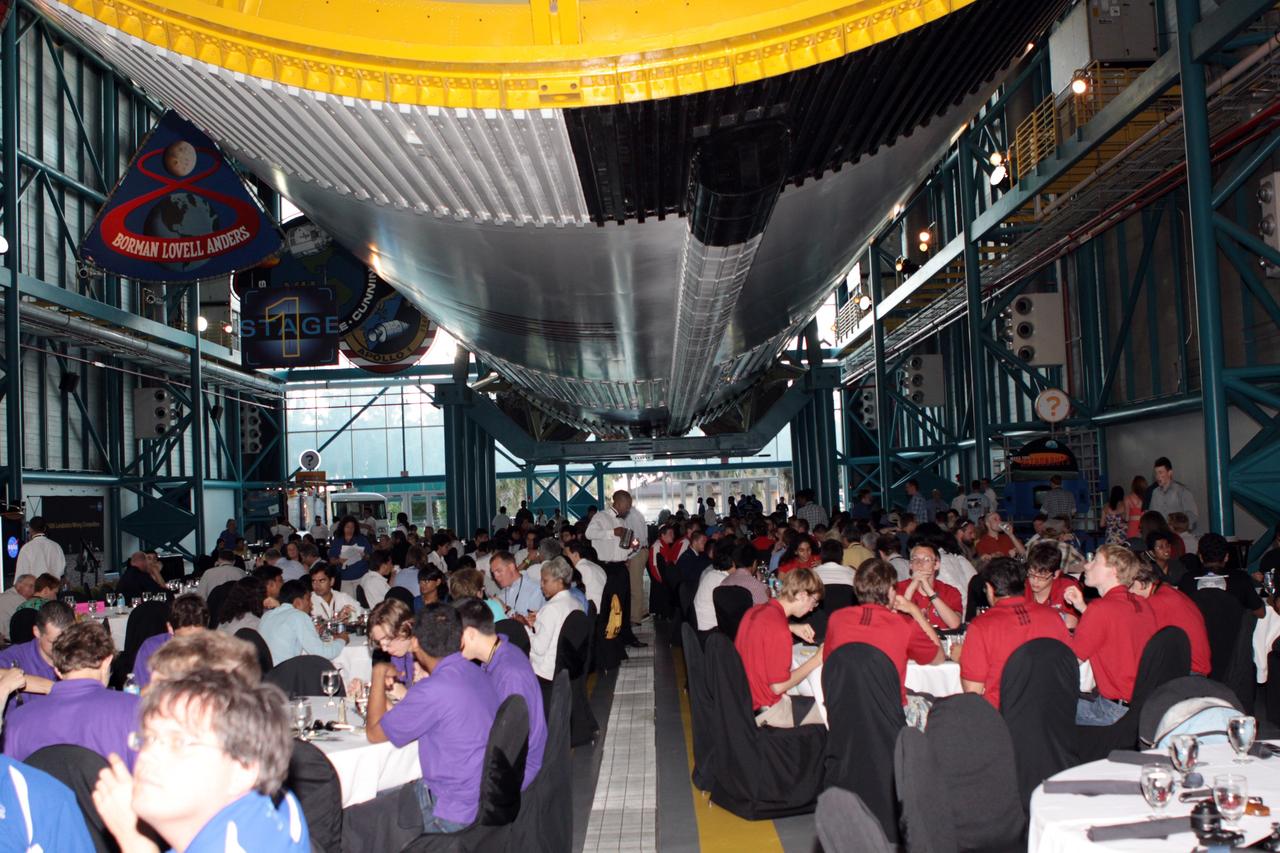
CAPE CANAVERAL, Fla. - Teams taking part in NASA's Lunabotics Mining Competition gather inside the Apollo/Saturn V Center at Kennedy Space Center Visitor Complex in Florida for the awards ceremony at the end of the event. They are seated beneath the first stage of the Saturn V rocket that carried astronauts to the moon. The competition challenged university students to build machines that could collect soil such as the material found on the moon. Working inside the Caterpillar LunArena, the robotic craft dug soil that simulated lunar material. The event was judged by a machine's abilities to collect the soil, its design and operation, size, dust tolerance and its level of autonomy. Photo credit: NASA/Jim Grossmann
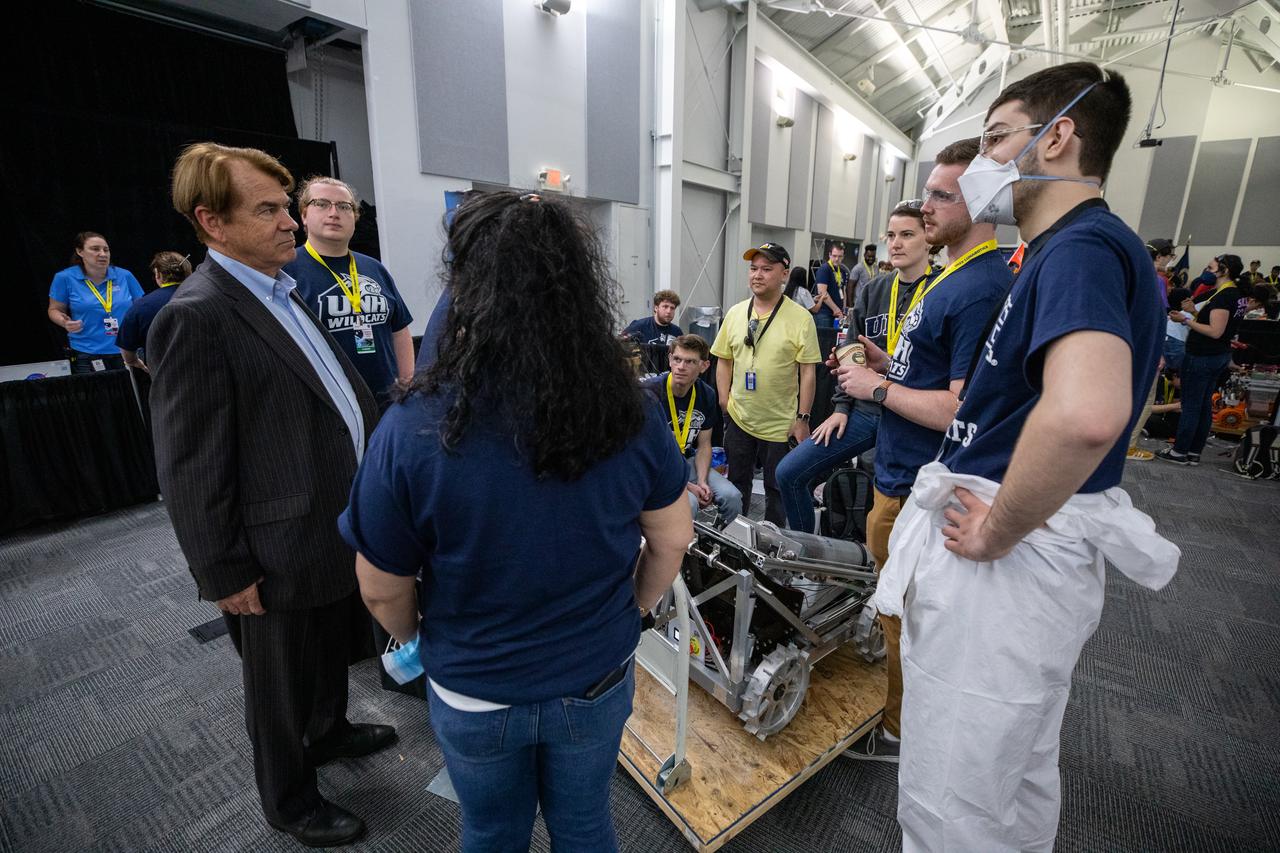
Thad Altman, far left, chairman and CEO of the Astronaut Memorial Foundation, talks to students from the University of New Hampshire as they prepare to take their robotic miner for its turn to dig in the mining arena during NASA’s LUNABOTICS competition on May 26, 2022, at the Center for Space Education near the Kennedy Space Center Visitor Complex in Florida. More than 35 teams from around the U.S. have designed and built remote-controlled robots for the mining competition. Teams use their semi-autonomous or remote-controlled robots to maneuver and dig in a supersized sandbox filled with rocks and simulated lunar soil, or regolith. The objective of the challenge is to see which team’s robot can collect and deposit the most rocky regolith within a specified amount of time.
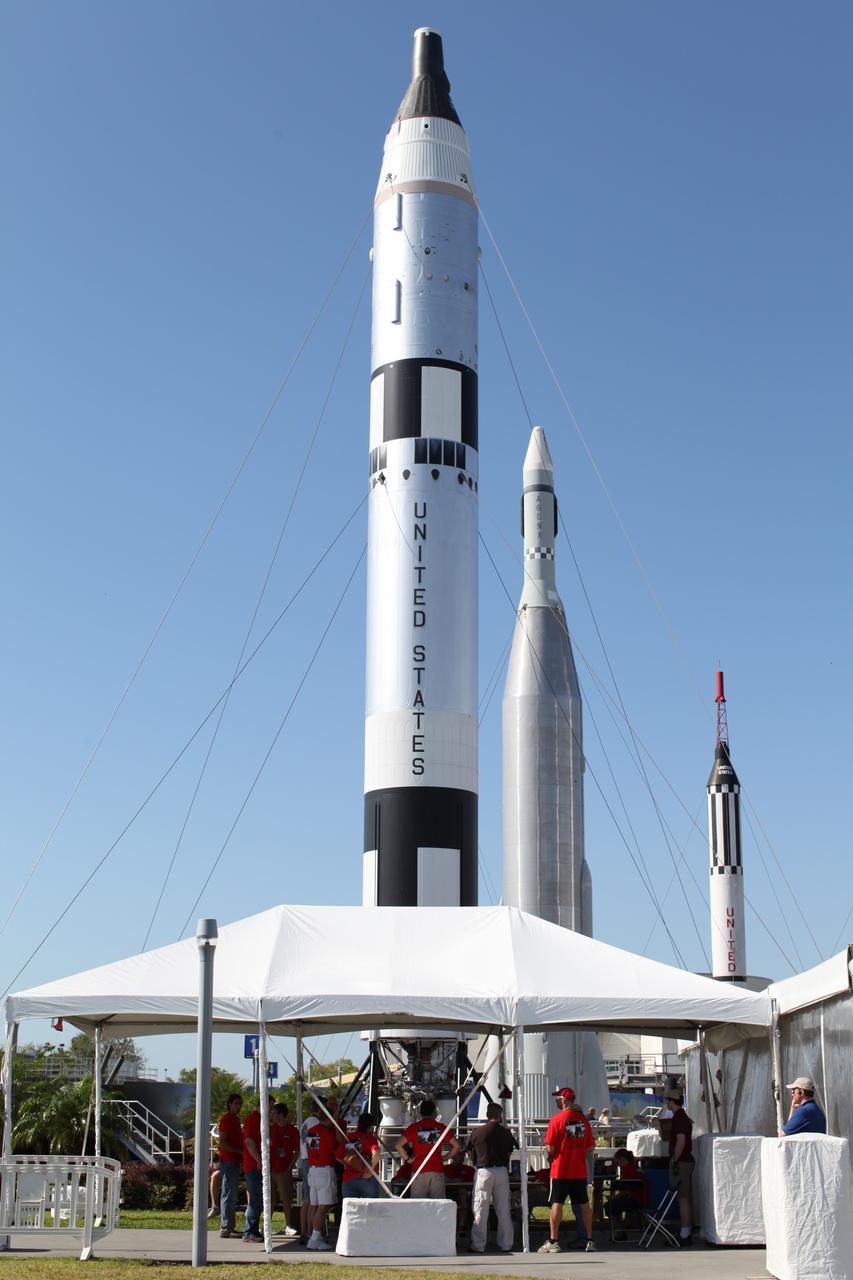
CAPE CANAVERAL, Fla. – Practice sessions get under way for the third annual Lunabotics Mining Competition at the Rocket Garden at NASA’s Kennedy Space Center Visitor Complex in Florida. More than 50 teams of undergraduate and graduate students from eight countries are participating. The teams have designed and built remote-controlled or autonomous robots that can excavate simulated lunar soil. During the competition, the teams' designs, known as lunabots, will go head-to-head to determine whose machine can collect and deposit the most simulated moon dust within a specified amount of time. The competition is a NASA Human Exploration and Operations Mission Directorate project designed to engage and retain students in the science, technology, engineering and mathematics, or STEM, fields of study. The project provides a competitive environment that may result in innovative ideas and solutions that potentially could be applied to future NASA missions. For more information, visit http://www.nasa.gov/lunabotics. Photo credit: NASA/Frankie Martin