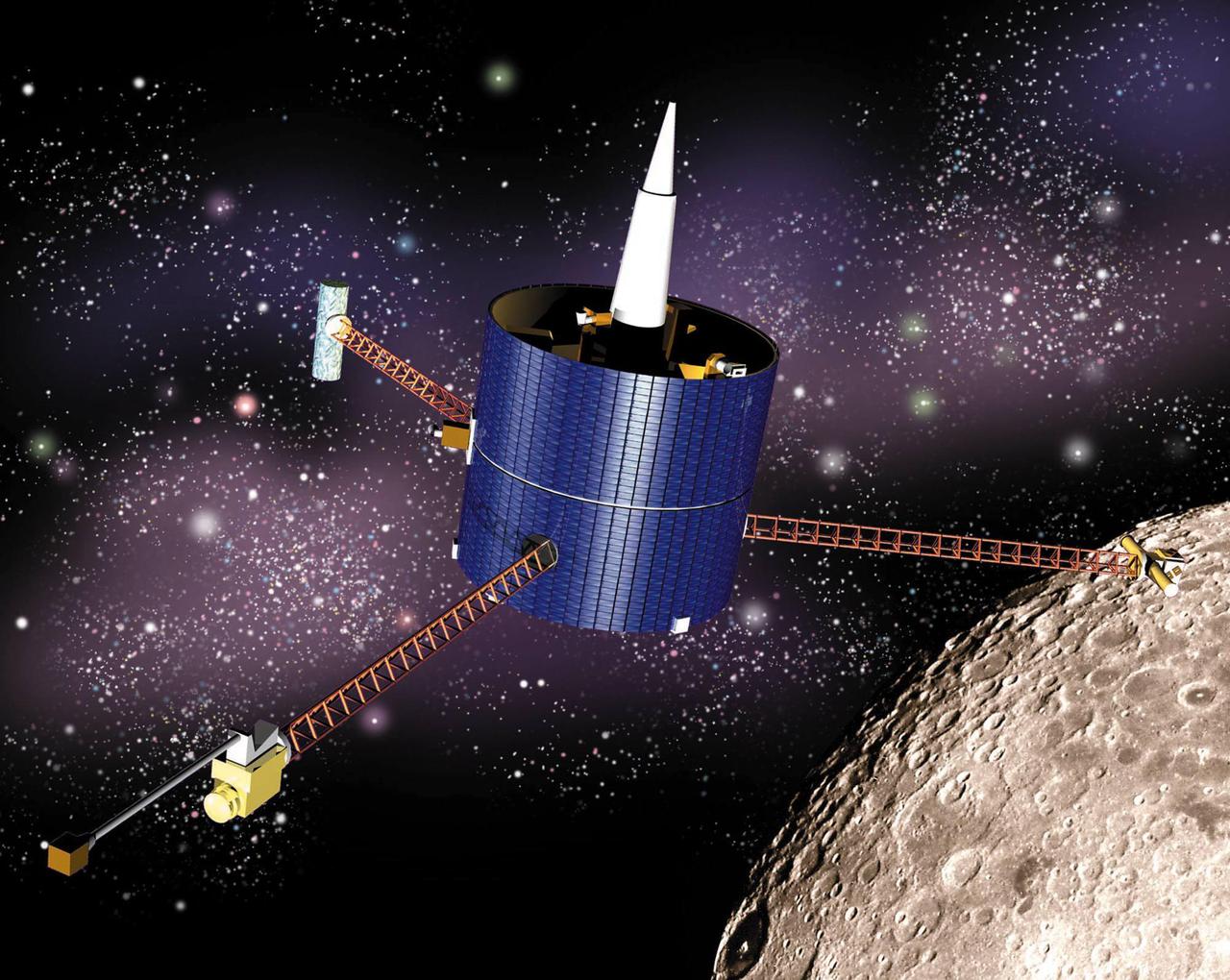
This artist concept of the Lunar Prospector shows the spacecraft in lunar orbit. Instrument masts are fully deployed. http://photojournal.jpl.nasa.gov/catalog/PIA18162
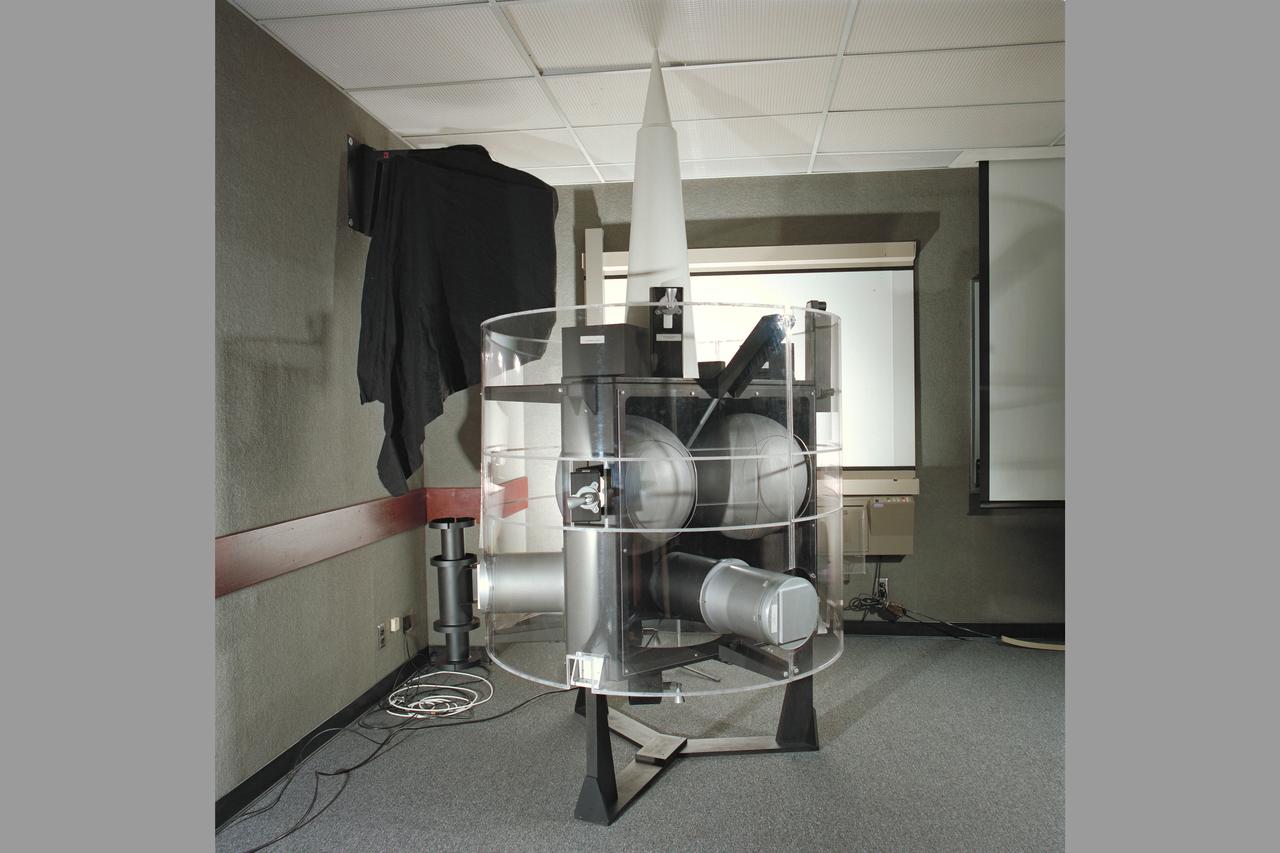
N-244 Lunar Prospector Model

N-244 Lunar Prospector Model
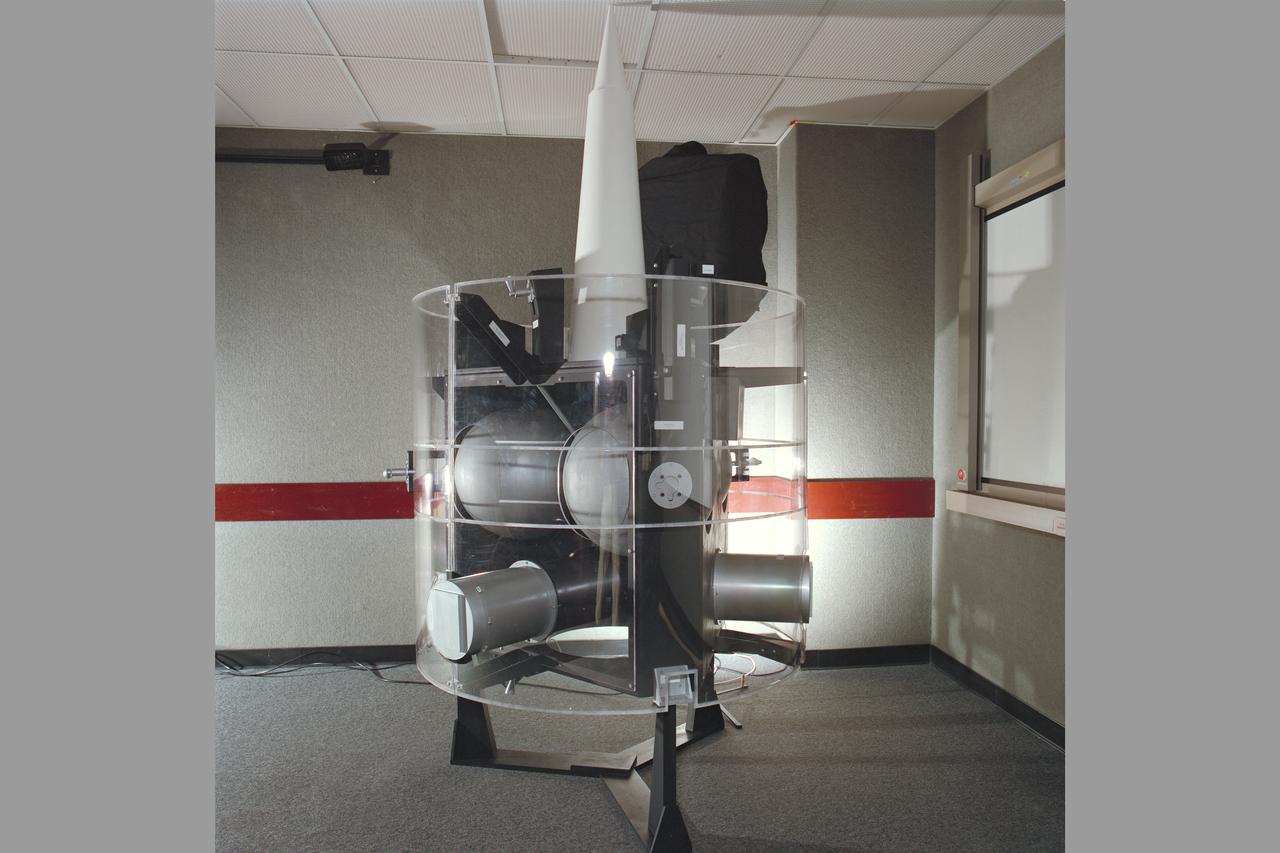
N-244 Lunar Prospector Model

N-244 Lunar Prospector Model
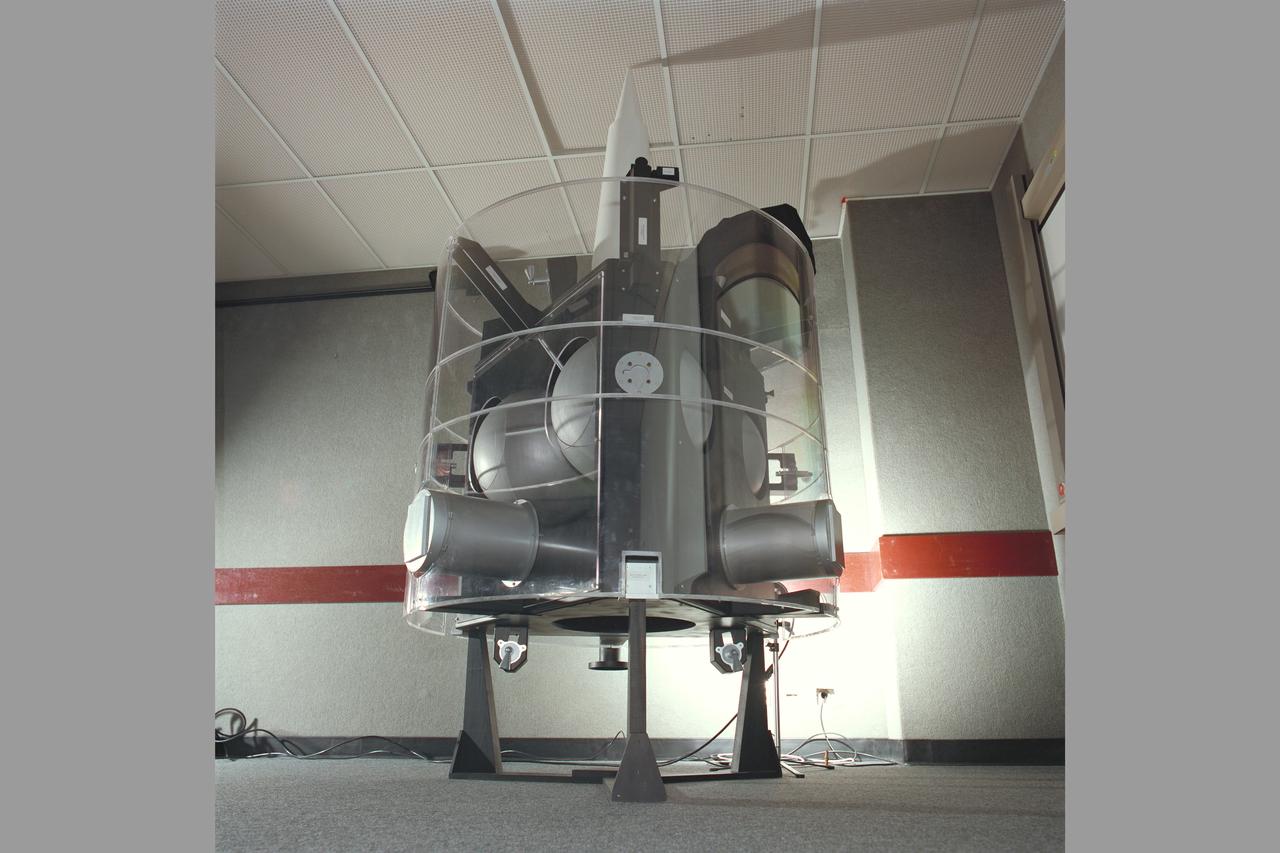
N-244 Lunar Prospector Model
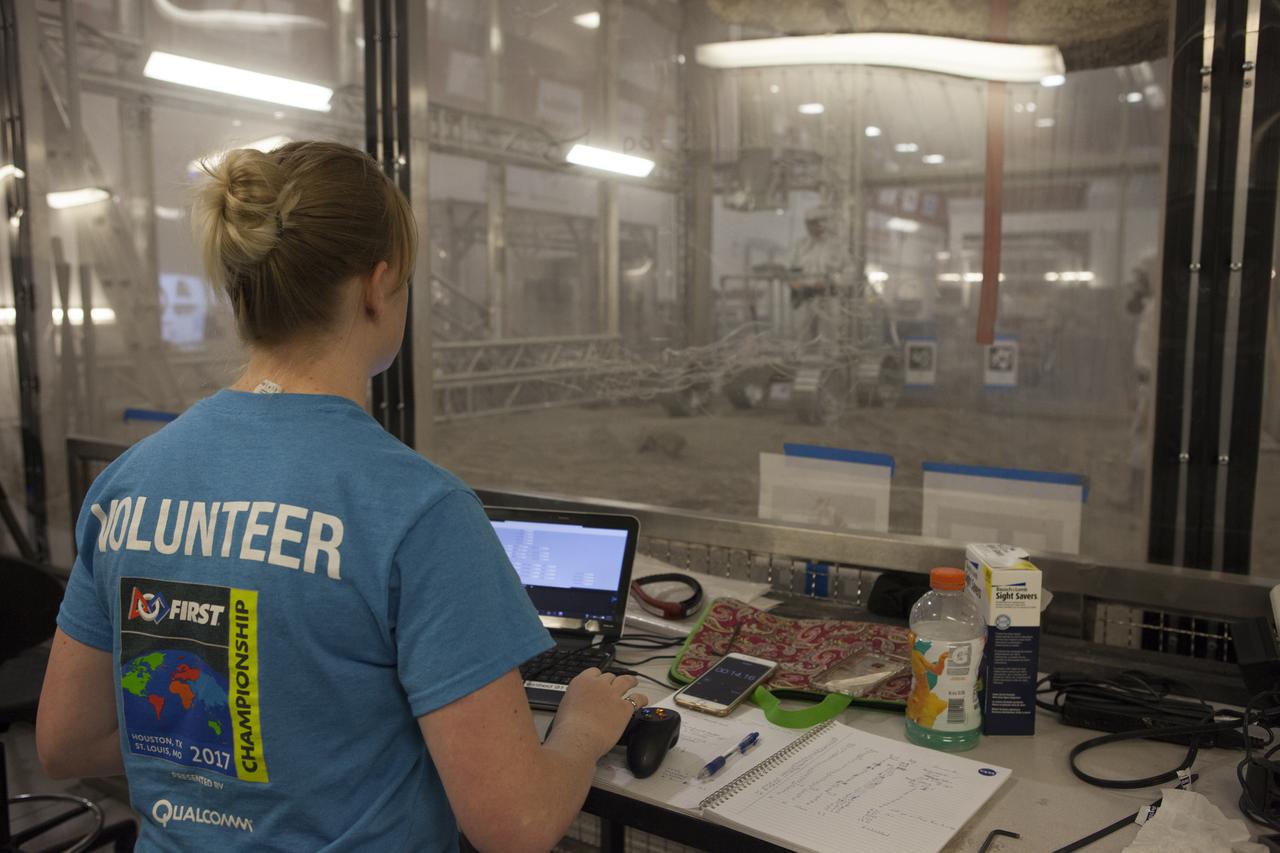
Outside a regolith bin at the agency's Kennedy Space center in Florida, an engineer operates controls for a lightweight simulator version of NASA's Resource Prospector during a mobility test. The Resource Prospector mission aims to be the first mining expedition on another world. Operating on the moon’s poles, the robot is designed to use instruments to locate elements at a lunar polar regions, then excavate and sample resources such as hydrogen, oxygen and water. These resources could support human explores on their way to destinations such as farther into the solar system.
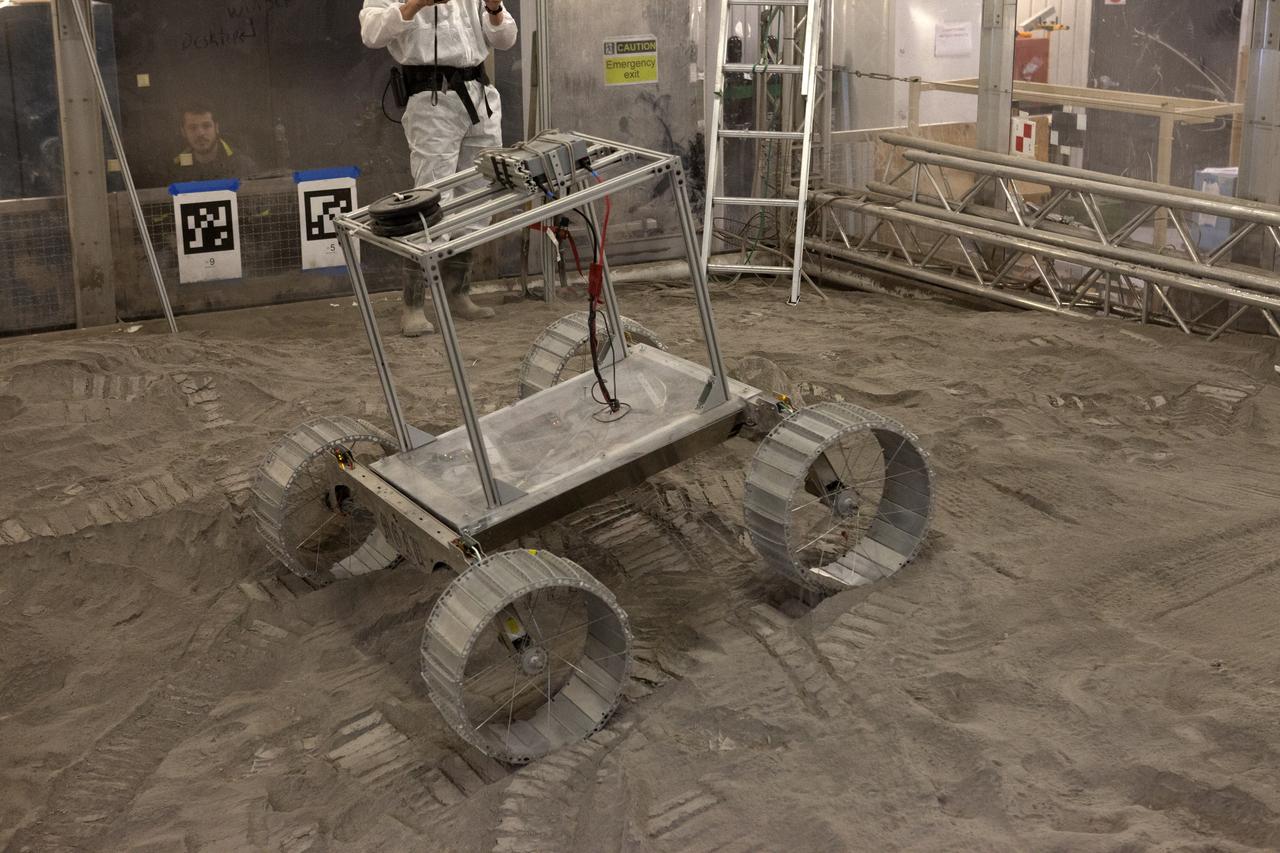
A lightweight simulator version of NASA's Resource Prospector undergoes a mobility test in a regolith bin at the agency's Kennedy Space center in Florida. The Resource Prospector mission aims to be the first mining expedition on another world. Operating on the moon’s poles, the robot is designed to use instruments to locate elements at a lunar polar regions, then excavate and sample resources such as hydrogen, oxygen and water. These resources could support human explores on their way to destinations such as farther into the solar system.
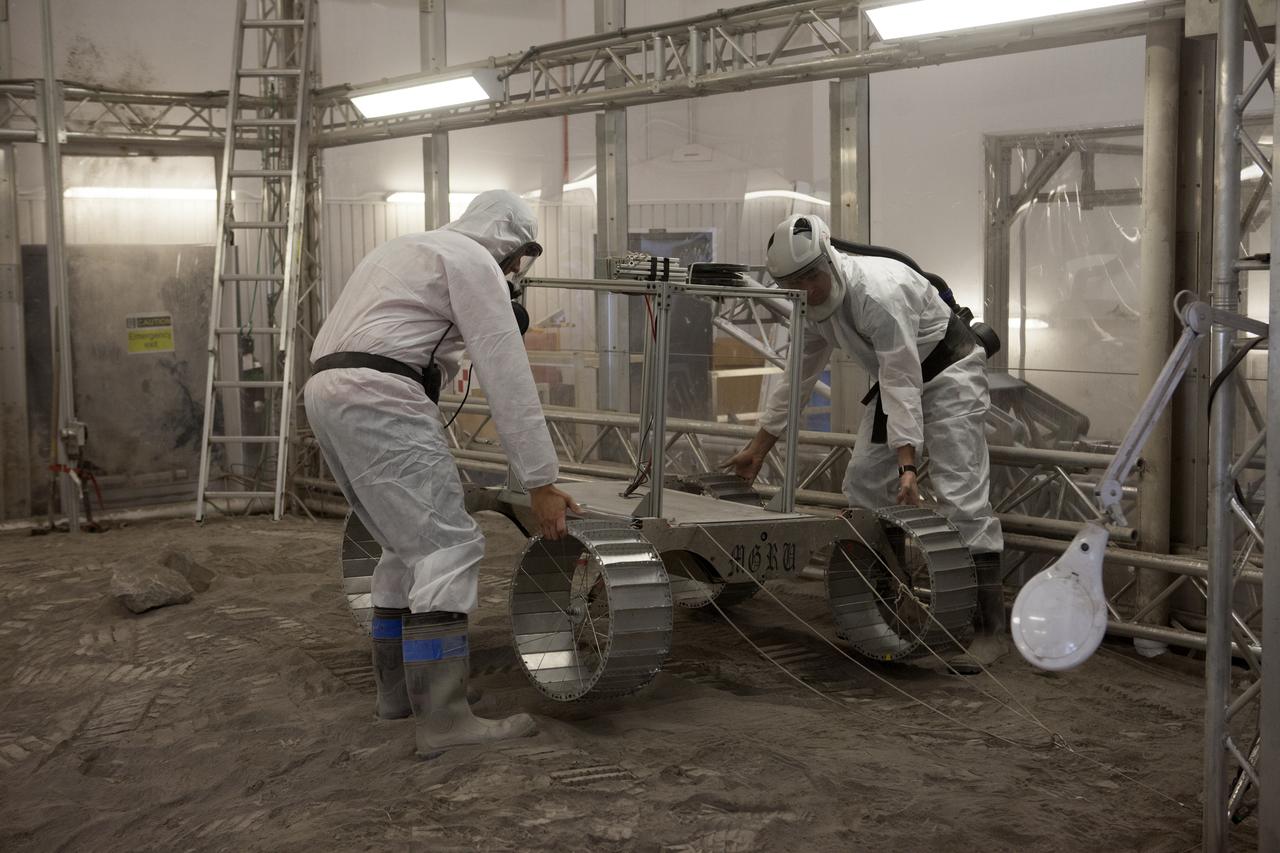
Engineers wearing protecting garb, make adjustments to a lightweight simulator version of NASA's Resource Prospector undergoes a mobility test in a regolith bin at the agency's Kennedy Space center in Florida. The Resource Prospector mission aims to be the first mining expedition on another world. Operating on the moon’s poles, the robot is designed to use instruments to locate elements at a lunar polar regions, then excavate and sample resources such as hydrogen, oxygen and water. These resources could support human explores on their way to destinations such as farther into the solar system.
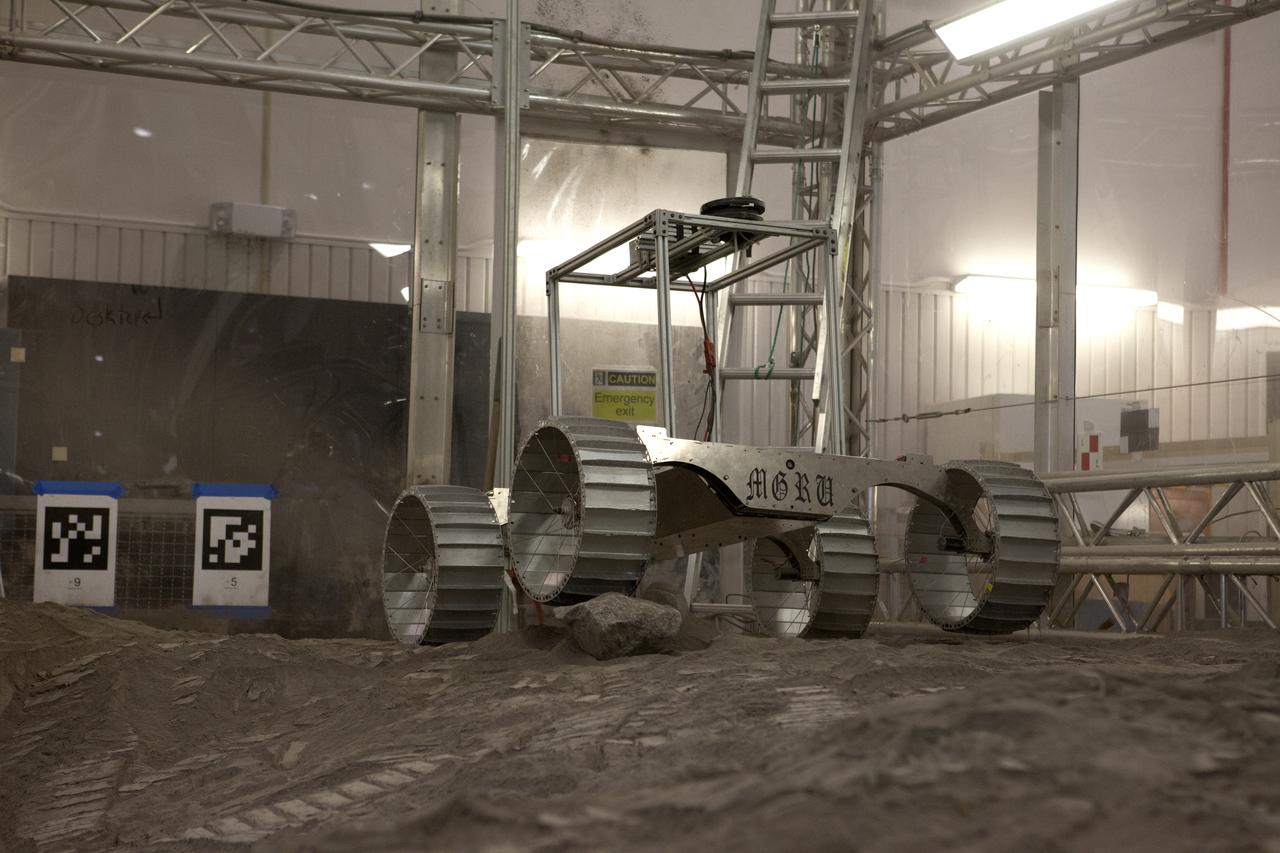
A lightweight simulator version of NASA's Resource Prospector undergoes a mobility test in a regolith bin at the agency's Kennedy Space center in Florida. The Resource Prospector mission aims to be the first mining expedition on another world. Operating on the moon’s poles, the robot is designed to use instruments to locate elements at a lunar polar regions, then excavate and sample resources such as hydrogen, oxygen and water. These resources could support human explores on their way to destinations such as farther into the solar system.
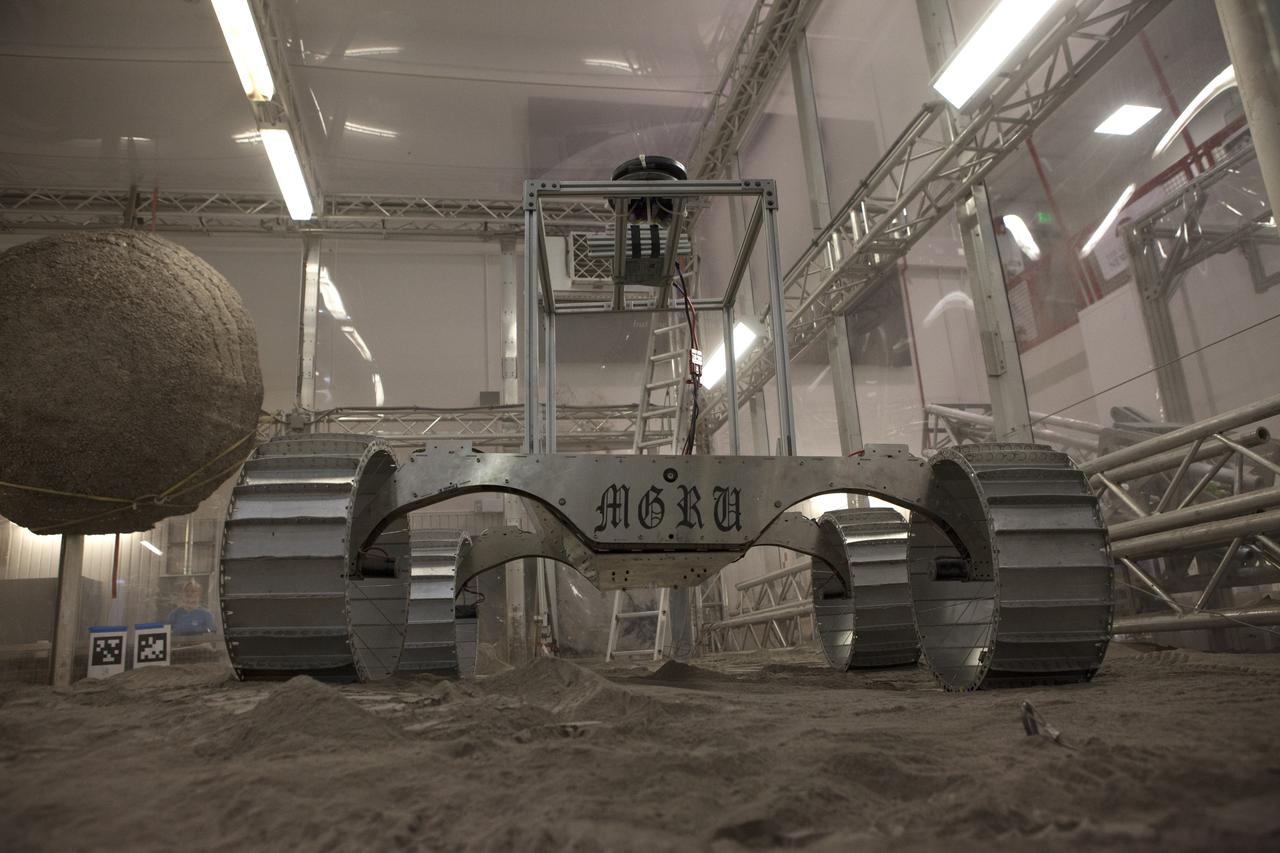
A lightweight simulator version of NASA's Resource Prospector undergoes a mobility test in a regolith bin at the agency's Kennedy Space center in Florida. The Resource Prospector mission aims to be the first mining expedition on another world. Operating on the moon’s poles, the robot is designed to use instruments to locate elements at a lunar polar regions, then excavate and sample resources such as hydrogen, oxygen and water. These resources could support human explores on their way to destinations such as farther into the solar system.

A lightweight simulator version of NASA's Resource Prospector undergoes a mobility test in a regolith bin at the agency's Kennedy Space center in Florida. The Resource Prospector mission aims to be the first mining expedition on another world. Operating on the moon’s poles, the robot is designed to use instruments to locate elements at a lunar polar regions, then excavate and sample resources such as hydrogen, oxygen and water. These resources could support human explores on their way to destinations such as farther into the solar system.
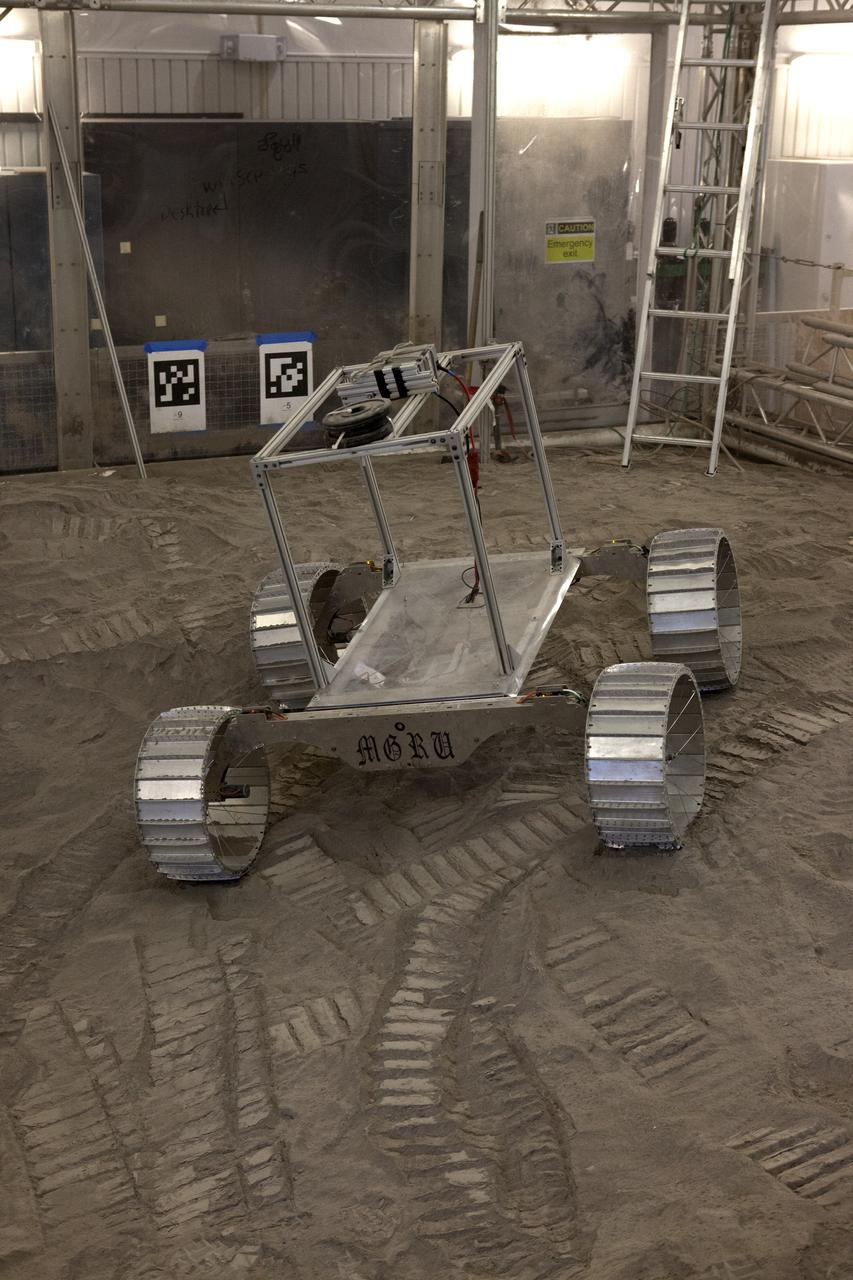
A lightweight simulator version of NASA's Resource Prospector undergoes a mobility test in a regolith bin at the agency's Kennedy Space center in Florida. The Resource Prospector mission aims to be the first mining expedition on another world. Operating on the moon’s poles, the robot is designed to use instruments to locate elements at a lunar polar regions, then excavate and sample resources such as hydrogen, oxygen and water. These resources could support human explores on their way to destinations such as farther into the solar system.
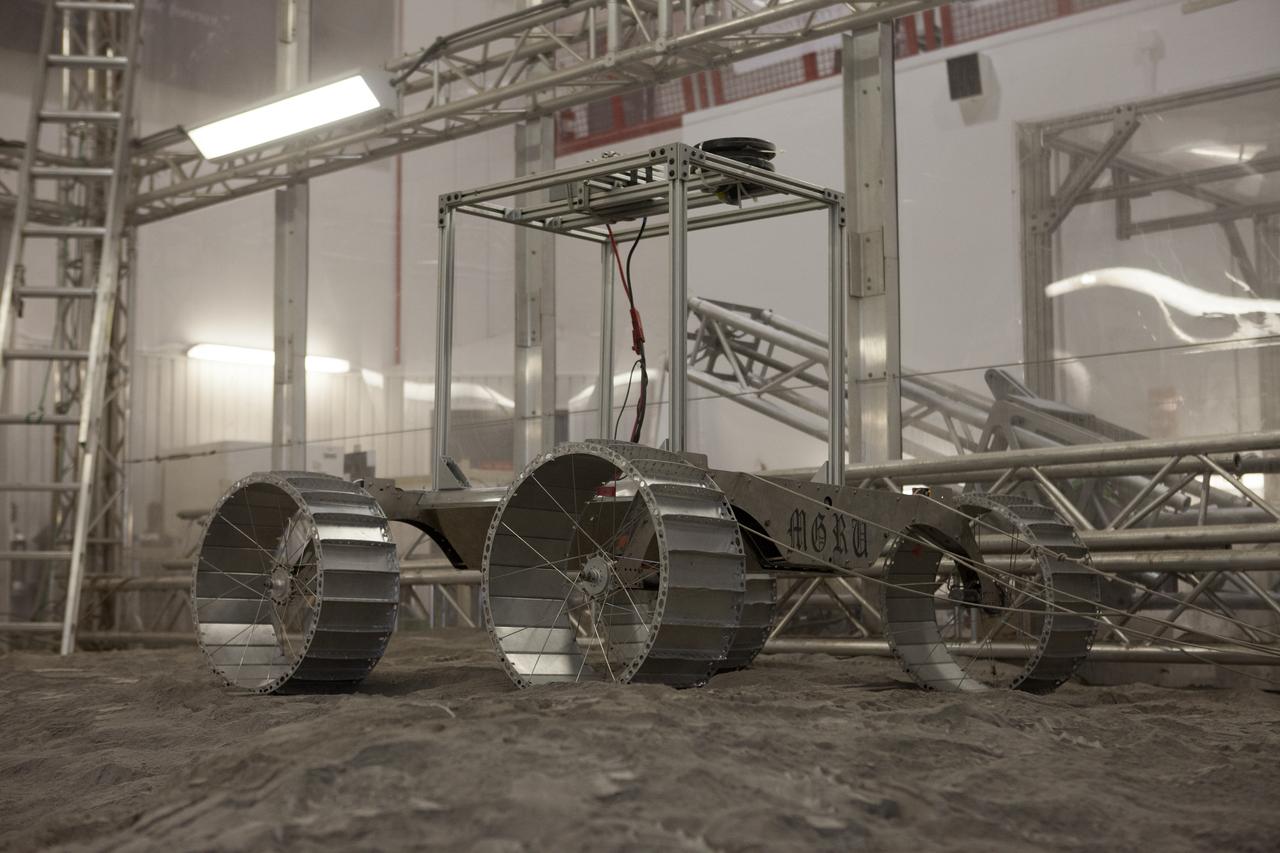
A lightweight simulator version of NASA's Resource Prospector undergoes a mobility test in a regolith bin at the agency's Kennedy Space center in Florida. The Resource Prospector mission aims to be the first mining expedition on another world. Operating on the moon’s poles, the robot is designed to use instruments to locate elements at a lunar polar regions, then excavate and sample resources such as hydrogen, oxygen and water. These resources could support human explores on their way to destinations such as farther into the solar system.
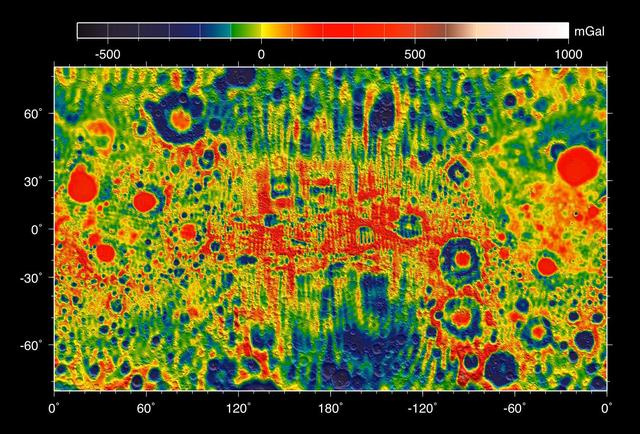
This map shows the gravity field of the moon from the Lunar Prospector mission. The viewing perspective, known as a Mercator projection, shows the far side of the moon in the center and the nearside as viewed from Earth at either side.
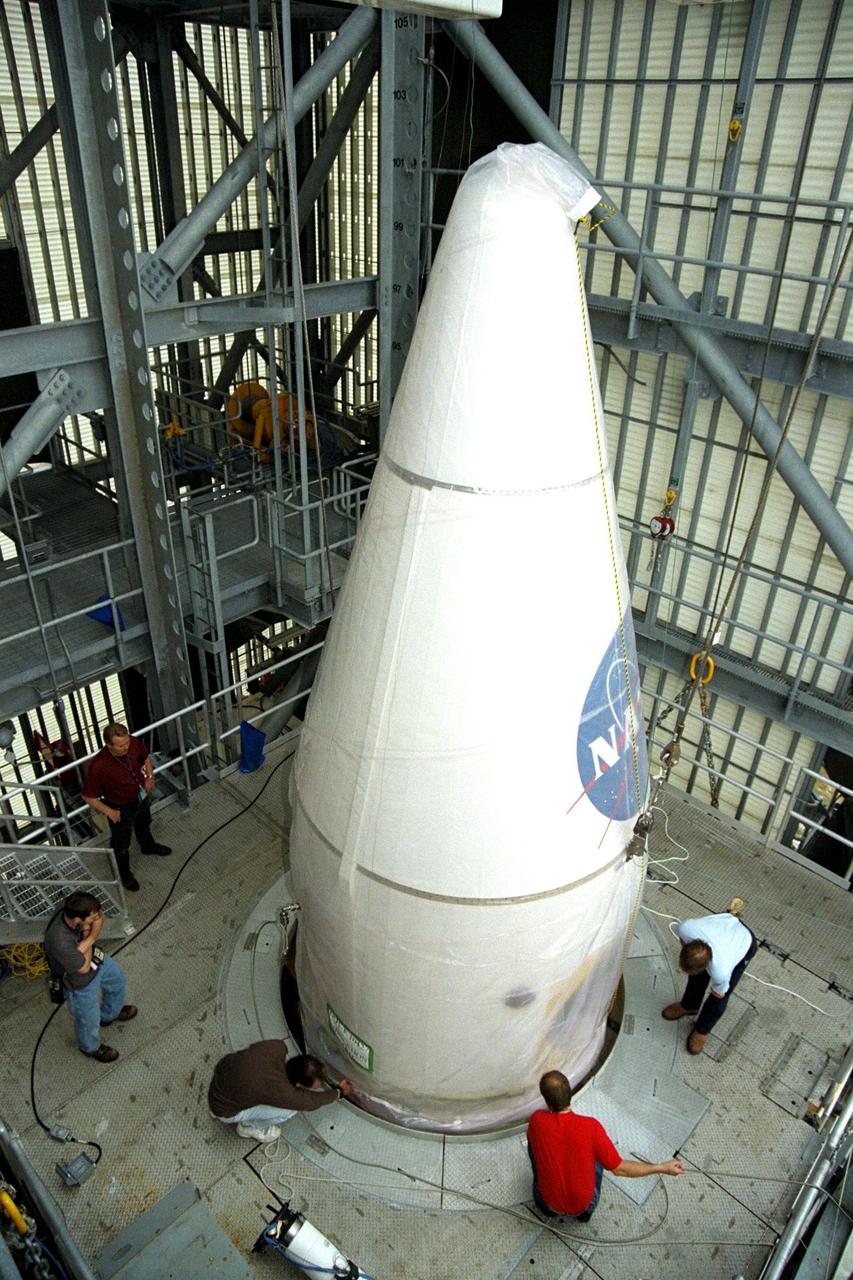
NASA’s Lunar Prospector is mated to a Lockheed Martin Athena II launch vehicle at Cape Canaveral Air Station’s Launch Complex 46. Lunar Prospector, built for the NASA Ames Research Center by Lockheed Martin, is a spin-stabilized spacecraft designed to provide NASA the first global maps of the Moon’s surface and its gravitational magnetic fields. It will orbit the Moon at an altitude of approximately 63 miles during a one-year mission. The launch of Lunar Prospector is scheduled for Jan. 5, 1998 at 8:31 p.m. EST
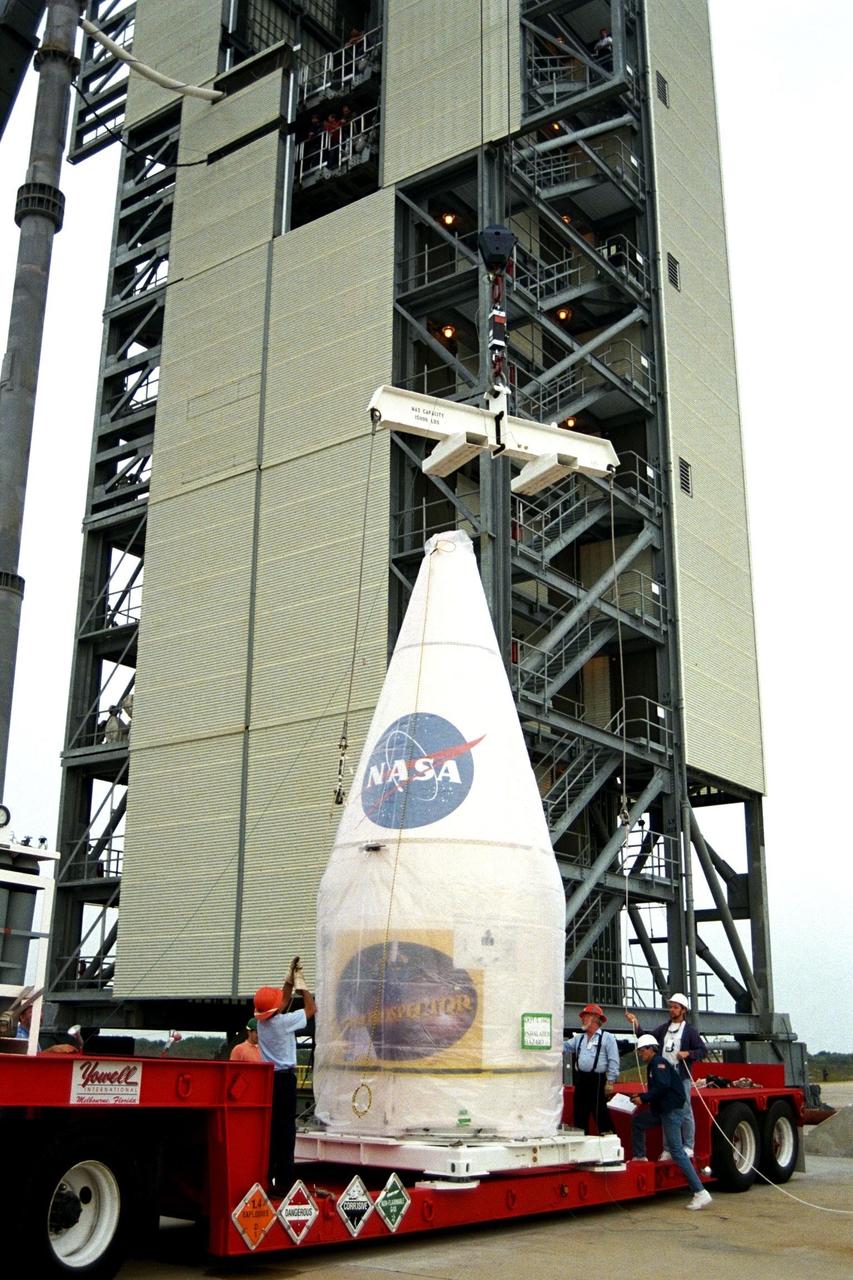
NASA’s Lunar Prospector is prepared for mating to a Lockheed Martin Athena II launch vehicle at Cape Canaveral Air Station’s Launch Complex 46. Lunar Prospector, built for the NASA Ames Research Center by Lockheed Martin, is a spin-stabilized spacecraft designed to provide NASA the first global maps of the Moon’s surface and its gravitational magnetic fields. It will orbit the Moon at an altitude of approximately 63 miles during a one-year mission. The launch of Lunar Prospector is scheduled for Jan. 5, 1998 at 8:31 p.m. EST

NASA’s Lunar Prospector is lifted at Cape Canaveral Air Station’s Launch Complex 46 before mating to a Lockheed Martin Athena II launch vehicle. Lunar Prospector, built for the NASA Ames Research Center by Lockheed Martin, is a spin-stabilized spacecraft designed to provide NASA the first global maps of the Moon’s surface and its gravitational magnetic fields. It will orbit the Moon at an altitude of approximately 63 miles during a one-year mission. The launch of Lunar Prospector is scheduled for Jan. 5, 1998 at 8:31 p.m. EST
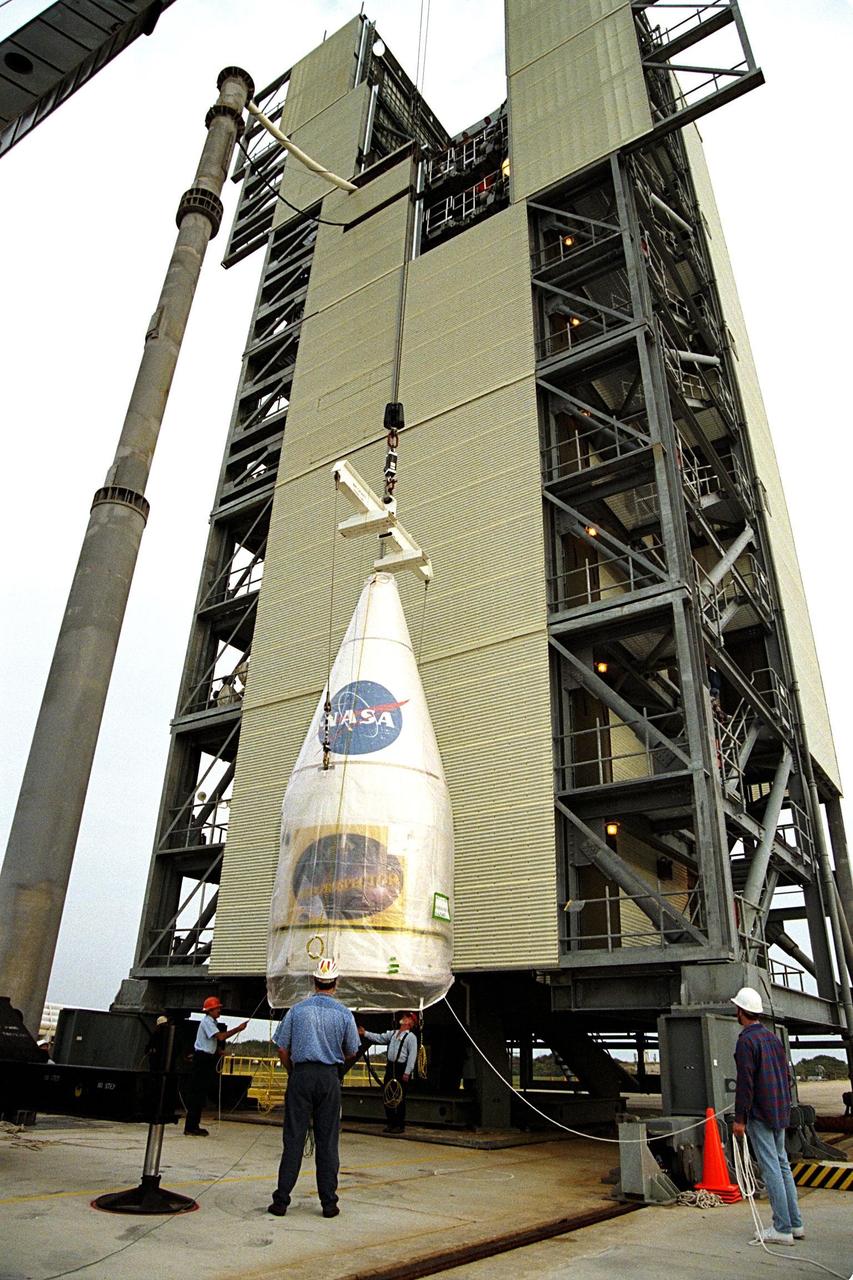
NASA’s Lunar Prospector is prepared for mating to a Lockheed Martin Athena II launch vehicle at Cape Canaveral Air Station’s Launch Complex 46. Lunar Prospector, built for the NASA Ames Research Center by Lockheed Martin, is a spin-stabilized spacecraft designed to provide NASA the first global maps of the Moon’s surface and its gravitational magnetic fields. It will orbit the Moon at an altitude of approximately 63 miles during a one-year mission. The launch of Lunar Prospector is scheduled for Jan. 5, 1998 at 8:31 p.m. EST
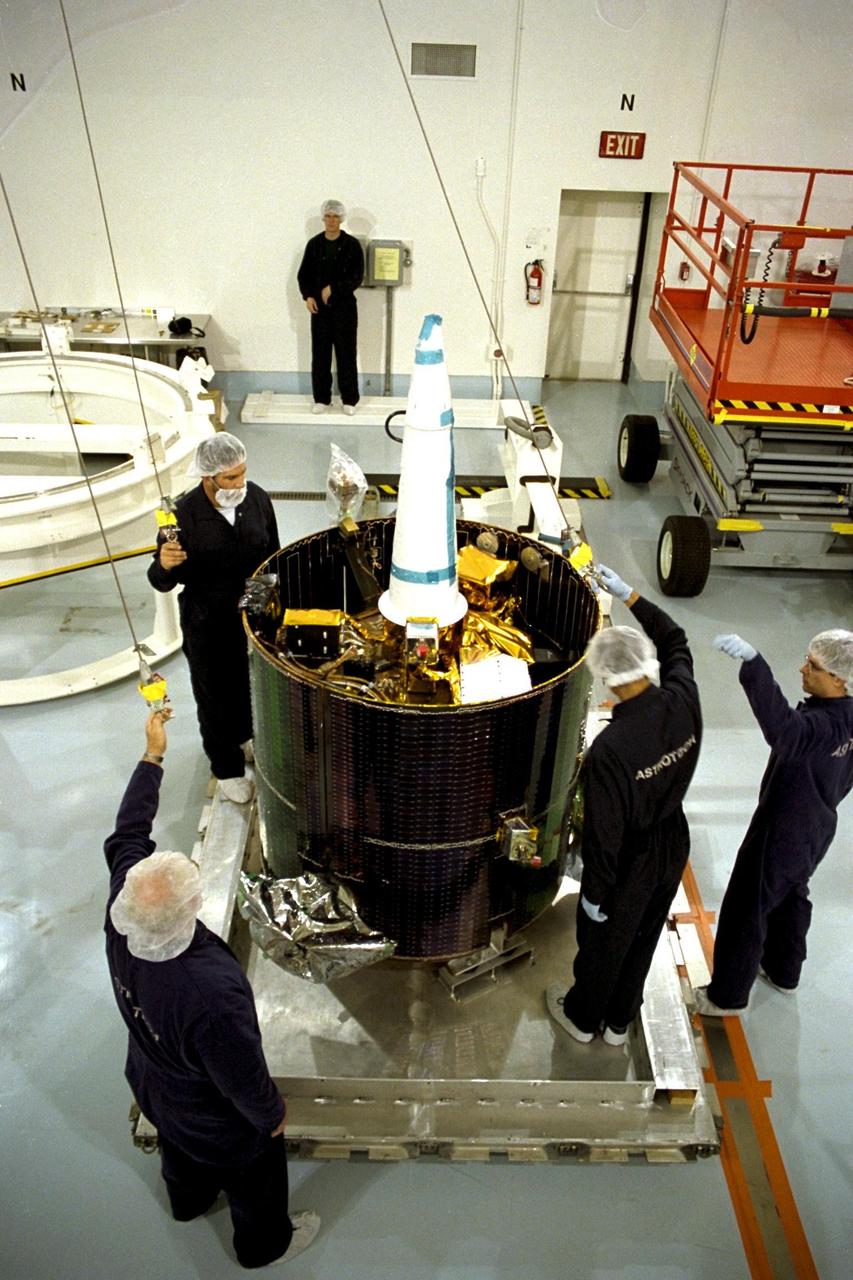
NASA's Lunar Prospector is taken out of its crate at Astrotech, a commercial payload processing facility, in Titusville, Fla. The small robotic spacecraft, to be launched for NASA on an Athena 2 rocket by Lockheed Martin, is designed to provide the first global maps of the Moon's surface compositional elements and its gravitational and magnetic fields. While at Astrotech, Lunar Prospector will be fueled with its attitude control propellant and then mated to a Trans-Lunar Injection Stage which is a solid propellant upper stage motor. The combination will next be spin tested to verify proper balance, then encapsulated into an Athena nose fairing. Then the Lunar Prospector will be transported from Astrotech to Cape Canaveral Air Station and mated to an Athena rocket. The launch of Lunar Prospector is scheduled for Jan. 5, 1998 at 8:31 p.m
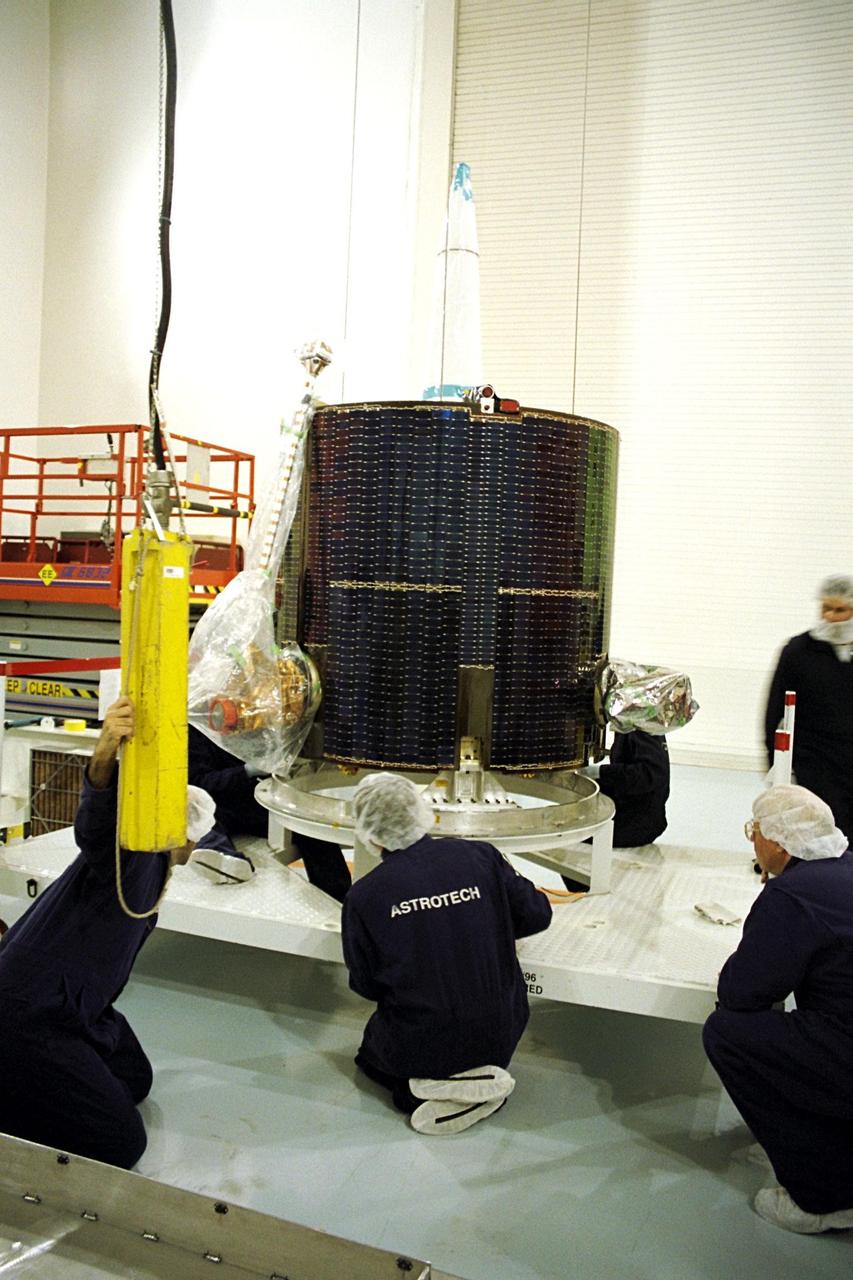
NASA's Lunar Prospector is taken out of its crate at Astrotech, a commercial payload processing facility, in Titusville, Fla. The small robotic spacecraft, to be launched for NASA on an Athena 2 rocket by Lockheed Martin, is designed to provide the first global maps of the Moon's surface compositional elements and its gravitational and magnetic fields. While at Astrotech, Lunar Prospector will be fueled with its attitude control propellant and then mated to a Trans-Lunar Injection Stage which is a solid propellant upper stage motor. The combination will next be spin tested to verify proper balance, then encapsulated into an Athena nose fairing. Then the Lunar Prospector will be transported from Astrotech to Cape Canaveral Air Station and mated to an Athena rocket. The launch of Lunar Prospector is scheduled for Jan. 5, 1998 at 8:31 p.m
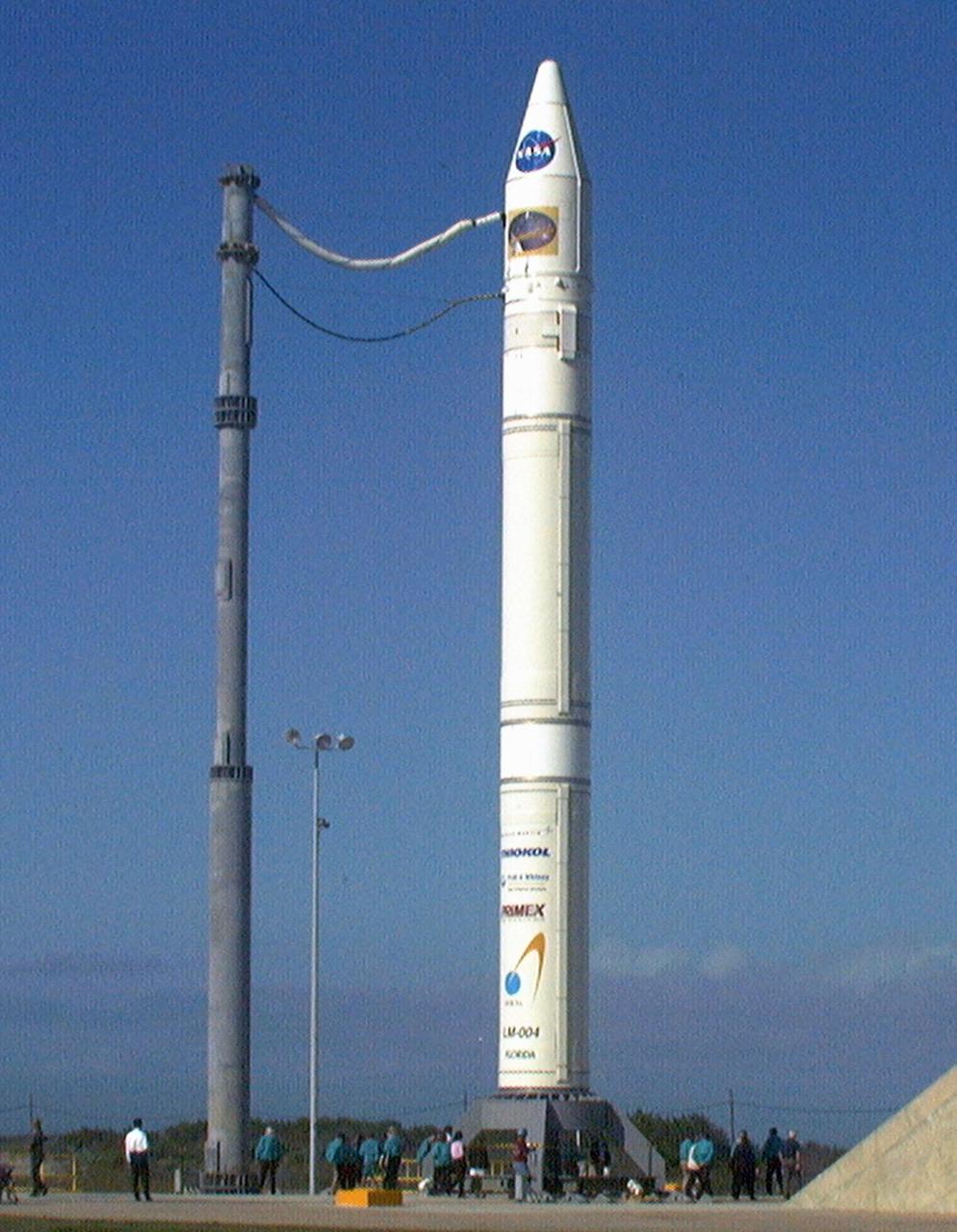
NASA’s Lunar Prospector is readied for launch as its gantry-like service tower is rolled back at Cape Canaveral Air Station’s Launch Complex 46. Lunar Prospector, built for the NASA Ames Research Center by Lockheed Martin, is a spin-stabilized spacecraft designed to provide NASA with the first global maps of the Moon’s surface and its gravitational magnetic fields, as well as look for the possible presence of ice near the lunar poles. It will orbit the Moon at an altitude of approximately 63 miles during a one-year mission. The launch of Lunar Prospector is scheduled for Jan. 5, 1998 at 8:31 p.m. EST
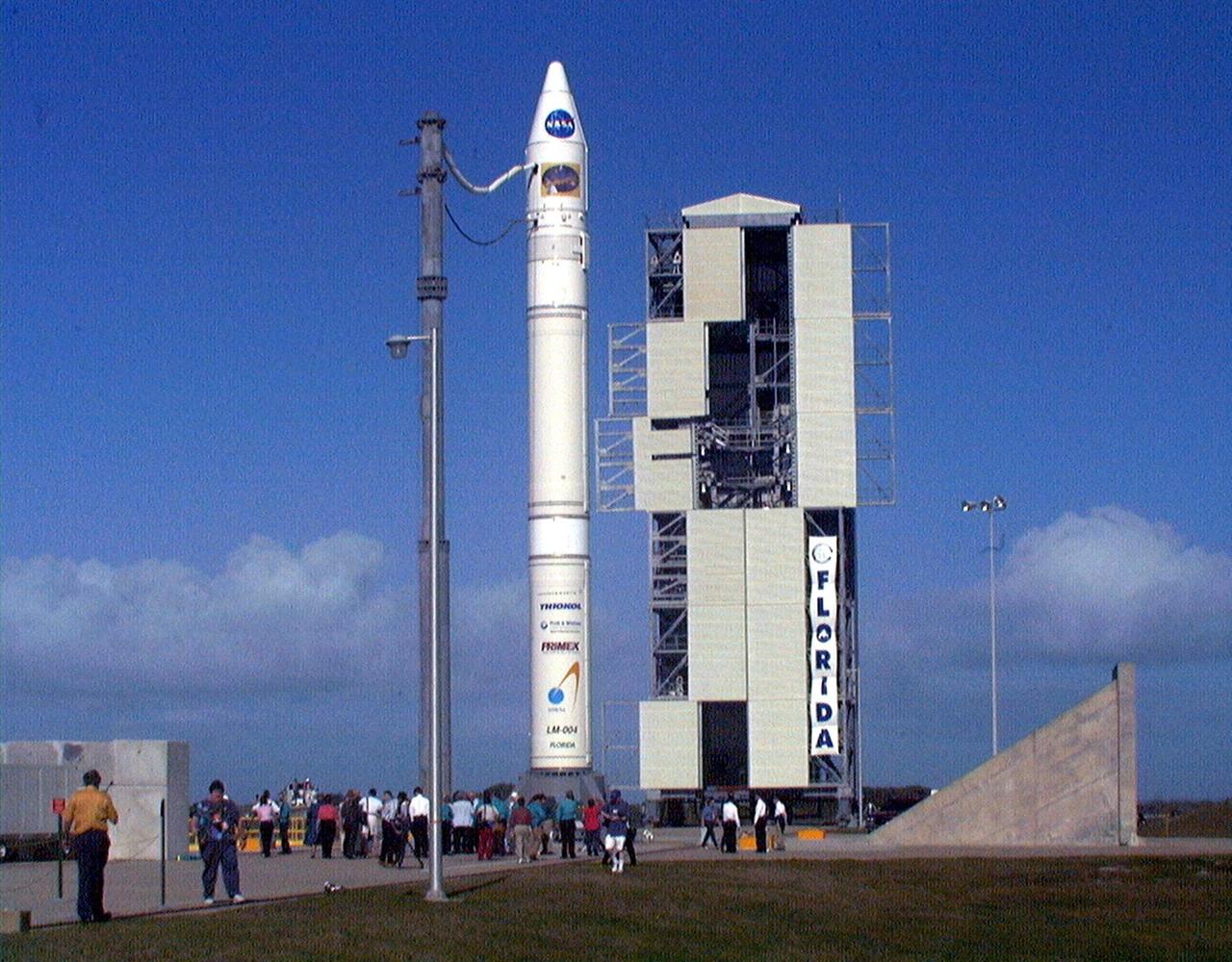
NASA’s Lunar Prospector is readied for launch as its gantry-like service tower is rolled back at Cape Canaveral Air Station’s Launch Complex 46. Lunar Prospector, built for the NASA Ames Research Center by Lockheed Martin, is a spin-stabilized spacecraft designed to provide NASA with the first global maps of the Moon’s surface and its gravitational magnetic fields, as well as look for the possible presence of ice near the lunar poles. It will orbit the Moon at an altitude of approximately 63 miles during a one-year mission. The launch of Lunar Prospector is scheduled for Jan. 5, 1998 at 8:31 p.m. EST
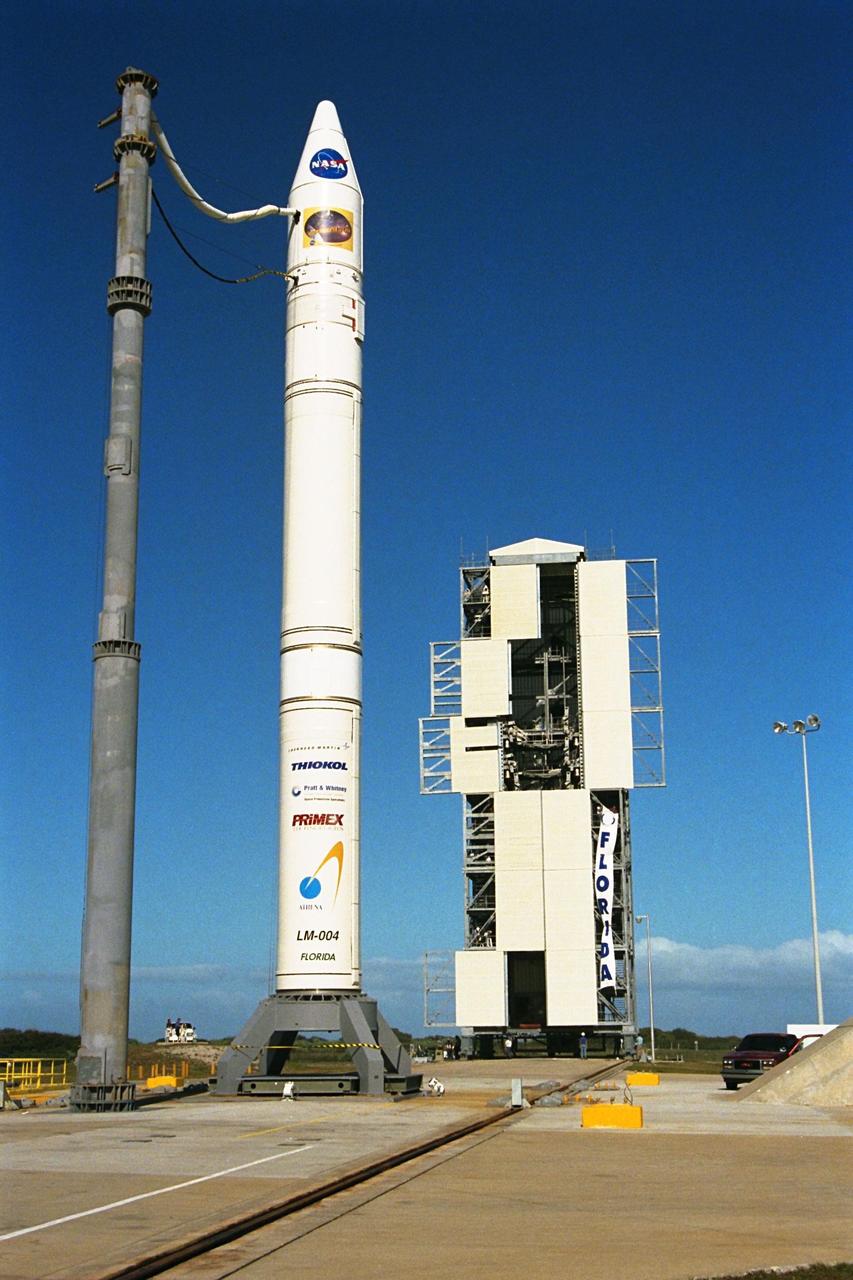
NASA’s Lunar Prospector is readied for launch as its gantry-like service tower is rolled back at Cape Canaveral Air Station’s Launch Complex 46. Lunar Prospector, built for the NASA Ames Research Center by Lockheed Martin, is a spin-stabilized spacecraft designed to provide NASA with the first global maps of the Moon’s surface and its gravitational magnetic fields, as well as look for the possible presence of ice near the lunar poles. It will orbit the Moon at an altitude of approximately 63 miles during a one-year mission. The launch of Lunar Prospector is scheduled for Jan. 5, 1998 at 8:31 p.m. EST
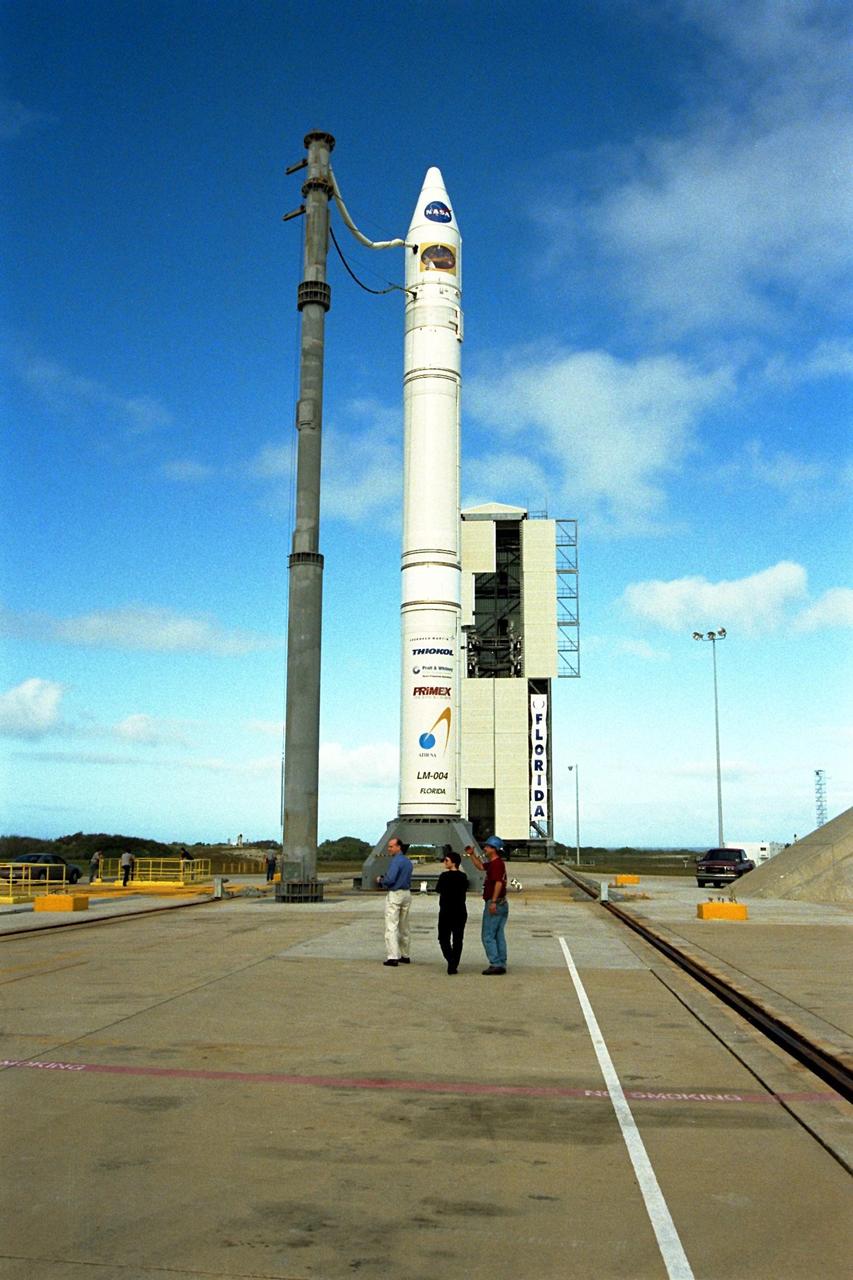
NASA’s Lunar Prospector is readied for launch as its gantry-like service tower is rolled back at Cape Canaveral Air Station’s Launch Complex 46. Lunar Prospector, built for the NASA Ames Research Center by Lockheed Martin, is a spin-stabilized spacecraft designed to provide NASA with the first global maps of the Moon’s surface and its gravitational magnetic fields, as well as look for the possible presence of ice near the lunar poles. It will orbit the Moon at an altitude of approximately 63 miles during a one-year mission. The launch of Lunar Prospector is scheduled for Jan. 5, 1998 at 8:31 p.m. EST
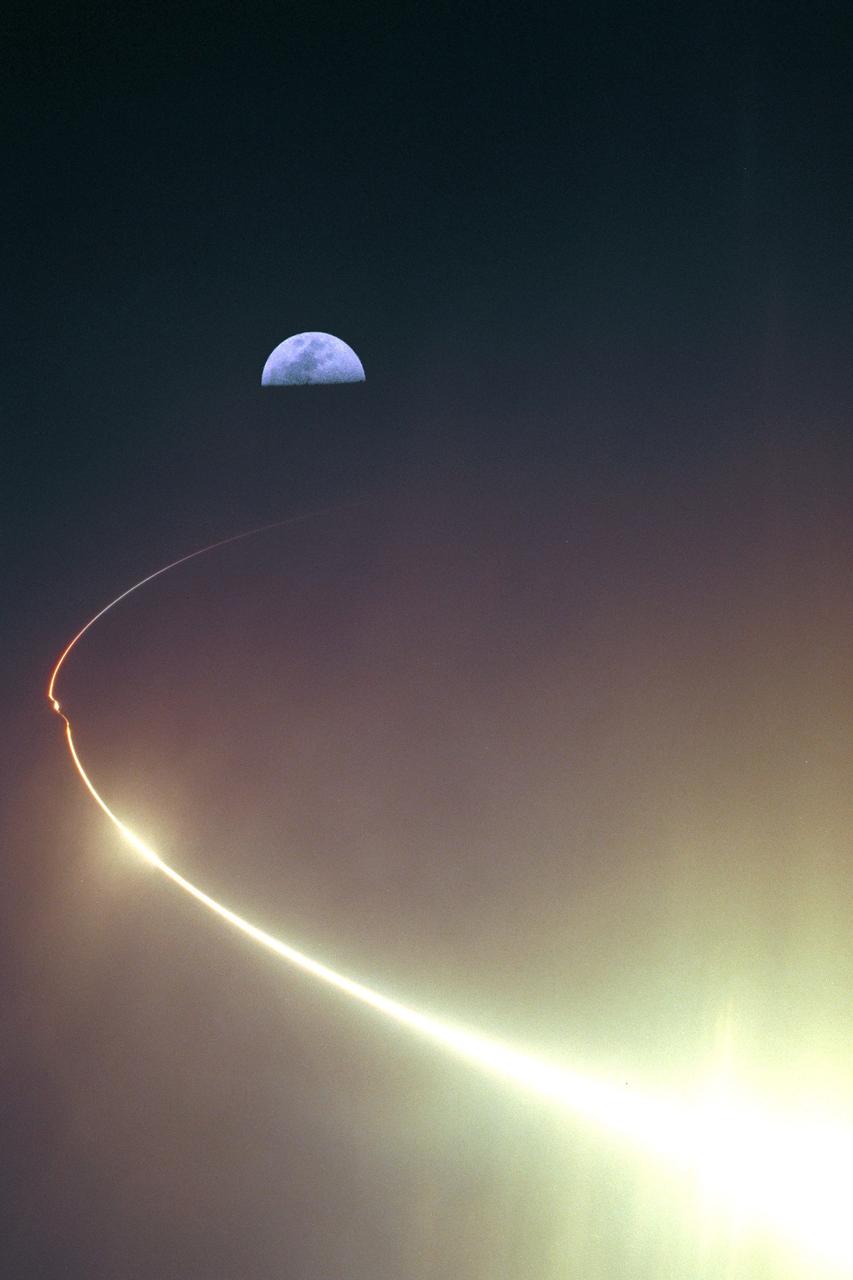
KENNEDY SPACE CENTER, FLA. - NASA's Lunar Prospector spacecraft launched successfully on its way to the Moon from Launch Complex 46 (LC46) at Cape Canaveral Air Station on Jan. 6 at 9:38 p.m. EST. It was the inaugural launch of Lockheed Martin's Athena II launch vehicle and the first launch from LC46, operated by Spaceport Florida Authority. Lunar Prospector, built for the NASA Ames Research Center by Lockheed Martin, is a spin-stabilized spacecraft designed to provide NASA with the first global maps of the Moon's surface and its gravitational magnetic fields, as well as look for the possible presence of ice near the lunar poles. It will orbit the Moon at an altitude of approximately 63 miles during a one-year mission.

Workers erect the first stage of a Lockheed Martin Launch Vehicle-2 (LMLV-2) at Launch Complex 46 at Cape Canaveral Air Station, Fla. The Lunar Prospector spacecraft is scheduled to launch aboard the LMLV-2 in October for an 18-month mission that will orbit the Earth’s Moon to collect data from the lunar surface. Designed for a low polar orbit investigation of the Moon, the Lunar Prospector will map the Moon’s surface composition and possible polar ice deposits, measure magnetic and gravity fields, and study lunar outgassing events
Workers erect the first stage of a Lockheed Martin Launch Vehicle-2 (LMLV-2) at Launch Complex 46 at Cape Canaveral Air Station, Fla. The Lunar Prospector spacecraft is scheduled to launch aboard the LMLV-2 in October for an 18-month mission that will orbit the Earth’s Moon to collect data from the lunar surface. Designed for a low polar orbit investigation of the Moon, the Lunar Prospector will map the Moon’s surface composition and possible polar ice deposits, measure magnetic and gravity fields, and study lunar outgassing events
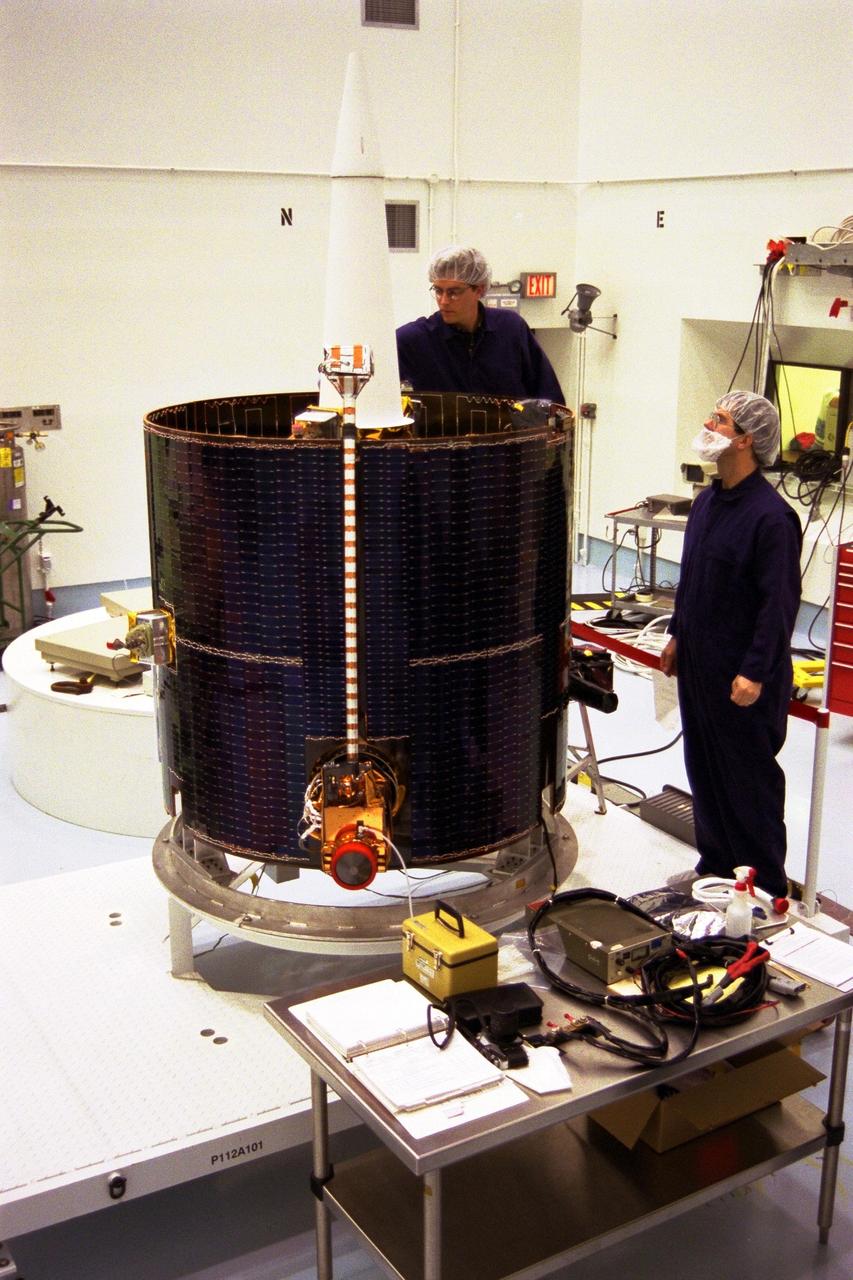
Lockheed Martin Missile Systems technicians prepare NASA’s Lunar Prospector spacecraft for mating to the Trans Lunar Injection Module of the spacecraft at Astrotech, a commercial payload processing facility, in Titusville, Fla. The small robotic spacecraft, to be launched for NASA on an Athena II launch vehicle by Lockheed Martin, is designed to provide the first global maps of the Moon’s surface compositional elements and its gravitational and magnetic fields. The launch of Lunar Prospector is scheduled for Jan. 5, 1998 at 8:31 p.m
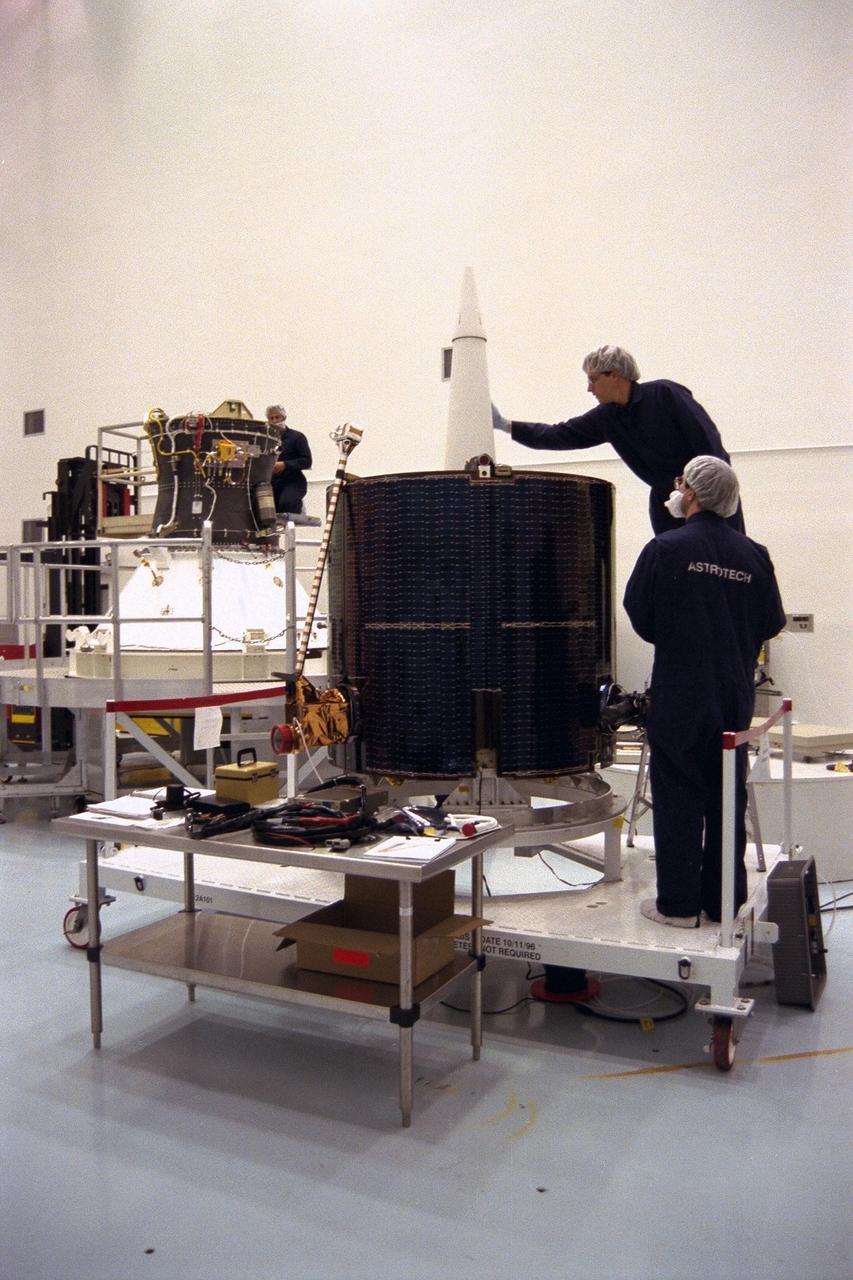
NASA’s Lunar Prospector is prepared for mating to the Trans Lunar Injection Module of the spacecraft, seen in the background, at Astrotech, a commercial payload processing facility, in Titusville, Fla. The small robotic spacecraft, to be launched for NASA on an Athena II launch vehicle by Lockheed Martin, is designed to provide the first global maps of the Moon’s surface compositional elements and its gravitational and magnetic fields. The launch of Lunar Prospector is scheduled for Jan. 5, 1998 at 8:31 p.m
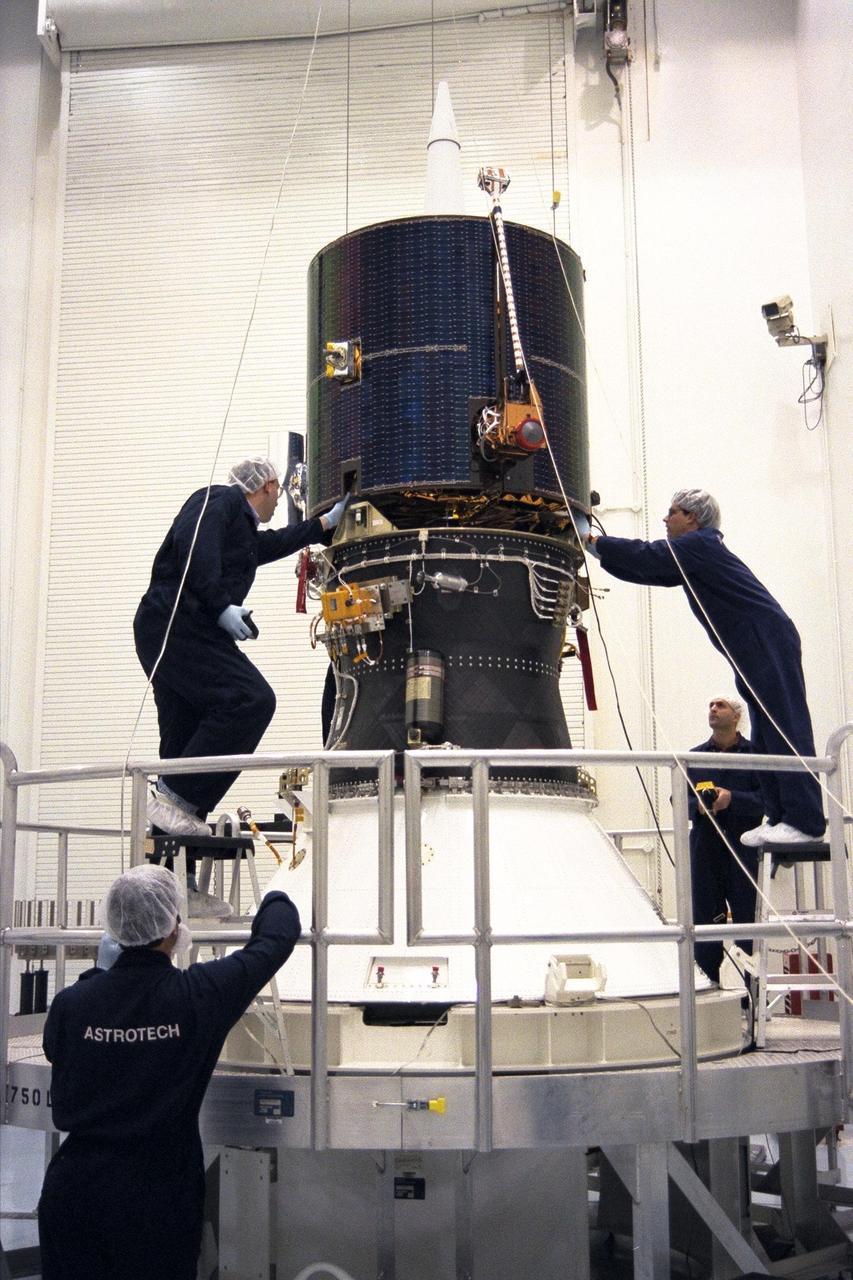
Lockheed Martin Missile Systems integration and test staff join NASA’s Lunar Prospector spacecraft to the Trans Lunar Injection Module of the spacecraft at Astrotech, a commercial payload processing facility, in Titusville, Fla. The small robotic spacecraft, to be launched on an Athena II launch vehicle by Lockheed Martin, is designed to provide the first global maps of the Moon’s surface compositional elements and its gravitational and magnetic fields. The launch of Lunar Prospector is scheduled for Jan. 5, 1998 at 8:31 p.m
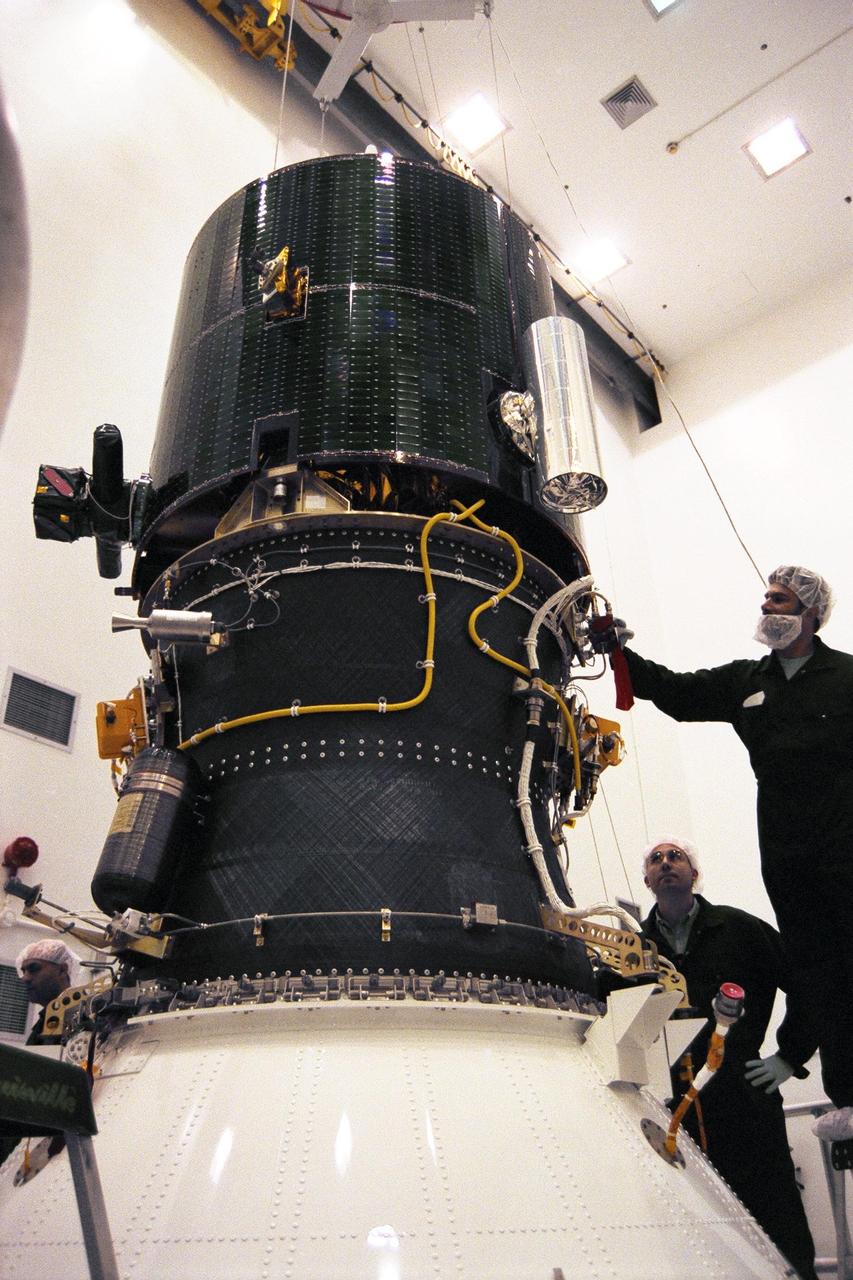
Lockheed Martin Missile Systems integration and test staff join NASA’s Lunar Prospector spacecraft atop the Trans Lunar Injection Module of the spacecraft at Astrotech, a commercial payload processing facility, in Titusville, Fla. The small robotic spacecraft, to be launched on an Athena II launch vehicle by Lockheed Martin, is designed to provide the first global maps of the Moon’s surface compositional elements and its gravitational and magnetic fields. The launch of Lunar Prospector is scheduled for Jan. 5, 1998 at 8:31 p.m
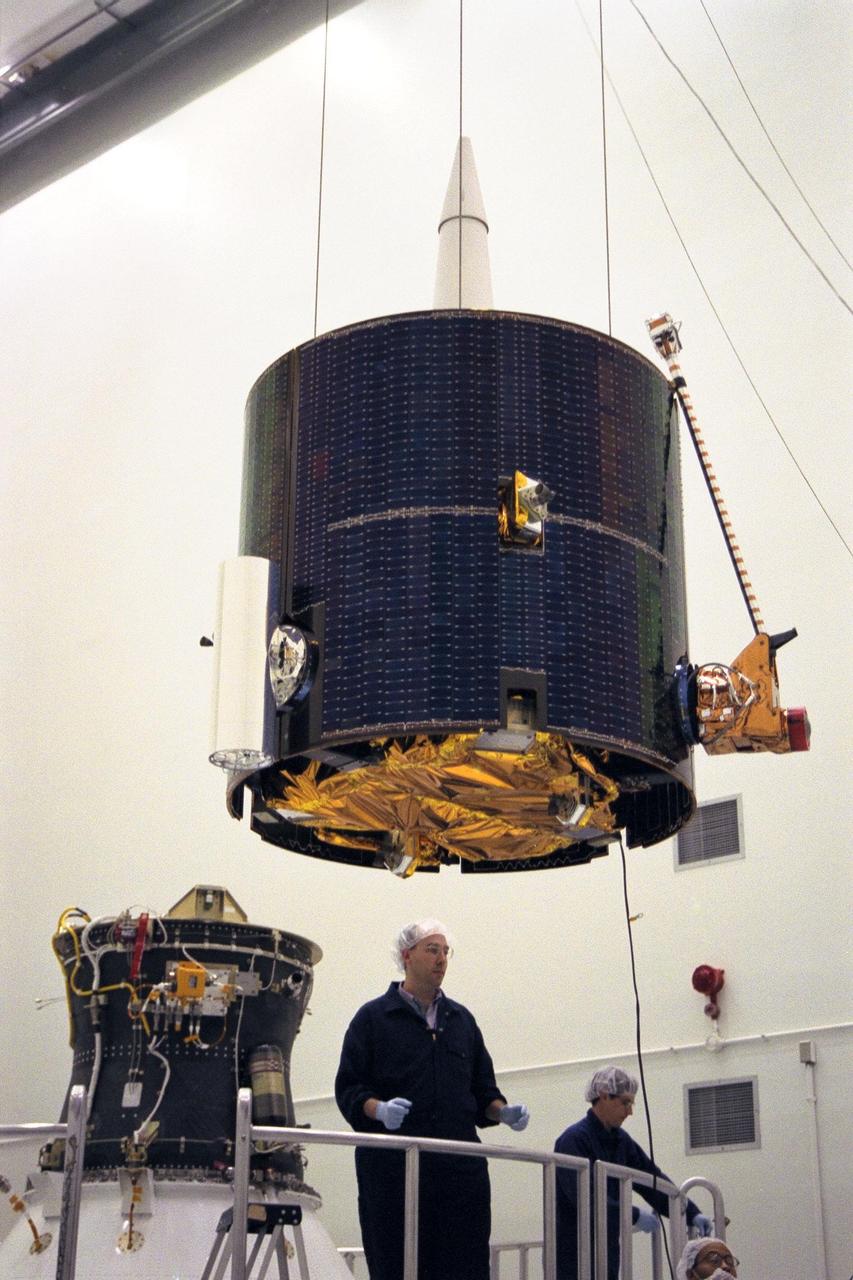
Lockheed Martin Missile Systems integration and test staff prepare NASA’s Lunar Prospector spacecraft for mating to the Trans Lunar Injection Module of the spacecraft at Astrotech, a commercial payload processing facility, in Titusville, Fla. The small robotic spacecraft, to be launched for NASA on an Athena II launch vehicle by Lockheed Martin, is designed to provide the first global maps of the Moon’s surface compositional elements and its gravitational and magnetic fields. The launch of Lunar Prospector is scheduled for Jan. 5, 1998 at 8:31 p.m
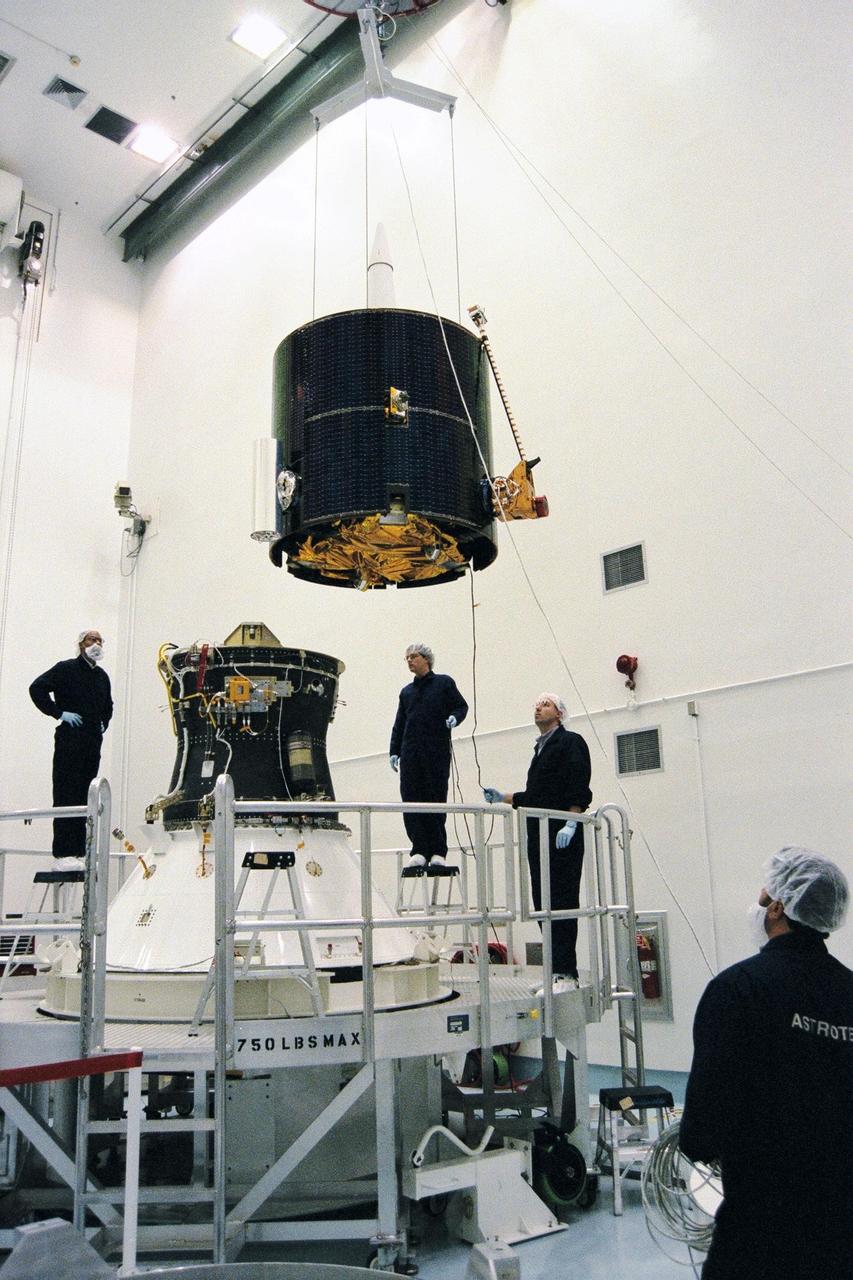
Lockheed Martin Missile Systems integration and test staff move NASA’s Lunar Prospector spacecraft over the Trans Lunar Injection Module of the spacecraft at Astrotech, a commercial payload processing facility, in Titusville, Fla. The small robotic spacecraft, to be launched on an Athena II launch vehicle by Lockheed Martin, is designed to provide the first global maps of the Moon’s surface compositional elements and its gravitational and magnetic fields. The launch of Lunar Prospector is scheduled for Jan. 5, 1998 at 8:31 p.m

Workers erect the first stage of a Lockheed Martin Launch Vehicle-2 (LMLV-2) at Launch Complex 46 at Cape Canaveral Air Station, Fla. The Lunar Prospector spacecraft is scheduled to launch aboard the LMLV-2 in October for an 18-month mission that will orbit the Earth’s Moon to collect data from the lunar surface. Scientific experiments to be conducted by the Prospector include locating water ice that may exist near the lunar poles, gathering data to understand the evolution of the lunar highland crust and the lunar magnetic field, finding radon outgassing events, and describing the lunar gravity field by means of Doppler tracking

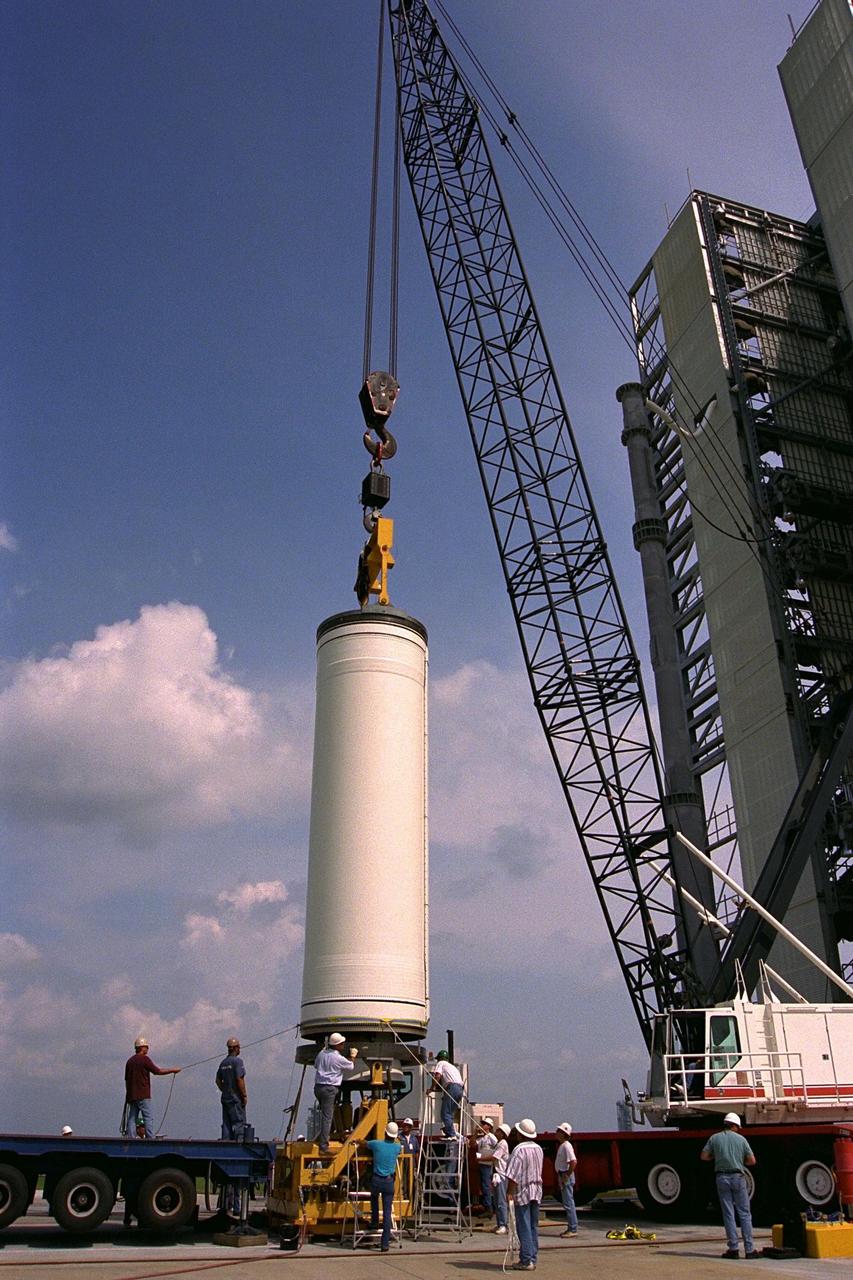
The third stage of the Lockheed Martin Athena launch vehicle is placed atop the vehicle’s second stage at Launch Complex 46 at Cape Canaveral Air Station. Athena is scheduled to carry the Lunar Prospector spacecraft for an 18-month mission that will orbit the Earth’s moon to collect data from the lunar surface. Scientific experiments to be conducted by the Prospector include locating water ice that may exist near the lunar poles, gathering data to understand the evolution of the lunar highland crust and the lunar magnetic field, finding radon outgassing events, and describing the lunar gravity field by means of Doppler tracking. The launch is now scheduled for early-January 1998
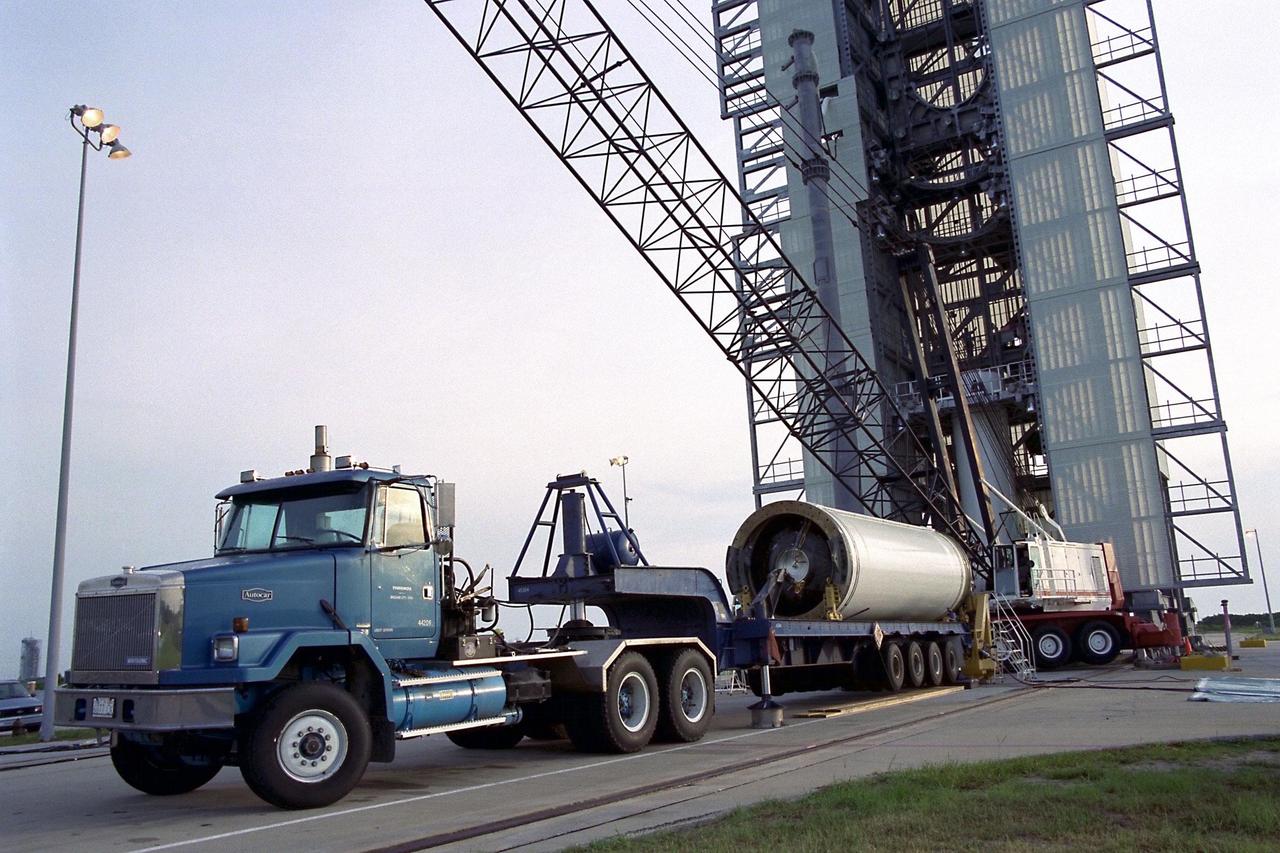
The second stage of the Lockheed Martin Launch Vehicle-2 (LMLV-2) arrives aboard a truck at Launch Complex 46 at Cape Canaveral Air Station before it is mated to the first stage, seen in the center of the pad structure in the background. The LMLV-2 will carry the Lunar Prospector spacecraft, scheduled to launch in October for an 18-month mission that will orbit the Earth’s moon to collect data from the lunar surface. Scientific experiments to be conducted by the Prospector include locating water ice that may exist near the lunar poles, gathering data to understand the evolution of the lunar highland crust and the lunar magnetic field, finding radon outgassing events, and describing the lunar gravity field by means of Doppler tracking
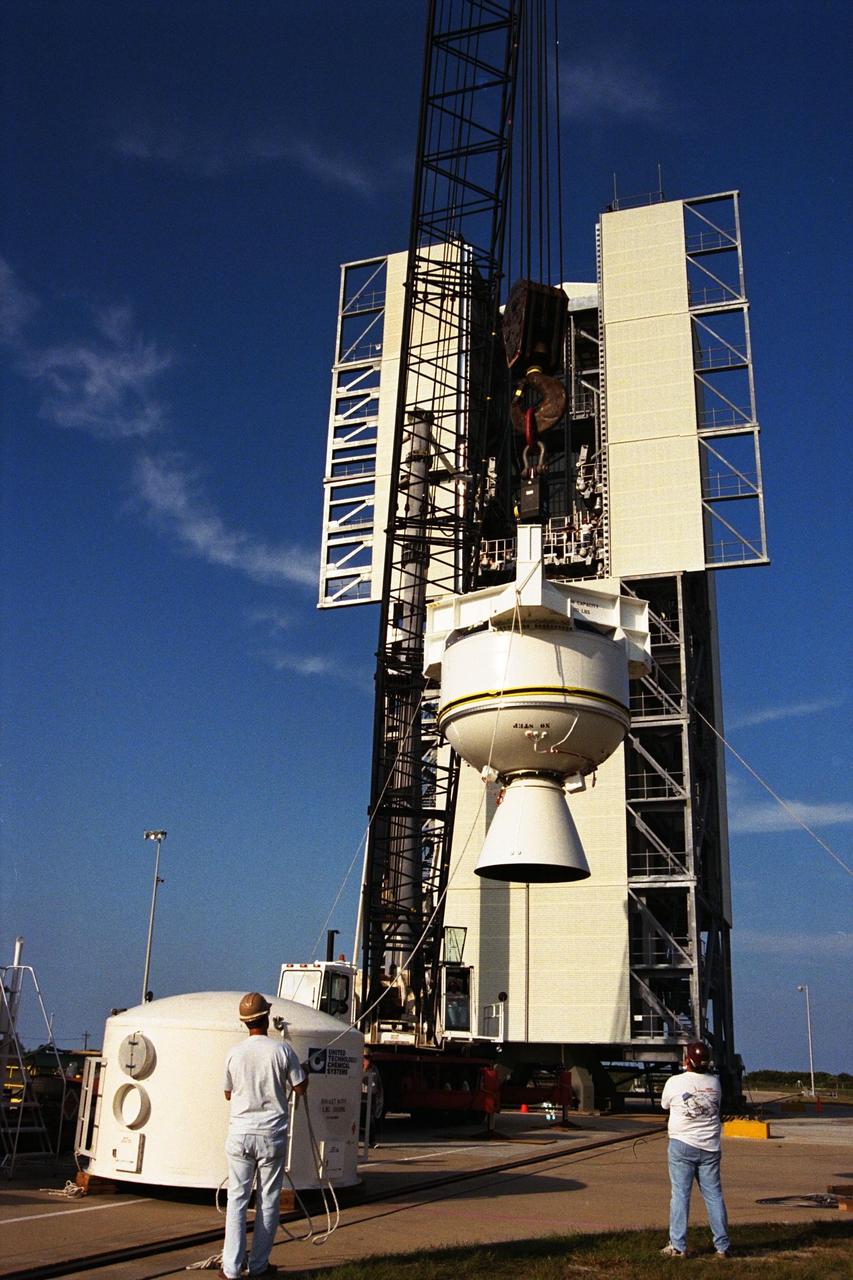
The third stage of the Lockheed Martin Athena launch vehicle is lifted at Launch Complex 46 at Cape Canaveral Air Station before mating to the second stage already on the pad. Athena is scheduled to carry the Lunar Prospector spacecraft for an 18-month mission that will orbit the Earth’s moon to collect data from the lunar surface. Scientific experiments to be conducted by the Prospector include locating water ice that may exist near the lunar poles, gathering data to understand the evolution of the lunar highland crust and the lunar magnetic field, finding radon outgassing events, and describing the lunar gravity field by means of Doppler tracking. The launch is now scheduled for early-January 1998
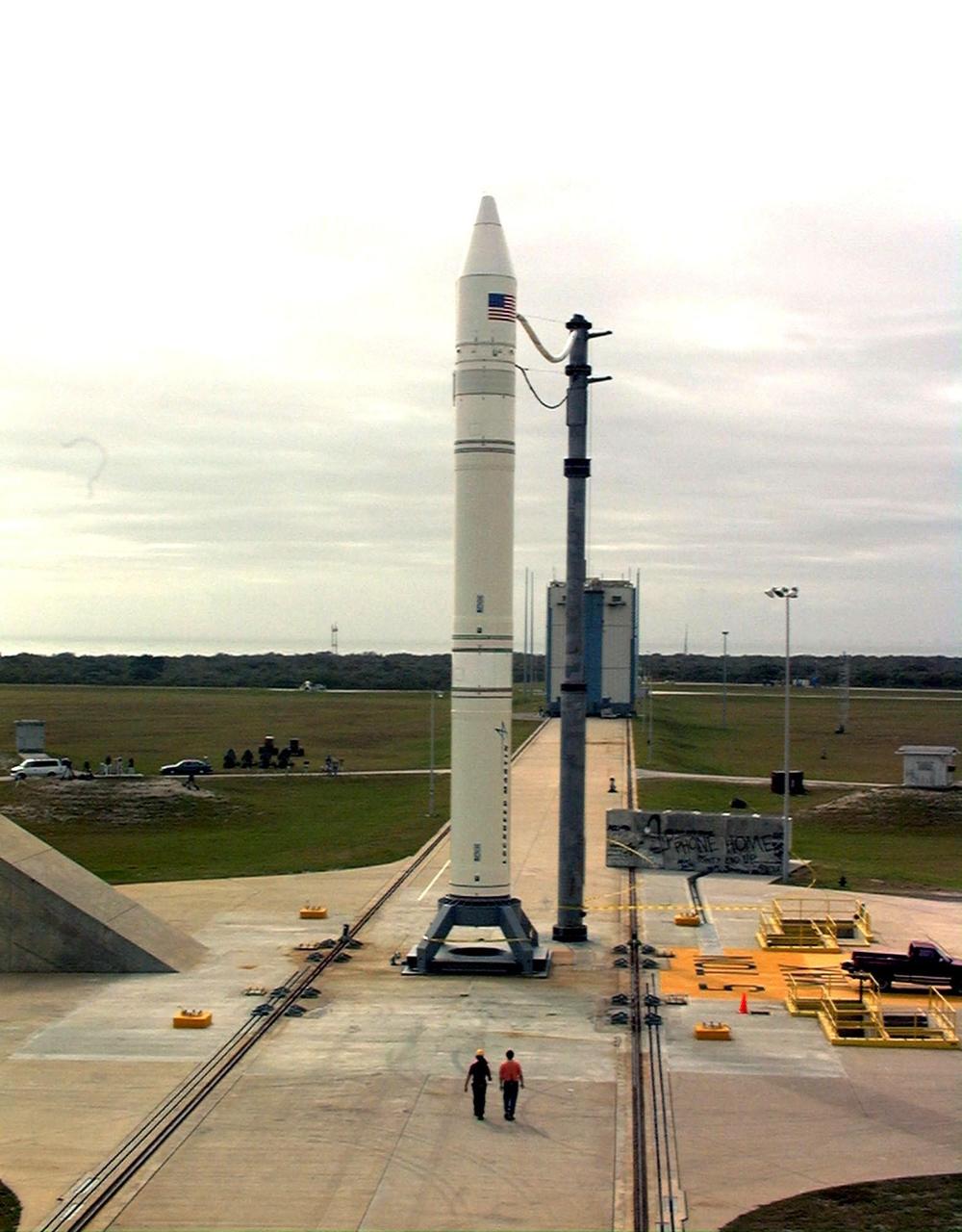
NASA’s Lunar Prospector is readied for launch as its gantry-like service tower is rolled back again at Cape Canaveral Air Station’s Launch Complex 46. The launch, previously scheduled for Jan. 5, was postponed one day due to a problem with a range safety radar located at Patrick Air Force Base, Fla. Lunar Prospector, built for the NASA Ames Research Center by Lockheed Martin, is a spin-stabilized spacecraft designed to provide NASA with the first global maps of the Moon’s surface and its gravitational magnetic fields, as well as look for the possible presence of ice near the lunar poles. It will orbit the Moon at an altitude of approximately 63 miles during a one-year mission. The launch of Lunar Prospector is now scheduled for Jan. 6, 1998 at 9:28 p.m. EST
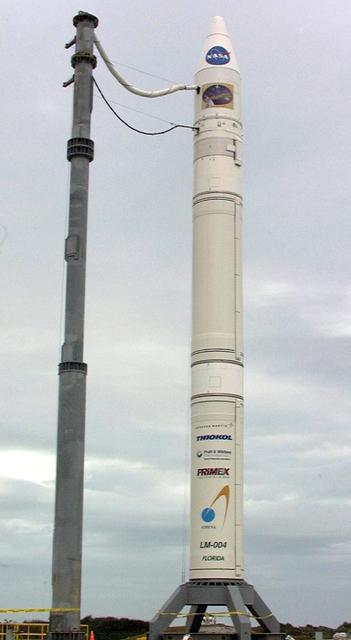
NASA’s Lunar Prospector is readied for launch as its gantry-like service tower is rolled back again at Cape Canaveral Air Station’s Launch Complex 46. The launch, previously scheduled for Jan. 5, was postponed one day due to a problem with a range safety radar located at Patrick Air Force Base, Fla. Lunar Prospector, built for the NASA Ames Research Center by Lockheed Martin, is a spin-stabilized spacecraft designed to provide NASA with the first global maps of the Moon’s surface and its gravitational magnetic fields, as well as look for the possible presence of ice near the lunar poles. It will orbit the Moon at an altitude of approximately 63 miles during a one-year mission. The launch of Lunar Prospector is now scheduled for Jan. 6, 1998 at 9:28 p.m. EST
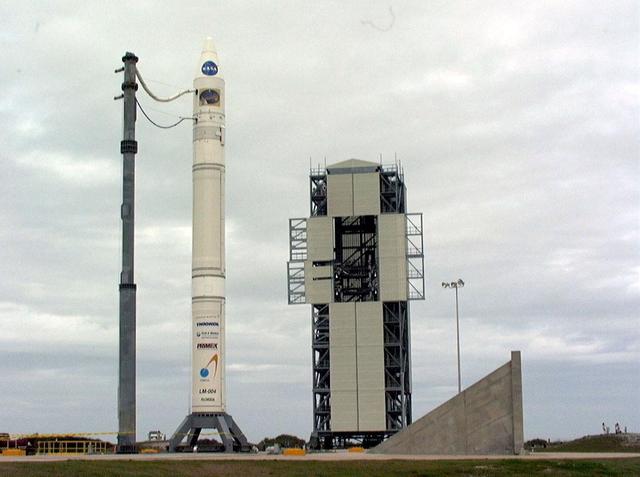
NASA’s Lunar Prospector is readied for launch as its gantry-like service tower is rolled back again at Cape Canaveral Air Station’s Launch Complex 46. The launch, previously scheduled for Jan. 5, was postponed one day due to a problem with a range safety radar located at Patrick Air Force Base, Fla. Lunar Prospector, built for the NASA Ames Research Center by Lockheed Martin, is a spin-stabilized spacecraft designed to provide NASA with the first global maps of the Moon’s surface and its gravitational magnetic fields, as well as look for the possible presence of ice near the lunar poles. It will orbit the Moon at an altitude of approximately 63 miles during a one-year mission. The launch of Lunar Prospector is now scheduled for Jan. 6, 1998 at 9:28 p.m. EST
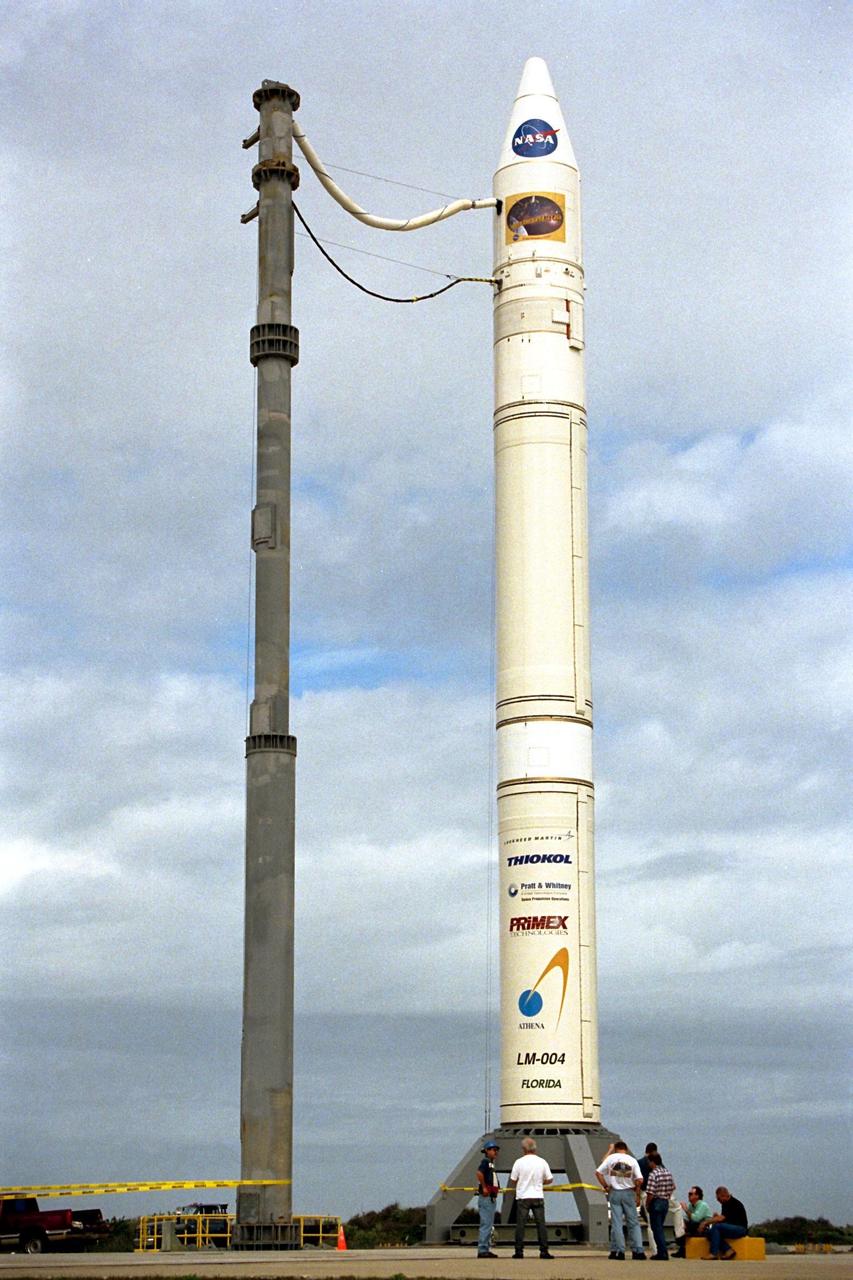
NASA’s Lunar Prospector is readied for launch as its gantry-like service tower is rolled back again at Cape Canaveral Air Station’s Launch Complex 46. The launch, previously scheduled for Jan. 5, was postponed one day due to a problem with a range safety radar located at Patrick Air Force Base, Fla. Lunar Prospector, built for the NASA Ames Research Center by Lockheed Martin, is a spin-stabilized spacecraft designed to provide NASA with the first global maps of the Moon’s surface and its gravitational magnetic fields, as well as look for the possible presence of ice near the lunar poles. It will orbit the Moon at an altitude of approximately 63 miles during a one-year mission. The launch of Lunar Prospector is now scheduled for Jan. 6, 1998 at 9:28 p.m. EST
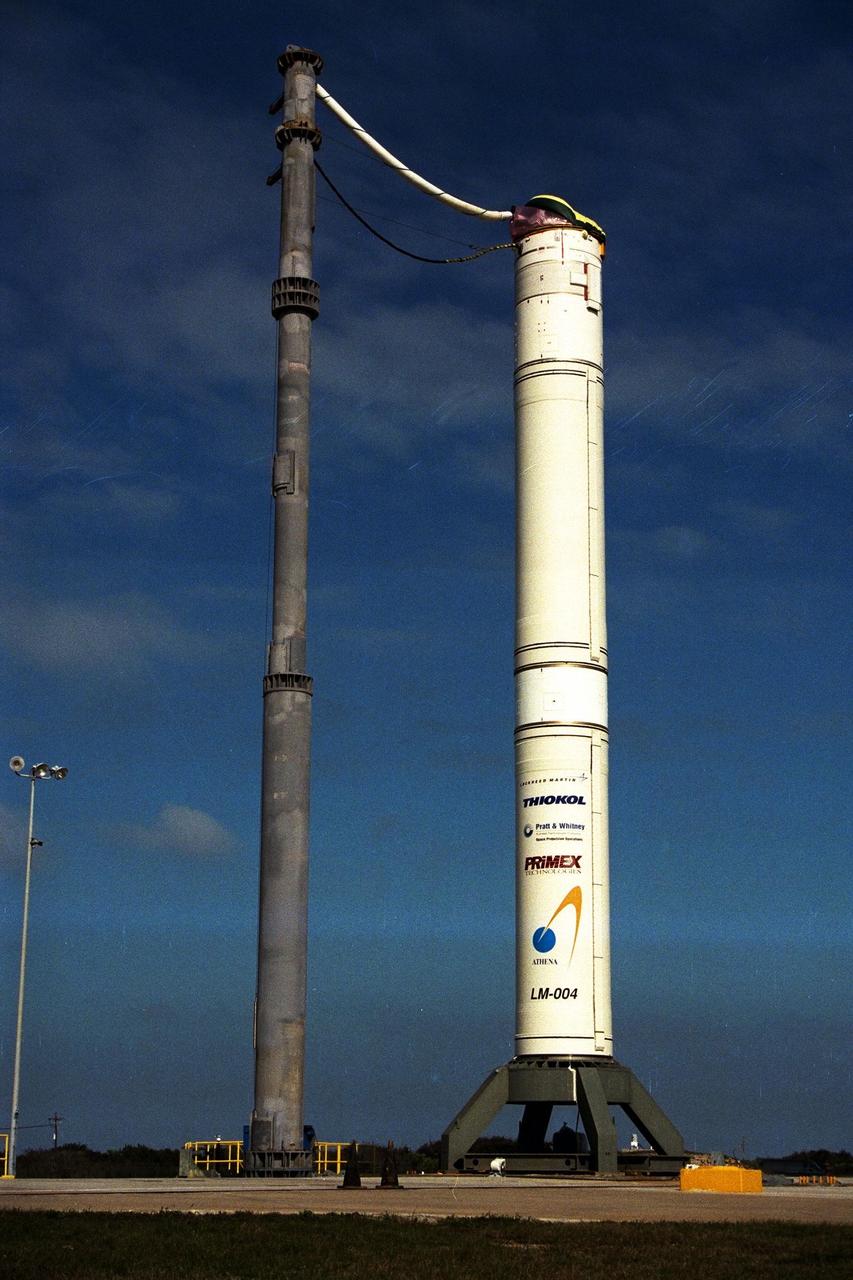
The access tower around the Athena II rocket for the Lunar Prospector spacecraft, to be launched for NASA by Lockheed Martin, was rolled back today at Launch Complex 46 at Cape Canaveral Air Station for final prelaunch preparations. The small robotic spacecraft is designed to provide the first global maps of the Moon's surface compositional elements and its gravitational and magnetic fields. The launch of Lunar Prospector is currently scheduled for Jan. 5, 1998 at 8:31 p.m
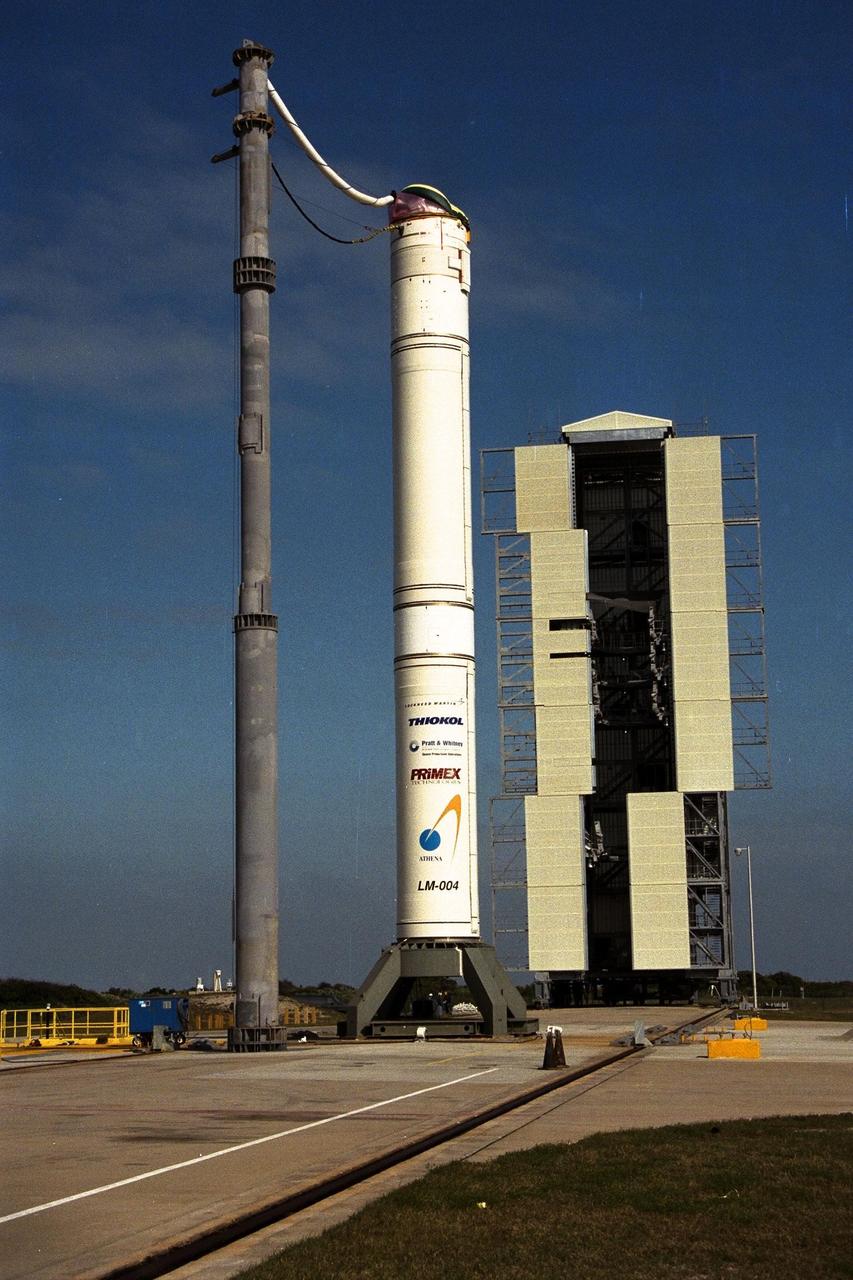
The access tower around the Athena II rocket for the Lunar Prospector spacecraft, to be launched for NASA by Lockheed Martin, was rolled back today at Launch Complex 46 at Cape Canaveral Air Station for final prelaunch preparations. The small robotic spacecraft is designed to provide the first global maps of the Moon's surface compositional elements and its gravitational and magnetic fields. The launch of Lunar Prospector is currently scheduled for Jan. 5, 1998 at 8:31 p.m
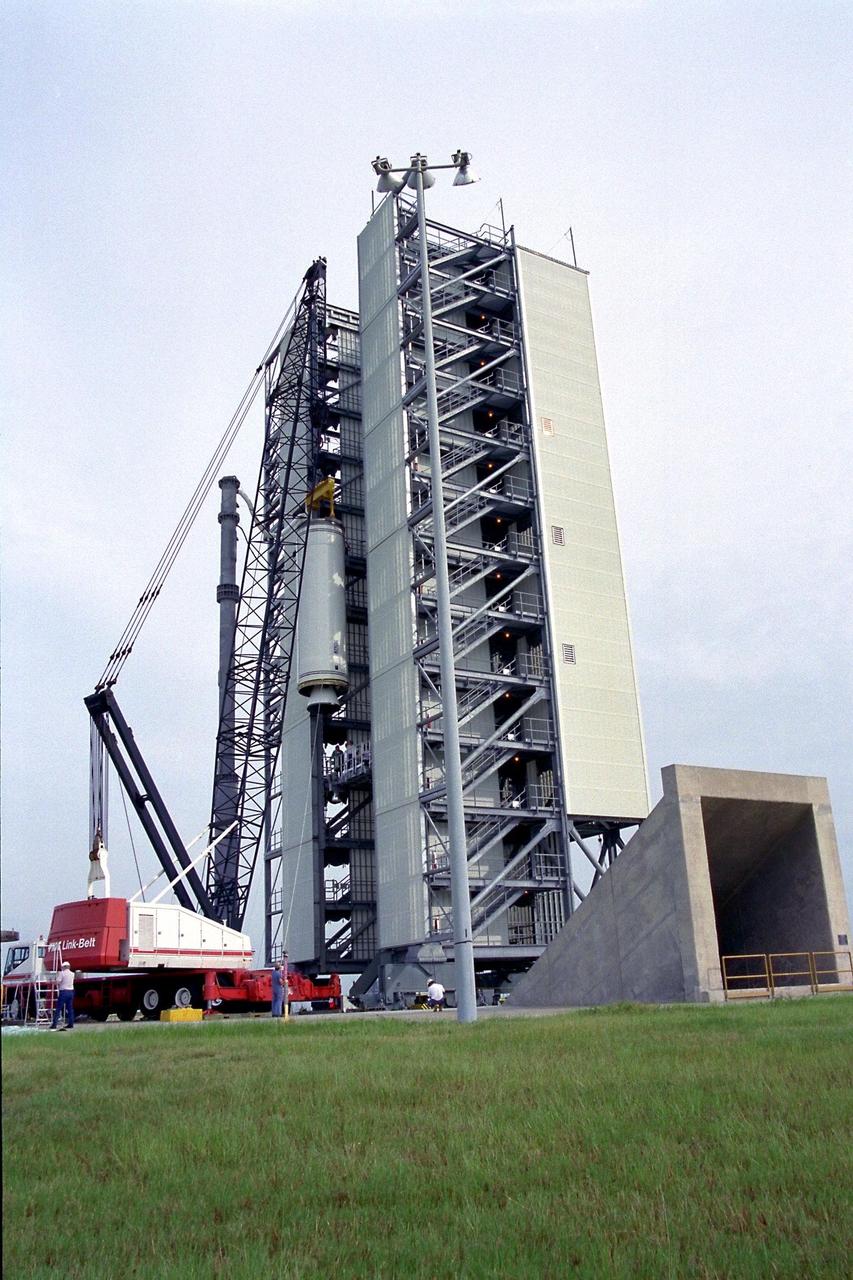
The second stage of the Lockheed Martin Launch Vehicle-2 (LMLV-2) is hoisted into position at Launch Pad 46 at Cape Canaveral Air Station for mating to the rocket’s first stage, which is out of camera view. The LMLV-2 will carry the Lunar Prospector spacecraft, scheduled to launch in October for an 18-month mission that will orbit the Earth’s moon to collect data from the lunar surface. Designed for a low polar orbit investigation of the moon, the Lunar Prospector will map the moon’s surface composition and possible polar ice deposits, measure magnetic and gravity fields, and study lunar outgassing events
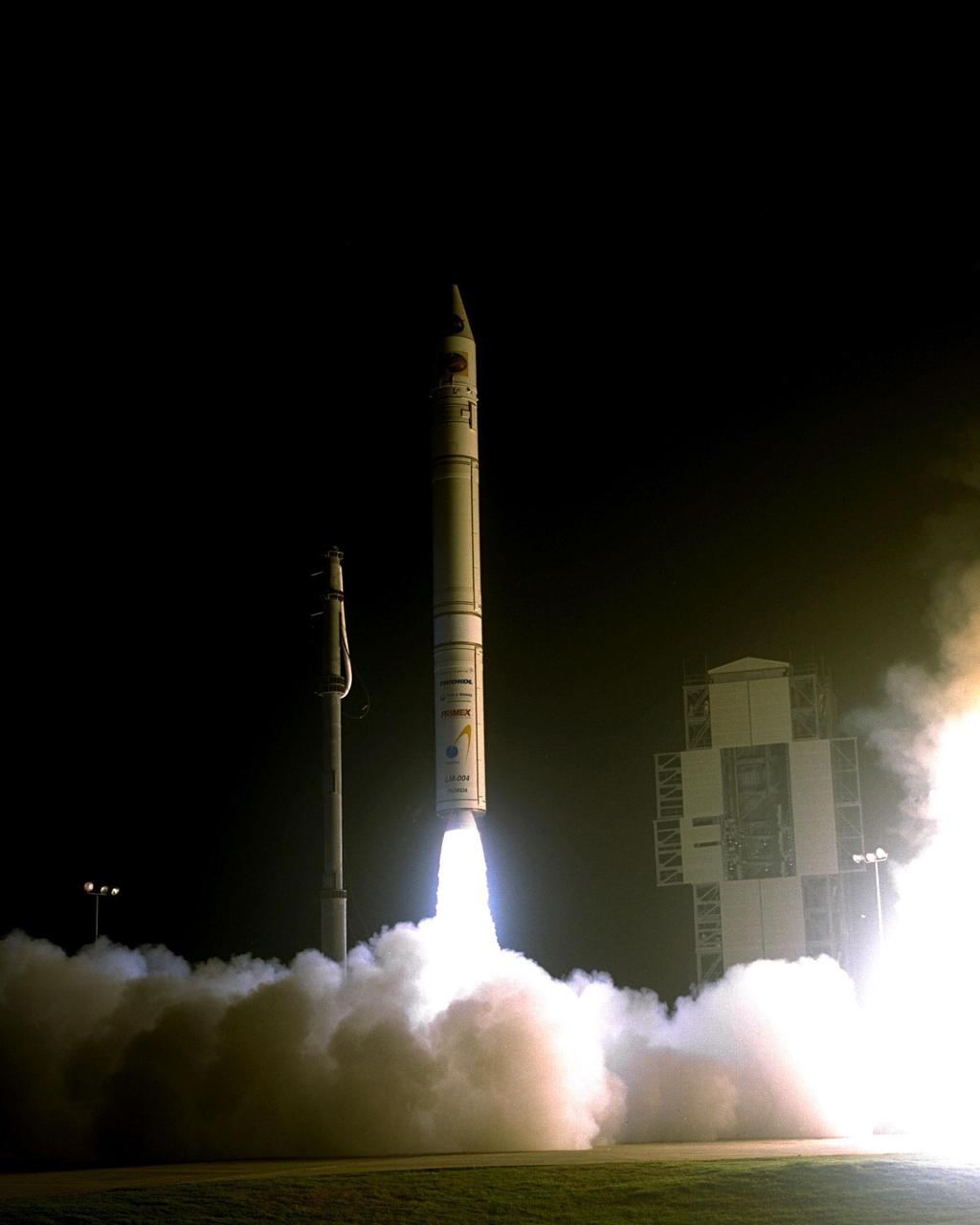
NASA’s Lunar Prospector spacecraft launched successfully on its way to the moon from Launch Complex 46 (LC46) at Cape Canaveral Air Station on Jan. 6 at 9:28 p.m. EST. It was the inaugural launch of Lockheed Martin's Athena II launch vehicle and the first launch from LC46, operated by Spaceport Florida Authority. Lunar Prospector, built for the NASA Ames Research Center by Lockheed Martin, is a spin-stabilized spacecraft designed to provide NASA with the first global maps of the moon’s surface and its gravitational magnetic fields, as well as look for the possible presence of ice near the lunar poles. It will orbit the Moon at an altitude of approximately 63 miles during a one-year mission
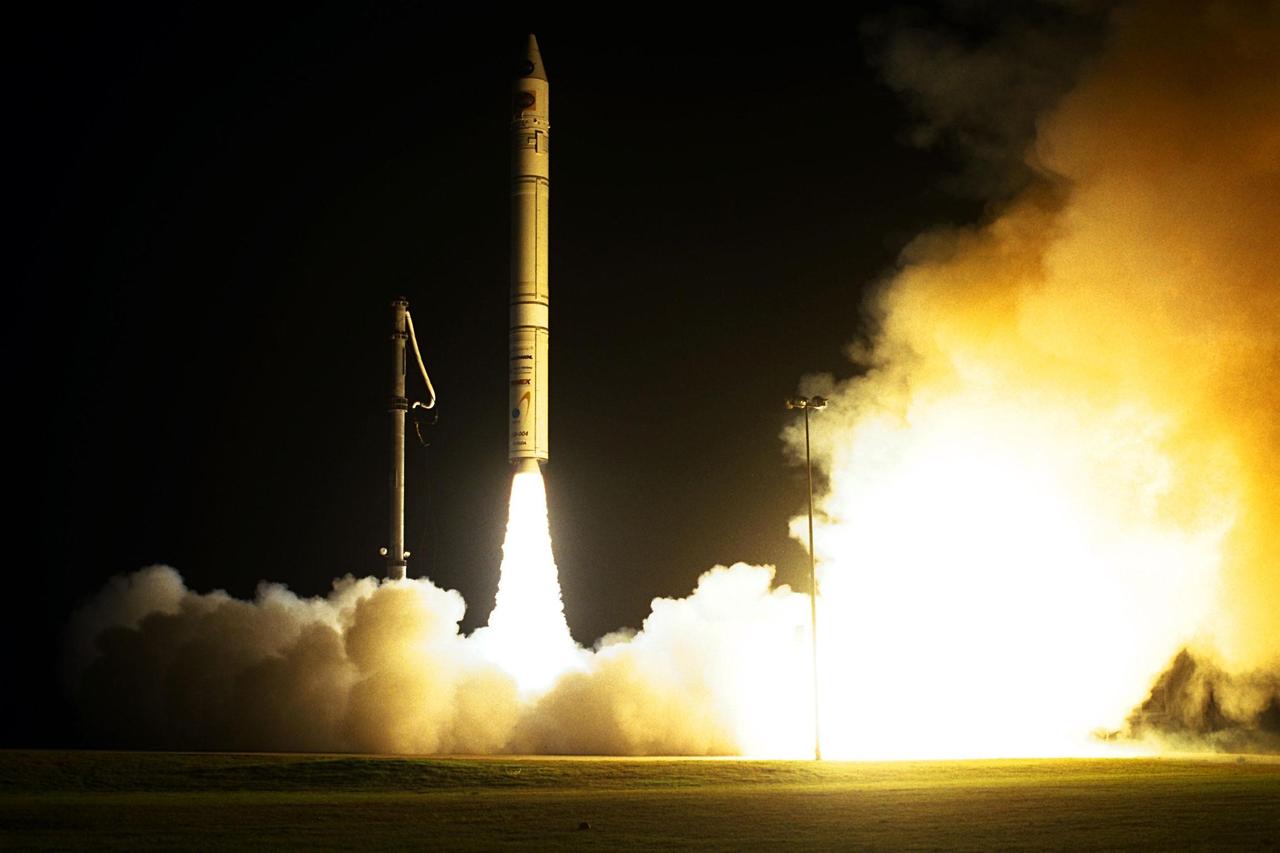
NASA’s Lunar Prospector spacecraft launched successfully on its way to the moon from Launch Complex 46 (LC46) at Cape Canaveral Air Station on Jan. 6 at 9:28 p.m. EST. It was the inaugural launch of Lockheed Martin's Athena II launch vehicle and the first launch from LC46, operated by Spaceport Florida Authority. Lunar Prospector, built for the NASA Ames Research Center by Lockheed Martin, is a spin-stabilized spacecraft designed to provide NASA with the first global maps of the moon’s surface and its gravitational magnetic fields, as well as look for the possible presence of ice near the lunar poles. It will orbit the Moon at an altitude of approximately 63 miles during a one-year mission
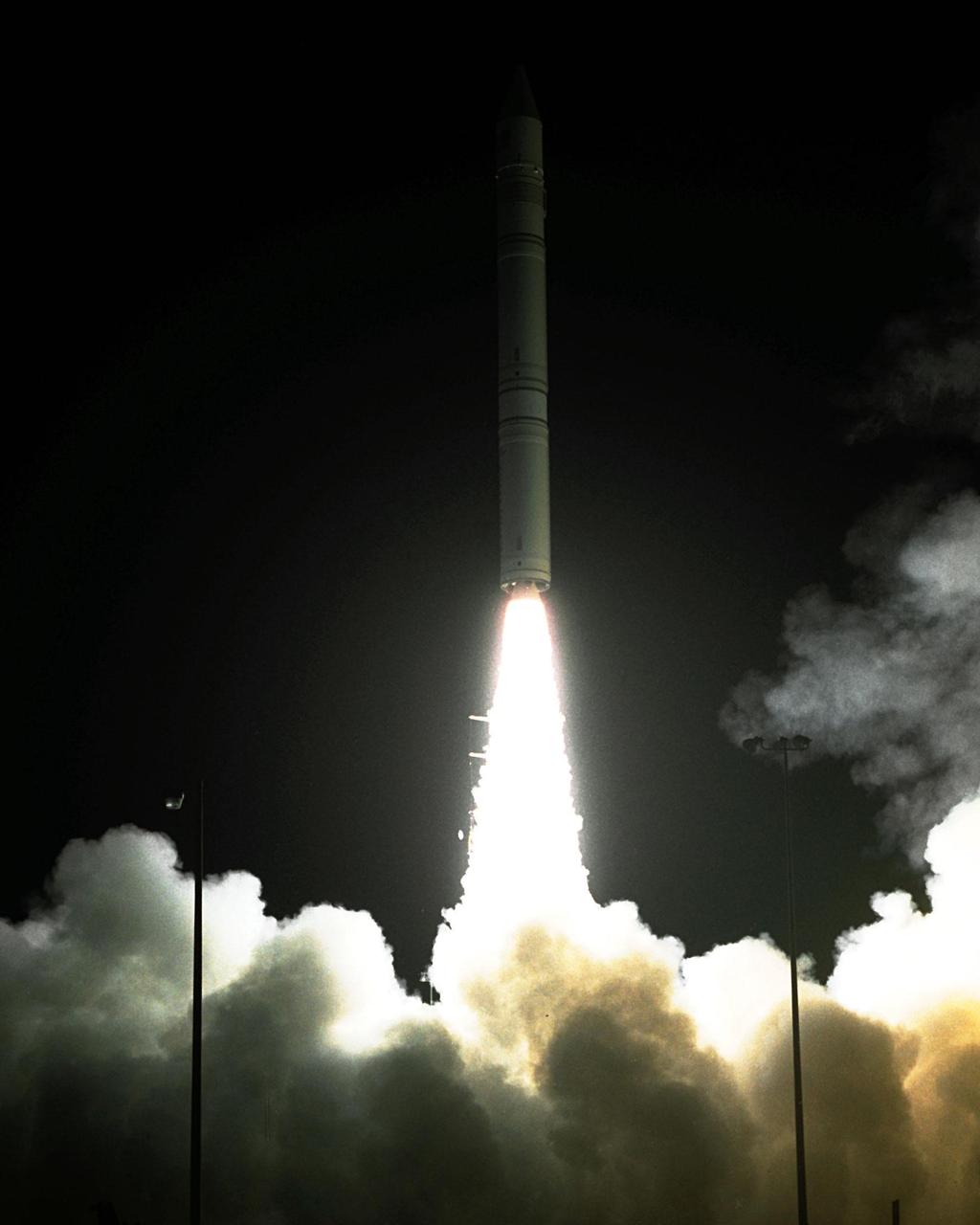
NASA’s Lunar Prospector spacecraft launched successfully on its way to the moon from Launch Complex 46 (LC46) at Cape Canaveral Air Station on Jan. 6 at 9:28 p.m. EST. It was the inaugural launch of Lockheed Martin's Athena II launch vehicle and the first launch from LC46, operated by Spaceport Florida Authority. Lunar Prospector, built for the NASA Ames Research Center by Lockheed Martin, is a spin-stabilized spacecraft designed to provide NASA with the first global maps of the moon’s surface and its gravitational magnetic fields, as well as look for the possible presence of ice near the lunar poles. It will orbit the Moon at an altitude of approximately 63 miles during a one-year mission
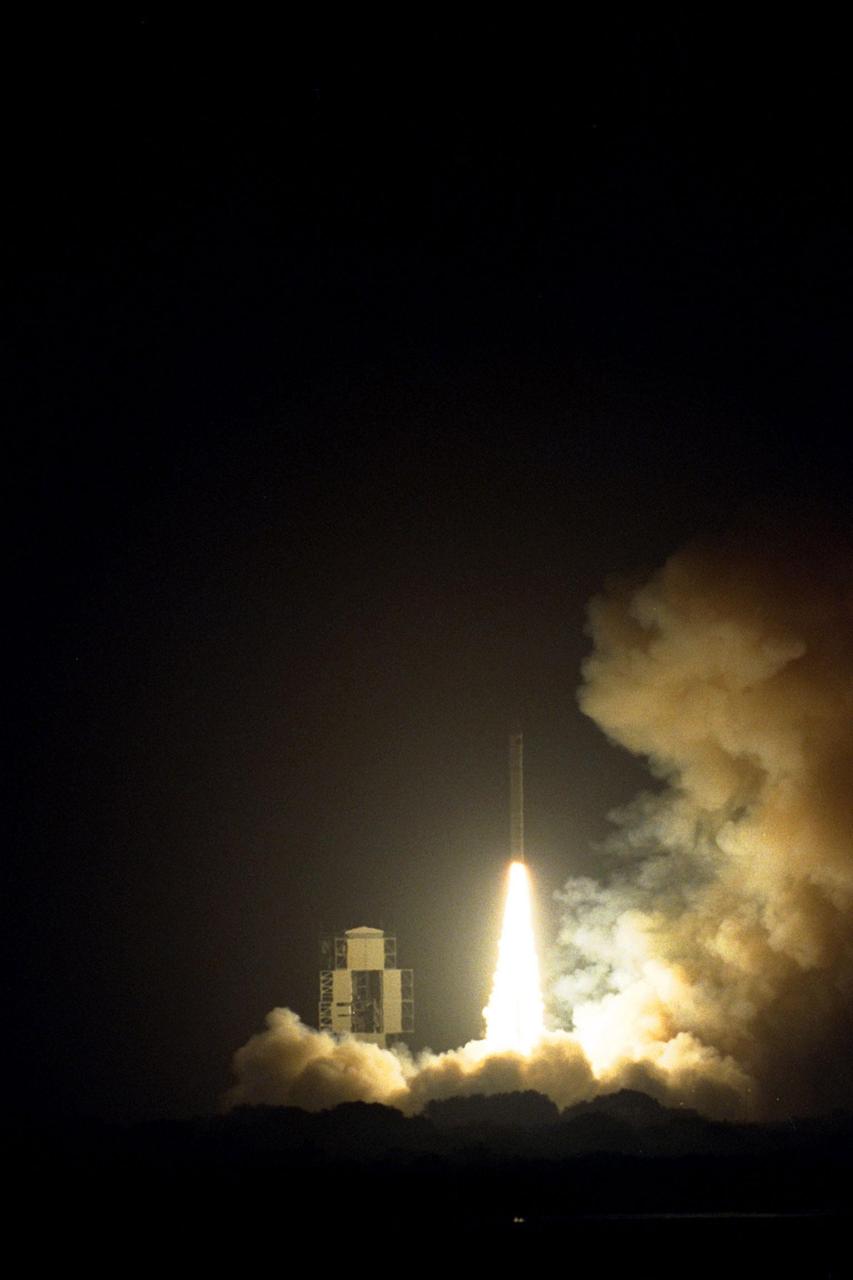
NASA’s Lunar Prospector spacecraft launched successfully on its way to the moon from Launch Complex 46 (LC46) at Cape Canaveral Air Station on Jan. 6 at 9:28 p.m. EST. It was the inaugural launch of Lockheed Martin's Athena II launch vehicle and the first launch from LC46, operated by Spaceport Florida Authority. Lunar Prospector, built for the NASA Ames Research Center by Lockheed Martin, is a spin-stabilized spacecraft designed to provide NASA with the first global maps of the moon’s surface and its gravitational magnetic fields, as well as look for the possible presence of ice near the lunar poles. It will orbit the Moon at an altitude of approximately 63 miles during a one-year mission
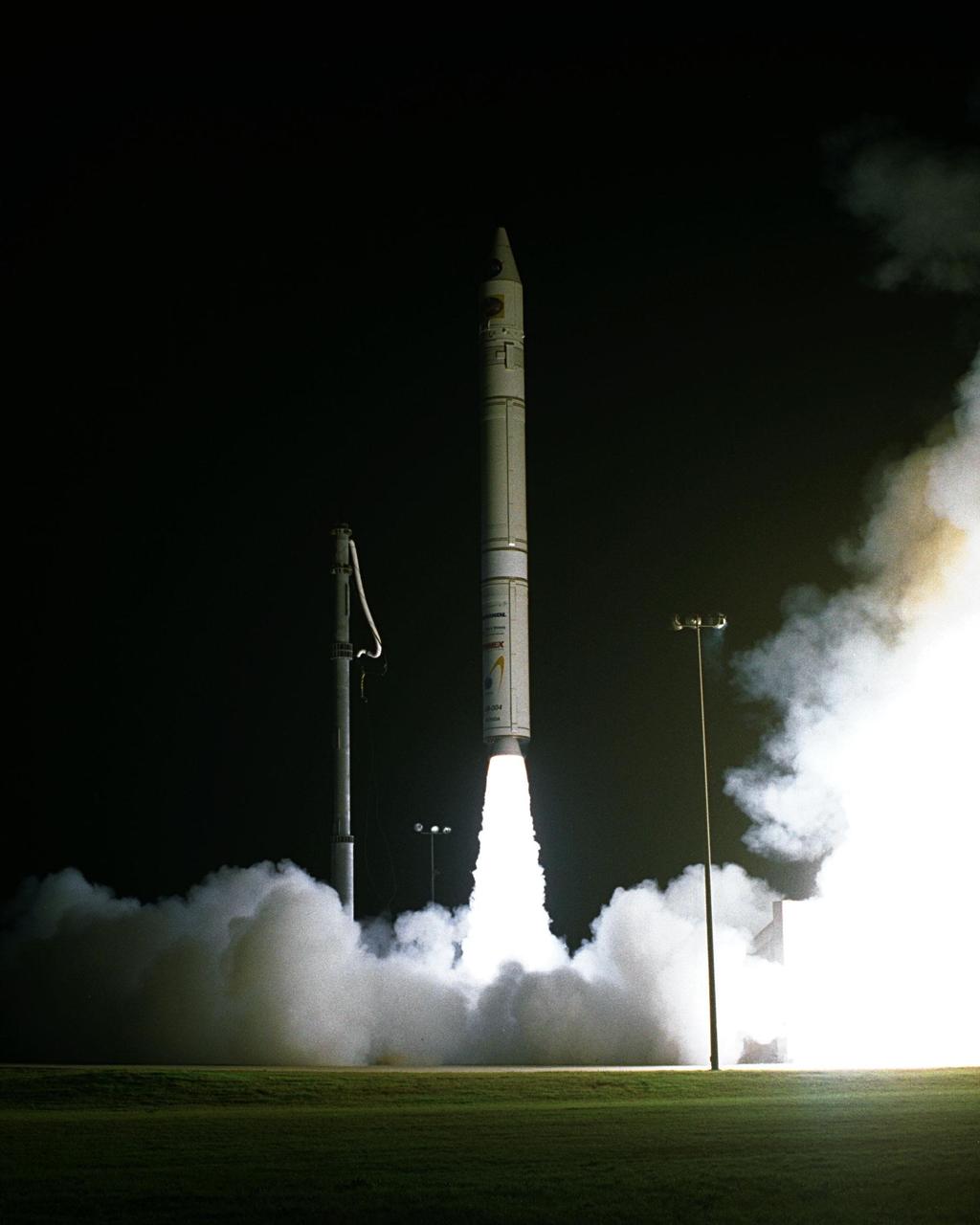
NASA’s Lunar Prospector spacecraft launched successfully on its way to the moon from Launch Complex 46 (LC46) at Cape Canaveral Air Station on Jan. 6 at 9:28 p.m. EST. It was the inaugural launch of Lockheed Martin's Athena II launch vehicle and the first launch from LC46, operated by Spaceport Florida Authority. Lunar Prospector, built for the NASA Ames Research Center by Lockheed Martin, is a spin-stabilized spacecraft designed to provide NASA with the first global maps of the moon’s surface and its gravitational magnetic fields, as well as look for the possible presence of ice near the lunar poles. It will orbit the Moon at an altitude of approximately 63 miles during a one-year mission

The third stage of the Lockheed Martin Athena launch vehicle arrives at Launch Complex 46 at Cape Canaveral Air Station before it is mated to the second stage. The protective covering for safe transportation is removed before the third stage is lifted on the launch pad. Athena is scheduled to carry the Lunar Prospector spacecraft for an 18-month mission that will orbit the Earth’s moon to collect data from the lunar surface. Scientific experiments to be conducted by the Prospector include locating water ice that may exist near the lunar poles, gathering data to understand the evolution of the lunar highland crust and the lunar magnetic field, finding radon outgassing events, and describing the lunar gravity field by means of Doppler tracking. The launch is now scheduled for early-January 1998
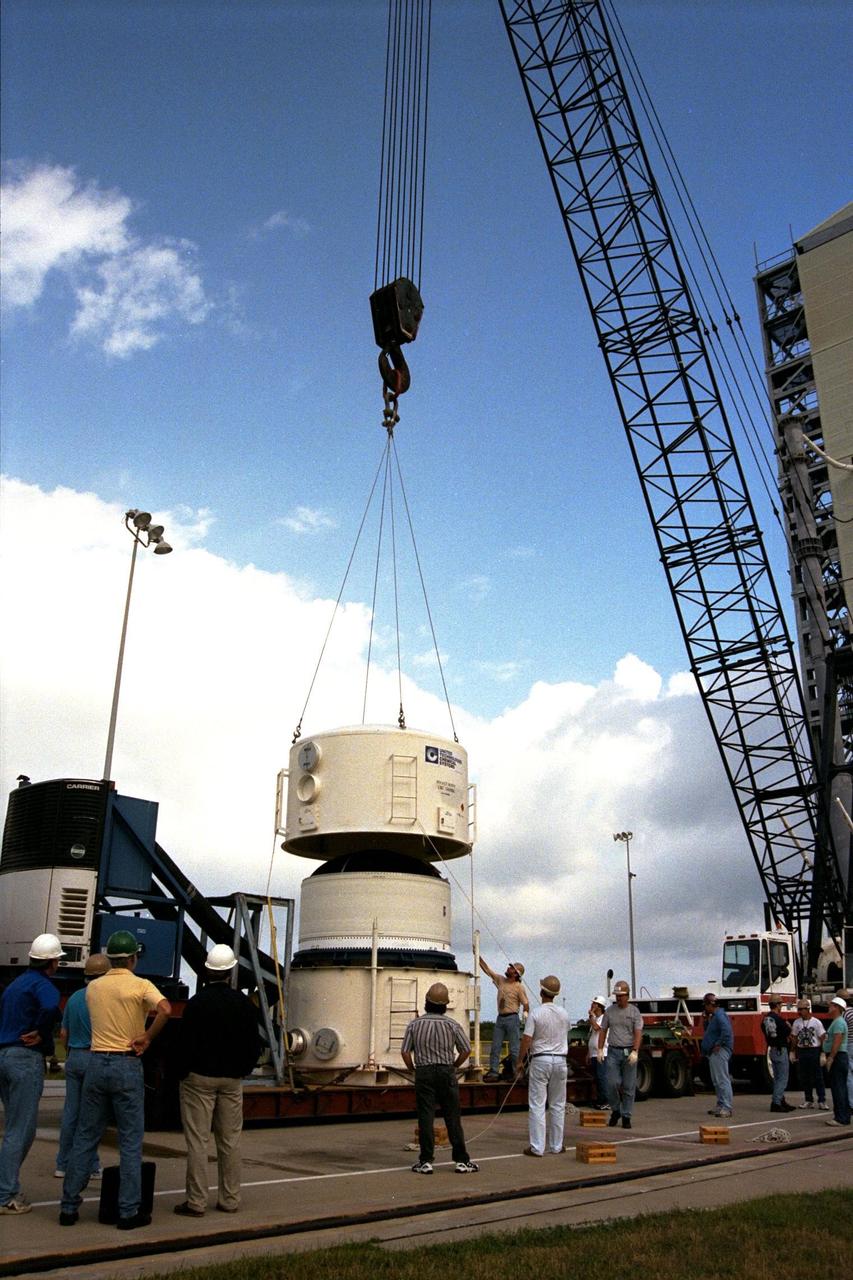
The third stage of the Lockheed Martin Athena launch vehicle arrives at Launch Complex 46 at Cape Canaveral Air Station before it is mated to the second stage. The protective covering for safe transportation is removed before the third stage is lifted on the launch pad. Athena is scheduled to carry the Lunar Prospector spacecraft for an 18-month mission that will orbit the Earth’s moon to collect data from the lunar surface. Scientific experiments to be conducted by the Prospector include locating water ice that may exist near the lunar poles, gathering data to understand the evolution of the lunar highland crust and the lunar magnetic field, finding radon outgassing events, and describing the lunar gravity field by means of Doppler tracking. The launch is now scheduled for early-January 1998
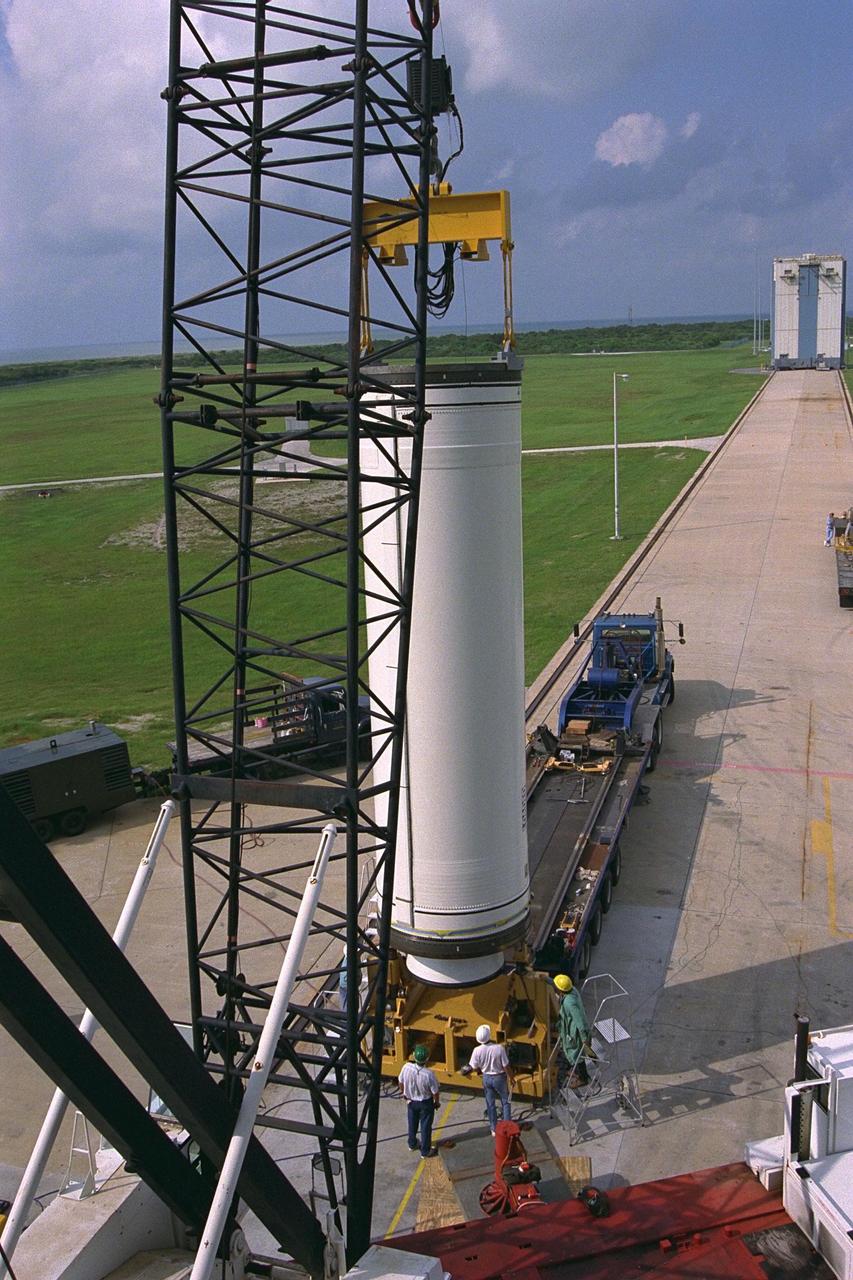
Workers hoist the first stage of a Lockheed Martin Launch Vehicle-2 (LMLV-2) for placement at Launch Complex 46 at Cape Canaveral Air Station (CCAS), Fla. The Lunar Prospector spacecraft is scheduled to launch aboard the LMLV-2 from CCAS in October for an 18-month mission that will orbit the Earth’s Moon to collect data from the lunar surface. Information gathered during the mission will allow construction of a detailed map of the surface composition of the Moon and will improve our understanding of its origin, evolution, current state, and resources
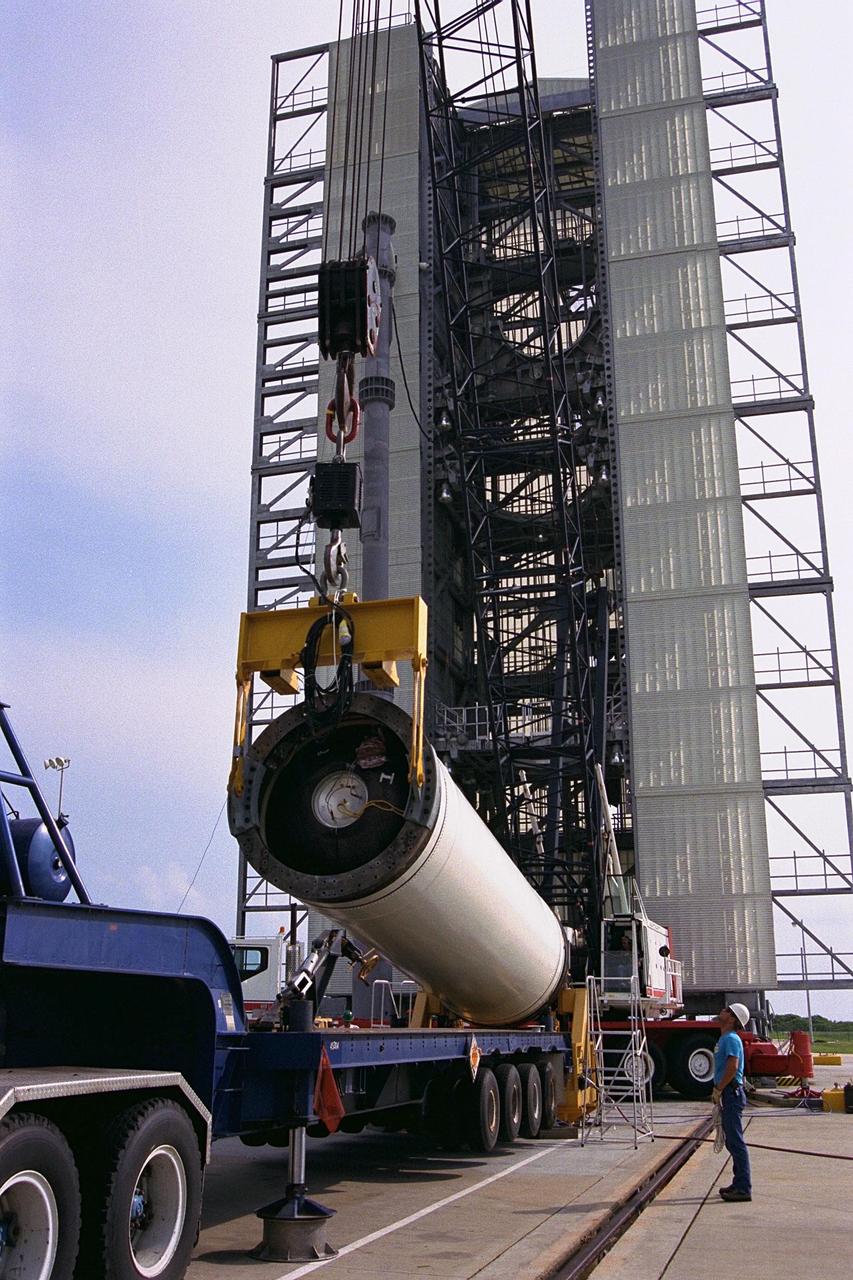
Workers hoist the first stage of a Lockheed Martin Launch Vehicle-2 (LMLV-2) for placement at Launch Complex 46 at Cape Canaveral Air Station (CCAS), Fla. The Lunar Prospector spacecraft is scheduled to launch aboard the LMLV-2 from CCAS in October for an 18-month mission that will orbit the Earth’s Moon to collect data from the lunar surface. Information gathered during the mission will allow construction of a detailed map of the surface composition of the Moon and will improve our understanding of its origin, evolution, current state, and resources
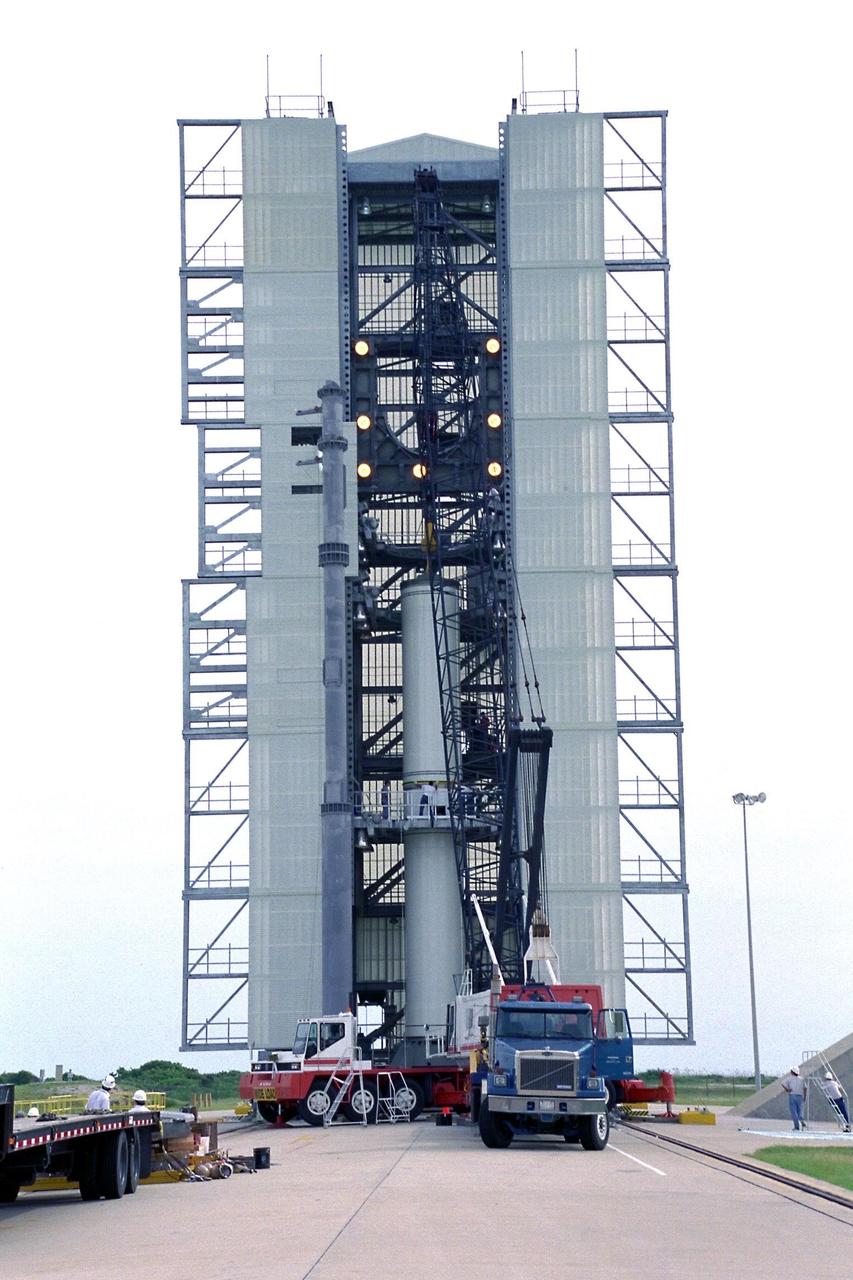
The second stage of the Lockheed Martin Launch Vehicle-2 (LMLV-2) is mated to its first stage at Launch Complex 46 at Cape Canaveral Air Station. The LMLV-2 will carry the Lunar Prospector spacecraft, scheduled to launch in October for an 18-month mission that will orbit the Earth’s moon to collect data from the lunar surface. Information gathered during the mission will allow construction of a detailed map of the surface composition of the moon and will improve our understanding of its origin, evolution, current state, and resources
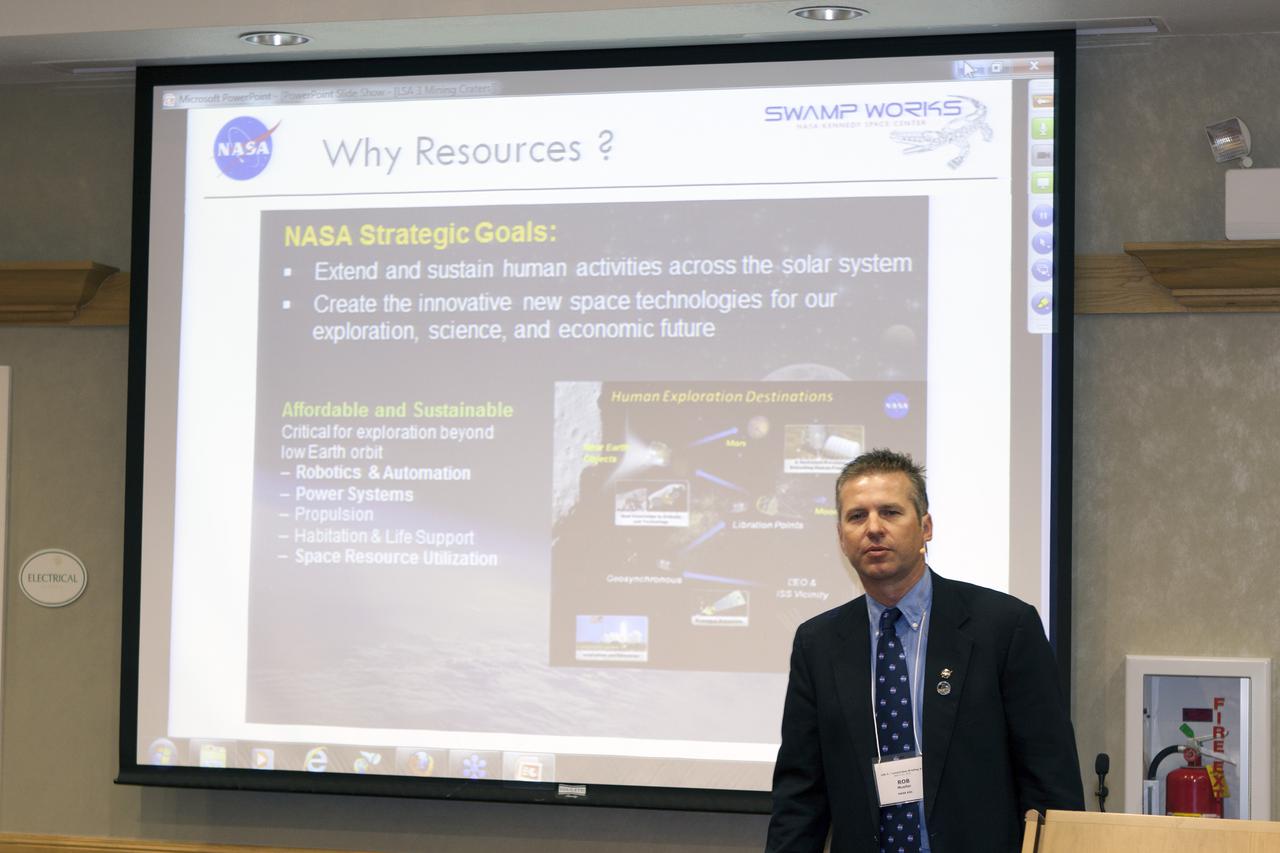
CAPE CANAVERAL, Fla. – At the Courtyard by Marriott hotel in Cocoa Beach, Fla., Rob Mueller, senior technologist in the Surface Systems Office of the Engineering and Technology Directorate at Kennedy Space Center, talks to participants in the room and those participating online during the Third International Workshop on Lunar Superconductor Applications. The workshop included presentations from several engineers and researchers at Kennedy Space Center. The three-day workshop included presentations from speakers throughout the country and focused on Lunar in-situ resource utilization, NASA’s Lunar Ice Prospector called RESOLVE, CubeSats, cryogenic storage and many other topics related to lunar exploration. Photo credit: NASA_Jim Grossmann

CAPE CANAVERAL, Fla. – At the Courtyard by Marriott hotel in Cocoa Beach, Fla., Russell Cox, director of research with Flexure Engineering, welcomes participants in the room and those participating online to the Third International Workshop on Lunar Superconductor Applications. The workshop included presentations from several engineers and researchers at Kennedy Space Center. The three-day workshop included presentations from speakers throughout the country and focused on Lunar in-situ resource utilization, NASA’s Lunar Ice Prospector called RESOLVE, CubeSats, cryogenic storage and many other topics related to lunar exploration. Photo credit: NASA_Jim Grossmann
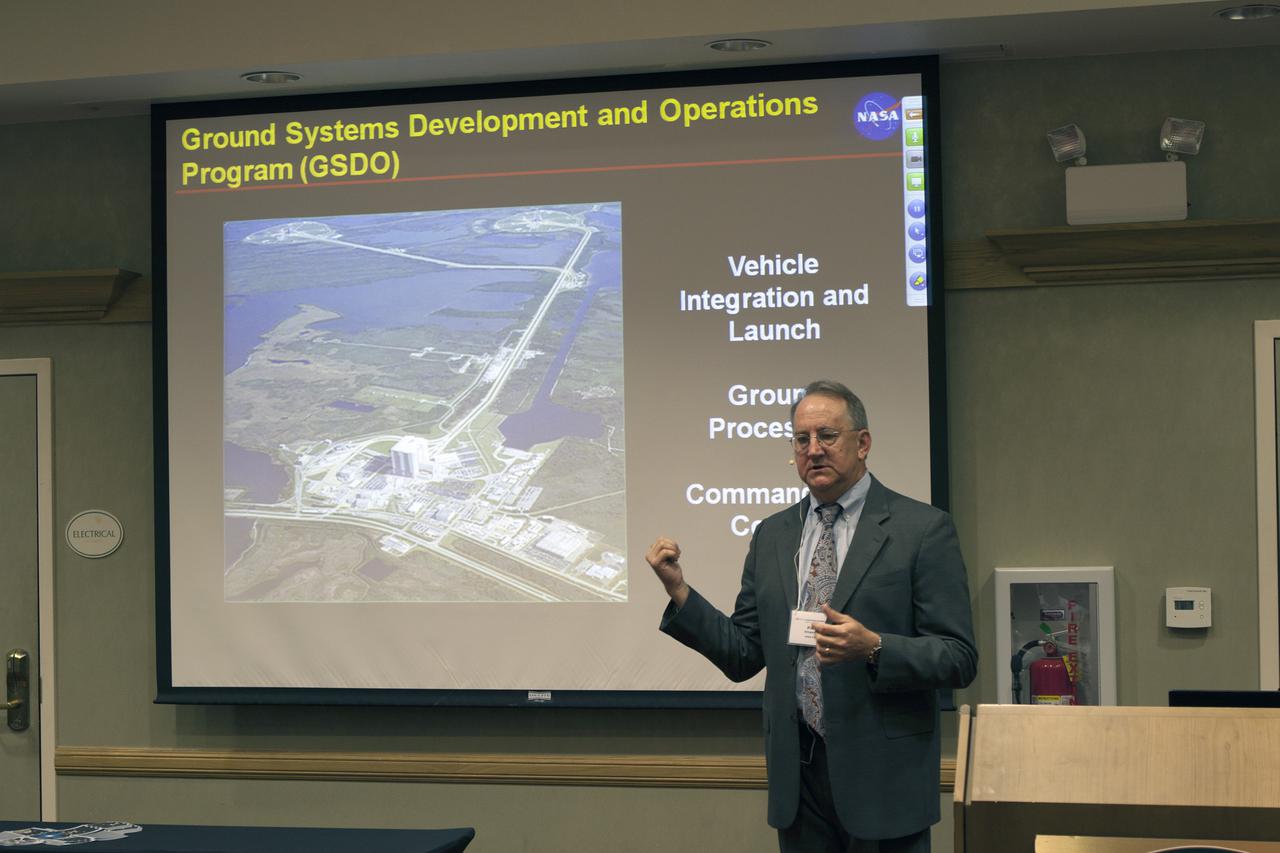
CAPE CANAVERAL, Fla. – At the Courtyard by Marriott hotel in Cocoa Beach, Fla., Pat Simpkins, director of Engineering and Technology at Kennedy Space Center talks to participants in the room and those participating online during the Third International Workshop on Lunar Superconductor Applications. The workshop included presentations from several engineers and researchers at Kennedy Space Center. The three-day workshop included presentations from speakers throughout the country and focused on Lunar in-situ resource utilization, NASA’s Lunar Ice Prospector called RESOLVE, CubeSats, cryogenic storage and many other topics related to lunar exploration. Photo credit: NASA_Jim Grossmann
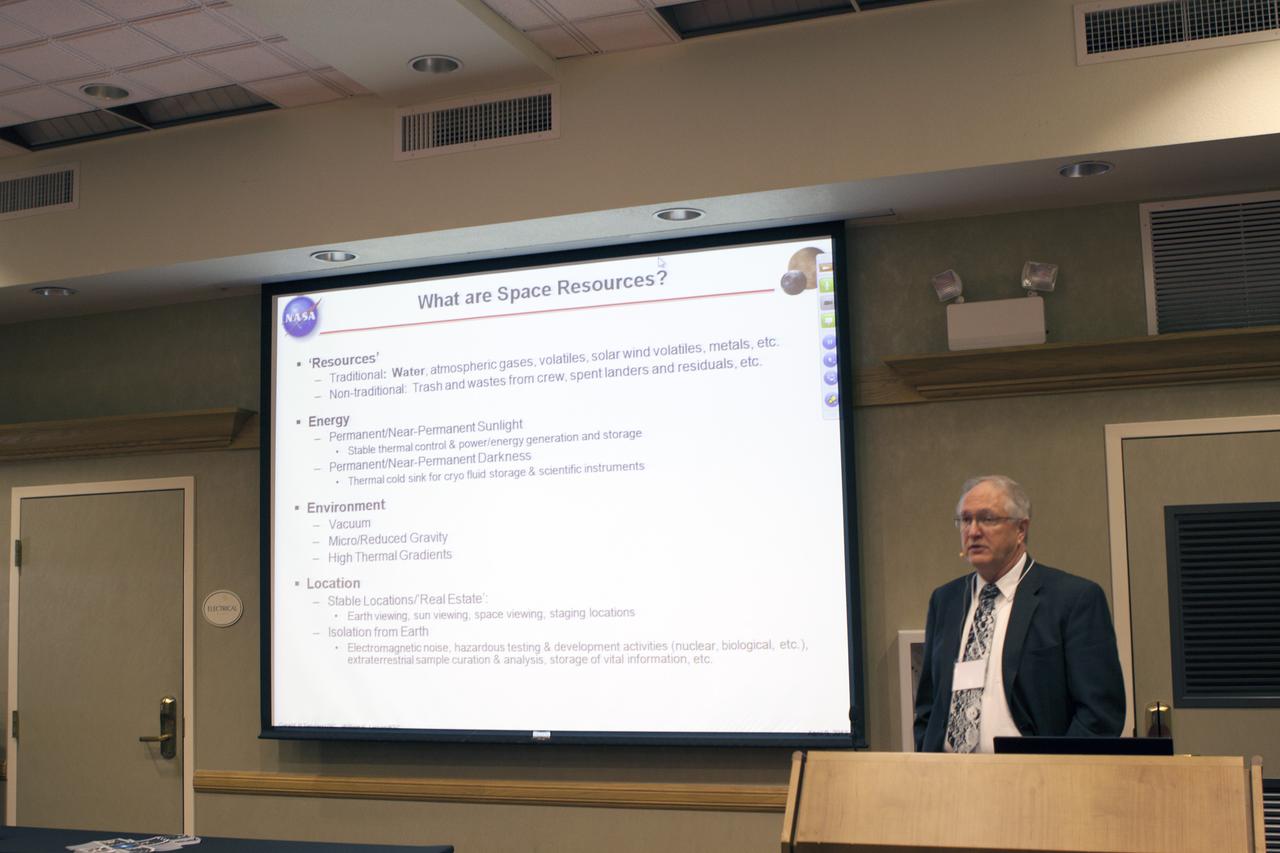
CAPE CANAVERAL, Fla. – At the Courtyard by Marriott hotel in Cocoa Beach, Fla., William Larson, retired NASA ISRU project manager, talks to participants in the room and those participating online during the Third International Workshop on Lunar Superconductor Applications. The workshop included presentations from several engineers and researchers at Kennedy Space Center. The three-day workshop included presentations from speakers throughout the country and focused on Lunar in-situ resource utilization, NASA’s Lunar Ice Prospector called RESOLVE, CubeSats, cryogenic storage and many other topics related to lunar exploration. Photo credit: NASA_Jim Grossmann

CAPE CANAVERAL, Fla. – At the Courtyard by Marriott hotel in Cocoa Beach, Fla., Bonnie Dubrow, business development manager with Flexure Engineering, welcomes participants in the room and those participating online to the Third International Workshop on Lunar Superconductor Applications. The workshop included presentations from several engineers and researchers at Kennedy Space Center. The three-day workshop included presentations from speakers throughout the country and focused on Lunar in-situ resource utilization, NASA’s Lunar Ice Prospector called RESOLVE, CubeSats, cryogenic storage and many other topics related to lunar exploration. Photo credit: NASA_Jim Grossmann