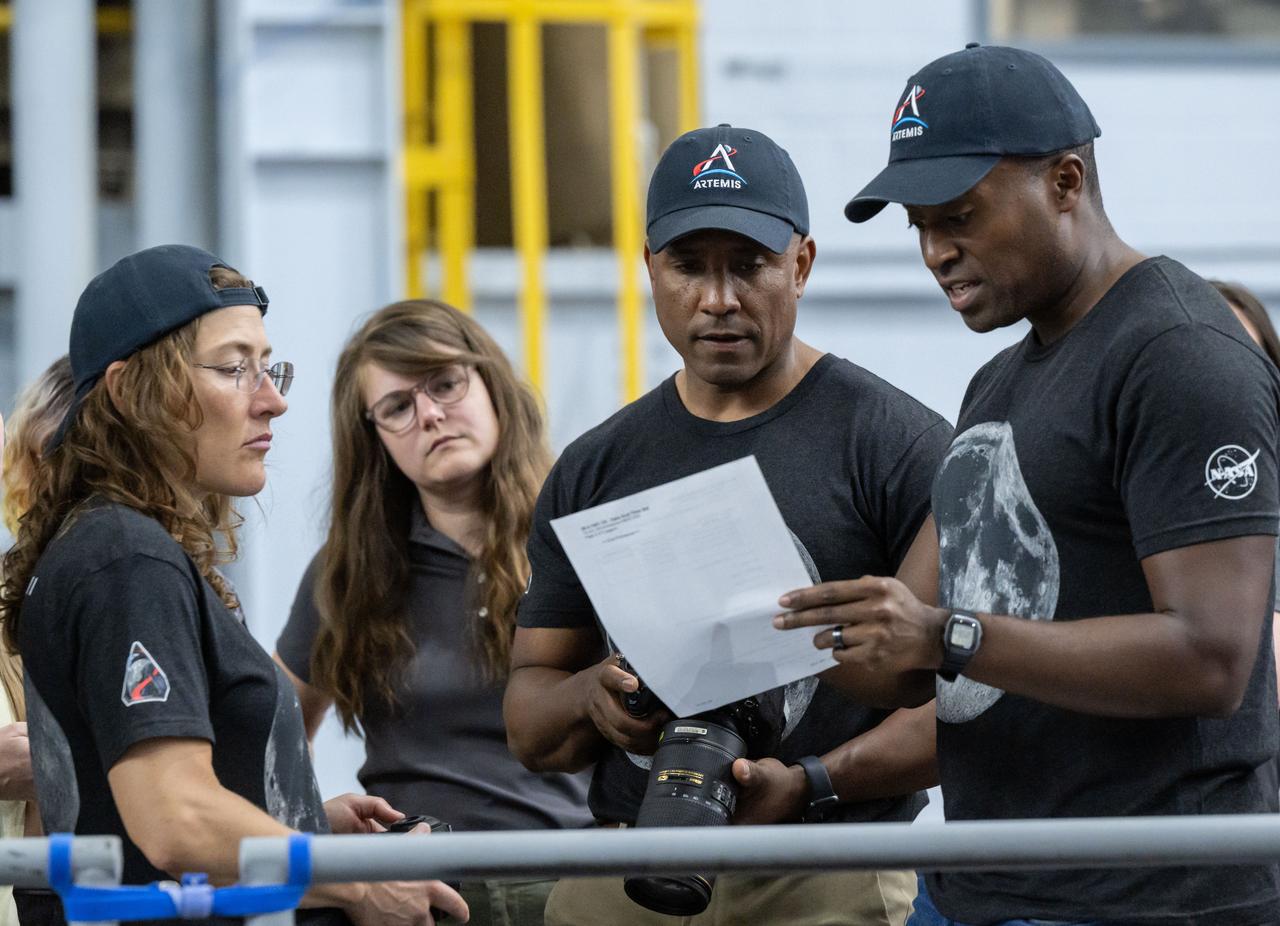
jsc2025e064747 --- Artemis II mission specialist Christina Koch, left, Artemis II lunar science team member Marie Henderson, Artemis II pilot Victor Glover, and Artemis II backup crew member Andre Douglas practice camera setup during crew lunar observations training at NASA's Johnson Space Center in Houston.
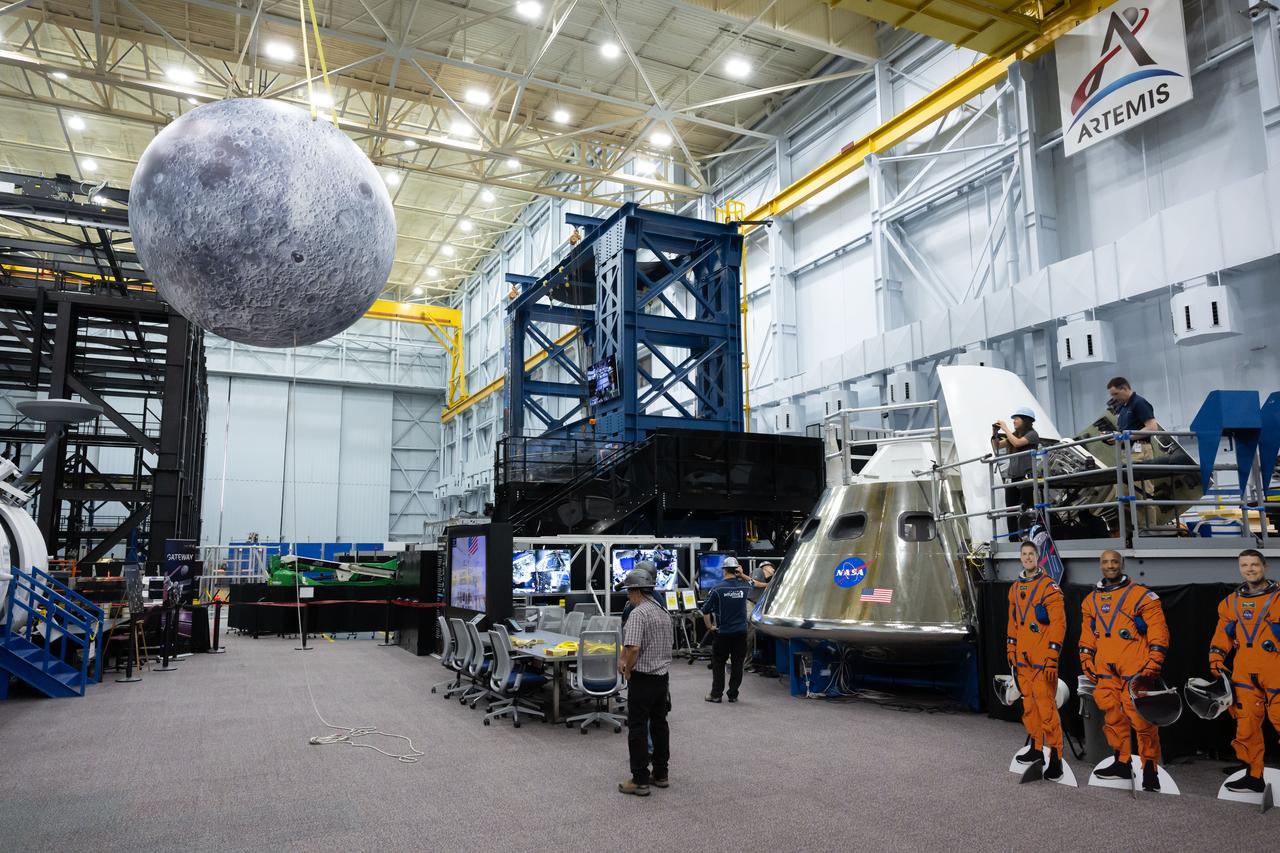
jsc2025e064769 --- An inflatable Moon is hoisted above the Orion mockup at NASA's Johnson Space Center in Houston. The Moon was used for crew lunar observation training ahead of the Artemis II mission.
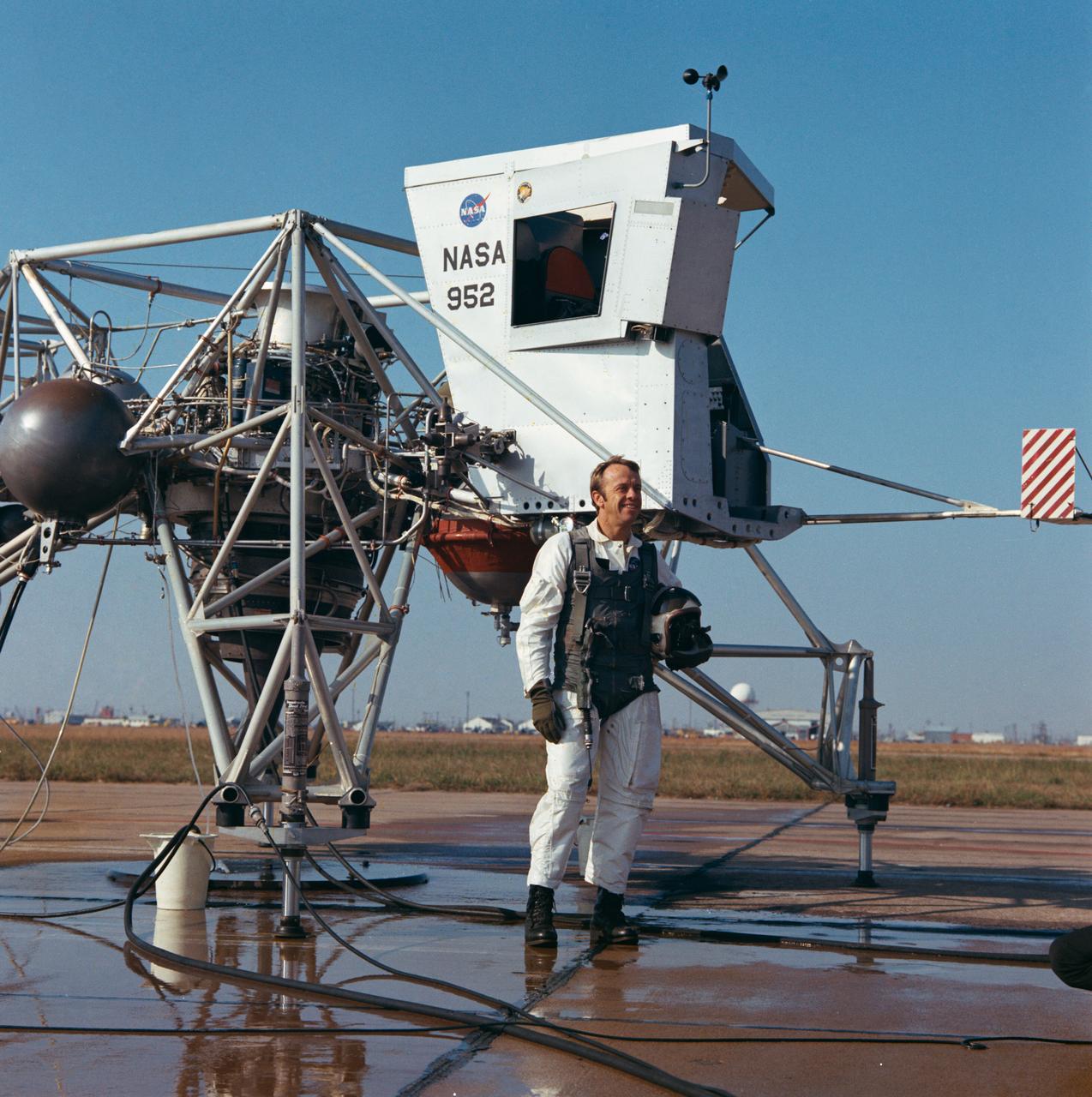
S70-56287 (14 Dec. 1970) --- Astronaut Alan B. Shepard Jr., commander of the Apollo 14 lunar landing mission, stands near a Lunar Landing Training Vehicle (LLTV) prior to a test flight at Ellington Air Force Base, Houston, on Dec. 14, 1970. Shepard will be at the controls of the Apollo 14 Lunar Module (LM) when it lands on the moon in the highlands near Fra Mauro. Astronaut Stuart A. Roosa, command module pilot, will remain with the Command and Service Modules (CSM) in lunar orbit while astronauts Shepard and Edgar D. Mitchell, lunar module pilot, descend in the LM to explore the moon.
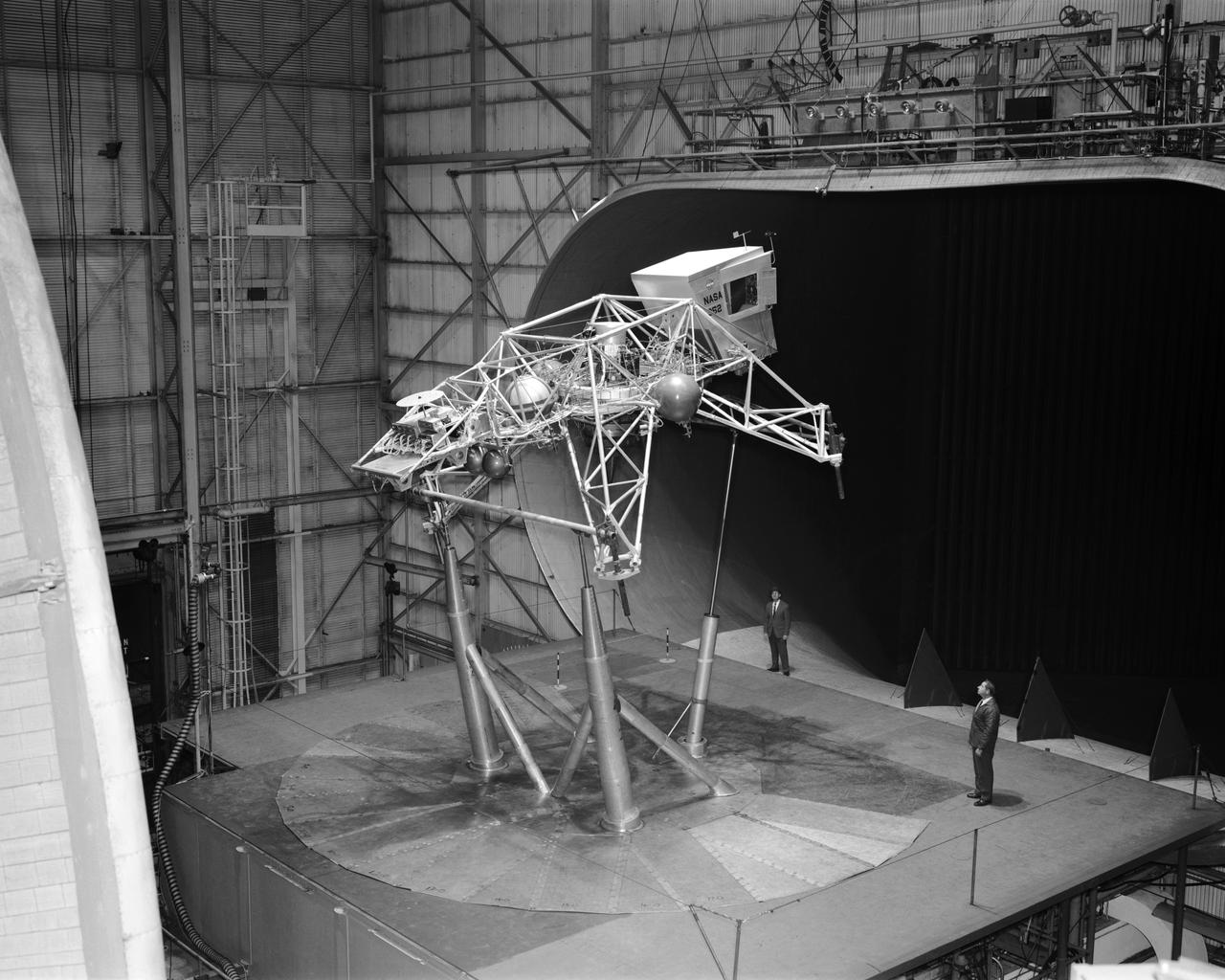
Concept model of the Lunar Excursion Module tested in the Full-Scale wind tunnel. -- Published in James R. Hansen, Spaceflight Revolution: NASA Langley Research Center From Sputnik to Apollo, (Washington: NASA, 1995), p. 356.-L69-670 Bell Lunar Landing Training Vehicle (LLTV): Following the crash of a sister Lunar Landing Training Vehicle at Ellington Field in Houston, Texas, the LLTV NASA 952 was sent from Houston to Langley for tests in the 30 x 60 Full Scale Tunnel. The LLTV was returned to Houston for further training use a short time later. NASA 952 is now on exhibit at the Johnson Space Center in Houston, Texas.
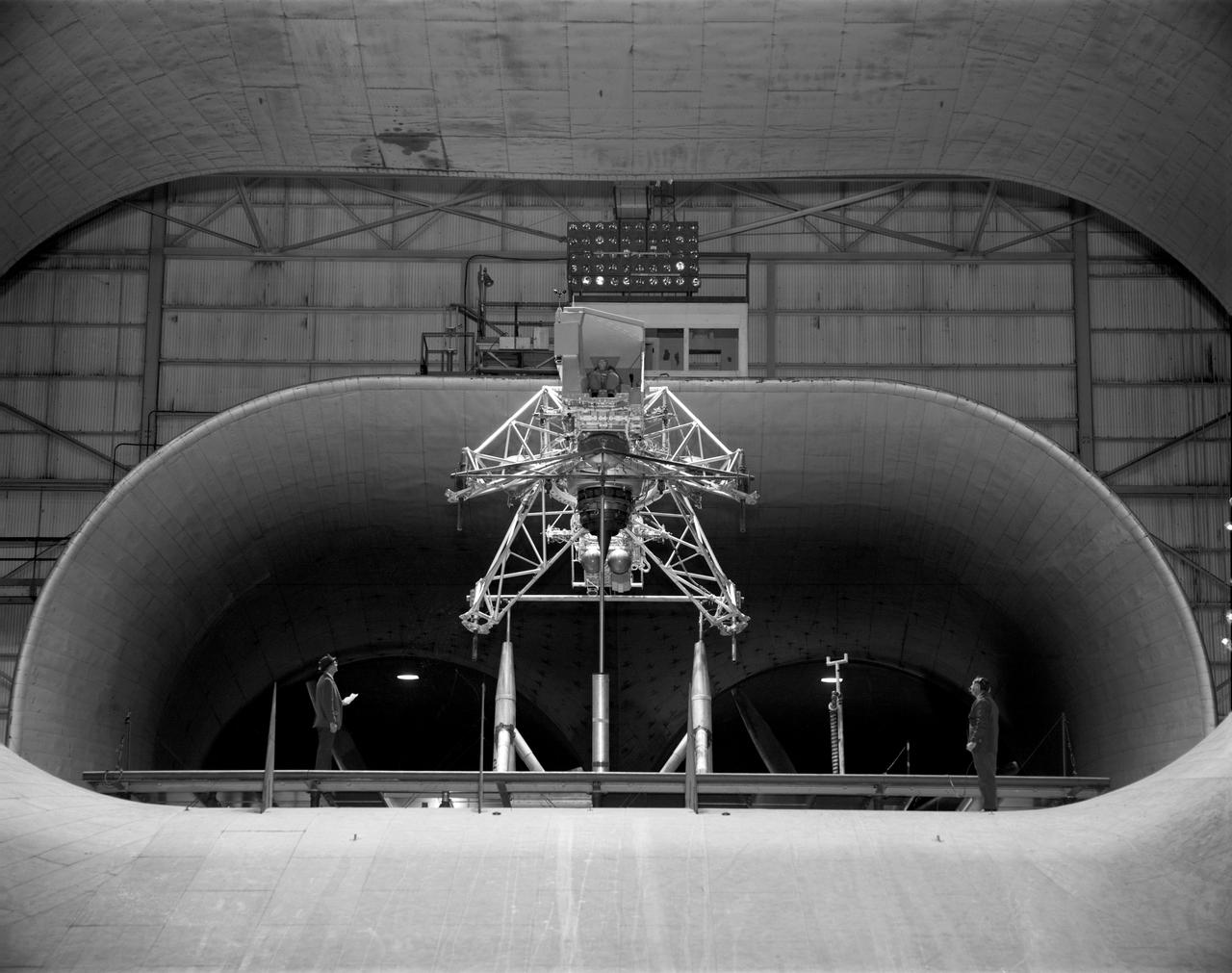
Concept model of the Lunar Excursion Module tested in the Full-Scale wind tunnel. -- Published in James R. Hansen, Spaceflight Revolution: NASA Langley Research Center From Sputnik to Apollo, (Washington: NASA, 1995), p. 356.-L69-670 Bell Lunar Landing Training Vehicle (LLTV): Following the crash of a sister Lunar Landing Training Vehicle at Ellington Field in Houston, Texas, the LLTV NASA 952 was sent from Houston to Langley for tests in the 30 x 60 Full Scale Tunnel. The LLTV was returned to Houston for further training use a short time later. NASA 952 is now on exhibit at the Johnson Space Center in Houston, Texas.
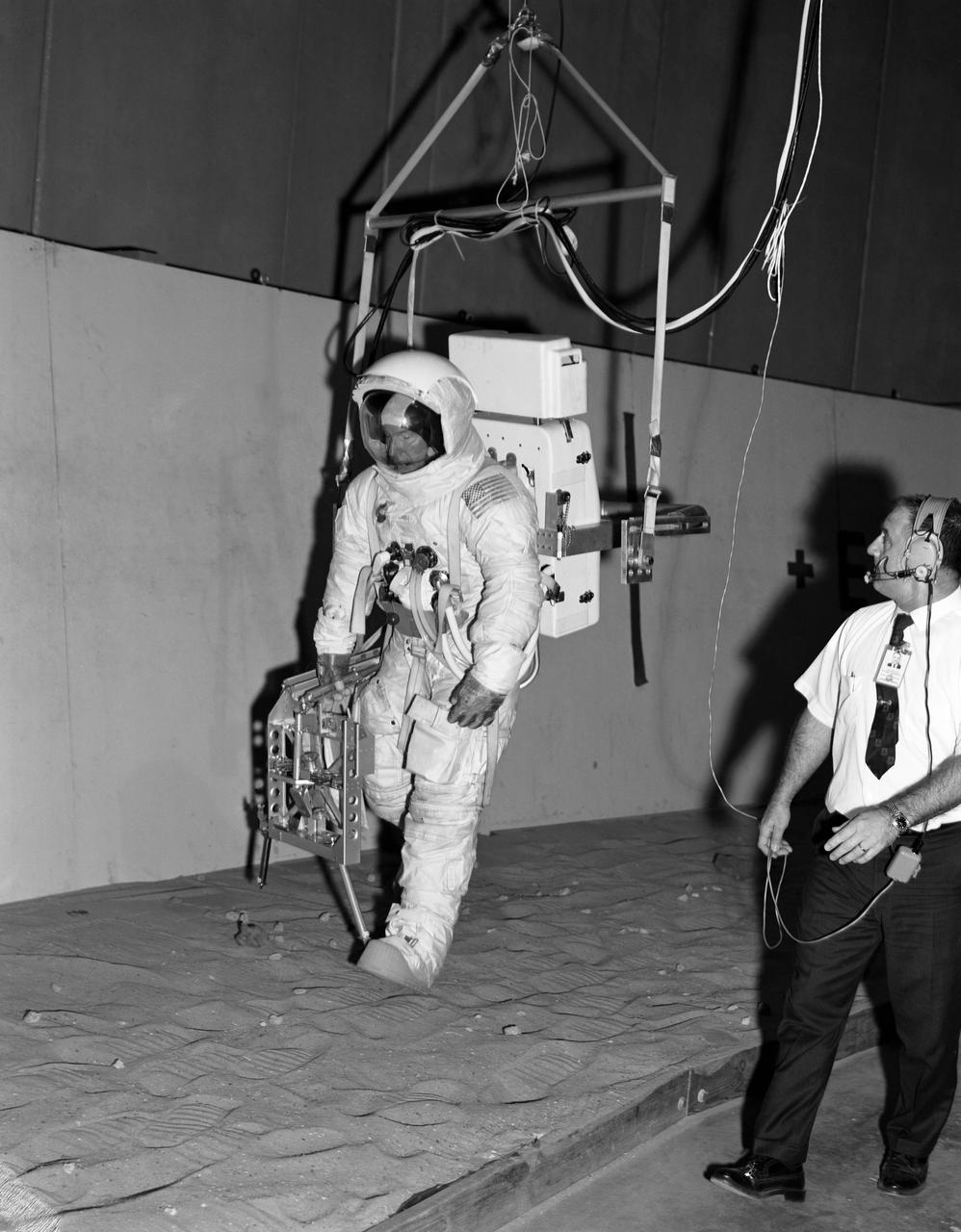
S70-28229 (16 Jan. 1970) --- Astronaut James A. Lovell Jr., commander of the Apollo 13 lunar landing mission, participates in lunar surface simulation training at the Manned Spacecraft Center. Lovell is attached to a Six Degrees of Freedom Simulator. He is carrying an Apollo Lunar Hand Tools carrier in his right hand.
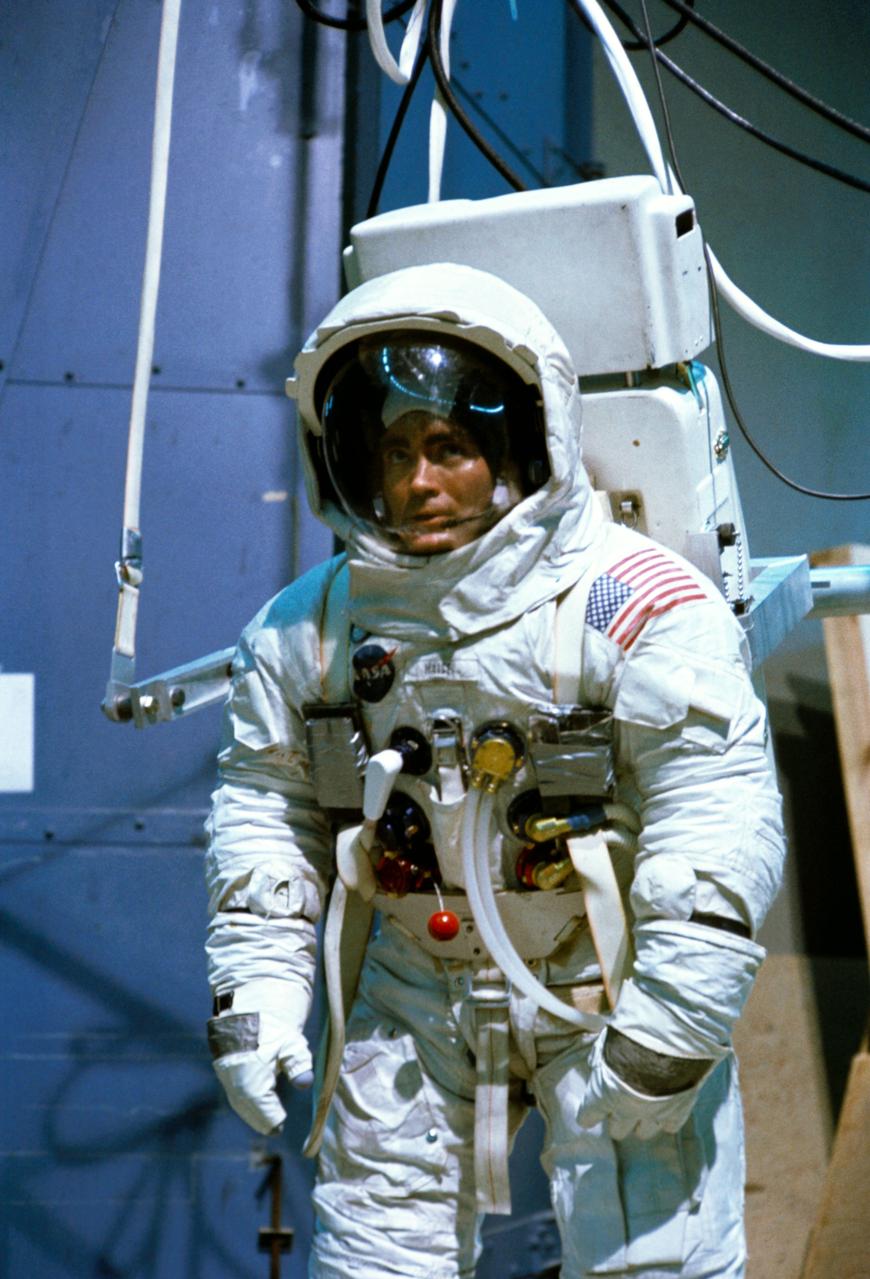
S70-24012 (19 Jan. 1970) --- Astronaut Fred W. Haise Jr., lunar module pilot of the Apollo 13 lunar landing mission, participates in lunar surface simulation training at the Manned Spacecraft Center (MSC). Haise is attached to a Six Degrees of Freedom Simulator.
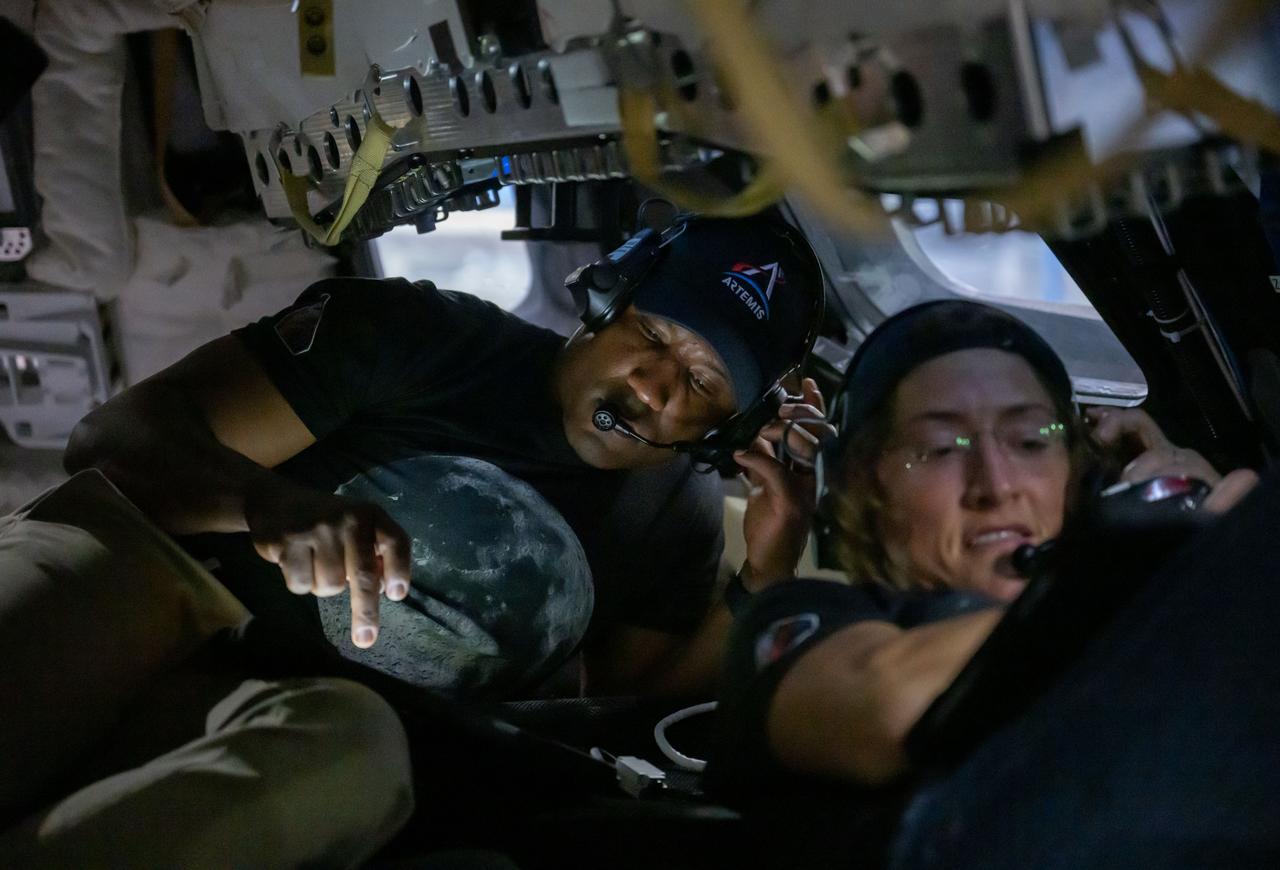
jsc2025e064753 --- Artemis II crew members, from left, Victor Glover and Christina Koch, participate in crew lunar observations training in the Orion mockup at NASA's Johnson Space Center in Houston.
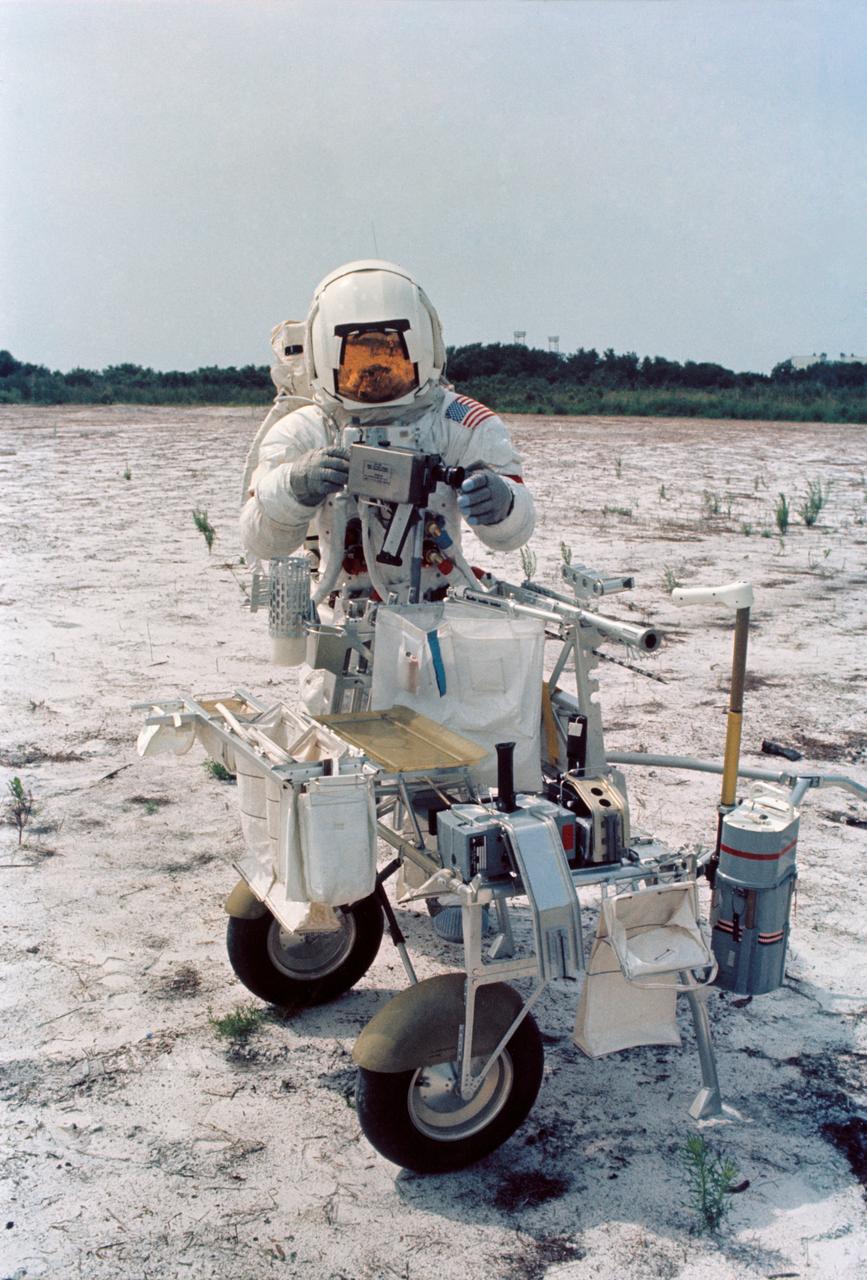
S70-46191 (July 1970) --- Astronaut Alan B. Shepard Jr., commander of the Apollo 14 lunar landing mission, participates in lunar surface training at the Kennedy Space Center (KSC). Shepard is adjusting a camera mounted to the modular equipment transporter (MET). The MET, nicknamed the "Rickshaw", will serve as a portable work bench with a place for the Apollo lunar hand tools and their carrier, three cameras, two sample container bags, a special environment sample container, spare magazines, and a lunar surface Penetrometer. Shepard is wearing an Extravehicular Mobility Unit (EMU).
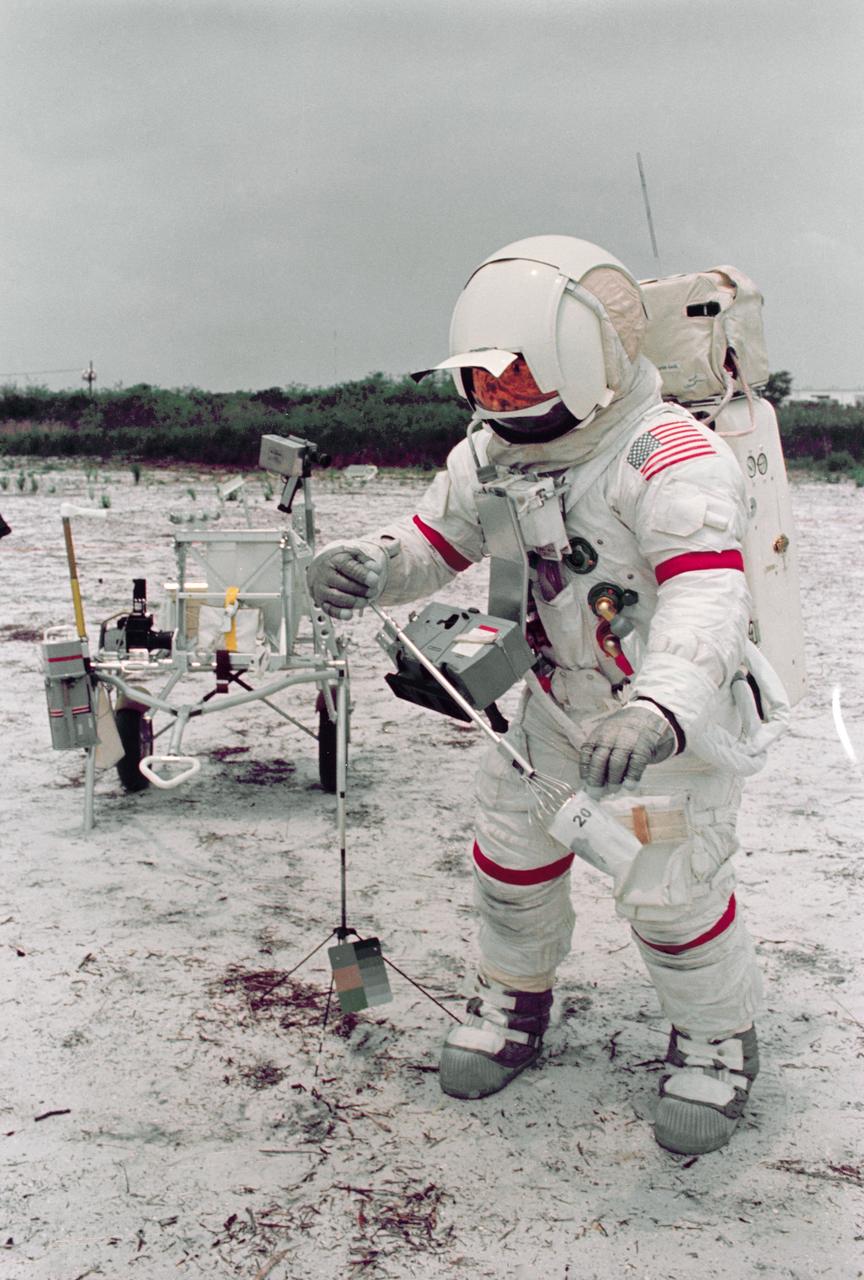
S70-46157 (July 1970) --- Astronaut Alan B. Shepard Jr., commander of the Apollo 14 lunar landing mission, participates in lunar surface simulation training at the Kennedy Space Center (KSC). The modular equipment transporter (MET) is in the left background, in the center foreground is a gnomon. The MET, nicknamed the "Rickshaw", will serve as a portable work bench with a place for the Apollo lunar hand tools and their carrier, three cameras, two sample container bags, a special environment sample container, spare magazines, and a lunar surface Penetrometer. Shepard is wearing an Extravehicular Mobility Unit (EMU).
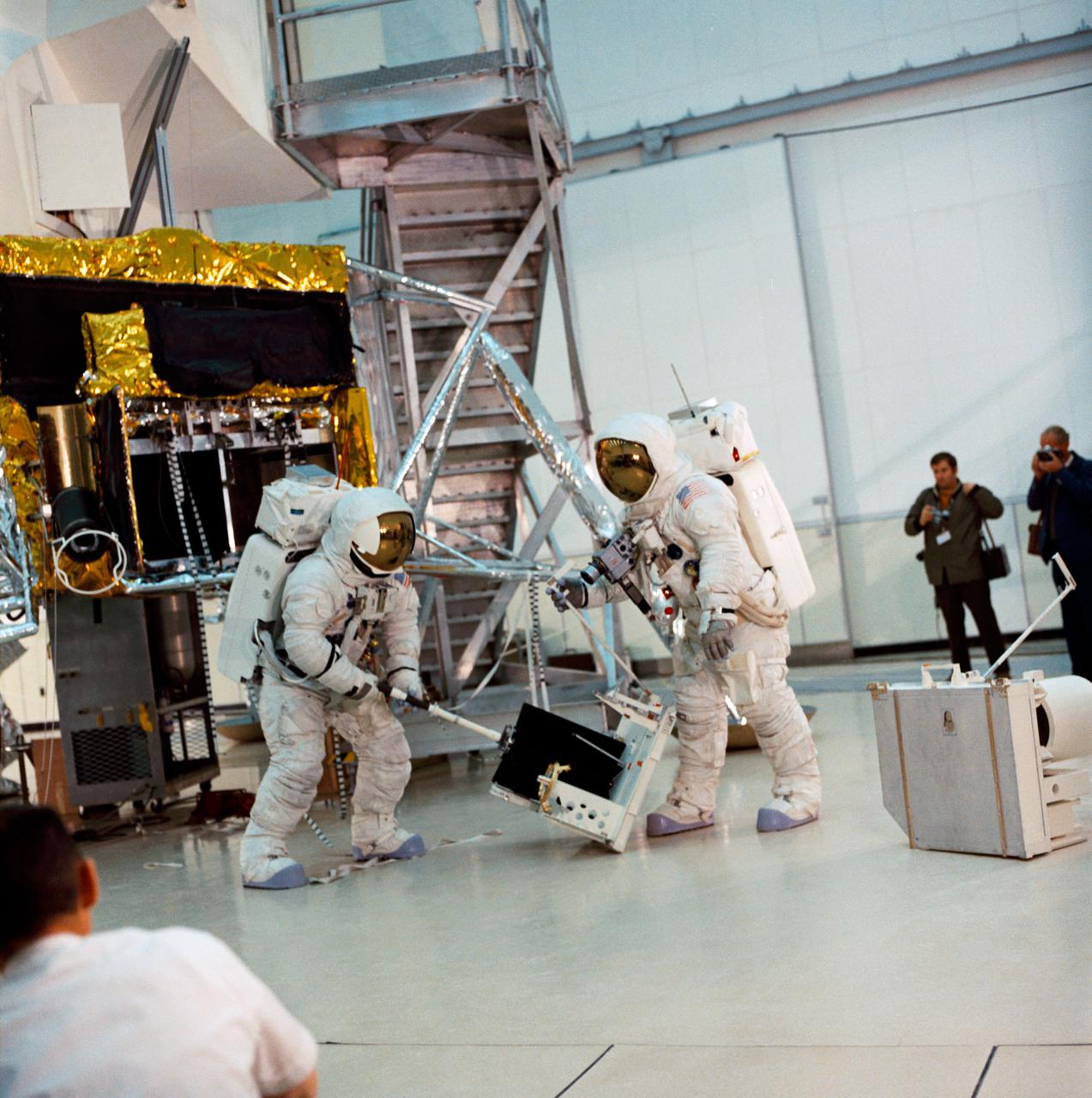
S70-27036 (4 Feb. 1970) --- Two crew men of the Apollo 13 lunar landing mission simulate lunar surface extravehicular activity (EVA) during training exercises in the Kennedy Space Center's (KSC) Flight Crew Training Building. They are astronauts James A. Lovell Jr. commander; and Fred W. Haise Jr., lunar module pilot.
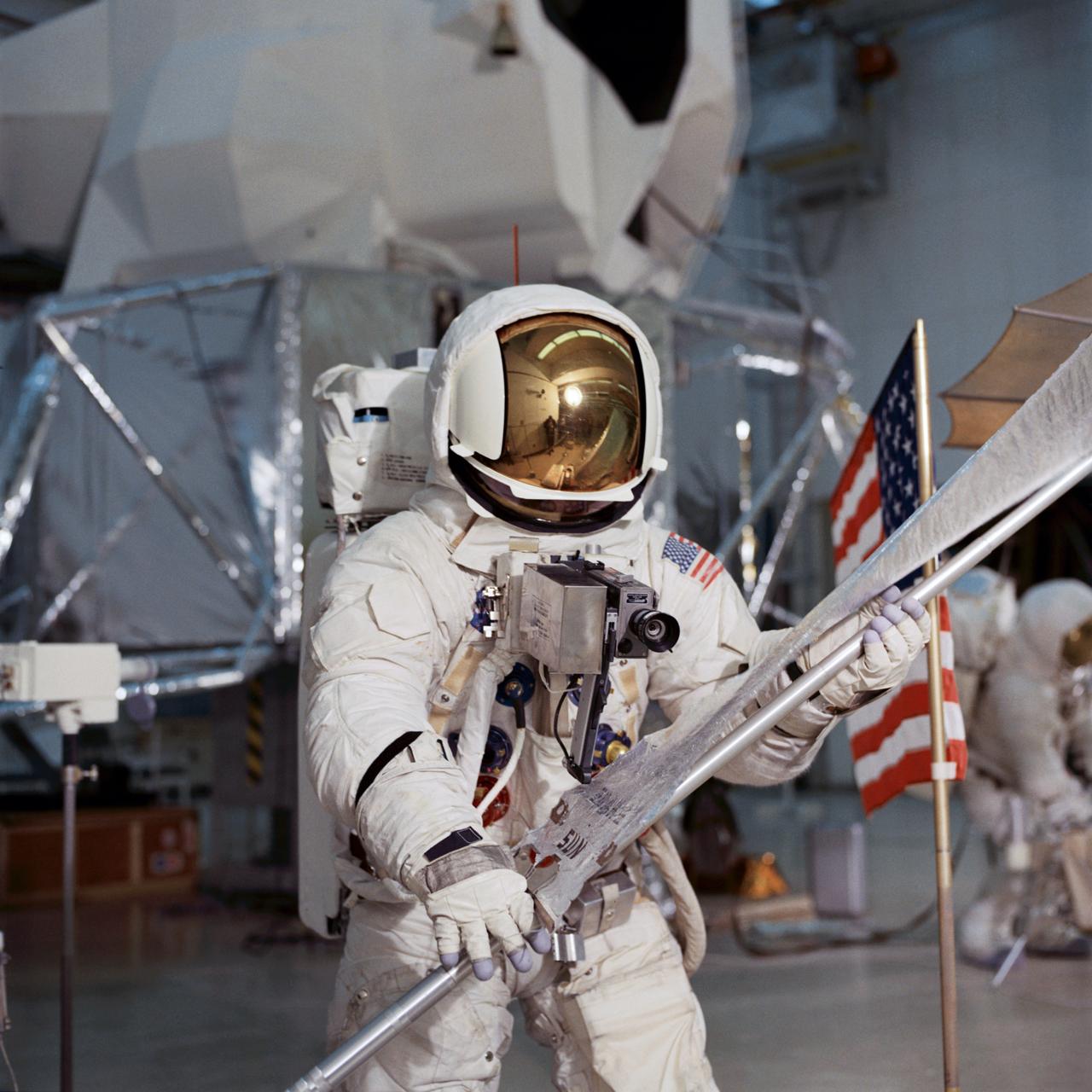
S70-27034 (4 Feb. 1970) --- Astronaut Fred W. Haise Jr., lunar module pilot of the Apollo 13 lunar landing mission, simulates lunar surface extravehicular activity (EVA) during training exercises in the Kennedy Space Center's (KSC) Flight Crew Training Building (FCTB). Haise, wearing an Extravehicular Mobility Unit (EMU), is holding a Solar Wind Composition (SWC) experiment.
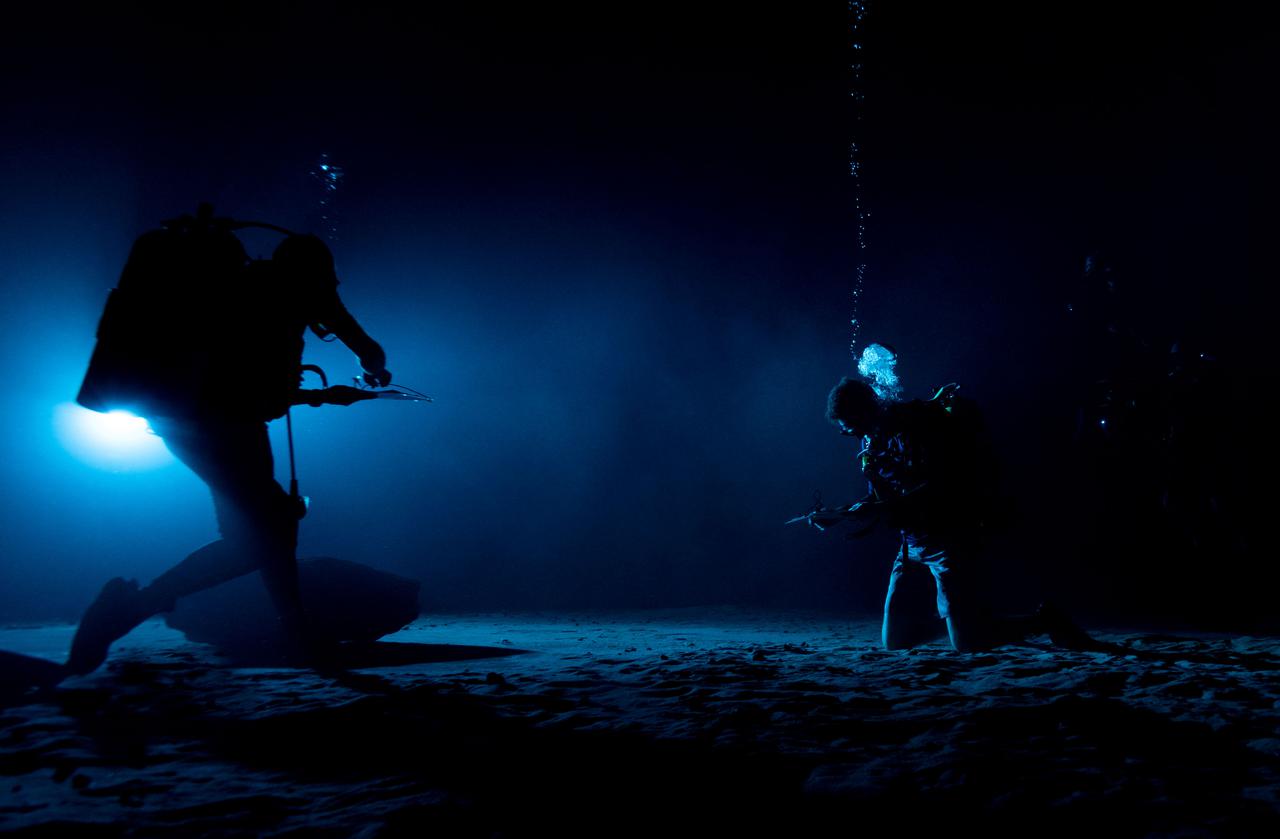
Test subjects performing subjective assessment of underwater lamp source during NBL Preliminary Lunar Lighting Evaluation. Divers at the Neutral Buoyancy Laboratory (NBL) in Houston are setting the stage for future Moonwalk training by simulating lunar lighting conditions. At the Lunar South Pole, the Sun will remain no more than a few degrees above the horizon, resulting in extremely long and dark shadows. To prepare astronauts for these challenging lighting conditions, the team at the NBL has begun preliminary evaluations of lunar lighting solutions at the bottom of the 40-foot deep pool. This testing and evaluation involved turning off all the lights in the facility, installing black curtains on the pool walls to minimize reflections, and using a powerful underwater cinematic lamp, to get the conditions just right ahead of upcoming training for astronauts.
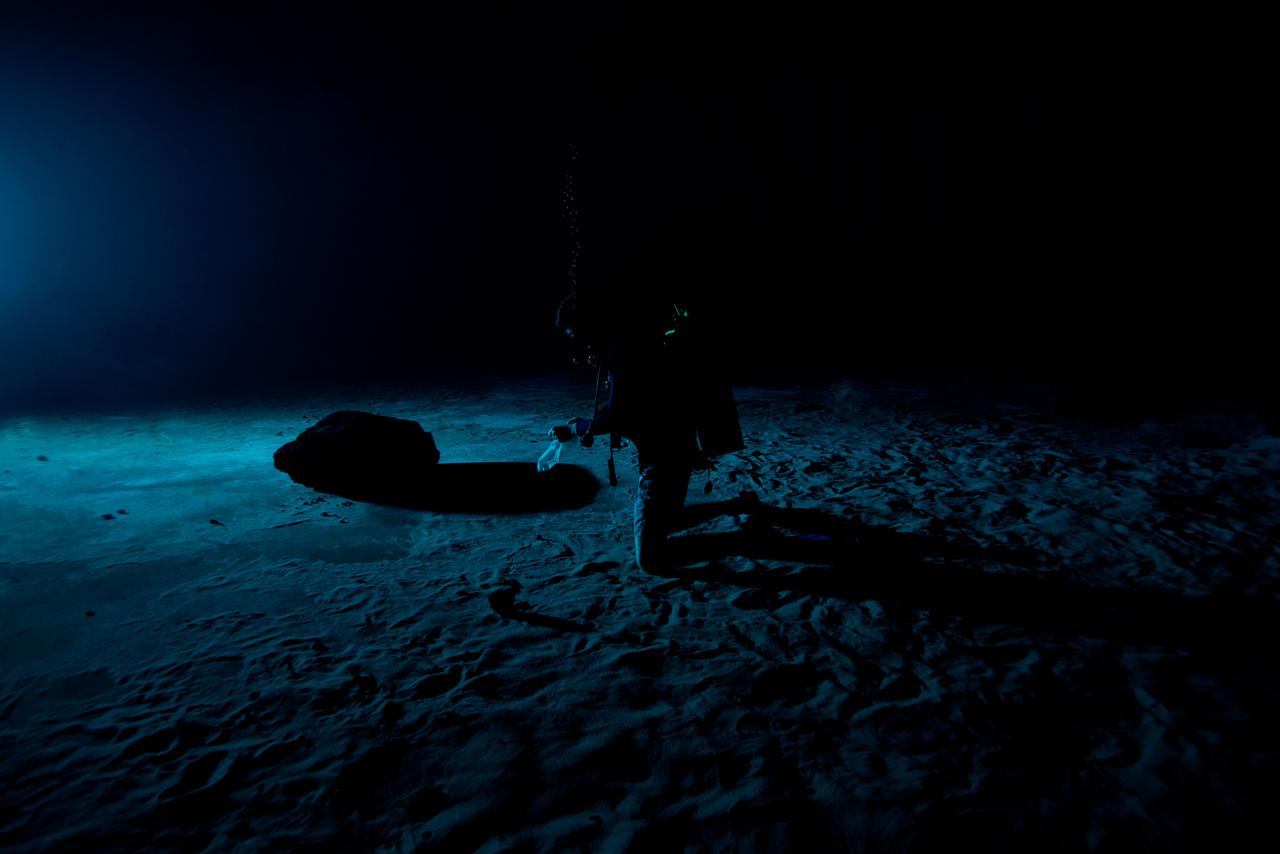
Test subjects performing subjective assessment of underwater lamp source during NBL Preliminary Lunar Lighting Evaluation. Divers at the Neutral Buoyancy Laboratory (NBL) in Houston are setting the stage for future Moonwalk training by simulating lunar lighting conditions. At the Lunar South Pole, the Sun will remain no more than a few degrees above the horizon, resulting in extremely long and dark shadows. To prepare astronauts for these challenging lighting conditions, the team at the NBL has begun preliminary evaluations of lunar lighting solutions at the bottom of the 40-foot deep pool. This testing and evaluation involved turning off all the lights in the facility, installing black curtains on the pool walls to minimize reflections, and using a powerful underwater cinematic lamp, to get the conditions just right ahead of upcoming training for astronauts.
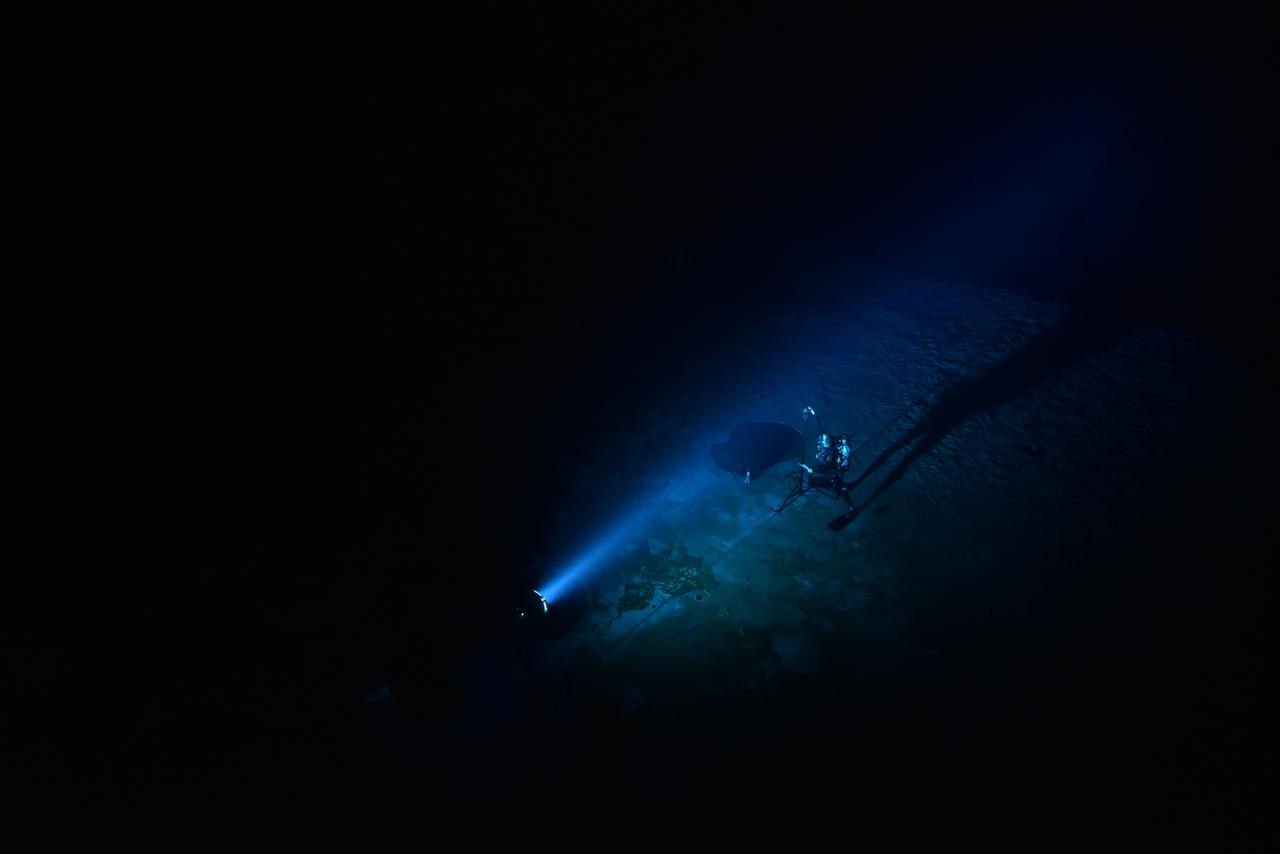
Quantitative evaluation of light source by NBL diver during NBL Preliminary Lunar Lighting Evaluation. Divers at the Neutral Buoyancy Laboratory (NBL) in Houston are setting the stage for future Moonwalk training by simulating lunar lighting conditions. At the Lunar South Pole, the Sun will remain no more than a few degrees above the horizon, resulting in extremely long and dark shadows. To prepare astronauts for these challenging lighting conditions, the team at the NBL has begun preliminary evaluations of lunar lighting solutions at the bottom of the 40-foot deep pool. This testing and evaluation involved turning off all the lights in the facility, installing black curtains on the pool walls to minimize reflections, and using a powerful underwater cinematic lamp, to get the conditions just right ahead of upcoming training for astronauts.
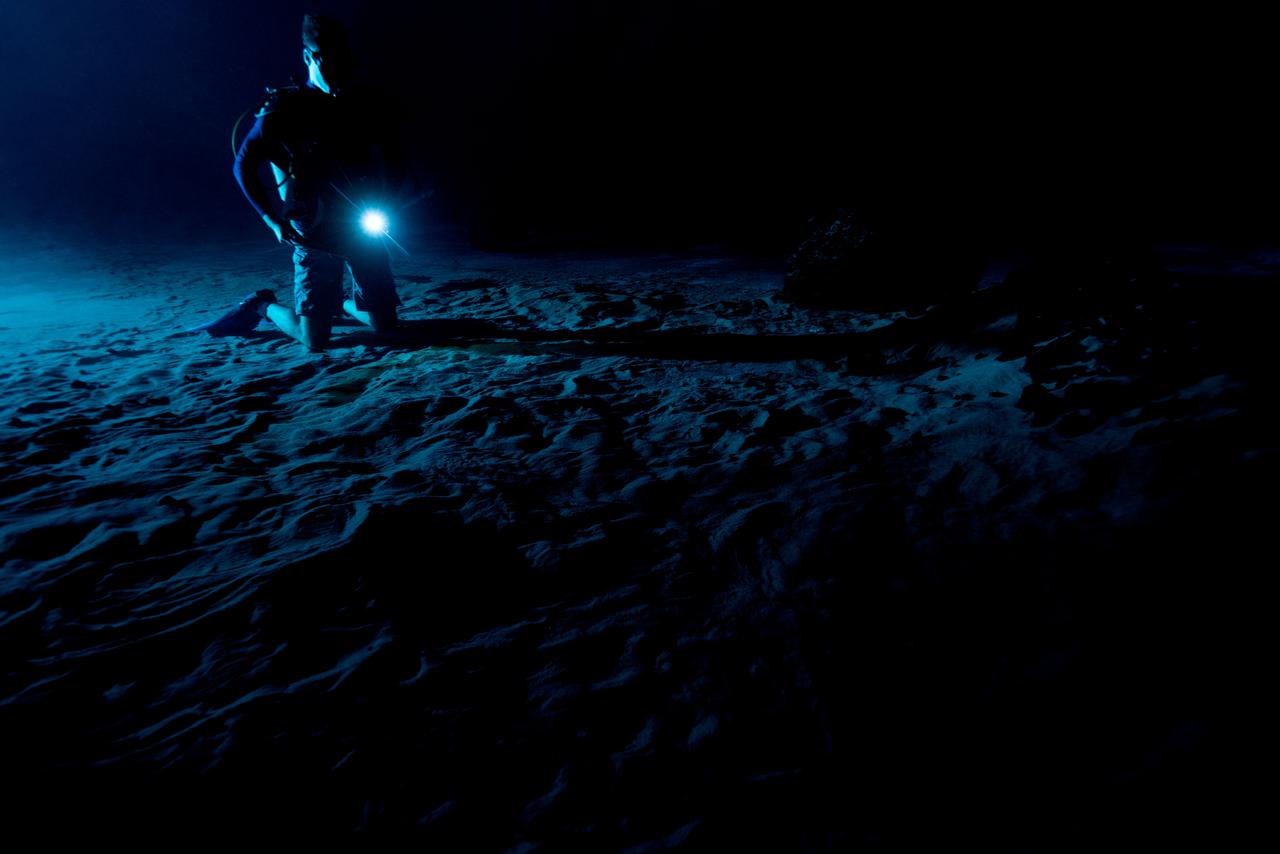
Test subjects performing subjective assessment of supplemental lighting during NBL Preliminary Lunar Lighting Evaluation. Divers at the Neutral Buoyancy Laboratory (NBL) in Houston are setting the stage for future Moonwalk training by simulating lunar lighting conditions. At the Lunar South Pole, the Sun will remain no more than a few degrees above the horizon, resulting in extremely long and dark shadows. To prepare astronauts for these challenging lighting conditions, the team at the NBL has begun preliminary evaluations of lunar lighting solutions at the bottom of the 40-foot deep pool. This testing and evaluation involved turning off all the lights in the facility, installing black curtains on the pool walls to minimize reflections, and using a powerful underwater cinematic lamp, to get the conditions just right ahead of upcoming training for astronauts.
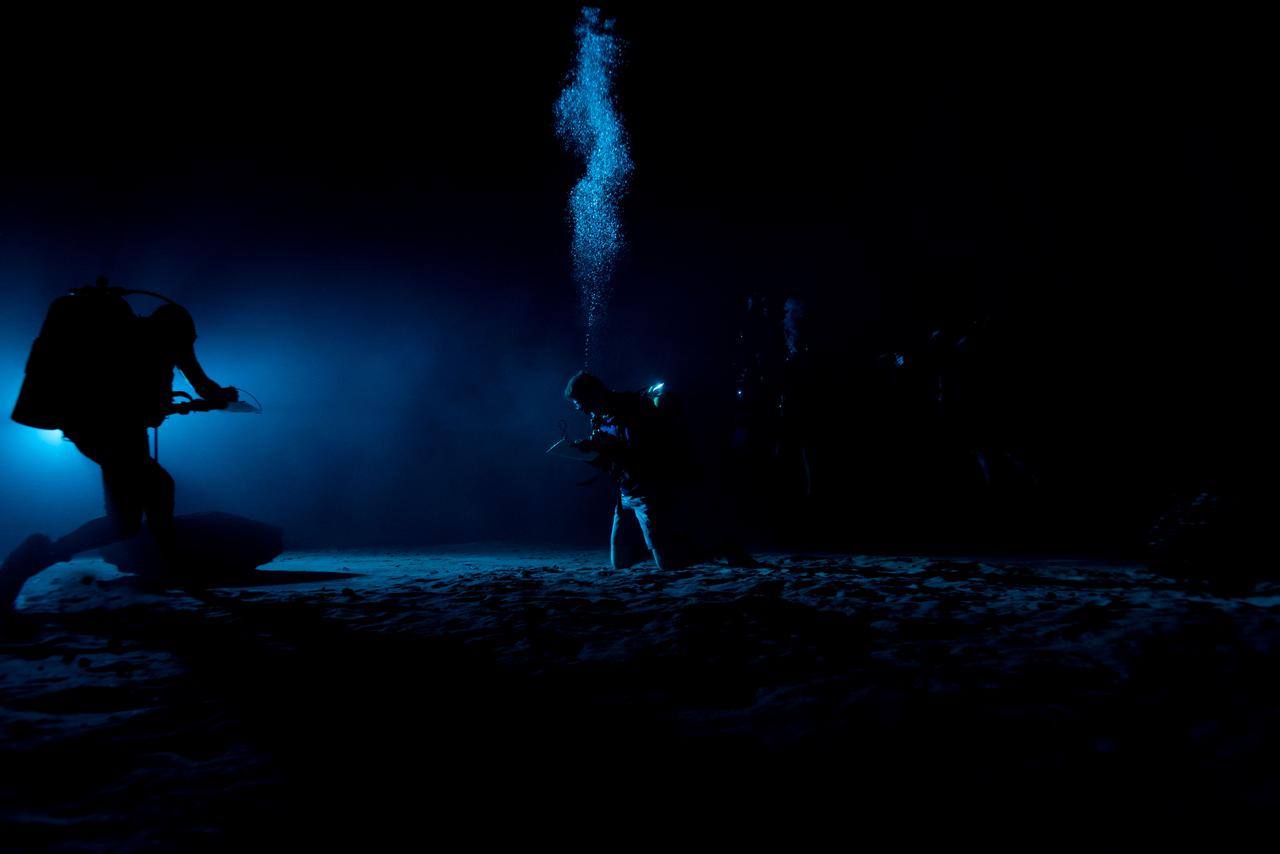
Test subjects performing subjective assessment of underwater lamp source during NBL Preliminary Lunar Lighting Evaluation. Divers at the Neutral Buoyancy Laboratory (NBL) in Houston are setting the stage for future Moonwalk training by simulating lunar lighting conditions. At the Lunar South Pole, the Sun will remain no more than a few degrees above the horizon, resulting in extremely long and dark shadows. To prepare astronauts for these challenging lighting conditions, the team at the NBL has begun preliminary evaluations of lunar lighting solutions at the bottom of the 40-foot deep pool. This testing and evaluation involved turning off all the lights in the facility, installing black curtains on the pool walls to minimize reflections, and using a powerful underwater cinematic lamp, to get the conditions just right ahead of upcoming training for astronauts.
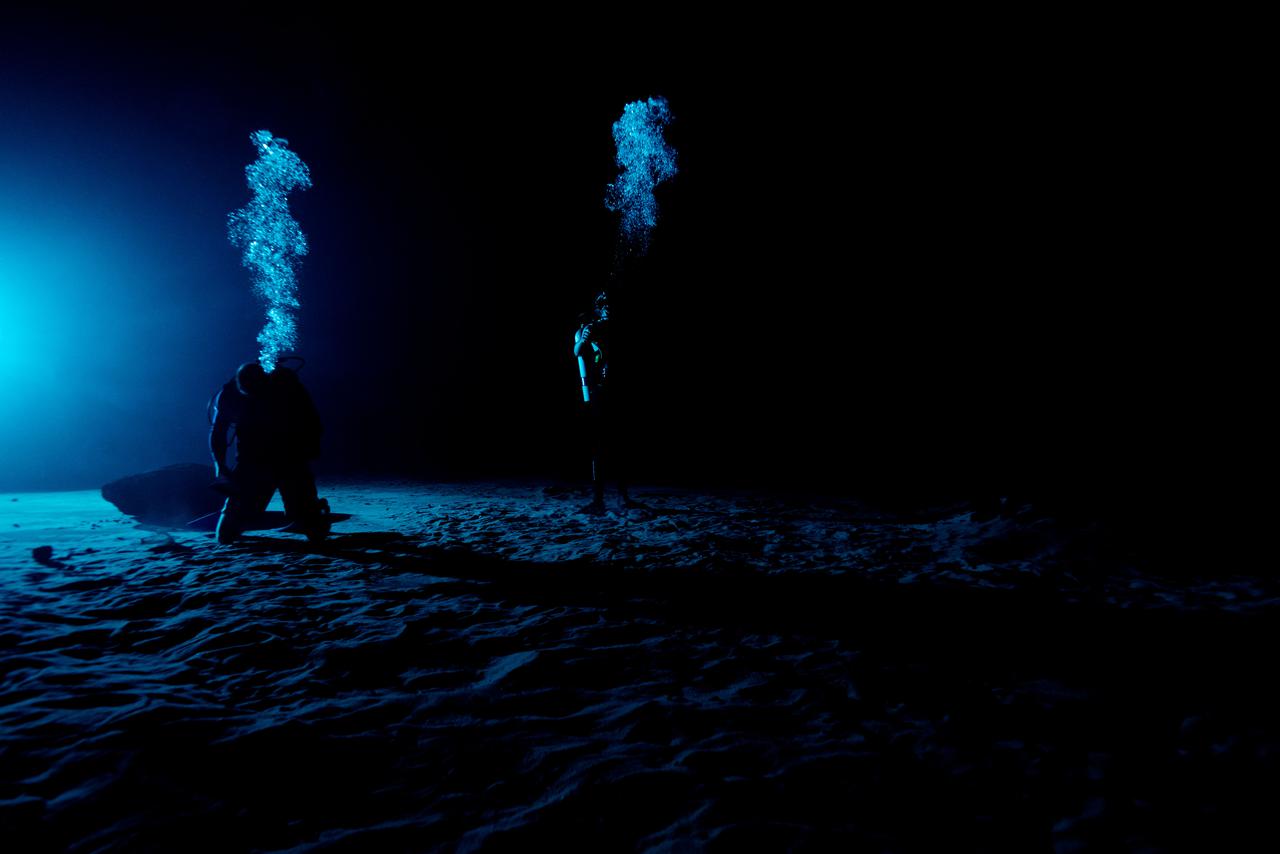
Test subjects performing mission-relevant tasks and evaluating shadow quality during NBL Preliminary Lunar Lighting Evaluation. Divers at the Neutral Buoyancy Laboratory (NBL) in Houston are setting the stage for future Moonwalk training by simulating lunar lighting conditions. At the Lunar South Pole, the Sun will remain no more than a few degrees above the horizon, resulting in extremely long and dark shadows. To prepare astronauts for these challenging lighting conditions, the team at the NBL has begun preliminary evaluations of lunar lighting solutions at the bottom of the 40-foot deep pool. This testing and evaluation involved turning off all the lights in the facility, installing black curtains on the pool walls to minimize reflections, and using a powerful underwater cinematic lamp, to get the conditions just right ahead of upcoming training for astronauts.
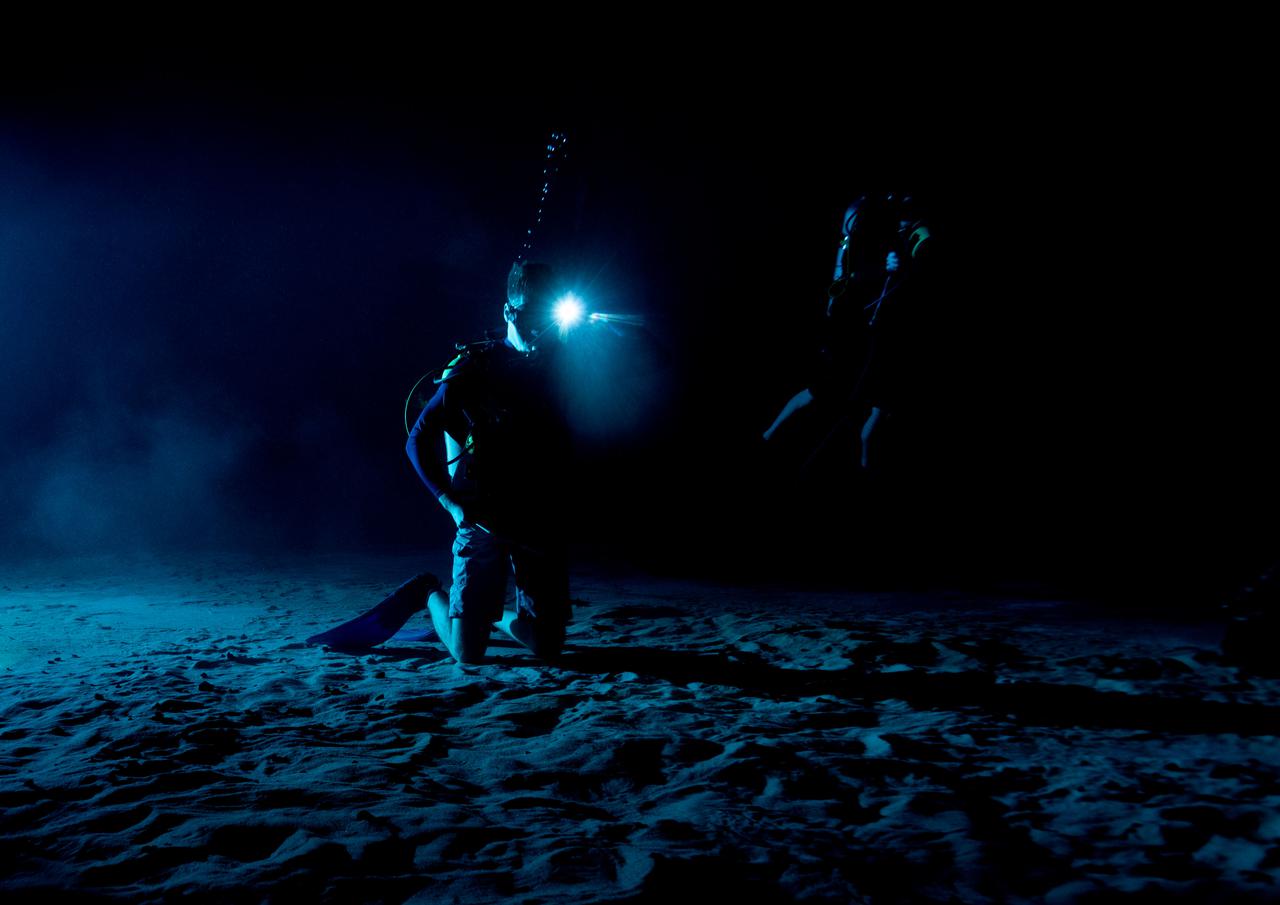
Test subjects performing subjective assessment of supplemental lighting during NBL Preliminary Lunar Lighting Evaluation. Divers at the Neutral Buoyancy Laboratory (NBL) in Houston are setting the stage for future Moonwalk training by simulating lunar lighting conditions. At the Lunar South Pole, the Sun will remain no more than a few degrees above the horizon, resulting in extremely long and dark shadows. To prepare astronauts for these challenging lighting conditions, the team at the NBL has begun preliminary evaluations of lunar lighting solutions at the bottom of the 40-foot deep pool. This testing and evaluation involved turning off all the lights in the facility, installing black curtains on the pool walls to minimize reflections, and using a powerful underwater cinematic lamp, to get the conditions just right ahead of upcoming training for astronauts.
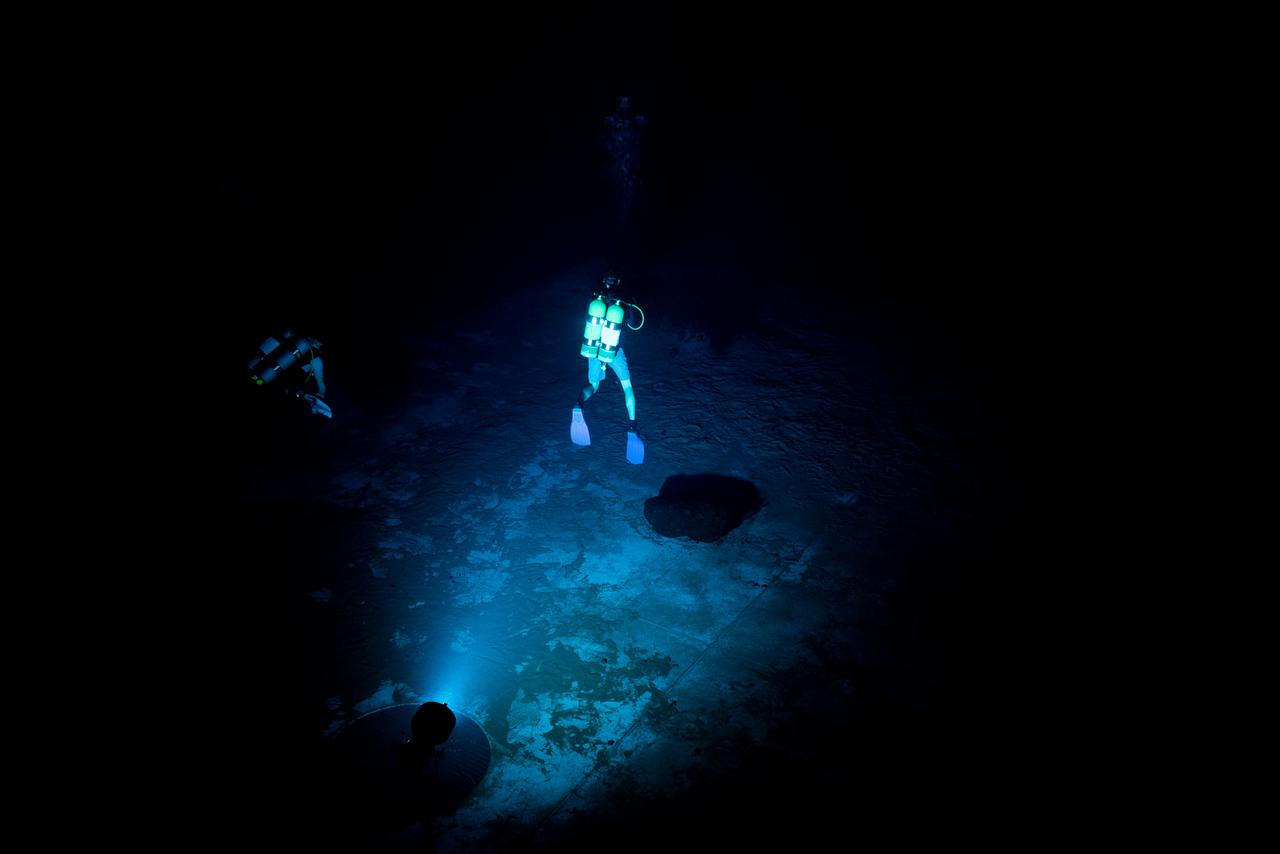
Quantitative evaluation of light source by NBL diver during NBL Preliminary Lunar Lighting Evaluation. Divers at the Neutral Buoyancy Laboratory (NBL) in Houston are setting the stage for future Moonwalk training by simulating lunar lighting conditions. At the Lunar South Pole, the Sun will remain no more than a few degrees above the horizon, resulting in extremely long and dark shadows. To prepare astronauts for these challenging lighting conditions, the team at the NBL has begun preliminary evaluations of lunar lighting solutions at the bottom of the 40-foot deep pool. This testing and evaluation involved turning off all the lights in the facility, installing black curtains on the pool walls to minimize reflections, and using a powerful underwater cinematic lamp, to get the conditions just right ahead of upcoming training for astronauts.
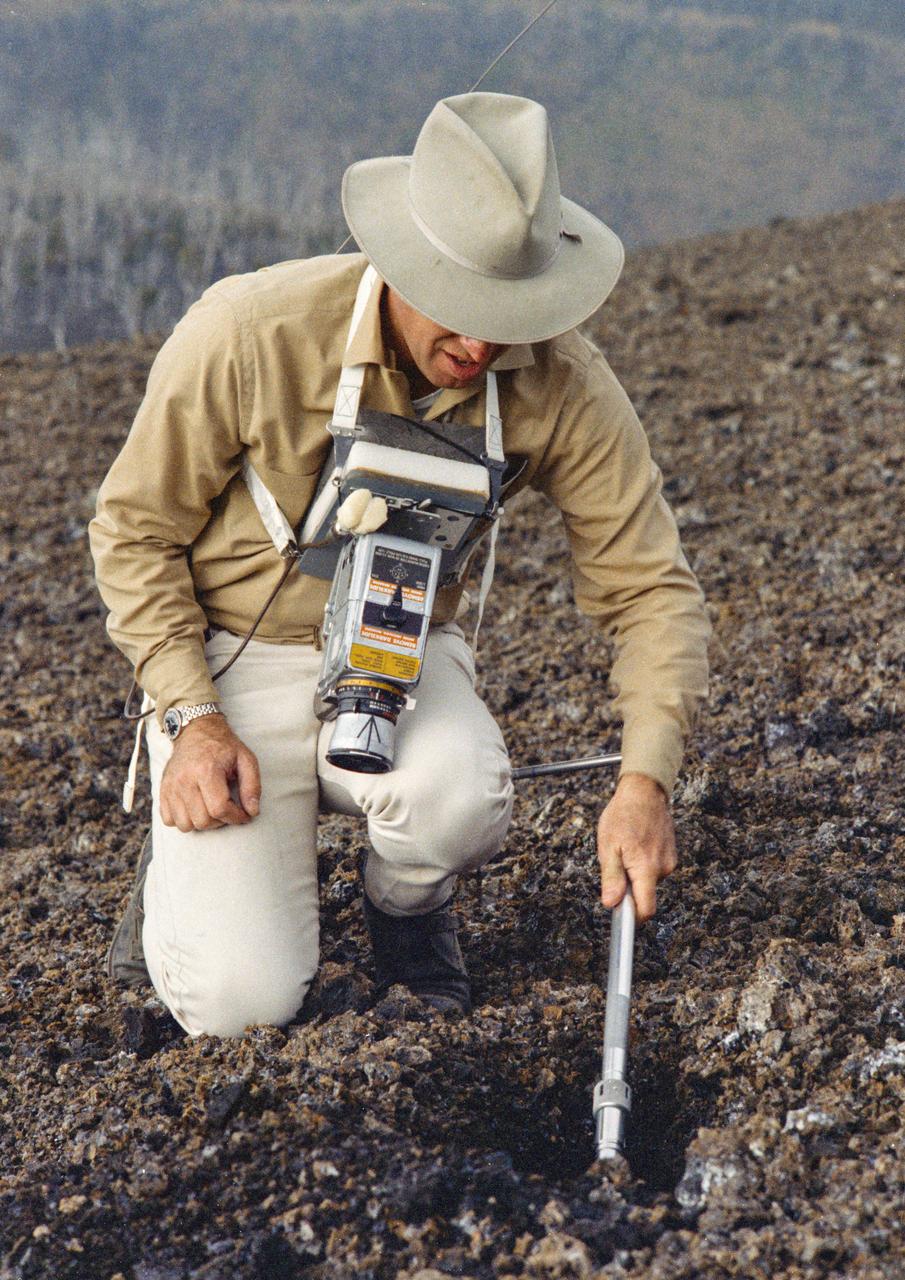
S70-20272 (December 1969) --- Astronaut James A. Lovell Jr., commander of the upcoming Apollo 13 lunar landing mission, uses a scoop from the Apollo Lunar Hand Tools (ALHT) during a simulated lunar surface traverse at the Kapoho, Hawaii training site. While at the Hawaii training sites, Lovell and Haise are participating in thorough rehearsals of their extravehicular activity (EVA). Photo credit: NASA
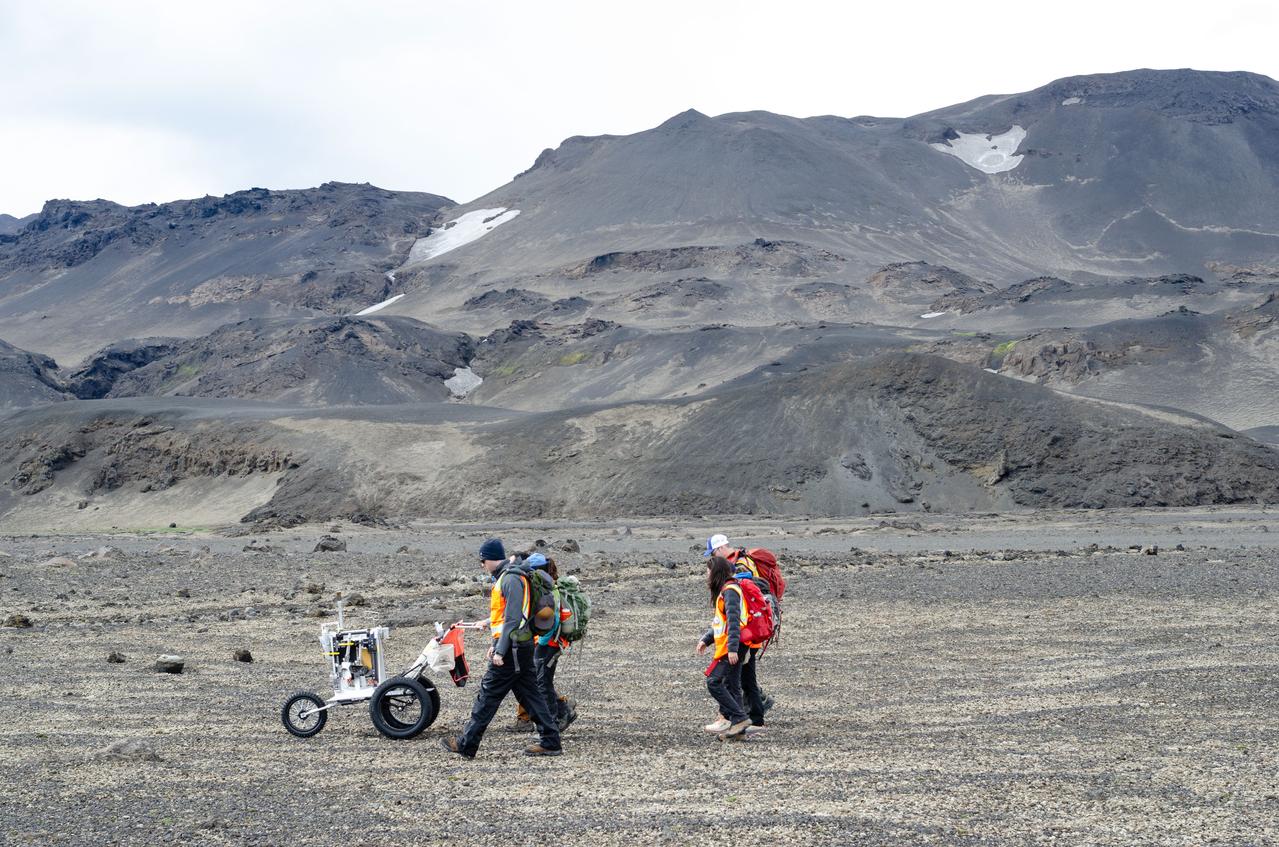
jsc2023e041422 --- Artemis II science trainers push a lunar tool cart across the lunar-like landscape of Iceland during an Artemis II crew geology field training.
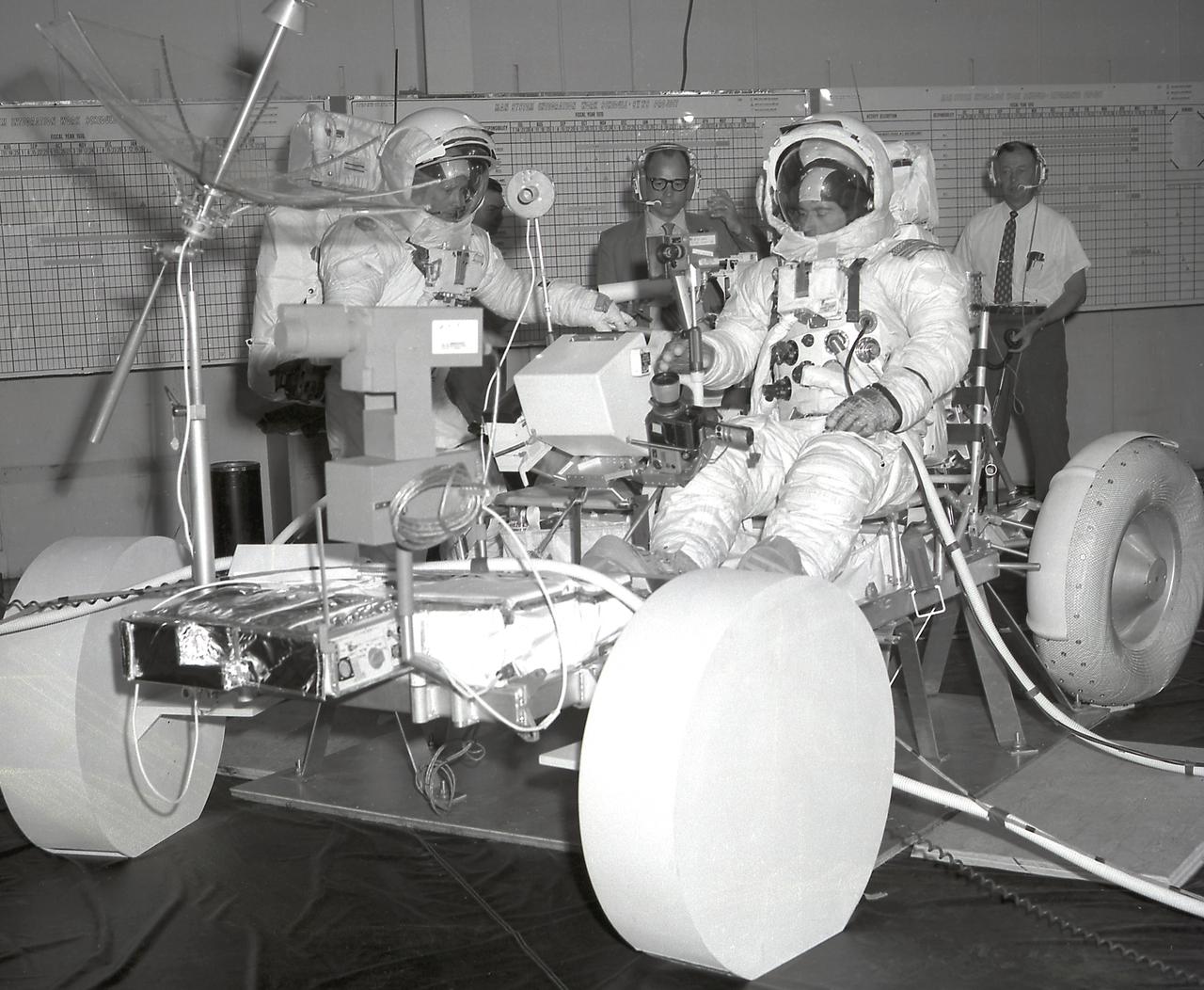
This image depicts the Apollo 16 mission astronauts John Young (right) and Charles Duke (left) in pressure suits during a final crew training on the Lunar Roving Vehicle (LRV) at the Marshall Space Flight Center (MSFC), building 4619. Developed by the MSFC, the LRV was the lightweight electric car designed to increase the range of mobility and productivity of astronauts on the lunar surface. It was used on the last three Apollo missions; Apollo 15, Apollo 16, and Apollo 17.
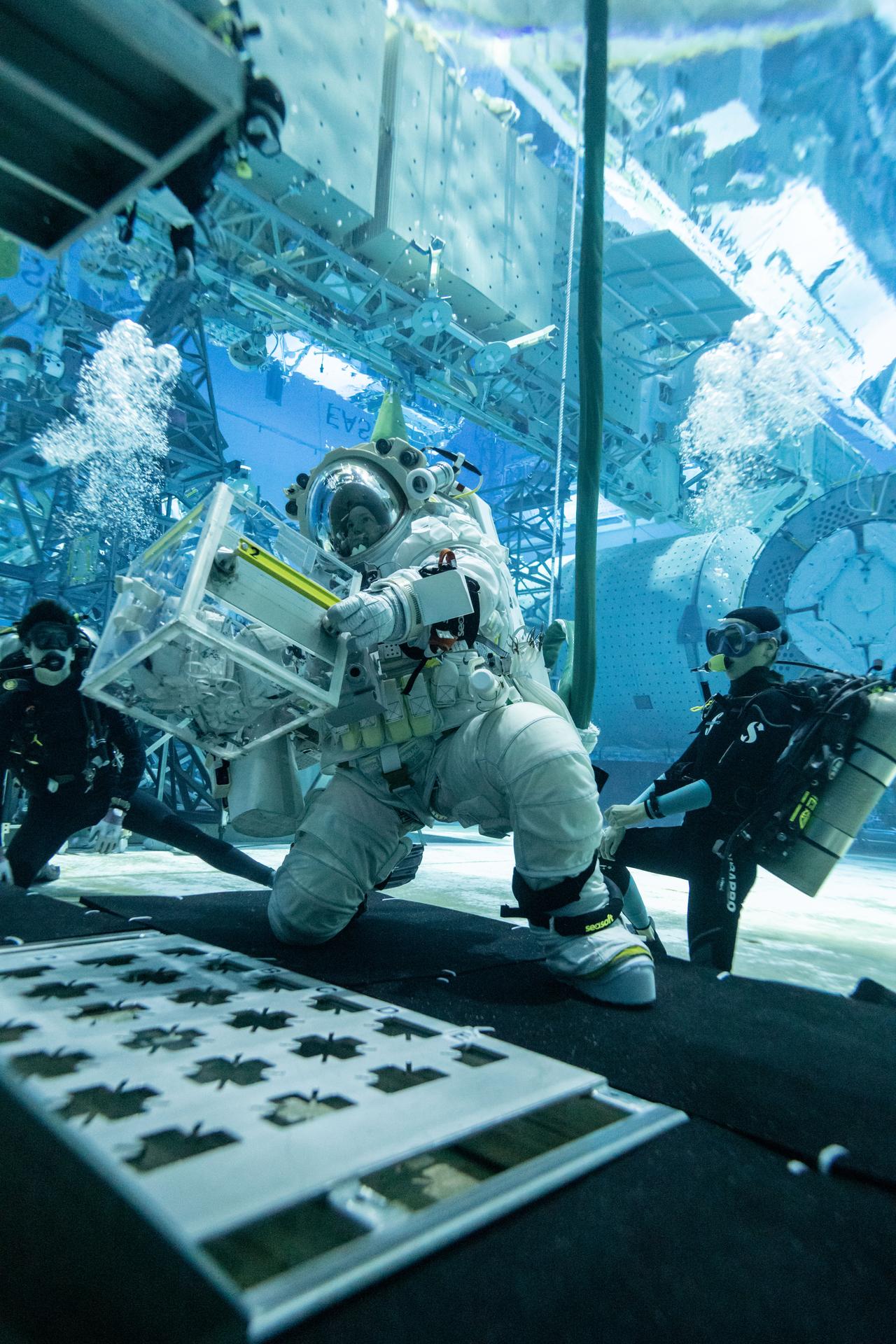
Canadian Space Agency astronaut Jenni Gibbons practices simulated lunar tasks under water while wearing Axiom Space’s lunar spacesuit at NASA’s Neutral Buoyancy Laboratory in Houston. During a recent test series, NASA engineers and crewmembers wore the lunar spacesuit under water and conducted numerous tasks during simulated lunar operations to test its mobility and functionality and ensure the spacesuit is prepped and ready for Artemis training.
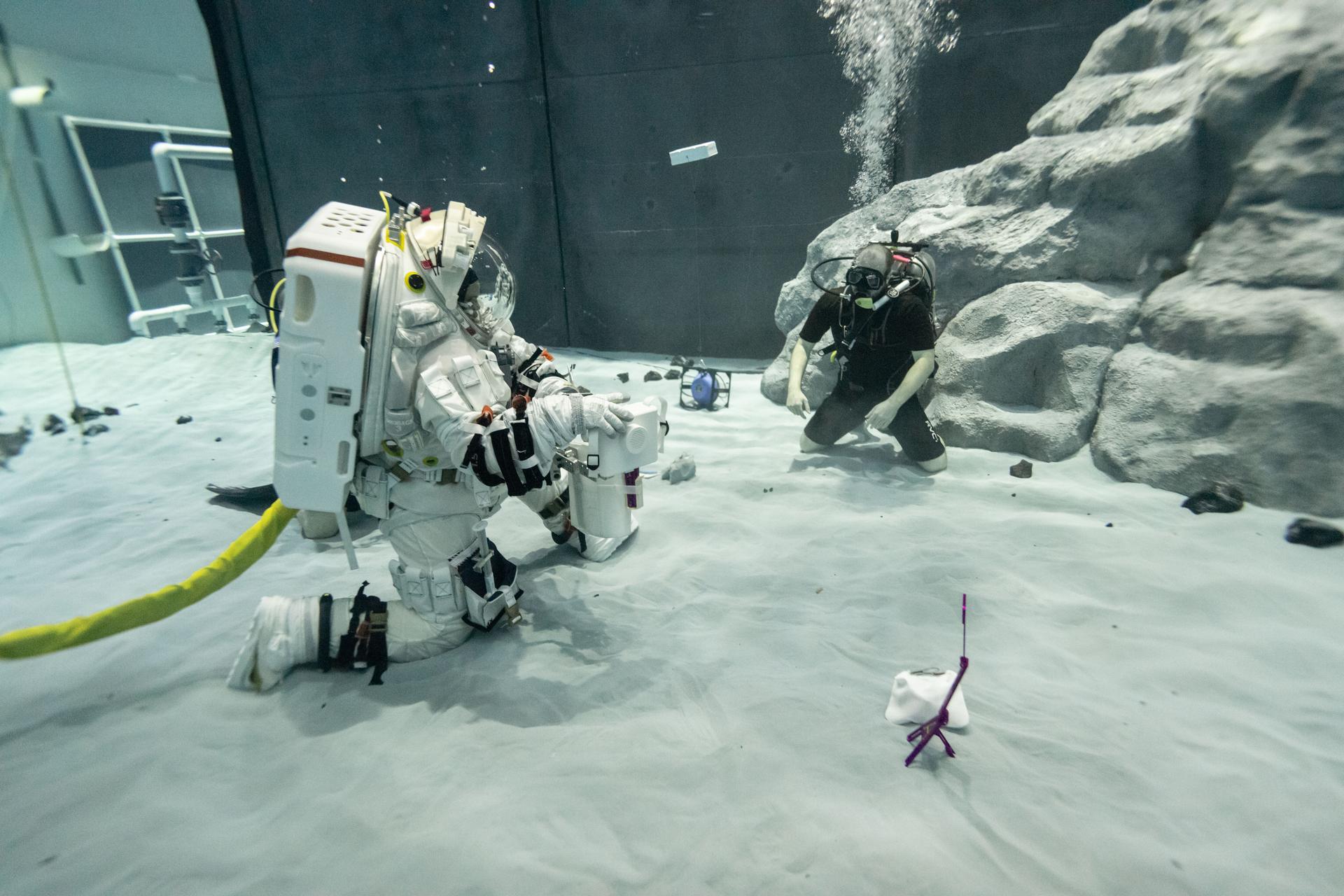
Canadian Space Agency astronaut Jenni Gibbons practices simulated lunar tasks under water while wearing Axiom Space’s lunar spacesuit at NASA’s Neutral Buoyancy Laboratory in Houston. During a recent test series, NASA engineers and crewmembers wore the lunar spacesuit under water and conducted numerous tasks during simulated lunar operations to test its mobility and functionality and ensure the spacesuit is prepped and ready for Artemis training.
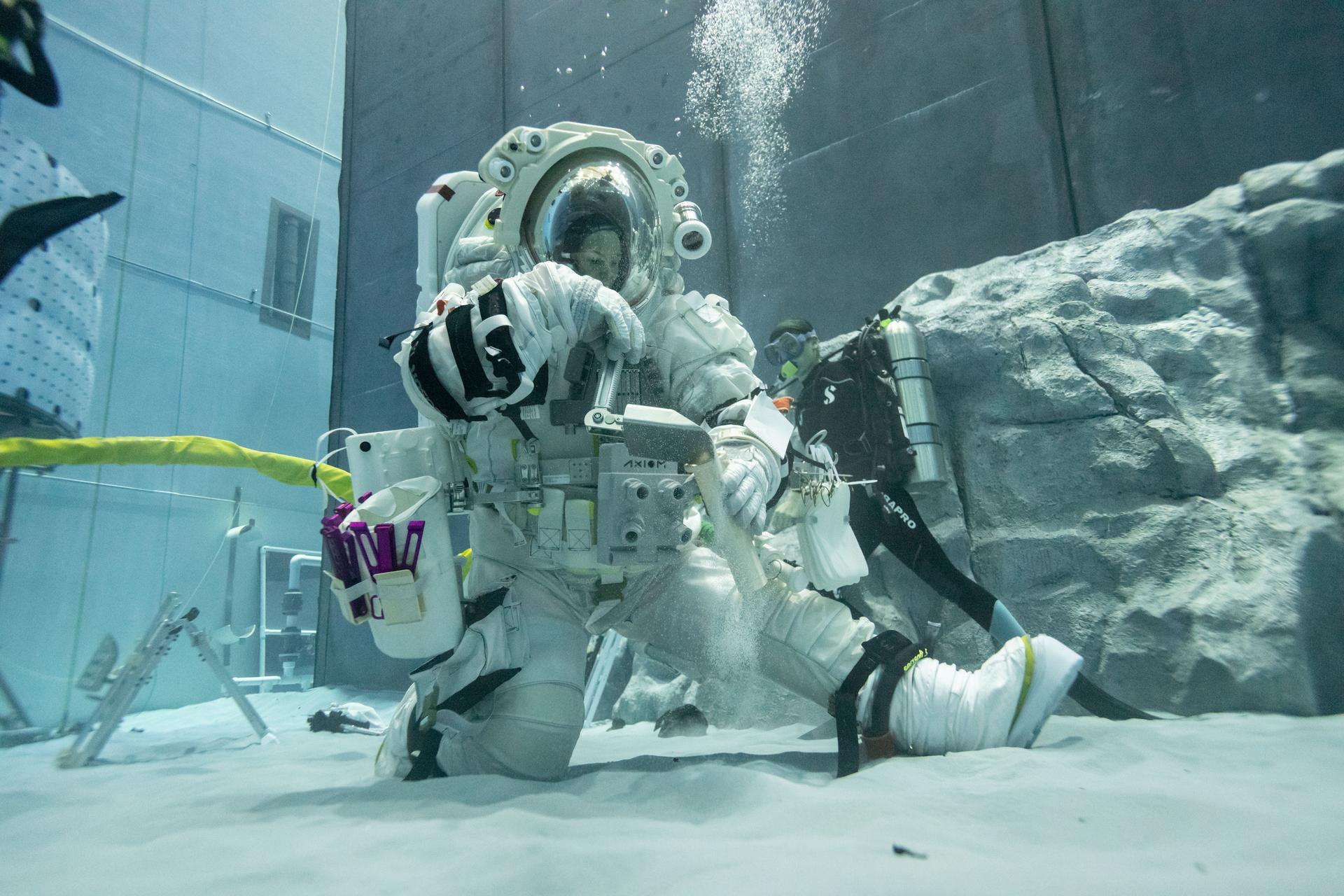
Canadian Space Agency astronaut Jenni Gibbons practices simulated lunar tasks under water while wearing Axiom Space’s lunar spacesuit at NASA’s Neutral Buoyancy Laboratory in Houston. During a recent test series, NASA engineers and crewmembers wore the lunar spacesuit under water and conducted numerous tasks during simulated lunar operations to test its mobility and functionality and ensure the spacesuit is prepped and ready for Artemis training.
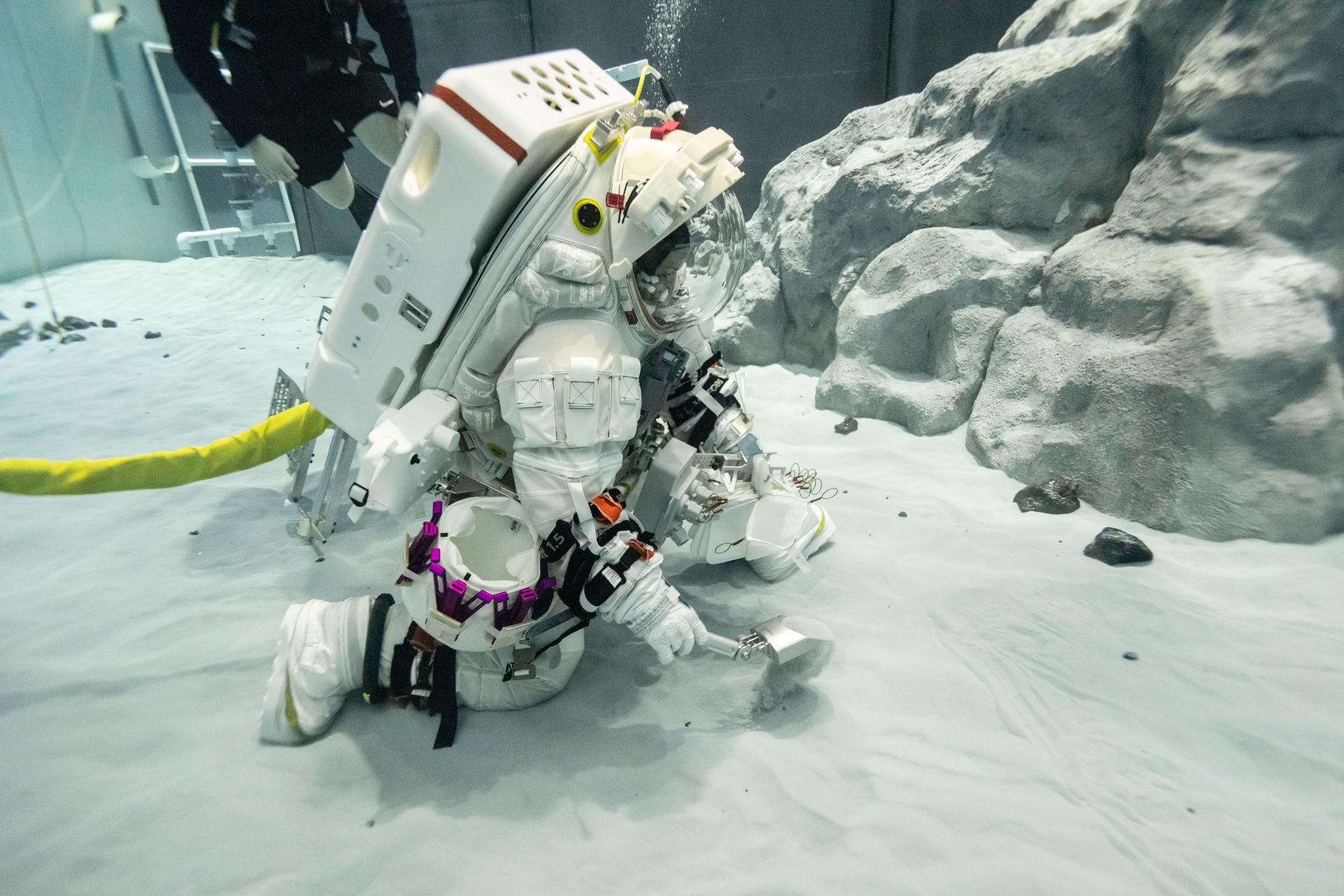
Canadian Space Agency astronaut Jenni Gibbons practices simulated lunar tasks under water while wearing Axiom Space’s lunar spacesuit at NASA’s Neutral Buoyancy Laboratory in Houston. During a recent test series, NASA engineers and crewmembers wore the lunar spacesuit under water and conducted numerous tasks during simulated lunar operations to test its mobility and functionality and ensure the spacesuit is prepped and ready for Artemis training.
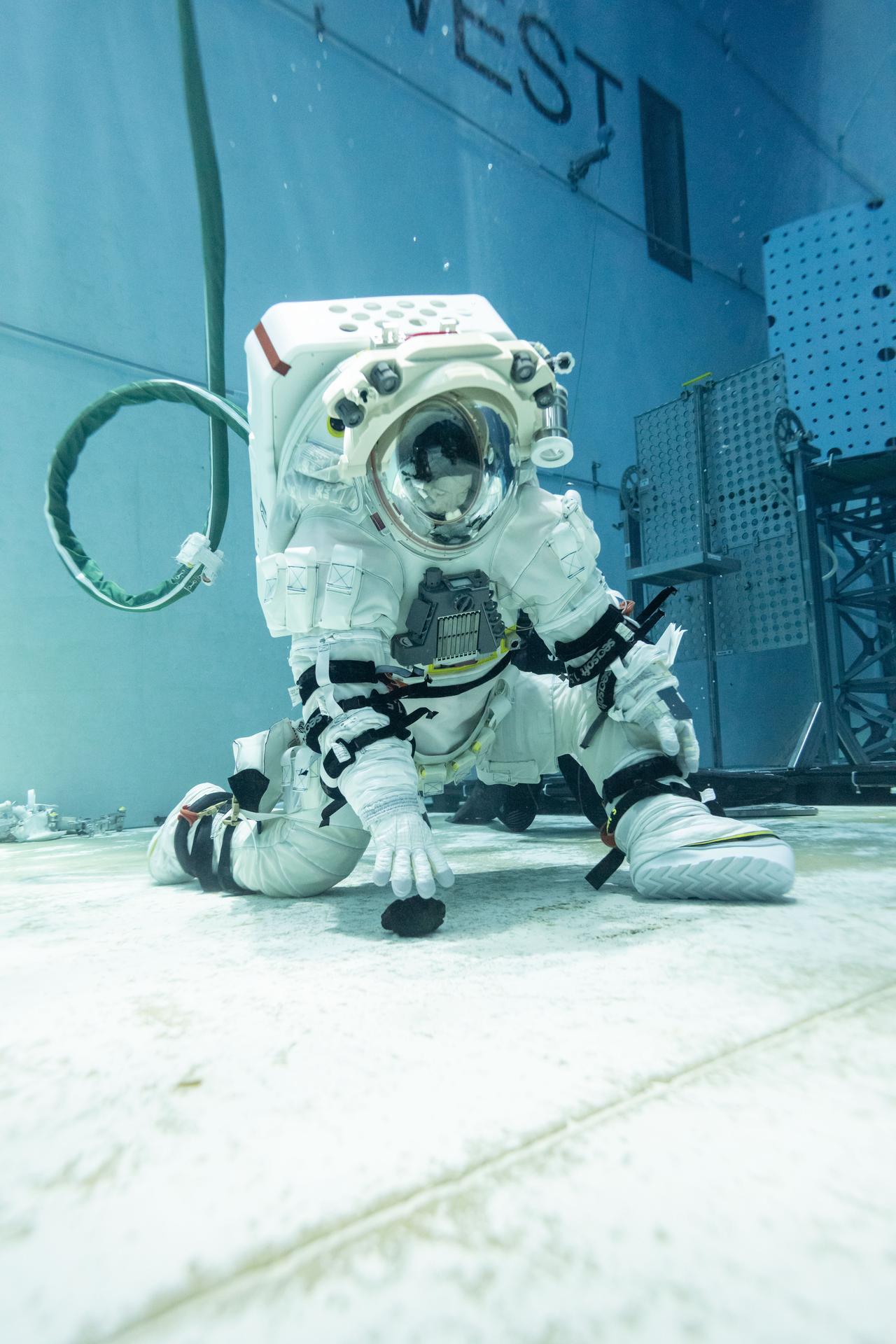
Canadian Space Agency astronaut Jenni Gibbons practices simulated lunar tasks under water while wearing Axiom Space’s lunar spacesuit at NASA’s Neutral Buoyancy Laboratory in Houston. During a recent test series, NASA engineers and crewmembers wore the lunar spacesuit under water and conducted numerous tasks during simulated lunar operations to test its mobility and functionality and ensure the spacesuit is prepped and ready for Artemis training.
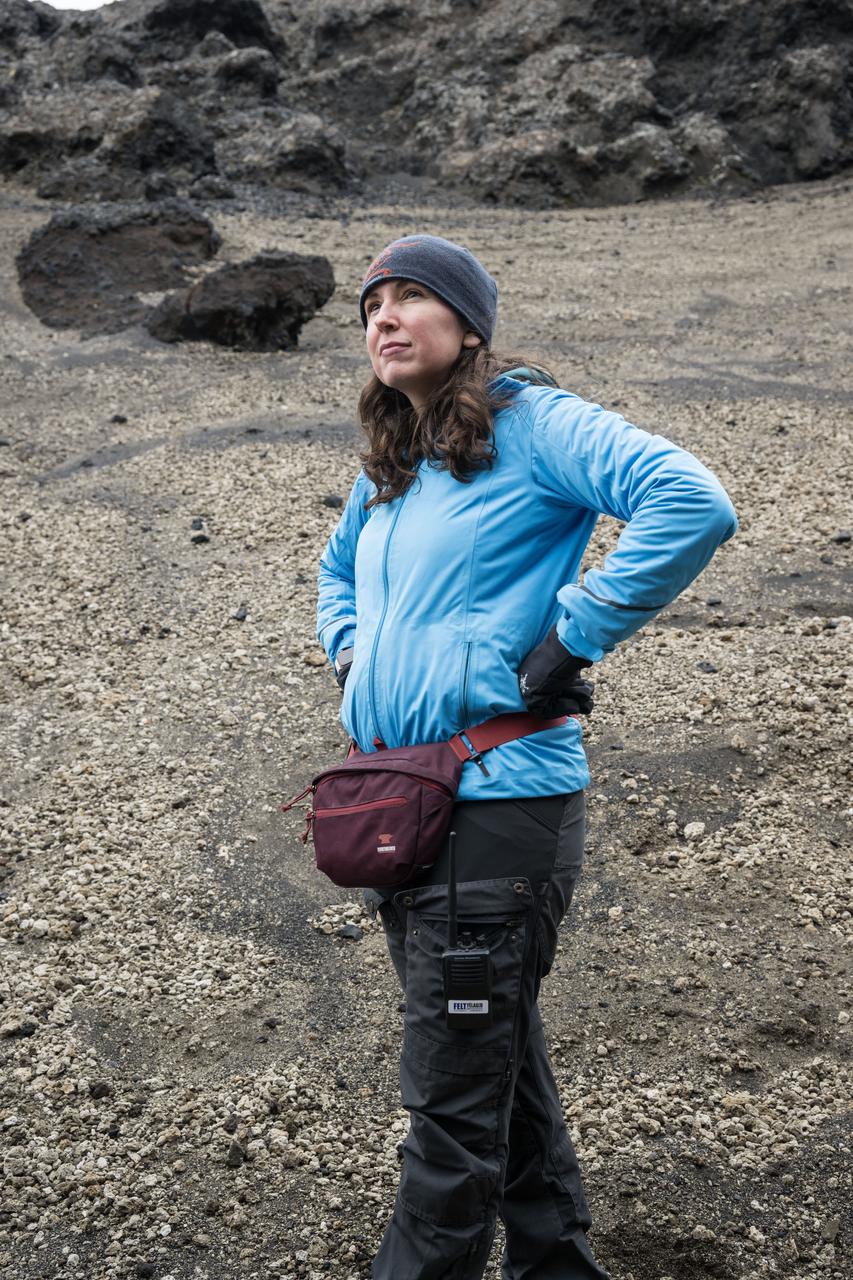
Lunar science lead for Artemis II and Artemis II science officer at NASA’s Goddard Space Flight Center in Greenbelt, Maryland, Kelsey Young, stands in the lunar-like landscape of Iceland during an Artemis II crew geology field training.
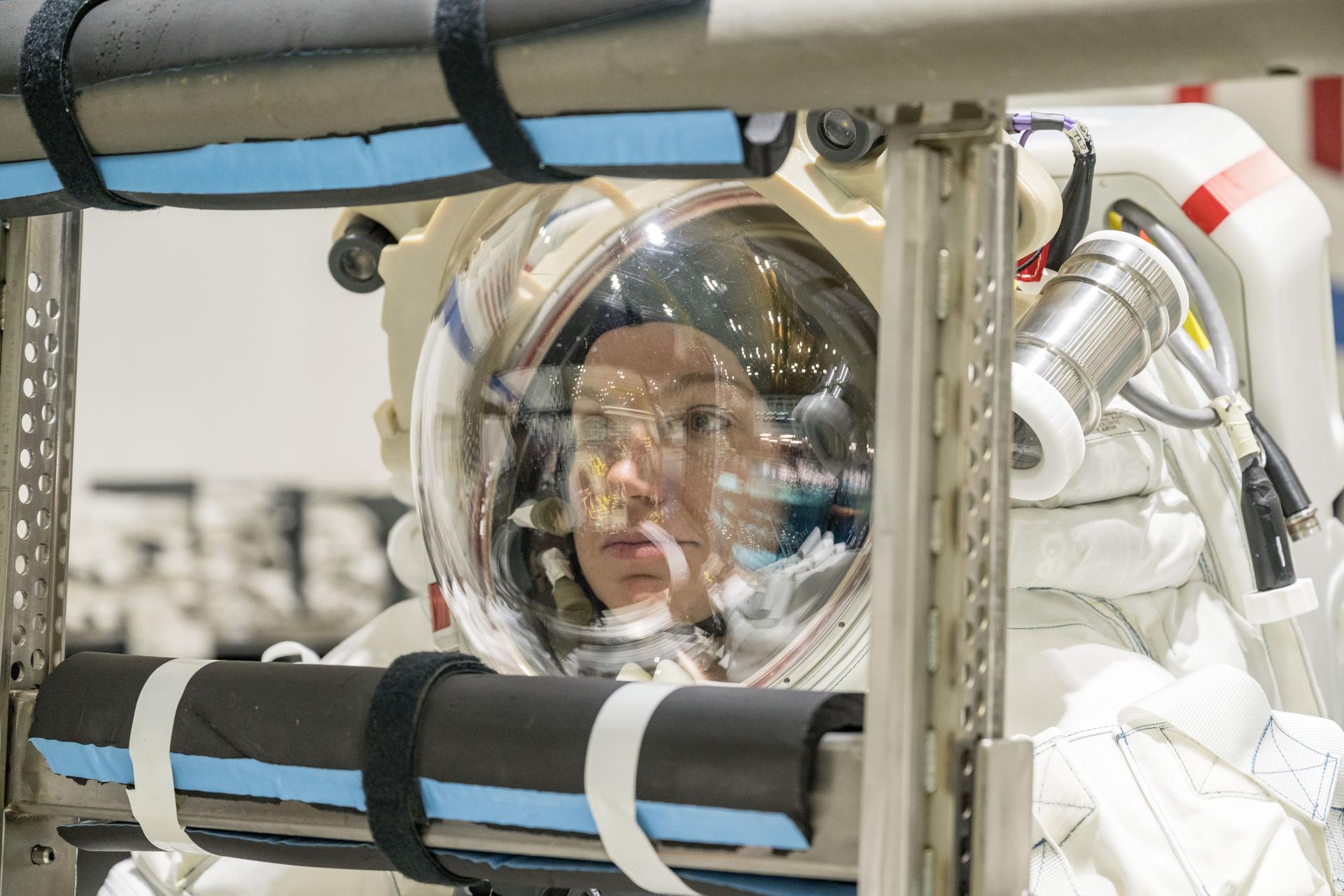
Canadian Space Agency astronaut Jenni Gibbons gets suited up in Axiom Space’s lunar spacesuit at NASA’s Neutral Buoyancy Laboratory in Houston. During a recent test series, NASA engineers and crewmembers wore the lunar spacesuit under water and conducted numerous tasks during simulated lunar operations to test its mobility and functionality and ensure the spacesuit is prepped and ready for Artemis training.
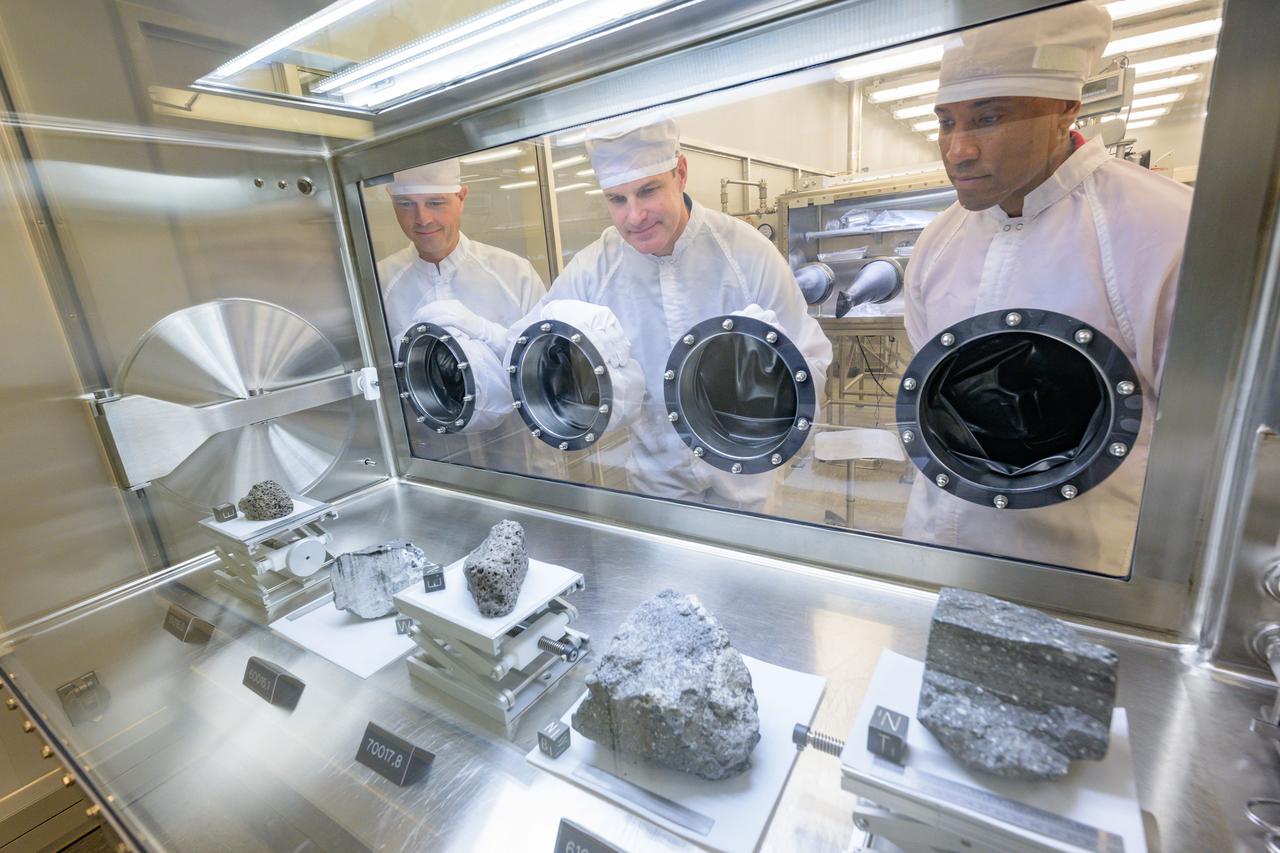
Three Artemis II crew members participate in lunar fundamentals training in the lunar lab at NASA's Johnson Space Center in Houston. Left to right: Reid Wiseman, Jeremy Hansen, Victor Glover. Photo Date: May 9, 2023. Location: Johnson Space Center Building 31 - Lunar Lab. Photographer: NASA?Robert Markowitz
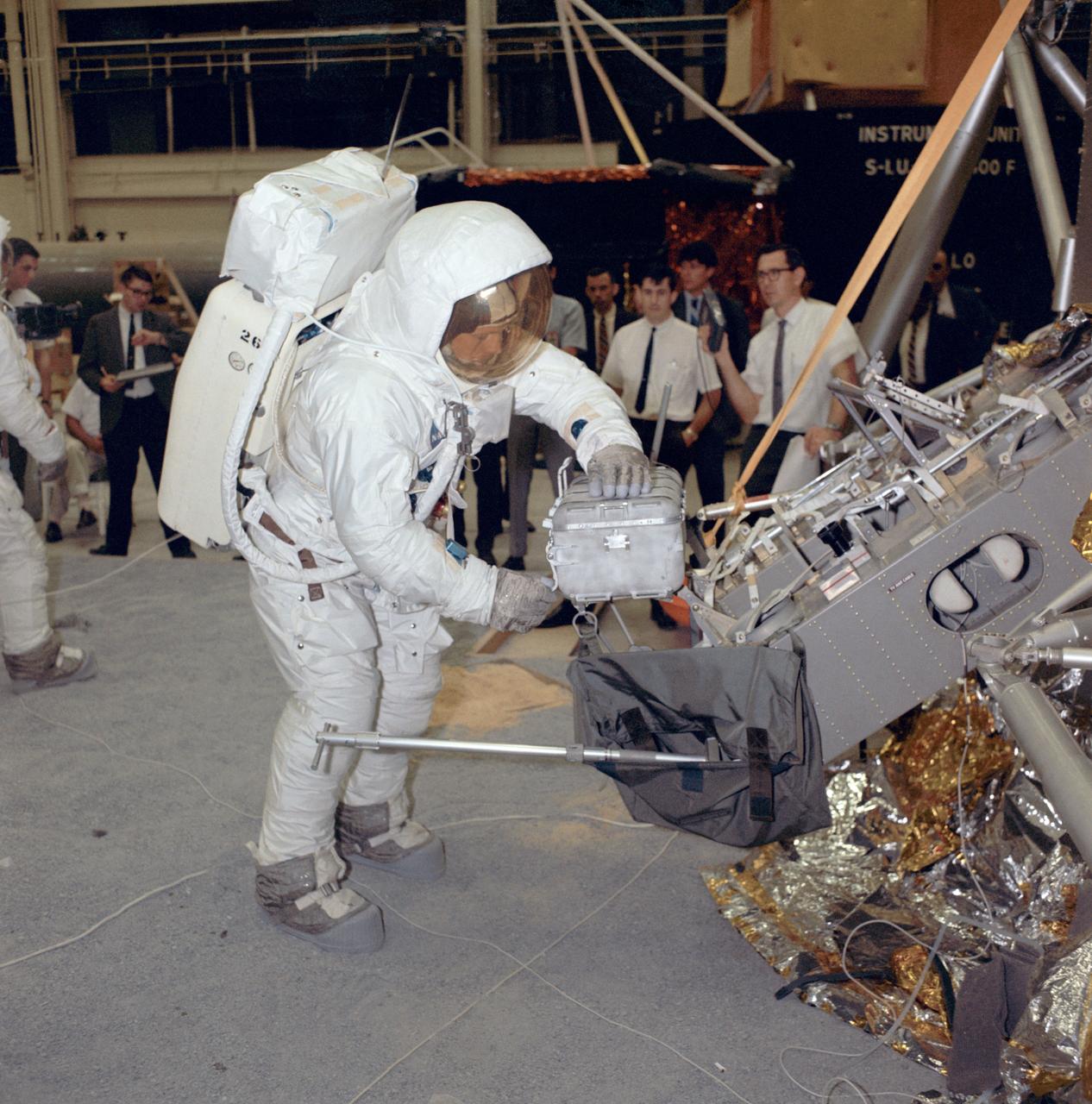
S69-31080 (18 April 1969) --- Suited astronaut Neil A. Armstrong, wearing an Extravehicular Mobility Unit (EMU), participates in lunar surface simulation training on April 18, 1969 in building 9, Manned Spacecraft Center (MSC). Armstrong is prime crew commander of the Apollo 11 lunar landing mission. Here, he is opening a sample return container. On the right is the Modular Equipment Stowage Assembly (MESA) and the Lunar Module (LM) mock-up.
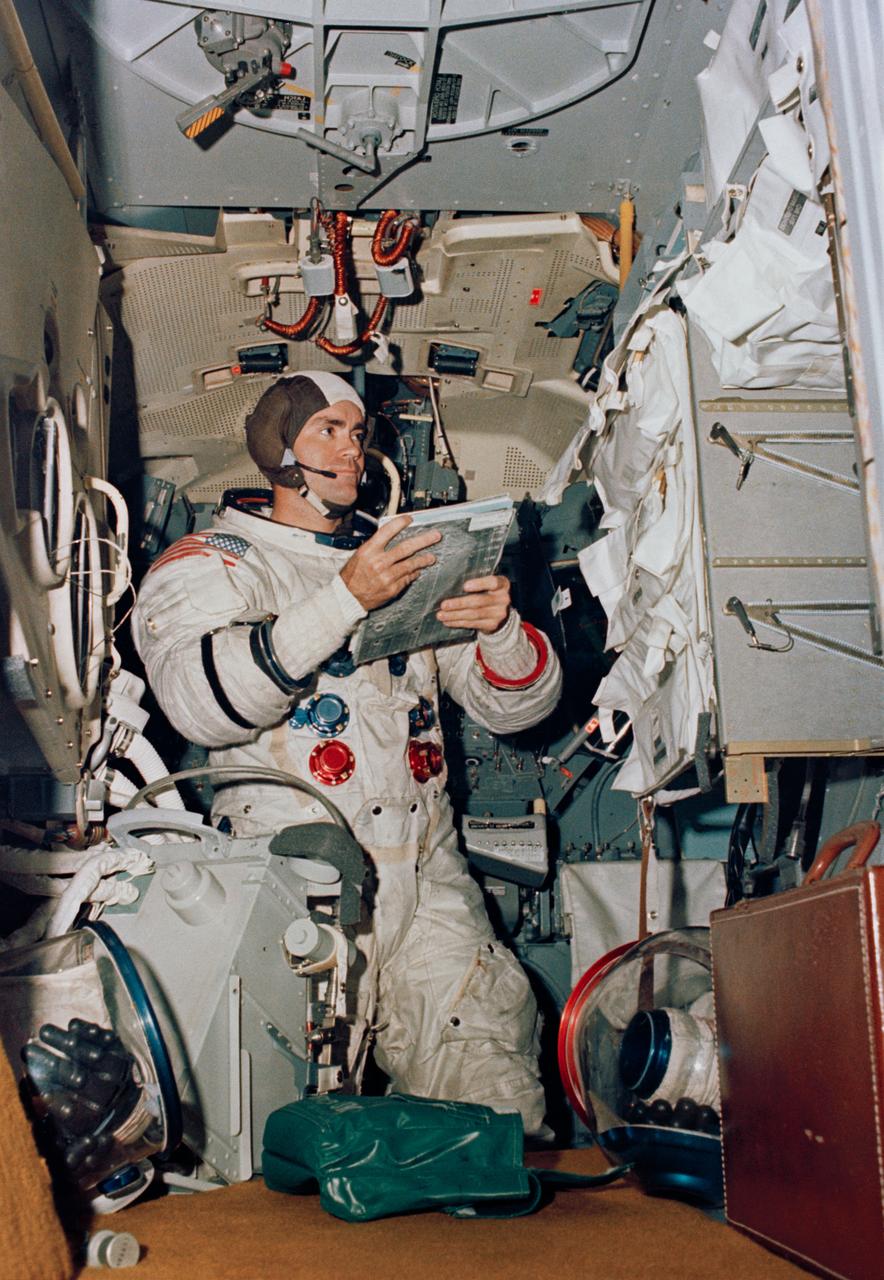
S70-34412 (4 April 1970) --- Astronaut Fred W. Haise Jr., Apollo 13 lunar module pilot, participates in simulation training in preparation for the scheduled lunar landing mission. He is in the Apollo Lunar Module Mission Simulator in the Kennedy Space Center's Flight Crew Training building.
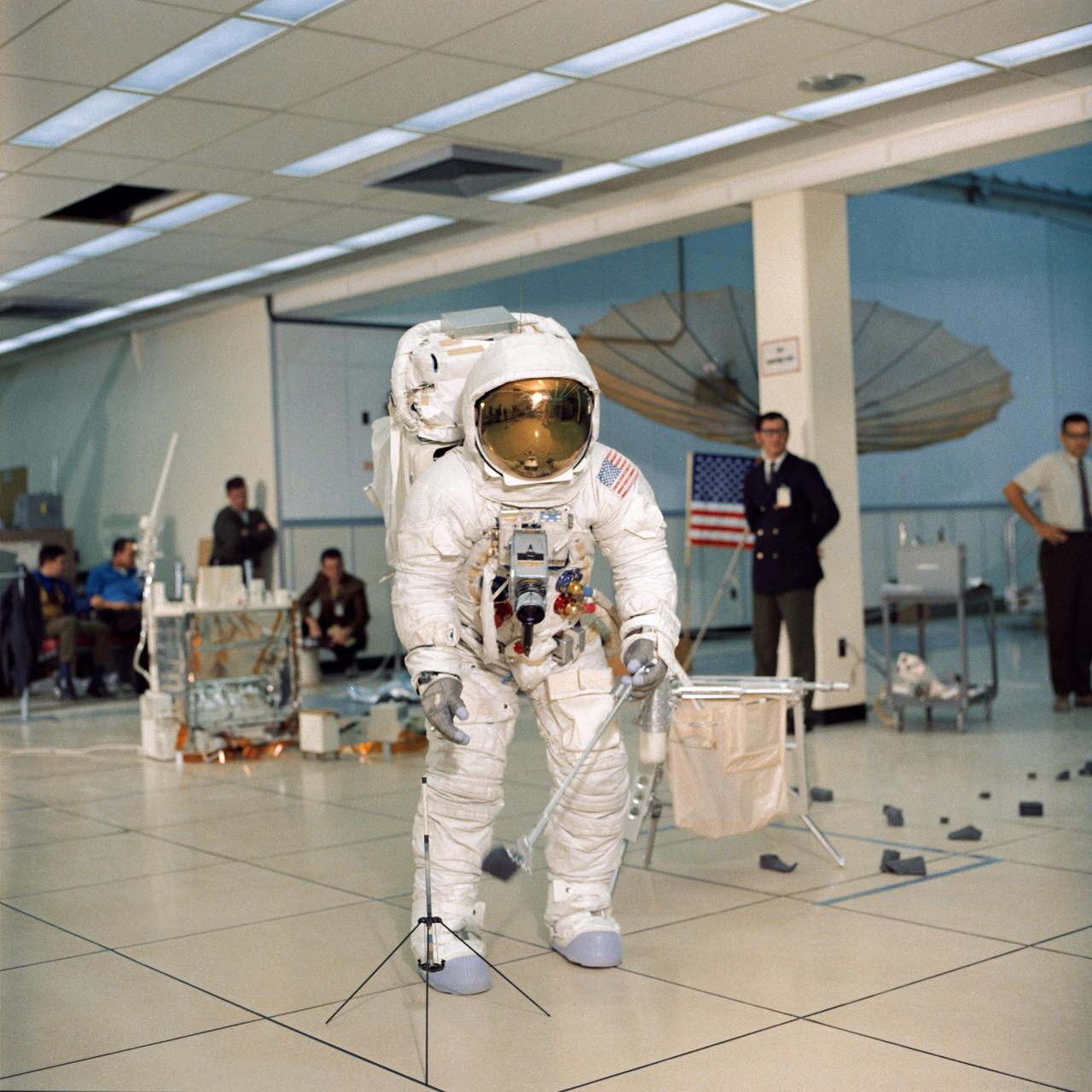
S70-27037 (4 Feb. 1970) --- Astronaut James A. Lovell Jr., commander of the Apollo 13 lunar landing mission, simulates lunar surface extravehicular activity during training exercises in the Kennedy Space Center’s Flight Crew Training Building. Lovell, wearing an Extravehicular Mobility Unit (EMU), is holding an Apollo Lunar Hand Tool (a set of tongs) in his left hand. A gnomon is in front of his right foot. A tool carrier is in the right background.
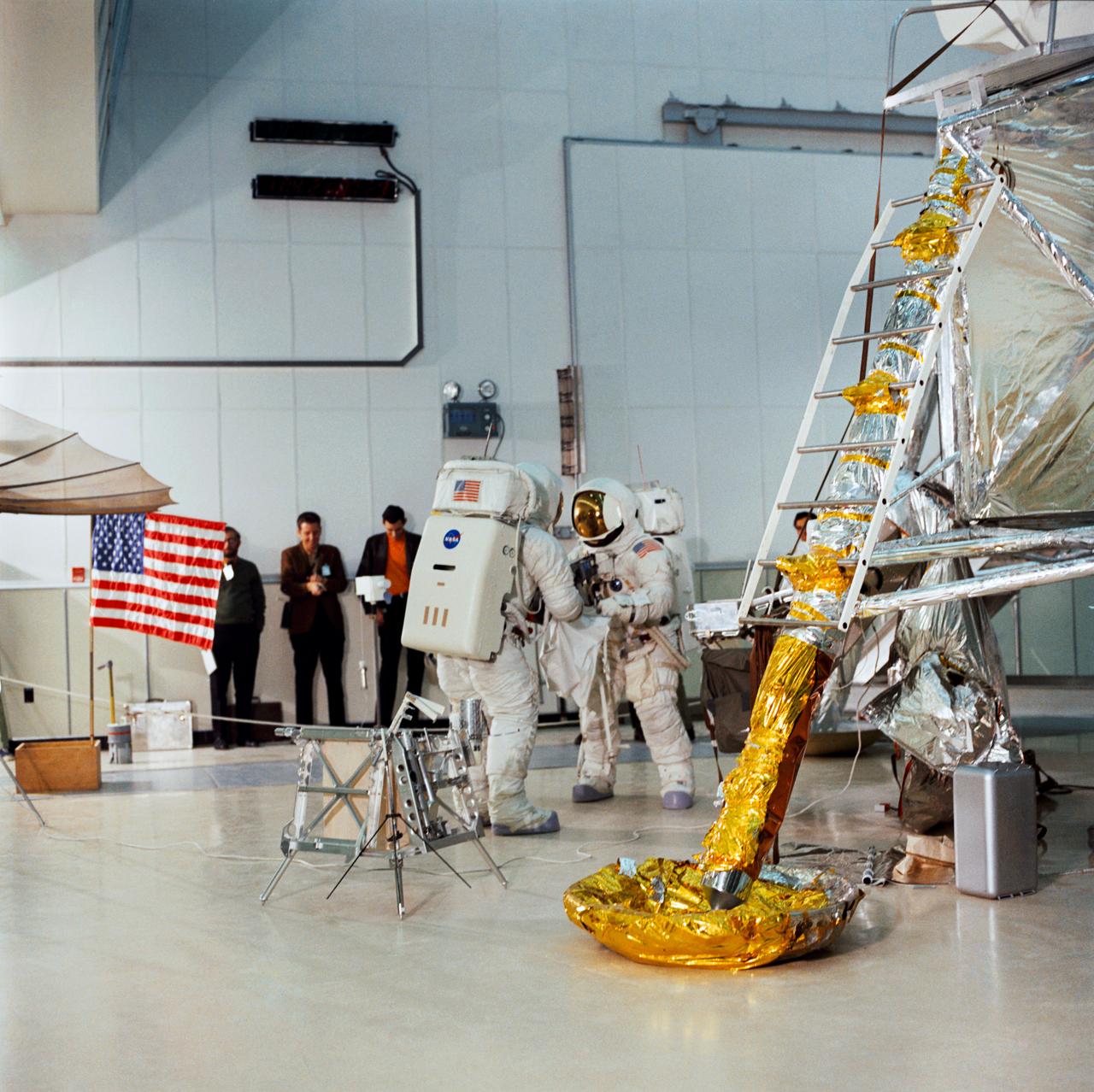
S70-27038 (4 Feb. 1970) --- Two crew men of the Apollo 13 lunar landing mission simulate lunar surface Extravehicular Activity (EVA) during training exercises in the Kennedy Space Center's (KSC) Flight Crew Training Building. They are astronauts James A. Lovell Jr. (on left, back to camera) commander; and Fred W. Haise Jr., lunar module pilot.
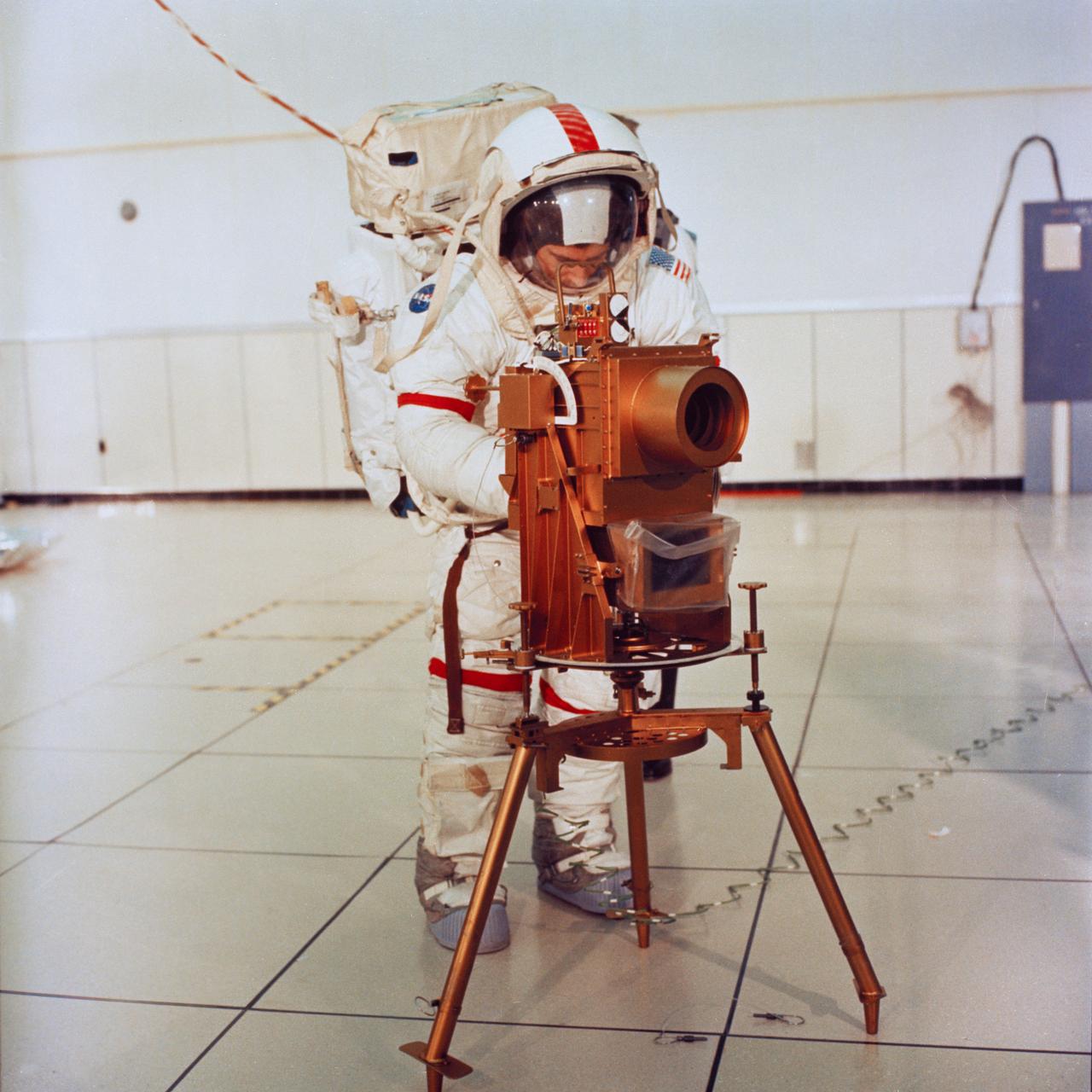
S72-19739 (22 Dec. 1972) --- Astronaut John W. Young, commander of the Apollo 16 lunar landing mission, participates in lunar surface extravehicular activity (EVA) training in the Flight Crew Training Building at the Kennedy Space Center (KSC). Young adjusts a training model of a Far Ultraviolet Camera/Spectroscope, an instrument which will be emplaced on the moon during the Apollo 16 EVA. Deep-space sources of hydrogen in interplanetary, interstellar and intergalactic regions will be mapped by this instrument which gathers both photographic images and spectroscope data in the far ultraviolet spectrum. This experiment will be the first such astronomical observation emplaced on the lunar surface.
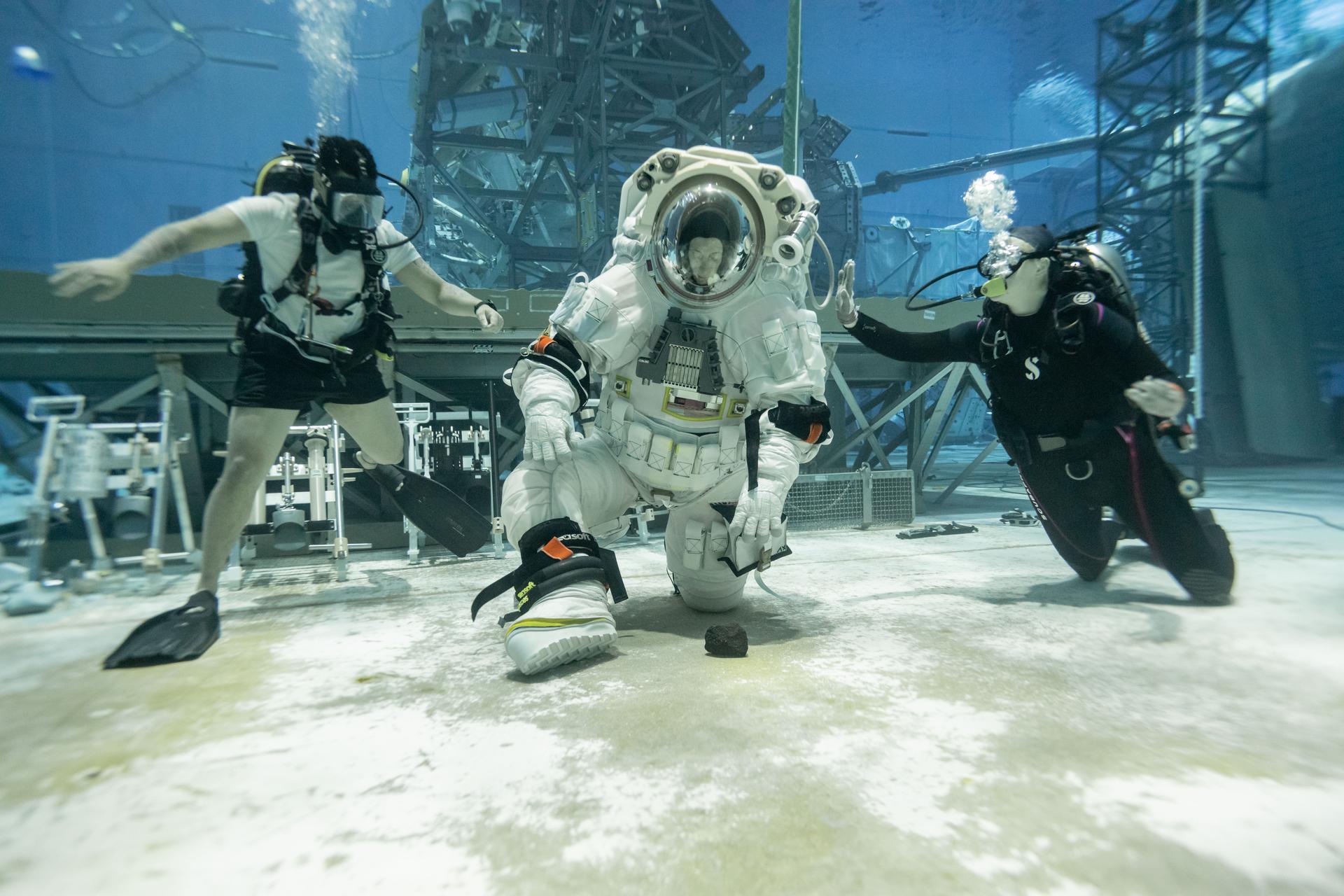
NASA astronaut Loral O’Hara kneels to pick up a rock while testing the mobility of Axiom Space’s lunar spacesuit. NASA and Axiom Space teams held the first dual spacesuit run at the Neutral Buoyancy Laboratory in Houston on September 24, 2025 with NASA Astronauts Stan Love and Loral O’Hara wearing Axiom Space’s lunar spacesuit, called the Axiom Extravehicular Mobility Unit (AxEMU). This was the final integration test in the pool, proving both the spacesuit and facility are prepped and ready for Artemis training.
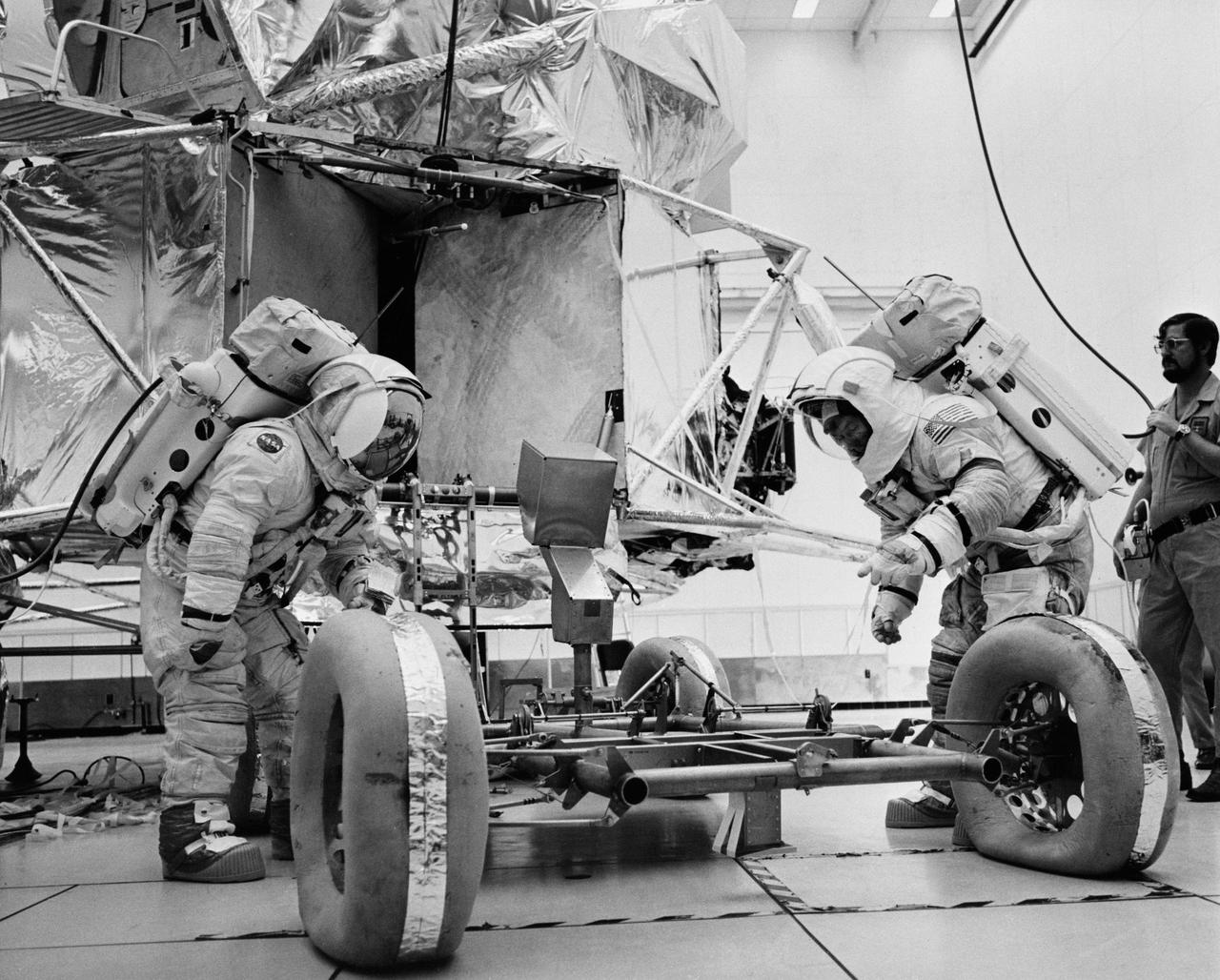
S72-44423 (8 Sept. 1972) --- Two Apollo 17 crewmen ready a Lunar Roving Vehicle trainer following its deployment from a Lunar Module trainer in the Flight Crew Training Building at the Kennedy Space Center, Florida. Taking part in the Apollo 17 training exercise were astronauts Eugene A. Cernan (right), commander; and Harrison H. "Jack" Schmitt, lunar module pilot.
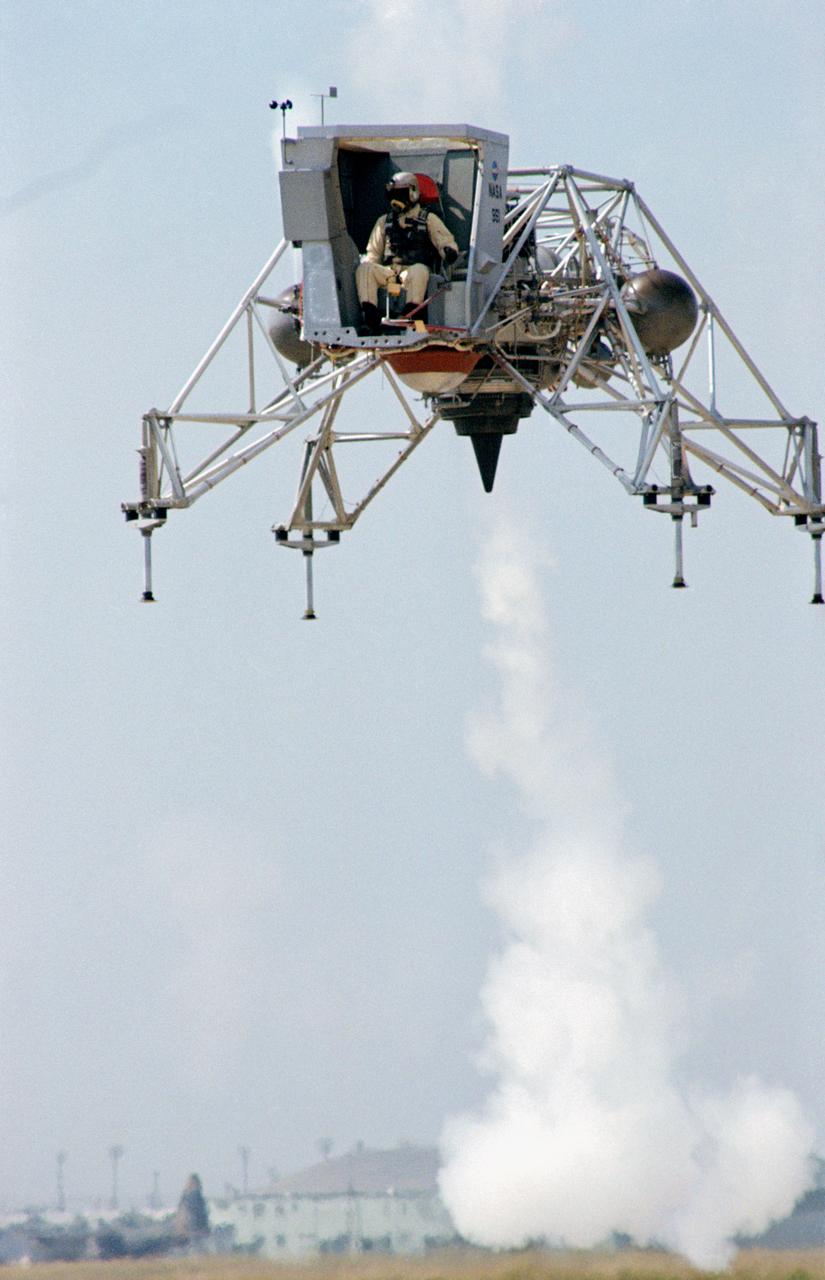
S69-56058 (25 Oct. 1969) --- Astronaut Charles Conrad Jr., commander of the Apollo 12 lunar landing mission, sits in the cockpit of a Lunar Landing Training Vehicle (LLTV) during a lunar simulation flight at Ellington Air Force Base. The LLTV is used to train Apollo crews in lunar landing techniques.
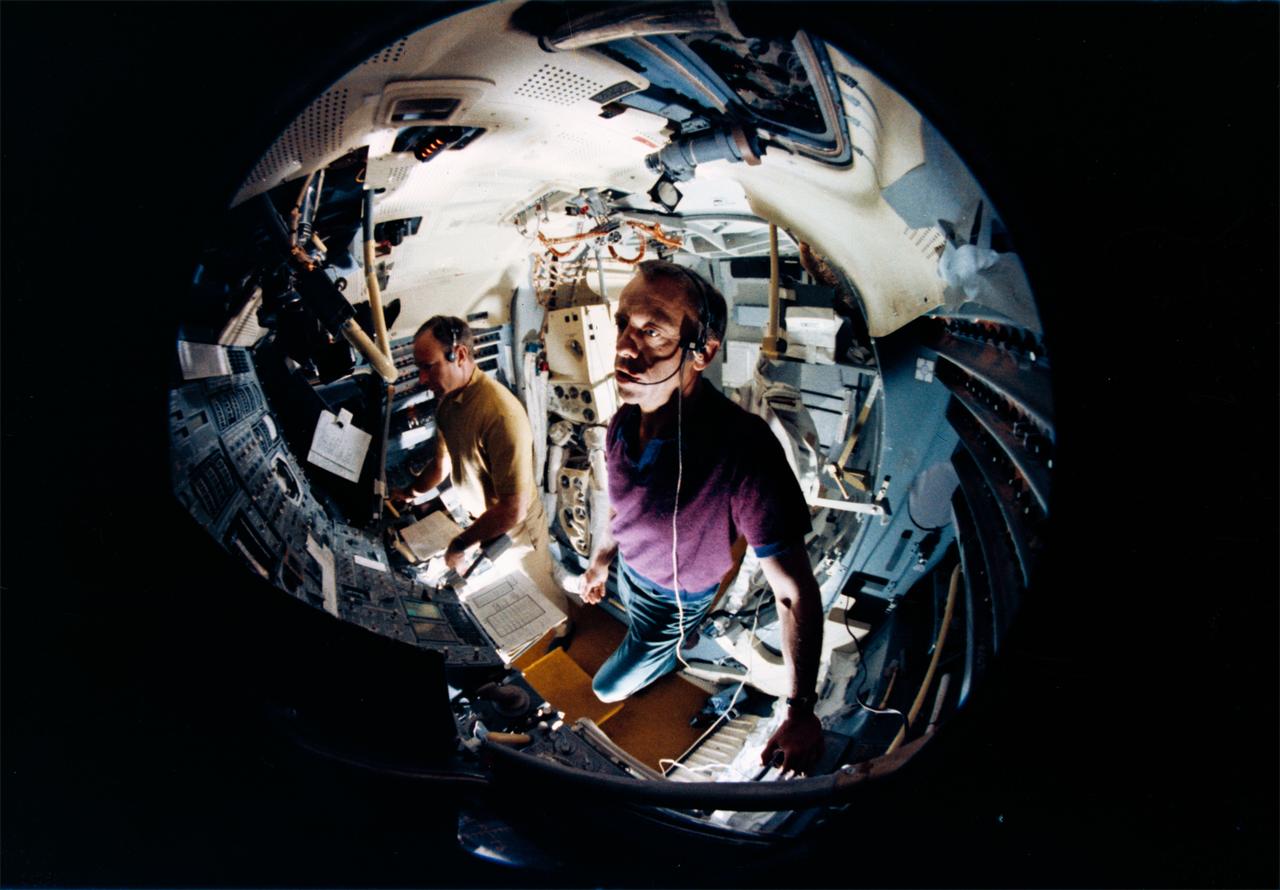
S70-45555 (July 1970) --- A fish-eye lens view showing astronauts Alan B. Shepard Jr. (foreground) and Edgar D. Mitchell in the Apollo lunar module mission simulator at the Kennedy Space Center during preflight training for the Apollo 14 lunar landing mission. Shepard is the Apollo 14 commander; and Mitchell is the lunar module pilot.
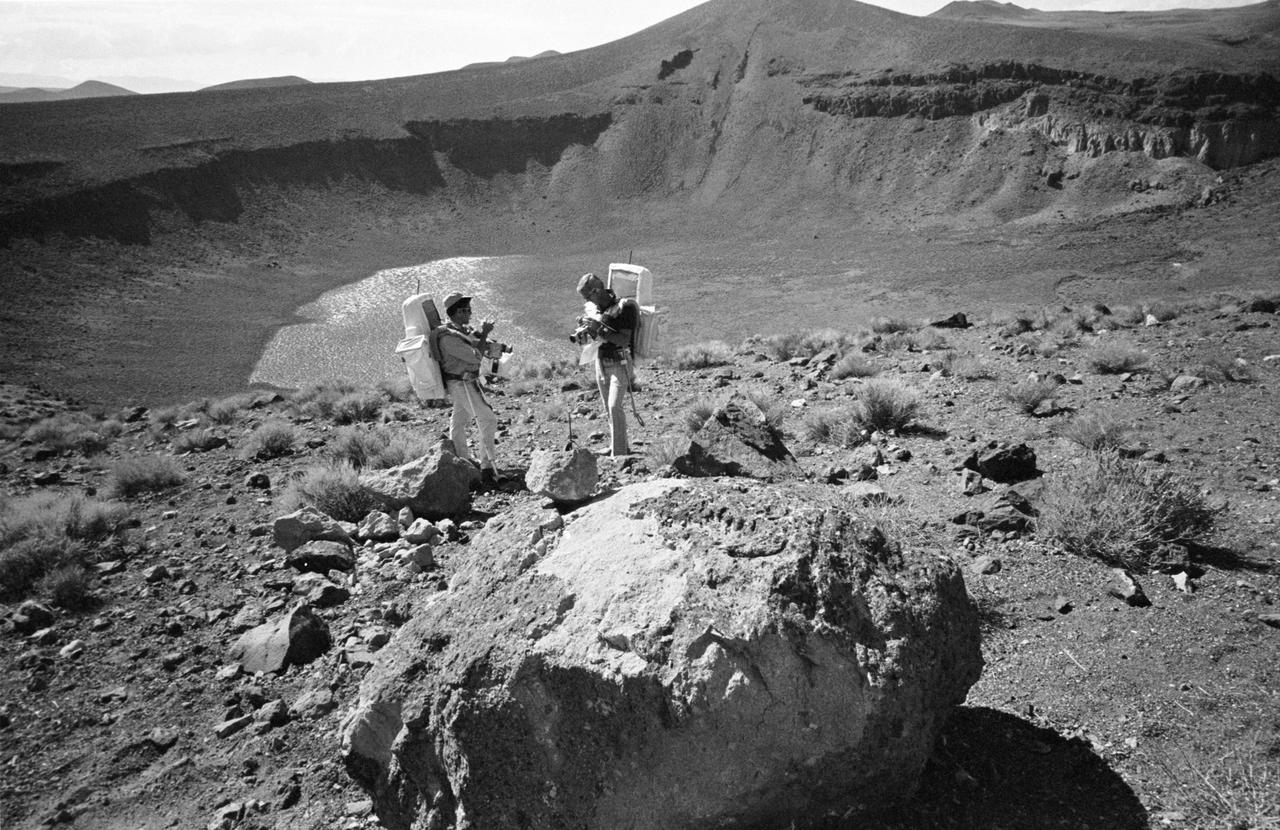
S72-48854 (6 Sept. 1972) --- Two members of the prime crew of the Apollo 17 lunar landing mission examine rock specimens during lunar surface extravehicular activity simulation training on a geological field trip to the Pancake Range area of south-central Nevada. They are astronaut Eugene A. Cernan (right), commander; and scientist-astronaut Harrison H. Schmitt, lunar module pilot. They are standing on the rim of Lunar Crater, which is about 600 feet deep and five-eighths of a mile in diameter. It is a volcanic crater.
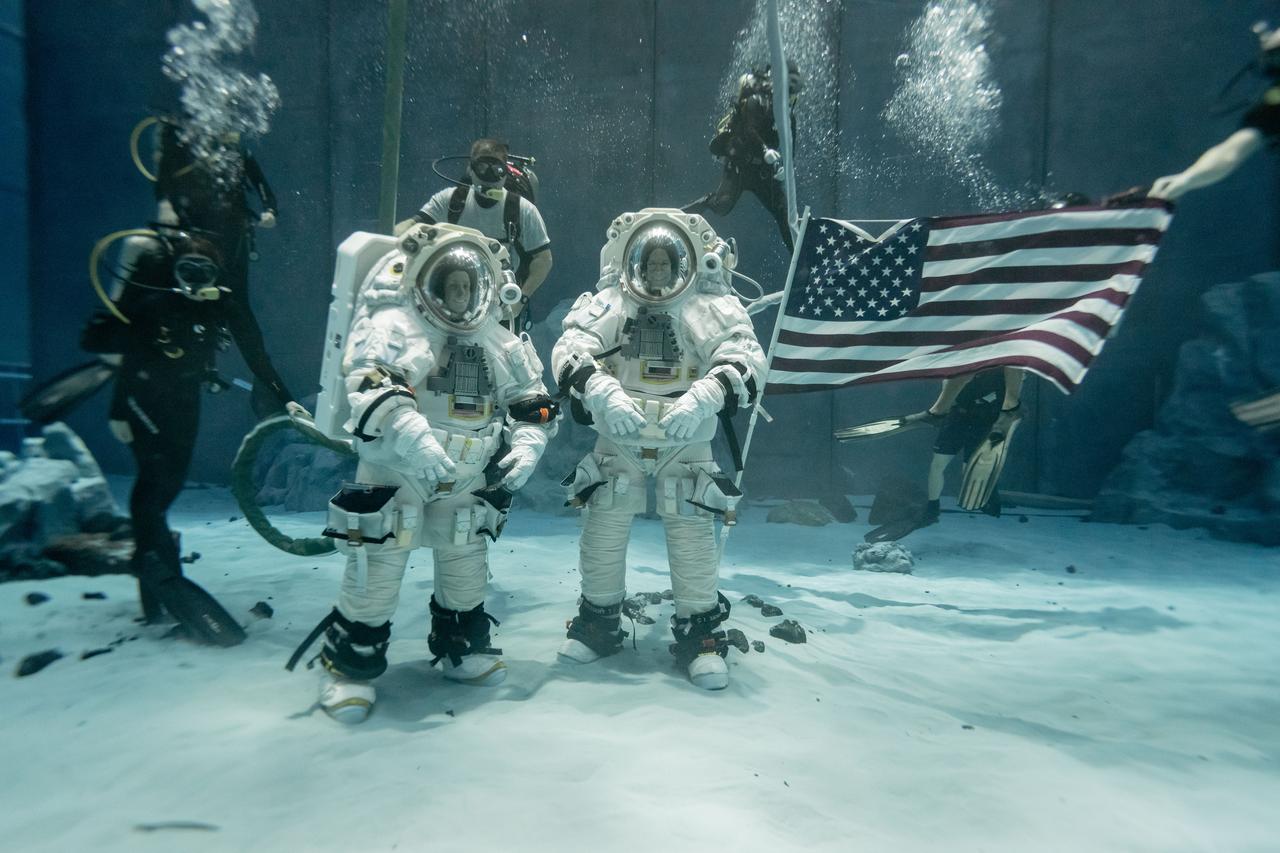
NASA astronauts Loral O’Hara (left) and Stan Love (right) pose for a photo during the first dual spacesuit run at NASA’s Neutral Buoyancy Laboratory while wearing Axiom Space’s lunar spacesuits. NASA and Axiom Space teams held the first dual spacesuit run at the Neutral Buoyancy Laboratory in Houston on September 24, 2025 with NASA Astronauts Stan Love and Loral O’Hara wearing Axiom Space’s lunar spacesuit, called the Axiom Extravehicular Mobility Unit (AxEMU). This was the final integration test in the pool, proving both the spacesuit and facility are prepped and ready for Artemis training.
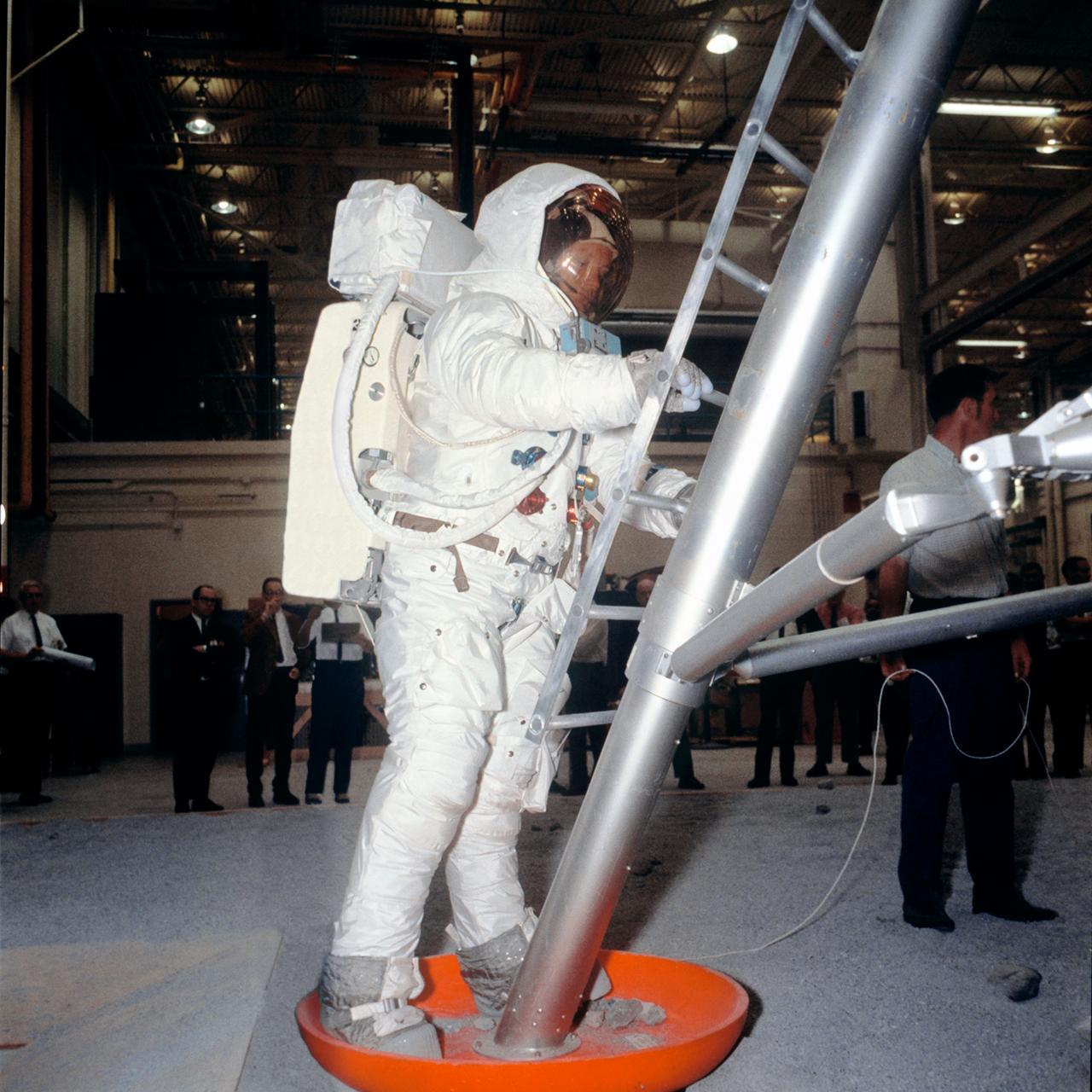
S69-31042 (18 April 1969) --- Suited astronaut Neil A. Armstrong, wearing an Extravehicular Mobility Unit (EMU), participates in lunar surface simulation training on April 18, 1969, in Building 9, Manned Spacecraft Center (MSC). Armstrong is the prime crew commander of the Apollo 11 lunar landing mission. Here, he is standing on Lunar Module (LM) mockup foot pad preparing to ascend steps.
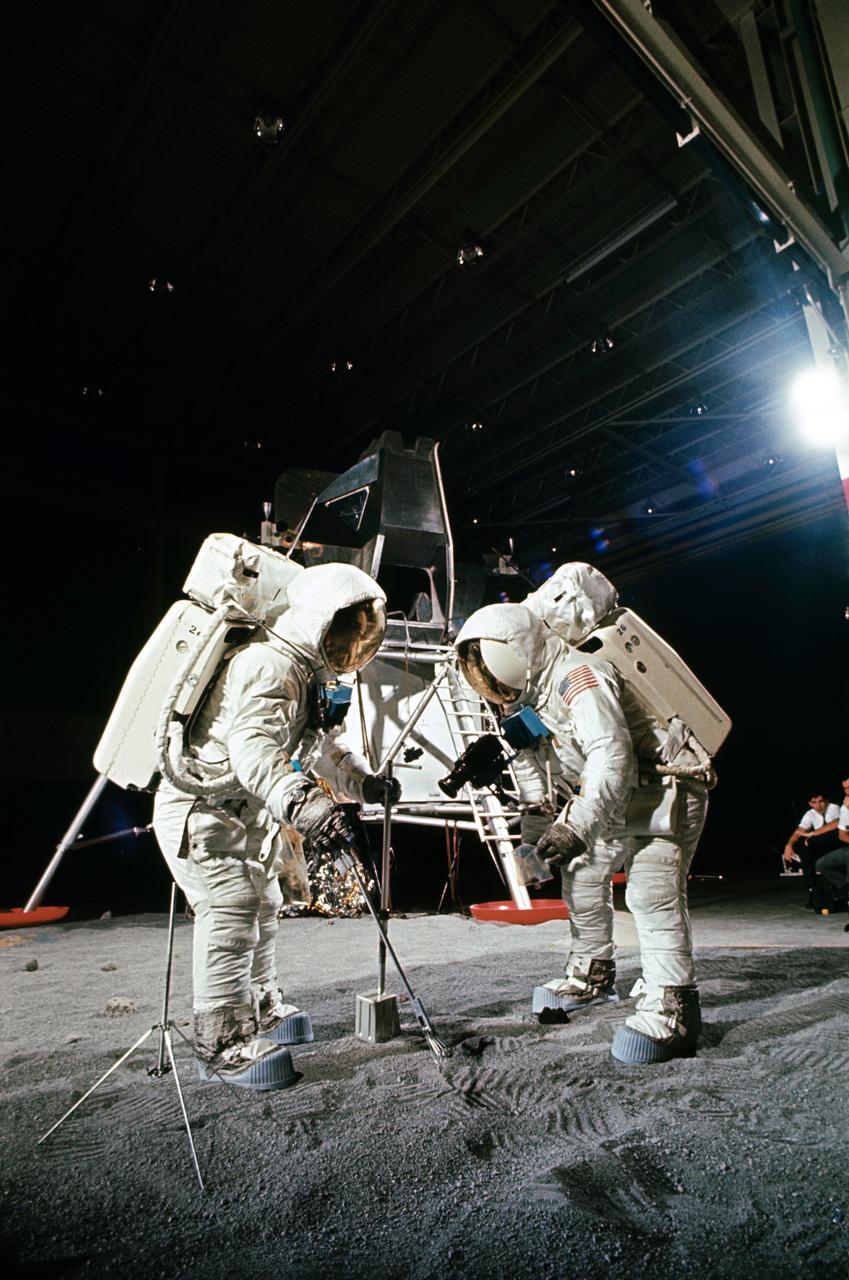
Two members of the Apollo 11 lunar landing mission participate in a simulation of deploying and using lunar tools on the surface of the moon during a training exercise in bldg 9 on April 22, 1969. Astronaut Edwin E. Aldrin Jr. (on left), lunar module pilot, uses scoop and tongs to pick up sample. Astronaut Neil A. Armstrong, Apollo 11 commander, holds bag to receive sample. In the background is a Lunar Module mockup. Both men are wearing Extravehicular Mobility Units (EMU).
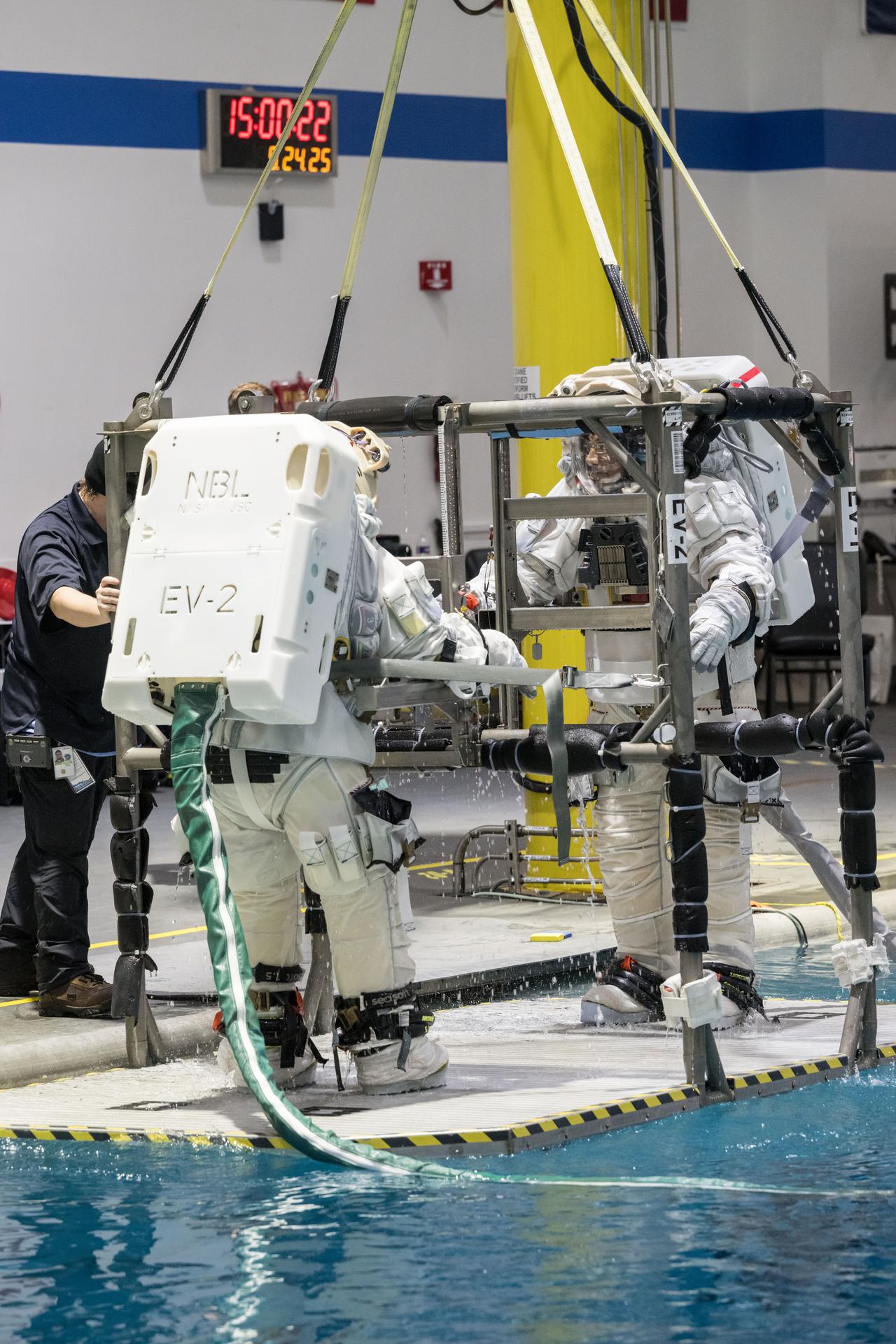
NASA and Axiom Space teams held the first dual spacesuit run at the Neutral Buoyancy Laboratory in Houston on September 24, 2025 with NASA Astronauts Stan Love and Loral O’Hara wearing Axiom Space’s lunar spacesuit, called the Axiom Extravehicular Mobility Unit (AxEMU). This was the final integration test in the pool, proving both the spacesuit and facility are prepped and ready for Artemis training.
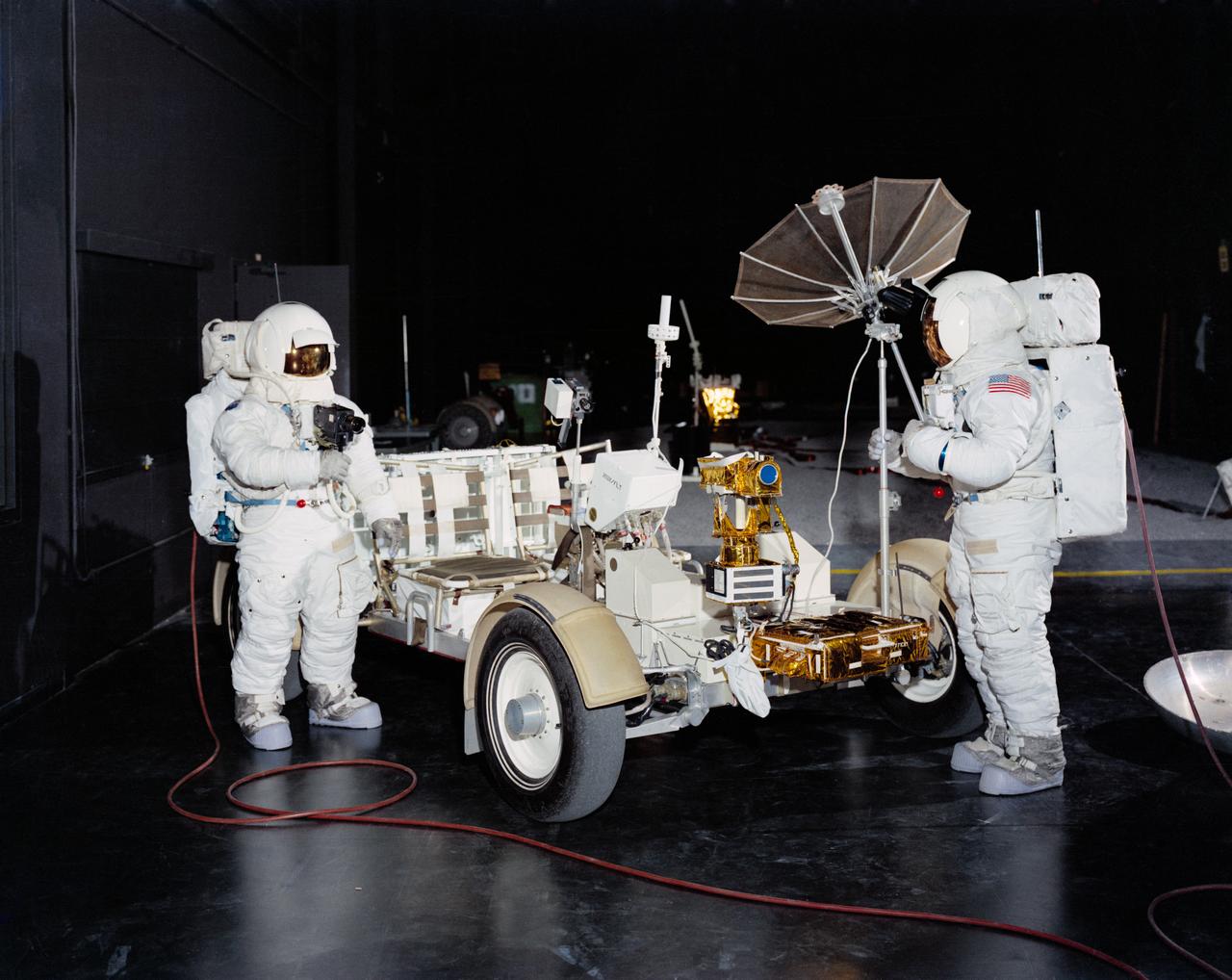
S71-16722 (January 1971) --- Two members of the prime crew of the Apollo 15 lunar landing mission are shown with the Lunar Roving Vehicle "one G" trainer in Building 5, Mission Simulation and Training Facility, Manned Spacecraft Center. Astronaut David R. Scott (on right) is the Apollo 15 commander; and astronaut James B. Irwin is the lunar module pilot. A Lunar Roving Vehicle similar to this trainer will be used by Scott and Irwin during their Apollo 15 lunar surface extravehicular activity.
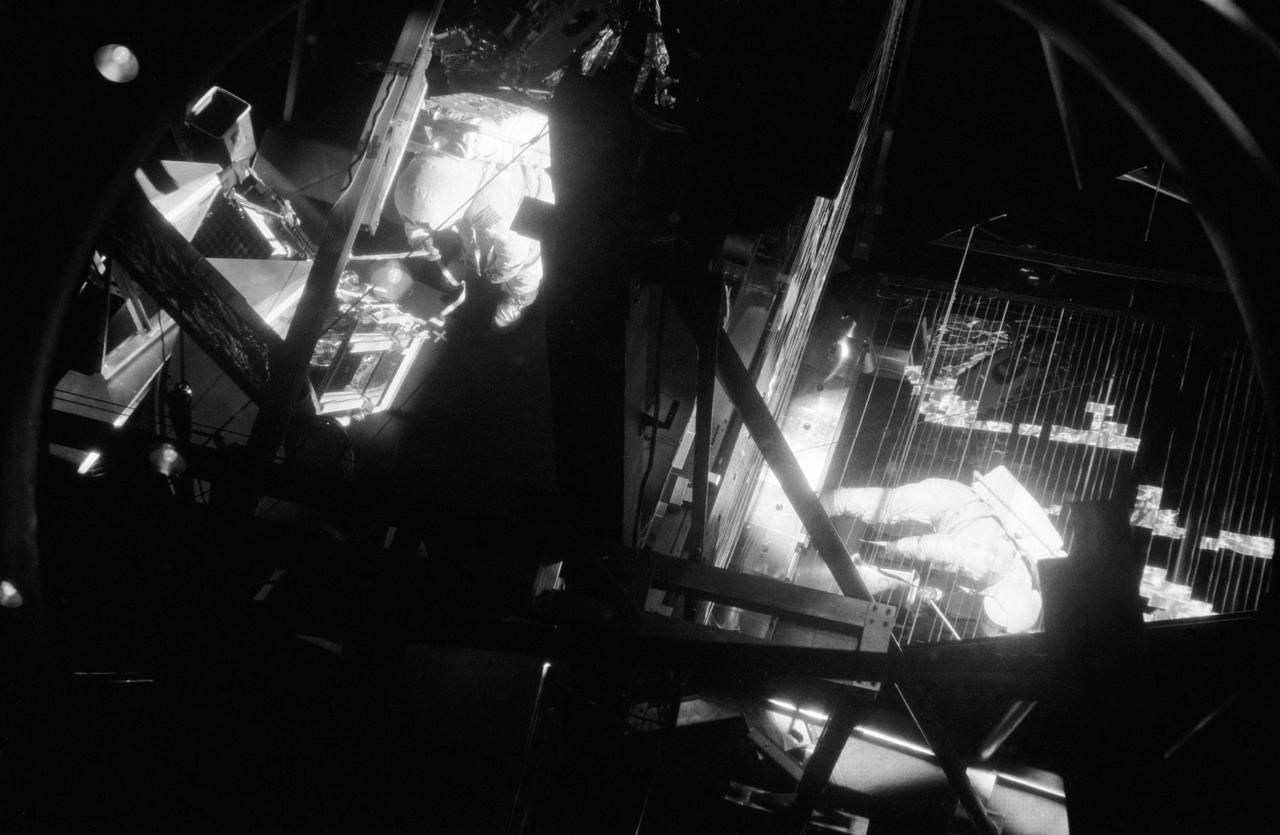
Astronaut Neil A. Armstrong, commander of the Apollo 11 lunar landing mission, is photographed during thermovacuum training in Chamber B of the Space Environment Simulation Laboratory, Building 32, Manned Spacecraft Center. He is wearing an Extravehicular Mobility Unit. The training simulated lunar surface vacuum and thermal conditions during astronaut operations outside the Lunar Module on the moon's surface. The mirror was used to reflect solar light.
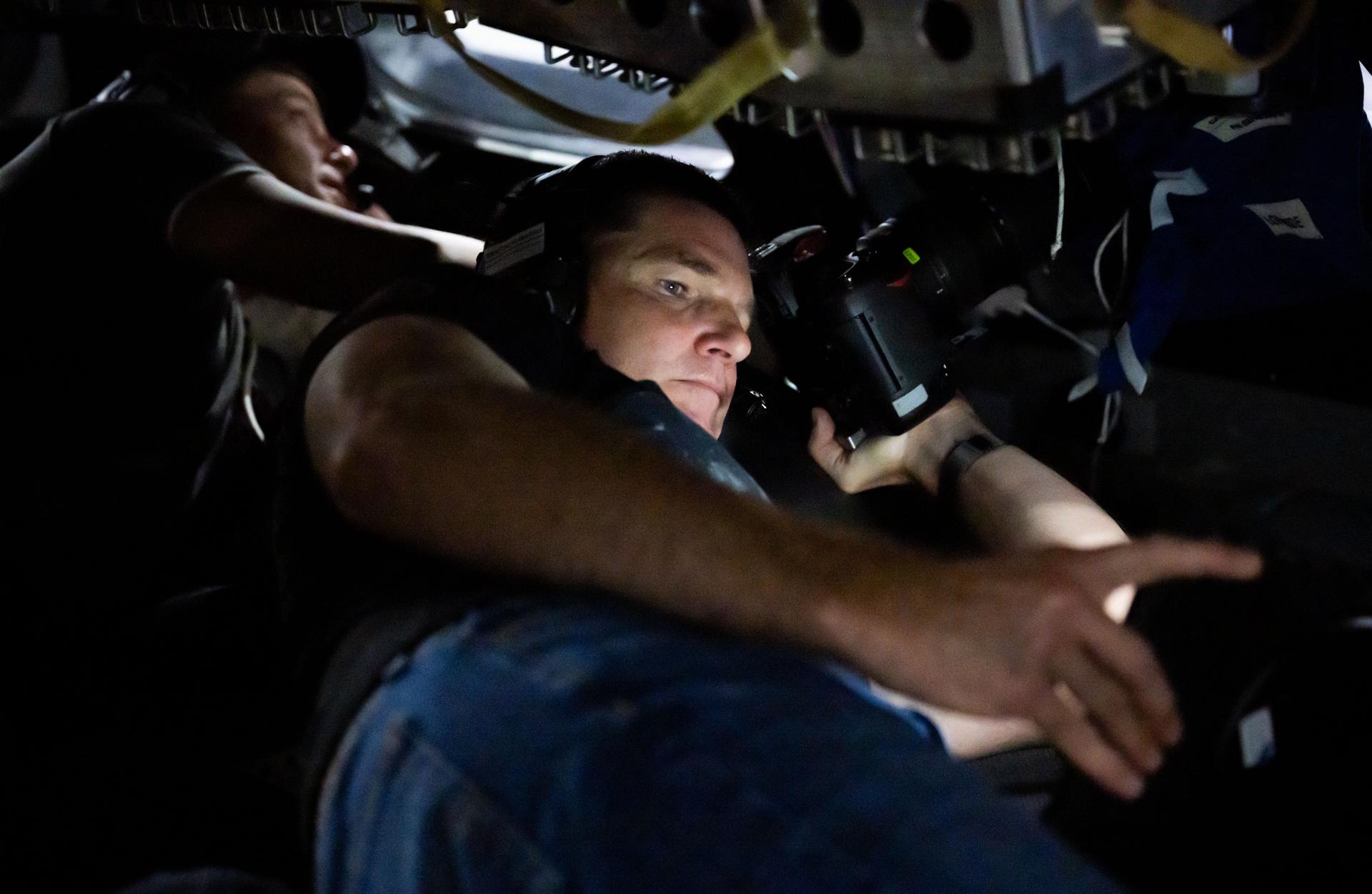
jsc2025e064791 --- CSA (Canadian Space Agency) astronaut Jeremy Hansen, mission specialist for NASA’s Artemis II mission, foreground, and NASA astronaut and Artemis II commander, Reid Wiseman, participate in crew lunar observations training in the Orion mockup at NASA's Johnson Space Center in Houston. The Artemis II crew will be the first people in more than 50 years to set eyes on the far side of the Moon, depending on illumination conditions. They will document their observations through photographs, audio recordings, and more to inform our understanding of the Moon, and share their experience of being far from Earth.
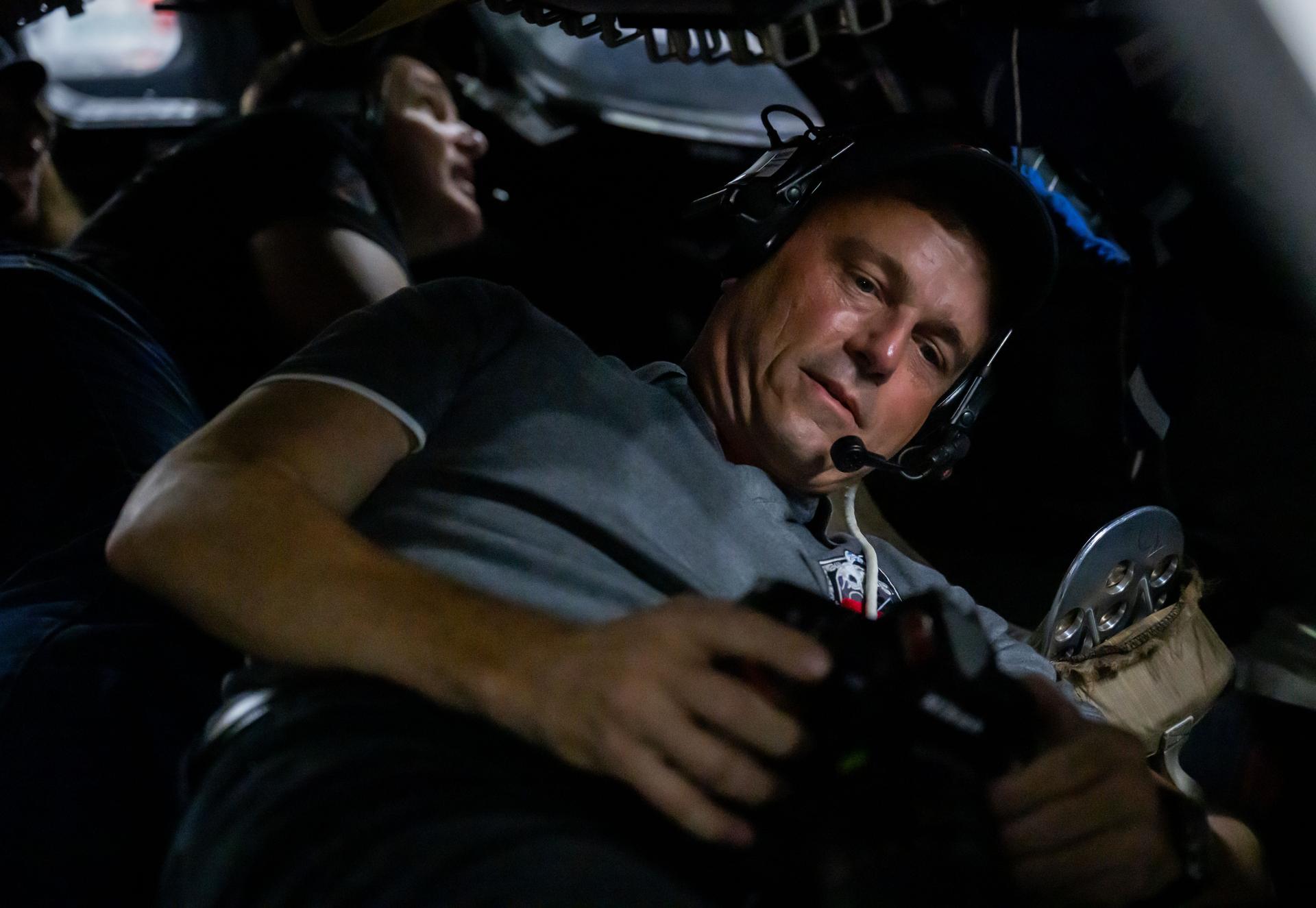
jsc2025e064796 --- NASA astronaut and Artemis II commander, Reid Wiseman, foreground, and CSA (Canadian Space Agency) astronaut Jeremy Hansen, mission specialist for NASA’s Artemis II mission, participate in crew lunar observations training in the Orion mockup at NASA's Johnson Space Center in Houston. The Artemis II crew will be the first people in more than 50 years to set eyes on the far side of the Moon, depending on illumination conditions. They will document their observations through photographs, audio recordings, and more to inform our understanding of the Moon, and share their experience of being far from Earth.
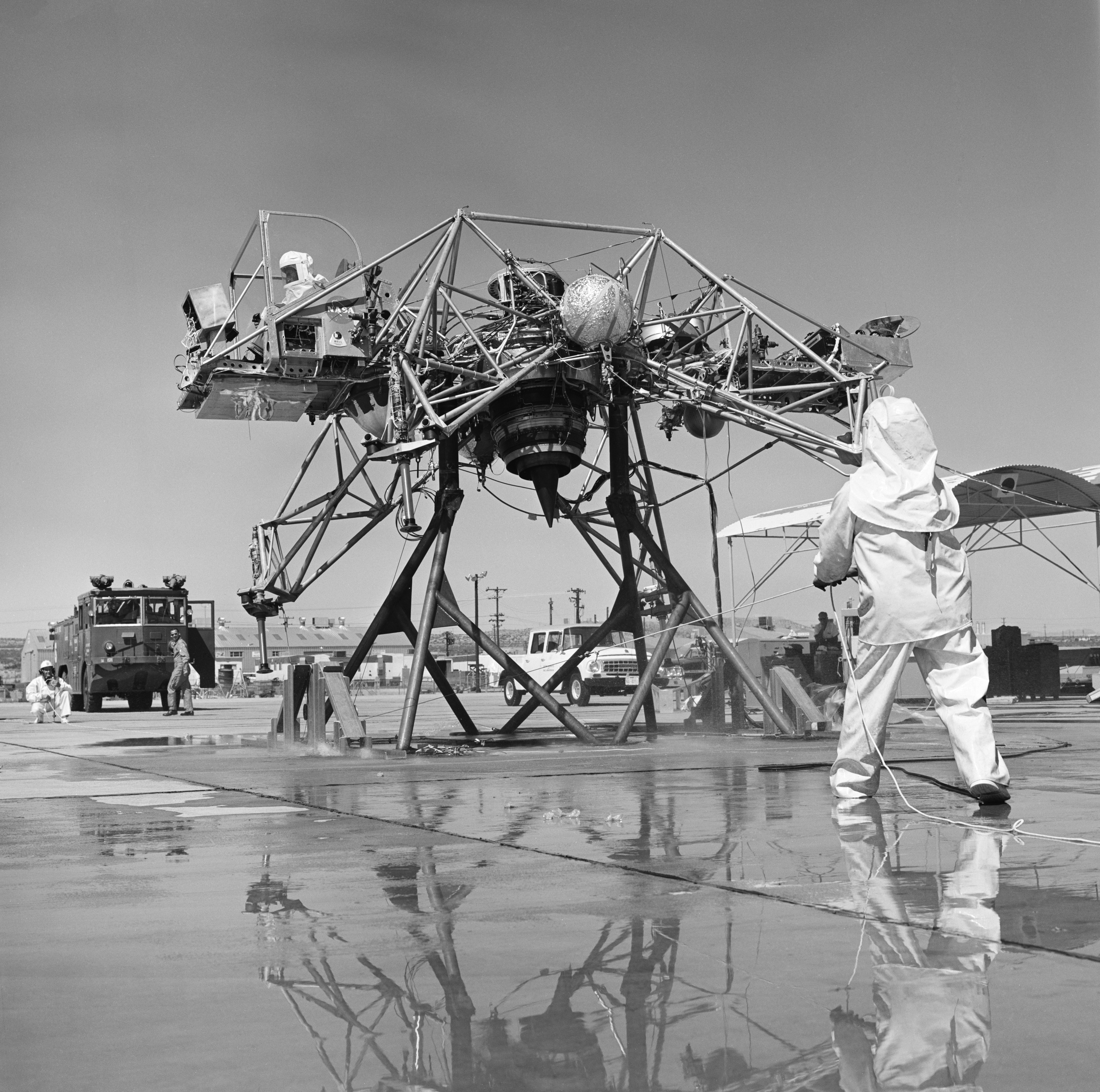
Mechanics are dressed in fire suits because the Lunar Landing Research Vehicle, a simulator to train astronauts for a moon landing, had 90% pure hydrogen peroxide thrusters.

S70-30534 (9 March 1970) --- A Lunar Landing Training Vehicle (LLTV), piloted by astronaut James A. Lovell Jr., sets down on the runway at the conclusion of a test flight at Ellington Air Force Base. Lovell is the commander of the Apollo 13 lunar landing mission. Lovell used the LLTV to practice lunar landing techniques in preparation for his scheduled mission. Lovell will be at the controls of the Apollo 13 Lunar Module (LM) when it lands on the moon in the highlands just north of Fra Mauro. Astronaut Thomas K. Mattingly II, command module pilot, will remain with the Apollo 13 Command and Service Modules (CSM) in lunar orbit while astronauts Lovell and Fred W. Haise Jr., lunar module pilot, descend in the LM to explore the moon. A hovering helicopter watches the LLTV landing.
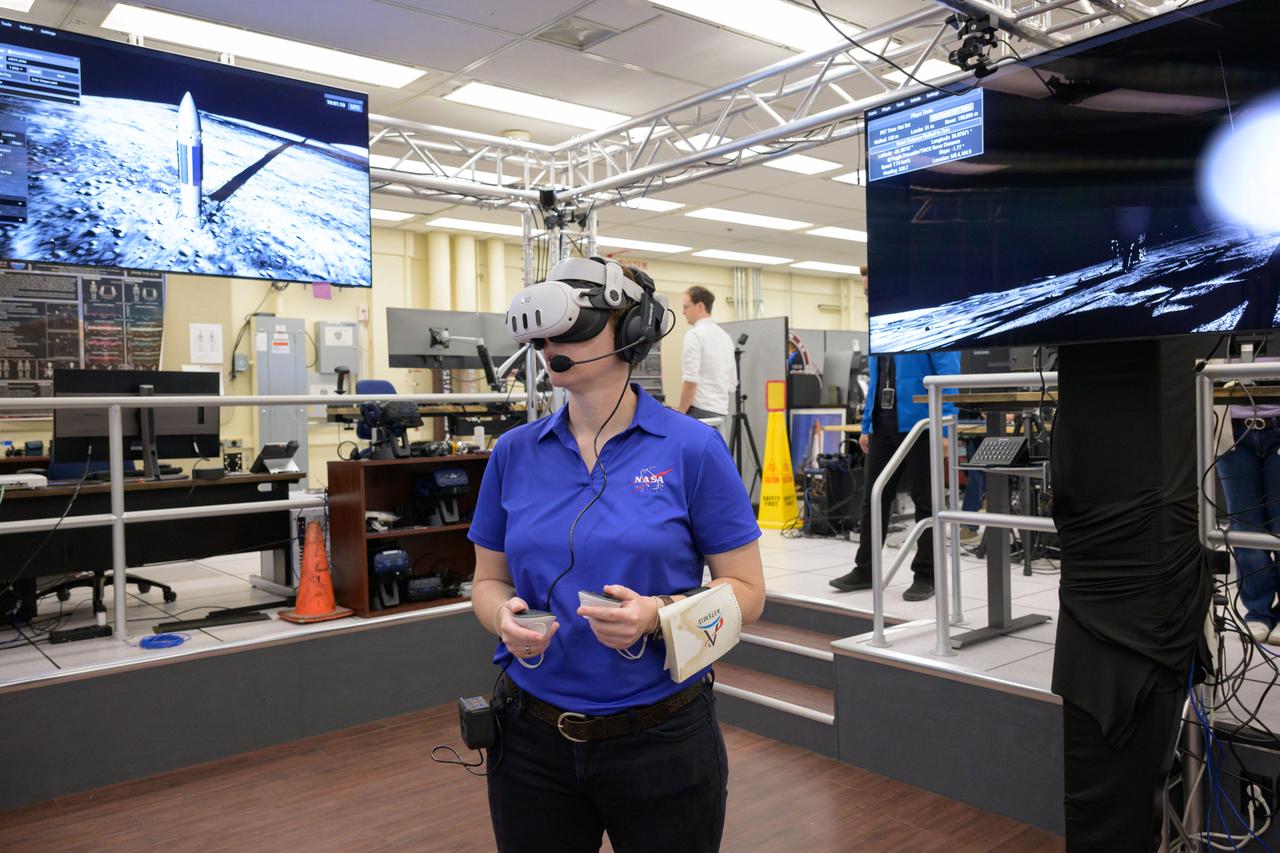
jsc2024e076628 – Tess Caswell, a crew stand-in for the Artemis III Virtual Reality Mini-Simulation, executes a moonwalk in the Prototype Immersive Technology (PIT) lab at NASA’s Johnson Space Center in Houston. The simulation was a test of using VR as a training method for flight controllers and science teams’ collaboration on science-focused traverses on the lunar surface. Credit: NASA/Robert Markowitz
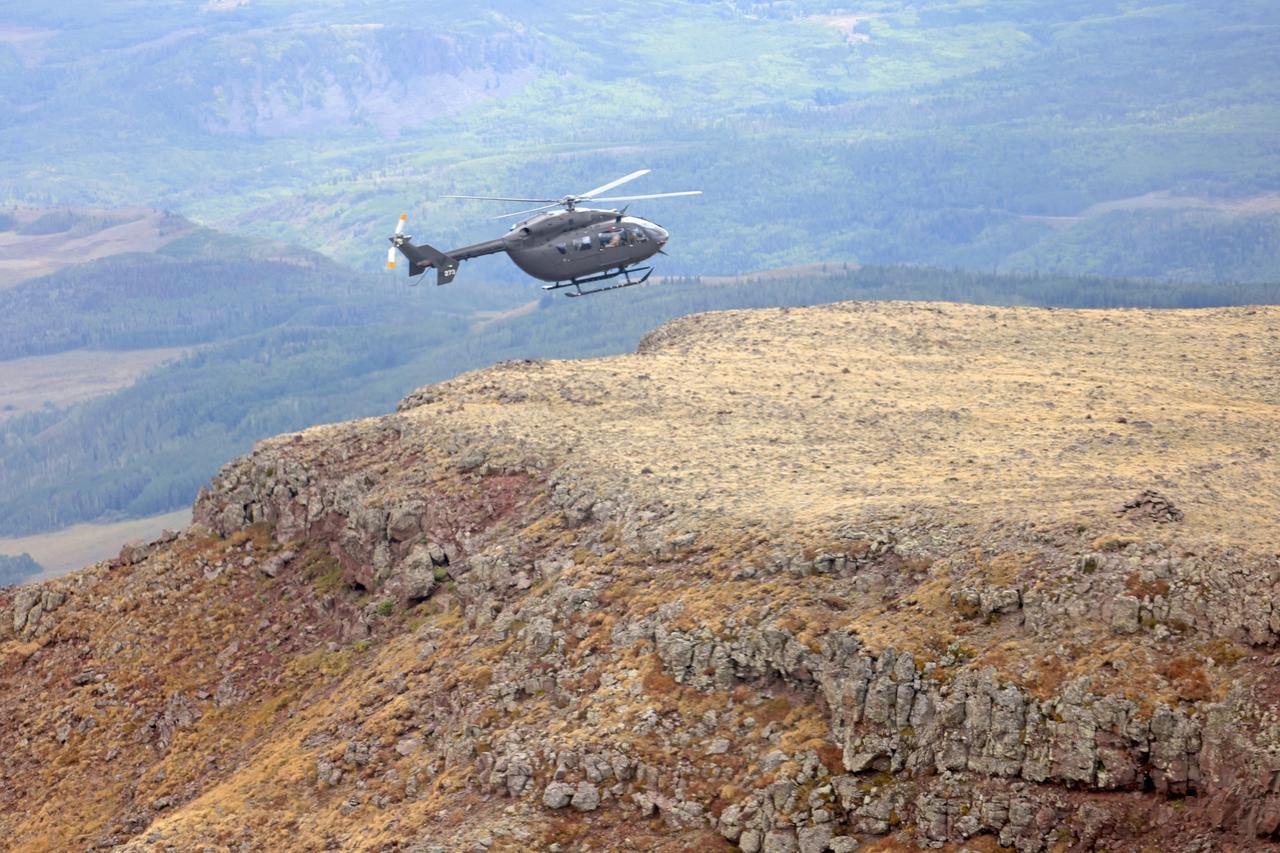
These photos and videos show how NASA certified a new lander flight training course using helicopters in the mountains of northern Colorado. NASA is partnering with the Colorado Army National Guard at its High-Altitude Army National Guard Aviation Training Site near Gypsum, Colorado, to develop the foundational flight training course that will help astronauts practice flight and landing procedures for the Moon. The certification marks an important milestone in crew training for Artemis missions to the Moon, when astronauts will use a commercial human landing system to land on the lunar surface. During the two-week certification run in late August 2025, NASA astronauts Matthew Dominick and Mark Vande Hei participated in flight and landing training to help certify the course. The pair, along with trained instructor pilots with the Army National Guard, took turns flying a helicopter and navigating to landing zones. Artemis flight crew trainers, mission control leads, and lunar lander operational experts from NASA Johnson joined them on each helicopter flight to assess the instruction, training environment, and technical applications for crewed lunar missions. For more information, contact NASA Marshall’s Office of Communications at 256-544
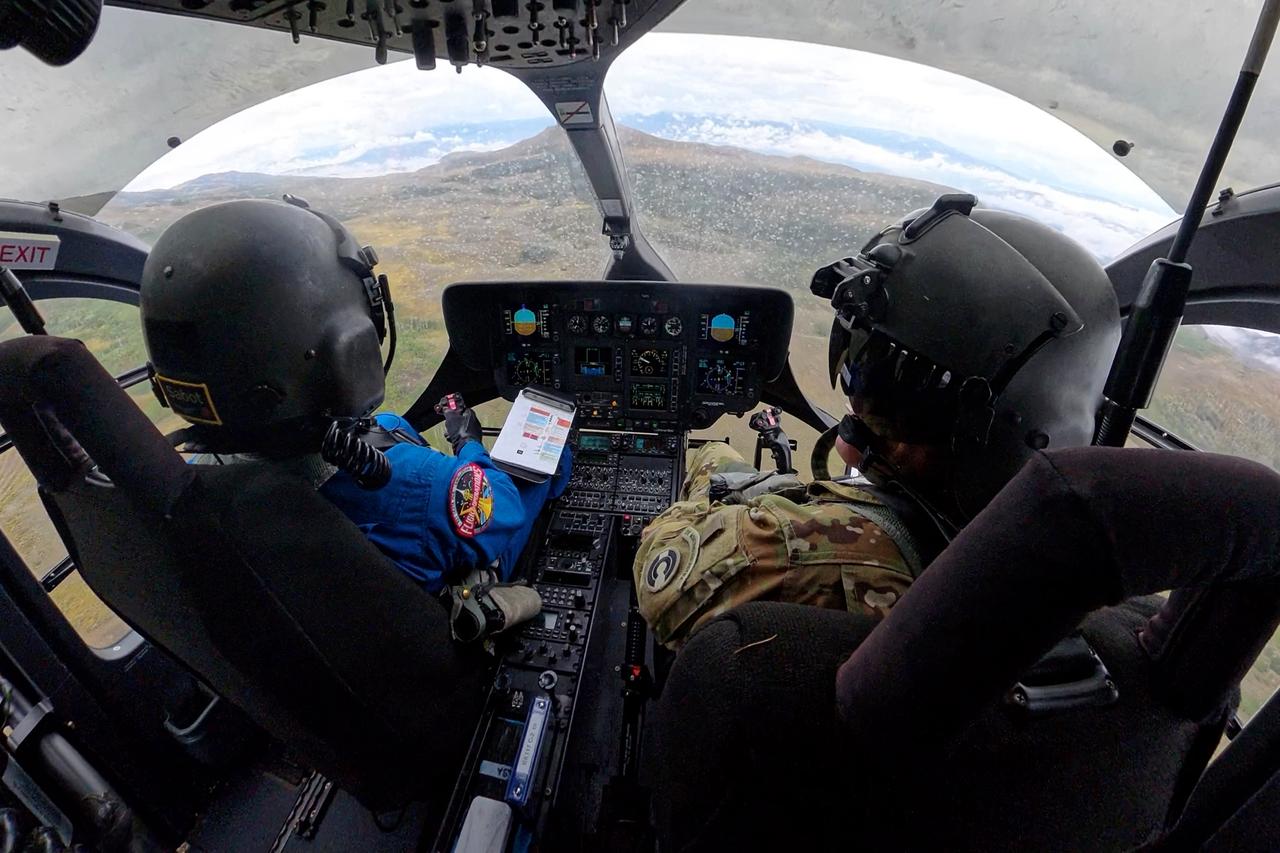
These photos and videos show how NASA certified a new lander flight training course using helicopters in the mountains of northern Colorado. NASA is partnering with the Colorado Army National Guard at its High-Altitude Army National Guard Aviation Training Site near Gypsum, Colorado, to develop the foundational flight training course that will help astronauts practice flight and landing procedures for the Moon. The certification marks an important milestone in crew training for Artemis missions to the Moon, when astronauts will use a commercial human landing system to land on the lunar surface. During the two-week certification run in late August 2025, NASA astronauts Matthew Dominick and Mark Vande Hei participated in flight and landing training to help certify the course. The pair, along with trained instructor pilots with the Army National Guard, took turns flying a helicopter and navigating to landing zones. Artemis flight crew trainers, mission control leads, and lunar lander operational experts from NASA Johnson joined them on each helicopter flight to assess the instruction, training environment, and technical applications for crewed lunar missions. For more information, contact NASA Marshall’s Office of Communications at 256-544
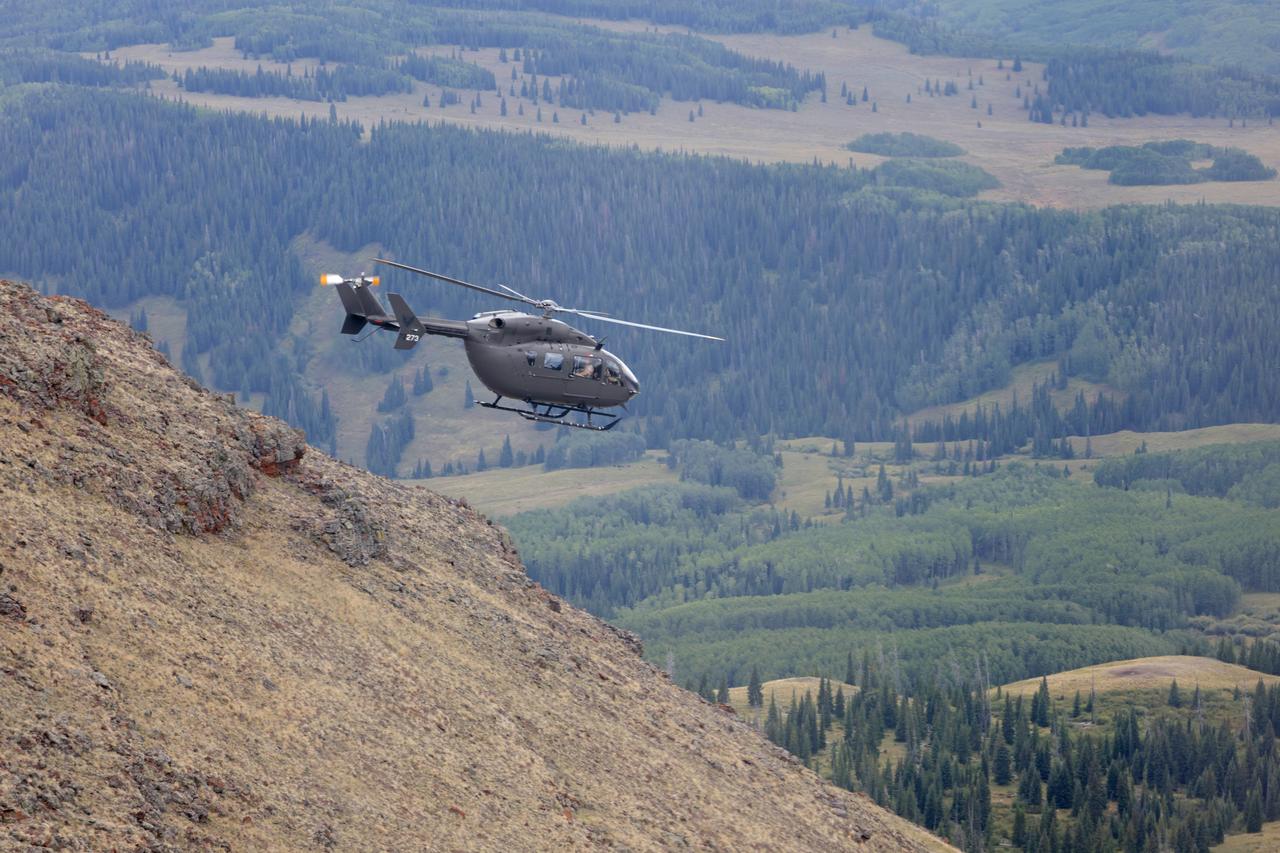
These photos and videos show how NASA certified a new lander flight training course using helicopters in the mountains of northern Colorado. NASA is partnering with the Colorado Army National Guard at its High-Altitude Army National Guard Aviation Training Site near Gypsum, Colorado, to develop the foundational flight training course that will help astronauts practice flight and landing procedures for the Moon. The certification marks an important milestone in crew training for Artemis missions to the Moon, when astronauts will use a commercial human landing system to land on the lunar surface. During the two-week certification run in late August 2025, NASA astronauts Matthew Dominick and Mark Vande Hei participated in flight and landing training to help certify the course. The pair, along with trained instructor pilots with the Army National Guard, took turns flying a helicopter and navigating to landing zones. Artemis flight crew trainers, mission control leads, and lunar lander operational experts from NASA Johnson joined them on each helicopter flight to assess the instruction, training environment, and technical applications for crewed lunar missions. For more information, contact NASA Marshall’s Office of Communications at 256-544
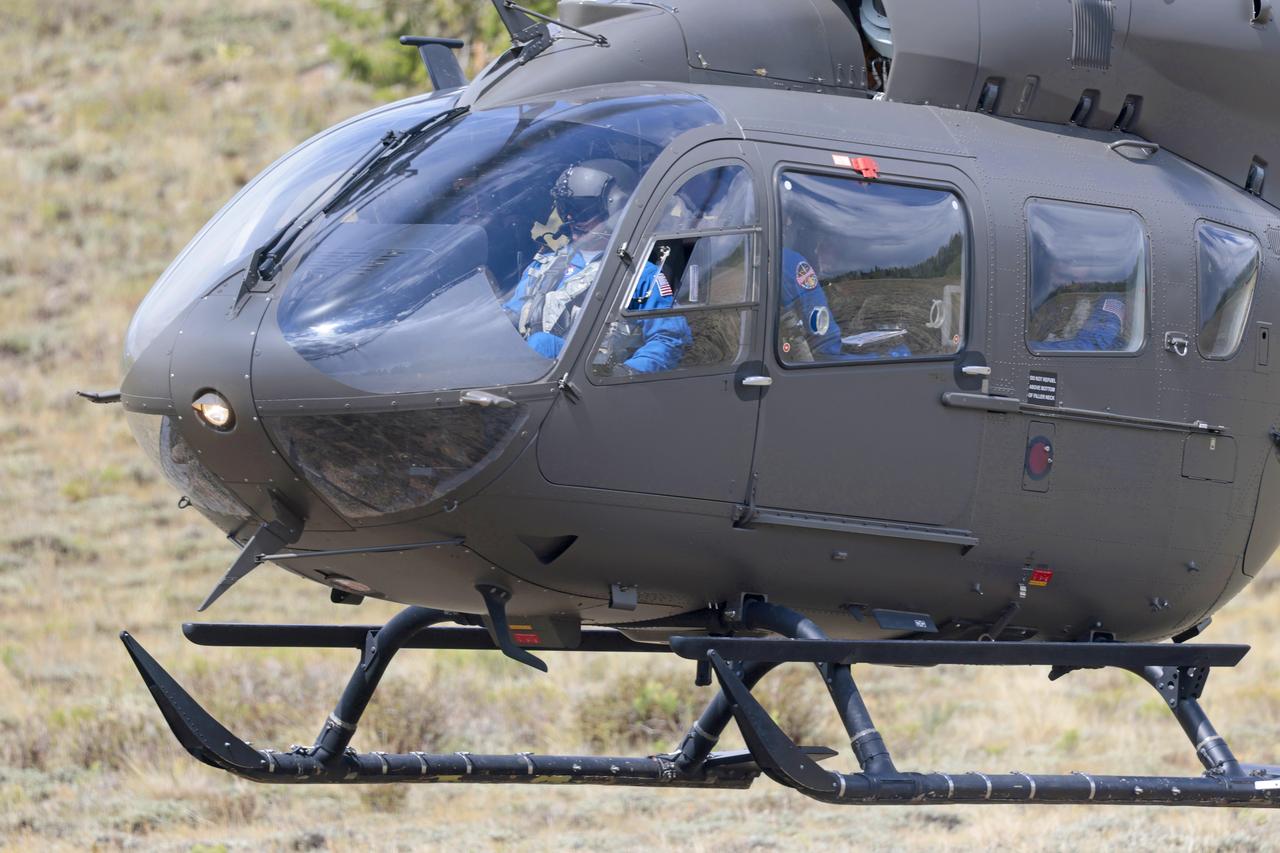
These photos and videos show how NASA certified a new lander flight training course using helicopters in the mountains of northern Colorado. NASA is partnering with the Colorado Army National Guard at its High-Altitude Army National Guard Aviation Training Site near Gypsum, Colorado, to develop the foundational flight training course that will help astronauts practice flight and landing procedures for the Moon. The certification marks an important milestone in crew training for Artemis missions to the Moon, when astronauts will use a commercial human landing system to land on the lunar surface. During the two-week certification run in late August 2025, NASA astronauts Matthew Dominick and Mark Vande Hei participated in flight and landing training to help certify the course. The pair, along with trained instructor pilots with the Army National Guard, took turns flying a helicopter and navigating to landing zones. Artemis flight crew trainers, mission control leads, and lunar lander operational experts from NASA Johnson joined them on each helicopter flight to assess the instruction, training environment, and technical applications for crewed lunar missions. For more information, contact NASA Marshall’s Office of Communications at 256-544
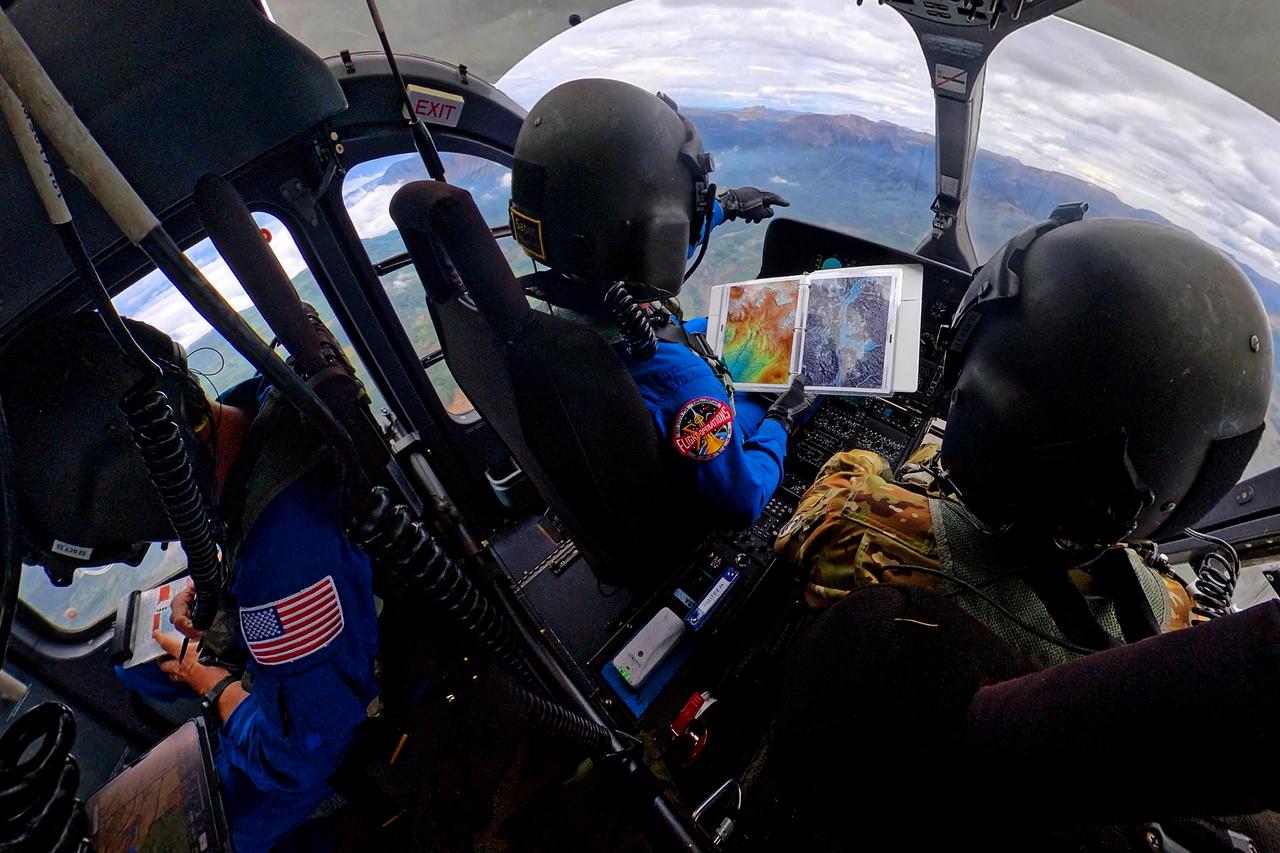
These photos and videos show how NASA certified a new lander flight training course using helicopters in the mountains of northern Colorado. NASA is partnering with the Colorado Army National Guard at its High-Altitude Army National Guard Aviation Training Site near Gypsum, Colorado, to develop the foundational flight training course that will help astronauts practice flight and landing procedures for the Moon. The certification marks an important milestone in crew training for Artemis missions to the Moon, when astronauts will use a commercial human landing system to land on the lunar surface. During the two-week certification run in late August 2025, NASA astronauts Matthew Dominick and Mark Vande Hei participated in flight and landing training to help certify the course. The pair, along with trained instructor pilots with the Army National Guard, took turns flying a helicopter and navigating to landing zones. Artemis flight crew trainers, mission control leads, and lunar lander operational experts from NASA Johnson joined them on each helicopter flight to assess the instruction, training environment, and technical applications for crewed lunar missions. For more information, contact NASA Marshall’s Office of Communications at 256-544
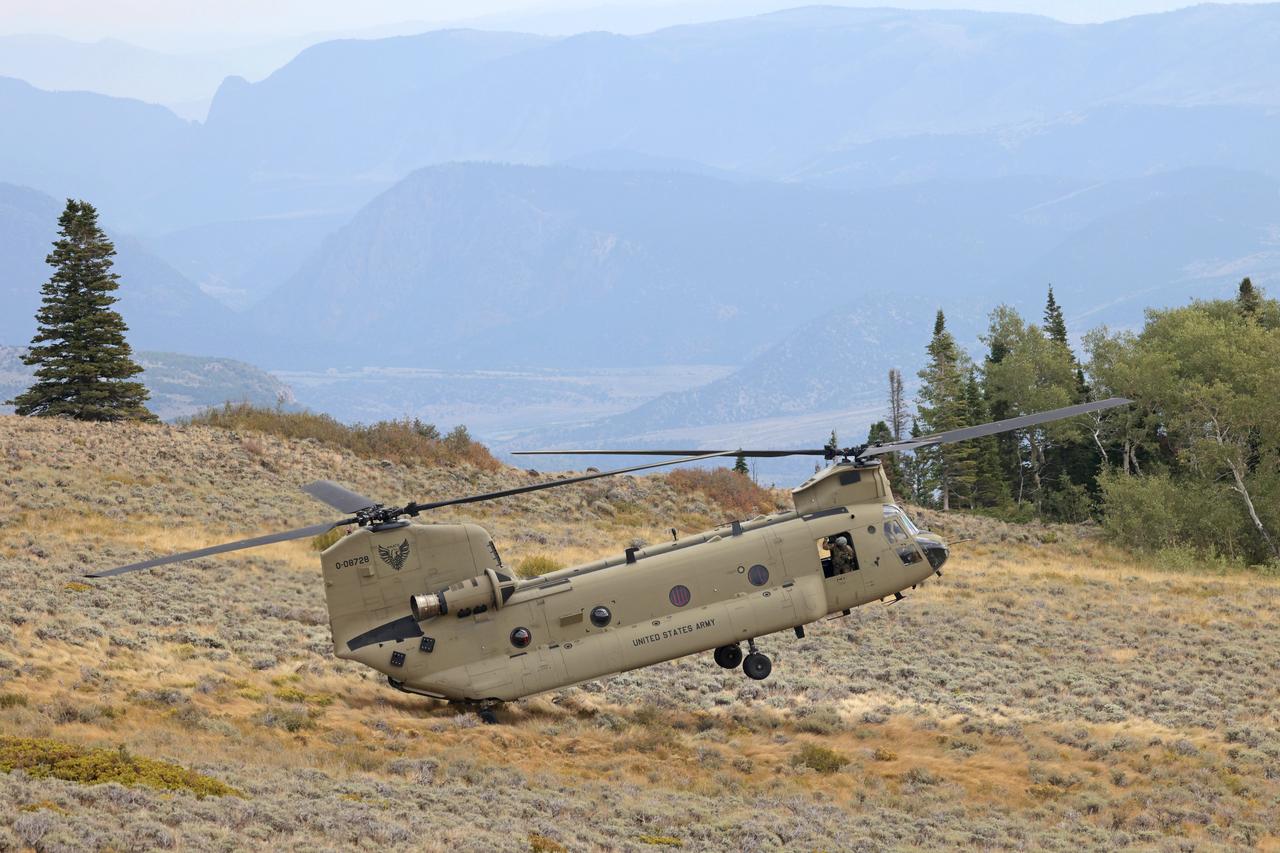
These photos and videos show how NASA certified a new lander flight training course using helicopters in the mountains of northern Colorado. NASA is partnering with the Colorado Army National Guard at its High-Altitude Army National Guard Aviation Training Site near Gypsum, Colorado, to develop the foundational flight training course that will help astronauts practice flight and landing procedures for the Moon. The certification marks an important milestone in crew training for Artemis missions to the Moon, when astronauts will use a commercial human landing system to land on the lunar surface. During the two-week certification run in late August 2025, NASA astronauts Matthew Dominick and Mark Vande Hei participated in flight and landing training to help certify the course. The pair, along with trained instructor pilots with the Army National Guard, took turns flying a helicopter and navigating to landing zones. Artemis flight crew trainers, mission control leads, and lunar lander operational experts from NASA Johnson joined them on each helicopter flight to assess the instruction, training environment, and technical applications for crewed lunar missions. For more information, contact NASA Marshall’s Office of Communications at 256-544
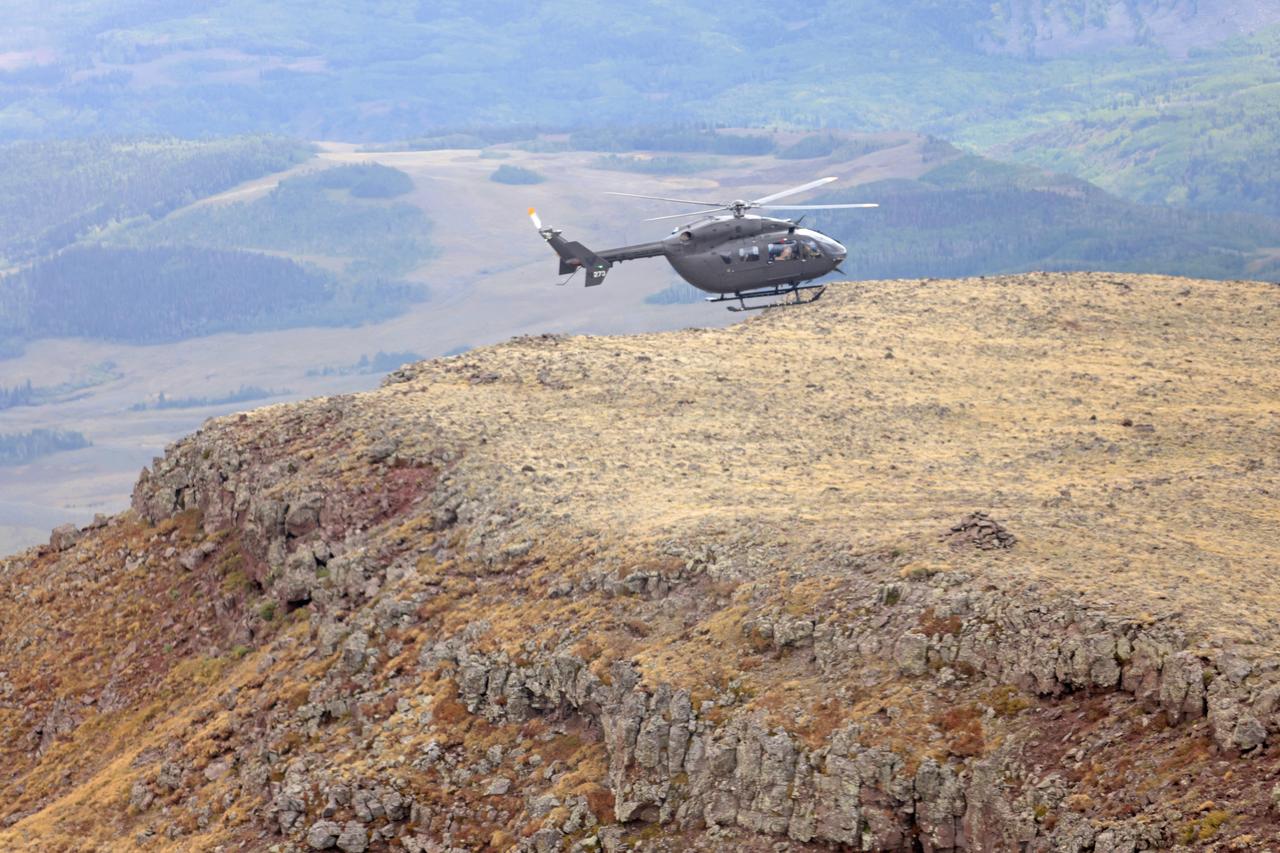
These photos and videos show how NASA certified a new lander flight training course using helicopters in the mountains of northern Colorado. NASA is partnering with the Colorado Army National Guard at its High-Altitude Army National Guard Aviation Training Site near Gypsum, Colorado, to develop the foundational flight training course that will help astronauts practice flight and landing procedures for the Moon. The certification marks an important milestone in crew training for Artemis missions to the Moon, when astronauts will use a commercial human landing system to land on the lunar surface. During the two-week certification run in late August 2025, NASA astronauts Matthew Dominick and Mark Vande Hei participated in flight and landing training to help certify the course. The pair, along with trained instructor pilots with the Army National Guard, took turns flying a helicopter and navigating to landing zones. Artemis flight crew trainers, mission control leads, and lunar lander operational experts from NASA Johnson joined them on each helicopter flight to assess the instruction, training environment, and technical applications for crewed lunar missions. For more information, contact NASA Marshall’s Office of Communications at 256-544
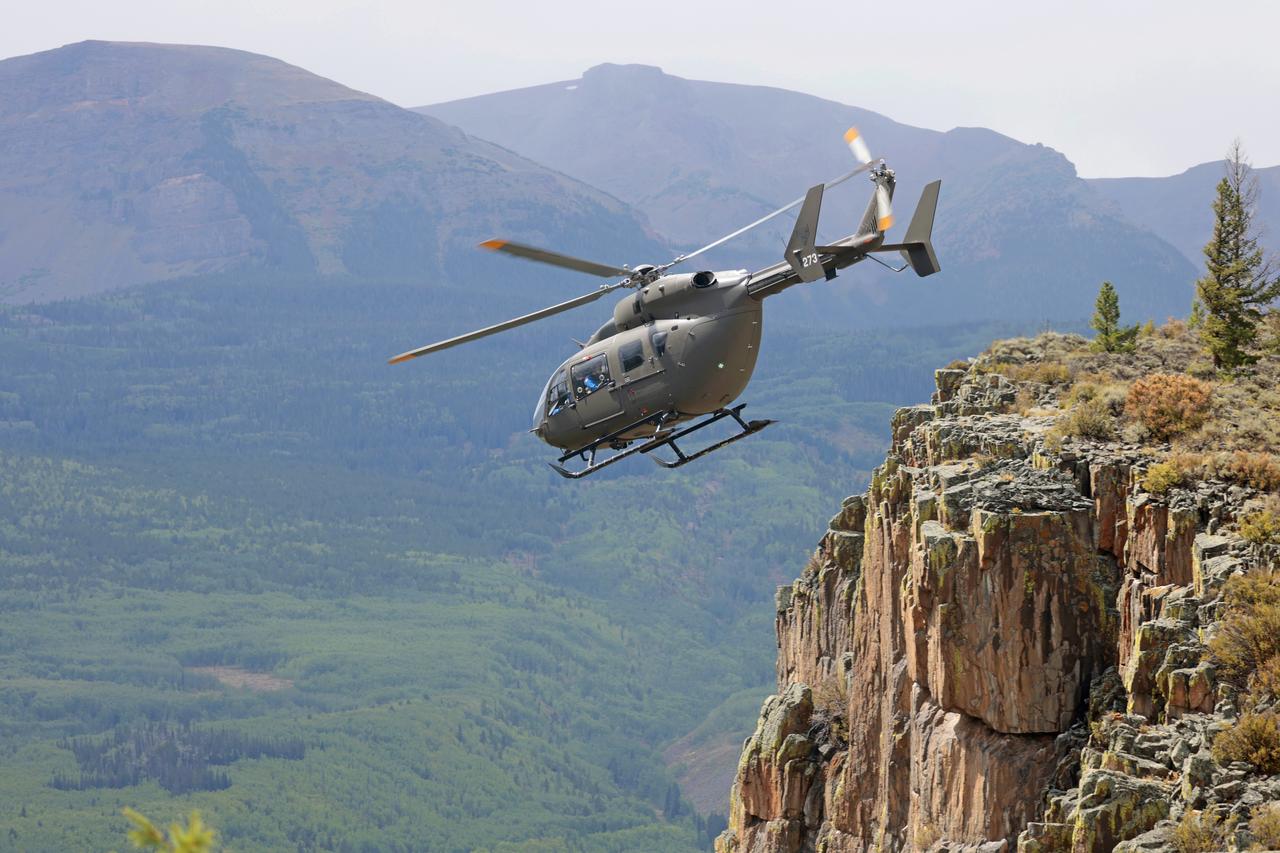
These photos and videos show how NASA certified a new lander flight training course using helicopters in the mountains of northern Colorado. NASA is partnering with the Colorado Army National Guard at its High-Altitude Army National Guard Aviation Training Site near Gypsum, Colorado, to develop the foundational flight training course that will help astronauts practice flight and landing procedures for the Moon. The certification marks an important milestone in crew training for Artemis missions to the Moon, when astronauts will use a commercial human landing system to land on the lunar surface. During the two-week certification run in late August 2025, NASA astronauts Matthew Dominick and Mark Vande Hei participated in flight and landing training to help certify the course. The pair, along with trained instructor pilots with the Army National Guard, took turns flying a helicopter and navigating to landing zones. Artemis flight crew trainers, mission control leads, and lunar lander operational experts from NASA Johnson joined them on each helicopter flight to assess the instruction, training environment, and technical applications for crewed lunar missions. For more information, contact NASA Marshall’s Office of Communications at 256-544
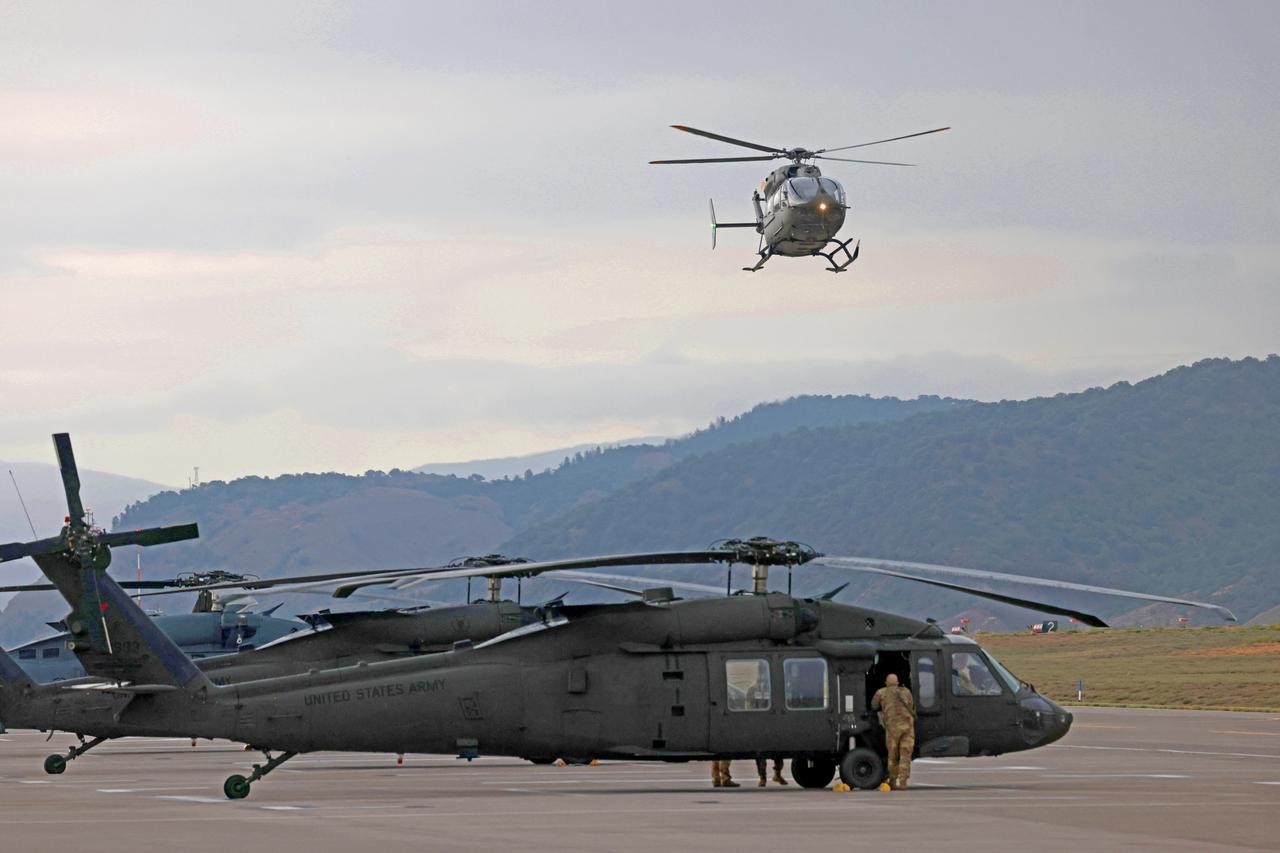
These photos and videos show how NASA certified a new lander flight training course using helicopters in the mountains of northern Colorado. NASA is partnering with the Colorado Army National Guard at its High-Altitude Army National Guard Aviation Training Site near Gypsum, Colorado, to develop the foundational flight training course that will help astronauts practice flight and landing procedures for the Moon. The certification marks an important milestone in crew training for Artemis missions to the Moon, when astronauts will use a commercial human landing system to land on the lunar surface. During the two-week certification run in late August 2025, NASA astronauts Matthew Dominick and Mark Vande Hei participated in flight and landing training to help certify the course. The pair, along with trained instructor pilots with the Army National Guard, took turns flying a helicopter and navigating to landing zones. Artemis flight crew trainers, mission control leads, and lunar lander operational experts from NASA Johnson joined them on each helicopter flight to assess the instruction, training environment, and technical applications for crewed lunar missions. For more information, contact NASA Marshall’s Office of Communications at 256-544

These photos and videos show how NASA certified a new lander flight training course using helicopters in the mountains of northern Colorado. NASA is partnering with the Colorado Army National Guard at its High-Altitude Army National Guard Aviation Training Site near Gypsum, Colorado, to develop the foundational flight training course that will help astronauts practice flight and landing procedures for the Moon. The certification marks an important milestone in crew training for Artemis missions to the Moon, when astronauts will use a commercial human landing system to land on the lunar surface. During the two-week certification run in late August 2025, NASA astronauts Matthew Dominick and Mark Vande Hei participated in flight and landing training to help certify the course. The pair, along with trained instructor pilots with the Army National Guard, took turns flying a helicopter and navigating to landing zones. Artemis flight crew trainers, mission control leads, and lunar lander operational experts from NASA Johnson joined them on each helicopter flight to assess the instruction, training environment, and technical applications for crewed lunar missions. For more information, contact NASA Marshall’s Office of Communications at 256-544
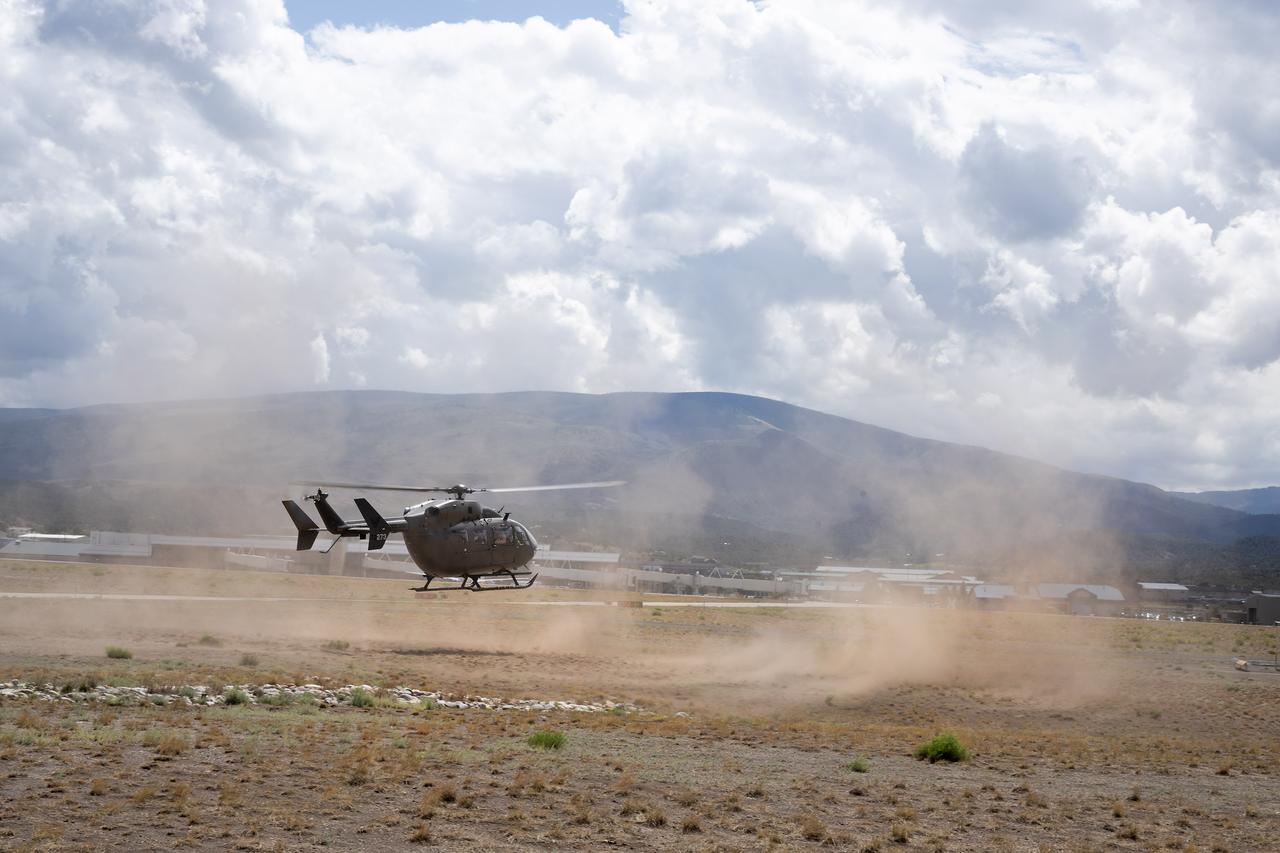
These photos and videos show how NASA certified a new lander flight training course using helicopters in the mountains of northern Colorado. NASA is partnering with the Colorado Army National Guard at its High-Altitude Army National Guard Aviation Training Site near Gypsum, Colorado, to develop the foundational flight training course that will help astronauts practice flight and landing procedures for the Moon. The certification marks an important milestone in crew training for Artemis missions to the Moon, when astronauts will use a commercial human landing system to land on the lunar surface. During the two-week certification run in late August 2025, NASA astronauts Matthew Dominick and Mark Vande Hei participated in flight and landing training to help certify the course. The pair, along with trained instructor pilots with the Army National Guard, took turns flying a helicopter and navigating to landing zones. Artemis flight crew trainers, mission control leads, and lunar lander operational experts from NASA Johnson joined them on each helicopter flight to assess the instruction, training environment, and technical applications for crewed lunar missions. For more information, contact NASA Marshall’s Office of Communications at 256-544
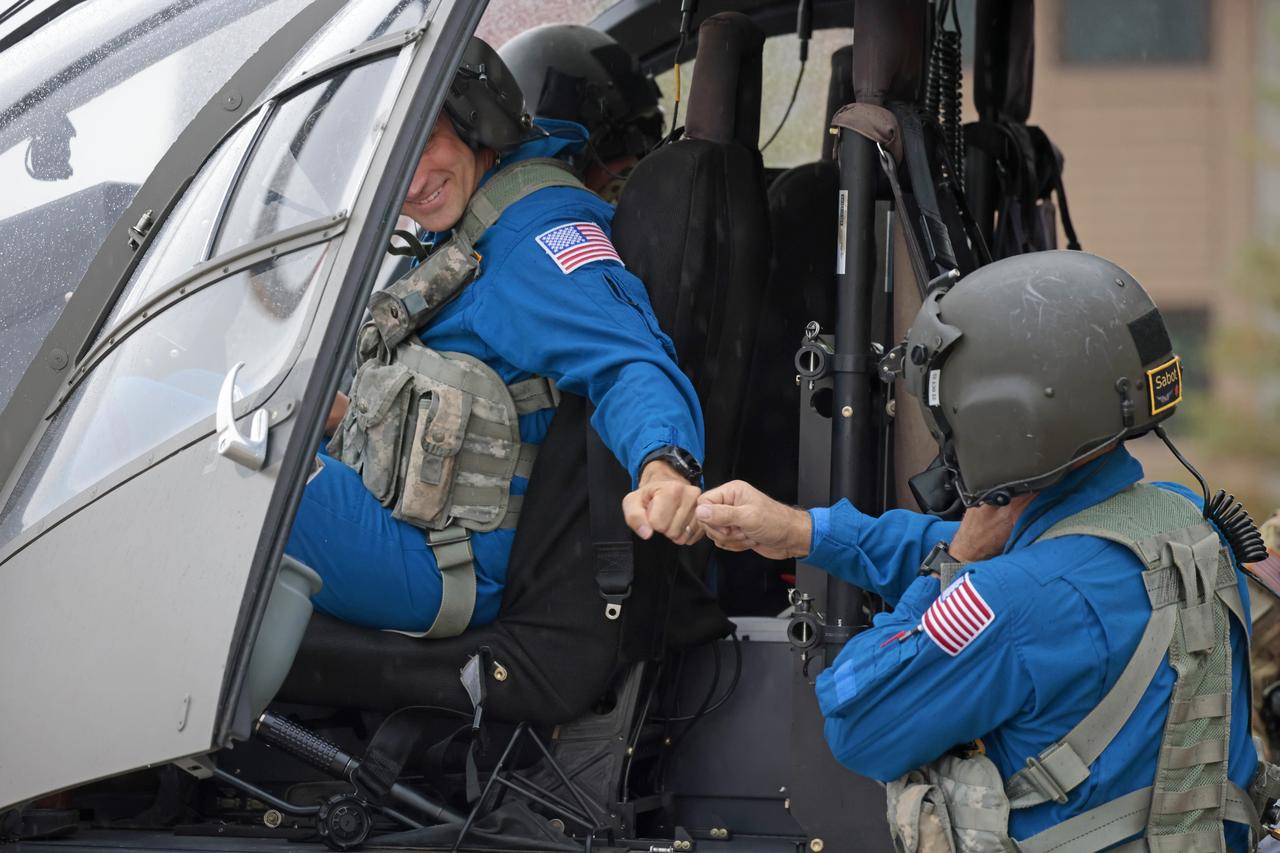
These photos and videos show how NASA certified a new lander flight training course using helicopters in the mountains of northern Colorado. NASA is partnering with the Colorado Army National Guard at its High-Altitude Army National Guard Aviation Training Site near Gypsum, Colorado, to develop the foundational flight training course that will help astronauts practice flight and landing procedures for the Moon. The certification marks an important milestone in crew training for Artemis missions to the Moon, when astronauts will use a commercial human landing system to land on the lunar surface. During the two-week certification run in late August 2025, NASA astronauts Matthew Dominick and Mark Vande Hei participated in flight and landing training to help certify the course. The pair, along with trained instructor pilots with the Army National Guard, took turns flying a helicopter and navigating to landing zones. Artemis flight crew trainers, mission control leads, and lunar lander operational experts from NASA Johnson joined them on each helicopter flight to assess the instruction, training environment, and technical applications for crewed lunar missions. For more information, contact NASA Marshall’s Office of Communications at 256-544
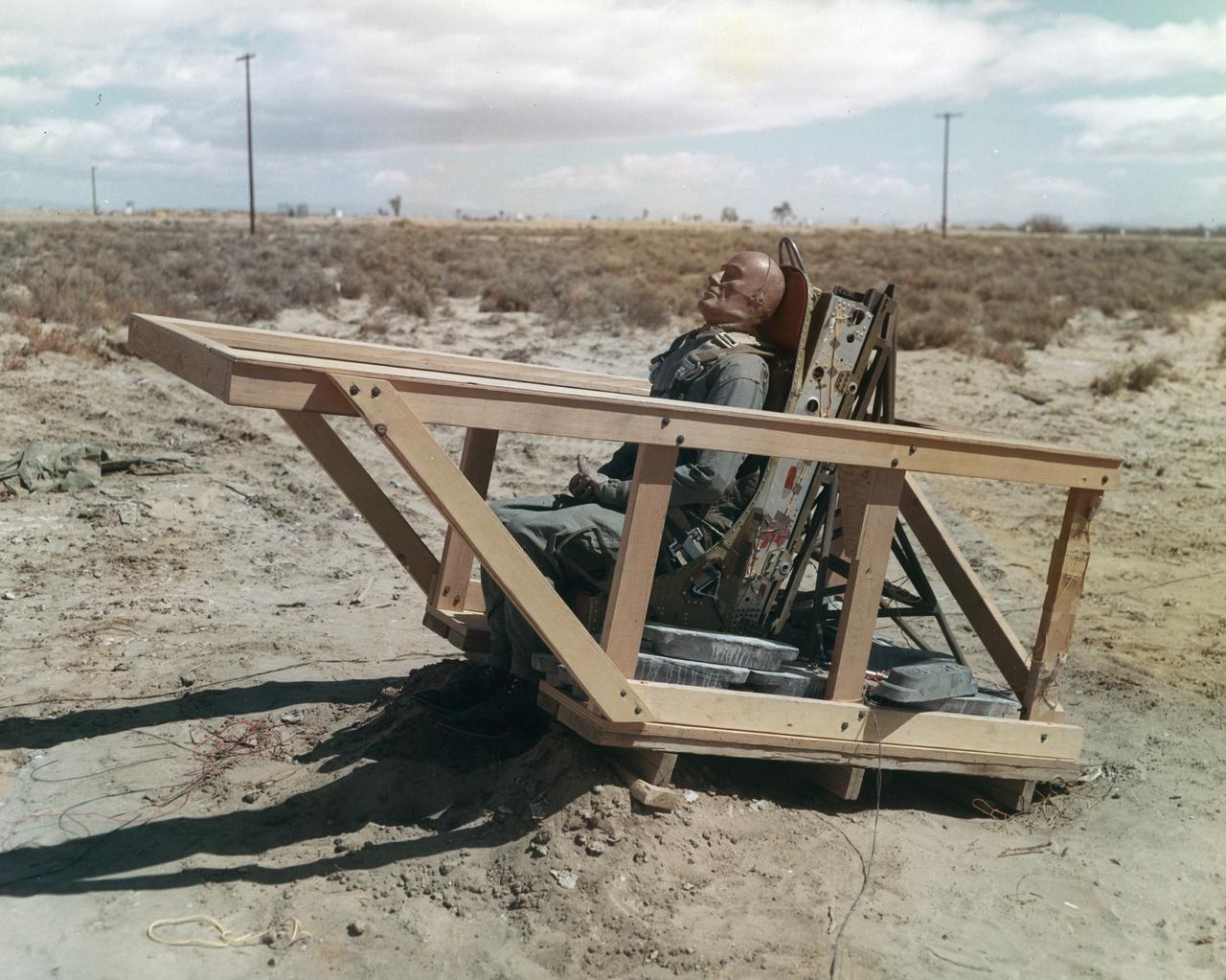
The M2-F1 was fitted with an ejection seat before the airtow flights began. The project selected the seat used in the T-37 as modified by the Weber Company to use a rocket rather than a ballistic charge for ejection. To test the ejection seat, the Flight Research Center's Dick Klein constructed a plywood mockup of the M2-F1's top deck and canopy. On the first firings, the test was unsuccessful, but on the final test the dummy in the seat landed safely. The M2-F1 ejection seat was later used in the two Lunar Landing Research Vehicles and the three Lunar Landing Training Vehicles. Three of them crashed, but in each case the pilot ejected from the vehicle successfully.
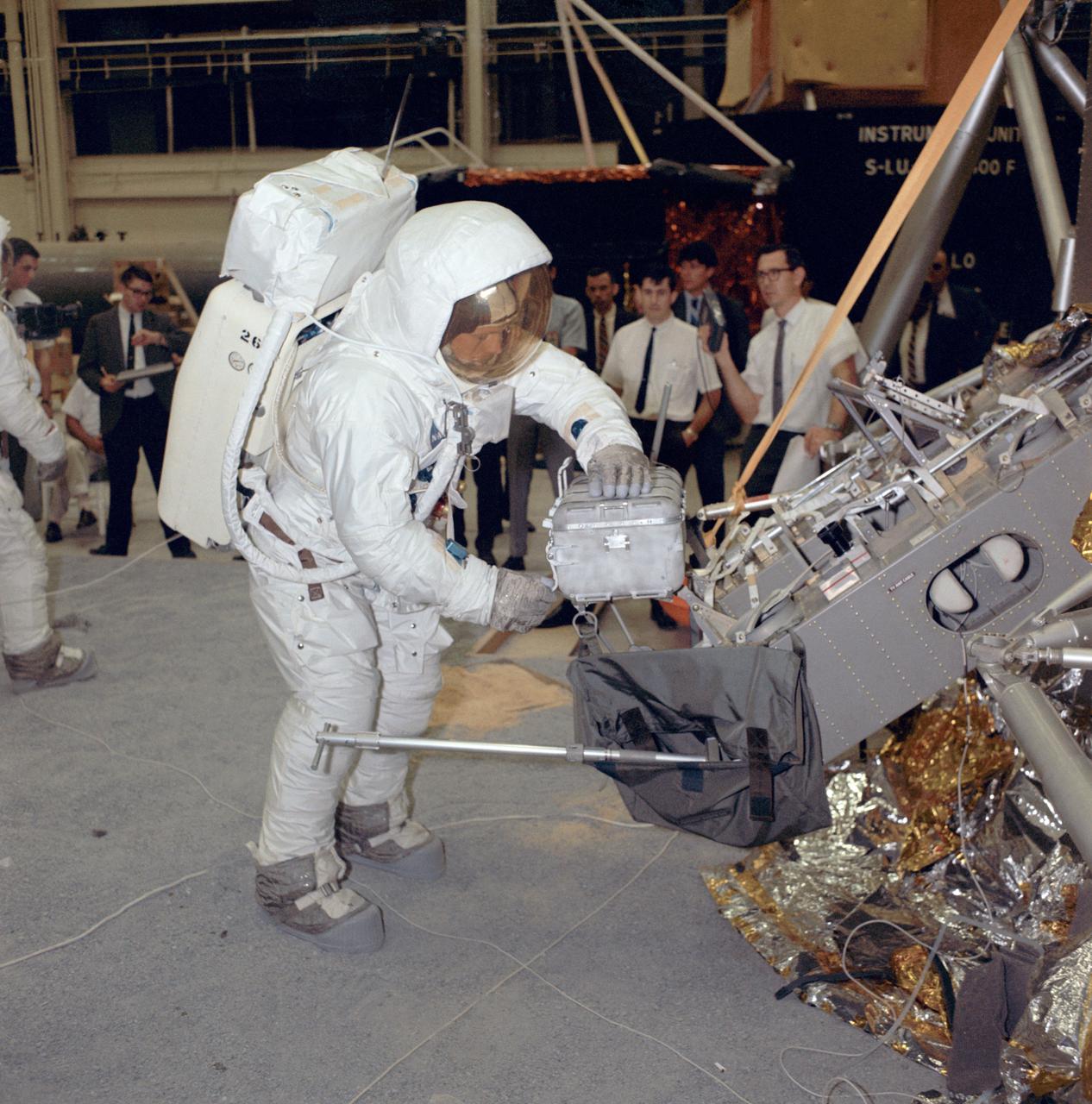
Apollo 11 commander Neil Armstrong works with an Apollo Lunar Sample Return Container during a two-and-a-half-hour lunar surface simulation training exercise. The image was taken on Apr. 18, 1969, in Building 9 at the Manned Spacecraft Center in Houston, Texas. The sample tubes carried by NASA's Mars 2020 Perseverance rover are destined to carry the first samples in history from another planet back to Earth. Future scientists will use these carefully selected representatives of Martian rock and regolith (broken rock and dust), to look for evidence of potential microbial life present in Mars' ancient past and to answer other key questions about Mars and its history. Perseverance will land at Mars' Jezero Crater on Feb. 18, 2021. https://photojournal.jpl.nasa.gov/catalog/PIA24297
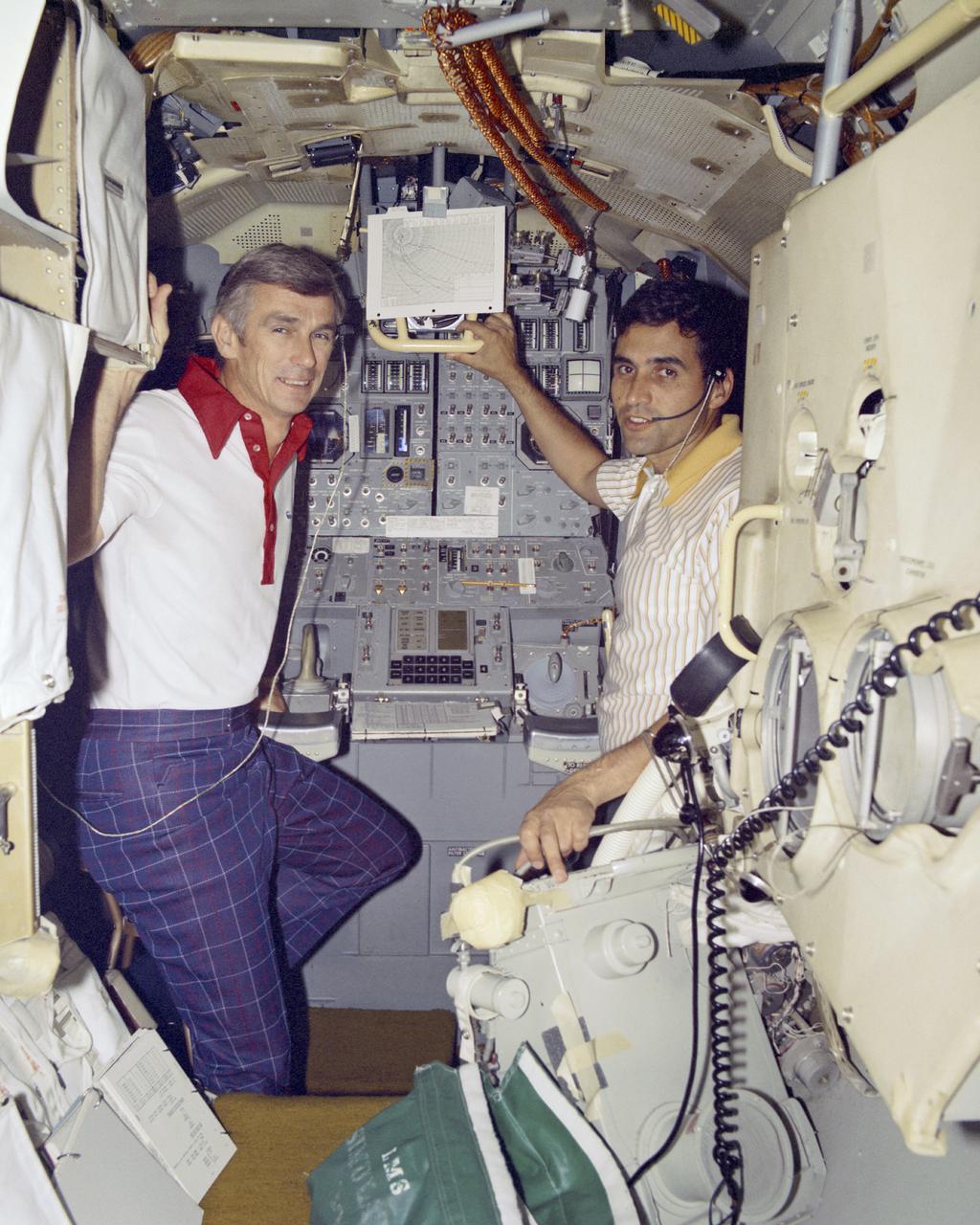
Apollo 17 Mission Commander Eugene A Cernan, a Navy Captain, and Lunar Module Pilot Dr. Harrison H. Schmitt, civilian scientist-astronaut, at right, familiarize themselves with equipment used in the Lunar Module in which they will descend to the lunar surface during December. Cernan and Dr. Schmitt are undergoing pre-launch training in the lunar Module Simulator at the Flight Crew Training Building at the Space Center. Navy Commander Ronald E. Evans, Command Module Pilot, will accompany Cernan and Schmitt on the mission.
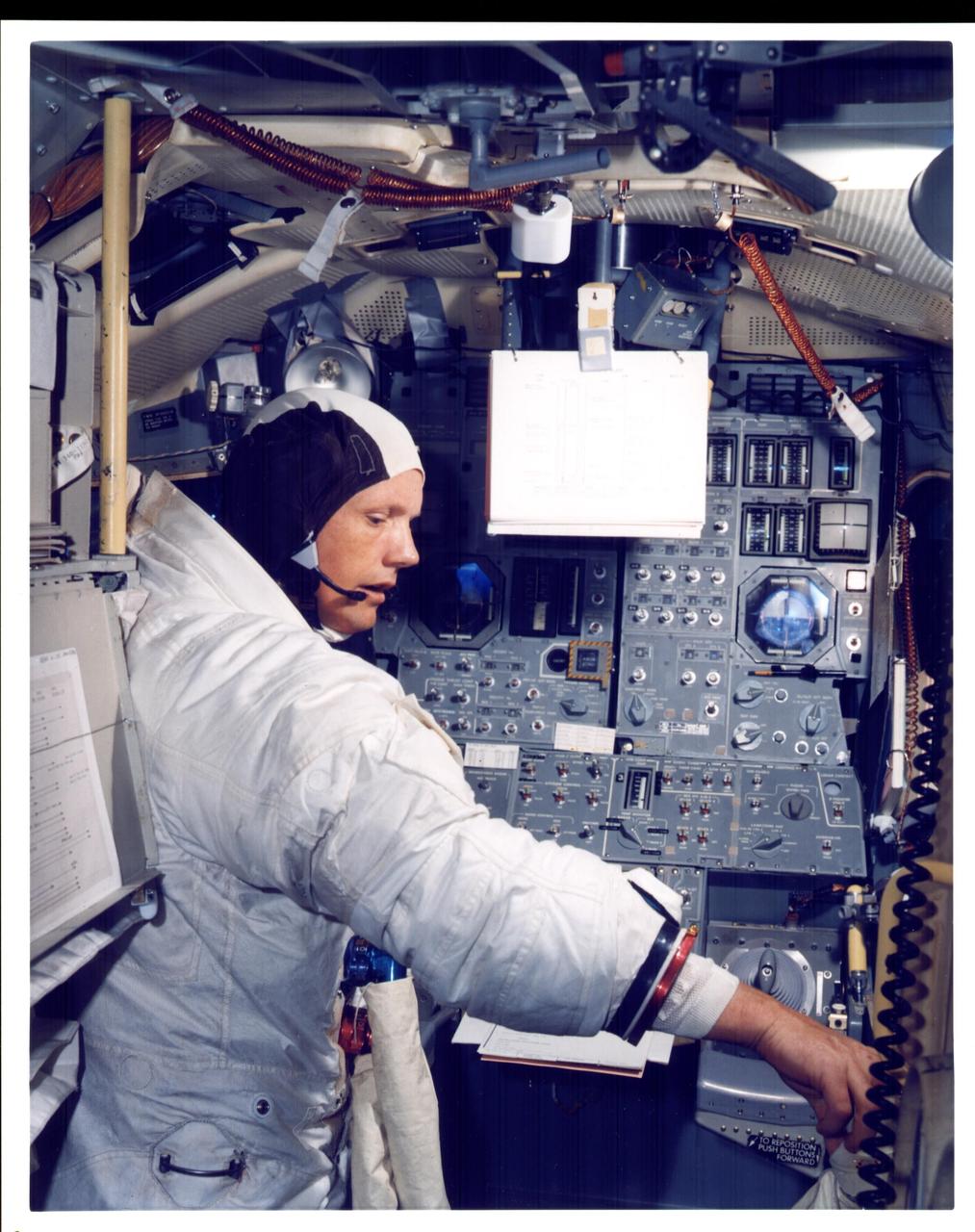
KENNEDY SPACE CENTER, FLA. - Apollo 11 Commander Neil Armstrong is going through flight training in the lunar module simulator situated in the Flight Crew Training Building at KSC. Armstrong wil pilot the lunar module to a Moon landing on July 20, following launch from KSC at 9:32 a.m. July 16.
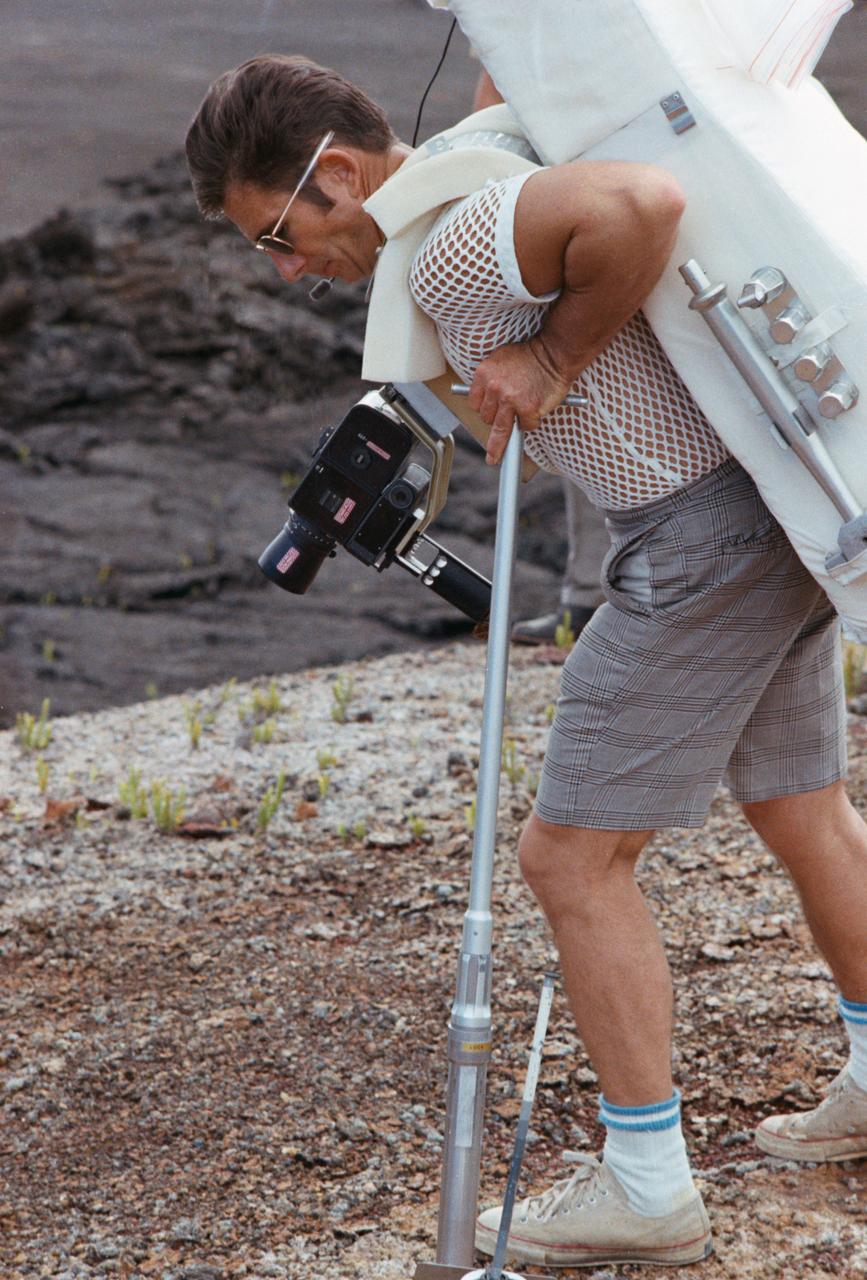
S70-56433 (December 1970) --- Astronaut James B. Irwin, lunar module pilot of the Apollo 15 lunar landing mission, participates in lunar surface extravehicular activity (EVA) training during a visit to Hawaii. He is simulating using lunar surface geological tools to collect a core sample.
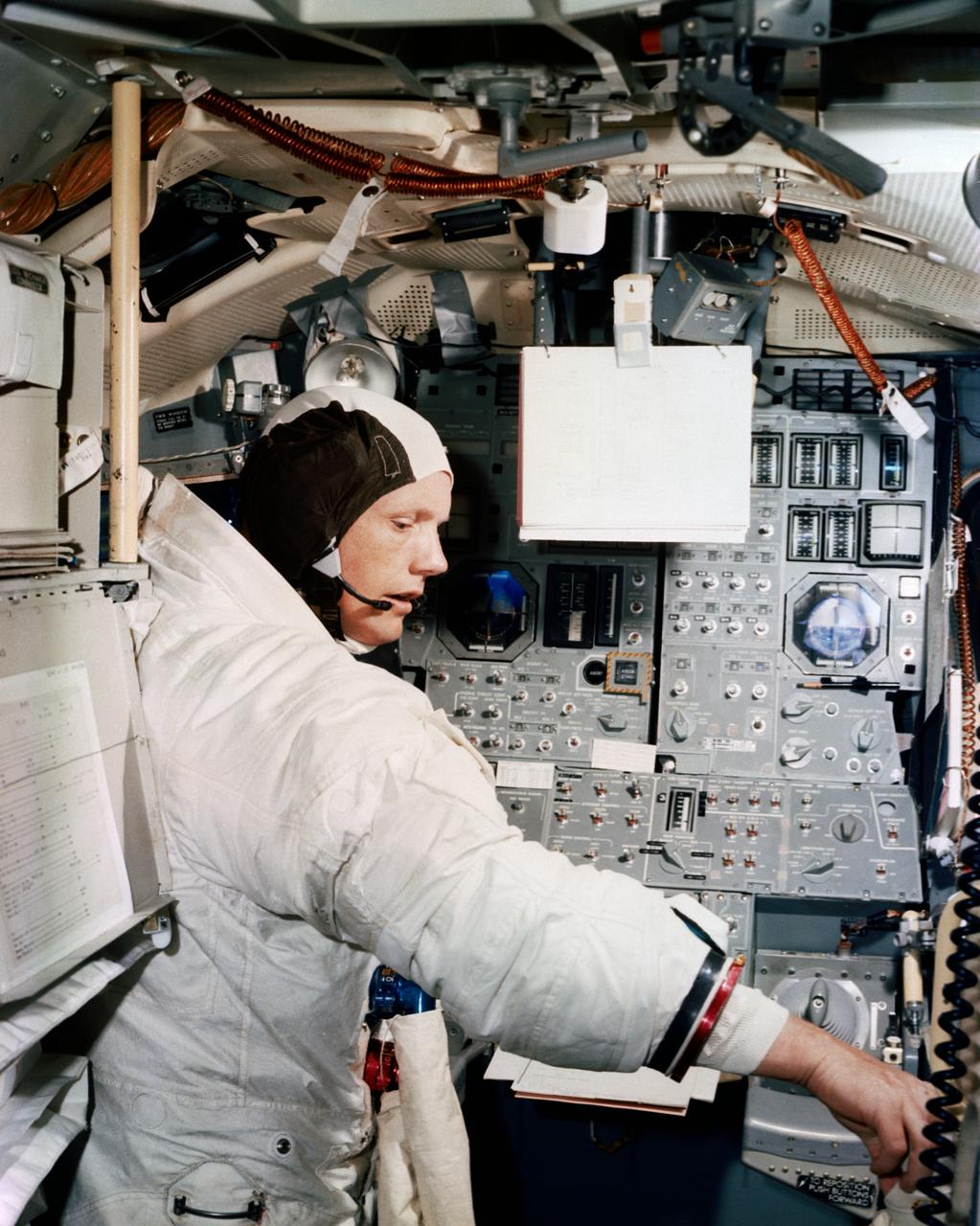
S69-38677 (19 June 1969) --- Astronaut Neil A. Armstrong, Apollo 11 commander, participates in simulation training in preparation for the scheduled lunar landing mission. He is in the Apollo Lunar Module Mission Simulator in the Kennedy Space Center (KSC) Flight Crew Training Building. The other two crewmen of the historic flight are astronauts Michael Collins, command module pilot; and Edwin E. Aldrin Jr., lunar module pilot.
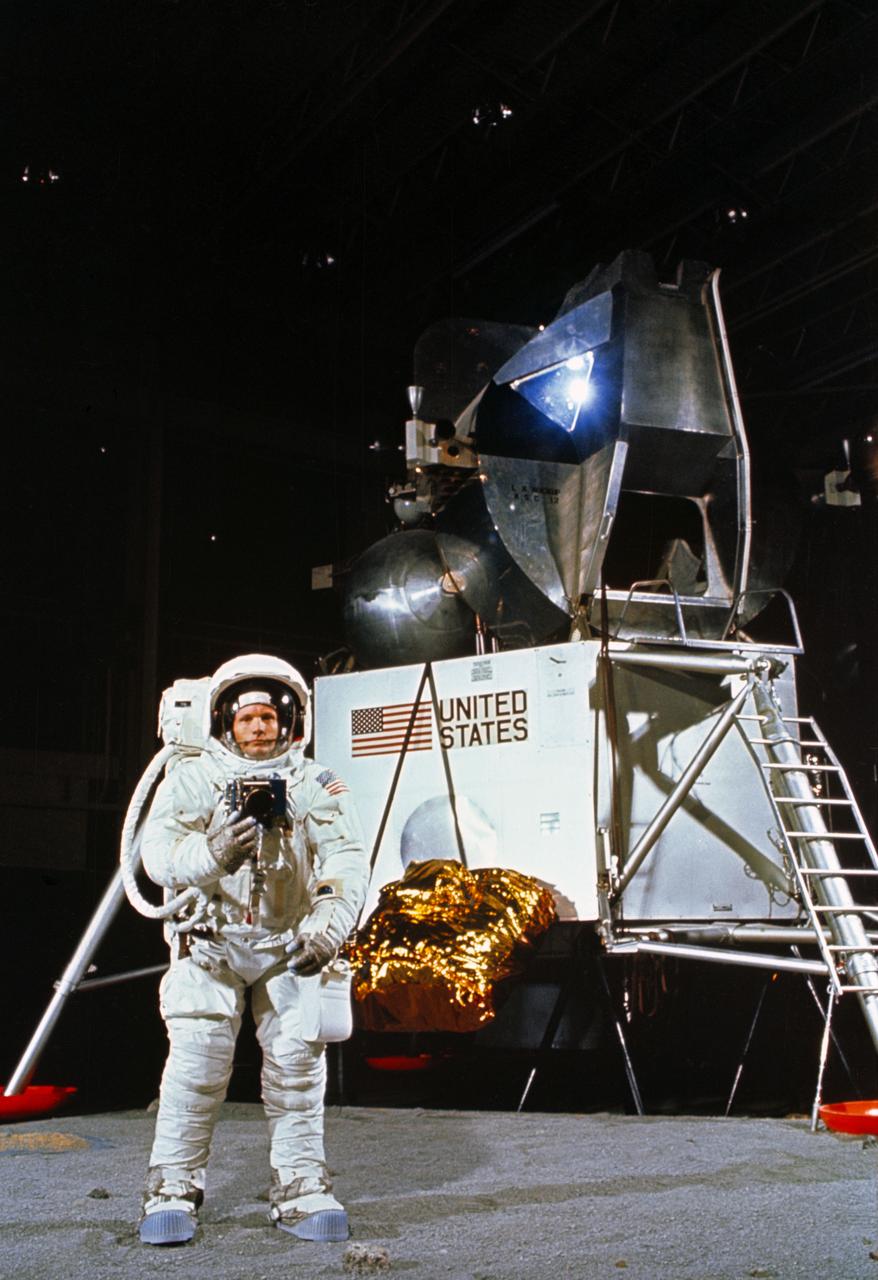
S69-32240 (22 April 1969) --- Astronaut Neil A. Armstrong, wearing an Extravehicular Mobility Unit, participates in a simulation of deploying and using lunar tools on the surface of the moon during a training exercise in Building 9 on April 22, 1969. Armstrong is the commander of the Apollo 11 lunar landing mission. In the background is a Lunar Module mock-up.
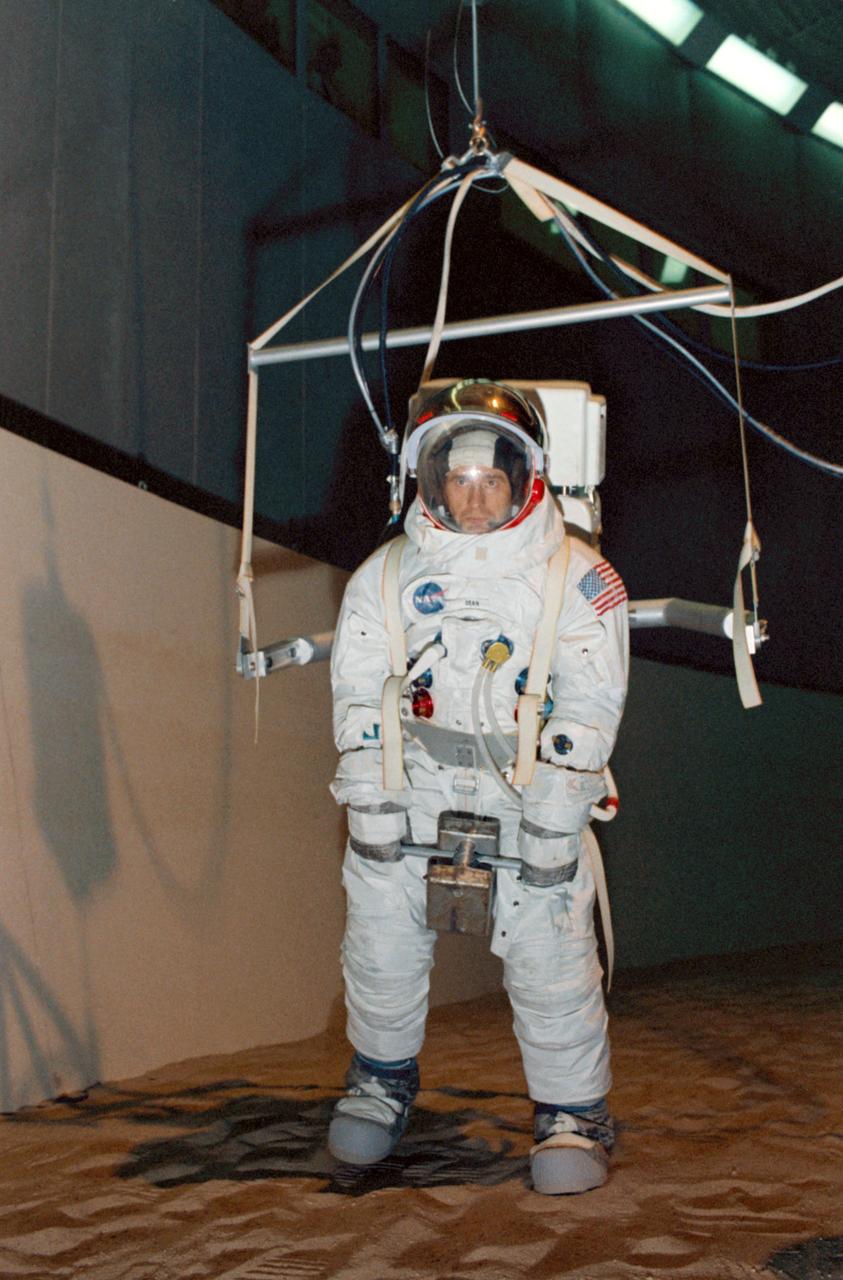
S69-56059 (24 Oct. 1969) --- Astronaut Alan L. Bean, lunar module pilot of the Apollo 12 lunar landing mission, participates in lunar surface simulation training in Building 29 at the Manned Spacecraft Center (MSC). Bean is strapped to a one-sixth gravity simulator.
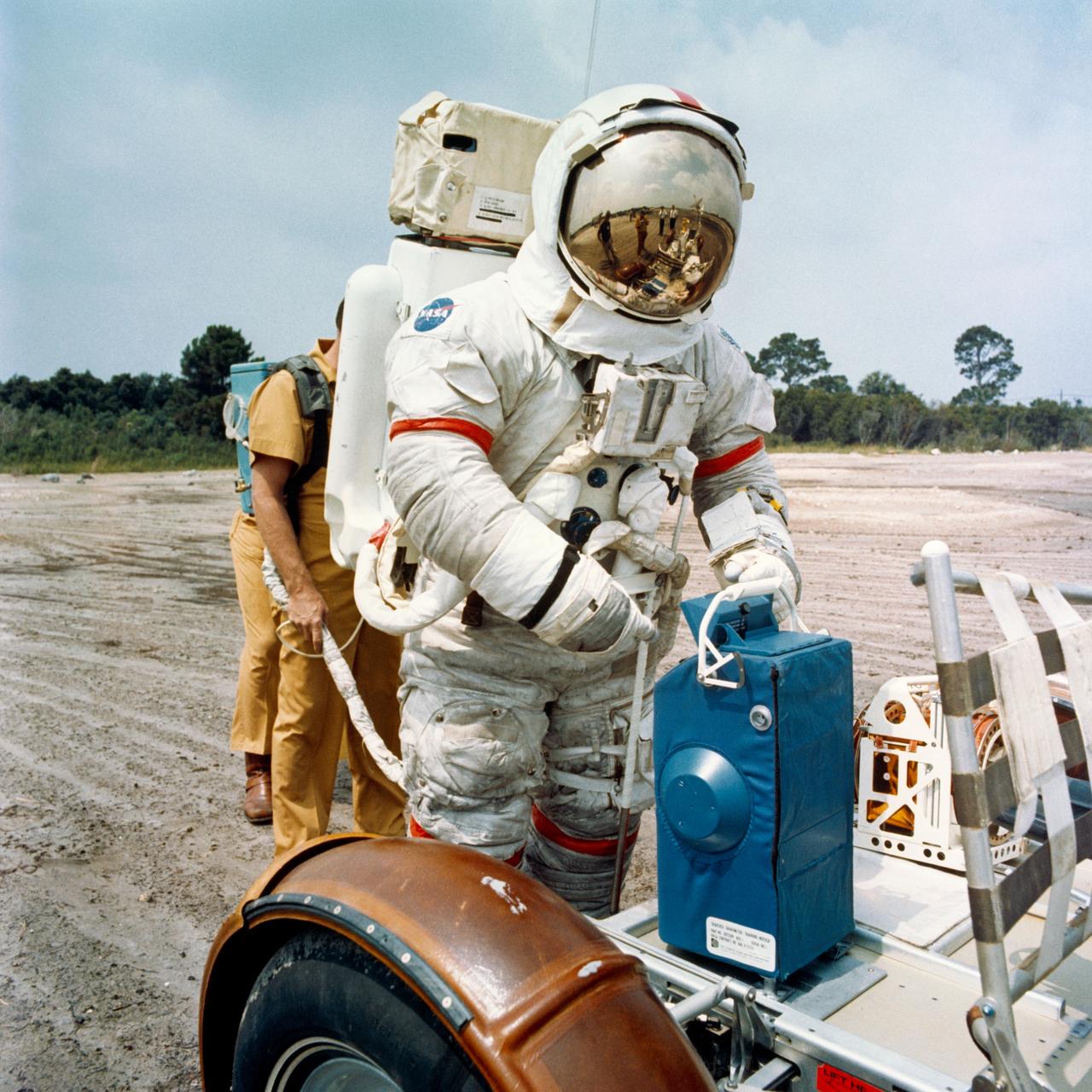
S72-44420 (8 June 1972) --- Astronaut Eugene A. Cernan, commander of the Apollo 17 lunar landing mission, prepares to remove a traverse gravimeter training mock-up from a Lunar Roving Vehicle for deployment during lunar surface extravehicular activity simulations at the Kennedy Space Center (KSC), Florida.
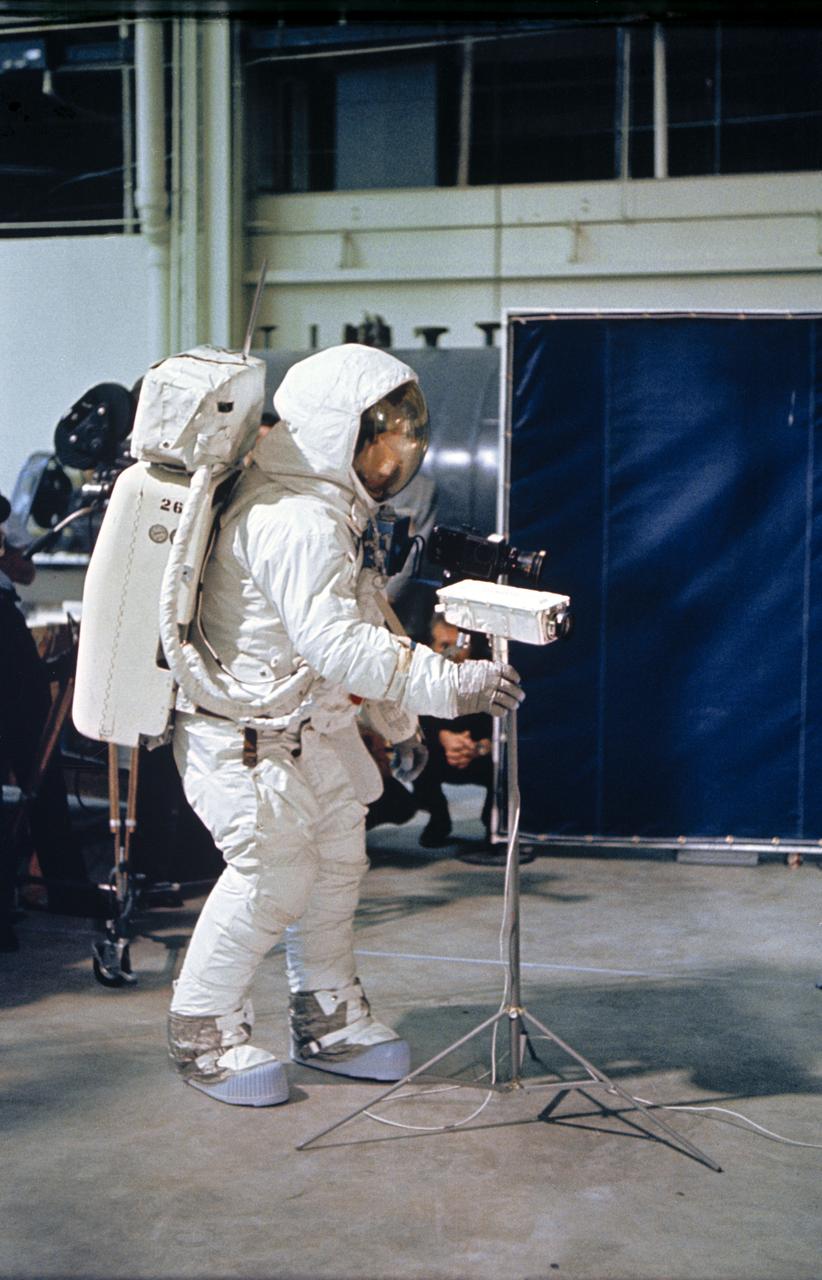
S69-33923 (April 1969) --- Astronaut Neil A. Armstrong, wearing an Extravehicular Mobility Unit (EMU), deploys a lunar surface television camera during lunar surface simulation training in Building 9, Manned Spacecraft Center (MSC). Armstrong is the prime crew commander of the Apollo 11 lunar landing mission.
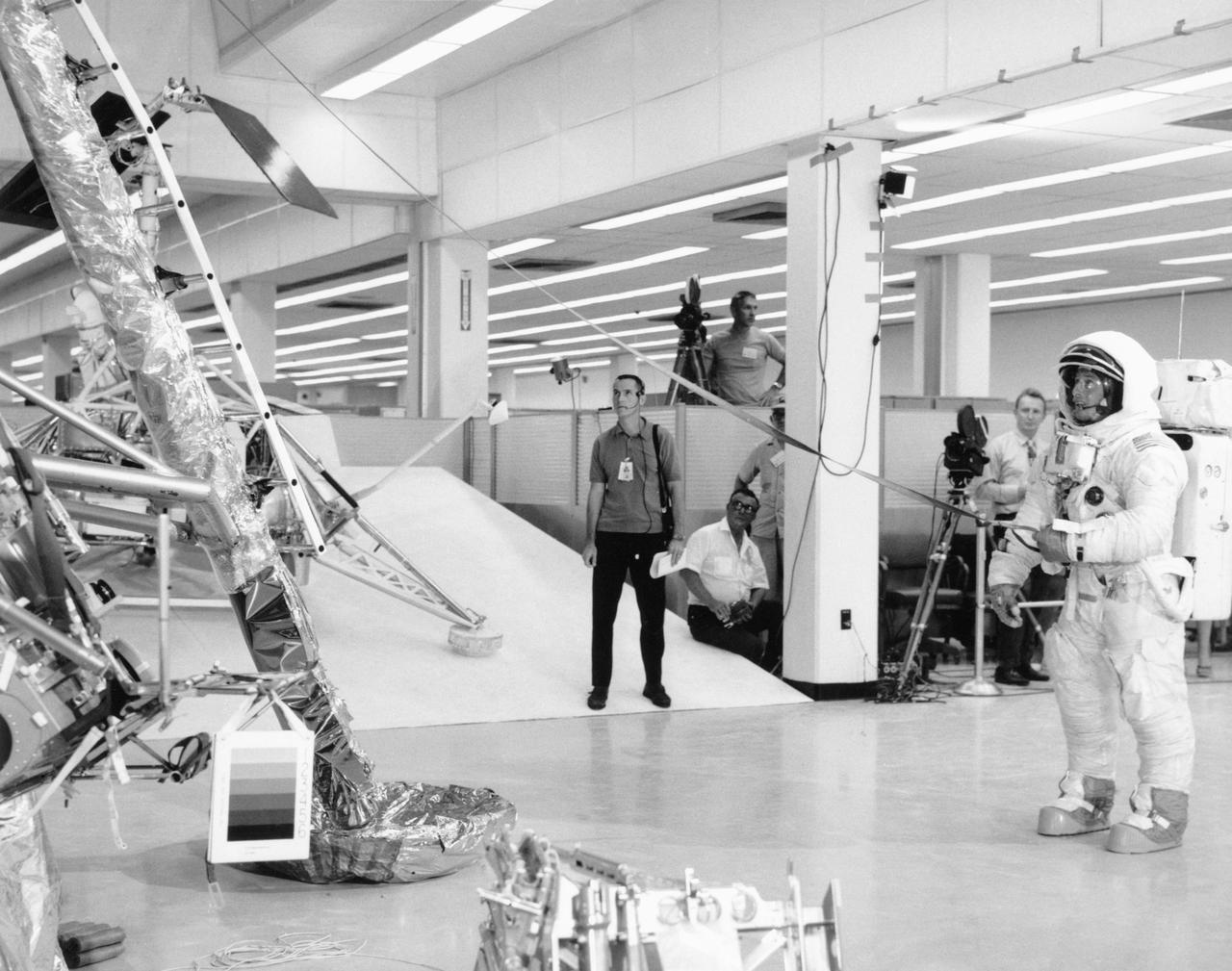
S69-54147 (October 1969) --- Two members of the Apollo 12 lunar landing mission participates in lunar surface extravehicular activity (EVA) simulations in the Kennedy Space Center's (KSC) Flight Crew Training Building. Here, astronauts Charles Conrad Jr., commander, is holding the bottom end of the lunar equipment conveyor. Inside the Lunar Module (LM) and out of view is astronaut Alan L. Bean, lunar module pilot. The simulations were part of a run-through of the Apollo 12 lunar surface "timeline".
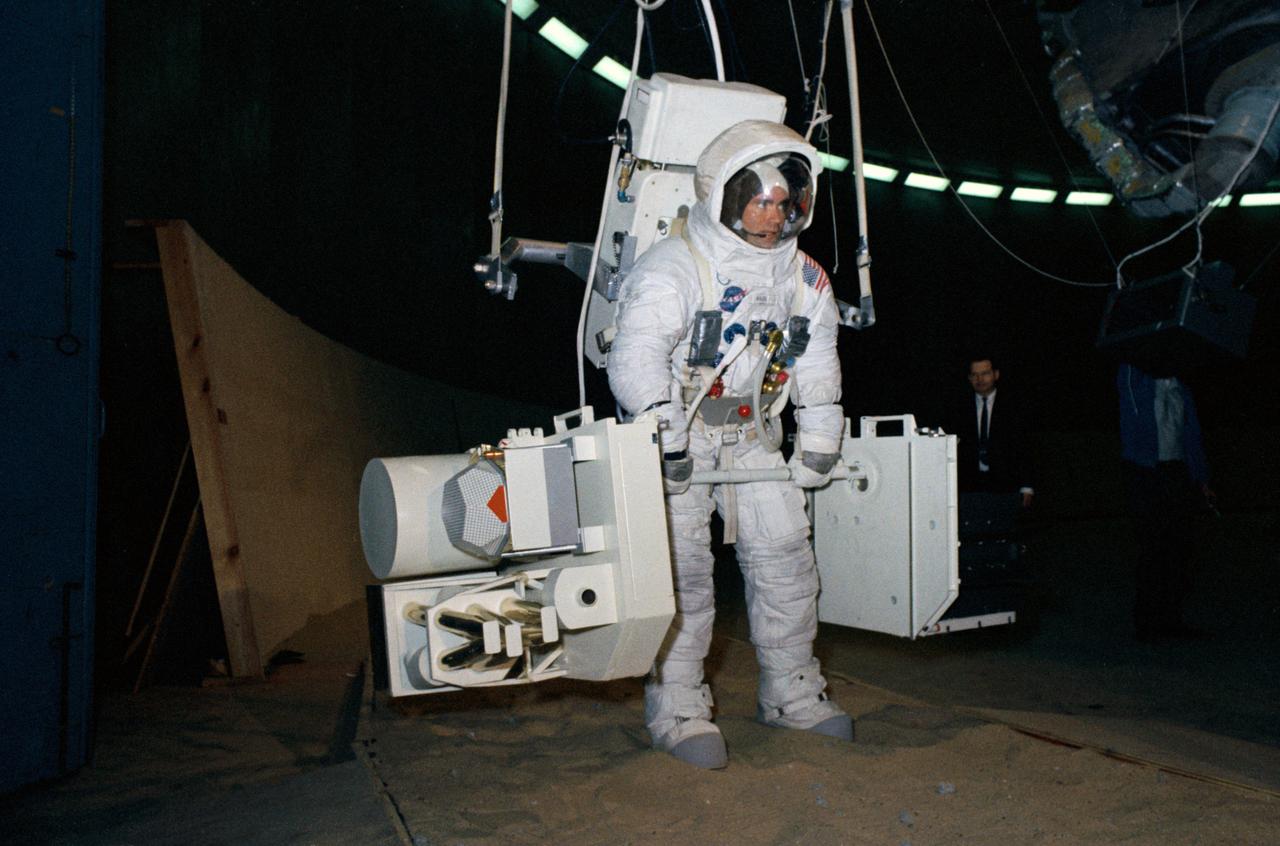
S70-24009 (19 Jan. 1970) --- Astronaut Fred W. Haise Jr., Apollo 13 lunar module pilot, trains for his scheduled April lunar space walk at the Manned Spacecraft Center (MSC). Haise carries a training version of the Apollo Lunar Surface Experiments Package (ALSEP), while connected to a "Six Degrees of Freedom" simulator. Out of frame is astronaut James A. Lovell Jr., commander, who will share the lunar extravehicular activity (EVA) with Haise. EDITOR'S NOTE: In April 1970 the Apollo 13 Service Module (SM) experienced an explosion en route to the moon. The three-man crew was forced to circumnavigate the moon and return to Earth.
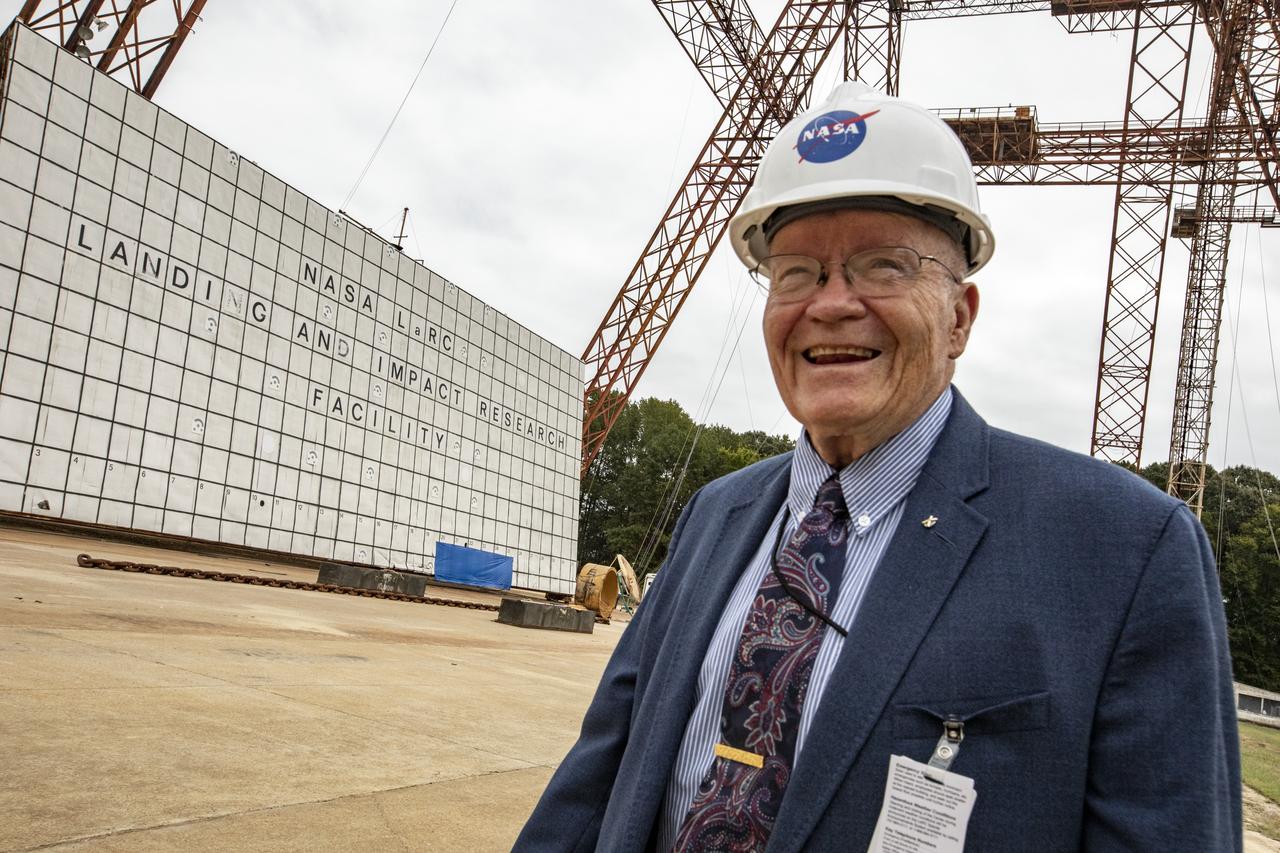
Apollo Astronaut Fred Haise visiting NASA Langley historic gantry where Fred once trained to fly the lunar lander.
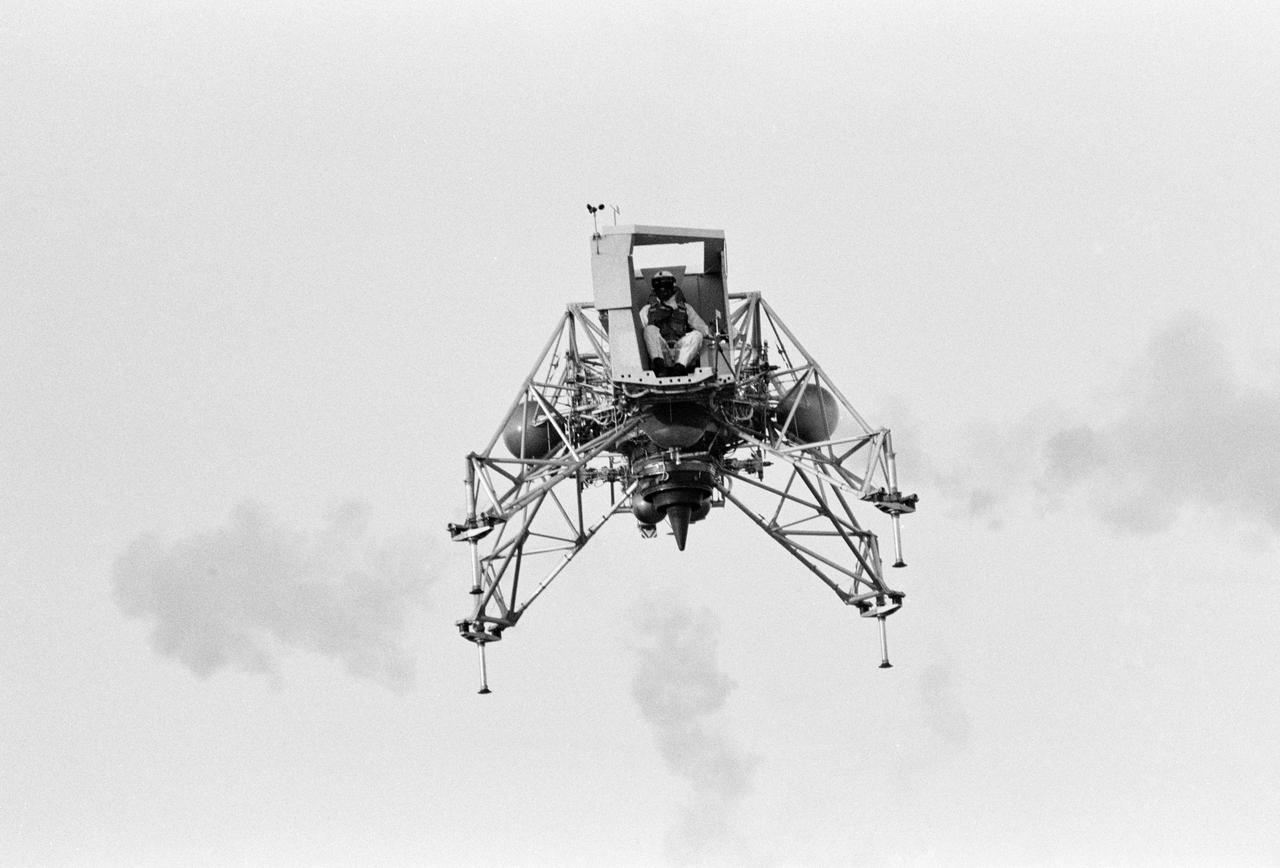
Inflight view of Astronaut Neil Armstrong flying the Lunar Landing Training Vehicle (LLTV) at EAFB. EAFB, Houston, TX
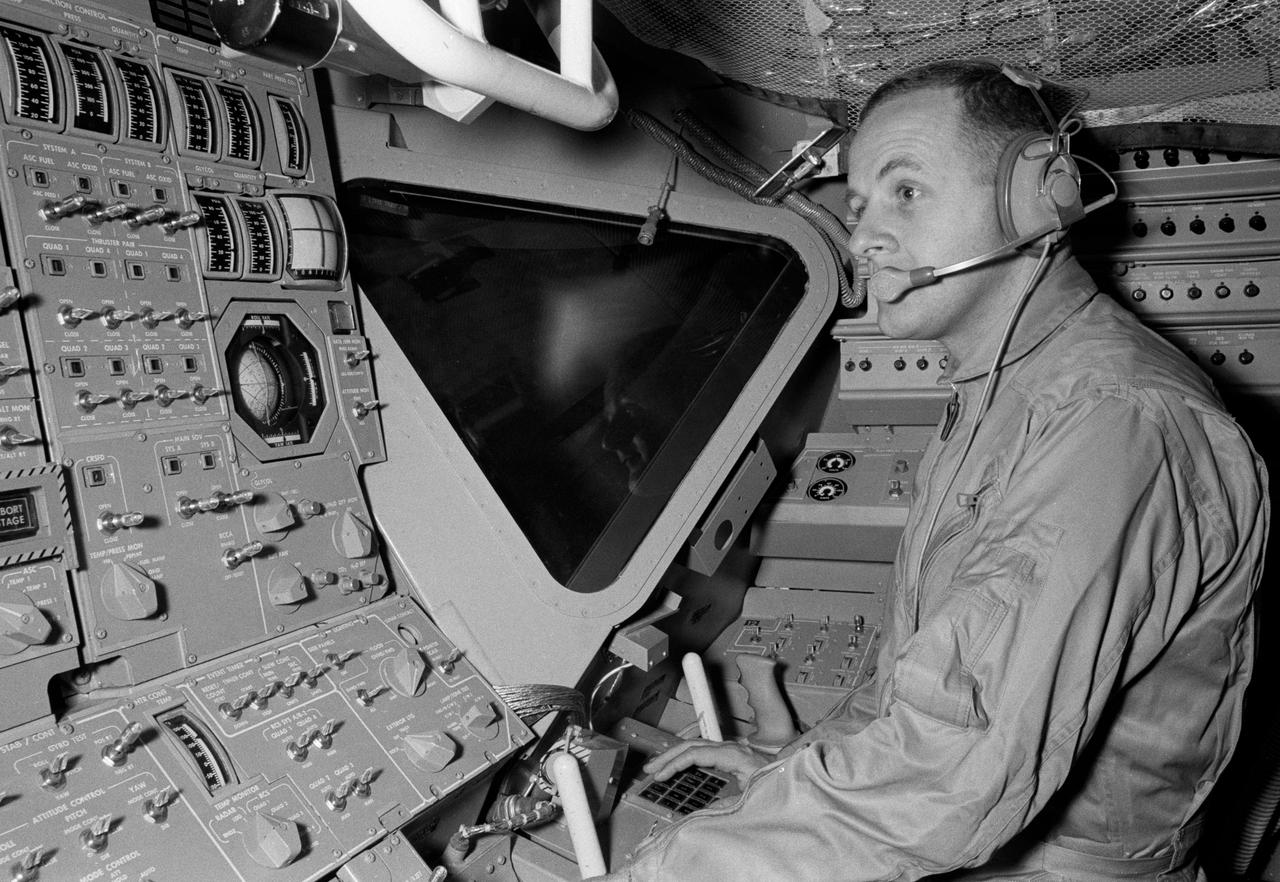
Views of Astronaut Dr. Philip K. Chapman training in the Lunar Module (LM) Simulator, Centrifuge, and the Apollo Mission Simulator. MSC
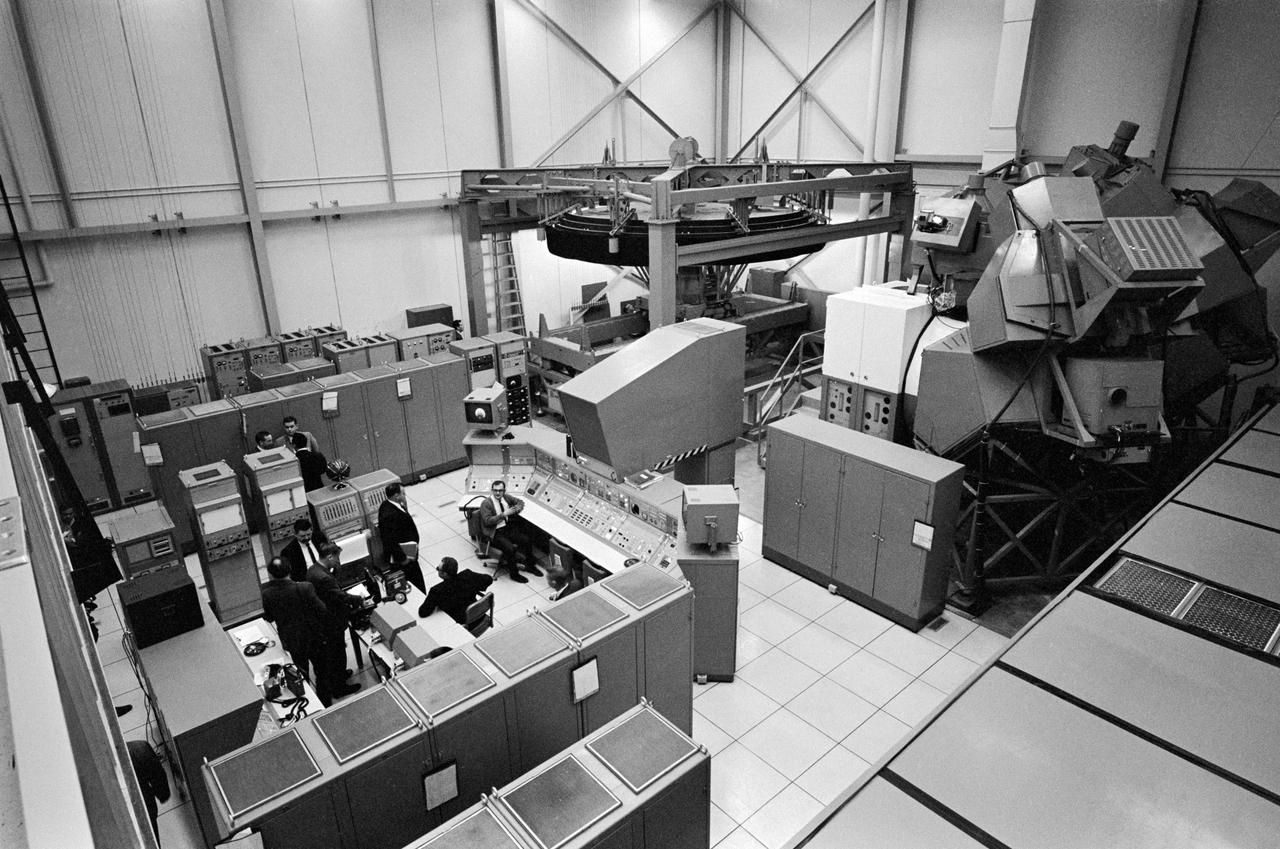
Overall view of the Lunar Module Mission Simulator, an astronaut training facility located in bldg 5.
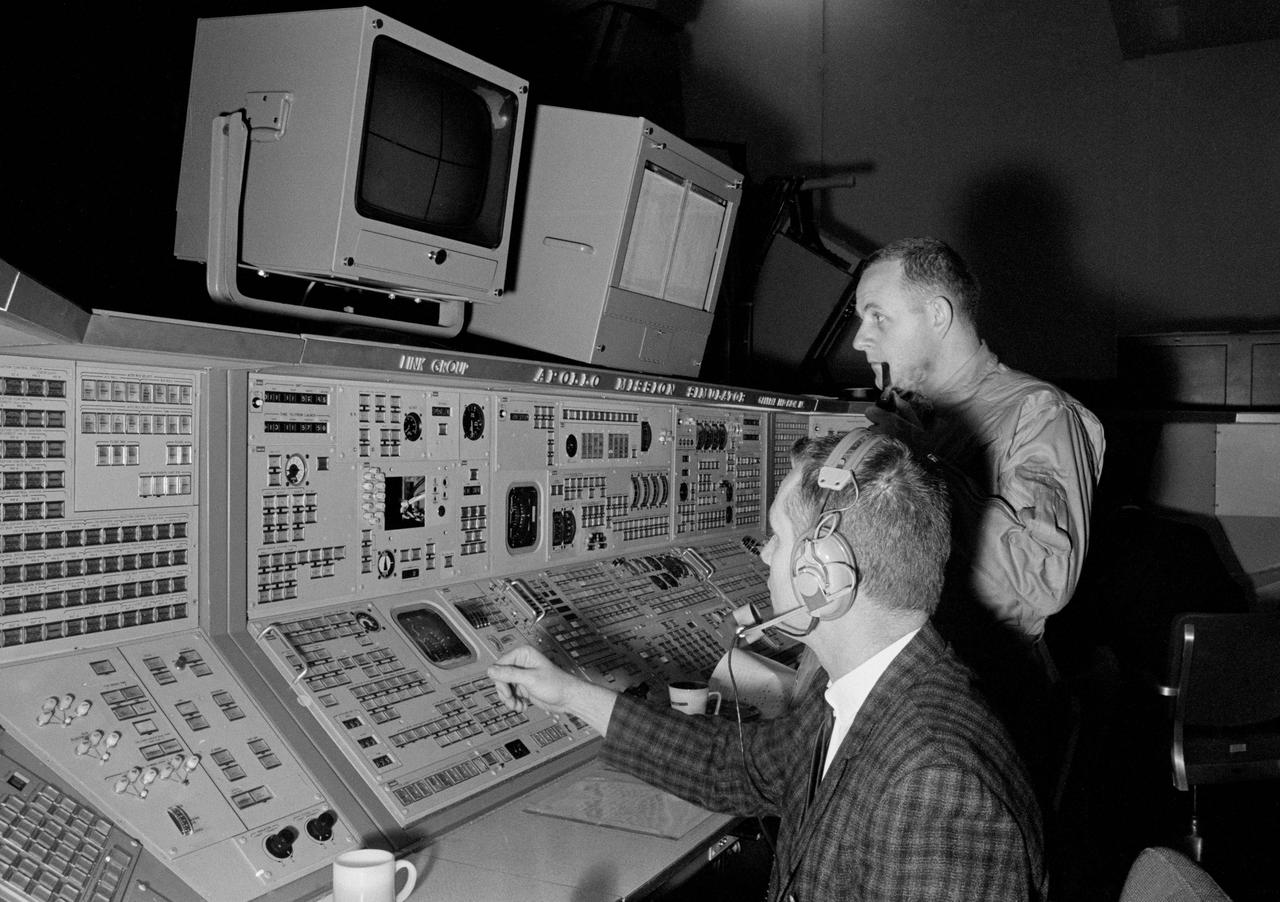
Views of Astronaut Dr. Philip K. Chapman training in the Lunar Module (LM) Simulator, Centrifuge, and the Apollo Mission Simulator. MSC
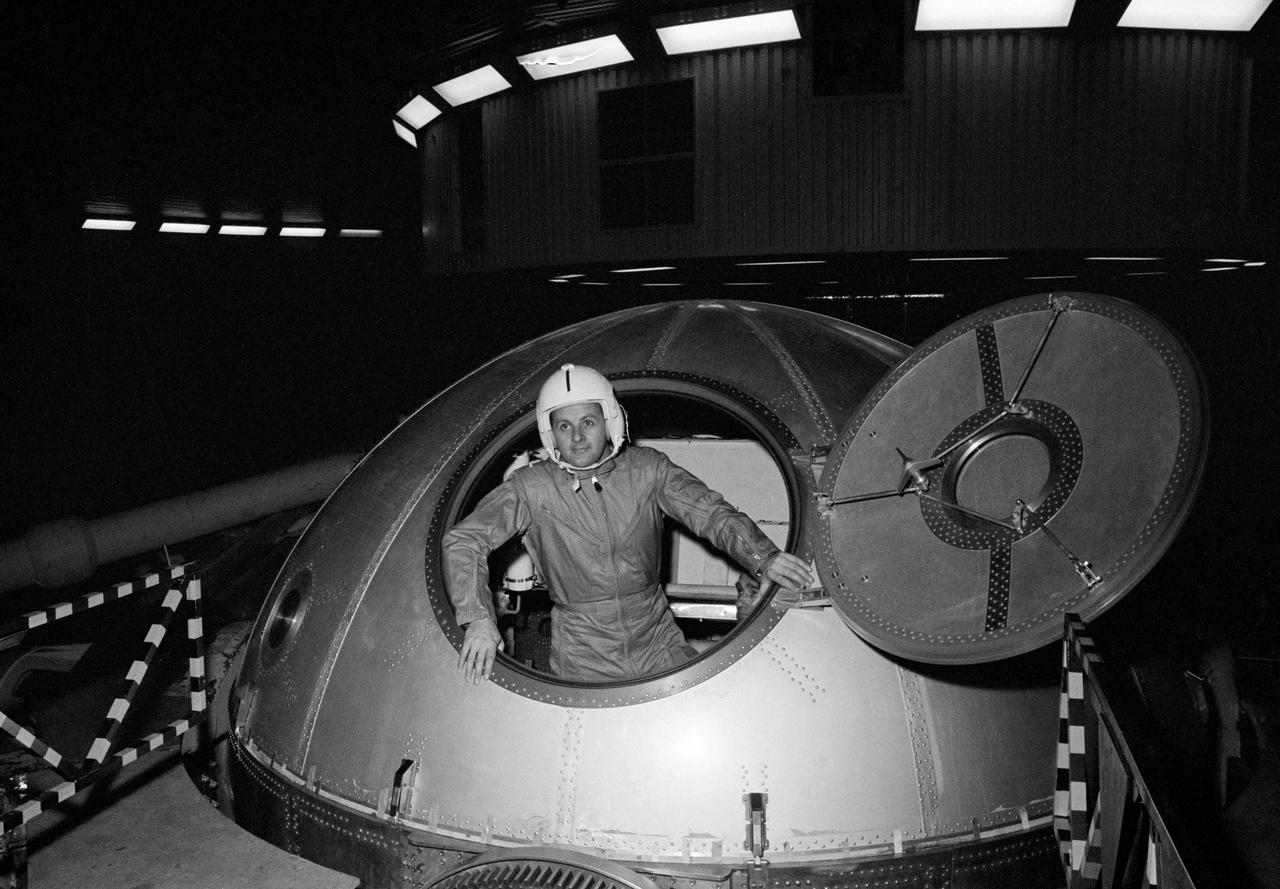
Views of Astronaut Dr. Philip K. Chapman training in the Lunar Module (LM) Simulator, Centrifuge, and the Apollo Mission Simulator. MSC
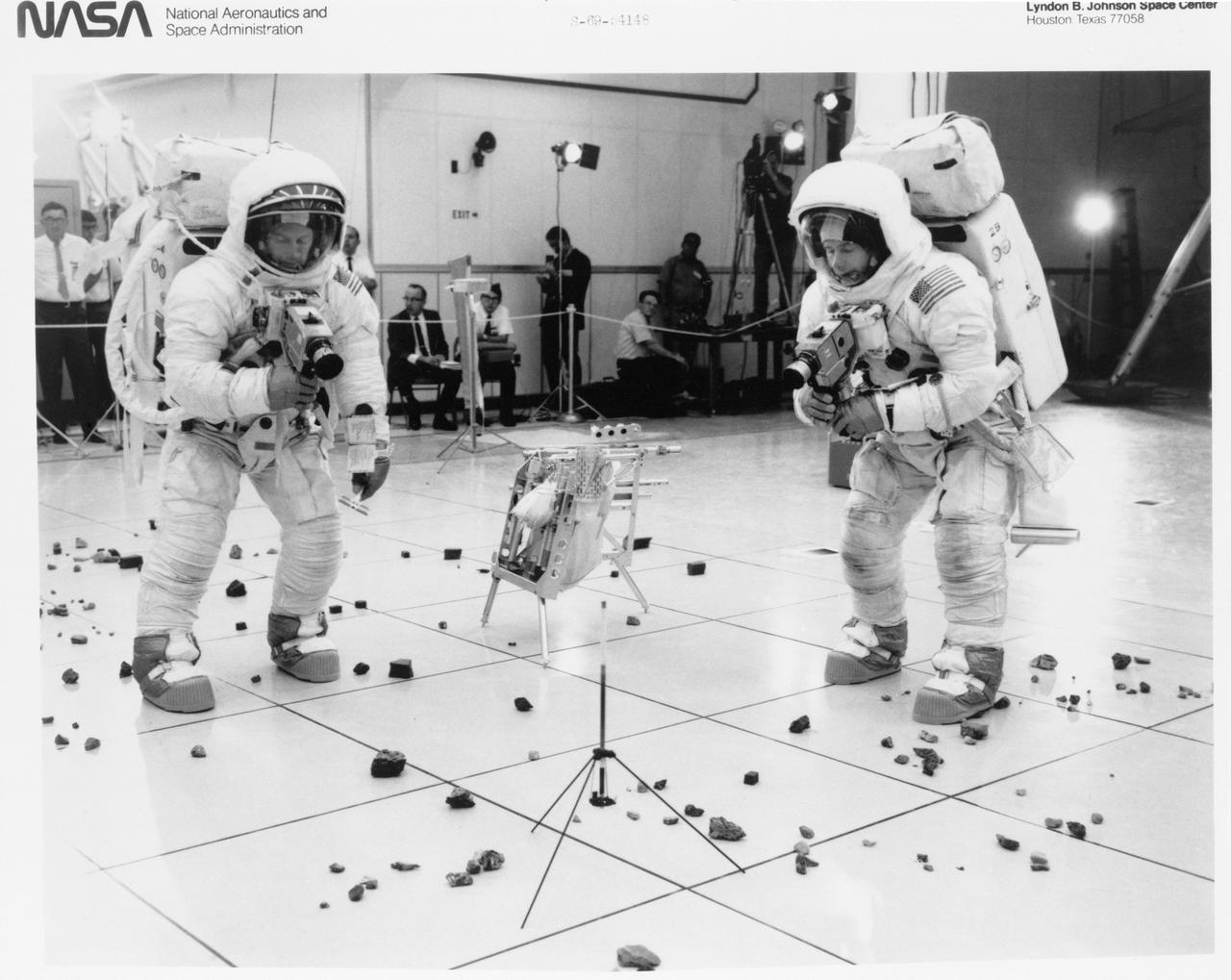
S69-54148 (October 1969) --- Two members of the Apollo 12 lunar landing mission participates in lunar surface extravehicular activity (EVA) simulations in the Kennedy Space Center's (KSC) Flight Crew Training Building. Here, astronauts Charles Conrad Jr. (on left), commander, and Alan L. Bean, lunar module pilot, simulate the photographic documentation of lunar rock samples. The simulations were part of a run-through of the Apollo 12 lunar surface "timeline".
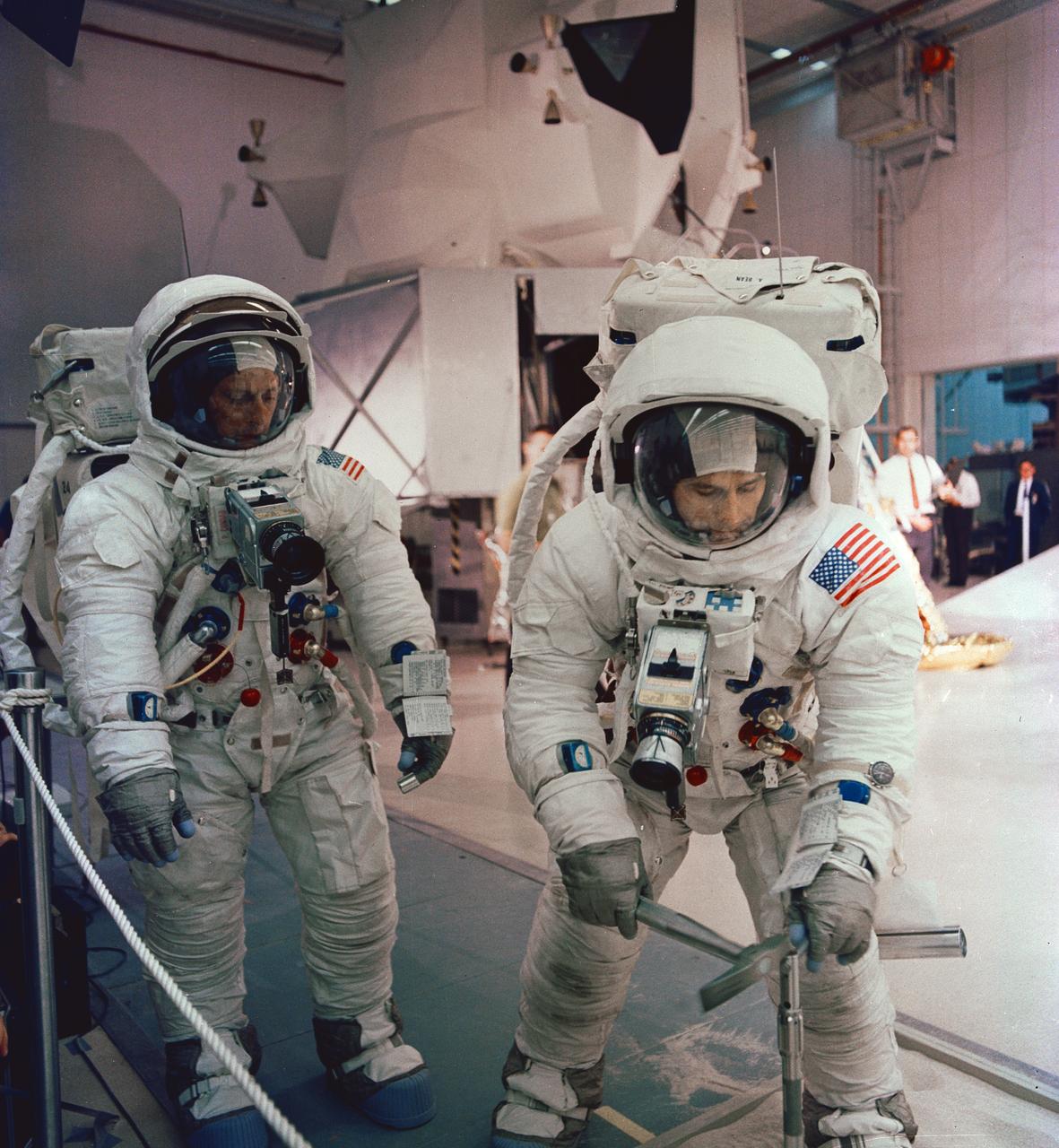
S69-55362 (6 Oct. 1969) --- The two assigned moon-walking crew members for the Apollo 12 lunar landing mission participate in lunar surface extravehicular activity simulations in the Kennedy Space Center's Flight Crew Training Building. Here, astronaut Alan L. Bean, lunar module pilot, simulates driving core tube into lunar surface to obtain a sample. Astronaut Charles Conrad Jr., commander, looks on. A Lunar Module mock-up is in the center background. Photo credit: NASA or National Aeronautics and Space Administration
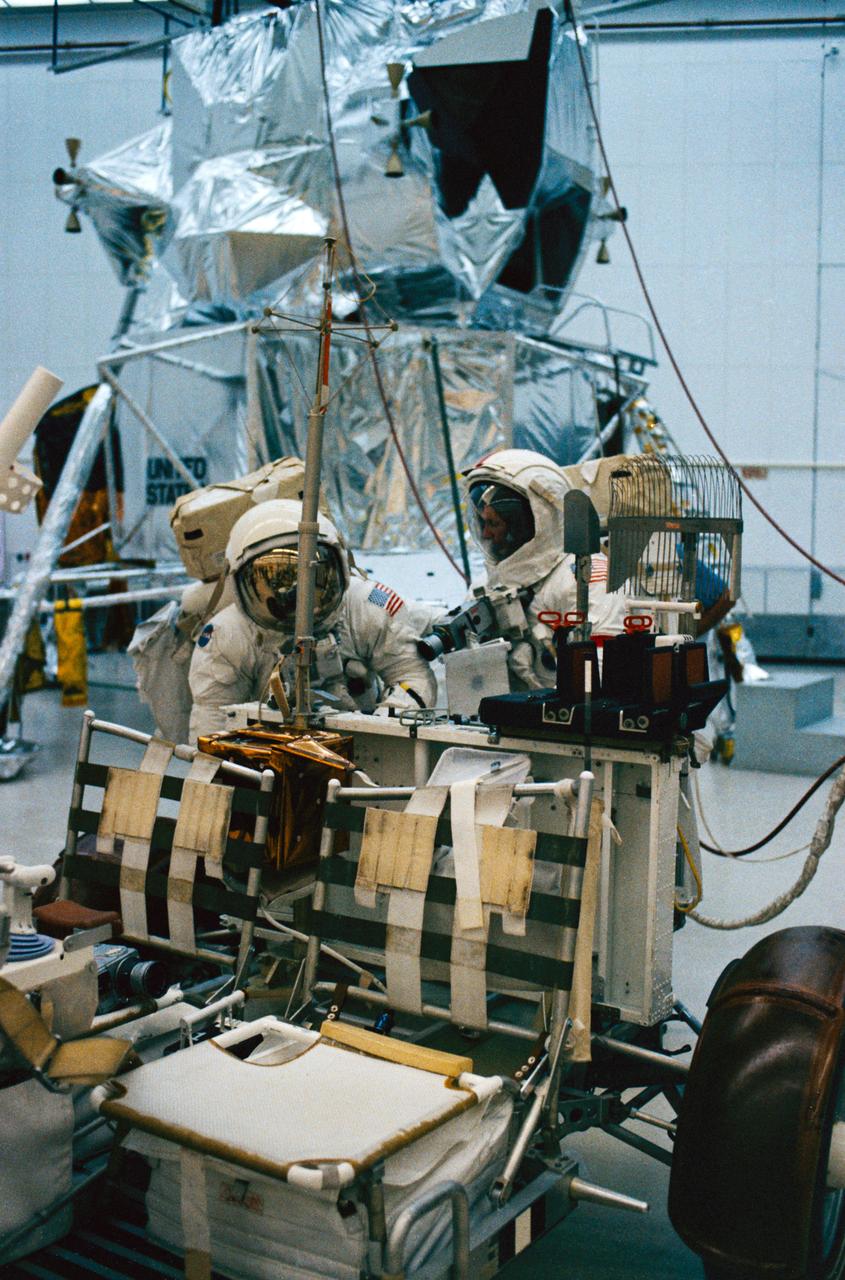
S72-48887 (September 1972) --- Astronaut Eugene A. Cernan (right), commander, and scientist-astronaut Harrison H. Schmitt, lunar module pilot, work at the aft end of a Lunar Roving Vehicle trainer during lunar surface extravehicular activity simulation training at the Kennedy Space Center (KSC), Florida. Astronauts Cernan, Schmitt, and Ronald E. Evans, command module pilot, are the prime crewmen of the Apollo 17 lunar landing mission. A Lunar Module mock-up can be seen in the background.
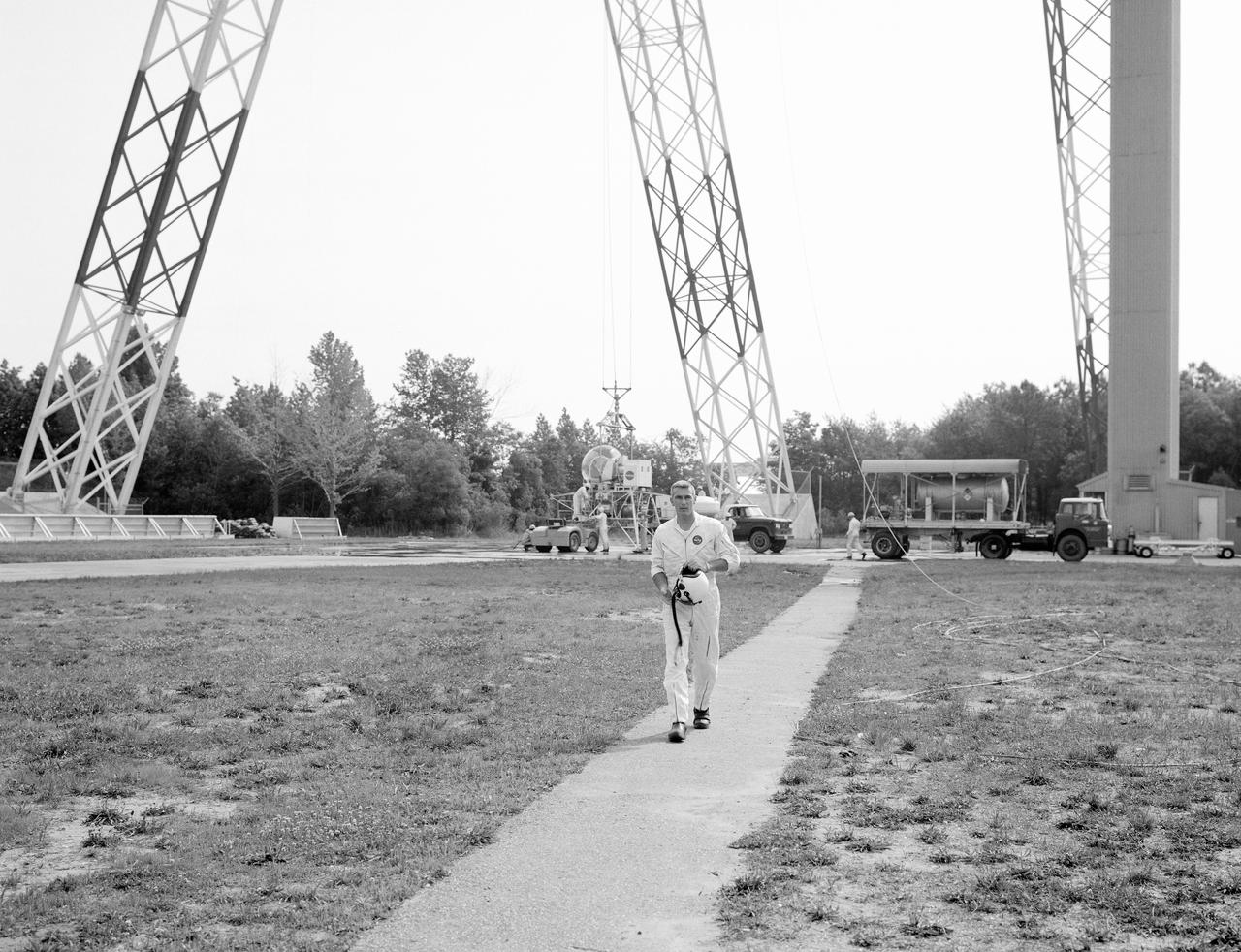
Astronaut Eugene Cernan at Lunar Lander Research Facility. Cernan under gantry, in training module. Captain Cernan was one of fourteen astronauts selected by NASA in October 1963. On his second space flight, he was lunar module pilot of Apollo 10, May 18-26, 1969, the first comprehensive lunar-orbital qualification and verification flight test of an Apollo lunar module.
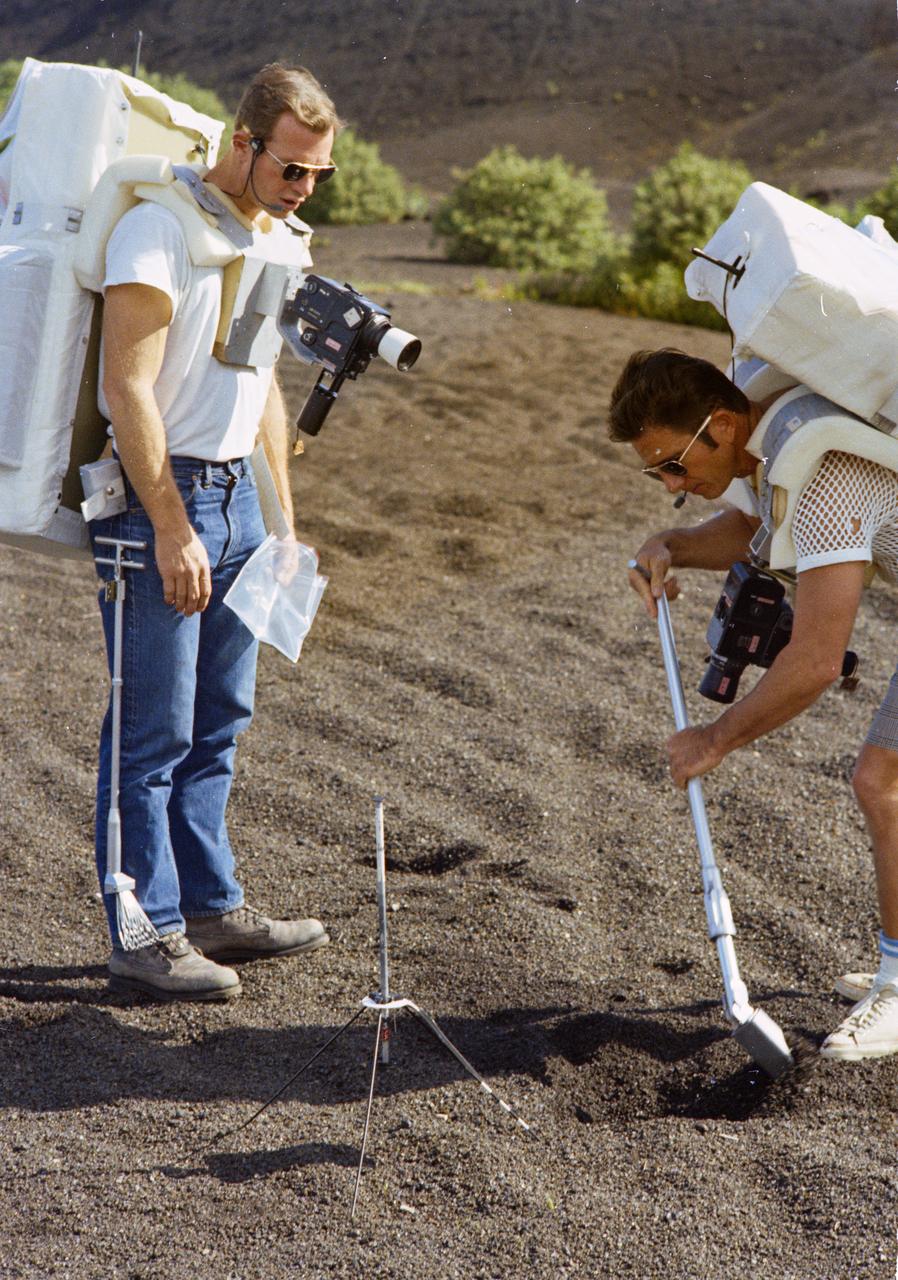
S70-56415 (December 1970) --- At Kapoho, Hawaii, astronauts David R. Scott (left), commander of the Apollo 15 lunar landing mission, and James B. Irwin, lunar module pilot, train at a designated lunar surface simulation area for their upcoming lunar landing mission. Wearing street clothes, but equipped with a Portable Life Support System (PLSS), the two rehearse for a selenological traverse. Here, they are inspecting a grapefruit-sized rock. Photo credit: NASA
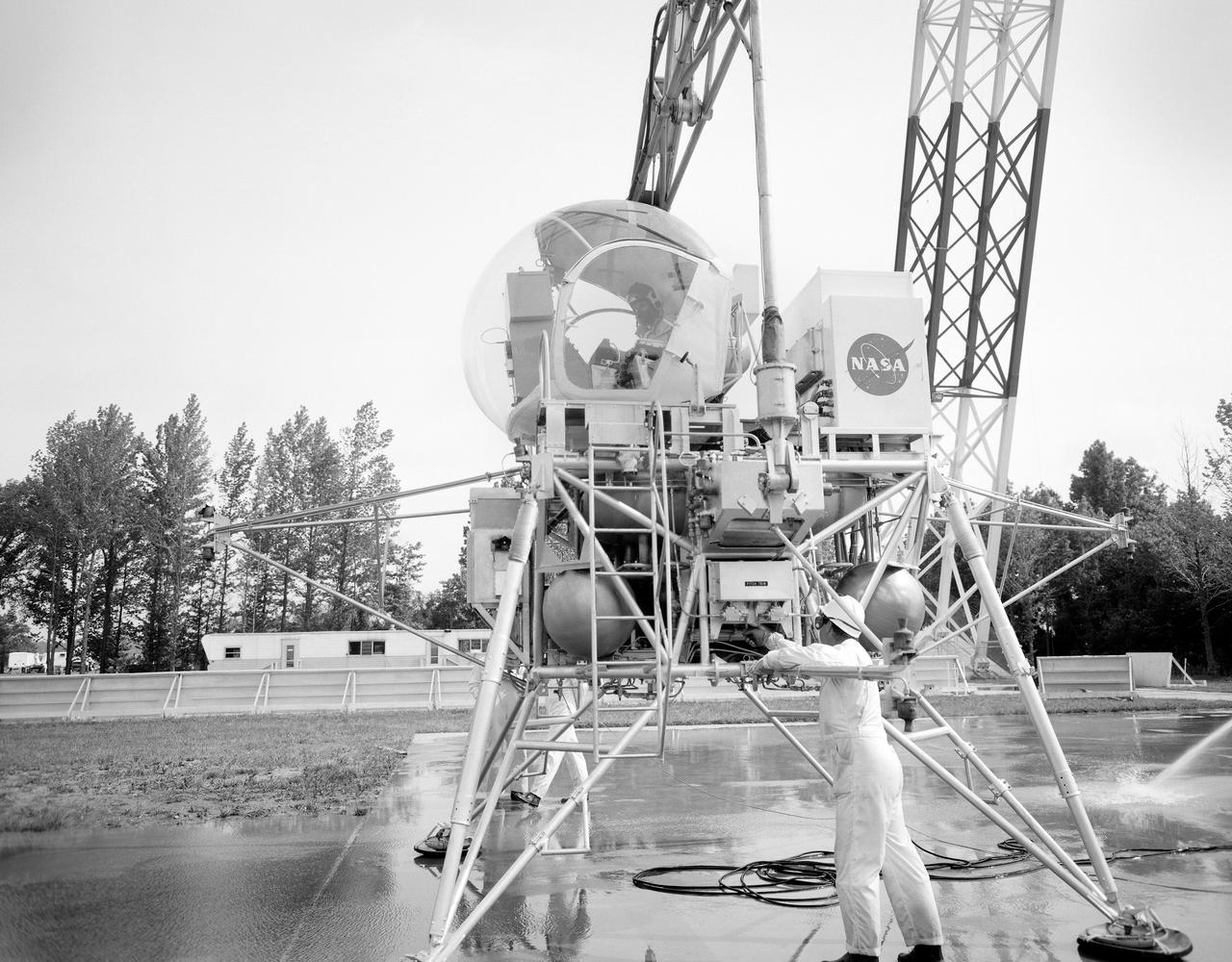
Astronaut Eugene Cernan at Lunar Lander Research Facility. Cernan under gantry, in training module. Captain Cernan was one of fourteen astronauts selected by NASA in October 1963. On his second space flight, he was lunar module pilot of Apollo 10, May 18-26, 1969, the first comprehensive lunar-orbital qualification and verification flight test of an Apollo lunar module.
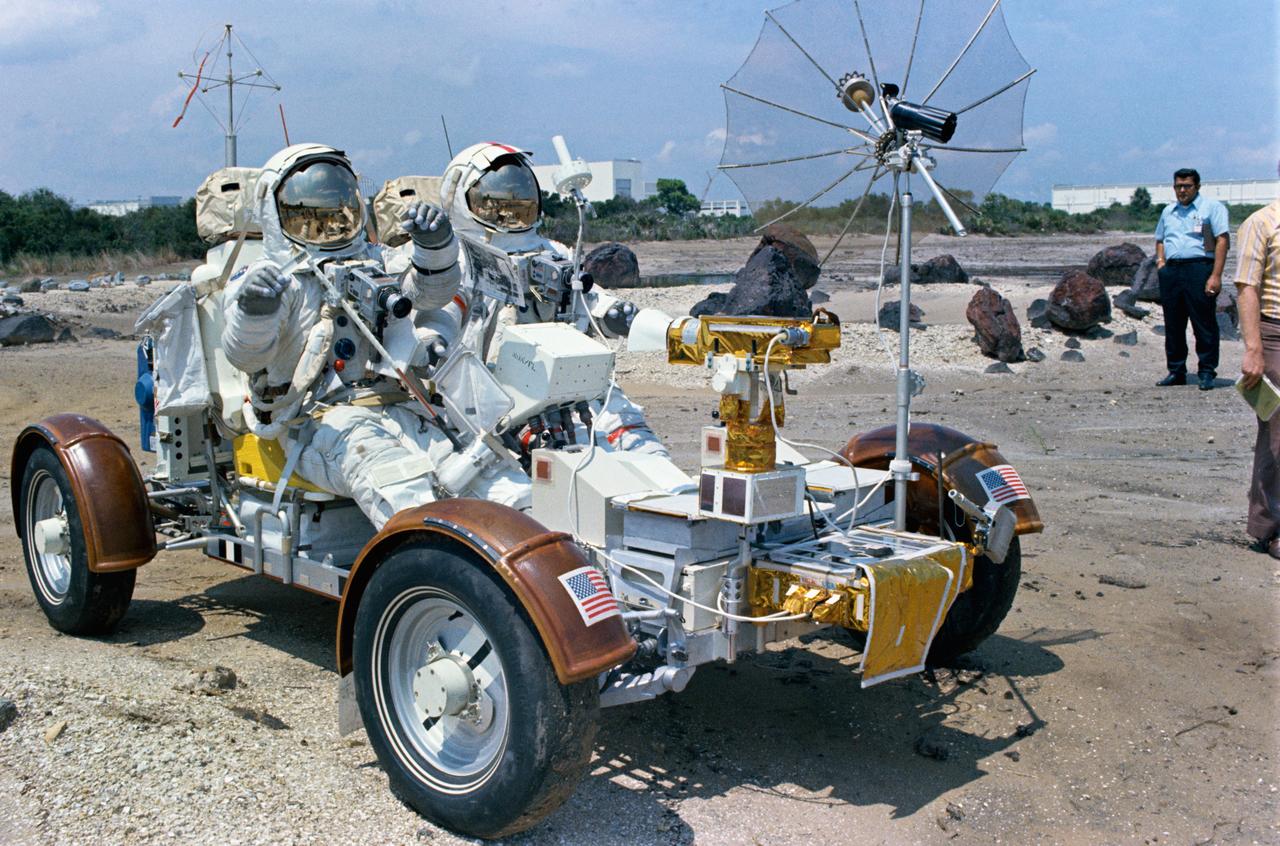
S72-48892 (September 1972) --- Two members of the prime crew of the Apollo 17 lunar landing mission ride in a Lunar Roving Vehicle trainer during lunar surface extravehicular activity simulation training at the Kennedy Space Center (KSC), Florida. Astronaut Eugene A. Cernan, commander, is seated in the left-hand seat. Scientist-astronaut Harrison H. Schmitt, lunar module pilot, is on Cernan's right.
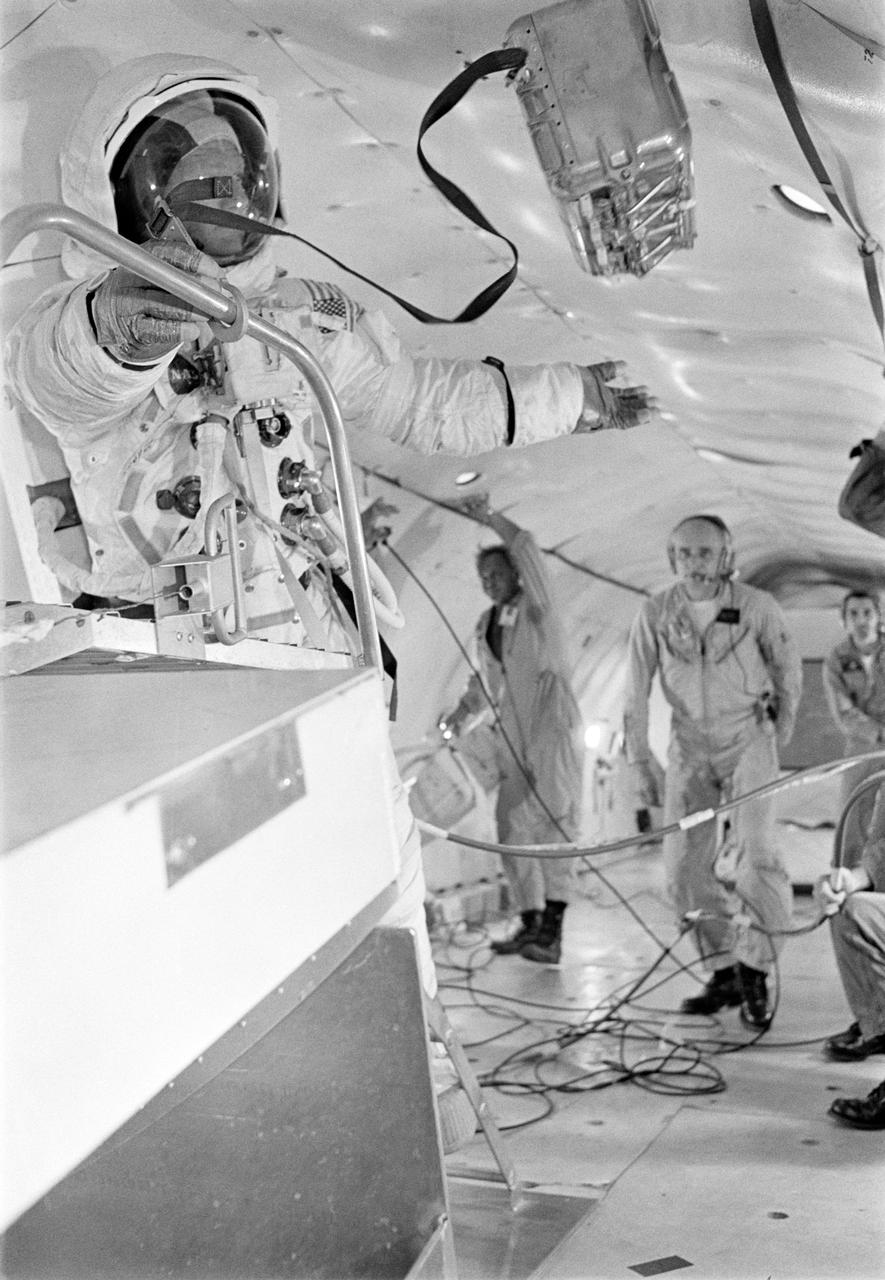
S69-39270 (10 July 1969) --- Astronaut Edwin E. Aldrin Jr., lunar module pilot of the Apollo 11 lunar landing mission, participates in lunar extravehicular activity training under weightlessness conditions aboard a U.S. Air Force KC-135 jet aircraft from nearby Patrick Air Force Base. Aldrin is wearing an Extravehicular Mobility Unit, the type of equipment which he will wear on the lunar surface.
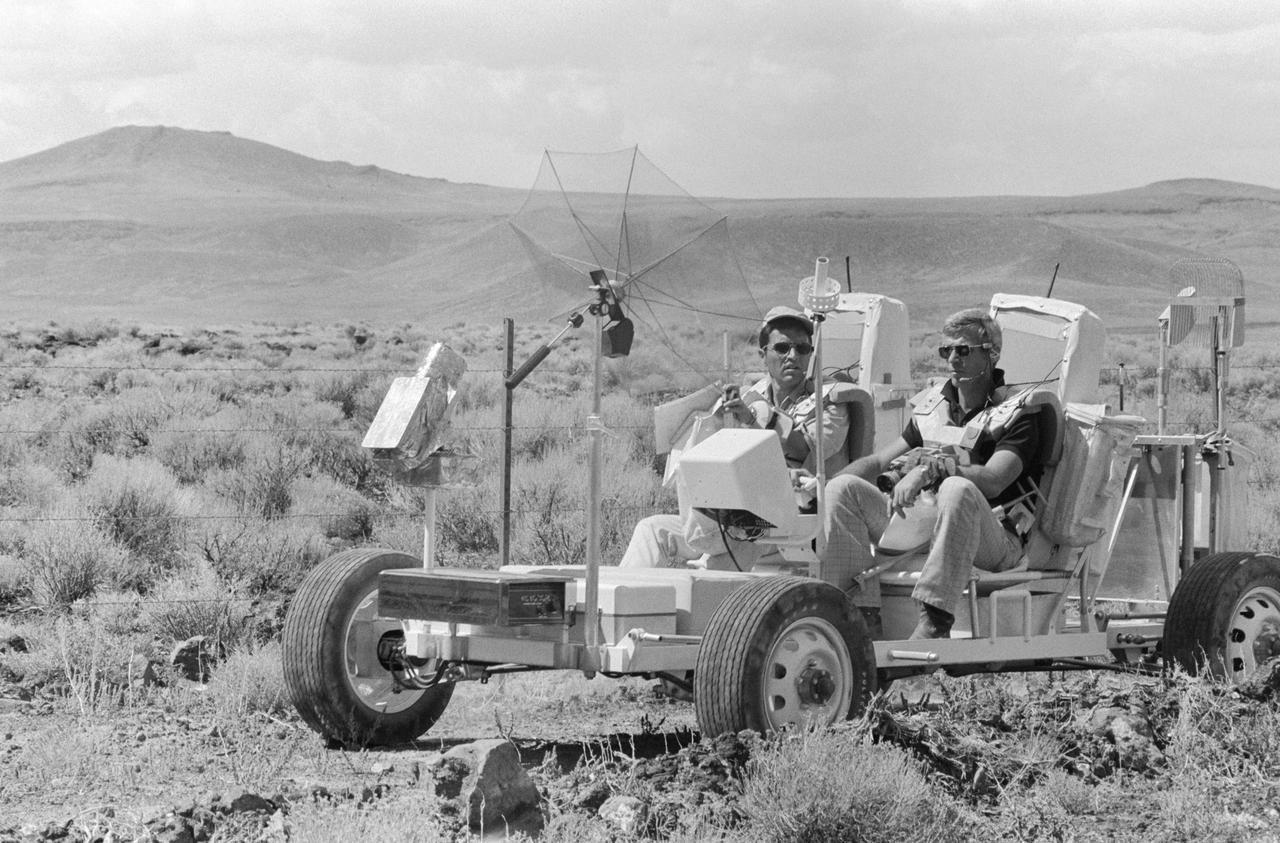
S72-48864 (6 Sept. 1972) --- Two members of the prime crew of the Apollo 17 lunar landing mission ride in a Lunar Roving Vehicle trainer during lunar surface extravehicular activity simulation training in the Pancake Range area of south-central Nevada. They are astronaut Eugene A. Cernan (foreground), commander; and scientist-astronaut Harrison H. Schmitt (on Cernan’s right), lunar module pilot.
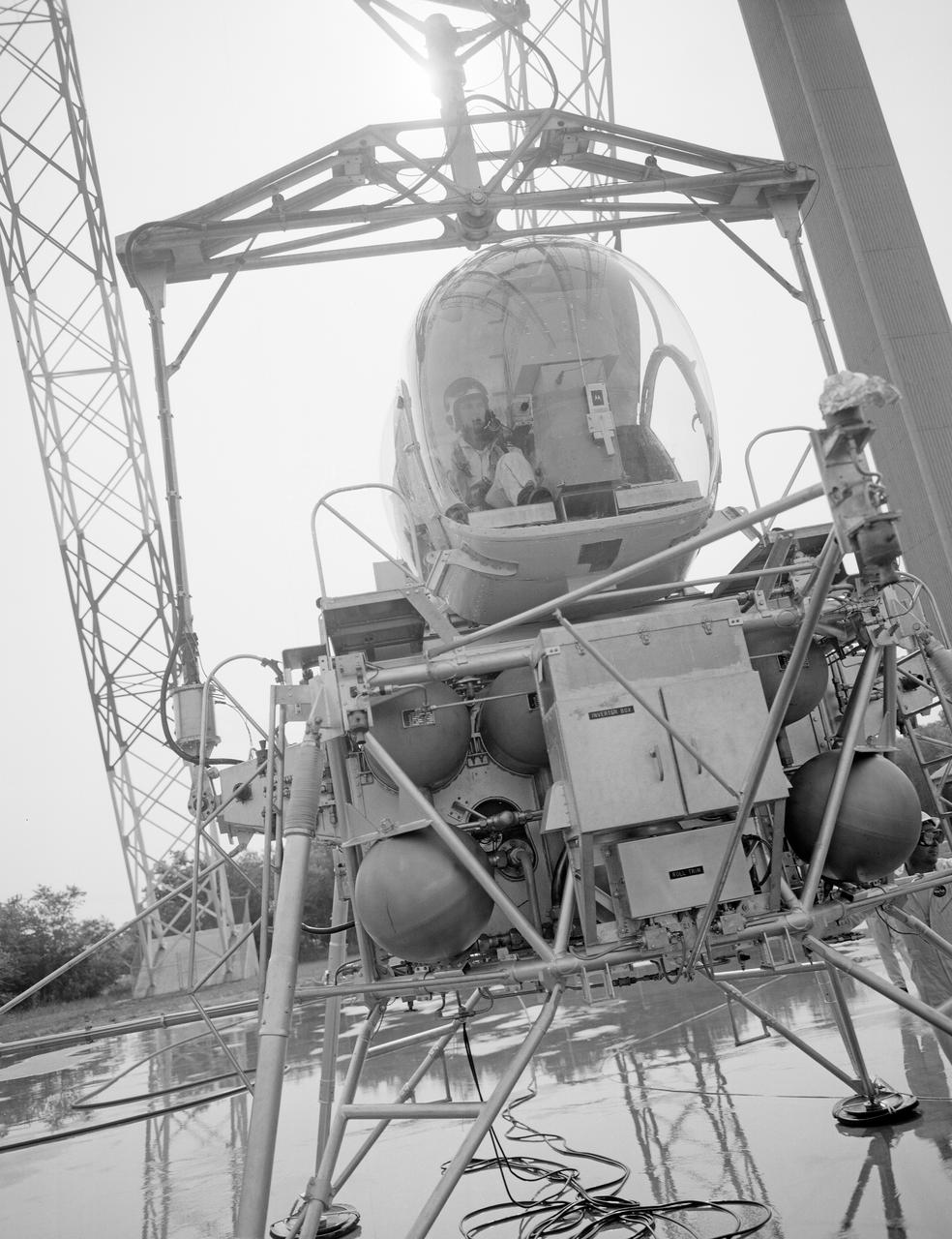
Astronaut Eugene Cernan at Lunar Lander Research Facility. Cernan under gantry, in training module. Captain Cernan was one of fourteen astronauts selected by NASA in October 1963. On his second space flight, he was lunar module pilot of Apollo 10, May 18-26, 1969, the first comprehensive lunar-orbital qualification and verification flight test of an Apollo lunar module.
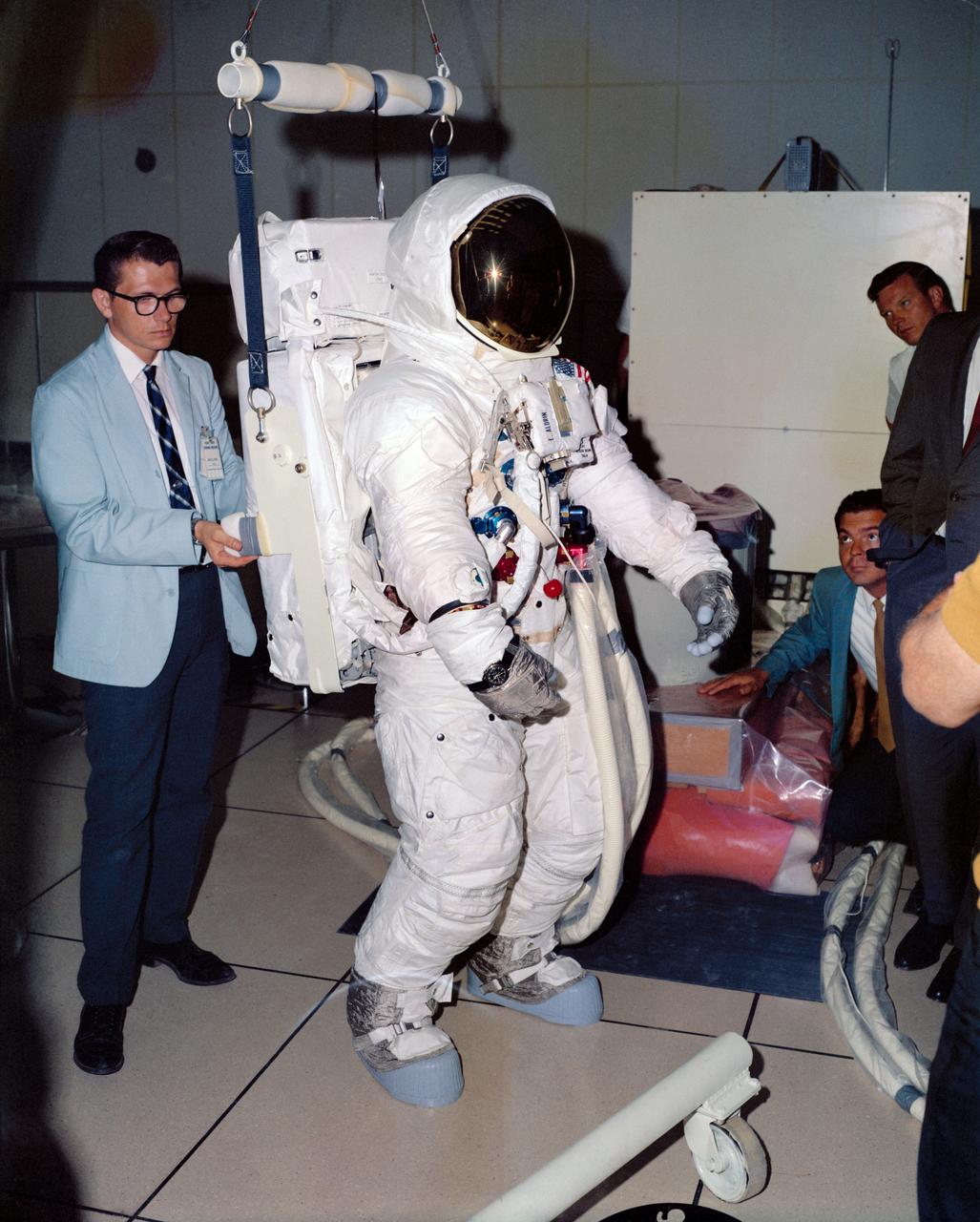
Astronaut Edwin E. Aldrin Jr., wearing an Extravehicular Mobility Unit (EMU), verifies fit of the Portable Life Support System (PLSS) strap length during lunar surface training at the Kennedy Space Center. Aldrin is the prime crew lunar module pilot of the Apollo 11 lunar landing mission. Aldrin's PLSS backpack is attached to a lunar weight simulator.
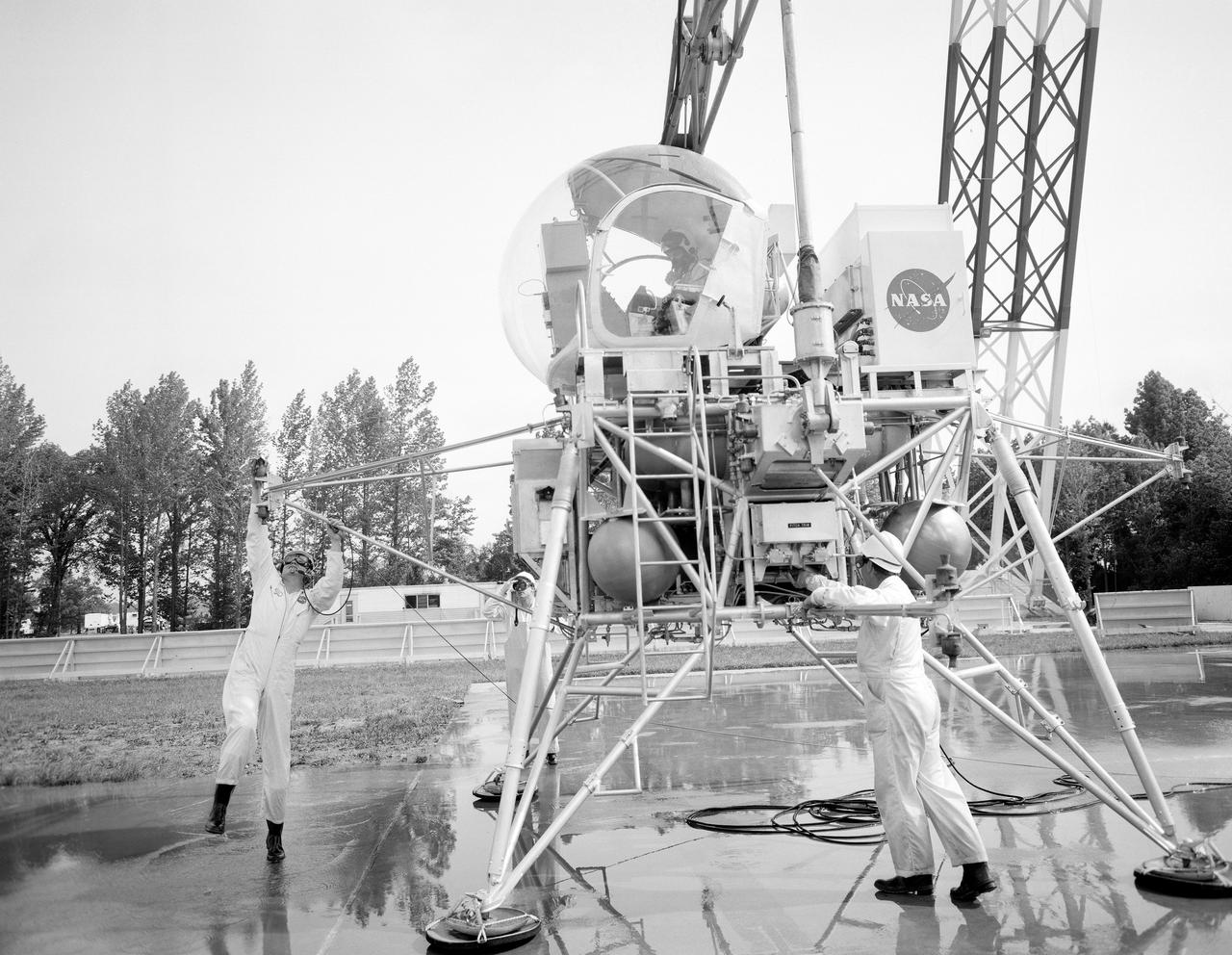
Astronaut Eugene Cernan at Lunar Lander Research Facility. Cernan under gantry, in training module. Captain Cernan was one of fourteen astronauts selected by NASA in October 1963. On his second space flight, he was lunar module pilot of Apollo 10, May 18-26, 1969, the first comprehensive lunar-orbital qualification and verification flight test of an Apollo lunar module.
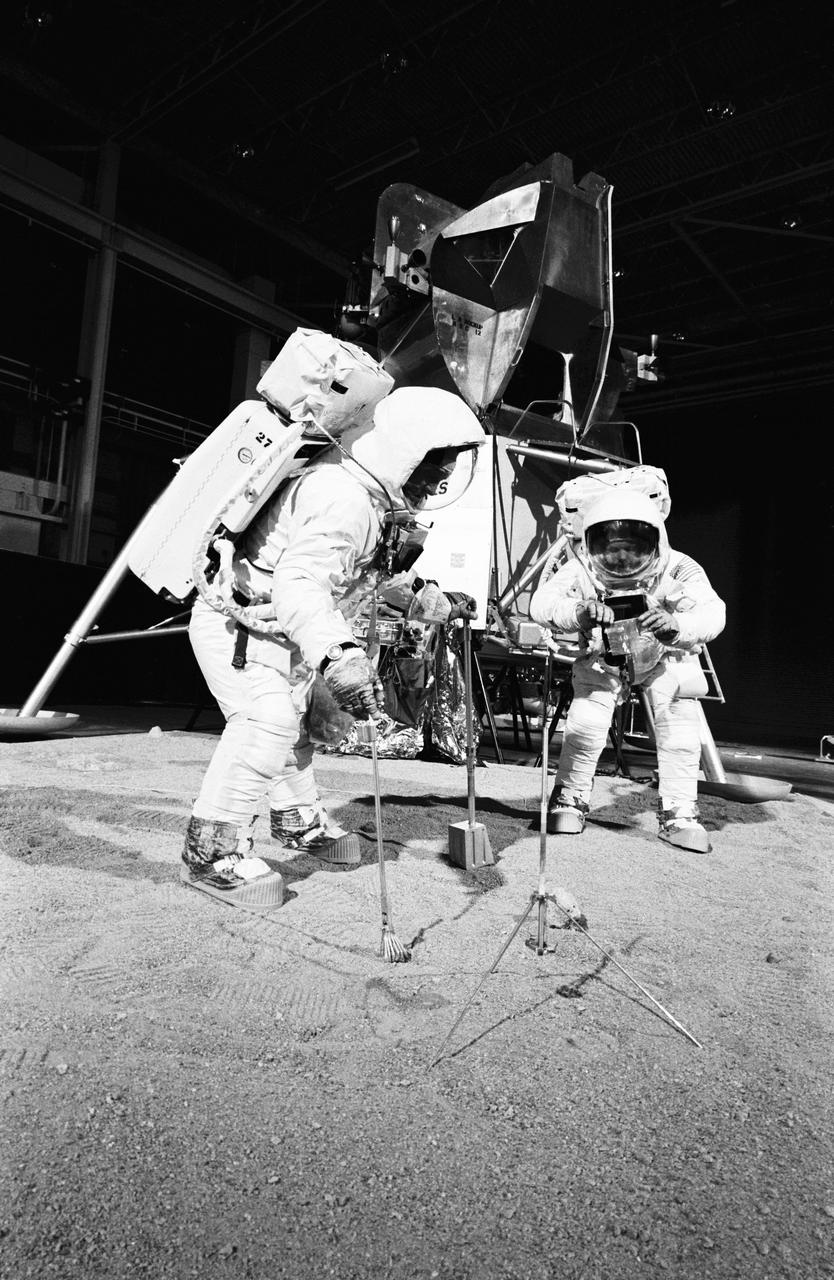
S69-32233 (22 April 1969) --- Two members of the Apollo 11 lunar landing mission participate in a simulation of deploying and using lunar tools on the surface of the moon. The rehearsal took place during a training exercise in building 9 on April 22, 1969. Astronaut Edwin E. Aldrin Jr. (on left), lunar module pilot, uses a scoop and tongs to pick up samples. Astronaut Neil A. Armstrong, Apollo 11 commander, holds the bag to receive the sample. In the background is a Lunar Module (LM) mock-up.
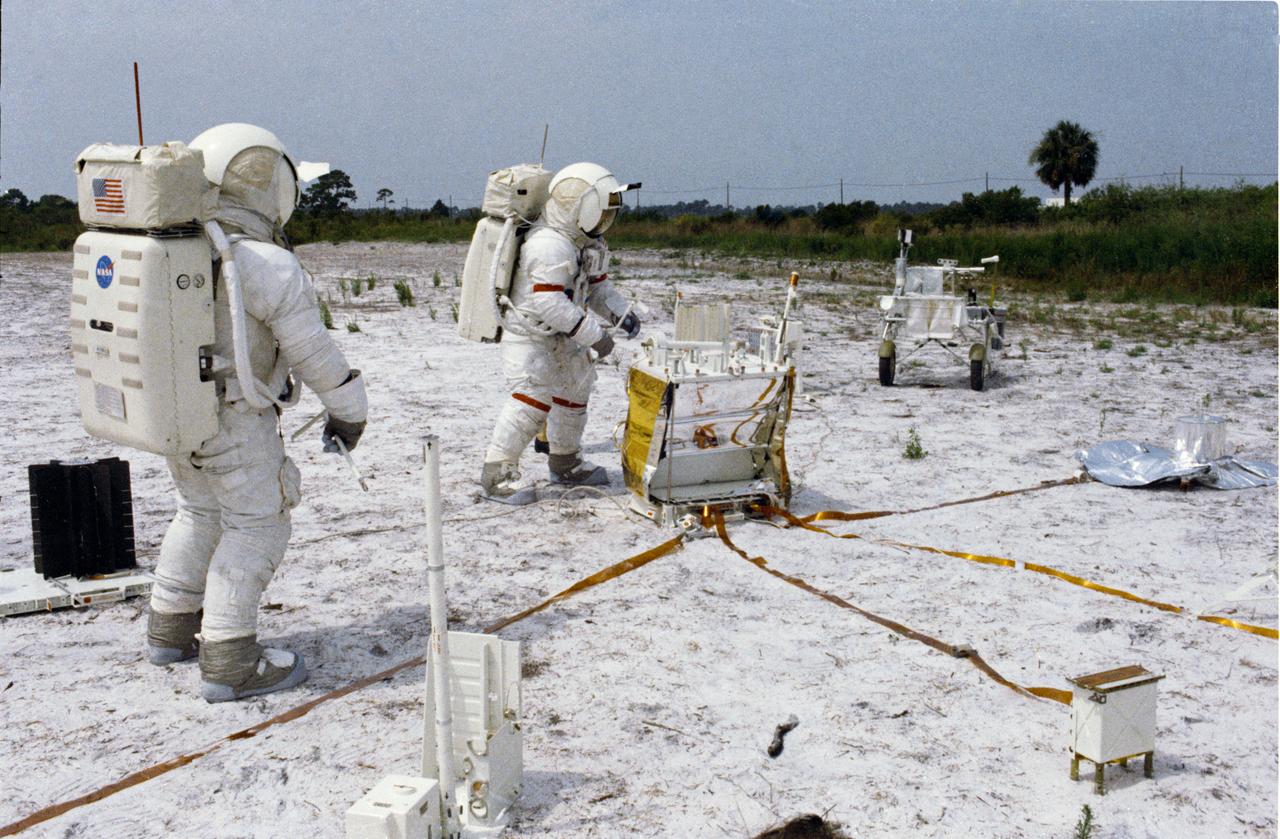
S70-46152 (July 1970) --- Two crew men of the Apollo 14 lunar landing mission participate in lunar surface simulation training at the Kennedy Space Center (KSC). They are deploying components of the Apollo lunar surface experiments package (ALSEP). Standing in the center next to the ALSEP central station is astronaut Alan B. Shepard Jr. (wearing red stripe on space suit), commander. Astronaut Edgar D. Mitchell, lunar module pilot, is in the left foreground. Both crew men are wearing the Extravehicular Mobility Units (EMU).
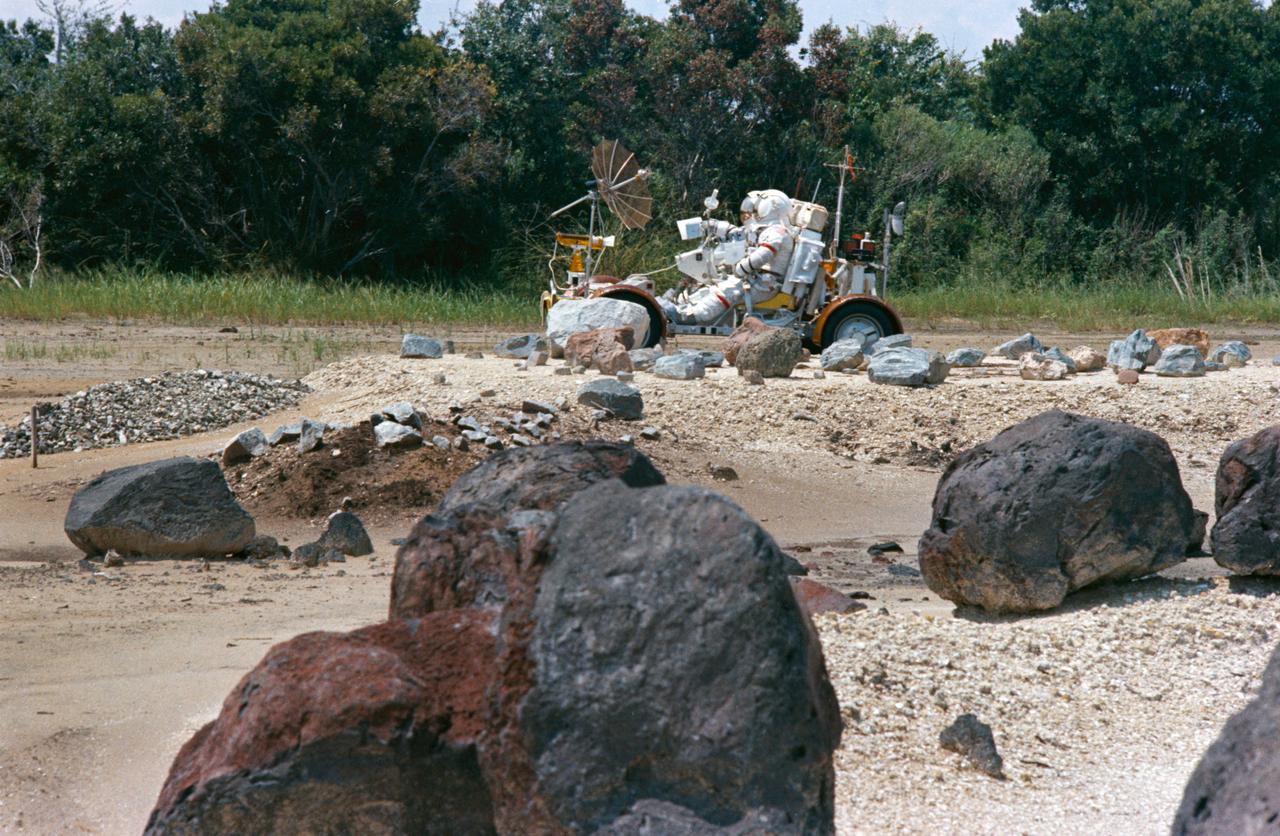
S72-48889 (September 1972) --- Two members of the prime crew of the Apollo 17 lunar landing mission ride in a lunar roving vehicle trainer during lunar surface extravehicular activity simulation training at the Kennedy Space Center, Florida. Astronaut Eugene A. Cernan, commander, is seated in the left-hand seat. Scientist-astronaut Harrison H. Schmitt, lunar module pilot, is on Cernan's right.
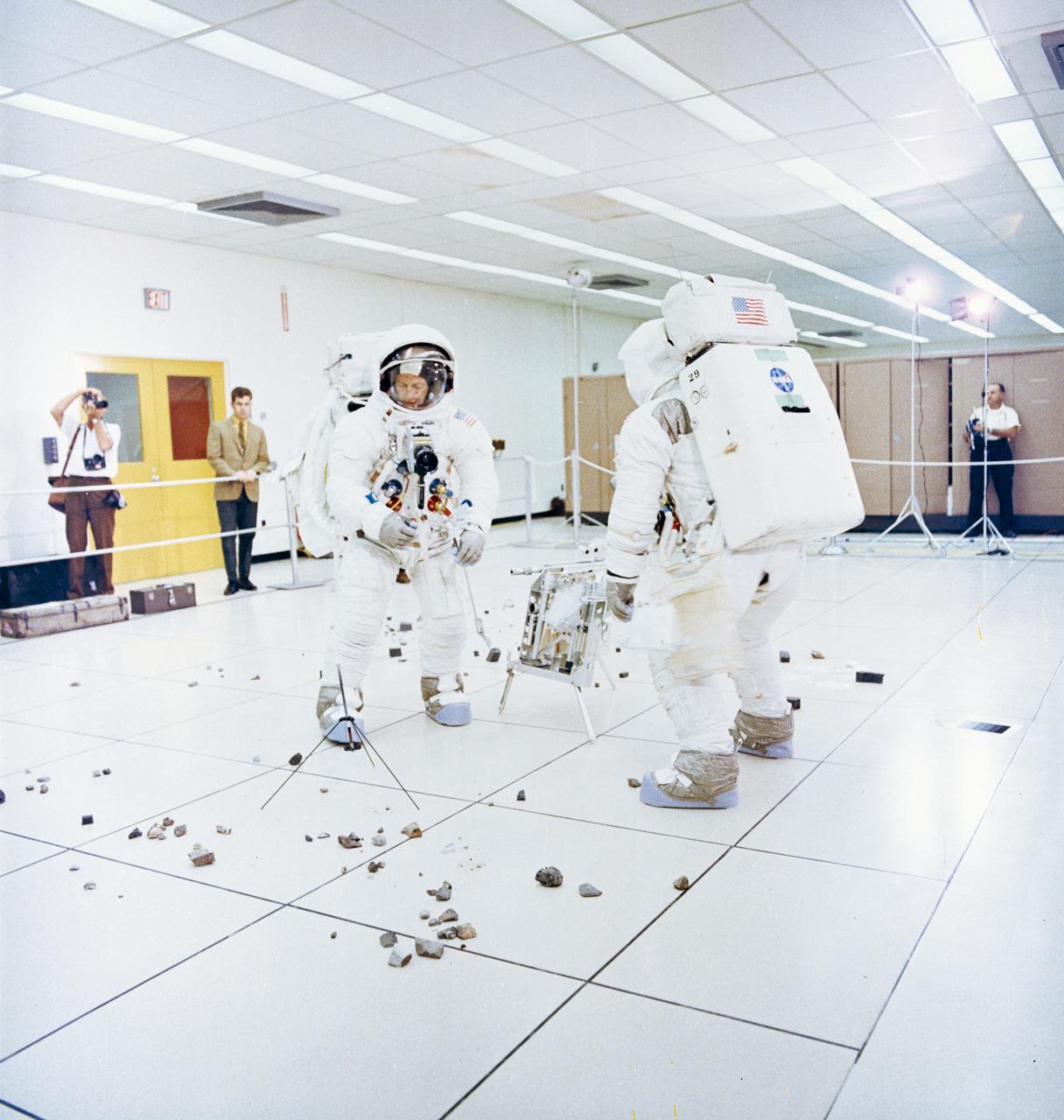
S69-55368 (6 Oct. 1969) --- Two members of the Apollo 12 lunar landing mission participate in lunar surface extravehicular activity (EVA) simulations in the Flight Crew Training Building at the Kennedy Space Center (KSC). Astronaut Charles Conrad Jr., commander (facing camera), simulates picking up samples. Astronaut Alan L. Bean, lunar module pilot, simulates photographic lunar rock sample documentation.
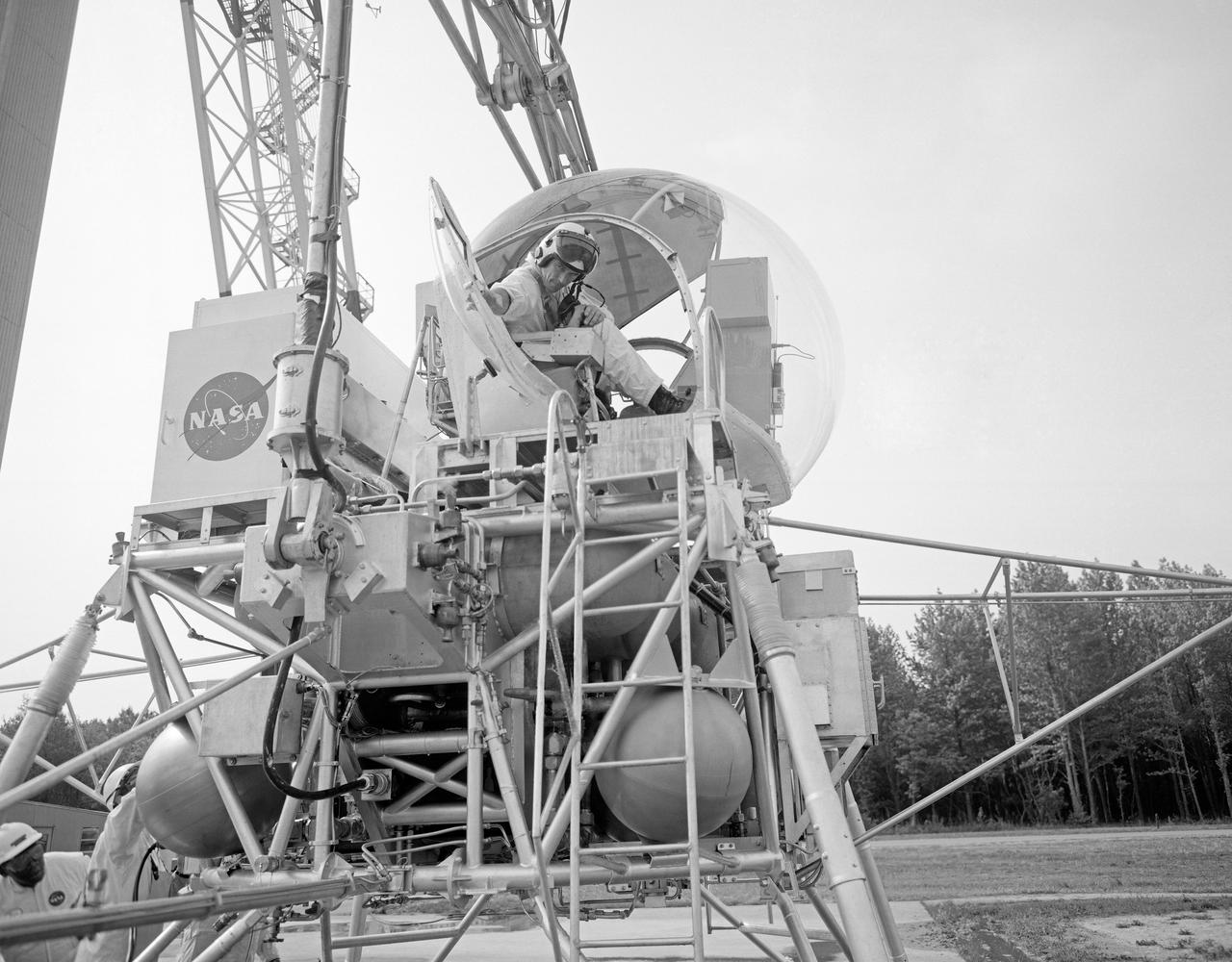
Astronaut Eugene Cernan at Lunar Lander Research Facility. Cernan under gantry, in training module. Captain Cernan was one of fourteen astronauts selected by NASA in October 1963. On his second space flight, he was lunar module pilot of Apollo 10, May 18-26, 1969, the first comprehensive lunar-orbital qualification and verification flight test of an Apollo lunar module.
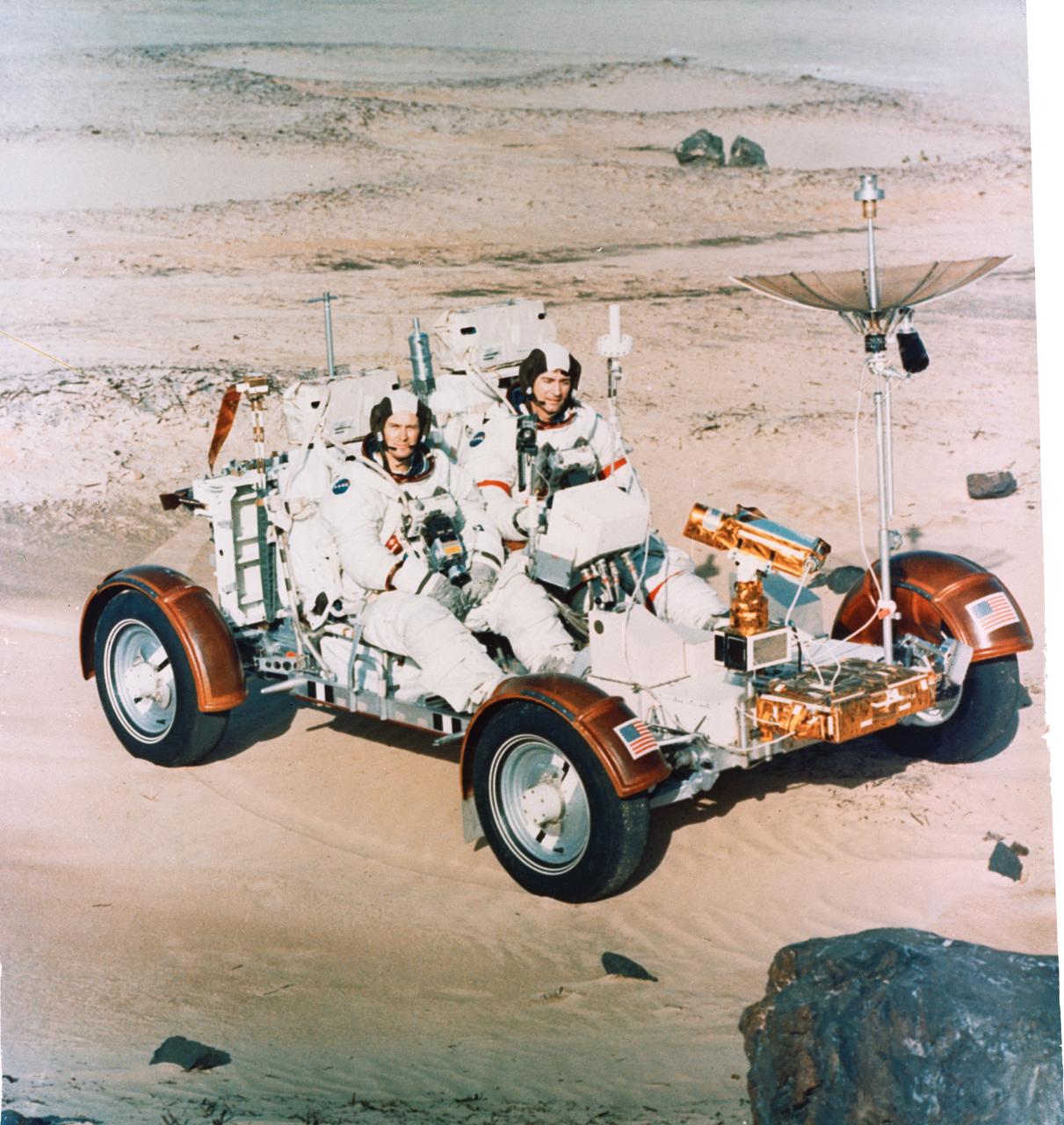
S72-30695 (22 Dec. 1971) --- Astronauts John W. Young, right, Apollo 16 commander, and Charles M. Duke Jr., lunar module pilot, maneuver a training version of the Lunar Roving Vehicle (LRV) about a field at Kennedy Space Center (KSC) simulated to represent the lunar surface. The LRV is planned to transport the two crew men around the Descartes area on the lunar surface while astronaut Thomas K. Mattingly II, command module pilot, orbits the moon in the Command and Service Modules (CSM).