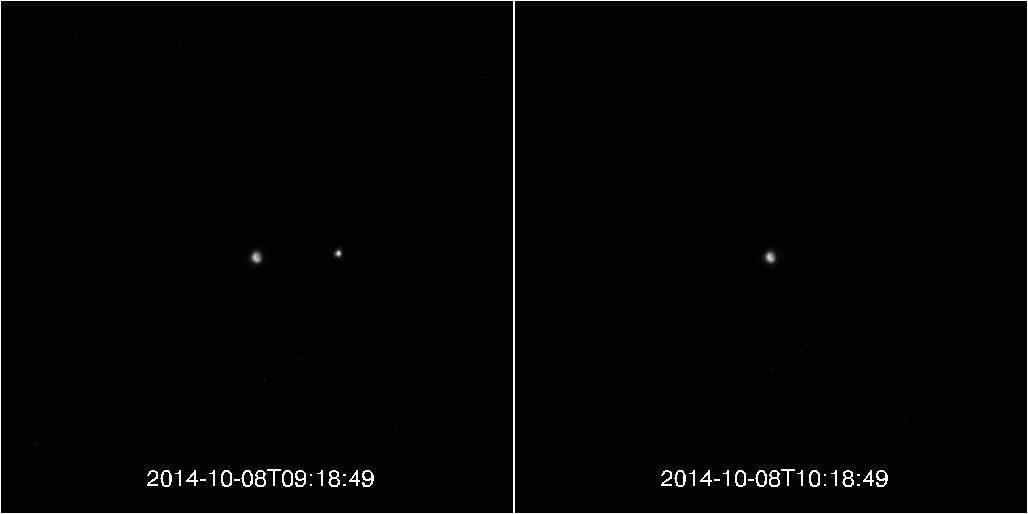
Lunar Eclipse, as Viewed by MESSENGER!
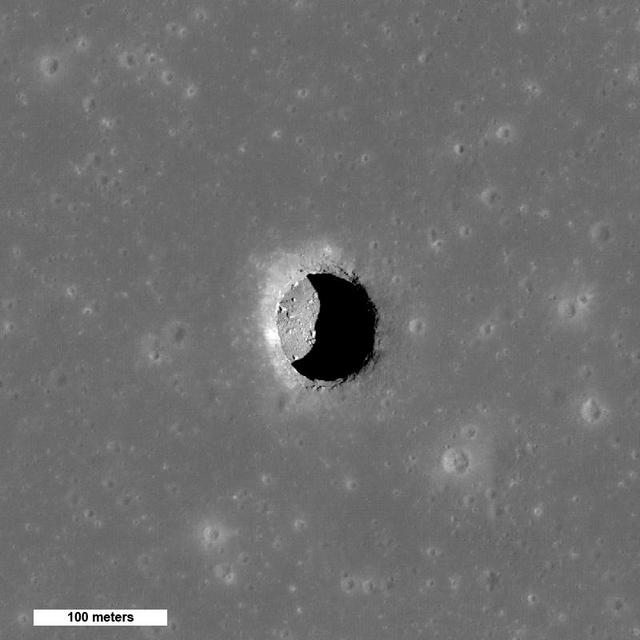
New Views of Lunar Pits
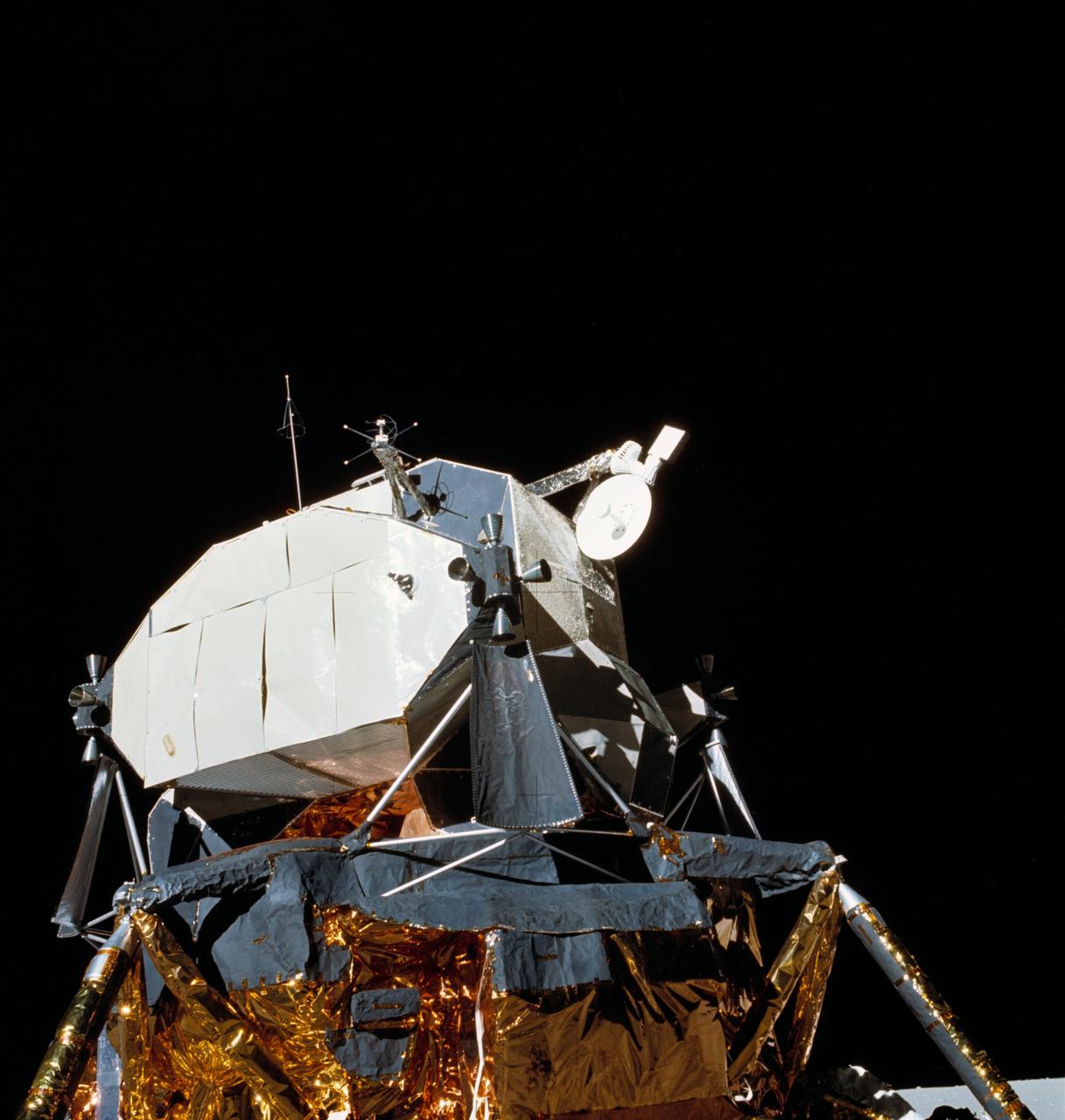
AS16-113-18334 (21 April 1972) --- View of the Lunar Module (LM) "Orion" parked on the lunar surface. During their post mission press conference, the Apollo 16 crewmembers called attention to the steerable S-band antenna, which was "frozen" in a yaw axis during much of the flight. This view of the LM was photographed by astronaut Charles M. Duke Jr., the lunar module pilot, during the mission's first extravehicular activity (EVA). Astronauts John W. Young, commander, and Duke had earlier descended in the LM to explore the Descartes region of the moon, while astronaut Thomas K. Mattingly II, command module pilot, remained with the Command and Service Modules (CSM) "Casper" in lunar orbit.
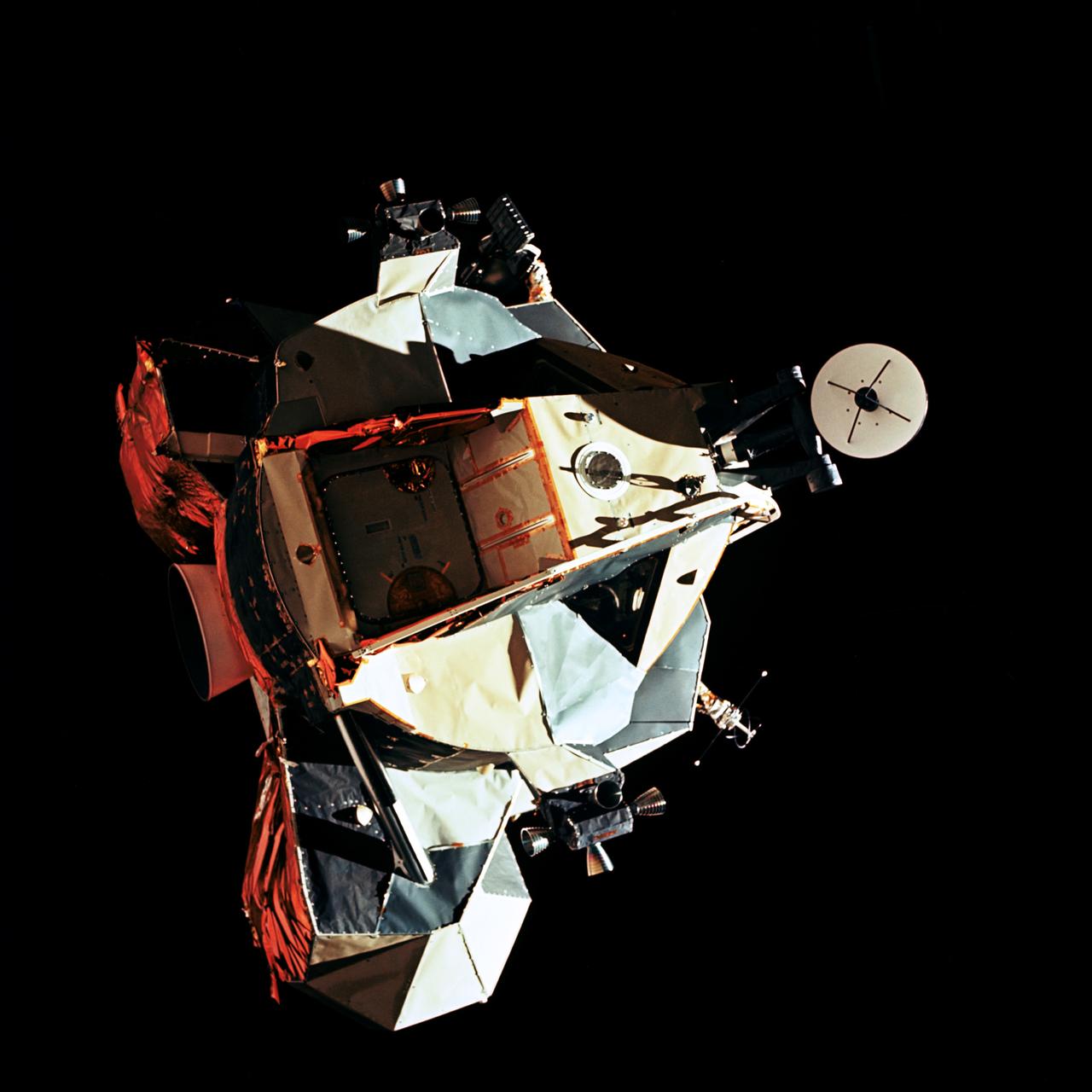
AS17-149-22857 (14 Dec. 1972) --- This 70mm view of the Lunar Module (LM) "Challenger" in lunar orbit before rendezvous with the Apollo 17 Command and Service Modules (CSM). While astronauts Eugene A. Cernan, commander, and Harrison H. Schmitt, lunar module pilot, descended in the Challenger to explore the Taurus-Littrow region of the moon, astronaut Ronald E. Evans, command module pilot, remained with the CSM "America" in lunar orbit.
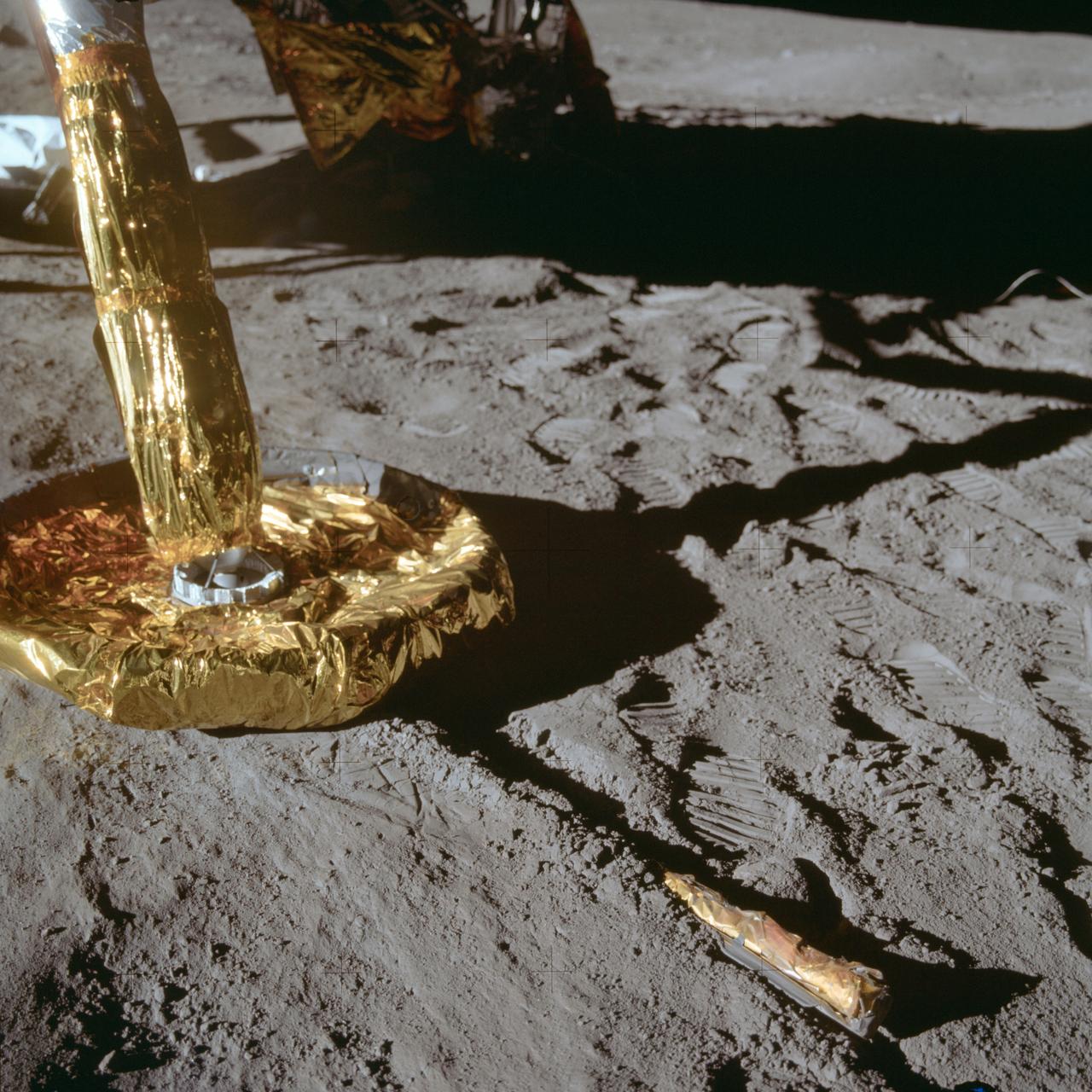
A close-up view of a footpad of the Apollo 11 Lunar Module as it rested on the surface of the Moon. The stick-like protruding object is a lunar surface sensing probe. This photograph was take with a 70mm lunar surface camera during the extravehicular activity of Astronauts Neil Armstrong and Edwin Aldrin on July 20, 1969.
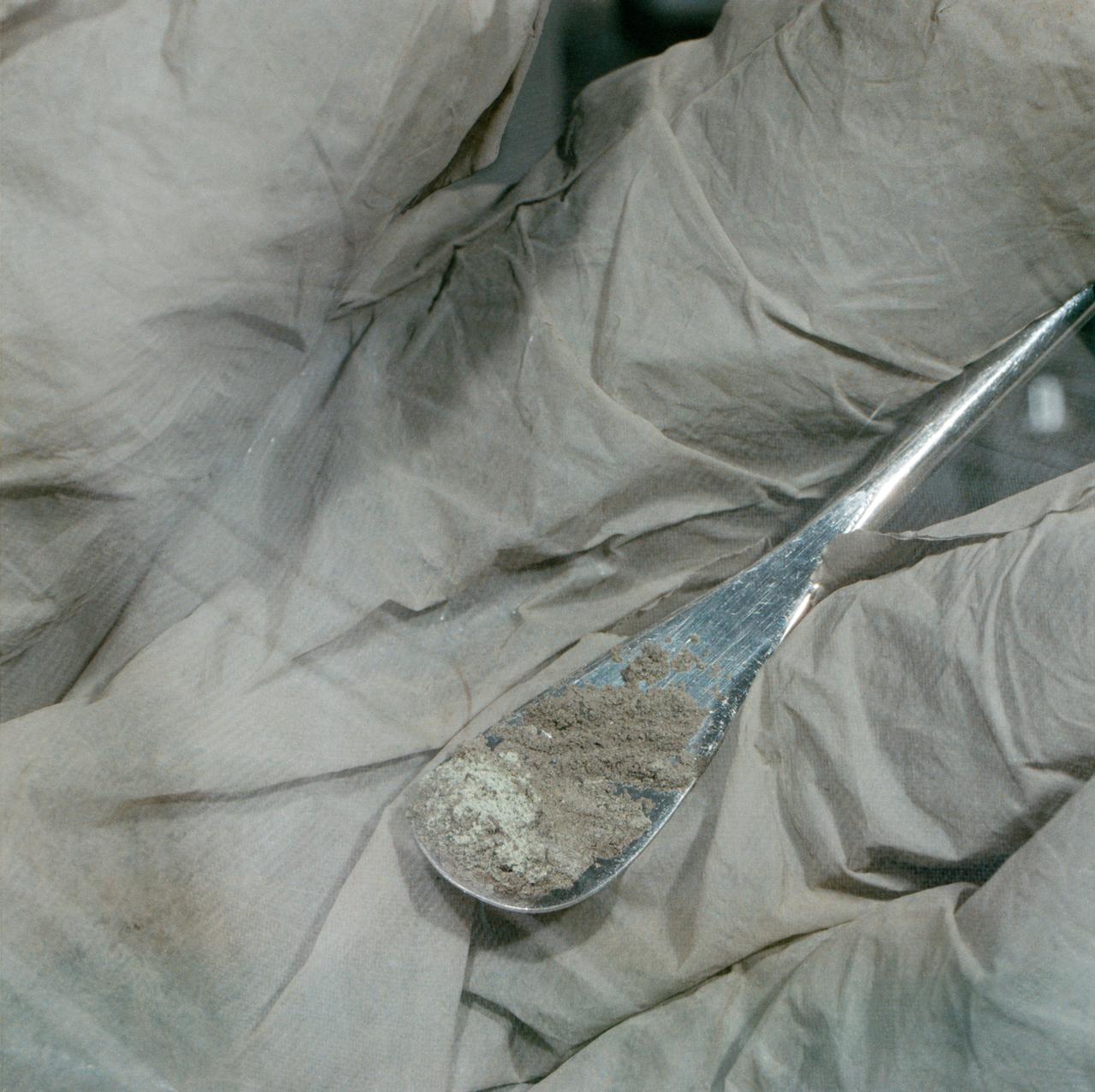
S71-43050 (August 1971) --- A close-up view of Apollo 15 lunar sample No. 15305 in the Non-sterile Nitrogen Processing Line (NNPL) in the Lunar Receiving Laboratory (LRL) at the Manned Spacecraft Center (MSC). This sample, pictured on a small spatula in a lab technician's glove, is green and is one of six recently taken from container No. 173, made up of comprehensive fines from the Apennine Front, Site No. 7. Astronauts David R. Scott, commander; and James B. Irwin, lunar module pilot, took the sample during their second extravehicular activity (EVA), at a ground elapsed time (GET) of 146:05 to 146:06.
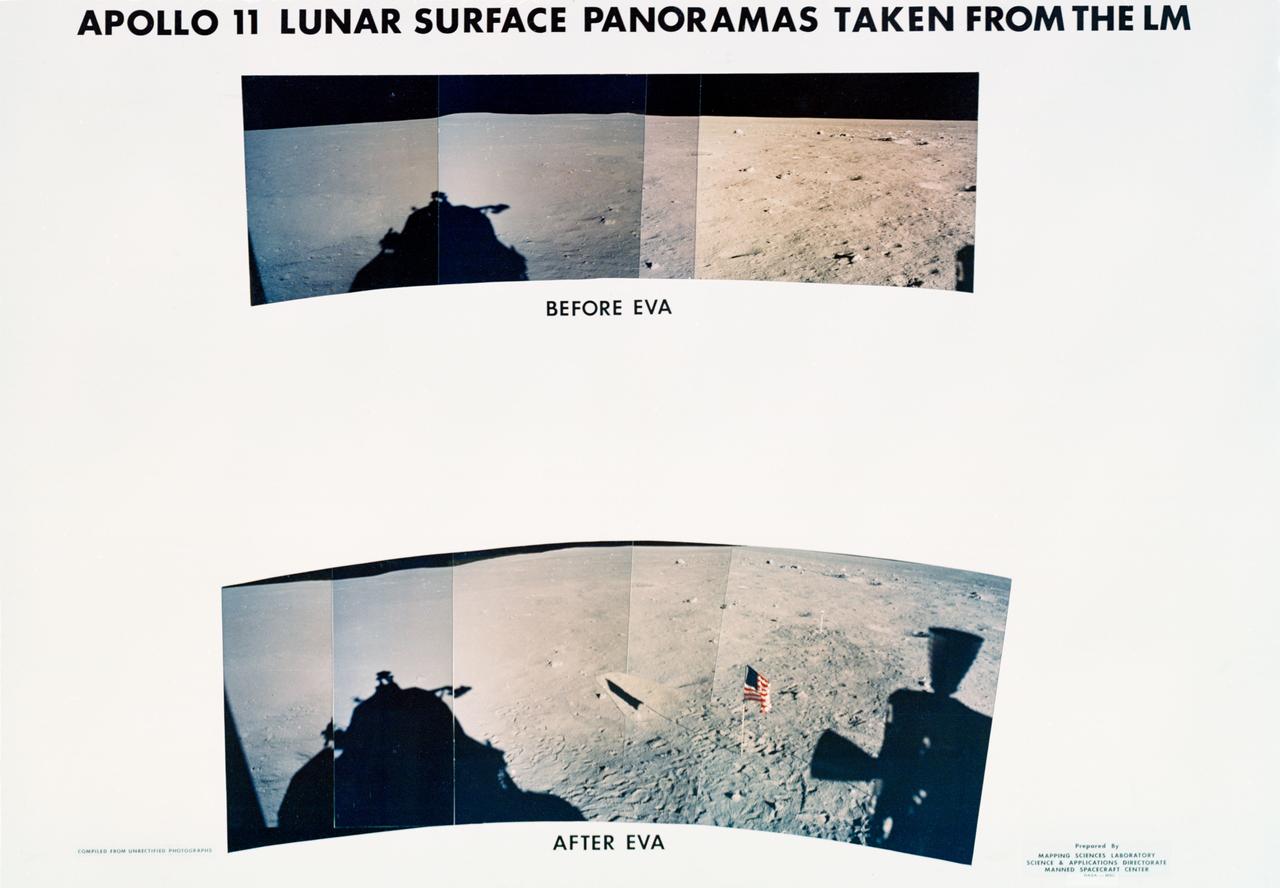
S69-44465 (20 July 1969) --- These panoramic views of the lunar surface, photographed from the Apollo 11 Lunar Module (LM) as it rested on the lunar surface. The views reveal the surface near where the LM touched down, in the southeastern Sea of Tranquility. The views are as it looked before and after astronauts Neil A. Armstrong and Edwin E. Aldrin Jr. participated in extravehicular activity (EVA). The United States flag is pictured in the bottom or "after" photo with the black and white lunar surface television camera pictured at the right of flag. Shadows of the LM are visible in the two panoramic views and a silhouette of part of a Reaction Control Subsystem thruster is seen in the bottom picture. Note the numerous footprints made by the two crewmen during the EVA period.
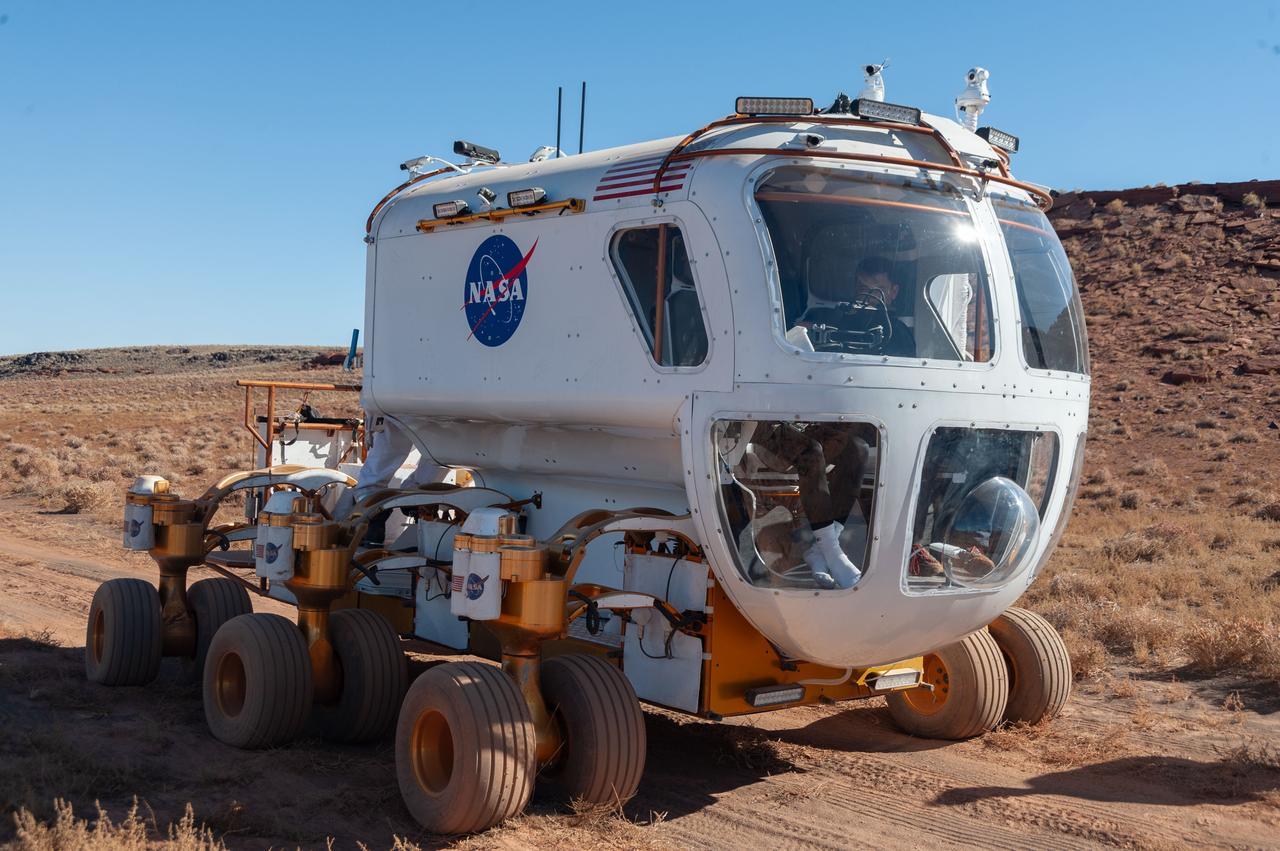
A front view of the Lunar Electric Rover (LER) during the Desert Research and Technology Studies (RATS) remote field test at Black Point Lava Flow, Arizona in 2008.
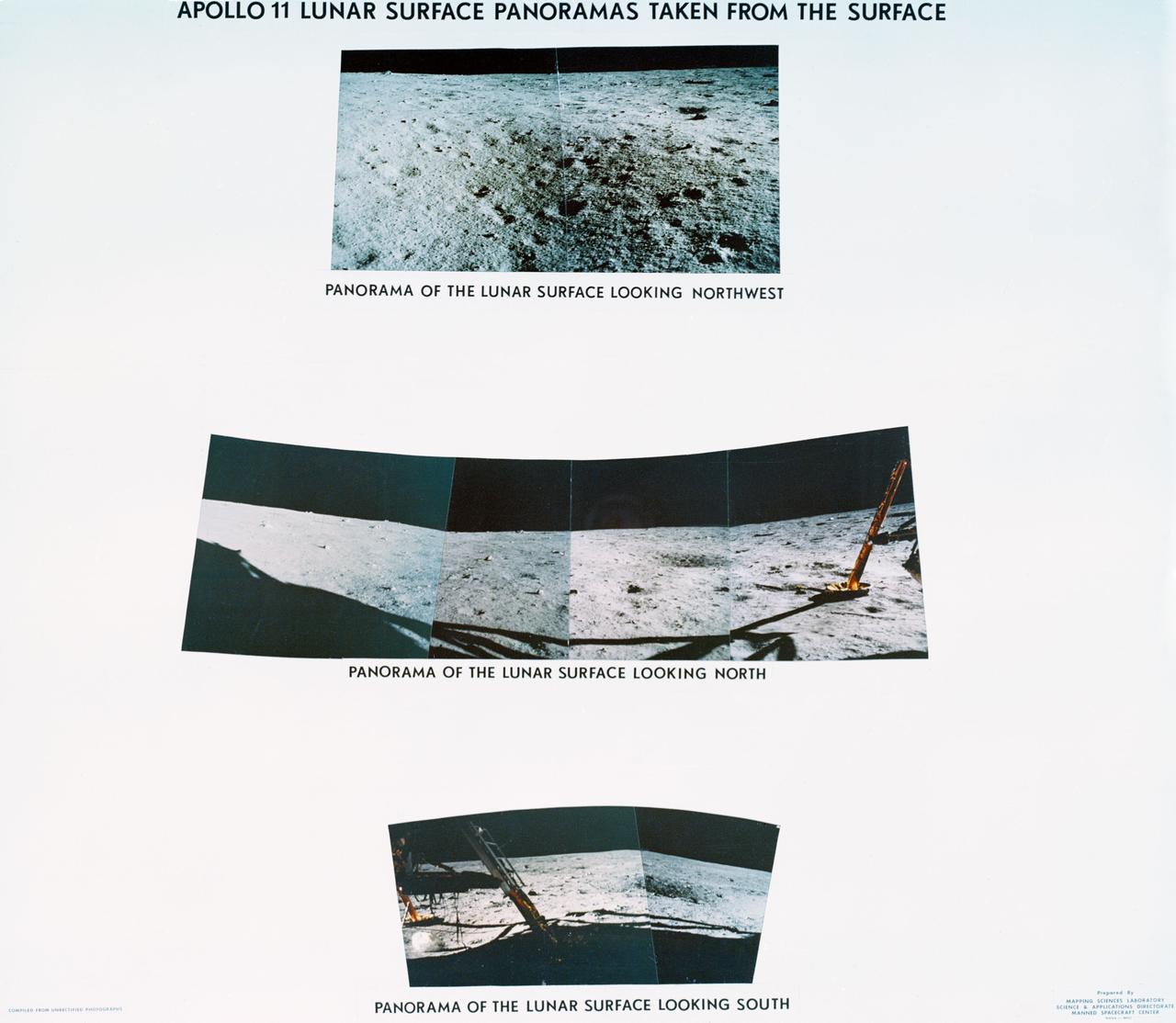
S69-44463 (July 1969) --- Astronaut Neil A. Armstrong took this series of pictures of the landing site of Apollo 11's Lunar Module (LM) Eagle on the lunar surface. These panoramic views of the lunar surface reveal the surface near where the LM touched down, in the southeastern Sea of Tranquility. Foot pads and shadows of the LM are visible in the two of the three panoramic views.
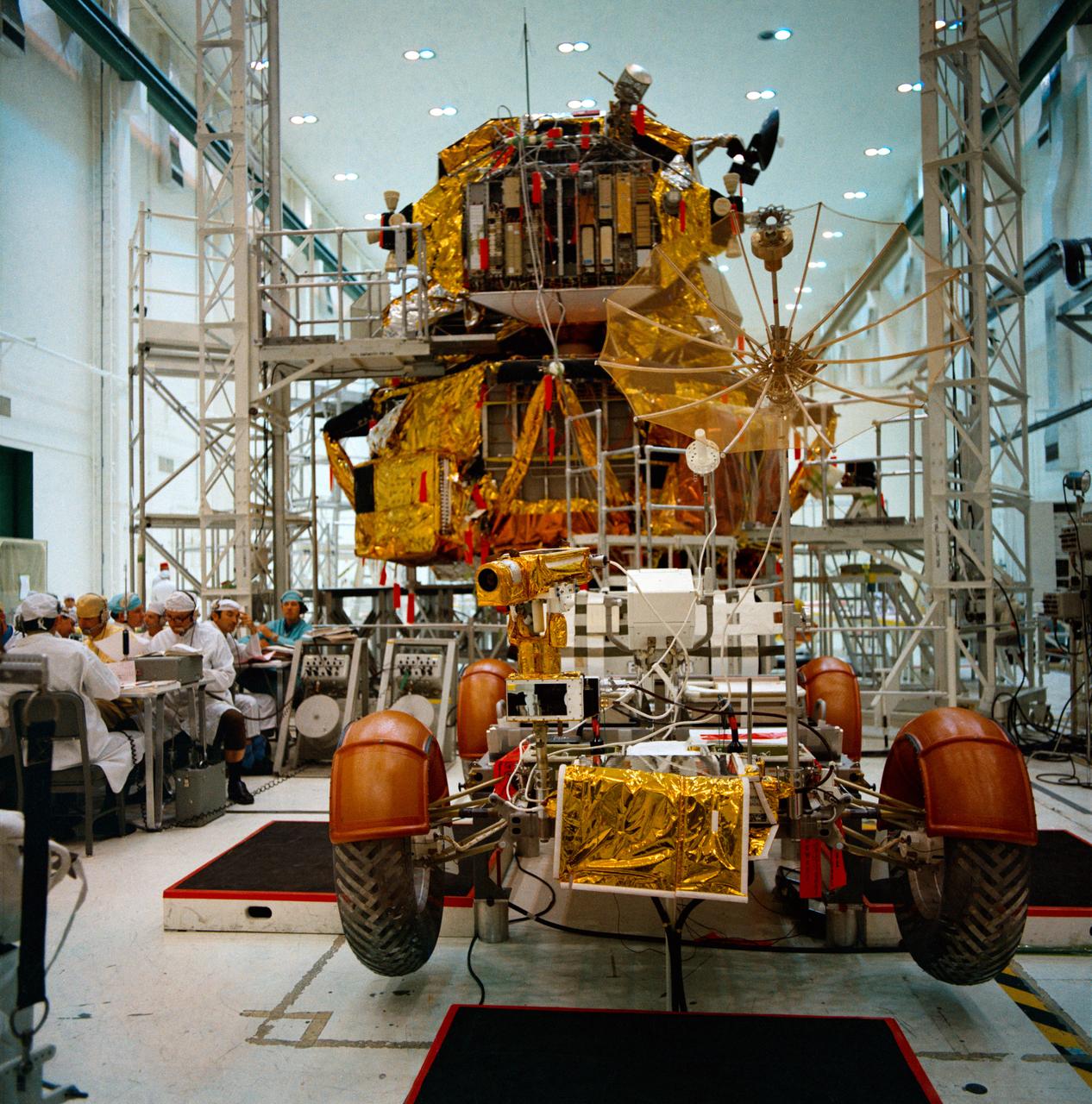
S71-30542 (21 April 1971) --- An overall view of the Apollo 15 Lunar Roving Vehicle (LRV) and the Lunar Module (LM) during simulations at the Kennedy Space Center (KSC). Astronauts David R. Scott, commander, and James B. Irwin, lunar module pilot, will man the LRV on the lunar surface during their August 1971 traverses. Rover 1 will permit the astronauts to cover a larger area of the moon for exploration and sample collecting than on previous missions.
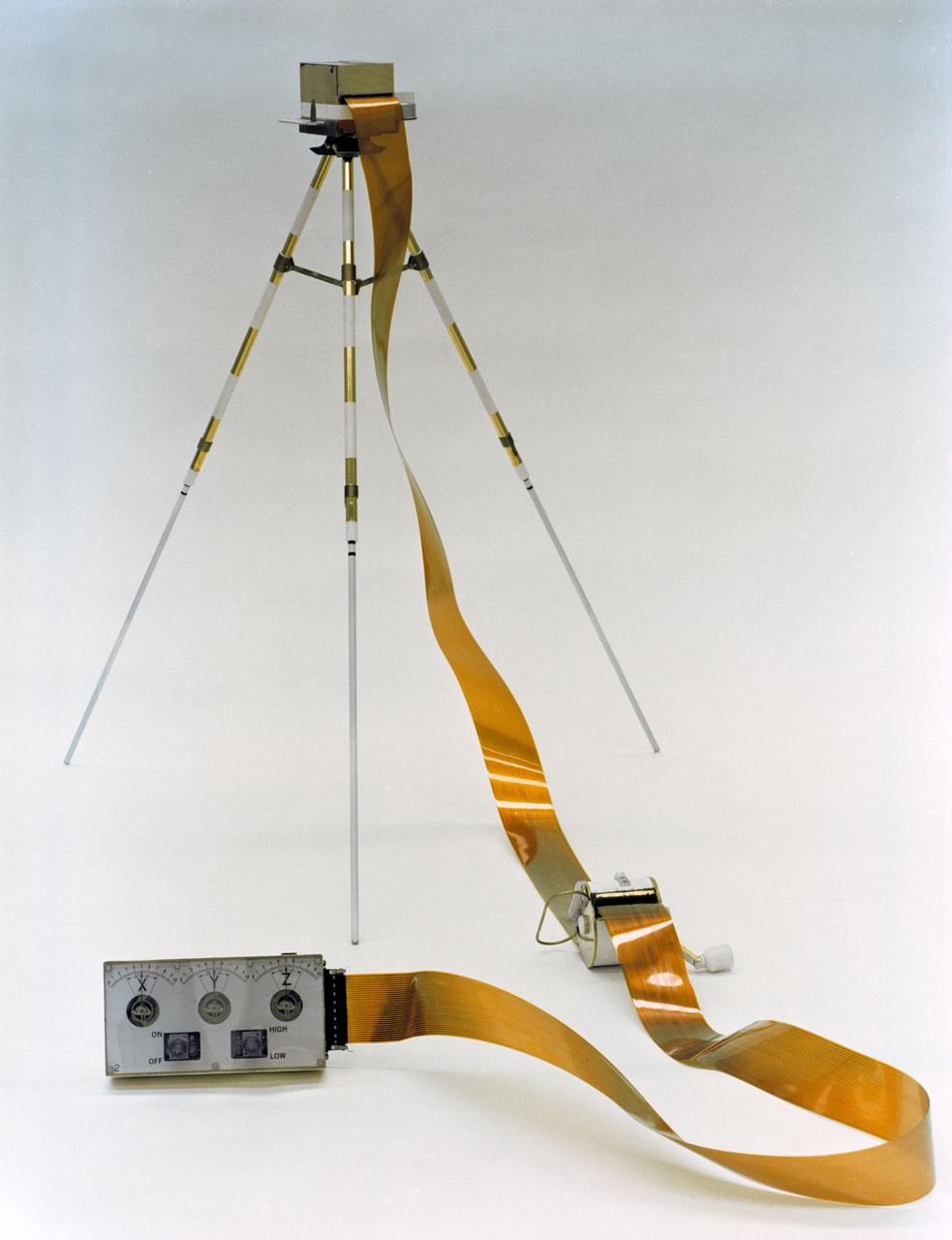
S70-56721 (December 1970) --- A close-up view of the Lunar Portable Magnetometer (LPM), which will be used by the crew of the Apollo 14 lunar landing mission during the second extravehicular activity (EVA). The LPM's components, a tripod-mounted flux-gate magnetometer sensor head and an electronics data package, connected by a 50-feet flat cable, function together to measure variations in the lunar magnetic field at several points on the geological traverse. Data gathered will be used to determine the location, strength and dimensions of magnetic sources, as well as knowledge of the local and total selenological structure. The LPM will be carried on the Modular Equipment Transporter (MET), and deployed by the lunar module pilot, who will align the sensor head at least 35 feet from the data package. The LM pilot will then return to the MET and verbally relay the LPM readouts to Earth. Astronaut Edgar D. Mitchell is the lunar module pilot for the Apollo 14 lunar landing mission.
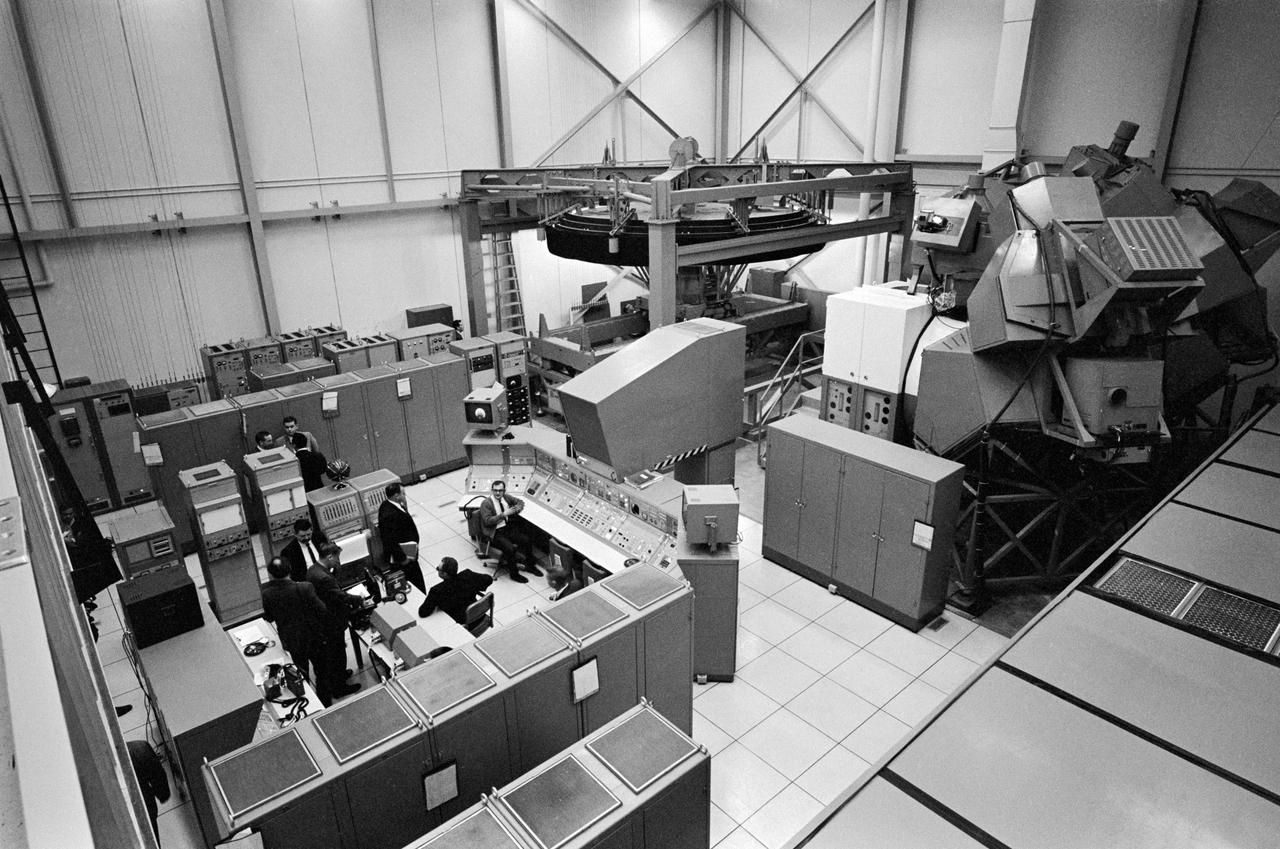
Overall view of the Lunar Module Mission Simulator, an astronaut training facility located in bldg 5.

AS11-40-5878 (20 July 1969) --- A close-up view of an astronaut's bootprint in the lunar soil, photographed with a 70mm lunar surface camera during the Apollo 11 extravehicular activity (EVA) on the moon. While astronauts Neil A. Armstrong, commander, and Edwin E. Aldrin Jr., lunar module pilot, descended in the Lunar Module (LM) "Eagle" to explore the Sea of Tranquility region of the moon, astronaut Michael Collins, command module pilot, remained with the Command and Service Modules (CSM) "Columbia" in lunar orbit.

AS16-107-17436 (21 April 1972) --- An excellent view of the Lunar Module (LM) "Orion" and Lunar Roving Vehicle (LRV), as photographed by astronaut Charles M. Duke Jr., lunar module pilot, during the first Apollo 16 extravehicular activity (EVA) at the Descartes landing site. Astronaut John W. Young, commander, can be seen directly behind the LRV. The lunar surface feature in the left background is Stone Mountain. While astronauts Young and Duke descended in the LM to explore the Descartes highlands landing site on the moon, astronaut Thomas K. Mattingly II, command module pilot, remained with the Command and Service Modules (CSM) "Casper" in lunar orbit.
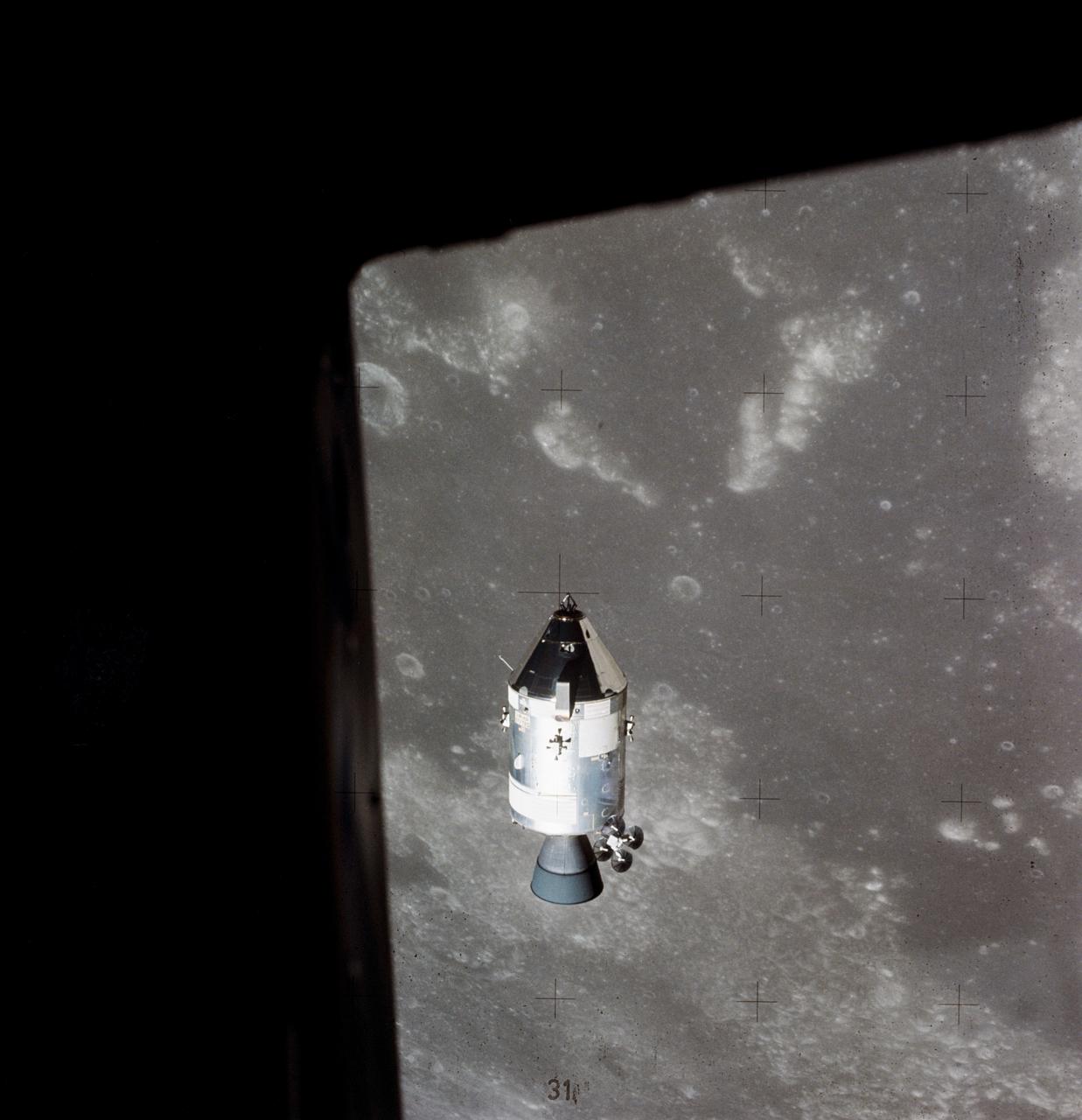
AS15-88-11974 (30 July 1971) --- A view of the Apollo 15 Command and Service Modules (CSM) in lunar orbit as photographed from the Lunar Module (LM) just after rendezvous. The lunar nearside is in the background. This view is looking southeast into the Sea of Fertility. The crater Taruntius is at the right center edge of the picture.
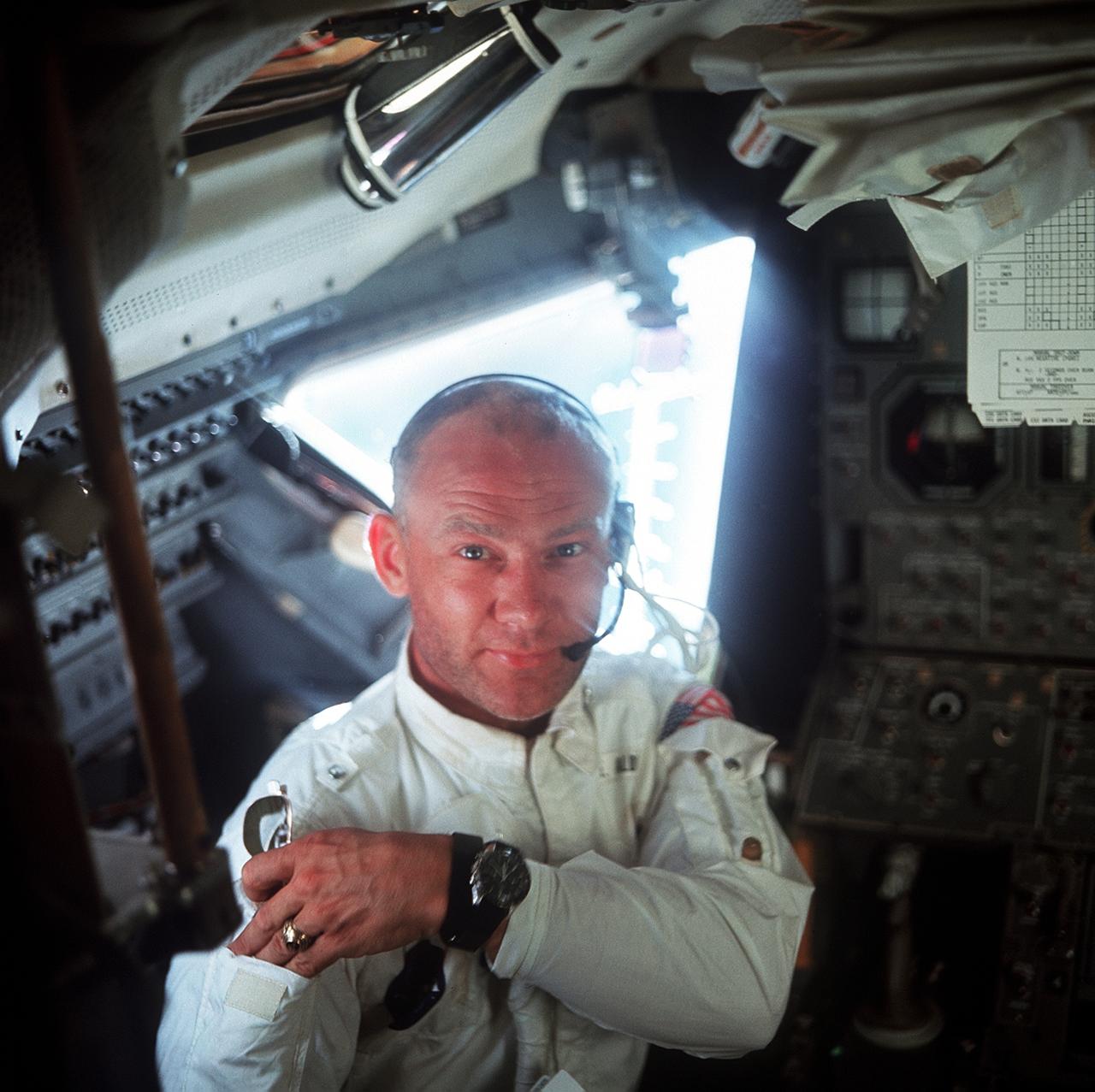
AS11-36-5390 (20 July 1969) --- This interior view of the Apollo 11 Lunar Module (LM) shows astronaut Edwin E. Aldrin Jr., lunar module pilot, during the lunar landing mission. This picture was taken by astronaut Neil A. Armstrong, commander. While astronauts Armstrong and Aldrin descended in the LM "Eagle" to explore the Sea of Tranquility region of the moon, astronaut Michael Collins, command module pilot, remained with the Command and Service Modules (CSM) "Columbia" in lunar orbit.

Panorama view of Apollo 17 Lunar surface photos for use in presentations to NASA management and for Outreach Education in regard to new NASA initiative for human planetary research. Photo numbers used for this panoramic include: Apollo 17 start frame AS17-147-22572 thru end frame AS17-147-22600. View is of the Apollo Lunar Surface Experiment Package (ALSEP) Station taken during Extravehicular Activity (EVA) 1.
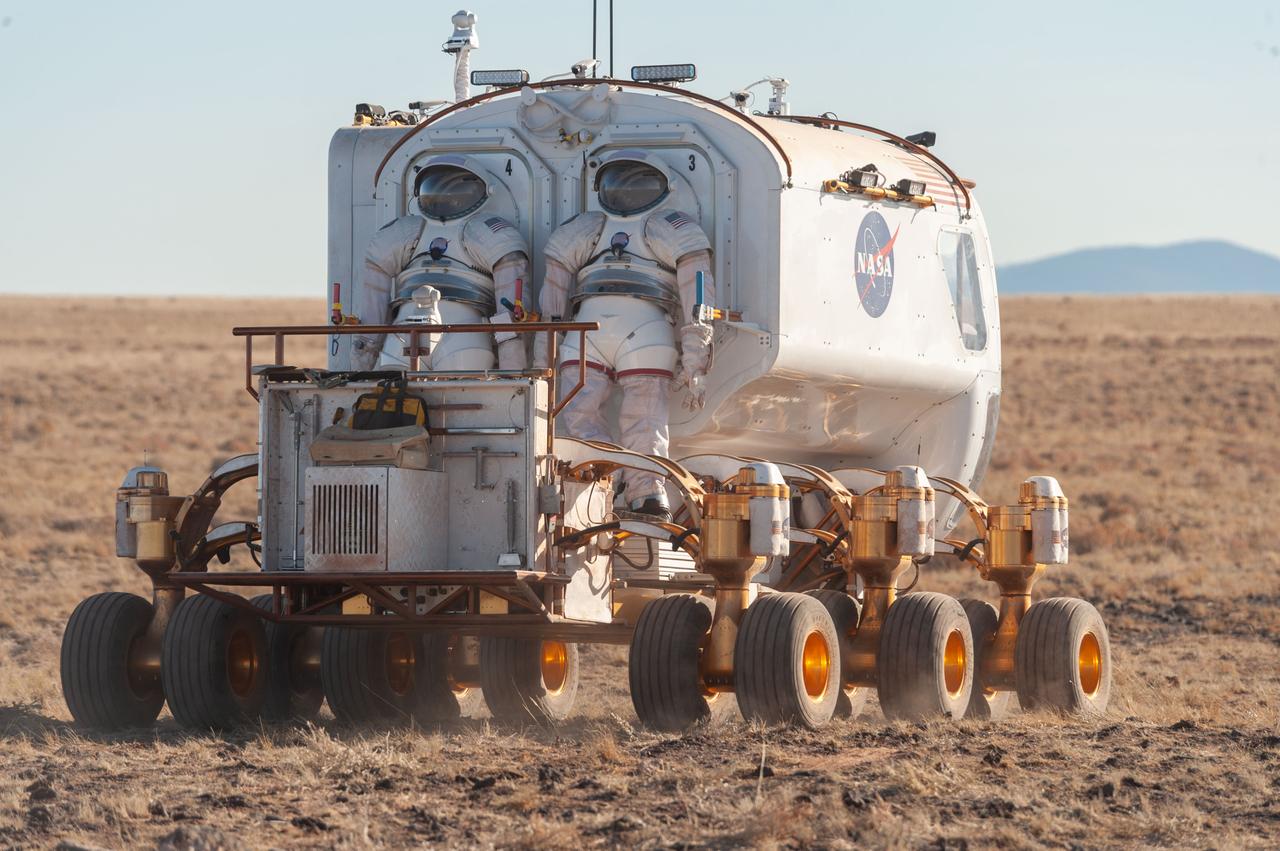
A back view of the Lunar Electric Rover (LER) during the Desert Research and Technology Studies (RATS) remote field test at Black Point Lava Flow, Arizona in 2008. Two Mark III spacesuits are visibly mounted on the LER suit port.
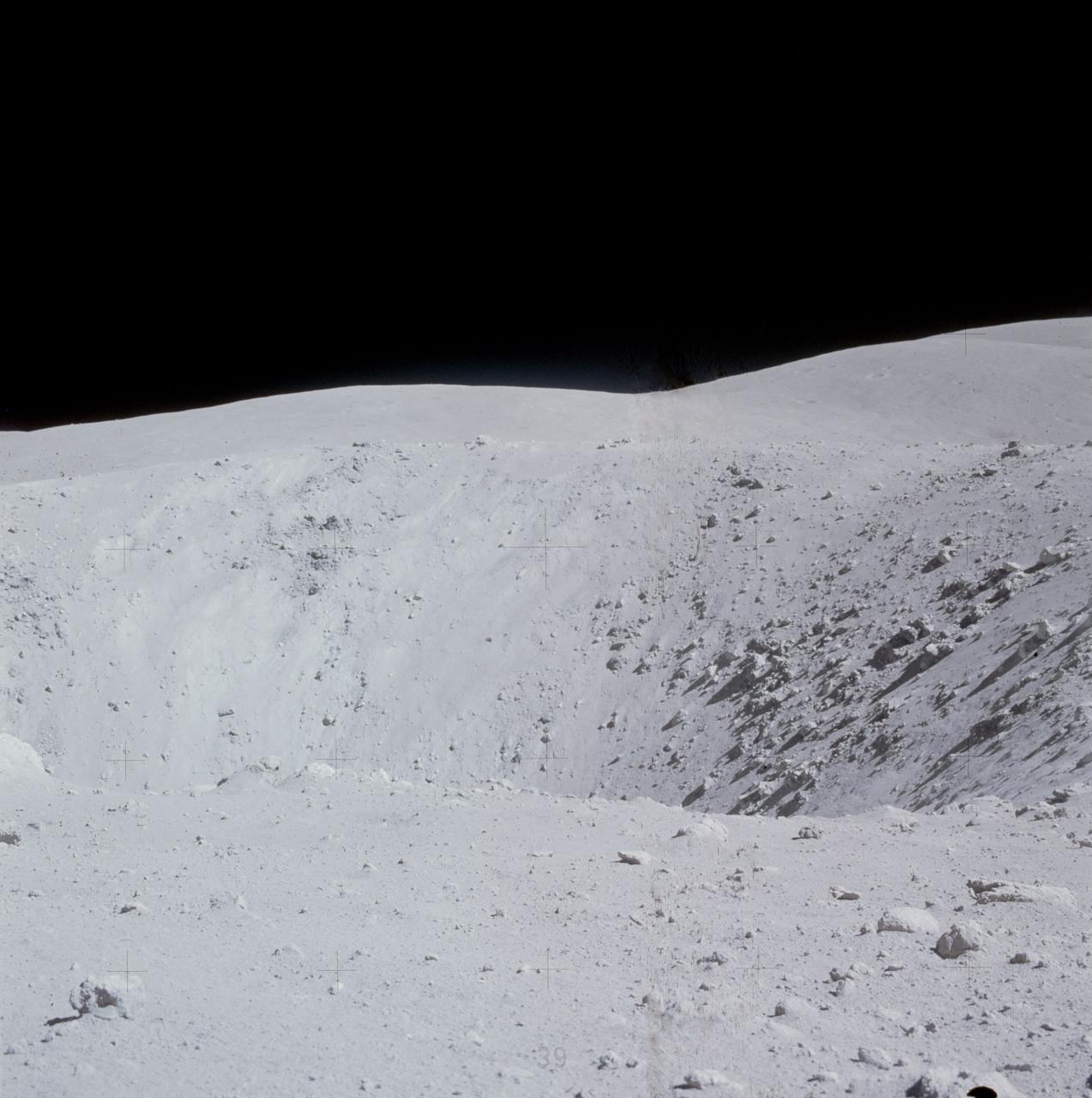
AS16-116-18599 (21 April 1972) --- A close-up view of Buster Crater, which was visited by the two moon-exploring crew men of the Apollo 16 lunar landing mission, during the first extravehicular activity (EVA), April 21, 1972. Astronaut Charles M. Duke Jr. said the crater appeared to be larger than 50 meters, and he called it a very spectacular crater. This was the second stop for astronauts John W. Young and Duke on the mission's first EVA. Young exposed this view with his 70mm Hasselblad camera. While astronauts Young, commander; and Duke, lunar module pilot; descended in the Apollo 16 Lunar Module (LM) "Orion" to explore the Descartes highlands landing site on the moon, astronaut Thomas K. Mattingly II, command module pilot, remained with the Command and Service Modules (CSM) "Casper" in lunar orbit.
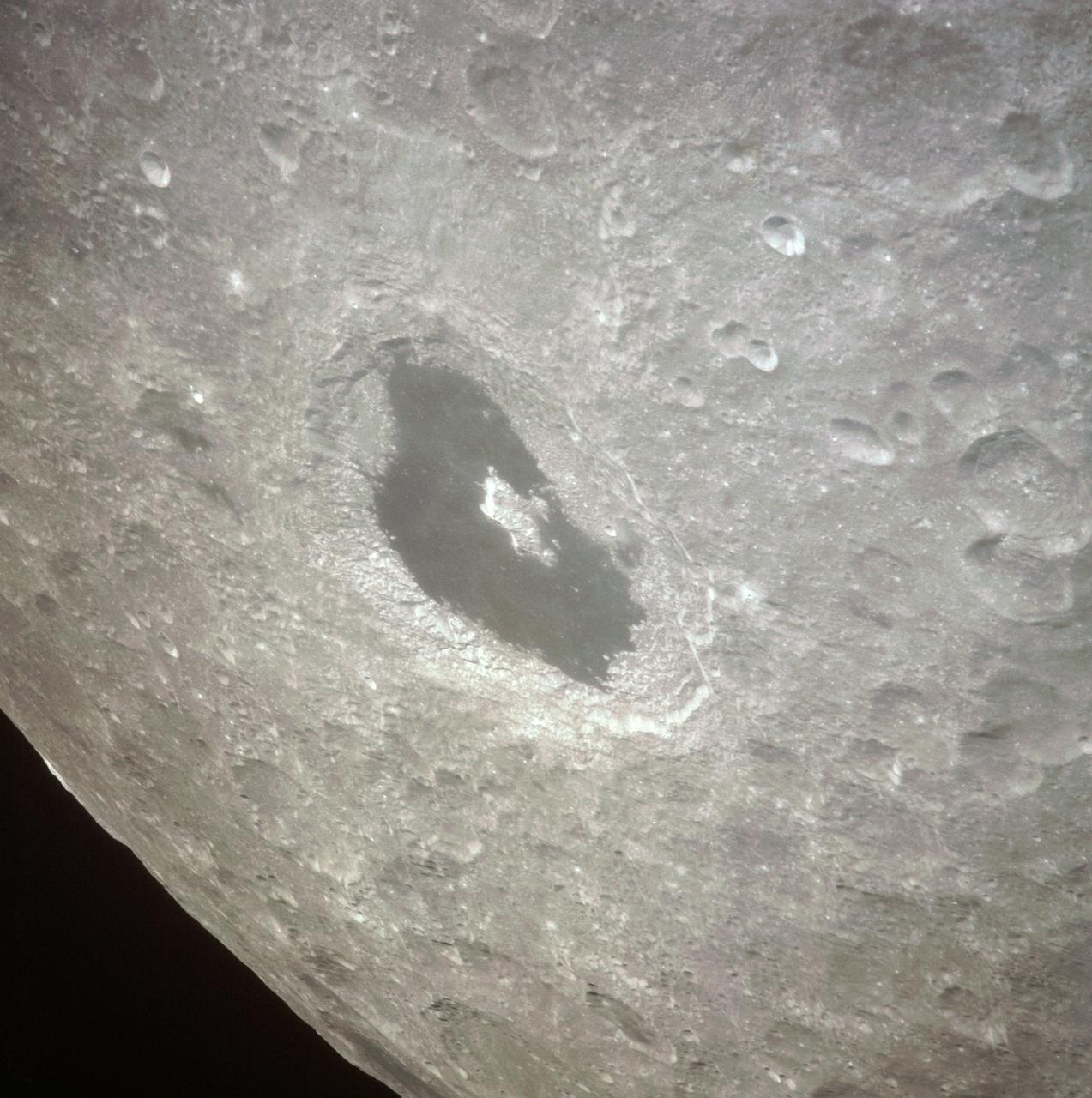
AS13-60-8659 (14 April 1970) --- Excellent view of the lunar farside showing the crater Tsiolkovsky, as photographed by the crew of the Apollo 13 mission during their lunar pass. The view is looking southeast toward the lunar horizon. The approximate coordinates of Tsiolkovsky are 128.5 degrees east longitude and 20.5 degrees south latitude. The Apollo 13 crew members were forced to cancel their scheduled lunar landing because of an apparent explosion of oxygen tank number two in the Service Module (SM).
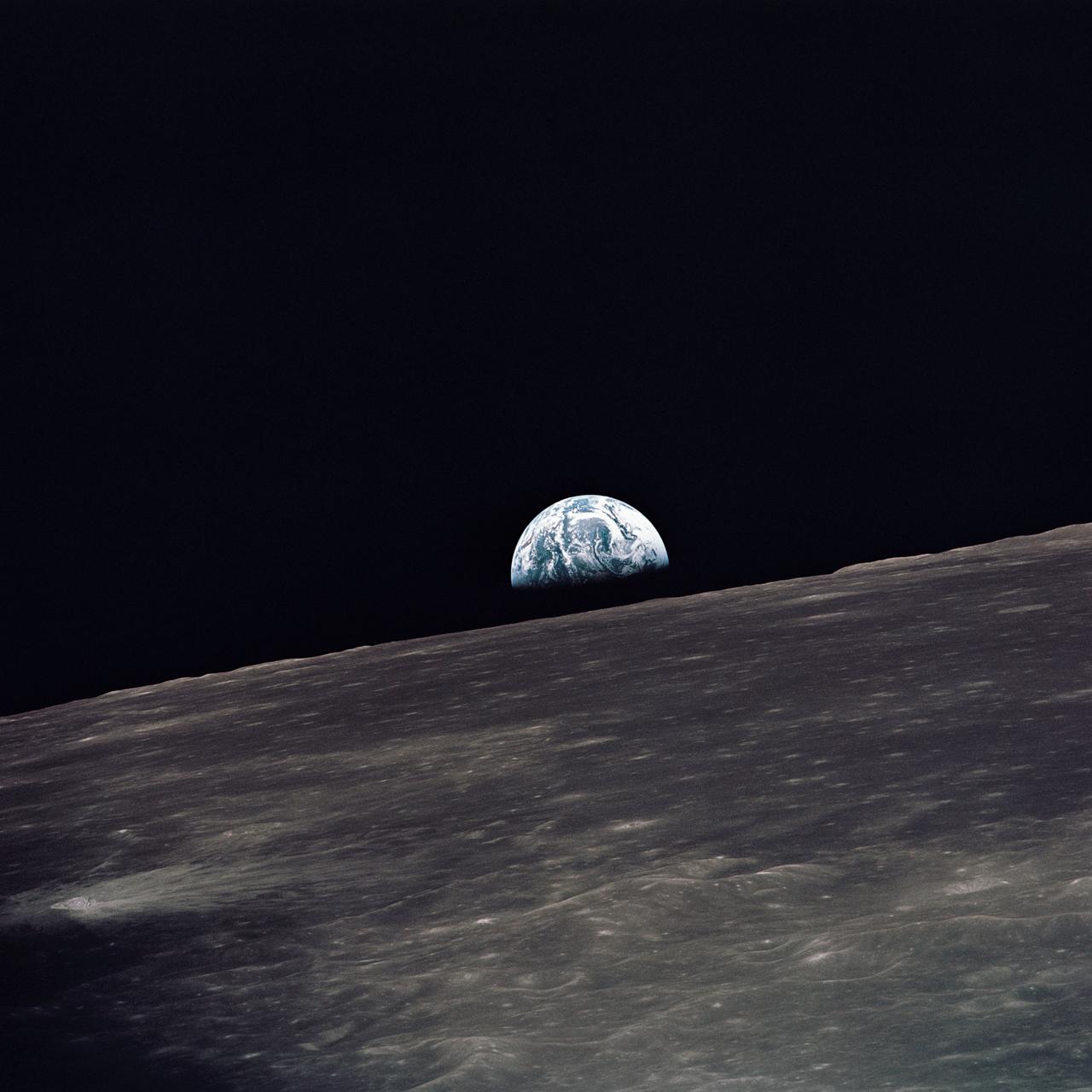
AS10-27-3890 (18-26 May 1969) --- A view of Earth rising above the lunar horizon photographed from the Apollo 10 Lunar Module, looking west in the direction of travel. The Lunar Module at the time the picture was taken was located above the lunar farside highlands at approximately 105 degrees east longitude.
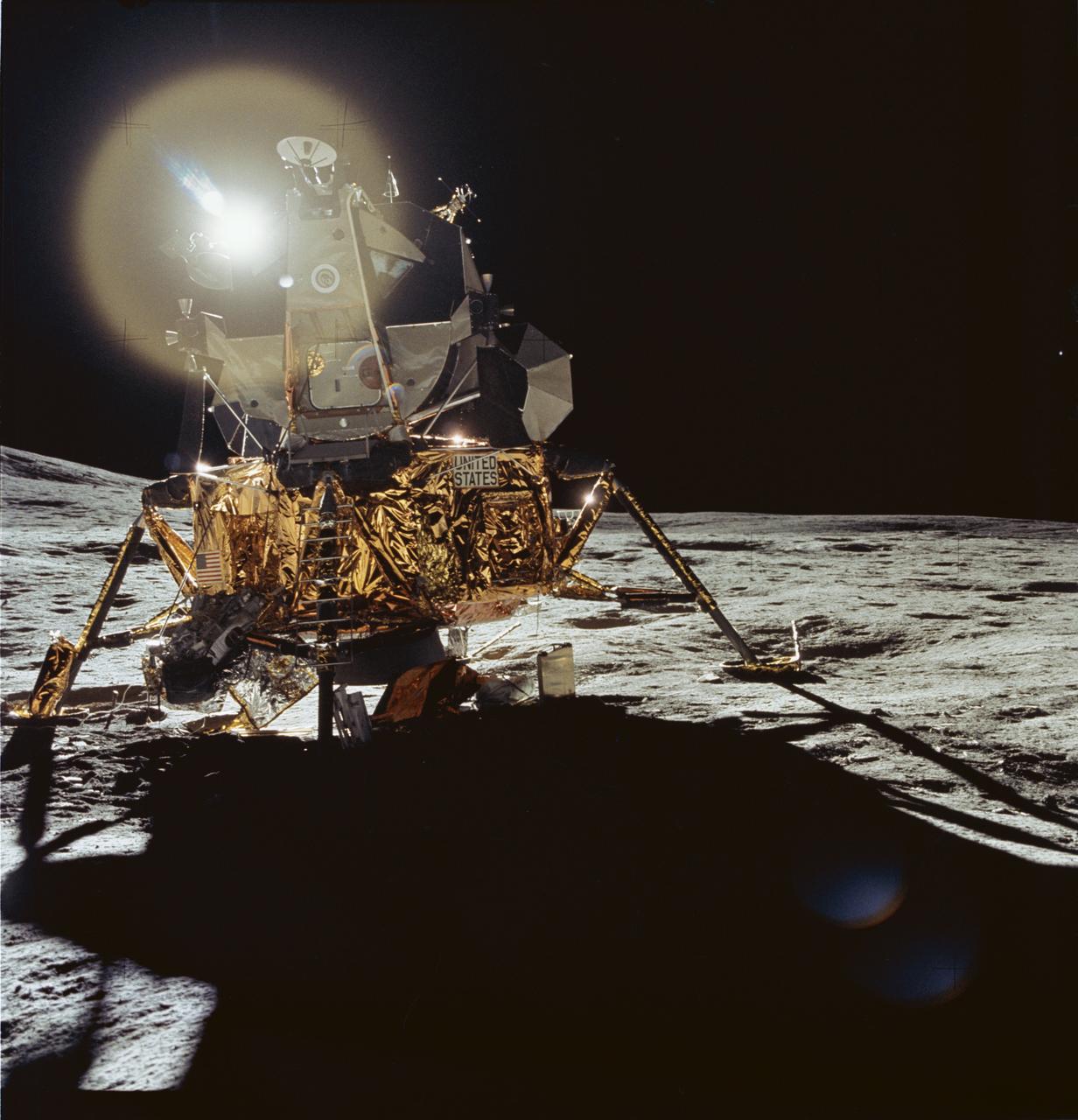
AS14-66-9306 (5 Feb. 1971) --- A front view of the Apollo 14 Lunar Module (LM), which reflects a circular flare caused by the brilliant sun, as seen by the two moon-exploring crew men of the Apollo 14 lunar landing mission during their first extravehicular activity (EVA). The unusual ball of light was said by the astronauts to have a jewel-like appearance. At the extreme left the lower slope of Cone Crater can be seen. Astronauts Alan B. Shepard Jr., commander; and Edgar D. Mitchell, lunar module pilot; descended in the LM, while astronaut Stuart A. Roosa, command module pilot; remained with the Command and Service Modules (CSM) in lunar orbit.
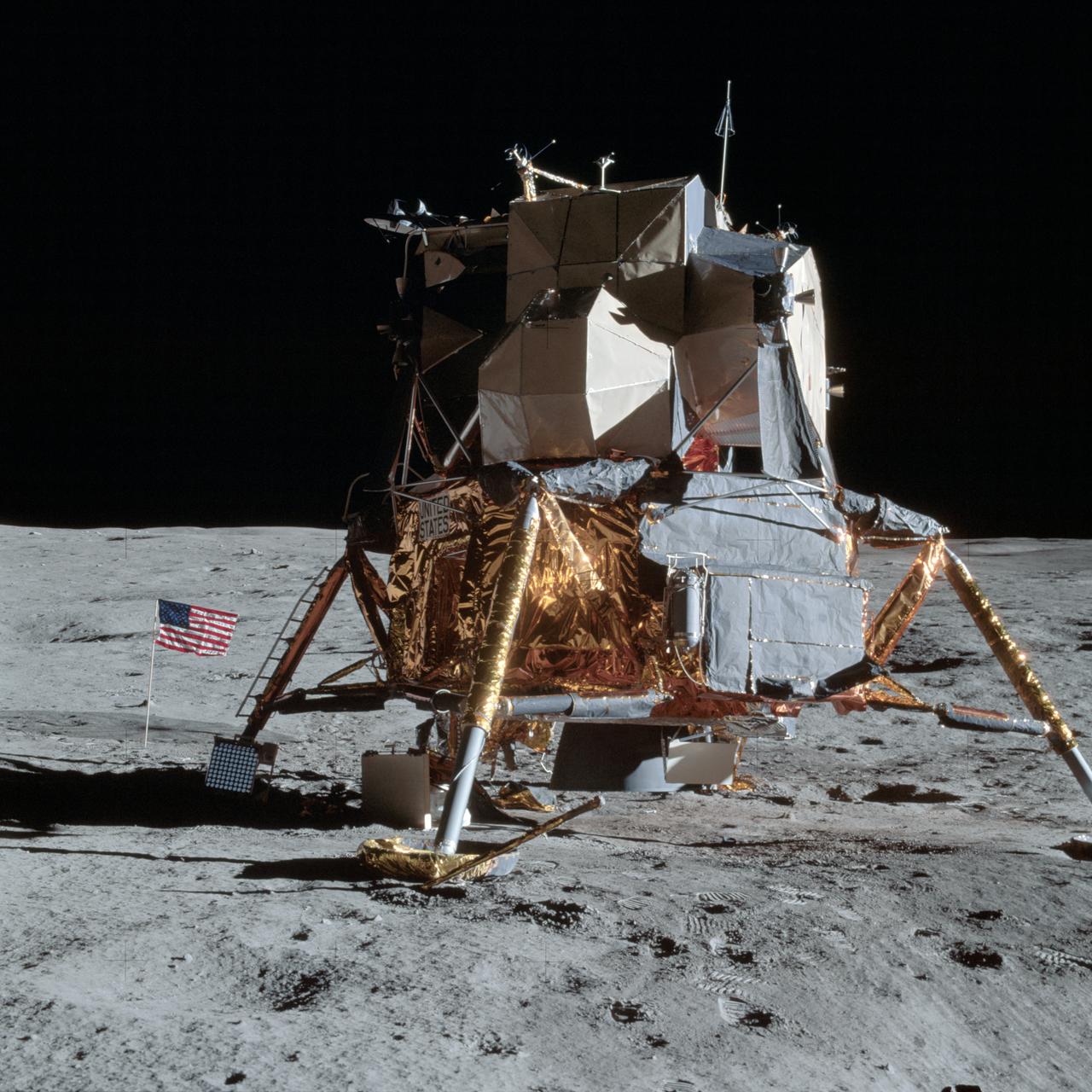
AS14-66-9277 (5 Feb. 1971) --- An excellent view of the Apollo 14 Lunar Module (LM) on the moon, as photographed during the first Apollo 14 extravehicular activity (EVA) on the lunar surface. The astronauts have already deployed the U.S. flag. Note the laser ranging retro reflector (LR-3) at the foot of the LM ladder. The LR-3 was deployed later. While astronauts Alan B. Shepard Jr., commander, and Edgar D. Mitchell, lunar module pilot, descended in the LM to explore the moon, astronaut Stuart A. Roosa, command module pilot, remained with the Command and Service Modules (CSM) in lunar orbit.
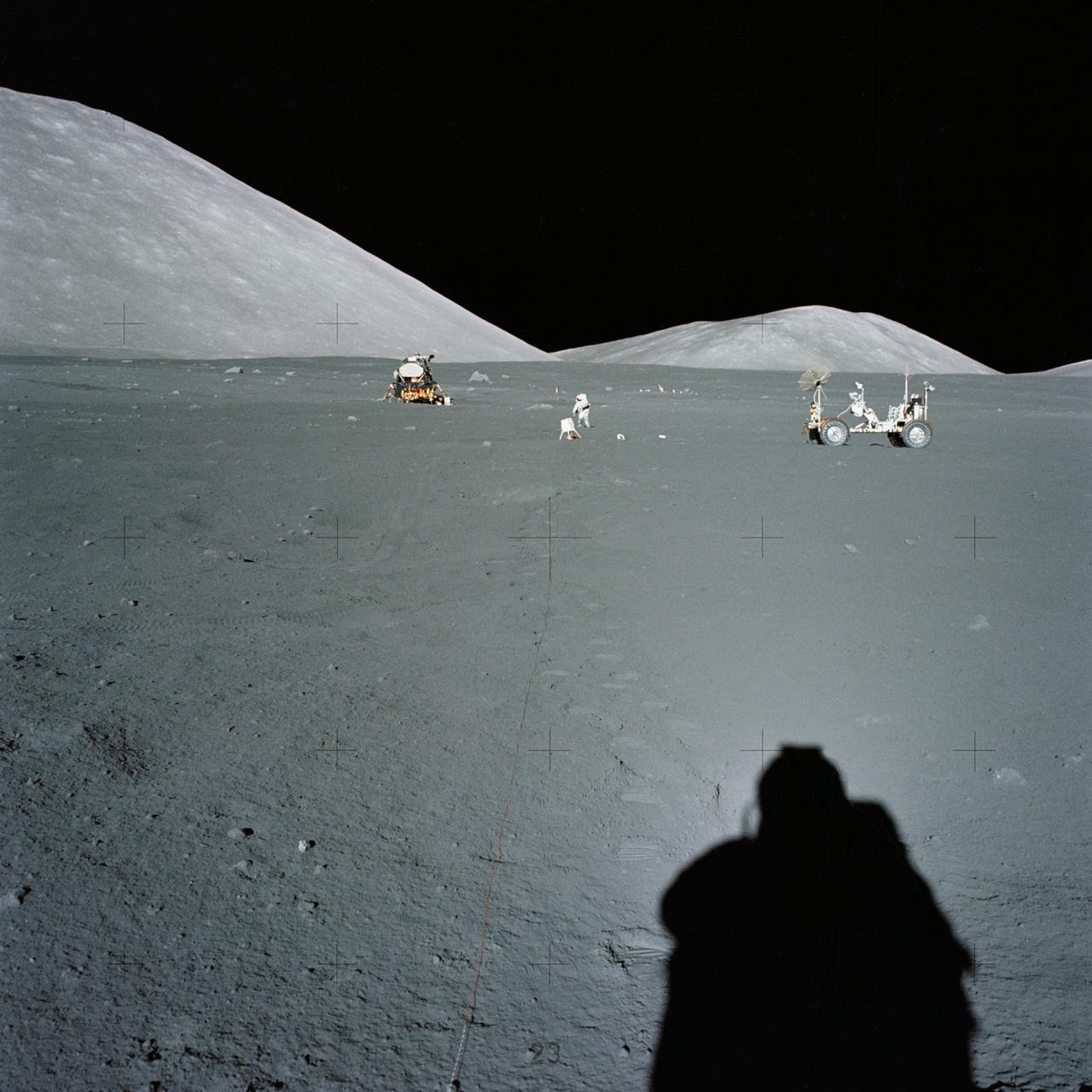
AS17-134-20435 (10 Dec. 1972) --- Wide-angle view of the Apollo 17 Taurus-Littrow lunar landing site. To the left in the background is the Lunar Module. To the right in the background is the Lunar Roving vehicle. An Apollo 17 crewmember is photographed between the two points. The shadow of the astronaut taking the photograph can be seen in the right foreground.
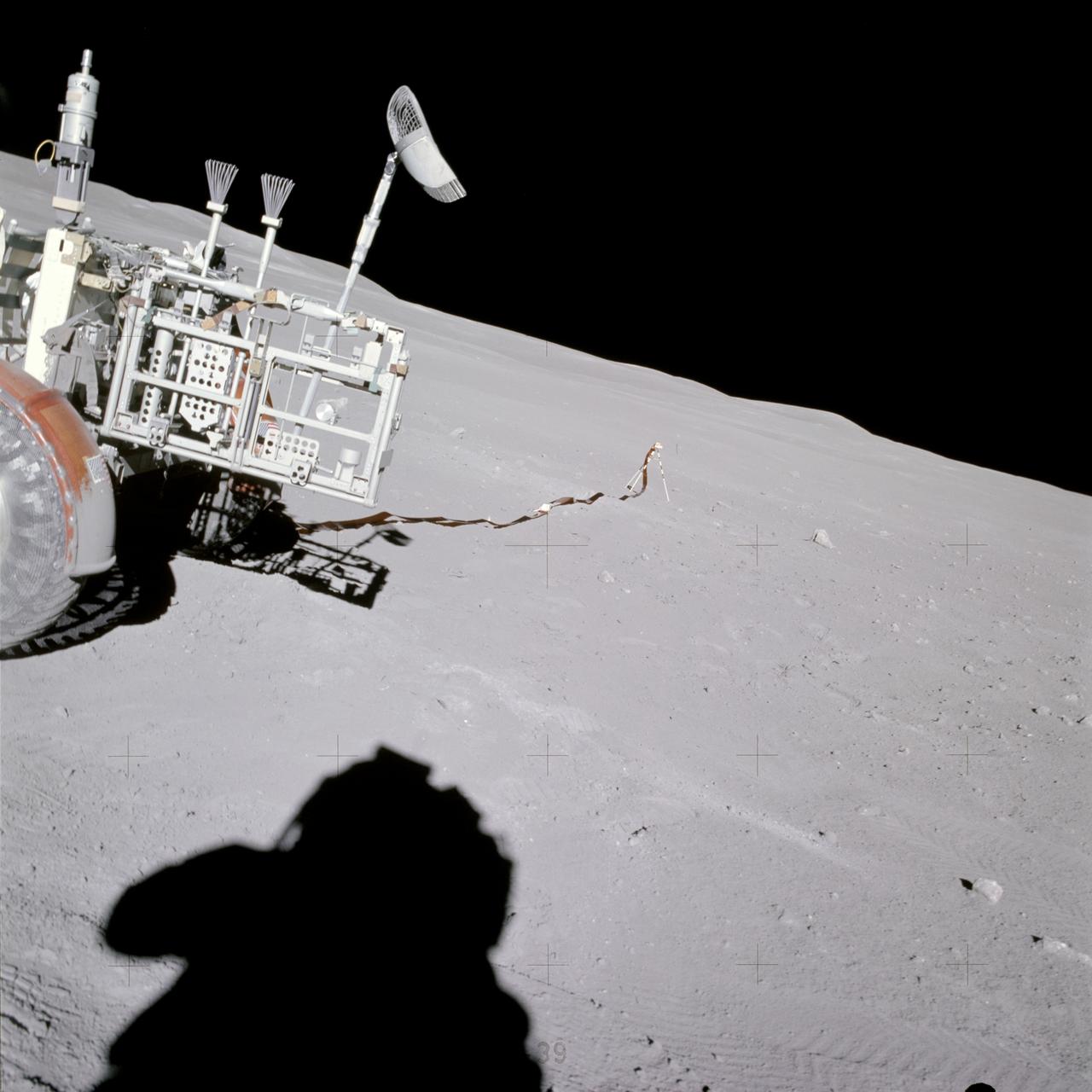
AS16-114-18433 (22 April 1972) --- View of the Lunar Portable Magnetometer mounted on the Lunar Roving Vehicle (LRV) which was parked at Station No. 2 on the Descartes lunar landing site. The Apollo 16 crew photographed it during their second extravehicular activity (EVA). Note the shadow of the astronaut taking the photograph in the left foreground.
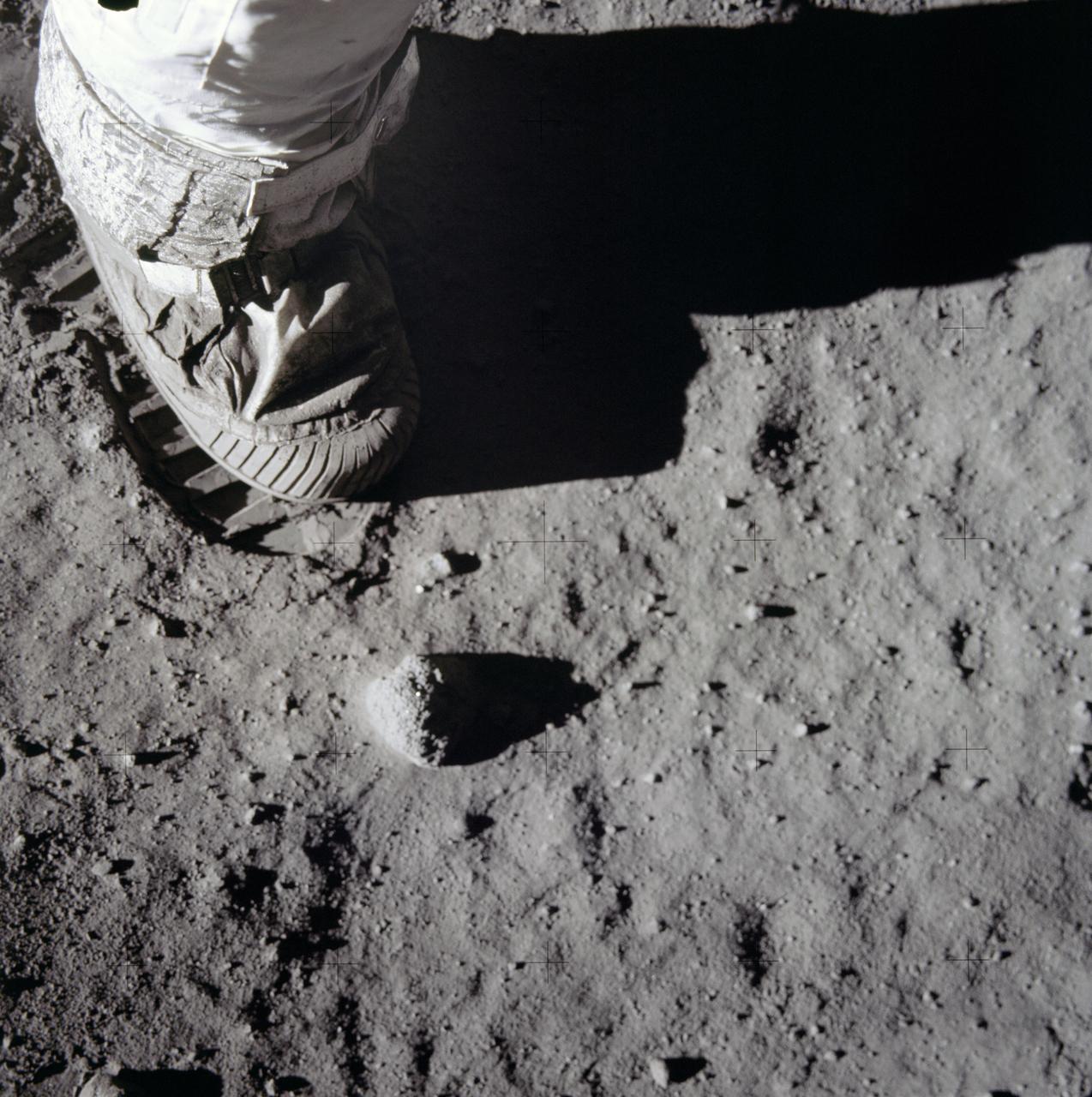
AS11-40-5880 (20 July 1969) --- A close-up view of an astronaut's boot and bootprint in the lunar soil, photographed with a 70mm lunar surface camera during the Apollo 11 lunar surface extravehicular activity (EVA). While astronauts Neil A. Armstrong, commander, and Edwin A. Aldrin Jr., lunar module pilot, descended in the Lunar Module (LM) "Eagle" to explore the Sea of Tranquility region of the moon, astronaut Michael Collins, command module pilot, remained with the Command and Service Modules (CSM)" Columbia" in lunar orbit.
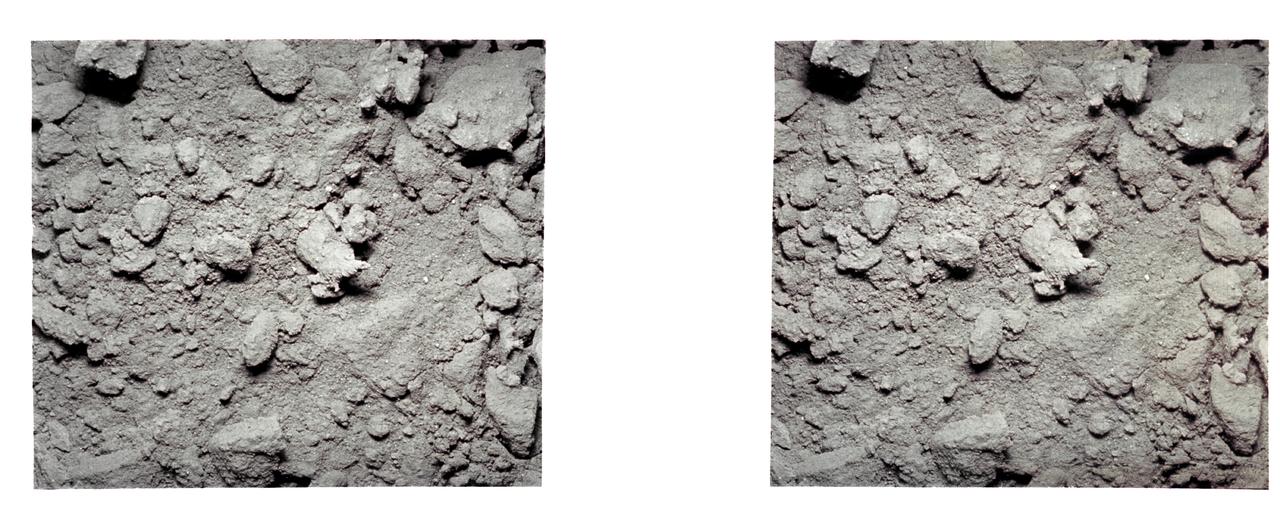
AS12-57-8455 (19-20 Nov. 1969) --- An Apollo 12 stereo view showing a three-inch square of the lunar surface. The exposure was made with an Apollo 35mm stereo close-up camera during extravehicular activity of the Apollo 12 lunar landing mission. The camera was developed to get the highest possible resolution of a small area. The three-inch square is photographed with a flash illumination and at a fixed distance. The camera is mounted on a walking stick, and the astronauts use it by holding it up against the object to be photographed and pulling the trigger. Astronauts Charles Conrad Jr., commander, and Alan L. Bean, lunar module pilot, descended in the Apollo 12 Lunar Module to explore the moon while astronaut Richard F. Gordon Jr. remained with the Command and Service Modules in lunar orbit in the capacity of command module pilot.
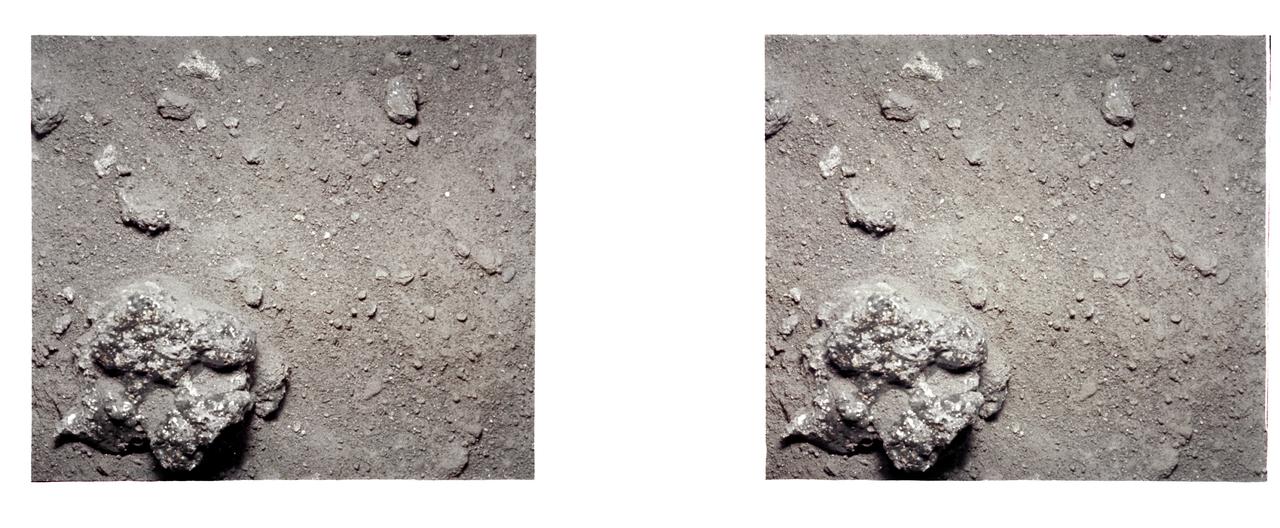
AS12-57-8452 (19-20 Nov. 1969) --- An Apollo 12 stereo view showing a three-inch square of the lunar surface. The exposure was made with an Apollo 35mm stereo close-up camera during extravehicular activity of the Apollo 12 lunar landing mission. The camera was developed to get the highest possible resolution of a small area. The three-inch square is photographed with a flash illumination and at a fixed distance. The camera is mounted on a walking stick, and the astronauts use it by holding it up against the object to be photographed and pulling the trigger. Astronauts Charles Conrad Jr., commander, and Alan L. Bean, lunar module pilot, descended in the Apollo 12 Lunar Module to explore the moon while astronaut Richard F. Gordon Jr. remained with the Command and Service Modules in lunar orbit in the capacity of command module pilot.
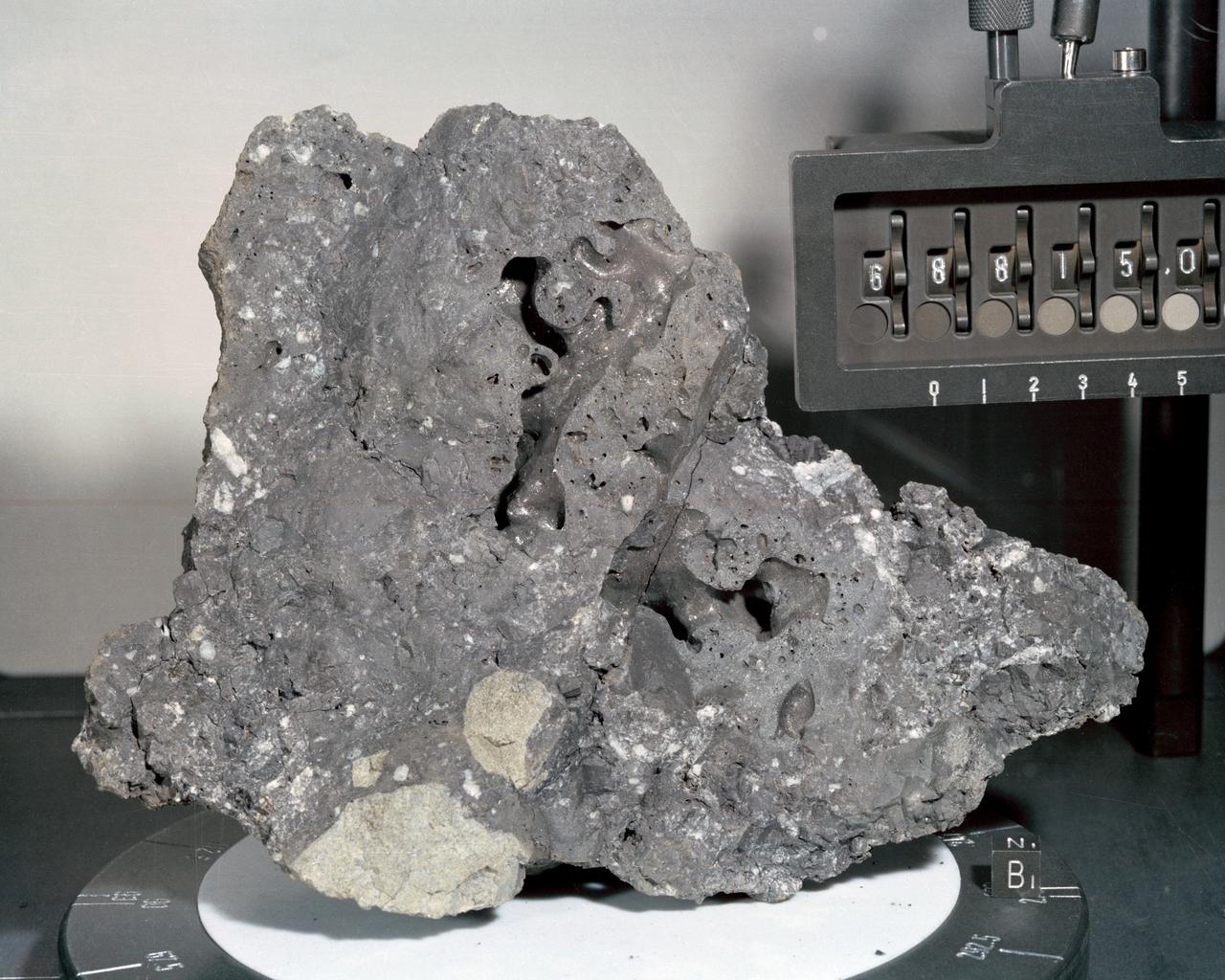
A closeup view or "mug shot" of Apollo 16 lunar sample no. 68815, a dislodged fragment from a parent boulder roughly four feet high and five feet long encountered at Station 8. The crew tried in vain to overturn the parent boulder. A fillet-soil sample was taken close to the boulder, allowing for study of the type and rate of erosion acting on lunar rocks. The fragment itself is very hard, has many veticles and a variety of inclusions. In addition, numerous metallic particles were observed in the black matrix.
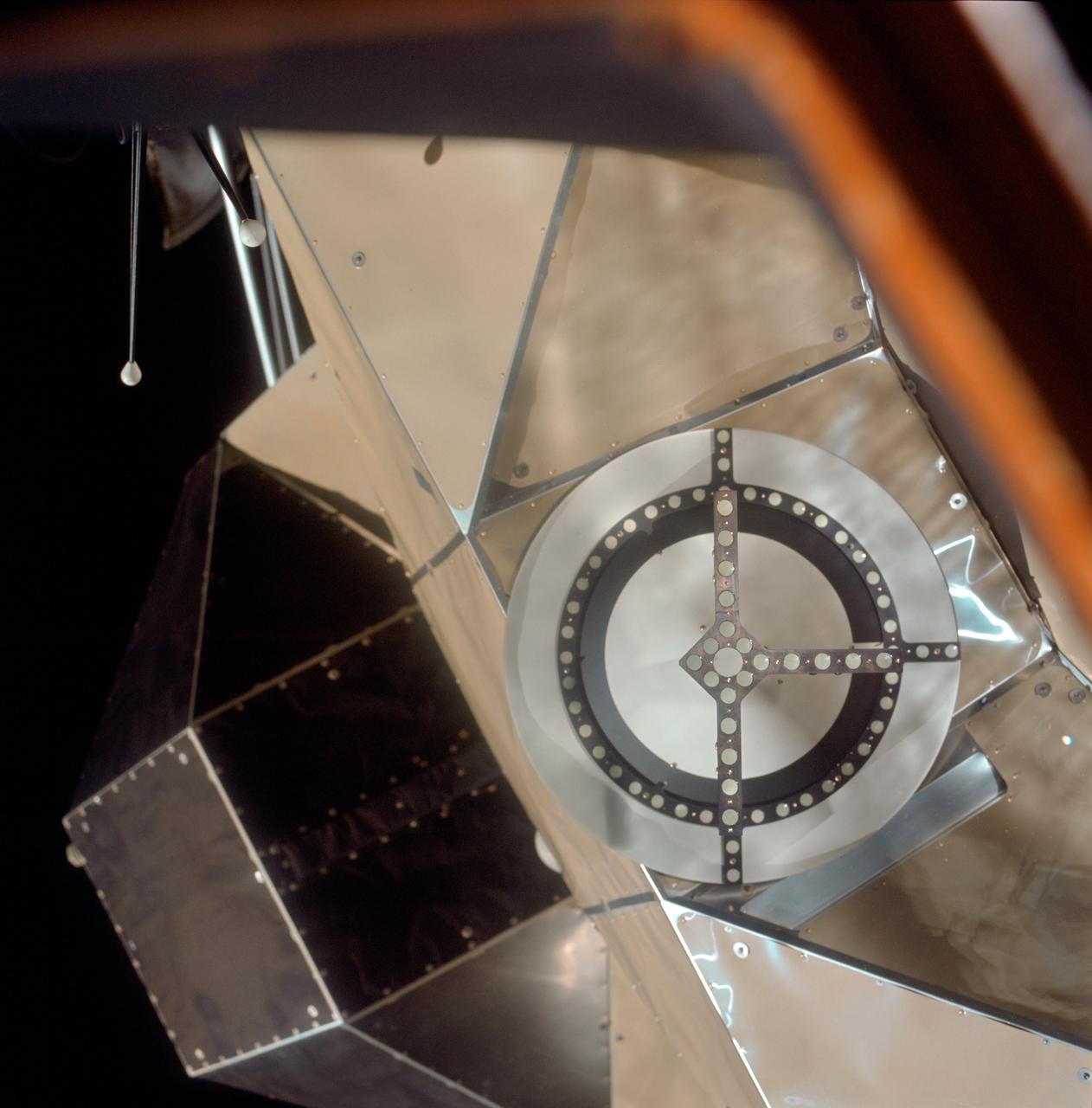
AS11-36-5365 (21 July 1969) --- A close-up view of the docking target on the Apollo 11 Lunar Module (LM) photographed from the Command Module during the LM/CSM docking in lunar orbit. Astronauts Neil A. Armstrong, commander, and Edwin E. Aldrin Jr., lunar module pilot, in the LM, were returning from the lunar surface. Astronaut Michael Collins, command module pilot, remained with the Command and Service Modules (CSM) in lunar orbit while Armstrong and Aldrin explored the moon.
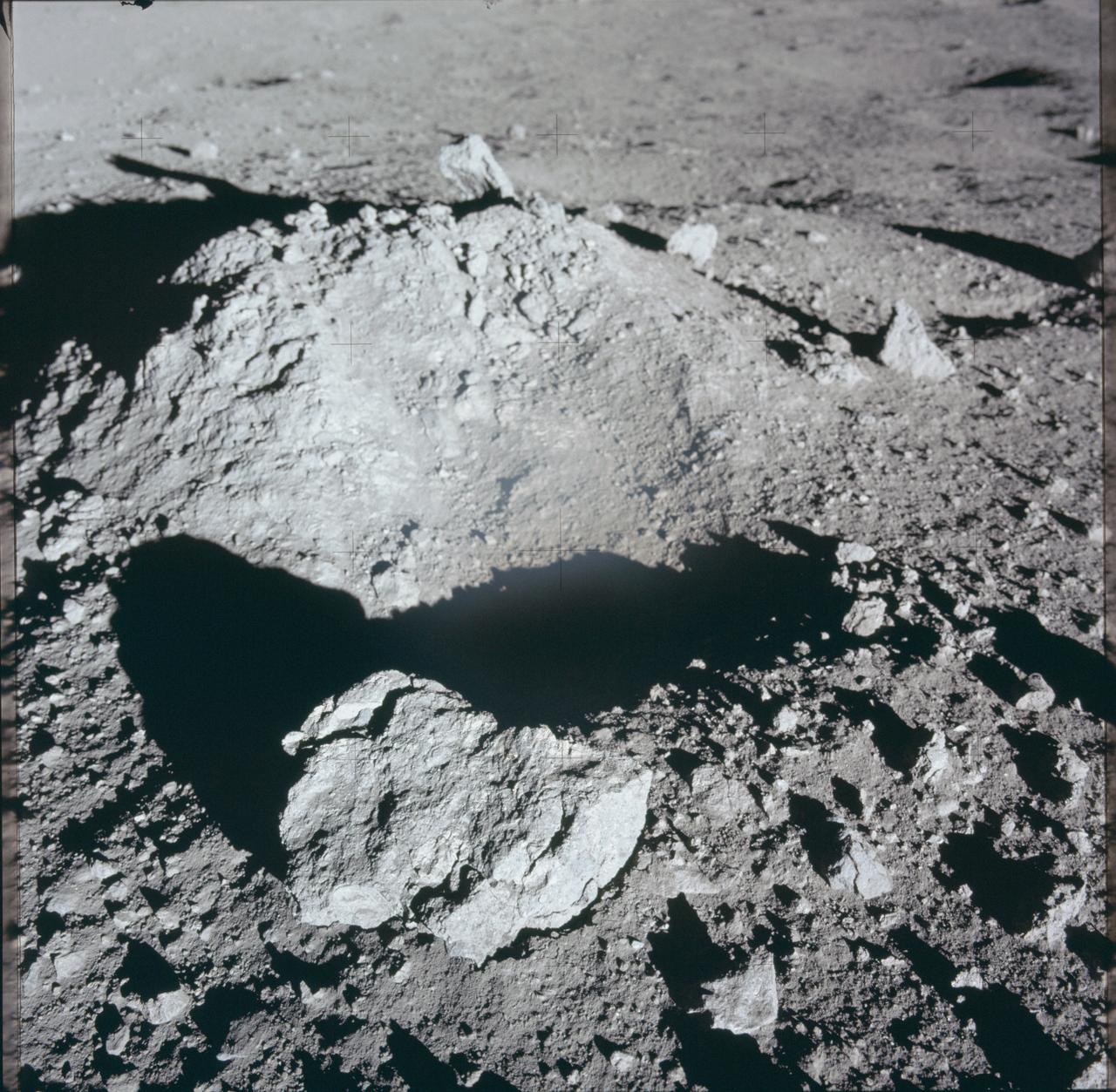
AS12-46-6825 (19 Nov. 1969) --- Close-up view of a lunar rock, small crater, and lunar mound as photographed during the Apollo 12 extravehicular activity (EVA). Astronaut Richard F. Gordon Jr., command module pilot, remained with the Apollo 12 Command and Service Modules (CSM) in lunar orbit while astronauts Charles Conrad Jr., commander, and Alan L. Bean, lunar module pilot, descended in the Lunar Module (LM) to explore the moon.
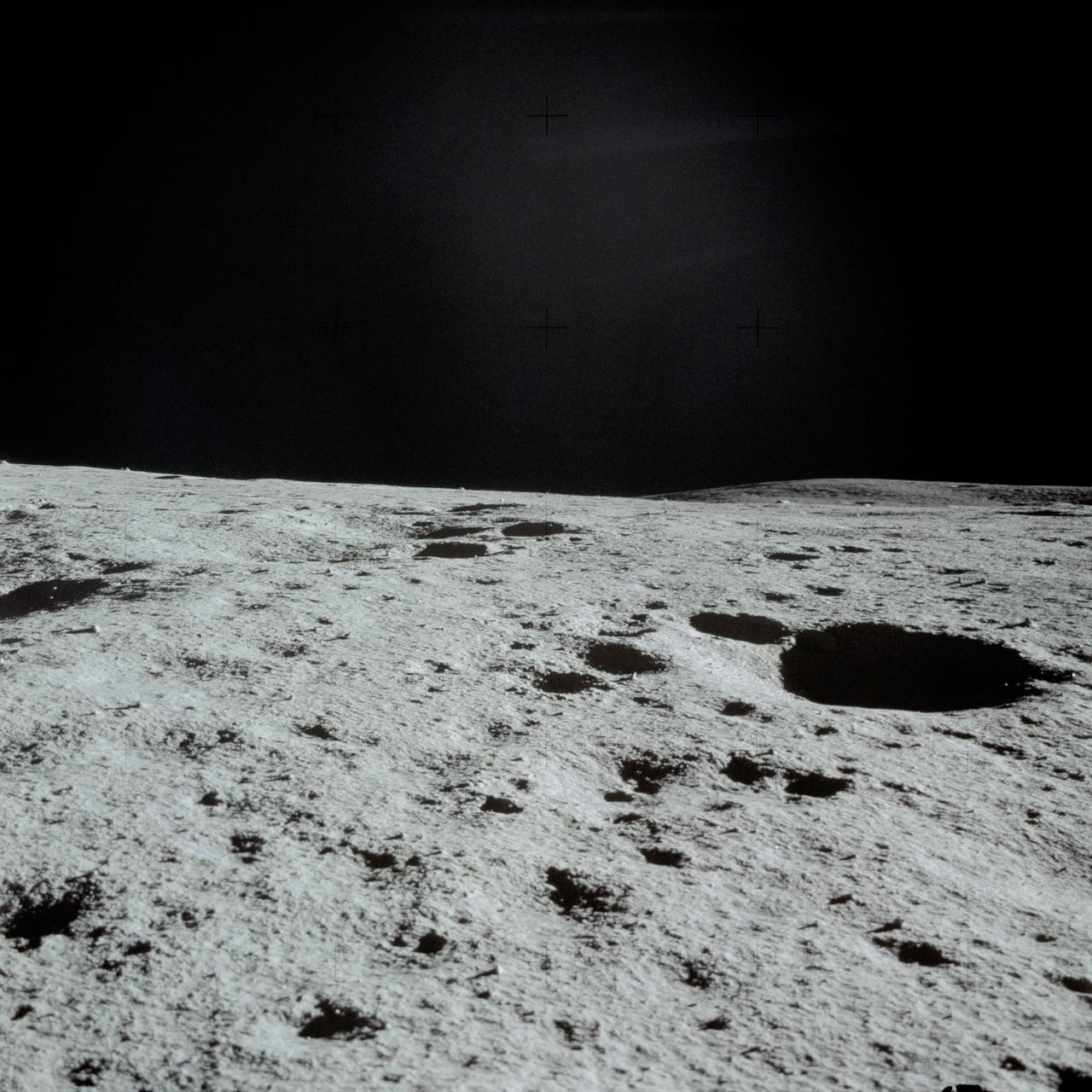
AS14-66-9244 (5-6 Feb. 1971) --- An excellent view of the lunar terrain looking through the right window of the Lunar Module (LM), photographed by one of the Apollo 14 astronauts during their stay on the lunar surface. Pothole-sized craters can be seen in the foreground. While astronauts Alan B. Shepard Jr., commander, and Edgar D. Mitchell, lunar module pilot, descended in the LM to explore the moon, astronaut Stuart A. Roosa, command module pilot, remained with the Command and Service Modules (CSM) in lunar orbit.
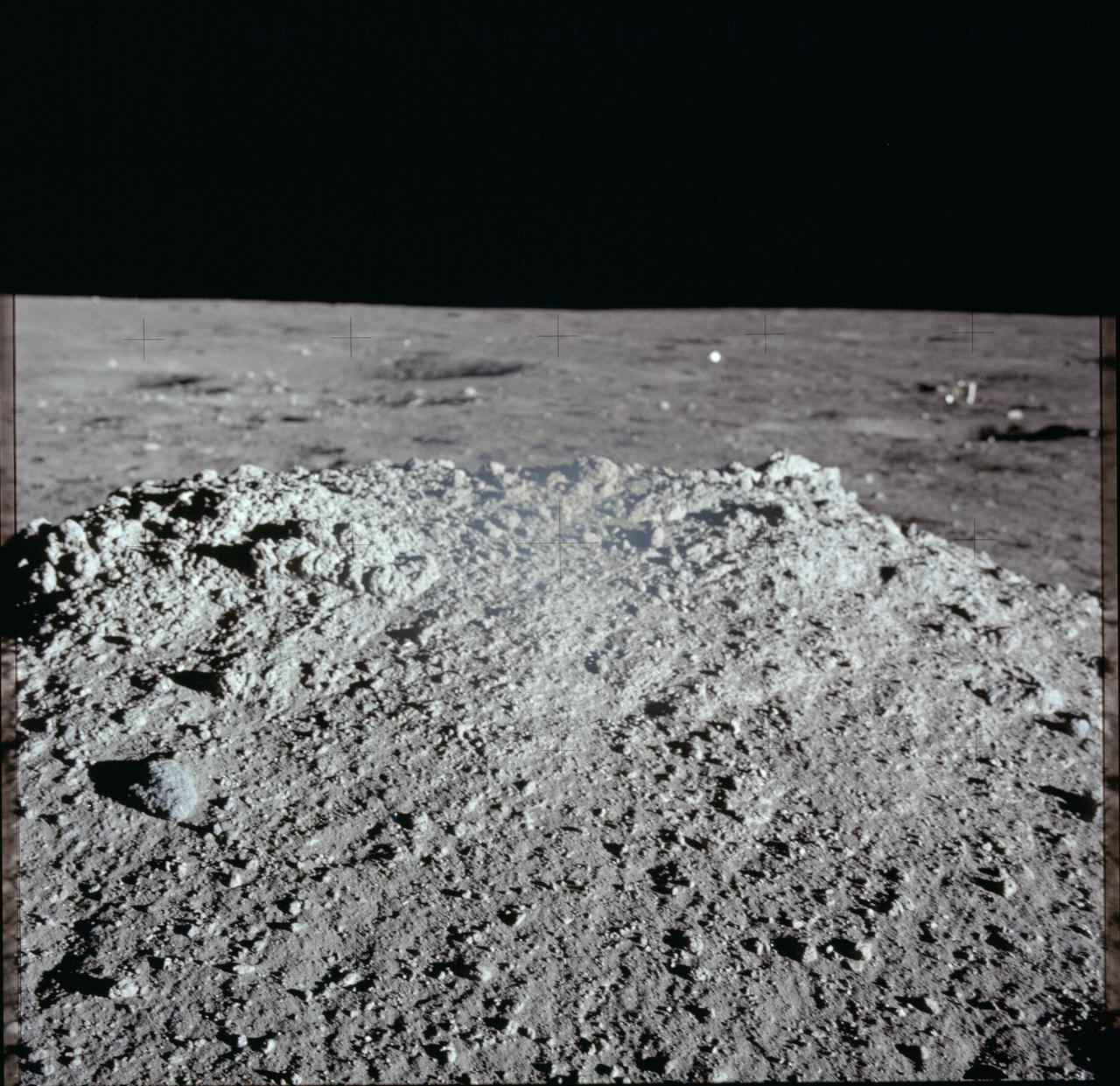
AS12-46-6832 (19 Nov. 1969) --- A close-up view of a lunar mound as photographed during the Apollo 12 extravehicular activity (EVA) on the lunar surface. Astronaut Richard F. Gordon Jr., command module pilot, remained with the Apollo 12 Command and Service Modules (CSM) in lunar orbit while astronauts Charles Conrad Jr., commander, and Alan L. Bean, lunar module pilot, descended in the Lunar Module (LM) to explore the moon.
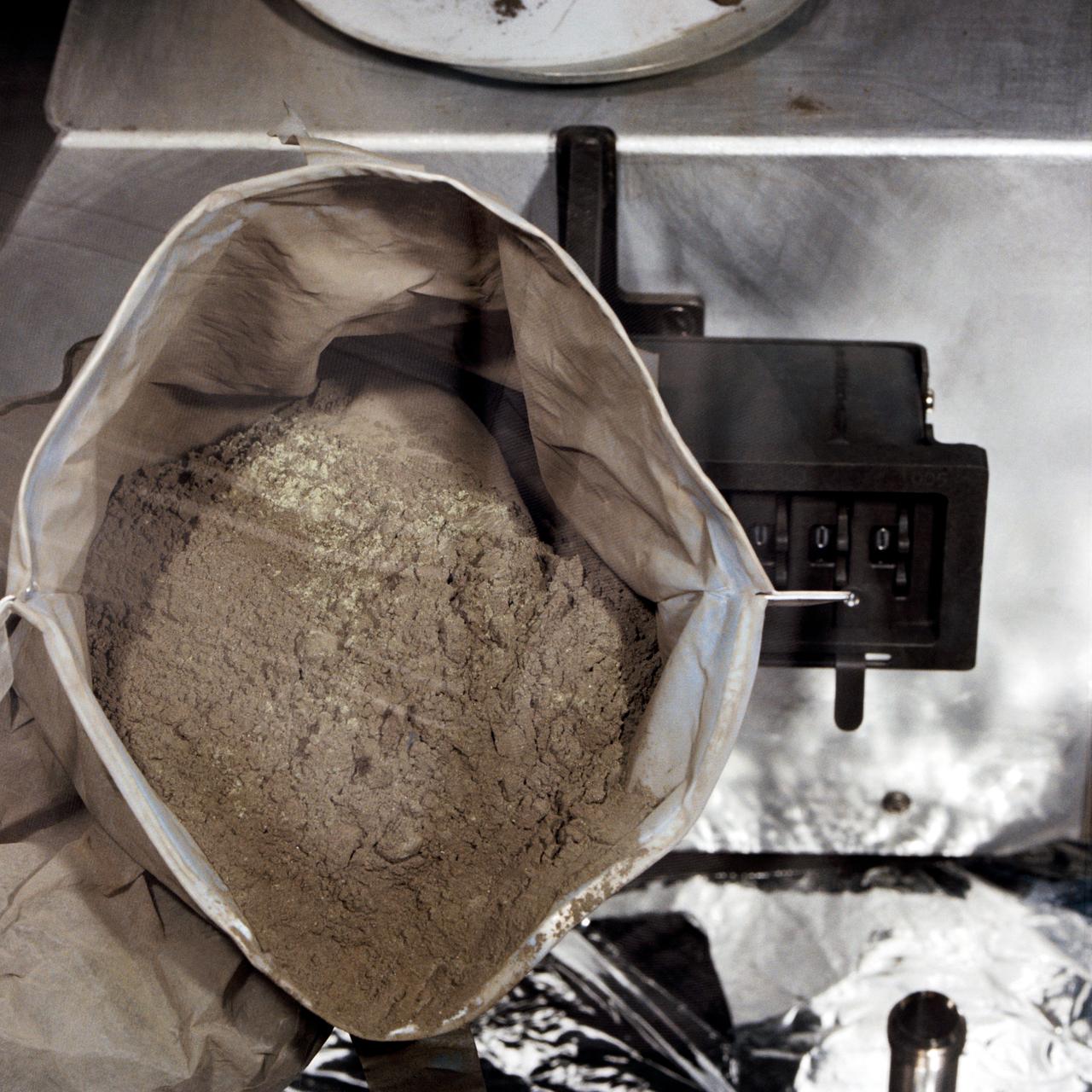
S71-43052 (August 1971) --- A close-up view of a container full of green-colored lunar soil in the Non-Sterile Nitrogen Processing Line (NNPL) in the Lunar Receiving Laboratory (LRL) at the Manned Spacecraft Center (MSC). This sample, broken down into six separate samples after this photo was made, was made up of comprehensive fines from near Spur Crater on the Apennine Front. The numbers assigned to the sample include numbers 15300 through 15305. Astronauts David R. Scott and James B. Irwin took the sample during their second extravehicular activity (EVA) at a ground elapsed time (GET) of 146:05 to 146:06.
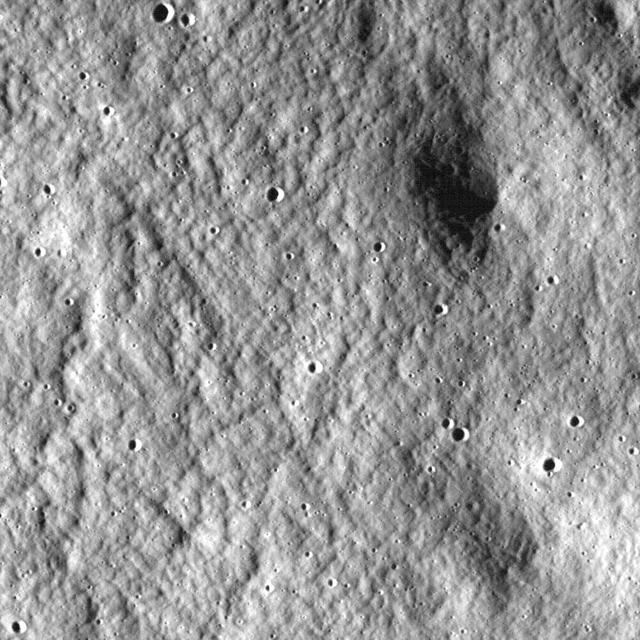
Close-up view of the lunar highlands, northeast of Clavius crater, taken by NASA Lunar Reconnaissance Orbiter.
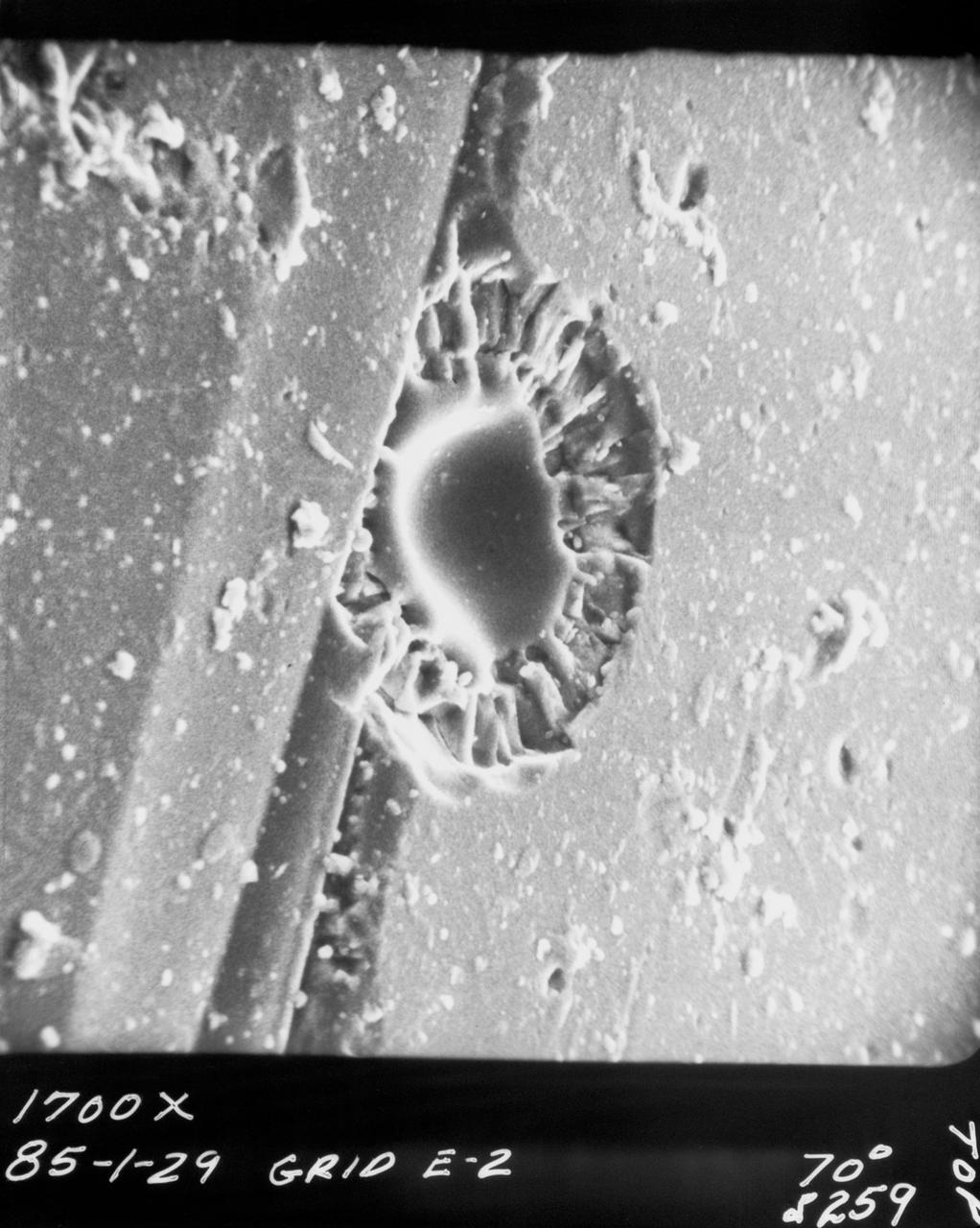
S70-20418 (December 1969) --- Enlarged view shows cosmic dust on broken glass particles, photographed by Dr. G. J. Wasserberg, J. DeVaney and K. Evans at California Institute of Technology during examination of the Apollo 11 lunar material. The photograph was enlarged to 1,700 time its actual size.
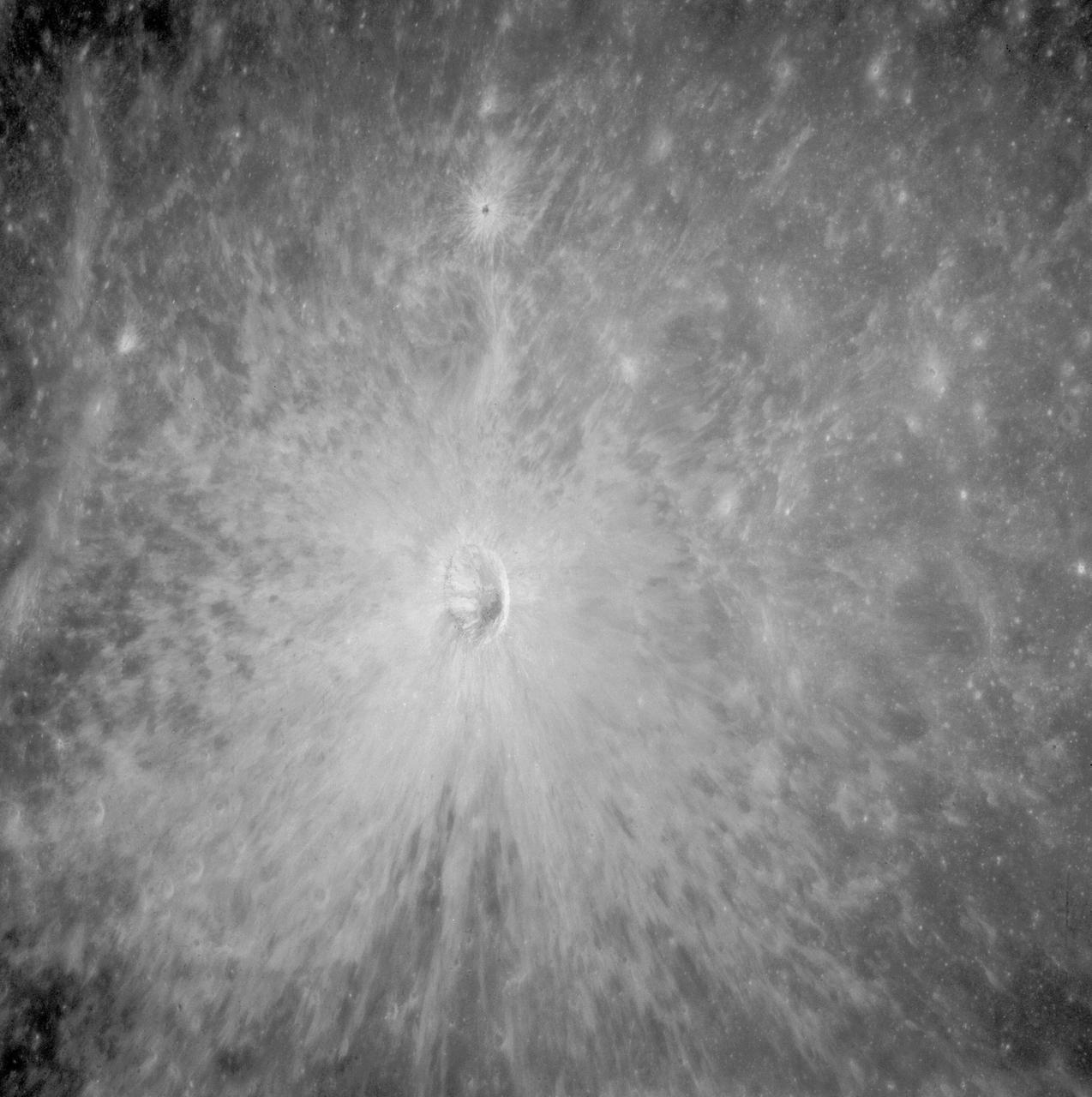
AS11-42-6285 (July 1969) --- An Apollo 11 view of a bright rayed crater on the lunar farside. The crater is unnamed. The center of this photograph is located at 100 degrees southeast longitude and 4 degrees 30 minutes north latitude. This area is just east of Smyth's Sea.
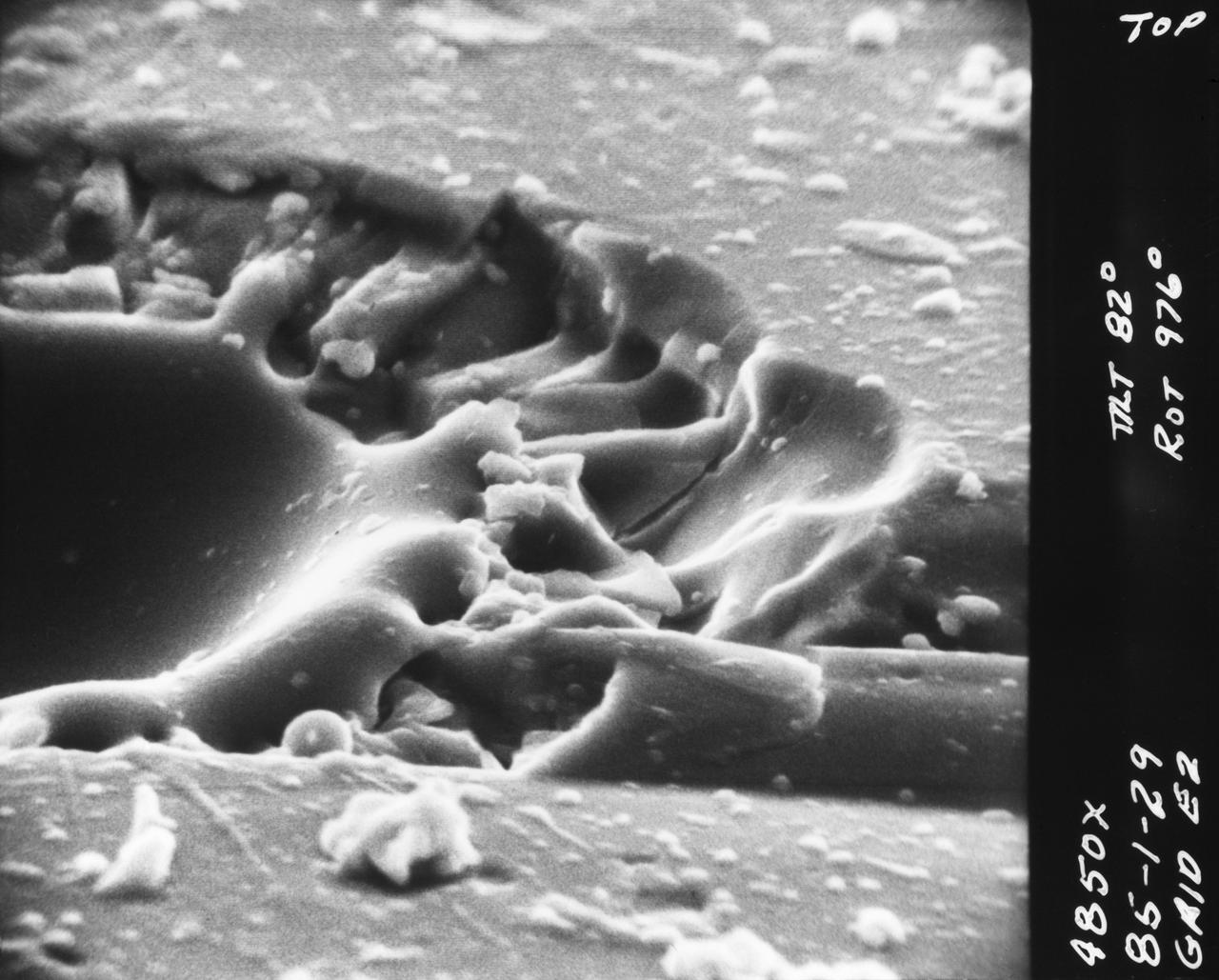
S70-20417 (December 1969) --- Enlarged view shows hypervelocity impact of cosmic dust on broken glass particles, taken during the examination of Apollo 11 lunar material by Dr. G. J. Wasserberg, J. DeVaney and K. Evans at California Institute of Technology. The photograph is enlarged 4,850 times actual size.
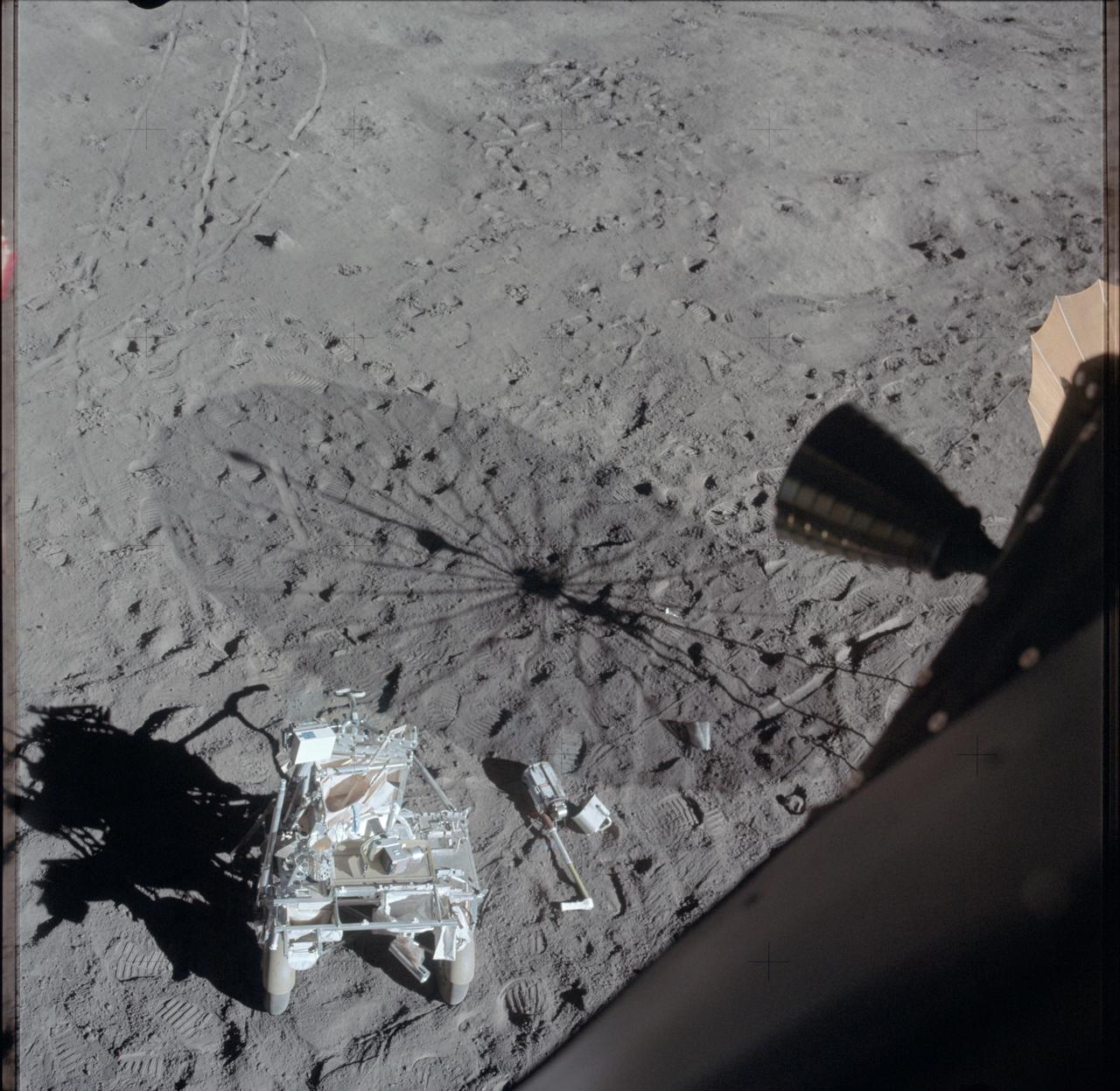
AS14-66-9340 (6 Feb. 1971) --- A view from inside the Lunar Module (LM) following the second Apollo 14 extravehicular activity (EVA). At the left foreground is the modularized equipment transporter (MET). Tracks made by the two-wheeled "Rickshaw"-type cart can be seen in the left background. The Apollo 35mm stereo close-up camera lies next to the MET, near a huge shadow of the erectable S-Band antenna. The area is largely covered with bootprints made by astronauts Alan B. Shepard Jr., commander, and Edgar D. Mitchell, lunar module pilot. While the pair explored the moon, astronaut Stuart A. Roosa, command module pilot, remained with the Command and Service Modules (CSM) in lunar orbit.

Panorama view of Apollo 17 Lunar surface photos for use in presentations to NASA management and for Outreach Education in regard to new NASA initiative for human planetary research. Photo numbers used for this panoramic include: Apollo 17 start frame AS17-146-22339 thru end frame AS17-146-22363. View is of Station 7 Panorama taken during Extravehicular Activity (EVA) 3.

Panorama view of Apollo 17 Lunar surface photos for use in presentations to NASA management and for Outreach Education in regard to new NASA initiative for human planetary research. Photo numbers used for this panoramic include: Apollo 17 start frame AS17-138-21053 thru end frame AS17-138-21073. View is of Station 2, taken during the second Extravehicular Activity (EVA) 2.
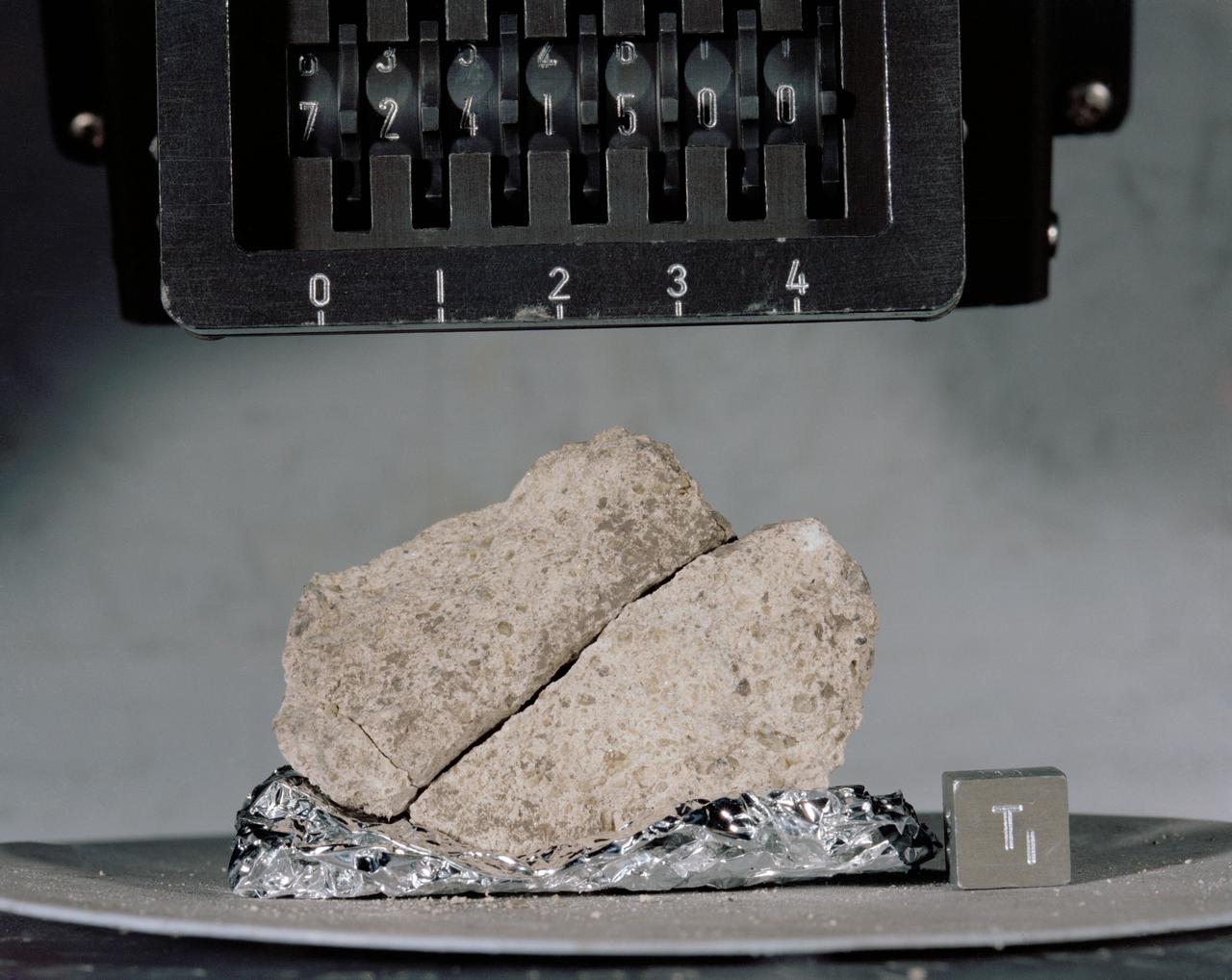
S73-16199 (December 1972) --- A close-up view of Apollo 17 lunar sample number 72415,0 which was brought back from the Taurus-Littrow landing site by the Apollo 17 crewmen. This sample is a brecciated dunite clast weighing a little over 32 grams (about 1.14 ounces). This sample was collected at station 2 (South Massif) during the second Apollo 17 extravehicular activity (EVA). IMPORTANT NOTE FOR CREDIT: The view was photographed by Karl Mills, Scientific Photo Arts, Berkeley, California.

Panorama view of Apollo 17 Lunar surface photos for use in presentations to NASA management and for Outreach Education in regard to new NASA initiative for human planetary research. Photo numbers used for this panoramic include: Apollo 17 start frame AS17-136-20745 thru end frame AS17-136-20759. View is of Station 1, taken during the first Extravehicular Activity (EVA) 1.
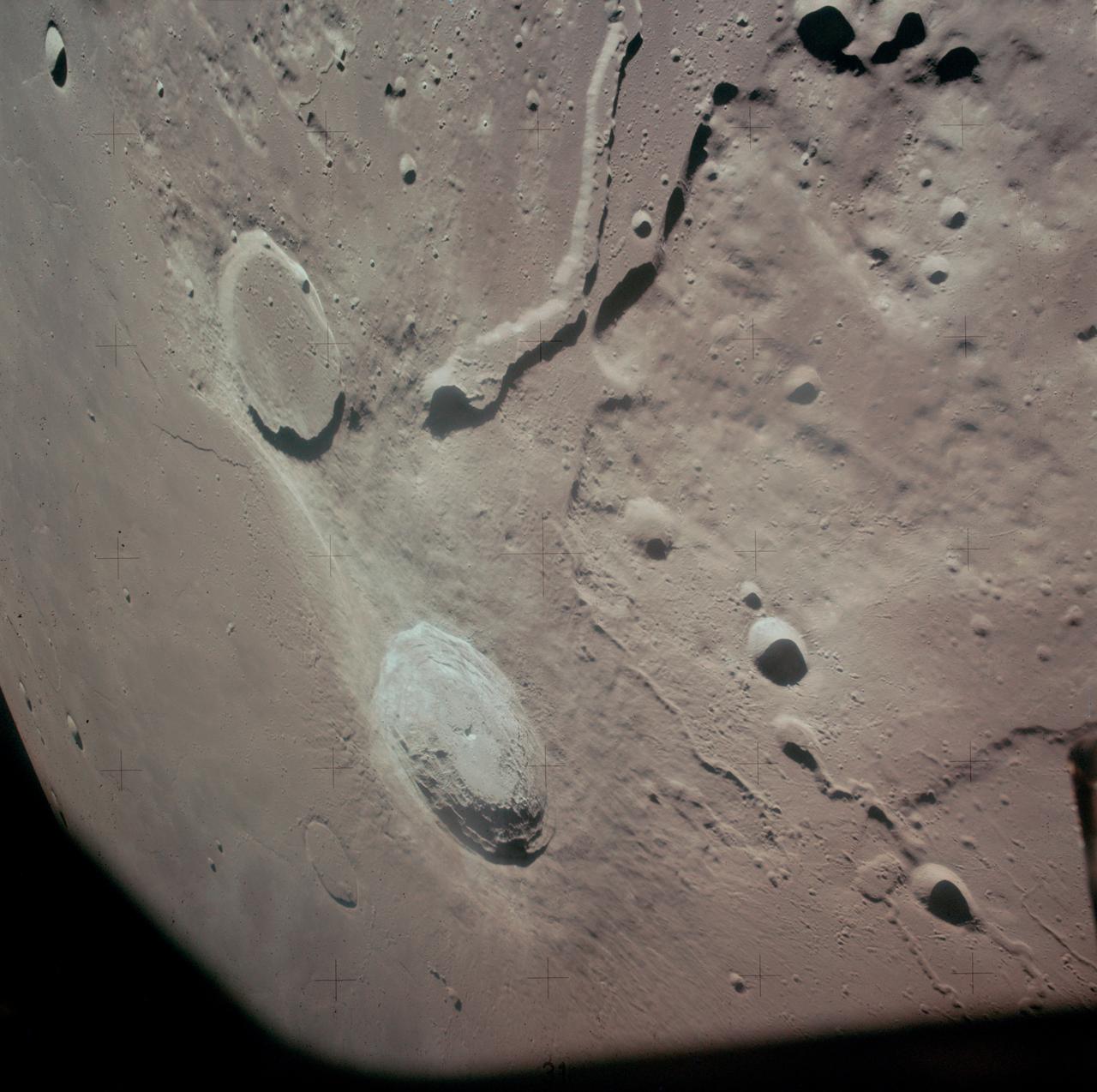
AS15-88-12002 (31 July-2 Aug. 1971) --- An oblique view of a portion of the lunar nearside located near the northeast edge of the Ocean of Storms (Oceanus Procellarum), photographed by astronaut Alfred M. Worden, command module pilot, from the Apollo 15 spacecraft in lunar orbit, showing the bright-appearing crater Aristarchus on the left, the crater Herodotus on the right, and Schroter's Valley at lower right. This view is looking southward. Aristarchus the head of Schroter's Valley, a sinuous rille in the Aristarchus Plateau, is called Cobra Head. The coordinates of the center of Aristarchus crater are 47.5 degrees west longitude and 23.6 degrees north latitude. While Worden remained in the Command and Service Modules (CSM) in lunar orbit, astronauts David R. Scott, commander; and James B. Irwin, lunar module pilot, descended in the Lunar Module (LM) "Falcon" to explore the moon.

AS14-66-9278 (5 Feb. 1971) --- An excellent view of the Apollo 14 Lunar Module (LM) on the moon, as photographed during the first Apollo 14 extravehicular activity (EVA) on the lunar surface. While astronauts Alan B. Shepard Jr., commander, and Edgar D. Mitchell, lunar module pilot, descended in the LM to explore the moon, astronaut Stuart A. Roosa, command module pilot, remained with the Command and Service Modules (CSM) in lunar orbit.
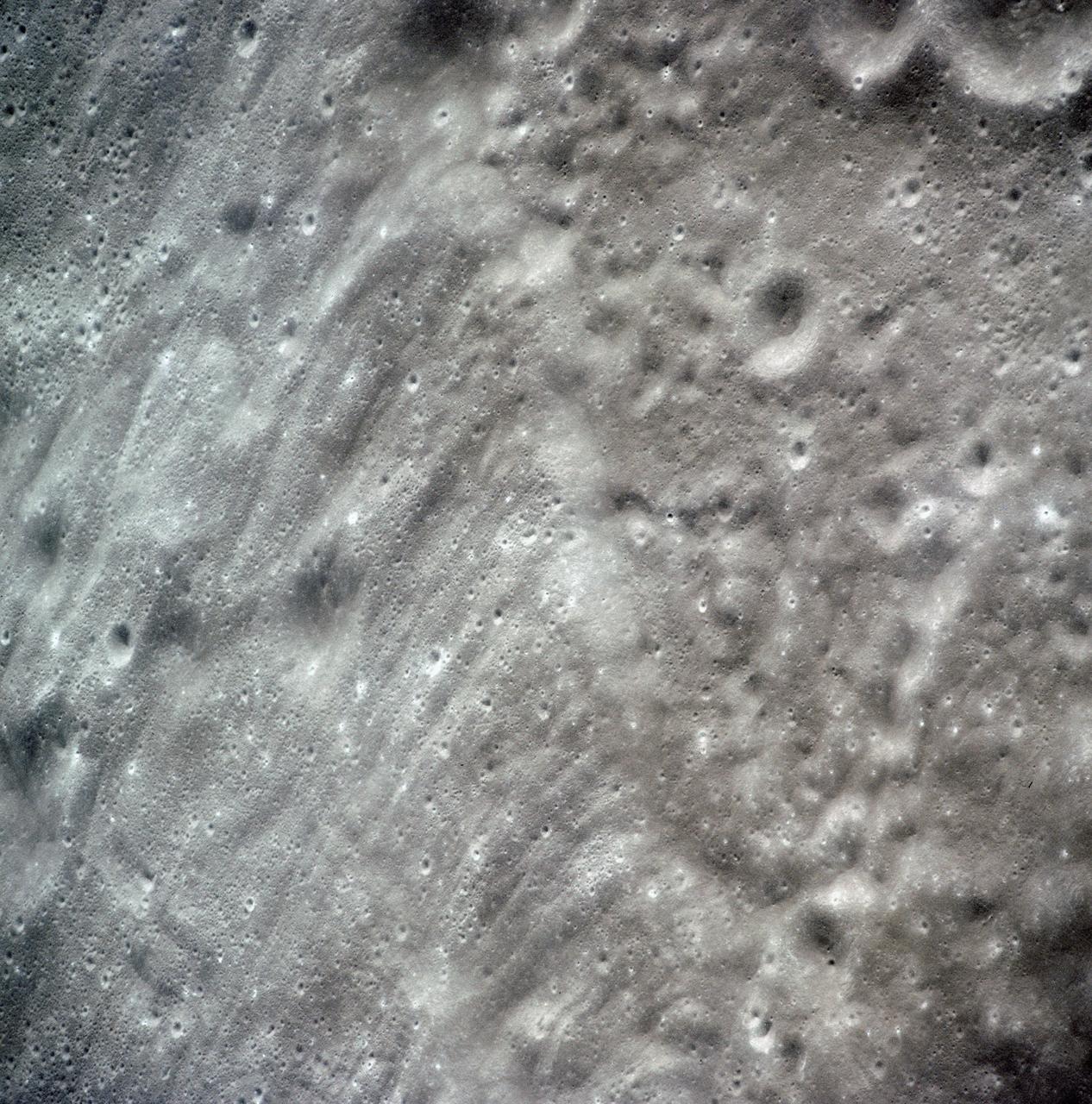
AS15-97-13168 (31 July-2 Aug. 1971) --- A view of the flow structure on the rim and edge of the crater Tsiolkovsky in the highlands of the lunar farside, as photographed from lunar orbit by astronaut Alfred M. Worden in the Apollo 15 Command and Service Module (CSM). Note the scarp at the edge of the flow and elongated grooves on the flow surface. While astronauts David R. Scott and James B. Irwin descended in the Lunar Module (LM) "Falcon" to explore the moon's Hadley-Apennine landing site, Worden remained with the CSM in lunar orbit.
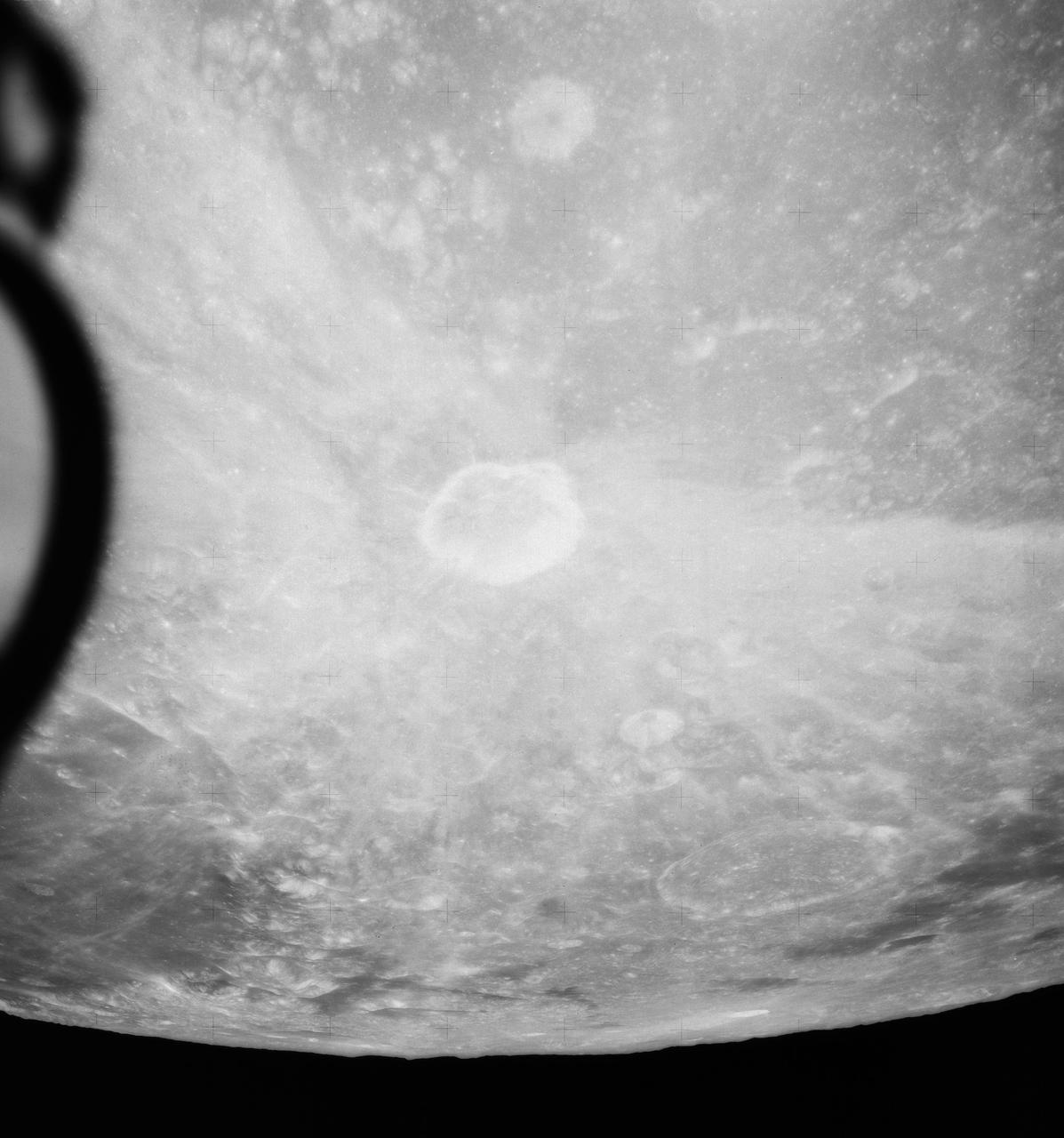
S71-44669 (31 July-2 Aug. 1971) --- An oblique view of the rayed crater Proclus on the lunar nearside, as photographed by the Fairchild metric camera in the SIM bay of the Apollo 15 Command and Service Modules (CSM) in lunar orbit. This view is looking north. The Sea of Crisis is at upper right. Proclus, which is 28 kilometers (16.58 statute miles) in diameter, is located at 47 degrees east longitude and 16 degrees north latitude. The Marsh of Sleep is at lower left. A small portion of the Sea of Tranquility can be seen at upper left. The crater Macrobius is located at upper left. The three-inch mapping camera was one of eight lunar orbital science experiments mounted in the SIM bay.
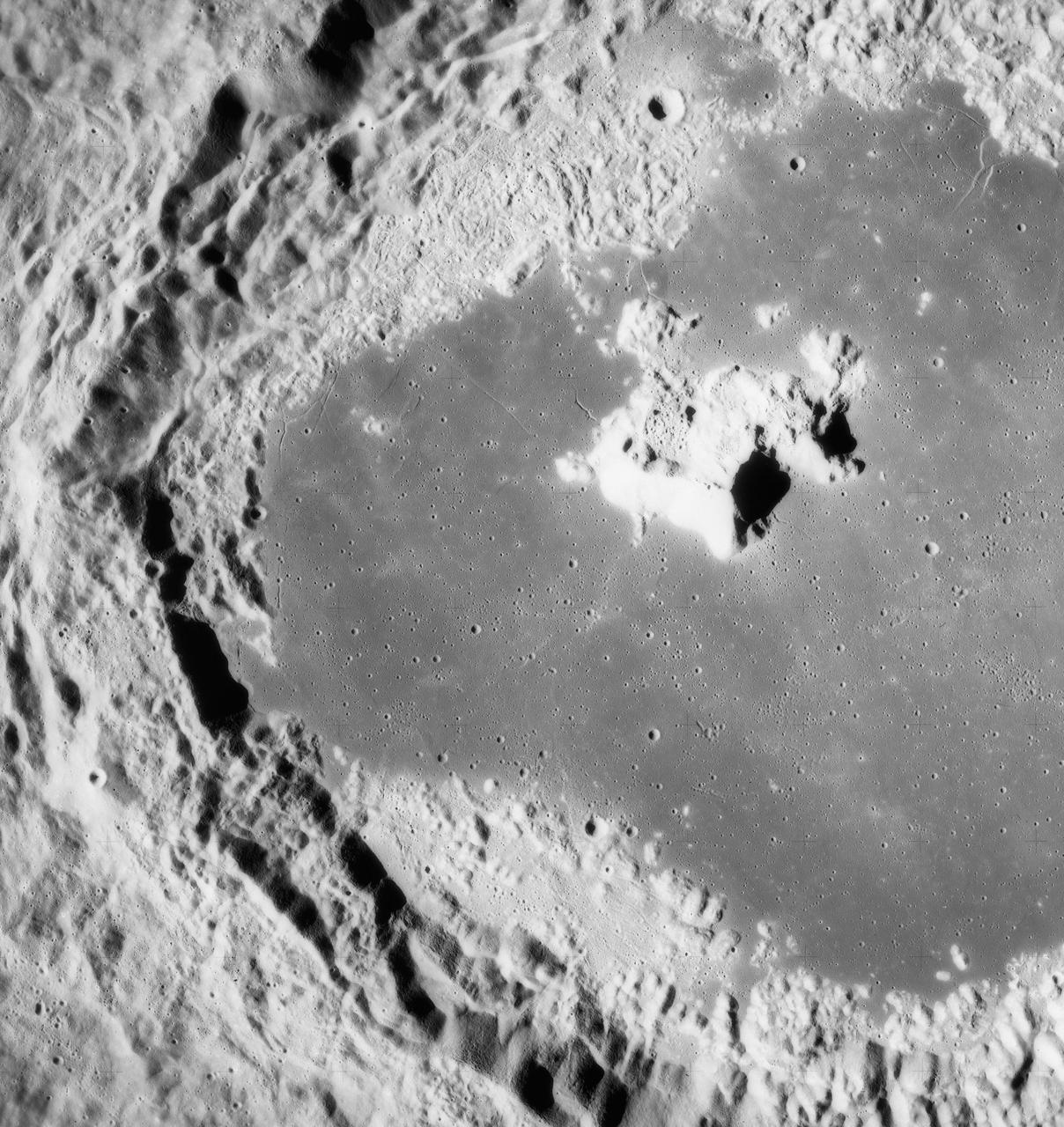
S71-44670 (31 July 1971) --- A near vertical view of the crater Tsiolkovsky on the lunar farside, as photographed by the Fairchild metric camera in the Scientific Instrument Module (SIM) bay of the Apollo 15 Command and Service Modules (CSM) in lunar orbit. This view is looking northerly. The coordinates of the crater's central peaks are 128 degrees east longitude and 20 degrees south latitude. The mare area measured from east to west is approximately 145 kilometers (90 statute miles) across. The three-inch mapping camera was one of eight lunar orbital science experiments mounted in the SIM bay.
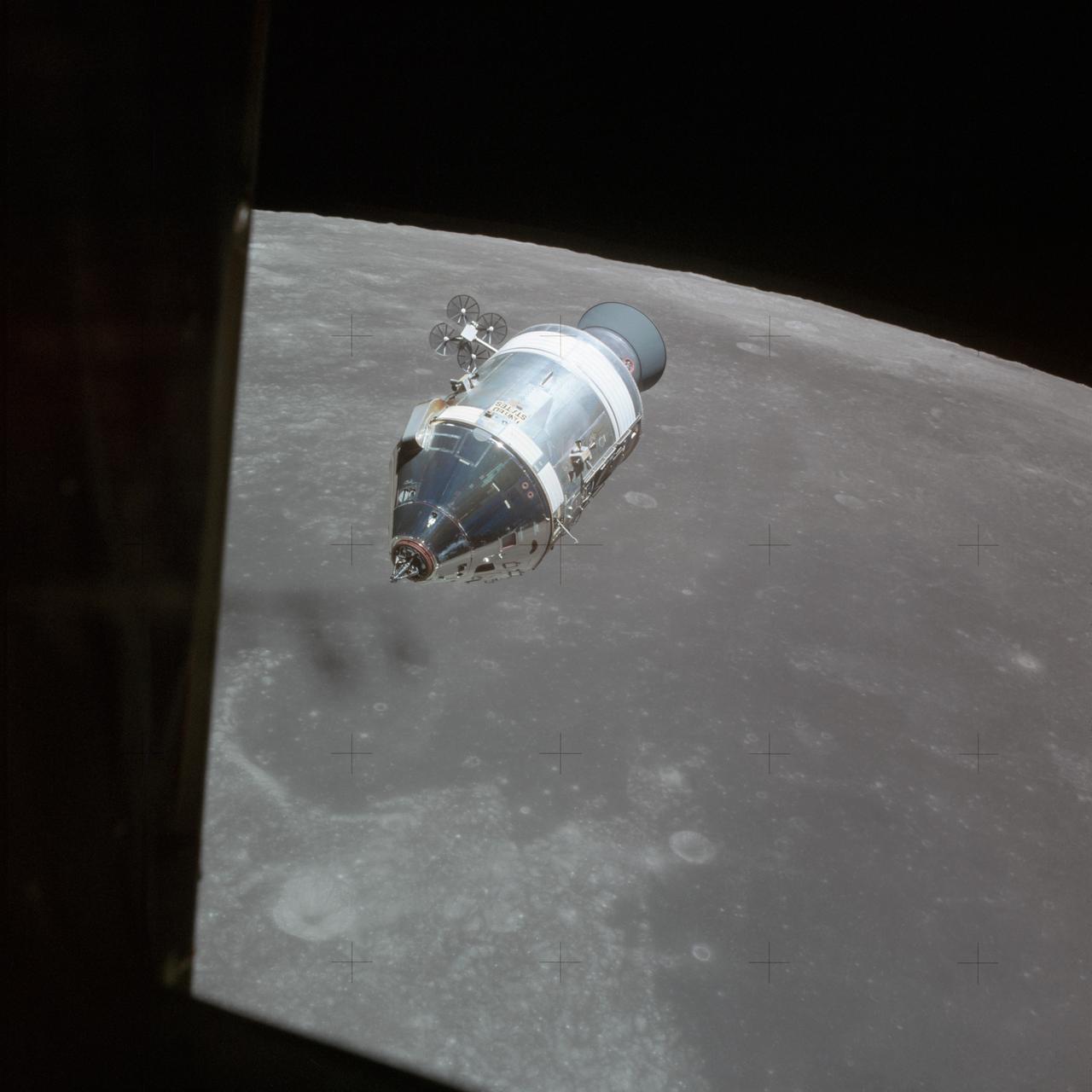
AS15-88-11961 (2 Aug. 1971) --- A view of the Apollo 15 Command and Service Modules (CSM) in lunar orbit as photographed from the Lunar Module (LM) just after rendezvous. The lunar area below is the northeastern side of the Sea of Fertility. While astronauts David R. Scott, commander, and James B. Irwin, lunar module pilot, descended in the LM to explore the Hadley-Apennine area of the moon, astronaut Alfred M. Worden, command module pilot, remained with the CSM in lunar orbit.
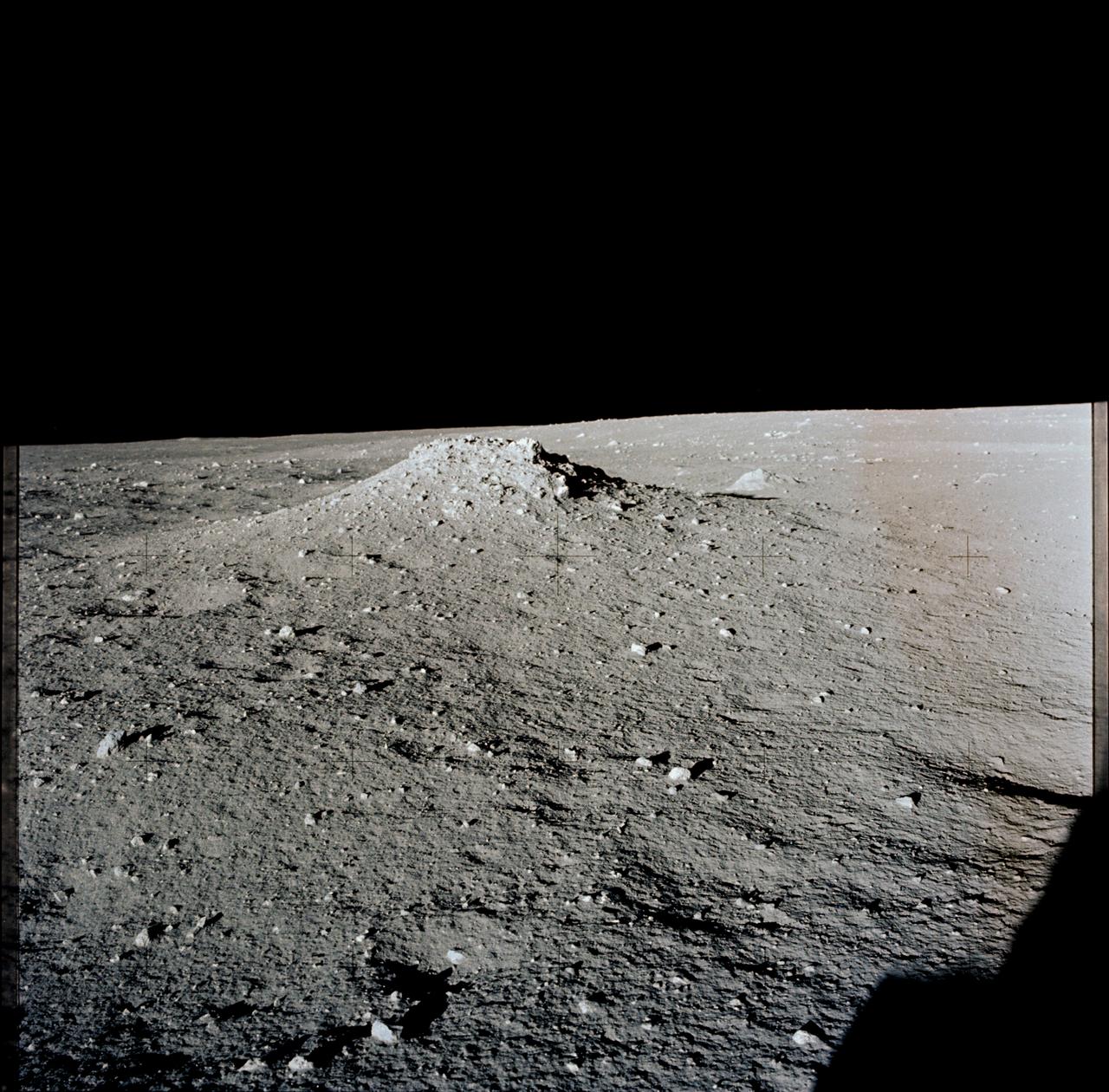
AS12-46-6795 (19-20 Nov. 1969) --- A view of the lunar surface in the vicinity of the Apollo 12 lunar landing site, photographed during the extravehicular activity (EVA) of astronauts Charles Conrad Jr., commander, and Alan L. Bean, lunar module pilot. Conrad and Bean encountered the odd, anthill-shaped mound during their lunar traverse. The two descended in the Apollo 12 Lunar Module (LM) to explore the moon, while astronaut Richard F. Gordon Jr., command module pilot, remained with the Command and Service Modules (CSM) in lunar orbit.
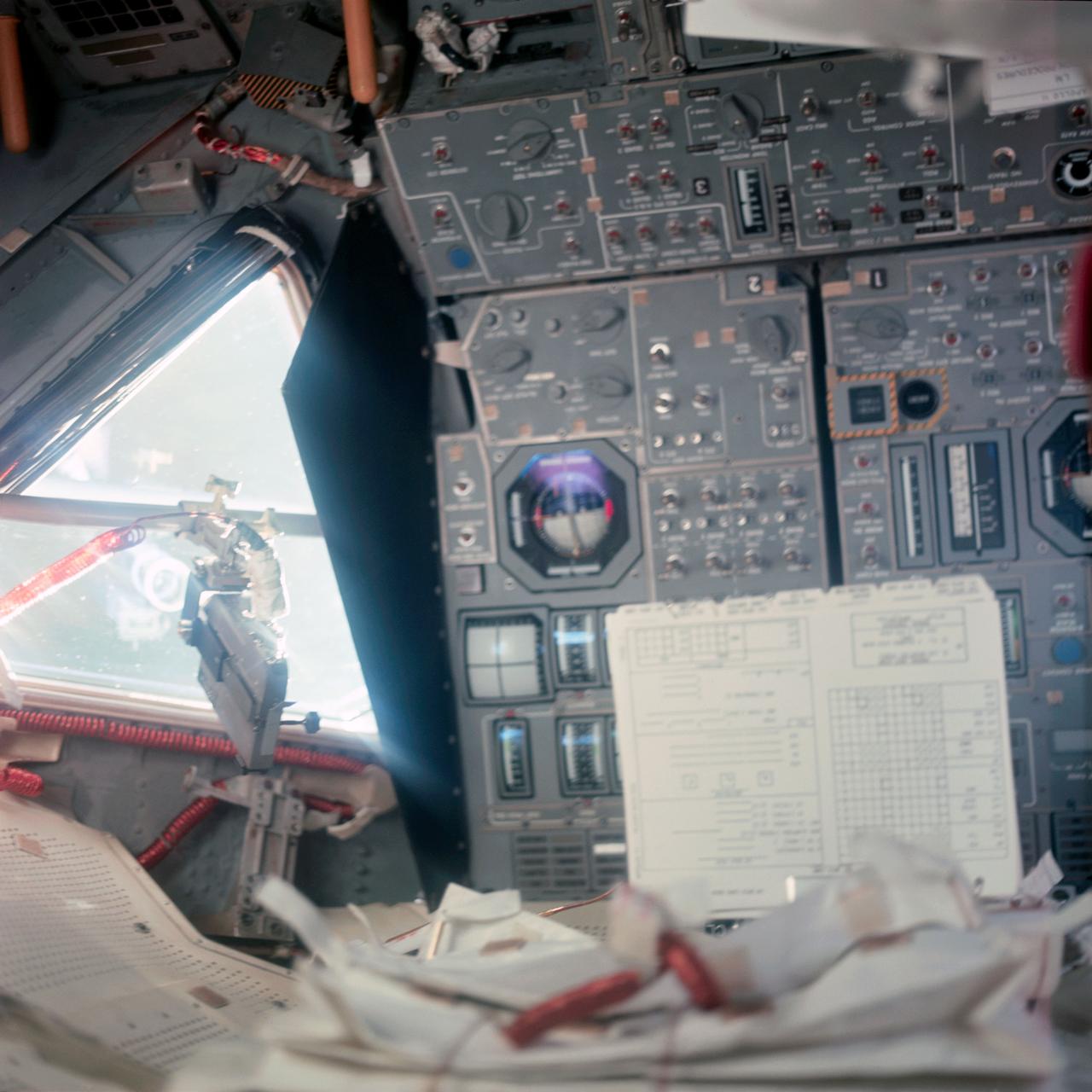
AS11-36-5389 (July 1969) --- An interior view of the Apollo 11 Lunar Module showing some of the displays and controls. Mounted in the Lunar Module window is a 16mm data acquisition camera which has a variable frame speed of 1, 6, 12 and 24 frames per second. Photo credit: NASA
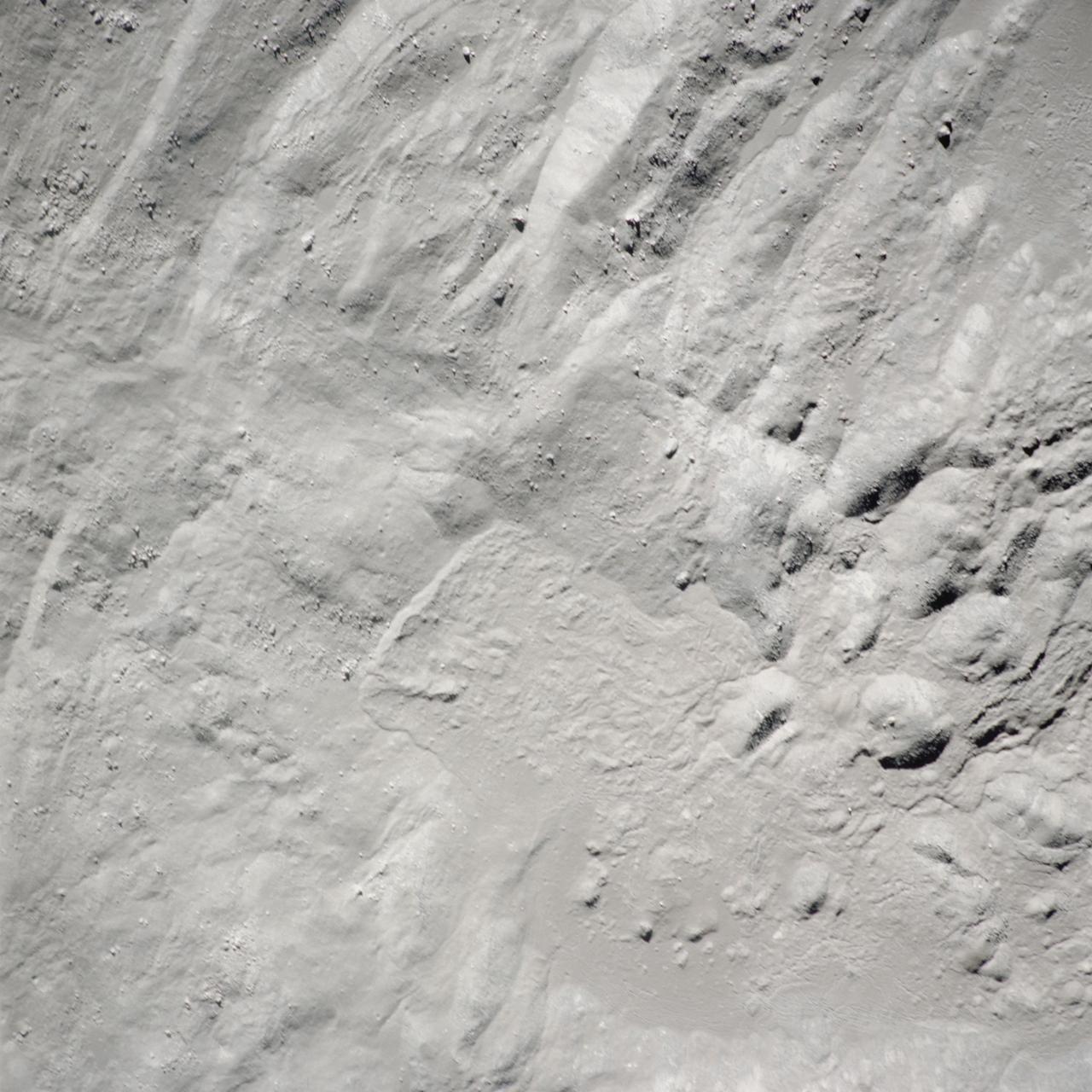
AS14-72-9975 (February 1971) --- A near vertical view of the inner wall of King Crater located on the lunar farside, as photographed from the Apollo 14 spacecraft in lunar orbit. The coordinates of the center of King Crater are 120.7 degrees east longitude and 14.3 degrees north latitude.
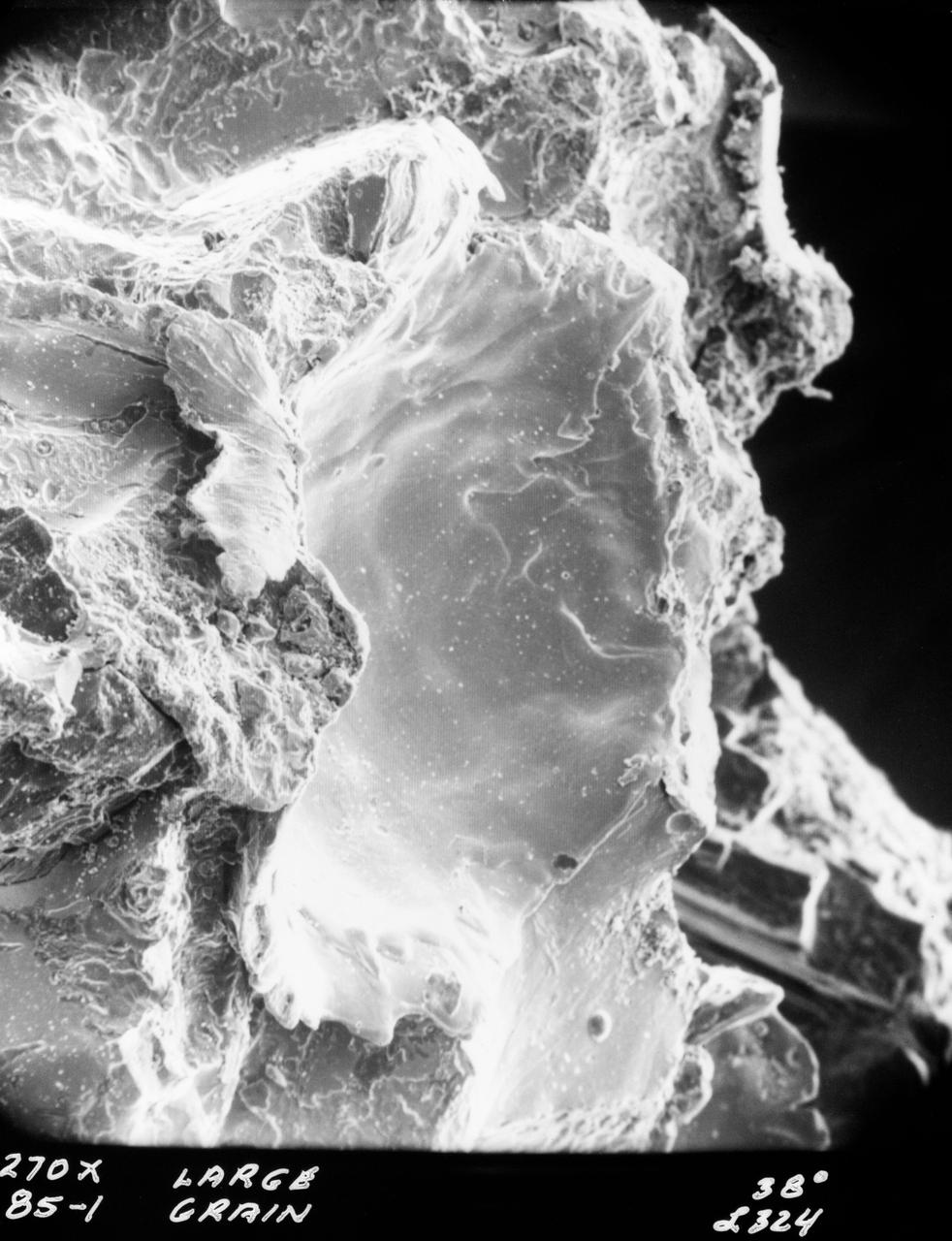
S70-20416 (December 1969) --- Enlarged view show hypervelocity impact on iron particles of lunar surface material returned to Earth by the crew of the Apollo 11 lunar landing mission. This photograph, enlarged to 270 times the actual size, was taken by Dr. G. J. Wasserberg, J. DeVaney and K. Evans at the California Institute of Technology.
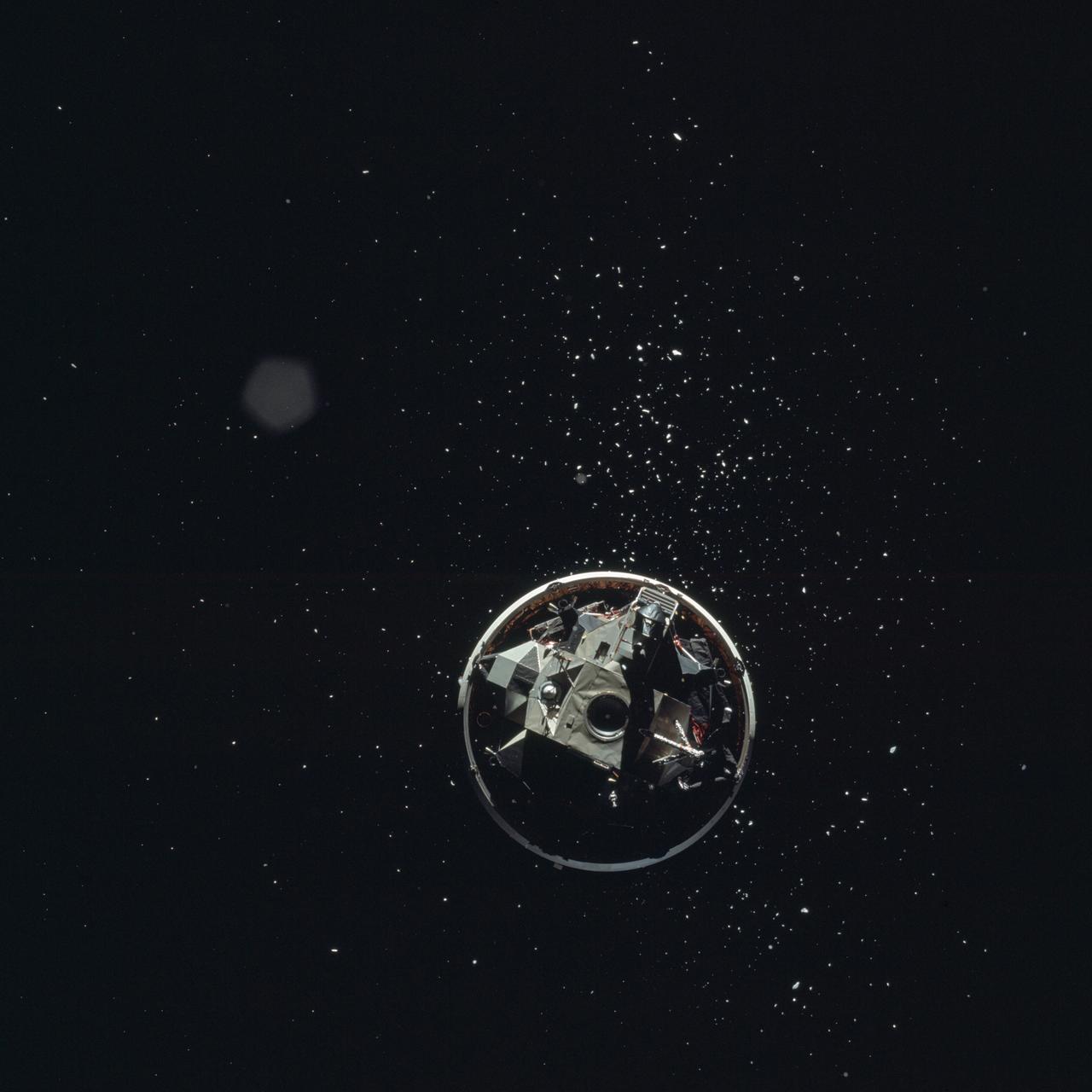
AS17-148-22688 (7-19 Dec. 1972) --- View of the Lunar Module from the Apollo 17 spacecraft after transposition/docking maneuvers. The white dots surrounding the Lunar Module are debris from the Saturn S-IVB stage separation.
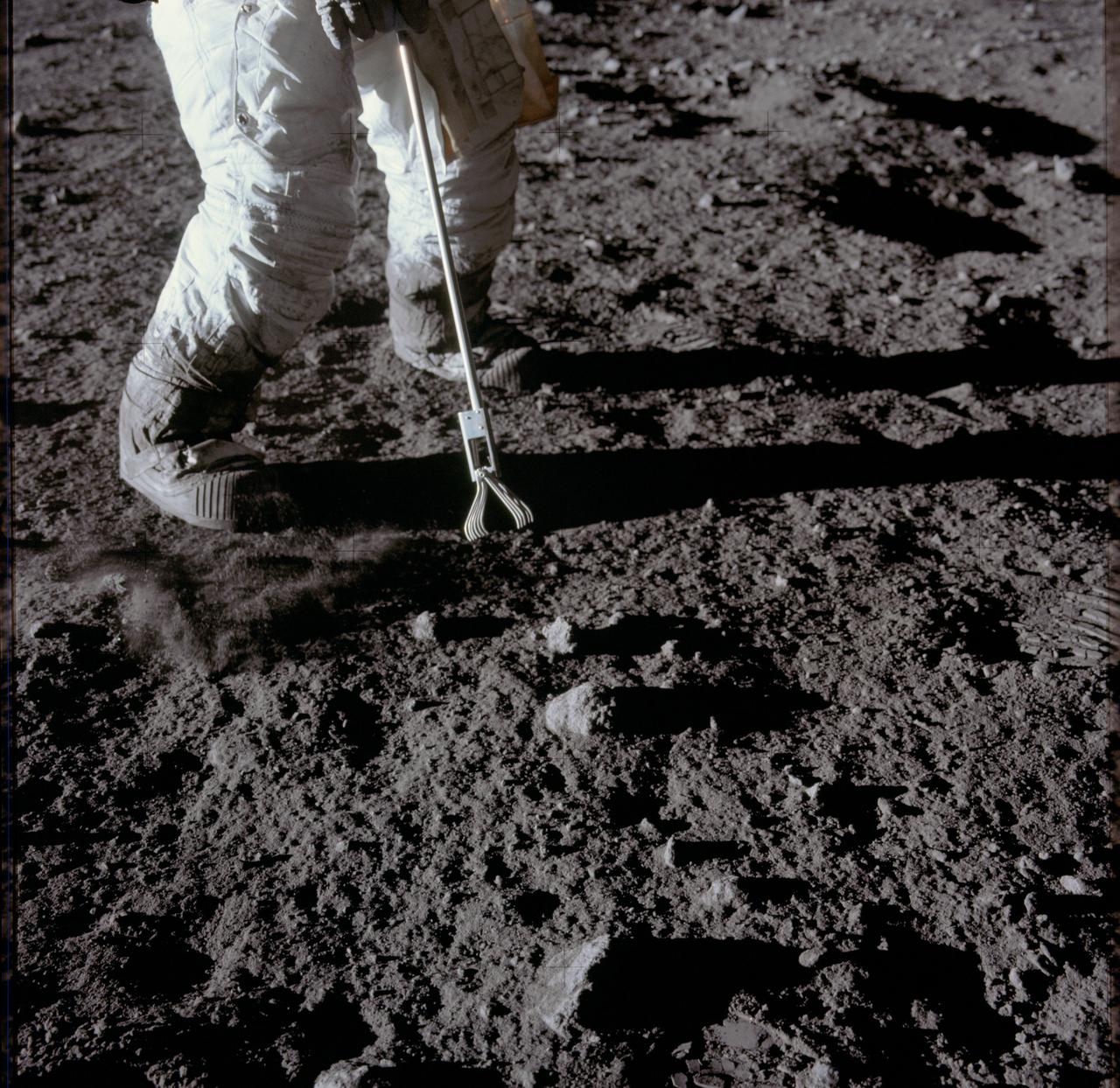
AS12-47-6932 (19 Nov. 1969) --- Close-up view of a set of tongs, an Apollo Lunar Hand Tool, being used by astronaut Charles Conrad Jr., commander, to pick up lunar samples during the Apollo 12 extravehicular activity. This photograph shows Conrad's legs and a good view of the lunar soil.
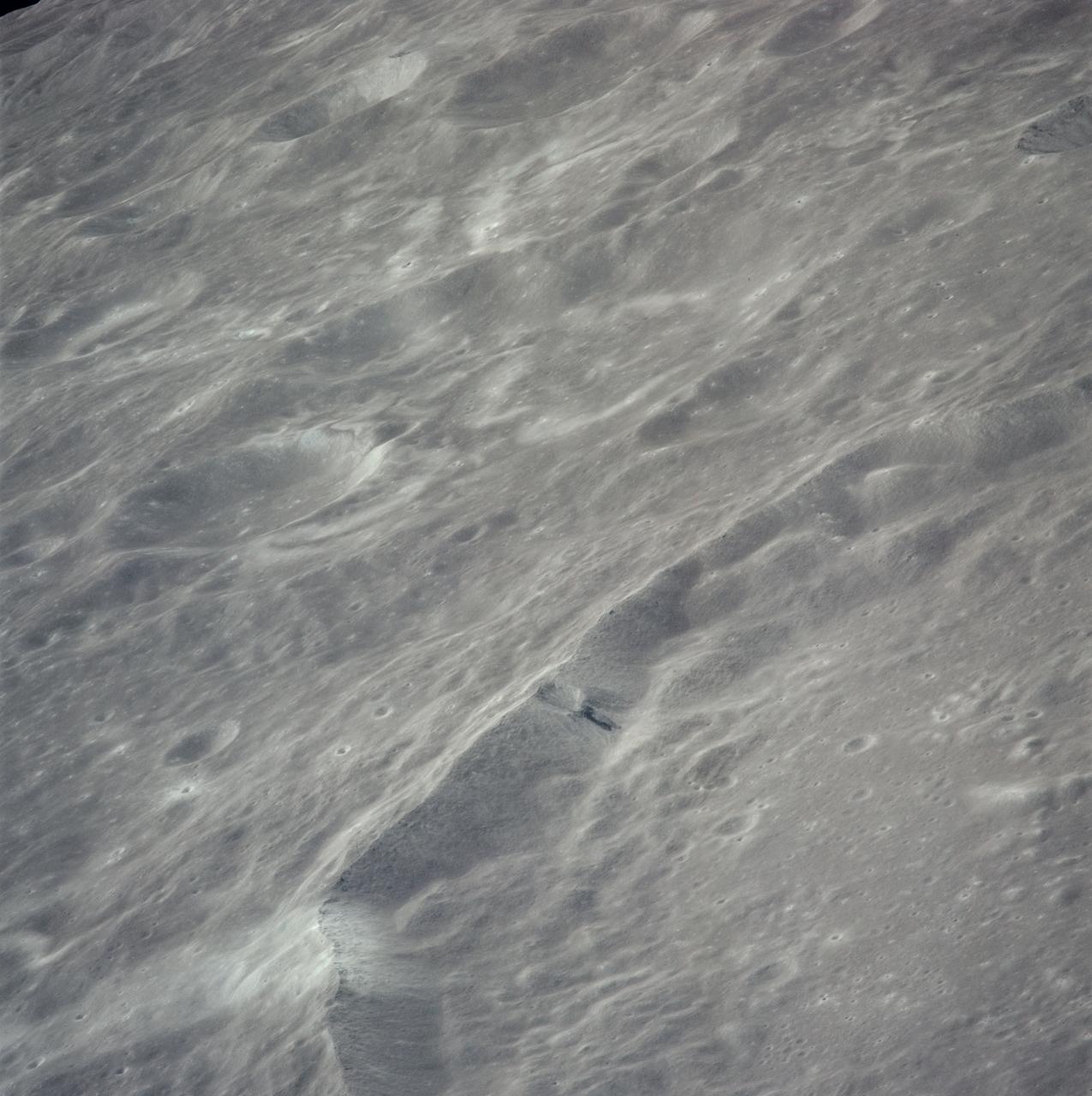
AS16-121-19407 (April 1972) --- An oblique view of a rim of Guyot Crater on the lunar farside, as photographed from the Apollo 16 spacecraft in lunar orbit. The coordinates of the center of Guyot Crater are 116.5 degrees east longitude and 10.5 degrees north latitude. Note the black coloration which appears to be lava flow down the side of the crater rim. While astronauts John W. Young, commander; and Charles M. Duke Jr., lunar module pilot; descended in the Apollo 16 Lunar Module (LM) "Orion" to explore the Descartes highlands site on the moon, astronaut Thomas K. Mattingly II, command module pilot, remained with the Command and Service Modules (CSM) "Casper" in lunar orbit.
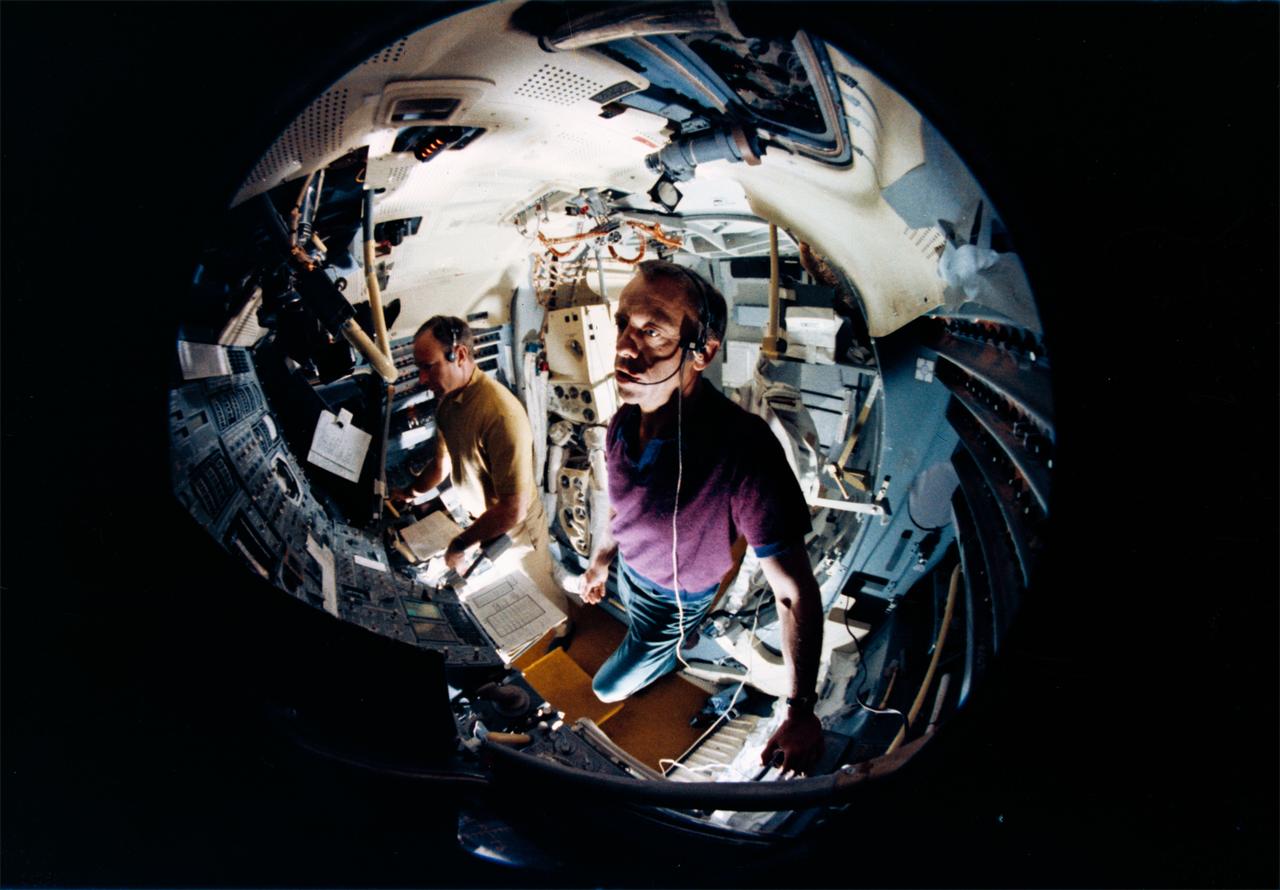
S70-45555 (July 1970) --- A fish-eye lens view showing astronauts Alan B. Shepard Jr. (foreground) and Edgar D. Mitchell in the Apollo lunar module mission simulator at the Kennedy Space Center during preflight training for the Apollo 14 lunar landing mission. Shepard is the Apollo 14 commander; and Mitchell is the lunar module pilot.
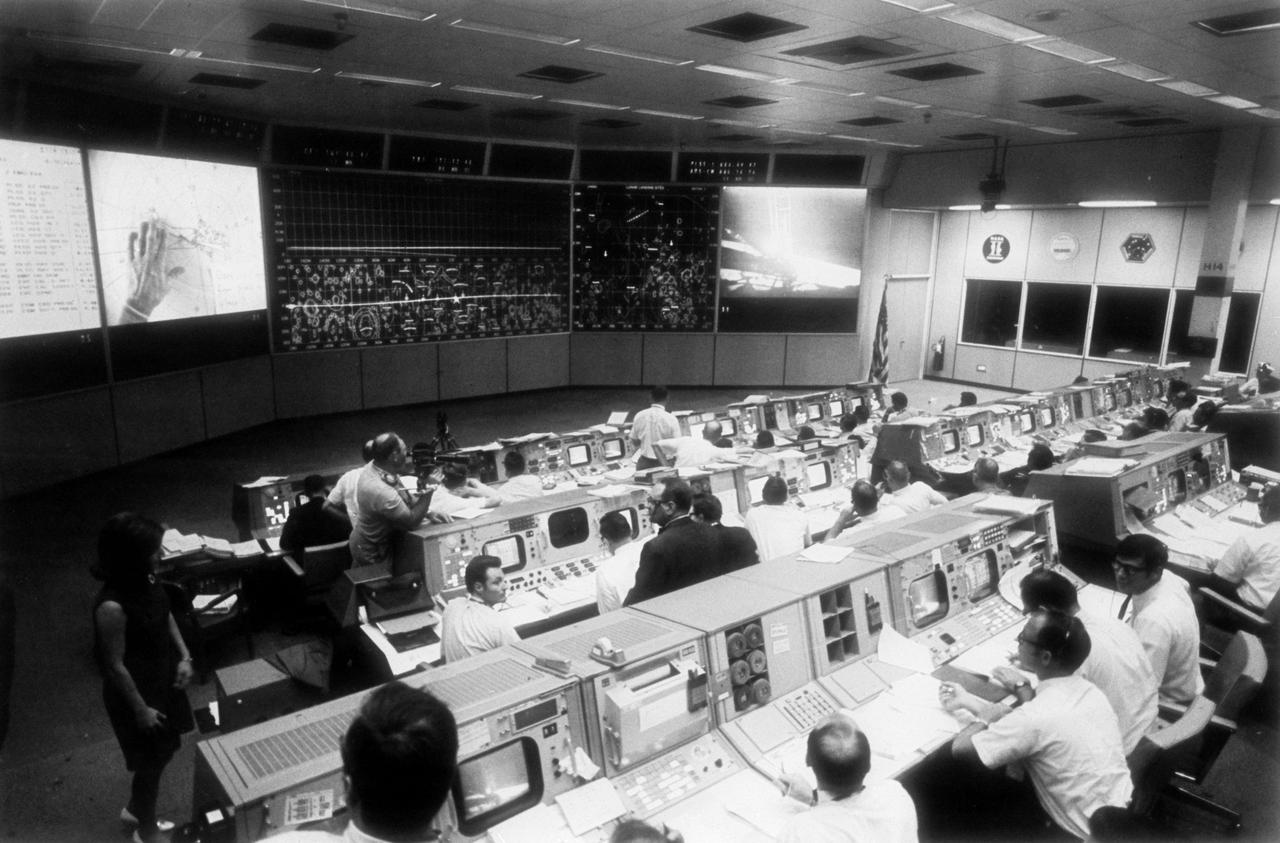
Overall view of the Mission Operations Control Room in the Mission Control Center, bldg 30, during the lunar surface extravehicular activity (EVA) of Apollo 11 Astronauts Neil A. Armstrong and Edwin E. Aldrin Jr.
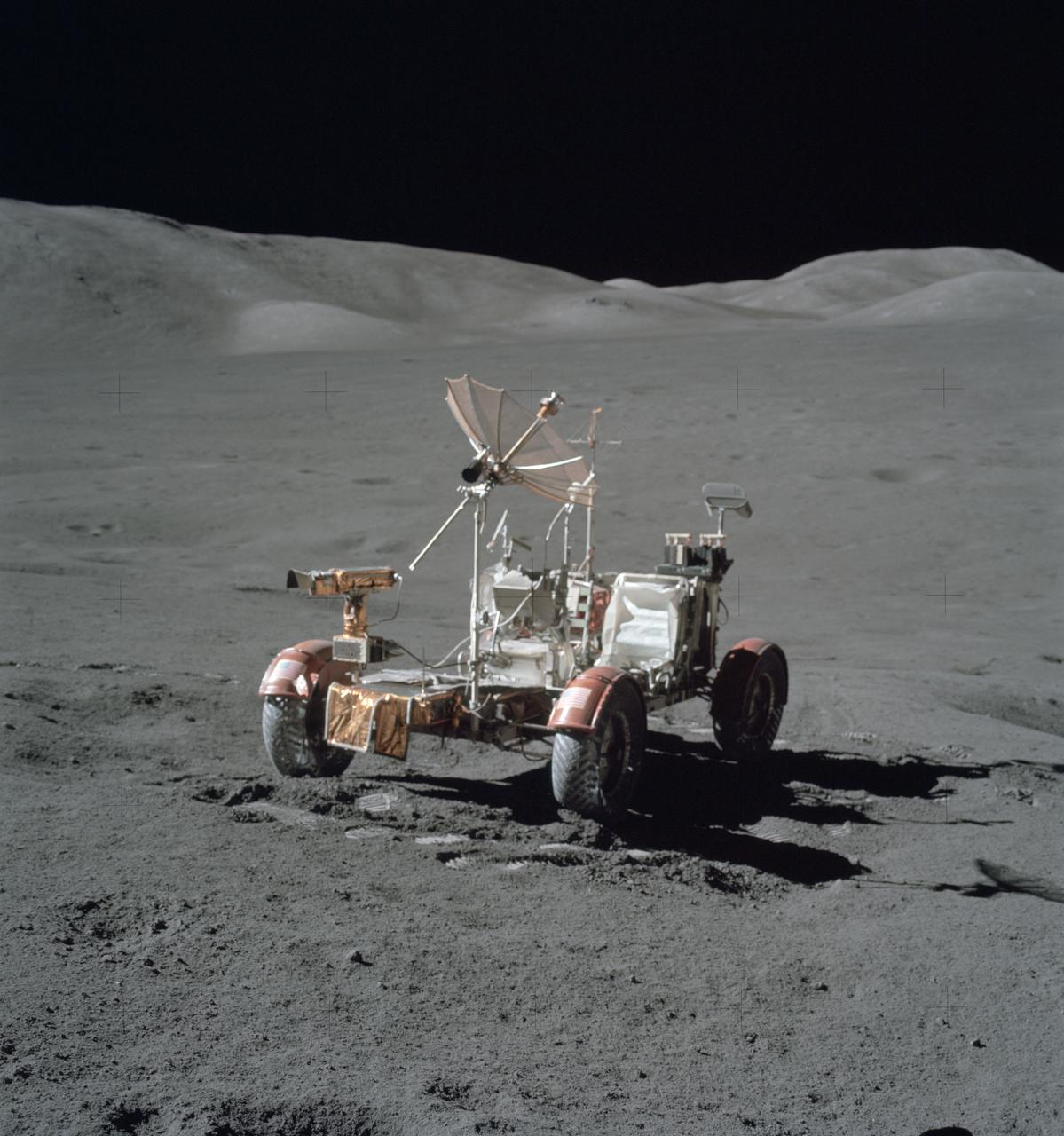
AS17-146-22367 (7-19 Dec. 1972) --- This is an excellent view of the Lunar Roving Vehicle (LRV) which was used extensively by astronauts Eugene A. Cernan and Harrison H. Schmitt at the Taurus-Littrow landing site.
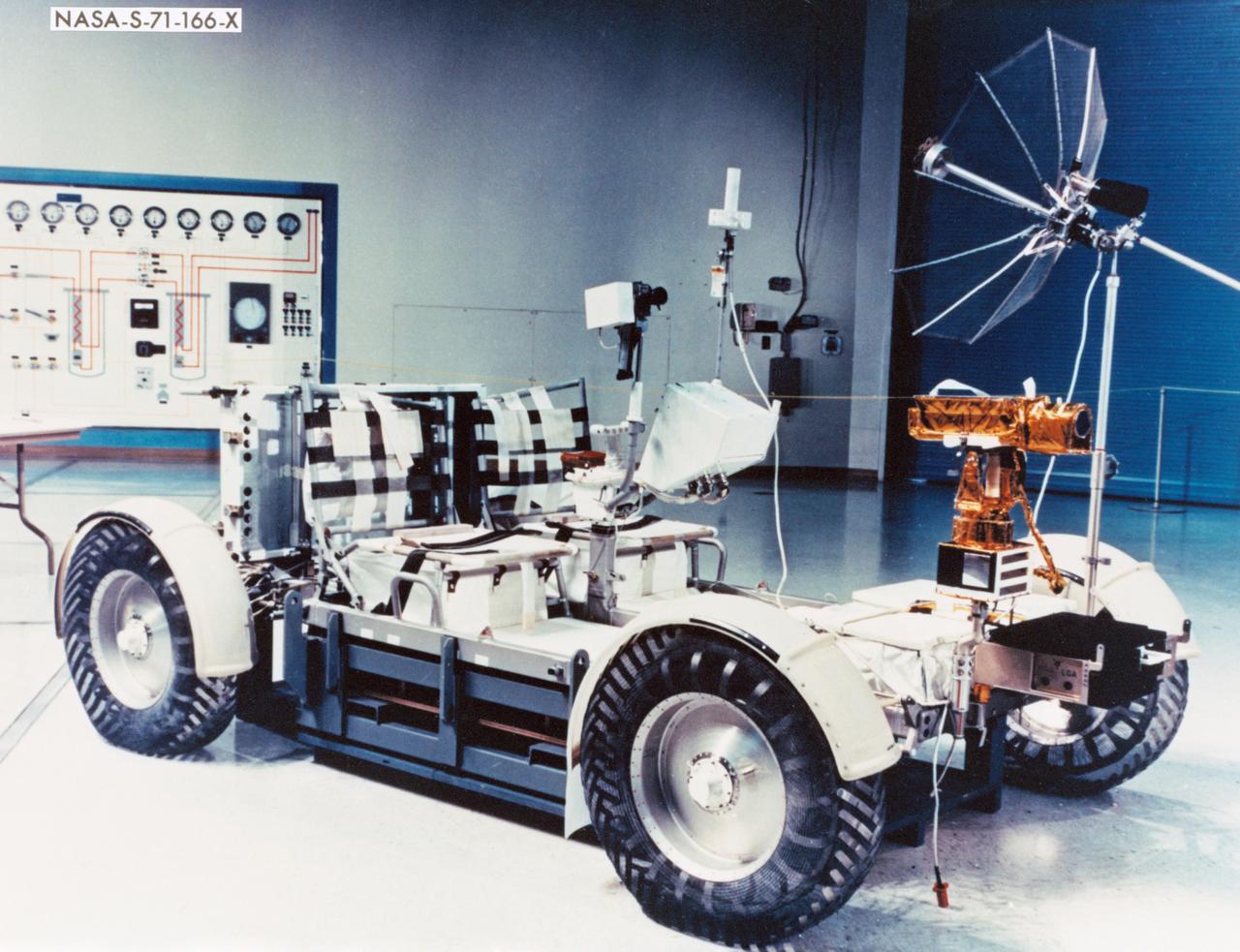
S71-00166 (June 1971) --- A close-up view of the Lunar Roving Vehicle (LRV). Apollo 15 will be the first mission to employ the services of the LRV. Astronauts David R. Scott, commander; and James B. Irwin, lunar module pilot, will move about the lunar surface in the Hadley-Apennine region in their four-wheeled vehicle while astronaut Alfred M. Worden, command module pilot, remains with the Command and Service Modules (CSM) in lunar orbit. A television camera, which can be controlled remotely from the ground (front), and a motion picture camera (rear) are among the gear on the LRV.
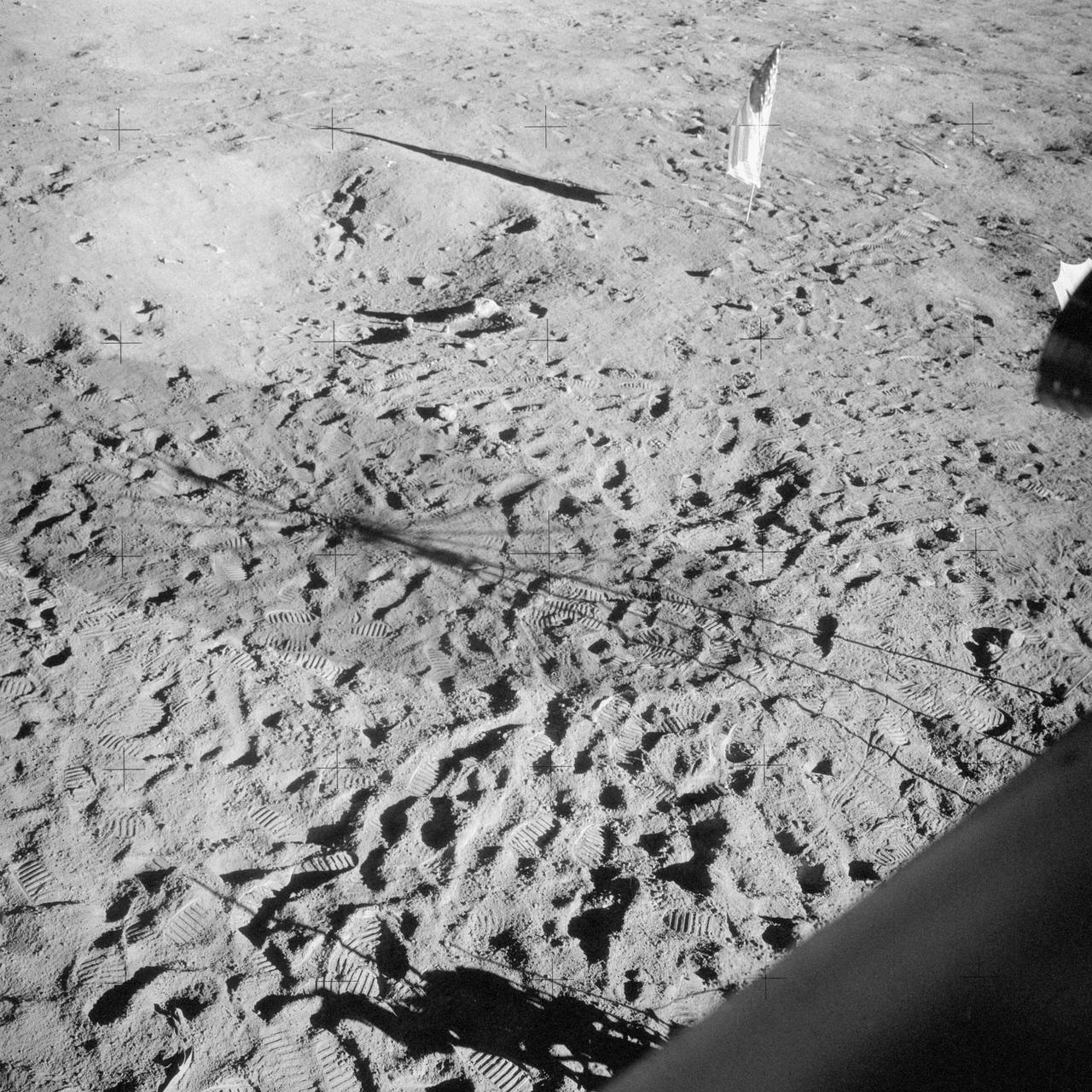
AS12-48-7160 (19-20 Nov. 1969) --- This view of the lunar surface was taken by one of the two astronauts on the Apollo 12 mission during their extravehicular activity. Seen in this view are the U.S. flag, several astronaut footprints, and a small crater near their Lunar Module landing site. Astronaut Charles Conrad Jr., commander, and Alan L. Bean, lunar module pilot, descended in the Lunar Module to explore the lunar surface. Astronaut Richard F. Gordon Jr., command module pilot, remained with Command and Service Modules in lunar orbit.
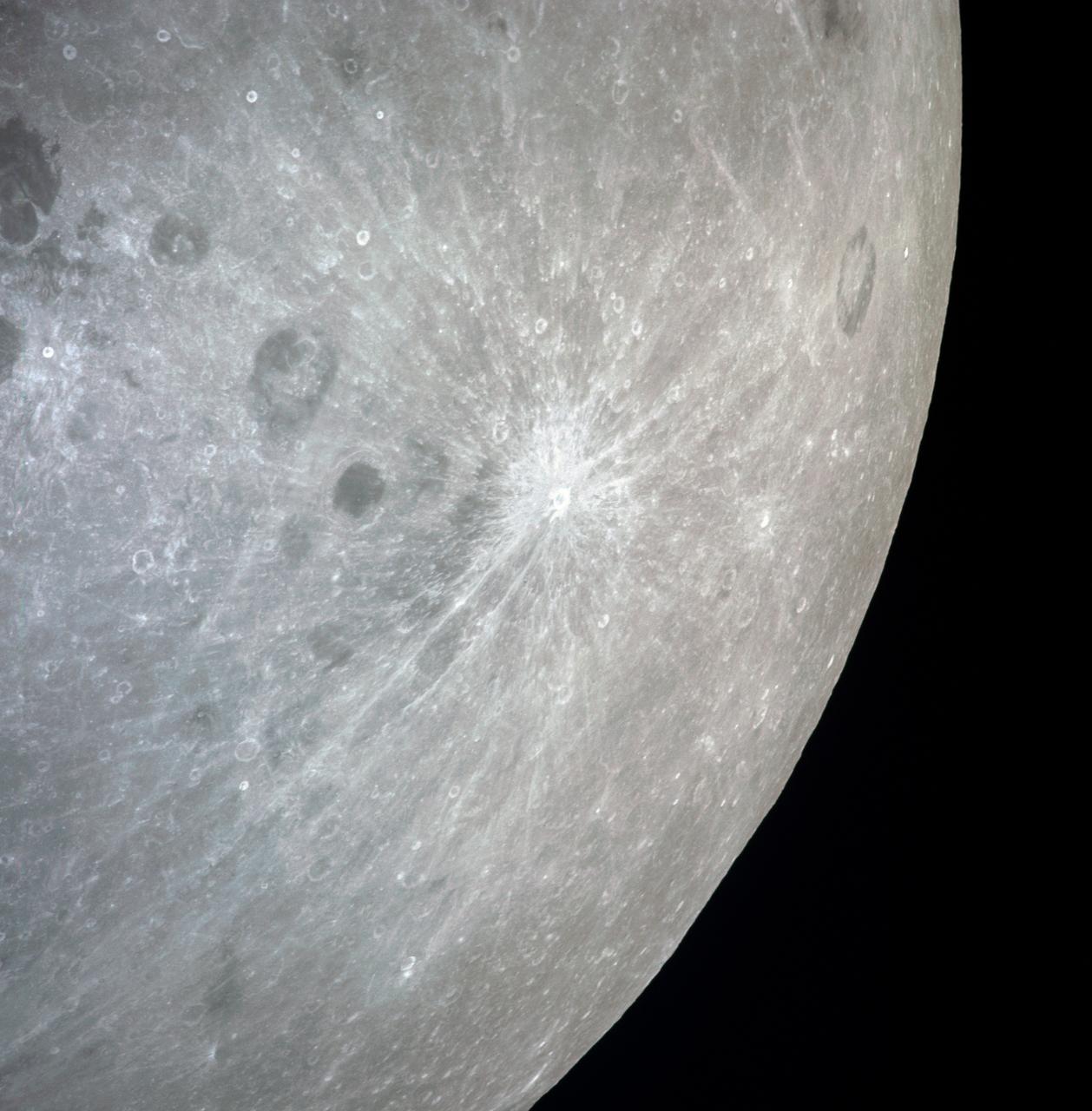
AS13-60-8675 (April 1970) --- This bright-rayed crater on the lunar farside was photographed from the Apollo 13 spacecraft during its pass around the moon. This area is northeast of Mare Marginus. The bright-rayed crater is located at about 105 degrees east longitude and 45 degrees north latitude. The crater Joliot-Curie is located between Mare Marginus and the rayed crater. This view is looking generally toward the northeast.
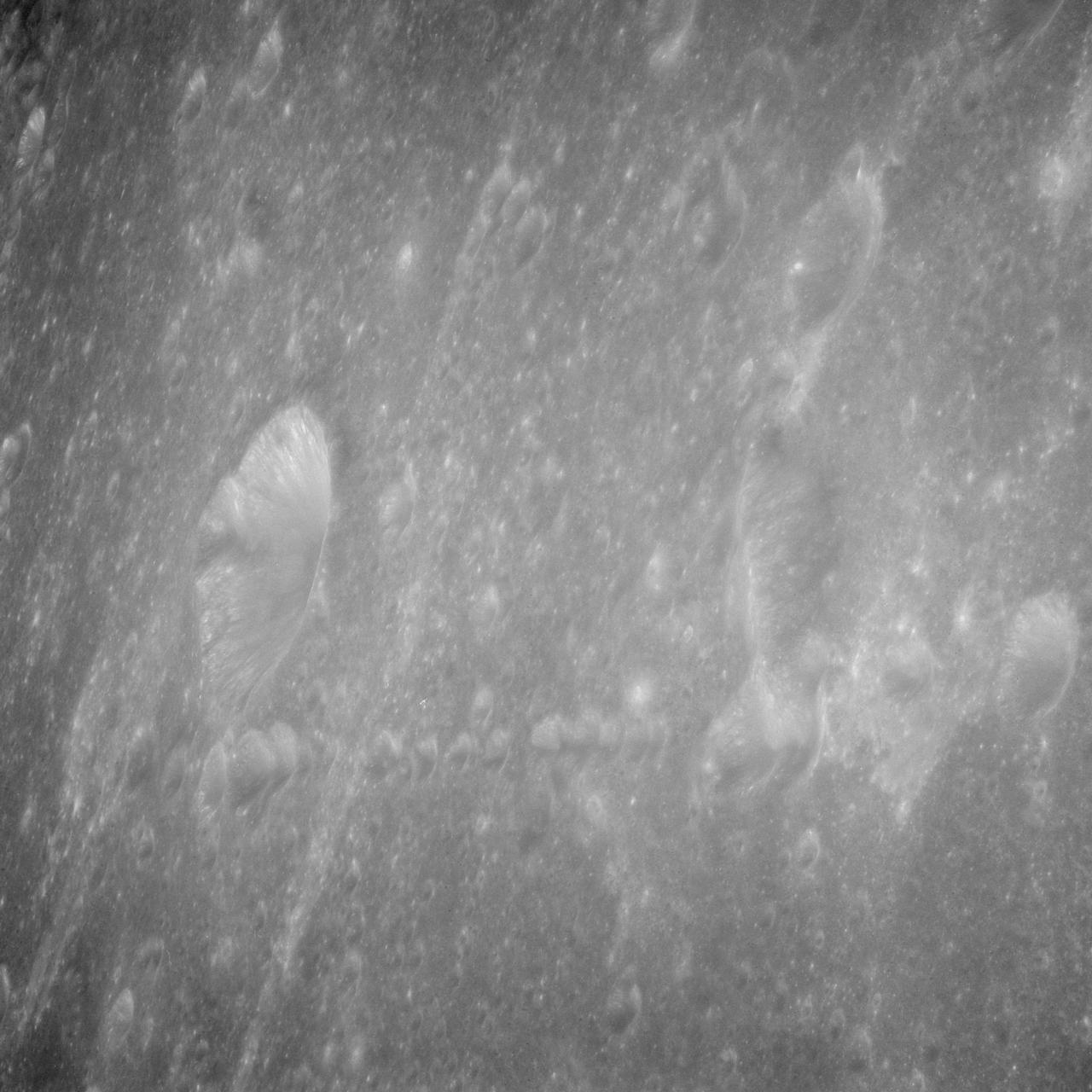
AS11-43-6439 (July 1969) --- An Apollo 11 oblique view of the lunar farside. The linear group of small craters is located within the large International Astronomical Union crater No. IX, and is centered at 139.5 degrees east longitude and 7 degrees north latitude. The absence of shadows is due to the high sun angle. The crater chain is approximately 34 statute miles in length, and the large crater adjacent to the crater is 10.5 statute miles in diameter.
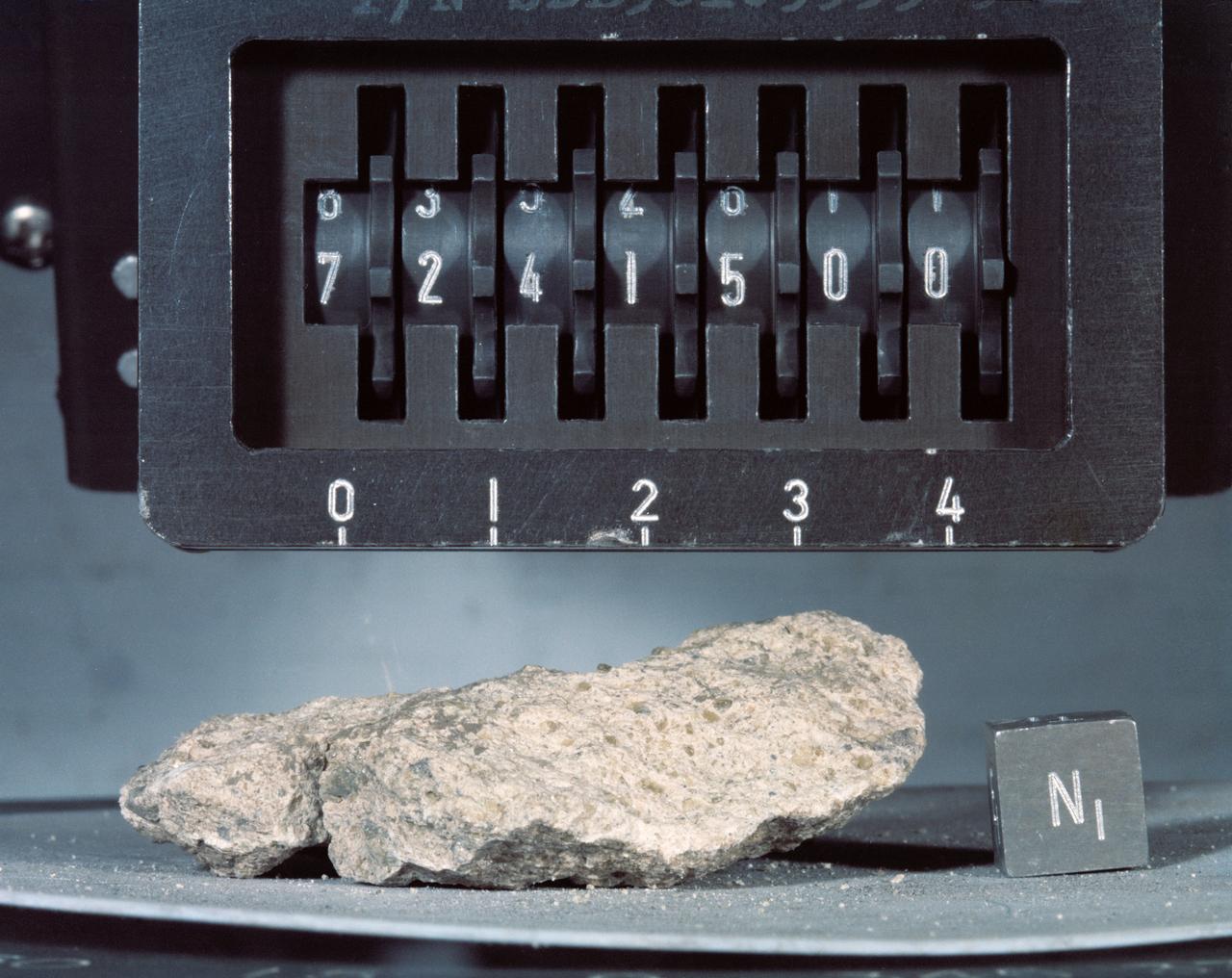
S73-16198 (December 1972) --- A close-up view of Apollo 17 lunar sample number 72415,0 which was brought back from the Taurus-Littrow landing site by the Apollo 17 crewmen. This sample is a brecciated dunite clast weighing a little over 32 grams (about 1.14 ounces). This sample was collected at station 2 (South Massif) during the second Apollo 17 extravehicular activity (EVA).
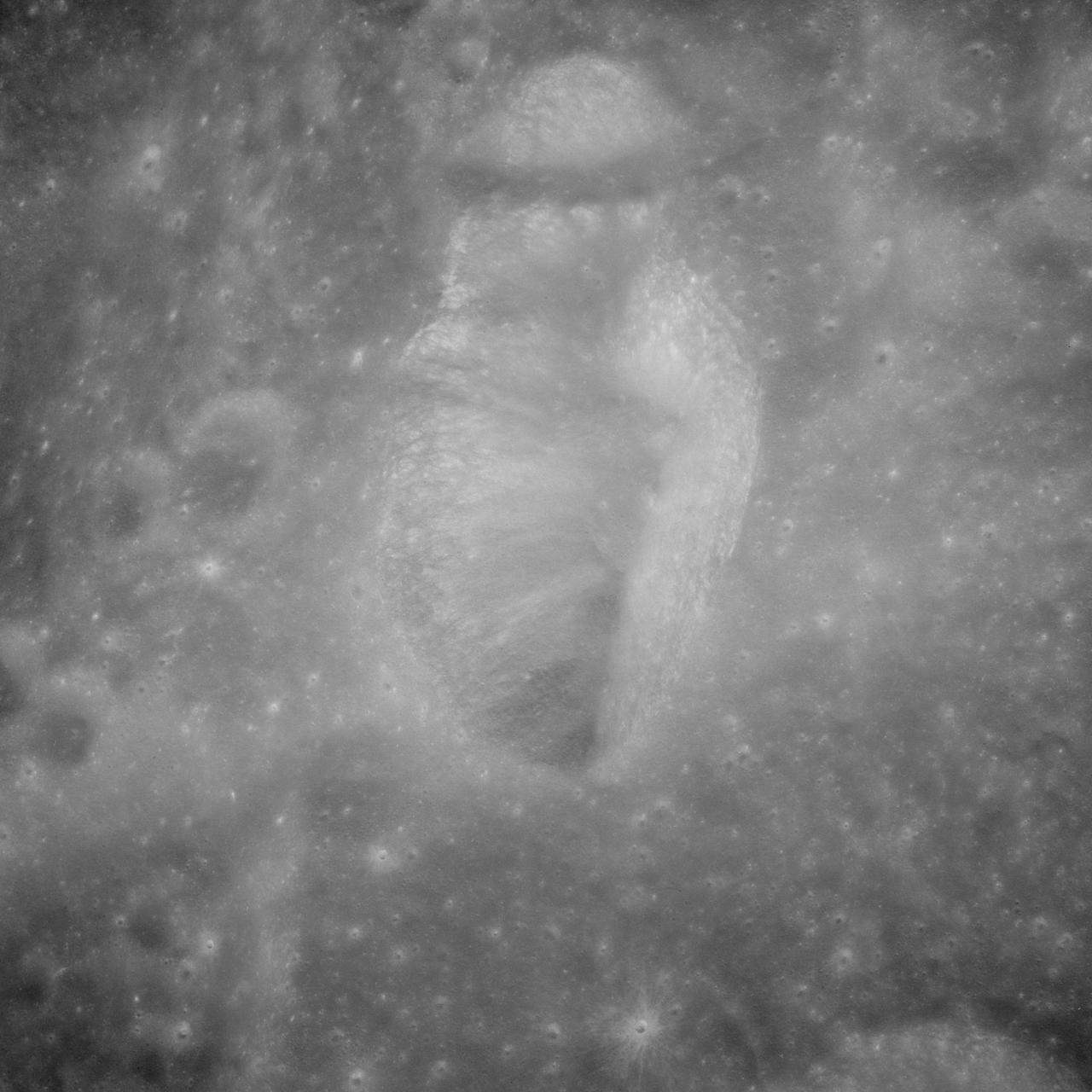
AS11-43-6422 (July 1969) --- An Apollo 11 oblique view of the lunar farside. These two odd-shaped craters are located midway between International Astronomical Union craters 218 and 220, and are centered at 155 degrees east longitude and 3 degrees north latitude. The craters total approximately 13.5 statute miles in length and 7.5 statute miles in width at their widest point.
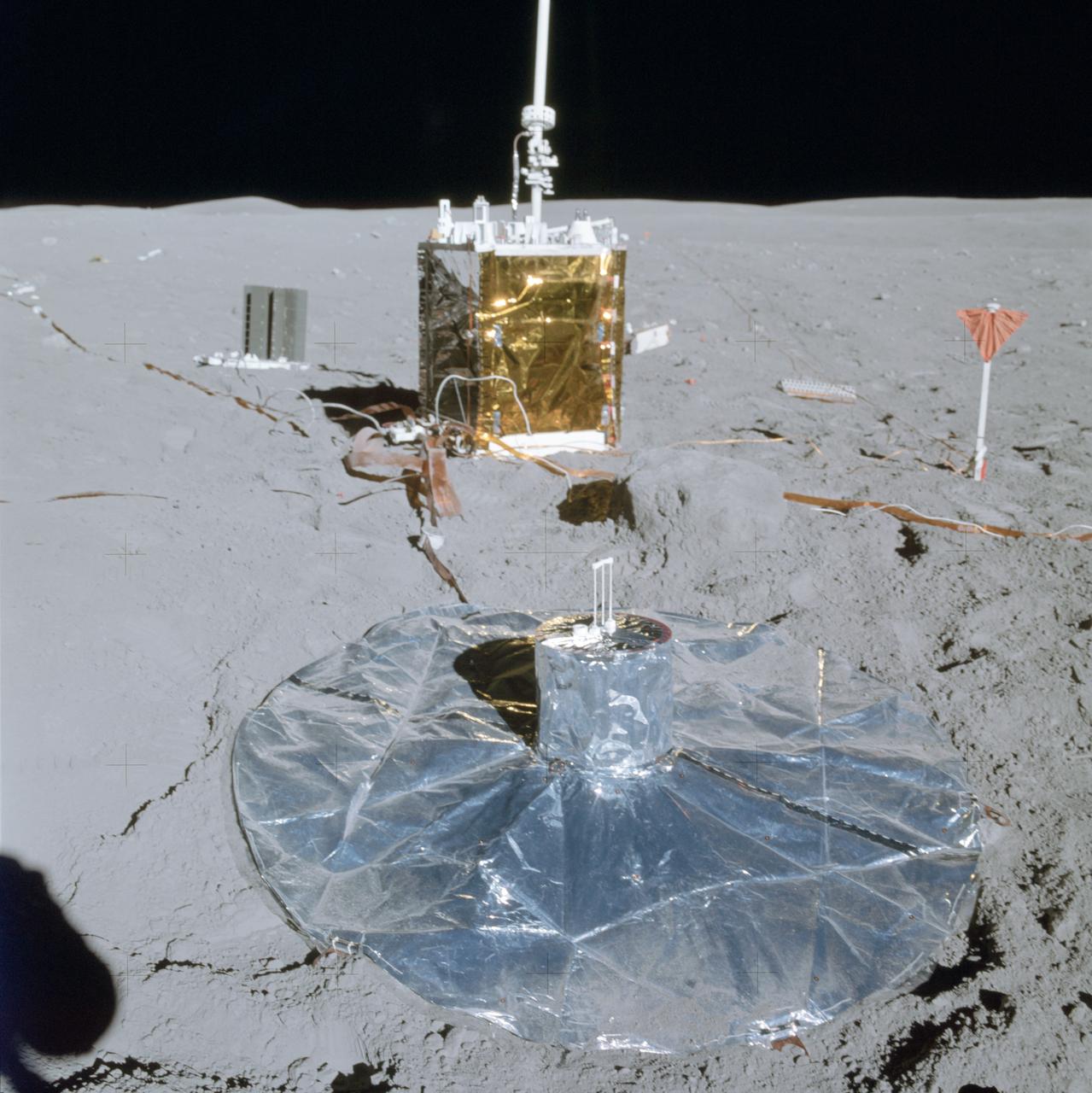
AS16-113-18347 (21 April 1972) --- A partial view of the Apollo 16 Apollo Lunar Surface Experiments Package (ALSEP) in deployed configuration on the lunar surface as photographed during the mission's first extravehicular activity (EVA), on April 21, 1972. The Passive Seismic Experiment (PSE) is in the foreground center; Central Station (C/S) is in center background, with the Radioisotope Thermoelectric Generator (RTG) to the left. One of the anchor flags for the Active Seismic Experiment (ASE) is at right. While astronauts John W. Young, commander; and Charles M. Duke Jr., lunar module pilot; descended in the Apollo 16 Lunar Module (LM) "Orion" to explore the Descartes highlands landing site on the moon, astronaut Thomas K. Mattingly II, command module pilot, remained with the Command and Service Modules (CSM) "Casper" in lunar orbit.
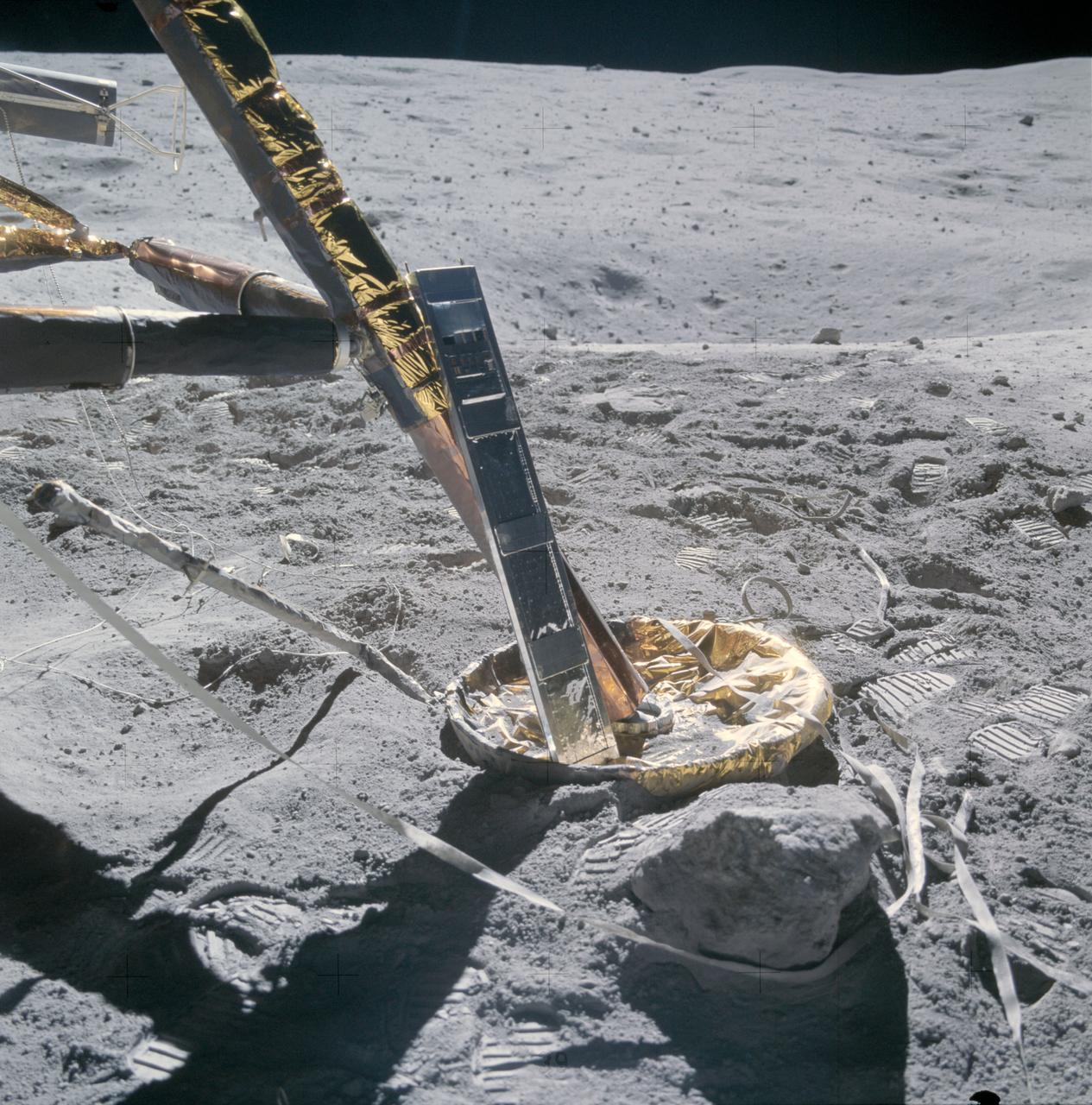
AS16-107-17442 (22 April 1972) --- A close-up view of the Apollo 16 Cosmic Ray Detector (CRD) experiment deployed at the +Y strut of the Lunar Module (LM). The crewmembers moved it to this position from near the deployment site of the Apollo Lunar Surface Experiments Package (ALSEP) because, in the words of astronaut John W. Young, commander, "The panels were getting a little warm." Note that the LM did not skid upon landing, as evidenced by the landing contact probe's folded back (neatly) position and the lack of skid marks. While astronauts Young, and Charles M. Duke Jr., lunar module pilot; descended in the Apollo 16 Lunar Module (LM) "Orion" to explore the Descartes highlands landing site on the moon, astronaut Thomas K. Mattingly II, command module pilot, remained with the Command and Service Modules (CSM) "Casper" in lunar orbit.
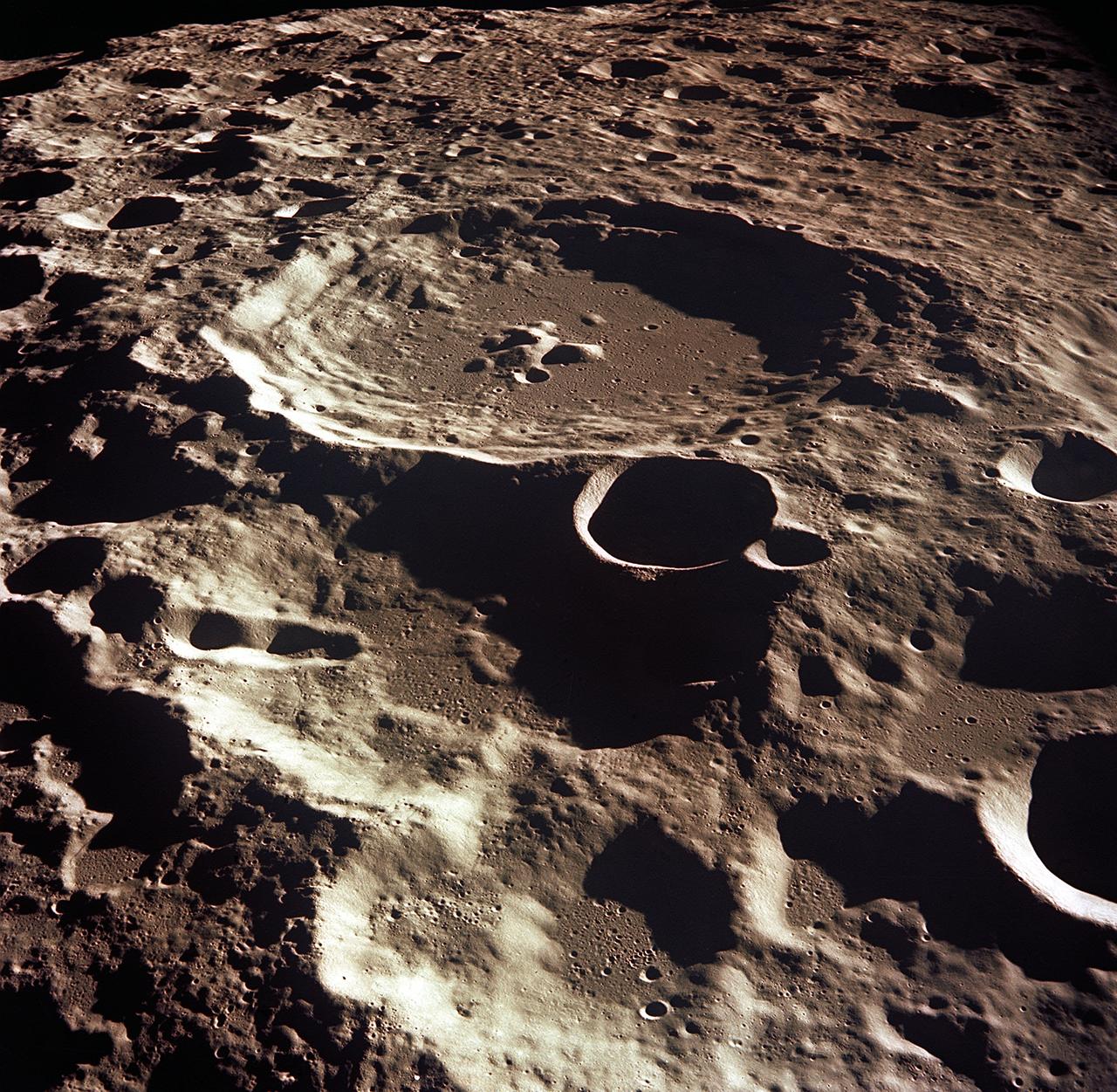
AS11-44-6609 (16-24 July 1969) --- An oblique of the Crater Daedalus on the lunar farside as seen from the Apollo 11 spacecraft in lunar orbit. The view looks southwest. Daedalus (formerly referred to as I.A.U. Crater No. 308) is located at 179 degrees east longitude and 5.5 degrees south latitude. Daedalus has a diameter of about 50 statute miles. This is a typical scene showing the rugged terrain on the farside of the moon. While astronauts Neil A. Armstrong, commander, and Edwin E. Aldrin Jr., lunar module pilot, descended in the Lunar Module (LM) "Eagle" to explore the Sea of Tranquility region of the moon, astronaut Michael Collins, command module pilot, remained with the Command and Service Modules (CSM) "Columbia" in lunar orbit.
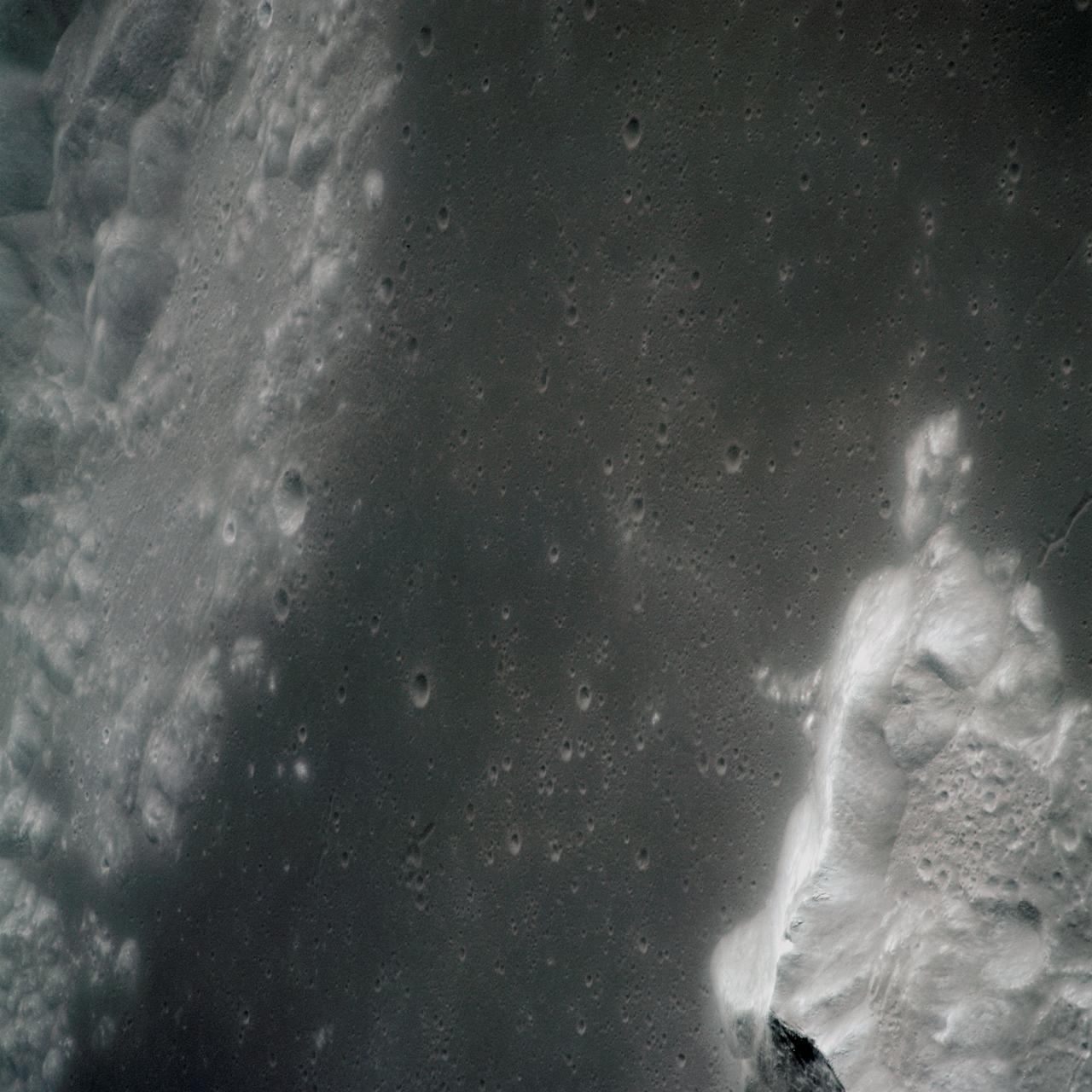
AS15-97-13160 (31 July-2 Aug. 1971) --- A view of a portion of the crater Tsiolkovsky located in the highlands on the farside of the moon, as photographed from the Apollo 15 Command and Service Modules (CSM) by astronaut Alfred M. Worden, command module pilot. Note the dark, flat crater floor surrounding the very prominent central mountains. The mountains are in the northeastern corner of the photograph. The other upland area comprises part of the southwestern edge of the crater. While astronauts David R. Scott, commander, and James B. Irwin, lunar module pilot, descended in the Lunar Module (LM) "Falcon" to explore the moon, astronaut Worden remained with the CSM in lunar orbit.
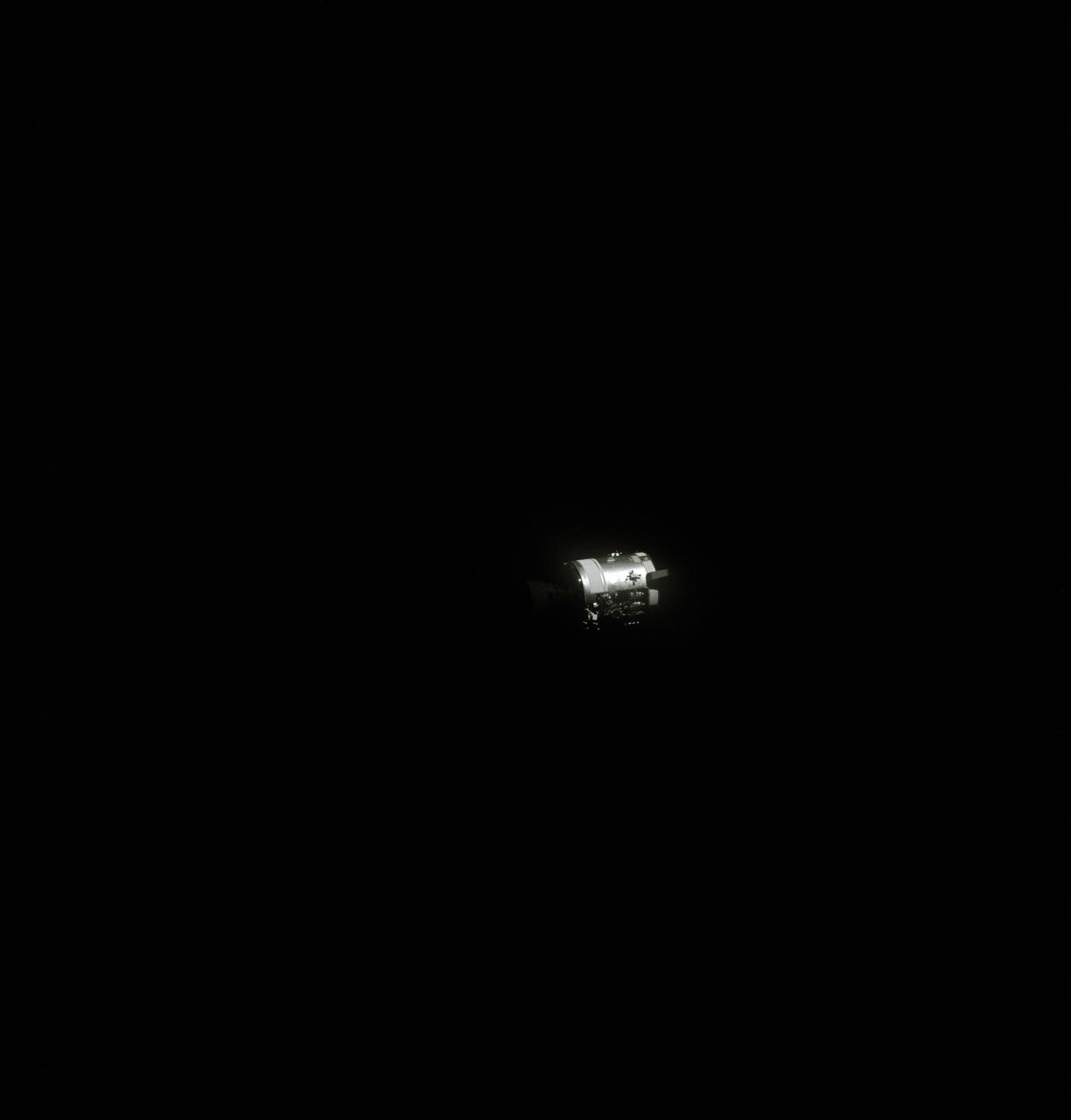
AS13-58-8464 (17 April 1970) --- This view of the severely damaged Apollo 13 Service Module (SM) was photographed from the Lunar Module/Command Module (LM/CM) following SM jettisoning. Nearest the camera is the Service Propulsion System (SPS) engine and nozzle. An entire SM panel was blown away by the apparent explosion of oxygen tank number two located in Sector 4 of the SM. The apparent rupture of the oxygen tank caused the Apollo 13 crew men to use the Lunar Module (LM) as a "lifeboat".
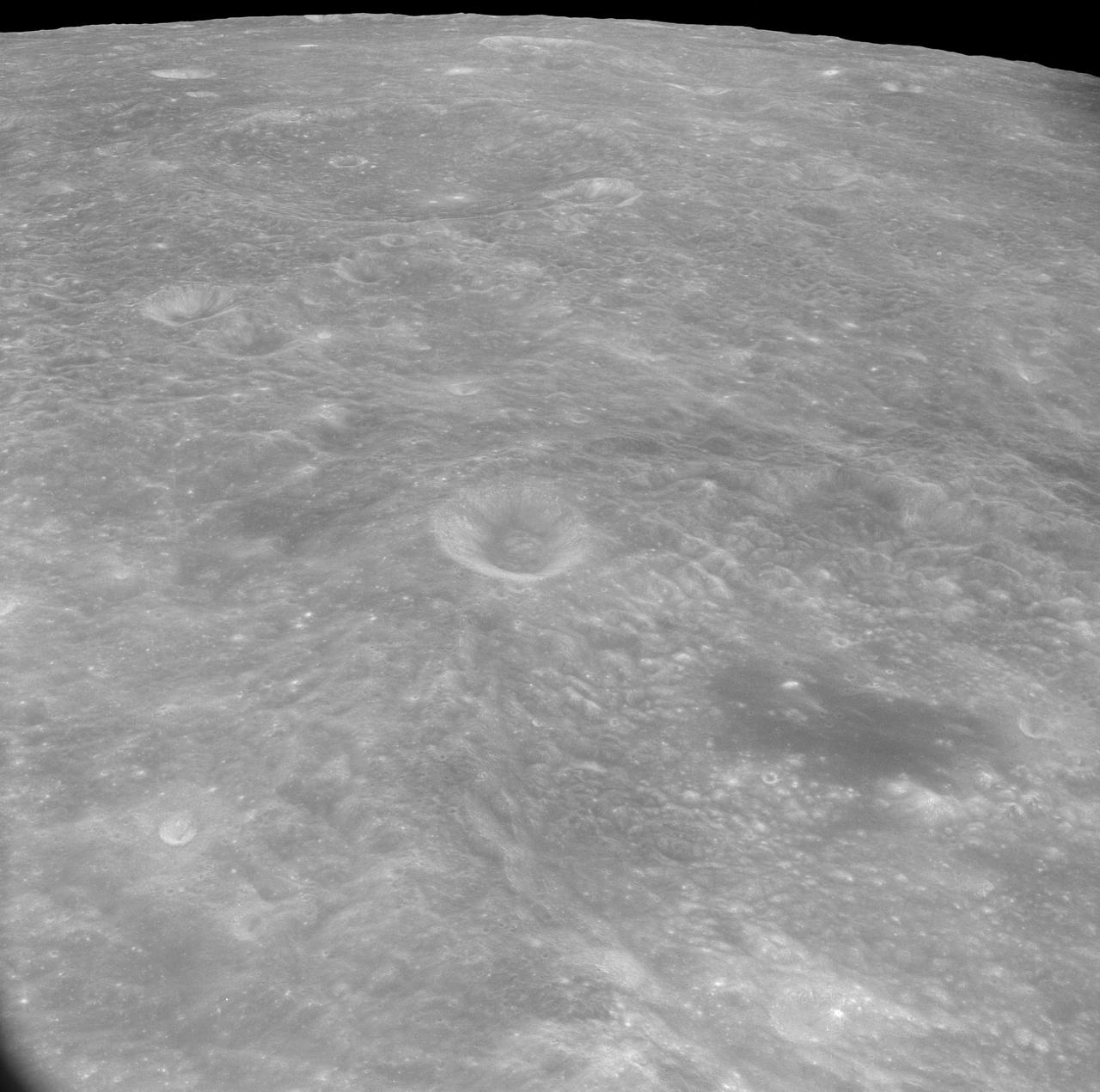
AS8-17-2744 (21-27 Dec. 1968) --- Oblique view of the lunar surface taken from the Apollo 8 spacecraft looking westward showing typical lunar farside terrain. (HOLD PICTURE SO THAT DARK IRREGULAR AREA SURROUNDED BY LIGHT SPOTS IS IN THE LOWER RIGHT QUARTER). The sharp crater near the center of then scene is near 117 degrees east longitude and 5 degrees south latitude; and it is 25 kilometers (15 statute miles) in diameter. That crater is on the rim of a large crater that occupies the lower right quarter of the photograph.
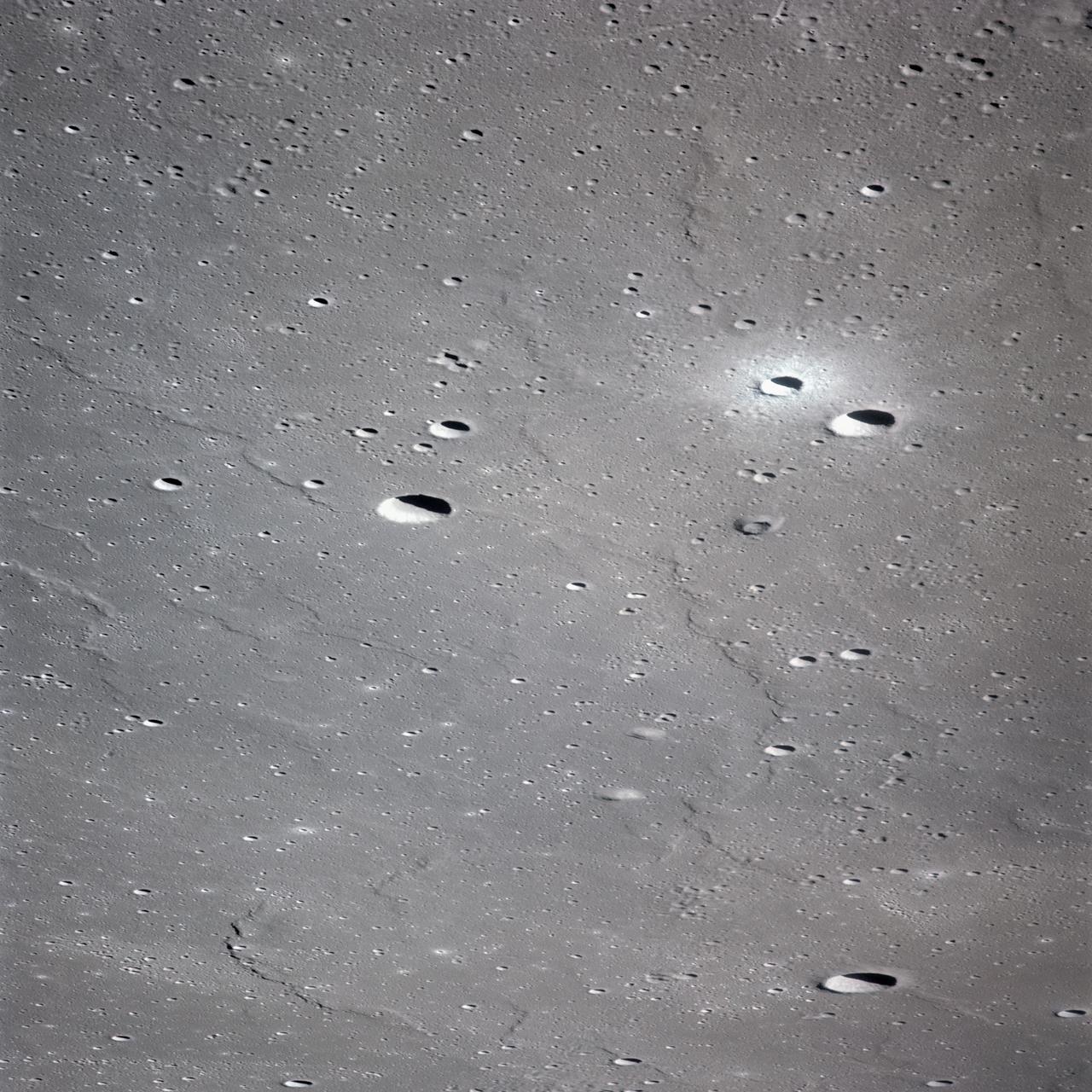
AS16-120-19237 (April 1972) --- An oblique view of a portion of the lunar nearside as photographed from the Apollo 16 spacecraft in lunar orbit. The small, bright crater is Lassell D at the northeastern edge of Mare Nubium (Sea of Clouds). The area seen in this picture is immediately west of Lassell C Crater, southwest of Guoricke Crater, and southwest of Davy Crater.
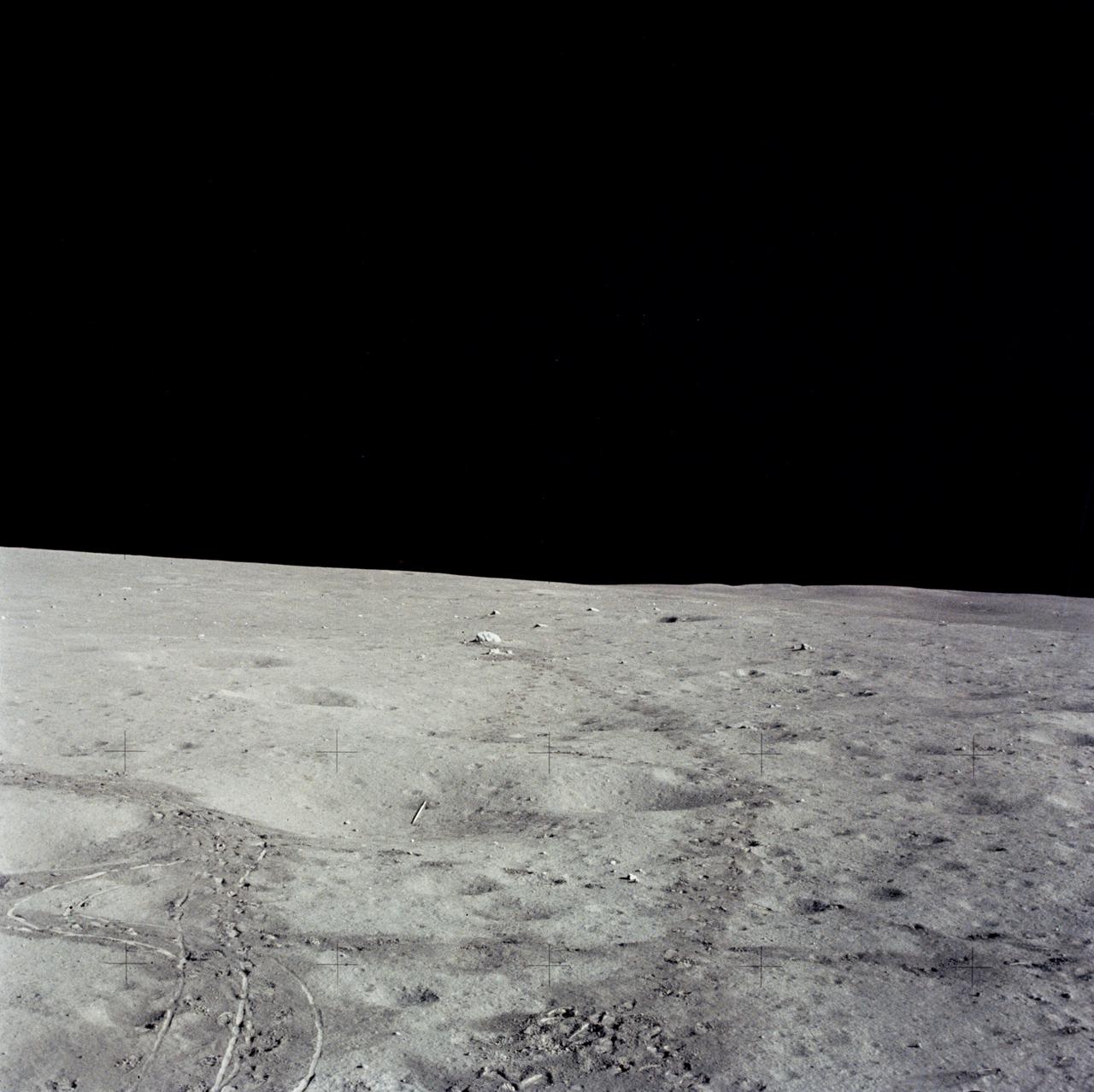
AS14-66-9337 (6 Feb. 1971) --- This view shows the "javelin" and golf ball used by astronaut Alan B. Shepard Jr., commander, during the mission's second extravehicular activity (EVA) on Feb. 6, 1971. Just to the left of center lies the "javelin", with the golf ball just below it, almost perpendicular to it. Dark colored trails are the results of tracks made by the lunar overshoes of the astronauts and the wheels of the modular equipment transporter (MET). This photograph was made through the right window of the Lunar Module (LM), looking northwest.
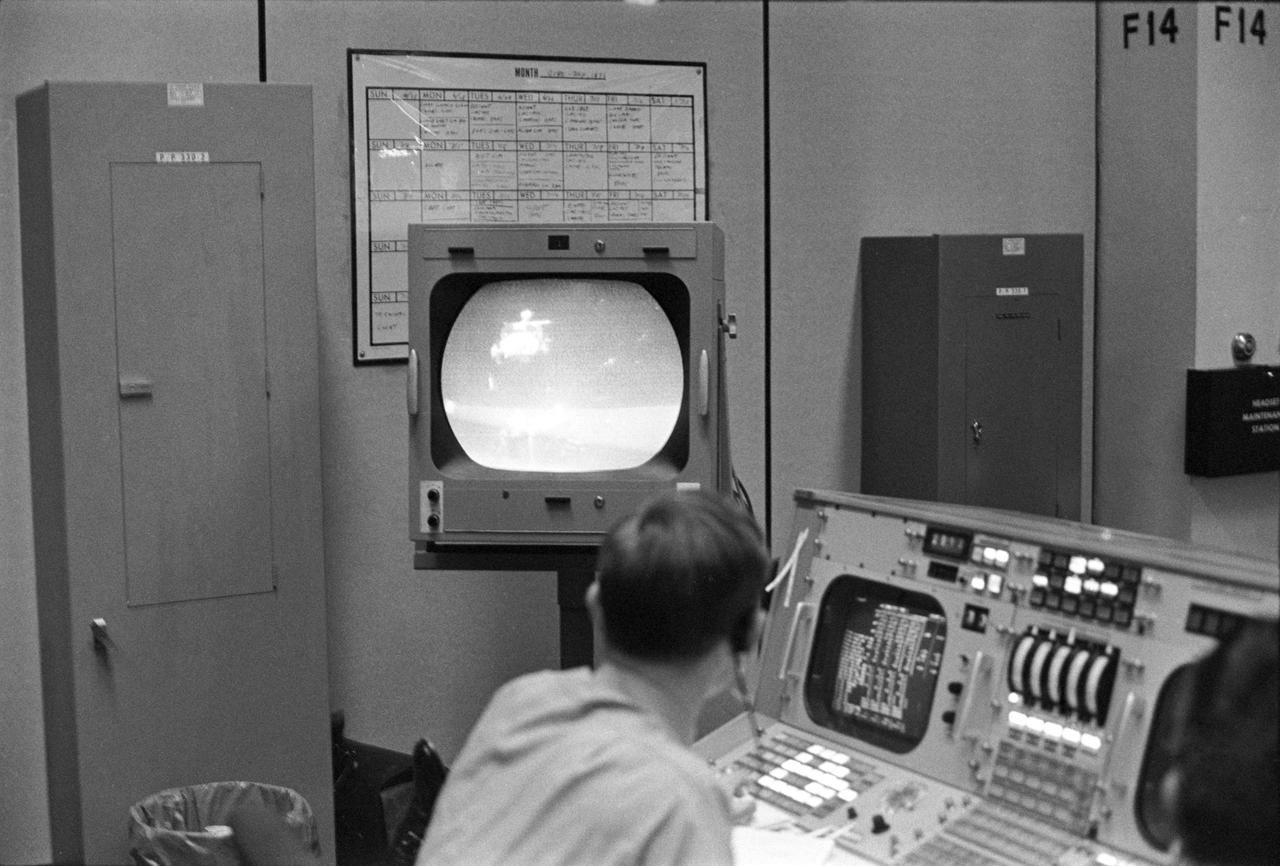
View of a photograph of the television (TV) monitor in the MCC showing a picture being transmitted from the color TV camera mounted on the parked Lunar Roving Vehicle (LRV) at the Hadley-Apennine Landing Site showing the liftoff of the Apollo 15 Lunar Module (LM) Ascent Stage from the Lunar surface. MSC, Houston, TX
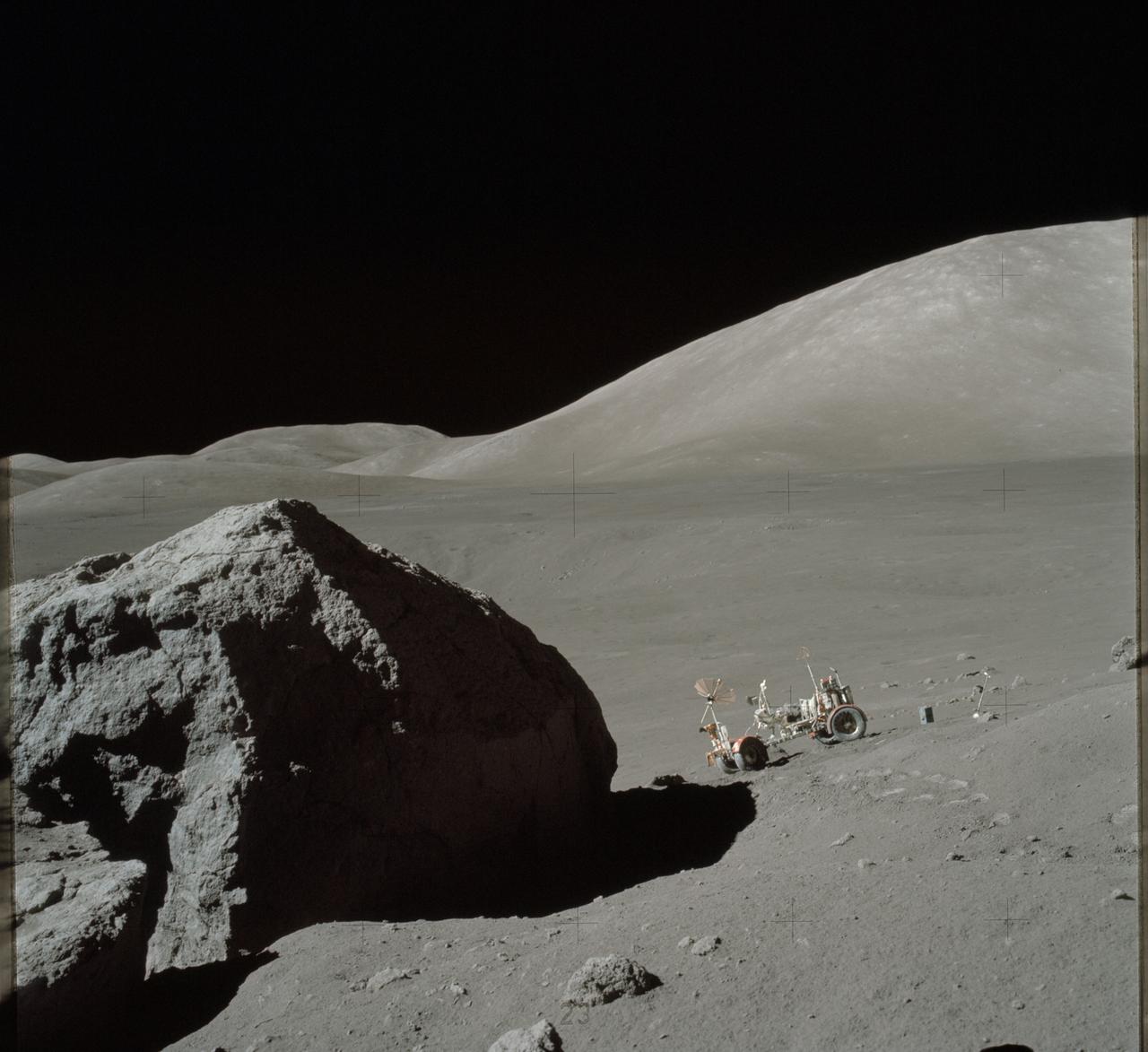
AS17-140-21494 (13 Dec. 1972) --- This view shows the Lunar Roving Vehicle (LRV) parked by an outcrop of rocks by astronauts Eugene A. Cernan and Harrison H. (Jack) Schmitt during their visit to extravehicular activity Station 6 (Henry Crater).
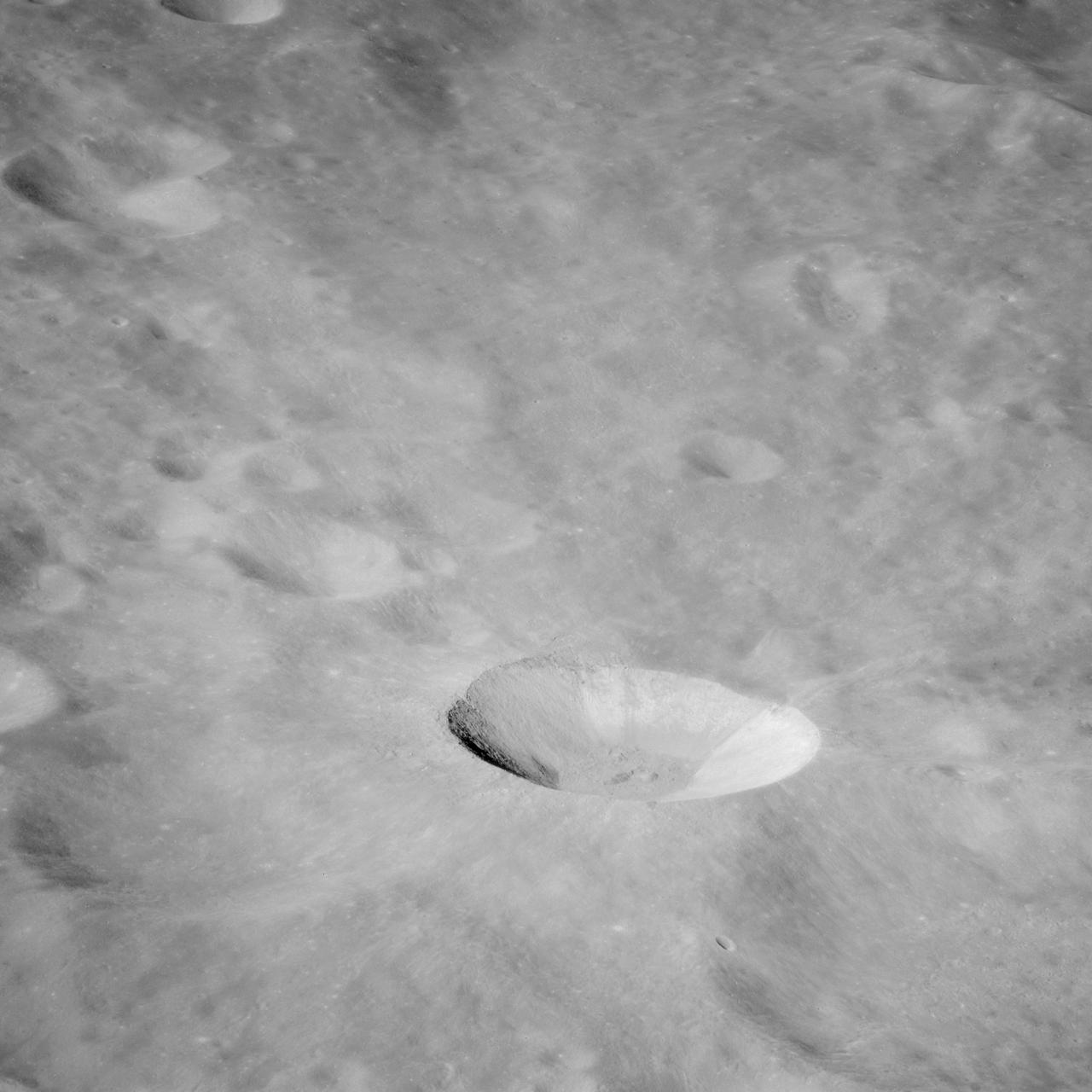
AS11-43-6412 (July 1969) --- This is a northeasterly, low-oblique view of an unmanned crater and highland area on the lunar farside, as photographed from Apollo 11. The center of the picture is located at the 167 degrees east longitude and 6 degrees north latitude. This area of the moon lies just east of International Astronomical Union crater No. 220.
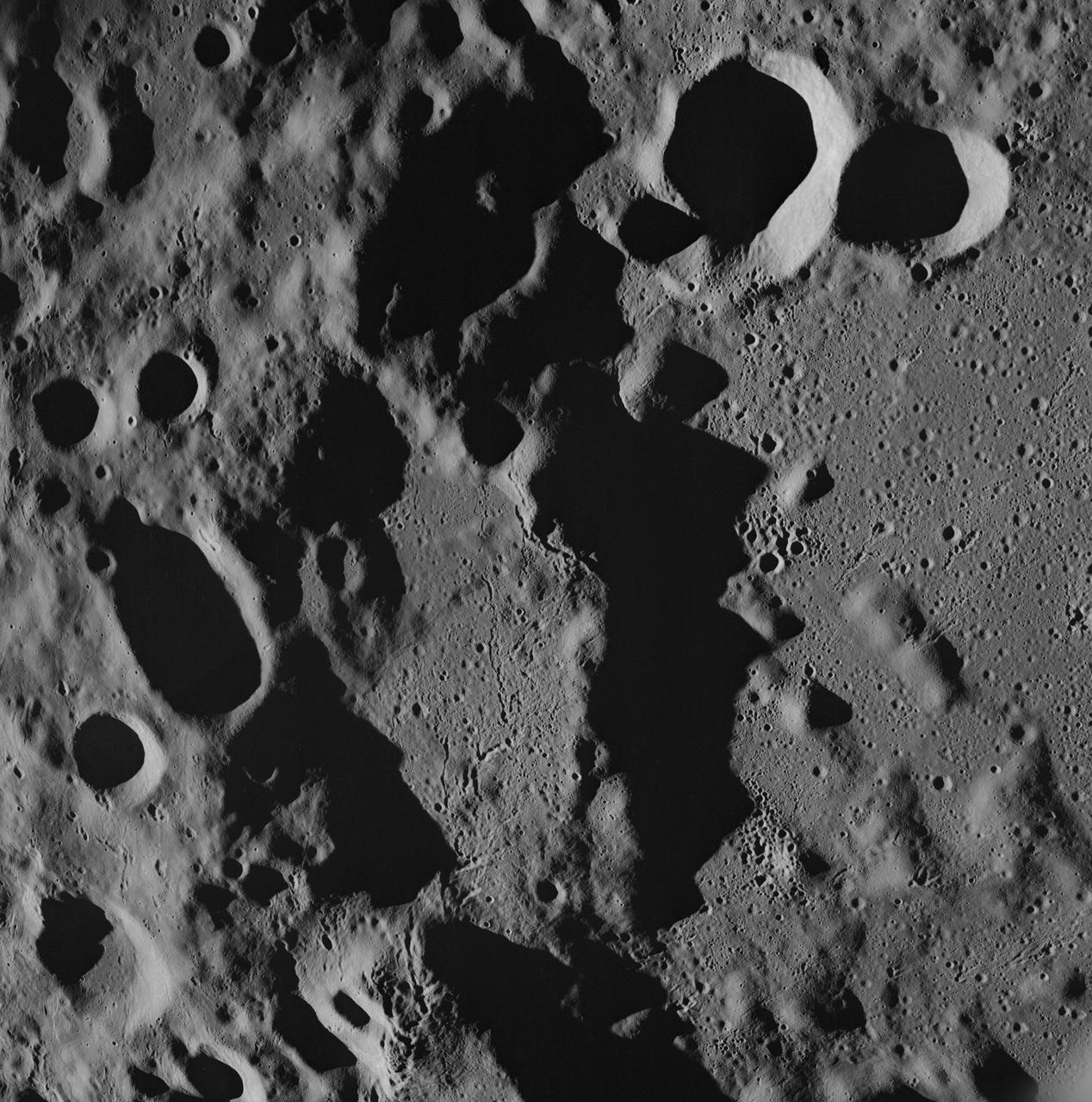
AS08-17-2670 (21-27 Dec. 1968) --- Near vertical view of the lunar farside as photographed from the Apollo 8 spacecraft. The center of the picture is located approximately at 162 degrees west longitude and 6 degrees south latitude.
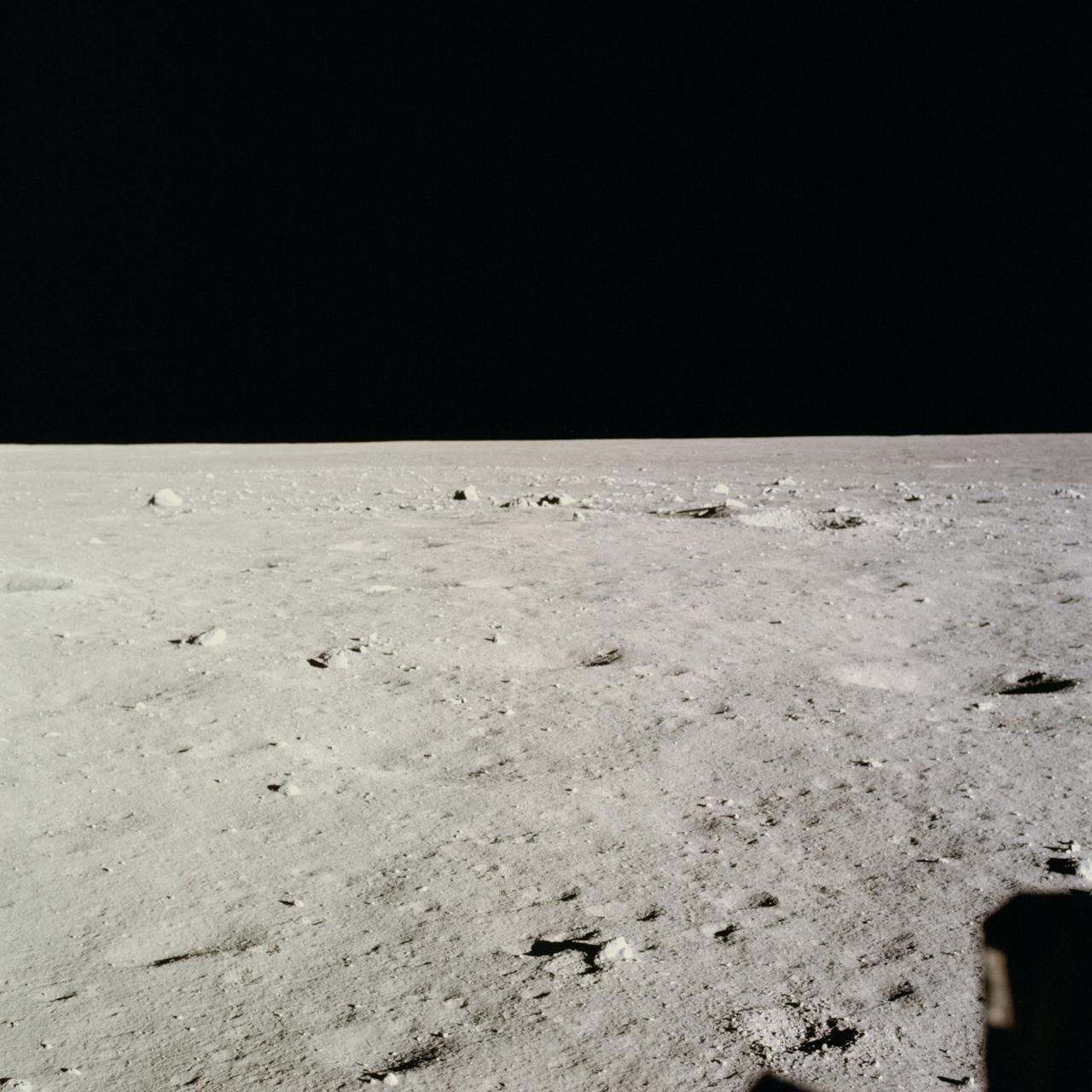
AS11-37-5458 (20 July 1969) --- This excellent view from the right-hand window of the Apollo 11 Lunar Module (LM) shows the surface of the moon in the vicinity of where the LM touched down. Numerous small rocks and craters can be seen between the LM and the lunar horizon. Astronaut Michael Collins, command module pilot, remained with the Command and Service Modules (CSM) in lunar orbit while astronauts Neil A. Armstrong, commander; and Edwin E. Aldrin Jr., lunar module pilot, descended in the LM to the lunar surface.
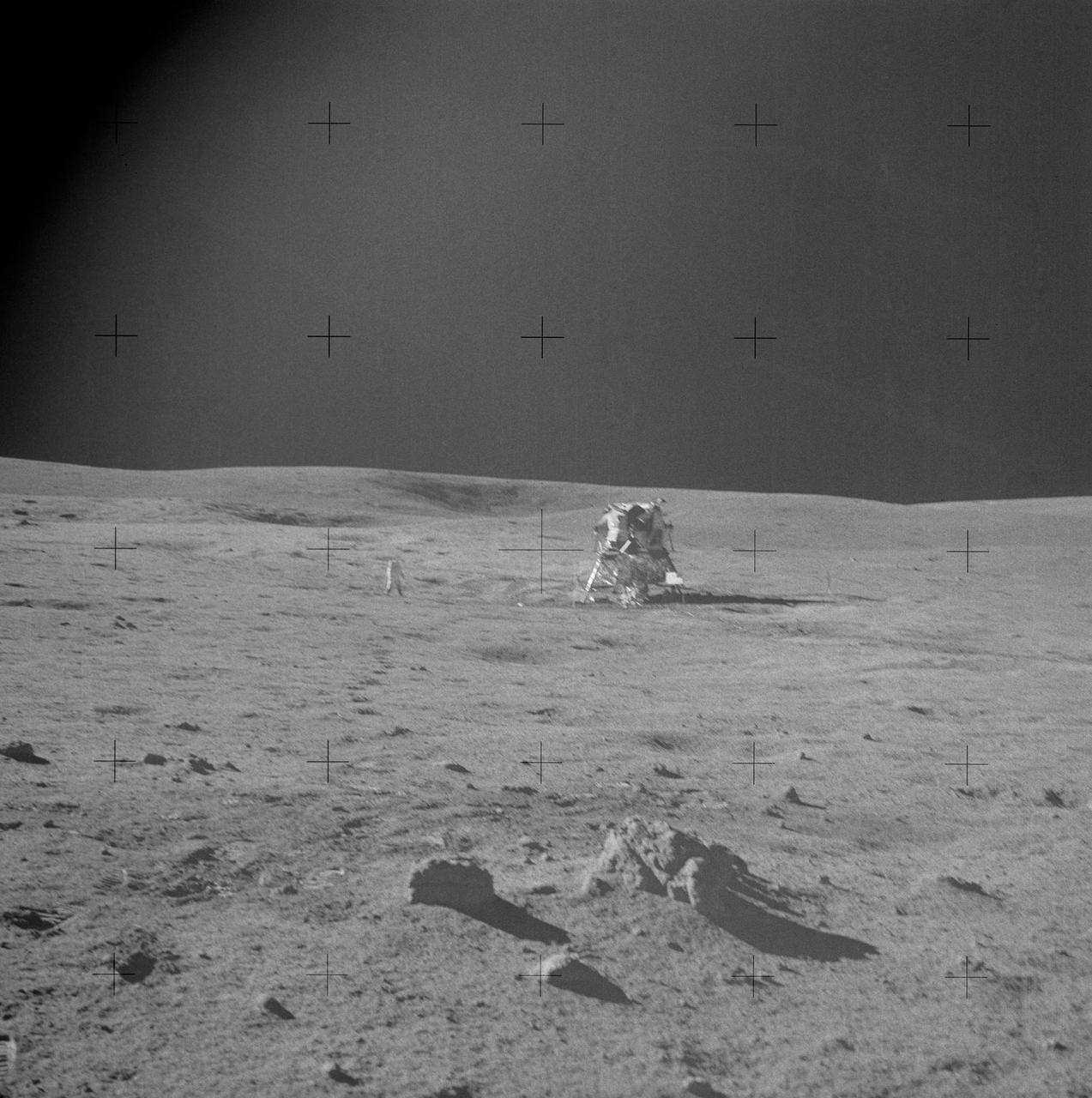
AS14-68-9487 (6 Feb. 1971) --- Astronaut Edgar D. Mitchell, lunar module pilot, photographed this sweeping view showing fellow moon-explorer astronaut Alan B. Shepard Jr., mission commander, and the Apollo 14 Lunar Module (LM). A small cluster of rocks and a few prints made by the lunar overshoes of Mitchell are in the foreground. Mitchell was standing in the boulder field, located just north by northwest of the LM, when he took this picture during the second Apollo 14 extravehicular activity (EVA), on Feb. 6, 1971. While astronaut Stuart A. Roosa, command module pilot, remained with the Command and Service Modules (CSM) in lunar orbit, Shepard and Mitchell descended in the LM to explore the moon.
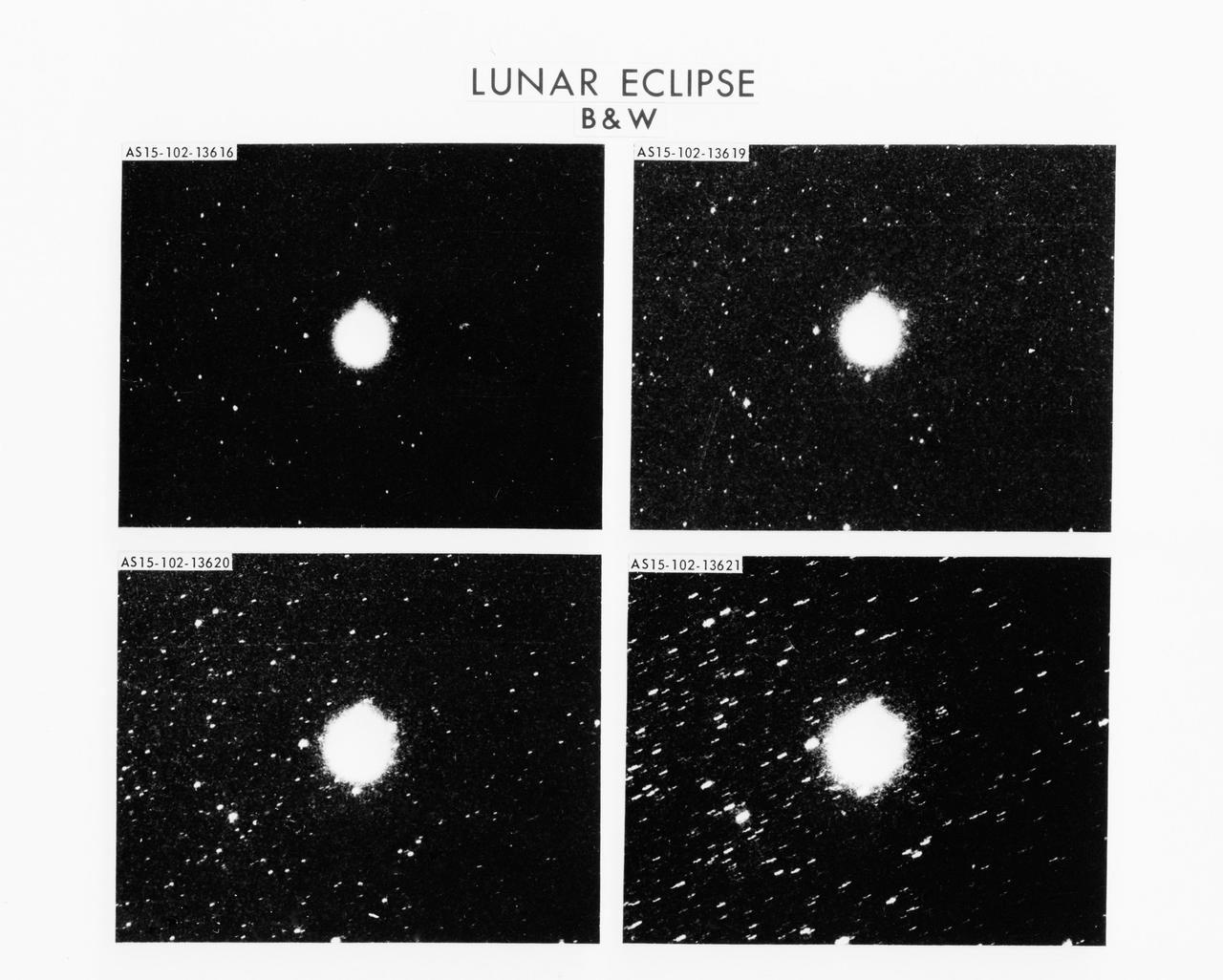
S71-58222 (31 July-2 Aug. 1971) --- During the lunar eclipse that occurred during the Apollo 15 lunar landing mission, astronaut Alfred M. Worden, command module pilot, used a 35mm Nikon camera to obtain a series of 15 photographs while the moon was entering and exiting Earth's umbra. Although it might seem that there should be no light on the moon when it is in Earth's shadow, sunlight is scattered into this region by Earth's atmosphere. This task was an attempt to measure by photographic photometry the amount of scattered light reaching the moon. The four views from upper left to lower right were selected to show the moon as it entered Earth's umbra. The first is a four-second exposure which was taken at the moment when the moon had just entered umbra; the second is a 15-second exposure taken two minutes after entry; the third, a 30-second exposure three minutes after entry; and the fourth is a 60-second exposure four minutes after entry. In all cases the light reaching the moon was so bright on the very high speed film (Eastman Kodak type 2485 emulsion) that the halation obscures the lunar image, which should be about one-third as big as the circle of light. The background star field is clearly evident, and this is very important for these studies. The spacecraft was in full sunlight when these photographs were taken, and it was pointed almost directly away from the sun so that the windows and a close-in portion of the camera's line-of-sight were in shadow. The environment around the vehicle at this time appears to be very "clean" with no light scattering particles noticeable.
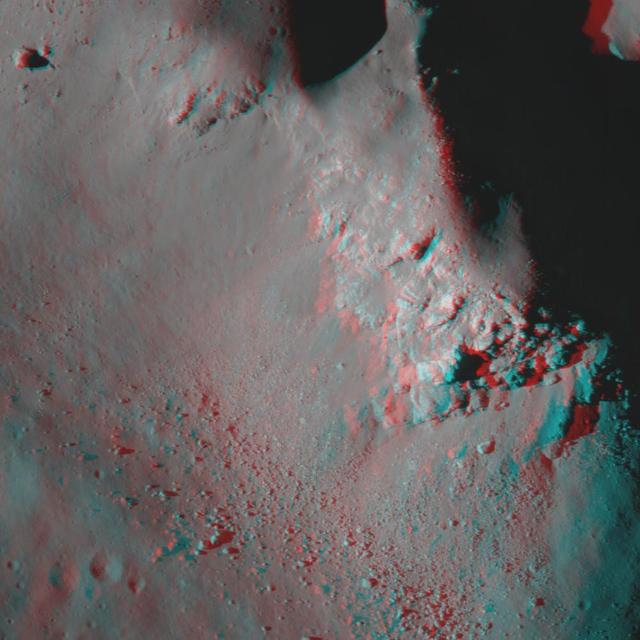
NASA Lunar Reconnaissance Orbiter captured this anaglyph image is a close up view of Copernicus crater. 3D glasses are necessary to view this image.

AS11-44-6584 (20 July 1969) --- View of Apollo 11 Lunar Module (LM). This image was taken during separation of the LM and the Command Module during and the LM;s descent to the lunar surface. Blackness of space in background. Film Type: S0-368 color taken with a 250mm lens. Photo credit: NASA

AS09-20-3064 (6 March 1969) --- Excellent view of the docked Apollo 9 Command and Service Modules (CSM) and Lunar Module (LM), with Earth in the background, during astronaut David R. Scott's stand-up extravehicular activity (EVA), on the fourth day of the Apollo 9 Earth-orbital mission. Scott, command module pilot, is standing in the open hatch of the Command Module (CM). Astronaut Russell L. Schweickart, lunar module pilot, took this photograph of Scott from the porch of the LM. Inside the LM was astronaut James A. McDivitt, Apollo 9 commander.
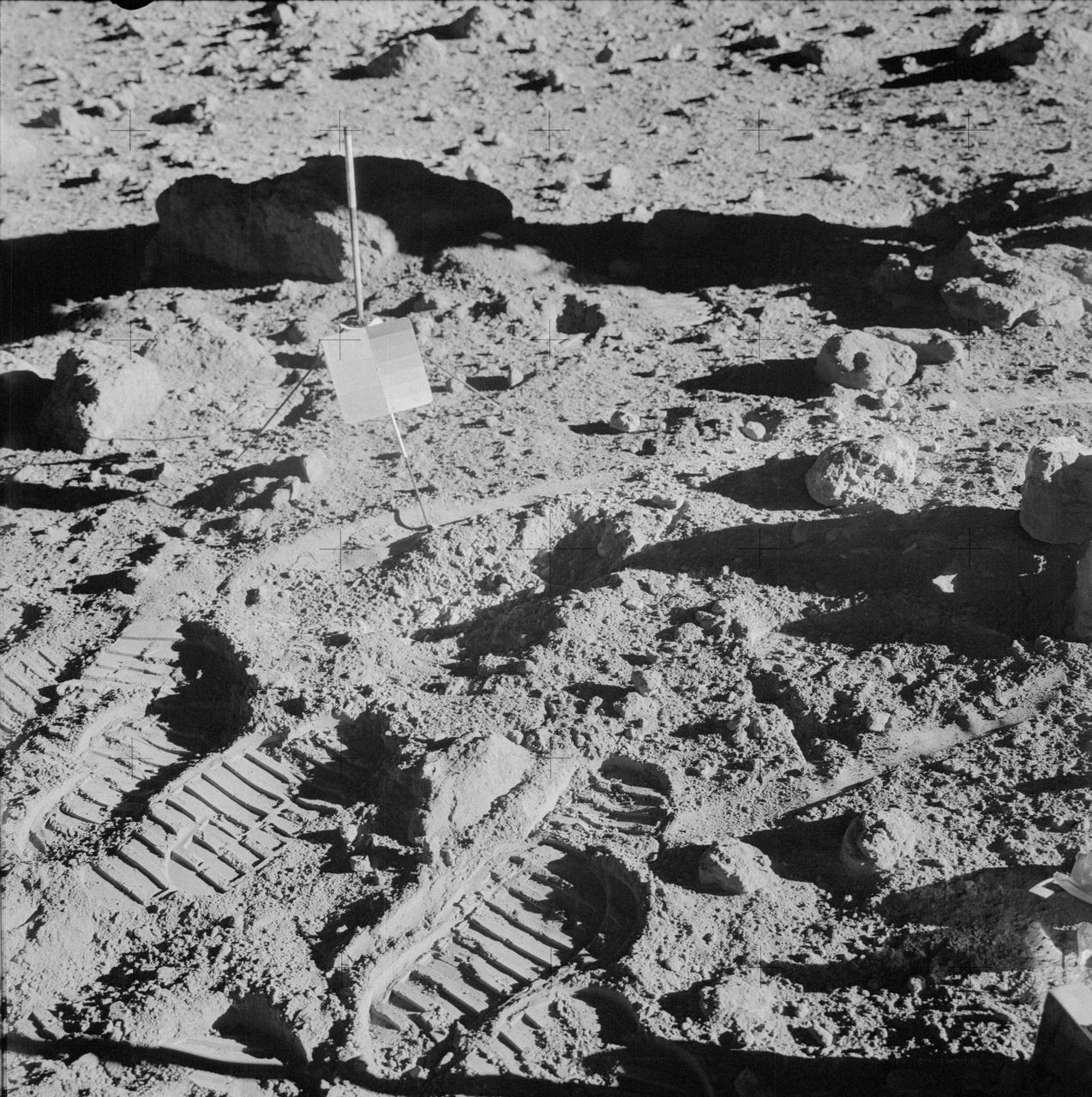
AS14-64-9127 (5-6 Feb. 1971) --- A close-up view of lunar soil, showing bootprints made by the Apollo 14 astronauts during extravehicular activity (EVA) on the lunar surface. Also visible are tracks made by the modularized equipment transporter (MET) and deployed gnomon. Astronauts Alan B. Shepard Jr., commander, and Edgar D. Mitchell, lunar module pilot, descended in the Apollo 14 Lunar Module (LM) to explore the moon, while astronaut Stuart A. Roosa, command module pilot, remained with the Command and Service Modules (CSM) in lunar orbit.
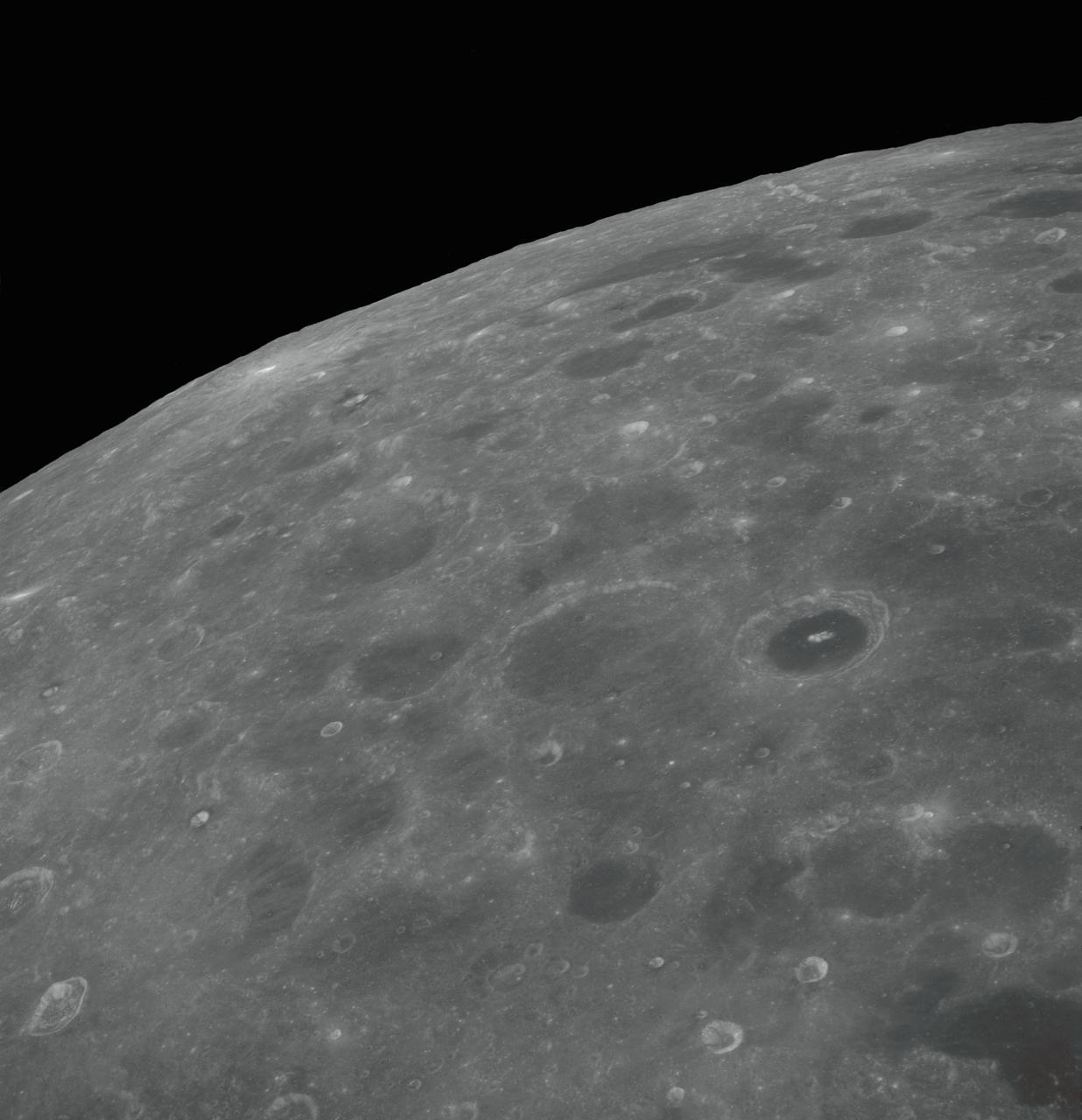
AS08-12-2192 (21-27 Dec. 1968) --- View of the lunar surface taken from the Apollo 8 spacecraft looking southward from high altitude across the Southern Sea. (Hold picture with AS8 number in upper right corner). The bright-rayed crater near the horizon is located near 130 degrees east longitude and 70 degrees south latitude. The dark-floored crater near the middle of the right side of the photograph is about 70 kilometers (45 statute miles) in diameter. Both features are beyond the eastern limb of the moon as viewed from Earth; neither has a name.
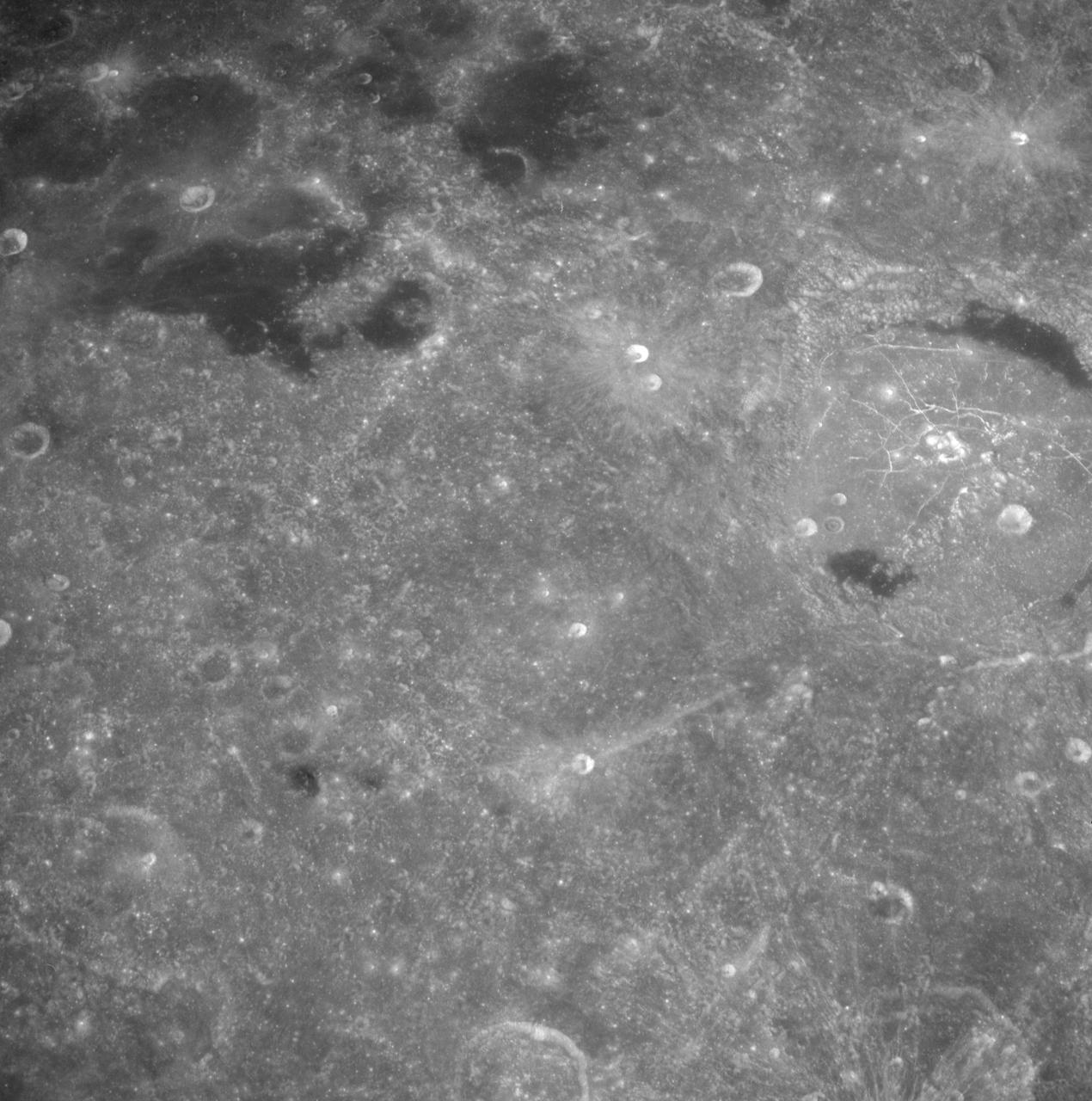
AS08-12-2193 (21-27 Dec. 1968) --- View of the lunar surface taken from the Apollo 8 spacecraft looking southward from high altitude across the Southern Sea. (Hold picture with AS8 number in upper right corner). The bright-rayed crater near the horizon is located near 130 degrees east longitude and 70 degrees south latitude. The dark-floored crater near the middle of the right side of the photograph is about 70 kilometers (45 statute miles) in diameter. Both features are beyond the eastern limb of the moon as viewed from Earth; neither has a name.
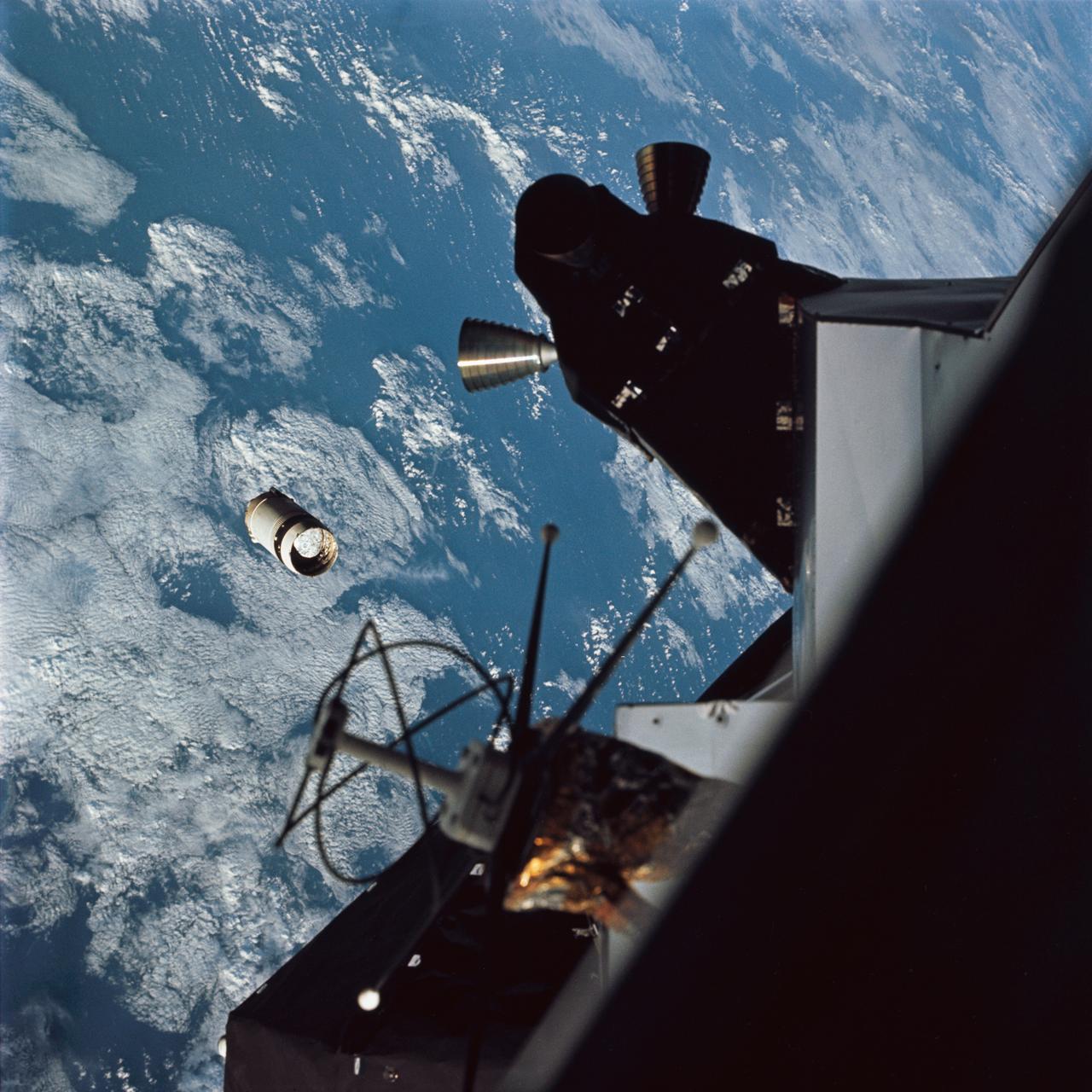
View of the Lunar Module (LM) 3 and Service Module (SM) LM Adapter. Film magazine was A,film type was SO-368 Ektachrome with 0.460 - 0.710 micrometers film / filter transmittance response and haze filter, 80mm lens.
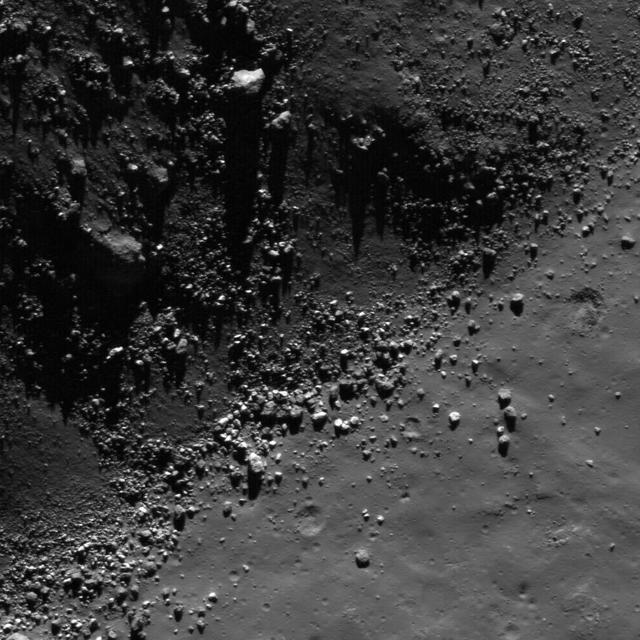
This image from NASA Lunar Reconnaissance Orbiter shows a view of boulders, on the floor of Rutherfurd crater, about to disappear into the shadows of dusk.
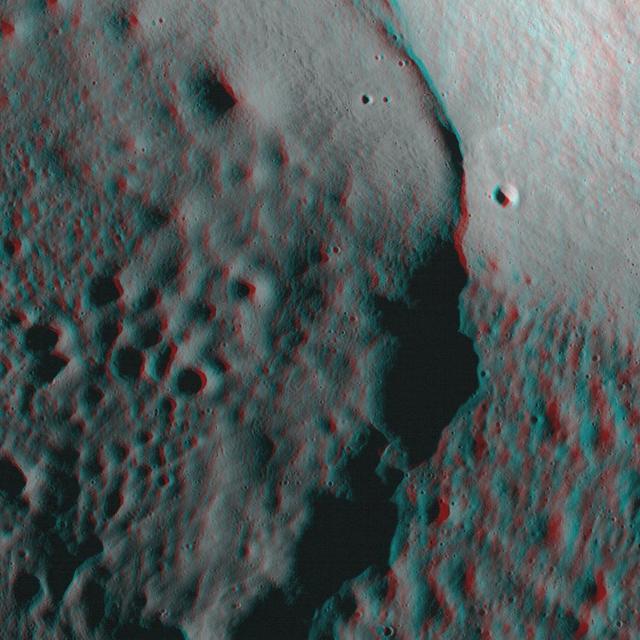
NASA Lunar Reconnaissance Orbiter looks at the Moon in 3D. 3D glasses are necessary to view this image.
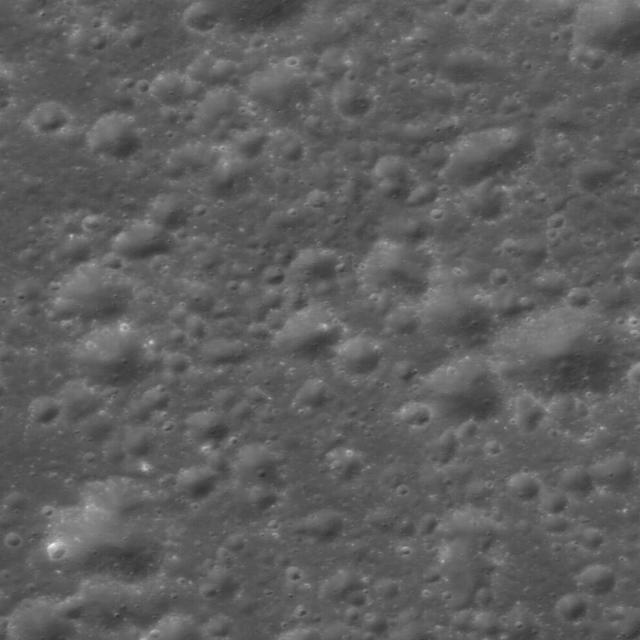
This image from NASA Lunar Reconnaissance Orbiter shows a view of boulders, on the floor of Rutherfurd crater, about to disappear into the shadows of dusk.
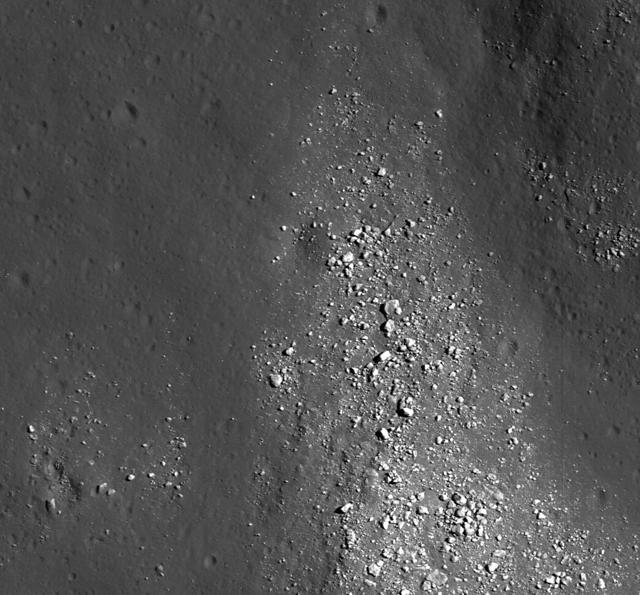
NASA Lunar Reconnaissance Orbiter view of boulders on an outlying rampart of the complex central peak of Tsiolkovskiy crater.
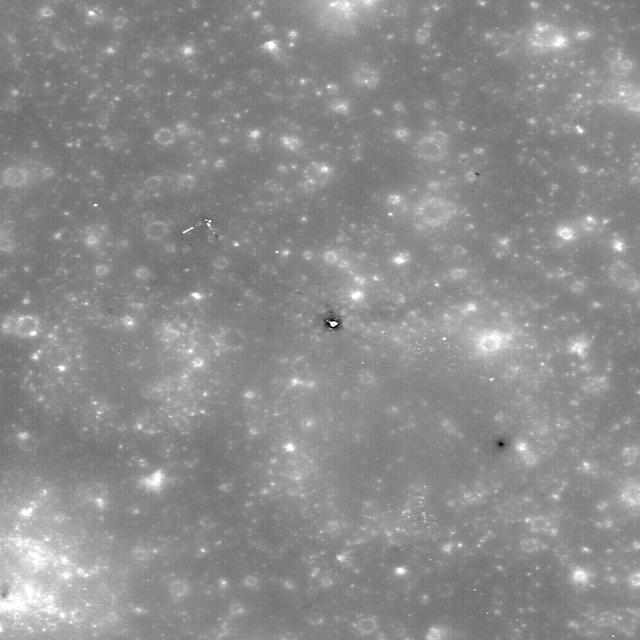
New view of the Apollo 12 landing site in Oceanus Procellarum imaged from NASA Lunar Reconnaissance Orbiter mapping orbit.
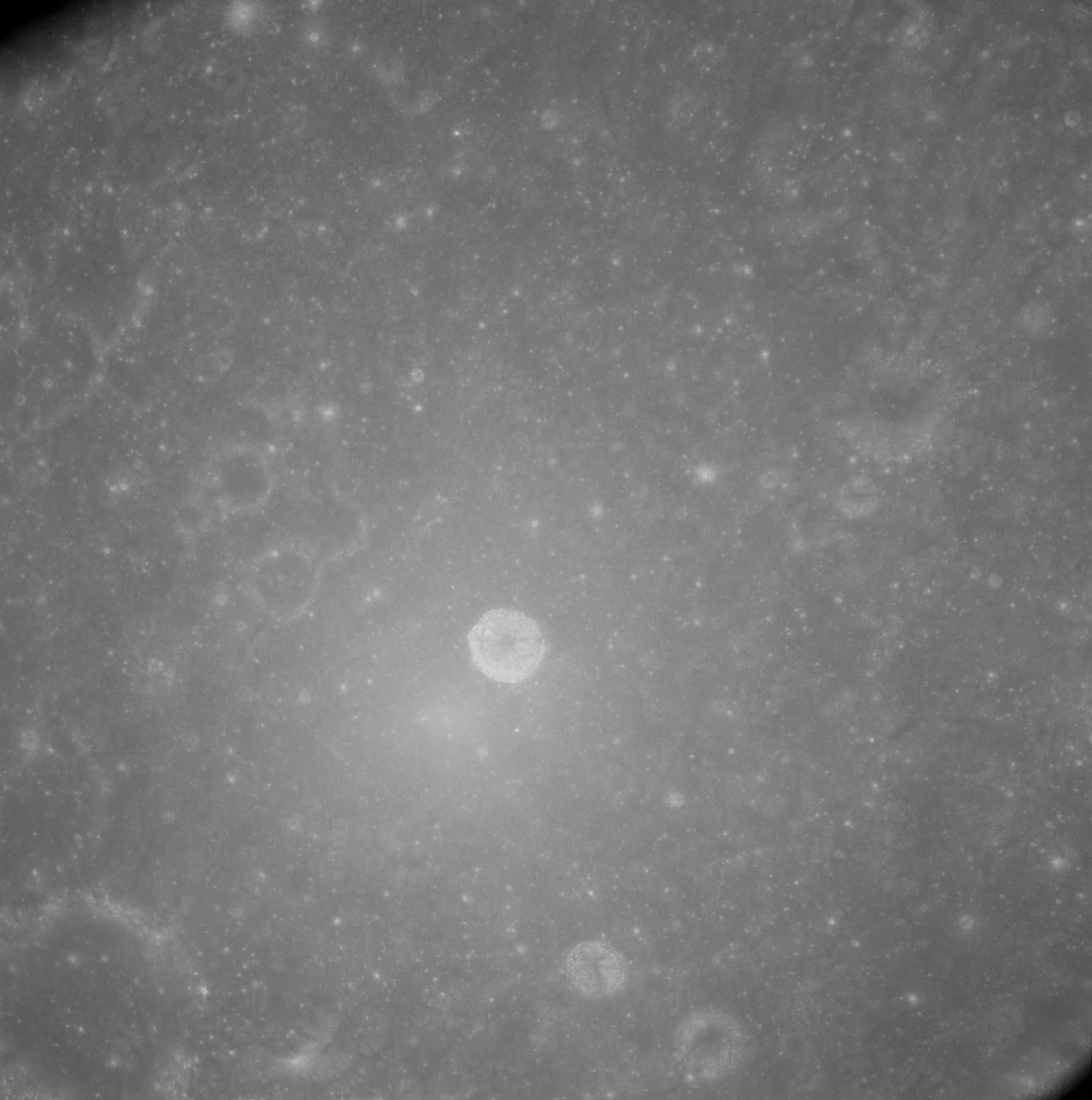
AS08-12-2148 (21-27 Dec. 1968) --- View of the lunar surface as photographed from the Apollo 8 spacecraft. Zero-phase bright spot. With near-vertical sun illumination, topographical detail is washed out and differences in surface brightness are accentuated. The numerous small bright-halo craters become conspicuous. A few larger craters have extremely bright inner walls that are commonly streaked by darker material. The bright glow near the conspicuous bright-walled crater is a halo that surrounds the position of the spacecraft shadow.
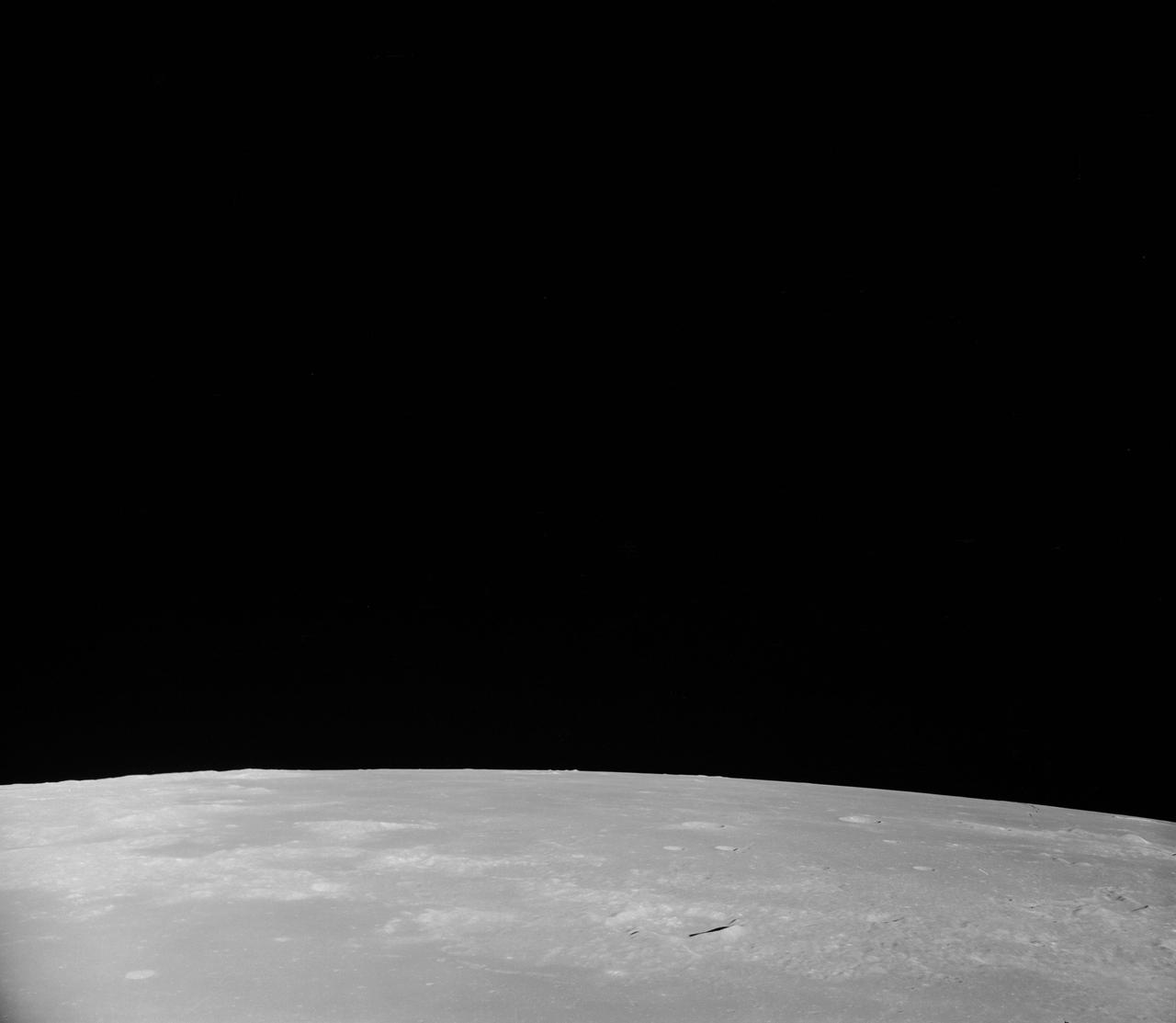
AS08-17-2814 (21-27 Dec. 1968) --- This oblique view of the lunar surface taken from the Apollo 8 spacecraft looking westward across the Sea of Fertility into the Sea of Tranquility shows the terrain the astronauts will see as the approach Apollo Landing Site East 2. The landing site is at the horizon about one-third of the distance from the left to the right photograph margin. The prominent crater in the highlands near the center of the picture is Secchi, about 25 kilometers (15 statute miles) in diameter.
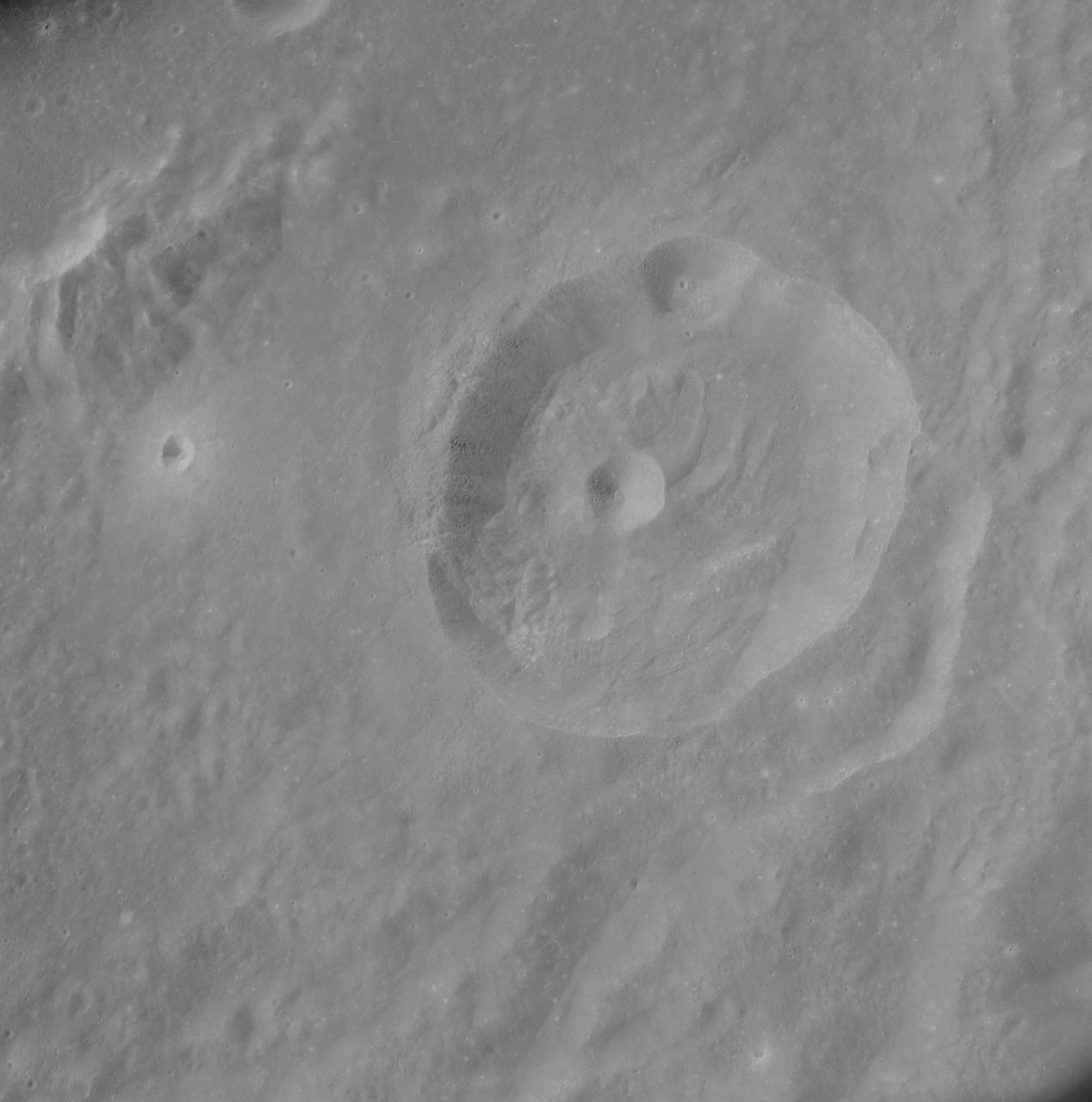
AS8-17-2704 (21-27 Dec. 1968) --- Near vertical view of the lunar farside as photographed from the Apollo 8 spacecraft. This crater, which is about 22 statute miles in diameter, is located at 167 degrees east longitude and 11 degrees south latitude. This crater is located on the eastern edge of a much larger unnamed crater which is about 90 statute miles in diameter.
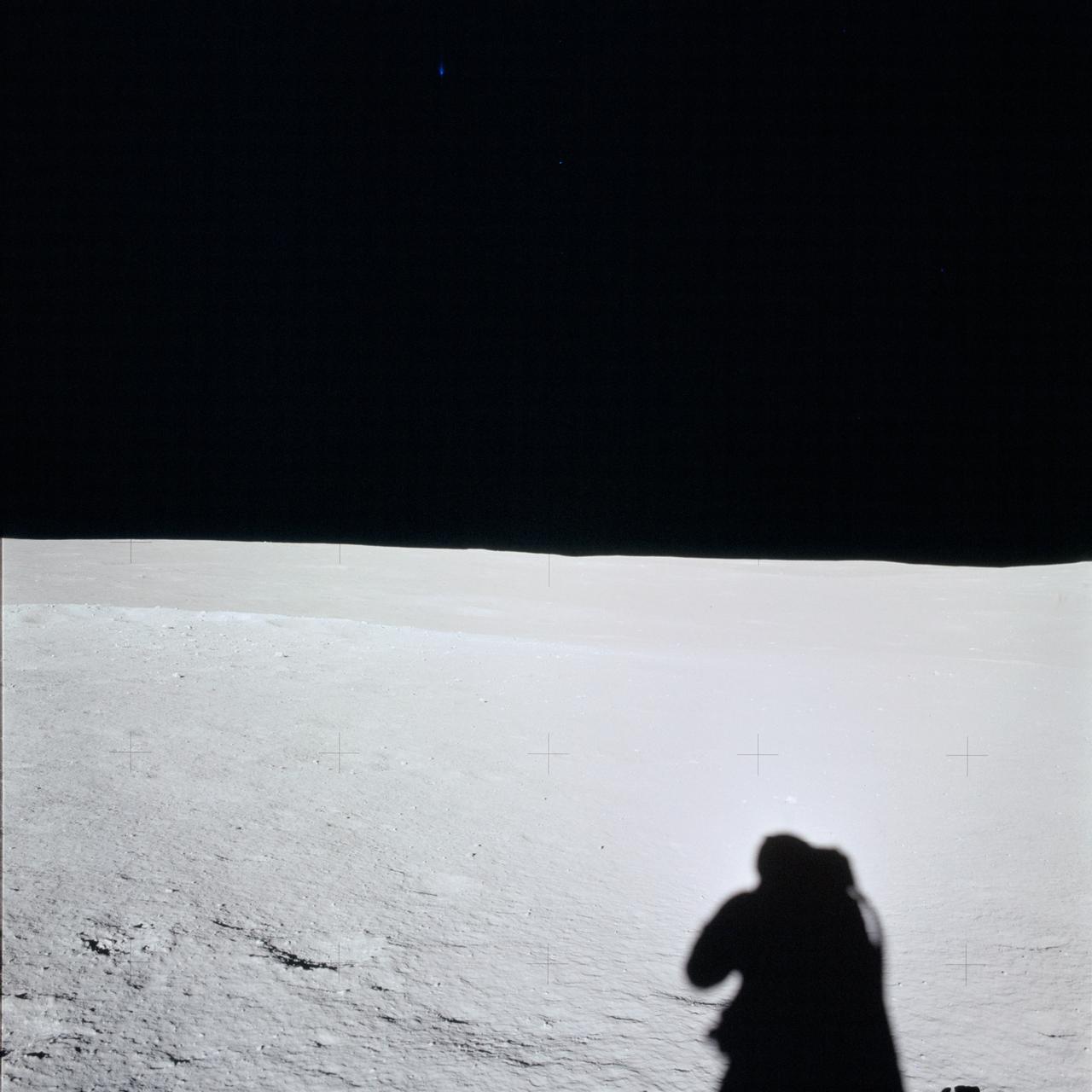
AS14-66-9293 (5 Feb. 1971) --- A portion of the Fra Mauro landing site as photographed by one of the Apollo 14 astronauts, standing slightly southwest of the Lunar Module (LM), during the early minutes of their first extravehicular activity (EVA) on the moon. The shadow of the astronaut taking the picture is at lower right. Photographs numbered AS14-66-9271 through AS14-66-9293 comprise a 360 degree panoramic view.

AS13-59-8562 (17 April 1970) --- This view of the Apollo 13 Lunar Module (LM) was photographed from the Command Module (CM) just after the LM had been jettisoned. The jettisoning occurred a few minutes before 11 a.m. (CST), April 17, 1970, just over an hour prior to splashdown of the CM in the south Pacific Ocean. The apparent explosion of oxygen tank number two in the Apollo 13 Service Module (SM) caused the Apollo 13 crew members to rely on the LM as a "lifeboat".
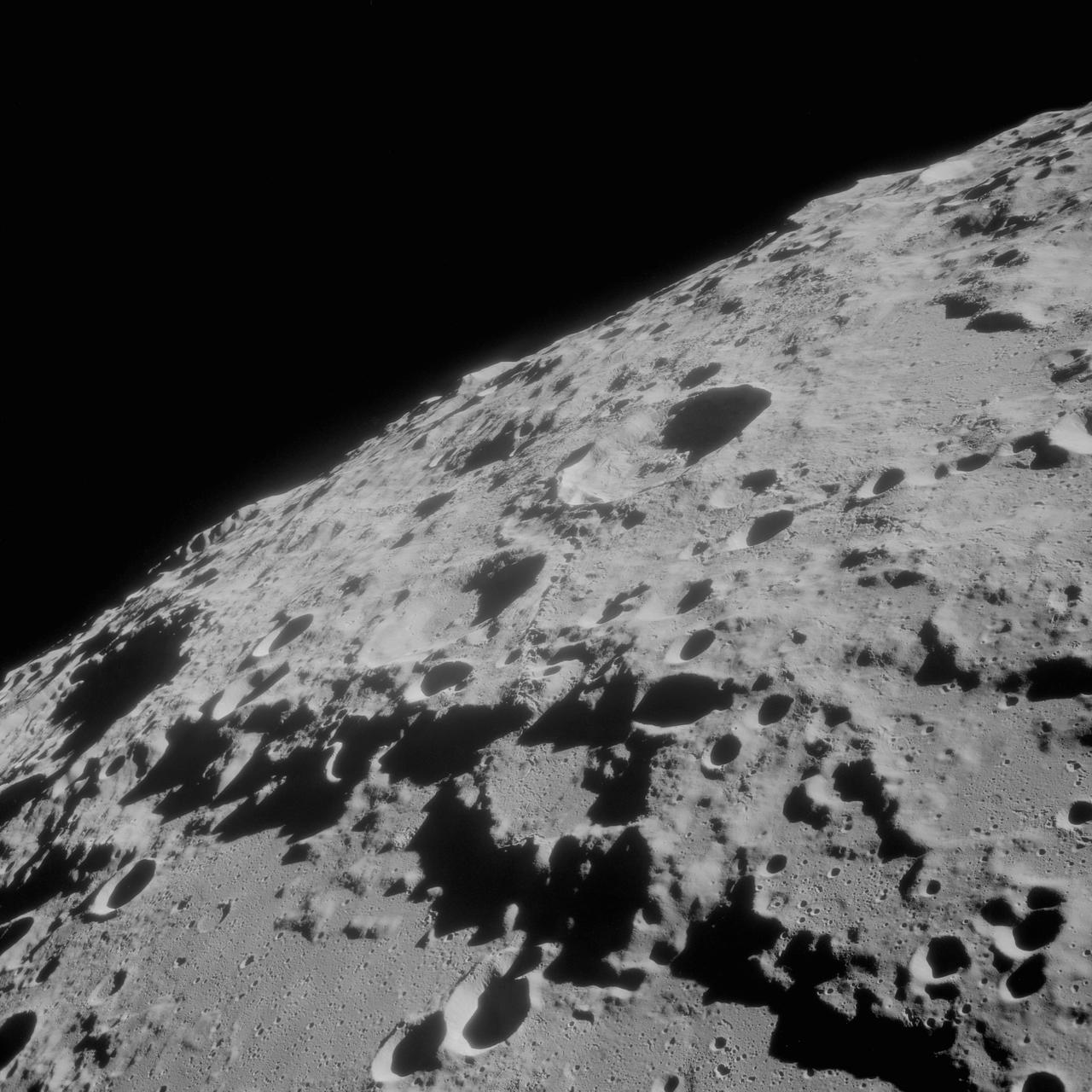
AS11-42-6248 (July 1969) --- An Apollo 11 oblique view of the lunar farside in the area of International Astronomical Union crater No. 312, which is about 30 statute miles in diameter. The center of the photograph is located at 164 degrees west longitude and 8 degrees south latitude. The sharp shadows indicate that the picture was taken at a low sun angle.
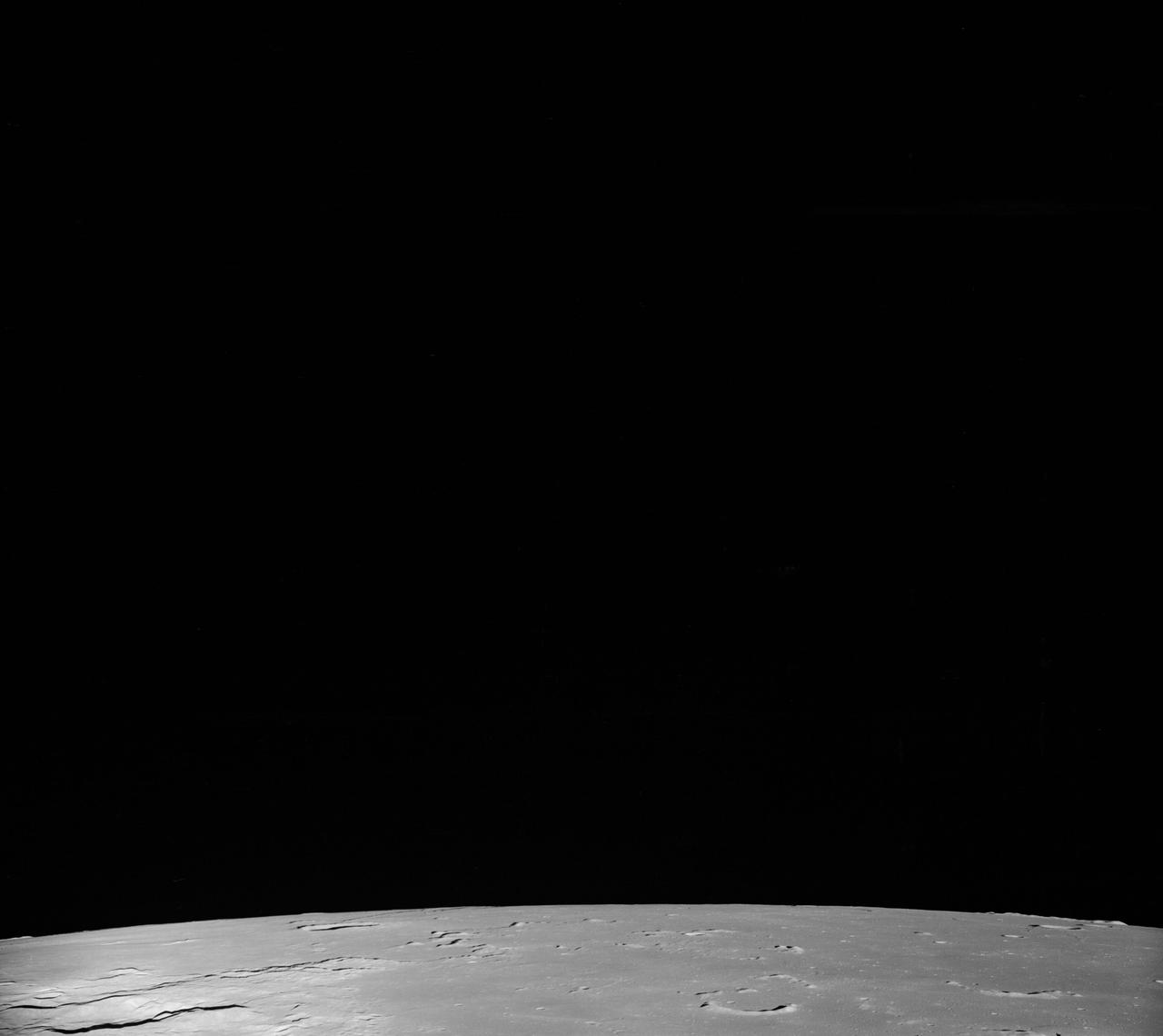
AS08-17-2821 (21-27 Dec. 1968) --- This oblique view of the lunar surface taken from the Apollo 8 spacecraft looking westward across the Sea of Tranquility shows Apollo Landing Site East 2 illuminated by a sun that is six to eight degrees above the eastern horizon. The landing site is on the dark gray, smooth surface of the Sea of Tranquility and north (to the right) of the bright highland terrain at the lower left corner of the photograph. The landing site is about four tenths of the distance from the left to right margin of the photograph.
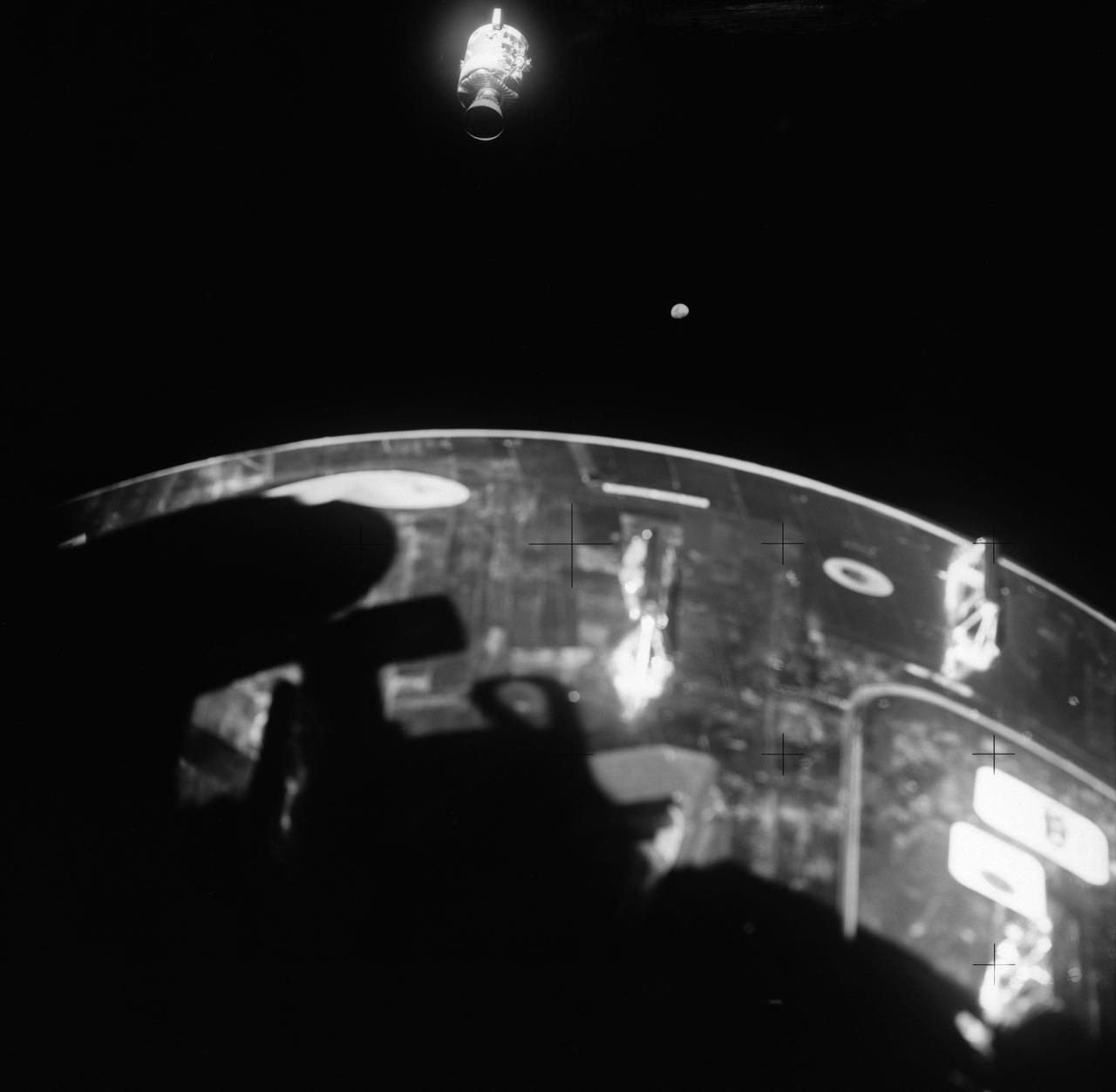
This view of the damaged Apollo 13 Service Module (SM) was photographed from the Lunar Module/Command Module following SM jettisoning. As seen here, an entire panel on the SM was blown away by the apparent explosion of oxygen tank number two located in Sector 4 of the SM. Two of the three fuel cells are visible just forward (above) the heavily damaged area. Three fuel cells, two oxygen tanks, and two hydrogen tanks are locate in Sector 4. The damaged area is located above the S-band high gain antenna. Nearest the camera is the Service Propulsion System (SPS) engine and nozzle. The damage to the SM caused the Apollo 13 crewmen to use the Lunar Module (LM) as a "lifeboat". The LM was jettisoned just prior to Earth reentry by the Command Module.