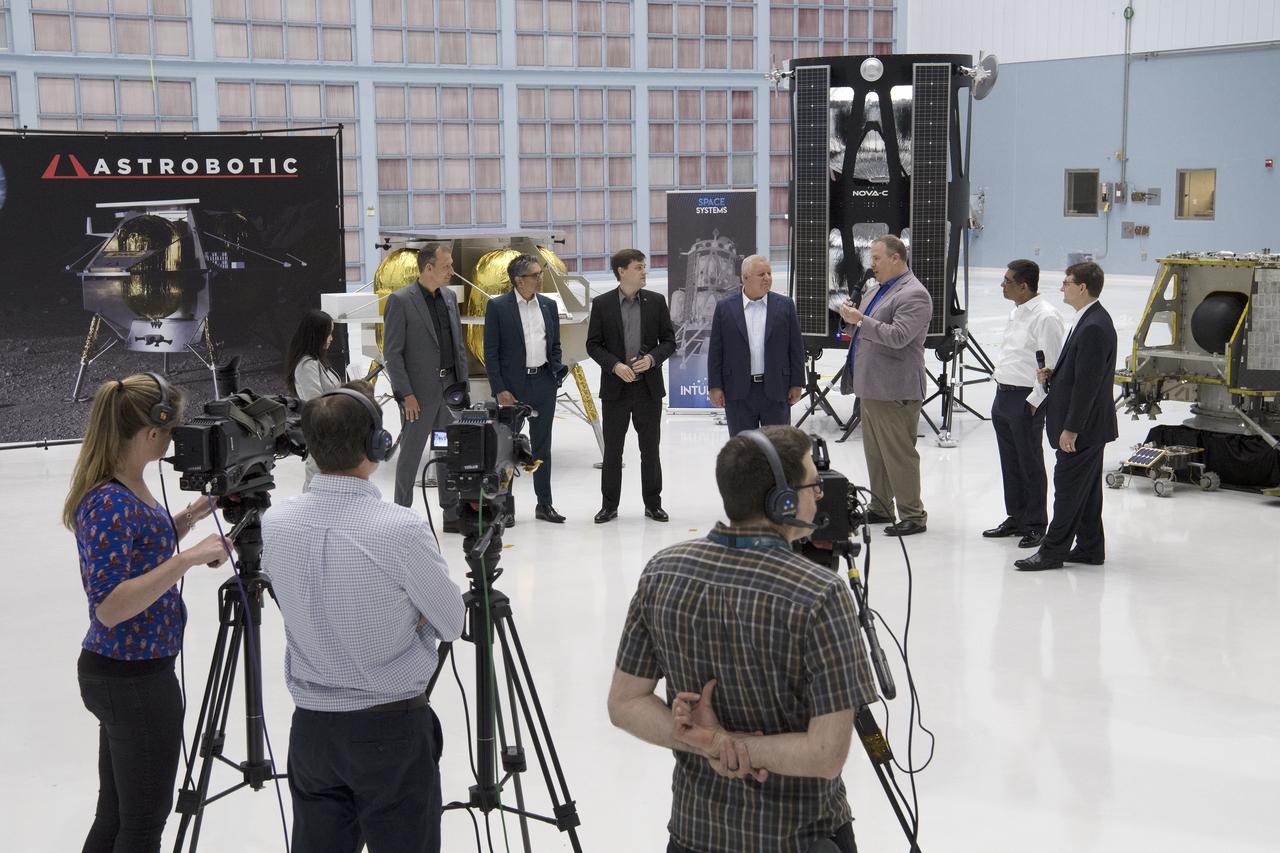
Lunar Commericial Payload Services Announcement was made at Godddard May 31, 2019. Tom Zurbuchen, AA Science Mission Directorate congratulated three companies for providing first lunar landers for Artemis: Astrobotic, Intuitive Machines and OrbitBeyond
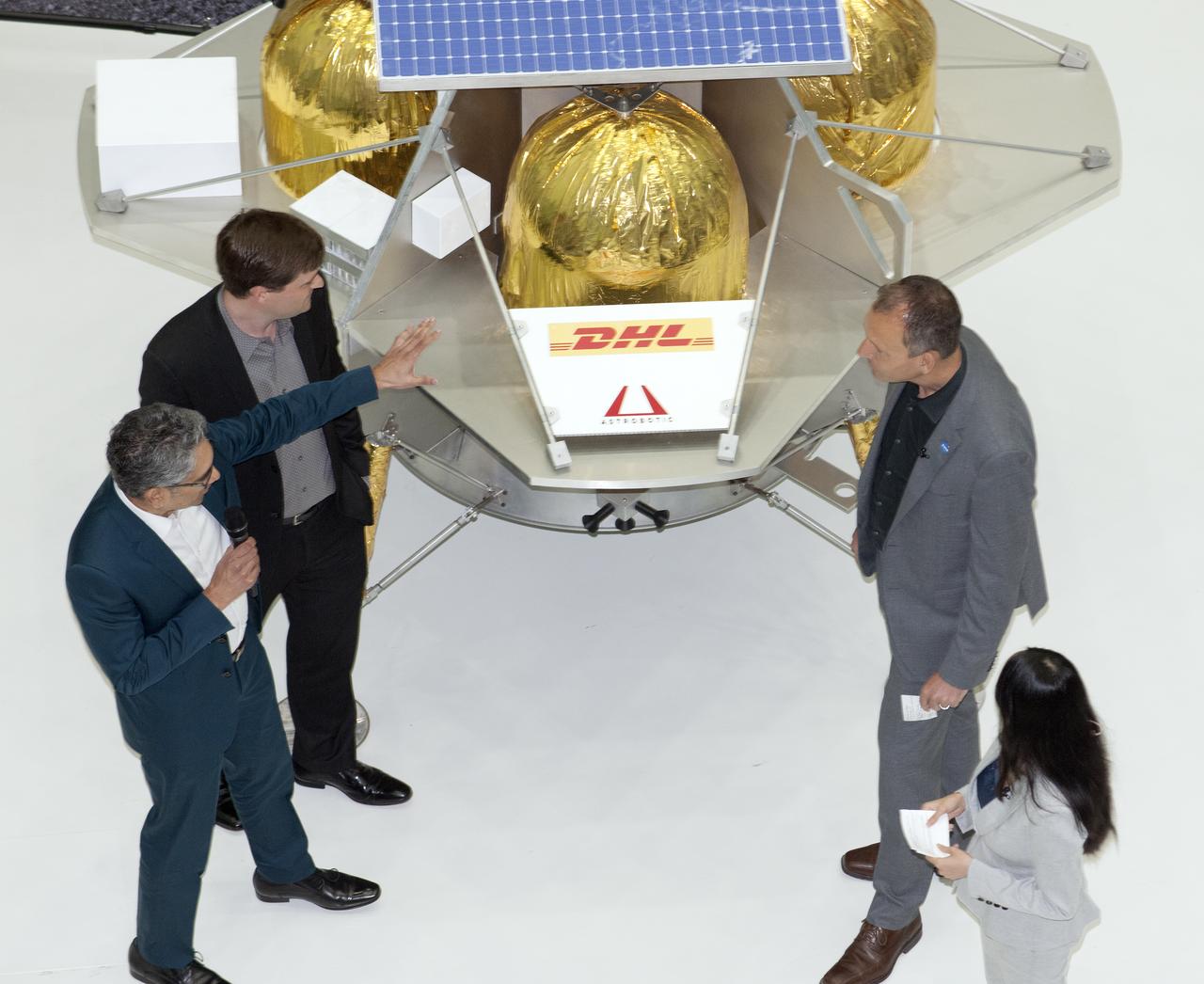
Commercial Lunar Payload Services Announcement was made at Goddard May 31, 2019. Tom Zurbuchen, AA Science Mission Directorate, congratulated three companies for providing lunar landers for Artermis: Astrobotic, Intuitive Machines, and OrbitBeyond

NASA Press Officer Felicia Chou, introduces a pre-recorded video announcement by NASA Administrator Jim Bridenstine about the companies selected to provide the first commercial lunar landers, Friday, May 31, 2019, at Goddard Space Flight Center in Md. Intuitive Machines, Astrobotic, and Orbit Beyond have been selected to provide the first lunar landers for the Artemis program's lunar surface exploration. Photo credit: (NASA/Aubrey Gemignani)
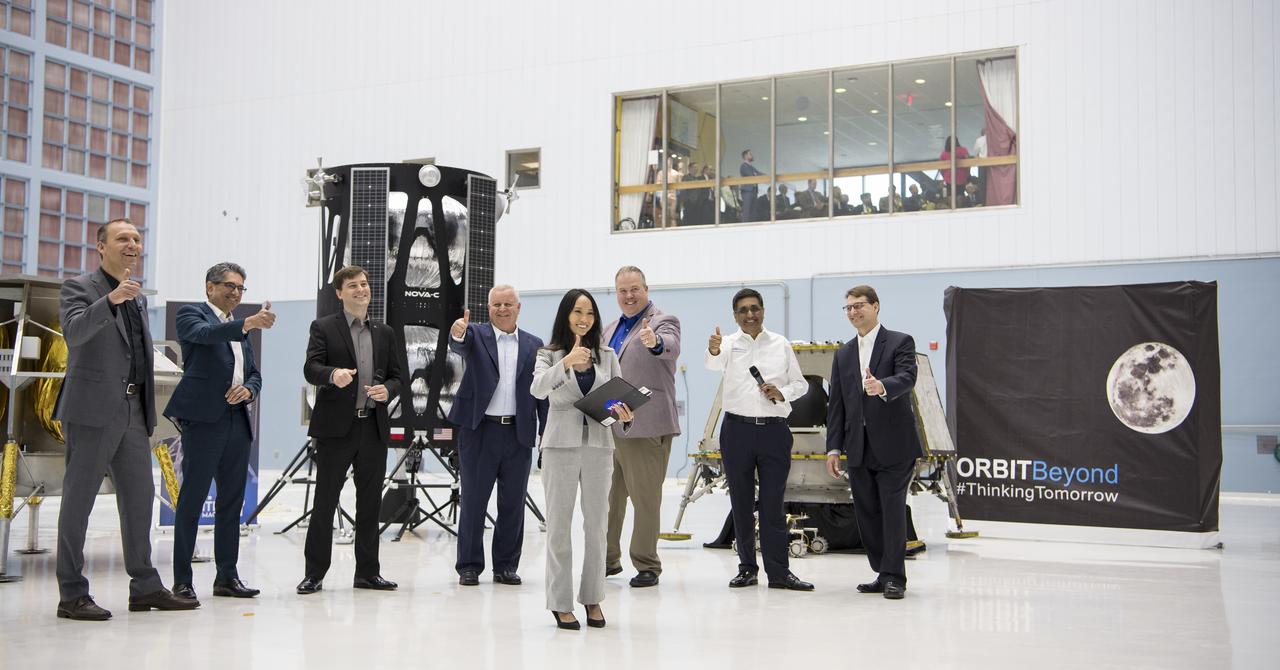
From left to right, NASA Associate Administrator, Science Mission Directorate, Thomas Zurbuchen; Astrobotic Mission Director, Sharad Bhaskaran; Astrobotic CEO, John Thornton; Chairman of the Board of Intuitive Machines, Kam Ghaffarian; VP of Research and Development of Intuitive Machines, Tim Crain; President and CEO of OrbitBeyond, Siba Padhi; Chief Science Officer, OrbitBeyond, Jon Morse; and NASA Press Officer, Felicia Chou, front center, put their thumbs up at the conclusion of an event announcing the companies that will provide the first lunar landers for the Artemis program's lunar surface exploration, Friday, May 31, 2019, at Goddard Space Flight Center in Md. Photo credit: (NASA/Aubrey Gemignani)
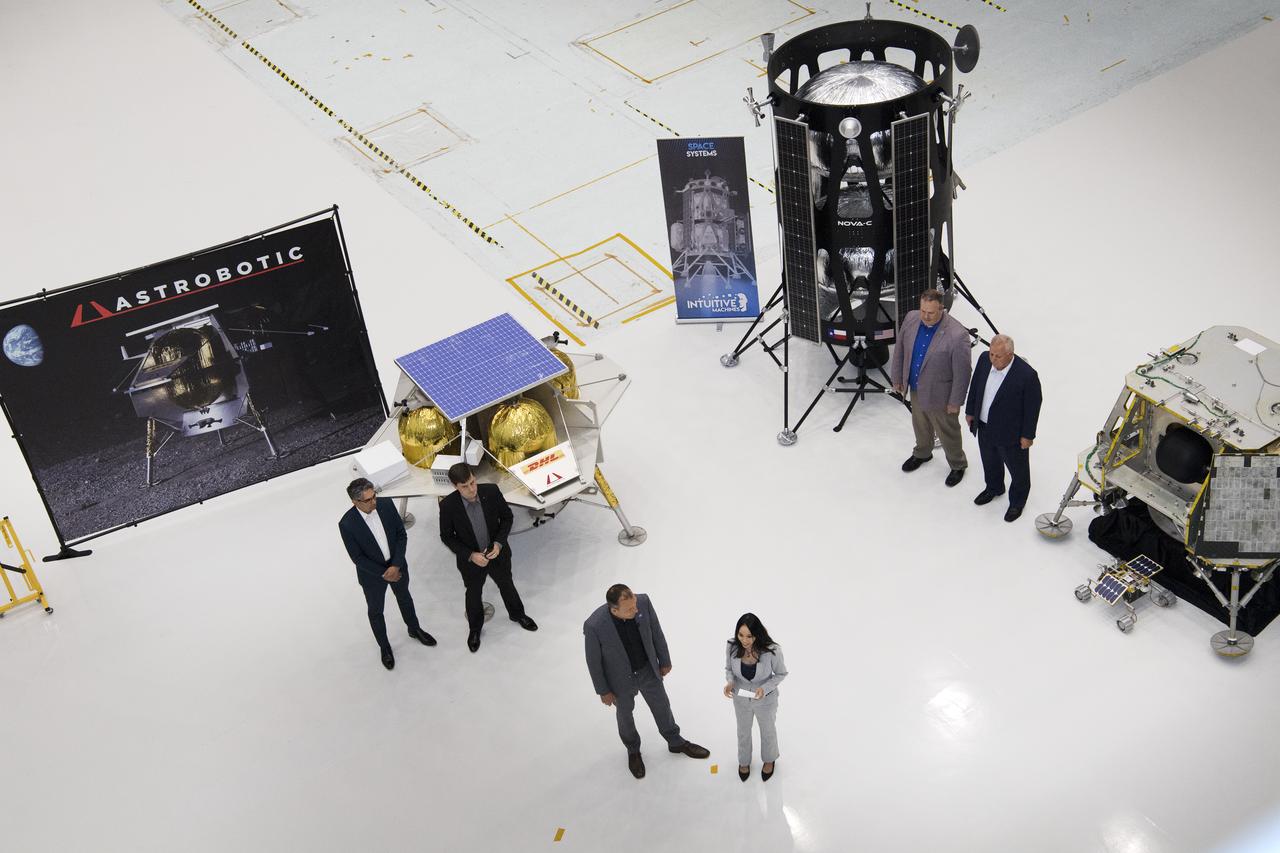
Commercial Lunar Payload Services Announcemnt was made at Goddard May 31, 2019. Tom Zurbuchen- AA Science Mission Directorate, congratulated three companies for providing lunar landers for Artemis: Astrobotic, Intuitive Machines and OrbitBeyond.
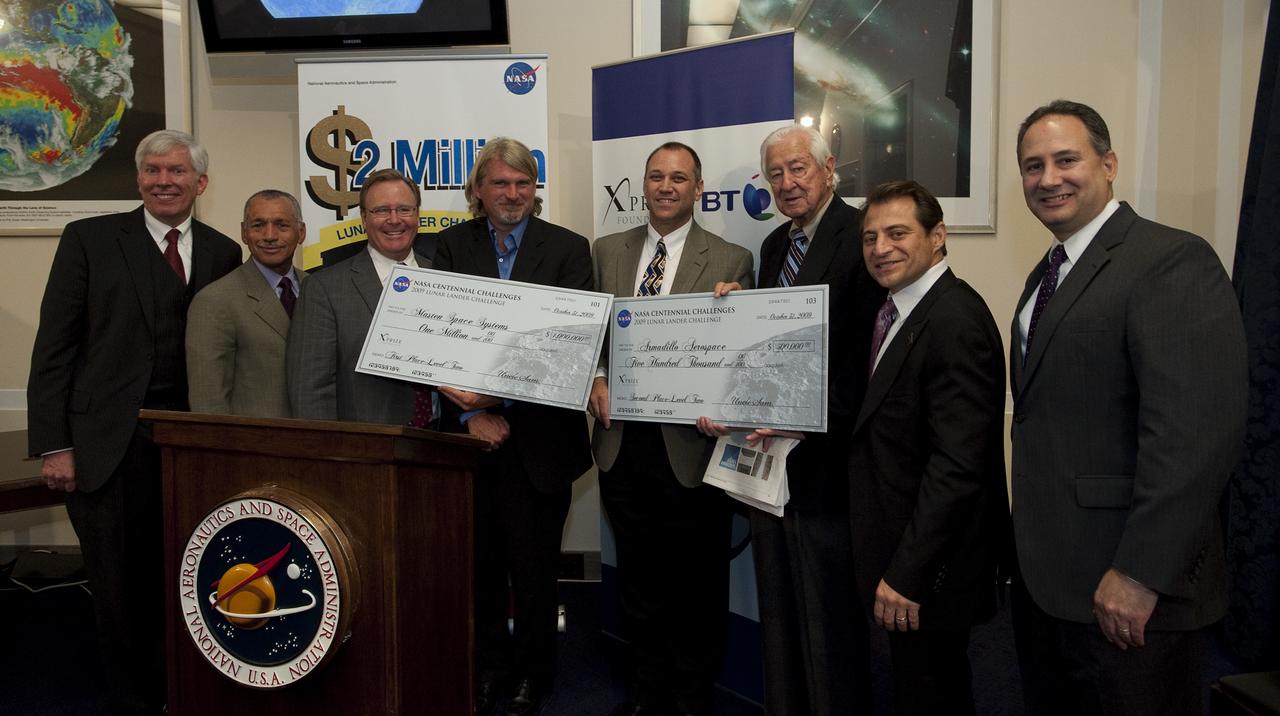
NASA and the X PRIZE Foundation announced the winners of the Northrop Grumman Lunar Lander Challenge at an awards ceremony at the Rayburn House Office Building, Thursday, Nov. 5, 2009 in Washington, DC. From left to right, George Nield, Associate Administrator of Commercial Space Transportation, FAA; Charles Bolden, NASA Administrator; Doug Comstock, Director, Innovative Partnerships Program, NASA; David Masten, CEO, Masten Space Systems; Phil Eaton, VP, Operations, Armadillo Aerospace; U.S. Rep. Ralph Hall (R-TX); Peter Diamandis, Chairman and CEO, X PRIZE Foundation and Mitch Waldman, VP, Advanced Programs & Technology, Northrop Grumman. Photo Credit: (NASA/Carla Cioffi)
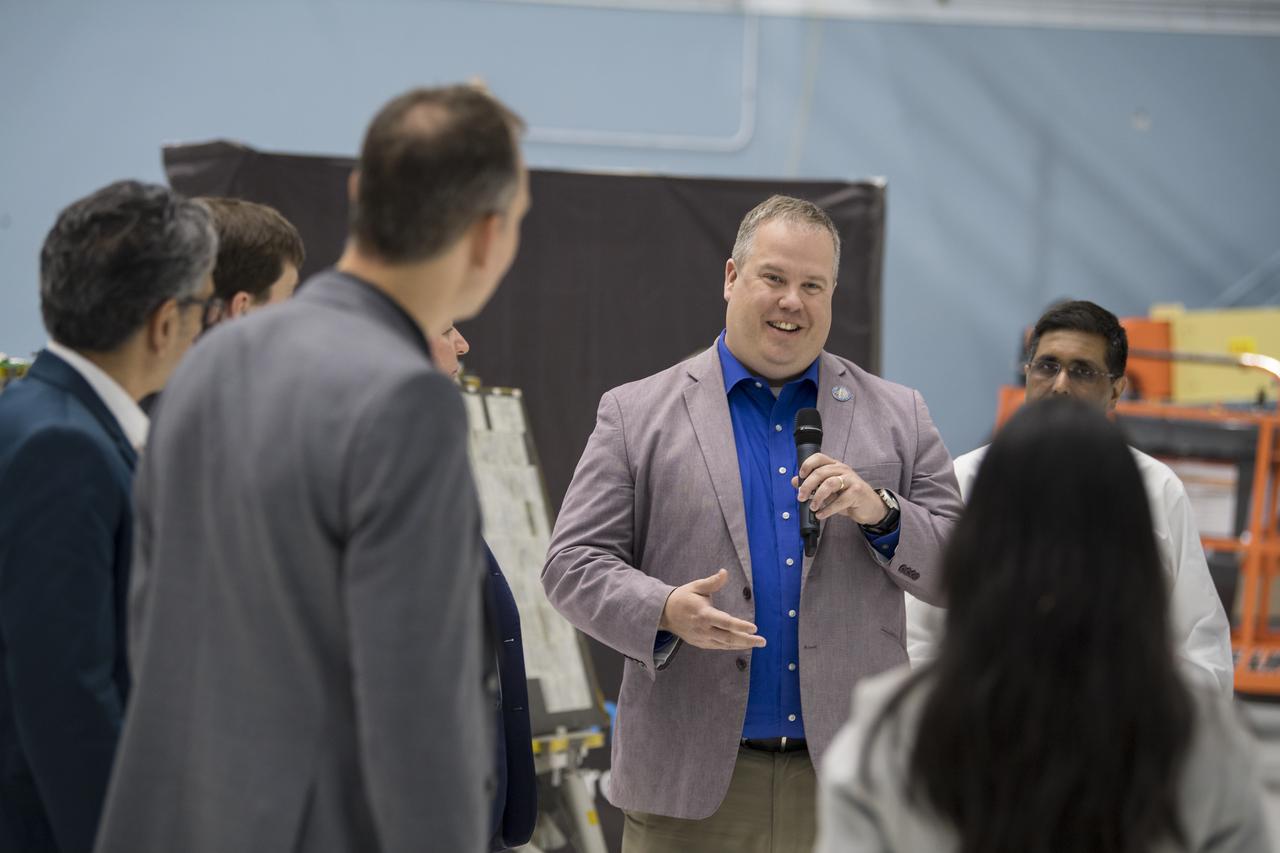
Vice President of Research and Development of Intuitive Machines, Tim Crain, second from right, speaks about their lunar lander, Friday, May 31, 2019, at Goddard Space Flight Center in Md. Astrobotic, Intuitive Machines, and Orbit Beyond have been selected to provide the first lunar landers for the Artemis program's lunar surface exploration. Photo credit: (NASA/Aubrey Gemignani)
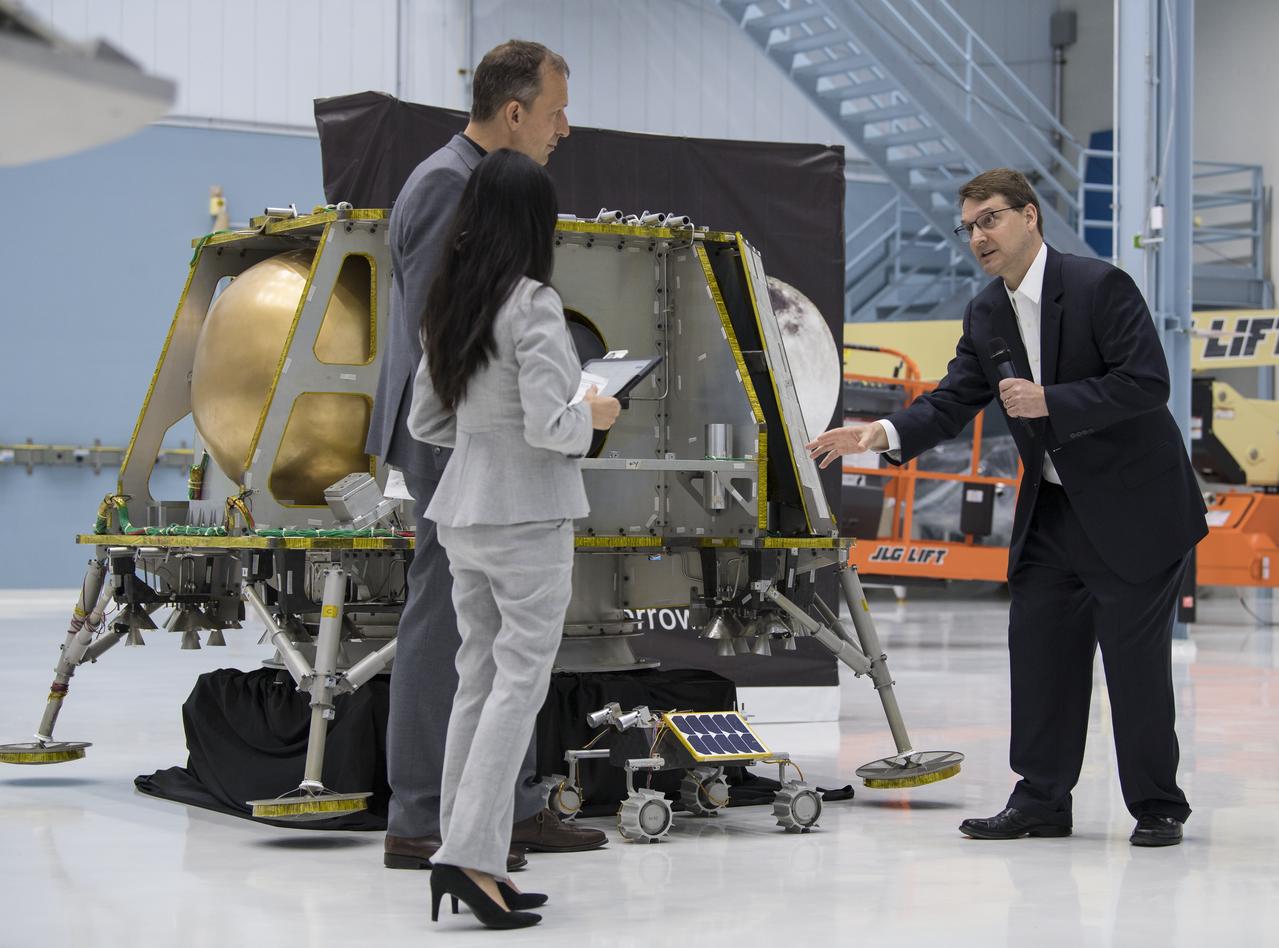
NASA Associate Administrator, Science Mission Directorate, Thomas Zurbuchen, second left, listens as Chief Science Officer, OrbitBeyond, Jon Morse, speaks about their lunar lander, Friday, May 31, 2019, at Goddard Space Flight Center in Md. Astrobotic, Intuitive Machines, and OrbitBeyond have been selected to provide the first lunar landers for the Artemis program's lunar surface exploration. Photo credit: (NASA/Aubrey Gemignani)
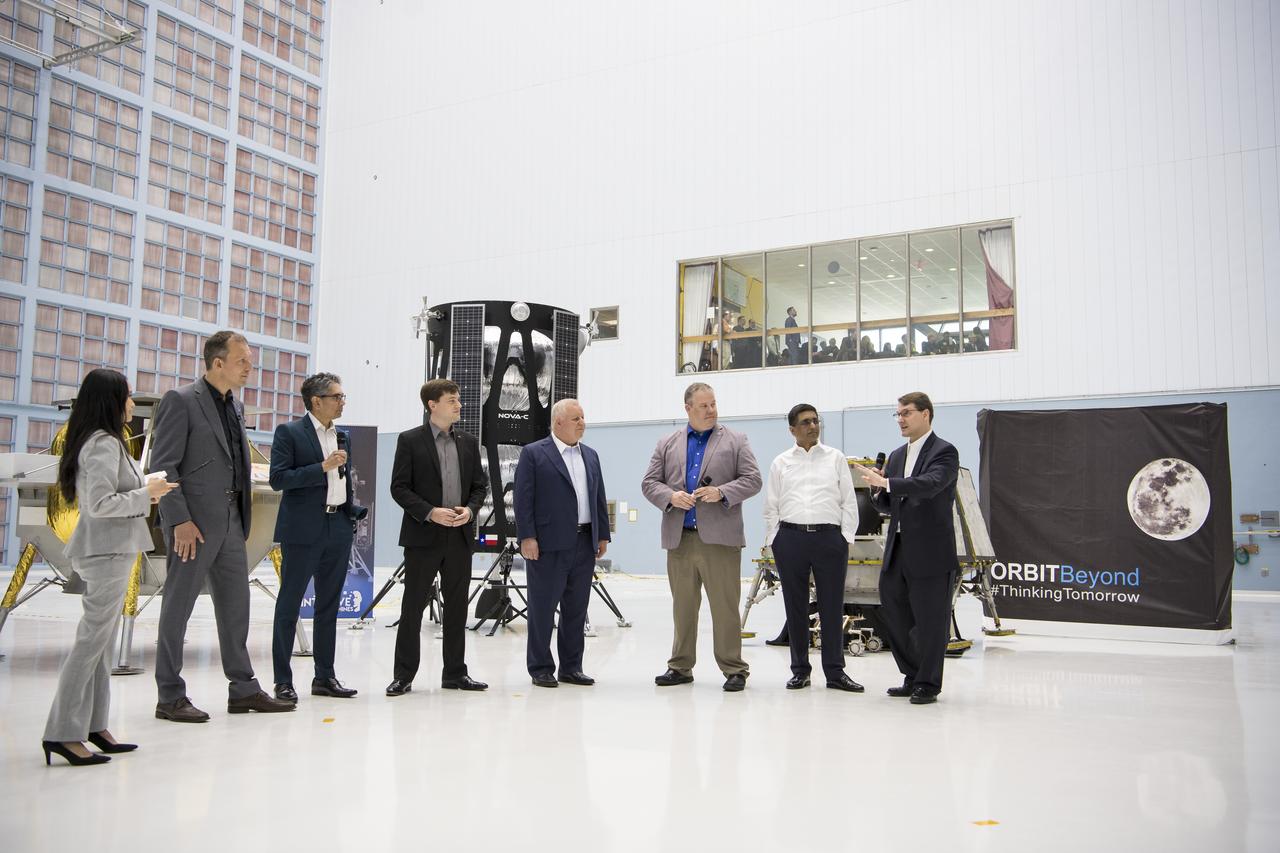
Chief Science Officer, OrbitBeyond, Jon Morse speaks about their lunar lander with, from left to right, NASA Press Officer, Felicia Chou; NASA Associate Administrator, Science Mission Directorate, Thomas Zurbuchen; Astrobotic Mission Director, Sharad Bhaskaran; Astrobotic CEO, John Thornton; Chairman of the Board of Intuitive Machines, Kam Ghaffarian; VP of Research and Development of Intuitive Machines, Tim Crain; President and CEO of OrbitBeyond, Siba Padhi, Friday, May 31, 2019, at Goddard Space Flight Center in Md. Astrobotic, Intuitive Machines, and OrbitBeyond have been selected to provide the first lunar landers for the Artemis program's lunar surface exploration. Photo credit: (NASA/Aubrey Gemignani)
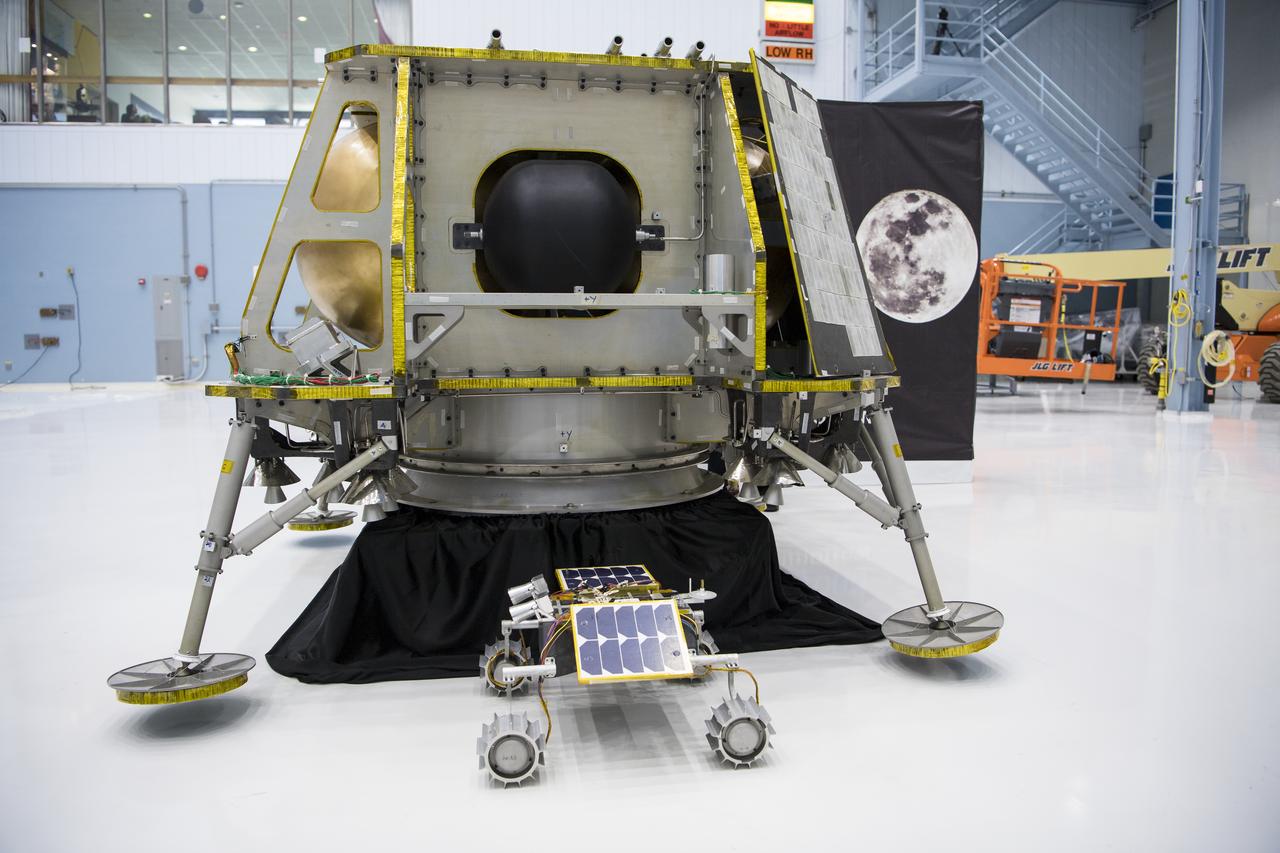
The OrbitBeyond lunar lander is seen, Friday, May 31, 2019, at Goddard Space Flight Center in Md. Astrobotic, Intuitive Machines, and OrbitBeyond have been selected to provide the first lunar landers for the Artemis program's lunar surface exploration. Photo credit: (NASA/Aubrey Gemignani)
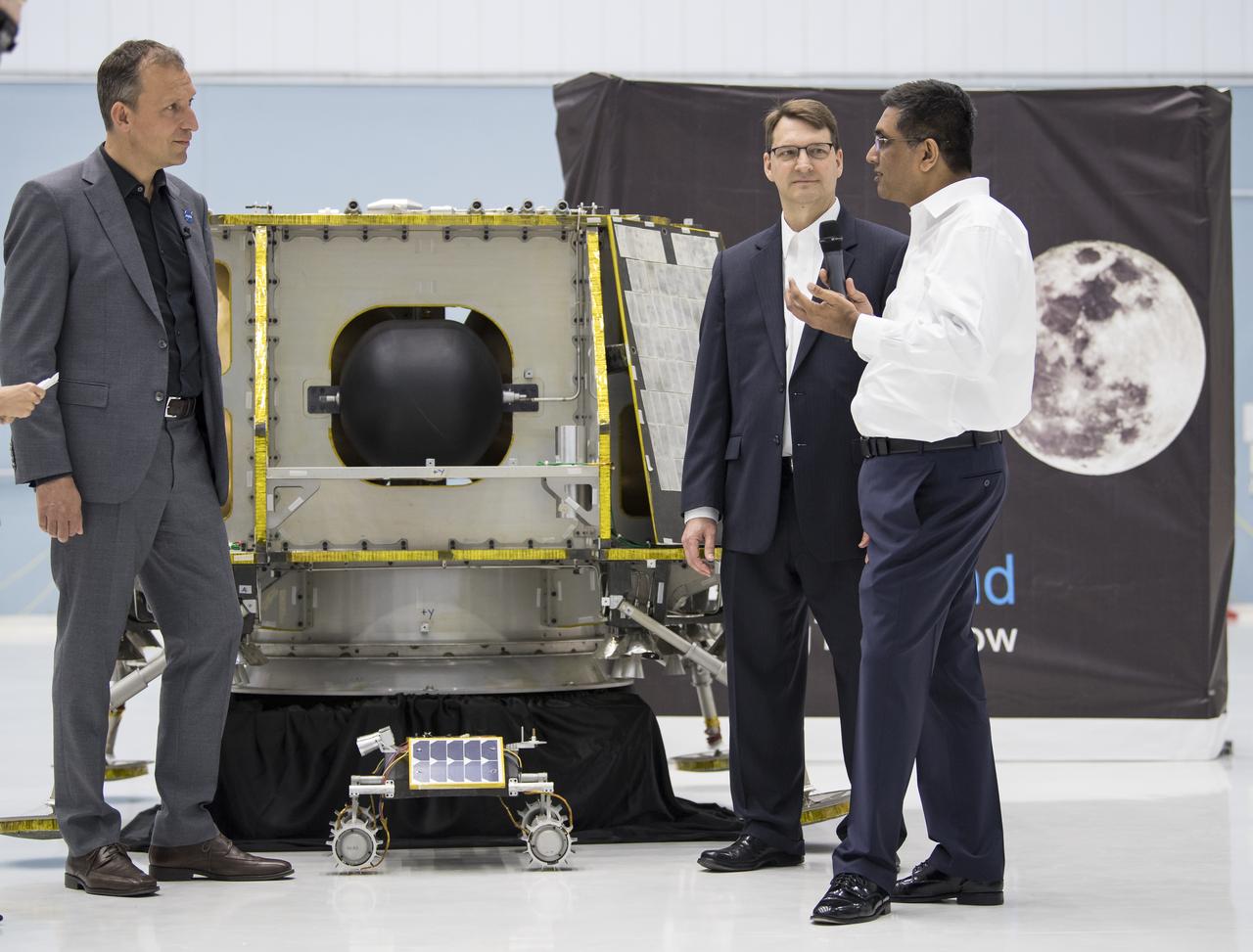
NASA Associate Administrator, Science Mission Directorate, Thomas Zurbuchen, left, speaks to, President and CEO of OrbitBeyond, Siba Padhi, right, and Chief Science Officer, OrbitBeyond, Jon Morse, about their lunar lander, Friday, May 31, 2019, at Goddard Space Flight Center in Md. Astrobotic, Intuitive Machines, and Orbit Beyond have been selected to provide the first lunar landers for the Artemis program's lunar surface exploration. Photo credit: (NASA/Aubrey Gemignani)
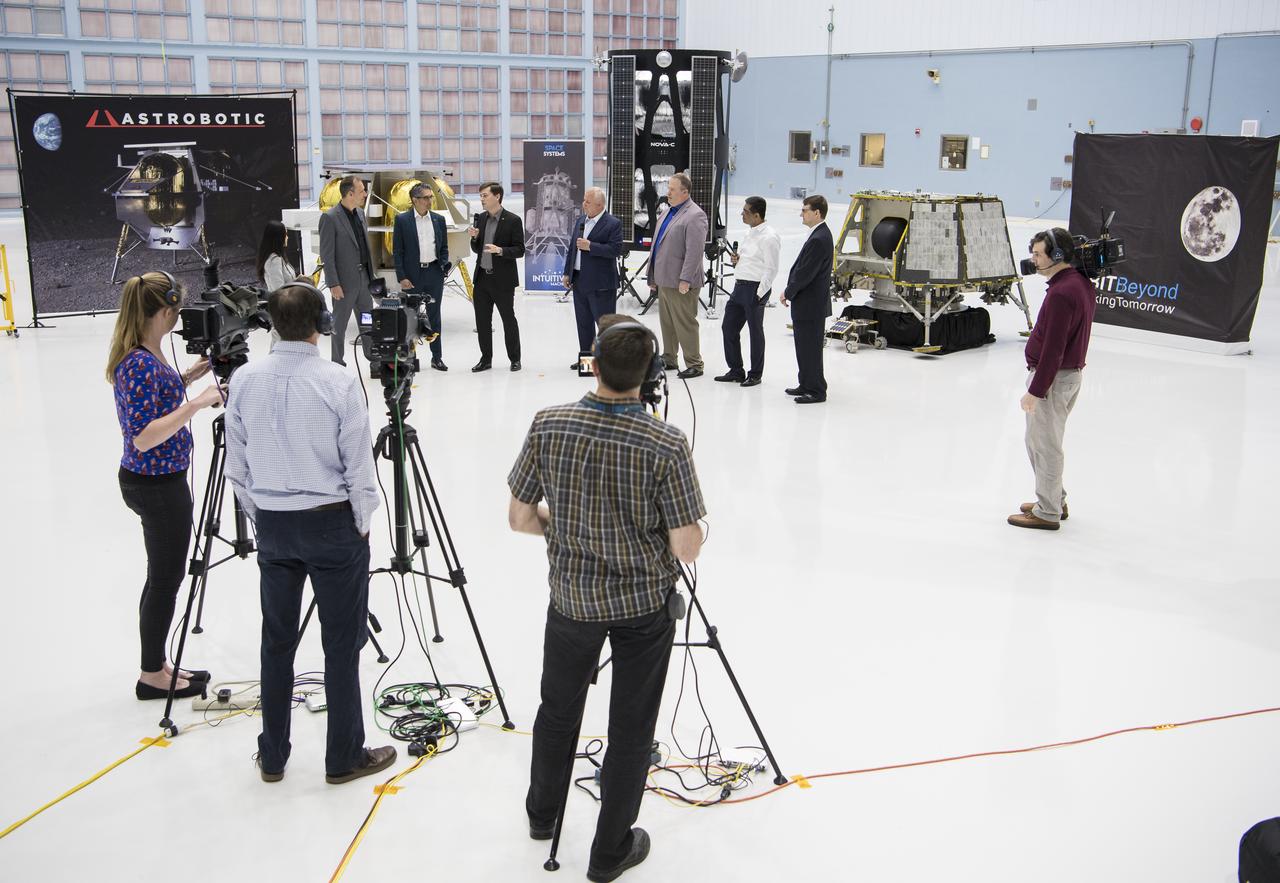
Astrobotic CEO, John Thornton, fourth from left, speaks about their lunar lander with, from left to right, NASA Press Officer, Felicia Chou; NASA Associate Administrator, Science Mission Directorate, Thomas Zurbuchen; Astrobotic Mission Director, Sharad Bhaskaran; Chairman of the Board of Intuitive Machines, Kam Ghaffarian; VP of Research and Development of Intuitive Machines, Tim Crain; President and CEO of OrbitBeyond, Siba Padhi; and Chief Science Officer, OrbitBeyond, Jon Morse, Friday, May 31, 2019, at Goddard Space Flight Center in Md. Astrobotic, Intuitive Machines, and OrbitBeyond have been selected to provide the first lunar landers for the Artemis program's lunar surface exploration. Photo credit: (NASA/Aubrey Gemignani)
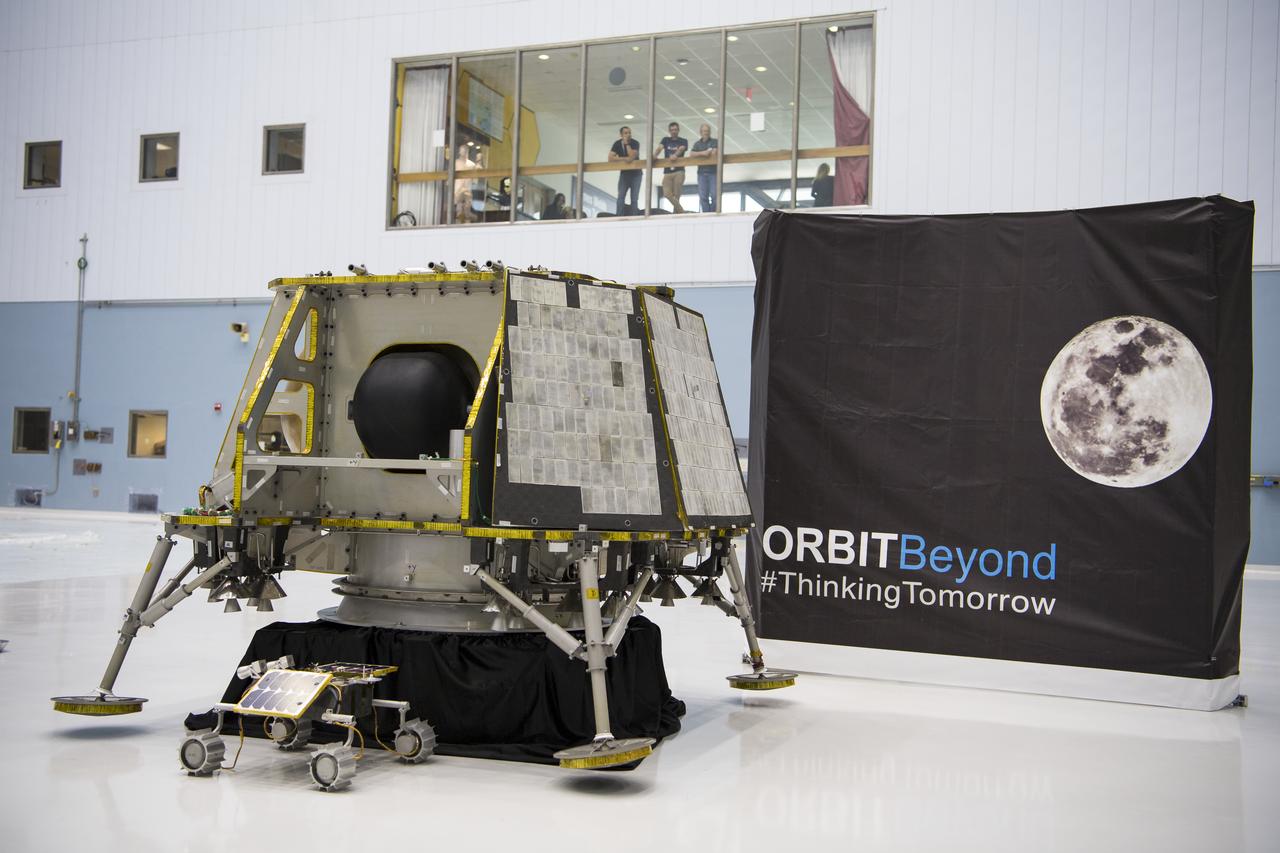
The OrbitBeyond lunar lander is seen, Friday, May 31, 2019, at Goddard Space Flight Center in Md. Astrobotic, Intuitive Machines, and OrbitBeyond have been selected to provide the first lunar landers for the Artemis program's lunar surface exploration. Photo credit: (NASA/Aubrey Gemignani)
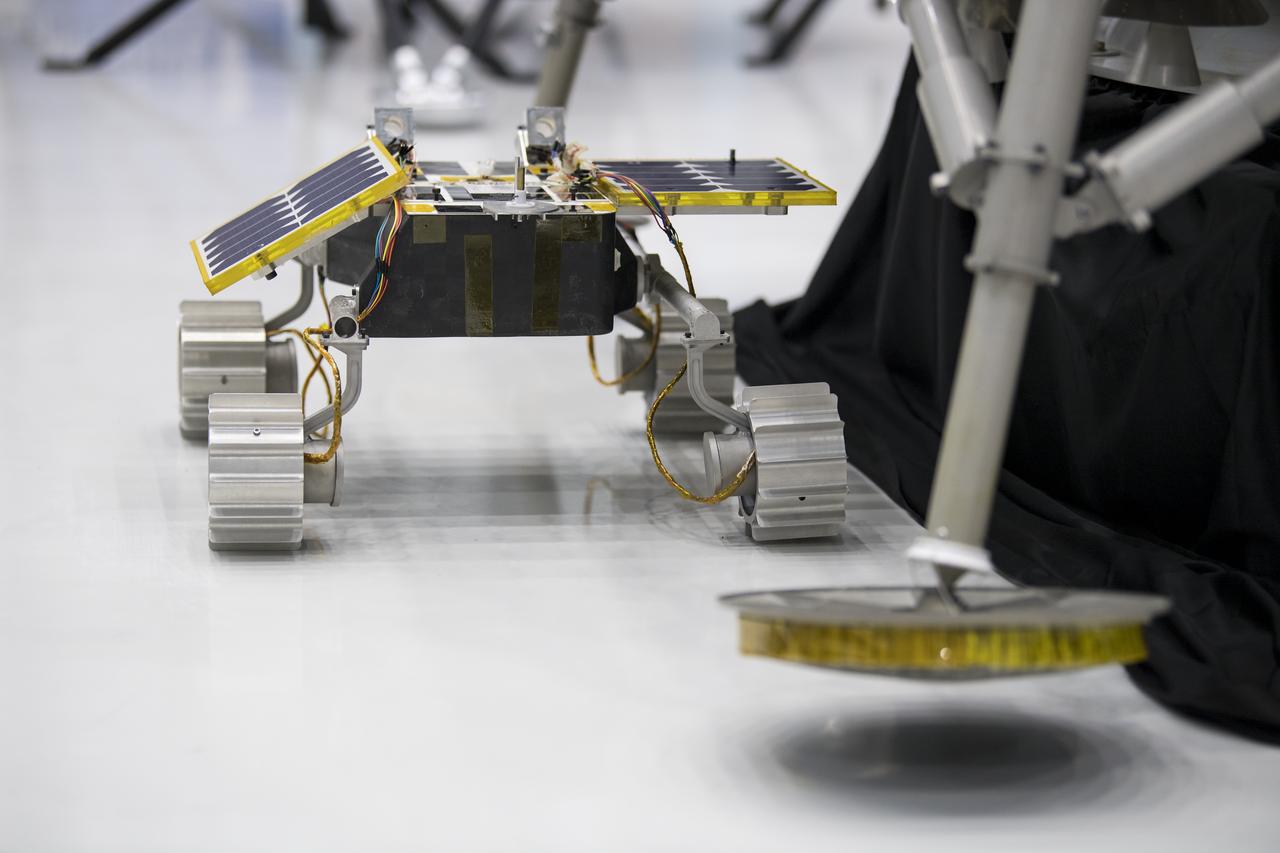
The OrbitBeyond lunar rover is seen, Friday, May 31, 2019, at Goddard Space Flight Center in Md. Astrobotic, Intuitive Machines, and OrbitBeyond have been selected to provide the first lunar landers for the Artemis program's lunar surface exploration. Photo credit: (NASA/Aubrey Gemignani)
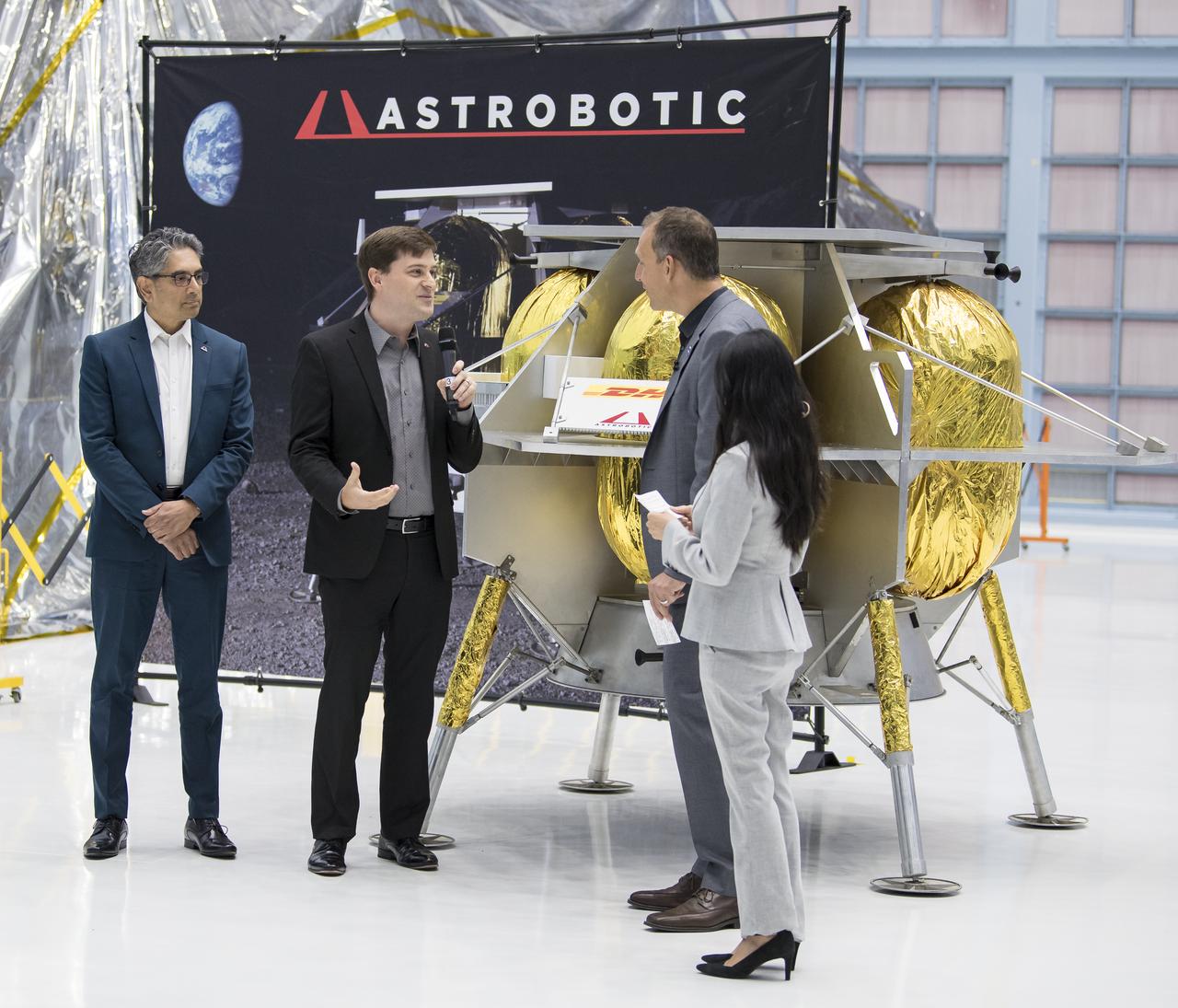
NASA Associate Administrator, Science Mission Directorate, Thomas Zurbuchen, second from right, speaks to Astrobotic CEO, John Thornton, second from left, and Astrobotic Mission Director, Sharad Bhaskaran, left, about their lunar lander, Friday, May 31, 2019, at Goddard Space Flight Center in Md. Astrobotic, Intuitive Machines, and Orbit Beyond have been selected to provide the first lunar landers for the Artemis program's lunar surface exploration. Photo credit: (NASA/Aubrey Gemignani)
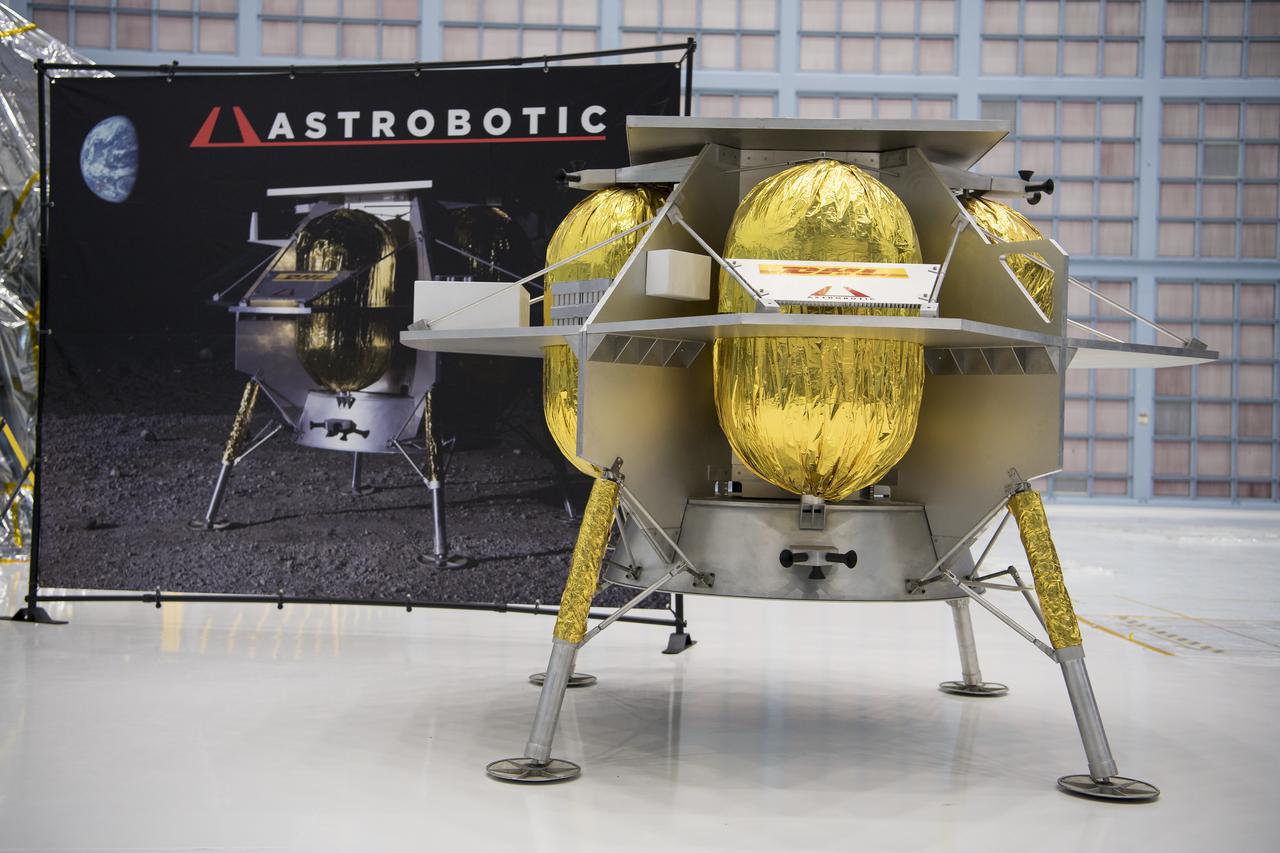
The Astrobotic lunar lander is seen, Friday, May 31, 2019, at Goddard Space Flight Center in Md. Astrobotic, Intuitive Machines, and OrbitBeyond have been selected to provide the first lunar landers for the Artemis program's lunar surface exploration. Photo credit: (NASA/Aubrey Gemignani)
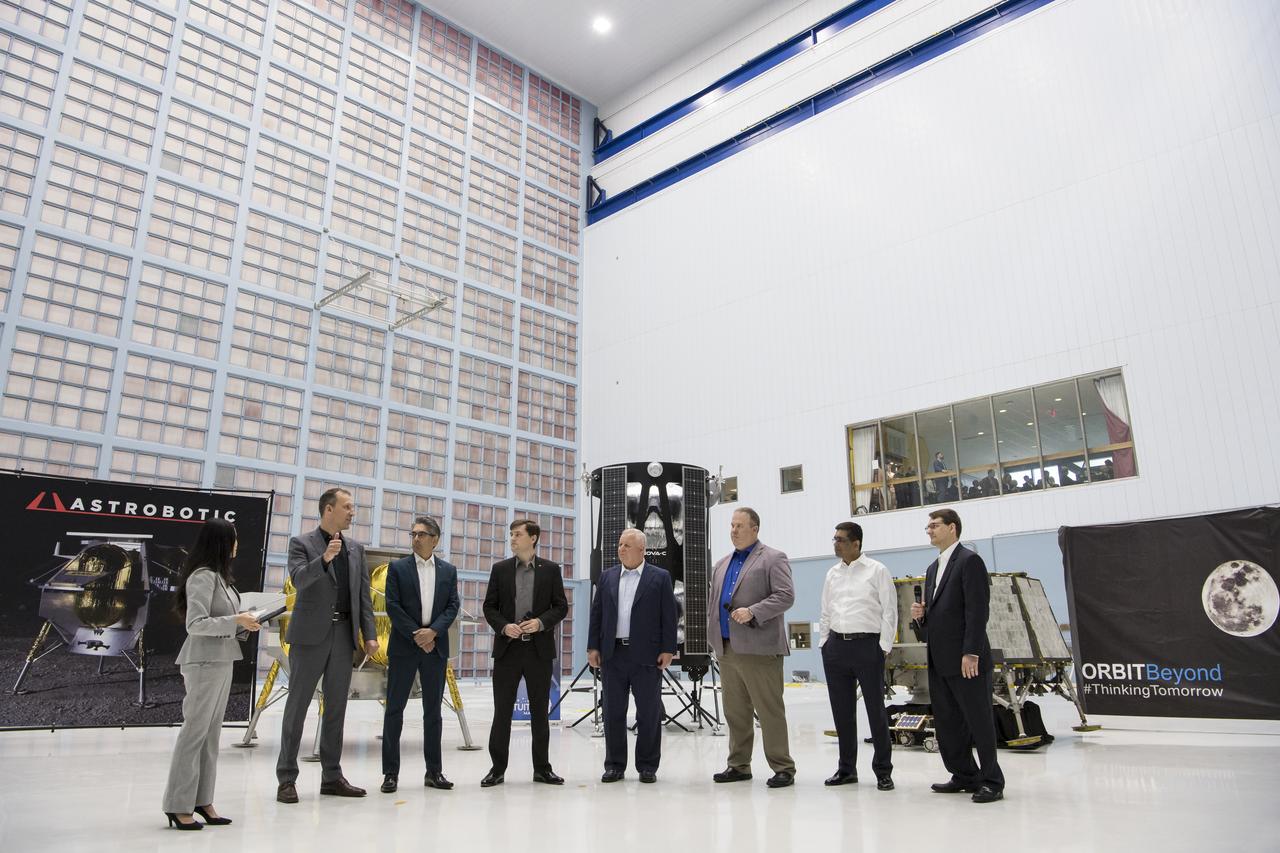
From left to right, NASA Press Officer, Felicia Chou; NASA Associate Administrator, Science Mission Directorate, Thomas Zurbuchen; Astrobotic Mission Director, Sharad Bhaskaran; Astrobotic CEO, John Thornton; Chairman of the Board of Intuitive Machines, Kam Ghaffarian; VP of Research and Development of Intuitive Machines, Tim Crain; President and CEO of OrbitBeyond, Siba Padhi; and Chief Science Officer, OrbitBeyond, Jon Morse talk about their lunar landers, Friday, May 31, 2019, at Goddard Space Flight Center in Md. Astrobotic, Intuitive Machines, and OrbitBeyond have been selected to provide the first lunar landers for the Artemis program's lunar surface exploration. Photo credit: (NASA/Aubrey Gemignani)
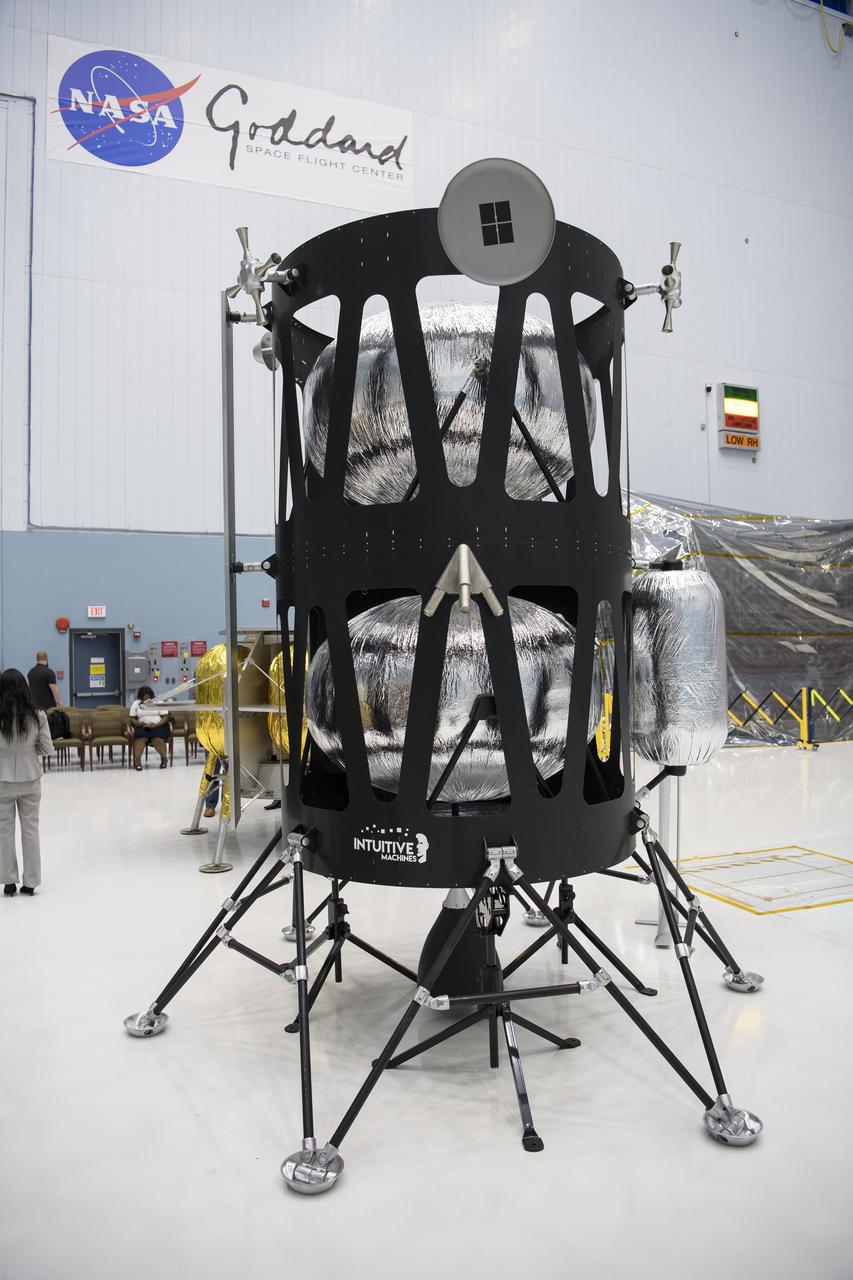
The Intuitive Machines lunar lander is seen, Friday, May 31, 2019, at Goddard Space Flight Center in Md. Astrobotic, Intuitive Machines, and Orbit Beyond have been selected to provide the first lunar landers for the Artemis program's lunar surface exploration. Photo credit: (NASA/Aubrey Gemignani)
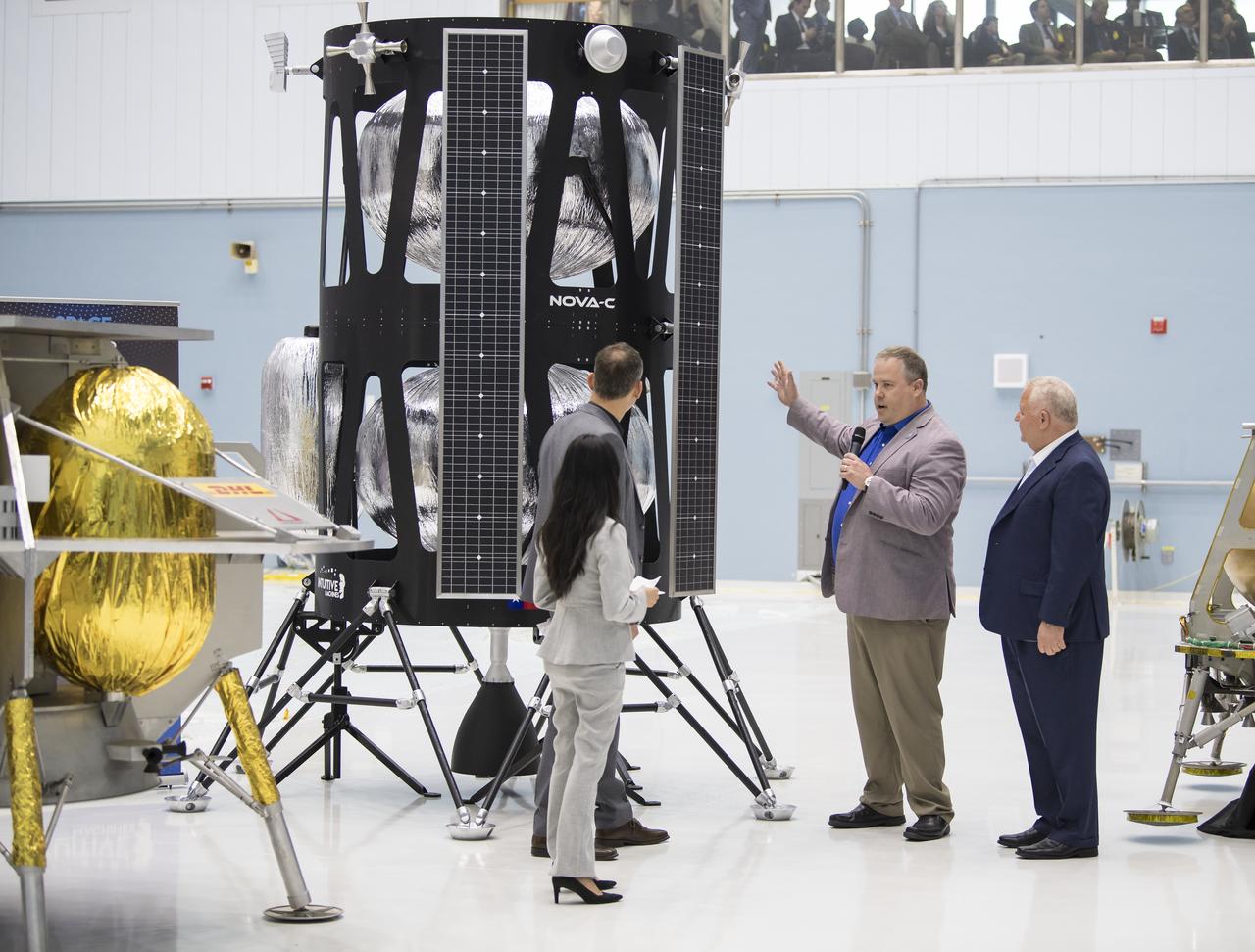
VP of Research and Development of Intuitive Machines, Tim Crain, second from right, speaks with NASA Associate Administrator, Science Mission Directorate, Thomas Zurbuchen, second from left, about their lunar lander, Friday, May 31, 2019, at Goddard Space Flight Center in Md. Astrobotic, Intuitive Machines, and Orbit Beyond have been selected to provide the first lunar landers for the Artemis program's lunar surface exploration. Photo credit: (NASA/Aubrey Gemignani)
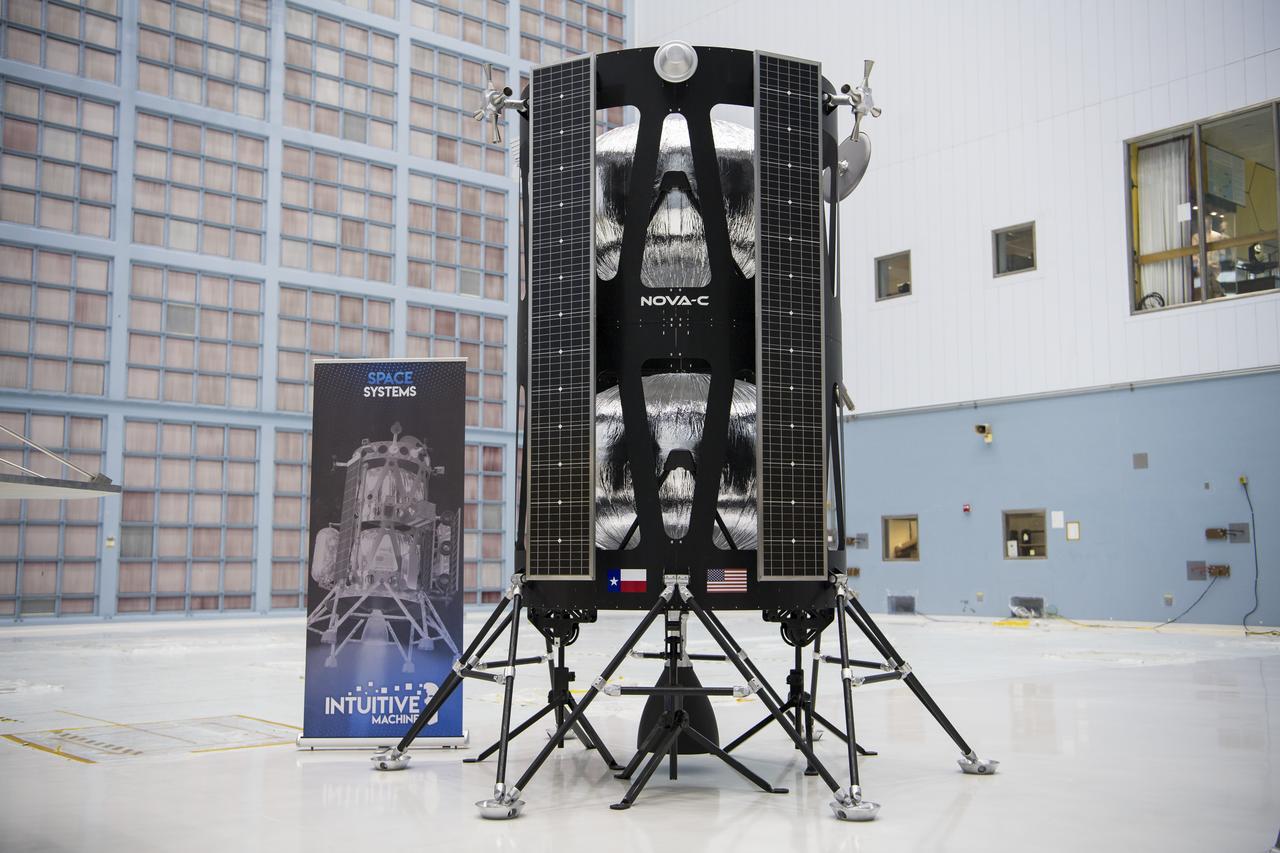
The Intuitive Machines lunar lander is seen, Friday, May 31, 2019, at Goddard Space Flight Center in Md. Astrobotic, Intuitive Machines, and Orbit Beyond have been selected to provide the first lunar landers for the Artemis program's lunar surface exploration. Photo credit: (NASA/Aubrey Gemignani)
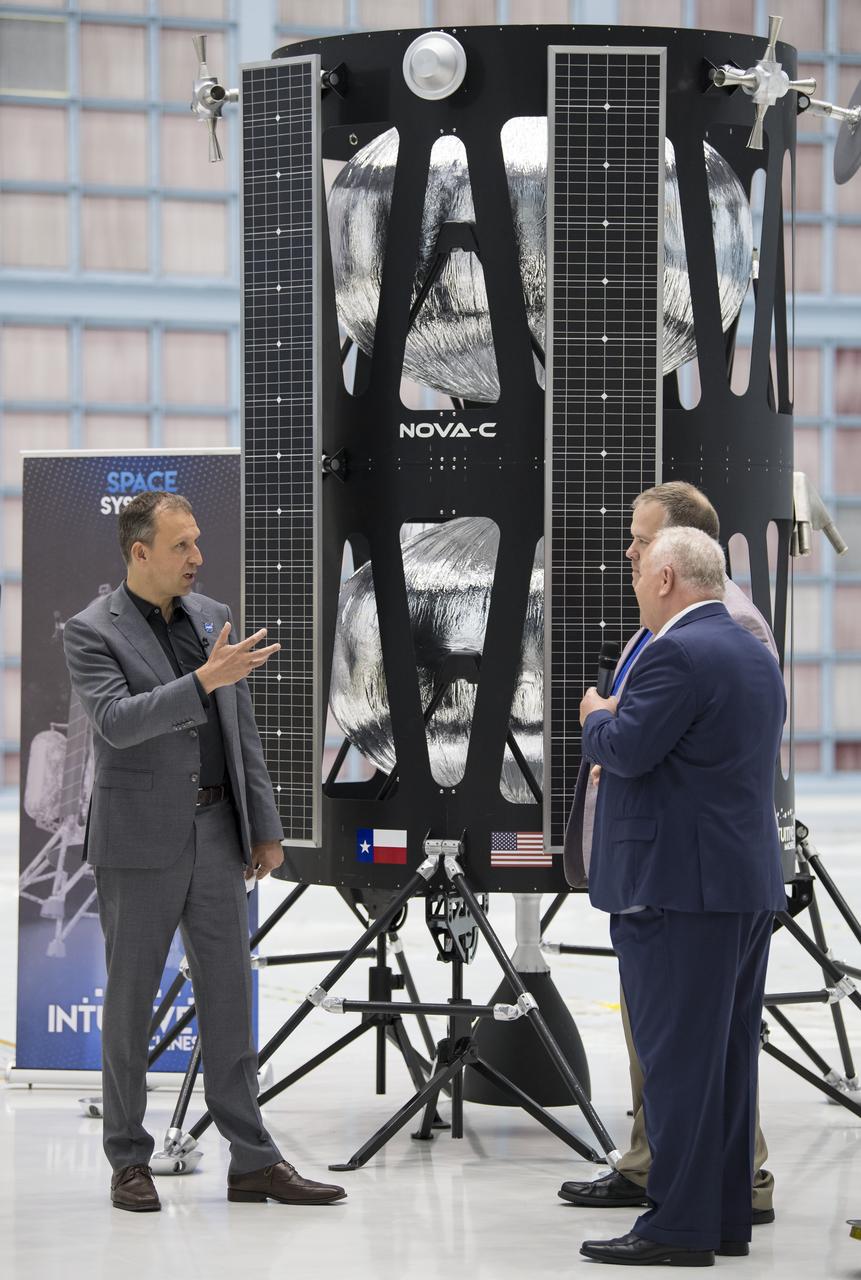
NASA Associate Administrator, Science Mission Directorate, Thomas Zurbuchen, left, speaks to, Chairman of the Board of Intuitive Machines, Kam Ghaffarian, right, and VP of Research and Development of Intuitive Machines, Tim Crain, second from right, about their lunar lander, Friday, May 31, 2019, at Goddard Space Flight Center in Md. Astrobotic, Intuitive Machines, and Orbit Beyond have been selected to provide the first lunar landers for the Artemis program's lunar surface exploration. Photo credit: (NASA/Aubrey Gemignani)
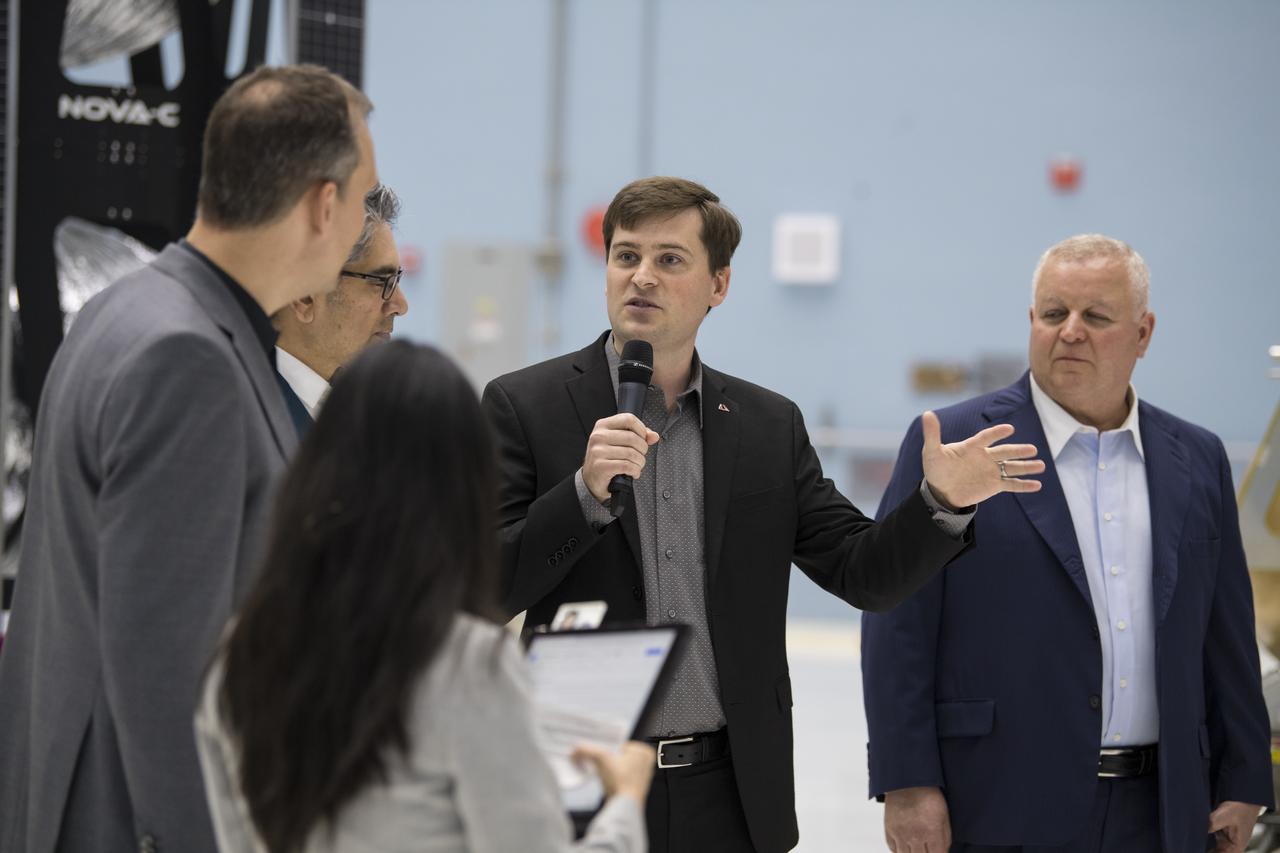
Astrobotic CEO, John Thornton, second from right, speaks about their lunar lander, Friday, May 31, 2019, at Goddard Space Flight Center in Md. Astrobotic, Intuitive Machines, and Orbit Beyond have been selected to provide the first lunar landers for the Artemis program's lunar surface exploration. Photo credit: (NASA/Aubrey Gemignani)
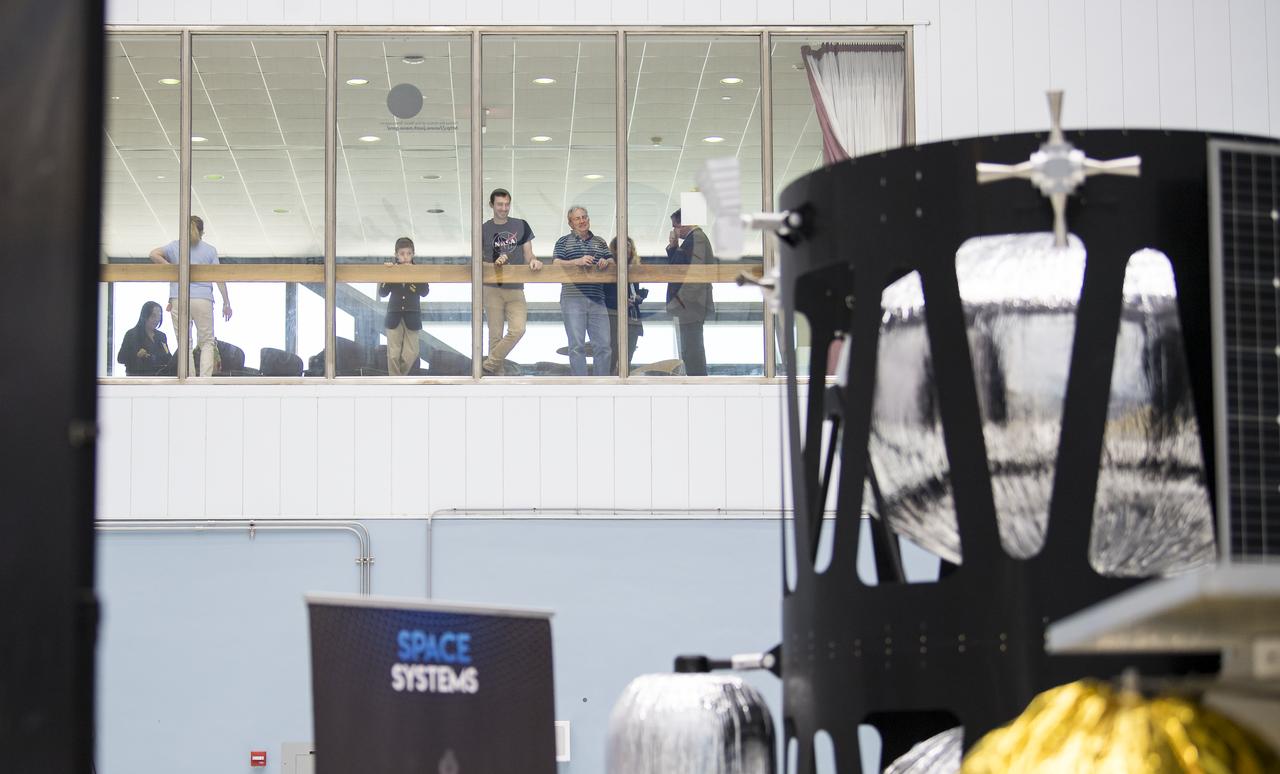
Goddard Space Flight Center employees are seen looking at the lunar landers from above, Friday, May 31, 2019, at Goddard Space Flight Center in Md. Astrobotic, Intuitive Machines, and Orbit Beyond have been selected to provide the first lunar landers for the Artemis program's lunar surface exploration. Photo credit: (NASA/Aubrey Gemignani)
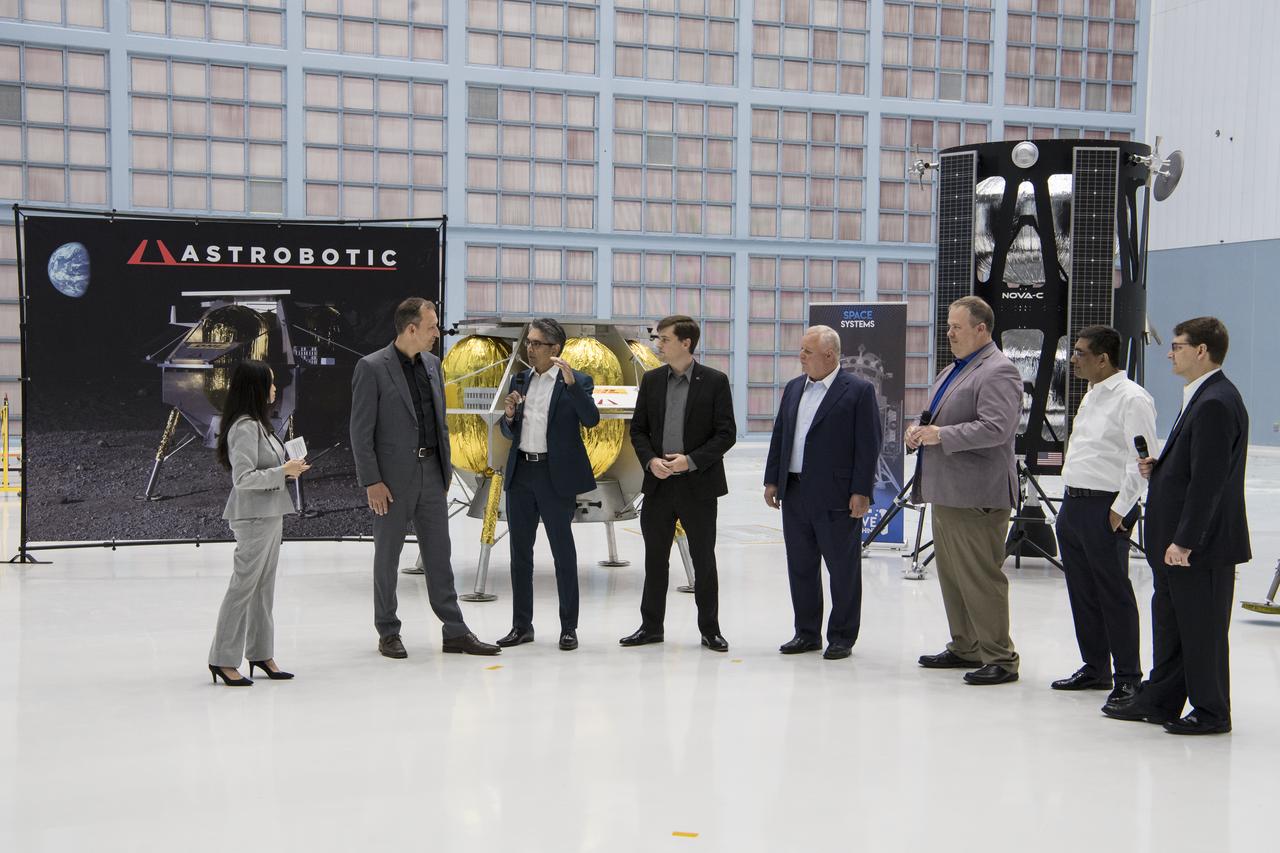
Astrobotic Mission Director, Sharad Bhaskaran , third from left, speaks about their lunar lander with, from left to right, NASA Press Officer, Felicia Chou; NASA Associate Administrator, Science Mission Directorate, Thomas Zurbuchen; Astrobotic CEO, John Thornton; Chairman of the Board of Intuitive Machines, Kam Ghaffarian; VP of Research and Development of Intuitive Machines, Tim Crain; President and CEO of OrbitBeyond, Siba Padhi; and Chief Science Officer, OrbitBeyond, Jon Morse, Friday, May 31, 2019, at Goddard Space Flight Center in Md. Astrobotic, Intuitive Machines, and OrbitBeyond have been selected to provide the first lunar landers for the Artemis program's lunar surface exploration. Photo credit: (NASA/Aubrey Gemignani)
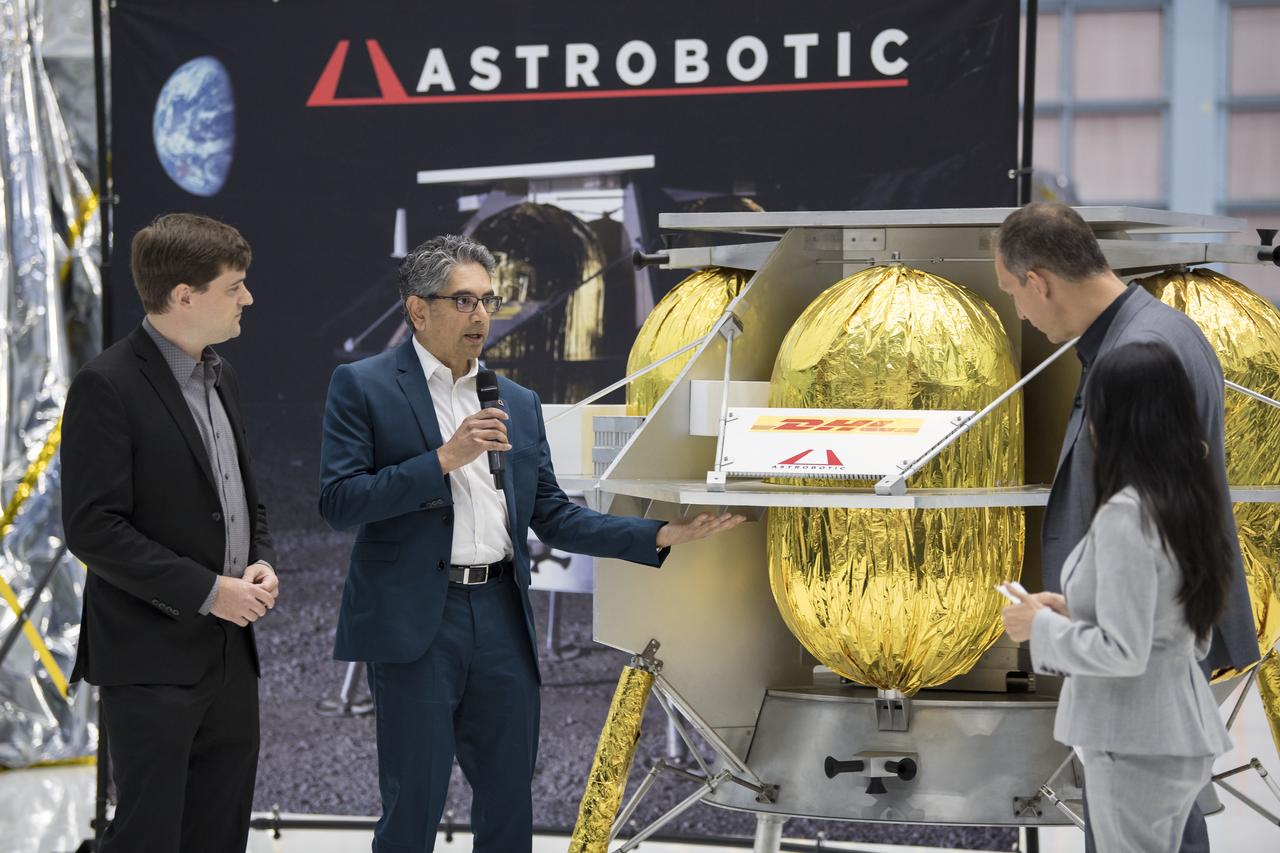
NASA Associate Administrator, Science Mission Directorate, Thomas Zurbuchen, second from right, speaks to Astrobotic CEO, John Thornton, left, and Astrobotic Mission Director, Sharad Bhaskaran, second from left, about their lunar lander, Friday, May 31, 2019, at Goddard Space Flight Center in Md. Astrobotic, Intuitive Machines, and Orbit Beyond have been selected to provide the first lunar landers for the Artemis program's lunar surface exploration. Photo credit: (NASA/Aubrey Gemignani)
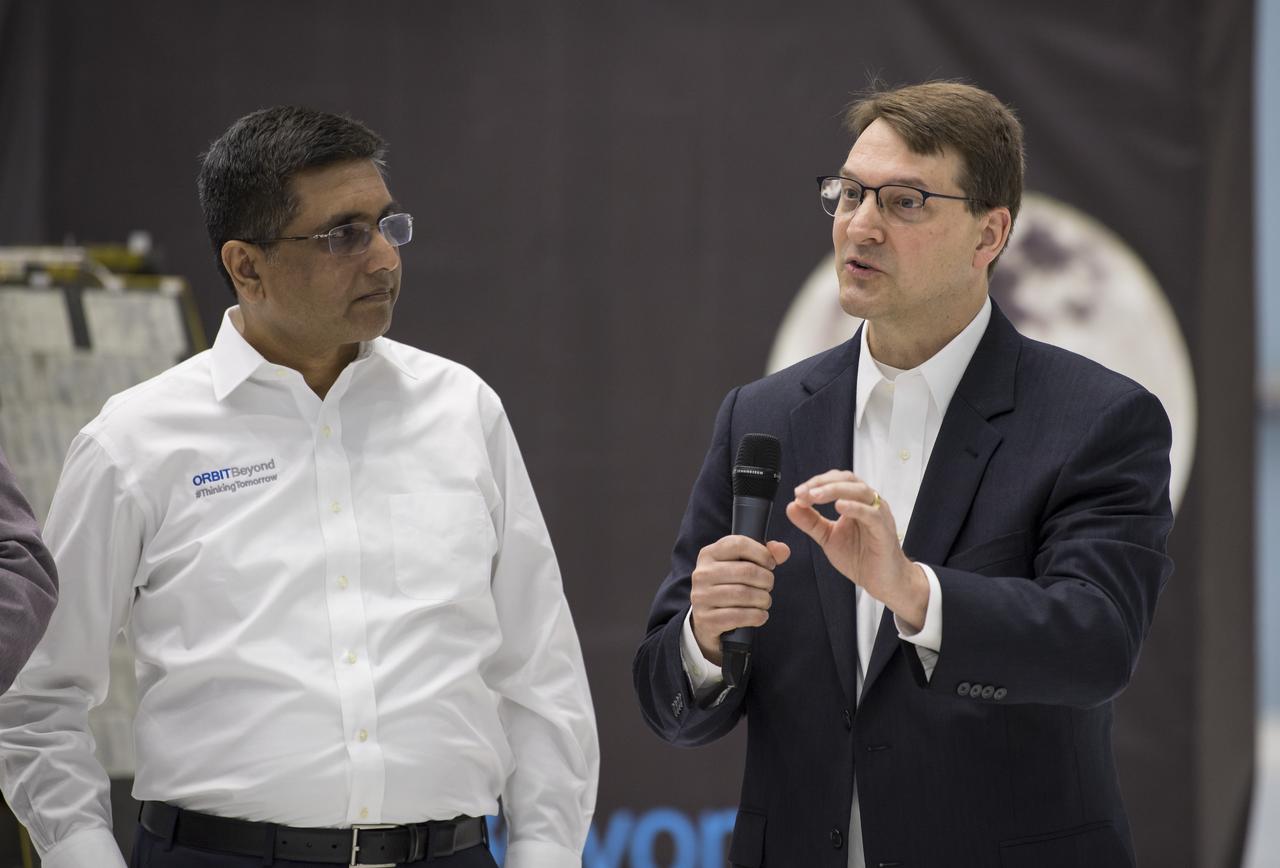
President and CEO of OrbitBeyond, Siba Padhi, left, and Chief Science Officer, OrbitBeyond, Jon Morse, speak about their lunar lander, Friday, May 31, 2019, at Goddard Space Flight Center in Md. Astrobotic, Intuitive Machines, and Orbit Beyond have been selected to provide the first lunar landers for the Artemis program's lunar surface exploration. Photo credit: (NASA/Aubrey Gemignani)
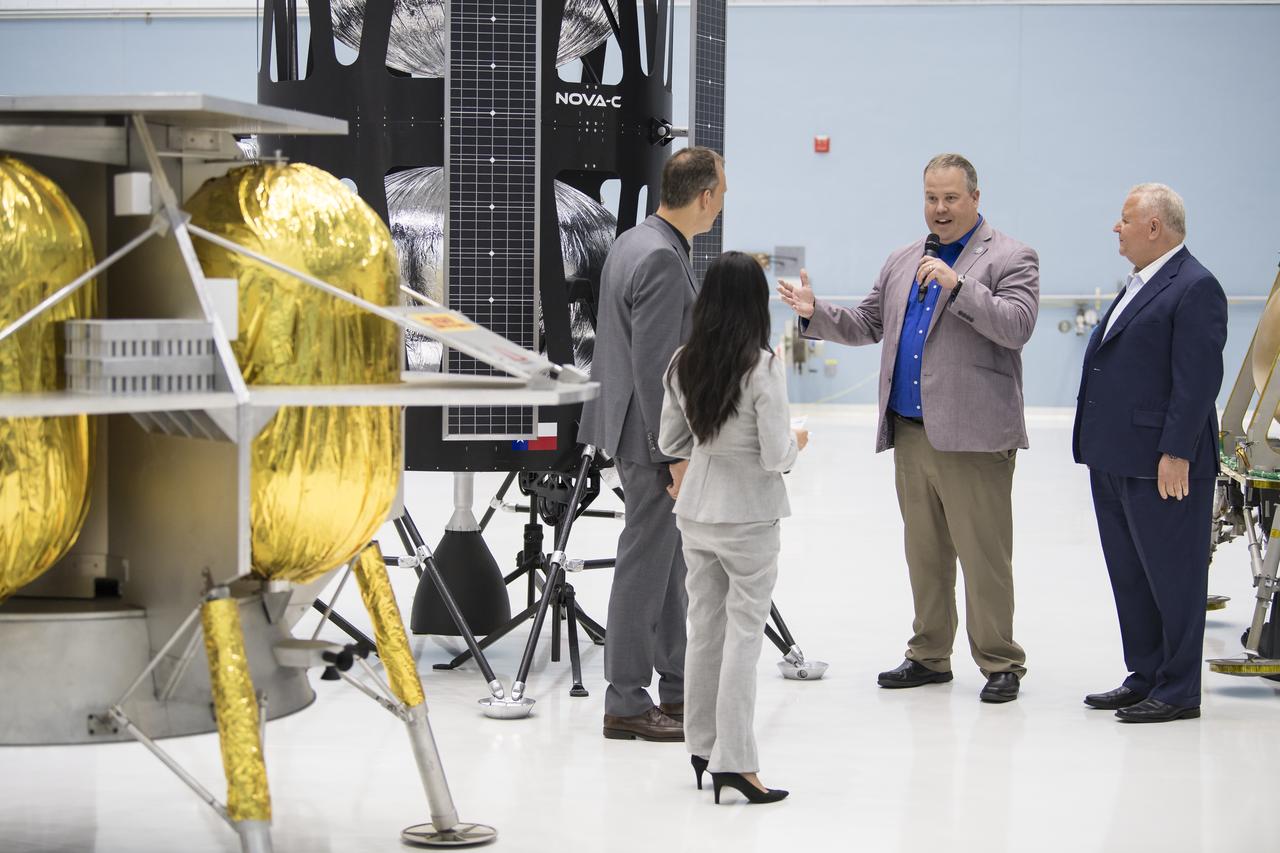
VP of Research and Development of Intuitive Machines, Tim Crain, second from right, speaks with NASA Associate Administrator, Science Mission Directorate, Thomas Zurbuchen, second from left, about their lunar lander, Friday, May 31, 2019, at Goddard Space Flight Center in Md. Astrobotic, Intuitive Machines, and Orbit Beyond have been selected to provide the first lunar landers for the Artemis program's lunar surface exploration. Photo credit: (NASA/Aubrey Gemignani)
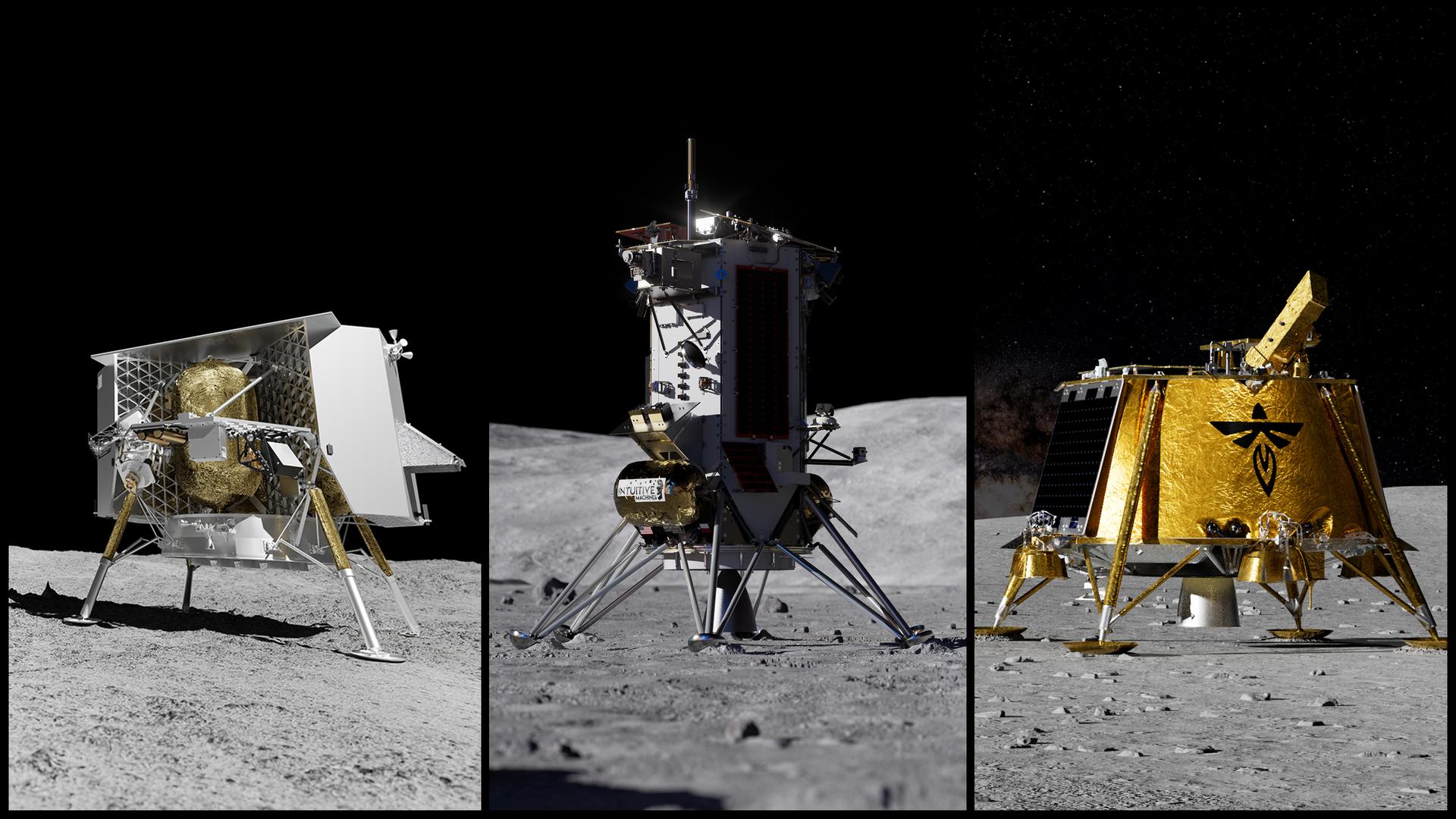
Three artist renderings depict commercial lunar landers from Astrobotic, Intuitive Machines, and Firefly on the Moon. NASA announced June 30 the landers will deliver more NASA science investigations and technology demonstrations to the lunar surface for NASA’s Moon Base Program. Credit: Astrobotic/Intuitive Machines/Firefly
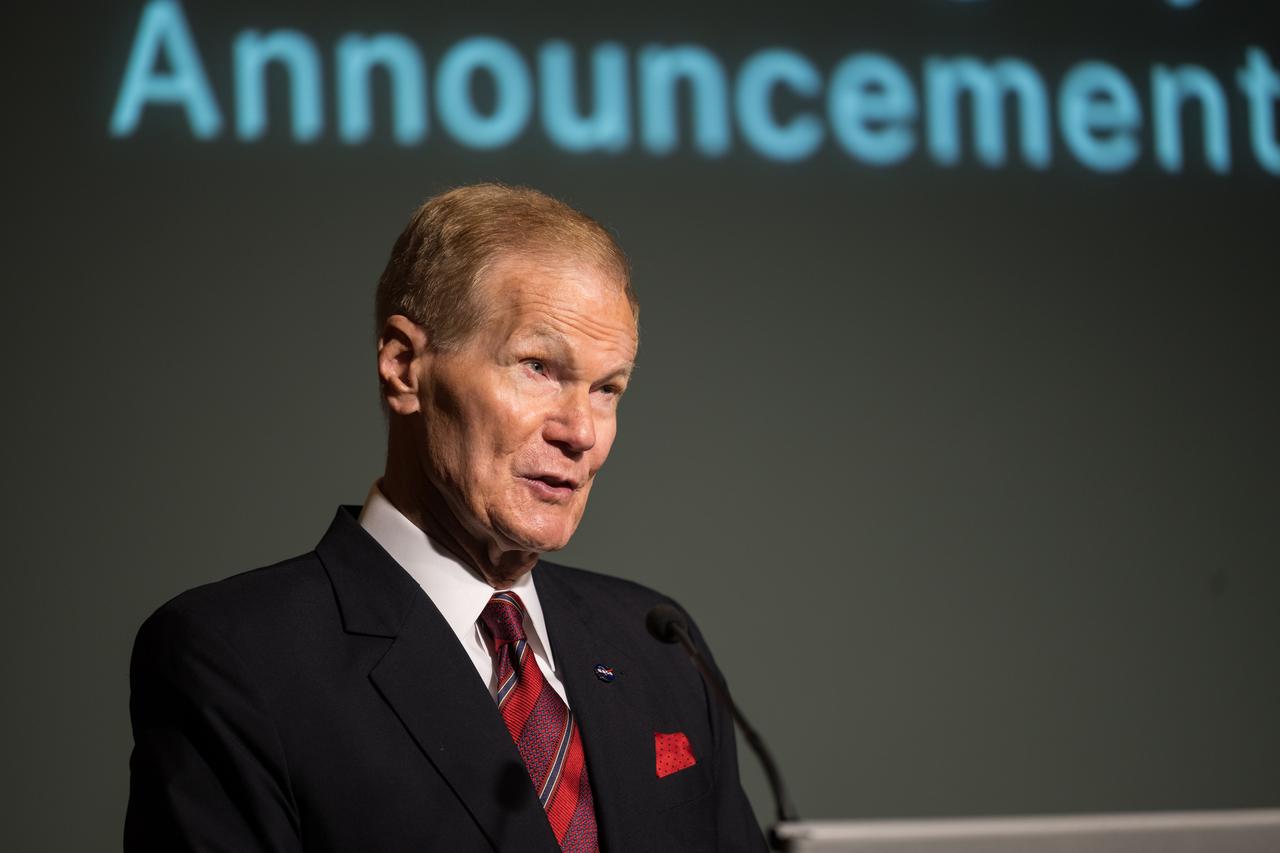
NASA Administrator Bill Nelson gives remarks during an event announcing Blue Origin as the company selected to develop a sustainable human landing system for the Artemis V Moon mission, Friday, May 19, 2023 at the Mary W. Jackson NASA Headquarters building in Washington. The human landing system will take astronauts to and from Gateway in lunar orbit to the surface and back to the lunar space station as part of NASA’s return to the Moon for science, exploration, and inspiration. Photo Credit: (NASA/Aubrey Gemignani)
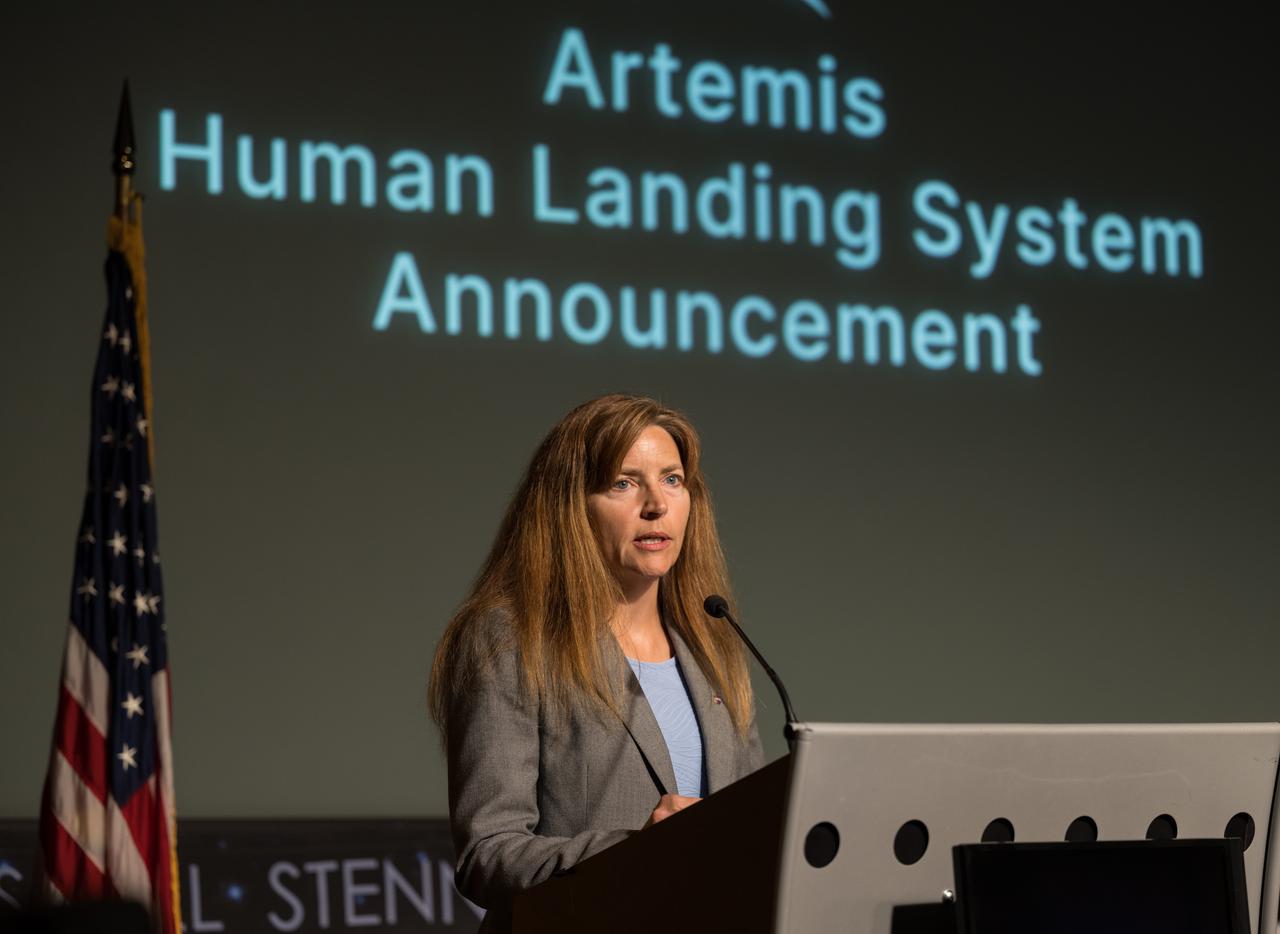
Human Landing System Program Manager Lisa Watson-Morgan gives remarks during an event announcing Blue Origin as the company selected to develop a sustainable human landing system for the Artemis V Moon mission, Friday, May 19, 2023 at the Mary W. Jackson NASA Headquarters building in Washington. The human landing system will take astronauts to and from Gateway in lunar orbit to the surface and back to the lunar space station as part of NASA’s return to the Moon for science, exploration, and inspiration. Photo Credit: (NASA/Aubrey Gemignani)
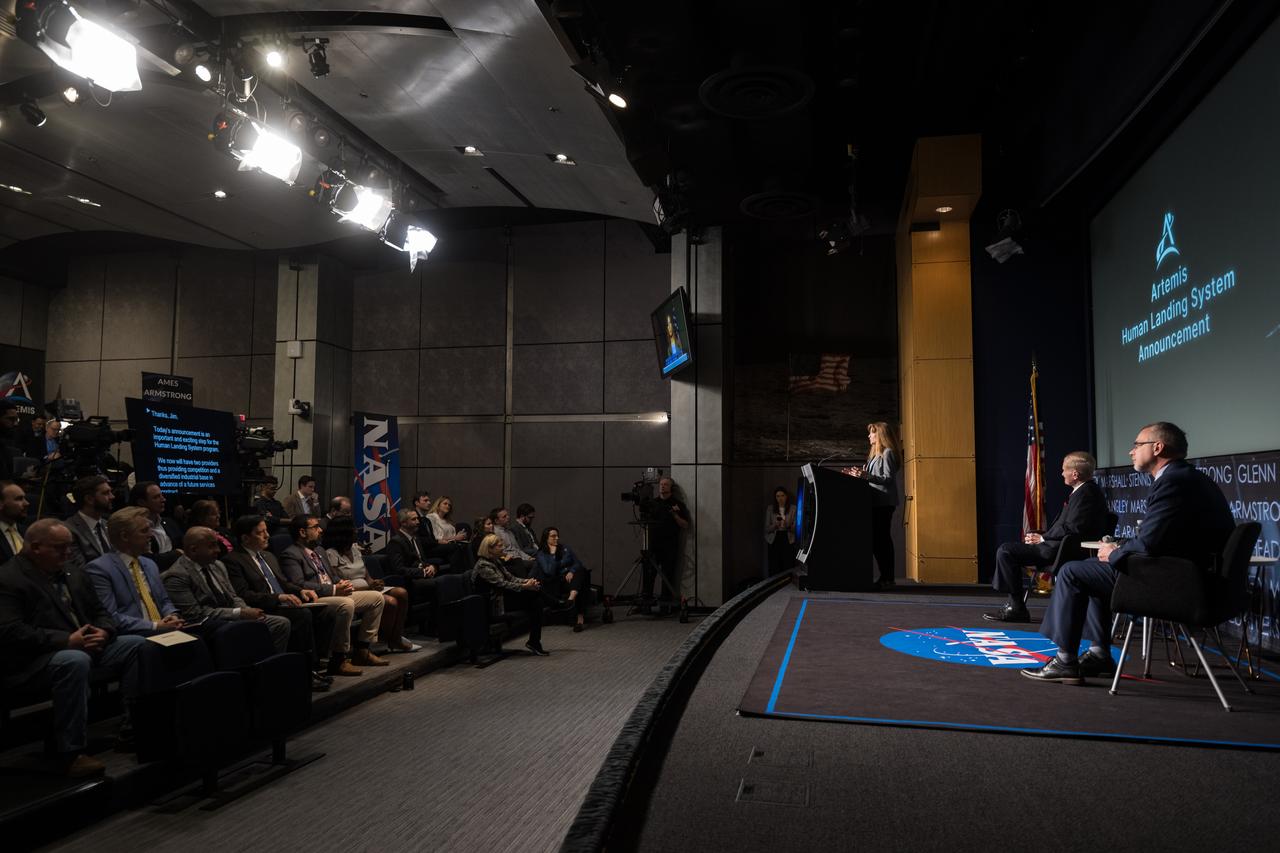
Human Landing System Program Manager Lisa Watson-Morgan gives remarks during an event announcing Blue Origin as the company selected to develop a sustainable human landing system for the Artemis V Moon mission, Friday, May 19, 2023 at the Mary W. Jackson NASA Headquarters building in Washington. The human landing system will take astronauts to and from Gateway in lunar orbit to the surface and back to the lunar space station as part of NASA’s return to the Moon for science, exploration, and inspiration. Photo Credit: (NASA/Aubrey Gemignani)
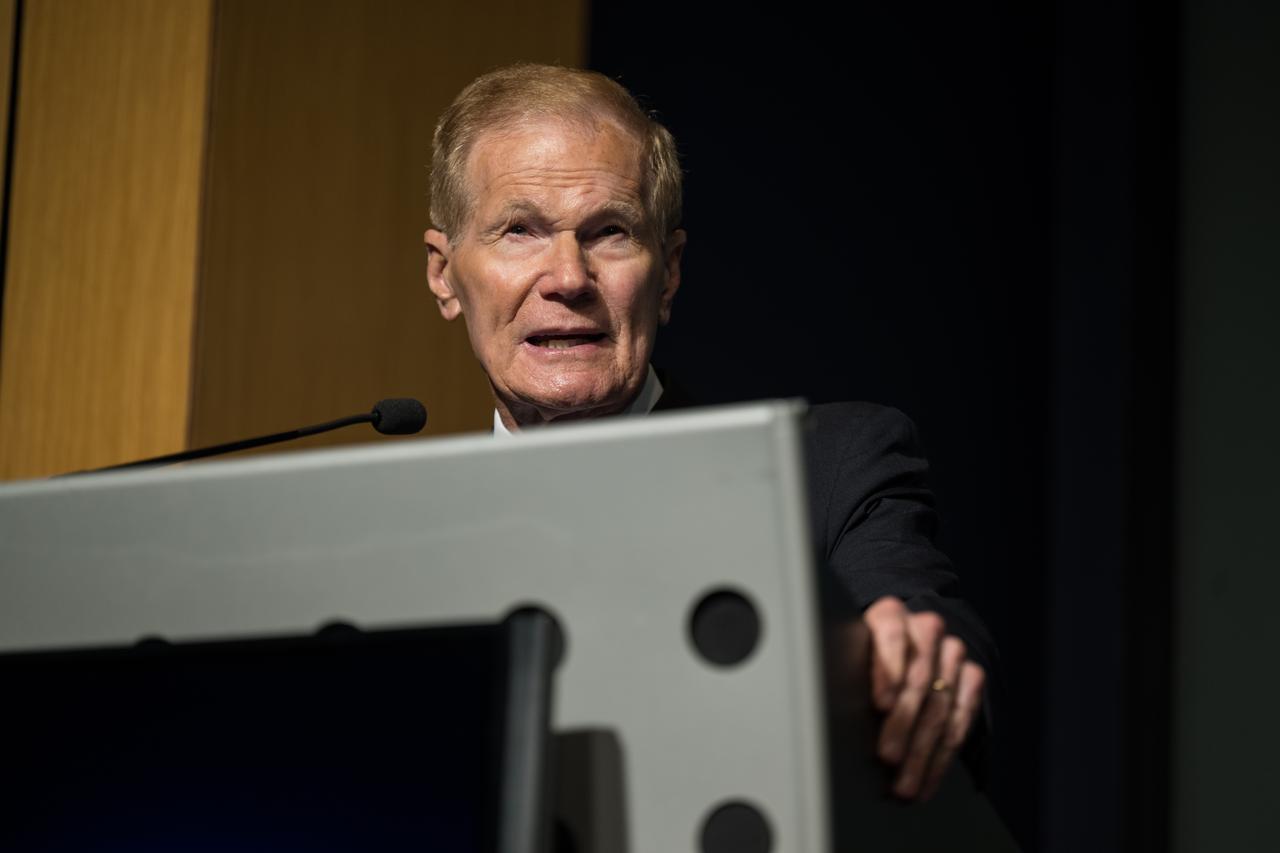
NASA Administrator Bill Nelson gives remarks during an event announcing Blue Origin as the company selected to develop a sustainable human landing system for the Artemis V Moon mission, Friday, May 19, 2023 at the Mary W. Jackson NASA Headquarters building in Washington. The human landing system will take astronauts to and from Gateway in lunar orbit to the surface and back to the lunar space station as part of NASA’s return to the Moon for science, exploration, and inspiration. Photo Credit: (NASA/Aubrey Gemignani)
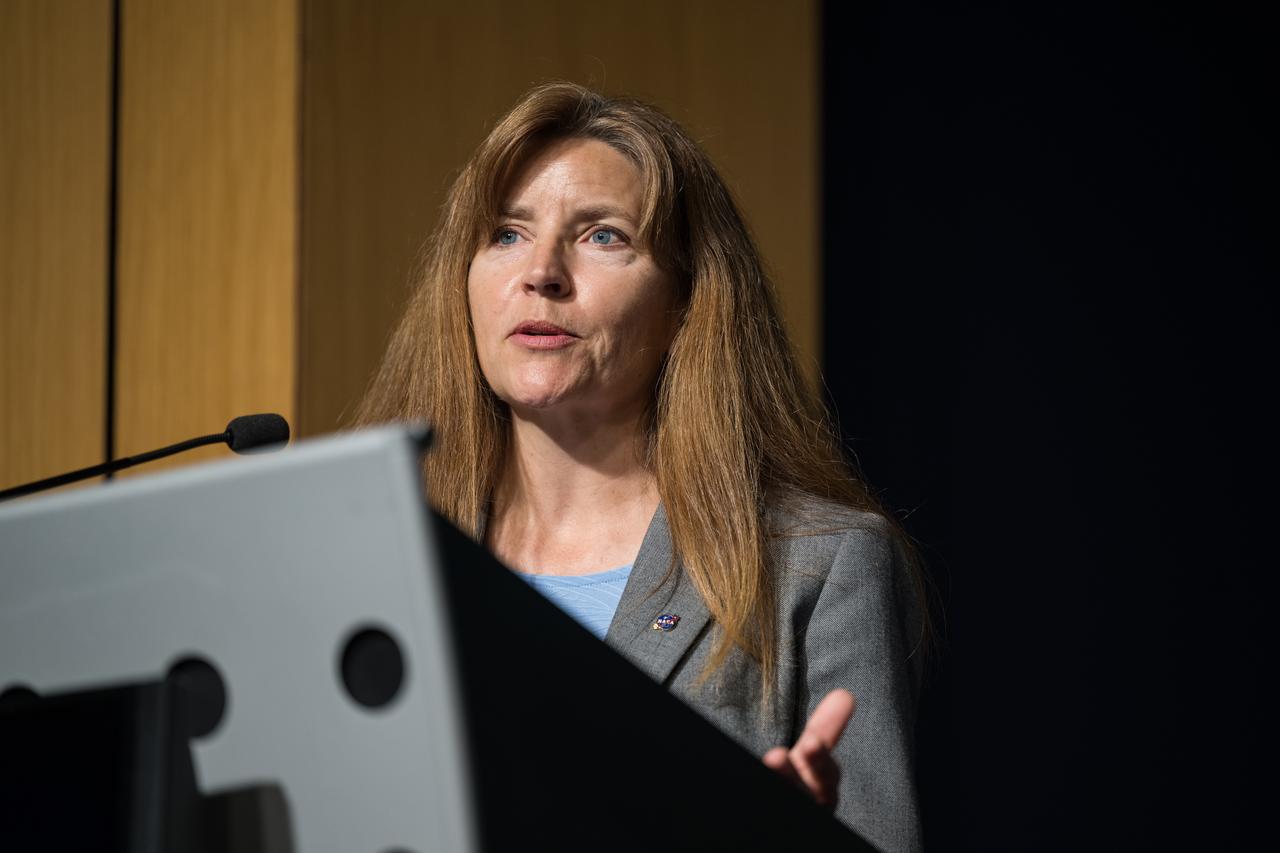
Human Landing System Program Manager Lisa Watson-Morgan gives remarks during an event announcing Blue Origin as the company selected to develop a sustainable human landing system for the Artemis V Moon mission, Friday, May 19, 2023 at the Mary W. Jackson NASA Headquarters building in Washington. The human landing system will take astronauts to and from Gateway in lunar orbit to the surface and back to the lunar space station as part of NASA’s return to the Moon for science, exploration, and inspiration. Photo Credit: (NASA/Aubrey Gemignani)
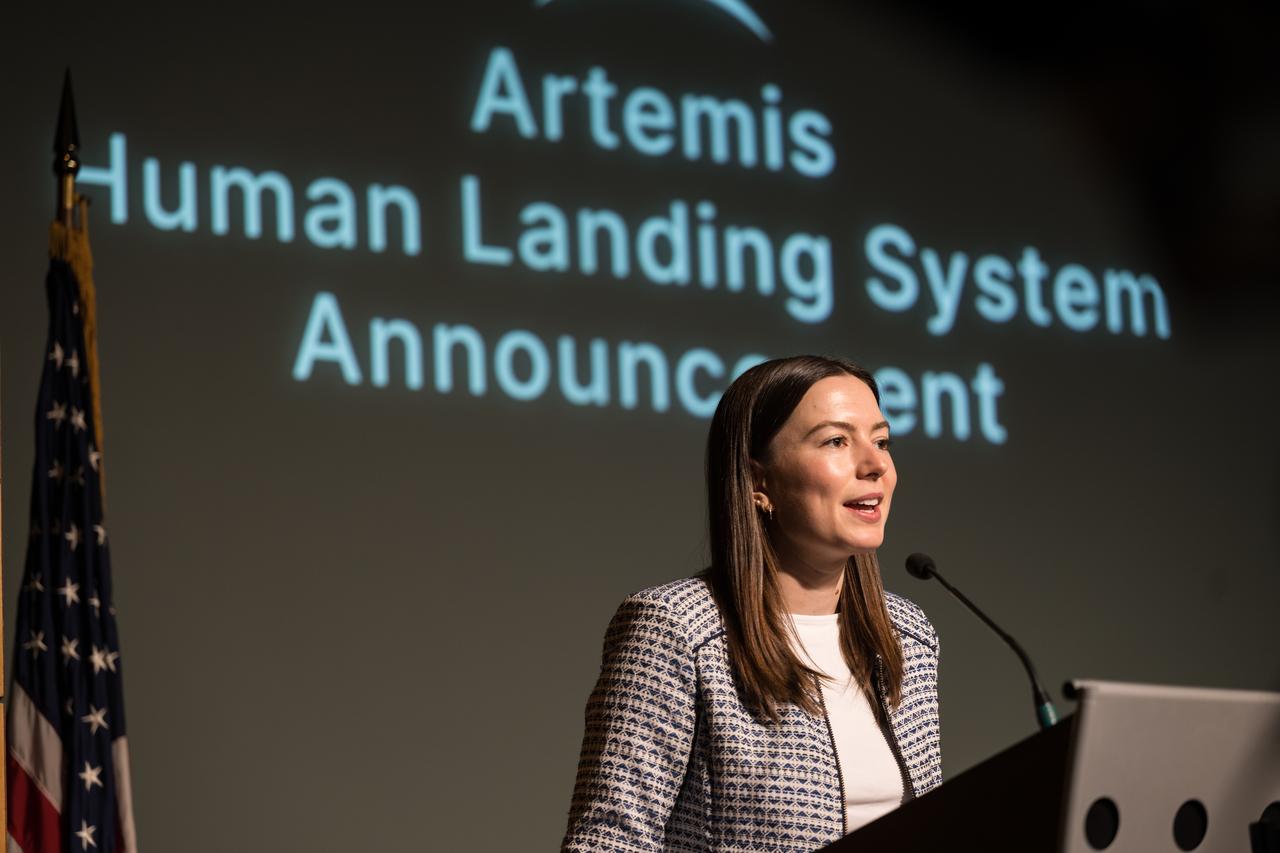
NASA Press Secretary Jackie McGuinness introduces NASA Administrator Bill Nelson during an event announcing Blue Origin as the company selected to develop a sustainable human landing system for the Artemis V Moon mission, Friday, May 19, 2023 at the Mary W. Jackson NASA Headquarters building in Washington. The human landing system will take astronauts to and from Gateway in lunar orbit to the surface and back to the lunar space station as part of NASA’s return to the Moon for science, exploration, and inspiration. Photo Credit: (NASA/Aubrey Gemignani)
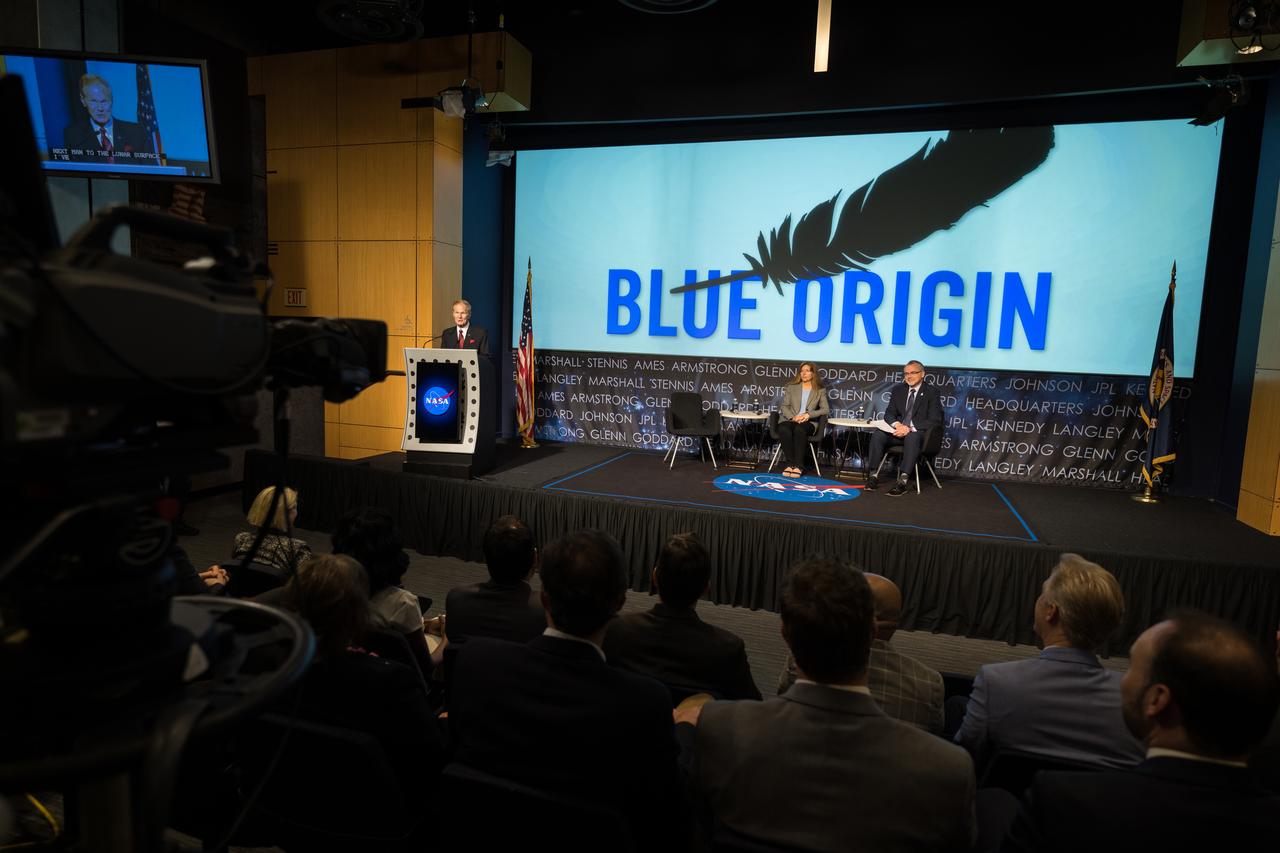
NASA Administrator Bill Nelson announces Blue Origin as the company selected to develop a sustainable human landing system for the Artemis V Moon mission, Friday, May 19, 2023 at the Mary W. Jackson NASA Headquarters building in Washington. The human landing system will take astronauts to and from Gateway in lunar orbit to the surface and back to the lunar space station as part of NASA’s return to the Moon for science, exploration, and inspiration. Photo Credit: (NASA/Aubrey Gemignani)
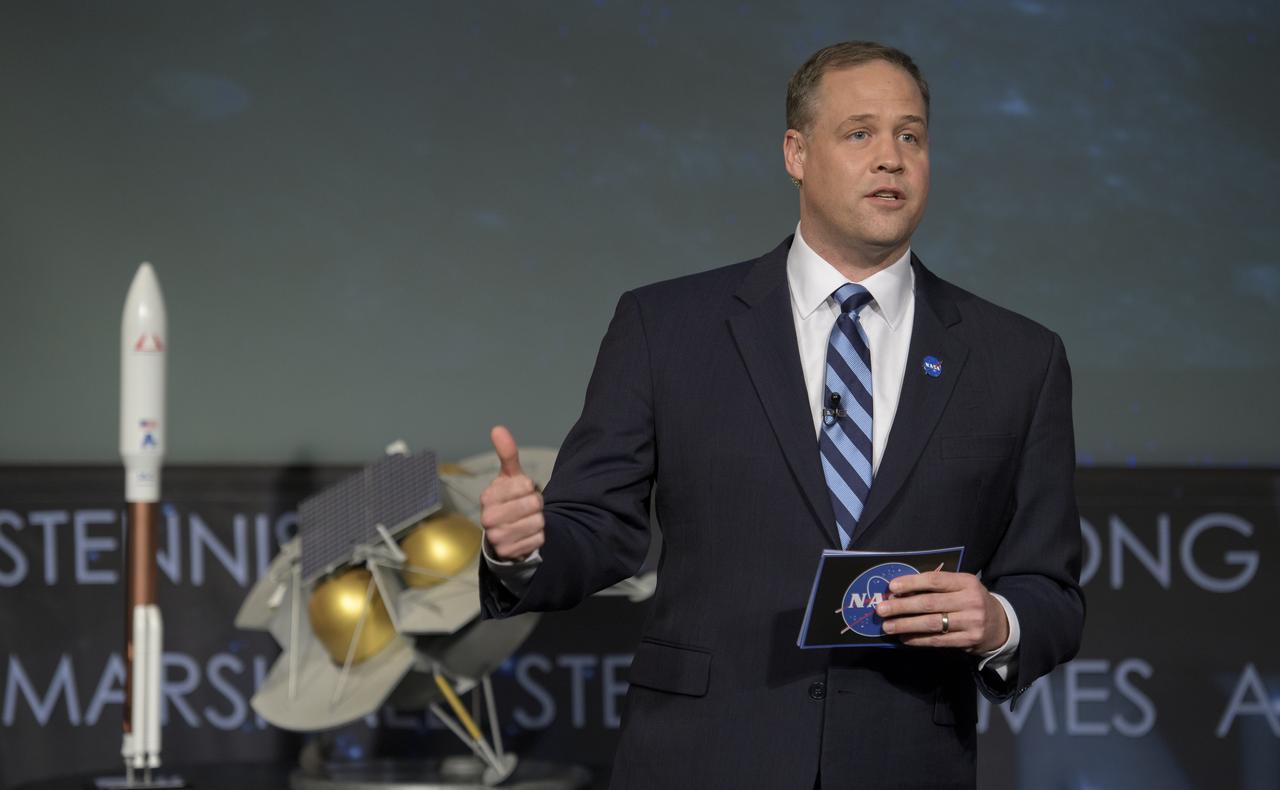
NASA Administrator Jim Bridenstine announces the nine U.S. companies that are eligible to bid on NASA delivery services to the lunar surface through Commercial Lunar Payload Services (CLPS) contracts, Thursday, Nov. 29, 2018 at NASA Headquarters in Washington. The companies will be able to bid on delivering science and technology payloads for NASA, including payload integration and operations, launching from Earth and landing on the surface of the Moon. NASA expects to be one of many customers that will use these commercial landing services. Photo Credit: (NASA/Bill Ingalls)
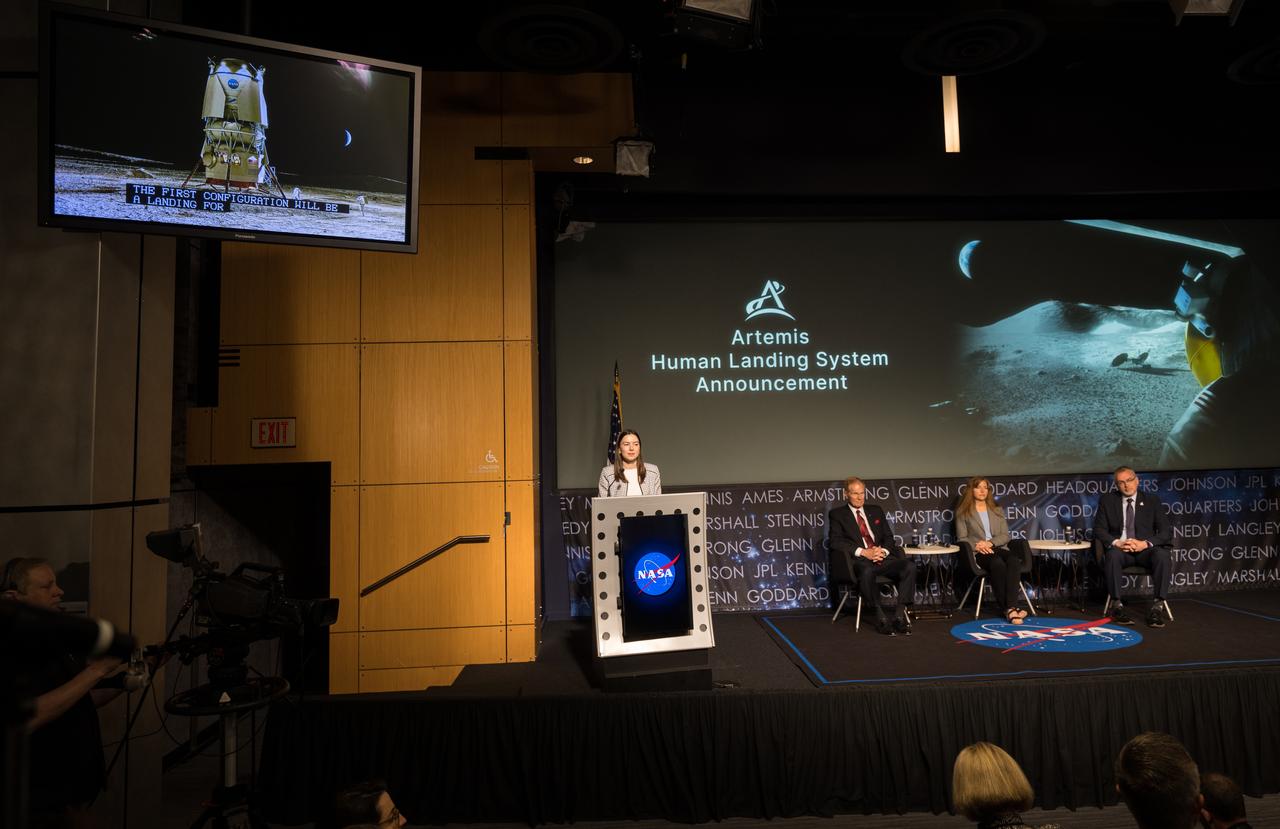
A view of the human landing system is seen on the monitor during an event announcing Blue Origin as the company selected to develop a sustainable human landing system for the Artemis V Moon mission, Friday, May 19, 2023 at the Mary W. Jackson NASA Headquarters building in Washington. The human landing system will take astronauts to and from Gateway in lunar orbit to the surface and back to the lunar space station as part of NASA’s return to the Moon for science, exploration, and inspiration. Photo Credit: (NASA/Aubrey Gemignani)
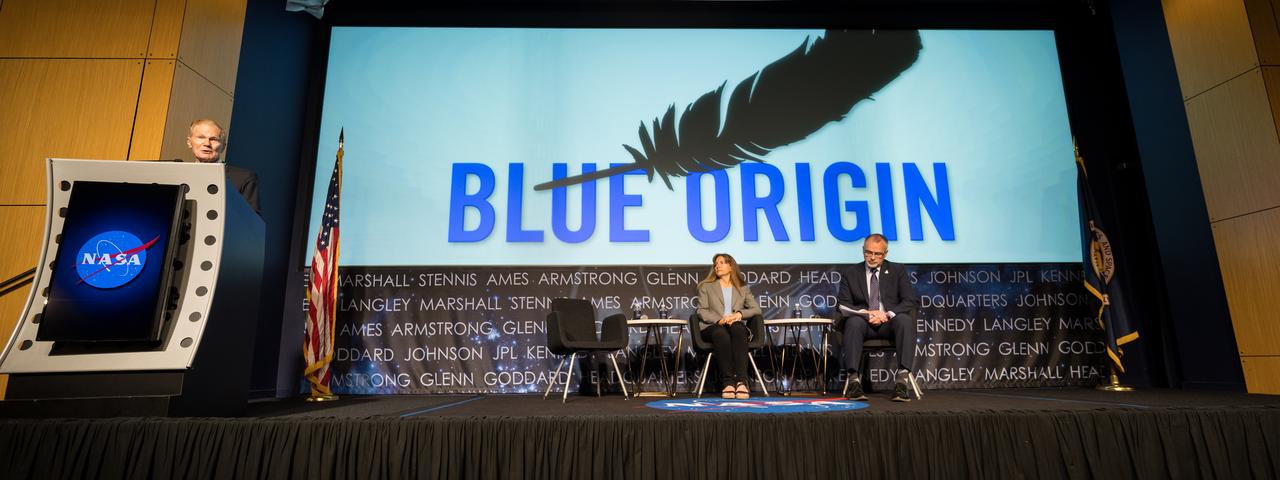
NASA Administrator Bill Nelson announces Blue Origin as the company selected to develop a sustainable human landing system for the Artemis V Moon mission, Friday, May 19, 2023 at the Mary W. Jackson NASA Headquarters building in Washington. The human landing system will take astronauts to and from Gateway in lunar orbit to the surface and back to the lunar space station as part of NASA’s return to the Moon for science, exploration, and inspiration. Photo Credit: (NASA/Aubrey Gemignani)
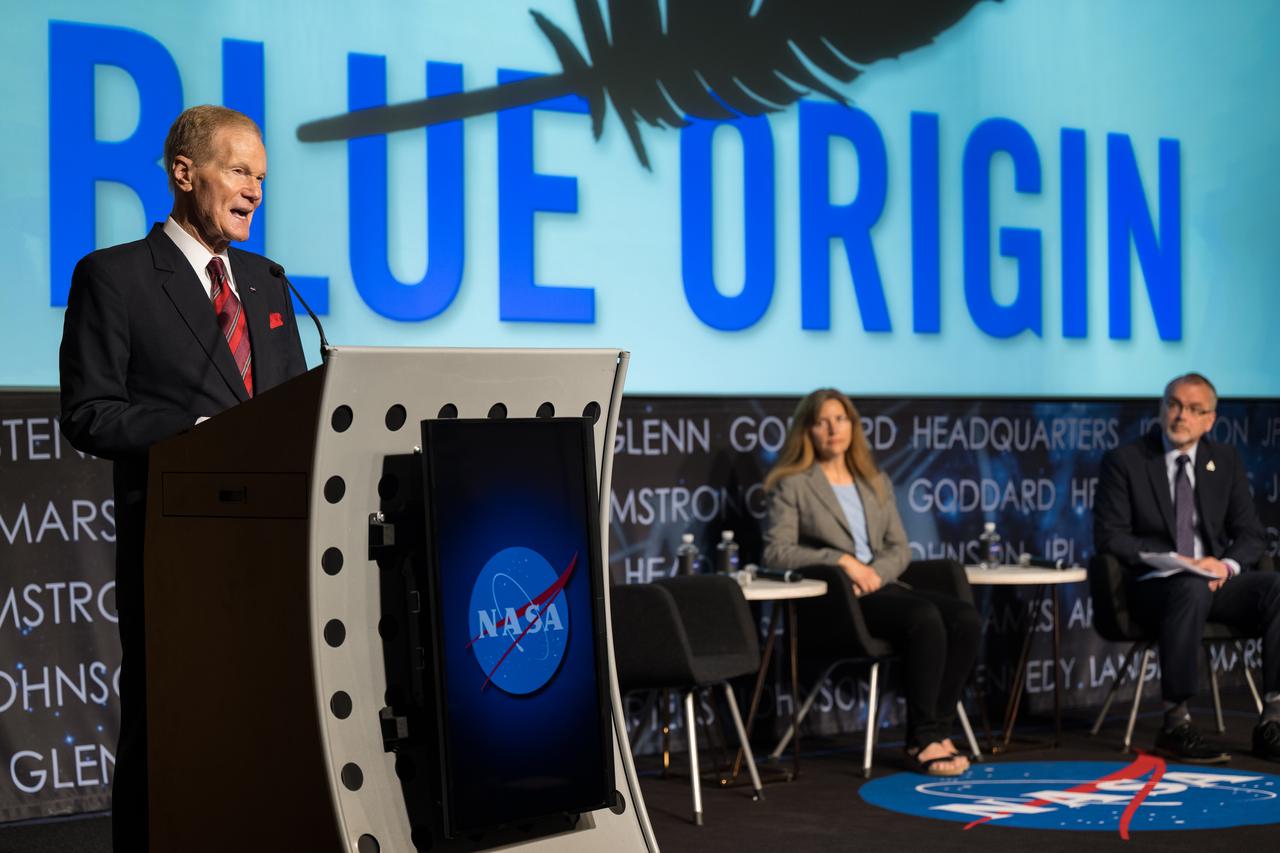
NASA Administrator Bill Nelson announces Blue Origin as the company selected to develop a sustainable human landing system for the Artemis V Moon mission, Friday, May 19, 2023 at the Mary W. Jackson NASA Headquarters building in Washington. The human landing system will take astronauts to and from Gateway in lunar orbit to the surface and back to the lunar space station as part of NASA’s return to the Moon for science, exploration, and inspiration. Photo Credit: (NASA/Aubrey Gemignani)

A member of the news media asks a question during an event announcing Blue Origin as the company selected to develop a sustainable human landing system for the Artemis V Moon mission, Friday, May 19, 2023 at the Mary W. Jackson NASA Headquarters building in Washington. The human landing system will take astronauts to and from Gateway in lunar orbit to the surface and back to the lunar space station as part of NASA’s return to the Moon for science, exploration, and inspiration. Photo Credit: (NASA/Aubrey Gemignani)
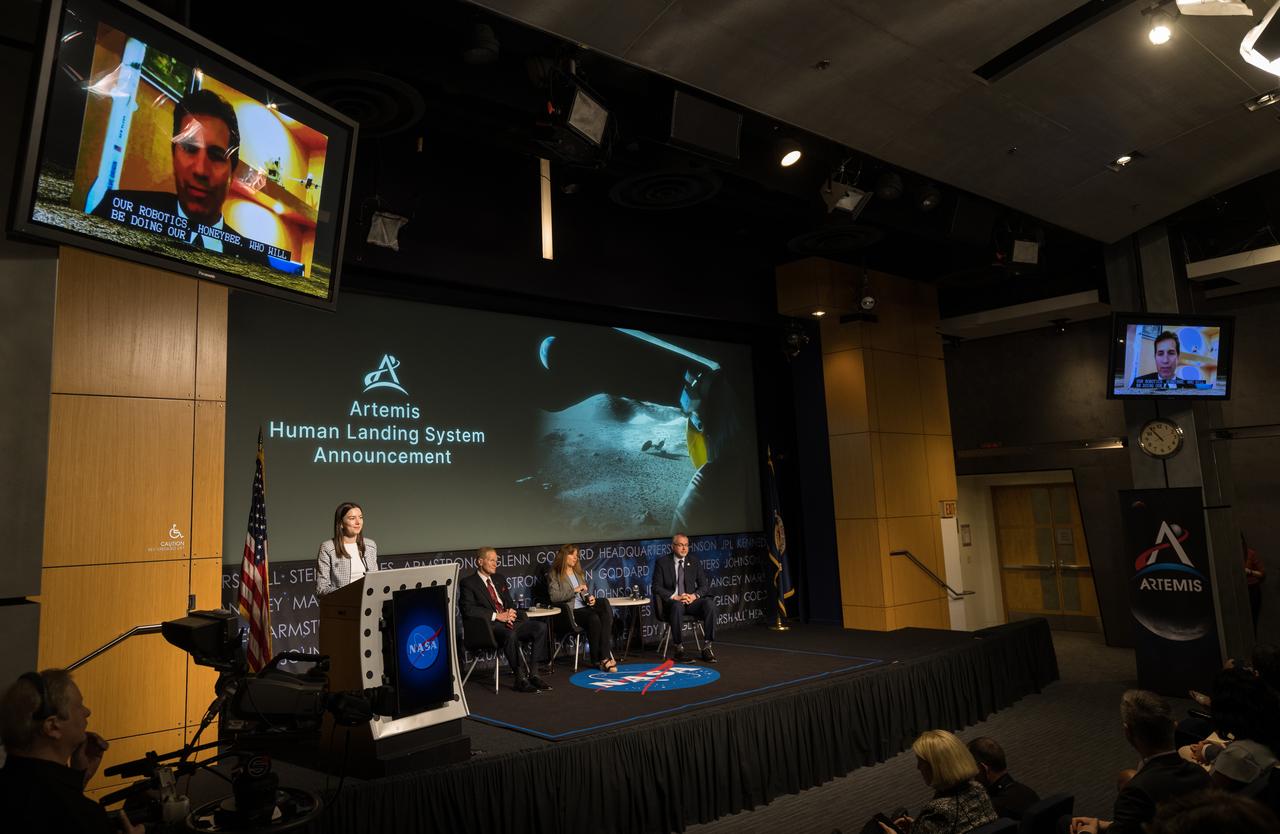
Blue Origin Human Landing System Program Manager, John Couluris, gives remarks during an event announcing Blue Origin as the company selected to develop a sustainable human landing system for the Artemis V Moon mission, Friday, May 19, 2023 at the Mary W. Jackson NASA Headquarters building in Washington. The human landing system will take astronauts to and from Gateway in lunar orbit to the surface and back to the lunar space station as part of NASA’s return to the Moon for science, exploration, and inspiration. Photo Credit: (NASA/Aubrey Gemignani)
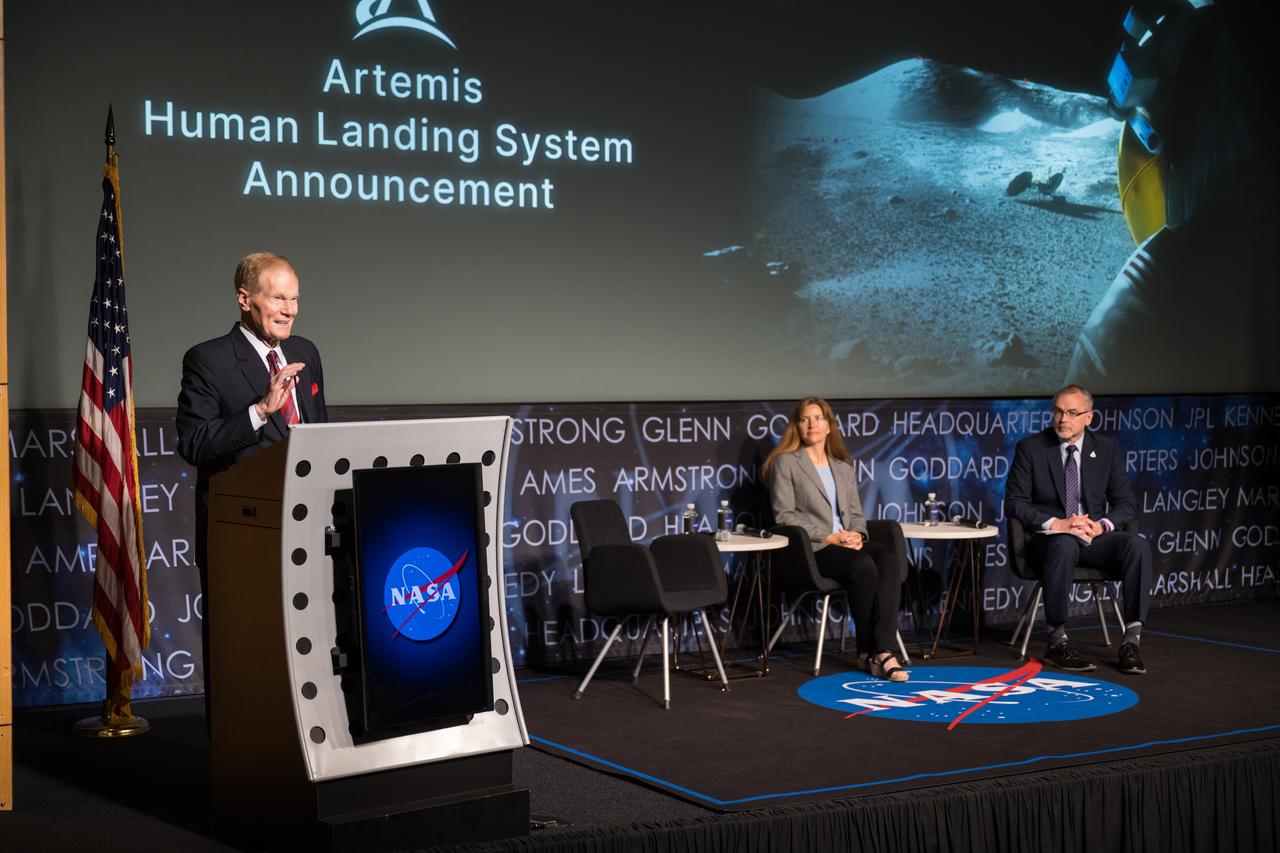
NASA Administrator Bill Nelson gives remarks during an event announcing Blue Origin as the company selected to develop a sustainable human landing system for the Artemis V Moon mission, Friday, May 19, 2023 at the Mary W. Jackson NASA Headquarters building in Washington. The human landing system will take astronauts to and from Gateway in lunar orbit to the surface and back to the lunar space station as part of NASA’s return to the Moon for science, exploration, and inspiration. Photo Credit: (NASA/Aubrey Gemignani)
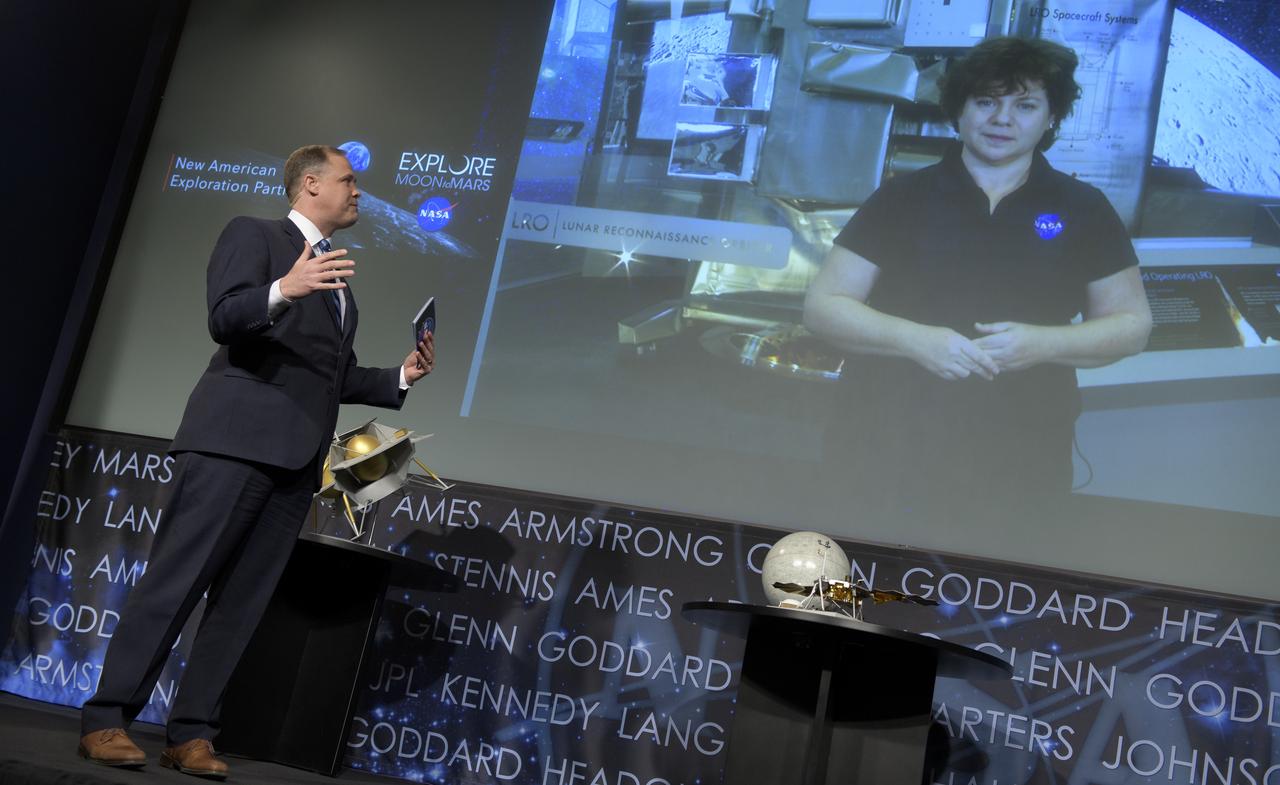
NASA Administrator Jim Bridenstine talks with Barbara Cohen, associate project scientist for the Lunar Reconnaissance Orbiter at NASA’s Goddard Space Flight Center in Greenbelt, Maryland during a event where it was announced that nine U.S. companies are eligible to bid on NASA delivery services to the lunar surface through Commercial Lunar Payload Services (CLPS) contracts, Thursday, Nov. 29, 2018 at NASA Headquarters in Washington. The companies will be able to bid on delivering science and technology payloads for NASA, including payload integration and operations, launching from Earth and landing on the surface of the Moon. NASA expects to be one of many customers that will use these commercial landing services. Photo Credit: (NASA/Bill Ingalls)
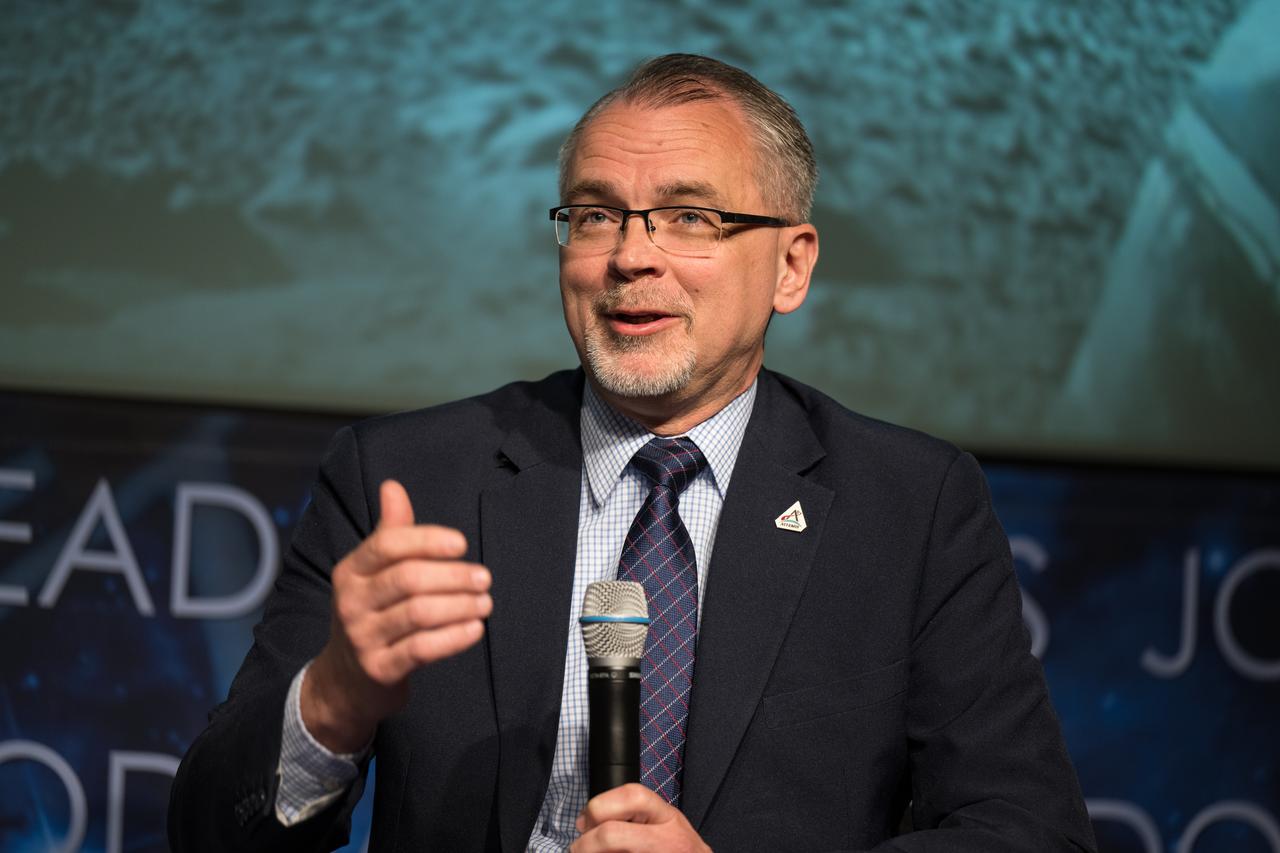
NASA Associate Administrator for the Exploration Systems Development Mission Directorate Jim Free gives remarks during an event announcing Blue Origin as the company selected to develop a sustainable human landing system for the Artemis V Moon mission, Friday, May 19, 2023 at the Mary W. Jackson NASA Headquarters building in Washington. The human landing system will take astronauts to and from Gateway in lunar orbit to the surface and back to the lunar space station as part of NASA’s return to the Moon for science, exploration, and inspiration. Photo Credit: (NASA/Aubrey Gemignani)
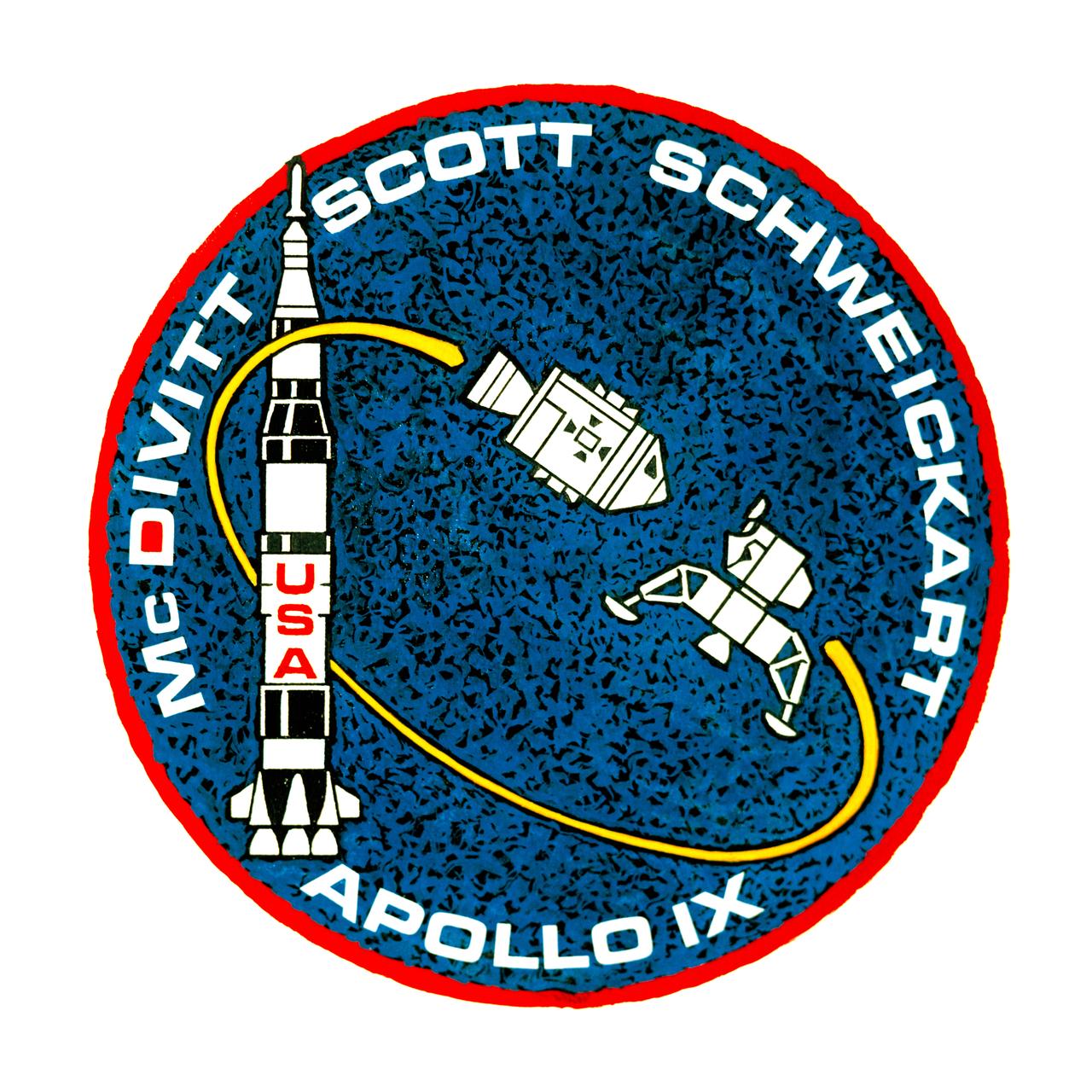
S69-18569 (February 1969) --- The insignia of the Apollo 9 space mission. The crew consist of astronauts James A. McDivitt, commander; David R. Scott, command module pilot; and Russell L. Schweickart, lunar module pilot. The Apollo 9 mission will evaluate spacecraft lunar module systems performance during manned Earth-orbital flight. The NASA insignia design for Apollo flights is reserved for use by the astronauts and for other official use as the NASA Administrator may authorize. Public availability has been approved only in the form of illustrations by the various news media. When and if there is any change in this policy, which we do not anticipate, it will be publicly announced.
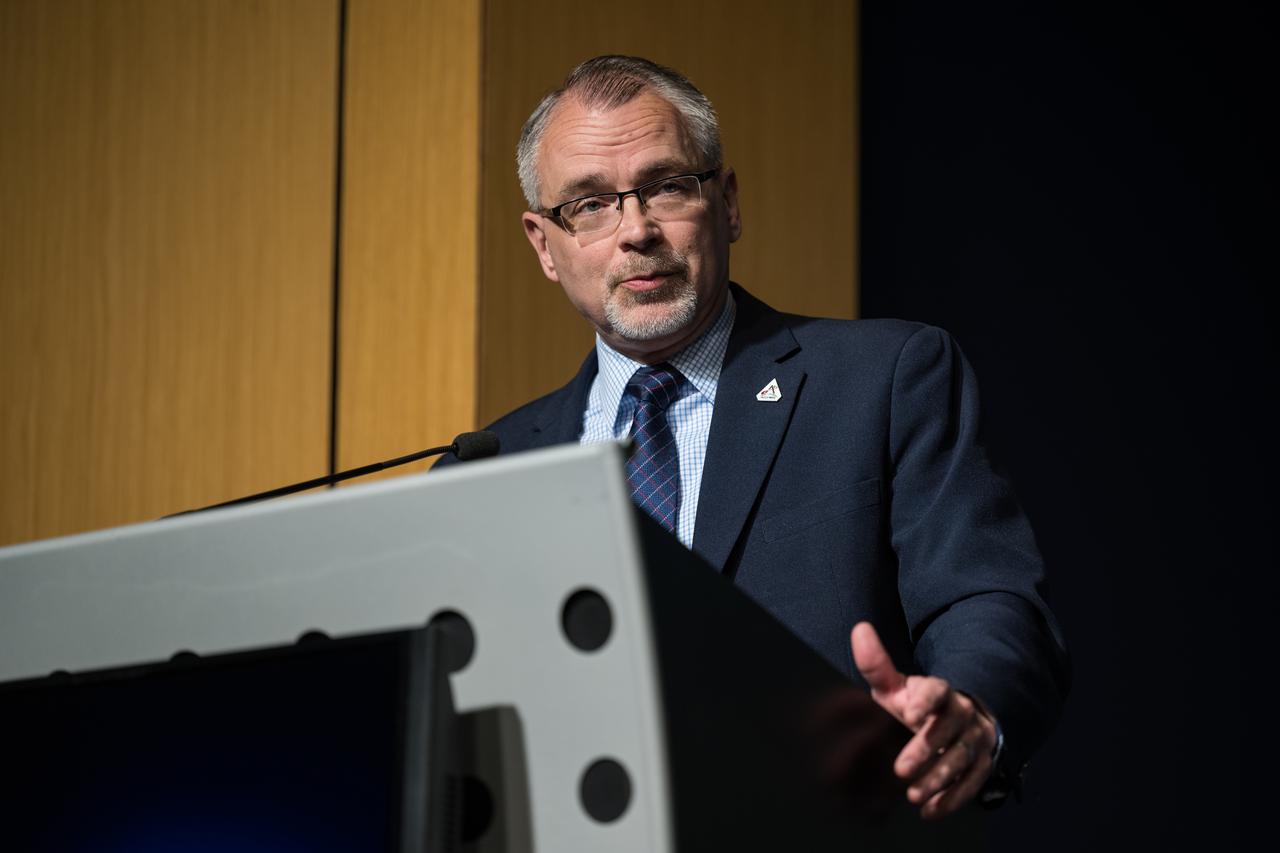
NASA Associate Administrator for the Exploration Systems Development Mission Directorate Jim Free gives remarks during an event announcing Blue Origin as the company selected to develop a sustainable human landing system for the Artemis V Moon mission, Friday, May 19, 2023 at the Mary W. Jackson NASA Headquarters building in Washington. The human landing system will take astronauts to and from Gateway in lunar orbit to the surface and back to the lunar space station as part of NASA’s return to the Moon for science, exploration, and inspiration. Photo Credit: (NASA/Aubrey Gemignani)
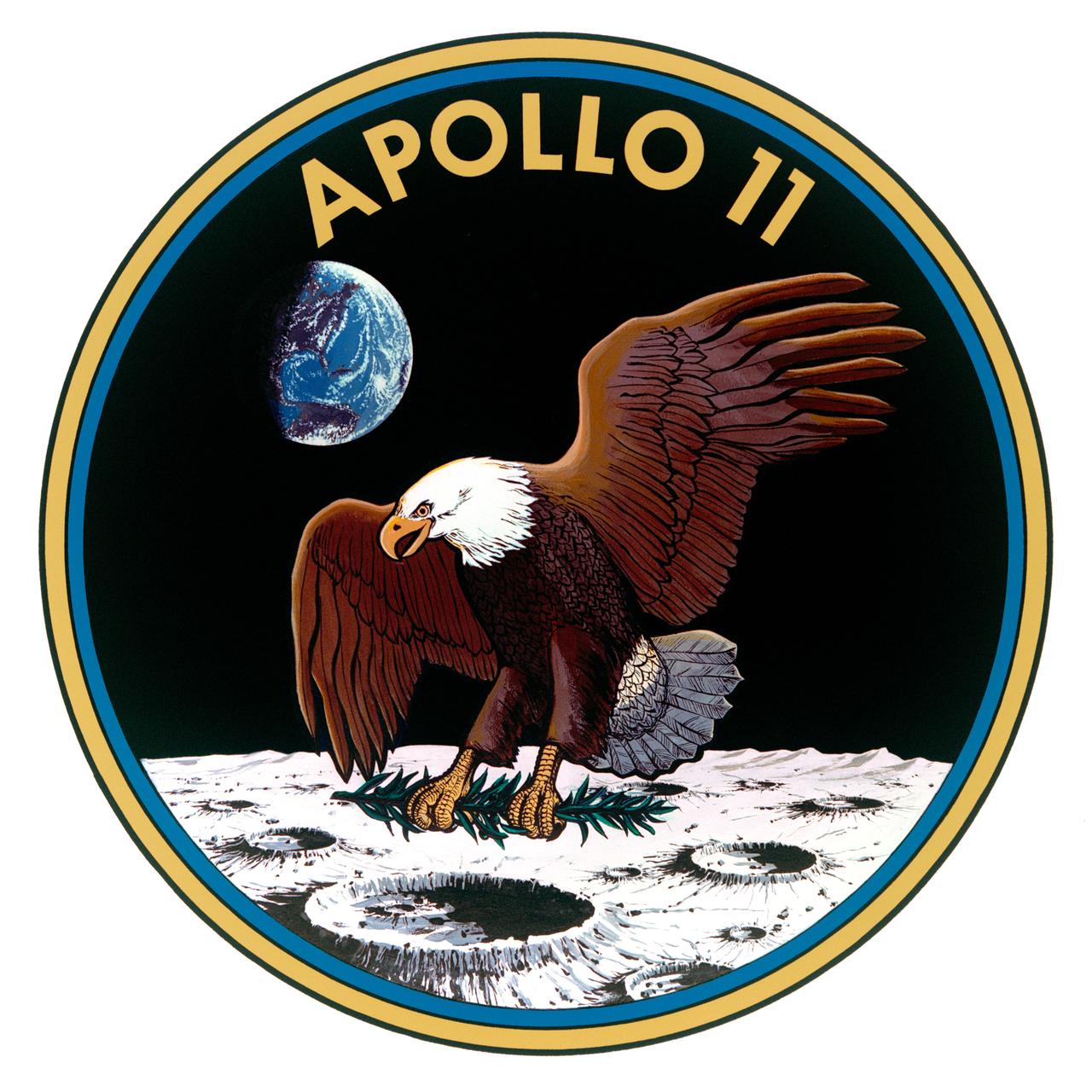
S69-34875 (June 1969) --- The official emblem of Apollo 11, the United States' first scheduled lunar landing mission. The Apollo 11 crew will be astronauts Neil A. Armstrong, commander; Michael Collins, command module pilot; and Edwin E. Aldrin Jr., lunar module pilot. The NASA insignia design for Apollo flights is reserved for use by the astronauts and for the official use as the NASA Administrator may authorize. Public availability has been approved only in the form of illustrations by the various news media. When and if there is any change in this policy, which we do not anticipate, it will be publicly announced.

Blue Origin Human Landing System Program Manager, John Couluris, is seen on the monitor answering a question during an event announcing Blue Origin as the company selected to develop a sustainable human landing system for the Artemis V Moon mission, Friday, May 19, 2023 at the Mary W. Jackson NASA Headquarters building in Washington. The human landing system will take astronauts to and from Gateway in lunar orbit to the surface and back to the lunar space station as part of NASA’s return to the Moon for science, exploration, and inspiration. Photo Credit: (NASA/Aubrey Gemignani)
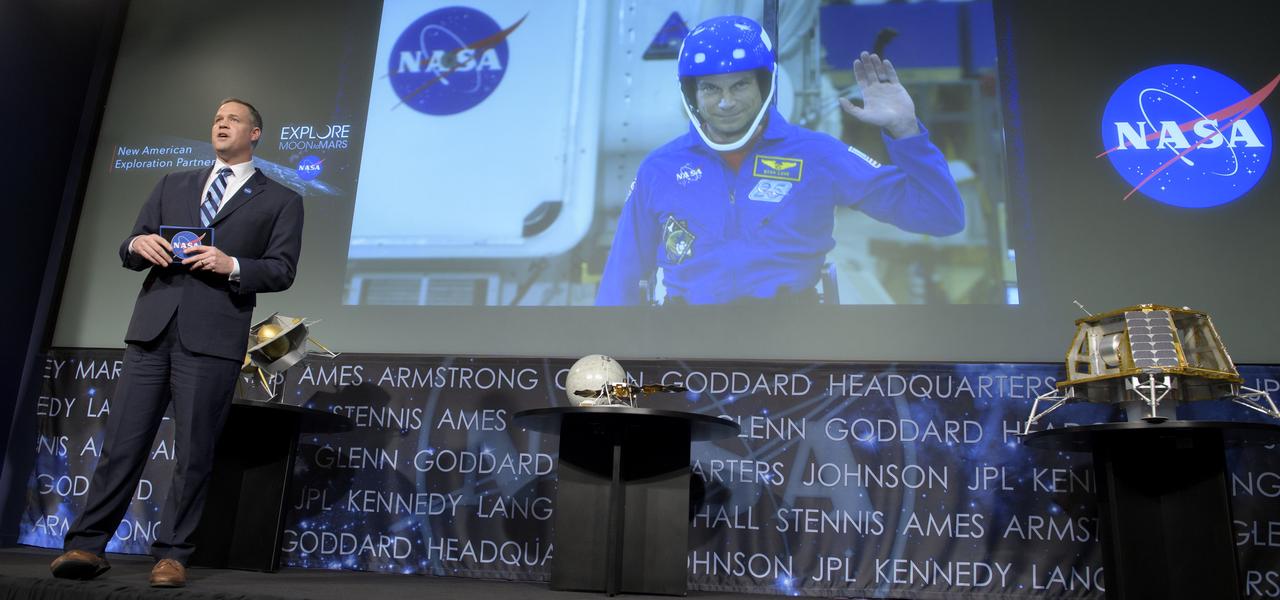
NASA Administrator Jim Bridenstine talks via satellite with NASA astronaut Stan Love from NASA’s Johnson Space Center in Houston during an event where it was announced that nine U.S. companies are eligible to bid on NASA delivery services to the lunar surface through Commercial Lunar Payload Services (CLPS) contracts, Thursday, Nov. 29, 2018 at NASA Headquarters in Washington. The companies will be able to bid on delivering science and technology payloads for NASA, including payload integration and operations, launching from Earth and landing on the surface of the Moon. NASA expects to be one of many customers that will use these commercial landing services. Photo Credit: (NASA/Bill Ingalls)
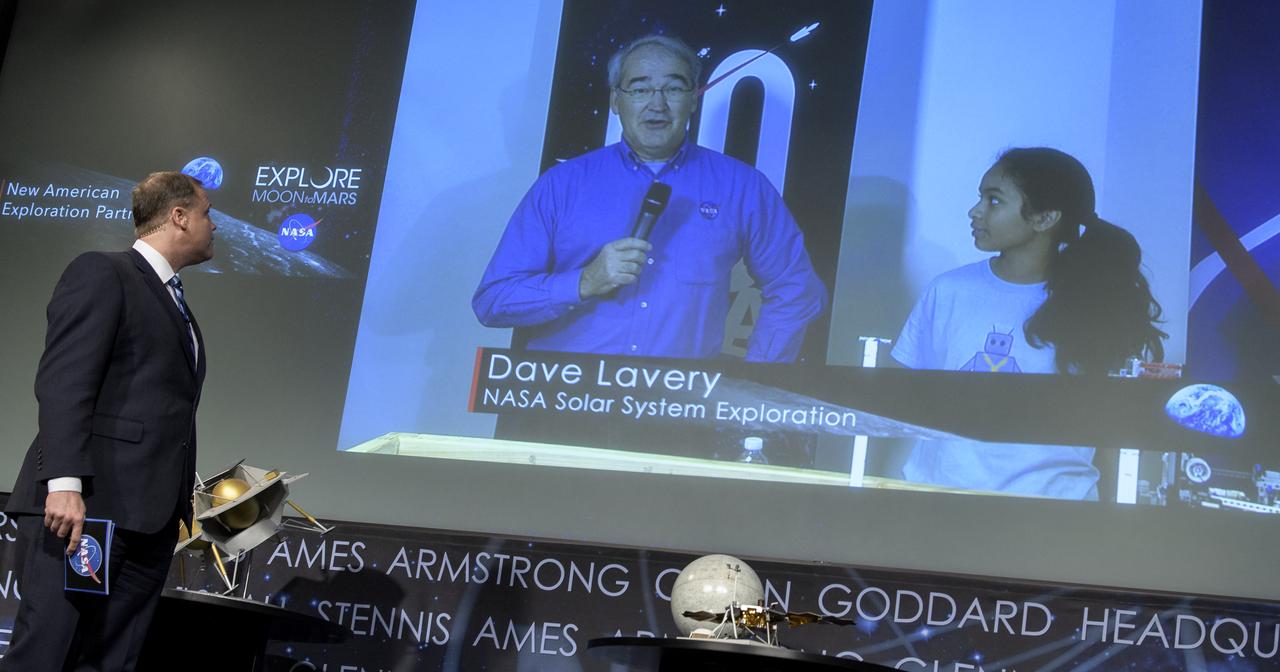
NASA Administrator Jim Bridenstine talks with Dave Lavery, Program Executive for Solar System Exploration, and Dishaa Bhat, 14, from Mary Henderson Middle School in Falls Church, Virginia, during a event where it was announced that nine U.S. companies are eligible to bid on NASA delivery services to the lunar surface through Commercial Lunar Payload Services (CLPS) contracts, Thursday, Nov. 29, 2018 at NASA Headquarters in Washington. The companies will be able to bid on delivering science and technology payloads for NASA, including payload integration and operations, launching from Earth and landing on the surface of the Moon. NASA expects to be one of many customers that will use these commercial landing services. Photo Credit: (NASA/Bill Ingalls)
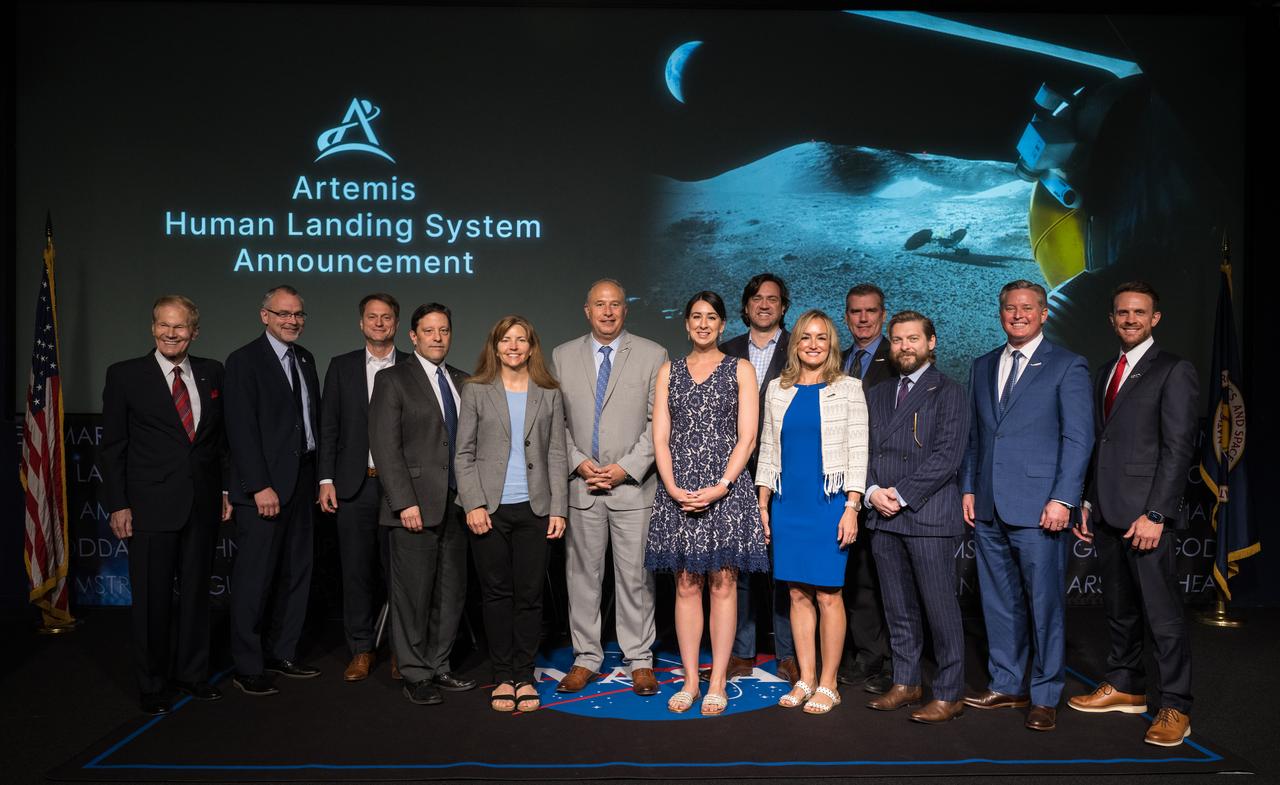
NASA Administrator Bill Nelson, NASA Associate Administrator for the Exploration Systems Development Mission Directorate Jim Free, Human Landing System Program Manager Lisa Watson-Morgan, members of Blue Origin’s team, and others pose for a photo at the conclusion of an event announcing Blue Origin as the company selected to develop a sustainable human landing system for the Artemis V Moon mission, Friday, May 19, 2023 at the Mary W. Jackson NASA Headquarters building in Washington. The human landing system will take astronauts to and from Gateway in lunar orbit to the surface and back to the lunar space station as part of NASA’s return to the Moon for science, exploration, and inspiration. Photo Credit: (NASA/Aubrey Gemignani)
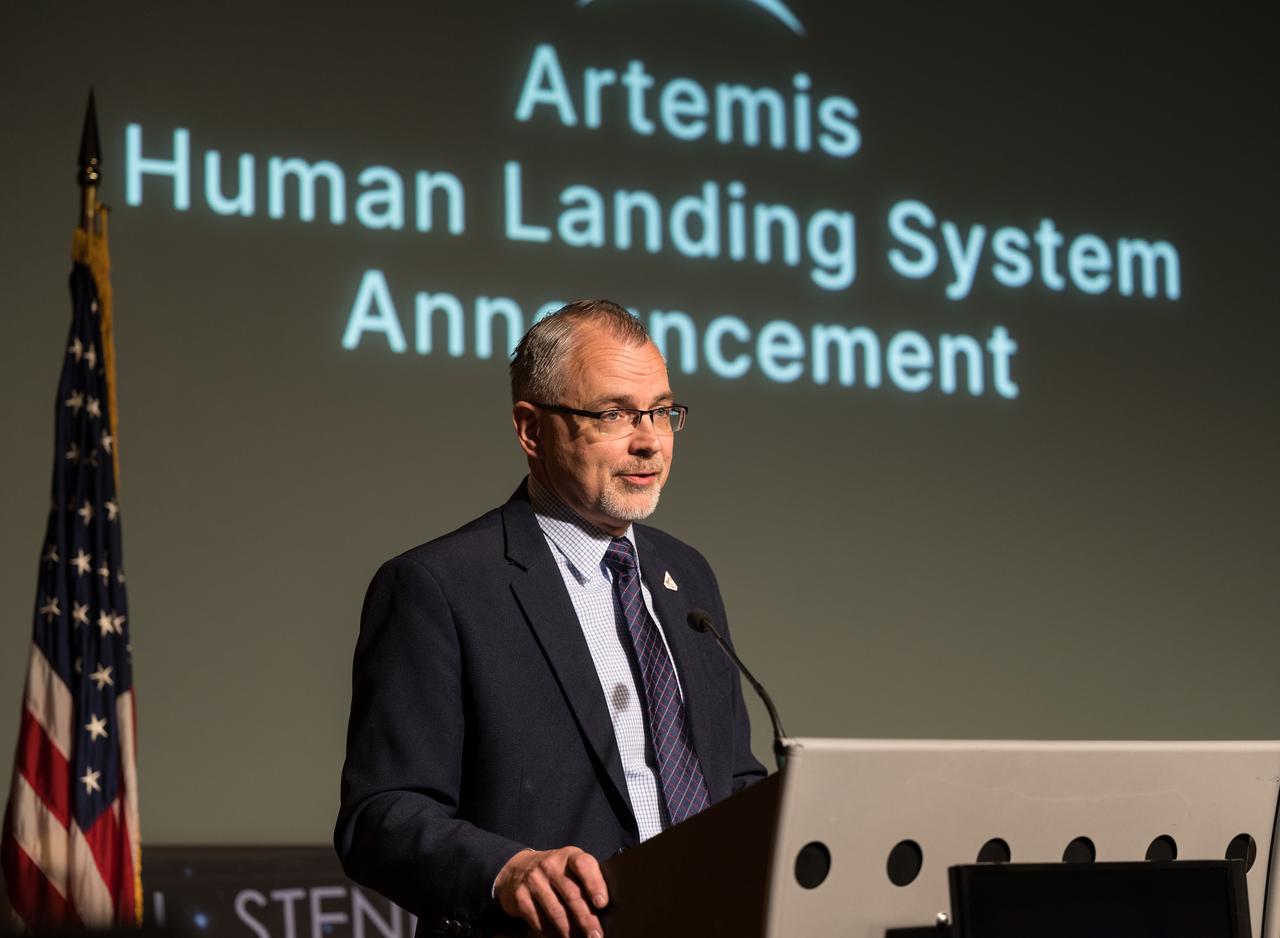
NASA Associate Administrator for the Exploration Systems Development Mission Directorate Jim Free gives remarks during an event announcing Blue Origin as the company selected to develop a sustainable human landing system for the Artemis V Moon mission, Friday, May 19, 2023 at the Mary W. Jackson NASA Headquarters building in Washington. The human landing system will take astronauts to and from Gateway in lunar orbit to the surface and back to the lunar space station as part of NASA’s return to the Moon for science, exploration, and inspiration. Photo Credit: (NASA/Aubrey Gemignani)
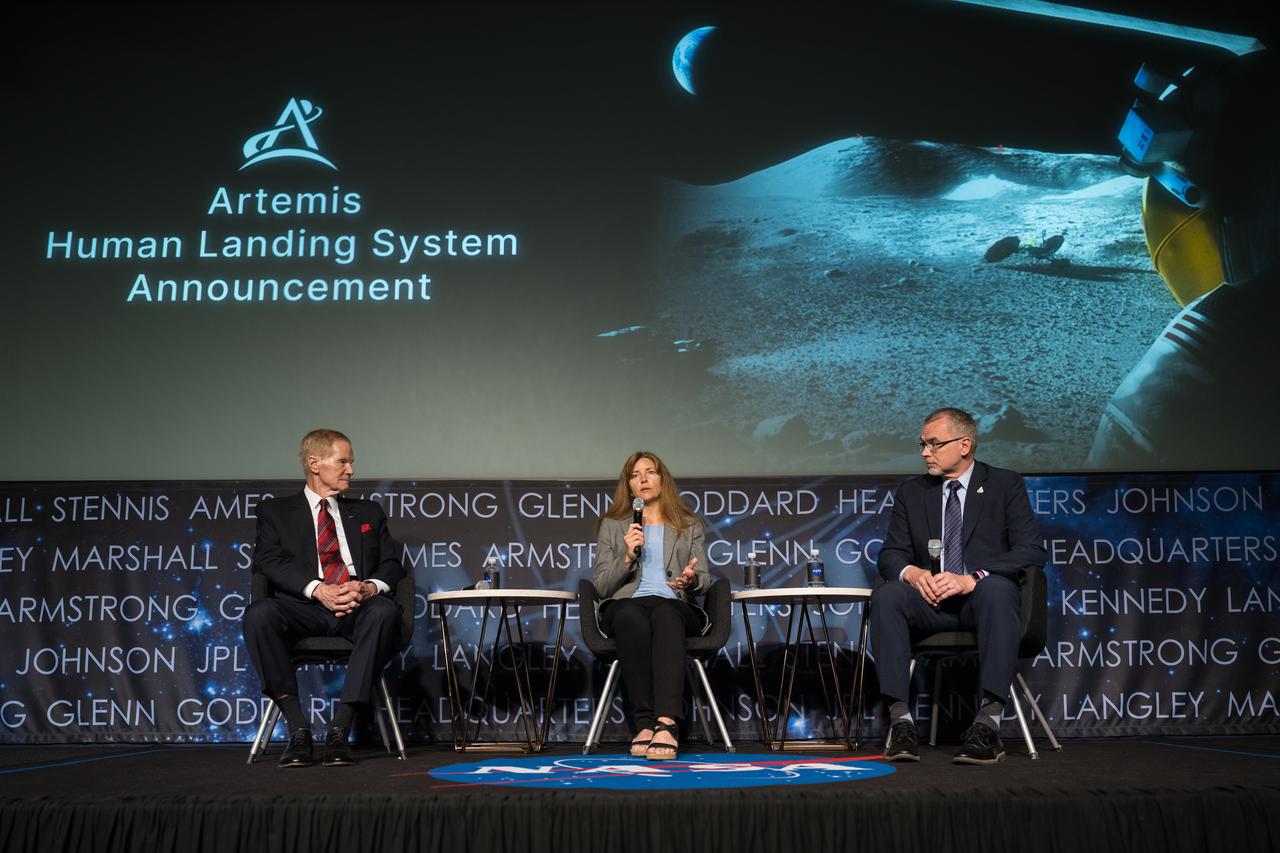
Human Landing System Program Manager Lisa Watson-Morgan gives remarks as NASA Administrator Bill Nelson, left, and NASA Associate Administrator for the Exploration Systems Development Mission Directorate Jim Free, right, look on during an event announcing Blue Origin as the company selected to develop a sustainable human landing system for the Artemis V Moon mission, Friday, May 19, 2023 at the Mary W. Jackson NASA Headquarters building in Washington. The human landing system will take astronauts to and from Gateway in lunar orbit to the surface and back to the lunar space station as part of NASA’s return to the Moon for science, exploration, and inspiration. Photo Credit: (NASA/Aubrey Gemignani)
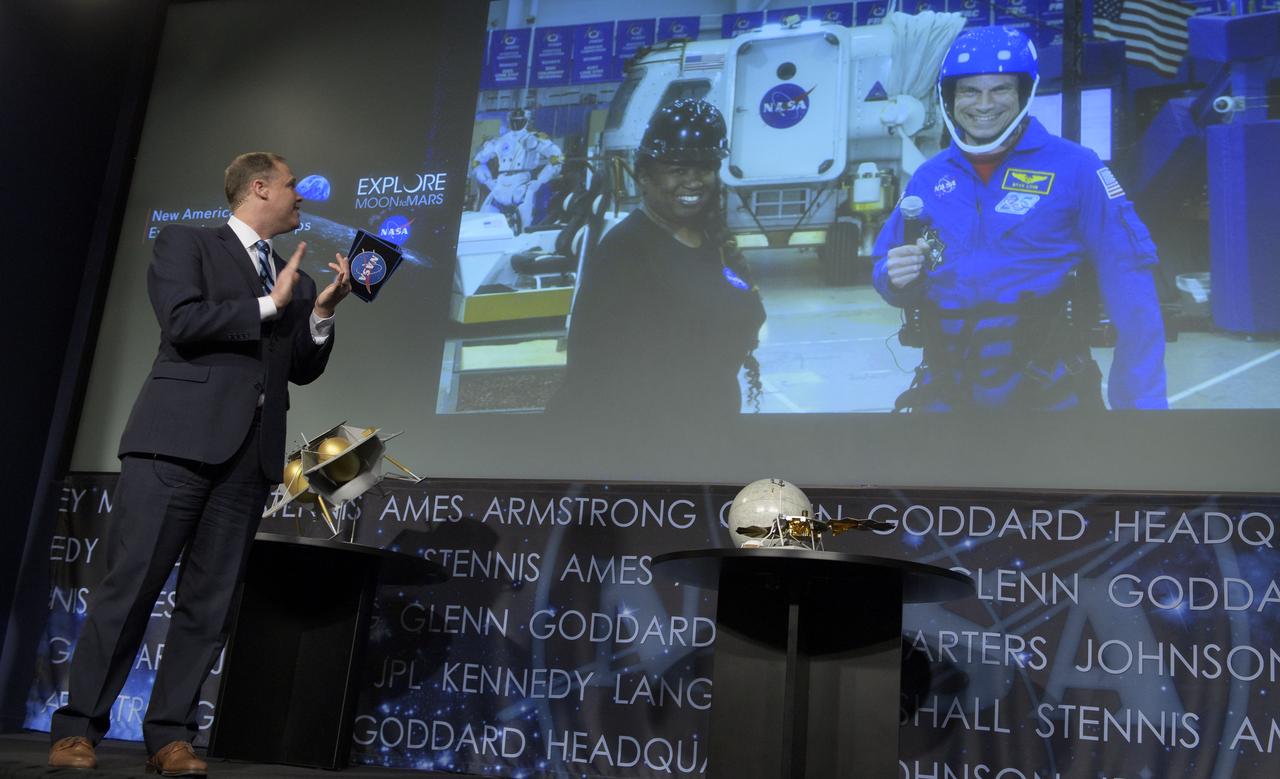
NASA Administrator Jim Bridenstine talks via satellite with Andrea Mosie, Apollo sample laboratory manager, and NASA astronaut Stan Love from NASA’s Johnson Space Center in Houston during a event where it was announced that nine U.S. companies are eligible to bid on NASA delivery services to the lunar surface through Commercial Lunar Payload Services (CLPS) contracts, Thursday, Nov. 29, 2018 at NASA Headquarters in Washington. The companies will be able to bid on delivering science and technology payloads for NASA, including payload integration and operations, launching from Earth and landing on the surface of the Moon. NASA expects to be one of many customers that will use these commercial landing services. Photo Credit: (NASA/Bill Ingalls)
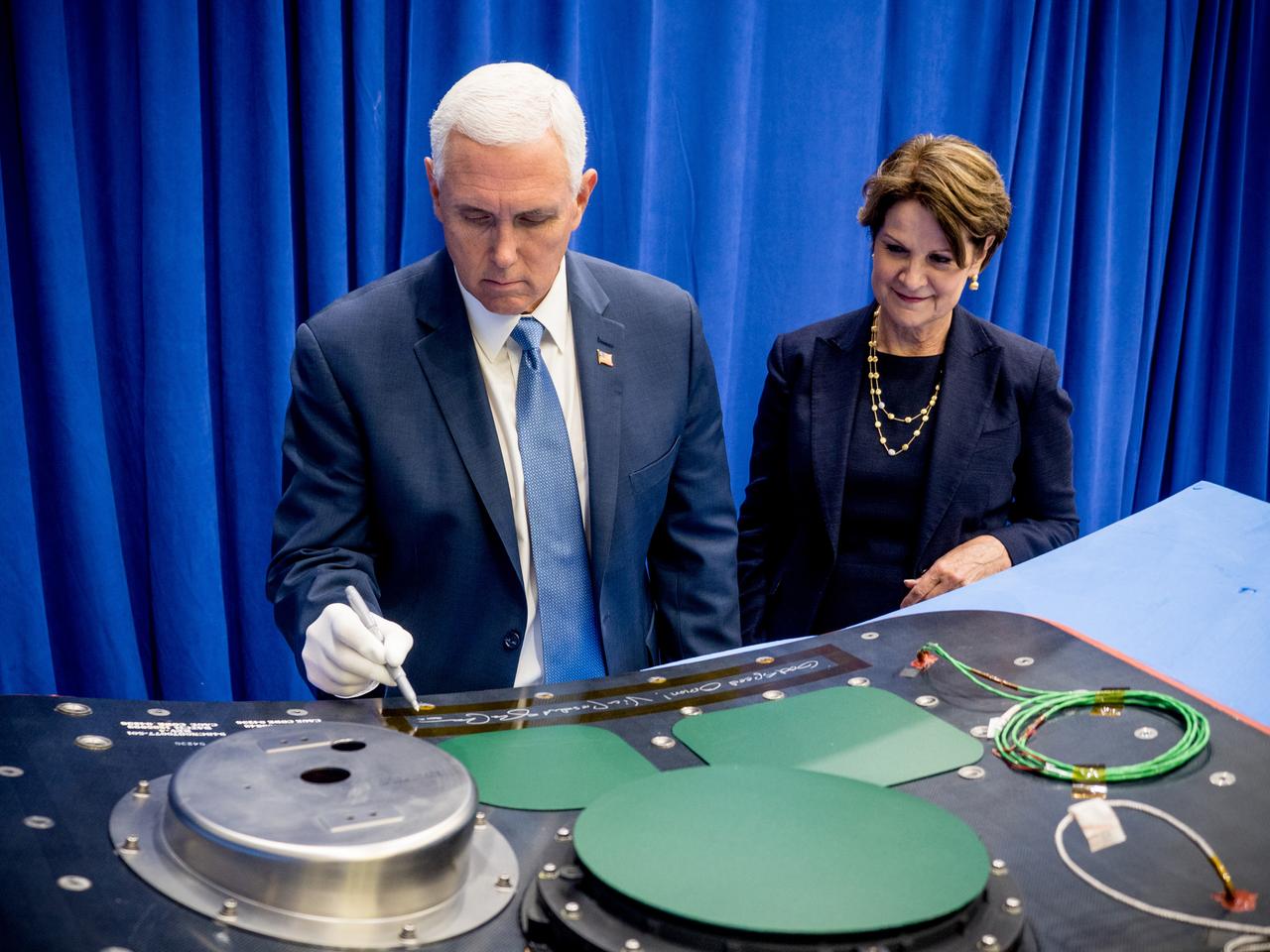
Vice President Mike Pence visited and gave remarks in the Neil Armstrong Operations and Checkout Building at NASA’s Kennedy Space Center in Florida on July 20, 2019 to commemorate the 50th anniversary of the agency’s Apollo 11 Moon landing and announce to America the completion of NASA’s Orion crew capsule, shown here on July 19, 2019, for the first Artemis lunar mission.
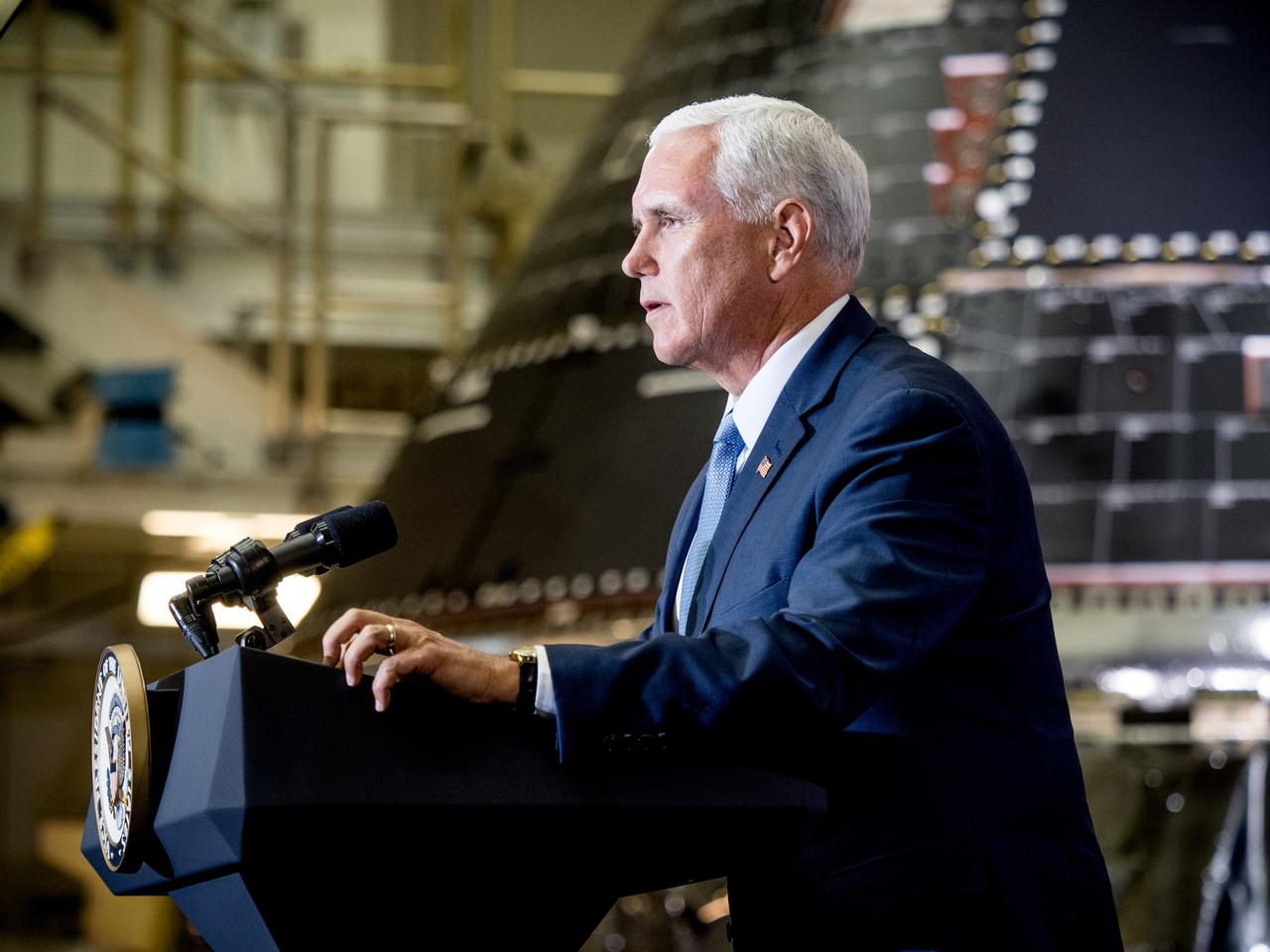
Vice President Mike Pence visited and gave remarks in the Neil Armstrong Operations and Checkout Building at NASA’s Kennedy Space Center in Florida on July 20, 2019 to commemorate the 50th anniversary of the agency’s Apollo 11 Moon landing and announce to America the completion of NASA’s Orion crew capsule, shown here on July 19, 2019, for the first Artemis lunar mission.
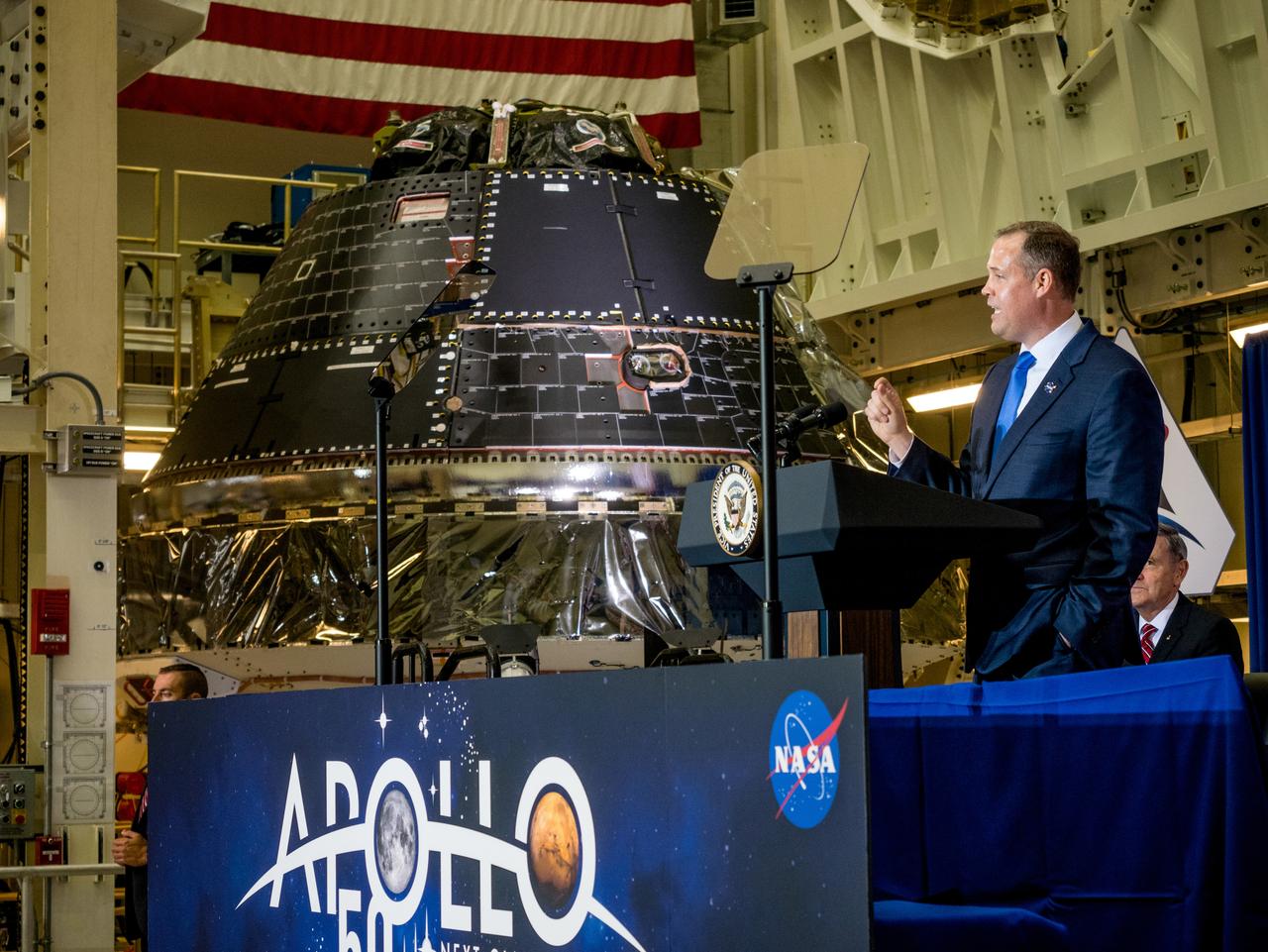
Vice President Mike Pence visited and gave remarks in the Neil Armstrong Operations and Checkout Building at NASA’s Kennedy Space Center in Florida on July 20, 2019 to commemorate the 50th anniversary of the agency’s Apollo 11 Moon landing and announce to America the completion of NASA’s Orion crew capsule, shown here on July 19, 2019, for the first Artemis lunar mission.
Vice President Mike Pence visited and gave remarks in the Neil Armstrong Operations and Checkout Building at NASA’s Kennedy Space Center in Florida on July 20, 2019 to commemorate the 50th anniversary of the agency’s Apollo 11 Moon landing and announce to America the completion of NASA’s Orion crew capsule, shown here on July 19, 2019, for the first Artemis lunar mission.
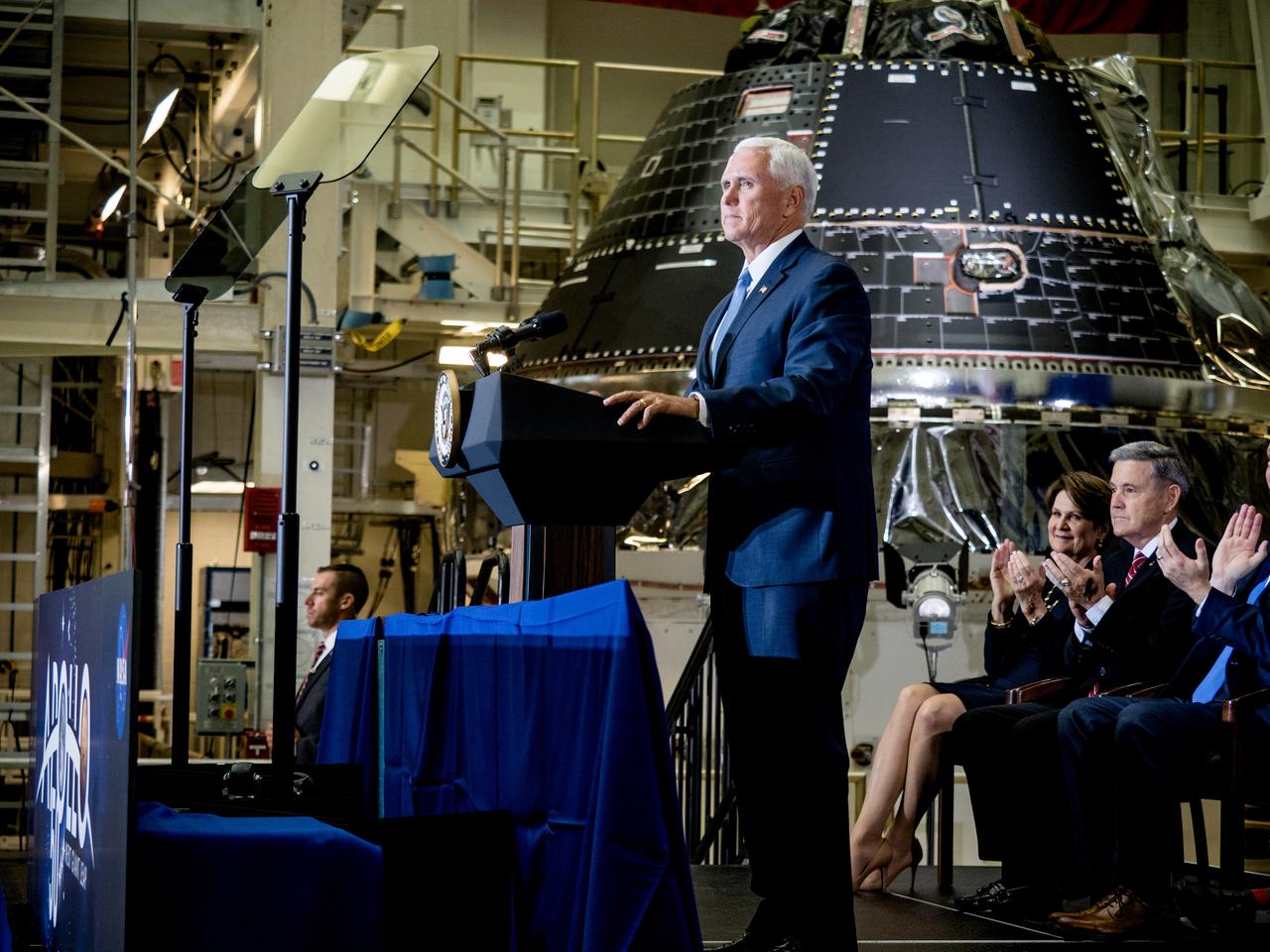
Vice President Mike Pence visited and gave remarks in the Neil Armstrong Operations and Checkout Building at NASA’s Kennedy Space Center in Florida on July 20, 2019 to commemorate the 50th anniversary of the agency’s Apollo 11 Moon landing and announce to America the completion of NASA’s Orion crew capsule, shown here on July 19, 2019, for the first Artemis lunar mission.
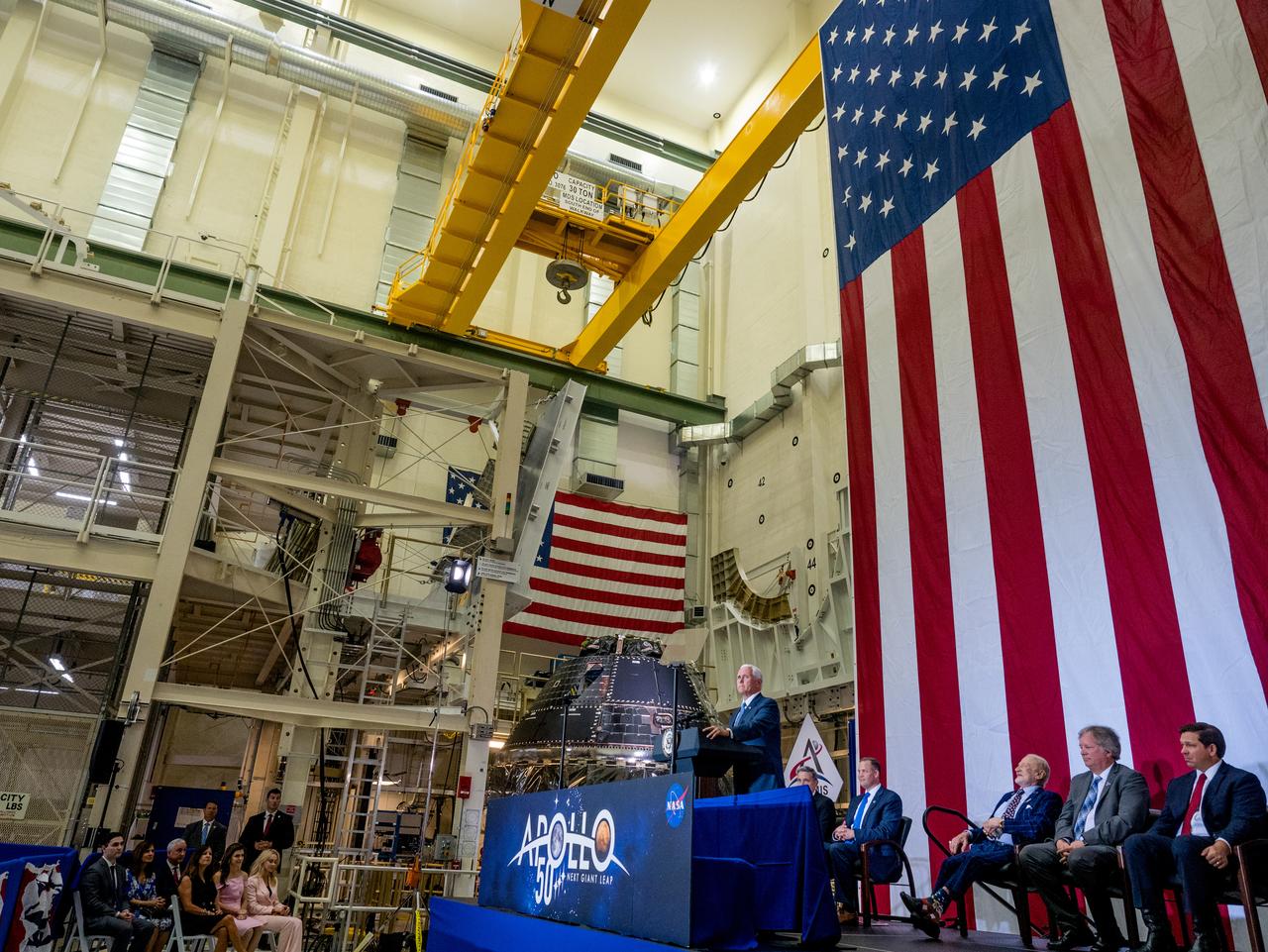
Vice President Mike Pence visited and gave remarks in the Neil Armstrong Operations and Checkout Building at NASA’s Kennedy Space Center in Florida on July 20, 2019 to commemorate the 50th anniversary of the agency’s Apollo 11 Moon landing and announce to America the completion of NASA’s Orion crew capsule, shown here on July 19, 2019, for the first Artemis lunar mission.
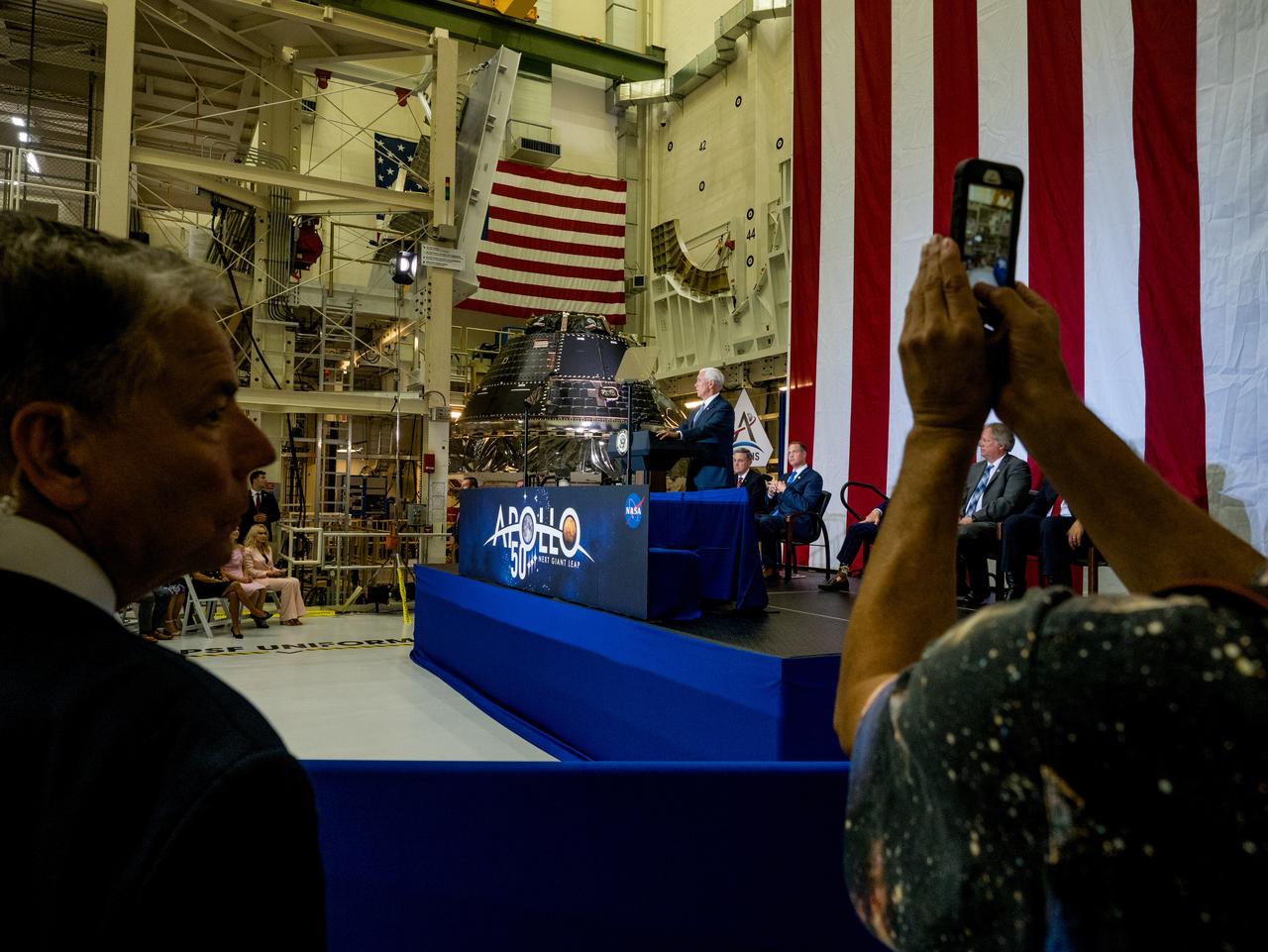
Vice President Mike Pence visited and gave remarks in the Neil Armstrong Operations and Checkout Building at NASA’s Kennedy Space Center in Florida on July 20, 2019 to commemorate the 50th anniversary of the agency’s Apollo 11 Moon landing and announce to America the completion of NASA’s Orion crew capsule, shown here on July 19, 2019, for the first Artemis lunar mission.
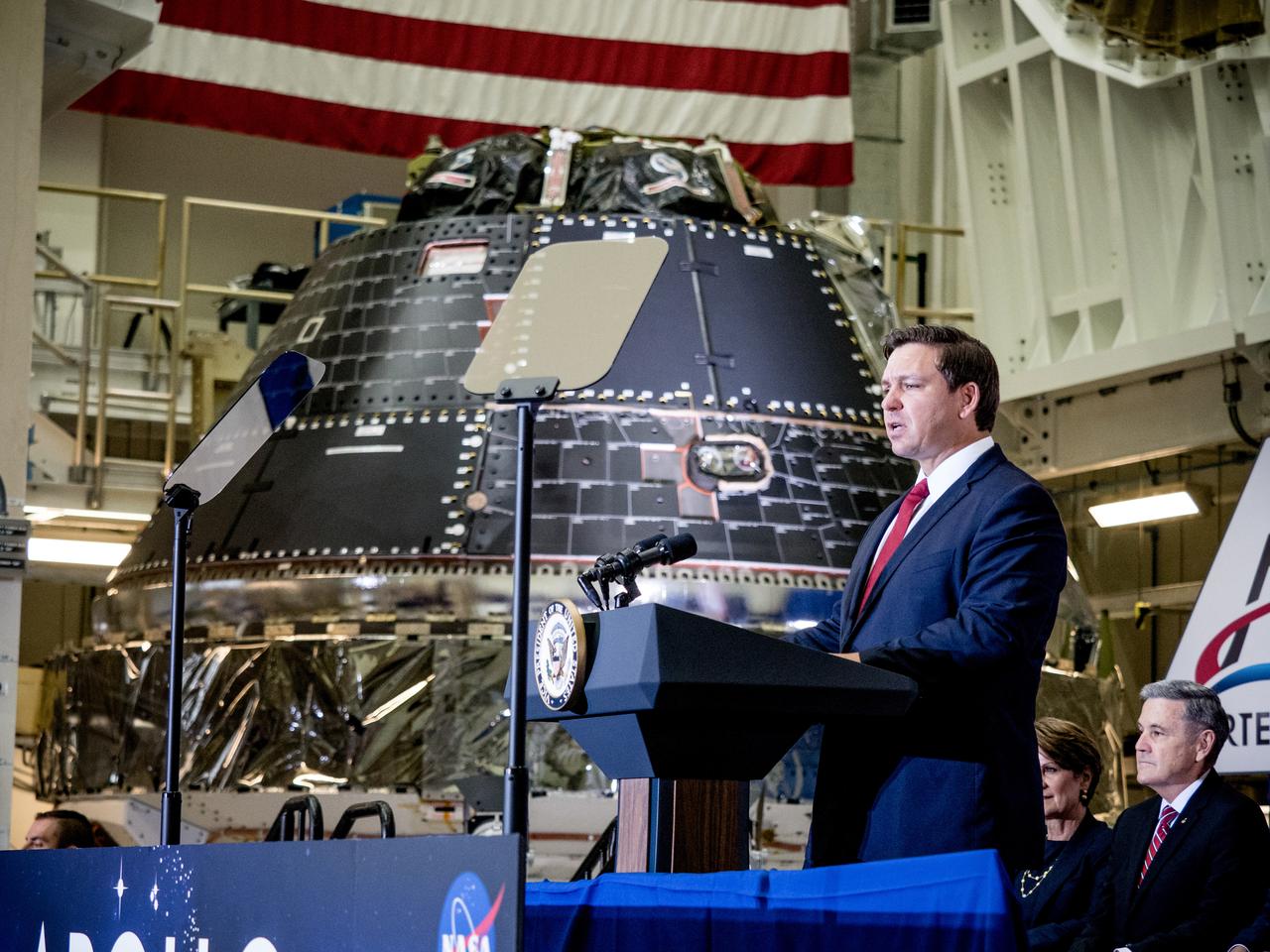
Vice President Mike Pence visited and gave remarks in the Neil Armstrong Operations and Checkout Building at NASA’s Kennedy Space Center in Florida on July 20, 2019 to commemorate the 50th anniversary of the agency’s Apollo 11 Moon landing and announce to America the completion of NASA’s Orion crew capsule, shown here on July 19, 2019, for the first Artemis lunar mission.
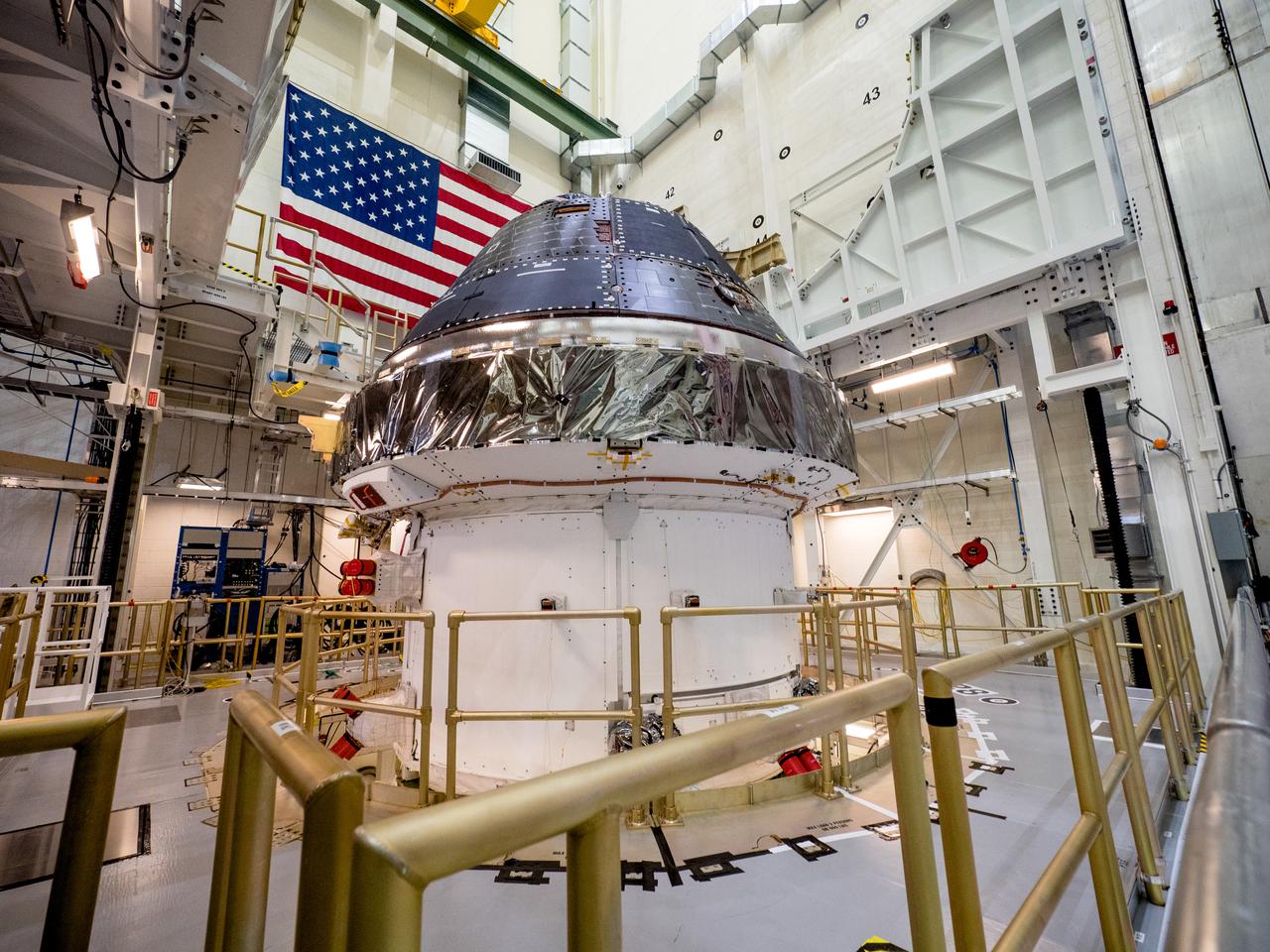
Vice President Mike Pence visited and gave remarks in the Neil Armstrong Operations and Checkout Building at NASA’s Kennedy Space Center in Florida on July 20, 2019 to commemorate the 50th anniversary of the agency’s Apollo 11 Moon landing and announce to America the completion of NASA’s Orion crew capsule, shown here on July 19, 2019, for the first Artemis lunar mission.
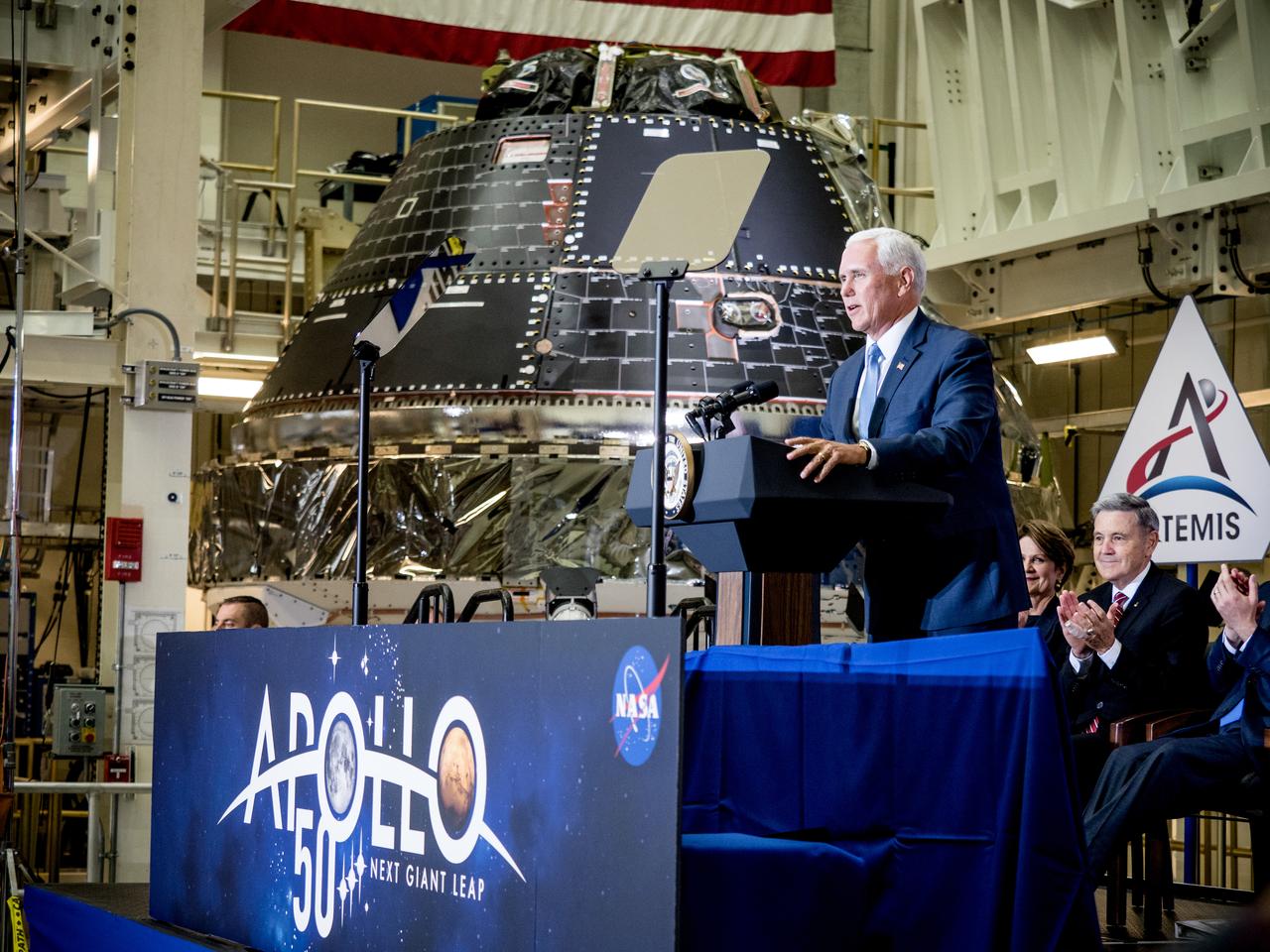
Vice President Mike Pence visited and gave remarks in the Neil Armstrong Operations and Checkout Building at NASA’s Kennedy Space Center in Florida on July 20, 2019 to commemorate the 50th anniversary of the agency’s Apollo 11 Moon landing and announce to America the completion of NASA’s Orion crew capsule, shown here on July 19, 2019, for the first Artemis lunar mission.
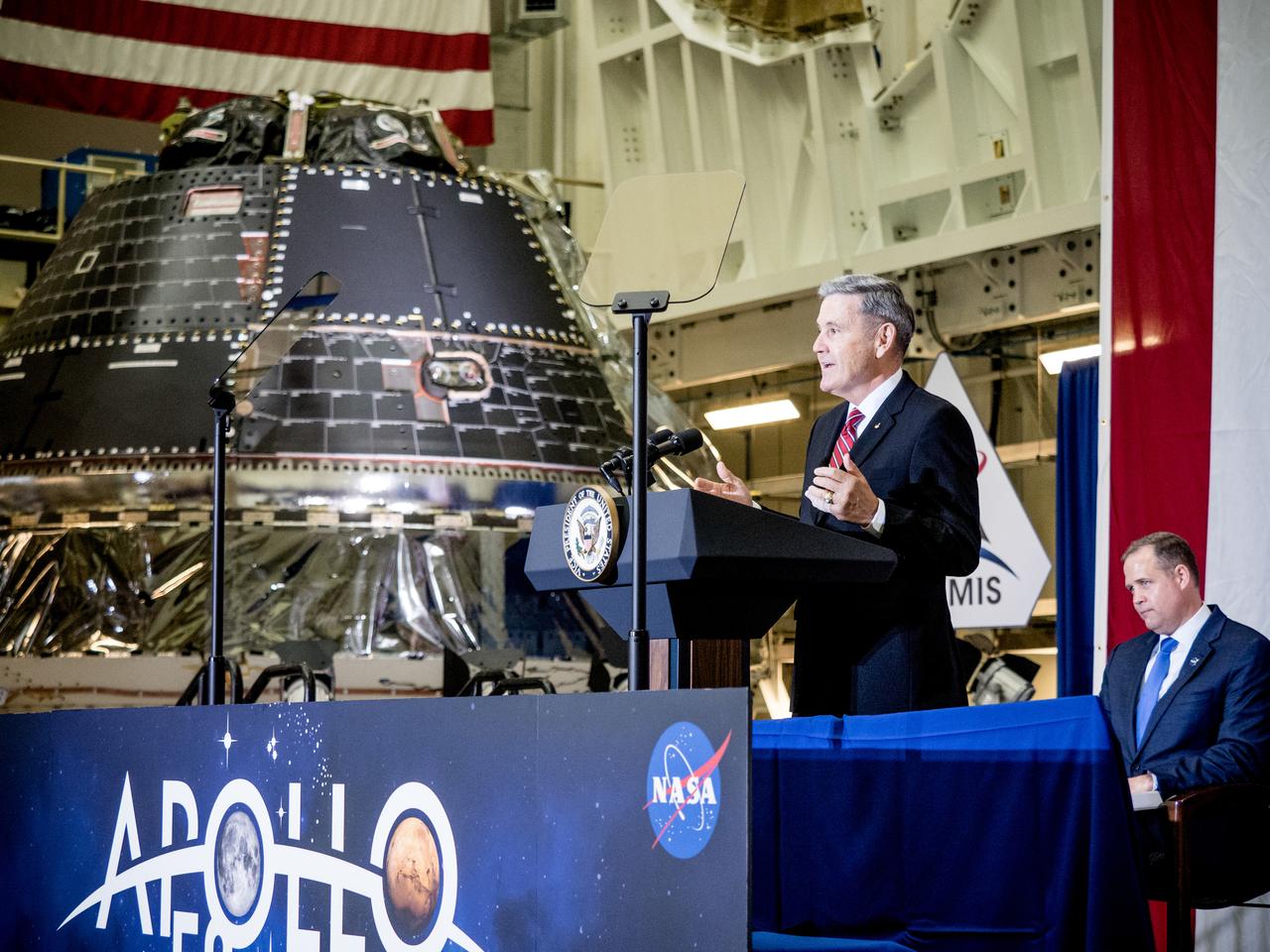
Vice President Mike Pence visited and gave remarks in the Neil Armstrong Operations and Checkout Building at NASA’s Kennedy Space Center in Florida on July 20, 2019 to commemorate the 50th anniversary of the agency’s Apollo 11 Moon landing and announce to America the completion of NASA’s Orion crew capsule, shown here on July 19, 2019, for the first Artemis lunar mission.
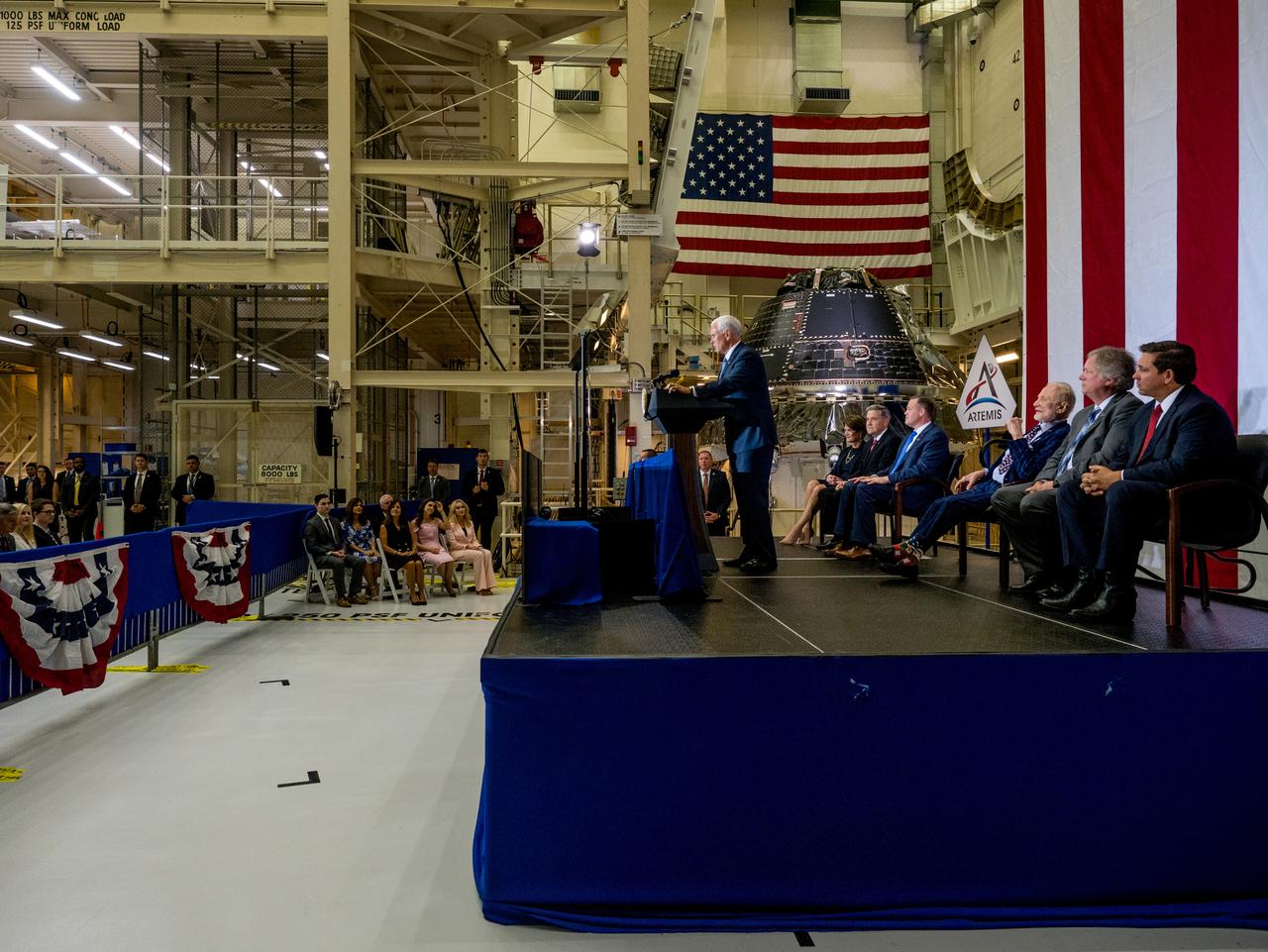
Vice President Mike Pence visited and gave remarks in the Neil Armstrong Operations and Checkout Building at NASA’s Kennedy Space Center in Florida on July 20, 2019 to commemorate the 50th anniversary of the agency’s Apollo 11 Moon landing and announce to America the completion of NASA’s Orion crew capsule, shown here on July 19, 2019, for the first Artemis lunar mission.
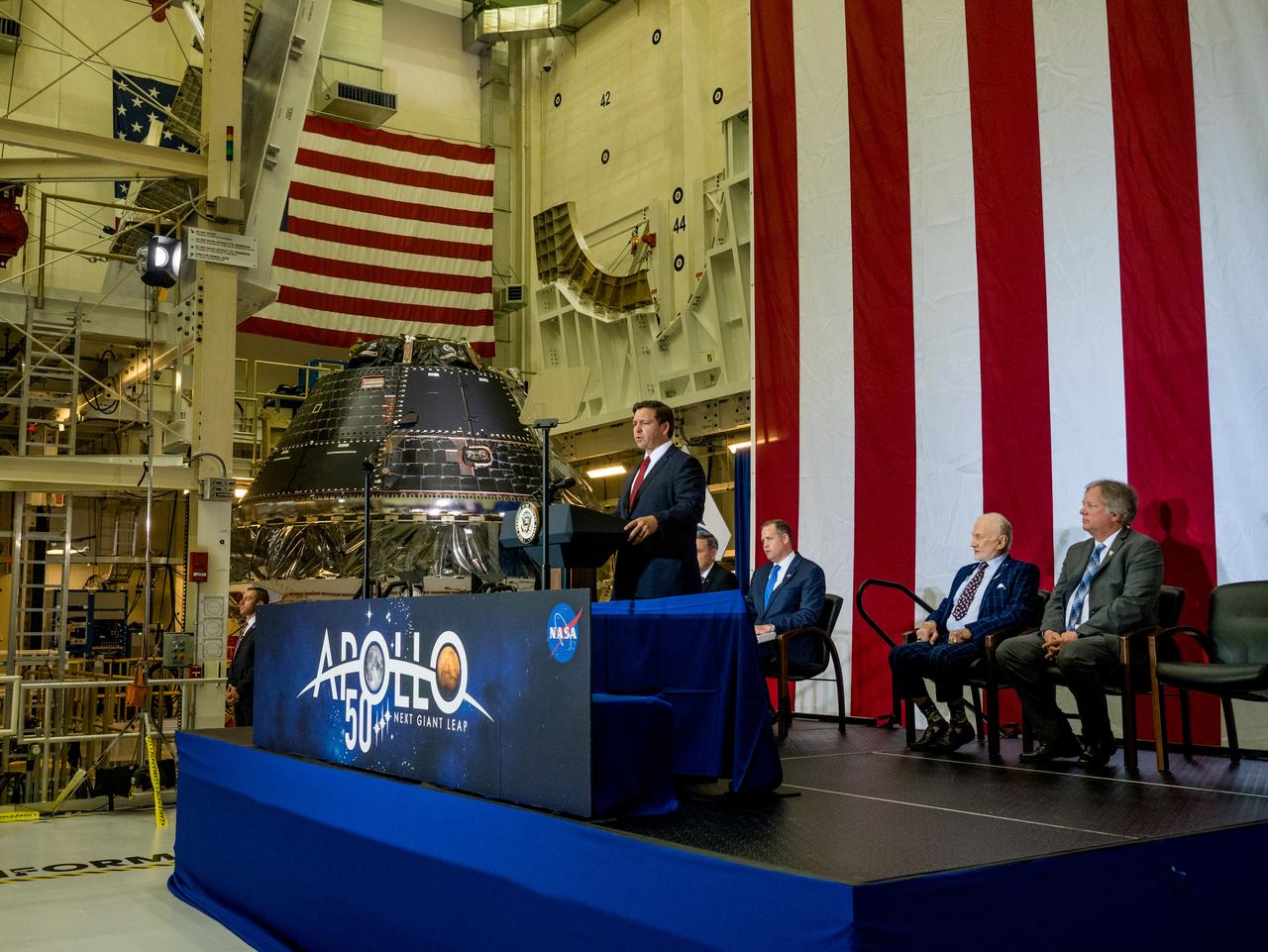
Vice President Mike Pence visited and gave remarks in the Neil Armstrong Operations and Checkout Building at NASA’s Kennedy Space Center in Florida on July 20, 2019 to commemorate the 50th anniversary of the agency’s Apollo 11 Moon landing and announce to America the completion of NASA’s Orion crew capsule, shown here on July 19, 2019, for the first Artemis lunar mission.
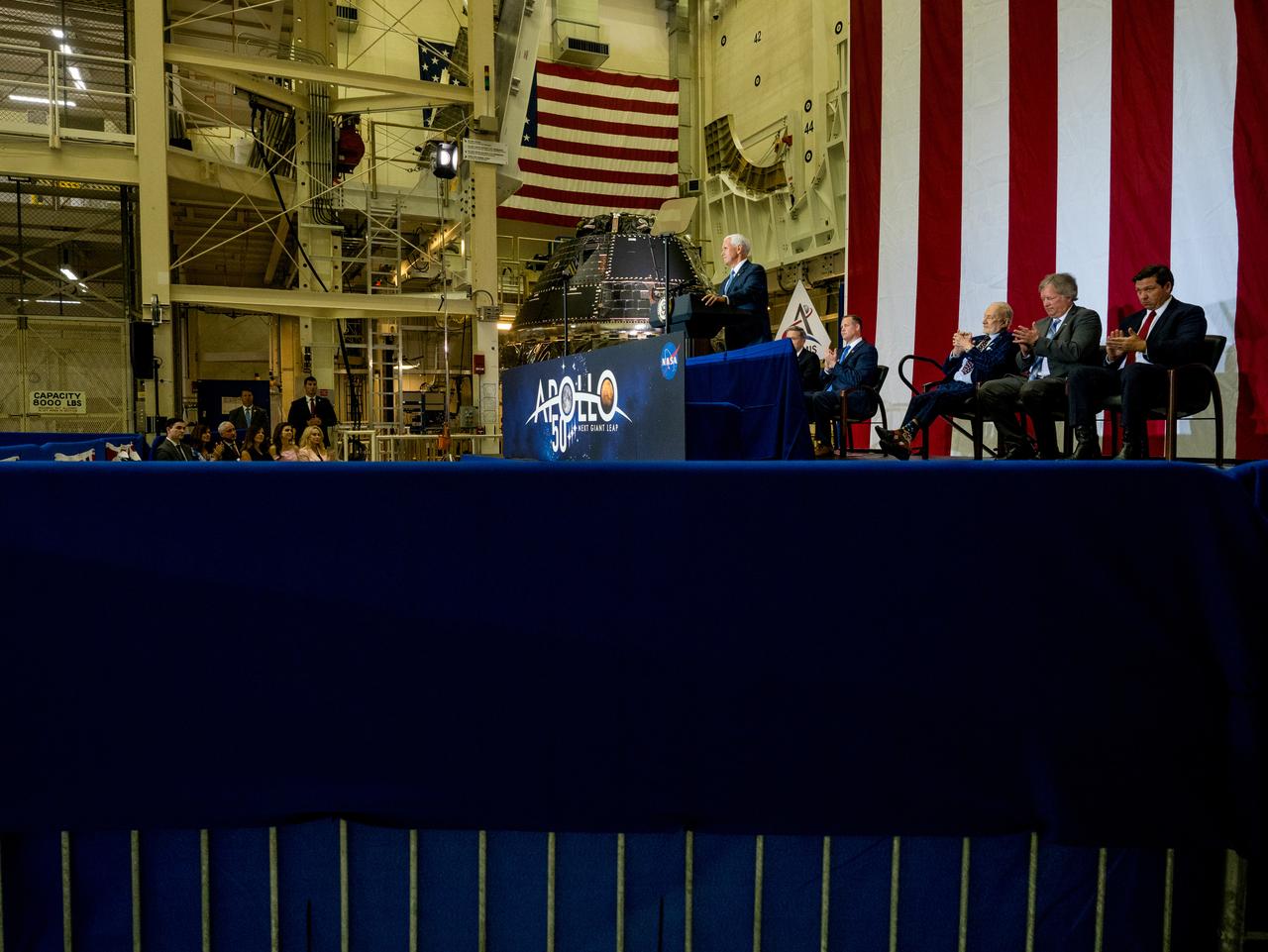
Vice President Mike Pence visited and gave remarks in the Neil Armstrong Operations and Checkout Building at NASA’s Kennedy Space Center in Florida on July 20, 2019 to commemorate the 50th anniversary of the agency’s Apollo 11 Moon landing and announce to America the completion of NASA’s Orion crew capsule, shown here on July 19, 2019, for the first Artemis lunar mission.
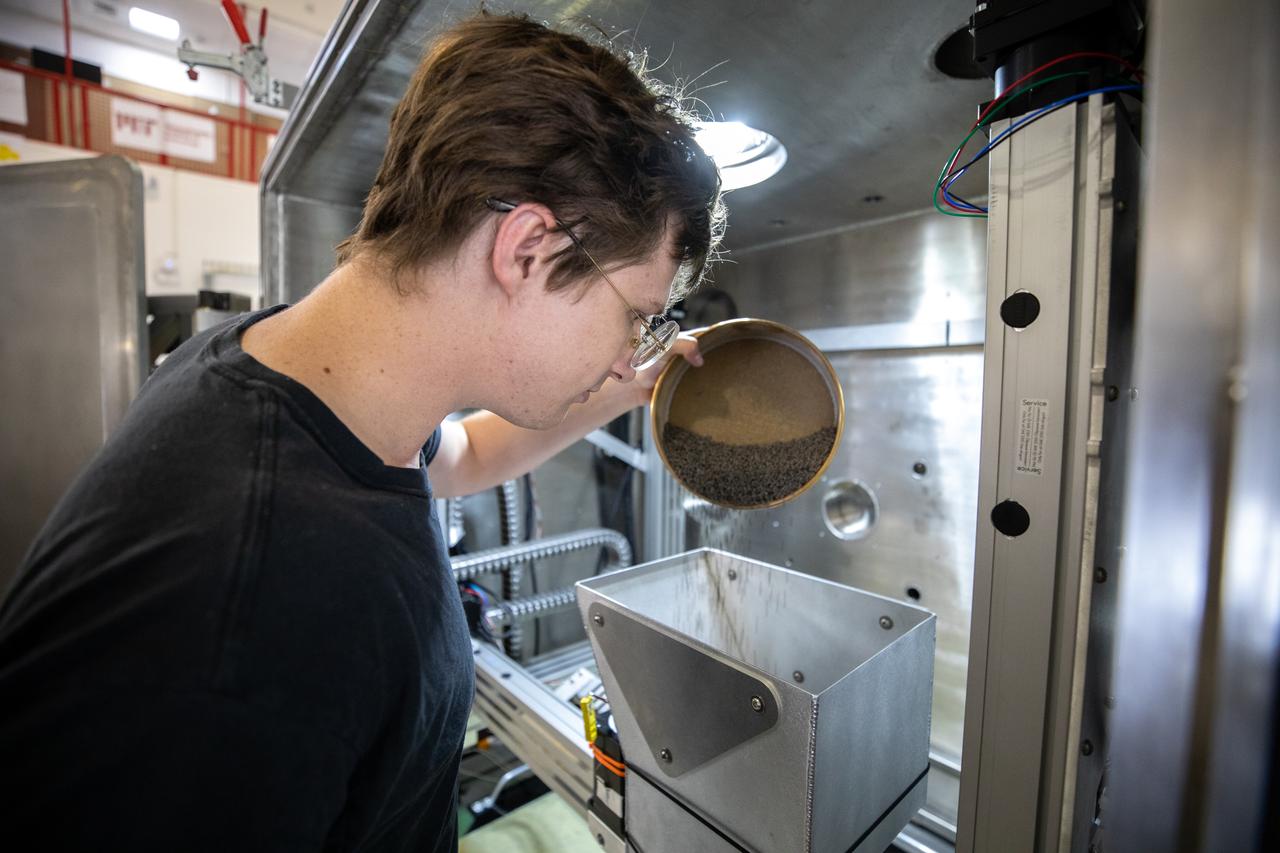
Materials engineer Thomas Lipscomb tests a 3D printer on July 28, 2022, at Swamp Works at NASA’s Kennedy Space Center in Florida, as part of the Relevant Environment Additive Construction Technology (REACT) project. Among the key objectives of the project is developing an architectural and structural design for a shelter that provides protection to habitable assets on the lunar surface. Testing REACT derives from NASA’s 2020 Announcement of Collaboration Opportunity with AI SpaceFactory – an architectural and construction technology company and winner of NASA’s 3D Printed Habitat Challenge.
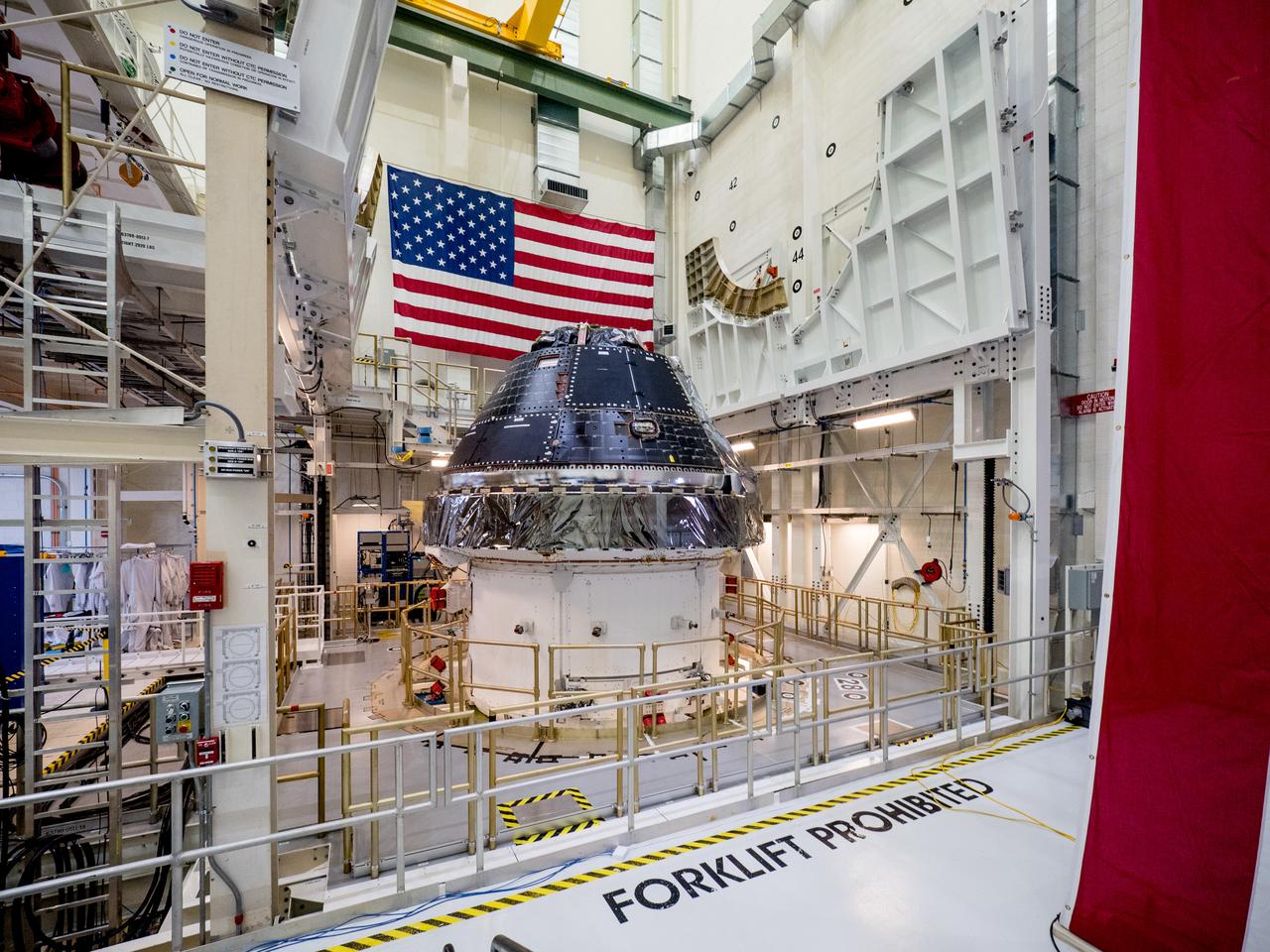
Vice President Mike Pence visited and gave remarks in the Neil Armstrong Operations and Checkout Building at NASA’s Kennedy Space Center in Florida on July 20, 2019 to commemorate the 50th anniversary of the agency’s Apollo 11 Moon landing and announce to America the completion of NASA’s Orion crew capsule, shown here on July 19, 2019, for the first Artemis lunar mission.
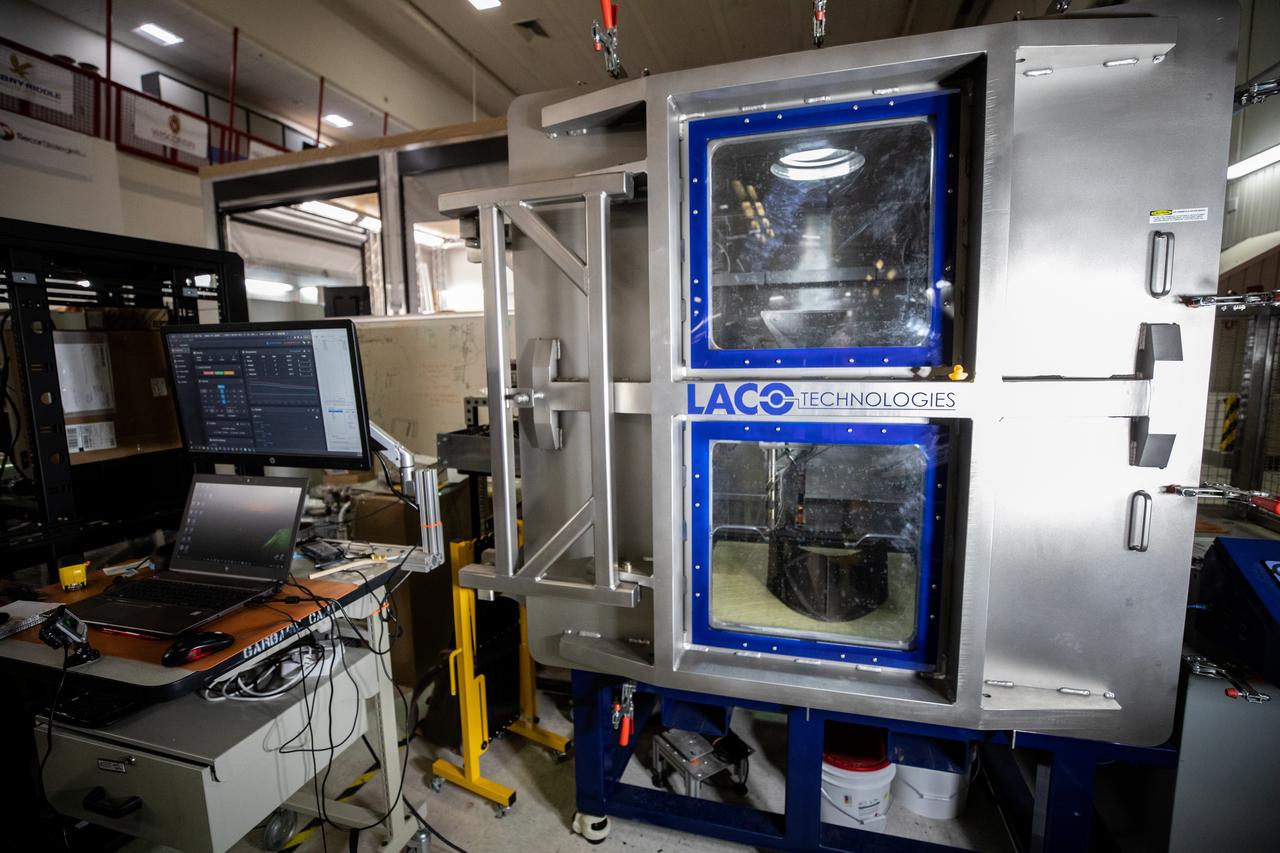
A team at NASA’s Kennedy Space Center in Florida tests a 3D printer on July 28, 2022, at the Florida spaceport’s Swamp Works, as part of the Relevant Environment Additive Construction Technology (REACT) project. Among the key objectives of the project is developing an architectural and structural design for a shelter that provides protection to habitable assets on the lunar surface. Testing REACT derives from NASA’s 2020 Announcement of Collaboration Opportunity with AI SpaceFactory – an architectural and construction technology company and winner of NASA’s 3D Printed Habitat Challenge.
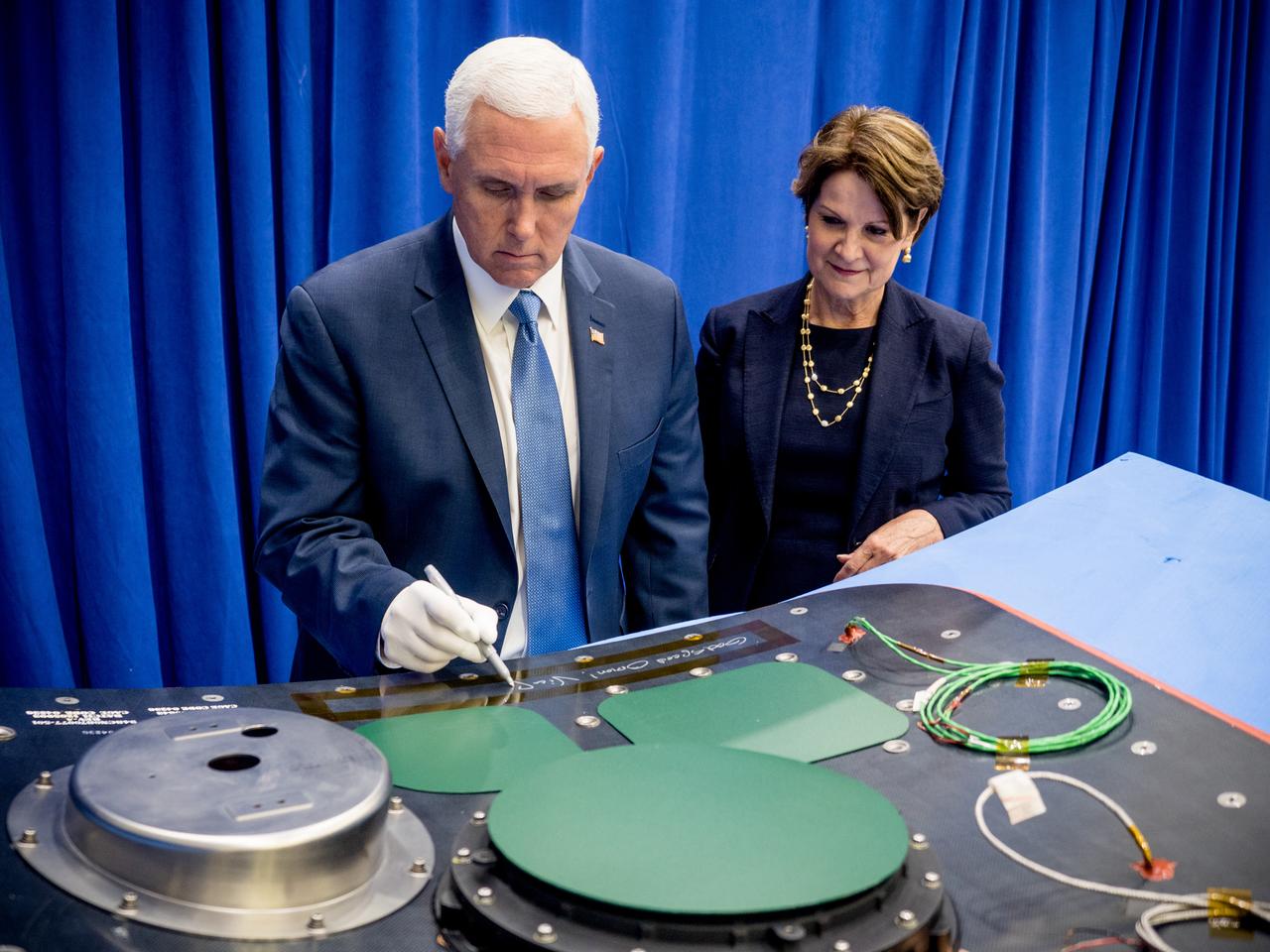
Vice President Mike Pence visited and gave remarks in the Neil Armstrong Operations and Checkout Building at NASA’s Kennedy Space Center in Florida on July 20, 2019 to commemorate the 50th anniversary of the agency’s Apollo 11 Moon landing and announce to America the completion of NASA’s Orion crew capsule, shown here on July 19, 2019, for the first Artemis lunar mission.

Chemist Tesia Irwin tests a 3D printer on July 28, 2022, at Swamp Works at NASA’s Kennedy Space Center in Florida, as part of the Relevant Environment Additive Construction Technology (REACT) project. Among the key objectives of the project is developing an architectural and structural design for a shelter that provides protection to habitable assets on the lunar surface. Testing REACT derives from NASA’s 2020 Announcement of Collaboration Opportunity with AI SpaceFactory – an architectural and construction technology company and winner of NASA’s 3D Printed Habitat Challenge.
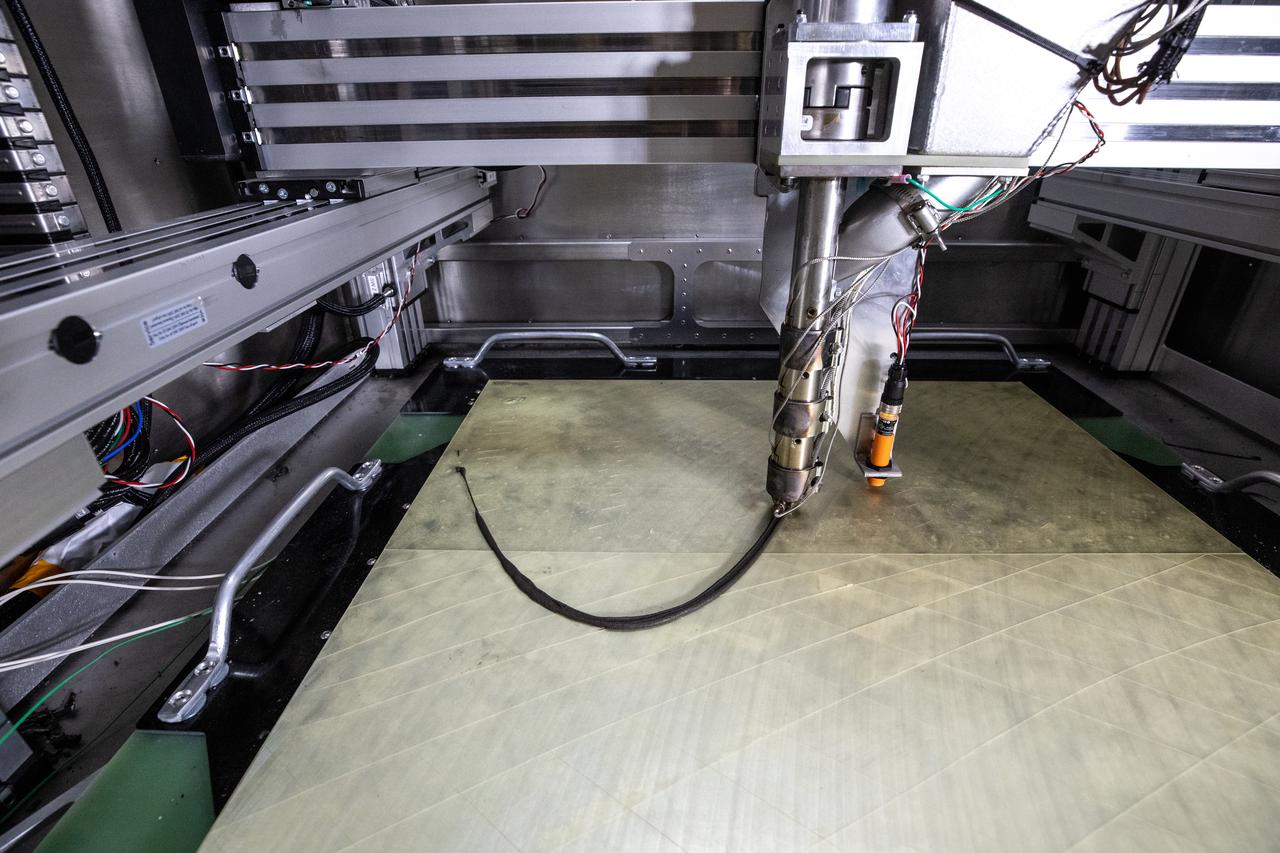
Shown is a Zero Launch Mass 3D printer on July 28, 2022, at NASA’s Kennedy Space Center’s Swamp Works. A team at the Florida spaceport tested the printer as part of the Relevant Environment Additive Construction Technology (REACT) project. Among the key objectives of the project is developing an architectural and structural design for a shelter that provides protection to habitable assets on the lunar surface. Testing REACT derives from NASA’s 2020 Announcement of Collaboration Opportunity with AI SpaceFactory – an architectural and construction technology company and winner of NASA’s 3D Printed Habitat Challenge.
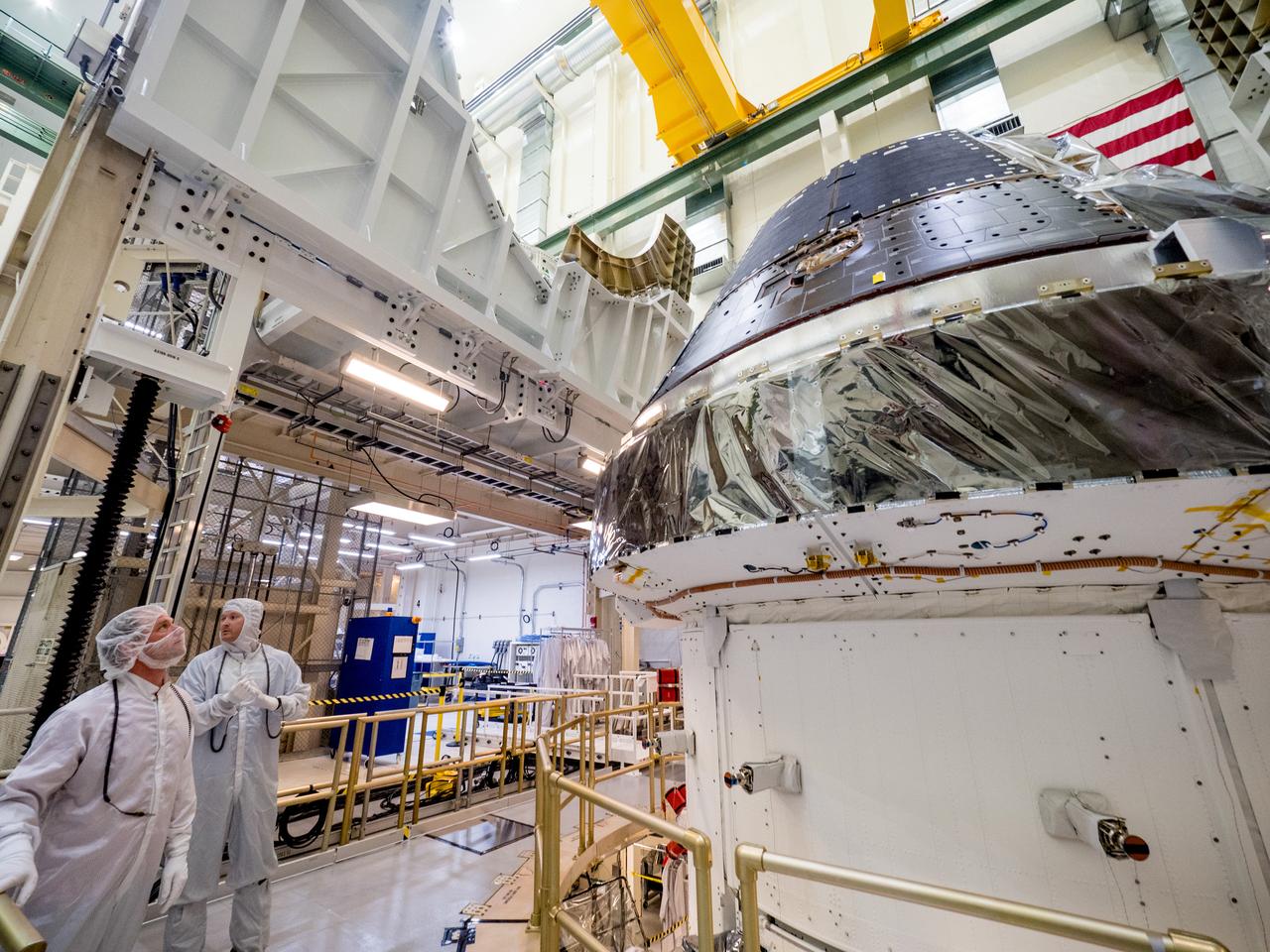
Vice President Mike Pence visited and gave remarks in the Neil Armstrong Operations and Checkout Building at NASA’s Kennedy Space Center in Florida on July 20, 2019 to commemorate the 50th anniversary of the agency’s Apollo 11 Moon landing and announce to America the completion of NASA’s Orion crew capsule, shown here on July 19, 2019, for the first Artemis lunar mission.
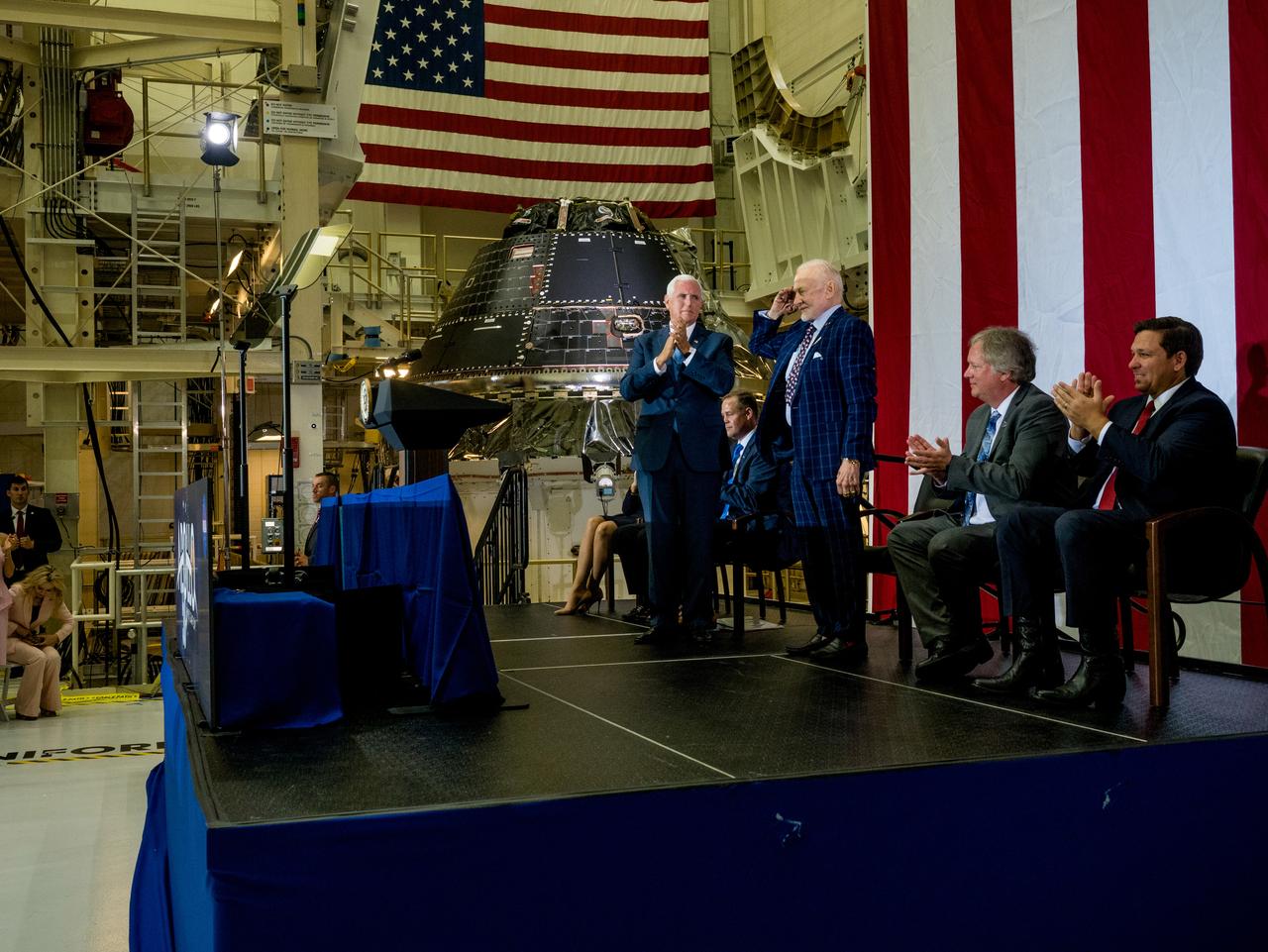
Vice President Mike Pence visited and gave remarks in the Neil Armstrong Operations and Checkout Building at NASA’s Kennedy Space Center in Florida on July 20, 2019 to commemorate the 50th anniversary of the agency’s Apollo 11 Moon landing and announce to America the completion of NASA’s Orion crew capsule, shown here on July 19, 2019, for the first Artemis lunar mission.
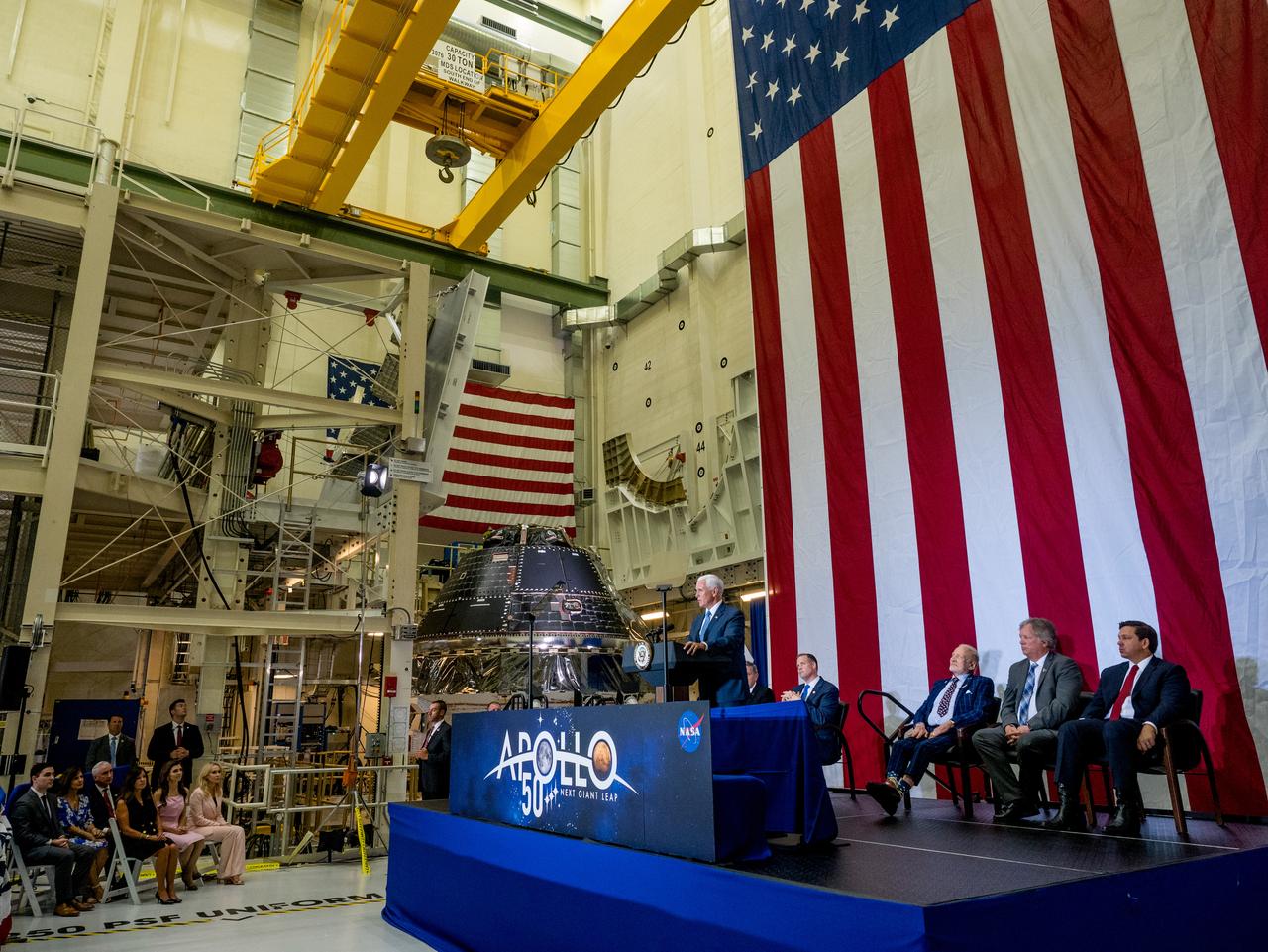
Vice President Mike Pence visited and gave remarks in the Neil Armstrong Operations and Checkout Building at NASA’s Kennedy Space Center in Florida on July 20, 2019 to commemorate the 50th anniversary of the agency’s Apollo 11 Moon landing and announce to America the completion of NASA’s Orion crew capsule, shown here on July 19, 2019, for the first Artemis lunar mission.
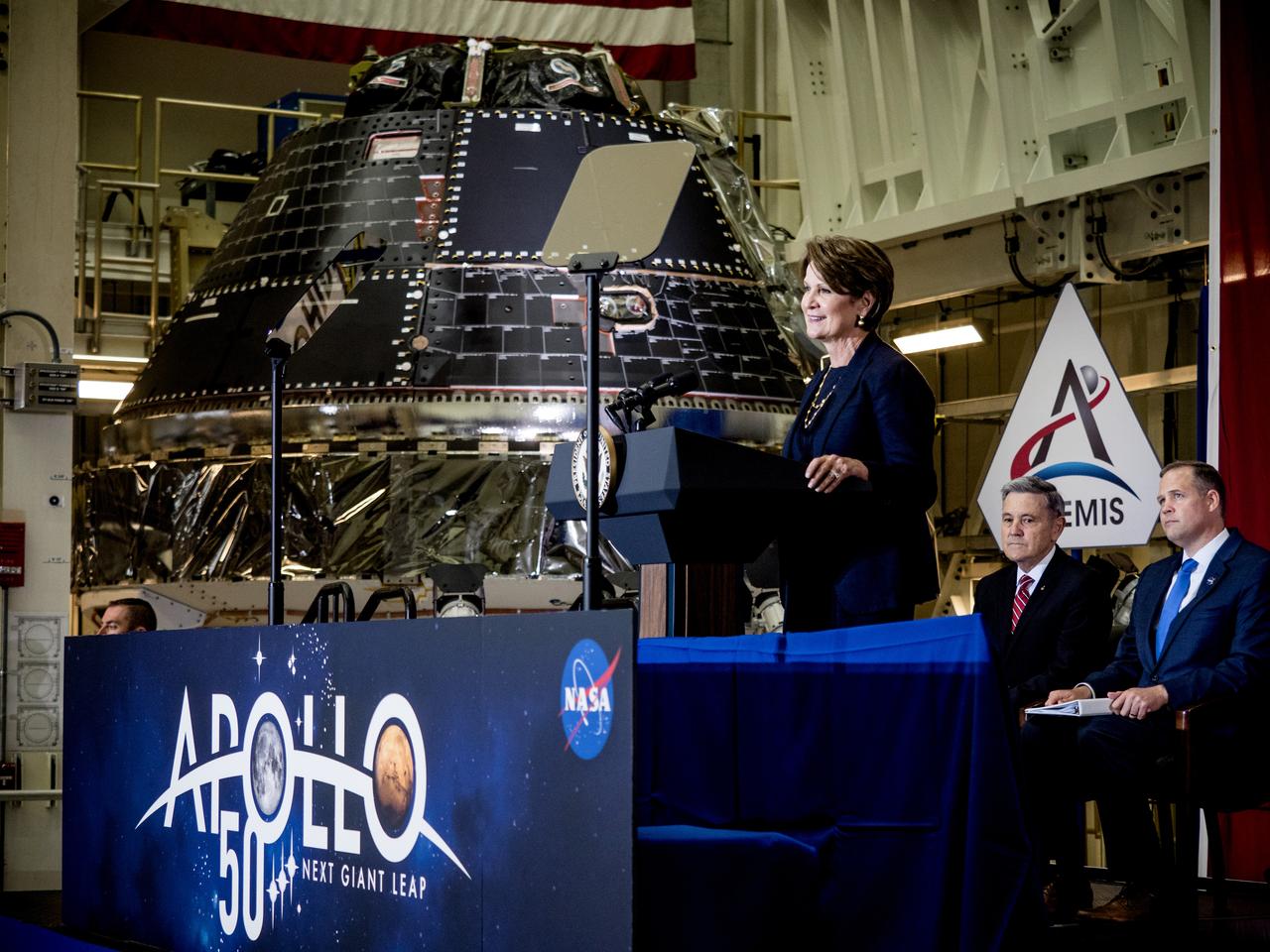
Vice President Mike Pence visited and gave remarks in the Neil Armstrong Operations and Checkout Building at NASA’s Kennedy Space Center in Florida on July 20, 2019 to commemorate the 50th anniversary of the agency’s Apollo 11 Moon landing and announce to America the completion of NASA’s Orion crew capsule, shown here on July 19, 2019, for the first Artemis lunar mission.
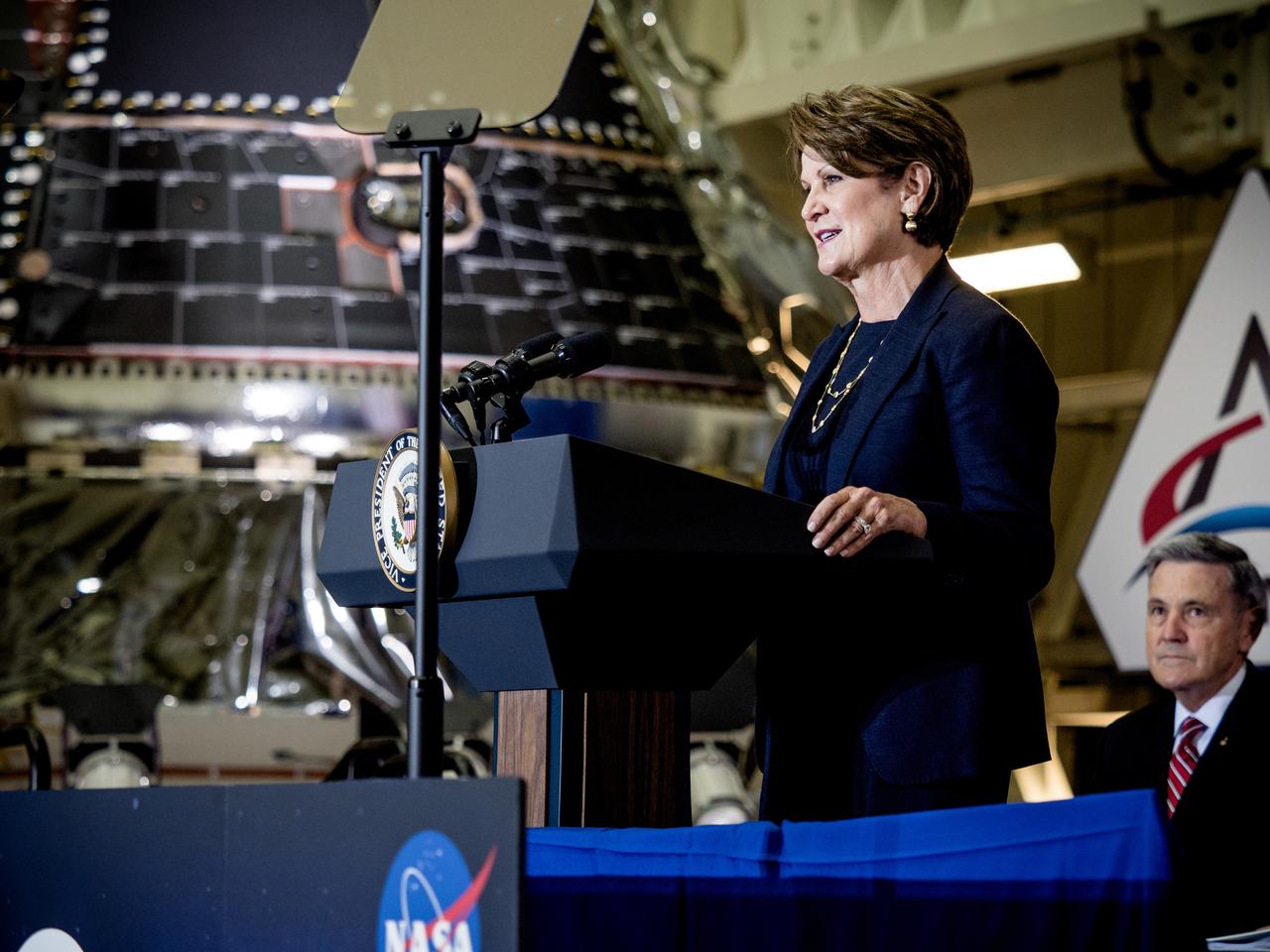
Vice President Mike Pence visited and gave remarks in the Neil Armstrong Operations and Checkout Building at NASA’s Kennedy Space Center in Florida on July 20, 2019 to commemorate the 50th anniversary of the agency’s Apollo 11 Moon landing and announce to America the completion of NASA’s Orion crew capsule, shown here on July 19, 2019, for the first Artemis lunar mission.
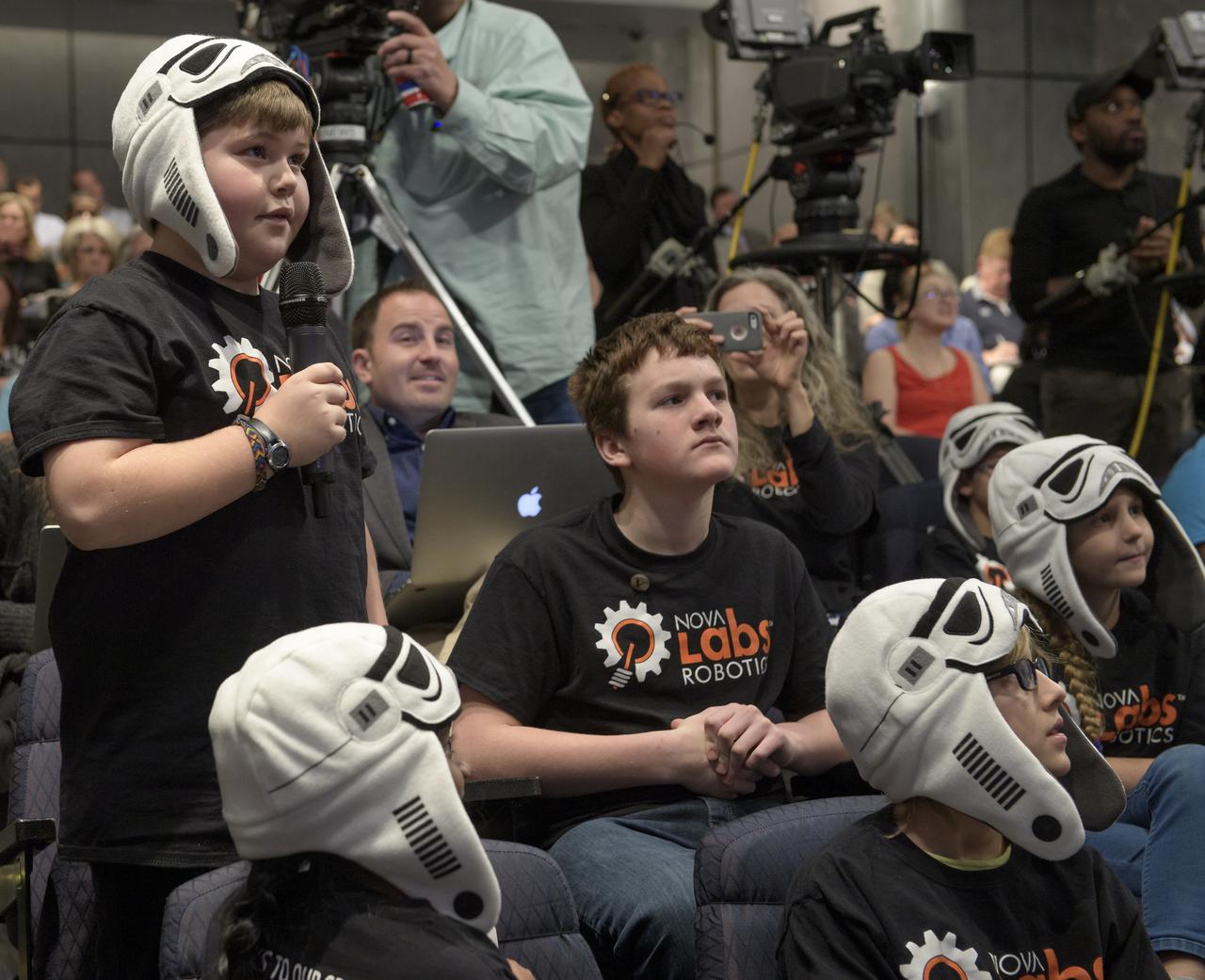
A Nova Labs Robotics "BrainStorm Troopers" team member from Reston, Virginia asks a question during an Commercial Lunar Payload Services (CLPS) announcement, Thursday, Nov. 29, 2018 at NASA Headquarters in Washington. Nine companies will be able to bid on delivering science and technology payloads for NASA, including payload integration and operations, launching from Earth and landing on the surface of the Moon. NASA expects to be one of many customers that will use these commercial landing services. Photo Credit: (NASA/Bill Ingalls)
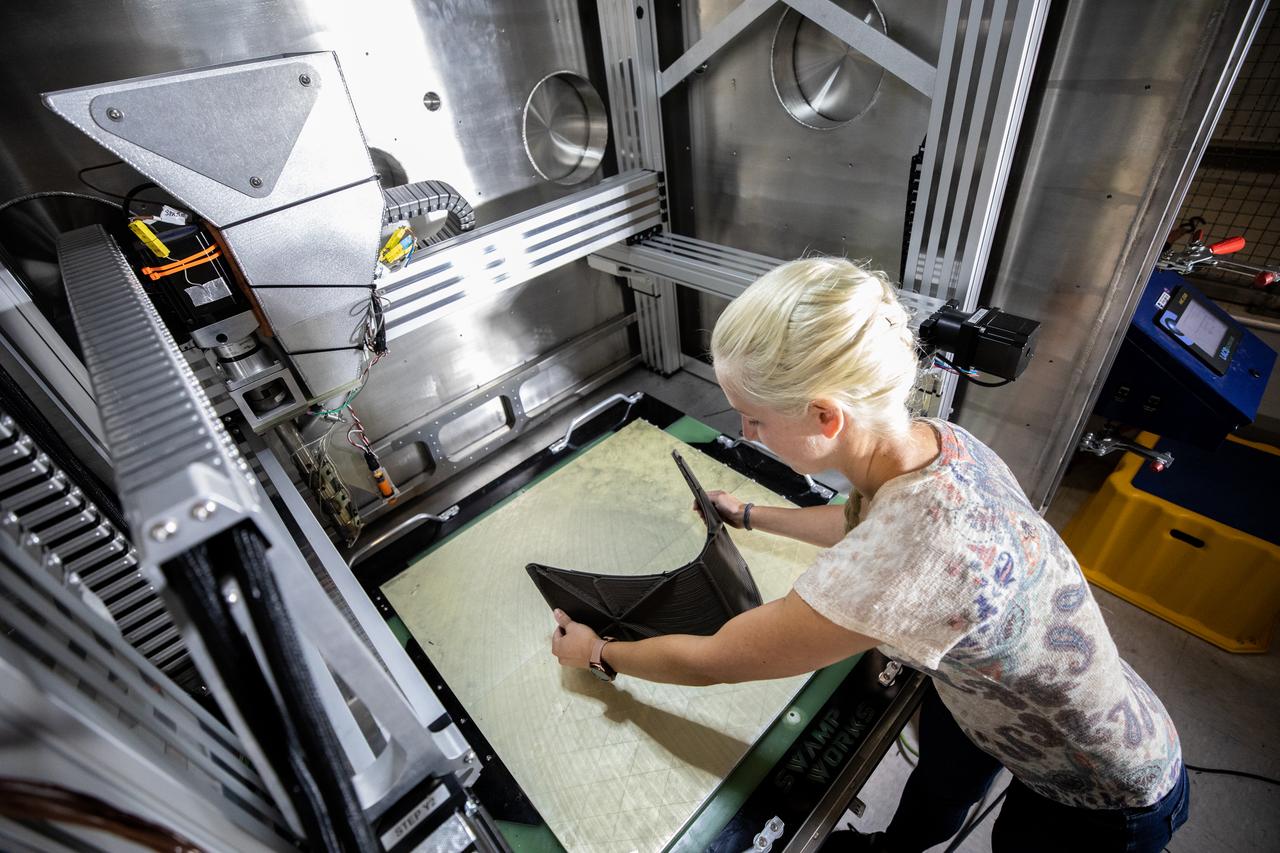
Chemist Tesia Irwin tests a 3D printer on July 28, 2022, at Swamp Works at NASA’s Kennedy Space Center in Florida, as part of the Relevant Environment Additive Construction Technology (REACT) project. Among the key objectives of the project is developing an architectural and structural design for a shelter that provides protection to habitable assets on the lunar surface. Testing REACT derives from NASA’s 2020 Announcement of Collaboration Opportunity with AI SpaceFactory – an architectural and construction technology company and winner of NASA’s 3D Printed Habitat Challenge.
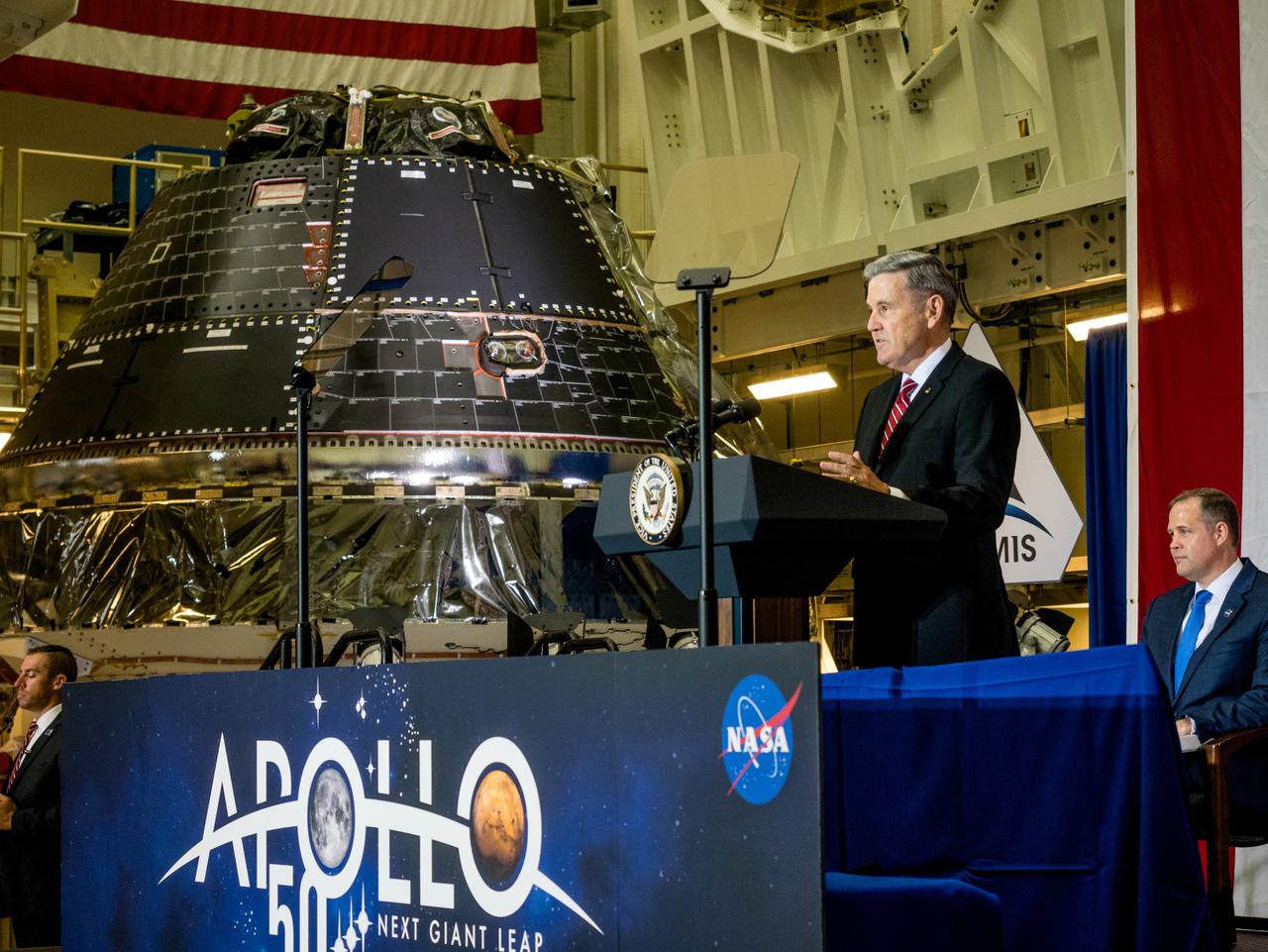
Vice President Mike Pence visited and gave remarks in the Neil Armstrong Operations and Checkout Building at NASA’s Kennedy Space Center in Florida on July 20, 2019 to commemorate the 50th anniversary of the agency’s Apollo 11 Moon landing and announce to America the completion of NASA’s Orion crew capsule, shown here on July 19, 2019, for the first Artemis lunar mission.
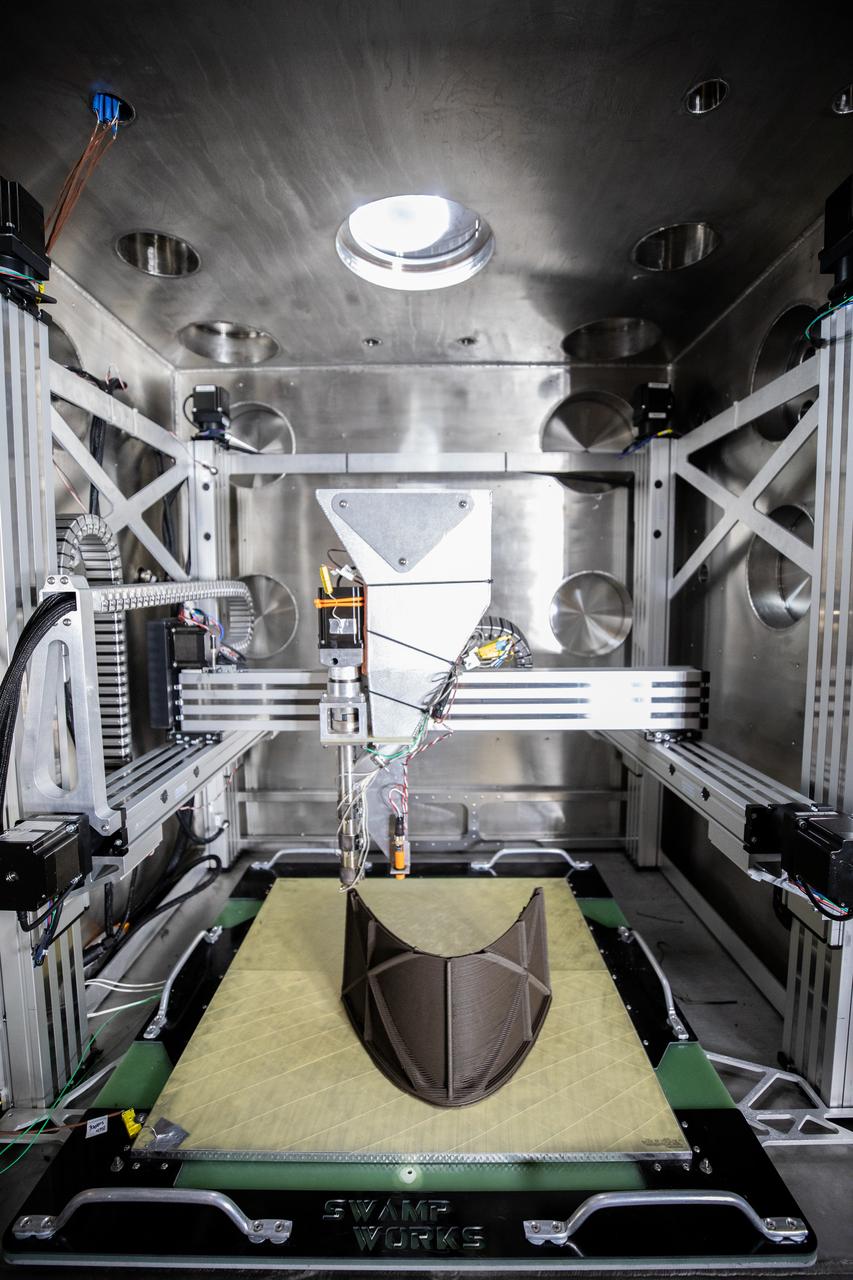
A team at NASA’s Kennedy Space Center in Florida tests a 3D printer on July 28, 2022, at the Florida spaceport’s Swamp Works, as part of the Relevant Environment Additive Construction Technology (REACT) project. Among the key objectives of the project is developing an architectural and structural design for a shelter that provides protection to habitable assets on the lunar surface. Testing REACT derives from NASA’s 2020 Announcement of Collaboration Opportunity with AI SpaceFactory – an architectural and construction technology company and winner of NASA’s 3D Printed Habitat Challenge.
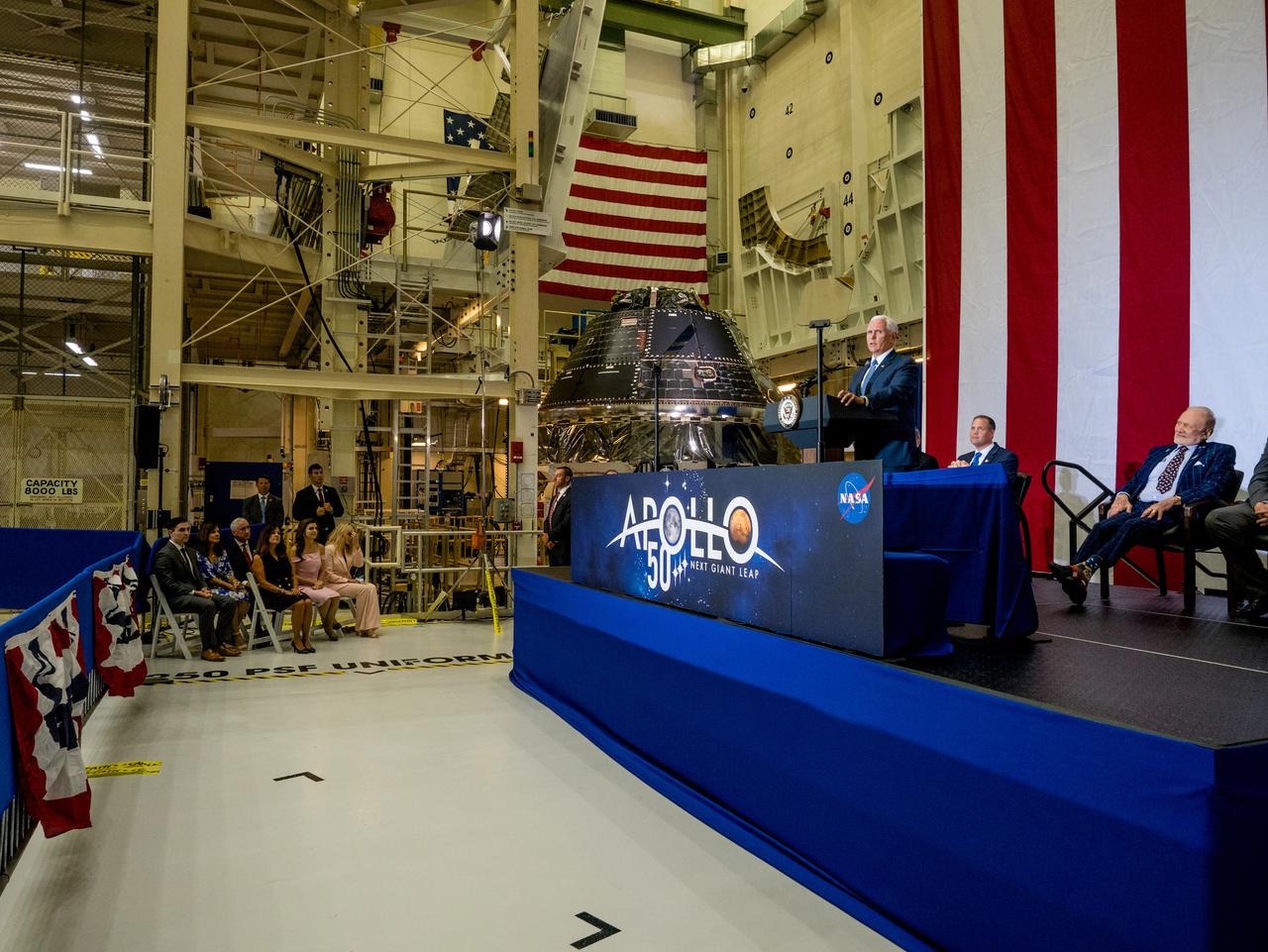
Vice President Mike Pence visited and gave remarks in the Neil Armstrong Operations and Checkout Building at NASA’s Kennedy Space Center in Florida on July 20, 2019 to commemorate the 50th anniversary of the agency’s Apollo 11 Moon landing and announce to America the completion of NASA’s Orion crew capsule, shown here on July 19, 2019, for the first Artemis lunar mission.
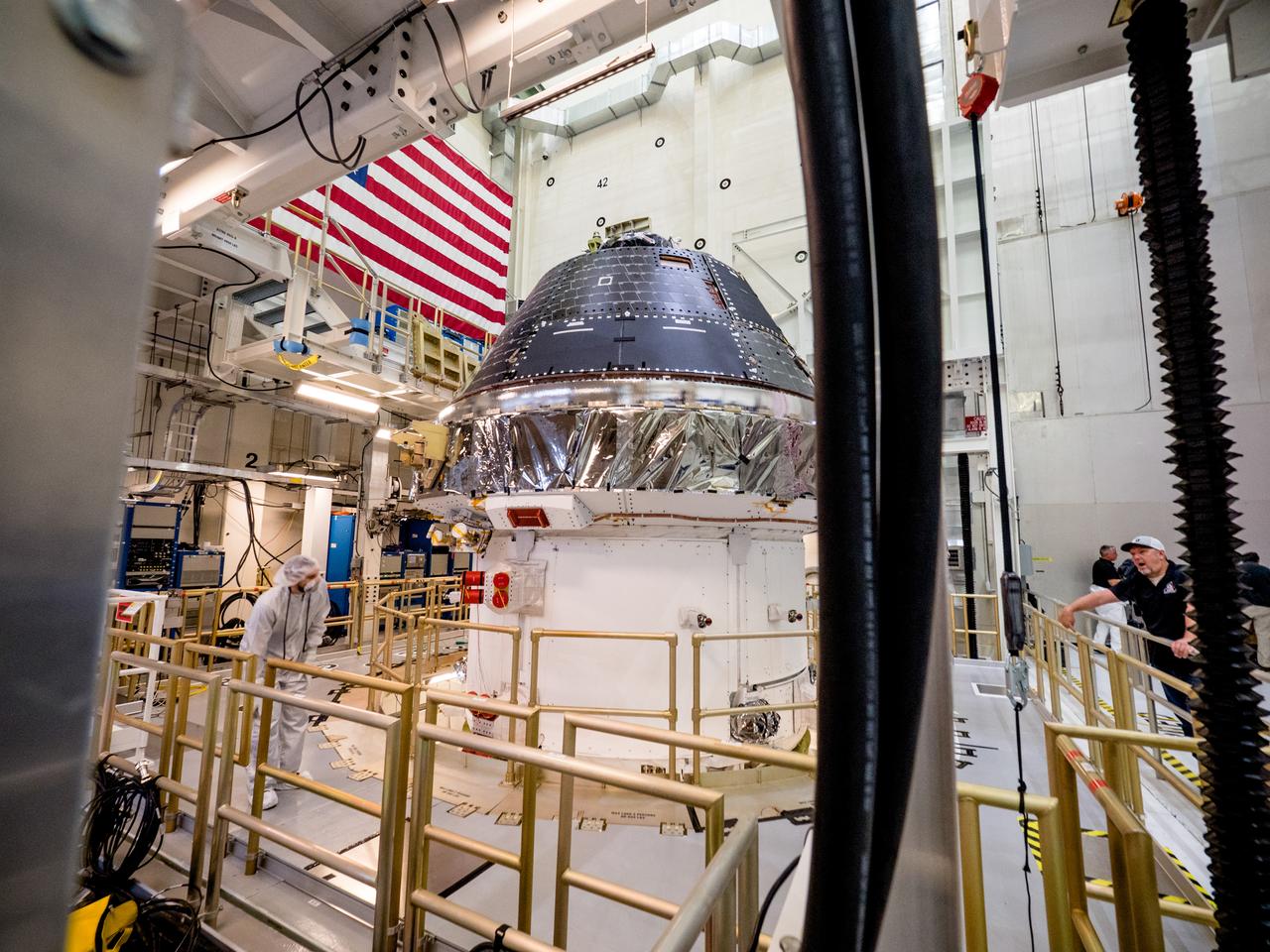
Vice President Mike Pence visited and gave remarks in the Neil Armstrong Operations and Checkout Building at NASA’s Kennedy Space Center in Florida on July 20, 2019 to commemorate the 50th anniversary of the agency’s Apollo 11 Moon landing and announce to America the completion of NASA’s Orion crew capsule, shown here on July 19, 2019, for the first Artemis lunar mission.
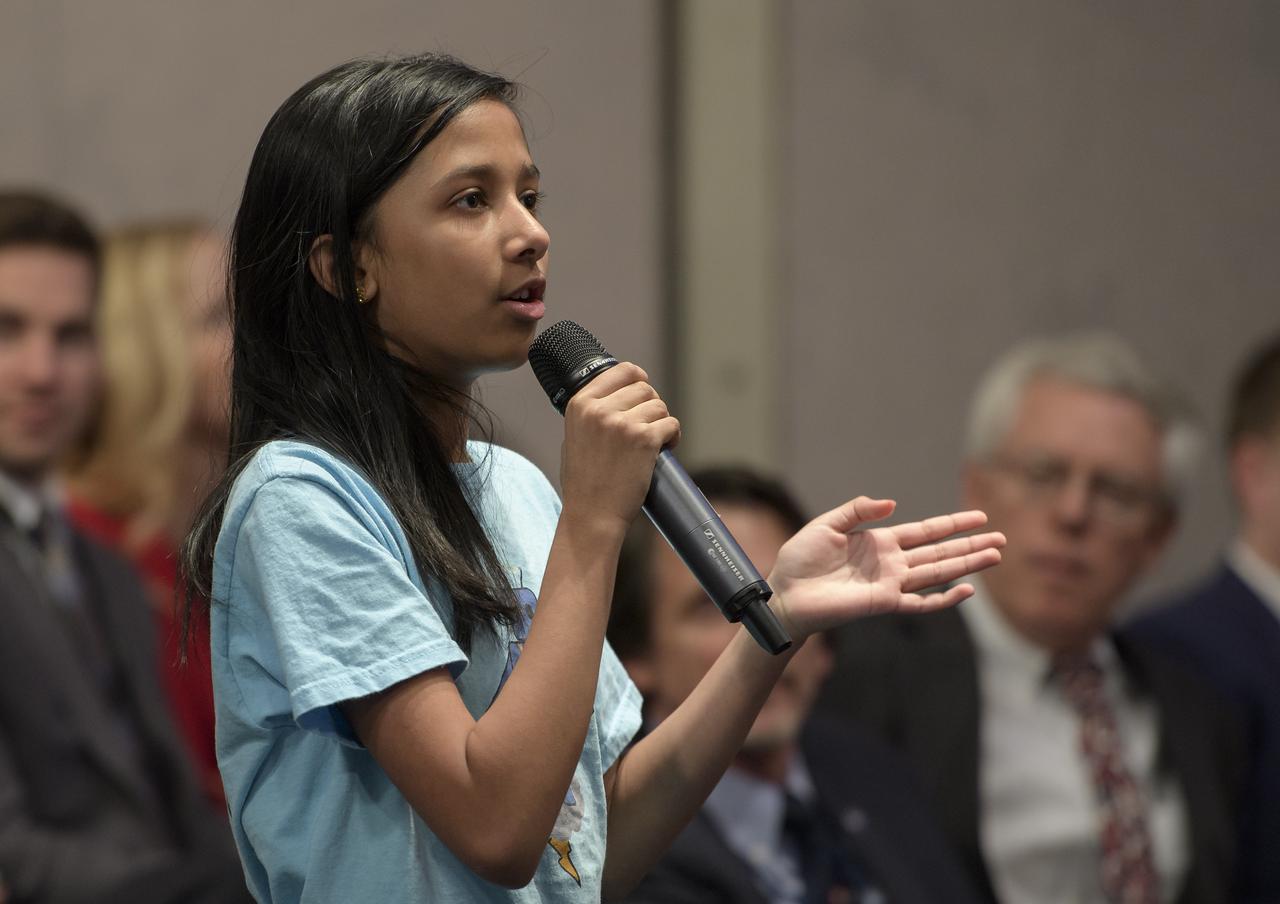
A Cascades Thunderbots "Robotics for Youth" team member from Sterling, Virginia asks a question during an Commercial Lunar Payload Services (CLPS) announcement, Thursday, Nov. 29, 2018 at NASA Headquarters in Washington. Nine companies will be able to bid on delivering science and technology payloads for NASA, including payload integration and operations, launching from Earth and landing on the surface of the Moon. NASA expects to be one of many customers that will use these commercial landing services. Photo Credit: (NASA/Bill Ingalls)
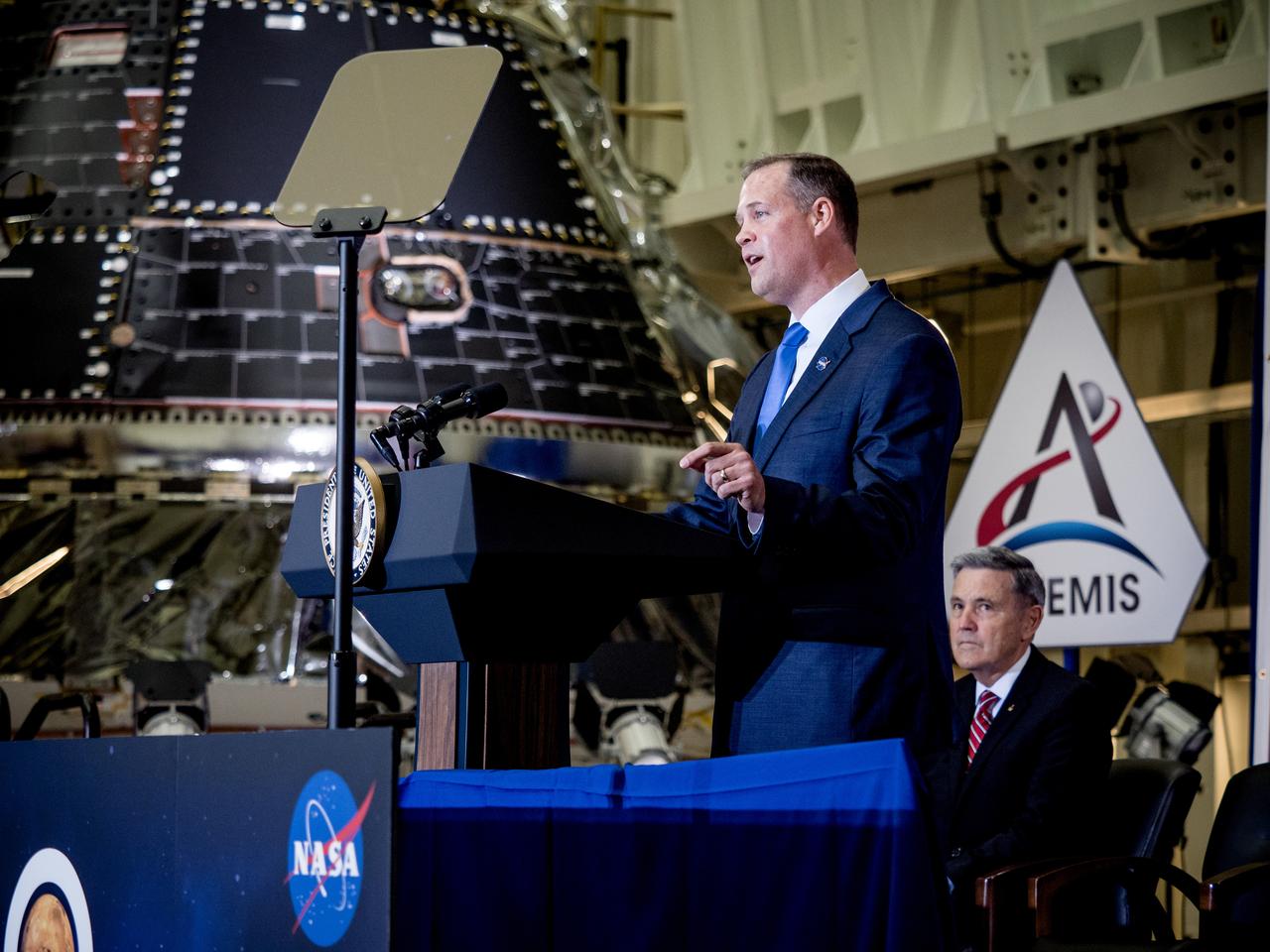
Vice President Mike Pence visited and gave remarks in the Neil Armstrong Operations and Checkout Building at NASA’s Kennedy Space Center in Florida on July 20, 2019 to commemorate the 50th anniversary of the agency’s Apollo 11 Moon landing and announce to America the completion of NASA’s Orion crew capsule, shown here on July 19, 2019, for the first Artemis lunar mission.

Vice President Mike Pence visited and gave remarks in the Neil Armstrong Operations and Checkout Building at NASA’s Kennedy Space Center in Florida on July 20, 2019 to commemorate the 50th anniversary of the agency’s Apollo 11 Moon landing and announce to America the completion of NASA’s Orion crew capsule, shown here on July 19, 2019, for the first Artemis lunar mission.
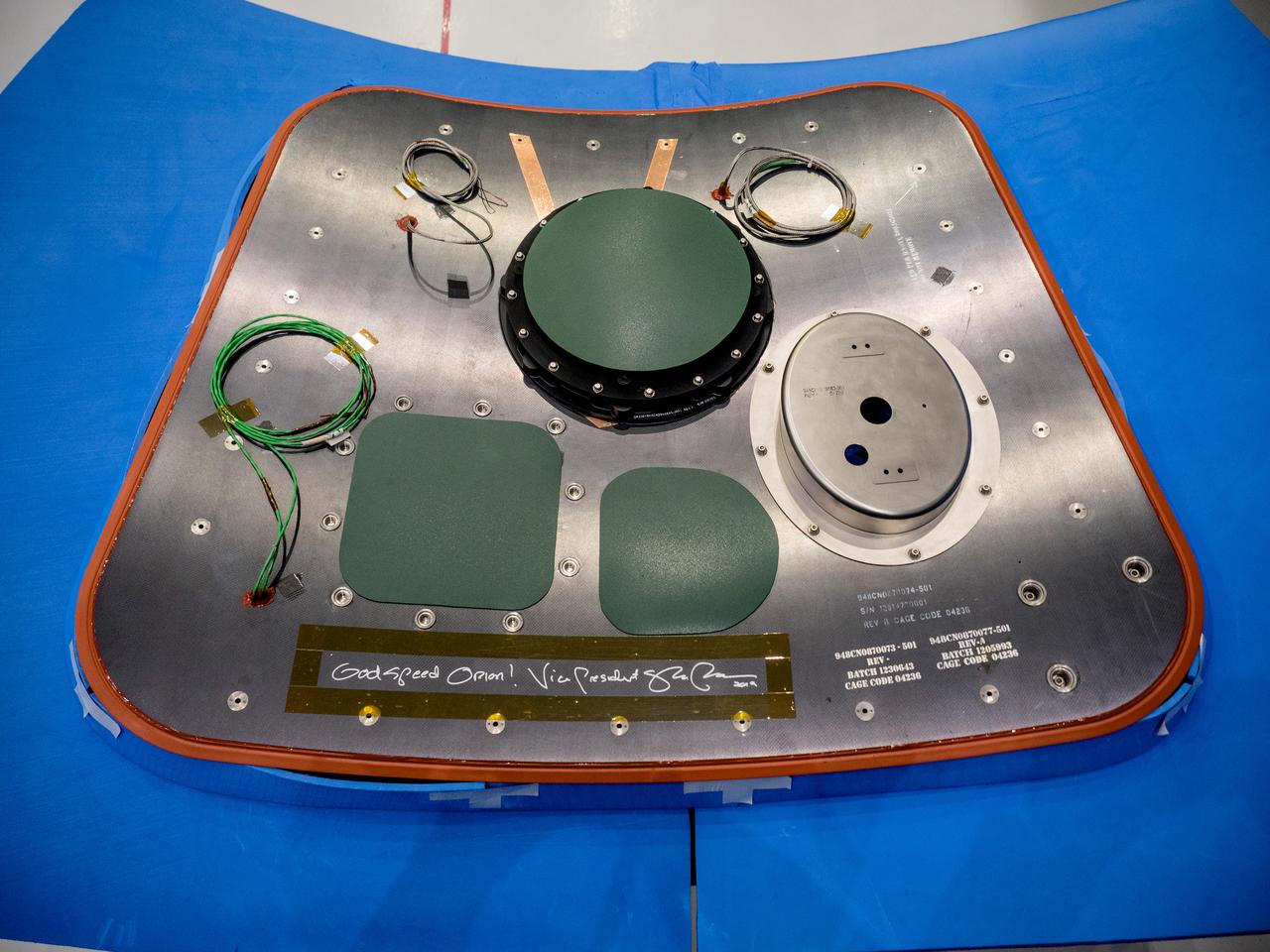
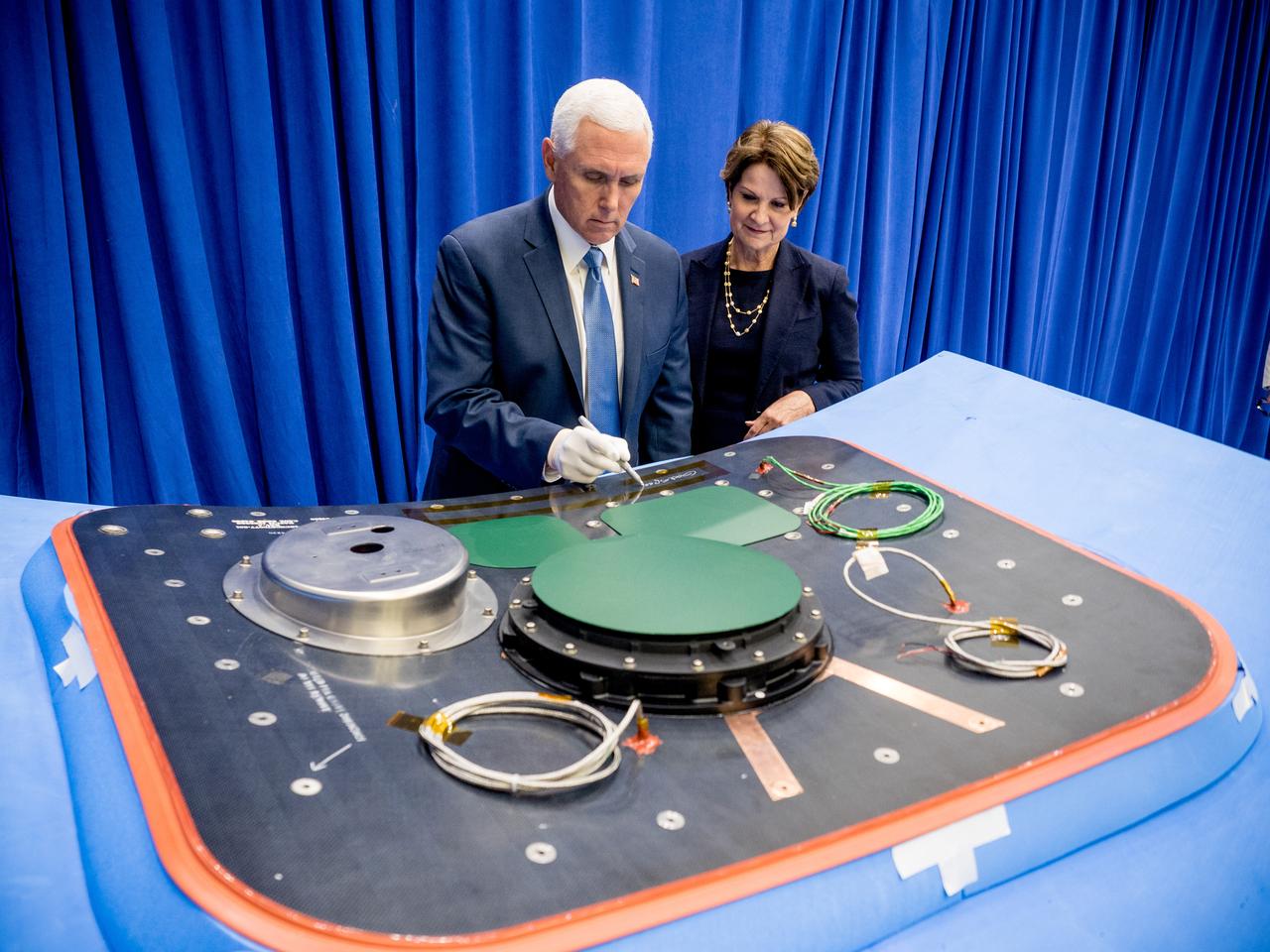
Vice President Mike Pence visited and gave remarks in the Neil Armstrong Operations and Checkout Building at NASA’s Kennedy Space Center in Florida on July 20, 2019 to commemorate the 50th anniversary of the agency’s Apollo 11 Moon landing and announce to America the completion of NASA’s Orion crew capsule, shown here on July 19, 2019, for the first Artemis lunar mission. View is of VP signature on inside of hatch.
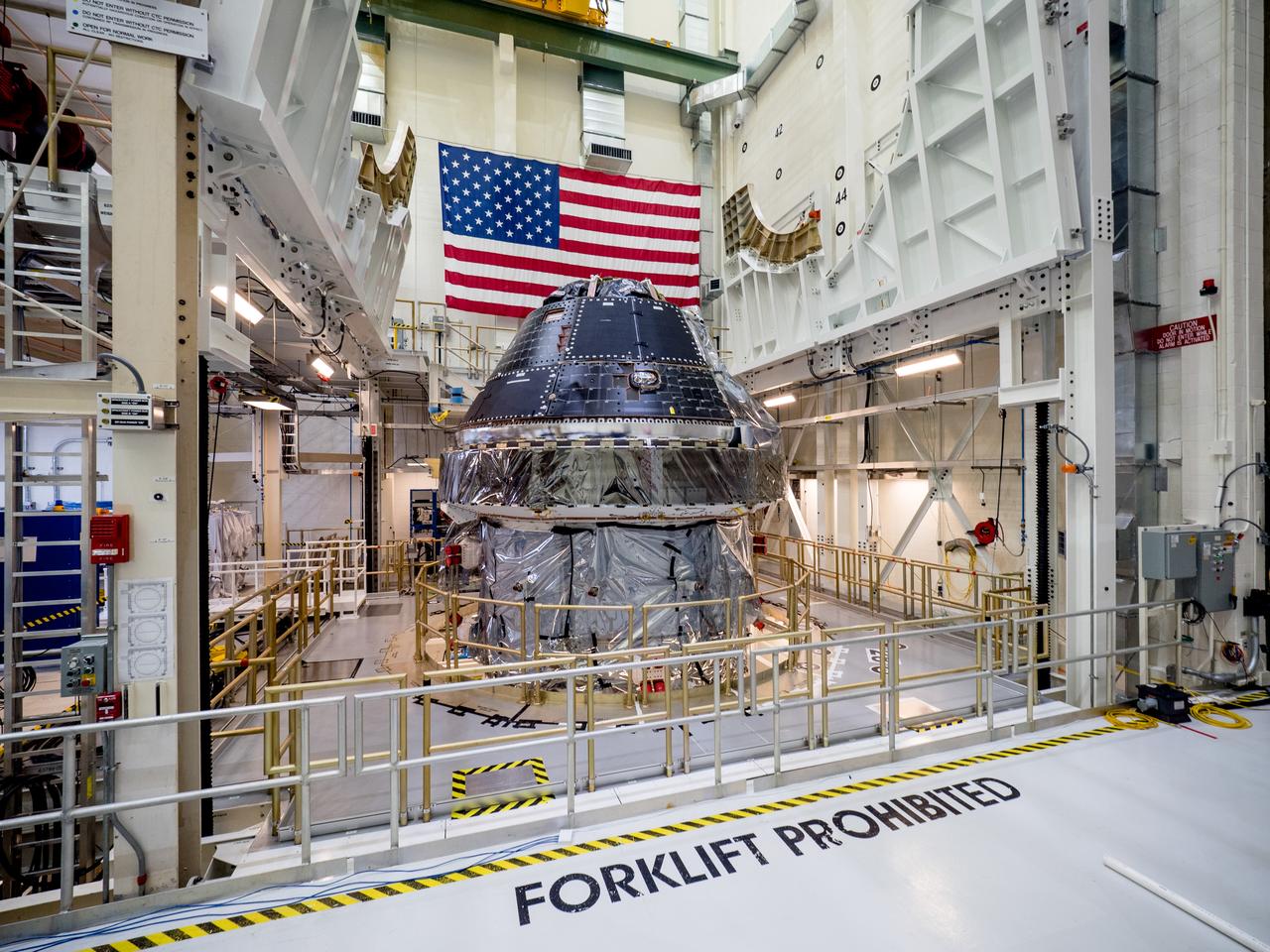
Vice President Mike Pence visited and gave remarks in the Neil Armstrong Operations and Checkout Building at NASA’s Kennedy Space Center in Florida on July 20, 2019 to commemorate the 50th anniversary of the agency’s Apollo 11 Moon landing and announce to America the completion of NASA’s Orion crew capsule, shown here on July 19, 2019, for the first Artemis lunar mission.
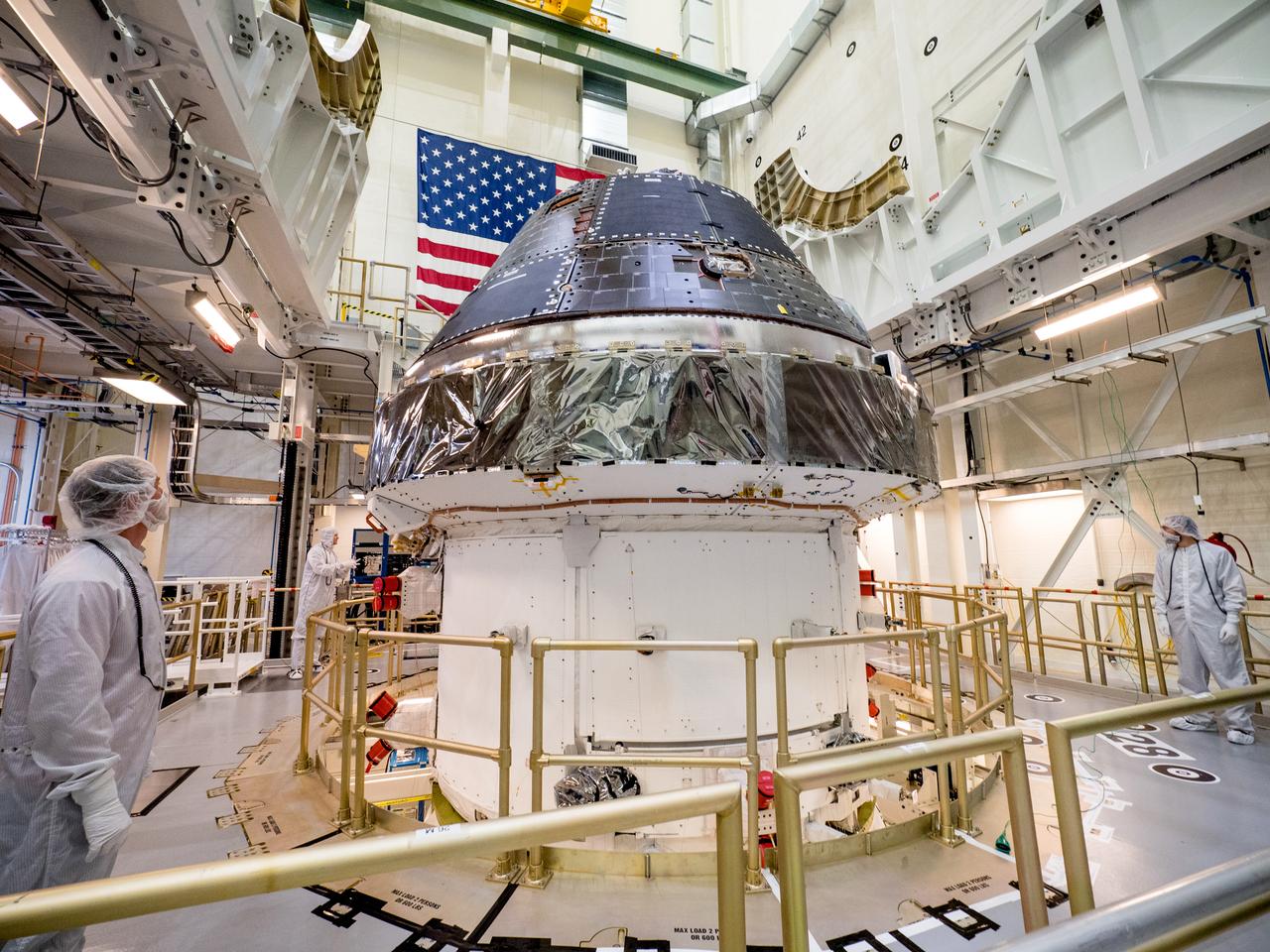
Vice President Mike Pence visited and gave remarks in the Neil Armstrong Operations and Checkout Building at NASA’s Kennedy Space Center in Florida on July 20, 2019 to commemorate the 50th anniversary of the agency’s Apollo 11 Moon landing and announce to America the completion of NASA’s Orion crew capsule, shown here on July 19, 2019, for the first Artemis lunar mission.
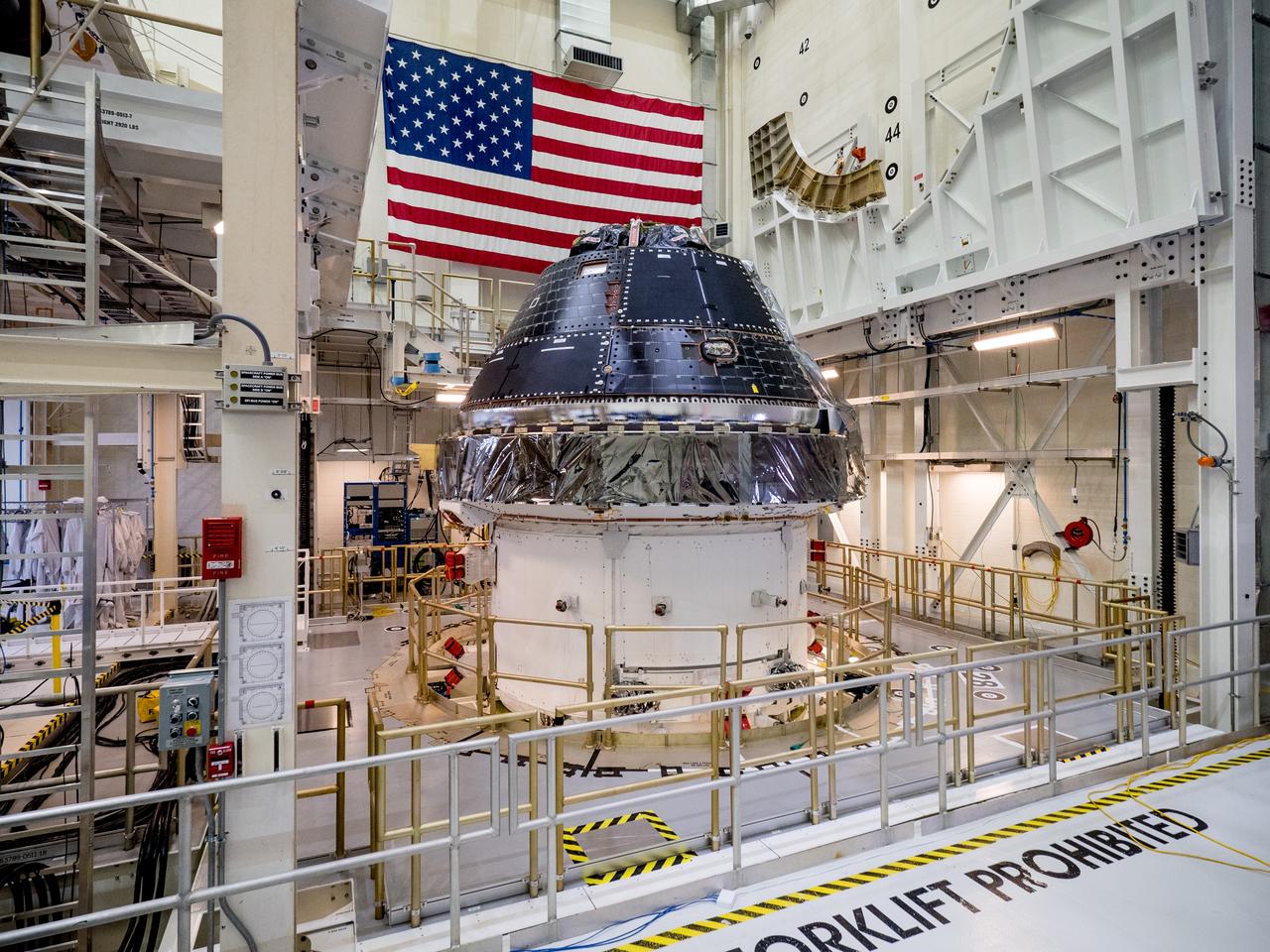
Vice President Mike Pence visited and gave remarks in the Neil Armstrong Operations and Checkout Building at NASA’s Kennedy Space Center in Florida on July 20, 2019 to commemorate the 50th anniversary of the agency’s Apollo 11 Moon landing and announce to America the completion of NASA’s Orion crew capsule, shown here on July 19, 2019, for the first Artemis lunar mission.
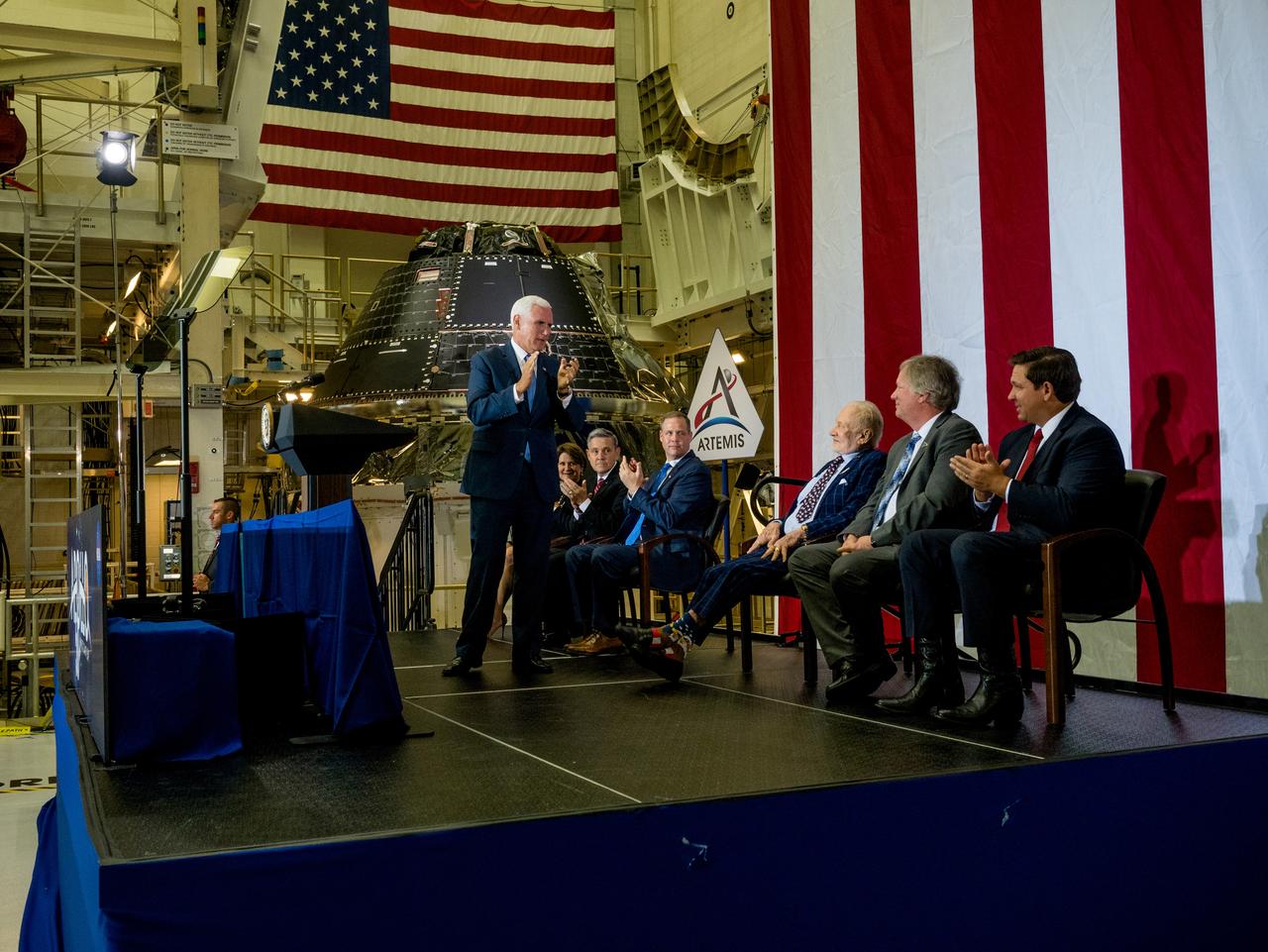
Vice President Mike Pence visited and gave remarks in the Neil Armstrong Operations and Checkout Building at NASA’s Kennedy Space Center in Florida on July 20, 2019 to commemorate the 50th anniversary of the agency’s Apollo 11 Moon landing and announce to America the completion of NASA’s Orion crew capsule, shown here on July 19, 2019, for the first Artemis lunar mission.
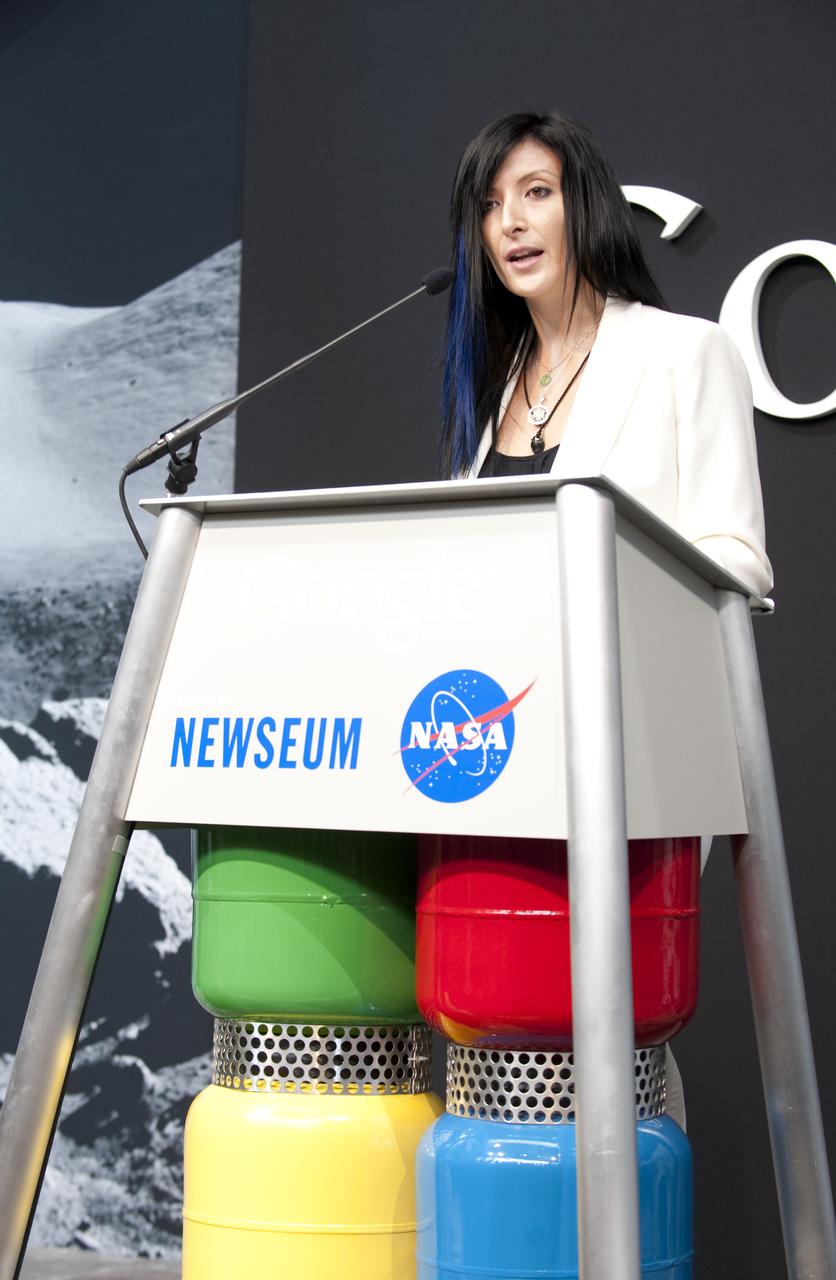
Tiffany Montague, Technical Program Manager for NASA and Google Lunar X PRIZE, Google, Inc., speaks during a press conference, Monday, July 20, 2009, announcing the launch of Moon in Google Earth, an immersive 3D atlas of the Moon, accessible within Google Earth 5.0, Monday, July 20, 2009, at the Newseum in Washington. Photo Credit: (NASA/Bill Ingalls)
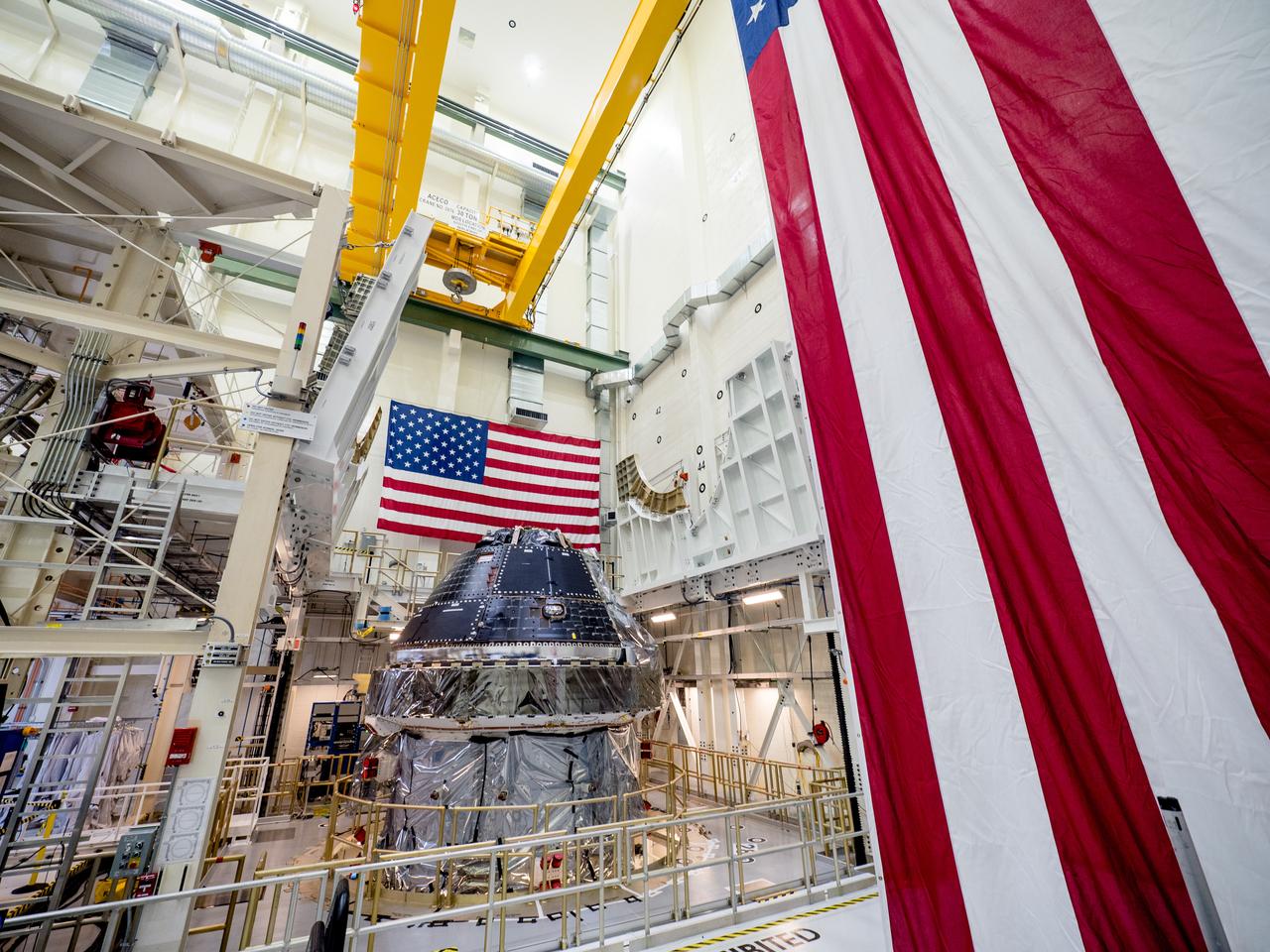
Vice President Mike Pence visited and gave remarks in the Neil Armstrong Operations and Checkout Building at NASA’s Kennedy Space Center in Florida on July 20, 2019 to commemorate the 50th anniversary of the agency’s Apollo 11 Moon landing and announce to America the completion of NASA’s Orion crew capsule, shown here on July 19, 2019, for the first Artemis lunar mission.
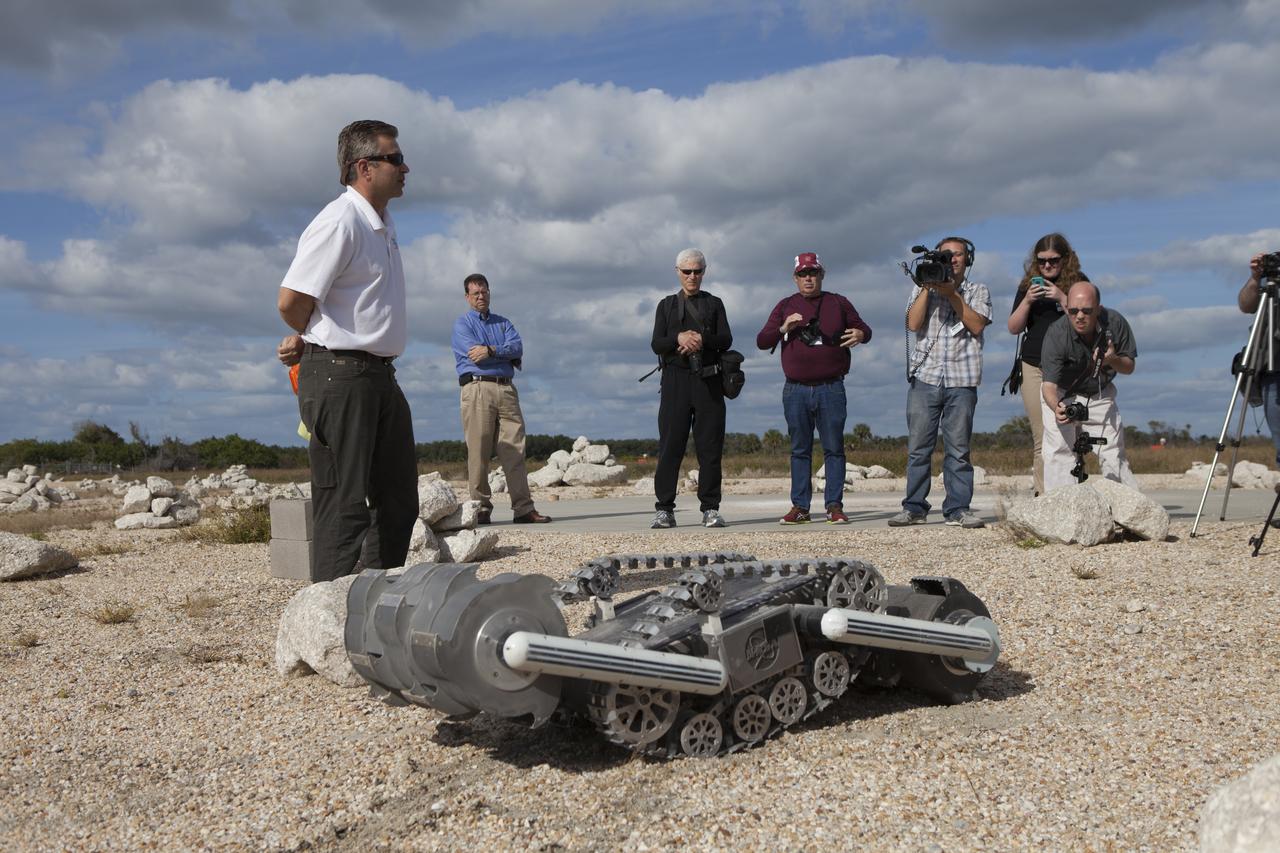
Rob Mueller, NASA senior technologist in the Surface Systems Office in Kennedy Space Center's Engineering and Technology Directorate, demonstrates the Regolith Advanced Surface System Operations Robot, or RASSOR, during a media event at Kennedy's automated landing and hazard avoidance technology, or ALHAT, hazard field at the north end of the Shuttle Landing Facility. The event was held to announce Moon Express Inc., of Moffett Field, California is selected to utilize Kennedy facilities for NASA's Lunar Cargo Transportation and Landing by Soft Touchdown, or Lunar CATALYST, initiative. Moon Express is developing a lander with capabilities that will enable delivery of payloads to the surface of the moon, as well as new science and exploration missions of interest to NASA and scientific and academic communities. Moon Express will base its activities at Kennedy and utilize the Morpheus ALHAT field and a hangar nearby for CATALYST testing. The Advanced Exploration Systems Division of NASA's Human Exploration and Operations Mission Directorate manages Lunar CATALYST.
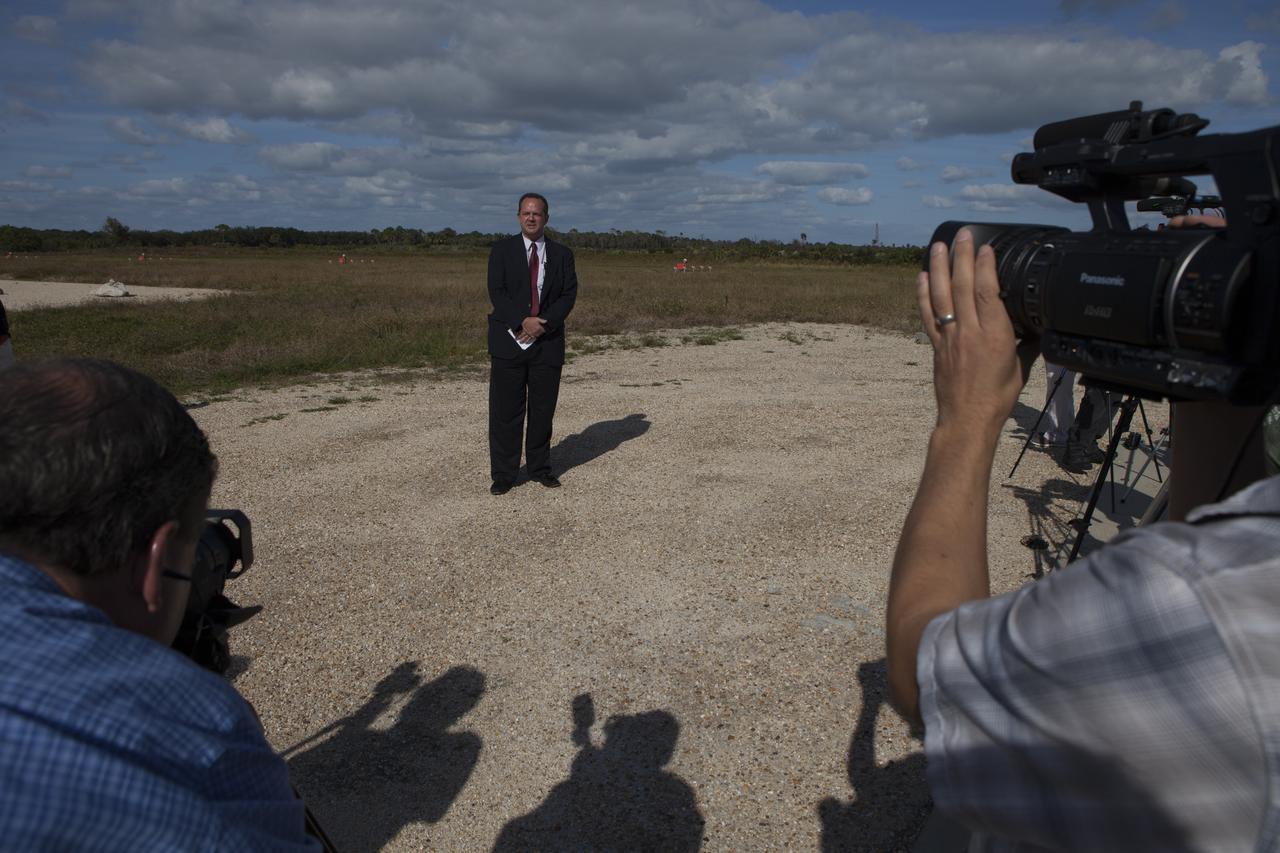
Tom Engler, deputy director of Center Planning and Development at NASA's Kennedy Space Center in Florida, speaks to members of the media during an event to announce the agency's Lunar Cargo Transportation and Landing by Soft Touchdown, or Lunar CATALYST, initiative and introduced one of the partners, Moon Express Inc. of Moffett Field, California. The event took place at Kennedy's automated landing and hazard avoidance technology, or ALHAT, hazard field at the north end of the Shuttle Landing Facility. Moon Express is developing a lander with capabilities that will enable delivery of payloads to the surface of the moon, as well as new science and exploration missions of interest to NASA and scientific and academic communities. Moon Express will base its activities at Kennedy and utilize the Morpheus ALHAT field and a hangar nearby for CATALYST testing. The Advanced Exploration Systems Division of NASA's Human Exploration and Operations Mission Directorate manages Lunar CATALYST.
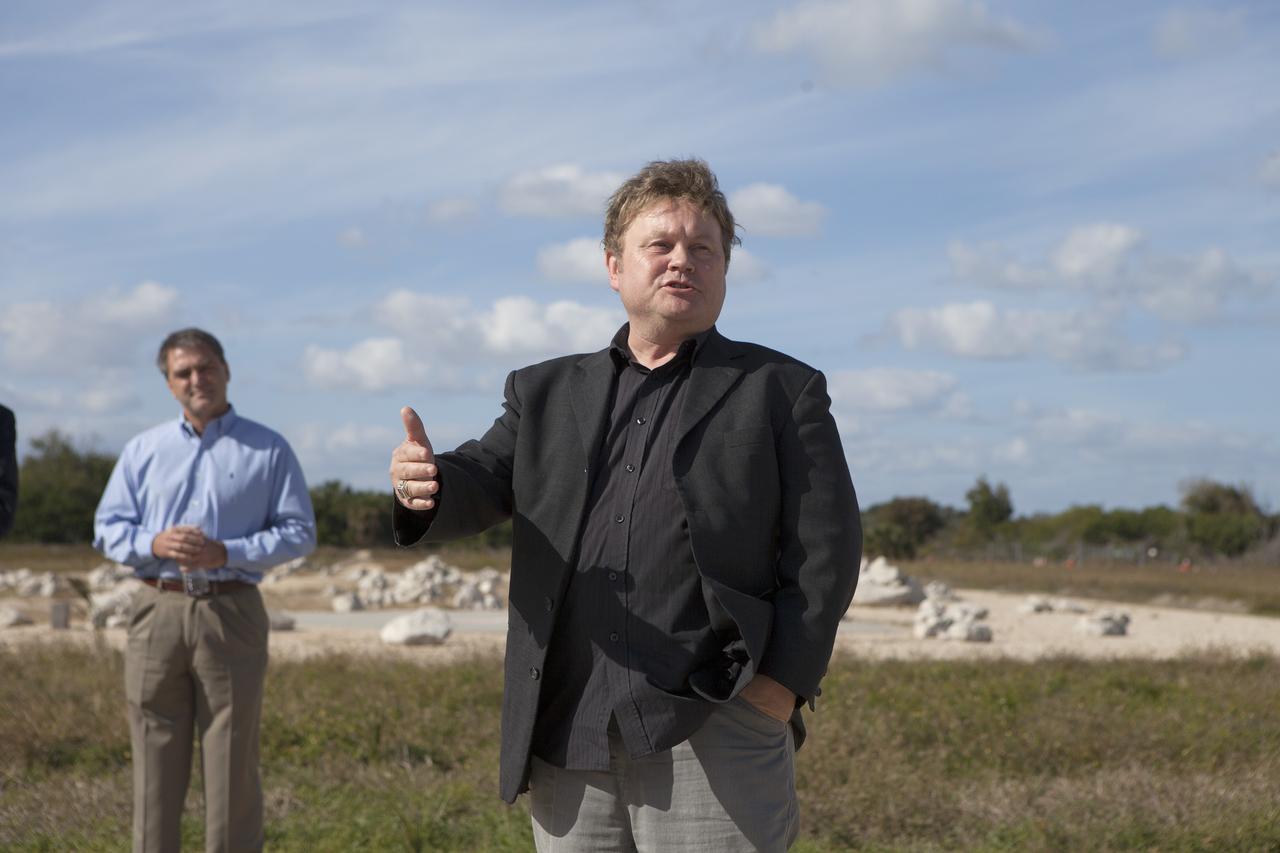
CAPE CANAVERAL, Fla. - Bob Richards, co-founder and chief executive officer of Moon Express Inc., of Moffett Field, California, speaks to the media during an event to announce the company's selection to use Kennedy Space Center's facilities as part of NASA's Lunar Cargo Transportation and Landing by Soft Touchdown, or Lunar CATALYST, initiative. The event took place at Kennedy's automated landing and hazard avoidance technology, or ALHAT, hazard field at the north end of the Shuttle Landing Facility. Moon Express is developing a lander with capabilities that will enable delivery of payloads to the surface of the moon, as well as new science and exploration missions of interest to NASA and scientific and academic communities. Moon Express will base its activities at Kennedy and utilize the Morpheus ALHAT field and a hangar nearby for CATALYST testing. The Advanced Exploration Systems Division of NASA's Human Exploration and Operations Mission Directorate manages Lunar CATALYST. Photo credit: NASA/Ben Smegelsky
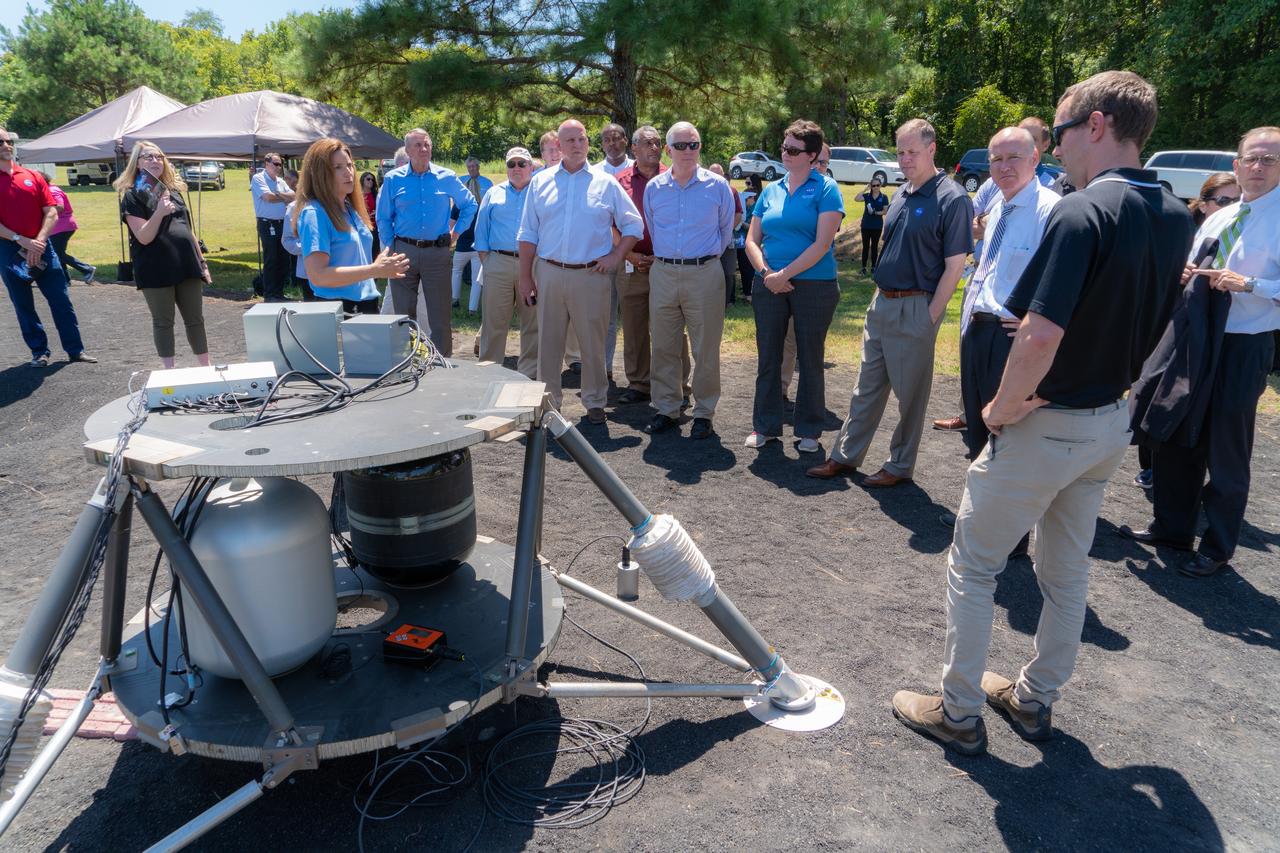
Lisa Watson-Morgan, center left, program manager of NASA’s Human Landing System Program at NASA’s Marshall Space Flight Center in Huntsville, Alabama, shows NASA Administrator Jim Bridenstine equipment used to test seismic sensors on a lunar lander platform on a simulated lunar surface at the center Aug. 16, 2019. Bridenstine was joined by Representatives Mo Brooks and Robert Aderholt of Alabama and Representative Scott DesJarlais of Tennessee. Planetary scientists performed the experiment to learn how these waves travel through simulated regolith, which is material similar to the Moon’s surface. The experiment will help guide instrument deployment scenarios for NASA’s Commercial Lunar Payload Service (CLPS) Program, delivering small science and technology payloads for Artemis. That same day, Bridenstine announced Marshall will lead the agency’s Human Landing System Program. (NASA/Fred Deaton) For more information: https://www.nasa.gov/artemis-1
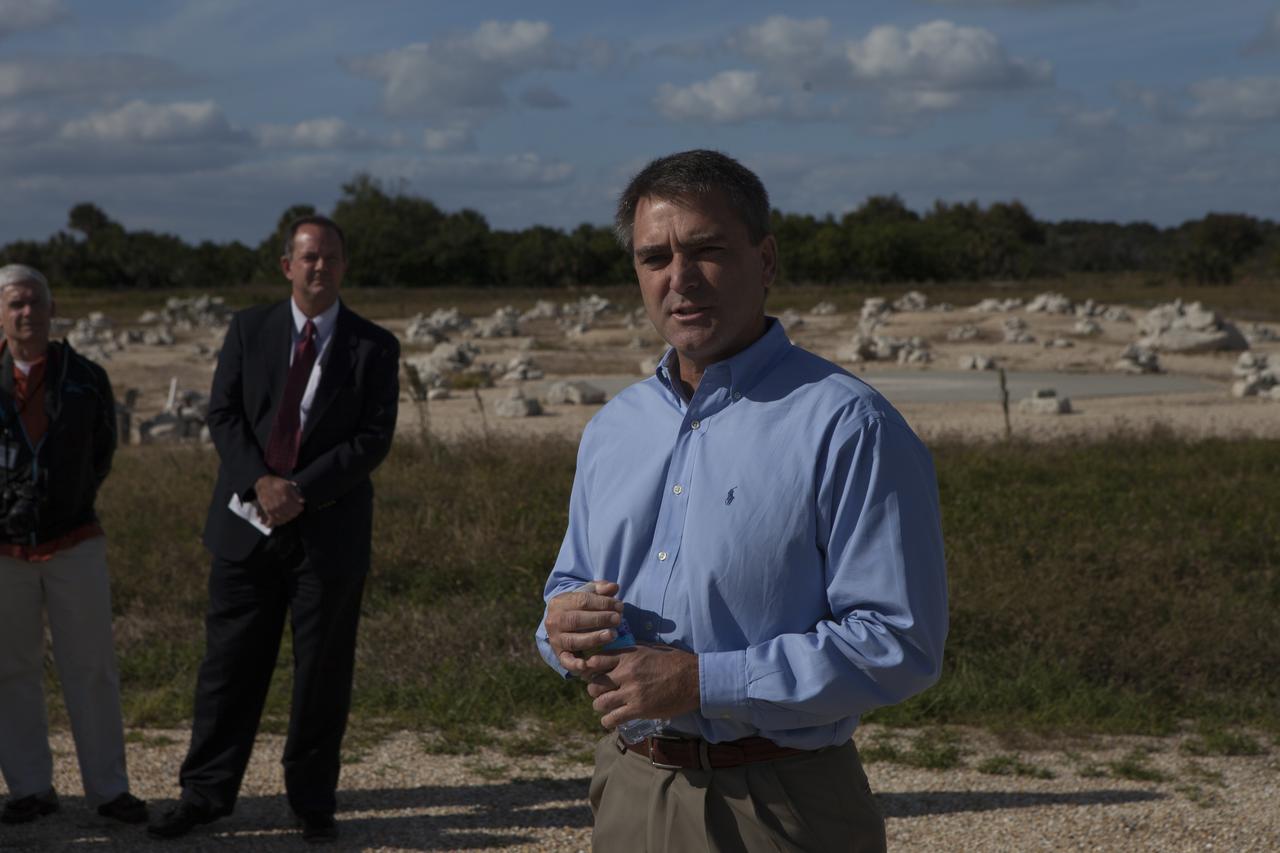
Greg C. Shavers, Lander Technology director at Marshall Space Flight Center in Alabama, speaks to members of the media during an event to announce the agency's Lunar Cargo Transportation and Landing by Soft Touchdown, or Lunar CATALYST, initiative and introduced one of the partners, Moon Express Inc. of Moffett Field, California. The event took place at Kennedy's automated landing and hazard avoidance technology, or ALHAT, hazard field at the north end of the Shuttle Landing Facility. Moon Express is developing a lander with capabilities that will enable delivery of payloads to the surface of the moon, as well as new science and exploration missions of interest to NASA and scientific and academic communities. Moon Express will base its activities at Kennedy and utilize the Morpheus ALHAT field and a hangar nearby for CATALYST testing. The Advanced Exploration Systems Division of NASA's Human Exploration and Operations Mission Directorate manages Lunar CATALYST.