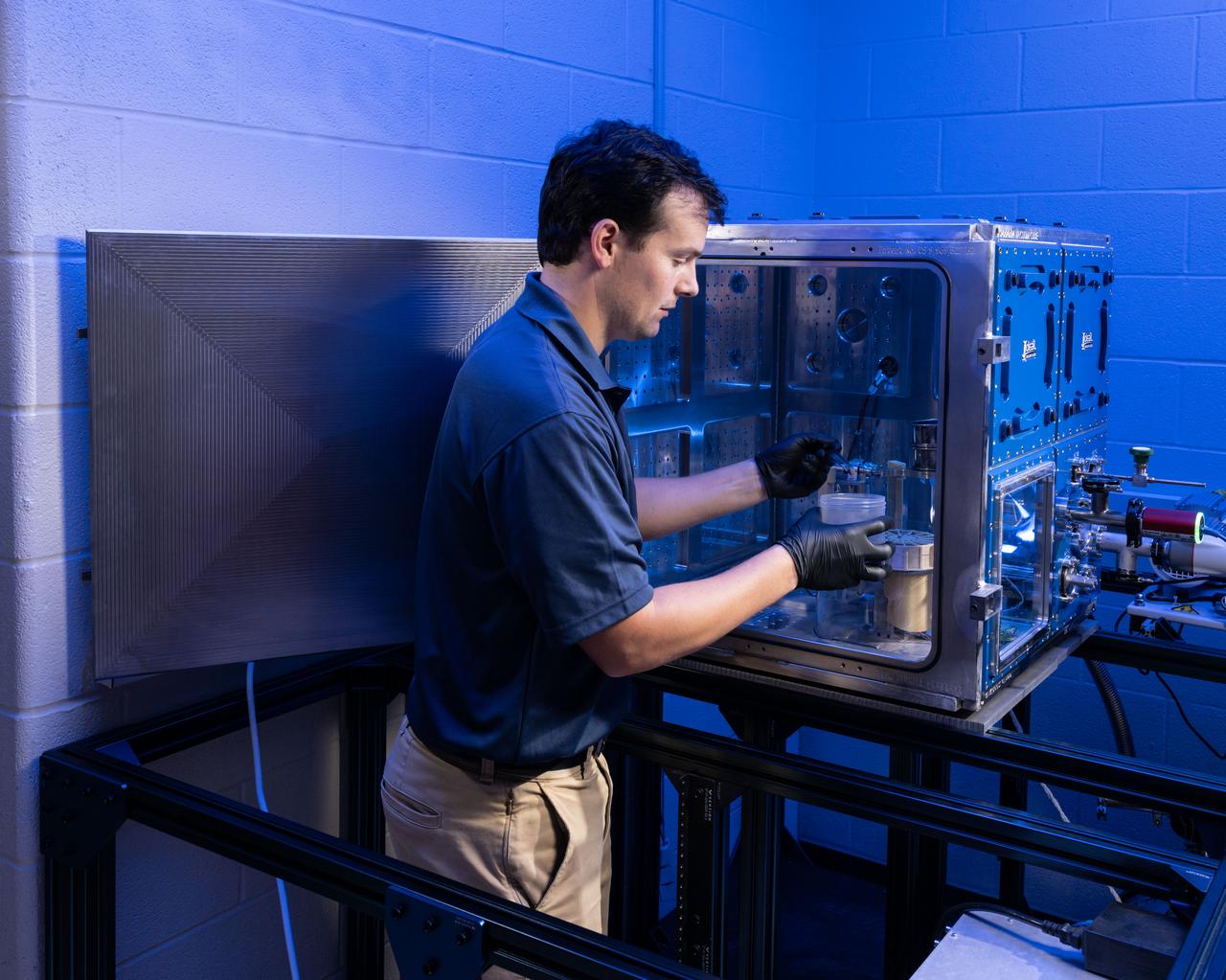
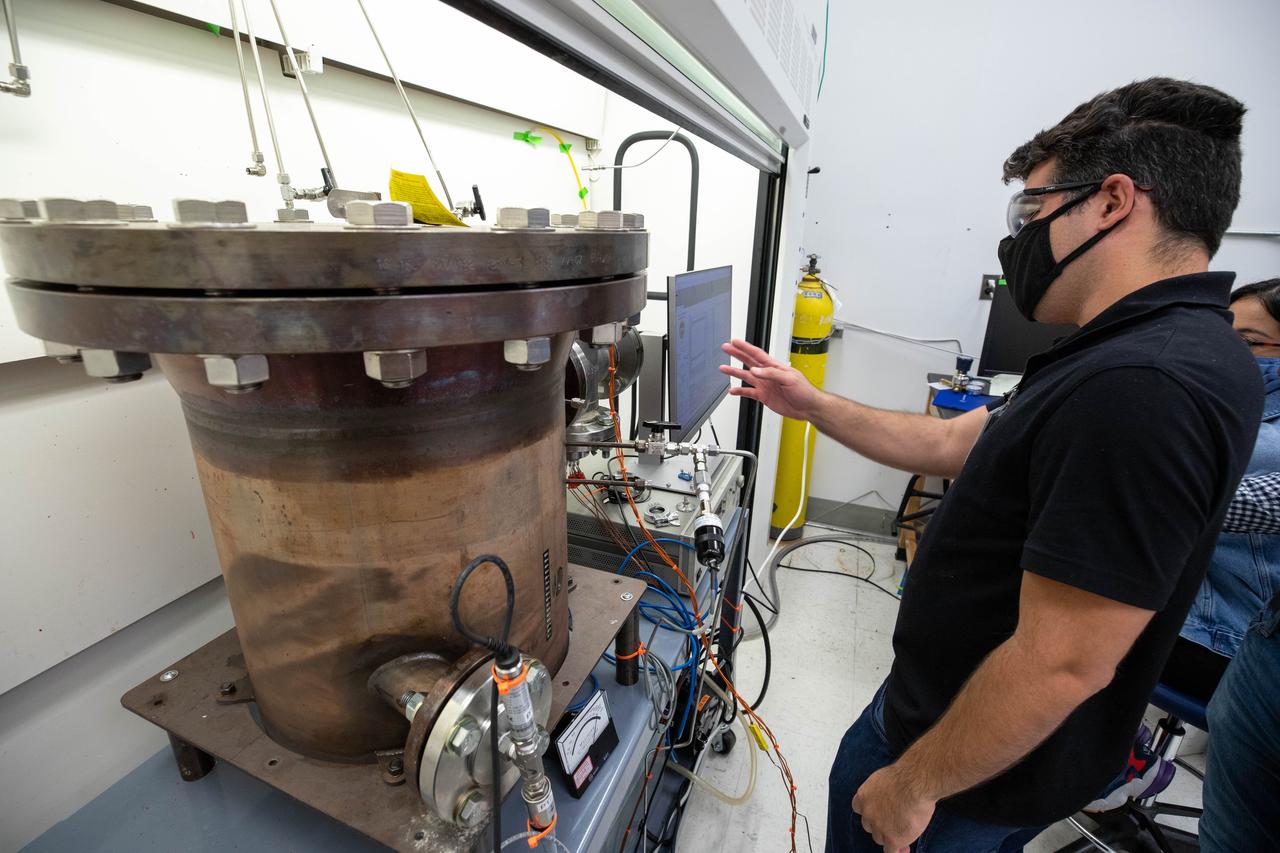
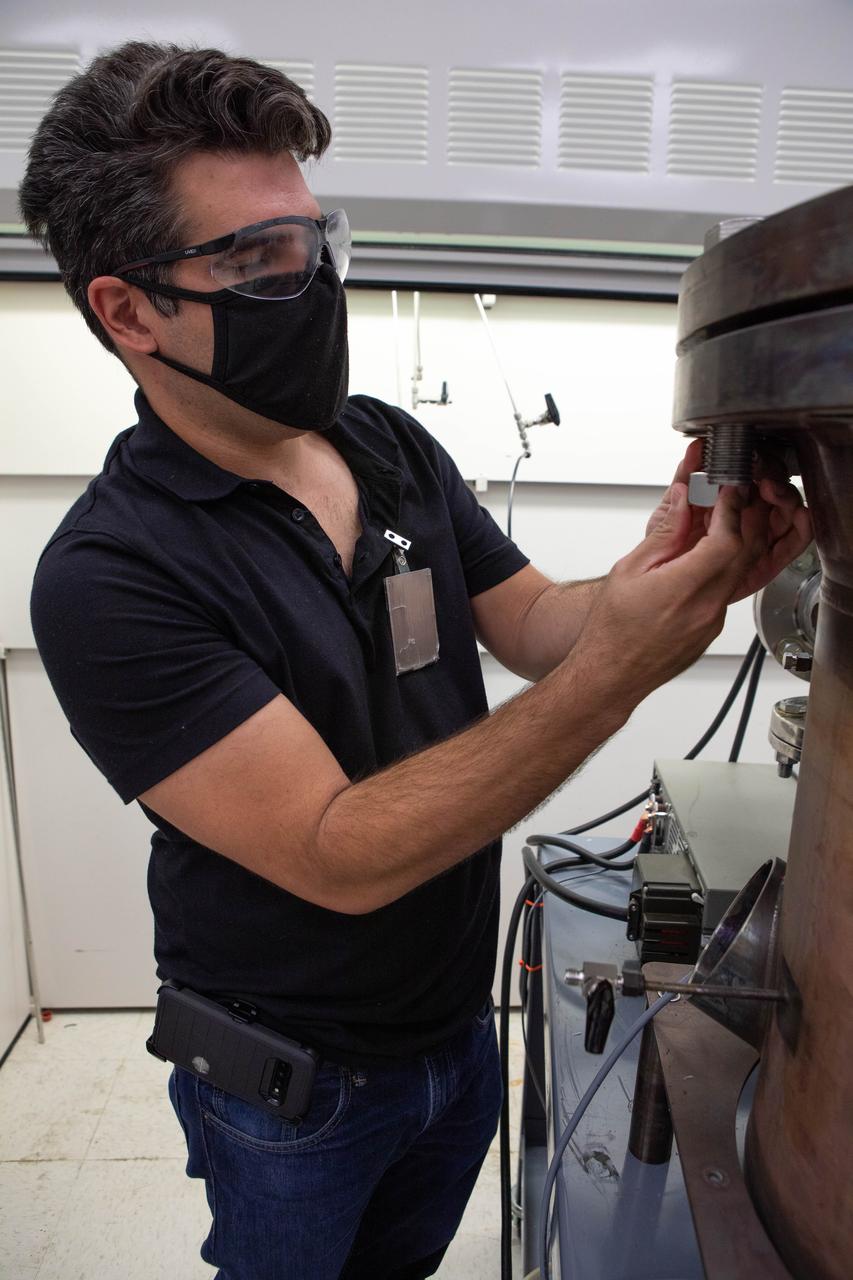
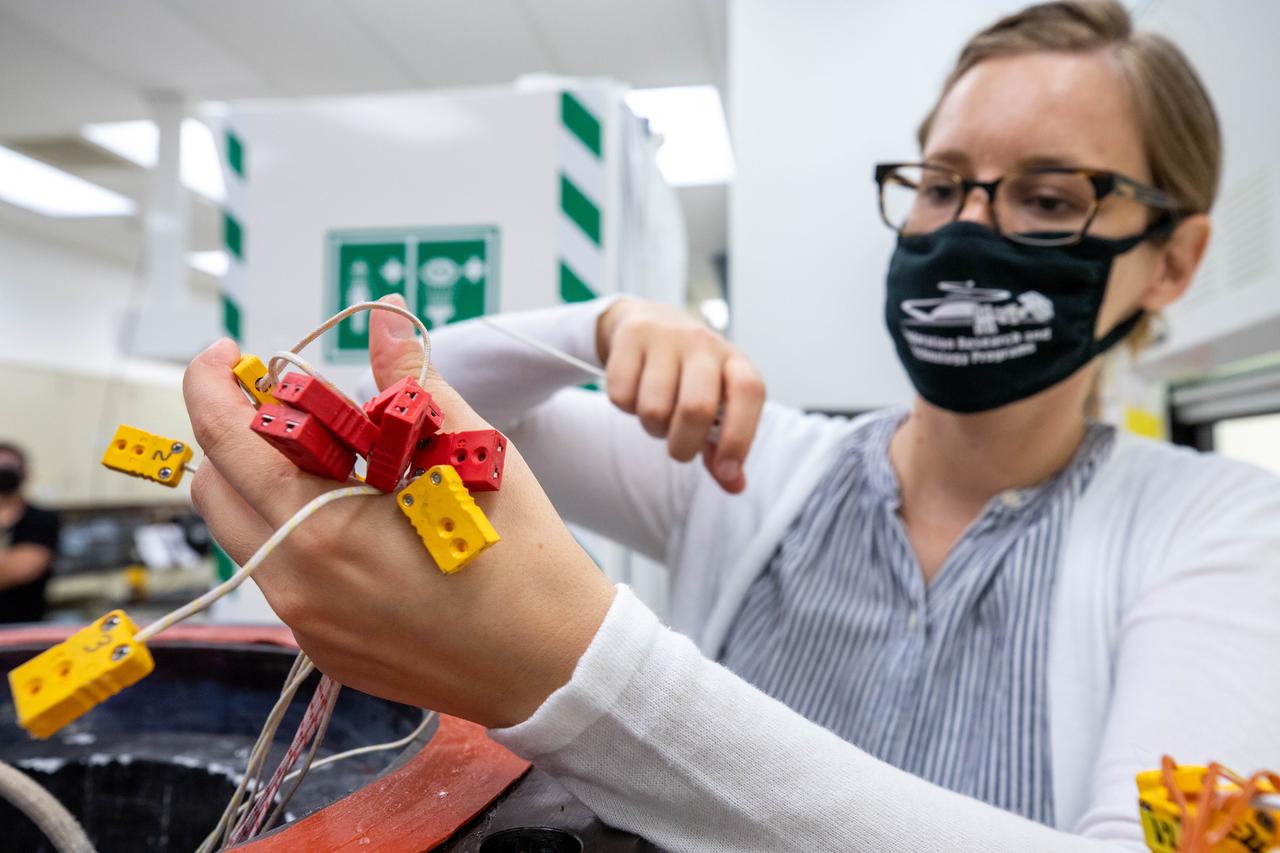
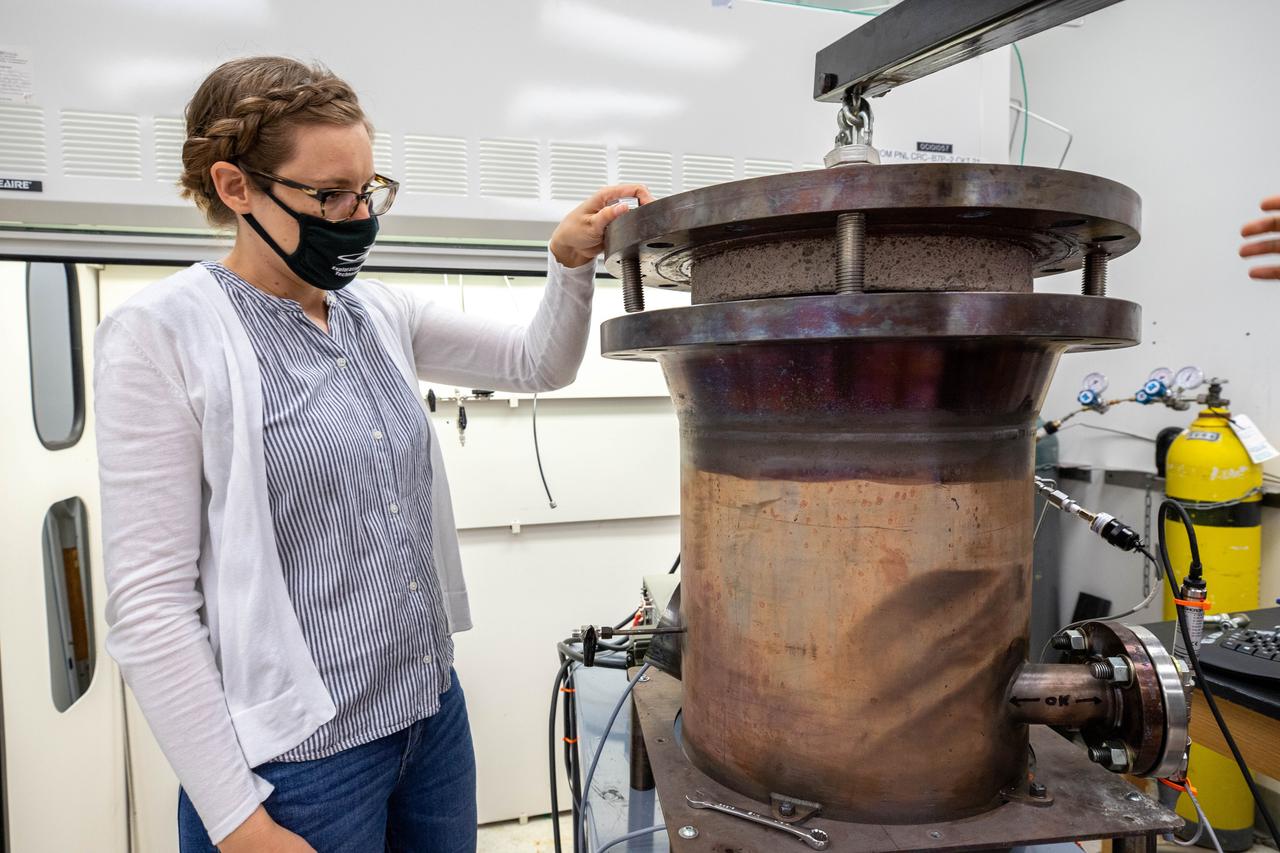
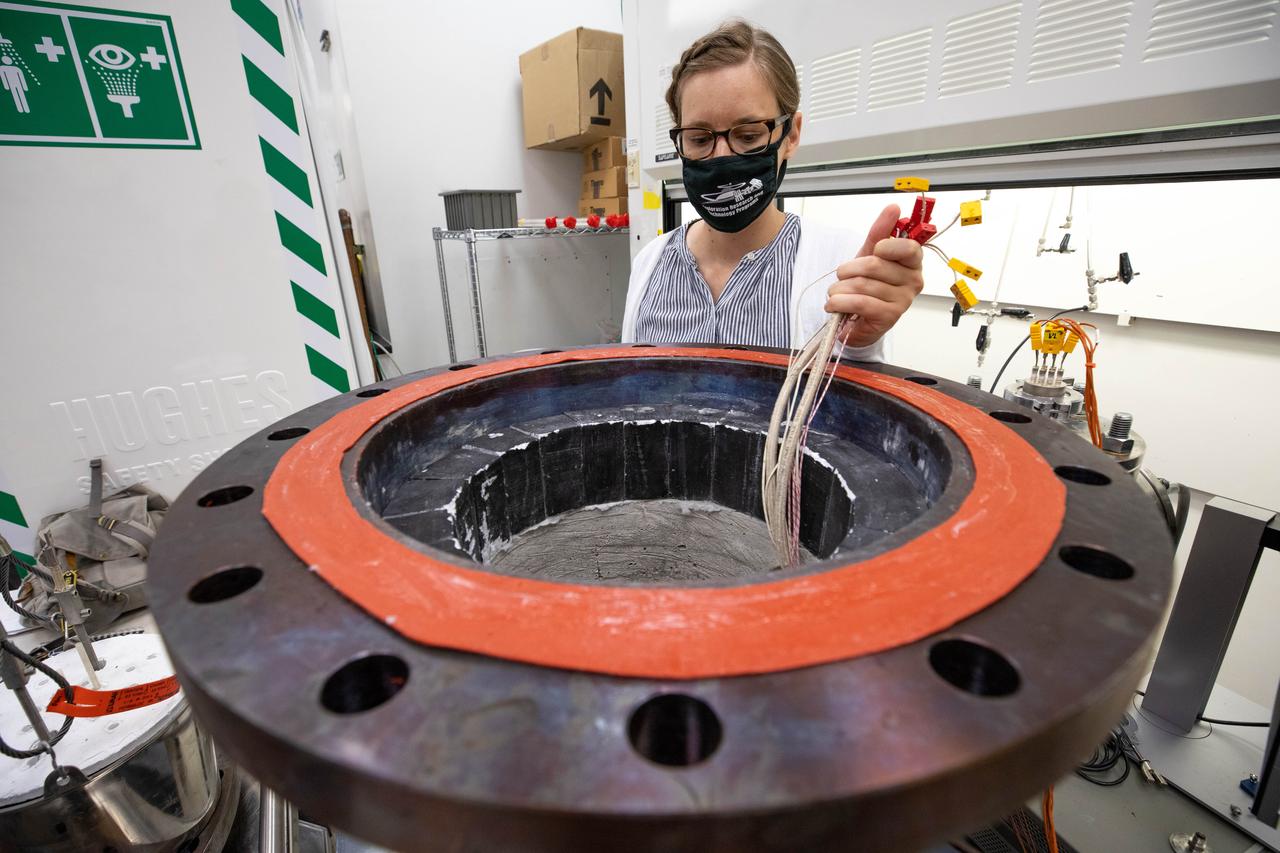
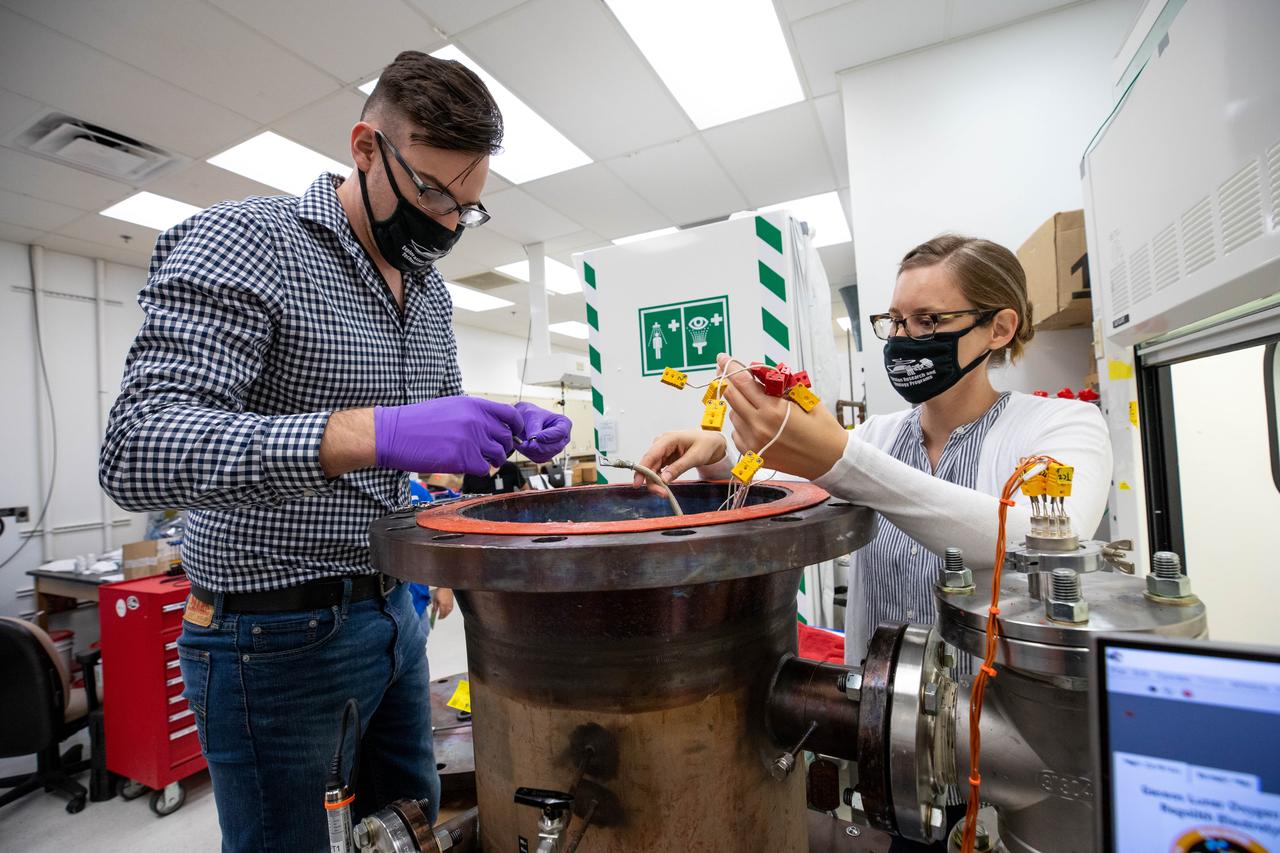
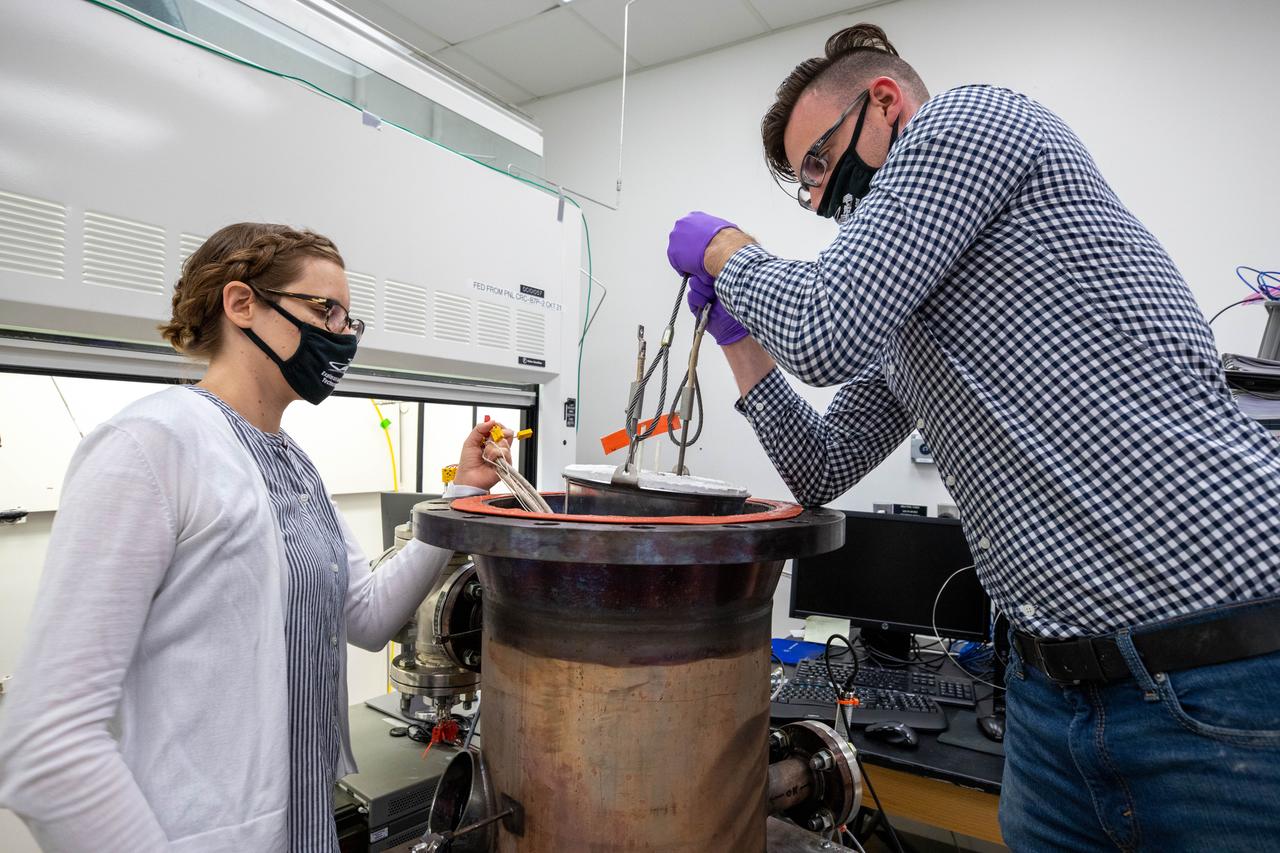
Josh Litofsky leads a Gateway lunar dust adhesion testing campaign at NASA’s Johnson Space Center in Houston. His team studies how lunar dust interacts with materials chosen for Gateway's construction. Here, Litofsky scoops lunar stimulant into a sample holder. Litofksy’s work seeks to validate the Gateway On-orbit Lunar Dust Modeling and Analysis Program (GOLDMAP), developed by Ronald Lee, also of Johnson Space Center. By considering factors such as the design and configuration of the space station, the materials used, and the unique conditions in lunar orbit, GOLDMAP helps predict how dust may move and settle on Gateway’s external surfaces.
/jsc2024e063104 (2)~medium.jpg)
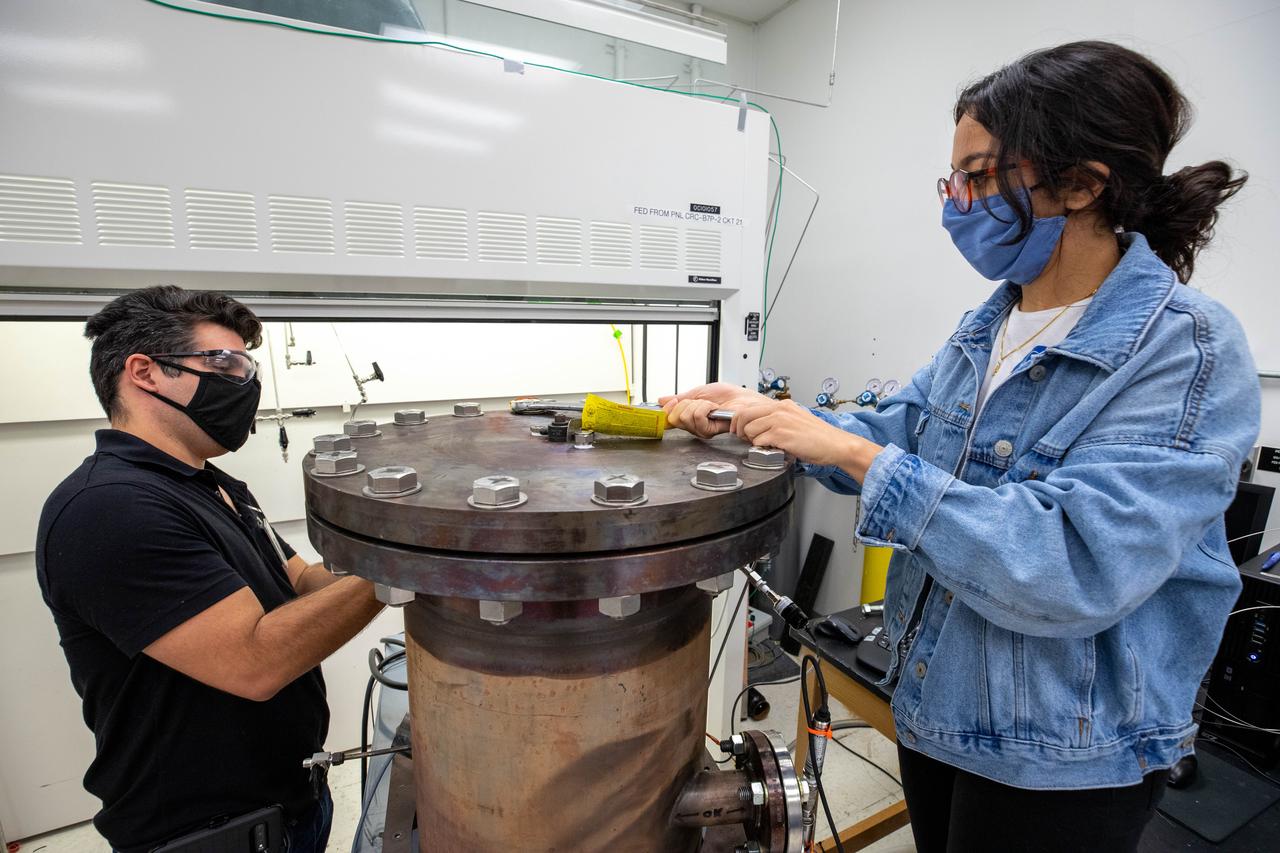
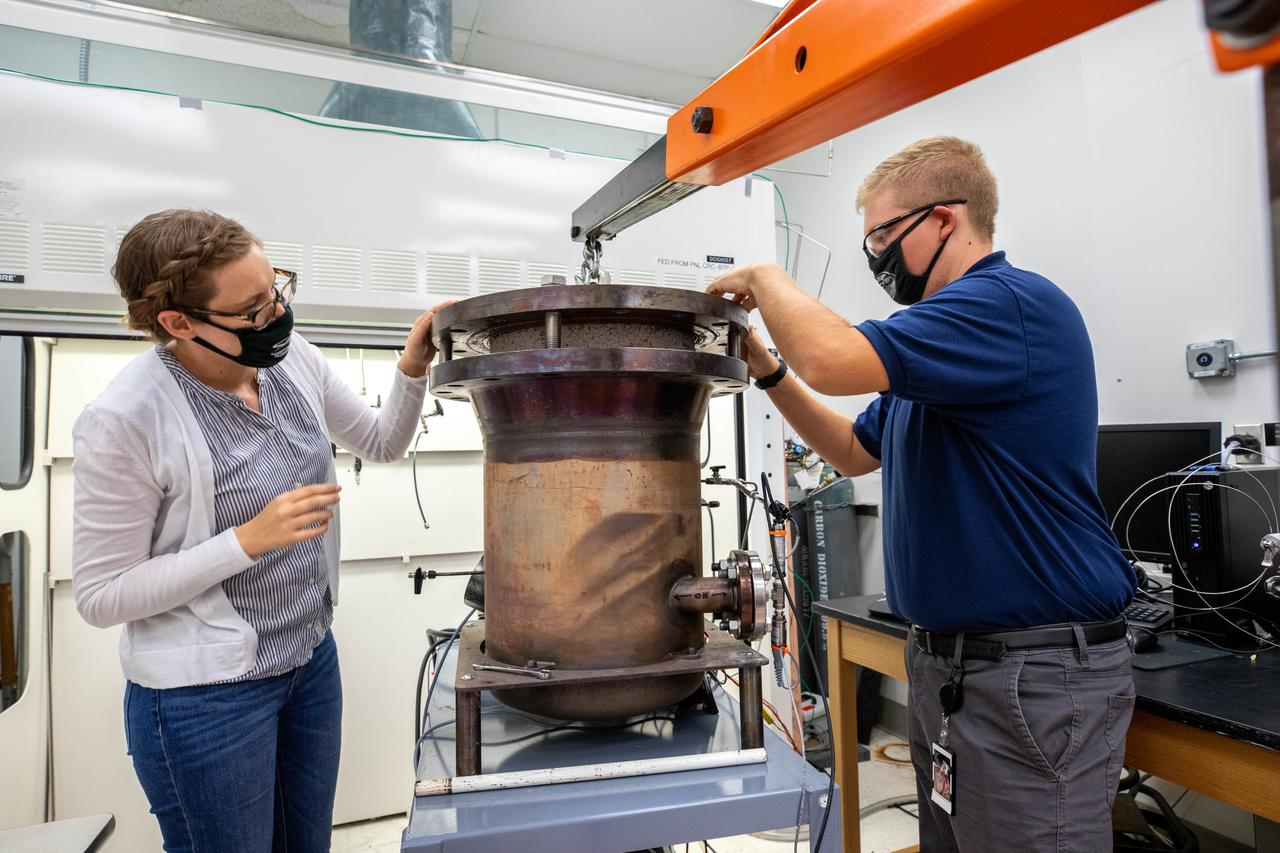
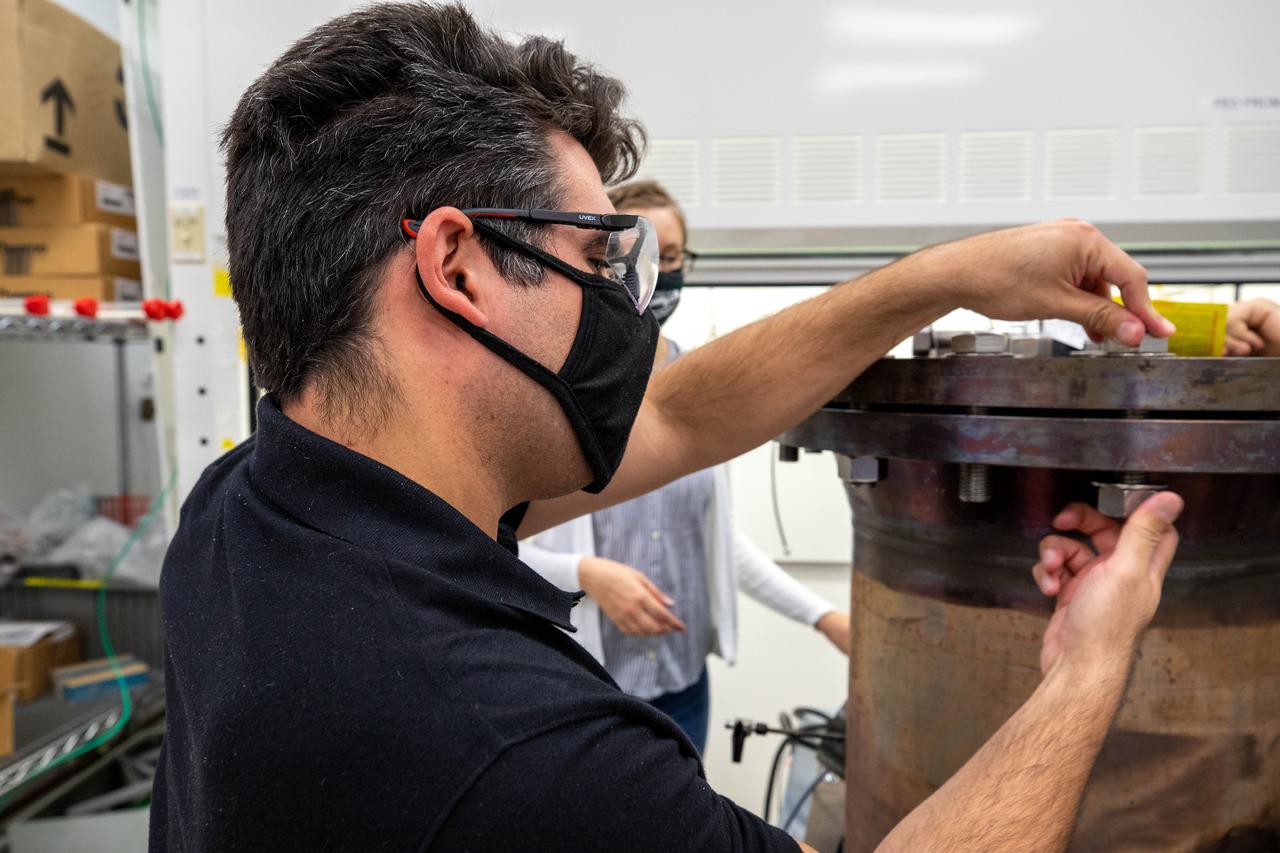
Josh Litofsky leads a Gateway lunar dust adhesion testing campaign at NASA’s Johnson Space Center in Houston. His team studies how lunar dust interacts with materials chosen for Gateway's construction. Here, Litofsky carefully positions a sample holder inside a vacuum chamber. Litofksy’s work seeks to validate the Gateway On-orbit Lunar Dust Modeling and Analysis Program (GOLDMAP), developed by Ronald Lee, also of Johnson Space Center. By considering factors such as the design and configuration of the space station, the materials used, and the unique conditions in lunar orbit, GOLDMAP helps predict how dust may move and settle on Gateway’s external surfaces.
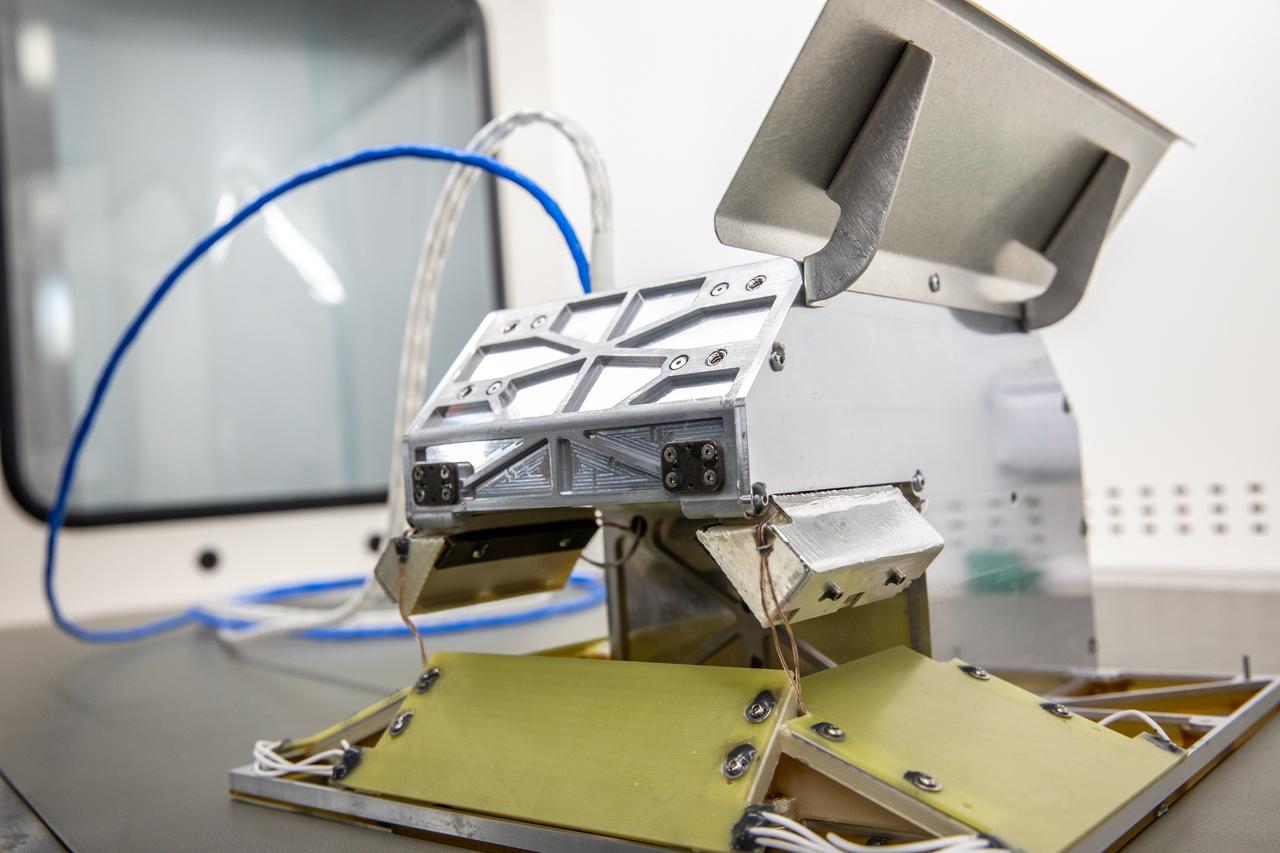
Inside of the Electrostatics and Surface Physics Laboratory at NASA’s Kennedy Space Center in Florida, an electrodynamic dust shield (EDS) is in view on Jan. 18, 2023. The dust shield is one of the payloads that will fly aboard Firefly Aerospace’s Blue Ghost lunar lander as part of NASA’s Commercial Lunar Payload Services (CLPS) initiative. During the mission, EDS will generate a non-uniform electric field using varying high voltage on multiple electrodes. This traveling field, in turn, carries away the particles and has potential applications in thermal radiators, spacesuit fabrics, visors, camera lenses, solar panels, and many other technologies. The CLPS initiative is a key part of NASA’s Artemis lunar exploration efforts. The science and technology payloads sent to the Moon’s surface as part of the initiative will help lay the foundation for human missions and a sustainable human presence on the lunar surface.
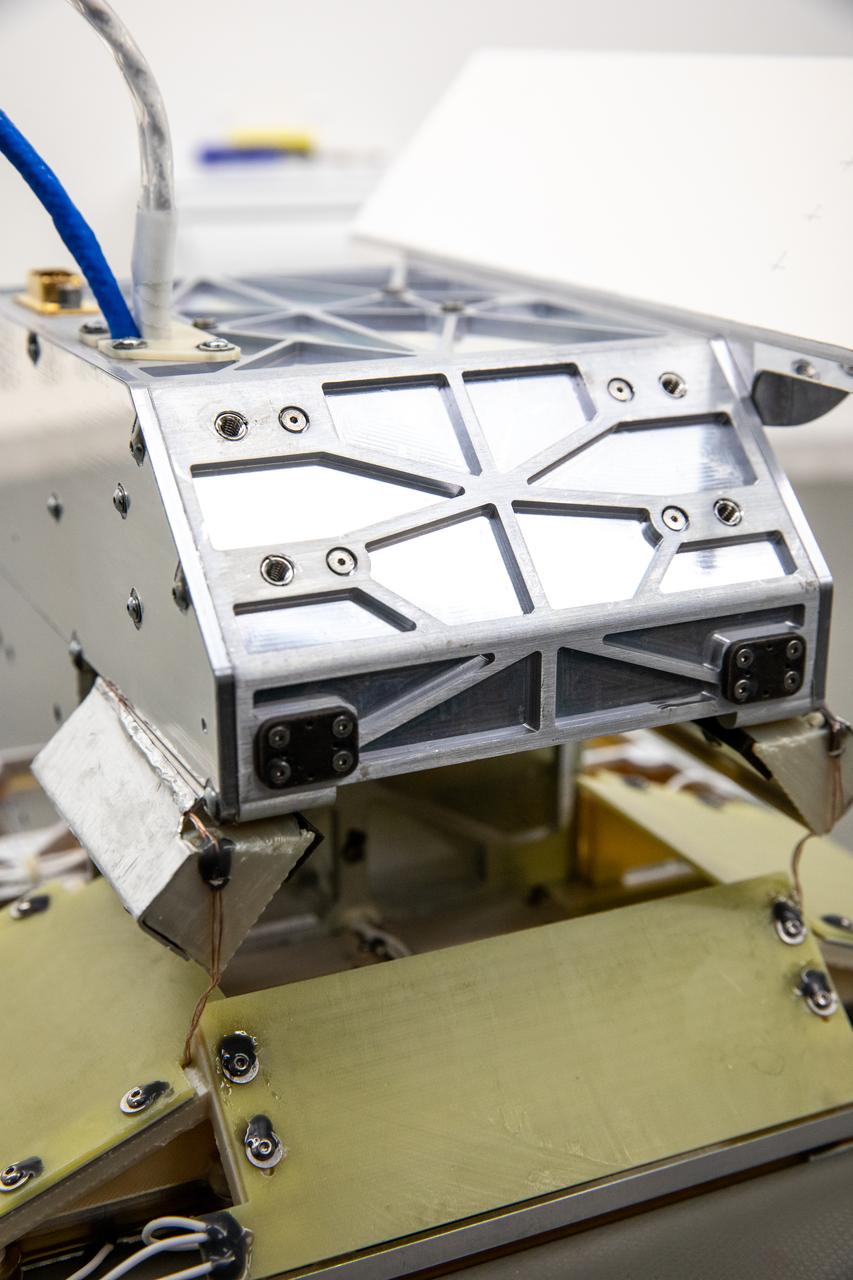
Inside of the Electrostatics and Surface Physics Laboratory at NASA’s Kennedy Space Center in Florida, an electrodynamic dust shield (EDS) is in view on Jan. 18, 2023. The dust shield is one of the payloads that will fly aboard Firefly Aerospace’s Blue Ghost lunar lander as part of NASA’s Commercial Lunar Payload Services (CLPS) initiative. During the mission, EDS will generate a non-uniform electric field using varying high voltage on multiple electrodes. This traveling field, in turn, carries away the particles and has potential applications in thermal radiators, spacesuit fabrics, visors, camera lenses, solar panels, and many other technologies. The CLPS initiative is a key part of NASA’s Artemis lunar exploration efforts. The science and technology payloads sent to the Moon’s surface as part of the initiative will help lay the foundation for human missions and a sustainable human presence on the lunar surface.
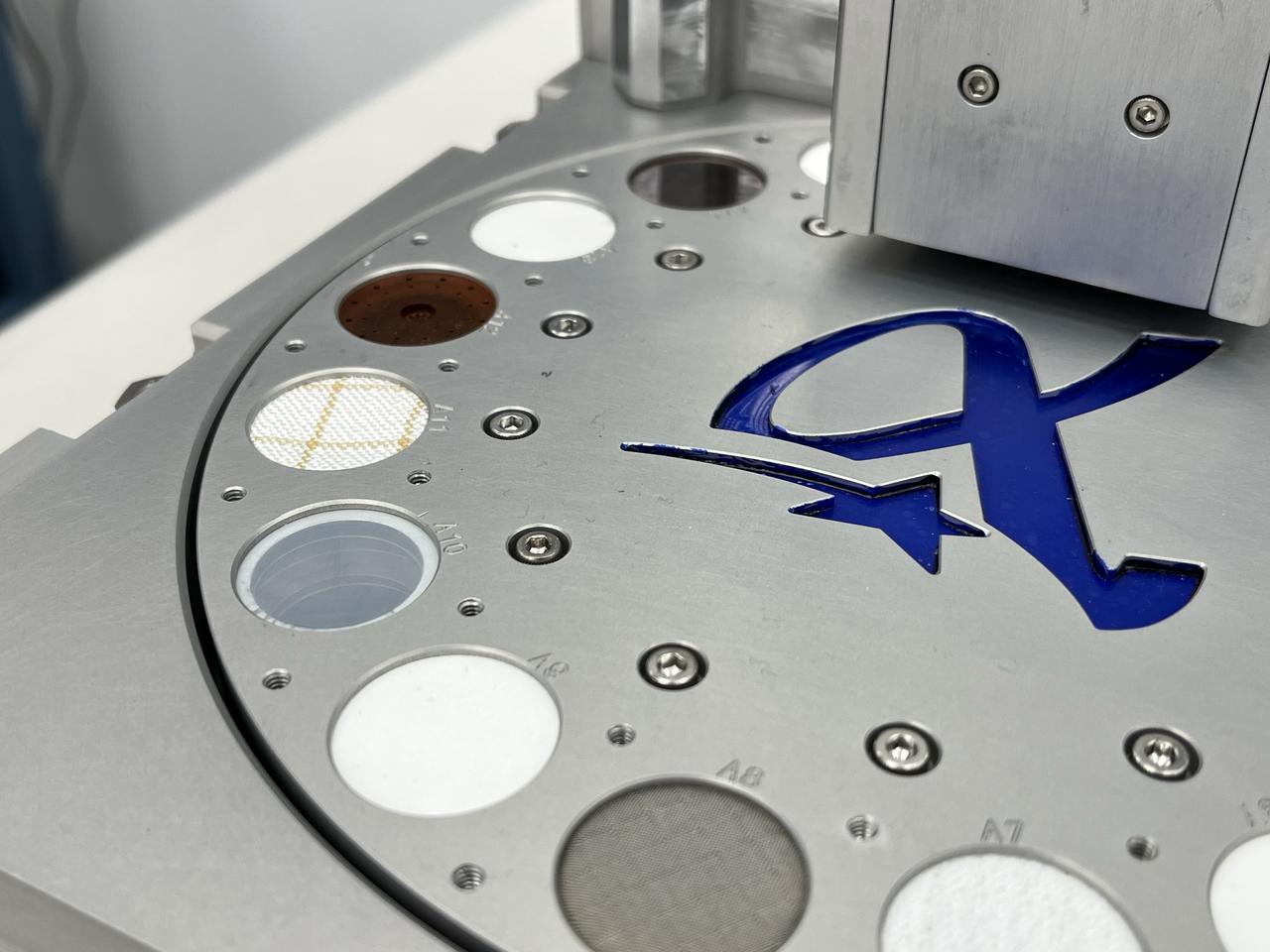
A science instrument flying aboard the next delivery for NASA’s CLPS (Commercial Lunar Payload Services) initiative is planning to study how different materials react to the lunar environment. Regolith Adherence Characterization, or RAC, is one of 10 payloads set to be carried to the Moon by the Blue Ghost 1 lunar lander in 2025. Developed by Aegis Aerospace, RAC’s wheels feature a series of different sample materials, helping researchers to better understand how lunar dust repels or attaches to each. Investigations and demonstrations, such as RAC, launched on CLPS flights will help NASA study Earth’s nearest neighbor under Artemis and pave the way for future crewed missions on the Moon. NASA’s Marshall Space Flight Center in Huntsville, Alabama, manages the development for seven of the 10 CLPS payloads that will be carried on Firefly’s Blue Ghost lunar lander.
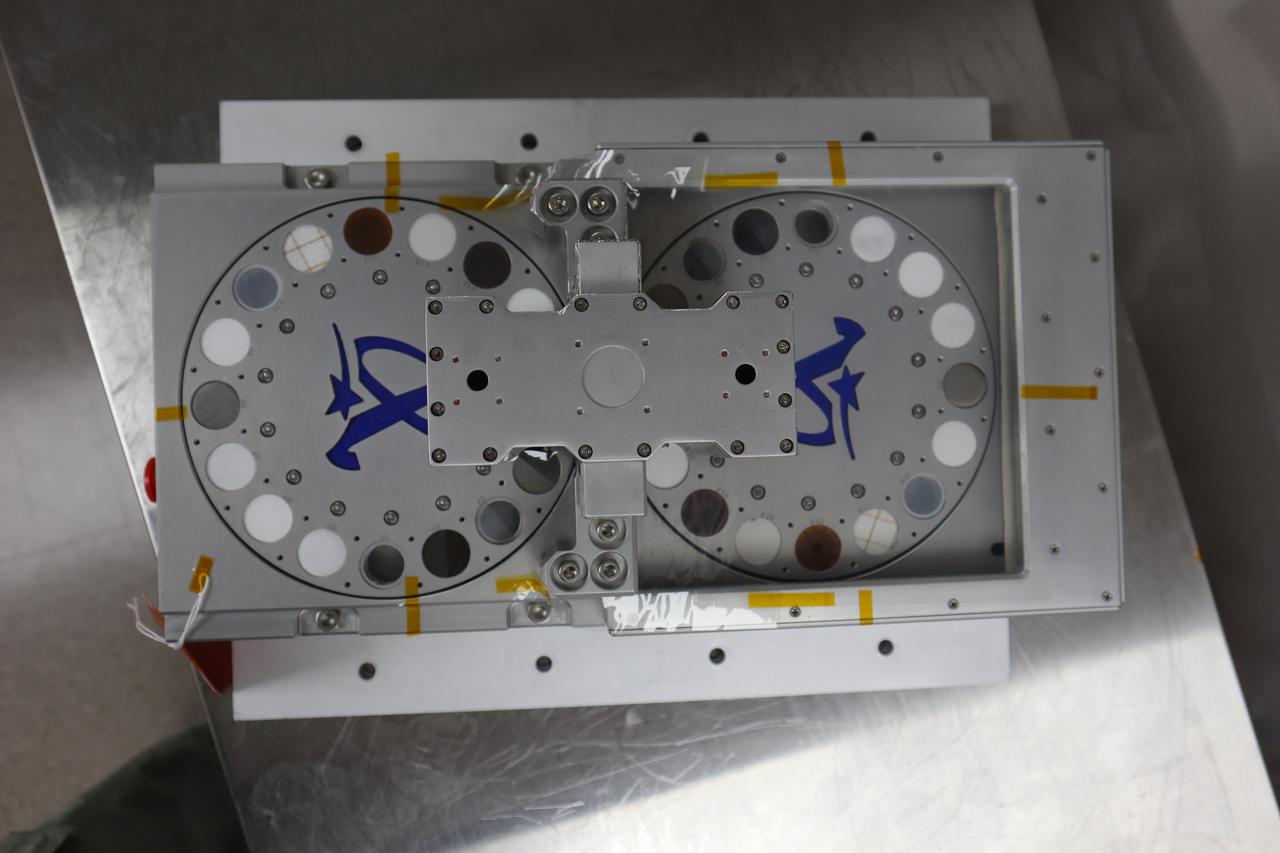
A science instrument flying aboard the next delivery for NASA’s CLPS (Commercial Lunar Payload Services) initiative is planning to study how different materials react to the lunar environment. Regolith Adherence Characterization, or RAC, is one of 10 payloads set to be carried to the Moon by the Blue Ghost 1 lunar lander in 2025. Developed by Aegis Aerospace, RAC’s wheels feature a series of different sample materials, helping researchers to better understand how lunar dust repels or attaches to each. Investigations and demonstrations, such as RAC, launched on CLPS flights will help NASA study Earth’s nearest neighbor under Artemis and pave the way for future crewed missions on the Moon. NASA’s Marshall Space Flight Center in Huntsville, Alabama, manages the development for seven of the 10 CLPS payloads that will be carried on Firefly’s Blue Ghost lunar lander.
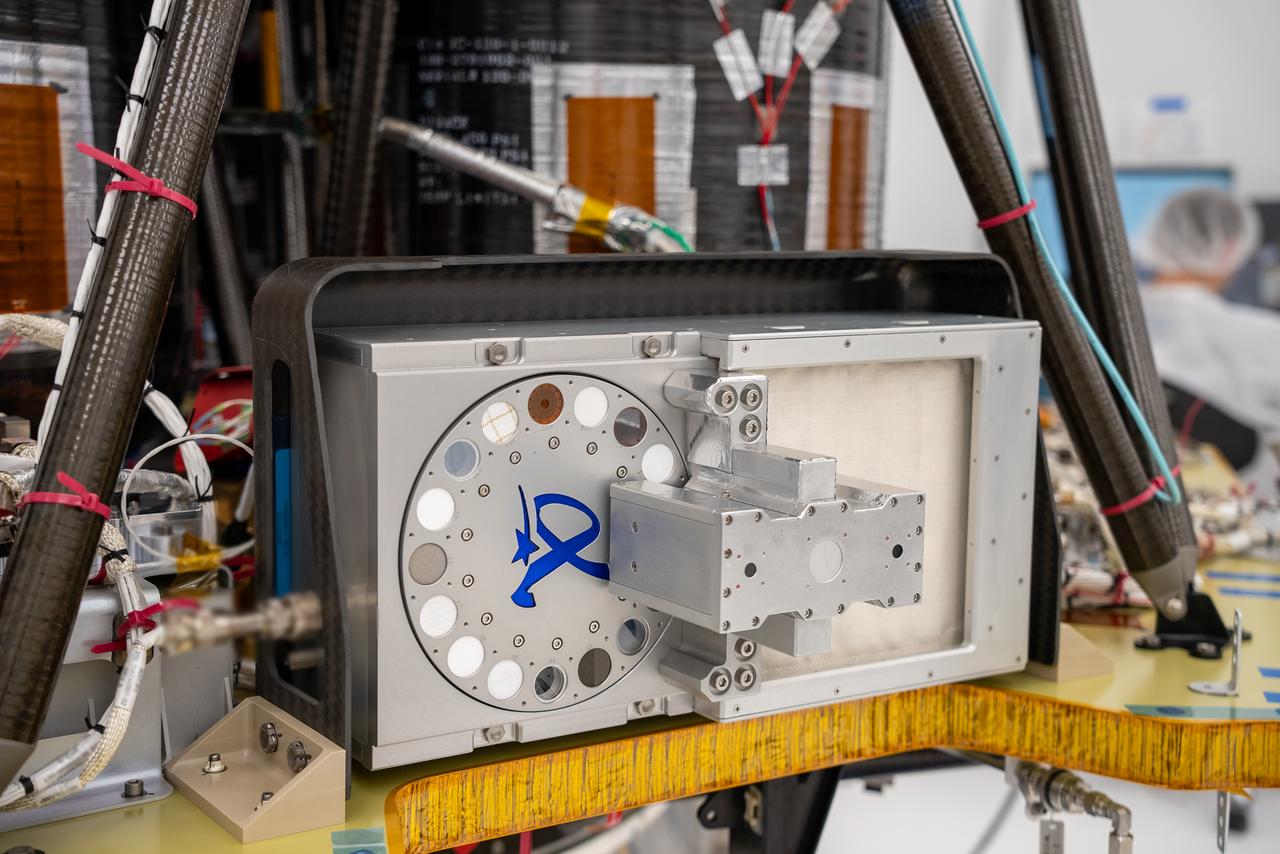
A science instrument flying aboard the next delivery for NASA’s CLPS (Commercial Lunar Payload Services) initiative is planning to study how different materials react to the lunar environment. Regolith Adherence Characterization, or RAC, is one of 10 payloads set to be carried to the Moon by the Blue Ghost 1 lunar lander in 2025. Developed by Aegis Aerospace, RAC’s wheels feature a series of different sample materials, helping researchers to better understand how lunar dust repels or attaches to each. Investigations and demonstrations, such as RAC, launched on CLPS flights will help NASA study Earth’s nearest neighbor under Artemis and pave the way for future crewed missions on the Moon. NASA’s Marshall Space Flight Center in Huntsville, Alabama, manages the development for seven of the 10 CLPS payloads that will be carried on Firefly’s Blue Ghost lunar lander.
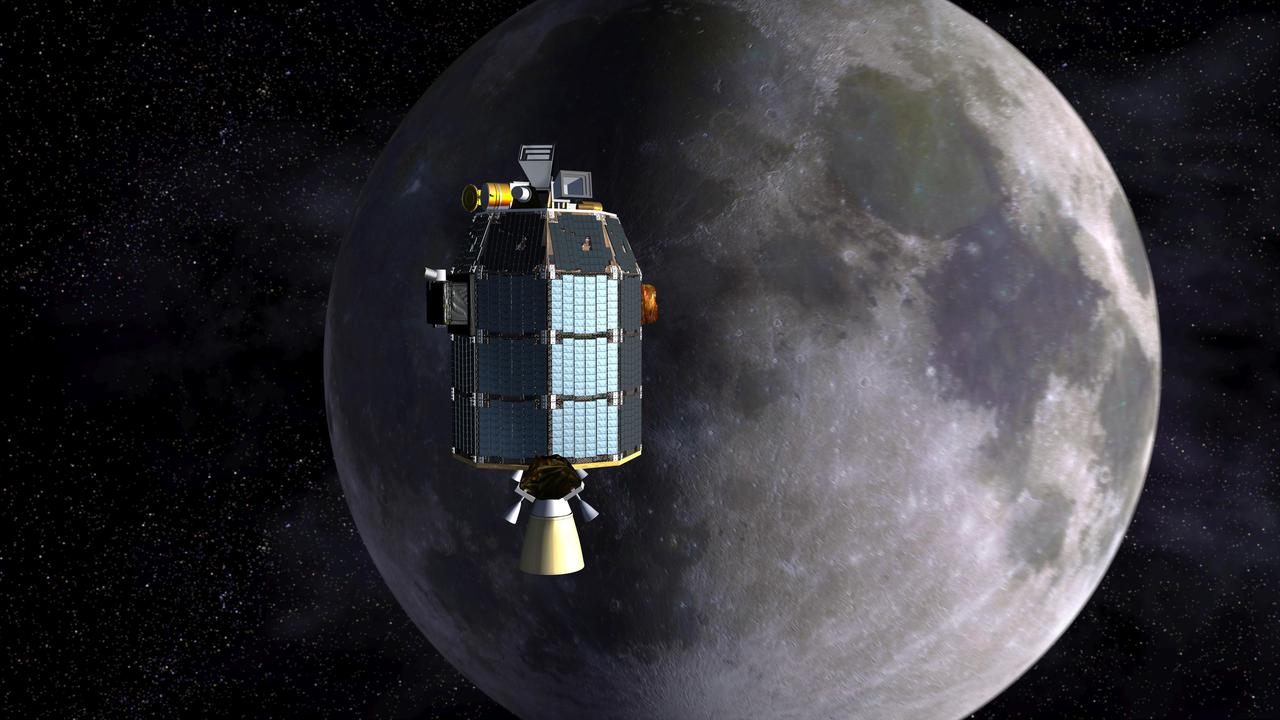
This is an artist depiction of NASA Lunar Atmosphere and Dust Environment Explorer LADEE observatory as it approaches lunar orbit. http://photojournal.jpl.nasa.gov/catalog/PIA18160
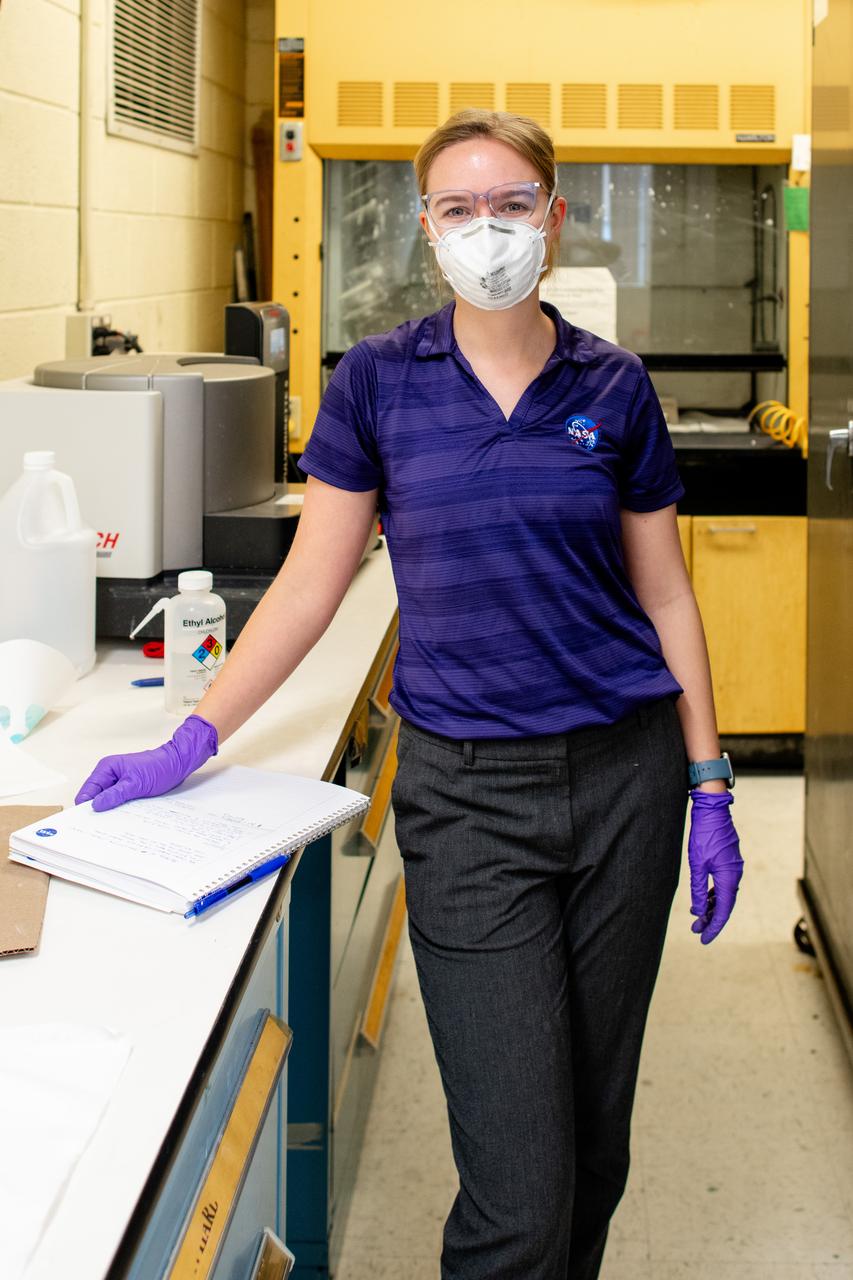
Sylvie Crowell who works in the Environmental Effects and Coatings Branch at NASA Glenn Research Center performs ball milling and particle size analysis on some lunar dust simulant on January 29, 2025.
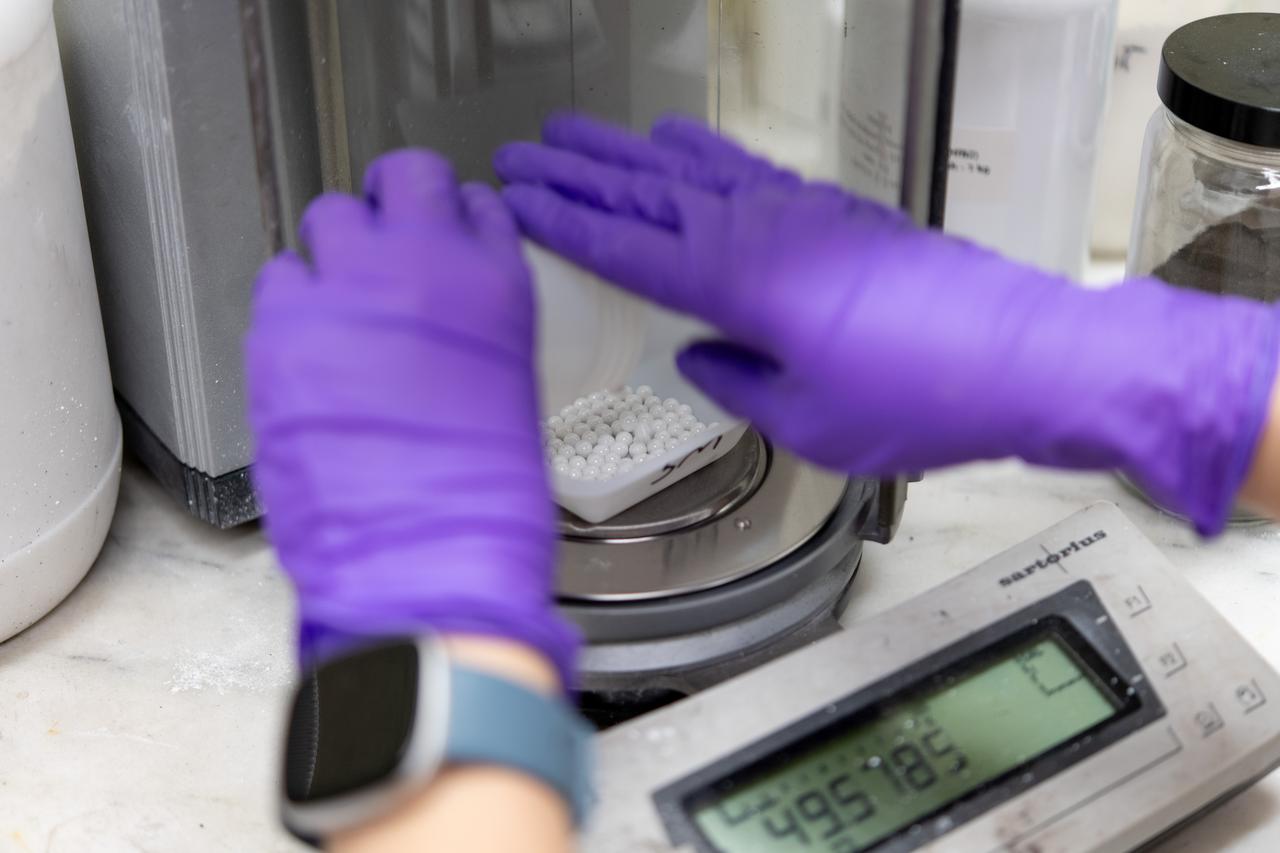
Sylvie Crowell who works in the Environmental Effects and Coatings Branch at NASA Glenn Research Center performs ball milling and particle size analysis on some lunar dust simulant on January 29, 2025.
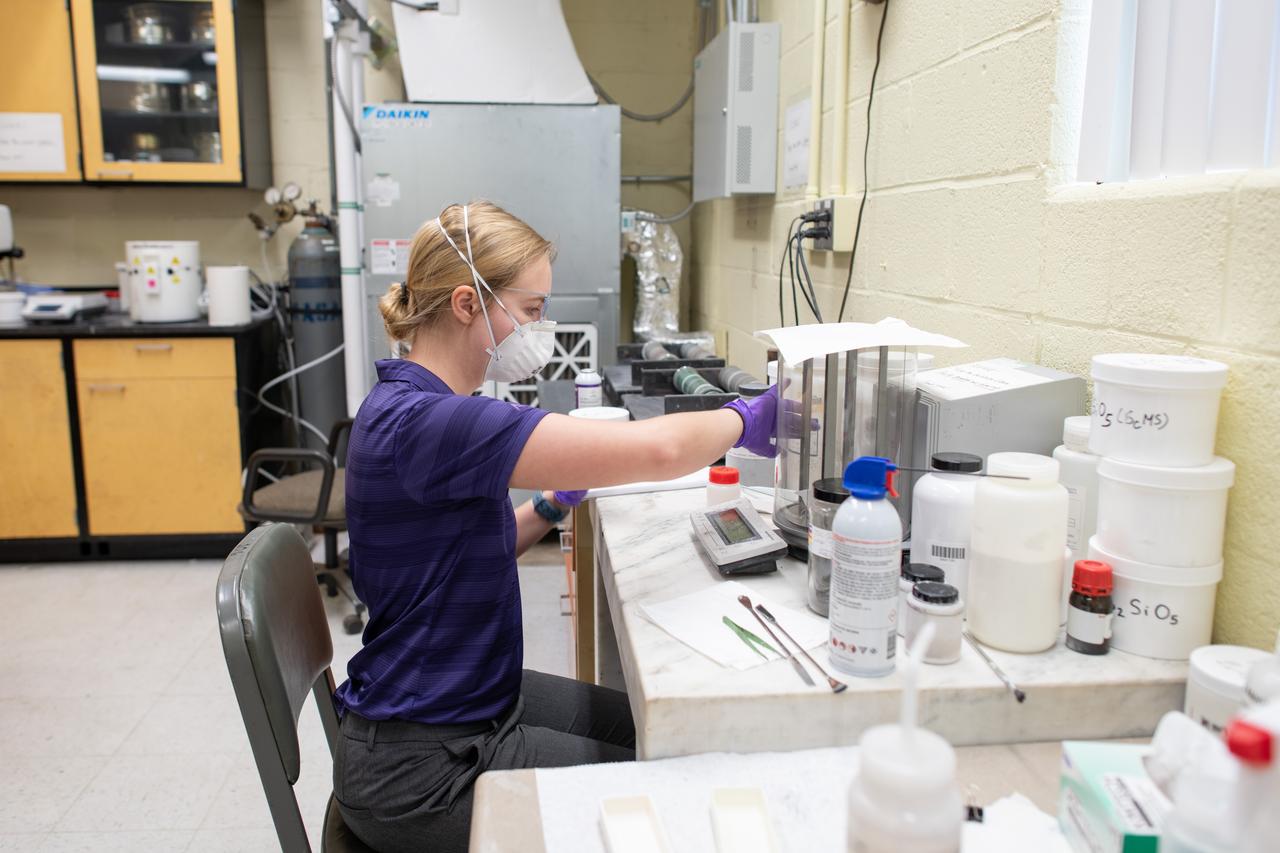
Sylvie Crowell who works in the Environmental Effects and Coatings Branch at NASA Glenn Research Center performs ball milling and particle size analysis on some lunar dust simulant on January 29, 2025.
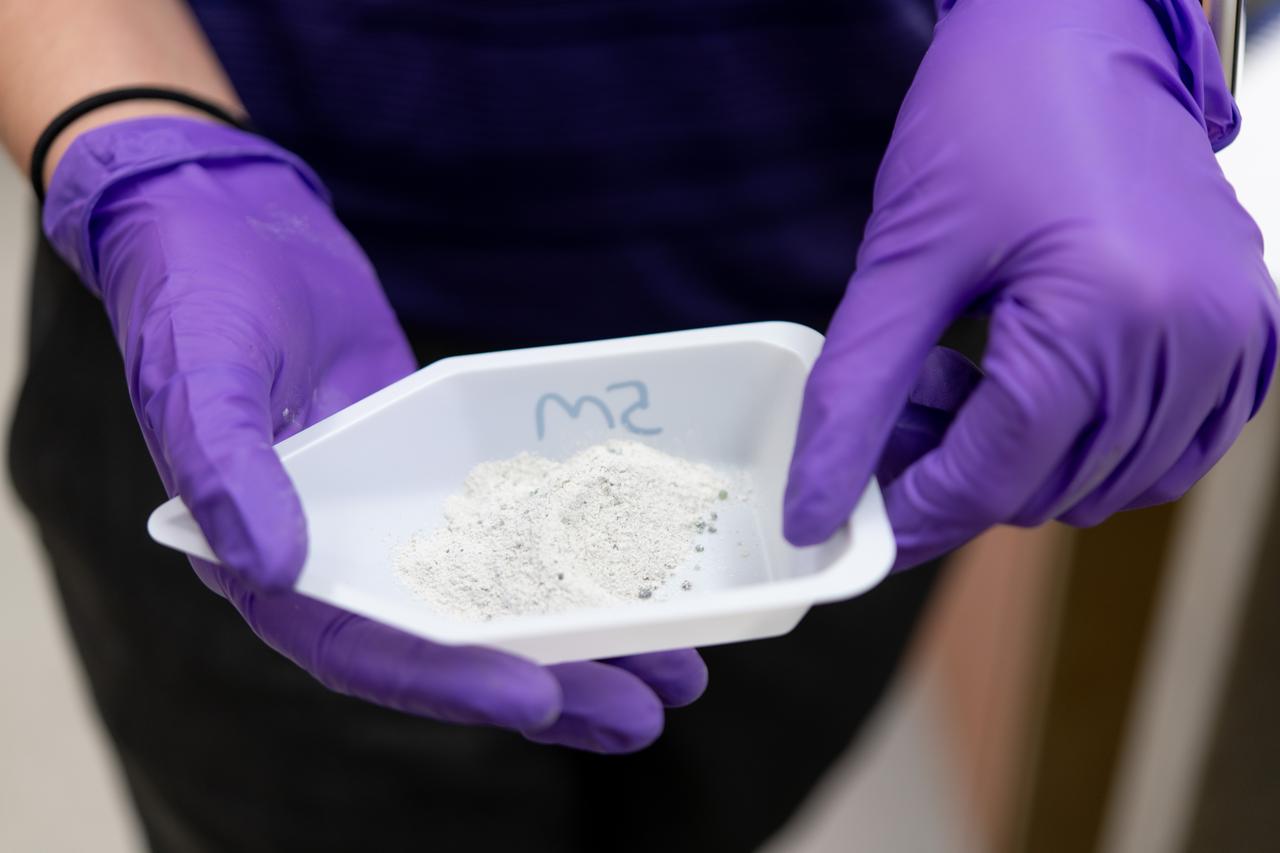
Sylvie Crowell who works in the Environmental Effects and Coatings Branch at NASA Glenn Research Center performs ball milling and particle size analysis on some lunar dust simulant on January 29, 2025.
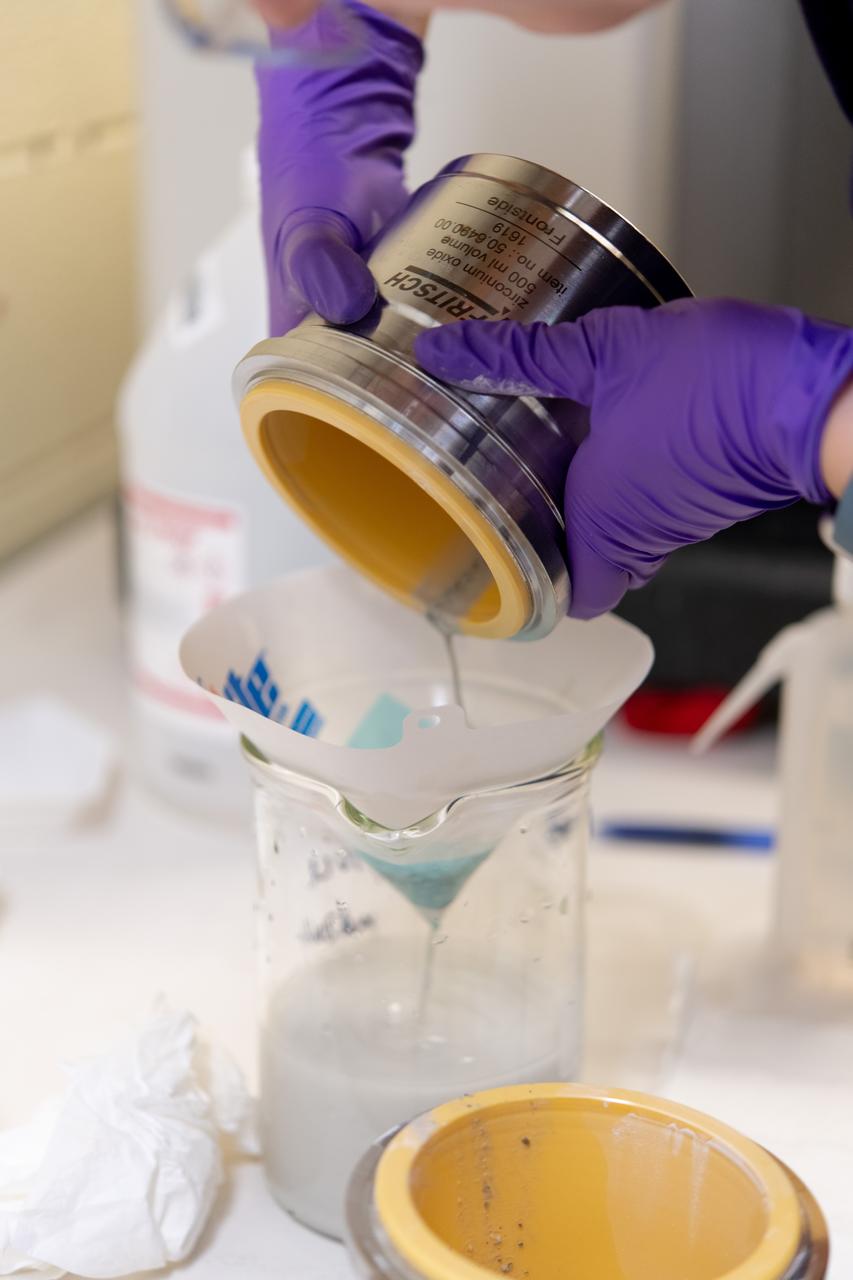
Sylvie Crowell who works in the Environmental Effects and Coatings Branch at NASA Glenn Research Center performs ball milling and particle size analysis on some lunar dust simulant on January 29, 2025.
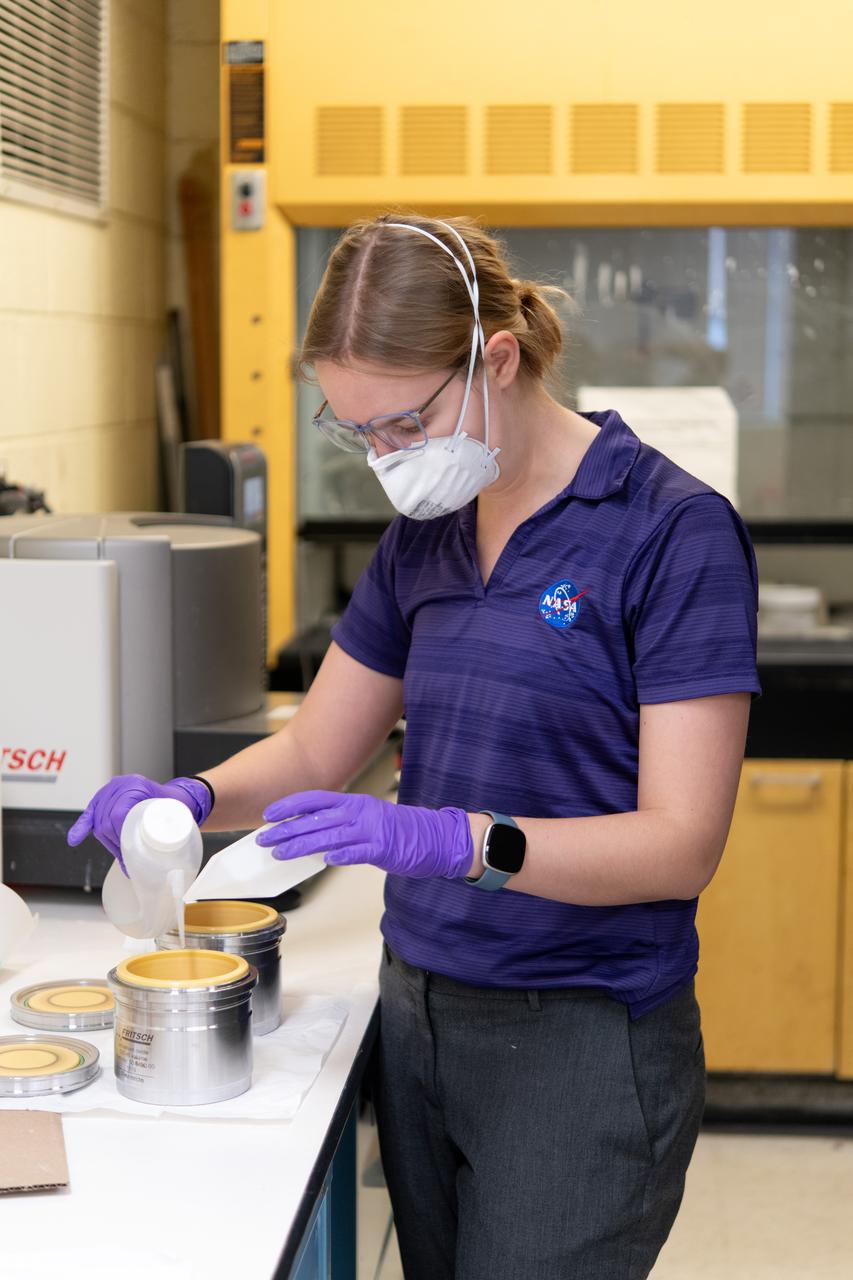
Sylvie Crowell who works in the Environmental Effects and Coatings Branch at NASA Glenn Research Center performs ball milling and particle size analysis on some lunar dust simulant on January 29, 2025.
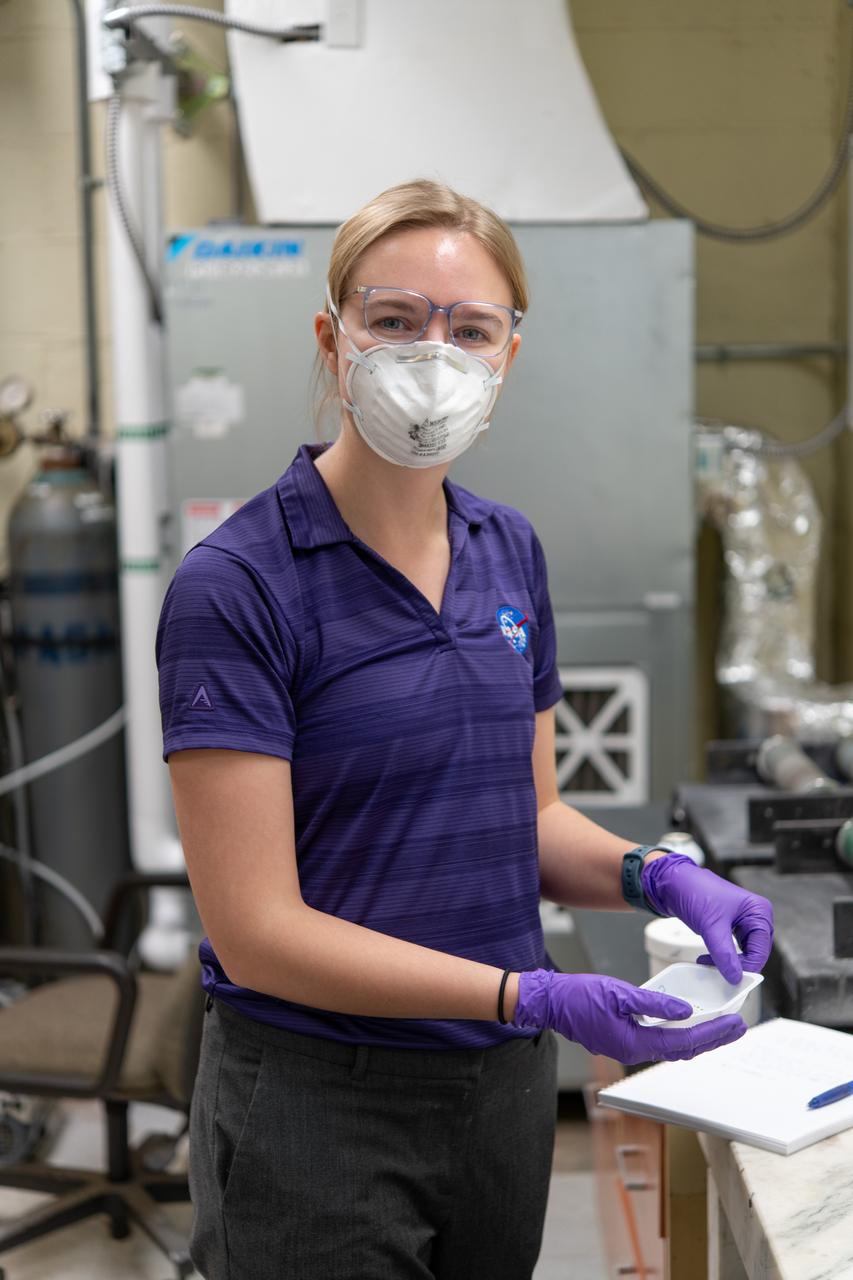
Sylvie Crowell who works in the Environmental Effects and Coatings Branch at NASA Glenn Research Center performs ball milling and particle size analysis on some lunar dust simulant on January 29, 2025.
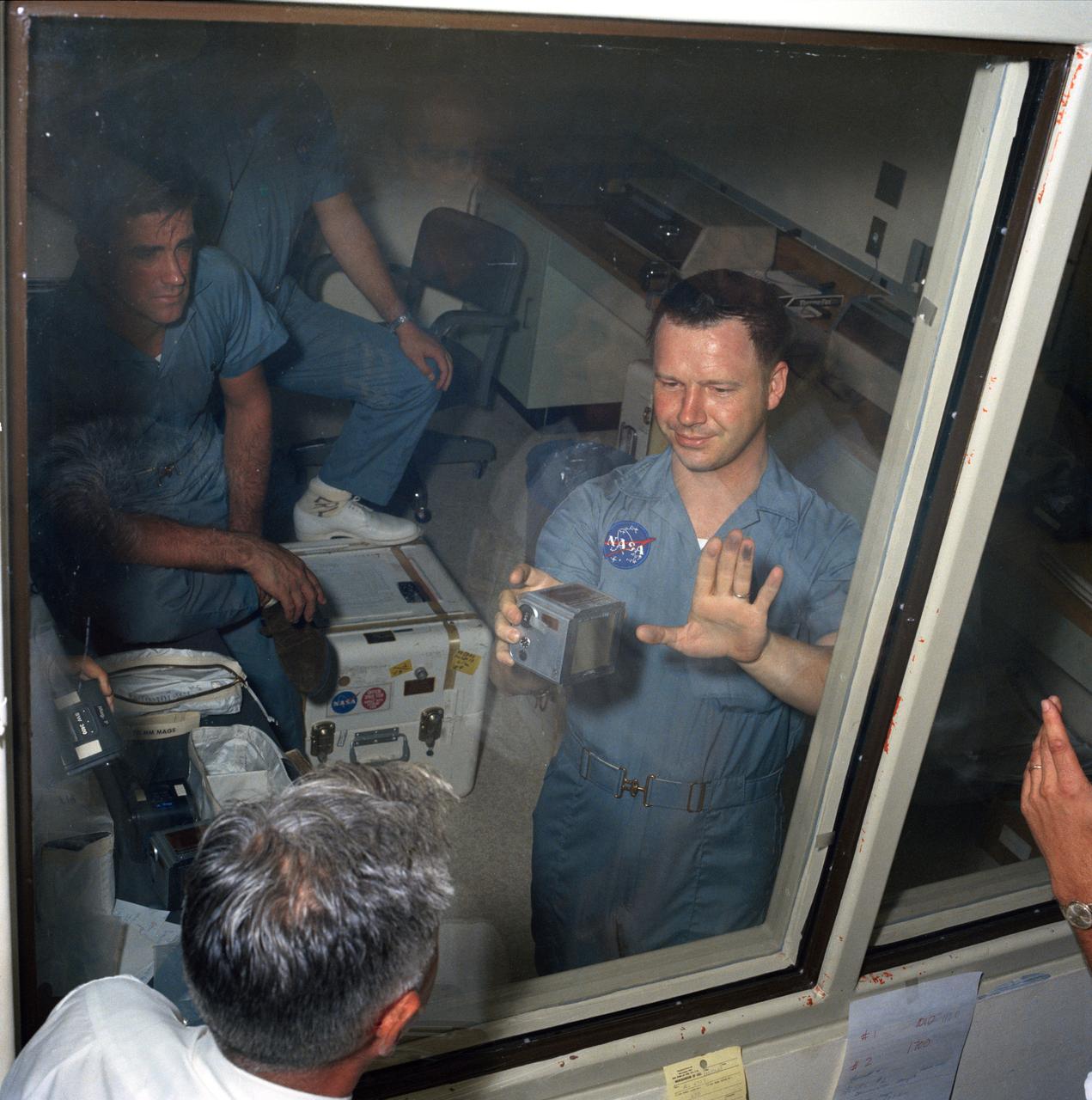
The first direct exposure to Lunar material for Crew Reception Personnel probably happened late Friday, 07/25/1969. Terry Slezak (displaying Moon dust on his left hand fingers), MSC photographic technician, was removing film magazines from the first of two (2) containers when the incident occurred. As he removed the plastic seal from Magazine "S", one of the 70mm magazines taken during Apollo XI Extravehicular Activity (EVA), it was apparent that the exterior of the cassette displayed traces of a black powdery substance. Apollo XI Commander Neil Armstrong reported during the mission that he had retrieved a 70mm cassette which had dropped to the Lunar surface. Seen in the backgound is John H. Boynton. ( S69-40054 ) MSC, Houston, TX
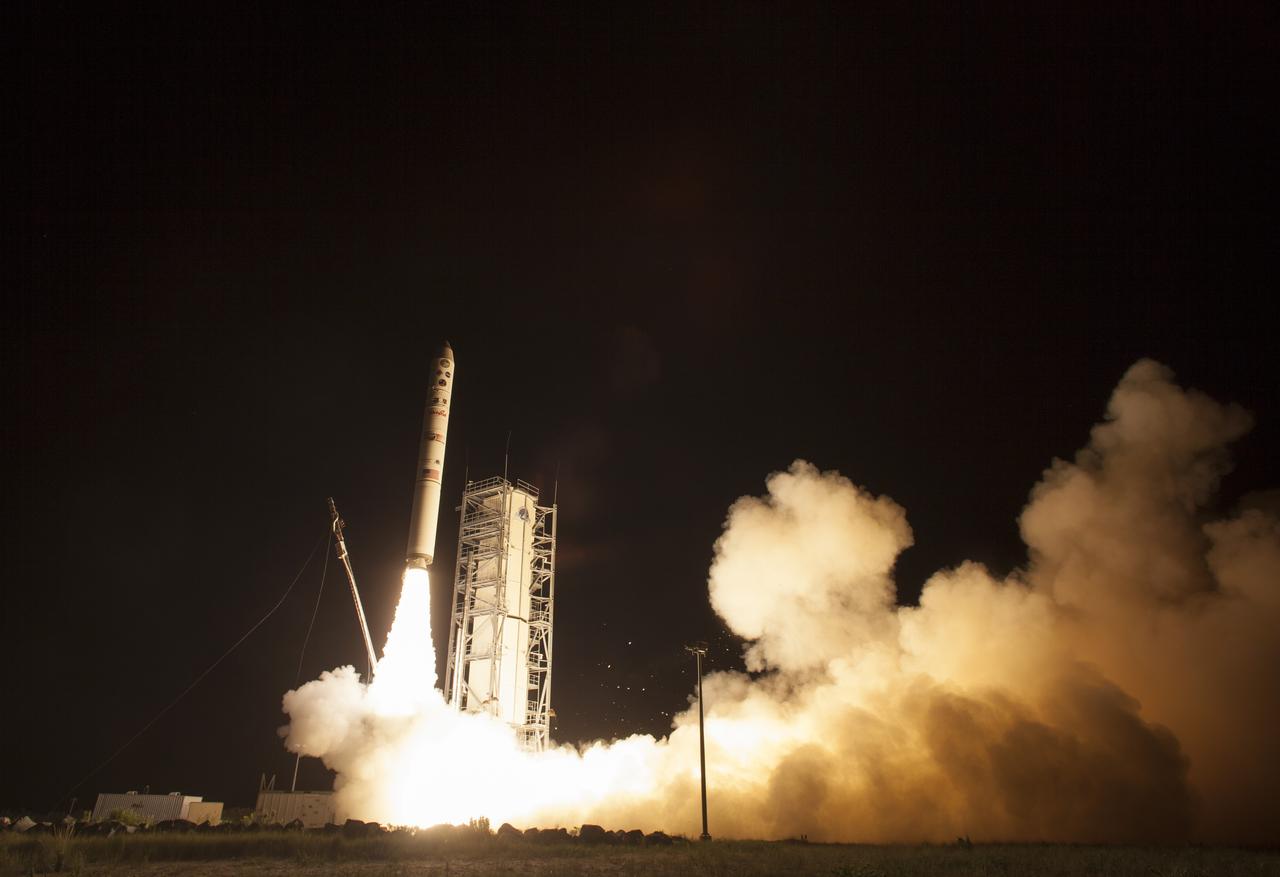
NASA's Lunar Atmosphere and Dust Environment Explorer (LADEE) observatory launches aboard the Minotaur V rocket from the Mid-Atlantic Regional Spaceport (MARS) at NASA's Wallops Flight Facility, Friday, Sept. 6, 2013 in Virginia. LADEE is a robotic mission that will orbit the moon where it will provide unprecedented information about the environment around the moon and give scientists a better understanding of other planetary bodies in our solar system and beyond. Photo Credit: (NASA/Carla Cioffi)
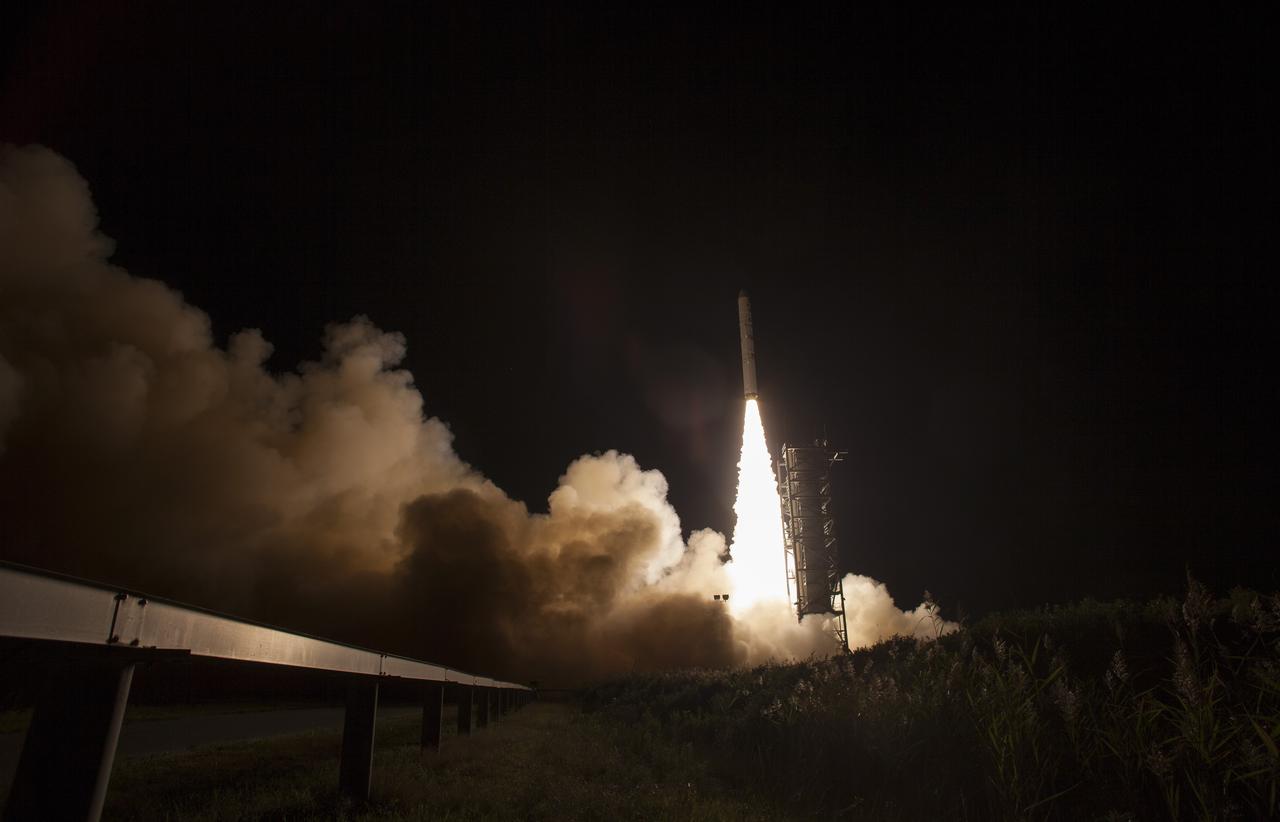
NASA's Lunar Atmosphere and Dust Environment Explorer (LADEE) observatory launches aboard the Minotaur V rocket from the Mid-Atlantic Regional Spaceport (MARS) at NASA's Wallops Flight Facility, Friday, Sept. 6, 2013 in Virginia. LADEE is a robotic mission that will orbit the moon where it will provide unprecedented information about the environment around the moon and give scientists a better understanding of other planetary bodies in our solar system and beyond. Photo Credit: (NASA/Carla Cioffi)
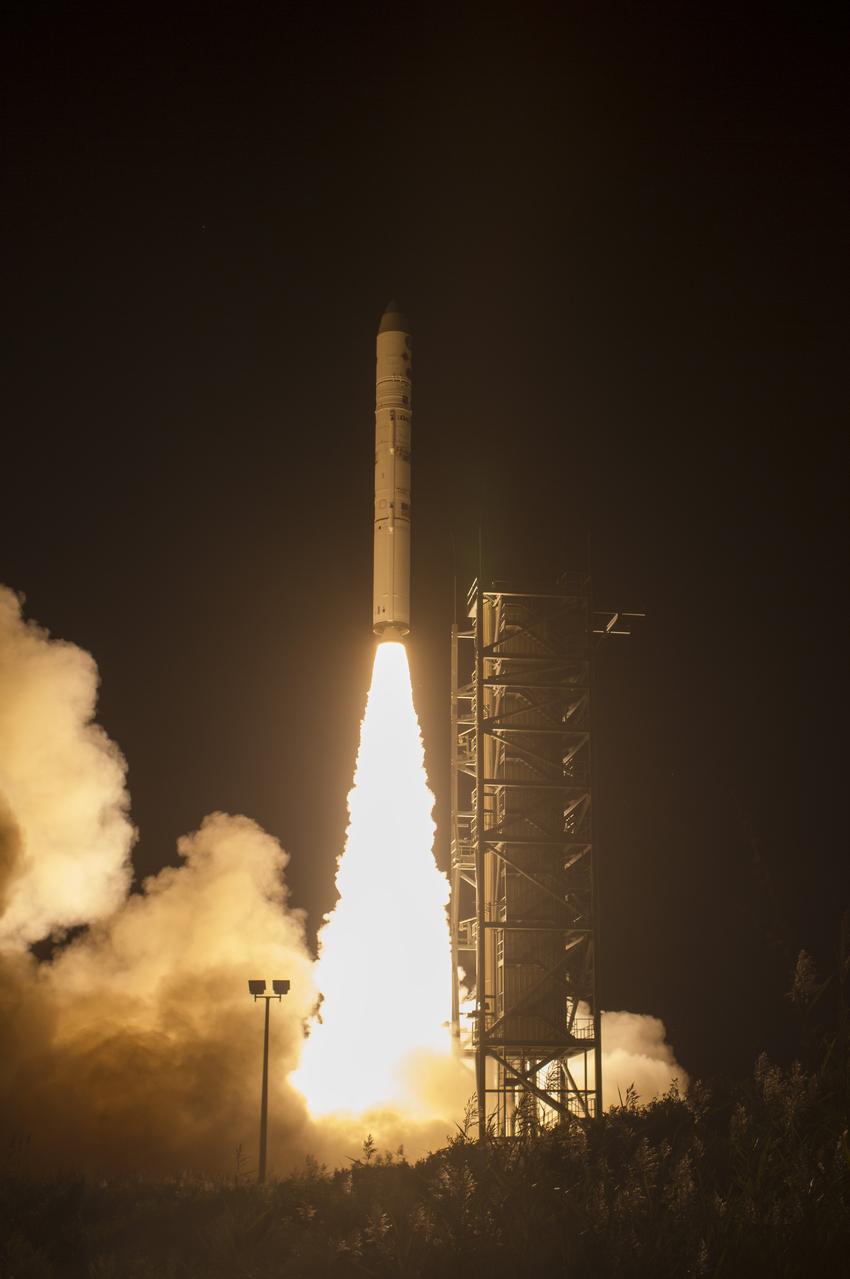
NASA's Lunar Atmosphere and Dust Environment Explorer (LADEE) observatory launches aboard the Minotaur V rocket from the Mid-Atlantic Regional Spaceport (MARS) at NASA's Wallops Flight Facility, Friday, Sept. 6, 2013 in Virginia. LADEE is a robotic mission that will orbit the moon where it will provide unprecedented information about the environment around the moon and give scientists a better understanding of other planetary bodies in our solar system and beyond. Photo Credit: (NASA/Carla Cioffi)
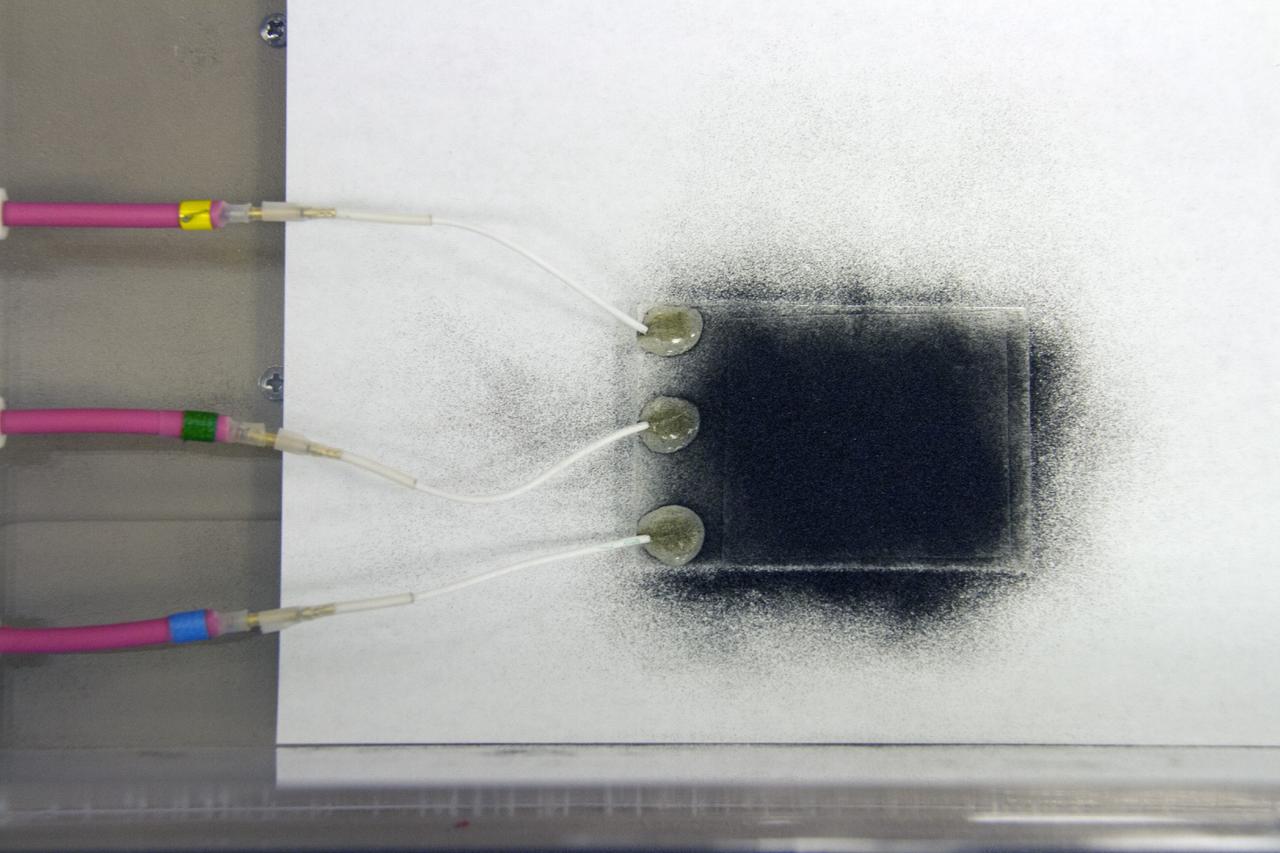
CAPE CANAVERAL, Fla. -- Dust particles are readied for an experiment for the Electrodynamic Dust Shield for Dust Mitigation project in the Electrostatics and Surface Physics Laboratory in the SwampWorks at NASA's Kennedy Space Center in Florida. The fabricated material is designed to mimic the dust on the lunar surface. The technology works by creating an electric field that propagates out like the ripples on a pond. This could prevent dust accumulation on spacesuits, thermal radiators, solar panels, optical instruments and view ports for future lunar and Mars exploration activities. CAPE CANAVERAL, Fla. -- Preparations are underway to conduct a dust particle experiment for the Electrodynamic Dust Shield for Dust Mitigation project in the Electrostatics and Surface Physics Laboratory in the SwampWorks at NASA's Kennedy Space Center in Florida. The technology works by creating an electric field that propagates out like the ripples on a pond. This could prevent dust accumulation on spacesuits, thermal radiators, solar panels, optical instruments and view ports for future lunar and Mars exploration activities.
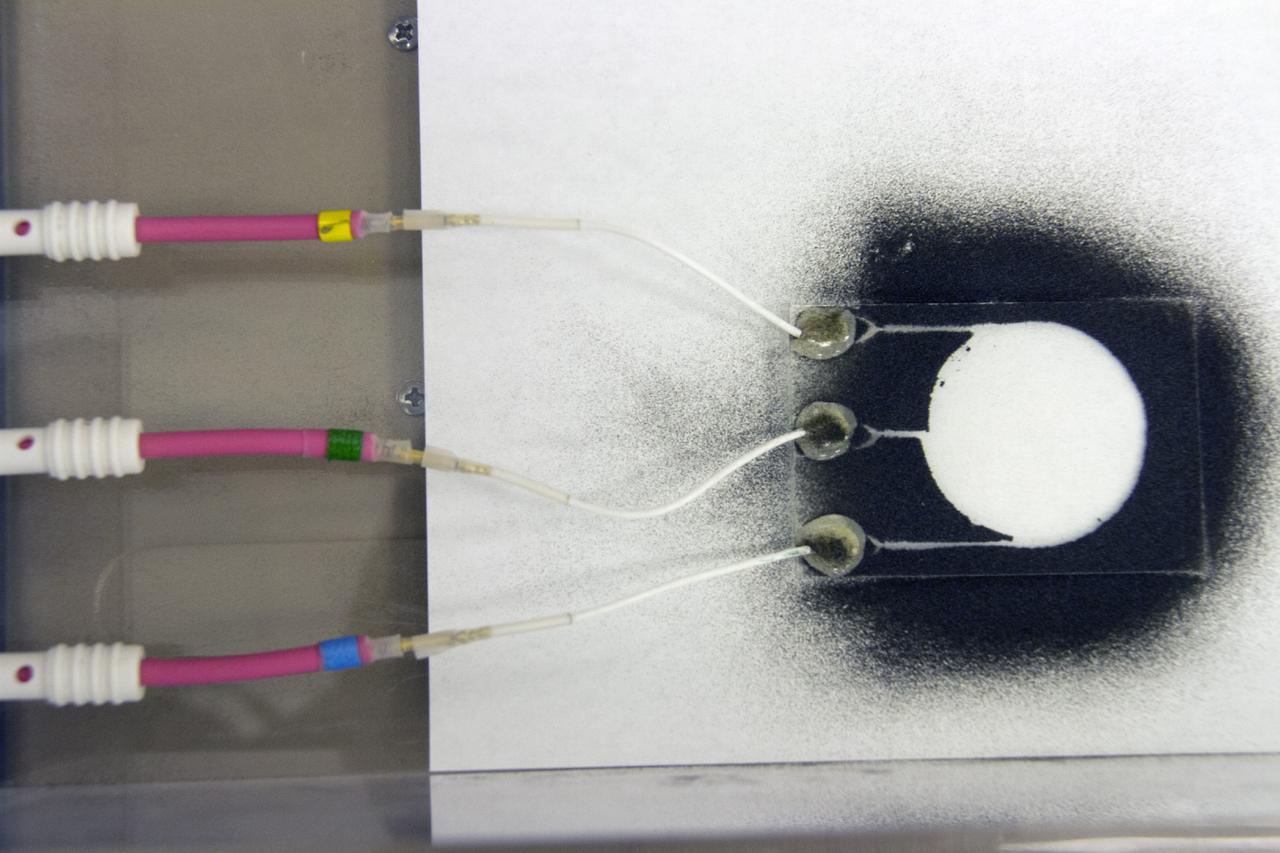
CAPE CANAVERAL, Fla. -- Dust particles scatter during an experiment for the Electrodynamic Dust Shield for Dust Mitigation project in the Electrostatics and Surface Physics Laboratory in the SwampWorks at NASA's Kennedy Space Center in Florida. The fabricated material is designed to mimic the dust on the lunar surface. The technology works by creating an electric field that propagates out like the ripples on a pond. This could prevent dust accumulation on spacesuits, thermal radiators, solar panels, optical instruments and view ports for future lunar and Mars exploration activities. CAPE CANAVERAL, Fla. -- Preparations are underway to conduct a dust particle experiment for the Electrodynamic Dust Shield for Dust Mitigation project in the Electrostatics and Surface Physics Laboratory in the SwampWorks at NASA's Kennedy Space Center in Florida. The technology works by creating an electric field that propagates out like the ripples on a pond. This could prevent dust accumulation on spacesuits, thermal radiators, solar panels, optical instruments and view ports for future lunar and Mars exploration activities.
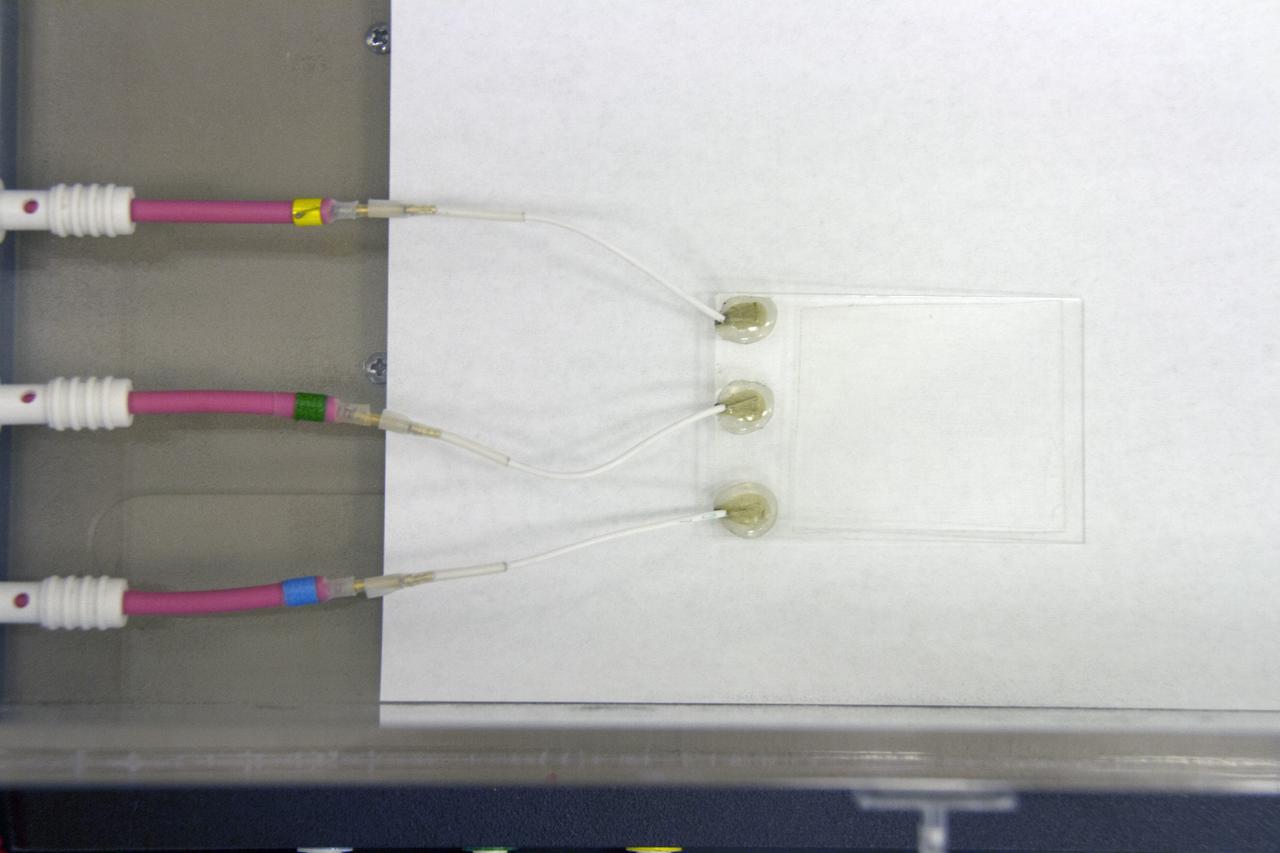
CAPE CANAVERAL, Fla. -- Preparations are underway to conduct a dust particle experiment for the Electrodynamic Dust Shield for Dust Mitigation project in the Electrostatics and Surface Physics Laboratory in the SwampWorks at NASA's Kennedy Space Center in Florida. The technology works by creating an electric field that propagates out like the ripples on a pond. This could prevent dust accumulation on spacesuits, thermal radiators, solar panels, optical instruments and view ports for future lunar and Mars exploration activities. CAPE CANAVERAL, Fla. -- Preparations are underway to conduct a dust particle experiment for the Electrodynamic Dust Shield for Dust Mitigation project in the Electrostatics and Surface Physics Laboratory in the SwampWorks at NASA's Kennedy Space Center in Florida. The technology works by creating an electric field that propagates out like the ripples on a pond. This could prevent dust accumulation on spacesuits, thermal radiators, solar panels, optical instruments and view ports for future lunar and Mars exploration activities.
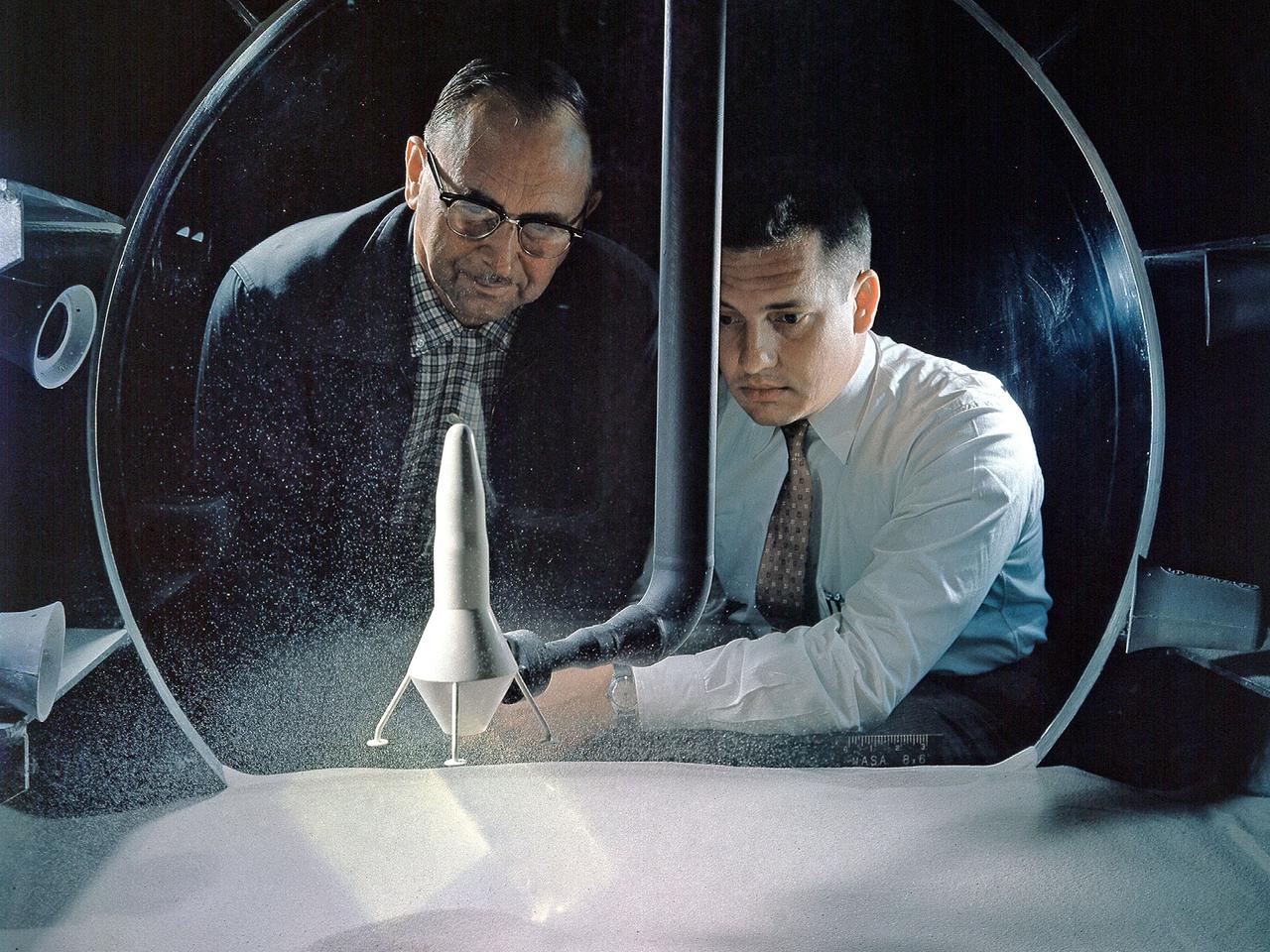
NASA Researchers view a demonstration of the moon dust simulator in the 8- by 6-Foot Supersonic Wind Tunnel facility at the National Aeronautics and Space Administration (NASA) Lewis Research Center. The researchers were studying the effect of the lunar lander’s retrorockets on the loose dust on the lunar surface. There was some concern that the retrorockets would kick up so much dust that the crew would lose the ability to see. They also did not know how the dust’s behavior would be affected by the space atmosphere. This small vacuum tank was built for very preliminary investigations into this matter. The pipe entering the top of the tank supplied the airflow to the lander model, which was affixed to the pipe. The researchers altered the vacuum levels and speed of the airflow.
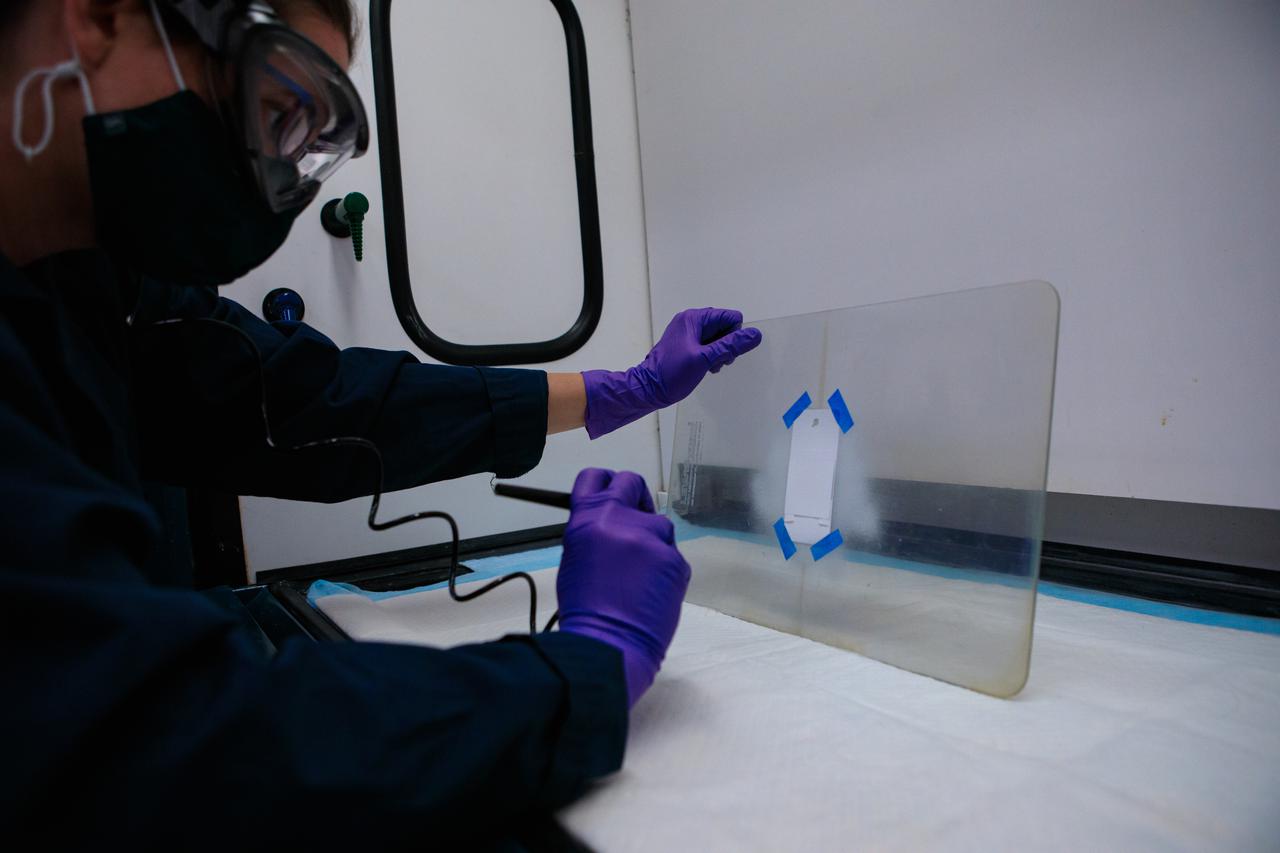
Inside a laboratory at the Neil Armstrong Operations and Checkout Building at NASA’s Kennedy Space Center in Florida, research scientist Sarah Snyder applies a selective surface coating to an Electrodynamic Dust Shield (EDS) on March 31, 2021. This is one of several concurrent activities preparing dust shield samples for testing in space. Dust mitigation technologies could one day be applied to diminish dust hazards on lunar surface systems such as cameras, solar panels, spacesuits, and instrumentation, enabling sustainable exploration of the Moon under the Artemis program.
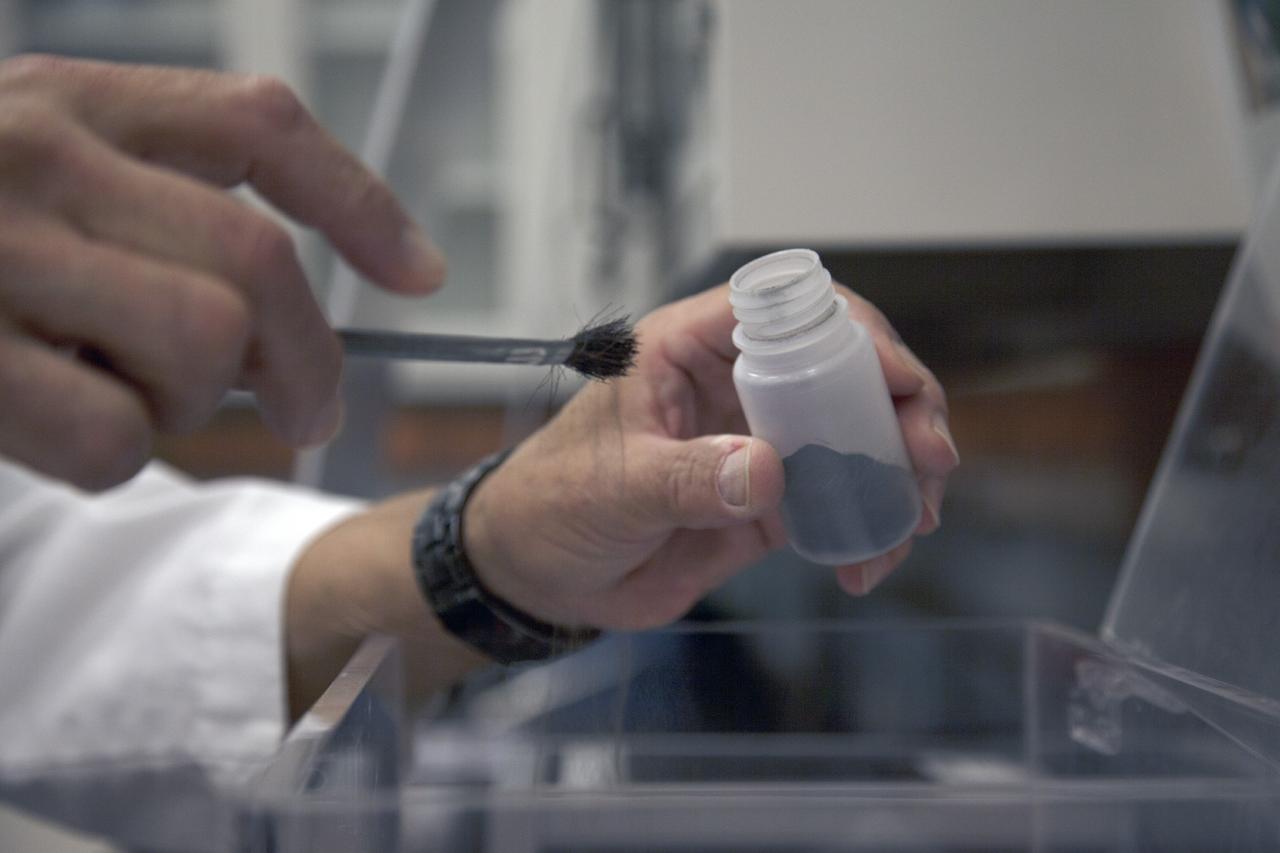
CAPE CANAVERAL, Fla. -- Dr. Carlos Calle, senior research scientist on the Electrodynamic Dust Shield for Dust Mitigation project, works with dust fabricated for use in his experiments in the Electrostatics and Surface Physics Laboratory in the SwampWorks at NASA's Kennedy Space Center in Florida. The fabricated material is designed to mimic the dust on the lunar surface. The technology works by creating an electric field that propagates out like the ripples on a pond. This could prevent dust accumulation on spacesuits, thermal radiators, solar panels, optical instruments and view ports for future lunar and Mars exploration activities. Electrodynamic dust shield, or EDS, technology is based on concepts originally developed by NASA as early as 1967 and later by the University of Tokyo. In 2003, NASA, in collaboration with the University of Arkansas at Little Rock, started development of the EDS for dust particle removal from solar panels to be used on future missions to the moon, an asteroid or Mars. A flight experiment to expose the dust shields to the space environment currently is under development. For more information, visit: http://www.nasa.gov/content/scientists-developing-ways-to-mitigate-dust-problem-for-explorers/ Photo credit: NASA/Dan Casper

AS17-145-22224 (12 Dec. 1972) --- Astronaut Eugene A. Cernan, Apollo 17 commander, is photographed inside the lunar module on the lunar surface following the second extravehicular activity (EVA) of his mission. Note lunar dust on his suit. The photograph was taken by astronaut Harrison H. Schmitt, lunar module pilot, using a 70mm handheld Hasselblad camera and S0-368 film.
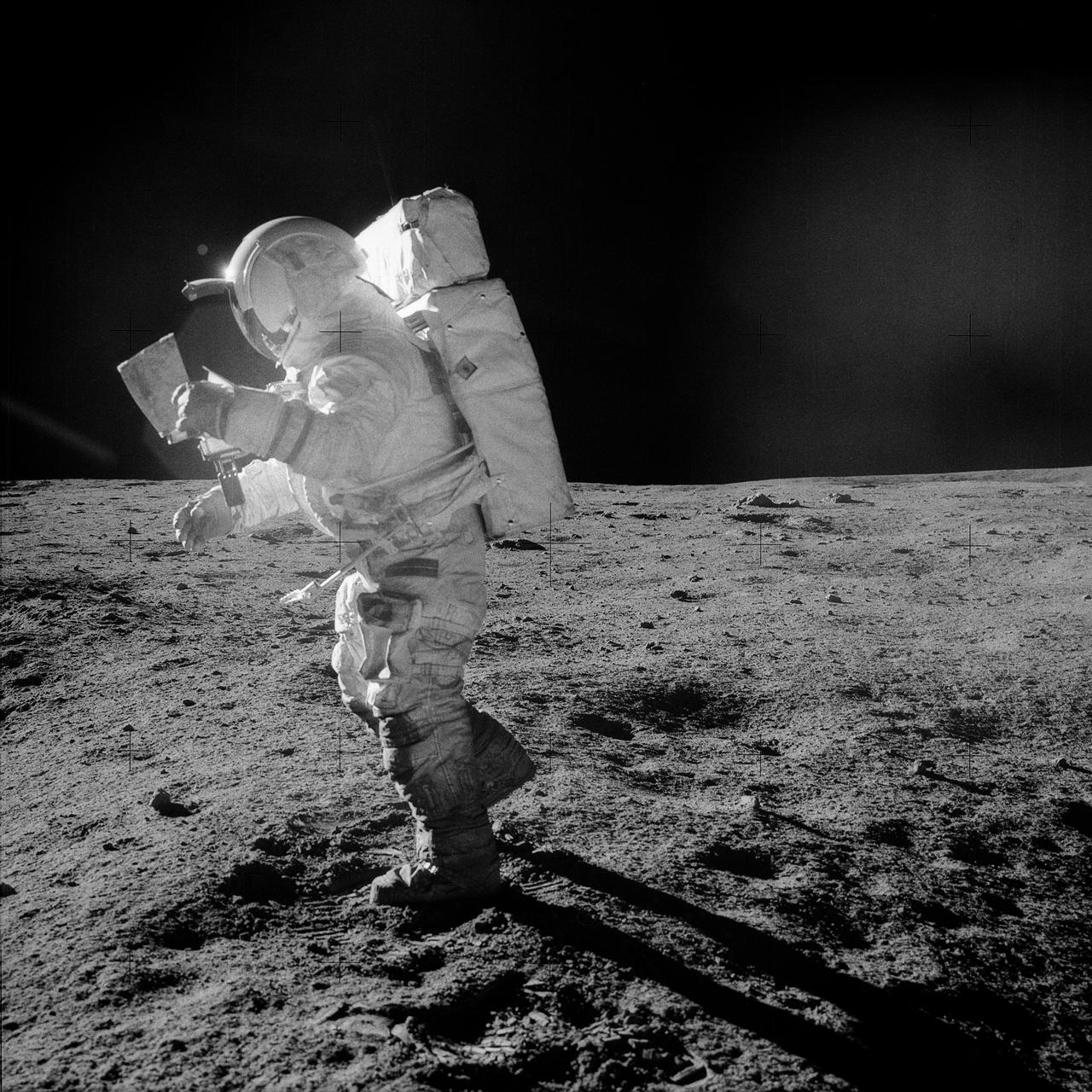
AS14-64-9089 (5-6 Feb. 1971) --- Astronaut Edgar D. Mitchell, lunar module pilot, moves across the lunar surface as he looks over a traverse map during an extravehicular activity (EVA). Lunar dust can be seen clinging to the boots and legs of the space suit. Astronauts Alan B. Shepard Jr., commander, and Mitchell explored the lunar surface while astronaut Stuart A. Roosa, command module pilot, orbited the moon in the Command and Service Modules (CSM).
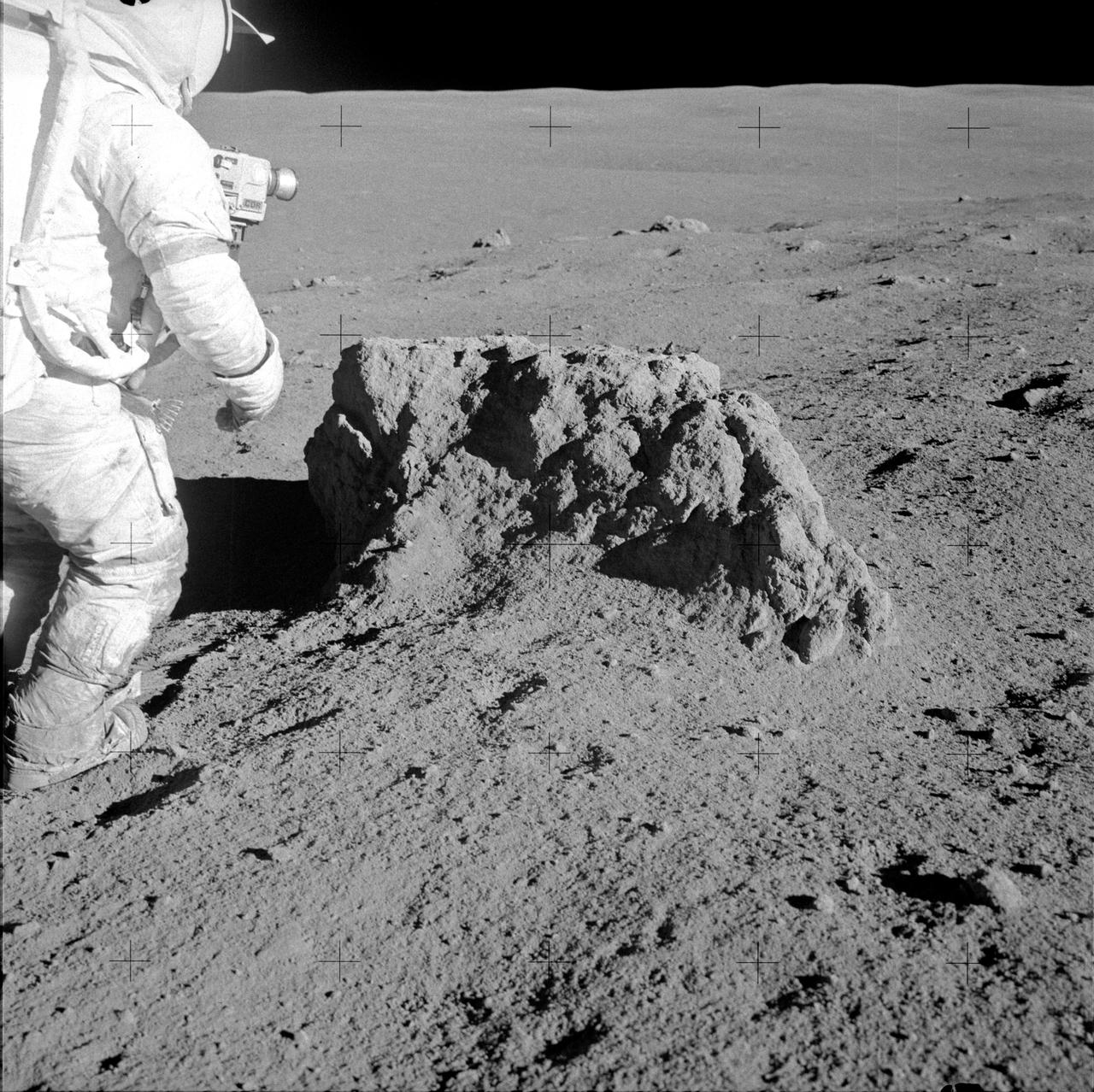
AS14-68-9414 (6 Feb. 1971) --- Astronaut Alan B. Shepard Jr., Apollo 14 commander, stands beside a large boulder on the lunar surface during the mission's second extravehicular activity (EVA), on Feb. 6, 1971. Note the lunar dust clinging to Shepard's space suit. Astronauts Shepard and Edgar D. Mitchell, lunar module pilot, explored the lunar surface while astronaut Stuart A. Roosa, command module pilot, orbited the moon in the Command and Service Modules (CSM).
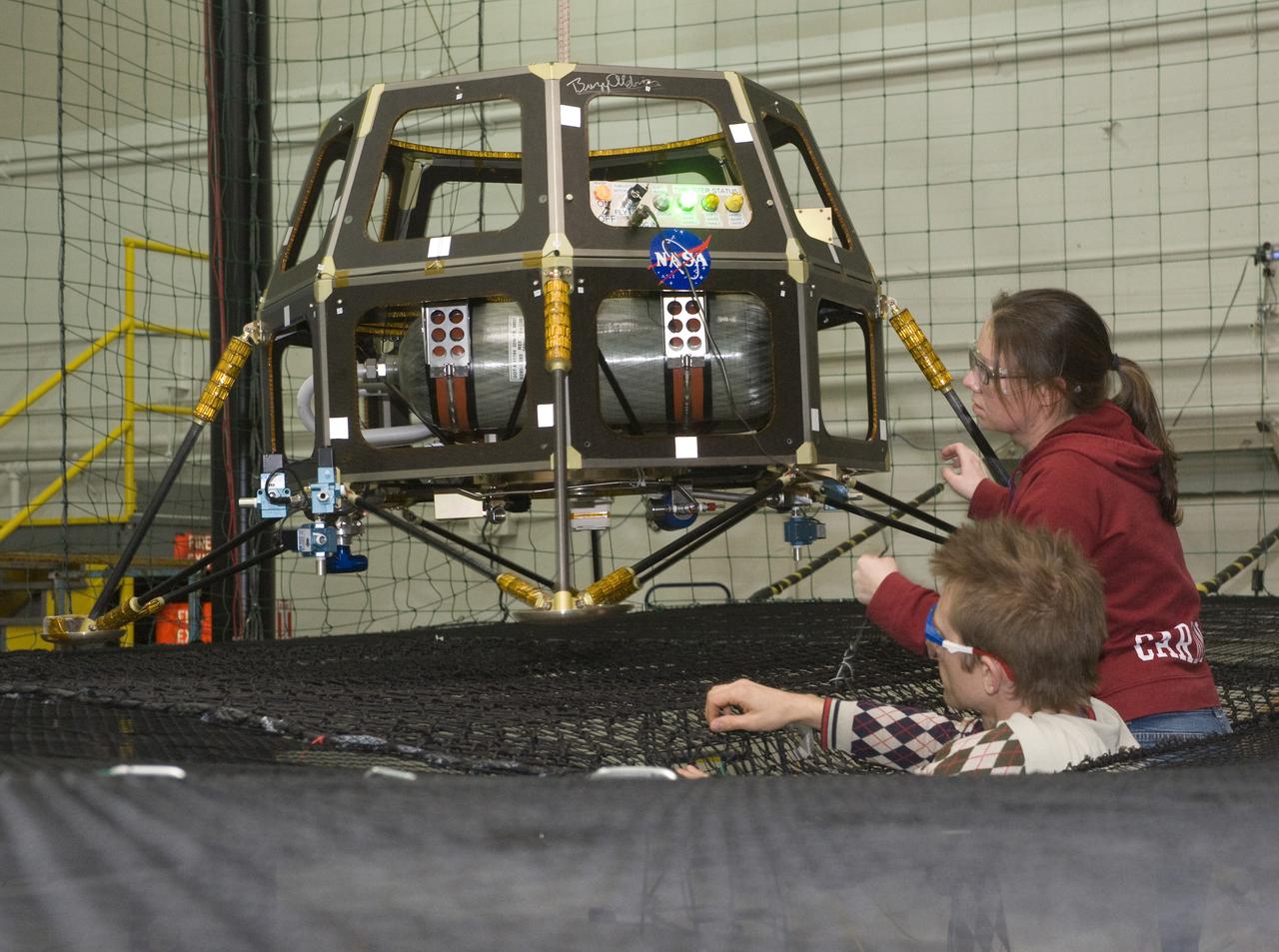
Lunar Atmosphere and Dust Environment Explorer (LADEE) Project in Building 45 Modular Common Spacecraft Bus as a hover test vehicle, here they are installing spacecraft electronics & payloads. with Chris Boshuizen (in plaid) and Eleanor Crane (in red)
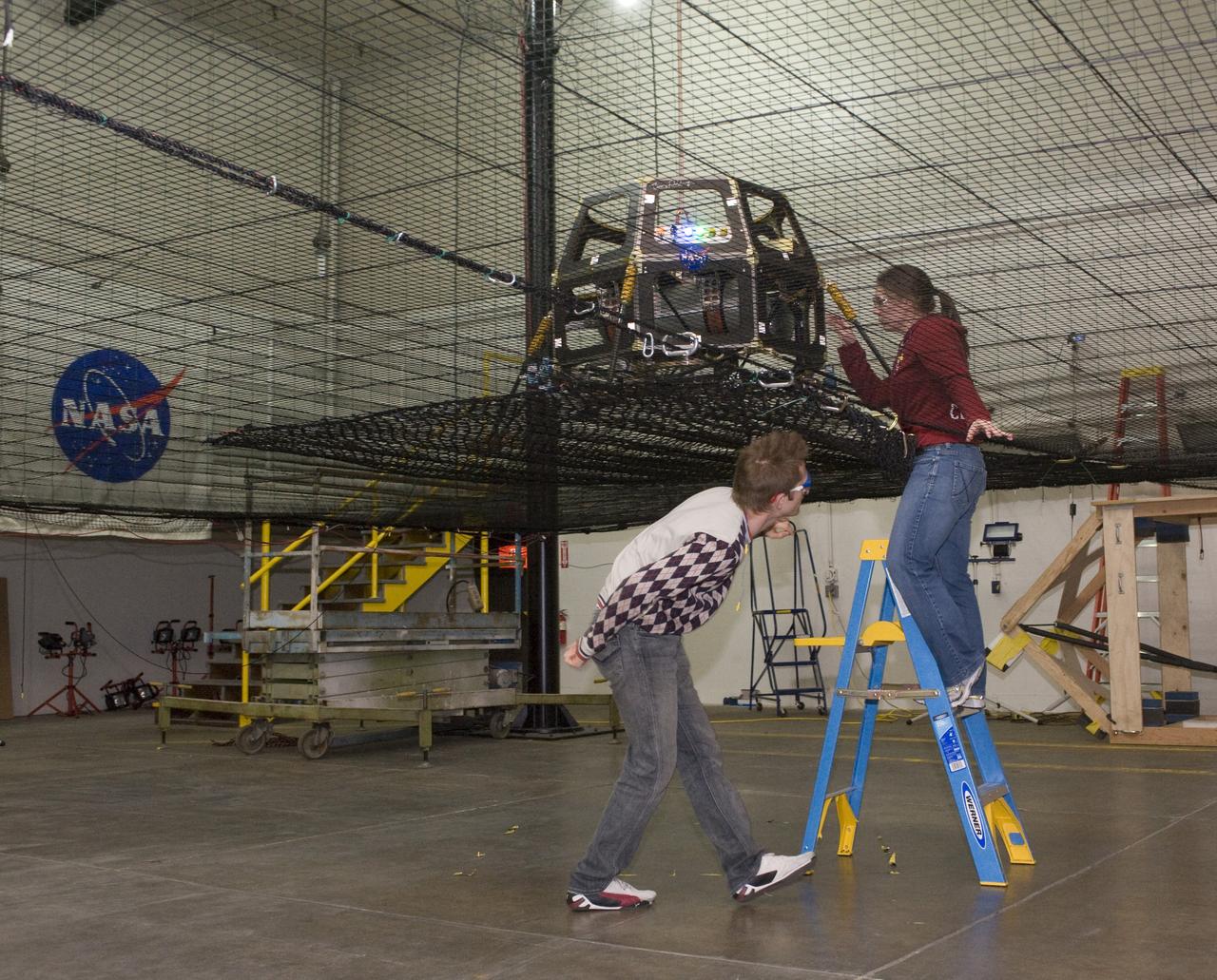
Lunar Atmosphere and Dust Environment Explorer (LADEE) Project in Building 45 Modular Common Spacecraft Bus as a hover test vehicle, here they are installing spacecraft electronics & payloads. with Chris Boshuizen (in plaid) and Eleanor Crane (in red)
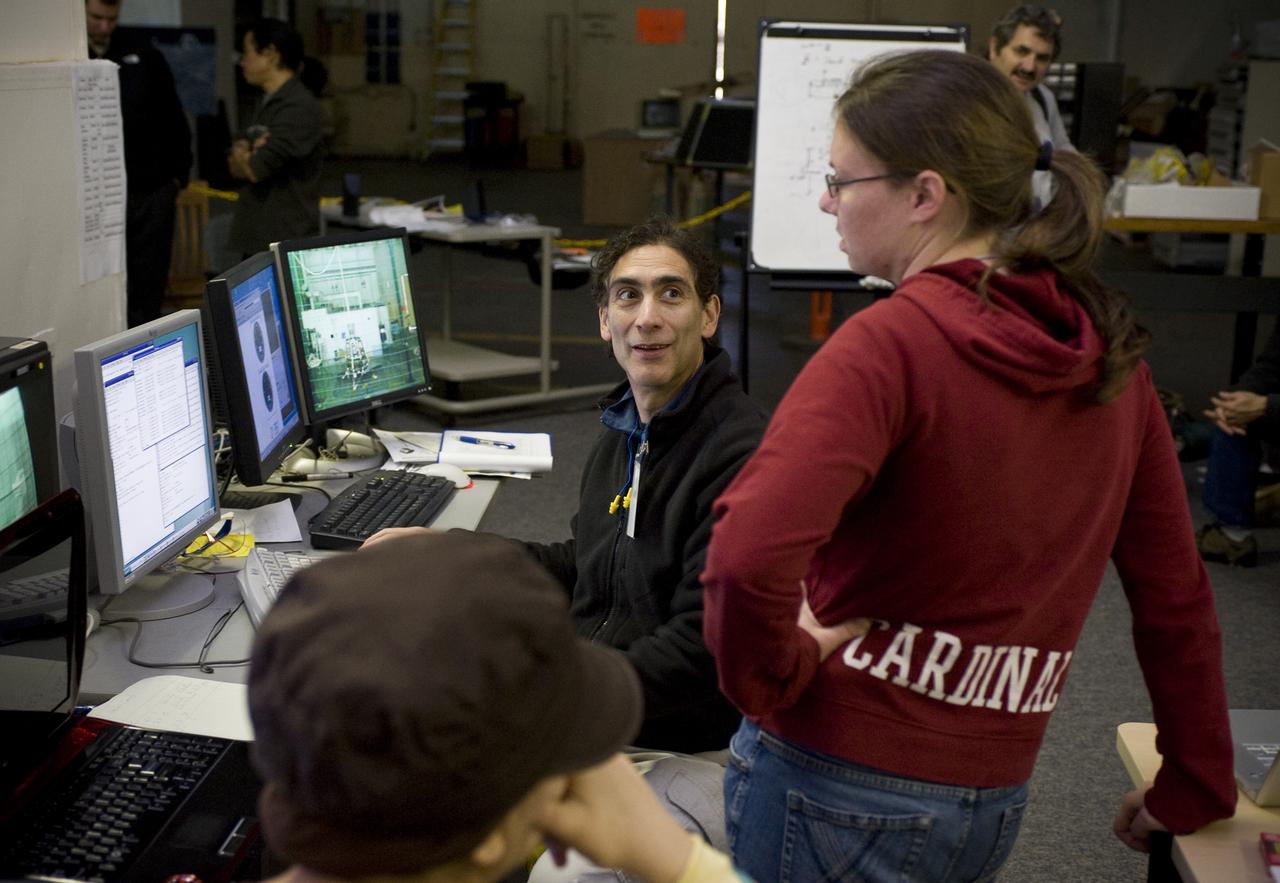
Lunar Atmosphere and Dust Environment Explorer (LADEE) Project in Building 45 Modular Common Spacecraft Bus as a hover test vehicle, here they are installing spacecraft electronics & payloads. Whith Doug Forman (seated) and Eleanor Crane (standing)
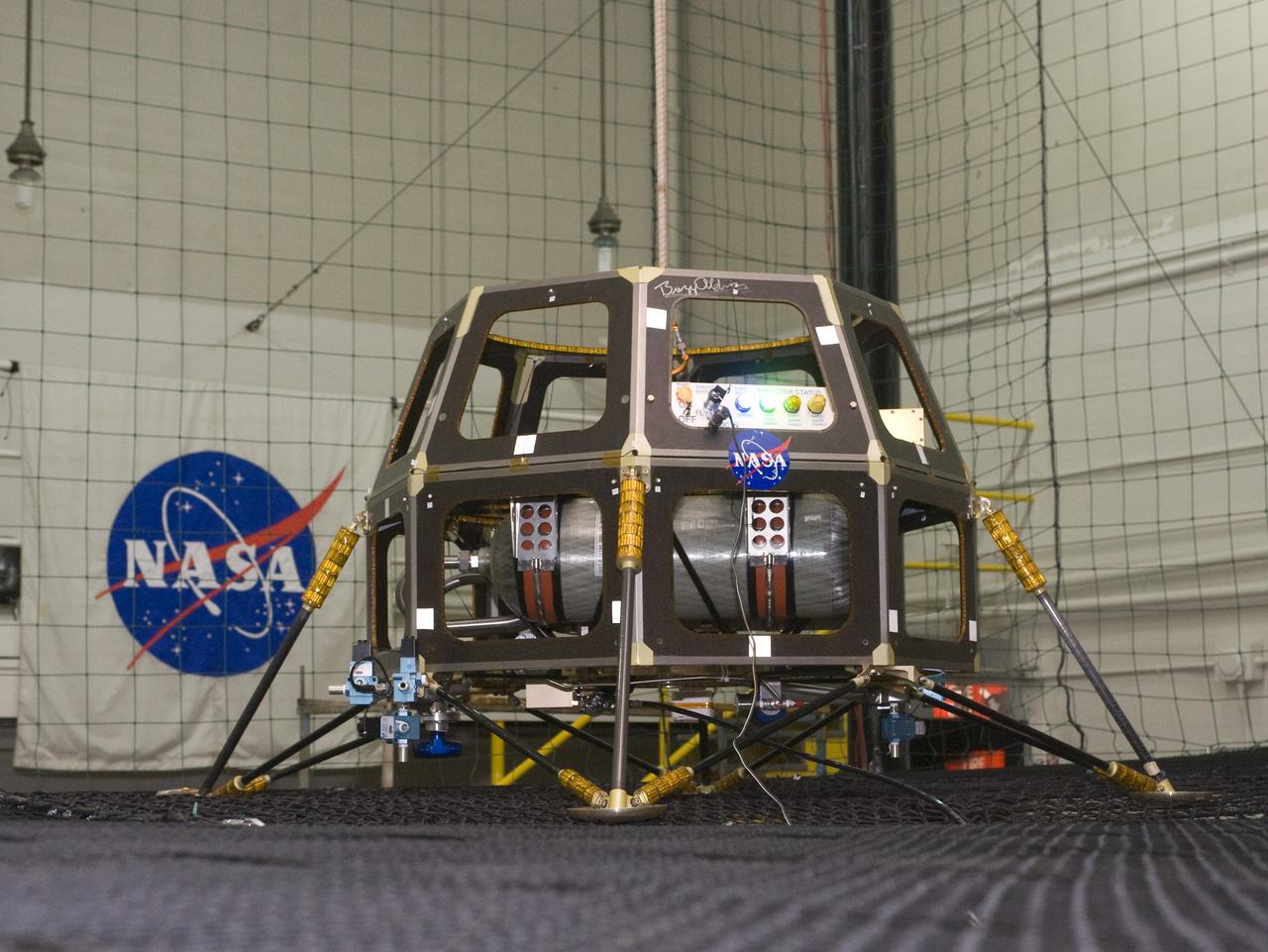
Lunar Atmosphere and Dust Environment Explorer (LADEE) Project in Building 45 Modular Common Spacecraft Bus as a hover test vehicle, here they are installing spacecraft electronics & payloads.
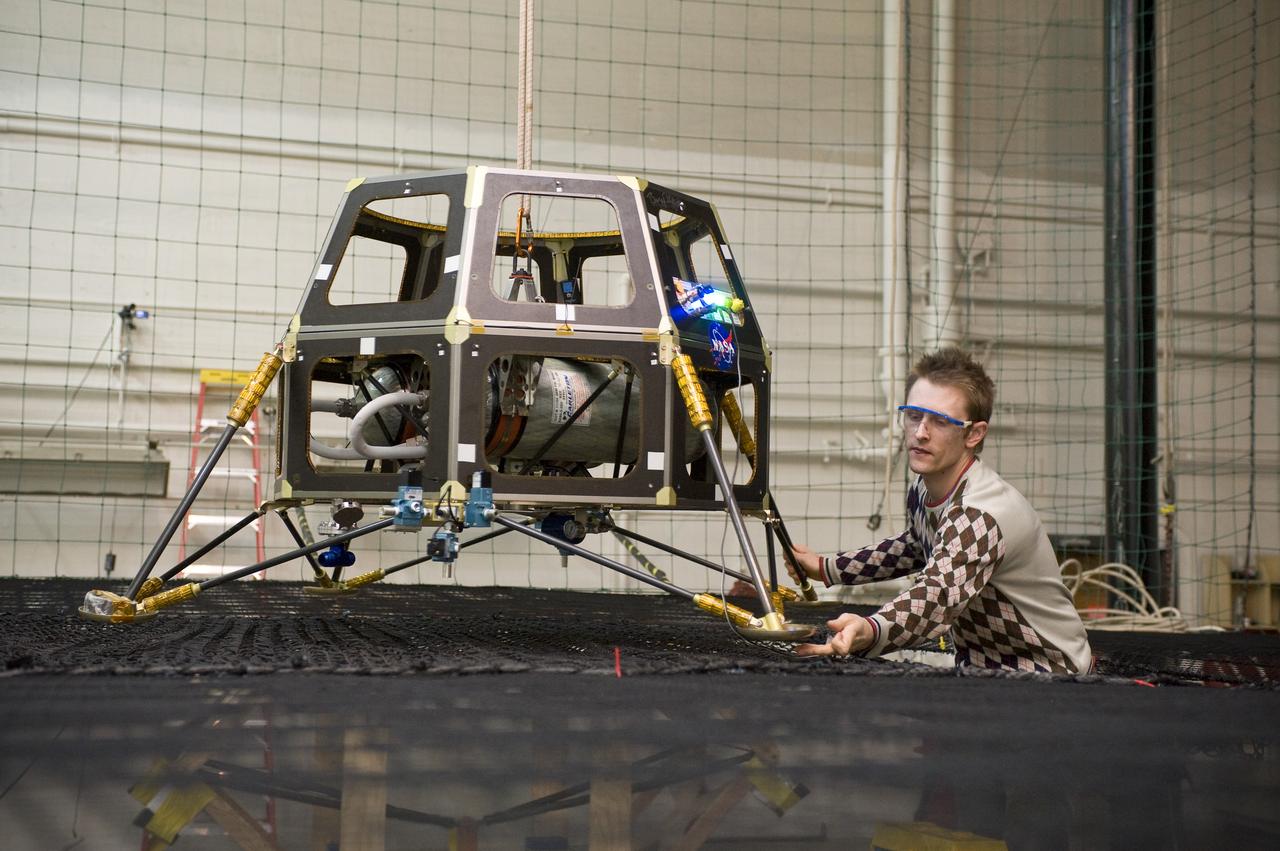
Lunar Atmosphere and Dust Environment Explorer (LADEE) Project in Building 45 Modular Common Spacecraft Bus as a hover test vehicle, here they are installing spacecraft electronics & payloads. With Chris Boshuizen
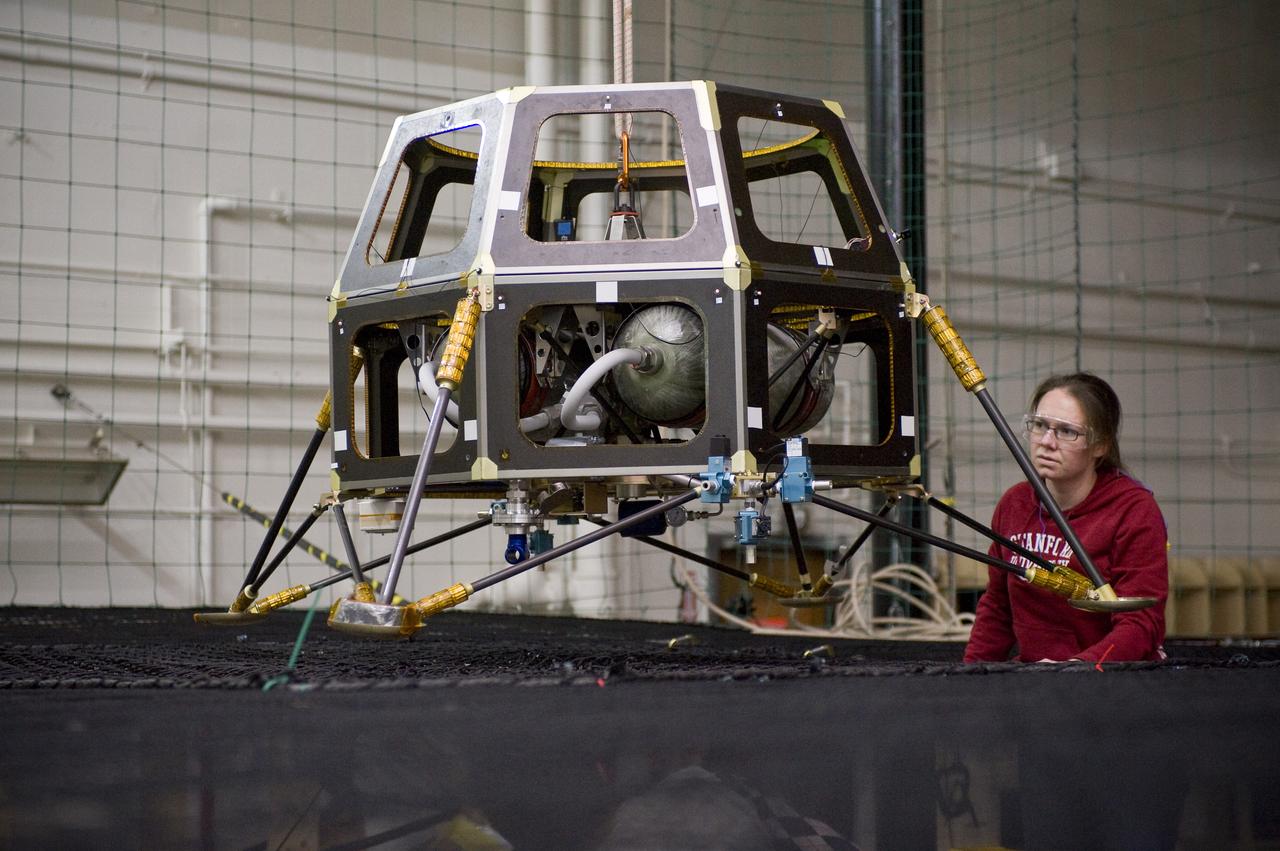
Lunar Atmosphere and Dust Environment Explorer (LADEE) Project in Building 45 Modular Common Spacecraft Bus as a hover test vehicle, here they are installing spacecraft electronics & payloads. With Eleanor Crane.
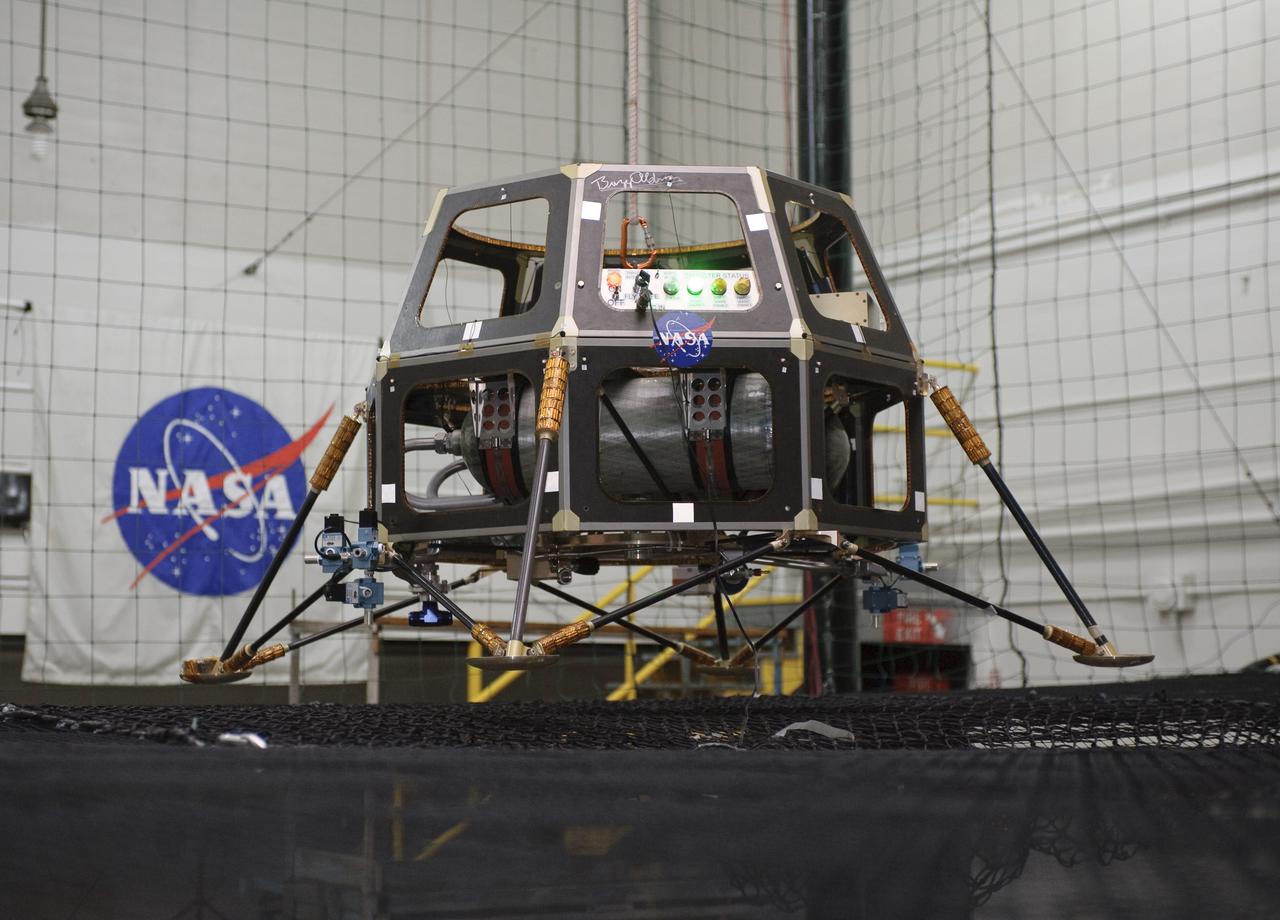
Lunar Atmosphere and Dust Environment Explorer (LADEE) Project in Building 45 Modular Common Spacecraft Bus as a hover test vehicle, here they are installing spacecraft electronics & payloads.
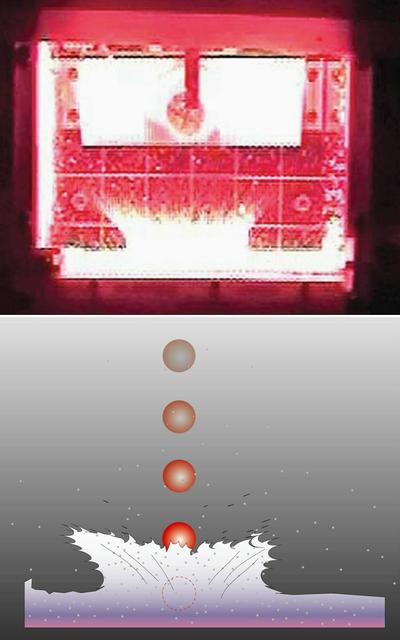
Clues to the formation of planets and planetary rings -- like Saturn's dazzling ring system -- may be found by studying how dust grains interact as they collide at low speeds. To study the question of low-speed dust collisions, NASA sponsored the COLLisions Into Dust Experiment (COLLIDE) at the University of Colorado. It was designed to spring-launch marble-size projectiles into trays of powder similar to space or lunar dust. COLLIDE-1 (1998) discovered that collisions below a certain energy threshold eject no material. COLLIDE-2 was designed to identify where the threshold is. In COLLIDE-2, scientists nudged small projectiles into dust beds and recorded how the dust splashed outward (video frame at top; artist's rendering at bottom). The slowest impactor ejected no material and stuck in the target. The faster impactors produced ejecta; some rebounded while others stuck in the target.
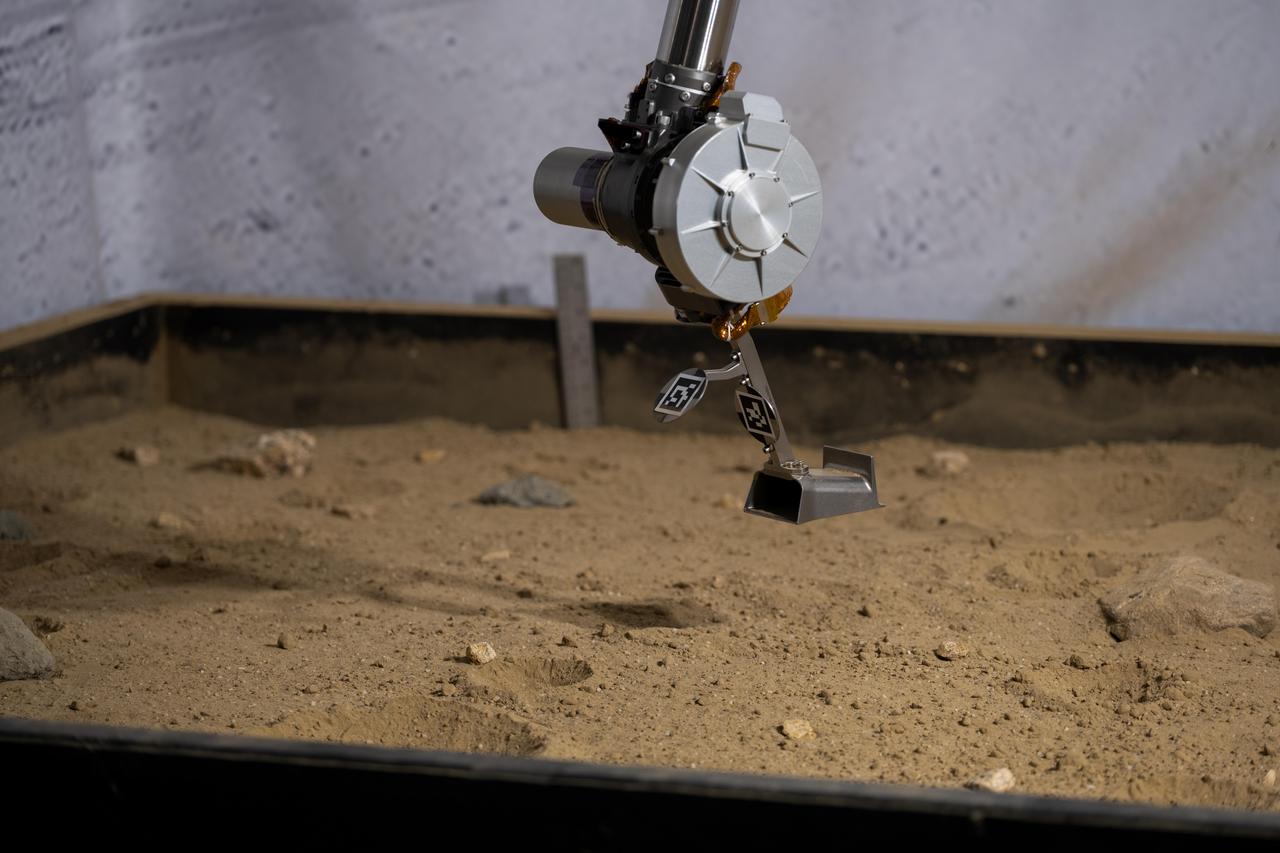
The 3D-printed titanium scoop of the Cold Operable Lunar Deployable Arm (COLDArm) robotic arm system is poised above a test bed filled with material to simulate lunar regolith (broken rocks and dust) at NASA's Jet Propulsion Laboratory in Southern California. COLDArm can function in temperatures as cold as minus 280 degrees Fahrenheit (minus 173 degrees Celsius). COLDArm is designed to go on a Moon lander and operate during lunar night, a period that lasts about 14 Earth days. Frigid temperatures during lunar night would stymie current spacecraft, which must rely on energy-consuming heaters to stay warm. To operate in the cold, the 6-foot-6-inch (2-meter) arm combines several key new technologies: gears made of bulk metallic glass that require no lubrication or heating, cold motor controllers that don't need to be kept warm in an electronics box near the core of the spacecraft, and a cryogenic six-axis force torque sensor that lets the arm "feel" what it's doing and make adjustments. A variety of attachments and small instruments could go on the end of the arm, including the scoop, which could be used for collecting samples from a planet's surface. Like the arm on NASA's InSight Mars lander, COLDArm could deploy science instruments to the surface. https://photojournal.jpl.nasa.gov/catalog/PIA25318
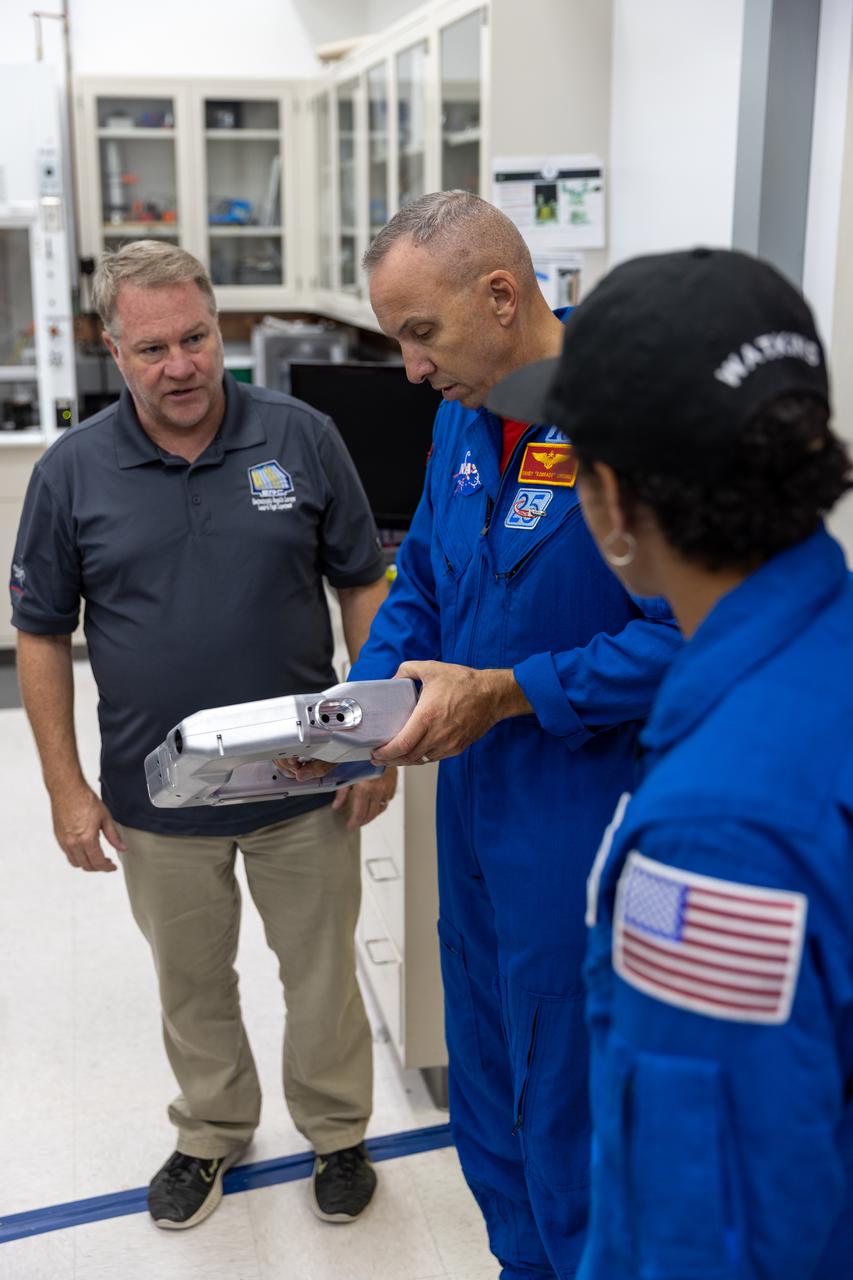
NASA astronauts Randy Bresnik (center) and Jessica Watkins (right) visit the Granular Mechanics and Regolith Operations Laboratory inside Swamp Works at Kennedy Space Center in Florida on Wednesday, Aug. 27, 2025, to view some of the evolving technologies in development that astronauts may use to explore the Moon’s surface, prepare it for sustainable outposts, and to handle the dust that is collected during moonwalks. Bresnick holds an instrument designed to help astronauts electromagnetically remove accumulated lunar dust.
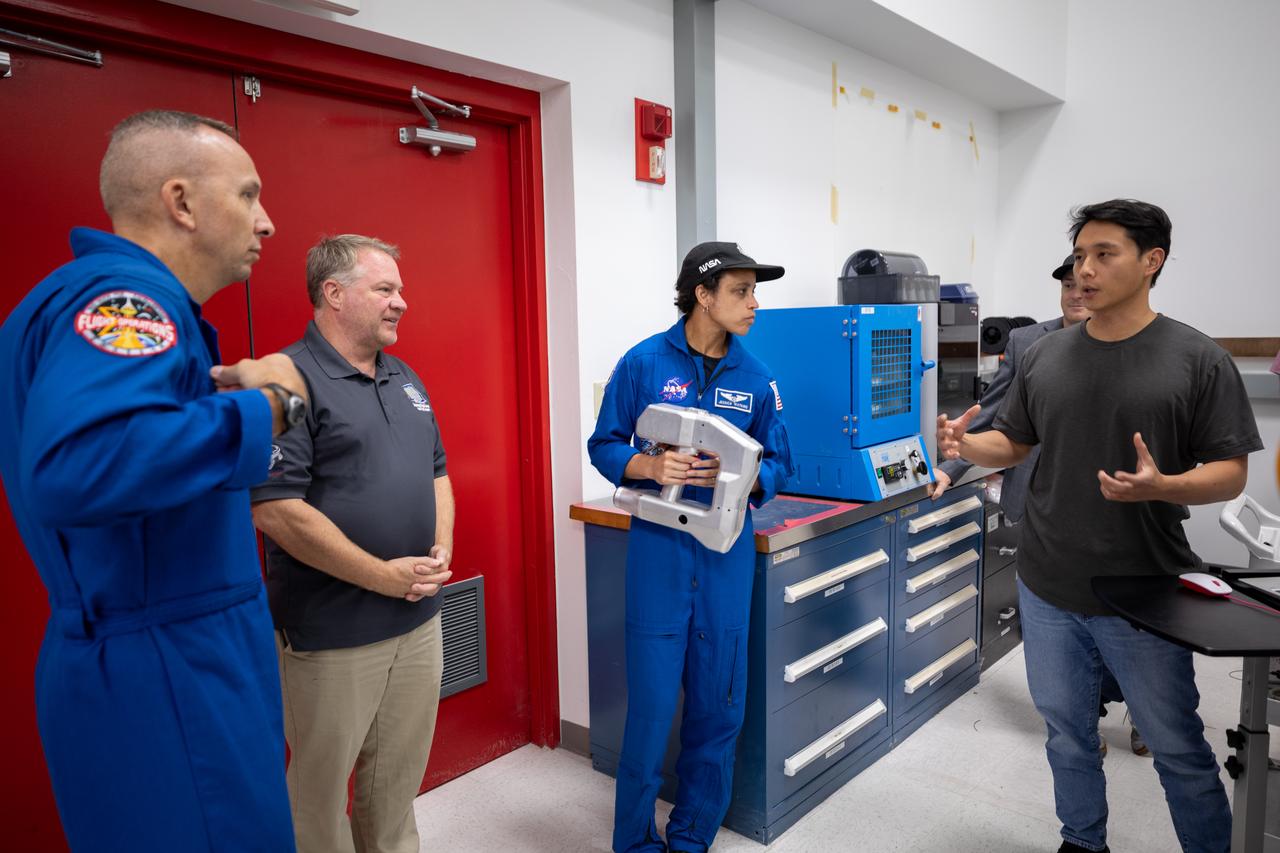
NASA astronauts Randy Bresnik (far left) and Jessica Watkins (center) visit the Granular Mechanics and Regolith Operations Laboratory inside Swamp Works at Kennedy Space Center in Florida on Wednesday, Aug. 27, 2025, to view some of the evolving technologies in development that NASA astronauts may use to explore the Moon’s surface, prepare it for sustainable outposts, and to handle the dust that is collected during moonwalks. Watkins holds an instrument designed to help astronauts electromagnetically remove accumulated lunar dust.
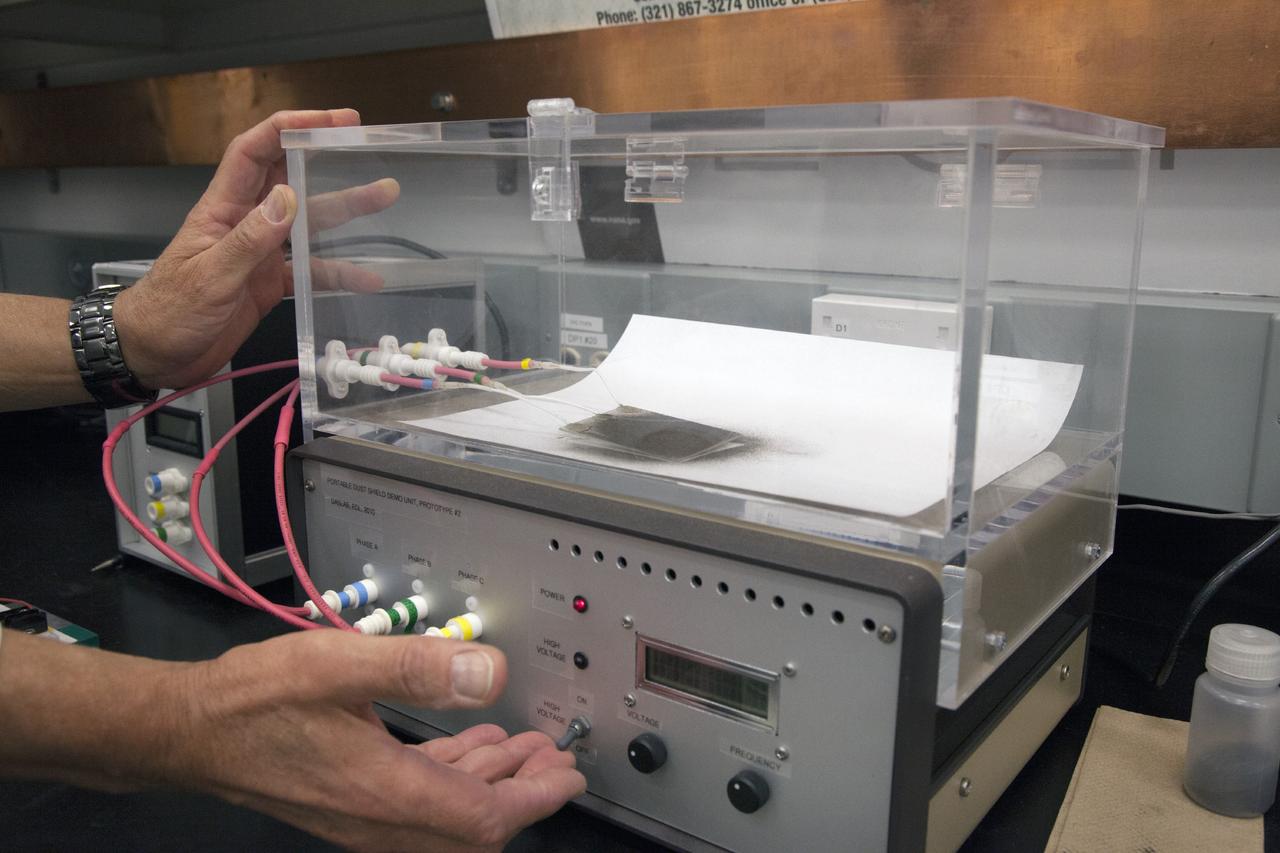
CAPE CANAVERAL, Fla. -- Dr. Carlos Calle, senior research scientist on the Electrodynamic Dust Shield for Dust Mitigation project, demonstrates a dust particle experiment in the Electrostatics and Surface Physics Laboratory in the SwampWorks at NASA's Kennedy Space Center in Florida. The technology works by creating an electric field that propagates out like the ripples on a pond. This could prevent dust accumulation on spacesuits, thermal radiators, solar panels, optical instruments and view ports for future lunar and Mars exploration activities. Electrodynamic dust shield, or EDS, technology is based on concepts originally developed by NASA as early as 1967 and later by the University of Tokyo. In 2003, NASA, in collaboration with the University of Arkansas at Little Rock, started development of the EDS for dust particle removal from solar panels to be used on future missions to the moon, an asteroid or Mars. A flight experiment to expose the dust shields to the space environment currently is under development. For more information, visit: http://www.nasa.gov/content/scientists-developing-ways-to-mitigate-dust-problem-for-explorers/ Photo credit: NASA/Dan Casper
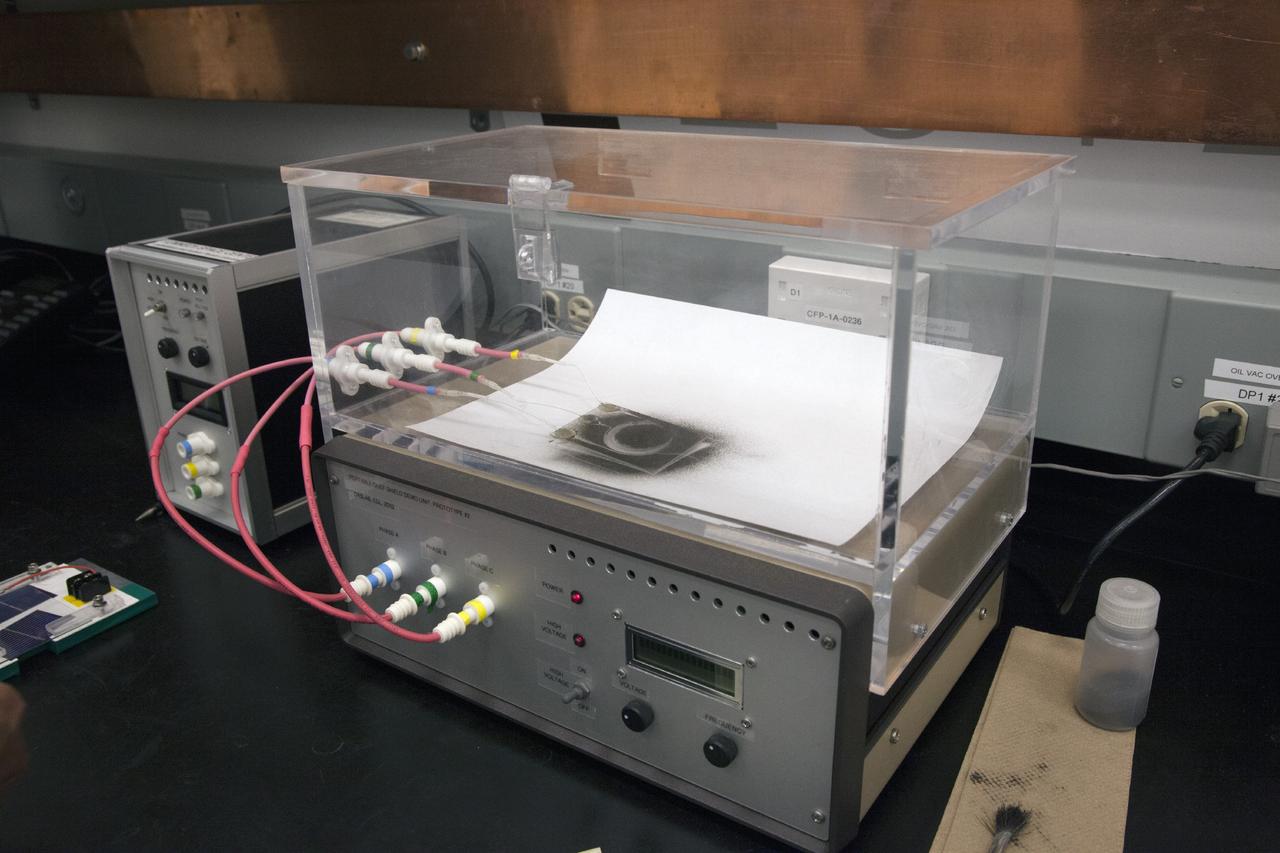
CAPE CANAVERAL, Fla. -- Dust particle experiments are conducted for Electrodynamic Dust Shield for Dust Mitigation project in the Electrostatics and Surface Physics Laboratory in the SwampWorks at NASA's Kennedy Space Center in Florida. The technology works by creating an electric field that propagates out like the ripples on a pond. This could prevent dust accumulation on spacesuits, thermal radiators, solar panels, optical instruments and view ports for future lunar and Mars exploration activities. Electrodynamic dust shield, or EDS, technology is based on concepts originally developed by NASA as early as 1967 and later by the University of Tokyo. In 2003, NASA, in collaboration with the University of Arkansas at Little Rock, started development of the EDS for dust particle removal from solar panels to be used on future missions to the moon, an asteroid or Mars. A flight experiment to expose the dust shields to the space environment currently is under development. For more information, visit: http://www.nasa.gov/content/scientists-developing-ways-to-mitigate-dust-problem-for-explorers/ Photo credit: NASA/Dan Casper
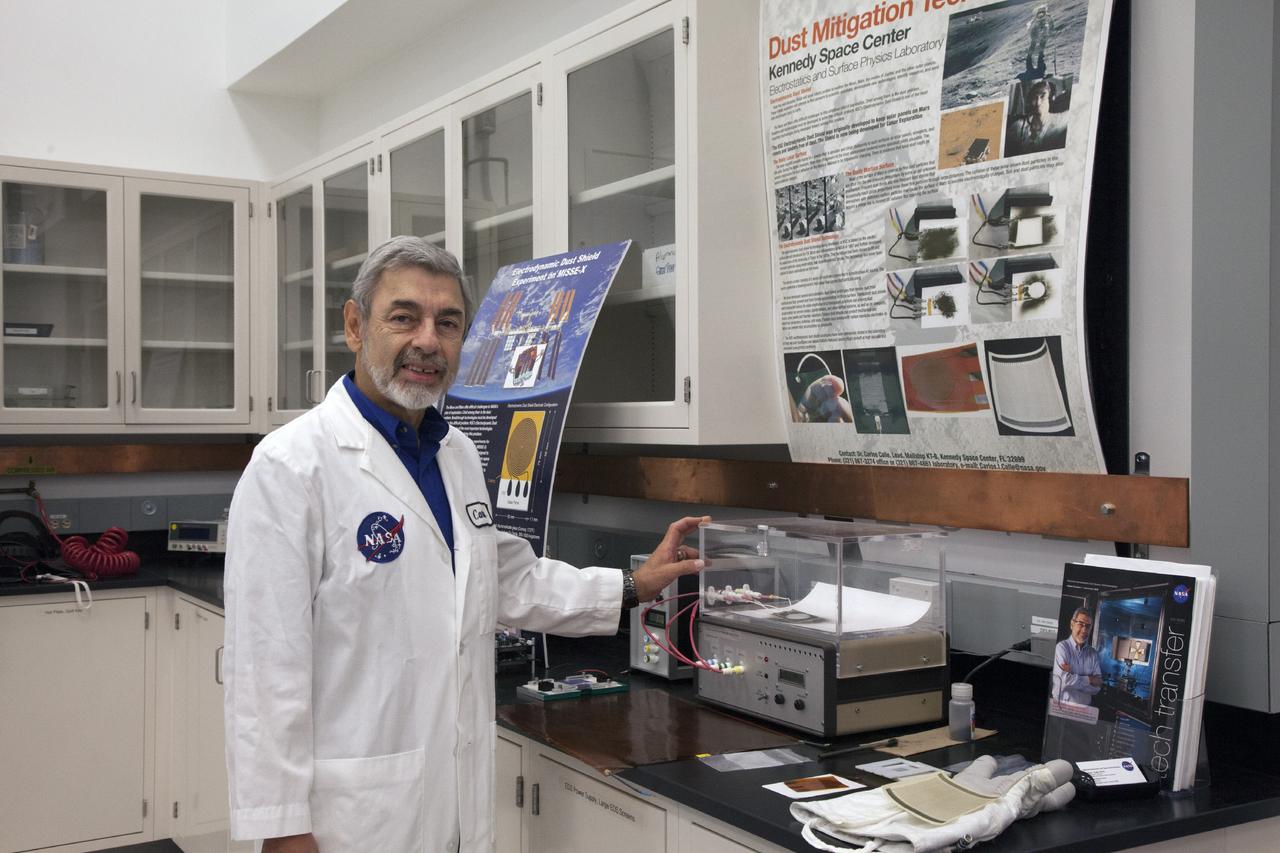
CAPE CANAVERAL, Fla. -- Dr. Carlos Calle, senior research scientist on the Electrodynamic Dust Shield for Dust Mitigation project, demonstrates a dust particle experiment in the Electrostatics and Surface Physics Laboratory in the SwampWorks at NASA's Kennedy Space Center in Florida. The technology works by creating an electric field that propagates out like the ripples on a pond. This could prevent dust accumulation on spacesuits, thermal radiators, solar panels, optical instruments and view ports for future lunar and Mars exploration activities. Electrodynamic dust shield, or EDS, technology is based on concepts originally developed by NASA as early as 1967 and later by the University of Tokyo. In 2003, NASA, in collaboration with the University of Arkansas at Little Rock, started development of the EDS for dust particle removal from solar panels to be used on future missions to the moon, an asteroid or Mars. A flight experiment to expose the dust shields to the space environment currently is under development. For more information, visit: http://www.nasa.gov/content/scientists-developing-ways-to-mitigate-dust-problem-for-explorers/ Photo credit: NASA/Dan Casper
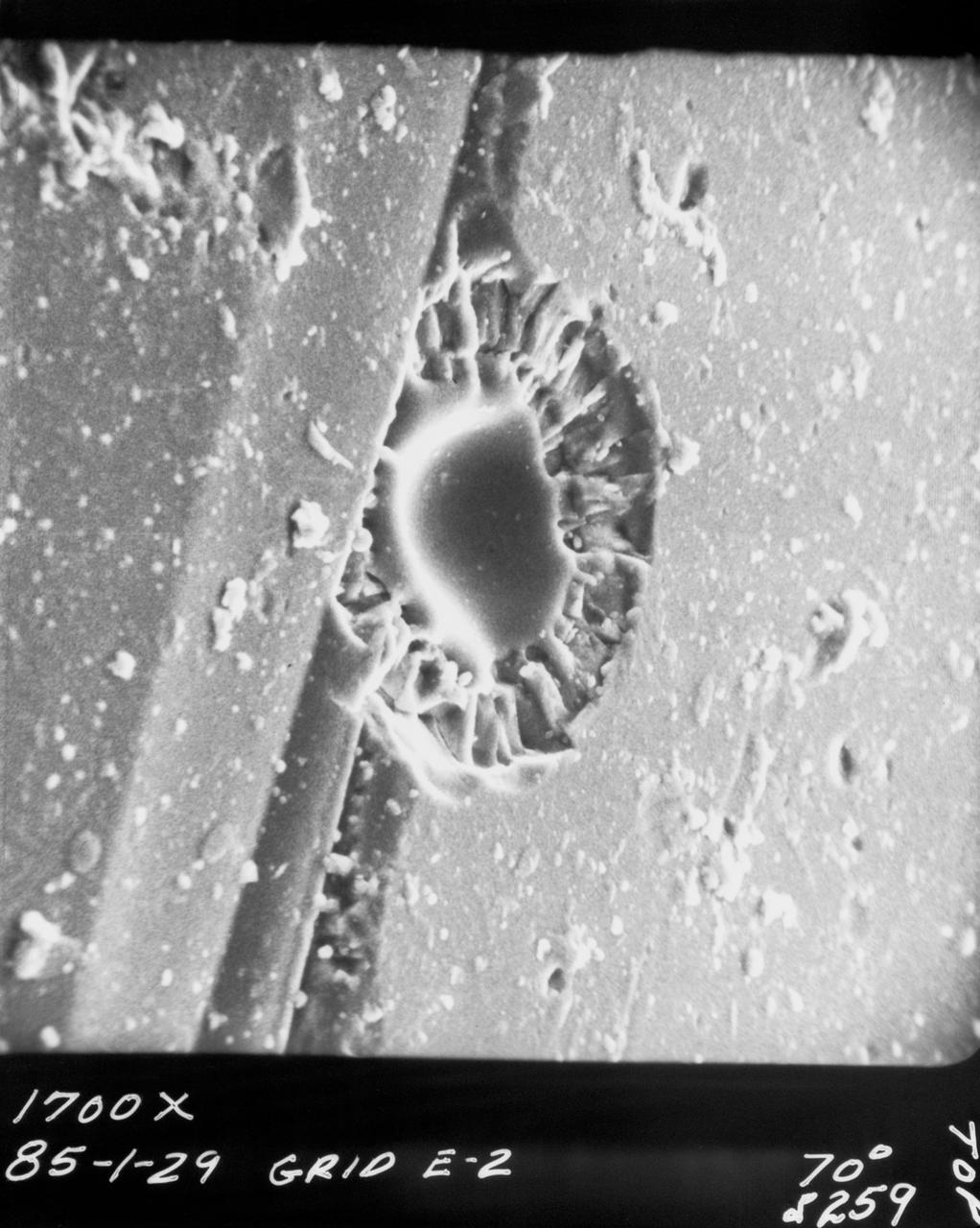
S70-20418 (December 1969) --- Enlarged view shows cosmic dust on broken glass particles, photographed by Dr. G. J. Wasserberg, J. DeVaney and K. Evans at California Institute of Technology during examination of the Apollo 11 lunar material. The photograph was enlarged to 1,700 time its actual size.
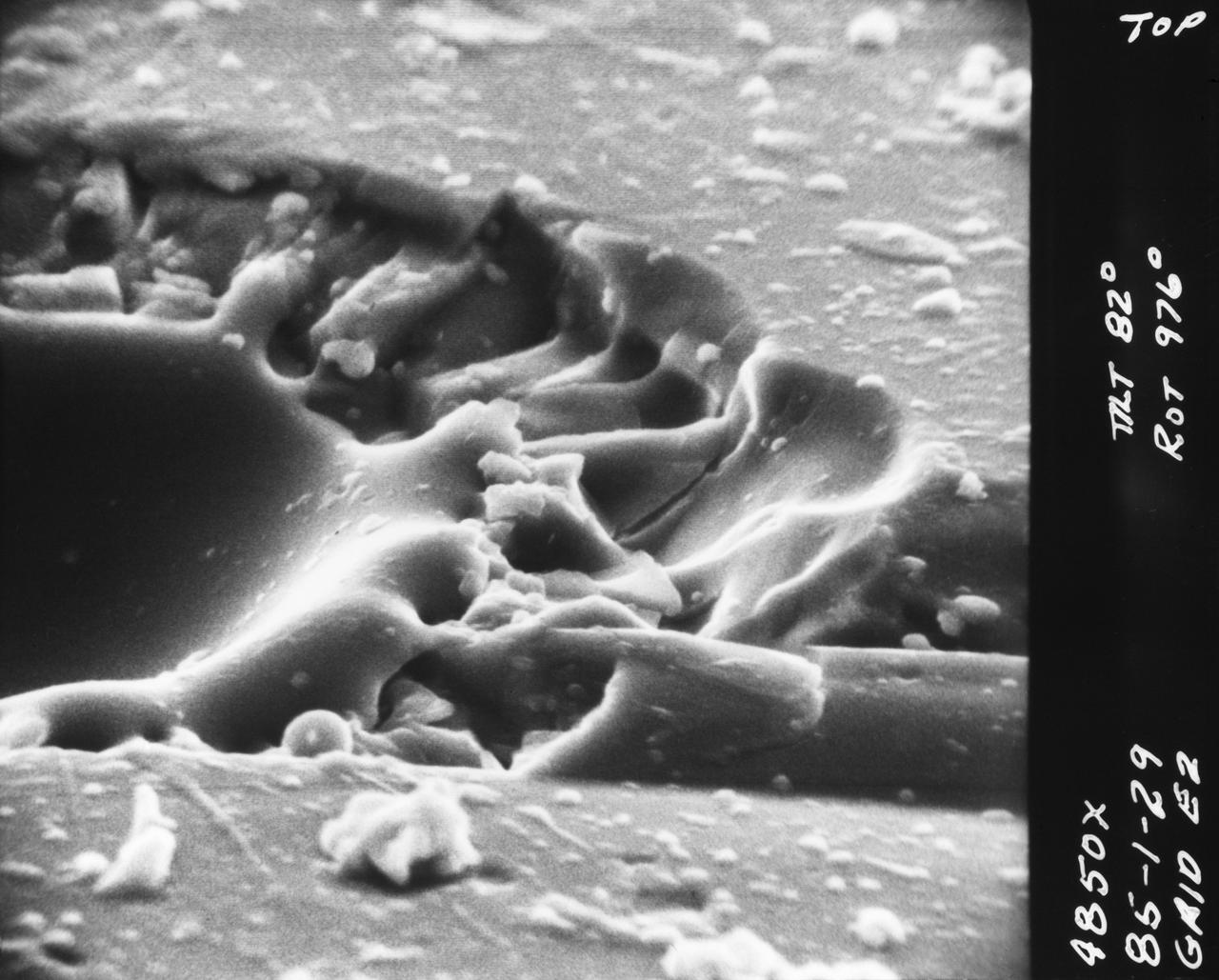
S70-20417 (December 1969) --- Enlarged view shows hypervelocity impact of cosmic dust on broken glass particles, taken during the examination of Apollo 11 lunar material by Dr. G. J. Wasserberg, J. DeVaney and K. Evans at California Institute of Technology. The photograph is enlarged 4,850 times actual size.
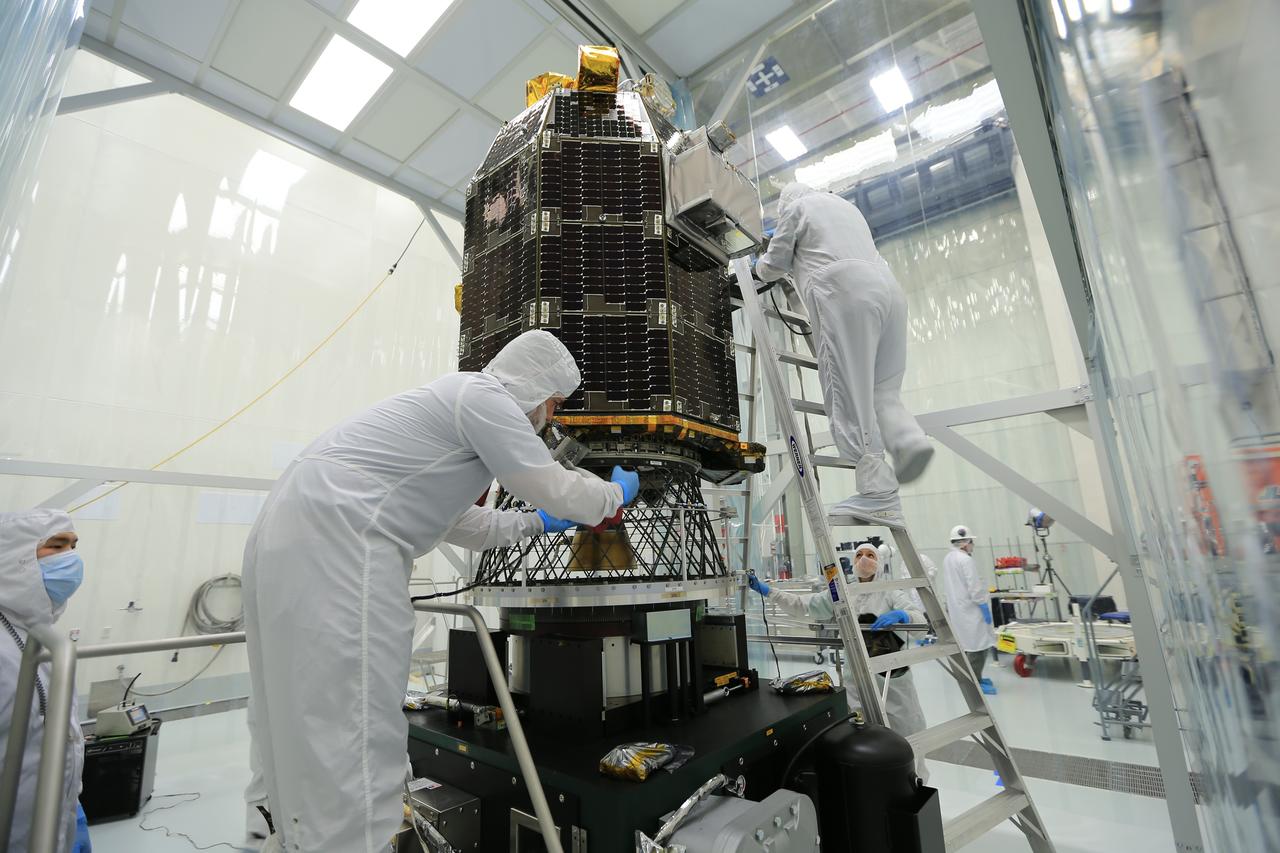
NASA's Lunar Atmosphere and Dust Environment Explorer (LADEE) spacecraft being prepared in the clean room at Wallops Flight Facility. Credit: NASA ----- What is LADEE? The Lunar Atmosphere and Dust Environment Explorer (LADEE) is designed to study the Moon's thin exosphere and the lunar dust environment. An "exosphere" is an atmosphere that is so thin and tenuous that molecules don't collide with each other. Studying the Moon's exosphere will help scientists understand other planetary bodies with exospheres too, like Mercury and some of Jupiter's bigger moons. The orbiter will determine the density, composition and temporal and spatial variability of the Moon's exosphere to help us understand where the species in the exosphere come from and the role of the solar wind, lunar surface and interior, and meteoric infall as sources. The mission will also examine the density and temporal and spatial variability of dust particles that may get lofted into the atmosphere. The mission also will test several new technologies, including a modular spacecraft bus that may reduce the cost of future deep space missions and demonstrate two-way high rate laser communication for the first time from the Moon. LADEE now is ready to launch when the window opens on Sept. 6, 2013. Read more: <a href="http://www.nasa.gov/ladee" rel="nofollow">www.nasa.gov/ladee</a> <b><a href="http://www.nasa.gov/audience/formedia/features/MP_Photo_Guidelines.html" rel="nofollow">NASA image use policy.</a></b> <b><a href="http://www.nasa.gov/centers/goddard/home/index.html" rel="nofollow">NASA Goddard Space Flight Center</a></b> enables NASA’s mission through four scientific endeavors: Earth Science, Heliophysics, Solar System Exploration, and Astrophysics. Goddard plays a leading role in NASA’s accomplishments by contributing compelling scientific knowledge to advance the Agency’s mission. <b>Follow us on <a href="http://twitter.com/NASA_GoddardPix" rel="nofollow">Twitter</a></b> <b>Like us on <a href="http://www.facebook.com/pages/Greenbelt-MD/NASA-Goddard/395013845897?ref=tsd" rel="nofollow">Facebook</a></b> <b>Find us on <a href="http://instagram.com/nasagoddard?vm=grid" rel="nofollow">Instagram</a></b>
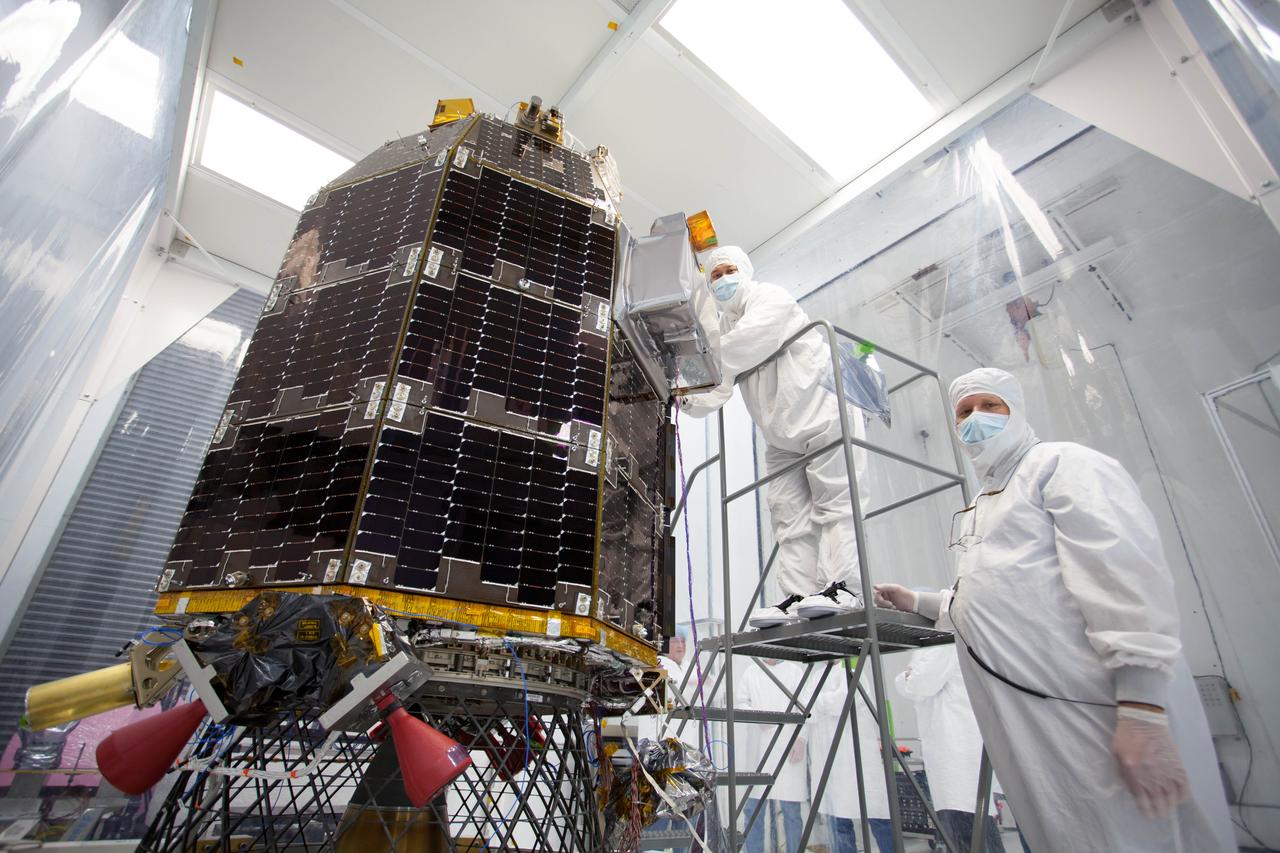
Engineers at NASA's Ames Research Center, Moffett Field, Calif., prepare NASA's Lunar Atmosphere and Dust Environment Explorer (LADEE) Observatory for acoustic environmental testing. Credit: NASA/Ames ----- What is LADEE? The Lunar Atmosphere and Dust Environment Explorer (LADEE) is designed to study the Moon's thin exosphere and the lunar dust environment. An "exosphere" is an atmosphere that is so thin and tenuous that molecules don't collide with each other. Studying the Moon's exosphere will help scientists understand other planetary bodies with exospheres too, like Mercury and some of Jupiter's bigger moons. The orbiter will determine the density, composition and temporal and spatial variability of the Moon's exosphere to help us understand where the species in the exosphere come from and the role of the solar wind, lunar surface and interior, and meteoric infall as sources. The mission will also examine the density and temporal and spatial variability of dust particles that may get lofted into the atmosphere. The mission also will test several new technologies, including a modular spacecraft bus that may reduce the cost of future deep space missions and demonstrate two-way high rate laser communication for the first time from the Moon. LADEE now is ready to launch when the window opens on Sept. 6, 2013. Read more: <a href="http://www.nasa.gov/ladee" rel="nofollow">www.nasa.gov/ladee</a> <b><a href="http://www.nasa.gov/audience/formedia/features/MP_Photo_Guidelines.html" rel="nofollow">NASA image use policy.</a></b> <b><a href="http://www.nasa.gov/centers/goddard/home/index.html" rel="nofollow">NASA Goddard Space Flight Center</a></b> enables NASA’s mission through four scientific endeavors: Earth Science, Heliophysics, Solar System Exploration, and Astrophysics. Goddard plays a leading role in NASA’s accomplishments by contributing compelling scientific knowledge to advance the Agency’s mission. <b>Follow us on <a href="http://twitter.com/NASA_GoddardPix" rel="nofollow">Twitter</a></b> <b>Like us on <a href="http://www.facebook.com/pages/Greenbelt-MD/NASA-Goddard/395013845897?ref=tsd" rel="nofollow">Facebook</a></b> <b>Find us on <a href="http://instagram.com/nasagoddard?vm=grid" rel="nofollow">Instagram</a></b>
Jaime Toro, a mechanical engineer supporting the Gaseous Lunar Oxygen from Regolith Electrolysis (GaLORE) project at NASA’s Kennedy Space Center in Florida, checks the hardware that will be used to melt lunar regolith – dirt and dust on the Moon made from crushed rock – simulants during a test inside a laboratory at Kennedy’s Neil Armstrong Operations and Checkout Building on Oct. 29, 2020. GaLORE was selected as an Early Career Initiative project by the agency’s Space Technology Mission directorate, and the team was tasked with developing a device that could melt lunar regolith and turn it into oxygen. As NASA prepares to land the first woman and the next man on the Moon in 2024 as part of the Artemis program, technology such as this can assist with sustainable human lunar exploration and long-duration missions to Mars.
Jaime Toro, a mechanical engineer supporting the Gaseous Lunar Oxygen from Regolith Electrolysis (GaLORE) project at NASA’s Kennedy Space Center in Florida, checks the hardware that will be used to melt lunar regolith – dirt and dust on the Moon made from crushed rock – simulants during a test inside a laboratory at Kennedy’s Neil Armstrong Operations and Checkout Building on Oct. 29, 2020. GaLORE was selected as an Early Career Initiative project by the agency’s Space Technology Mission directorate, and the team was tasked with developing a device that could melt lunar regolith and turn it into oxygen. As NASA prepares to land the first woman and the next man on the Moon in 2024 as part of the Artemis program, technology such as this can assist with sustainable human lunar exploration and long-duration missions to Mars.
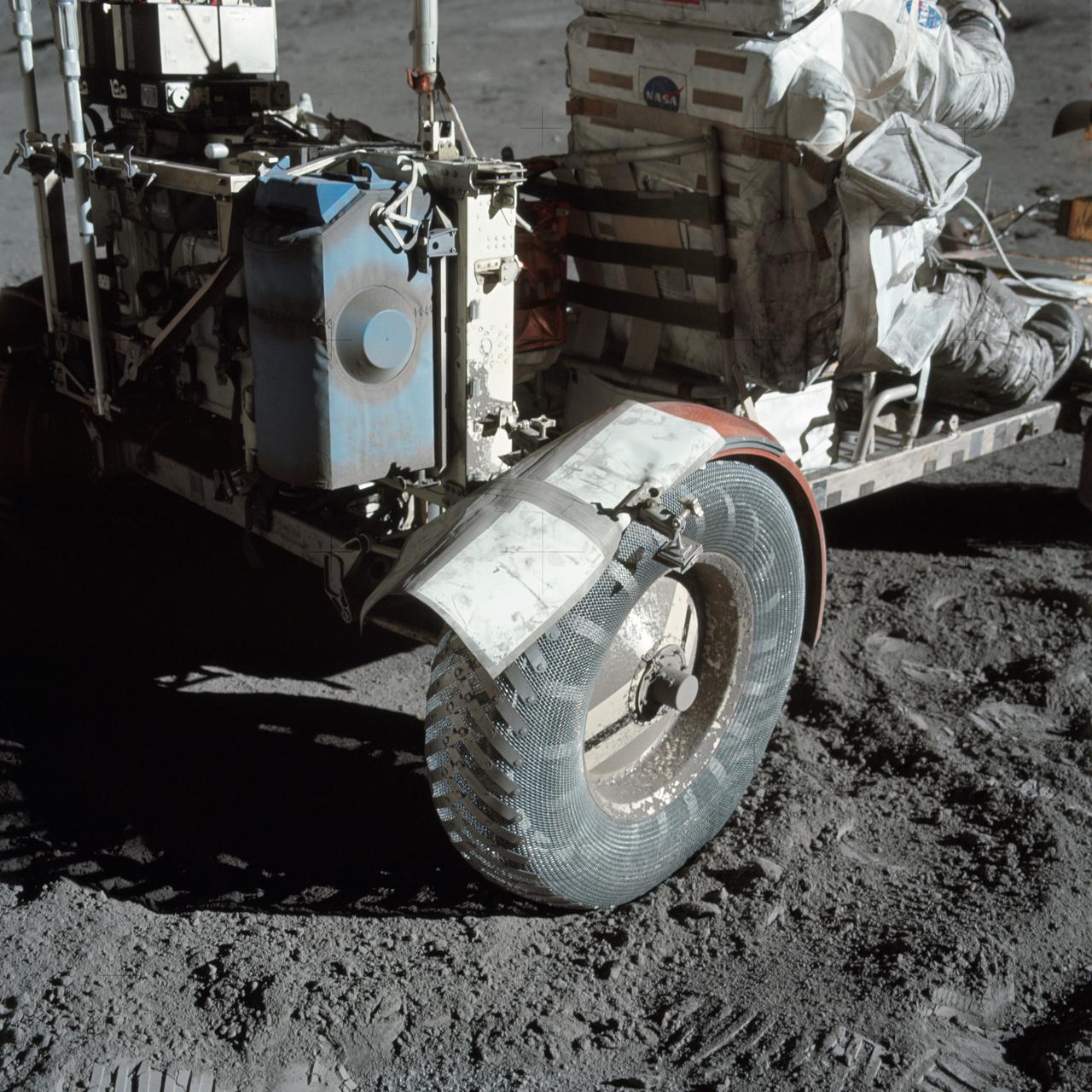
AS17-137-20979 (12 Dec. 1972) --- A close-up view of the lunar roving vehicle (LRV) at the Taurus-Littrow landing site photographed during Apollo 17 lunar surface extravehicular activity. Note the makeshift repair arrangement on the right rear fender of the LRV. During EVA-1 a hammer got underneath the fender and a part of it was knocked off. Astronauts Eugene A. Cernan and Harrison H. Schmitt were reporting a problem with lunar dust because of the damage fender. Following a suggestion from astronaut John W. Young in the Mission Control Center at Houston the crewmen repaired the fender early in EVA-2 using lunar maps and clamps from the optical alignment telescope lamp. Schmitt is seated in the rover. Cernan took this picture.
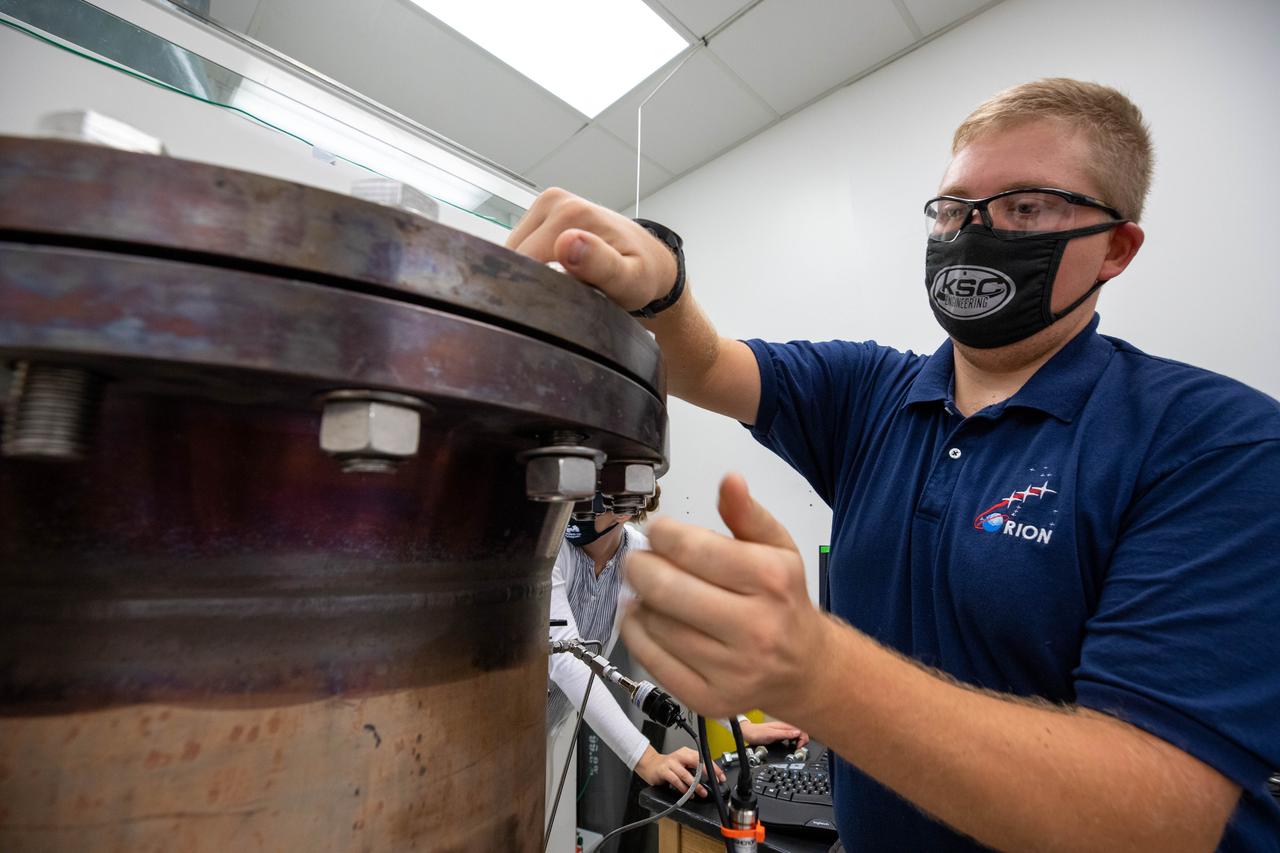
Evan Bell, a mechanical engineer and member of the Gaseous Lunar Oxygen from Regolith Electrolysis (GaLORE) project team at NASA’s Kennedy Space Center in Florida, checks the hardware that will be used to melt lunar regolith – dirt and dust on the Moon made from crushed rock – simulants during a test inside a laboratory at Kennedy’s Neil Armstrong Operations and Checkout Building on Oct. 29, 2020. GaLORE was selected as an Early Career Initiative project by the agency’s Space Technology Mission directorate, and the team was tasked with developing a device that could melt lunar regolith and turn it into oxygen. As NASA prepares to land the first woman and the next man on the Moon in 2024 as part of the Artemis program, technology such as this can assist with sustainable human lunar exploration and long-duration missions to Mars.
Elspeth Petersen, a chemical engineer and member of the Gaseous Lunar Oxygen from Regolith Electrolysis (GaLORE) project team at NASA’s Kennedy Space Center in Florida, inspects some of the GaLORE hardware that will be used to melt lunar regolith – dirt and dust on the Moon made from crushed rock – simulants during a test inside a laboratory at Kennedy’s Neil Armstrong Operations and Checkout Building on Oct. 29, 2020. GaLORE was selected as an Early Career Initiative project by the agency’s Space Technology Mission directorate, and the team was tasked with developing a device that could melt lunar regolith and turn it into oxygen. As NASA prepares to land the first woman and the next man on the Moon in 2024 as part of the Artemis program, technology such as this can assist with sustainable human lunar exploration and long-duration missions to Mars.
Members of the Gaseous Lunar Oxygen from Regolith Electrolysis (GaLORE) project team inspect hardware that will be used to melt lunar regolith – dirt and dust on the Moon made from crushed rock – simulants during a test inside a laboratory in the Neil Armstrong Operations and Checkout Building at NASA’s Kennedy Space Center in Florida on Oct. 29, 2020. GaLORE was selected as an Early Career Initiative project by the agency’s Space Technology Mission directorate, and the team was tasked with developing a device that could melt lunar regolith and turn it into oxygen. As NASA prepares to land the first woman and the next man on the Moon in 2024 as part of the Artemis program, technology such as this can assist with sustainable human lunar exploration and long-duration missions to Mars.
Elspeth Petersen, left, a chemical engineer and member of the Gaseous Lunar Oxygen from Regolith Electrolysis (GaLORE) project team at NASA’s Kennedy Space Center in Florida, and Evan Bell, GaLORE mechanical engineer, inspect hardware that will be used to melt lunar regolith – dirt and dust on the Moon made from crushed rock – stimulants during a test inside a laboratory at Kennedy’s Neil Armstrong Operations and Checkout Building on Oct. 29, 2020. GaLORE was selected as an Early Career Initiative project by the agency’s Space Technology Mission directorate, and the team was tasked with developing a device that could melt lunar regolith and turn it into oxygen. As NASA prepares to land the first woman and the next man on the Moon in 2024 as part of the Artemis program, technology such as this can assist with sustainable human lunar exploration and long-duration missions to Mars.
Jaime Toro, a mechanical engineer supporting the Gaseous Lunar Oxygen from Regolith Electrolysis (GaLORE) project at NASA’s Kennedy Space Center in Florida, checks the hardware that will be used to melt lunar regolith – dirt and dust on the Moon made from crushed rock – simulants during a test inside a laboratory at Kennedy’s Neil Armstrong Operations and Checkout Building on Oct. 29, 2020. GaLORE was selected as an Early Career Initiative project by the agency’s Space Technology Mission directorate, and the team was tasked with developing a device that could melt lunar regolith and turn it into oxygen. As NASA prepares to land the first woman and the next man on the Moon in 2024 as part of the Artemis program, technology such as this can assist with sustainable human lunar exploration and long-duration missions to Mars.
Elspeth Petersen, a chemical engineer and member of the Gaseous Lunar Oxygen from Regolith Electrolysis (GaLORE) project team at NASA’s Kennedy Space Center in Florida, inspects the GaLORE hardware that will be used to melt lunar regolith – dirt and dust on the Moon made from crushed rock – simulants during a test inside a laboratory at Kennedy’s Neil Armstrong Operations and Checkout Building on Oct. 29, 2020. GaLORE was selected as an Early Career Initiative project by the agency’s Space Technology Mission directorate, and the team was tasked with developing a device that could melt lunar regolith and turn it into oxygen. As NASA prepares to land the first woman and the next man on the Moon in 2024 as part of the Artemis program, technology such as this can assist with sustainable human lunar exploration and long-duration missions to Mars.
Elspeth Petersen, a chemical engineer and member of the Gaseous Lunar Oxygen from Regolith Electrolysis (GaLORE) project team at NASA’s Kennedy Space Center in Florida, inspects hardware before a test to melt lunar regolith – dirt and dust on the Moon made from crushed rock – simulants inside a laboratory at Kennedy’s Neil Armstrong Operations and Checkout Building on Oct. 29, 2020. GaLORE was selected as an Early Career Initiative project by the agency’s Space Technology Mission directorate, and the team was tasked with developing a device that could melt lunar regolith and turn it into oxygen. As NASA prepares to land the first woman and the next man on the Moon in 2024 as part of the Artemis program, technology such as this can assist with sustainable human lunar exploration and long-duration missions to Mars.
Kevin Grossman, left, principal investigator of the Gaseous Lunar Oxygen from Regolith Electrolysis (GaLORE) project, and Elspeth Petersen, a chemical engineer and member of the GaLORE team, check some of the project’s hardware that will be used to melt lunar regolith – dirt and dust on the Moon made from crushed rock – simulants during a test inside a laboratory at Kennedy’s Neil Armstrong Operations and Checkout Building on Oct. 29, 2020. GaLORE was selected as an Early Career Initiative project by the agency’s Space Technology Mission directorate, and the team was tasked with developing a device that could melt lunar regolith and turn it into oxygen. As NASA prepares to land the first woman and the next man on the Moon in 2024 as part of the Artemis program, technology such as this can assist with sustainable human lunar exploration and long-duration missions to Mars.
Elspeth Petersen, left, a chemical engineer and member of the Gaseous Lunar Oxygen from Regolith Electrolysis (GaLORE) project team, and Kevin Grossman, GaLORE principal investigator, inspect a reactor before a test to melt lunar regolith – dirt and dust on the Moon made from crushed rock – simulants inside a laboratory at Kennedy’s Neil Armstrong Operations and Checkout Building on Oct. 29, 2020. GaLORE was selected as an Early Career Initiative project by the agency’s Space Technology Mission directorate, and the team was tasked with developing a device that could melt lunar regolith and turn it into oxygen. As NASA prepares to land the first woman and the next man on the Moon in 2024 as part of the Artemis program, technology such as this can assist with sustainable human lunar exploration and long-duration missions to Mars.
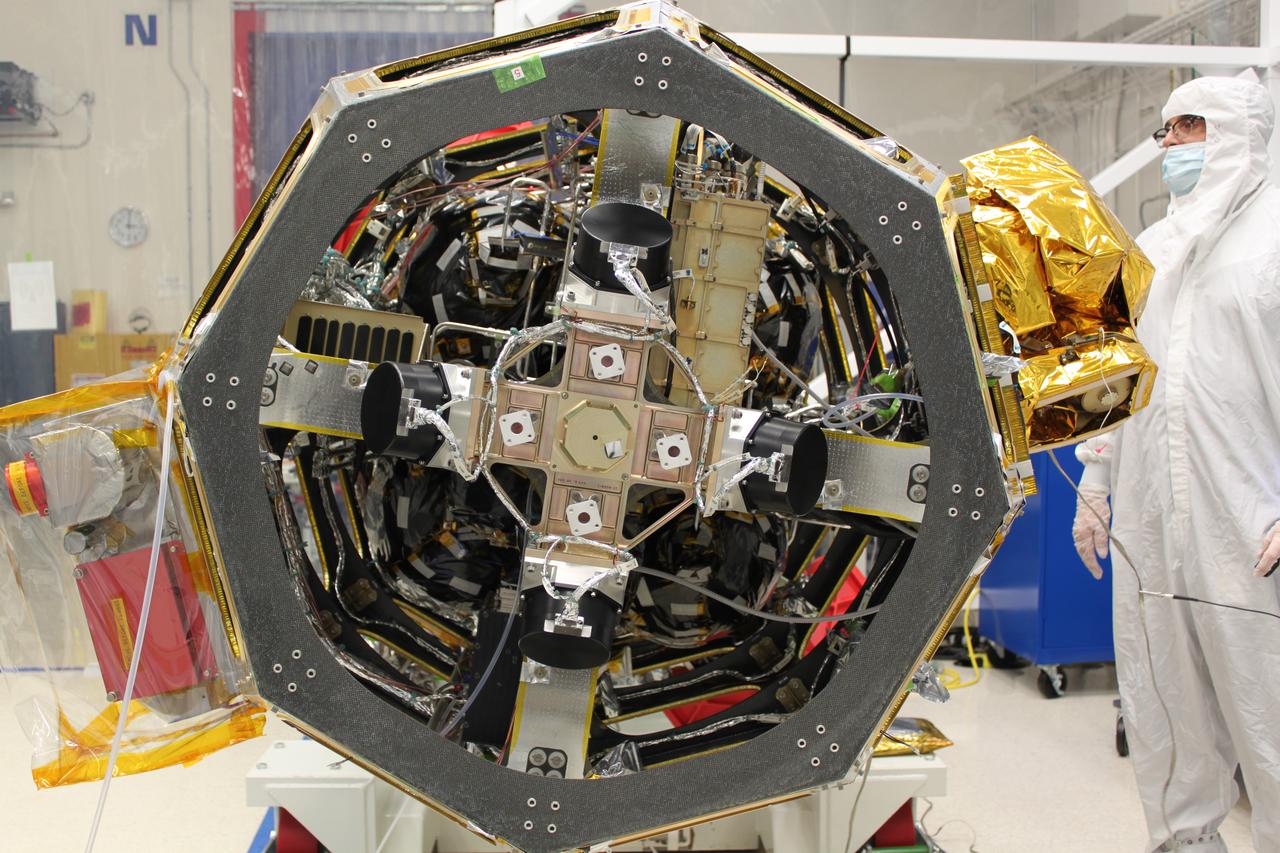
A new NASA-developed, laser-based space communication system will enable higher rates of satellite communications similar in capability to high-speed fiber optic networks on Earth. The space terminal for the Lunar Laser Communication Demonstration (LLCD), NASA's first high-data-rate laser communication system, was recently integrated onto the Lunar Atmosphere and Dust Environment Explorer (LADEE) spacecraft. LLCD will demonstrate laser communications from lunar orbit to Earth at six times the rate of the best modern-day advanced radio communication systems. Credit: NASA ----- What is LADEE? The Lunar Atmosphere and Dust Environment Explorer (LADEE) is designed to study the Moon's thin exosphere and the lunar dust environment. An "exosphere" is an atmosphere that is so thin and tenuous that molecules don't collide with each other. Studying the Moon's exosphere will help scientists understand other planetary bodies with exospheres too, like Mercury and some of Jupiter's bigger moons. The orbiter will determine the density, composition and temporal and spatial variability of the Moon's exosphere to help us understand where the species in the exosphere come from and the role of the solar wind, lunar surface and interior, and meteoric infall as sources. The mission will also examine the density and temporal and spatial variability of dust particles that may get lofted into the atmosphere. The mission also will test several new technologies, including a modular spacecraft bus that may reduce the cost of future deep space missions and demonstrate two-way high rate laser communication for the first time from the Moon. LADEE now is ready to launch when the window opens on Sept. 6, 2013. Read more: <a href="http://www.nasa.gov/ladee" rel="nofollow">www.nasa.gov/ladee</a> <b><a href="http://www.nasa.gov/audience/formedia/features/MP_Photo_Guidelines.html" rel="nofollow">NASA image use policy.</a></b> <b><a href="http://www.nasa.gov/centers/goddard/home/index.html" rel="nofollow">NASA Goddard Space Flight Center</a></b> enables NASA’s mission through four scientific endeavors: Earth Science, Heliophysics, Solar System Exploration, and Astrophysics. Goddard plays a leading role in NASA’s accomplishments by contributing compelling scientific knowledge to advance the Agency’s mission. <b>Follow us on <a href="http://twitter.com/NASA_GoddardPix" rel="nofollow">Twitter</a></b> <b>Like us on <a href="http://www.facebook.com/pages/Greenbelt-MD/NASA-Goddard/395013845897?ref=tsd" rel="nofollow">Facebook</a></b> <b>Find us on <a href="http://instagram.com/nasagoddard?vm=grid" rel="nofollow">Instagram</a></b>
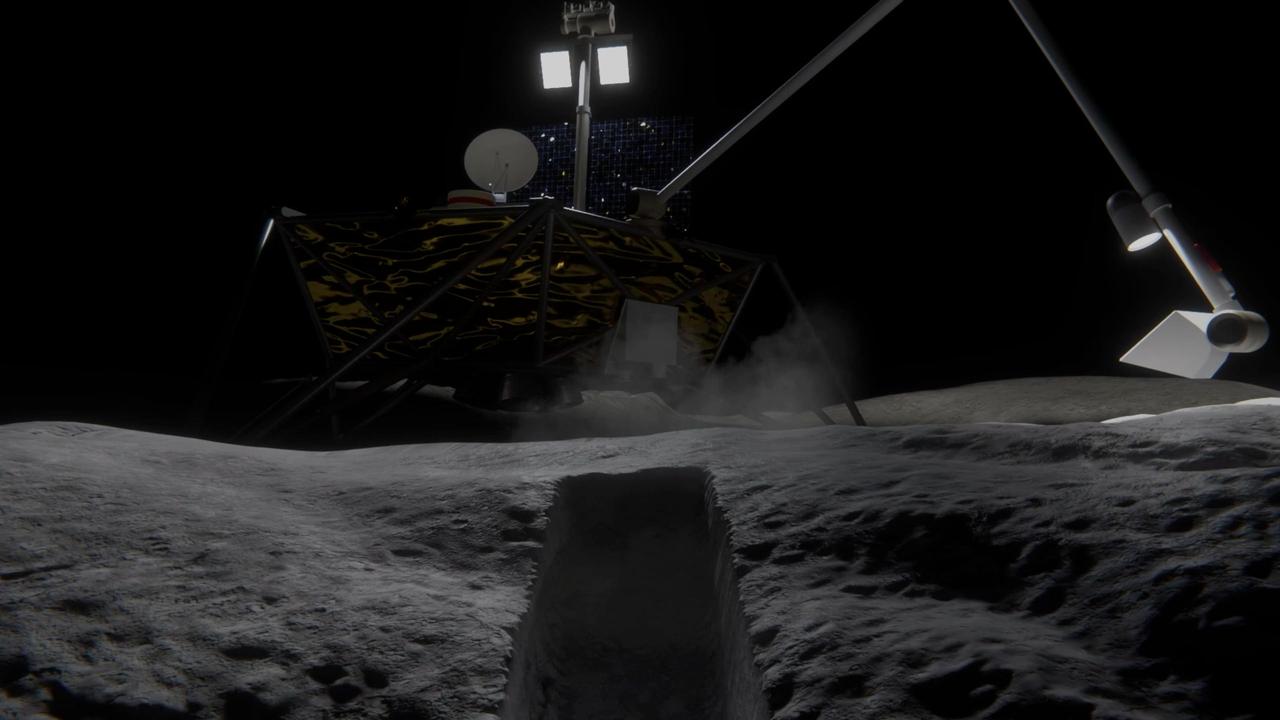
NASA's Cold Operable Lunar Deployable Arm (COLDArm) robotic arm system reaches out from a lander on the Moon and scoops up regolith (broken rock and dust). Managed by NASA's Jet Propulsion Laboratory in Southern California, COLDArm is designed to operate during lunar night, a period that lasts about 14 Earth days. It can function in temperatures as cold as minus 280 degrees Fahrenheit (minus 173 degrees Celsius). Frigid temperatures during lunar night would stymie the arms on current spacecraft, which must rely on energy-consuming heaters to stay warm. To operate in the cold, the 6-foot-6-inch (2-meter) arm combines several key new technologies: gears made of bulk metallic glass that require no wet lubrication or heating, cold motor controllers that don't need to be kept warm in an electronics box near the core of the spacecraft, and a cryogenic six-axis force torque sensor that lets the arm "feel" what it's doing and make adjustments. A variety of attachments and small instruments could go on the end of the arm, such as a 3D-printed titanium scoop that could collect samples from a planet's surface, similar to what's depicted here. Like the arm on NASA's now-retired InSight Mars lander, COLDArm is also capable of deploying science instruments to the surface. The arm system could be attached to a stationary lander or to a rover. Motiv Space Systems, a partner on COLDArm, developed the cold motor controllers, and also built sections of the arm and assembled it from JPL-supplied parts at the company's Pasadena, California, facility. The COLDArm project is funded through the Lunar Surface Innovation Initiative and managed by the Game Changing Development program in NASA's Space Technology Mission Directorate. Animation available at https://photojournal.jpl.nasa.gov/catalog/PIA26347
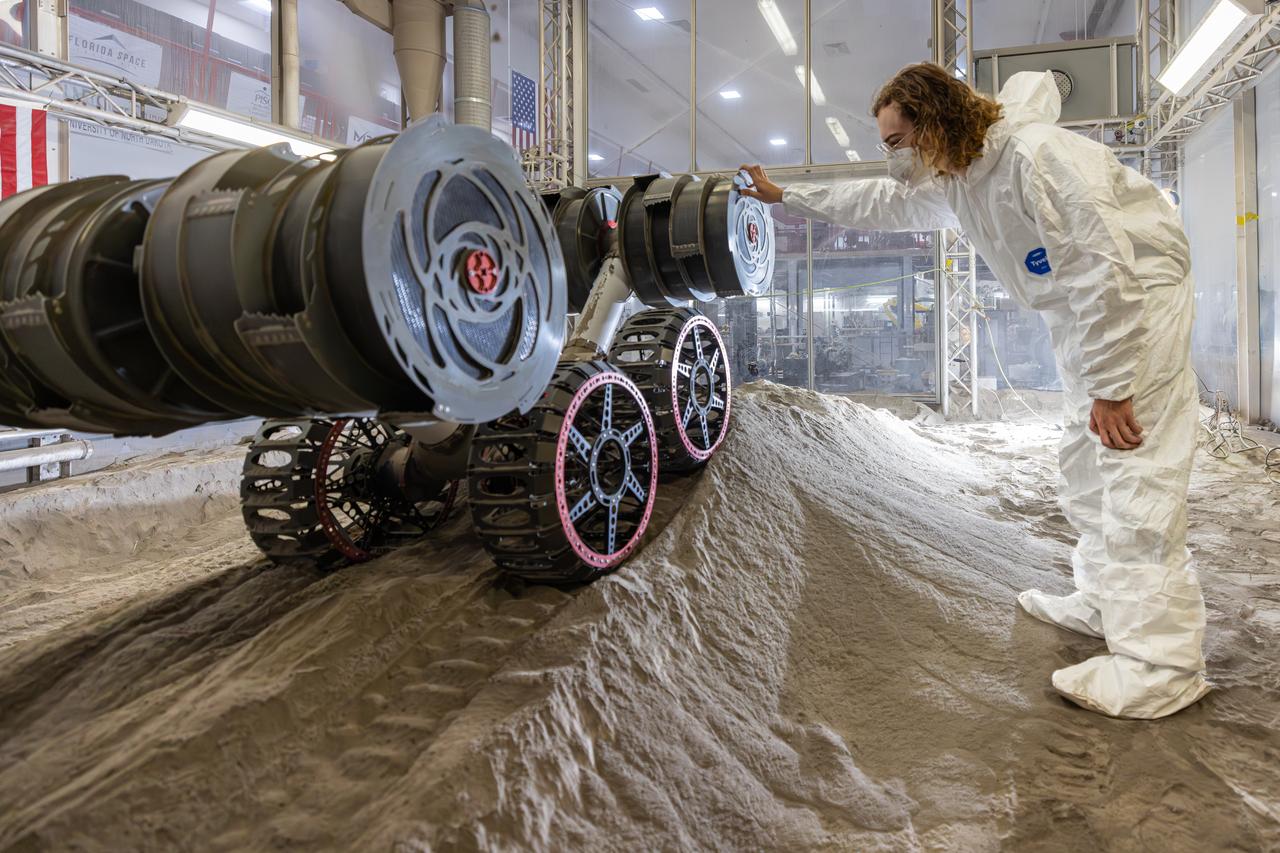
Ben Burdess, mechanical engineer, observes NASA’s RASSOR (Regolith Advanced Surface Systems Operations Robot) excavation testing of simulated regolith, or lunar dust found on the Moon’s surface, inside of the Granular Mechanics and Regolith Operations Lab at the agency’s Kennedy Space Center in Florida on Tuesday, May 27, 2025. RASSOR is designed to work in low-gravity situations, using counter rotating bucket drums on each arm to collect and dump regolith for the extraction of hydrogen, oxygen, or water, resources critical for sustaining a habitable presence.

CAPE CANAVERAL, Fla. – A team of competitors works with its machine during NASA's Lunabotics Mining Competition at the Kennedy Space Center Visitor Complex in Florida. The competition challenges university students to build machines that can collect soil such as the material found on the moon. Working inside the Caterpillar LunArena, the robotic craft dig soil that simulates lunar material. The event is judged by a machine's abilities to collect the soil, its design and operation, size, dust tolerance and its level of autonomy. Photo credit: NASA/Glenn Benson
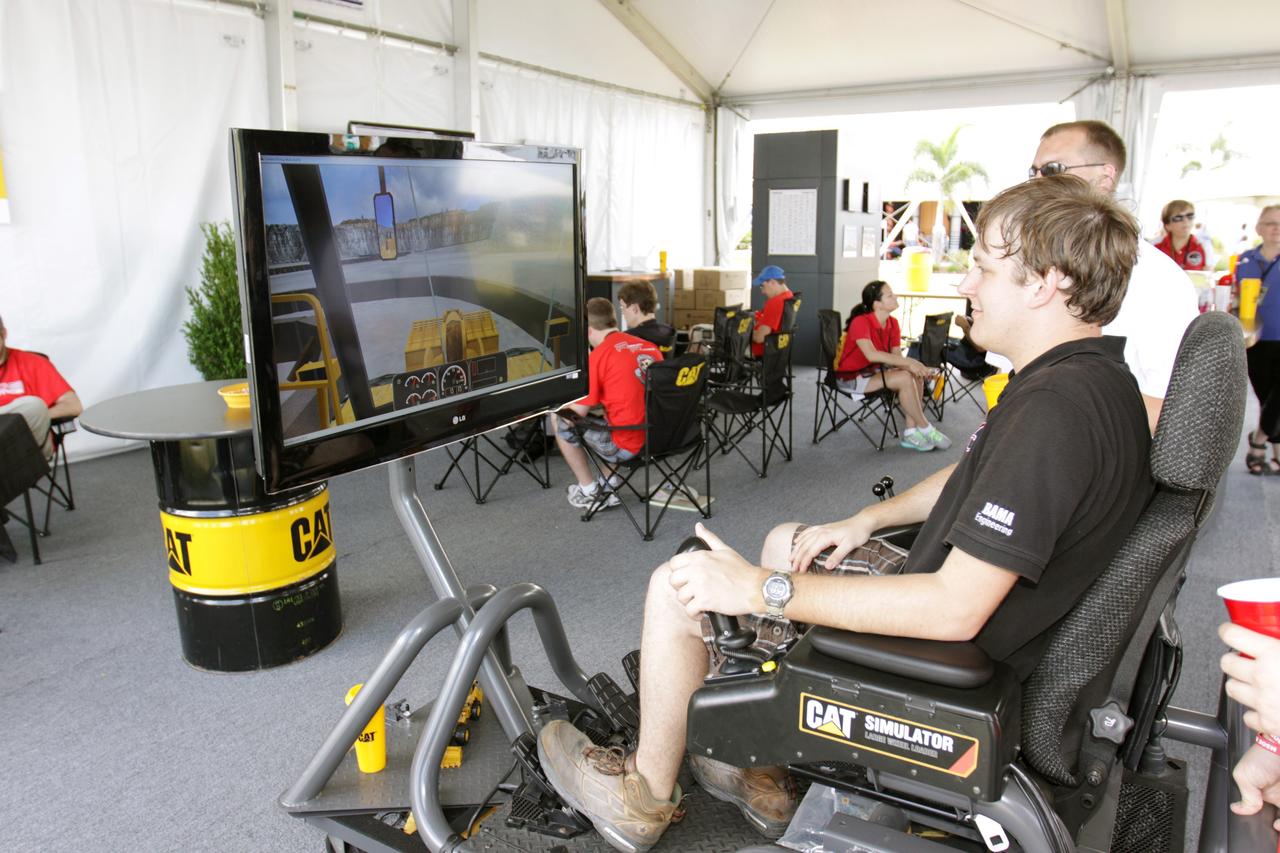
CAPE CANAVERAL, Fla. – A videogame simulates driving excavators during NASA's Lunabotics Mining Competition at the Kennedy Space Center Visitor Complex in Florida. The competition challenges university students to build machines that can collect soil such as the material found on the moon. Working inside the Caterpillar LunArena, the robotic craft dig soil that simulates lunar material. The event is judged by a machine's abilities to collect the soil, its design and operation, size, dust tolerance and its level of autonomy. Photo credit: NASA/Glenn Benson
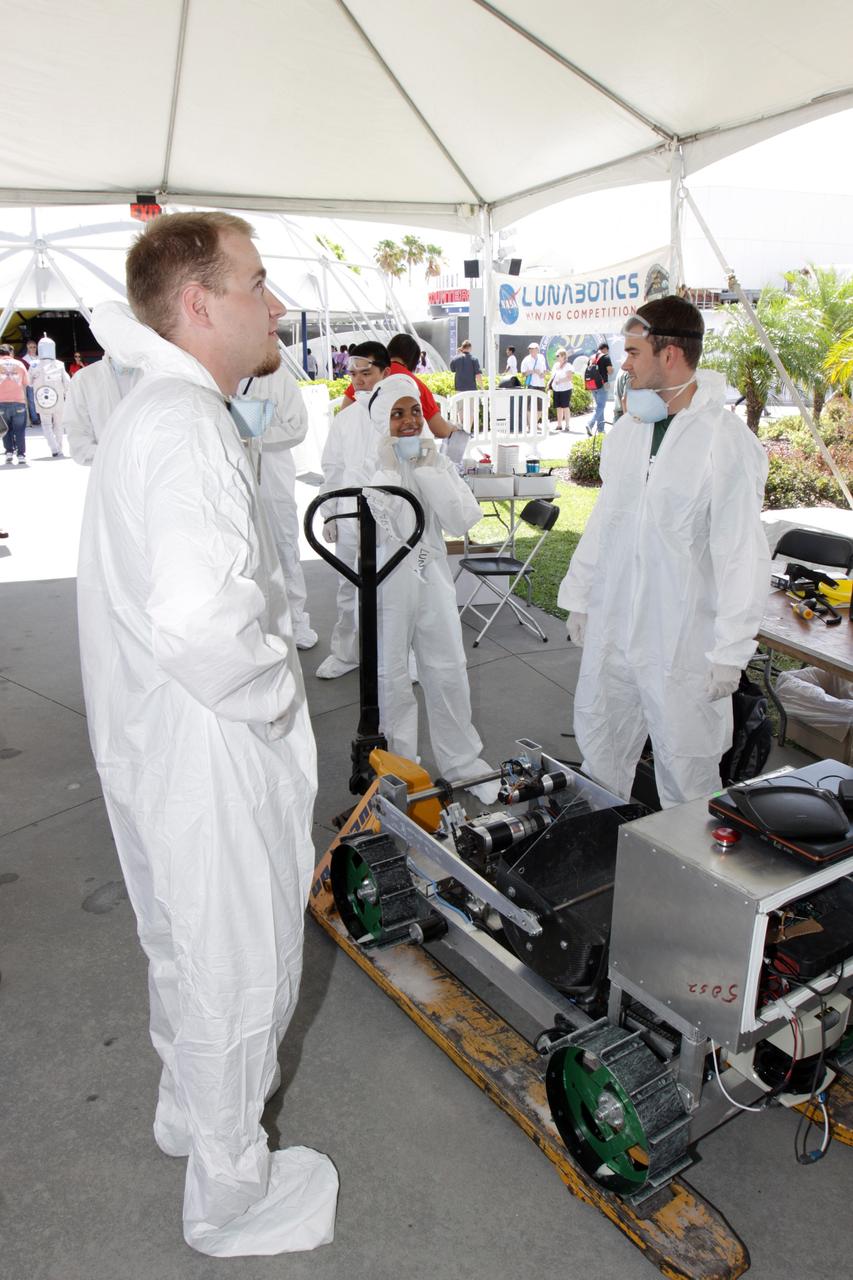
CAPE CANAVERAL, Fla. – A team of competitors waits for a turn in NASA's Lunabotics Mining Competition at the Kennedy Space Center Visitor Complex in Florida. The competition challenges university students to build machines that can collect soil such as the material found on the moon. Working inside the Caterpillar LunArena, the robotic craft dig soil that simulates lunar material. The event is judged by a machine's abilities to collect the soil, its design and operation, size, dust tolerance and its level of autonomy. Photo credit: NASA/Glenn Benson
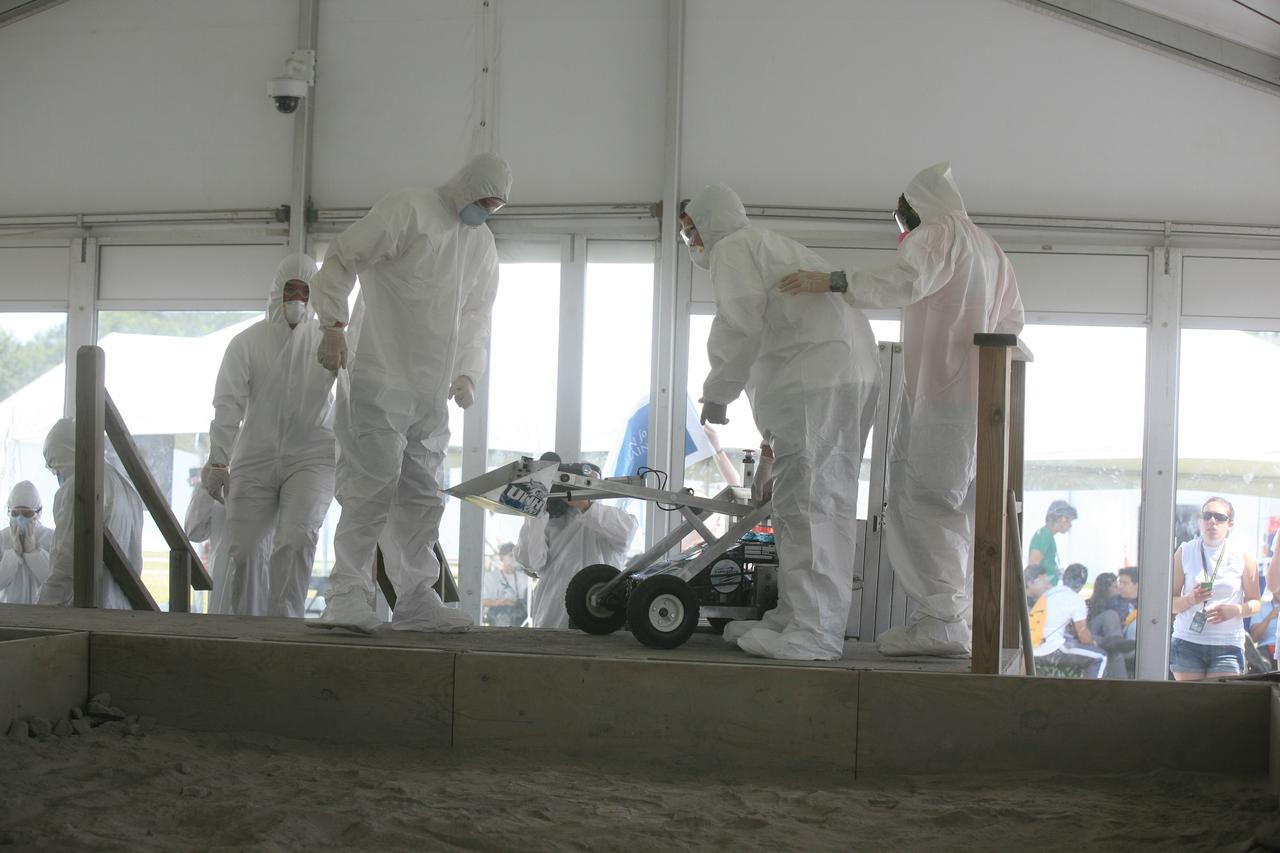
CAPE CANAVERAL, Fla. – A team of competitors works with a robotic vehicle taking part in NASA's Lunabotics Mining Competition at the Kennedy Space Center Visitor Complex in Florida. The competition challenges university students to build machines that can collect soil such as the material found on the moon. Working inside the Caterpillar LunArena, the robotic craft dig soil that simulates lunar material. The event is judged by a machine's abilities to collect the soil, its design and operation, size, dust tolerance and its level of autonomy. Photo credit: NASA/Glenn Benson
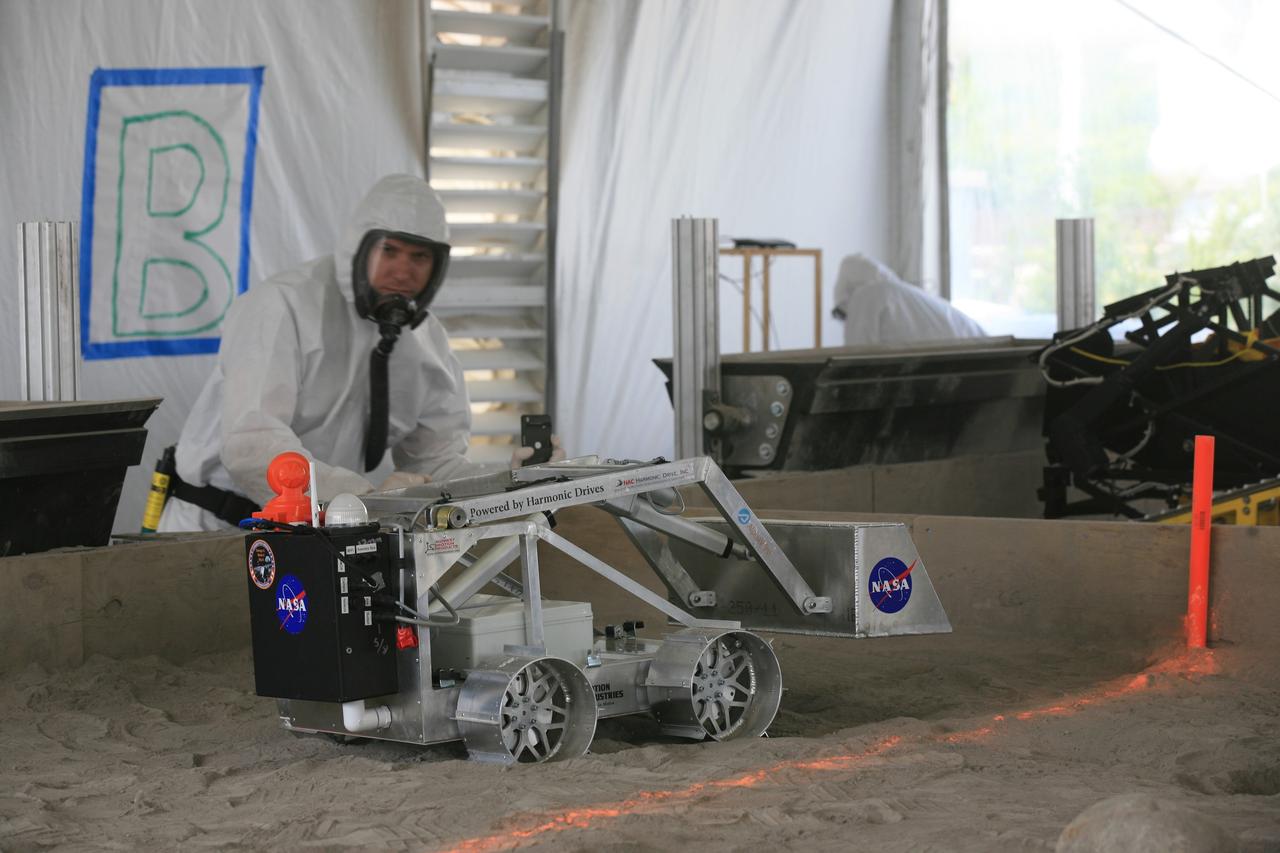
CAPE CANAVERAL, Fla. – A robotic vehicle takes part in NASA's Lunabotics Mining Competition at the Kennedy Space Center Visitor Complex in Florida. The competition challenges university students to build machines that can collect soil such as the material found on the moon. Working inside the Caterpillar LunArena, the robotic craft dig soil that simulates lunar material. The event is judged by a machine's abilities to collect the soil, its design and operation, size, dust tolerance and its level of autonomy. Photo credit: NASA/Glenn Benson
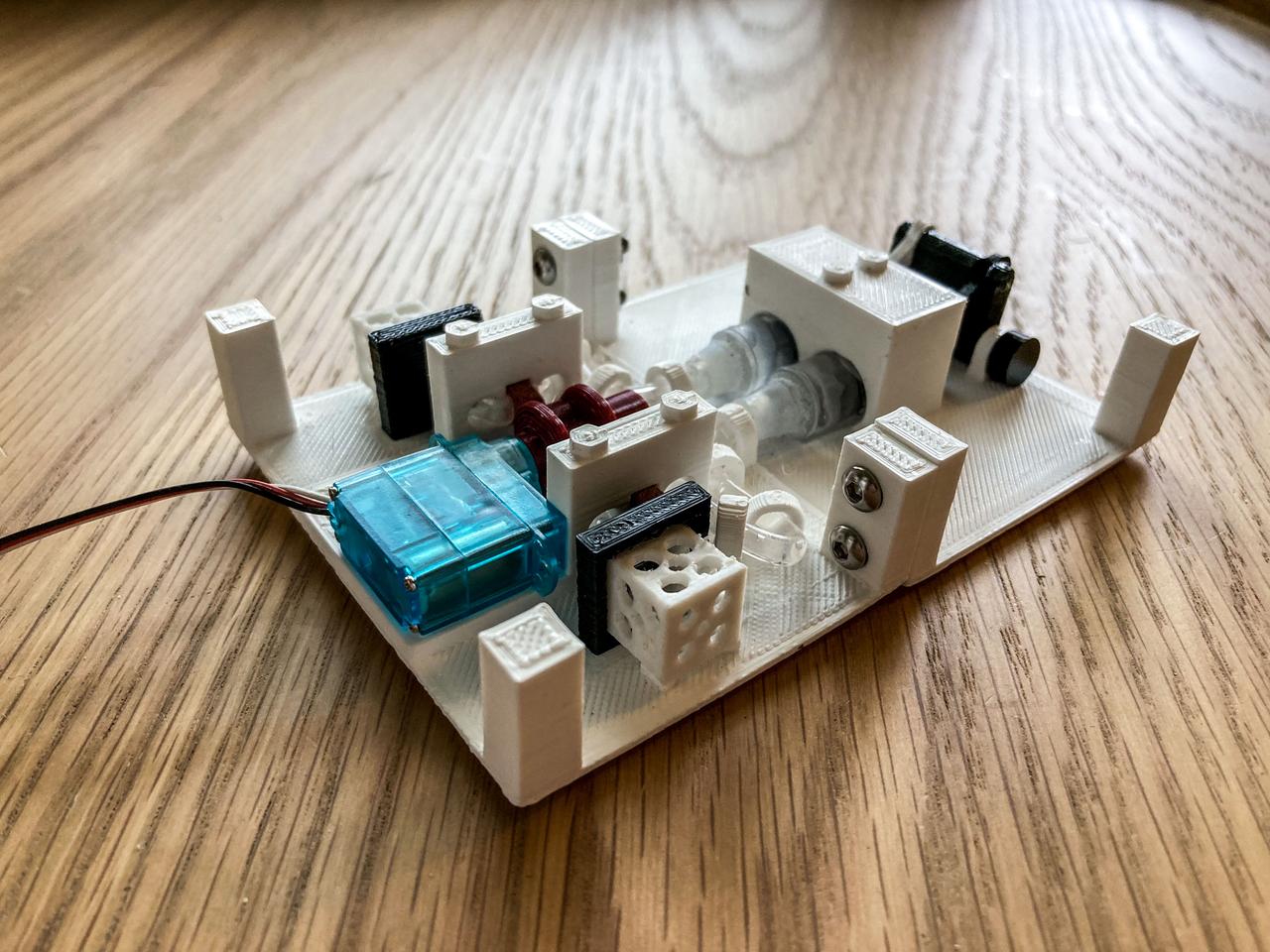
jsc2022e042480 (5/19/2022) --- An early iteration of the experiment hardware for the Biopolymer Research for In-Situ Capabilities investigation, launching aboard SpaceX’s 25th commercial resupply services mission to the International Space Station. Biopolymer Research for In-Situ Capabilities looks at how microgravity affects the process of creating biopolymer soil composite (BSC), a concrete alternative made by mixing an organic compound and silica, which is found in lunar and Martian dust. Image courtesy of James Wall.
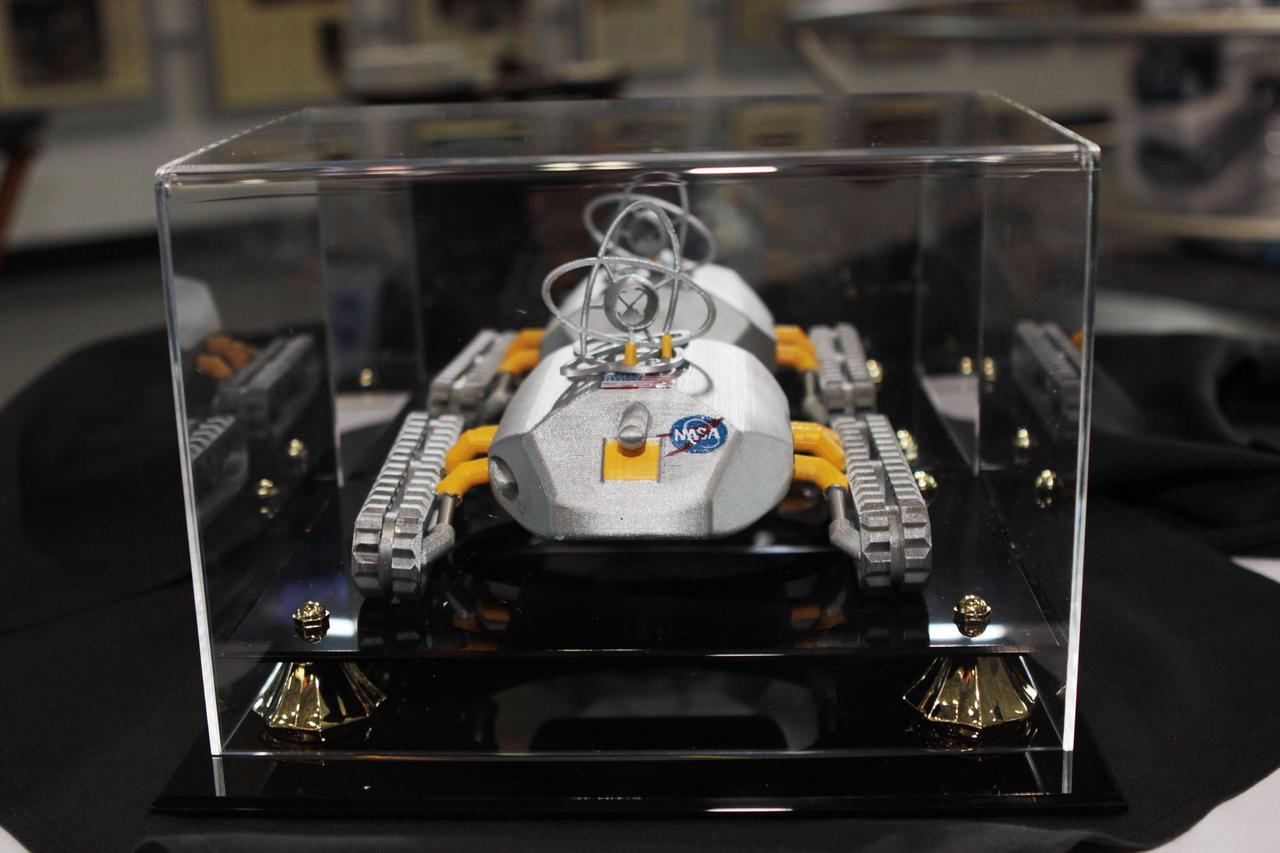
CAPE CANAVERAL, Fla. – Teams taking part in NASA's Lunabotics Mining Competition were eligible for unique trophies such as this. The competition challenged university students to build machines that could collect soil such as the material found on the moon. Working inside the Caterpillar LunArena, the robotic craft dug soil that simulated lunar material. The event was judged by a machine's abilities to collect the soil, its design and operation, size, dust tolerance and its level of autonomy. Photo credit: NASA/Jim Grossmann
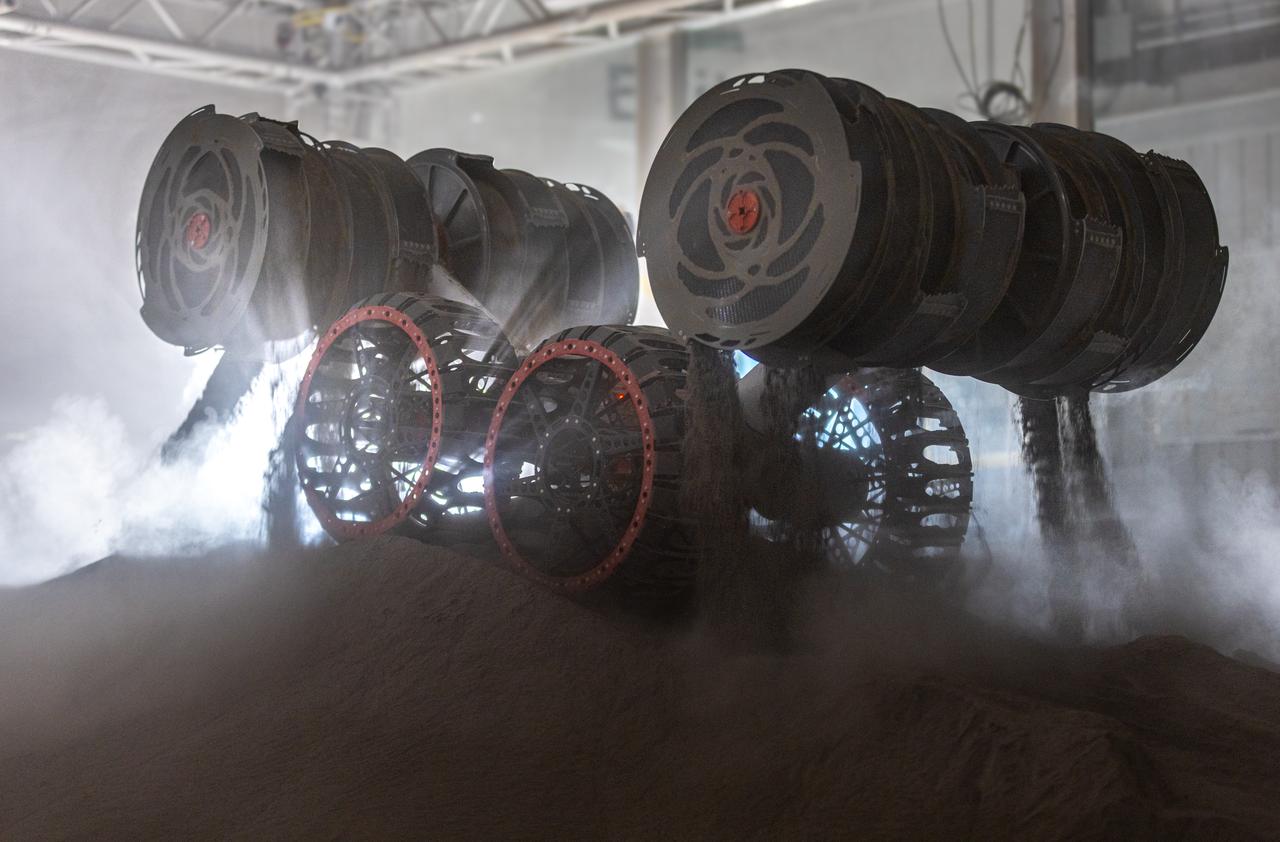
NASA’s RASSOR (Regolith Advanced Surface Systems Operations Robot) conducts excavation testing of simulated regolith, or lunar dust found on the Moon’s surface, inside of the Granular Mechanics and Regolith Operations Lab at the agency’s Kennedy Space Center in Florida on Tuesday, May 27, 2025. RASSOR is designed to work in low-gravity situations, using counter rotating bucket drums on each arm to collect and dump regolith for the extraction of hydrogen, oxygen, or water, resources critical for sustaining a habitable presence.
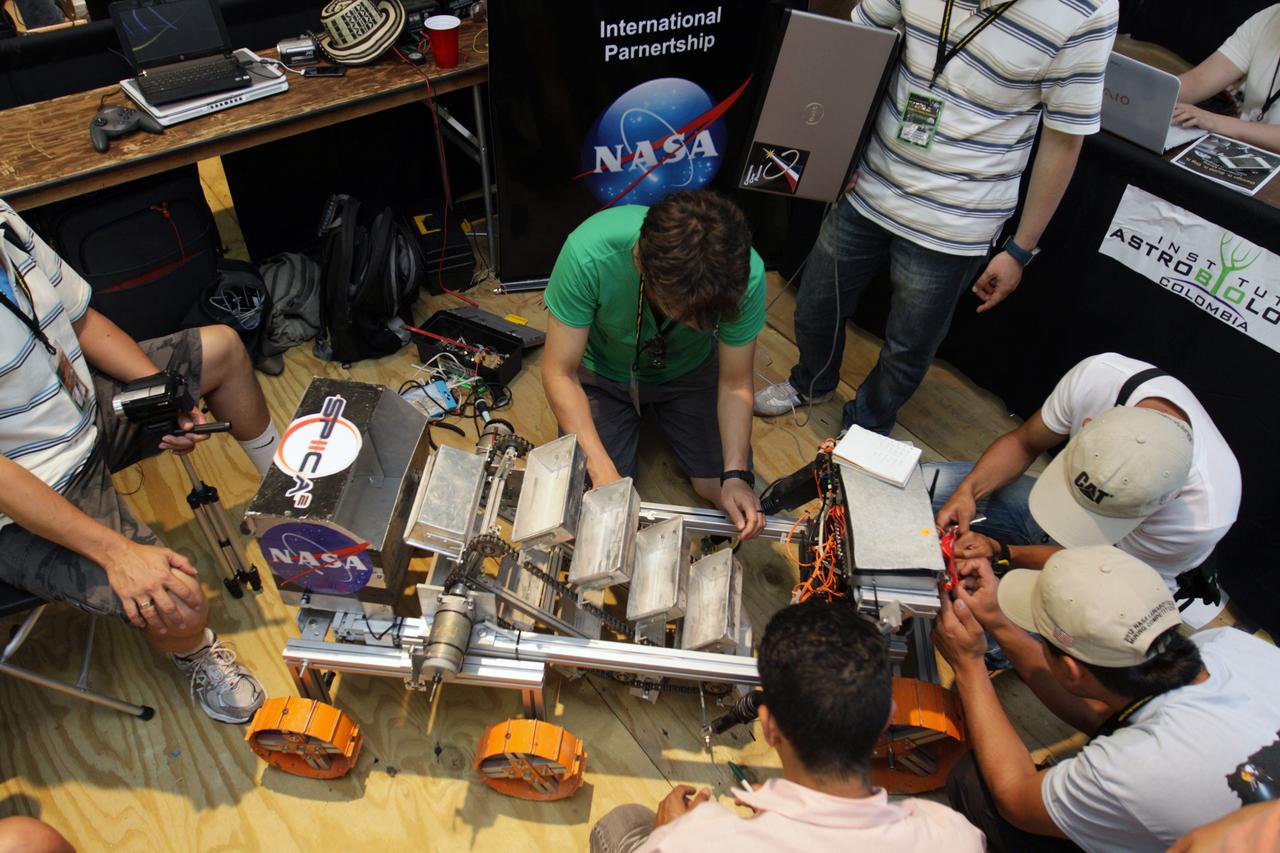
CAPE CANAVERAL, Fla. – A team of competitors works with its machine during NASA's Lunabotics Mining Competition at the Kennedy Space Center Visitor Complex in Florida. The competition challenges university students to build machines that can collect soil such as the material found on the moon. Working inside the Caterpillar LunArena, the robotic craft dig soil that simulates lunar material. The event is judged by a machine's abilities to collect the soil, its design and operation, size, dust tolerance and its level of autonomy. Photo credit: NASA/Glenn Benson
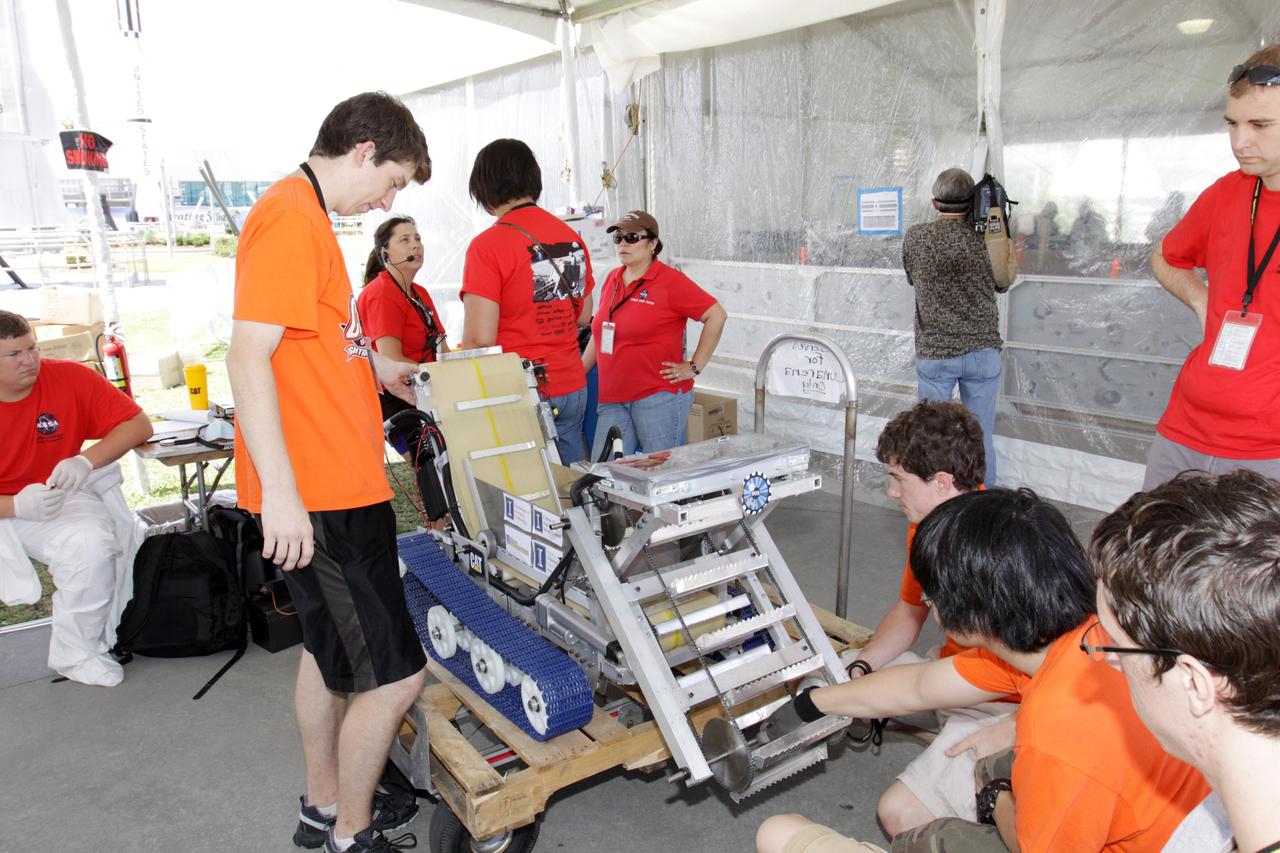
CAPE CANAVERAL, Fla. – A team of competitors prepares for a turn in NASA's Lunabotics Mining Competition at the Kennedy Space Center Visitor Complex in Florida. The competition challenges university students to build machines that can collect soil such as the material found on the moon. Working inside the Caterpillar LunArena, the robotic craft dig soil that simulates lunar material. The event is judged by a machine's abilities to collect the soil, its design and operation, size, dust tolerance and its level of autonomy. Photo credit: NASA/Glenn Benson
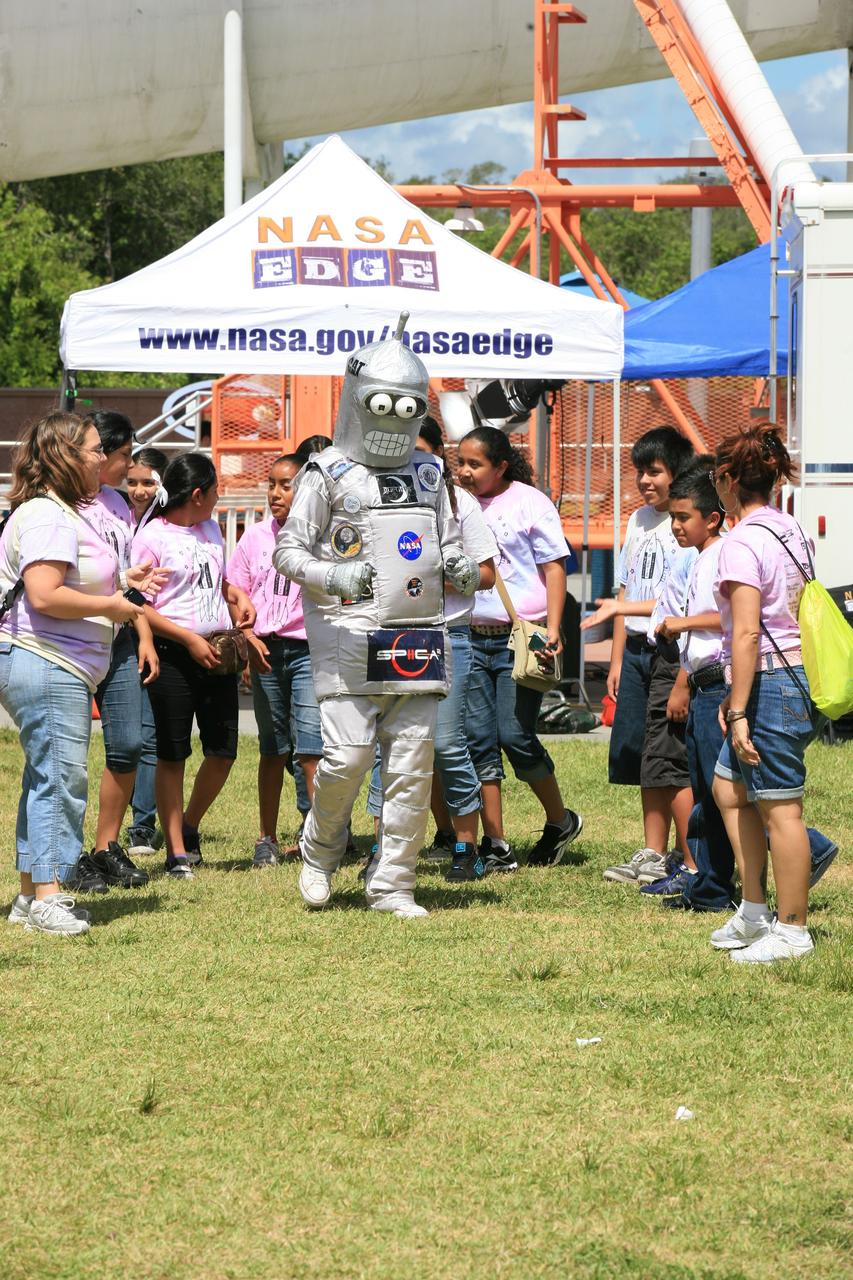
CAPE CANAVERAL, Fla. – A robotic mascot moves among participants during NASA's Lunabotics Mining Competition at the Kennedy Space Center Visitor Complex in Florida. The competition challenges university students to build machines that can collect soil such as the material found on the moon. Working inside the Caterpillar LunArena, the robotic craft dig soil that simulates lunar material. The event is judged by a machine's abilities to collect the soil, its design and operation, size, dust tolerance and its level of autonomy. Photo credit: NASA/Glenn Benson
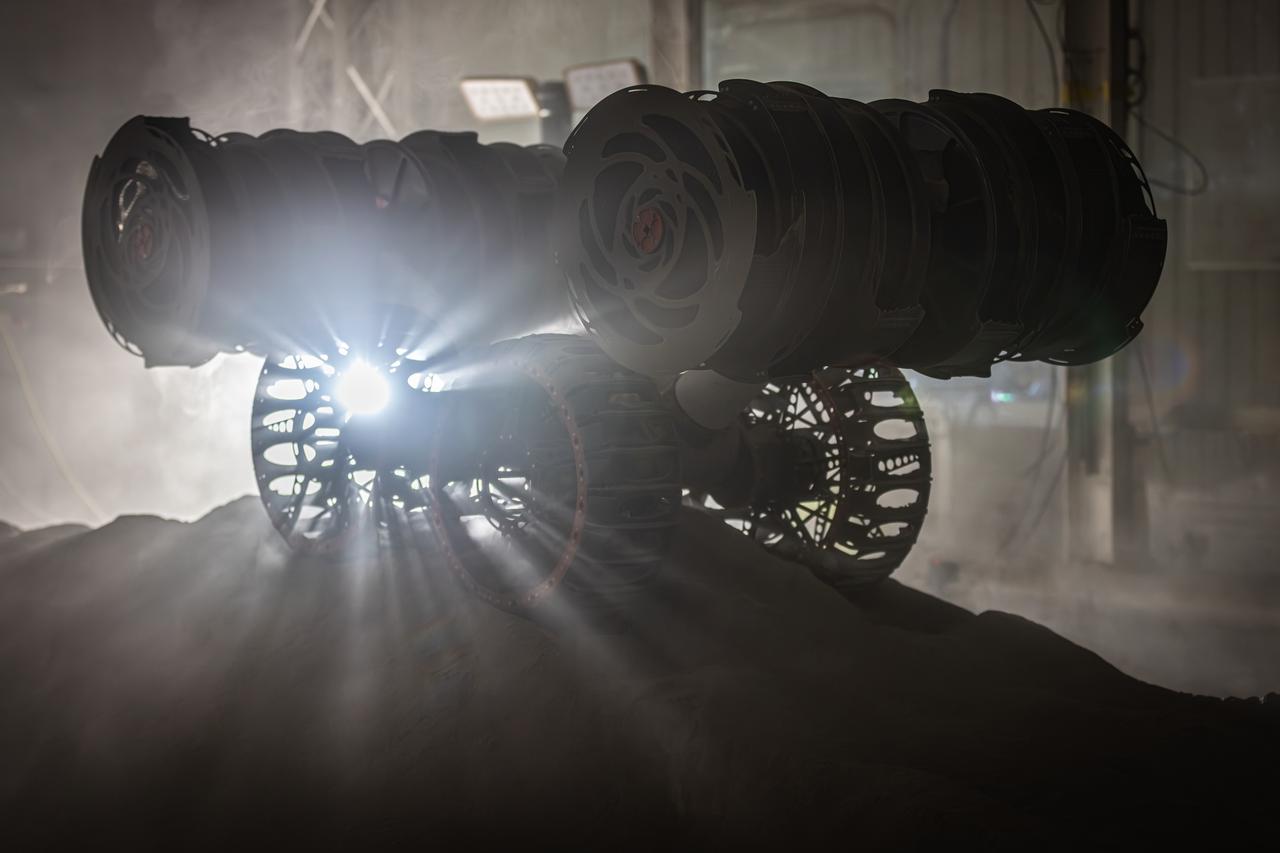
NASA’s RASSOR (Regolith Advanced Surface Systems Operations Robot) conducts excavation testing of simulated regolith, or lunar dust found on the Moon’s surface, inside of the Granular Mechanics and Regolith Operations Lab at the agency’s Kennedy Space Center in Florida on Tuesday, May 27, 2025. RASSOR is designed to work in low-gravity situations, using counter rotating bucket drums on each arm to collect and dump regolith for the extraction of hydrogen, oxygen, or water, resources critical for sustaining a habitable presence.
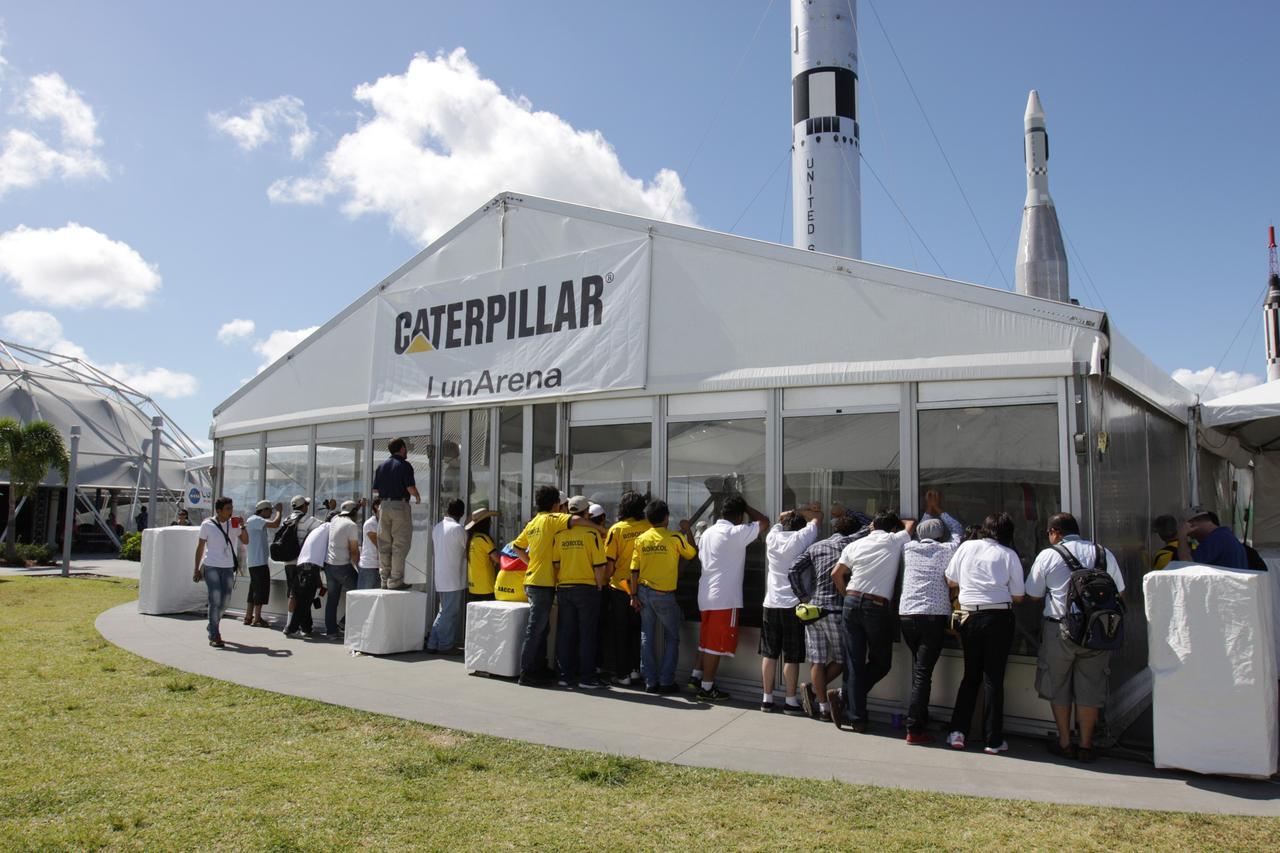
CAPE CANAVERAL, Fla. – Participants watch NASA's Lunabotics Mining Competition at the Kennedy Space Center Visitor Complex in Florida. The competition challenges university students to build machines that can collect soil such as the material found on the moon. Working inside the Caterpillar LunArena, the robotic craft dig soil that simulates lunar material. The event is judged by a machine's abilities to collect the soil, its design and operation, size, dust tolerance and its level of autonomy. Photo credit: NASA/Glenn Benson
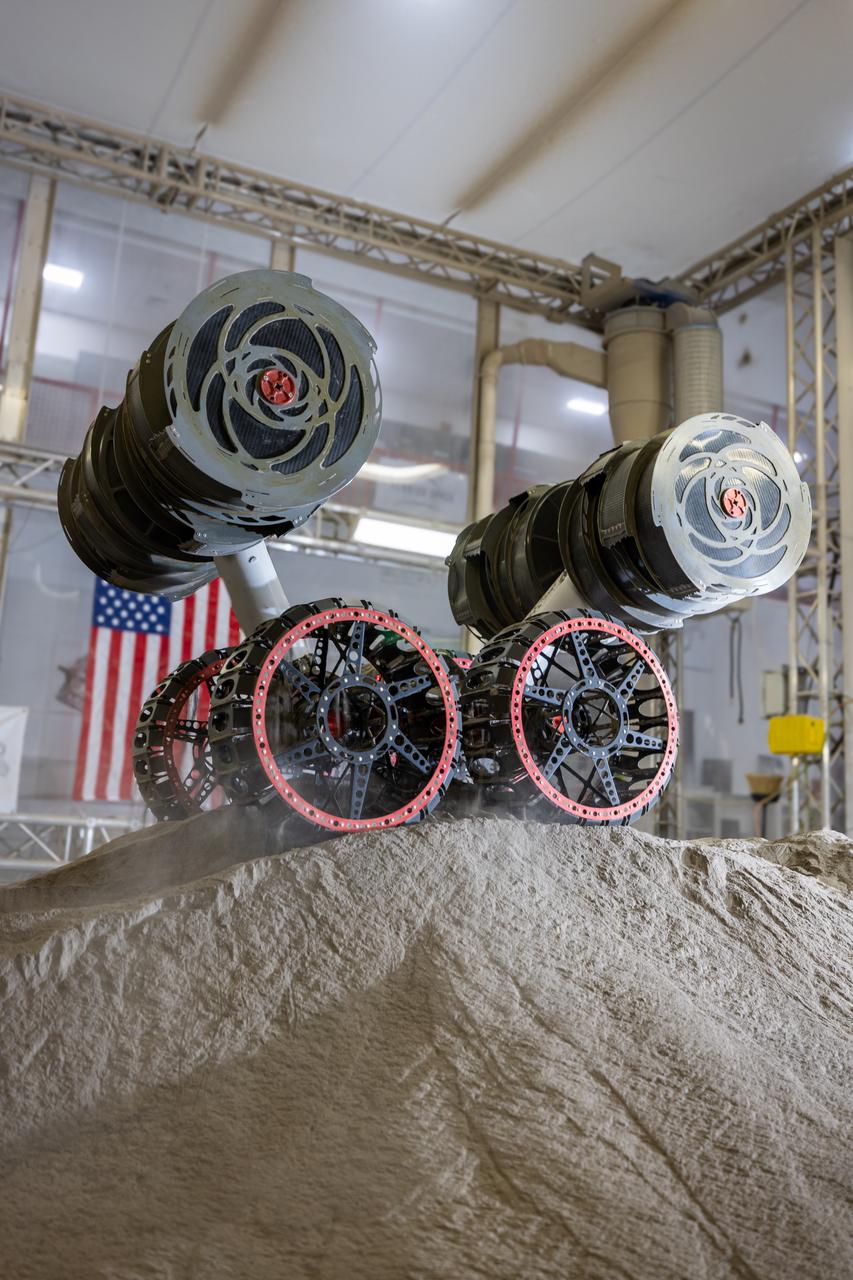
NASA’s RASSOR (Regolith Advanced Surface Systems Operations Robot) conducts excavation testing of simulated regolith, or lunar dust found on the Moon’s surface, inside of the Granular Mechanics and Regolith Operations Lab at the agency’s Kennedy Space Center in Florida on Tuesday, May 27, 2025. RASSOR is designed to work in low-gravity situations, using counter rotating bucket drums on each arm to collect and dump regolith for the extraction of hydrogen, oxygen, or water, resources critical for sustaining a habitable presence.
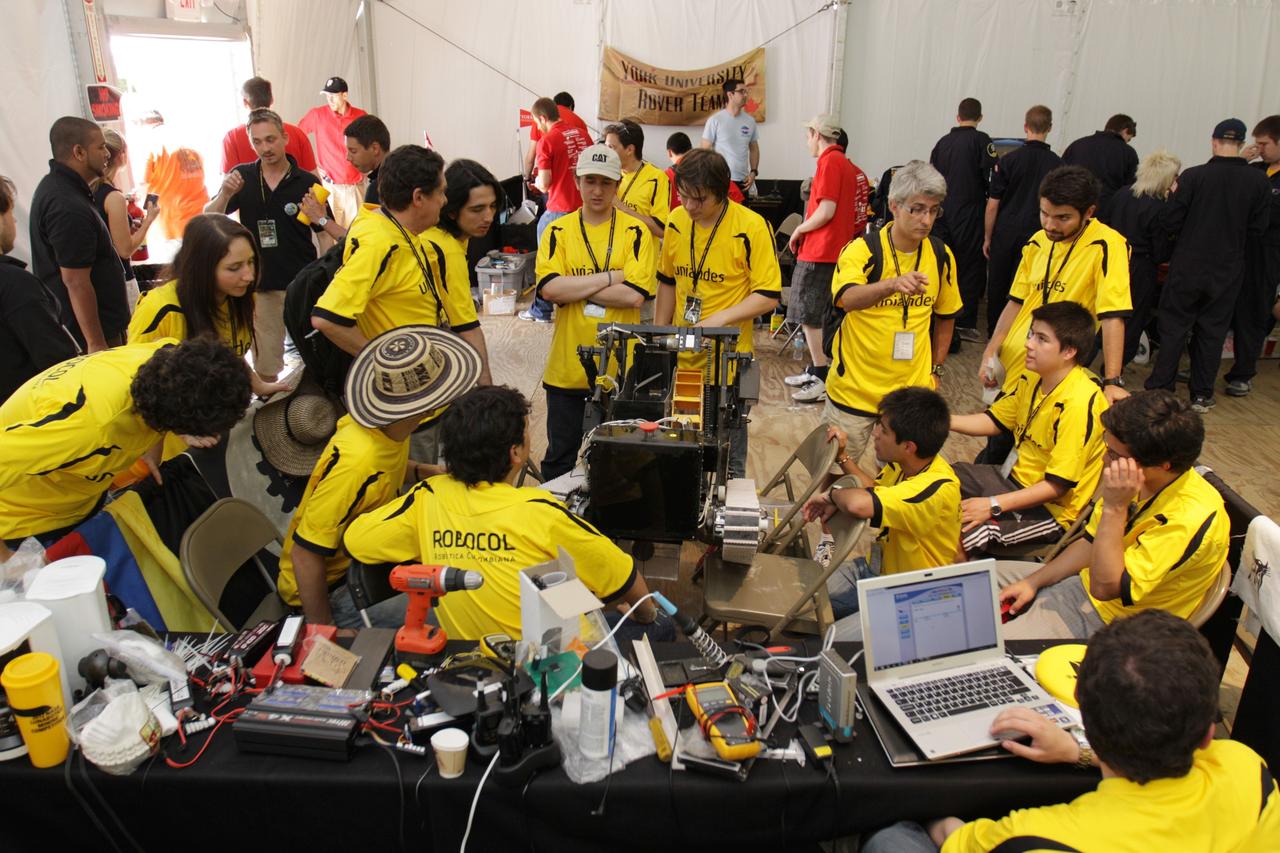
CAPE CANAVERAL, Fla. – A team of competitors works with its machine during NASA's Lunabotics Mining Competition at the Kennedy Space Center Visitor Complex in Florida. The competition challenges university students to build machines that can collect soil such as the material found on the moon. Working inside the Caterpillar LunArena, the robotic craft dig soil that simulates lunar material. The event is judged by a machine's abilities to collect the soil, its design and operation, size, dust tolerance and its level of autonomy. Photo credit: NASA/Glenn Benson
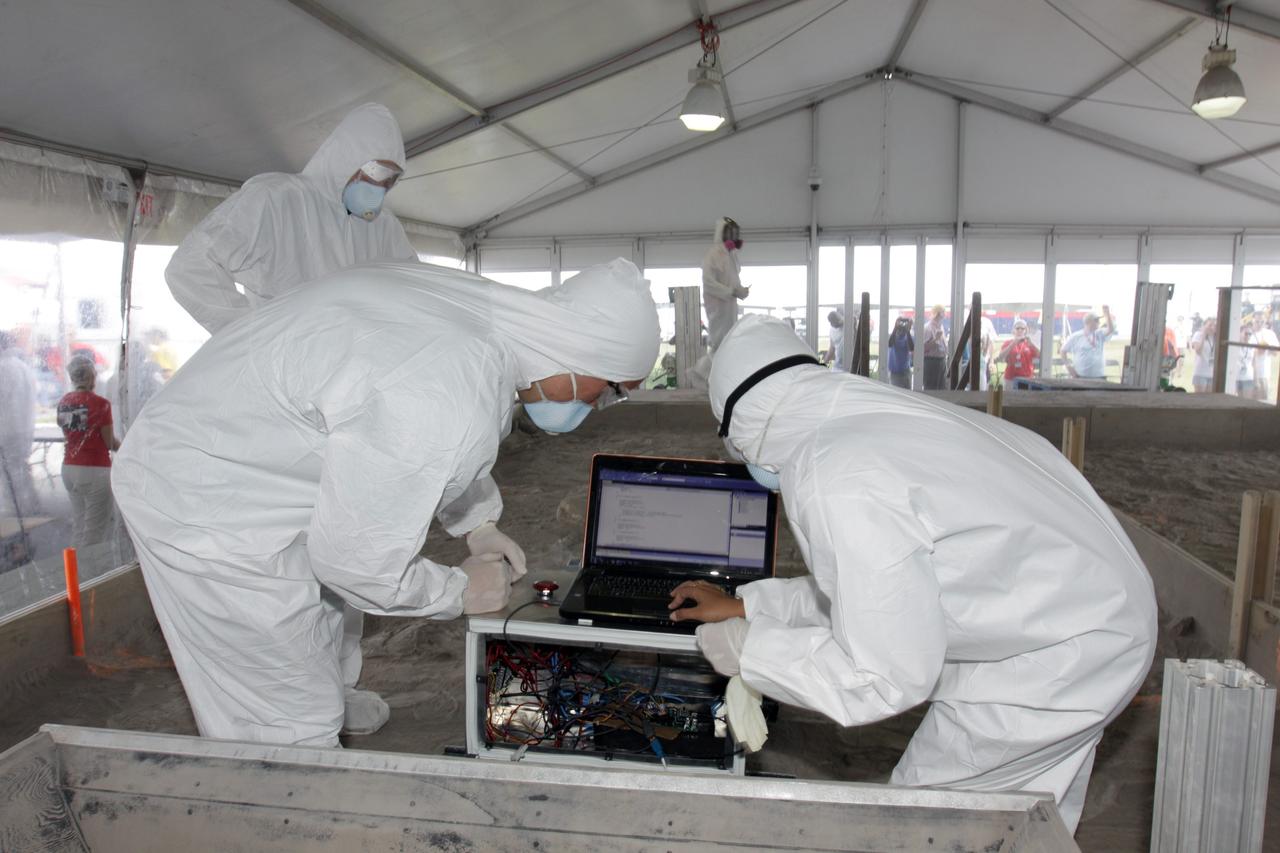
CAPE CANAVERAL, Fla. – A team of competitors works with its machine during NASA's Lunabotics Mining Competition at the Kennedy Space Center Visitor Complex in Florida. The competition challenges university students to build machines that can collect soil such as the material found on the moon. Working inside the Caterpillar LunArena, the robotic craft dig soil that simulates lunar material. The event is judged by a machine's abilities to collect the soil, its design and operation, size, dust tolerance and its level of autonomy. Photo credit: NASA/Glenn Benson
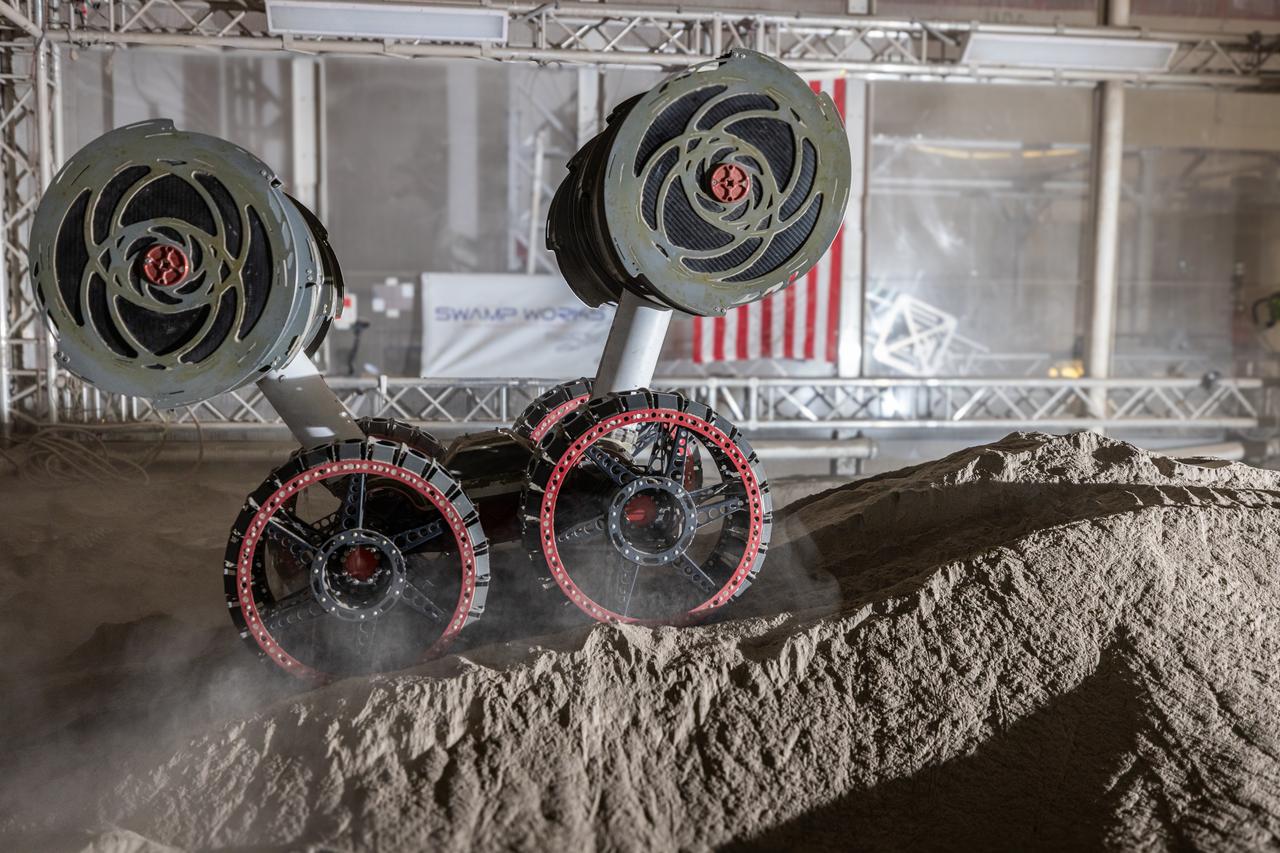
NASA’s RASSOR (Regolith Advanced Surface Systems Operations Robot) conducts excavation testing of simulated regolith, or lunar dust found on the Moon’s surface, inside of the Granular Mechanics and Regolith Operations Lab at the agency’s Kennedy Space Center in Florida on Tuesday, May 27, 2025. RASSOR is designed to work in low-gravity situations, using counter rotating bucket drums on each arm to collect and dump regolith for the extraction of hydrogen, oxygen, or water, resources critical for sustaining a habitable presence.
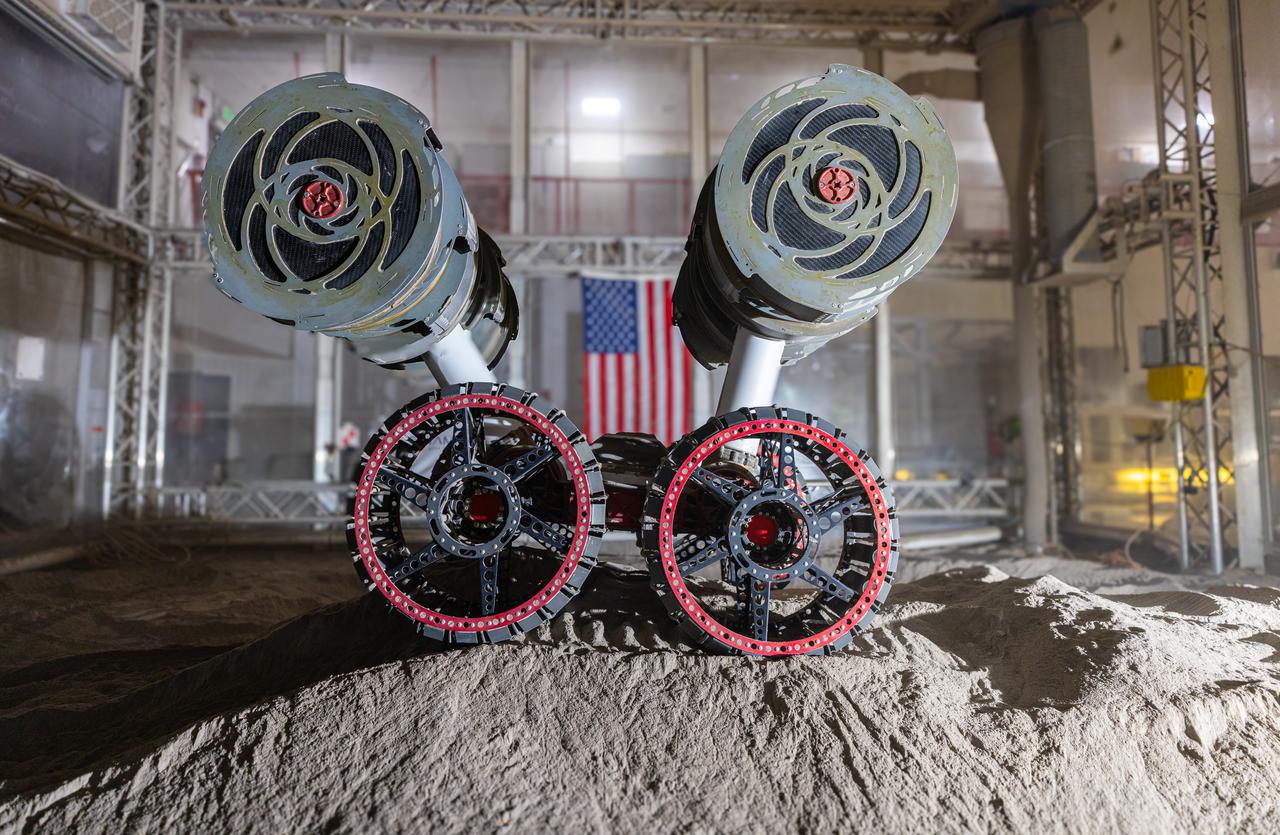
NASA’s RASSOR (Regolith Advanced Surface Systems Operations Robot) conducts excavation testing of simulated regolith, or lunar dust found on the Moon’s surface, inside of the Granular Mechanics and Regolith Operations Lab at the agency’s Kennedy Space Center in Florida on Tuesday, May 27, 2025. RASSOR is designed to work in low-gravity situations, using counter rotating bucket drums on each arm to collect and dump regolith for the extraction of hydrogen, oxygen, or water, resources critical for sustaining a habitable presence.
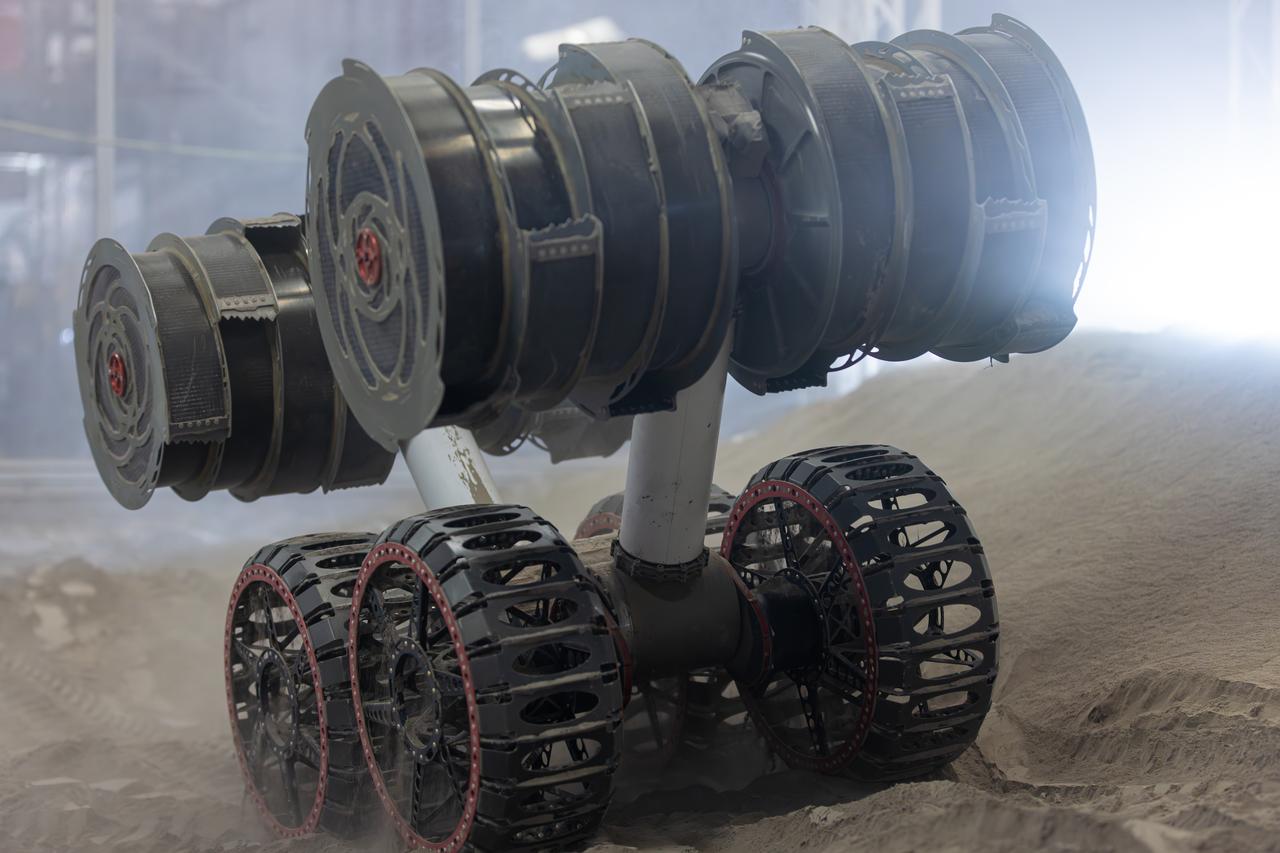
NASA’s RASSOR (Regolith Advanced Surface Systems Operations Robot) conducts excavation testing of simulated regolith, or lunar dust found on the Moon’s surface, inside of the Granular Mechanics and Regolith Operations Lab at the agency’s Kennedy Space Center in Florida on Tuesday, May 27, 2025. RASSOR is designed to work in low-gravity situations, using counter rotating bucket drums on each arm to collect and dump regolith for the extraction of hydrogen, oxygen, or water, resources critical for sustaining a habitable presence.
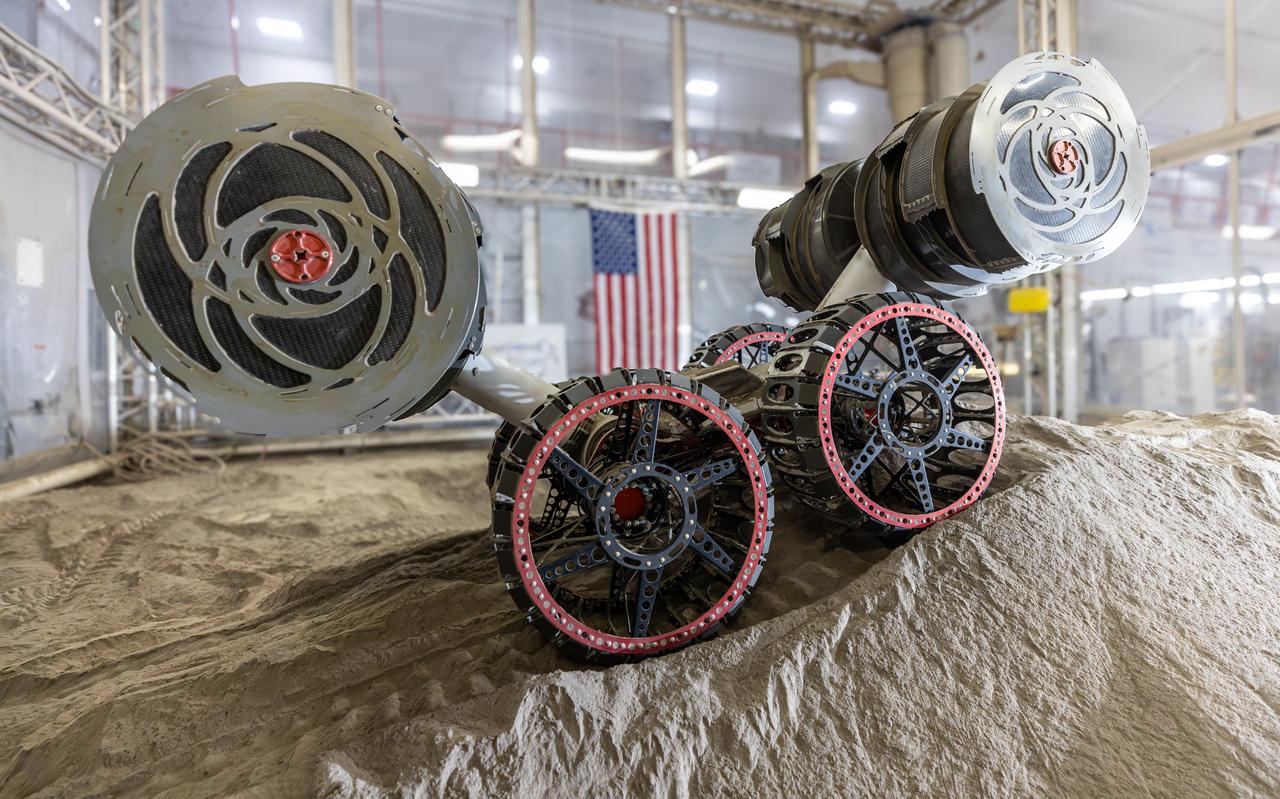
NASA’s RASSOR (Regolith Advanced Surface Systems Operations Robot) conducts excavation testing of simulated regolith, or lunar dust found on the Moon’s surface, inside of the Granular Mechanics and Regolith Operations Lab at the agency’s Kennedy Space Center in Florida on Tuesday, May 27, 2025. RASSOR is designed to work in low-gravity situations, using counter rotating bucket drums on each arm to collect and dump regolith for the extraction of hydrogen, oxygen, or water, resources critical for sustaining a habitable presence.
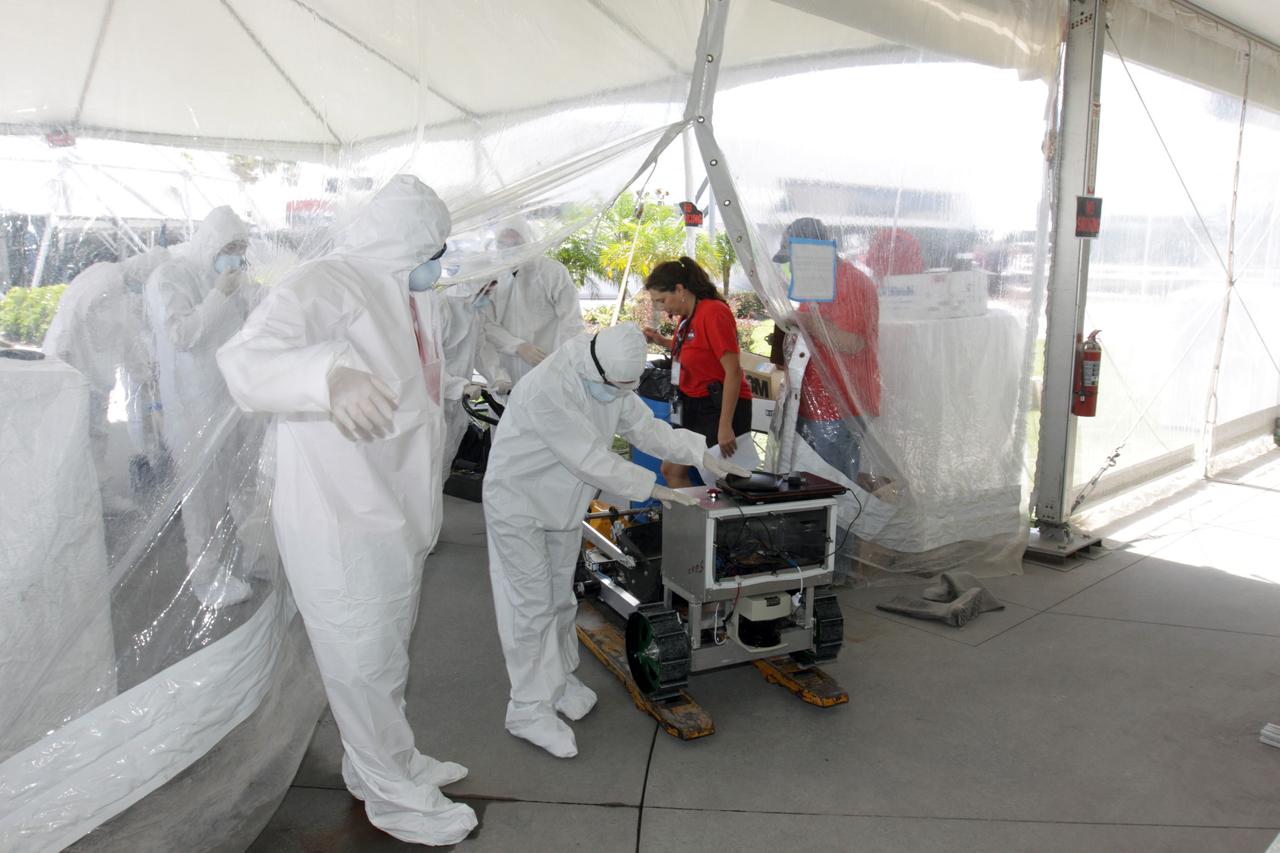
CAPE CANAVERAL, Fla. – A team of competitors prepares for a turn in NASA's Lunabotics Mining Competition at the Kennedy Space Center Visitor Complex in Florida. The competition challenges university students to build machines that can collect soil such as the material found on the moon. Working inside the Caterpillar LunArena, the robotic craft dig soil that simulates lunar material. The event is judged by a machine's abilities to collect the soil, its design and operation, size, dust tolerance and its level of autonomy. Photo credit: NASA/Glenn Benson
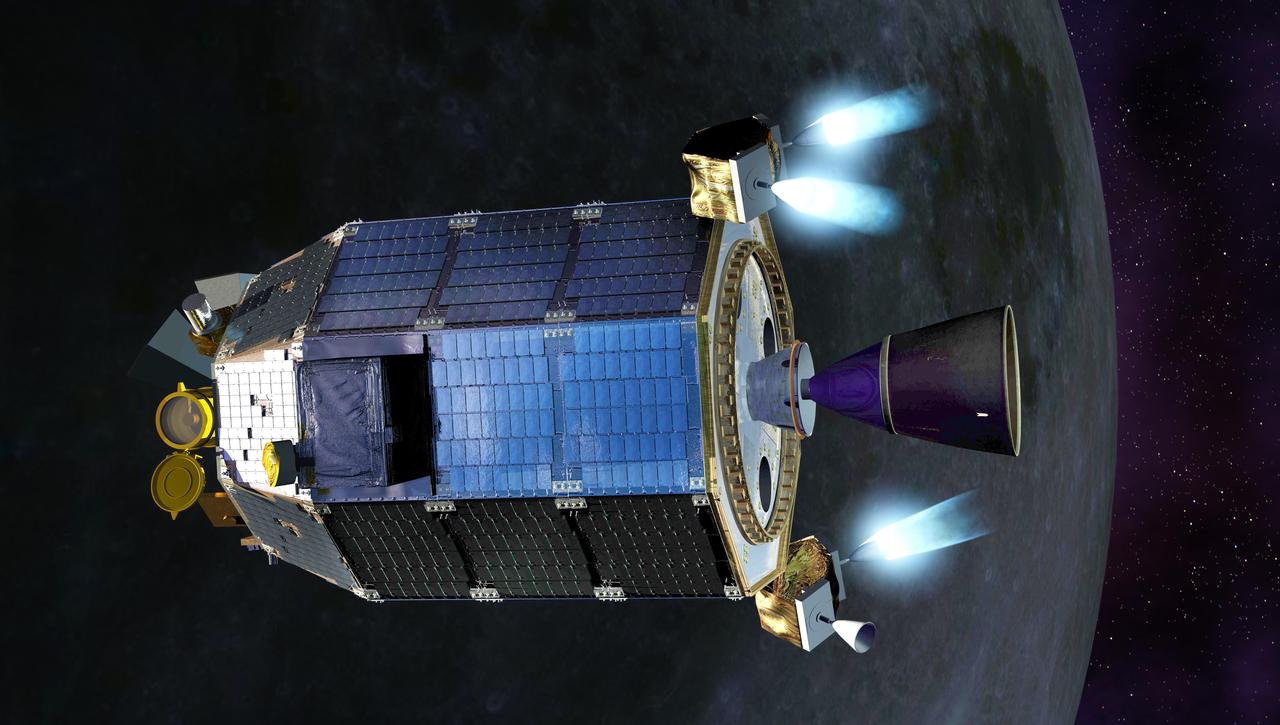
An artist's concept of NASA's Lunar Atmosphere and Dust Environment Explorer (LADEE) spacecraft firing its maneuvering thrusters in order to maintain a safe altitude as it orbits the moon. Credit: NASA Ames / Dana Berry ----- What is LADEE? The Lunar Atmosphere and Dust Environment Explorer (LADEE) is designed to study the Moon's thin exosphere and the lunar dust environment. An "exosphere" is an atmosphere that is so thin and tenuous that molecules don't collide with each other. Studying the Moon's exosphere will help scientists understand other planetary bodies with exospheres too, like Mercury and some of Jupiter's bigger moons. The orbiter will determine the density, composition and temporal and spatial variability of the Moon's exosphere to help us understand where the species in the exosphere come from and the role of the solar wind, lunar surface and interior, and meteoric infall as sources. The mission will also examine the density and temporal and spatial variability of dust particles that may get lofted into the atmosphere. The mission also will test several new technologies, including a modular spacecraft bus that may reduce the cost of future deep space missions and demonstrate two-way high rate laser communication for the first time from the Moon. LADEE now is ready to launch when the window opens on Sept. 6, 2013. Read more: <a href="http://www.nasa.gov/ladee" rel="nofollow">www.nasa.gov/ladee</a> <b><a href="http://www.nasa.gov/audience/formedia/features/MP_Photo_Guidelines.html" rel="nofollow">NASA image use policy.</a></b> <b><a href="http://www.nasa.gov/centers/goddard/home/index.html" rel="nofollow">NASA Goddard Space Flight Center</a></b> enables NASA’s mission through four scientific endeavors: Earth Science, Heliophysics, Solar System Exploration, and Astrophysics. Goddard plays a leading role in NASA’s accomplishments by contributing compelling scientific knowledge to advance the Agency’s mission. <b>Follow us on <a href="http://twitter.com/NASA_GoddardPix" rel="nofollow">Twitter</a></b> <b>Like us on <a href="http://www.facebook.com/pages/Greenbelt-MD/NASA-Goddard/395013845897?ref=tsd" rel="nofollow">Facebook</a></b> <b>Find us on <a href="http://instagram.com/nasagoddard?vm=grid" rel="nofollow">Instagram</a></b>
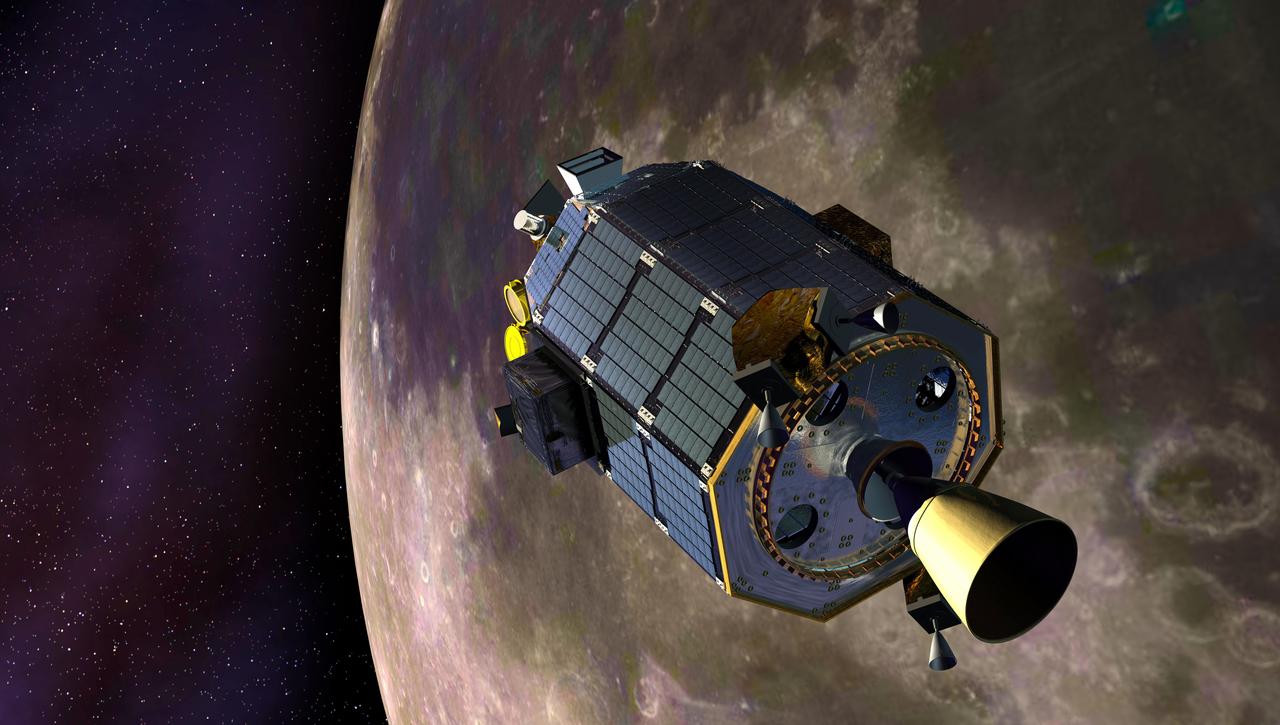
An artist's concept showing the Lunar Atmosphere and Dust Environment Explorer (LADEE) spacecraft is seen orbiting the moon as it prepares to fire its maneuvering thrusters to maintain a safe orbital altitude. Credit: NASA Ames / Dana Berry ----- What is LADEE? The Lunar Atmosphere and Dust Environment Explorer (LADEE) is designed to study the Moon's thin exosphere and the lunar dust environment. An "exosphere" is an atmosphere that is so thin and tenuous that molecules don't collide with each other. Studying the Moon's exosphere will help scientists understand other planetary bodies with exospheres too, like Mercury and some of Jupiter's bigger moons. The orbiter will determine the density, composition and temporal and spatial variability of the Moon's exosphere to help us understand where the species in the exosphere come from and the role of the solar wind, lunar surface and interior, and meteoric infall as sources. The mission will also examine the density and temporal and spatial variability of dust particles that may get lofted into the atmosphere. The mission also will test several new technologies, including a modular spacecraft bus that may reduce the cost of future deep space missions and demonstrate two-way high rate laser communication for the first time from the Moon. LADEE now is ready to launch when the window opens on Sept. 6, 2013. Read more: <a href="http://www.nasa.gov/ladee" rel="nofollow">www.nasa.gov/ladee </a> <b><a href="http://www.nasa.gov/audience/formedia/features/MP_Photo_Guidelines.html" rel="nofollow">NASA image use policy.</a></b> <b><a href="http://www.nasa.gov/centers/goddard/home/index.html" rel="nofollow">NASA Goddard Space Flight Center</a></b> enables NASA’s mission through four scientific endeavors: Earth Science, Heliophysics, Solar System Exploration, and Astrophysics. Goddard plays a leading role in NASA’s accomplishments by contributing compelling scientific knowledge to advance the Agency’s mission. <b>Follow us on <a href="http://twitter.com/NASA_GoddardPix" rel="nofollow">Twitter</a></b> <b>Like us on <a href="http://www.facebook.com/pages/Greenbelt-MD/NASA-Goddard/395013845897?ref=tsd" rel="nofollow">Facebook</a></b> <b>Find us on <a href="http://instagram.com/nasagoddard?vm=grid" rel="nofollow">Instagram</a></b>
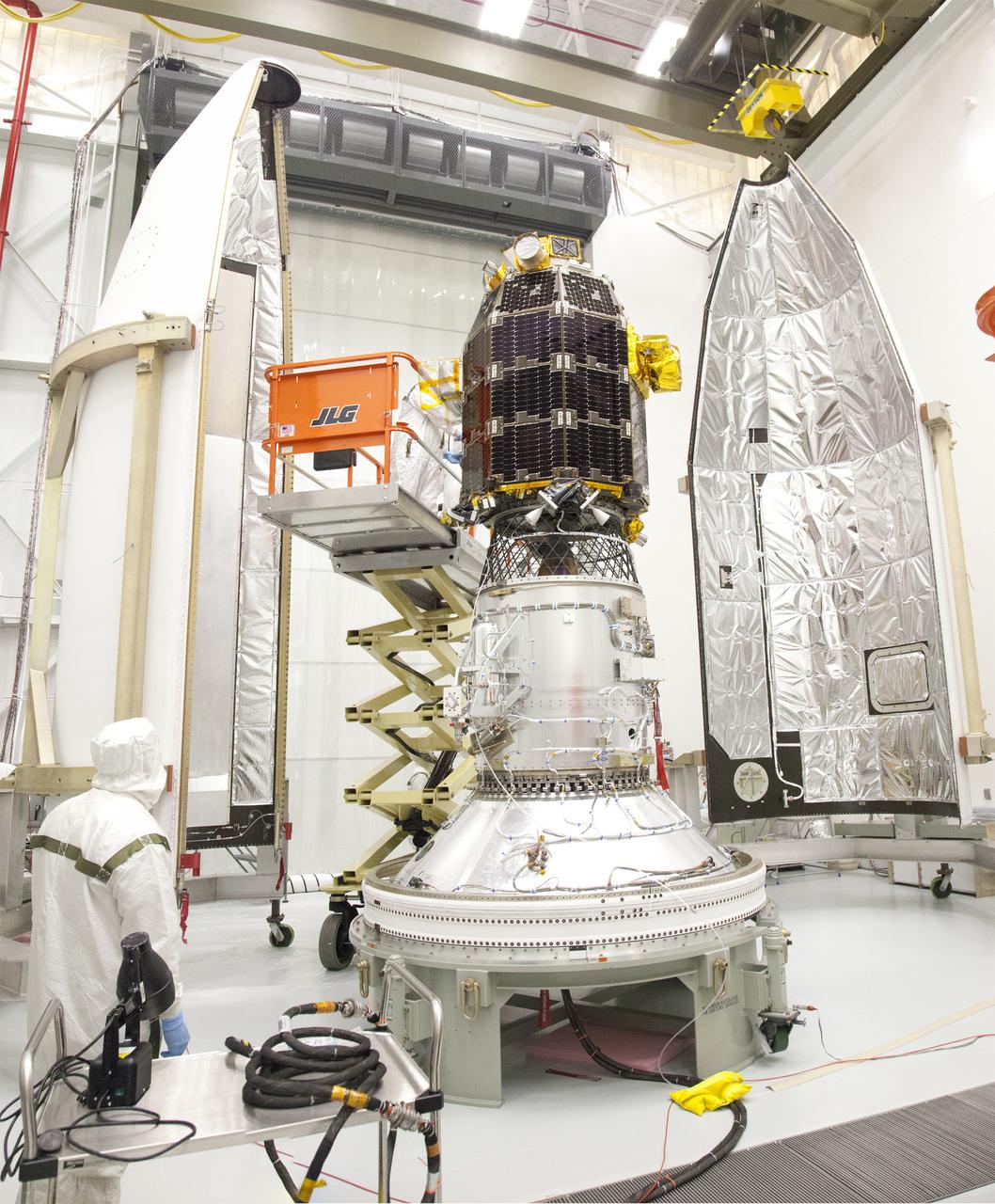
Engineers at NASA's Wallops Flight Facility in Virginia prepare to encapsulate the LADEE spacecraft into the fairing of the Minotaur V launch vehicle nose-cone. Credit: NASA/Wallops/Terry Zaperach ----- What is LADEE? The Lunar Atmosphere and Dust Environment Explorer (LADEE) is designed to study the Moon's thin exosphere and the lunar dust environment. An "exosphere" is an atmosphere that is so thin and tenuous that molecules don't collide with each other. Studying the Moon's exosphere will help scientists understand other planetary bodies with exospheres too, like Mercury and some of Jupiter's bigger moons. The orbiter will determine the density, composition and temporal and spatial variability of the Moon's exosphere to help us understand where the species in the exosphere come from and the role of the solar wind, lunar surface and interior, and meteoric infall as sources. The mission will also examine the density and temporal and spatial variability of dust particles that may get lofted into the atmosphere. The mission also will test several new technologies, including a modular spacecraft bus that may reduce the cost of future deep space missions and demonstrate two-way high rate laser communication for the first time from the Moon. LADEE now is ready to launch when the window opens on Sept. 6, 2013. Read more: <a href="http://www.nasa.gov/ladee" rel="nofollow">www.nasa.gov/ladee</a> <b><a href="http://www.nasa.gov/audience/formedia/features/MP_Photo_Guidelines.html" rel="nofollow">NASA image use policy.</a></b> <b><a href="http://www.nasa.gov/centers/goddard/home/index.html" rel="nofollow">NASA Goddard Space Flight Center</a></b> enables NASA’s mission through four scientific endeavors: Earth Science, Heliophysics, Solar System Exploration, and Astrophysics. Goddard plays a leading role in NASA’s accomplishments by contributing compelling scientific knowledge to advance the Agency’s mission. <b>Follow us on <a href="http://twitter.com/NASA_GoddardPix" rel="nofollow">Twitter</a></b> <b>Like us on <a href="http://www.facebook.com/pages/Greenbelt-MD/NASA-Goddard/395013845897?ref=tsd" rel="nofollow">Facebook</a></b> <b>Find us on <a href="http://instagram.com/nasagoddard?vm=grid" rel="nofollow">Instagram</a></b>
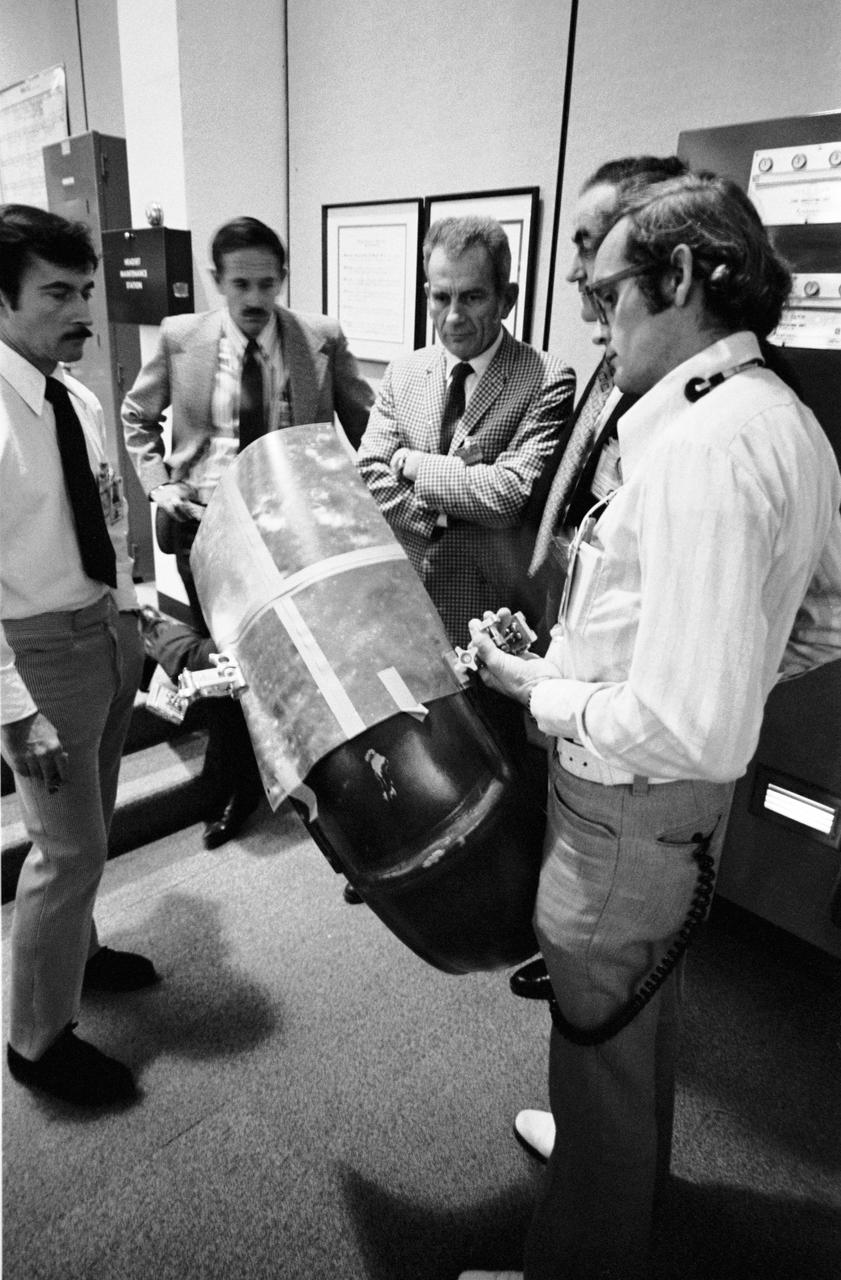
S72-55170 (11 Dec. 1972) --- These five men in the Mission Control Center ponder the solution to the problem of the damage to the right rear fender of the Apollo 17 Lunar Roving Vehicle at the Taurus-Littrow landing site. During the first lunar surface extravehicular activity a hammer got underneath the fender and a part of it was knocked off. Astronauts Eugene A. Cernan and Harrison H. Schmitt were reporting a problem with lunar dust because of the damaged fender. They sought some way to repair the broken fender. Clockwise are astronauts John W. Young and Charles M. Duke Jr., two Apollo 17 CAPCOM; Donald K. Slayton, director of flight crew operations at MSC; Dr. Roco A. Petrone, Apollo program director, Office of Manned Space Flight, NASA HQ; and Ronald V. Blevins, an EVA-1 flight controller with General Electric. They are looking over a makeshift repair arrangement which uses lunar maps and clamps from the optical alignment telescope lamp, a repair suggestion made by astronaut Young. The suggestion was relayed to Cernan and Schmitt and the repair made at the beginning of EVA-2. The problem was solved satisfactorily.

AS17-145-22157 (12 Dec. 1972) --- Scientist-astronaut Harrison Schmitt, Apollo 17 lunar module pilot, uses an adjustable sampling scoop to retrieve lunar samples during the second Apollo 17 extravehicular activity (EVA), at Station 5 at the Taurus-Littrow landing site. A gnomon is atop the large rock in the foreground. The gnomon is a stadia rod mounted on a tripod, and serves as an indicator of the gravitational vector and provides accurate vertical reference and calibrated length for determining size and position of objects in near-field photographs. The color scale of blue, orange and green is used to accurately determine color for photography. The rod of it is 18 inches long. The scoop Dr. Schmitt is using is 11 3/4 inches long and is attached to a tool extension which adds a potential 30 inches of length to the scoop. The pan portion, obscured in this view, has a flat bottom, flanged on both sides with a partial cover on the top. It is used to retrieve sand, dust and lunar samples too small for the tongs, another geological tool used by the astronauts. The pan and the adjusting mechanism are made of stainless steel and the handle is made of aluminum. Within the foreground of this scene, three lunar samples were taken--numbers 75060, 75075 and 75080. Astronaut Eugene A. Cernan, crew commander, was using a 60mm lens on the 70mm Hasselblad camera and type SO-368 film to take this photograph.
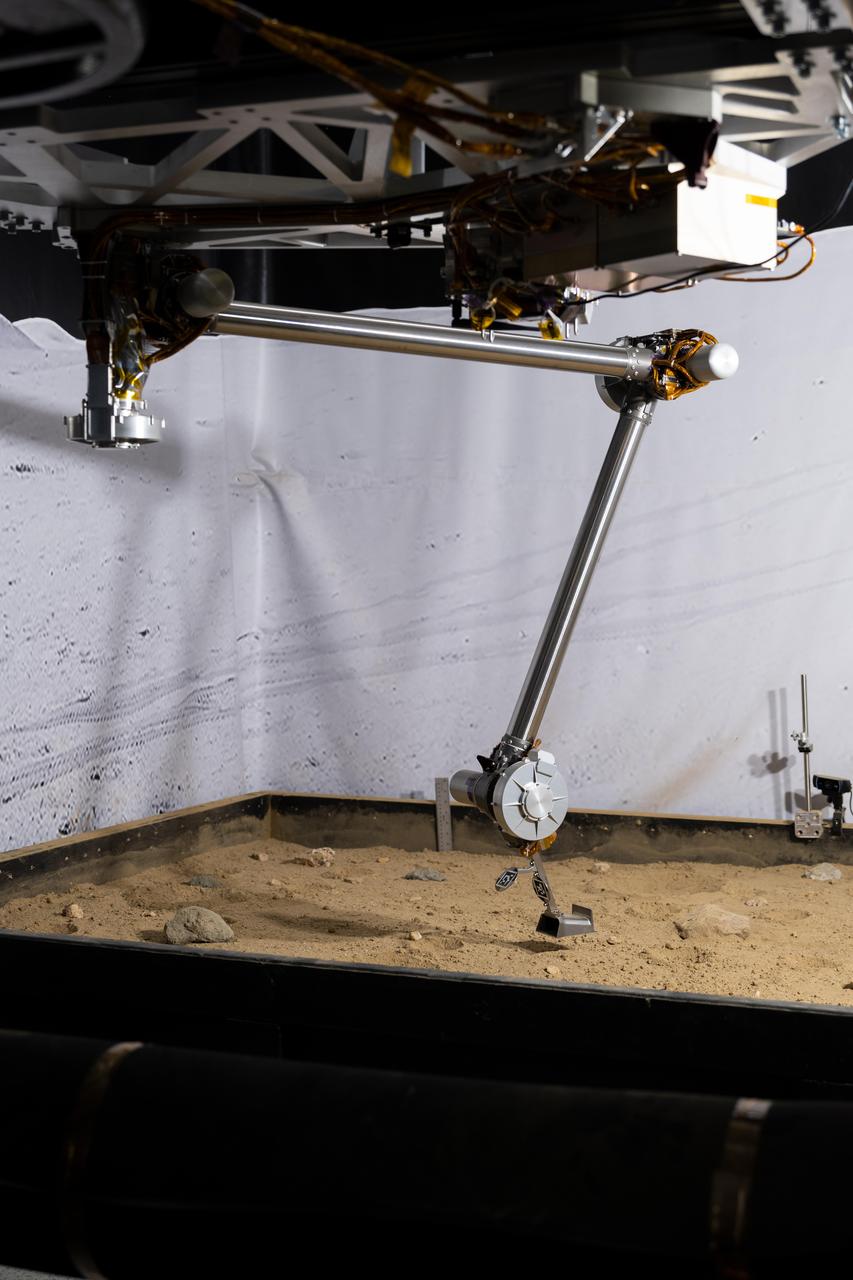
The 3D-printed titanium scoop of the Cold Operable Lunar Deployable Arm (COLDArm) robotic arm system is poised above a test bed filled with material to simulate lunar regolith (broken rocks and dust) at NASA's Jet Propulsion Laboratory in Southern California. COLDArm can function in temperatures as cold as minus 280 degrees Fahrenheit (minus 173 degrees Celsius). COLDArm is designed to go on a Moon lander and operate during lunar night, a period that lasts about 14 Earth days. Frigid temperatures during lunar night would stymie current spacecraft, which must rely on energy-consuming heaters to stay warm. To operate in the cold, the 6-foot-6-inch (2-meter) arm combines several key new technologies: gears made of bulk metallic glass that require no lubrication or heating, cold motor controllers that don't need to be kept warm in an electronics box near the core of the spacecraft, and a cryogenic six-axis force torque sensor that lets the arm "feel" what it's doing and make adjustments. A variety of attachments and small instruments could go on the end of the arm, including the scoop, which could be used for collecting samples from a planet's surface. Like the arm on NASA's InSight Mars lander, COLDArm could deploy science instruments to the surface. https://photojournal.jpl.nasa.gov/catalog/PIA25317
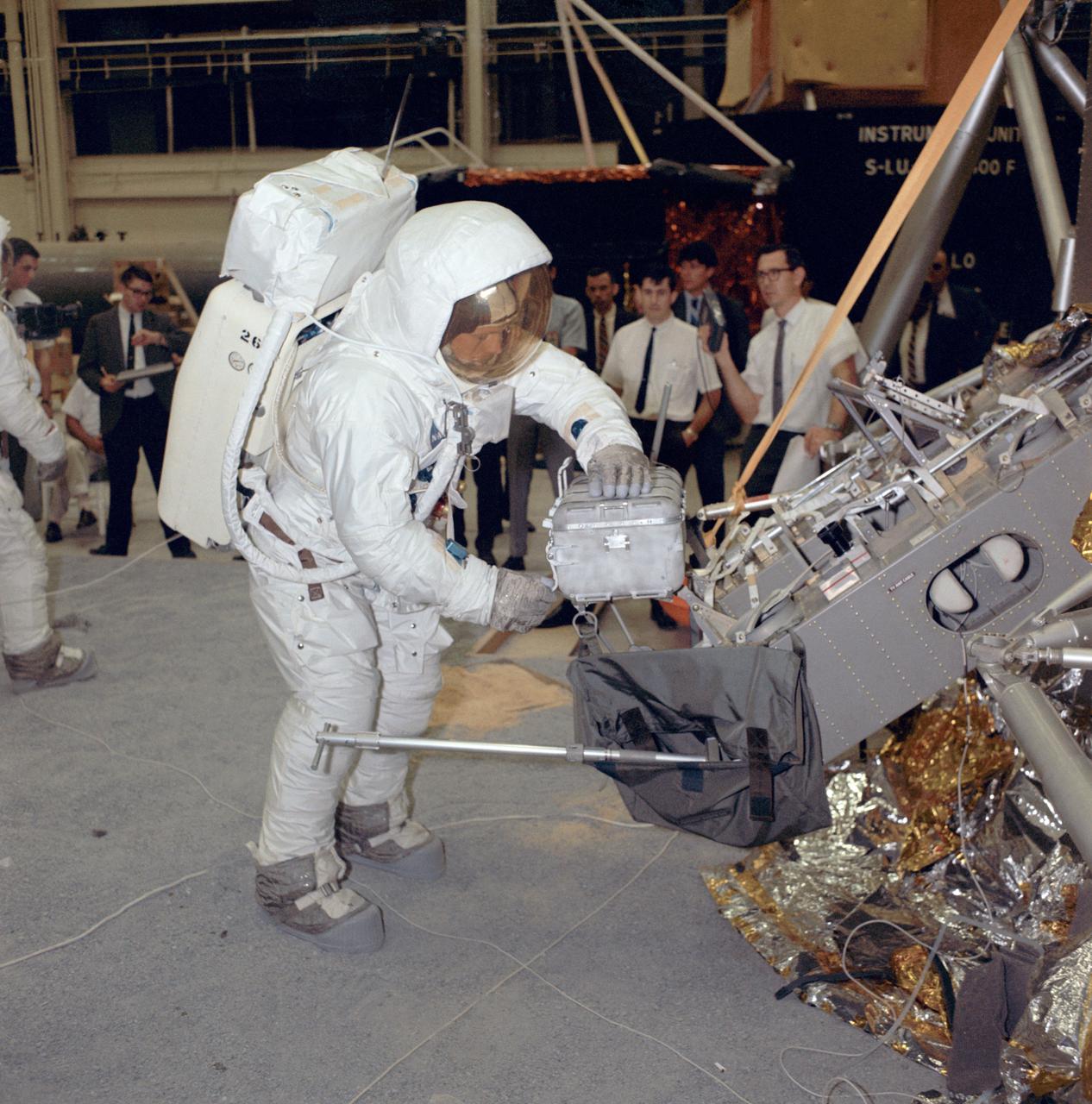
Apollo 11 commander Neil Armstrong works with an Apollo Lunar Sample Return Container during a two-and-a-half-hour lunar surface simulation training exercise. The image was taken on Apr. 18, 1969, in Building 9 at the Manned Spacecraft Center in Houston, Texas. The sample tubes carried by NASA's Mars 2020 Perseverance rover are destined to carry the first samples in history from another planet back to Earth. Future scientists will use these carefully selected representatives of Martian rock and regolith (broken rock and dust), to look for evidence of potential microbial life present in Mars' ancient past and to answer other key questions about Mars and its history. Perseverance will land at Mars' Jezero Crater on Feb. 18, 2021. https://photojournal.jpl.nasa.gov/catalog/PIA24297
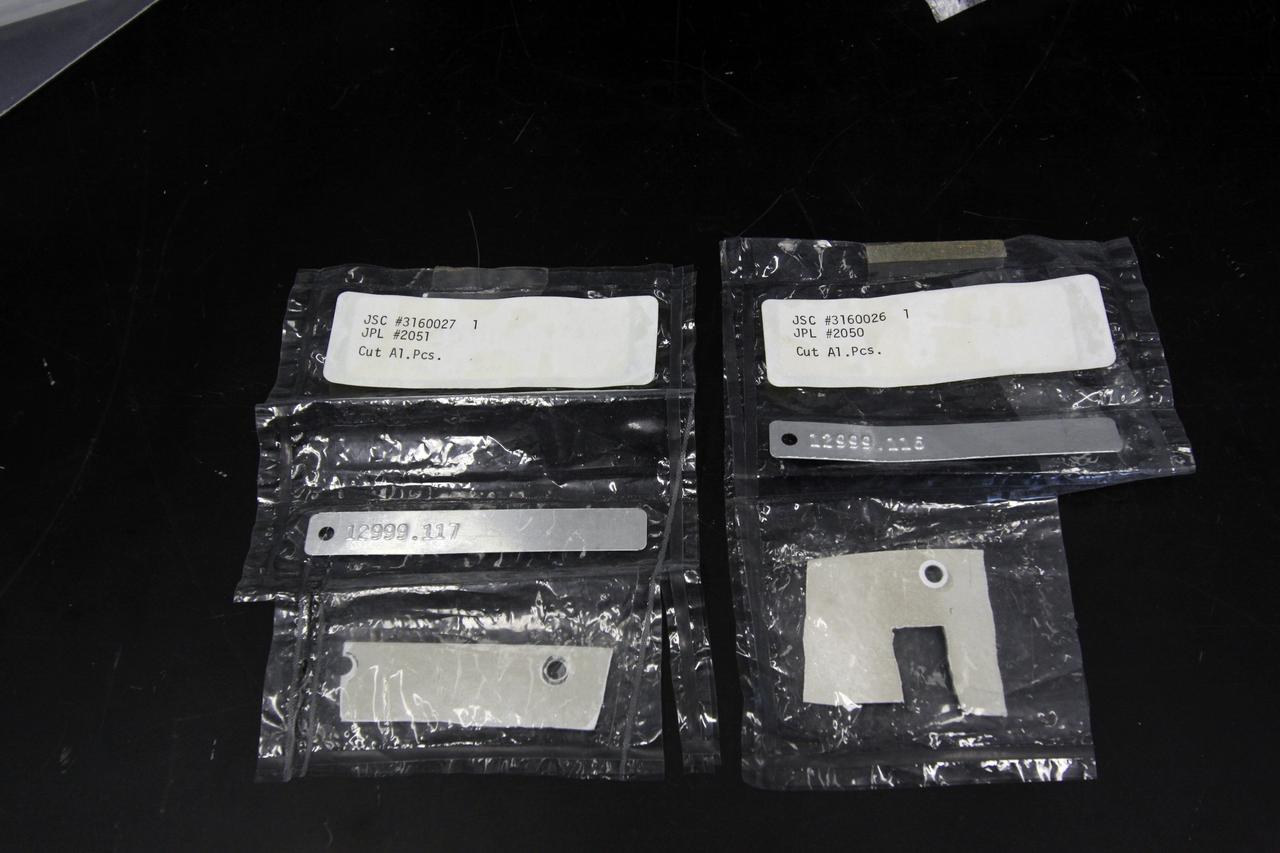
CAPE CANAVERAL, Fla. – In the Granular Mechanics and Regolith Operations (GMRO) Lab at NASA's Kennedy Space Center in Florida, pieces of the Surveyor 3 spacecraft returned from the lunar surface on the Apollo 12 mission are available for examination by the lab's staff. The GMRO Lab is one of several labs located in NASA's Space Life Sciences Laboratory (SLSL) facility. The lab is staffed by three physicists, six mechanical or aerospace engineers and several technicians who are studying how the rocket exhaust of landing vehicles affects lunar and Martian science missions, including the sandblasting of instruments with soil and dust ejecta and the disturbance or contamination of soil beneath the lander. For more information on the GMRO Lab, see p. 7 of the Spaceport News dated Nov. 11, 2011, at http://www.nasa.gov/centers/kennedy/pdf/603285main_nov11-2011.pdf. Photo credit: NASA/Jim Grossmann
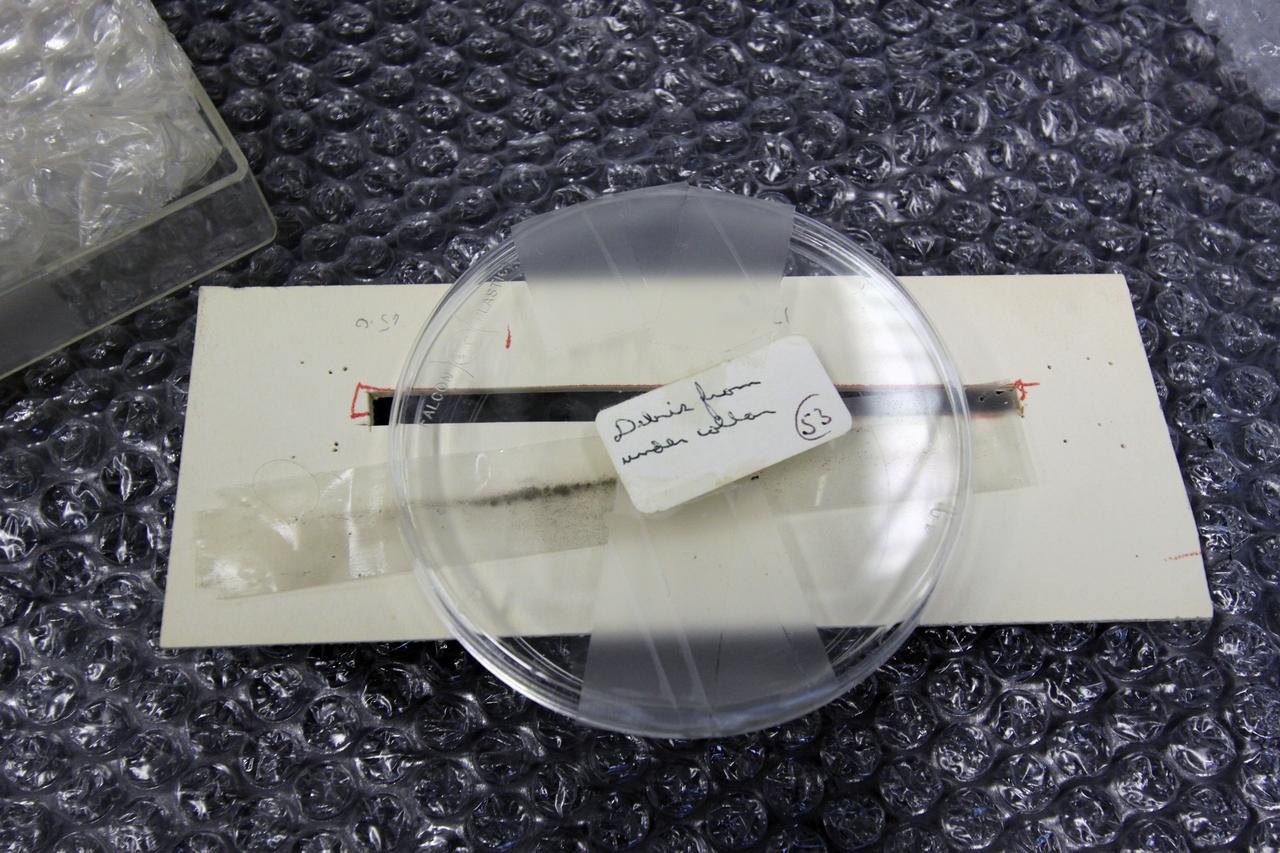
CAPE CANAVERAL, Fla. – In the Granular Mechanics and Regolith Operations (GMRO) Lab at NASA's Kennedy Space Center in Florida, a piece of the Surveyor 3 spacecraft returned from the lunar surface on the Apollo 12 mission is available for examination by the lab's staff. The GMRO Lab is one of several labs located in NASA's Space Life Sciences Laboratory (SLSL) facility. The lab is staffed by three physicists, six mechanical or aerospace engineers and several technicians who are studying how the rocket exhaust of landing vehicles affects lunar and Martian science missions, including the sandblasting of instruments with soil and dust ejecta and the disturbance or contamination of soil beneath the lander. For more information on the GMRO Lab, see p. 7 of the Spaceport News dated Nov. 11, 2011, at http://www.nasa.gov/centers/kennedy/pdf/603285main_nov11-2011.pdf. Photo credit: NASA/Jim Grossmann
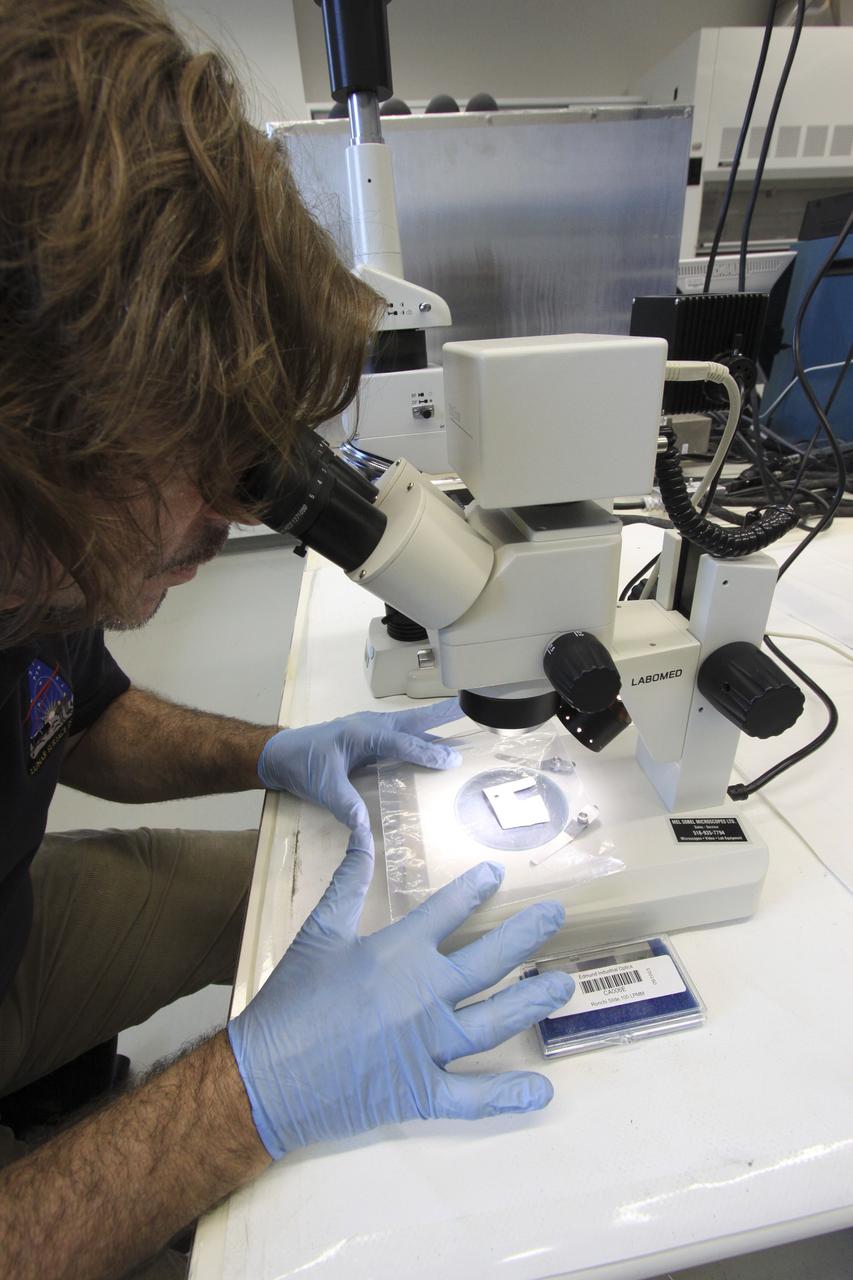
CAPE CANAVERAL, Fla. – In the Granular Mechanics and Regolith Operations (GMRO) Lab at NASA's Kennedy Space Center in Florida, Dr. Philip Metzger examines under a microscope a piece of the Surveyor 3 spacecraft returned from the lunar surface on the Apollo 12 mission. The GMRO Lab is one of several labs located in NASA's Space Life Sciences Laboratory (SLSL) facility. The lab is staffed by three physicists, six mechanical or aerospace engineers and several technicians who are studying how the rocket exhaust of landing vehicles affects lunar and Martian science missions, including the sandblasting of instruments with soil and dust ejecta and the disturbance or contamination of soil beneath the lander. For more information on the GMRO Lab, see p. 7 of the Spaceport News dated Nov. 11, 2011, at http://www.nasa.gov/centers/kennedy/pdf/603285main_nov11-2011.pdf. Photo credit: NASA/Jim Grossmann

NASA Lunar Atmosphere and Dust Environment Explorer (LADEE) Program Scientist Sarah Noble talks during a NASA Social about the LADEE mission at NASA Wallops Flight Facility, Thursday, Sept. 5, 2013 on Wallops Island, VA. Fifty of NASA's social media followers are attending a two-day event in support of the LADEE launch. Data from LADEE will provide unprecedented information about the environment around the moon and give scientists a better understanding of other planetary bodies in our solar system and beyond. LADEE is scheduled to launch at 11:27 p.m. Friday, Sept. 6, from NASA's Wallops Flight Facility. Photo Credit: (NASA/Carla Cioffi)
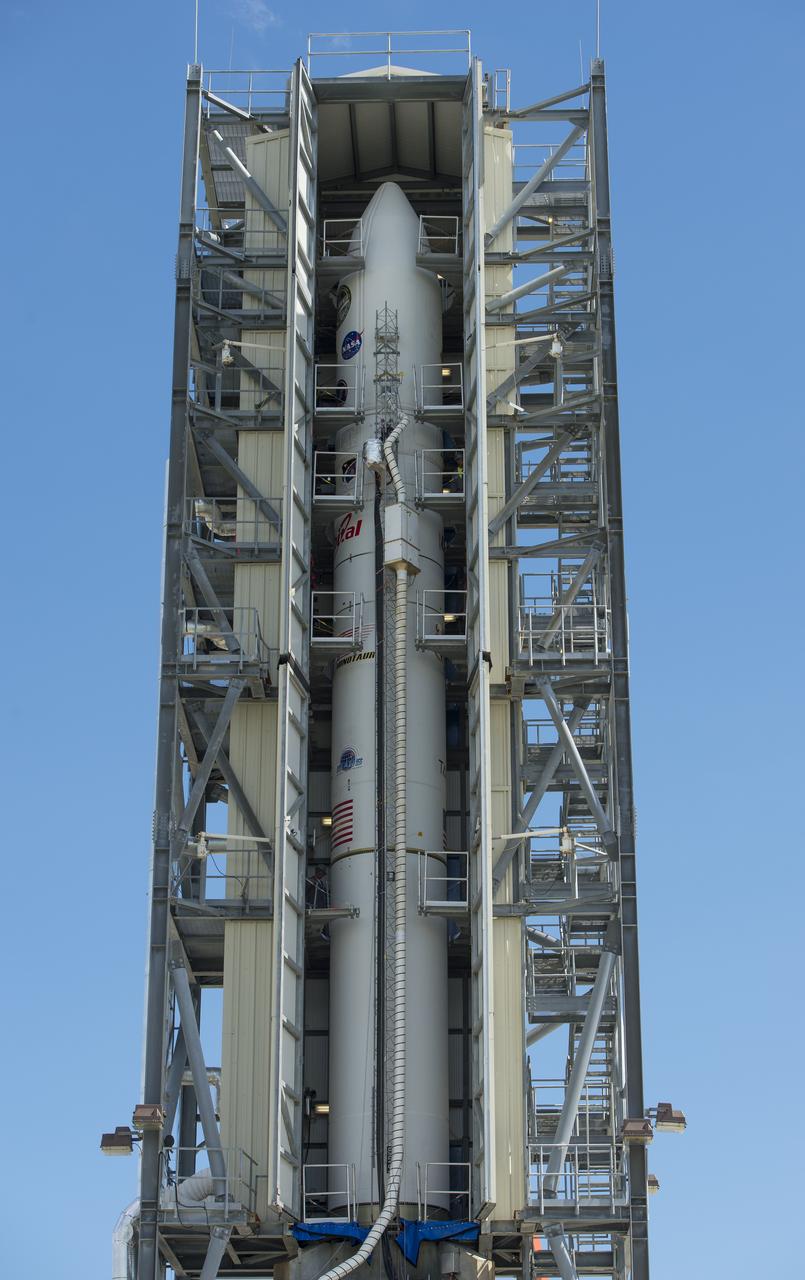
The doors of the gantry support structure are opened to reveal the Minotaur V rocket on Pad 0B at the Mid-Atlantic Regional Spaceport (MARS) at NASA's Wallops Flight Facility, Friday, Sept. 6, 2013 in Virginia. The Minotaur V will launch NASA's Lunar Atmosphere and Dust Environment Explorer (LADEE). LADEE is a robotic mission that will orbit the moon where it will provide unprecedented information about the environment around the moon and give scientists a better understanding of other planetary bodies in our solar system and beyond. LADEE is scheduled to launch at 11:27 p.m. Friday, Sept. 6, from NASA's Wallops Flight Facility. Photo Credit: (NASA/Carla Cioffi)
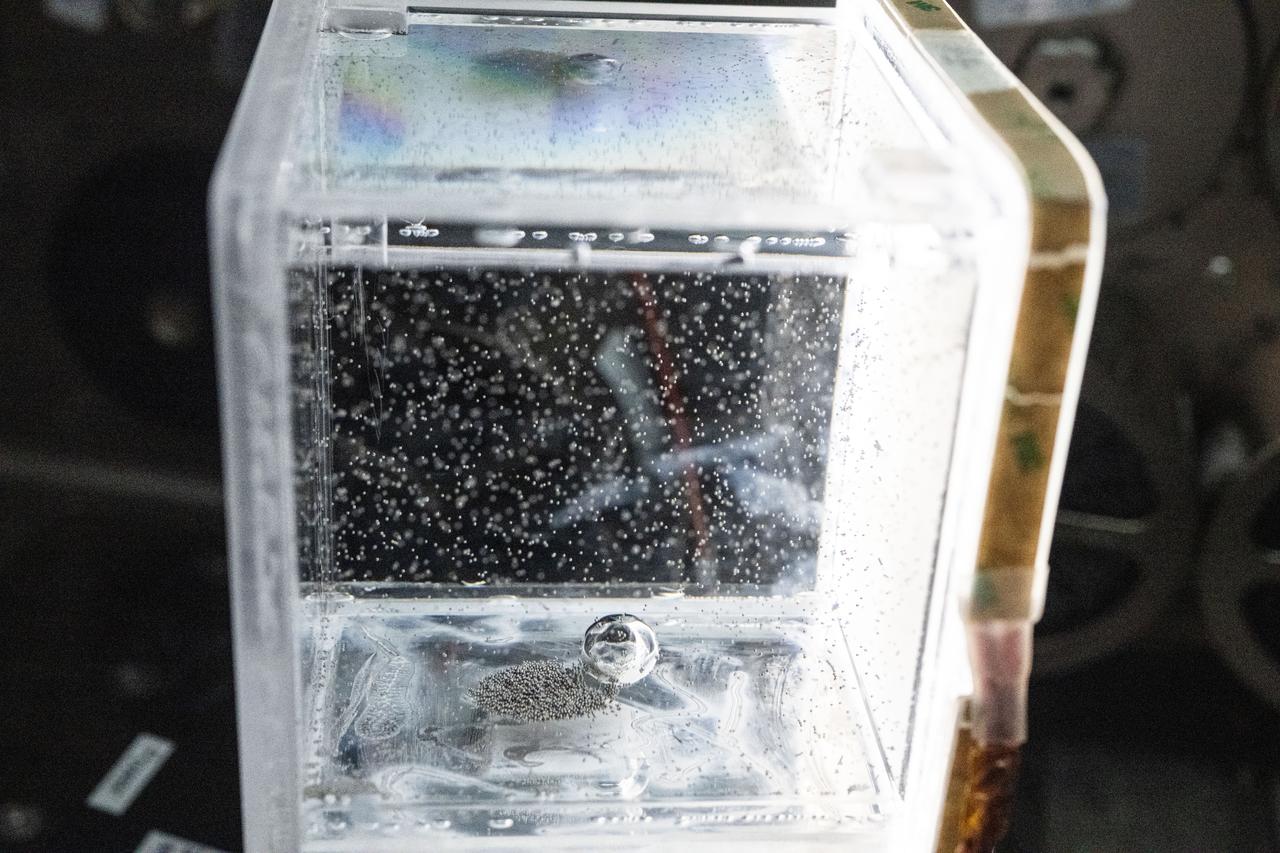
iss073e0917376 (Oct. 20, 2025) --- Tiny ball bearings surround a larger central bearing during the Fluid Particles experiment, conducted inside the Microgravity Science Glovebox (MSG) aboard the International Space Station’s Destiny laboratory module. A bulk container installed in the MSG, filled with viscous fluid and embedded particles, is subjected to oscillating frequencies to observe how the particles cluster and form larger structures in microgravity. Insights from this research may advance fire suppression, lunar dust mitigation, and plant growth in space. On Earth, the findings could inform our understanding of pollen dispersion, algae blooms, plastic pollution, and sea salt transport during storms.

A participant at a NASA Social on the Lunar Atmosphere and Dust Environment Explorer (LADEE) mission asks NASA Associate Administrator for the Science Mission Directorate John Grunsfeld a question, Thursday, Sept. 5, 2013 on Wallops Island, VA. Fifty of NASA's social media followers are attending a two-day event in support of the LADEE launch. Data from LADEE will provide unprecedented information about the environment around the moon and give scientists a better understanding of other planetary bodies in our solar system and beyond. LADEE is scheduled to launch at 11:27 p.m. Friday, Sept. 6, from NASA's Wallops Flight Facility. Photo Credit: (NASA/Carla Cioffi)
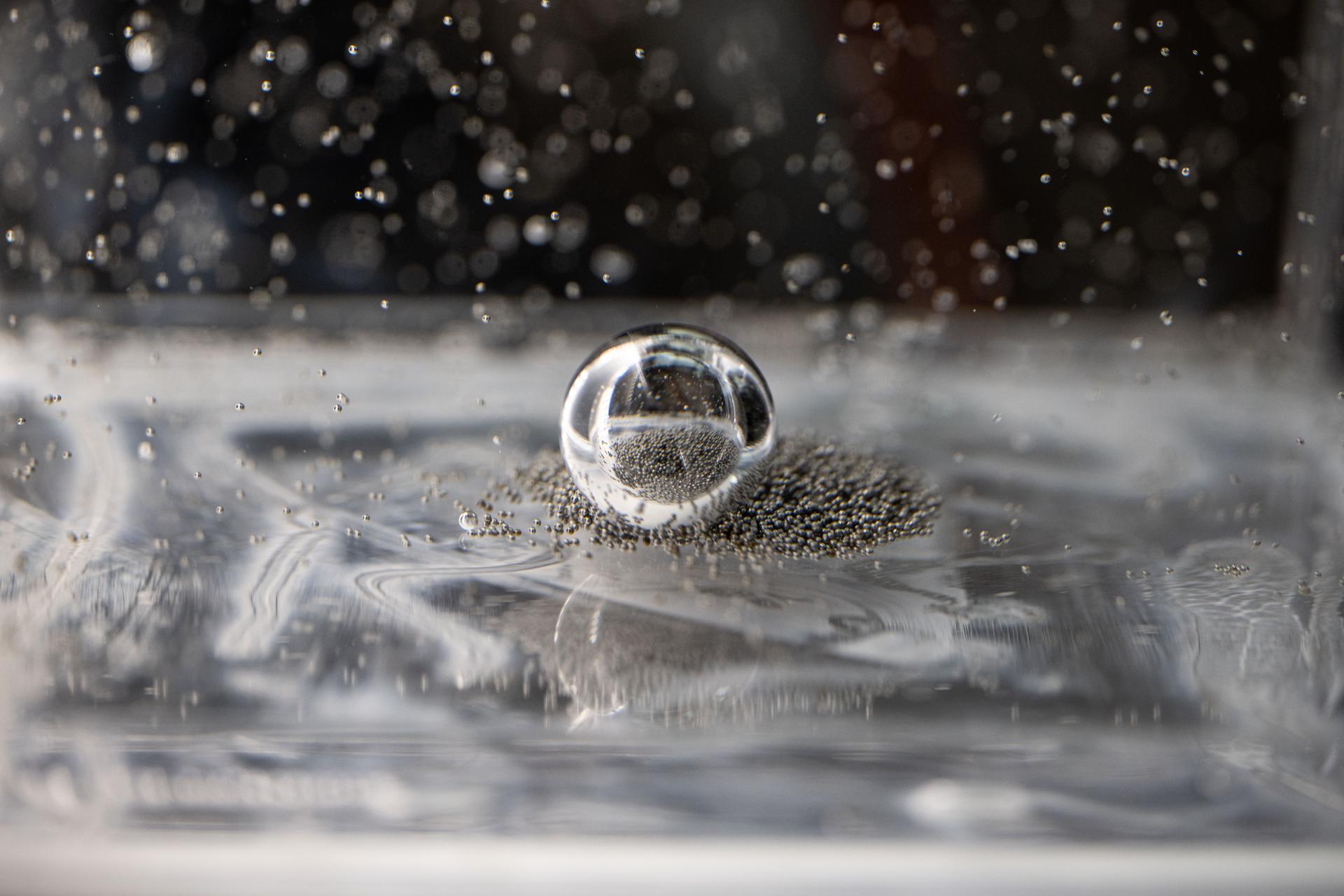
iss073e0917381 (Oct. 20, 2025) --- Tiny ball bearings surround a larger central bearing during the Fluid Particles experiment, conducted inside the Microgravity Science Glovebox (MSG) aboard the International Space Station’s Destiny laboratory module. A bulk container installed in the MSG, filled with viscous fluid and embedded particles, is subjected to oscillating frequencies to observe how the particles cluster and form larger structures in microgravity. Insights from this research may advance fire suppression, lunar dust mitigation, and plant growth in space. On Earth, the findings could inform our understanding of pollen dispersion, algae blooms, plastic pollution, and sea salt transport during storms.
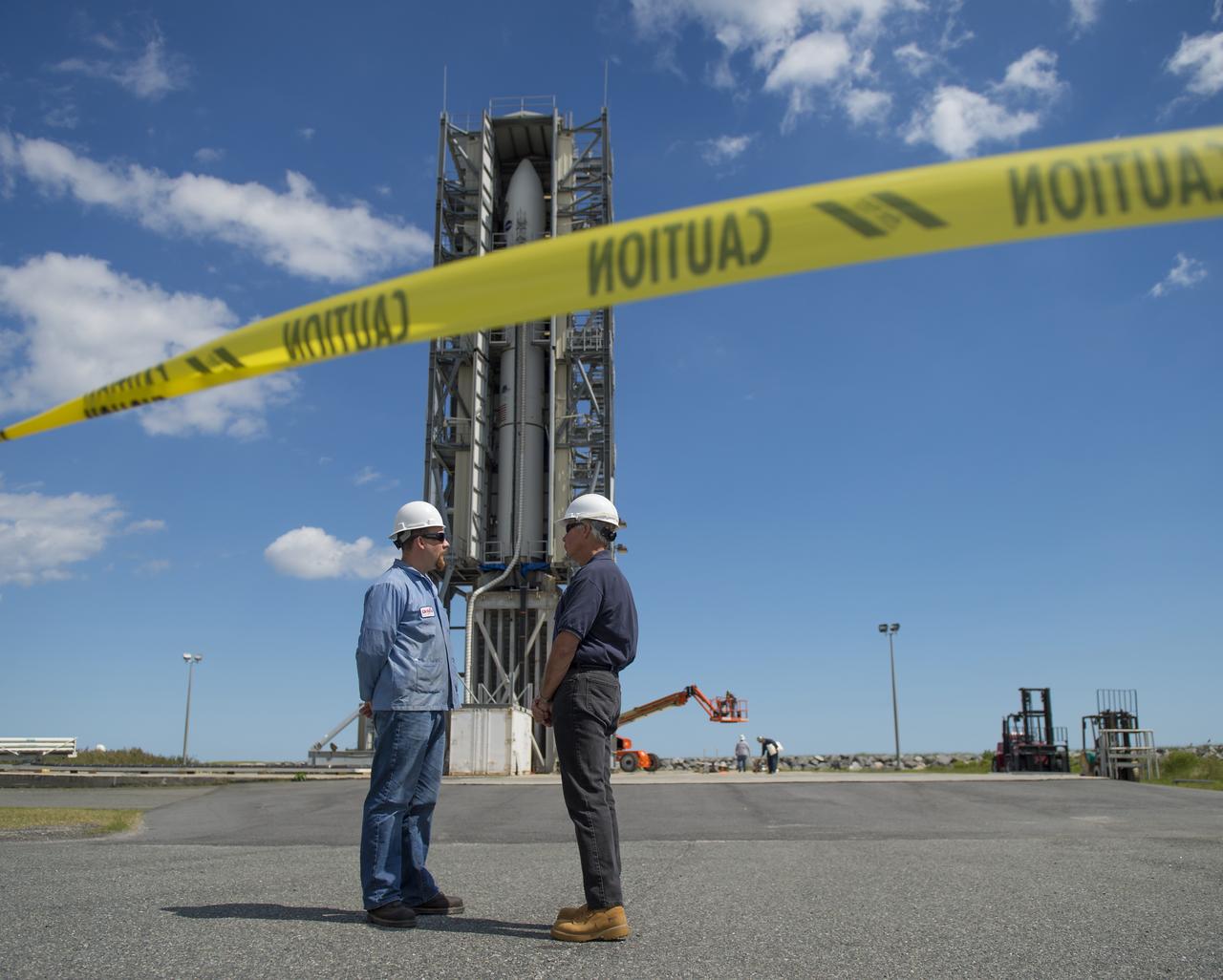
The doors of the gantry support structure are opened to reveal the Minotaur V rocket on Pad 0B at the Mid-Atlantic Regional Spaceport (MARS) at NASA's Wallops Flight Facility, Friday, Sept. 6, 2013 in Virginia. The Minotaur V will launch NASA's Lunar Atmosphere and Dust Environment Explorer (LADEE). LADEE is a robotic mission that will orbit the moon where it will provide unprecedented information about the environment around the moon and give scientists a better understanding of other planetary bodies in our solar system and beyond. LADEE is scheduled to launch at 11:27 p.m. Friday, Sept. 6, from NASA's Wallops Flight Facility. Photo Credit: (NASA/Carla Cioffi)
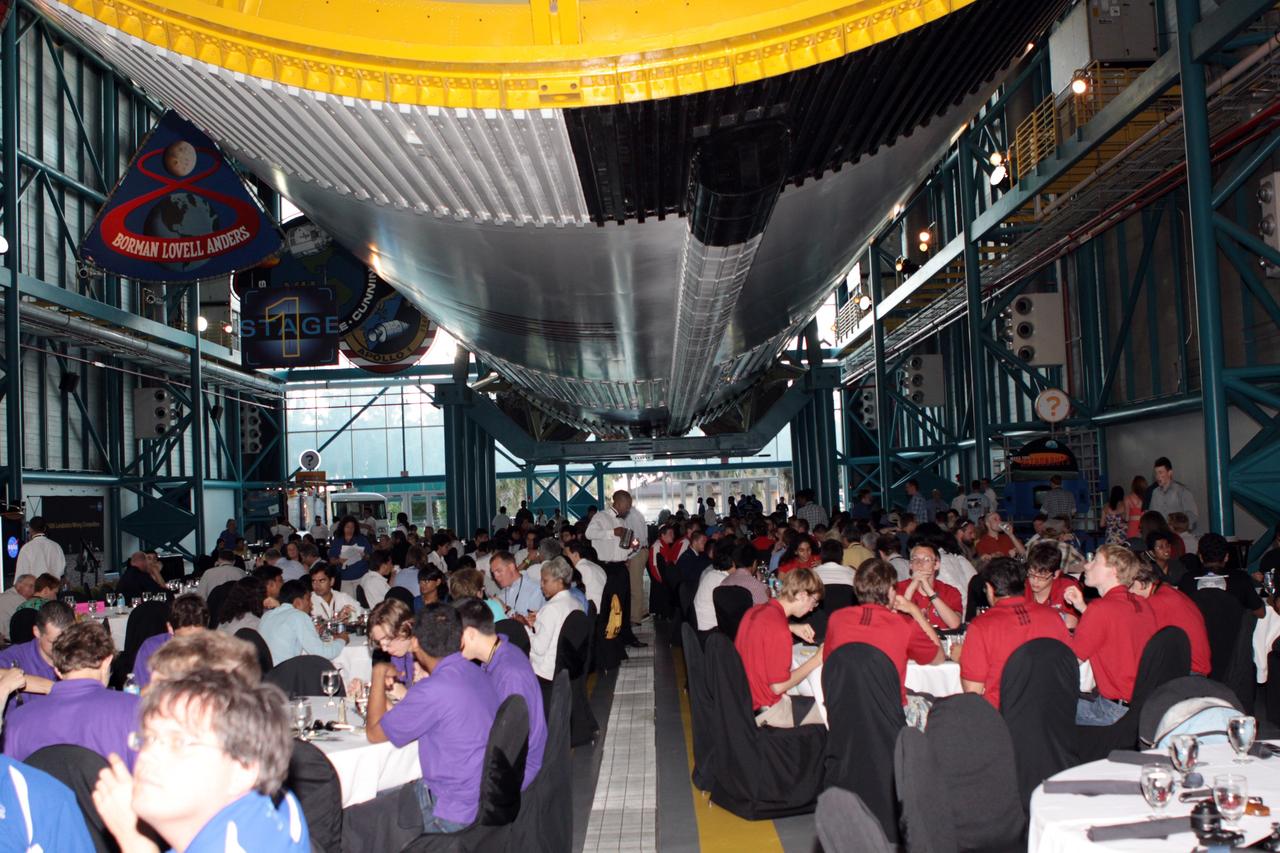
CAPE CANAVERAL, Fla. - Teams taking part in NASA's Lunabotics Mining Competition gather inside the Apollo/Saturn V Center at Kennedy Space Center Visitor Complex in Florida for the awards ceremony at the end of the event. They are seated beneath the first stage of the Saturn V rocket that carried astronauts to the moon. The competition challenged university students to build machines that could collect soil such as the material found on the moon. Working inside the Caterpillar LunArena, the robotic craft dug soil that simulated lunar material. The event was judged by a machine's abilities to collect the soil, its design and operation, size, dust tolerance and its level of autonomy. Photo credit: NASA/Jim Grossmann
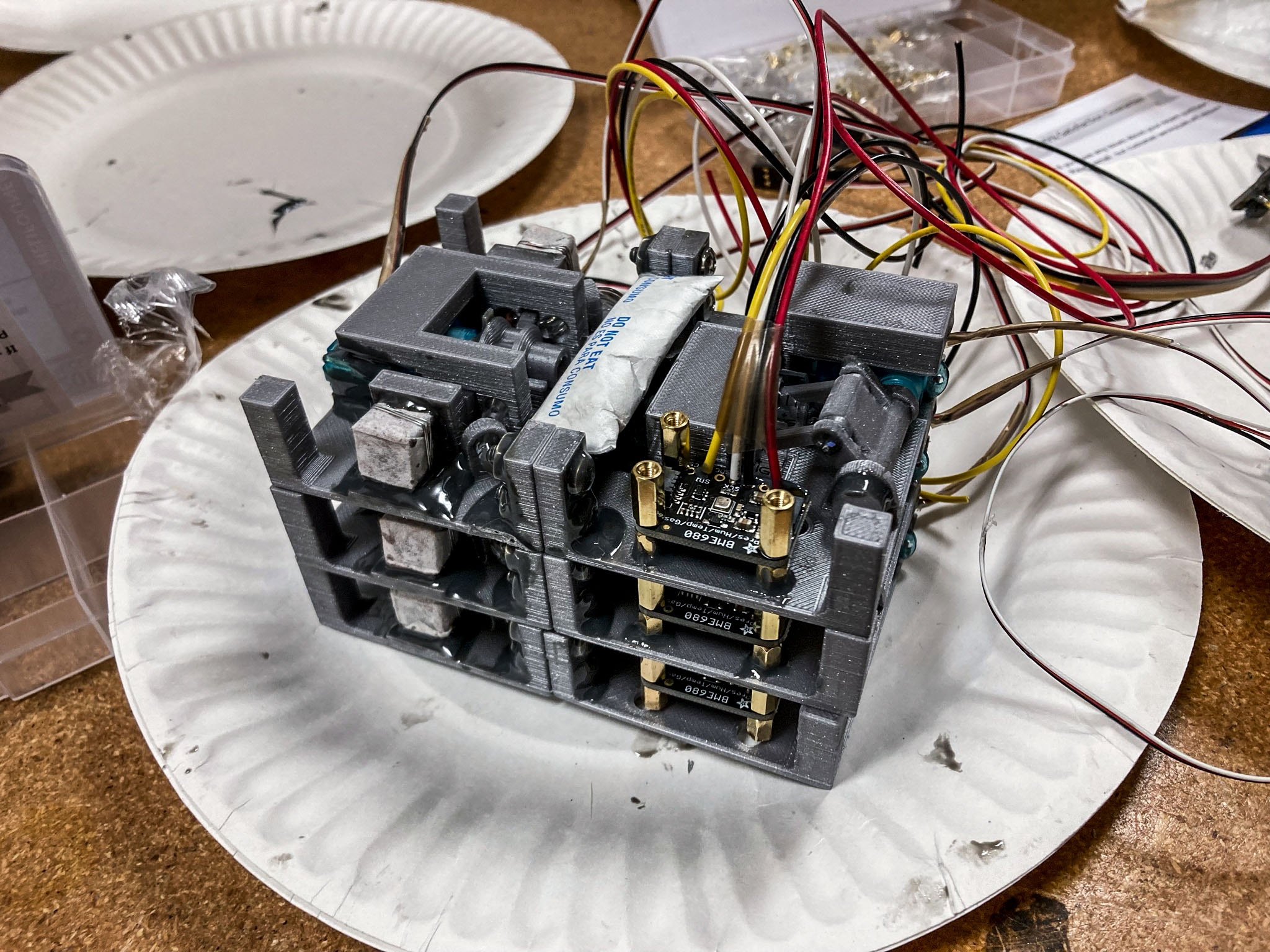
jsc2022e042479 (2/3/2022) --- This image shows three modules of flight hardware for the Biopolymer Research for In-Situ Capabilities investigation, launching aboard SpaceX’s 25th commercial resupply services mission to the International Space Station. The hardware is 3D printed in gray PLA, a desiccant packet is epoxied in the center of the module, and a pressure and humidity sensor is fastened to the left. Each module makes two bricks, for a total of six bricks that will be made in space. This investigation studies how microgravity affects the process of creating biopolymer soil composite (BSC), a concrete alternative that could be made with on-site material such as lunar or Martian dust. Image curtsey of James Wall.