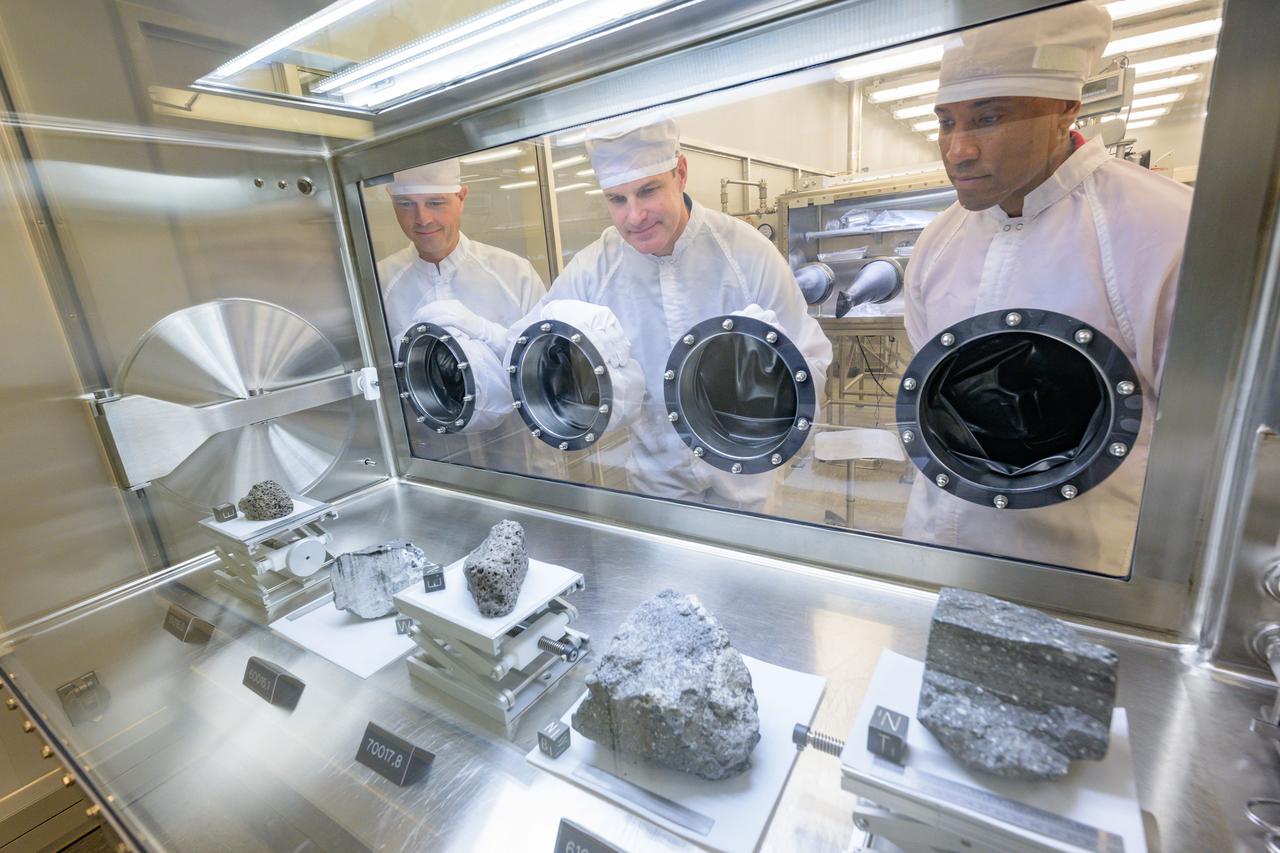
Three Artemis II crew members participate in lunar fundamentals training in the lunar lab at NASA's Johnson Space Center in Houston. Left to right: Reid Wiseman, Jeremy Hansen, Victor Glover. Photo Date: May 9, 2023. Location: Johnson Space Center Building 31 - Lunar Lab. Photographer: NASA?Robert Markowitz
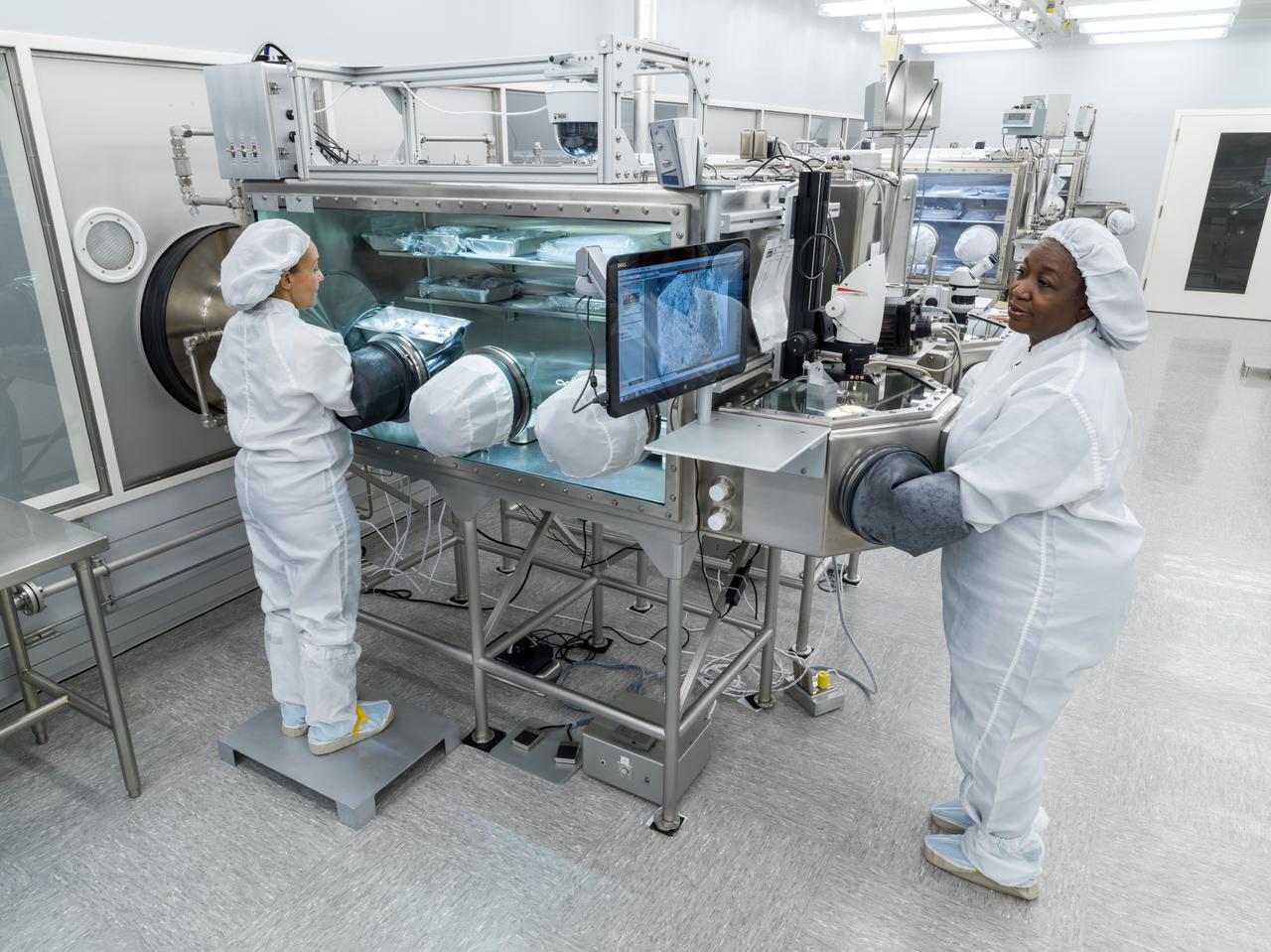
jsc2019e023774 --- Lunar sample processors work in the Lunar Lab at NASA's Johnson Space Center in Houston.
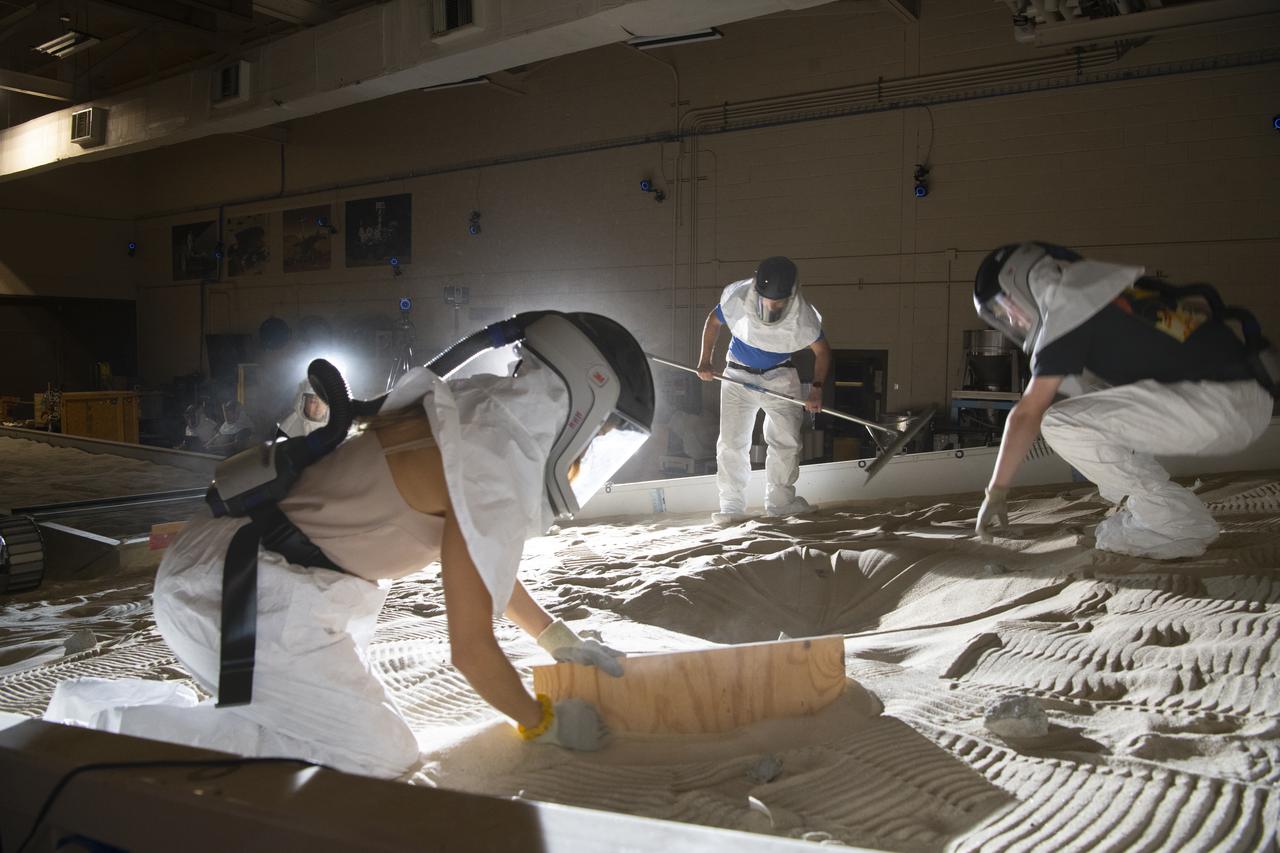
The Simulated Lunar Operations Lab at NASA Glenn Research Center serve to test planetary roving vehicle systems and components in simulated planetary and lunar conditions such as the VIPER Rover.
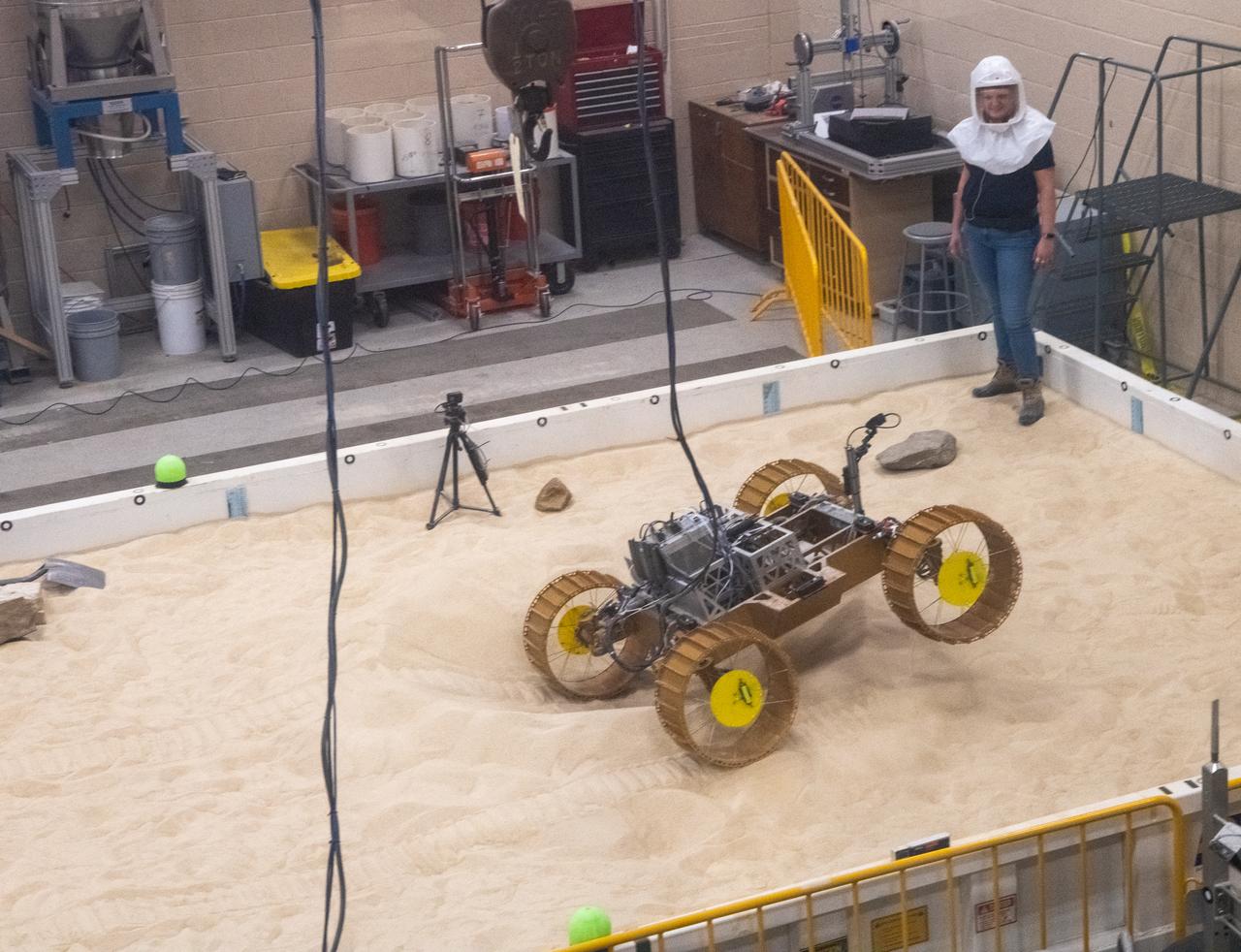
Volatiles Investigating Polar Exploration Rover, VIPER Testing in the Simulated Lunar Operations Lab, SLOPE Laboratory
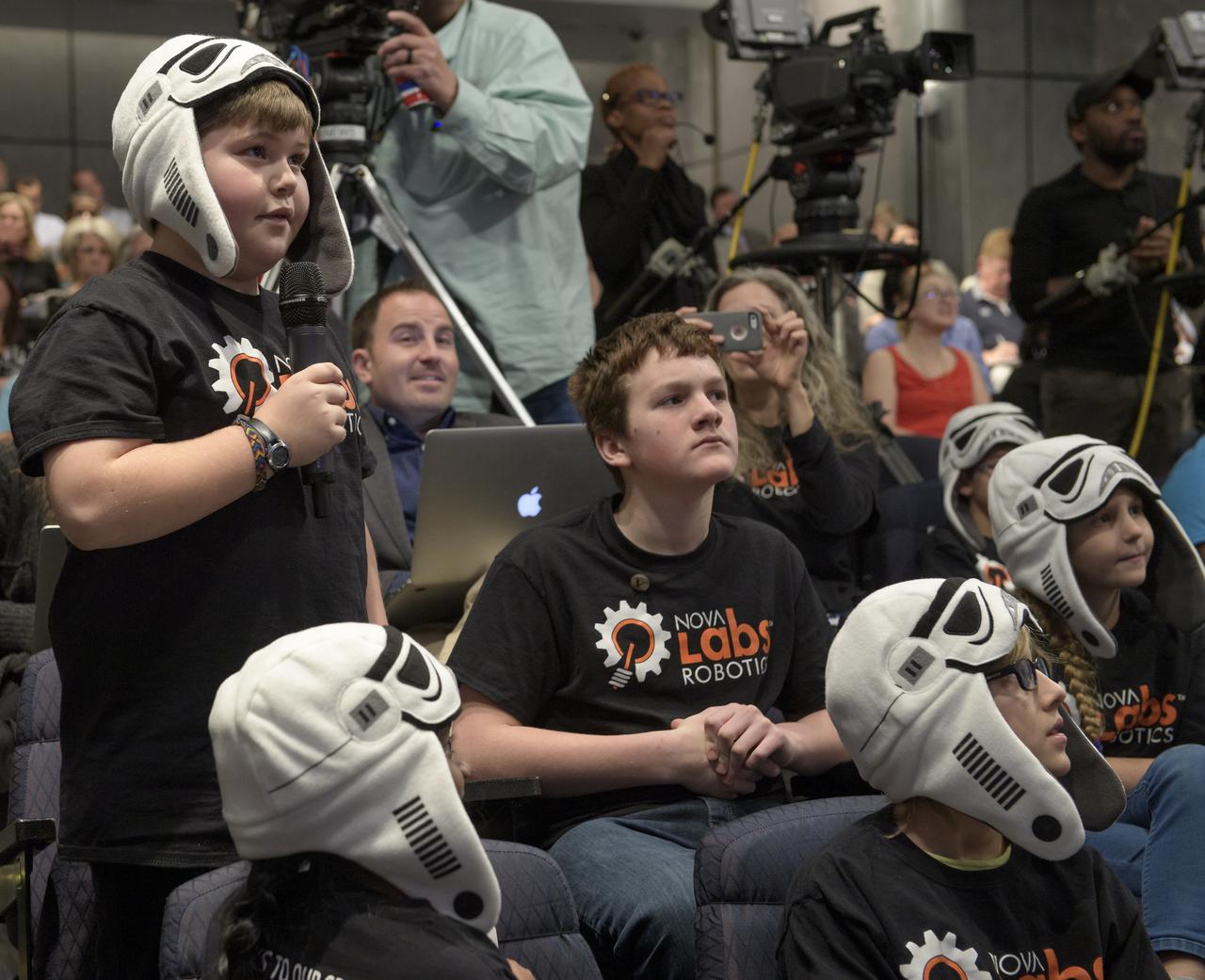
A Nova Labs Robotics "BrainStorm Troopers" team member from Reston, Virginia asks a question during an Commercial Lunar Payload Services (CLPS) announcement, Thursday, Nov. 29, 2018 at NASA Headquarters in Washington. Nine companies will be able to bid on delivering science and technology payloads for NASA, including payload integration and operations, launching from Earth and landing on the surface of the Moon. NASA expects to be one of many customers that will use these commercial landing services. Photo Credit: (NASA/Bill Ingalls)
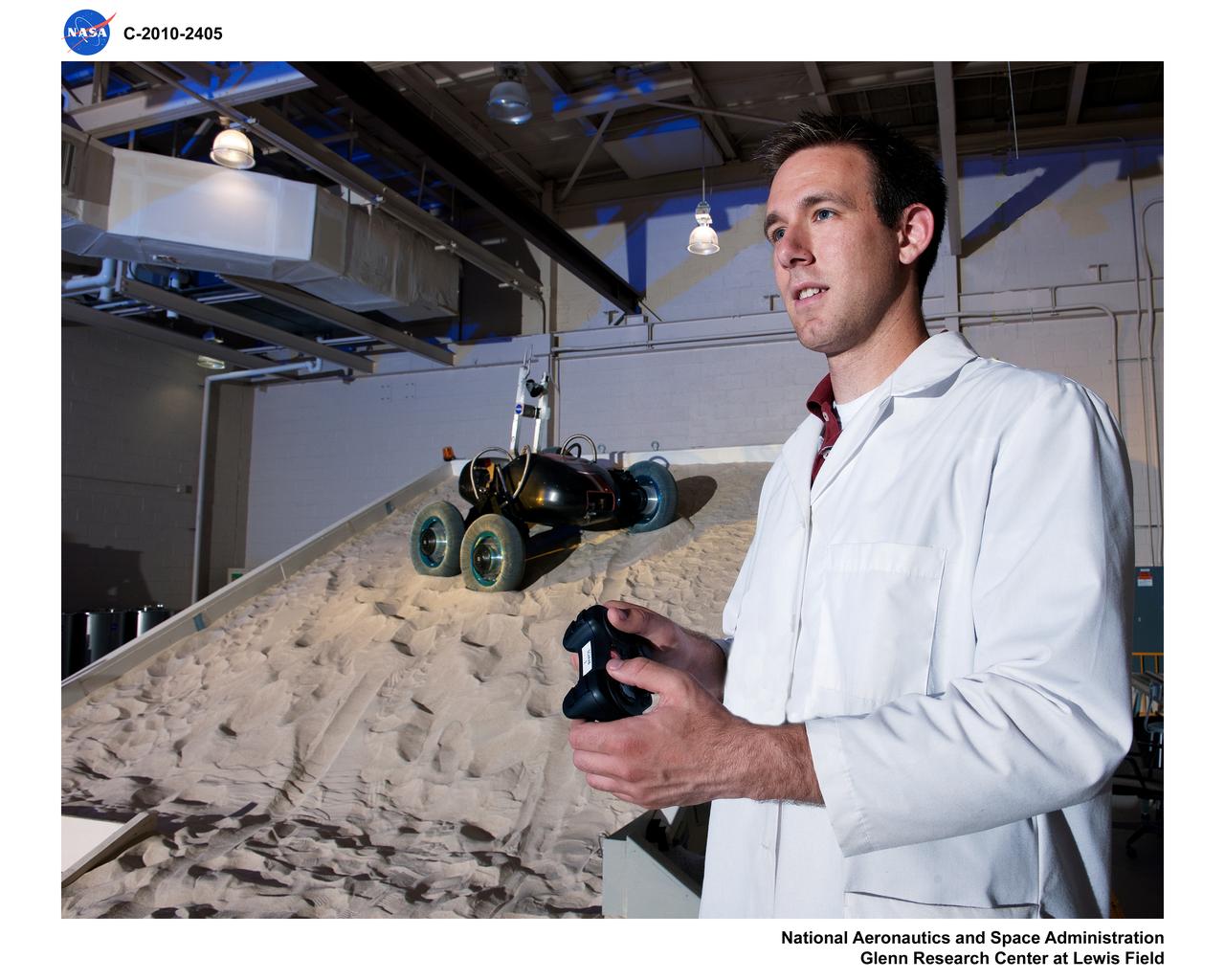
Simulated Lunar Operations Laboratory (SLOPE) Lab; Scarab Lunar Rover
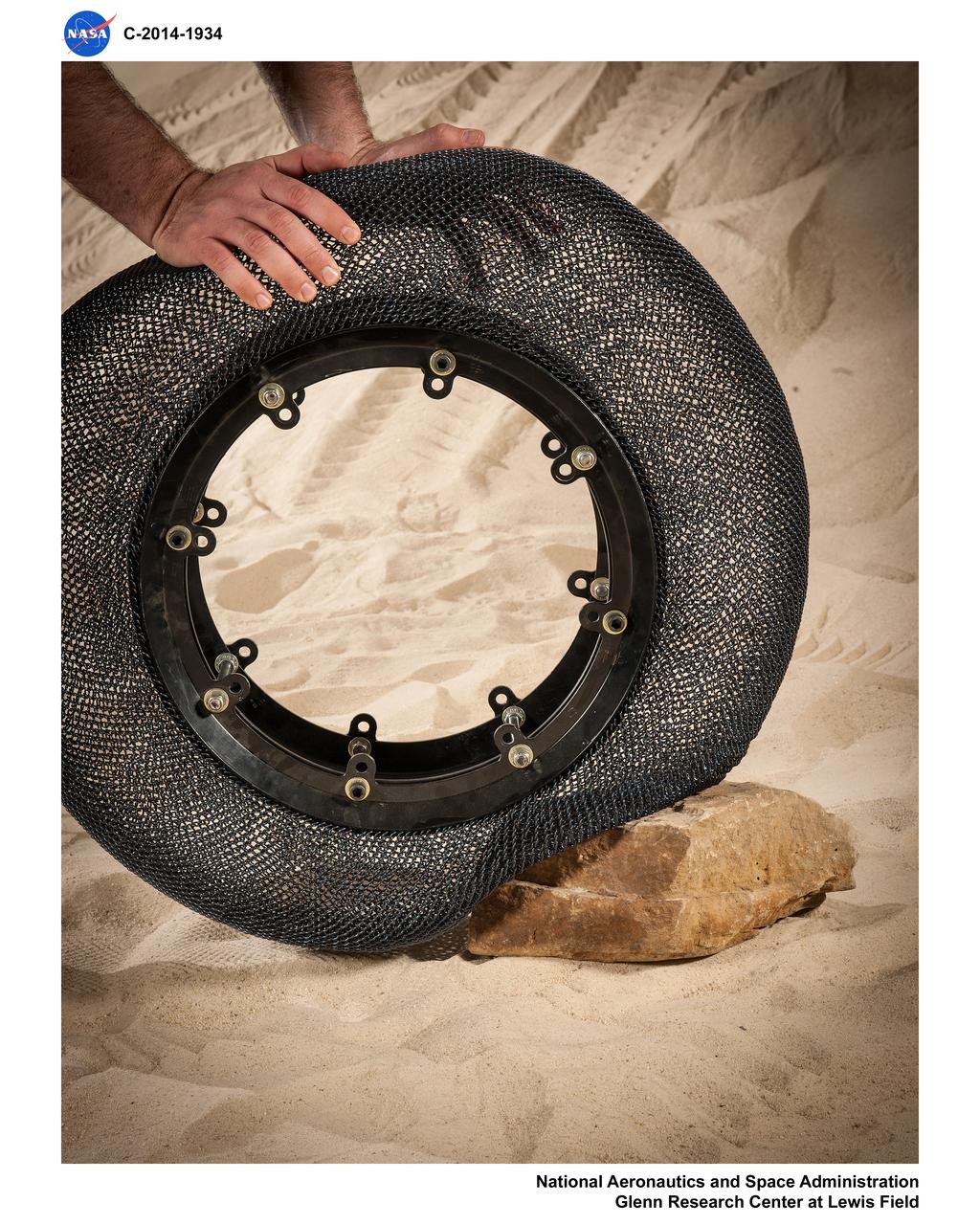
Airless Spring Wheel Prototype in the Simulated Lunar Operations Laboratory, SLOPE Lab
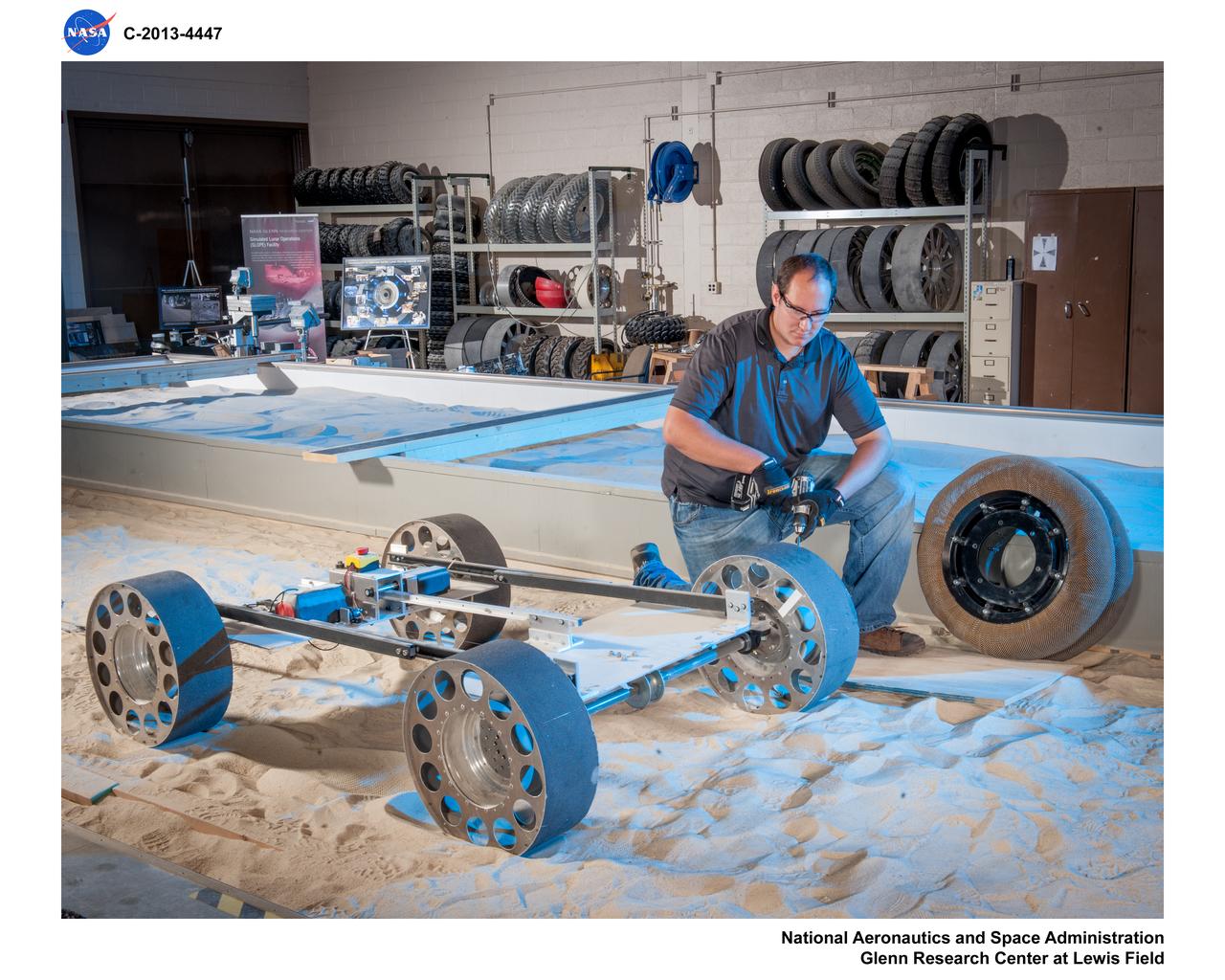
Fabrication of rover spring tires in the Simulated Lunar Operations, SLOPe Lab, Laboratory
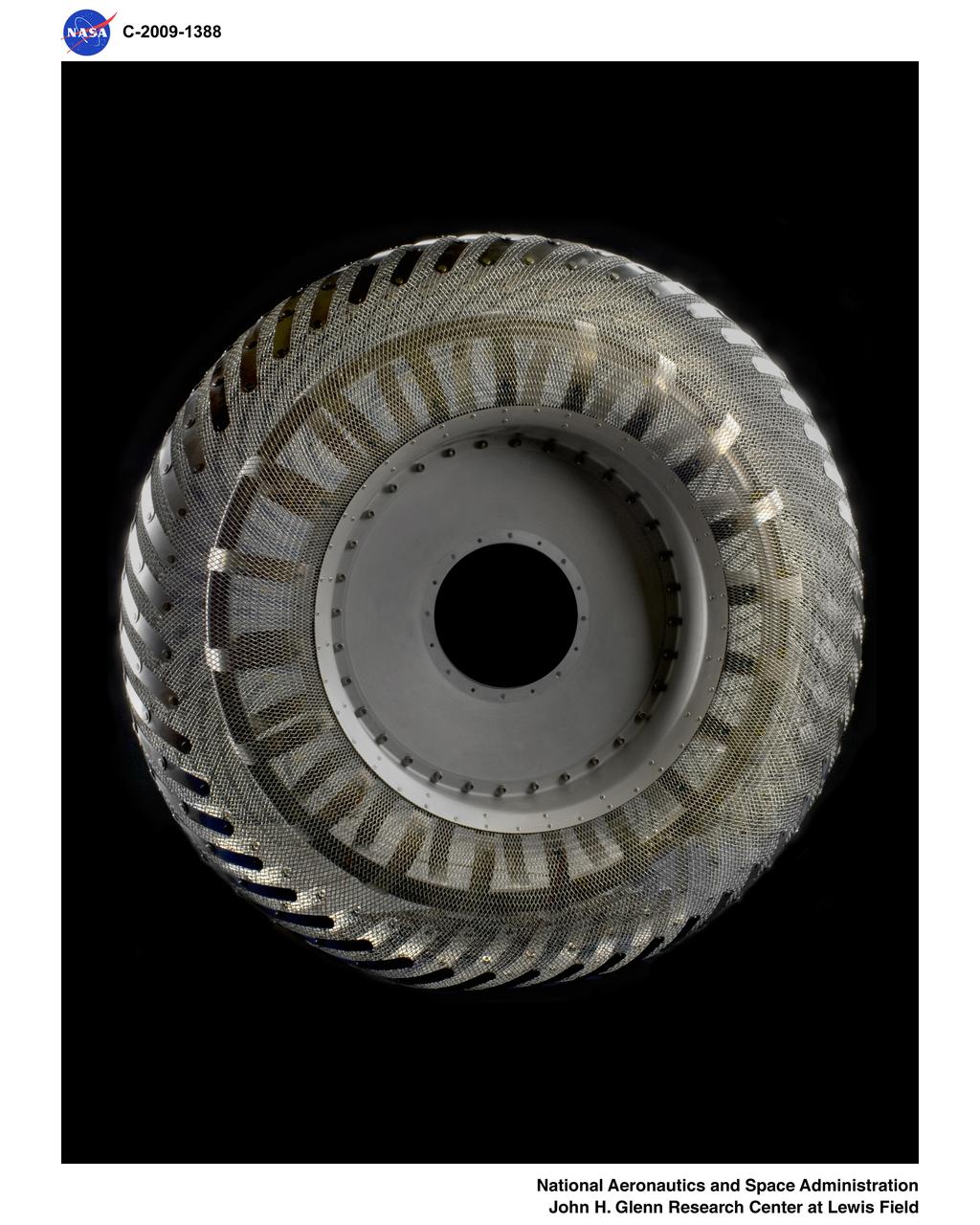
Wire Mesh Tire from the Simulated Lunar Operations Laboratory (SLOPE Lab)
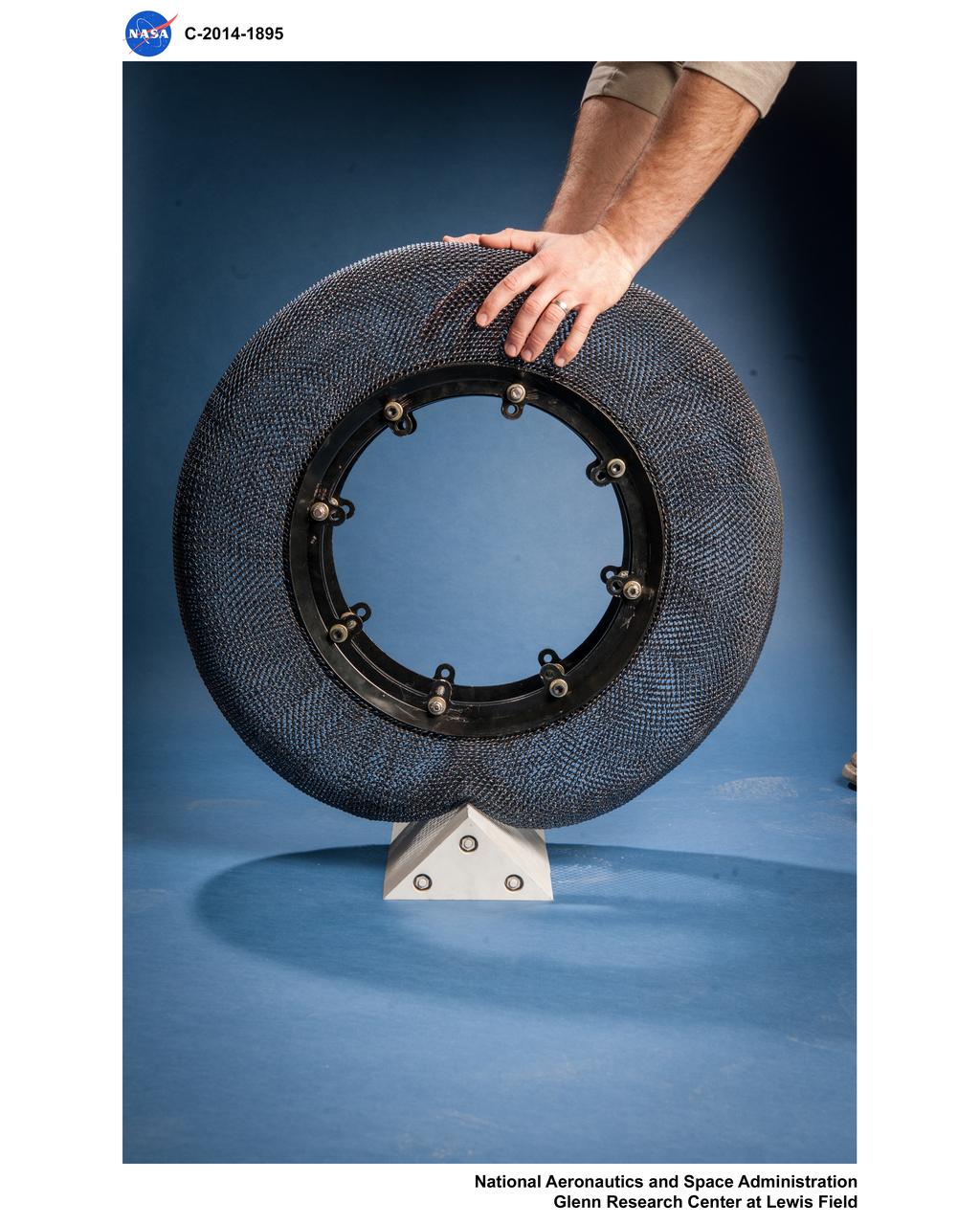
Airless Spring Wheel Prototype in the Simulated Lunar Operations Laboratory, SLOPE Lab
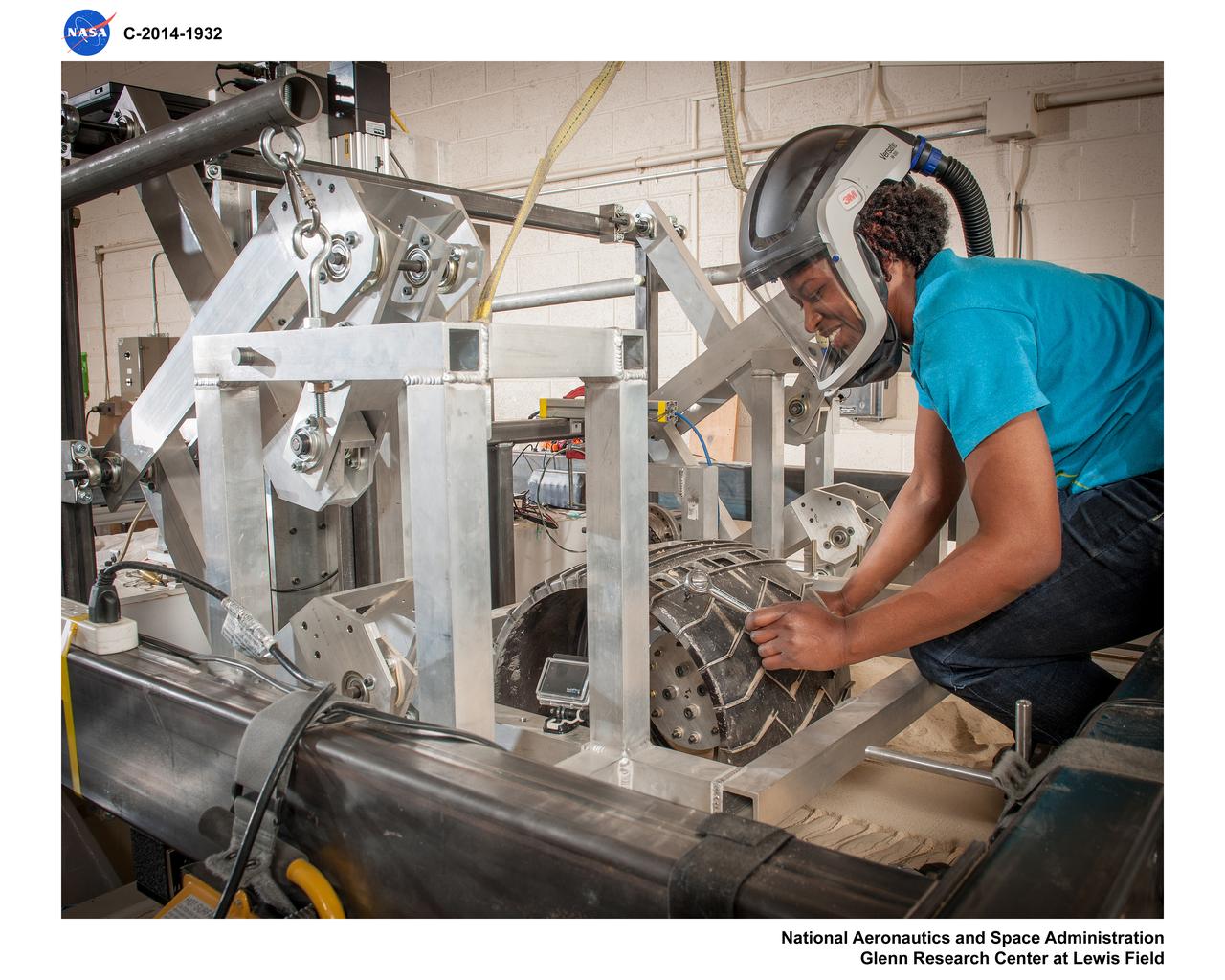
Airless Spring Wheel Prototype in the Simulated Lunar Operations Laboratory, SLOPE Lab
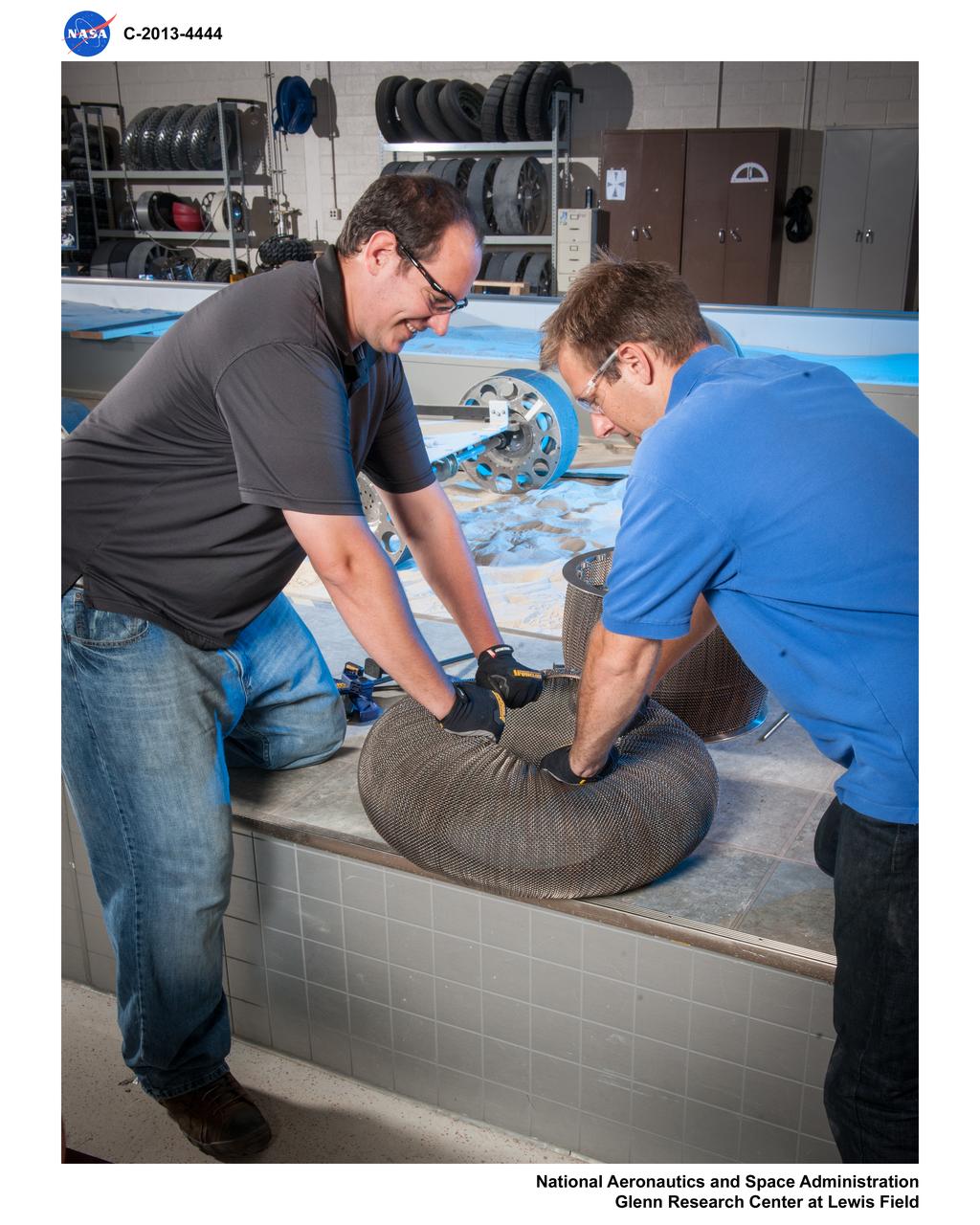
Fabrication of rover spring tires in the Simulated Lunar Operations, SLOPe Lab, Laboratory
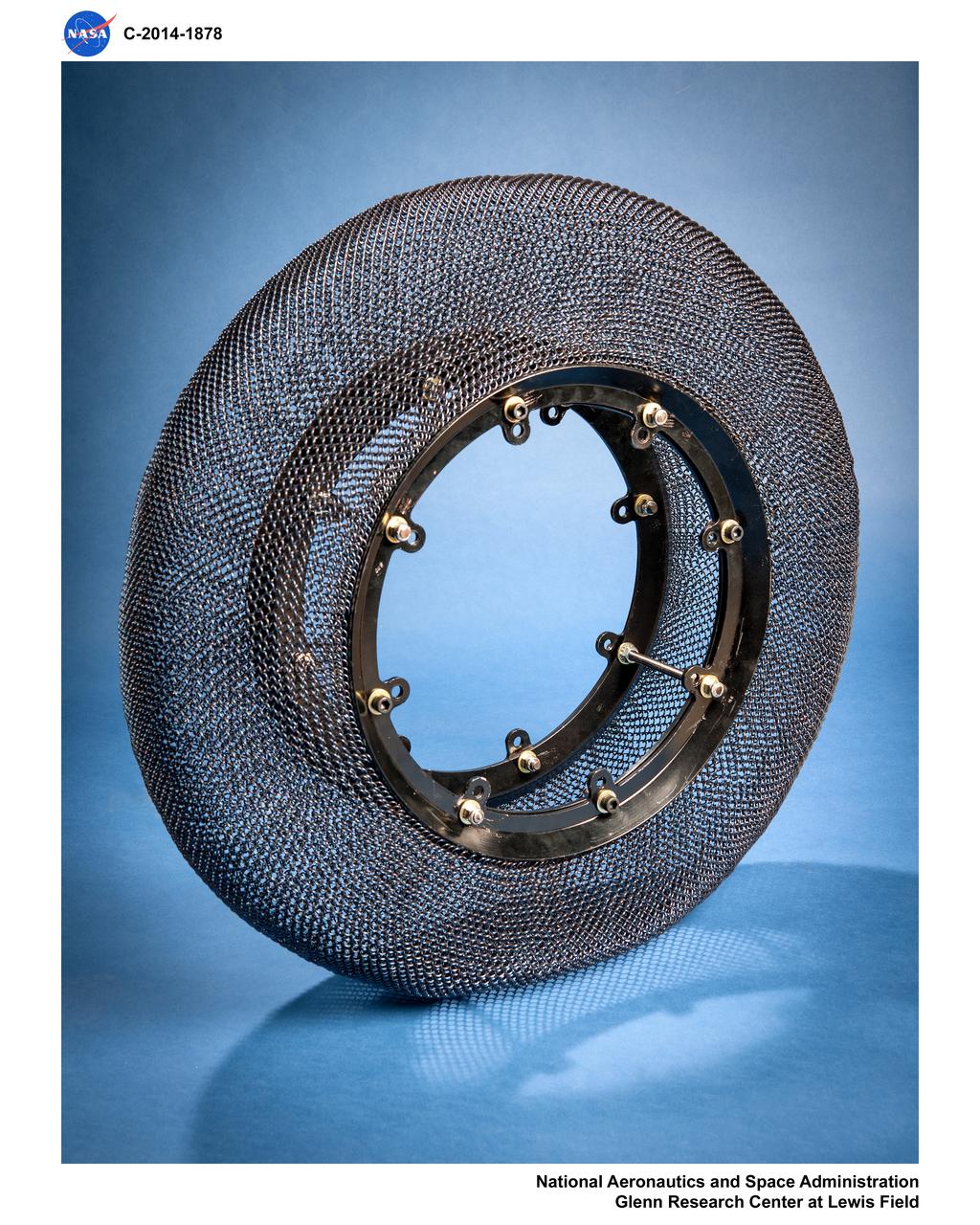
Airless Spring Wheel Prototype in the Simulated Lunar Operations Laboratory, SLOPE Lab
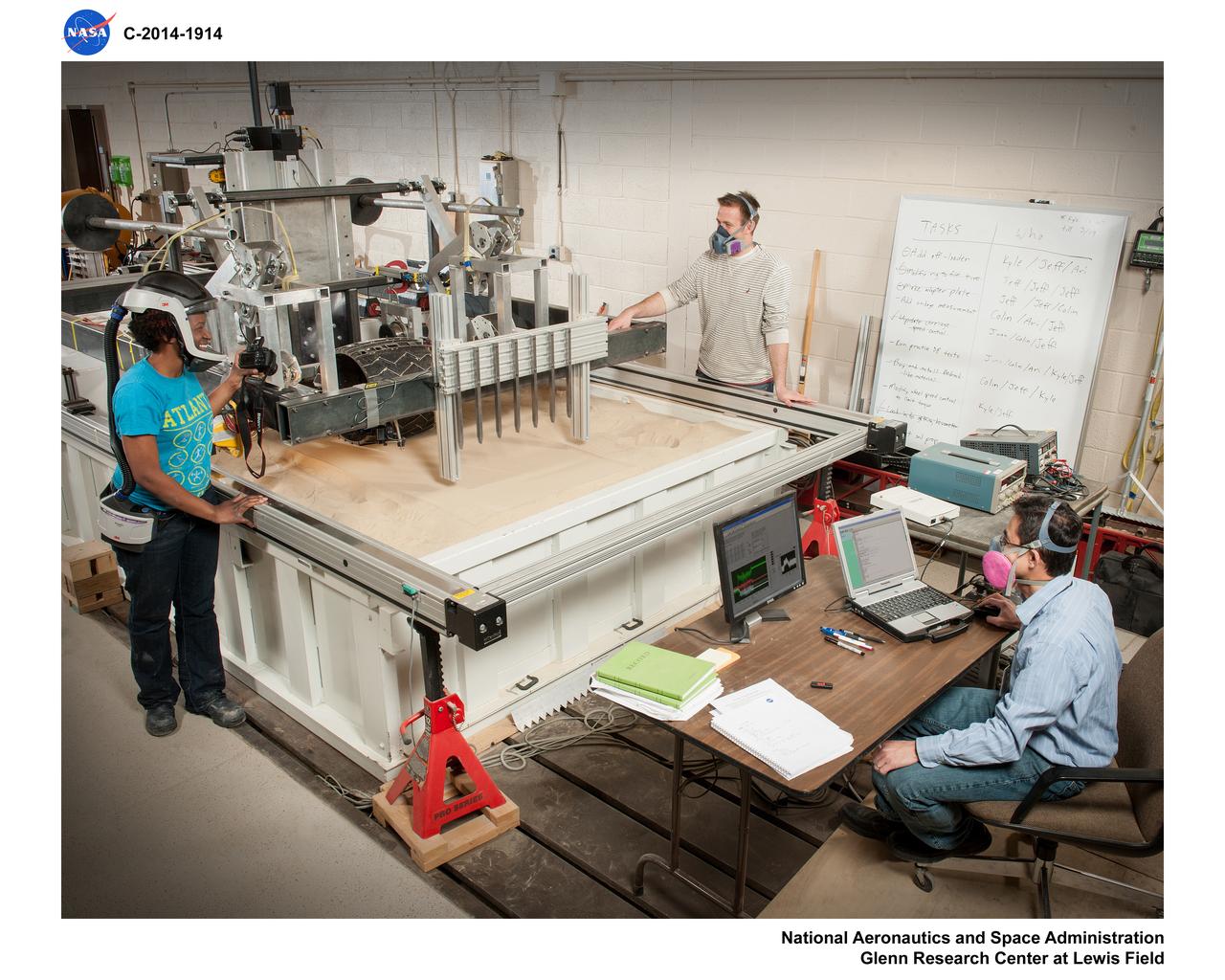
Airless Spring Wheel Prototype in the Simulated Lunar Operations Laboratory, SLOPE Lab
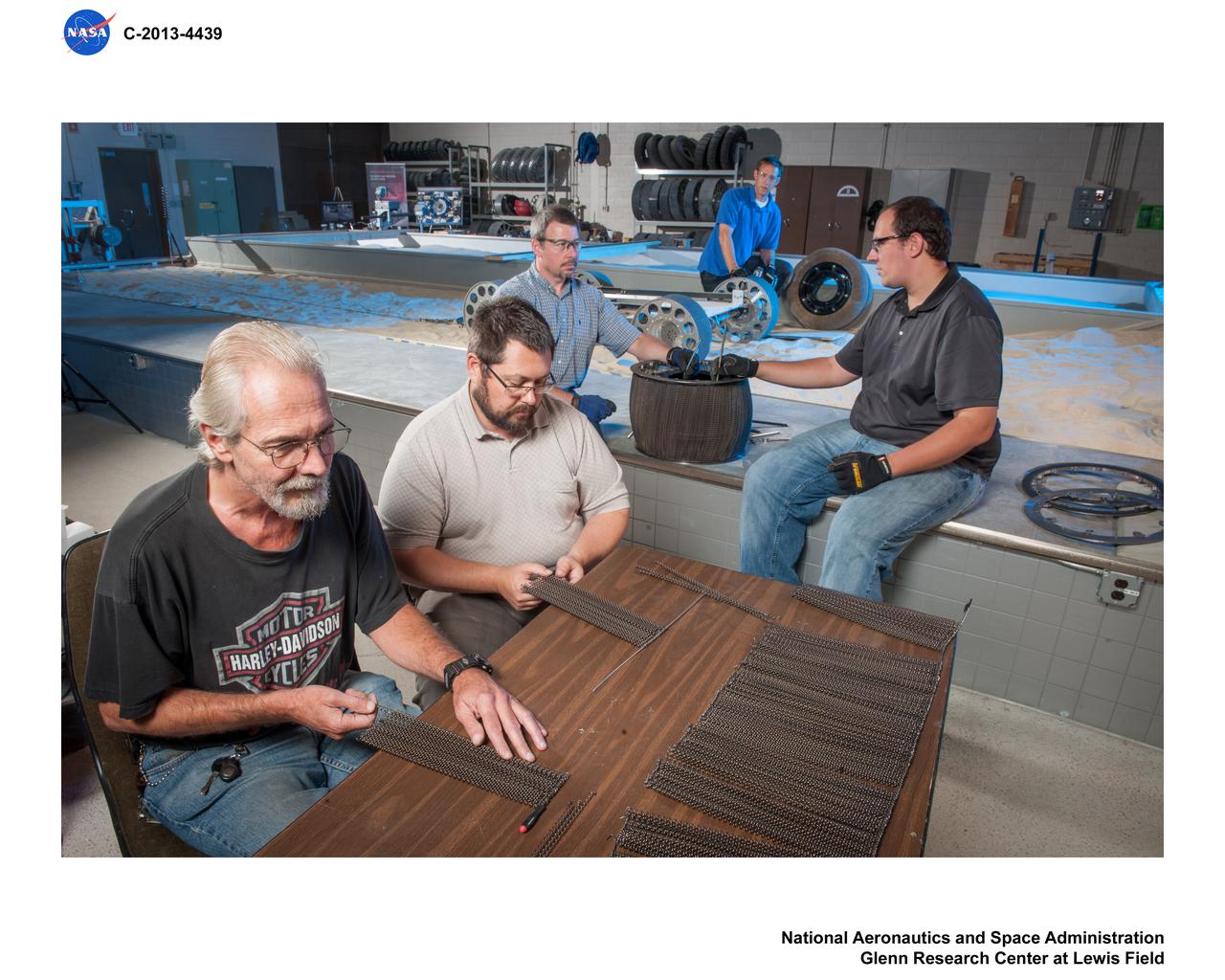
Fabrication of rover spring tires in the Simulated Lunar Operations, SLOPe Lab, Laboratory

LCROSS (Lunar Crater Observation Sensing Satellite) Near InfraRed Spectrometer shake test in Ames N-244 high bay EEL Lab - with Lynn Hofland, Ames EEL lab) and Kimberly Ennico, LCROSS payload scientist
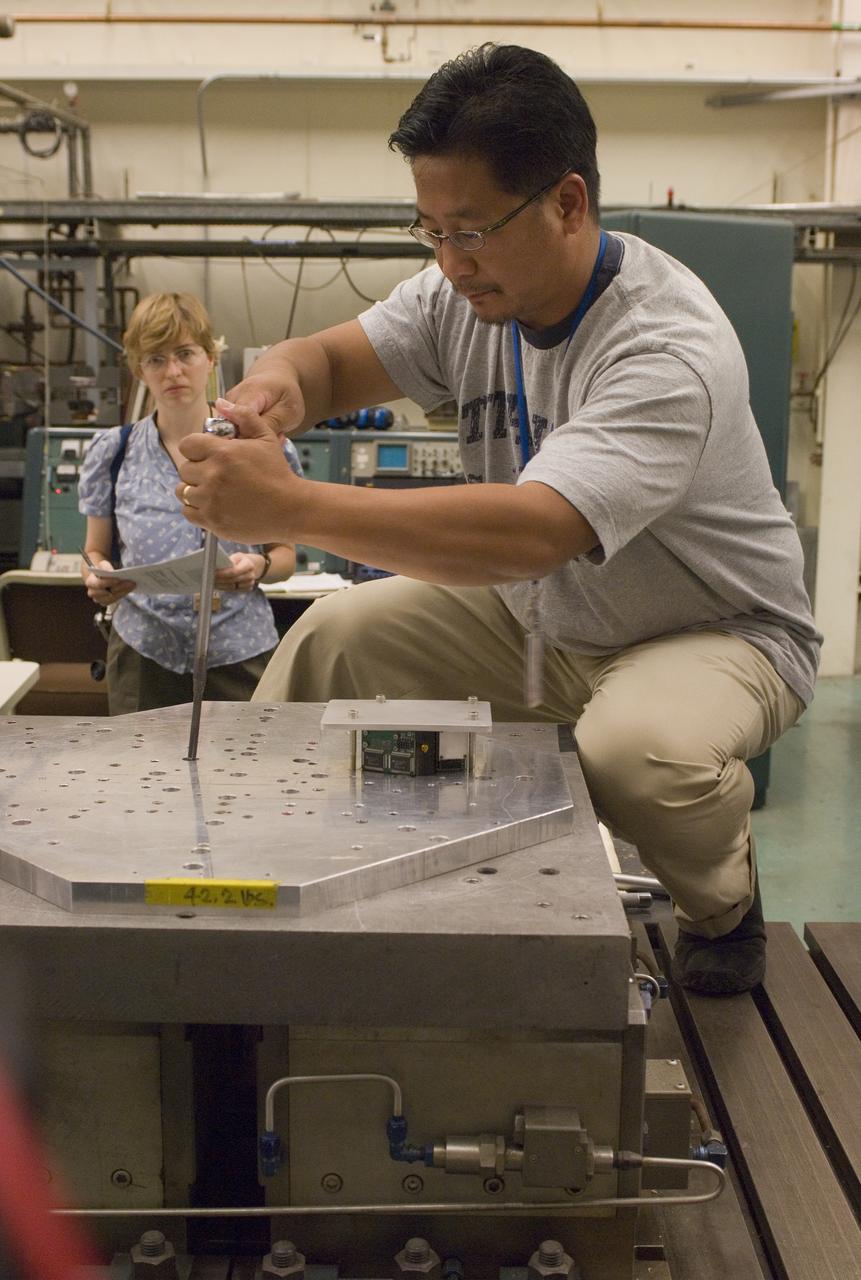
LCROSS (Lunar Crater Observation Sensing Satellite) Near InfraRed Spectrometer shake test in Ames N-244 high bay EEL Lab - with Frank Pichay, EEL lab
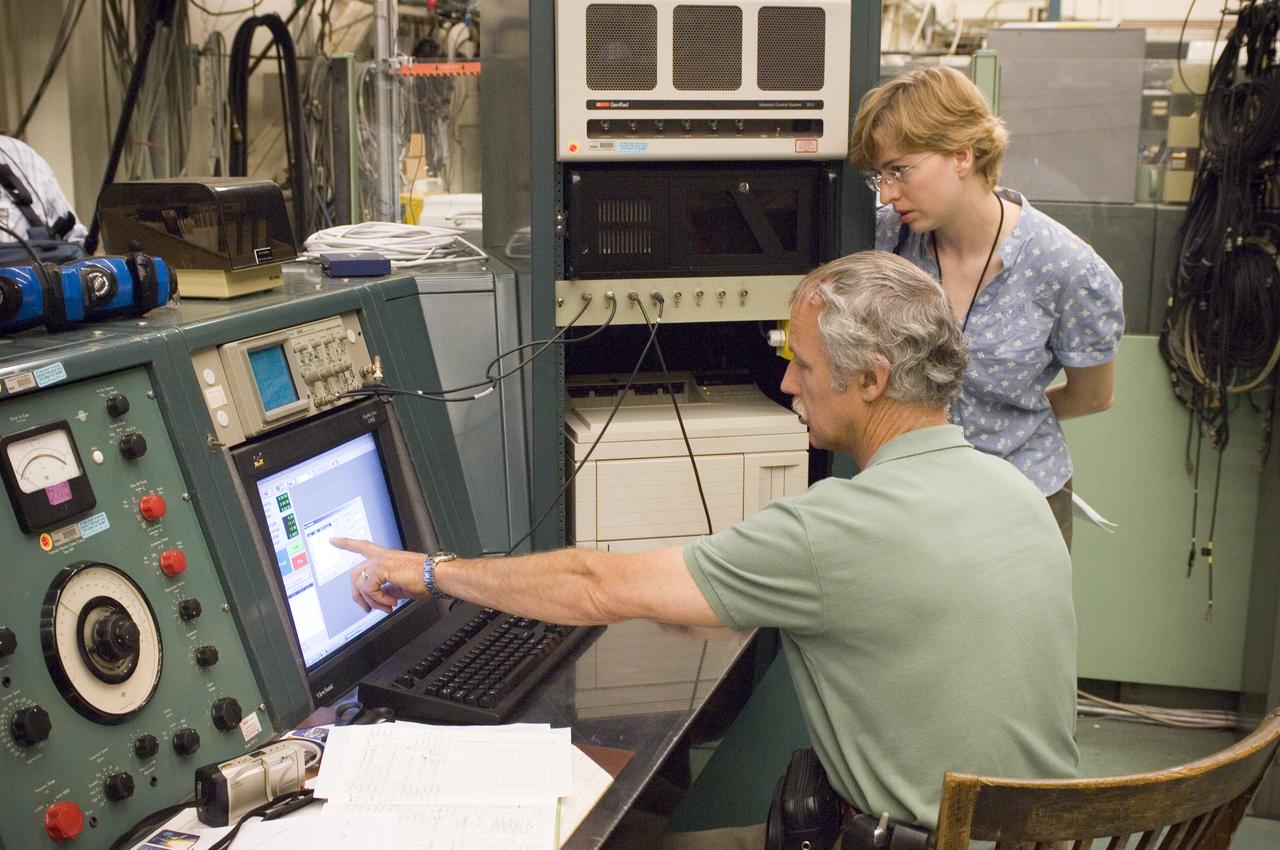
LCROSS (Lunar Crater Observation Sensing Satellite) Near InfraRed Spectrometer shake test in Ames N-244 high bay EEL Lab - with Lynn Hofland, Ames EEL lab) and Kimberly Ennico, LCROSS payload scientist
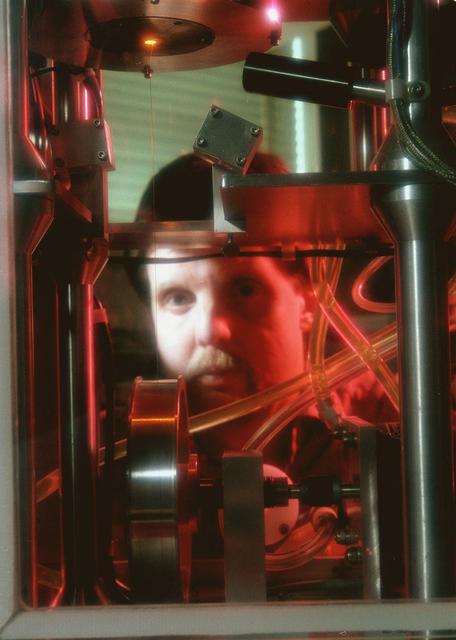
Scientists at Marshall's Materials and Processes Lab are pulling glass fibers from simulated lunar soil. This technology could lead to the building of thermally protected lunar buildings made of materials already there.
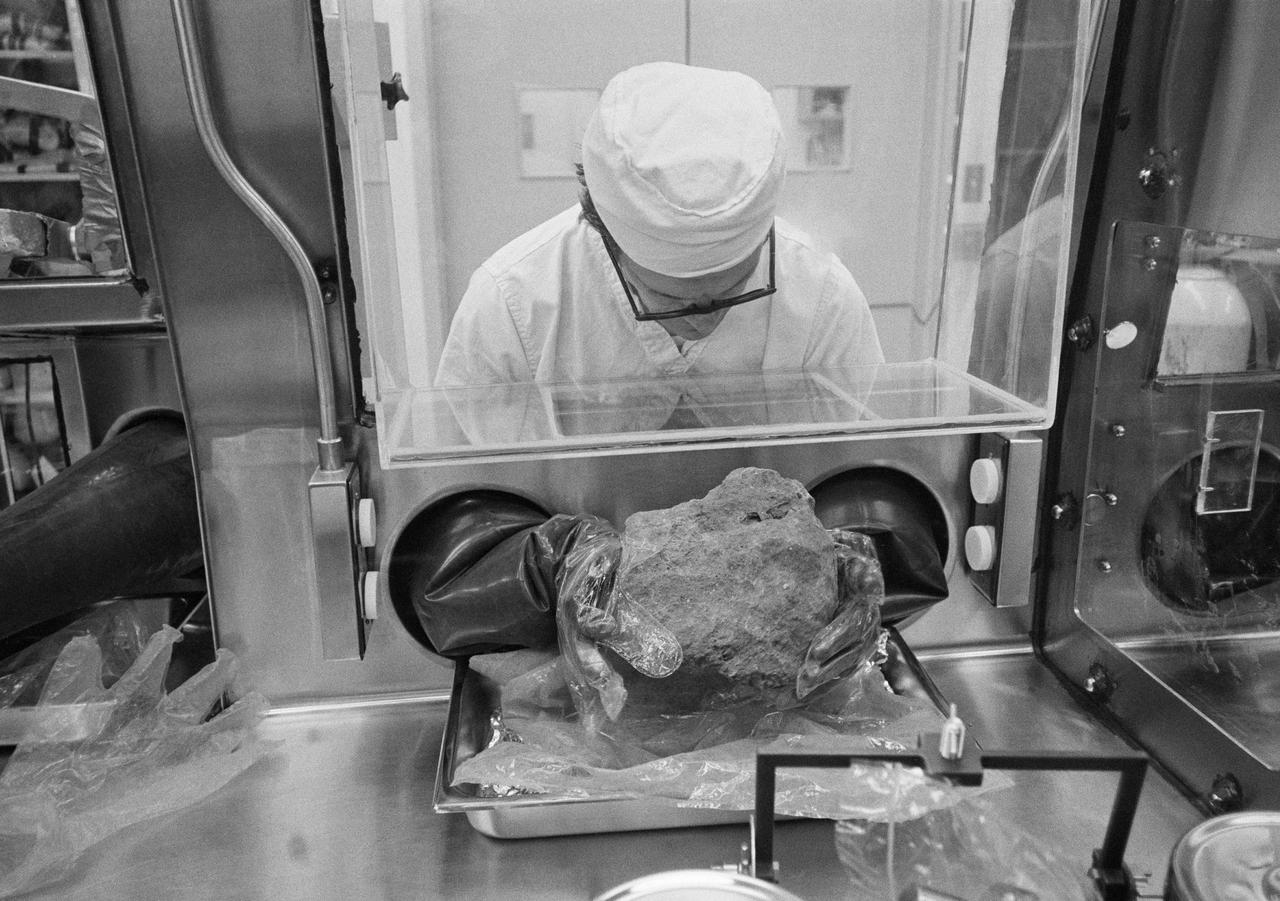
S71-21619 (1 March 1971) --- Dan Anderson works with Apollo 14 lunar samples in the Lunar Receiving Lab (LRL) during the mission?s postflight period. Photo credit: NASA
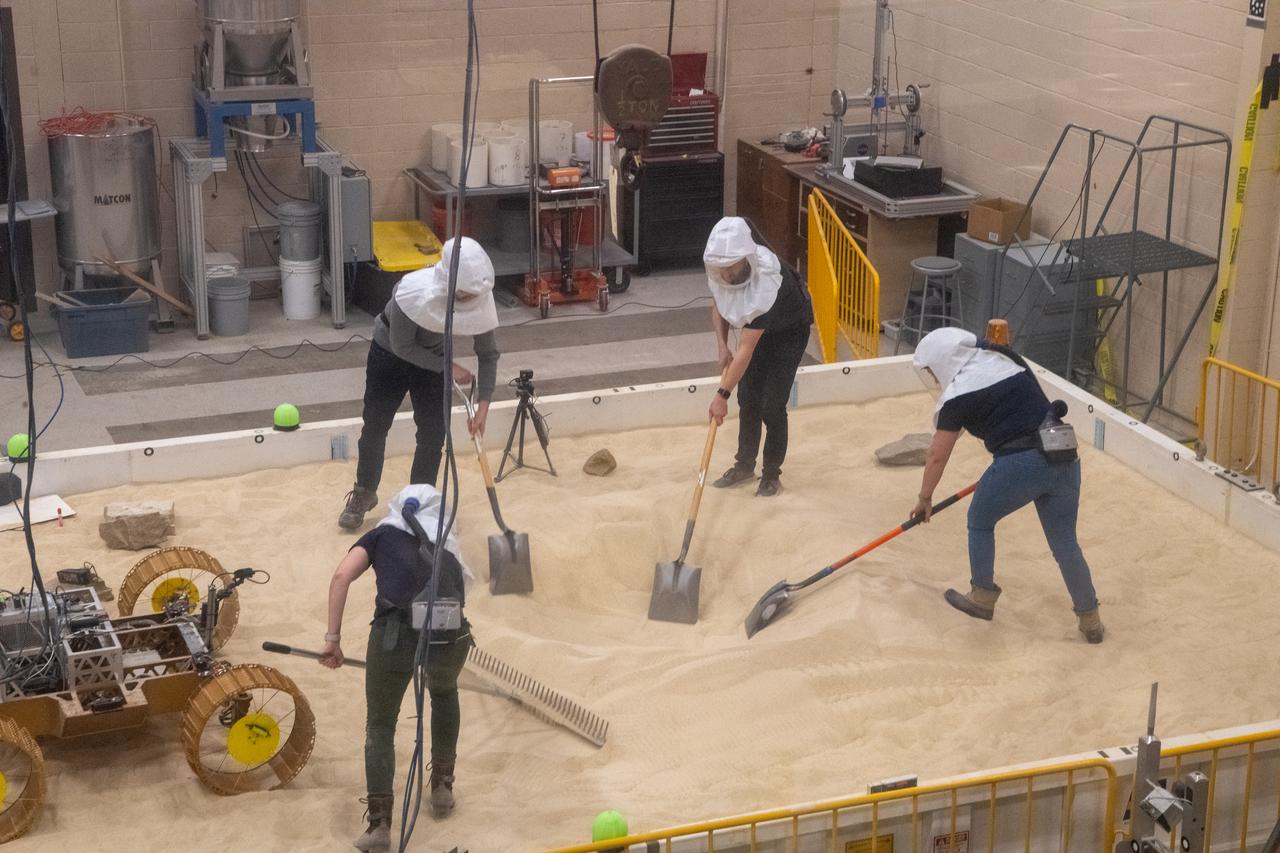
Volatiles Investigating Polar Exploration Rover, VIPER Testing in the Simulated Lunar Operations Lab, SLOPE Laboratory
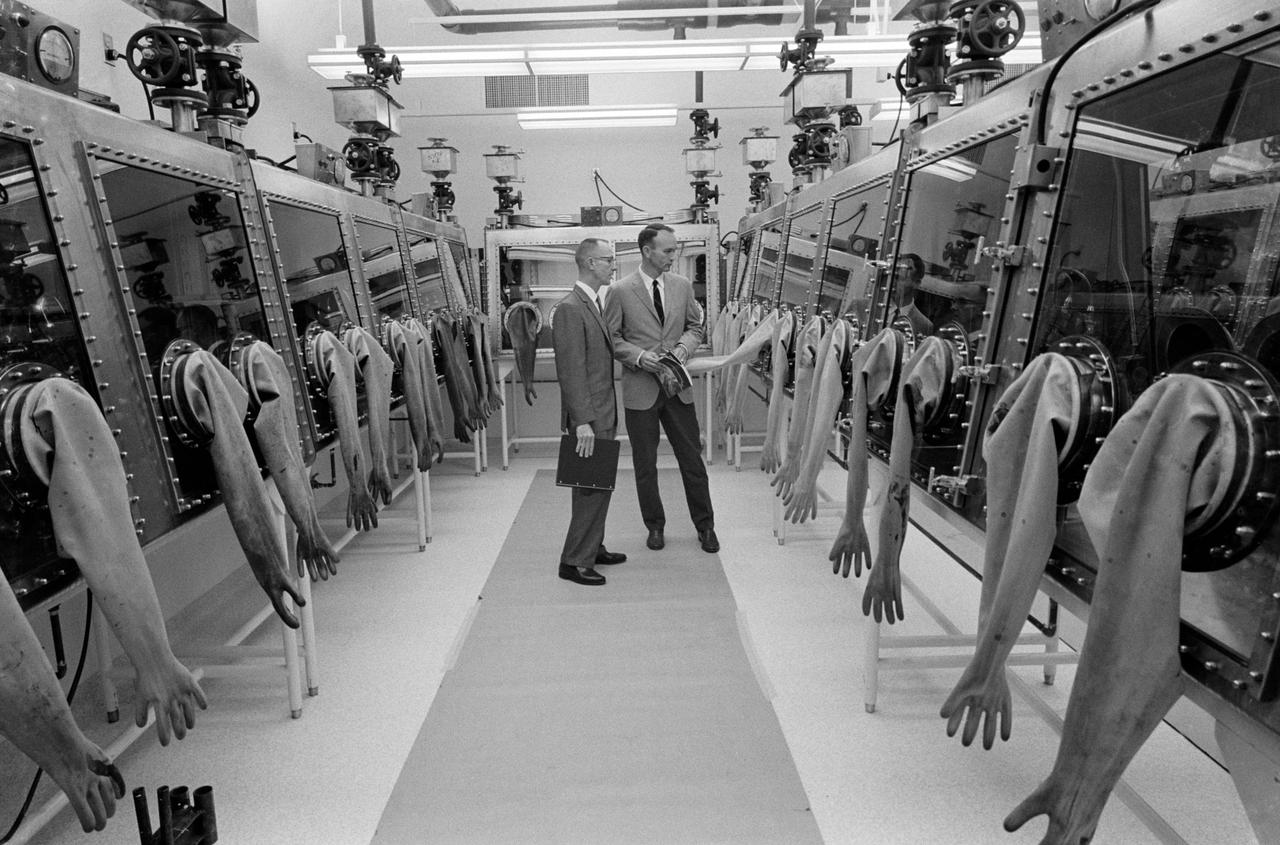
Astronaut Michael Collins on the right and Richard Wright on the left during tour of Lunar Receiving Lab (LRL) at MSC.
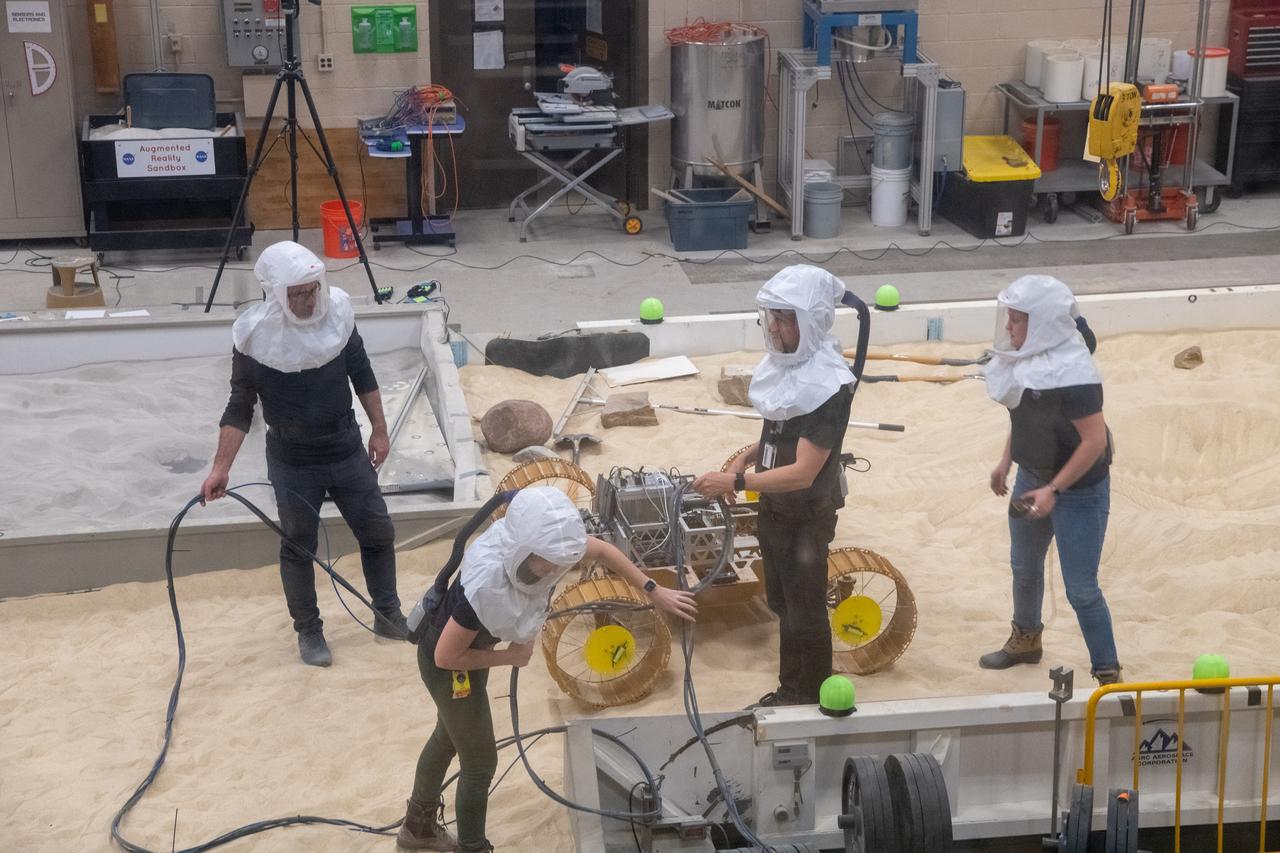
Volatiles Investigating Polar Exploration Rover, VIPER Testing in the Simulated Lunar Operations Lab, SLOPE Laboratory
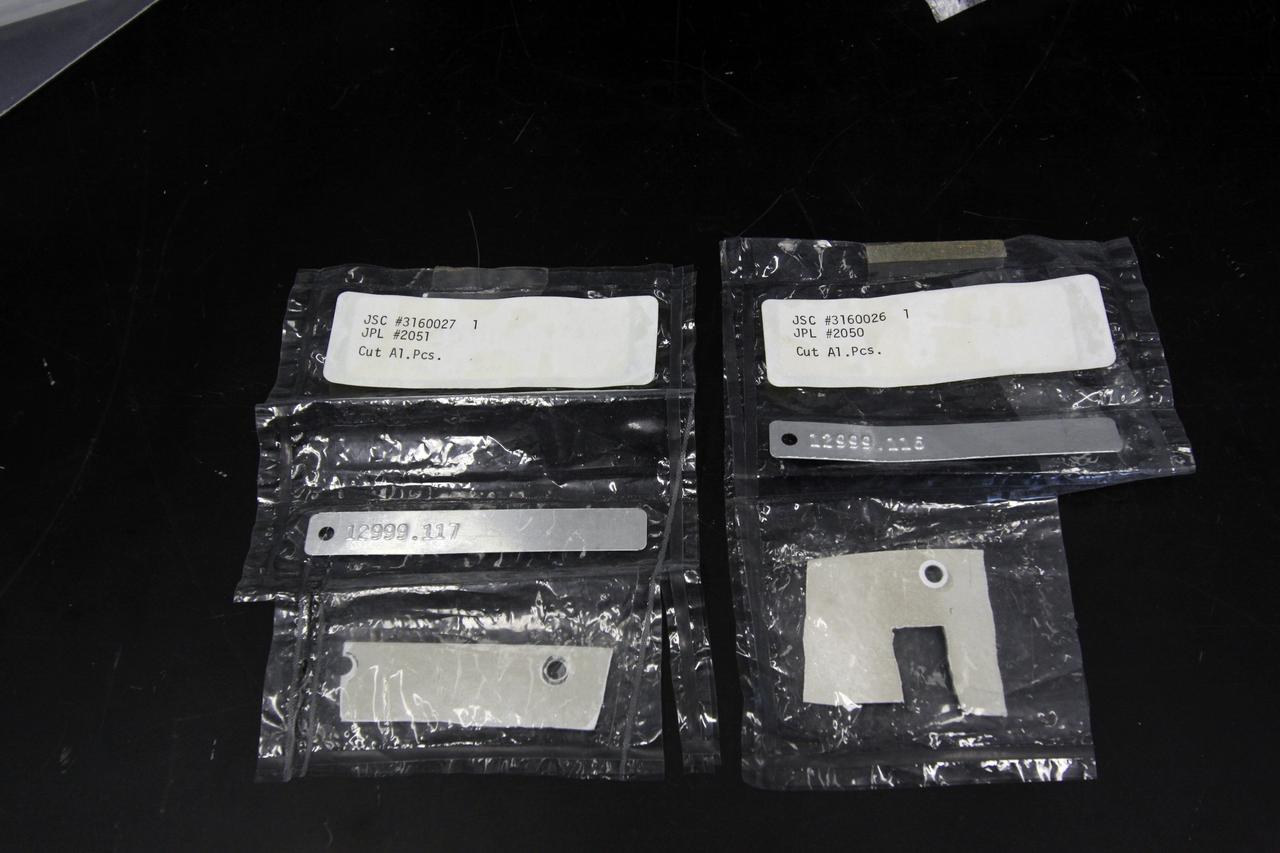
CAPE CANAVERAL, Fla. – In the Granular Mechanics and Regolith Operations (GMRO) Lab at NASA's Kennedy Space Center in Florida, pieces of the Surveyor 3 spacecraft returned from the lunar surface on the Apollo 12 mission are available for examination by the lab's staff. The GMRO Lab is one of several labs located in NASA's Space Life Sciences Laboratory (SLSL) facility. The lab is staffed by three physicists, six mechanical or aerospace engineers and several technicians who are studying how the rocket exhaust of landing vehicles affects lunar and Martian science missions, including the sandblasting of instruments with soil and dust ejecta and the disturbance or contamination of soil beneath the lander. For more information on the GMRO Lab, see p. 7 of the Spaceport News dated Nov. 11, 2011, at http://www.nasa.gov/centers/kennedy/pdf/603285main_nov11-2011.pdf. Photo credit: NASA/Jim Grossmann
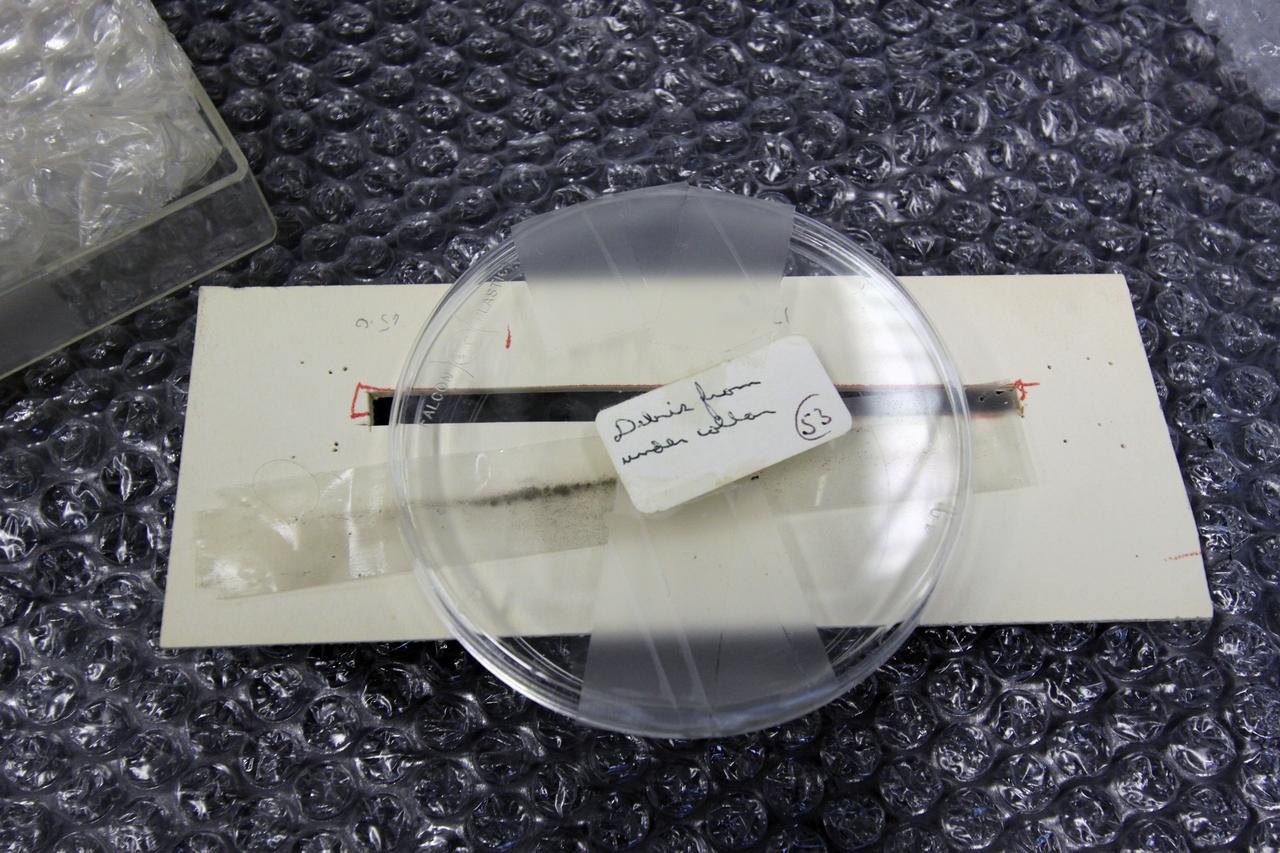
CAPE CANAVERAL, Fla. – In the Granular Mechanics and Regolith Operations (GMRO) Lab at NASA's Kennedy Space Center in Florida, a piece of the Surveyor 3 spacecraft returned from the lunar surface on the Apollo 12 mission is available for examination by the lab's staff. The GMRO Lab is one of several labs located in NASA's Space Life Sciences Laboratory (SLSL) facility. The lab is staffed by three physicists, six mechanical or aerospace engineers and several technicians who are studying how the rocket exhaust of landing vehicles affects lunar and Martian science missions, including the sandblasting of instruments with soil and dust ejecta and the disturbance or contamination of soil beneath the lander. For more information on the GMRO Lab, see p. 7 of the Spaceport News dated Nov. 11, 2011, at http://www.nasa.gov/centers/kennedy/pdf/603285main_nov11-2011.pdf. Photo credit: NASA/Jim Grossmann
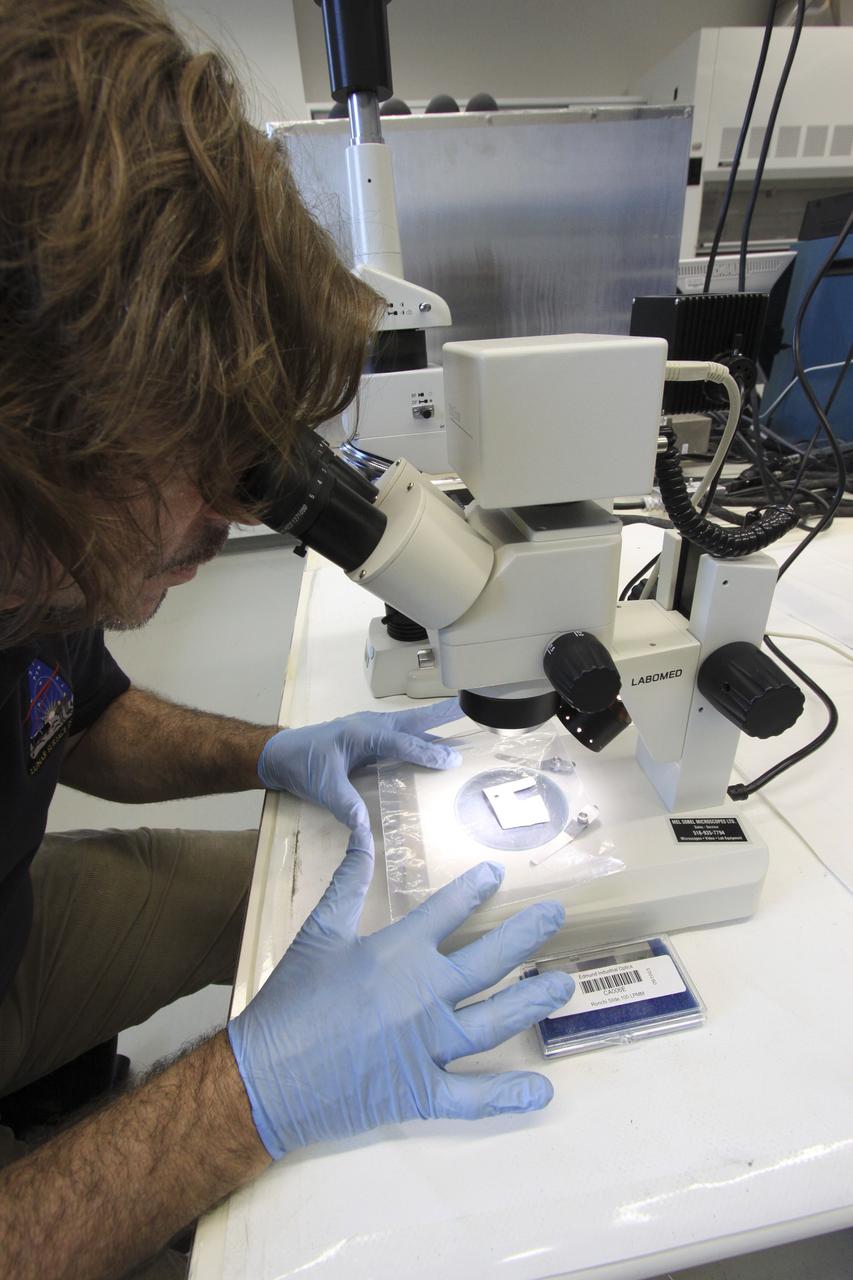
CAPE CANAVERAL, Fla. – In the Granular Mechanics and Regolith Operations (GMRO) Lab at NASA's Kennedy Space Center in Florida, Dr. Philip Metzger examines under a microscope a piece of the Surveyor 3 spacecraft returned from the lunar surface on the Apollo 12 mission. The GMRO Lab is one of several labs located in NASA's Space Life Sciences Laboratory (SLSL) facility. The lab is staffed by three physicists, six mechanical or aerospace engineers and several technicians who are studying how the rocket exhaust of landing vehicles affects lunar and Martian science missions, including the sandblasting of instruments with soil and dust ejecta and the disturbance or contamination of soil beneath the lander. For more information on the GMRO Lab, see p. 7 of the Spaceport News dated Nov. 11, 2011, at http://www.nasa.gov/centers/kennedy/pdf/603285main_nov11-2011.pdf. Photo credit: NASA/Jim Grossmann

Diane Linne in the Simulated Lunar Operations, SLOPE Lab - Percussive Excavation Bucket reduces reaction forces for extraterrestrial digging of loose and compacted or icy soils.
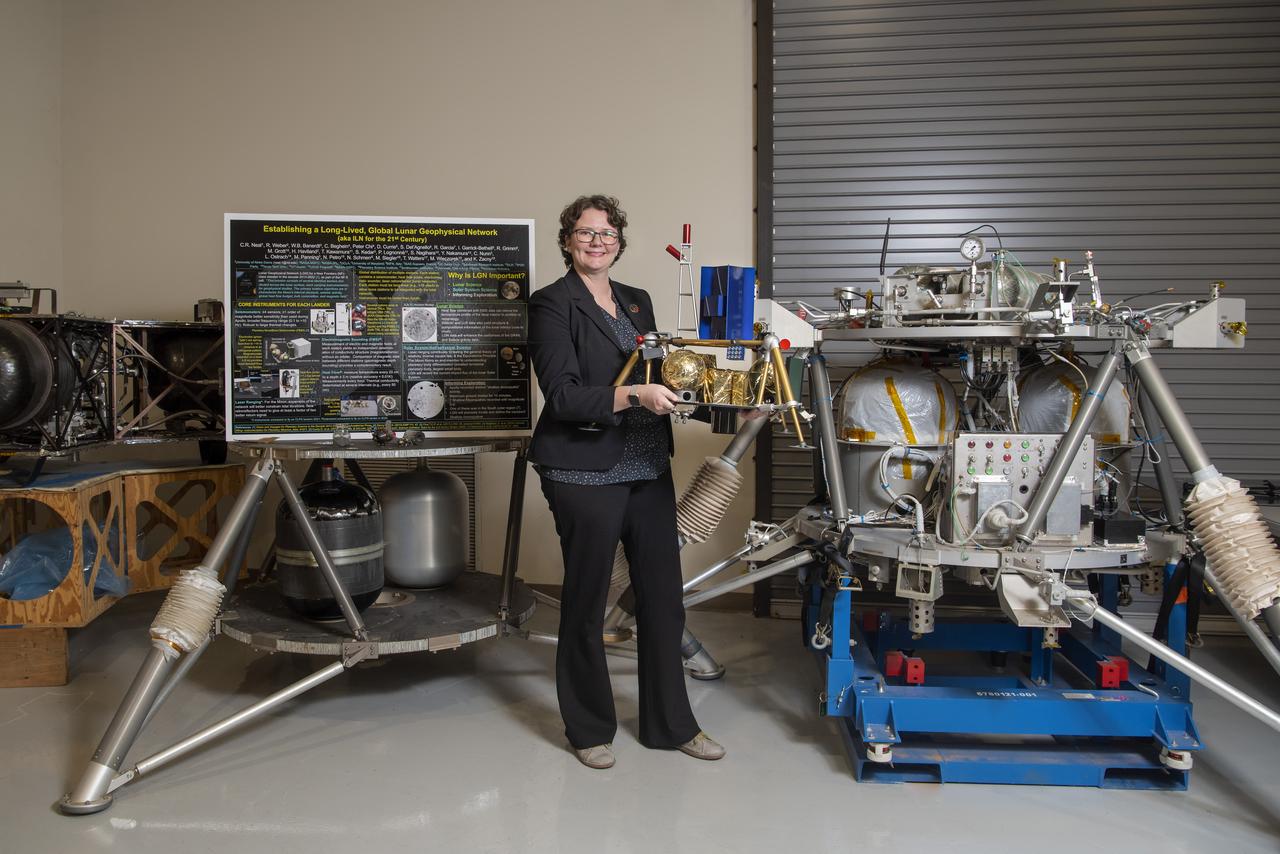
Environmental portrait of Renee Weber, commemorating her recent transition to the MSFC Chief Scientist position. Pictured with lunar lander models in the lander lab building 4747.
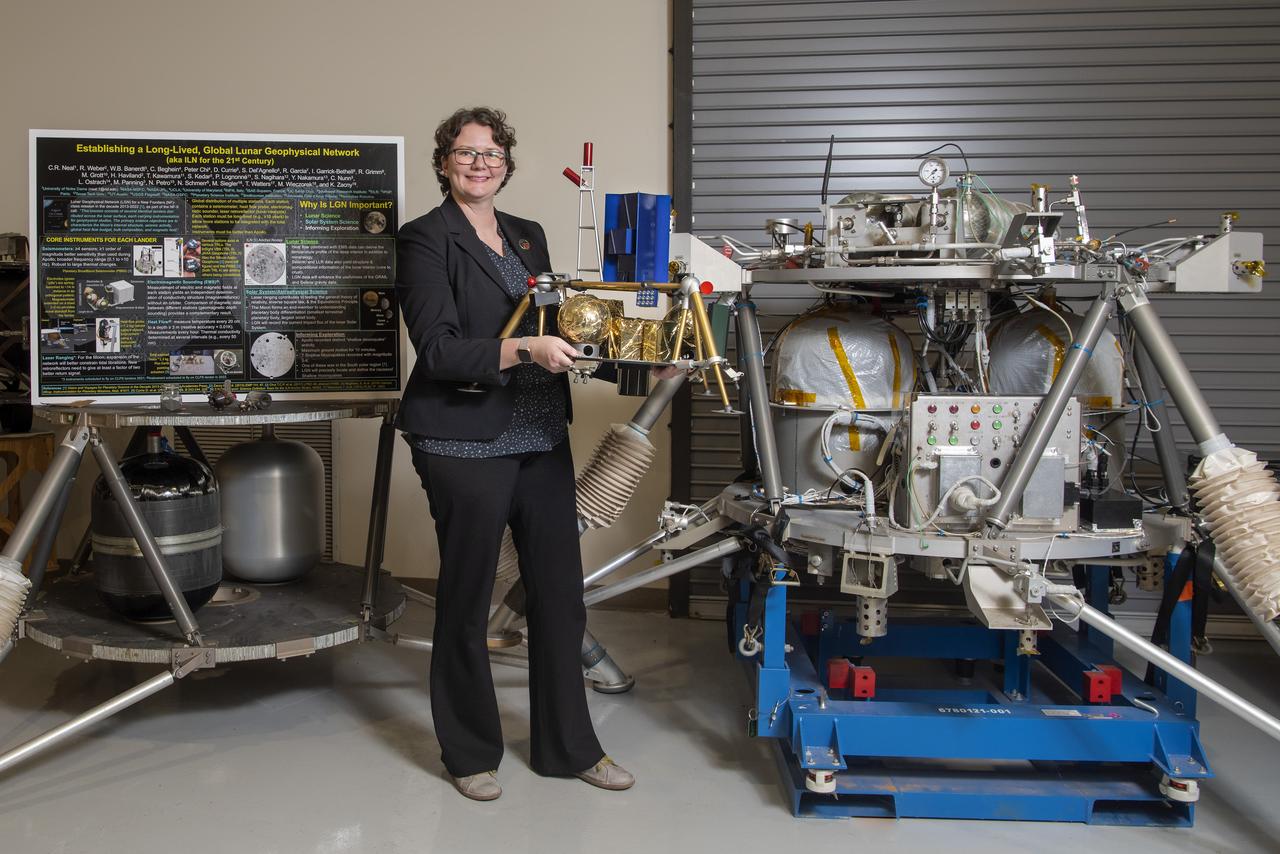
Environmental portrait of Renee Weber, commemorating her recent transition to the MSFC Chief Scientist position. Pictured with lunar lander models in the lander lab building 4747.
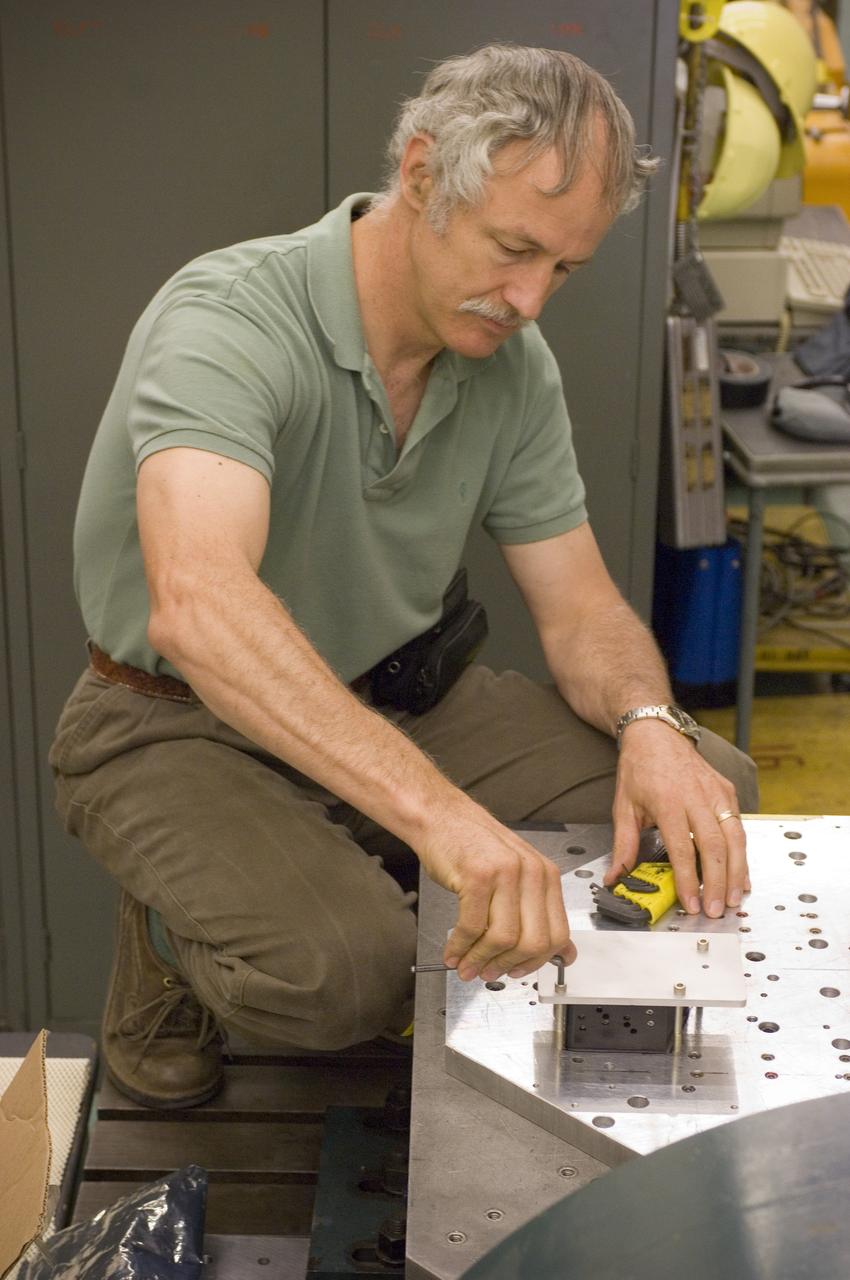
LCROSS (Lunar Crater Observation Sensing Satellite) Near InfraRed Spectrometer shake test in Ames N-244 high bay EEL Lab - with Lynn Hofland
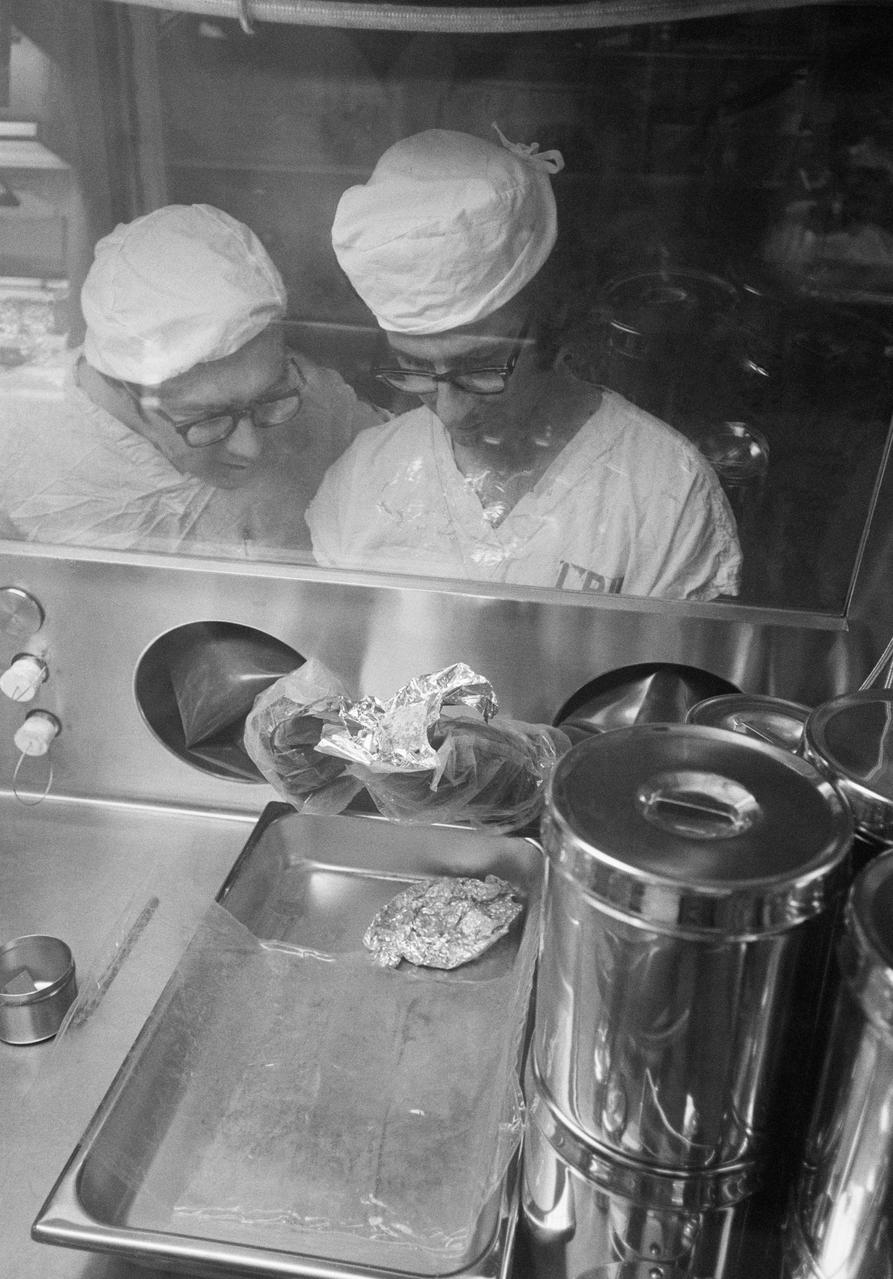
S71-21029 (24 Feb. 1971) --- Everett Gibson (left) and Don Morrison with Apollo 14 rocks in the Lunar Receiving Lab (LRL). Photo credit: NASA
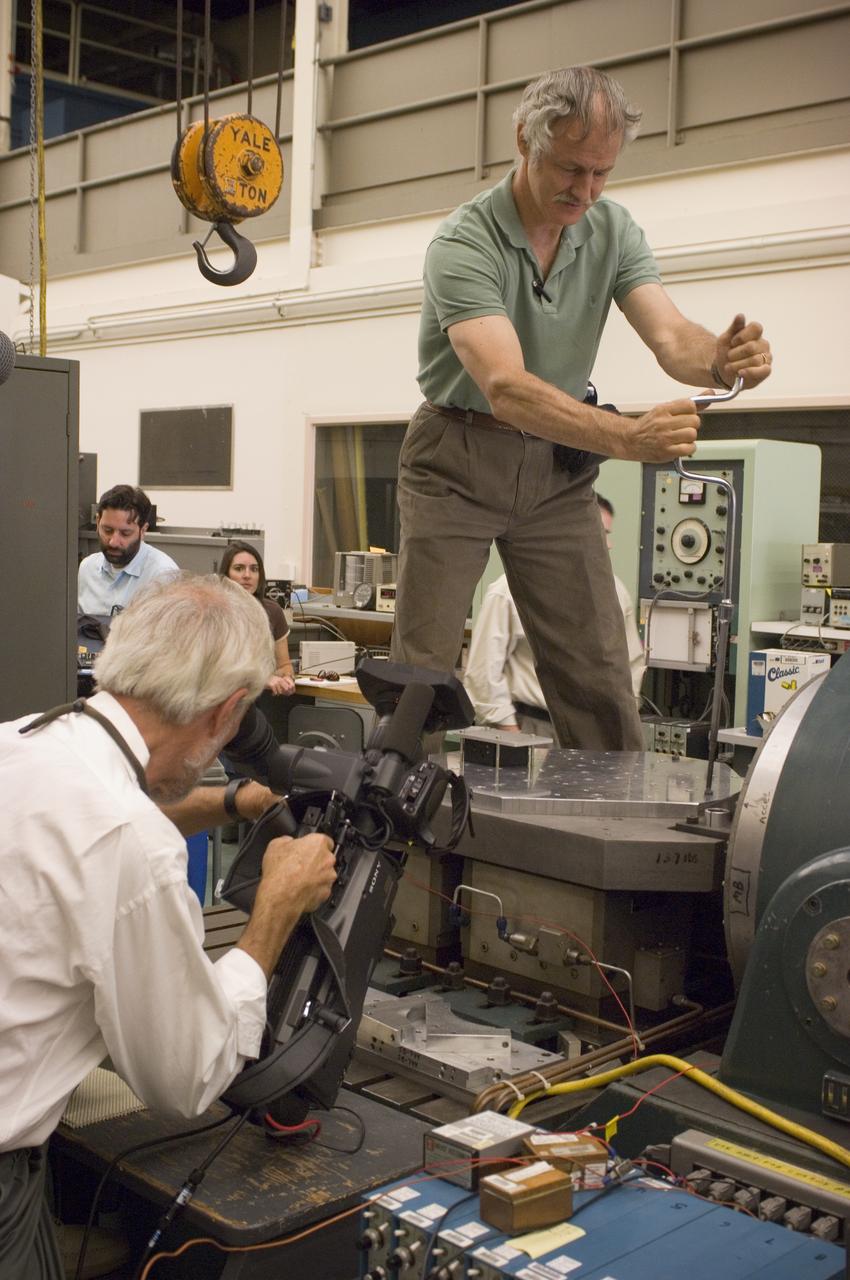
LCROSS (Lunar Crater Observation Sensing Satellite) Near InfraRed Spectrometer shake test in Ames N-244 high bay EEL Lab - with Lynn Hofland
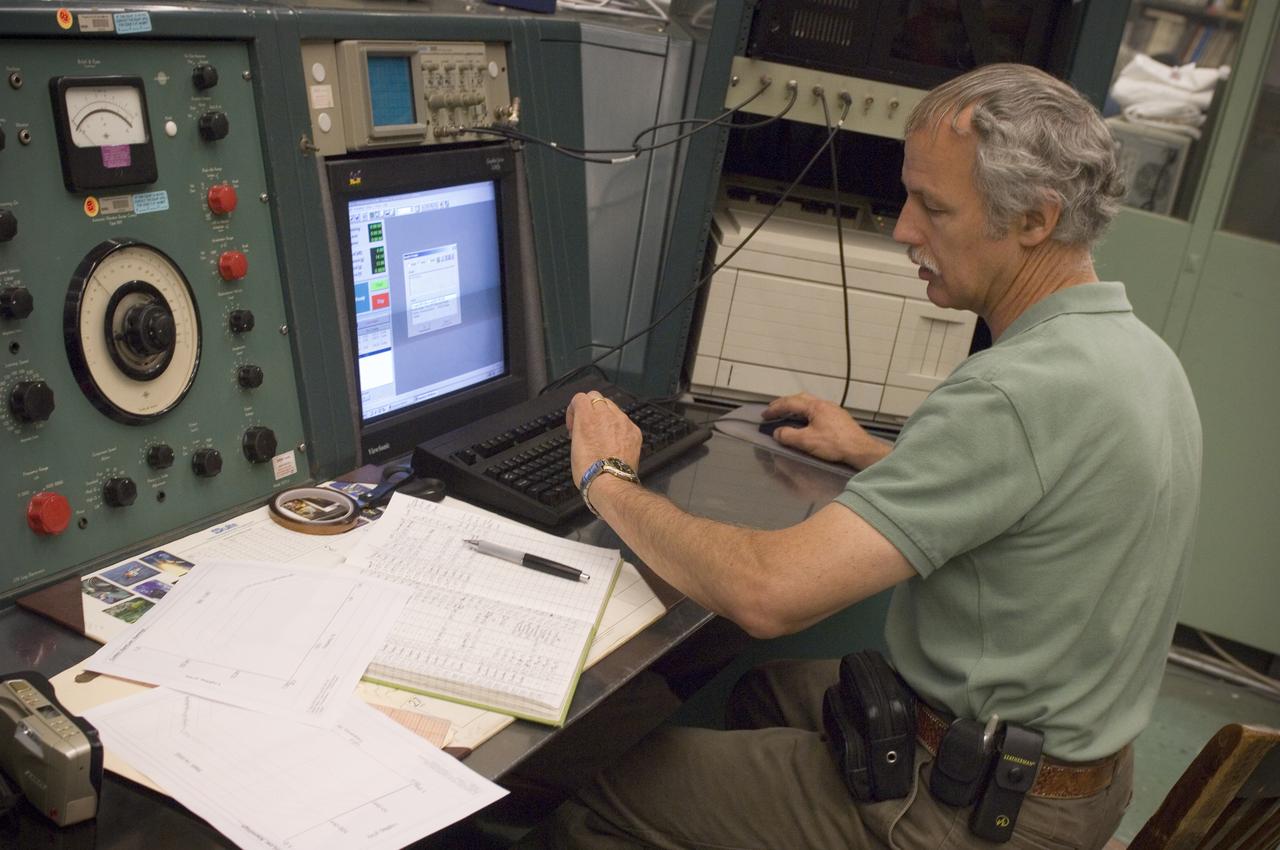
LCROSS (Lunar Crater Observation Sensing Satellite) Near InfraRed Spectrometer shake test in Ames N-244 high bay EEL Lab - with Lynn Hofland
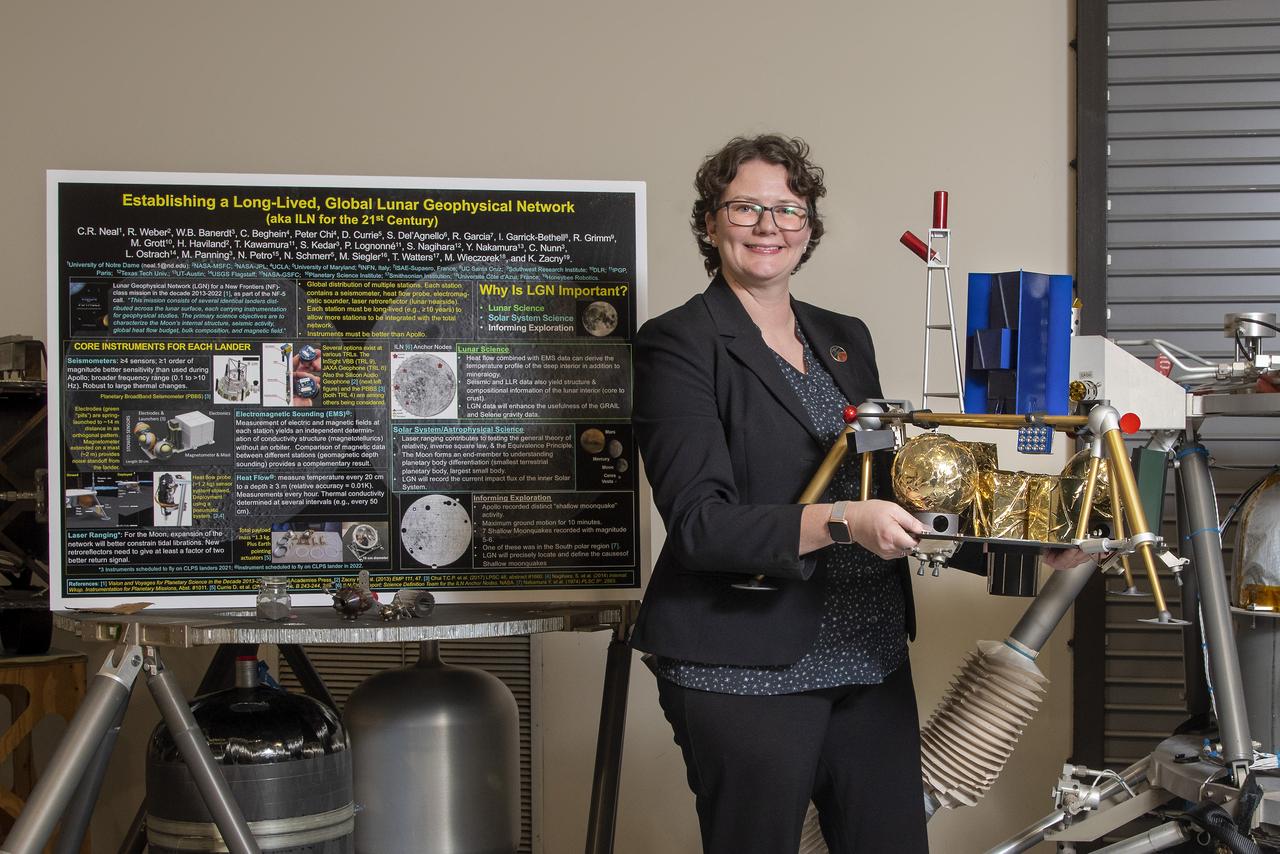
Environmental portrait of Renee Weber, commemorating her recent transition to the MSFC Chief Scientist position. Pictured with lunar lander models in the lander lab building 4747.
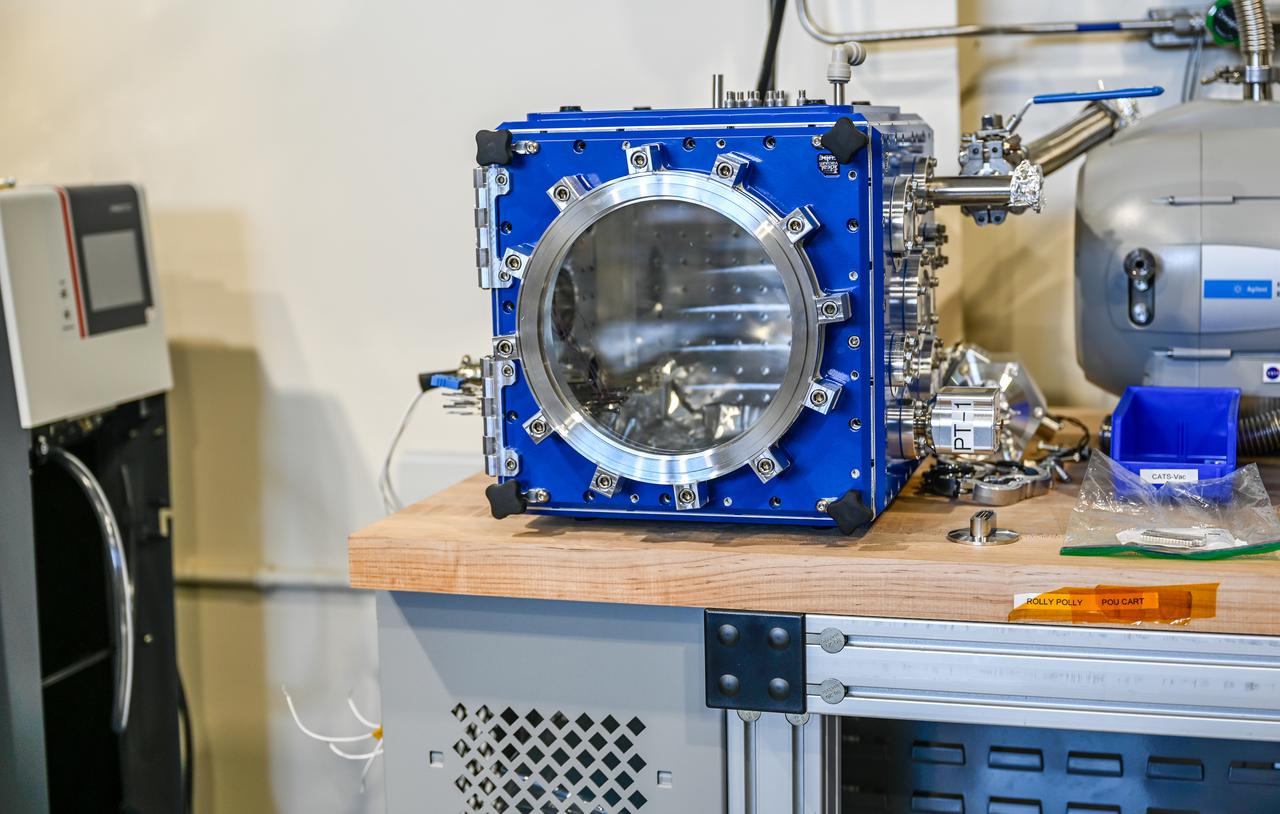
These photos, taken in fall 2024, show how NASA engineers use the Hub for Innovative Thermal Technology Maturation and Prototyping (Hi-TTeMP) laboratory at NASA’s Marshall Space Flight Center in Huntsville, Alabama. NASA engineers working in the HI-TTeMP lab not only design, set up, and run tests, they also provide insight and expertise in thermal engineering to assist NASA’s industry partners, such as SpaceX and other organizations, in validating concepts and models, or suggesting changes to designs. The lab is able to rapidly test and evaluate design updates or iterations. Engineering teams inside the lab are currently testing how well prototype insulation for SpaceX’s Starship HLS (Human Landing System) will insulate interior environments, including propellant storage tanks and the crew cabin. Starship HLS will land astronauts on the lunar surface during Artemis III and Artemis IV.
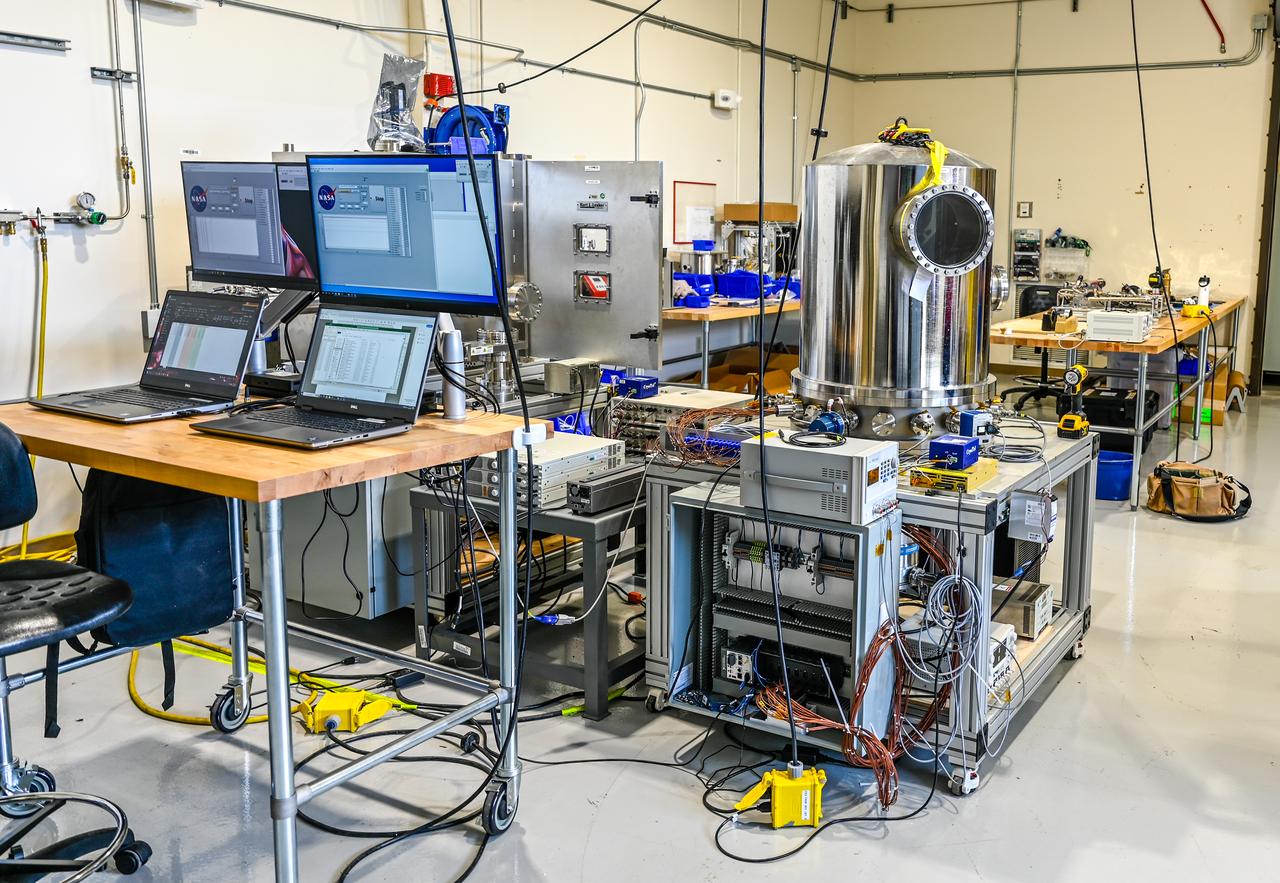
These photos, taken in fall 2024, show how NASA engineers use the Hub for Innovative Thermal Technology Maturation and Prototyping (Hi-TTeMP) laboratory at NASA’s Marshall Space Flight Center in Huntsville, Alabama. NASA engineers working in the HI-TTeMP lab not only design, set up, and run tests, they also provide insight and expertise in thermal engineering to assist NASA’s industry partners, such as SpaceX and other organizations, in validating concepts and models, or suggesting changes to designs. The lab is able to rapidly test and evaluate design updates or iterations. Engineering teams inside the lab are currently testing how well prototype insulation for SpaceX’s Starship HLS (Human Landing System) will insulate interior environments, including propellant storage tanks and the crew cabin. Starship HLS will land astronauts on the lunar surface during Artemis III and Artemis IV.
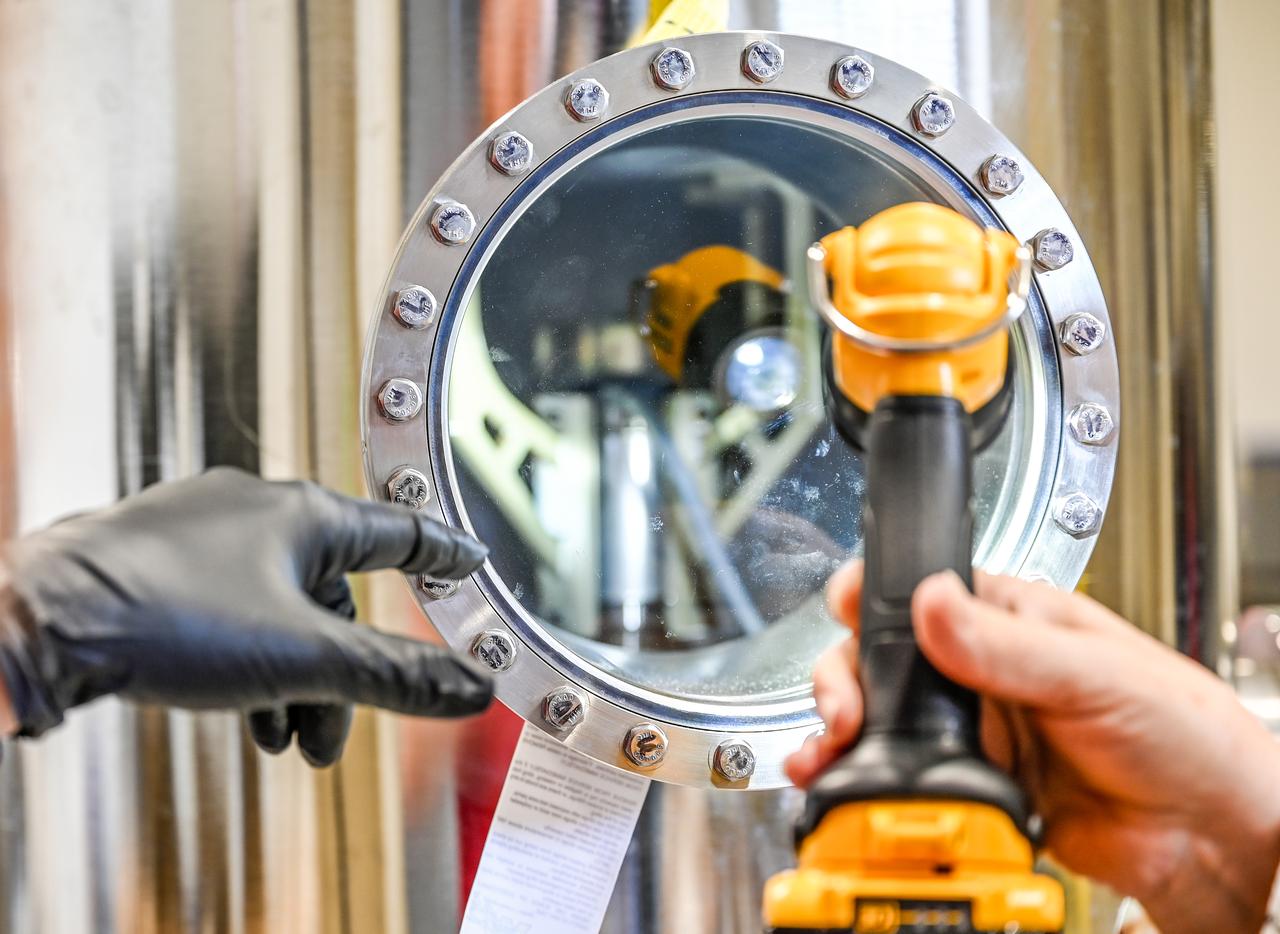
These photos, taken in fall 2024, show how NASA engineers use the Hub for Innovative Thermal Technology Maturation and Prototyping (Hi-TTeMP) laboratory at NASA’s Marshall Space Flight Center in Huntsville, Alabama. NASA engineers working in the HI-TTeMP lab not only design, set up, and run tests, they also provide insight and expertise in thermal engineering to assist NASA’s industry partners, such as SpaceX and other organizations, in validating concepts and models, or suggesting changes to designs. The lab is able to rapidly test and evaluate design updates or iterations. Engineering teams inside the lab are currently testing how well prototype insulation for SpaceX’s Starship HLS (Human Landing System) will insulate interior environments, including propellant storage tanks and the crew cabin. Starship HLS will land astronauts on the lunar surface during Artemis III and Artemis IV.
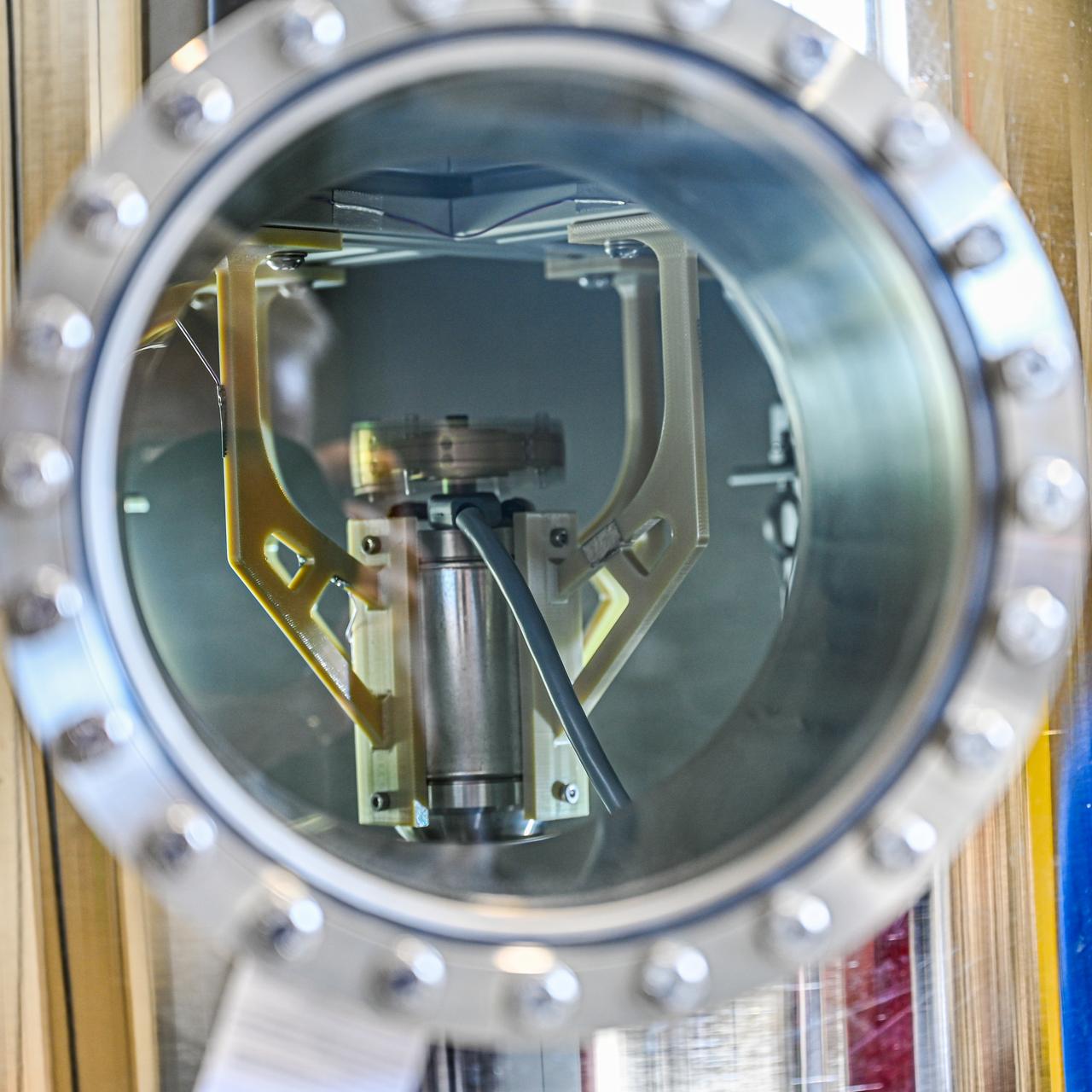
These photos, taken in fall 2024, show how NASA engineers use the Hub for Innovative Thermal Technology Maturation and Prototyping (Hi-TTeMP) laboratory at NASA’s Marshall Space Flight Center in Huntsville, Alabama. NASA engineers working in the HI-TTeMP lab not only design, set up, and run tests, they also provide insight and expertise in thermal engineering to assist NASA’s industry partners, such as SpaceX and other organizations, in validating concepts and models, or suggesting changes to designs. The lab is able to rapidly test and evaluate design updates or iterations. Engineering teams inside the lab are currently testing how well prototype insulation for SpaceX’s Starship HLS (Human Landing System) will insulate interior environments, including propellant storage tanks and the crew cabin. Starship HLS will land astronauts on the lunar surface during Artemis III and Artemis IV.
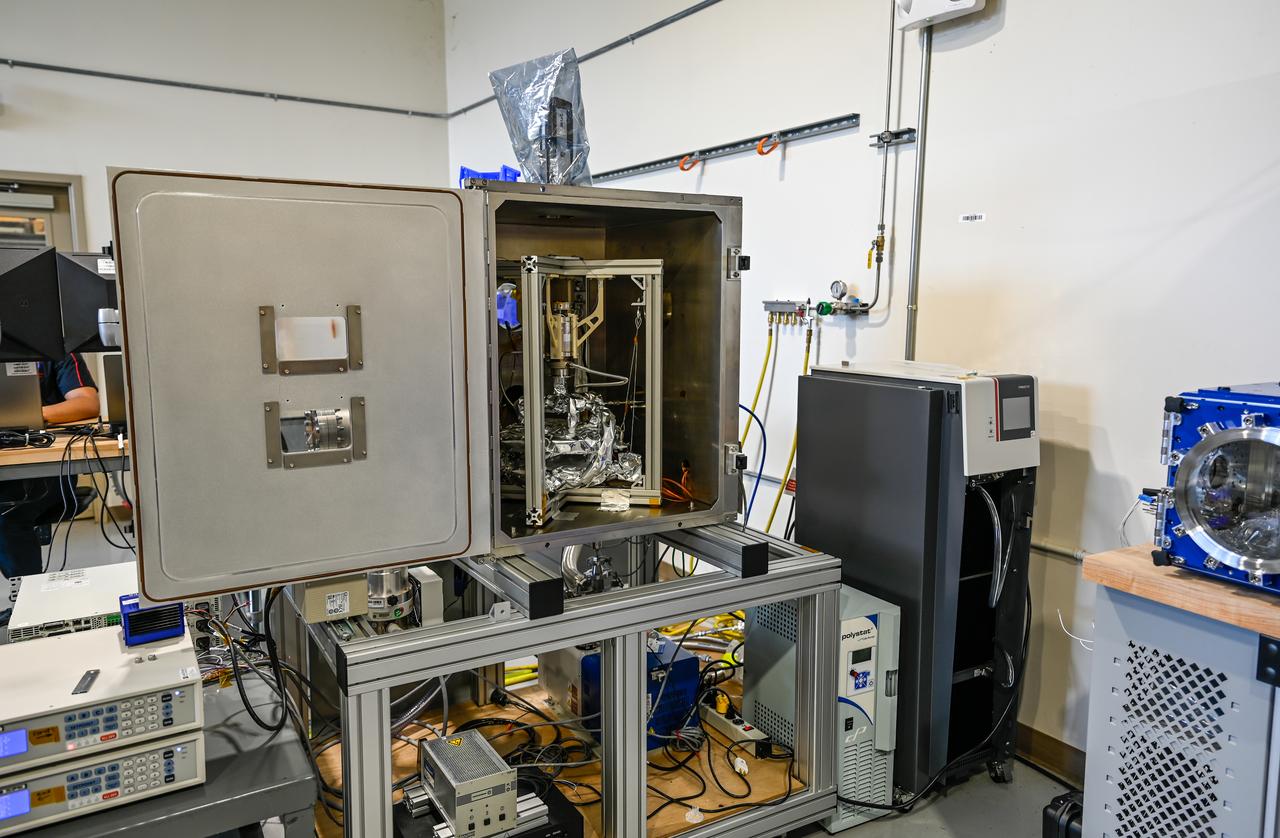
These photos, taken in fall 2024, show how NASA engineers use the Hub for Innovative Thermal Technology Maturation and Prototyping (Hi-TTeMP) laboratory at NASA’s Marshall Space Flight Center in Huntsville, Alabama. NASA engineers working in the HI-TTeMP lab not only design, set up, and run tests, they also provide insight and expertise in thermal engineering to assist NASA’s industry partners, such as SpaceX and other organizations, in validating concepts and models, or suggesting changes to designs. The lab is able to rapidly test and evaluate design updates or iterations. Engineering teams inside the lab are currently testing how well prototype insulation for SpaceX’s Starship HLS (Human Landing System) will insulate interior environments, including propellant storage tanks and the crew cabin. Starship HLS will land astronauts on the lunar surface during Artemis III and Artemis IV.

LCROSS (Lunar Crater Observation Sensing Satellite) Near InfraRed Spectrometer shake test in Ames N-244 high bay EEL Lab - with Kimberly Ennico, Anthony Colaprete and Lynn Hofland

LCROSS (Lunar Crater Observation Sensing Satellite) Near InfraRed Spectrometer shake test in Ames N-244 high bay EEL Lab - with Anthony Colaprete, Ames code SST
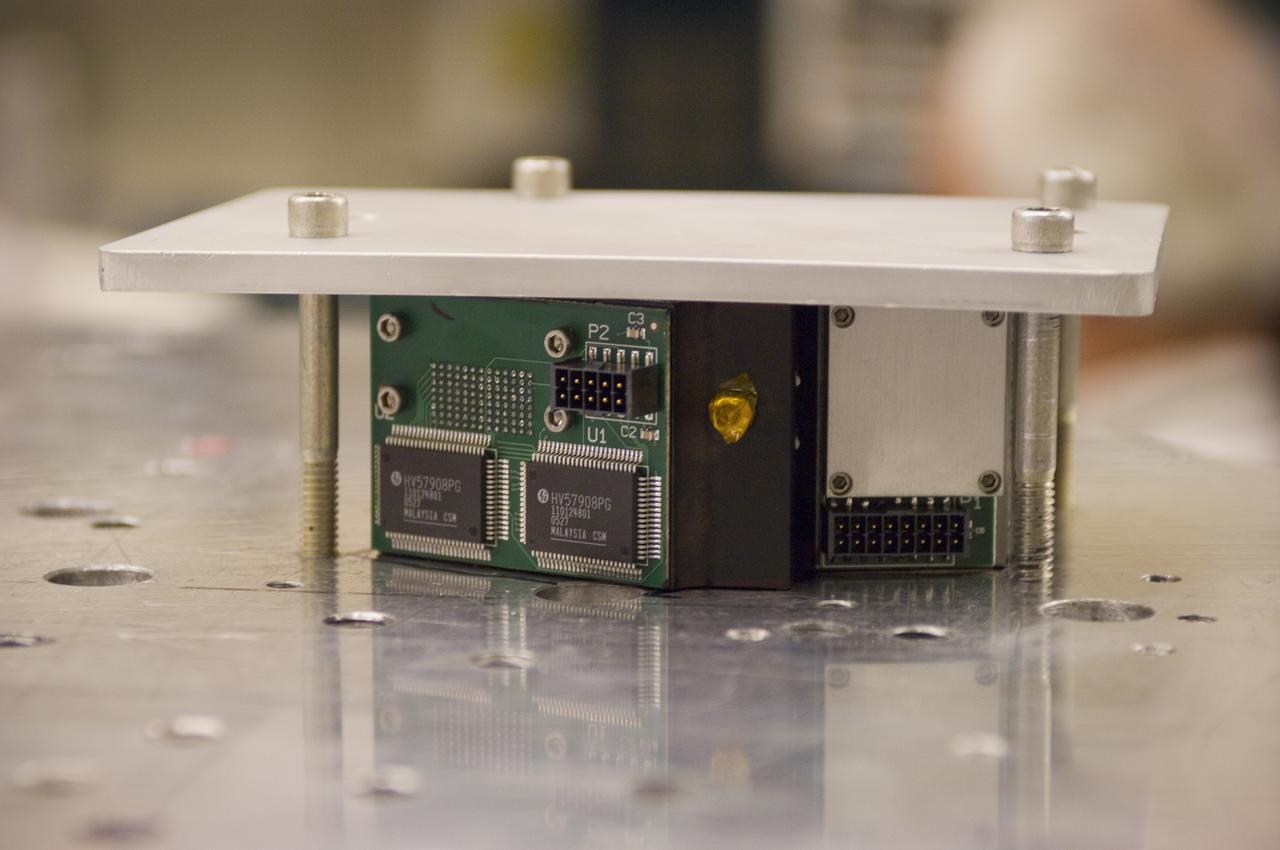
LCROSS (Lunar Crater Observation Sensing Satellite) Near InfraRed Spectrometer shake test in Ames N-244 high bay EEL Lab - Spectrometer on shake table

LCROSS (Lunar Crater Observation Sensing Satellite) Near InfraRed Spectrometer shake test in Ames N-244 high bay EEL Lab - with Kimberly Ennico, Anthony Colaprete and Lynn Hofland
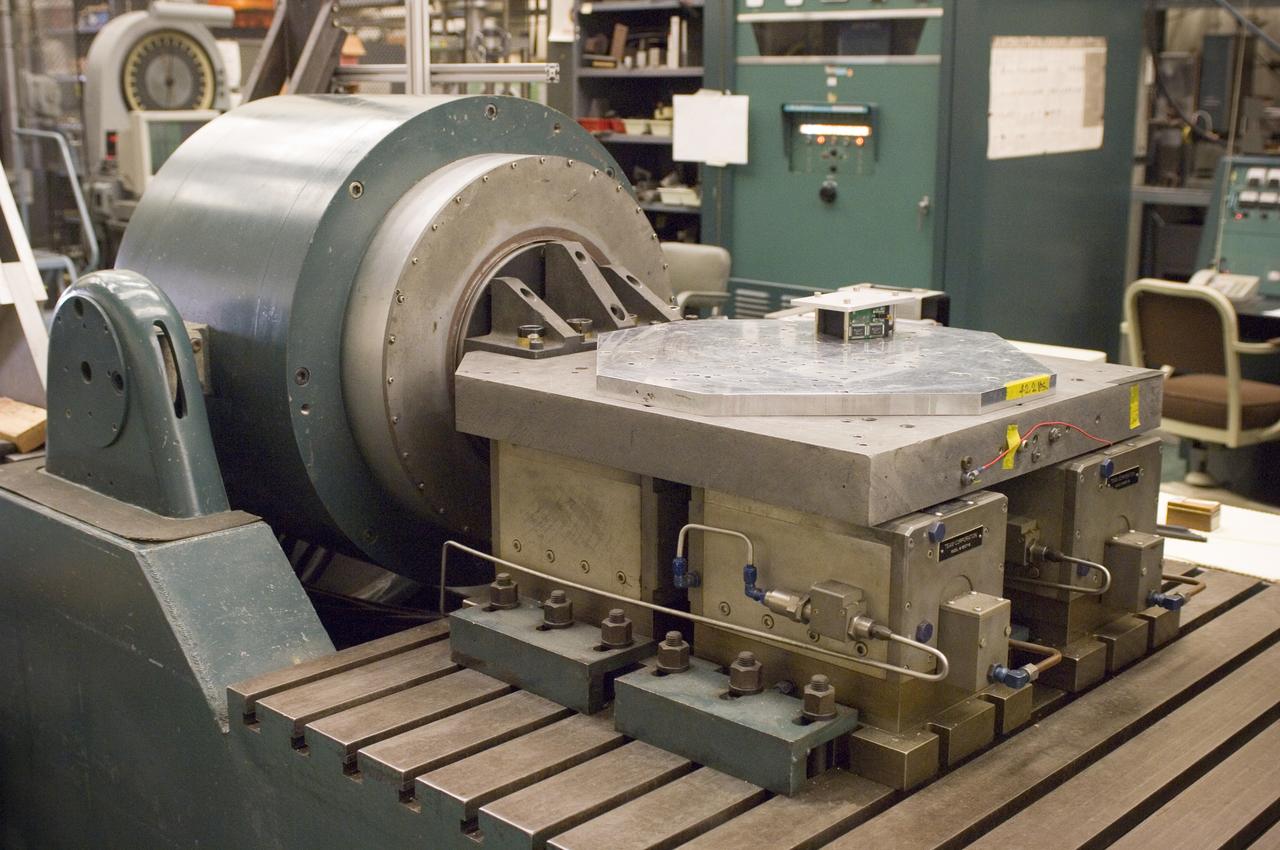
LCROSS (Lunar Crater Observation Sensing Satellite) Near InfraRed Spectrometer shake test in Ames N-244 high bay EEL Lab - Spectrometer on shake table

S71-23602 (17 March 1971) --- Left to right: Everett Gibson, Gary McCollom, unidentified man in control room of Lunar Receiving Lab (LRL) during Apollo 14 quarantine period. Photo credit: NASA
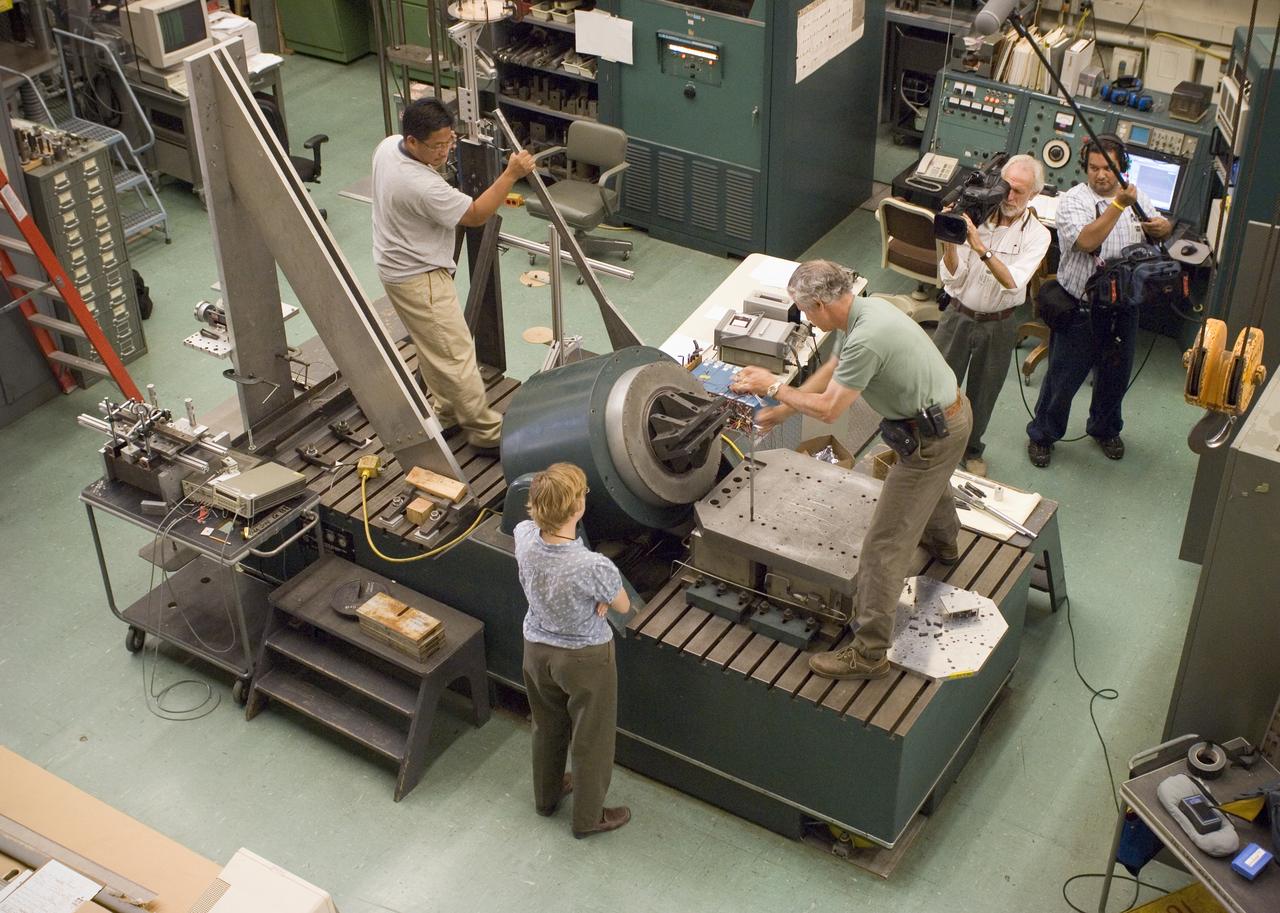
LCROSS (Lunar Crater Observation Sensing Satellite) Near InfraRed Spectrometer shake test in Ames N-244 high bay EEL Lab - with Kimberly Ennico, Lynn Hofland, Frank Pichay and Discovery Channel video crew
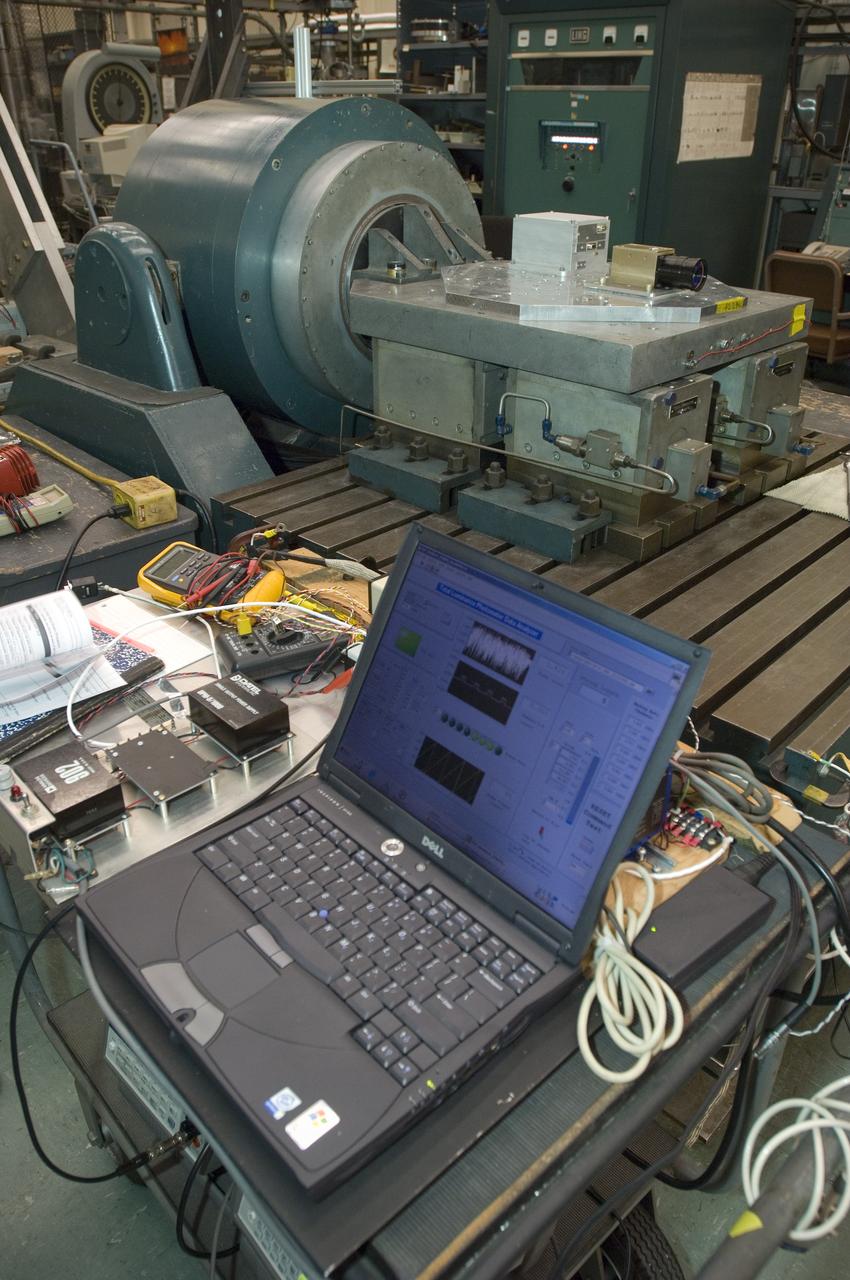
Lunar CRater Observation and Sensing Satellite (LCROSS) and P.I. at NASA Ames Research Center - shake table testing of the Total Luminance Photometer in the EEL lab N-2444. Data analyzer in foreground. (overview)
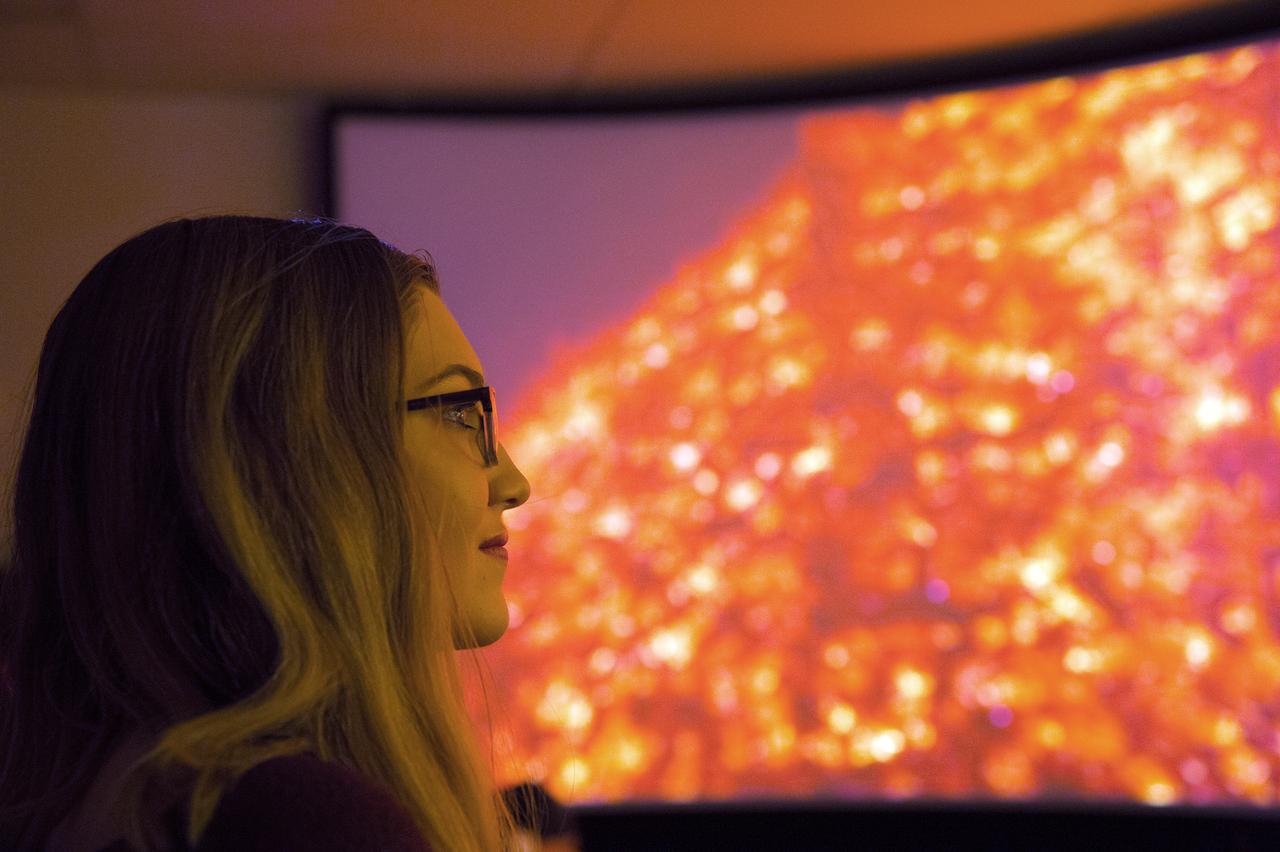
Social media followers visited GSFC Feb 10, 2020 learning role of Artemis program, LRO Lunar Reconnaissance Orbiter and spoke with science experts while touring center WOW lab B21
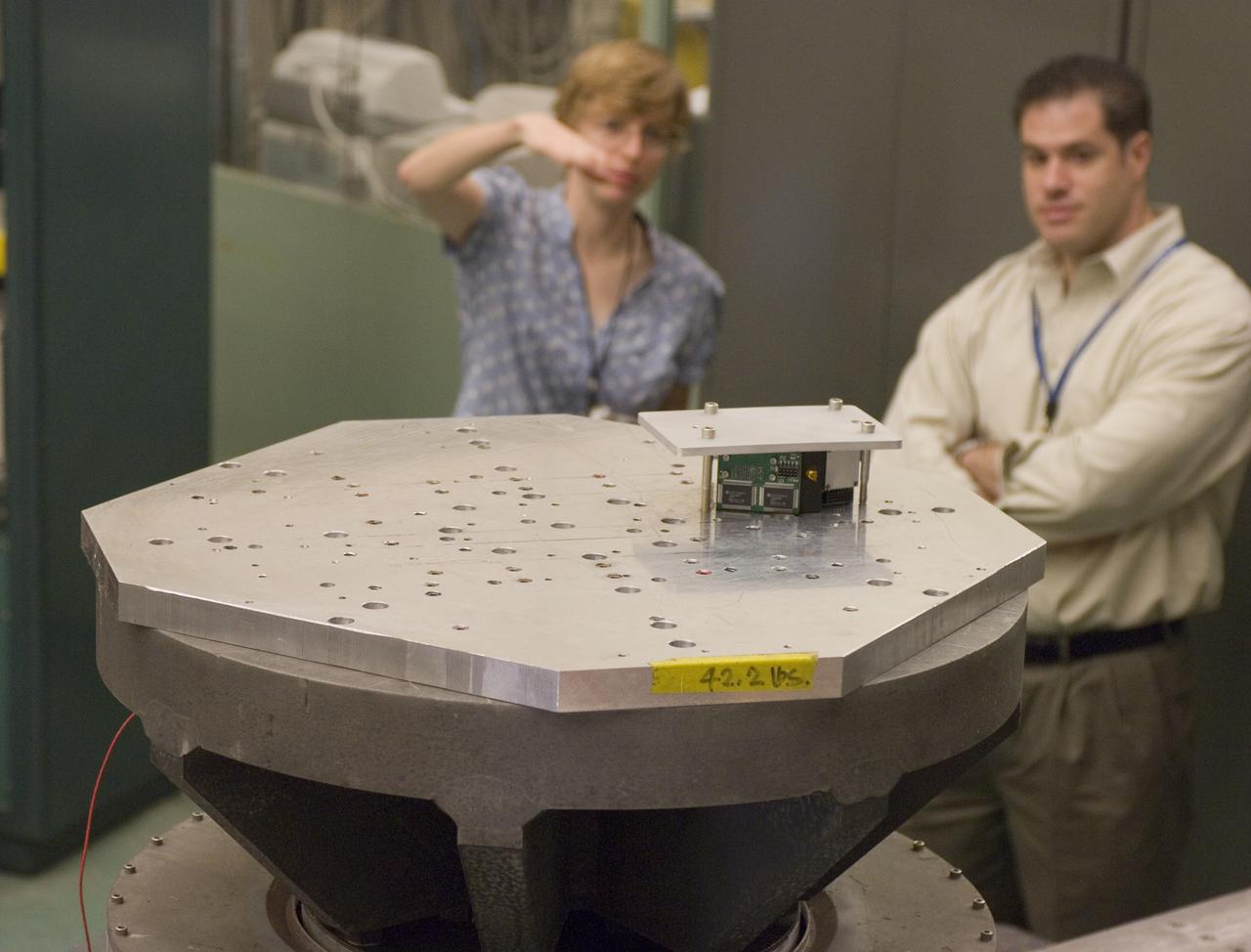
LCROSS (Lunar Crater Observation Sensing Satellite) Near InfraRed Spectrometer shake test in Ames N-244 high bay EEL Lab - with Kimberly Ennico and Anthony Colaprete
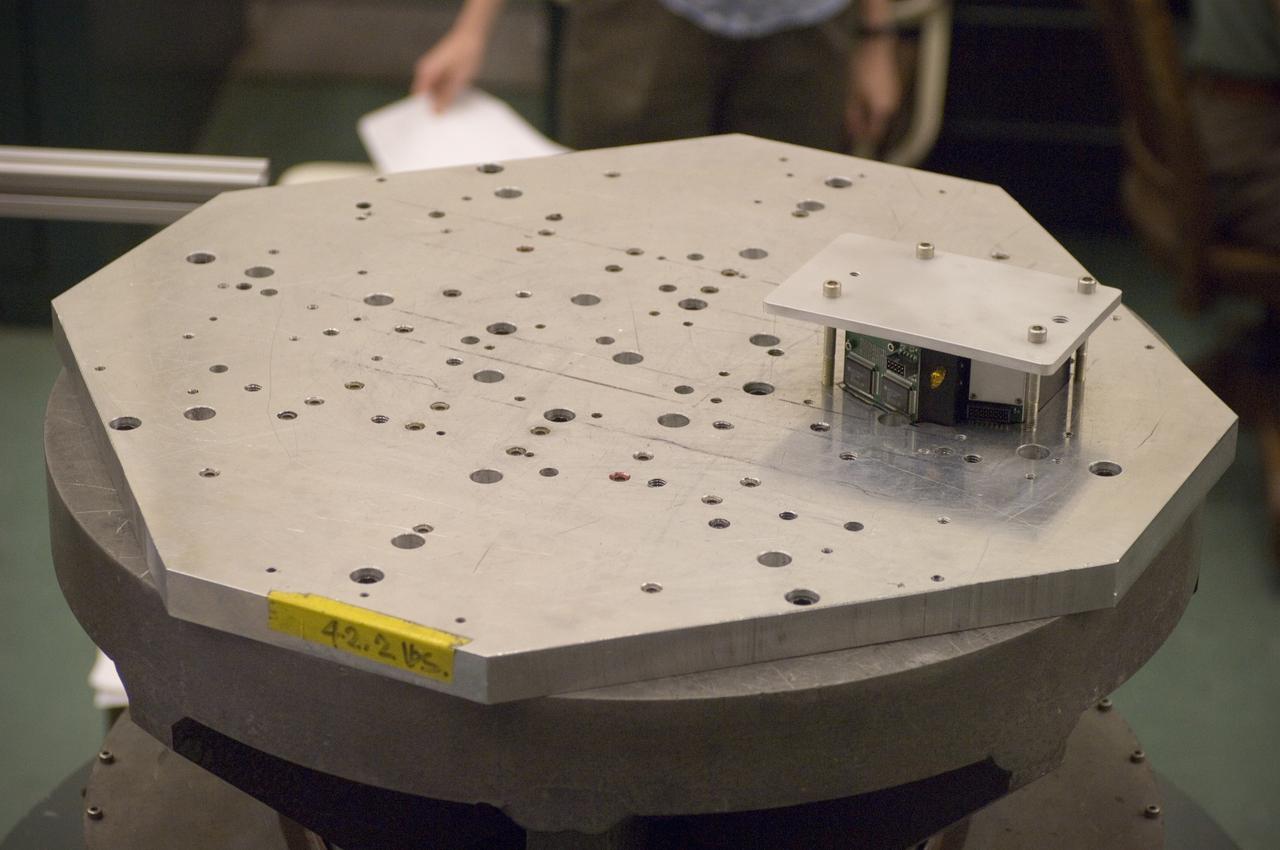
LCROSS (Lunar Crater Observation Sensing Satellite) Near InfraRed Spectrometer shake test in Ames N-244 high bay EEL Lab - Spectrometer on shake table
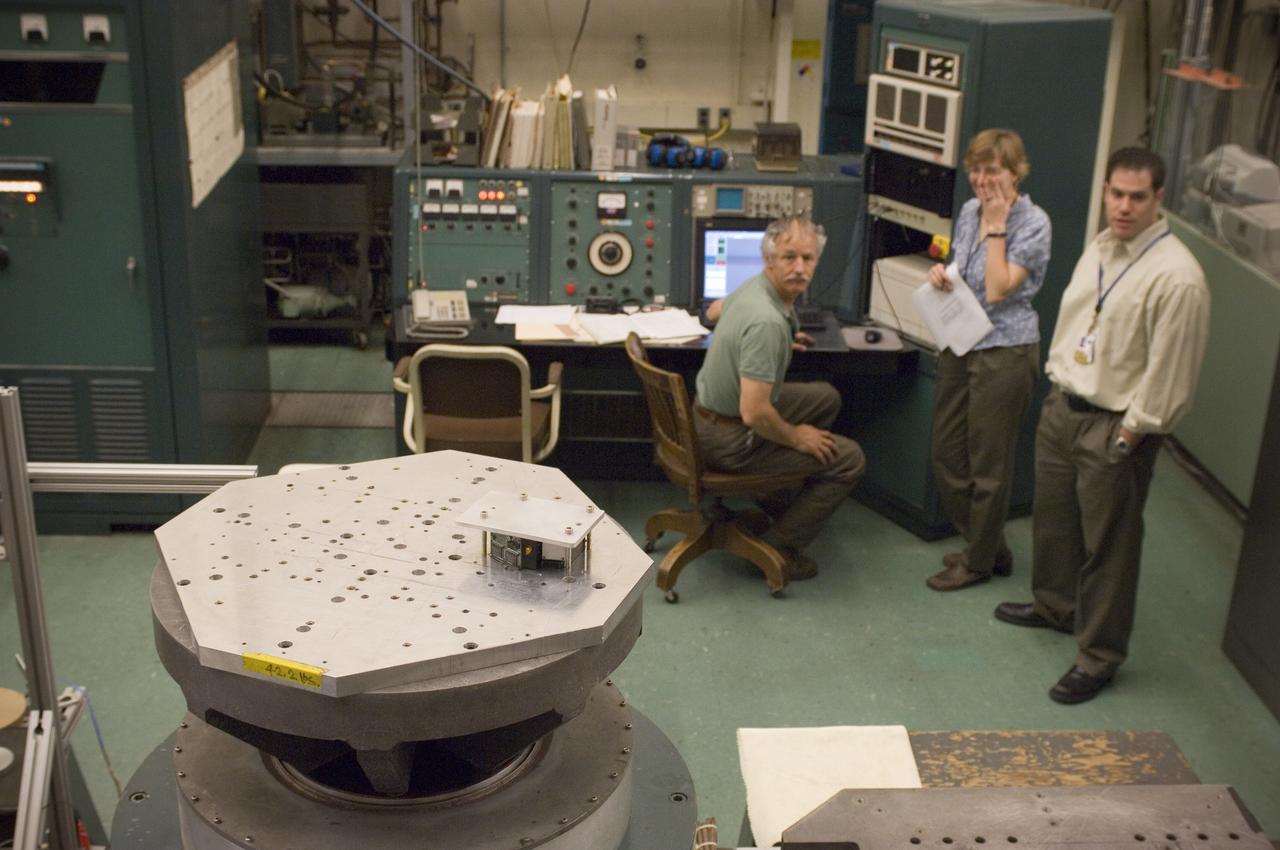
LCROSS (Lunar Crater Observation Sensing Satellite) Near InfraRed Spectrometer shake test in Ames N-244 high bay EEL Lab - with Kimberly Ennico, Anthony Colaprete and Lynn Hofland
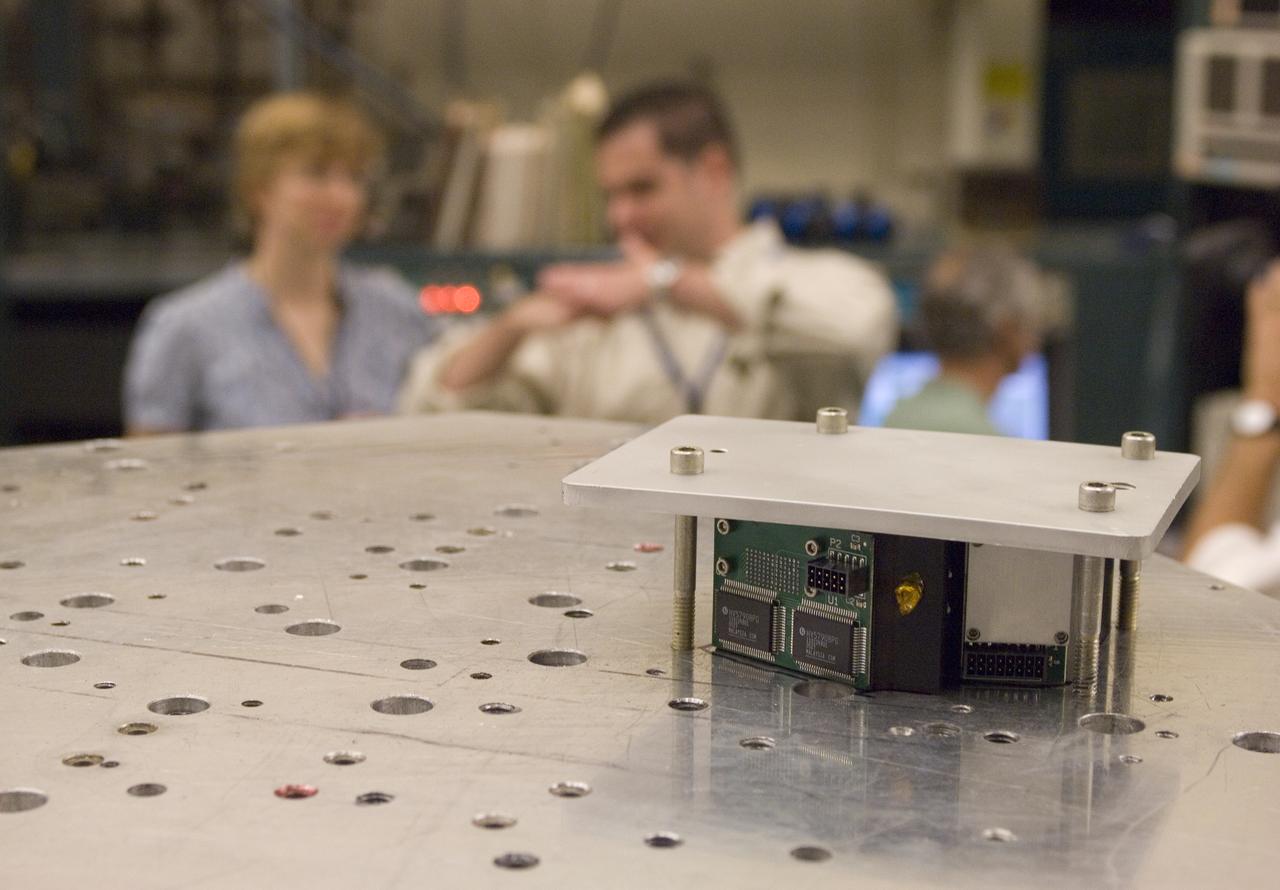
LCROSS (Lunar Crater Observation Sensing Satellite) Near InfraRed Spectrometer shake test in Ames N-244 high bay EEL Lab - with Kimberly Ennico and Anthony Colaprete
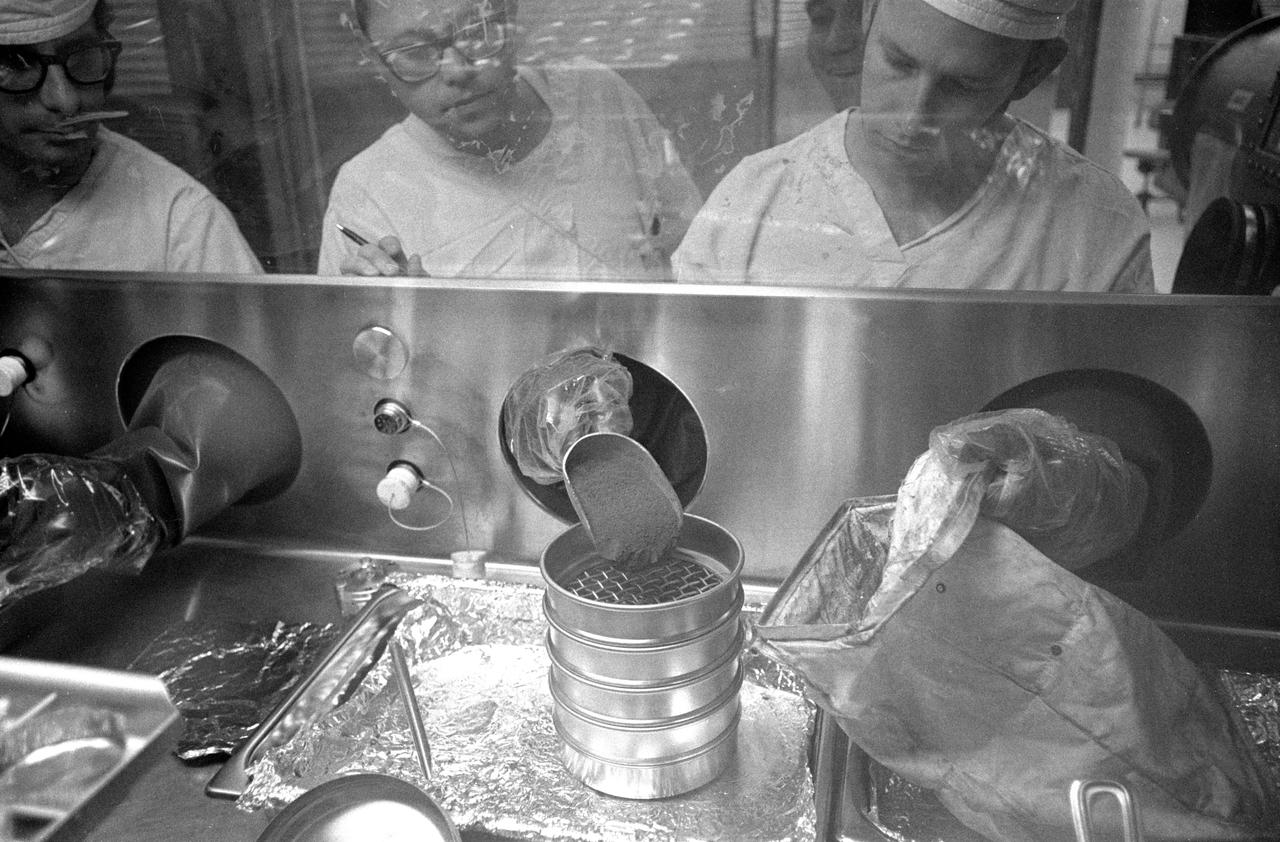
S71-19489 (18 Feb. 1971) --- Glove handlers work with freshly opened Apollo 14 lunar sample material in modularized cabinets in the Lunar Receiving Laboratory at the Manned Spacecraft Center. The glove operator on the right starts to pour fine lunar material which he has just taken from a tote bag. The powdery sample was among the last to be revealed of the 90-odd pounds of material brought back to Earth by the Apollo 14 crew members.
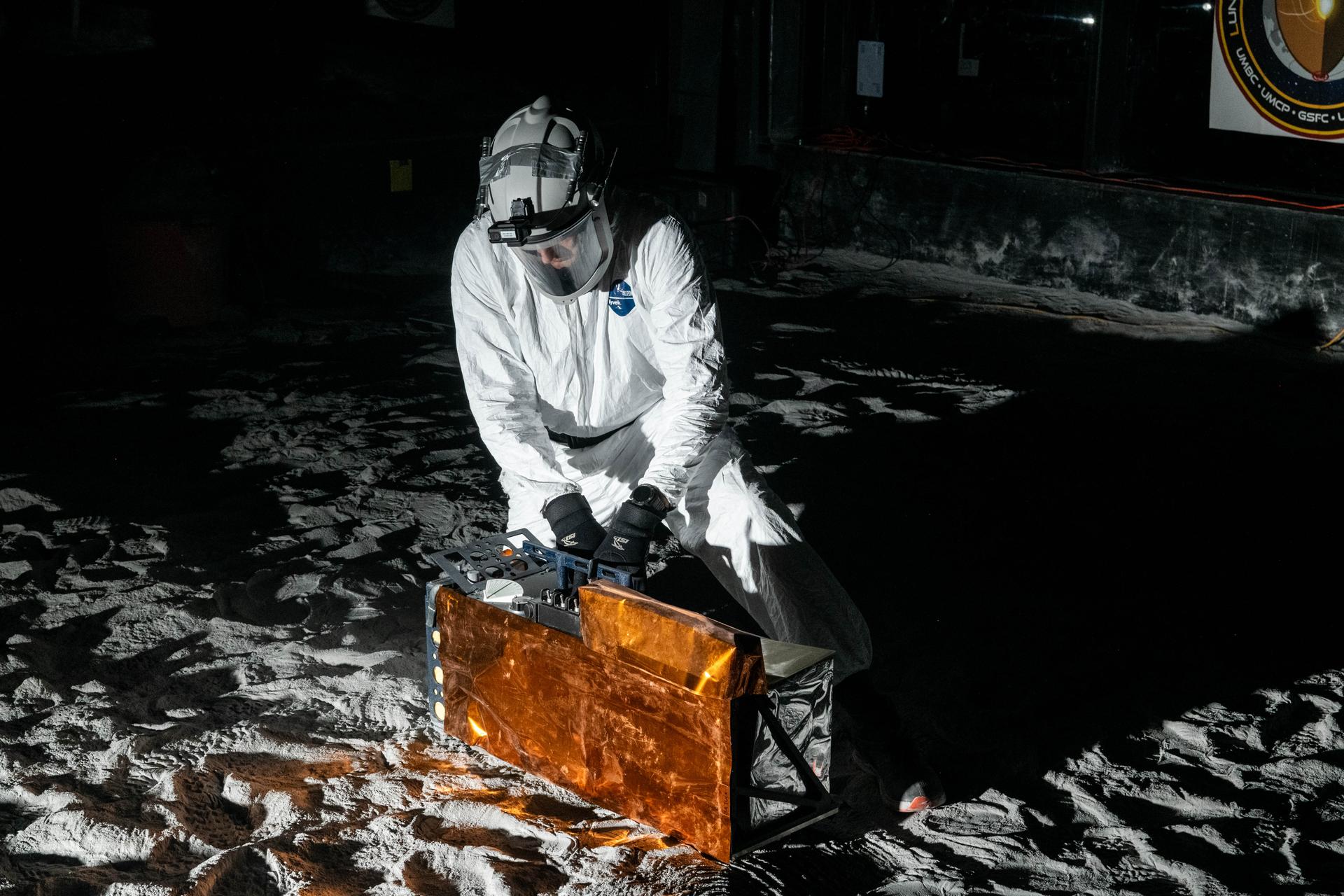
Artemis Scientist, Trevor Graff, performs instrument deployment exercises with a medium fidelity mock up of the Lunar Environment Monitoring Station (LEMS) in the lunar simulant bin at the Florida Space Institute Exolith Lab, Orlando, Fl., Aug 6, 2025. LEMS is a compact, autonomous, and self-sustaining seismometer suite designed to carry out continuous, long-term, monitoring of the lunar seismic environment at the South Polar region. Photo Credit: NASA/Katie Mellos.
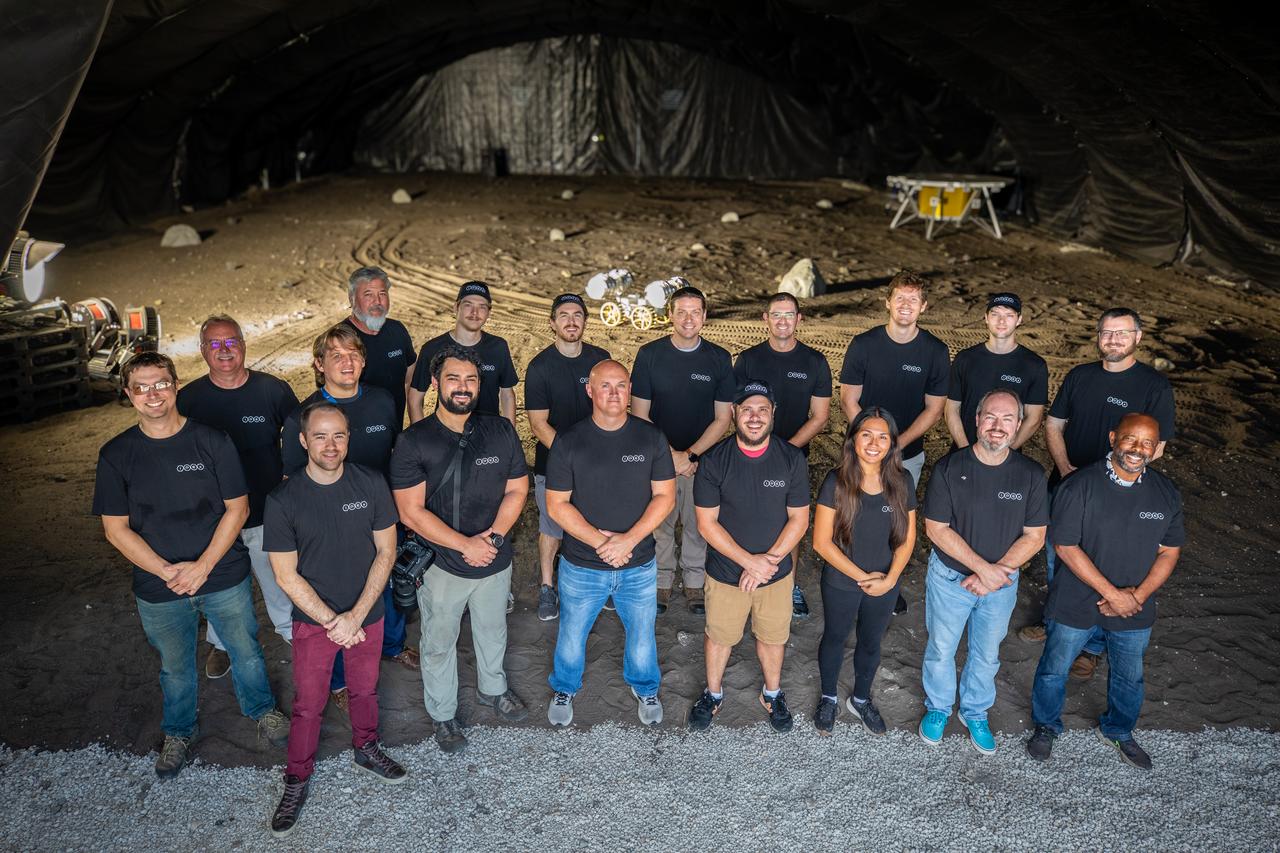
A team from the Granular Mechanics and Regolith Operations lab who developed and tested NASA’s ISRU Pilot Excavator (IPEx) pose for a photo on Friday, Aug. 30, 2024, in a testbed located at NASA’s Kennedy Space Center in Florida. IPEx functions as both an excavator and a dump truck to mine and transport lunar regolith, the loose rocky material on the Moon’s surface, which is crucial for future lunar missions and In-Situ Resource Utilization (ISRU) processes. This dual capability makes IPEx an indispensable tool for sustainable lunar exploration.
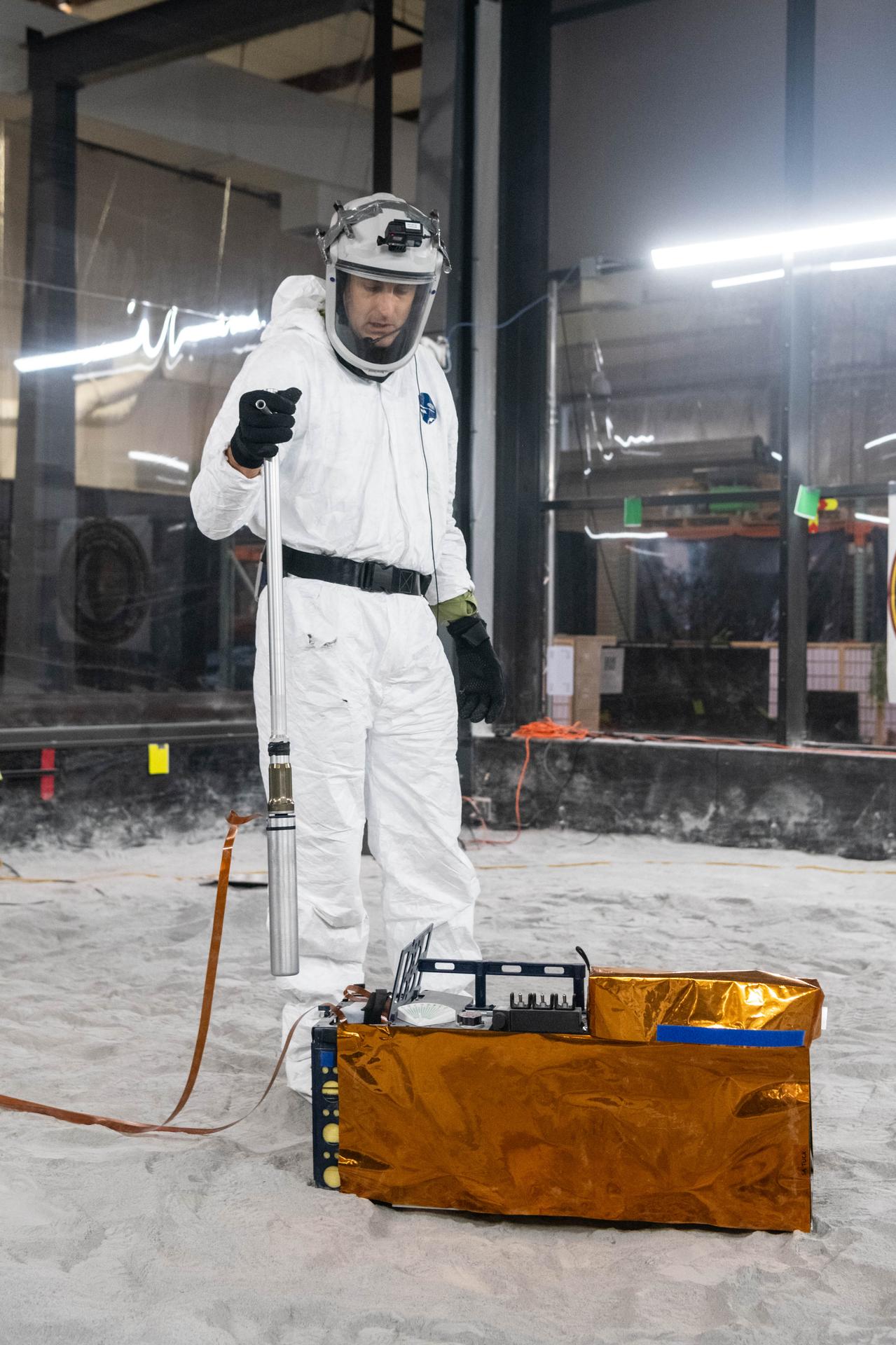
Artemis Scientist, Trevor Graff, performs instrument deployment exercises with a medium fidelity mock up of the Lunar Environment Monitoring Station (LEMS) in the lunar simulant bin at the Florida Space Institute Exolith Lab, Orlando, Fl., Aug 6, 2025. LEMS is a compact, autonomous, and self-sustaining seismometer suite designed to carry out continuous, long-term, monitoring of the lunar seismic environment at the South Polar region. Photo Credit: NASA/Katie Mellos.
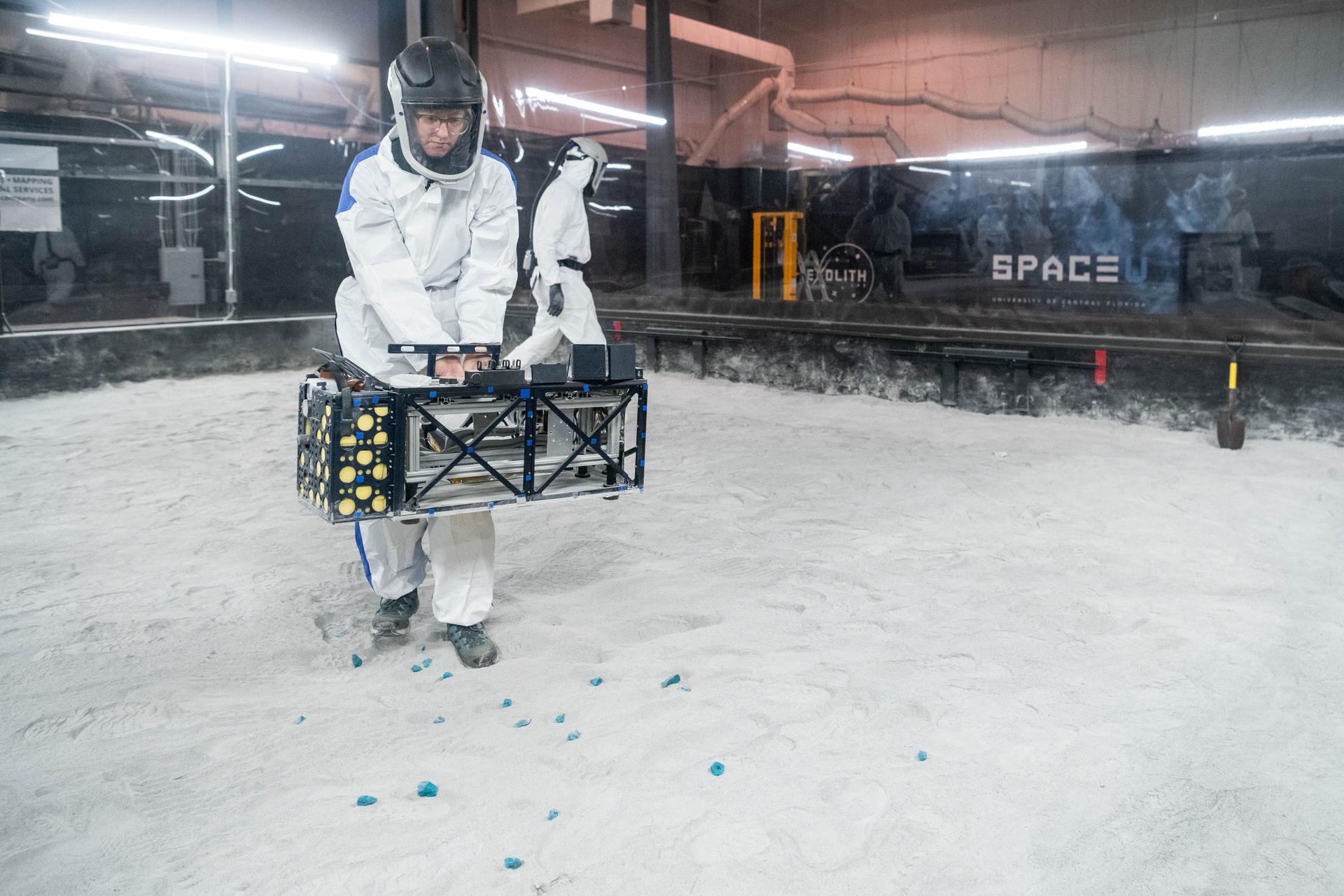
Naoma McCall, Science Co-Investigator, Deployment Lead, performs instrument deployment exercises with a medium fidelity mock up of the Lunar Environment Monitoring Station (LEMS) in the lunar simulant bin at the Florida Space Institute Exolith Lab, Orlando, Fl., Aug 7th, 2025. LEMS is a compact, autonomous, and self-sustaining seismometer suite designed to carry out continuous, long-term, monitoring of the lunar seismic environment at the South Polar region. Photo Credit: NASA/Katie Mellos.
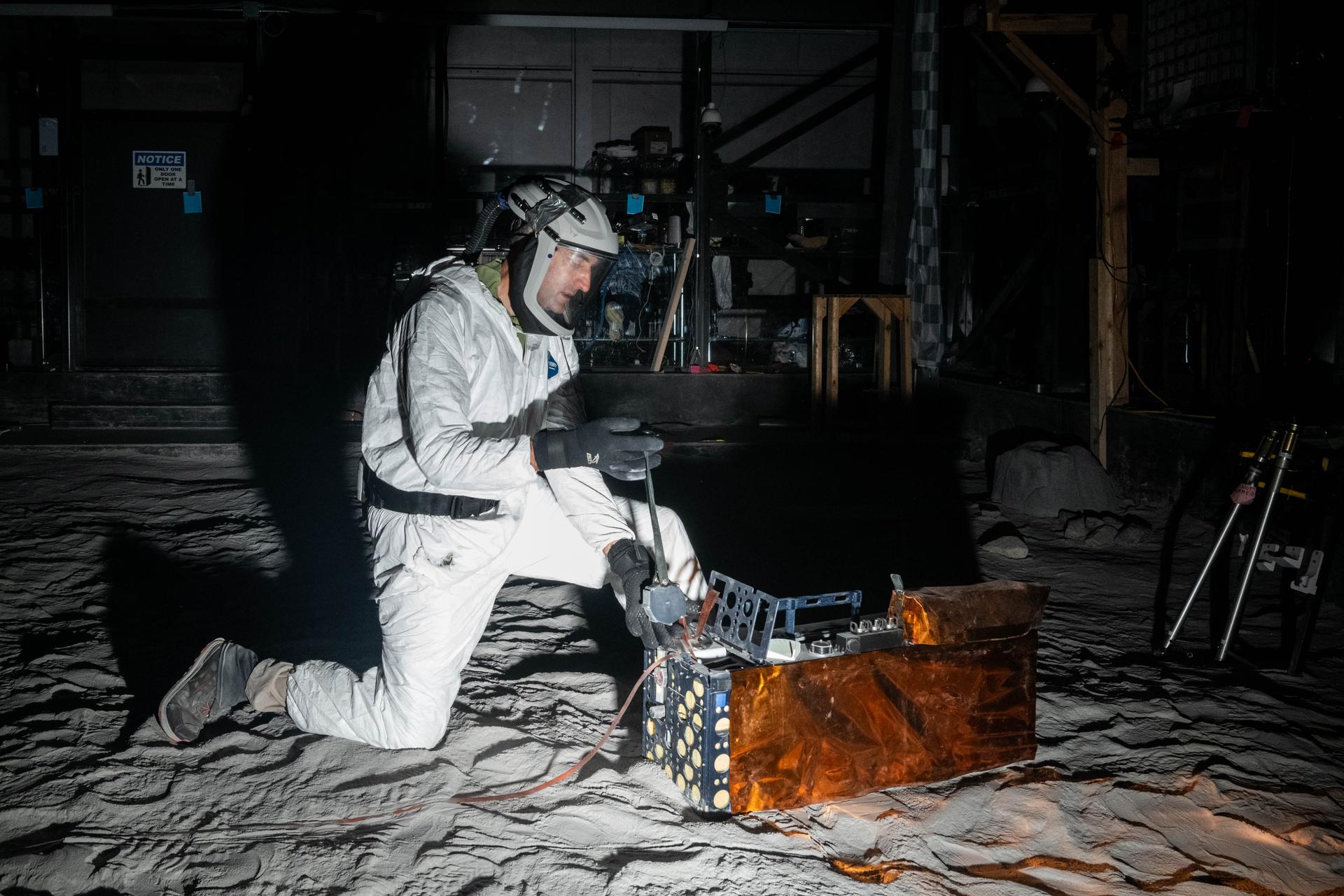
Artemis Scientist, Trevor Graff, performs instrument deployment exercises with a medium fidelity mock up of the Lunar Environment Monitoring Station (LEMS) in the lunar simulant bin at the Florida Space Institute Exolith Lab, Orlando, Fl., Aug 6, 2025. LEMS is a compact, autonomous, and self-sustaining seismometer suite designed to carry out continuous, long-term, monitoring of the lunar seismic environment at the South Polar region. Photo Credit: NASA/Katie Mellos.
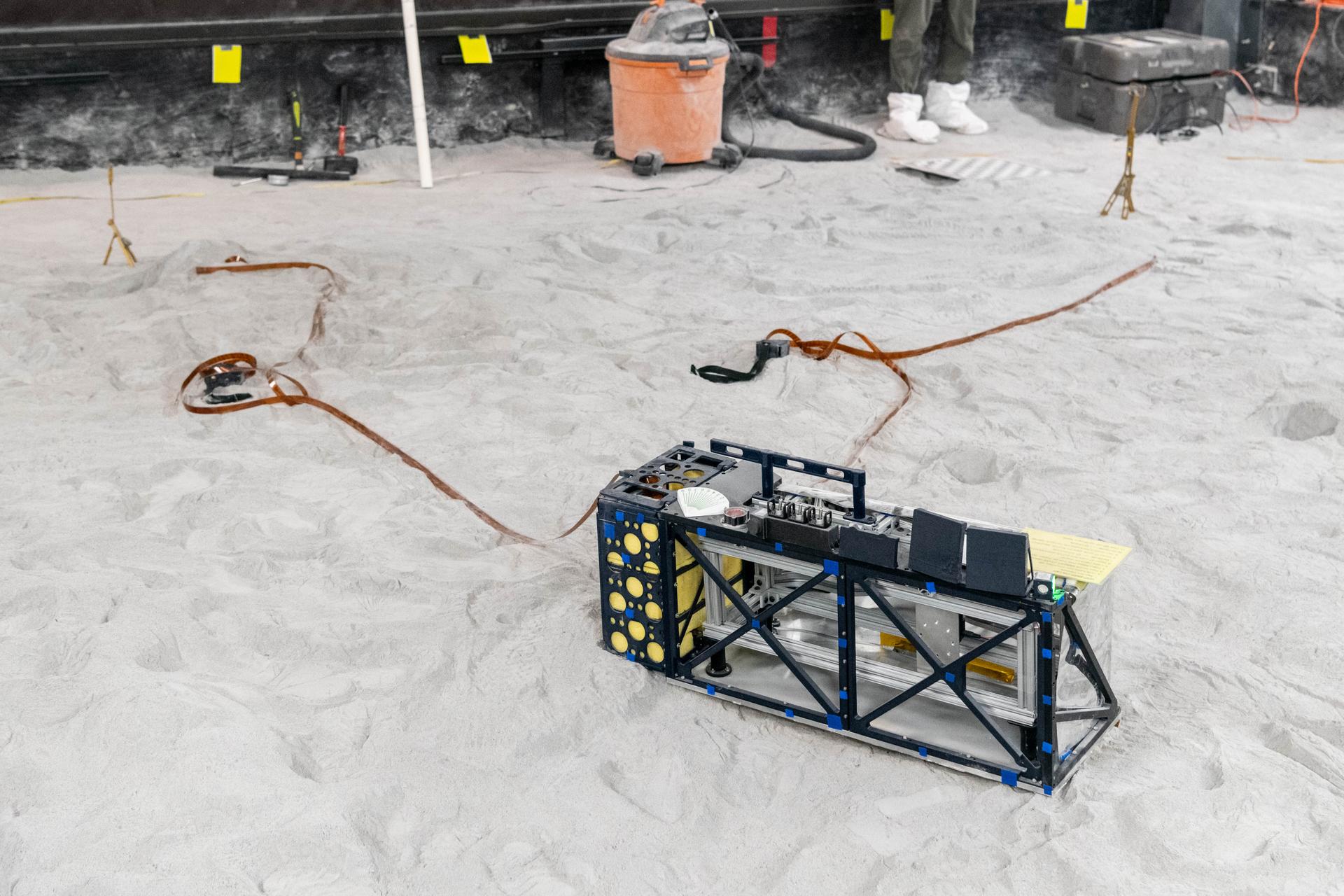
The Lunar Environment Monitoring Station (LEMS) medium fidelity instrument mock up is configured for instrument deployment exercises in the lunar simulant bin at the Florida Space Institute Exolith Lab, Orlando, Fl., Aug 6, 2025. LEMS is a compact, autonomous, and self-sustaining seismometer suite designed to carry out continuous, long-term, monitoring of the lunar seismic environment at the South Polar region. Photo Credit: NASA/Katie Mellos.
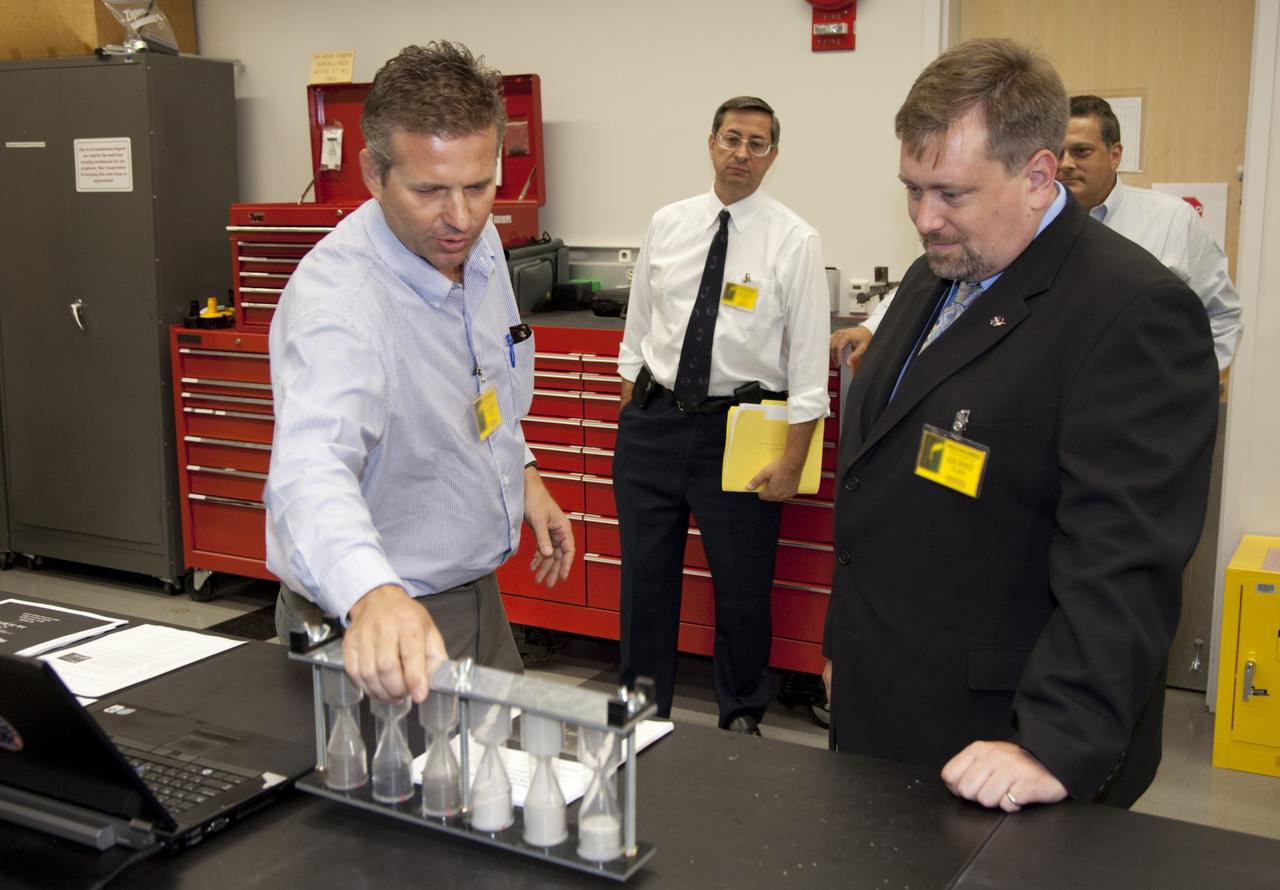
CAPE CANAVERAl, Fla. - Robert Mueller, left, explains differences in lunar, Martian and Earth soil using simulants to Dr. Mason Peck, NASA's chief Technologist, during a tour of the Space Life Sciences Laboratory at Kennedy. Peck toured the lab facility during a visit to the space center. Photo credit: NASA/Frankie Martin
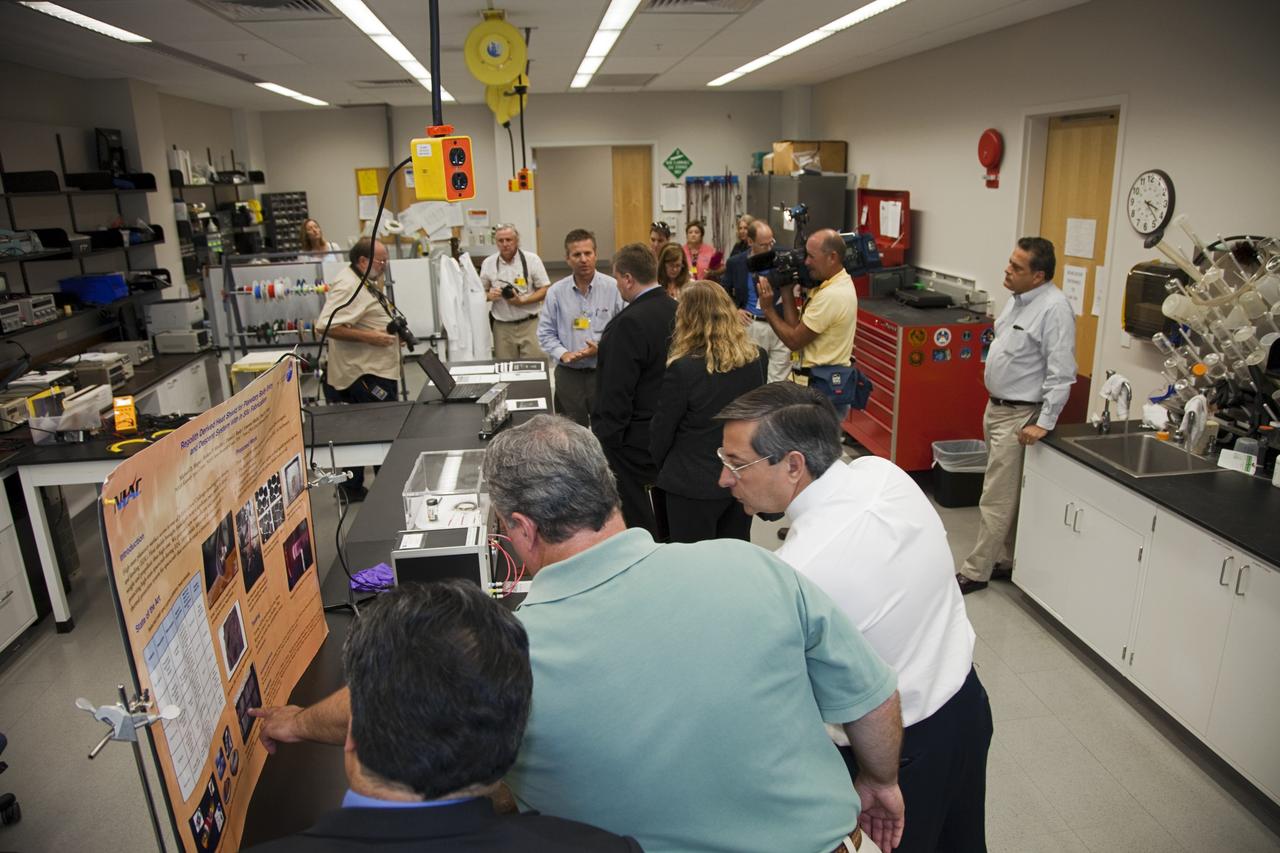
CAPE CANAVERAl, Fla. - Robert Mueller, left, explains differences in lunar, Martian and Earth soil using simulants to Dr. Mason Peck, NASA's chief Technologist, during a tour of the Space Life Sciences Laboratory at Kennedy. Peck toured the lab facility during a visit to the space center. Photo credit: NASA/Frankie Martin
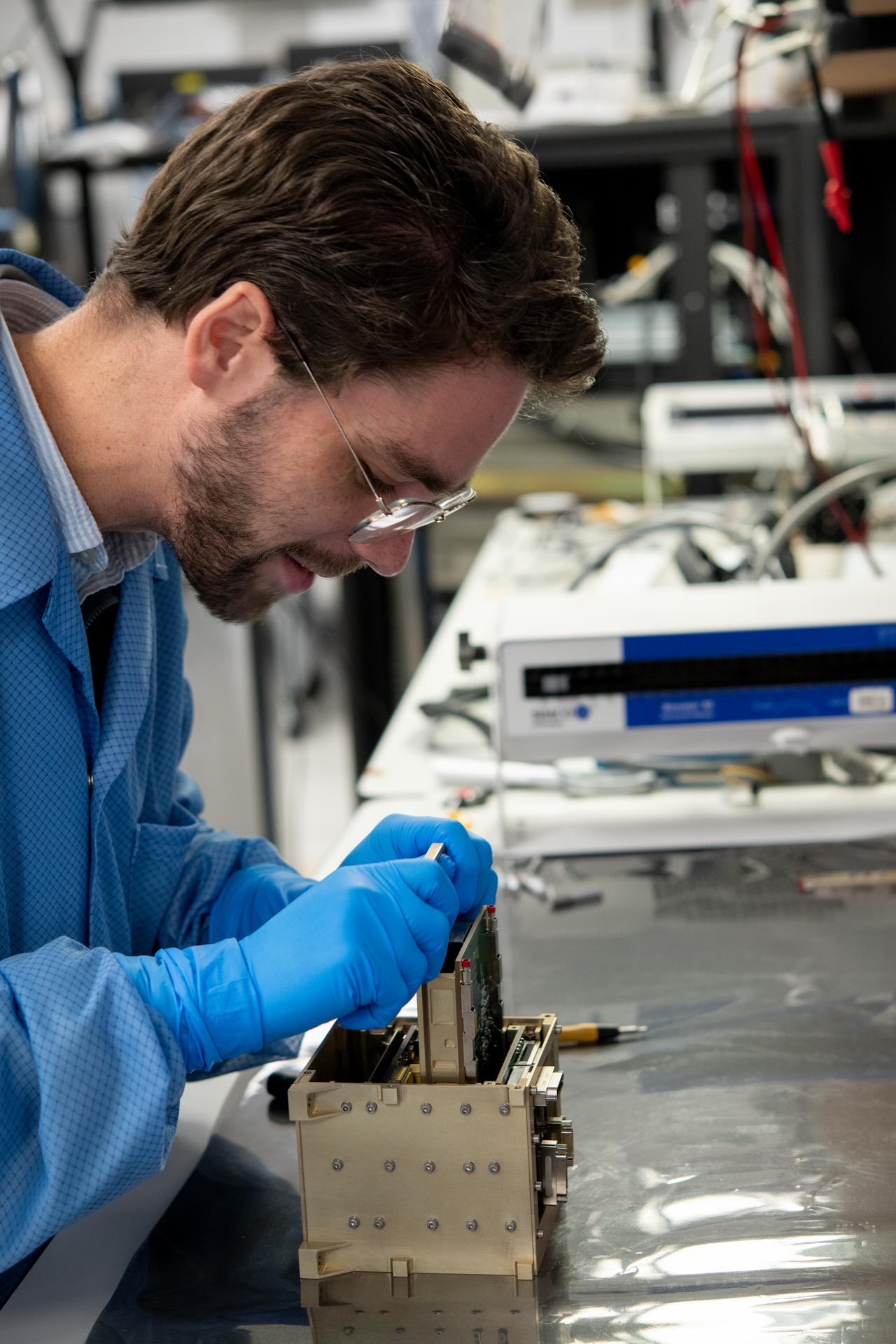
Mechanical Engineer Mitchell Hamann disassembles a Lunar Environment Monitoring Station (LEMS) flight electrical board chassis in the avoinics lab at NASA's Goddard Space Flight Center in Greenbelt, Maryland on October 22, 2025. LEMS is a compact, autonomous, and self-sustaining seismometer suite designed to carry out continuous, long-term, monitoring of the lunar seismic environment at the South Polar region. NASA/Desiree Stover.
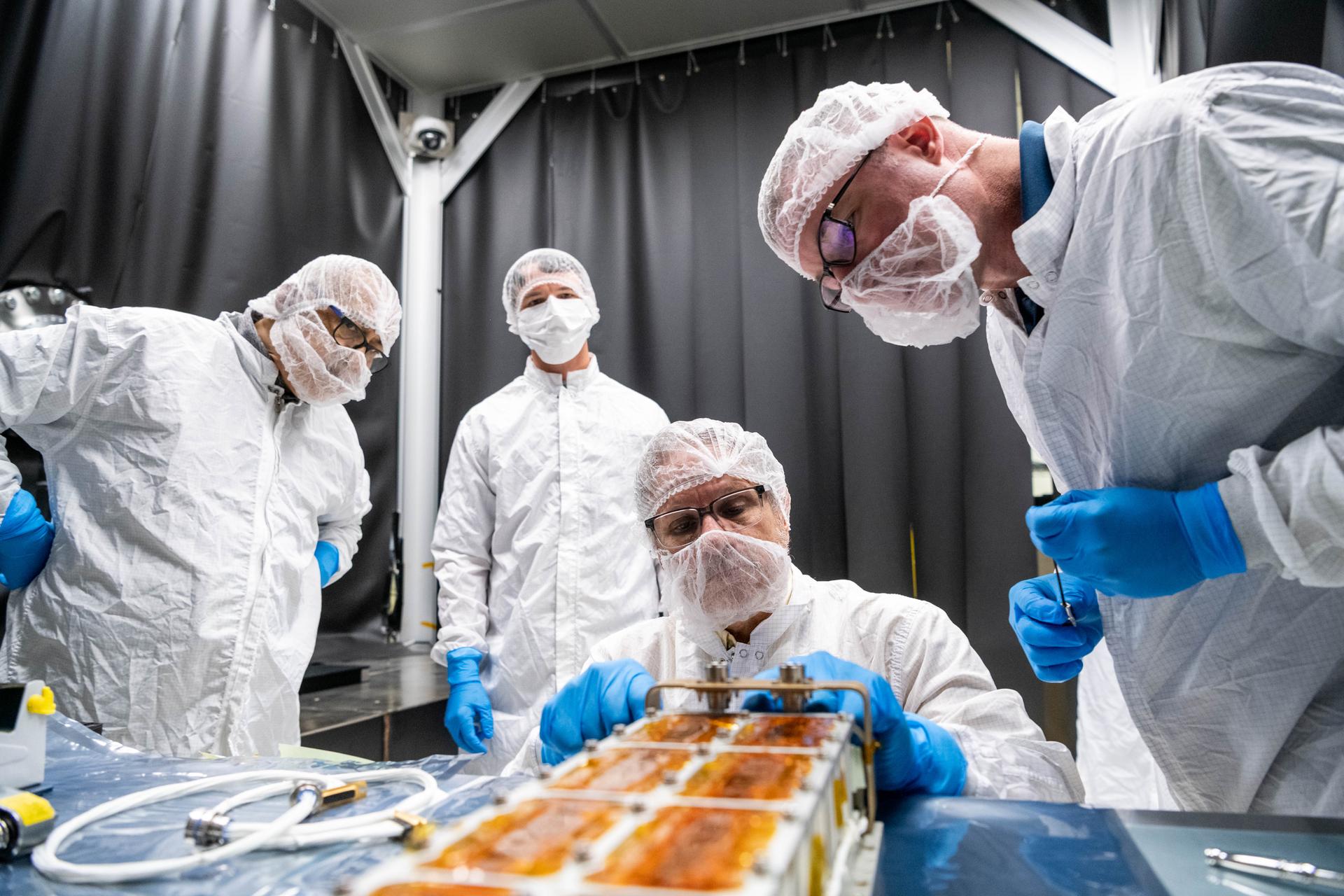
Lunar Environment Monitoring Station (LEMS) team members assemble the flight battery connectors to the connector bracket in a lab at Goddard Space Flight Center in Greenbelt, Maryland on September 9th, 2025. LEMS is a compact, autonomous, and self-sustaining seismometer suite designed to carry out continuous, long-term, monitoring of the lunar seismic environment at the South Polar region. NASA/Katie Mellos.
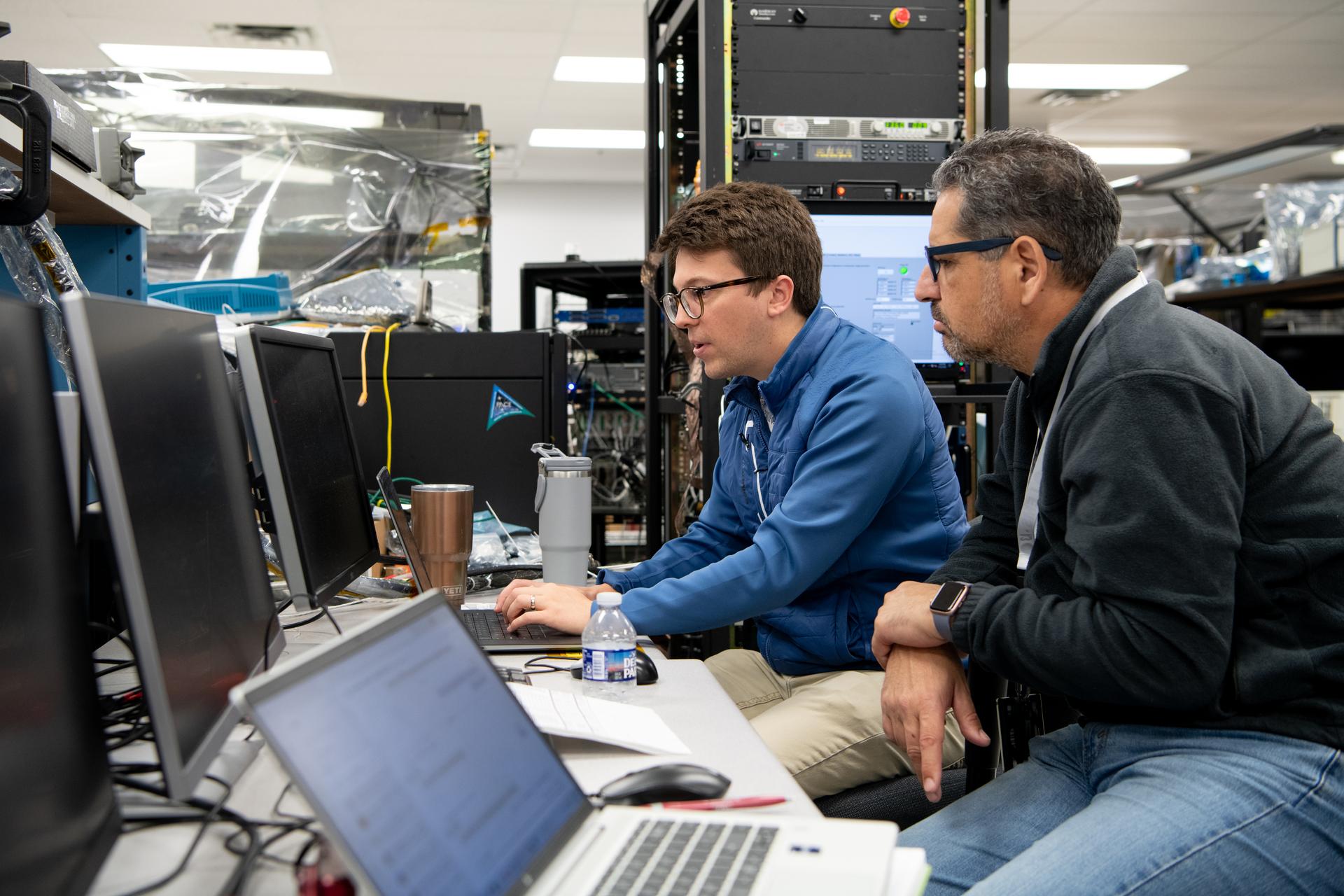
Lunar Environment Monitoring Station (LEMS) team members Computer Engineer James Olsen & Principle Investigator Dr. Medhi Benna perform electrical test procedures in the avoinics lab at at Goddard Space Flight Center in Greenbelt, Maryland. LEMS is a compact, autonomous, and self-sustaining seismometer suite designed to carry out continuous, long-term, monitoring of the lunar seismic environment at the South Polar region.NASA/Desiree Stover.
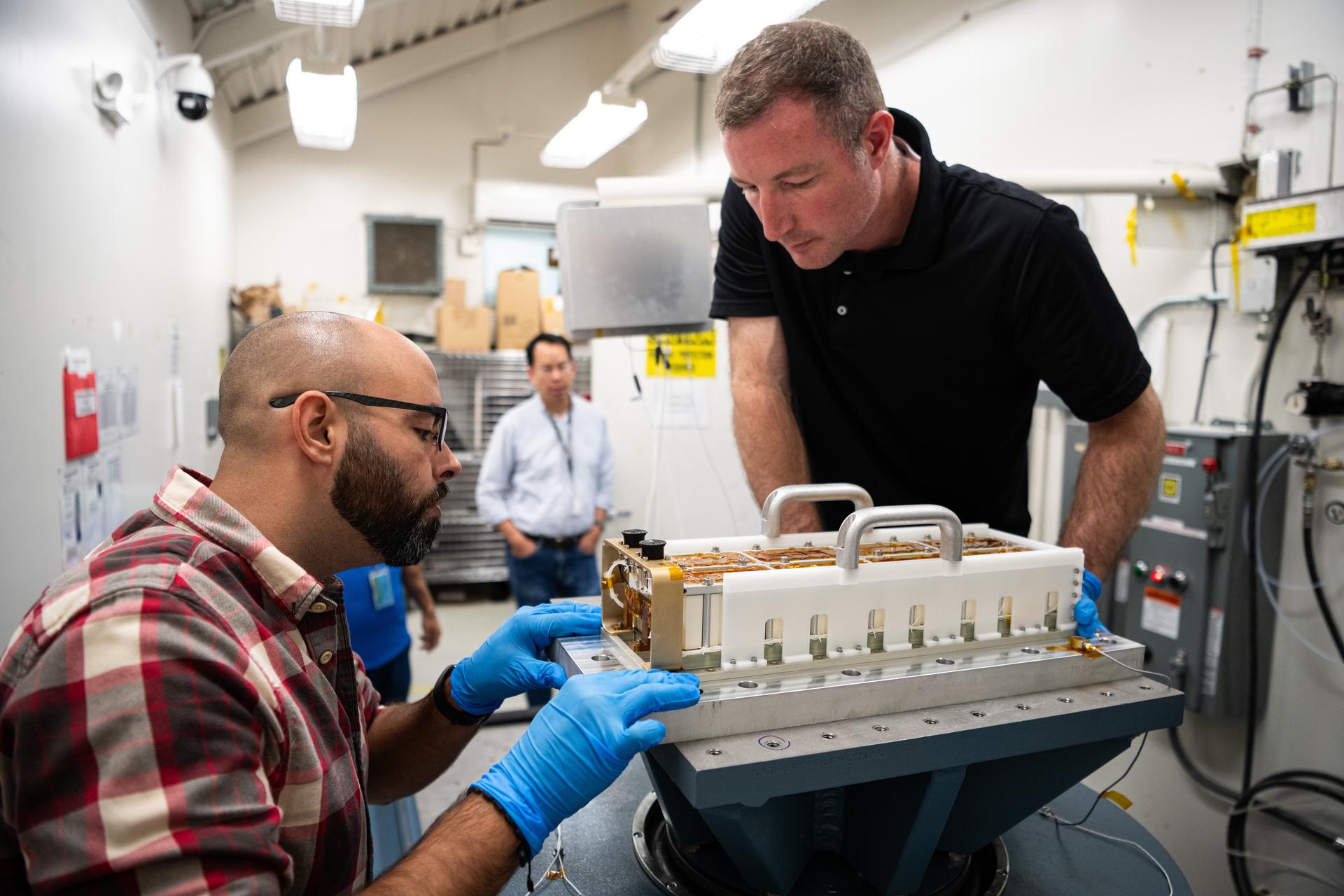
Mechanical Engineer John Seixal (left) and Engineering Technician Alex Schaeffer prepare the Lunar Environment Monitoring Station (LEMS) flight battery for vibration testing in a lab at NASA's Goddard Space Flight Center in Greenbelt, Maryland on September 29th, 2025. LEMS is a compact, autonomous, and self-sustaining seismometer suite designed to carry out continuous, long-term, monitoring of the lunar seismic environment at the South Polar region. NASA/Denny Henry.
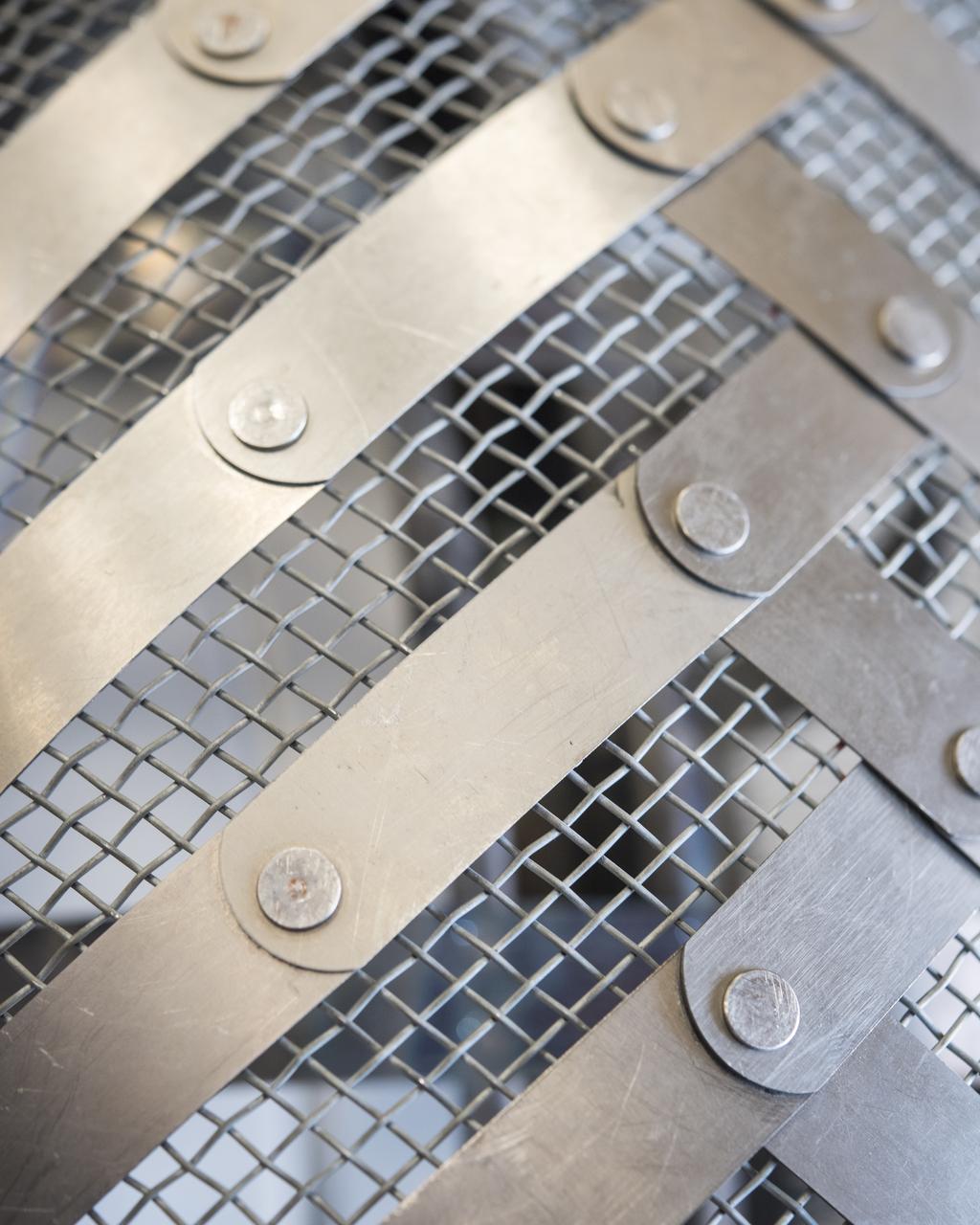
This is a close-up of an exact replica of the Apollo-era Lunar Roving Vehicle Wheel, of which twelve originals still rest on the surface of the Moon. The tire was designed to flex under load, without air, and was formed from a mesh of plated piano wire. Metal straps were hand riveted onto the mesh to reduce sinking into loose lunar soils. These replica wheels were tested in NASA Glenn's SLOPE Lab to establish a baseline for future improvements.
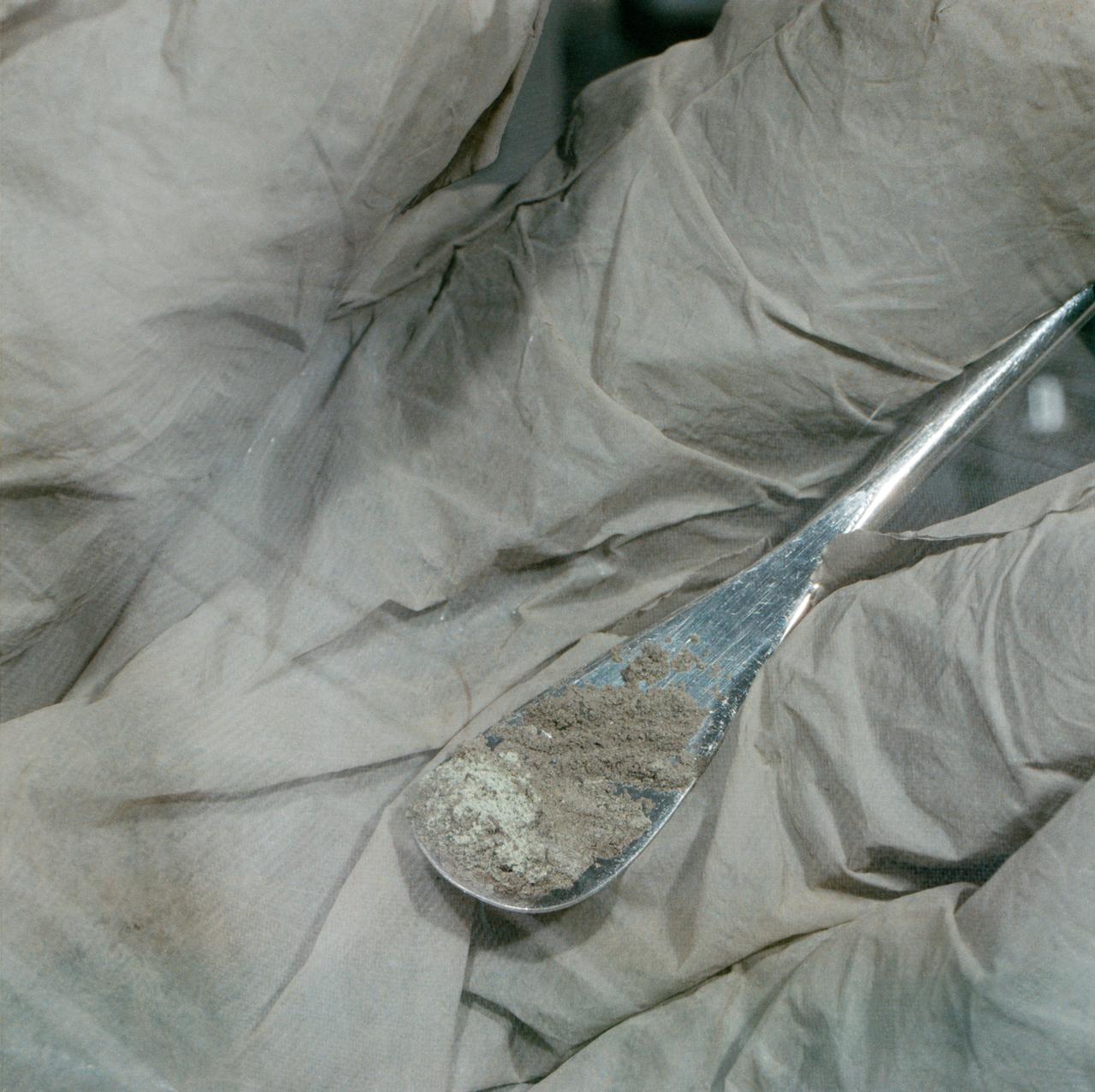
S71-43050 (August 1971) --- A close-up view of Apollo 15 lunar sample No. 15305 in the Non-sterile Nitrogen Processing Line (NNPL) in the Lunar Receiving Laboratory (LRL) at the Manned Spacecraft Center (MSC). This sample, pictured on a small spatula in a lab technician's glove, is green and is one of six recently taken from container No. 173, made up of comprehensive fines from the Apennine Front, Site No. 7. Astronauts David R. Scott, commander; and James B. Irwin, lunar module pilot, took the sample during their second extravehicular activity (EVA), at a ground elapsed time (GET) of 146:05 to 146:06.
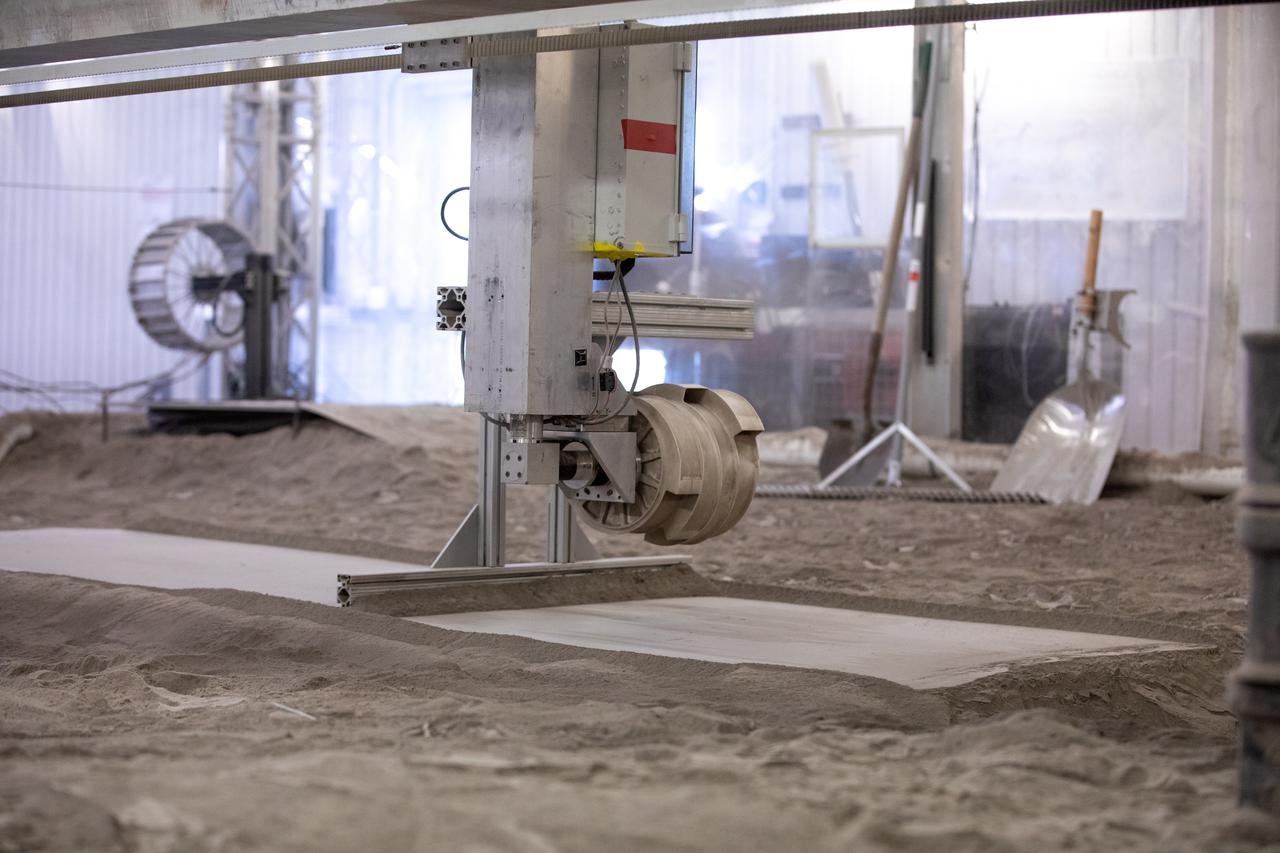
A team at NASA’s Kennedy Space Center in Florida tests small- and medium-sized bucket drums July 16, 2021, in the Granular Mechanics and Regolith Operations Lab’s “big bin” during prototype development for the pilot excavator, a robotic mission designed for lunar operations. The bucket drum excavated lunar regolith simulant. The Swamp Works team leveled and compacted the simulant before excavation as well as measured penetration during the excavator testing. Robotics engineers Jason Schuler and Austin Langton worked inside the bin, teaming up with software engineer Kurt Leucht, who worked just outside of it.
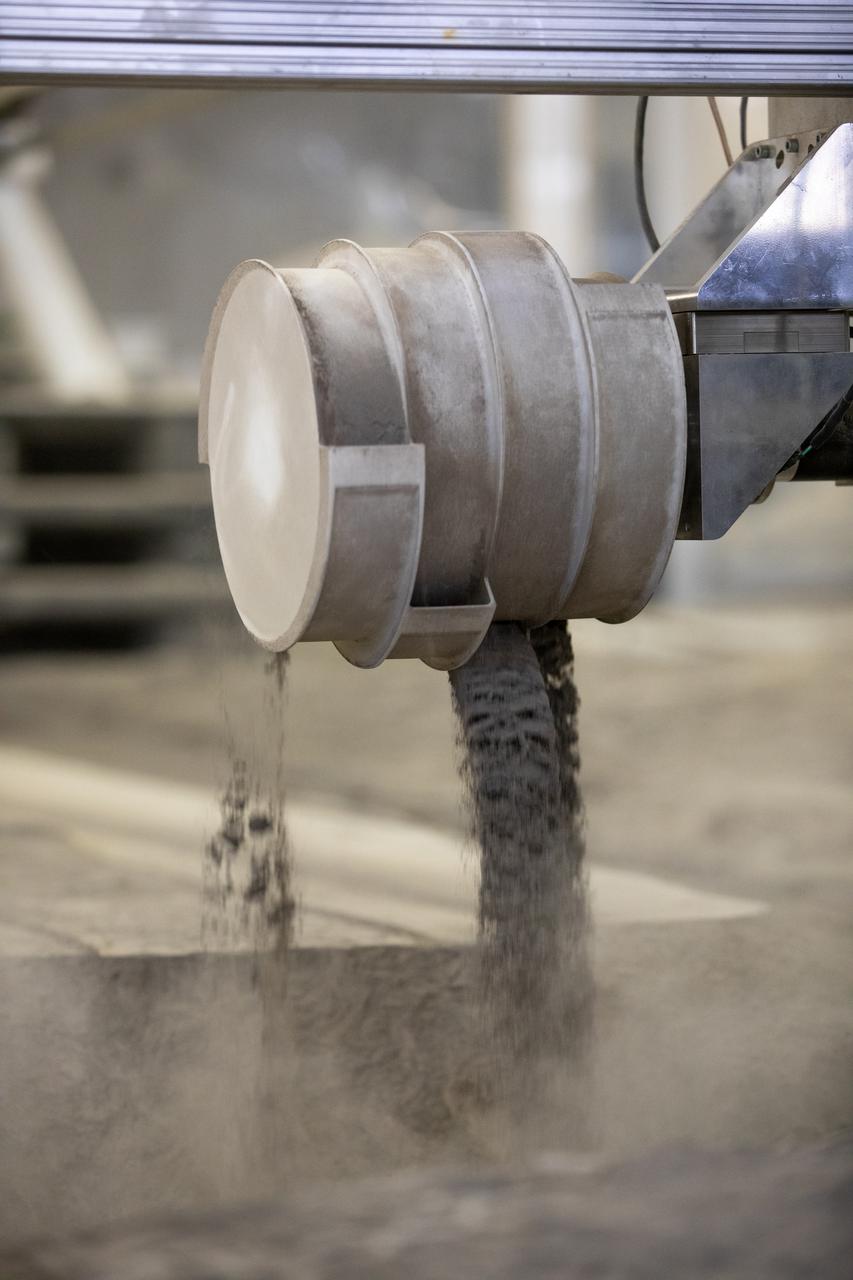
A team at NASA’s Kennedy Space Center in Florida tests small- and medium-sized bucket drums July 16, 2021, in the Granular Mechanics and Regolith Operations Lab’s “big bin” during prototype development for the pilot excavator, a robotic mission designed for lunar operations. The bucket drum excavated lunar regolith simulant. The Swamp Works team leveled and compacted the simulant before excavation as well as measured penetration during the excavator testing. Robotics engineers Jason Schuler and Austin Langton worked inside the bin, teaming up with software engineer Kurt Leucht, who worked just outside of it.
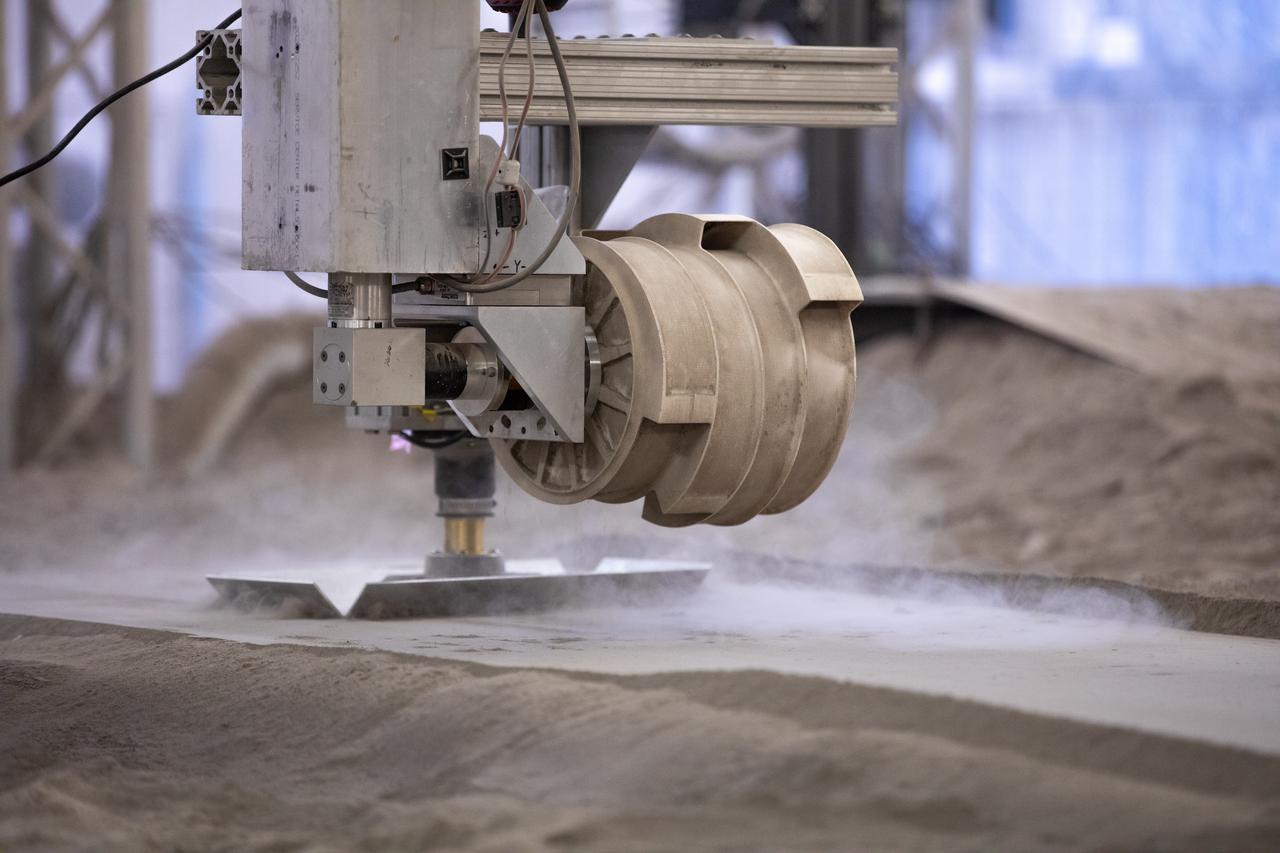
A team at NASA’s Kennedy Space Center in Florida tests small- and medium-sized bucket drums July 16, 2021, in the Granular Mechanics and Regolith Operations Lab’s “big bin” during prototype development for the pilot excavator, a robotic mission designed for lunar operations. The bucket drum excavated lunar regolith simulant. The Swamp Works team leveled and compacted the simulant before excavation as well as measured penetration during the excavator testing. Robotics engineers Jason Schuler and Austin Langton worked inside the bin, teaming up with software engineer Kurt Leucht, who worked just outside of it.
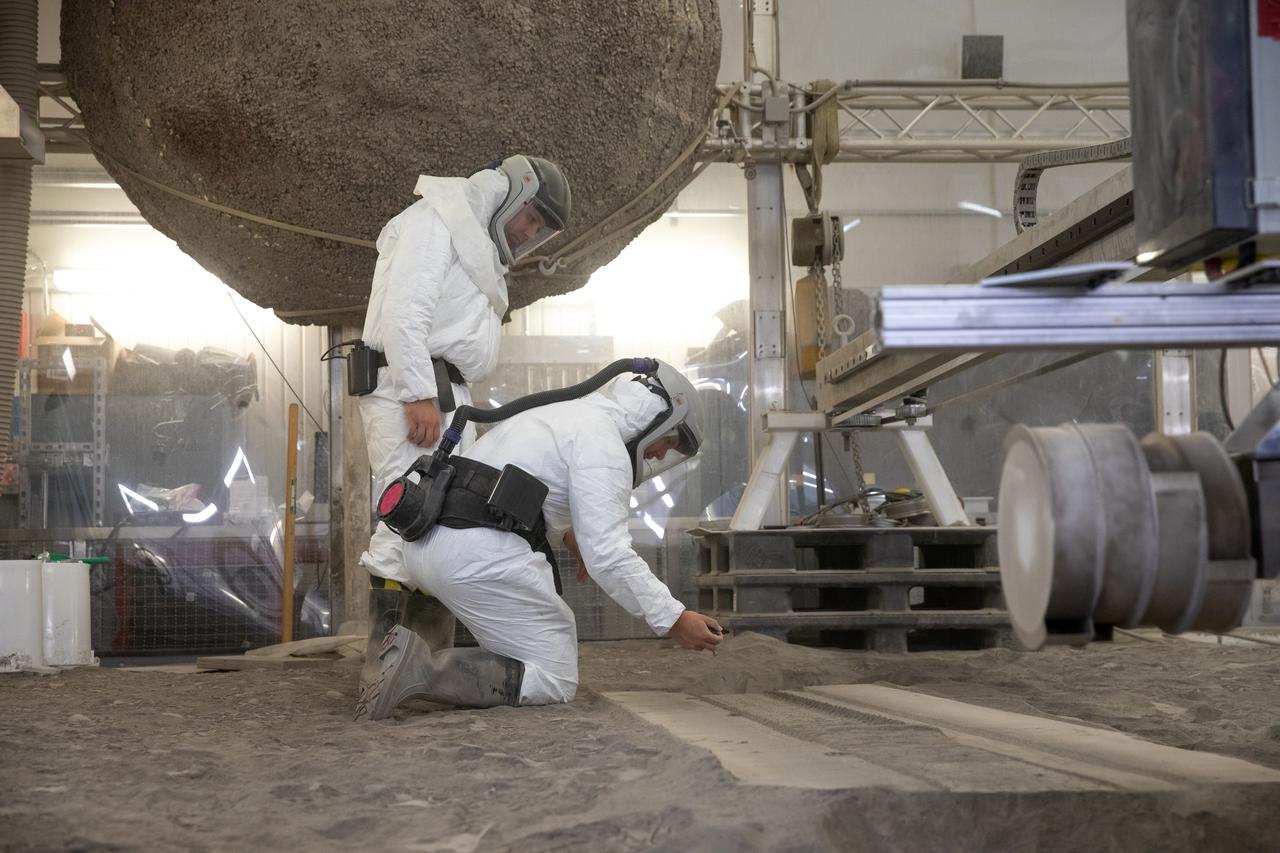
A team at NASA’s Kennedy Space Center in Florida tests small- and medium-sized bucket drums July 16, 2021, in the Granular Mechanics and Regolith Operations Lab’s “big bin” during prototype development for the pilot excavator, a robotic mission designed for lunar operations. The bucket drum excavated lunar regolith simulant. The Swamp Works team leveled and compacted the simulant before excavation as well as measured penetration during the excavator testing. Robotics engineers Jason Schuler and Austin Langton worked inside the bin, teaming up with software engineer Kurt Leucht, who worked just outside of it.
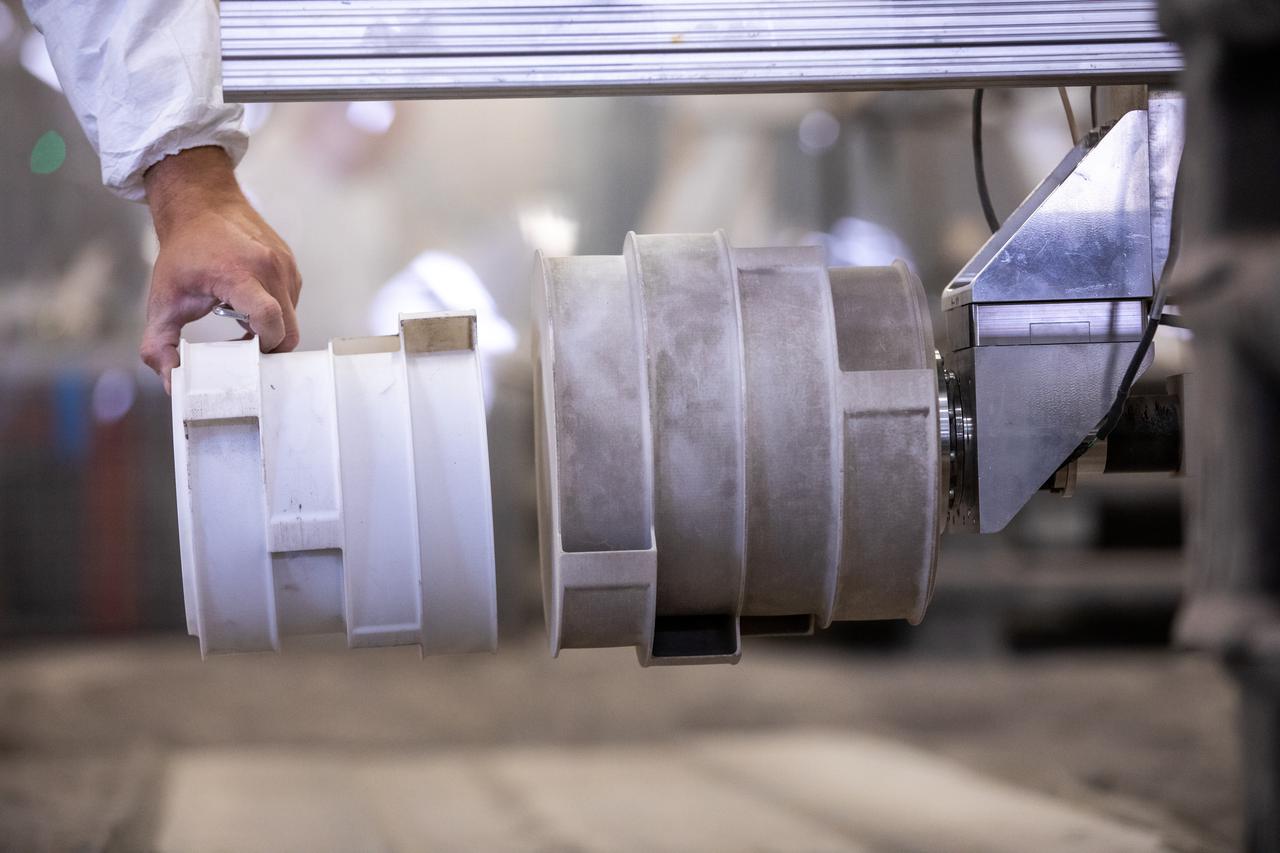
A team at NASA’s Kennedy Space Center in Florida tests small- and medium-sized bucket drums July 16, 2021, in the Granular Mechanics and Regolith Operations Lab’s “big bin” during prototype development for the pilot excavator, a robotic mission designed for lunar operations. The bucket drum excavated lunar regolith simulant. The Swamp Works team leveled and compacted the simulant before excavation as well as measured penetration during the excavator testing. Robotics engineers Jason Schuler and Austin Langton worked inside the bin, teaming up with software engineer Kurt Leucht, who worked just outside of it.
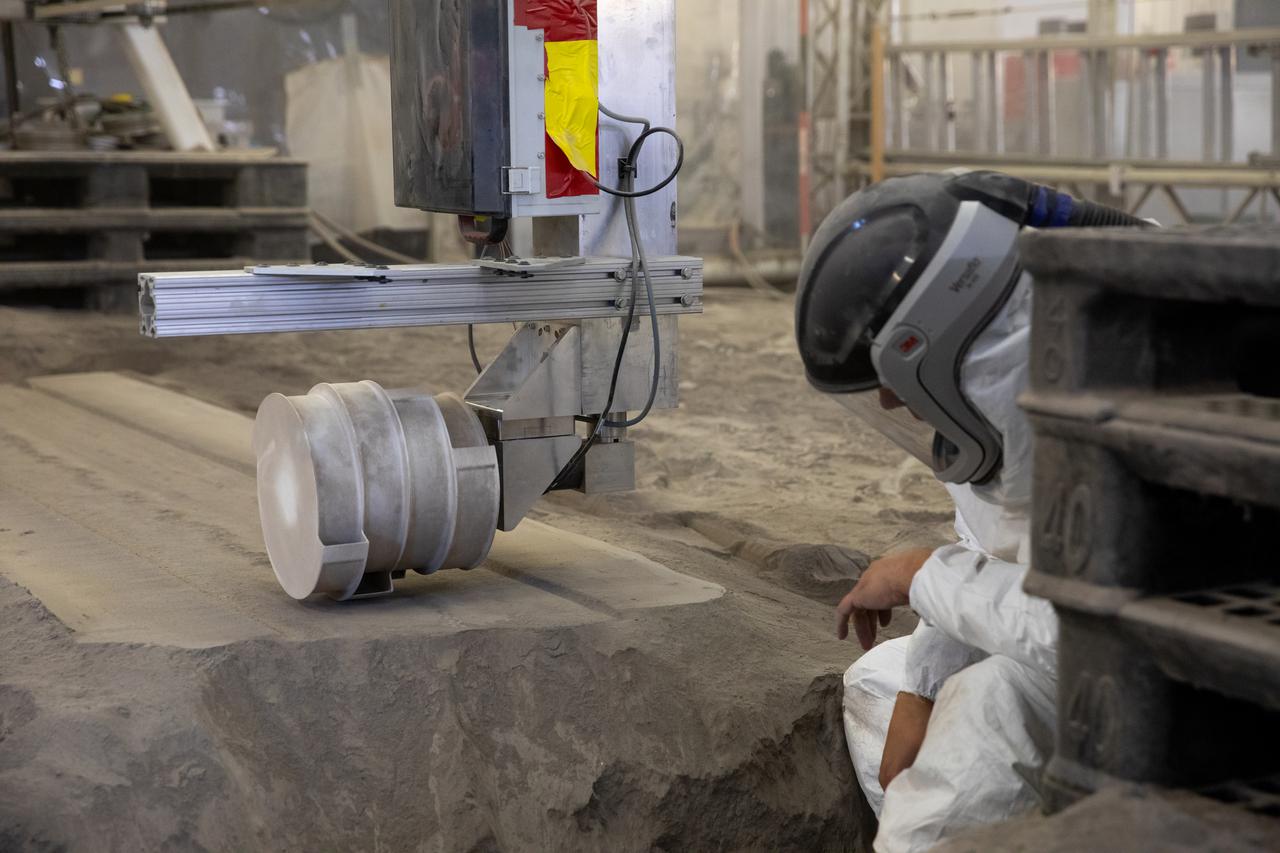
A team at NASA’s Kennedy Space Center in Florida tests small- and medium-sized bucket drums July 16, 2021, in the Granular Mechanics and Regolith Operations Lab’s “big bin” during prototype development for the pilot excavator, a robotic mission designed for lunar operations. The bucket drum excavated lunar regolith simulant. The Swamp Works team leveled and compacted the simulant before excavation as well as measured penetration during the excavator testing. Robotics engineers Jason Schuler and Austin Langton worked inside the bin, teaming up with software engineer Kurt Leucht, who worked just outside of it.
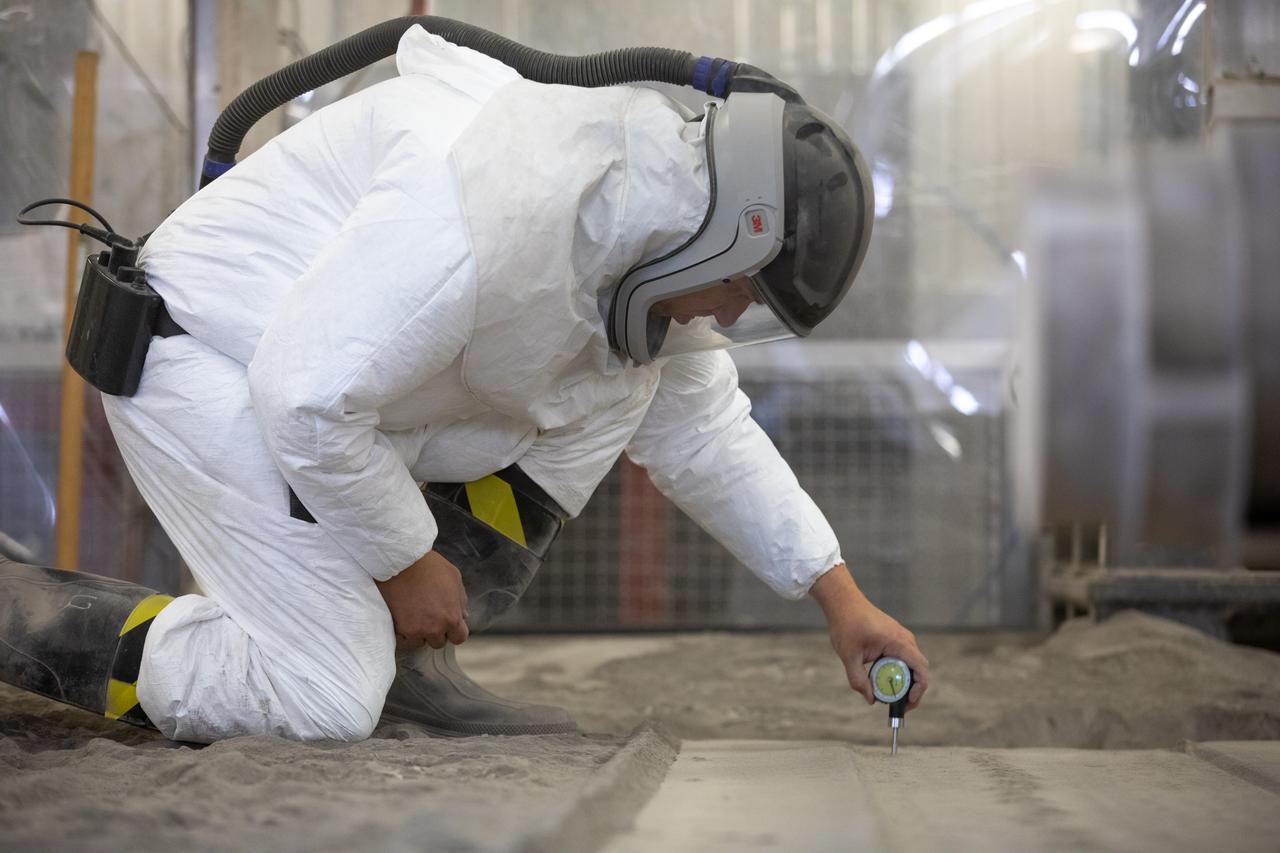
A team at NASA’s Kennedy Space Center in Florida tests small- and medium-sized bucket drums July 16, 2021, in the Granular Mechanics and Regolith Operations Lab’s “big bin” during prototype development for the pilot excavator, a robotic mission designed for lunar operations. The bucket drum excavated lunar regolith simulant. The Swamp Works team leveled and compacted the simulant before excavation as well as measured penetration during the excavator testing. Robotics engineers Jason Schuler and Austin Langton worked inside the bin, teaming up with software engineer Kurt Leucht, who worked just outside of it.
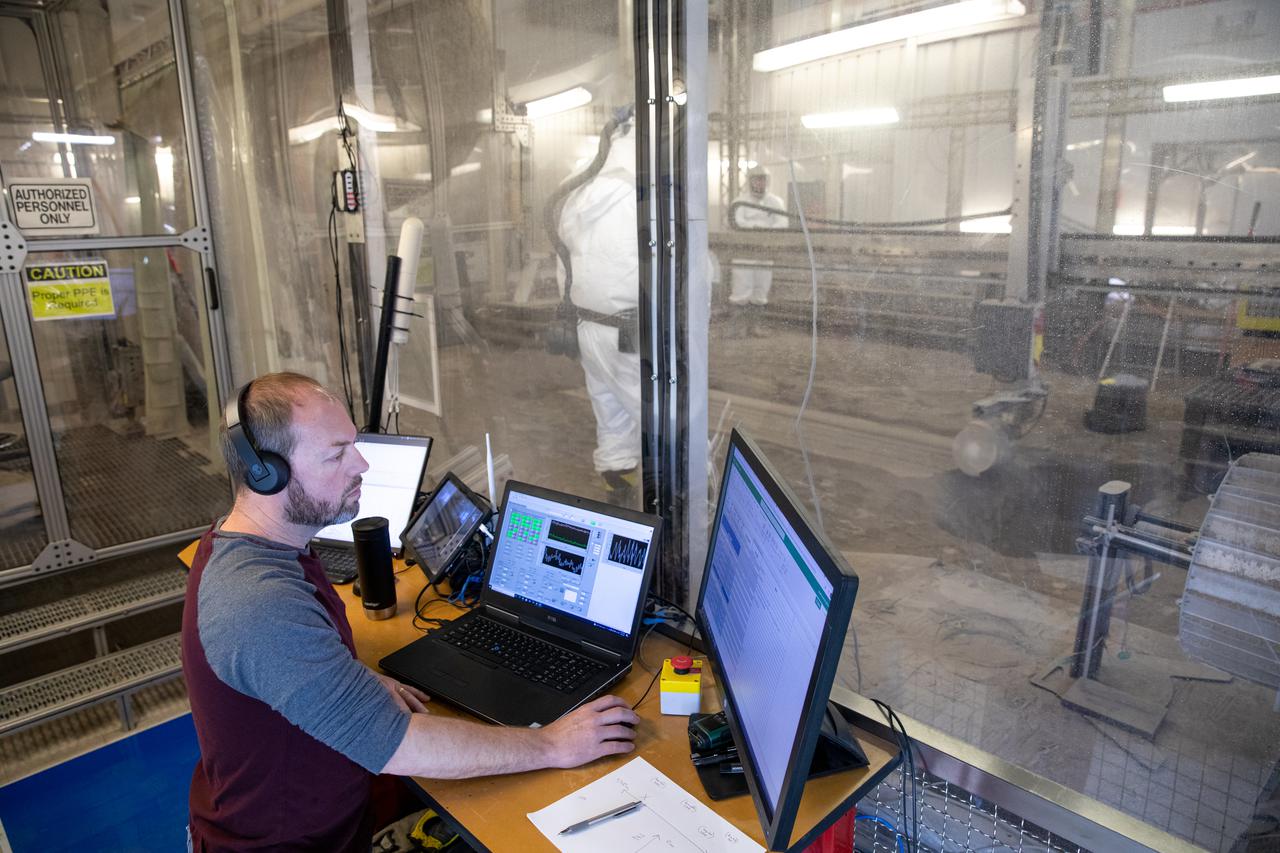
A team at NASA’s Kennedy Space Center in Florida tests small- and medium-sized bucket drums July 16, 2021, in the Granular Mechanics and Regolith Operations Lab’s “big bin” during prototype development for the pilot excavator, a robotic mission designed for lunar operations. The bucket drum excavated lunar regolith simulant. The Swamp Works team leveled and compacted the simulant before excavation as well as measured penetration during the excavator testing. Robotics engineers Jason Schuler and Austin Langton worked inside the bin, teaming up with software engineer Kurt Leucht, who worked just outside of it.
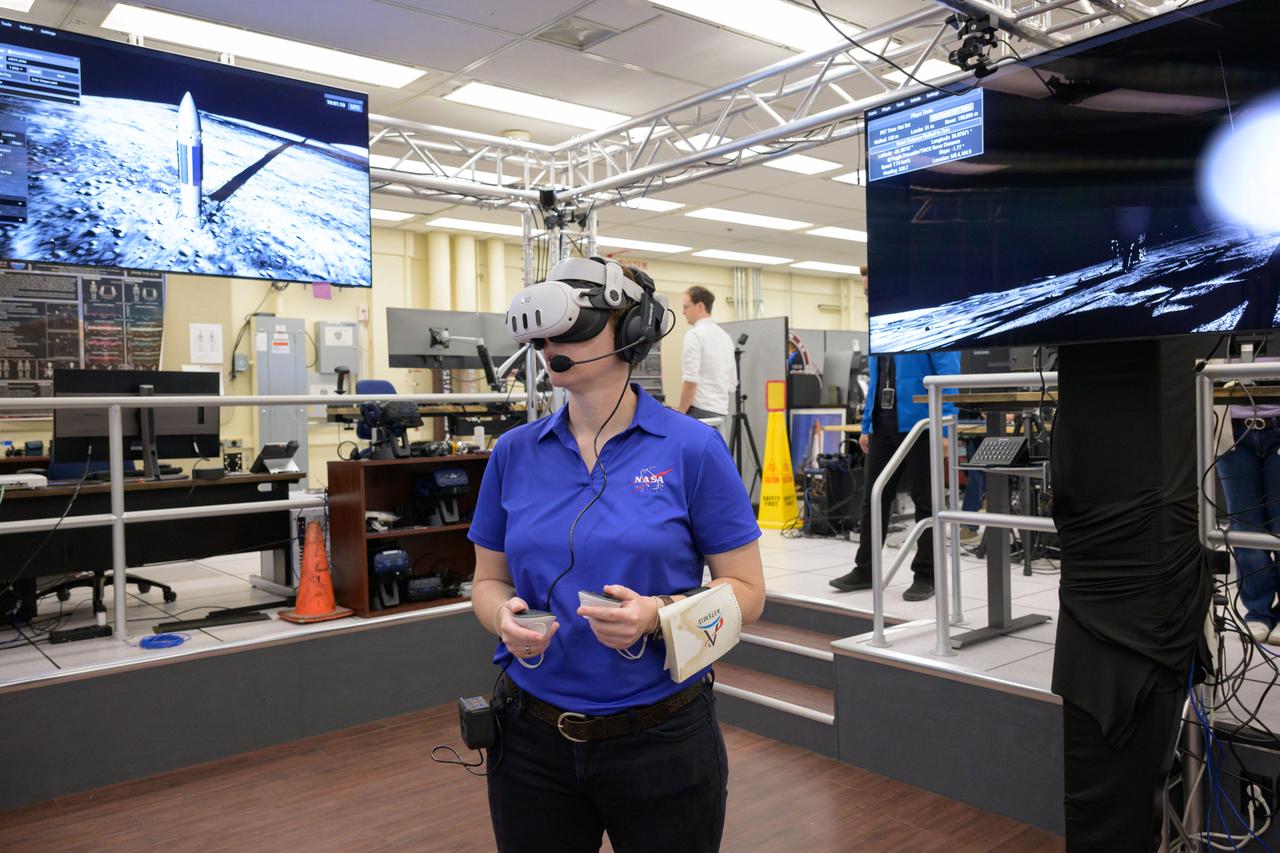
jsc2024e076628 – Tess Caswell, a crew stand-in for the Artemis III Virtual Reality Mini-Simulation, executes a moonwalk in the Prototype Immersive Technology (PIT) lab at NASA’s Johnson Space Center in Houston. The simulation was a test of using VR as a training method for flight controllers and science teams’ collaboration on science-focused traverses on the lunar surface. Credit: NASA/Robert Markowitz
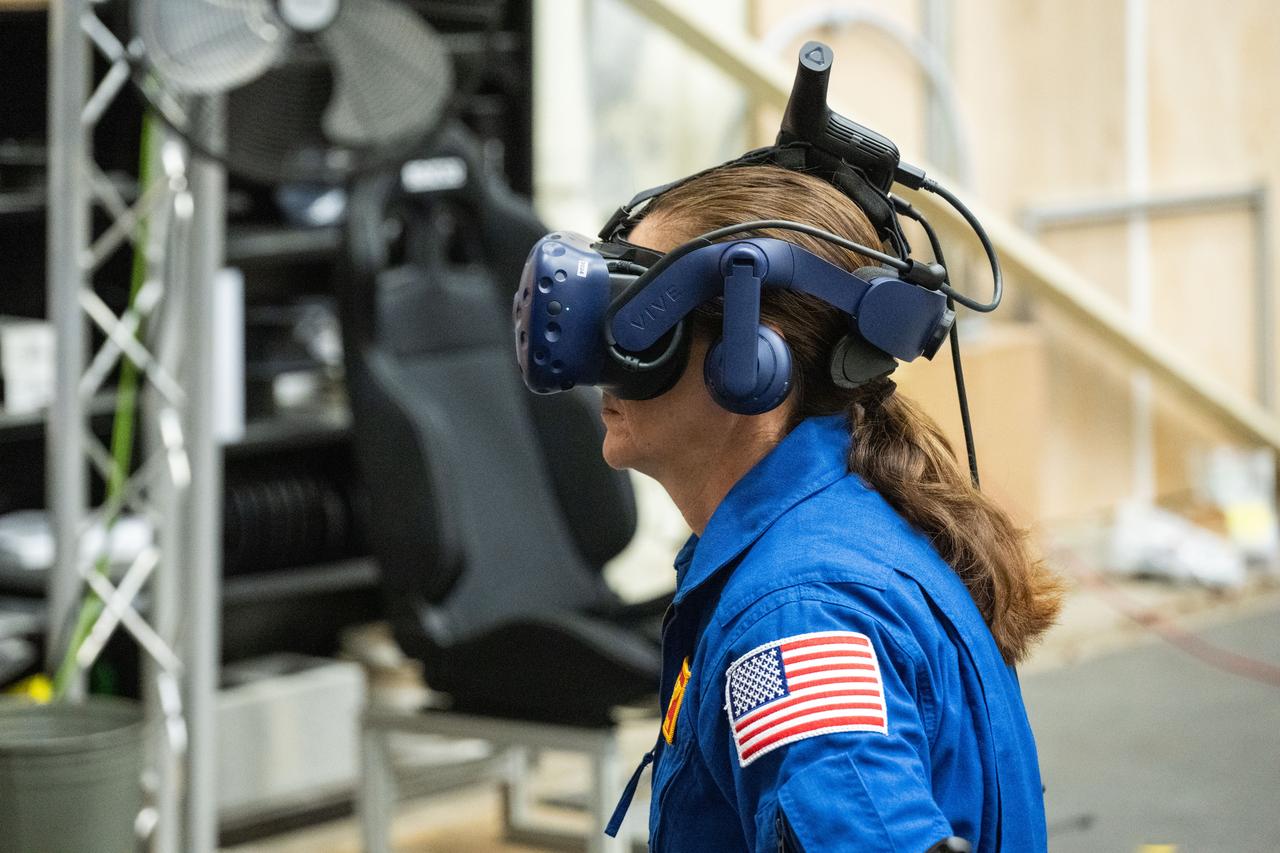
NASA astronaut Nicole Mann participates in virtual reality testing of the Gateway lunar space station to ensure its comfort and safety when astronauts live and conduct science there on future Artemis missions. PHOTO DATE: 02-13-24 LOCATION: Bldg. 15 - VR Lab SUBJECT: Photographic support for Gateway Web Feature: VR Technology for Interior Gateway Training with astronaut Nicole Mann PHOTOGRAPHER: Photo Credit: NASA / Bill Stafford
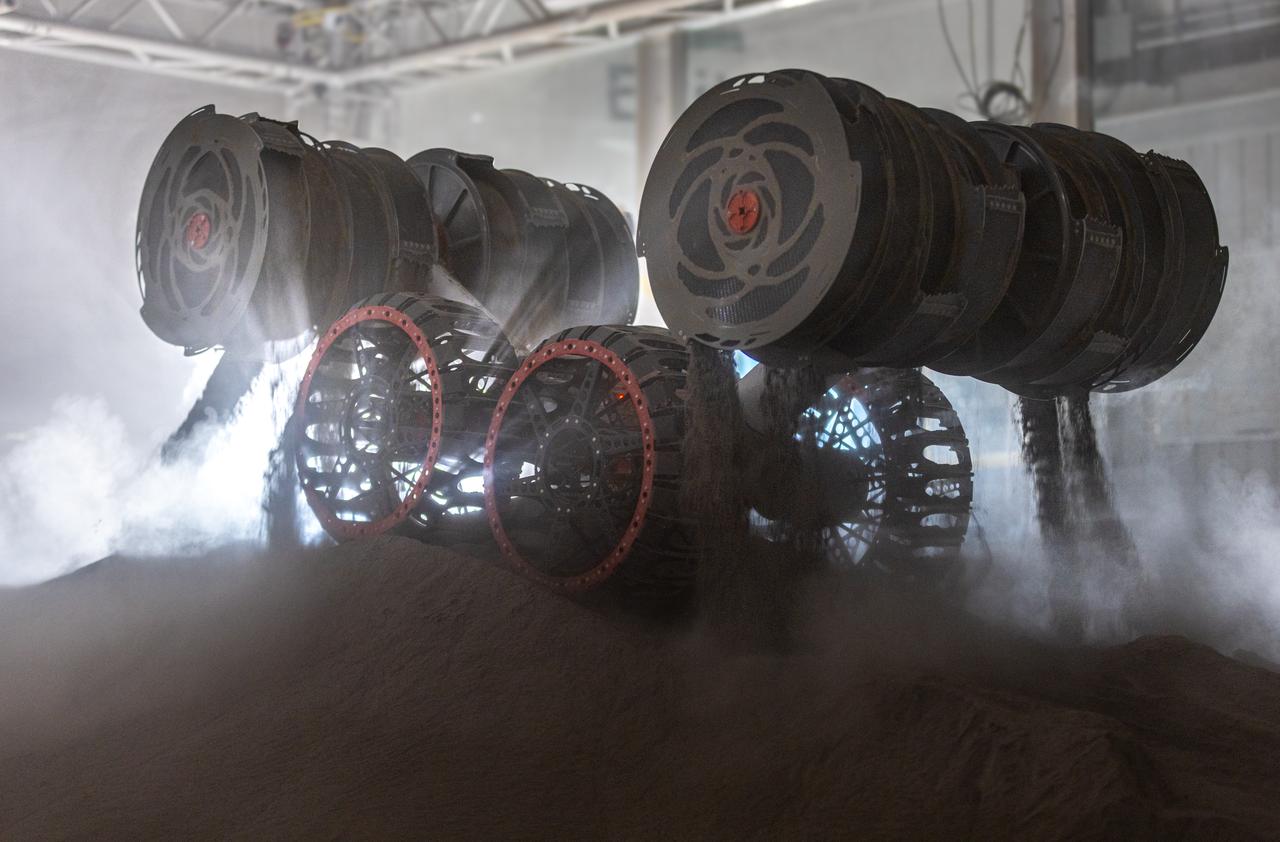
NASA’s RASSOR (Regolith Advanced Surface Systems Operations Robot) conducts excavation testing of simulated regolith, or lunar dust found on the Moon’s surface, inside of the Granular Mechanics and Regolith Operations Lab at the agency’s Kennedy Space Center in Florida on Tuesday, May 27, 2025. RASSOR is designed to work in low-gravity situations, using counter rotating bucket drums on each arm to collect and dump regolith for the extraction of hydrogen, oxygen, or water, resources critical for sustaining a habitable presence.
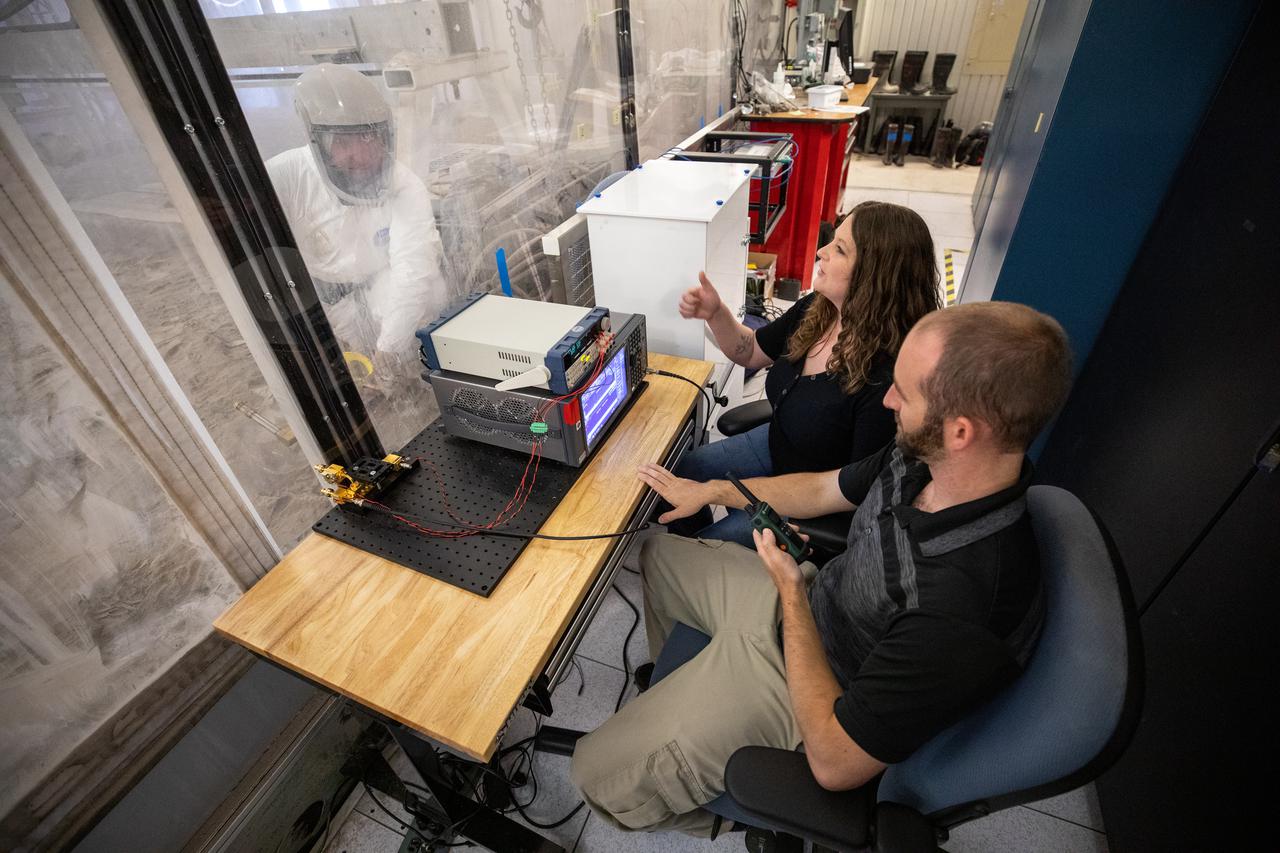
Beverly Kemmerer and Austin Adkins, right, and Austin Langton, perform testing with a Millimeter Wave Doppler Radar at NASA’s Kennedy Space Center’s Granular Mechanics and Regolith Operations Lab on July 16, 2021. The testing at the Florida spaceport is part of a project to identify a suite of instrumentation capable of acquiring a comprehensive set of flight data from a lunar lander. Researchers at NASA will use that data to validate computational models being developed to predict plume surface interaction effects on the Moon.
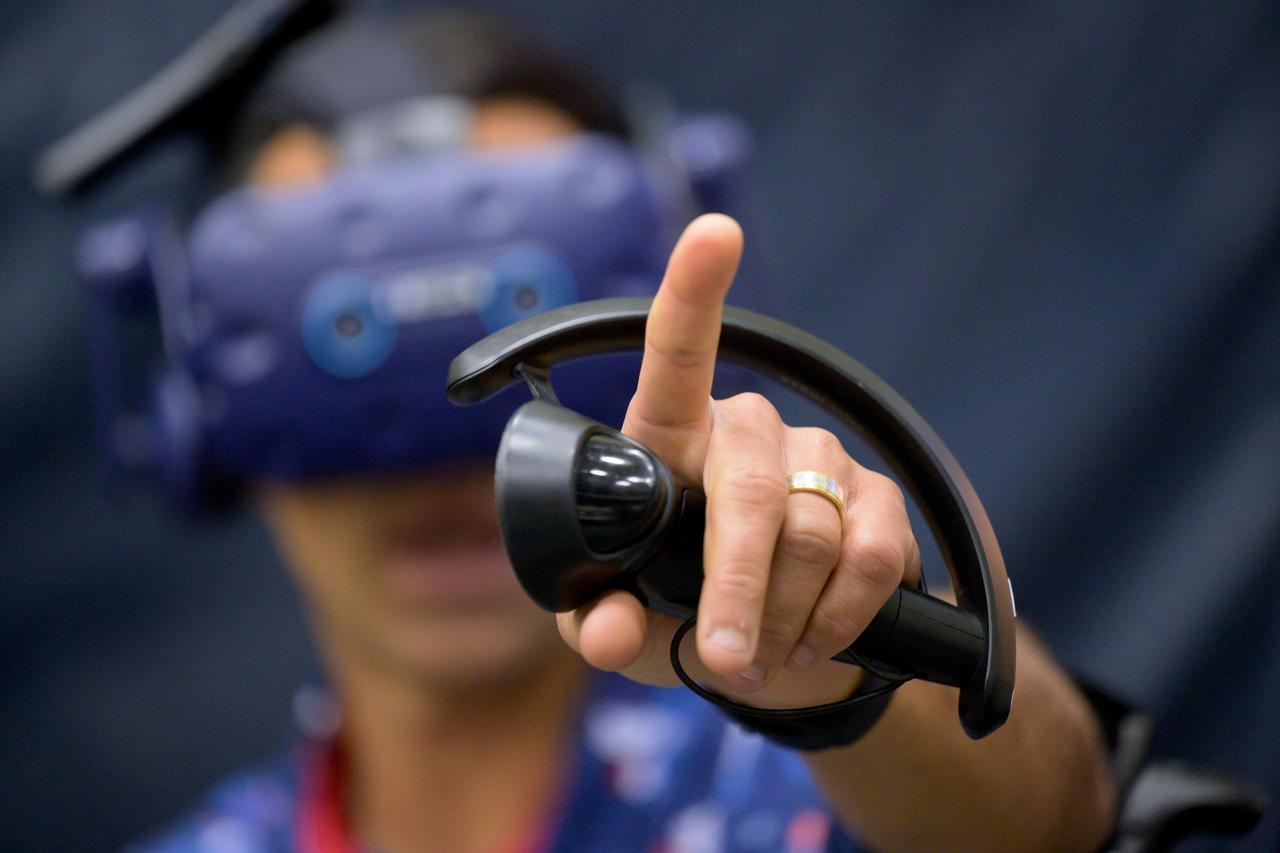
NASA astronaut Raja Chari participates in virtual reality testing of the Gateway lunar space station to ensure its comfort and safety when astronauts live and conduct science there on future Artemis missions. PHOTO DATE: February 09, 2022. LOCATION: Bldg. 15 - VR Lab SUBJECT: VR Technology for Interior Gateway Training with astronaut Raja Chari. Photo Credit: NASA / Josh Valcarcel
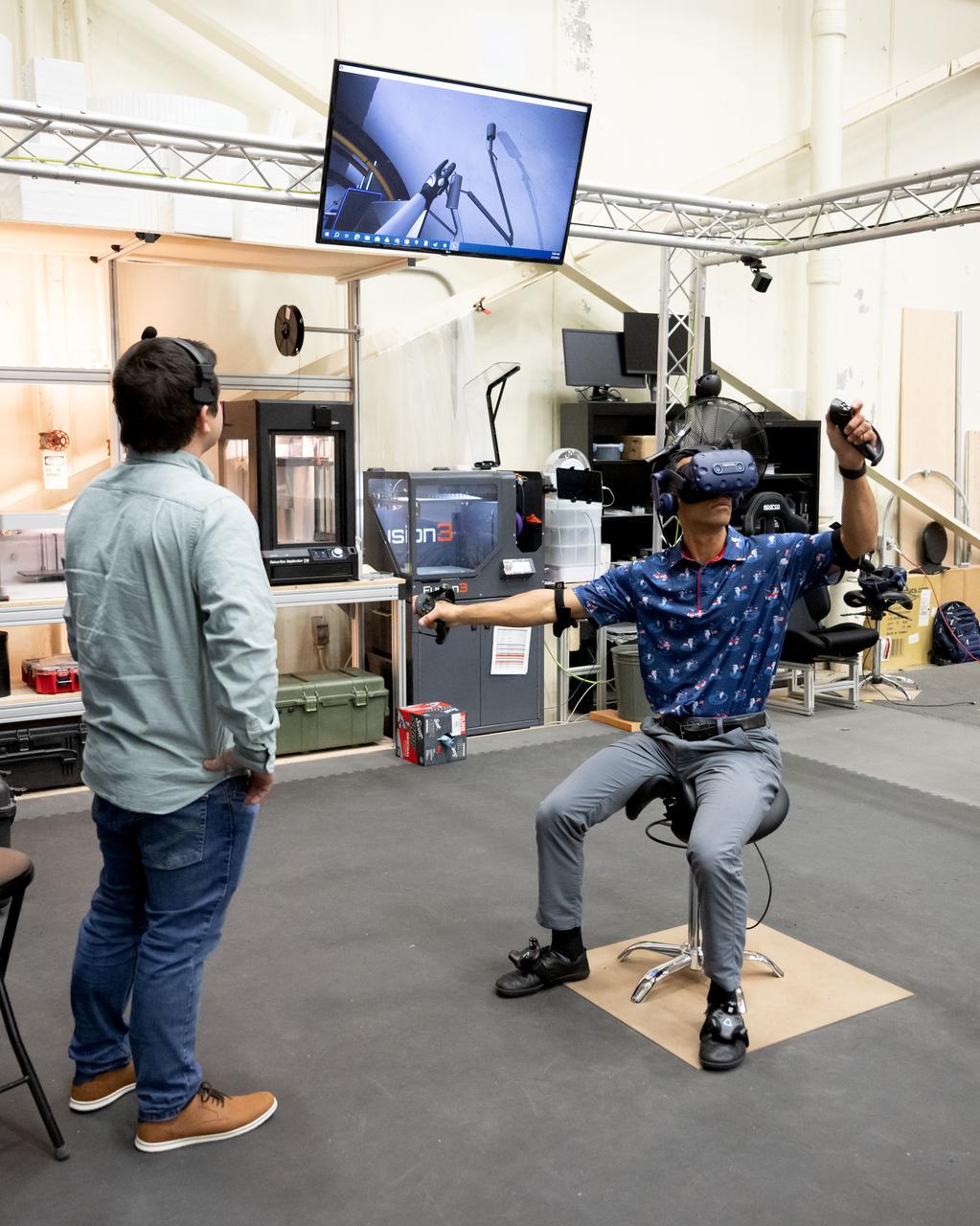
NASA astronaut Raja Chari participates in virtual reality testing of the Gateway lunar space station to ensure its comfort and safety when astronauts live and conduct science there on future Artemis missions. PHOTO DATE: February 09, 2022. LOCATION: Bldg. 15 - VR Lab SUBJECT: VR Technology for Interior Gateway Training with astronaut Raja Chari. Photo Credit: NASA / Josh Valcarcel
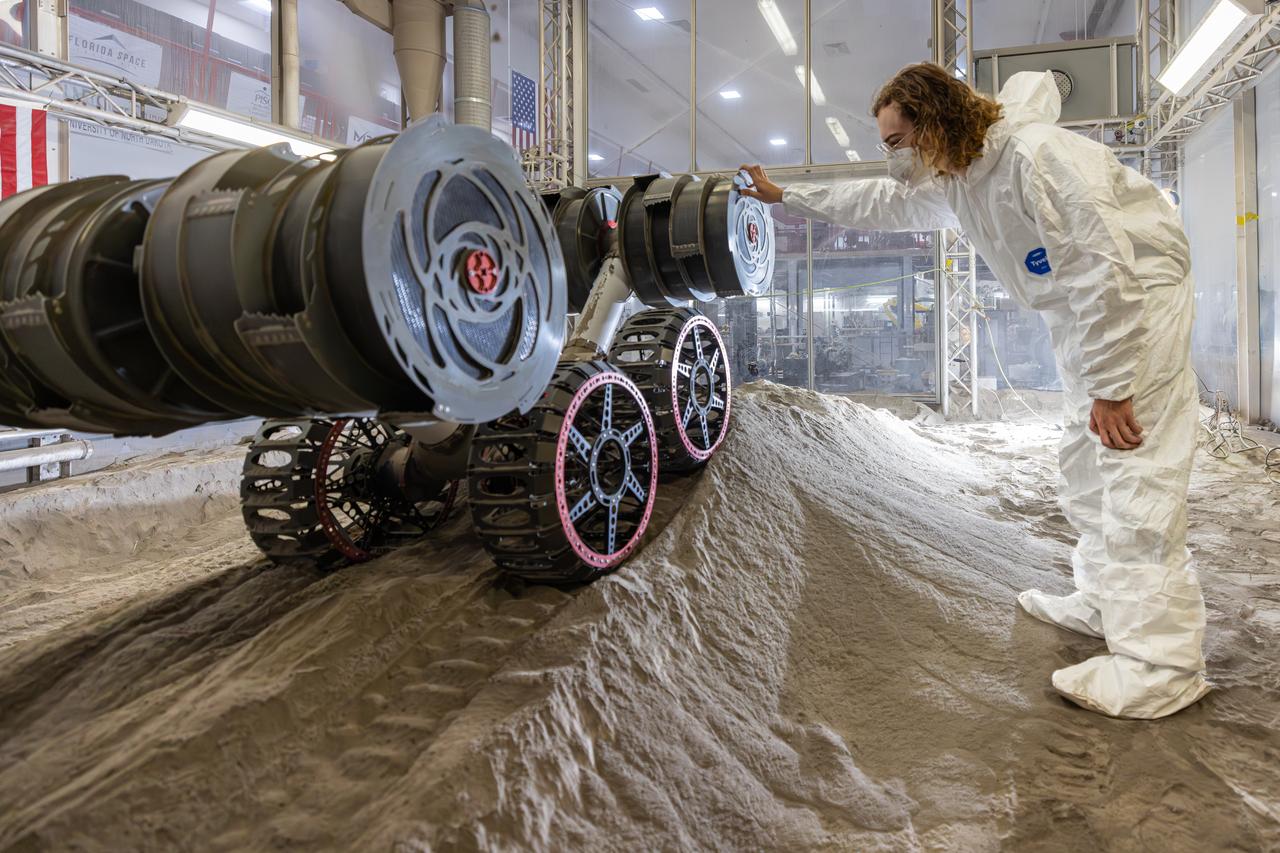
Ben Burdess, mechanical engineer, observes NASA’s RASSOR (Regolith Advanced Surface Systems Operations Robot) excavation testing of simulated regolith, or lunar dust found on the Moon’s surface, inside of the Granular Mechanics and Regolith Operations Lab at the agency’s Kennedy Space Center in Florida on Tuesday, May 27, 2025. RASSOR is designed to work in low-gravity situations, using counter rotating bucket drums on each arm to collect and dump regolith for the extraction of hydrogen, oxygen, or water, resources critical for sustaining a habitable presence.
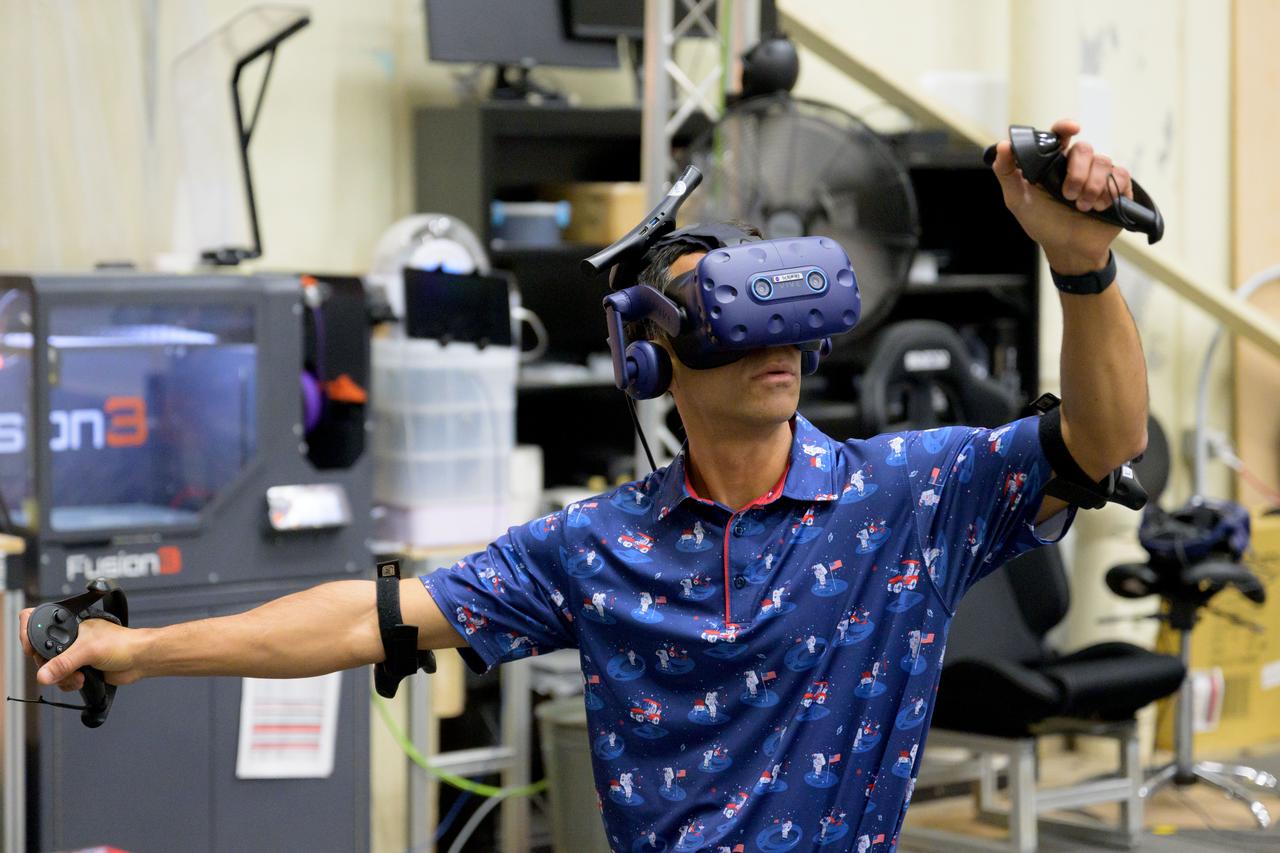
NASA astronaut Raja Chari participates in virtual reality testing of the Gateway lunar space station to ensure its comfort and safety when astronauts live and conduct science there on future Artemis missions. PHOTO DATE: February 09, 2022. LOCATION: Bldg. 15 - VR Lab SUBJECT: VR Technology for Interior Gateway Training with astronaut Raja Chari. Photo Credit: NASA / Josh Valcarcel
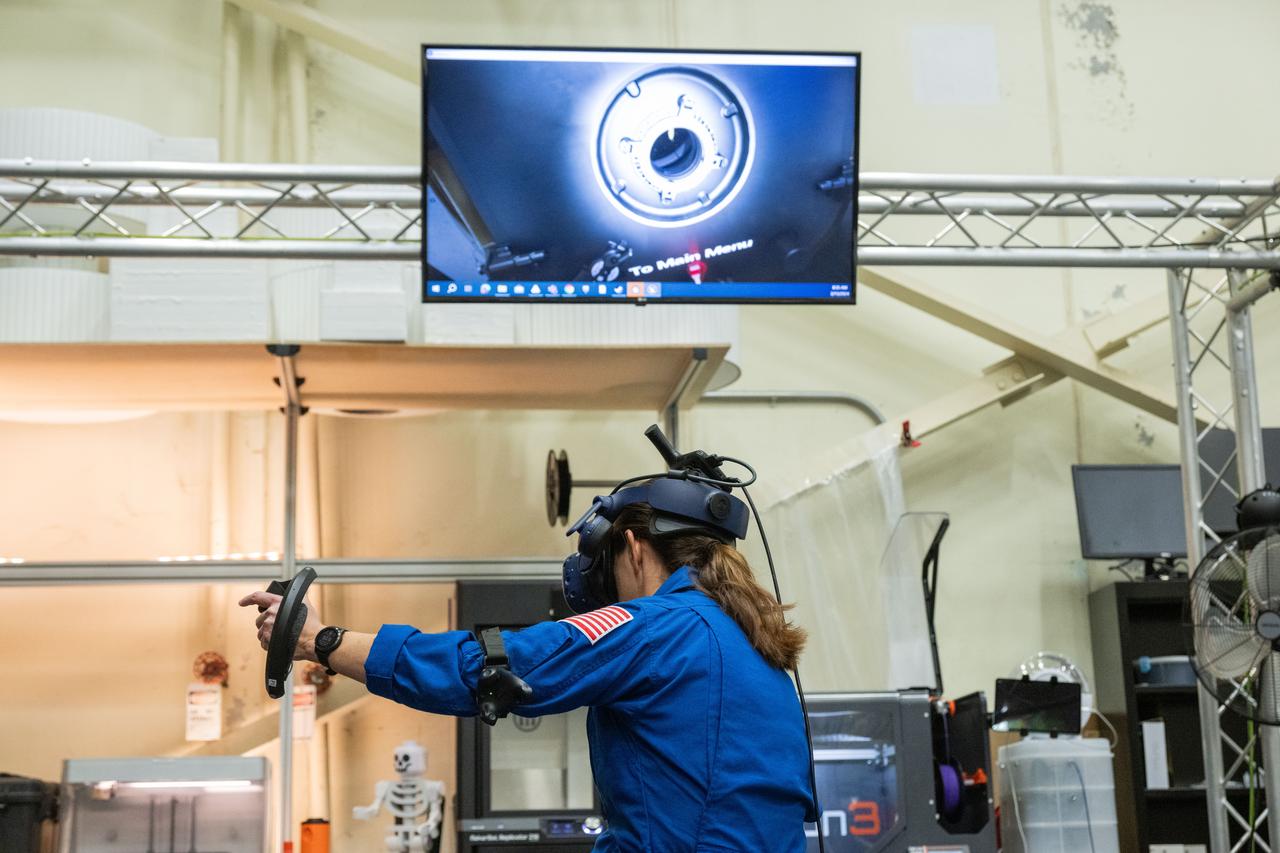
NASA astronaut Nicole Mann participates in virtual reality testing of the Gateway lunar space station to ensure its comfort and safety when astronauts live and conduct science there on future Artemis missions. PHOTO DATE: 02-13-24 LOCATION: Bldg. 15 - VR Lab SUBJECT: Photographic support for Gateway Web Feature: VR Technology for Interior Gateway Training with astronaut Nicole Mann PHOTOGRAPHER: Photo Credit: NASA / Bill Stafford
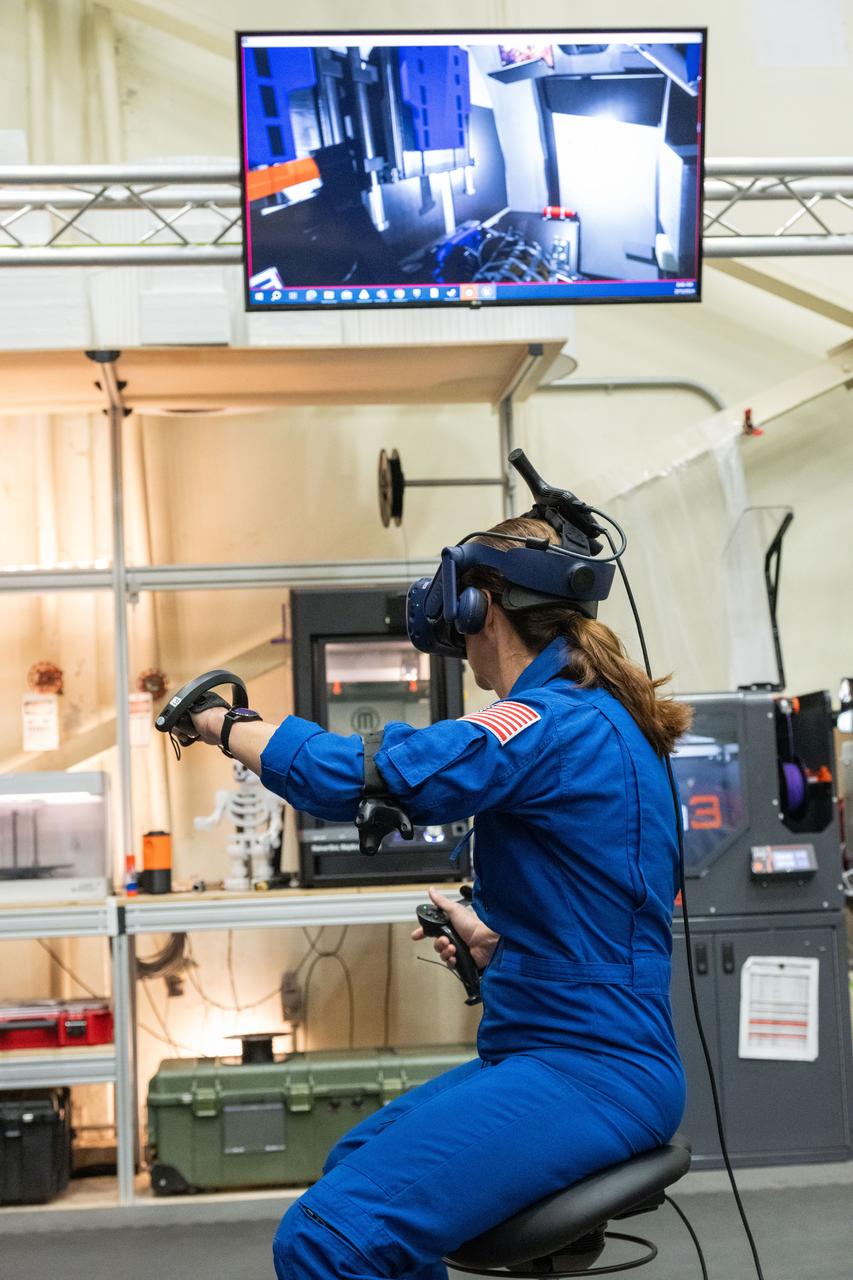
NASA astronaut Nicole Mann participates in virtual reality testing of the Gateway lunar space station to ensure its comfort and safety when astronauts live and conduct science there on future Artemis missions. PHOTO DATE: 02-13-24 LOCATION: Bldg. 15 - VR Lab SUBJECT: Photographic support for Gateway Web Feature: VR Technology for Interior Gateway Training with astronaut Nicole Mann PHOTOGRAPHER: Photo Credit: NASA / Bill Stafford

NASA astronaut Nicole Mann participates in virtual reality testing of the Gateway lunar space station to ensure its comfort and safety when astronauts live and conduct science there on future Artemis missions. PHOTO DATE: 02-13-24 LOCATION: Bldg. 15 - VR Lab SUBJECT: Photographic support for Gateway Web Feature: VR Technology for Interior Gateway Training with astronaut Nicole Mann PHOTOGRAPHER: Photo Credit: NASA / Bill Stafford
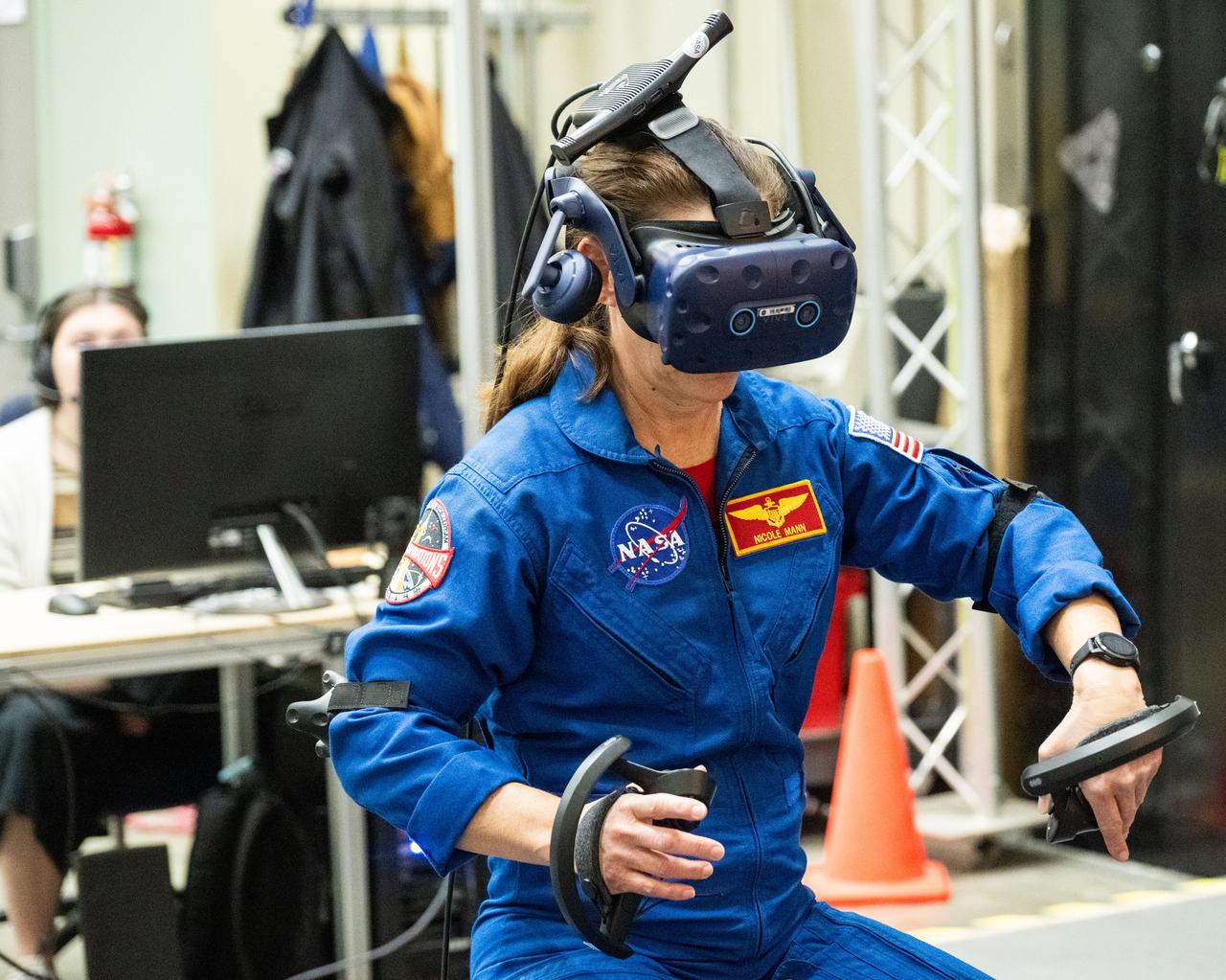
NASA astronaut Nicole Mann participates in virtual reality testing of the Gateway lunar space station to ensure its comfort and safety when astronauts live and conduct science there on future Artemis missions. PHOTO DATE: 02-13-24 LOCATION: Bldg. 15 - VR Lab SUBJECT: Photographic support for Gateway Web Feature: VR Technology for Interior Gateway Training with astronaut Nicole Mann PHOTOGRAPHER: Photo Credit: NASA / Bill Stafford
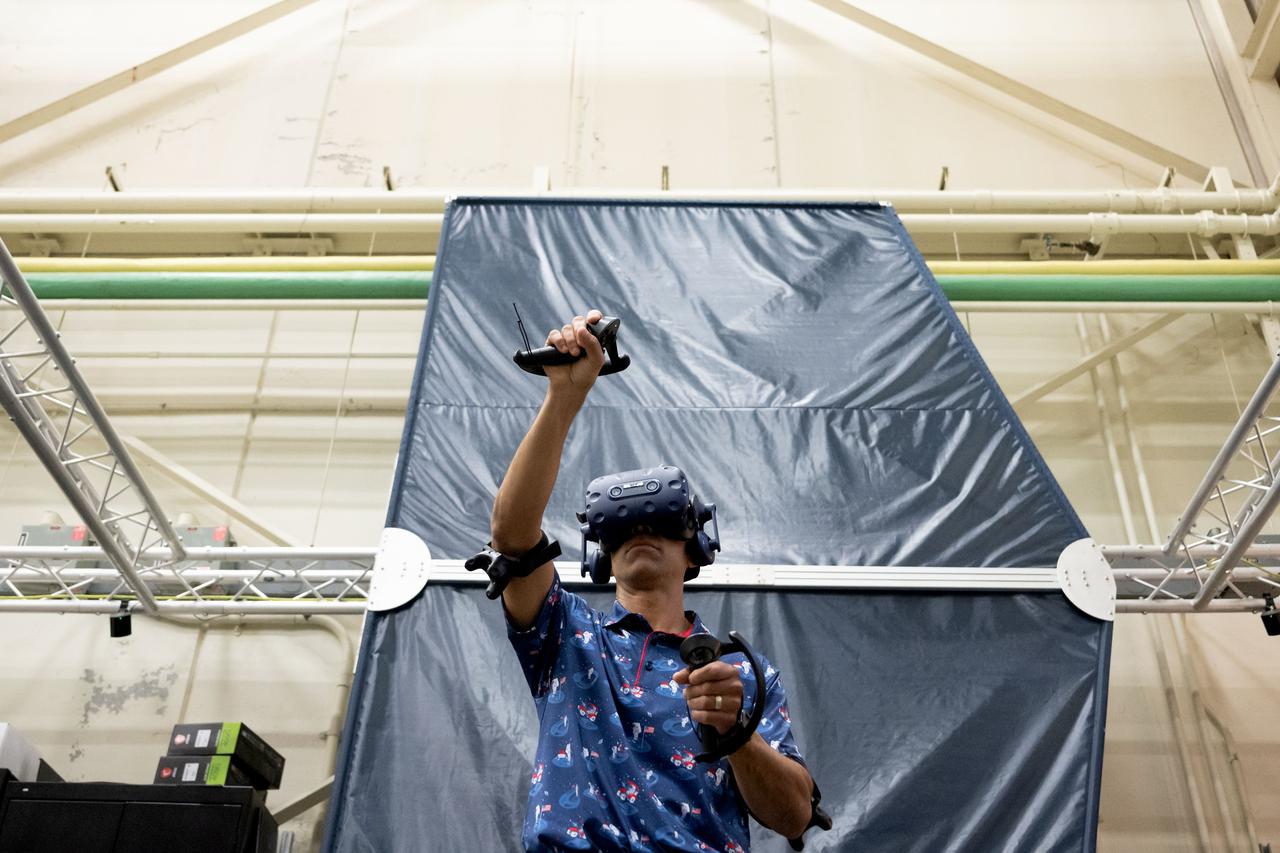
NASA astronaut Raja Chari participates in virtual reality testing of the Gateway lunar space station to ensure its comfort and safety when astronauts live and conduct science there on future Artemis missions. PHOTO DATE: February 09, 2022. LOCATION: Bldg. 15 - VR Lab SUBJECT: VR Technology for Interior Gateway Training with astronaut Raja Chari. Photo Credit: NASA / Josh Valcarcel
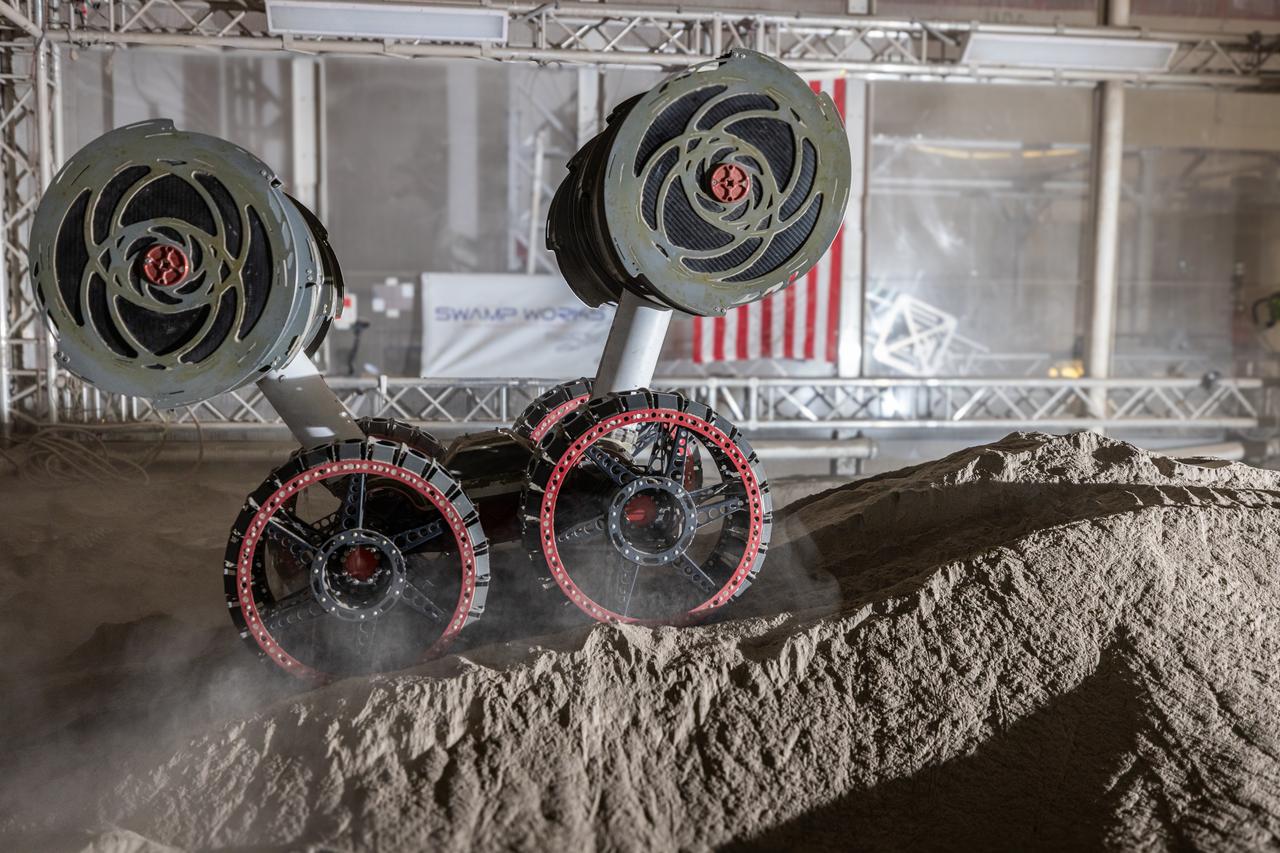
NASA’s RASSOR (Regolith Advanced Surface Systems Operations Robot) conducts excavation testing of simulated regolith, or lunar dust found on the Moon’s surface, inside of the Granular Mechanics and Regolith Operations Lab at the agency’s Kennedy Space Center in Florida on Tuesday, May 27, 2025. RASSOR is designed to work in low-gravity situations, using counter rotating bucket drums on each arm to collect and dump regolith for the extraction of hydrogen, oxygen, or water, resources critical for sustaining a habitable presence.
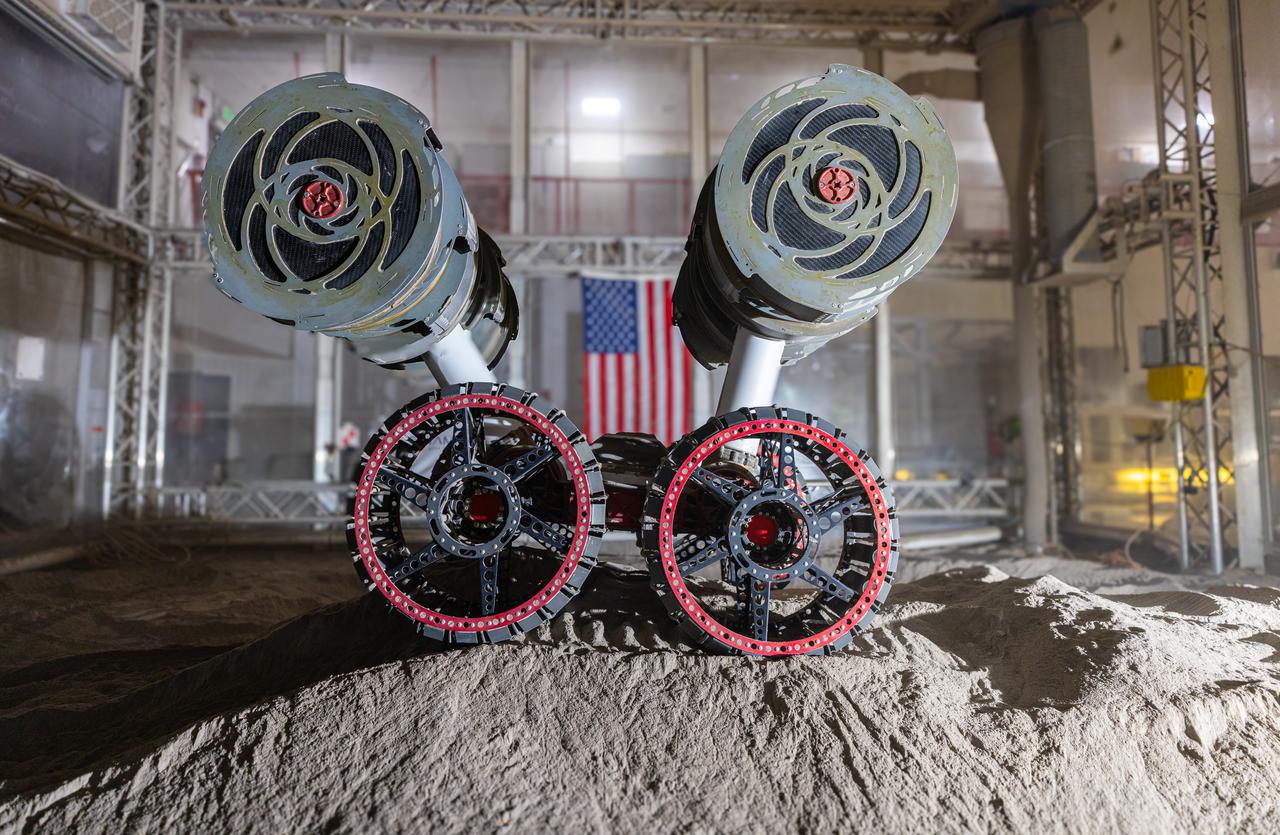
NASA’s RASSOR (Regolith Advanced Surface Systems Operations Robot) conducts excavation testing of simulated regolith, or lunar dust found on the Moon’s surface, inside of the Granular Mechanics and Regolith Operations Lab at the agency’s Kennedy Space Center in Florida on Tuesday, May 27, 2025. RASSOR is designed to work in low-gravity situations, using counter rotating bucket drums on each arm to collect and dump regolith for the extraction of hydrogen, oxygen, or water, resources critical for sustaining a habitable presence.
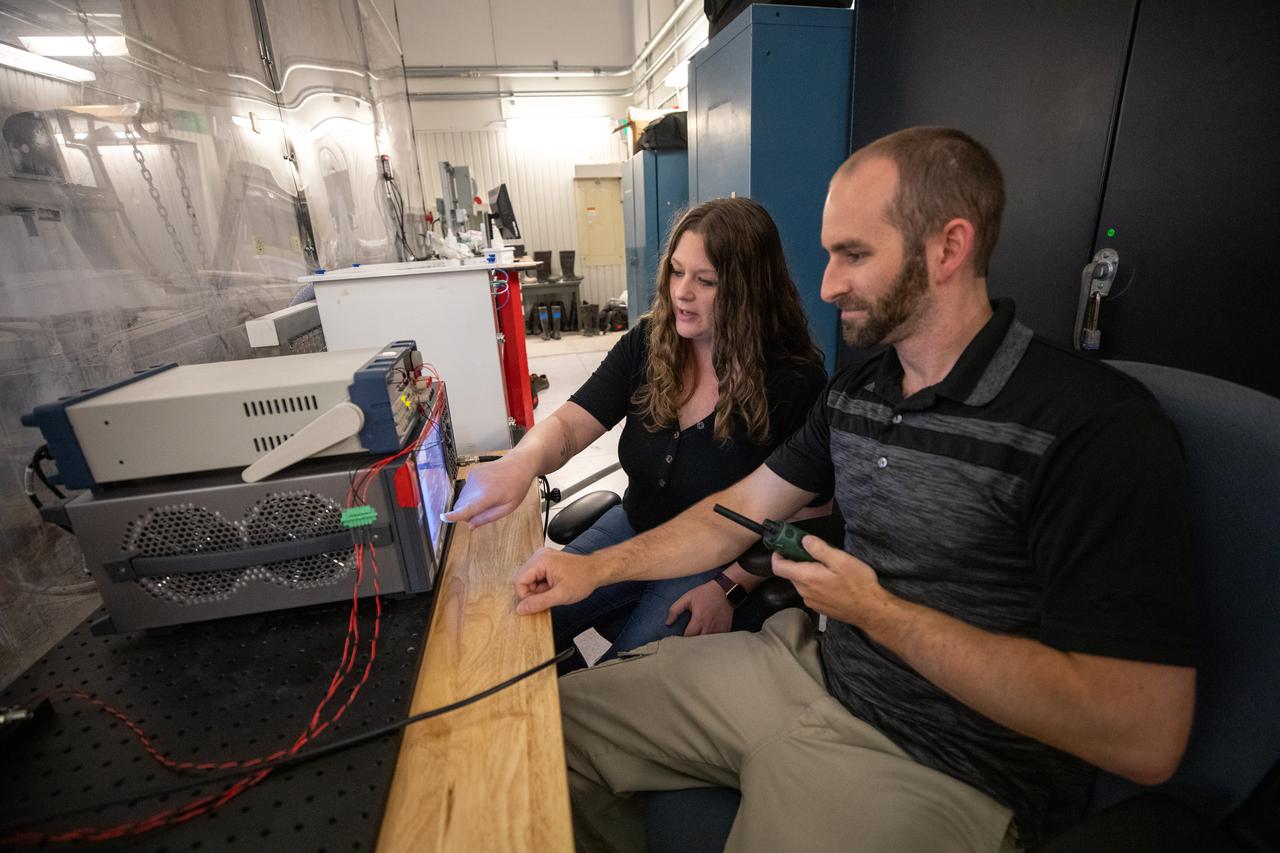
Beverly Kemmerer and Austin Adkins perform testing with a Millimeter Wave Doppler Radar at NASA’s Kennedy Space Center’s Granular Mechanics and Regolith Operations Lab on July 16, 2021. The testing at the Florida spaceport is part of a project to identify a suite of instrumentation capable of acquiring a comprehensive set of flight data from a lunar lander. Researchers at NASA will use that data to validate computational models being developed to predict plume surface interaction effects on the Moon.
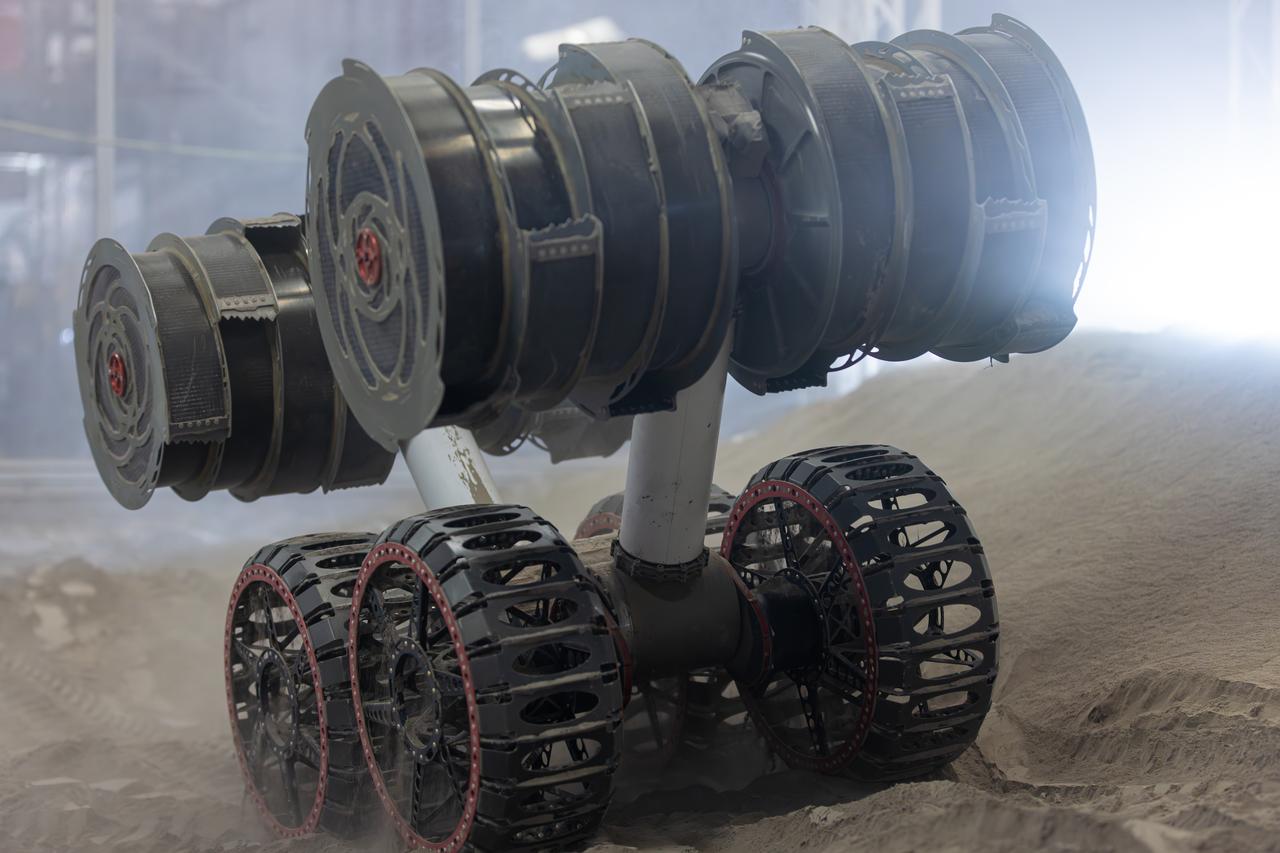
NASA’s RASSOR (Regolith Advanced Surface Systems Operations Robot) conducts excavation testing of simulated regolith, or lunar dust found on the Moon’s surface, inside of the Granular Mechanics and Regolith Operations Lab at the agency’s Kennedy Space Center in Florida on Tuesday, May 27, 2025. RASSOR is designed to work in low-gravity situations, using counter rotating bucket drums on each arm to collect and dump regolith for the extraction of hydrogen, oxygen, or water, resources critical for sustaining a habitable presence.
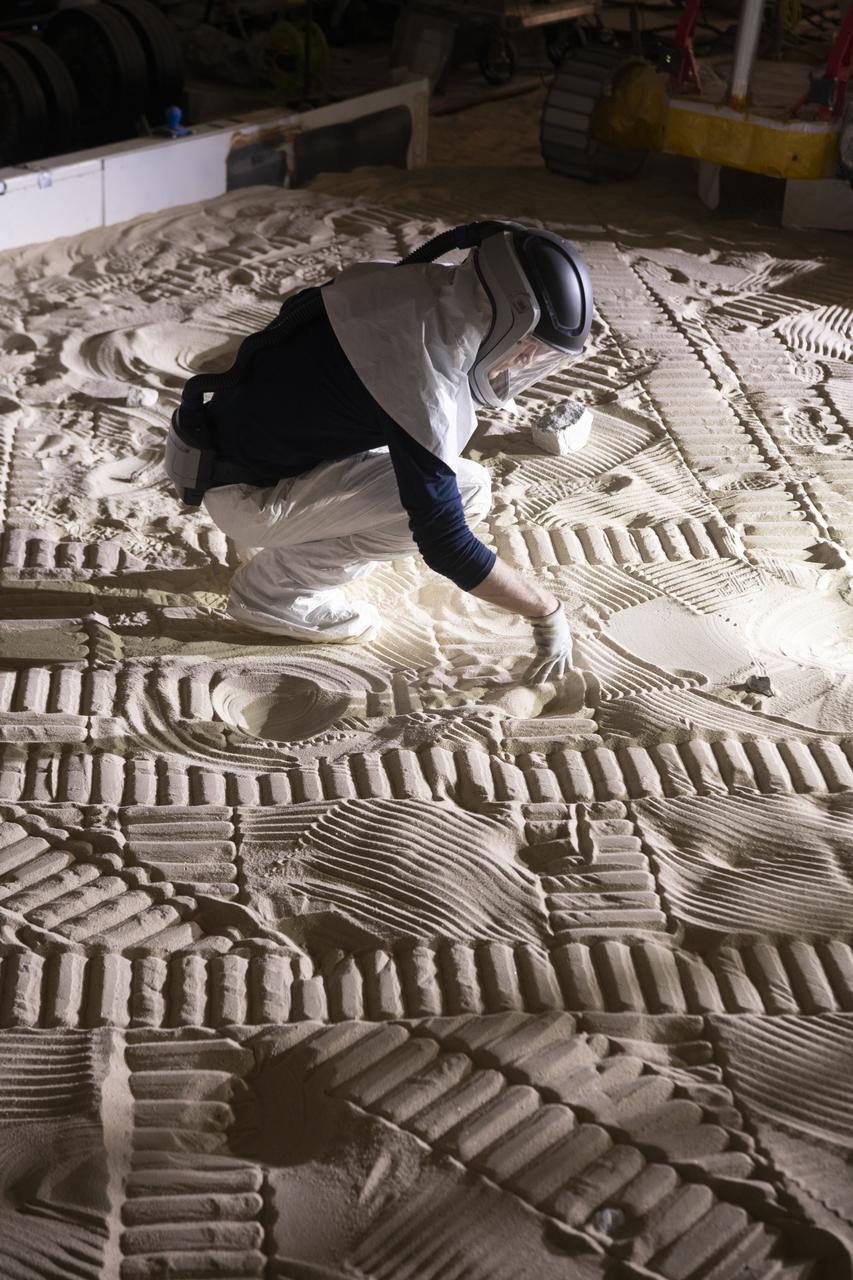
An Engineer maps out the position of rocks during VIPER testing at The NASA Glenn Research Center. A test version of the VIPER rover continues to show how well it moves through a simulated lunar surface in our SLOPE lab. This is a critical step toward ensuring the rover is ready for its 2023 mission to find water ice at the Moon’s South pole.
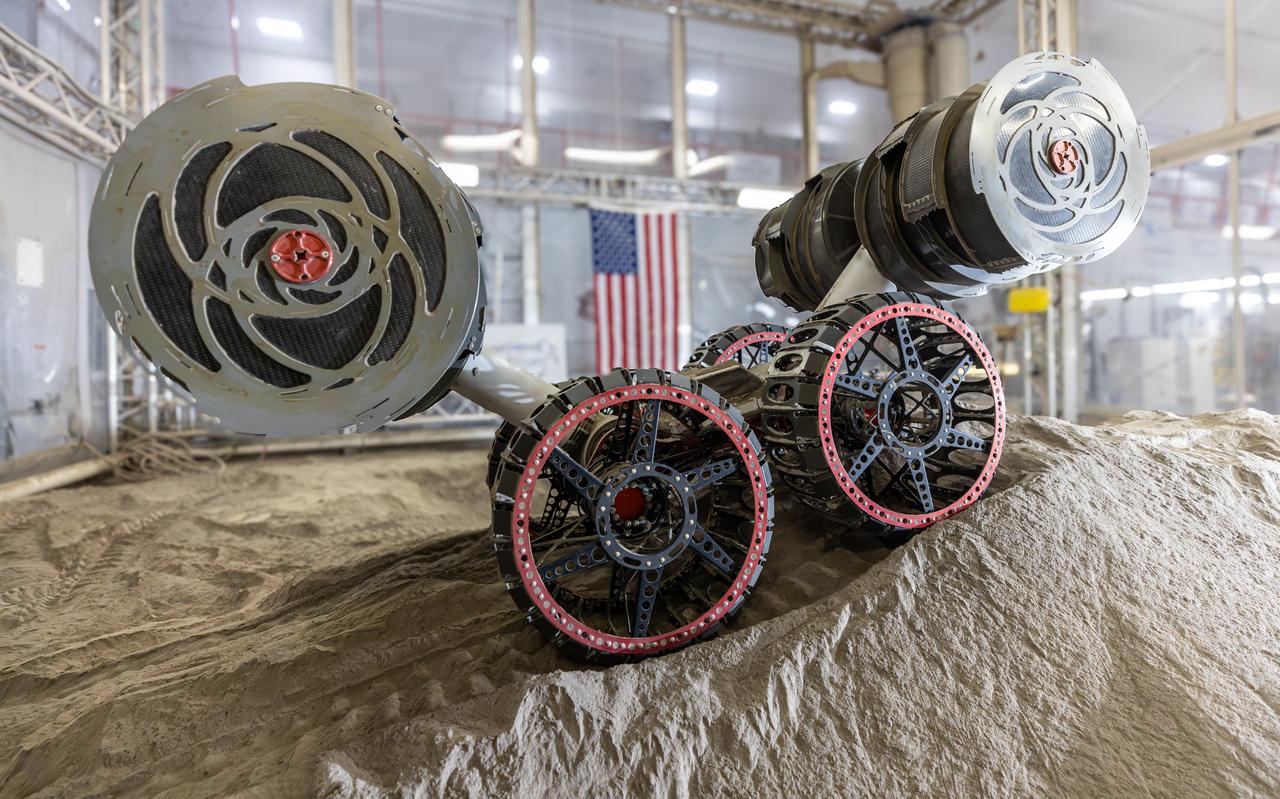
NASA’s RASSOR (Regolith Advanced Surface Systems Operations Robot) conducts excavation testing of simulated regolith, or lunar dust found on the Moon’s surface, inside of the Granular Mechanics and Regolith Operations Lab at the agency’s Kennedy Space Center in Florida on Tuesday, May 27, 2025. RASSOR is designed to work in low-gravity situations, using counter rotating bucket drums on each arm to collect and dump regolith for the extraction of hydrogen, oxygen, or water, resources critical for sustaining a habitable presence.
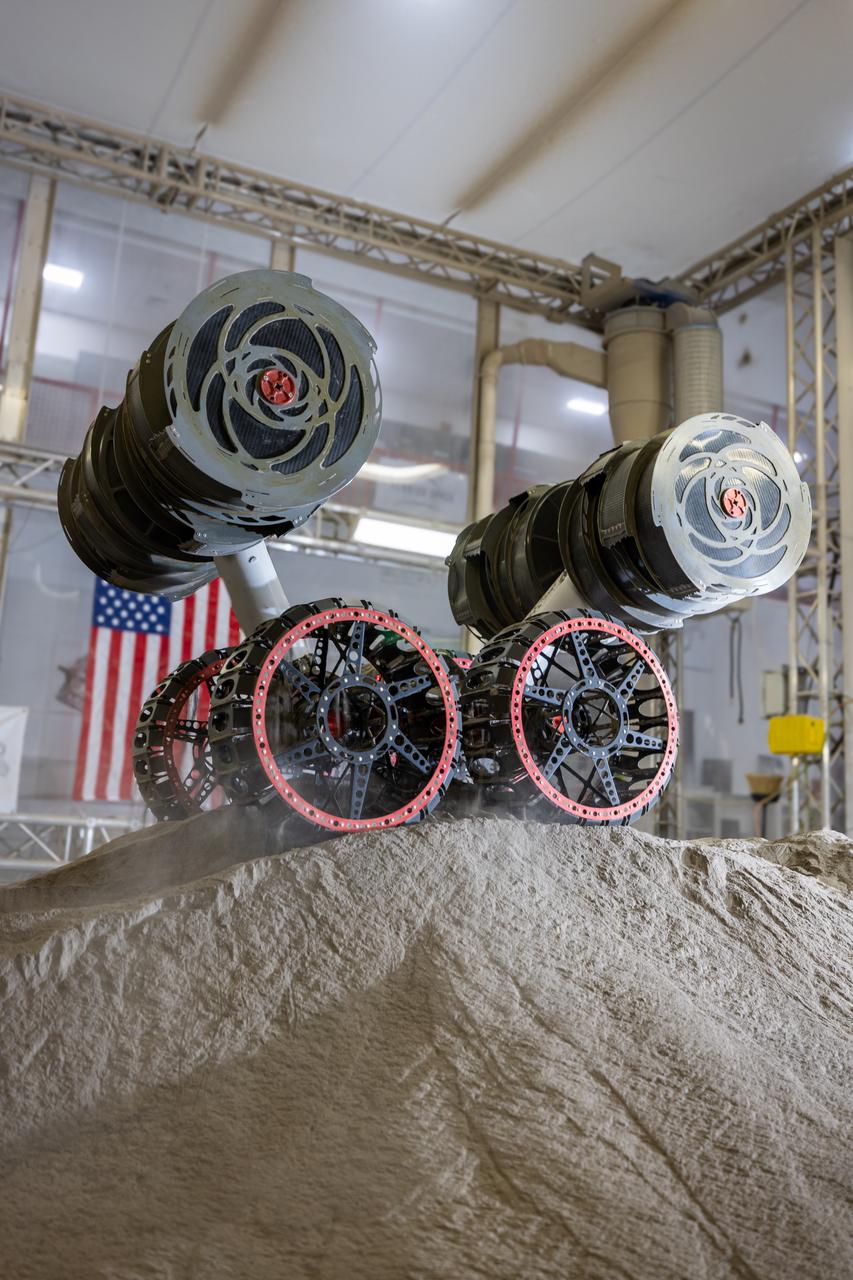
NASA’s RASSOR (Regolith Advanced Surface Systems Operations Robot) conducts excavation testing of simulated regolith, or lunar dust found on the Moon’s surface, inside of the Granular Mechanics and Regolith Operations Lab at the agency’s Kennedy Space Center in Florida on Tuesday, May 27, 2025. RASSOR is designed to work in low-gravity situations, using counter rotating bucket drums on each arm to collect and dump regolith for the extraction of hydrogen, oxygen, or water, resources critical for sustaining a habitable presence.
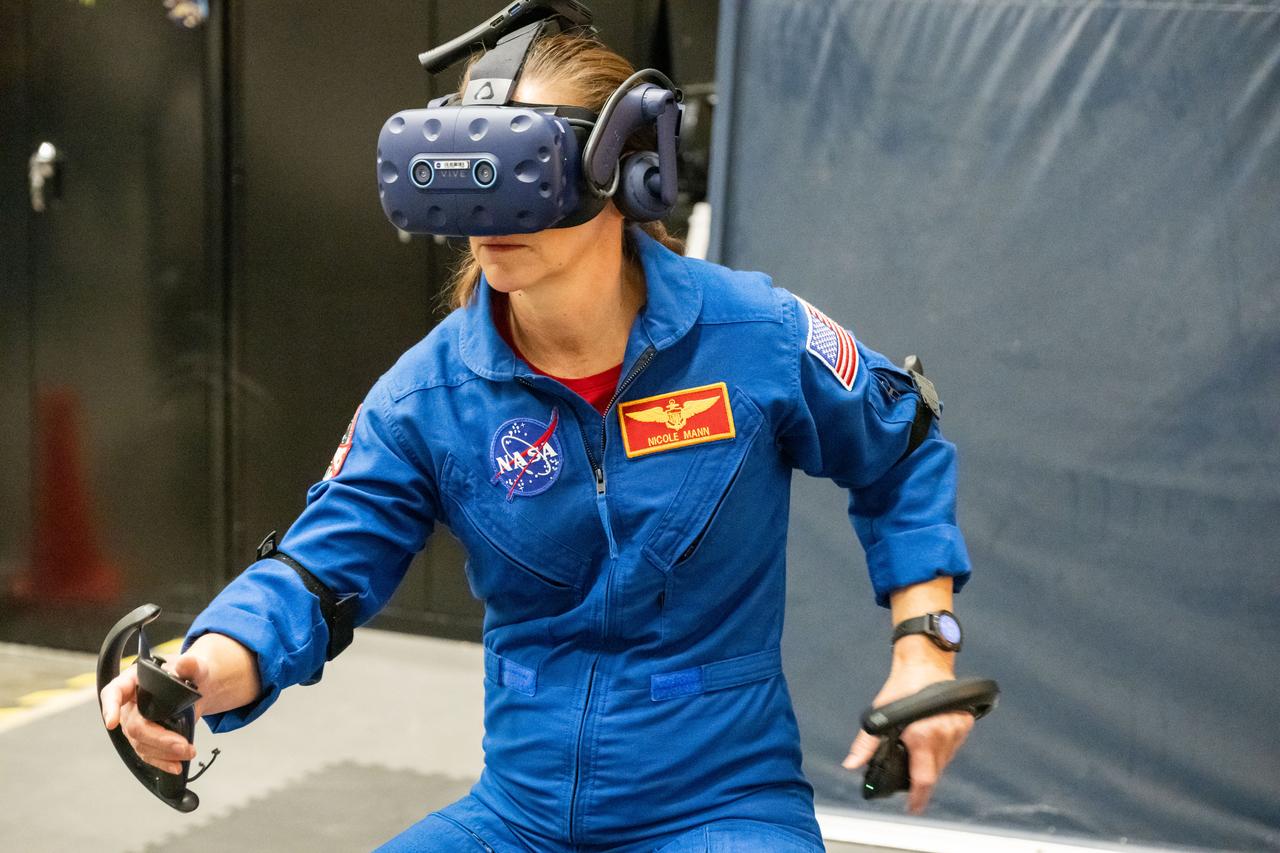
NASA astronaut Nicole Mann participates in virtual reality testing of the Gateway lunar space station to ensure its comfort and safety when astronauts live and conduct science there on future Artemis missions. PHOTO DATE: 02-13-24 LOCATION: Bldg. 15 - VR Lab SUBJECT: Photographic support for Gateway Web Feature: VR Technology for Interior Gateway Training with astronaut Nicole Mann PHOTOGRAPHER: Photo Credit: NASA / Bill Stafford
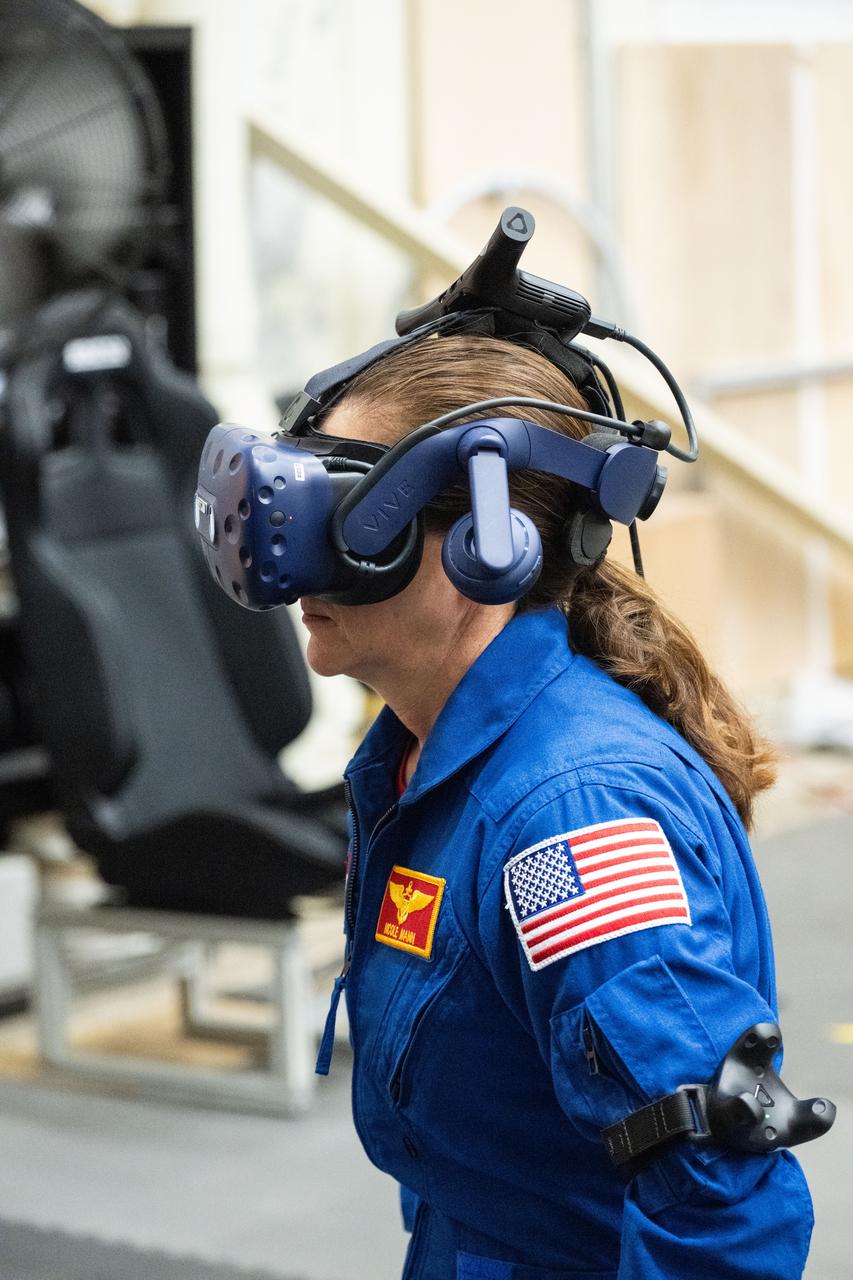
NASA astronaut Nicole Mann participates in virtual reality testing of the Gateway lunar space station to ensure its comfort and safety when astronauts live and conduct science there on future Artemis missions. PHOTO DATE: 02-13-24 LOCATION: Bldg. 15 - VR Lab SUBJECT: Photographic support for Gateway Web Feature: VR Technology for Interior Gateway Training with astronaut Nicole Mann PHOTOGRAPHER: Photo Credit: NASA / Bill Stafford
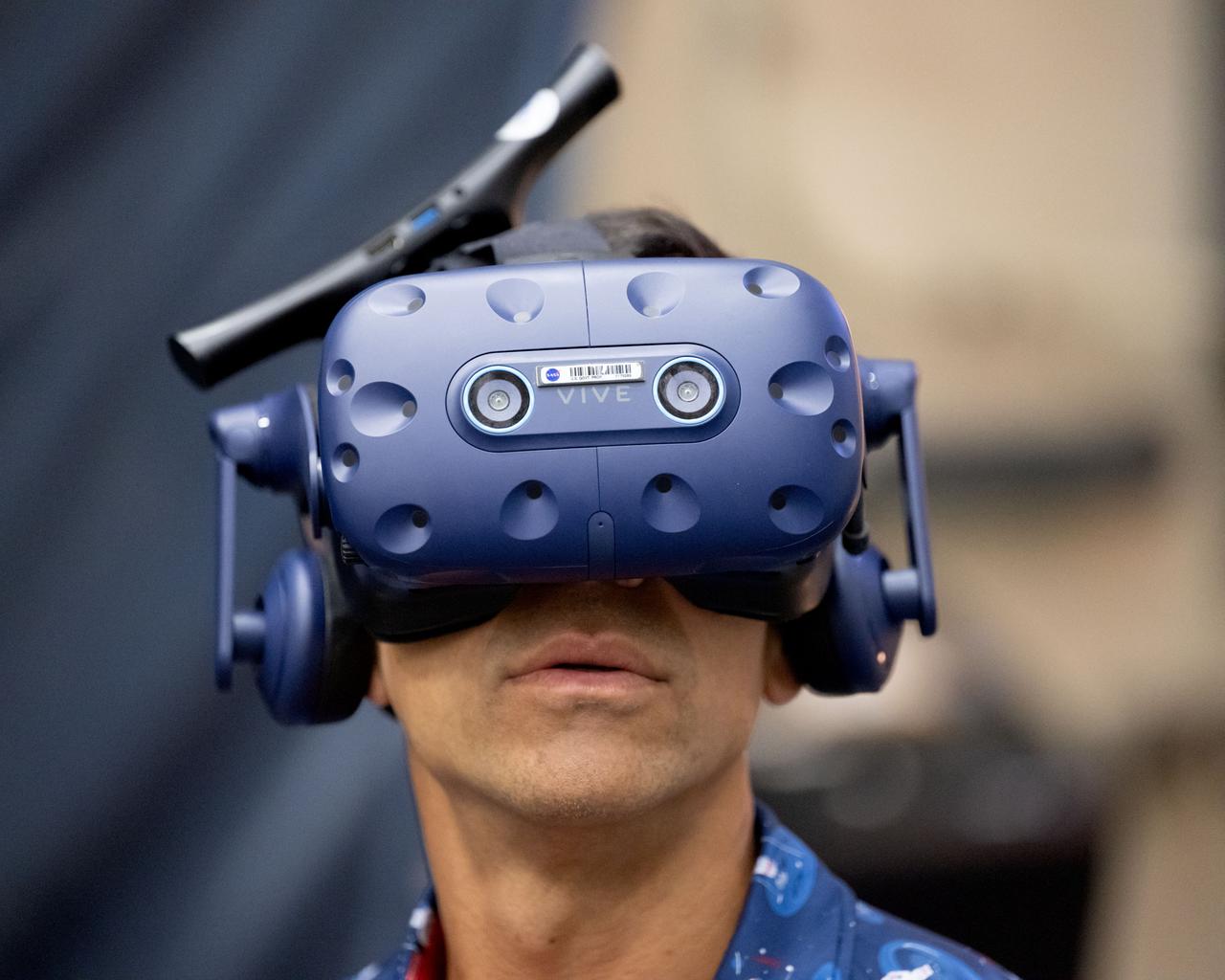
NASA astronaut Raja Chari participates in virtual reality testing of the Gateway lunar space station to ensure its comfort and safety when astronauts live and conduct science there on future Artemis missions. PHOTO DATE: February 09, 2022. LOCATION: Bldg. 15 - VR Lab SUBJECT: VR Technology for Interior Gateway Training with astronaut Raja Chari. Photo Credit: NASA / Josh Valcarcel

NASA astronaut Raja Chari participates in virtual reality testing of the Gateway lunar space station to ensure its comfort and safety when astronauts live and conduct science there on future Artemis missions. PHOTO DATE: February 09, 2022. LOCATION: Bldg. 15 - VR Lab SUBJECT: VR Technology for Interior Gateway Training with astronaut Raja Chari. Photo Credit: NASA / Josh Valcarcel
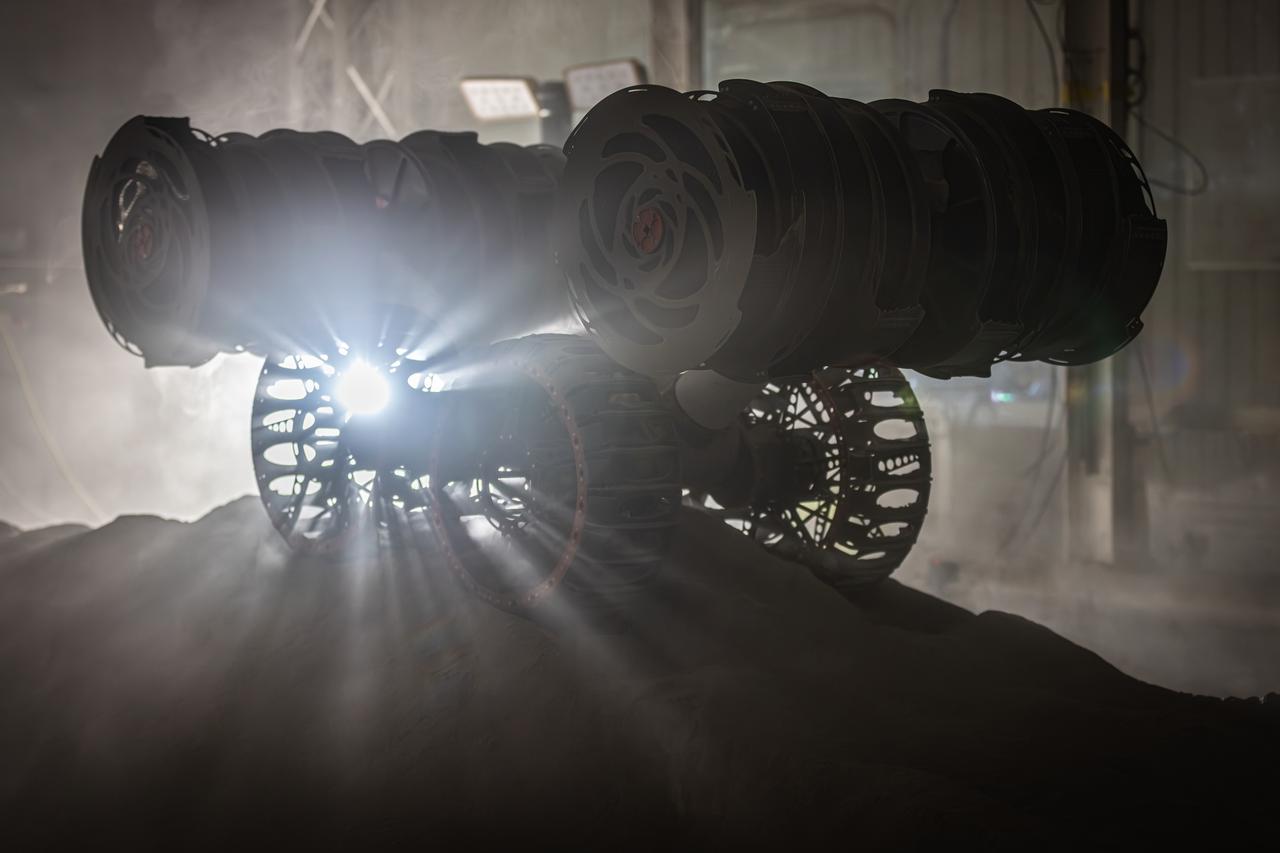
NASA’s RASSOR (Regolith Advanced Surface Systems Operations Robot) conducts excavation testing of simulated regolith, or lunar dust found on the Moon’s surface, inside of the Granular Mechanics and Regolith Operations Lab at the agency’s Kennedy Space Center in Florida on Tuesday, May 27, 2025. RASSOR is designed to work in low-gravity situations, using counter rotating bucket drums on each arm to collect and dump regolith for the extraction of hydrogen, oxygen, or water, resources critical for sustaining a habitable presence.