/jsc2024e041788 (1)~medium.jpg)
The Gateway lunar space station configuration and major international and commercial partners.
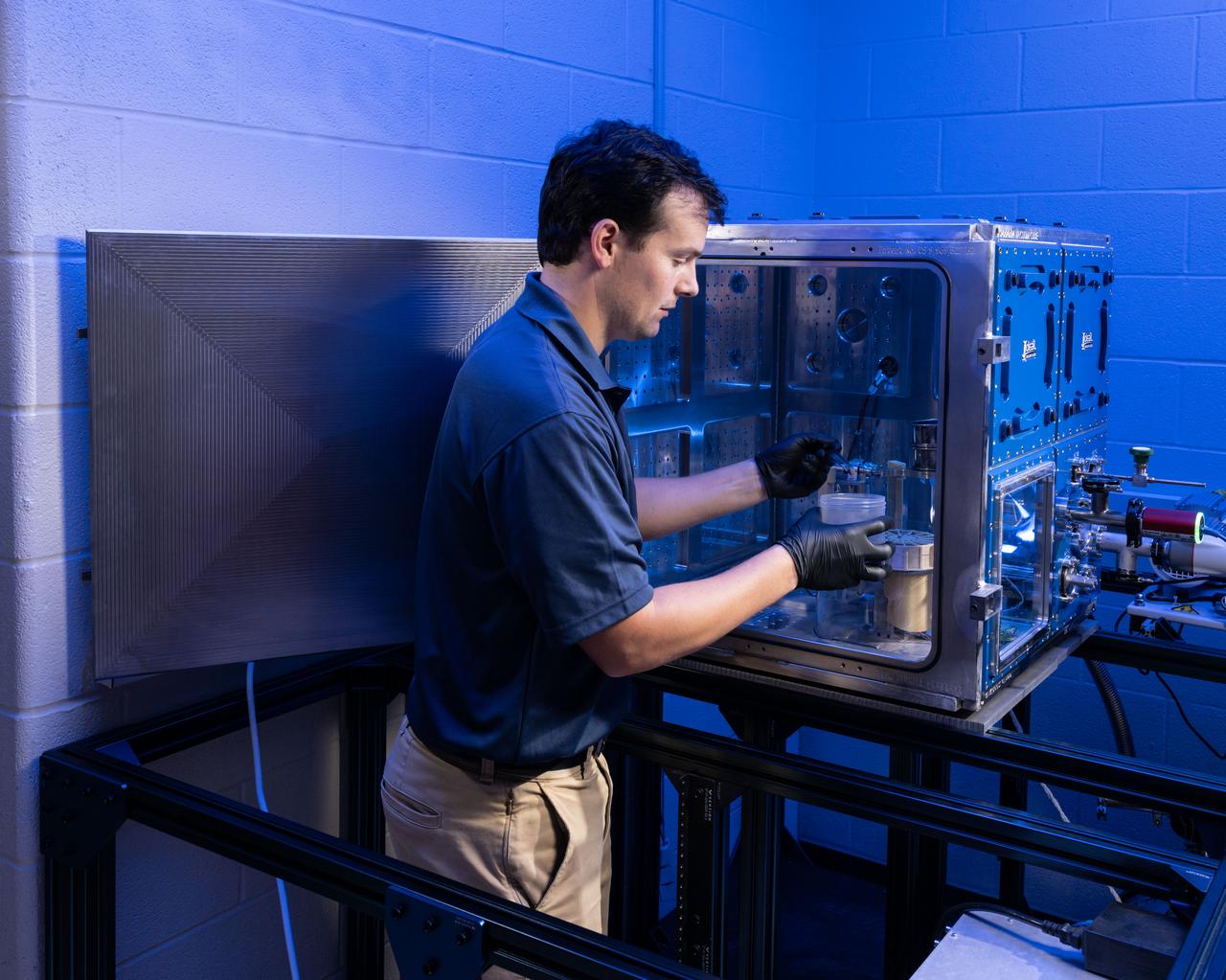
Josh Litofsky leads a Gateway lunar dust adhesion testing campaign at NASA’s Johnson Space Center in Houston. His team studies how lunar dust interacts with materials chosen for Gateway's construction. Here, Litofsky scoops lunar stimulant into a sample holder. Litofksy’s work seeks to validate the Gateway On-orbit Lunar Dust Modeling and Analysis Program (GOLDMAP), developed by Ronald Lee, also of Johnson Space Center. By considering factors such as the design and configuration of the space station, the materials used, and the unique conditions in lunar orbit, GOLDMAP helps predict how dust may move and settle on Gateway’s external surfaces.
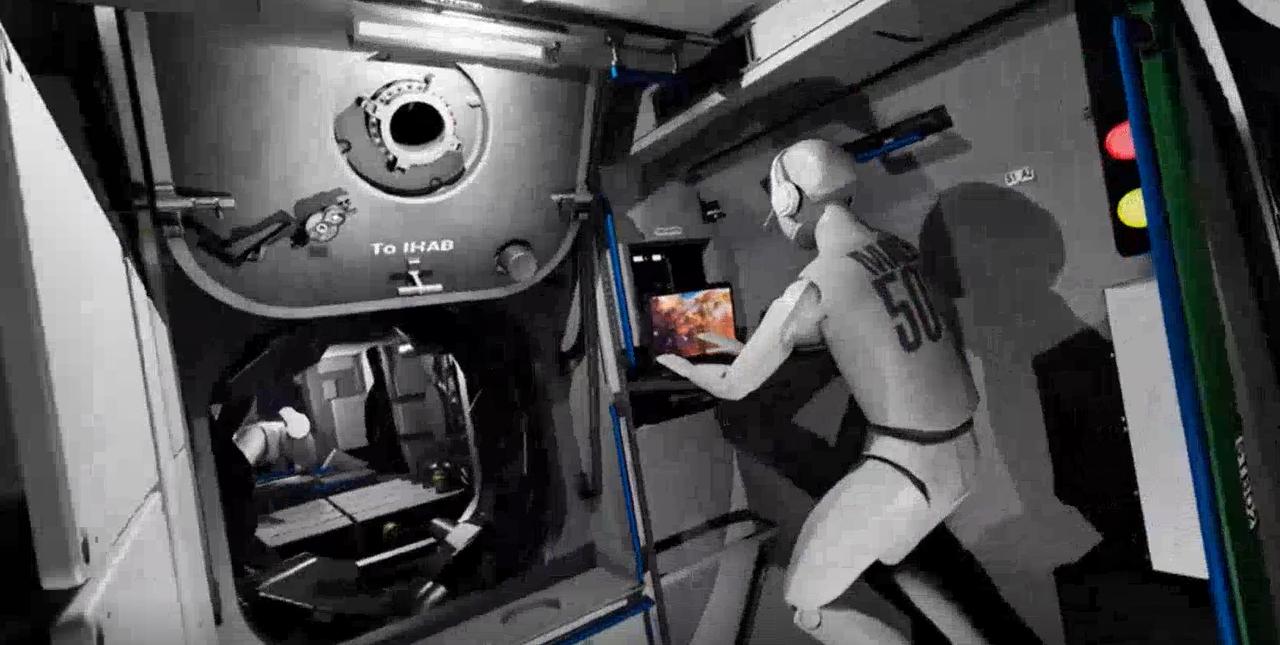
What astronauts see as they tour the Gateway lunar space station in virtual reality.
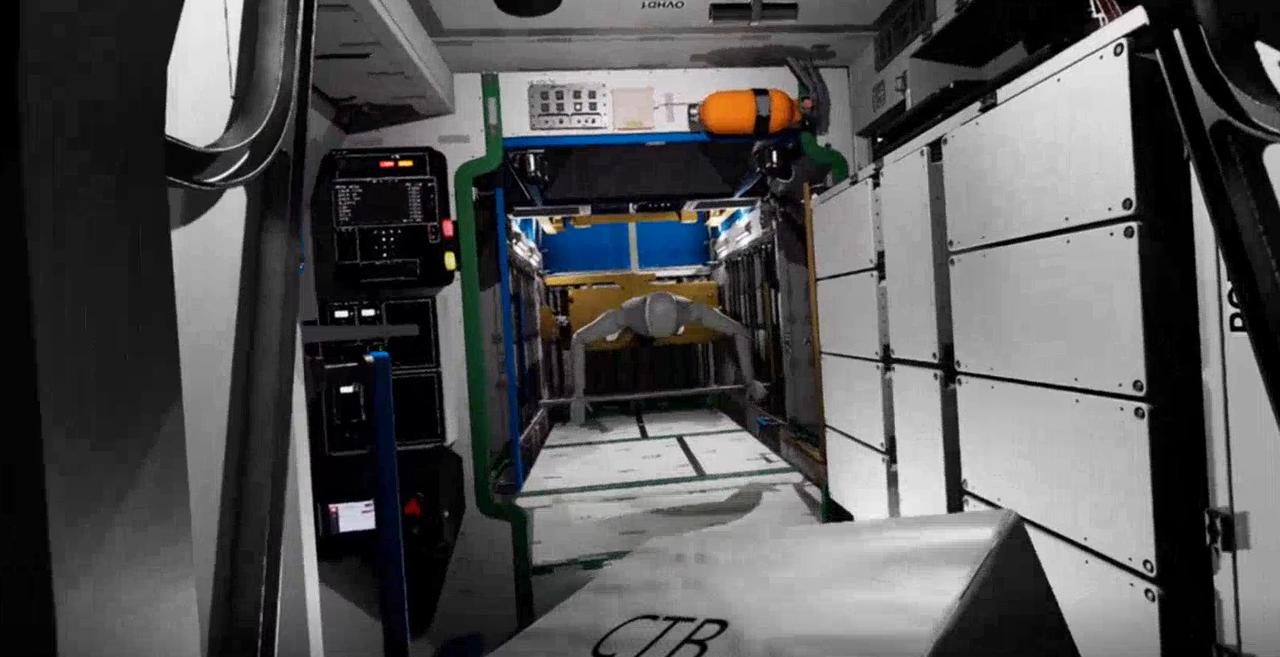
What astronauts see as they tour the Gateway lunar space station in virtual reality.
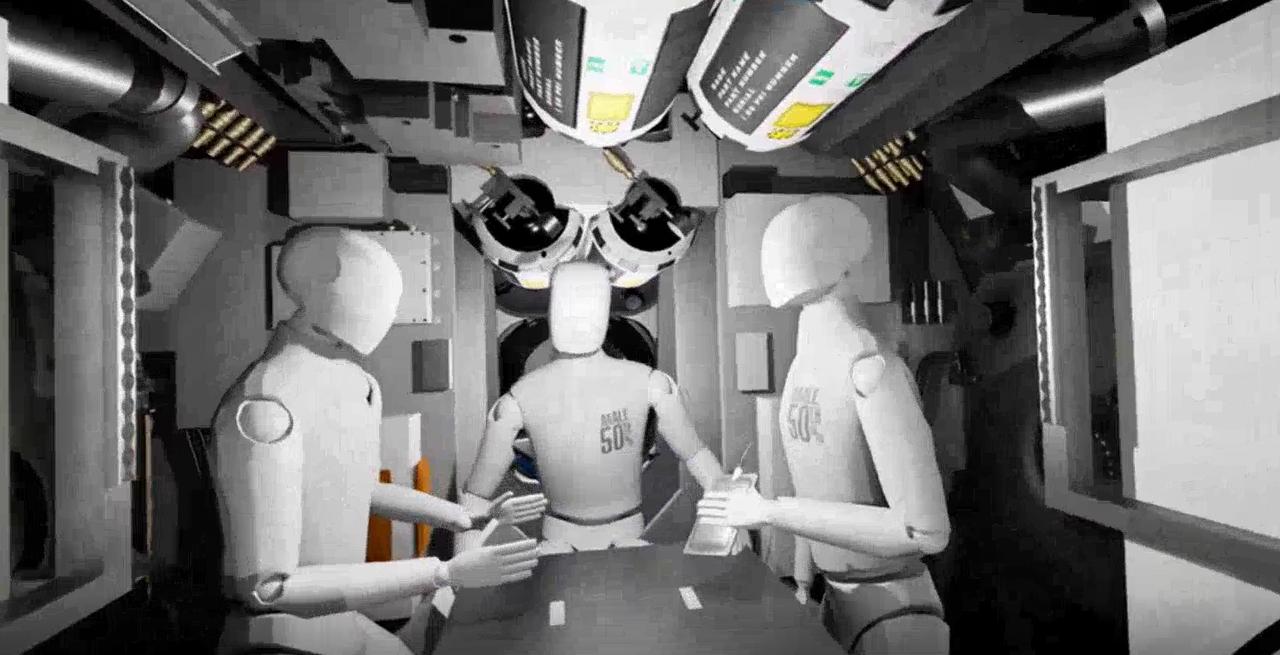
What astronauts see as they tour the Gateway lunar space station in virtual reality.
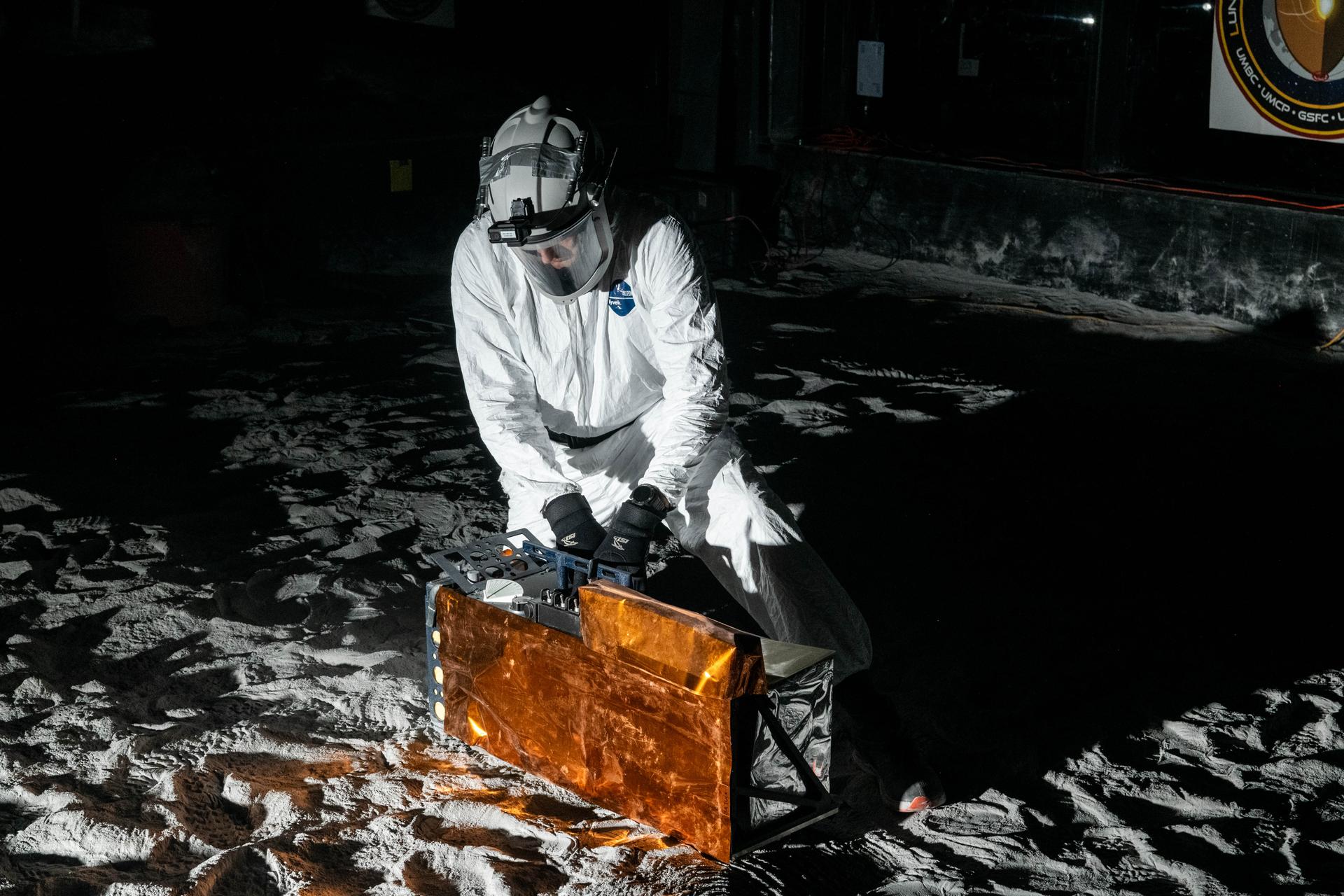
Artemis Scientist, Trevor Graff, performs instrument deployment exercises with a medium fidelity mock up of the Lunar Environment Monitoring Station (LEMS) in the lunar simulant bin at the Florida Space Institute Exolith Lab, Orlando, Fl., Aug 6, 2025. LEMS is a compact, autonomous, and self-sustaining seismometer suite designed to carry out continuous, long-term, monitoring of the lunar seismic environment at the South Polar region. Photo Credit: NASA/Katie Mellos.
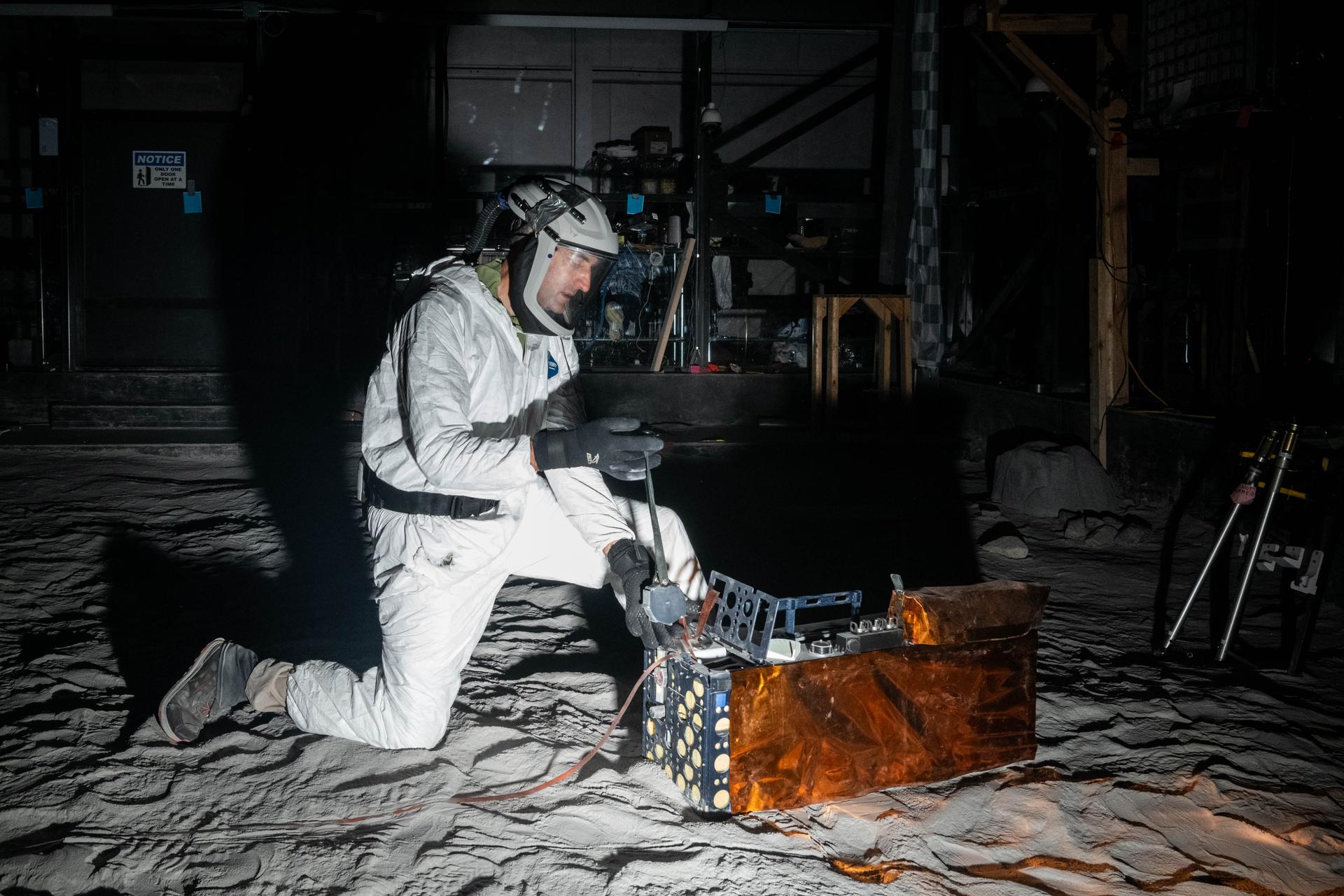
Artemis Scientist, Trevor Graff, performs instrument deployment exercises with a medium fidelity mock up of the Lunar Environment Monitoring Station (LEMS) in the lunar simulant bin at the Florida Space Institute Exolith Lab, Orlando, Fl., Aug 6, 2025. LEMS is a compact, autonomous, and self-sustaining seismometer suite designed to carry out continuous, long-term, monitoring of the lunar seismic environment at the South Polar region. Photo Credit: NASA/Katie Mellos.
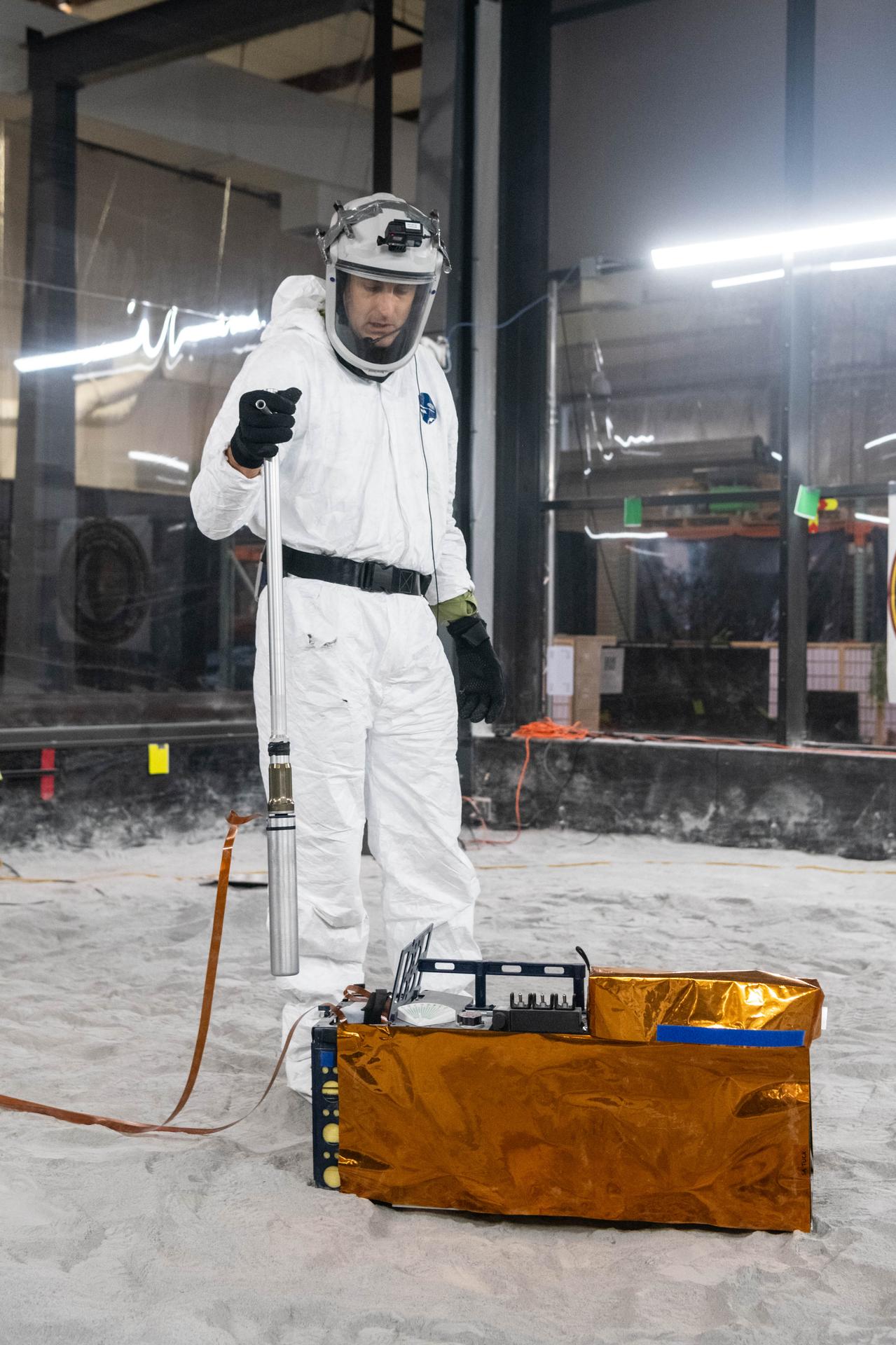
Artemis Scientist, Trevor Graff, performs instrument deployment exercises with a medium fidelity mock up of the Lunar Environment Monitoring Station (LEMS) in the lunar simulant bin at the Florida Space Institute Exolith Lab, Orlando, Fl., Aug 6, 2025. LEMS is a compact, autonomous, and self-sustaining seismometer suite designed to carry out continuous, long-term, monitoring of the lunar seismic environment at the South Polar region. Photo Credit: NASA/Katie Mellos.
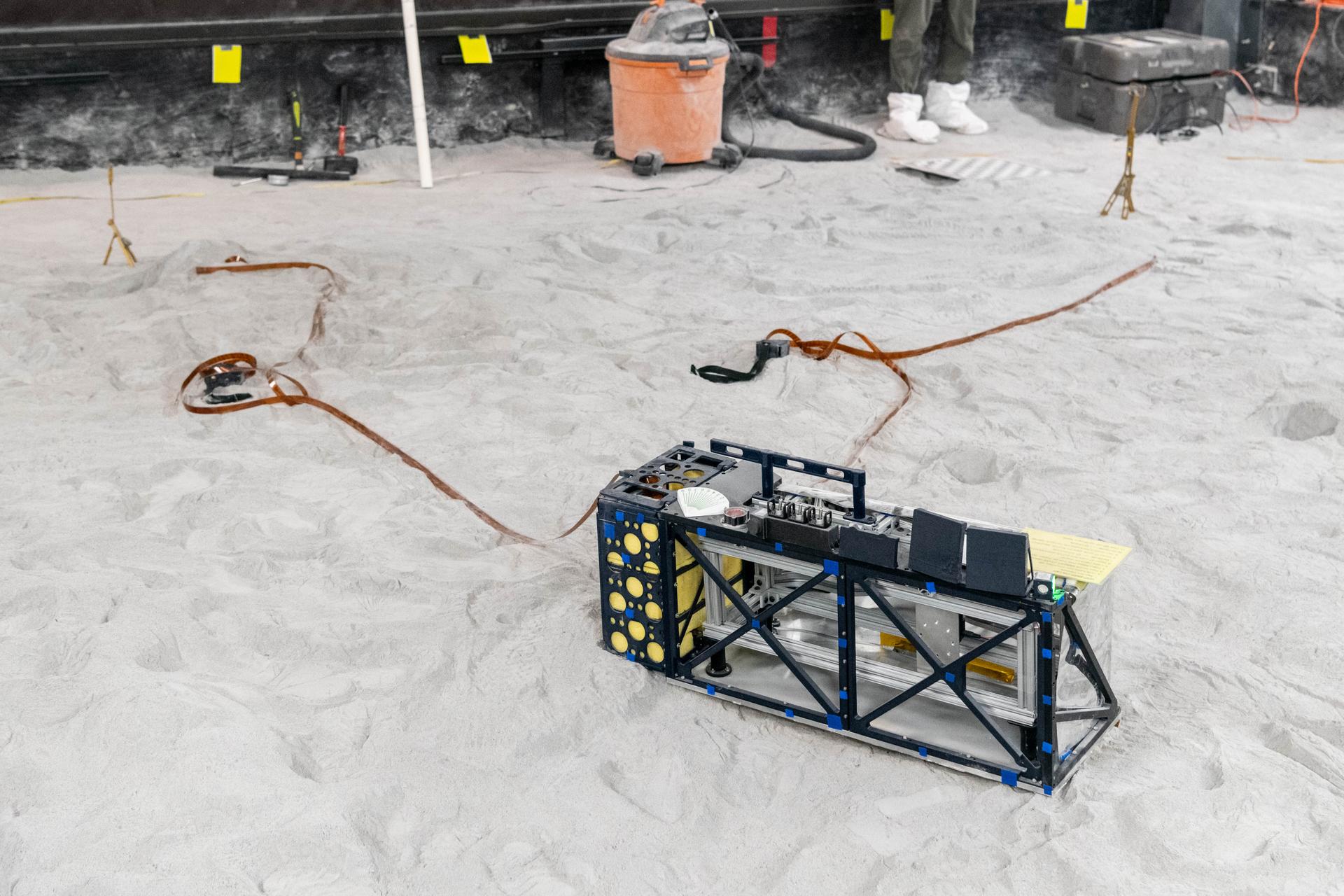
The Lunar Environment Monitoring Station (LEMS) medium fidelity instrument mock up is configured for instrument deployment exercises in the lunar simulant bin at the Florida Space Institute Exolith Lab, Orlando, Fl., Aug 6, 2025. LEMS is a compact, autonomous, and self-sustaining seismometer suite designed to carry out continuous, long-term, monitoring of the lunar seismic environment at the South Polar region. Photo Credit: NASA/Katie Mellos.
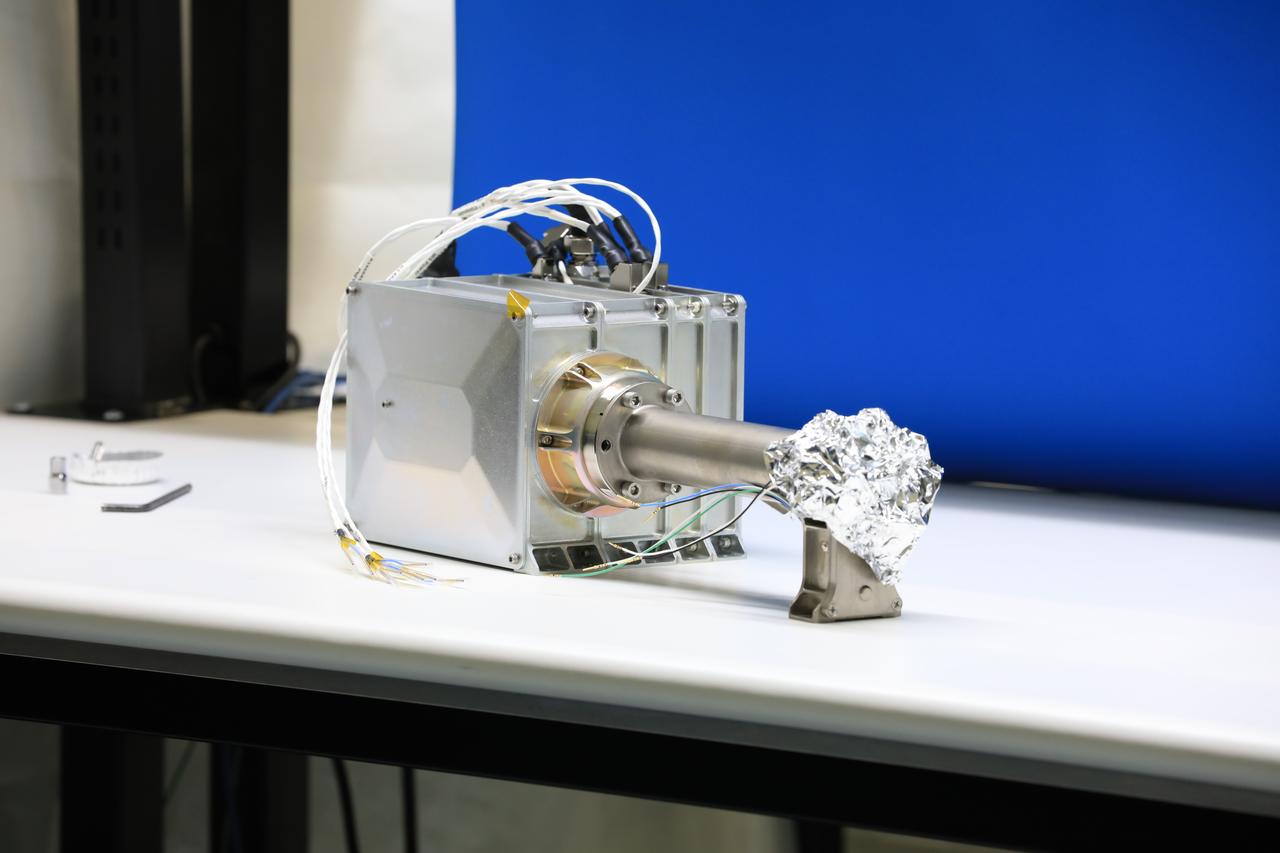
Engineers and technicians at NASA’s Kennedy Space Center in Florida are preparing the Mass Spectrometer observing lunar operations (MSolo) for launch inside the Space Station Processing Facility at NASA’s Kennedy Space Center in Florida on Sept. 25, 2020. MSolo is a commercial off-the-shelf mass spectrometer modified to work in space and it will help analyze the chemical makeup of landing sites on the Moon, as well as study water on the lunar surface. MSolo hardware is a payload for a robotic mission to the Moon as part of the Commercial Lunar Payload Services (CLPS) launching to exploring Lacus Mortis, a large crater on the near side of the Moon in 2021. A future mission will send a mobile robot named the Volatiles Investigating Polar Exploration Rover (VIPER) to the Moon to prospect for water. VIPER will have several instruments that will allow it to detect and sample water including MSolo, the Neutron Spectrometer System, the Near Infrared Volatiles Spectrometer System and The Regolith and Ice Drill for Exploring New Terrain (TRIDENT).
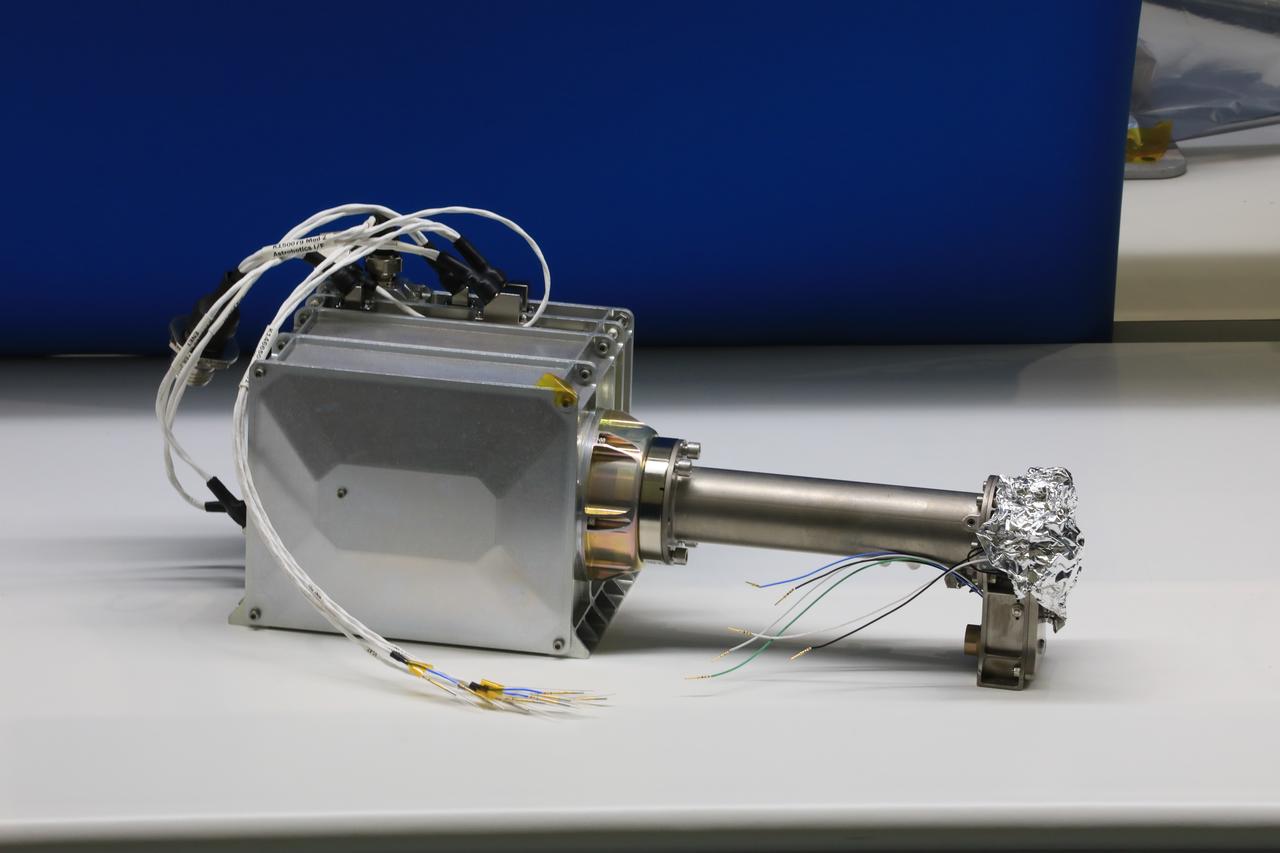
Engineers and technicians at NASA’s Kennedy Space Center in Florida are preparing the Mass Spectrometer observing lunar operations (MSolo) for launch inside the Space Station Processing Facility at NASA’s Kennedy Space Center in Florida on Sept. 25, 2020. MSolo is a commercial off-the-shelf mass spectrometer modified to work in space and it will help analyze the chemical makeup of landing sites on the Moon, as well as study water on the lunar surface. MSolo hardware is a payload for a robotic mission to the Moon as part of the Commercial Lunar Payload Services (CLPS) launching to exploring Lacus Mortis, a large crater on the near side of the Moon in 2021. A future mission will send a mobile robot named the Volatiles Investigating Polar Exploration Rover (VIPER) to the Moon to prospect for water. VIPER will have several instruments that will allow it to detect and sample water including MSolo, the Neutron Spectrometer System, the Near Infrared Volatiles Spectrometer System and The Regolith and Ice Drill for Exploring New Terrain (TRIDENT).
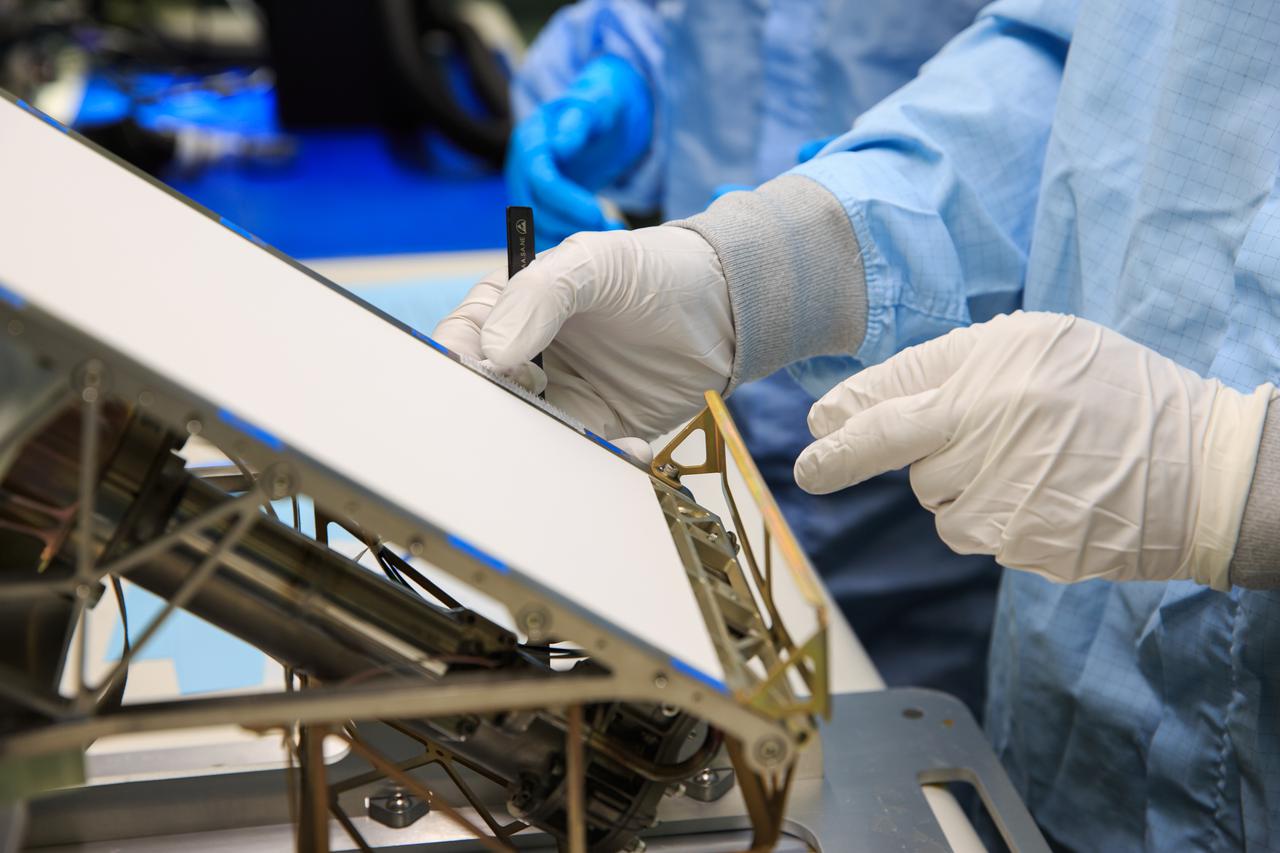
Team members working inside the Space Station Processing Facility at NASA’s Kennedy Space Center in Florida, on Sept. 23, 2021, meticulously assemble ground support equipment that will protect shipment of the Mass Spectrometer observing lunar operations (MSolo) flight hardware for preparations before it launches in 2022. MSolo is a commercial off-the-shelf mass spectrometer modified to work in space and it will help analyze the chemical makeup of landing sites on the Moon, as well as study water on the lunar surface. MSolo, scheduled to first launch in 2022, is part of four of the agency’s Commercial Lunar Payload Delivery Service missions where under the Artemis program, commercial deliveries will include science experiments, testing of technologies and demonstrations of capabilities to help NASA explore the Moon and prepare for human missions.
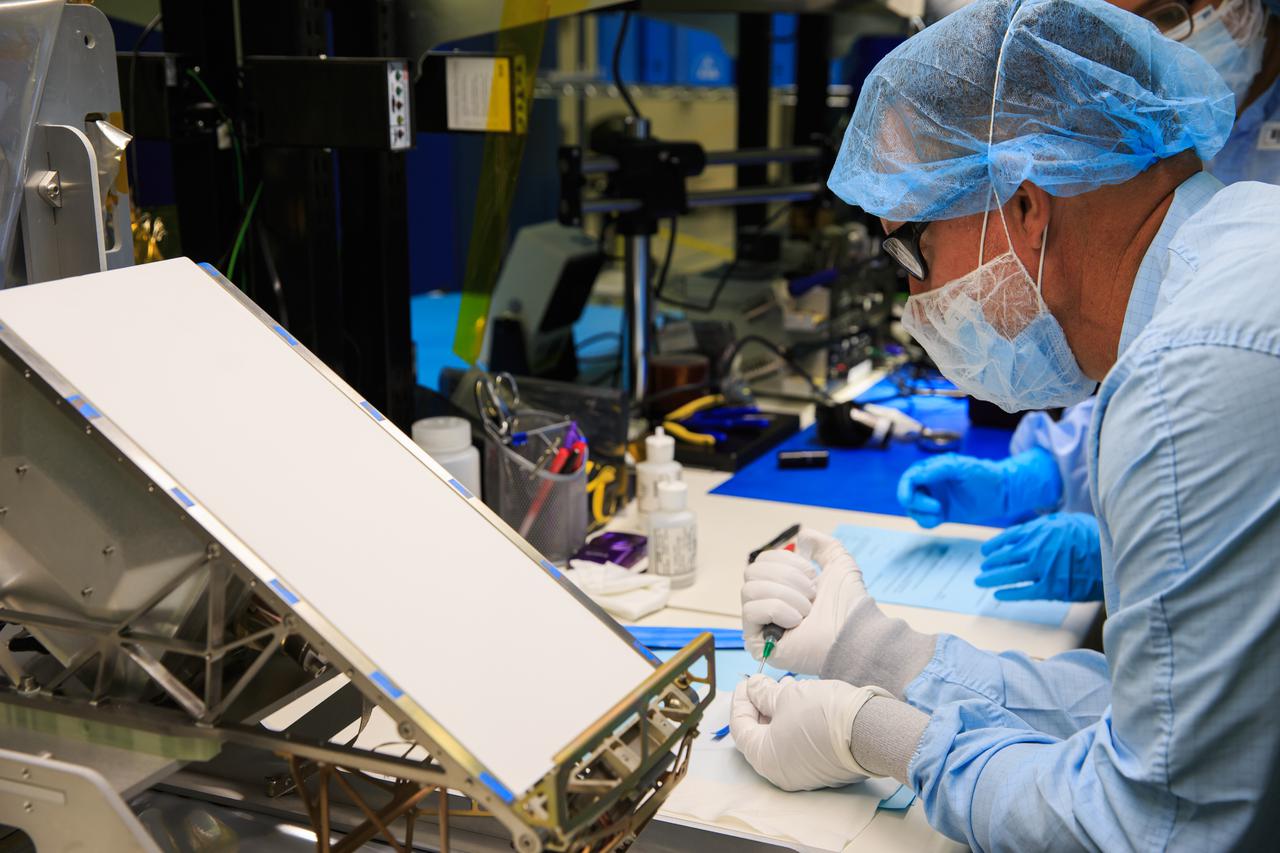
Team members working inside the Space Station Processing Facility at NASA’s Kennedy Space Center in Florida, on Sept. 23, 2021, meticulously assemble ground support equipment that will protect shipment of the Mass Spectrometer observing lunar operations (MSolo) flight hardware for preparations before it launches in 2022. MSolo is a commercial off-the-shelf mass spectrometer modified to work in space and it will help analyze the chemical makeup of landing sites on the Moon, as well as study water on the lunar surface. MSolo, scheduled to first launch in 2022, is part of four of the agency’s Commercial Lunar Payload Delivery Service missions where under the Artemis program, commercial deliveries will include science experiments, testing of technologies and demonstrations of capabilities to help NASA explore the Moon and prepare for human missions.
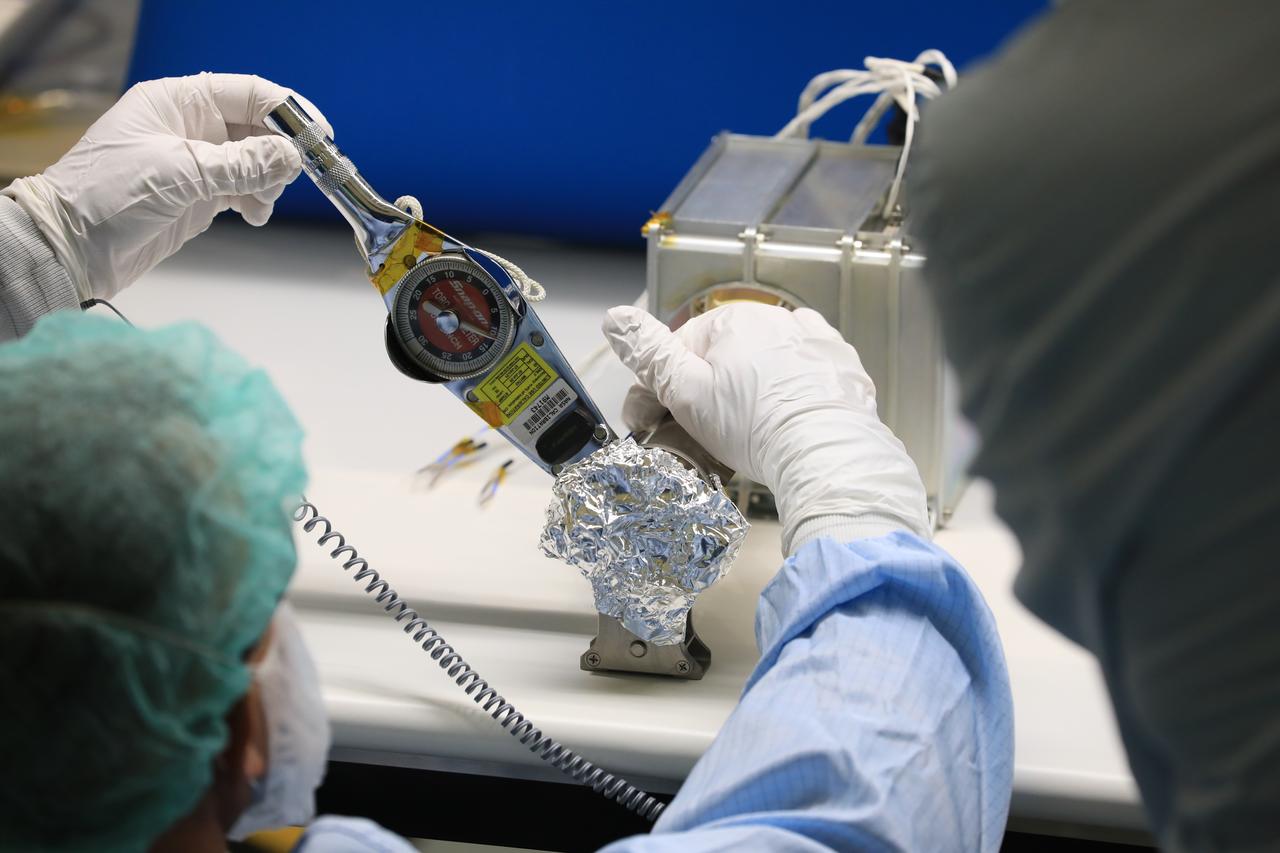
Engineers and technicians at NASA’s Kennedy Space Center in Florida work with instruments for Mass Spectrometer observing lunar operations (MSolo) inside the Space Station Processing on Sept. 25, 2020. MSolo is a commercial off-the-shelf mass spectrometer modified to work in space and it will help analyze the chemical makeup of landing sites on the Moon, as well as study water on the lunar surface. This work is preparing MSolo hardware for a robotic mission as part of the Commercial Lunar Payload Services (CLPS) launching to exploring Lacus Mortis, a large crater on the near side of the Moon in 2021. A future mission will send a mobile robot named the Volatiles Investigating Polar Exploration Rover (VIPER) to the Moon to prospect for water. VIPER will have several instruments that will allow it to detect and sample water including MSolo, the Neutron Spectrometer System, the Near Infrared Volatiles Spectrometer System and The Regolith and Ice Drill for Exploring New Terrain (TRIDENT).
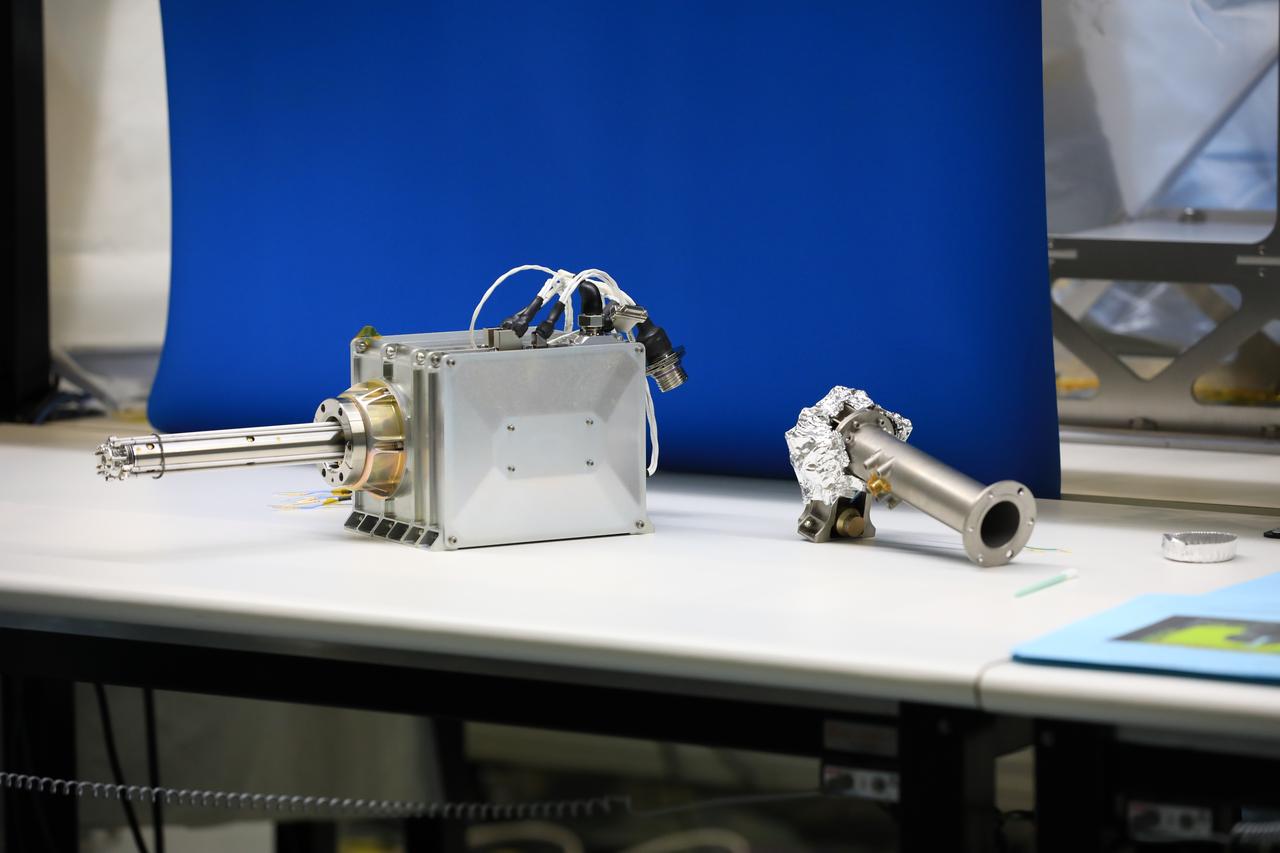
Instruments for the Mass Spectrometer observing lunar operations (MSolo) are in view inside the Space Station Processing Facility at NASA’s Kennedy Space Center in Florida on Sept. 25, 2020. MSolo is a commercial off-the-shelf mass spectrometer modified to work in space and it will help analyze the chemical makeup of landing sites on the Moon, as well as study water on the lunar surface. This work is preparing MSolo hardware for a robotic mission as part of the Commercial Lunar Payload Services (CLPS) launching to exploring Lacus Mortis, a large crater on the near side of the Moon in 2021. A future mission will send a mobile robot named the Volatiles Investigating Polar Exploration Rover (VIPER) to the Moon to prospect for water. VIPER will have several instruments that will allow it to detect and sample water including MSolo, the Neutron Spectrometer System, the Near Infrared Volatiles Spectrometer System and The Regolith and Ice Drill for Exploring New Terrain (TRIDENT).
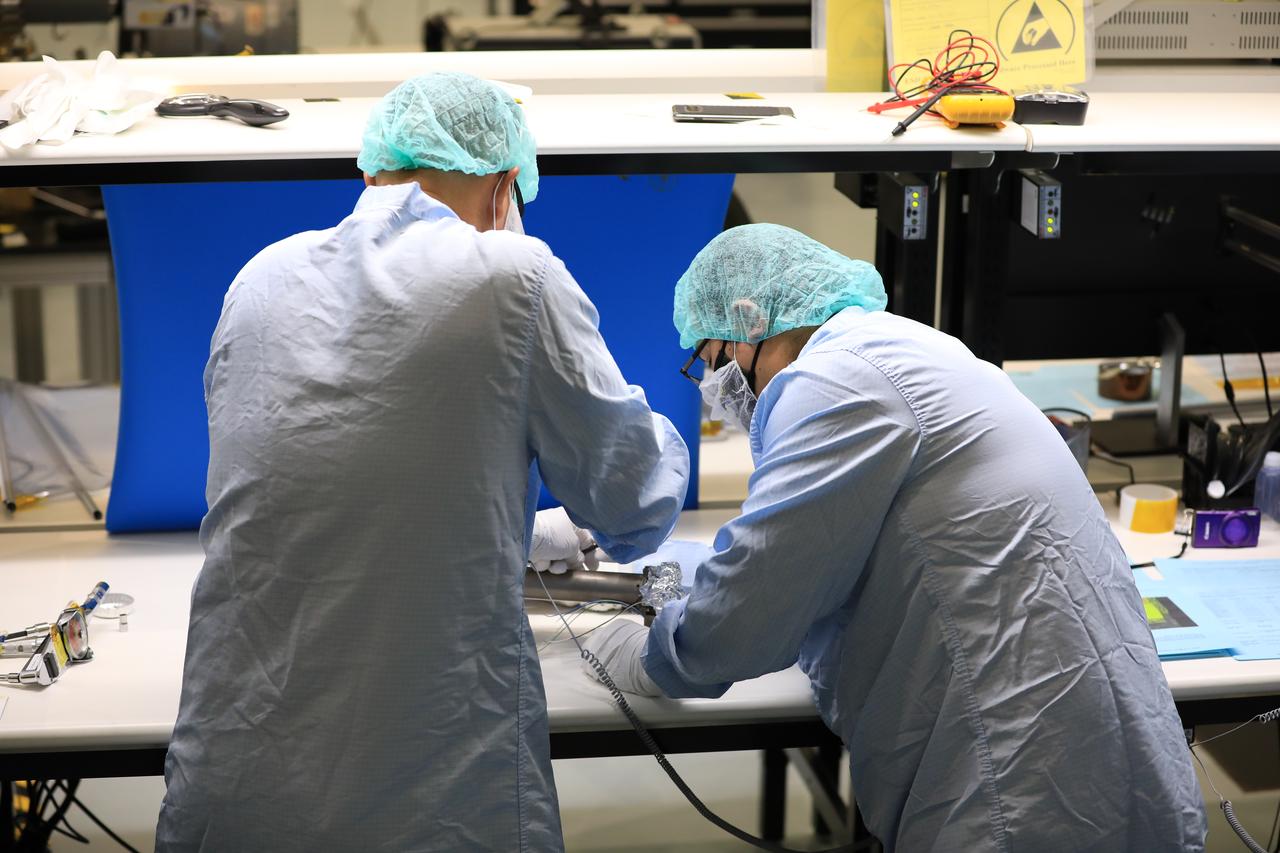
Engineers and technicians at NASA’s Kennedy Space Center in Florida work with instruments for Mass Spectrometer observing lunar operations (MSolo) inside the Space Station Processing on Sept. 25, 2020. MSolo is a commercial off-the-shelf mass spectrometer modified to work in space and it will help analyze the chemical makeup of landing sites on the Moon, as well as study water on the lunar surface. This work is preparing MSolo hardware for a robotic mission as part of the Commercial Lunar Payload Services (CLPS) launching to exploring Lacus Mortis, a large crater on the near side of the Moon in 2021. A future mission will send a mobile robot named the Volatiles Investigating Polar Exploration Rover (VIPER) to the Moon to prospect for water. VIPER will have several instruments that will allow it to detect and sample water including MSolo, the Neutron Spectrometer System, the Near Infrared Volatiles Spectrometer System and The Regolith and Ice Drill for Exploring New Terrain (TRIDENT).
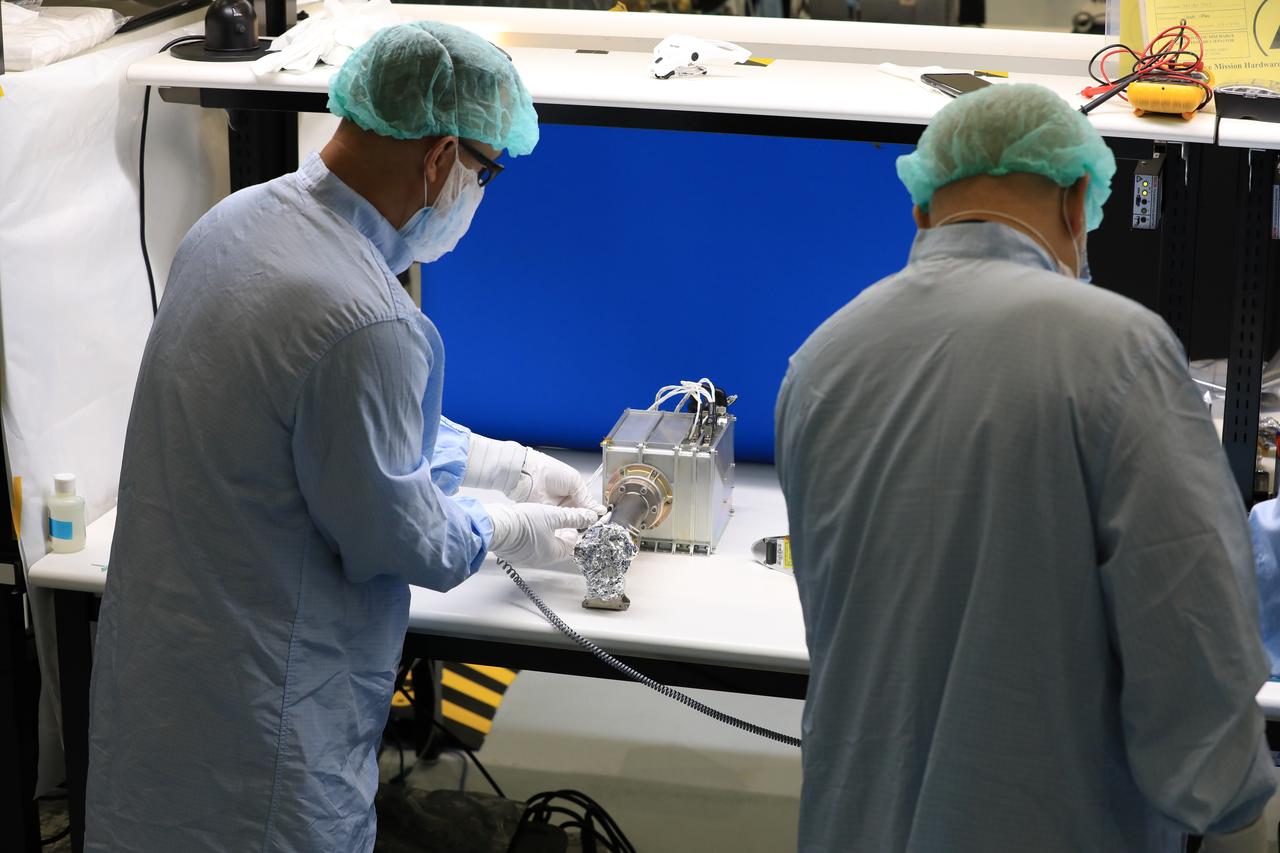
Engineers and technicians at NASA’s Kennedy Space Center in Florida work with instruments for Mass Spectrometer observing lunar operations (MSolo) inside the Space Station Processing on Sept. 25, 2020. MSolo is a commercial off-the-shelf mass spectrometer modified to work in space and it will help analyze the chemical makeup of landing sites on the Moon, as well as study water on the lunar surface. This work is preparing MSolo hardware for a robotic mission as part of the Commercial Lunar Payload Services (CLPS) launching to exploring Lacus Mortis, a large crater on the near side of the Moon in 2021. A future mission will send a mobile robot named the Volatiles Investigating Polar Exploration Rover (VIPER) to the Moon to prospect for water. VIPER will have several instruments that will allow it to detect and sample water including MSolo, the Neutron Spectrometer System, the Near Infrared Volatiles Spectrometer System and The Regolith and Ice Drill for Exploring New Terrain (TRIDENT).
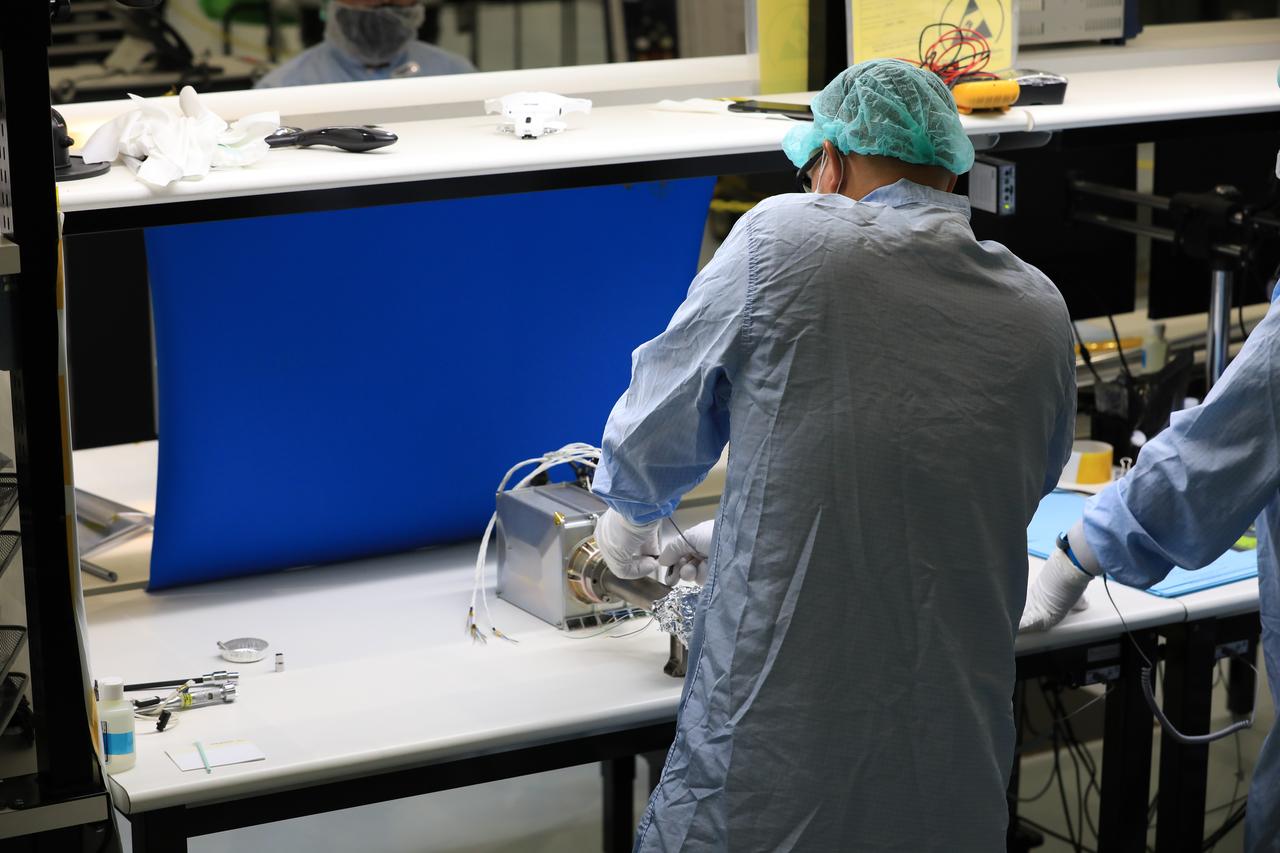
Engineers and technicians at NASA’s Kennedy Space Center in Florida work with instruments for Mass Spectrometer observing lunar operations (MSolo) inside the Space Station Processing on Sept. 25, 2020. MSolo is a commercial off-the-shelf mass spectrometer modified to work in space and it will help analyze the chemical makeup of landing sites on the Moon, as well as study water on the lunar surface. This work is preparing MSolo hardware for a robotic mission as part of the Commercial Lunar Payload Services (CLPS) launching to exploring Lacus Mortis, a large crater on the near side of the Moon in 2021. A future mission will send a mobile robot named the Volatiles Investigating Polar Exploration Rover (VIPER) to the Moon to prospect for water. VIPER will have several instruments that will allow it to detect and sample water including MSolo, the Neutron Spectrometer System, the Near Infrared Volatiles Spectrometer System and The Regolith and Ice Drill for Exploring New Terrain (TRIDENT).
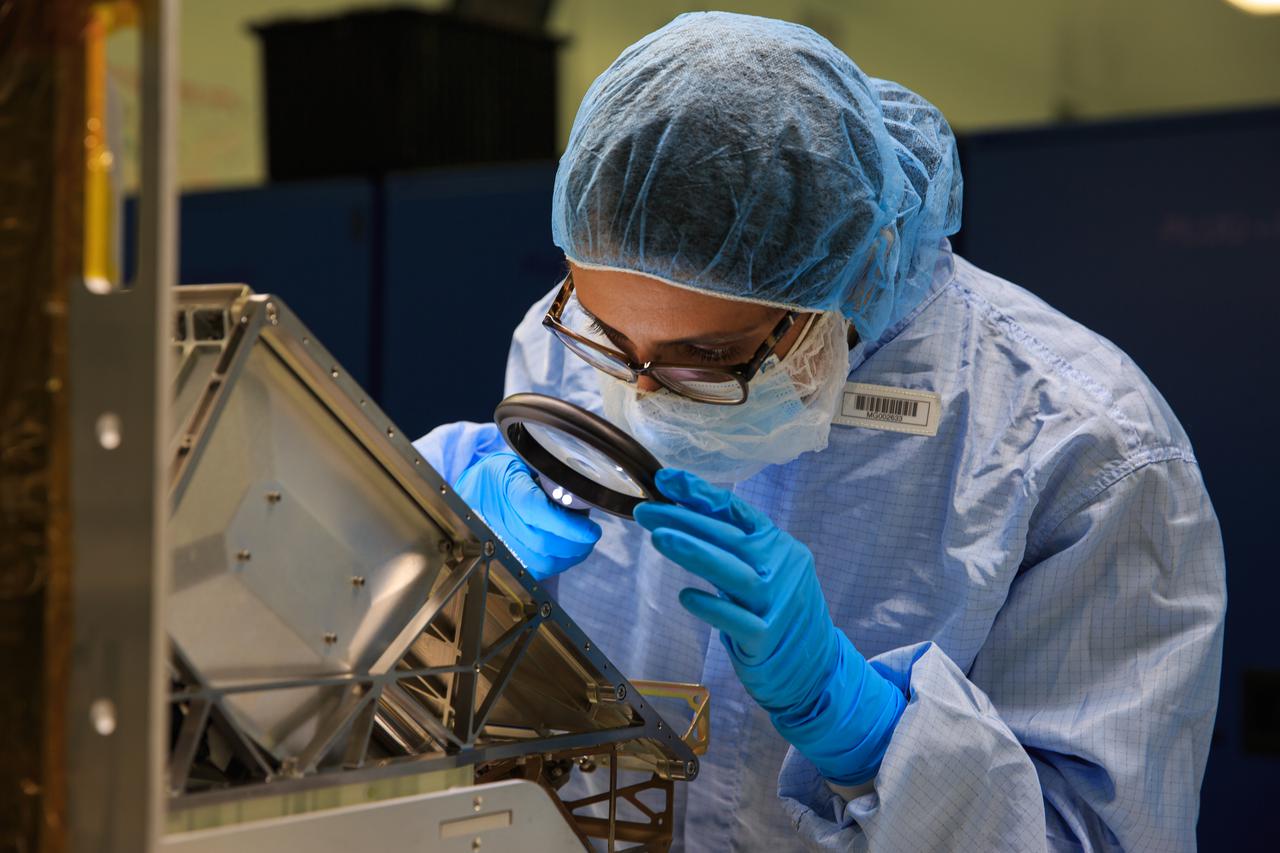
Team members working inside the Space Station Processing Facility at NASA’s Kennedy Space Center in Florida, on Sept. 23, 2021, meticulously assemble ground support equipment that will protect shipment of the Mass Spectrometer observing lunar operations (MSolo) flight hardware for preparations before it launches in 2022. MSolo is a commercial off-the-shelf mass spectrometer modified to work in space and it will help analyze the chemical makeup of landing sites on the Moon, as well as study water on the lunar surface. MSolo, scheduled to first launch in 2022, is part of four of the agency’s Commercial Lunar Payload Delivery Service missions where under the Artemis program, commercial deliveries will include science experiments, testing of technologies and demonstrations of capabilities to help NASA explore the Moon and prepare for human missions.
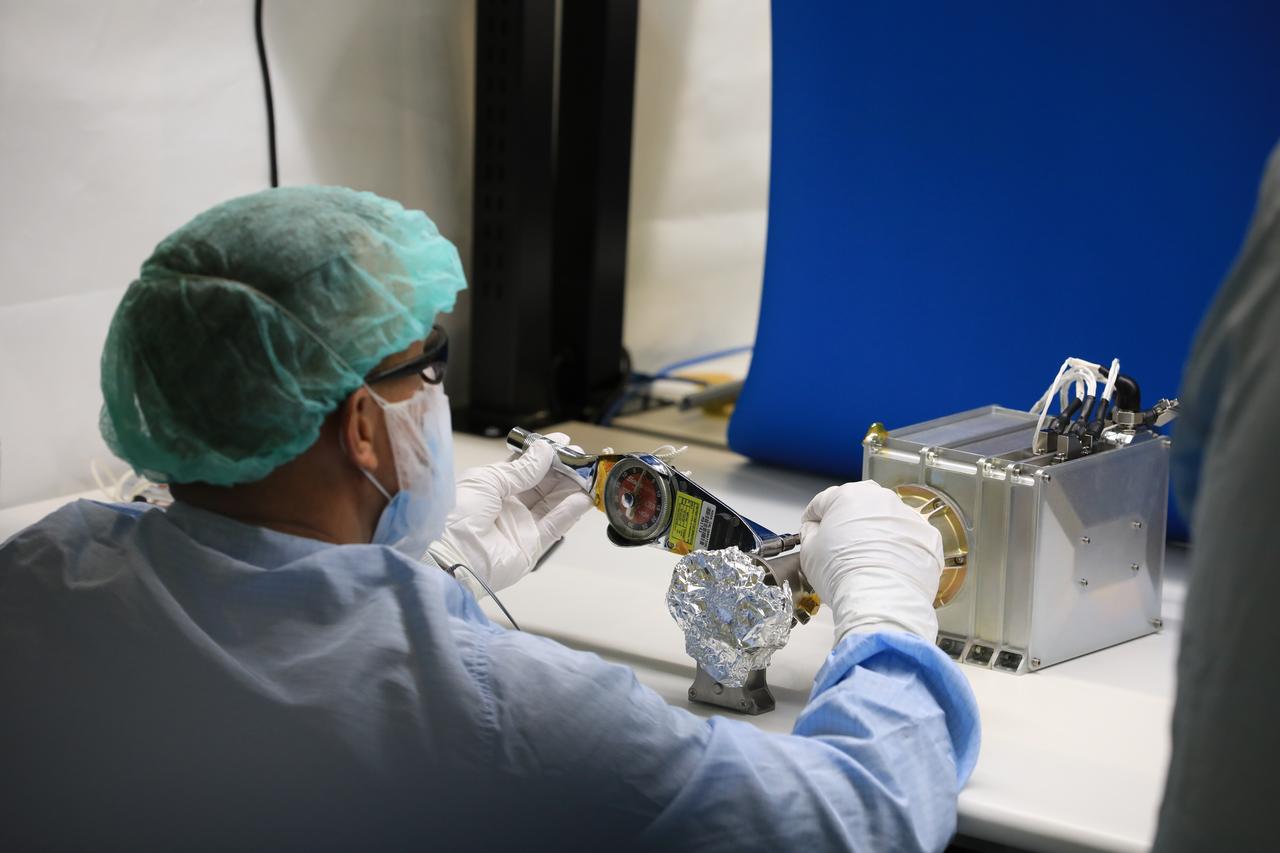
Engineers and technicians at NASA’s Kennedy Space Center in Florida work with instruments for Mass Spectrometer observing lunar operations (MSolo) inside the Space Station Processing on Sept. 25, 2020. MSolo is a commercial off-the-shelf mass spectrometer modified to work in space and it will help analyze the chemical makeup of landing sites on the Moon, as well as study water on the lunar surface. This work is preparing MSolo hardware for a robotic mission as part of the Commercial Lunar Payload Services (CLPS) launching to exploring Lacus Mortis, a large crater on the near side of the Moon in 2021. A future mission will send a mobile robot named the Volatiles Investigating Polar Exploration Rover (VIPER) to the Moon to prospect for water. VIPER will have several instruments that will allow it to detect and sample water including MSolo, the Neutron Spectrometer System, the Near Infrared Volatiles Spectrometer System and The Regolith and Ice Drill for Exploring New Terrain (TRIDENT).
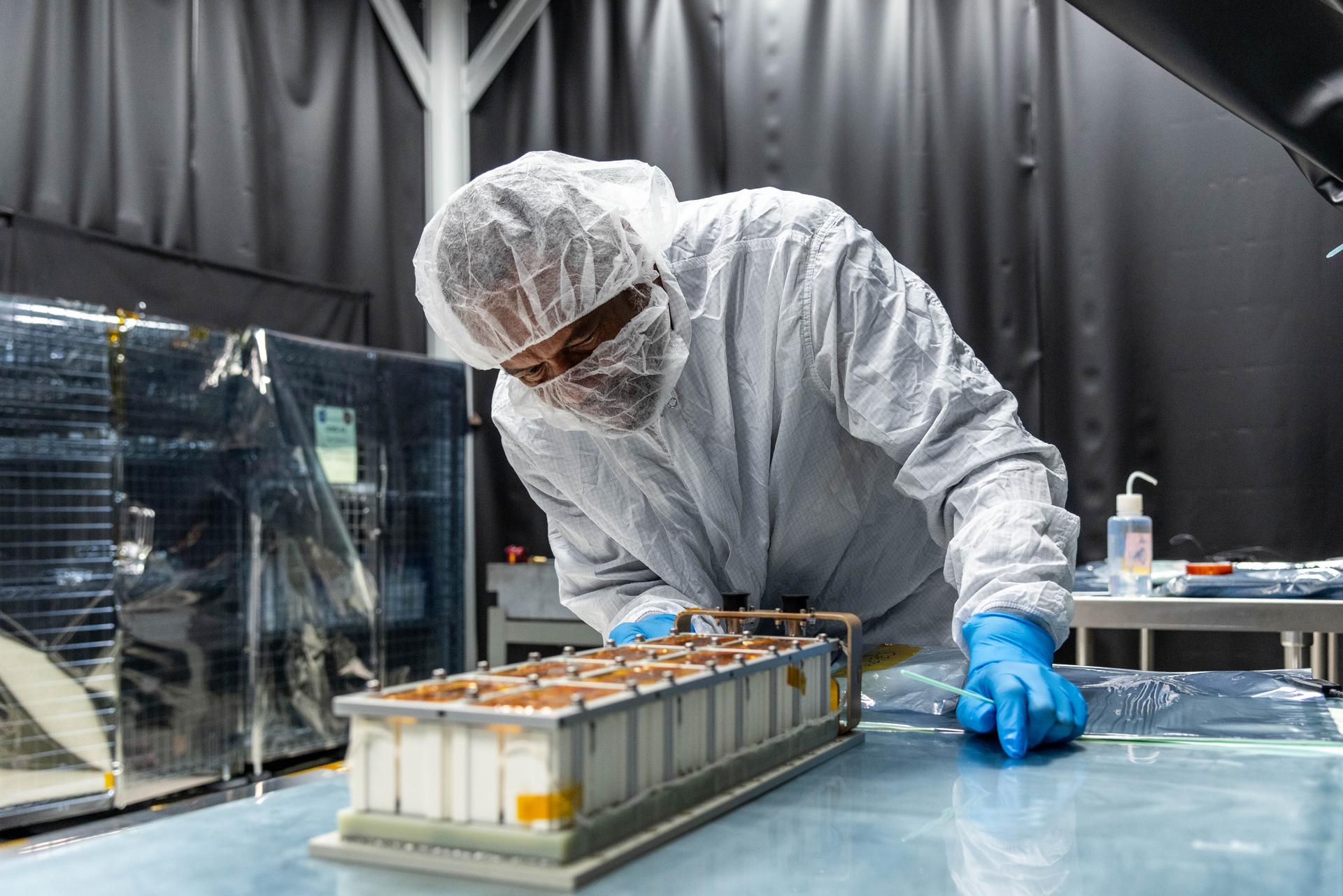
Contamination Control Technician, Rudy Foxwell, inspects the Lunar Environment Monitoring Station (LEMS) Flight Battery in a clean tent at NASA's Goddard Space Flight Center in Greenbelt, Maryland on October 14th, 2026. NASA/Katie Mellos.
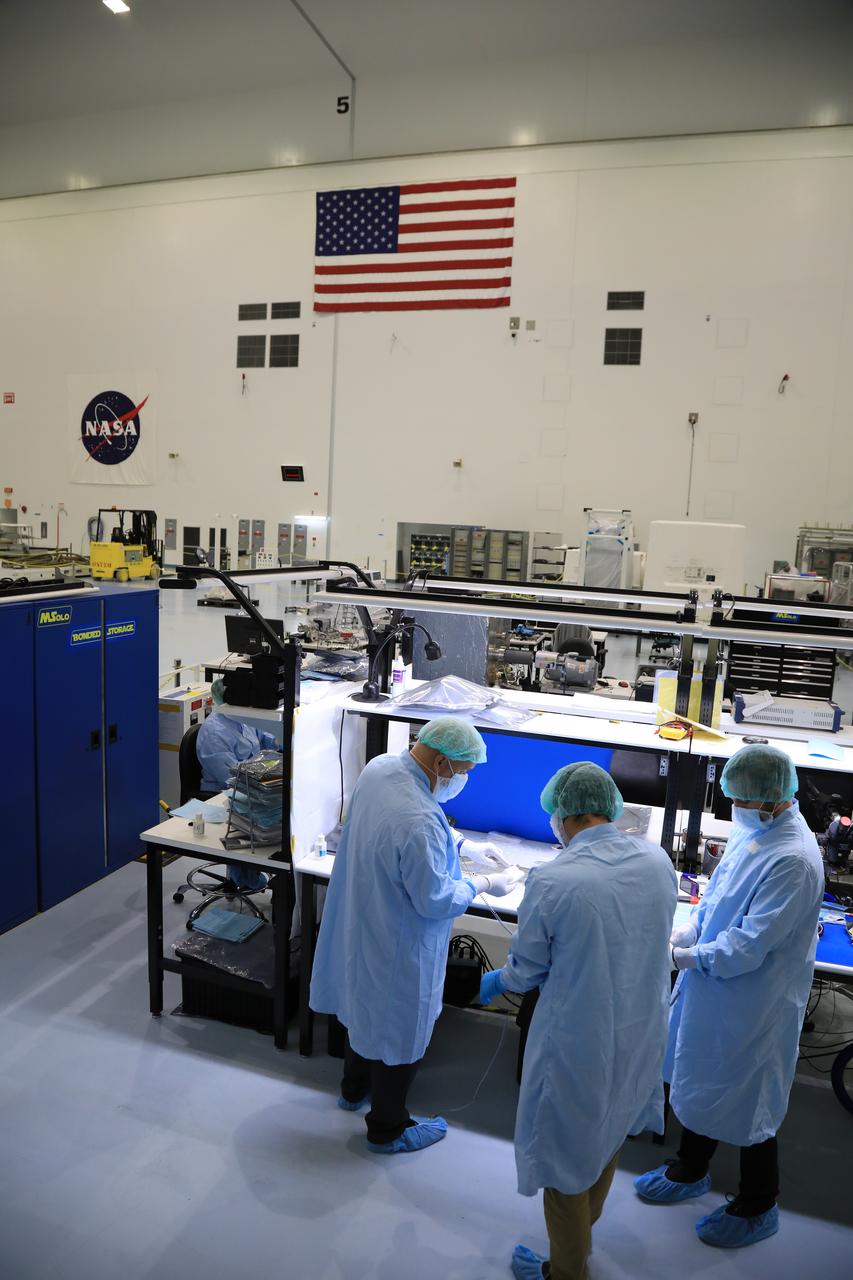
Engineers and technicians at NASA’s Kennedy Space Center in Florida prepare to install the radiator for the Mass Spectrometer Observing Lunar Operations (MSolo) instrument inside the Space Station Processing Facility on Sept. 25, 2020. MSolo will help analyze the chemical makeup of landing sites on the Moon, as well as study water on the lunar surface. The radiator will help keep the instrument’s temperature stable in the extreme heat and cold it will encounter. MSolo instruments are scheduled to launch on multiple robotic missions as part of NASA’s Commercial Lunar Payload Services (CLPS), with the first of these missions exploring Lacus Mortis, a large crater on the near side of the Moon, beginning in 2021. MSolo also will be one of three instruments on the agency’s water-hunting Volatiles Investigating Polar Exploration Rover, VIPER, scheduled to launch to the Moon’s South Pole in late 2023.
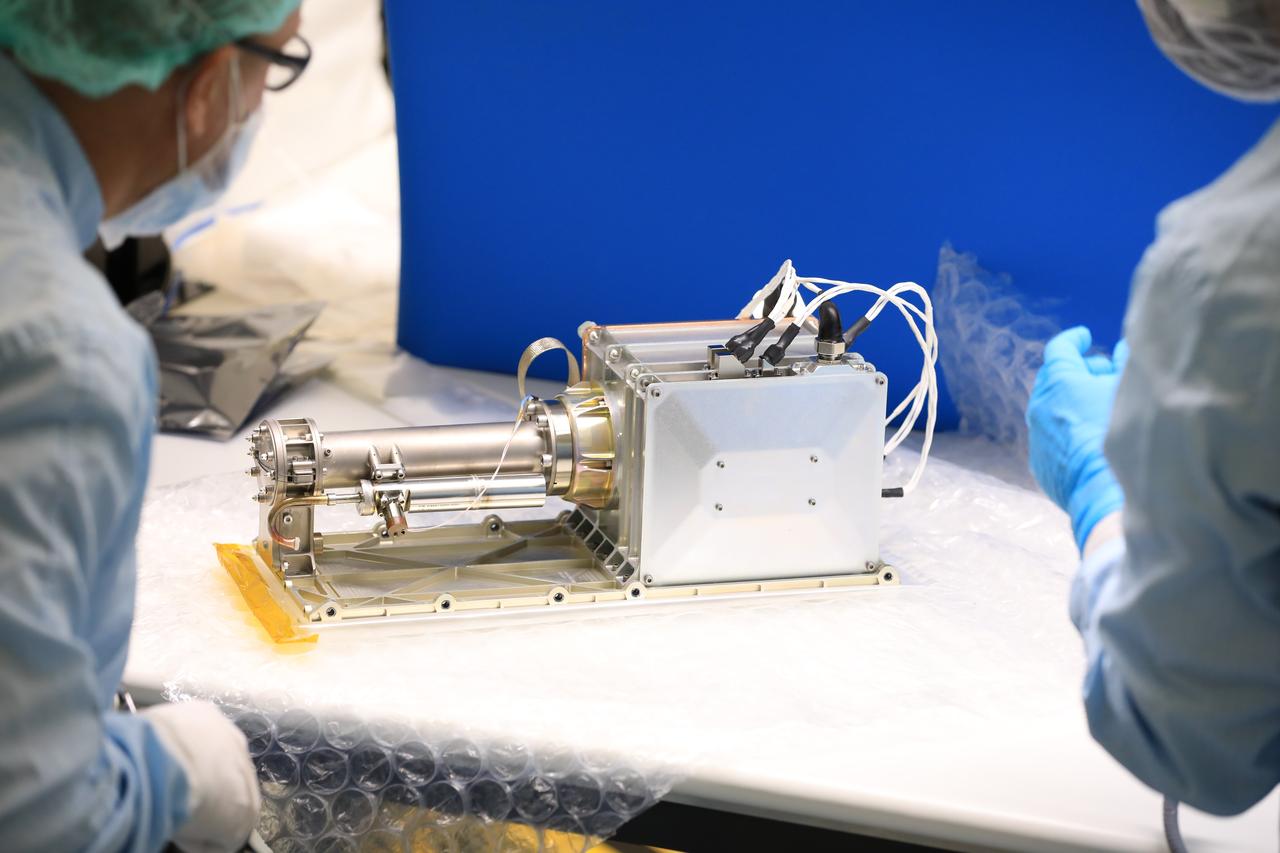
Engineers and technicians at NASA’s Kennedy Space Center in Florida install the radiator for the Mass Spectrometer Observing Lunar Operations (MSolo) instrument inside the Space Station Processing Facility on Sept. 25, 2020. MSolo will help analyze the chemical makeup of landing sites on the Moon, as well as study water on the lunar surface. The radiator will help keep the instrument’s temperature stable in the extreme heat and cold it will encounter. MSolo instruments are scheduled to launch on multiple robotic missions as part of NASA’s Commercial Lunar Payload Services (CLPS), with the first of these missions exploring Lacus Mortis, a large crater on the near side of the Moon, beginning in 2021. MSolo also will be one of three instruments on the agency’s water-hunting Volatiles Investigating Polar Exploration Rover, VIPER, scheduled to launch to the Moon’s South Pole in late 2023.

Engineers and technicians at NASA’s Kennedy Space Center in Florida install the radiator for the Mass Spectrometer Observing Lunar Operations (MSolo) instrument inside the Space Station Processing Facility on Sept. 25, 2020. MSolo will help analyze the chemical makeup of landing sites on the Moon, as well as study water on the lunar surface. The radiator will help keep the instrument’s temperature stable in the extreme heat and cold it will encounter. MSolo instruments are scheduled to launch on multiple robotic missions as part of NASA’s Commercial Lunar Payload Services (CLPS), with the first of these missions exploring Lacus Mortis, a large crater on the near side of the Moon, beginning in 2021. MSolo also will be one of three instruments on the agency’s water-hunting Volatiles Investigating Polar Exploration Rover, VIPER, scheduled to launch to the Moon’s South Pole in late 2023.
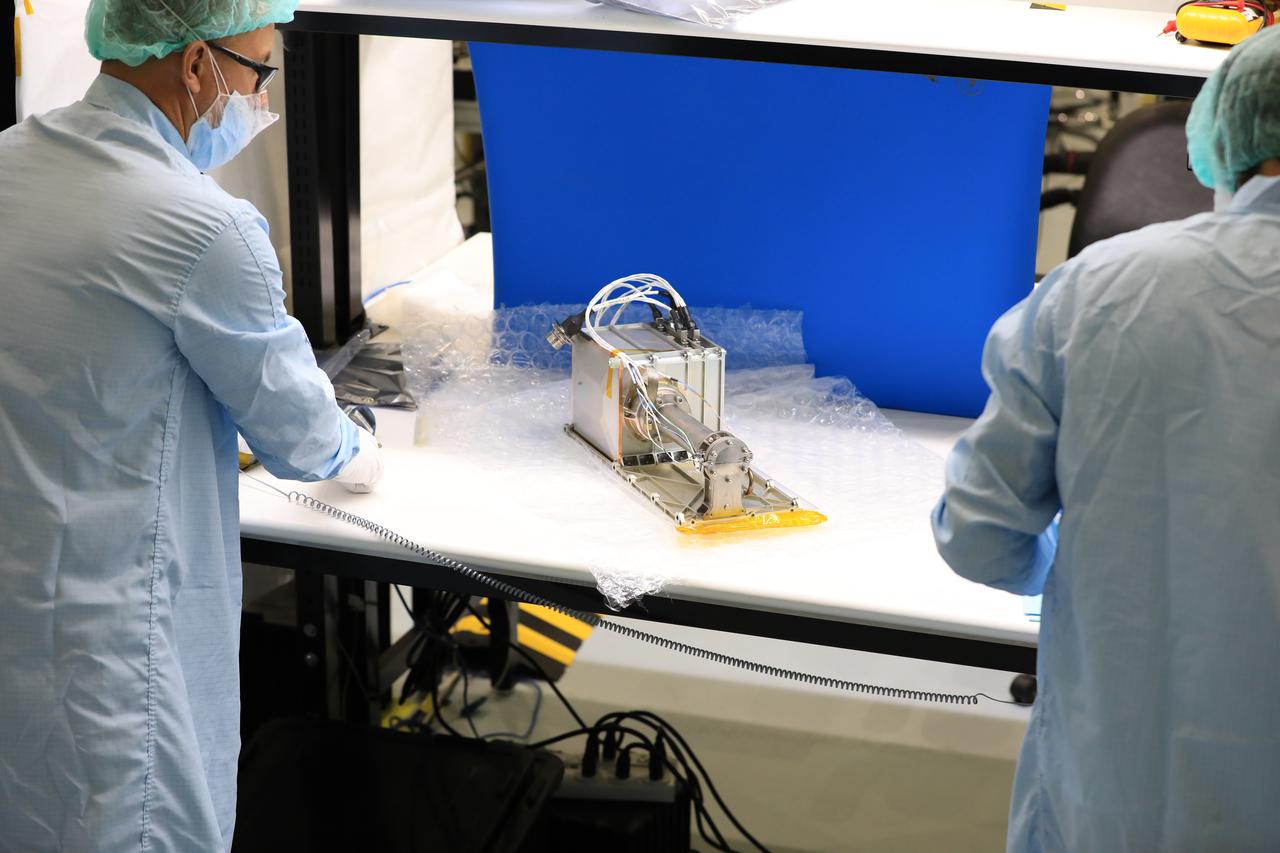
Engineers and technicians at NASA’s Kennedy Space Center in Florida install the radiator for the Mass Spectrometer Observing Lunar Operations (MSolo) instrument inside the Space Station Processing Facility on Sept. 25, 2020. MSolo will help analyze the chemical makeup of landing sites on the Moon, as well as study water on the lunar surface. The radiator will help keep the instrument’s temperature stable in the extreme heat and cold it will encounter. MSolo instruments are scheduled to launch on multiple robotic missions as part of NASA’s Commercial Lunar Payload Services (CLPS), with the first of these missions exploring Lacus Mortis, a large crater on the near side of the Moon, beginning in 2021. MSolo also will be one of three instruments on the agency’s water-hunting Volatiles Investigating Polar Exploration Rover, VIPER, scheduled to launch to the Moon’s South Pole in late 2023.
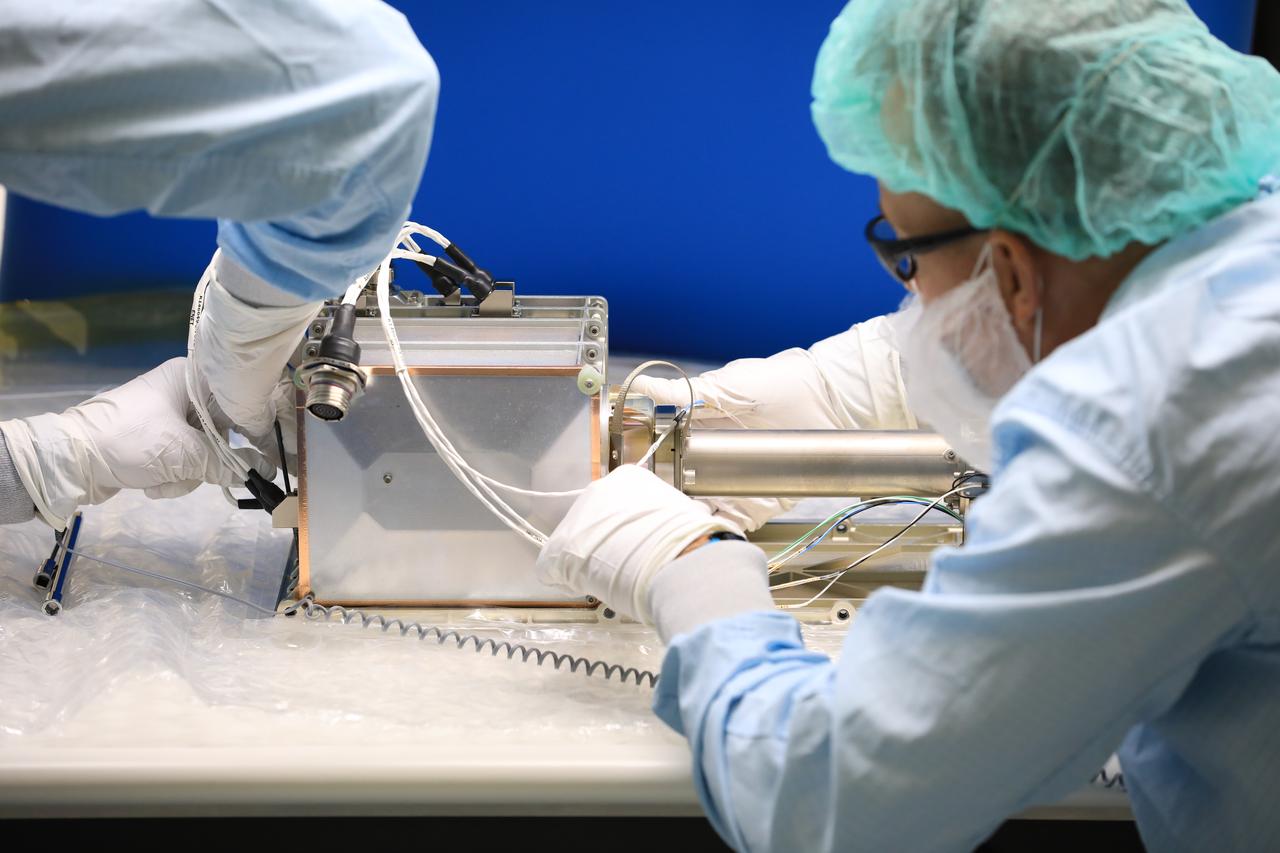
Engineers and technicians at NASA’s Kennedy Space Center in Florida install the radiator for the Mass Spectrometer Observing Lunar Operations (MSolo) instrument inside the Space Station Processing Facility on Sept. 25, 2020. MSolo will help analyze the chemical makeup of landing sites on the Moon, as well as study water on the lunar surface. The radiator will help keep the instrument’s temperature stable in the extreme heat and cold it will encounter. MSolo instruments are scheduled to launch on multiple robotic missions as part of NASA’s Commercial Lunar Payload Services (CLPS), with the first of these missions exploring Lacus Mortis, a large crater on the near side of the Moon, beginning in 2021. MSolo also will be one of three instruments on the agency’s water-hunting Volatiles Investigating Polar Exploration Rover, VIPER, scheduled to launch to the Moon’s South Pole in late 2023.
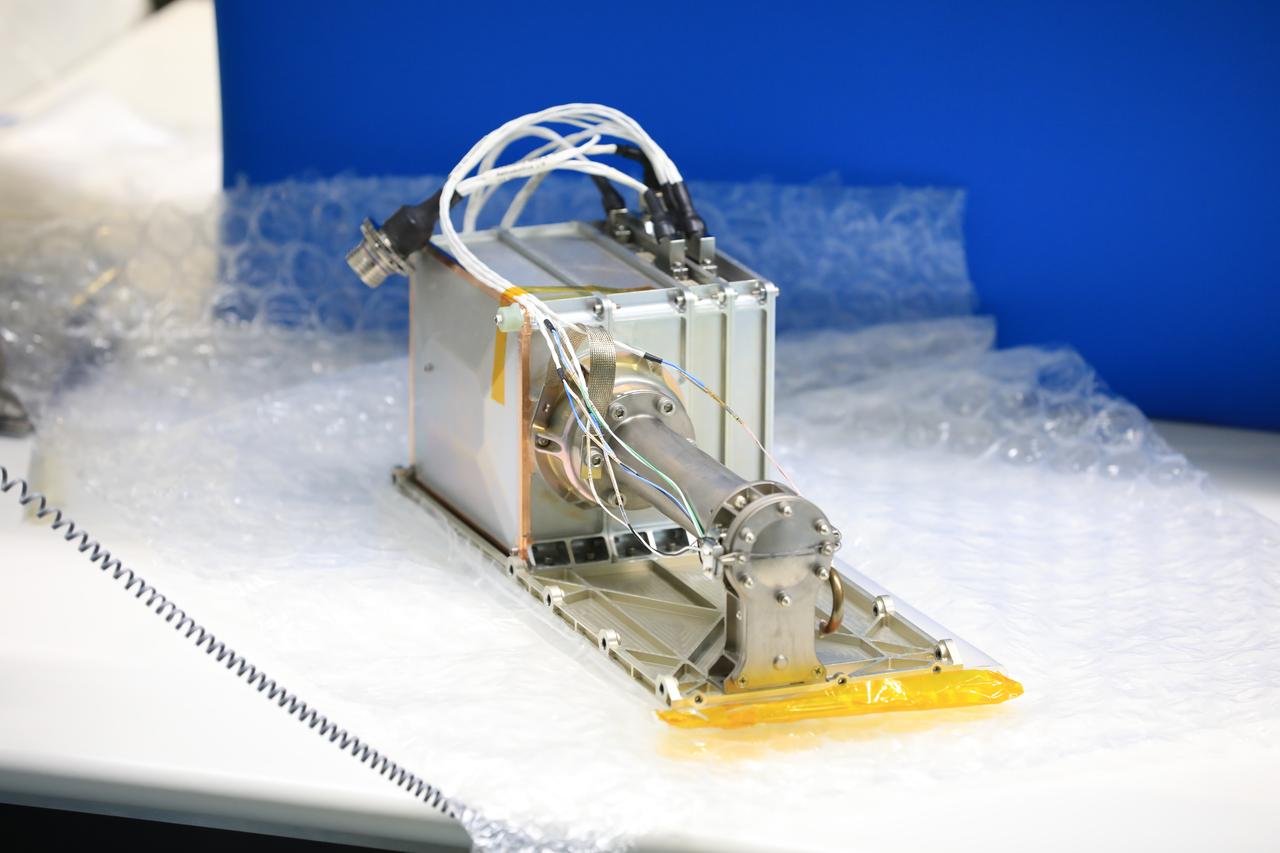
The Mass Spectrometer Observing Lunar Operations (MSolo) instrument is photographed inside the Space Station Processing Facility at NASA’s Kennedy Space Center in Florida following installation of its radiator on Sept. 25, 2020. MSolo will help analyze the chemical makeup of landing sites on the Moon, as well as study water on the lunar surface. The radiator will help keep the instrument’s temperature stable in the extreme heat and cold it will encounter. MSolo instruments are scheduled to launch on multiple robotic missions as part of NASA’s Commercial Lunar Payload Services (CLPS), with the first of these missions exploring Lacus Mortis, a large crater on the near side of the Moon, beginning in 2021. MSolo also will be one of three instruments on the agency’s water-hunting Volatiles Investigating Polar Exploration Rover, VIPER, scheduled to launch to the Moon’s South Pole in late 2023.
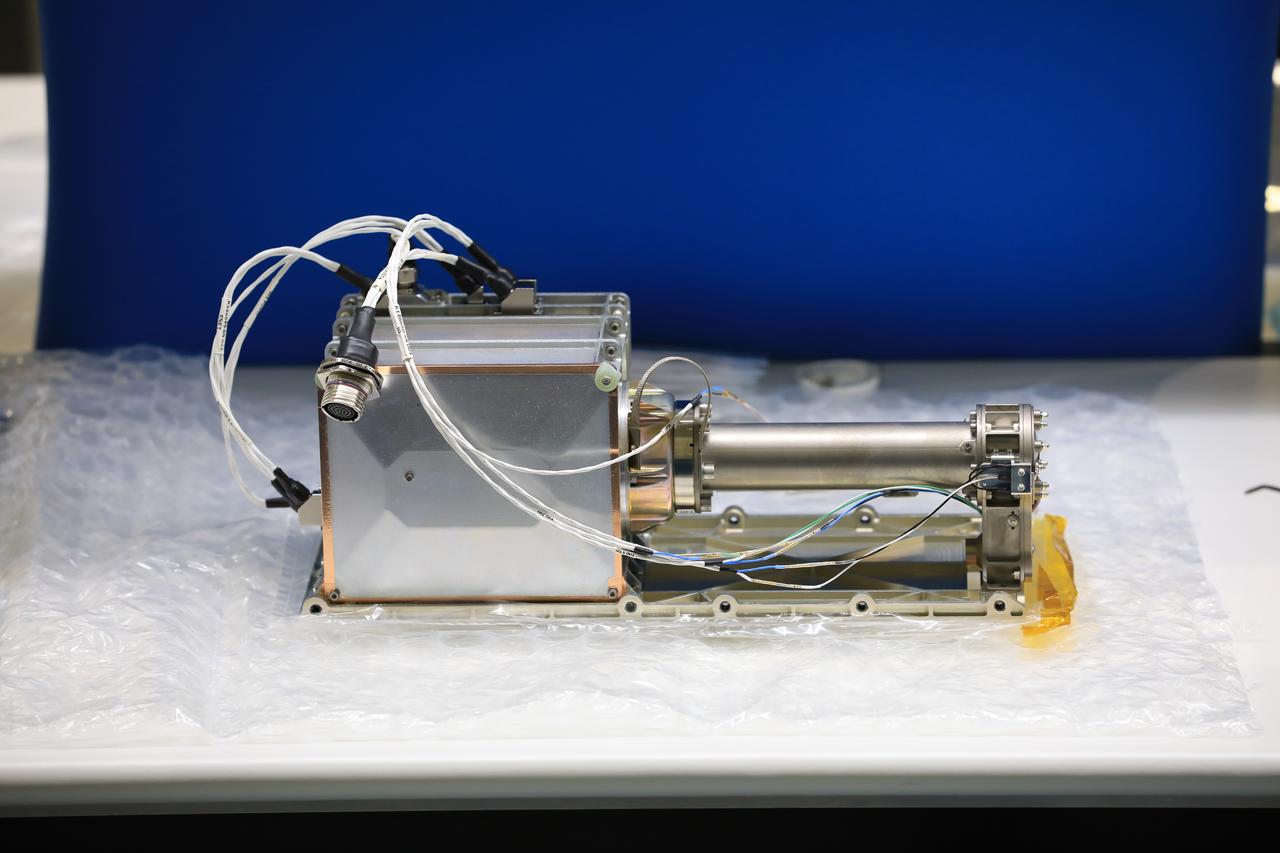
The Mass Spectrometer Observing Lunar Operations (MSolo) instrument is photographed inside the Space Station Processing Facility at NASA’s Kennedy Space Center in Florida following installation of its radiator on Sept. 25, 2020. MSolo will help analyze the chemical makeup of landing sites on the Moon, as well as study water on the lunar surface. The radiator will help keep the instrument’s temperature stable in the extreme heat and cold it will encounter. MSolo instruments are scheduled to launch on multiple robotic missions as part of NASA’s Commercial Lunar Payload Services (CLPS), with the first of these missions exploring Lacus Mortis, a large crater on the near side of the Moon, beginning in 2021. MSolo also will be one of three instruments on the agency’s water-hunting Volatiles Investigating Polar Exploration Rover, VIPER, scheduled to launch to the Moon’s South Pole in late 2023.
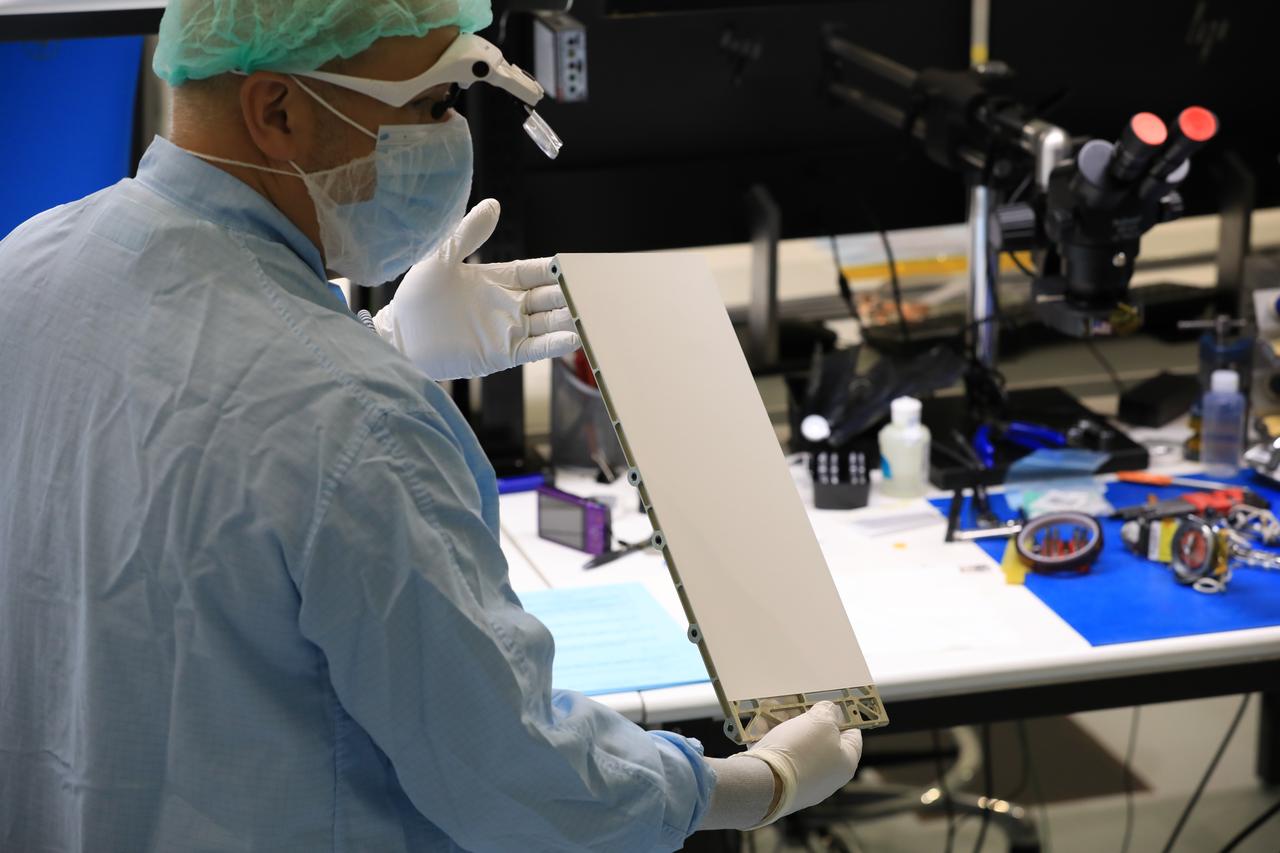
Engineers and technicians at NASA’s Kennedy Space Center in Florida prepare to install the radiator for the Mass Spectrometer Observing Lunar Operations (MSolo) instrument inside the Space Station Processing Facility on Sept. 25, 2020. MSolo will help analyze the chemical makeup of landing sites on the Moon, as well as study water on the lunar surface. The radiator will help keep the instrument’s temperature stable in the extreme heat and cold it will encounter. MSolo instruments are scheduled to launch on multiple robotic missions as part of NASA’s Commercial Lunar Payload Services (CLPS), with the first of these missions exploring Lacus Mortis, a large crater on the near side of the Moon, beginning in 2021. MSolo also will be one of three instruments on the agency’s water-hunting Volatiles Investigating Polar Exploration Rover, VIPER, scheduled to launch to the Moon’s South Pole in late 2023.
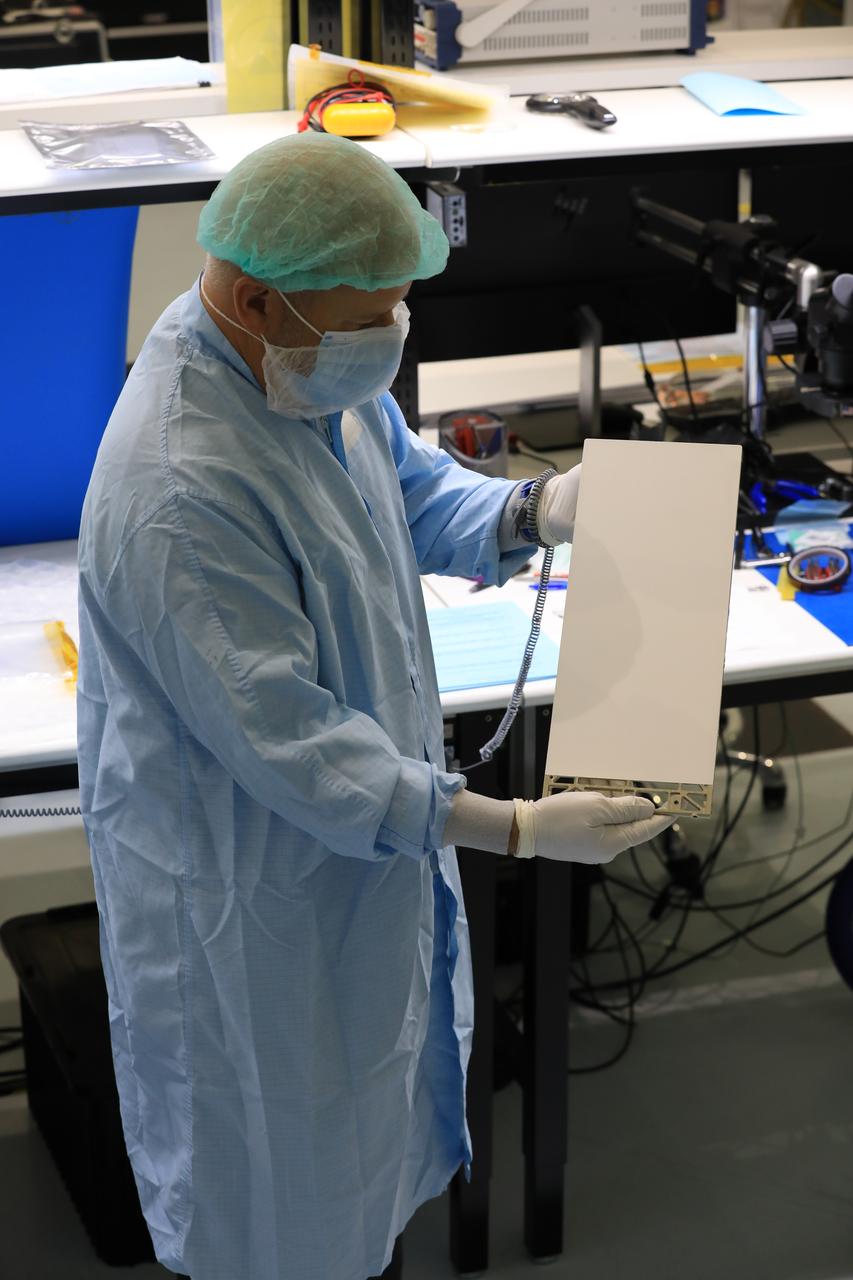
Engineers and technicians at NASA’s Kennedy Space Center in Florida prepare to install the radiator for the Mass Spectrometer Observing Lunar Operations (MSolo) instrument inside the Space Station Processing Facility on Sept. 25, 2020. MSolo will help analyze the chemical makeup of landing sites on the Moon, as well as study water on the lunar surface. The radiator will help keep the instrument’s temperature stable in the extreme heat and cold it will encounter. MSolo instruments are scheduled to launch on multiple robotic missions as part of NASA’s Commercial Lunar Payload Services (CLPS), with the first of these missions exploring Lacus Mortis, a large crater on the near side of the Moon, beginning in 2021. MSolo also will be one of three instruments on the agency’s water-hunting Volatiles Investigating Polar Exploration Rover, VIPER, scheduled to launch to the Moon’s South Pole in late 2023.
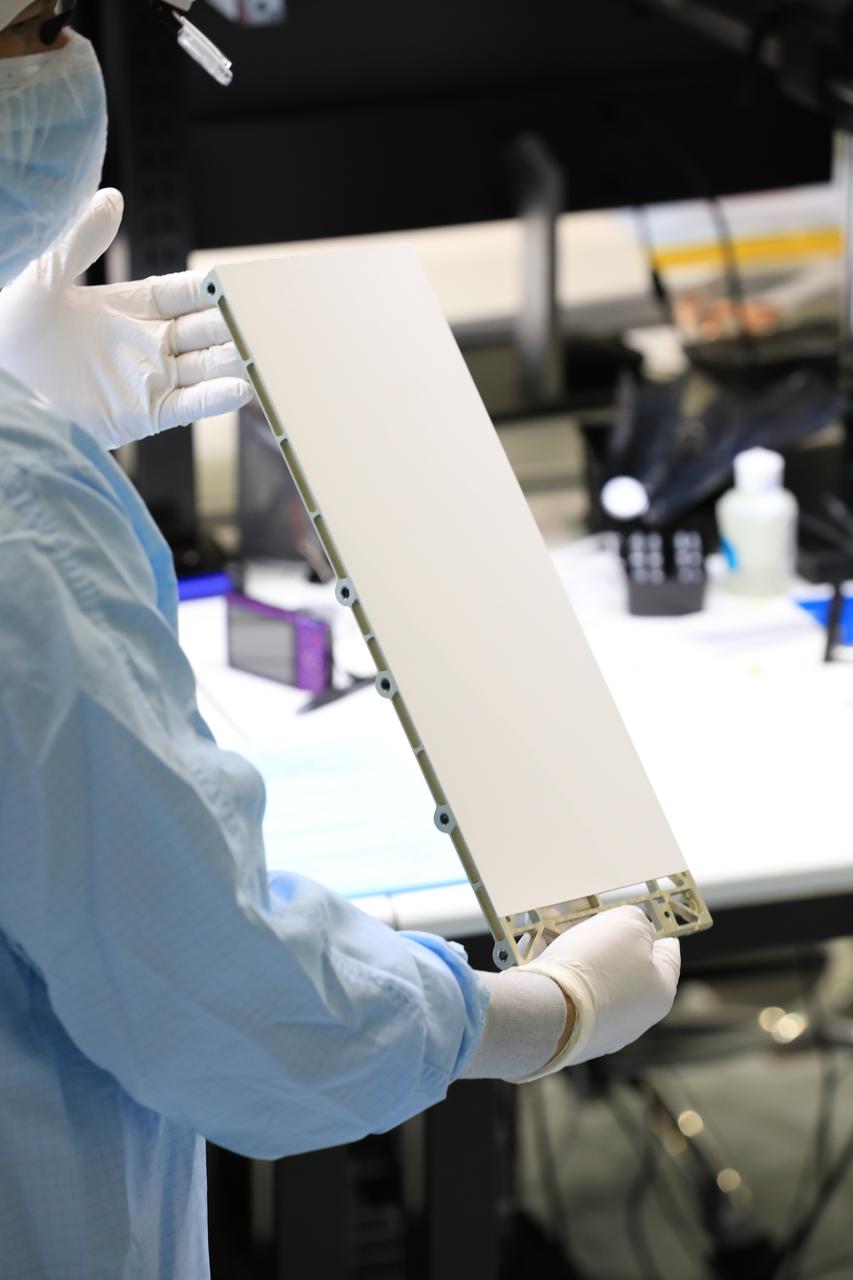
Engineers and technicians at NASA’s Kennedy Space Center in Florida prepare to install the radiator for the Mass Spectrometer Observing Lunar Operations (MSolo) instrument inside the Space Station Processing Facility on Sept. 25, 2020. MSolo will help analyze the chemical makeup of landing sites on the Moon, as well as study water on the lunar surface. The radiator will help keep the instrument’s temperature stable in the extreme heat and cold it will encounter. MSolo instruments are scheduled to launch on multiple robotic missions as part of NASA’s Commercial Lunar Payload Services (CLPS), with the first of these missions exploring Lacus Mortis, a large crater on the near side of the Moon, beginning in 2021. MSolo also will be one of three instruments on the agency’s water-hunting Volatiles Investigating Polar Exploration Rover, VIPER, scheduled to launch to the Moon’s South Pole in late 2023.
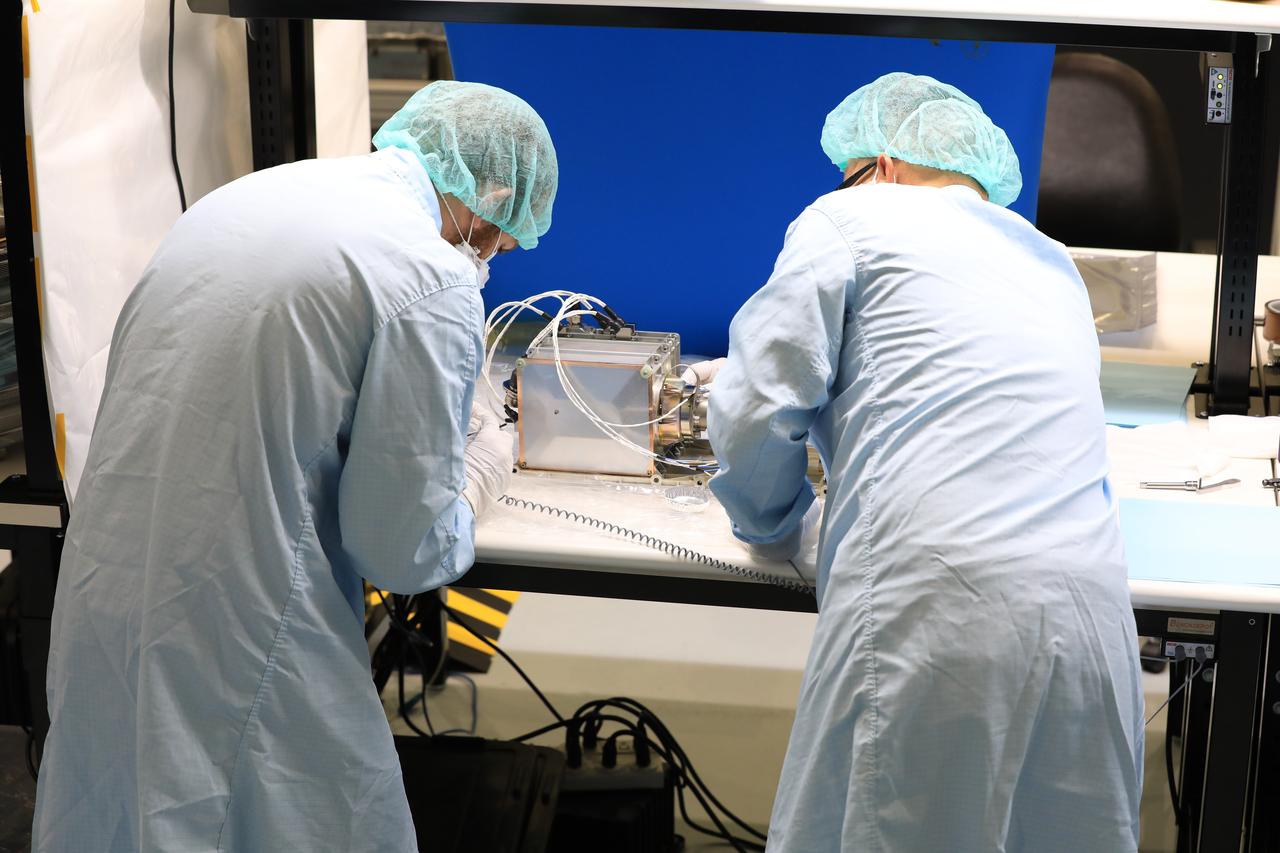
Engineers and technicians at NASA’s Kennedy Space Center in Florida install the radiator for the Mass Spectrometer Observing Lunar Operations (MSolo) instrument inside the Space Station Processing Facility on Sept. 25, 2020. MSolo will help analyze the chemical makeup of landing sites on the Moon, as well as study water on the lunar surface. The radiator will help keep the instrument’s temperature stable in the extreme heat and cold it will encounter. MSolo instruments are scheduled to launch on multiple robotic missions as part of NASA’s Commercial Lunar Payload Services (CLPS), with the first of these missions exploring Lacus Mortis, a large crater on the near side of the Moon, beginning in 2021. MSolo also will be one of three instruments on the agency’s water-hunting Volatiles Investigating Polar Exploration Rover, VIPER, scheduled to launch to the Moon’s South Pole in late 2023.
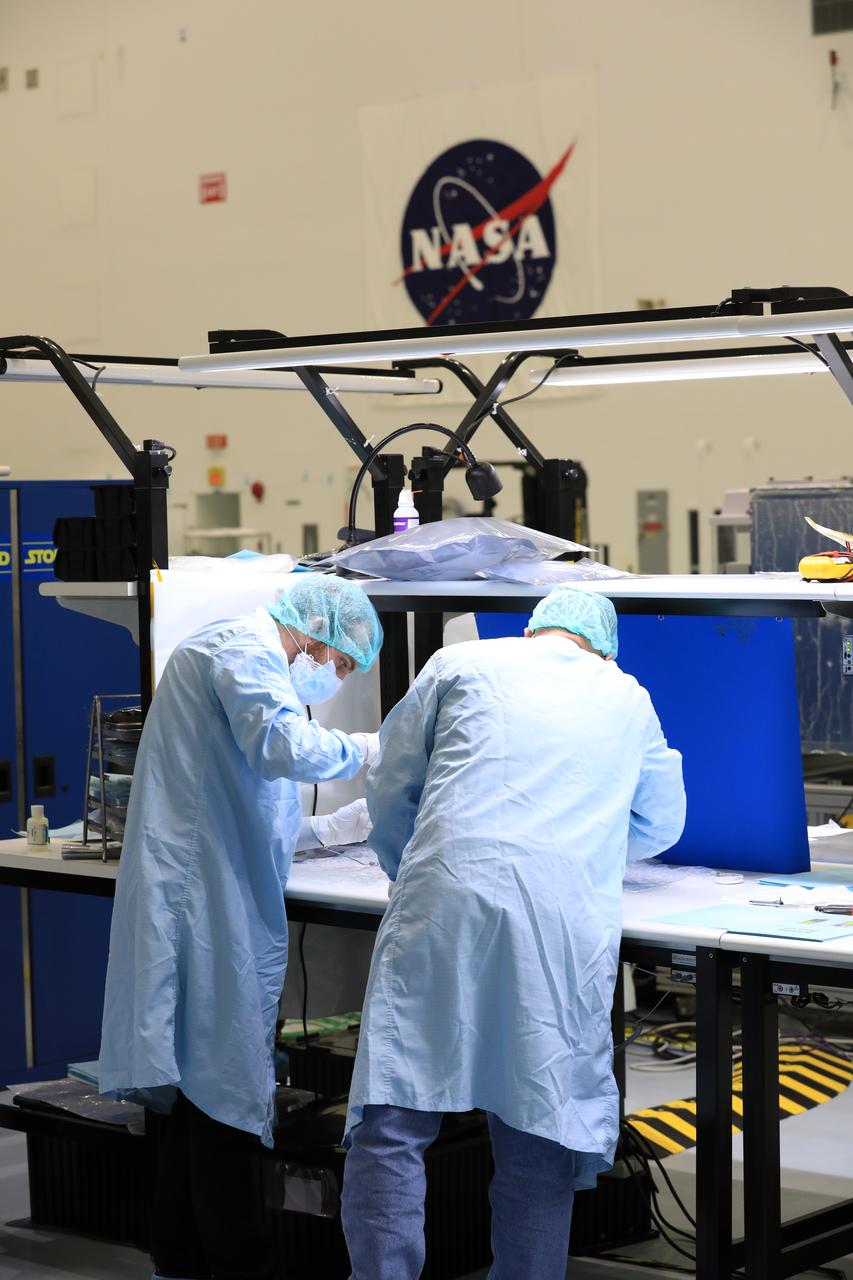
Engineers and technicians at NASA’s Kennedy Space Center in Florida install the radiator for the Mass Spectrometer Observing Lunar Operations (MSolo) instrument inside the Space Station Processing Facility on Sept. 25, 2020. MSolo will help analyze the chemical makeup of landing sites on the Moon, as well as study water on the lunar surface. The radiator will help keep the instrument’s temperature stable in the extreme heat and cold it will encounter. MSolo instruments are scheduled to launch on multiple robotic missions as part of NASA’s Commercial Lunar Payload Services (CLPS), with the first of these missions exploring Lacus Mortis, a large crater on the near side of the Moon, beginning in 2021. MSolo also will be one of three instruments on the agency’s water-hunting Volatiles Investigating Polar Exploration Rover, VIPER, scheduled to launch to the Moon’s South Pole in late 2023.
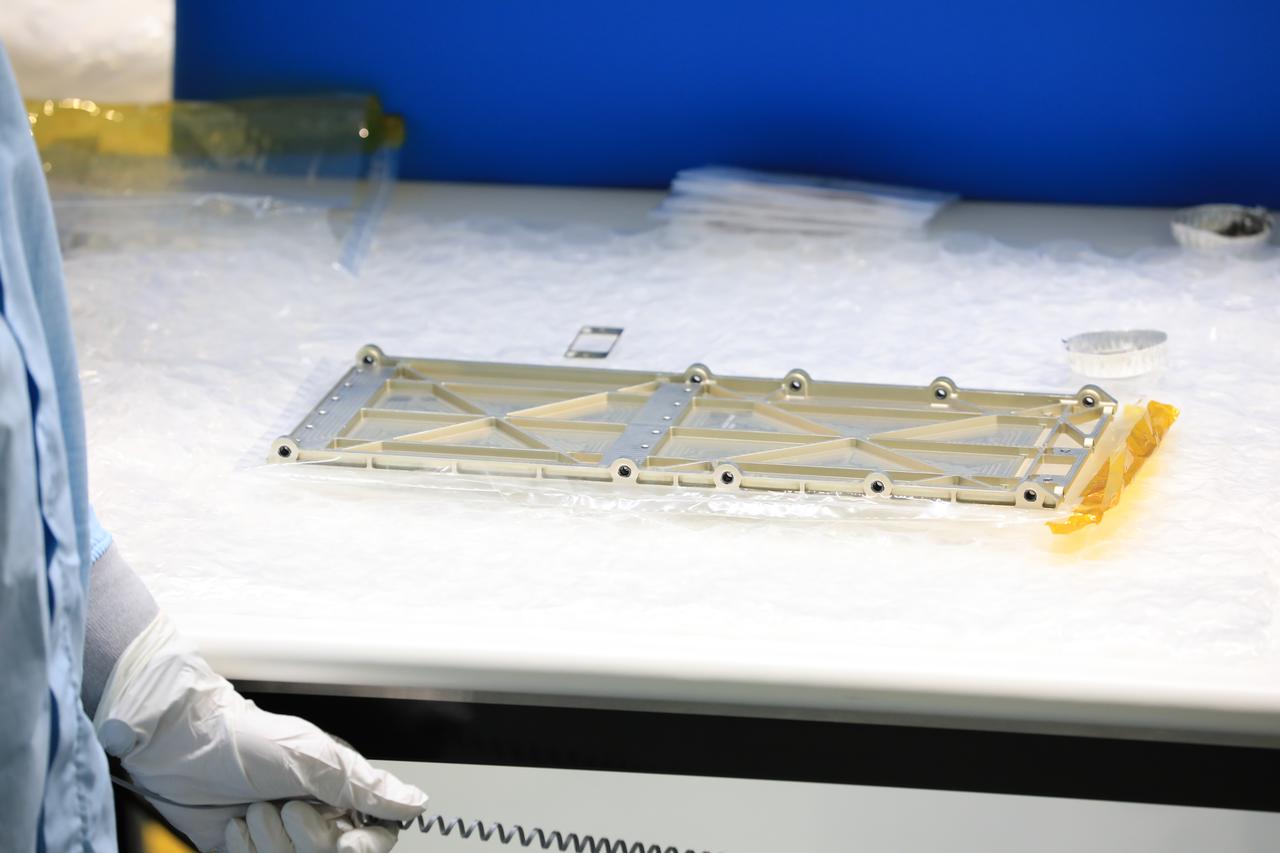
Engineers and technicians at NASA’s Kennedy Space Center in Florida have prepped the Mass Spectrometer Observing Lunar Operations (MSolo) instrument’s radiator for installation inside the Space Station Processing Facility on Sept. 25, 2020. MSolo will help analyze the chemical makeup of landing sites on the Moon, as well as study water on the lunar surface. The radiator will help keep the instrument’s temperature stable in the extreme heat and cold it will encounter. MSolo instruments are scheduled to launch on multiple robotic missions as part of NASA’s Commercial Lunar Payload Services (CLPS), with the first of these missions exploring Lacus Mortis, a large crater on the near side of the Moon, beginning in 2021. MSolo also will be one of three instruments on the agency’s water-hunting Volatiles Investigating Polar Exploration Rover, VIPER, scheduled to launch to the Moon’s South Pole in late 2023.
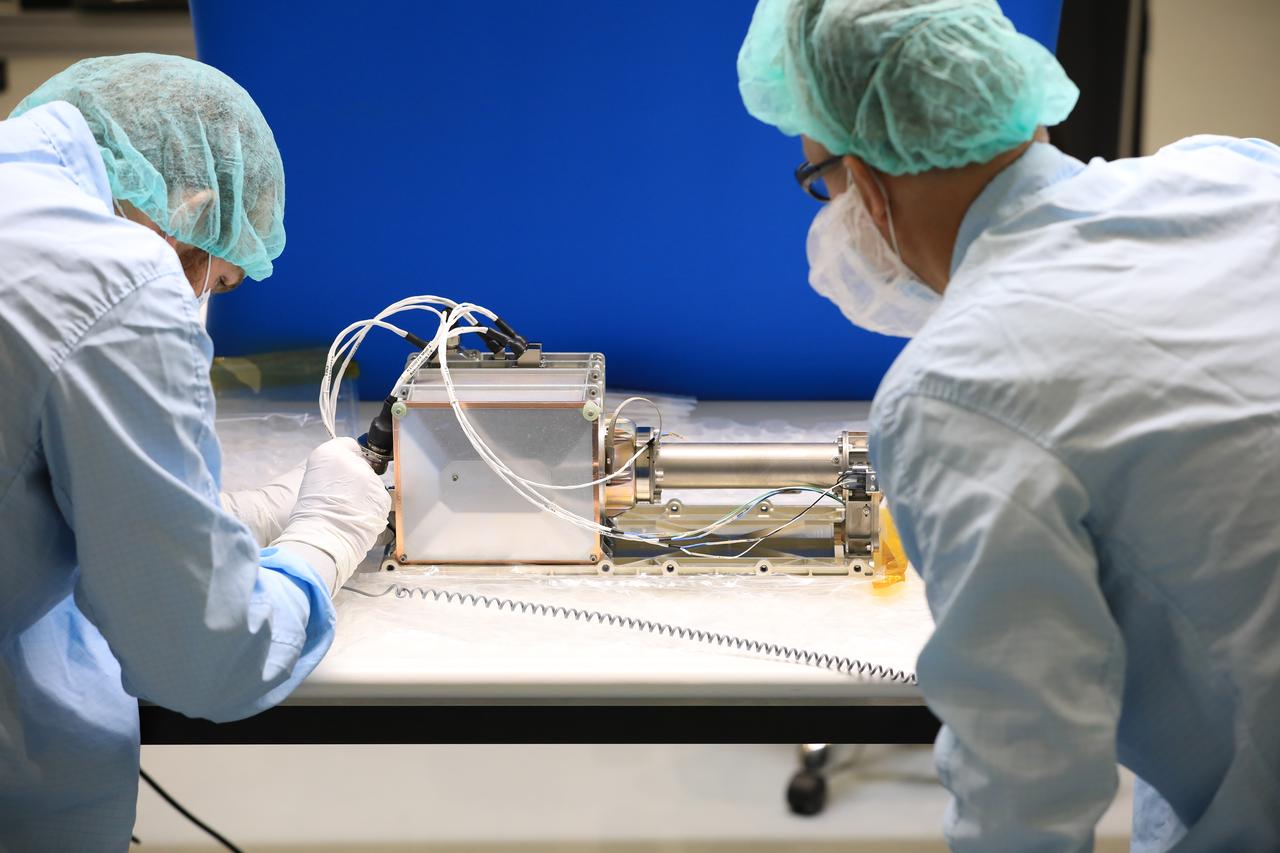
Engineers and technicians at NASA’s Kennedy Space Center in Florida install the radiator for the Mass Spectrometer Observing Lunar Operations (MSolo) instrument inside the Space Station Processing Facility on Sept. 25, 2020. MSolo will help analyze the chemical makeup of landing sites on the Moon, as well as study water on the lunar surface. The radiator will help keep the instrument’s temperature stable in the extreme heat and cold it will encounter. MSolo instruments are scheduled to launch on multiple robotic missions as part of NASA’s Commercial Lunar Payload Services (CLPS), with the first of these missions exploring Lacus Mortis, a large crater on the near side of the Moon, beginning in 2021. MSolo also will be one of three instruments on the agency’s water-hunting Volatiles Investigating Polar Exploration Rover, VIPER, scheduled to launch to the Moon’s South Pole in late 2023.
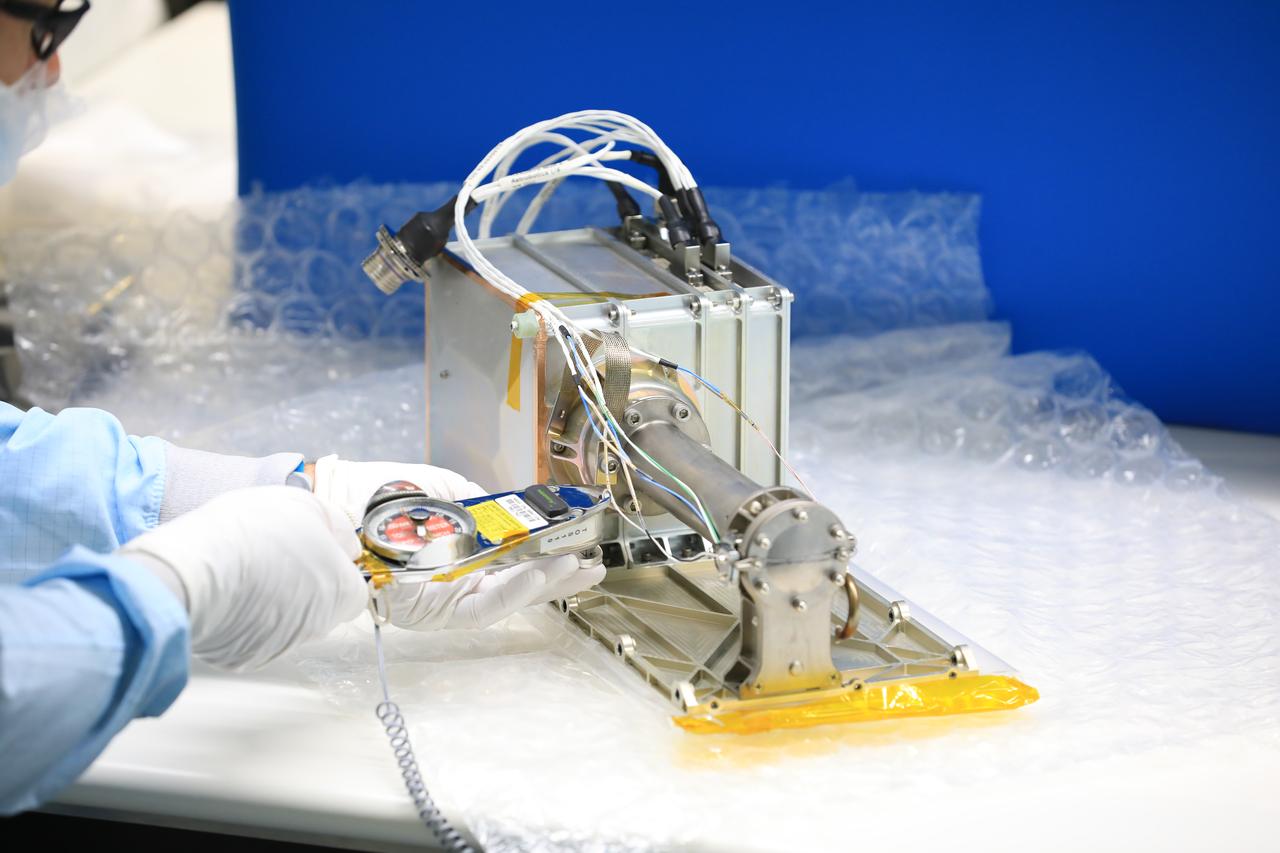
Engineers and technicians at NASA’s Kennedy Space Center in Florida install the radiator for the Mass Spectrometer Observing Lunar Operations (MSolo) instrument inside the Space Station Processing Facility on Sept. 25, 2020. MSolo will help analyze the chemical makeup of landing sites on the Moon, as well as study water on the lunar surface. The radiator will help keep the instrument’s temperature stable in the extreme heat and cold it will encounter. MSolo instruments are scheduled to launch on multiple robotic missions as part of NASA’s Commercial Lunar Payload Services (CLPS), with the first of these missions exploring Lacus Mortis, a large crater on the near side of the Moon, beginning in 2021. MSolo also will be one of three instruments on the agency’s water-hunting Volatiles Investigating Polar Exploration Rover, VIPER, scheduled to launch to the Moon’s South Pole in late 2023.
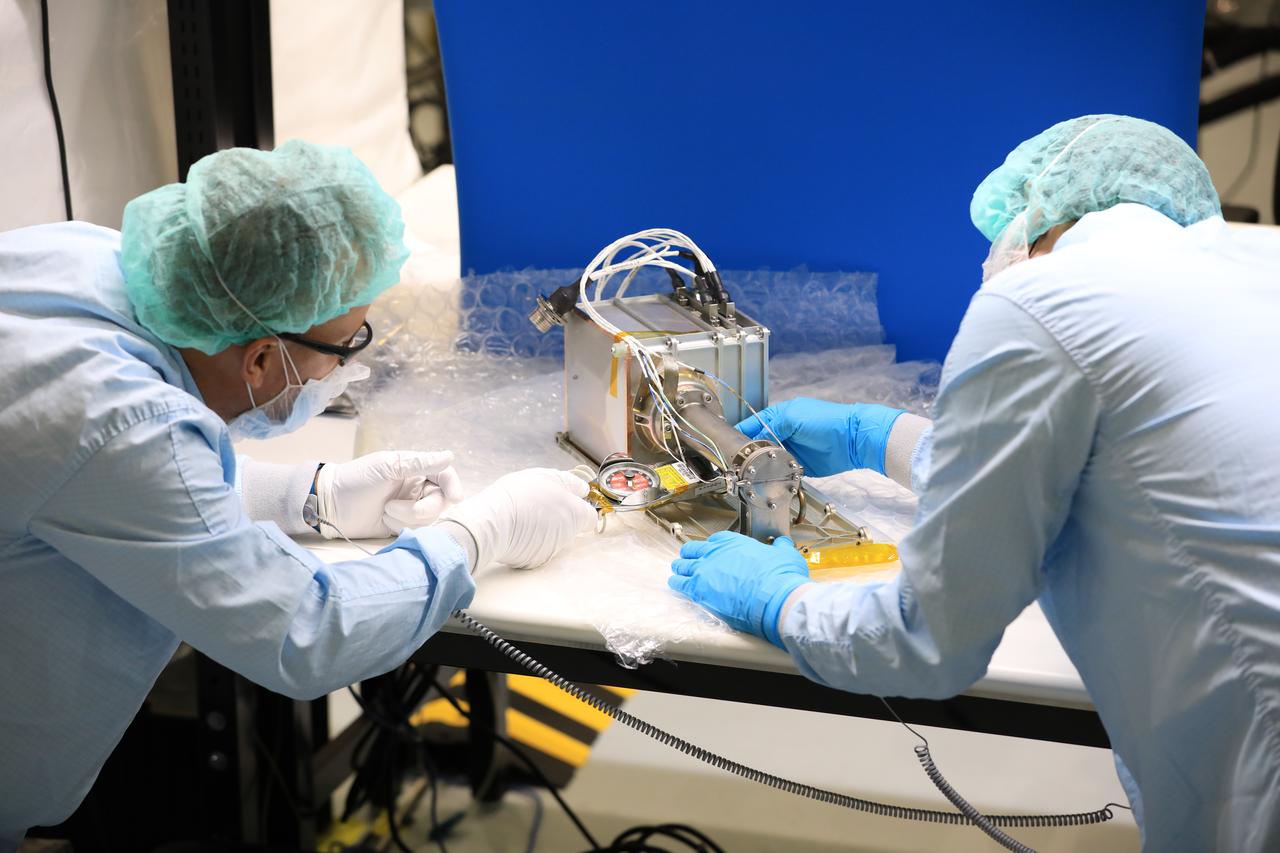
Engineers and technicians at NASA’s Kennedy Space Center in Florida install the radiator for the Mass Spectrometer Observing Lunar Operations (MSolo) instrument inside the Space Station Processing Facility on Sept. 25, 2020. MSolo will help analyze the chemical makeup of landing sites on the Moon, as well as study water on the lunar surface. The radiator will help keep the instrument’s temperature stable in the extreme heat and cold it will encounter. MSolo instruments are scheduled to launch on multiple robotic missions as part of NASA’s Commercial Lunar Payload Services (CLPS), with the first of these missions exploring Lacus Mortis, a large crater on the near side of the Moon, beginning in 2021. MSolo also will be one of three instruments on the agency’s water-hunting Volatiles Investigating Polar Exploration Rover, VIPER, scheduled to launch to the Moon’s South Pole in late 2023.
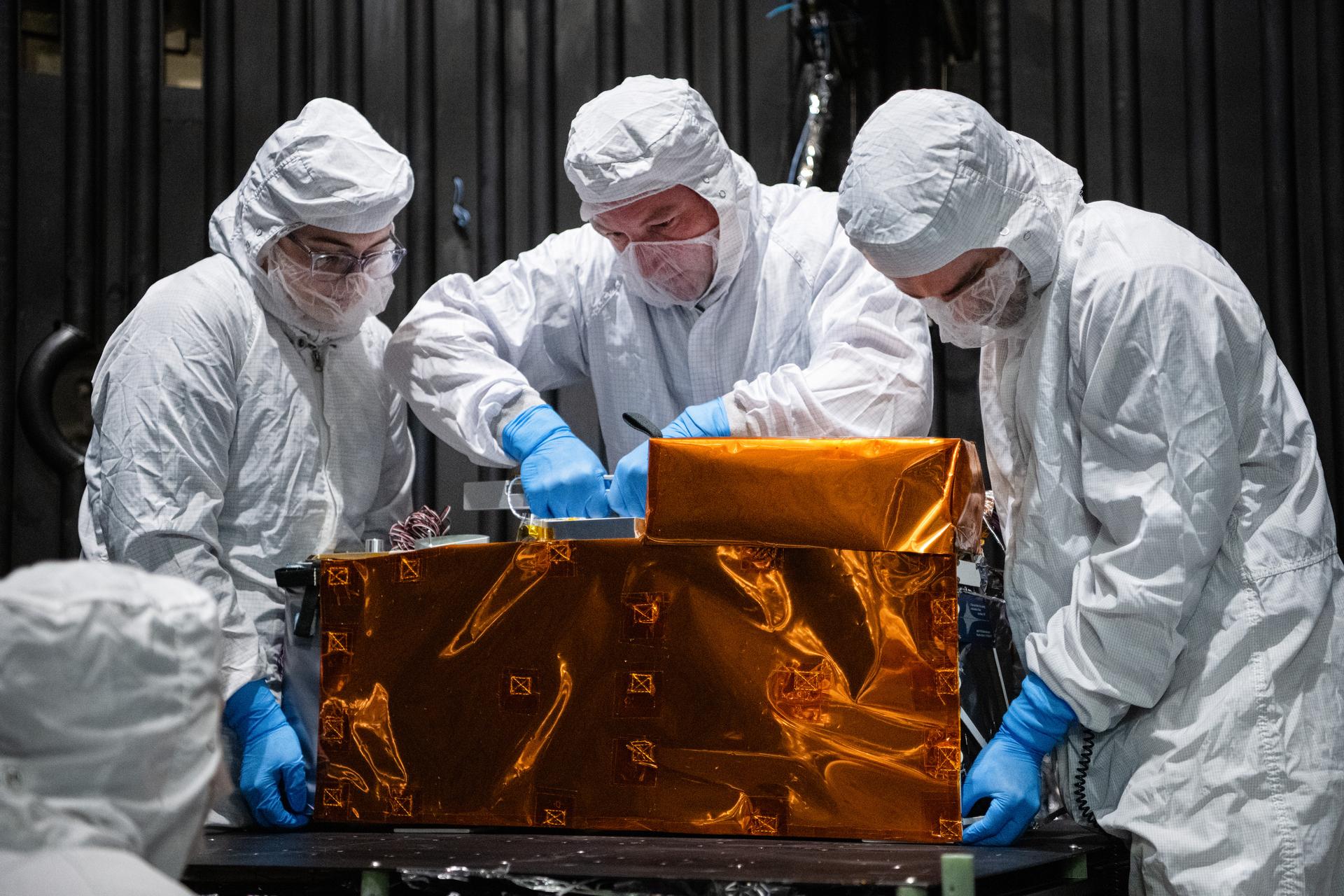
From left, mechanical engineer Gabrielle Ludwig, technician Alex Schaeffer, and mechanical engineer Mitchell Hamann install the Lunar Environment Monitoring Station (LEMS) instrument onto a test plate in a thermal vacuum chamber at Goddard Space Flight Center, Greenbelt Md., March 30, 2026. LEMS is a compact, autonomous, and self-sustaining seismometer suite designed to carry out continuous, long-term, monitoring of the lunar seismic environment at the South Polar region. Photo Credit: NASA/Denny Henry
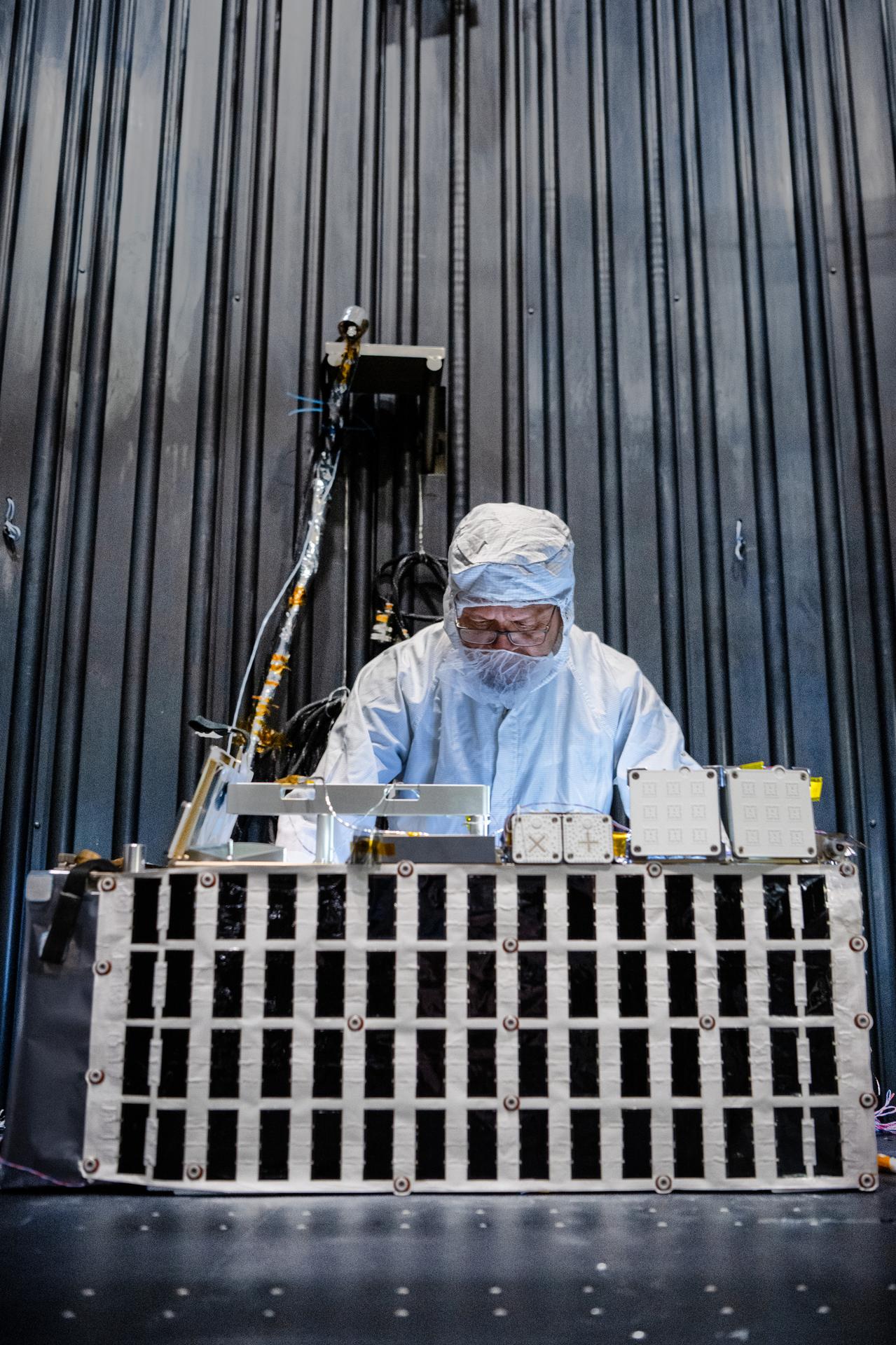
Engineering technician Jancilon Viegas installs thermocouples onto the The Lunar Environment Monitoring Station (LEMS) instrument in preparation for testing in a thermal vacuum chamber at Goddard Space Flight Center, Greenbelt Md., March 30, 2026. LEMS is a compact, autonomous, and self-sustaining seismometer suite designed to carry out continuous, long-term, monitoring of the lunar seismic environment at the South Polar region. Photo Credit: NASA/Denny Henry
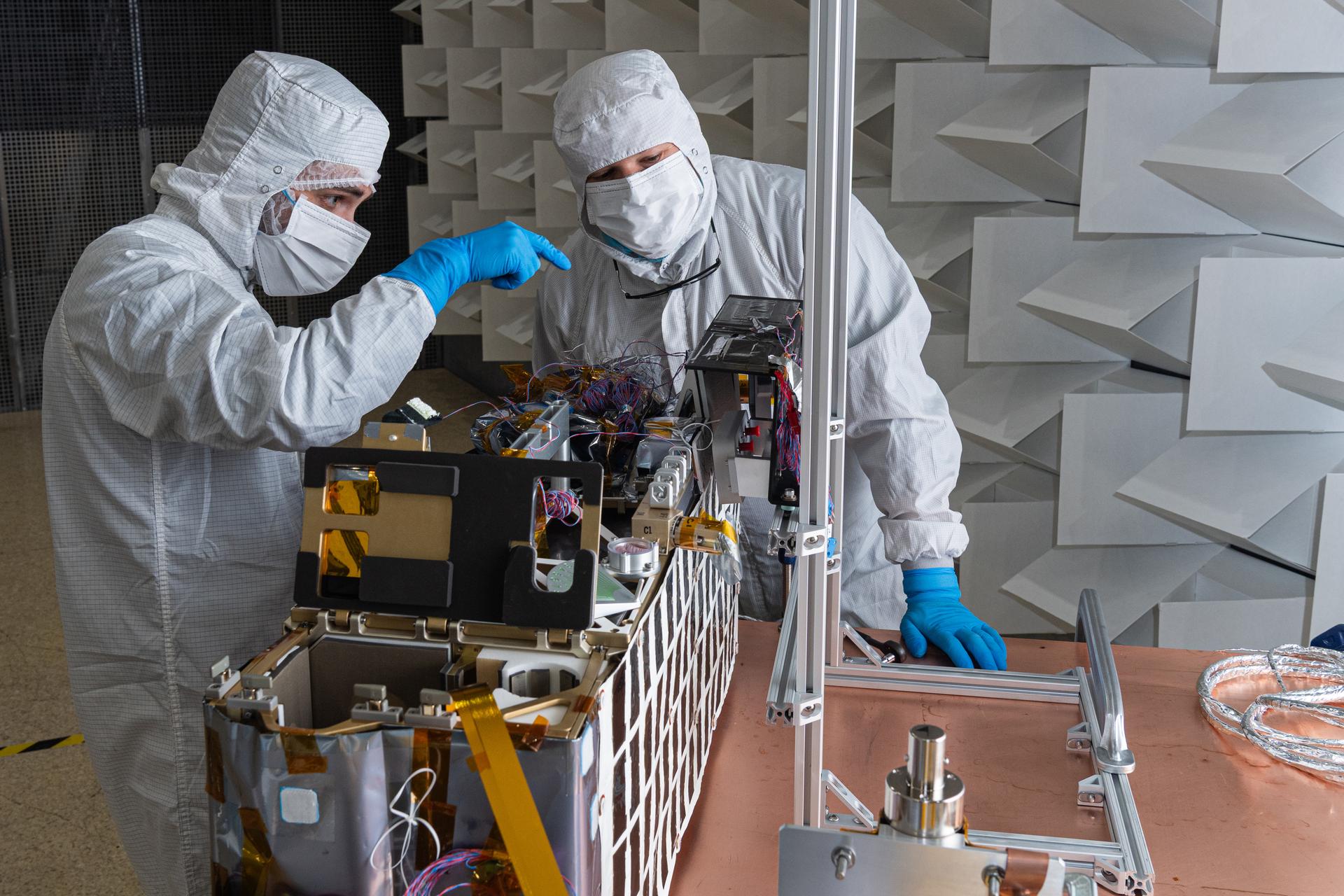
Mitchell Hamann and John Pindell configure the Lunar Environment Monitoring Station (LEMS) instrument for testing in the Electromagnetic Interference/Electromagnetic Compatibility (EMI/EMC) Chamber at Goddard Space Flight Center, Greenbelt Md., Feb 17, 2026. LEMS is a compact, autonomous, and self-sustaining seismometer suite designed to carry out continuous, long-term, monitoring of the lunar seismic environment at the South Polar region. Photo Credit: NASA/Mike Guinto
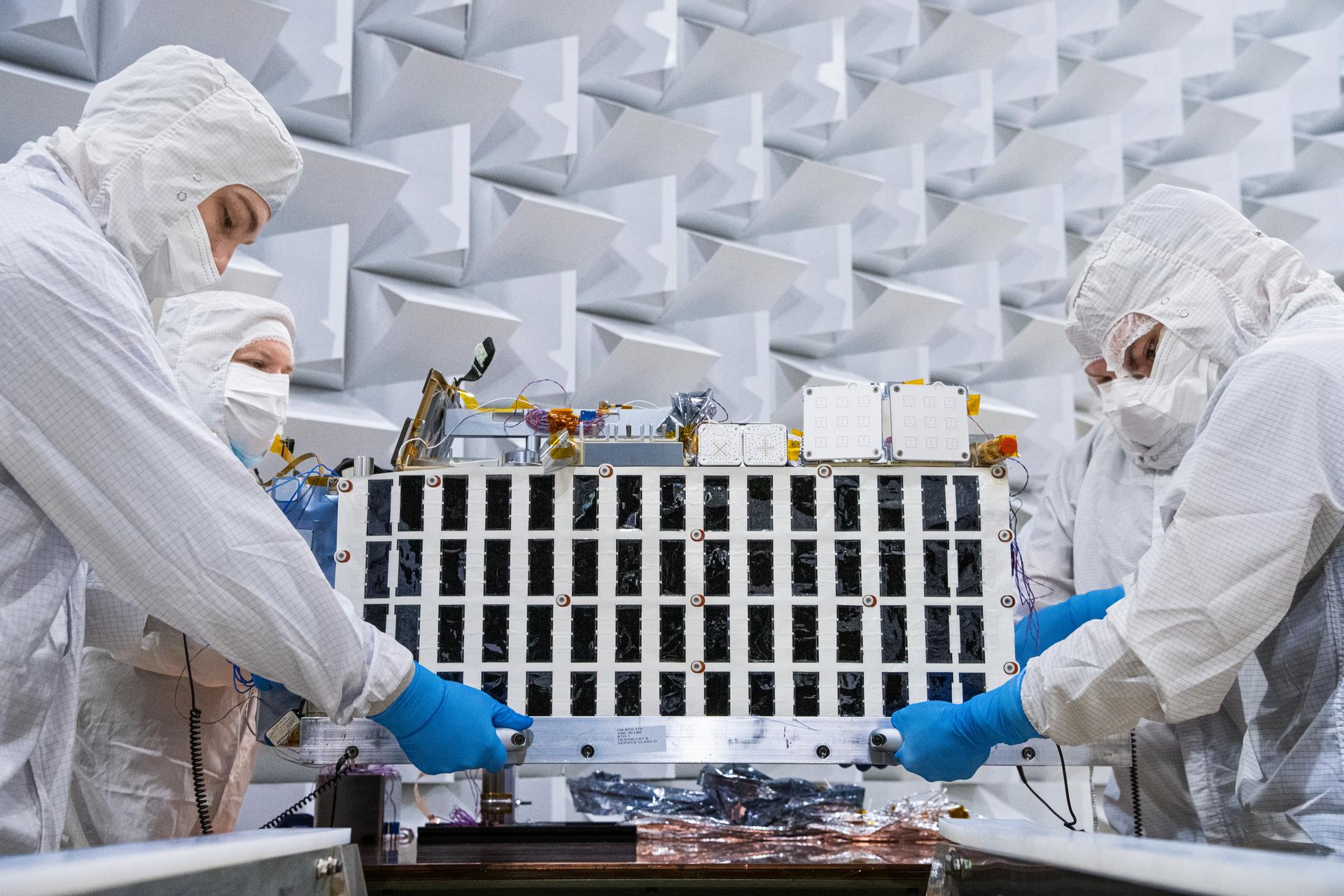
Lunar Environment Monitoring Station (LEMS) team members install the instrument for testing in the Electromagnetic Interference/Electromagnetic Compatibility (EMI/EMC) Chamber at Goddard Space Flight Center, Greenbelt Md., Feb 13, 2026. LEMS is a compact, autonomous, and self-sustaining seismometer suite designed to carry out continuous, long-term, monitoring of the lunar seismic environment at the South Polar region. Photo Credit: NASA/Denny Henry
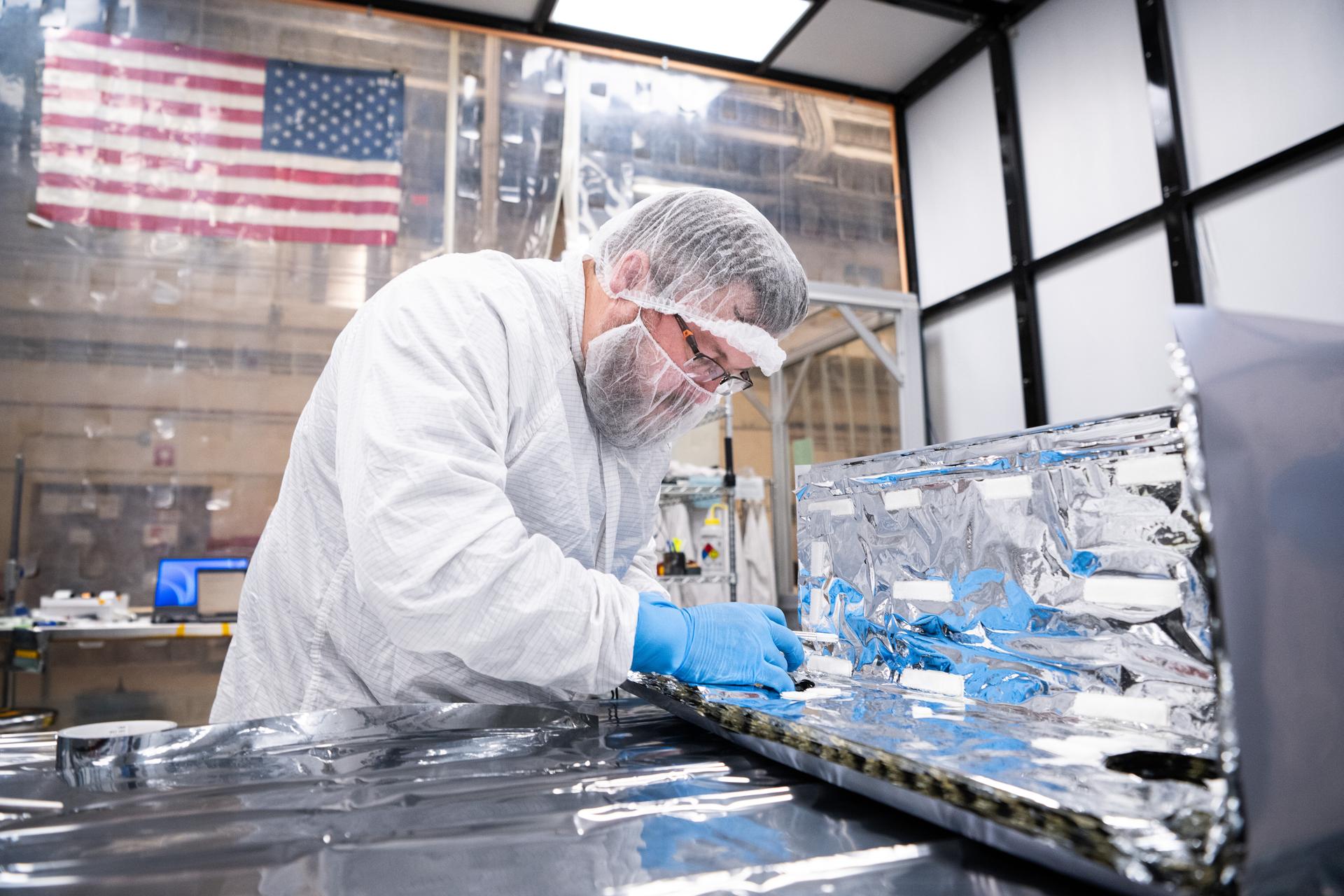
Chief Operating Officer of Quest Thermal Group Phillip Tyler installs Integrated Multilayer Insulation (IMLI) on the Lunar Environment Monitoring Station for Artemis (LEMS) bus inside a cleanroom at Goddard Space Flight Center, Greenbelt Md., Jan 13, 2026. LEMS is a compact, autonomous, and self-sustaining seismometer suite designed to carry out continuous, long-term, monitoring of the lunar seismic environment at the South Polar region. Photo Credit: NASA/Denny Henry
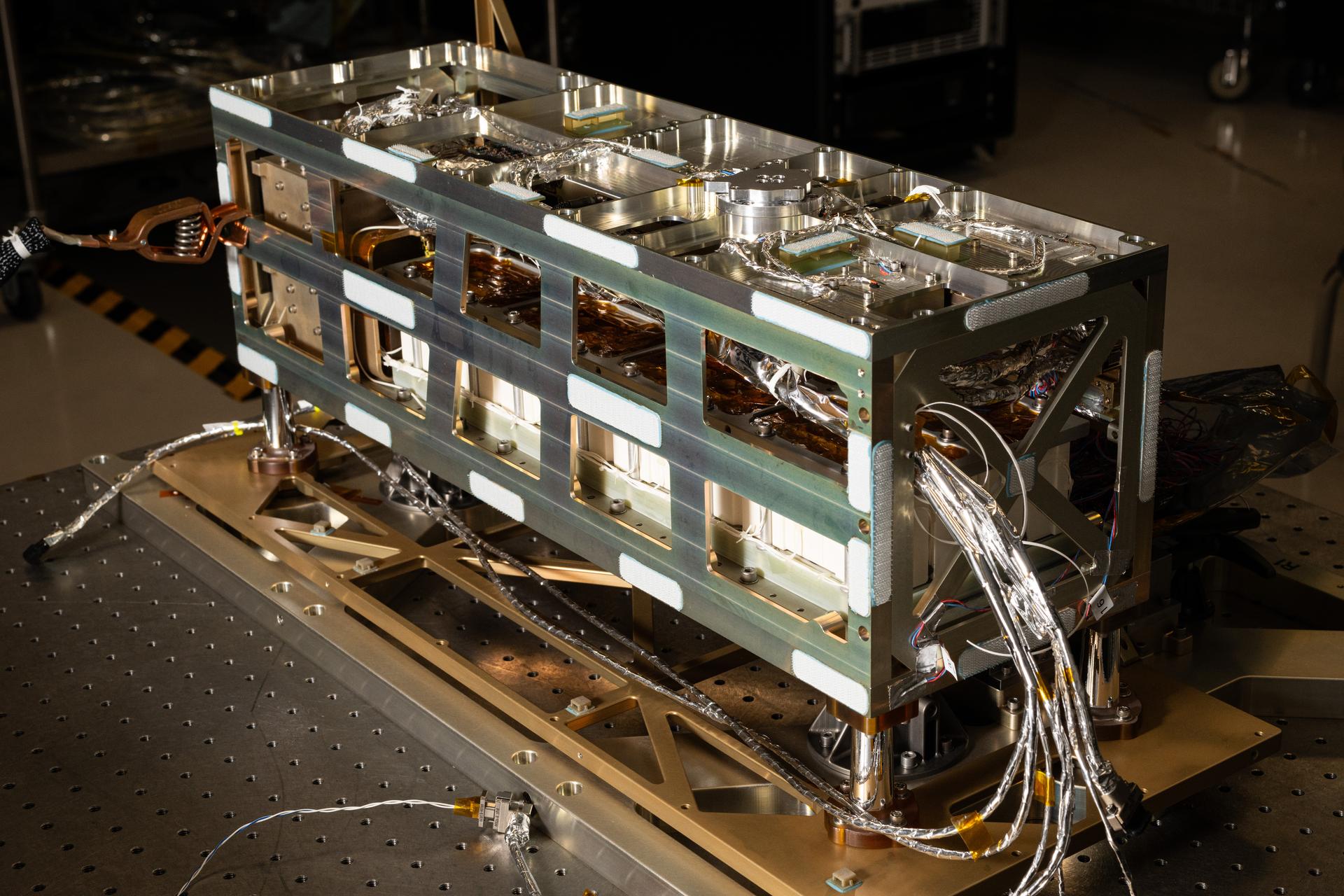
A detail view of the Lunar Environment Monitoring Station, (LEMS) bus prior to thermal blanket installation inside the cleanroom at Goddard Space Flight Center, Greenbelt Md., Jan 12, 2026. LEMS is a compact, autonomous, and self-sustaining seismometer suite designed to carry out continuous, long-term, monitoring of the lunar seismic environment at the South Polar region. Photo Credit: NASA/Denny Henry
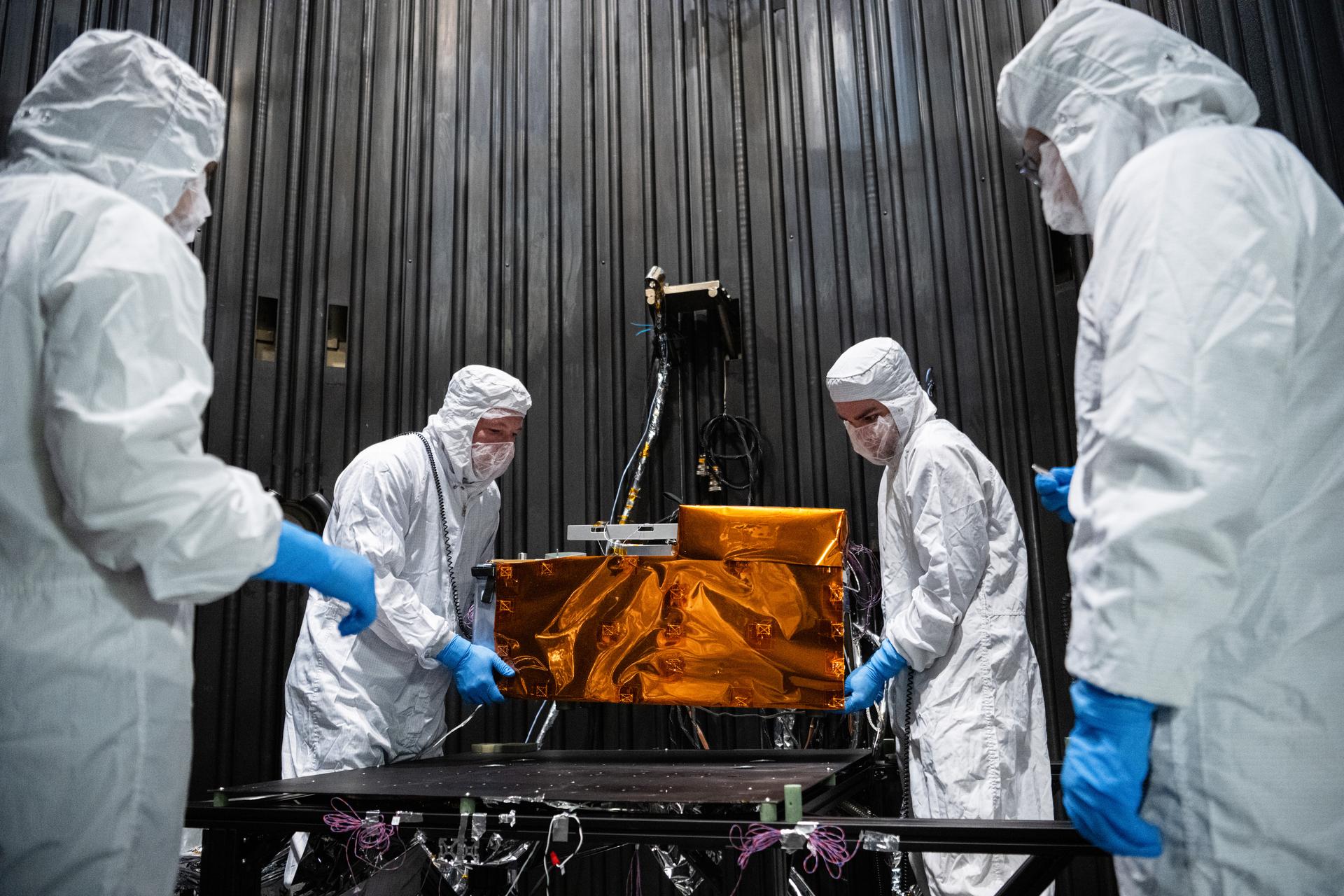
Team members install the Lunar Environment Monitoring Station (LEMS) instrument for testing in a thermal vacuum chamber at Goddard Space Flight Center, Greenbelt Md., March 30, 2026. LEMS is a compact, autonomous, and self-sustaining seismometer suite designed to carry out continuous, long-term, monitoring of the lunar seismic environment at the South Polar region. Photo Credit: NASA/Denny Henry
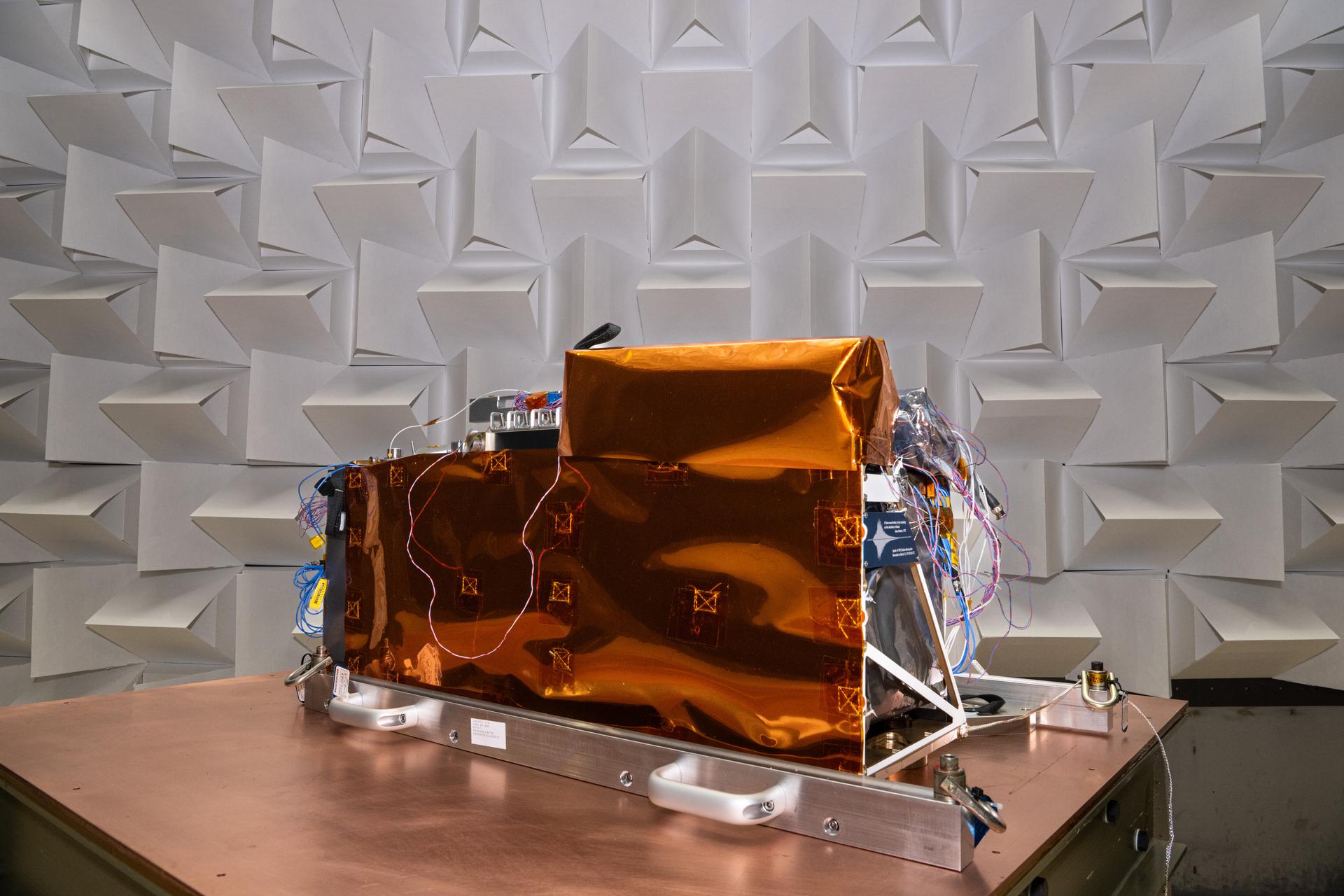
The Lunar Environment Monitoring Station (LEMS) in Electromagnetic Interference/Electromagnetic Compatibility (EMI/EMC) Chamber at Goddard Space Flight Center, Greenbelt Md., Feb 11, 2026. LEMS is a compact, autonomous, and self-sustaining seismometer suite designed to carry out continuous, long-term, monitoring of the lunar seismic environment at the South Polar region. Photo Credit: NASA/Denny Henry
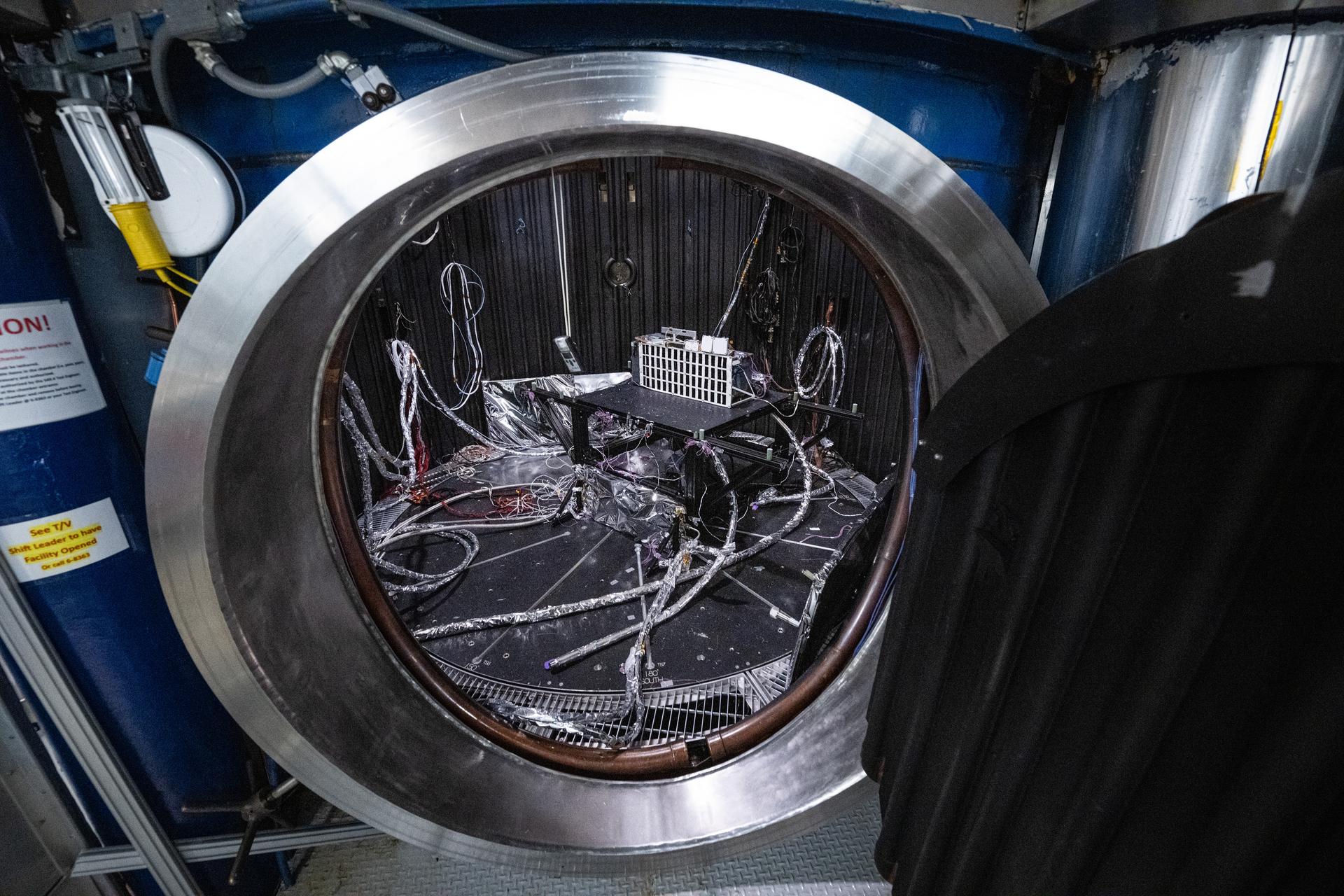
The Lunar Environment Monitoring Station (LEMS) instrument is installed for testing in a thermal vacuum chamber at Goddard Space Flight Center, Greenbelt Md., March 30, 2026. LEMS is a compact, autonomous, and self-sustaining seismometer suite designed to carry out continuous, long-term, monitoring of the lunar seismic environment at the South Polar region. Photo Credit: NASA/Denny Henry
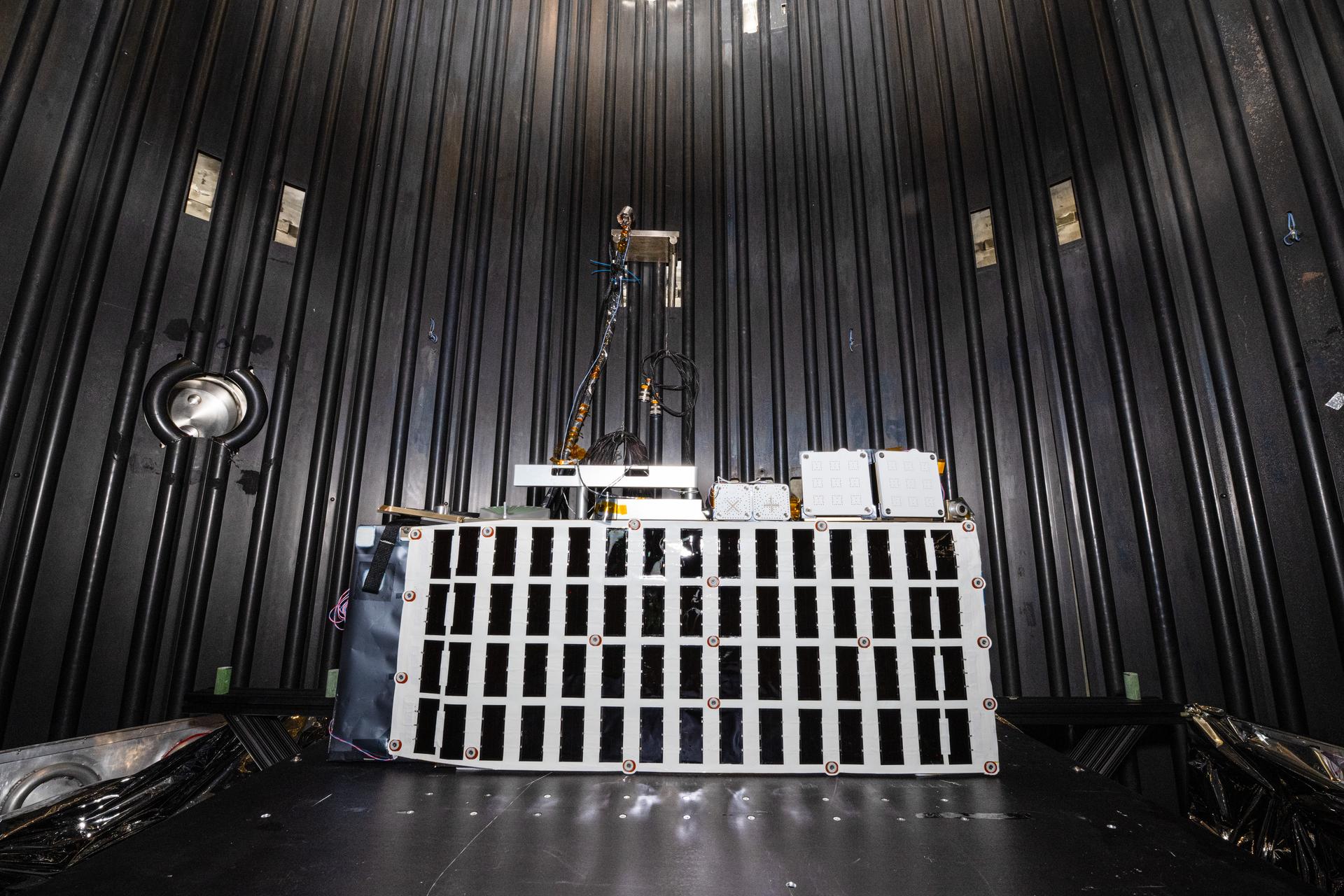
The Lunar Environment Monitoring Station (LEMS) instrument is installed for testing in a thermal vacuum chamber at Goddard Space Flight Center, Greenbelt Md., March 30, 2026. LEMS is a compact, autonomous, and self-sustaining seismometer suite designed to carry out continuous, long-term, monitoring of the lunar seismic environment at the South Polar region. Photo Credit: NASA/Denny Henry
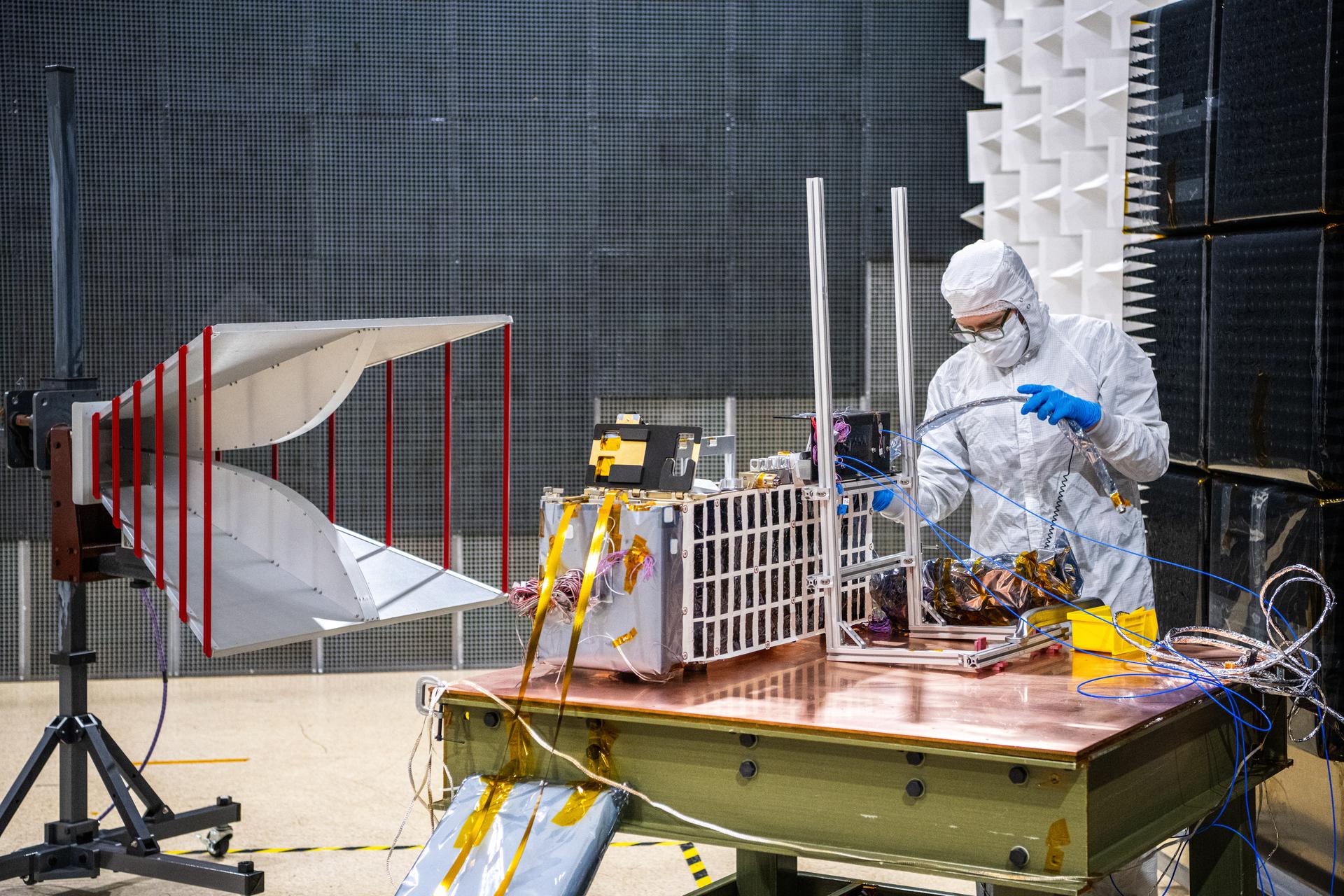
Electrical test engineer Thomas Schluszas configures the Lunar Environment Monitoring Station (LEMS) instrument for testing in the Electromagnetic Interference/Electromagnetic Compatibility (EMI/EMC) Chamber at Goddard Space Flight Center, Greenbelt Md., Feb 17, 2026. LEMS is a compact, autonomous, and self-sustaining seismometer suite designed to carry out continuous, long-term, monitoring of the lunar seismic environment at the South Polar region. Photo Credit: NASA/Denny Henry
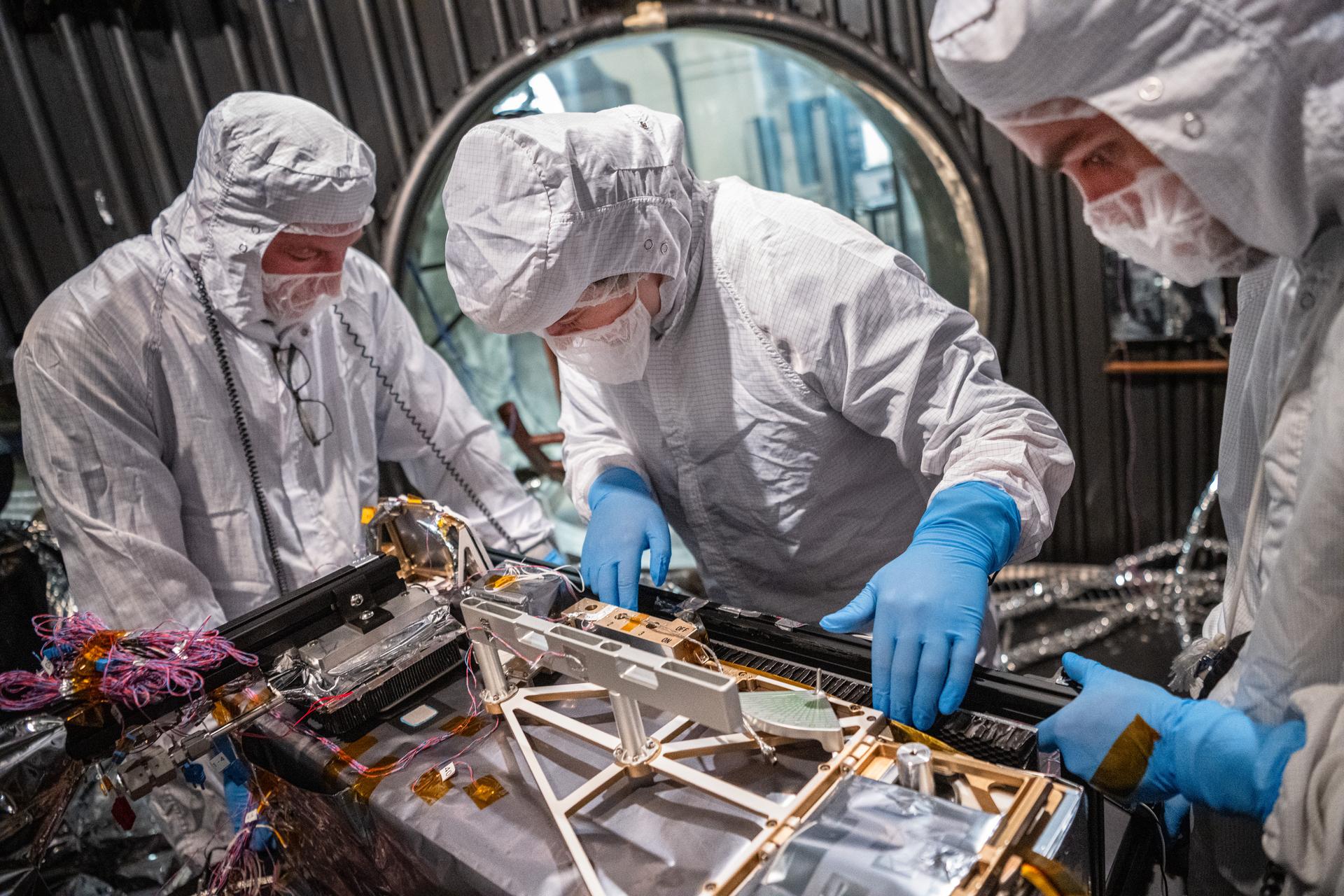
(L-R) Engineering Technician Alex Schaeffer, Mechanical Engineer Brie Ludwig , and Mechanical Engineer Mitchell Hamann inspect the Lunar Environment Monitoring Station (LEMS) instrument in preparation for testing in a thermal vacuum chamber at Goddard Space Flight Center in Greenbelt Md. on March 31, 2026. LEMS is a compact, autonomous, and self-sustaining seismometer suite designed to carry out continuous, long-term, monitoring of the lunar seismic environment at the South Polar region. Photo Credit: NASA/Denny Henry
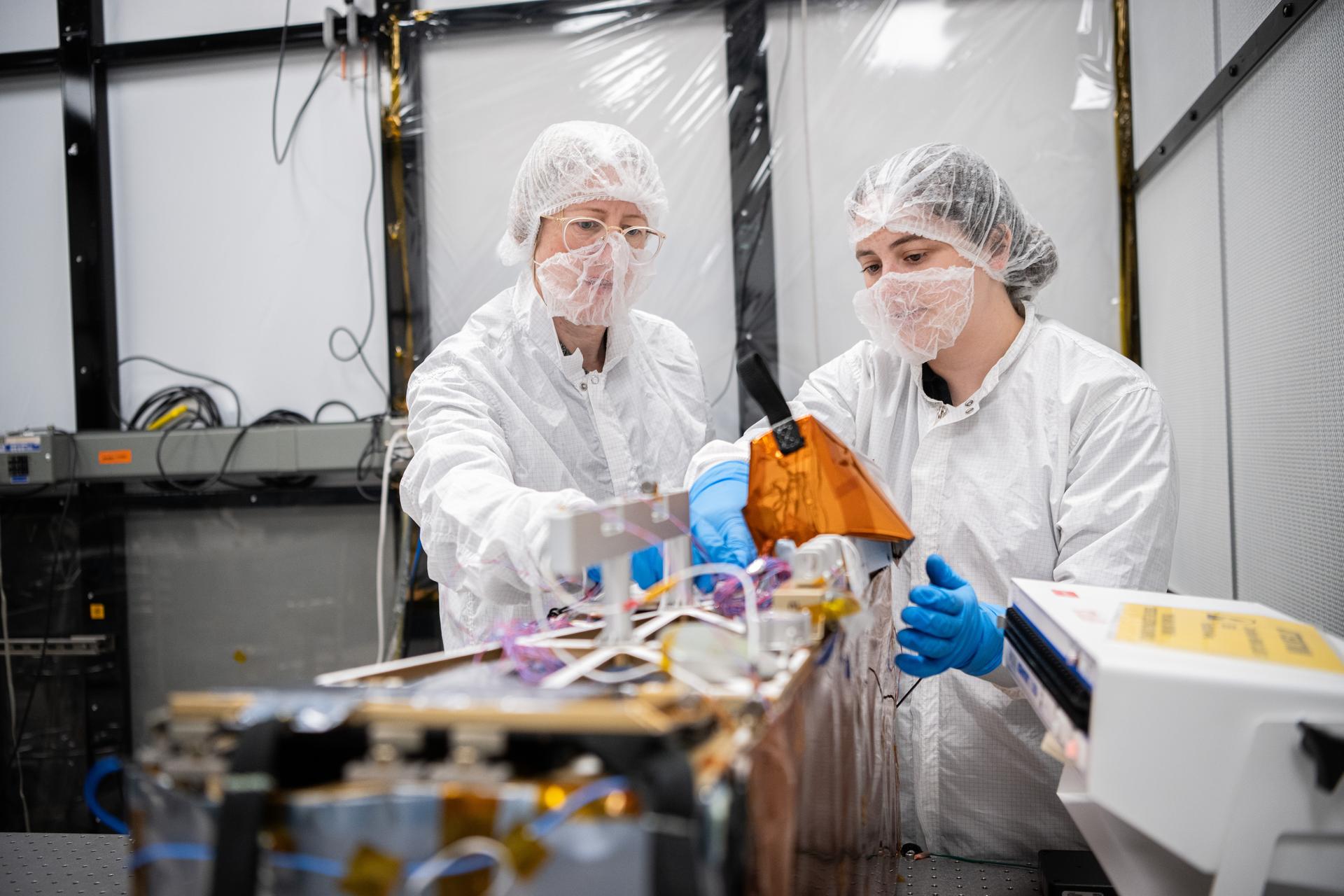
Naoma McCall (Left), Science Co-Investigator and deployment lead and Mechanical Engineer Brie Ludwig inspect the Lunar Environment Monitoring Station (LEMS) instrument in the cleanroom at Goddard Space Flight Center in Greenbelt Md. on February 5th, 2026. LEMS is a compact, autonomous, and self-sustaining seismometer suite designed to carry out continuous, long-term, monitoring of the lunar seismic environment at the South Polar region. Photo Credit: NASA/Denny Henry
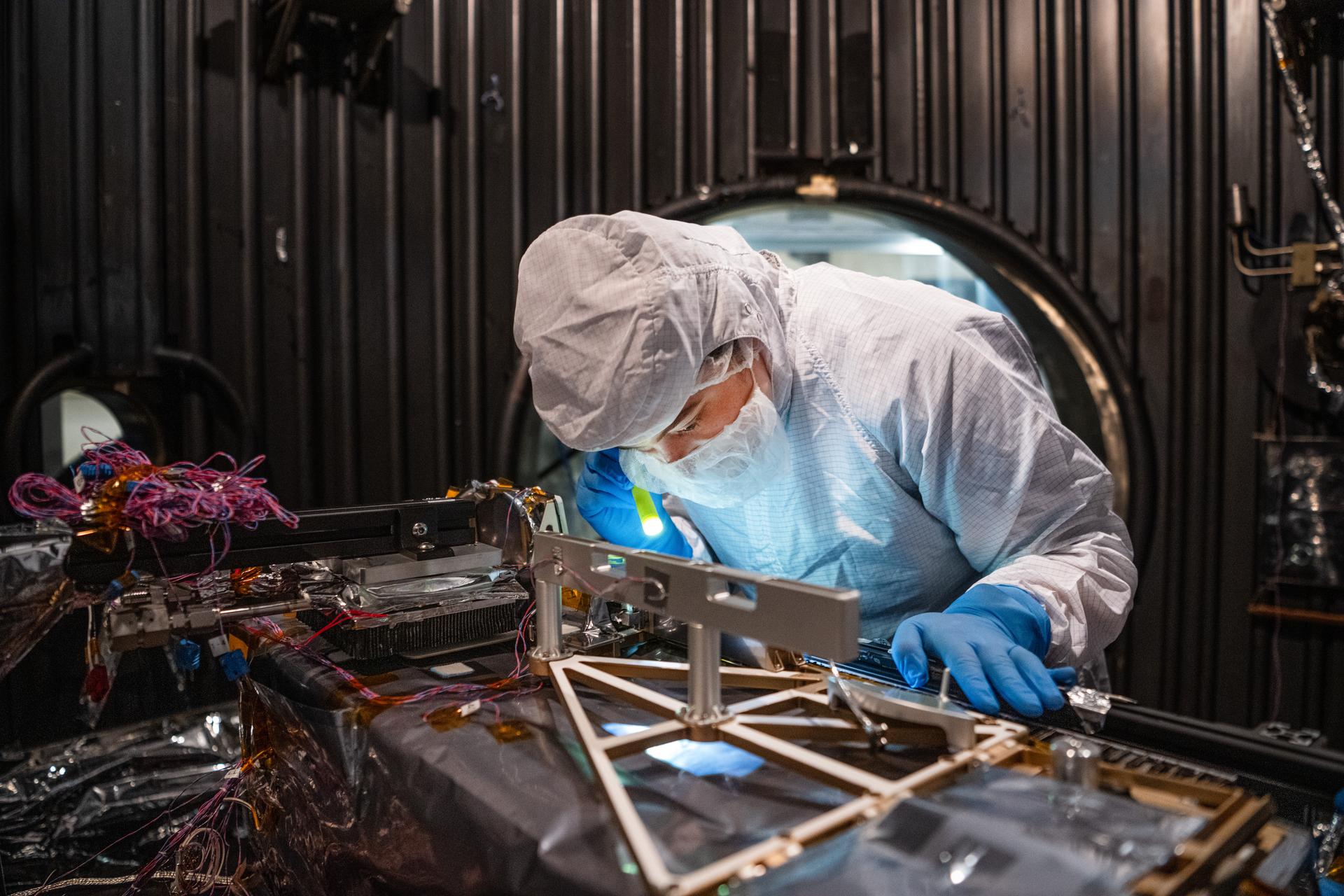
Mechanical Engineer Brie Ludwig inspects the Lunar Environment Monitoring Station (LEMS) instrument in preparation for testing in a thermal vacuum chamber at Goddard Space Flight Center in Greenbelt Md. on March 31, 2026. LEMS is a compact, autonomous, and self-sustaining seismometer suite designed to carry out continuous, long-term, monitoring of the lunar seismic environment at the South Polar region. Photo Credit: NASA/Denny Henry
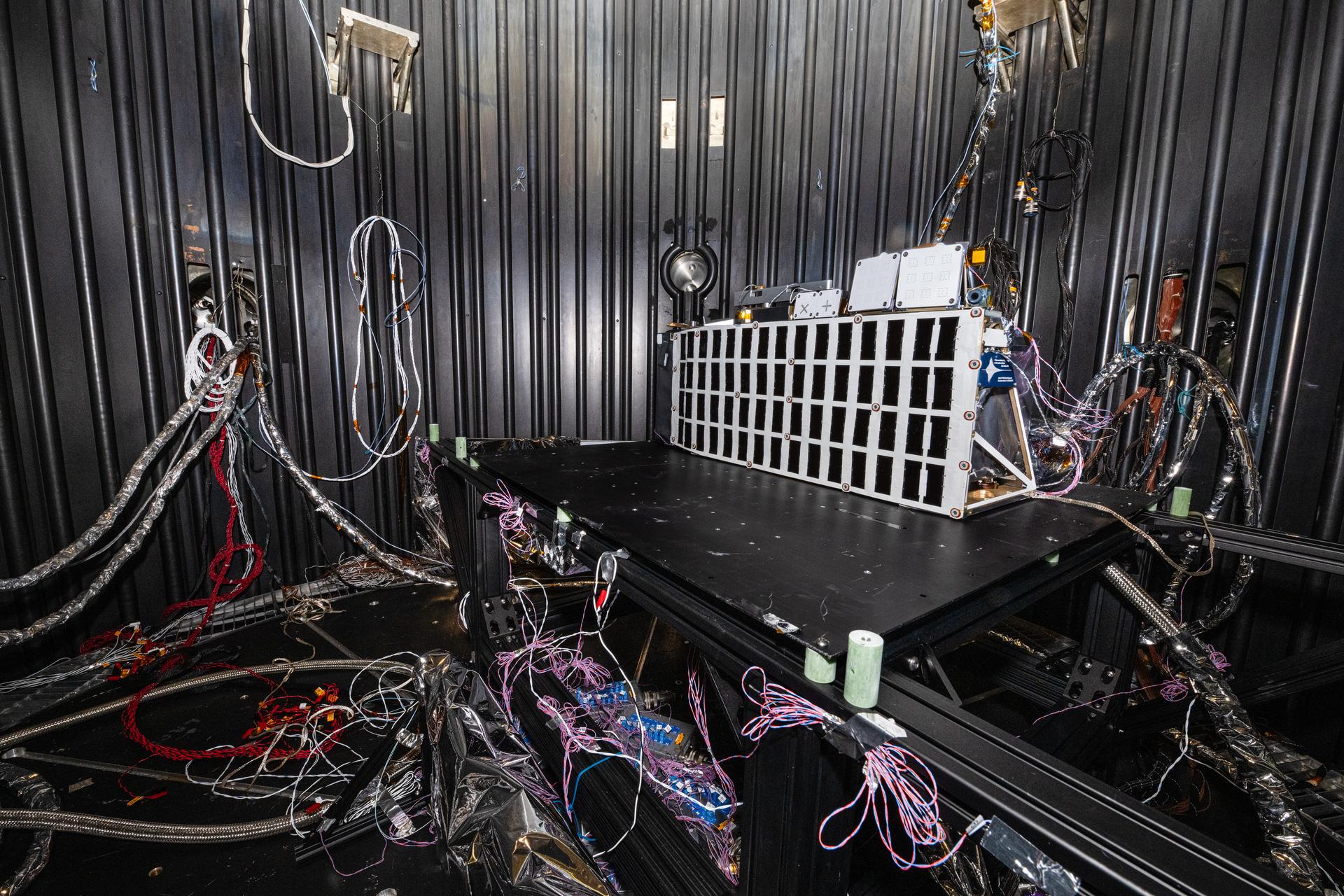
The Lunar Environment Monitoring Station (LEMS) instrument is installed for testing in a thermal vacuum chamber at Goddard Space Flight Center, Greenbelt Md., March 30, 2026. LEMS is a compact, autonomous, and self-sustaining seismometer suite designed to carry out continuous, long-term, monitoring of the lunar seismic environment at the South Polar region. Photo Credit: NASA/Denny Henry
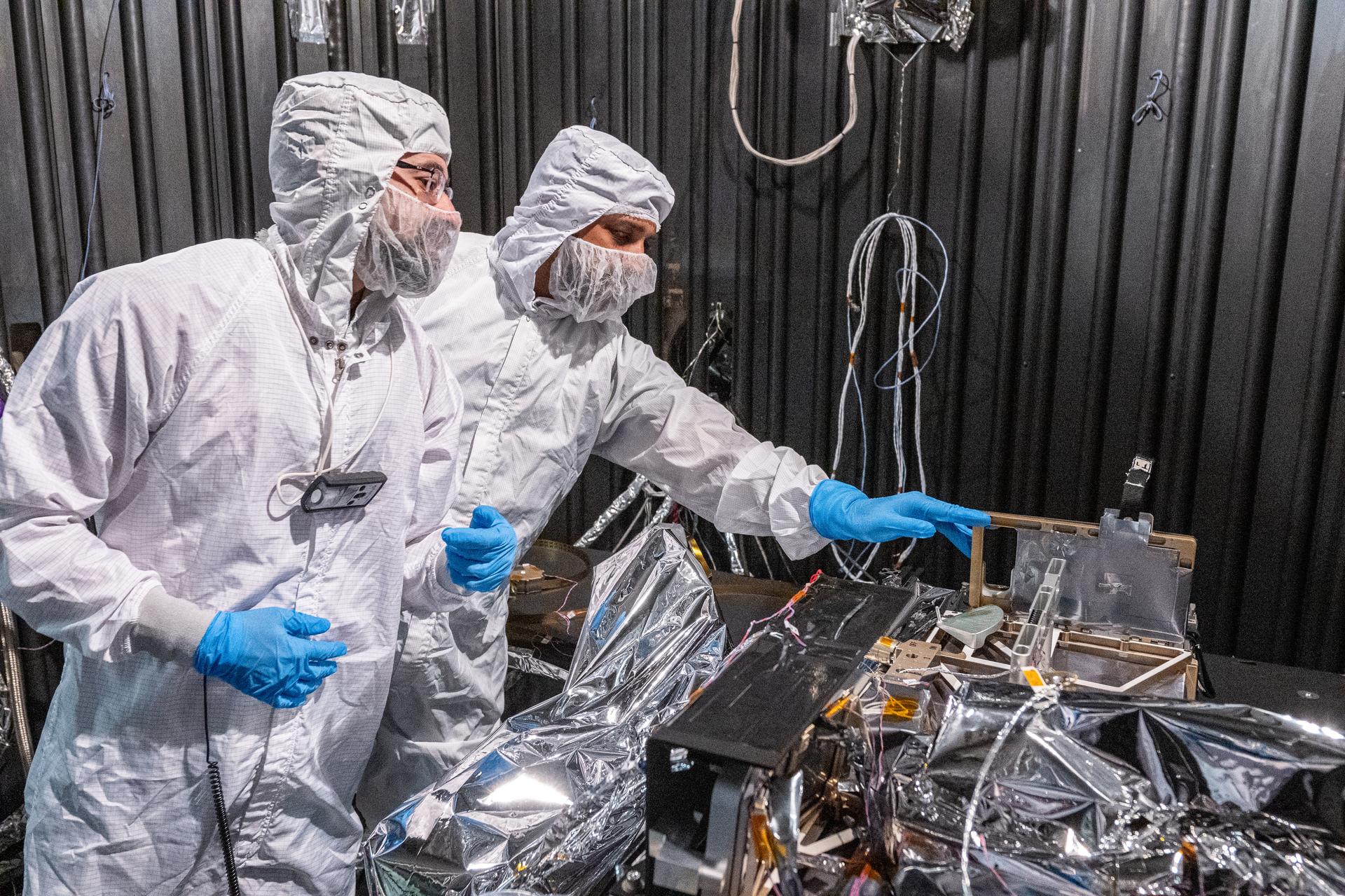
Lead Thermal Engineer Juan Rodriguez-ruiz (left) and Project Manager Neerav Shah inspect the Lunar Environment Monitoring Station (LEMS) instrument in preparation for testing in a thermal vacuum chamber at Goddard Space Flight Center in Greenbelt Md. on April 3rd, 2026. LEMS is a compact, autonomous, and self-sustaining seismometer suite designed to carry out continuous, long-term, monitoring of the lunar seismic environment at the South Polar region. Photo Credit: NASA/Denny Henry
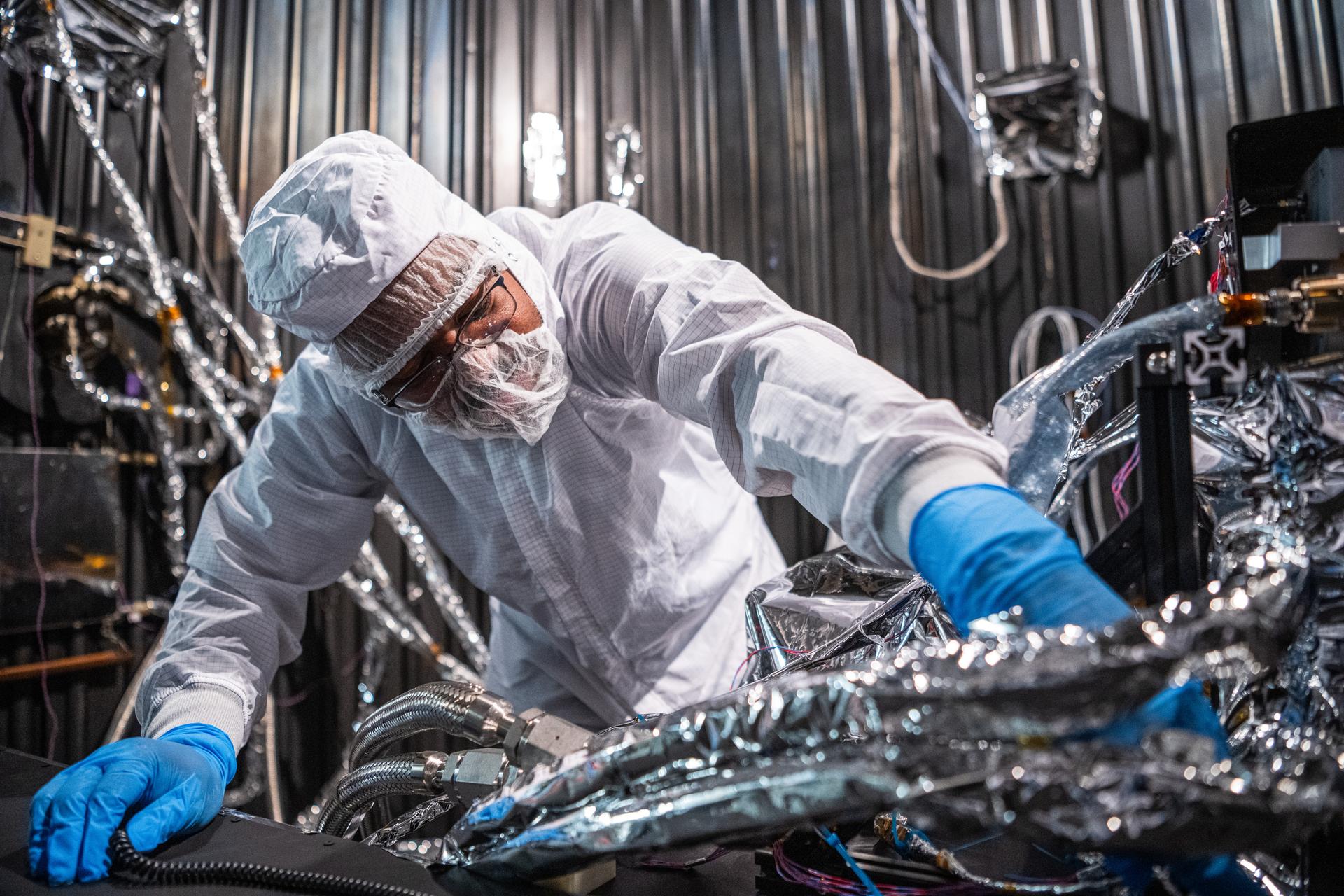
Electrical Systems Lead, James Fraction, inspects the Lunar Environment Monitoring Station (LEMS) instrument in preparation for testing in a thermal vacuum chamber at Goddard Space Flight Center in Greenbelt Md. on April 3rd, 2026. LEMS is a compact, autonomous, and self-sustaining seismometer suite designed to carry out continuous, long-term, monitoring of the lunar seismic environment at the South Polar region. Photo Credit: NASA/Denny Henry
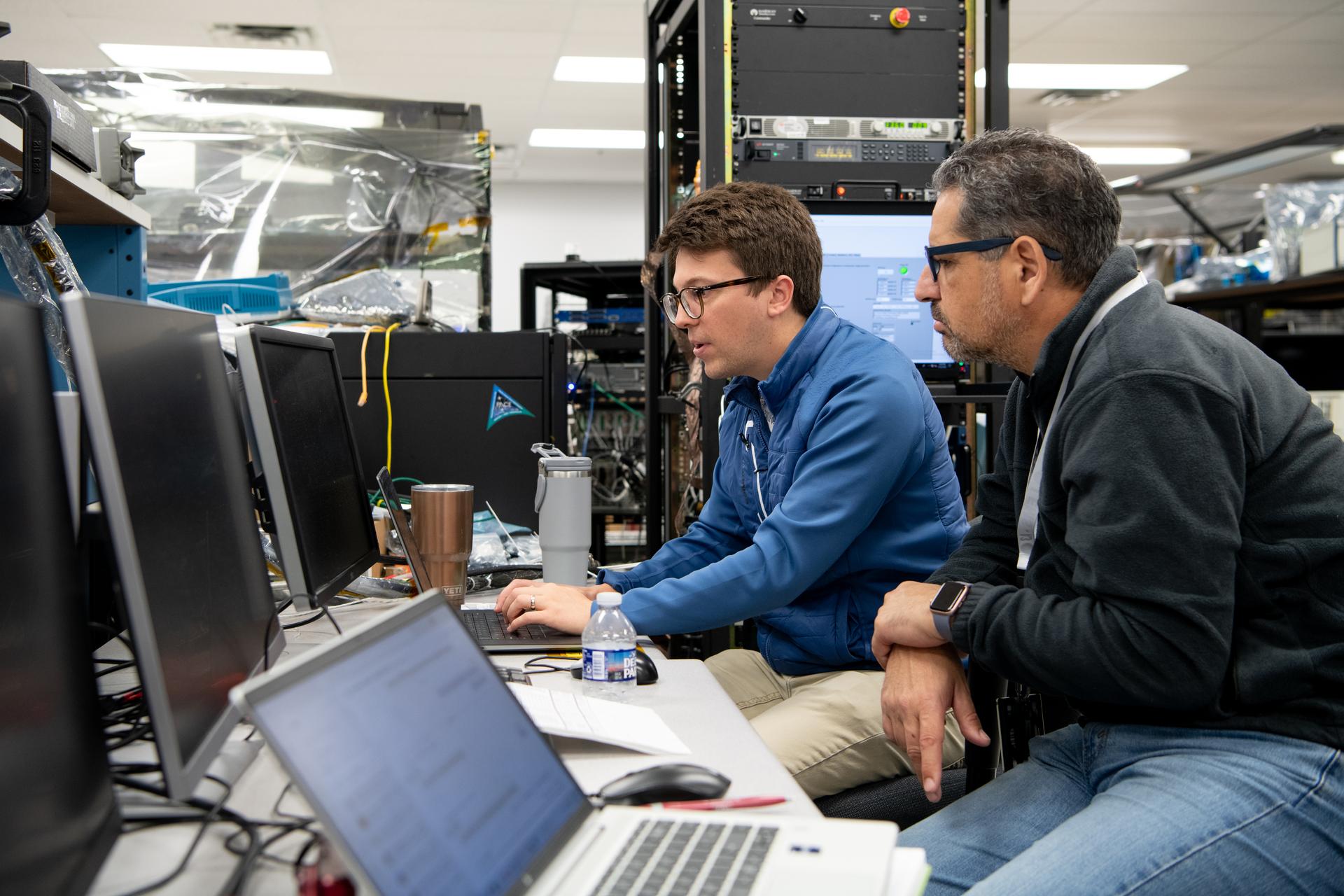
Lunar Environment Monitoring Station (LEMS) team members Computer Engineer James Olsen & Principle Investigator Dr. Medhi Benna perform electrical test procedures in the avoinics lab at at Goddard Space Flight Center in Greenbelt, Maryland. LEMS is a compact, autonomous, and self-sustaining seismometer suite designed to carry out continuous, long-term, monitoring of the lunar seismic environment at the South Polar region.NASA/Desiree Stover.
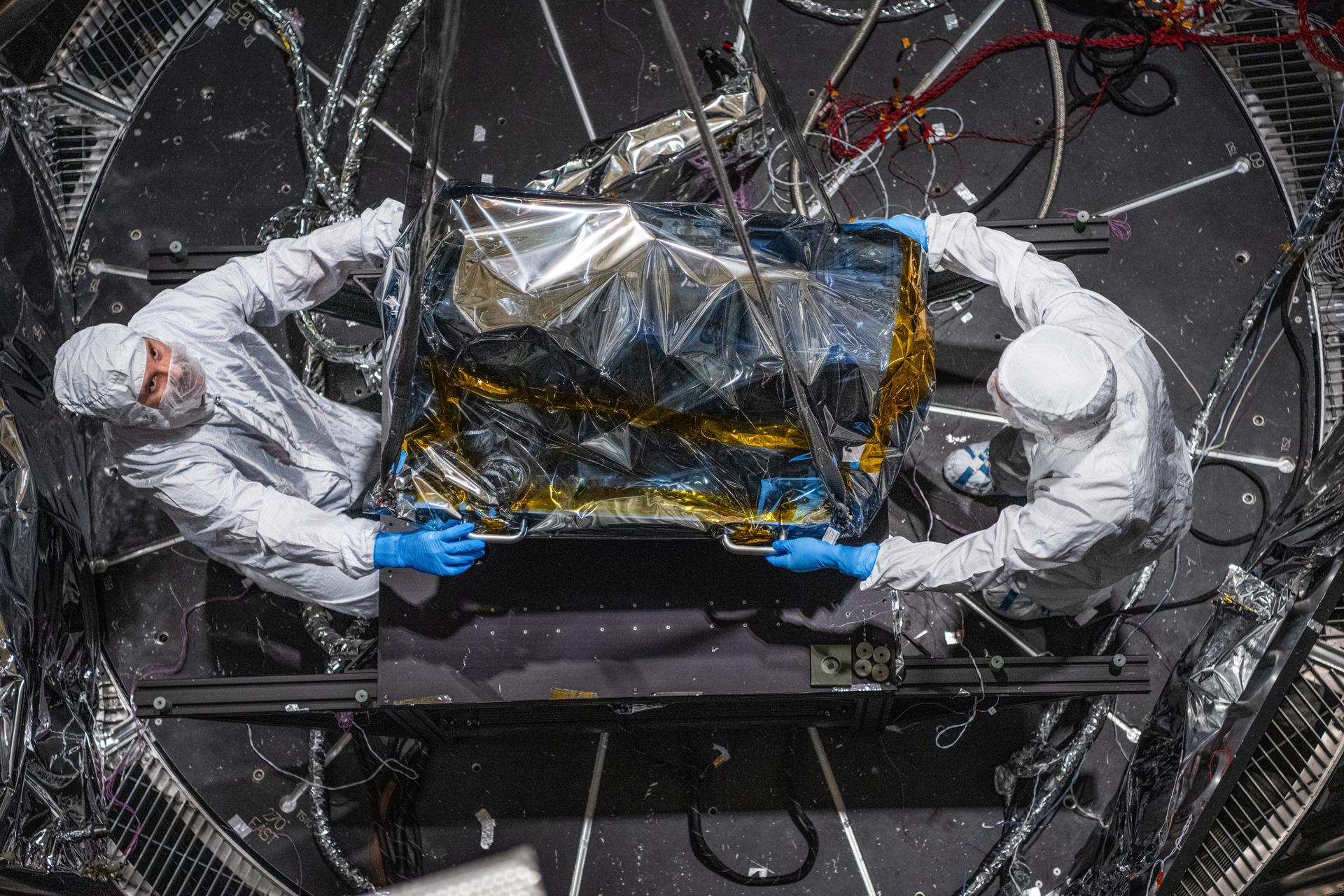
Engineering Technician Eric Norris, and Mechanical Engineer Mitchell Hamann guide the Lunar Environment Monitoring Station (LEMS) instrument in to the Thermal Vacuum Chamber preparation for testing at Goddard Space Flight Center, Greenbelt Md., March 30, 2026. LEMS is a compact, autonomous, and self-sustaining seismometer suite designed to carry out continuous, long-term, monitoring of the lunar seismic environment at the South Polar region. Photo Credit: NASA/Denny Henry
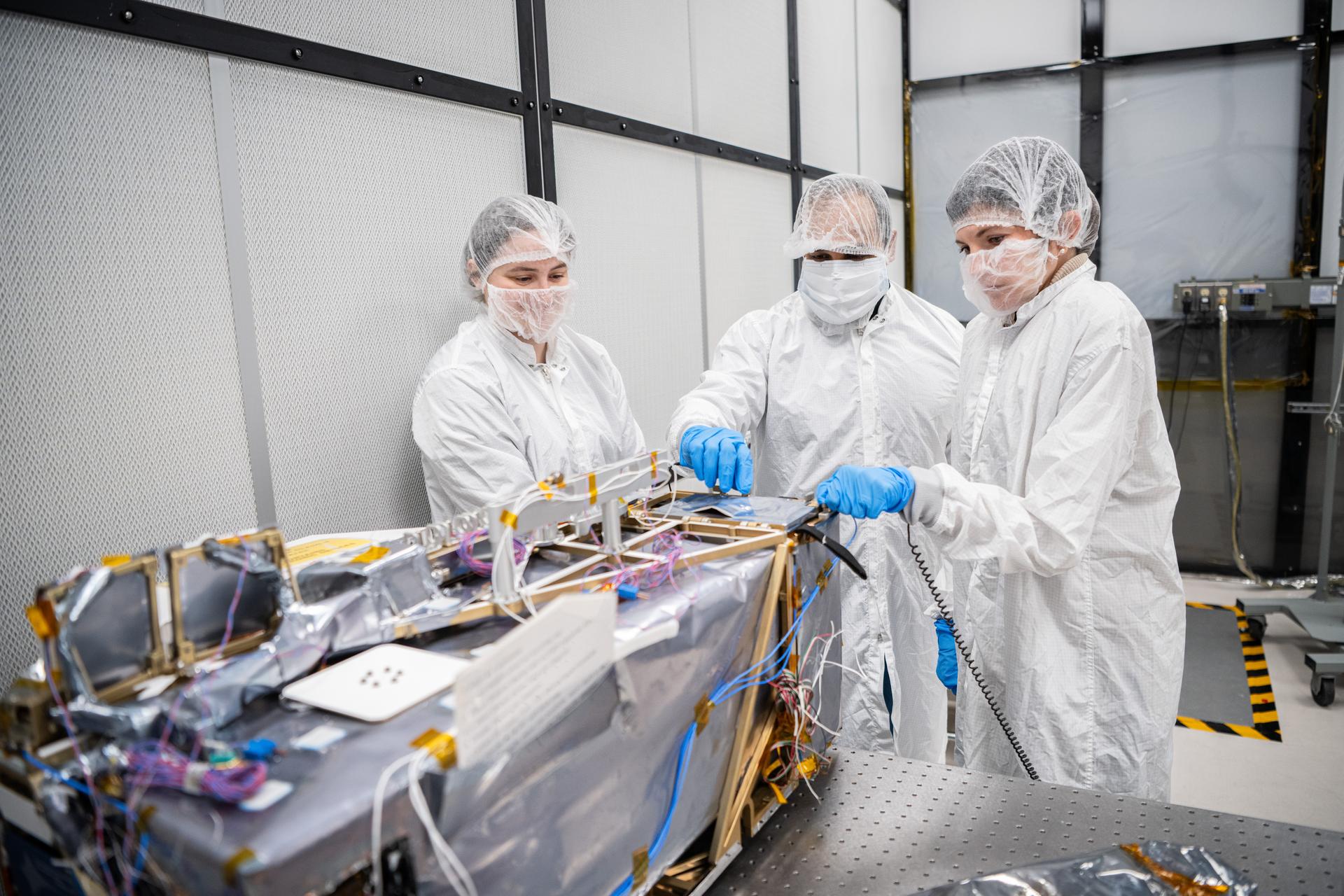
(L-R) Mechanical Engineer Brie Ludwig, Project Manager Neerav Shah and Deputy Project Manager Stephanie Vidal inspect the Lunar Environment Monitoring Station (LEMS) instrument in the cleanroom at Goddard Space Flight Center in Greenbelt Md. on February 5th, 2026. LEMS is a compact, autonomous, and self-sustaining seismometer suite designed to carry out continuous, long-term, monitoring of the lunar seismic environment at the South Polar region. Photo Credit: NASA/Denny Henry
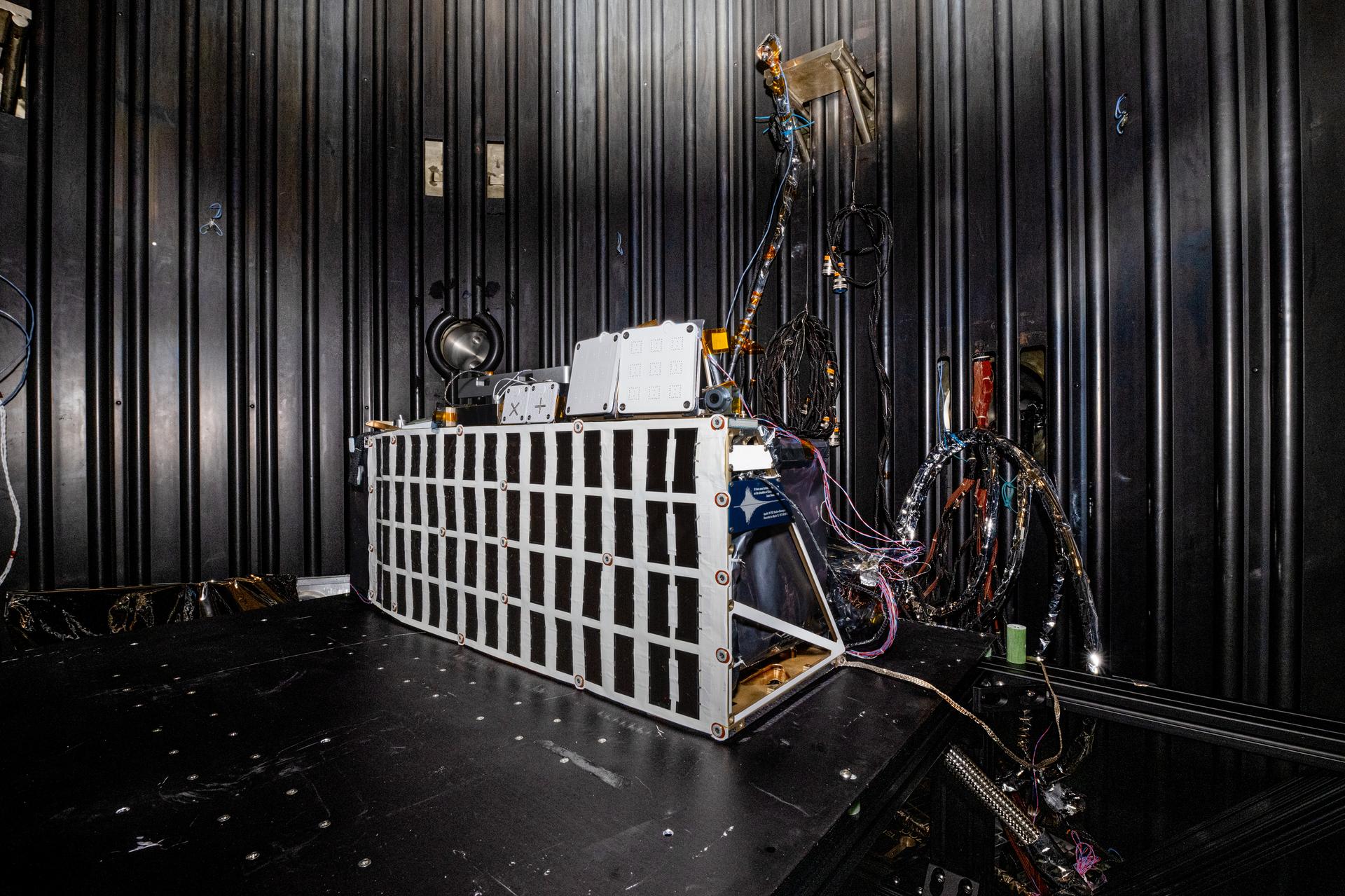
The Lunar Environment Monitoring Station (LEMS) instrument is installed for testing in a thermal vacuum chamber at Goddard Space Flight Center, Greenbelt Md., March 30, 2026. LEMS is a compact, autonomous, and self-sustaining seismometer suite designed to carry out continuous, long-term, monitoring of the lunar seismic environment at the South Polar region. Photo Credit: NASA/Denny Henry
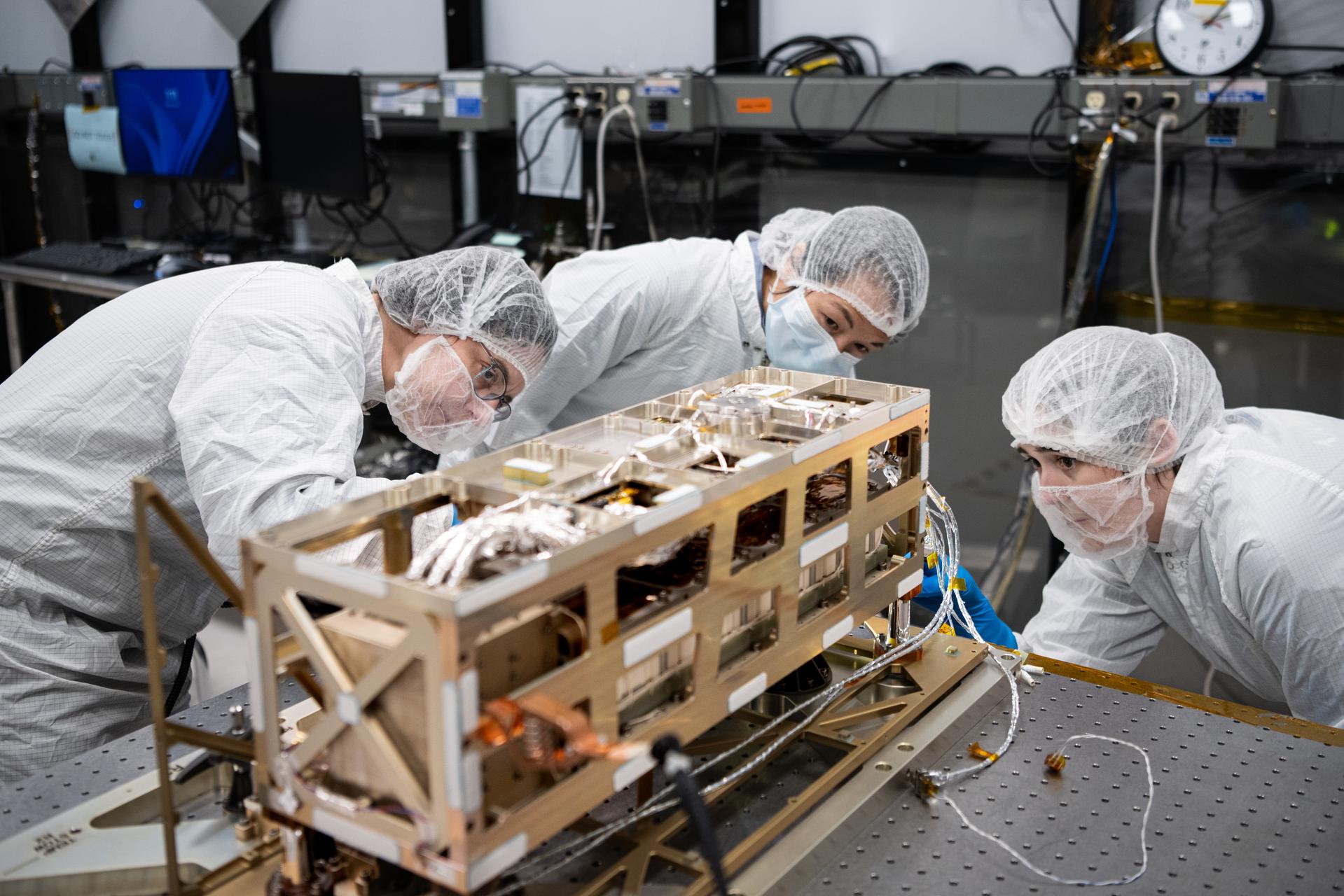
(L-R) Contamination Control Engineer Diane Briczinski, Acting Science Mission Directorate Chief Engineer Synthia Tonn, and Lead Payload Systems Engineer Sam Hicks inspect the Lunar Environment Monitoring Station (LEMS) instrument in the cleanroom at Goddard Space Flight Center in Greenbelt Md. on January 12th, 2026. LEMS is a compact, autonomous, and self-sustaining seismometer suite designed to carry out continuous, long-term, monitoring of the lunar seismic environment at the South Polar region. Photo Credit: NASA/Denny Henry
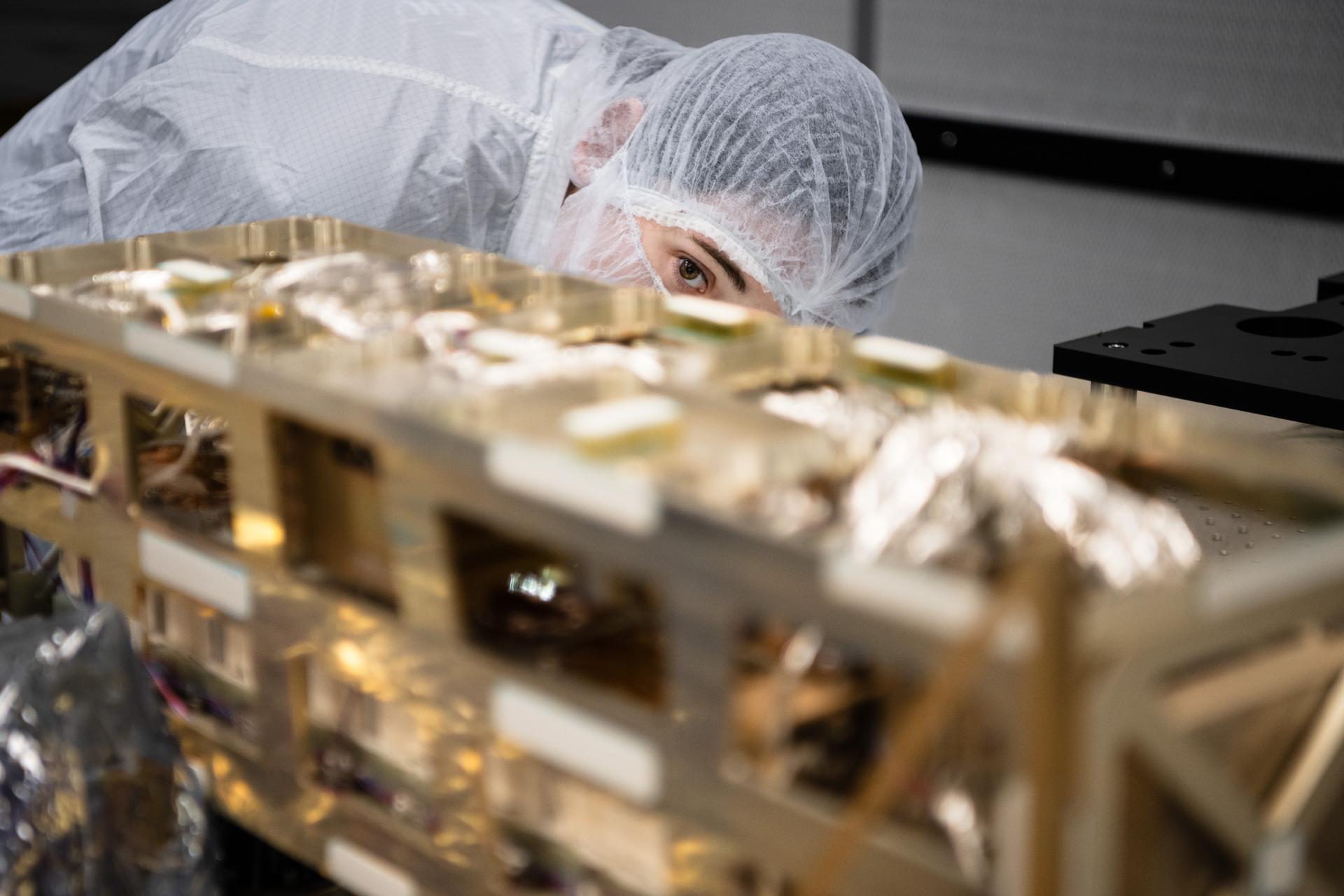
Lead Payload Systems Engineer Sam Hicks inspects the Lunar Environment Monitoring Station (LEMS) instrument in the cleanroom at Goddard Space Flight Center in Greenbelt Md. on January 12th, 2026. LEMS is a compact, autonomous, and self-sustaining seismometer suite designed to carry out continuous, long-term, monitoring of the lunar seismic environment at the South Polar region. Photo Credit: NASA/Denny Henry
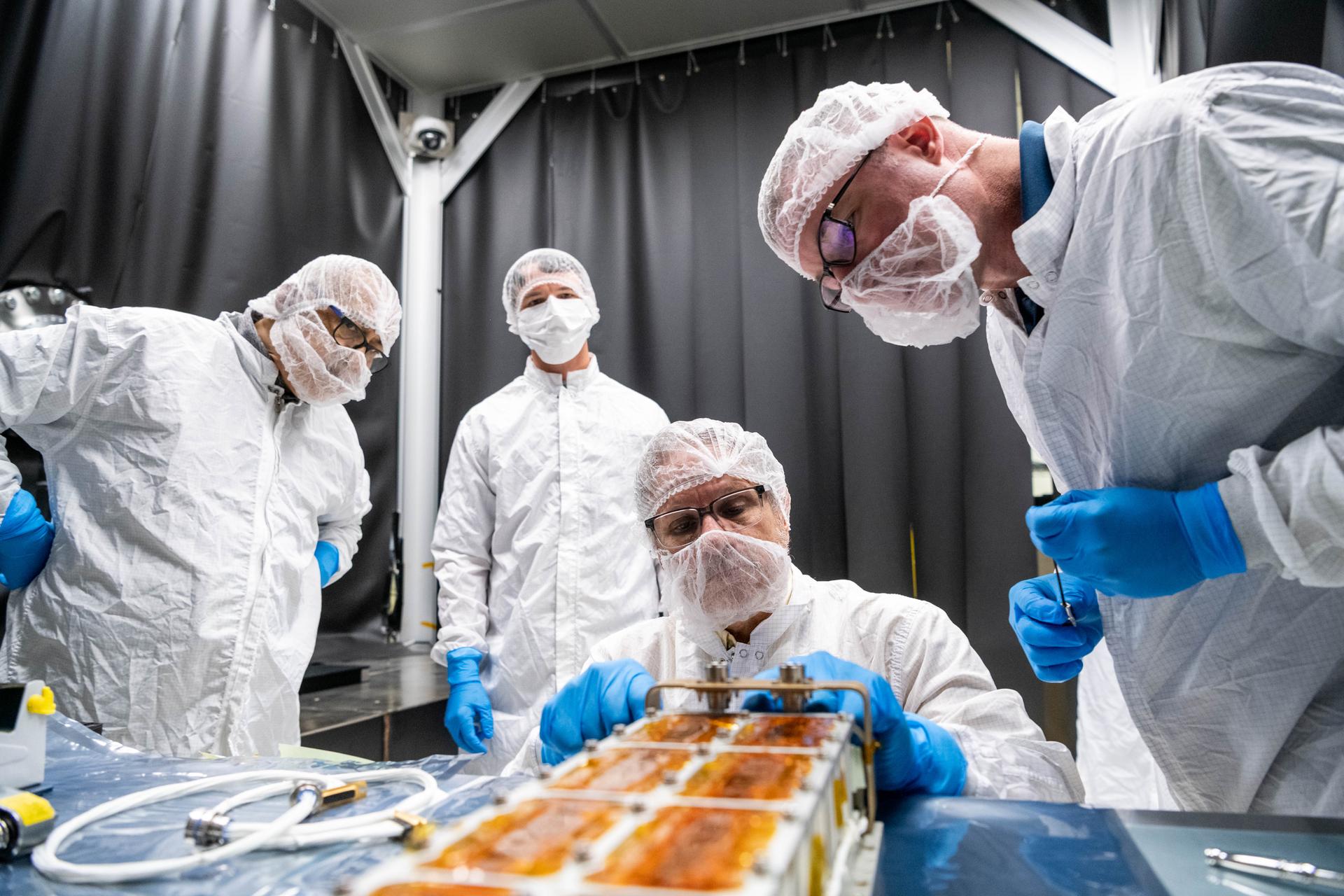
Lunar Environment Monitoring Station (LEMS) team members assemble the flight battery connectors to the connector bracket in a lab at Goddard Space Flight Center in Greenbelt, Maryland on September 9th, 2025. LEMS is a compact, autonomous, and self-sustaining seismometer suite designed to carry out continuous, long-term, monitoring of the lunar seismic environment at the South Polar region. NASA/Katie Mellos.
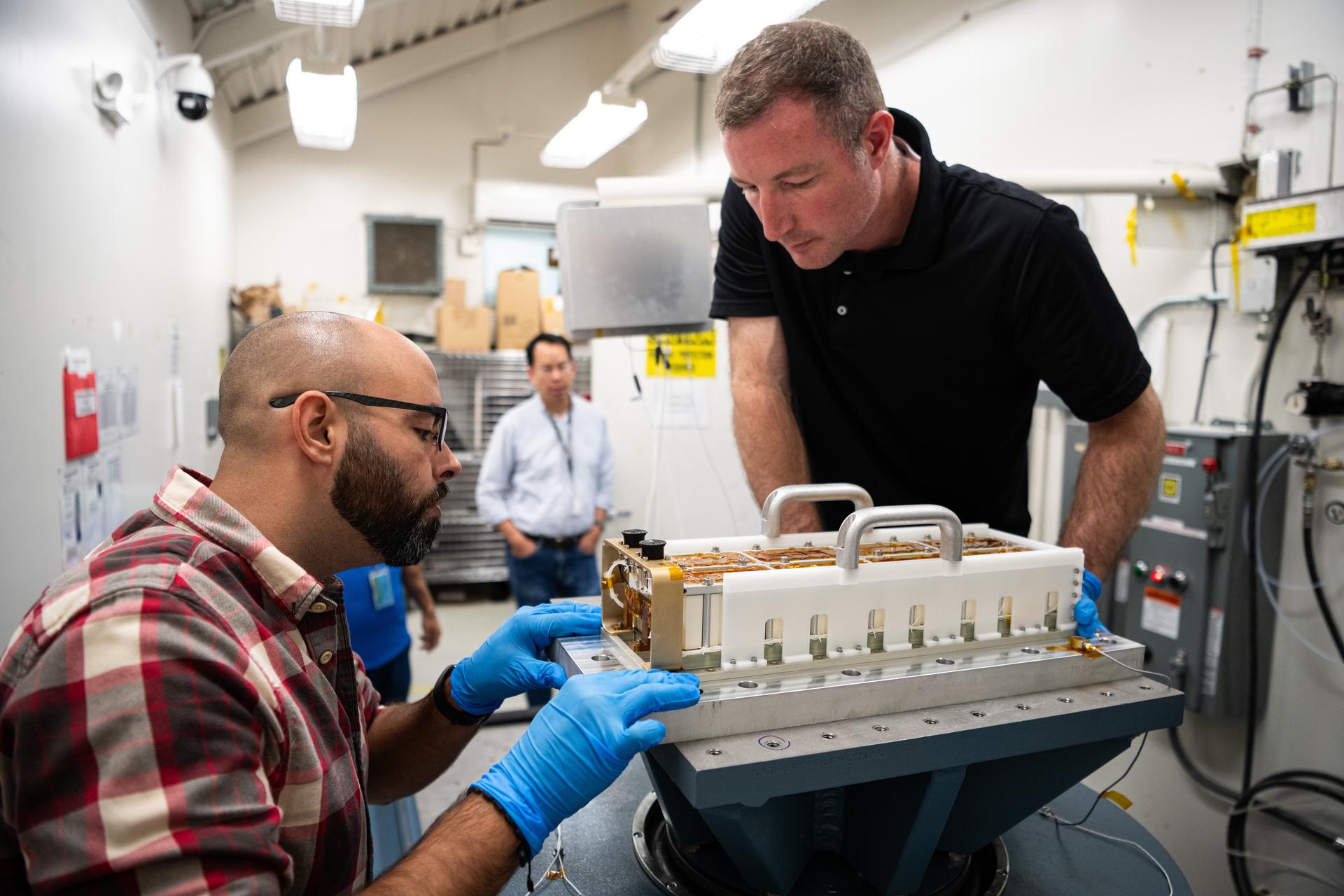
Mechanical Engineer John Seixal (left) and Engineering Technician Alex Schaeffer prepare the Lunar Environment Monitoring Station (LEMS) flight battery for vibration testing in a lab at NASA's Goddard Space Flight Center in Greenbelt, Maryland on September 29th, 2025. LEMS is a compact, autonomous, and self-sustaining seismometer suite designed to carry out continuous, long-term, monitoring of the lunar seismic environment at the South Polar region. NASA/Denny Henry.
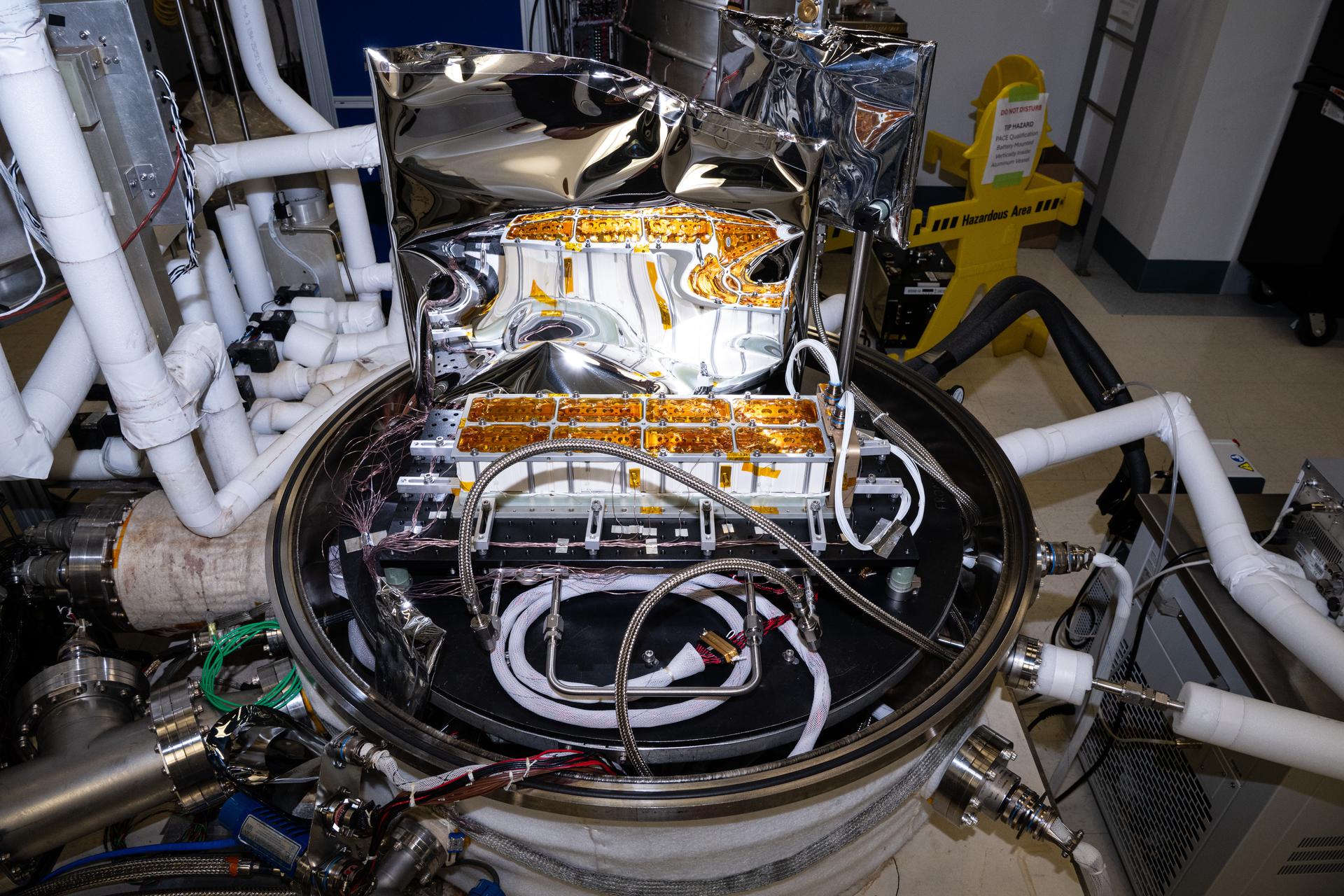
The Lunar Environment Monitoring Station (LEMS) flight battery is installed for testing in a thermal vacuum chamber at Goddard Space Flight Center, Greenbelt Md., October 8th, 2025.. LEMS is a compact, autonomous, and self-sustaining seismometer suite designed to carry out continuous, long-term, monitoring of the lunar seismic environment at the South Polar region. Photo Credit: NASA/Denny Henry
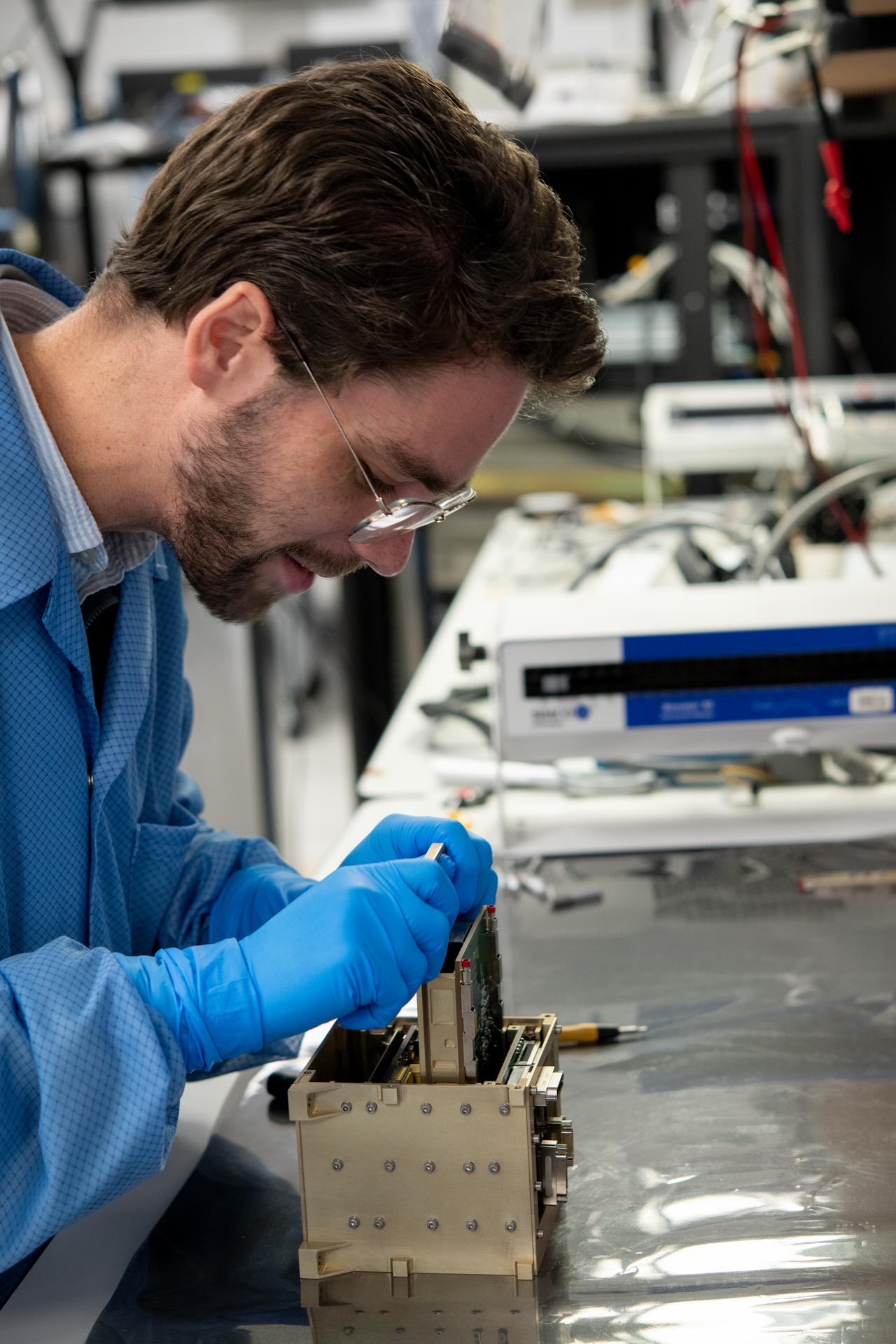
Mechanical Engineer Mitchell Hamann disassembles a Lunar Environment Monitoring Station (LEMS) flight electrical board chassis in the avoinics lab at NASA's Goddard Space Flight Center in Greenbelt, Maryland on October 22, 2025. LEMS is a compact, autonomous, and self-sustaining seismometer suite designed to carry out continuous, long-term, monitoring of the lunar seismic environment at the South Polar region. NASA/Desiree Stover.
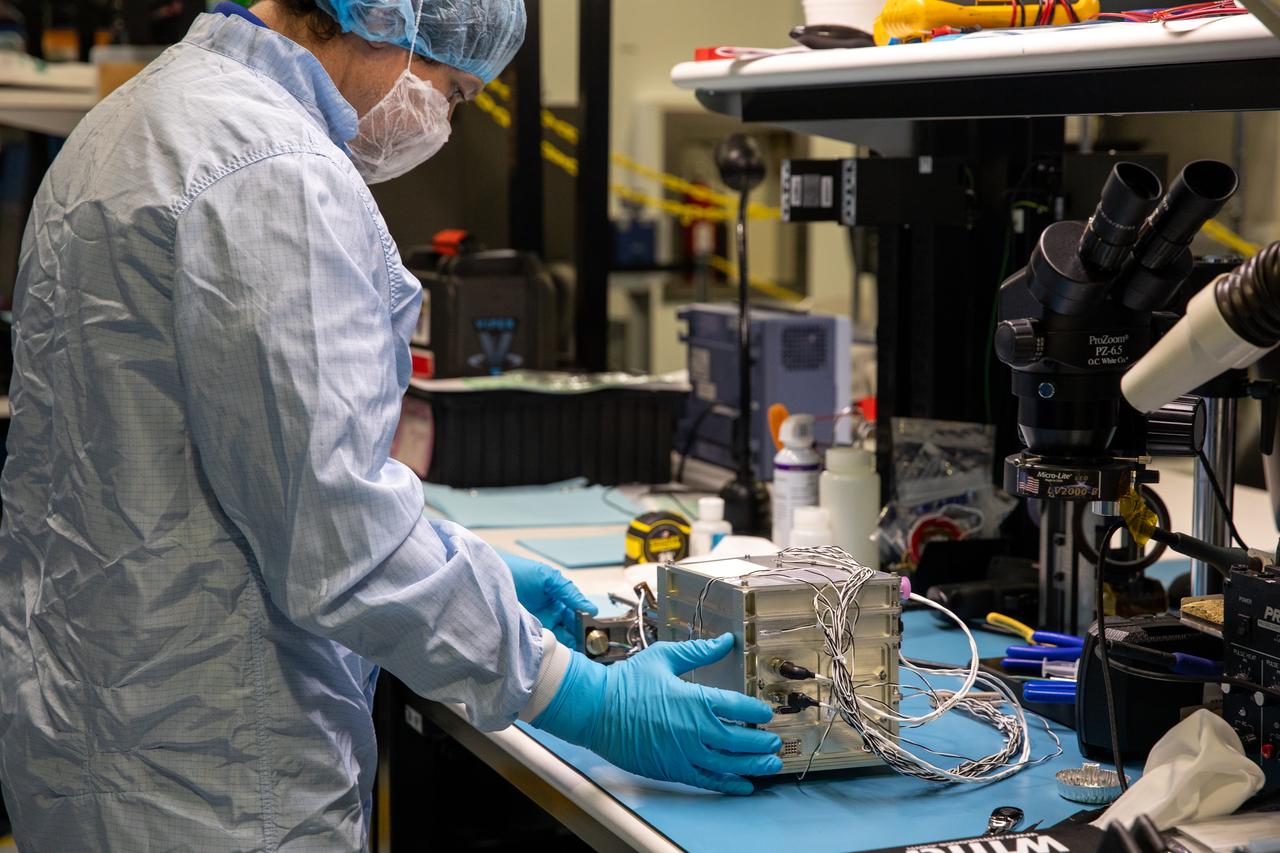
A team of engineers and technicians finished the final assembly step for the MSOLO-2 (Mass Spectrometer Observing Lunar Operations) flight instrument by installing the Calibration Gas System inside of the Space Station Processing Facility at NASA’s Kennedy Space Center in Florida on June 21, 2023. MSOLO is a commercial off-the-shelf mass spectrometer modified to work in space and it will help analyze the chemical makeup of landing sites on the Moon, as well as study water on the lunar surface.

A team of engineers and technicians finished the final assembly step for the MSOLO-2 (Mass Spectrometer Observing Lunar Operations) flight instrument by installing the Calibration Gas System inside of the Space Station Processing Facility at NASA’s Kennedy Space Center in Florida on June 21, 2023. MSOLO is a commercial off-the-shelf mass spectrometer modified to work in space and it will help analyze the chemical makeup of landing sites on the Moon, as well as study water on the lunar surface.
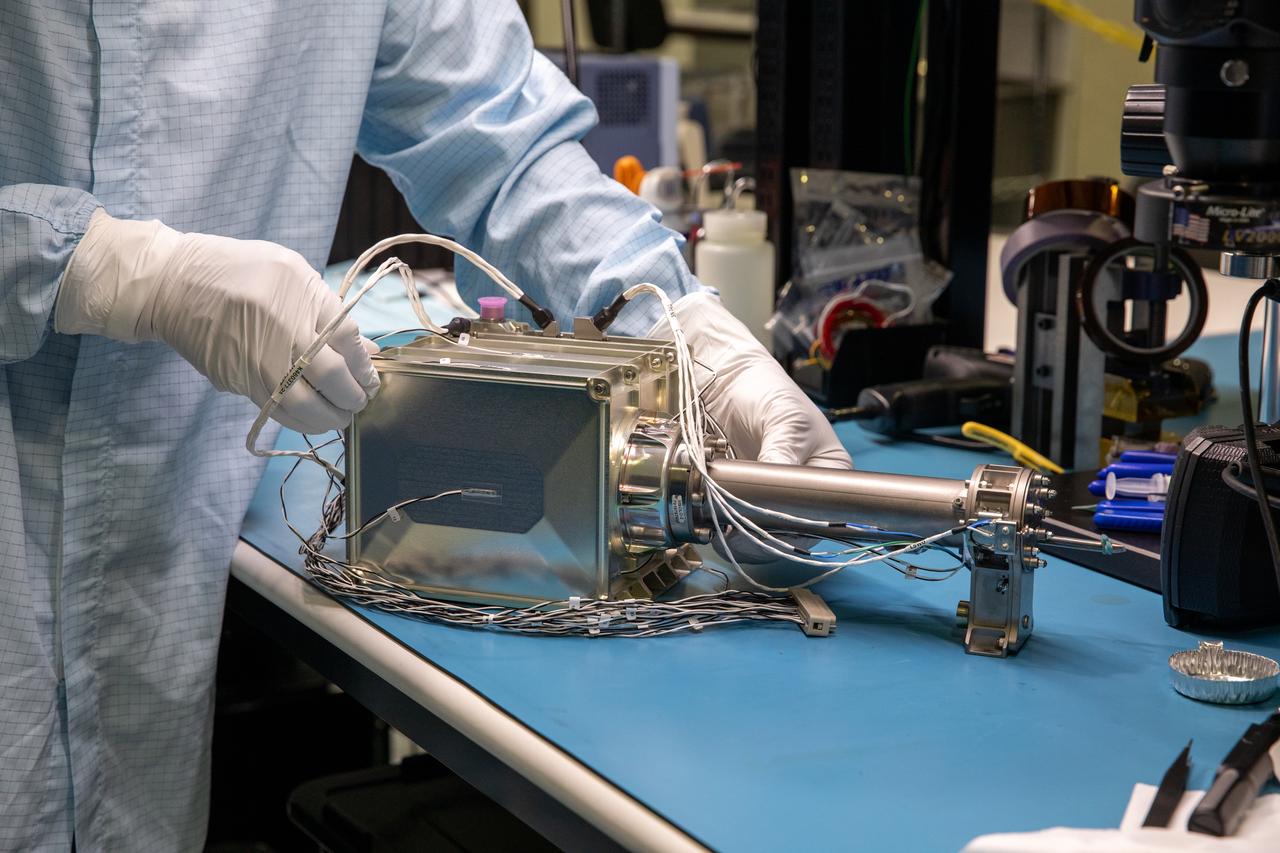
A team of engineers and technicians finished the final assembly step for the MSOLO-2 (Mass Spectrometer Observing Lunar Operations) flight instrument by installing the Calibration Gas System inside of the Space Station Processing Facility at NASA’s Kennedy Space Center in Florida on June 21, 2023. MSOLO is a commercial off-the-shelf mass spectrometer modified to work in space and it will help analyze the chemical makeup of landing sites on the Moon, as well as study water on the lunar surface.
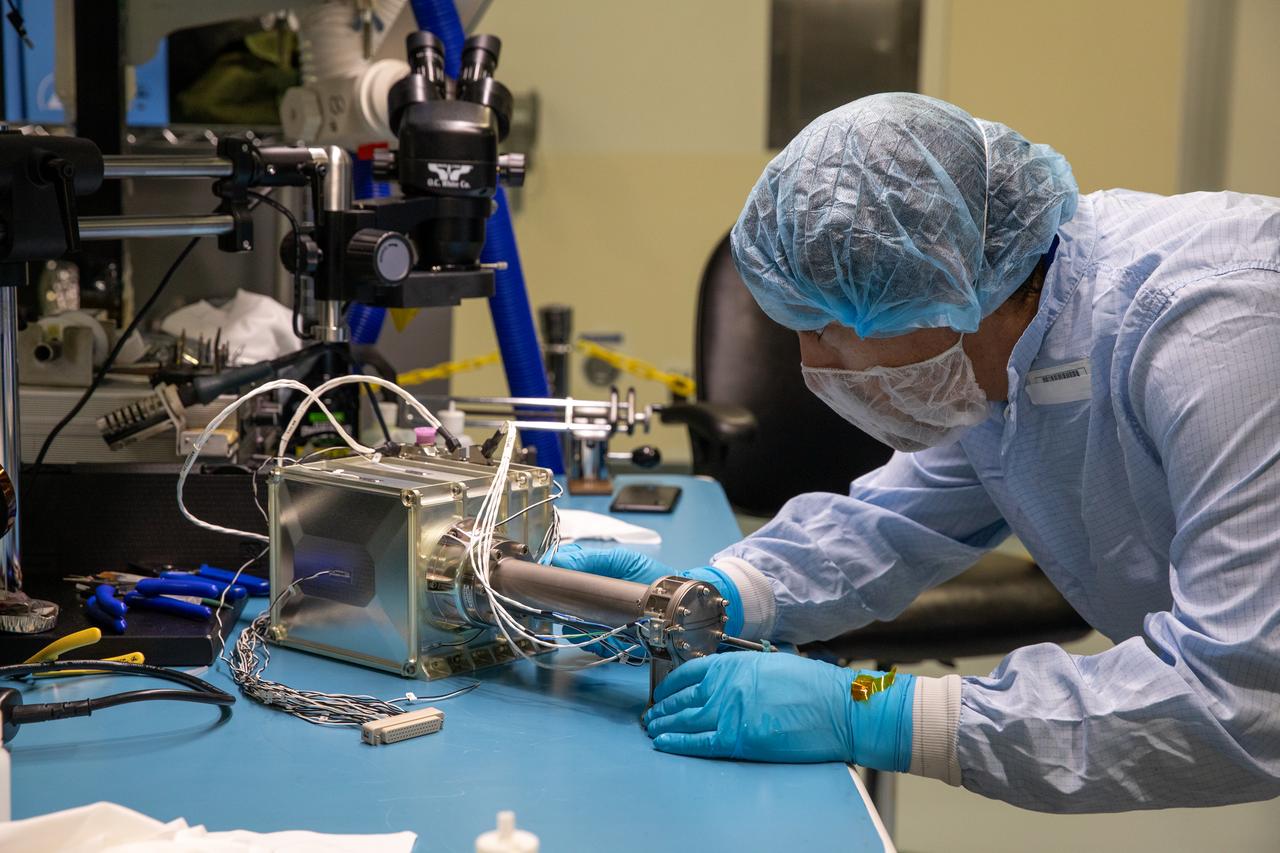
A team of engineers and technicians finished the final assembly step for the MSOLO-2 (Mass Spectrometer Observing Lunar Operations) flight instrument by installing the Calibration Gas System inside of the Space Station Processing Facility at NASA’s Kennedy Space Center in Florida on June 21, 2023. MSOLO is a commercial off-the-shelf mass spectrometer modified to work in space and it will help analyze the chemical makeup of landing sites on the Moon, as well as study water on the lunar surface.
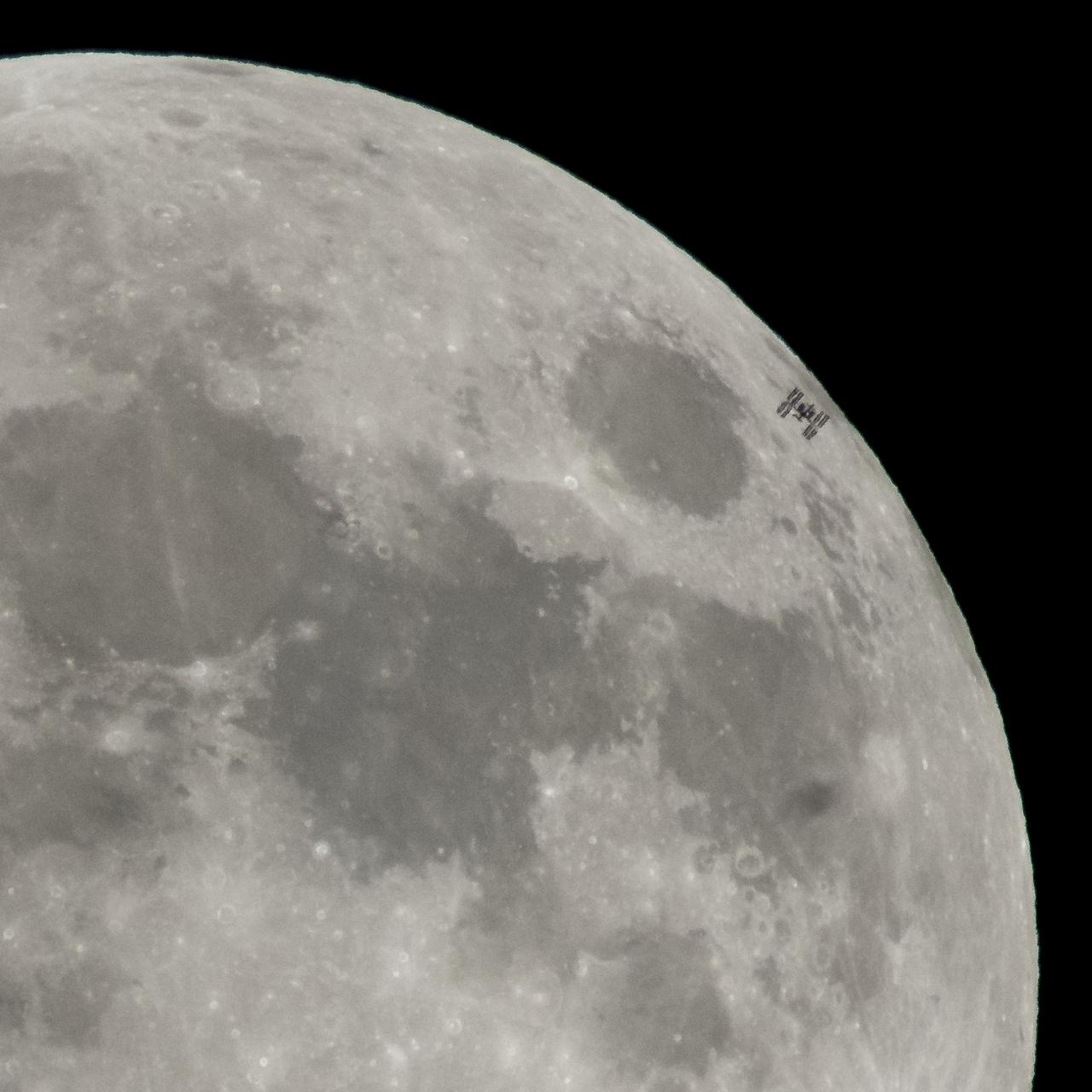
The International Space Station, with a crew of six onboard, is seen in silhouette as it transits the moon at roughly five miles per second Tuesday, Jan. 30, 2018, Alexandria, Virginia. Onboard are; NASA astronauts Joe Acaba, Mark Vande Hei, and Scott Tingle: Russian Cosmonauts Alexander Misurkin and Anton Shkaplerov, and Japanese astronaut Norishige Kanai. Photo Credit: (NASA/Bill Ingalls)
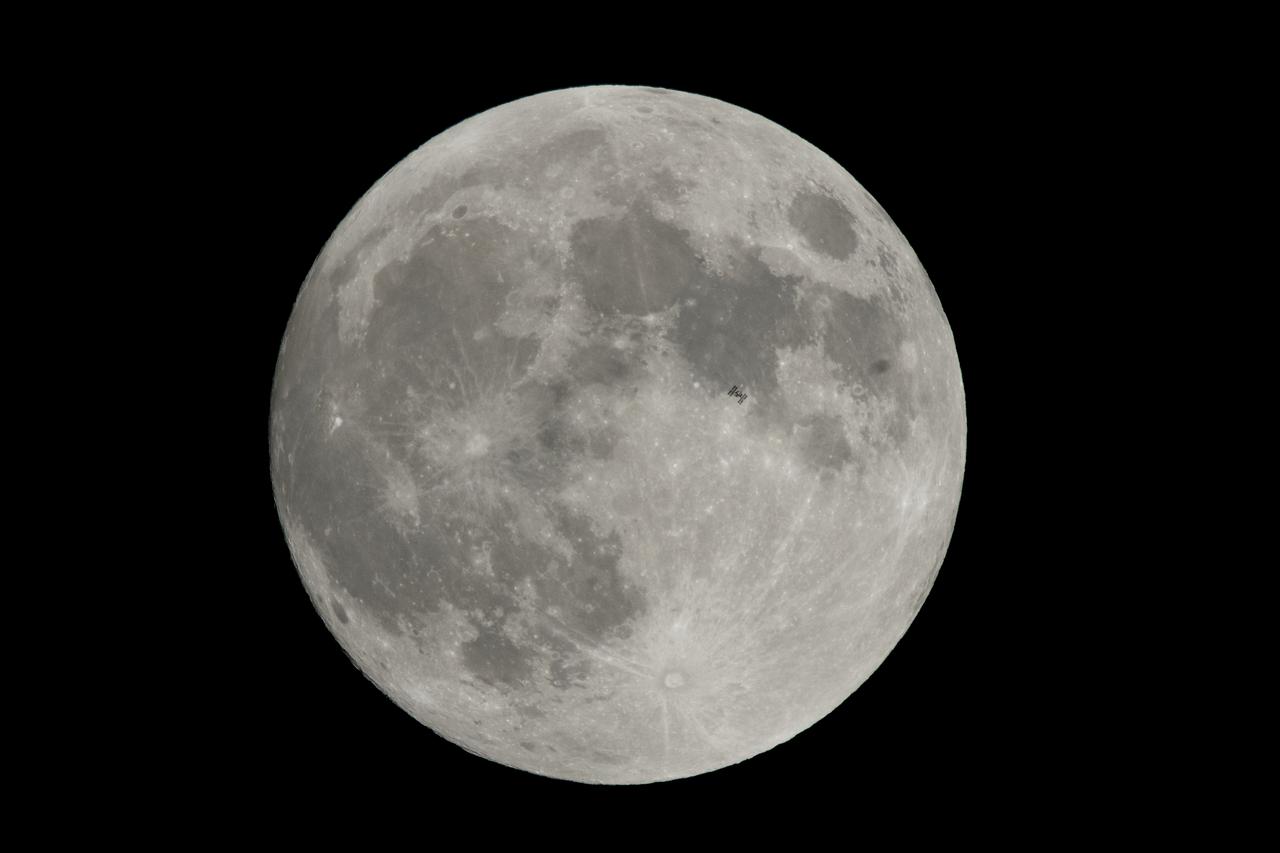
The International Space Station, with a crew of six onboard, is seen in silhouette as it transits the moon at roughly five miles per second Tuesday, Jan. 30, 2018, Alexandria, Virginia. Onboard are; NASA astronauts Joe Acaba, Mark Vande Hei, and Scott Tingle: Russian Cosmonauts Alexander Misurkin and Anton Shkaplerov, and Japanese astronaut Norishige Kanai. Photo Credit: (NASA/Bill Ingalls)
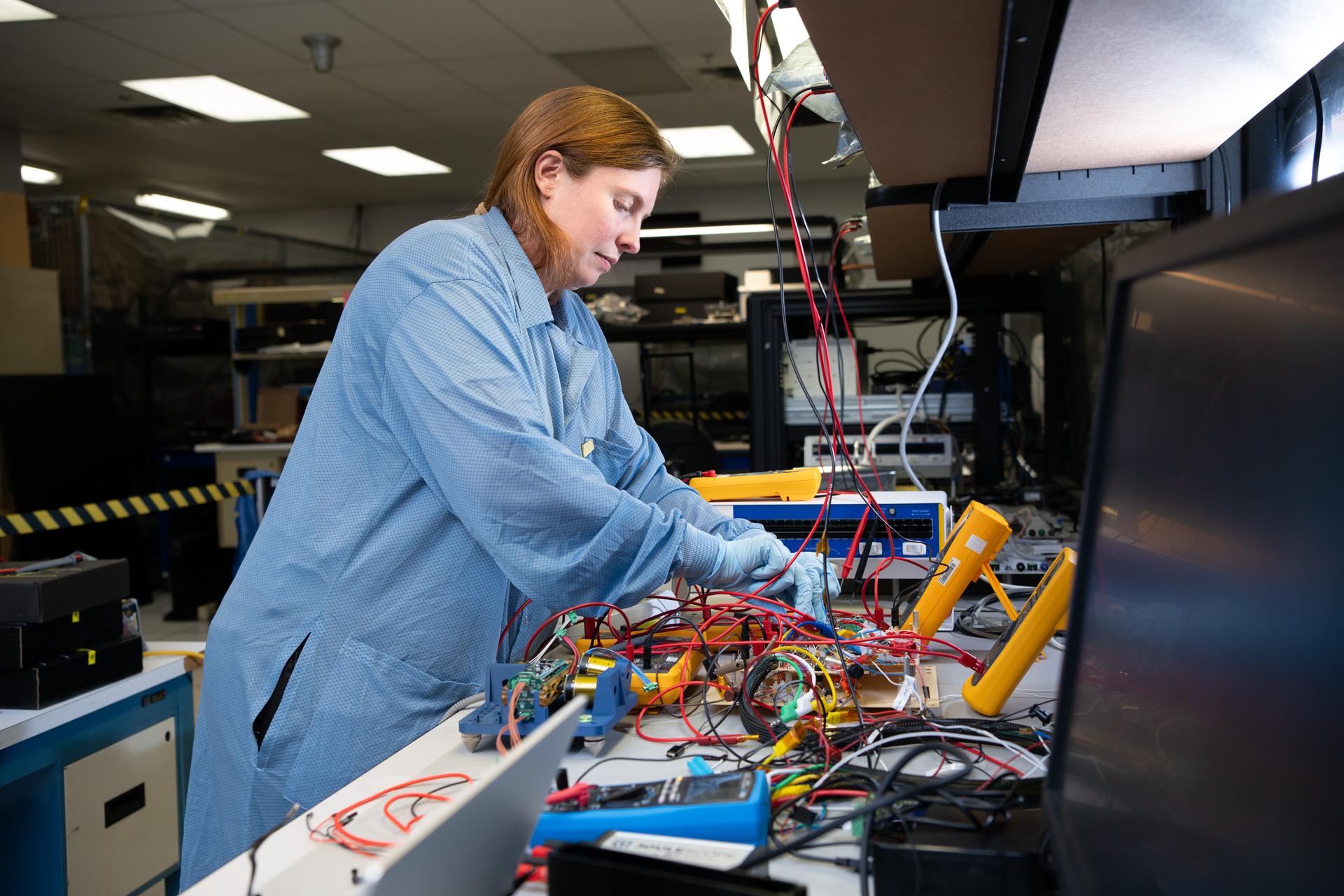
Rebekah Austin, Avionics Lead and Deputy Systems Engineer, configures a breadboard test for the Lunar Environment Monitoring Station (LEMS) Seismometer at NASA's Goddard Space Flight Center in Greenbelt, Maryland on May 14th, 2025. NASA/Denny Henry
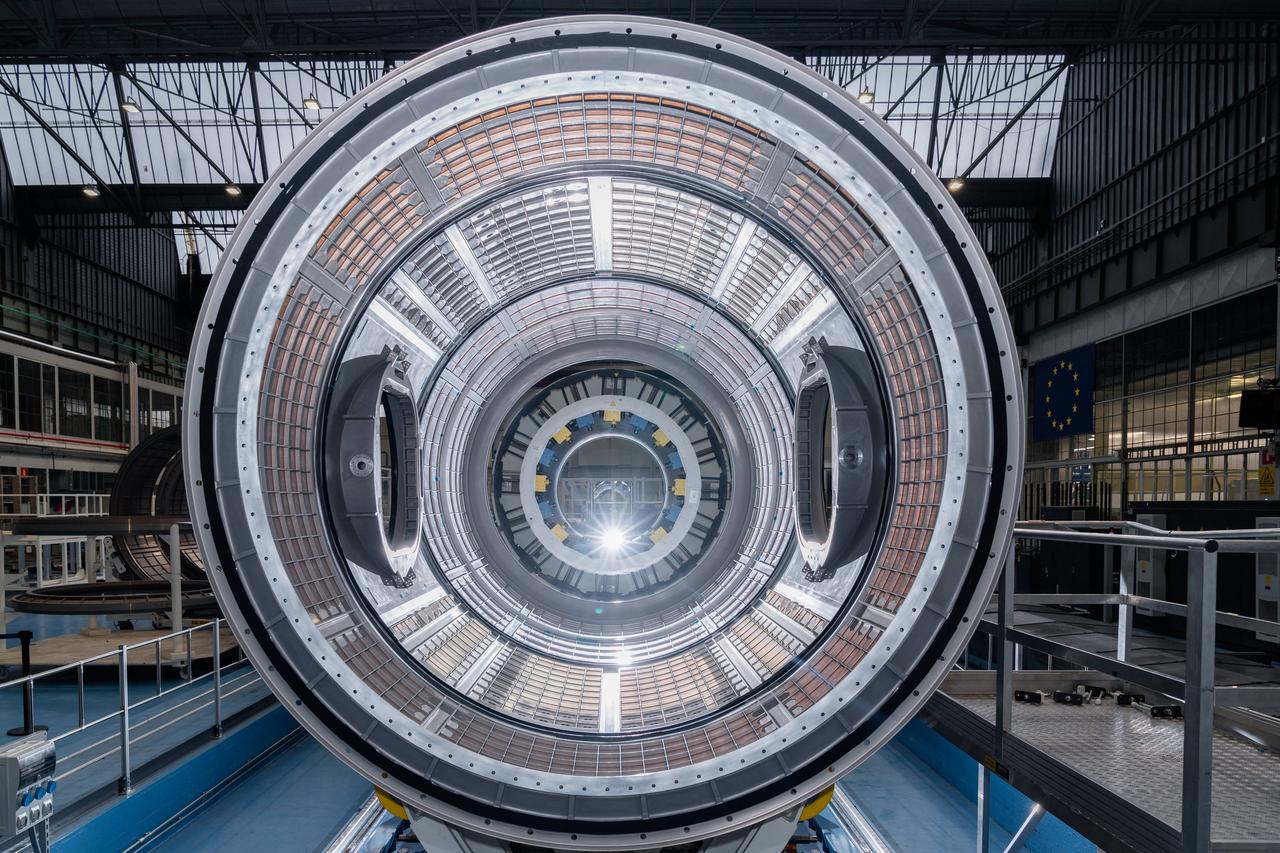
The primary structure of the Gateway space station's HALO (Habitation and Logistics Outpost) module is one step closer to launch following welding completion in Turin, Italy. HALO is one of four Gateway modules where astronauts will live, conduct science, and prepare for lunar surface missions. NASA is partnering with Northrop Grumman and their subcontractor Thales Alenia Space to develop HALO.
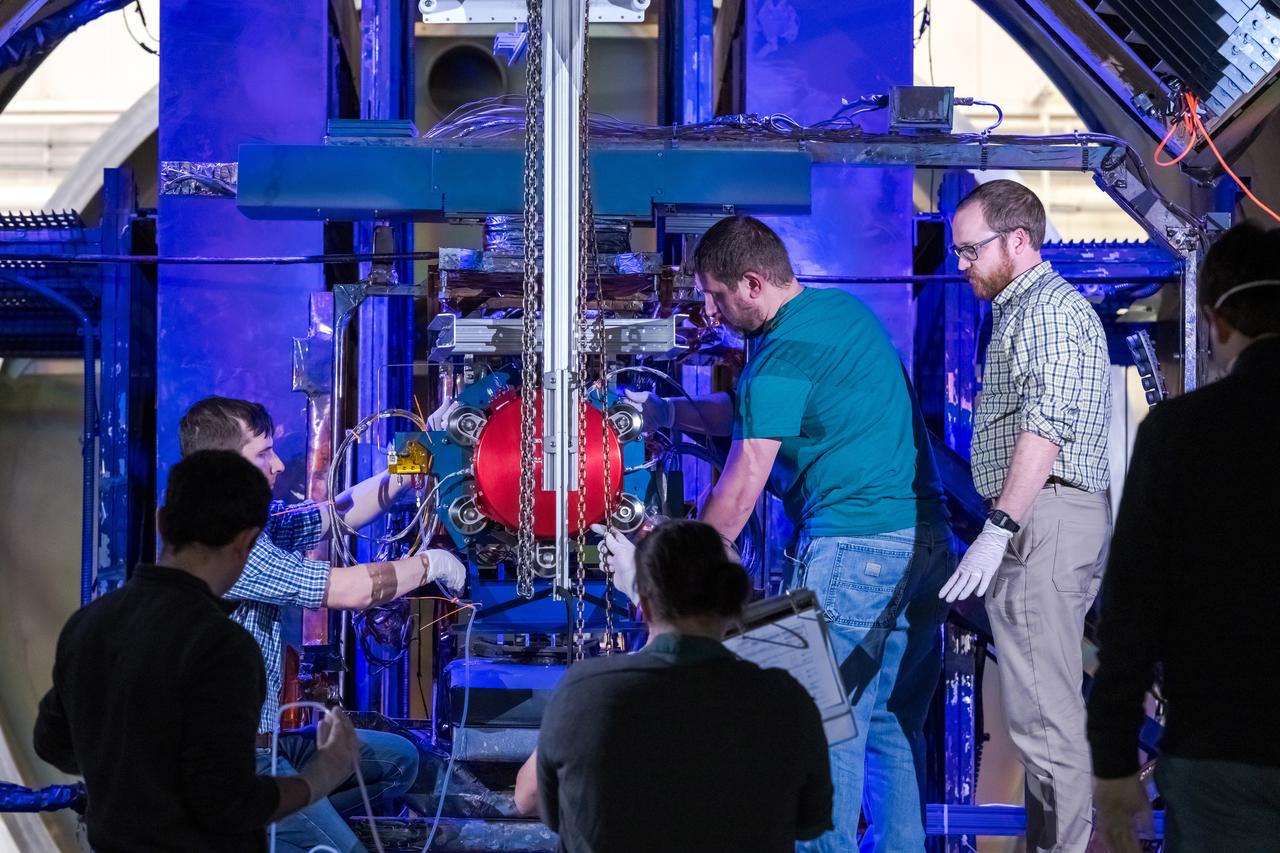
NASA Glenn Research Center has received the first of three Advanced Electric Propulsion System (AEPS) thrusters for the Gateway lunar space station. Built by L3Harris Technologies, the thruster will undergo testing before integration with Gateway’s Power and Propulsion Element, launching with the HALO module ahead of Artemis IV.
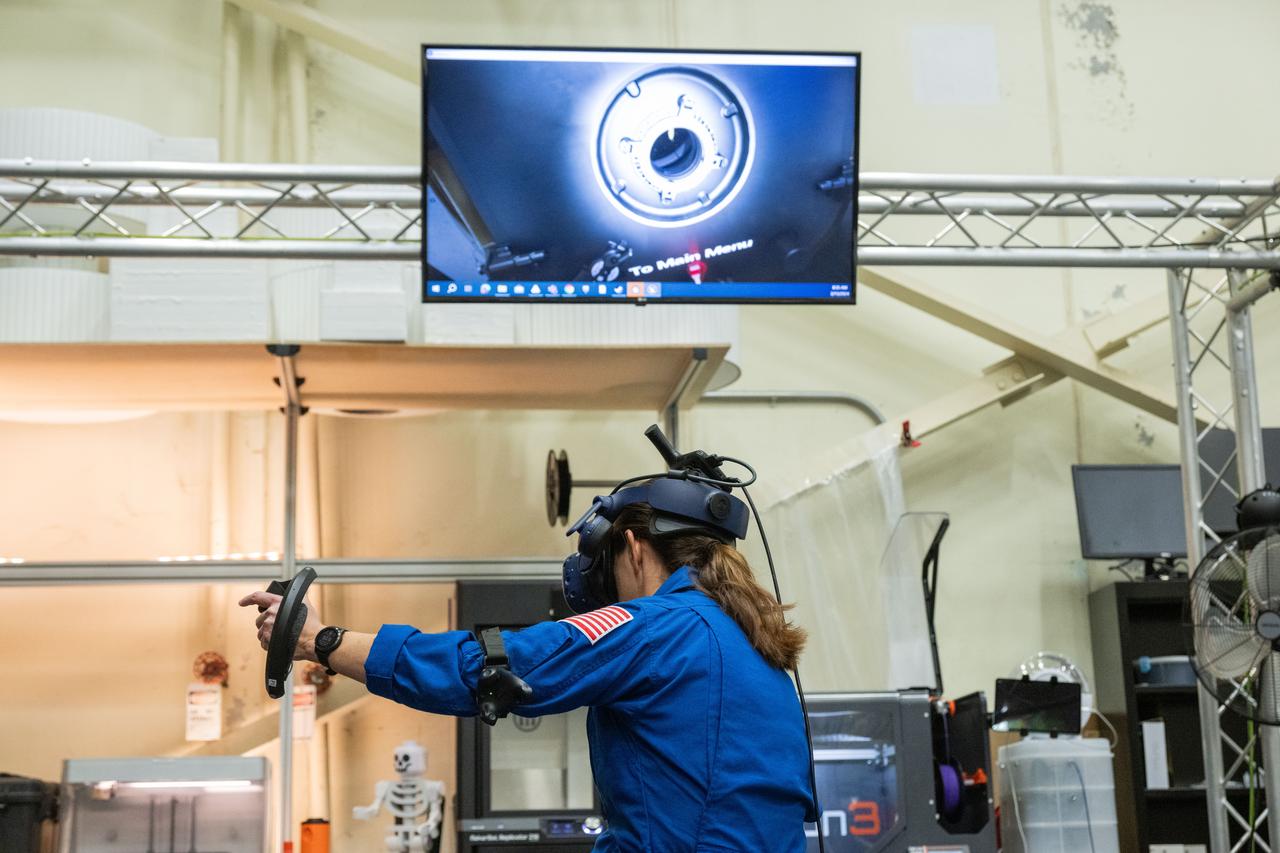
NASA astronaut Nicole Mann participates in virtual reality testing of the Gateway lunar space station to ensure its comfort and safety when astronauts live and conduct science there on future Artemis missions. PHOTO DATE: 02-13-24 LOCATION: Bldg. 15 - VR Lab SUBJECT: Photographic support for Gateway Web Feature: VR Technology for Interior Gateway Training with astronaut Nicole Mann PHOTOGRAPHER: Photo Credit: NASA / Bill Stafford
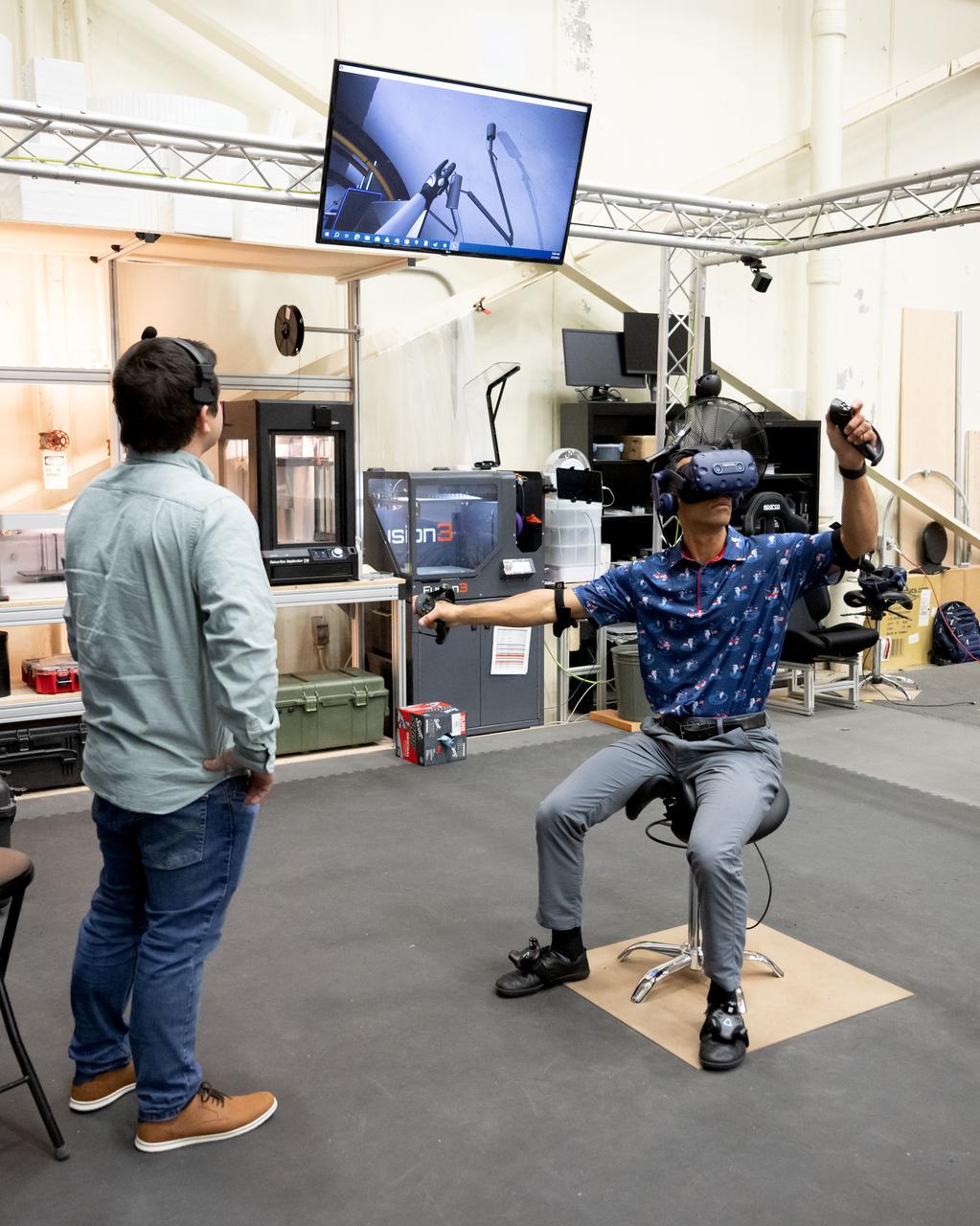
NASA astronaut Raja Chari participates in virtual reality testing of the Gateway lunar space station to ensure its comfort and safety when astronauts live and conduct science there on future Artemis missions. PHOTO DATE: February 09, 2022. LOCATION: Bldg. 15 - VR Lab SUBJECT: VR Technology for Interior Gateway Training with astronaut Raja Chari. Photo Credit: NASA / Josh Valcarcel

NASA astronaut Raja Chari participates in virtual reality testing of the Gateway lunar space station to ensure its comfort and safety when astronauts live and conduct science there on future Artemis missions. PHOTO DATE: February 09, 2022. LOCATION: Bldg. 15 - VR Lab SUBJECT: VR Technology for Interior Gateway Training with astronaut Raja Chari. Photo Credit: NASA / Josh Valcarcel
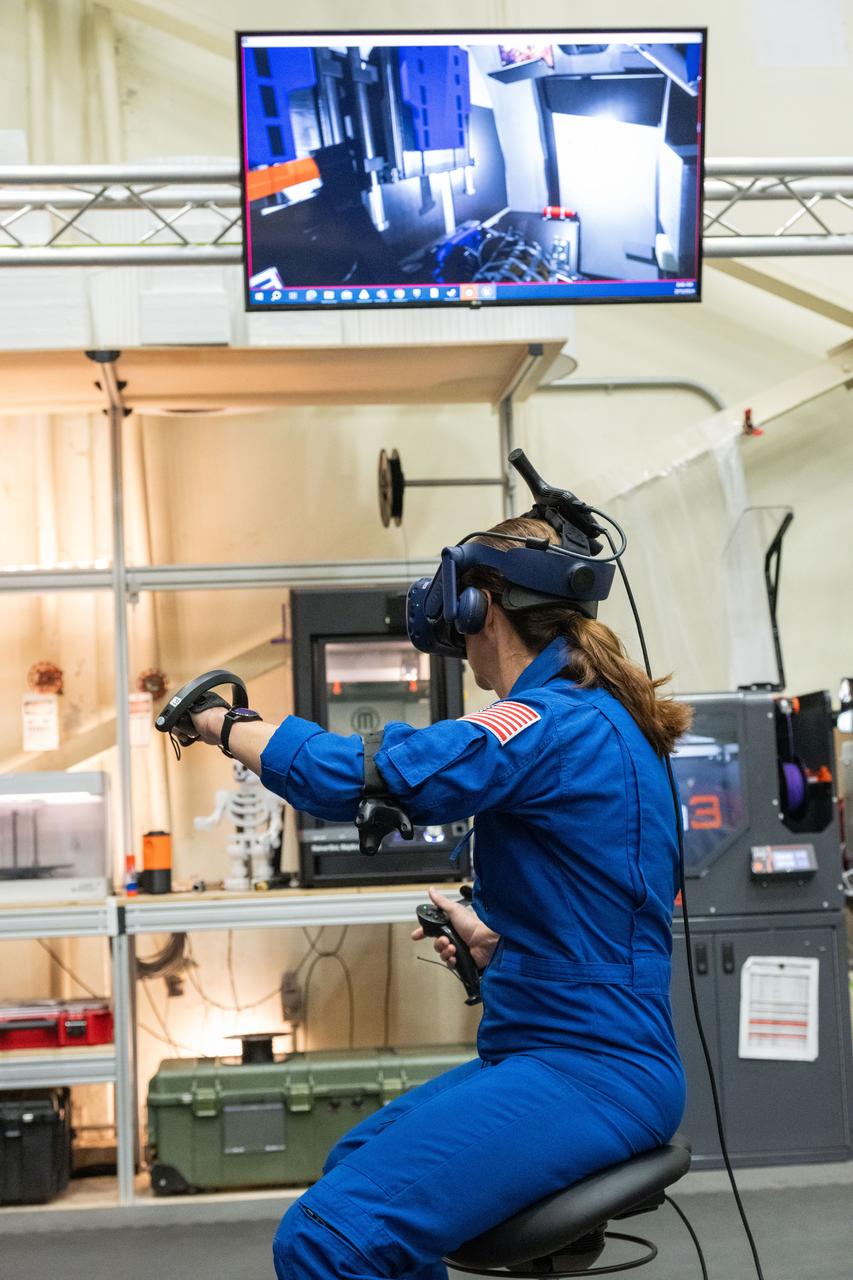
NASA astronaut Nicole Mann participates in virtual reality testing of the Gateway lunar space station to ensure its comfort and safety when astronauts live and conduct science there on future Artemis missions. PHOTO DATE: 02-13-24 LOCATION: Bldg. 15 - VR Lab SUBJECT: Photographic support for Gateway Web Feature: VR Technology for Interior Gateway Training with astronaut Nicole Mann PHOTOGRAPHER: Photo Credit: NASA / Bill Stafford
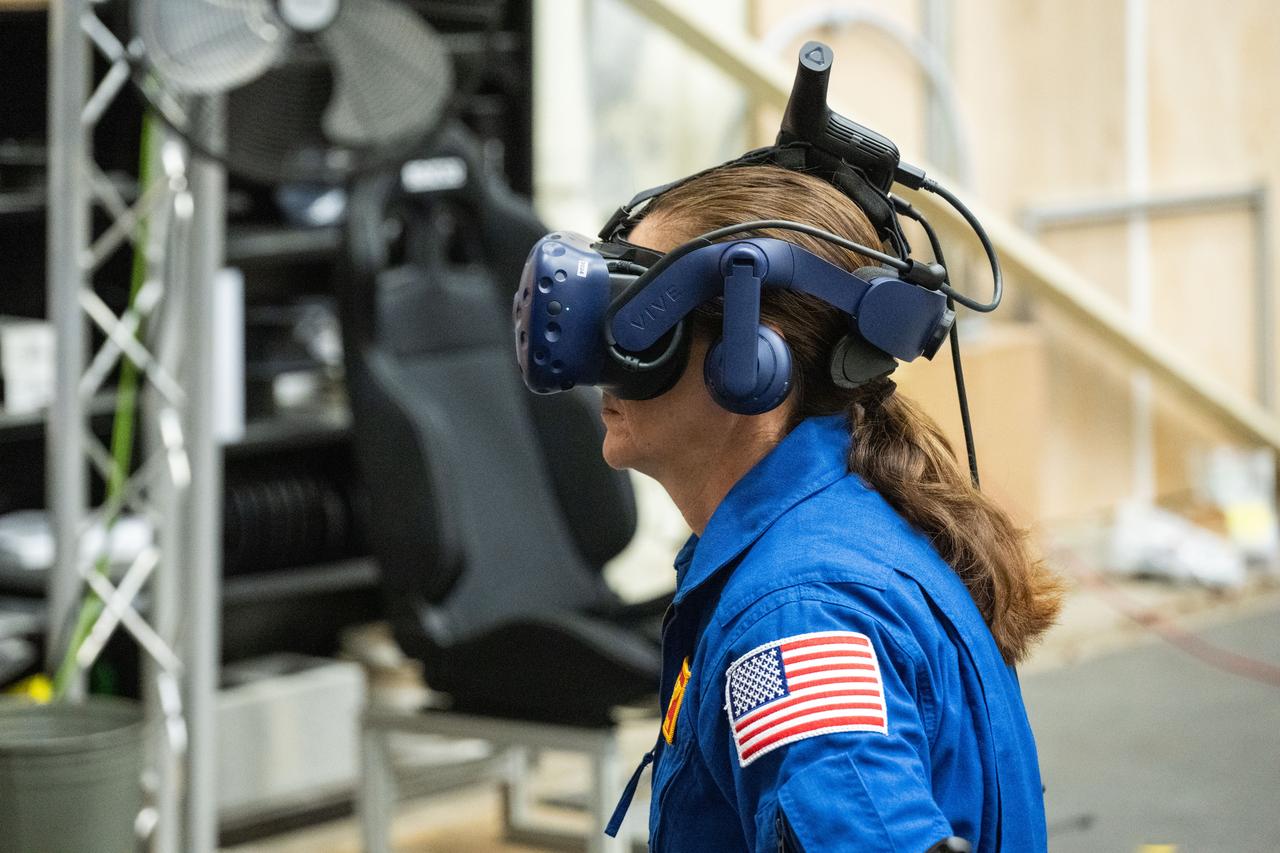
NASA astronaut Nicole Mann participates in virtual reality testing of the Gateway lunar space station to ensure its comfort and safety when astronauts live and conduct science there on future Artemis missions. PHOTO DATE: 02-13-24 LOCATION: Bldg. 15 - VR Lab SUBJECT: Photographic support for Gateway Web Feature: VR Technology for Interior Gateway Training with astronaut Nicole Mann PHOTOGRAPHER: Photo Credit: NASA / Bill Stafford

NASA astronaut Raja Chari participates in virtual reality testing of the Gateway lunar space station to ensure its comfort and safety when astronauts live and conduct science there on future Artemis missions. PHOTO DATE: February 09, 2022. LOCATION: Bldg. 15 - VR Lab SUBJECT: VR Technology for Interior Gateway Training with astronaut Raja Chari. Photo Credit: NASA / Josh Valcarcel

NASA astronaut Raja Chari participates in virtual reality testing of the Gateway lunar space station to ensure its comfort and safety when astronauts live and conduct science there on future Artemis missions. PHOTO DATE: February 09, 2022. LOCATION: Bldg. 15 - VR Lab SUBJECT: VR Technology for Interior Gateway Training with astronaut Raja Chari. Photo Credit: NASA / Josh Valcarcel
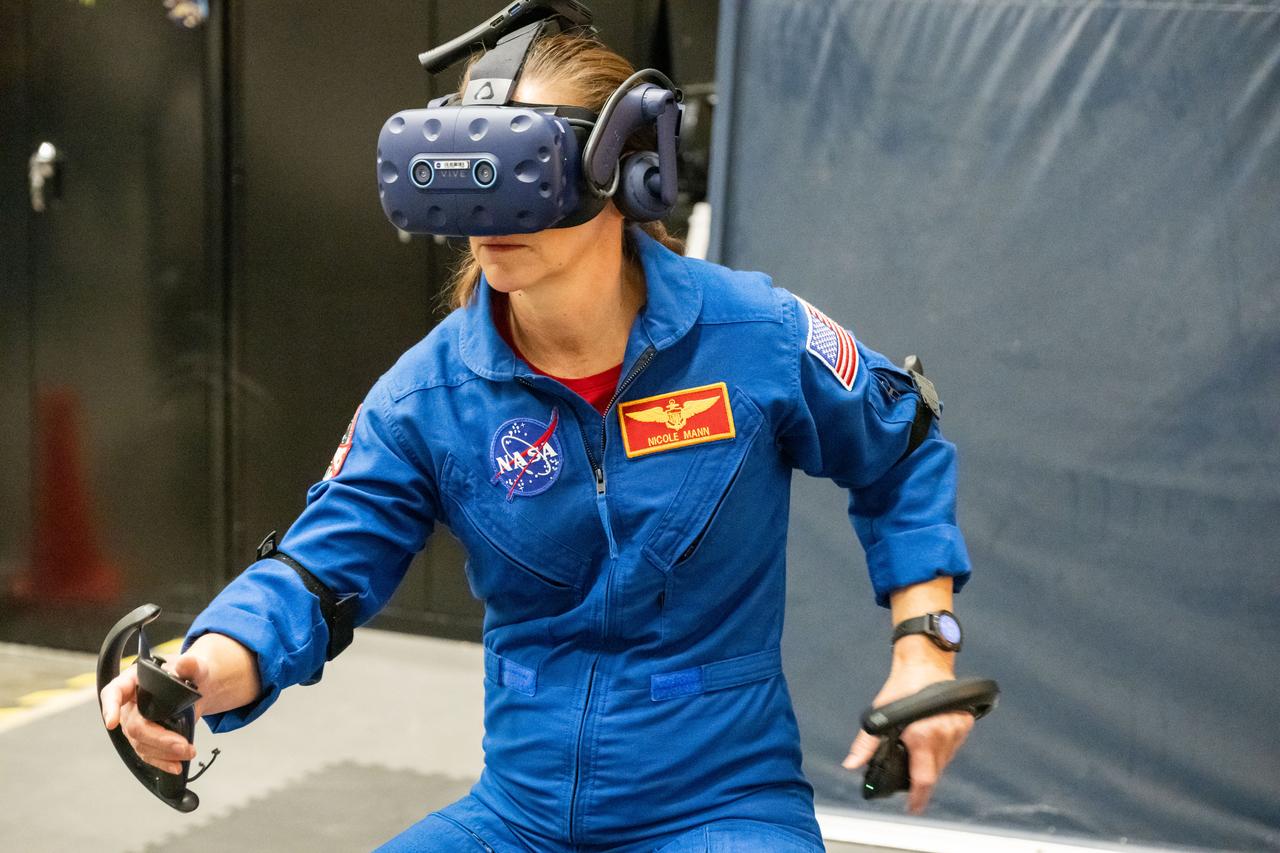
NASA astronaut Nicole Mann participates in virtual reality testing of the Gateway lunar space station to ensure its comfort and safety when astronauts live and conduct science there on future Artemis missions. PHOTO DATE: 02-13-24 LOCATION: Bldg. 15 - VR Lab SUBJECT: Photographic support for Gateway Web Feature: VR Technology for Interior Gateway Training with astronaut Nicole Mann PHOTOGRAPHER: Photo Credit: NASA / Bill Stafford
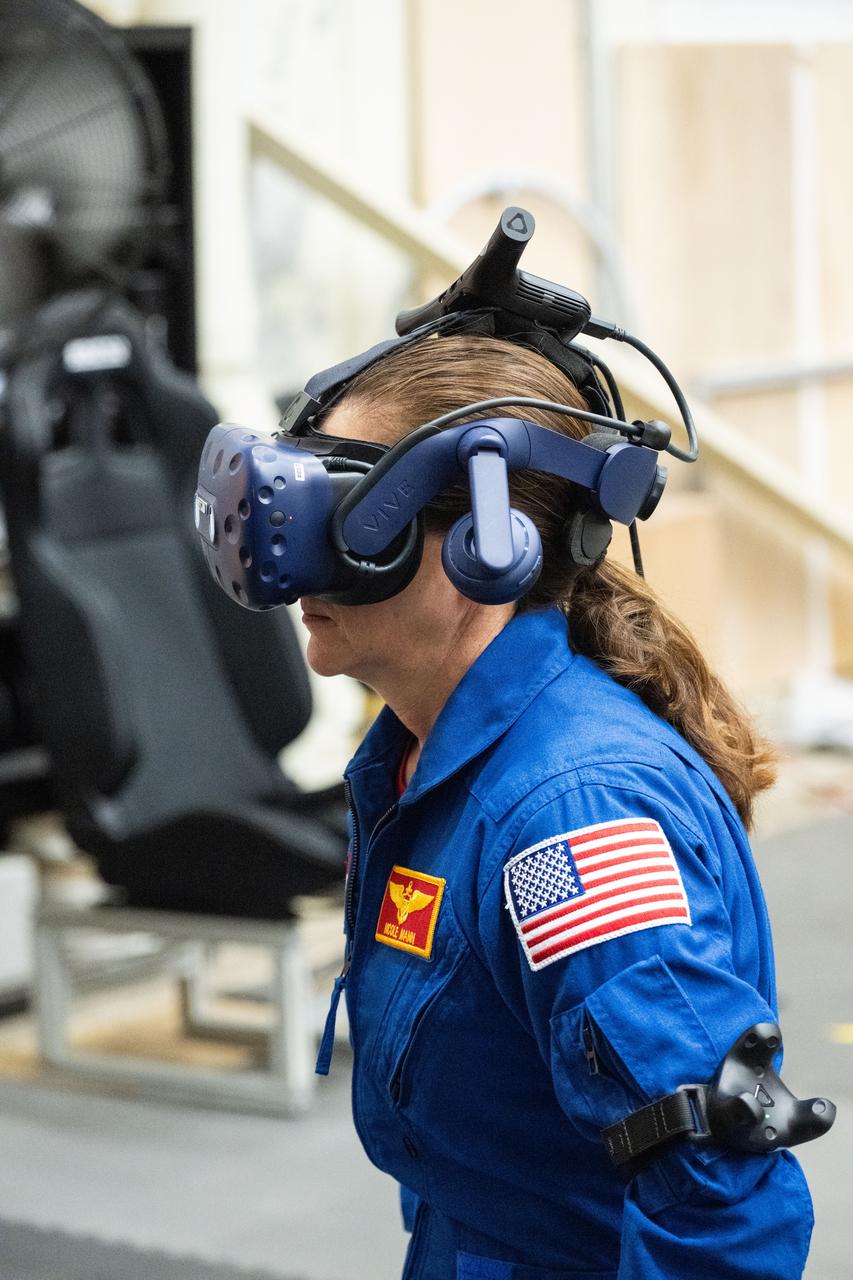
NASA astronaut Nicole Mann participates in virtual reality testing of the Gateway lunar space station to ensure its comfort and safety when astronauts live and conduct science there on future Artemis missions. PHOTO DATE: 02-13-24 LOCATION: Bldg. 15 - VR Lab SUBJECT: Photographic support for Gateway Web Feature: VR Technology for Interior Gateway Training with astronaut Nicole Mann PHOTOGRAPHER: Photo Credit: NASA / Bill Stafford
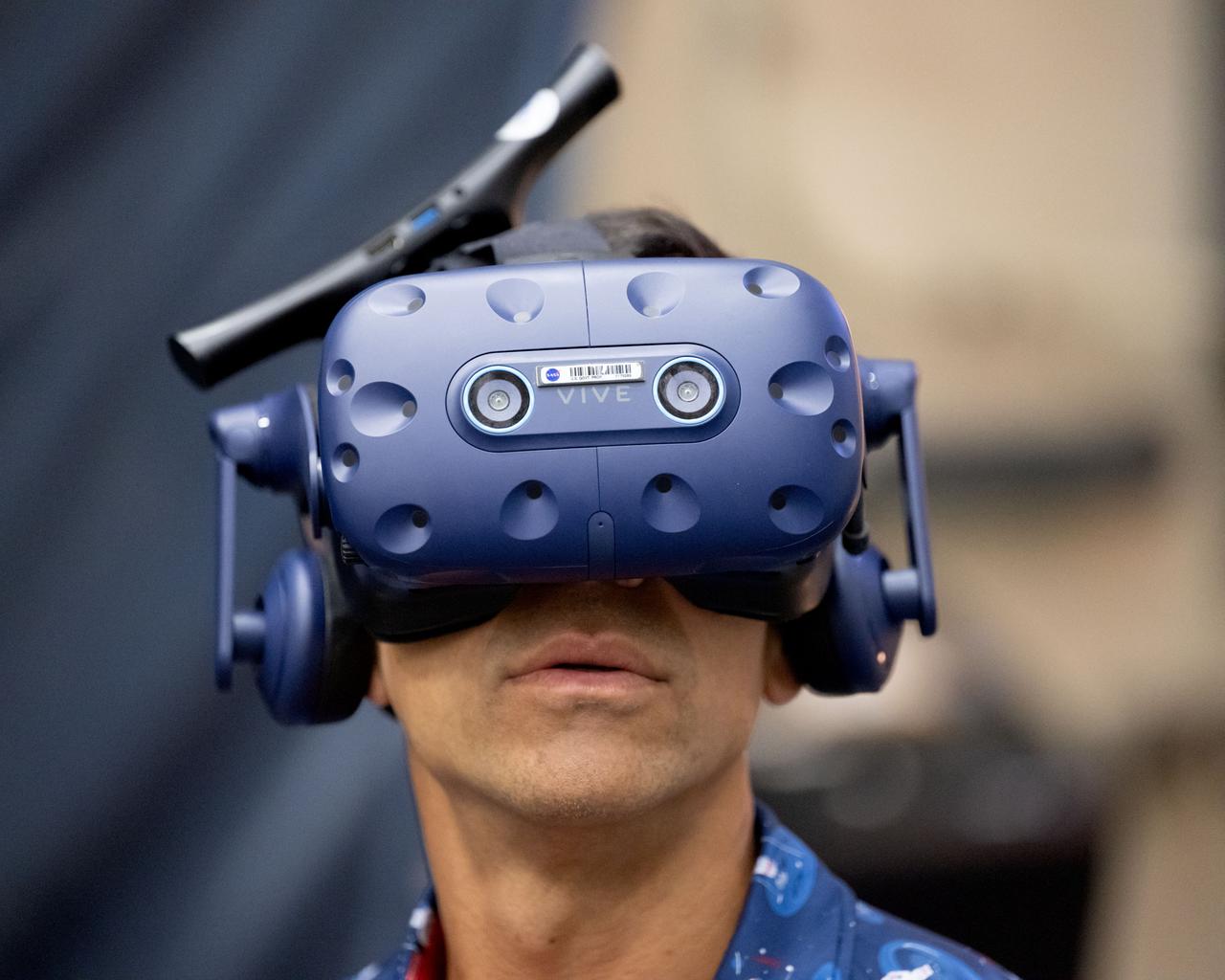
NASA astronaut Raja Chari participates in virtual reality testing of the Gateway lunar space station to ensure its comfort and safety when astronauts live and conduct science there on future Artemis missions. PHOTO DATE: February 09, 2022. LOCATION: Bldg. 15 - VR Lab SUBJECT: VR Technology for Interior Gateway Training with astronaut Raja Chari. Photo Credit: NASA / Josh Valcarcel

NASA astronaut Raja Chari participates in virtual reality testing of the Gateway lunar space station to ensure its comfort and safety when astronauts live and conduct science there on future Artemis missions. PHOTO DATE: February 09, 2022. LOCATION: Bldg. 15 - VR Lab SUBJECT: VR Technology for Interior Gateway Training with astronaut Raja Chari. Photo Credit: NASA / Josh Valcarcel

NASA astronaut Nicole Mann participates in virtual reality testing of the Gateway lunar space station to ensure its comfort and safety when astronauts live and conduct science there on future Artemis missions. PHOTO DATE: 02-13-24 LOCATION: Bldg. 15 - VR Lab SUBJECT: Photographic support for Gateway Web Feature: VR Technology for Interior Gateway Training with astronaut Nicole Mann PHOTOGRAPHER: Photo Credit: NASA / Bill Stafford
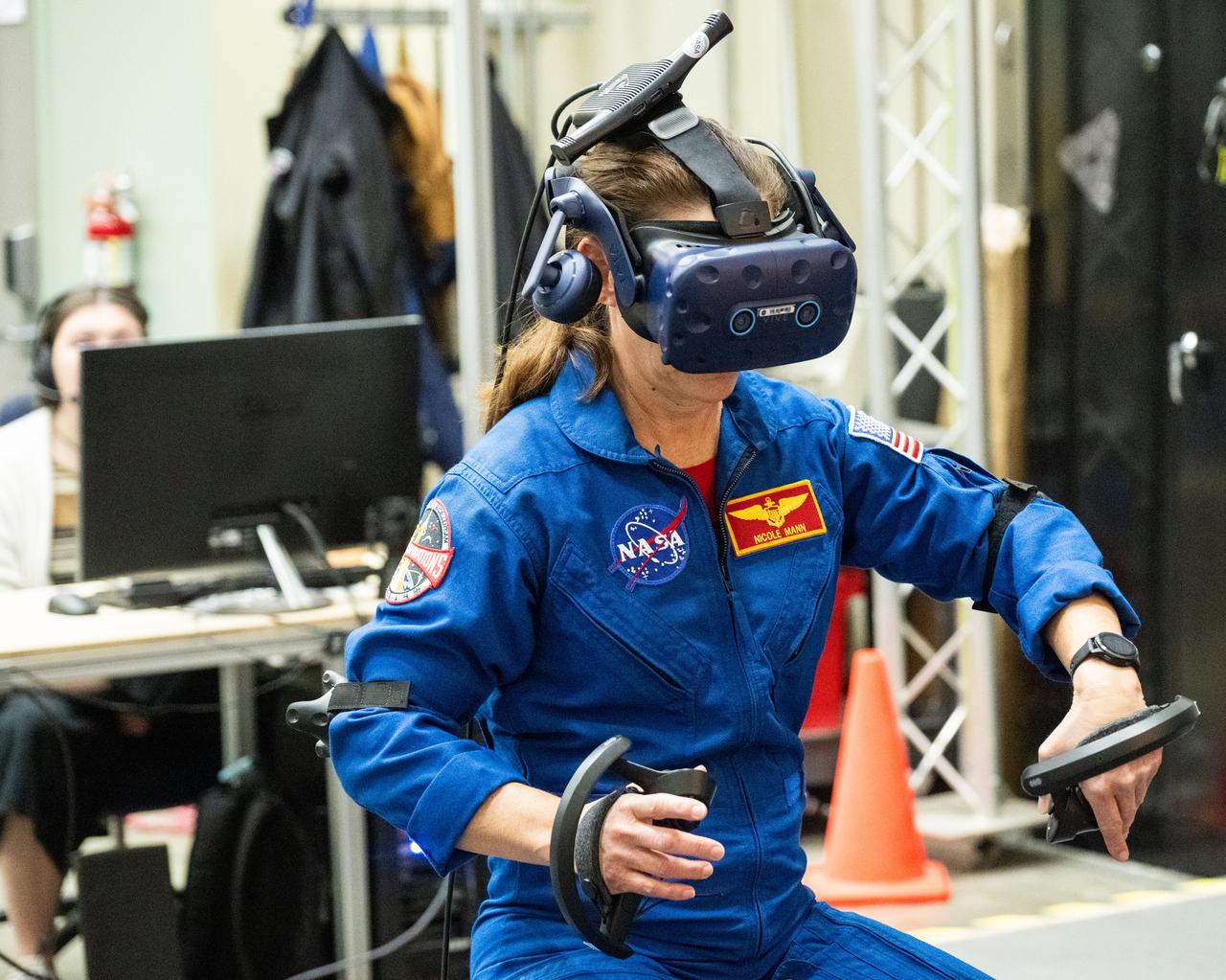
NASA astronaut Nicole Mann participates in virtual reality testing of the Gateway lunar space station to ensure its comfort and safety when astronauts live and conduct science there on future Artemis missions. PHOTO DATE: 02-13-24 LOCATION: Bldg. 15 - VR Lab SUBJECT: Photographic support for Gateway Web Feature: VR Technology for Interior Gateway Training with astronaut Nicole Mann PHOTOGRAPHER: Photo Credit: NASA / Bill Stafford
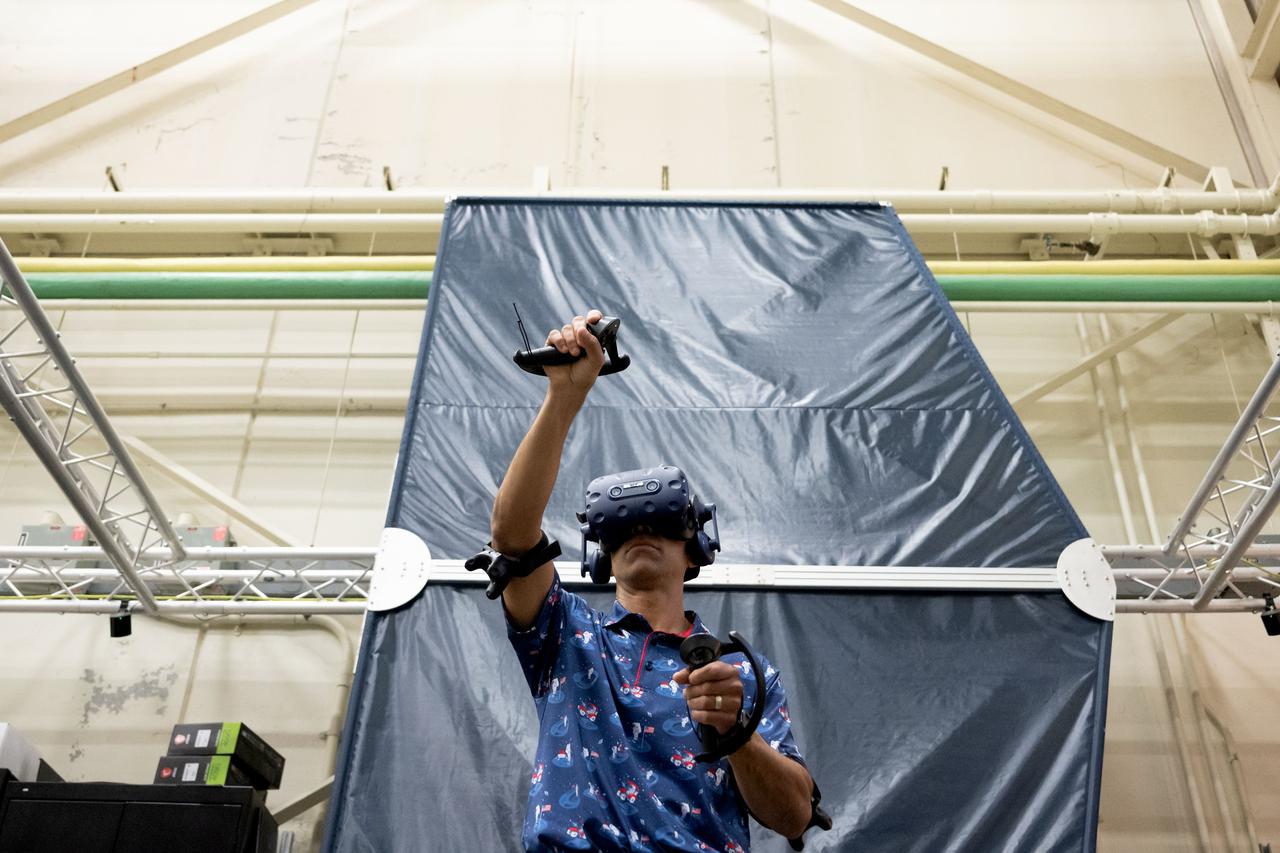
NASA astronaut Raja Chari participates in virtual reality testing of the Gateway lunar space station to ensure its comfort and safety when astronauts live and conduct science there on future Artemis missions. PHOTO DATE: February 09, 2022. LOCATION: Bldg. 15 - VR Lab SUBJECT: VR Technology for Interior Gateway Training with astronaut Raja Chari. Photo Credit: NASA / Josh Valcarcel

jsc2024e055764 (July 26, 2024) -- Dr. Jon Olansen discusses lunar habitation during the "Living the Lunar Life" forum at EAA AirVenture Oshkosh 2024. As Gateway Program Manager, Olansen highlights the innovative technologies and mission planning essential for living and working in the harsh environment of deep space. Photo Credit: NASA/Andrew Carlsen
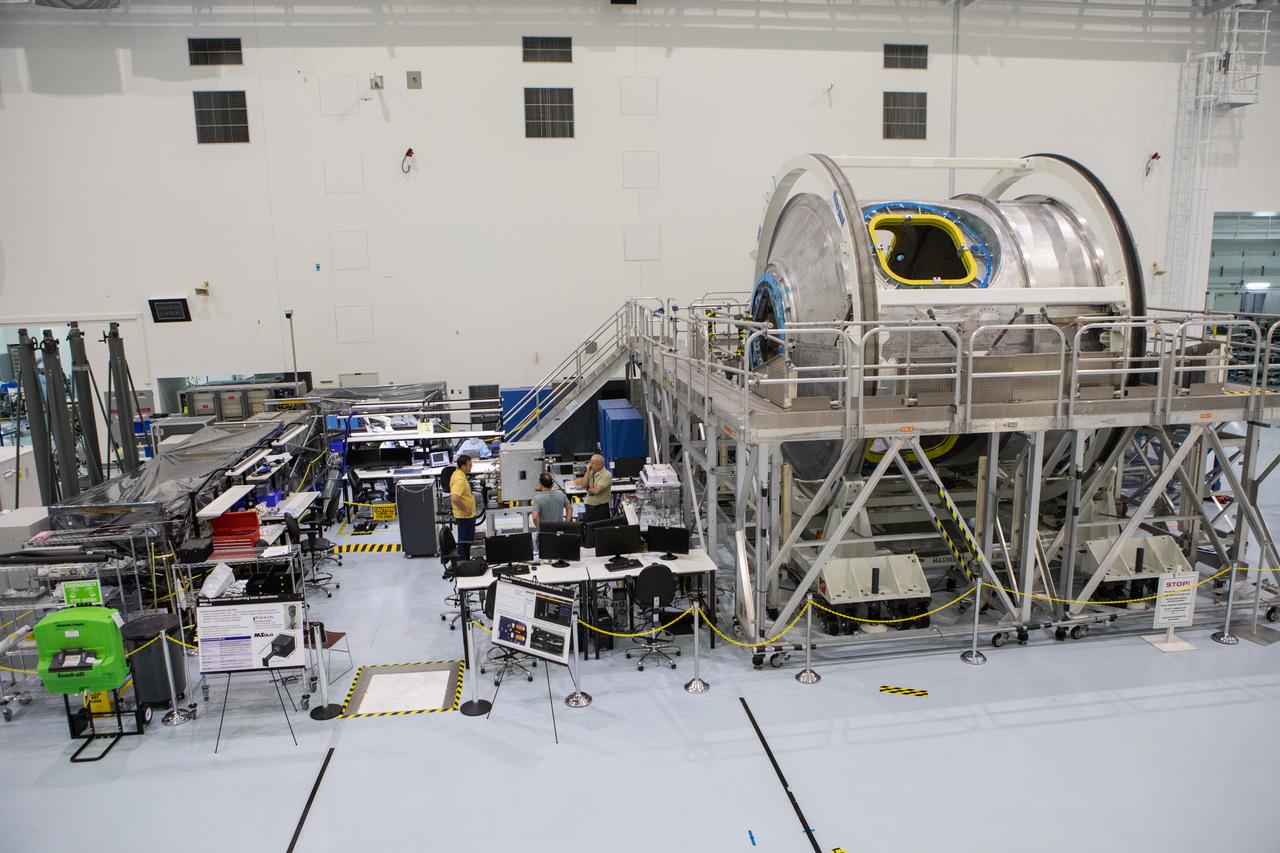
Instruments for NASA’s Mars Spectrometer observing lunar operations (MSolo) are in view at left in the high bay of the Space Station Processing Facility (SSPF) at NASA's Kennedy Space Center in Florida, on May 16, 2019. The center is celebrating the SSPF’s 25th anniversary. The facility was built to process elements for the International Space Station. Now it is providing support for current and future NASA and commercial provider programs, including Commercial Resupply Services, Artemis 1, sending the first woman and next man to the Moon, and deep space destinations including Mars.
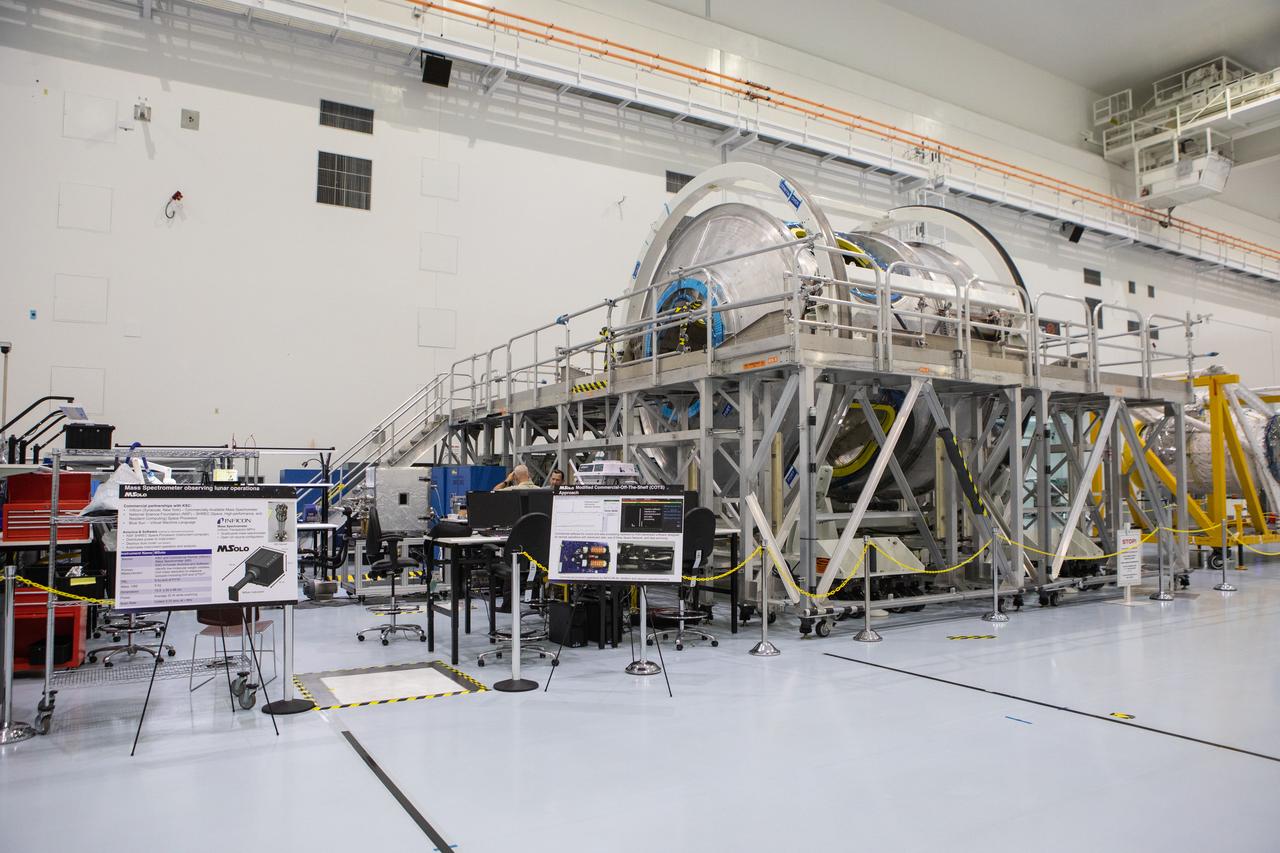
Instruments for NASA’s Mars Spectrometer observing lunar operations (MSolo) are in view at left in the high bay of the Space Station Processing Facility (SSPF) at NASA's Kennedy Space Center in Florida, on May 16, 2019. The center is celebrating the SSPF’s 25th anniversary. The facility was built to process elements for the International Space Station. Now it is providing support for current and future NASA and commercial provider programs, including Commercial Resupply Services, Artemis 1, sending the first woman and next man to the Moon, and deep space destinations including Mars.

Gateway - HALO Static Test Complete. Location: Turin, Italy Date: July 9, 2024 Photo Credit: Thales Alenia Space
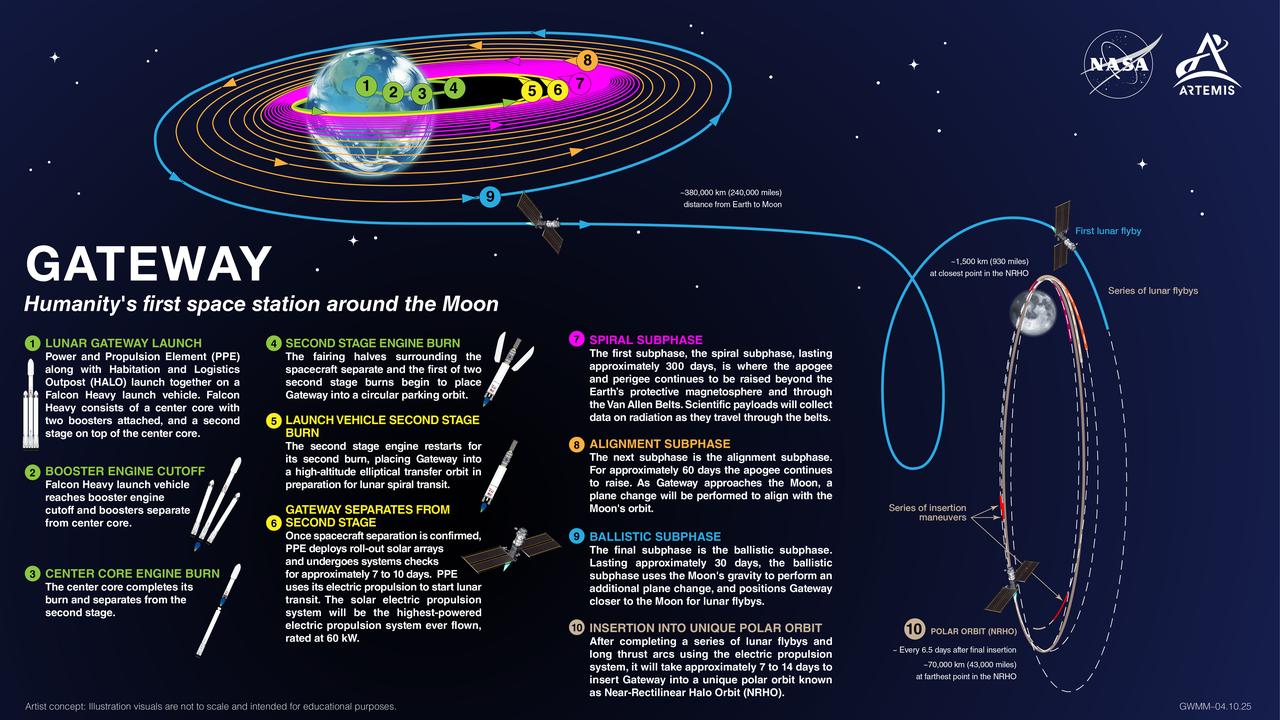
The Lunar Gateway Launch, mapped. Gateway's first elements, the Power and Propulsion Element and HALO (Habitation and Logistics Outpost), will launch together to lunar orbit, where they’ll set the stage for Artemis IV: the first Gateway assembly mission. During this milestone mission, the Artemis IV crew will deliver the European Space Agency's Lunar I-Hab, dock it to HALO, and enter the space station for the very first time. NASA is currently targeting a 2027 launch for HALO and the Power and Propulsion Element. This timeline allows for the roughly year-long journey to lunar orbit and ensures everything is in place ahead of Artemis IV.
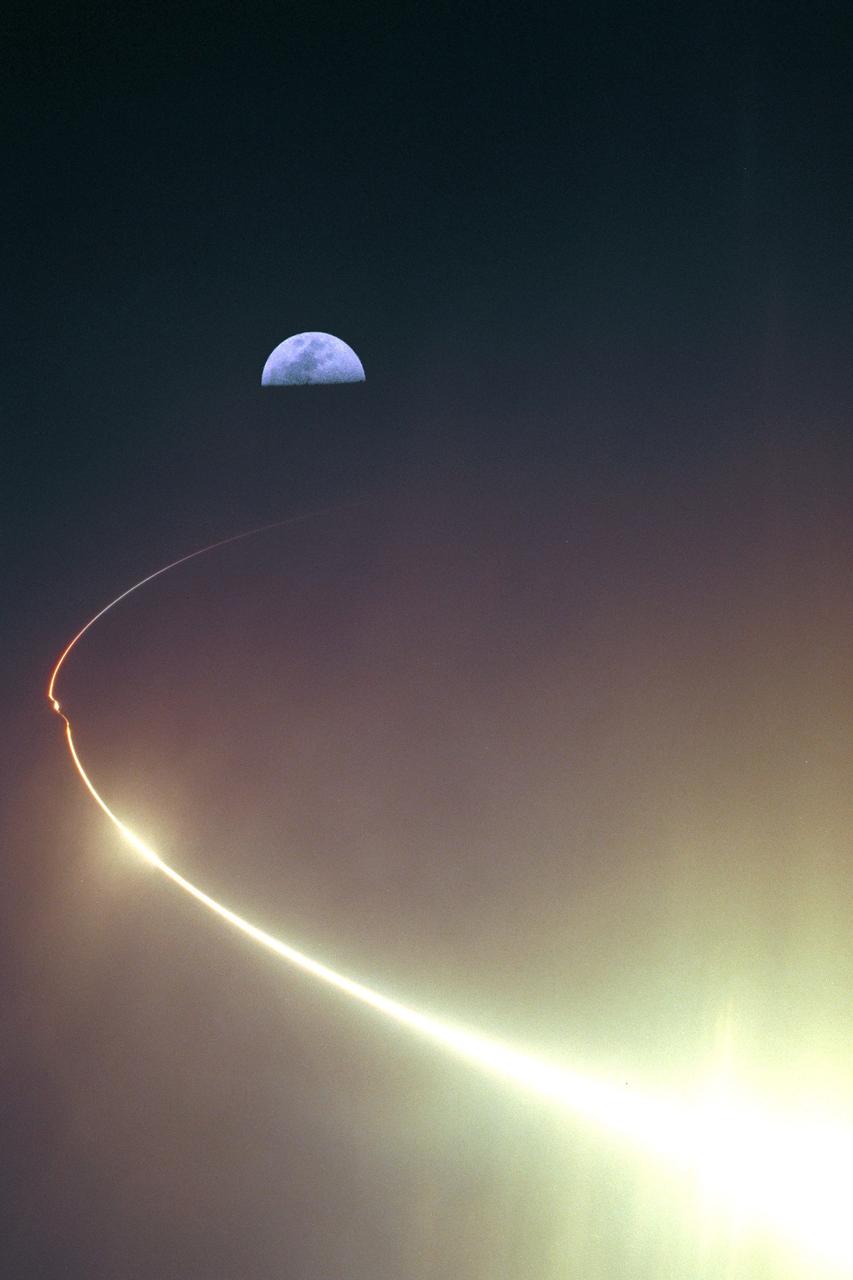
KENNEDY SPACE CENTER, FLA. - NASA's Lunar Prospector spacecraft launched successfully on its way to the Moon from Launch Complex 46 (LC46) at Cape Canaveral Air Station on Jan. 6 at 9:38 p.m. EST. It was the inaugural launch of Lockheed Martin's Athena II launch vehicle and the first launch from LC46, operated by Spaceport Florida Authority. Lunar Prospector, built for the NASA Ames Research Center by Lockheed Martin, is a spin-stabilized spacecraft designed to provide NASA with the first global maps of the Moon's surface and its gravitational magnetic fields, as well as look for the possible presence of ice near the lunar poles. It will orbit the Moon at an altitude of approximately 63 miles during a one-year mission.
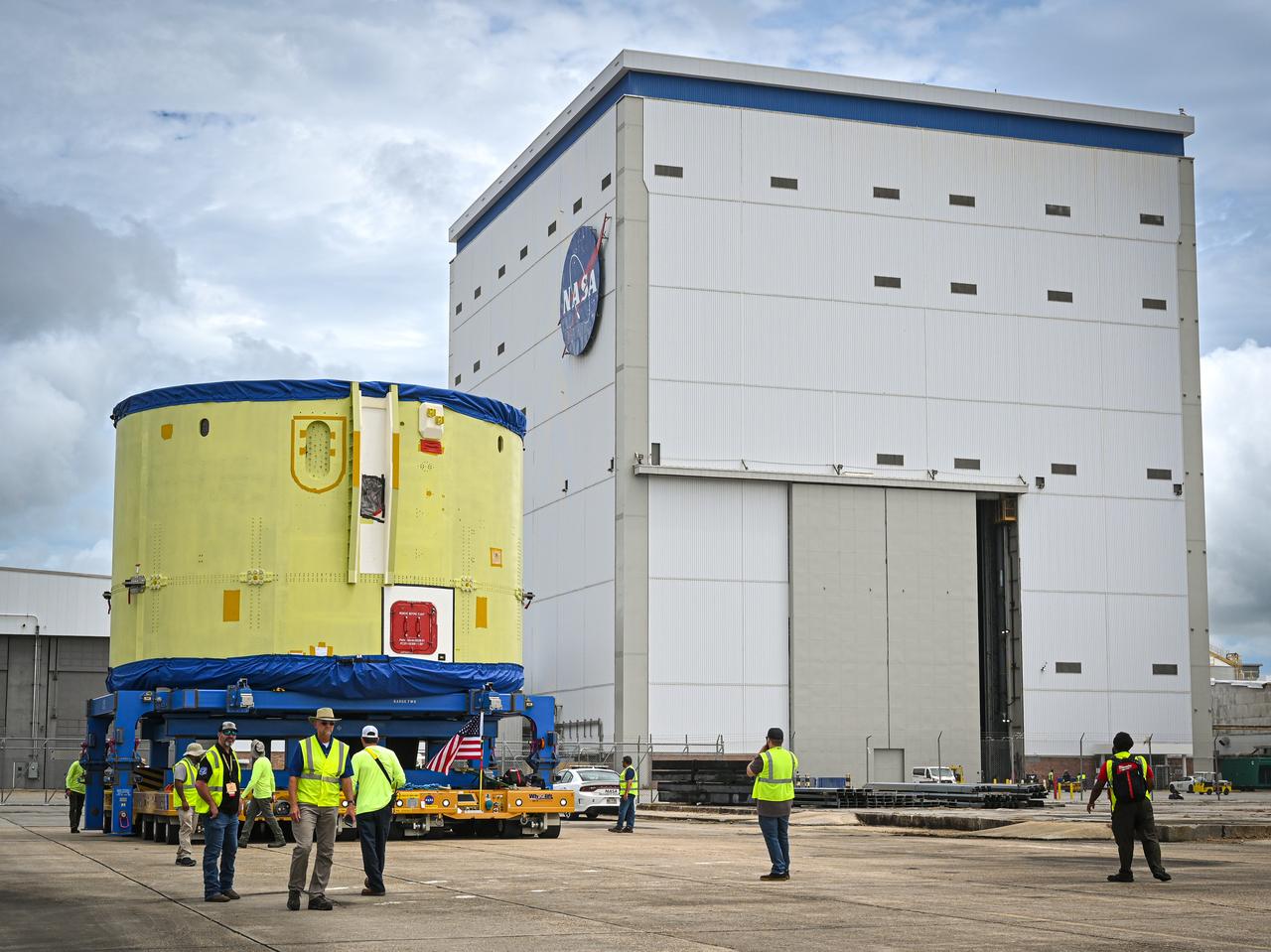
These photos show teams at NASA’s Michoud Assembly Facility in New Orleans preparing, moving, and loading the engine section of a future SLS (Space Launch System) rocket to NASA’s Pegasus barge Aug. 28. The hardware will form the bottom-most section of the SLS core stage that will power NASA’s Artemis IV mission, which will be the first mission to the Gateway space station in lunar orbit under the Artemis campaign. The barge will transport the spaceflight hardware to NASA’s Kennedy Space Center in Florida via the agency’s Pegasus barge. Once in Florida, the engine section will undergo final outfitting inside Kennedy’s Space Station Processing Facility.
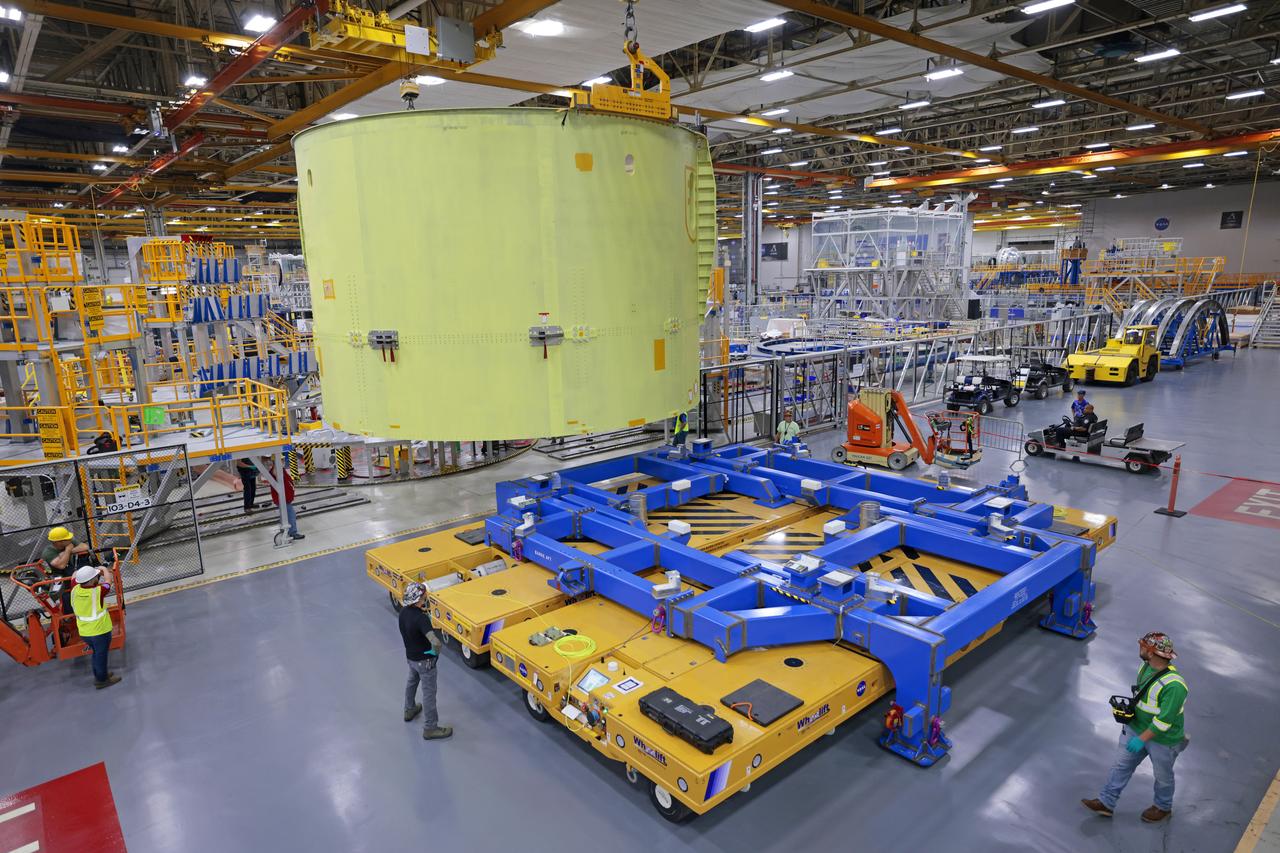
These photos show teams at NASA’s Michoud Assembly Facility in New Orleans preparing, moving, and loading the engine section of a future SLS (Space Launch System) rocket to NASA’s Pegasus barge Aug. 28. The hardware will form the bottom-most section of the SLS core stage that will power NASA’s Artemis IV mission, which will be the first mission to the Gateway space station in lunar orbit under the Artemis campaign. The barge will transport the spaceflight hardware to NASA’s Kennedy Space Center in Florida via the agency’s Pegasus barge. Once in Florida, the engine section will undergo final outfitting inside Kennedy’s Space Station Processing Facility. Image credit: NASA/Michael DeMocker
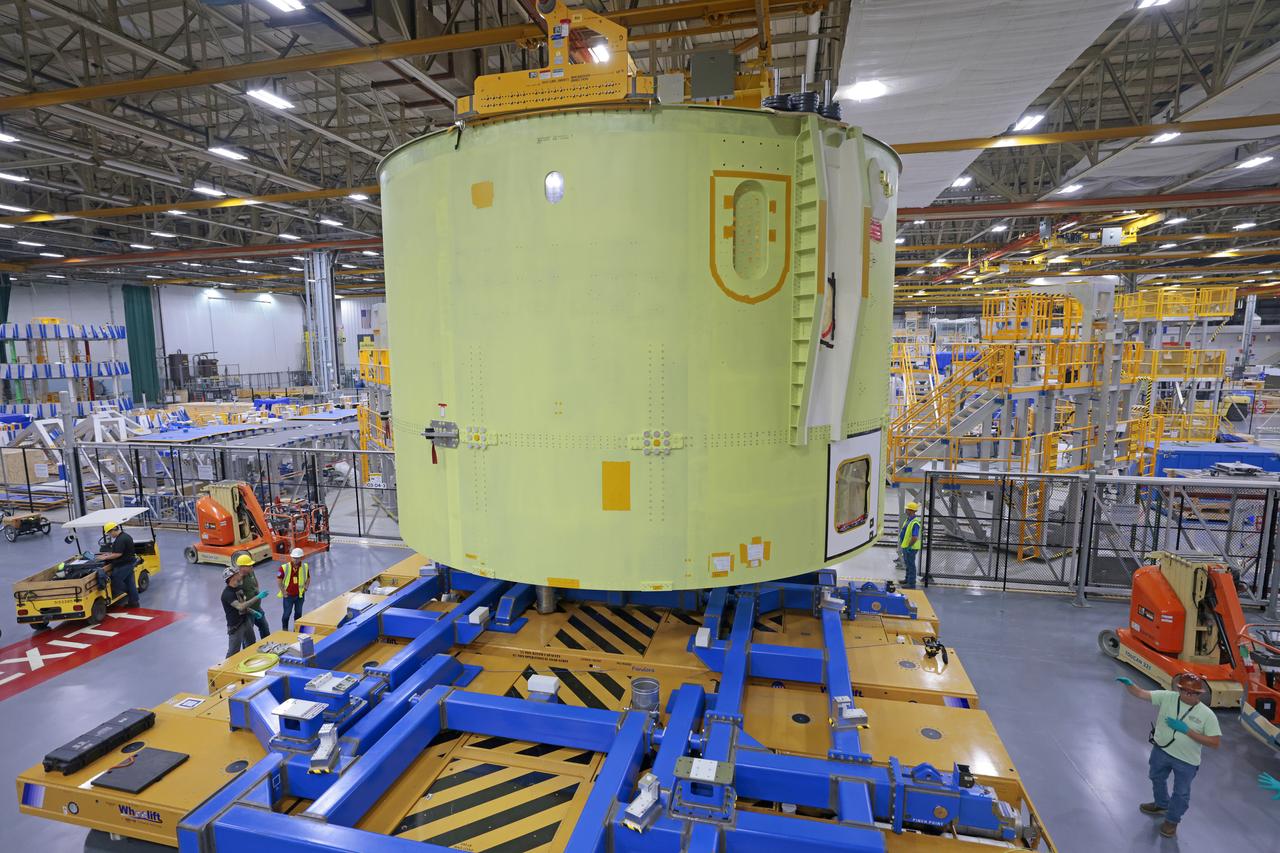
These photos show teams at NASA’s Michoud Assembly Facility in New Orleans preparing, moving, and loading the engine section of a future SLS (Space Launch System) rocket to NASA’s Pegasus barge Aug. 28. The hardware will form the bottom-most section of the SLS core stage that will power NASA’s Artemis IV mission, which will be the first mission to the Gateway space station in lunar orbit under the Artemis campaign. The barge will transport the spaceflight hardware to NASA’s Kennedy Space Center in Florida via the agency’s Pegasus barge. Once in Florida, the engine section will undergo final outfitting inside Kennedy’s Space Station Processing Facility. Image credit: NASA/Michael DeMocker
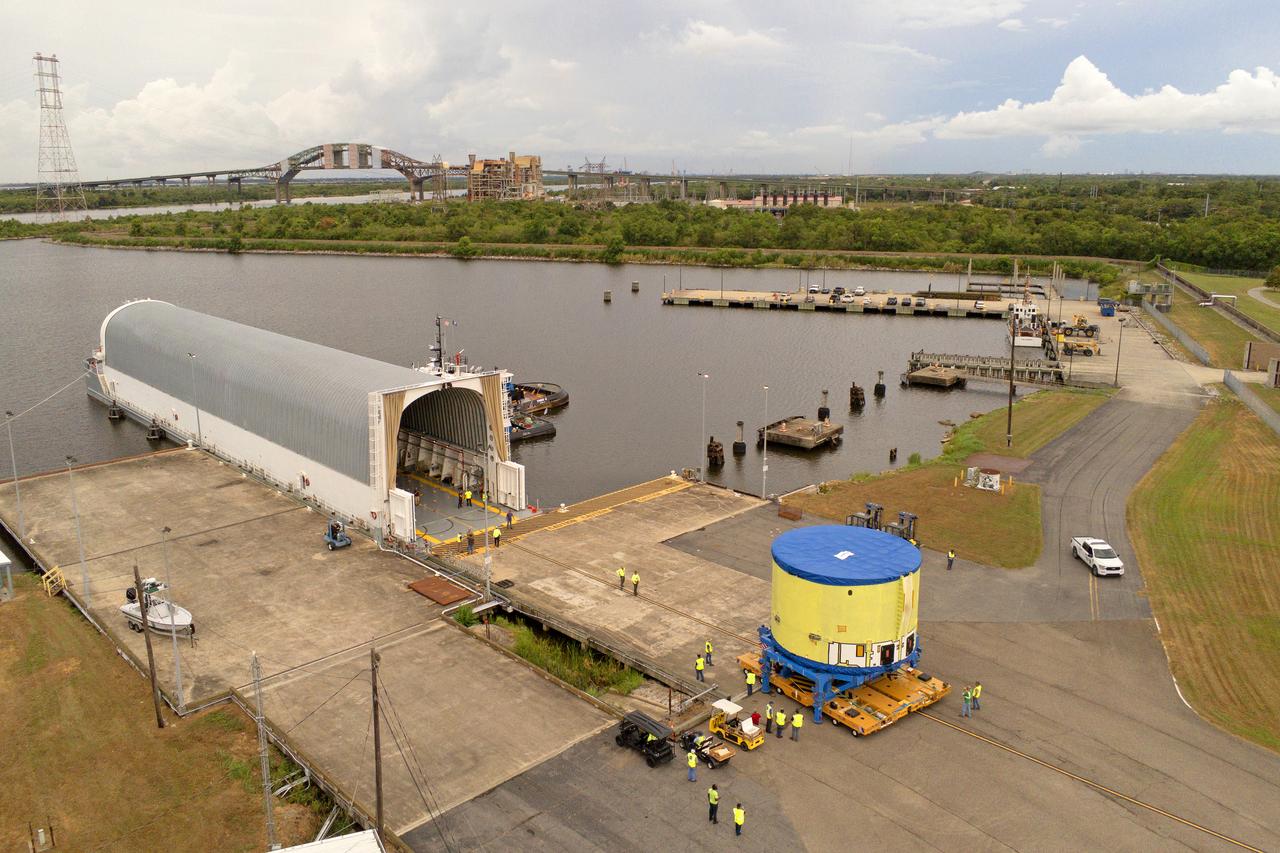
These photos and videos show teams at NASA’s Michoud Assembly Facility in New Orleans preparing, moving, and loading the engine section of a future SLS (Space Launch System) rocket to NASA’s Pegasus barge Aug. 28. The hardware will form the bottom-most section of the SLS core stage that will power NASA’s Artemis IV mission, which will be the first mission to the Gateway space station in lunar orbit under the Artemis campaign. The barge will transport the spaceflight hardware to NASA’s Kennedy Space Center in Florida via the agency’s Pegasus barge. Once in Florida, the engine section will undergo final outfitting inside Kennedy’s Space Station Processing Facility.
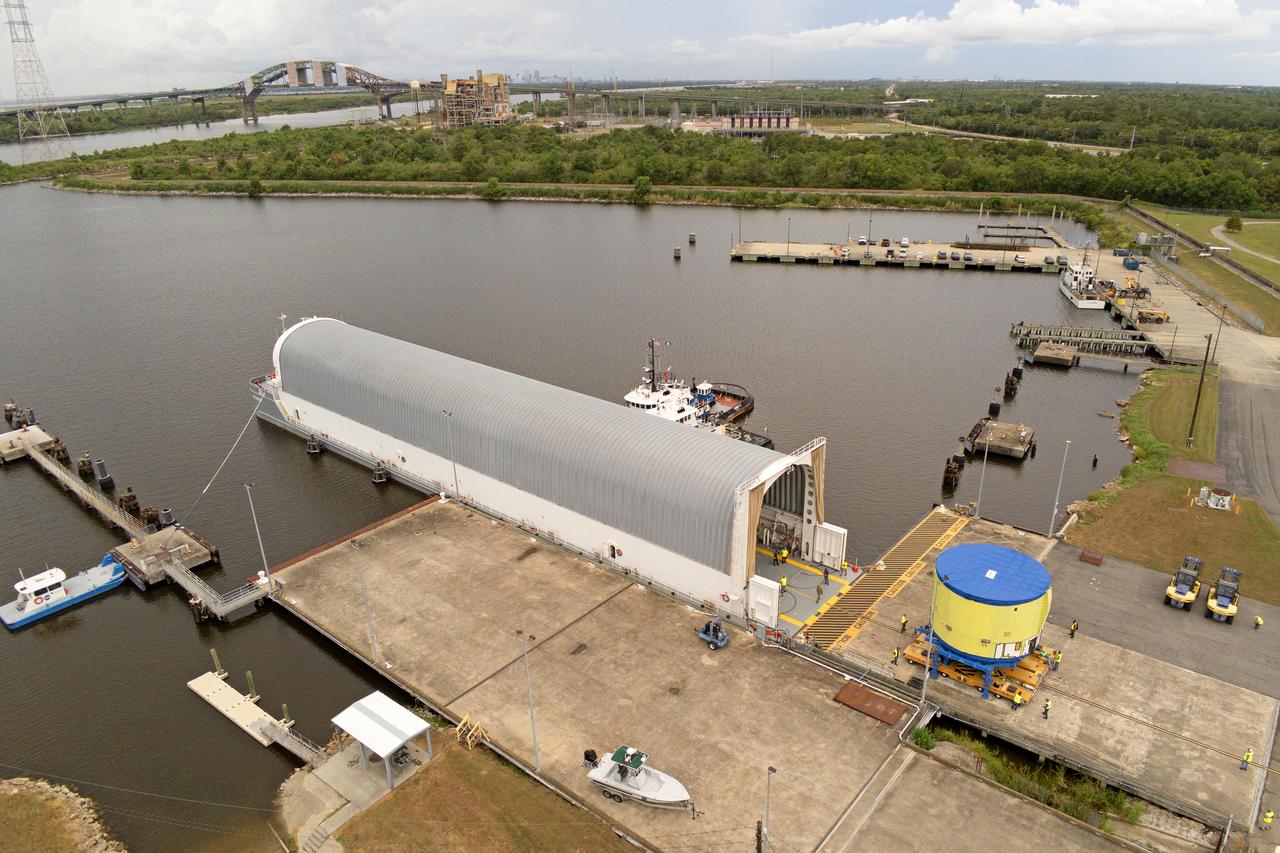
These photos and videos show teams at NASA’s Michoud Assembly Facility in New Orleans preparing, moving, and loading the engine section of a future SLS (Space Launch System) rocket to NASA’s Pegasus barge Aug. 28. The hardware will form the bottom-most section of the SLS core stage that will power NASA’s Artemis IV mission, which will be the first mission to the Gateway space station in lunar orbit under the Artemis campaign. The barge will transport the spaceflight hardware to NASA’s Kennedy Space Center in Florida via the agency’s Pegasus barge. Once in Florida, the engine section will undergo final outfitting inside Kennedy’s Space Station Processing Facility.
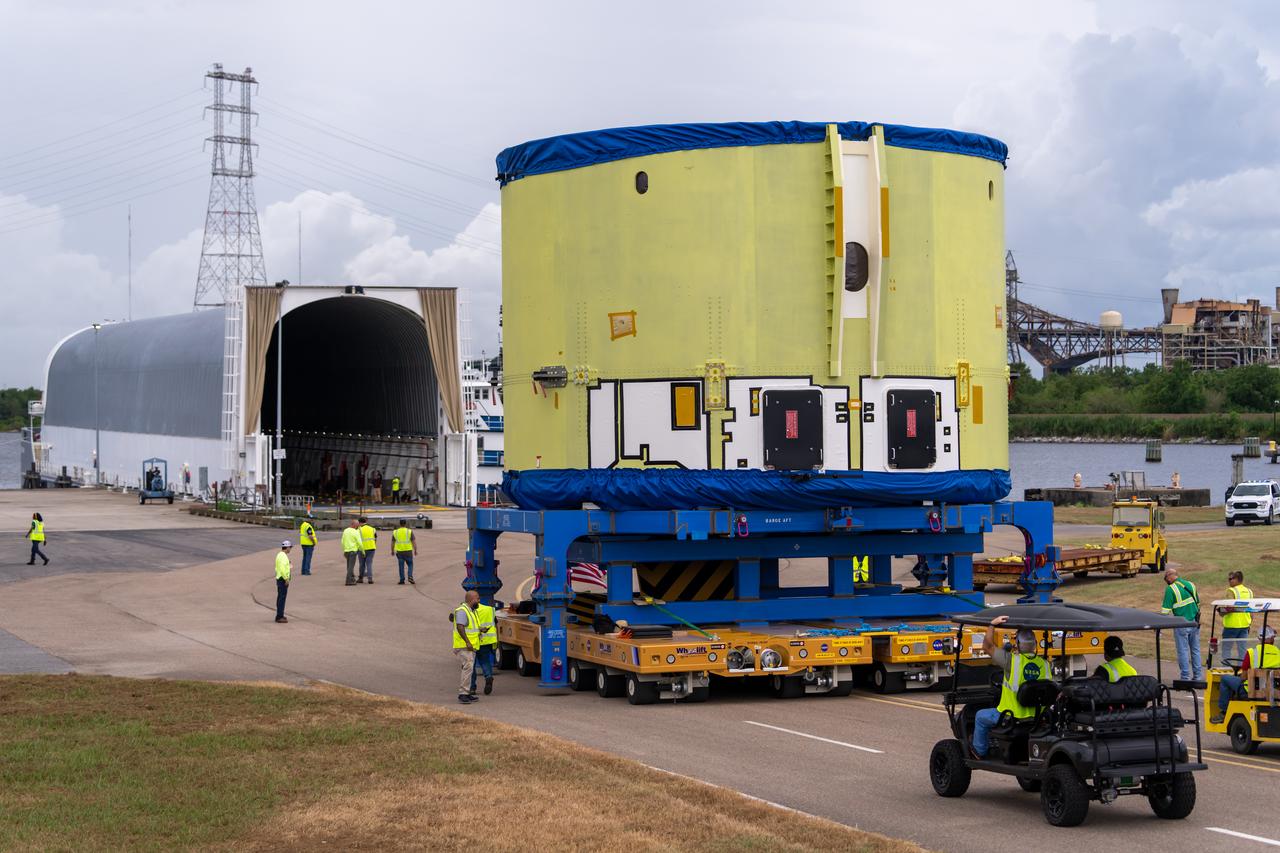
These photos and videos show teams at NASA’s Michoud Assembly Facility in New Orleans preparing, moving, and loading the engine section of a future SLS (Space Launch System) rocket to NASA’s Pegasus barge Aug. 28. The hardware will form the bottom-most section of the SLS core stage that will power NASA’s Artemis IV mission, which will be the first mission to the Gateway space station in lunar orbit under the Artemis campaign. The barge will transport the spaceflight hardware to NASA’s Kennedy Space Center in Florida via the agency’s Pegasus barge. Once in Florida, the engine section will undergo final outfitting inside Kennedy’s Space Station Processing Facility.
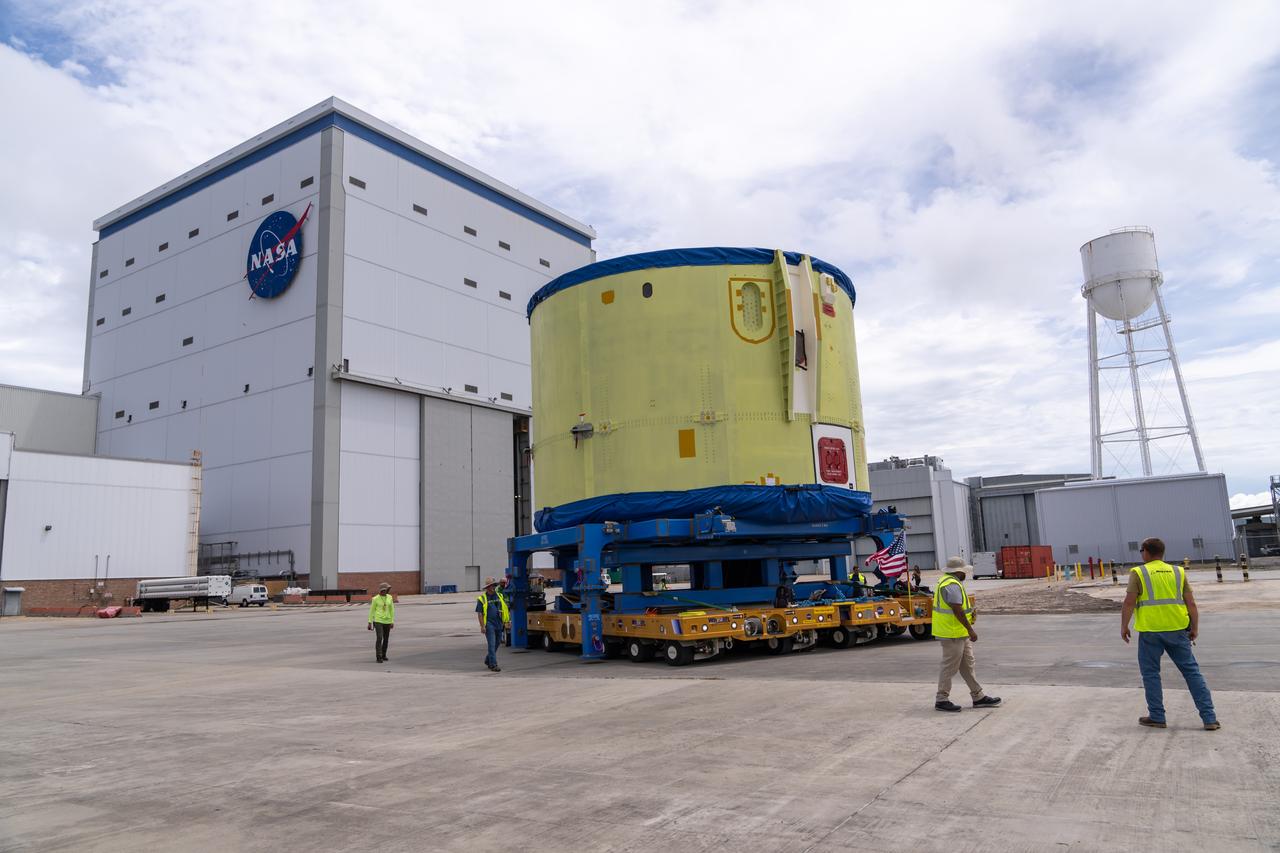
These photos and videos show teams at NASA’s Michoud Assembly Facility in New Orleans preparing, moving, and loading the engine section of a future SLS (Space Launch System) rocket to NASA’s Pegasus barge Aug. 28. The hardware will form the bottom-most section of the SLS core stage that will power NASA’s Artemis IV mission, which will be the first mission to the Gateway space station in lunar orbit under the Artemis campaign. The barge will transport the spaceflight hardware to NASA’s Kennedy Space Center in Florida via the agency’s Pegasus barge. Once in Florida, the engine section will undergo final outfitting inside Kennedy’s Space Station Processing Facility.