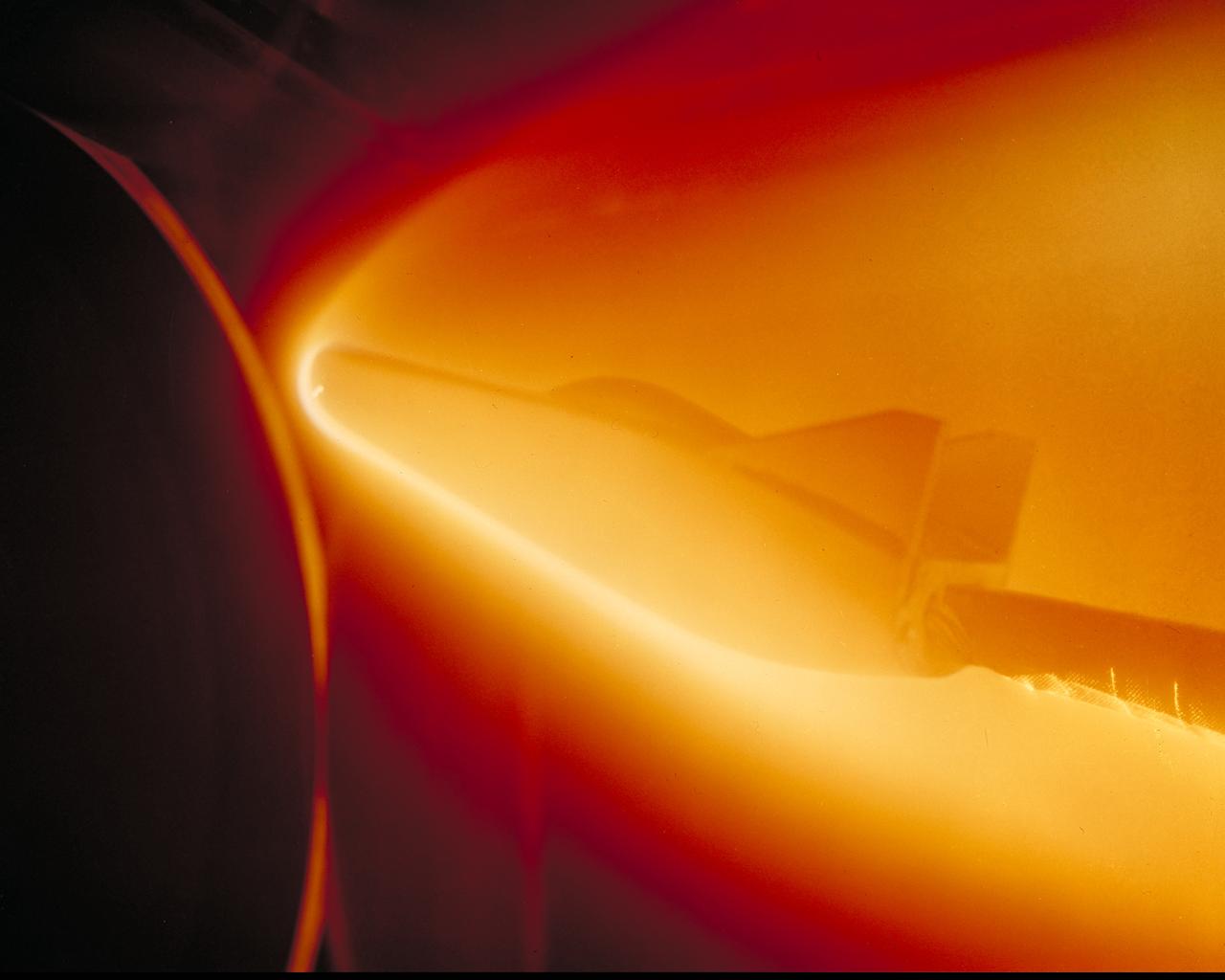
M-2 Lifting Body being tested in Ames atmospheric entry simulator to determine the areas of most intense heat.
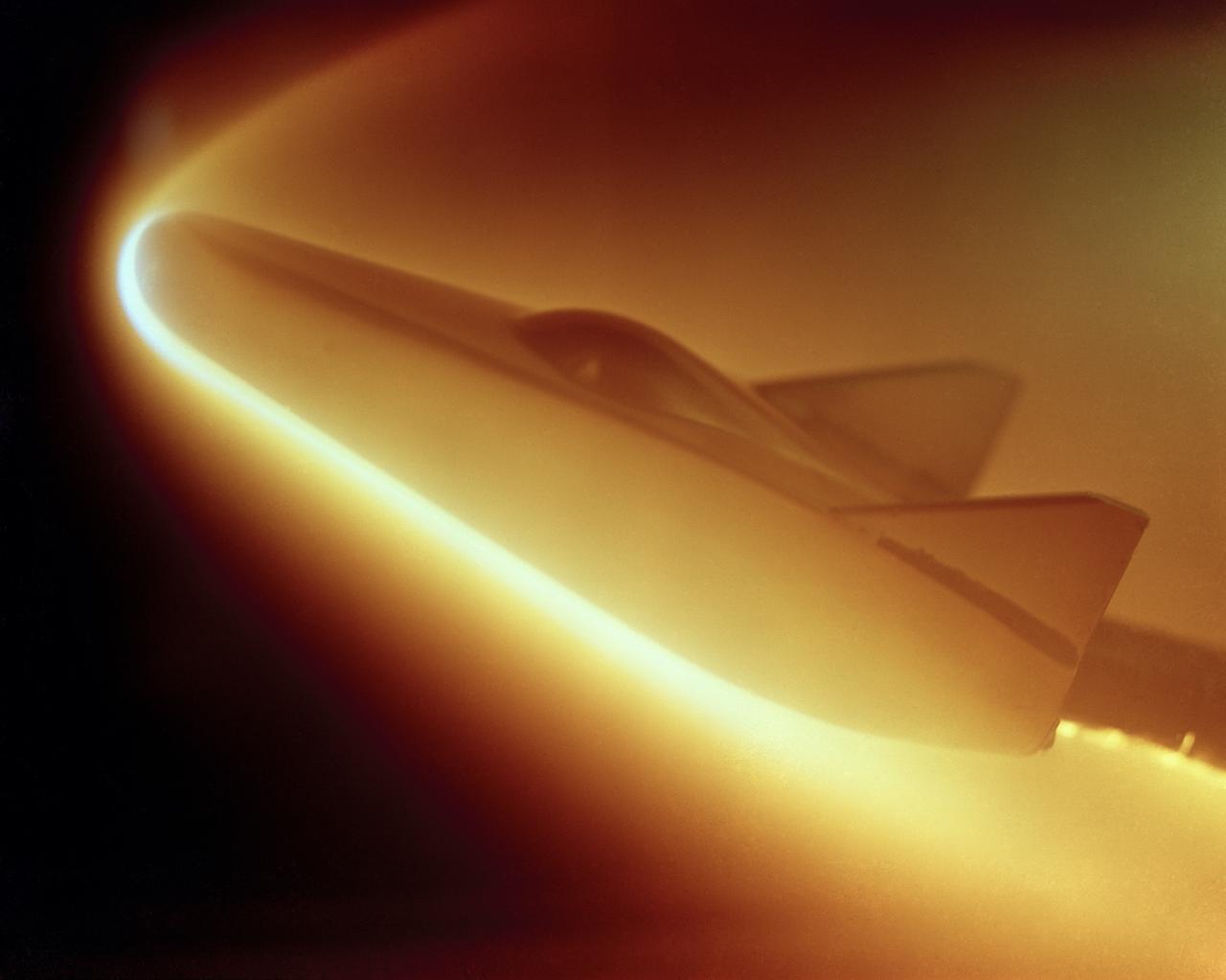
M-2 lifting body; heat transfer distribution test in the 1 ft hypervelocity wind tunnel
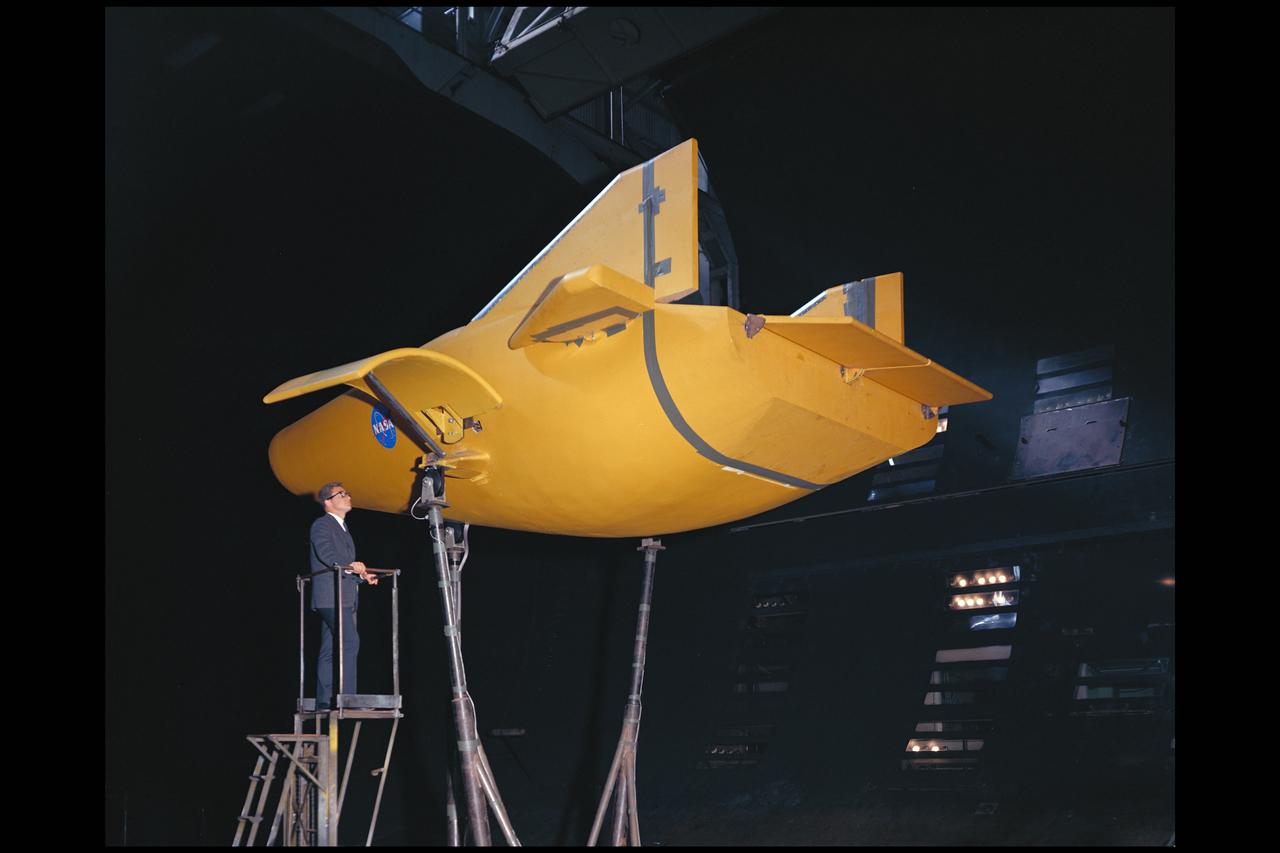
M-2 Lifting body 40x80ft Full Scale Wind Tunnle
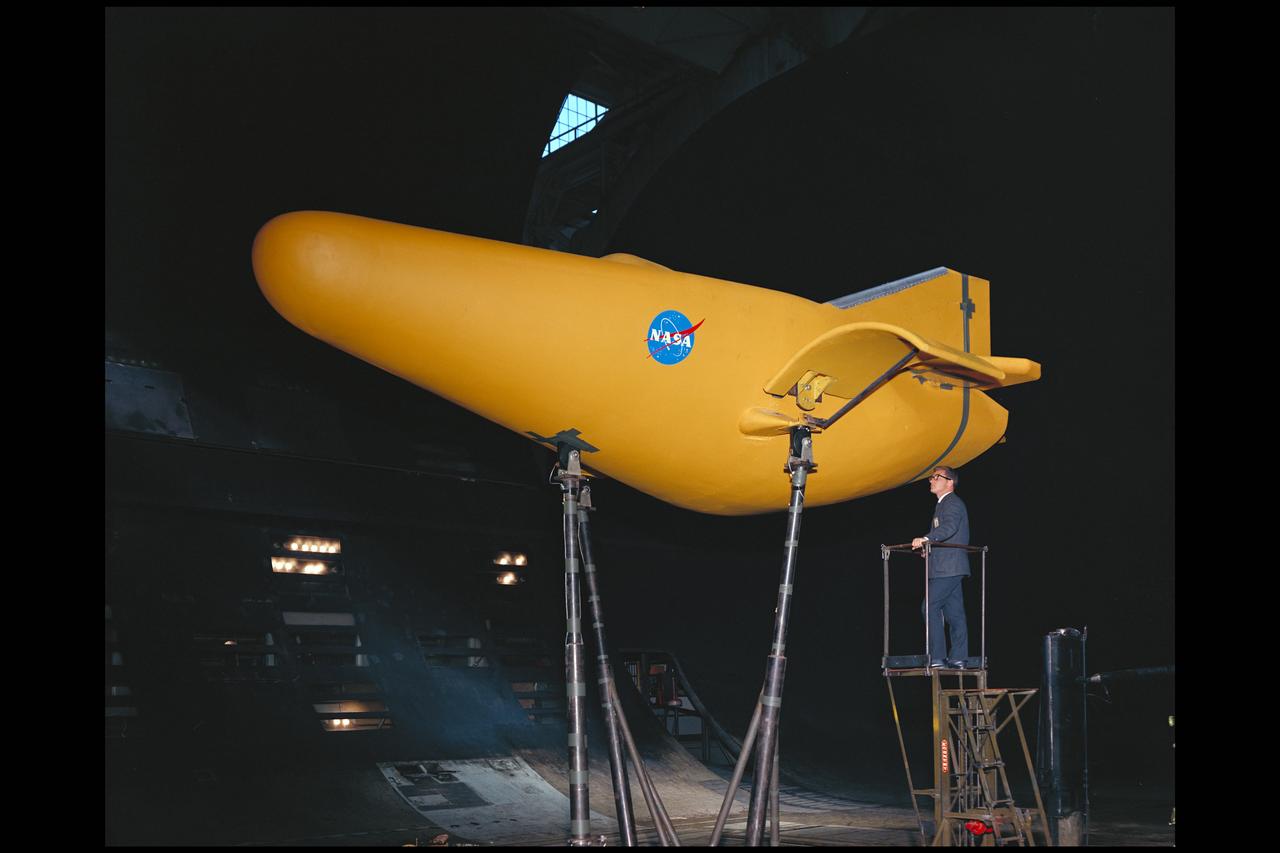
M-2 Lifting body 40x80ft Full Scale Wind Tunnel
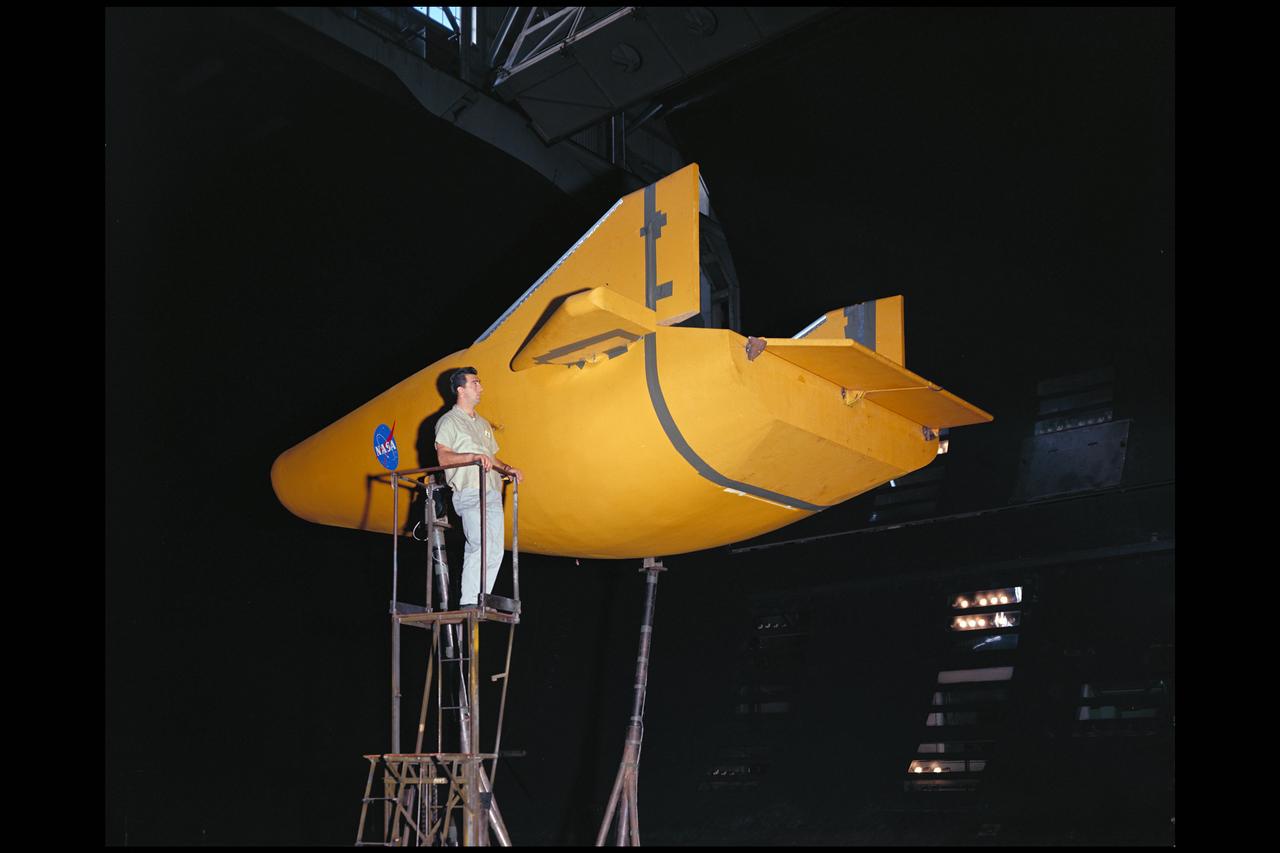
M-2 Lifting body 40x80ft Full Scale Wind Tunnle
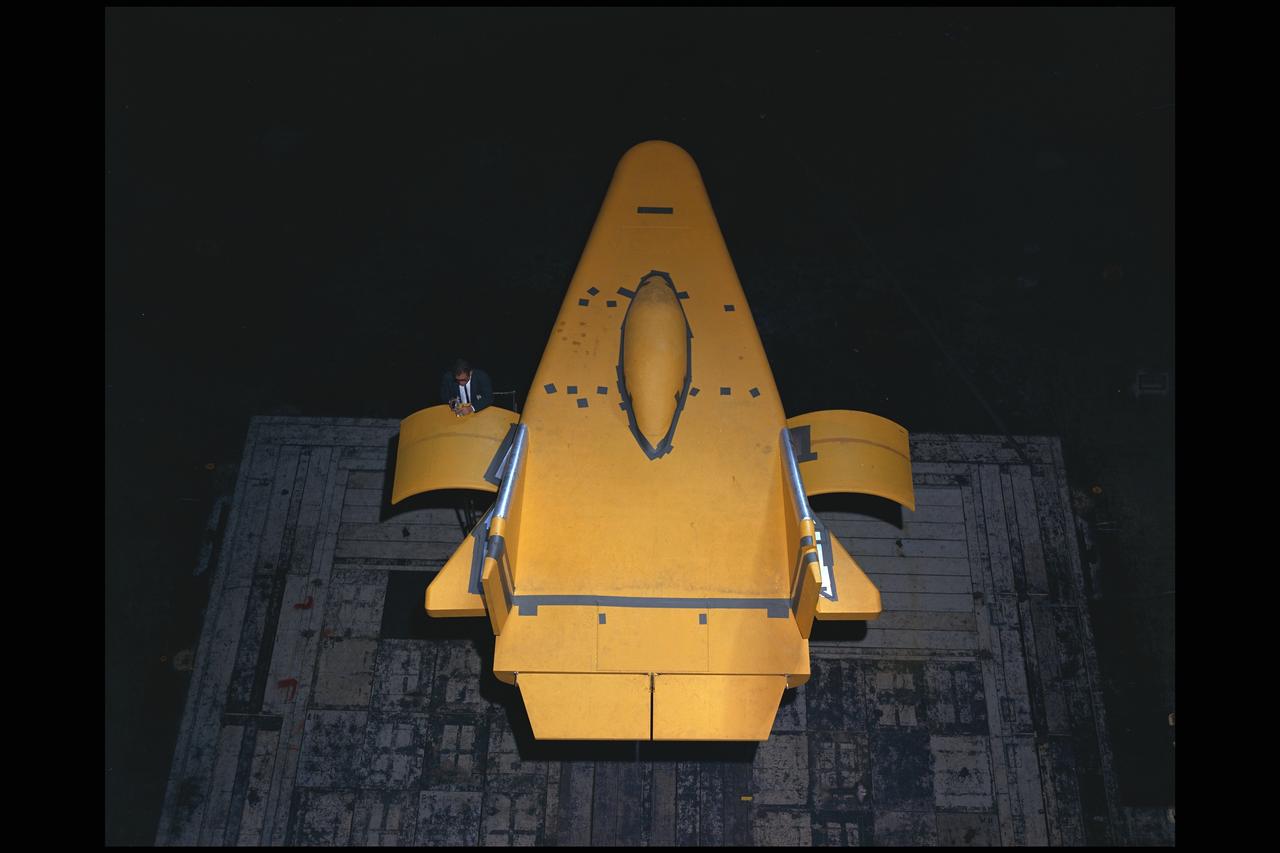
M-2 Lifting body 40x80ft Full Scale Wind Tunnle
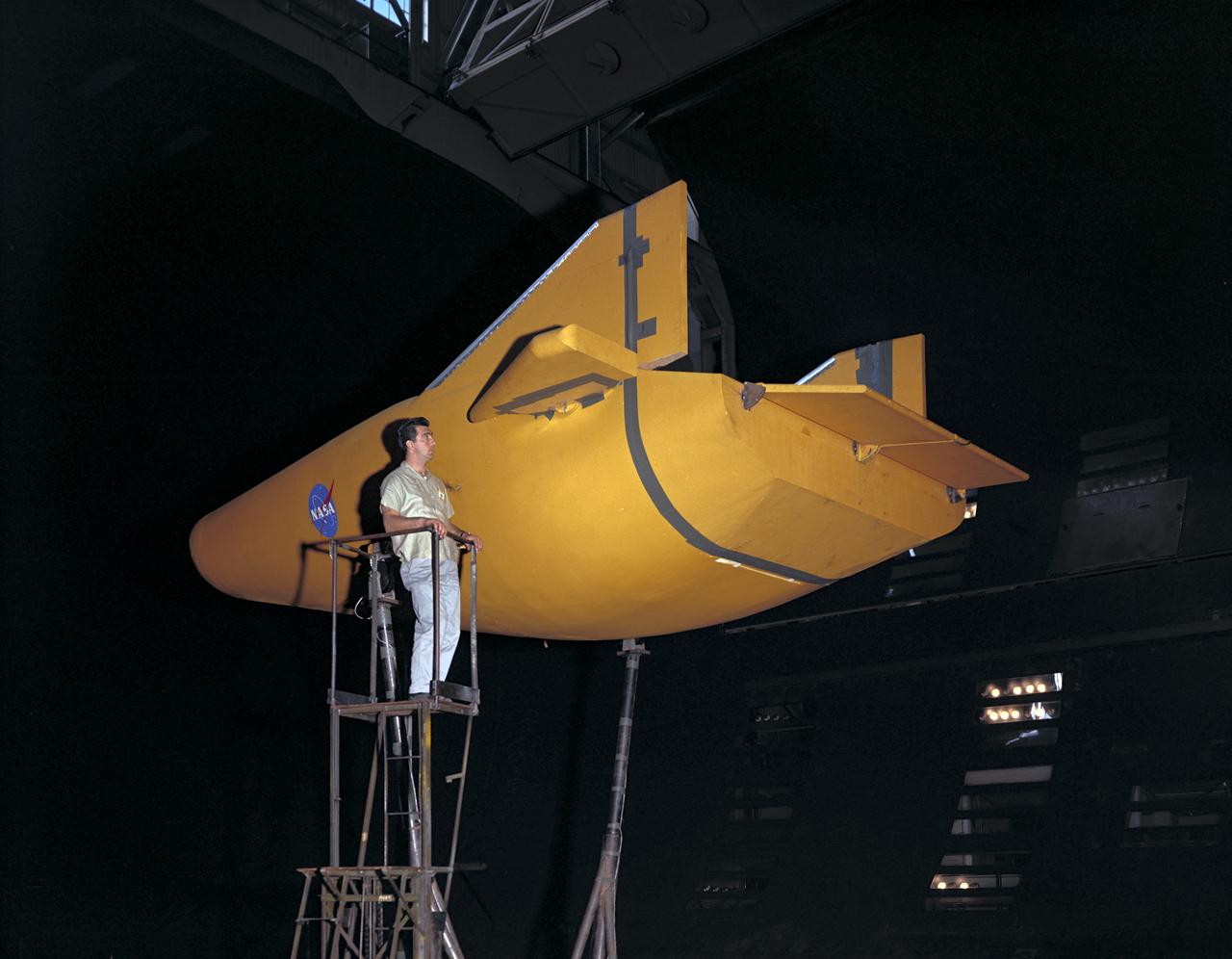
M-2 lifting body wind tunnel model with wind tunnel mechanic Chuck Greco. Model mounted on special support designed for lifting body models. Flaps and elevons visible.
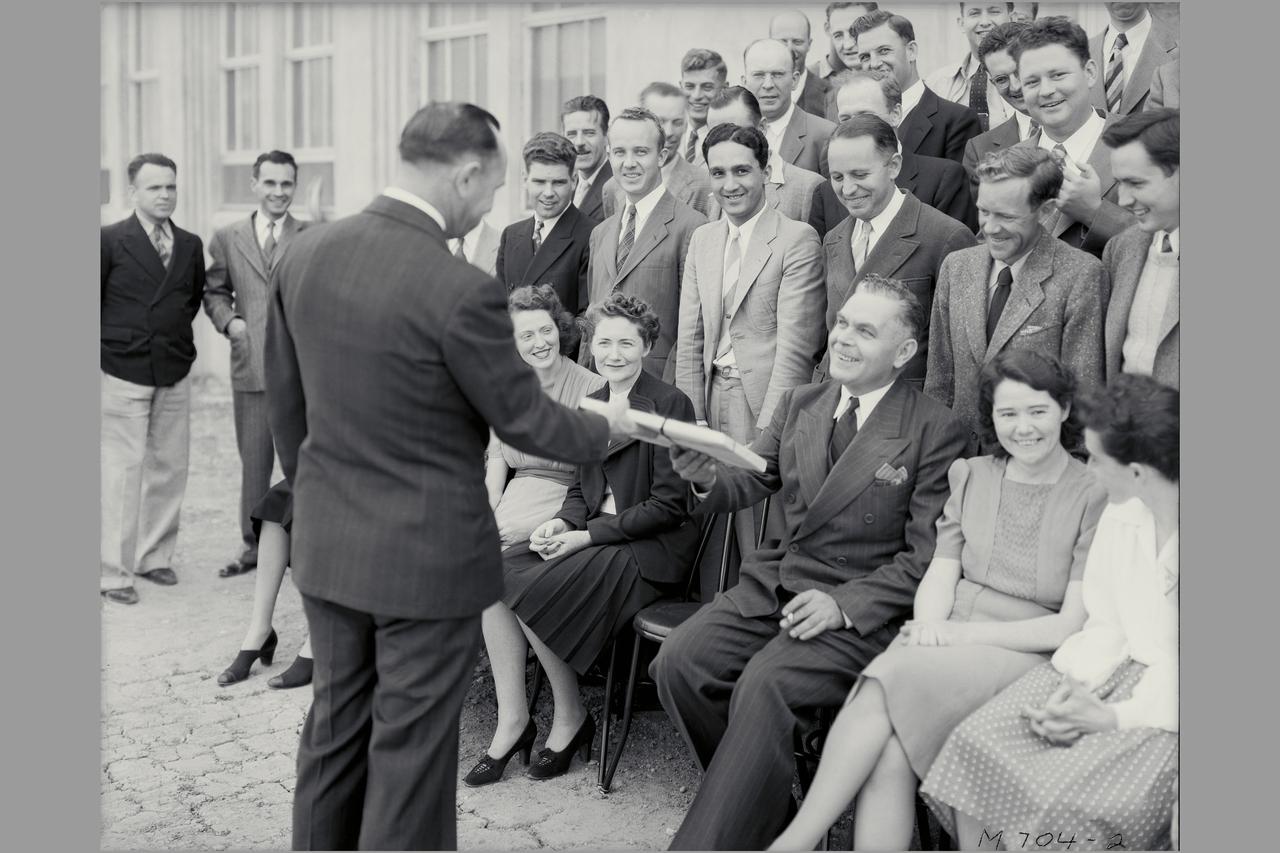
Dr Smitty DeFrance greets Ames original staff members as they prepare to have photo taken
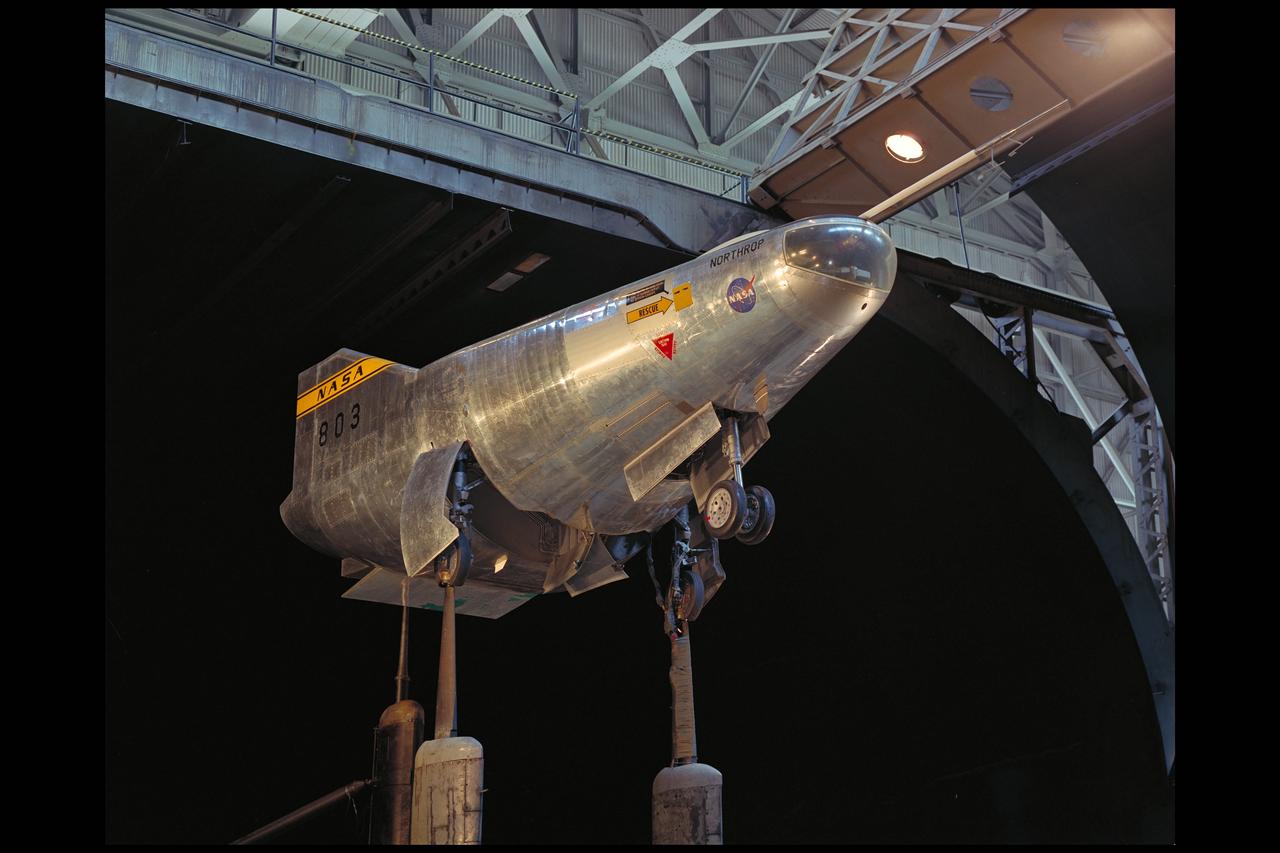
M2-F2 lifting body flight vehicle in 40x80ft w.t.
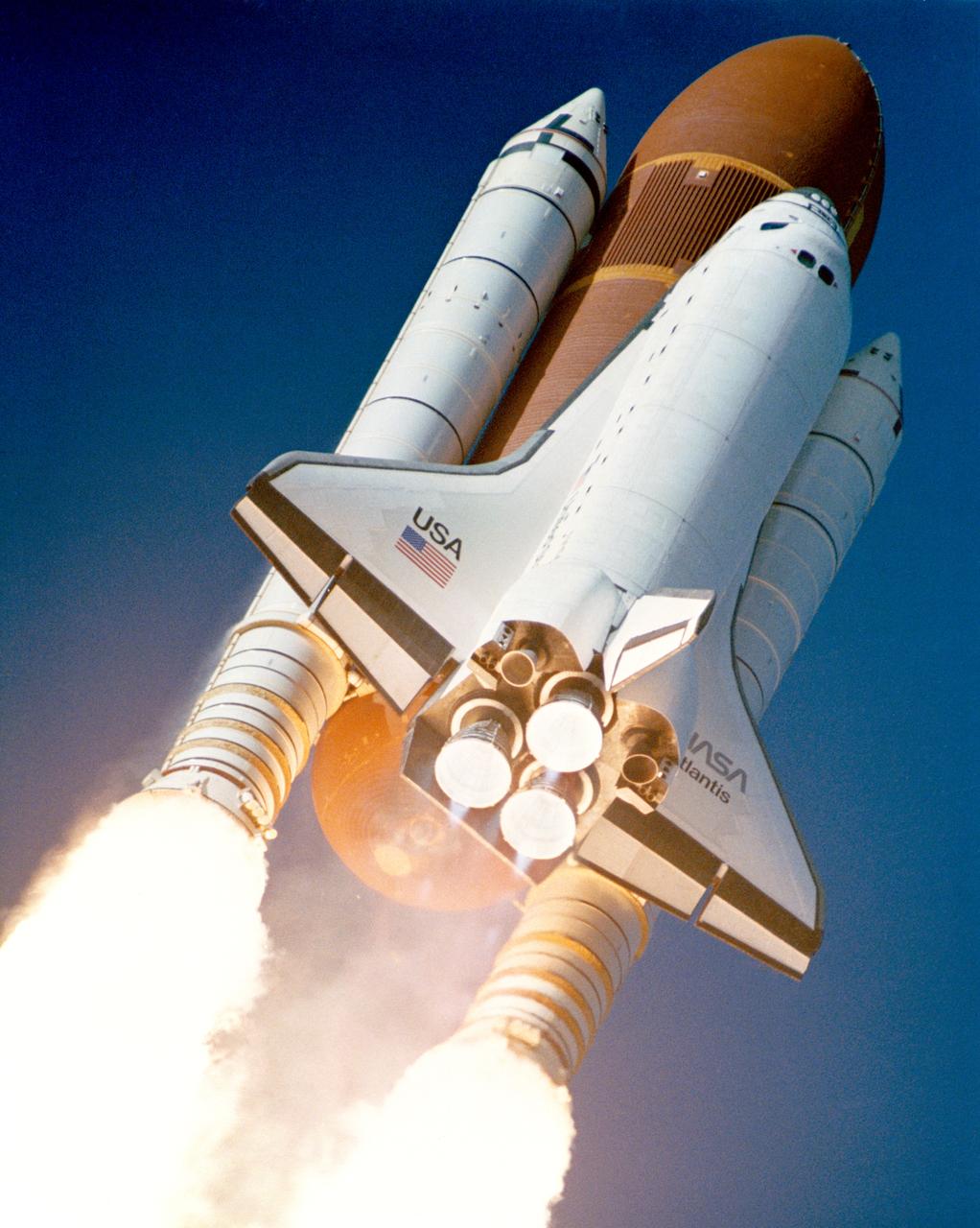
STS027-S-071 (2 Dec. 1988) --- The Space Shuttle Atlantis and its five-man crew of astronauts are launched from Kennedy Space Center?s Pad 39B at 9:30 a.m. (EST), Dec. 2, 1988. Onboard the Department of Defense?dedicated mission are astronauts Robert L. Gibson, Guy S. Gardner, Jerry L. Ross, Richard M. (Mike) Mullane and Williams M. Shepherd.
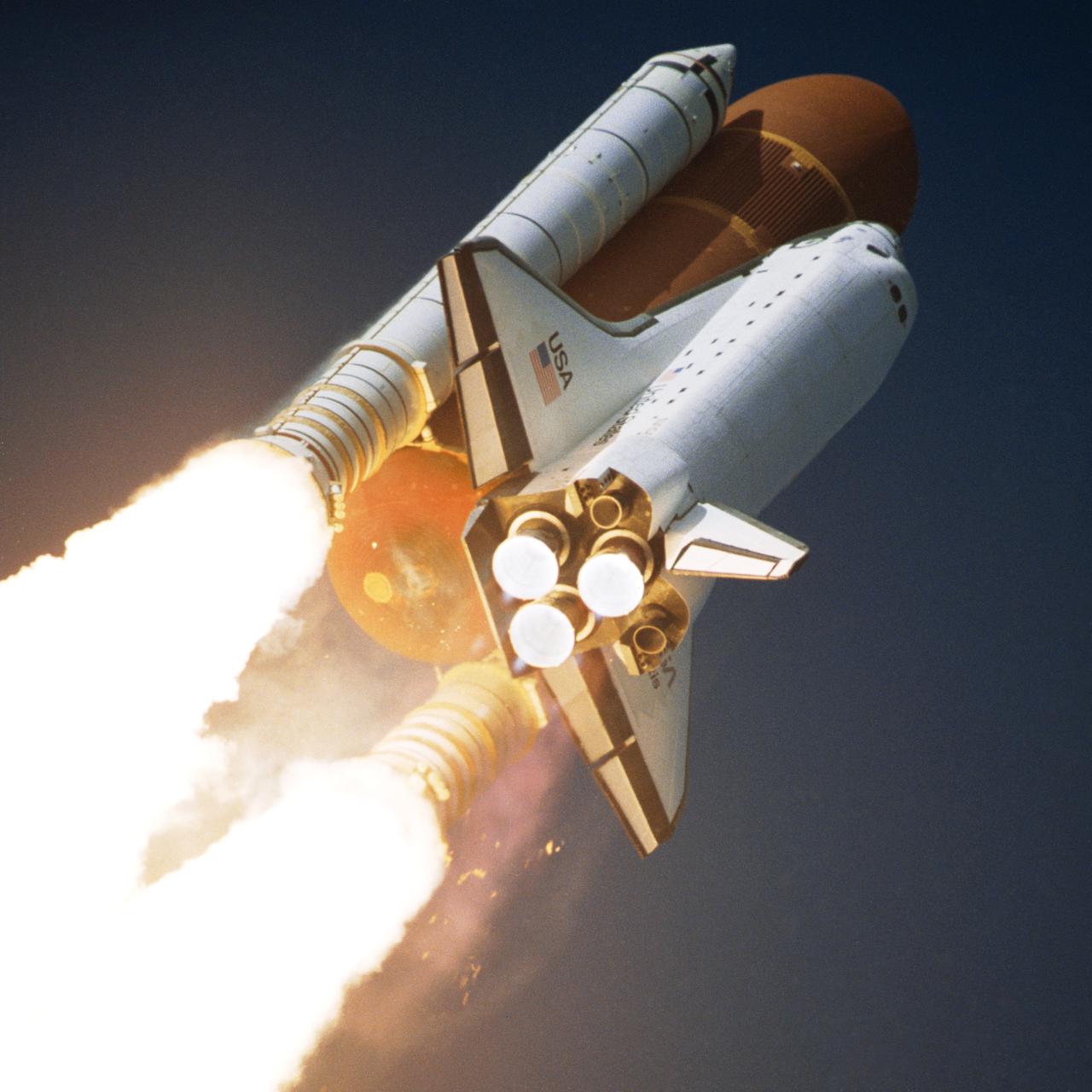
STS027-S-003 (2 Dec. 1988) --- The Space Shuttle Atlantis and its five-man crew of astronauts are launched from Kennedy Space Center?s Pad 39B at 9:30 a.m. (EST), Dec. 2, 1988. Onboard the Department of Defense ? dedicated mission are astronauts Robert L. Gibson, Guy S. Gardner, Jerry L. Ross, Richard M. (Mike) Mullane and Williams M. Shepherd.
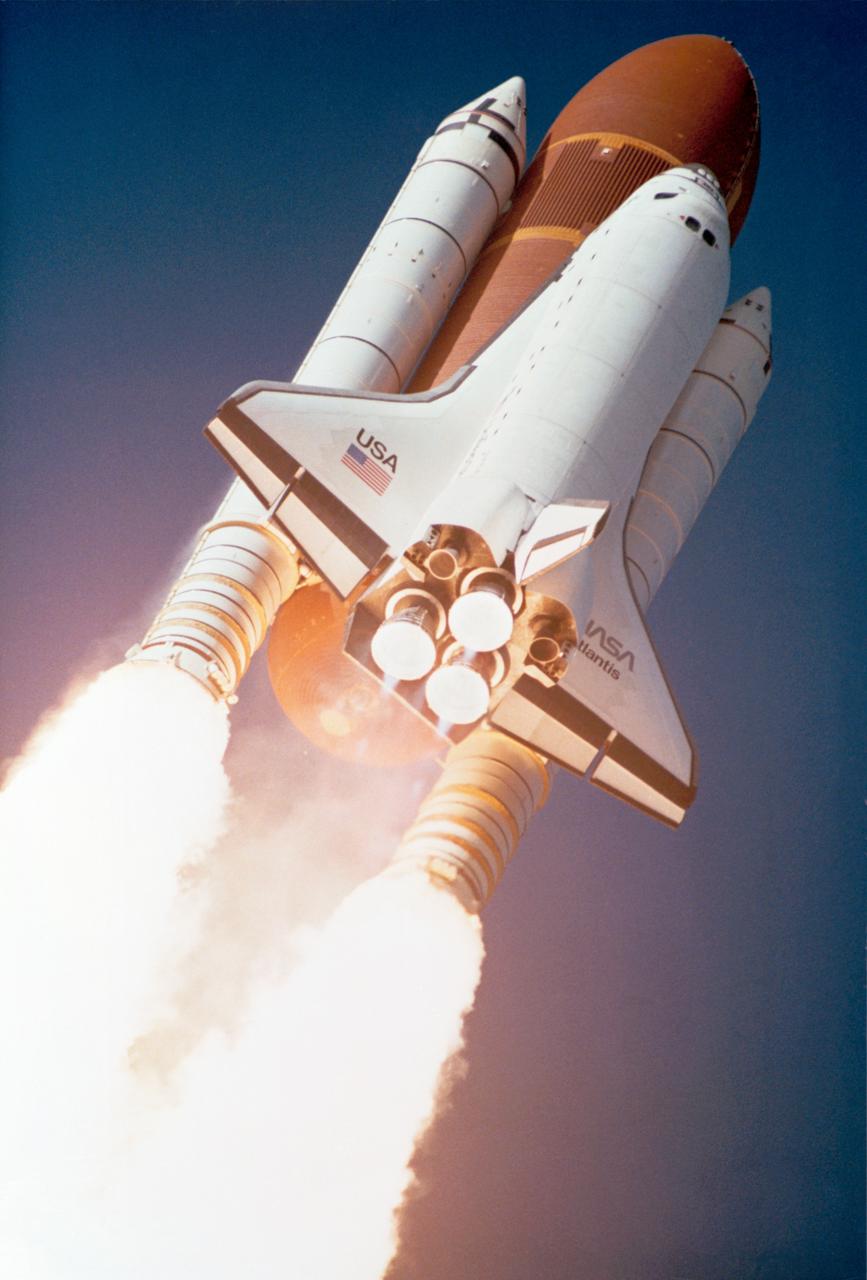
S88-55870 (2 Dec. 1988) --- The space shuttle Atlantis and its five-man crew of astronauts are launched from Kennedy Space Center?s Pad 39B at 9:30 a.m. (EST), Dec. 2, 1988. Onboard the Department of Defense?dedicated mission are astronauts Robert L. Gibson, Guy S. Gardner, Jerry L. Ross, Richard M. (Mike) Mullane and Williams M. Shepherd. Photo credit: NASA
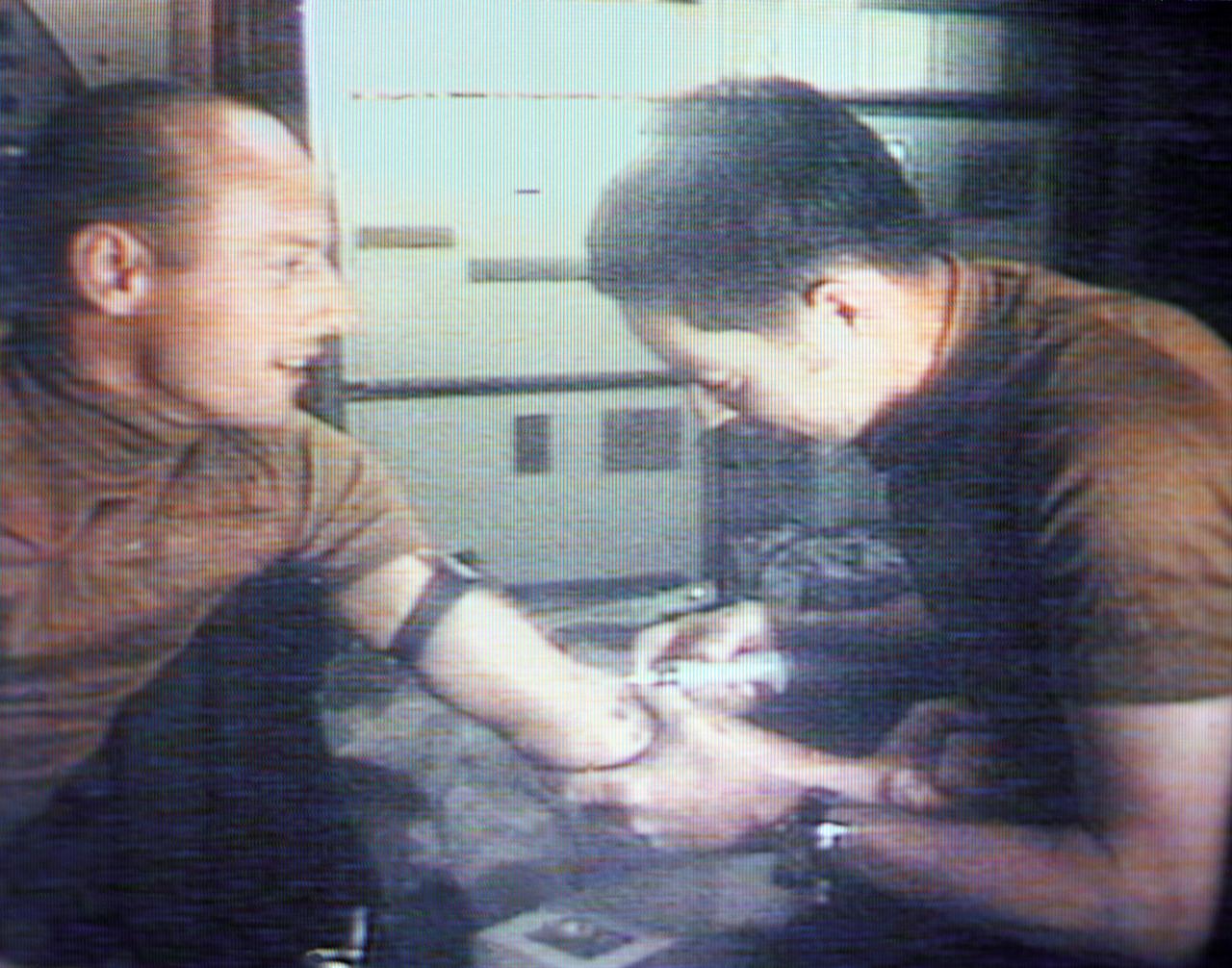
S73-27509 (6 June 1973) --- Scientist-astronaut Joseph P. Kerwin (right), Skylab 2 science pilot and a doctor of medicine, takes a blood sample from astronaut Charles Conrad Jr., Skylab 2 commander, as seen in this reproduction taken from a color television transmission made by a TV camera aboard the Skylab 1 and 2 space station cluster in Earth orbit. The blood sampling was part of the Skylab Hematology and Immunology Experiment M110 series. Photo credit: NASA

ISS011-E-11417 (2 August 2005) --- Astronauts Wendy B. Lawrence (foreground), STS-114 mission specialist, and James M. Kelly, pilot, work at the Canadarm2 workstation in the Destiny laboratory on the International Space Station.
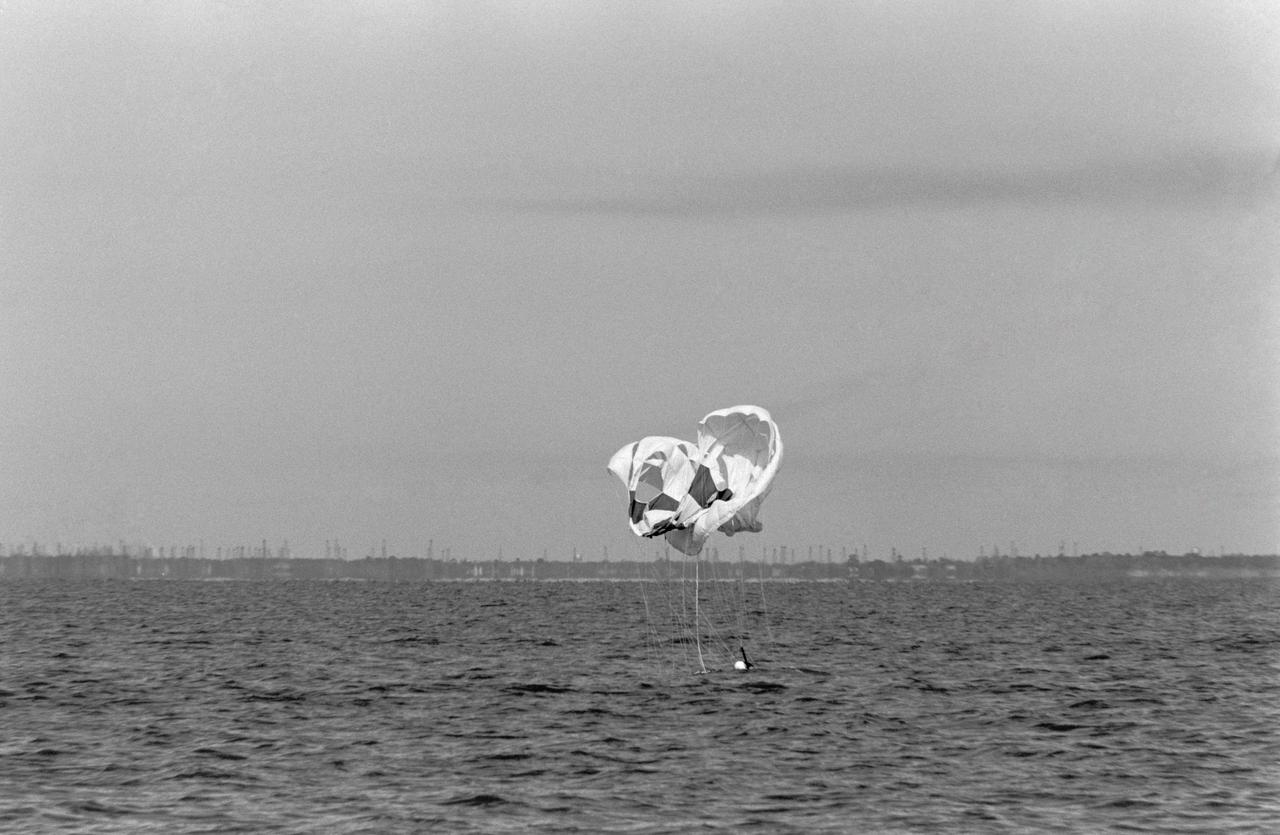
S65-10172 (2 Feb. 1965) --- Astronaut Walter M. Schirra Jr., the Gemini-Titan 3 backup crew command pilot, is shown during water egress para-drop training activity in nearby Galveston Bay.
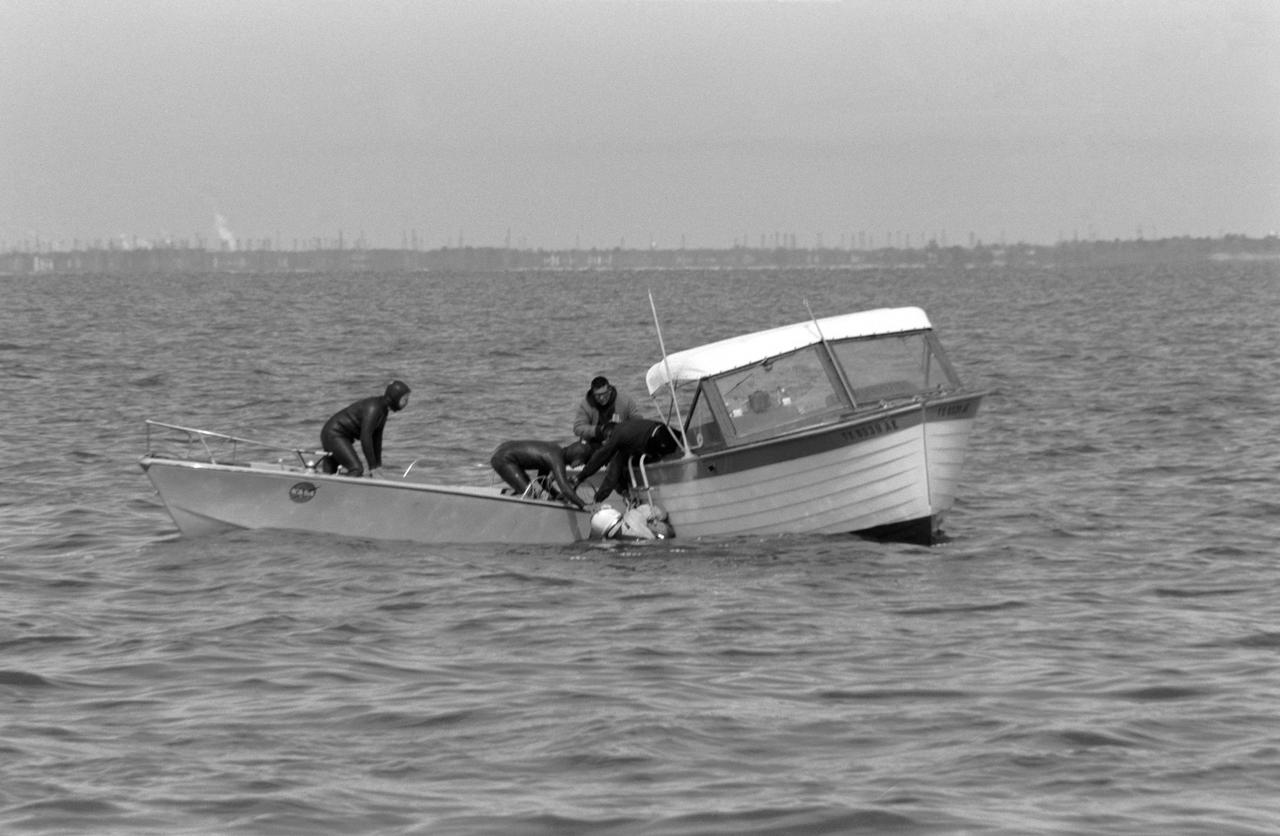
S65-10173 (2 Feb. 1965) --- Astronaut Walter M. Schirra Jr., the Gemini-Titan 3 backup crew command pilot, is shown during water egress para-drop training activity in nearby Galveston Bay.
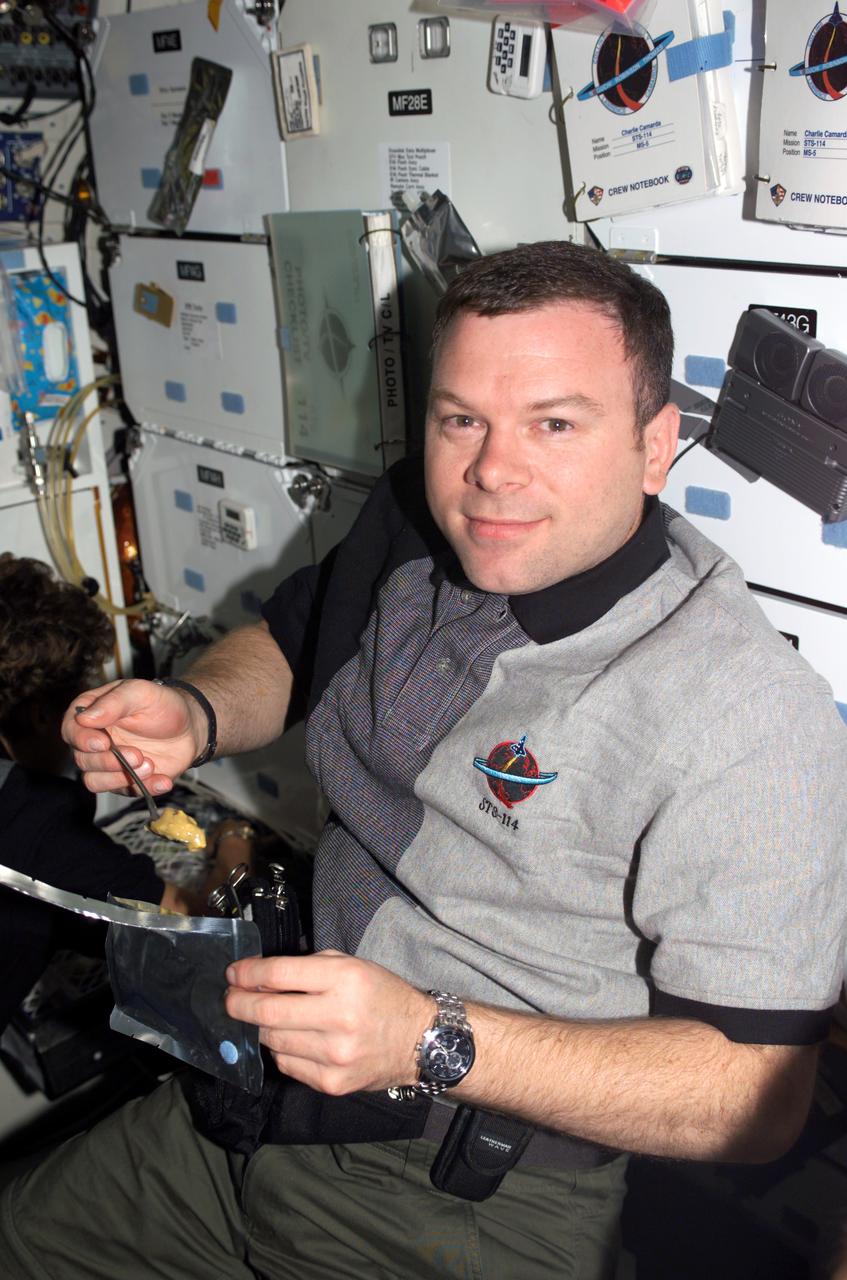
S114-E-6569 (2 August 2005) --- Astronaut James M. Kelly, STS-114 pilot, eats a meal on the middeck of the Space Shuttle Discovery while docked to the international space station.
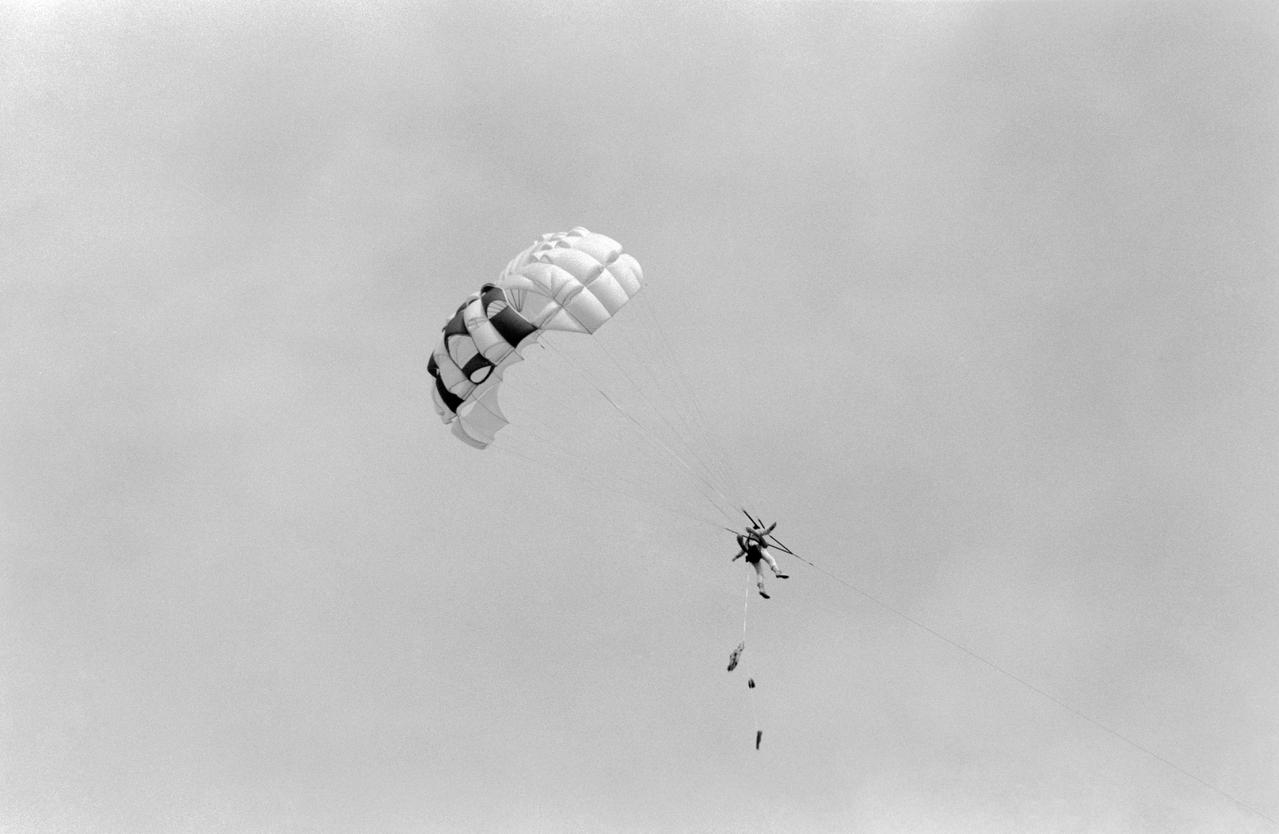
S65-10171 (2 Feb. 1965) --- Astronaut Walter M. Schirra Jr., the Gemini-Titan 3 backup crew command pilot, is shown during water egress para-drop training activity in nearby Galveston Bay.
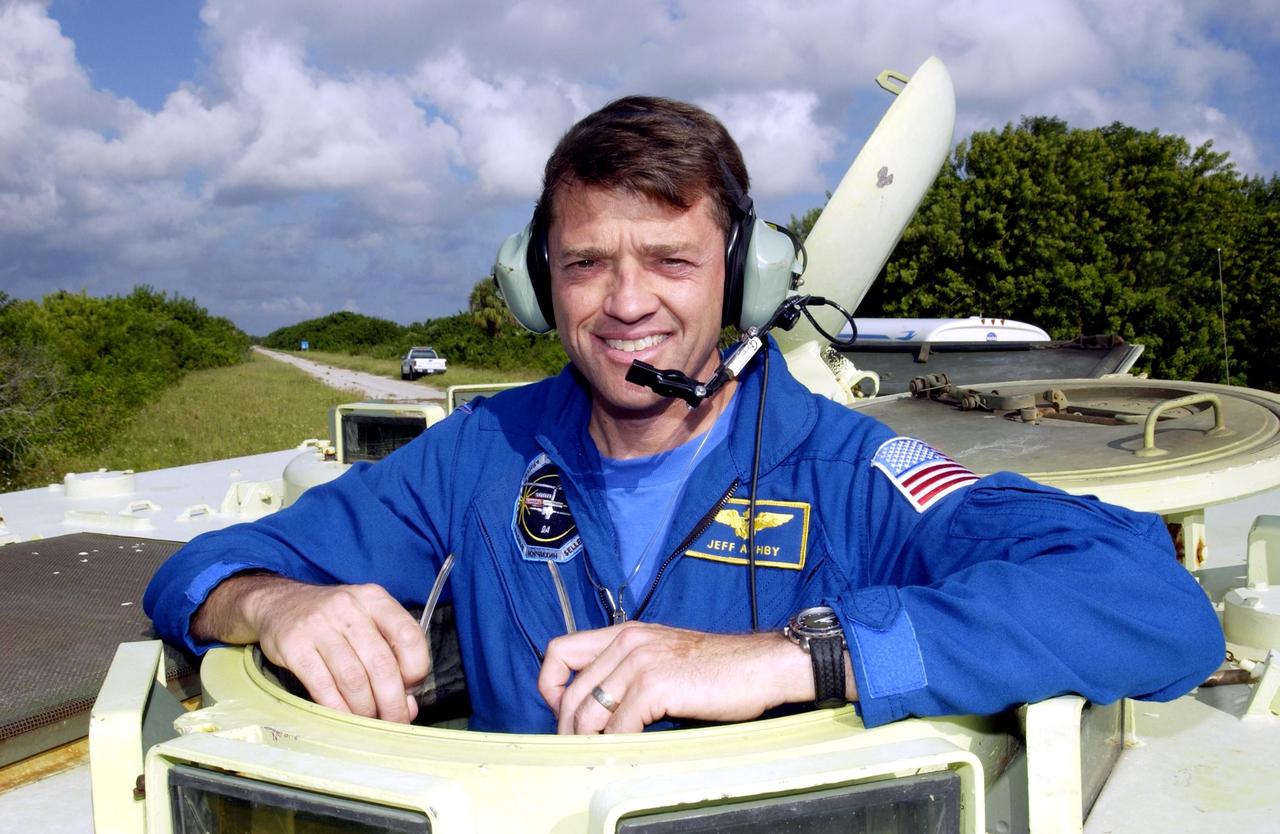
KENNEDY SPACE CENTER, FLA. -- STS-112 Commander Jeffrey Ashby is ready for his practice run driving the M-113 armored personnel carrier. Ashby and the rest of the crew are at KSC for Terminal Countdown Demonstration Test activities, which include emergency egress training and driving the M-113. Mission STS-112 aboard Space Shuttle Atlantis is scheduled to launch no earlier than Oct. 2, between 2 and 6 p.m. EDT. STS-112 is the 15th assembly mission to the International Space Station. Atlantis will be carrying the S1 Integrated Truss Structure, the first starboard truss segment. The S1 will be attached to the central truss segment, S0, during the 11-day mission.
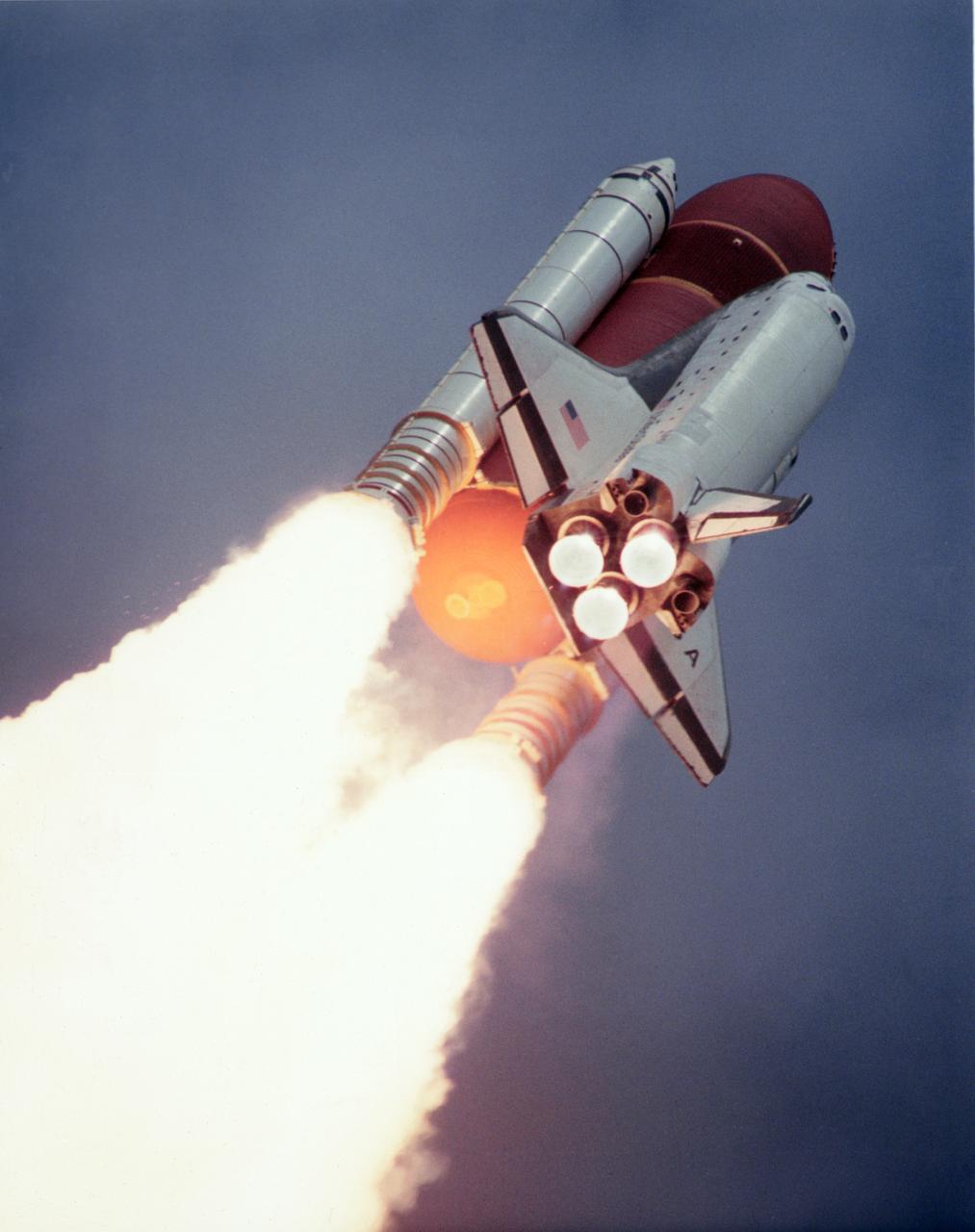
Launched aboard the Space Shuttle Columbia on June 5, 1991 at 9:24; am (EDT), the STS-40 mission was the fifth dedicated Spacelab Mission, Spacelab Life Sciences-1 (SLS-1), and the first mission dedicated solely to life sciences. The STS-40 crew included 7 astronauts: Bryan D. O’Connor, commander; Sidney M. Gutierrez, pilot; F. Drew Gaffney, payload specialist 1; Milli-Hughes Fulford, payload specialist 2; James P. Bagian, mission specialist 1; Tamara E. Jernigan, mission specialist 2; and M. Rhea Seddon, mission specialist 3.
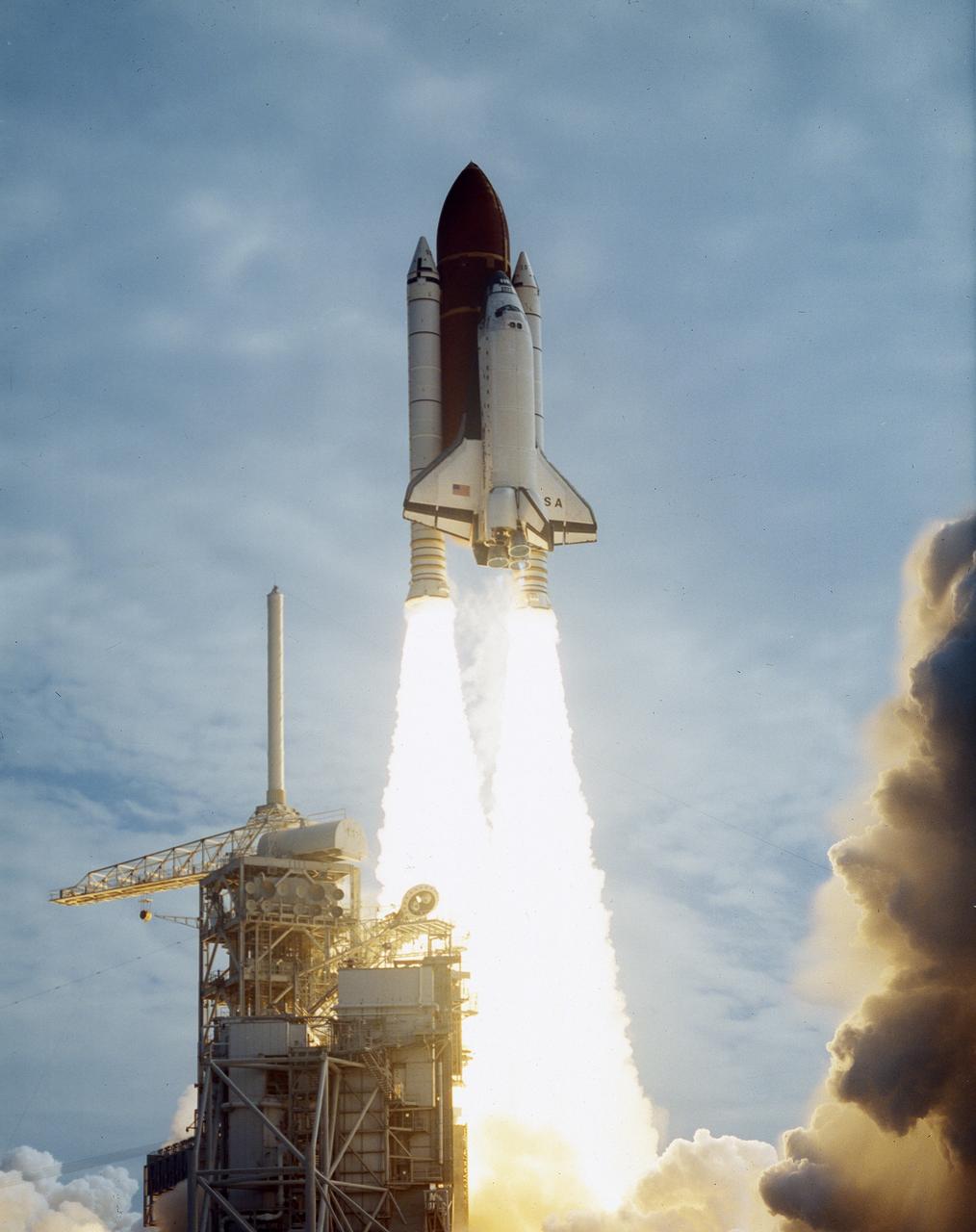
Launched aboard the Space Shuttle Columbia on June 5, 1991 at 9:24; am (EDT), the STS-40 mission was the fifth dedicated Spacelab Mission, Spacelab Life Sciences-1 (SLS-1), and the first mission dedicated solely to life sciences. The STS-40 crew included 7 astronauts: Bryan D. O’Connor, commander; Sidney M. Gutierrez, pilot; F. Drew Gaffney, payload specialist 1; Milli-Hughes Fulford, payload specialist 2; James P. Bagian, mission specialist 1; Tamara E. Jernigan, mission specialist 2; and M. Rhea Seddon, mission specialist 3.
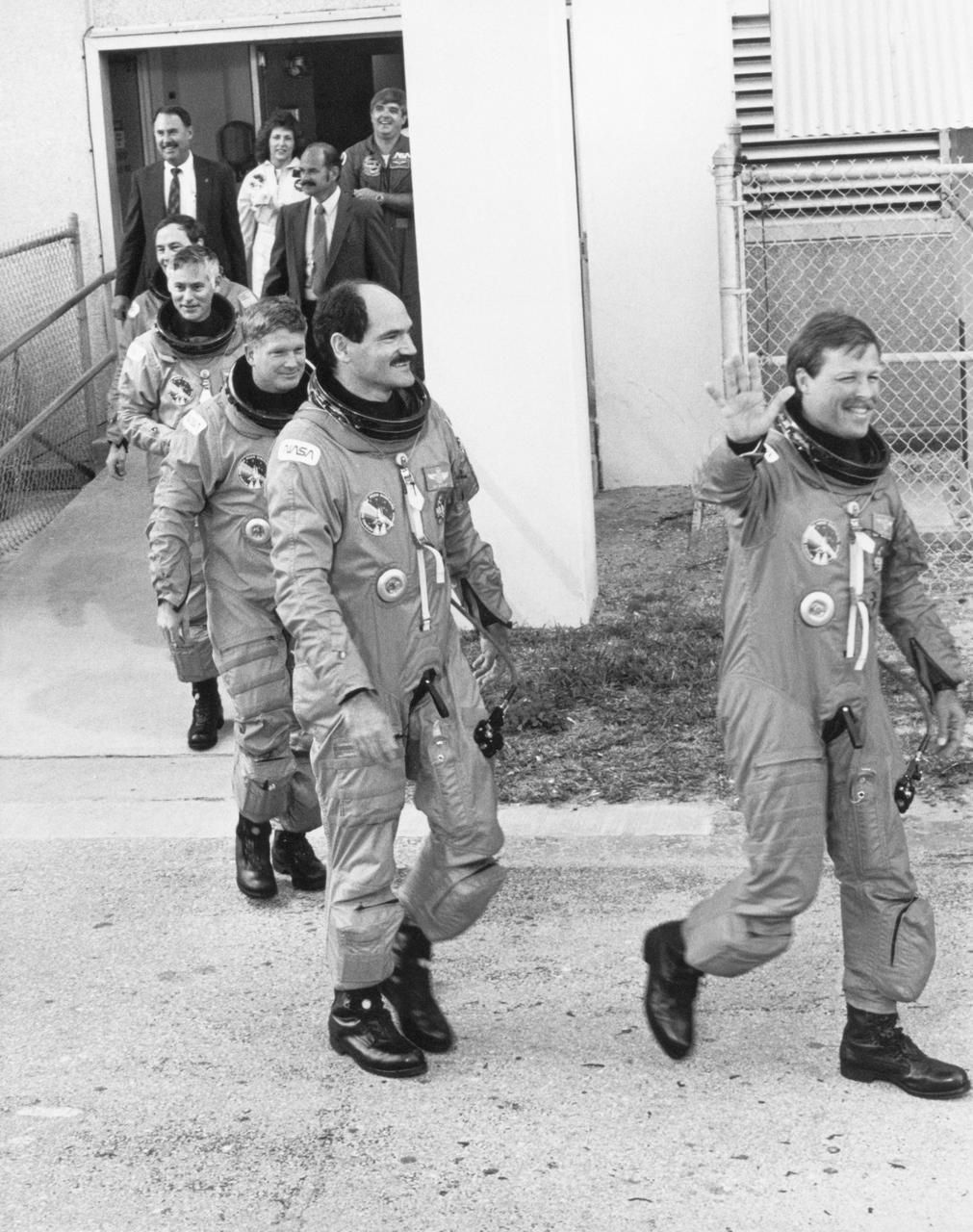
S88-53088 (2 Dec. 1988) --- The STS-27 crew strides down the ramp from the Operations and Checkout Building at Kennedy Space Center to grab a van that will take the crew members to Launch Complex 39 for the Dec. 2, 1988 liftoff of Atlantis. Astronaut Robert L. Gibson, commander, waves to well-wishers (out of frame). He is followed by astronaut Guy S. Gardner, pilot, along with the flight?s three mission specialists -- astronauts William M. Shepherd, Richard M.(Mike) Mullane and Jerry L. Ross. Photo credit: NASA
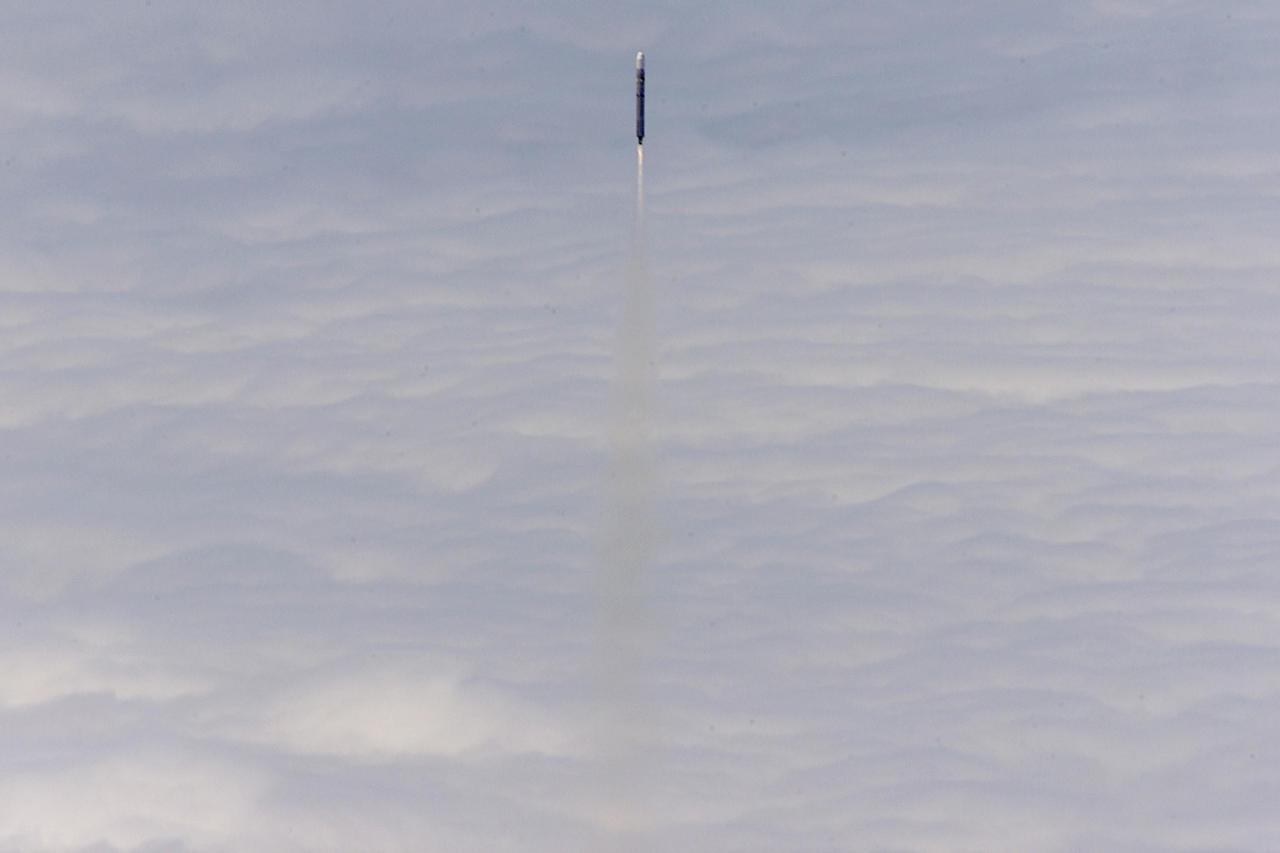
VANDENBERG AIR FORCE BASE, CALIF. -- The National Oceanic and Atmospheric Administration (NOAA) spacecraft (NOAA-M) streaks above a cloud layer after a successful launch at 2:23 p.m. EDT aboard a Titan II rocket from Vandenberg Air Force Base, Calif. NOAA-M is another in a series of polar-orbiting Earth environmental observation satellites that provide global data to NOAA's short- and long-range weather forecasting systems
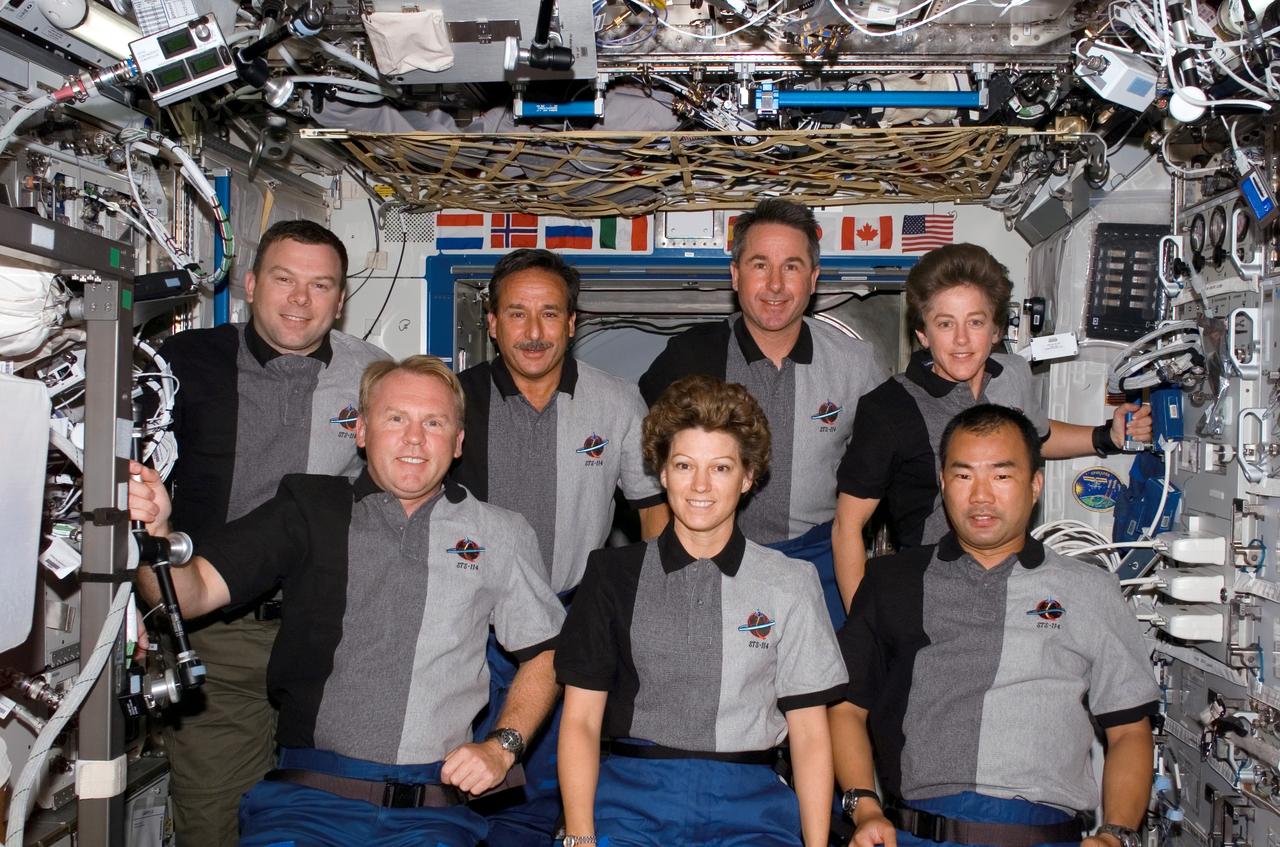
S114-E-6751 (2 August 2005) --- The STS-114 crewmembers pose for an in-flight portrait in the Destiny laboratory of the International Space Station. From the left (front row) are astronauts Andrew S. W. Thomas, mission specialist; Eileen M. Collins, commander; and Soichi Noguchi, mission specialist representing Japan Aerospace Exploration Agency (JAXA). From the left (back row) are astronauts James M. Kelly, pilot; Charles J. Camarda, Stephen K. Robinson, and Wendy B. Lawrence, all mission specialists.
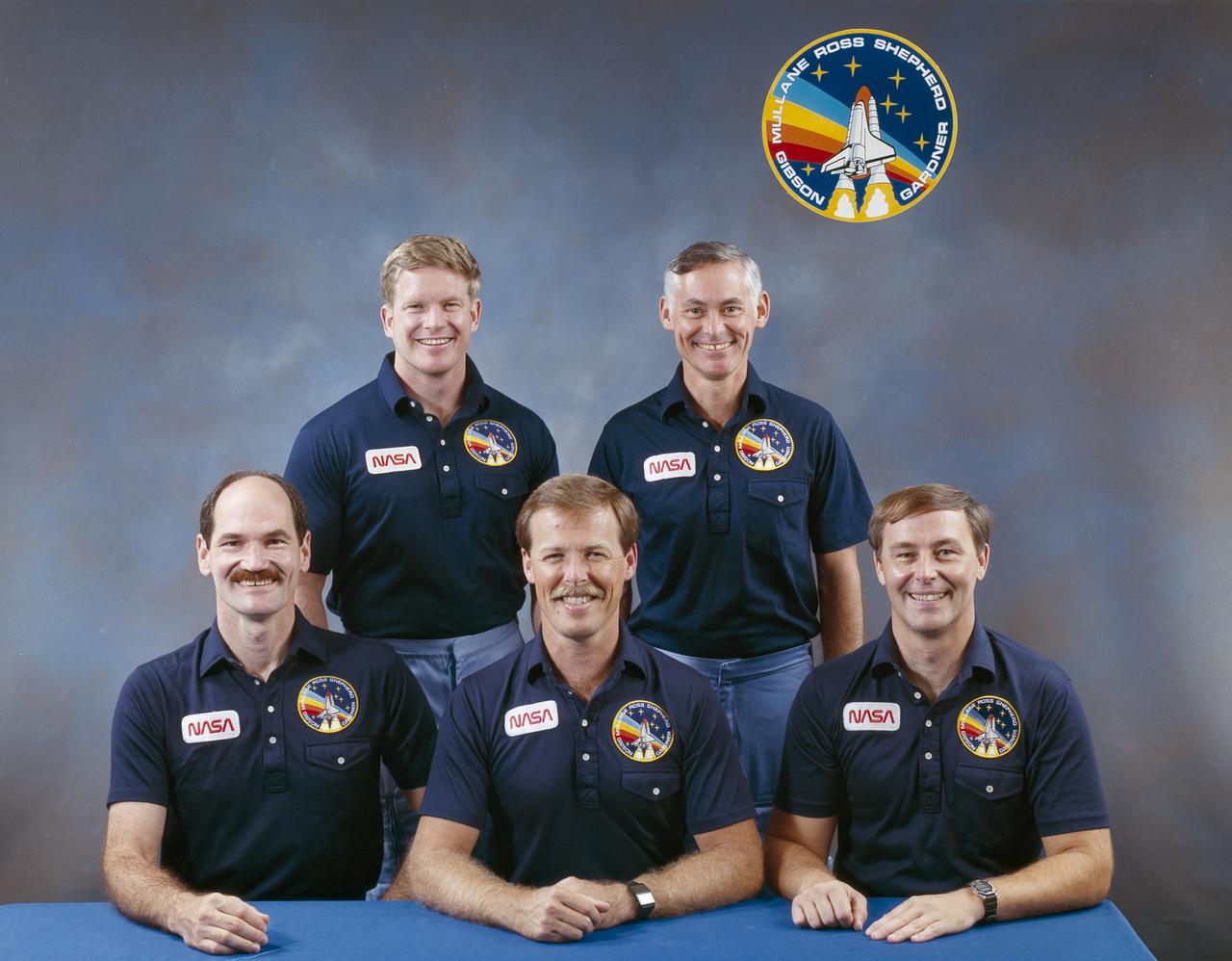
The STS-27 crew portrait features 5 astronauts. Seated, left to right, are Jerry L. Ross, mission specialist; Guy S. Gardner, pilot; and Robert L. Gibson, commander. On the back row, left to right, are mission specialists Richard M. Mullane, and William M. Shepherd. Launched aboard the Space Shuttle Atlantis on December 2, 1988 at 9:30:34 am (EST), the STS-27 mission was the third mission dedicated to the Department of Defense (DOD).
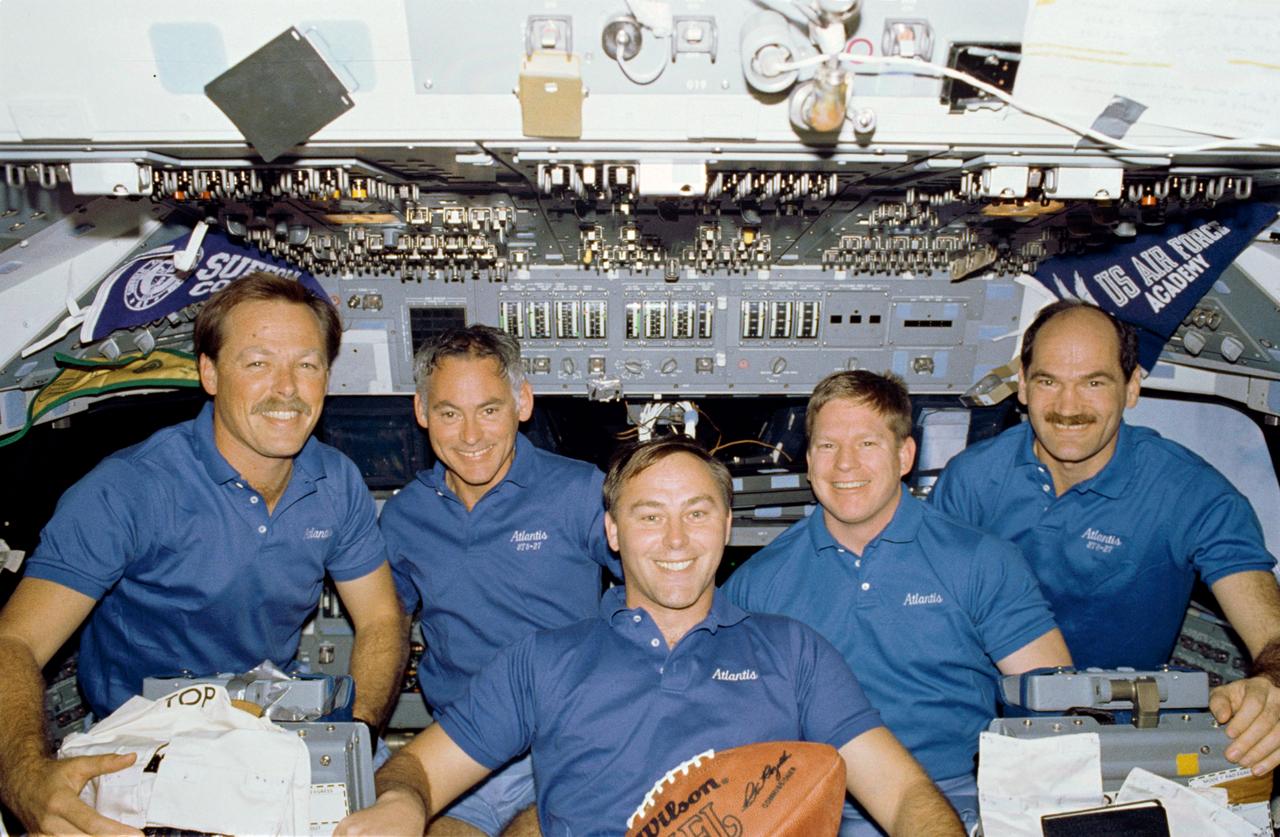
STS027-11-012 (2-6 Dec. 1988) --- The crew members for the STS-27 space flight pose on the flight deck of the Earth-orbiting space shuttle Atlantis with a football free-floating in the foreground. Left to right are astronauts Robert L. Gibson, commander; Richard M. (Mike) Mullane, Jerry L. Ross and William M. Shepherd, mission specialists; and Guy S. Gardner, pilot. The football was later presented to the National Football League (NFL) at halftime of the Super Bowl in Miami. Photo credit: NASA
![VANDENBERG AIR FORCE BASE, CALIF. -- A Titan II rocket hurtles above the launch tower at Vandenberg Air Force Base, Calif., with the National Oceanic and Atmospheric Administration (NOAA) spacecraft (NOAA-M) aboard. The rocket lifted off at 2:23 p.m. EDT. NOAA-M is another in a series of polar-orbiting Earth environmental observation satellites that provide global data to NOAA's short- and long-range weather forecasting systems. [Photo by William Hartenstein]](https://images-assets.nasa.gov/image/KSC-02pd1133/KSC-02pd1133~medium.jpg)
VANDENBERG AIR FORCE BASE, CALIF. -- A Titan II rocket hurtles above the launch tower at Vandenberg Air Force Base, Calif., with the National Oceanic and Atmospheric Administration (NOAA) spacecraft (NOAA-M) aboard. The rocket lifted off at 2:23 p.m. EDT. NOAA-M is another in a series of polar-orbiting Earth environmental observation satellites that provide global data to NOAA's short- and long-range weather forecasting systems. [Photo by William Hartenstein]
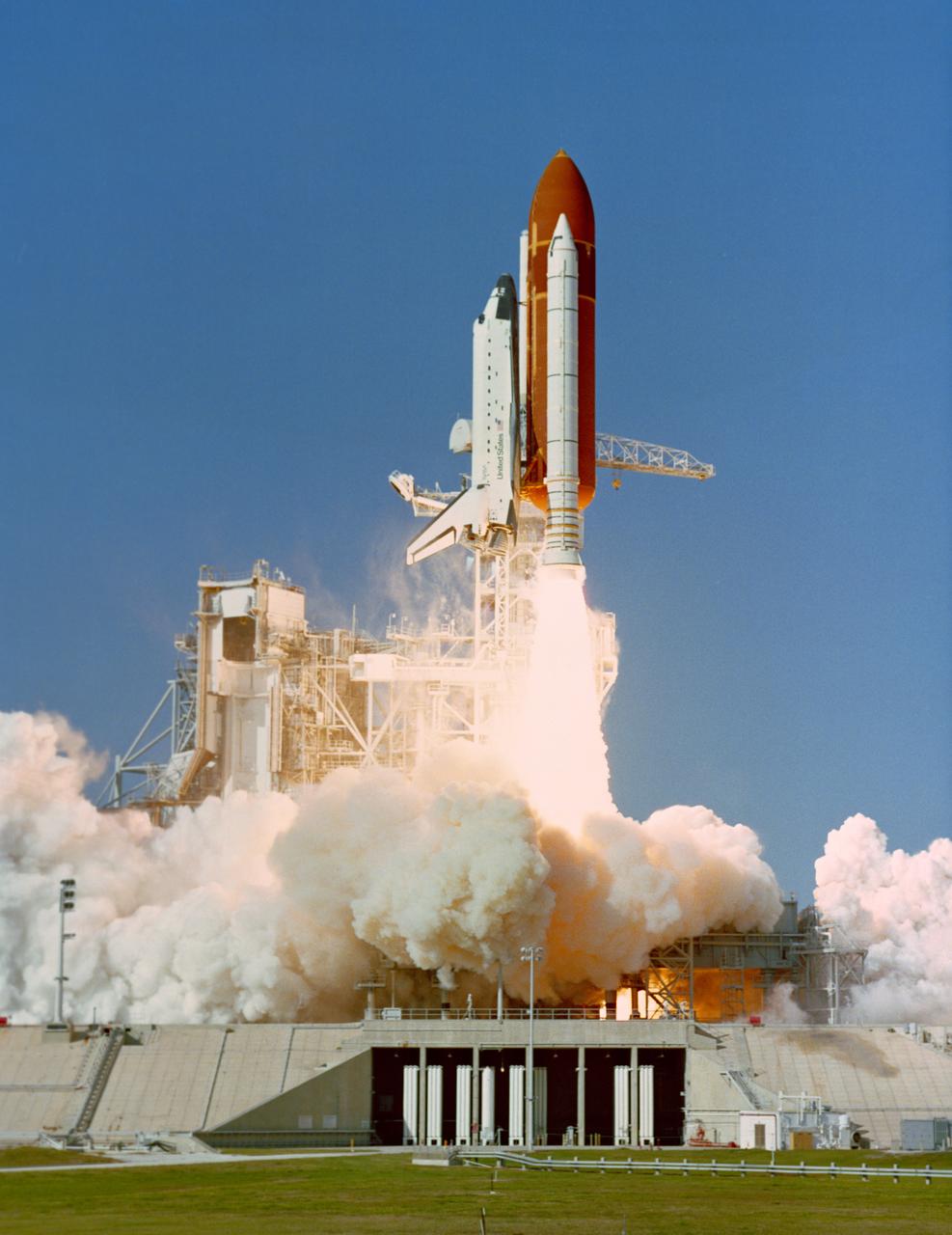
STS027-S-005 (Dec 2, 1988) --- Space Shuttle Atlantis is launched from Kennedy Space Center's (KSC) Pad 39-B at 9:30 a.m. EST, on a Department of Defense (DOD) dedicated mission. This is the third mission for the orbiter Atlantis. Crew members are: Commander Robert L. "Hoot" Gibson; Pilot Guy S. Gardner; and Mission Specialists Jerry L. Ross, William M. Shepherd and Richard M. (Mike) Mullane.
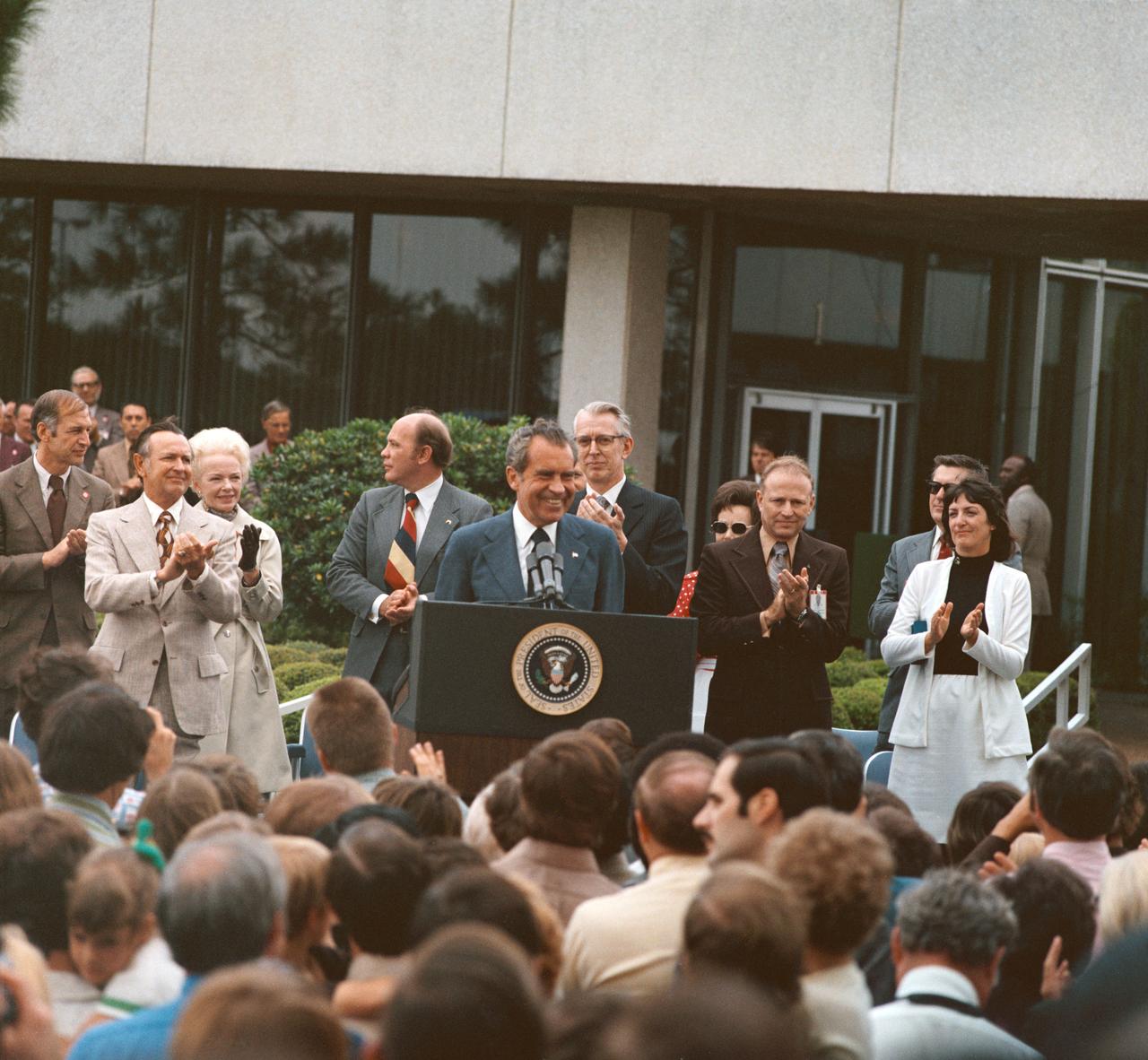
Five (5) views of President Richard M. Nixon during his visit to the JSC. These views show the President as he addresses a crowd of employees and visitors outside of Building 1 Auditorium. Dr. Christopher C. Kraft, Fletcher, and Astronaut Gerald Carr, with Pete Clements, George Abbey, and Jack Waite in the background is also seen with the President. 1. Pres. Richard M. Nixon 2. Dr. Christopher C. Kraft JSC, HOUSTON, TX
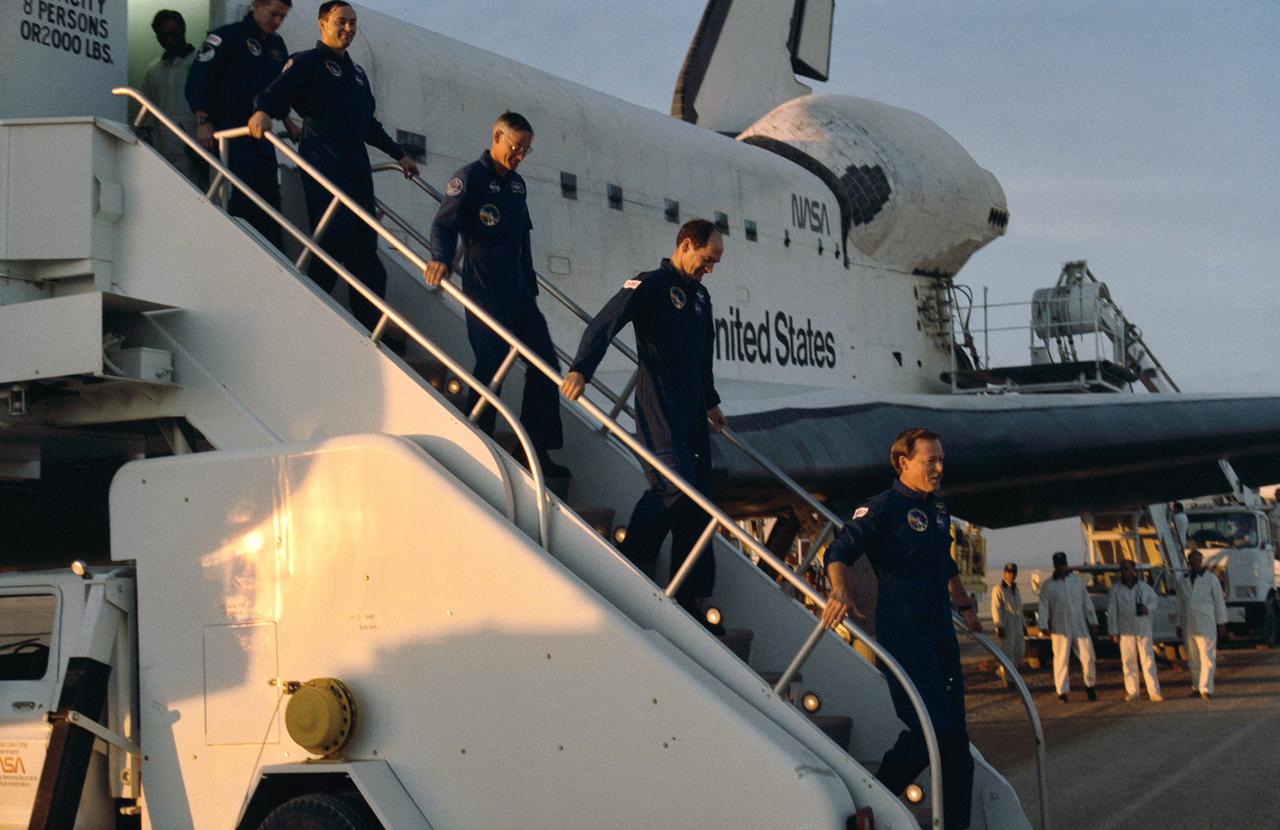
STS027-S-020 (6 Dec 1988) --- The five astronauts who were aboard Atlantis for its return to flight leave their spacecraft after almost 4 1/2 days in space. From bottom to top are Astronauts Robert L. Gibson, mission commander; Guy S. Gardner, pilot; and Richard M. (Mike) Mullane, Jerry L. Ross and William M. Shepherd, mission specialists. Atlantis touched down on Rogers Dry Lake Bed at 3:36 p.m. (PST), Dec. 6, 1988.
![VANDENBERG AIR FORCE BASE, CALIF. -- The National Oceanic and Atmospheric Administration (NOAA) spacecraft (NOAA-M) lifts off at 2:23 p.m. EDT aboard a Titan II rocket from Vandenberg Air Force Base, Calif. NOAA-M is another in a series of polar-orbiting Earth environmental observation satellites that provide global data to NOAA's short- and long-range weather forecasting systems. [Photo by William Hartenstein]](https://images-assets.nasa.gov/image/KSC-02pd1132/KSC-02pd1132~medium.jpg)
VANDENBERG AIR FORCE BASE, CALIF. -- The National Oceanic and Atmospheric Administration (NOAA) spacecraft (NOAA-M) lifts off at 2:23 p.m. EDT aboard a Titan II rocket from Vandenberg Air Force Base, Calif. NOAA-M is another in a series of polar-orbiting Earth environmental observation satellites that provide global data to NOAA's short- and long-range weather forecasting systems. [Photo by William Hartenstein]
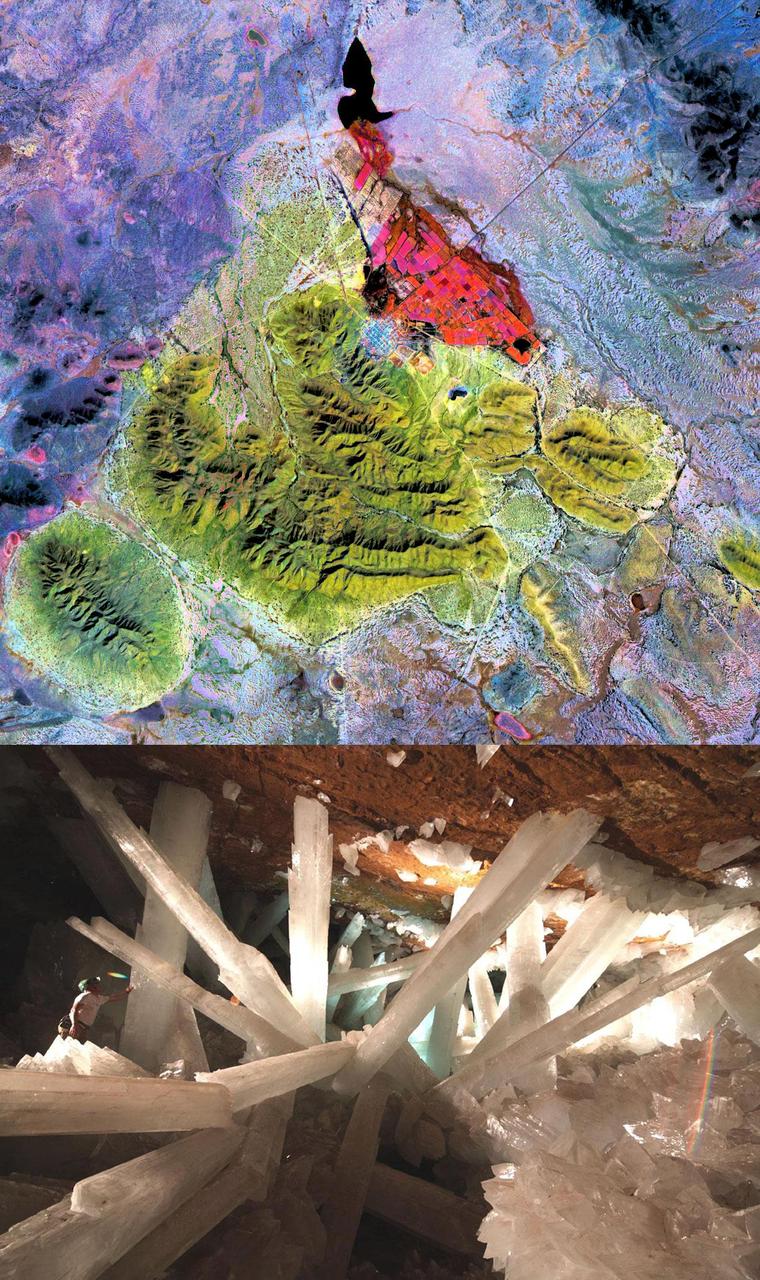
The Naica mine in Chihuahua, Mexico, with its enormous gypsum crystals, may well be called the "Queen of the Giant Crystals localities." Though the Naica mine is no show mine, but still a working lead-zinc mine hosted in layered limestones, the first of several crystal caves was discovered in 1910. This "Cave of the Swords" contained extraordinary large sword-like selenite (gypsum) crystals up to 2 m long. In 2000 another crystal cave system was discovered at 300 m depth, even more spectacular than the original cave. Inside were free growing gypsum crystals up to 12 m long and 2 m in diameter. The ASTER image uses SWIR bands 4, 6, and 8 in RGB. Limestone is displayed in yellow-green colors, vegetation is red. The image was acquired February 16, 2004, covers an area of 26 x 23.5 km, and is located near 27.8 degrees north latitude, 105.5 degrees west longitude. The photo of crystals was taken from: http://www.thatcrystalsite.com/. http://photojournal.jpl.nasa.gov/catalog/PIA10615
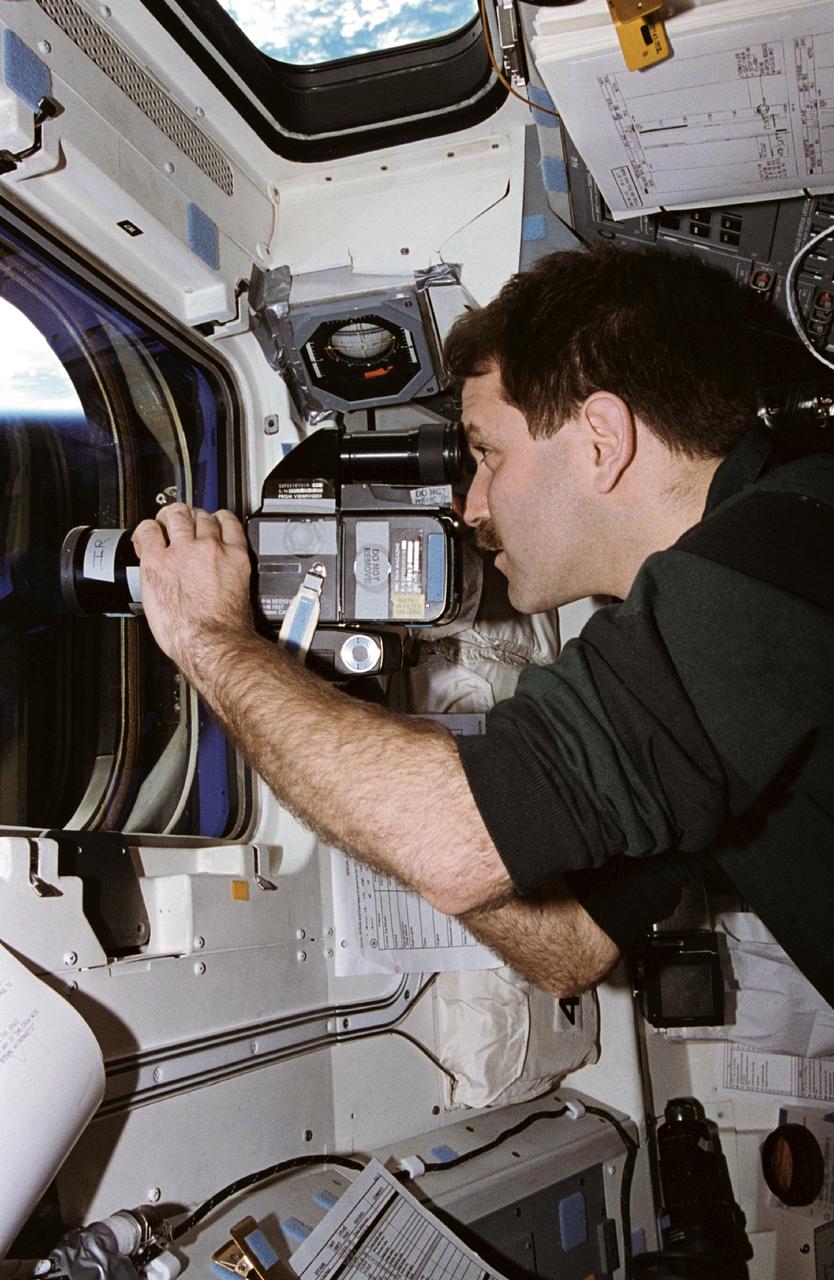
STS067-377-008 (2-18 March 1995) --- Astronaut John M. Grunsfeld, mission specialist, uses a handheld Hasselblad camera to record the Astro-2 payload. Orbiting Earth at 190 nautical miles, Grunsfeld joined four other NASA astronauts and two scientists for almost 17 days conducting research in support of the Astro-2 mission.
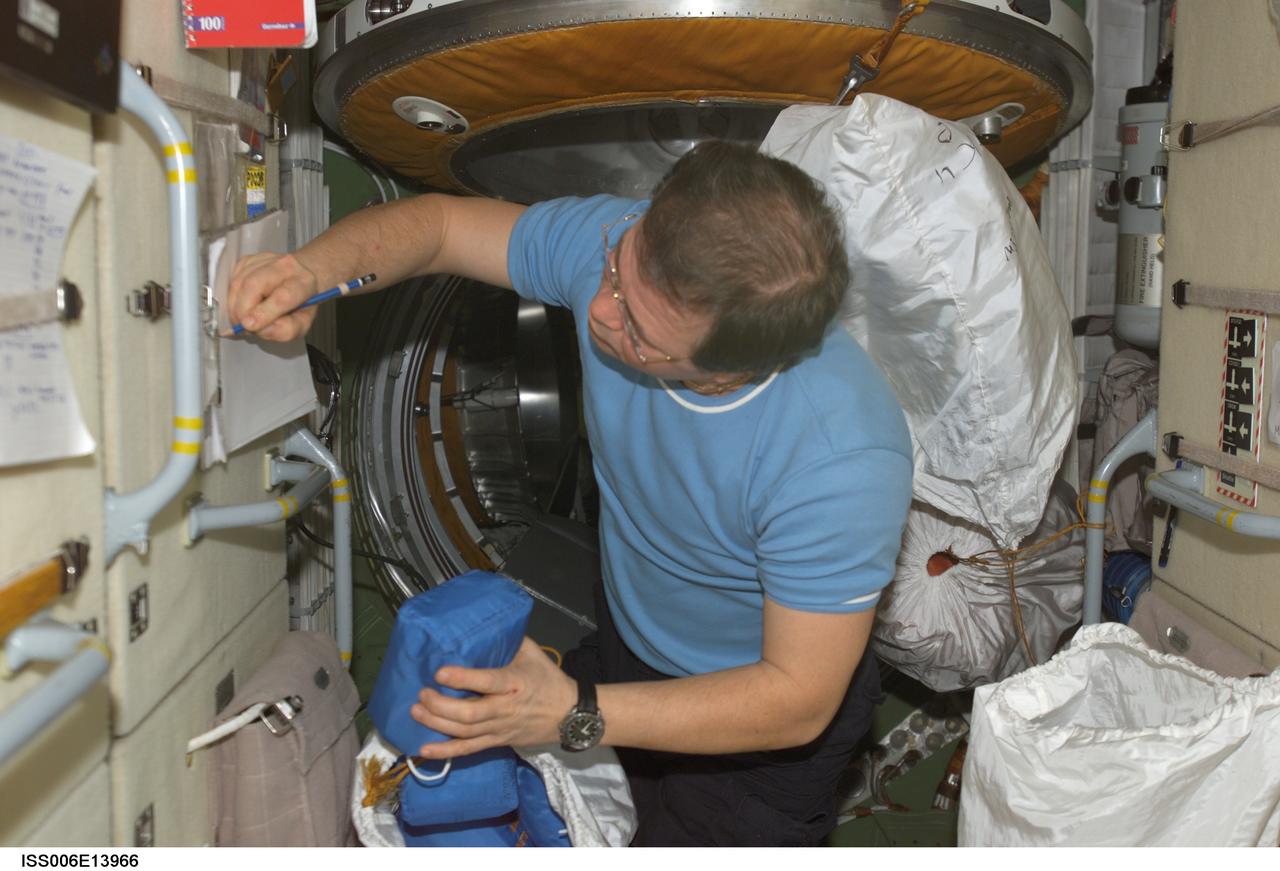
ISS006-E-13966 (2 January 2003) --- Cosmonaut Nikolai M. Budarin, Expedition Six flight engineer, takes inventory of equipment in the functional cargo block (FGB), or Zarya, on the International Space Station (ISS). Budarin represents Rosaviakosmos.
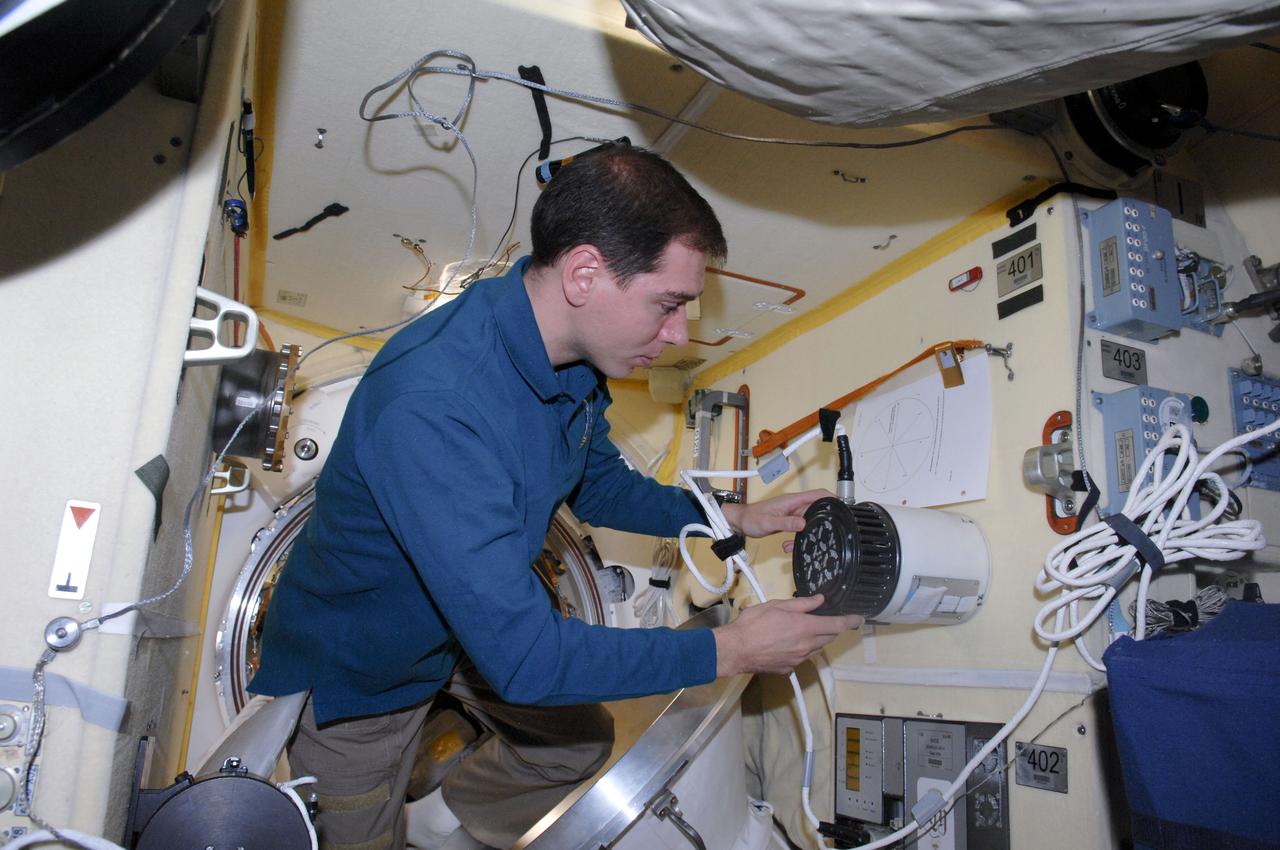
ISS028-E-014320 (6 July 2011) --- Russian cosmonaut Sergei Volkov, Expedition 28 flight engineer, works with the Russian TEKh-15/DAKON-M IZGIB (?Bend?) experiment in the Poisk Mini-Research Module 2 (MRM2) of the International Space Station.
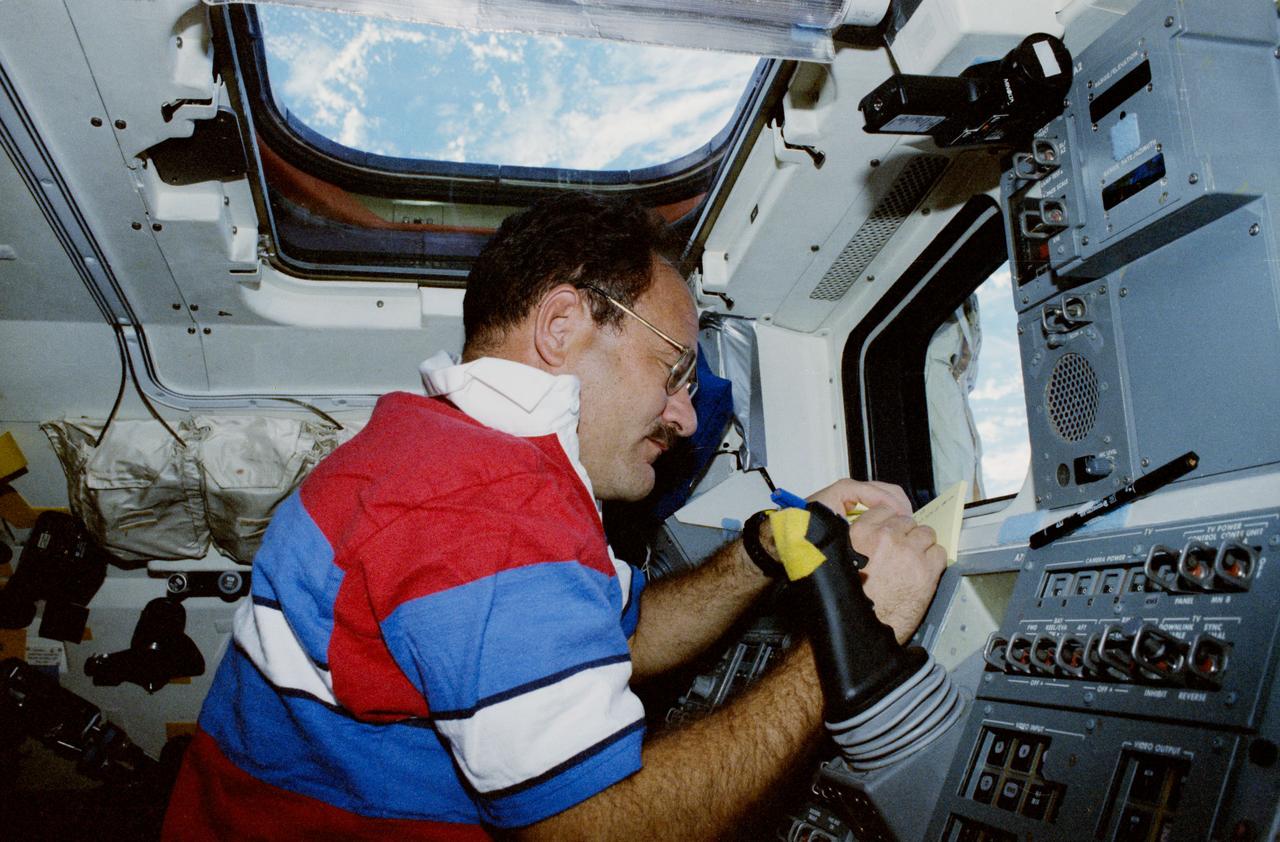
STS035-19-019 (2-11 Dec 1990) --- Astronaut John M. (Mike) Lounge, STS 35 mission specialist makes a notation as he observes telescopes (out of frame) at work in Columbia's cargo bay. This aft flight deck scene was exposed with a 35mm camera.
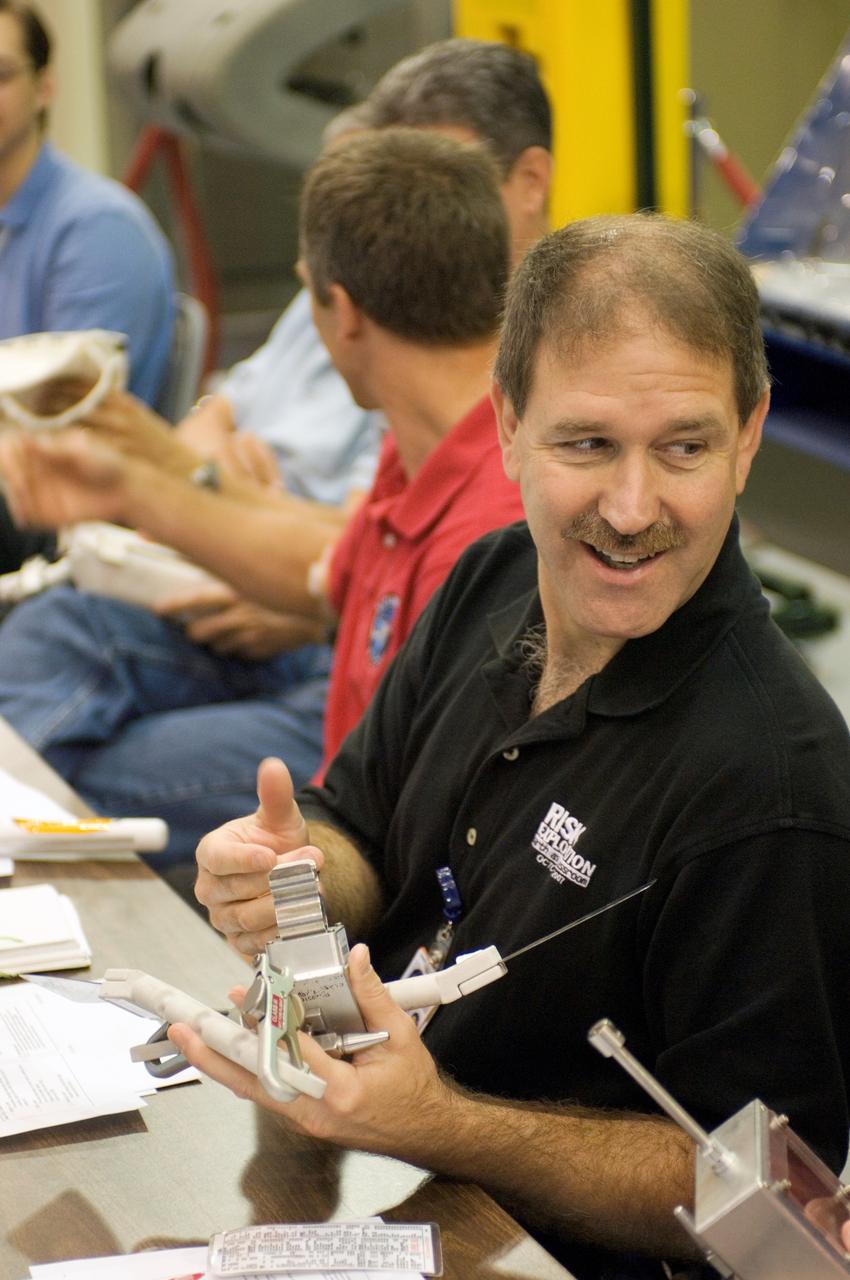
JSC2008-E-031807 (2 April 2008) --- Astronaut John M. Grunsfeld, STS-125 mission specialist, participates in an extravehicular activity (EVA) hardware training session in the Space Vehicle Mockup Facility at NASA's Johnson Space Center.
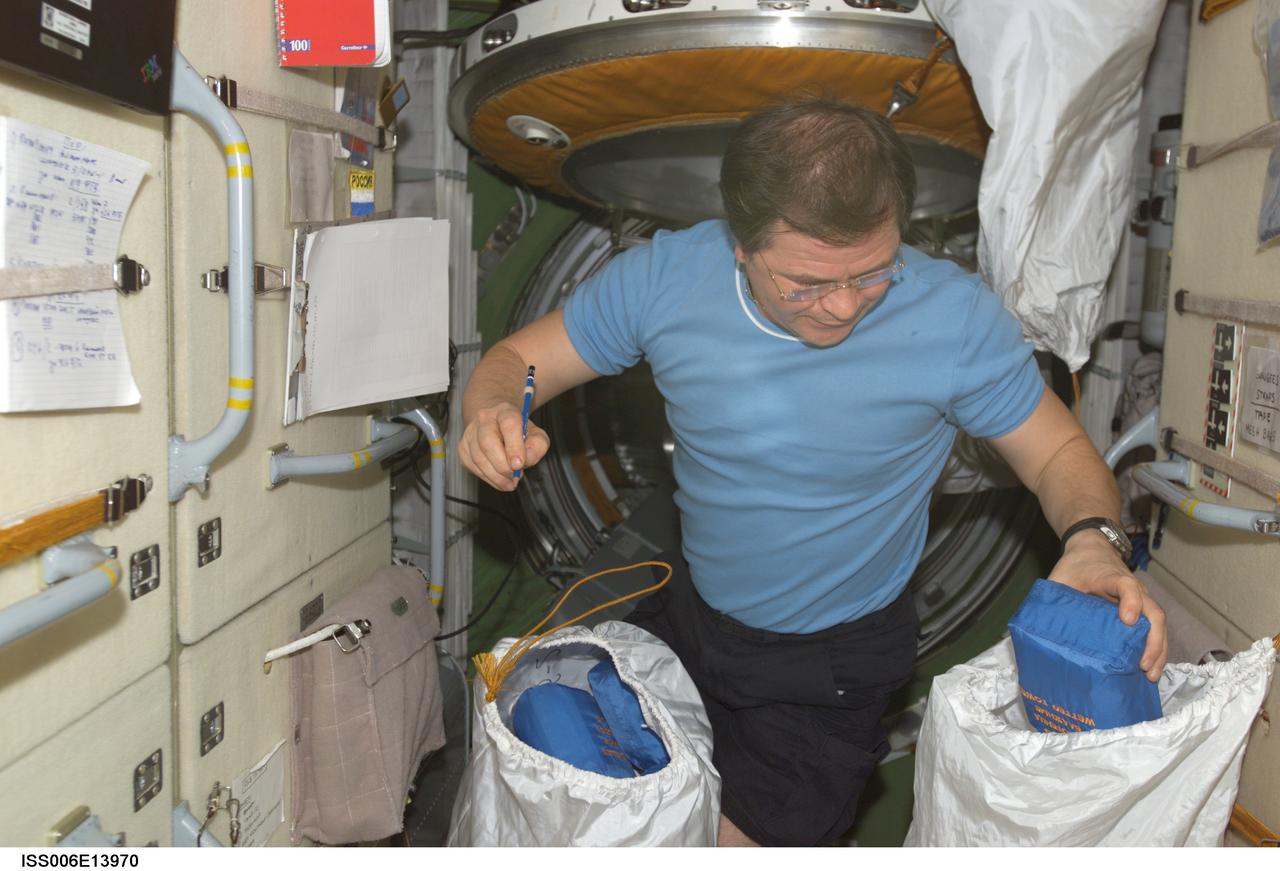
ISS006-E-13970 (2 January 2003) --- Cosmonaut Nikolai M. Budarin, Expedition Six flight engineer, takes inventory of equipment in the functional cargo block (FGB), or Zarya, on the International Space Station (ISS). Budarin represents Rosaviakosmos.
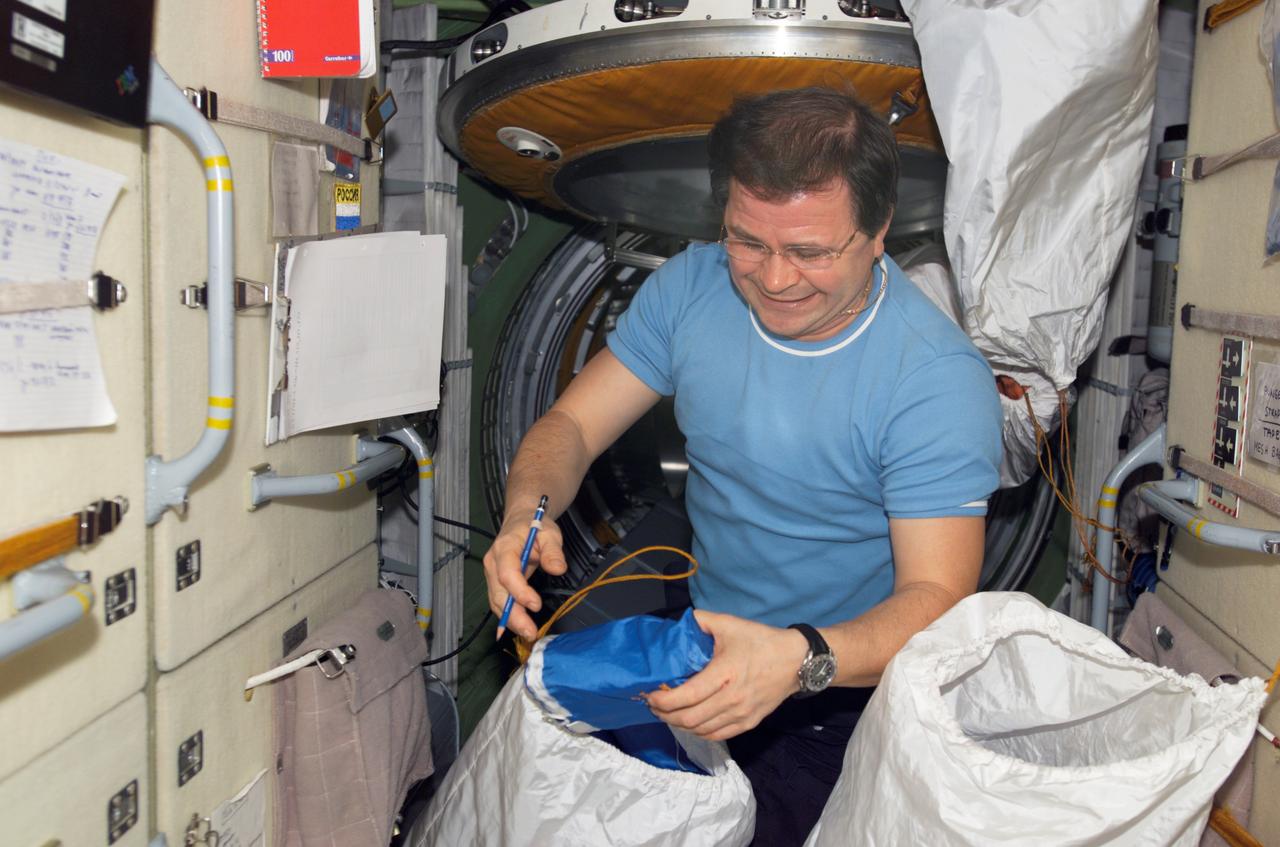
ISS006-E-13971 (2 January 2003) --- Cosmonaut Nikolai M. Budarin, Expedition 6 flight engineer, takes inventory of equipment in the functional cargo block (FGB), or Zarya, on the International Space Station (ISS). Budarin represents Rosaviakosmos.
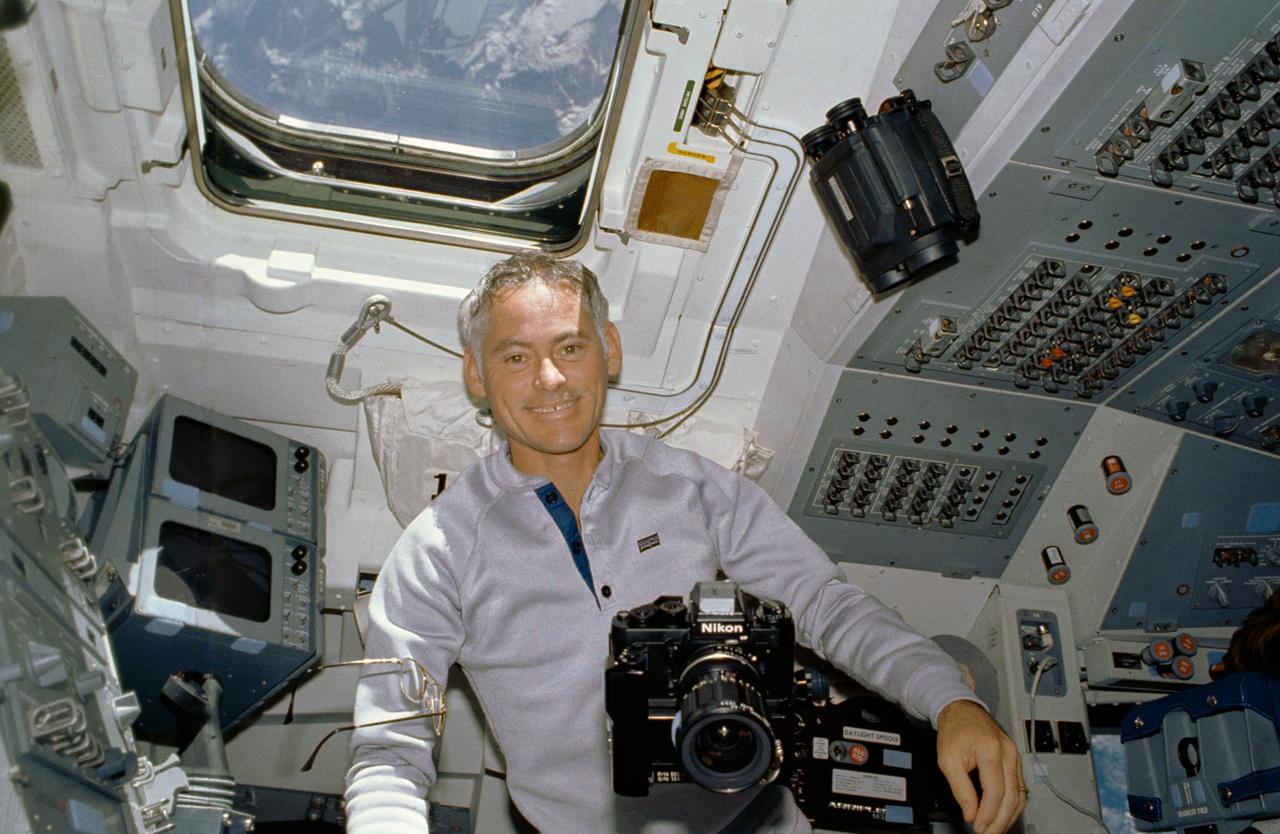
STS027-10-021 (2-6 Dec. 1988) --- Astronaut Richard M. (Mike) Mullane, STS-27 mission specialist, is able to handle a number of cameras with the aid of the microgravity in the shirt sleeve environment of the Earth-orbiting space shuttle Atlantis. Photo credit: NASA
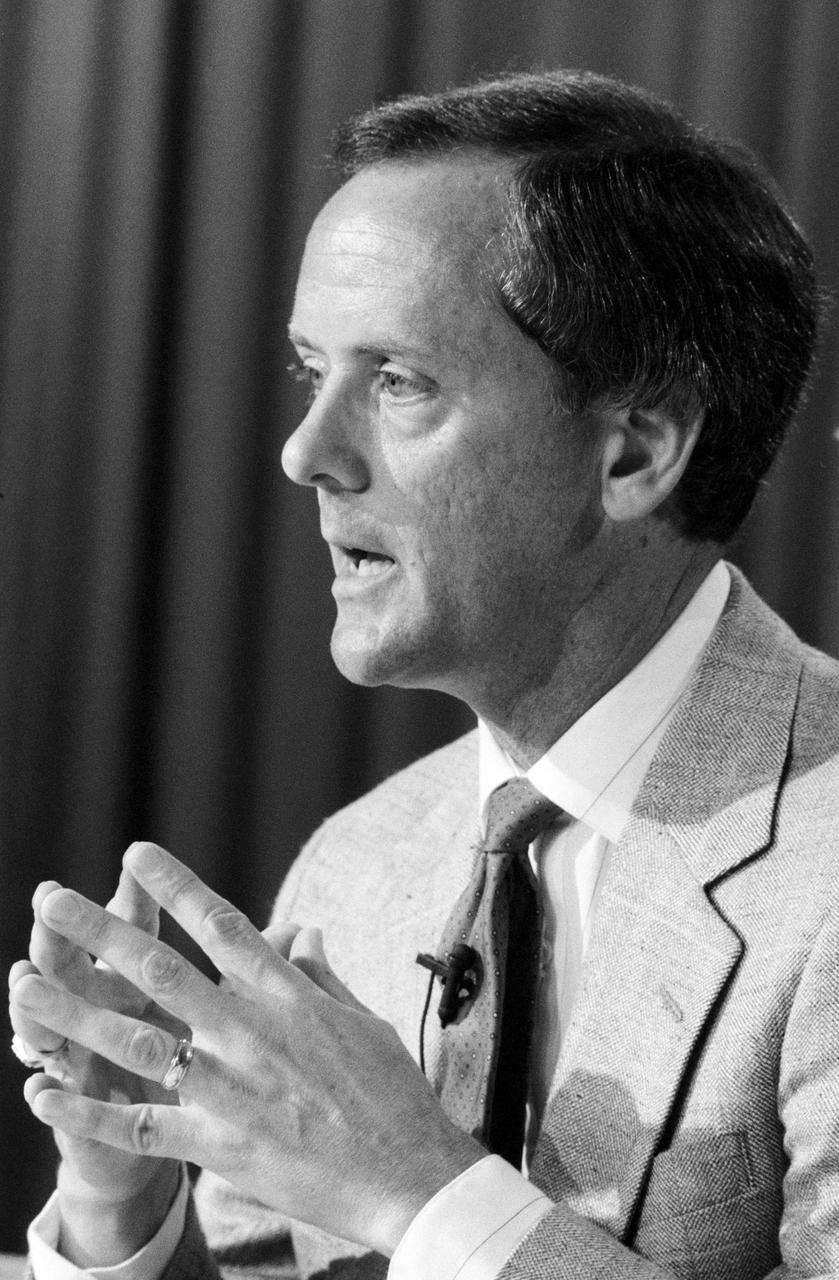
Lead flight director James M. Heflin, Jr answers question at STS-34's thirty days before launch (T-30) press briefing conducted in the JSC Auditorium and Public Affairs Facility Bldg 2 briefing room.

KENNEDY SPACE CENTER, FLA. -- More than 600 accredited newsmen at Press Site #2 covered this morning's launch of Apollo 7, carying astronauts Walter M. Schirra Jr., Donn F. Eisele and Walter Cunningham from Launch Complex 34.
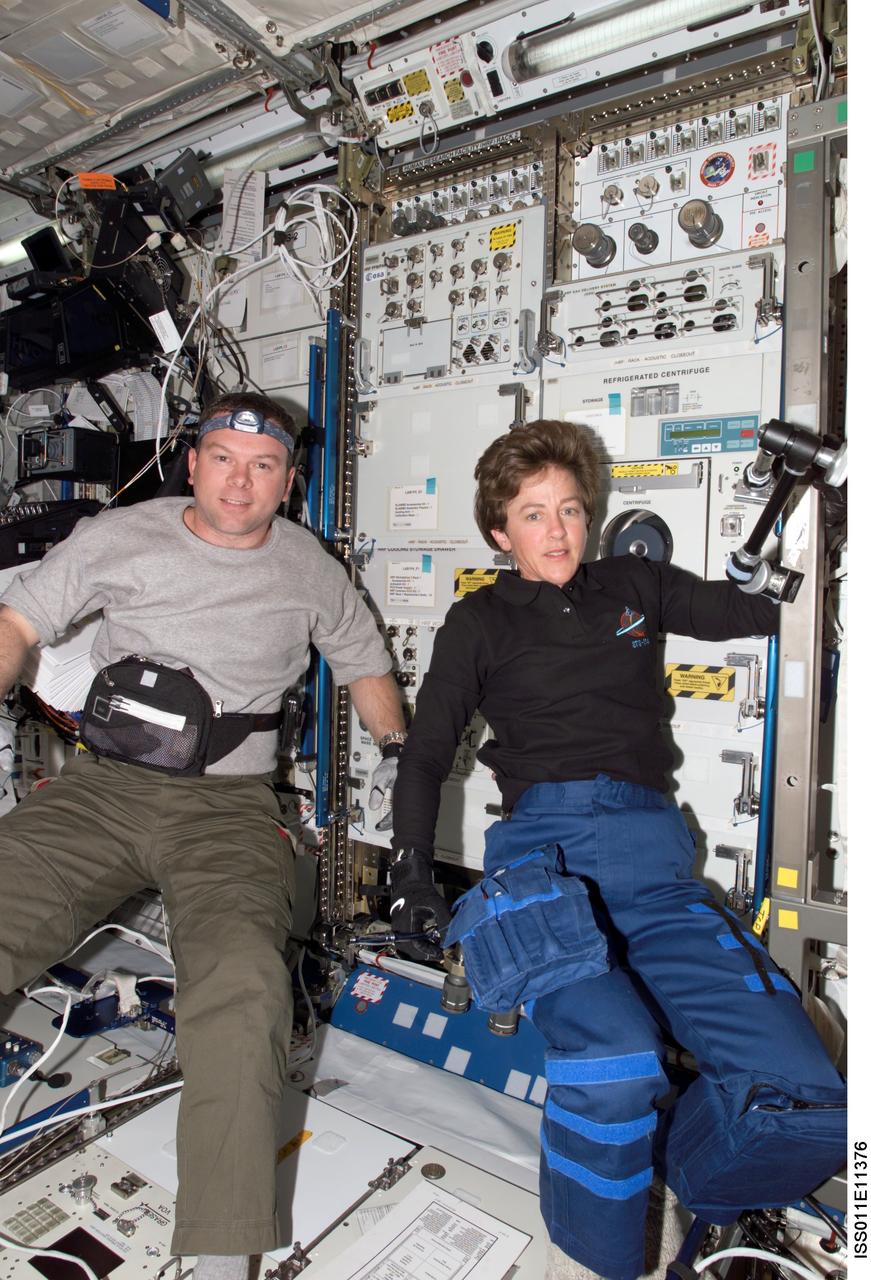
ISS011-E-11376 (31 July 2005) --- Astronauts James M. Kelly (left), STS-114 pilot, and Wendy B. Lawrence, mission specialist, are photographed after installing the new Human Research Facility (HRF) rack 2 in the Destiny laboratory of the International Space Station.
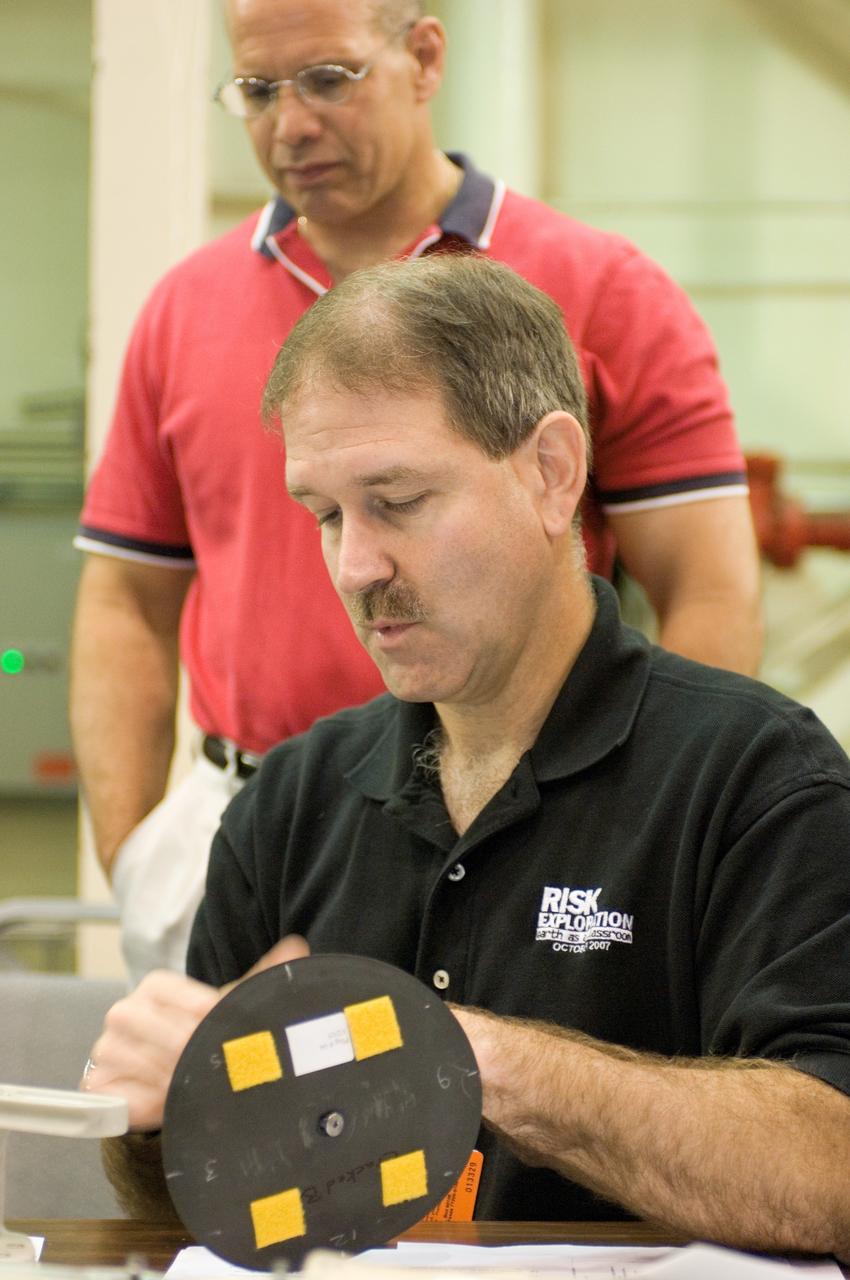
JSC2008-E-031810 (2 April 2008) --- Astronauts John M. Grunsfeld, STS-125 mission specialist, participates in an extravehicular activity (EVA) hardware training session in the Space Vehicle Mockup Facility at NASA's Johnson Space Center. Flight director Tony Ceccacci looks on.

S63-00562 (February 1963) --- Portrait of astronaut groups 1 and 2. The original seven Mercury astronauts selected by NASA in April 1959, are seated (left to right): L. Gordon Cooper Jr., Virgil I. Grissom, M. Scott Carpenter, Water M. Schirra Jr., John H. Glenn Jr., Alan B. Shepard Jr., and Donald K. Slayton. The second group of NASA astronauts, which were named in September 1962, are standing (left to right): Edward H. White II, James A. McDivitt, John W. Young, Elliot M. See Jr., Charles Conrad Jr., Frank Borman, Neil A. Armstrong, Thomas P. Stafford, and James A. Lovell Jr. Photo credit: NASA or National Aeronautics and Space Administration
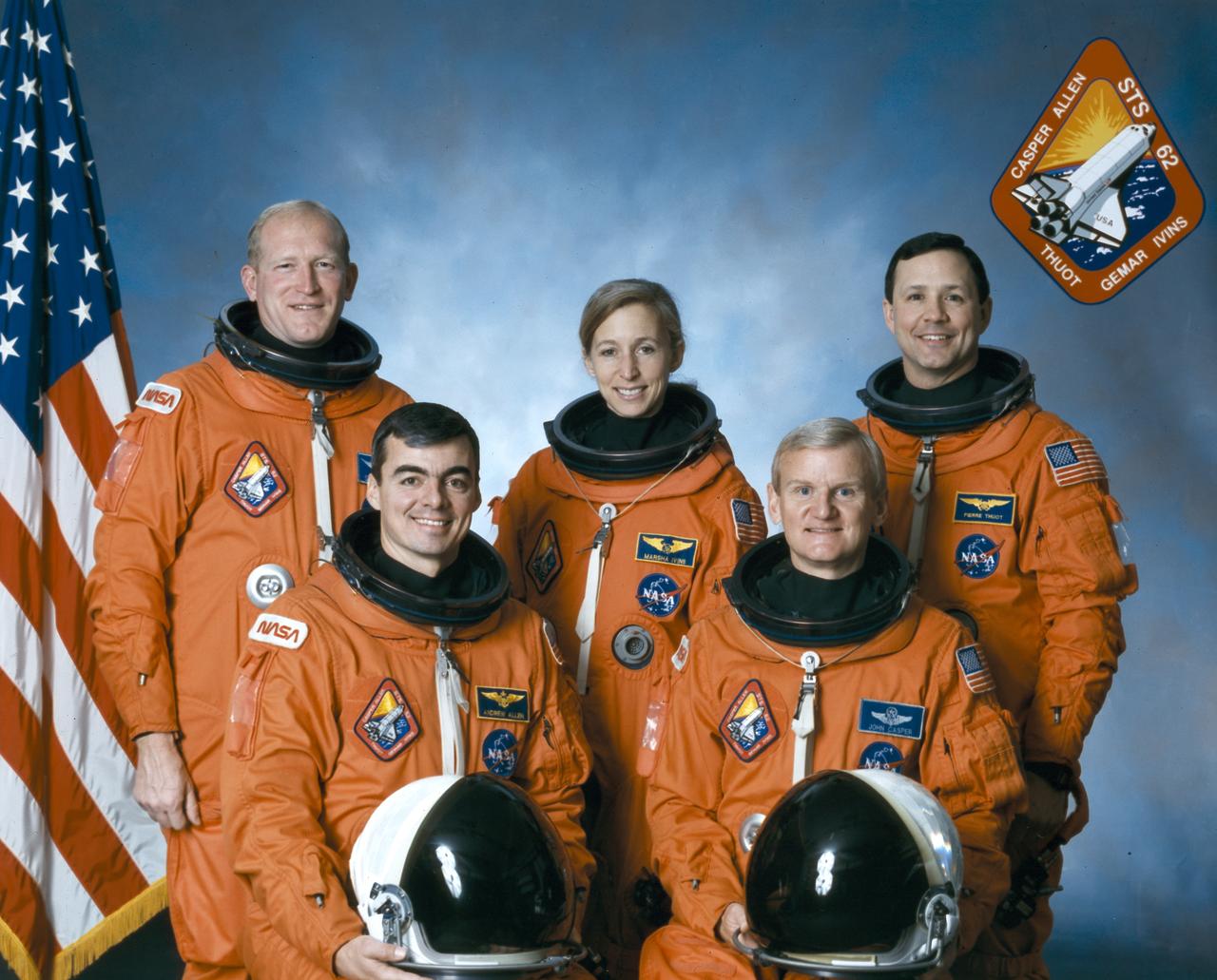
Astronauts included in the STS-62 crew portrait include (standing left to right) mission specialists Charles D. Gemar, Marsha S. Ivins, and Pierre J. Thuot. Seated left to right are Andrew M. Allen, pilot; and John H. Casper, commander. Launched aboard the Space Shuttle Columbia on March 4, 1994 at 8:53:00 am (EST), the STS-62 mission carried two primary payloads; the U.S Microgravity Payload-2 (USMP-2) and the Office of Aeronautics and Space Technology-2 (OAST-2).
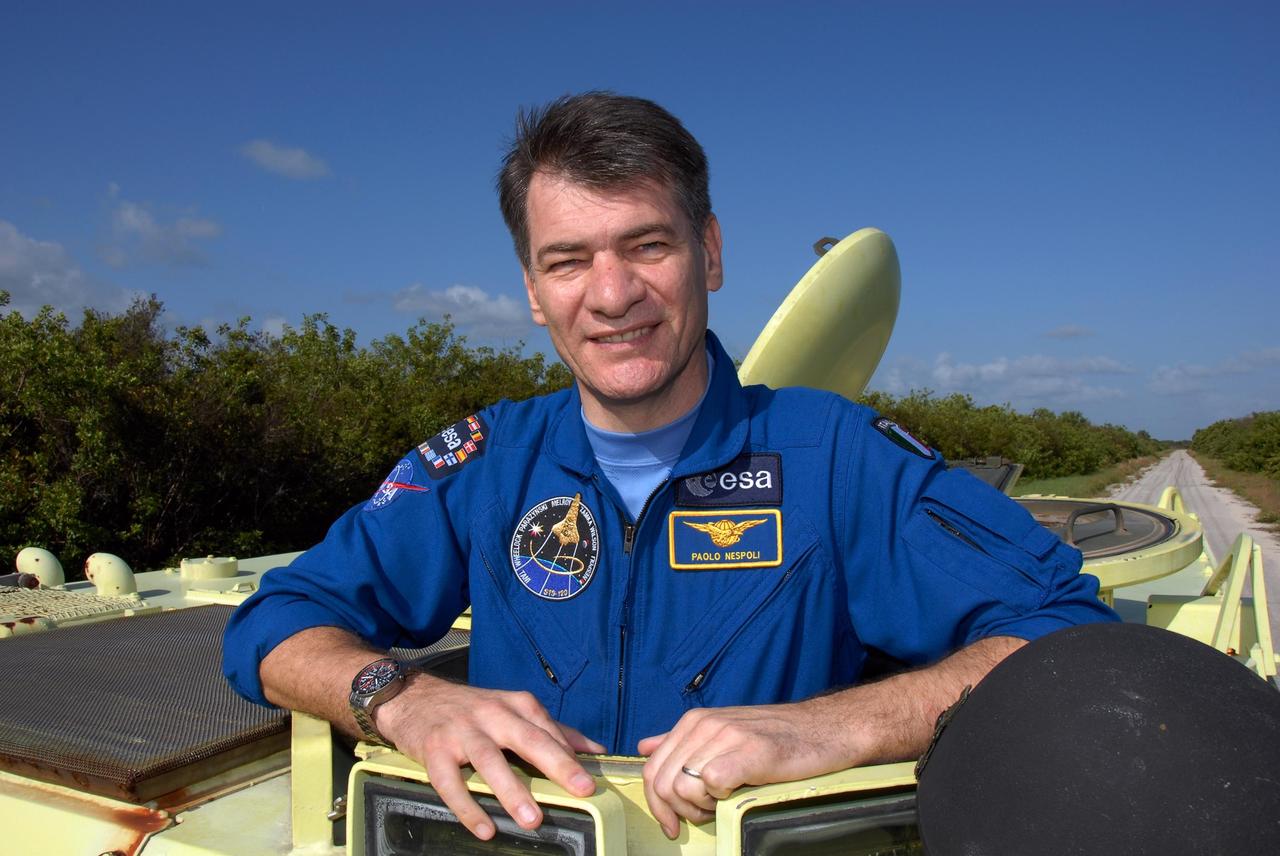
KENNEDY SPACE CENTER, FLA. -- STS-120 Mission Specialist Paolo Nespoli, who represents the European Space Agency, gets ready in the driver's seat for driving practice in the M-113 armored personnel carrier. The M-113 is part of emergency exit procedures from Launch Pad 39A. The training is part of terminal countdown demonstration test, or TCDT, activities the crew is undertaking at NASA's Kennedy Space Center. The TCDT also includes equipment familiarization and a simulated launch countdown. Mission STS-120, which will carry the Italian-built U.S. Node 2 to the International Space Station, is targeted for launch on Oct. 23. Photo credit: NASA/Kim Shiflett
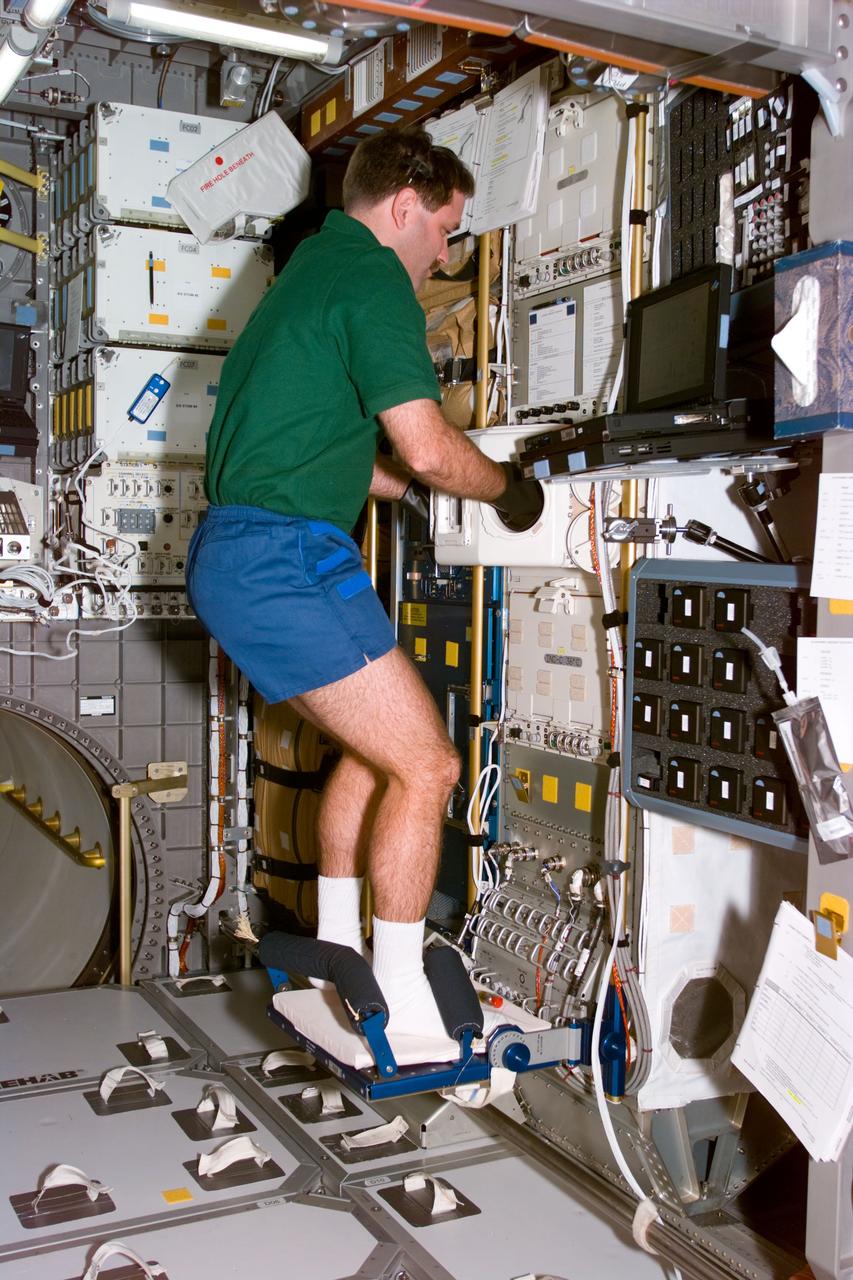
STS81-E-05107 (13 Jan. 1997) --- Astronaut John M. Grunsfeld, mission specialist, begins to activate a biorack glovebox aboard the Spacehab Double Module (DM) early on Day 2 of the mission. Grunsfeld is joined by five other NASA astronauts for the almost ten-day mission. The crew is scheduled to dock with Russia's Mir Space Station and pick up John E. Blaha, NASA astronaut who has been serving as a cosmonaut guest researcher since September 1996. Jerry M. Linenger (out of frame) will replace Blaha onboard Mir.
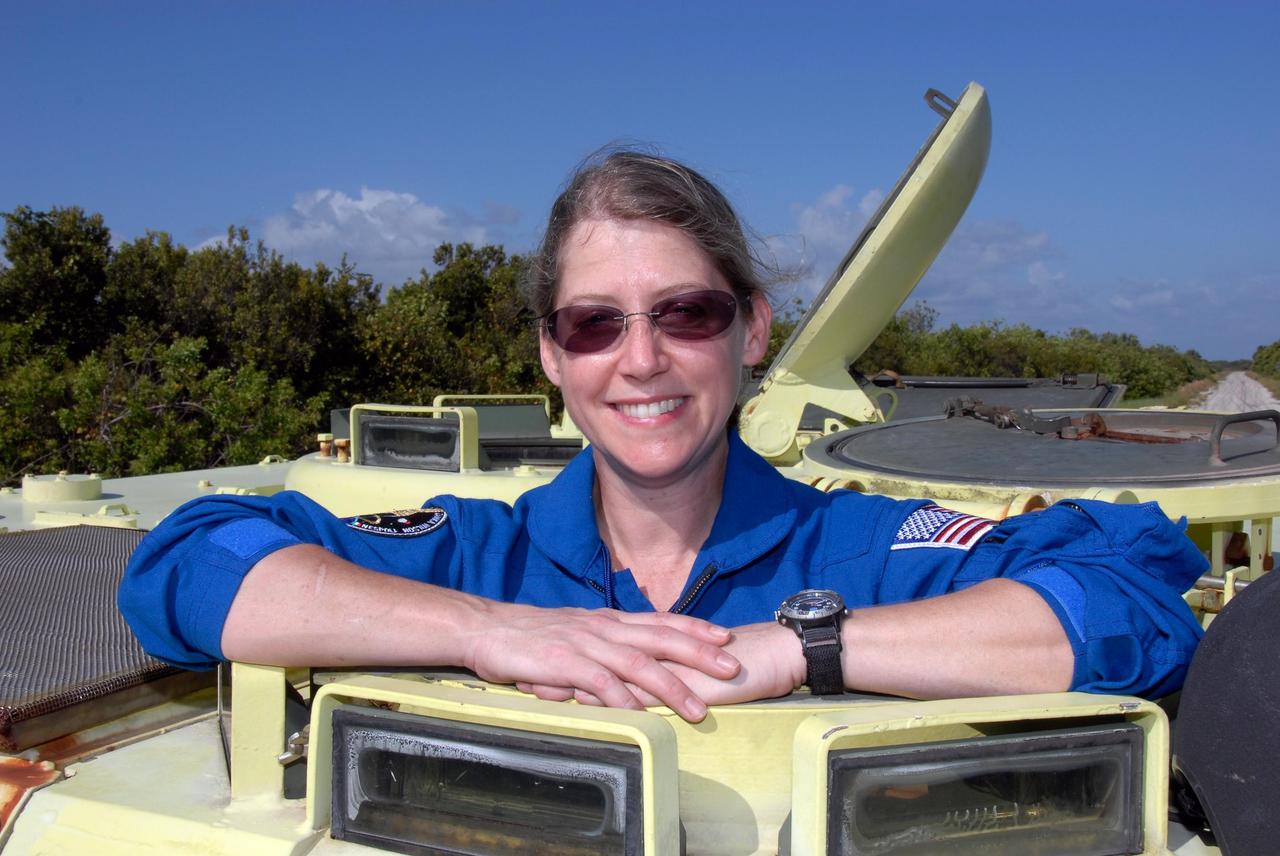
KENNEDY SPACE CENTER, FLA. -- STS-120 Commander Pamela Melroy is ready for her turn at driving practice in the M-113 armored personnel carrier. The M-113 is part of emergency exit procedures from Launch Pad 39A. The training is part of terminal countdown demonstration test, or TCDT, activities the crew is undertaking at NASA's Kennedy Space Center. The TCDT also includes equipment familiarization and a simulated launch countdown. Mission STS-120, which will carry the Italian-built U.S. Node 2 to the International Space Station, is targeted for launch on Oct. 23. Photo credit: NASA/Kim Shiflett
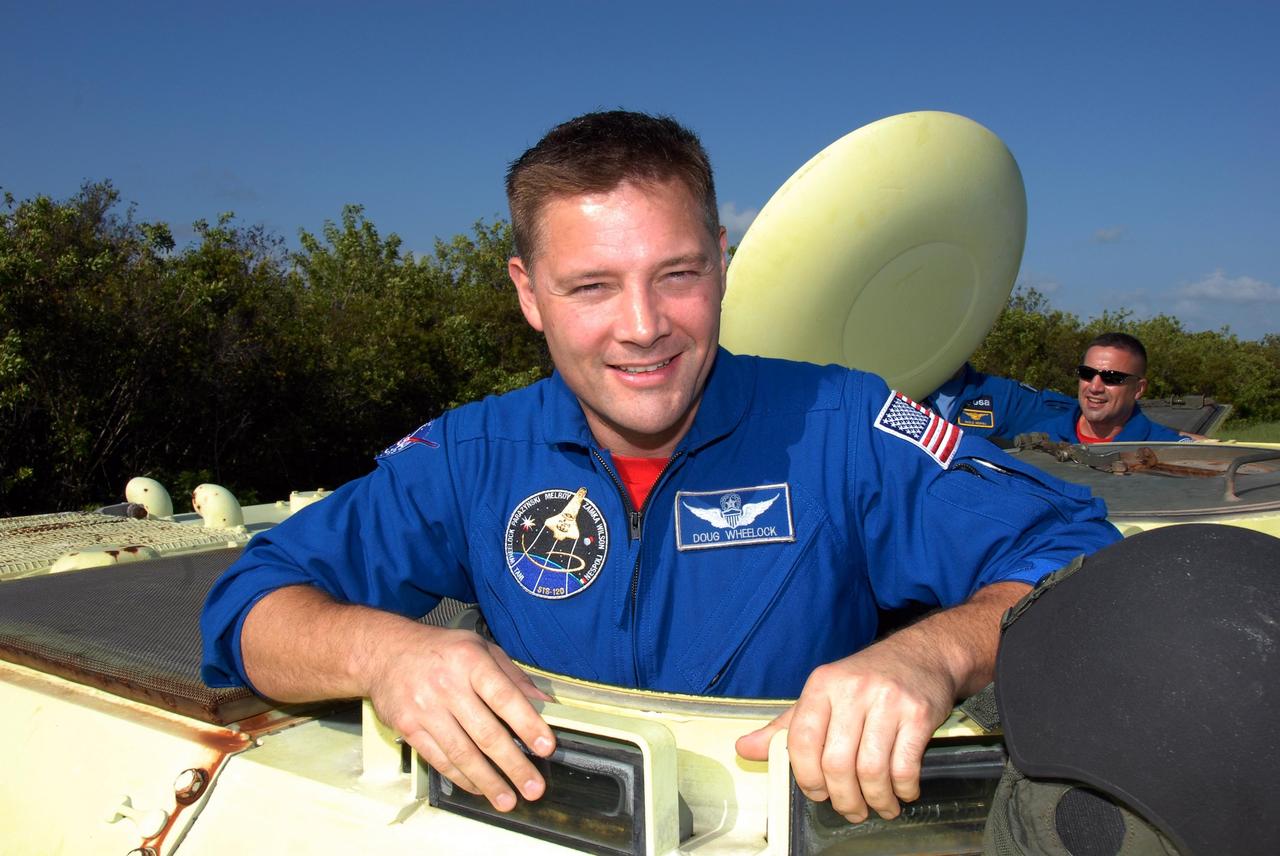
KENNEDY SPACE CENTER, FLA. -- STS-120 Mission Specialist Doug Wheelock gets ready in the driver's seat for driving practice in the M-113 armored personnel carrier. The M-113 is part of emergency exit procedures from Launch Pad 39A. Behind him, at right, is Pilot George Zamka. The training is part of terminal countdown demonstration test, or TCDT, activities the crew is undertaking at NASA's Kennedy Space Center. The TCDT also includes equipment familiarization and a simulated launch countdown. Mission STS-120, which will carry the Italian-built U.S. Node 2 to the International Space Station, is targeted for launch on Oct. 23. Photo credit: NASA/Kim Shiflett
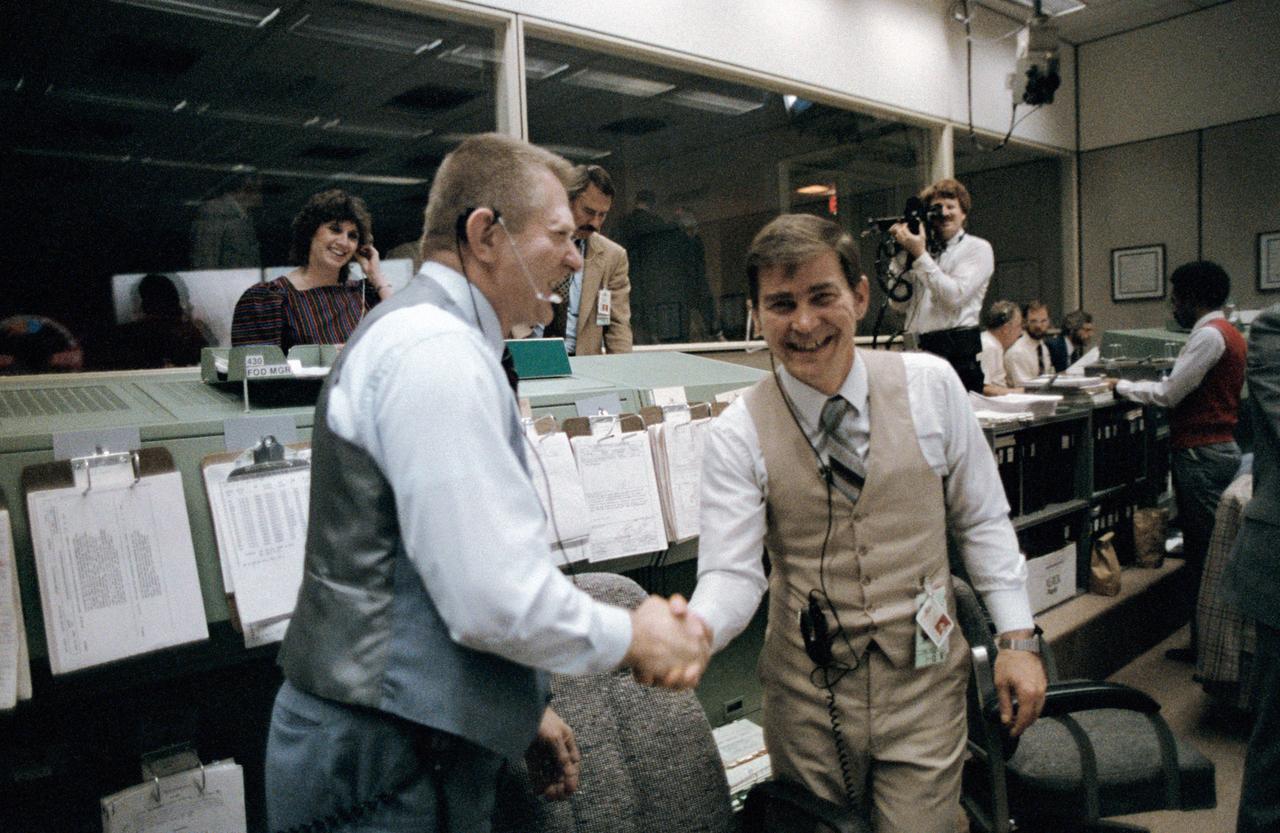
Various views of STS-6 MOCR activities during Day-5 with Vice-Pres. George Bush, Cap Communicator Bridges, JSC Director Gerald Griffin, Eugene F. Kranz, NASA Admin. James M. Beggs, Cap Com Astronaut O'Connor, Flight Directors Jay H. Greene, Gary E. Coen, and Harold Draughon. 1. BUSH, GEORGE, VICE-PRES. - STS-6 MOCR 2. DIR. GRIFFIN, GERALD D. - STS-6 MOCR 3. ADMIN. BEGGS, JAMES M. - STS-6 MOCR 4. FLT. DIRECTORS - STS-6 JSC, HOUSTON, TX Also available in 35 CN
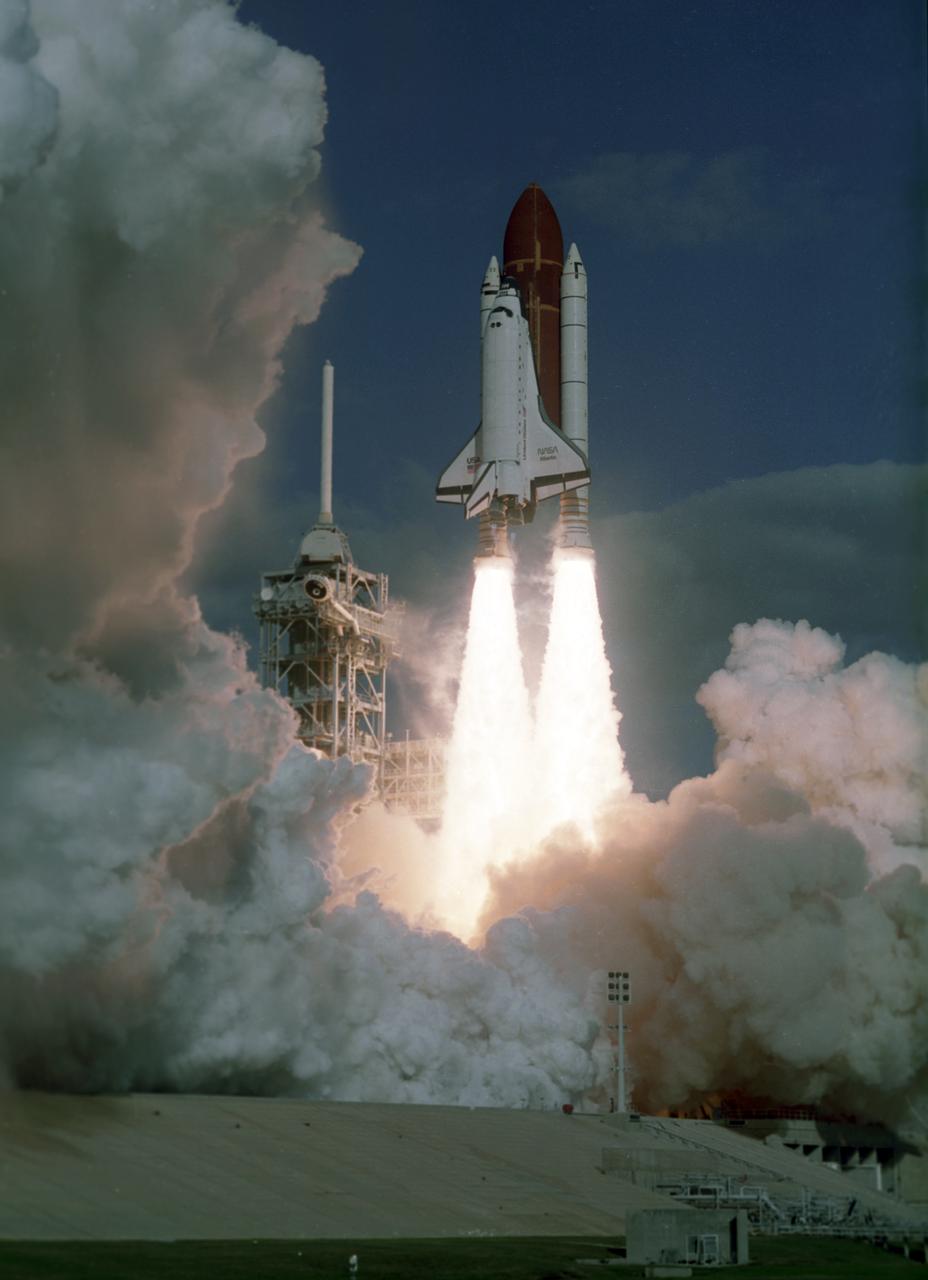
Space Shuttle orbiter Atlantis takes flight on its STS-27 mission, December 2, 1988, utilizing 375,000 pounds of thrust produced by its three main engines. The engines start in 3.9 seconds of ignition and go to static pump speeds of approximately 35,000 revolutions per minute during that time. The Marshall Space Flight Center had management responsibility of Space Shuttle propulsion elements, including the Main Engines. The STS-27 mission, the third mission dedicated to the Department of Defense (DOD), was crewed by five astronauts: Robert L. Gibson, commander; Guy S. Gardner, pilot; and mission specialists Richard M. Mullane, Jerry L. Ross, and William M. Shepherd.
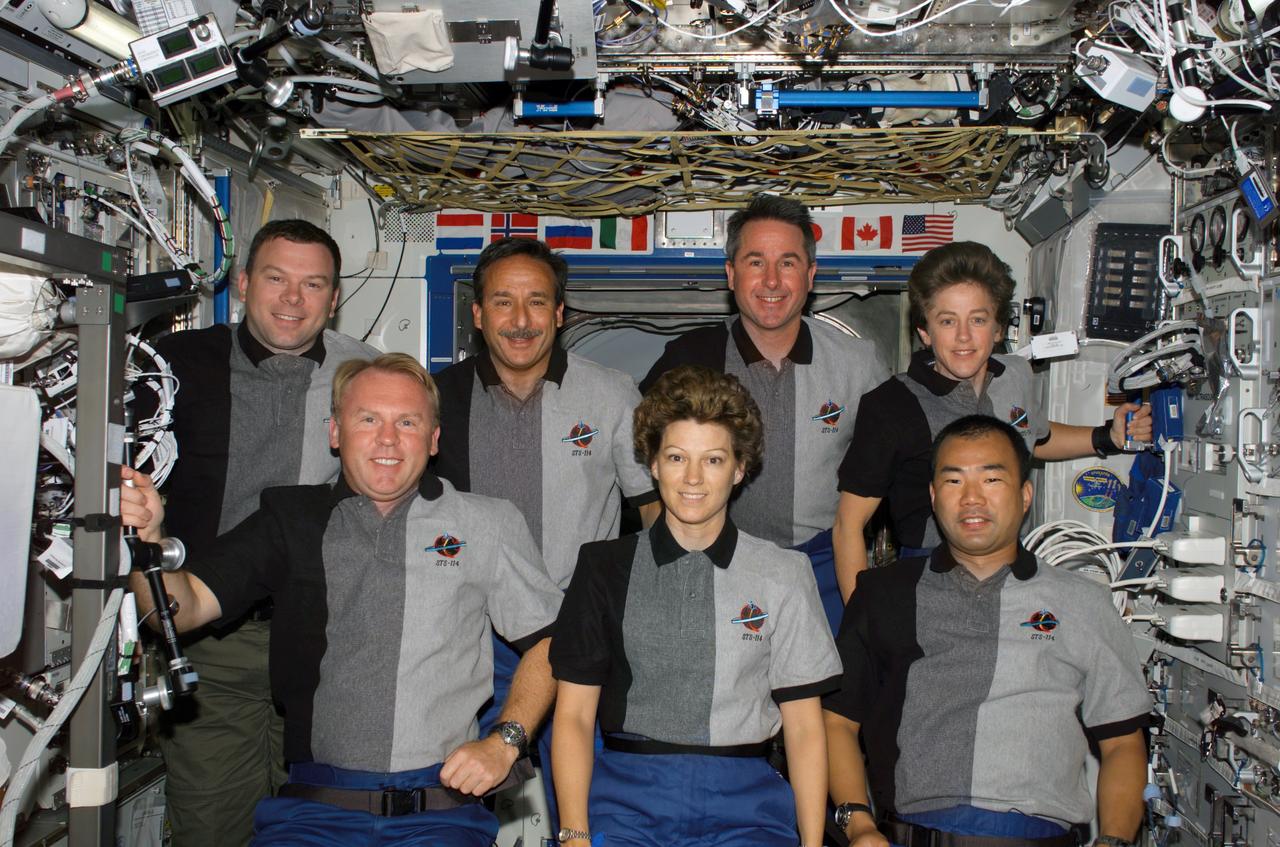
S114-E-6730 (2 August 2005) --- The STS-114 crewmembers pose for their traditional in-flight crew portrait in the Destiny laboratory of the international space station. From the left (front row) are astronauts Andrew S. W. Thomas, mission specialist; Eileen M. Collins, commander; and Soichi Noguchi, mission specialist representing the Japan Aerospace Exploration Agency (JAXA). From the left (back row) are astronauts James M. Kelly, pilot; Charles J. Camarda, Stephen K. Robinson, and Wendy B. Lawrence, all mission specialists.
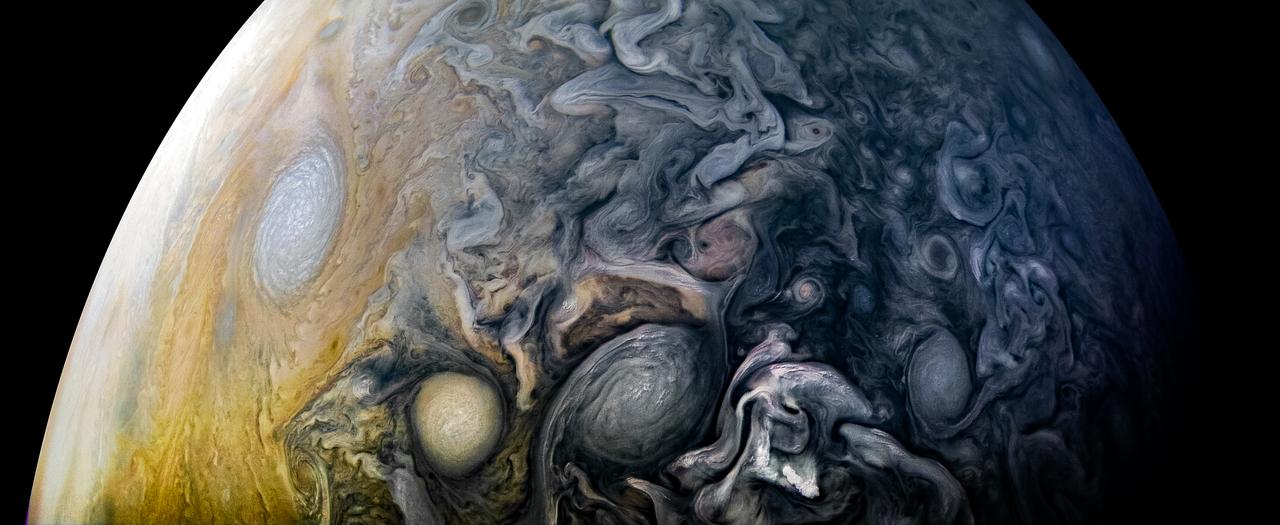
See intricate cloud patterns in the northern hemisphere of Jupiter in this new view taken by NASA's Juno spacecraft. The color-enhanced image was taken on April 1, 2018 at 2:32 a.m. PST (5:32 a.m. EST), as Juno performed its twelfth close flyby of Jupiter. At the time the image was taken, the spacecraft was about 7,659 miles (12,326 kilometers) from the tops of the clouds of the planet at a northern latitude of 50.2 degrees. Citizen scientist Kevin M. Gill processed this image using data from the JunoCam imager. https://photojournal.jpl.nasa.gov/catalog/PIA21984 . - Enhanced image by Kevin M. Gill (CC-BY) based on images provided courtesy of NASA/JPL-Caltech/SwRI/MSSS

KENNEDY SPACE CENTER, FLA. -- STS-120 Commander Pamela Melroy poses for another photo after driving practice in the M-113 armored personnel carrier. The M-113 is part of emergency exit procedures from Launch Pad 39A. The training is part of terminal countdown demonstration test, or TCDT, activities the crew is undertaking at NASA's Kennedy Space Center. The TCDT also includes equipment familiarization and a simulated launch countdown. Mission STS-120, which will carry the Italian-built U.S. Node 2 to the International Space Station, is targeted for launch on Oct. 23. Photo credit: NASA/Kim Shiflett
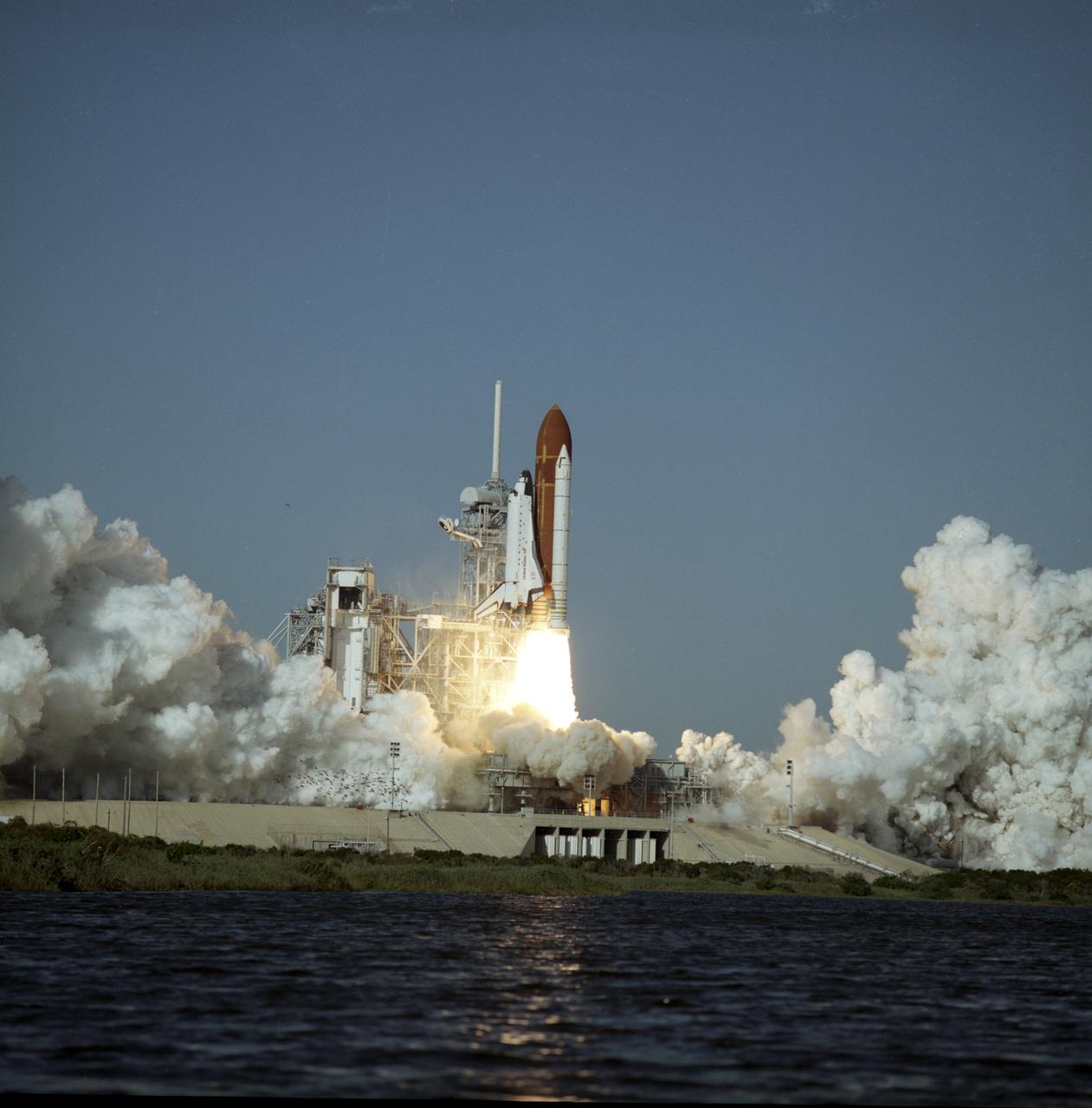
Space Shuttle orbiter Atlantis takes flight on its STS-27 mission, December 2, 1988, utilizing 375,000 pounds of thrust produced by its three main engines. The engines start in 3.9 seconds of ignition and go to static pump speeds of approximately 35,000 revolutions per minute during that time. The Marshall Space Flight Center had management responsibility of Space Shuttle propulsion elements, including the Main Engines. The STS-27 mission, the third mission dedicated to the Department of Defense (DOD), was crewed by five astronauts: Robert L. Gibson, commander; Guy S. Gardner, pilot; and mission specialists Richard M. Mullane, Jerry L. Ross, and William M. Shepherd.
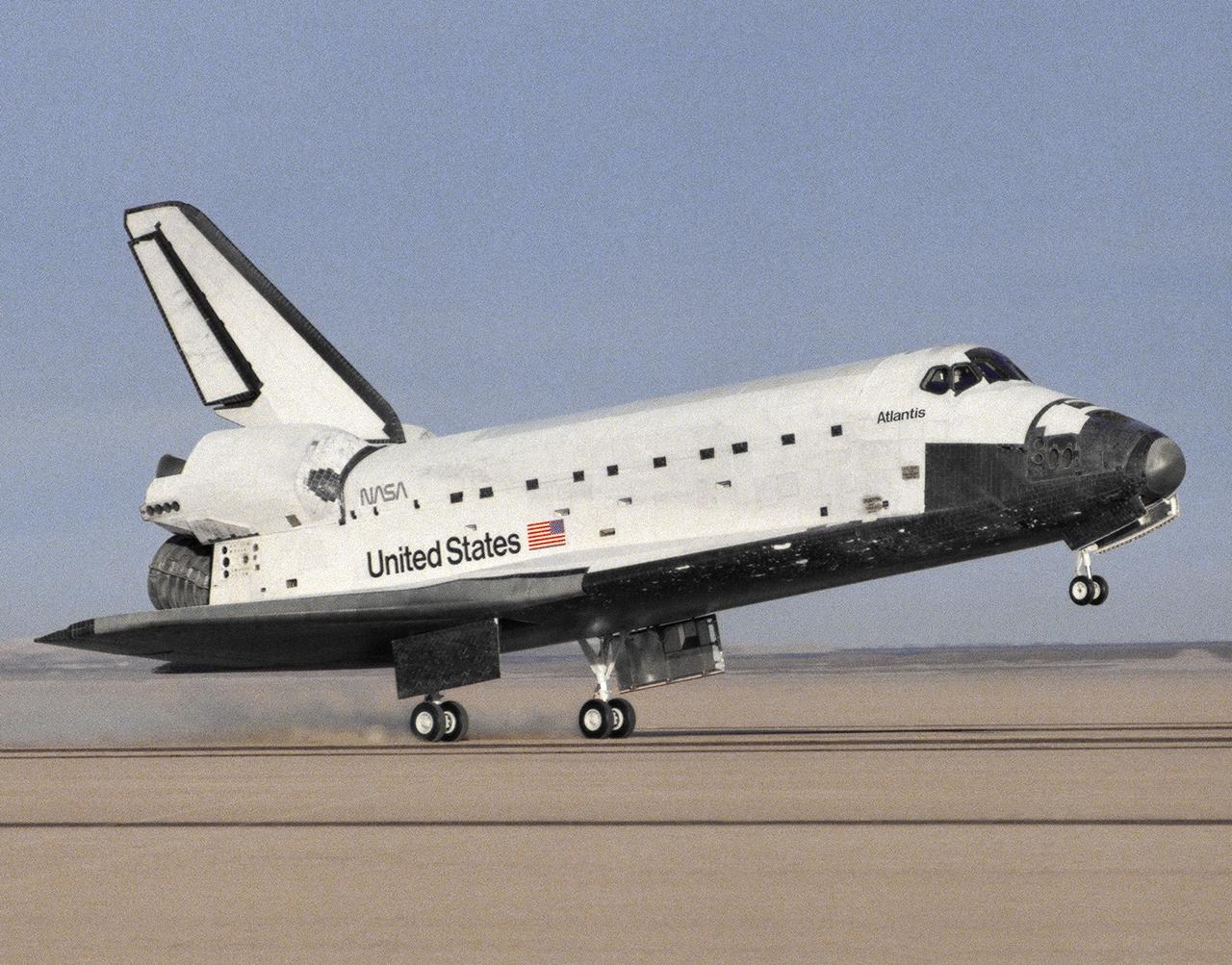
The Space Shuttle Atlantis touches down at 3:35 p.m. PST on 6 December 1988 at NASA's then Ames-Dryden Flight Research Facility at the conclusion of the STS-27 Department of Defense mission. Landing took place on runway 17 of the Rogers Dry Lake, concluding the 4-day, 9-hour, 6-minute mission. The five-man crew was led by Commander Robert L. Gibson and included Pilot Guy S. Gardner; Mission Specialists Jerry L. Ross, William M. Sheperd, and Richard M. Mullane. Atlantis was launched on December 2 from NASA's Kennedy Space Center.
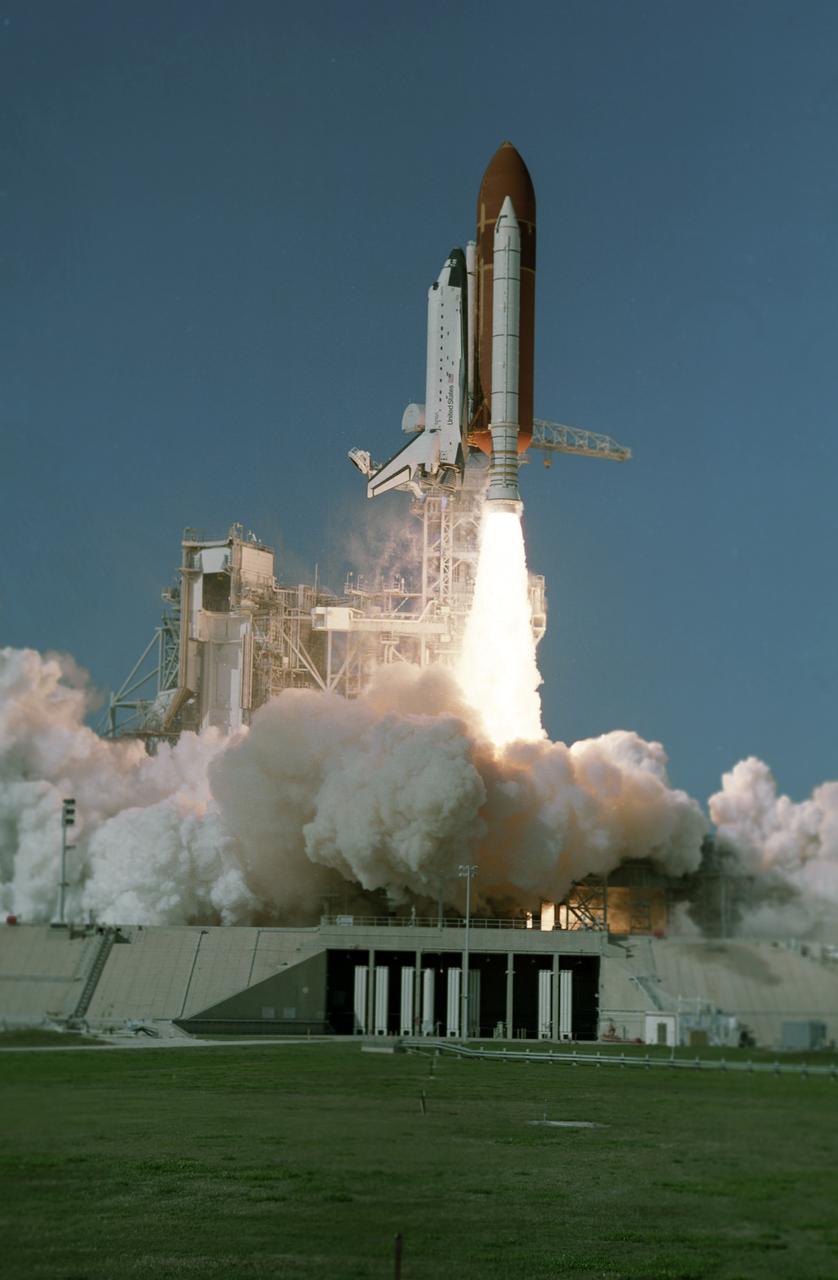
Space Shuttle orbiter Atlantis takes flight on its STS-27 mission, December 2, 1988, utilizing 375,000 pounds of thrust produced by its three main engines. The engines start in 3.9 seconds of ignition and go to static pump speeds of approximately 35,000 revolutions per minute during that time. The Marshall Space Flight Center had management responsibility of Space Shuttle propulsion elements, including the Main Engines. The STS-27 mission, the third mission dedicated to the Department of Defense (DOD), was crewed by five astronauts: Robert L. Gibson, commander; Guy S. Gardner, pilot; and mission specialists Richard M. Mullane, Jerry L. Ross, and William M. Shepherd.
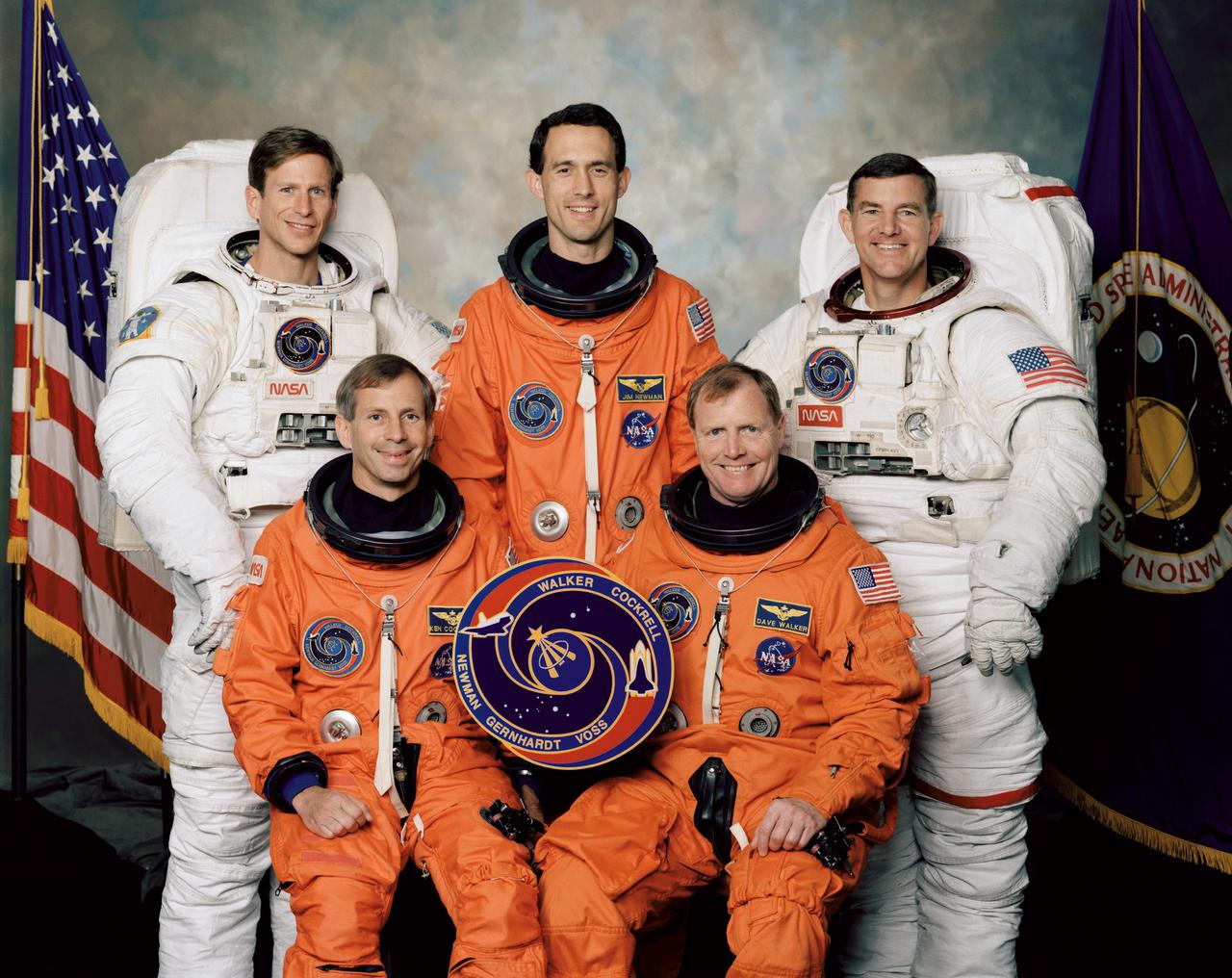
These five NASA astronauts were the crew members for the STS-69 mission that launched aboard the Space Shuttle Endeavour September 7, 1995. Pictured on the front row (left to right) are David M. Walker, mission commander; and Kenneth D. Cockrell, pilot. On the back row (left to right) are Michael L. Gernhardt and James H. Newman, both mission specialists; and James S. Voss, payload commander. The mission’s two primary payloads included the Spartan 201-3 and Wake Shield Facility-2 (WSF-2).
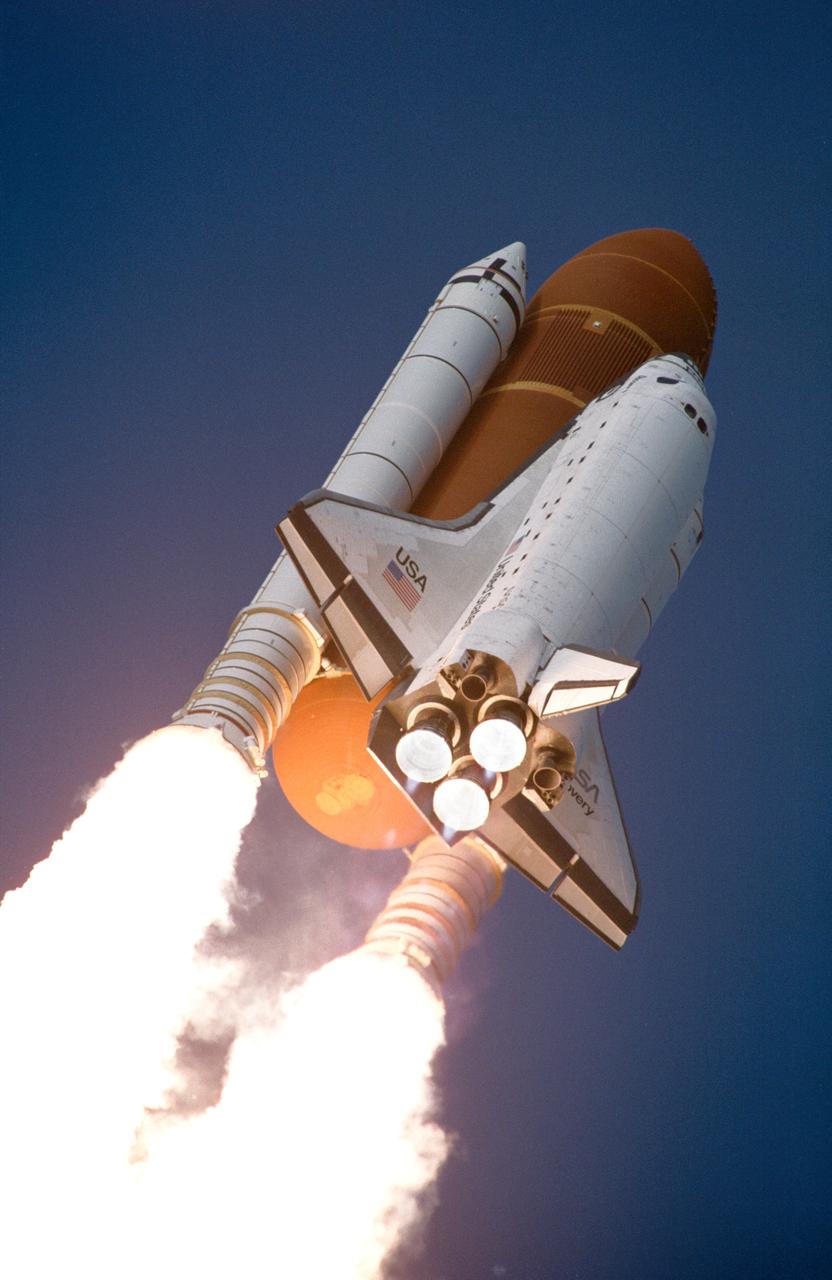
STS053-S-058 (2 Dec. 1992) --- The space shuttle Discovery, with a crew of five astronauts onboard, launches from Kennedy Space Center's (KSC) Pad 39A at 8:24:00 a.m. (EST), Dec. 2, 1992. The all military crew supporting the Department of Defense (DOD) flight included astronauts David M. Walker, Robert D. Cabana, Guion S. Bluford, Jr., James S. Voss and Michael R. U. (Rich) Clifford.
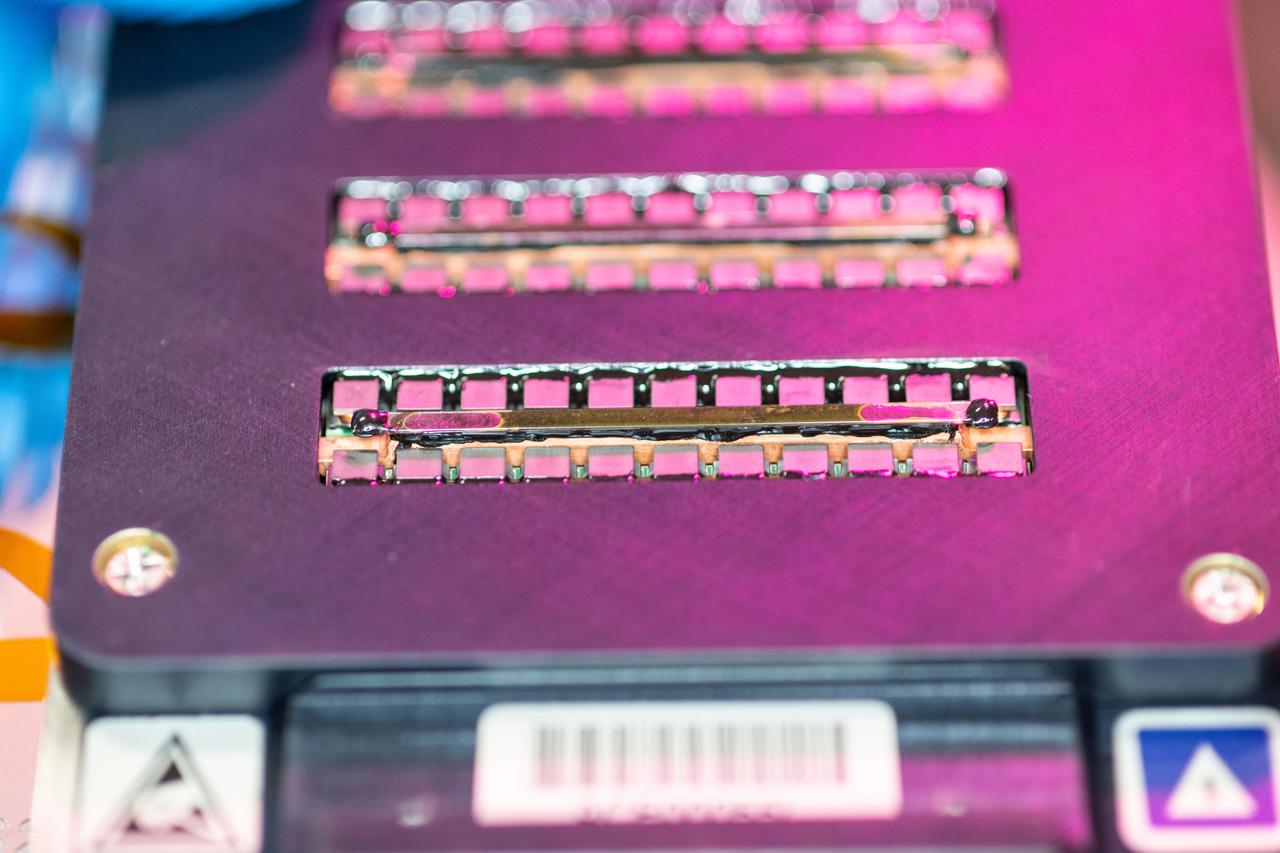
iss059e036890 (4/30/2019) --- Photo documentation onboard the International Space Station (ISS) of the ACE Modules prior to science runs. The Advanced Colloids Experiment-Microscopy-2 (ACE-M-2) observes the microscopic behavior of liquids and gases separating from each other, using a new microscope to record micro-scale events on short time scales, while previous experiments observed large-scale behavior over many weeks.
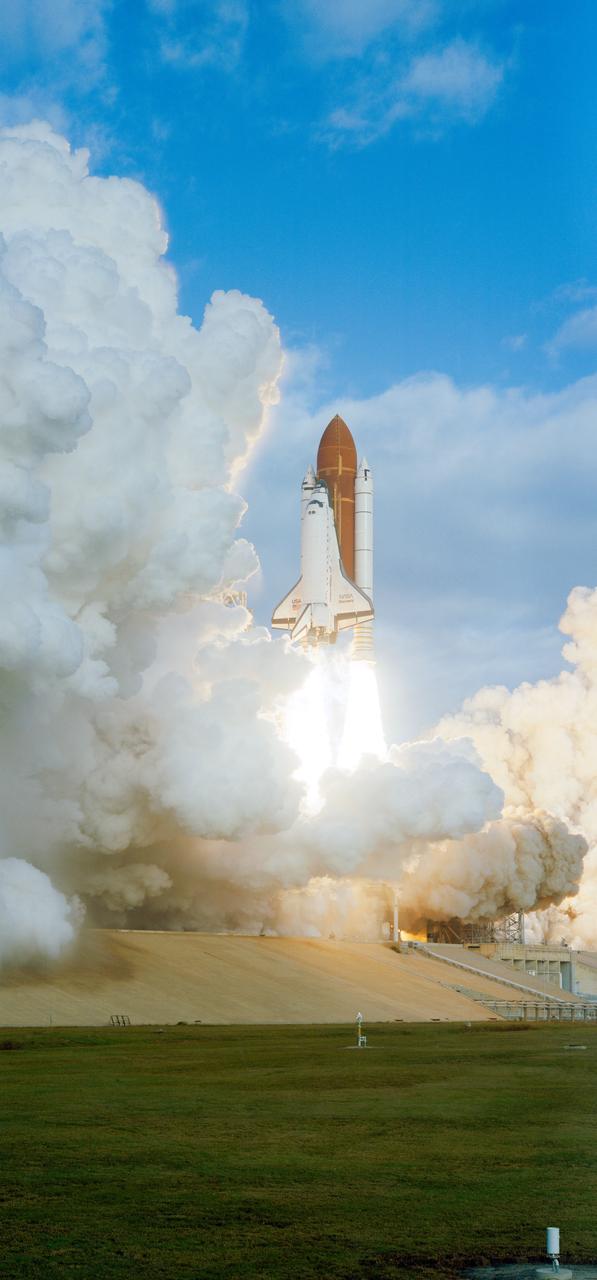
STS053-S-056 (2 Dec 1992) --- The Space Shuttle Discovery, with a crew of five astronauts onboard, launches from Kennedy Space Center's (KSC) Pad 39A at 8:24:00 a.m. (EST), December 2, 1992. The all military crew supporting the Department of Defense (DOD) flight included astronauts David M. Walker, Robert D. Cabana, Guion S. Bluford Jr., James S. Voss and Michael R. U. (Rick) Clifford.

The STS-36 crew portrait features 5 astronauts who served in the 6th Department of Defense (DOD) mission. Posed near the Space Shuttle Orbiter Discovery are (left to right) Pierre J. Thuot, mission specialist 3; John H. Caster, pilot; John H. Creighton, commander; Richard M. (Mike) Mullane, mission specialist 1; and David. C. Hilmers, mission specialist 2. The crew launched aboard Atlantis on February 28, 1990 at 2:50:22am (EST).
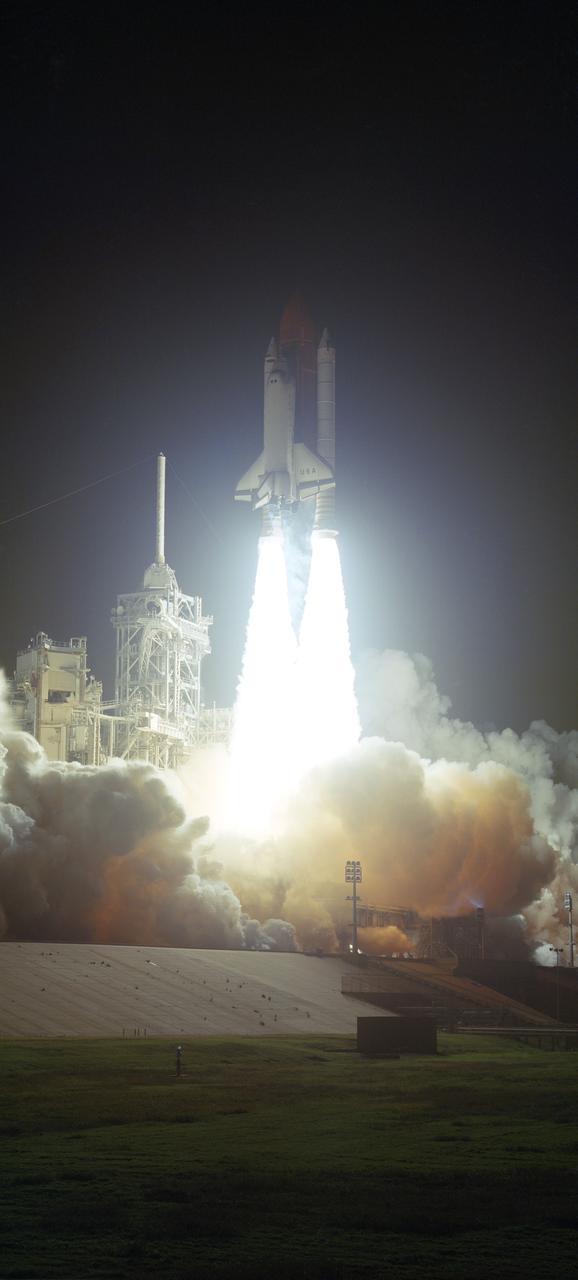
STS035-S-021 (2 Dec 1990) --- The Space Shuttle Columbia lifts off Launch Pad 39B at 1:49 a.m. (EST), Dec. 2, 1990. Primary payload onboard is the Astro-1 astronomical laboratory, headed for a ten-day fight dedicated to the single discipline of astrophysics. Crewmembers are five astronauts--Vance D. Brand, Guy S. Gardner, John M. (Mike) Lounge, Jeffrey A. Hoffman and Robert A.R. Parker--and two payload specialists--Samuel T. Durrance and Ronald A. Parise.
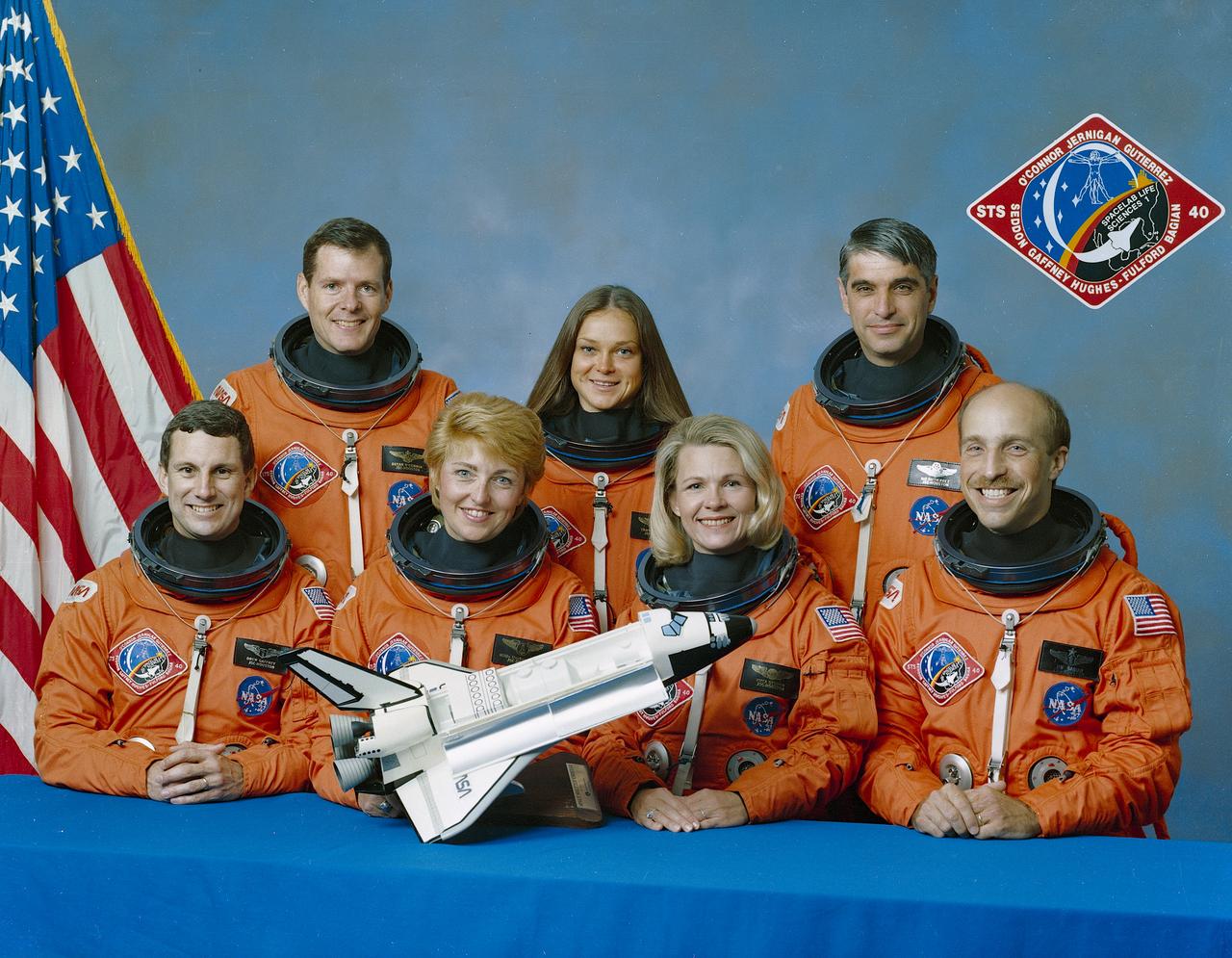
The STS-40 crew portrait includes 7 astronauts. Pictured on the front row from left to right are F. Drew Gaffney, payload specialist 1; Milli-Hughes Fulford, payload specialist 2; M. Rhea Seddon, mission specialist 3; and James P. Bagian, mission specialist 1. Standing in the rear, left to right, are Bryan D. O’Connor, commander; Tamara E. Jernigan, mission specialist 2; and Sidney M. Gutierrez, pilot. Launched aboard the Space Shuttle Columbia on June 5, 1991 at 9:24; am (EDT), the STS-40 mission was the fifth dedicated Spacelab Mission, Spacelab Life Sciences-1 (SLS-1), and the first mission dedicated solely to life sciences.
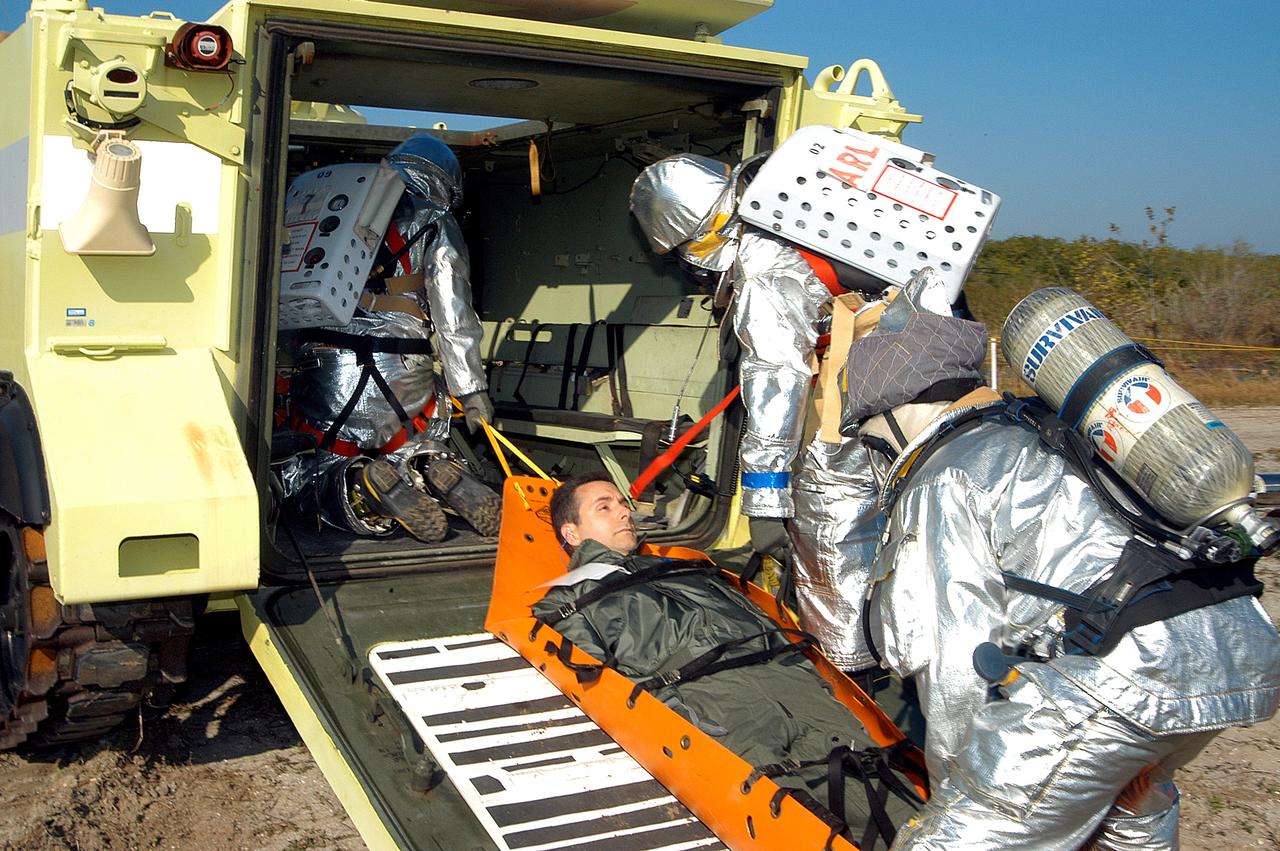
KENNEDY SPACE CENTER, FLA. - An “injured” rescue worker is lifted into an M-113 armored personnel carrier provided for transportation during a “Mode VII” emergency landing simulation at Kennedy Space Center. The purpose of the Mode VII is to exercise emergency preparedness personnel, equipment and facilities in rescuing astronauts from a downed orbiter and providing immediate medical attention. This simulation presents an orbiter that has crashed short of the Shuttle Landing Facility in a wooded area 2-1/2 miles south of Runway 33. Emergency crews are responding to the volunteer astronauts who are simulating various injuries inside the crew compartment mock-up. Rescuers must remove the crew, provide triage and transport to hospitals those who need further treatment. Local hospitals are participating in the exercise.
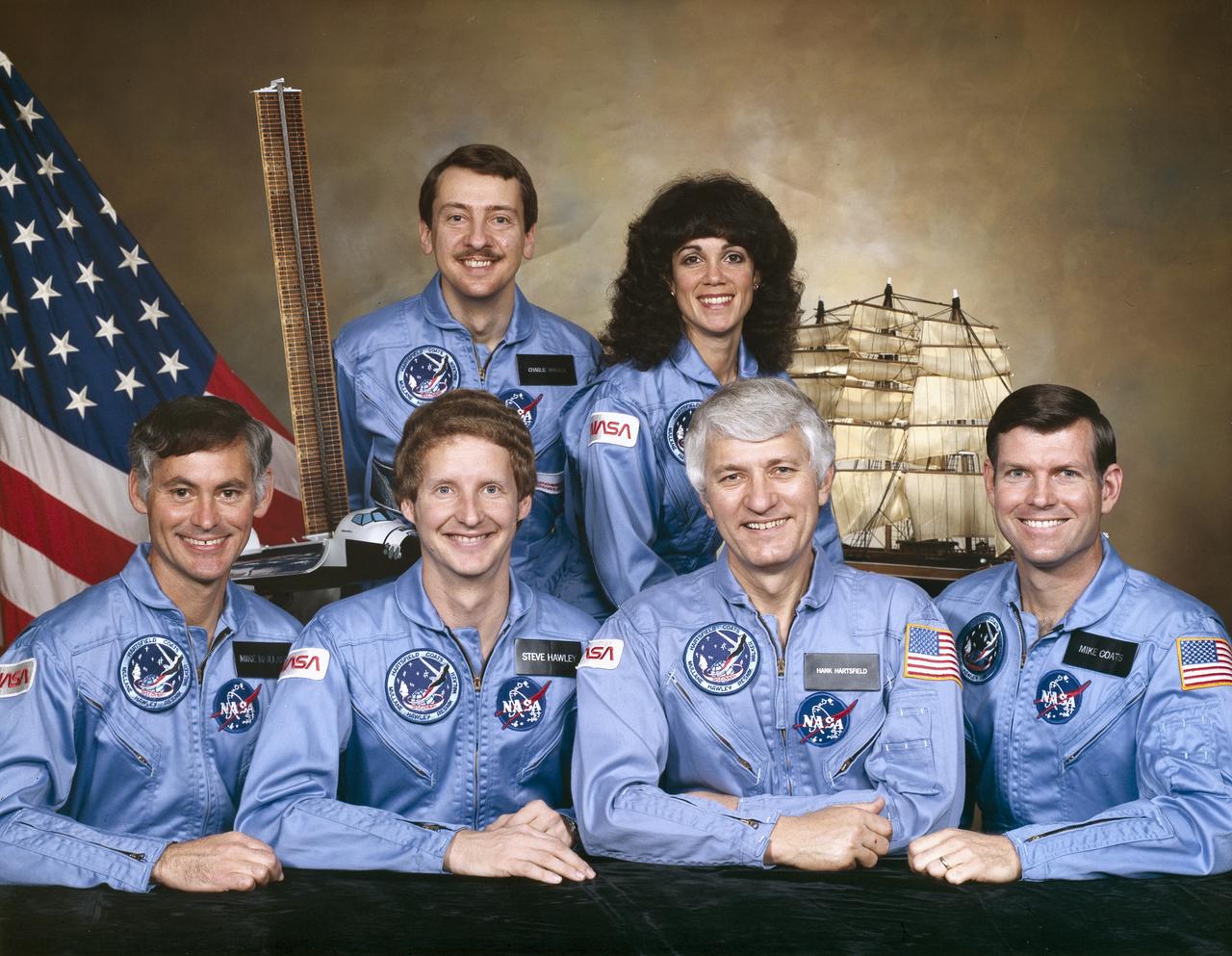
The crew assigned to the STS-41D mission included (seated left to right) Richard M. (Mike) Mullane, mission specialist; Steven A. Hawley, mission specialist; Henry W. Hartsfield, commander; and Michael L. (Mike) Coats, pilot. Standing in the rear are Charles D. Walker, payload specialist; and Judith A. (Judy) Resnik, mission specialist. Launched aboard the Space Shuttle Discovery August 30, 1984 at 8:41:50 am (EDT), the STS-41D mission deployed three satellites: the Satellite Business System SBS-D; the SYCOM IV-2 (also known as LEASAT-2); and the TELSTAR.
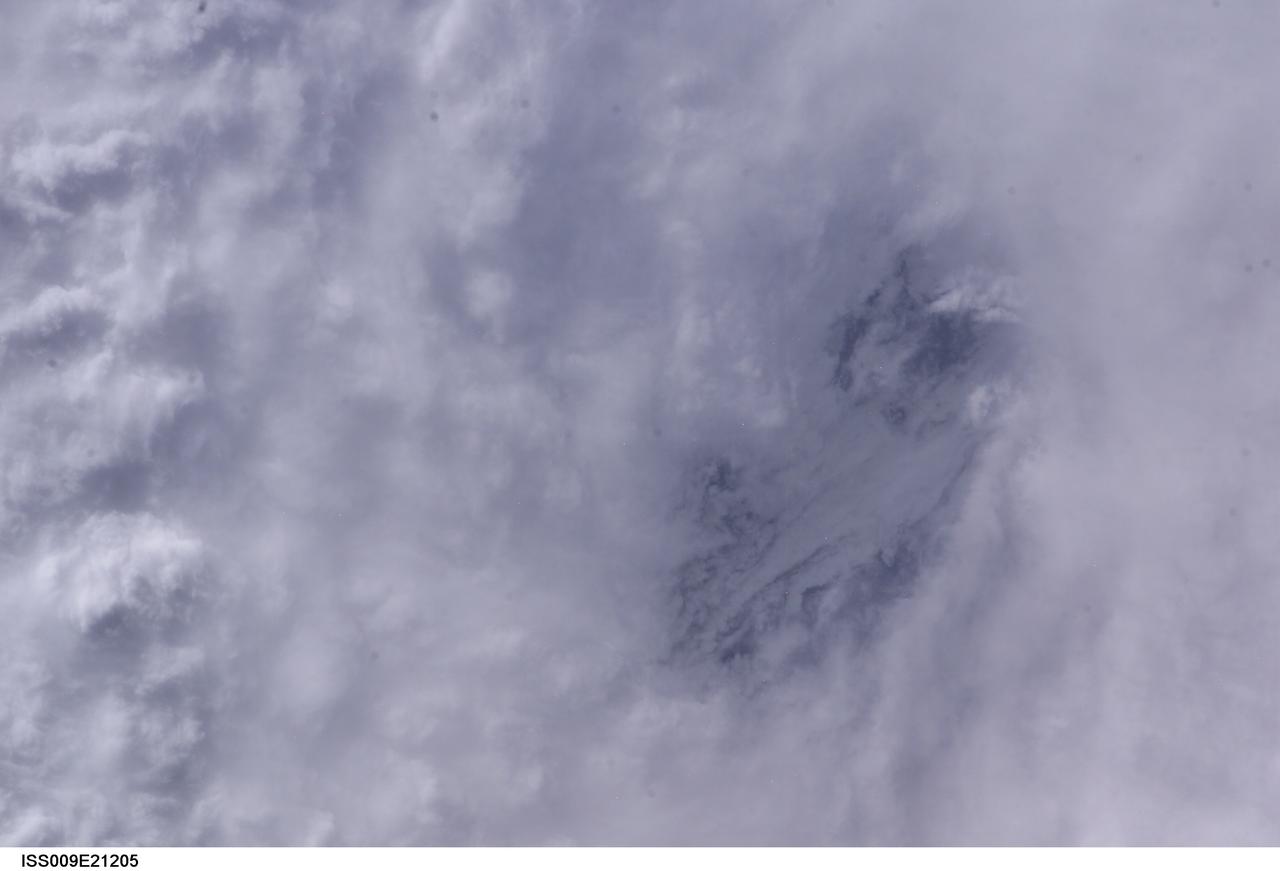
ISS009-E-21205 (2 September 2004) --- From 230 miles above, this is a view into the eye of Hurricane Frances as it churned in the Atlantic Ocean almost 500 miles east-southeast of West Palm Beach, Fla., at about 8 a.m EDT Thursday, Sept. 2, 2004. At the time, Frances was a category 4 hurricane with winds of 145 mph. Astronaut Edward M. (Mike) Fincke took this photo through the window of the International Space Station. Expedition 9 Commander Gennady Padalka and Fincke, the NASA ISS Science Officer and Flight Engineer, are in the fifth month of a six-month stay on the orbiting research platform.
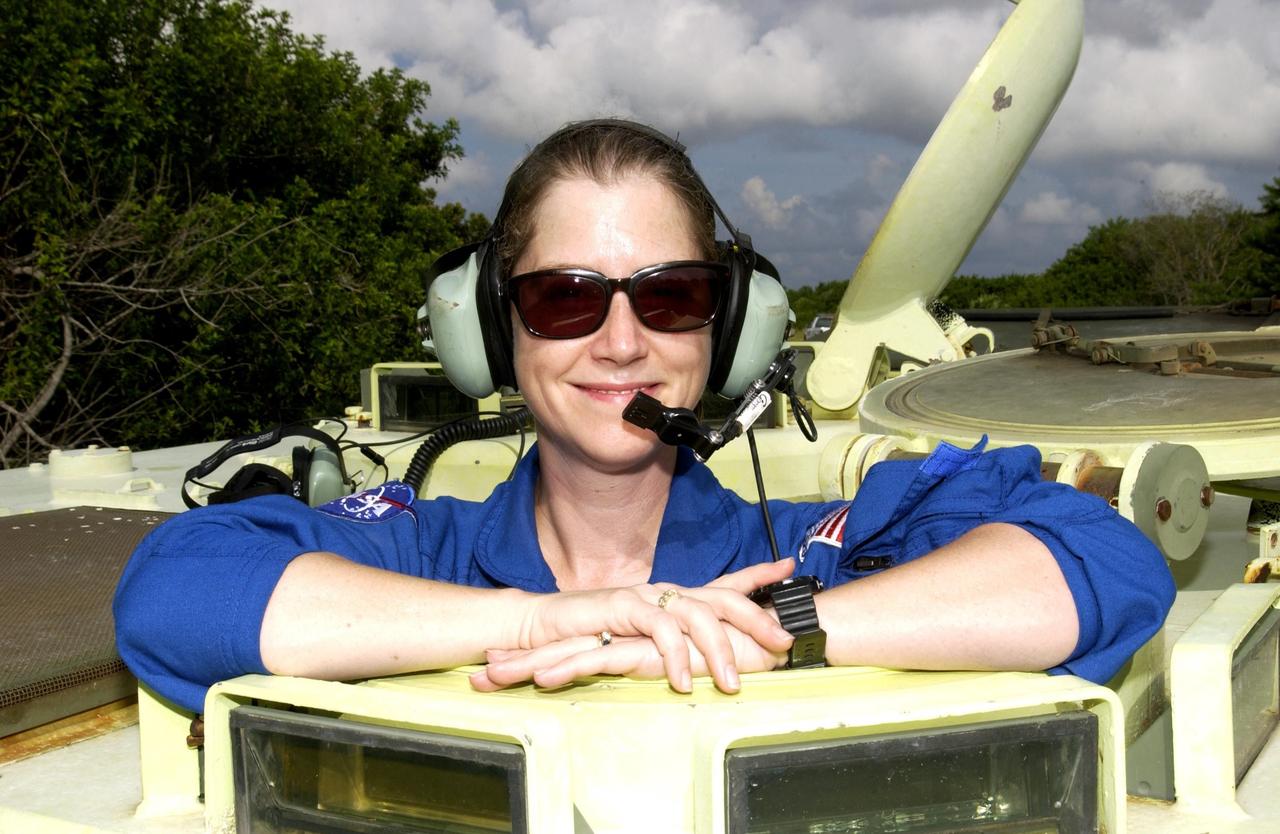
KENNEDY SPACE CENTER, Fla. - STS-112 Pilot Pamela Melroy is ready for her practice run driving the M-113 armored personnel carrier. Melroy and the rest of the crew are at KSC for Terminal Countdown Demonstration Test activities, which also include a simulated launch countdown. Mission STS-112 aboard Space Shuttle Atlantis is scheduled to launch no earlier than Oct. 2, between 2 and 6 p.m. EDT. STS-112 is the 15th assembly mission to the International Space Station. Atlantis will be carrying the S1 Integrated Truss Structure, the first starboard truss segment. The S1 will be attached to the central truss segment, S0, during the 11-day mission.
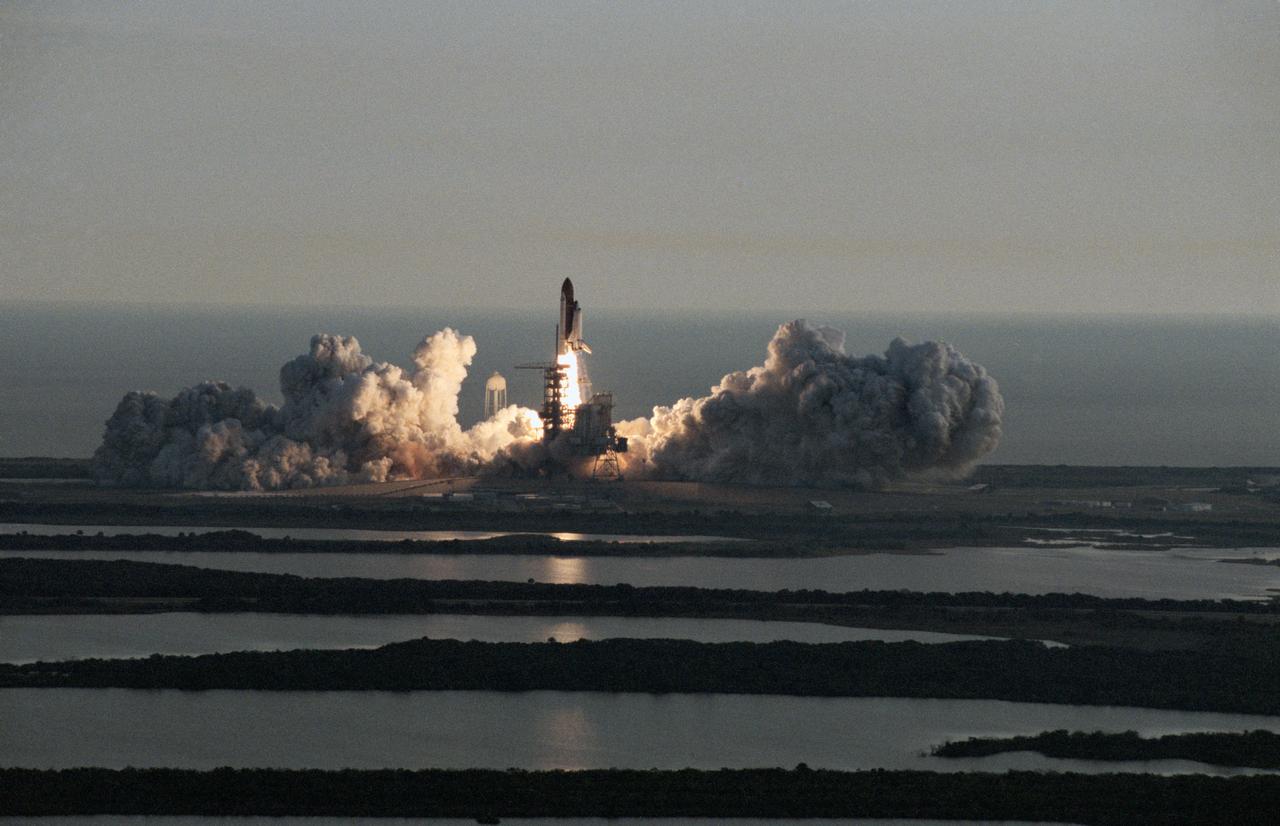
STS053-S-054 (2 Dec 1992) --- The Space Shuttle Discovery, with a crew of five astronauts onboard, launches from Kennedy Space Center?s (KSC) Pad 39A at 8:24:00 a.m. (EST), December 2, 1992. The photograph was taken from the top of the giant Vehicle Assembly Building (VAB). The all-military crew supporting the Department of Defense (DOD) flight included astronauts David M. Walker, Robert D. Cabana, Guion S. Bluford, Jr., James S. Voss and Michael R. U. (Rick) Clifford.
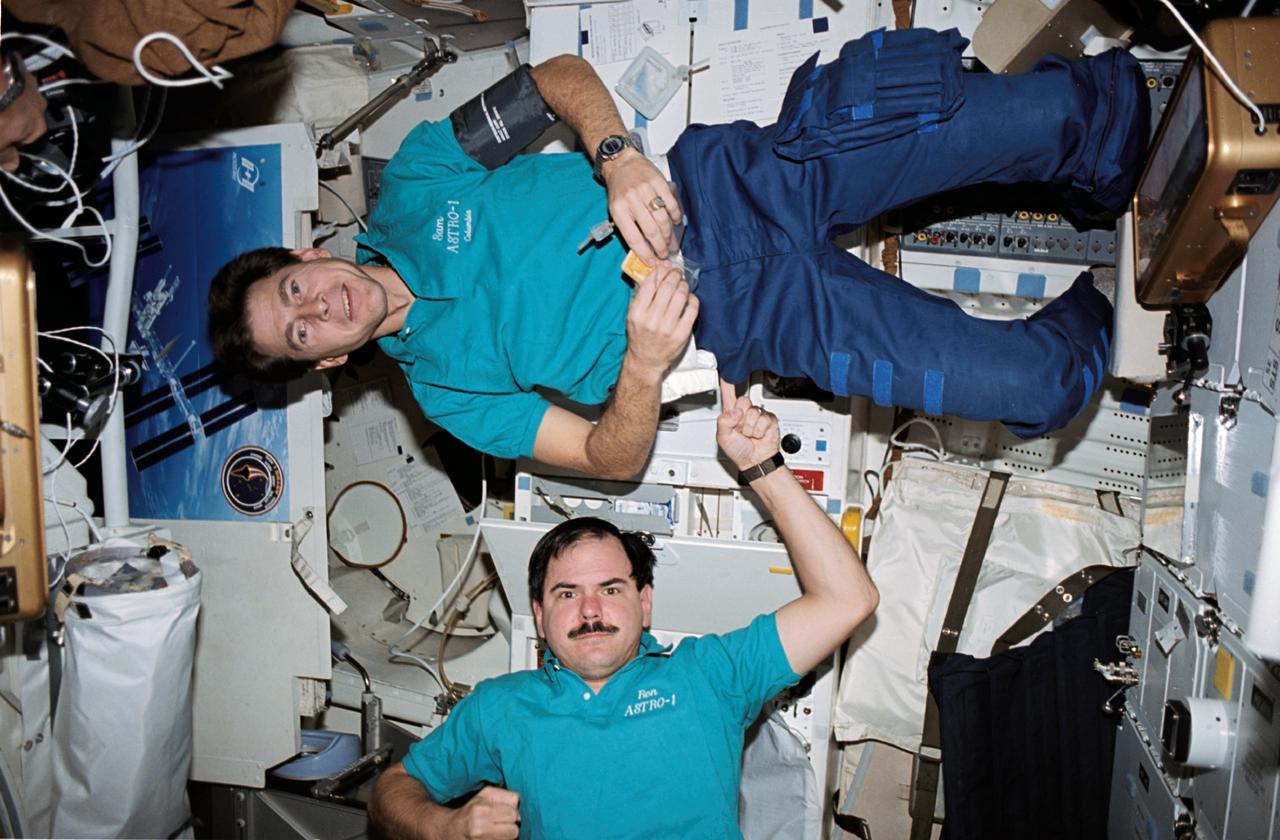
STS035-49-028 (2-10 Dec. 1990) --- This is one of 25 visuals used by the STS-35 crew at its Dec. 20, 1990 post-flight press conference. Columbia's flight of almost nine days duration (launched Dec. 2 from Kennedy Space Center and landed Dec. 10 at Edwards Air Force Base) carried the Astro-1 payload and was dedicated to astrophysics. The mission involved a seven-man crew. Crewmembers were astronauts Vance D. Brand, Guy S. Gardner, Jeffrey A. Hoffman, Robert A.R. Parker and John M. (Mike) Lounge; and Payload Specialists Samuel T. Durrance and Ronald A. Parise.

KENNEDY SPACE CENTER, Fla. - STS-112 Mission Specialist David Wolf is ready for his practice run driving the M-113 armored personnel carrier. Wolf and the rest of the crew are at KSC for Terminal Countdown Demonstration Test activities, which also include a simulated launch countdown. Mission STS-112 aboard Space Shuttle Atlantis is scheduled to launch no earlier than Oct. 2, between 2 and 6 p.m. EDT. STS-112 is the 15th assembly mission to the International Space Station. Atlantis will be carrying the S1 Integrated Truss Structure, the first starboard truss segment. The S1 will be attached to the central truss segment, S0, during the 11-day mission.
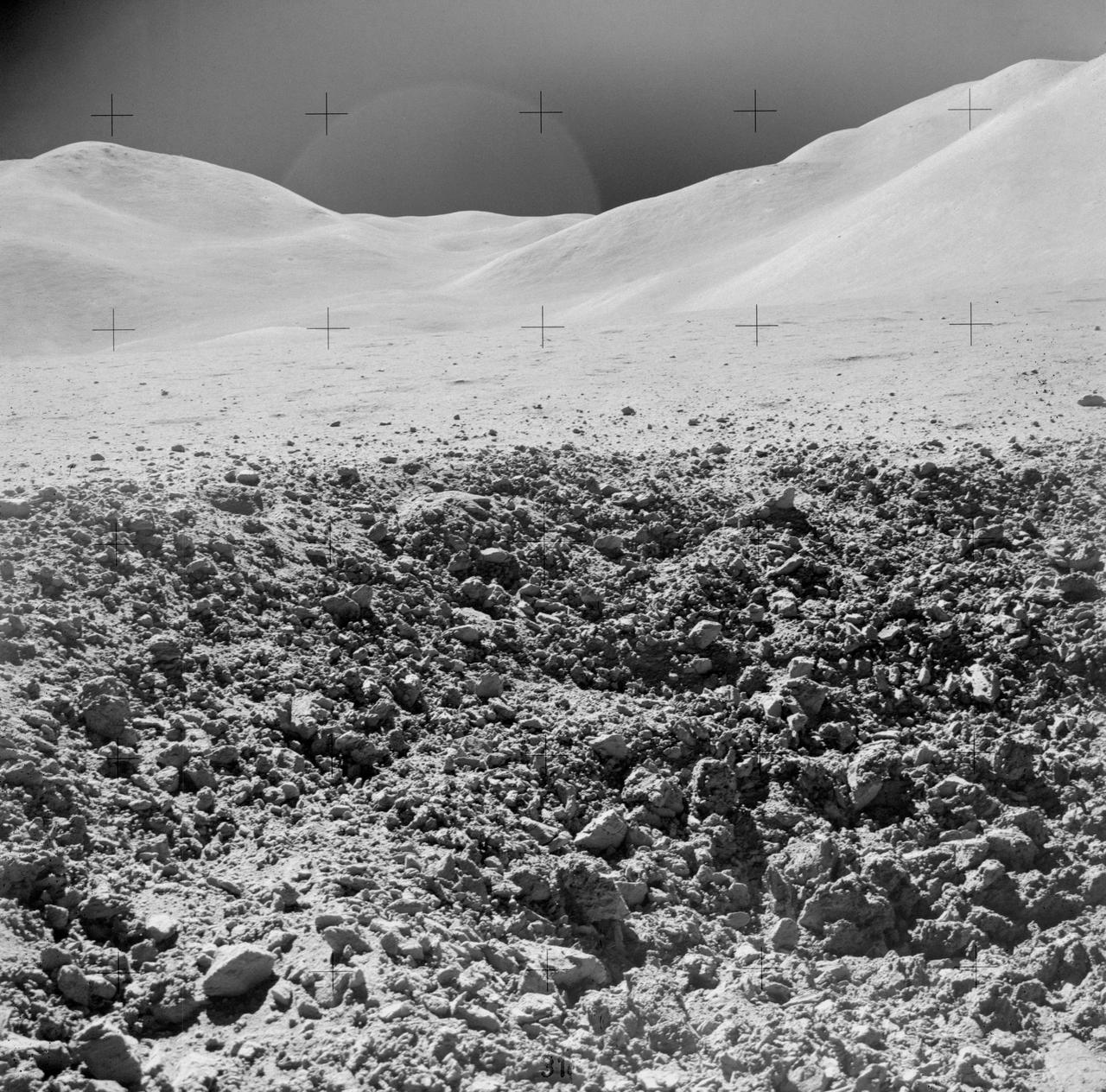
AS15-82-11082 (2 Aug. 1971) --- A close-up view of a portion of a "relatively fresh" crater, looking southeast, as photographed during the third Apollo 15 lunar surface extravehicular activity (EVA), on Aug. 2, 1971, at EVA Station No. 9, near Scarp Crater. The crater pictured is unnamed. The Apennine Front is in the background, and Hadley Delta Mountain is in the right background. While astronauts David R. Scott, commander, and James B. Irwin, lunar module pilot, descended in the Lunar Module (LM) "Falcon" to explore the moon, astronaut Alfred M. Worden, command module pilot, remained with the Command and Service Modules (CSM) in lunar orbit.
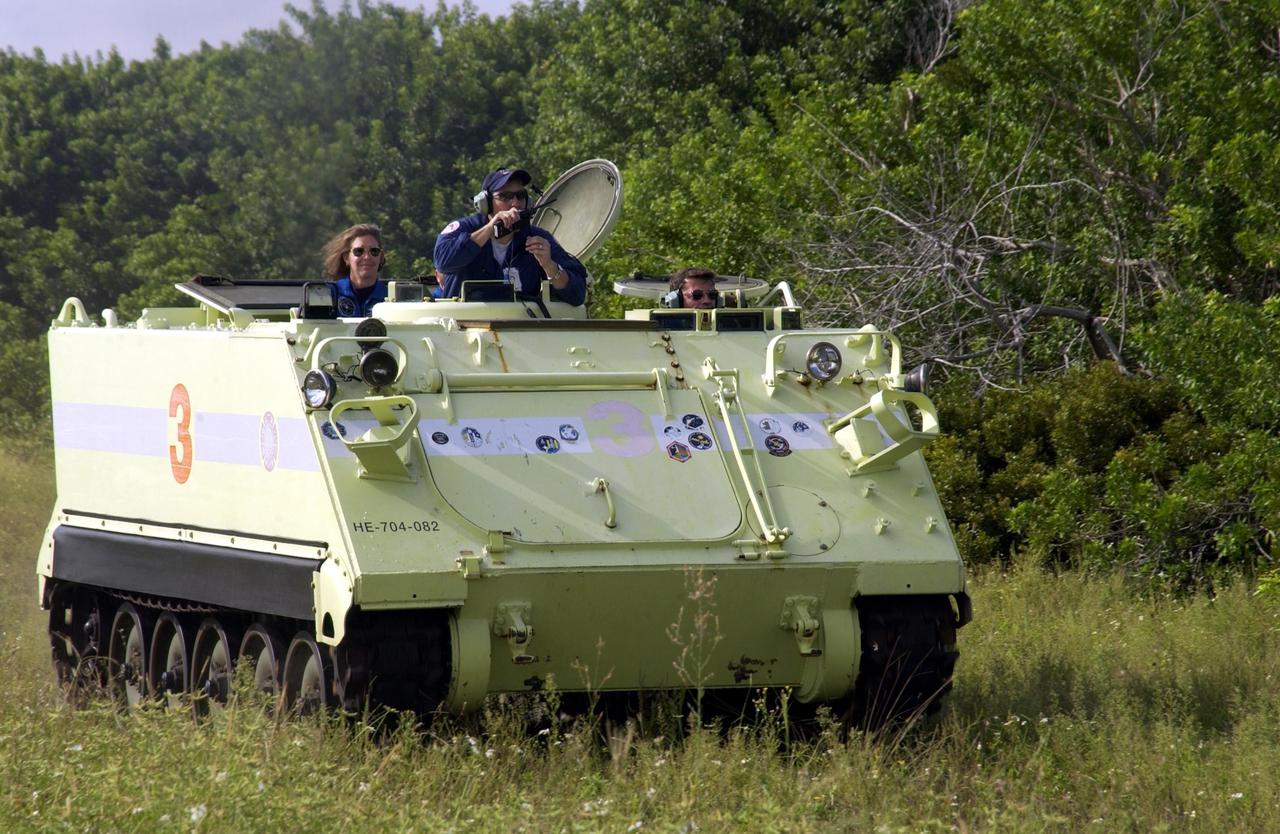
KENNEDY SPACE CENTER, Fla. - STS-112 Commander Jeffrey Ashby drives the M-113 armored personnel carrier during Terminal Countdown Demonstration Test activities. At the far left is Mission Specialist Sandra Magnus. The TCDT also includes a simulated launch countdown. The mission aboard Space Shuttle Atlantis is scheduled to launch no earlier than Oct. 2, between 2 and 6 p.m. EDT. STS-112 is the 15th assembly mission to the International Space Station. Atlantis will be carrying the S1 Integrated Truss Structure, the first starboard truss segment. The S1 will be attached to the central truss segment, S0, during the 11-day mission.
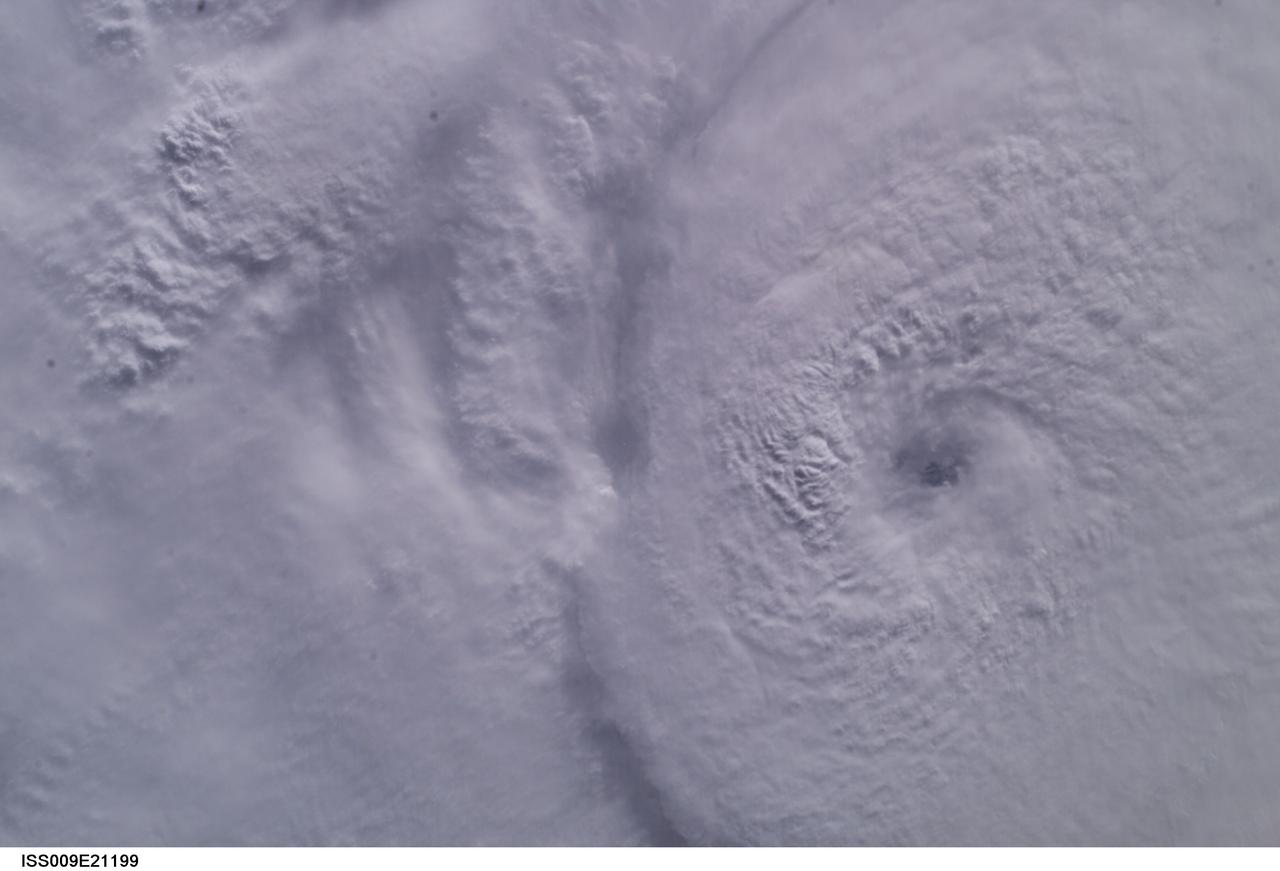
ISS009-E-21199 (2 September 2004) --- From 230 miles above, this is a nadir view of Hurricane Frances as it churned in the Atlantic Ocean almost 500 miles east-southeast of West Palm Beach, Fla., at about 8 a.m EDT Thursday, Sept. 2, 2004. At the time, Frances was a category 4 hurricane with winds of 145 mph. Astronaut Edward M. (Mike) Fincke took this photo through the window of the International Space Station. Expedition 9 Commander Gennady Padalka and Fincke, the NASA ISS Science Officer and Flight Engineer, are in the fifth month of a six-month stay on the orbiting research platform.
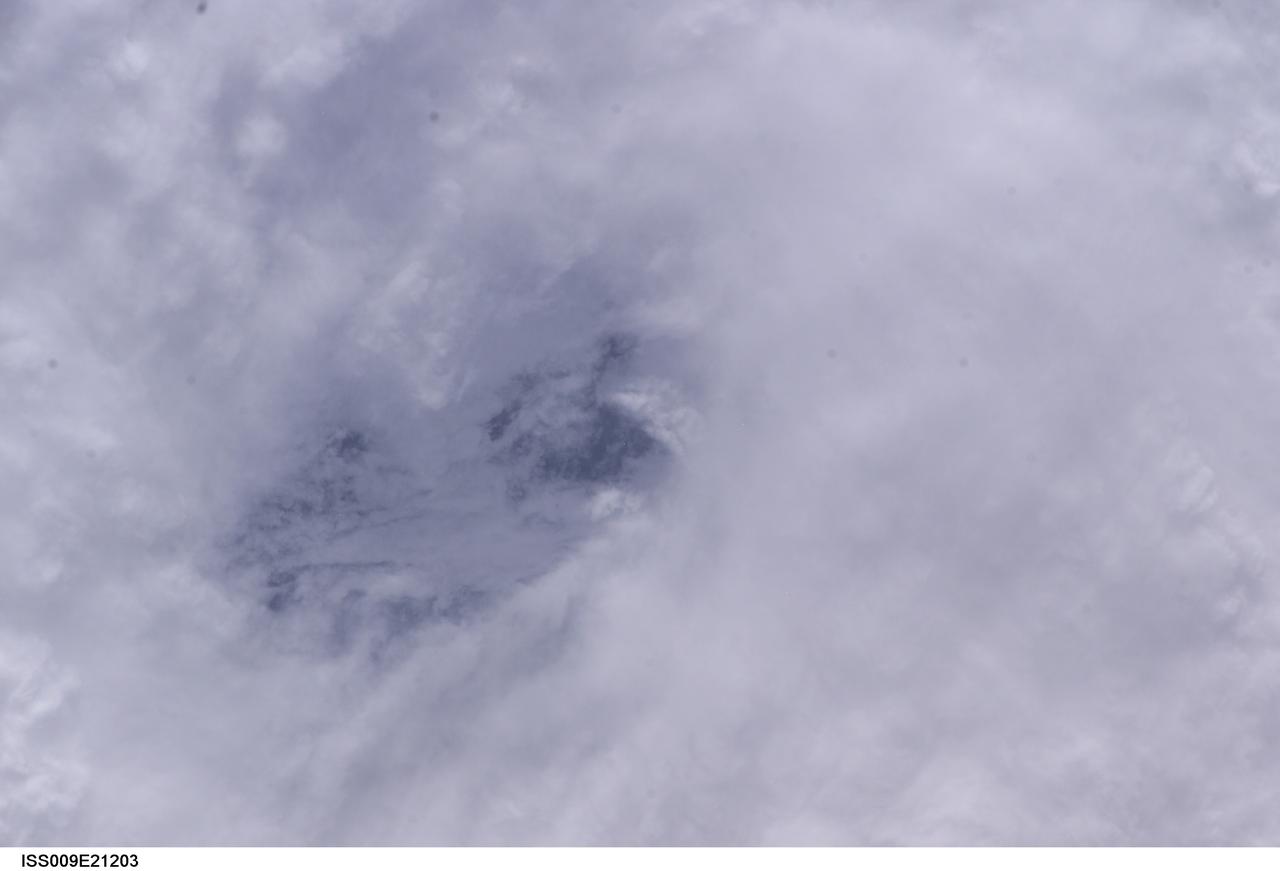
ISS009-E-21203 (2 September 2004) --- From 230 miles above, this is a view into the eye of Hurricane Frances as it churned in the Atlantic Ocean almost 500 miles east-southeast of West Palm Beach, Fla., at about 8 a.m EDT Thursday, Sept. 2, 2004. At the time, Frances was a category 4 hurricane with winds of 145 mph. Astronaut Edward M. (Mike) Fincke took this photo through the window of the International Space Station. Expedition 9 Commander Gennady Padalka and Fincke, the NASA ISS Science Officer and Flight Engineer, are in the fifth month of a six-month stay on the orbiting research platform.
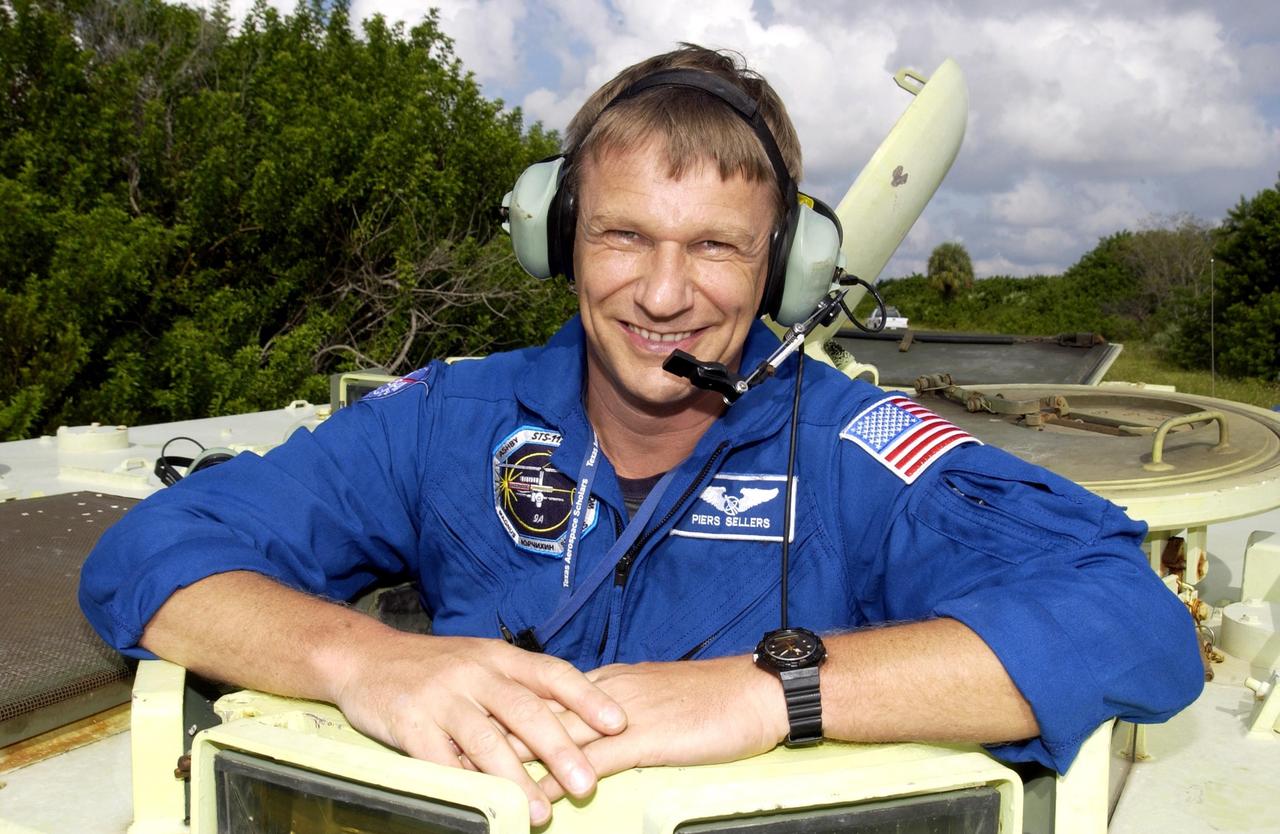
KENNEDY SPACE CENTER, Fla. - STS-112 Mission Specialist Piers Sellers is ready for his practice run driving the M-113 armored personnel carrier. Sellers and the rest of the crew are at KSC for Terminal Countdown Demonstration Test activities, which also include a simulated launch countdown. Mission STS-112 aboard Space Shuttle Atlantis is scheduled to launch no earlier than Oct. 2, between 2 and 6 p.m. EDT. STS-112 is the 15th assembly mission to the International Space Station. Atlantis will be carrying the S1 Integrated Truss Structure, the first starboard truss segment. The S1 will be attached to the central truss segment, S0, during the 11-day mission.
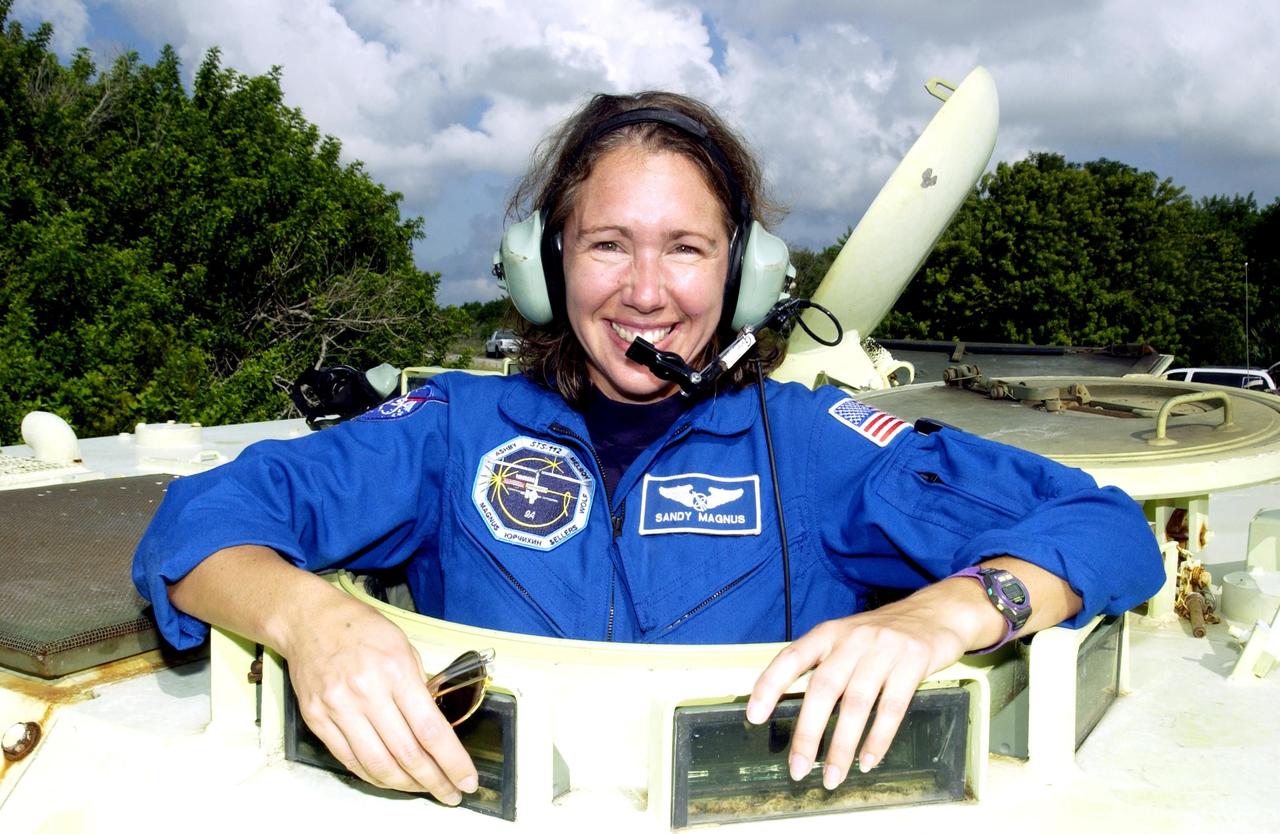
KENNEDY SPACE CENTER, Fla. - STS-112 Mission Specialist Sandra Magnus is ready for her practice run driving the M-113 armored personnel carrier. Magnus and the rest of the crew are at KSC for Terminal Countdown Demonstration Test activities, which also include a simulated launch countdown. Mission STS-112 aboard Space Shuttle Atlantis is scheduled to launch no earlier than Oct. 2, between 2 and 6 p.m. EDT. STS-112 is the 15th assembly mission to the International Space Station. Atlantis will be carrying the S1 Integrated Truss Structure, the first starboard truss segment. The S1 will be attached to the central truss segment, S0, during the 11-day mission.
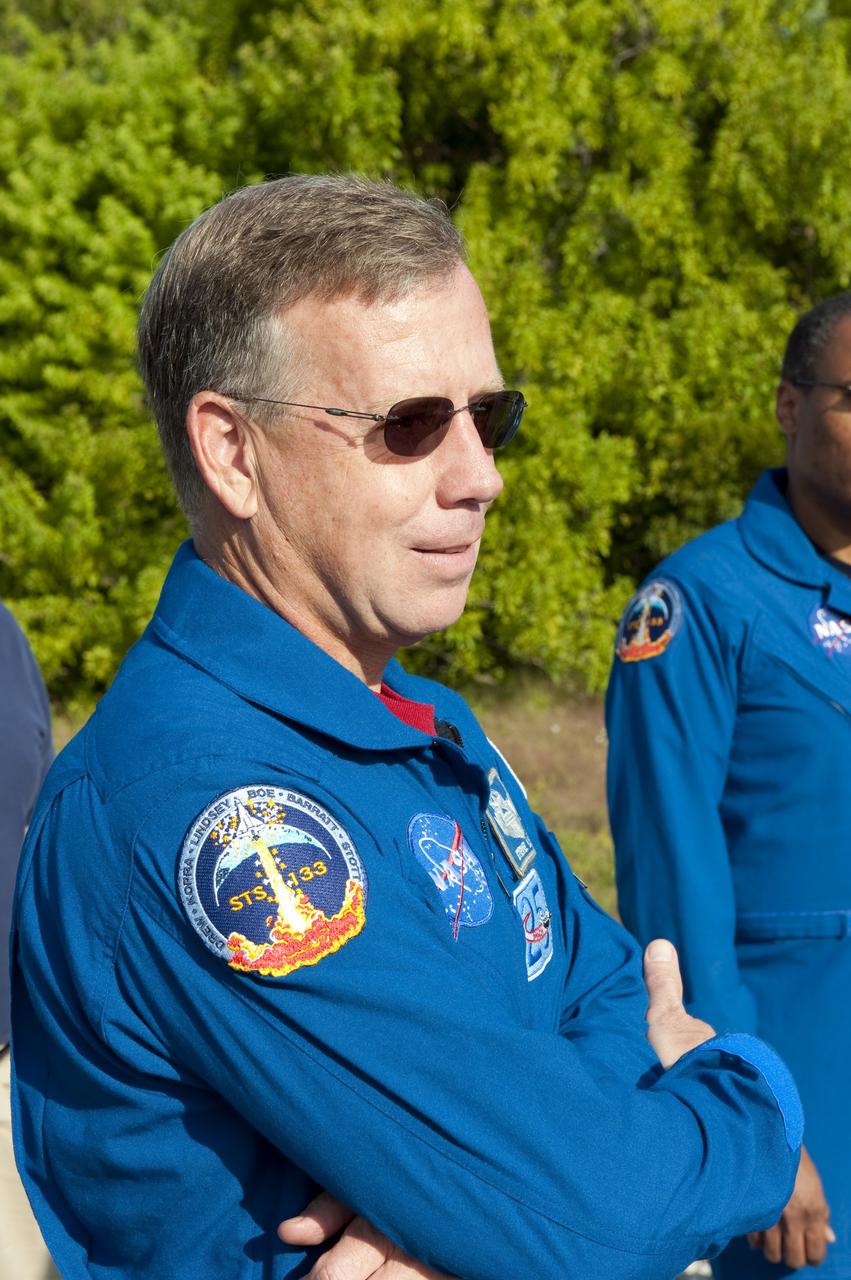
CAPE CANAVERAL, Fla. -- At NASA's Kennedy Space Center in Florida, STS-133 Commander Steve Lindsey prepares to drive the M-113 armored personnel carrier. An M-113 is kept at the foot of the launch pad in case an emergency egress from the vicinity of the pad is needed, and training on the vehicle is part of the Terminal Countdown Demonstration Test (TCDT). TCDT provides each shuttle crew and launch team an opportunity to participate in various simulated activities, including equipment familiarization and a launch countdown. Space shuttle Discovery and its STS-133 crew will deliver the Permanent Multipurpose Module, packed with supplies and critical spare parts, as well as Robonaut 2, the dexterous humanoid astronaut helper, to the International Space Station. Launch is targeted for Nov. 1 at 4:40 p.m. For more information on the STS-133 mission, visit www.nasa.gov/mission_pages/shuttle/shuttlemissions/sts133/. Photo credit: NASA/Kim Shiflett
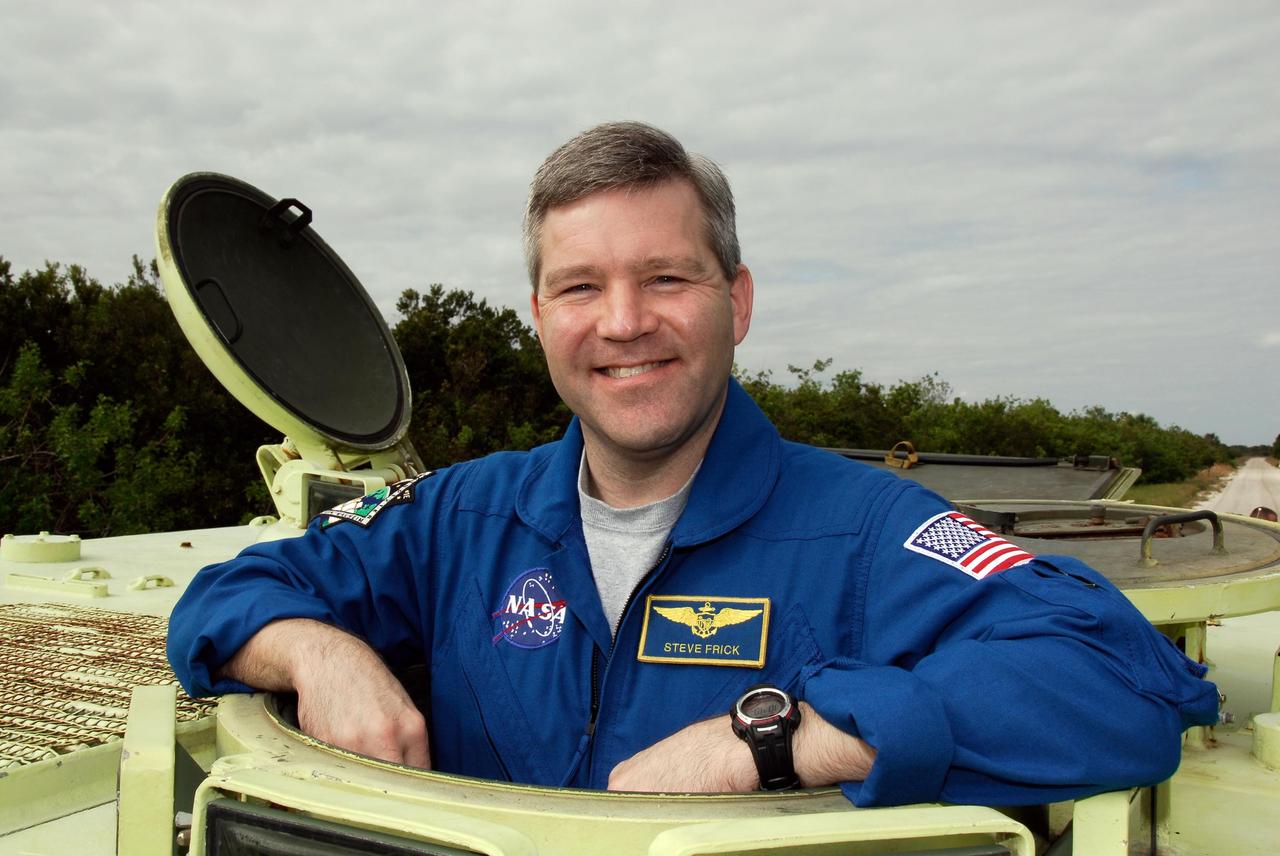
KENNEDY SPACE CENTER, FLA. -- STS-122 Commander Stephen Frick takes time out from driving practice of the M-113 armored personnel carrier to pose for a photo. The practice near Launch Pad 39B is part of training on emergency egress procedures. An M-113 will be available to transport the crew to safety in the event of a contingency on the pad before their launch. The crew is participating in Terminal Countdown Demonstration Test activities, a standard part of launch preparations. The TCDT provides astronauts and ground crews with equipment familiarization, emergency egress training and a simulated launch countdown. On mission STS-122, Atlantis will deliver the European Space Agency's Columbus module to the International Space Station. Columbus is a multifunctional, pressurized laboratory that will be permanently attached to U.S. Node 2, called Harmony, and will expand the research facilities aboard the station. Launch is targeted for Dec. 6. Photo credit: NASA/Kim Shiflett
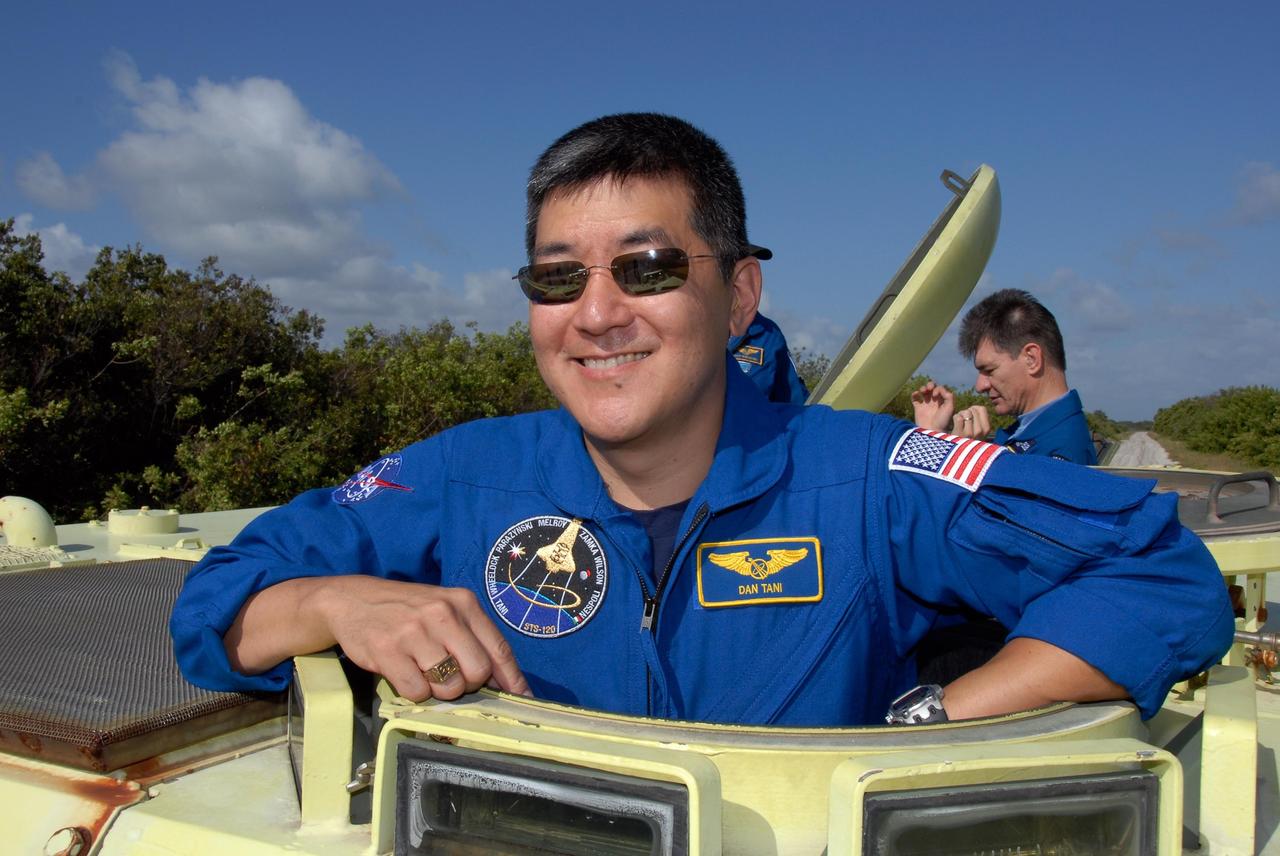
KENNEDY SPACE CENTER, FLA. -- STS-120 Mission Specialist Daniel Tani is ready for his turn at driving the M-113 armored personnel carrier. The M-113 is part of emergency exit procedures from Launch Pad 39A. Behind him, at right, is Mission Specialist Paolo Nespoli, who represents the European Space Agency. The training is part of terminal countdown demonstration test, or TCDT, activities the crew is undertaking at NASA's Kennedy Space Center. The TCDT also includes equipment familiarization and a simulated launch countdown. Mission STS-120, which will carry the Italian-built U.S. Node 2 to the International Space Station, is targeted for launch on Oct. 23. Photo credit: NASA/Kim Shiflett
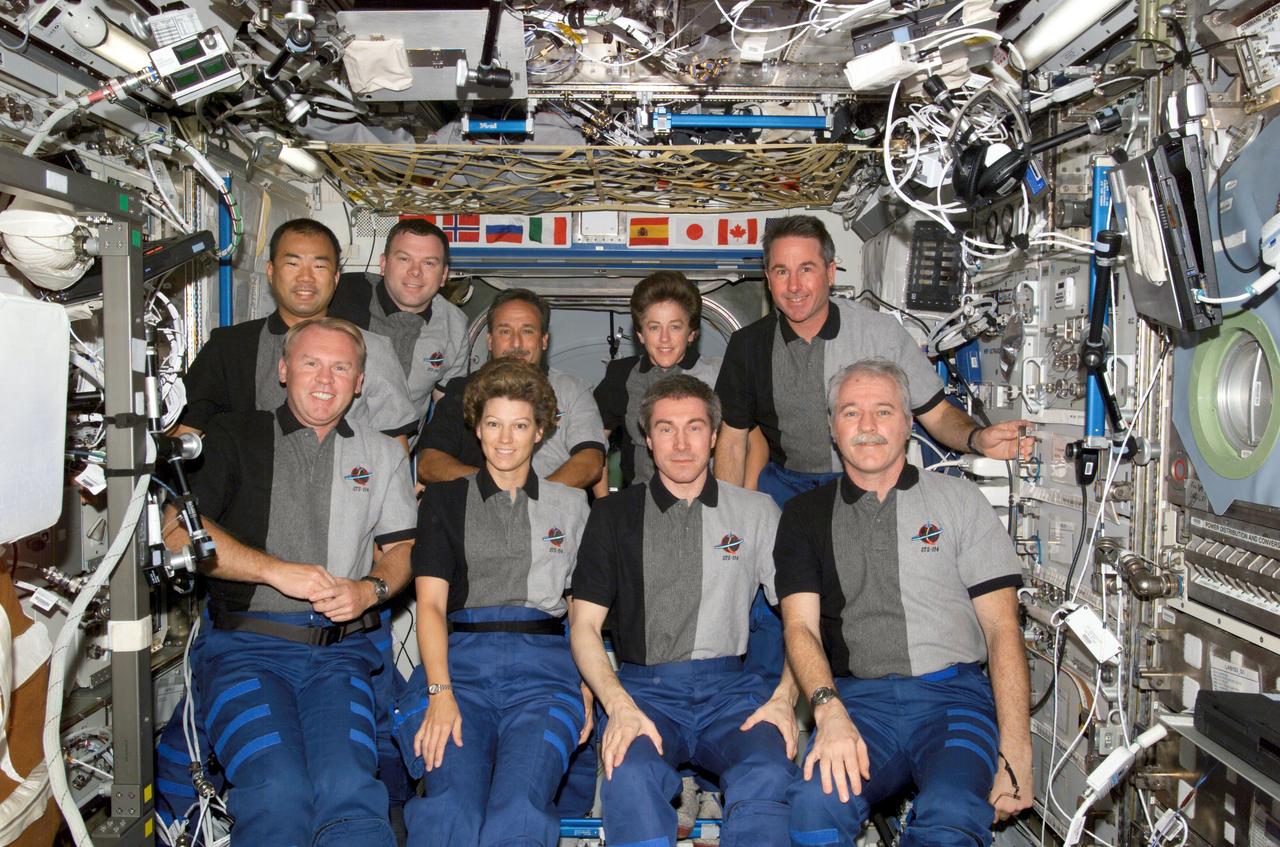
ISS011-E-11403 (2 August 2005) --- The Expedition 11 and STS-114 crewmembers gather for a group photo in the Destiny laboratory of the international space station. From the left (front row) are astronauts Andrew S. W. Thomas, STS-114 mission specialist; Eileen M. Collins, STS-114 commander; cosmonaut Sergei K. Krikalev, Expedition 11 commander representing Russia's Federal Space Agency; astronaut John L. Phillips, Expedition 11 NASA Space Station science officer and flight engineer. From the left (back row) are astronauts Soichi Noguchi, STS-114 mission specialist representing Japan Aerospace Exploration Agency (JAXA); James M. Kelly, STS-114 pilot; Charles J. Camarda, Wendy B. Lawrence and Stephen K. Robinson, all STS-114 mission specialists.
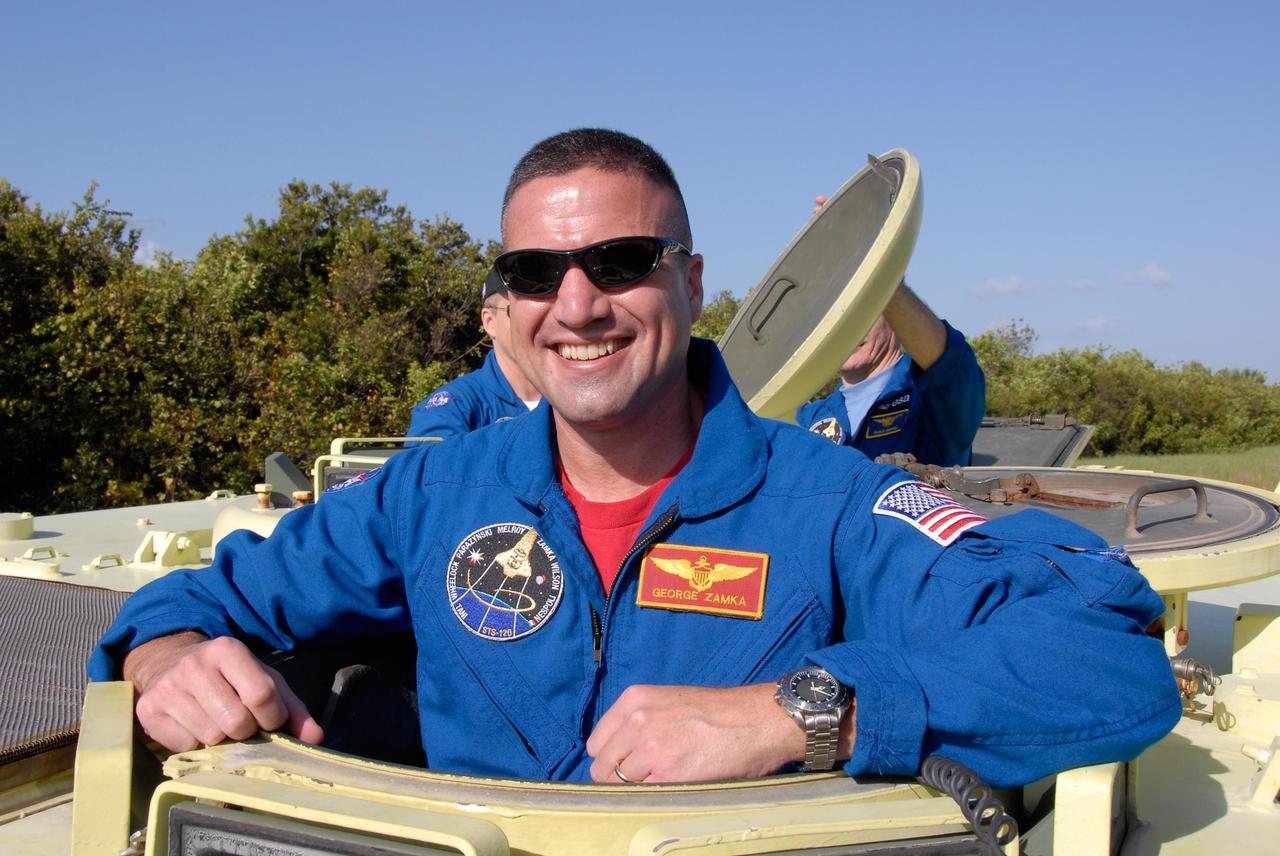
KENNEDY SPACE CENTER, FLA. -- STS-120 Pilot George Zamka gets ready in the driver's seat for driving practice in the M-113 armored personnel carrier. The M-113 is part of emergency exit procedures from Launch Pad 39A. Behind Zamka, half hidden, is Mission Specialist Paolo Nespoli, who represents the European Space Agency. The training is part of terminal countdown demonstration test, or TCDT, activities the crew is undertaking at NASA's Kennedy Space Center. The TCDT also includes equipment familiarization and a simulated launch countdown. Mission STS-120, which will carry the Italian-built U.S. Node 2 to the International Space Station, is targeted for launch on Oct. 23. Photo credit: NASA/Kim Shiflett
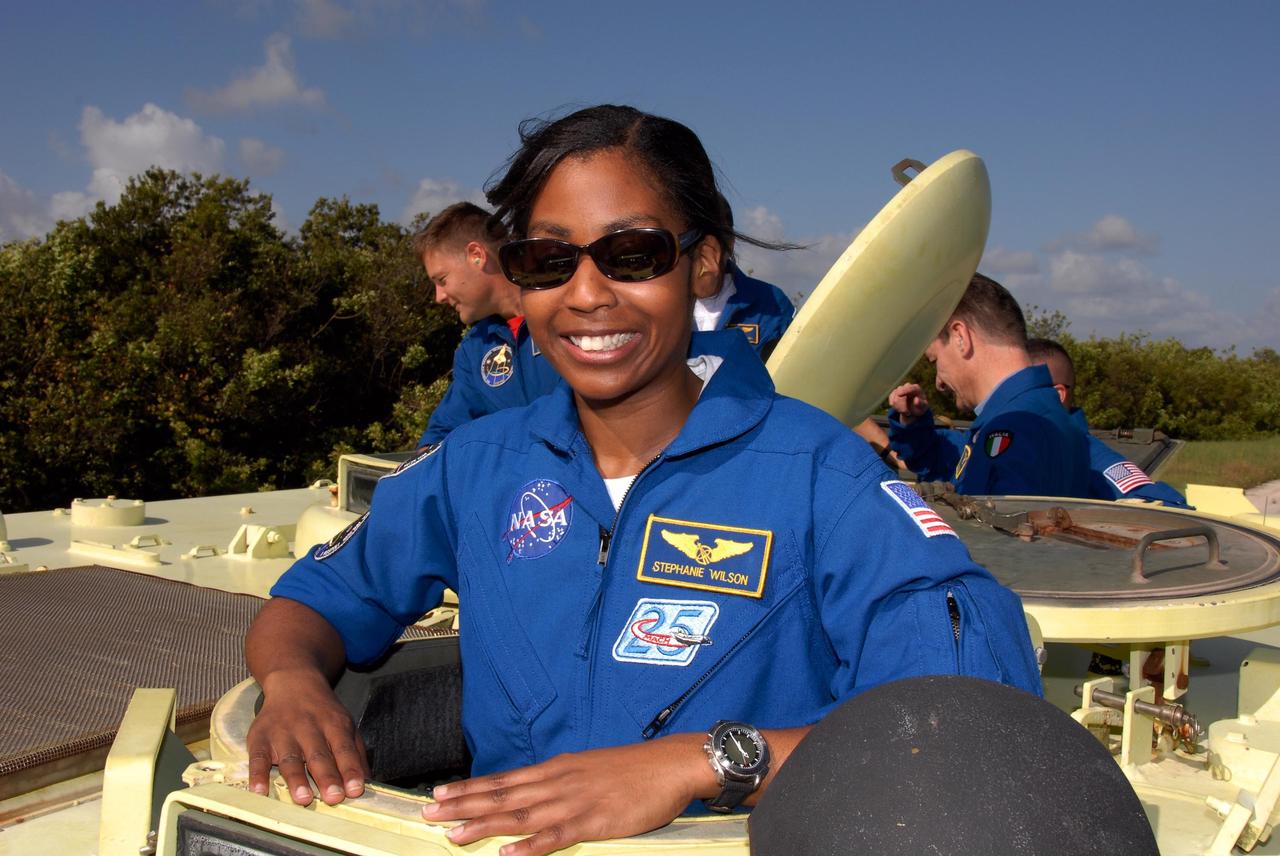
KENNEDY SPACE CENTER, FLA. -- STS-120 Mission Specialist Stephanie Wilson is ready for her turn at driving the M-113 armored personnel carrier. The M-113 is part of emergency exit procedures from Launch Pad 39A. Behind her are Mission Specialists Doug Wheelock, at left) and Paolo Nespoli, who represents the European Space Agency. The training is part of terminal countdown demonstration test, or TCDT, activities the crew is undertaking at NASA's Kennedy Space Center. The TCDT also includes equipment familiarization and a simulated launch countdown. Mission STS-120, which will carry the Italian-built U.S. Node 2 to the International Space Station, is targeted for launch on Oct. 23. Photo credit: NASA/Kim Shiflett
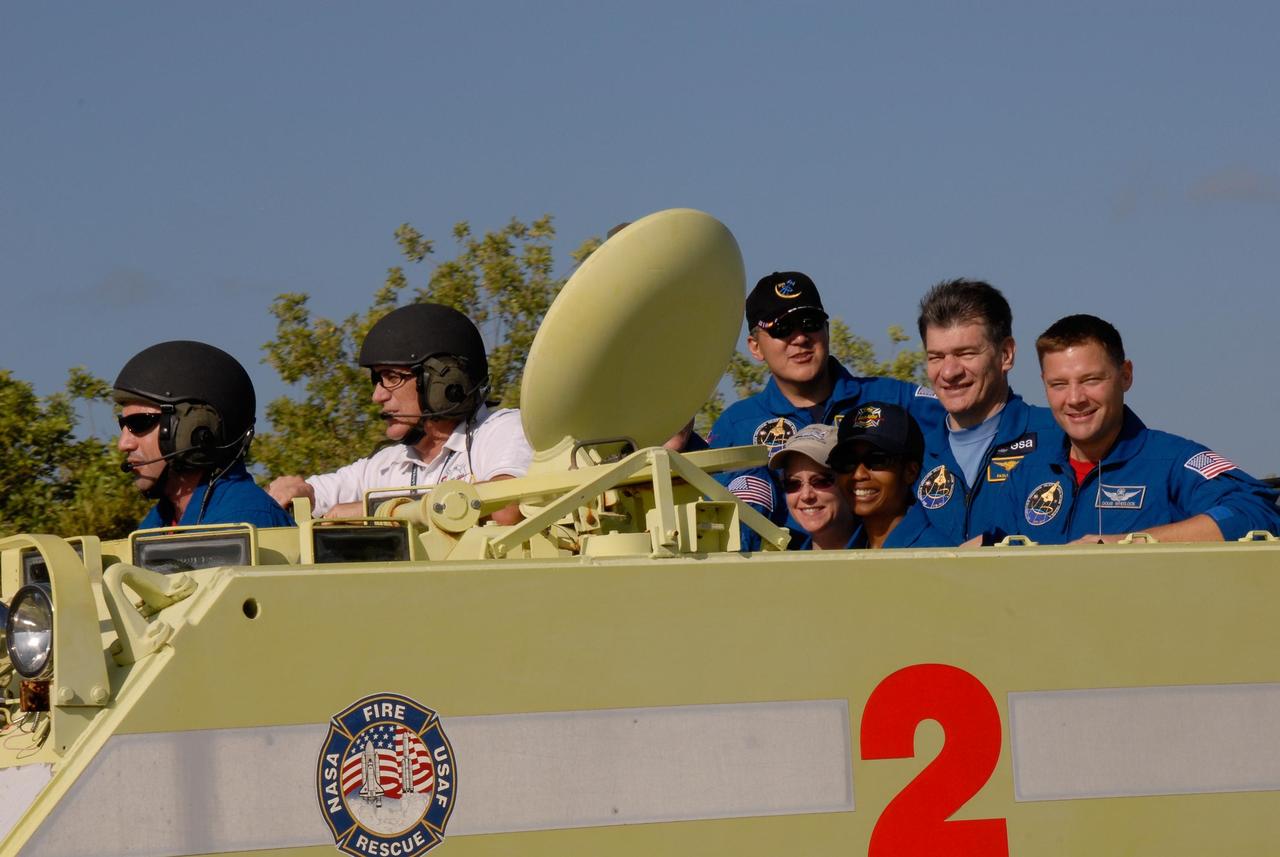
KENNEDY SPACE CENTER, FLA. -- STS-120 Pilot George Zamka practices driving the M-113 armored personnel carrier, part of emergency exit procedures from Launch Pad 39A. Alongside is the trainer. In the rear of the M-113 are Mission Specialists Daniel Tani, Commander Pamela Melroy and Mission Specialists Stephanie Wilson, Paolo Nespoli and Doug Wheelock. Nespoli represents the European Space Agency. The training is part of terminal countdown demonstration test, or TCDT, activities the crew is undertaking at NASA's Kennedy Space Center. The TCDT also includes equipment familiarization and a simulated launch countdown. Mission STS-120, which will carry the Italian-built U.S. Node 2 to the International Space Station, is targeted for launch on Oct. 23. Photo credit: NASA/Kim Shiflett
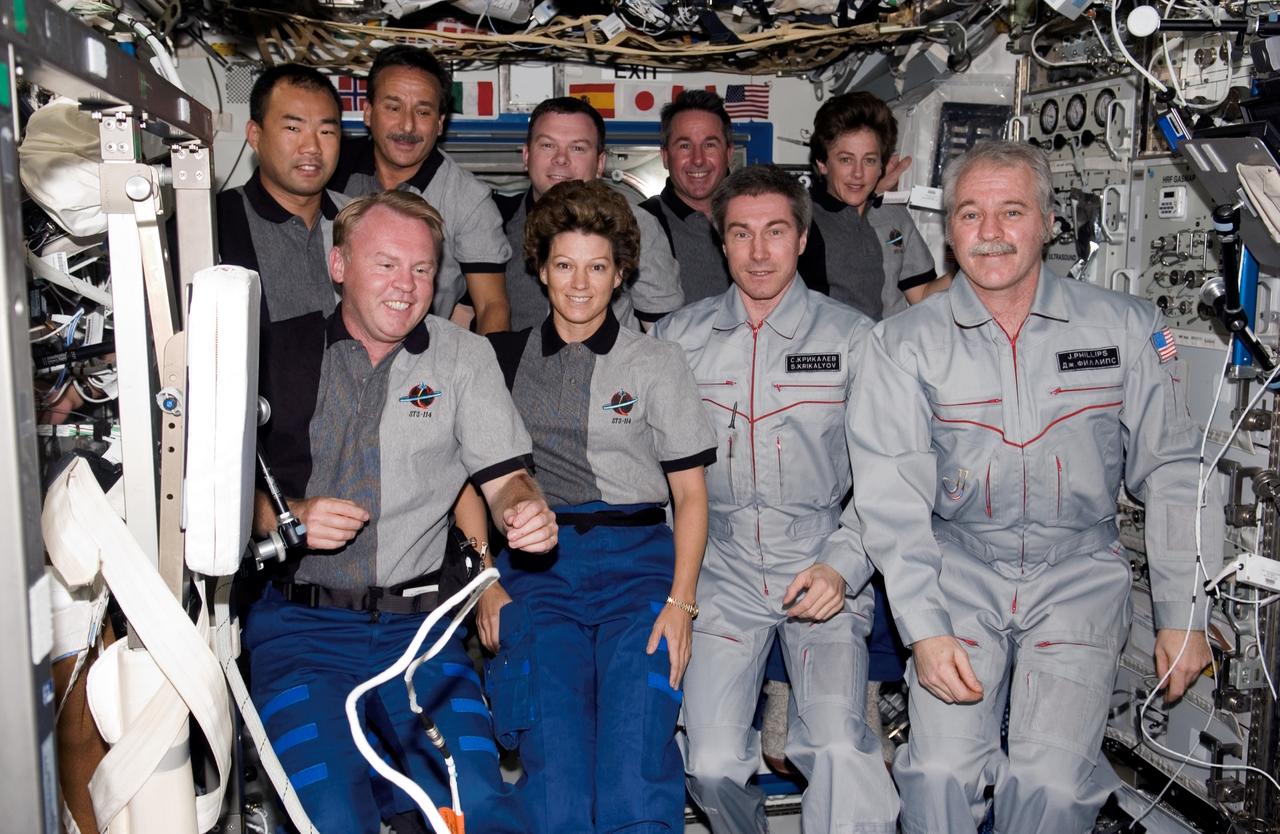
ISS011-E-12407 (2 August 2005) --- The STS-114 and Expedition 11 crew members gather for a group photo in the Destiny laboratory of the international space station. From the left (front row) are astronauts Andrew S. W. Thomas, STS-114 mission specialist; Eileen M. Collins, STS-114 commander; cosmonaut Sergei K. Krikalev, Expedition 11 commander representing Russia's Federal Space Agency; and astronaut John L. Phillips, Expedition 11 NASA science officer and flight engineer. From the left (back row) are astronauts Soichi Noguchi representing Japan Aerospace Exploration Agency (JAXA) and Charles J. Camarda, both STS-114 mission specialists; James M. Kelly, STS-114 pilot; Stephen K. Robinson and Wendy B. Lawrence, both STS-114 mission specialists.
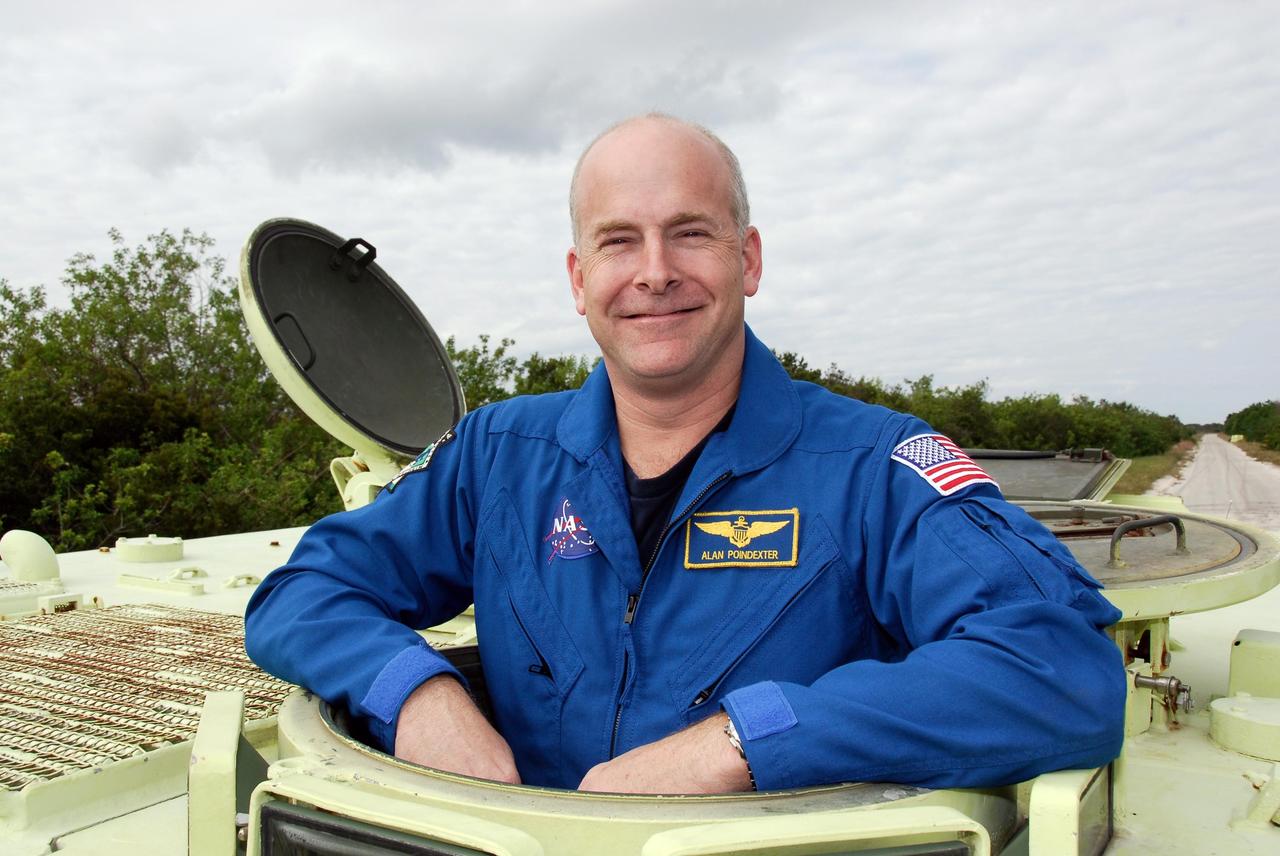
KENNEDY SPACE CENTER, FLA. -- STS-122 Pilot Alan Poindexter takes time out from driving practice of the M-113 armored personnel carrier to pose for a photo. The practice near Launch Pad 39B is part of training on emergency egress procedures. An M-113 will be available to transport the crew to safety in the event of a contingency on the pad before their launch. The crew is participating in Terminal Countdown Demonstration Test activities, a standard part of launch preparations. The TCDT provides astronauts and ground crews with equipment familiarization, emergency egress training and a simulated launch countdown. On mission STS-122, Atlantis will deliver the European Space Agency's Columbus module to the International Space Station. Columbus is a multifunctional, pressurized laboratory that will be permanently attached to U.S. Node 2, called Harmony, and will expand the research facilities aboard the station. Launch is targeted for Dec. 6. Photo credit: NASA/Kim Shiflett
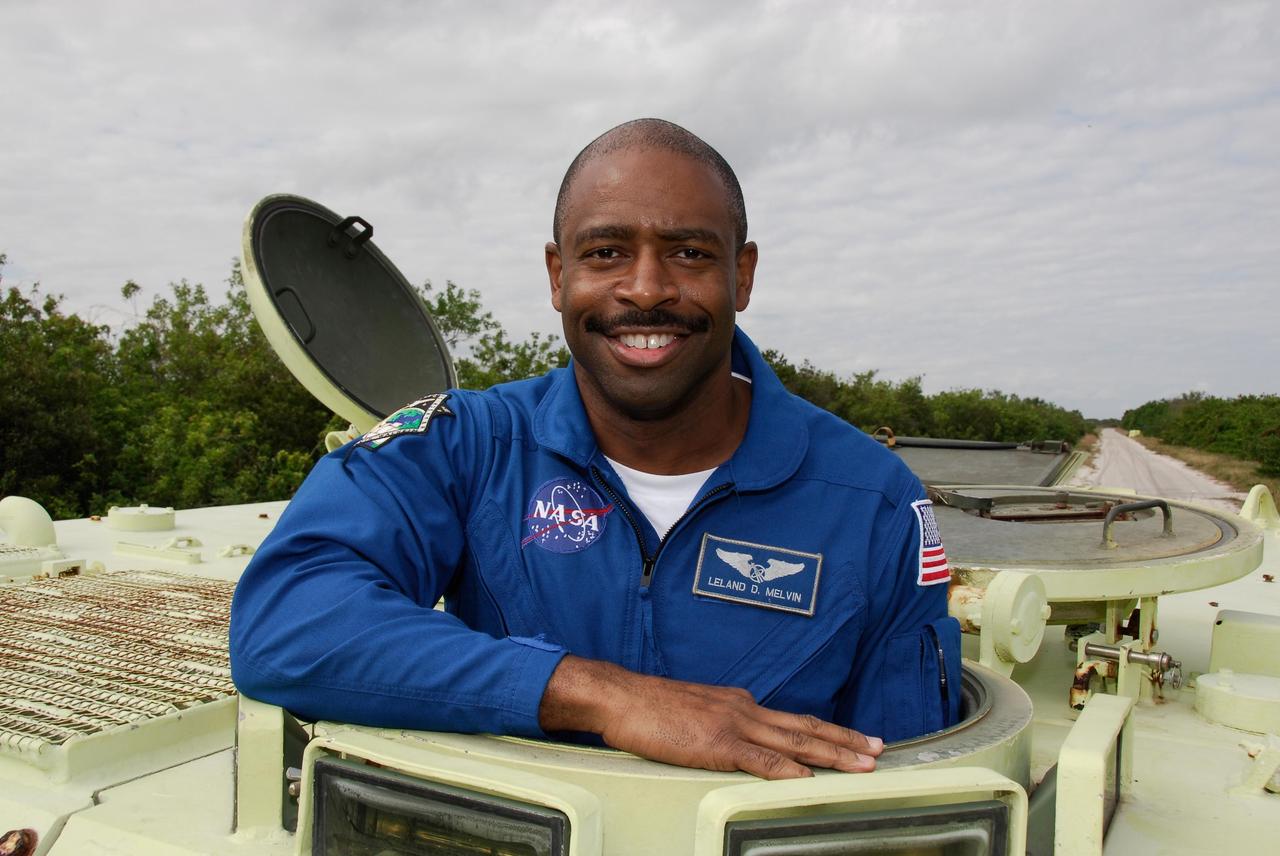
KENNEDY SPACE CENTER, FLA. -- STS-122 Mission Specialist Leland Melvin takes time out from driving practice of the M-113 armored personnel carrier to pose for a photo. The practice near Launch Pad 39B is part of training on emergency egress procedures. An M-113 will be available to transport the crew to safety in the event of a contingency on the pad before their launch. The crew is participating in Terminal Countdown Demonstration Test activities, a standard part of launch preparations. The TCDT provides astronauts and ground crews with equipment familiarization, emergency egress training and a simulated launch countdown. On mission STS-122, Atlantis will deliver the European Space Agency's Columbus module to the International Space Station. Columbus is a multifunctional, pressurized laboratory that will be permanently attached to U.S. Node 2, called Harmony, and will expand the research facilities aboard the station. Launch is targeted for Dec. 6. Photo credit: NASA/Kim Shiflett
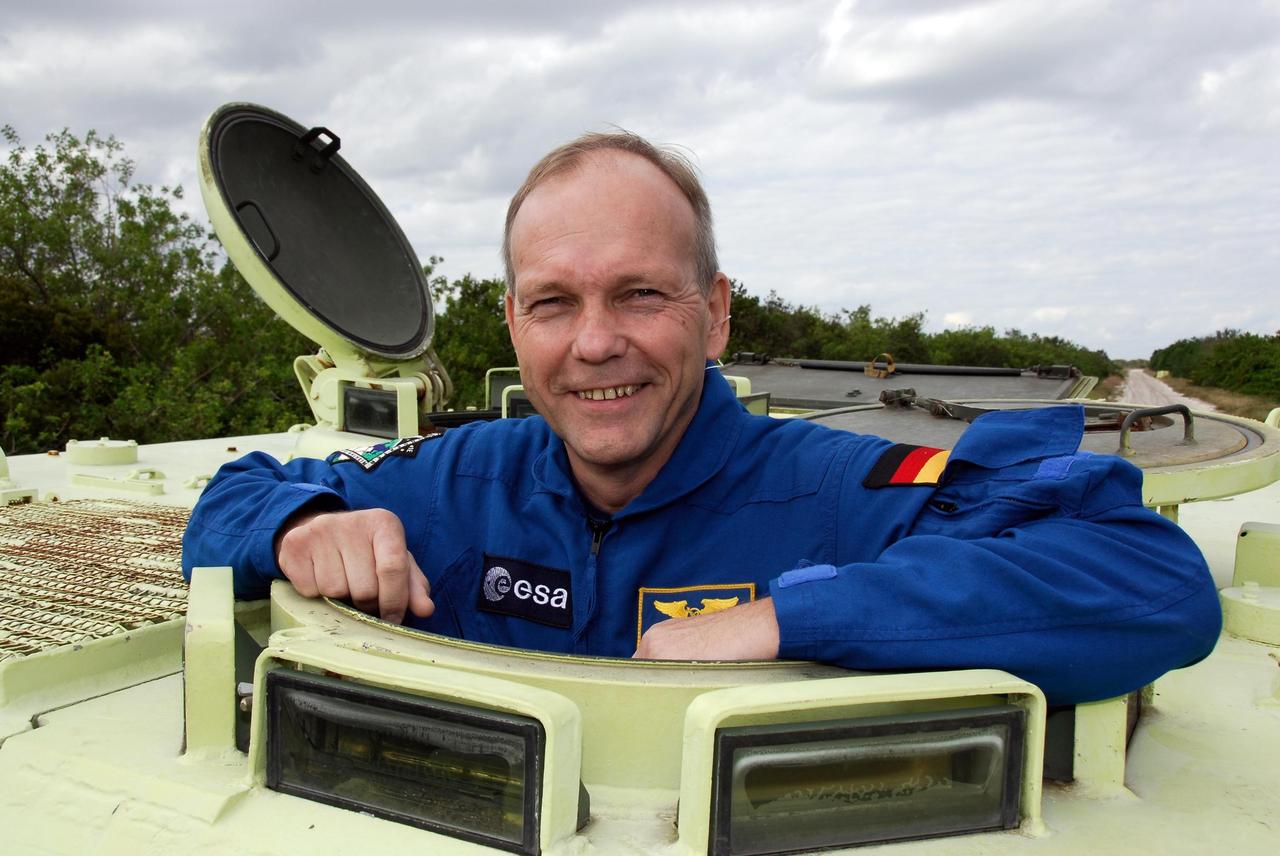
KENNEDY SPACE CENTER, FLA. -- STS-122 Mission Specialist Hans Schlegel, of the European Space Agency, takes time out from driving practice of the M-113 armored personnel carrier to pose for a photo. The practice near Launch Pad 39B is part of training on emergency egress procedures. An M-113 will be available to transport the crew to safety in the event of a contingency on the pad before their launch. The crew is participating in Terminal Countdown Demonstration Test activities, a standard part of launch preparations. The TCDT provides astronauts and ground crews with equipment familiarization, emergency egress training and a simulated launch countdown. On mission STS-122, Atlantis will deliver the European Space Agency's Columbus module to the International Space Station. Columbus is a multifunctional, pressurized laboratory that will be permanently attached to U.S. Node 2, called Harmony, and will expand the research facilities aboard the station. Launch is targeted for Dec. 6. Photo credit: NASA/Kim Shiflett
KENNEDY SPACE CENTER, FLA. -- STS-122 Mission Specialist Rex Walheim, at right, practices driving an M-113 armored personnel carrier as the instructor beside him monitors his performance. The practice near Launch Pad 39B is part of training on emergency egress procedures. An M-113 will be available to transport the crew to safety in the event of a contingency on the pad before their launch. The crew is participating in Terminal Countdown Demonstration Test activities, a standard part of launch preparations. The TCDT provides astronauts and ground crews with equipment familiarization, emergency egress training and a simulated launch countdown. On mission STS-122, Atlantis will deliver the European Space Agency's Columbus module to the International Space Station. Columbus is a multifunctional, pressurized laboratory that will be permanently attached to U.S. Node 2, called Harmony, and will expand the research facilities aboard the station. Launch is targeted for Dec. 6. Photo credit: NASA/Kim Shiflett
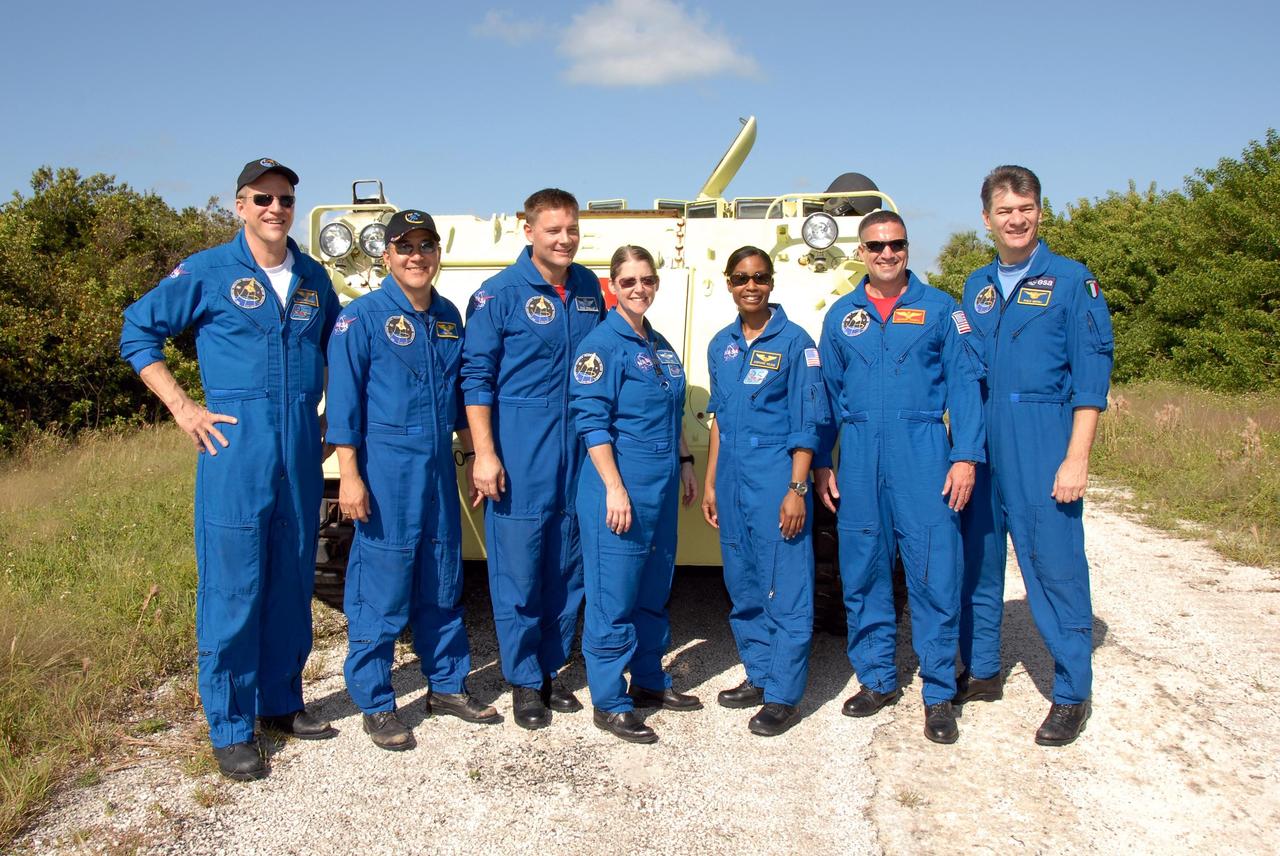
KENNEDY SPACE CENTER, FLA. -- After driving practice on the M-113 armored personnel carrier, the STS-120 crew pauses for a group photo. From left are Mission Specialists Scott Parazynski, Daniel Tani and Doug Wheelock, Commander Pamela Melroy, Mission Specialist Stephanie Wilson, Pilot George Zamka and Mission Specialist Paolo Nespoli, who represents the European Space Agency. The M-113 is part of emergency exit procedures from Launch Pad 39A. The training is part of terminal countdown demonstration test, or TCDT, activities the crew is undertaking at NASA's Kennedy Space Center. The TCDT also includes equipment familiarization and a simulated launch countdown. Mission STS-120, which will carry the Italian-built U.S. Node 2 to the International Space Station, is targeted for launch on Oct. 23. Photo credit: NASA/Kim Shiflett
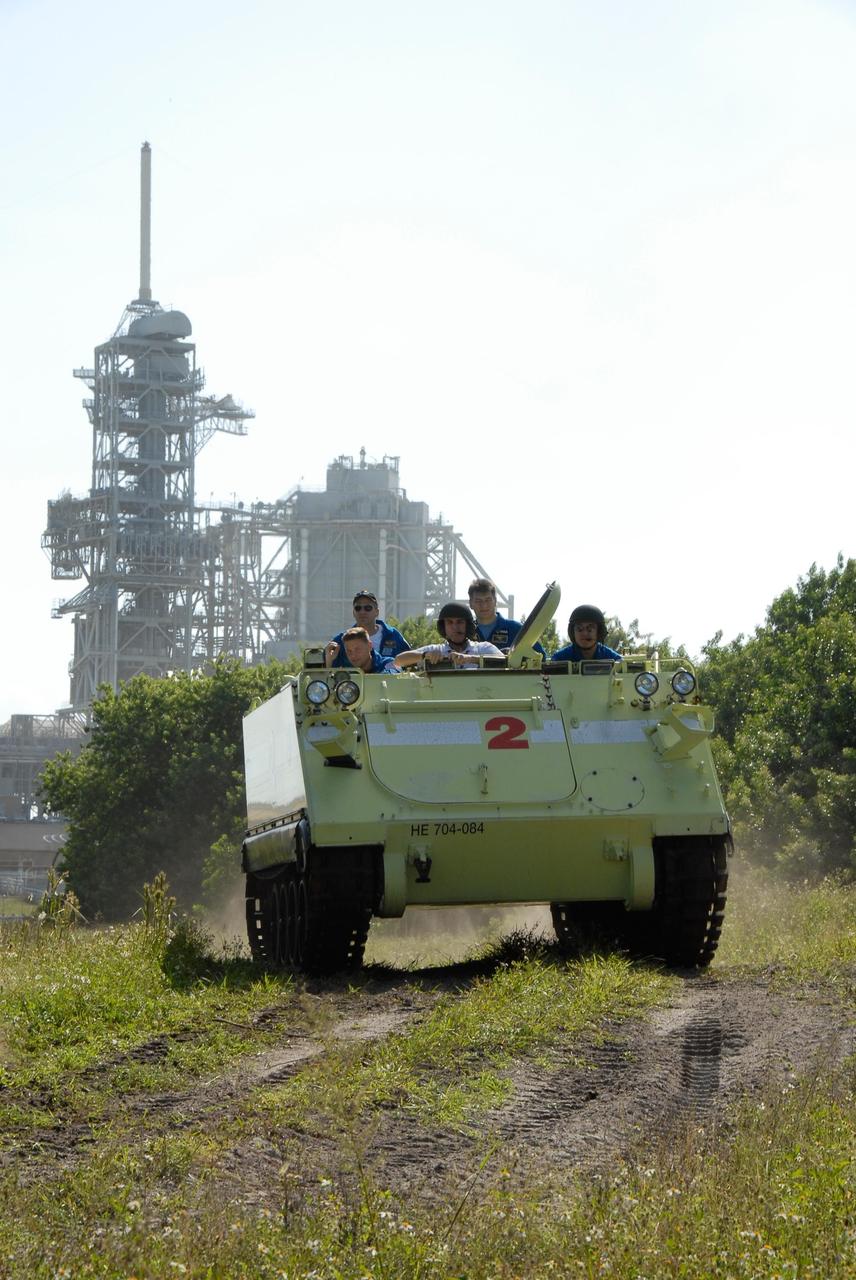
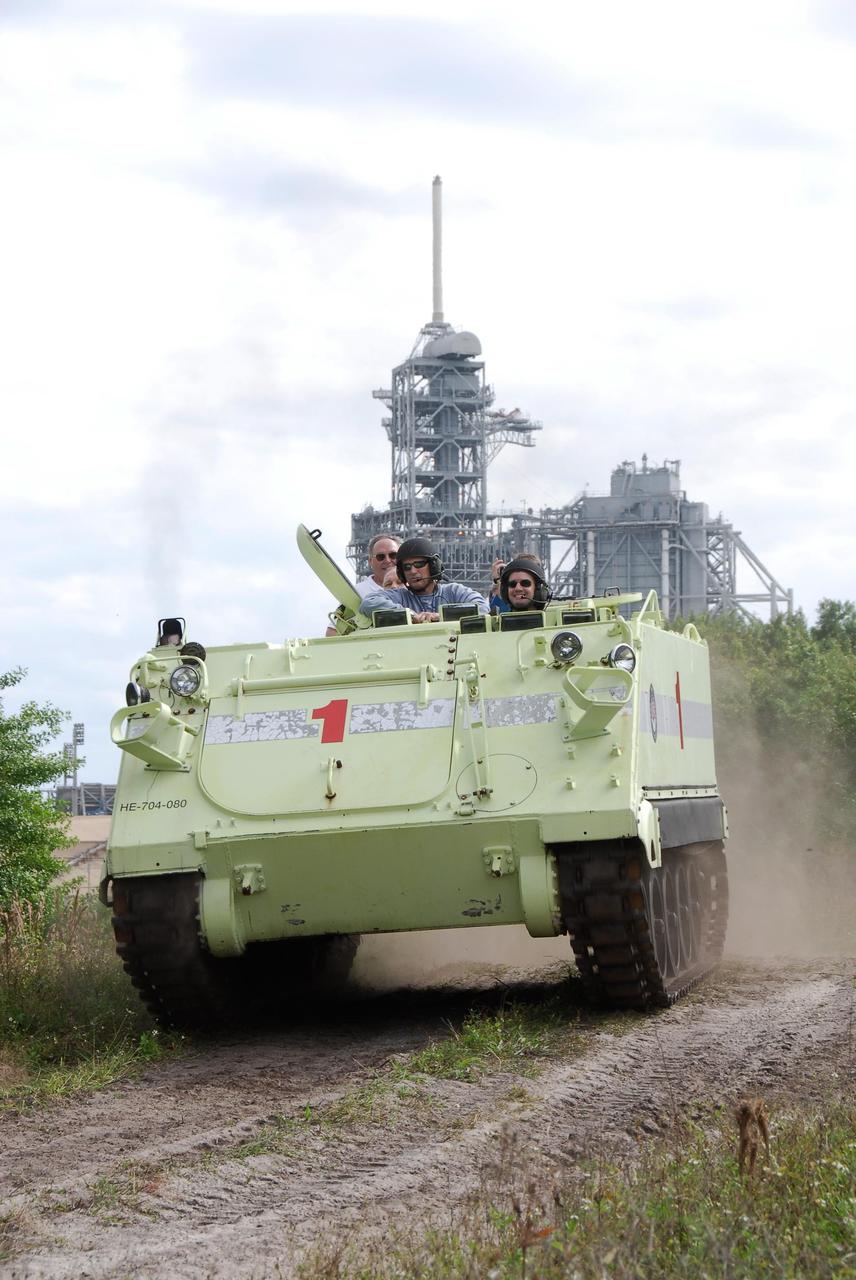
KENNEDY SPACE CENTER, FLA. -- Driven by Mission Specialist Daniel Tani, the M-113 armored personnel carrier moves through the underbrush near Launch Pad 39A. The M-113 is part of emergency exit procedures from Launch Pad 39A. Also in front is the trainer. In the rear are Mission Specialists Doug Wheelock, Scott Parazynski and Paolo Nespoli, who represents the European Space Agency. The training is part of terminal countdown demonstration test, or TCDT, activities the crew is undertaking at NASA's Kennedy Space Center. The TCDT also includes equipment familiarization and a simulated launch countdown. Mission STS-120, which will carry the Italian-built U.S. Node 2 to the International Space Station, is targeted for launch on Oct. 23. Photo credit: NASA/Kim Shiflett
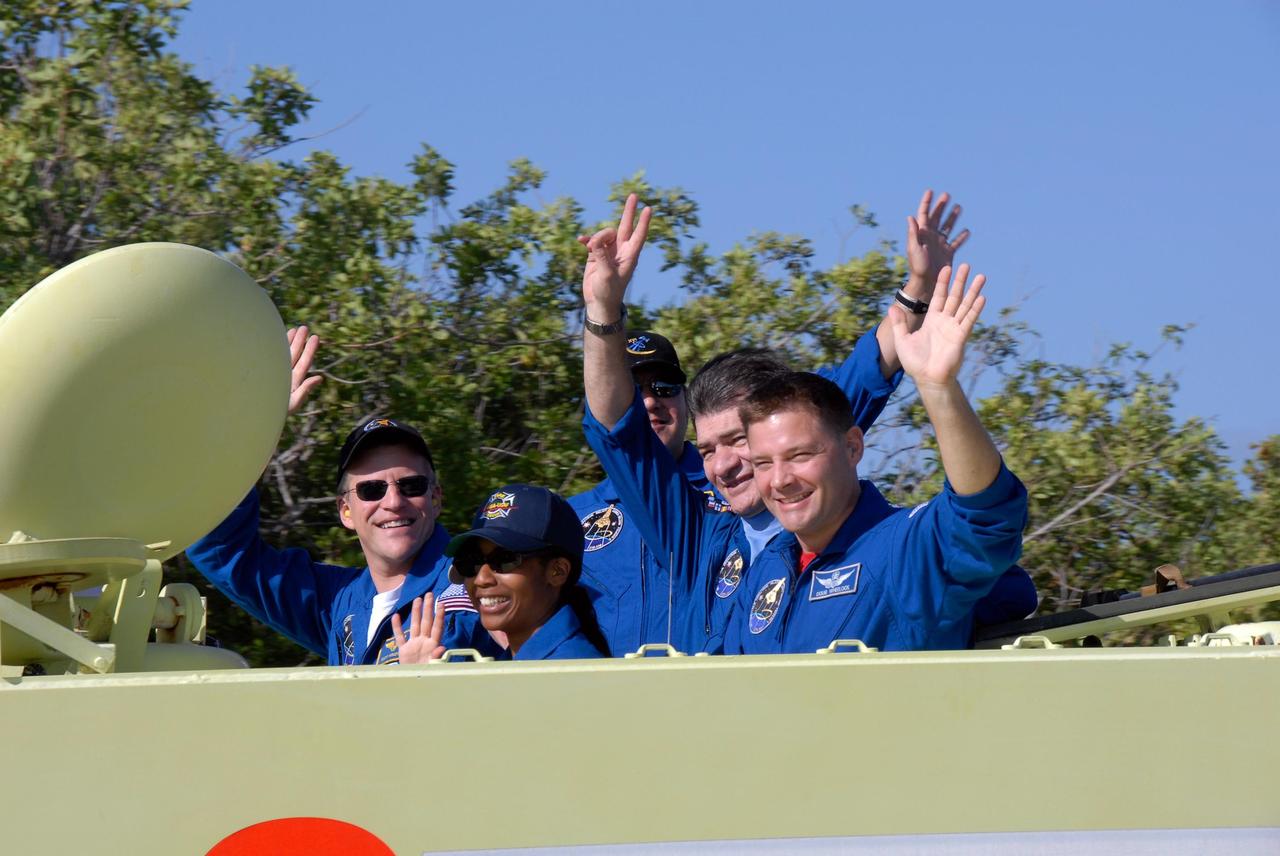
KENNEDY SPACE CENTER, FLA. -- STS-120 crew members signal their pleasure in participating in M-113 driving practice, part of emergency exit procedures from Launch Pad 39A. Seen here on the M-113 are Mission Specialists Scott Parazynski, Stephanie Wilson, Daniel Tani, Paolo Nespoli and Doug Wheelock. Nespoli represents the European Space Agency. The training is part of terminal countdown demonstration test, or TCDT, activities the crew is undertaking at NASA's Kennedy Space Center. The TCDT also includes equipment familiarization and a simulated launch countdown. Mission STS-120, which will carry the Italian-built U.S. Node 2 to the International Space Station, is targeted for launch on Oct. 23. Photo credit: NASA/Kim Shiflett
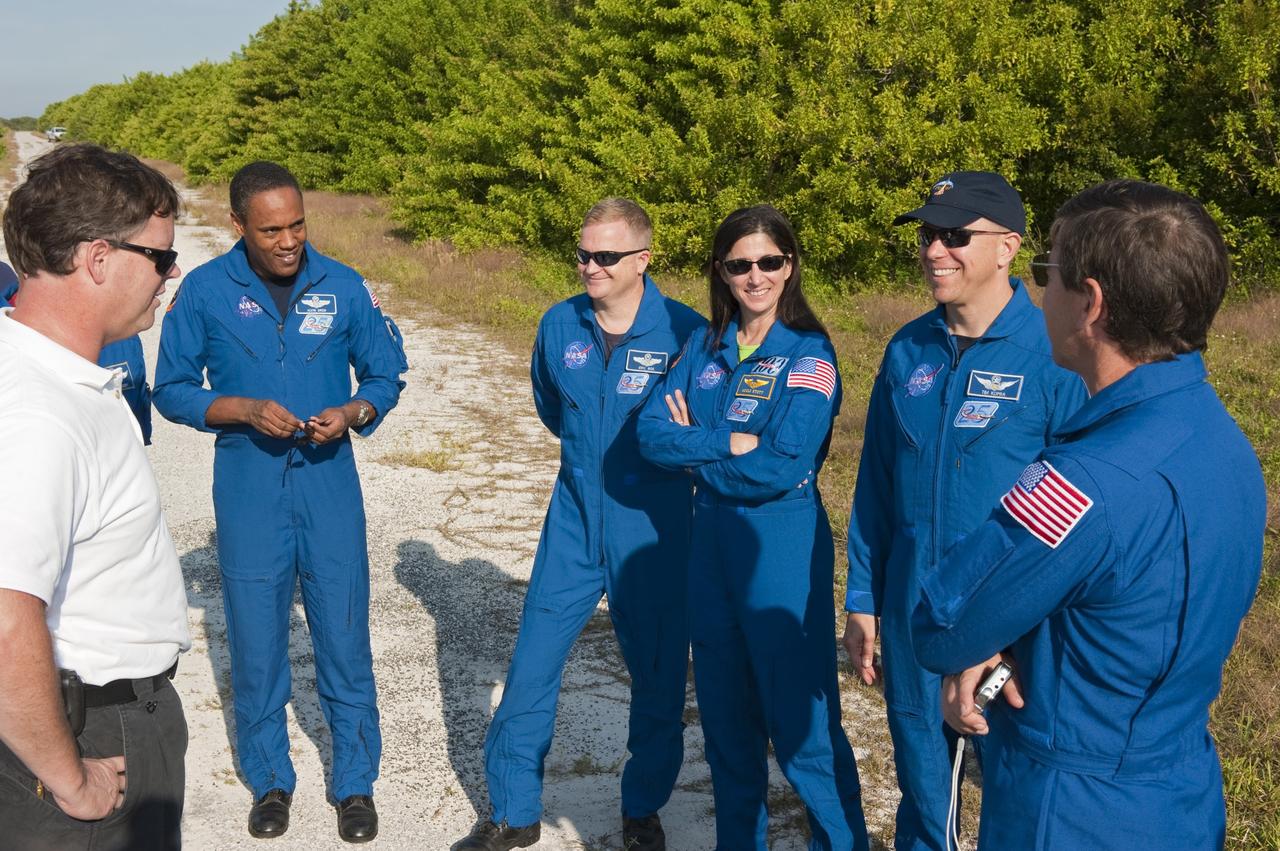
CAPE CANAVERAL, Fla. -- At NASA's Kennedy Space Center in Florida, the STS-133 crew shares a light moment with Battalion Chief David Seymour, left, during training on the M-113 armored personnel carrier. An M-113 is kept at the foot of the launch pad in case an emergency egress from the vicinity of the pad is needed, and driving the vehicle is part of the Terminal Countdown Demonstration Test (TCDT). TCDT provides each shuttle crew and launch team an opportunity to participate in various simulated activities, including equipment familiarization and a launch countdown. Space shuttle Discovery and its STS-133 crew will deliver the Permanent Multipurpose Module, packed with supplies and critical spare parts, as well as Robonaut 2, the dexterous humanoid astronaut helper, to the International Space Station. Launch is targeted for Nov. 1 at 4:40 p.m. For more information on the STS-133 mission, visit www.nasa.gov/mission_pages/shuttle/shuttlemissions/sts133/. Photo credit: NASA/Kim Shiflett
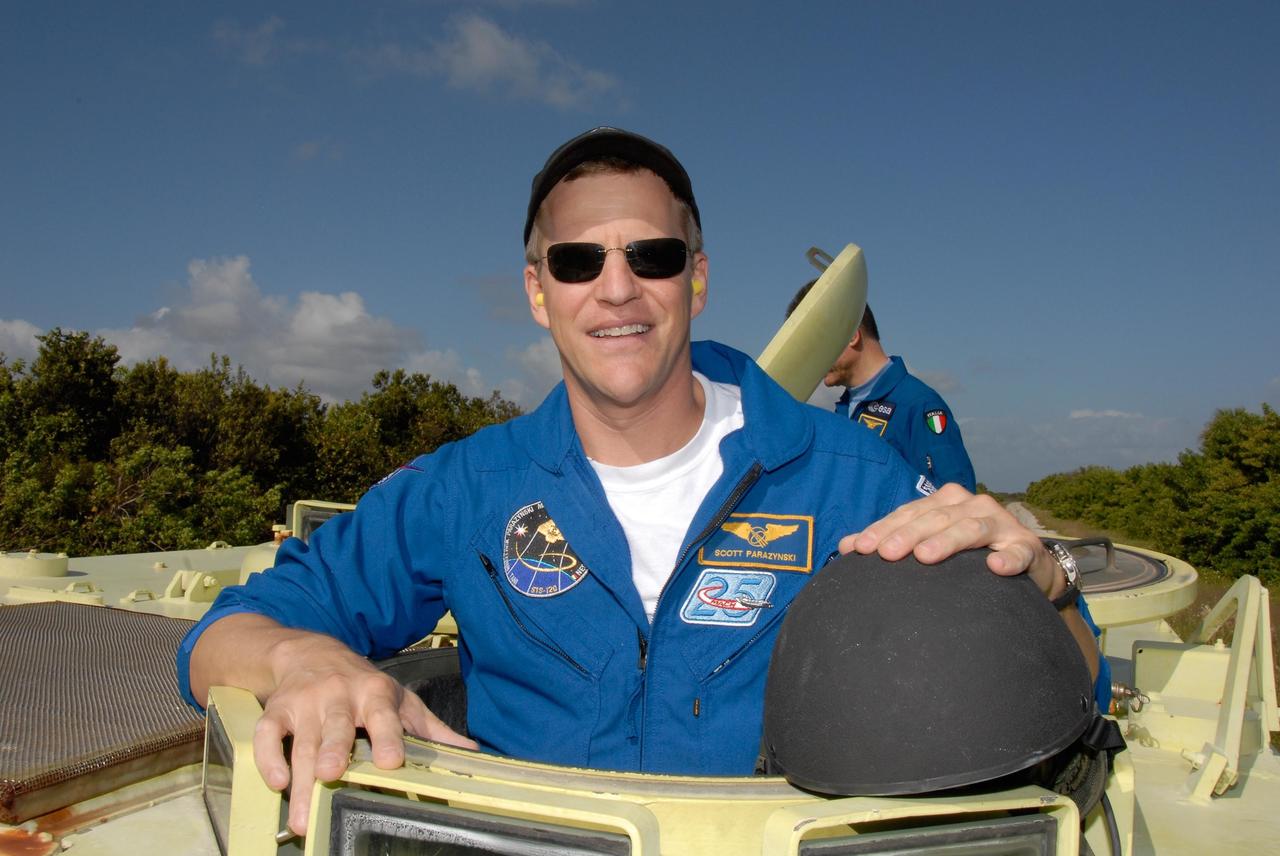
KENNEDY SPACE CENTER, FLA. -- STS-120 Mission Specialist Scott Parazynski is ready for his turn at driving the M-113 armored personnel carrier. The M-113 is part of emergency exit procedures from Launch Pad 39A. Behind Parazynski is Mission Specialist Paolo Nespoli, who represents the European Space Agency. The training is part of terminal countdown demonstration test, or TCDT, activities the crew is undertaking at NASA's Kennedy Space Center. The TCDT also includes equipment familiarization and a simulated launch countdown. Mission STS-120, which will carry the Italian-built U.S. Node 2 to the International Space Station, is targeted for launch on Oct. 23. Photo credit: NASA/Kim Shiflett
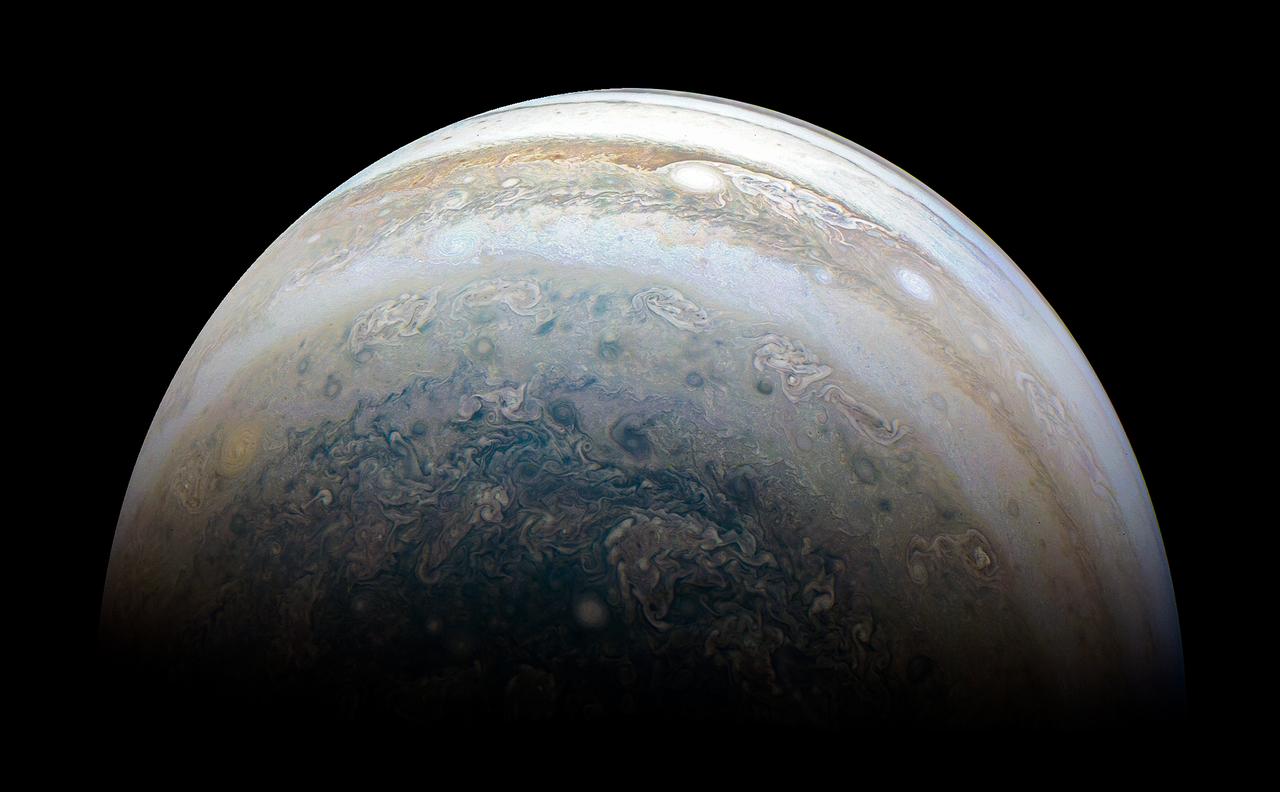
This image of Jupiter's southern hemisphere was captured by NASA's Juno spacecraft on the outbound leg of a close flyby of the gas-giant planet. The color-enhanced image was taken at 11:31 p.m. PDT on May 23, 2018 (2:31 a.m. EDT on May 24), as the spacecraft performed its 13th close flyby of Jupiter. At the time, Juno was about 44,300 miles (71,400 kilometers) from the planet's cloud tops, above a southern latitude of 71 degrees. JunoCam takes advantage of Juno's unique polar orbit, studying the atmospheric dynamics and clouds right up to Jupiter's poles, which no spacecraft has ever done before. Citizen scientist Kevin M. Gill created this image using data from the spacecraft's JunoCam imager. https://photojournal.jpl.nasa.gov/catalog/PIA22425 . - Enhanced image by Kevin M. Gill (CC-BY) based on images provided courtesy of NASA/JPL-Caltech/SwRI/MSSS
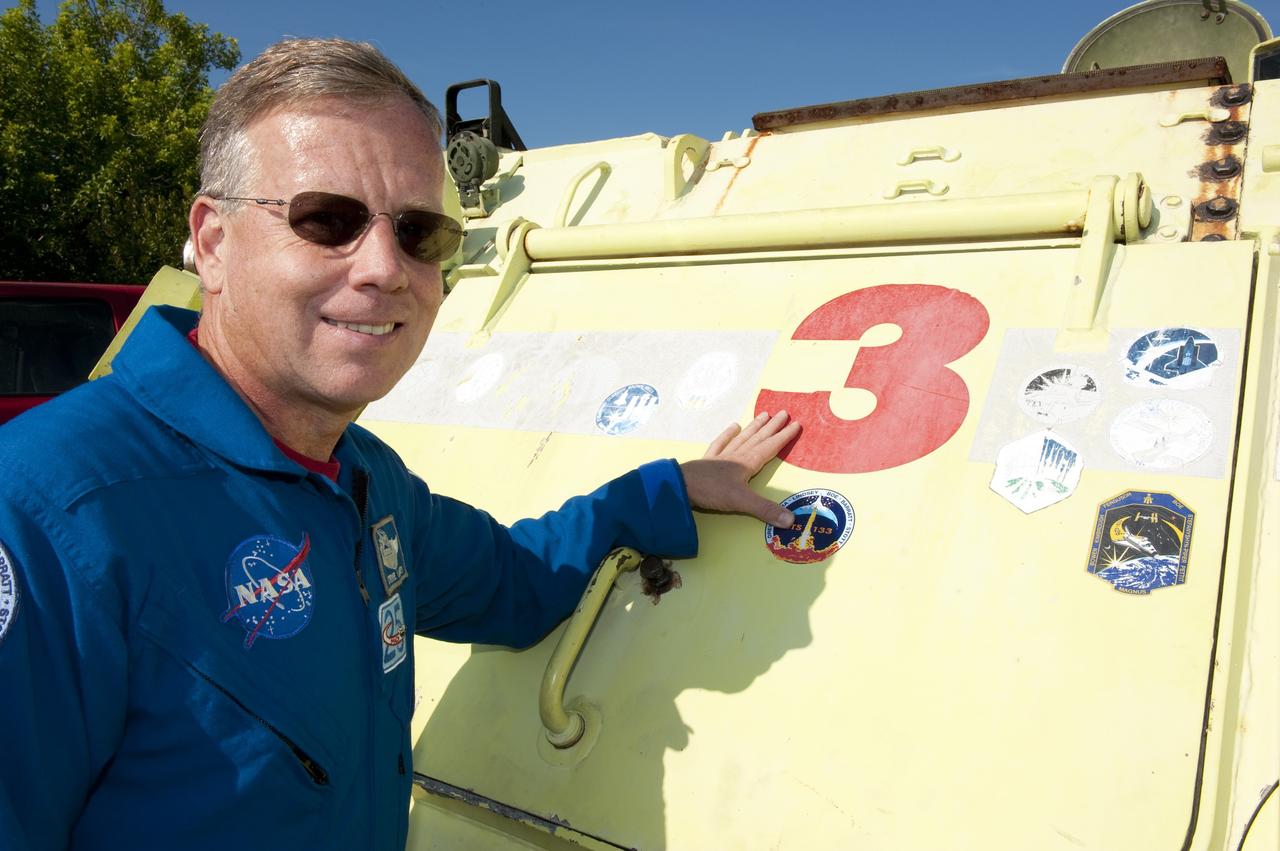
CAPE CANAVERAL, Fla. -- At NASA's Kennedy Space Center in Florida, STS-133 Mission Commander Steve Lindsey points out his crew's mission patch on an M-113 armored personnel carrier. An M-113 is kept at the foot of the launch pad in case an emergency egress from the vicinity of the pad is needed, and driving the vehicle is part of the Terminal Countdown Demonstration Test (TCDT). TCDT provides each shuttle crew and launch team an opportunity to participate in various simulated activities, including equipment familiarization and a launch countdown. Space shuttle Discovery and its STS-133 crew will deliver the Permanent Multipurpose Module, packed with supplies and critical spare parts, as well as Robonaut 2, the dexterous humanoid astronaut helper, to the International Space Station. Launch is targeted for Nov. 1 at 4:40 p.m. For more information on the STS-133 mission, visit www.nasa.gov/mission_pages/shuttle/shuttlemissions/sts133/. Photo credit: NASA/Kim Shiflett
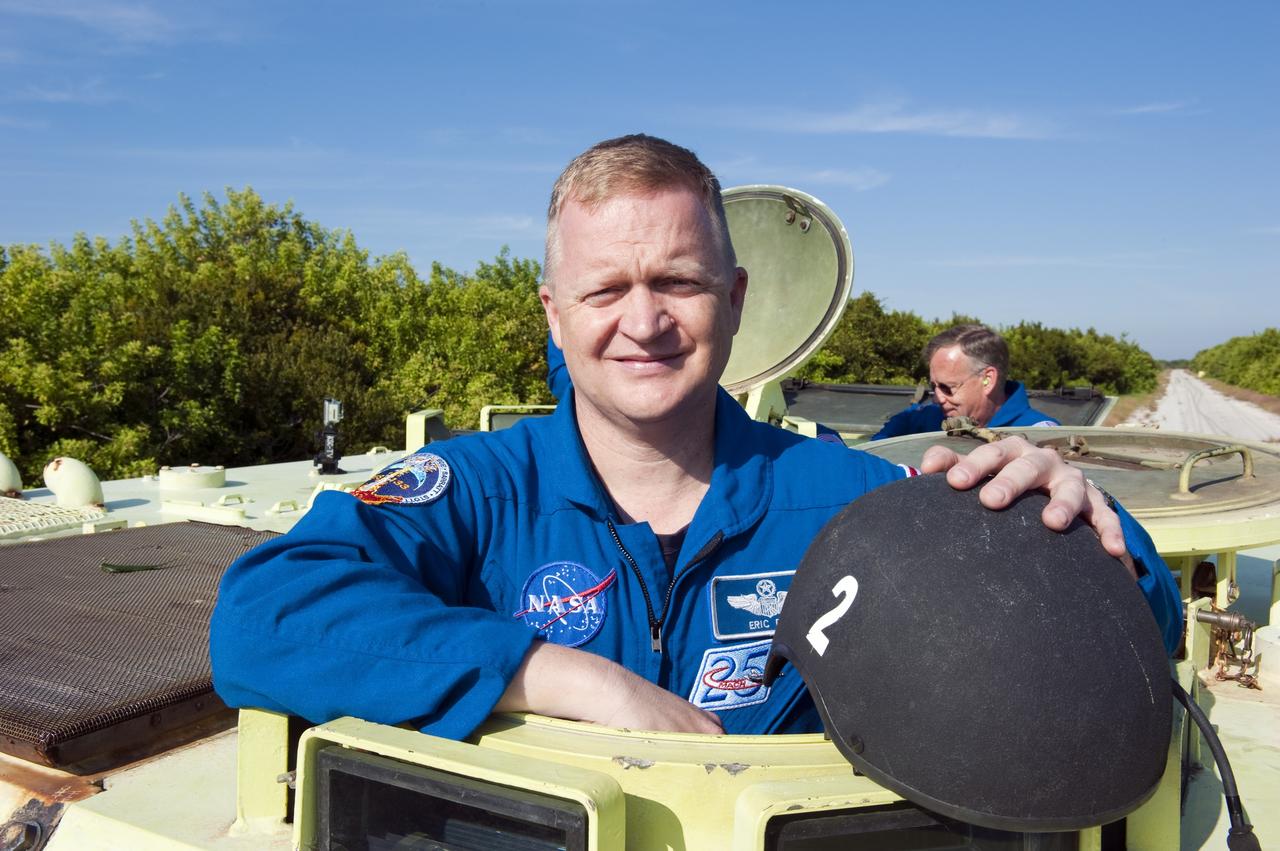
CAPE CANAVERAL, Fla. -- At NASA's Kennedy Space Center in Florida, STS-133 Pilot Eric Boe prepares to practice driving an M-113 armored personnel carrier. Behind him is Commander Steve Lindsey. An M-113 is kept at the foot of the launch pad in case an emergency egress from the vicinity of the pad is needed, and training on the vehicle is part of the Terminal Countdown Demonstration Test (TCDT). TCDT provides each shuttle crew and launch team an opportunity to participate in various simulated activities, including equipment familiarization and a launch countdown. Space shuttle Discovery and its STS-133 crew will deliver the Permanent Multipurpose Module, packed with supplies and critical spare parts, as well as Robonaut 2, the dexterous humanoid astronaut helper, to the International Space Station. Launch is targeted for Nov. 1 at 4:40 p.m. For more information on the STS-133 mission, visit www.nasa.gov/mission_pages/shuttle/shuttlemissions/sts133/. Photo credit: NASA/Kim Shiflett
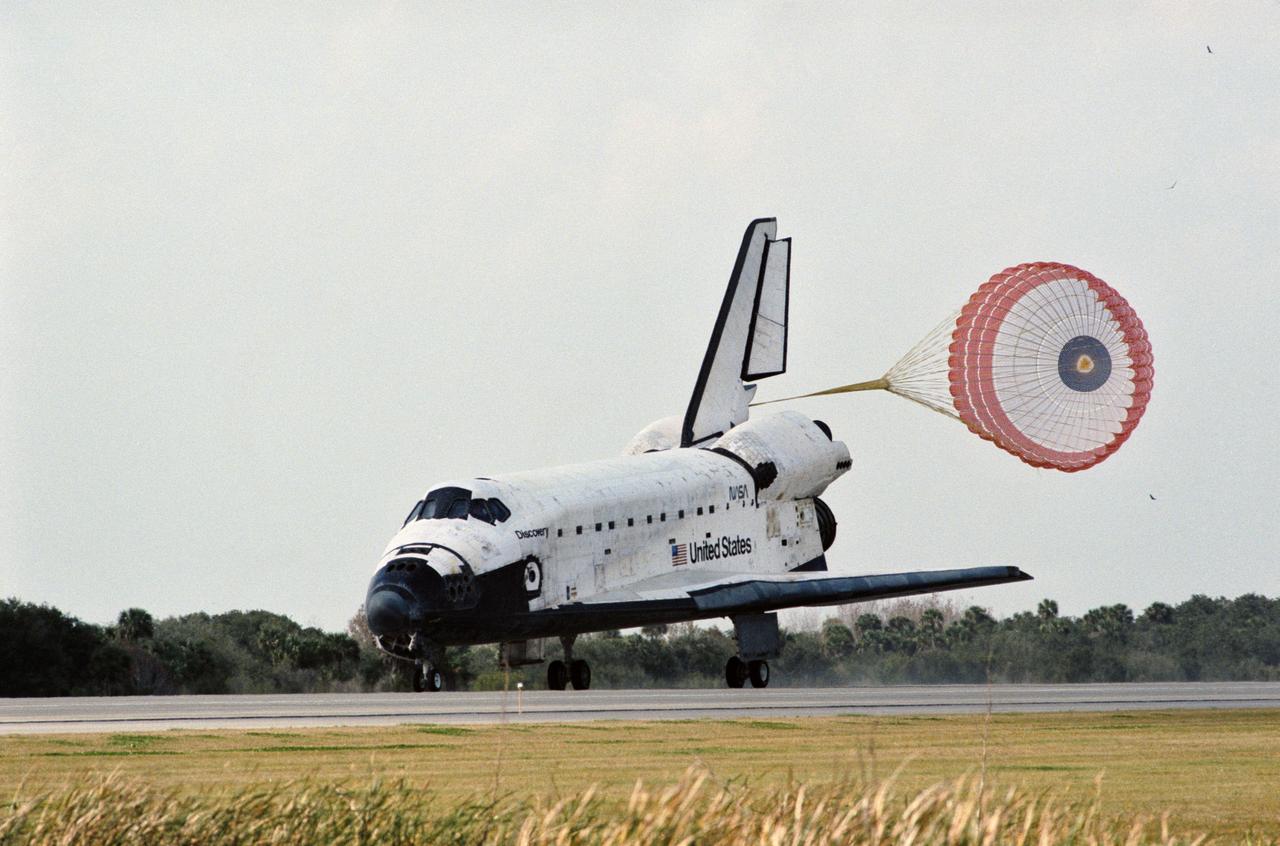
STS060-S-035 (11 Feb 1994) --- The drag chute for Space Shuttle Discovery is deployed on the Shuttle Landing Facility, marking an end to the eight-day STS-60 mission. Landing occurred at 2:19:22 p.m. (EST). Onboard were astronauts Charles F. Bolden Jr., Kenneth S. Reightler Jr., Franklin R. Chang-Diaz, N. Jan Davis and Ronald M. Sega along with Russian cosmonaut Sergei K. Krikalev.
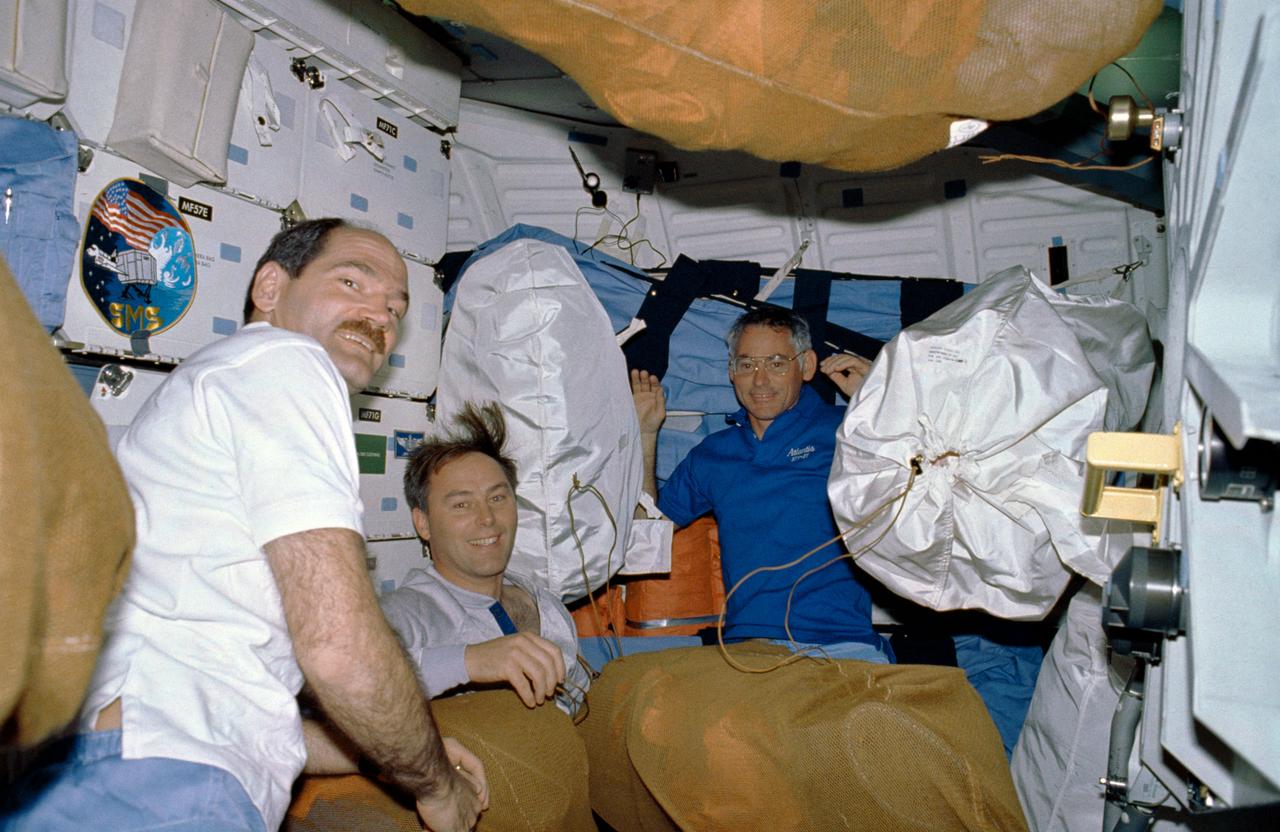
STS027-10-003 (2-6 Dec. 1988) --- From the left, astronauts Guy S. Gardner, STS-27 pilot, along with Jerry L. Ross and Richard M. (Mike) Mullane, both mission specialists, take a break from moving gear and equipment on the middeck of the Earth-orbiting space shuttle Atlantis. Photo credit: NASA