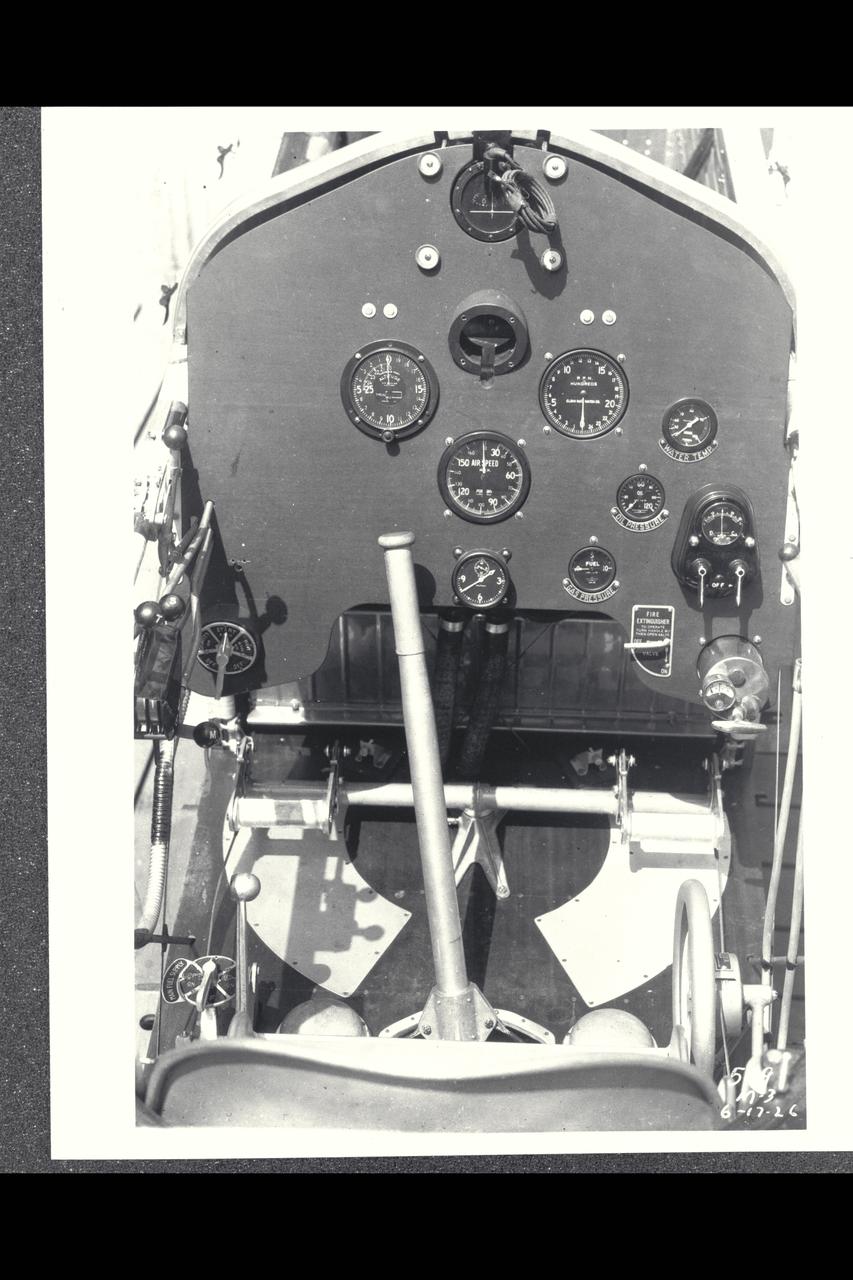
Douglas M-3 Instrument Panel
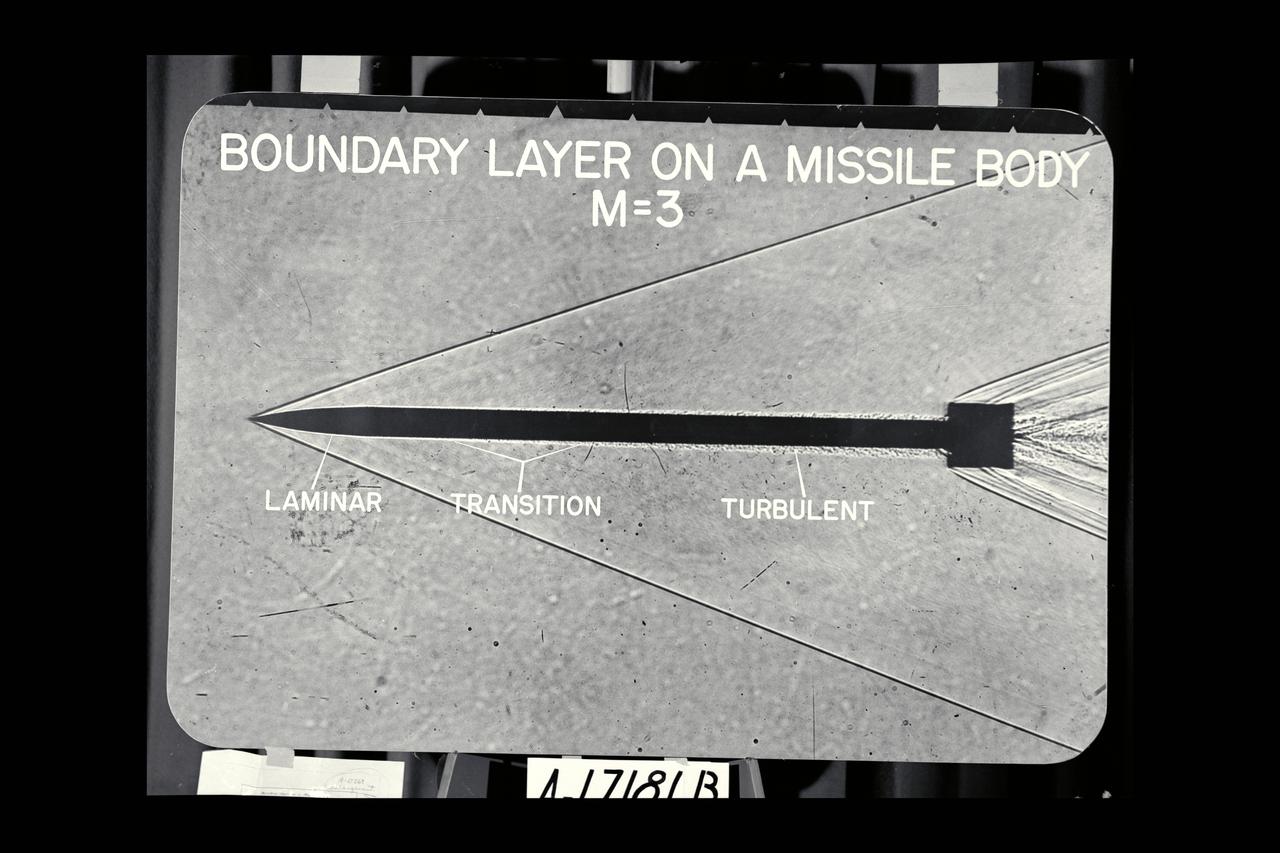
NACA Photographer Shadowgraph: Boundary Layer on Missile body @ M-3
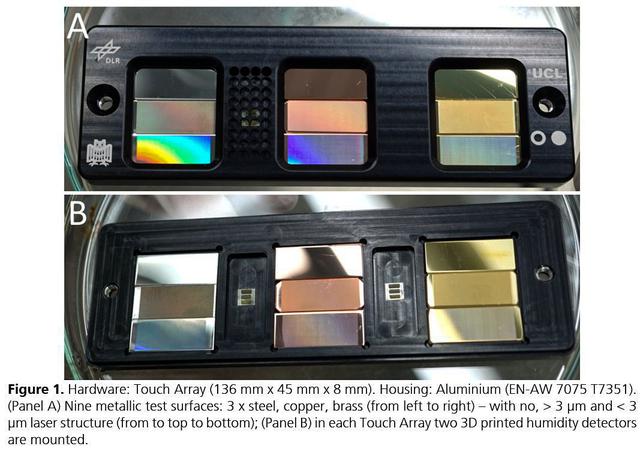
jsc2021e037879 (8/24/2021) --- A preflight view of the Touching Surfaces investigation hardware. The Touch Array (136 mm x 45 mm x 8 mm). Housing : Aluminum (EN-AW 7075 T7351). (Panel A) Nine metallic test surfaces: 3 x steel, copper, brass (from left to right) – with no greater than 3 ?m and less than 3 ?m laser structure (from top to bottom); (Panel B) in each Touch Array two 3 printed humidity detectors are mounted. Image Courtesy DLR
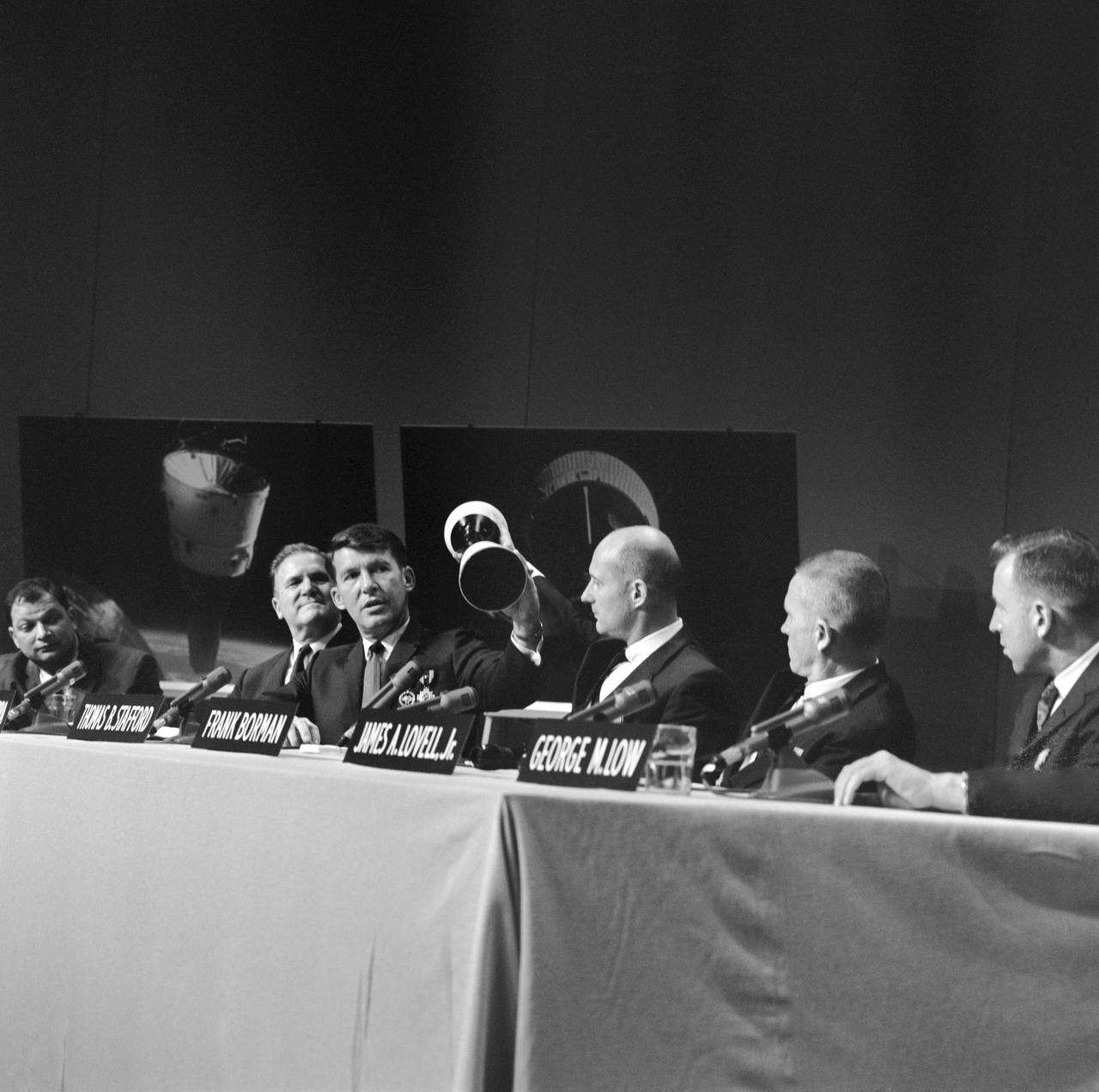
S66-15044 (3 Jan. 1966) --- View of the Gemini 6 and 7 press conference. From right to left are NASA Administrator James E. Webb; MSC Deputy Director George M. Low; and astronauts James A. Lovell Jr., Frank Borman, Thomas B. Stafford and Walter M. Schirra. Photo credit: NASA
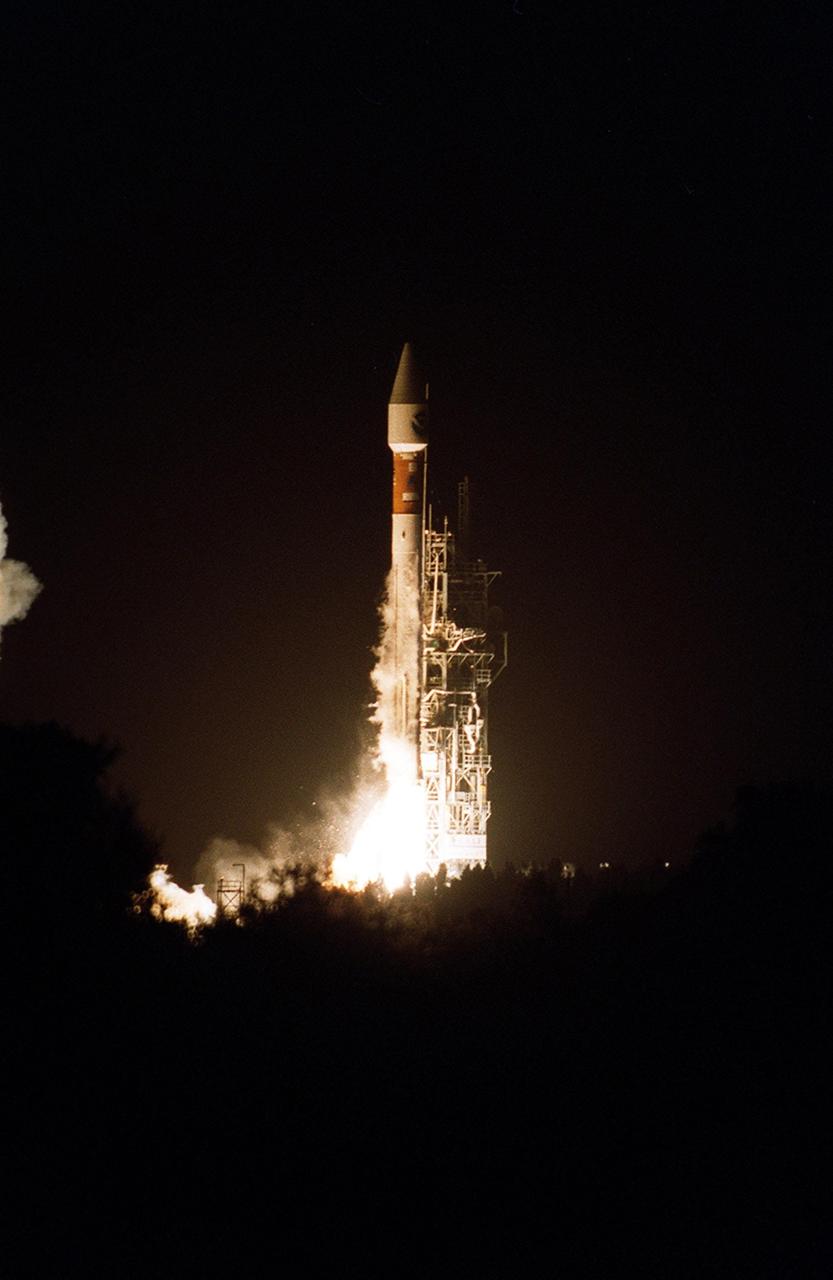
KENNEDY SPACE CENTER, Fla. -- The Atlas II rocket roars into the sky with the GOES-M satellite on top. Liftoff occurred at 3:23:01 a.m. EDT from Launch Complex 36-A, Cape Canaveral Air Force Station. GOES-M is the last in the current series of advanced geostationary weather satellites in service. GOES-M has a new instrument not on earlier spacecraft, a Solar X-ray Imager, which can be used in forecasting space weather and the effects of solar storms
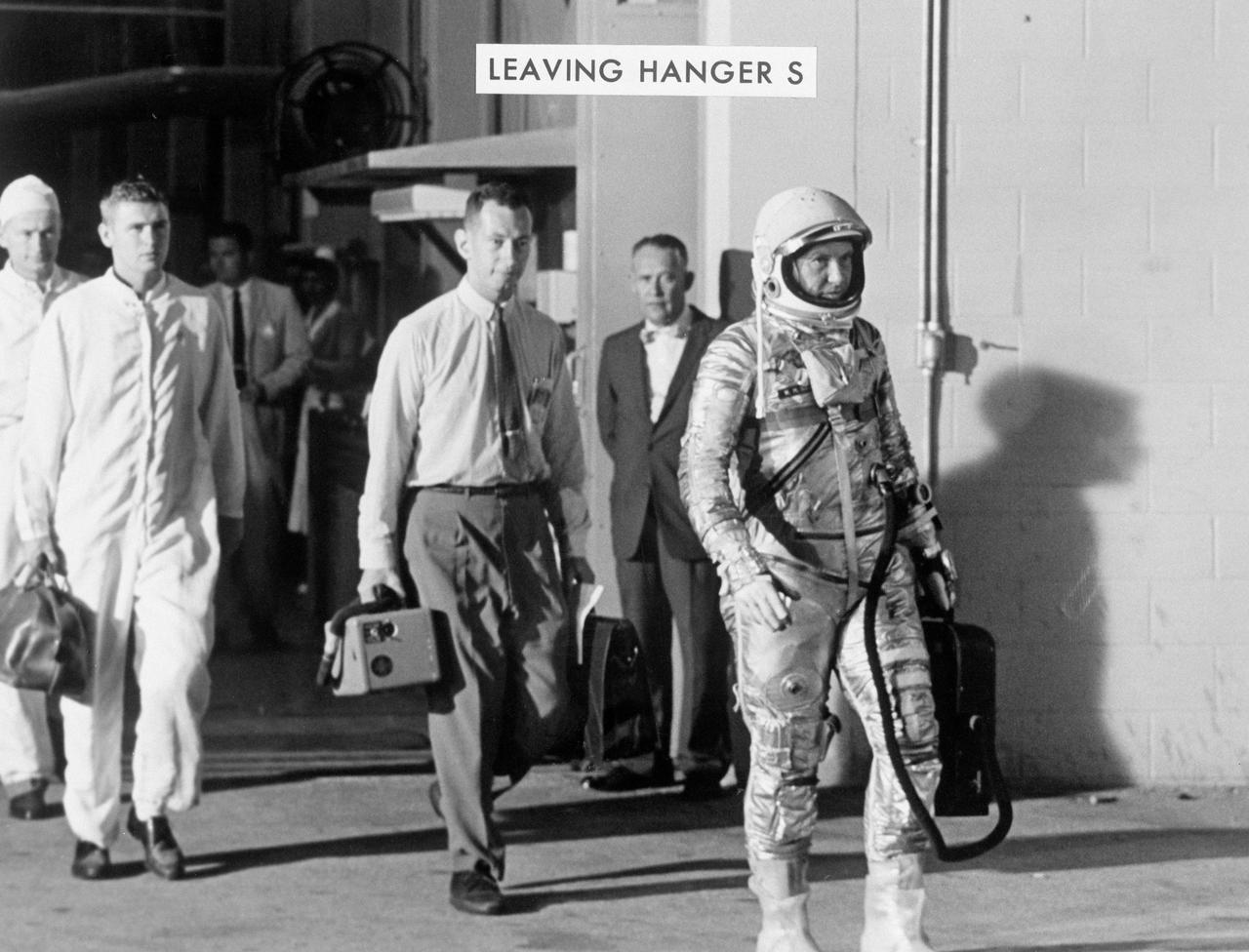
S63-00695 (3 Oct. 1962) --- Astronaut Walter M. Schirra Jr., pilot of the Mercury-Atlas 8 (MA-8) Earth-orbital spaceflight, leaves Hangar "S" at Cape Canaveral on his way to his scheduled Oct. 3, 1962 flight. Photo credit: NASA
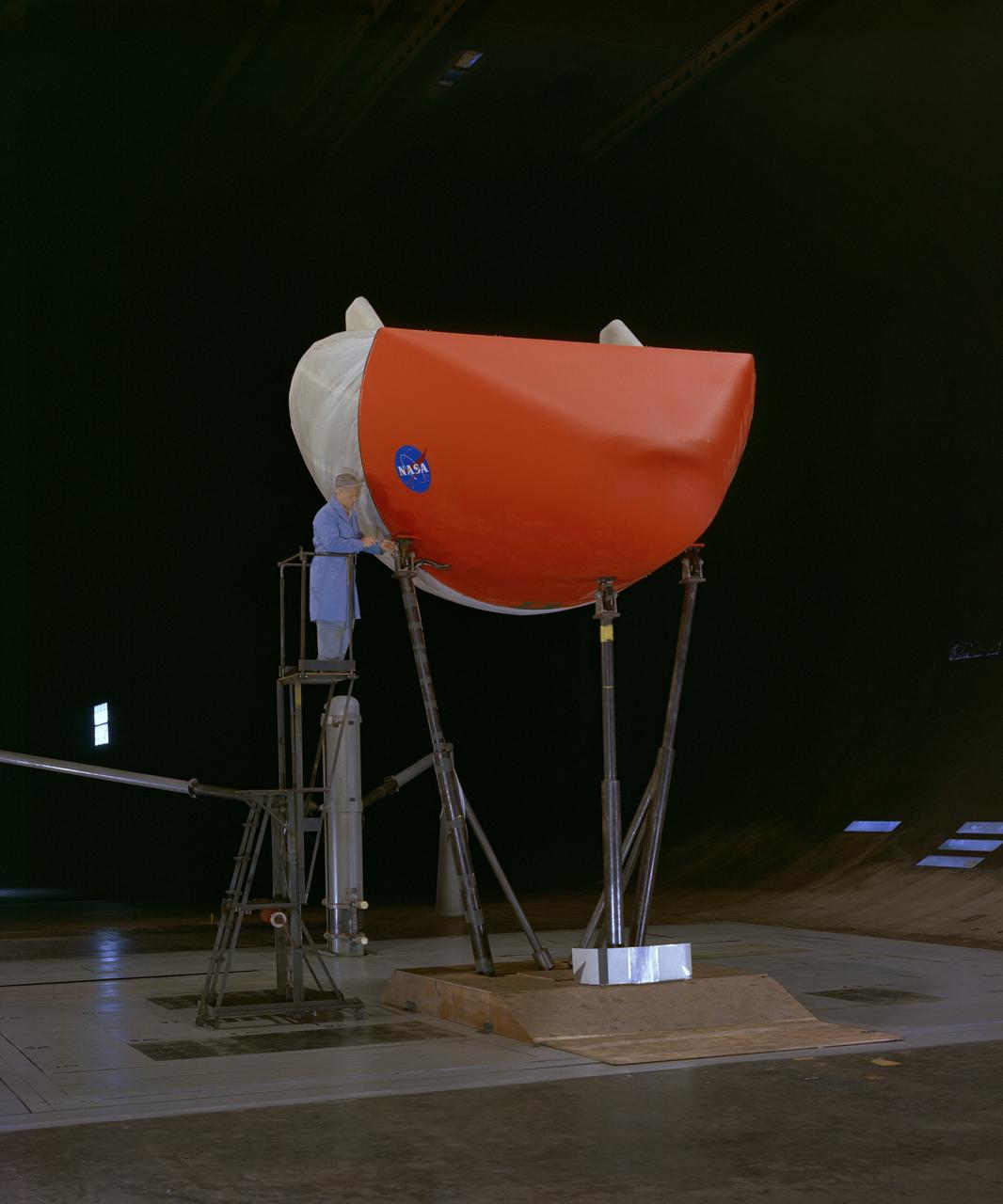
3/4 front view of M-1-L inflatable recovery able lifting body model in Ames 40x80 foot wind tunnel. Mechanic, Ray Schmorance included in picture.
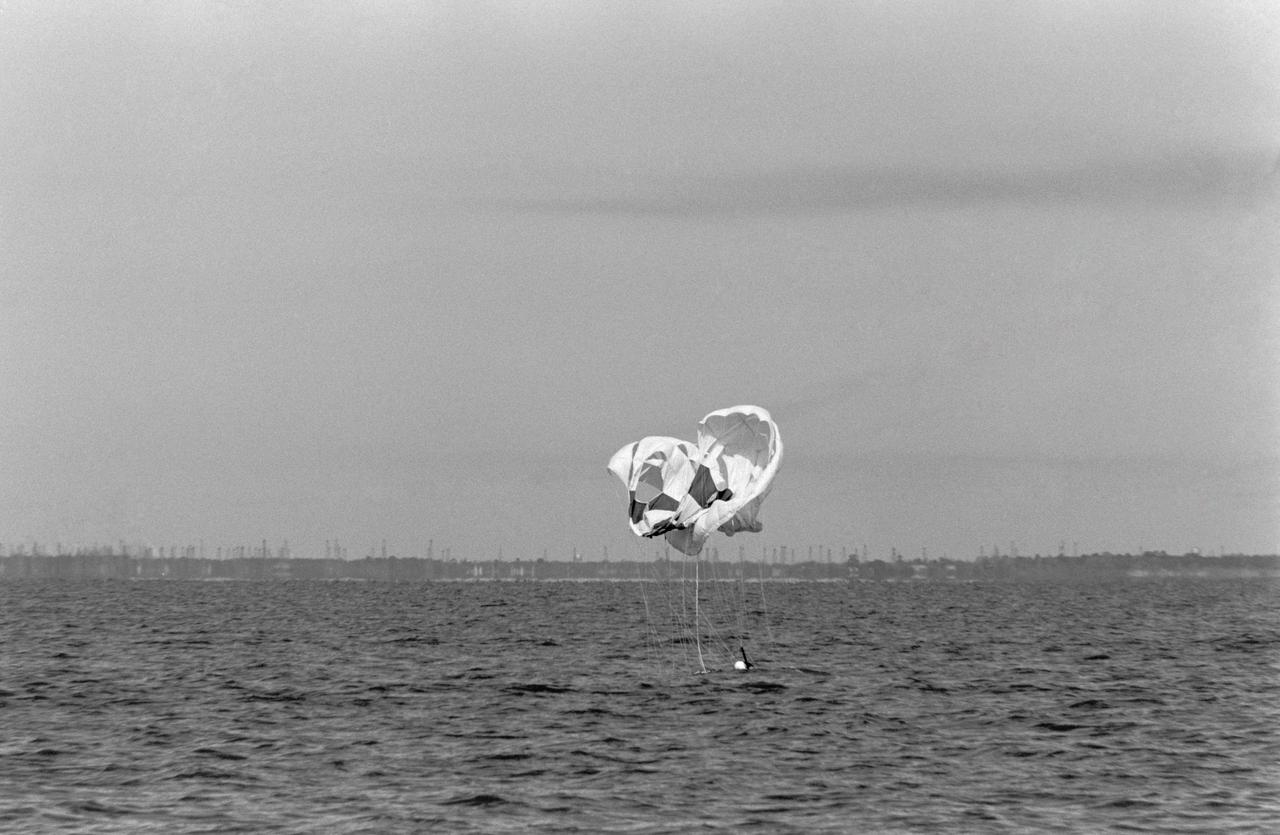
S65-10172 (2 Feb. 1965) --- Astronaut Walter M. Schirra Jr., the Gemini-Titan 3 backup crew command pilot, is shown during water egress para-drop training activity in nearby Galveston Bay.
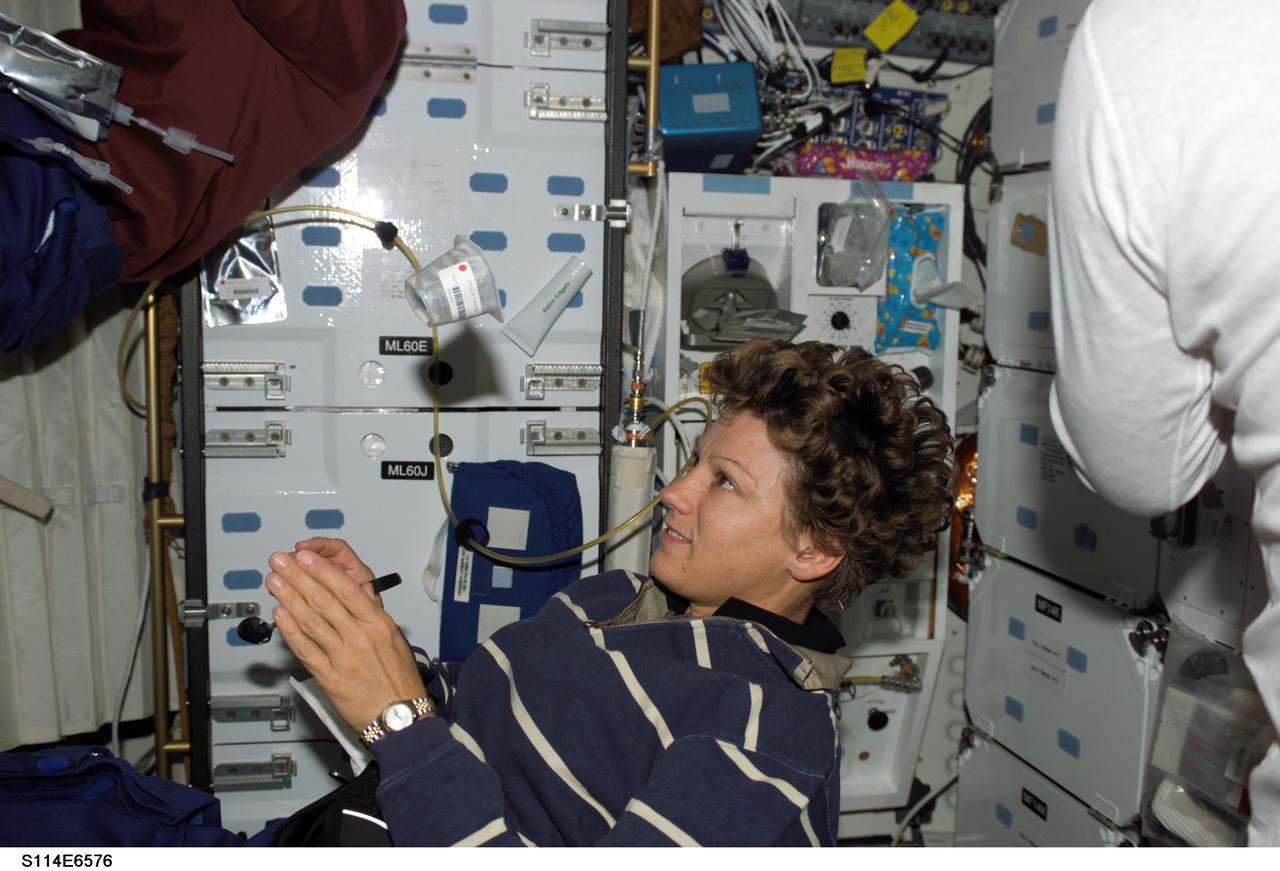
S114-E-6576 (3 August 2005) --- Astronaut Eileen M. Collins, STS-114 commander, watches a container of food floating freely on the middeck of the Space Shuttle Discovery while docked to the International Space Station.
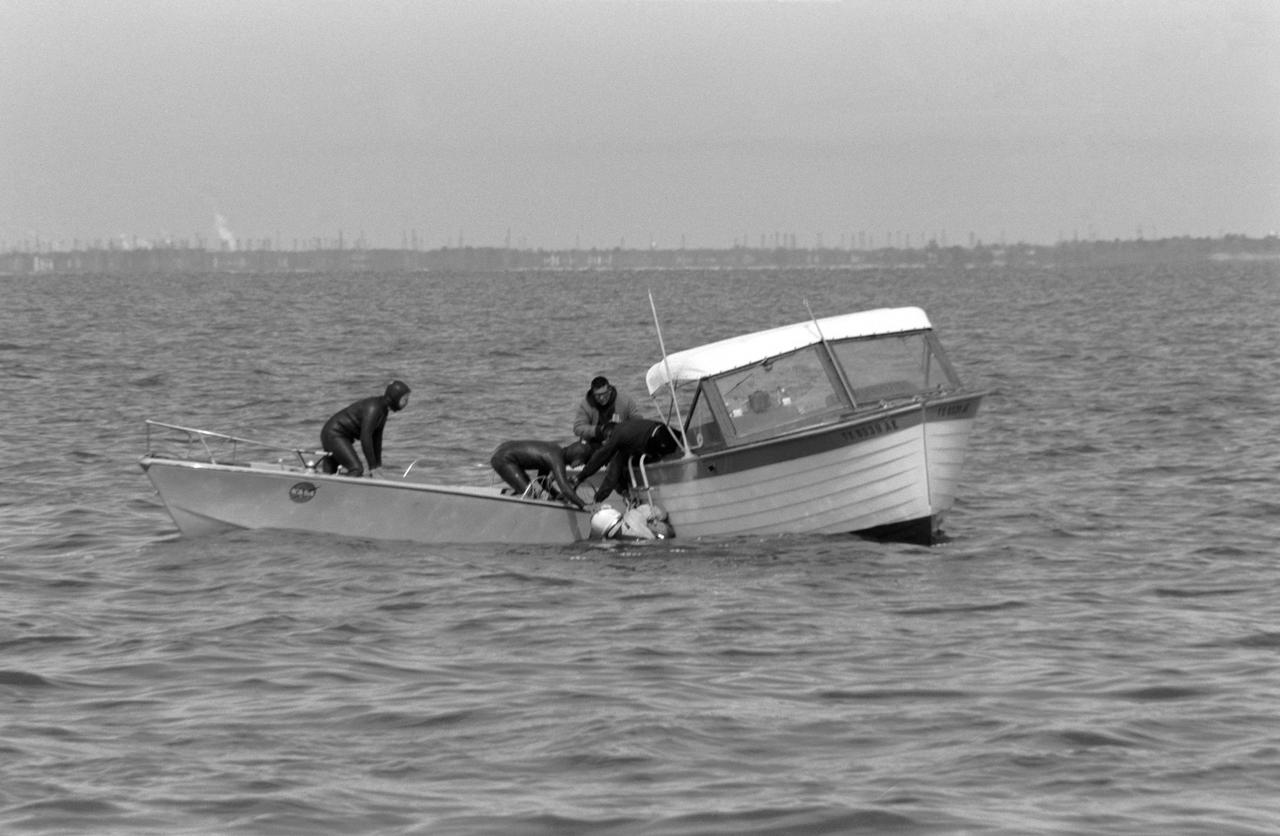
S65-10173 (2 Feb. 1965) --- Astronaut Walter M. Schirra Jr., the Gemini-Titan 3 backup crew command pilot, is shown during water egress para-drop training activity in nearby Galveston Bay.
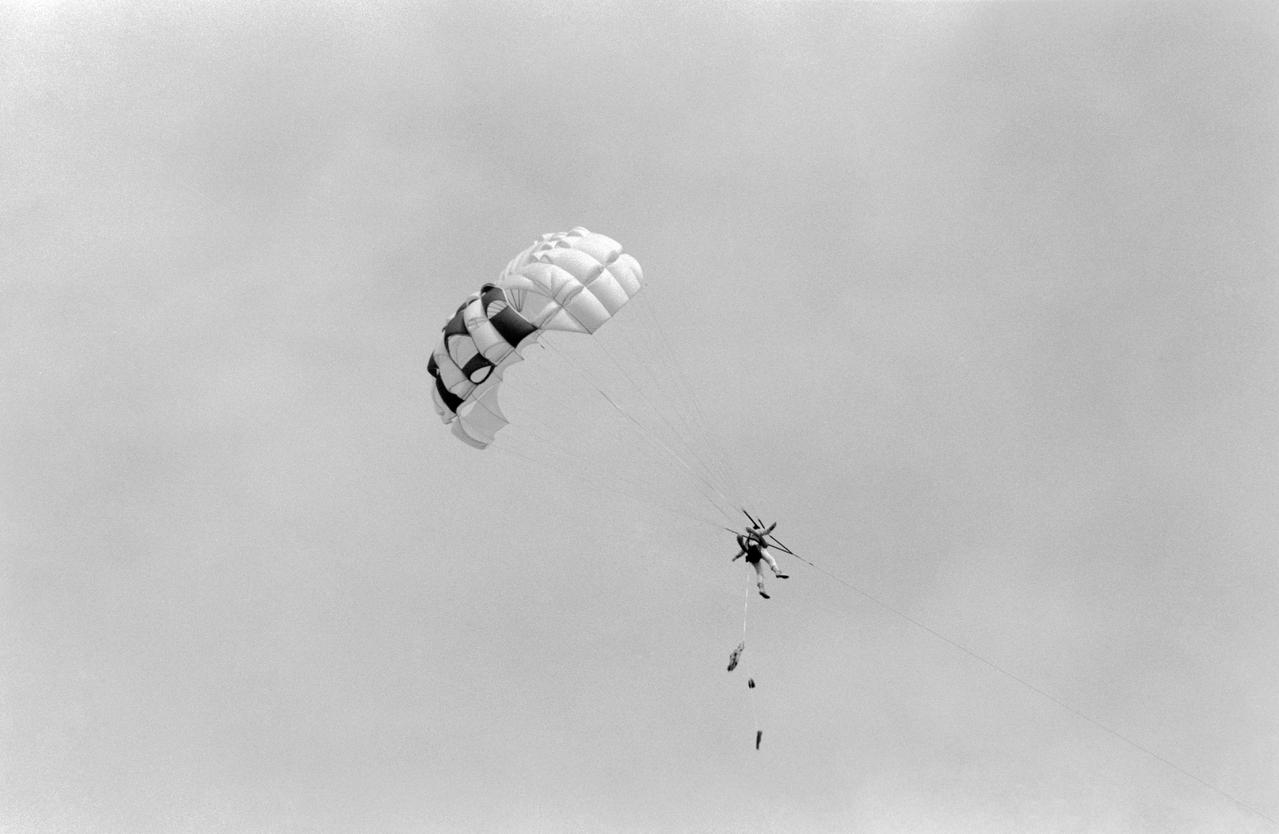
S65-10171 (2 Feb. 1965) --- Astronaut Walter M. Schirra Jr., the Gemini-Titan 3 backup crew command pilot, is shown during water egress para-drop training activity in nearby Galveston Bay.
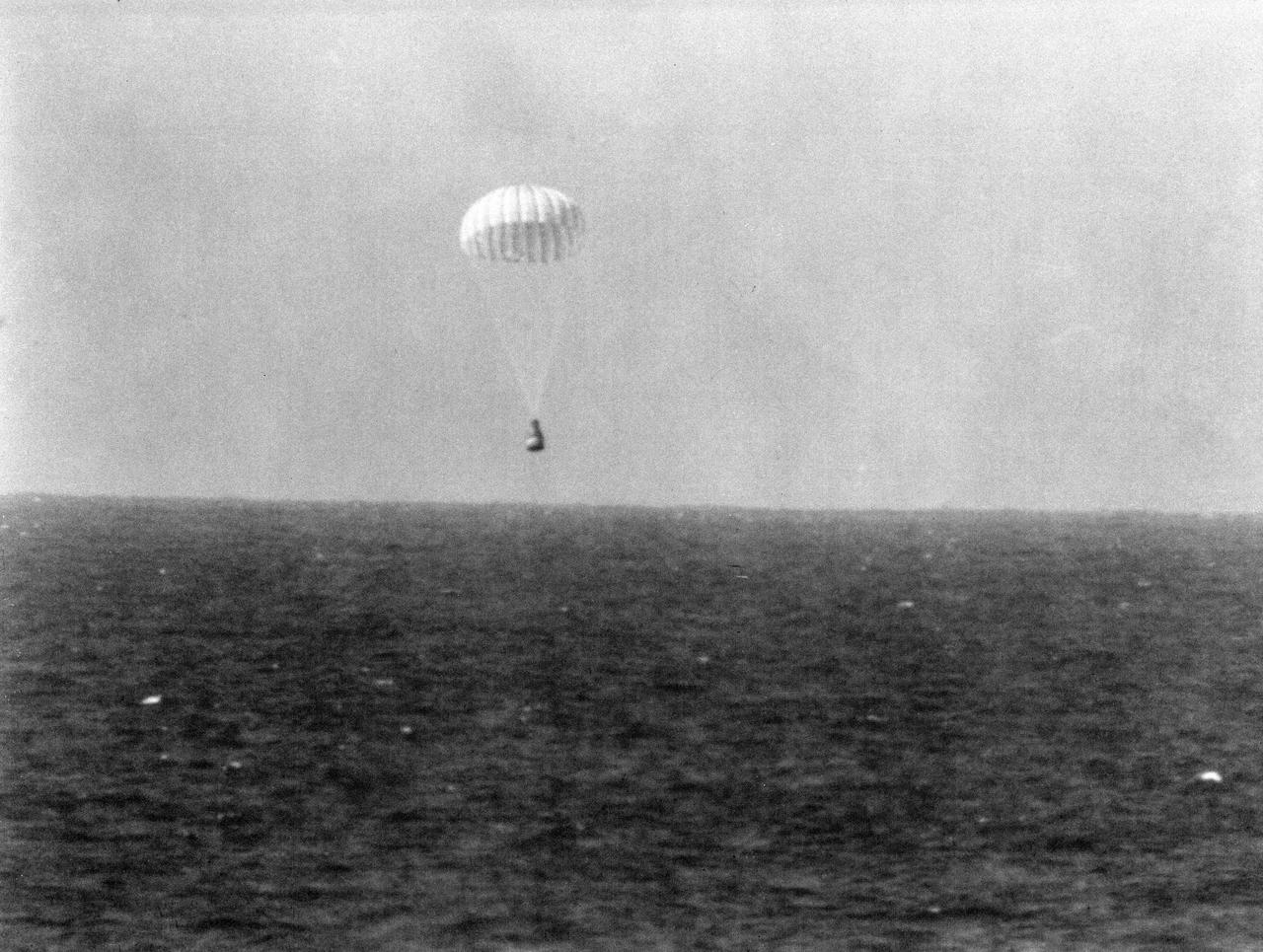
S62-04534 (3 Oct. 1962) --- Landing with parachute extended of astronaut Walter M. Schirra's Mercury-Atlas 8 (MA-8) capsule, called the Sigma 7, after a world orbital flight. Photo credit: NASA
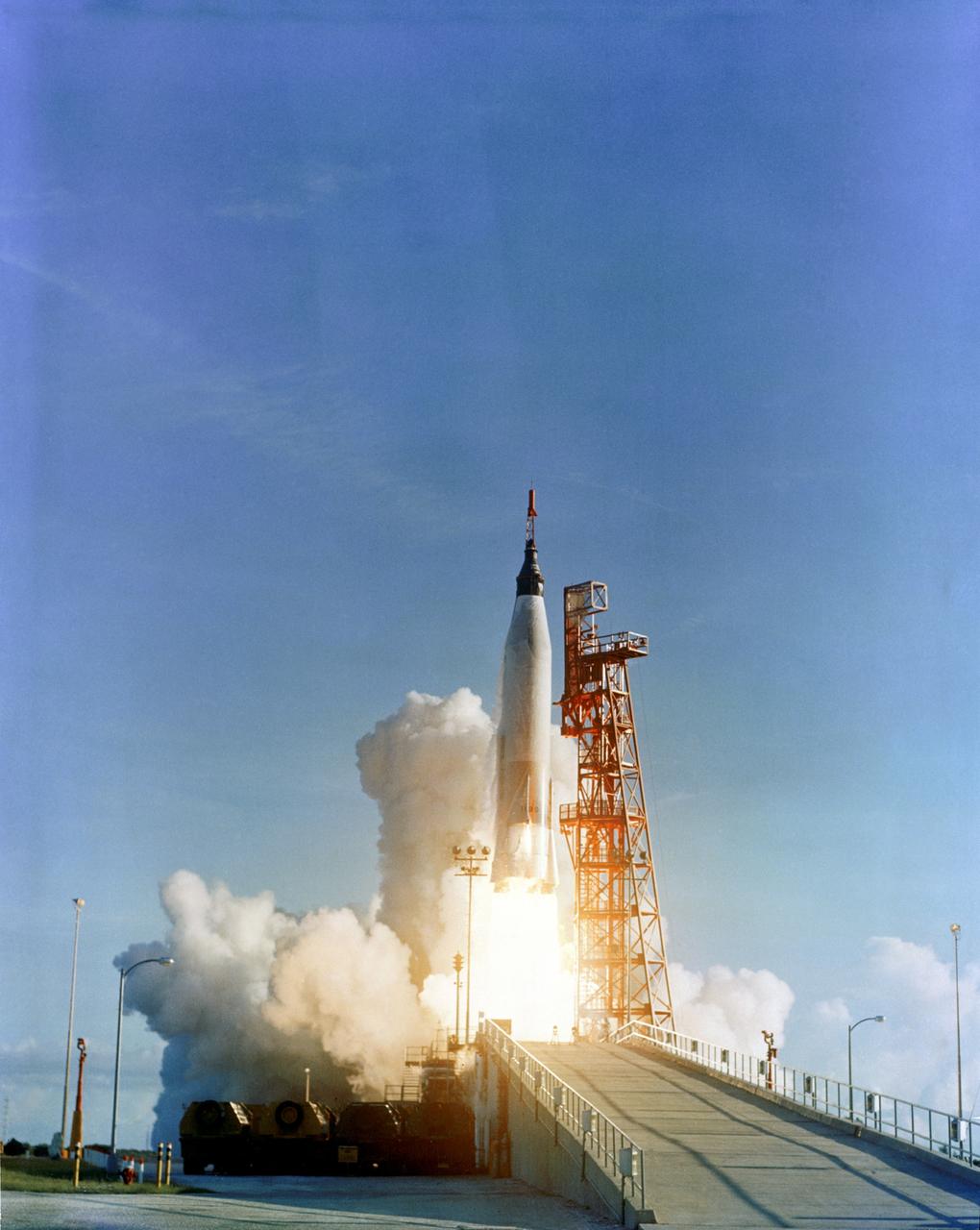
S62-07872 (3 Oct. 1962) --- Launch of the Mercury-Atlas 8 (MA-8) "Sigma 7" mission, carrying astronaut Walter M. Schirra Jr., pilot of the Earth-orbital spaceflight. Photo credit: NASA
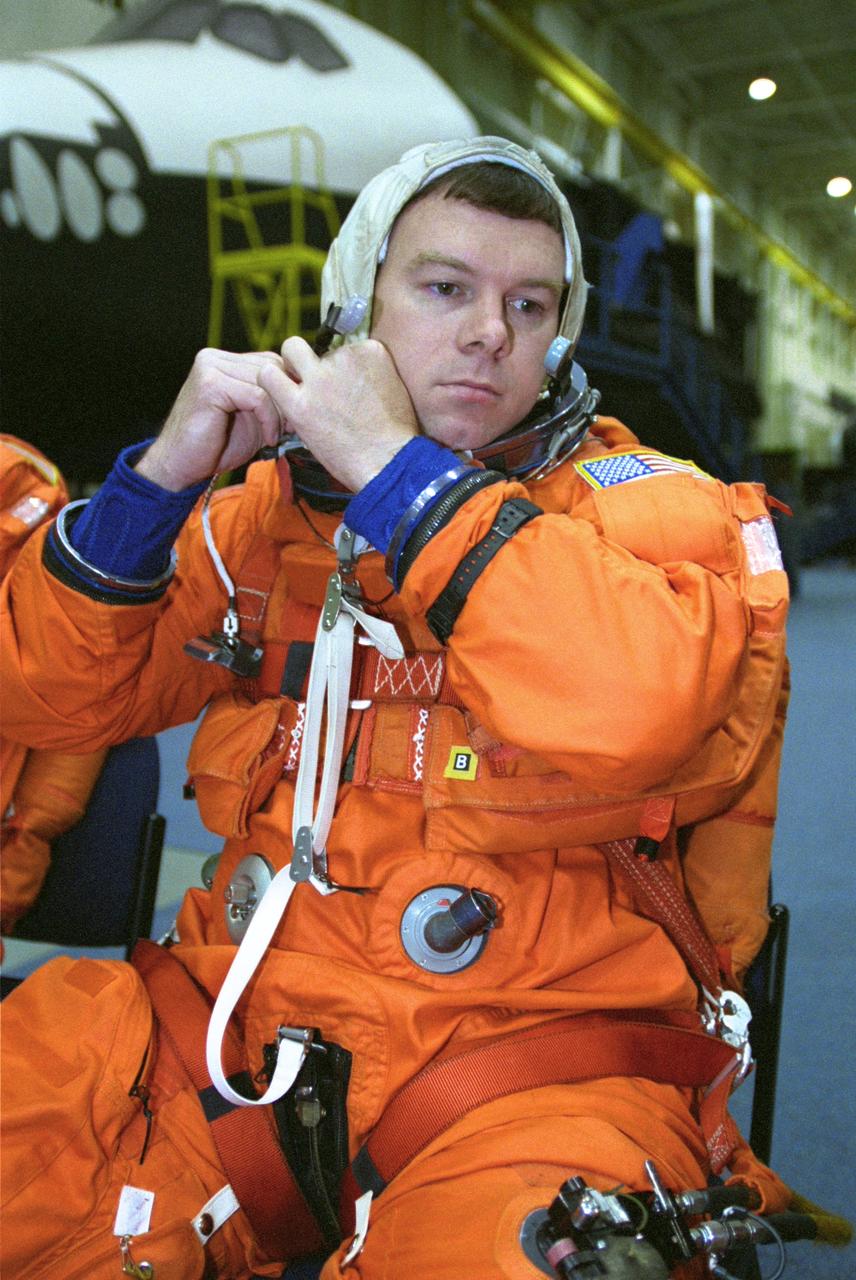
JSC2000-05552 (3 August 2000) --- Astronaut James M. Kelly, STS-102 pilot, snaps on his communications head gear prior to a session of egress training in the Johnson Space Center's Systems Integration Facility.
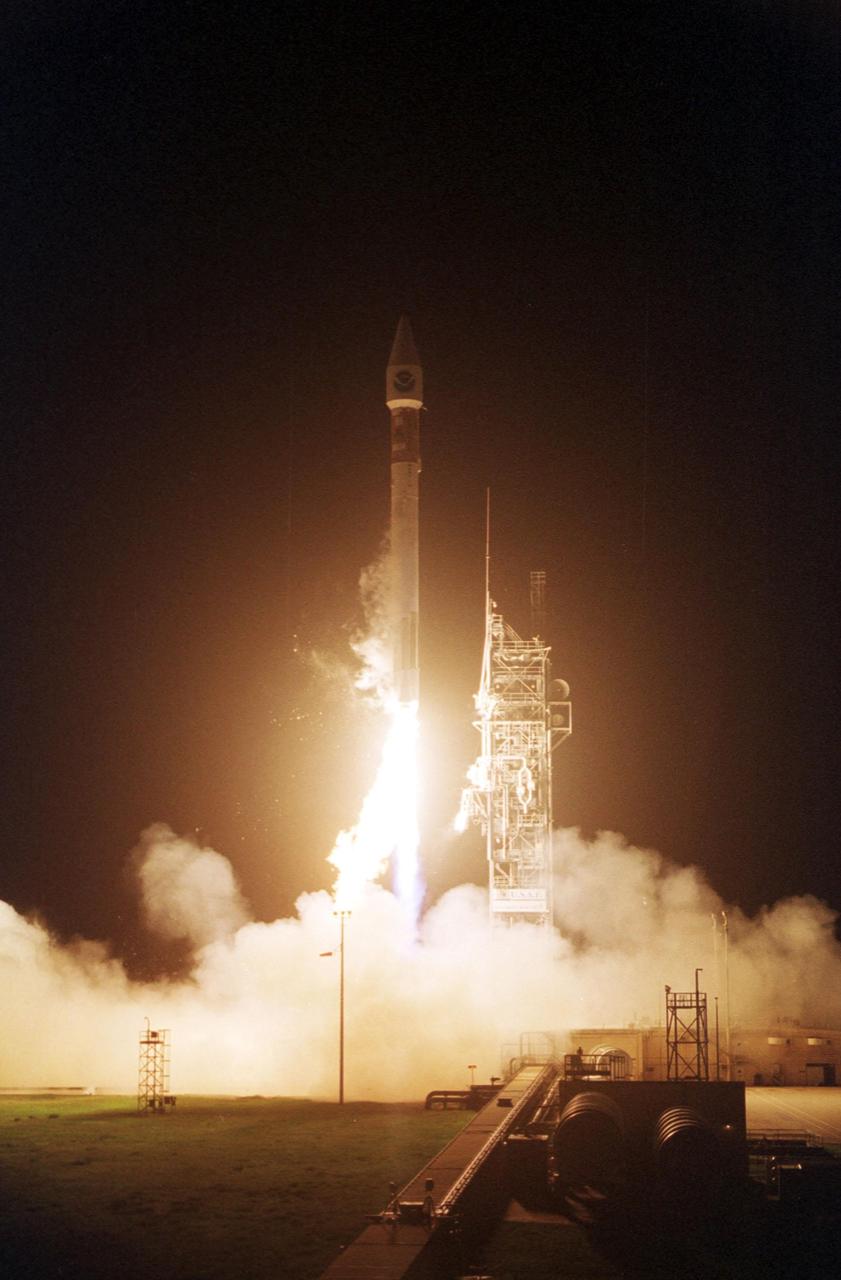
KENNEDY SPACE CENTER, Fla. -- With a burst of light followed by rolling steam clouds, the Atlas II rocket carrying the GOES-M satellite roars into the black sky. Liftoff occurred at 3:23:01EDT. EDT from Launch Complex 36-A, Cape Canaveral Air Force Station. GOES-M is the last in the current series of advanced geostationary weather satellites in service. GOES-M has a new instrument not on earlier spacecraft, a Solar X-ray Imager, which can be used in forecasting space weather and the effects of solar storms
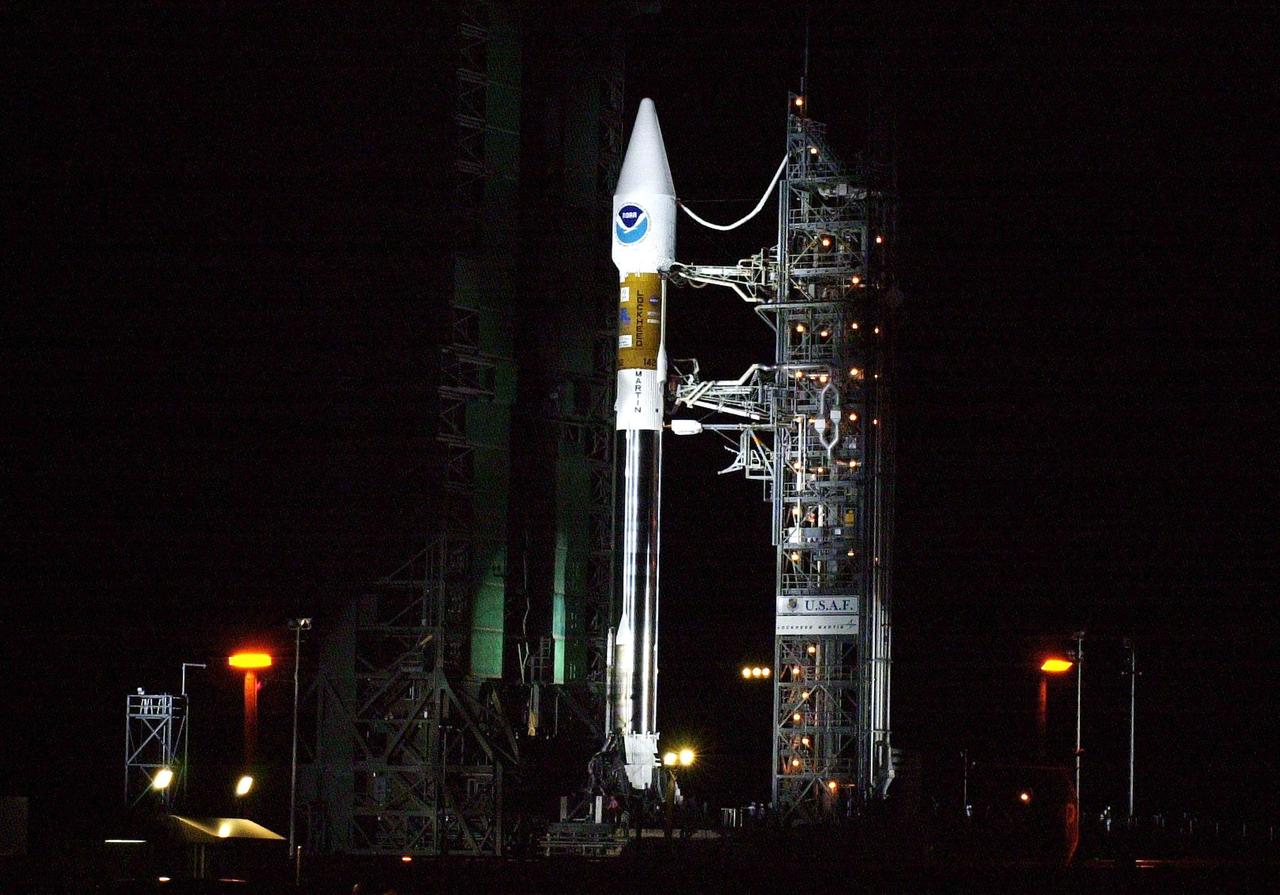
KENNEDY SPACE CENTER, Fla. -- The GOES-M satellite is poised for flight at Launch Complex 36-A, Cape Canaveral Air Force Station, after rollback of the Mobile Service Tower. GOES-M is the last in the current series of advanced geostationary weather satellites in service. GOES-M has a new instrument not on earlier spacecraft, a Solar X-ray Imager, which can be used in forecasting space weather and the effects of solar storms. The satellite is scheduled to launch atop an Atlas rocket on July 23 during a window that extends from 3:02 to 4:26 a.m. EDT
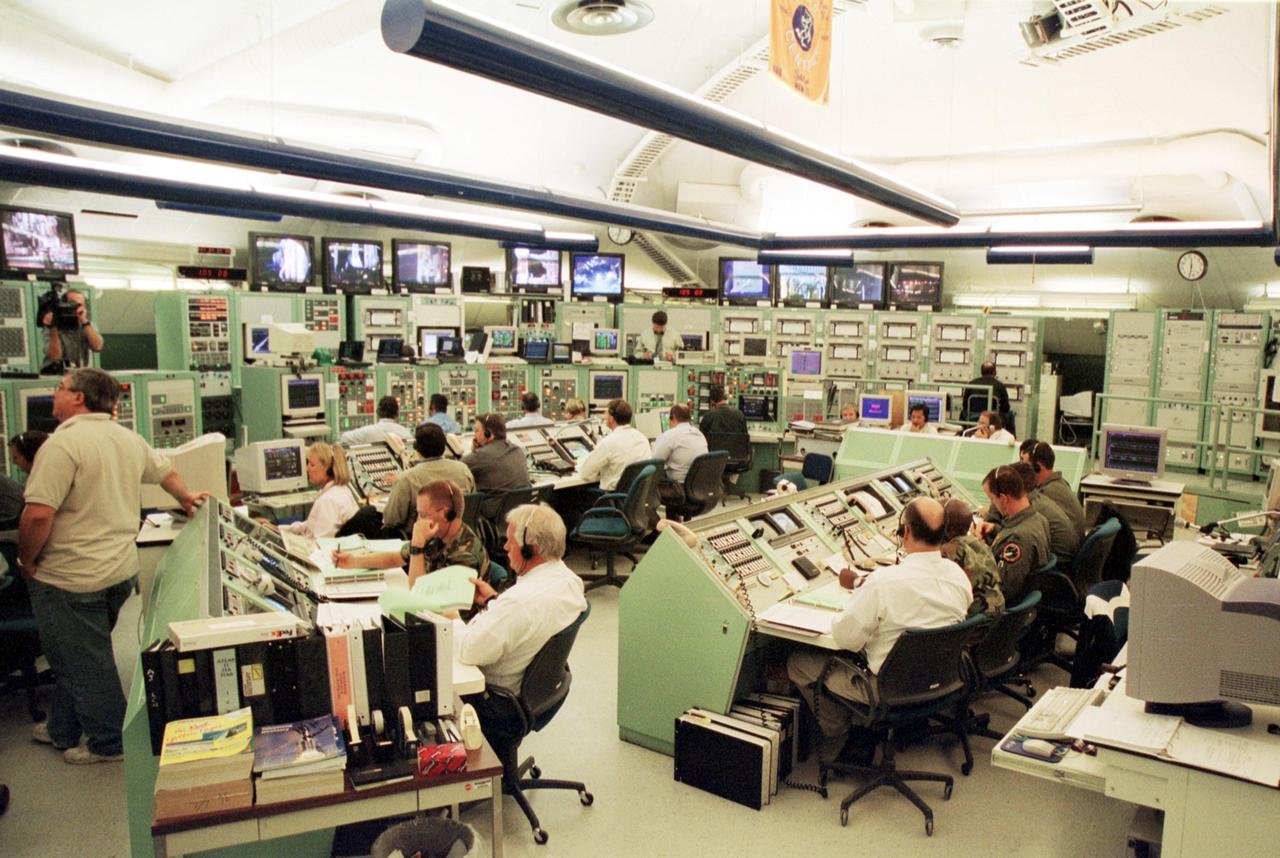
KENNEDY SPACE CENTER, Fla. -- The launch team inside the blockhouse on Launch Complex 36-A, Cape Canaveral Air Force Station makes final checks before launch of the GOES-M satellite. . GOES-M is the last in the current series of advanced geostationary weather satellites in service. GOES-M has a new instrument not on earlier spacecraft, a Solar X-ray Imager, which can be used in forecasting space weather and the effects of solar storms. The satellite is scheduled to launch atop an Atlas rocket on July 23 during a window that extends from 3:02 to 4:26 a.m. EDT
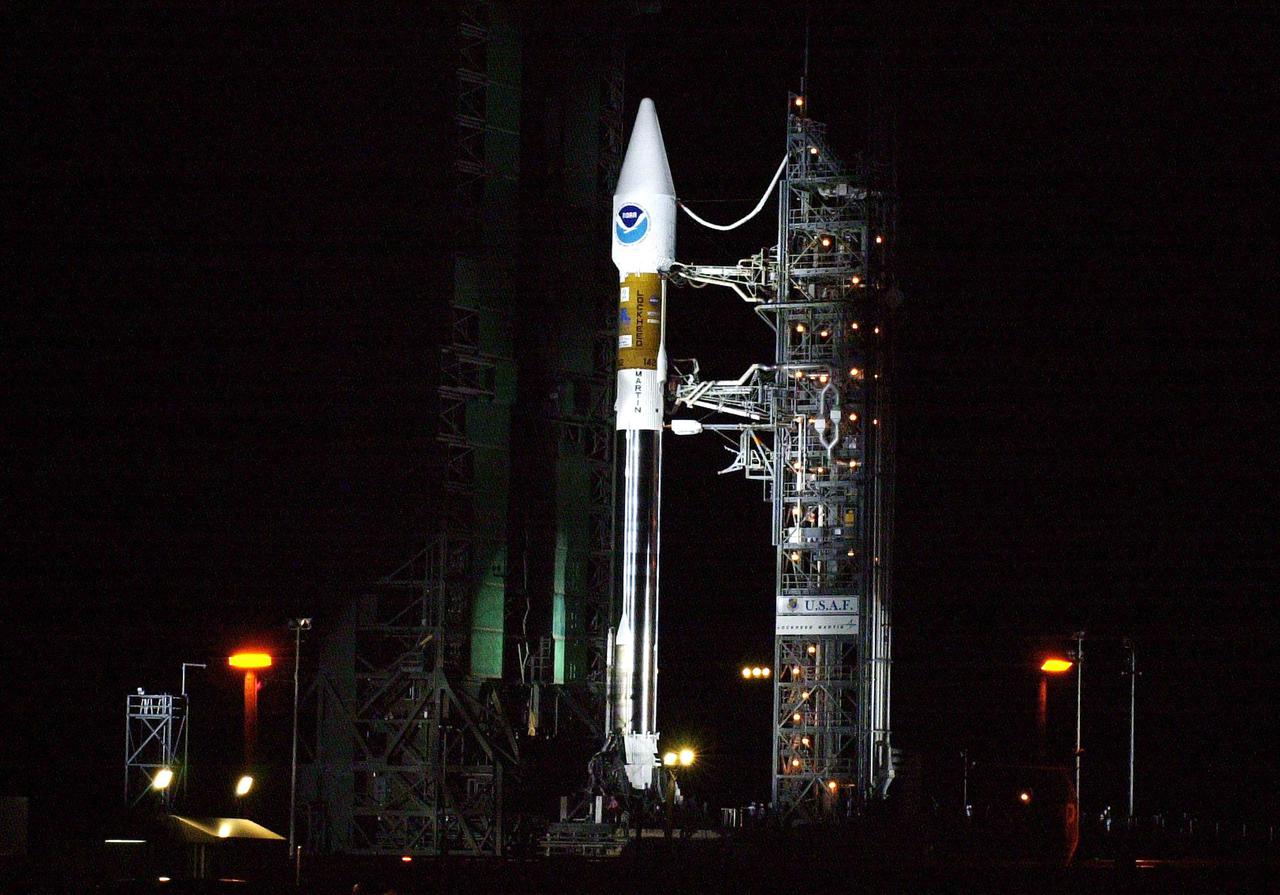
KENNEDY SPACE CENTER, Fla. -- The GOES-M satellite is poised for flight at Launch Complex 36-A, Cape Canaveral Air Force Station, after rollback of the Mobile Service Tower. GOES-M is the last in the current series of advanced geostationary weather satellites in service. GOES-M has a new instrument not on earlier spacecraft, a Solar X-ray Imager, which can be used in forecasting space weather and the effects of solar storms. The satellite is scheduled to launch atop an Atlas rocket on July 23 during a window that extends from 3:02 to 4:26 a.m. EDT
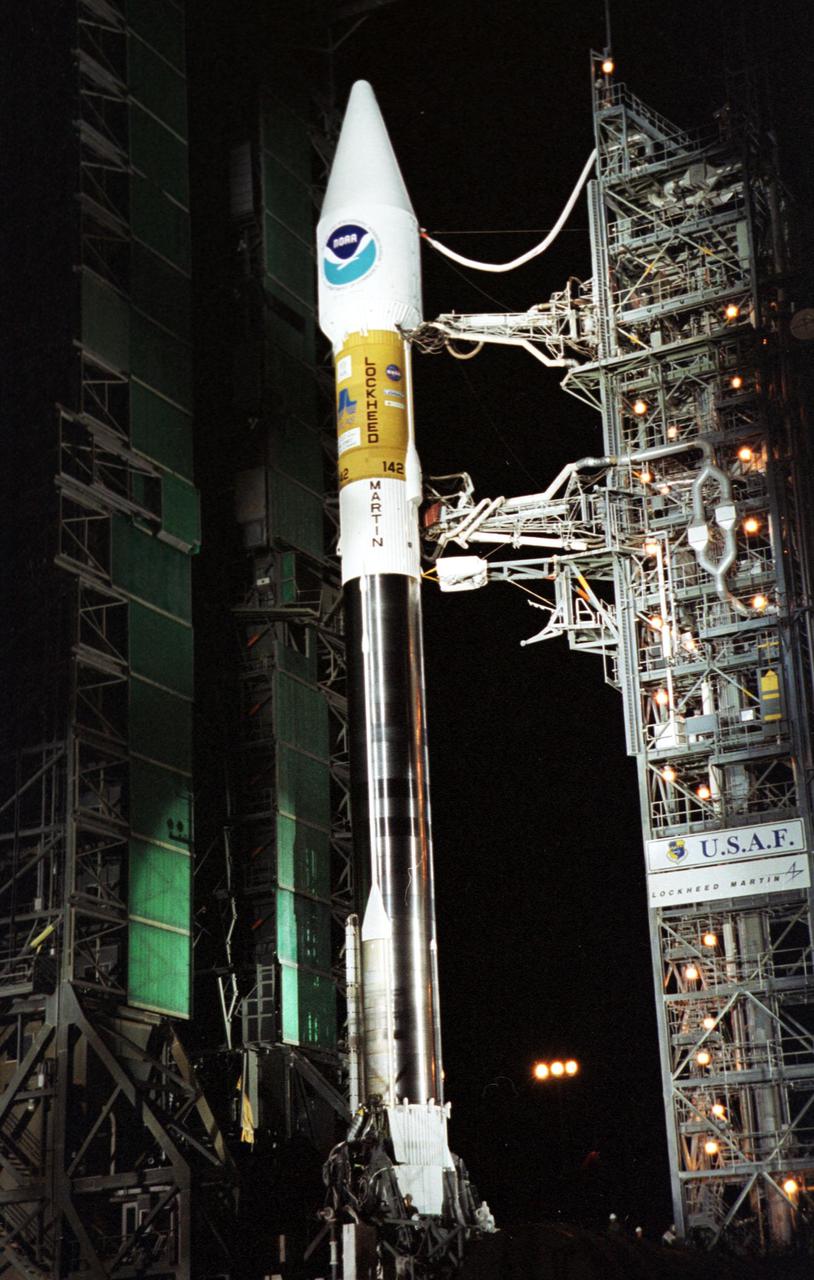
KENNEDY SPACE CENTER, Fla. -- The GOES-M satellite is poised for flight atop an Atlas II rocket at Launch Complex 36-A, Cape Canaveral Air Force Station, after rollback of the Mobile Service Tower (left). GOES-M is the last in the current series of advanced geostationary weather satellites in service. GOES-M has a new instrument not on earlier spacecraft, a Solar X-ray Imager, which can be used in forecasting space weather and the effects of solar storms. The satellite is scheduled to launch atop an Atlas rocket on July 23 during a window that extends from 3:02 to 4:26 a.m. EDT
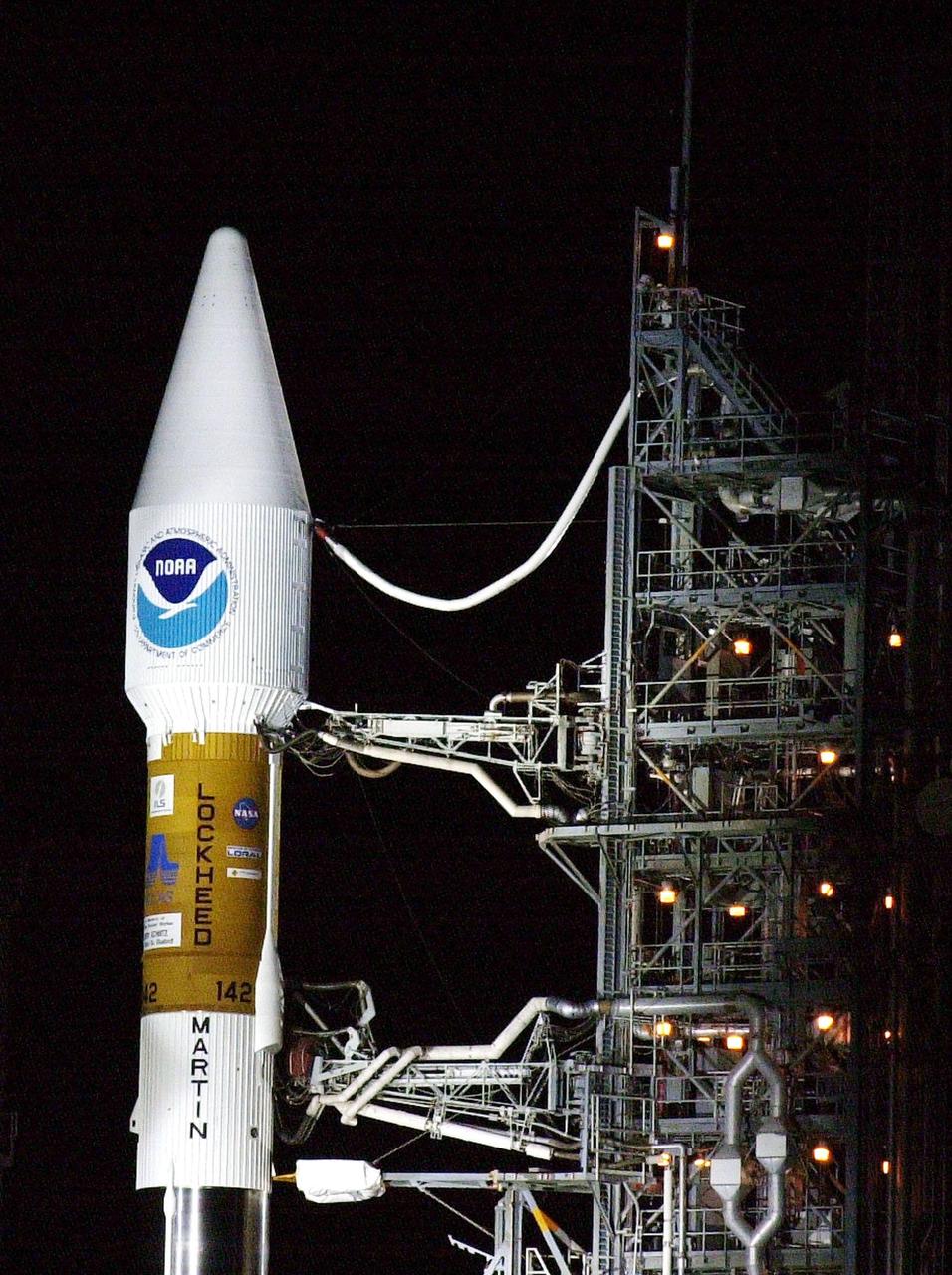
KENNEDY SPACE CENTER, Fla. -- The GOES-M satellite is poised for flight at Launch Complex 36-A, Cape Canaveral Air Force Station, after rollback of the Mobile Service Tower. GOES-M is the last in the current series of advanced geostationary weather satellites in service. GOES-M has a new instrument not on earlier spacecraft, a Solar X-ray Imager, which can be used in forecasting space weather and the effects of solar storms. The satellite is scheduled to launch atop an Atlas rocket on July 23 during a window that extends from 3:02 to 4:26 a.m. EDT
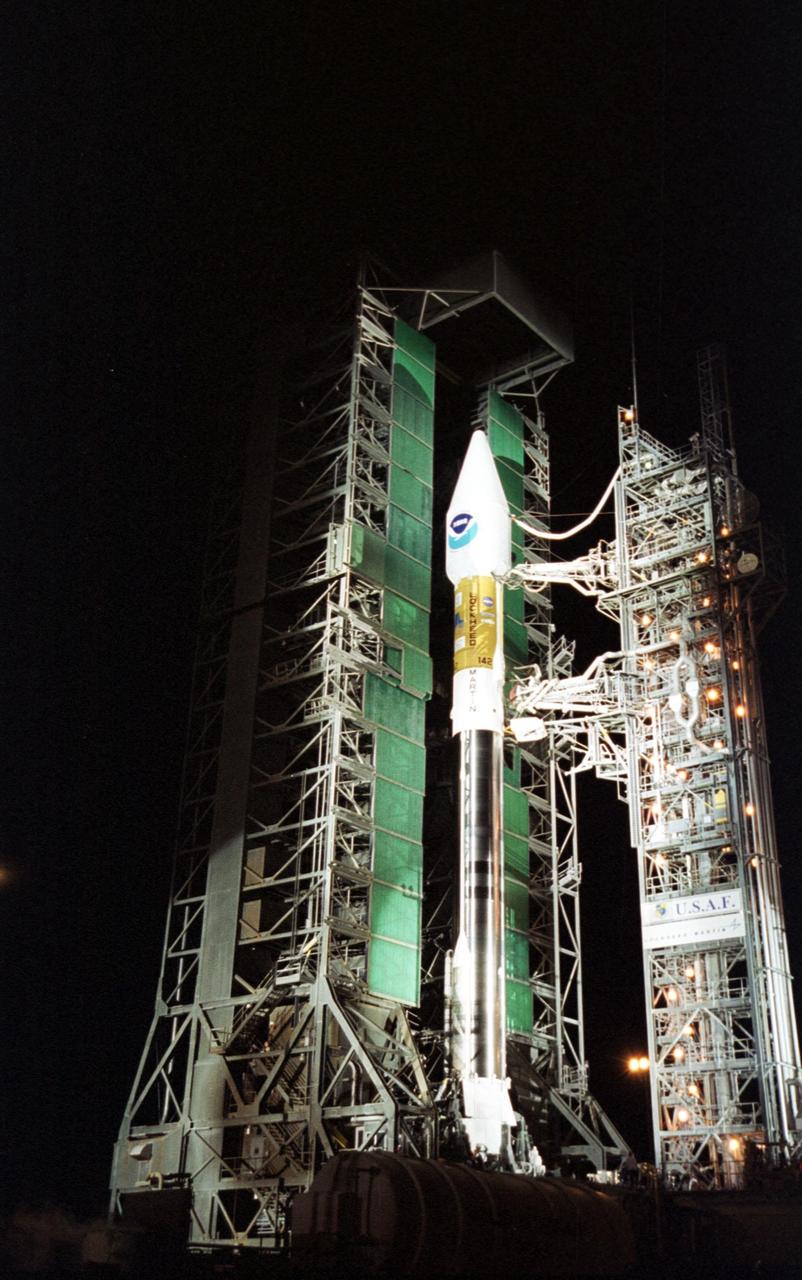
KENNEDY SPACE CENTER, Fla. -- The Mobile Service Tower (left) begins rolling back from the Atlas II rocket with the GOES-M satellite on Launch Complex 36-A, Cape Canaveral Air Force Station. GOES-M is the last in the current series of advanced geostationary weather satellites in service. GOES-M has a new instrument not on earlier spacecraft, a Solar X-ray Imager, which can be used in forecasting space weather and the effects of solar storms. The satellite is scheduled to launch atop an Atlas rocket on July 23 during a window that extends from 3:02 to 4:26 a.m. EDT. EDT
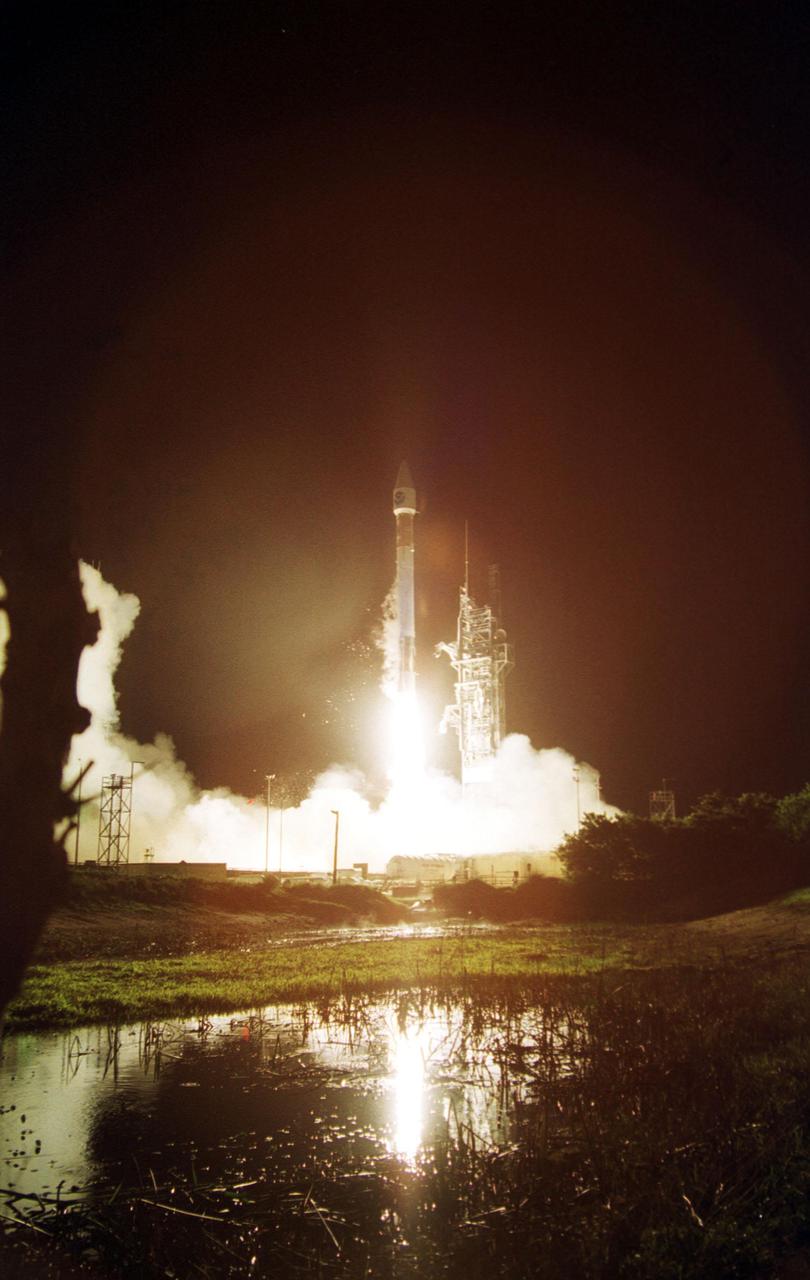
KENNEDY SPACE CENTER, Fla. -- Launch of the Atlas II rocket bearing the GOES-M satellite gives a burst of light to the night sky, even reflected in the nearby water. Liftoff occurred at 3:23:01 EDT from Launch Complex 36-A, Cape Canaveral Air Force Station. GOES-M is the last in the current series of advanced geostationary weather satellites in service. GOES-M has a new instrument not on earlier spacecraft, a Solar X-ray Imager, which can be used in forecasting space weather and the effects of solar storms
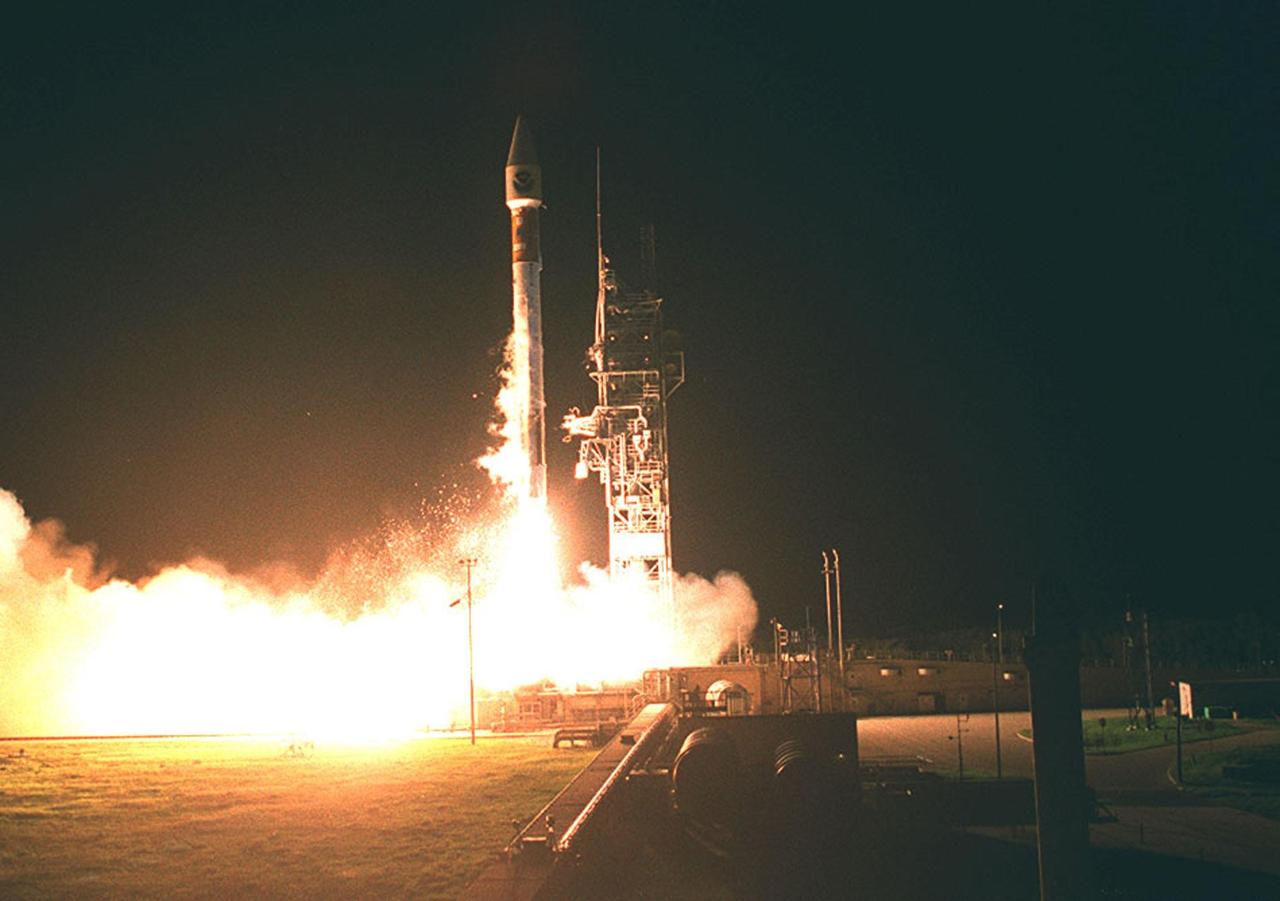
KENNEDY SPACE CENTER, Fla. -- Brightly lit clouds of steam and smoke roll across Launch Complex 36-A, Cape Canaveral Air Force Station, as the Atlas II rocket bearing the GOES-M satellite roars into the night sky. Liftoff occurred at 3:23:01 EDT. GOES-M is the last in the current series of advanced geostationary weather satellites in service. GOES-M has a new instrument not on earlier spacecraft, a Solar X-ray Imager, which can be used in forecasting space weather and the effects of solar storms
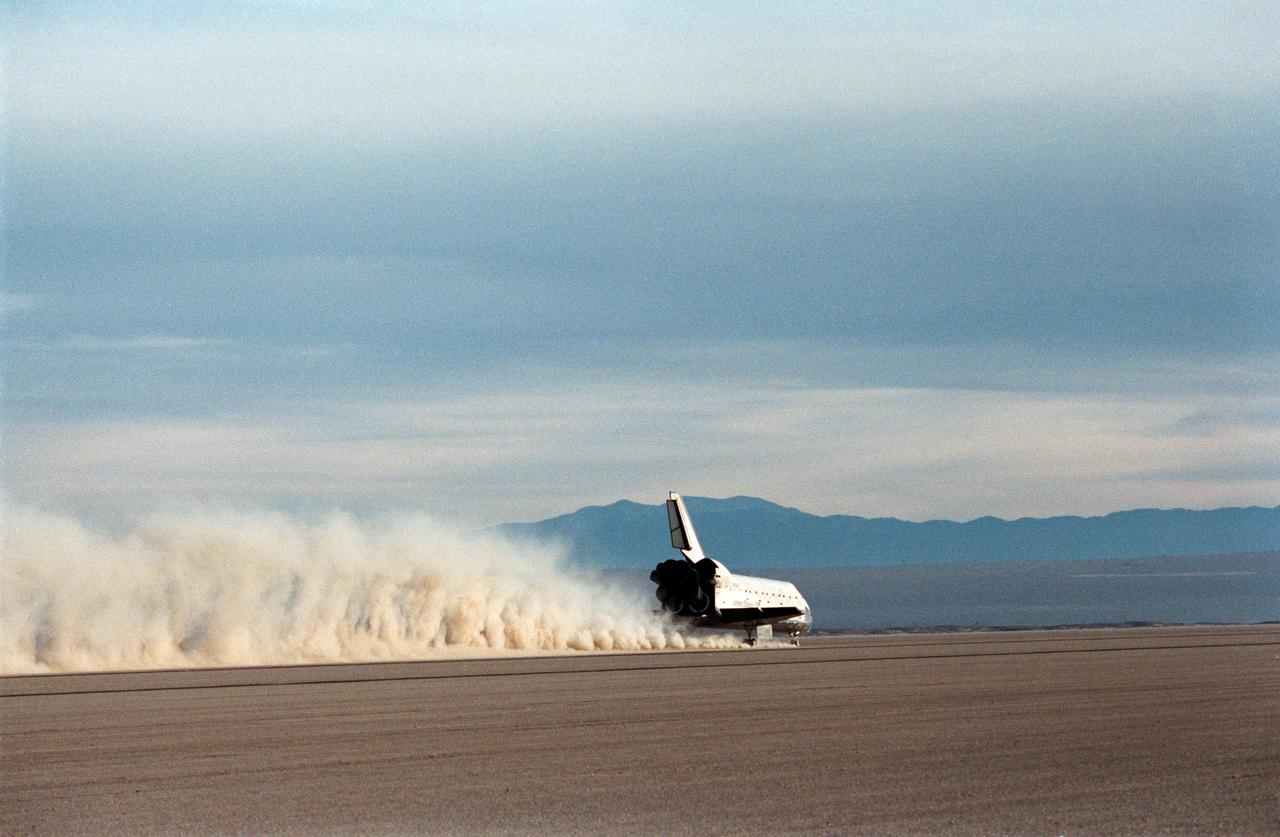
STS027-S-012 (6 Dec. 1988) --- A 70mm camera records the landing of the Space Shuttle Atlantis on Rogers Dry Lake Bed near the Dryden Flight Research Facility in California. The wheels of the vehicle came to a stop at 3:36:53 p.m. (PST), marking the completion of a successful mission which involved five veteran NASA astronauts. Onboard for the four-day flight were astronauts Robert L. Gibson, Guy S. Gardner, Jerry L. Ross, Richard M. (Mike) Mullane and William M. Shepherd.
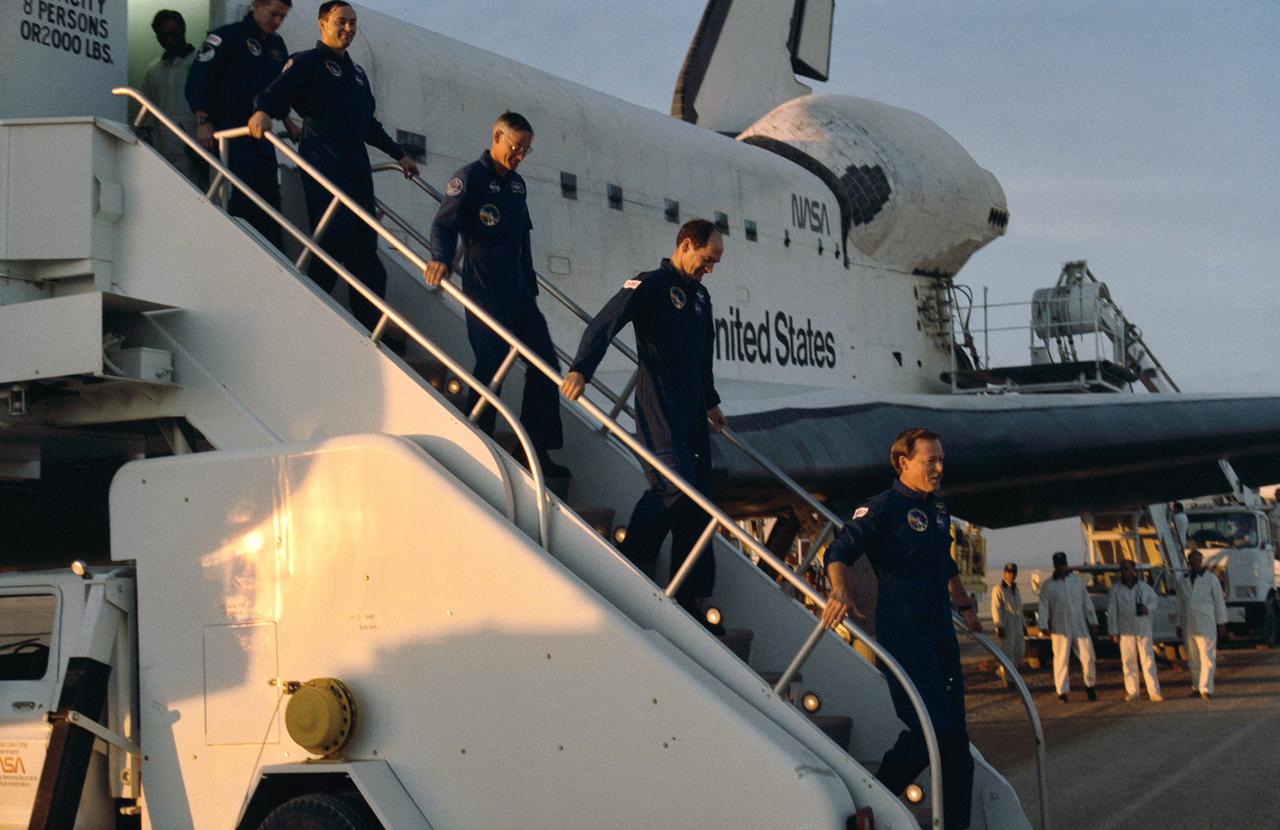
STS027-S-020 (6 Dec 1988) --- The five astronauts who were aboard Atlantis for its return to flight leave their spacecraft after almost 4 1/2 days in space. From bottom to top are Astronauts Robert L. Gibson, mission commander; Guy S. Gardner, pilot; and Richard M. (Mike) Mullane, Jerry L. Ross and William M. Shepherd, mission specialists. Atlantis touched down on Rogers Dry Lake Bed at 3:36 p.m. (PST), Dec. 6, 1988.
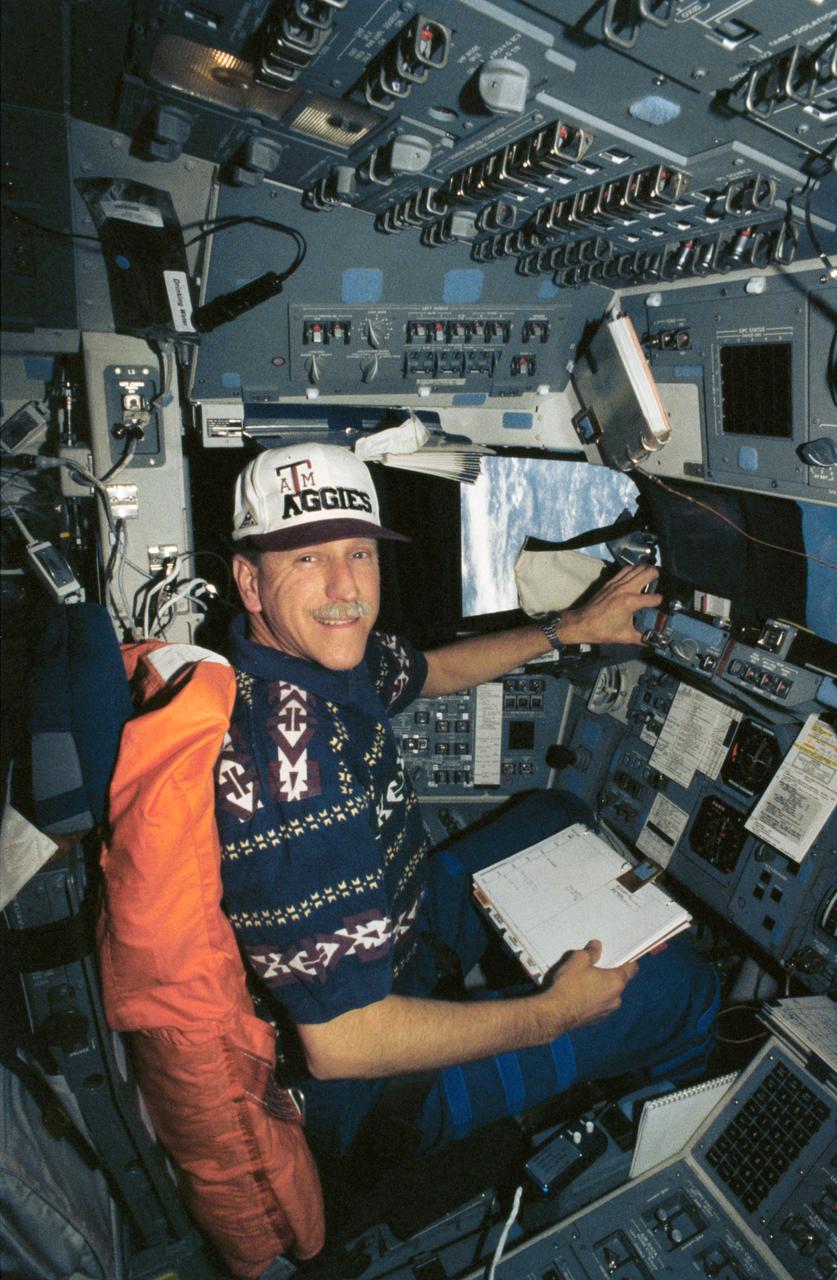
STS061-53-001 (4 Dec 1993) --- Astronaut Richard O. Covey mans the commander's station on the Space Shuttle Endeavour during flight day 3 of the eleven-day mission to service the Hubble Space Telescope (HST). Covey wears a Texas A & M University cap as a salute to members of the training staff who have A & M connections. The crew was busy on this day preparing for the approach and grapple operations with the HST.
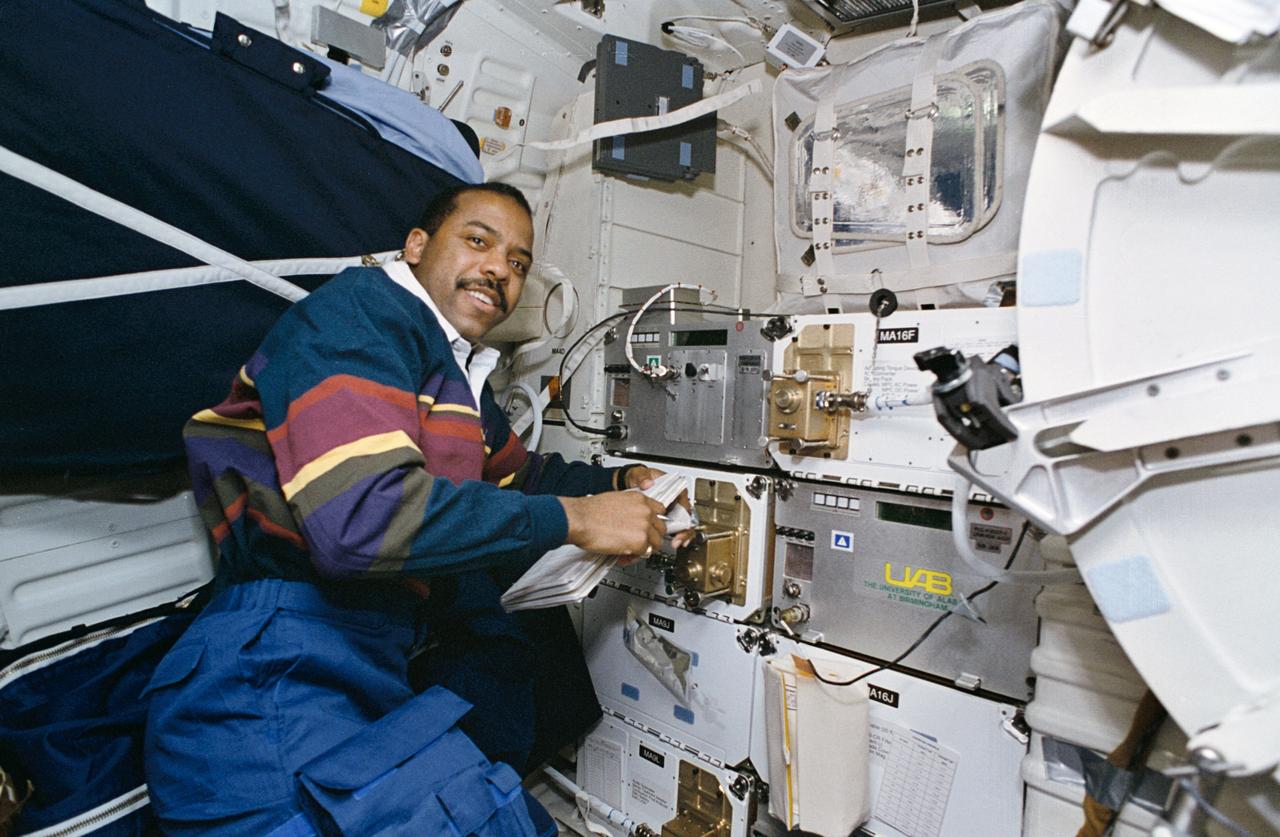
STS063-68-013 (3-11 Feb 1995) --- Astronaut Bernard A. Harris, Jr., a physician and payload commander, monitors several Spacehab-3 experiments which occupy locker space on the Space Shuttle Discovery's mid-deck. The Spacehab 3 Module is located in the cargo bay. Others onboard the Discovery were astronauts James D. Wetherbee, commander; Eileen M. Collins, pilot; mission specialists C. Michael Foale, Janice E. Voss, and Russian cosmonaut Vladimir G. Titov.
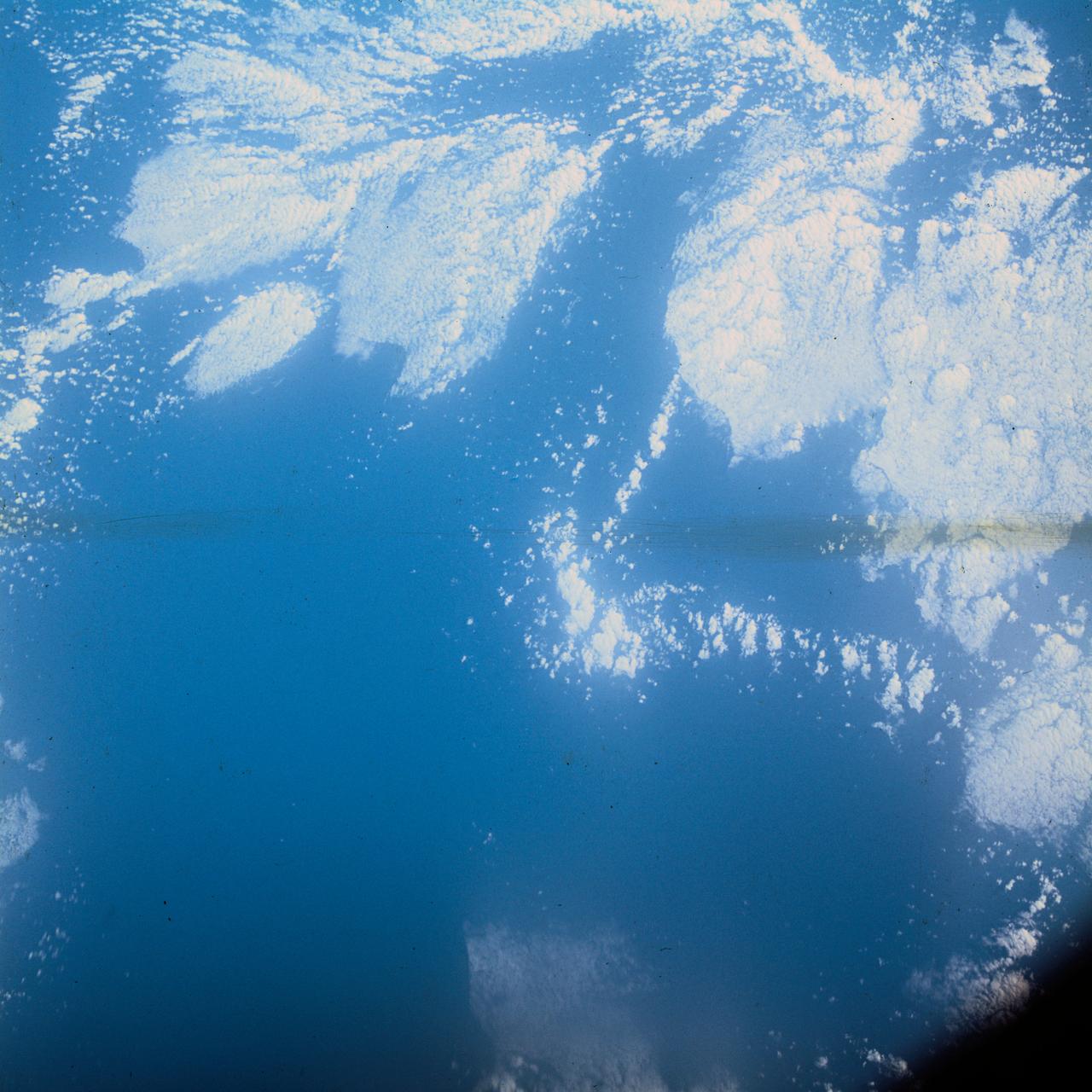
S62-06606 (3 Oct. 1962) --- Cloud formation over Western Atlantic Ocean north of South America taken during the fourth orbit pass of the Mercury-Atlas 8 (MA-8) mission by astronaut Walter M. Schirra Jr. with a hand-held camera. Photo credit: NASA
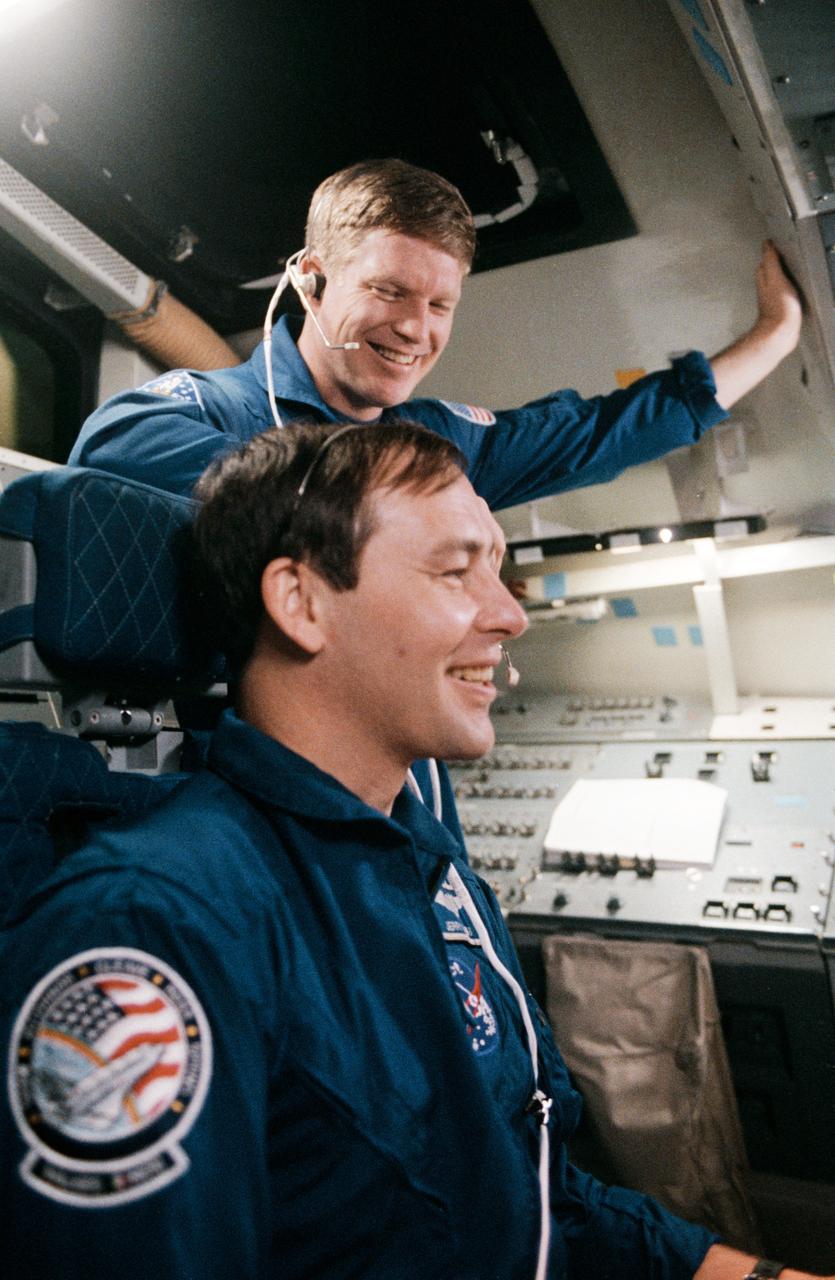
S88-27505 (3 Feb. 1988) --- Astronauts William M. Shepherd (standing) and Jerry L. Ross, both STS-27 mission specialists, get in some training time on the flight deck of the Shuttle Mission Simulator in the Jake Garn Mission Simulation and Training Facility at NASA's Johnson Space Center. Photo credit: NASA
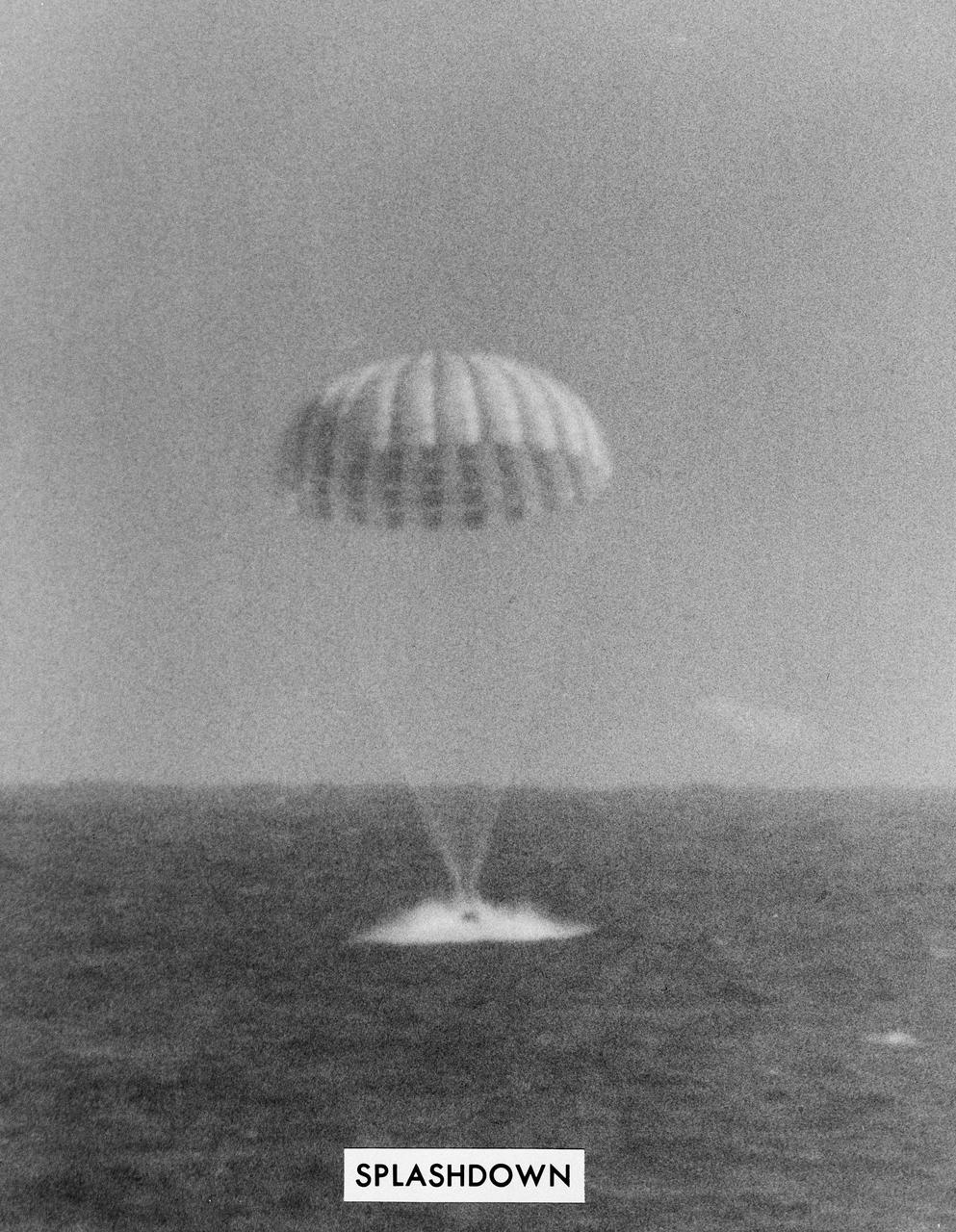
S63-00693 (3 Oct. 1962) --- Landing with parachute extended of astronaut Walter M. Schirra's Mercury-Atlas 8 (MA-8) capsule, called the Sigma 7, after a world orbital flight. Photo is labeled "Splashdown". Photo credit: NASA

STS036-S-018 (3 March 1990) --- The Space Shuttle Atlantis touches down at Edwards Air Force Base in California to complete the STS-36 mission. Onboard were Astronauts John O. Creighton, John H. Casper, David C. Hilmers, Richard M. (Mike) Mullane and Pierre J. Thuot.
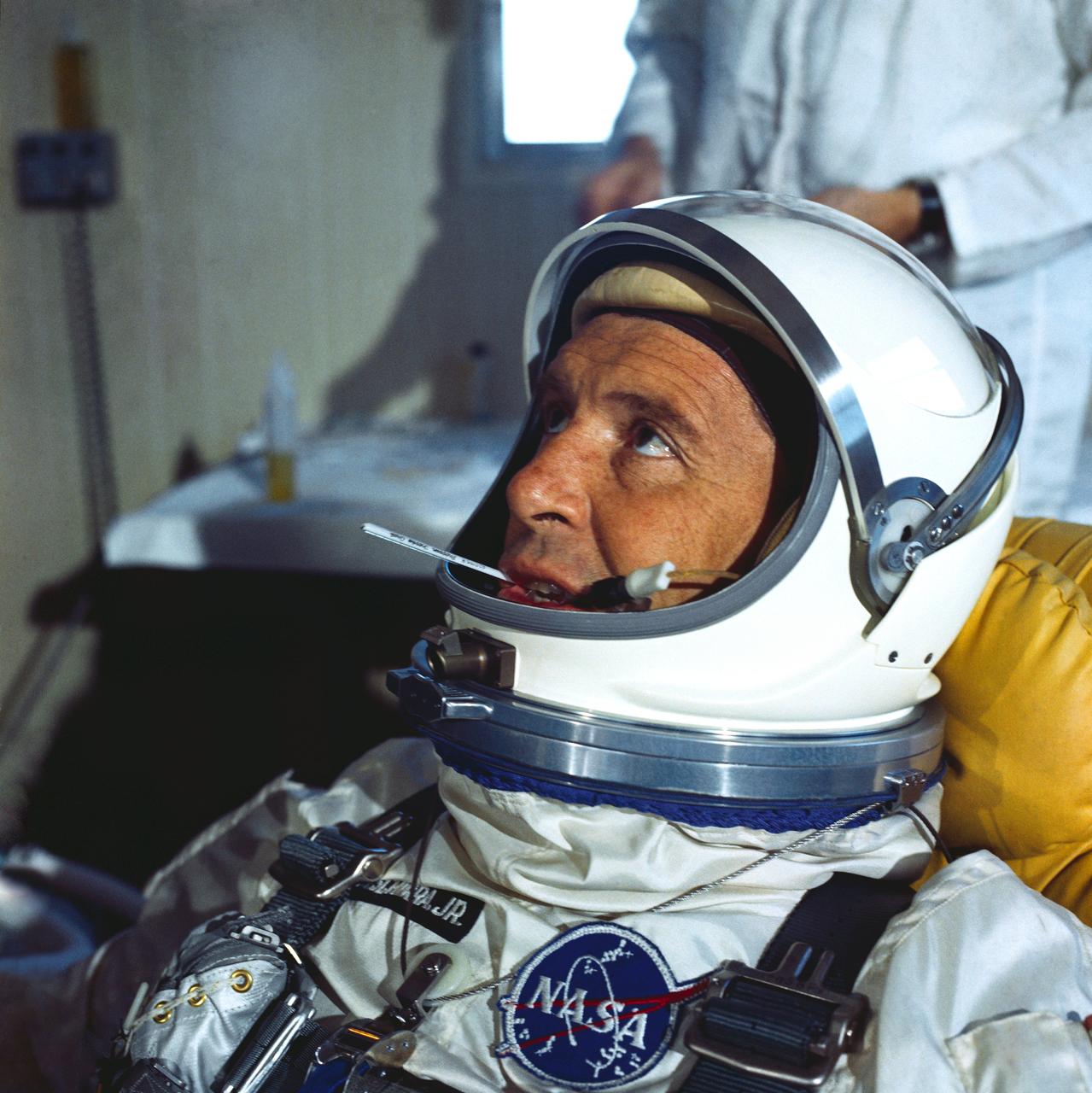
S65-22666 (8 March 1965) --- Astronaut Walter M. Schirra Jr., the command pilot of the GT-3 backup crew, is shown suited up for prelaunch tests. He is shown with his helmet visor up and a thermometer in his mouth.
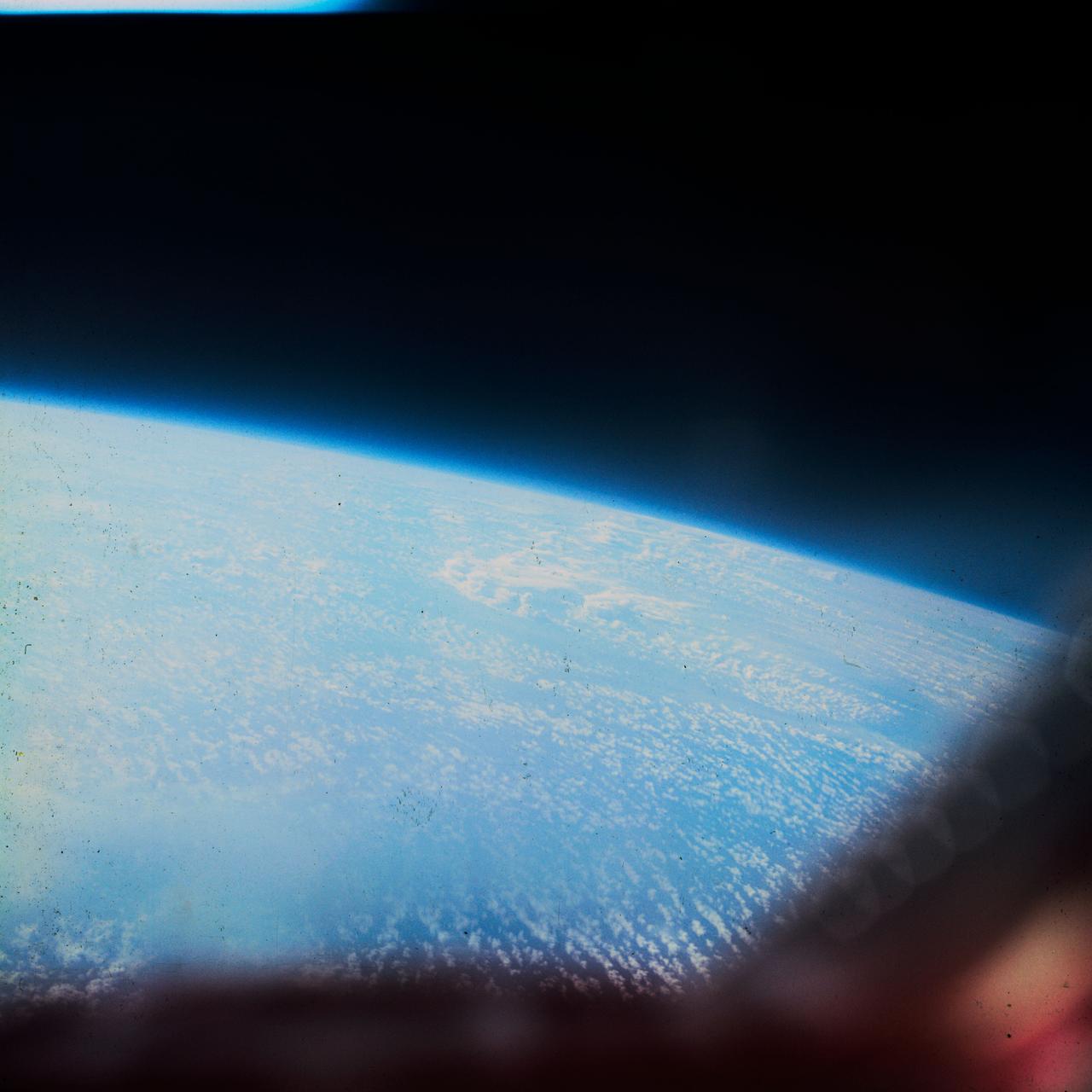
S62-06612 (3 Oct. 1962) --- Cloud formation over South America taken during the fifth orbit pass of the Mercury-Atlas 8 (MA-8) mission by astronaut Walter M. Schirra Jr. with a hand-held camera. Photo credit: NASA
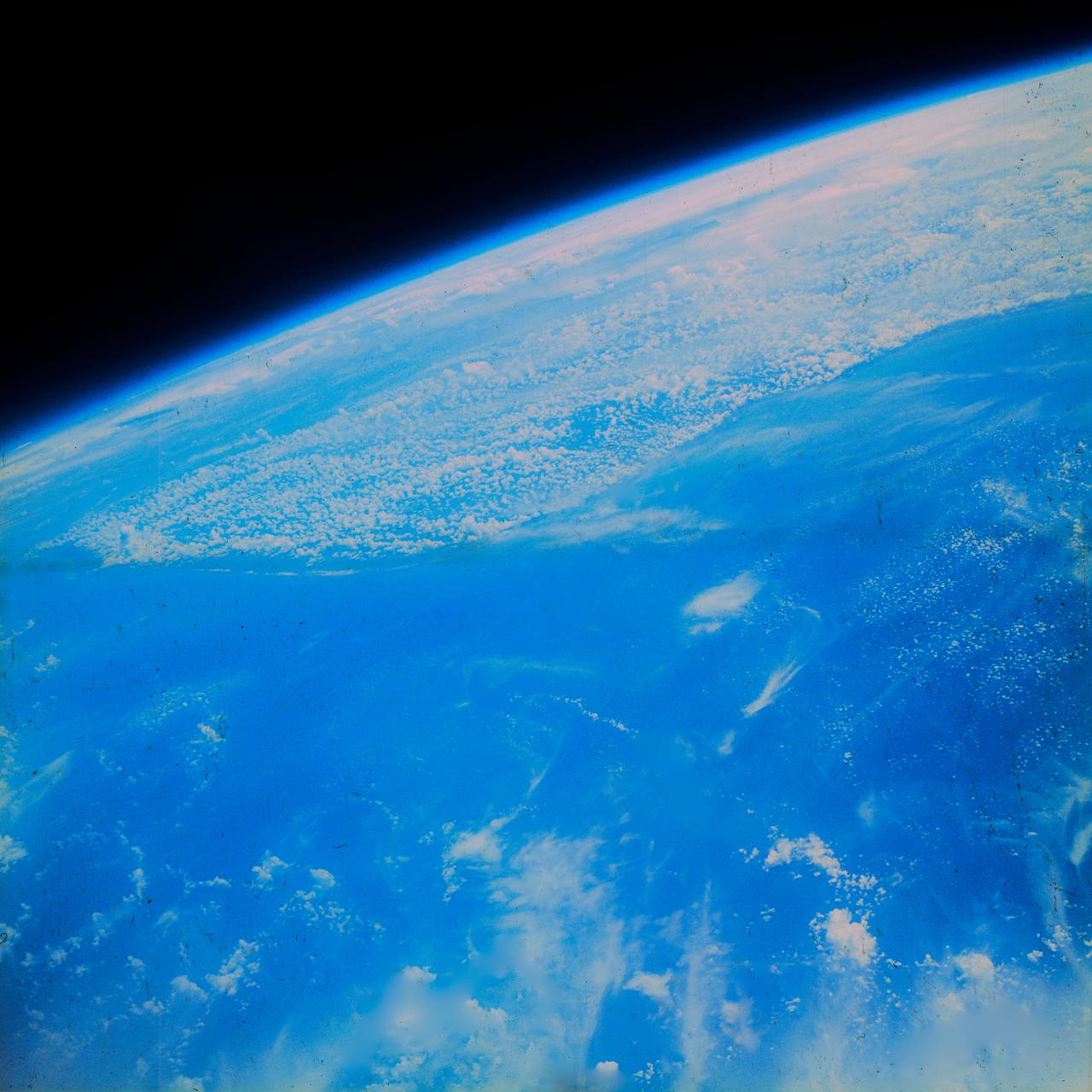
S62-06607 (3 Oct. 1962) --- Western horizon over South America taken during the sixth orbit pass of the Mercury-Atlas 8 (MA-8) mission by astronaut Walter M. Schirra Jr. with a hand-held camera. Photo credit: NASA
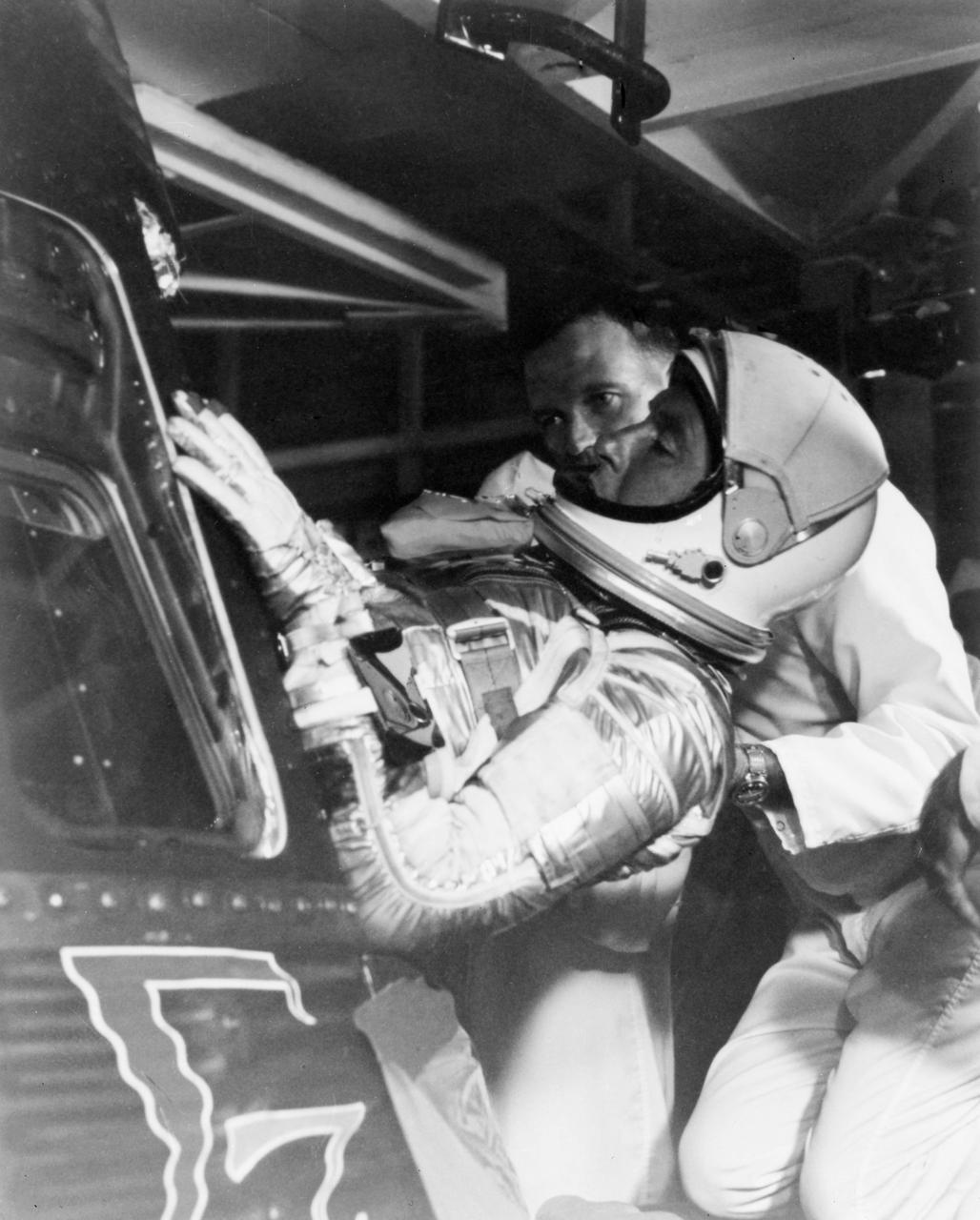
S62-06002 (3 Oct. 1962) --- Astronaut Walter M. Schirra Jr., pilot of the Mercury-Atlas 8 (MA-8) Earth-orbital spaceflight, is assisted by backup pilot L. Gordon Cooper into his Sigma 7 spacecraft for the begining of the MA-8 mission. Photo credit: NASA
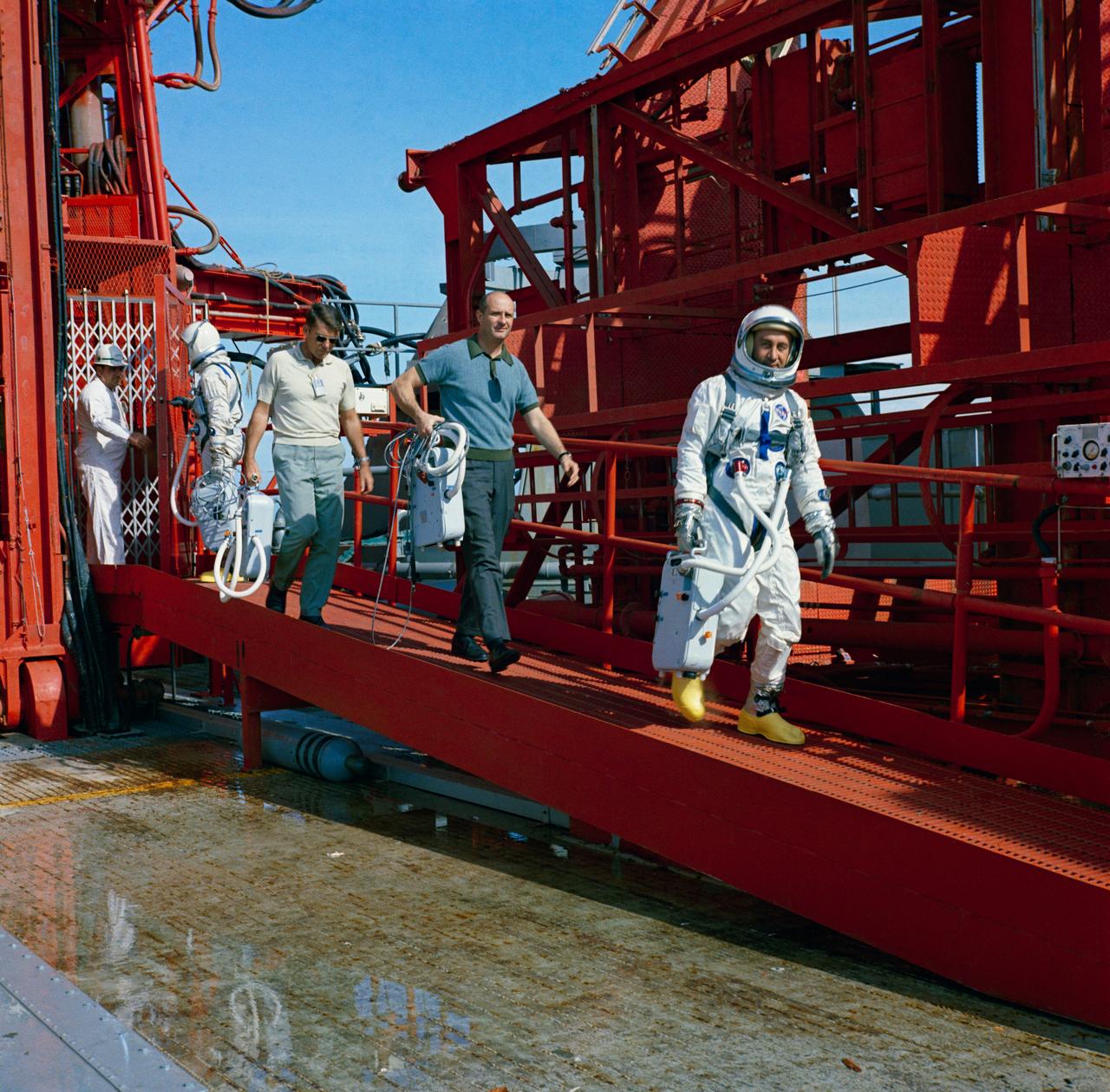
S64-40298 (24 Nov. 1964) --- Astronauts John W. Young, Walter M. Schirra Jr., Thomas P. Stafford and Virgil I. Grissom (left to right) are shown during egress training during Gemini-Titan 3 simulation launch at Pad 19.
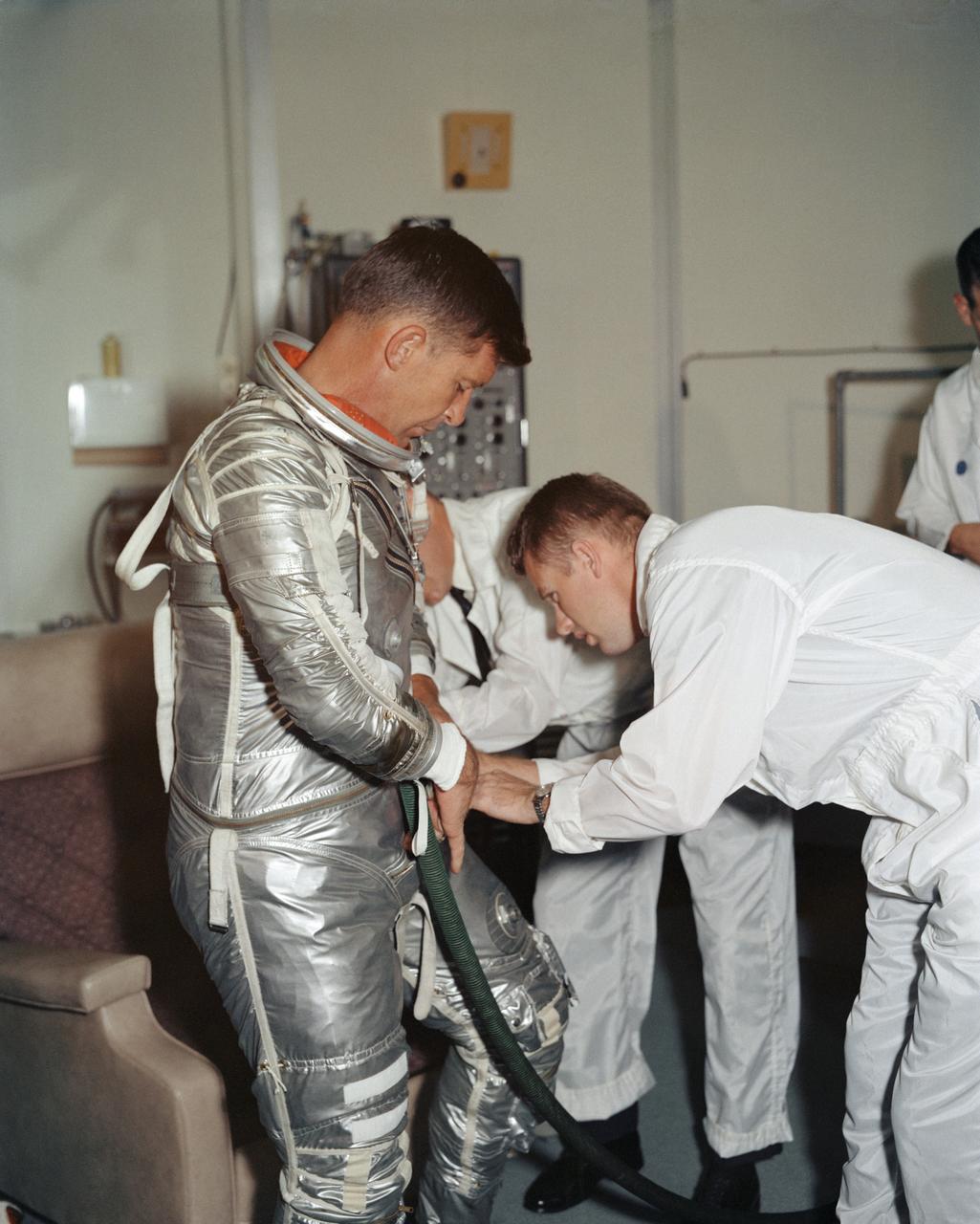
S62-08895 (1962) --- Astronaut Walter M. Schirra Jr., pilot of the Mercury-Atlas 8 (MA-8) Earth-orbital spaceflight, goes through a suiting-up exercise in Hangar "S" at Cape Canaveral several weeks prior to his scheduled Oct. 3, 1962 flight. Photo credit: NASA
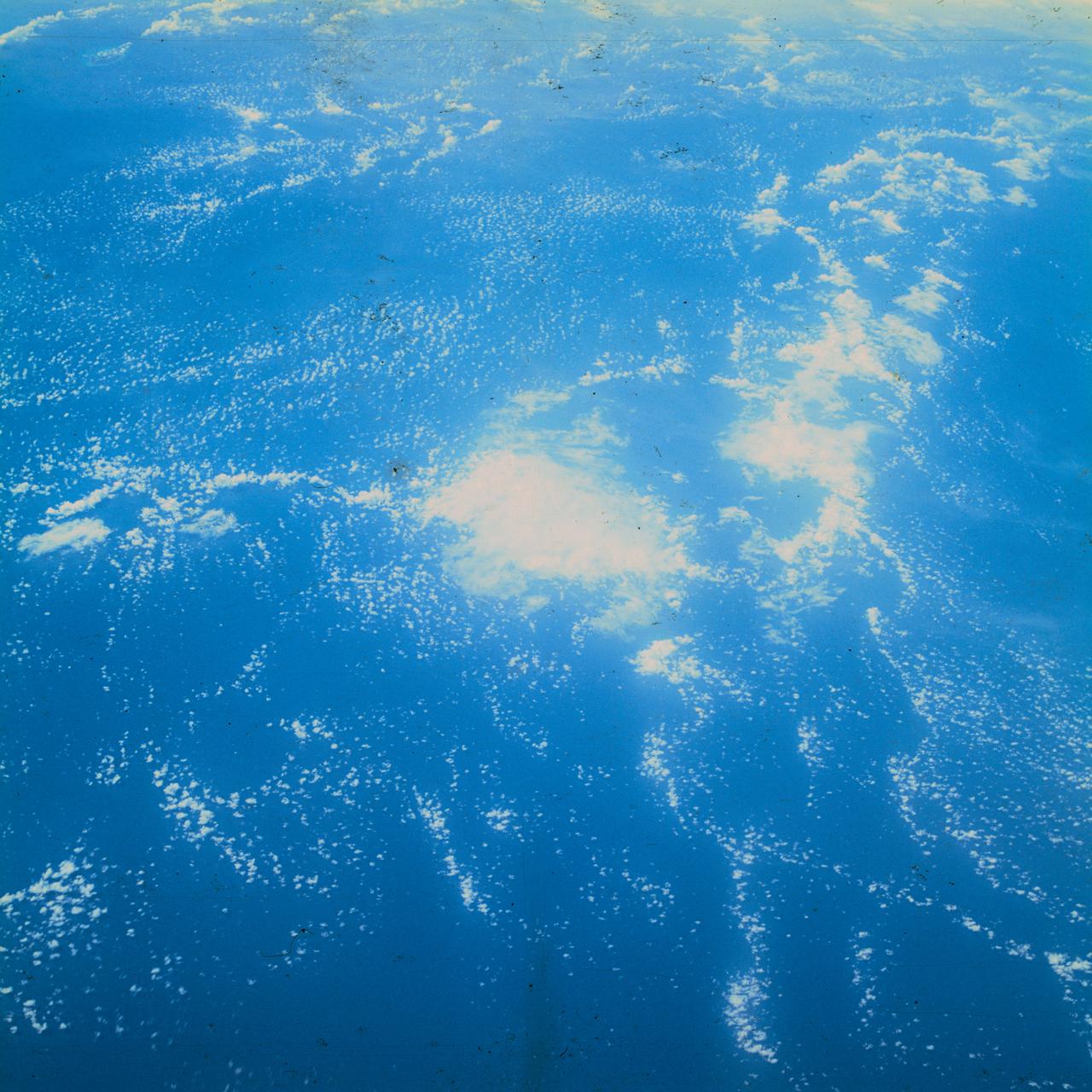
S62-06613 (3 Oct. 1962) --- Cumulus cloud formation over West Atlantic Ocean north of South American during the fourth orbit pass of the Mercury-Atlas 8 (MA-8) mission by astronaut Walter M. Schirra Jr. with a hand-held camera. Photo credit: NASA
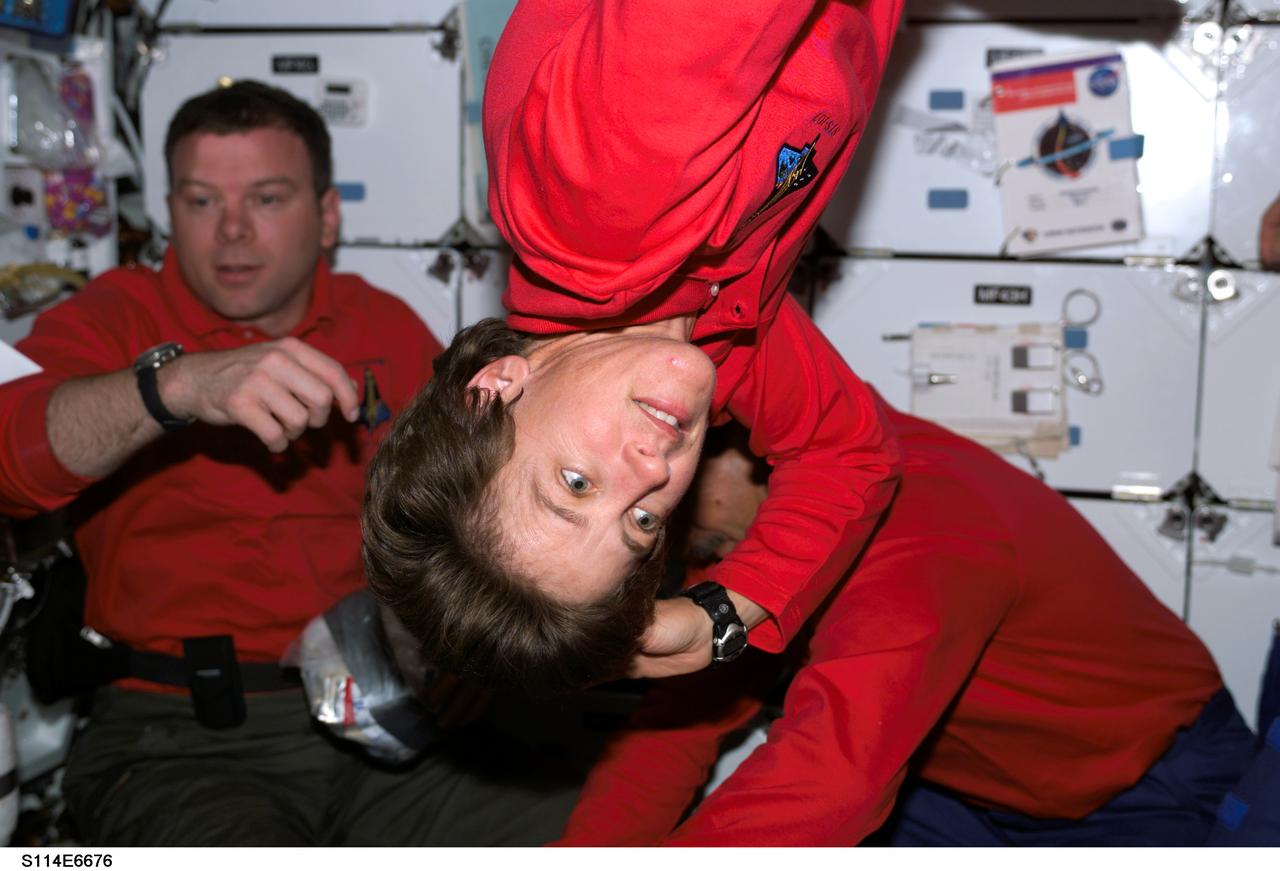
S114-E-6676 (3 August 2005) --- Astronaut Wendy B. Lawrence, STS-114 mission specialist, floats freely on the middeck of the Space Shuttle Discovery while the Shuttle was docked to the International Space Station. Astronauts James M. Kelly, pilot, and Charles J. Camarda, mission specialist, are visible in the background.
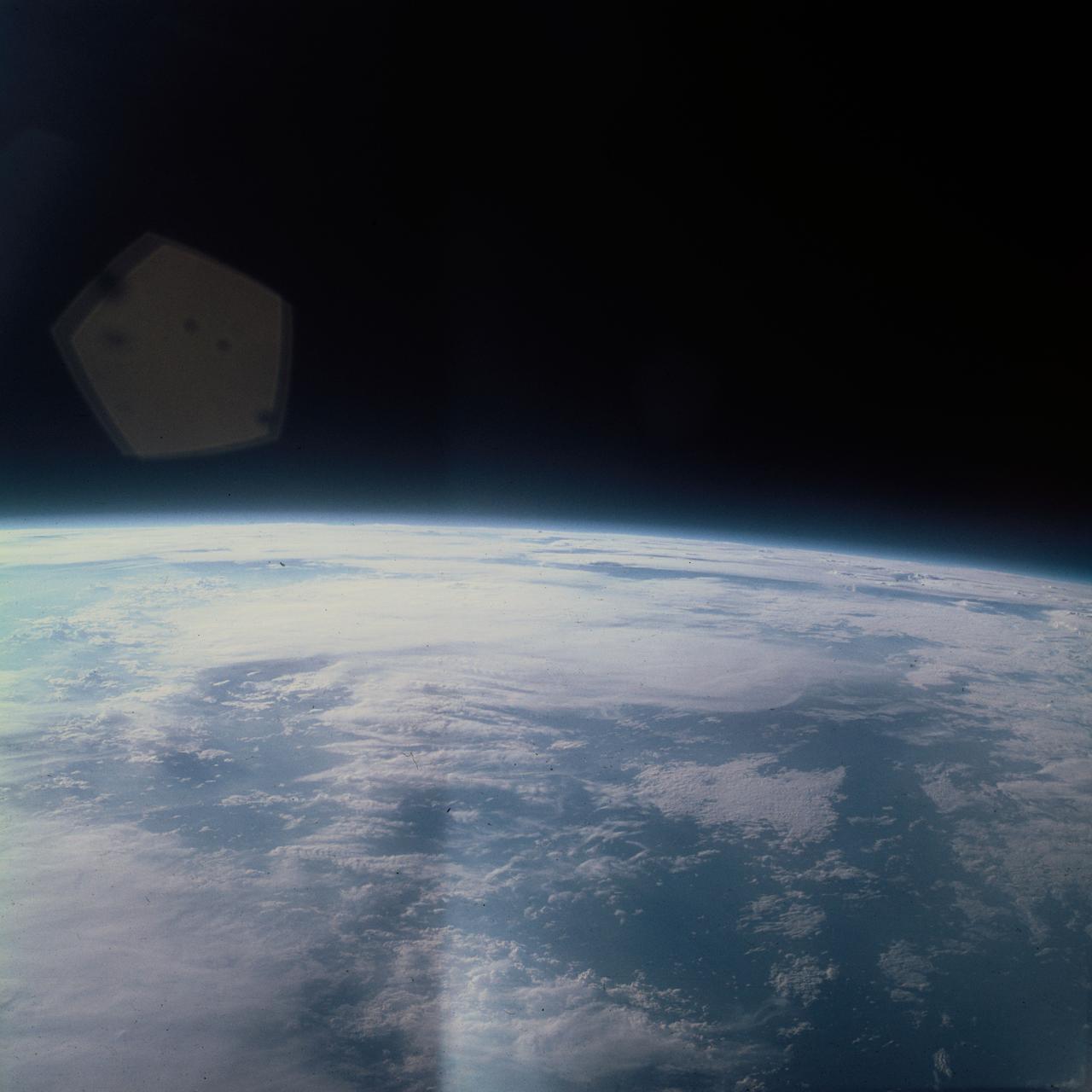
S62-06604 (3 Oct. 1962) --- Western horizon over South America taken during the sixth orbit pass of the Mercury-Atlas 8 (MA-8) mission by astronaut Walter M. Schirra Jr. with a hand-held camera. Photo credit: NASA
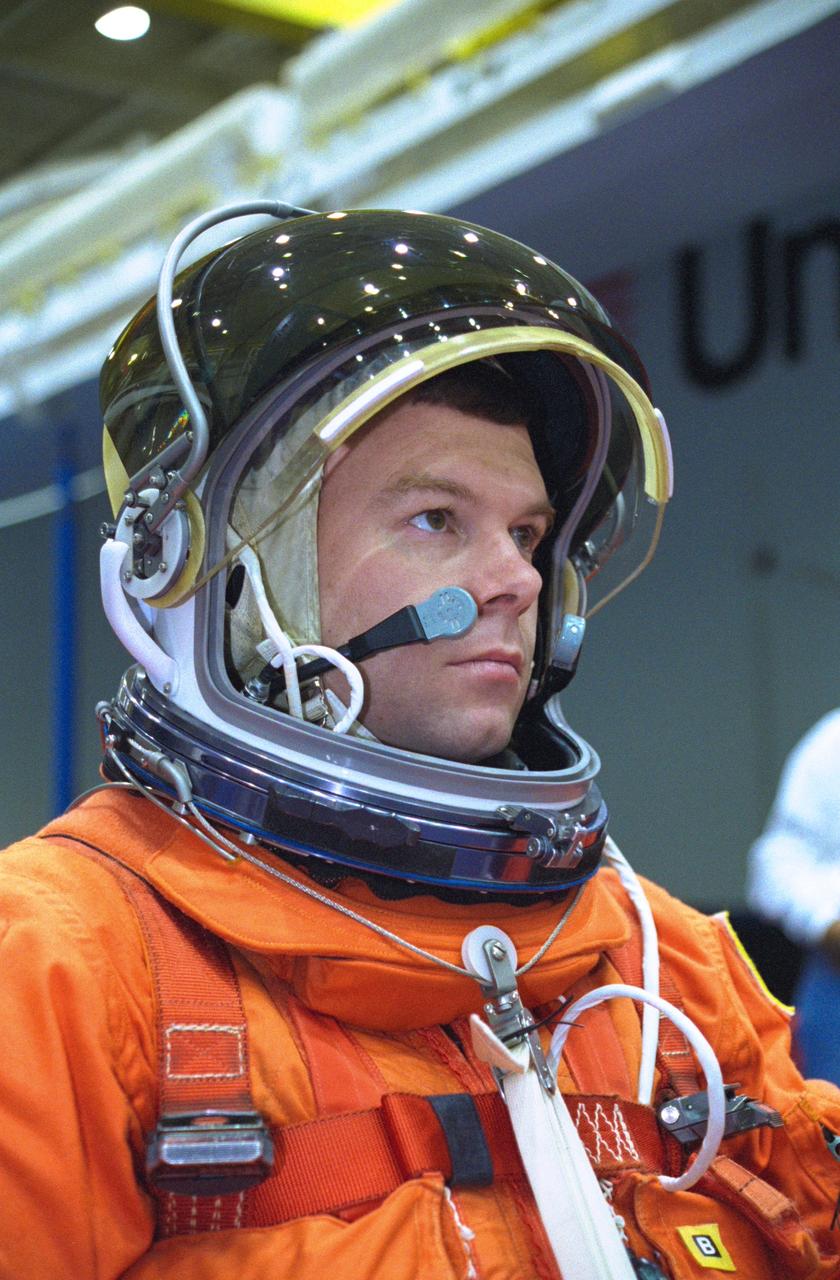
JSC2000-05557 (3 August 2000) --- Astronaut James M. Kelly, STS-102 pilot, listens as a crew training staff member briefs the astronauts at the Full Fuselage Trainer (FFT) during an emergency egress training exercise at the Johnson Space Center's Systems Integration Facility.
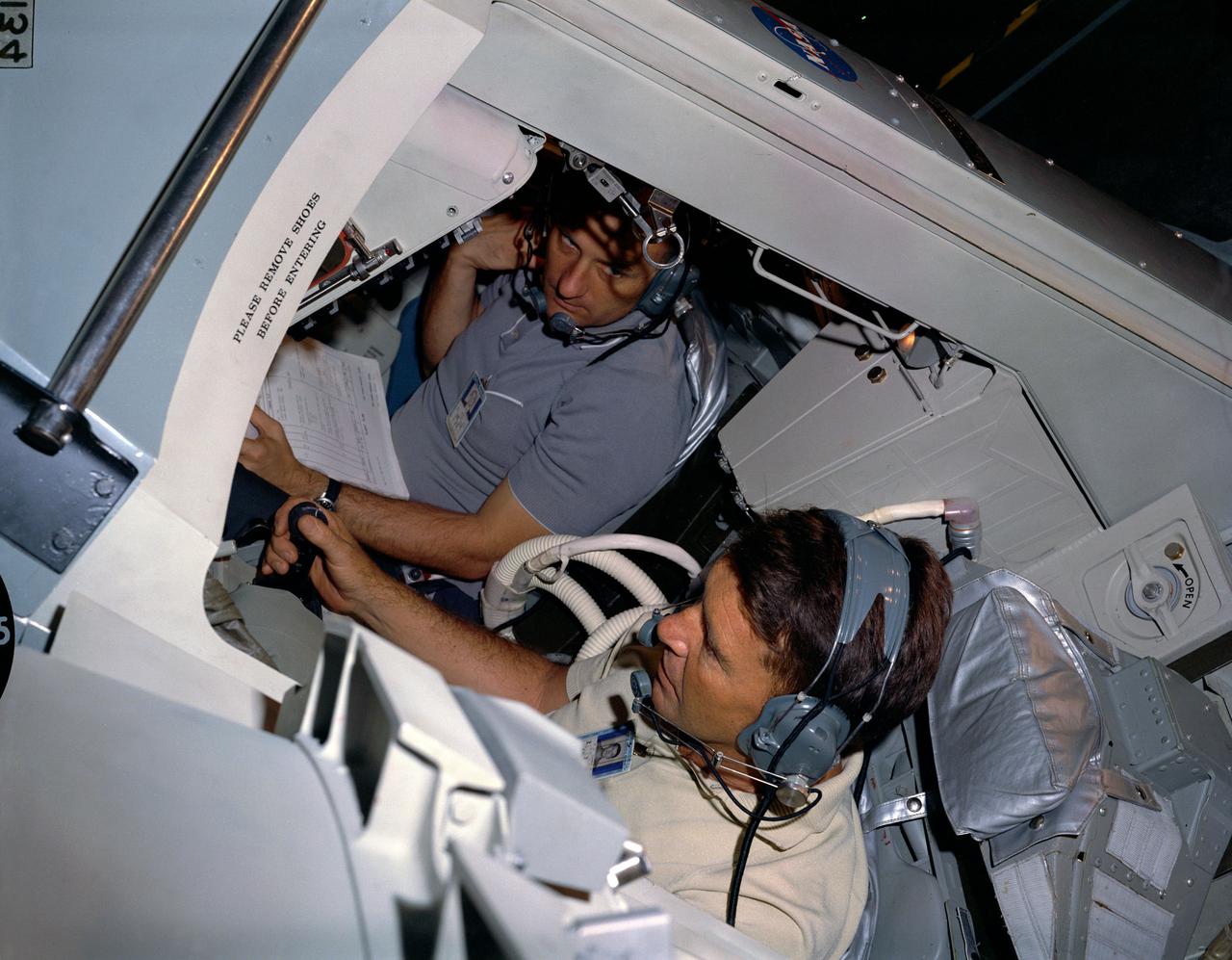
S65-13921 (1965) --- Overhead view of astronauts Walter M. Schirra Jr. (foreground), backup command pilot, and Thomas P. Stafford, backup pilot, as they prepare to run Gemini-Titan 3 simulations in the Gemini mission simulator in the Mission Control Center at Merritt Island, Florida.
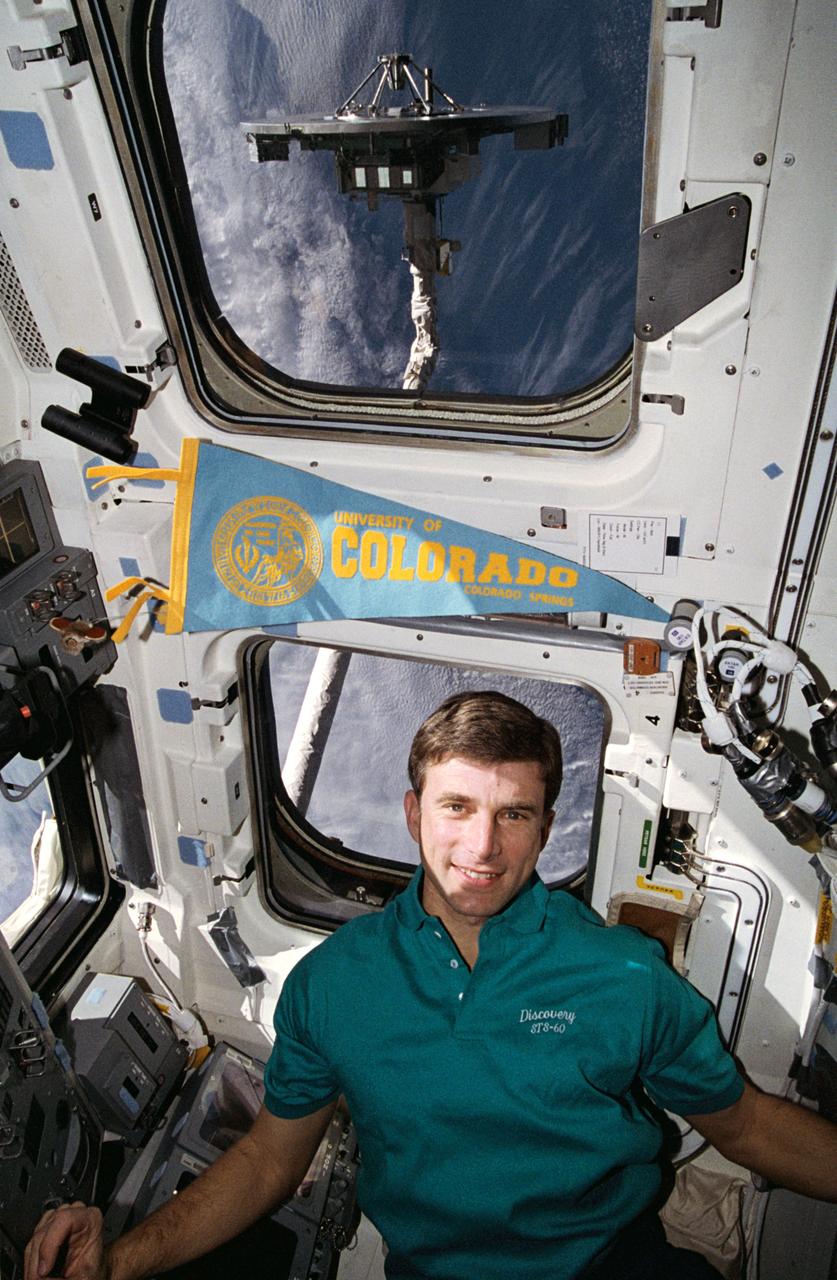
STS060-57-033 (3-11 Feb 1994) --- Astronaut Ronald M. Sega suspends himself in the weightlessness aboard the Space Shuttle Discovery's crew cabin, as the Remote Manipulator System (RMS) arm holds the Wake Shield Facility (WSF) aloft. The mission specialist is co-principal investigator on the WSF project.
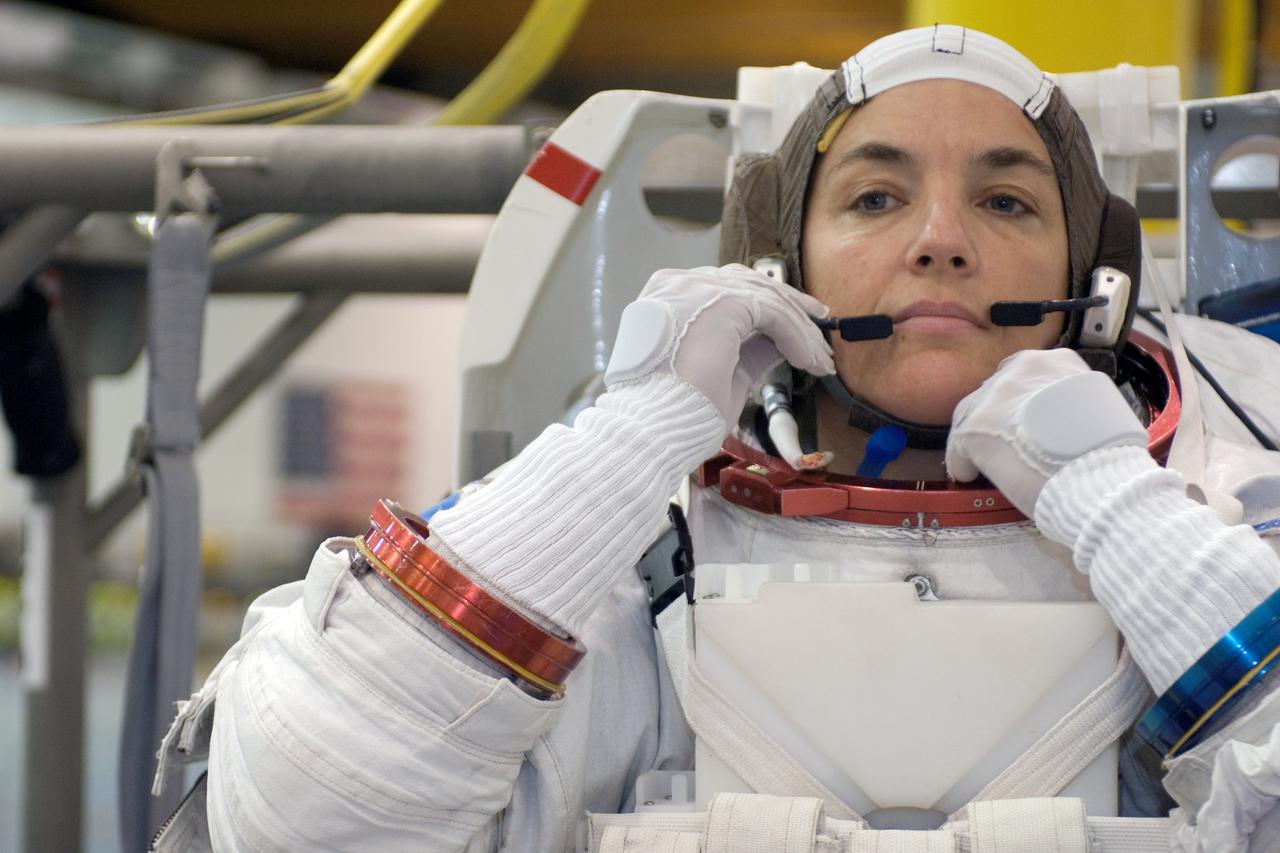
JSC2008-E-031871 (3 April 2008) --- Astronaut Heidemarie M. Stefanyshyn-Piper, STS-126 mission specialist, makes final touches on a training version of her Extravehicular Mobility Unit (EMU) spacesuit in preparation for a training session in the waters of the Neutral Buoyancy Laboratory (NBL) near NASA's Johnson Space Center.
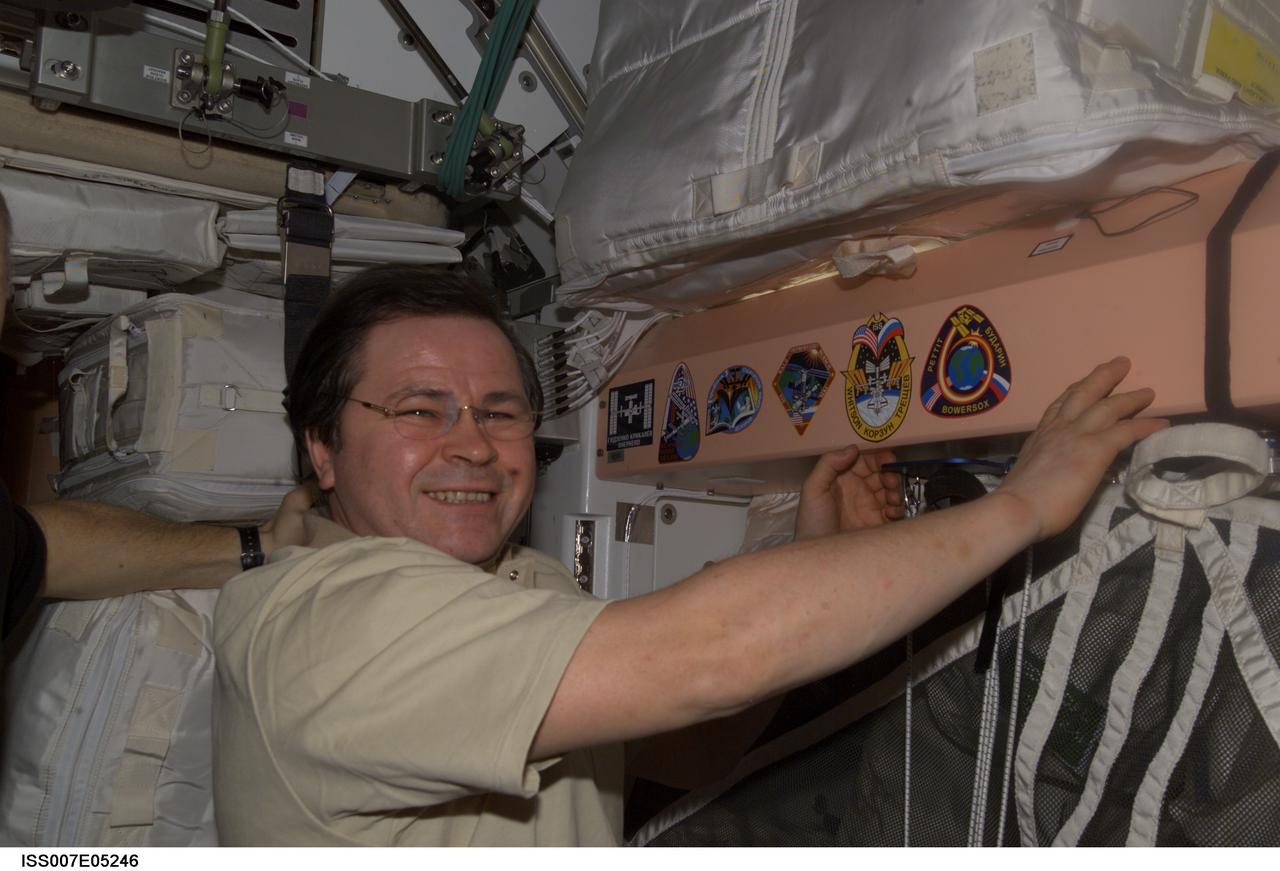
ISS007-E-05246 (3 May 2003) --- Cosmonaut Nikolai M. Budarin, Expedition Six flight engineer, adds his crew’s patch to the growing collection, in the Unity node, of insignias representing crews who have worked on the International Space Station (ISS). Budarin represents Rosaviakosmos.
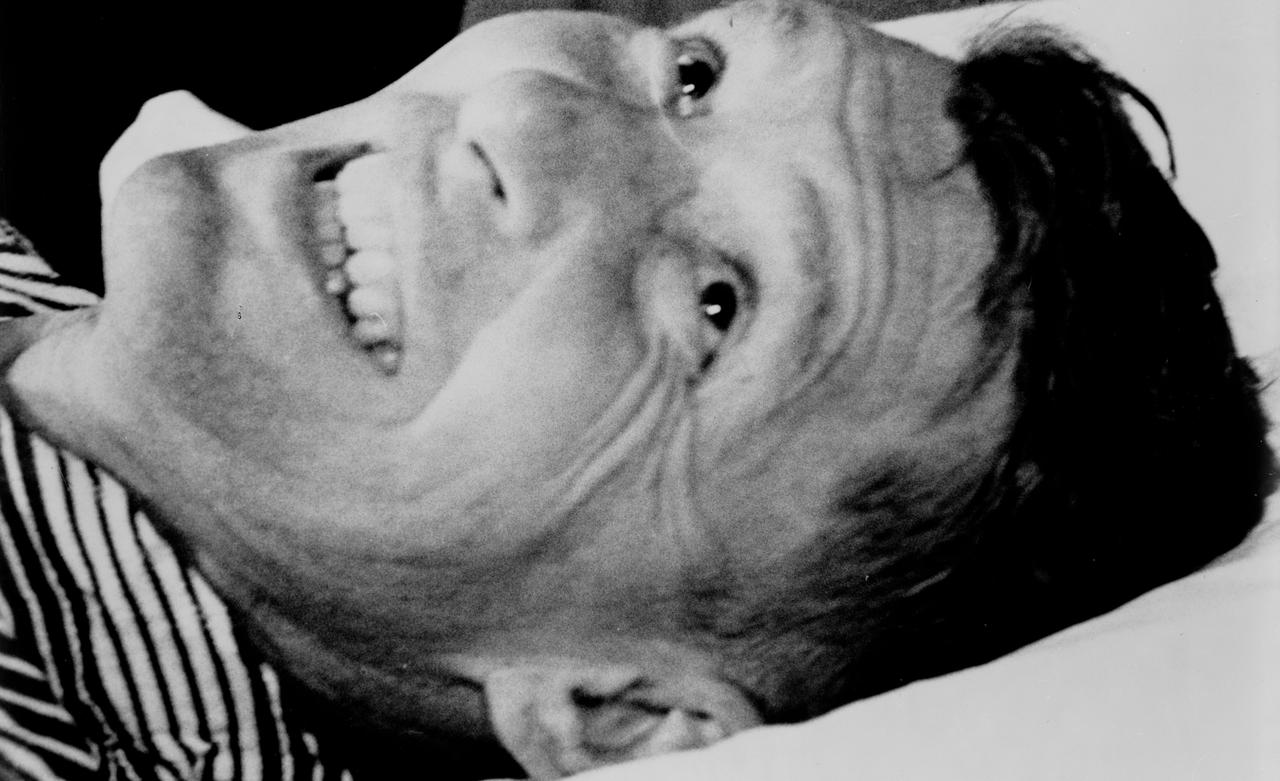
S62-06163 (3 Oct. 1962) --- Astronaut Walter M. Schirra Jr. smiles at medical personnel (out of frame) during a postflight physcial aboard the USS Kearsage, prime recovery vessel for Mercury-Atlas 8 (MA-8) upon which Schirra served as pilot earlier today. Photo credit: NASA
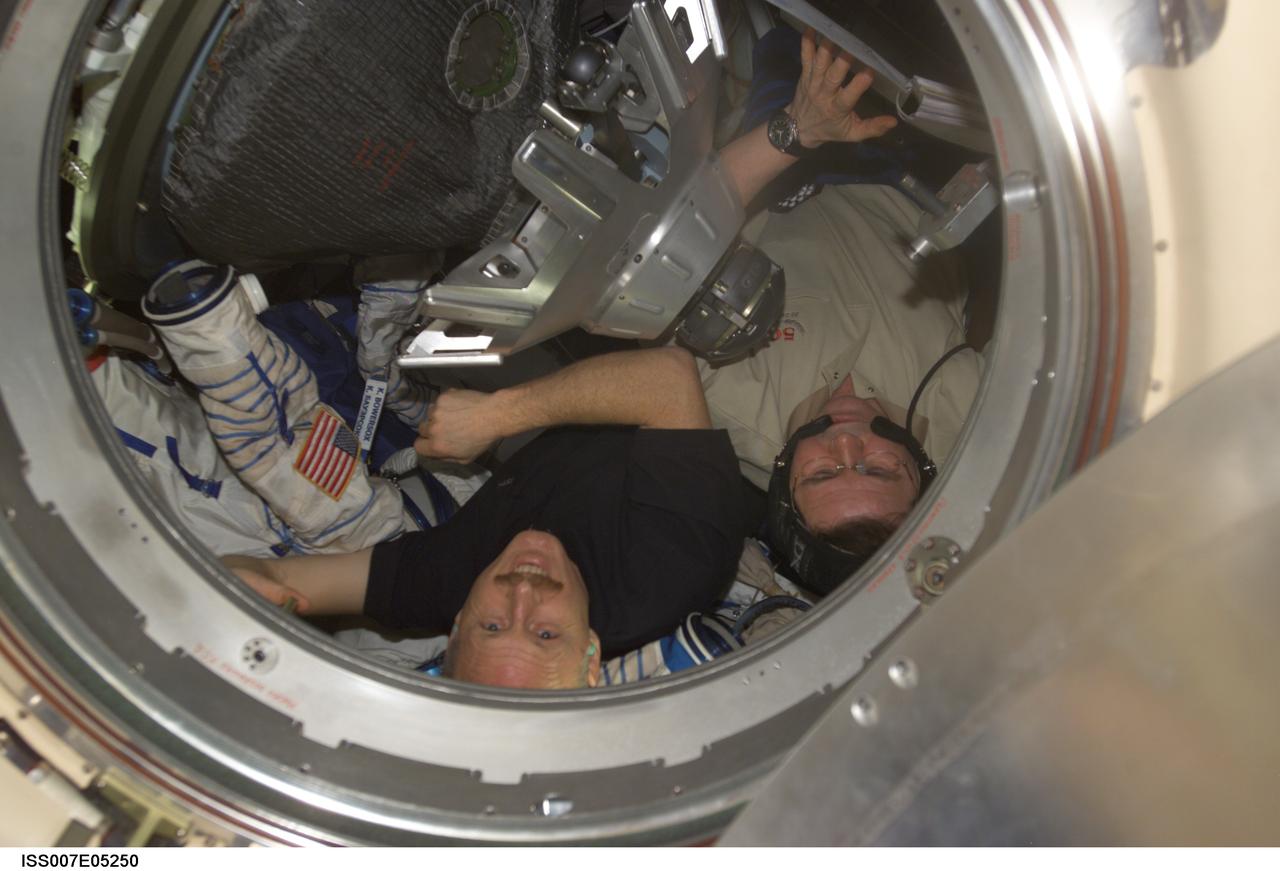
ISS007-E-05250 (3 May 2003) --- Astronaut Kenneth D. Bowersox (left), Expedition Six mission commander, and cosmonaut Nikolai M. Budarin, flight engineer, are pictured in a Soyuz spacecraft docked to the International Space Station (ISS). Budarin represents Rosaviakosmos.

S65-20431 (23 March 1965) --- Astronaut Virgil I. Grissom (right), the command pilot of the Gemini-Titan 3 three-orbit mission, is shown with astronaut Walter M. Schirra Jr. in the ready room at Pad 16. The GT-3 was launched from Pad 19 the same day. Schirra was the command pilot of the backup crew.
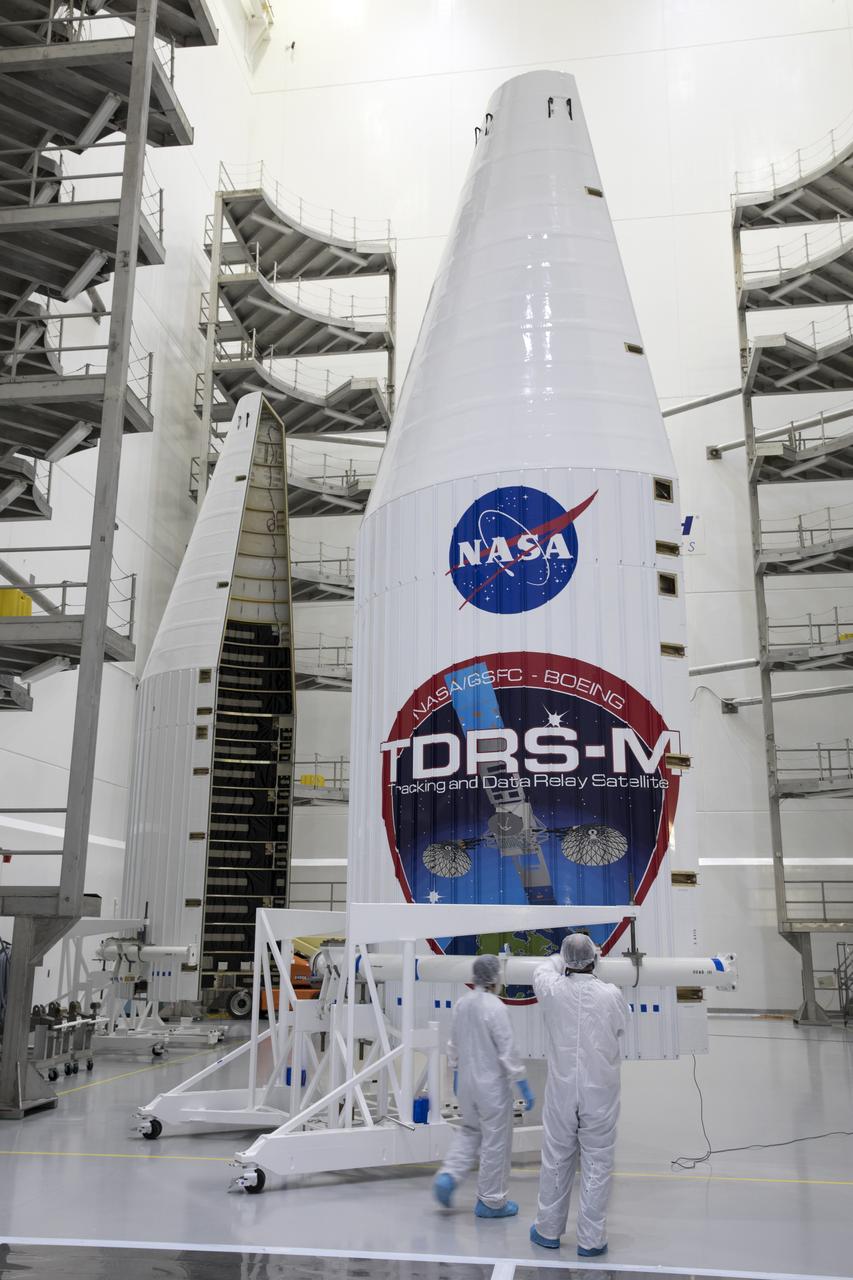
Inside the Astrotech facility in Titusville, Florida, the payload fairing for NASA's Tracking and Data Relay Satellite, TDRS-M, is inspected prior to encapsulating the spacecraft. TDRS-M is the latest spacecraft destined for the agency's constellation of communications satellites that allows nearly continuous contact with orbiting spacecraft ranging from the International Space Station and Hubble Space Telescope to the array of scientific observatories. Liftoff atop a United Launch Alliance Atlas V rocket is scheduled to take place from Space Launch Complex 41 at Cape Canaveral Air Force Station at 9:02 a.m. EDT Aug. 3, 2017.
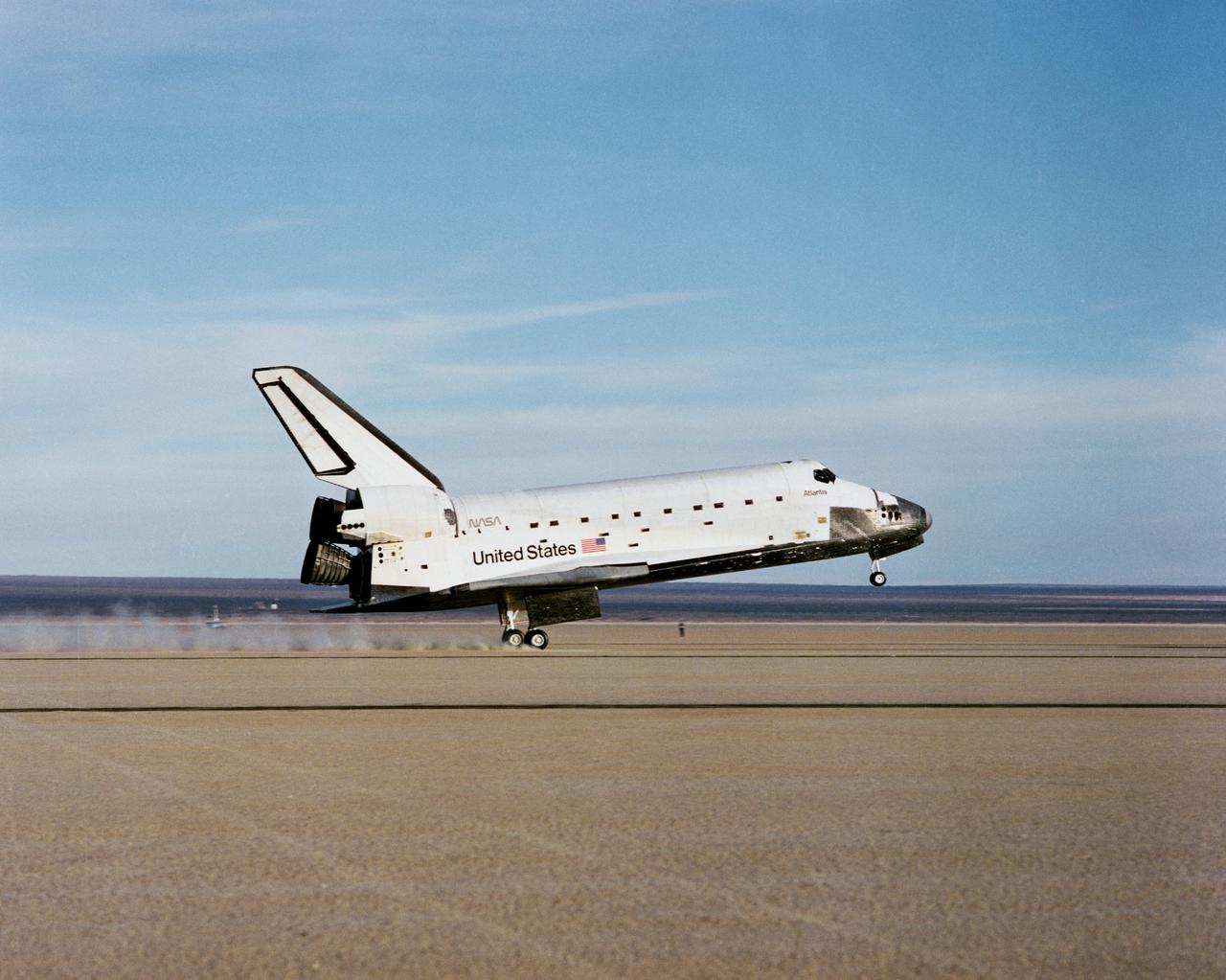
STS027-S-014 (6 Dec. 1988) --- A 70mm camera records the landing of the space shuttle Atlantis on Rogers Dry Lake Bed near the Dryden Flight Research Facility in California. The wheels of the vehicle came to a stop at 3:36:53 p.m. (PST), marking the completion of a successful mission which involved five veteran NASA astronauts. Onboard for the four-day flight were astronauts Robert L. Gibson, Guy S. Gardner, Jerry L. Ross, Richard M. (Mike) Mullane and William M. Shepherd. Photo credit: NASA
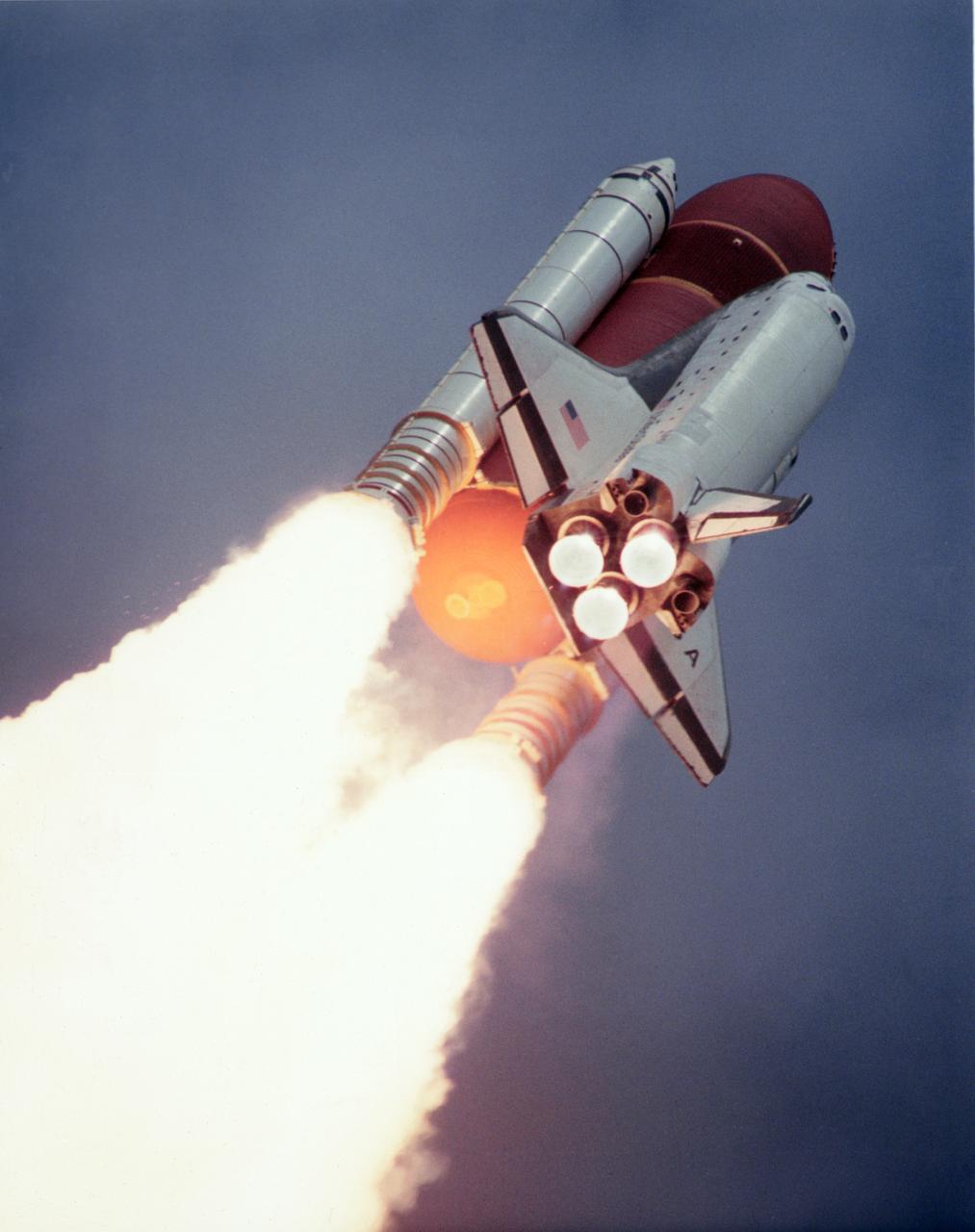
Launched aboard the Space Shuttle Columbia on June 5, 1991 at 9:24; am (EDT), the STS-40 mission was the fifth dedicated Spacelab Mission, Spacelab Life Sciences-1 (SLS-1), and the first mission dedicated solely to life sciences. The STS-40 crew included 7 astronauts: Bryan D. O’Connor, commander; Sidney M. Gutierrez, pilot; F. Drew Gaffney, payload specialist 1; Milli-Hughes Fulford, payload specialist 2; James P. Bagian, mission specialist 1; Tamara E. Jernigan, mission specialist 2; and M. Rhea Seddon, mission specialist 3.

NASA's TDRS-M satellite arrives inside its shipping container at Space Coast Regional Airport in Titusville, Florida. The spacecraft will be transported to the nearby Astrotech facility, also in Titusville, for preflight processing. The TDRS-M is the latest spacecraft destined for the agency's constellation of communications satellites that allows nearly continuous contact with orbiting spacecraft ranging from the International Space Station and Hubble Space Telescope to the array of scientific observatories. Liftoff atop a United Launch Alliance Atlas V rocket is scheduled to take place from Space Launch Complex 41 at Cape Canaveral Air Force Station at 9:02 a.m. EDT Aug. 3, 2017.
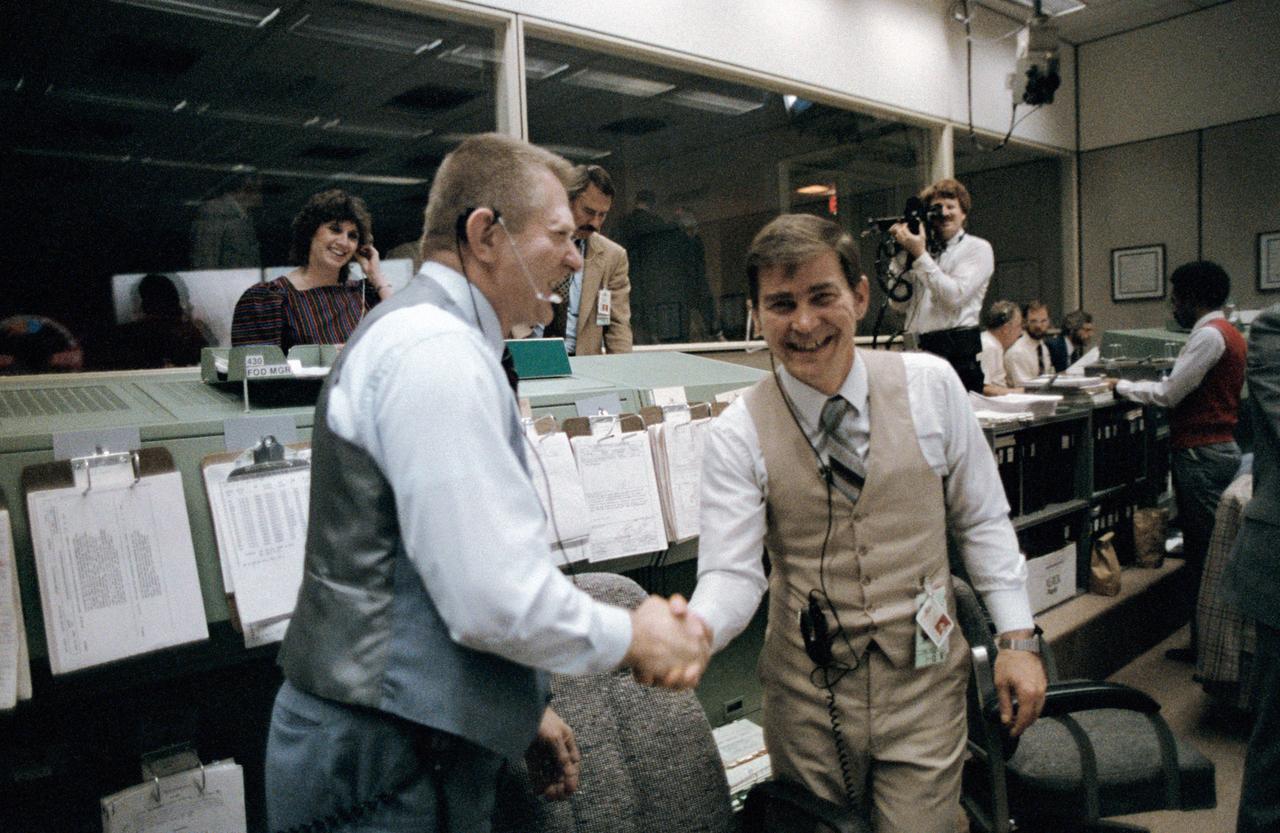
Various views of STS-6 MOCR activities during Day-5 with Vice-Pres. George Bush, Cap Communicator Bridges, JSC Director Gerald Griffin, Eugene F. Kranz, NASA Admin. James M. Beggs, Cap Com Astronaut O'Connor, Flight Directors Jay H. Greene, Gary E. Coen, and Harold Draughon. 1. BUSH, GEORGE, VICE-PRES. - STS-6 MOCR 2. DIR. GRIFFIN, GERALD D. - STS-6 MOCR 3. ADMIN. BEGGS, JAMES M. - STS-6 MOCR 4. FLT. DIRECTORS - STS-6 JSC, HOUSTON, TX Also available in 35 CN
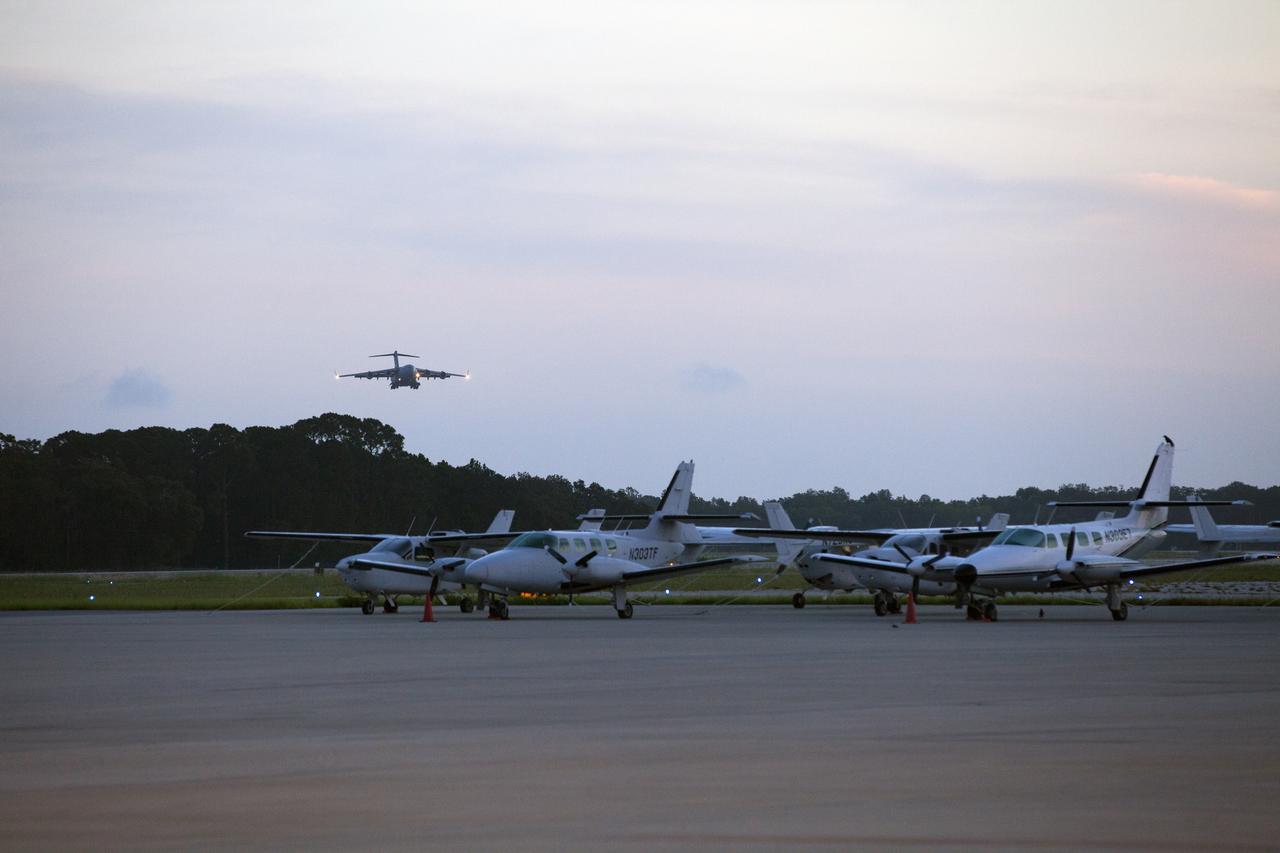
In early morning hours, NASA's TDRS-M satellite arrives at Space Coast Regional Airport in Titusville, Florida, aboard a U.S. Air Force transport aircraft. The spacecraft will be transported to the nearby Astrotech facility, also in Titusville, for preflight processing. The TDRS-M is the latest spacecraft destined for the agency's constellation of communications satellites that allows nearly continuous contact with orbiting spacecraft ranging from the International Space Station and Hubble Space Telescope to the array of scientific observatories. Liftoff atop a United Launch Alliance Atlas V rocket is scheduled to take place from Space Launch Complex 41 at Cape Canaveral Air Force Station at 9:02 a.m. EDT Aug. 3, 2017.
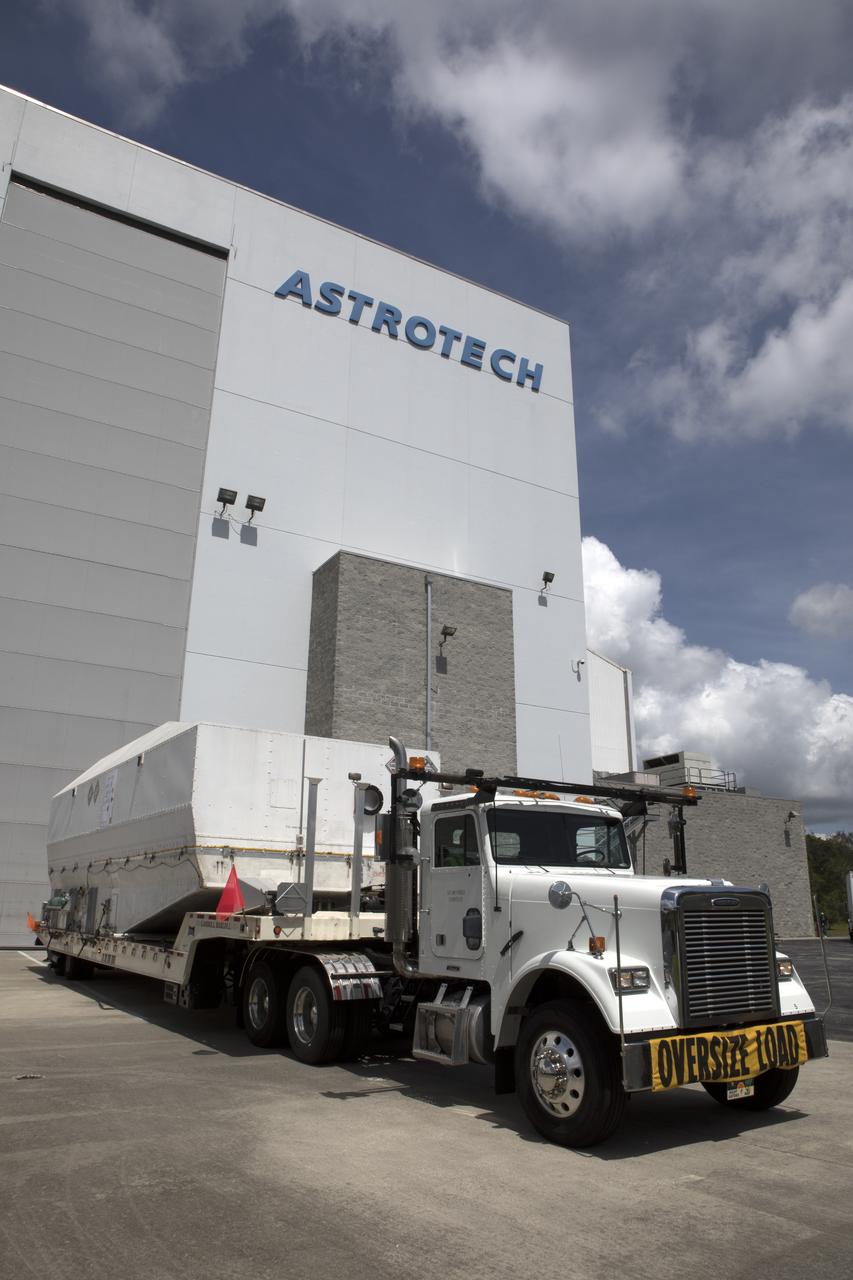
NASA's TDRS-M satellite arrives inside its shipping container at the Astrotech facility in Titusville, Florida, for preflight processing. The TDRS-M is the latest spacecraft destined for the agency's constellation of communications satellites that allows nearly continuous contact with orbiting spacecraft ranging from the International Space Station and Hubble Space Telescope to the array of scientific observatories. Liftoff atop a United Launch Alliance Atlas V rocket is scheduled to take place from Space Launch Complex 41 at Cape Canaveral Air Force Station at 9:02 a.m. EDT Aug. 3, 2017.

KENNEDY SPACE CENTER, Fla. -- STS-118 Commander Scott Kelly stands inside an M-113 armored personnel carrier before his driving session as part of emergency exit training. He and other crew members are at Kennedy for the Terminal Countdown Demonstration Test (TCDT), a dress rehearsal for launch. TCDT activities include the M-113 training, payload familiarization, emergency egress training at the pad and a simulated launch countdown. The STS-118 payload aboard Space Shuttle Endeavour includes the S5 truss, a SPACEHAB module and external stowage platform 3. The mission is the 22nd flight to the International Space Station and is targeted for launch on Aug.7. NASA/George Shelton
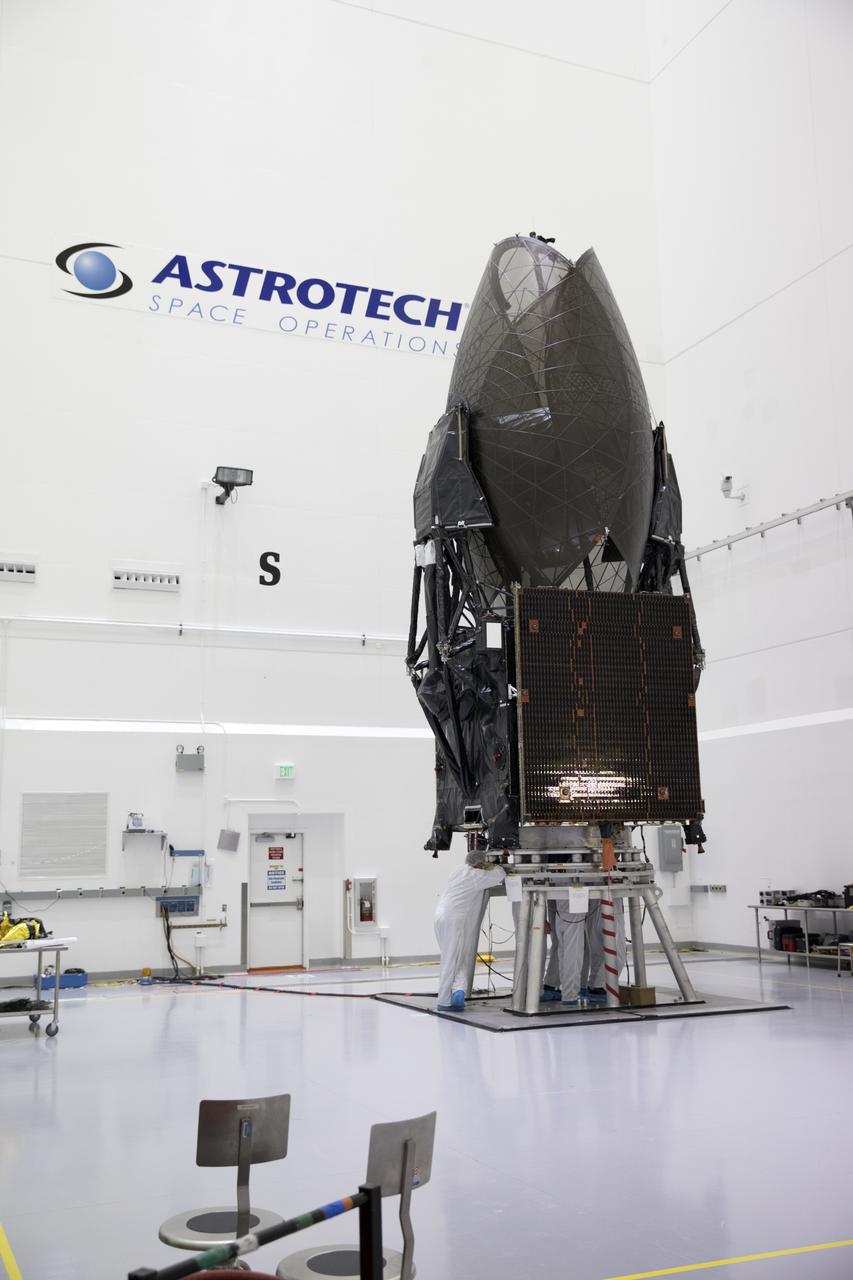
Inside the Astrotech facility in Titusville, Florida, NASA's Tracking and Data Relay Satellite, TDRS-M, is undergoing final checkouts prior to encapsulation in its payload fairing. TDRS-M is the latest spacecraft destined for the agency's constellation of communications satellites that allows nearly continuous contact with orbiting spacecraft ranging from the International Space Station and Hubble Space Telescope to the array of scientific observatories. Liftoff atop a United Launch Alliance Atlas V rocket is scheduled to take place from Space Launch Complex 41 at Cape Canaveral Air Force Station at 9:02 a.m. EDT Aug. 3, 2017.
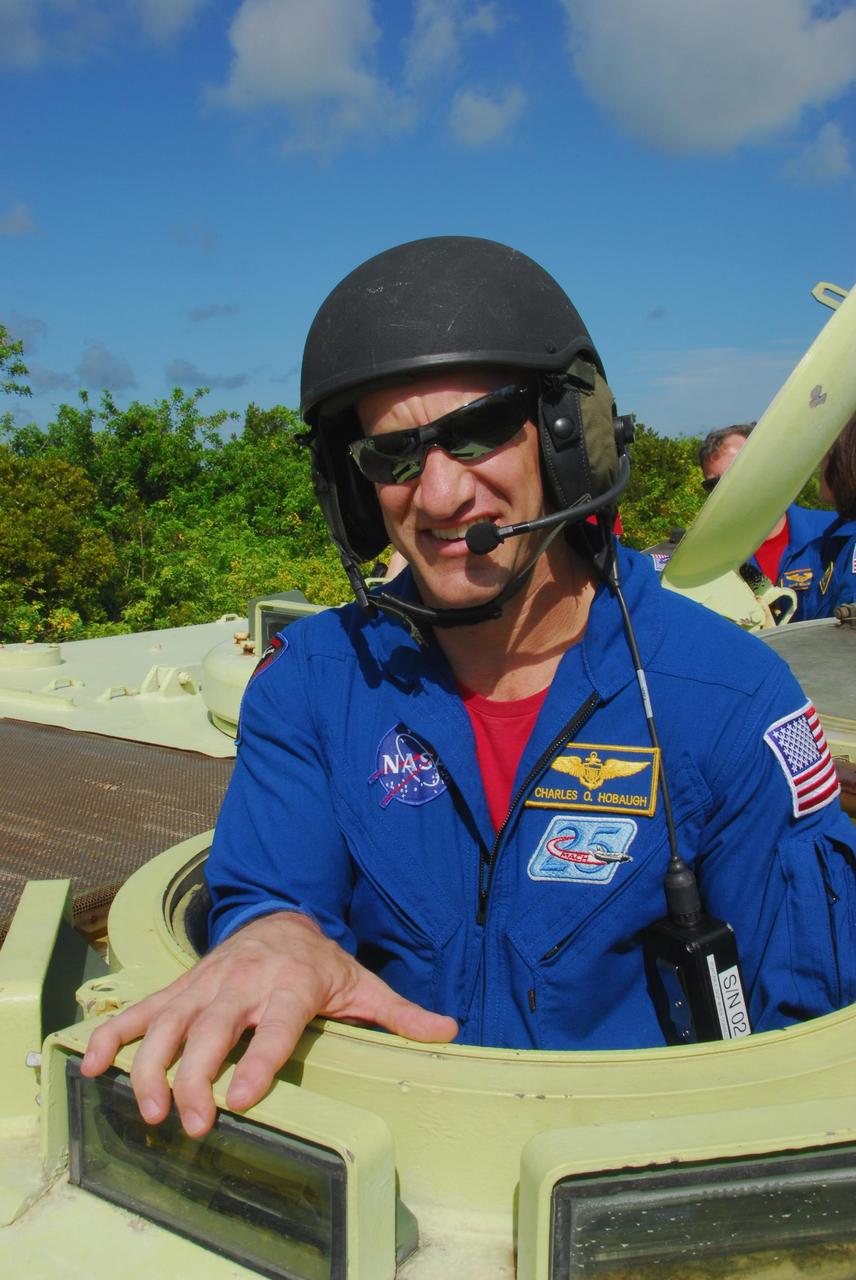
KENNEDY SPACE CENTER, Fla. -- STS-118 Pilot Charlie Hobaugh stands inside an M-113 armored personnel carrier before his driving session as part of emergency exit training. He and other crew members are at Kennedy for the Terminal Countdown Demonstration Test (TCDT), a dress rehearsal for launch. TCDT activities include the M-113 training, payload familiarization, emergency egress training at the pad and a simulated launch countdown. The STS-118 payload aboard Space Shuttle Endeavour includes the S5 truss, a SPACEHAB module and external stowage platform 3. The mission is the 22nd flight to the International Space Station and is targeted for launch on Aug.7. NASA/George Shelton

KENNEDY SPACE CENTER, Fla. -- STS-118 Pilot Charlie Hobaugh practices driving an M-113 armored personnel carrier with passenger (at left) Tracy Caldwell, mission specialist. They and other crew members are at Kennedy for the Terminal Countdown Demonstration Test (TCDT), a dress rehearsal for launch. TCDT activities include the M-113 training, payload familiarization, emergency egress training at the pad and a simulated launch countdown. The STS-118 payload aboard Space Shuttle Endeavour includes the S5 truss, a SPACEHAB module and external stowage platform 3. The mission is the 22nd flight to the International Space Station and is targeted for launch on Aug.7. NASA/George Shelton
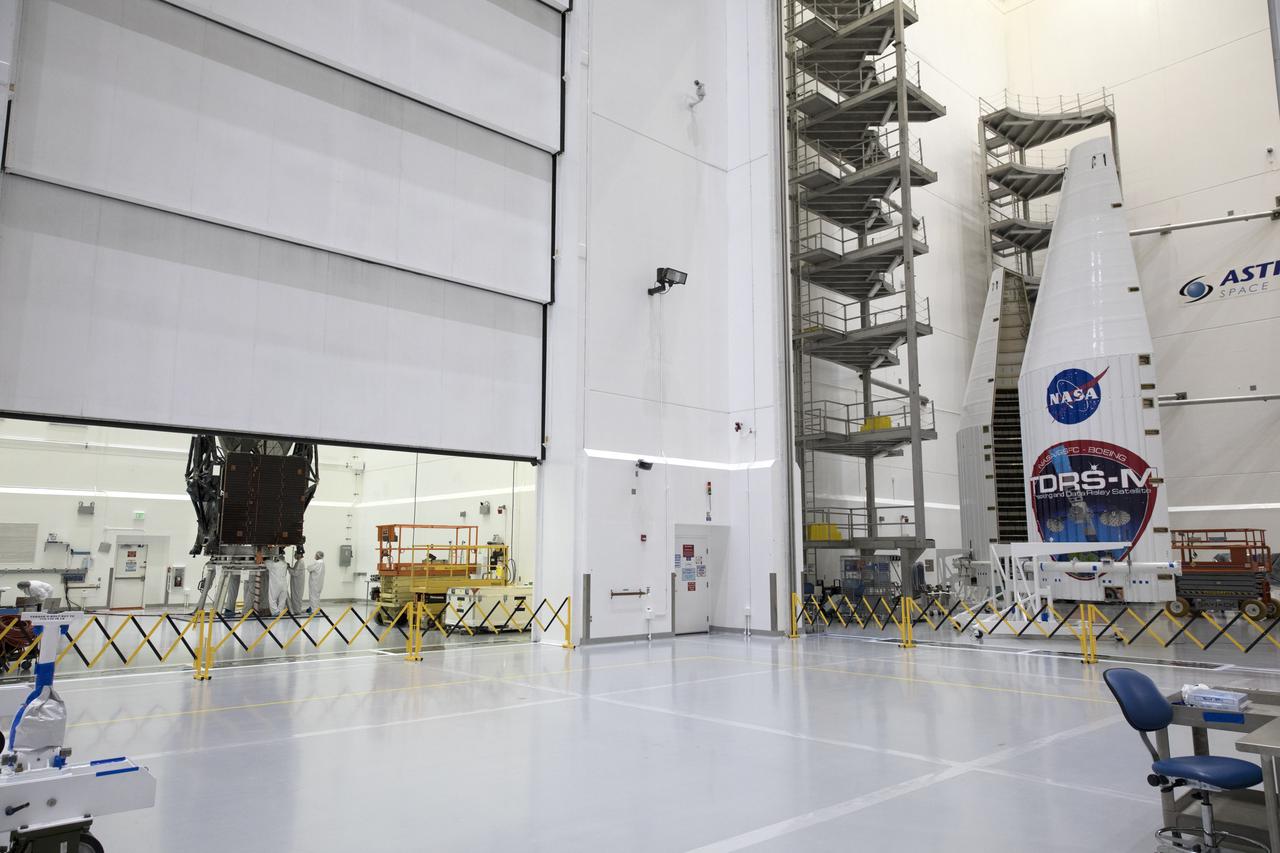
Inside the Astrotech facility in Titusville, Florida, NASA's Tracking and Data Relay Satellite, TDRS-M, is undergoing final checkouts in a test cell behind a large door. The spacecraft soon will be encapsulated in its payload fairing, seen on the right. TDRS-M is the latest spacecraft destined for the agency's constellation of communications satellites that allows nearly continuous contact with orbiting spacecraft ranging from the International Space Station and Hubble Space Telescope to the array of scientific observatories. Liftoff atop a United Launch Alliance Atlas V rocket is scheduled to take place from Space Launch Complex 41 at Cape Canaveral Air Force Station at 9:02 a.m. EDT Aug. 3, 2017.
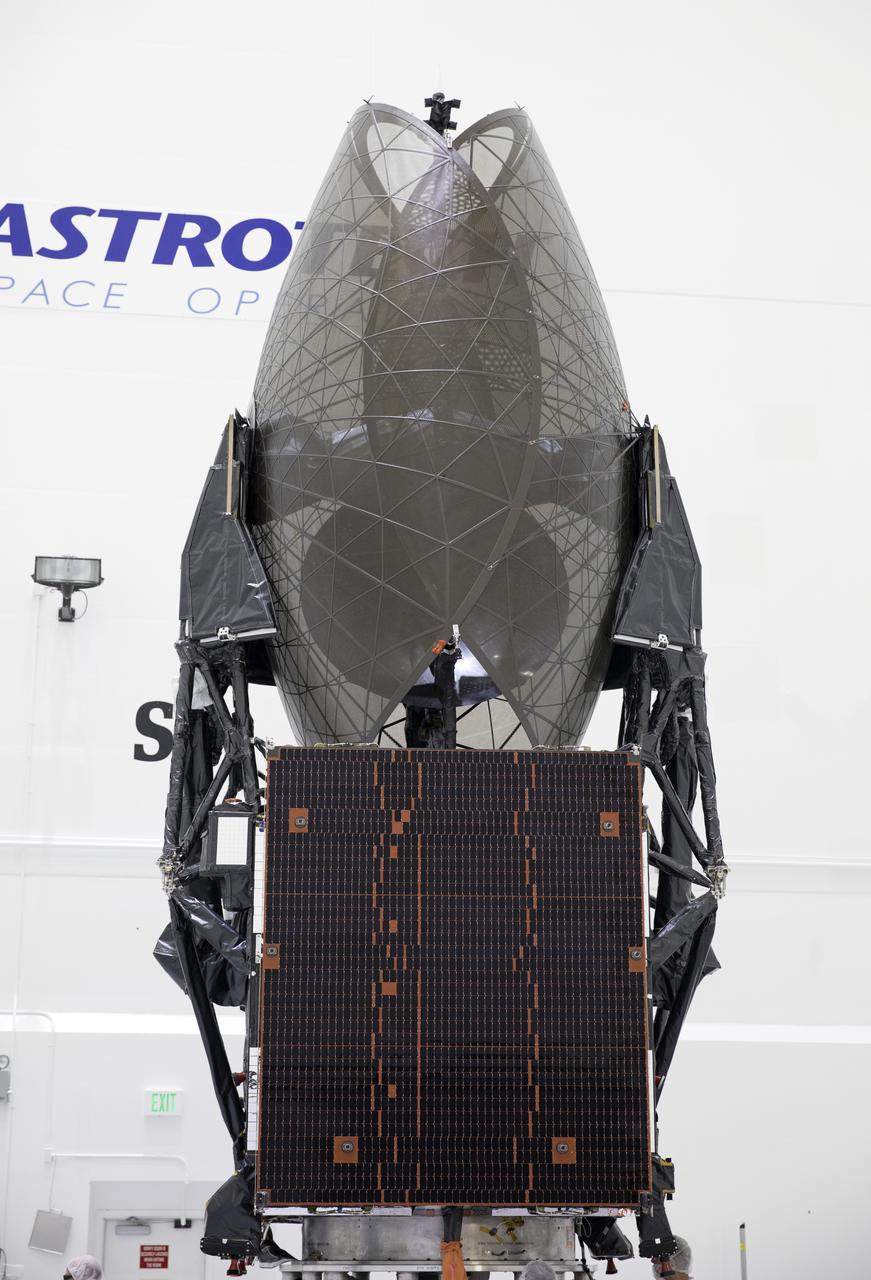
Inside the Astrotech facility in Titusville, Florida, NASA's Tracking and Data Relay Satellite, TDRS-M, is undergoing final checkouts prior to encapsulation in its payload fairing. TDRS-M is the latest spacecraft destined for the agency's constellation of communications satellites that allows nearly continuous contact with orbiting spacecraft ranging from the International Space Station and Hubble Space Telescope to the array of scientific observatories. Liftoff atop a United Launch Alliance Atlas V rocket is scheduled to take place from Space Launch Complex 41 at Cape Canaveral Air Force Station at 9:02 a.m. EDT Aug. 3, 2017.

A south tropical disturbance that has just passed Jupiter's iconic Great Red Spot is captured in this color-enhanced image from NASA's Juno spacecraft. Threads of orange haze are pulled from the Great Red Spot by the turbulence of the south tropical disturbance. The image was taken at 3:04 a.m. PDT (6:04 p.m. EDT) on April 1, 2018, as the spacecraft performed its 12th close flyby of Jupiter. Citizen scientist Kevin M. Gill created this image using data from the spacecraft's JunoCam imager. https://photojournal.jpl.nasa.gov/catalog/PIA22938. - Enhanced image by Kevin M. Gill (CC-BY) based on images provided courtesy of NASA/JPL-Caltech/SwRI/MSSS
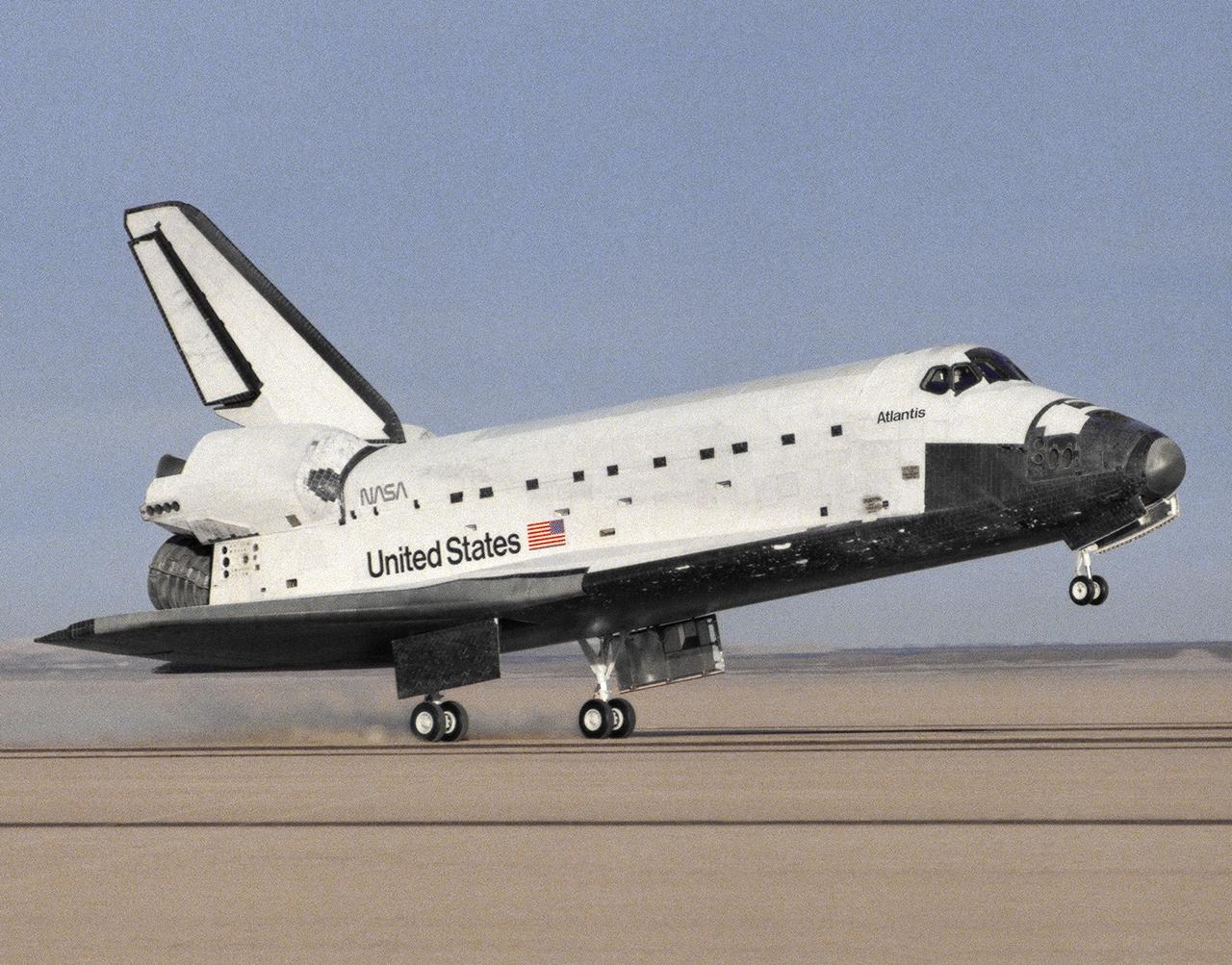
The Space Shuttle Atlantis touches down at 3:35 p.m. PST on 6 December 1988 at NASA's then Ames-Dryden Flight Research Facility at the conclusion of the STS-27 Department of Defense mission. Landing took place on runway 17 of the Rogers Dry Lake, concluding the 4-day, 9-hour, 6-minute mission. The five-man crew was led by Commander Robert L. Gibson and included Pilot Guy S. Gardner; Mission Specialists Jerry L. Ross, William M. Sheperd, and Richard M. Mullane. Atlantis was launched on December 2 from NASA's Kennedy Space Center.

KENNEDY SPACE CENTER, Fla. -- STS-118 Commander Scott Kelly practices driving an M-113 armored personnel carrier with fellow crew members Tracy Caldwell, Alvin Drew and Dave Williams, all mission specialists, as passengers. They are at Kennedy for the Terminal Countdown Demonstration Test (TCDT), a dress rehearsal for launch. TCDT activities include the M-113 training, payload familiarization, emergency egress training at the pad and a simulated launch countdown. The STS-118 payload aboard Space Shuttle Endeavour includes the S5 truss, a SPACEHAB module and external stowage platform 3. The mission is the 22nd flight to the International Space Station and is targeted for launch on Aug.7. NASA/George Shelton
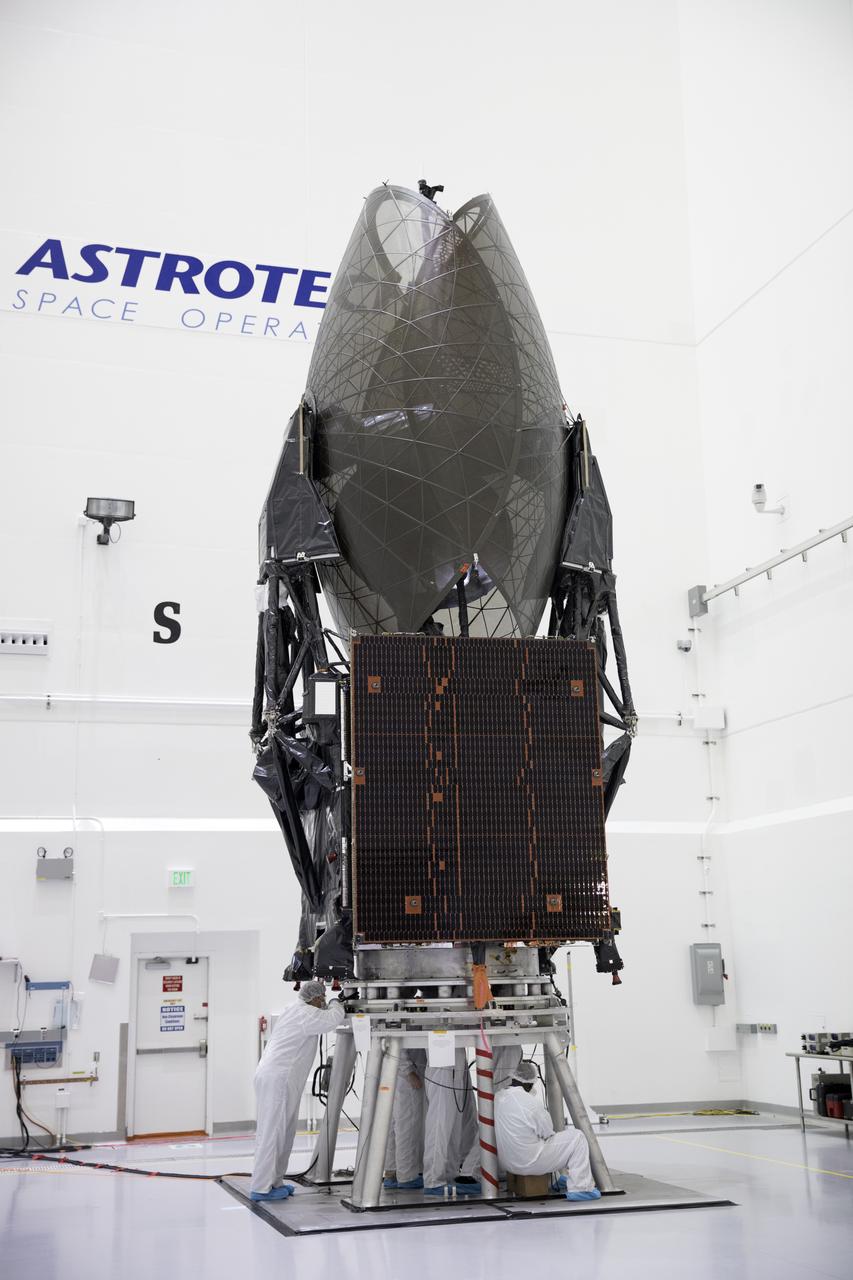
Inside the Astrotech facility in Titusville, Florida, NASA's Tracking and Data Relay Satellite, TDRS-M, is undergoing final checkouts prior to encapsulation in its payload fairing. TDRS-M is the latest spacecraft destined for the agency's constellation of communications satellites that allows nearly continuous contact with orbiting spacecraft ranging from the International Space Station and Hubble Space Telescope to the array of scientific observatories. Liftoff atop a United Launch Alliance Atlas V rocket is scheduled to take place from Space Launch Complex 41 at Cape Canaveral Air Force Station at 9:02 a.m. EDT Aug. 3, 2017.
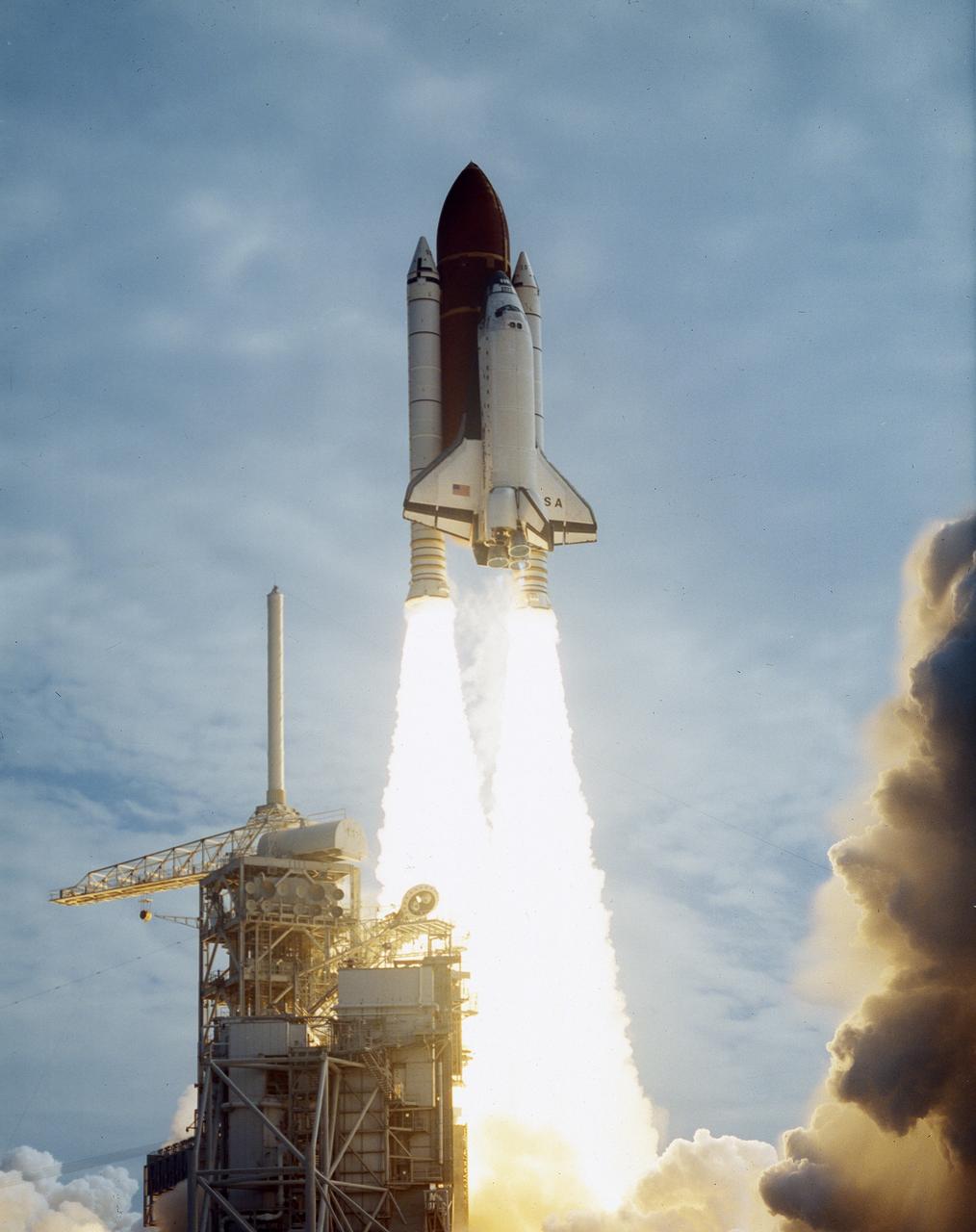
Launched aboard the Space Shuttle Columbia on June 5, 1991 at 9:24; am (EDT), the STS-40 mission was the fifth dedicated Spacelab Mission, Spacelab Life Sciences-1 (SLS-1), and the first mission dedicated solely to life sciences. The STS-40 crew included 7 astronauts: Bryan D. O’Connor, commander; Sidney M. Gutierrez, pilot; F. Drew Gaffney, payload specialist 1; Milli-Hughes Fulford, payload specialist 2; James P. Bagian, mission specialist 1; Tamara E. Jernigan, mission specialist 2; and M. Rhea Seddon, mission specialist 3.
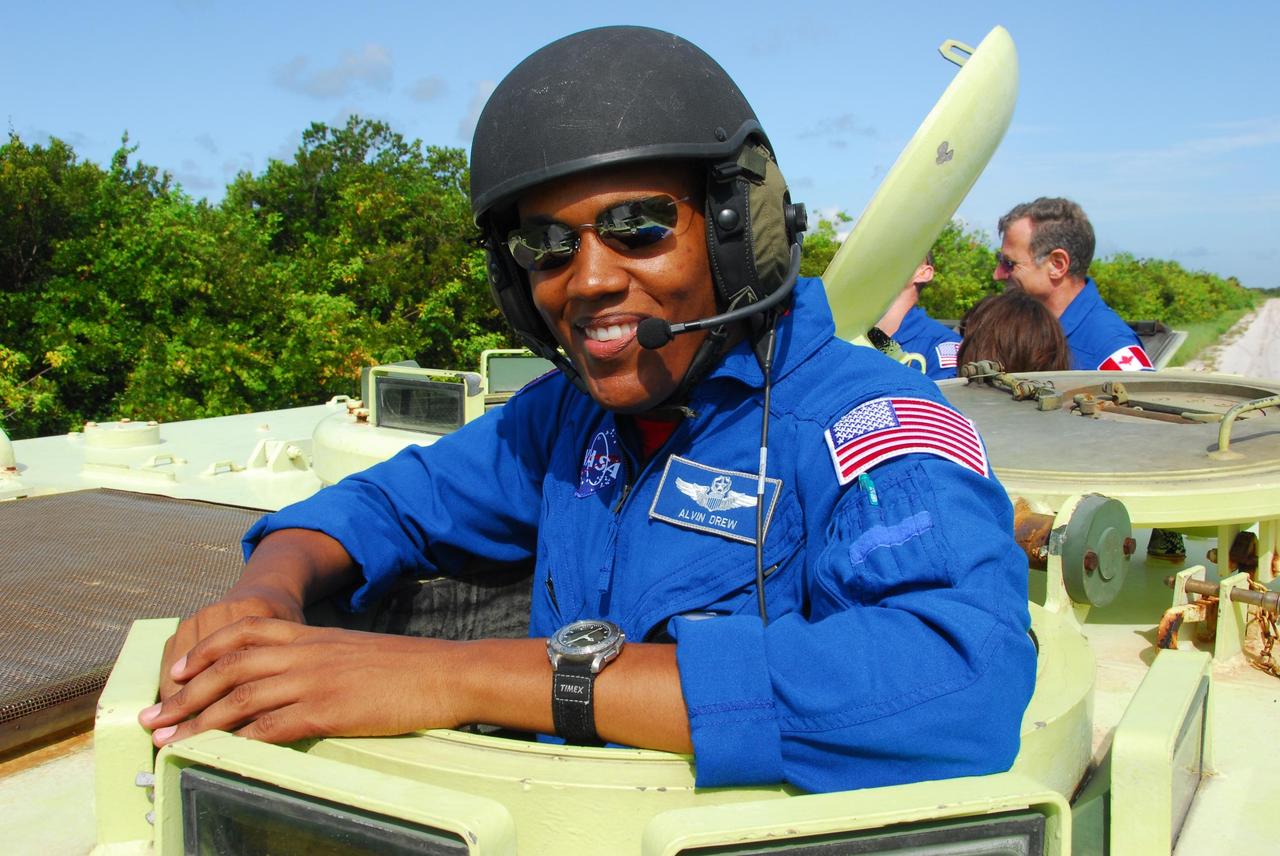
KENNEDY SPACE CENTER, Fla. -- STS-118 Mission Specialist Alvin Drew stands inside an M-113 armored personnel carrier before his driving session, as part of emergency exit training. He and other crew members are at Kennedy for the Terminal Countdown Demonstration Test (TCDT), a dress rehearsal for launch. TCDT activities include the M-113 training, payload familiarization, emergency egress training at the pad and a simulated launch countdown. The STS-118 payload aboard Space Shuttle Endeavour includes the S5 truss, a SPACEHAB module and external stowage platform 3. The mission is the 22nd flight to the International Space Station and is targeted for launch on Aug.7. NASA/George Shelton
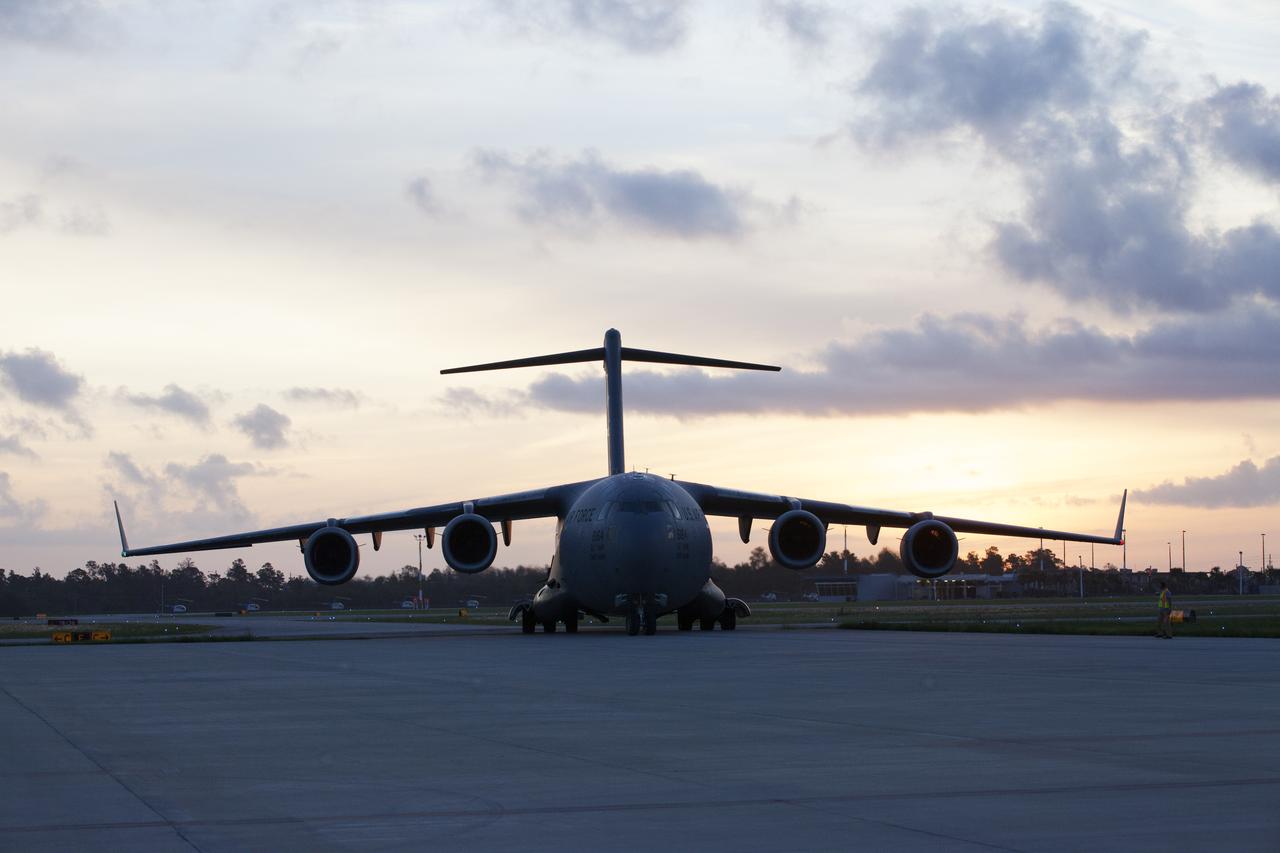
NASA's TDRS-M satellite arrives at Space Coast Regional Airport in Titusville, Florida, aboard a U.S. Air Force transport aircraft. The spacecraft will be transported to the nearby Astrotech facility, also in Titusville, for preflight processing. The TDRS-M is the latest spacecraft destined for the agency's constellation of communications satellites that allows nearly continuous contact with orbiting spacecraft ranging from the International Space Station and Hubble Space Telescope to the array of scientific observatories. Liftoff atop a United Launch Alliance Atlas V rocket is scheduled to take place from Space Launch Complex 41 at Cape Canaveral Air Force Station at 9:02 a.m. EDT Aug. 3, 2017.
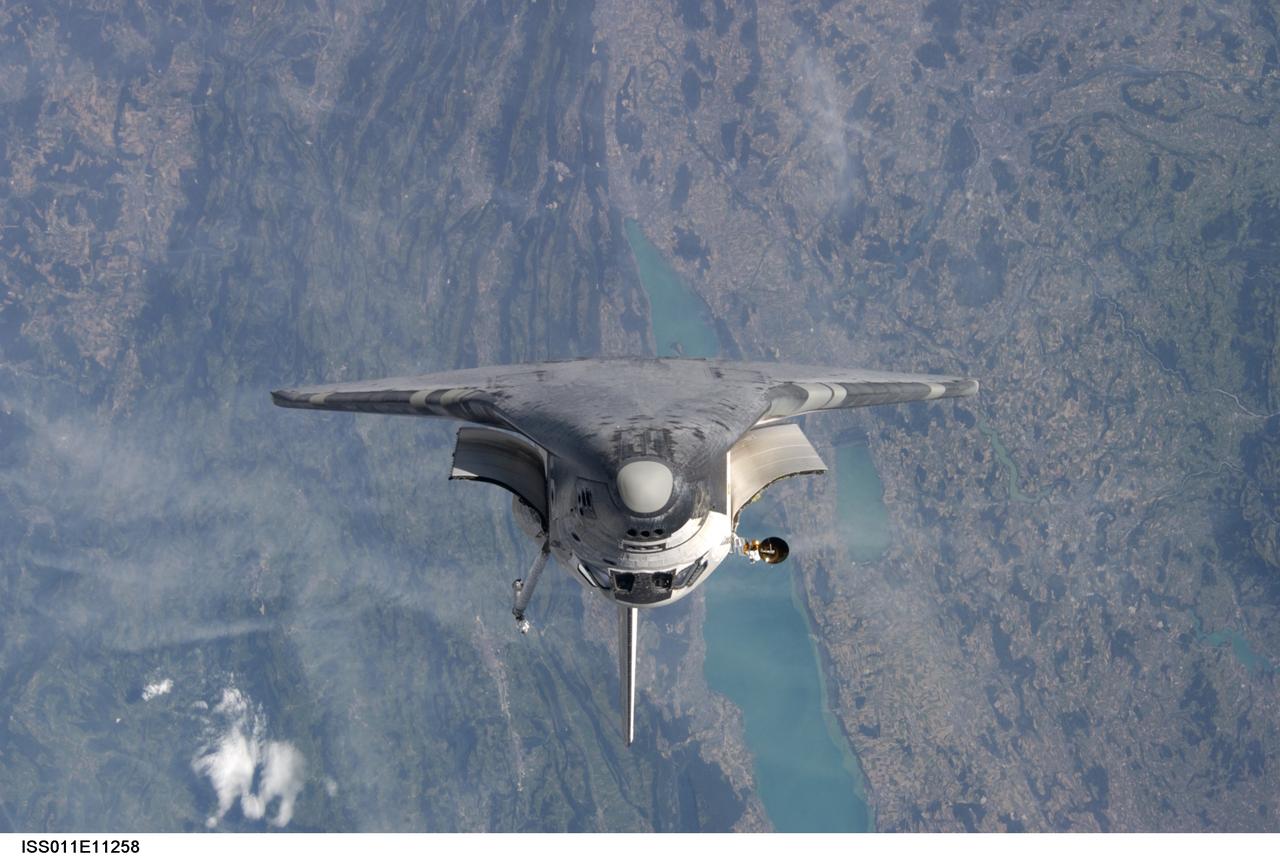
ISS011-E-11258 (28 July 2005) --- View of the Space Shuttle Discovery as photographed during the survey operations performed by the Expedition 11 crew on the International Space Station during the STS-114 R-Bar Pitch Maneuver on Flight Day 3. Discovery docked to the station at 6:18 a.m. (CDT) on Thursday, July 28, 2005. Parts of Switzerland are in the background. Onboard the shuttle were astronauts Eileen M. Collins, STS-114 commander; James M. Kelly, pilot; Andrew S. W. Thomas, Stephen K. Robinson, Wendy B. Lawrence, Charles J. Camarda and Japan Aerospace Exploration Agency (JAXA) astronaut Soichi Noguchi, all mission specialists.
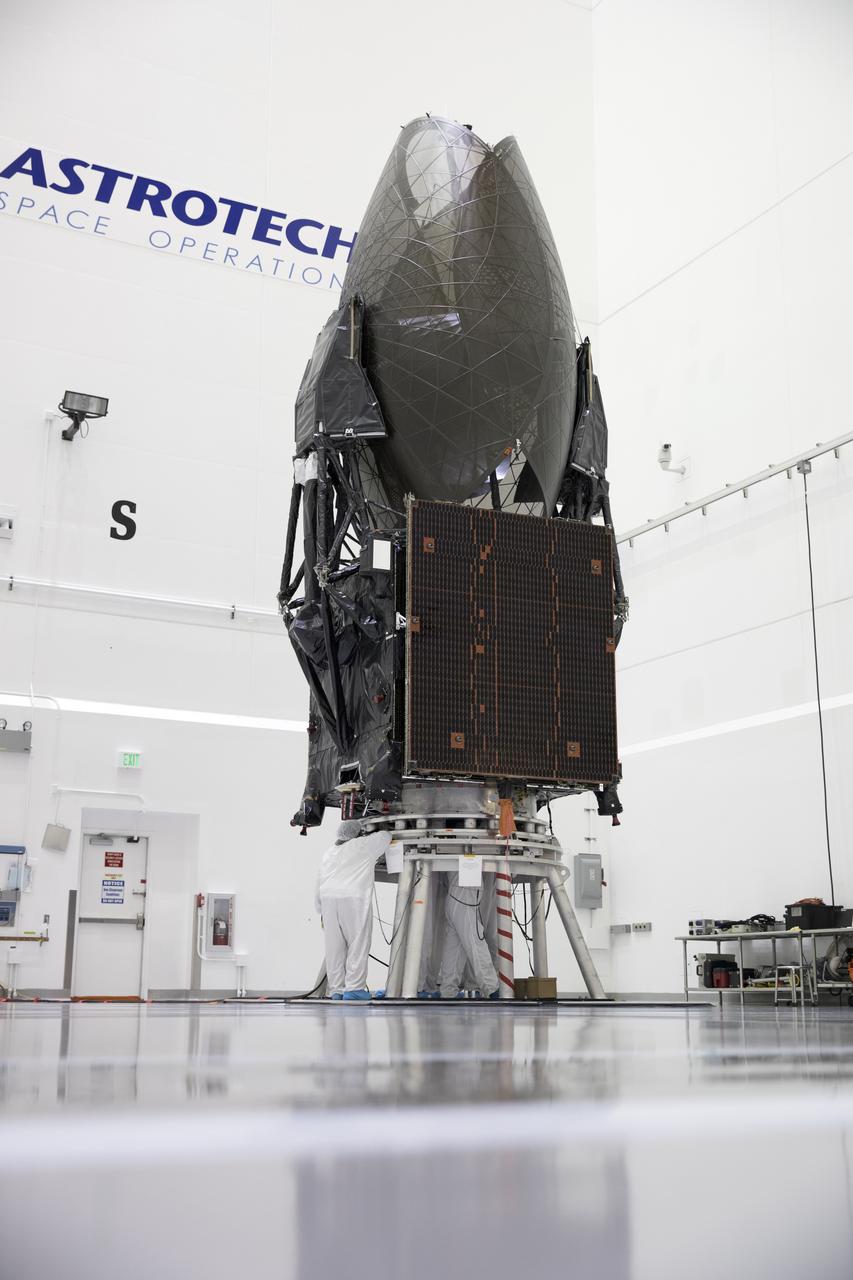
Inside the Astrotech facility in Titusville, Florida, NASA's Tracking and Data Relay Satellite, TDRS-M, is undergoing final checkouts prior to encapsulation in its payload fairing. TDRS-M is the latest spacecraft destined for the agency's constellation of communications satellites that allows nearly continuous contact with orbiting spacecraft ranging from the International Space Station and Hubble Space Telescope to the array of scientific observatories. Liftoff atop a United Launch Alliance Atlas V rocket is scheduled to take place from Space Launch Complex 41 at Cape Canaveral Air Force Station at 9:02 a.m. EDT Aug. 3, 2017.
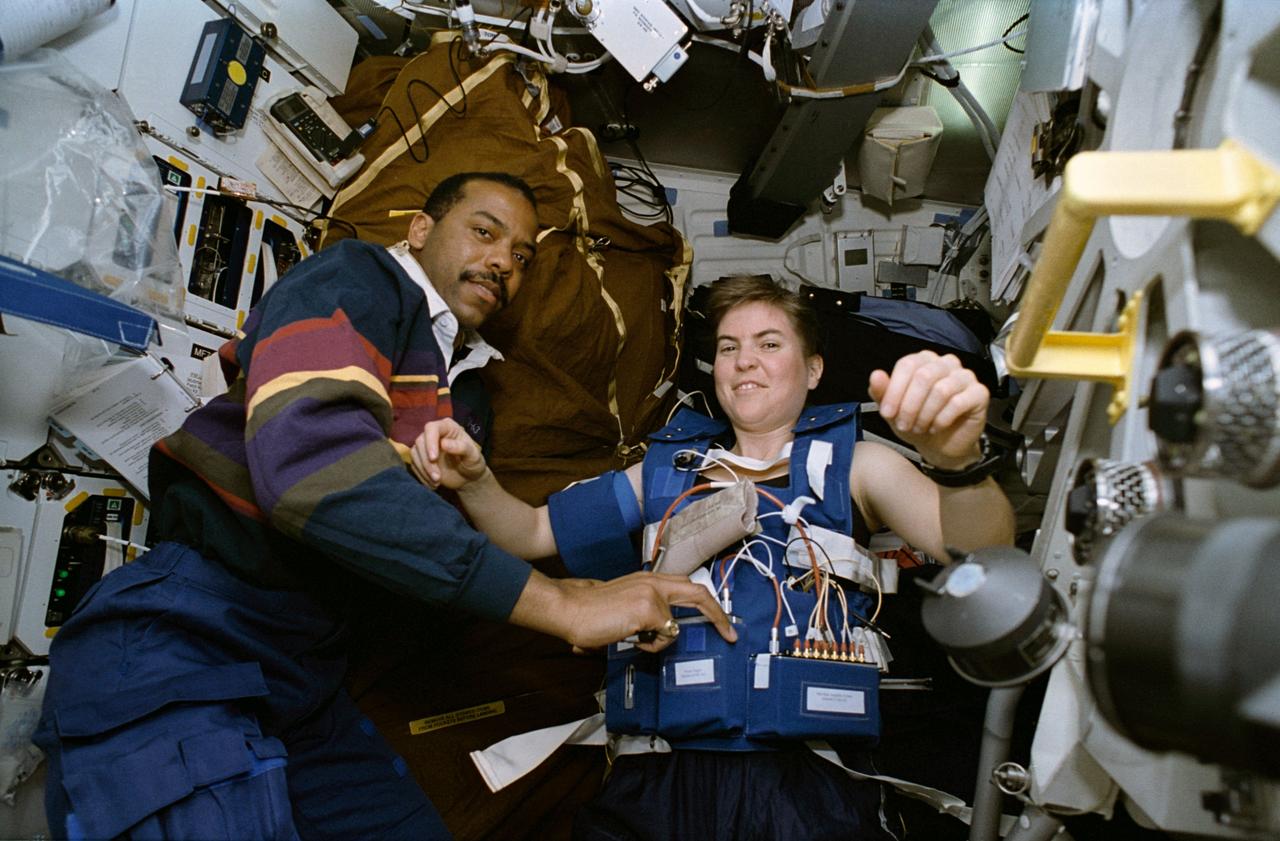
STS063-86-016 (3-11 Feb 1995) --- With astronaut Janice E. Voss, mission specialist, as his test subject, astronaut Bernard A. Harris, Jr., payload commander and a physician, uses a special biomedical harness experiment to check the response of muscles to microgravity. They are on the mid-deck, where many of the SpaceHab 3 experiments are located. The SpaceHab 3 Module is in the cargo bay. Others onboard the Space Shuttle Discovery were astronauts James D. Wetherbee, commander; Eileen M. Collins, pilot; mission specialists C. Michael Foale and Russian cosmonaut Vladimir G. Titov.
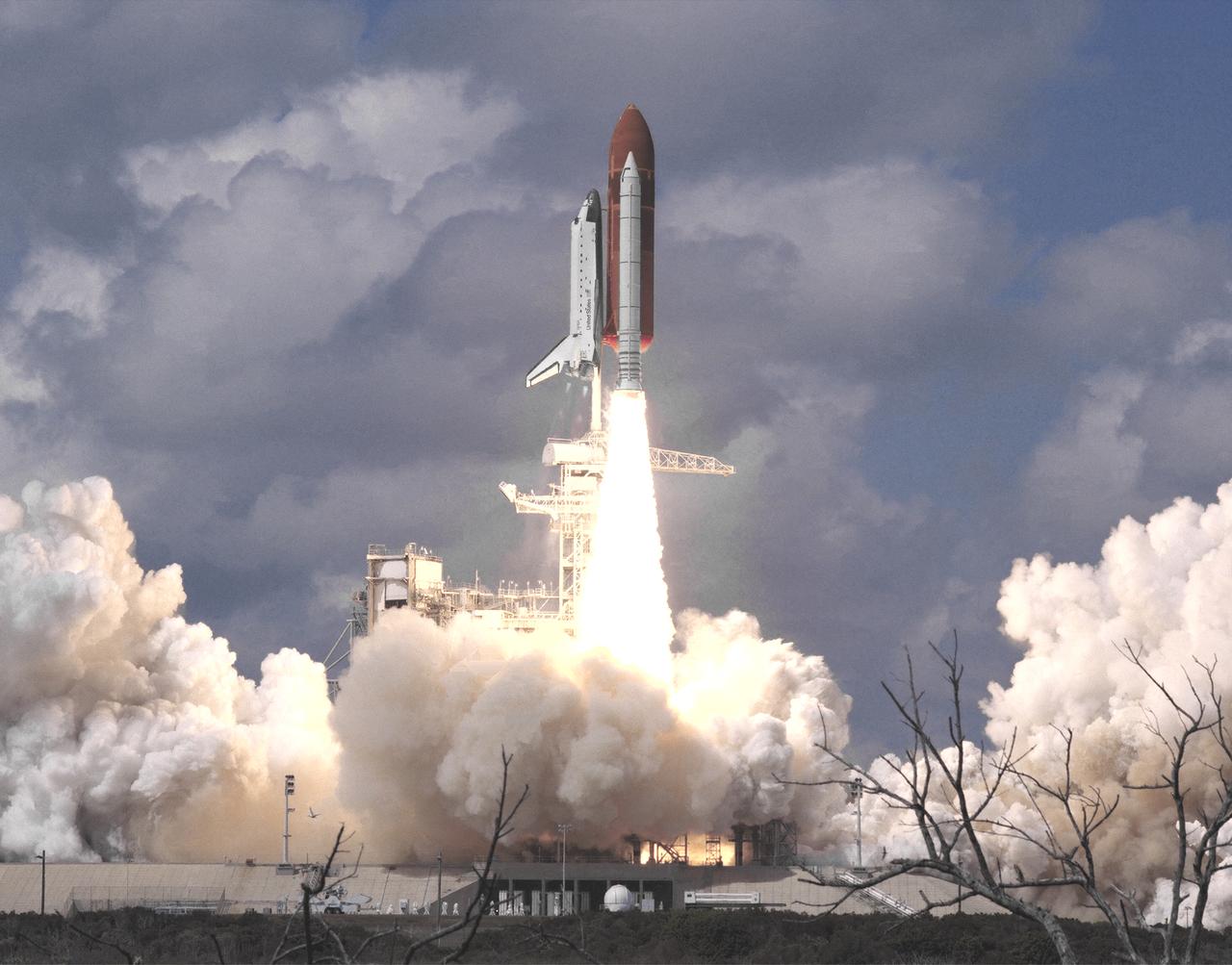
The Space Shuttle Discovery takes off from Launch Pad 39B at the Kennedy Space Center, Florida, to being Mission STS-26 on 29 September 1988,11:37:00 a.m. EDT. The 26th shuttle mission lasted four days, one hour, zero minutes, and 11 seconds. Discovery landed 3 October 1988, 9:37:11 a.m. PDT, on Runway 17 at Edwards Air Force Base, California. Its primary payload, NASA Tracking and Data Relay Satellite-3 (TDRS-3) attached to an Inertial Upper Stage (IUS), became the second TDRS deployed. After deployment, IUS propelled the satellite to a geosynchronous orbit. The crew consisted of Frederick H. Hauck, Commander; Richard O. Covey, Pilot; John M. Lounge, Mission Specialist 1; George D. Nelson, Mission Specialist 2; and David C. Hilmers, Mission Specialist 3.
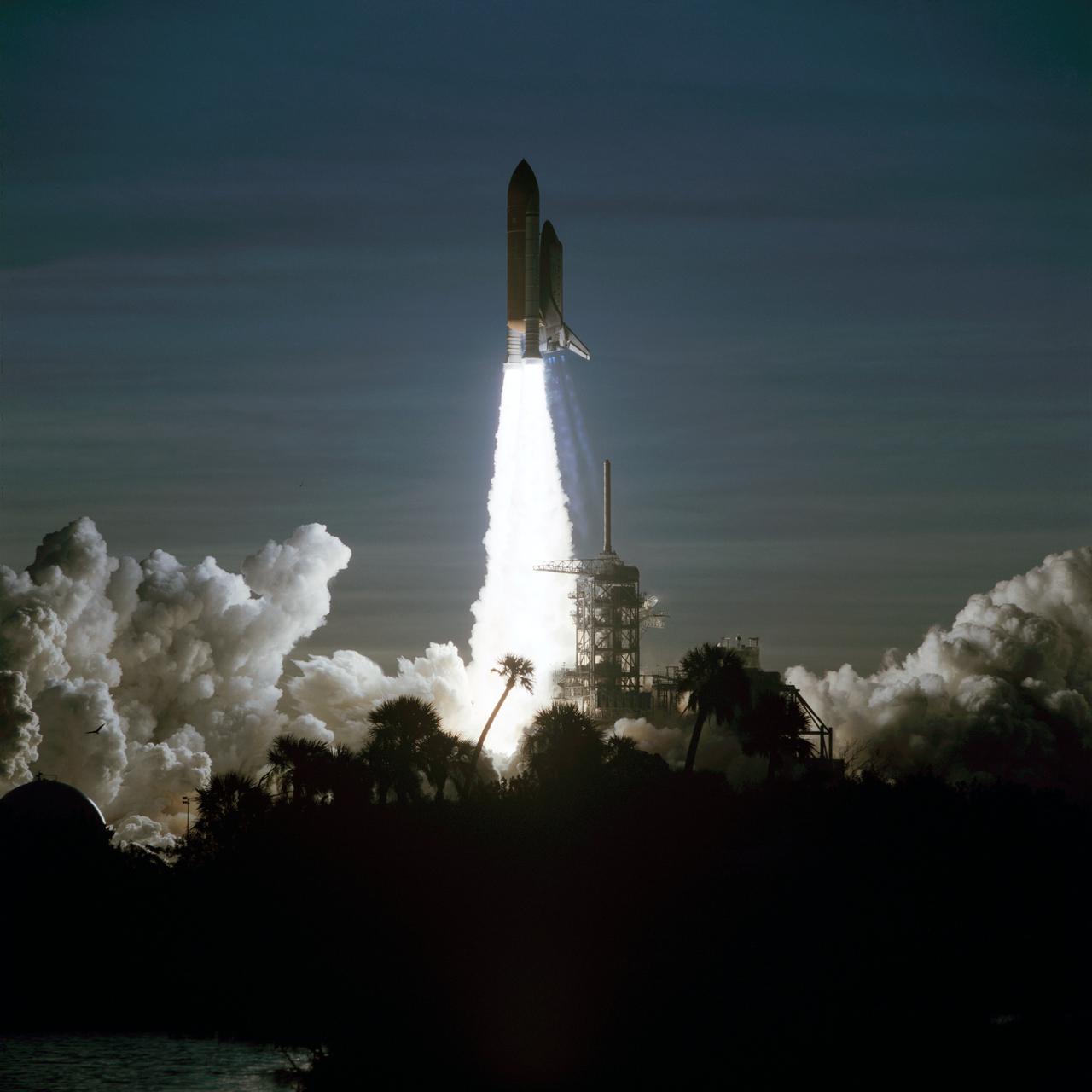
STS060-S-106 (3 Feb 1994) --- Palm trees are silhouetted in the foreground of this 70mm image as the Space Shuttle Discovery heads toward an eight-day mission in Earth orbit. Liftoff occurred as scheduled at 7:10 a.m. (EST), February 3, 1994. Aboard the spacecraft were astronauts Charles F. Bolden Jr., commander; Kenneth S. Reightler Jr., pilot; Franklin R. Chang-Diaz, payload commander; and N. Jan Davis and Ronald M. Sega, mission specialists, along with Russian cosmonaut Sergei K. Krikalev, also a mission specialist.

The crew assigned to the STS-51D mission included (front left to right) Karol J. Bobko, commander; Donald E. Williams, pilot; M. Rhea Seddon, mission specialist; and Jeffrey A. Hoffman, mission specialist. On the back row, left to right, are S. David Griggs, mission specialist; and payload specialists Charles D. Walker, and E. Jake Garn (Republican Utah Senator). Launched aboard the Space Shuttle Discovery on April 12, 1985 at 8:59:05 am (EST), the STS-51D mission’s primary payloads were the TELESAT-1 (ANIK-C) communications satellite and the SYNCOM IV-3 (also known as LEASAT-3).
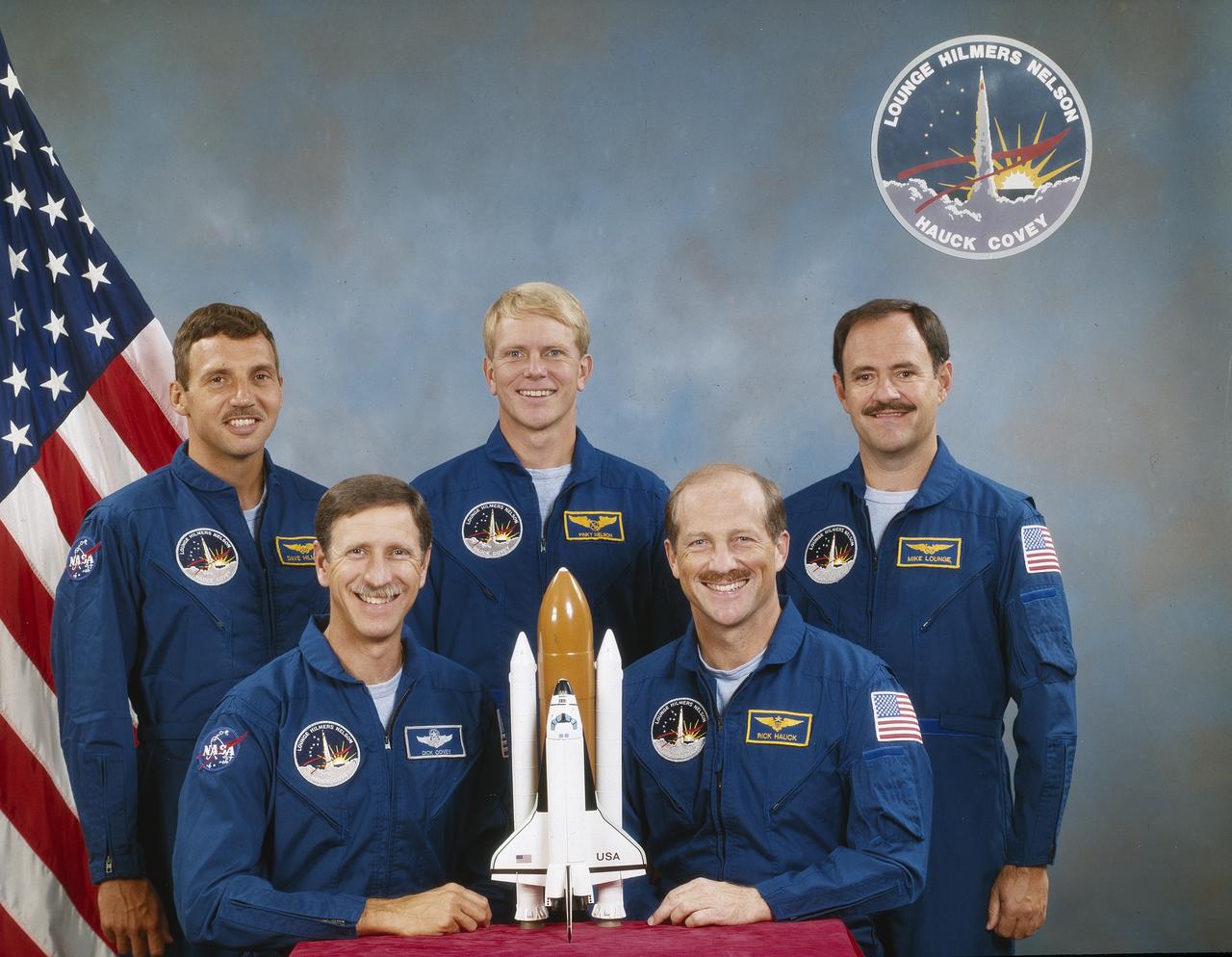
Five astronauts composed the crew of the STS-26 mission. Pictured in the portrait (left to right) are David C. Hilmer, mission specialist; Richard O. Covey, pilot; George D. Nelson, mission specialist; Frederick H. Hauck, Jr., commander; and John, M. Lounge, mission specialist. Launched aboard the Space Shuttle Orbiter Discovery, liftoff occurred on September 29, 1988 at 11:37am (EDT). This was the 7th flight of the Orbiter Discovery, and the return to flight after the STS-51L mission accident. The primary payload was the NASA Tracking and Data Relay Satellite-3 (TDRS-3).
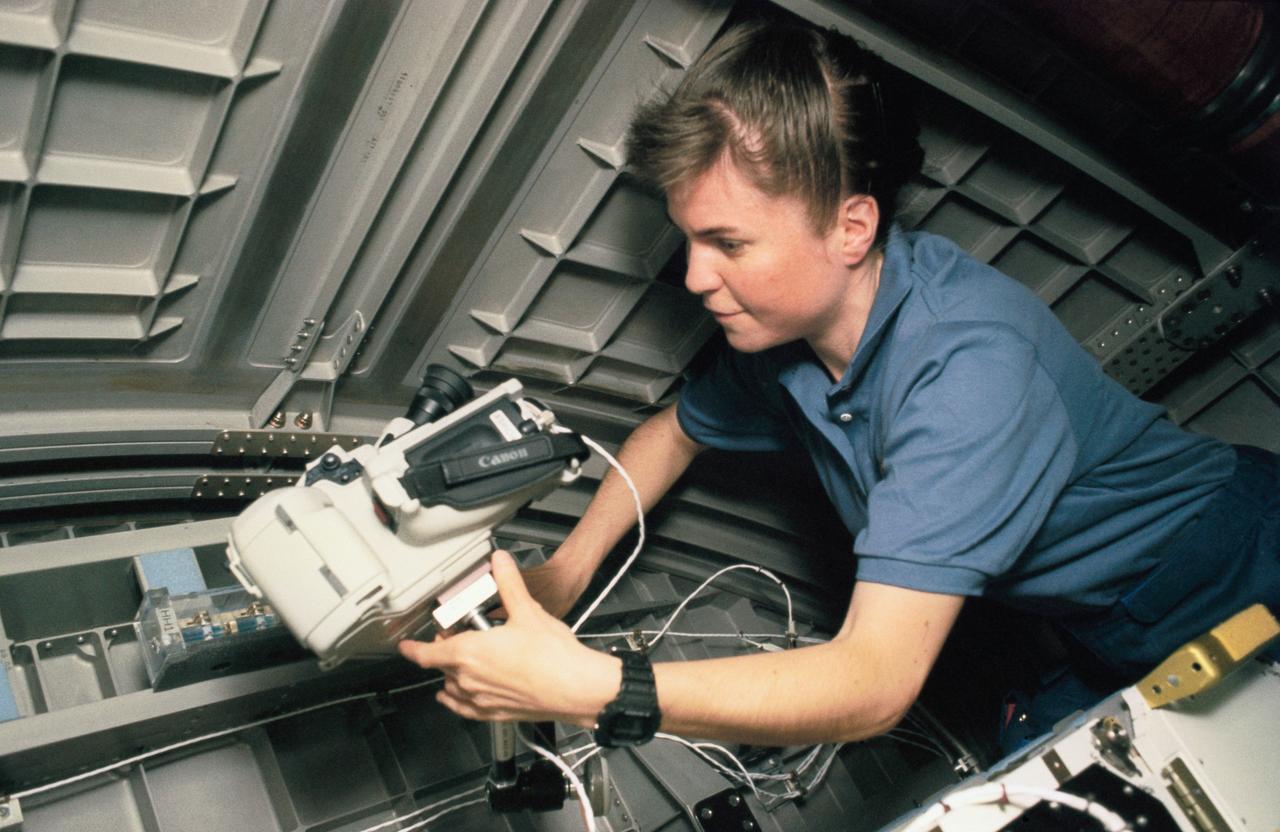
STS063-313-018 (3-11 Feb 1995) --- Janice E. Voss, mission specialist, with a video camera in SpaceHab-3 onboard the Space Shuttle Discovery. This is one of 16 still photographs released by the NASA Johnson Space Center (JSC) Public Affairs Office (PAO) on February 14, 1995. Others onboard the Discovery were astronauts James D. Wetherbee, mission commander; Eileen M. Collins, pilot; Bernard A. Harris Jr., payload commander; mission specialists C. Michael Foale, and cosmonaut Vladimir G. Titov.
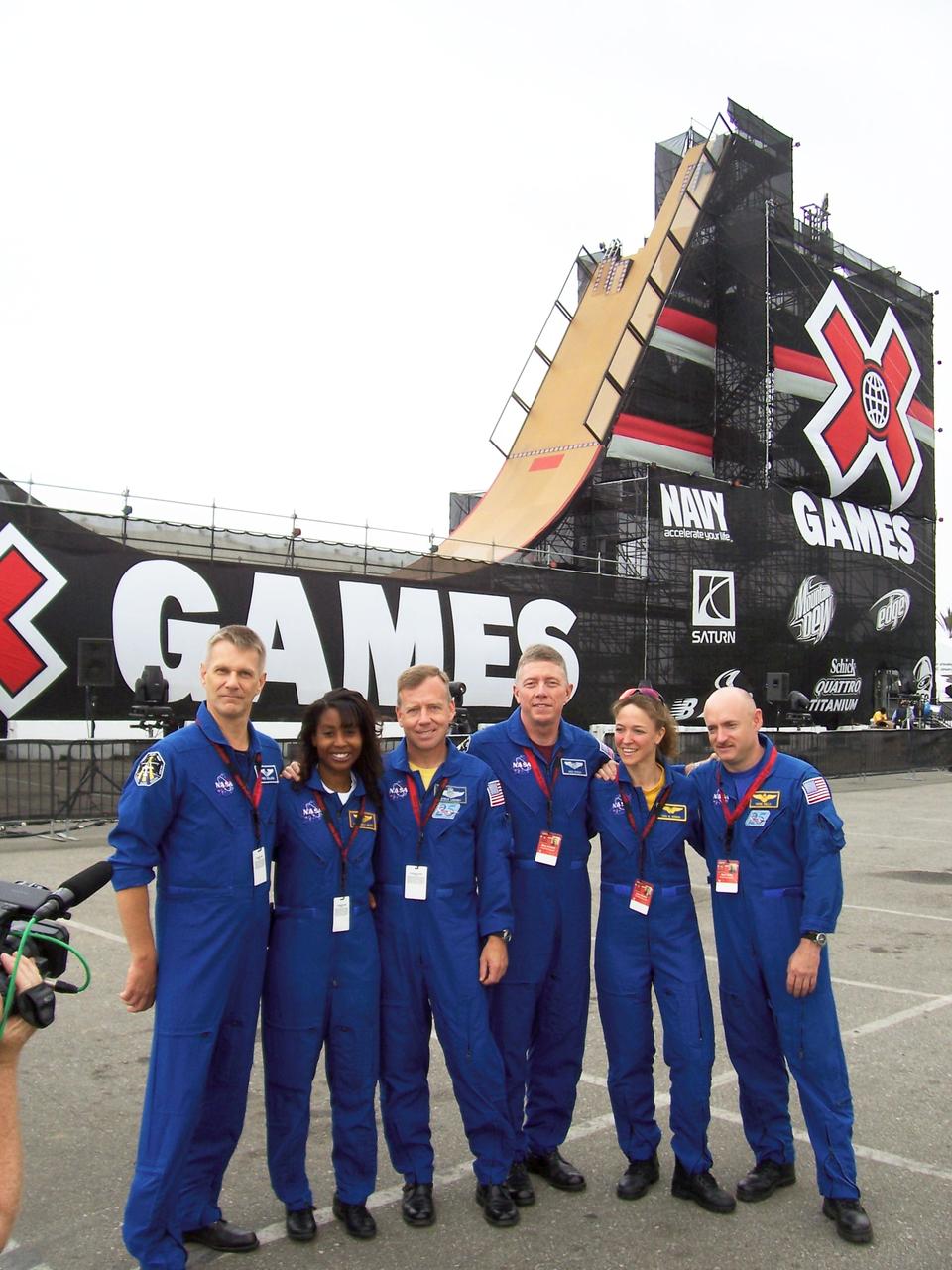
JSC2006-E-32815 (3 Aug. 2006) --- The crew of STS-121 attended opening day of the 12th "X Games" in Los Angeles Aug. 3, discussing their recent mission to the International Space Station with students and athletes. From left to right are astronauts Piers J. Sellers, Stephanie D. Wilson, Steven W. Lindsey, Michael E. Fossum, Lisa M. Nowak and Mark E. Kelly. In the background is the signature 80 foot high "Big Air Jump" skateboarding ramp - one of the event highlights. The crew's visit also included presentations at the Jet Propulsion Laboratory and the California Science Center.
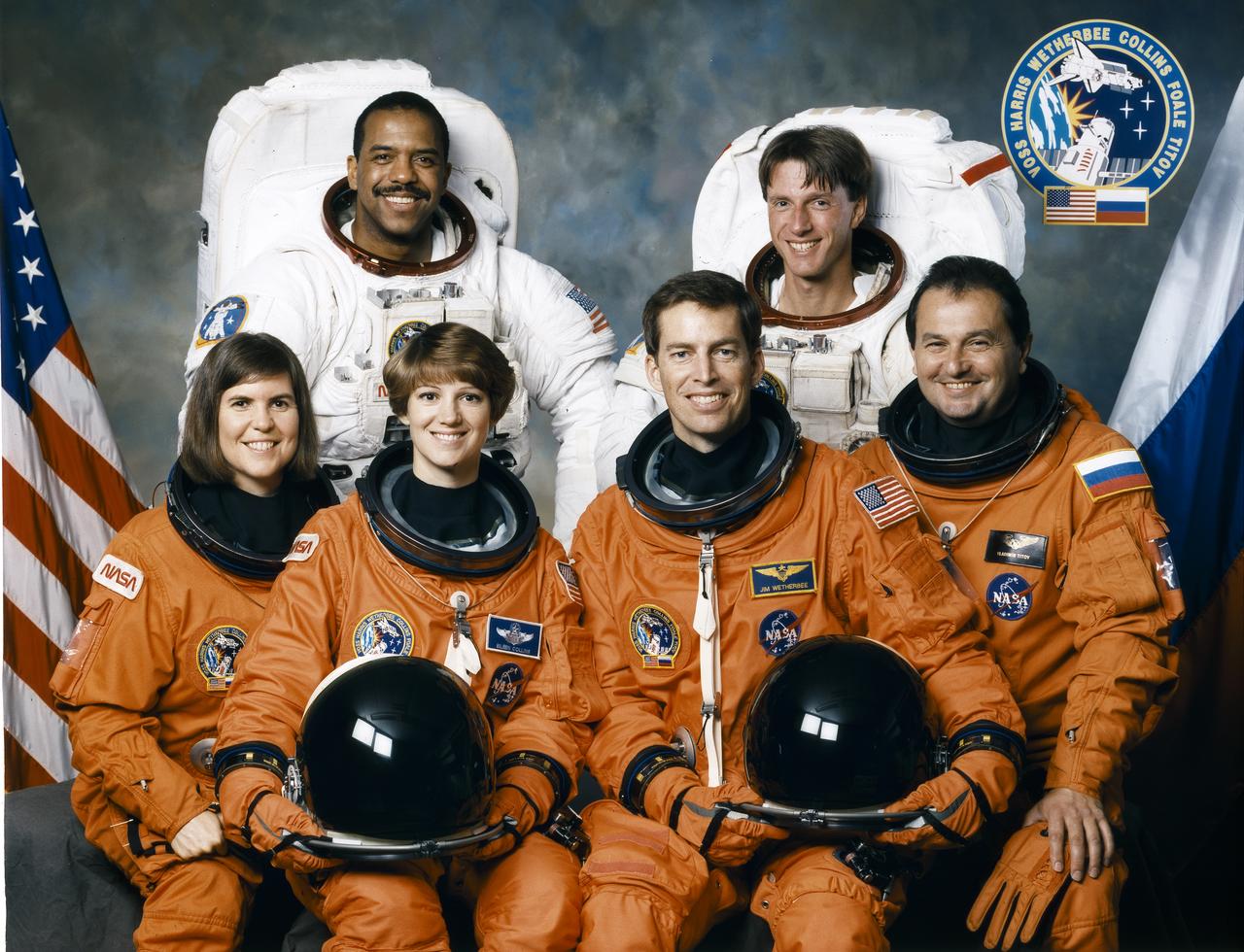
Crew members assigned to the STS-63 mission included (front left to right) Janice E. Voss, mission specialist; Eileen M. Collins, pilot; (the first woman to pilot a Space Shuttle), James D. Wetherbee, commander; and Vladmir G. Titov (Cosmonaut). Standing in the rear are mission specialists Bernard A. Harris, and C. Michael Foale. Launched aboard the Space Shuttle Discovery on February 3, 1995 at 12:22:04 am (EST), the primary payload for the mission was the SPACEHAB-3. STS-63 marked the first approach and fly around by the Shuttle with the Russian space station Mir.
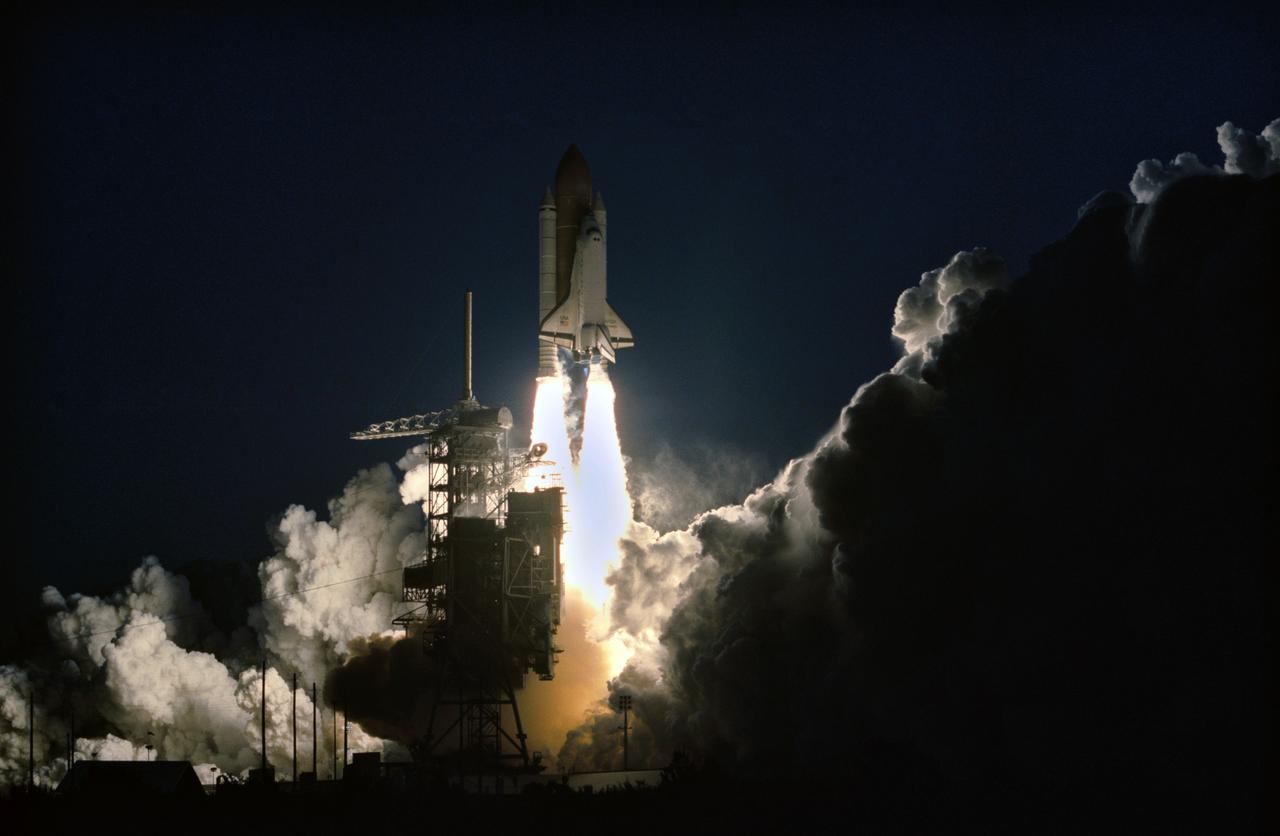
STS060-S-105 (3 Feb 1994) --- The Space Shuttle Discovery heads toward an eight-day mission in Earth orbit with five NASA astronauts and a Russian cosmonaut aboard. Liftoff occurred as scheduled at 7:10 a.m. (EST), February 3, 1994. Aboard the spacecraft were astronauts Charles F. Bolden Jr., commander; Kenneth S. Reightler Jr., pilot; Franklin R. Chang-Diaz, payload commander; and N. Jan Davis and Ronald M. Sega, mission specialists, along with Russian cosmonaut Sergei K. Krikalev, also a mission specialist.
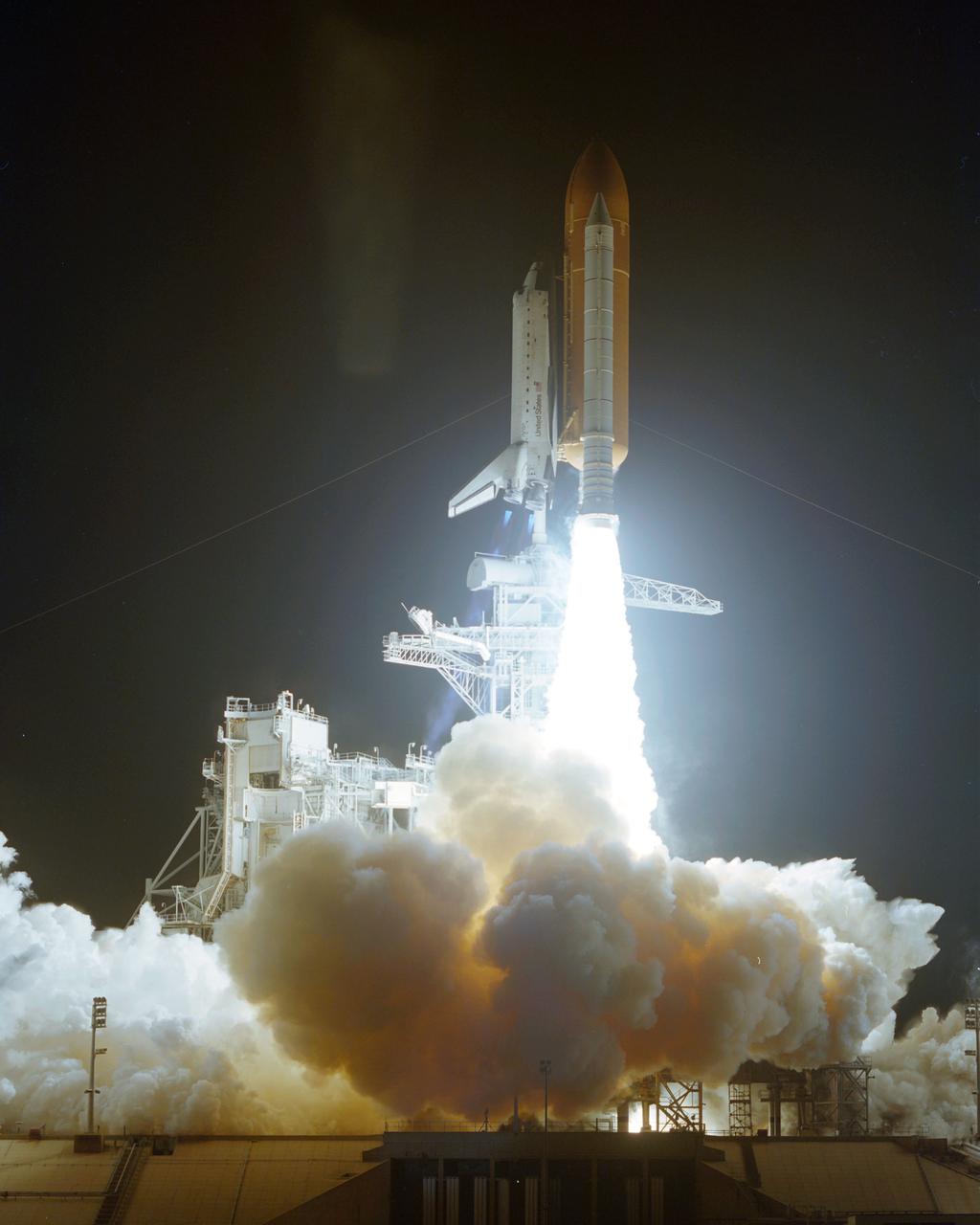
STS063-S-007 (3 Feb 1995) --- The race to catch up with the Russia's Mir gets underway as the Space Shuttle Discovery launches from Pad 39B, Kennedy Space Center (KSC) at 12:22:04 (EST), February 3, 1995. Discovery is the first in the current fleet of four Space Shuttle vehicles to make 20 launches. Onboard for the 67th (STS-63 is out of sequence) Shuttle flight are astronauts James D. Wetherbee, mission commander; Eileen M. Collins, pilot; Bernard A. Harris Jr., payload commander; mission specialists Janice Voss and C. Michael Foale; along with Russian cosmonaut Vladimir G. Titov.
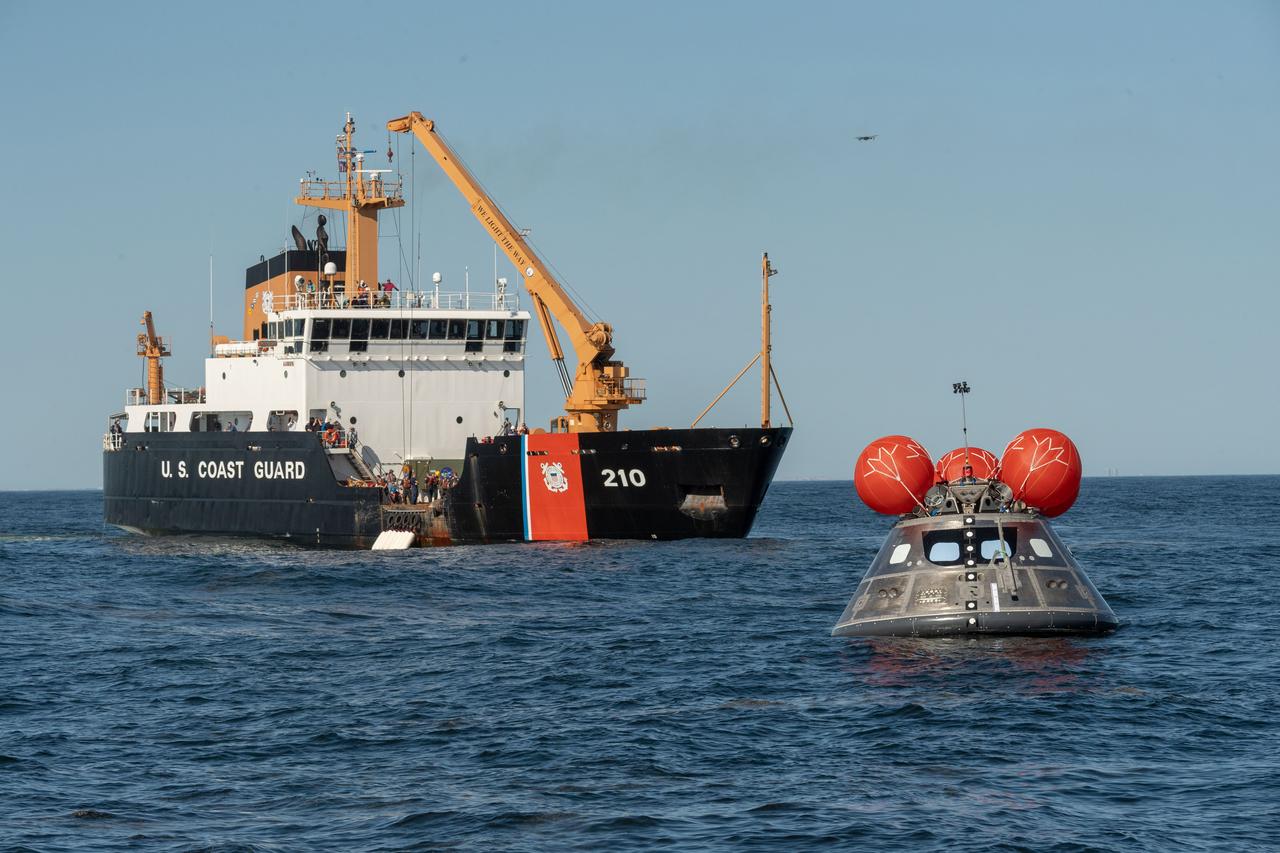
The Orion Crew Module Uprighting System (CMUS) and Neutral Buoyancy Laboratory team completed two successful sea tests off the coast of Galveston, Texas, Dec. 1-3, 2018. CMUS is designed to inflate five bags after the Orion spacecraft and its crew splash down after returning from deep space missions, enabling the capsule to upright itself. NASA partnered with United States Coast Guard and Air Force and Texas A&M Galveston teams to perform the tests operations.
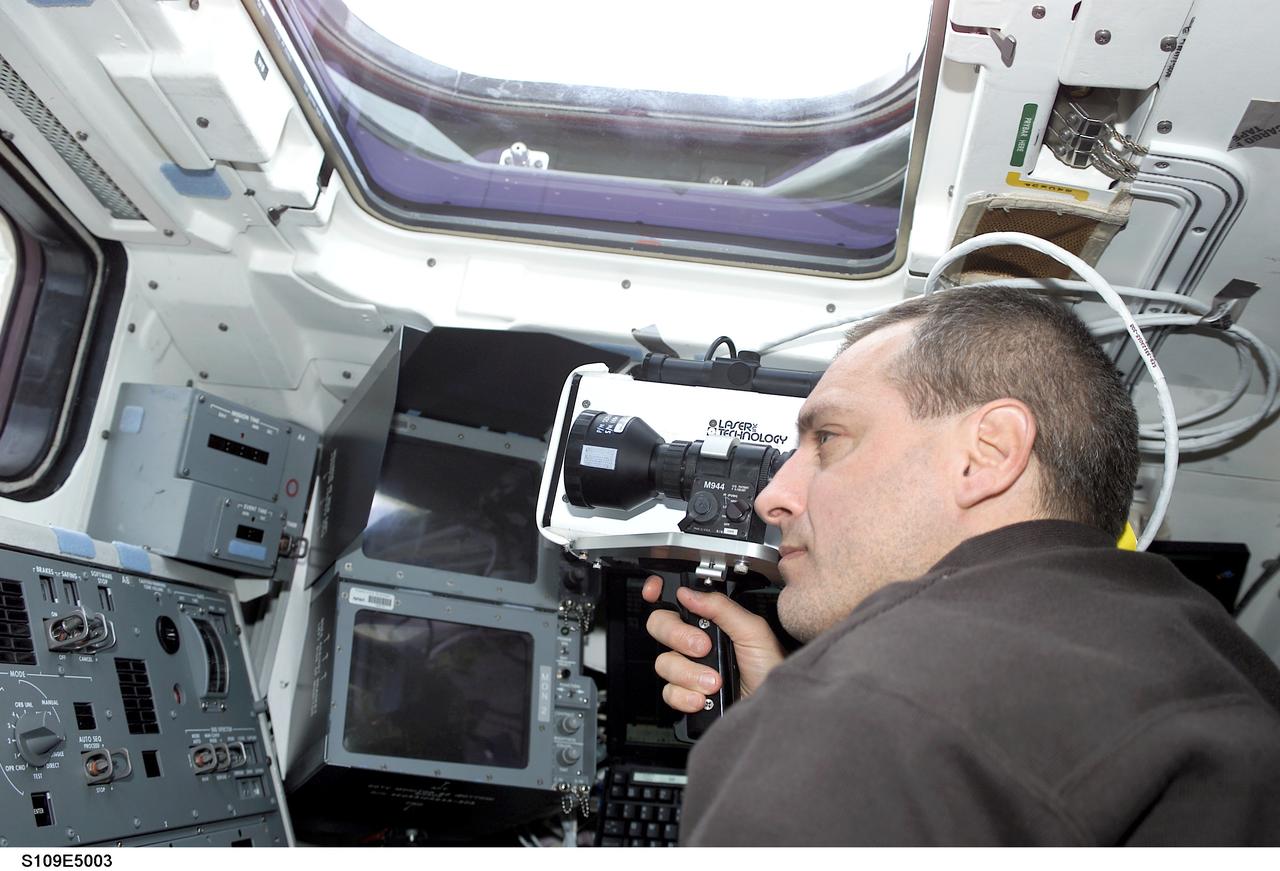
STS109-E-5003 (3 March 2002) --- Astronaut Richard M. Linnehan, mission specialist, uses a laser ranging device designed to measure the range between two spacecraft. Linnehan positioned himself on the cabin's aft flight deck as the Space Shuttle Columbia approached the Hubble Space Telescope. A short time later, the STS-109 crew captured and latched down the giant telescope in the vehicle's cargo bay for several days of work on the Hubble. The image was recorded with a digital still camera.
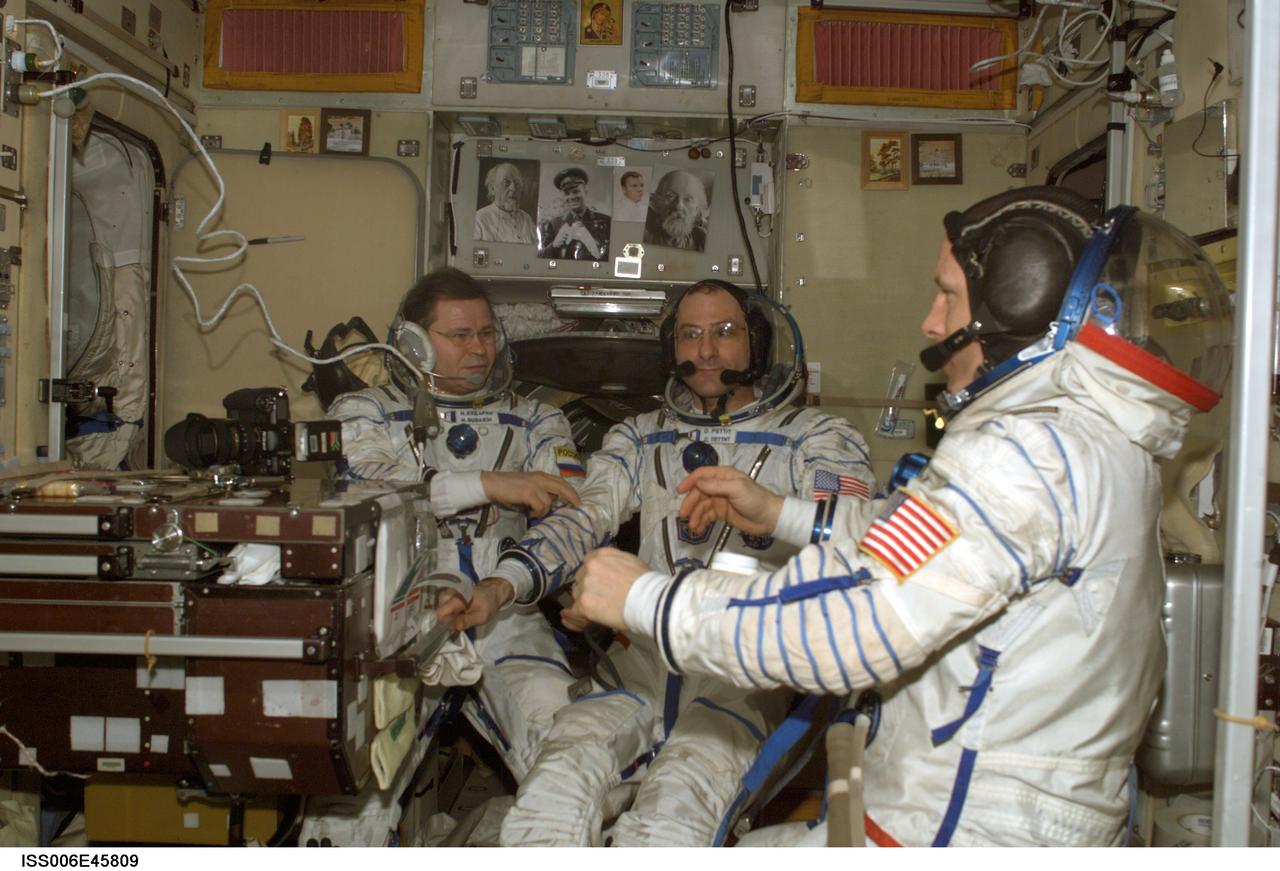
ISS006-E-45809 (14 April 2003) --- Attired in their Russian Sokol suits, the Expedition Six crewmembers are pictured in the Zvezda Service Module on the International Space Station (ISS) as they rehearse for their return flight home onboard the Soyuz TMA-1 spacecraft scheduled for May 3, 2003. From the left are cosmonaut Nikolai M. Budarin, flight engineer; astronauts Donald R. Pettit, NASA ISS science officer, and Kenneth D. Bowersox, mission commander. Budarin represents Rosaviakosmos.
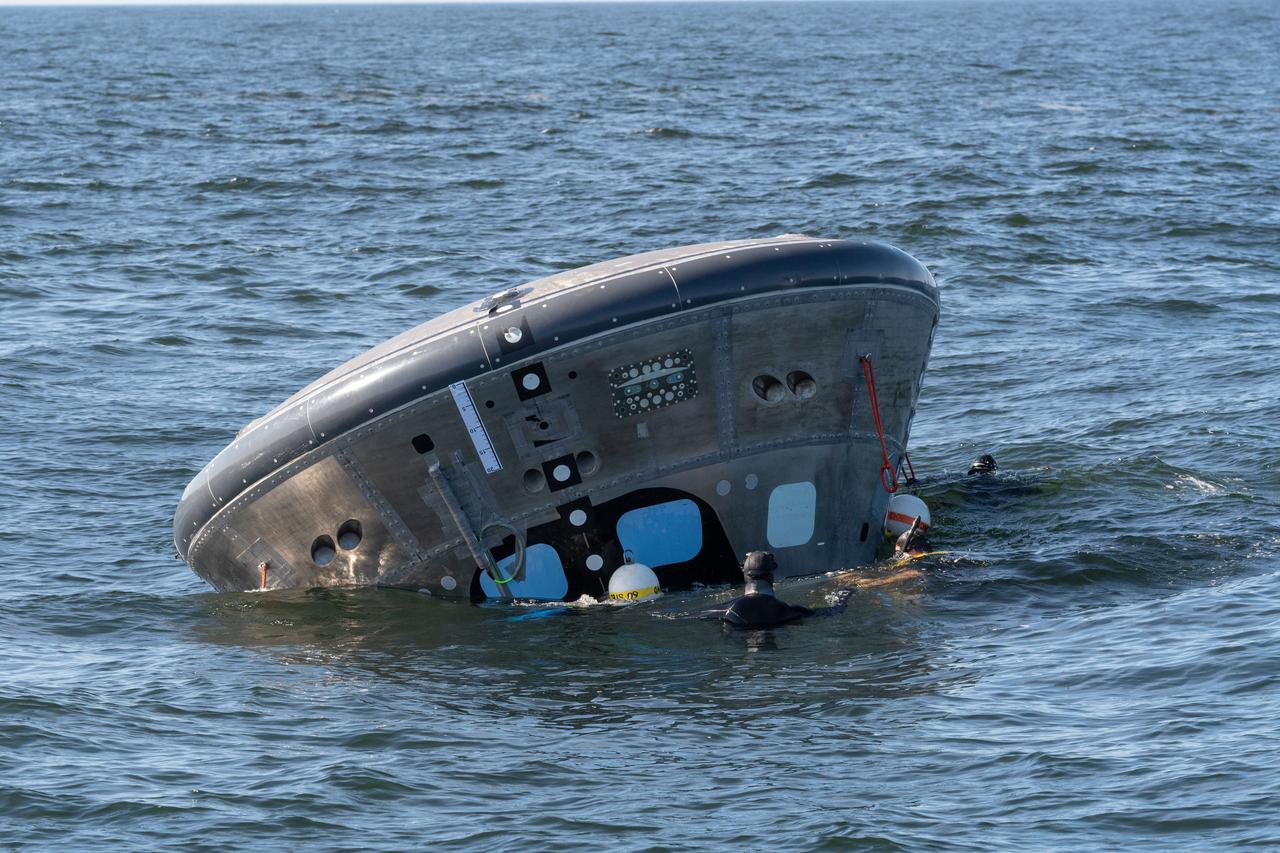
The Orion Crew Module Uprighting System (CMUS) and Neutral Buoyancy Laboratory team completed two successful sea tests off the coast of Galveston, Texas, Dec. 1-3, 2018. CMUS is designed to inflate five bags after the Orion spacecraft and its crew splash down after returning from deep space missions, enabling the capsule to upright itself. NASA partnered with United States Coast Guard and Air Force and Texas A&M Galveston teams to perform the tests operations.
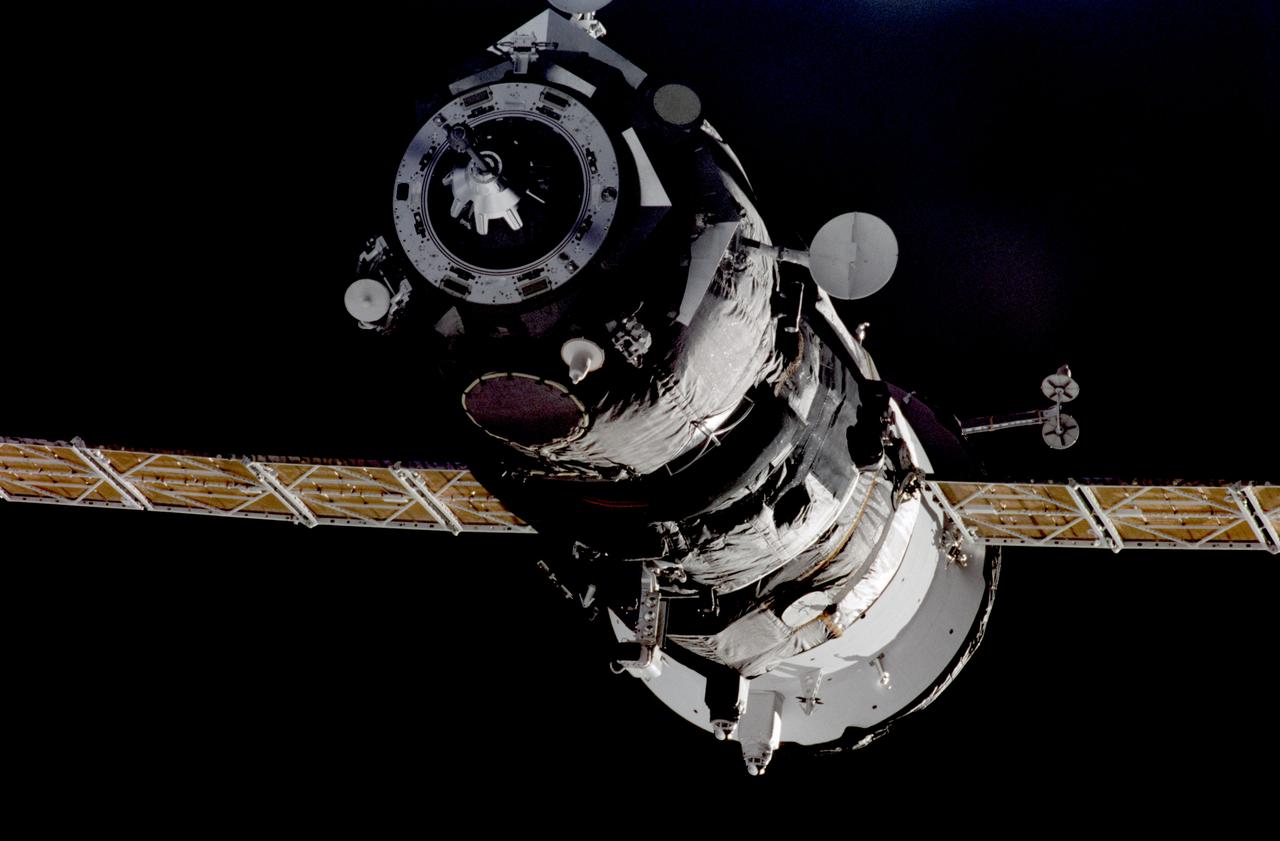
ISS01-324-002 (18 November 2000) --- A Progress supply ship linked up to the orbiting International Space Station (ISS) at 3:48 GMT, November 18, bringing Expedition 1 commander William M. Shepherd, pilot Yuri P. Gidzenko and flight engineer Sergei K. Krikalev two tons of food, clothing, hardware and holiday gifts from their families. The photograph was taken with a 35mm camera and the film was later handed over to the STS-97 crew members for return to Earth and subsequent processing.
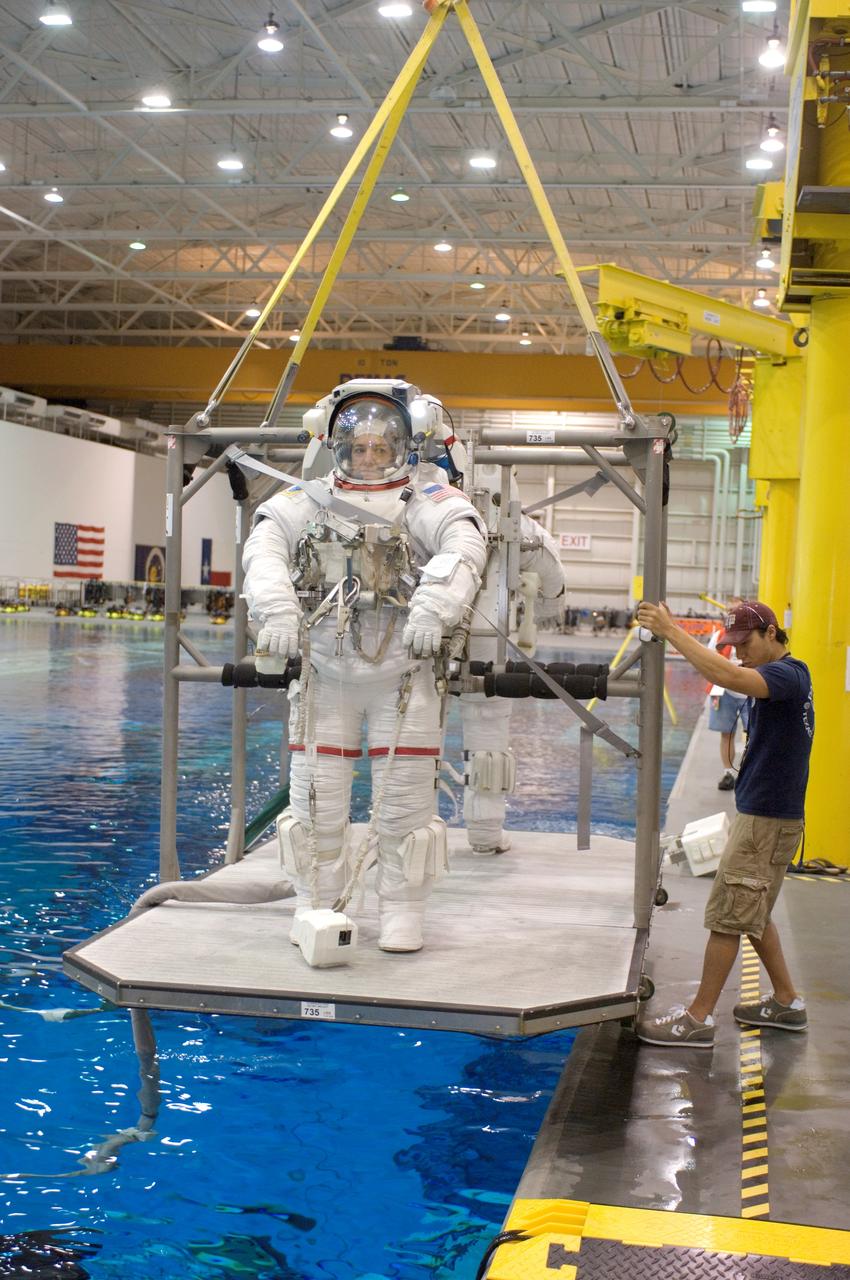
JSC2008-E-031880 (3 April 2008) --- Astronauts Heidemarie M. Stefanyshyn-Piper and Stephen G. Bowen (partially obscured), both STS-126 mission specialists, are about to be submerged in the waters of the Neutral Buoyancy Laboratory (NBL) near NASA's Johnson Space Center. Stefanyshyn-Piper and Bowen are attired in training versions of the Extravehicular Mobility Unit (EMU) spacesuit. Divers (out of frame) are in the water to assist the crewmembers in their rehearsal, intended to help prepare them for work on the exterior of the International Space Station.

The Orion Crew Module Uprighting System (CMUS) and Neutral Buoyancy Laboratory team completed two successful sea tests off the coast of Galveston, Texas, Dec. 1-3, 2018. CMUS is designed to inflate five bags after the Orion spacecraft and its crew splash down after returning from deep space missions, enabling the capsule to upright itself. NASA partnered with United States Coast Guard and Air Force and Texas A&M Galveston teams to perform the tests operations.

The Orion Crew Module Uprighting System (CMUS) and Neutral Buoyancy Laboratory team completed two successful sea tests off the coast of Galveston, Texas, Dec. 1-3, 2018. CMUS is designed to inflate five bags after the Orion spacecraft and its crew splash down after returning from deep space missions, enabling the capsule to upright itself. NASA partnered with United States Coast Guard and Air Force and Texas A&M Galveston teams to perform the tests operations.
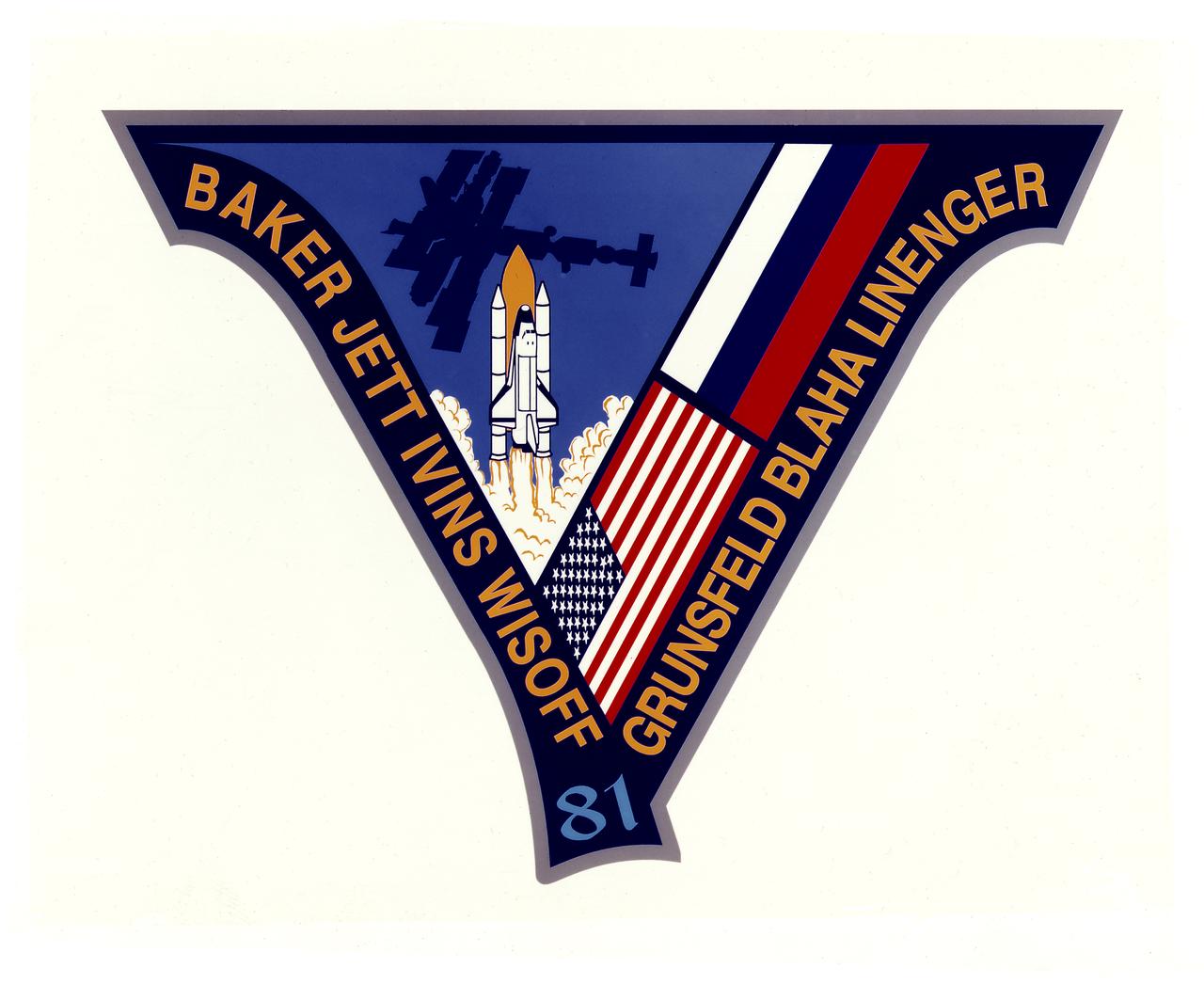
The crew patch for STS-81 , the fifth Shuttle-Mir docking mission, is shaped to represent the Roman numeral V. The Shuttle Atlantis is launching toward a rendezvous with Russia's Mir Space Station, silhouetted in the background. Atlantis and the STS-81 crew spent several days docked to Mir during which time Jerry M. Lineger (NASA-Mir-4) replaced astronaut John Blaha (NASA-Mir-3) as the U.S. crew member onboard Mir. The U.S. and Russian flags are depicted along with the names of the shuttle crew.
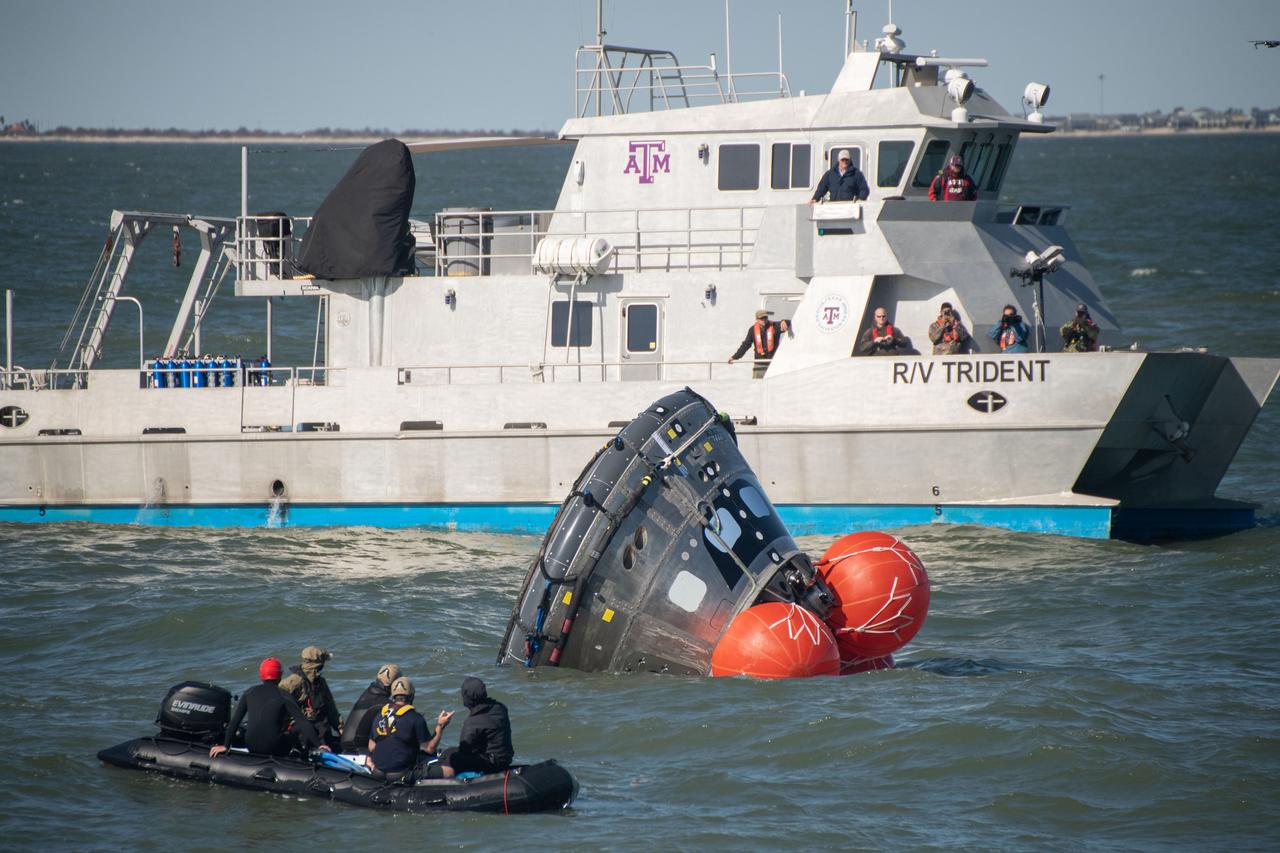
The Orion Crew Module Uprighting System (CMUS) and Neutral Buoyancy Laboratory team completed two successful sea tests off the coast of Galveston, Texas, Dec. 1-3, 2018. CMUS is designed to inflate five bags after the Orion spacecraft and its crew splash down after returning from deep space missions, enabling the capsule to upright itself. NASA partnered with United States Coast Guard and Air Force and Texas A&M Galveston teams to perform the tests operations.

The Orion Crew Module Uprighting System (CMUS) and Neutral Buoyancy Laboratory team completed two successful sea tests off the coast of Galveston, Texas, Dec. 1-3, 2018. CMUS is designed to inflate five bags after the Orion spacecraft and its crew splash down after returning from deep space missions, enabling the capsule to upright itself. NASA partnered with United States Coast Guard and Air Force and Texas A&M Galveston teams to perform the tests operations.
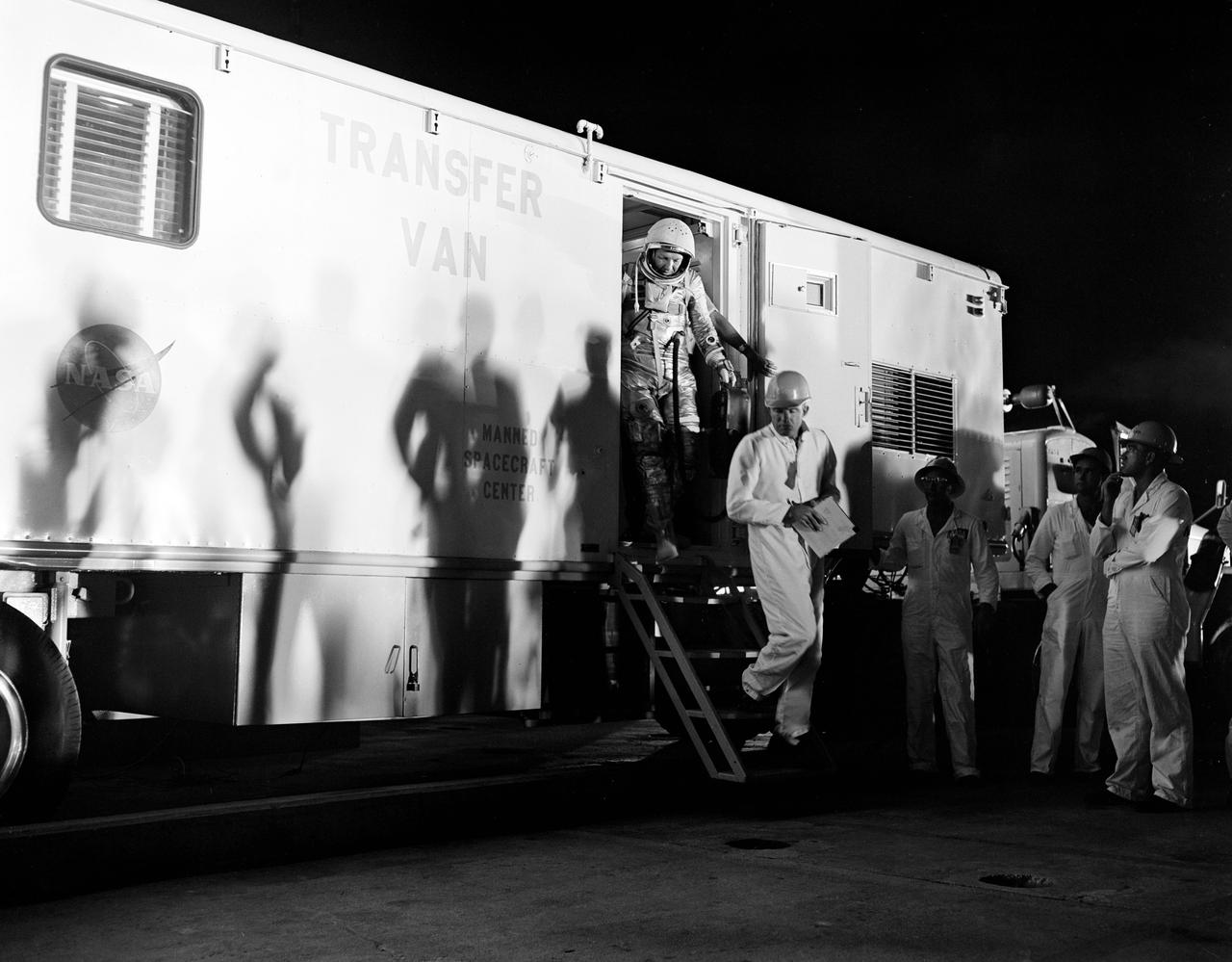
S62-06008 (3 Oct. 1962) --- Astronaut Walter M. Schirra Jr., pilot of the Mercury-Atlas 8 (MA-8) Earth-orbital spaceflight, steps from a transport van as he arrives at Cape Canaveral's Pad 14 during the MA-8 prelaunch countdown. Schirra is accompanied by astronaut L. Gordon Cooper Jr. (in white coveralls), MA-8 backup pilot. Photo credit: NASA
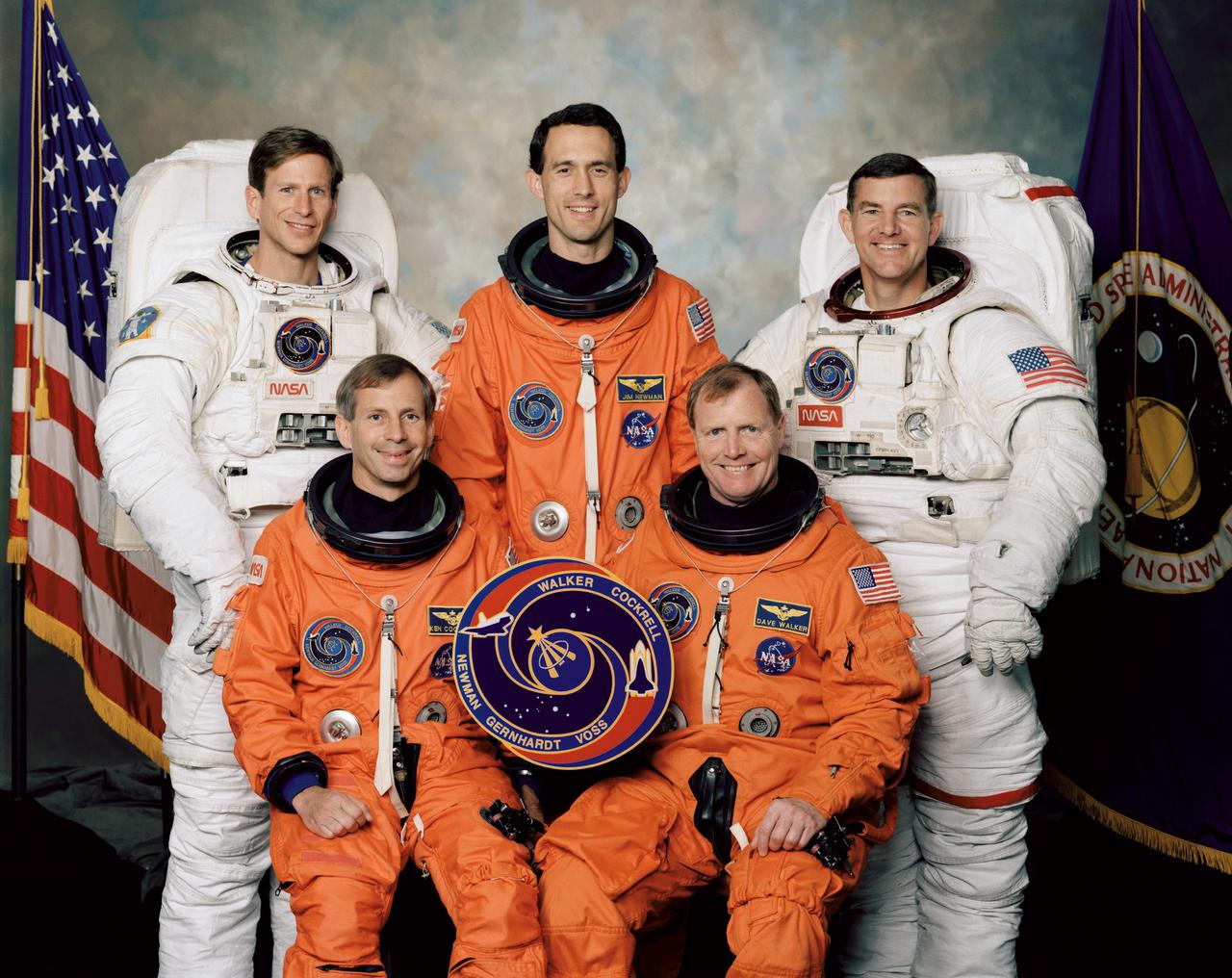
These five NASA astronauts were the crew members for the STS-69 mission that launched aboard the Space Shuttle Endeavour September 7, 1995. Pictured on the front row (left to right) are David M. Walker, mission commander; and Kenneth D. Cockrell, pilot. On the back row (left to right) are Michael L. Gernhardt and James H. Newman, both mission specialists; and James S. Voss, payload commander. The mission’s two primary payloads included the Spartan 201-3 and Wake Shield Facility-2 (WSF-2).
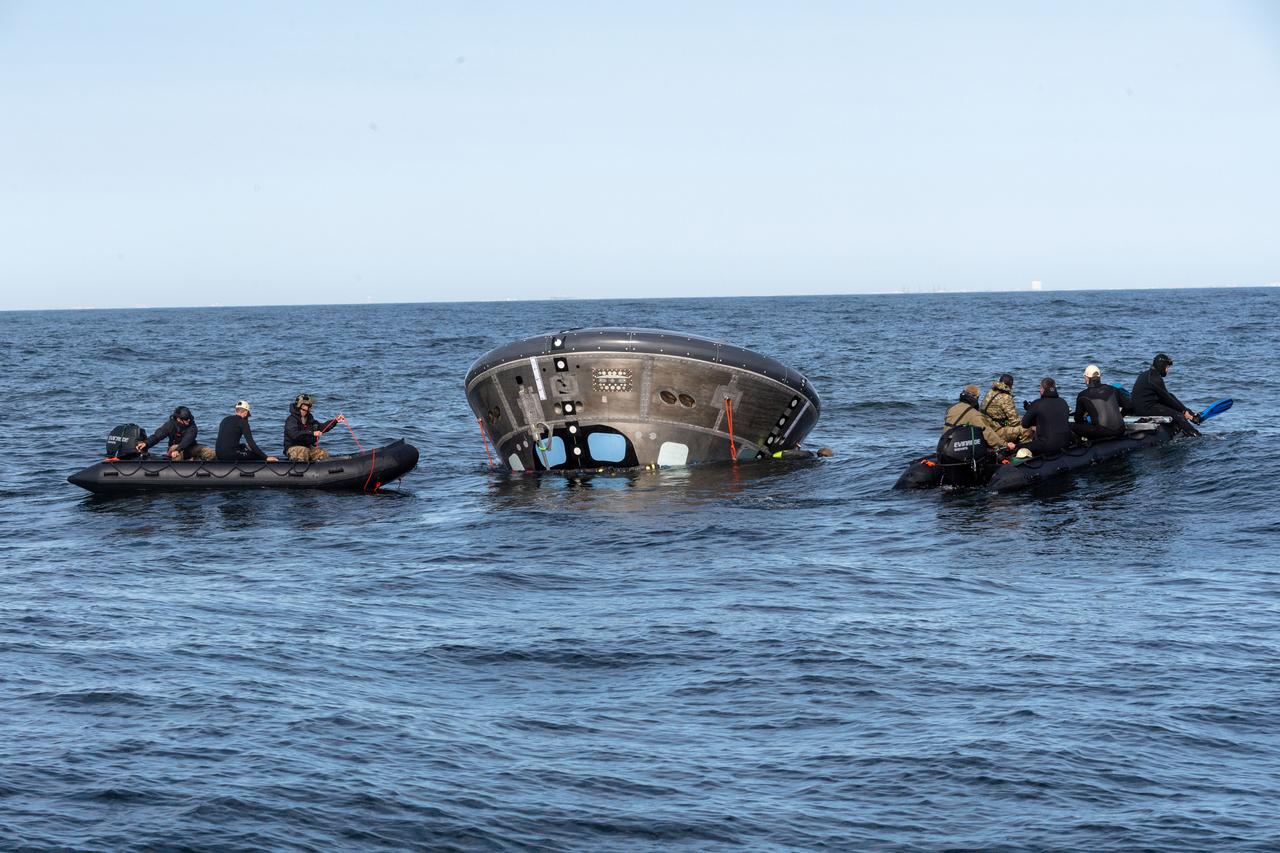
The Orion Crew Module Uprighting System (CMUS) and Neutral Buoyancy Laboratory team completed two successful sea tests off the coast of Galveston, Texas, Dec. 1-3, 2018. CMUS is designed to inflate five bags after the Orion spacecraft and its crew splash down after returning from deep space missions, enabling the capsule to upright itself. NASA partnered with United States Coast Guard and Air Force and Texas A&M Galveston teams to perform the tests operations.
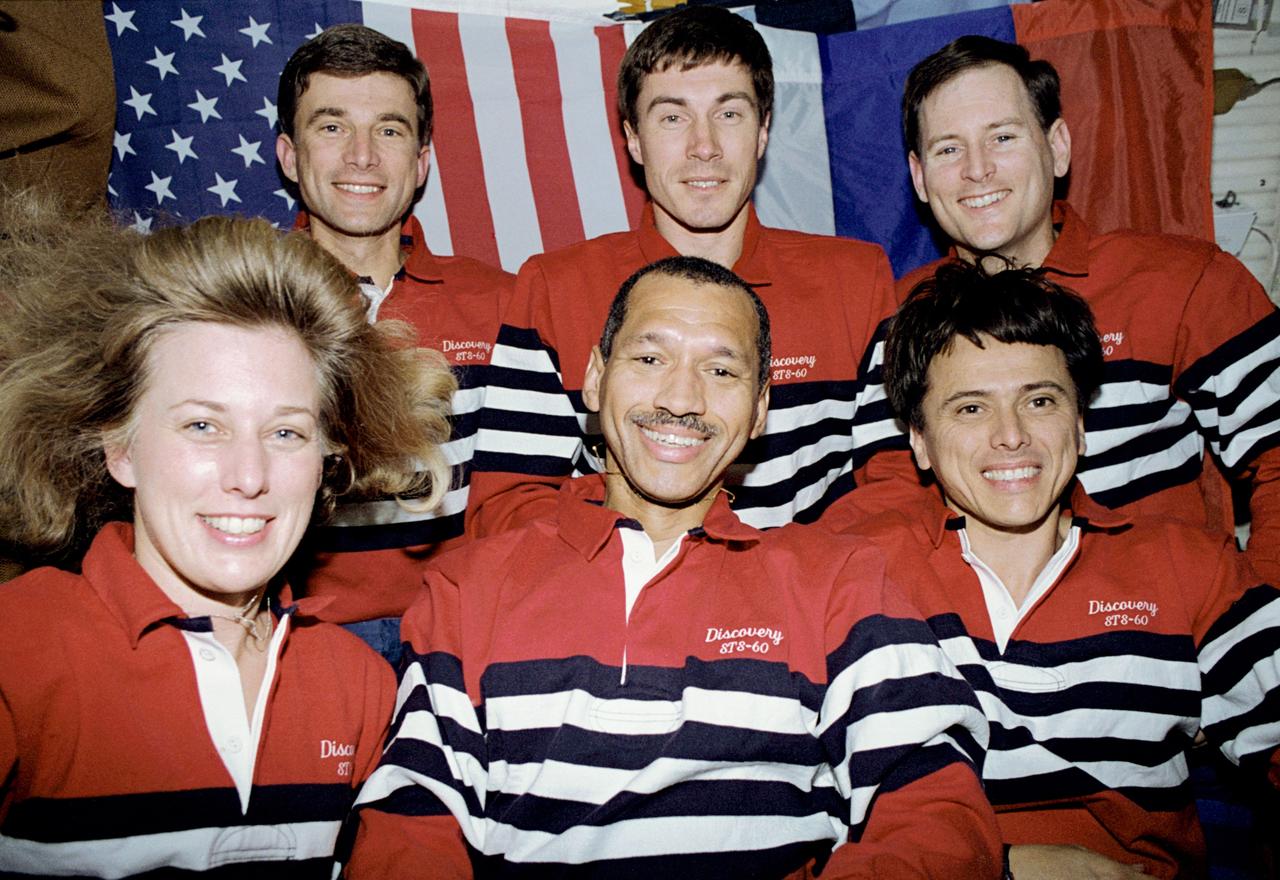
STS060-31-009 (3-11 Feb. 1994) --- The six-member STS-60 crew pose for the traditional in-flight crew portrait, with American and Russian flags forming the backdrop on the space shuttle Discovery’s middeck. Left to right (front row) are N. Jan Davis, Charles F. Bolden Jr. and Franklin R. Chang-Diaz; and (back row) Ronald M. Sega, Sergei K. Krikalev and Kenneth S. Reightler Jr. Photo credit: NASA or National Aeronautics and Space Administration
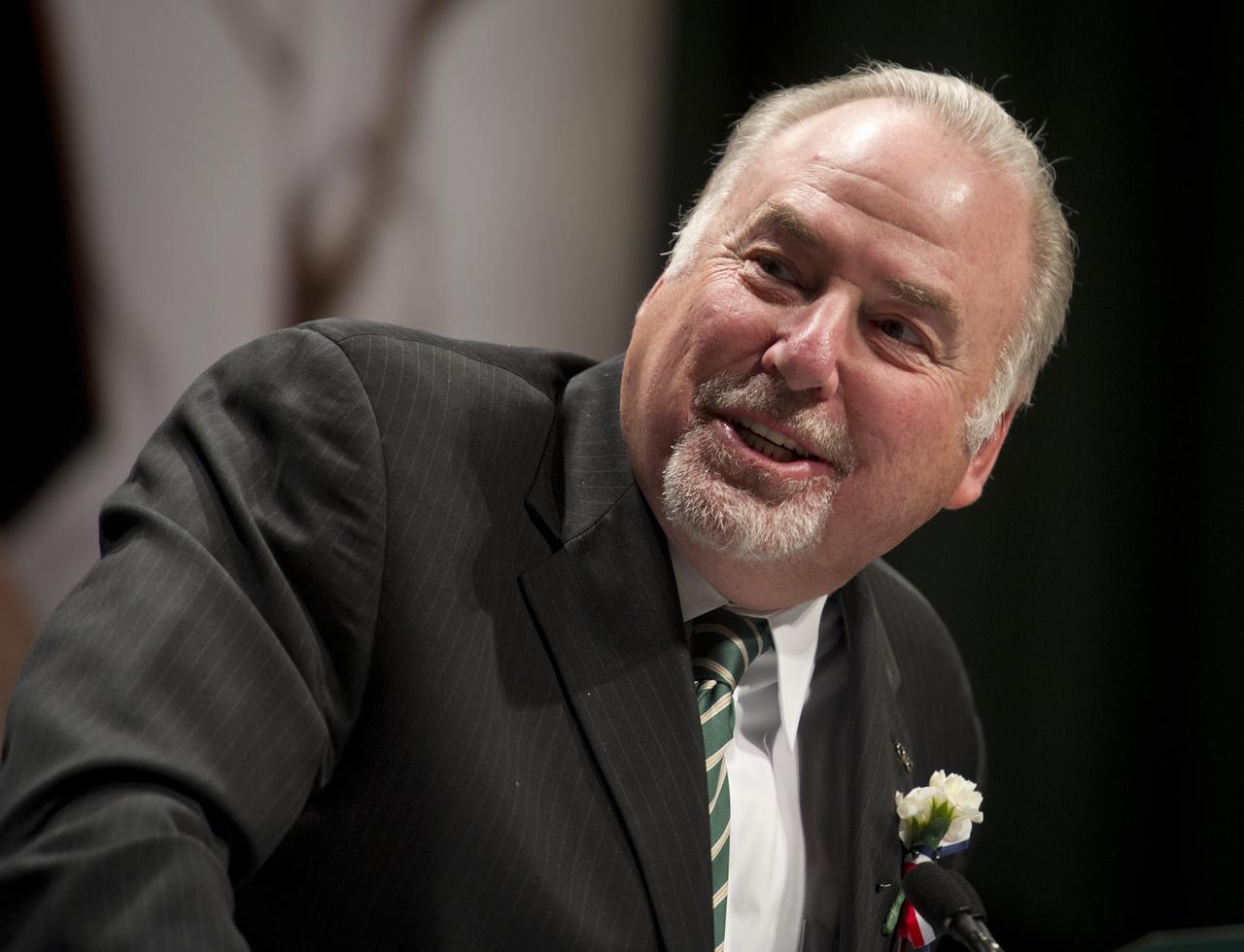
Dr. Ronald M. Berkman, CSU President gives remarks at an event celebrating John Glenn's legacy and 50 years of americans in orbit held at the Cleveland State University Wolstein Center on Friday, March 3, 2012 in Cleveland, Ohio. Glenn became the first American to orbit Earth in 1962. Photo Credit: (NASA/Bill Ingalls)
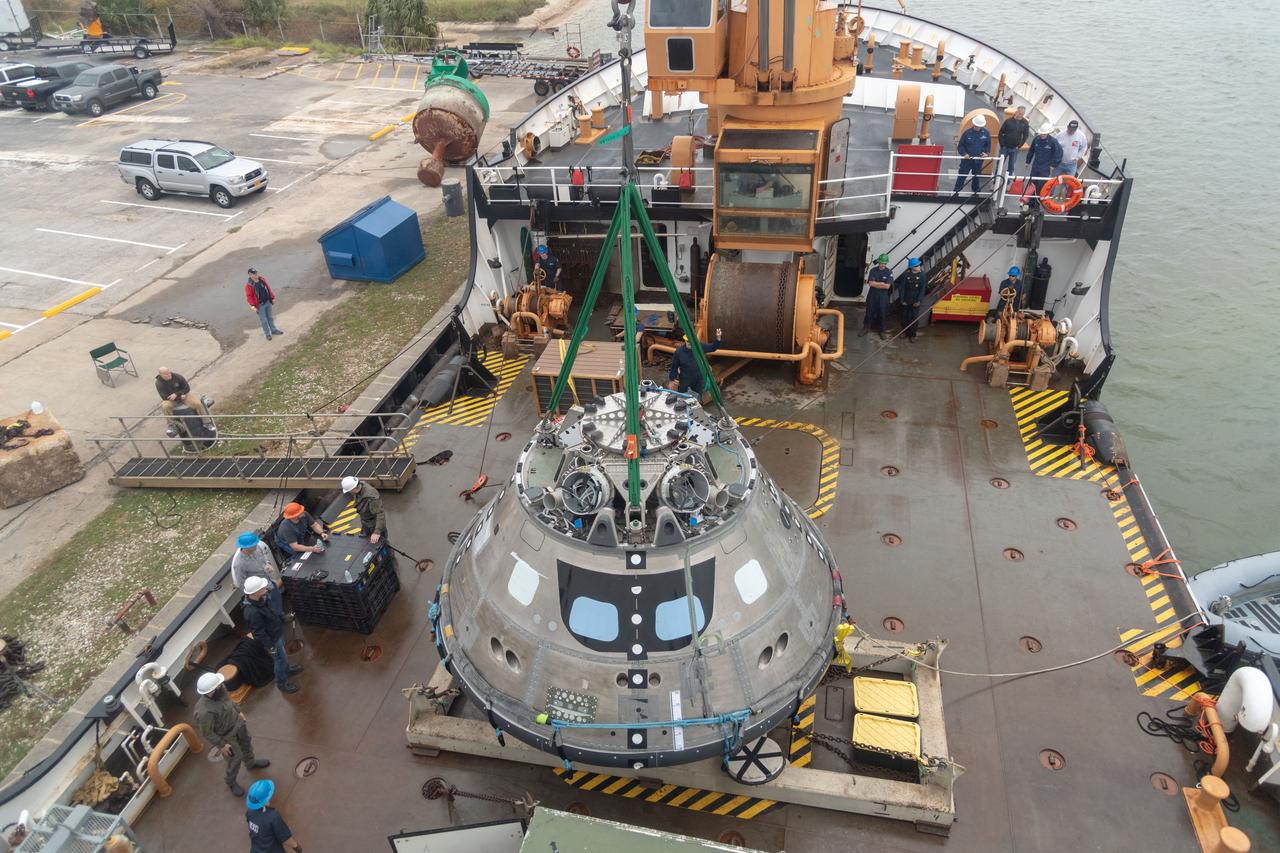
The Orion Crew Module Uprighting System (CMUS) and Neutral Buoyancy Laboratory team completed two successful sea tests off the coast of Galveston, Texas, Dec. 1-3, 2018. CMUS is designed to inflate five bags after the Orion spacecraft and its crew splash down after returning from deep space missions, enabling the capsule to upright itself. NASA partnered with United States Coast Guard and Air Force and Texas A&M Galveston teams to perform the tests operations.
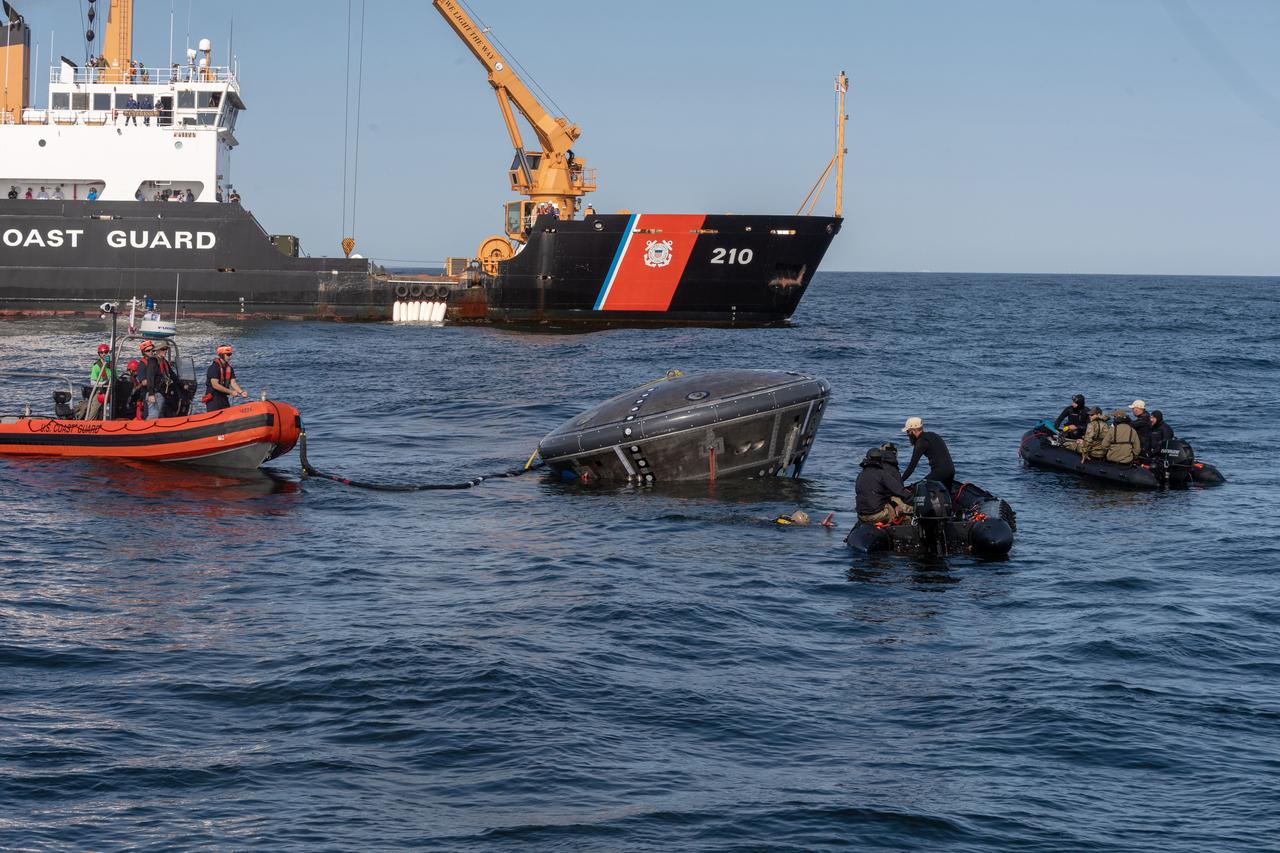
The Orion Crew Module Uprighting System (CMUS) and Neutral Buoyancy Laboratory team completed two successful sea tests off the coast of Galveston, Texas, Dec. 1-3, 2018. CMUS is designed to inflate five bags after the Orion spacecraft and its crew splash down after returning from deep space missions, enabling the capsule to upright itself. NASA partnered with United States Coast Guard and Air Force and Texas A&M Galveston teams to perform the tests operations.

The Orion Crew Module Uprighting System (CMUS) and Neutral Buoyancy Laboratory team completed two successful sea tests off the coast of Galveston, Texas, Dec. 1-3, 2018. CMUS is designed to inflate five bags after the Orion spacecraft and its crew splash down after returning from deep space missions, enabling the capsule to upright itself. NASA partnered with United States Coast Guard and Air Force and Texas A&M Galveston teams to perform the tests operations.
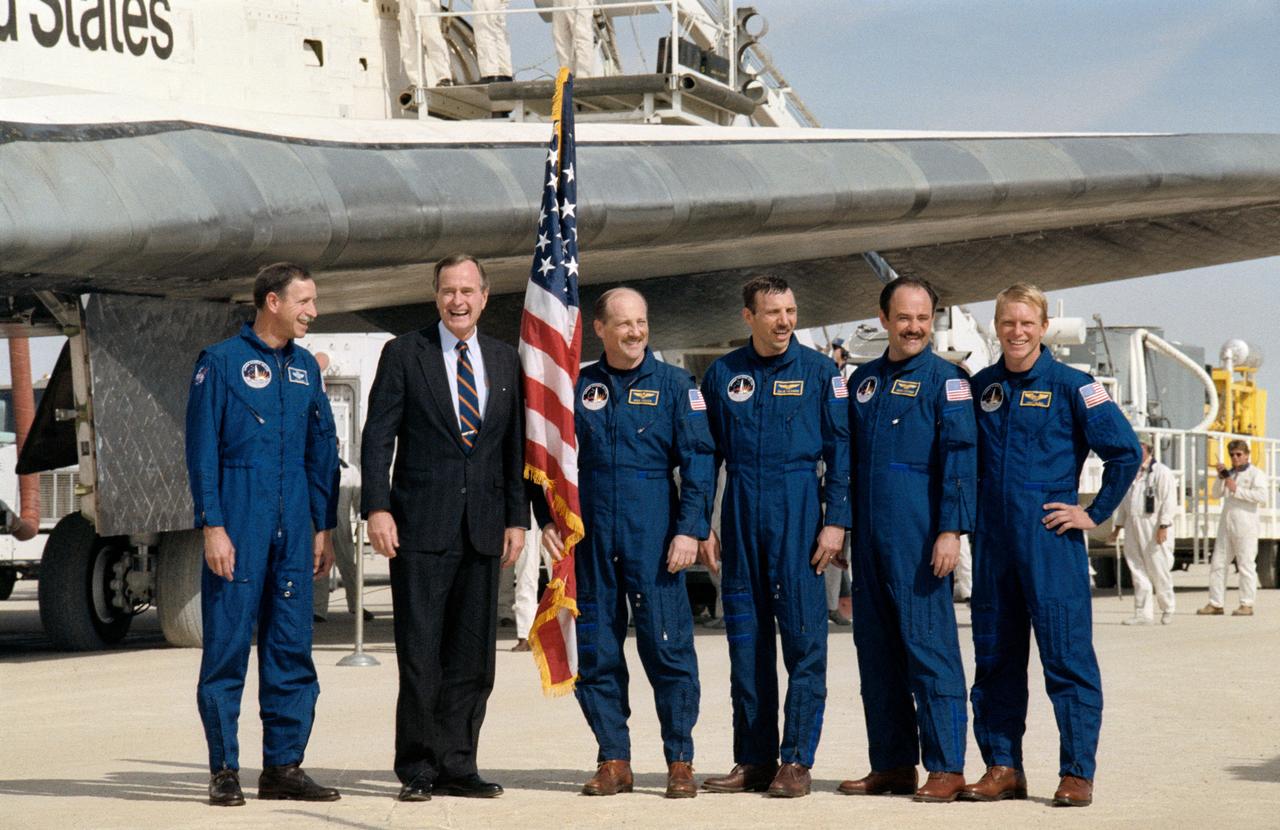
STS026-S-169 (3 Oct 1988) --- The five STS 26 crewmembers pose with Vice President George Bush after completing a successful four-day mission aboard the Space Shuttle Discovery (background). Pictured, from left to right, are astronaut Richard O. Covey, pilot; Vice President Bush; and astronauts Frederick H. (Rick) Hauck, mission commander; and David C. Hilmers, John M. (Mike) Lounge, and George D. Nelson, all mission specialists.