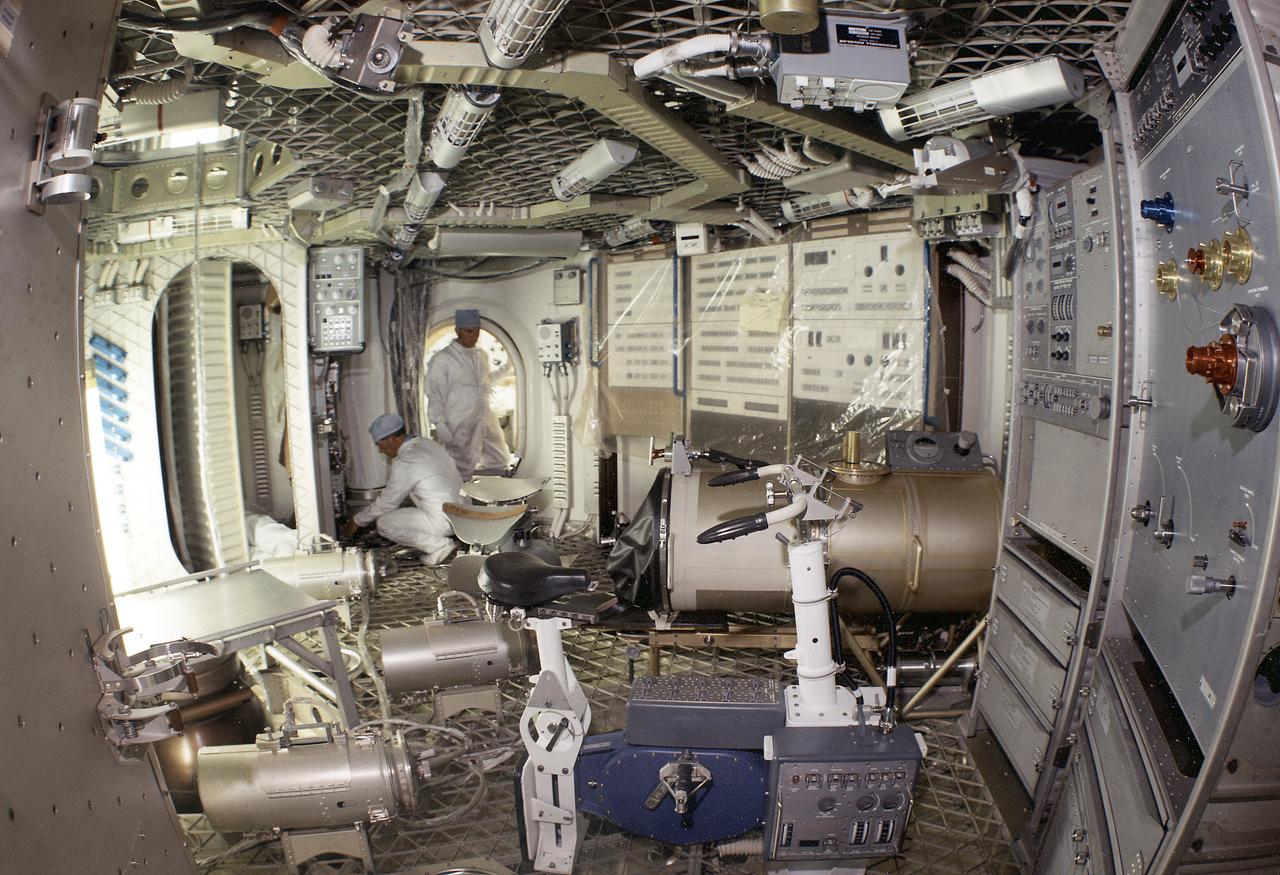
This is a wide-angle view of the Orbital Workshop lower level experiment area. In center foreground is the ergometer bicycle. In center background is a litter chair for the Human Vestibular Function experiment (Skylab Experiment M131) and in right background is the Lower Body Negative Pressure System experiment (Skylab Experiment M092). The ergometer bicycle was used for metabolic activity experiments and exercise. The purpose of the Human Vestibular (irner ear) Function experiment was to examine the effect of weightlessness on man's sensitivity and susceptibility to motion rotation, and his perception of orientation. The Lower Body Negative Pressure experiment investigated the relationship between the zero gravity environment and cardiovascular deconditioning. A characteristic of cardiovascular deconditoning is the partial failure of the blood vessels resulting in the excessive pooling of the blood in the legs when a person assumes an erect posture in a gravity field. The Marshall Space Flight Center had the program management responsibility for the development of Skylab hardware and experiments.
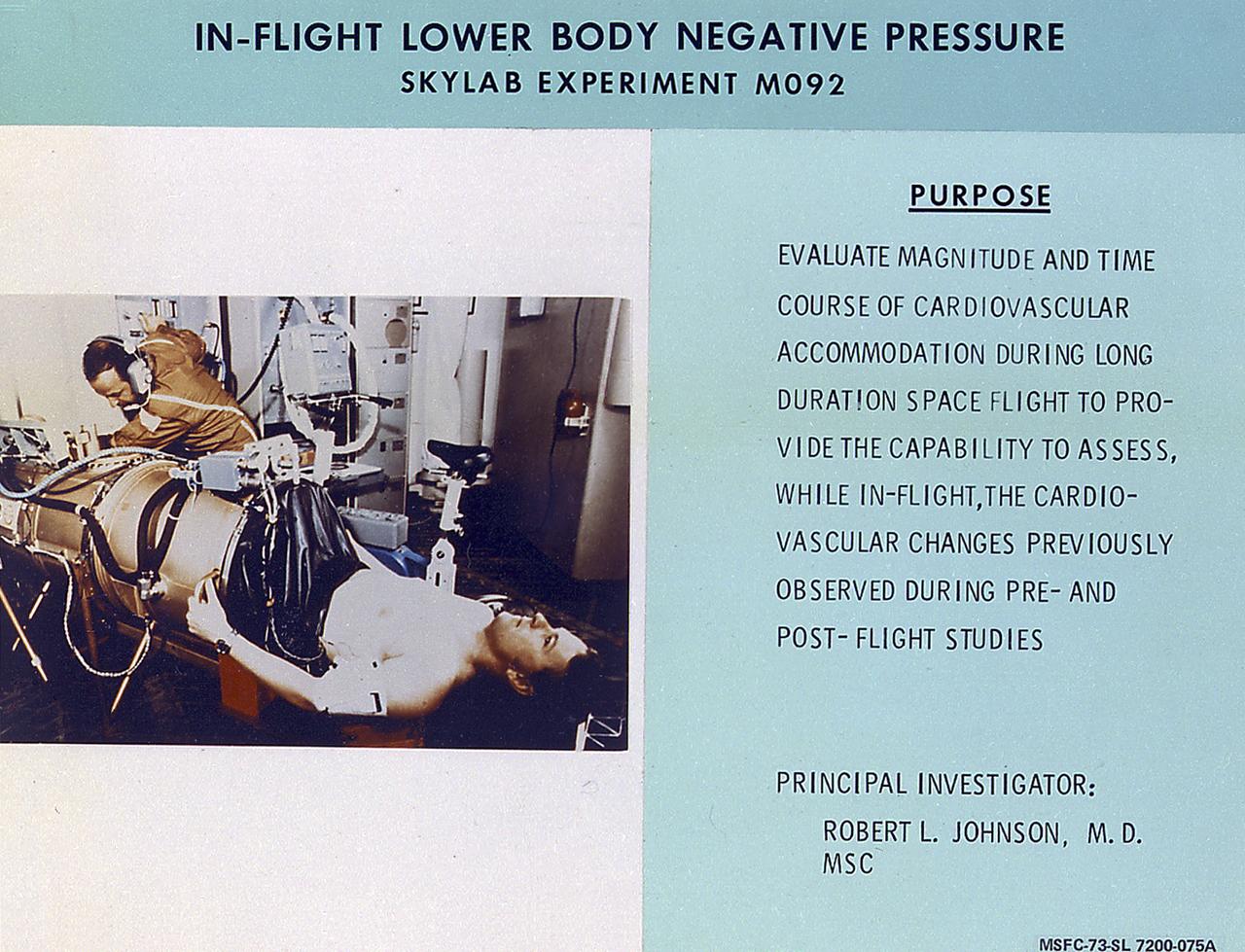
This chart details Skylab's In-Flight Lower Body Negative Pressure experiment facility, a medical evaluation designed to monitor changes in astronauts' cardiovascular systems during long-duration space missions. This experiment collected in-flight data for predicting the impairment of physical capacity and the degree of orthostatic intolerance to be expected upon return to Earth. Data to be collected were blood pressure, heart rate, body temperature, vectorcardiogram, lower body negative pressure, leg volume changes, and body mass. The Marshall Space Flight Center had program management responsibility for the development of Skylab hardware and experiments.
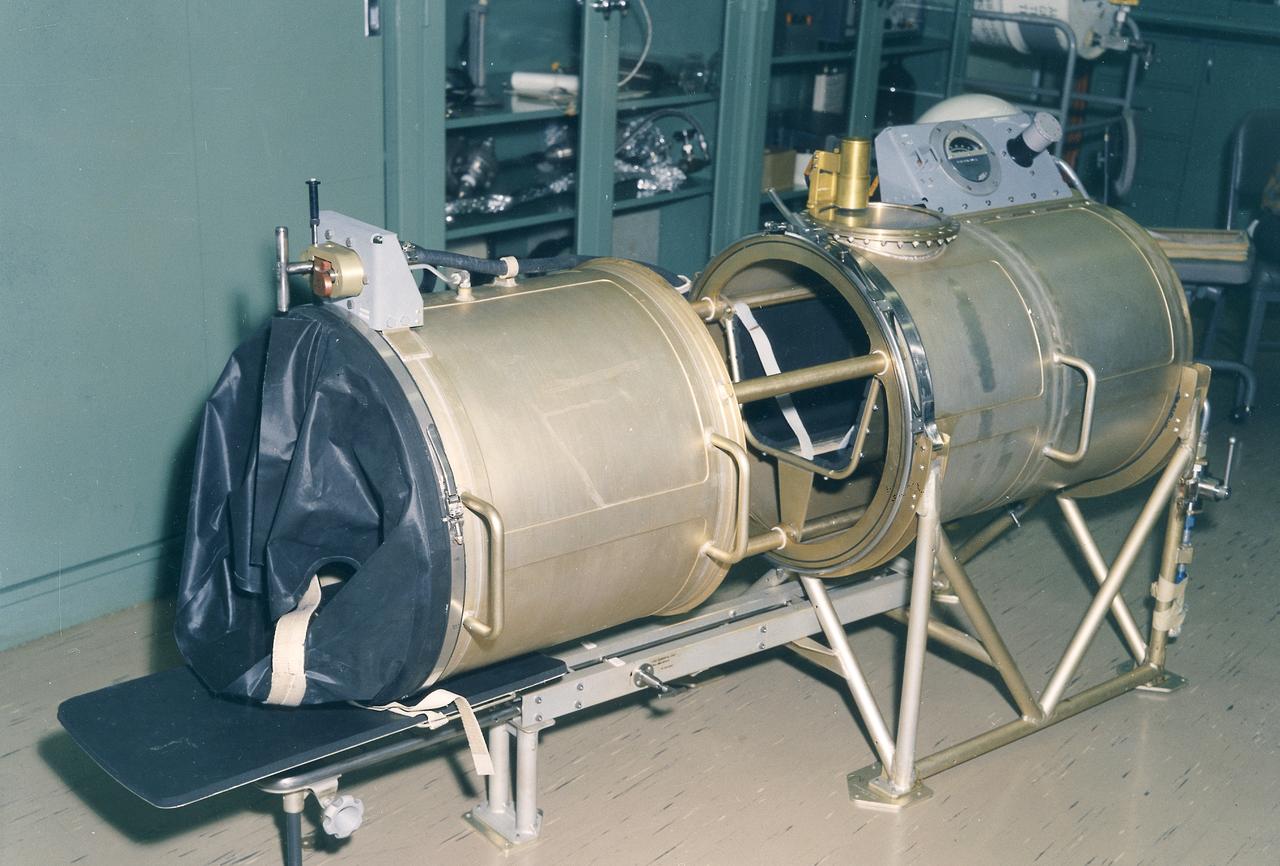
This 1970 photograph shows Skylab's In-Flight Lower Body Negative Pressure experiment facility, a medical evaluation designed to monitor changes in astronauts' cardiovascular systems during long-duration space missions. This experiment collected in-flight data for predicting the impairment of physical capacity and the degree of orthostatic intolerance to be expected upon return to Earth. Data to be collected were blood pressure, heart rate, body temperature, vectorcardiogram, lower body negative pressure, leg volume changes, and body mass. The Marshall Space Flight Center had program management responsibility for the development of Skylab hardware and experiments.
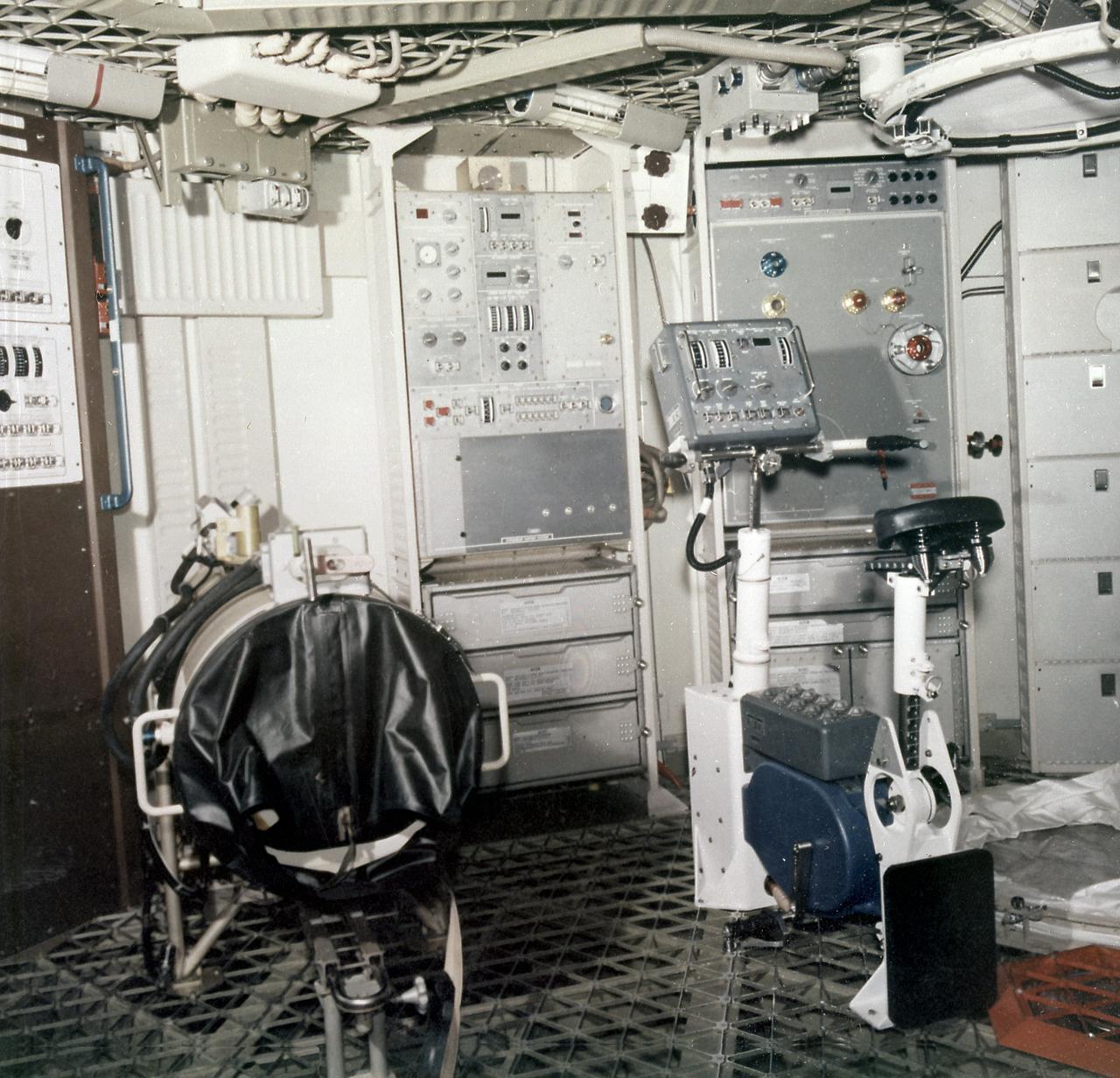
The Orbital Workshop internal arrangement shown here is the medical experimental equipment. In this view, looking from the wardroom area, are the lower-body Negative Pressure (Experiment M092) unit, left, and the ergometer for the vectorcardiograph (Experiment - M093). Both are used in several ways to keep check on the astronauts' condition and tolerance in extended weightlessness. The 1-G trainer permits the astronauts to get experience with all of the equipment and operations except the absence of gravity.
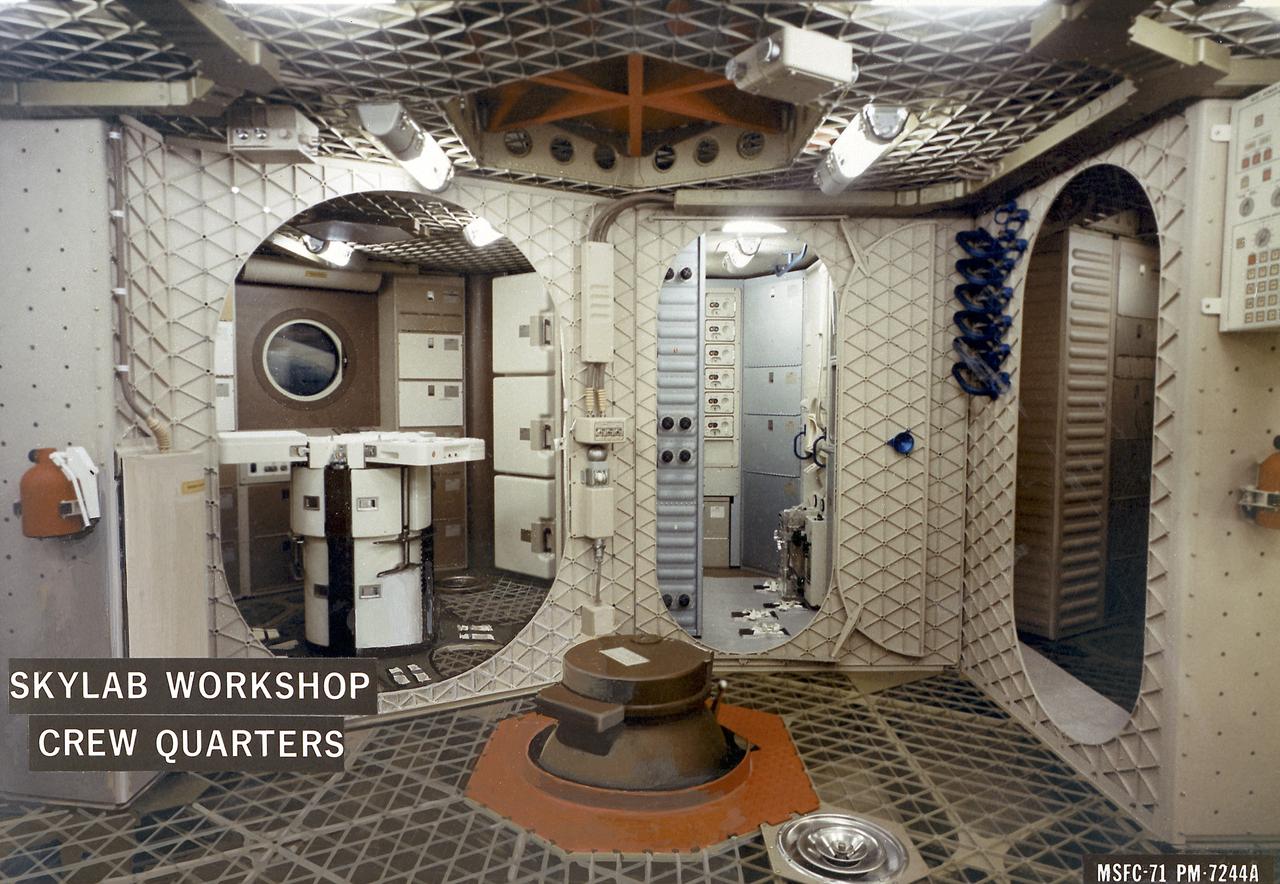
The wardroom deck of the Orbital Workshop, showing the living quarters arrangement, is seen here in good detail. From left to right is the dining area, waste management, and sleeping quarters. Portable restraints are on the wall beside the sleeping quarters. The ergometer for the vectorcardiograph (Experiment - M093) and lower-body Negative Pressure (Experiment M092) unit, used in some of the medical experiments, are in the foreground. The round brown object in the center of the room is the trash disposal airlock.
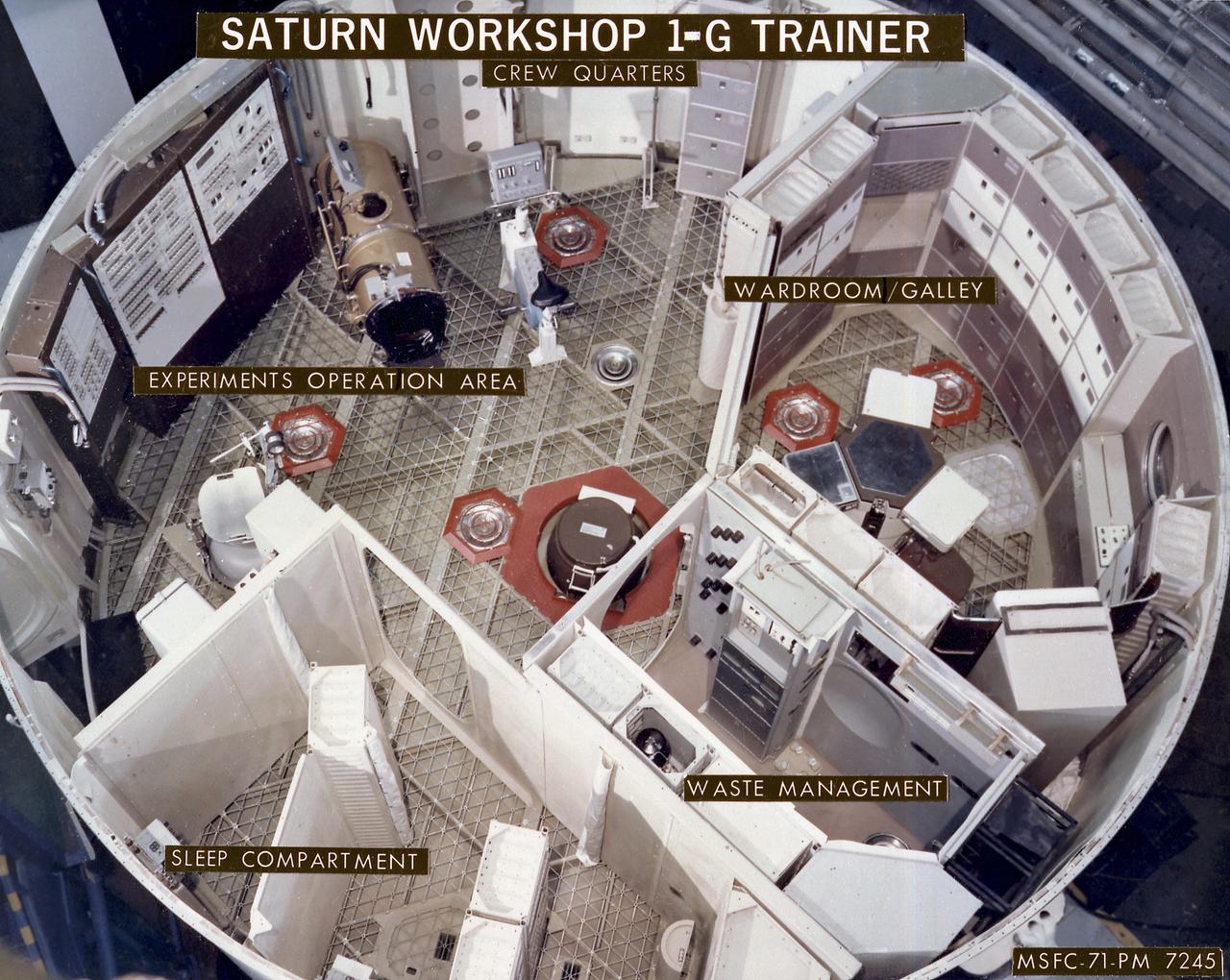
This image depicts a layout of the Skylab workshop 1-G trainer crew quarters. At left, in the sleep compartment, astronauts slept strapped to the walls of cubicles and showered at the center. Next right was the waste management area where wastes were processed and disposed. Upper right was the wardroom where astronauts prepared their meals and foods were stored. In the experiment operation area, upper left, against the far wall, was the lower-body negative-pressure device (Skylab Experiment M092) and the Ergometer for the vectorcardiogram experiment (Skylab Experiment M063). The trainers and mockups were useful in the developmental phase, while engineers and astronauts were still working out optimum designs. They provided much data applicable to the manufacture of the flight articles.