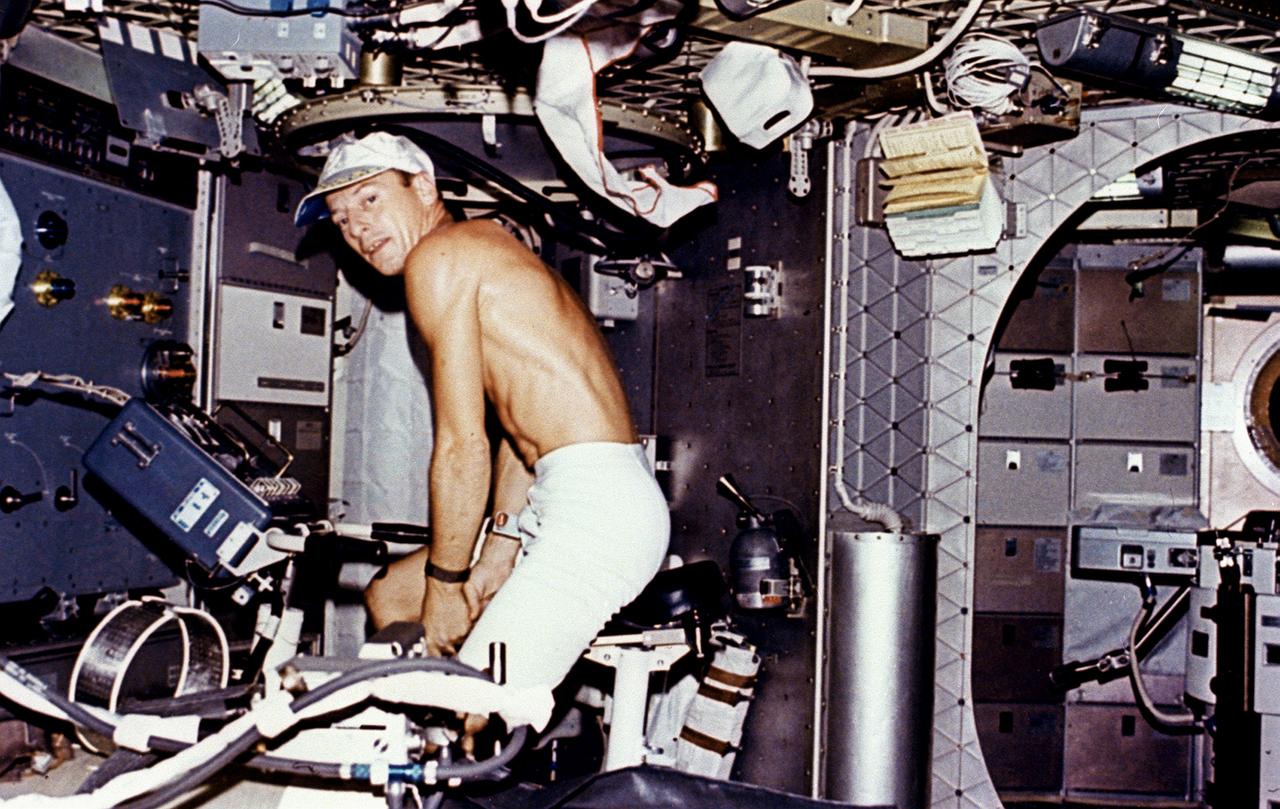
This Skylab-2 onboard photograph shows astronaut Charles "Pete" Conrad exercising on a stationary bicycle (ergometer) used for monitoring the metabolism of the astronauts. The ergometer was used to conduct both Vectorcardiogram experiment (M093) and Metabolic Activity experiment (M171). Experiment M093 was a medical evaluation designed to monitor changes in astronauts' cardiovascular systems, while Experiment M171 was to measure astronauts' metabolic changes during long-duration space missions.
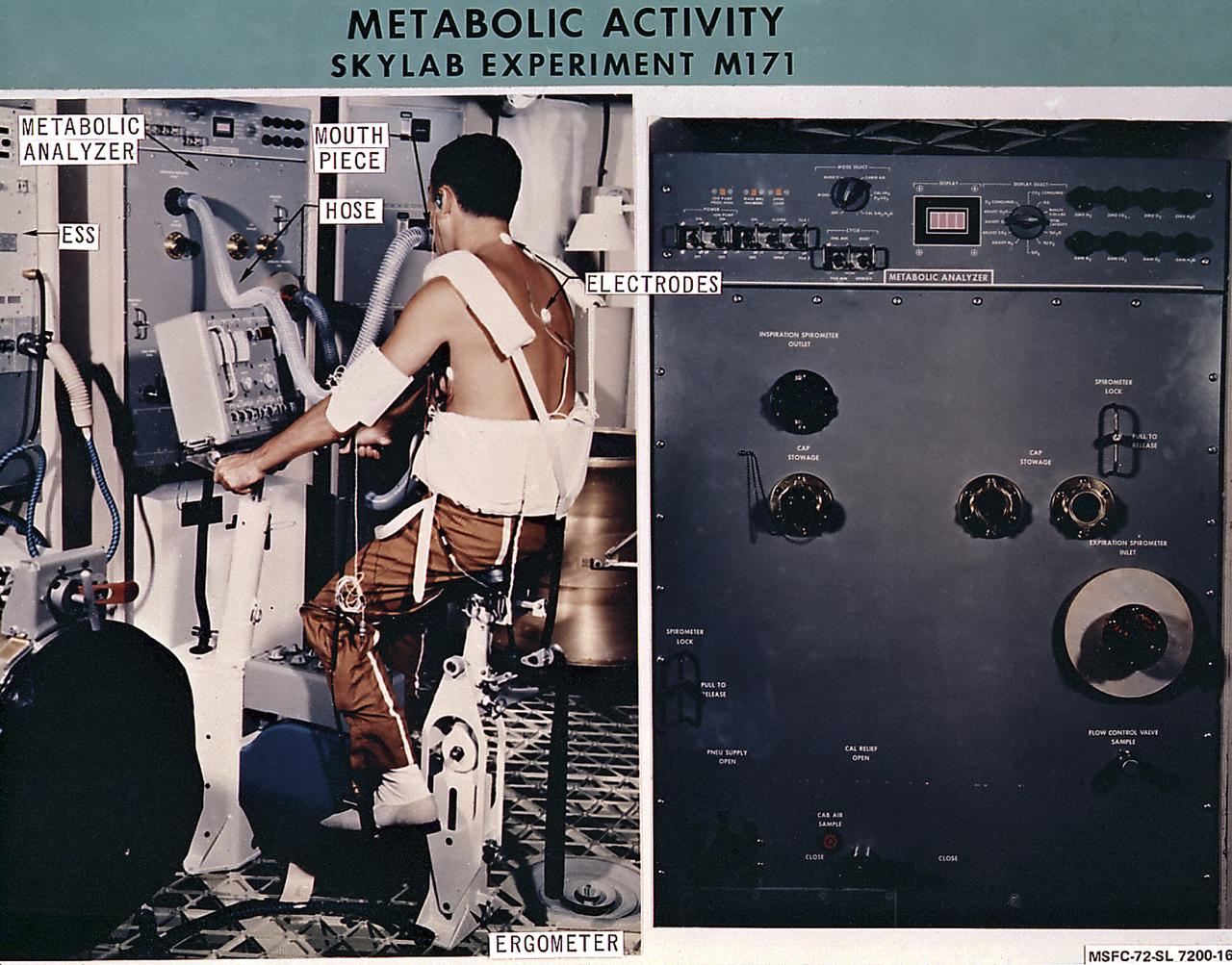
This chart details Skylab's Metabolic Activity experiment (M171), a medical evaluation facility designed to measure astronauts' metabolic changes while on long-term space missions. The experiment obtained information on astronauts' physiological capabilities and limitations and provided data useful in the design of future spacecraft and work programs. Physiological responses to physical activity was deduced by analyzing inhaled and exhaled air, pulse rate, blood pressure, and other selected variables of the crew while they performed controlled amounts of physical work with a bicycle ergometer. The Marshall Space Flight Center had program responsibility for the development of Skylab hardware and experiments.
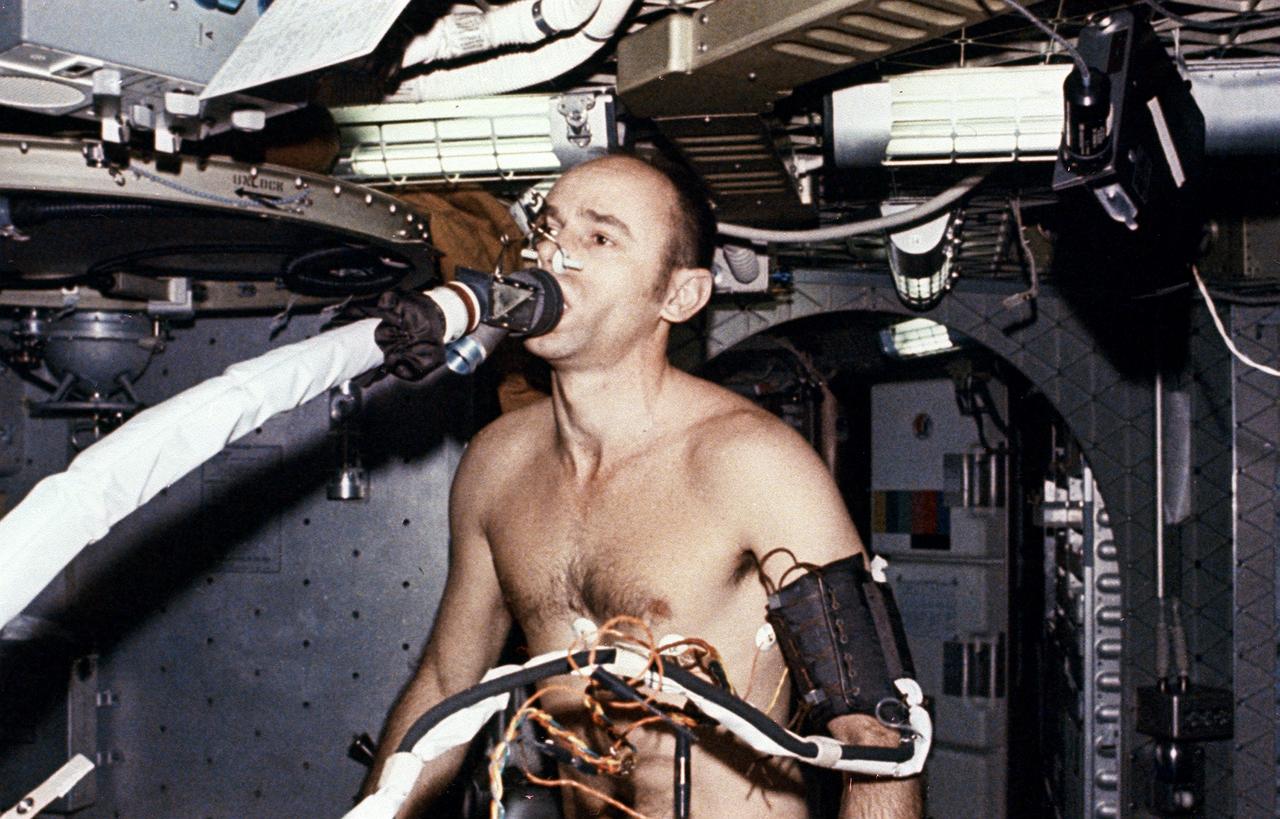
This Skylab-3 onboard photograph shows Astronaut Allen Bean on the ergometer, breathing into the metabolic analyzer. Skylab's Metabolic Activity experiment (M171), a medical evaluation facility, was designed to measure astronauts' metabolic changes while on long-term space missions. The experiment obtained information on astronauts' physiological capabilities and limitations and provided data useful in the design of future spacecraft and work programs. Physiological responses to physical activity was deduced by analyzing inhaled and exhaled air, pulse rate, blood pressure, and other selected variables of the crew while they performed controlled amounts of physical work with a bicycle ergometer.
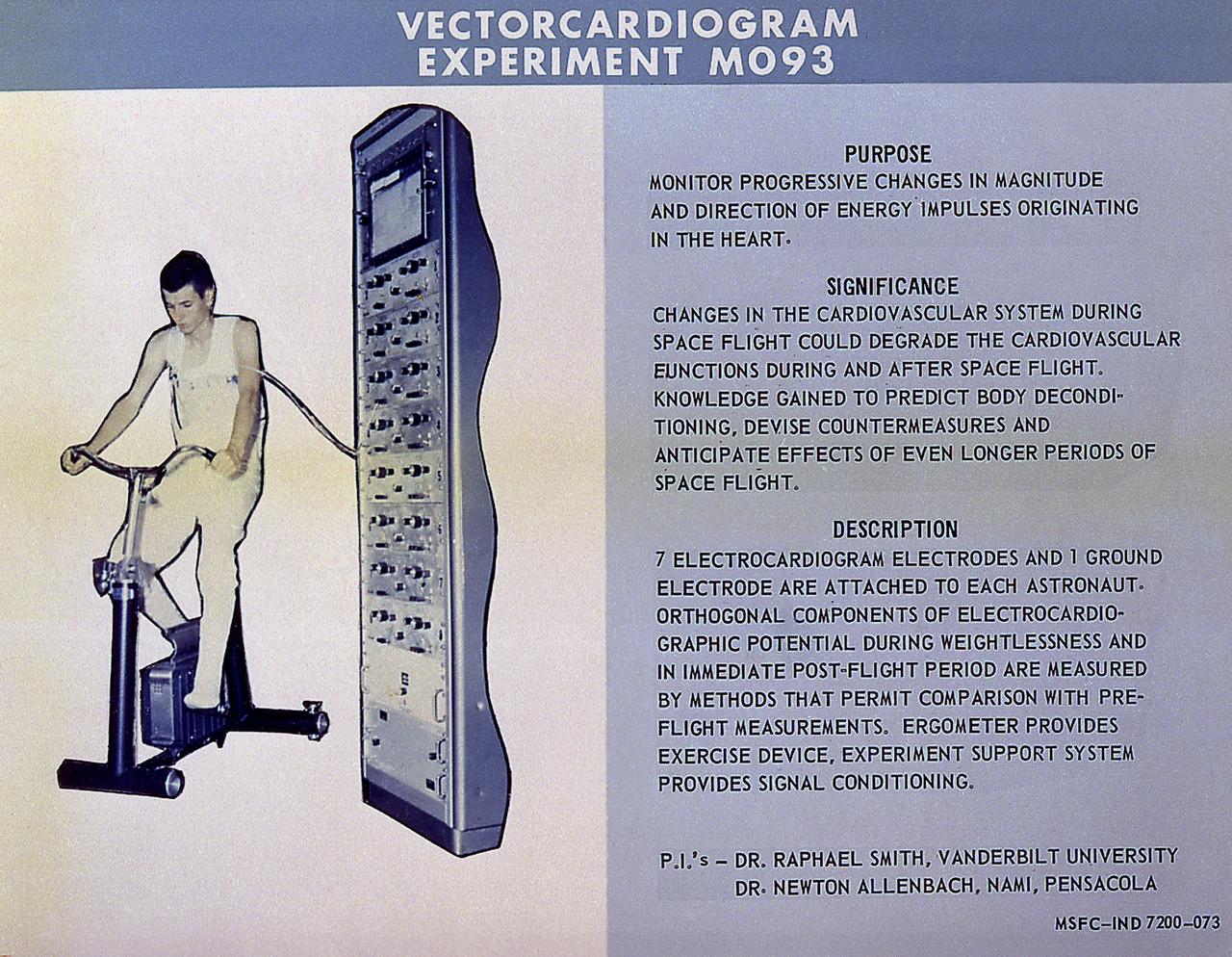
This chart details Skylab's Vectorcardiogram experiment and facility, a medical study to measure the activity of the heart by recording electric signals (vectorcardiographic potentials) of each astronaut during preflight, inflight, and post-flight periods and obtain information on changes in heart functions induced by flight conditions. Vectorcardiograms were taken with a bicycle ergometer (part of Experiment M171) at regular intervals throughout the mission while the crewmen were at rest, and before, during, and after specific exercise periods. This instrument enabled an astronaut to exercise at selected levels of energy consumption. The Marshall Space Flight Center had program management responsibility for the development of Skylab hardware and experiments.
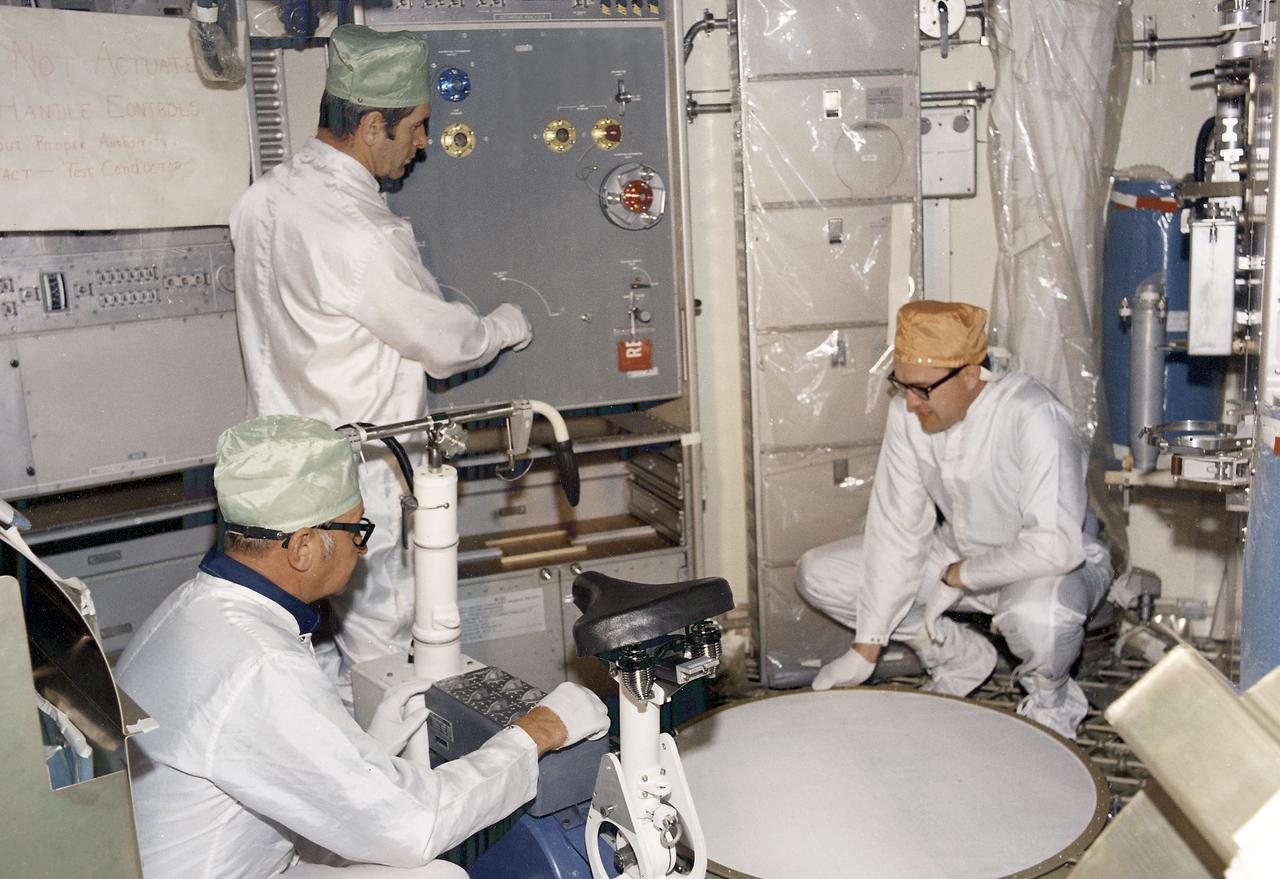
This photograph shows technicians performing a checkout of the Metabolic Analyzer (center background) and the Ergometer (foreground) in the Orbital Workshop (OWS). The shower compartment is at right. The Ergometer (Skylab Experiment M171) evaluated man's metabolic effectiveness and cost of work in space environment. Located in the experiment and work area of the OWS, the shower compartment was a cylindrical cloth enclosure that was folded flat when not in use. The bottom ring of the shower was fastened to the floor and contained foot restraints. The upper ring contained the shower head and hose. To use the shower, the astronaut filled a pressurized portable bottle with heated water and attached the bottle to the ceiling. A flexible hose cornected the water bottle to a handheld shower head. The astronaut pulled the cylindrical shower wall up into position and bathed, using liquid soap. Both soap and water were carefully rationed, having been premeasured for economical use.