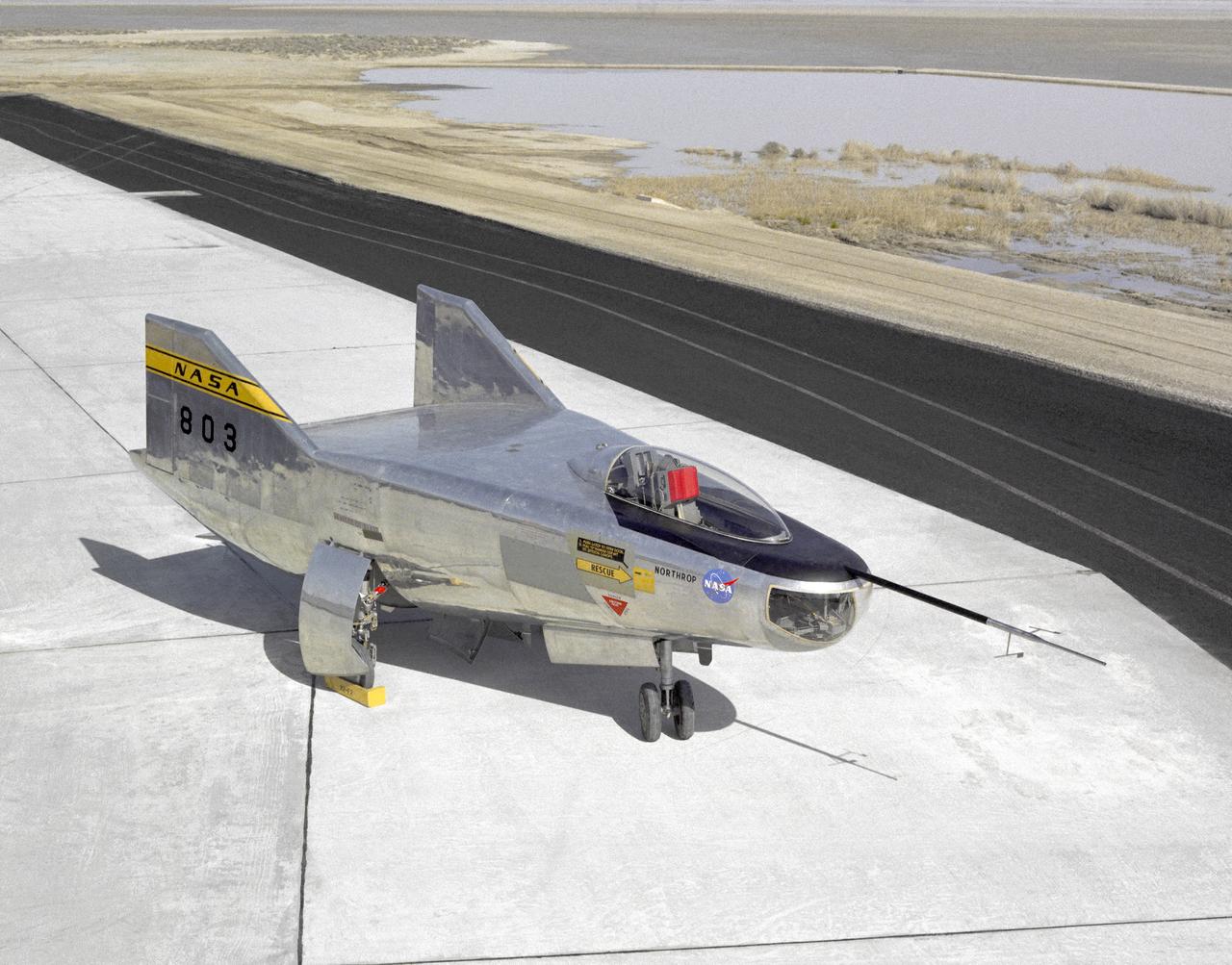
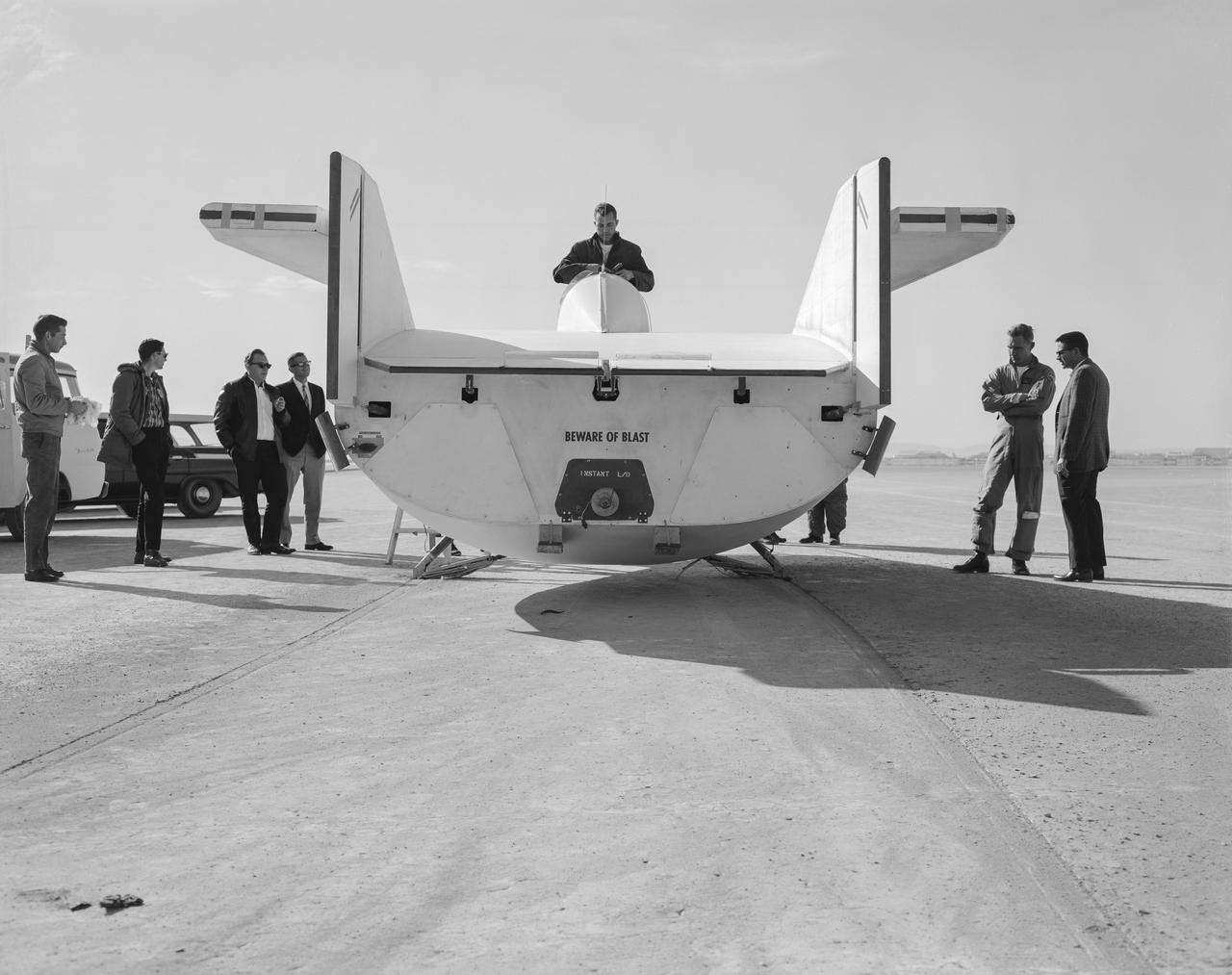
The M2-F2 Lifting Body is seen here on the ramp at the NASA Dryden Flight Research Center. The success of Dryden's M2-F1 program led to NASA's development and construction of two heavyweight lifting bodies based on studies at NASA's Ames and Langley research centers -- the M2-F2 and the HL-10, both built by the Northrop Corporation. The "M" refers to "manned" and "F" refers to "flight" version. "HL" comes from "horizontal landing" and 10 is for the tenth lifting body model to be investigated by Langley. The first flight of the M2-F2 -- which looked much like the "F1" -- was on July 12, 1966. Milt Thompson was the pilot. By then, the same B-52 used to air launch the famed X-15 rocket research aircraft was modified to also carry the lifting bodies. Thompson was dropped from the B-52's wing pylon mount at an altitude of 45,000 feet on that maiden glide flight. The M2-F2 weighed 4,620 pounds, was 22 feet long, and had a width of about 10 feet. On May 10, 1967, during the sixteenth glide flight leading up to powered flight, a landing accident severely damaged the vehicle and seriously injured the NASA pilot, Bruce Peterson. NASA pilots and researchers realized the M2-F2 had lateral control problems, even though it had a stability augmentation control system. When the M2-F2 was rebuilt at Dryden and redesignated the M2-F3, it was modified with an additional third vertical fin -- centered between the tip fins -- to improve control characteristics. The M2-F2/F3 was the first of the heavy-weight, entry-configuration lifting bodies. Its successful development as a research test vehicle answered many of the generic questions about these vehicles. NASA donated the M2-F3 vehicle to the Smithsonian Institute in December 1973. It is currently hanging in the Air and Space Museum along with the X-15 aircraft number 1, which was its hangar partner at Dryden from 1965 to 1969.
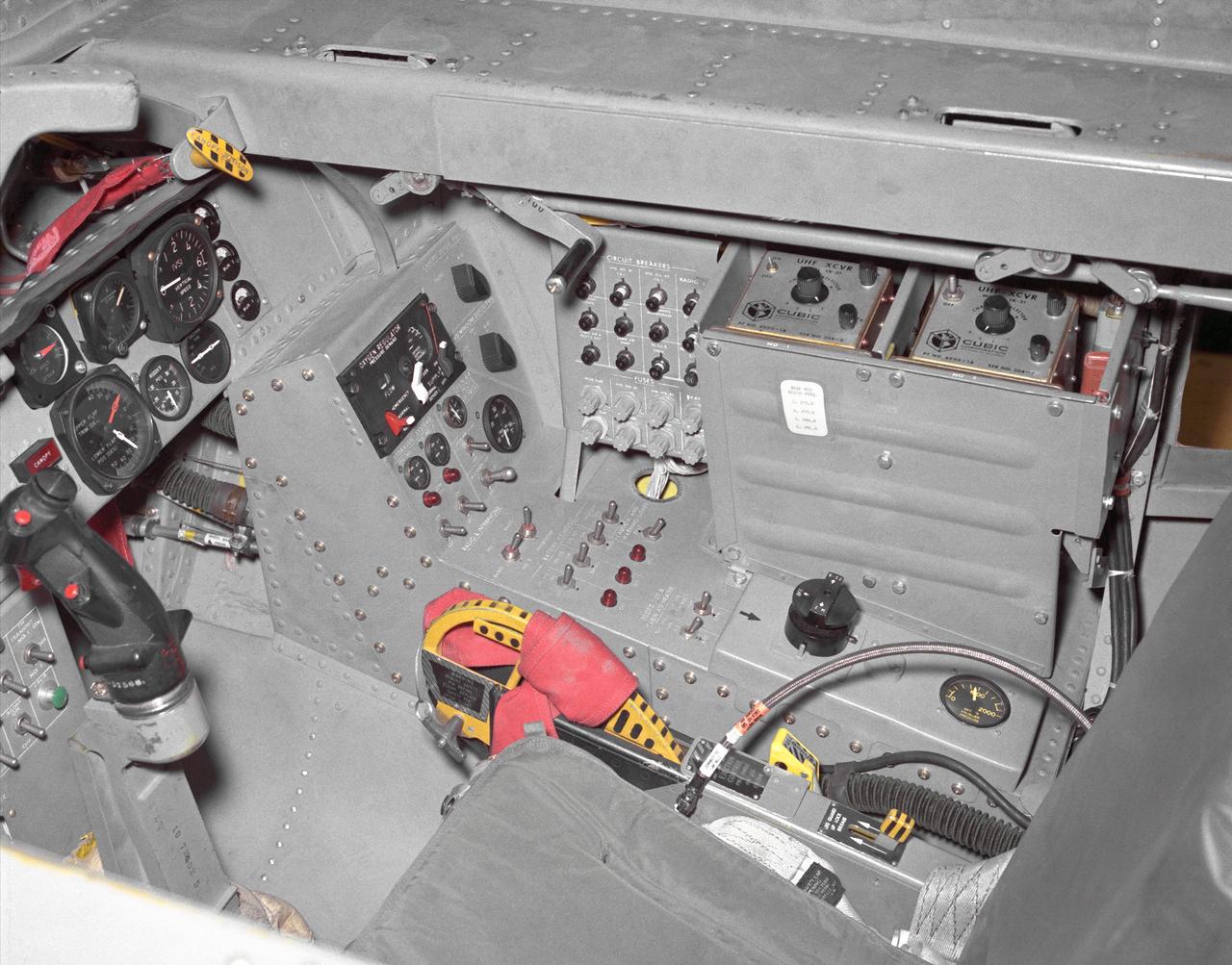
This photo shows the right side cockpit instrumentation panel of the M2-F2 Lifting Body. The success of Dryden's M2-F1 program led to NASA's development and construction of two heavyweight lifting bodies based on studies at NASA's Ames and Langley research centers -- the M2-F2 and the HL-10, both built by the Northrop Corporation. The "M" refers to "manned" and "F" refers to "flight" version. "HL" comes from "horizontal landing" and 10 is for the tenth lifting body model to be investigated by Langley. The first flight of the M2-F2 -- which looked much like the "F1" -- was on July 12, 1966. Milt Thompson was the pilot. By then, the same B-52 used to air launch the famed X-15 rocket research aircraft was modified to also carry the lifting bodies. Thompson was dropped from the B-52's wing pylon mount at an altitude of 45,000 feet on that maiden glide flight. The M2-F2 weighed 4,620 pounds, was 22 feet long, and had a width of about 10 feet. On May 10, 1967, during the sixteenth glide flight leading up to powered flight, a landing accident severely damaged the vehicle and seriously injured the NASA pilot, Bruce Peterson. NASA pilots and researchers realized the M2-F2 had lateral control problems, even though it had a stability augmentation control system. When the M2-F2 was rebuilt at Dryden and redesignated the M2-F3, it was modified with an additional third vertical fin -- centered between the tip fins -- to improve control characteristics. The M2-F2/F3 was the first of the heavy-weight, entry-configuration lifting bodies. Its successful development as a research test vehicle answered many of the generic questions about these vehicles. NASA donated the M2-F3 vehicle to the Smithsonian Institute in December 1973. It is currently hanging in the Air and Space Museum along with the X-15 aircraft number 1, which was its hangar partner at Dryden from 1965 to 1969.
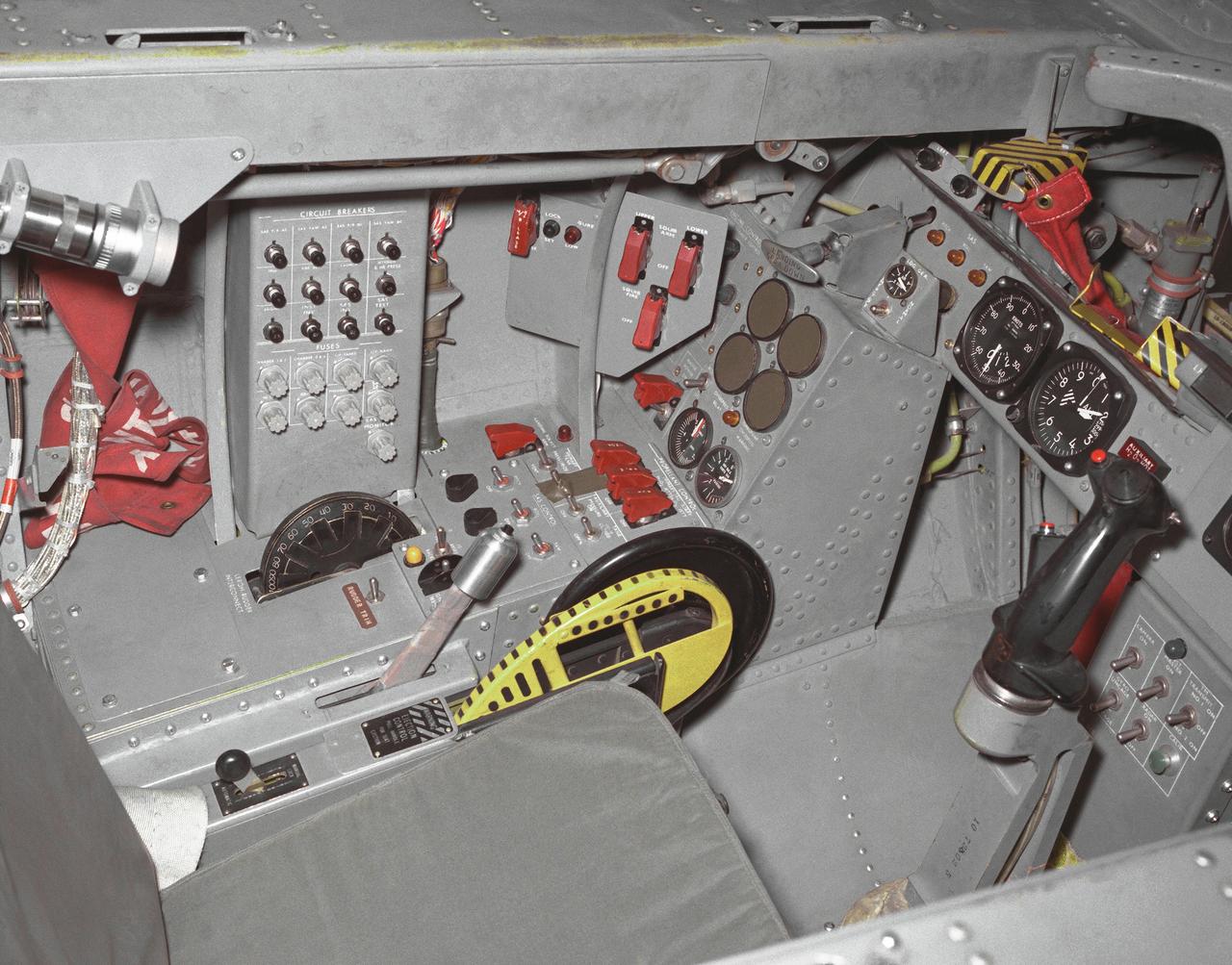
This photo shows the left side cockpit instrumentation panel of the M2-F2 Lifting Body. The success of Dryden's M2-F1 program led to NASA's development and construction of two heavyweight lifting bodies based on studies at NASA's Ames and Langley research centers -- the M2-F2 and the HL-10, both built by the Northrop Corporation. The "M" refers to "manned" and "F" refers to "flight" version. "HL" comes from "horizontal landing" and 10 is for the tenth lifting body model to be investigated by Langley. The first flight of the M2-F2 -- which looked much like the "F1" -- was on July 12, 1966. Milt Thompson was the pilot. By then, the same B-52 used to air launch the famed X-15 rocket research aircraft was modified to also carry the lifting bodies. Thompson was dropped from the B-52's wing pylon mount at an altitude of 45,000 feet on that maiden glide flight. The M2-F2 weighed 4,620 pounds, was 22 feet long, and had a width of about 10 feet. On May 10, 1967, during the sixteenth glide flight leading up to powered flight, a landing accident severely damaged the vehicle and seriously injured the NASA pilot, Bruce Peterson. NASA pilots and researchers realized the M2-F2 had lateral control problems, even though it had a stability augmentation control system. When the M2-F2 was rebuilt at Dryden and redesignated the M2-F3, it was modified with an additional third vertical fin -- centered between the tip fins -- to improve control characteristics. The M2-F2/F3 was the first of the heavy-weight, entry-configuration lifting bodies. Its successful development as a research test vehicle answered many of the generic questions about these vehicles. NASA donated the M2-F3 vehicle to the Smithsonian Institute in December 1973. It is currently hanging in the Air and Space Museum along with the X-15 aircraft number 1, which was its hangar partner at Dryden from 1965 to 1969.
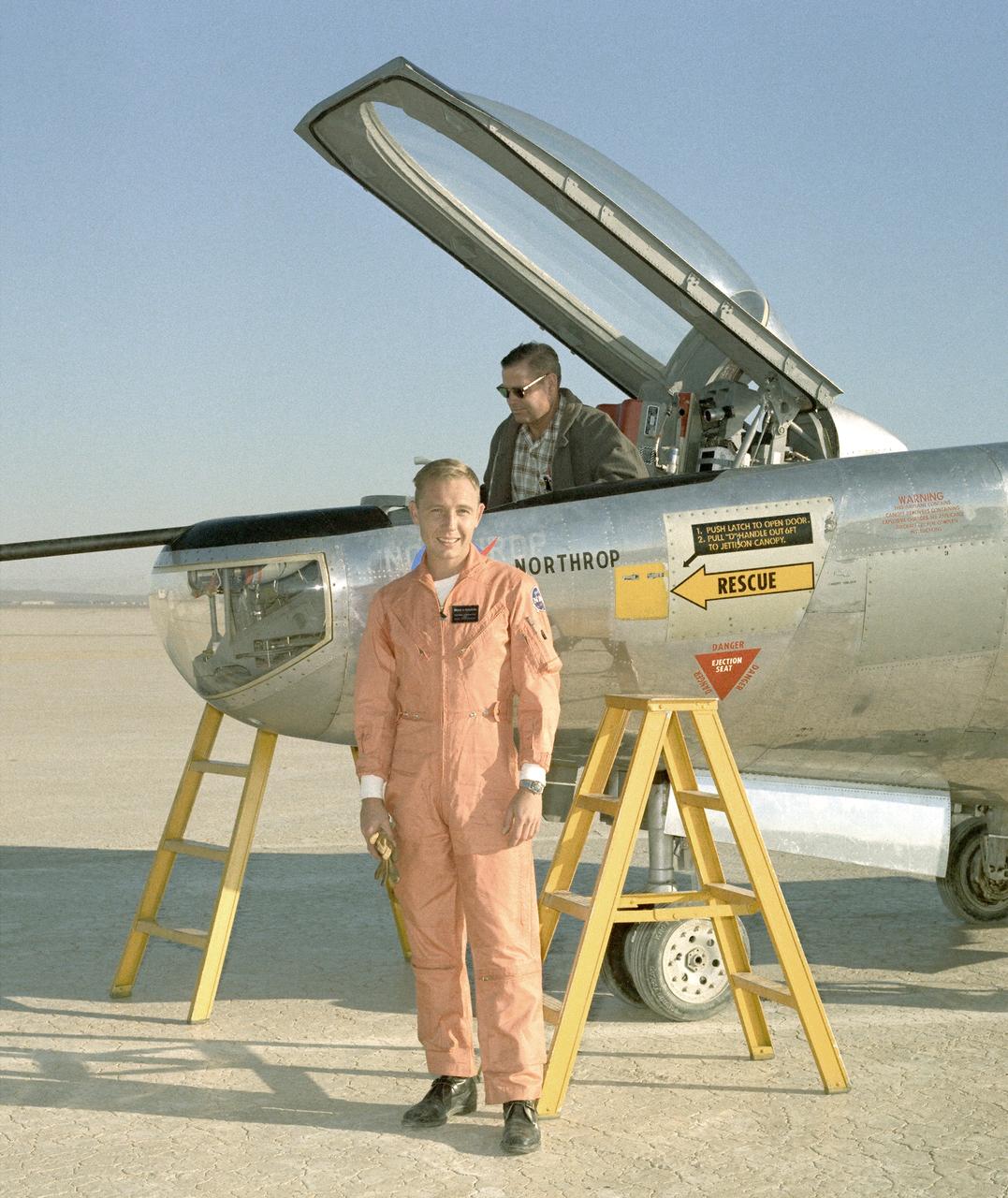
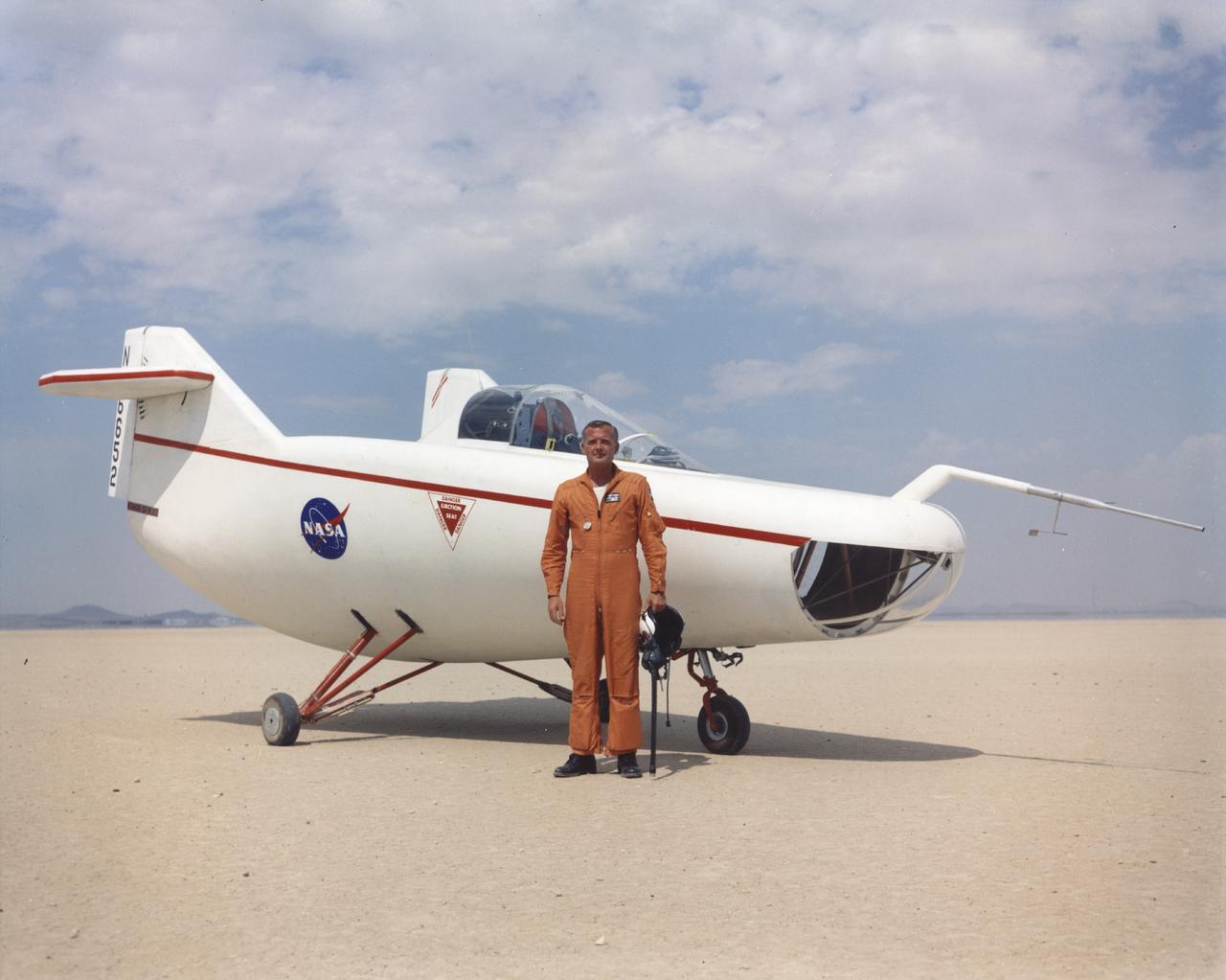
Bruce A. Peterson standing beside the M2-F2 lifting body on Rogers Dry Lake. Peterson became the NASA project pilot for the lifting body program after Milt Thompson retired from flying in late 1966. Peterson had flown the M2-F1, and made the first glide flight of the HL-10 heavy-weight lifting body in December 1966. On May 10, 1967, Peterson made his fourth glide flight in the M2-F2. This was also the M2-F2's 16th glide flight, scheduled to be the last one before the powered flights began. However, as pilot Bruce Peterson neared the lakebed, the M2-F2 suffered a pilot induced oscillation (PIO). The vehicle rolled from side to side in flight as he tried to bring it under control. Peterson recovered, but then observed a rescue helicopter that seemed to pose a collision threat. Distracted, Peterson drifted in a cross-wind to an unmarked area of the lakebed where it was very difficult to judge the height over the lakebed because of a lack of the guidance the markers provided on the lakebed runway. Peterson fired the landing rockets to provide additional lift, but he hit the lakebed before the landing gear was fully down and locked. The M2-F2 rolled over six times, coming to rest upside down. Pulled from the vehicle by Jay King and Joseph Huxman, Peterson was rushed to the base hospital, transferred to March Air Force Base and then the UCLA Hospital. He recovered but lost vision in his right eye due to a staph infection.
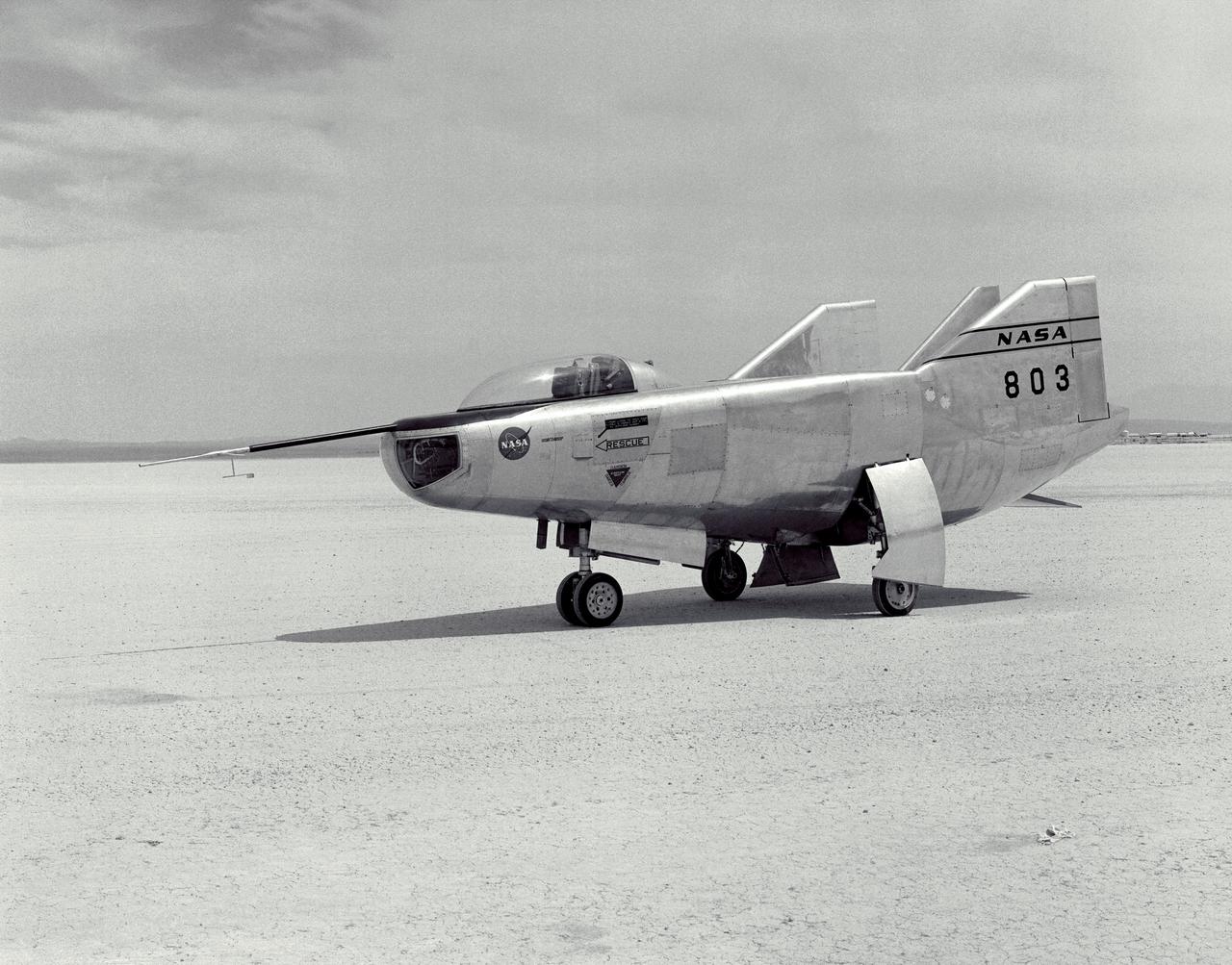
The M2-F3 Lifting Body is seen here on the lakebed at the NASA Flight Research Center (FRC--later the Dryden Flight Research Center), Edwards, California. After a three-year-long redesign and rebuilding effort, the M2-F3 was ready to fly. The May 1967 crash of the M2-F2 had damaged both the external skin and the internal structure of the lifting body. At first, it seemed that the vehicle had been irreparably damaged, but the original manufacturer, Northrop, did the repair work and returned the redesigned M2-F3 with a center fin for stability to the FRC.
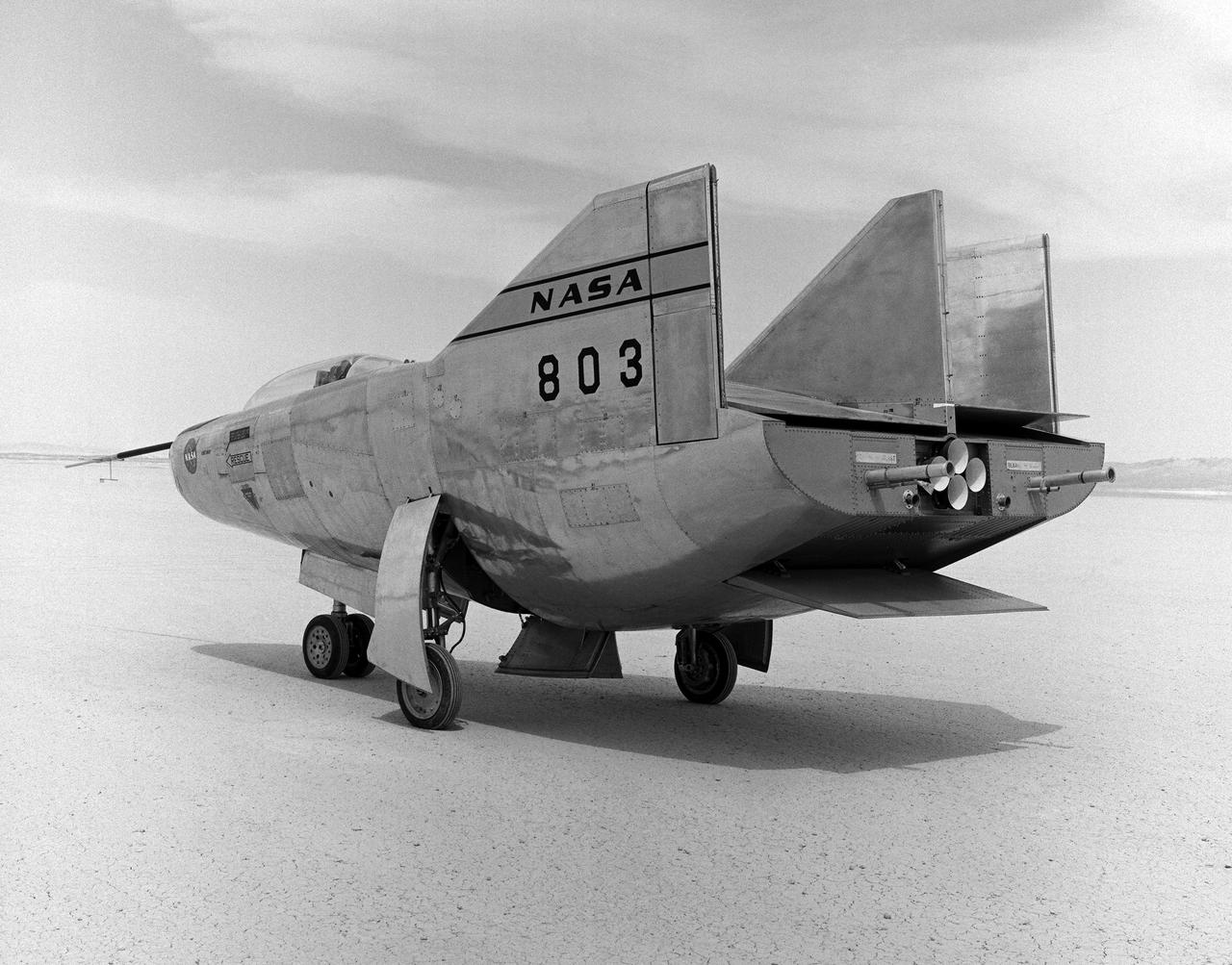
The M2-F3 Lifting Body is seen here on the lakebed next to the NASA Flight Research Center (later the Dryden Flight Research Center), Edwards, California. Redesigned and rebuilt from the M2-F2, the M2-F3 featured as its most visible change a center fin for greater stability. While the M2-F3 was still demanding to fly, the center fin eliminated the high risk of pilot induced oscillation (PIO) that was characteristic of the M2-F2.
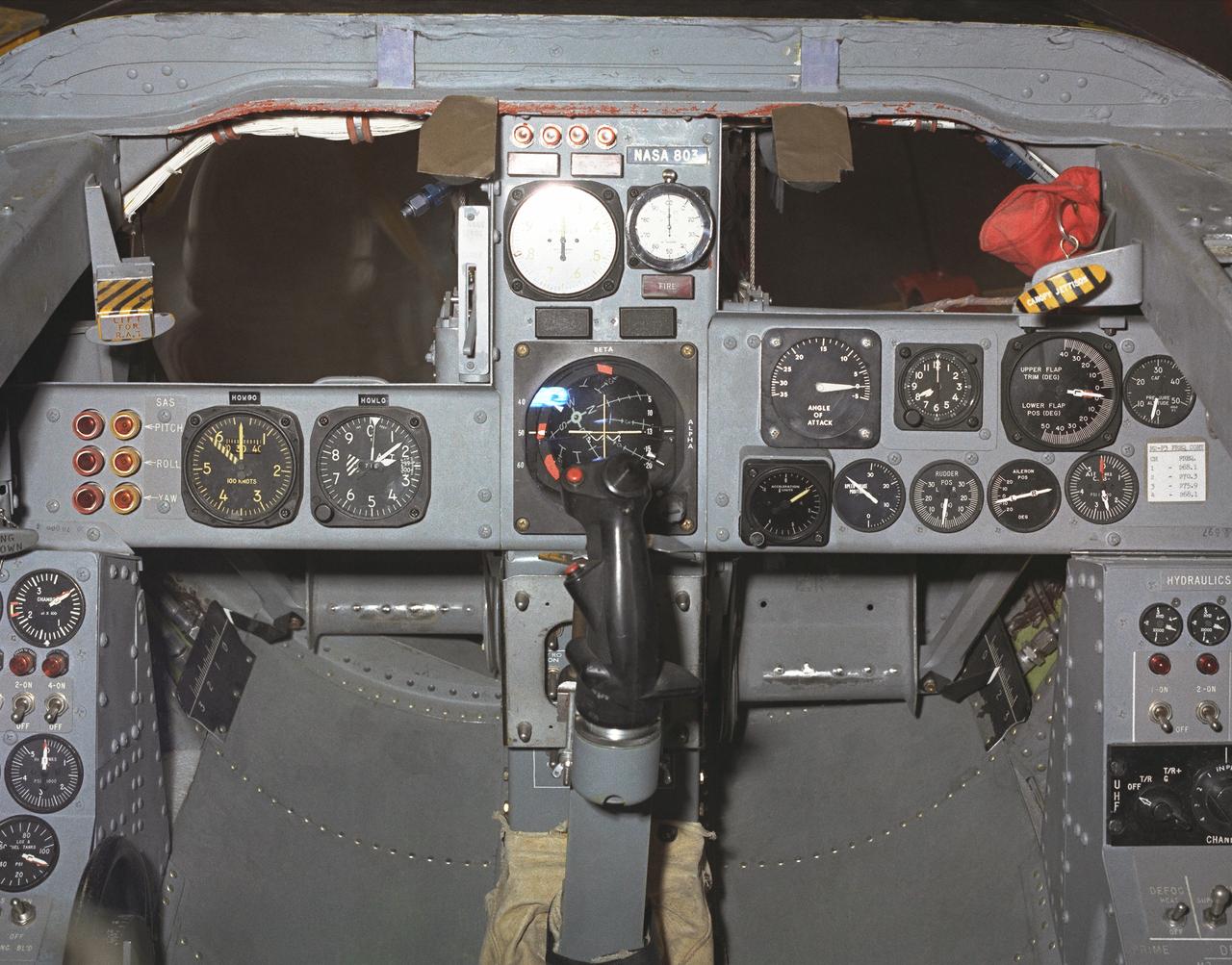
This photo shows the cockpit instrument panel of the M2-F3 Lifting Body.
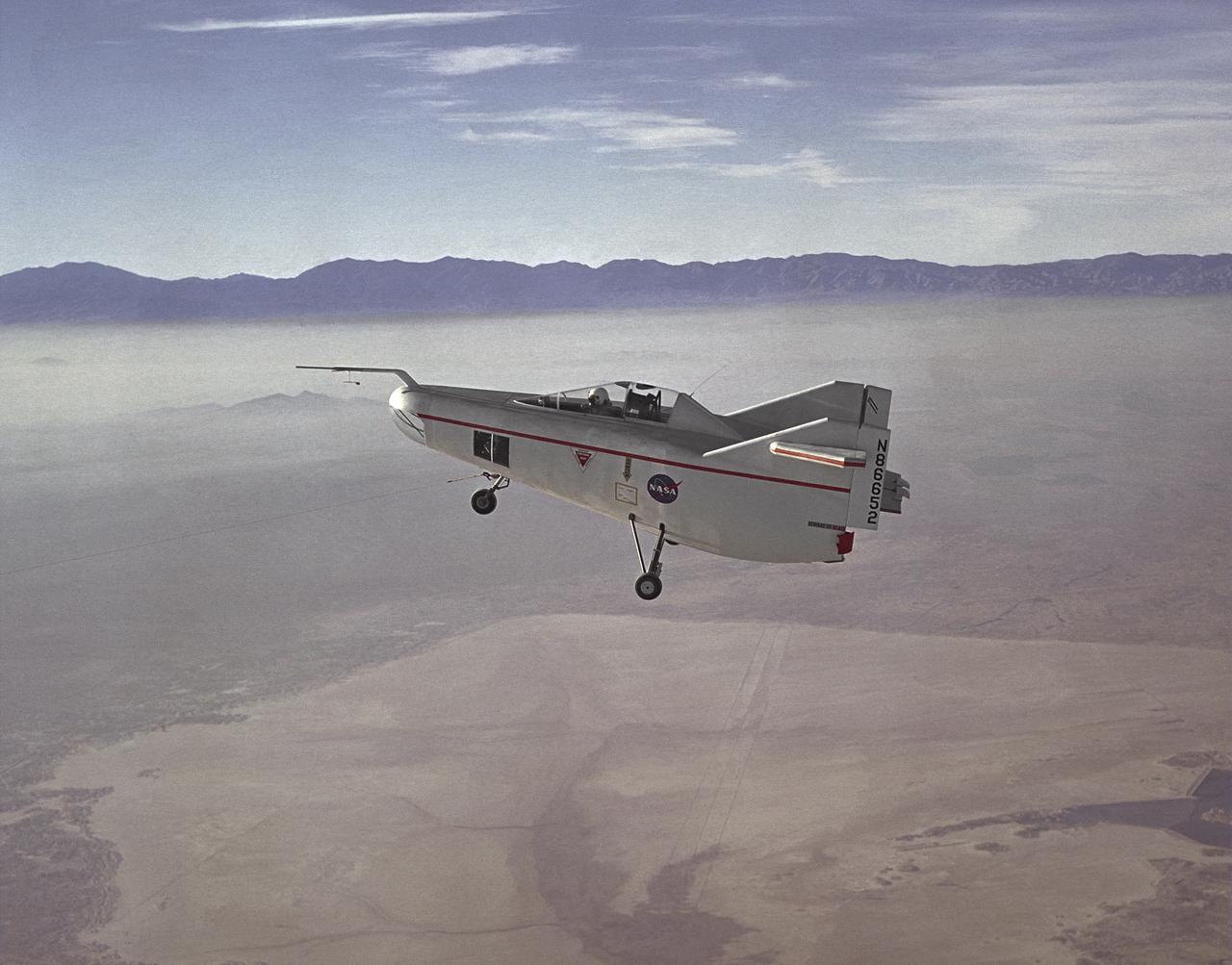
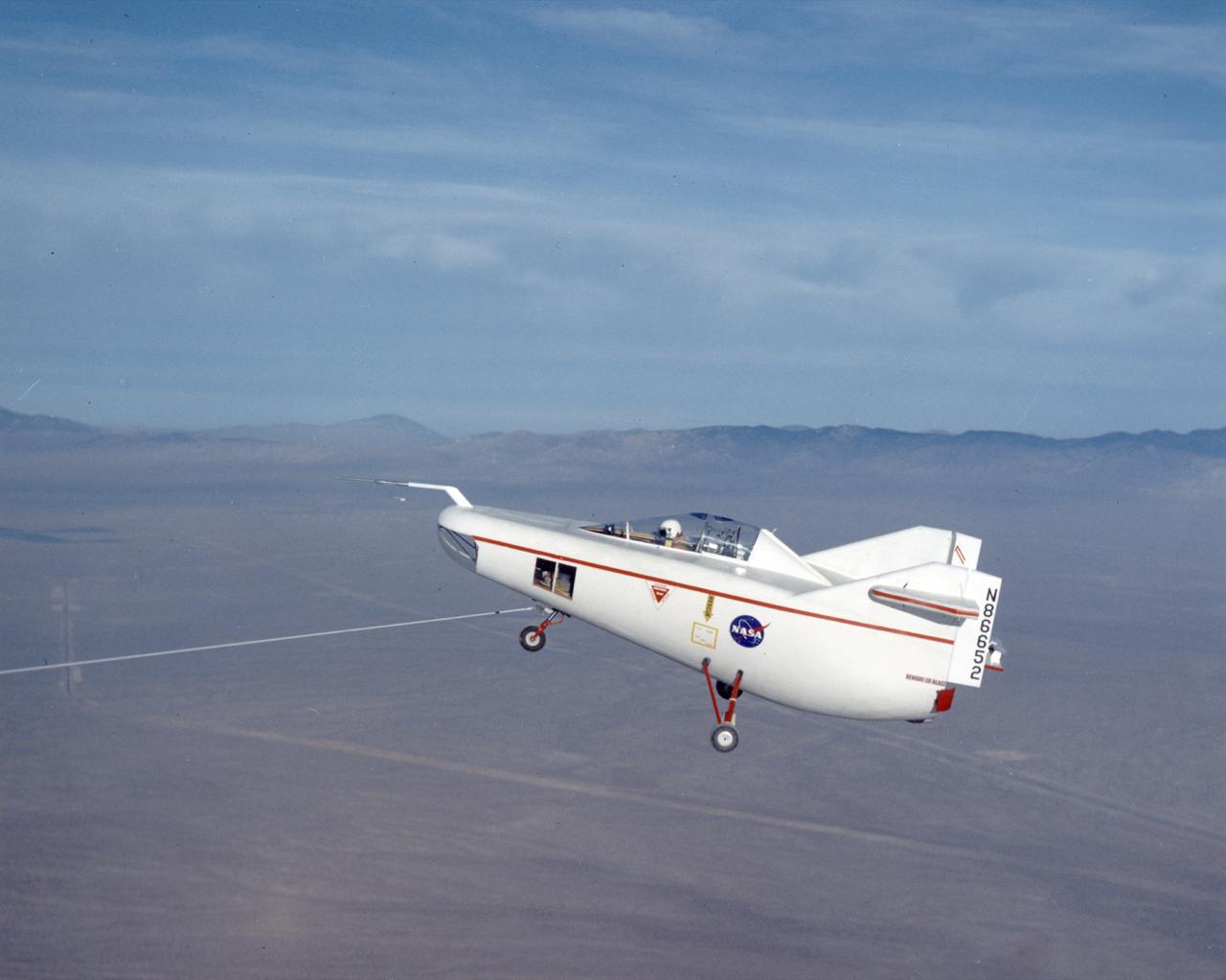
The M2-F1 Lifting Body is seen here under tow, high above Rogers Dry Lake near the Flight Research Center (later redesignated the Dryden Flight Research Center), Edwards, California. R. Dale Reed effectively advocated the project with the support of NASA research pilot Milt Thompson. Together, they gained the support of Flight Research Center Director Paul Bikle. After a six-month feasibility study, Bikle gave approval in the fall of 1962 for the M2-F1 to be built.
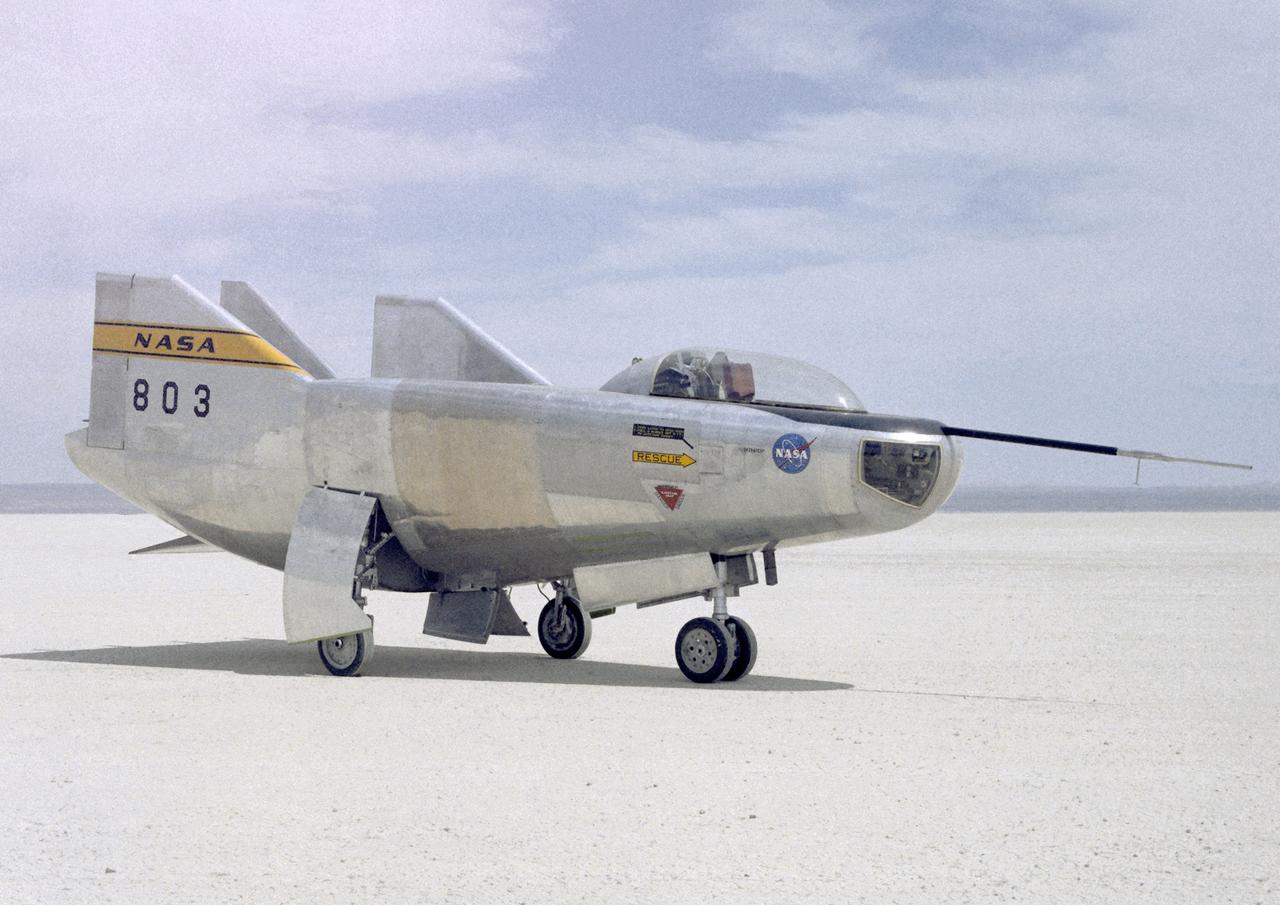
The M2-F3 Lifting Body is seen here on the lakebed next to the NASA Flight Research Center (FRC--later Dryden Flight Research Center), Edwards, California. The May 1967 crash of the M2-F2 had torn off the left fin and landing gear. It had also damaged the external skin and internal structure. Flight Research Center engineers worked with Ames Research Center and the Air Force in redesigning the vehicle with a center fin to provide greater stability. Then Northrop Corporation cooperated with the FRC in rebuilding the vehicle. The entire process took three years.
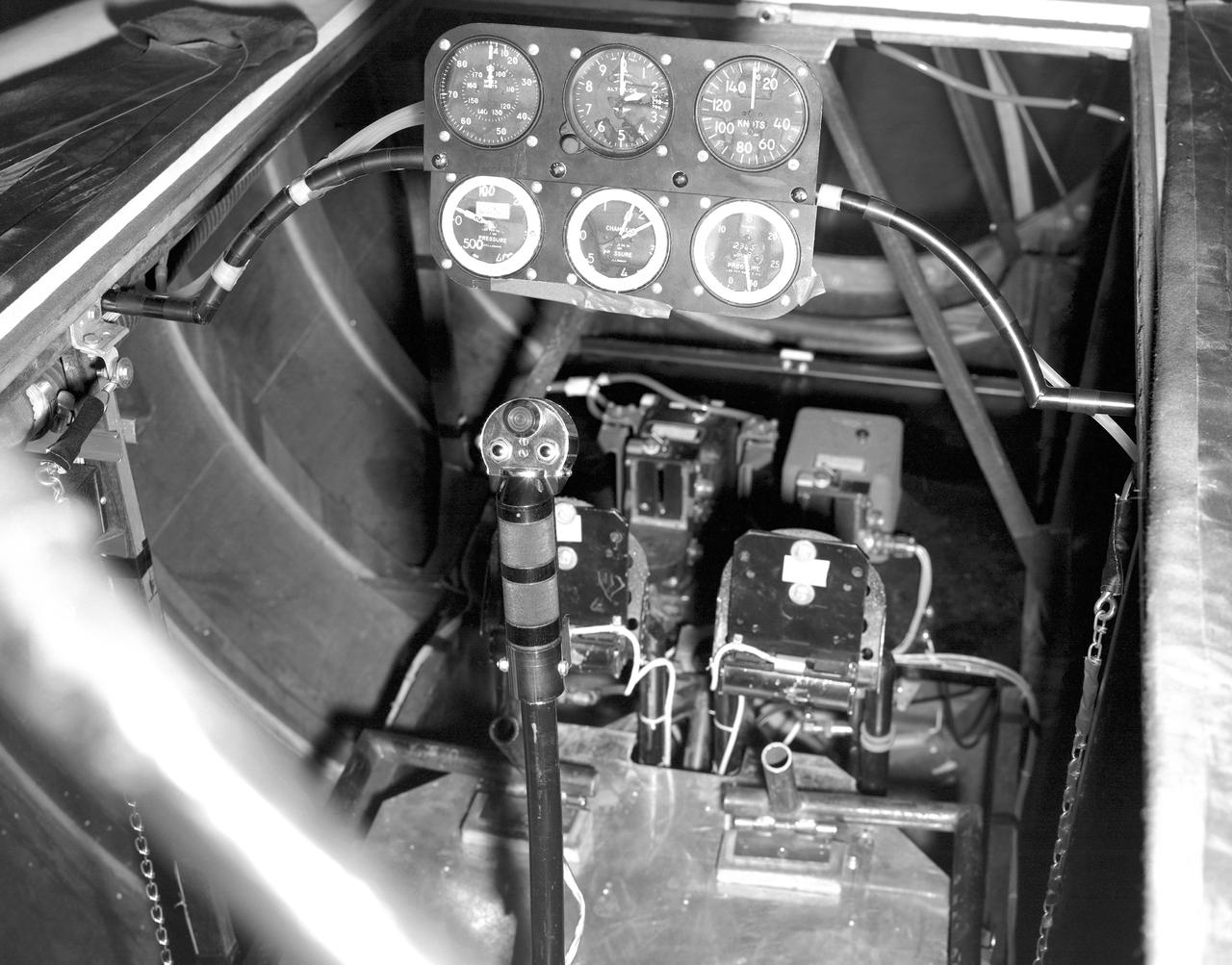
This photo shows the cockpit configuration of the M2-F1 wingless lifting body. With a top speed of about 120 knots, the M2-F1 had a simple instrument panel. Besides the panel itself, the ribs of the wooden shell (left) and the control stick (center) are also visible.
The M2-F1 following a hard landing on Rogers Dry Lake in 1963. It hit the lakebed so hard the rolling gear completely separated.
NASA Flight Research Pilot Milt Thompson, shown here on the lakebed with the M2-F1 lifting body, was an early backer of R. Dale Reed's lifting-body proposal. He urged Flight Research Center director Paul Bikle to approve the M2-F1's construction. Thompson also made the first glide flights in both the M2-F1 and its successor, the heavyweight M2-F2.
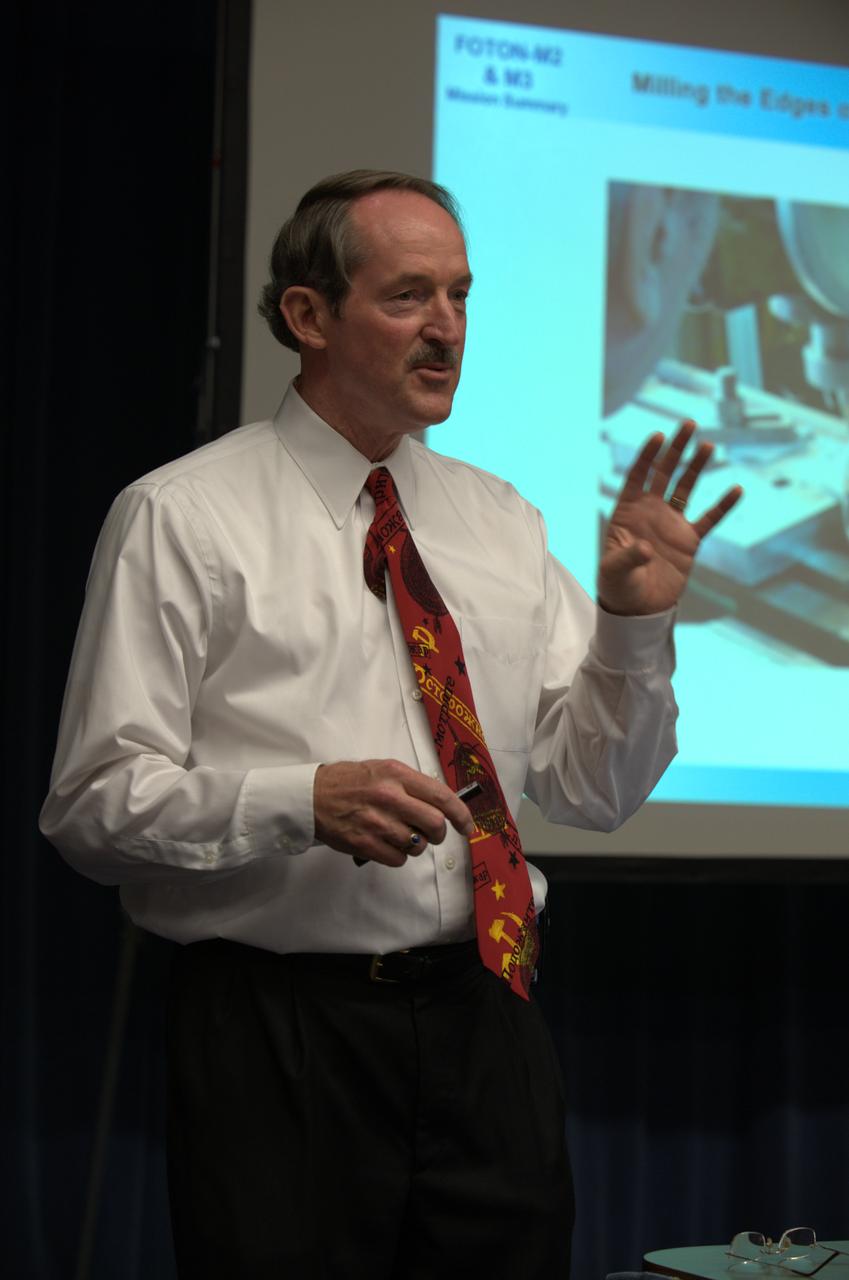
Foton-M2 and Foton-M3 Mission description and summary of science results presented by Mike Skidmore The Foton-M3 spacecraft launched from Baikonur Cosmodrome (Kazakhstan) on Sept 14, 2007 and landed 12 days later approximately 130km south of Kustanay, Northern Kazakhstan. The Foton-me flight, following the 16-day Foto-M2 spaceflight (june 2005), represented a uique opportunity to re-fly and improve the Foton-M2 experiments. For Foton-Me, important improvements were made in hardware, experimental design and operational logistics.
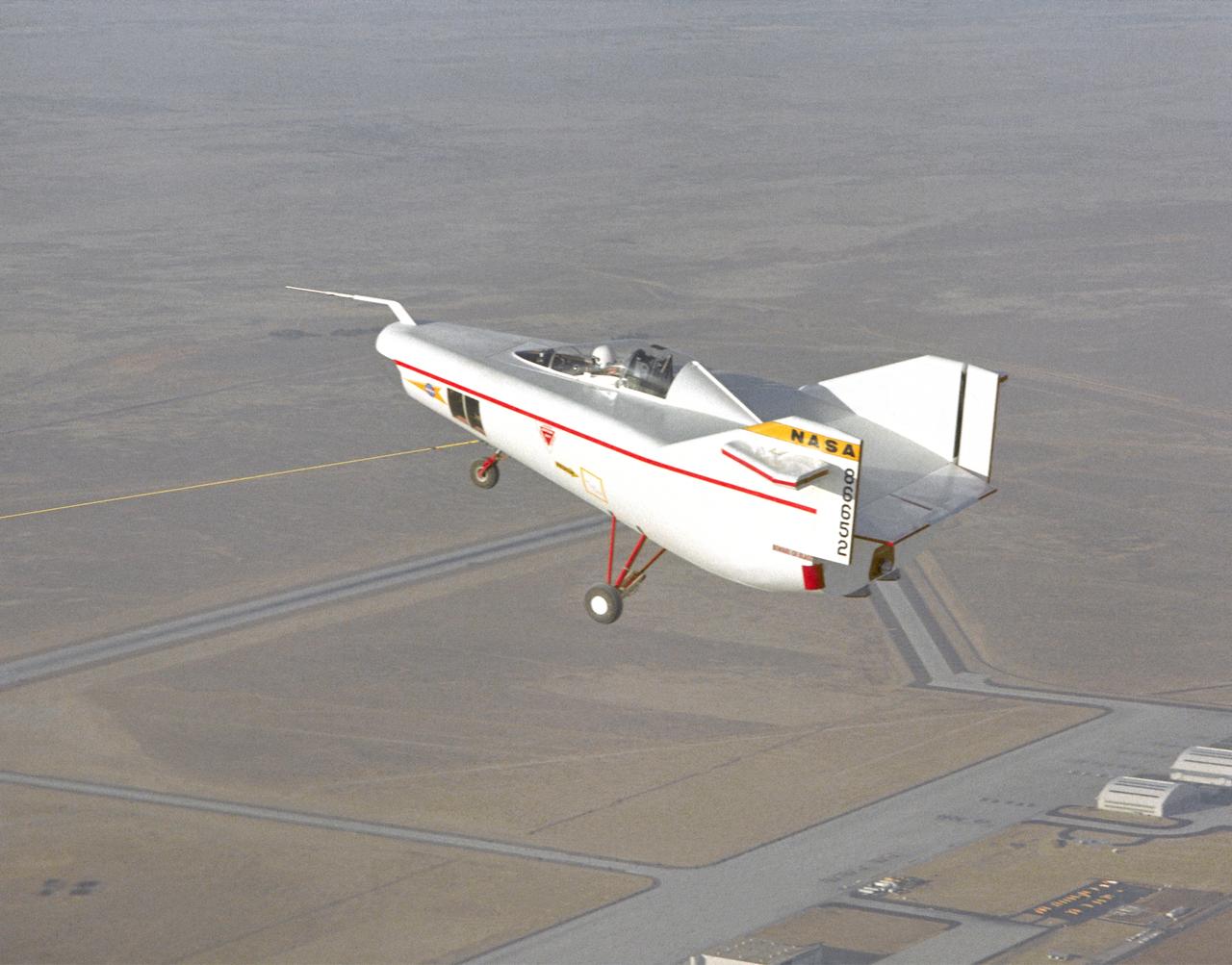
The M2-F1 Lifting Body is seen here under tow by an unseen C-47 at the NASA Flight Research Center (later redesignated the Dryden Flight Research Center), Edwards, California. The low-cost vehicle was the first piloted lifting body to be test flown. The lifting-body concept originated in the mid-1950s at the National Advisory Committee for Aeronautics' Ames Aeronautical Laboratory, Mountain View California. By February 1962, a series of possible shapes had been developed, and R. Dale Reed was working to gain support for a research vehicle.
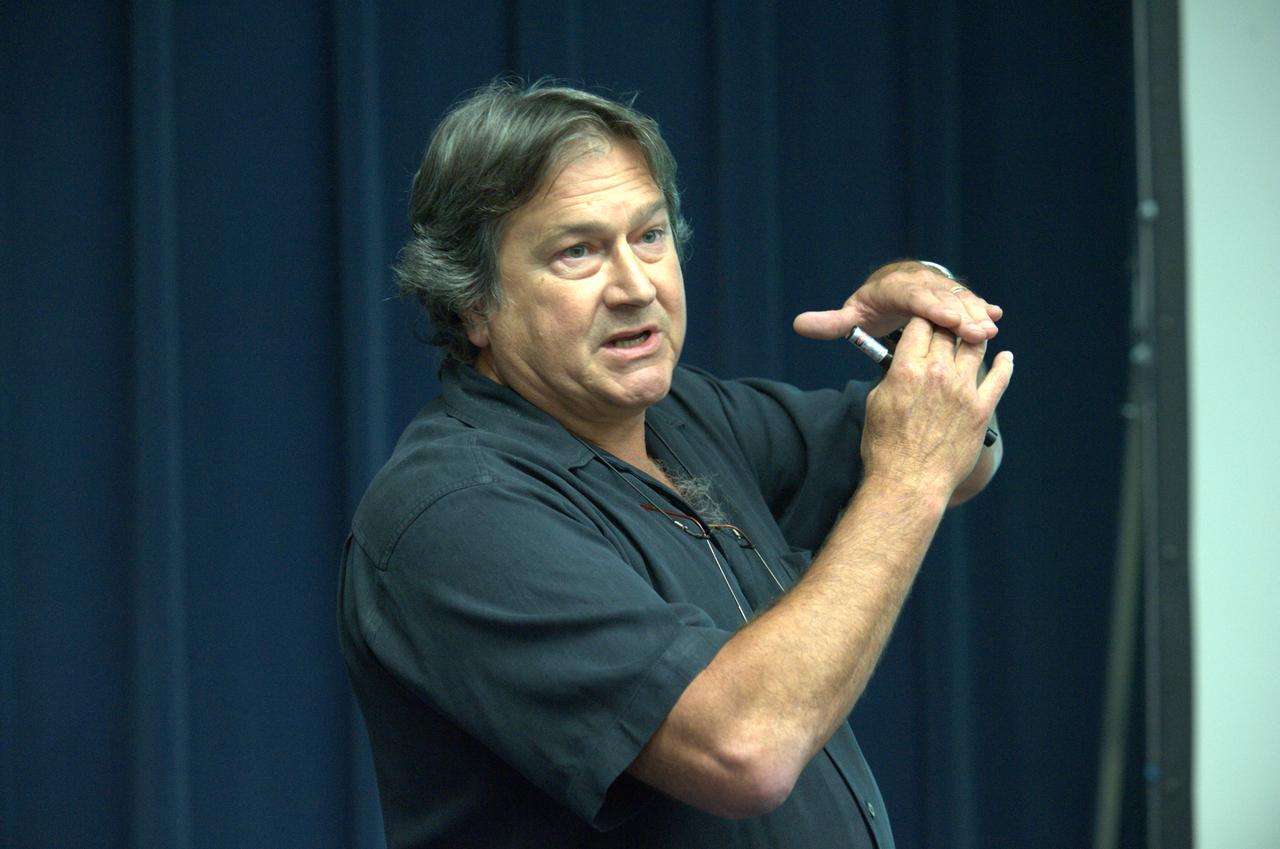
Foton-M2 and Foton-M3 Mission description and summary of science results presented by Dr Richard Boyle The Foton-M3 spacecraft launched from Baikonur Cosmodrome (Kazakhstan) on Sept 14, 2007 and landed 12 days later approximately 130km south of Kustanay, Northern Kazakhstan. The Foton-me flight, following the 16-day Foto-M2 spaceflight (june 2005), represented a uique opportunity to re-fly and improve the Foton-M2 experiments. For Foton-Me, important improvements were made in hardware, experimental design and operational logistics.
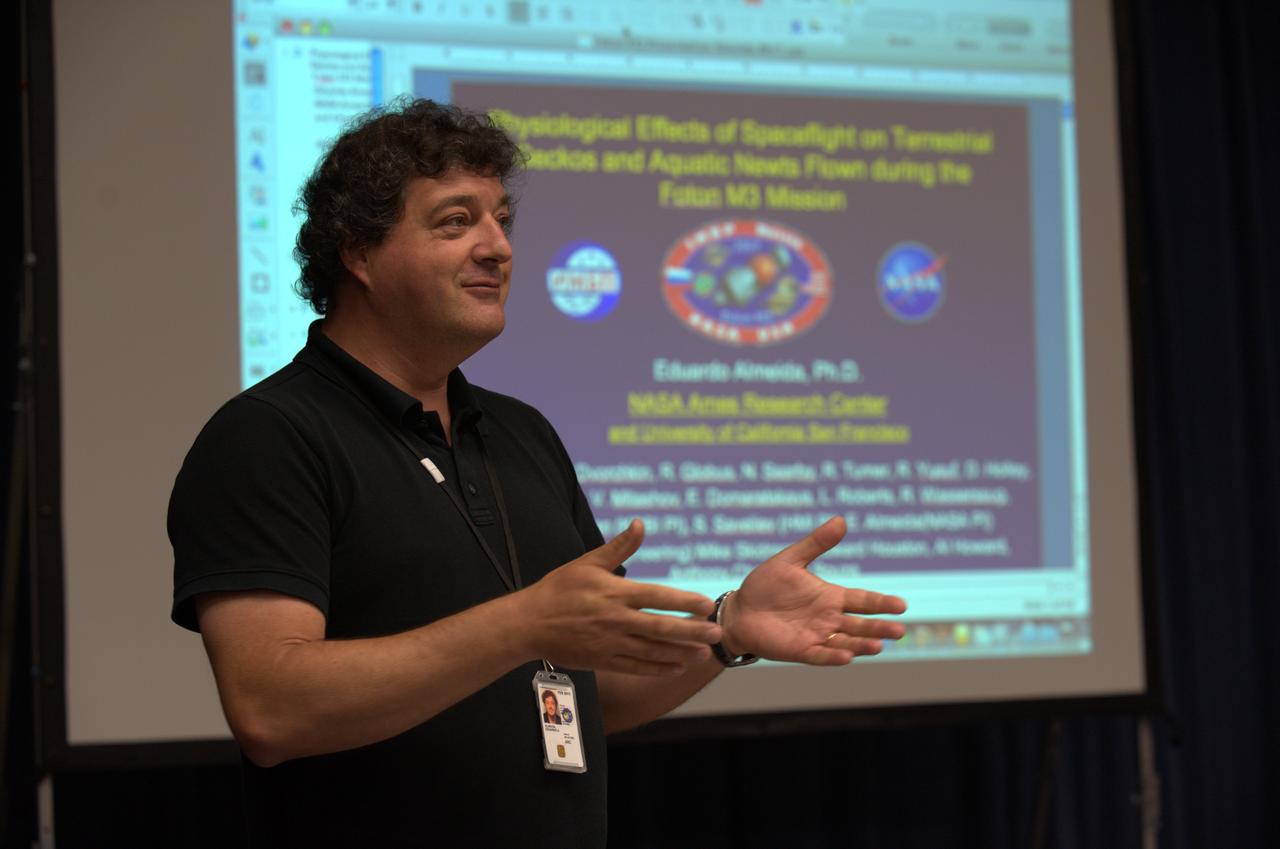
Foton-M2 and Foton-M3 Mission description and summary of science results presented by Dr. Eduardo Almeida The Foton-M3 spacecraft launched from Baikonur Cosmodrome (Kazakhstan) on Sept 14, 2007 and landed 12 days later approximately 130km south of Kustanay, Northern Kazakhstan. The Foton-me flight, following the 16-day Foto-M2 spaceflight (june 2005), represented a uique opportunity to re-fly and improve the Foton-M2 experiments. For Foton-Me, important improvements were made in hardware, experimental design and operational logistics.
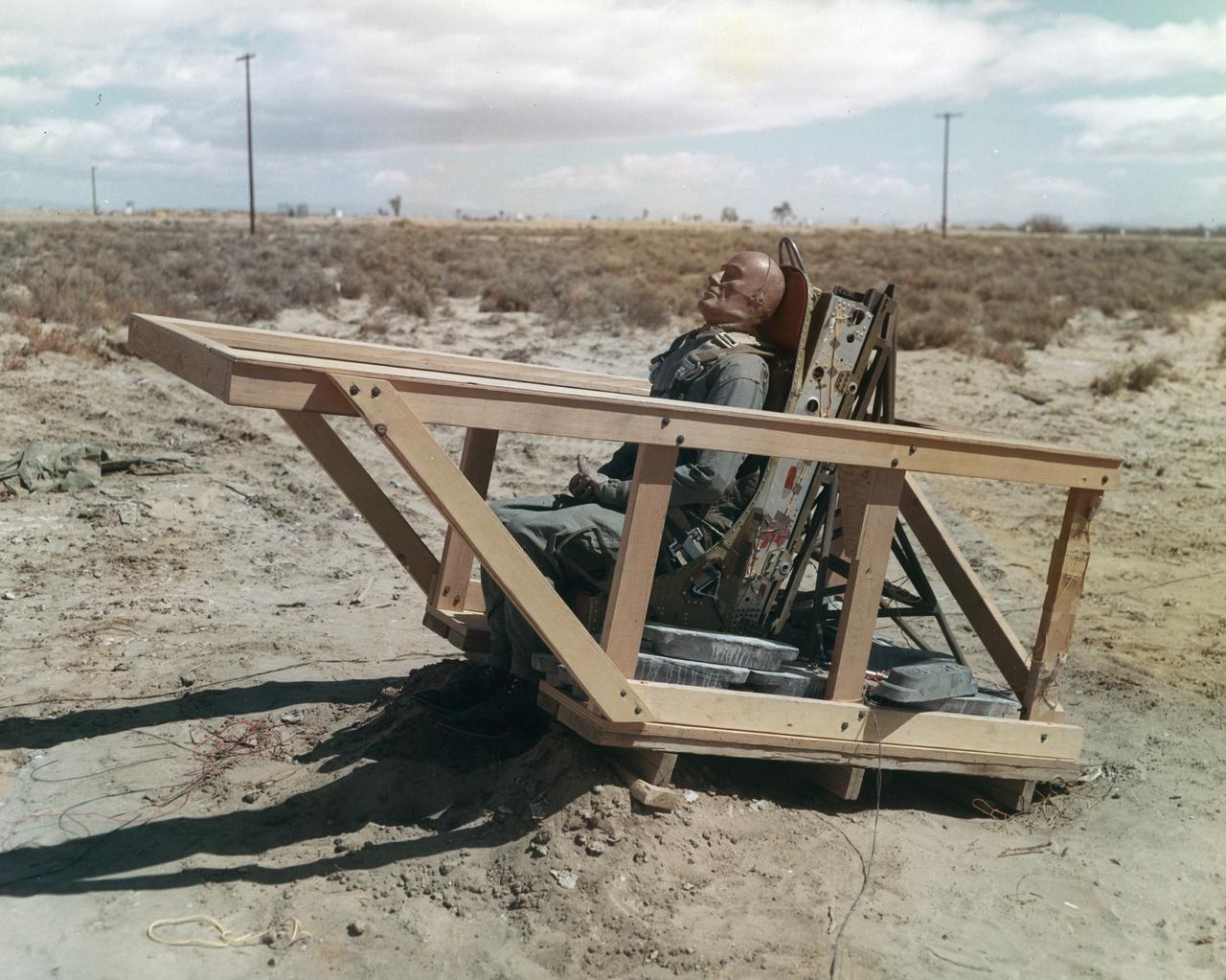
The M2-F1 was fitted with an ejection seat before the airtow flights began. The project selected the seat used in the T-37 as modified by the Weber Company to use a rocket rather than a ballistic charge for ejection. To test the ejection seat, the Flight Research Center's Dick Klein constructed a plywood mockup of the M2-F1's top deck and canopy. On the first firings, the test was unsuccessful, but on the final test the dummy in the seat landed safely. The M2-F1 ejection seat was later used in the two Lunar Landing Research Vehicles and the three Lunar Landing Training Vehicles. Three of them crashed, but in each case the pilot ejected from the vehicle successfully.
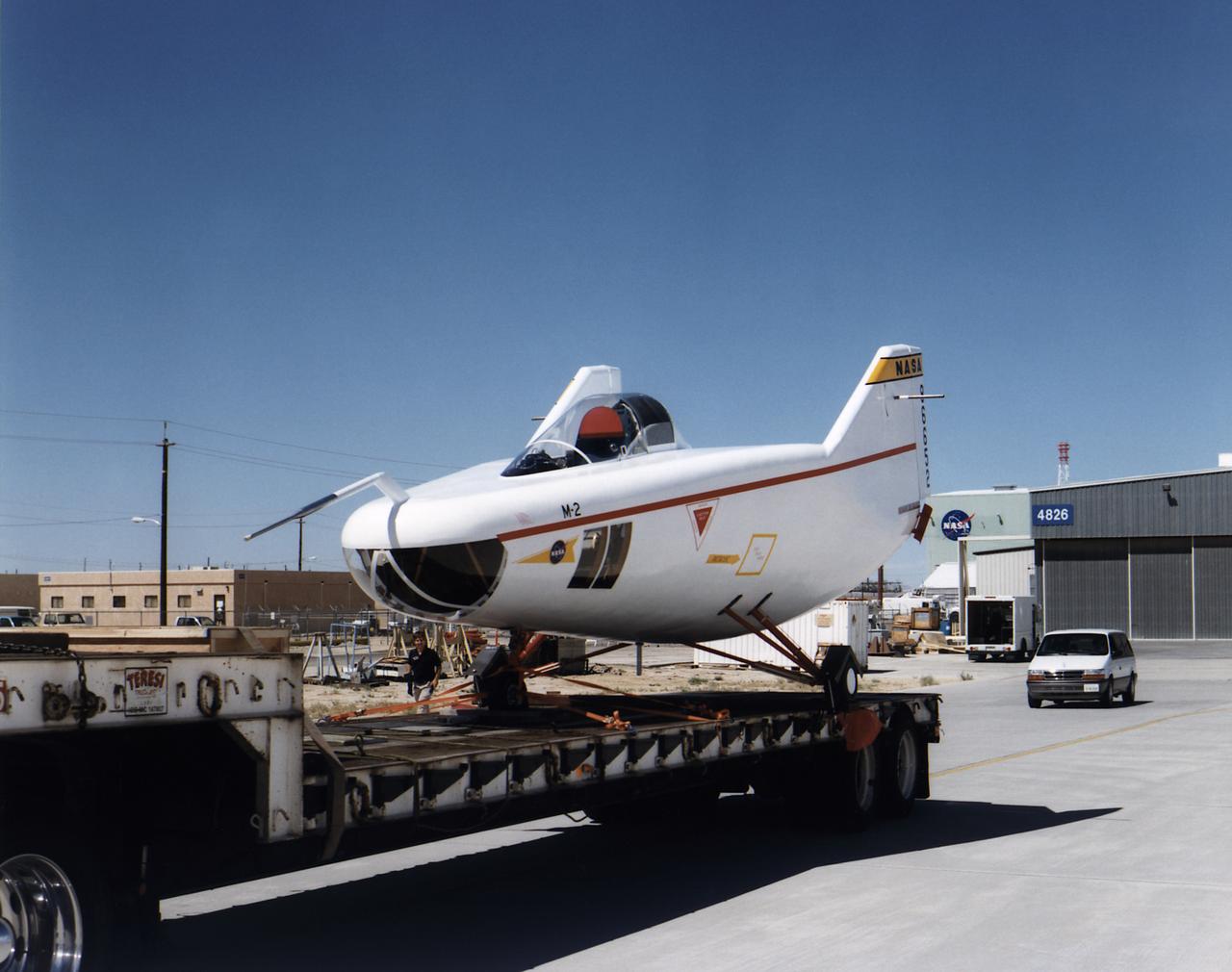
After the grounding of the M2-F1 in 1966, it was kept in outside storage on the Dryden complex. After several years, its fabric and plywood structure was damaged by the sun and weather. Restoration of the vehicle began in February 1994 under the leadership of NASA retiree Dick Fischer, with other retirees who had originally worked on the M2-F1's construction and flight research three decades before also participating. The photo shows the now-restored M2-F1 returning to the site of its flight research, now called the Dryden Flight Research Center, on 22 August 1997.
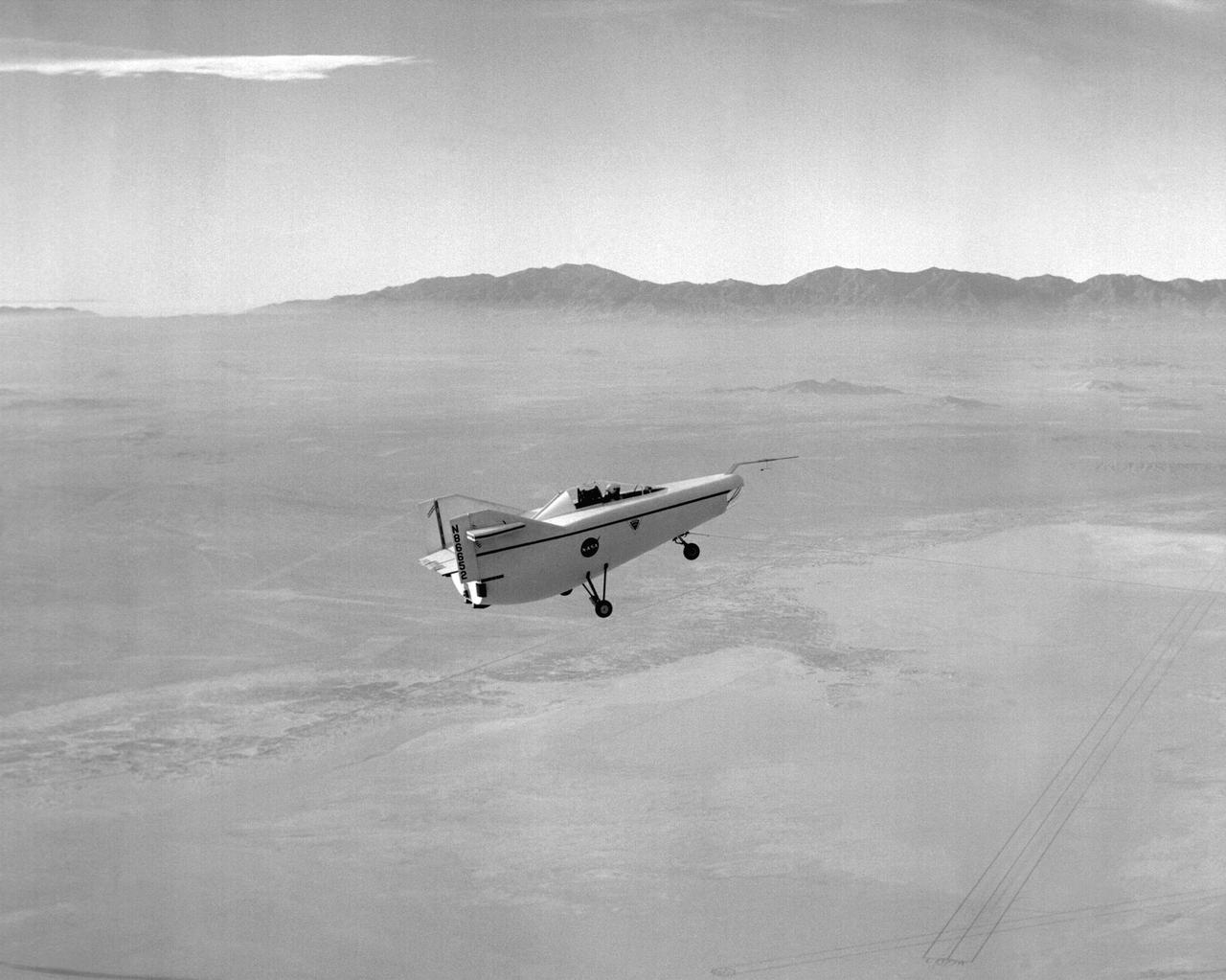
Following the first M2-F1 airtow flight on 16 August 1963, the Flight Research Center used the vehicle for both research flights and to check out new lifting-body pilots. These included Bruce Peterson, Don Mallick, Fred Haise, and Bill Dana from NASA. Air Force pilots who flew the M2-F1 included Chuck Yeager, Jerry Gentry, Joe Engle, Jim Wood, and Don Sorlie, although Wood, Haise, and Engle only flew on car tows. In the three years between the first and last flights of the M2-F1, it made about 400 car tows and 77 air tows.
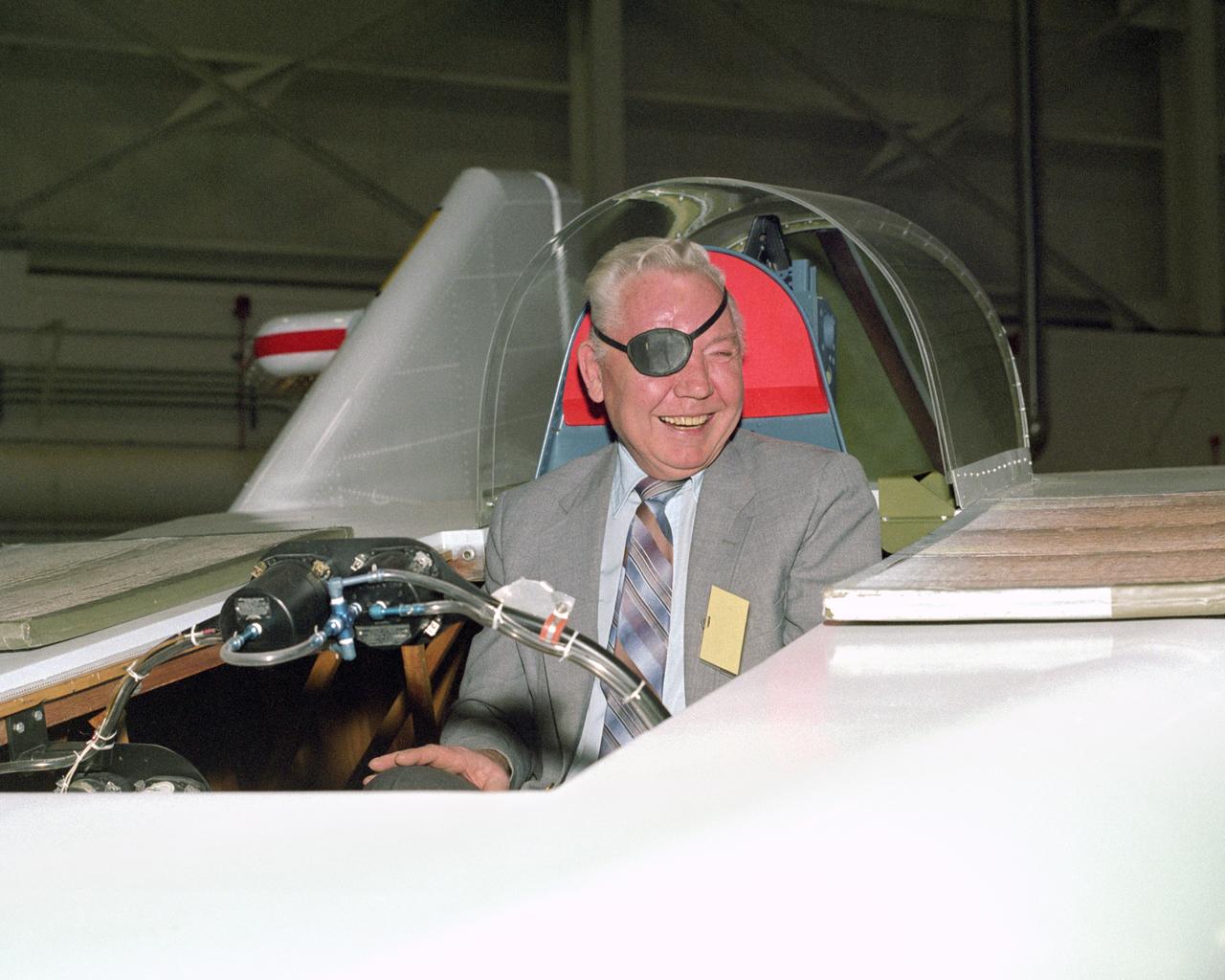
NASA Pilot Bruce Peterson in the cockpit of the restored M2-F1 Lifting Body.
After initial ground-tow flights of the M2-F1 using the Pontiac as a tow vehicle, the way was clear to make air tows behind a C-47. The first air tow took place on 16 August 1963. Pilot Milt Thompson found that the M2-F1 flew well, with good control. This first flight lasted less than two minutes from tow-line release to touchdown. The descent rate was 4,000 feet per minute.
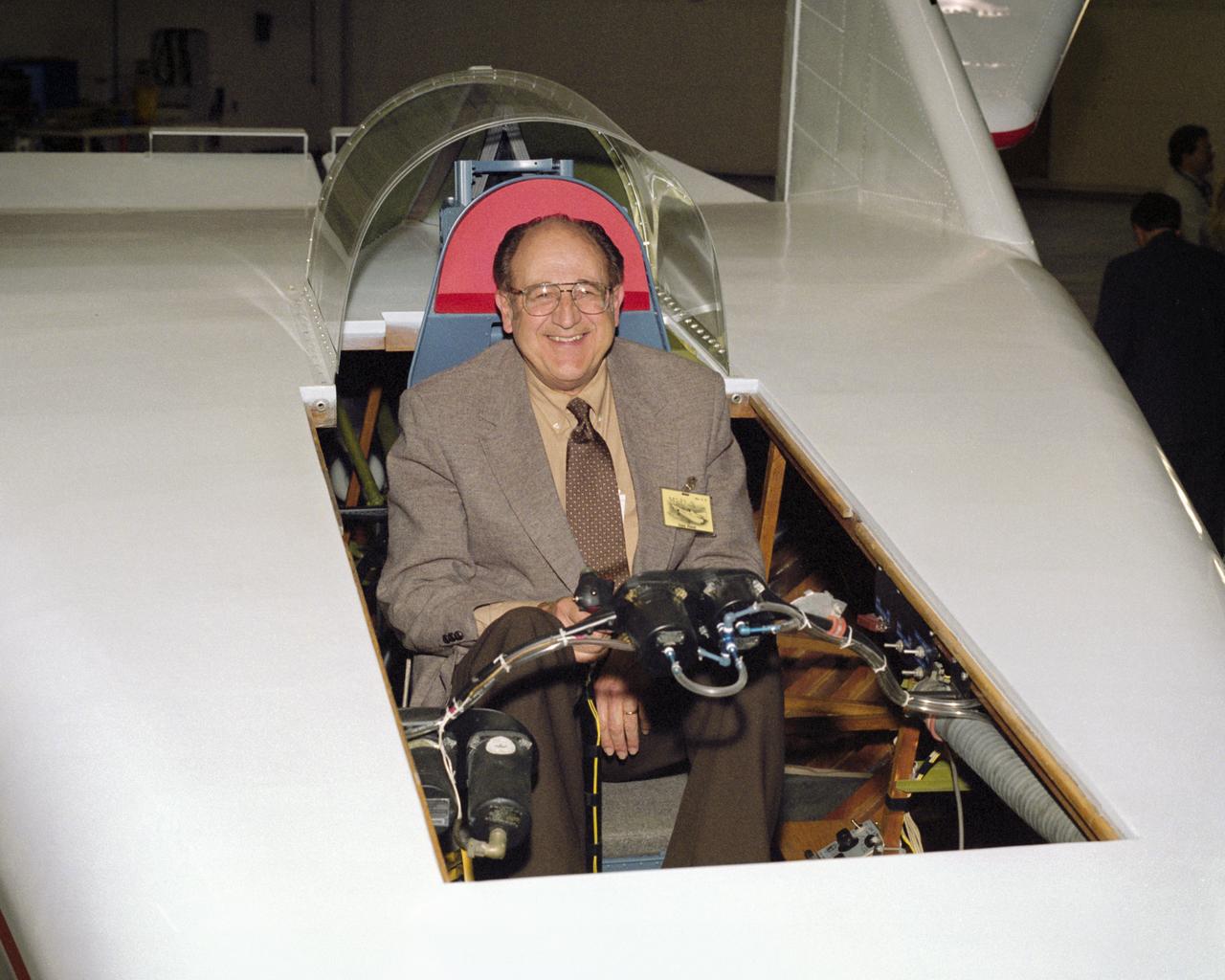
Often called the "Father of the Lifting Bodies," NASA aerospace engineer Dale Reed enjoys a moment in the cockpit of the restored wingless M2-F1 in 1997.
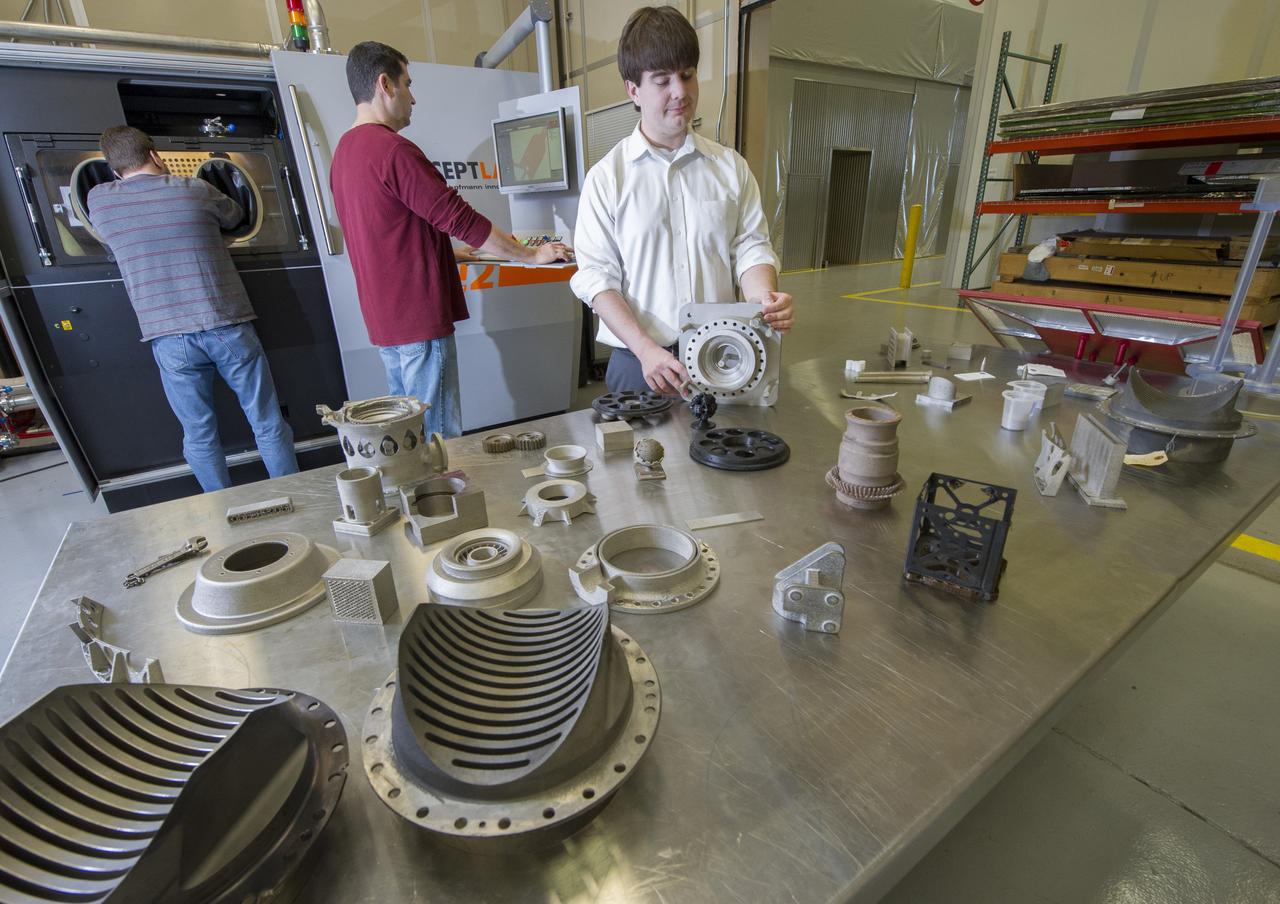
QUINCY BEAN, JIM LYDON, AND ZACK JONES OF MSFC’S ADVANCED MANUFACTURING TEAM, WITH MSFC’S M2 SELECTIVE LASER MELTING SYSTEM. THE M2 IS CURRENTLY DEDICATED TO ADVANCED COPPER MATERIAL DEVELOPMENT FOR THE LOW COST UPPER STAGE PROGRAM.
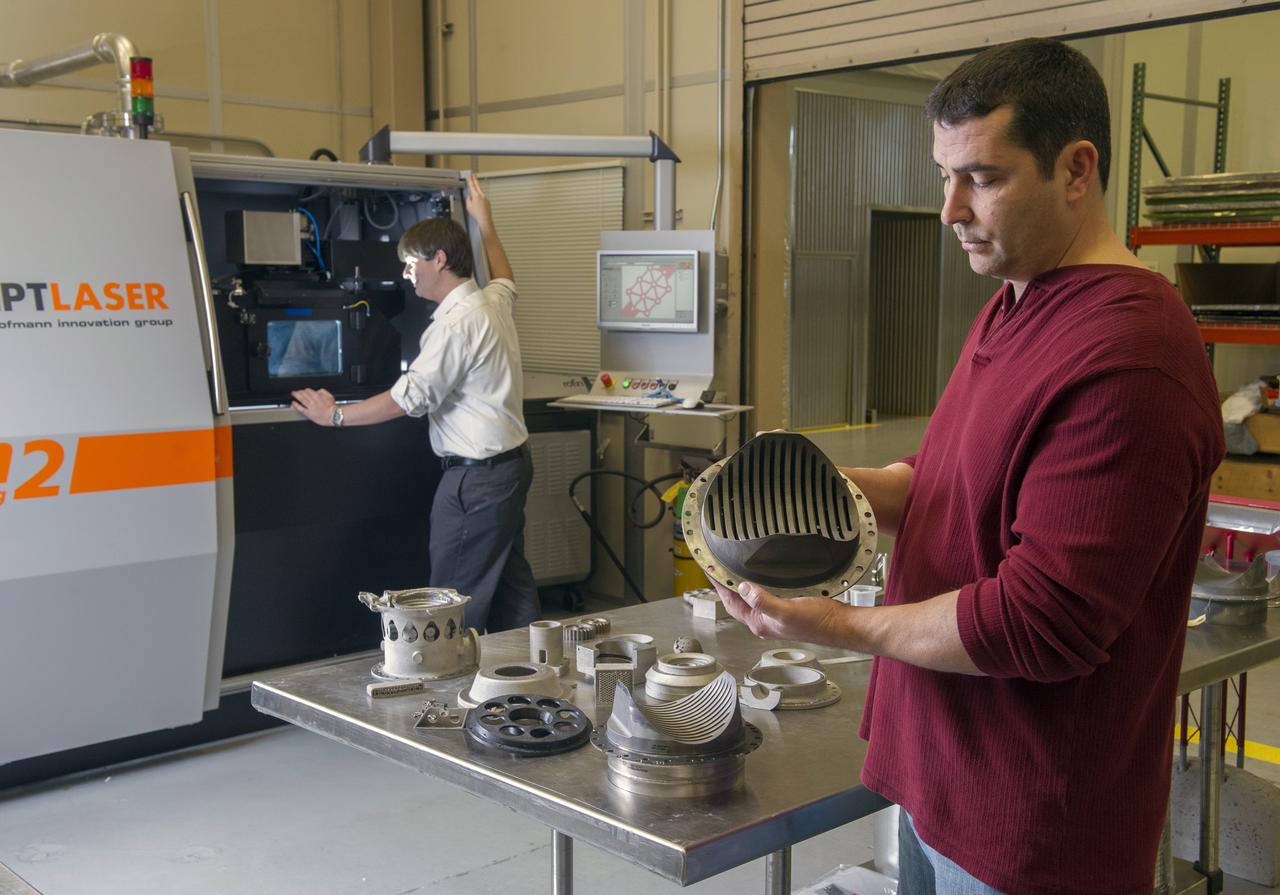
ZACK JONES AND JIM LYDON OF MSFC’S ADVANCED MANUFACTURING TEAM, WITH MSFC’S M2 SELECTIVE LASER MELTING SYSTEM. THE M2 IS CURRENTLY DEDICATED TO ADVANCED COPPER MATERIAL DEVELOPMENT FOR THE LOW COST UPPER STAGE PROGRAM.
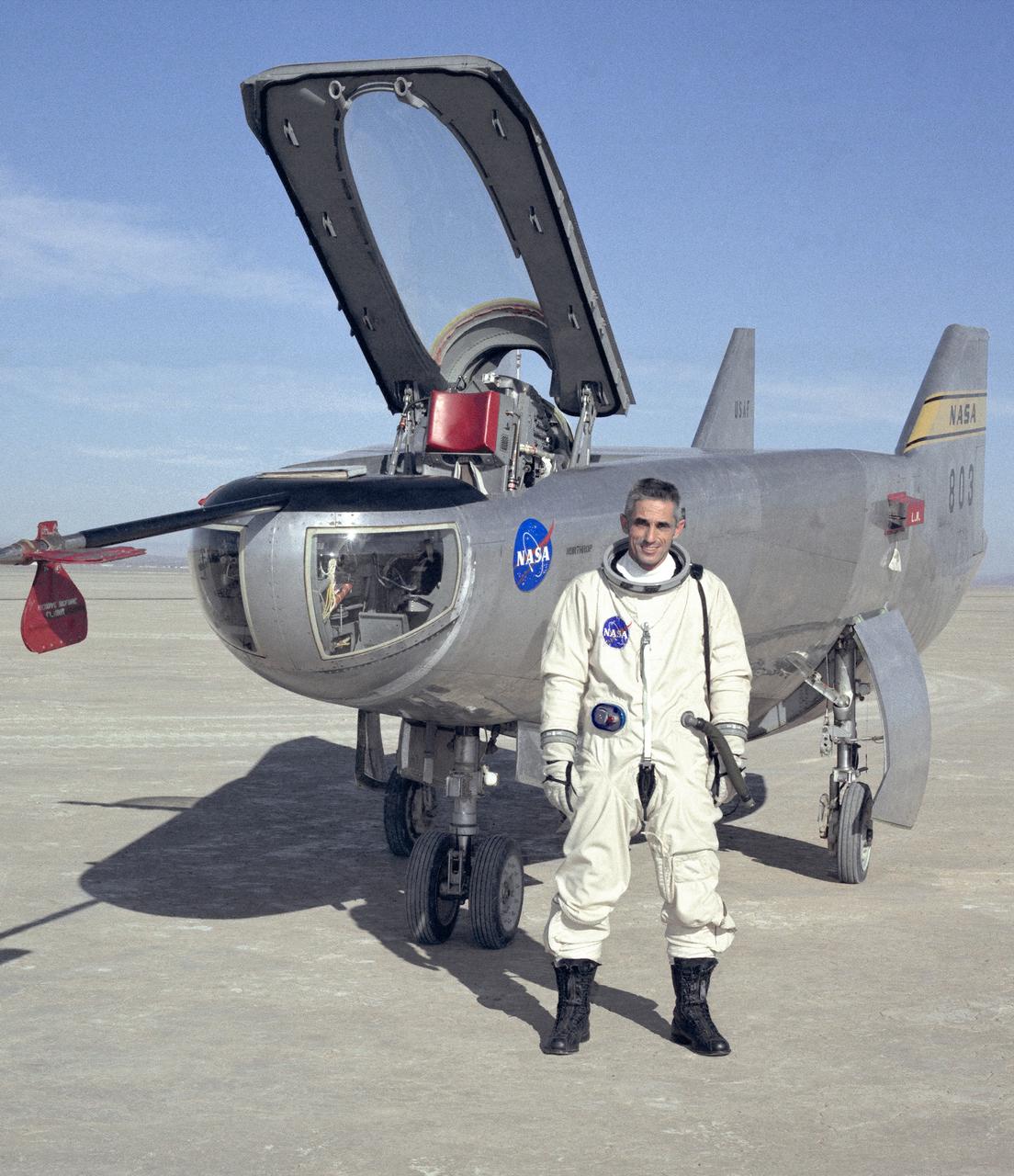
NASA research pilot John A. Manke is seen here in front of the M2-F3 Lifting Body. Manke was hired by NASA on May 25, 1962, as a flight research engineer. He was later assigned to the pilot's office and flew various support aircraft including the F-104, F5D, F-111 and C-47. After leaving the Marine Corps in 1960, Manke worked for Honeywell Corporation as a test engineer for two years before coming to NASA. He was project pilot on the X-24B and also flew the HL-10, M2-F3, and X-24A lifting bodies. John made the first supersonic flight of a lifting body and the first landing of a lifting body on a hard surface runway. Manke served as Director of the Flight Operations and Support Directorate at the Dryden Flight Research Center prior to its integration with Ames Research Center in October 1981. After this date John was named to head the joint Ames-Dryden Directorate of Flight Operations. He also served as site manager of the NASA Ames-Dryden Flight Research Facility. John is a member of the Society of Experimental Test Pilots. He retired on April 27, 1984.
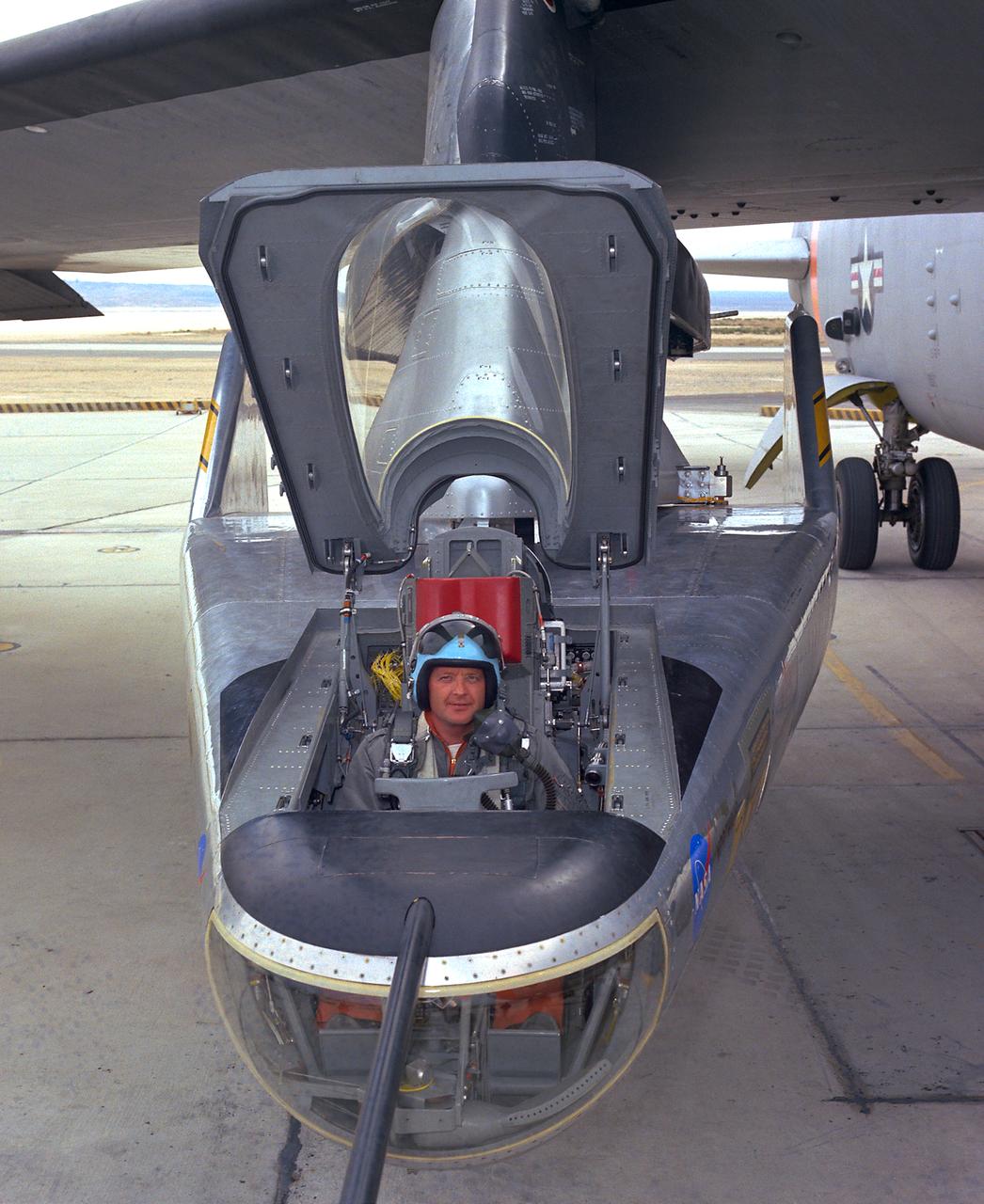
NASA research pilot Milt Thompson sits in the M2-F2 "heavyweight" lifting body research vehicle before a 1966 test flight. The M2-F2 and the other lifting-body designs were all attached to a wing pylon on NASA’s B-52 mothership and carried aloft. The vehicles were then drop-launched and, at the end of their flights, glided back to wheeled landings on the dry lake or runway at Edwards AFB. The lifting body designs influenced the design of the Space Shuttle and were also reincarnated in the design of the X-38 in the 1990s.
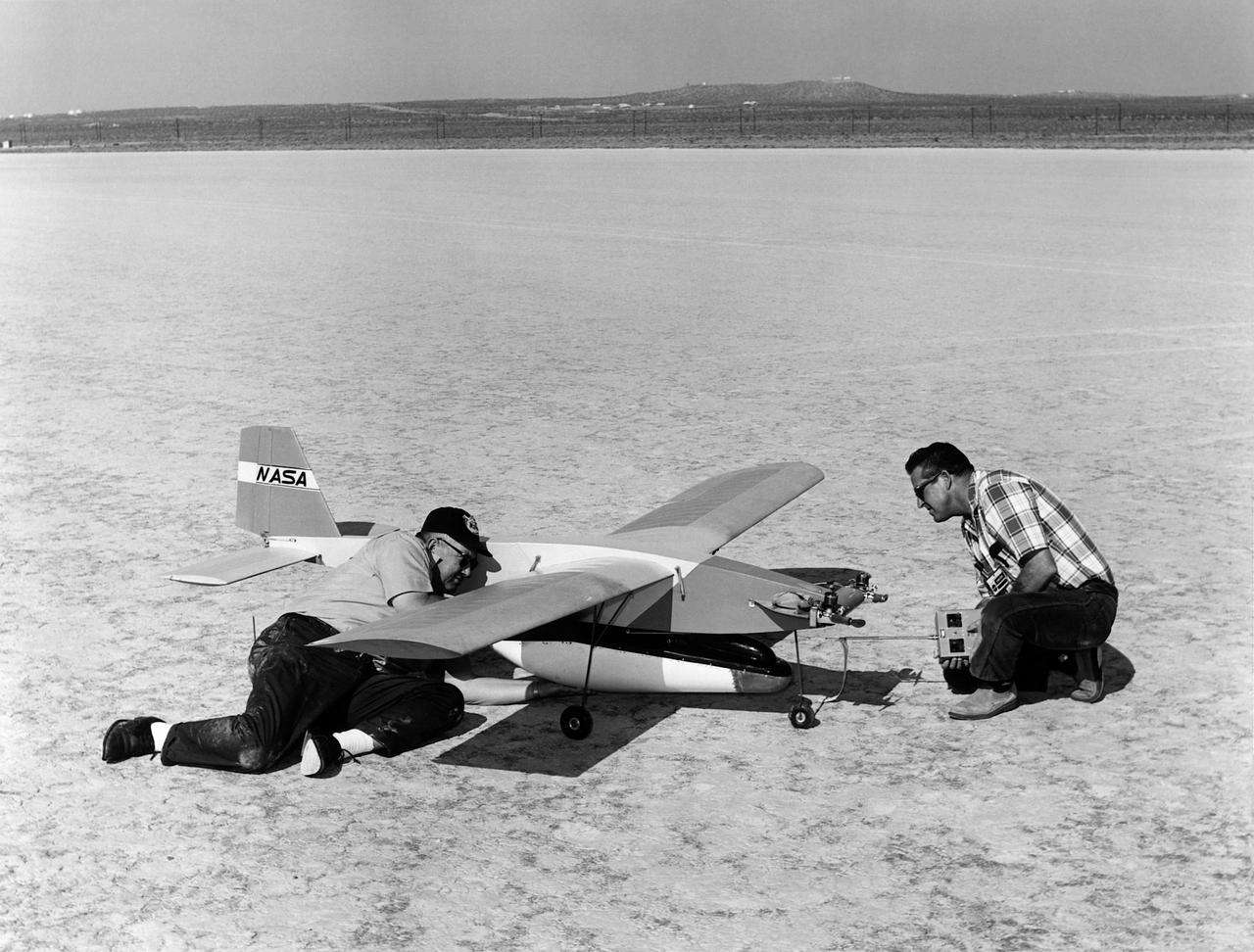
A photo of model airplane builders James B. Newman and Robert L. McDonald preparing for a flight with models of the M2-F2 and a “Mothership”. In 1968 a test flight was made on the Rosamond dry lakebed, Rosamond, California. The original idea of lifting bodies was conceived about 1957 by Dr. Alfred J. Eggers, Jr., then the assistant director for Research and Development Analysis and Planning at the National Advisory Committee for Aeronautics' Ames Aeronautical Laboratory, Moffett Field, California. Nose cone studies led to the design known as the M-2, a modified half-cone, rounded on the bottom and flat on top, with a blunt, rounded nose and twin tail fins. To gather flight data on this configuration, models were found to be an effective method. A special twin-engined, 14-foot model “mothership” was used for carrying the M2-F2 model to altitude and a launch, much as was being done with the B-52 for the full-scale lifting bodies. Jim (on the left) will fly the “mothership” and Bob will take control of the M2-F2 at launch and fly it to a landing on the lakebed.
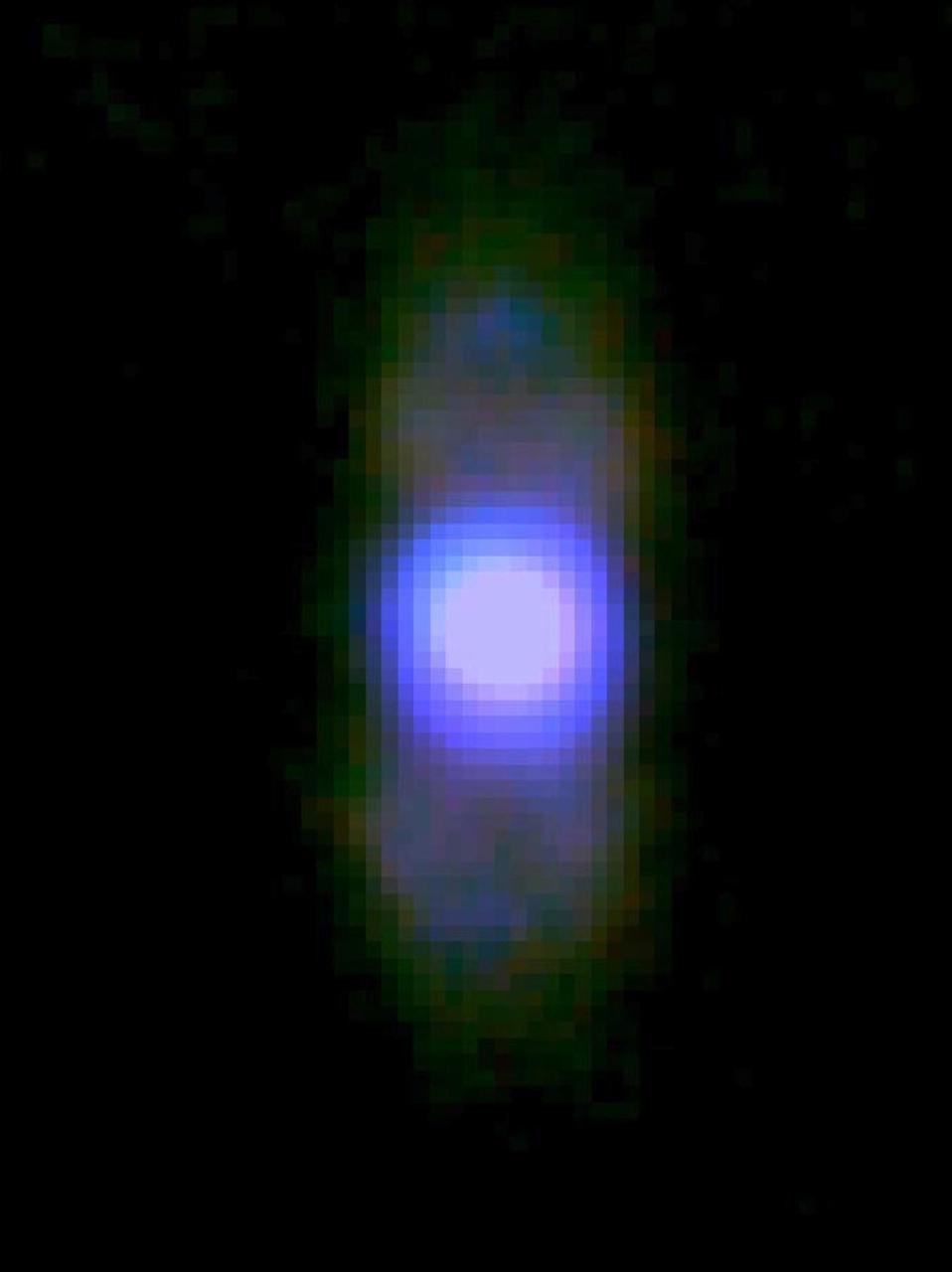
Researchers using NASA Stratospheric Observatory for Infrared Astronomy SOFIA have captured infrared images of the last exhalations of a dying sun-like star. This image is of the planetary Nebula M2-9.
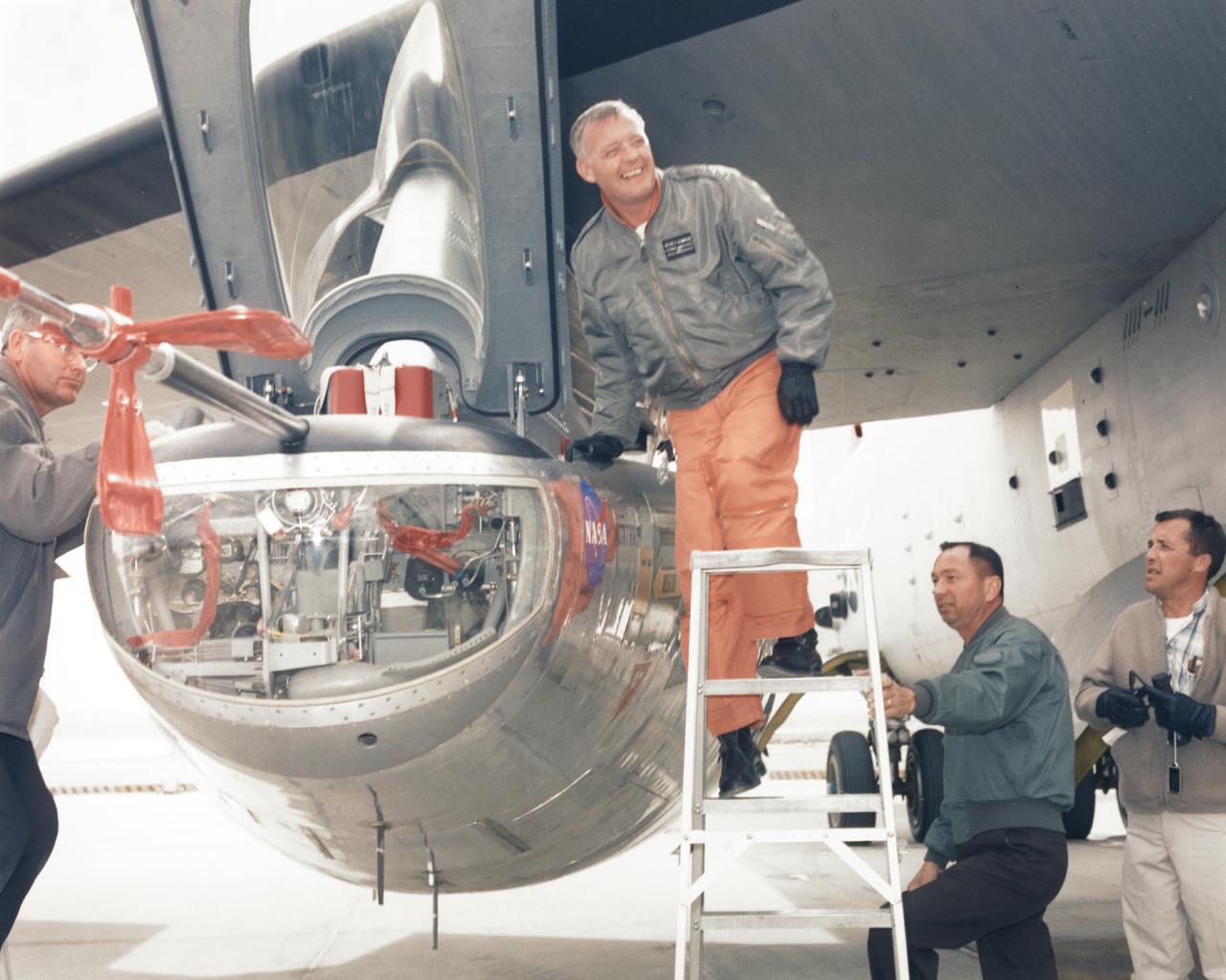
NASA research pilot Milt Thompson is helped into the cockpit of the M2-F2 lifting body research aircraft at NASA’s Flight Research Center (now the Dryden Flight Research Center). The M2-F2 is attached to a wing pylon under the wing of NASA’s B-52 mothership. The flight was a captive flight with the pilot on-board. Milt Thompson flew in the lifting body throughout the flight, but it was never dropped from the mothership.
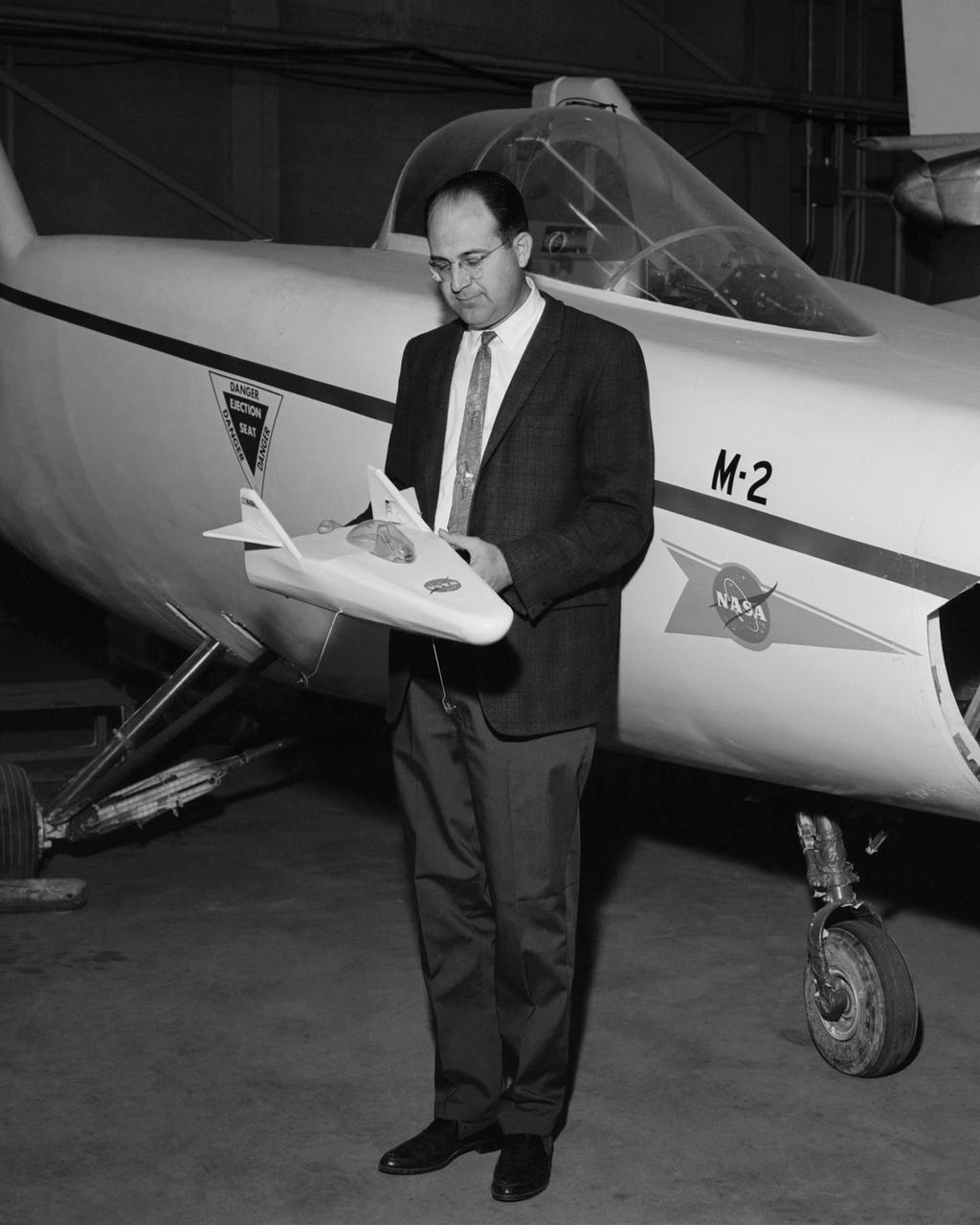
Dale Reed with a model of the M2-F1 in front of the actual lifting body. Reed used the model to show the potential of the lifting bodies. He first flew it into tall grass to test stability and trim, then hand-launched it from buildings for longer flights. Finally, he towed the lifting-body model aloft using a powered model airplane known as the "Mothership." A timer released the model and it glided to a landing. Dale's wife Donna used a 9 mm. camera to film the flights of the model. Its stability as it glided--despite its lack of wings--convinced Milt Thompson and some Flight Research Center engineers including the center director, Paul Bikle, that a piloted lifting body was possible.

The Twin Jet Nebula, or PN M2-9, is a striking example of a bipolar planetary nebula. Bipolar planetary nebulae are formed when the central object is not a single star, but a binary system, Studies have shown that the nebula’s size increases with time, and measurements of this rate of increase suggest that the stellar outburst that formed the lobes occurred just 1200 years ago.
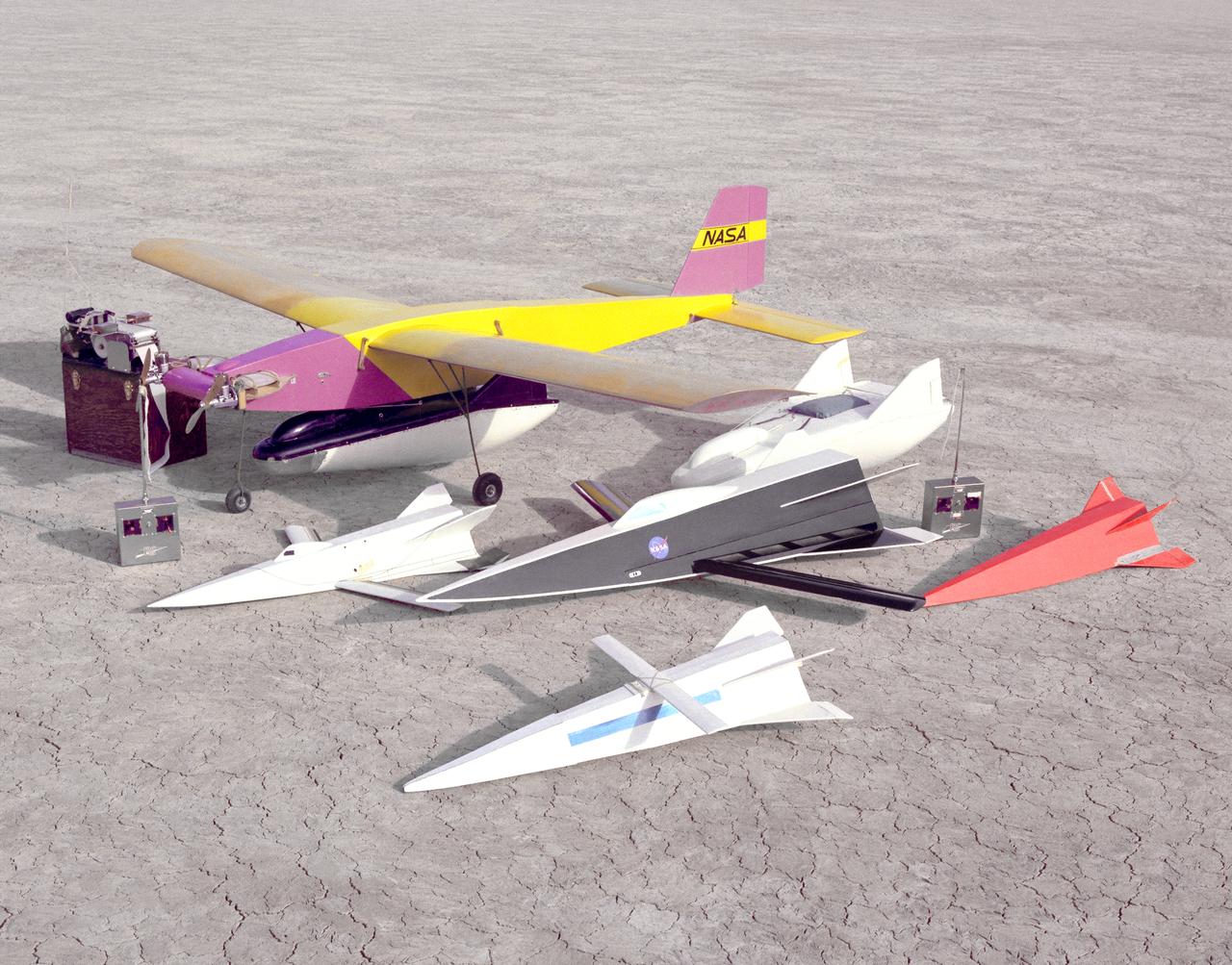
Flight Research Center and Dryden Flight Research Center engineer R. Dale Reed has long used free-flight models to test new concepts. This photo from 1963 shows two different models of the M2-F2 (one under the Mothership) and four Hyper III shapes.
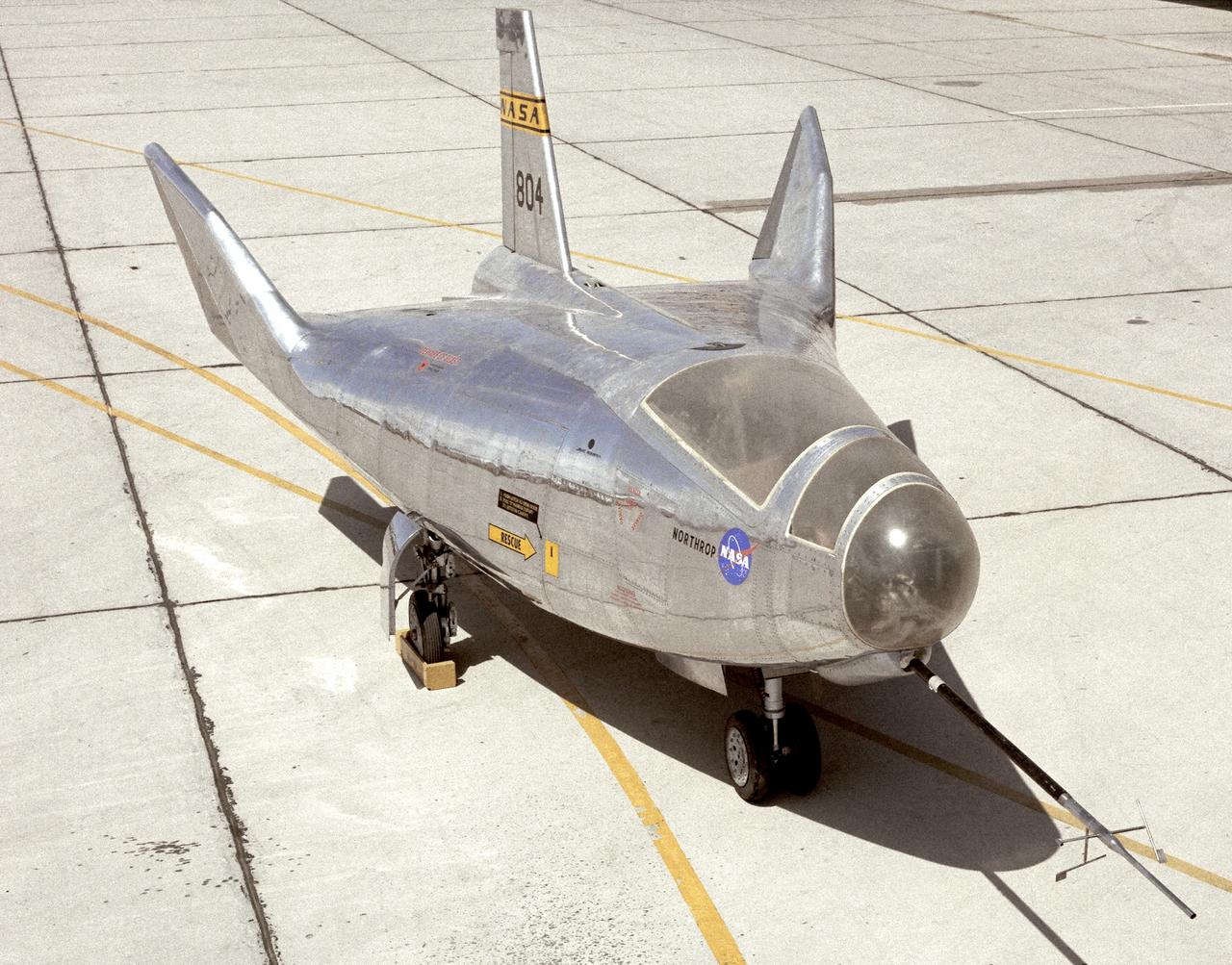
The HL-10, seen here parked on the ramp at NASA's Flight Research Center in 1966, had a radically different shape from that of the M2-F2/F3. While the M2s were flat on top and had rounded undersides (giving them a bathtub shape), the HL-10 had a flat lower surface and a rounded top. Both shapes provided lift without wings, however. This photo was taken before the HL-10's fins were modified.
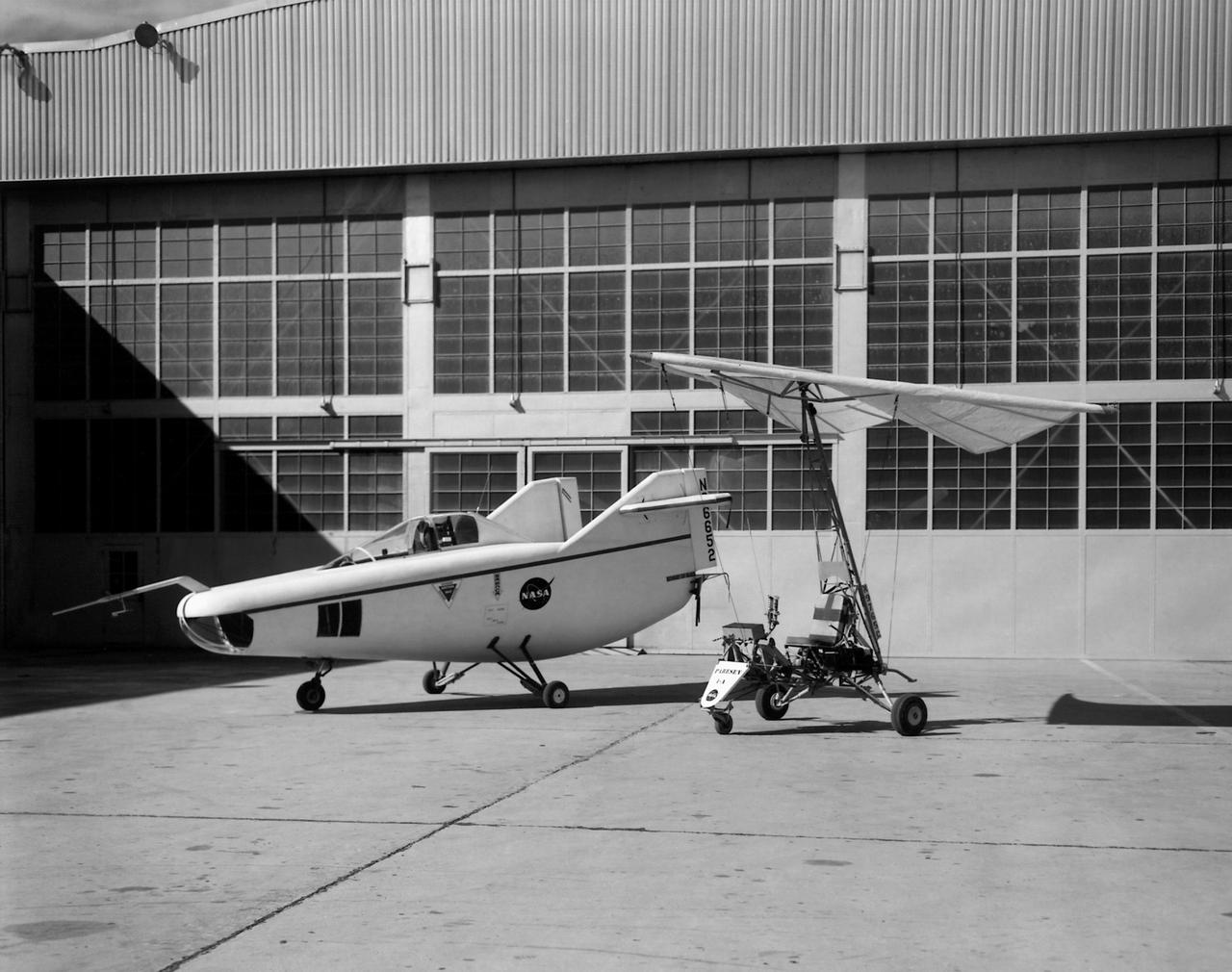
In this photo of the M2-F1 lifting body and the Paresev 1B on the ramp, the viewer sees two vehicles representing different approaches to building a research craft to simulate a spacecraft able to land on the ground instead of splashing down in the ocean as the Mercury capsules did. The M2-F1 was a lifting body, a shape able to re-enter from orbit and land. The Paresev (Paraglider Research Vehicle) used a Rogallo wing that could be (but never was) used to replace a conventional parachute for landing a capsule-type spacecraft, allowing it to make a controlled landing on the ground.
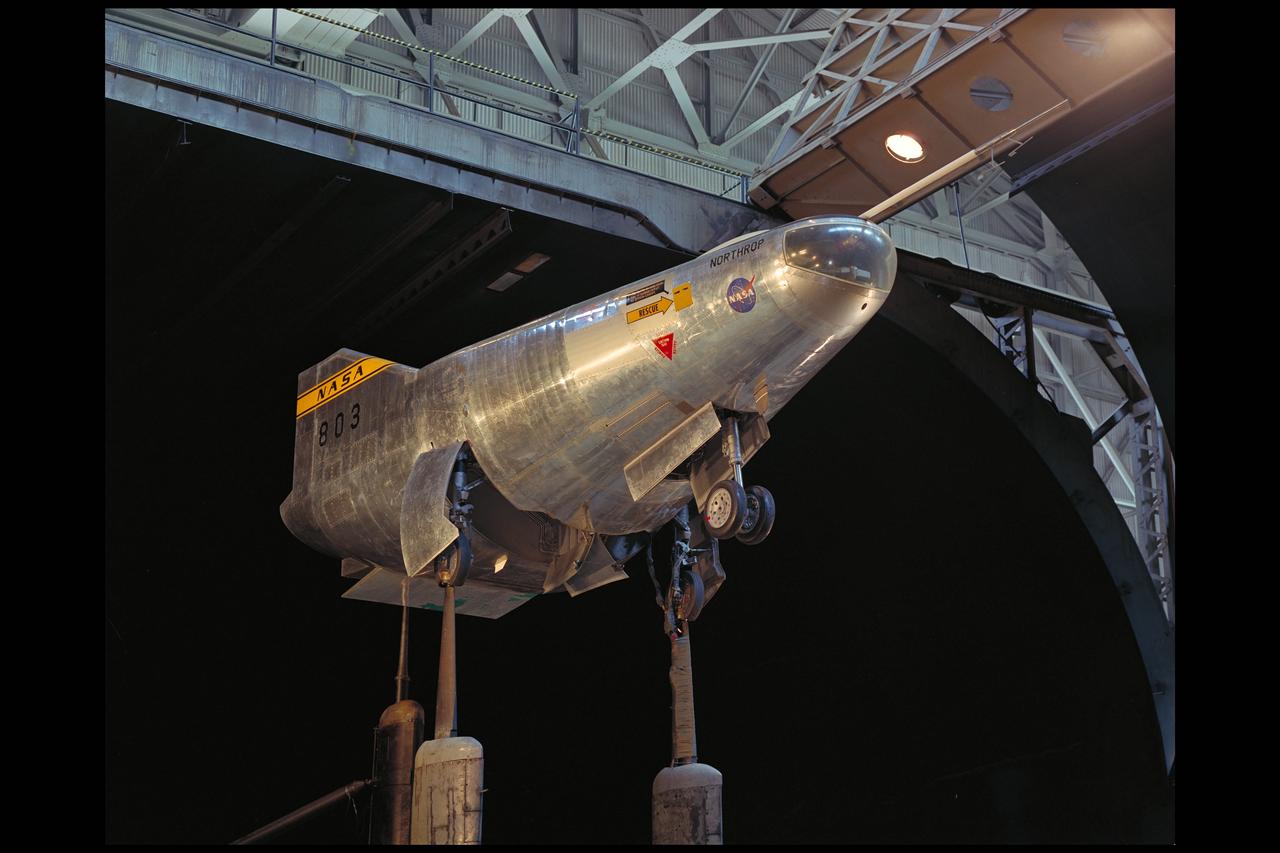
M2-F2 lifting body flight vehicle in 40x80ft w.t.
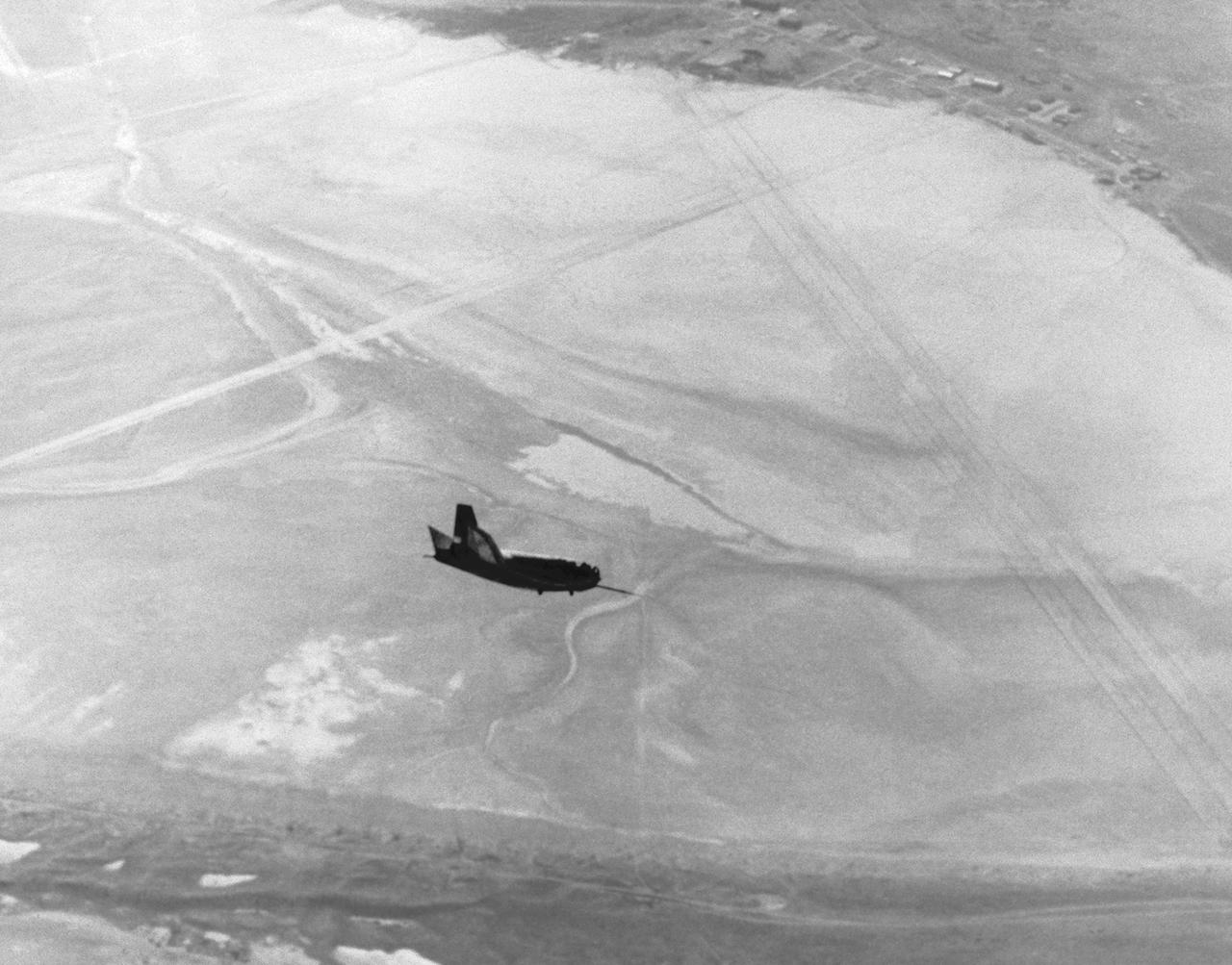
The HL-10 lifting body is seen here in flight over Rogers Dry Lake at Edwards AFB. After the vehicle's fins were modified following its first flight, the HL-10 proved to be the best handling of the heavy-weight lifting bodies flown at Edwards Air Force Base. The HL-10 flew much better than the M2-F2, and pilots were eager to fly it.
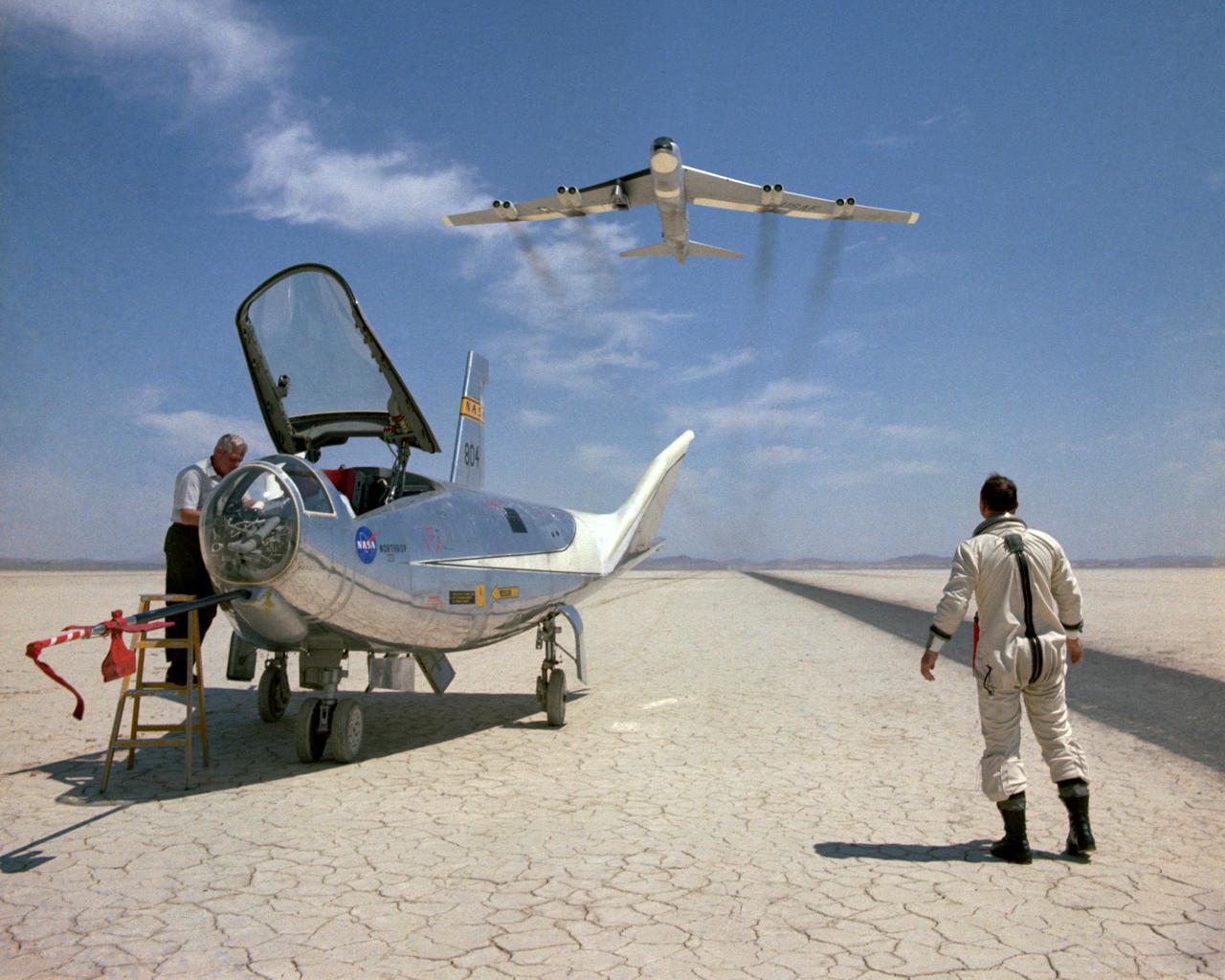
The HL-10 was one of five heavyweight lifting-body designs flown at NASA's Flight Research Center (FRC--later Dryden Flight Research Center), Edwards, California, from July 1966 to November 1975 to study and validate the concept of safely maneuvering and landing a low lift-over-drag vehicle designed for reentry from space. Northrop Corporation built the HL-10 and M2-F2, the first two of the fleet of "heavy" lifting bodies flown by the NASA Flight Research Center. The contract for construction of the HL-10 and the M2-F2 was $1.8 million. "HL" stands for horizontal landing, and "10" refers to the tenth design studied by engineers at NASA's Langley Research Center, Hampton, Va. After delivery to NASA in January 1966, the HL-10 made its first flight on Dec. 22, 1966, with research pilot Bruce Peterson in the cockpit. Although an XLR-11 rocket engine was installed in the vehicle, the first 11 drop flights from the B-52 launch aircraft were powerless glide flights to assess handling qualities, stability, and control. In the end, the HL-10 was judged to be the best handling of the three original heavy-weight lifting bodies (M2-F2/F3, HL-10, X-24A). The HL-10 was flown 37 times during the lifting body research program and logged the highest altitude and fastest speed in the Lifting Body program. On Feb. 18, 1970, Air Force test pilot Peter Hoag piloted the HL-10 to Mach 1.86 (1,228 mph). Nine days later, NASA pilot Bill Dana flew the vehicle to 90,030 feet, which became the highest altitude reached in the program. Some new and different lessons were learned through the successful flight testing of the HL-10. These lessons, when combined with information from it's sister ship, the M2-F2/F3, provided an excellent starting point for designers of future entry vehicles, including the Space Shuttle.
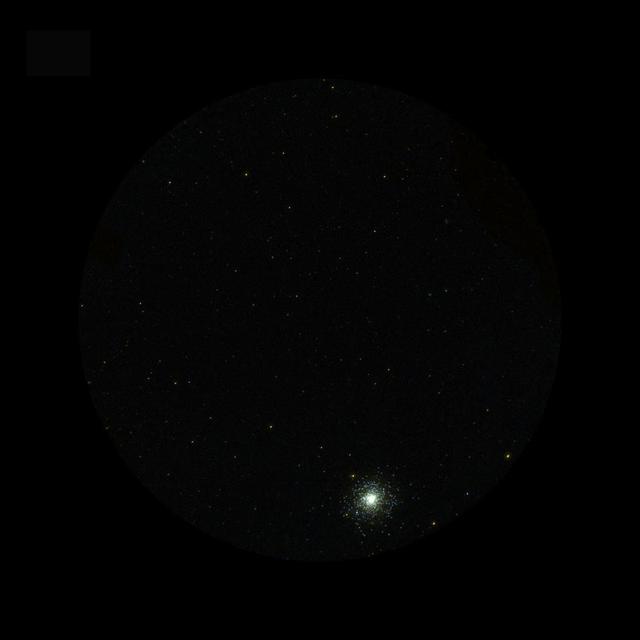
This image of the Globular cluster Messier 2 (M2) was taken by Galaxy Evolution Explorer on August 20, 2003. This image is a small section of a single All Sky Imaging Survey exposure of only 129 seconds in the constellation Aquarius. This picture is a combination of Galaxy Evolution Explorer images taken with the far ultraviolet (colored blue) and near ultraviolet detectors (colored red). Globular clusters are gravitationally bound systems of hundreds of thousands of stars that orbit in the halos of galaxies. The globular clusters in out Milky Way galaxy contain some of the oldest stars known. M2 lies 33,000 light years from our Sun with stars distributed in a spherical system with a radius of approximately 100 light years. http://photojournal.jpl.nasa.gov/catalog/PIA04926
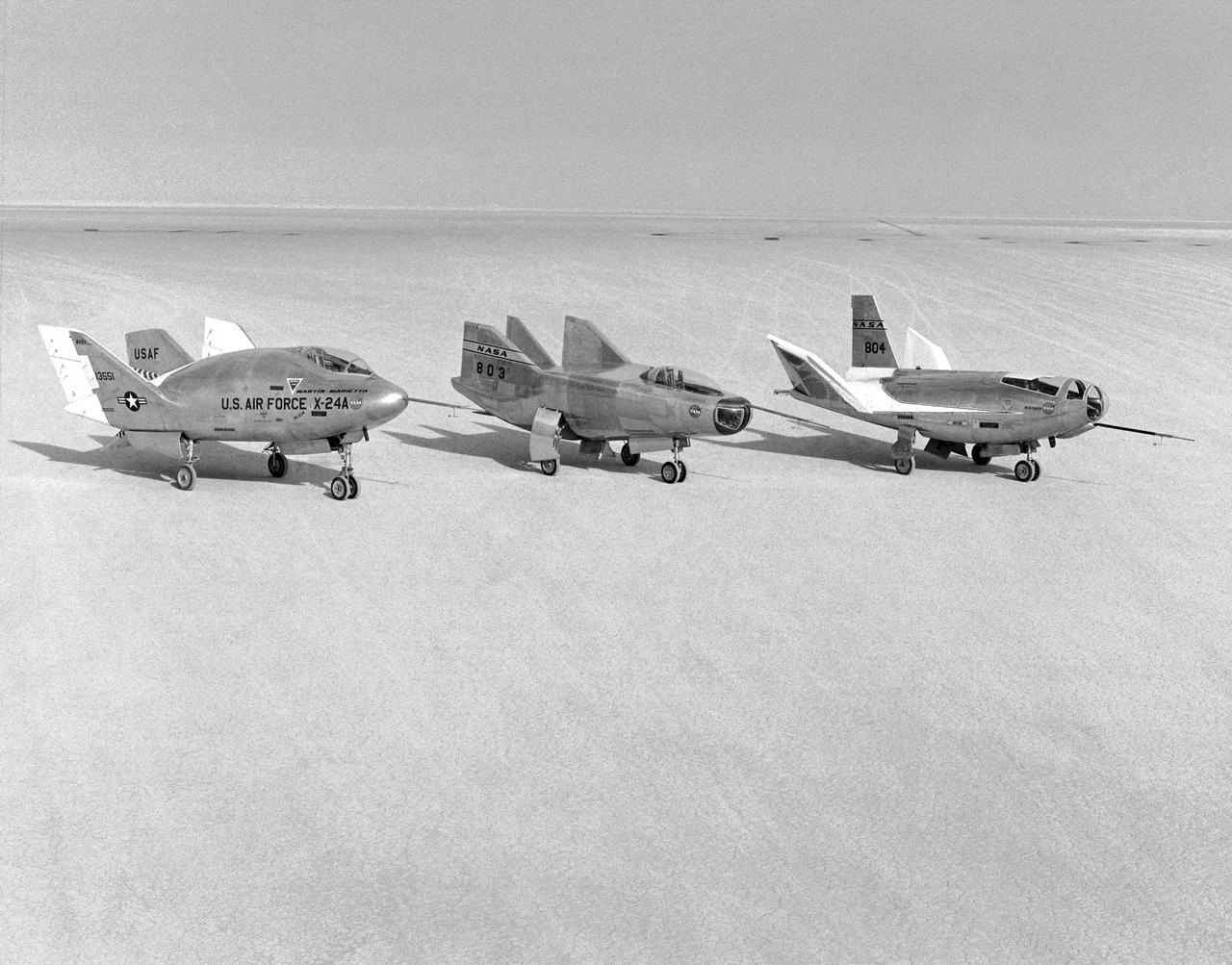
The wingless, lifting body aircraft sitting on Rogers Dry Lake at what is now NASA's Dryden Flight Research Center, Edwards, California, from left to right are the X-24A, M2-F3 and the HL-10. The lifting body aircraft studied the feasibility of maneuvering and landing an aerodynamic craft designed for reentry from space. These lifting bodies were air launched by a B-52 mother ship, then flew powered by their own rocket engines before making an unpowered approach and landing. They helped validate the concept that a space shuttle could make accurate landings without power. The X-24A flew from April 17, 1969 to June 4, 1971. The M2-F3 flew from June 2, 1970 until December 20, 1972. The HL-10 flew from December 22, 1966 until July 17, 1970 and logged the highest and fastest records in the lifting body program.
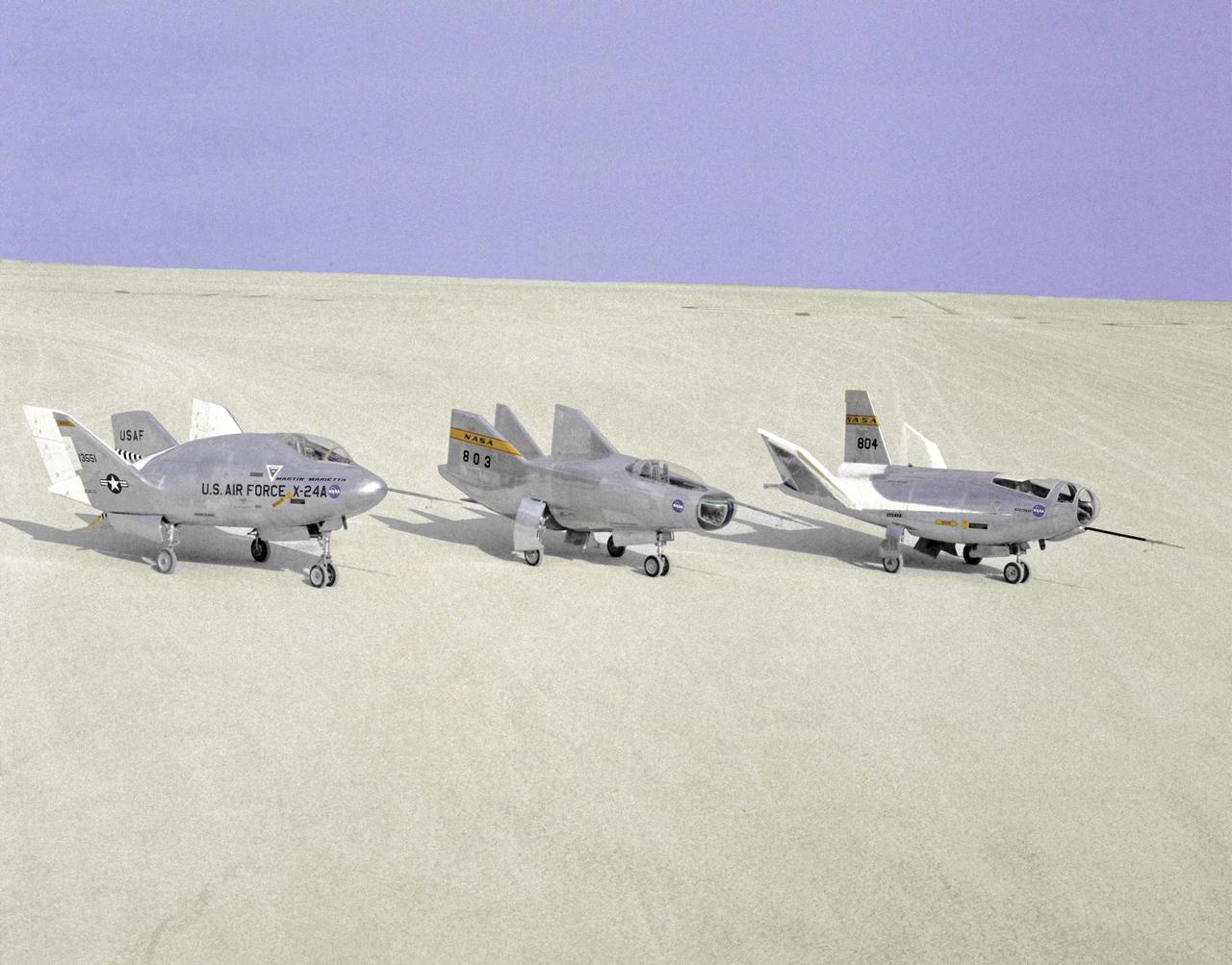
The wingless, lifting body aircraft sitting on Rogers Dry Lake at what is now NASA's Dryden Flight Research Center, Edwards, California, from left to right are the X-24A, M2-F3 and the HL-10. The lifting body aircraft studied the feasibility of maneuvering and landing an aerodynamic craft designed for reentry from space. These lifting bodies were air launched by a B-52 mother ship, then flew powered by their own rocket engines before making an unpowered approach and landing. They helped validate the concept that a space shuttle could make accurate landings without power. The X-24A flew from April 17, 1969 to June 4, 1971. The M2-F3 flew from June 2, 1970 until December 21, 1971. The HL-10 flew from December 22, 1966 until July 17, 1970, and logged the highest and fastest records in the lifting body program.
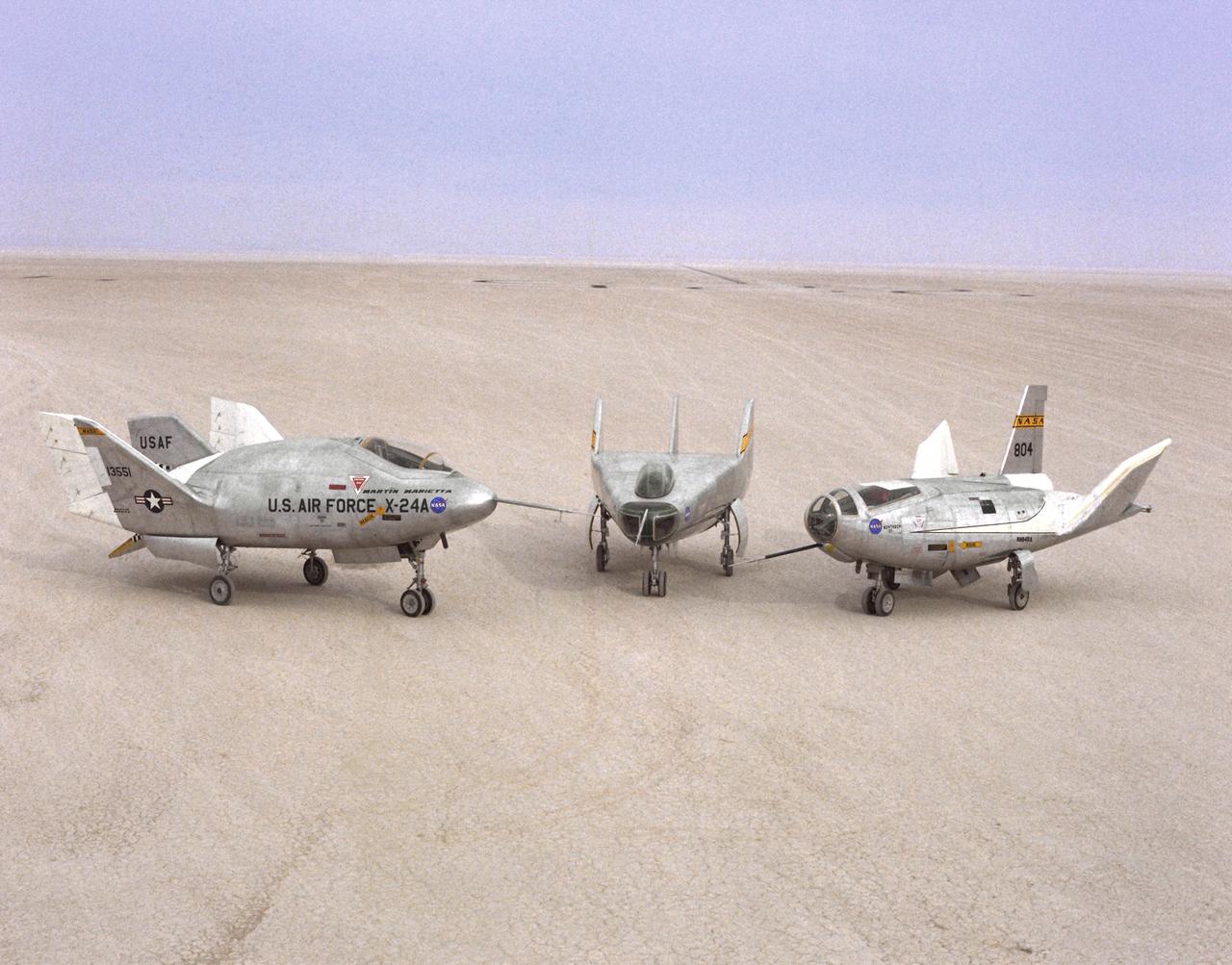
The wingless, lifting body aircraft sitting on Rogers Dry Lake at what is now NASA's Dryden Flight Research Center, Edwards, California, from left to right are the X-24A, M2-F3 and the HL-10. The lifting body aircraft studied the feasibility of maneuvering and landing an aerodynamic craft designed for reentry from space. These lifting bodies were air launched by a B-52 mother ship, then flew powered by their own rocket engines before making an unpowered approach and landing. They helped validate the concept that a space shuttle could make accurate landings without power. The X-24A flew from April 17, 1969 to June 4, 1971. The M2-F3 flew from June 2, 1970 until December 22, 1972. The HL-10 flew from December 22, 1966 until July 17, 1970, and logged the highest and fastest records in the lifting body program.
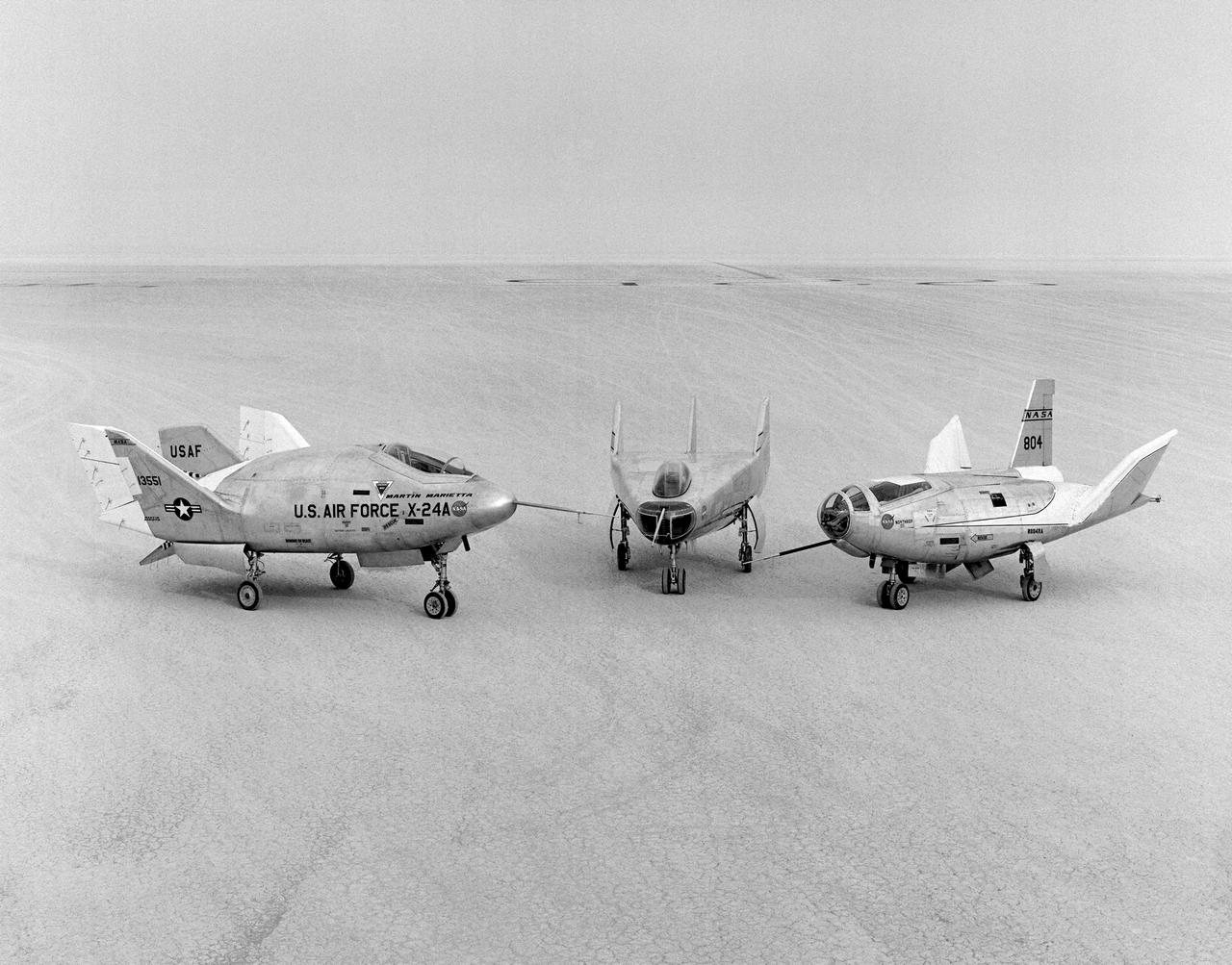
The wingless, lifting body aircraft sitting on Rogers Dry Lake at what is now NASA's Dryden Flight Research Center, Edwards, California, from left to right are the X-24A, M2-F3 and the HL-10. The lifting body aircraft studied the feasibility of maneuvering and landing an aerodynamic craft designed for reentry from space. These lifting bodies were air launched by a B-52 mother ship, then flew powered by their own rocket engines before making an unpowered approach and landing. They helped validate the concept that a space shuttle could make accurate landings without power. The X-24A flew from April 17, 1969 to June 4, 1971. The M2-F3 flew from June 2, 1970 until December 20, 1972. The HL-10 flew from December 22, 1966 until July 17, 1970 and logged the highest and fastest records in the lifting body program.
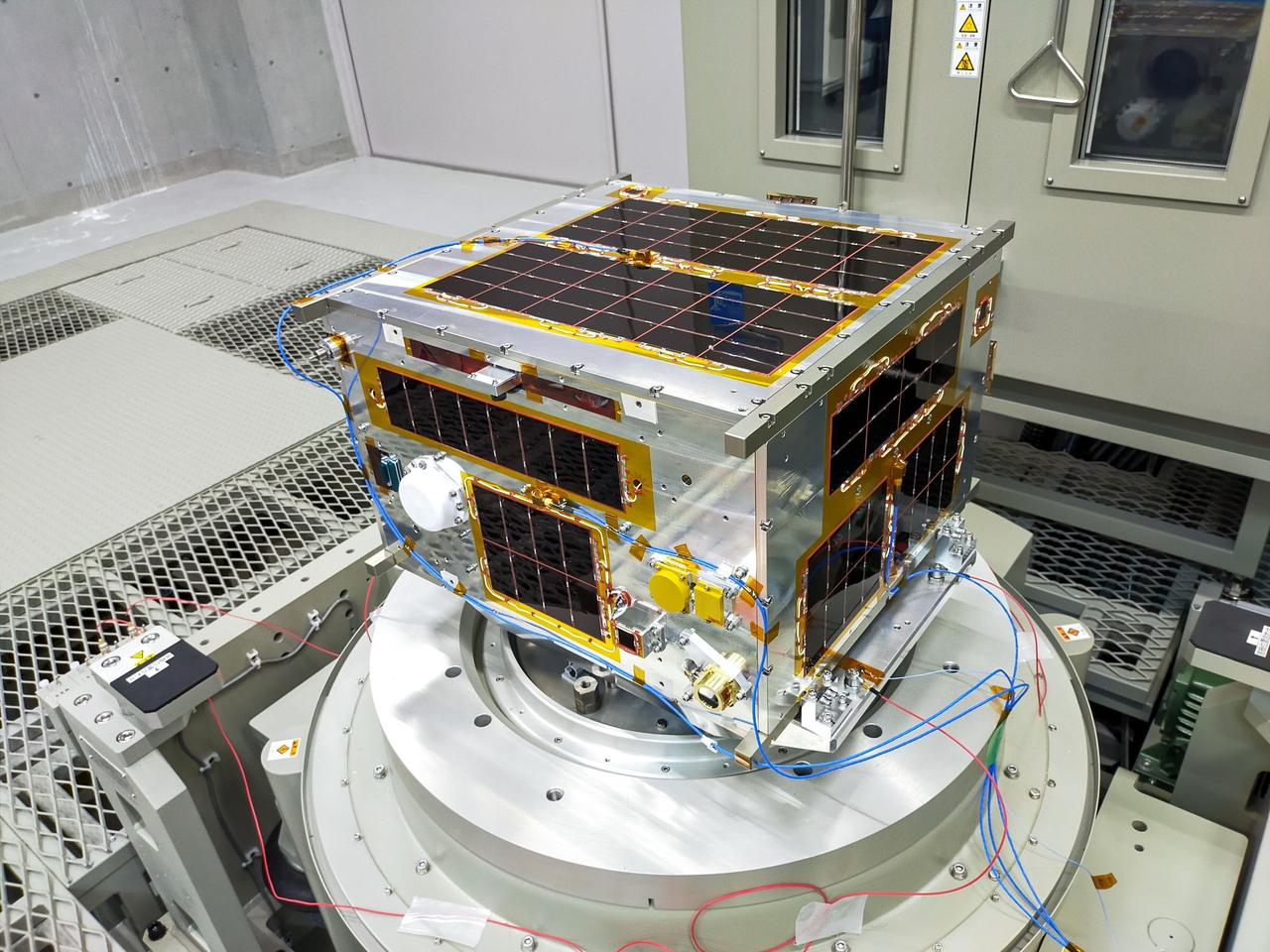
jsc2020e049614 (8/7/2020) --- A preflight view of the MMSAT-1 flight unit. MMSAT-1 is Myanmar’s first 50 kg-class MicroSat, that deploys during the JEM Small Satellite Orbital Deployer-M2 (J-SSOD-M2) micro-satellite deployment mission. The satellite mission aims to help provide information to implement more efficient and systematic agricultural practices in Myanmar and monitor natural disasters through the provision of satellite imagery. Photo courtesy of: TohokuHokkaido University
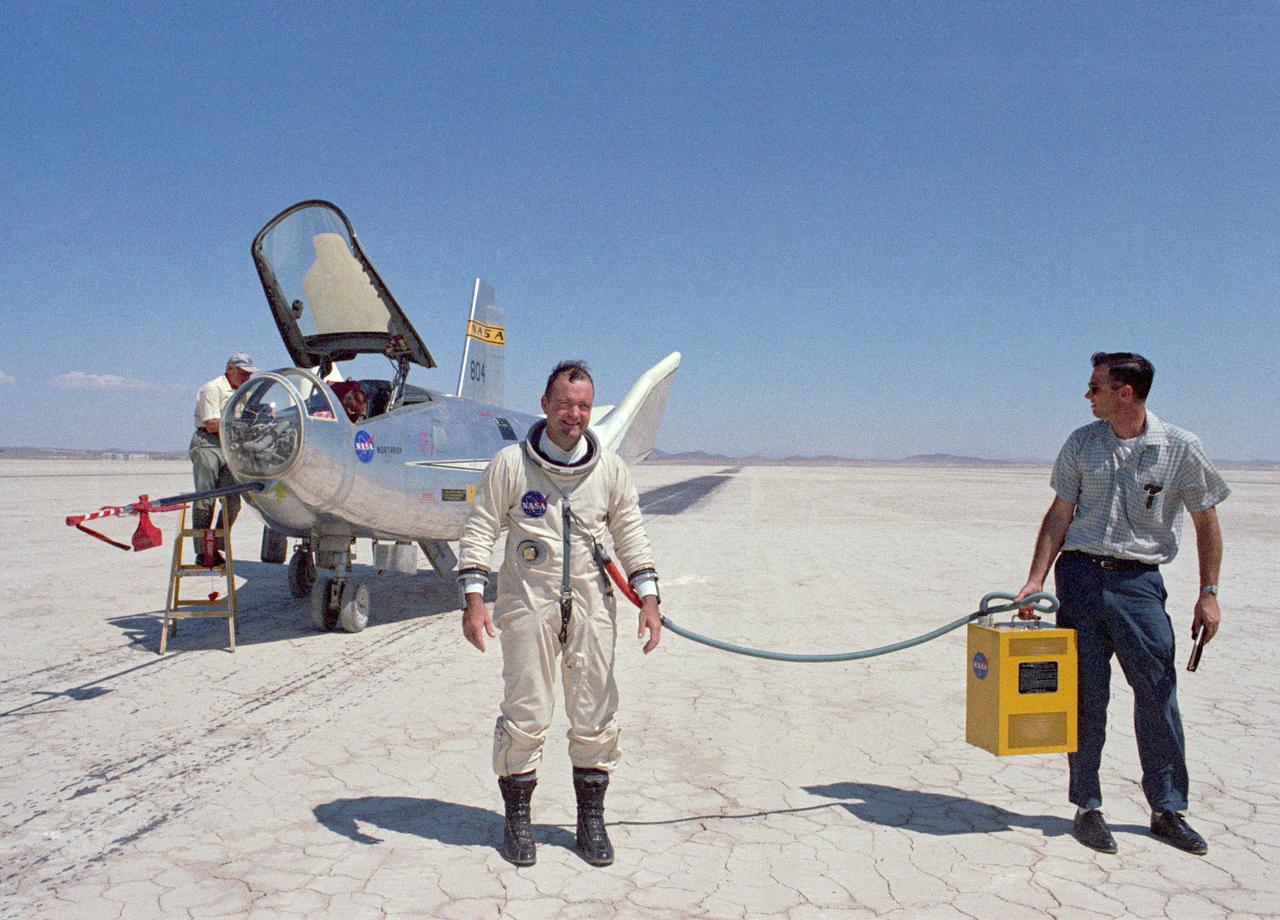
NASA research pilot Bill Dana after his fourth free flight (1 glide and 3 powered) in the HL-10. This particular flight reached a maximum speed of Mach 1.45. Dana made a total of nine HL-10 flights (1 glide and 8 powered), and his lifting body experience as a whole included several car tow and 1 air tow flights in the M2-F1; 4 glide and 15 powered flights in the M2-F3; and 2 powered flights in the X-24B. He is wearing a pressure suit for protection against the cockpit depressurizing at high altitudes. The air conditioner box held by the ground crewman provides cool air to prevent overheating.
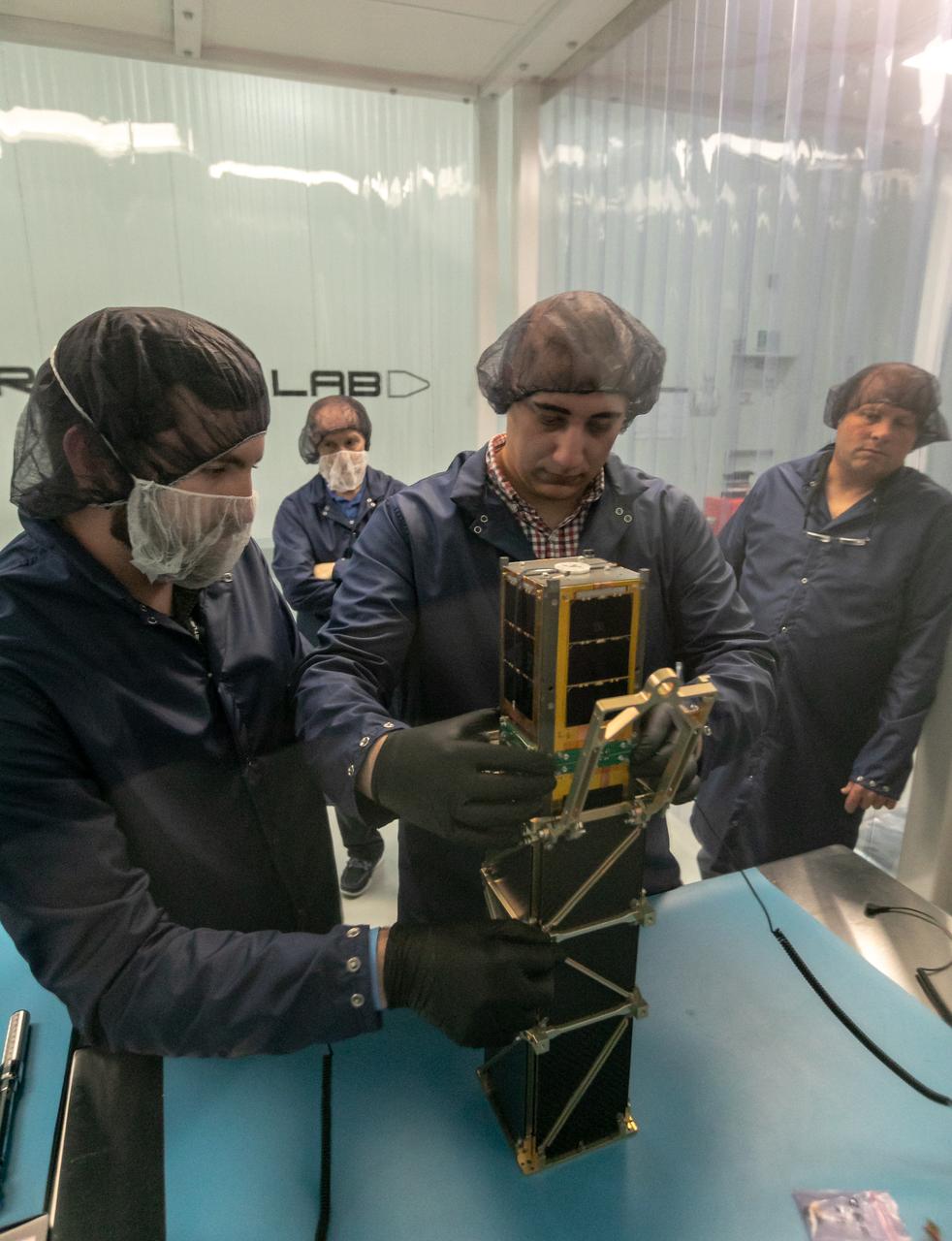
CubeSail is a nano-scale flight experiment to demonstrate deployment and control of a single 250-meter (20 m2) solar sail blade as a low-cost risk reduction precursor of the exciting advanced interplanetary UltraSail concept having four 5-kilometer blades (with approximately 100,000 m2 of sail area). CubeSail was built by the University of Illinois at Urbana-Champaign and CU Aerospace, the same team that designed the I-Sail and UltraSail concepts funded by NASA’s SBIR program. CubeSail represents an affordable stepping-stone towards the future development of the UltraSail solar sail concept that would enable very high-energy inner heliosphere and interstellar scientific missions. In addition, near-earth missions such as Heliostorm for early warning of solar storms will provide more warning margin as the solar sail performance is increased with UltraSail technology. Spacecraft design studies show that for sail areal densities below 5 gm/m2, as proposed with UltraSail, that spacecraft payloads can be significantly increased to 50-60% because of the elimination of the propellant, without sacrificing flight time. Furthermore, higher payload fractions will result in dramatically lower total spacecraft mass and consequently much lower launch cost, enabling more missions for the research dollar.
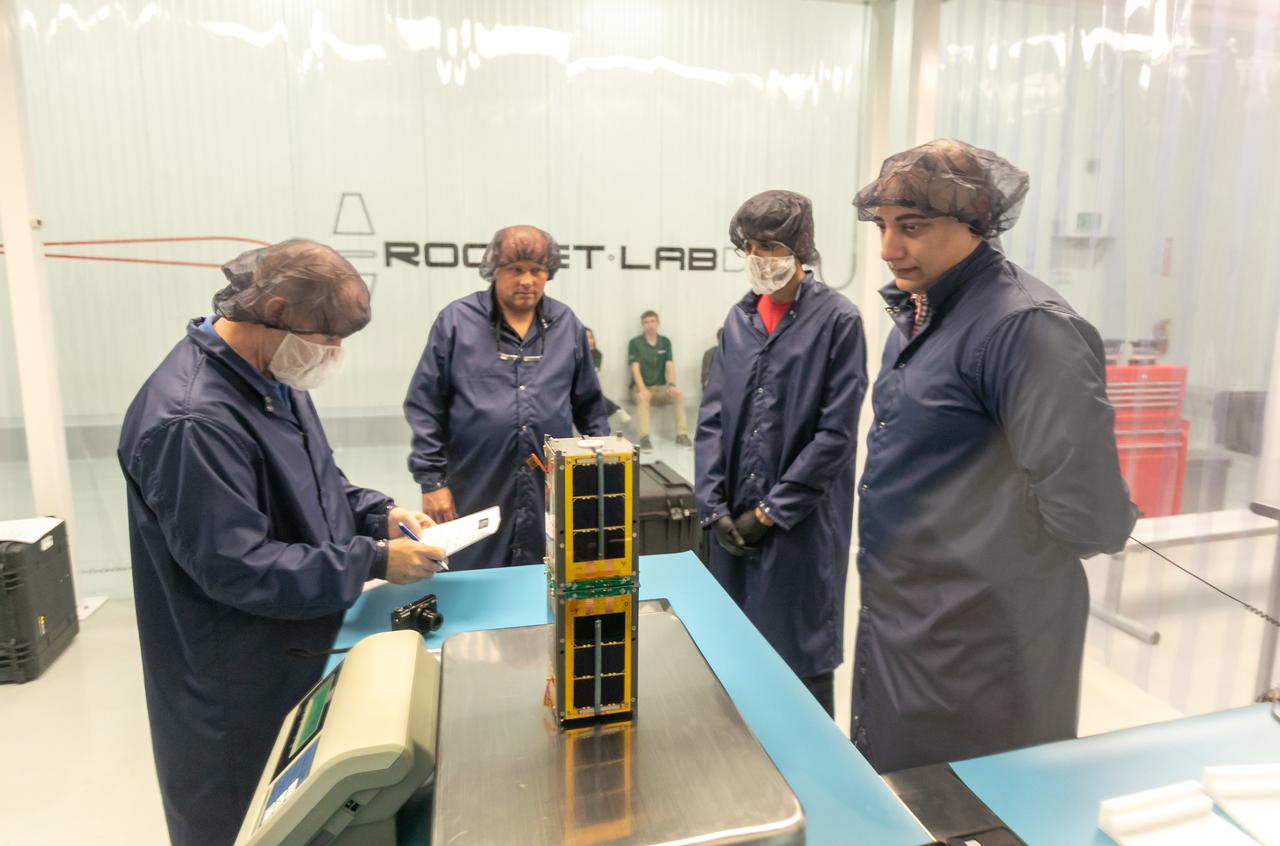
CubeSail is a nano-scale flight experiment to demonstrate deployment and control of a single 250-meter (20 m2) solar sail blade as a low-cost risk reduction precursor of the exciting advanced interplanetary UltraSail concept having four 5-kilometer blades (with approximately 100,000 m2 of sail area). CubeSail was built by the University of Illinois at Urbana-Champaign and CU Aerospace, the same team that designed the I-Sail and UltraSail concepts funded by NASA’s SBIR program. CubeSail represents an affordable stepping-stone towards the future development of the UltraSail solar sail concept that would enable very high-energy inner heliosphere and interstellar scientific missions. In addition, near-earth missions such as Heliostorm for early warning of solar storms will provide more warning margin as the solar sail performance is increased with UltraSail technology. Spacecraft design studies show that for sail areal densities below 5 gm/m2, as proposed with UltraSail, that spacecraft payloads can be significantly increased to 50-60% because of the elimination of the propellant, without sacrificing flight time. Furthermore, higher payload fractions will result in dramatically lower total spacecraft mass and consequently much lower launch cost, enabling more missions for the research dollar.
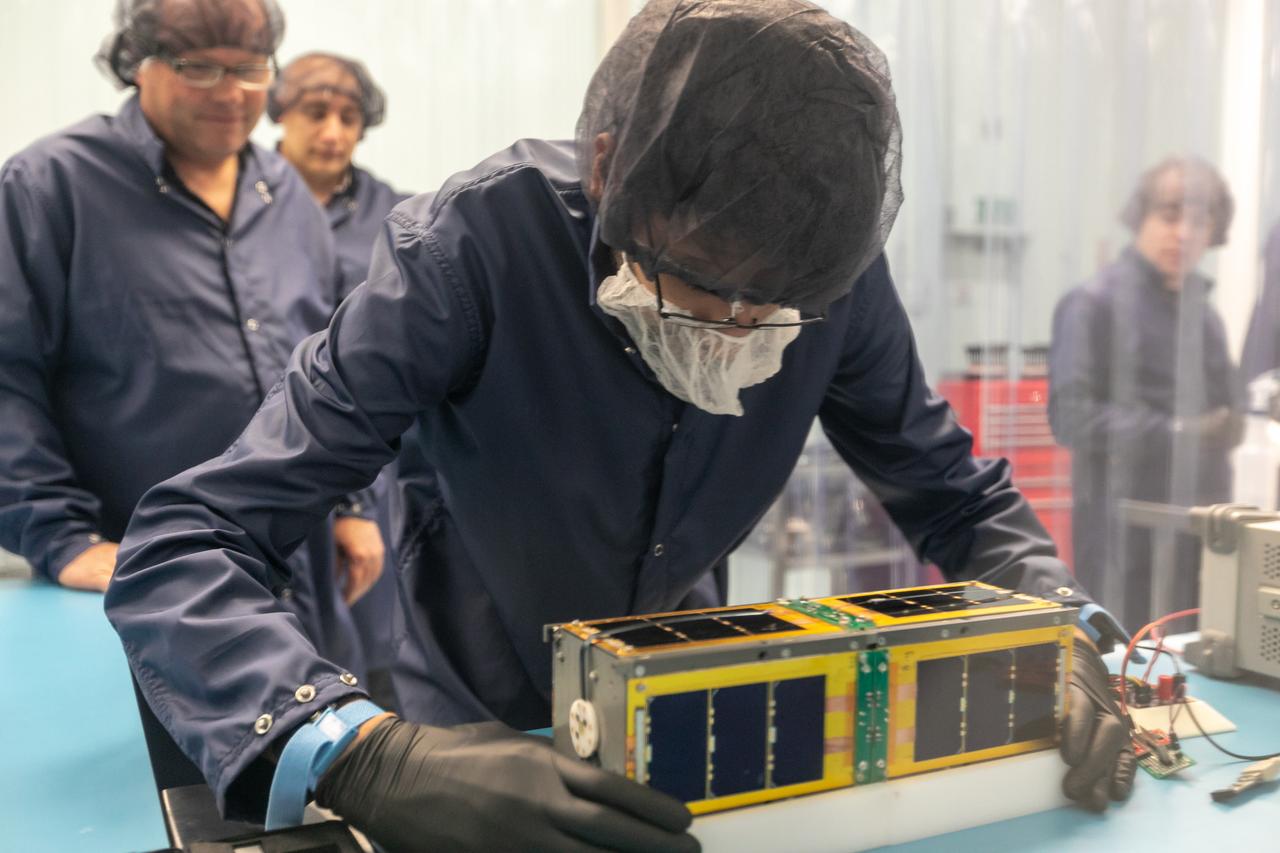
CubeSail is a nano-scale flight experiment to demonstrate deployment and control of a single 250-meter (20 m2) solar sail blade as a low-cost risk reduction precursor of the exciting advanced interplanetary UltraSail concept having four 5-kilometer blades (with approximately 100,000 m2 of sail area). CubeSail was built by the University of Illinois at Urbana-Champaign and CU Aerospace, the same team that designed the I-Sail and UltraSail concepts funded by NASA’s SBIR program. CubeSail represents an affordable stepping-stone towards the future development of the UltraSail solar sail concept that would enable very high-energy inner heliosphere and interstellar scientific missions. In addition, near-earth missions such as Heliostorm for early warning of solar storms will provide more warning margin as the solar sail performance is increased with UltraSail technology. Spacecraft design studies show that for sail areal densities below 5 gm/m2, as proposed with UltraSail, that spacecraft payloads can be significantly increased to 50-60% because of the elimination of the propellant, without sacrificing flight time. Furthermore, higher payload fractions will result in dramatically lower total spacecraft mass and consequently much lower launch cost, enabling more missions for the research dollar.

SCI2012_0003: SOFIA mid-infrared image of the planetary nebula Minkowski 2-9 (M2-9), also known as the Butterfly Nebula, compared with a visual-wavelength Hubble Space Telescope image at the same scale and orientation. The nebula is composed of two lobes of gas & dust expelled from a dying star with about the mass of our Sun that is seen at the center of the lobes. The HST image shows mostly ionized gas in the lobes whereas the SOFIA image shows mostly solid grains condensing in the gas. The SOFIA data were obtained during SOFIA's Early Science program in 2011 by a Guest Investigator team led by Michael Werner of Caltech/JPL using the FORCAST camera (P.I.Terry Herter, Cornell University). Credit: SOFIA image, RGB = 37, 24, 20 microns; NASA/DLR/USRA/DSI/FORCAST team/M. Werner et al./A. Helton, J. Rho; HST image: NASA/ESA/NSF/AURA/Hubble Heritage Team/STScI/B. Balick, V. Icke, G. Mellema
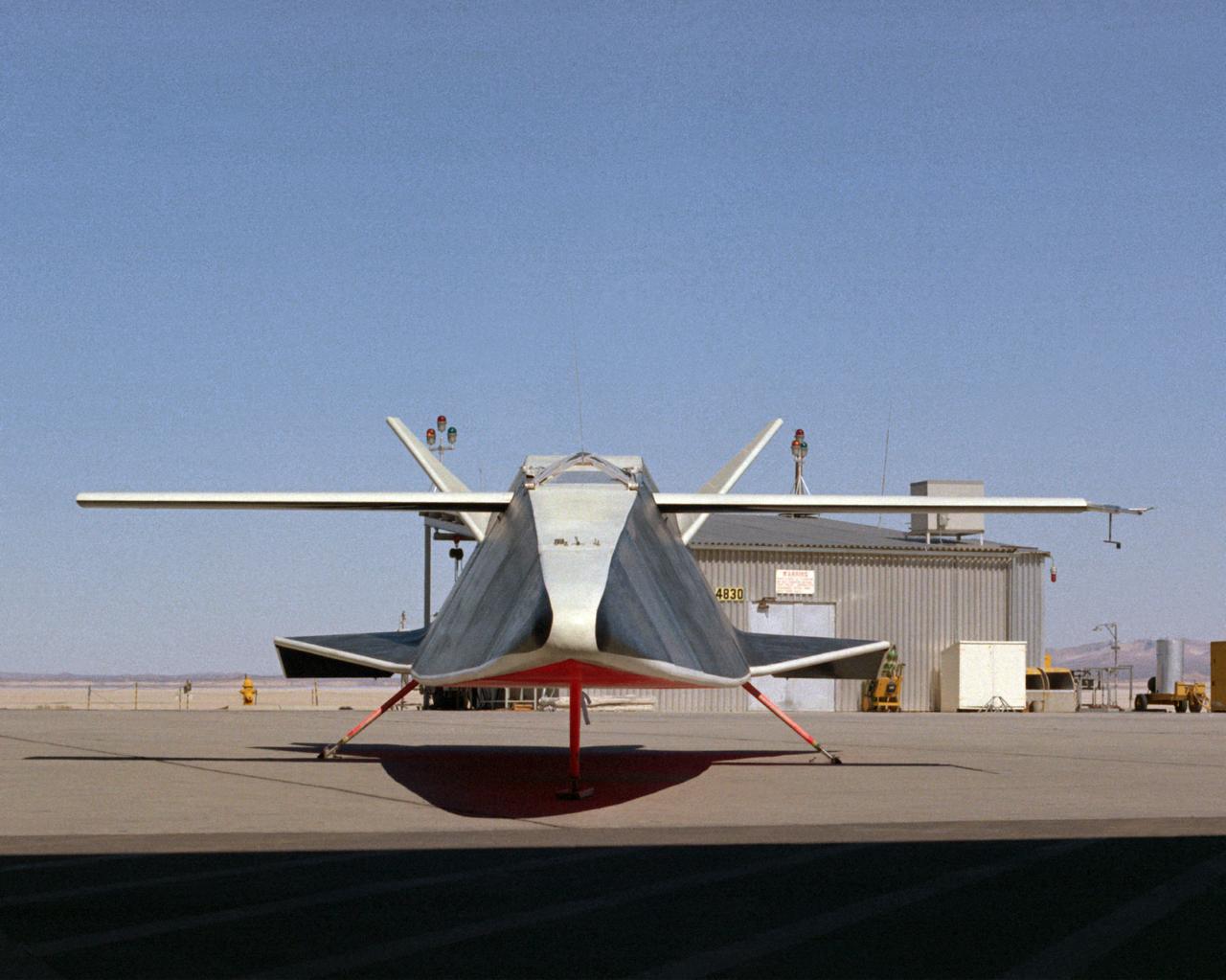
The Hyper III was a low-cost test vehicle for an advanced lifting-body shape. Like the earlier M2-F1, it was a "homebuilt" research aircraft, i.e., built at the Flight Research Center (FRC), later redesignated the Dryden Flight Research Center. It had a steel-tube frame covered with Dacron, a fiberglass nose, sheet aluminum fins, and a wing from an HP-11 sailplane. Construction was by volunteers at the FRC. Although the Hyper III was to be flown remotely in its initial tests, it was fitted with a cockpit for a pilot. On the Hyper III's only flight, it was towed aloft attached to a Navy SH-3 helicopter by a 400-foot cable. NASA research pilot Bruce Peterson flew the SH-3. After he released the Hyper III from the cable, NASA research pilot Milt Thompson flew the vehicle by radio control until the final approach when Dick Fischer took over control using a model-airplane radio-control box. The Hyper III flared, then landed and slid to a stop on Rogers Dry Lakebed.
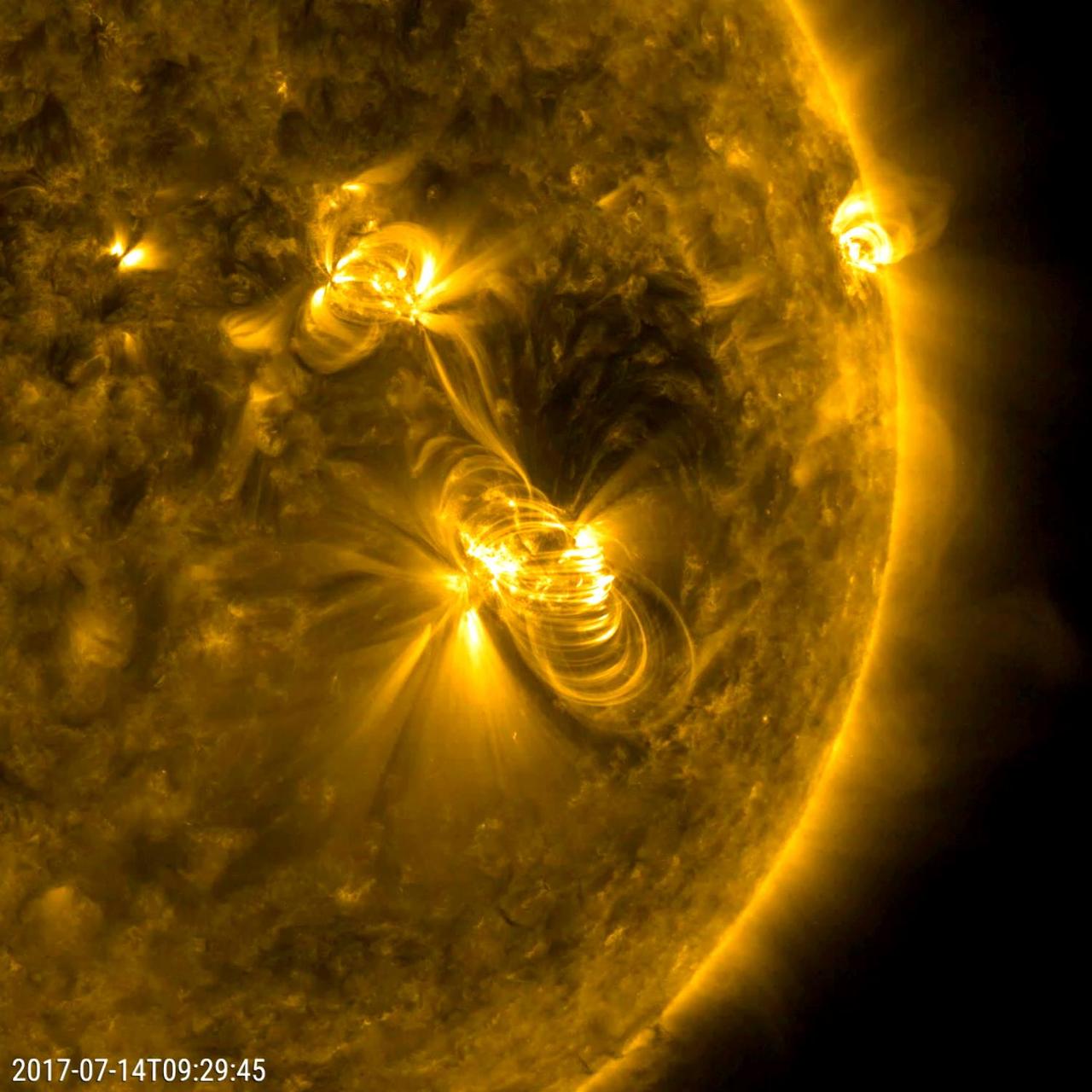
A flare medium-sized (M2) flare and a coronal mass ejection erupted from the same, large active region (July 14, 2017). The flare lasted almost two hours, quite a long duration. Coronagraphs on the SOHO spacecraft show a substantial cloud of charged particles blasting into space just after the blast. The coils arcing over this active region are particles spiraling along magnetic field lines, which were reorganizing themselves after the magnetic field was disrupted by the blast. Images were taken in a wavelength of extreme ultraviolet light. Movies are available at https://photojournal.jpl.nasa.gov/catalog/PIA21836
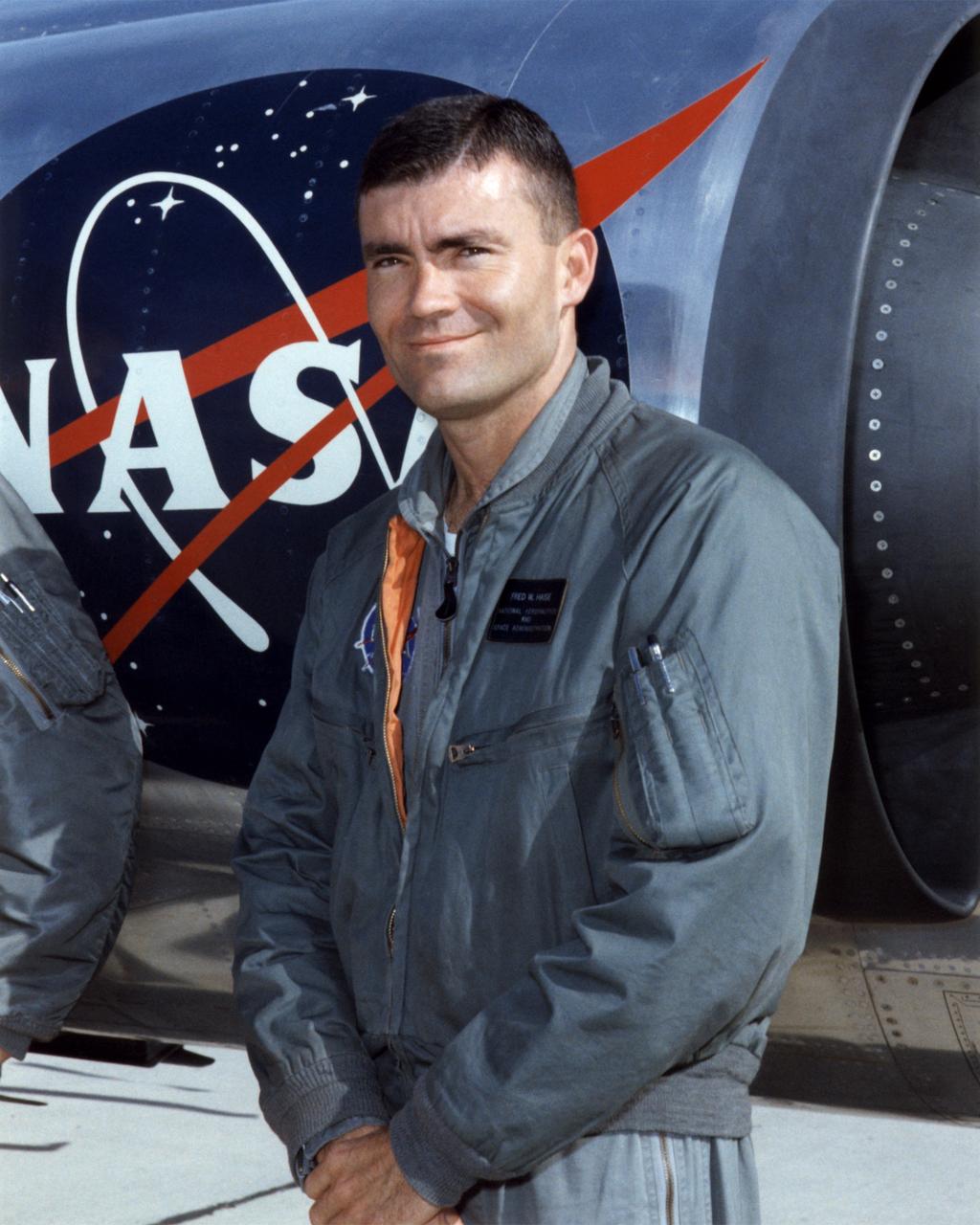
Fred W. Haise Jr. was a research pilot and an astronaut for the National Aeronautics and Space Administration from 1959 to 1979. He began flying at the Lewis Research Center in Cleveland, Ohio (today the Glenn Research Center), in 1959. He became a research pilot at the NASA Flight Research Center (FRC), Edwards, Calif., in 1963, serving NASA in that position for three years until being selected to be an astronaut in 1966 His best-known assignment at the FRC (later redesignated the Dryden Flight Research Center) was as a lifting body pilot. Shortly after flying the M2-F1 on a car tow to about 25 feet on April 22, 1966, he was assigned as an astronaut to the Johnson Space Center in Houston, Texas. While at the FRC he had also flown a variety of other research and support aircraft, including the variable-stability T-33A to simulate the M2-F2 heavyweight lifting body, some light aircraft including the Piper PA-30 to evaluate their handling qualities, the Apache helicopter, the Aero Commander, the Cessna 310, the Douglas F5D, the Lockheed F-104 and T-33, the Cessna T-37, and the Douglas C-47. After becoming an astronaut, Haise served as a backup crewmember for the Apollo 8, 11, and 16 missions. He flew on the aborted Apollo 13 lunar mission in 1970, spending 142 hours and 54 minutes in space before returning safely to Earth. In 1977, he was the commander of three free flights of the Space Shuttle prototype Enterprise when it flew its Approach and Landing Tests at Edwards Air Force Base, Calif. Meanwhile, from April 1973 to January 1976, Haise served as the Technical Assistant to the Manager of the Space Shuttle Orbiter Project. In 1979, he left NASA to become the Vice President for Space Programs with the Grumman Aerospace Corporation. He then served as President of Grumman Technical Services, an operating division of Northrop Grumman Corporation, from January 1992 until his retirement. Haise was born in Biloxi, Miss., on November 14, 1933. He underwent flight traini
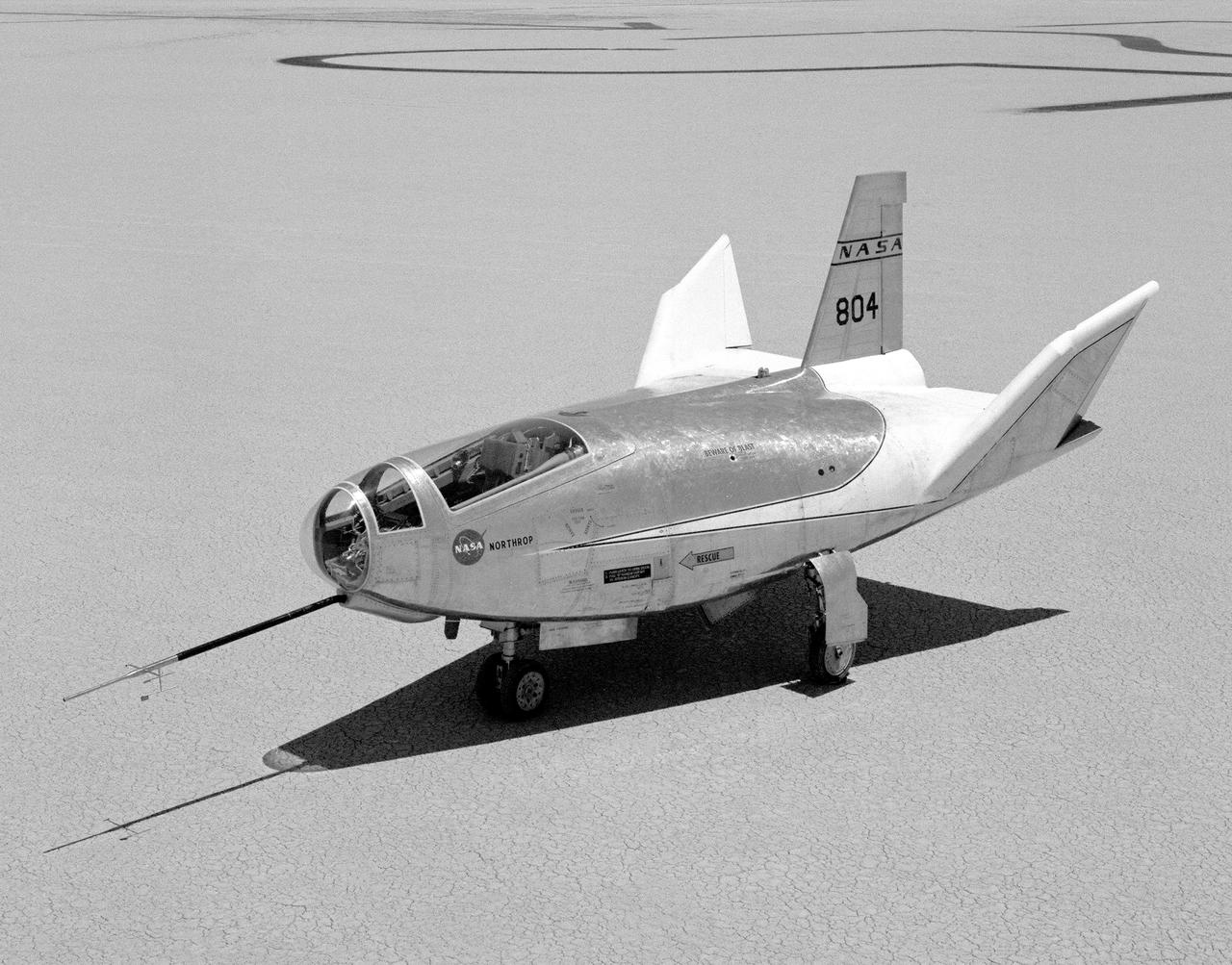
The HL-10 Lifting Body is seen here parked on Rogers Dry Lake, the unique location where it landed after research flights. This 1968 photo shows the vehicle after the fins were modified to remove instabilities encountered on the first flight. It involved a change to the shape of the leading edge of the fins to eliminate flow separation. It required extensive wind-tunnel testing at Langley Research Center, Hampton, Va. NASA Flight Research Center (FRC) engineer Bob Kempel than plotted thousands of data points by hand to come up with the modification, which involved a fiberglass glove backed with a metal structure on each fin's leading edge. This transformed the vehicle from a craft that was difficult to control into the best handling of the original group of lifting bodies at the FRC.
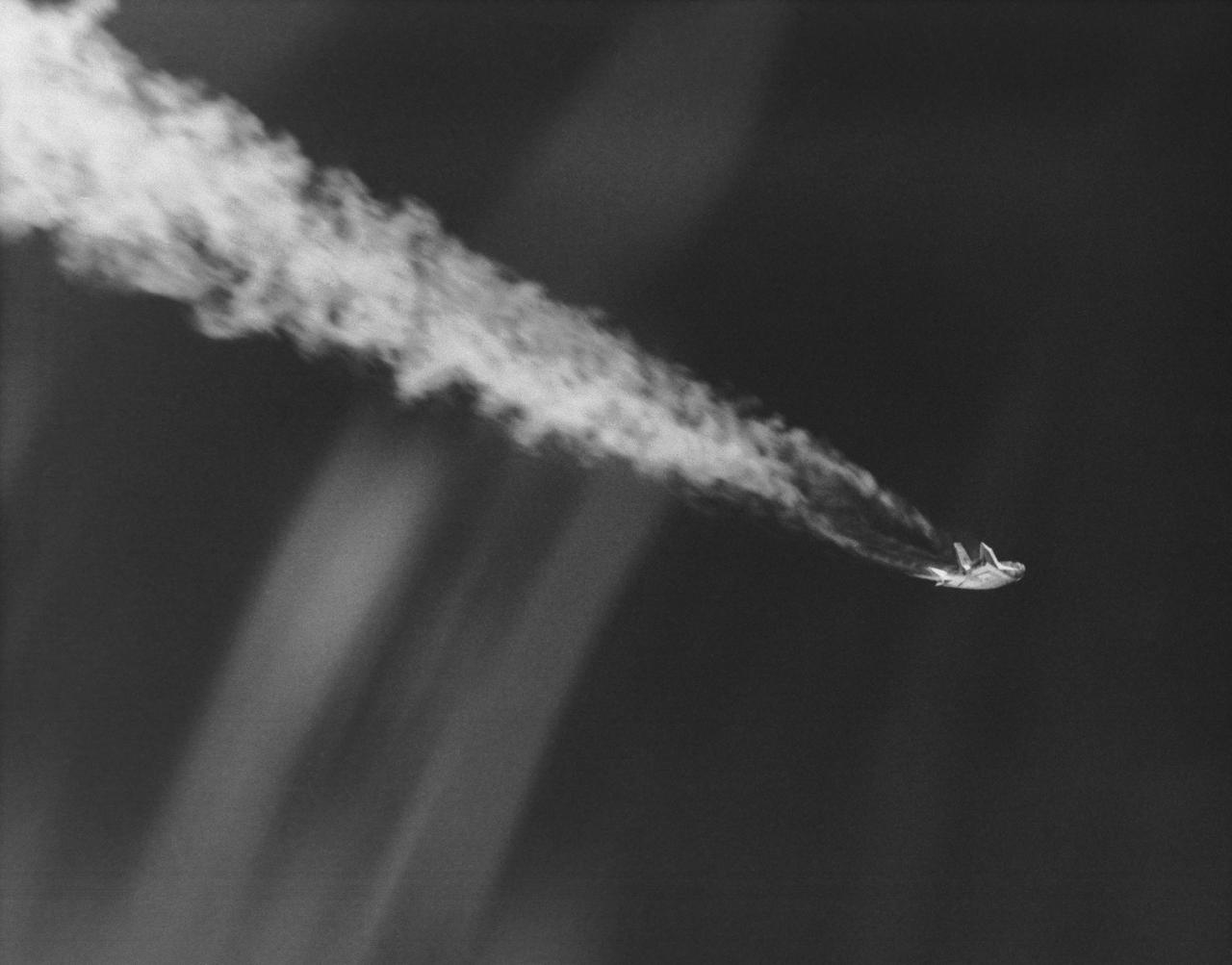
The HL-10 Lifting Body is seen here in powered flight shortly after launch from the B-52 mothership. When HL-10 powered flights began on October 23, 1968, the vehicle used the same basic XLR-11 rocket engine that powered the original X-1s. A total of five powered flights were made before the HL-10 first flew supersonically on May 9, 1969, with John Manke in the pilot's seat.
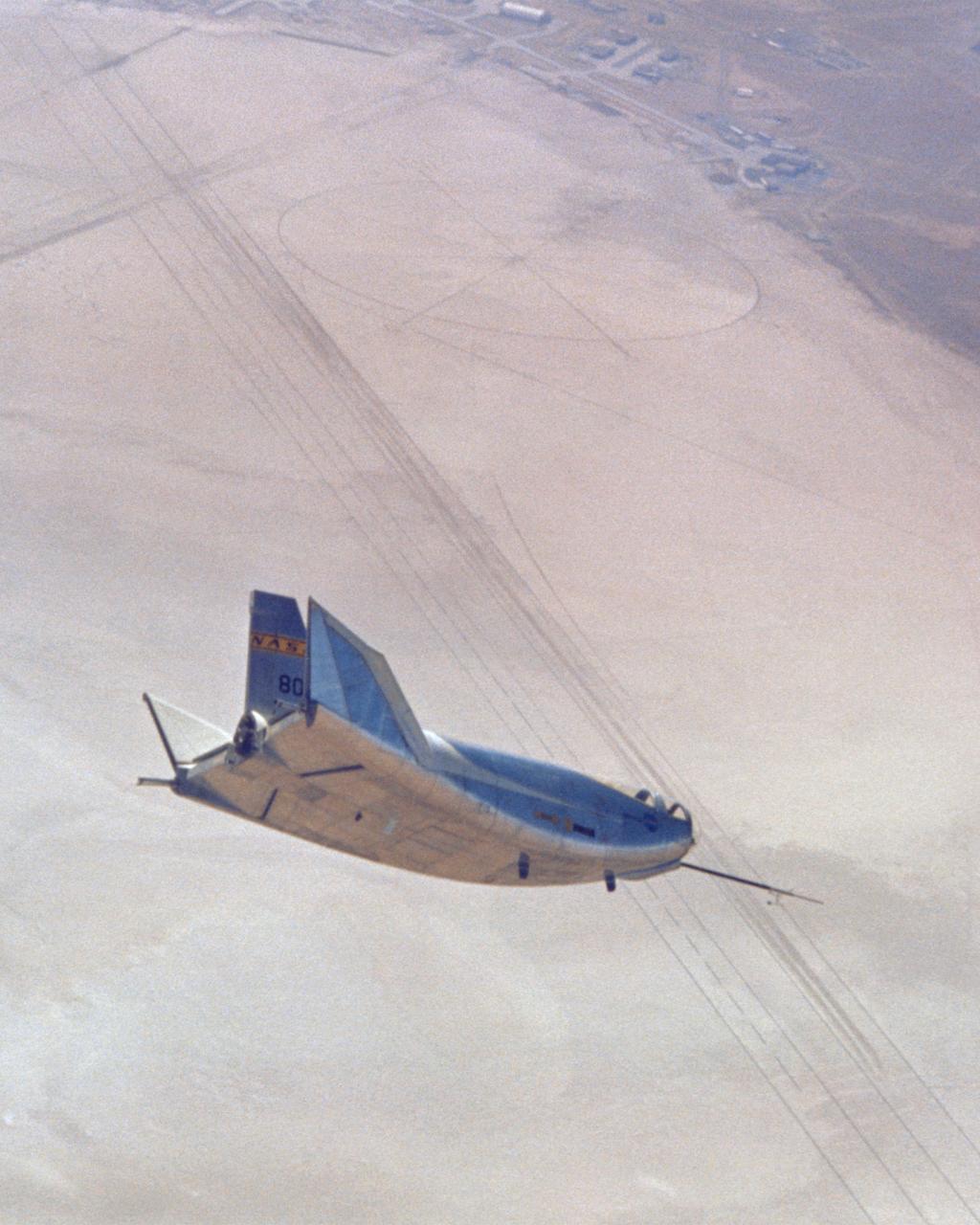
This photo shows the HL-10 in flight, turning to line up with lakebed runway 18. The pilot for this flight, the 29th of the HL-10 series, was Bill Dana. The HL-10 reached a peak altitude of 64,590 feet and a top speed of Mach 1.59 on this particular flight.
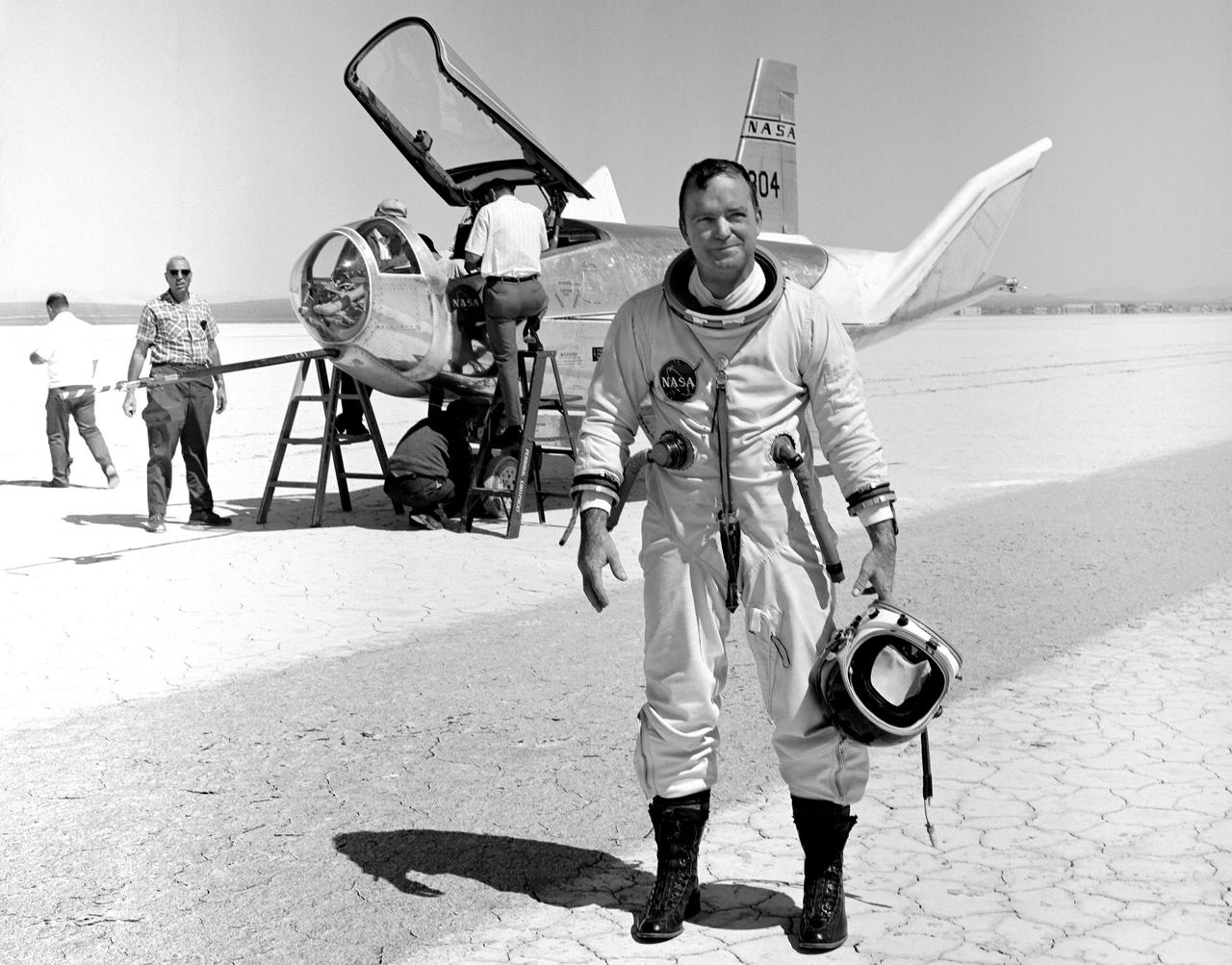
NASA research pilot Bill Dana stands in front of the HL-10 Lifting Body following his first glide flight on April 25, 1969. Dana later retired as Chief Engineer at NASA's Dryden Flight Research Center, (called the NASA Flight Research Center in 1969). Prior to his lifting body assignment, Dana flew the X-15 research airplane. He flew the rocket-powered aircraft 16 times, reaching a top speed of 3,897 miles per hour and a peak altitude of 310,000 feet (almost 59 miles high).
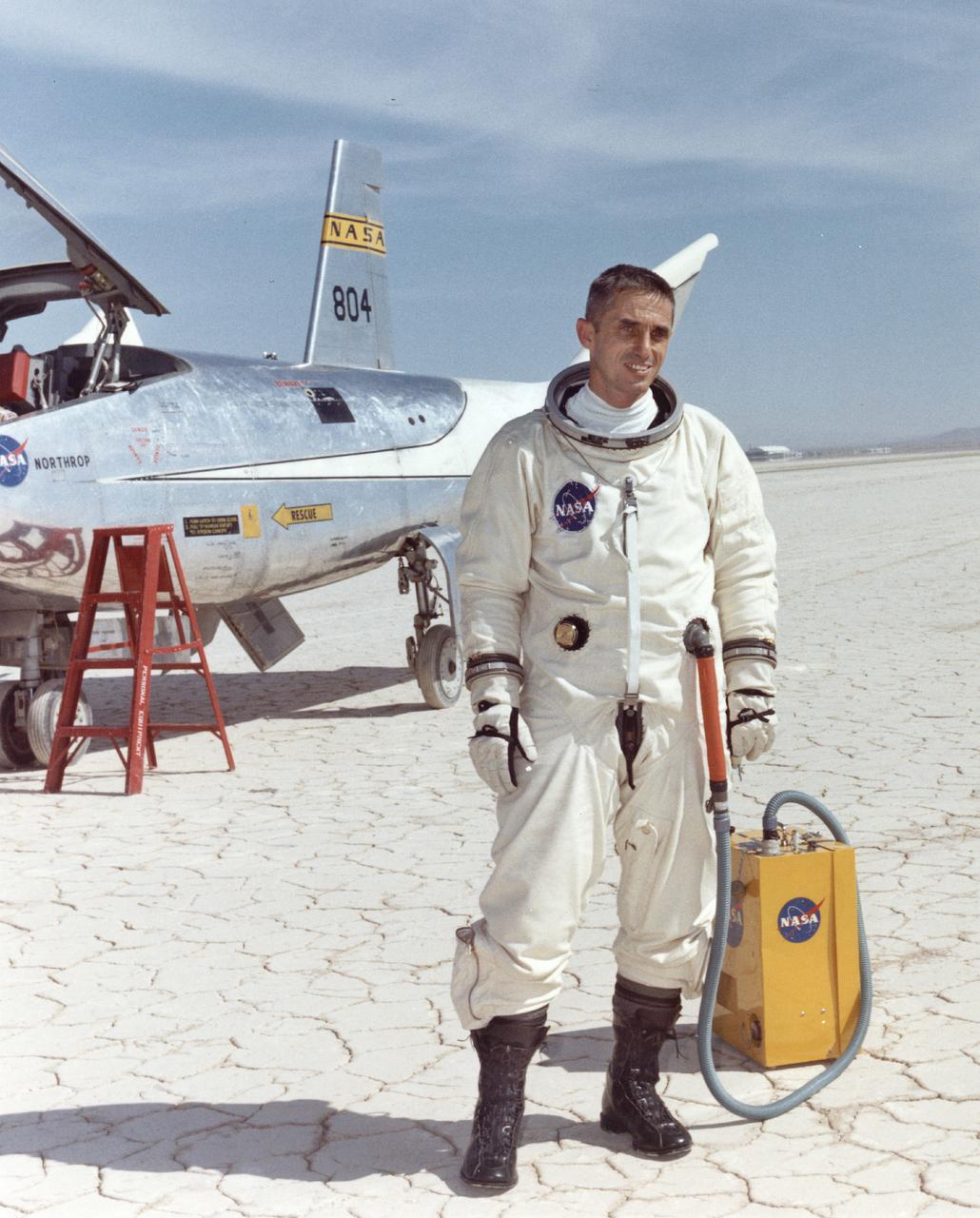
John Manke is shown here on the lakebed next to the HL-10, one of four different lifting-body vehicles he flew, including the X-24B, which he flew 16 times. His final total was 42 lifting-body flights.
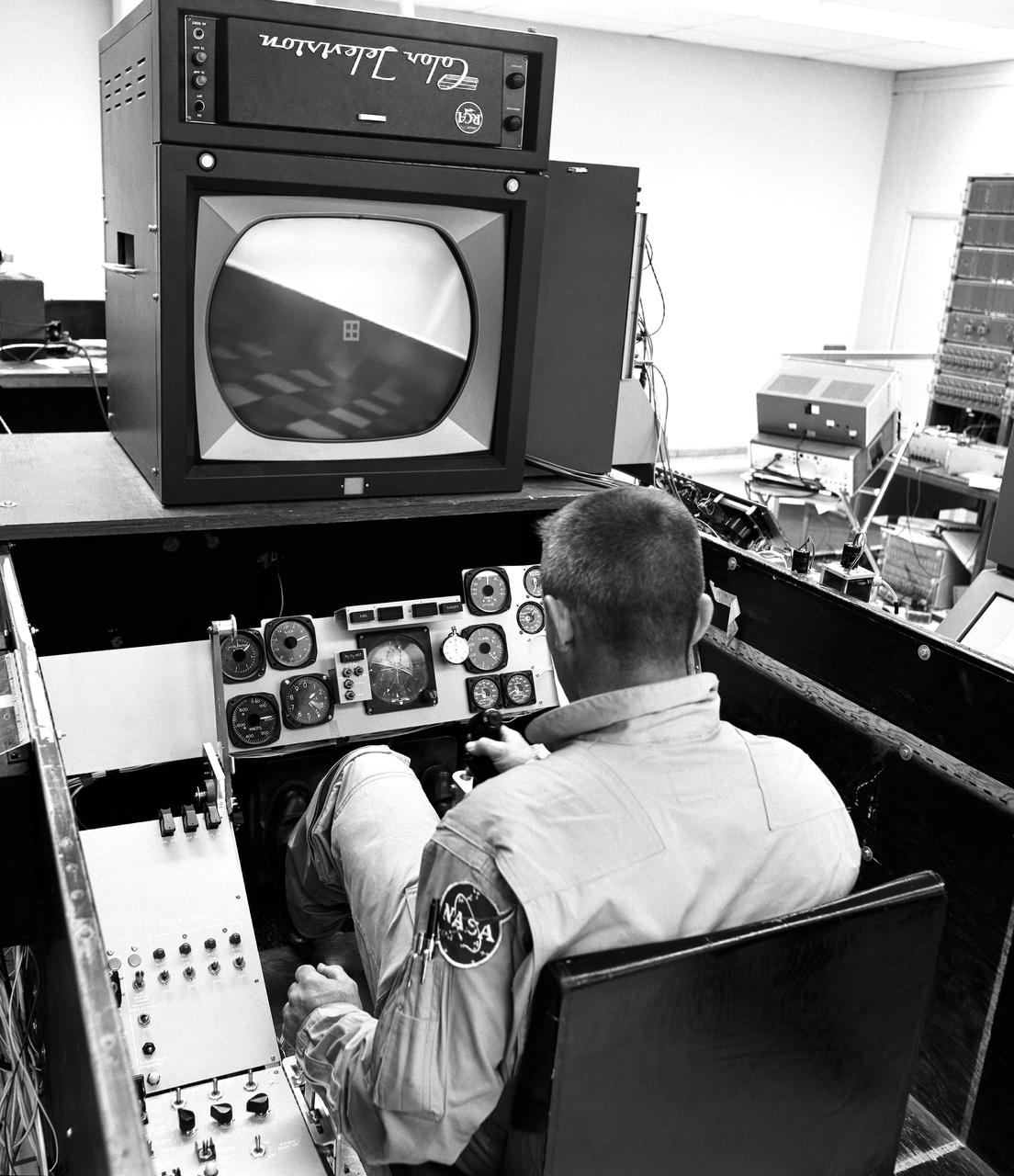
As shown in this photo of the HL-10 flight simulator, the lifting-body pilots and engineers made use of early simulators for both training and the determination of a given vehicle's handling at various speeds, attitudes, and altitudes. This provided warning of possible problems.
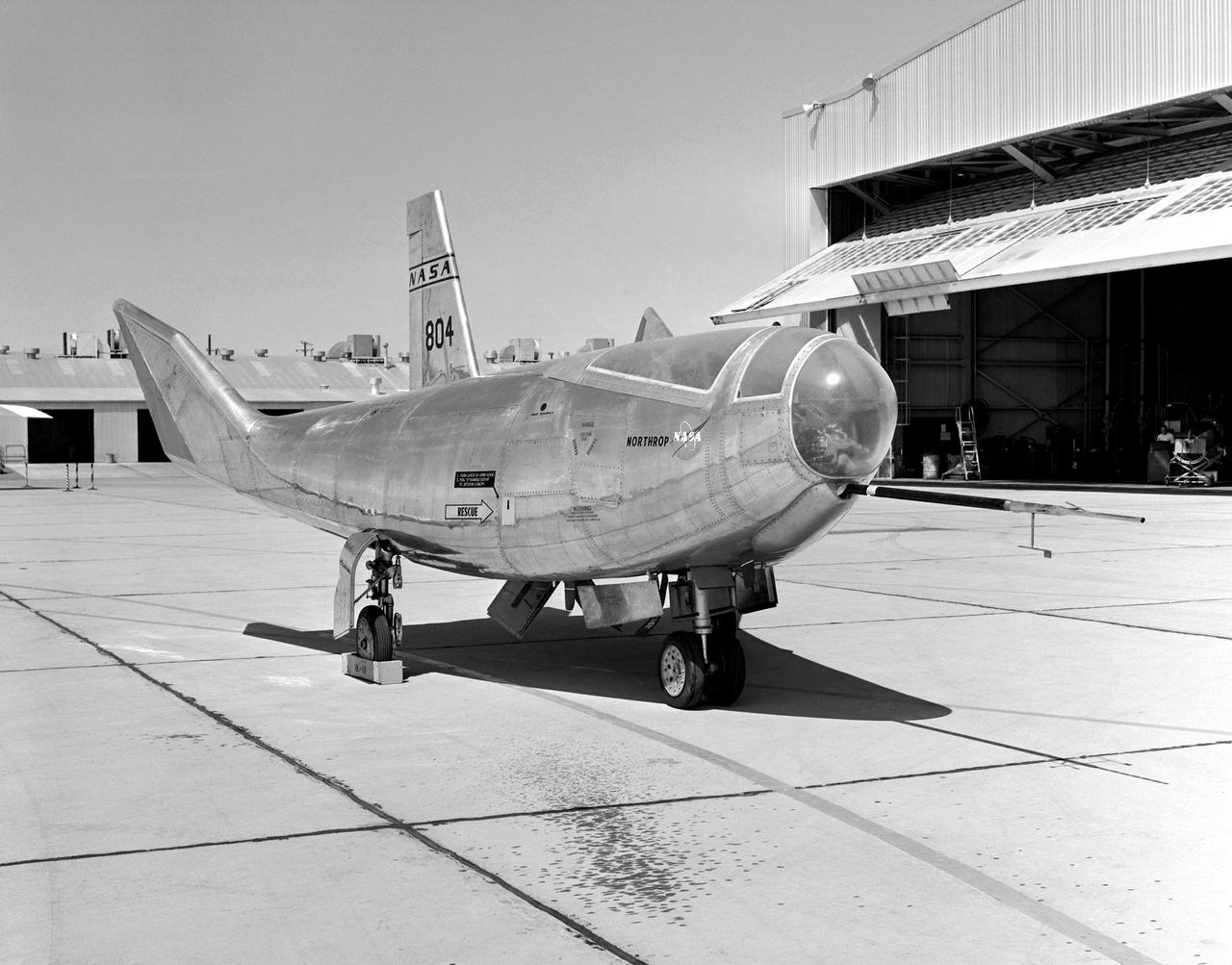
The HL-10, seen here parked on the ramp, was one of five lifting body designs flown at NASA's Dryden Flight Research Center, Edwards, California, from July 1966 to November 1975 to study and validate the concept of safely maneuvering and landing a low lift-over-drag vehicle designed for reentry from space.
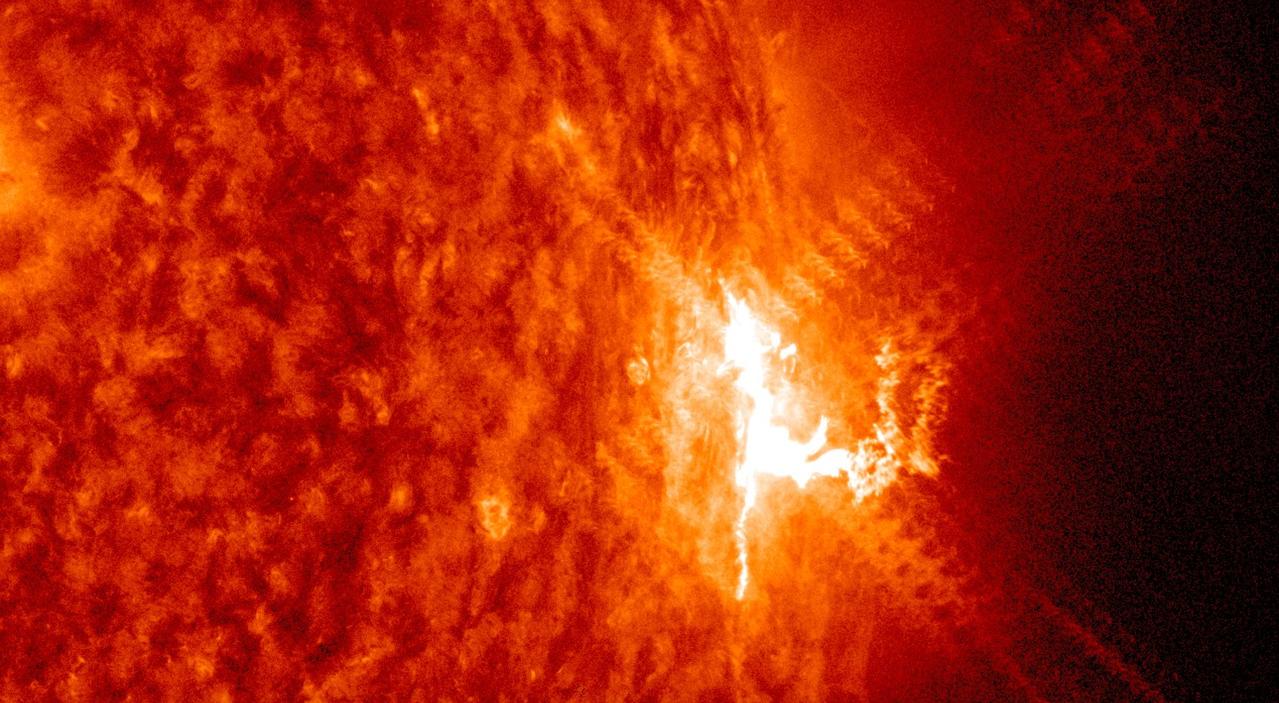
The sun emitted three mid-level solar flares on July 22-23, 2016, the strongest peaking at 1:16 am EDT on July 23. The sun is currently in a period of low activity, moving toward what's called solar minimum when there are few to no solar eruptions – so these flares were the first large ones observed since April. They are categorized as mid-strength flares, substantially less intense than the most powerful solar flares. These flares were classified as M-level flares. M-class flares are the category just below the most intense flares, X-class flares. The number provides more information about its strength. An M2 is twice as intense as an M1, an M3 is three times as intense, etc. Of these three flares: The first was an M5.0, which peaked at 10:11 pm EDT on July 22, 2016. The second -- the strongest -- was an M7.6, which peaked at 1:16 am EDT on July 23. The final was an M5.5, which peaked 15 minutes later at 1:31 am EDT. Credit: NASA/Goddard/SDO
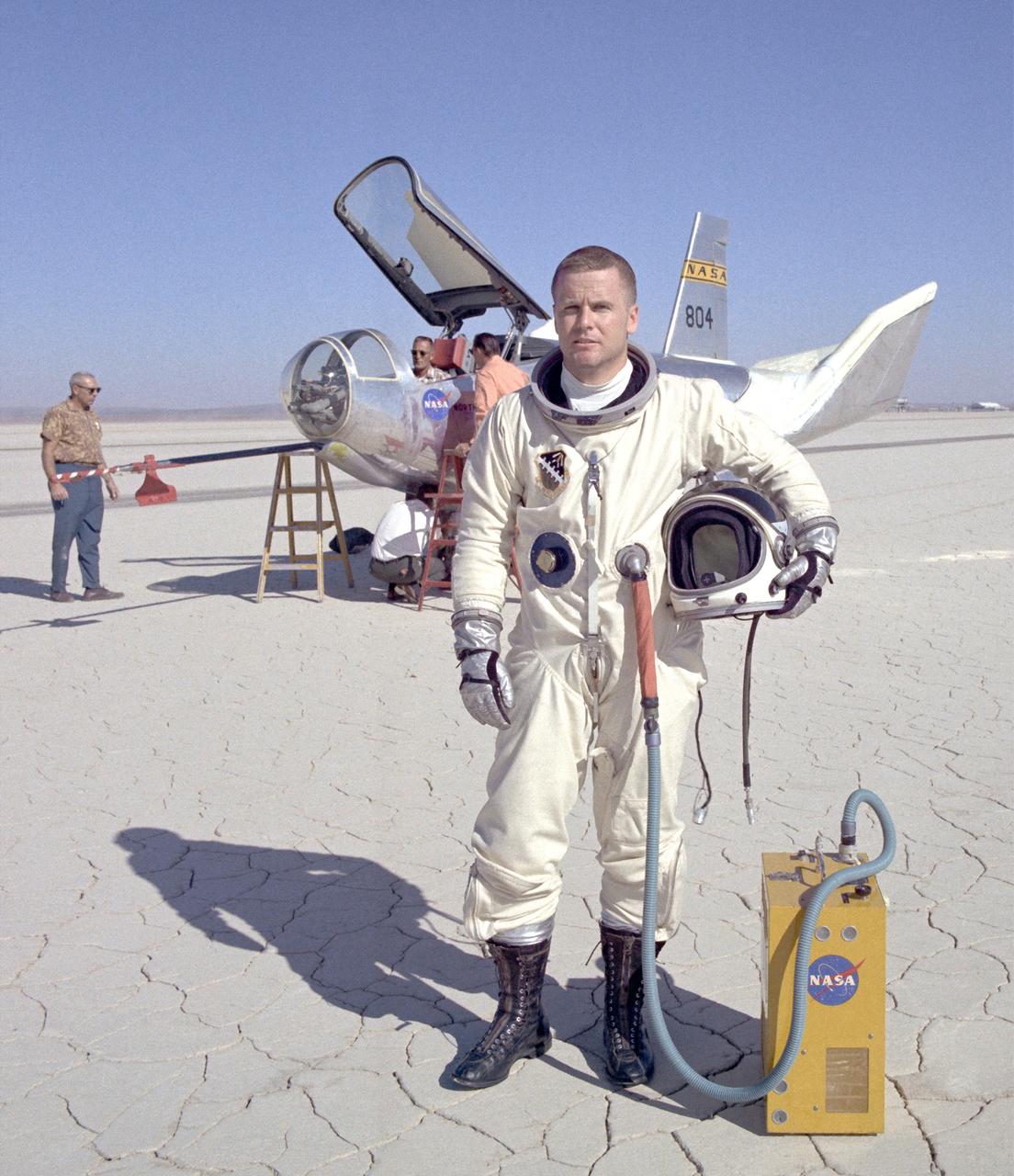
Air Force Major Peter Hoag stands in front of the HL-10 Lifting Body. Maj. Hoag joined the HL-10 program in 1969 and made his first glide flight on June 6, 1969. He made a total of 8 flights in the HL-10. They included the fastest lifting-body flight, which reached Mach 1.861 on Feb. 18, 1970.
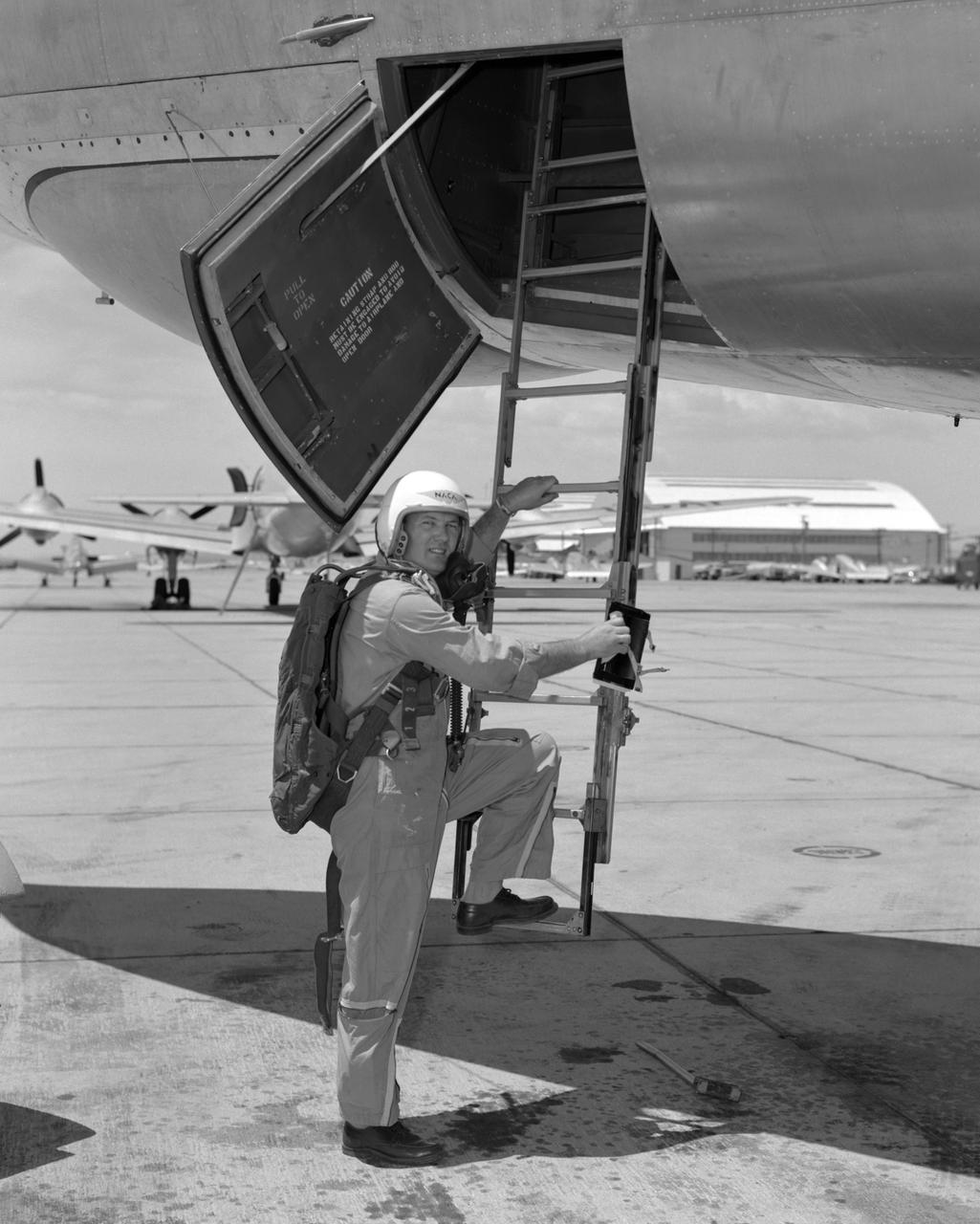
From December 10, 1966, until his retirement on February 27, 1976, Stanley P. Butchart served as Chief (later, Director) of Flight Operations at NASA's Flight Research Center (renamed on March 26, 1976, the Hugh L. Dryden Flight Research Center). Initially, his responsibilities in this position included the Research Pilots Branch, a Maintenance and Manufacturing Branch, and an Operations Engineering Branch, the last of which not only included propulsion and electrical/electronic sections but project engineers for the X-15 and lifting bodies. During his tenure, however, the responsibilities of his directorate came to include not only Flight Test Engineering Support but Flight Systems and Loads laboratories. Before becoming Chief of Flight Operations, Butchart had served since June of 1966 as head of the Research Pilots Branch (Chief Pilot) and then as acting chief of Flight Operations. He had joined the Center (then known as the National Advisory Committee for Aeronautics' High-Speed Flight Research Station) as a research pilot on May 10, 1951. During his career as a research pilot, he flew a great variety of research and air-launch aircraft including the D-558-I, D-558-II, B-29 (plus its Navy version, the P2B), X-4, X-5, KC-135, CV-880, CV-990, B-47, B-52, B-747, F-100A, F-101, F-102, F-104, PA-30 Twin Comanche, JetStar, F-111, R4D, B-720, and B-47. Although previously a single-engine pilot, he became the Center's principal multi-engine pilot during a period of air-launches in which the pilot of the air-launch aircraft (B-29 or P2B) basically directed the operations. It was he who called for the chase planes before each drop, directed the positioning of fire rescue vehicles, and released the experimental aircraft after ensuring that all was ready for the drop. As pilot of the B-29 and P2B, Butchart launched the X-1A once, the X-1B 13 times, the X-1E 22 times, and the D-558-II 102 times. In addition, he towed the M2-F1 lightweight lifting body 14 times behind an R4
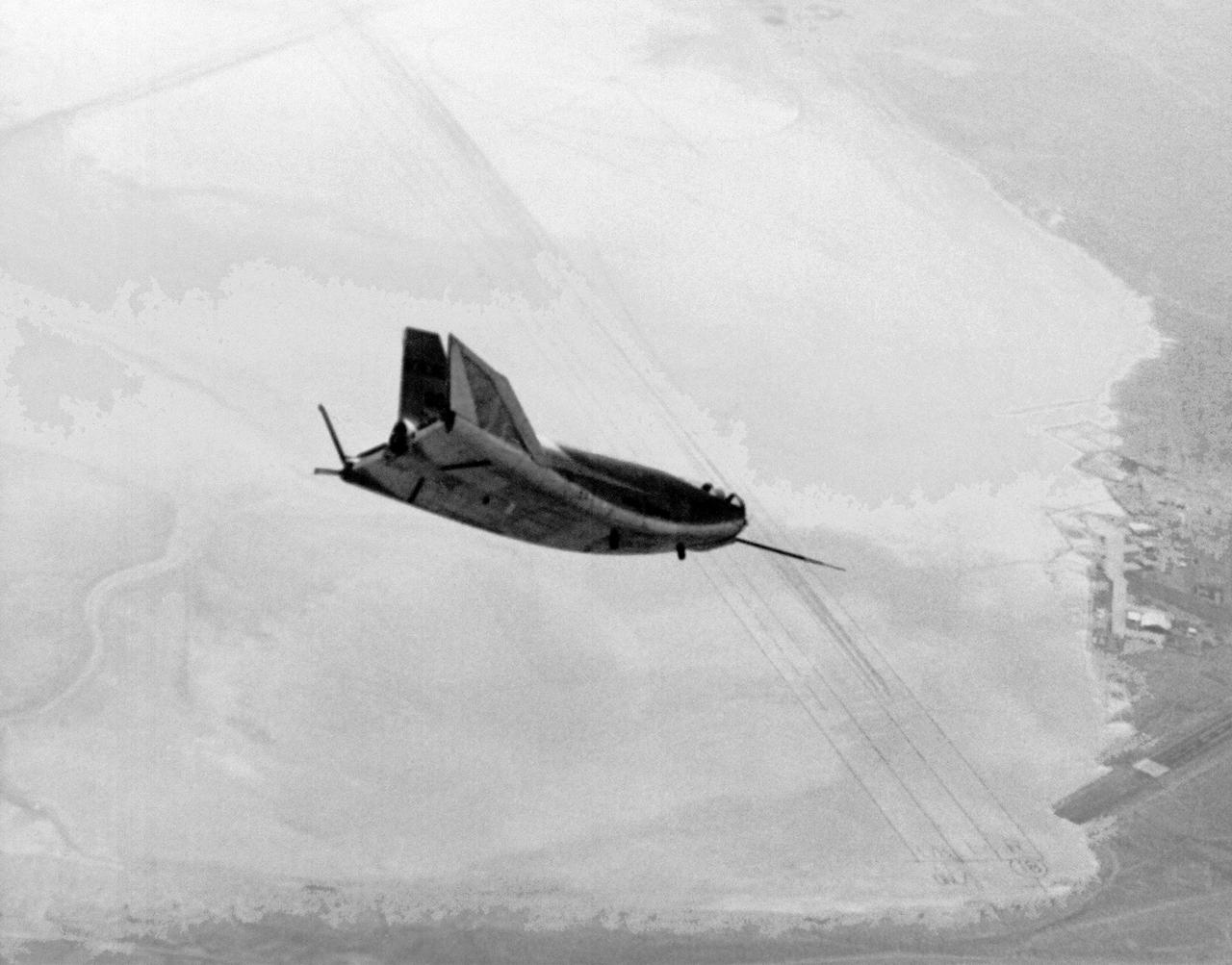
The HL-10 Lifting Body is seen here in flight over Rogers Dry lakebed. Like the other lifting bodies, the HL-10 made a steep descent toward the lakebed, followed by a high-speed landing. This was due to the vehicle's low lift-over-drag ratio. The first 11 flights of the HL-10 were unpowered, flown to check the vehicle's handling and stability before rocket-powered flights began using the XLR-11 rocket engine.
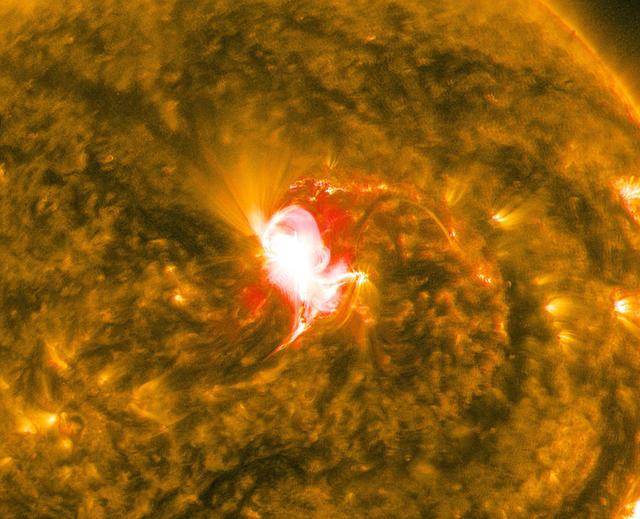
The sun emitted a mid-level solar flare, peaking at 2:23 EDT on June 22, 2015. NASA’s Solar Dynamics Observatory, which watches the sun constantly, captured an image of the event. Solar flares are powerful bursts of radiation. Harmful radiation from a flare cannot pass through Earth's atmosphere to physically affect humans on the ground, however -- when intense enough -- they can disturb the atmosphere in the layer where GPS and communications signals travel. To see how this event may affect Earth, please visit NOAA's Space Weather Prediction Center at <a href="http://spaceweather.gov" rel="nofollow">spaceweather.gov</a>, the U.S. government's official source for space weather forecasts, alerts, watches and warnings. This flare is classified as a M6.6 flare. M-class flares are a tenth the size of the most intense flares, the X-class flares. The number provides more information about its strength. An M2 is twice as intense as an M1, an M3 is three times as intense, etc. Credit: NASA/Goddard/SDO <b><a href="http://www.nasa.gov/audience/formedia/features/MP_Photo_Guidelines.html" rel="nofollow">NASA image use policy.</a></b> <b><a href="http://www.nasa.gov/centers/goddard/home/index.html" rel="nofollow">NASA Goddard Space Flight Center</a></b> enables NASA’s mission through four scientific endeavors: Earth Science, Heliophysics, Solar System Exploration, and Astrophysics. Goddard plays a leading role in NASA’s accomplishments by contributing compelling scientific knowledge to advance the Agency’s mission. <b>Follow us on <a href="http://twitter.com/NASAGoddardPix" rel="nofollow">Twitter</a></b> <b>Like us on <a href="http://www.facebook.com/pages/Greenbelt-MD/NASA-Goddard/395013845897?ref=tsd" rel="nofollow">Facebook</a></b> <b>Find us on <a href="http://instagrid.me/nasagoddard/?vm=grid" rel="nofollow">Instagram</a></b>

The sun emitted a mid-level solar flare, peaking at 11:24 p.m. EST on Jan. 12, 2015. NASA’s Solar Dynamics Observatory, which watches the sun constantly, captured an image of the event. Solar flares are powerful bursts of radiation. Harmful radiation from a flare cannot pass through Earth's atmosphere to physically affect humans on the ground, however -- when intense enough -- they can disturb the atmosphere in the layer where GPS and communications signals travel. This flare is classified as an M5.6-class flare. M-class flares are a tenth the size of the most intense flares, the X-class flares. The number provides more information about its strength. An M2 is twice as intense as an M1, an M3 is three times as intense, etc. Credit: NASA/Goddard/SDO <b><a href="http://www.nasa.gov/audience/formedia/features/MP_Photo_Guidelines.html" rel="nofollow">NASA image use policy.</a></b> <b><a href="http://www.nasa.gov/centers/goddard/home/index.html" rel="nofollow">NASA Goddard Space Flight Center</a></b> enables NASA’s mission through four scientific endeavors: Earth Science, Heliophysics, Solar System Exploration, and Astrophysics. Goddard plays a leading role in NASA’s accomplishments by contributing compelling scientific knowledge to advance the Agency’s mission. <b>Follow us on <a href="http://twitter.com/NASAGoddardPix" rel="nofollow">Twitter</a></b> <b>Like us on <a href="http://www.facebook.com/pages/Greenbelt-MD/NASA-Goddard/395013845897?ref=tsd" rel="nofollow">Facebook</a></b> <b>Find us on <a href="http://instagram.com/nasagoddard?vm=grid" rel="nofollow">Instagram</a></b>
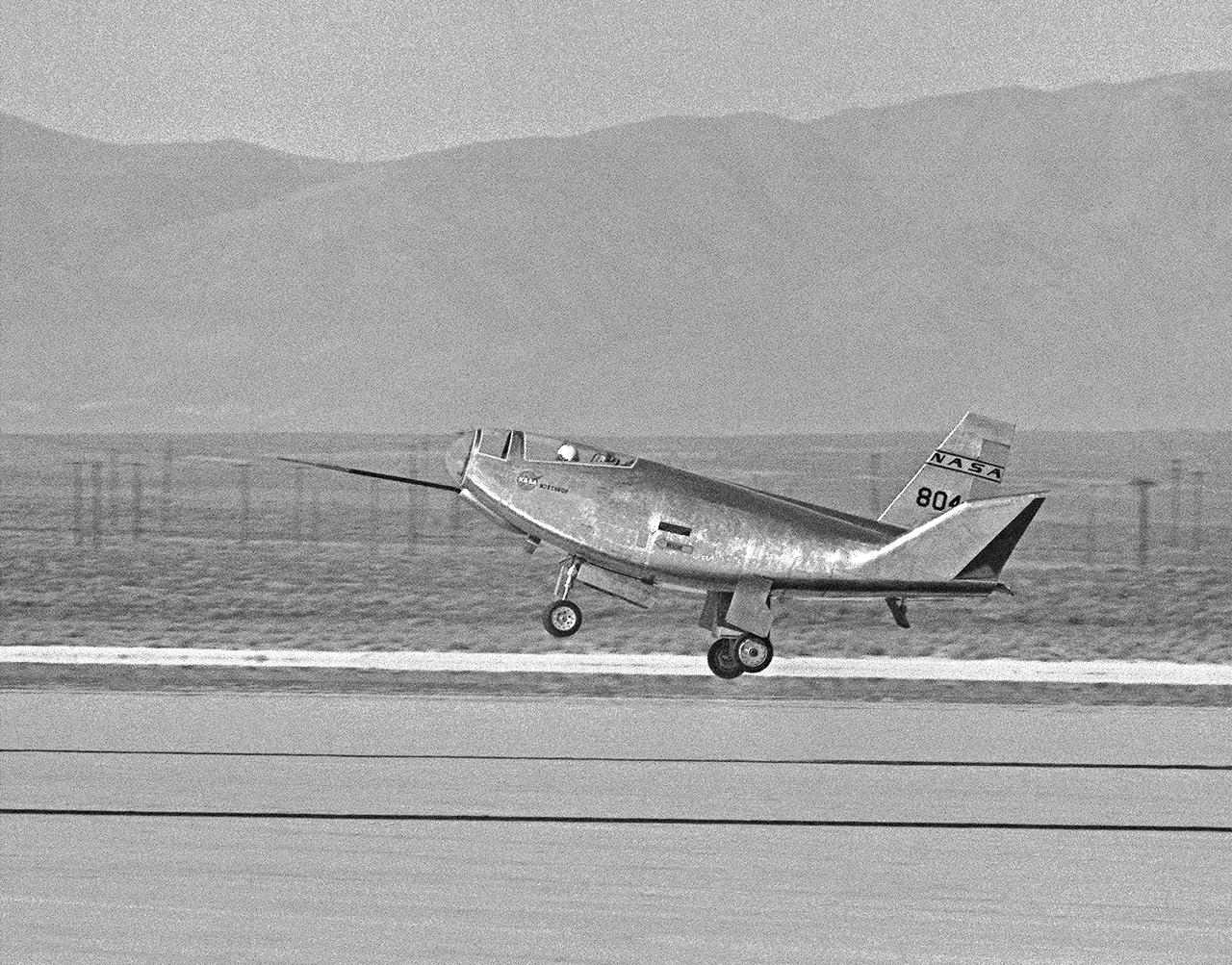
The HL-10 Lifting Body completes its first research flight with a landing on Rogers Dry Lake. Due to control problems, pilot Bruce Peterson had to land at a higher speed than originally planned in order to keep the vehicle under control. The actual touchdown speed was about 280 knots. This was 30 knots above the speed called for in the flight plan. The HL-10's first flight had lasted 3 minutes and 9 seconds.
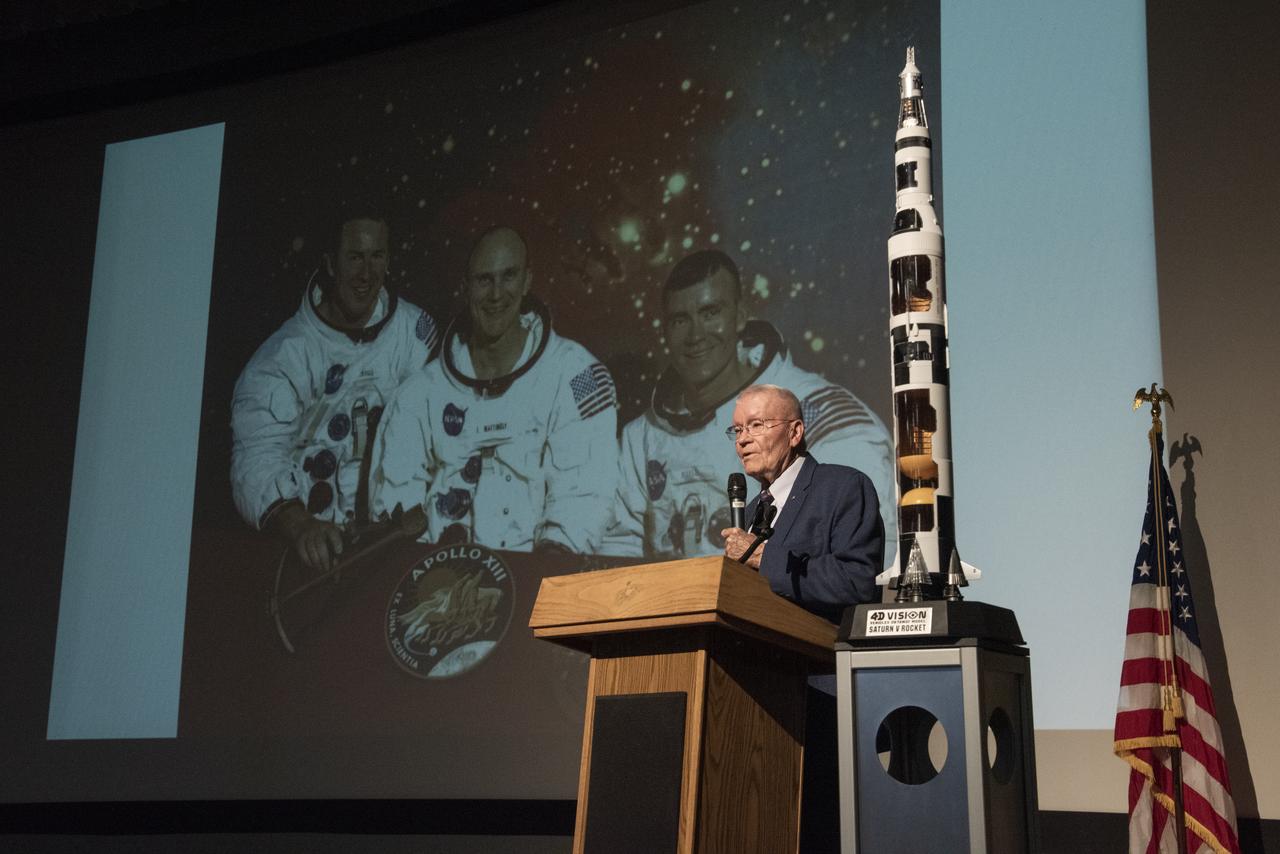
Apollo Astronaut Fred Haise speaks to a crowd of NASA and U.S Air Force employees at the Edwards Air Force Base theater about his career with NASA and as a military pilot. Haise stands on stage with a photo of former astronauts Jim Lovell and Jack Swigert who accompanied him on the Apollo 13 lunar mission in the background with a model of the Saturn V rocket.
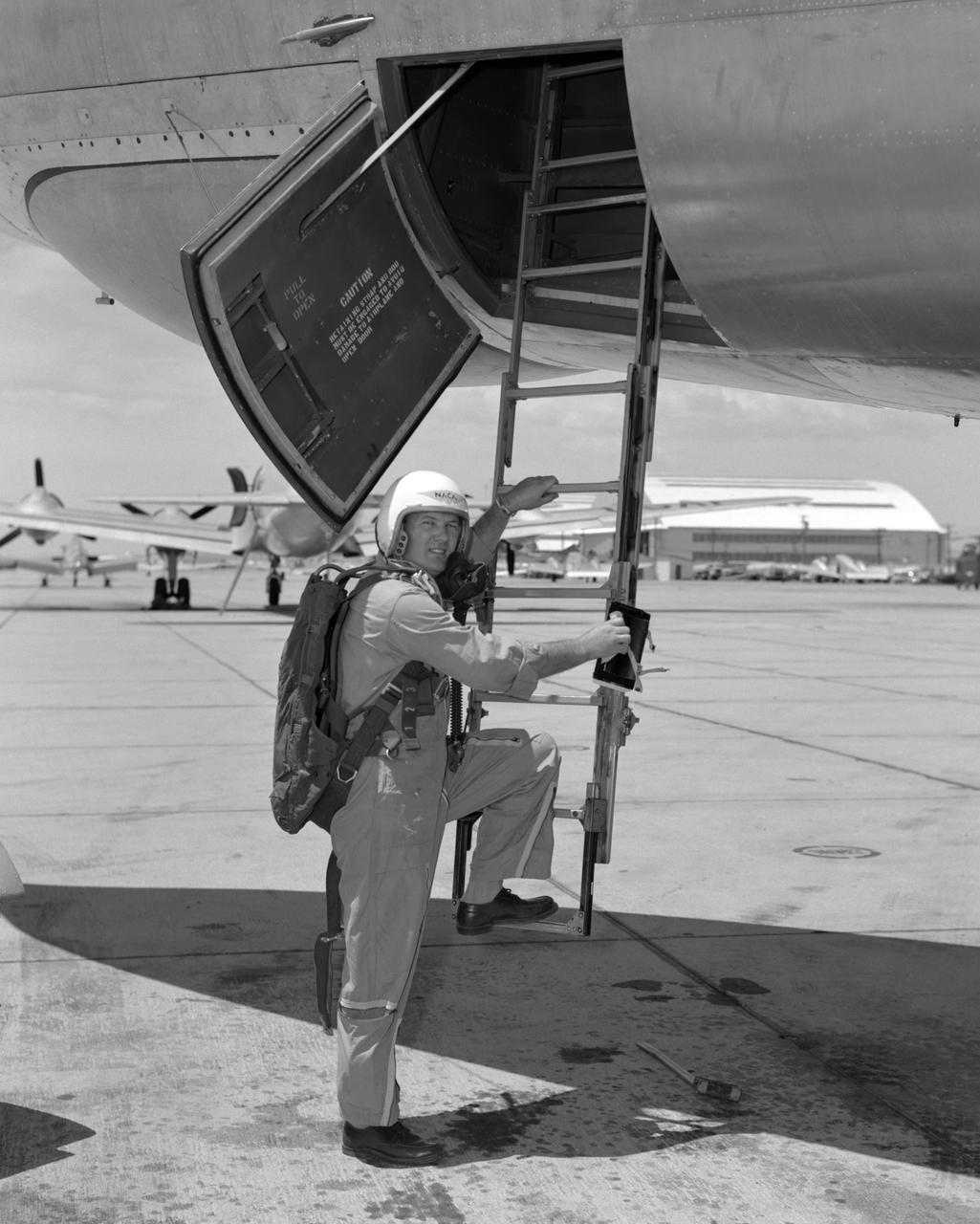
Stan Butchart climbing into B-47.