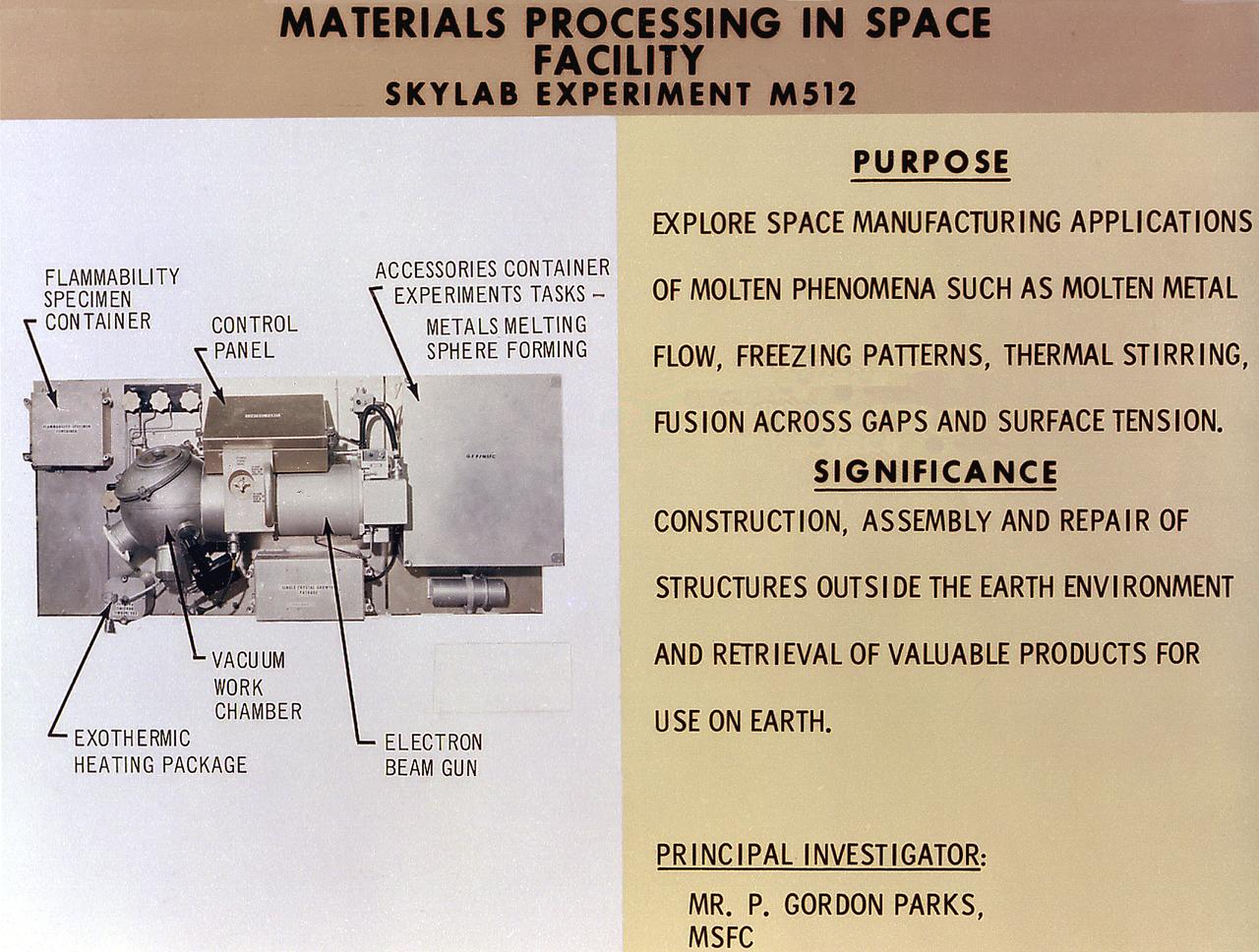
This chart details Skylab's Materials Processing Facility experiment (M512). This facility, located in the Multiple Docking Adapter, was developed for Skylab and accommodated 14 different experiments that were carried out during the three marned missions. The abilities to melt and mix without the contaminating effects of containers, to suppress thermal convection and buoyancy in fluids, and to take advantage of electrostatic and magnetic forces and otherwise masked by gravitation opened the way to new knowledge of material properties and processes. This beginning would ultimately lead to the production of valuable new materials for use on Earth.
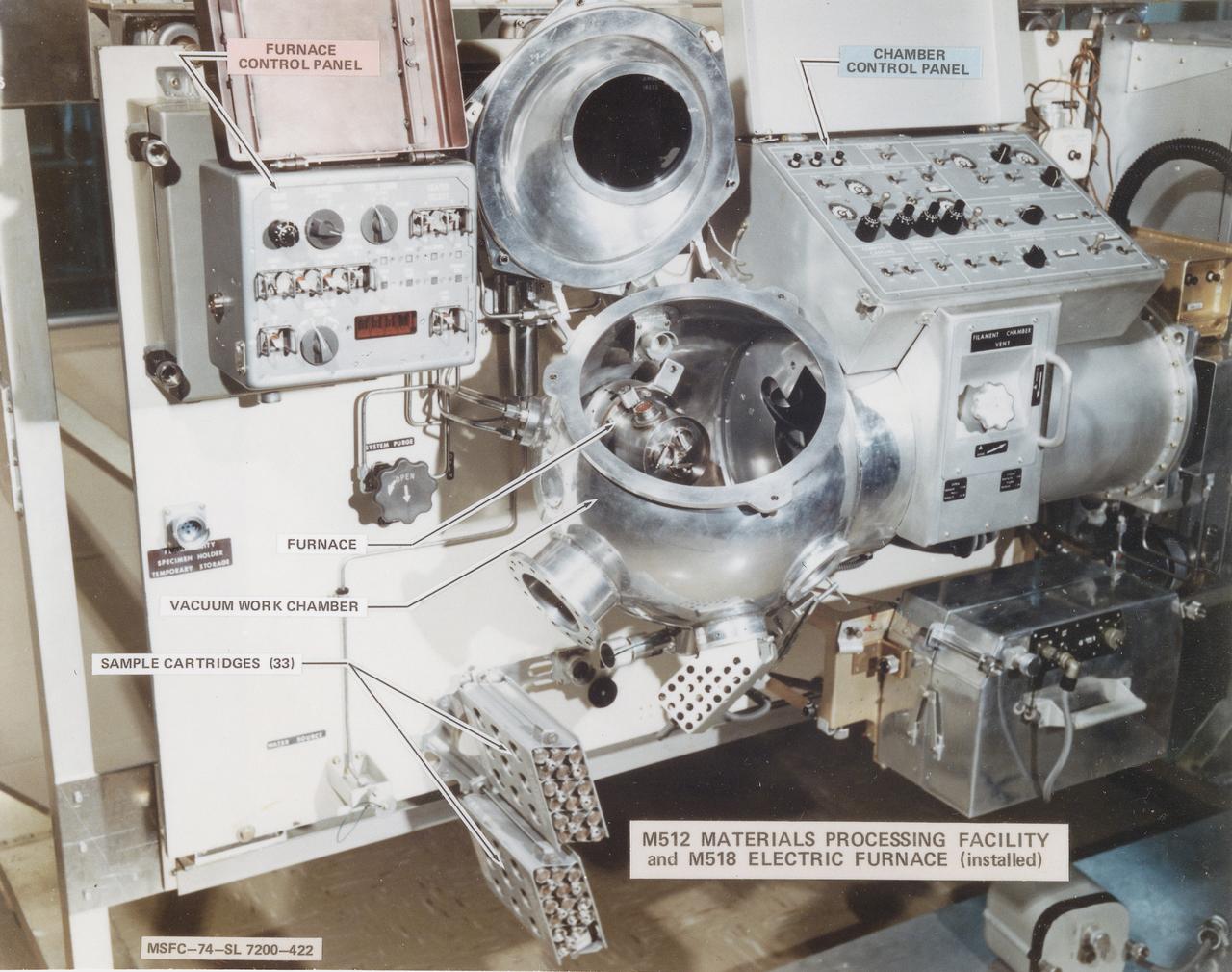
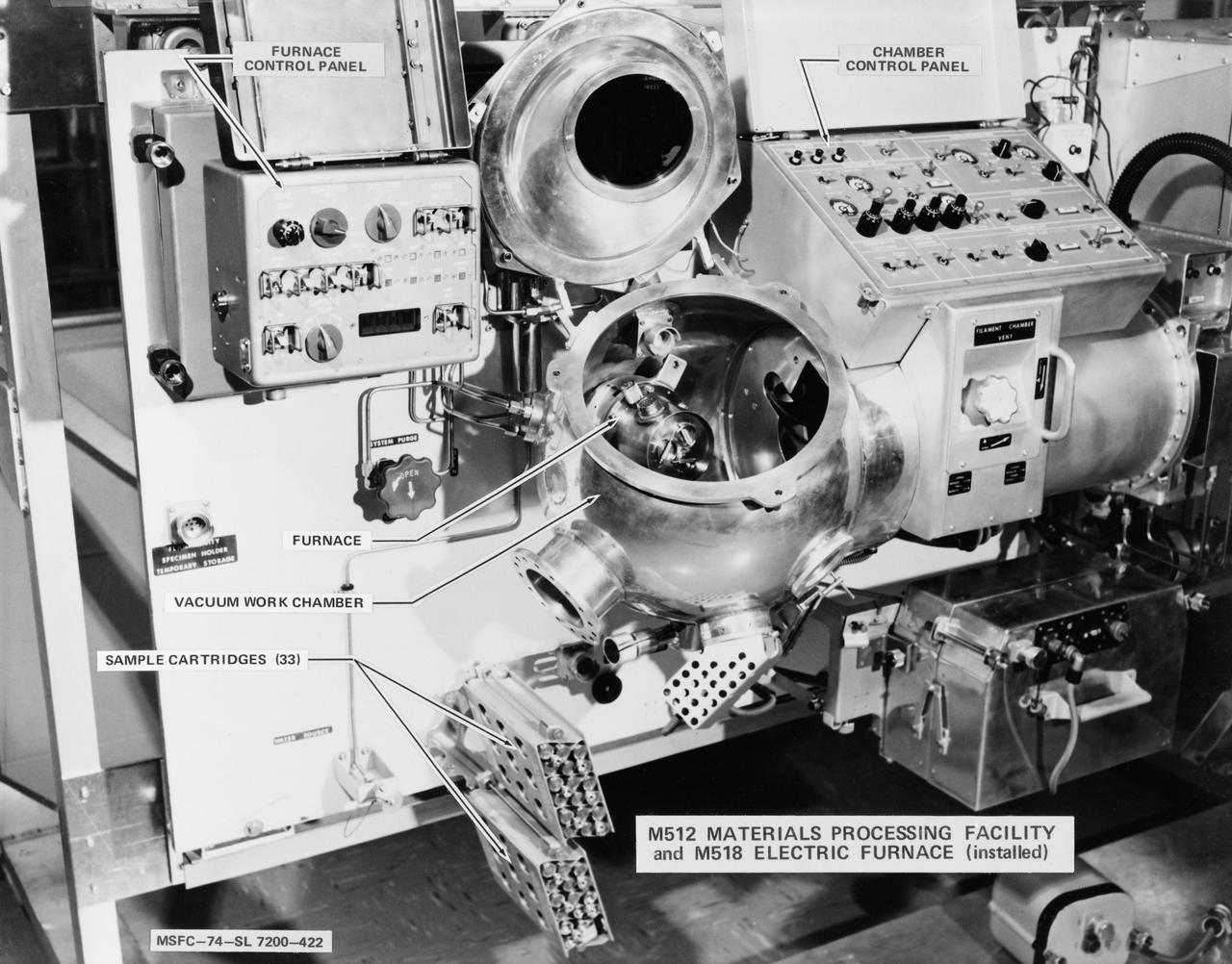
This photograph shows the Skylab Materials Processing Facility (M512) and the Multipurpose Furnace System (M518). This facility, located in the Multiple Docking Adapter, was developed for Skylab,and accommodated 14 different experiments that were carried out during the three marned missions. The abilities to melt and mix without the contaminating effects of containers, to suppress thermal convection and buoyancy in fluids, and to take advantage of electrostatic and magnetic forces and otherwise masked by gravitation opened the way to new knowledge of material properties and processes. This beginning would ultimately lead to the production of valuable new materials for use on Earth.
S74-19675 (1974) --- Medium close-up view of the M512 materials processing equipment storage assembly and the M518 electric furnace in the Multiple Docking Adapter (MDA), one of the primary elements of the Skylab space station. The assembly holds equipment designed to explore space manufacturing capability in a weightless state. Photo credit: NASA
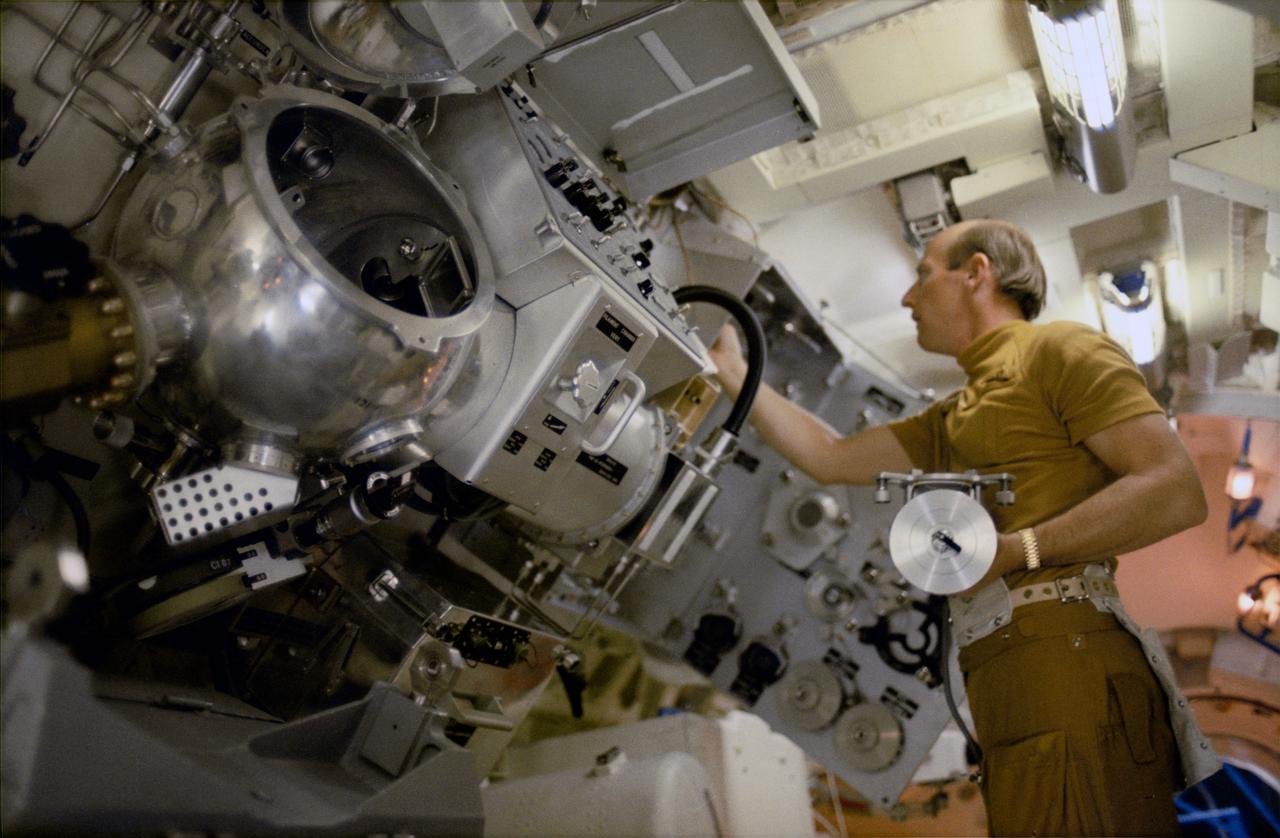
S73-20759 (1 March 1973) --- Astronaut Charles Conrad Jr., commander of the first manned Skylab mission, takes items from the M512 materials processing equipment storage assembly during Skylab training at Johnson Space Center. Conrad is standing in the Multiple Docking Adapter (MDA) trainer in the JSC Mission Simulation and Training Facility. The assembly holds equipment designed to explore space manufacturing capability in a weightless state. Conrad is holding one of the experiment parts in his left hand. Photo credit: NASA
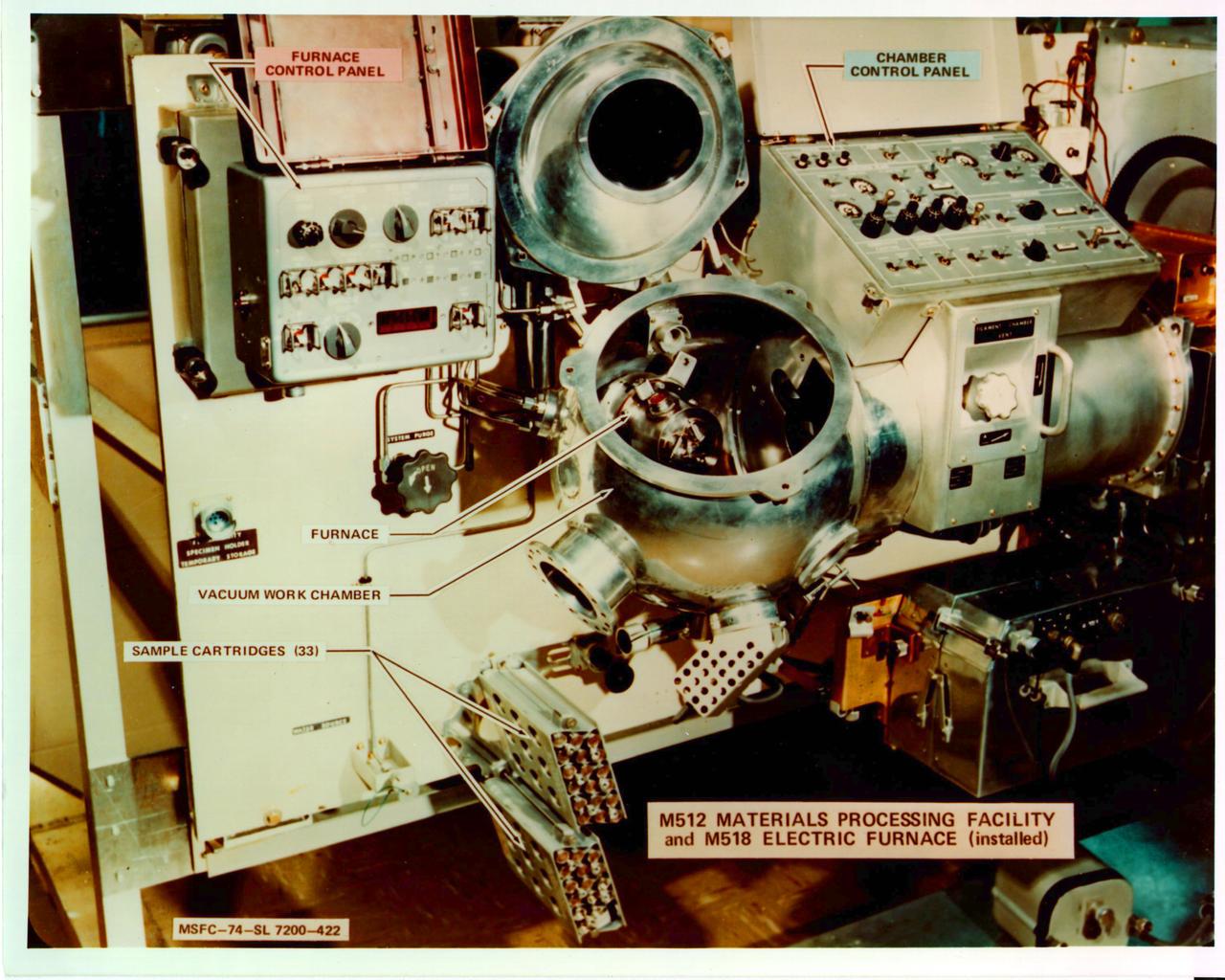
The M512 Materials Processing Facility (MPF) with the M518 Multipurpose Electric Facility (MEF) tested and demonstrated a facility approach for materials process experimentation in space. It also provided a basic apparatus and a common interface for a group of metallic and nonmetallic materials experiments. The MPF consisted of a vacuum work chamber and associated mechanical and electrical controls. The M518 Multipurpose Electric Furnace (MEF) was an electric furnace system in which solidification, crystal growth, and other experiments involving phase changes were performed.
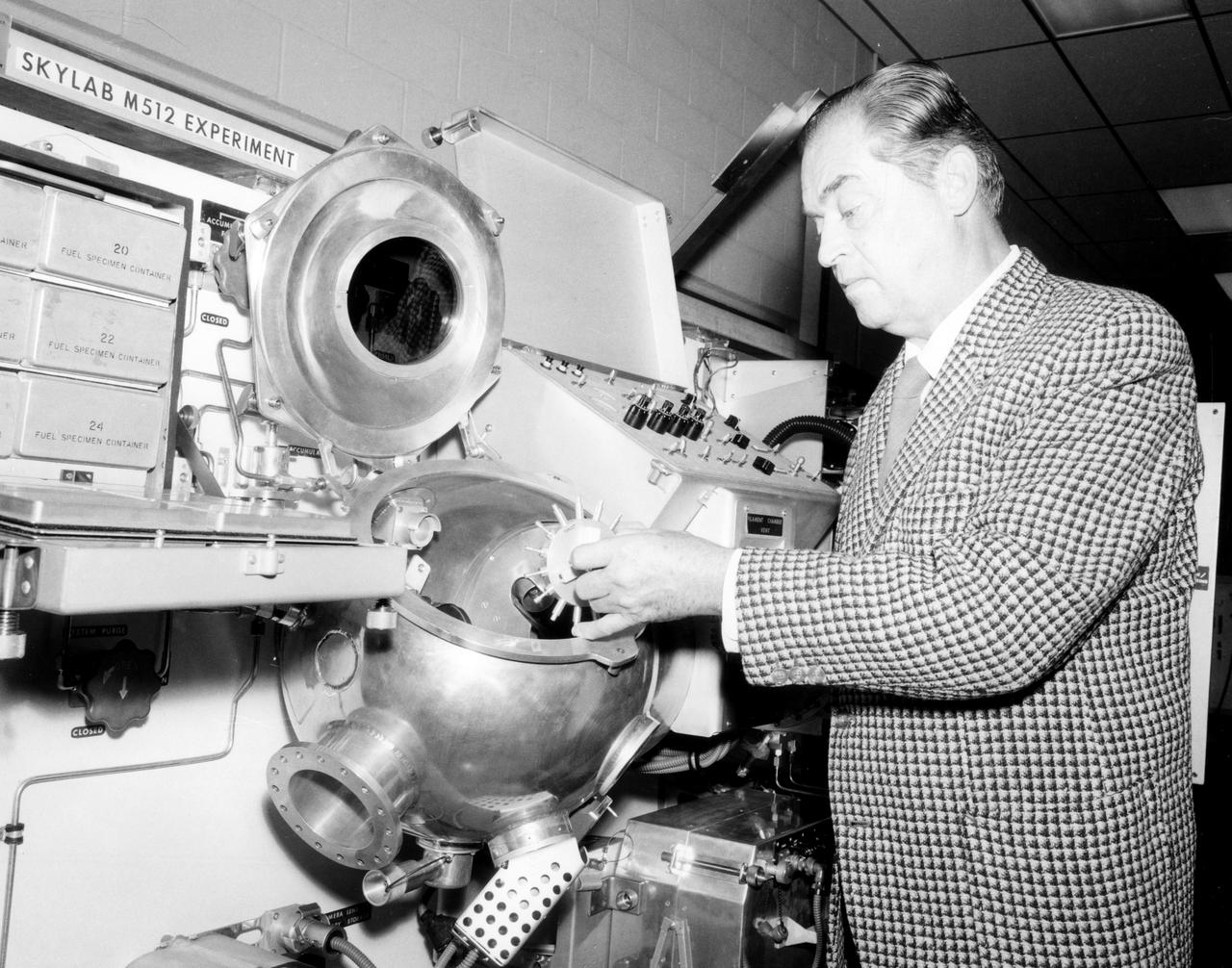
Hans F. Wuenscher, assistant director for Advanced Space Projects Engineering Laboratory at Marshall Space Flight Center (MSFC), examined the facility to be used by Skylab astronauts in performing a number of experiments in material science and manufacturing in space. The equipment shown here is a duplicate of the M512 Experiment hardware flown in the Multiple Docking Adapter section of the Sky lab. This equipment, itself an experiment, was be used for conducting 5 other experiments in the round vacuum chamber. Inside was a cavity which held the M518 Multipurpose Electric Furnace, a facility which was used for conducting other experiments. In all, a total of 17 experiments were conducted using this facility and furnace.
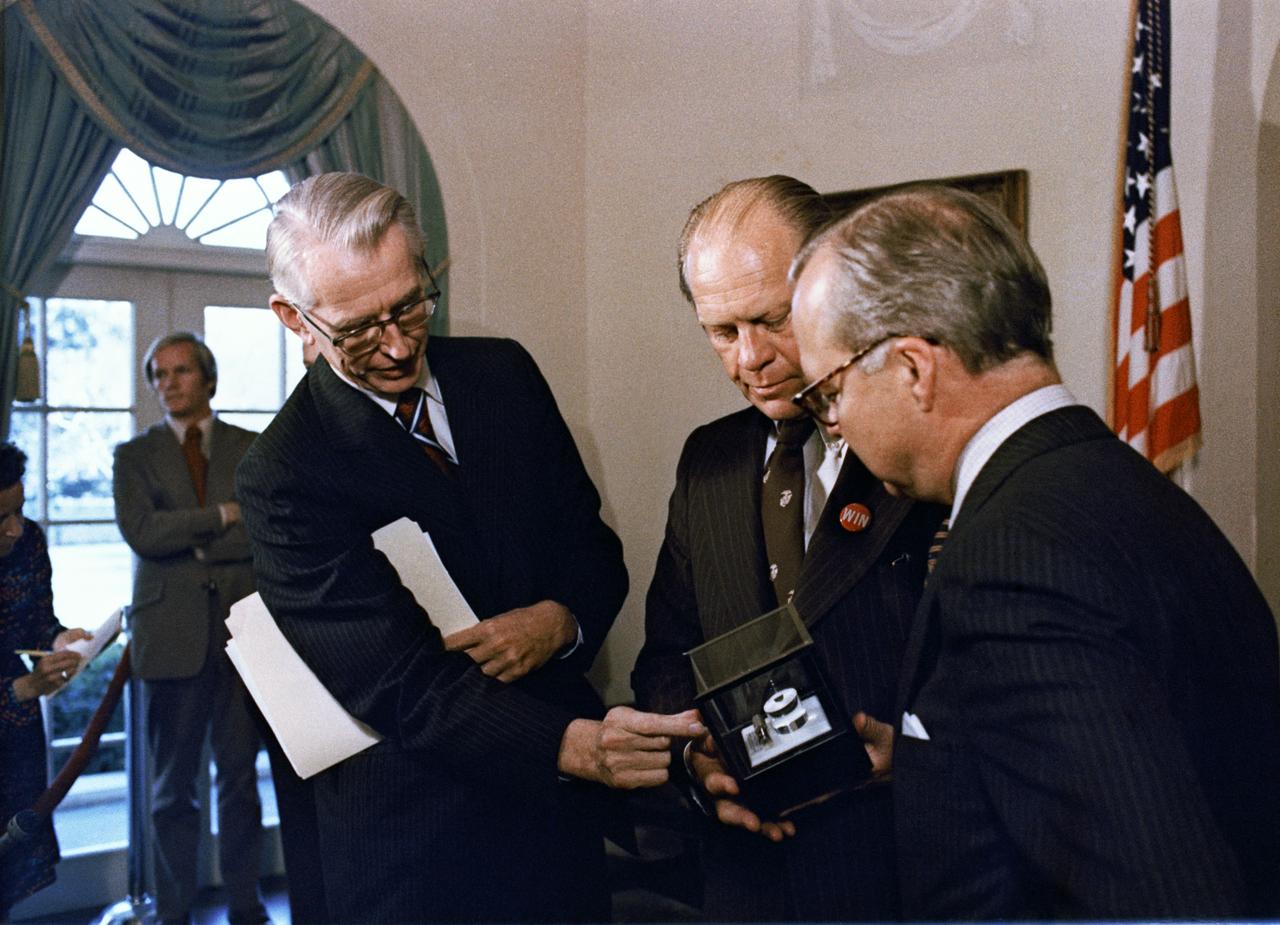
S74-34046 (October 1974) --- Dr. James C. Fletcher, left, NASA Administrator, explains the formation of the indium-antimonide crystal, manufactured in space, to President Gerald R. Ford at the White House. Standing at right is Harold Johnson, Chairman of the Massachusetts Institute of Technology. The segment of indium-antimonide is cut from a cylindrical single crystal that was partially melted and resolidified aboard the Skylab space station on Jan. 6, 1974, during the third and final manned flight. This segment is approximately one by one centimeters and about three millimeters thick. The sequence of heating and cooling was started and supervised by the members of the third Skylab crew, astronauts Gerald P. Carr, Edward G. Gibson and William R. Pogue. The crystal forming was accomplished in a special multipurpose furnace, known as the Materials Processing Facility (Skylab Technology Experiment M512). Photo credit: NASA
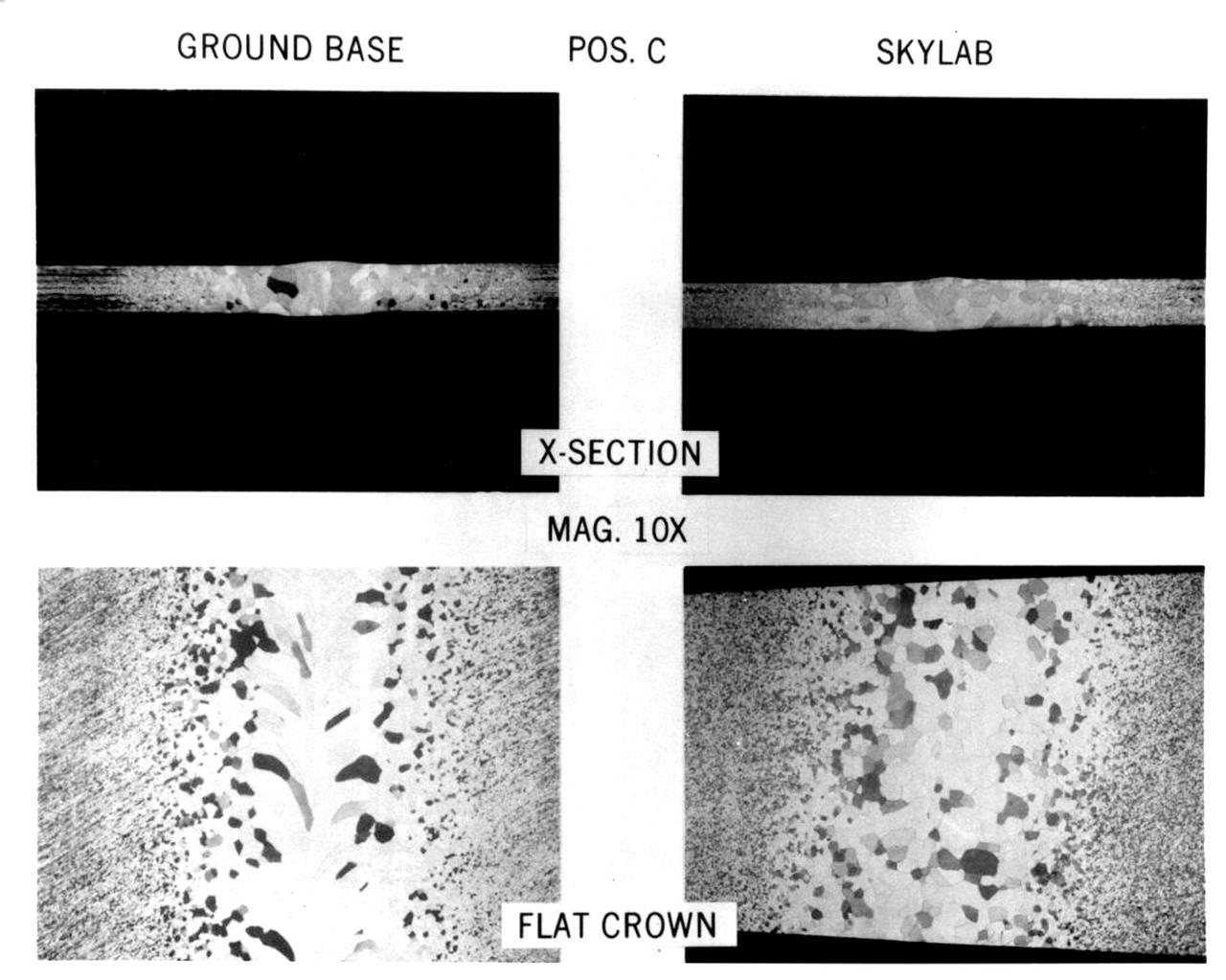
Comparison of ground-based (left) and Skylab (right) electron beam welds in pure tantalum (Ta) (10X magnification). Residual votices left behind in the ground-based sample after the electron beam passed were frozen into the grain structure. These occurred because of the rapid cooling rate at the high temperature. Although the thermal characteristics and electron beam travel speeds were comparable for the skylab sample, the residual vortices were erased in the grain structure. This may have been due to the fact that final grain size of the solidified material was smaller in the Skylab sample compared to the ground-based sample. The Skylab sample was processed in the M512 Materials Processing Facility (MPF) during Skylab SL-2 Mission. Principal Investigator was Richard Poorman.