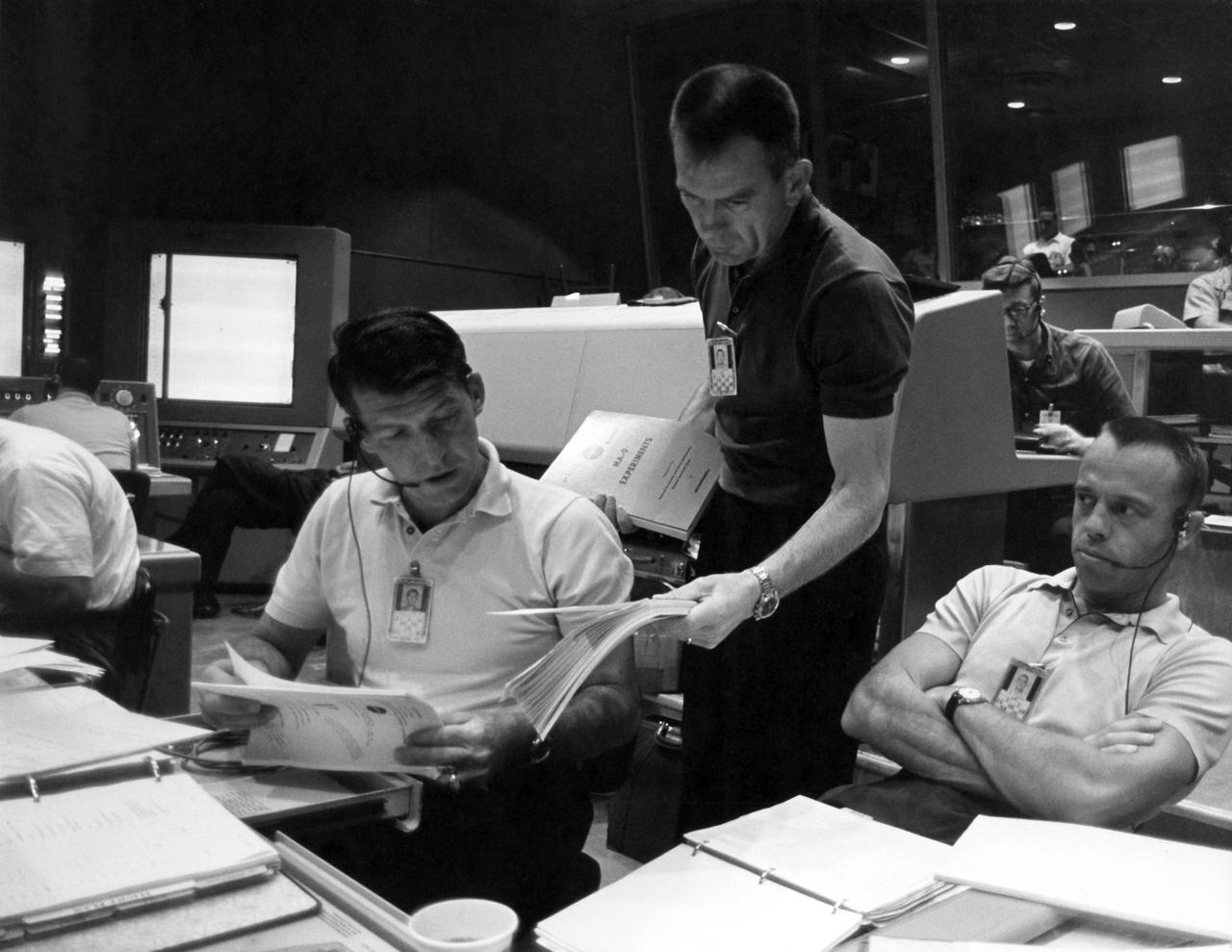
CAPE CANAVERAL, Fla. - Mercury astronauts, from left, Wally Schirra, Deke Slayton and Alan Shepard work inside the Mercury Control Center where they were stationed during the Faith 7 mission of astronaut Gordon Cooper, launched on May 15, 1963. This was the final mission of the Mercury Program. The Mercury Mission Control Center in Florida played a key role in the United States' early spaceflight program. Located at Cape Canaveral Air Force Station, the original part of the building was constructed between 1956 and 1958, with additions in 1959 and 1963. The facility officially was transferred to NASA on Dec. 26, 1963, and served as mission control during all the Project Mercury missions, as well as the first three flights of the Gemini Program, when it was renamed Mission Control Center. With its operational days behind, on June 1, 1967, the Mission Control Center became a stop on the public tour of NASA facilities until the mid-90s. In 1999, much of the equipment and furnishings from the Flight Control Area were moved to the Kennedy Space Center Visitor Complex where they became part of the exhibit there. The building was demolished in spring 2010. Photo credit: NASA
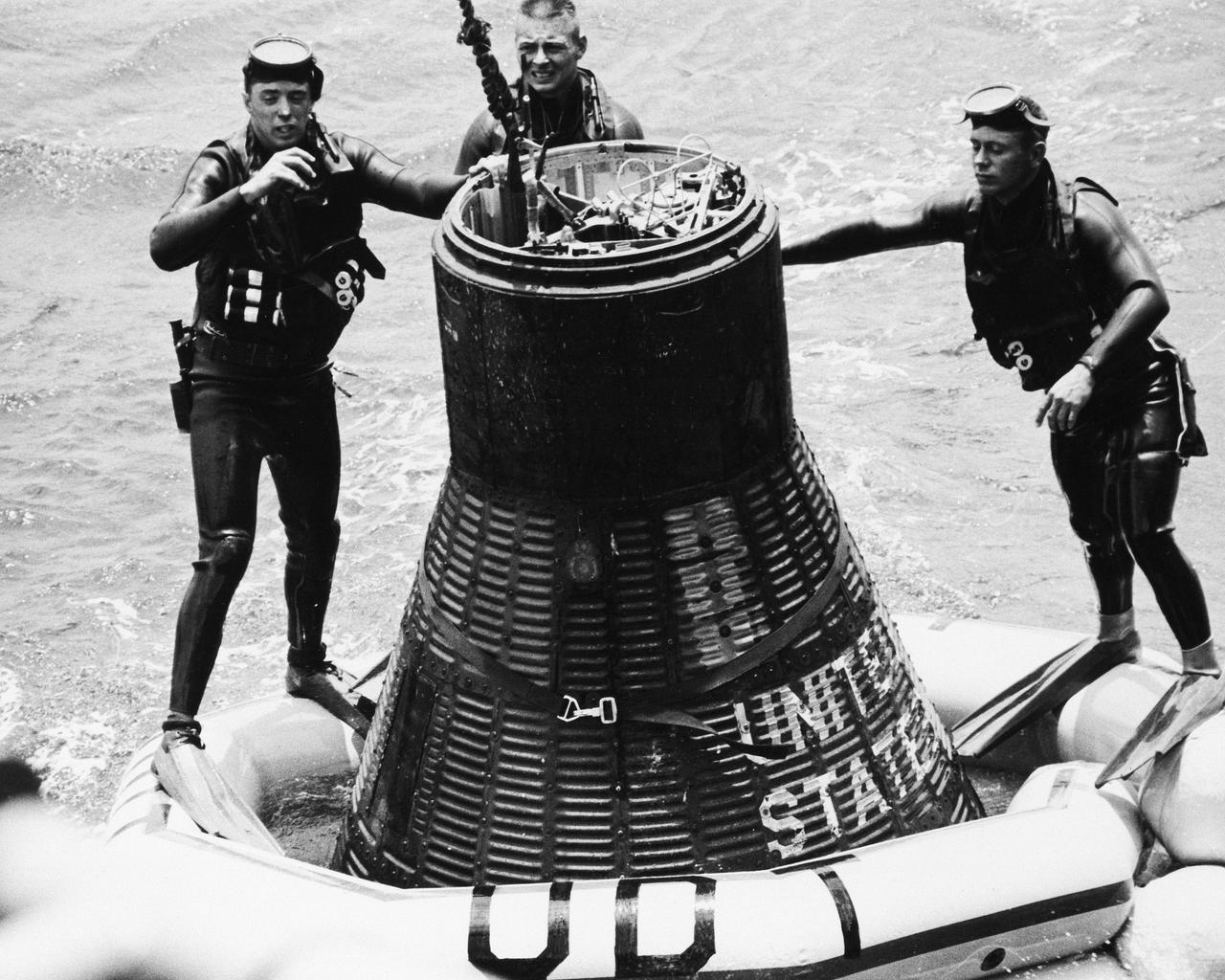
USS KEARSARGE. -- Three U.S. Navy frogmen attach a floatation collar to the Faith 7 Mercury spacecraft minutes after the spacecraft splashed down in the Pacific Ocean less than four miles from the aircraft carrier USS Kearsarge, and within sight of those on board. Photo Credit: NASA
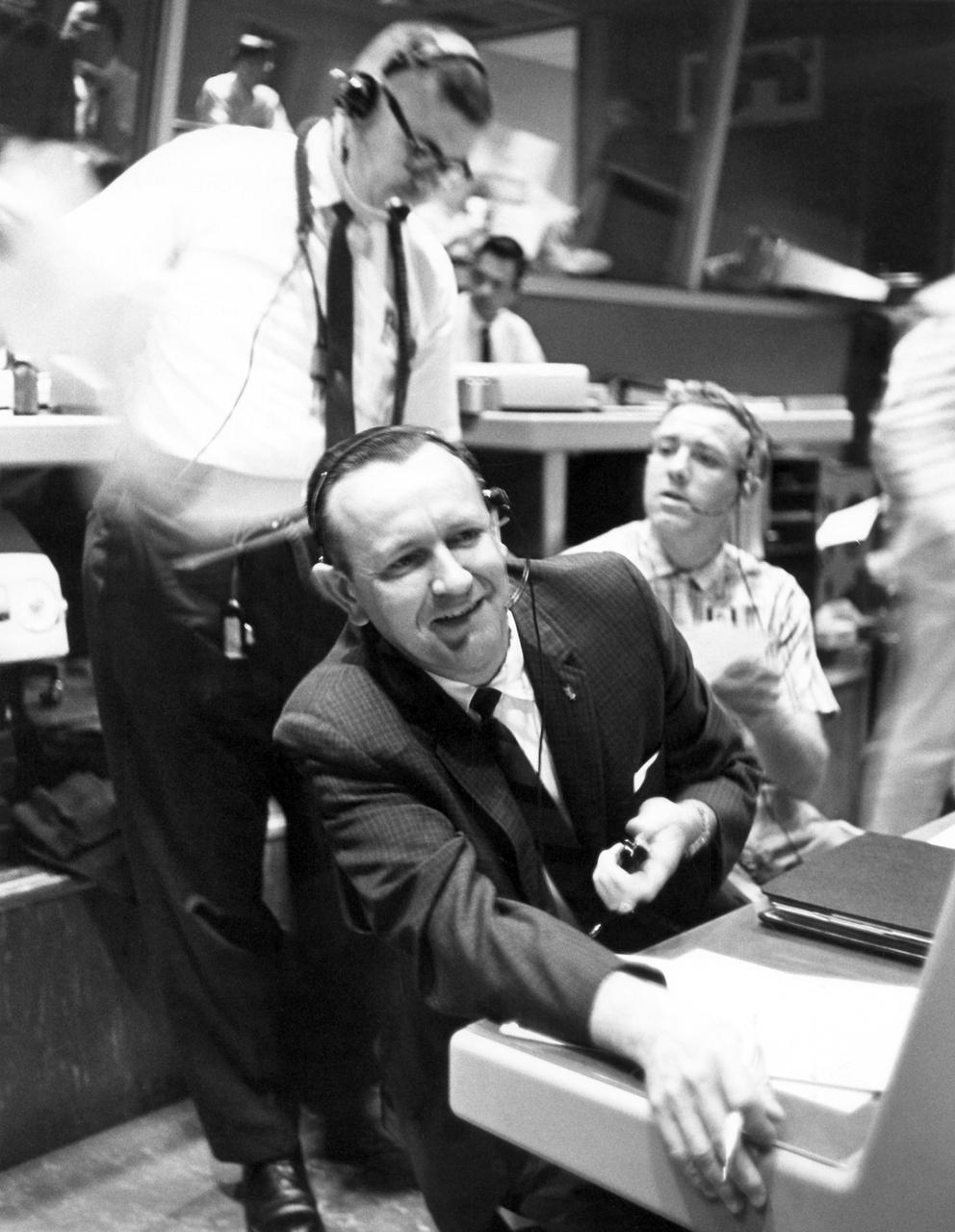
CAPE CANAVERAL, Fla. - Inside Mercury Mission Control, Christopher Kraft, Mercury's flight director, sits at his console during preparations for astronaut Gordon Cooper's Faith 7 launch, which took place on May 15, 1963. The Mercury Mission Control Center in Florida played a key role in the United States' early spaceflight program. Located at Cape Canaveral Air Force Station, the original part of the building was constructed between 1956 and 1958, with additions in 1959 and 1963. The facility officially was transferred to NASA on Dec. 26, 1963, and served as mission control during all the Project Mercury missions, as well as the first three flights of the Gemini Program, when it was renamed Mission Control Center. With its operational days behind, on June 1, 1967, the Mission Control Center became a stop on the public tour of NASA facilities until the mid-90s. In 1999, much of the equipment and furnishings from the Flight Control Area were moved to the Kennedy Space Center Visitor Complex where they became part of the exhibit there. The building was demolished in spring 2010. Photo credit: NASA
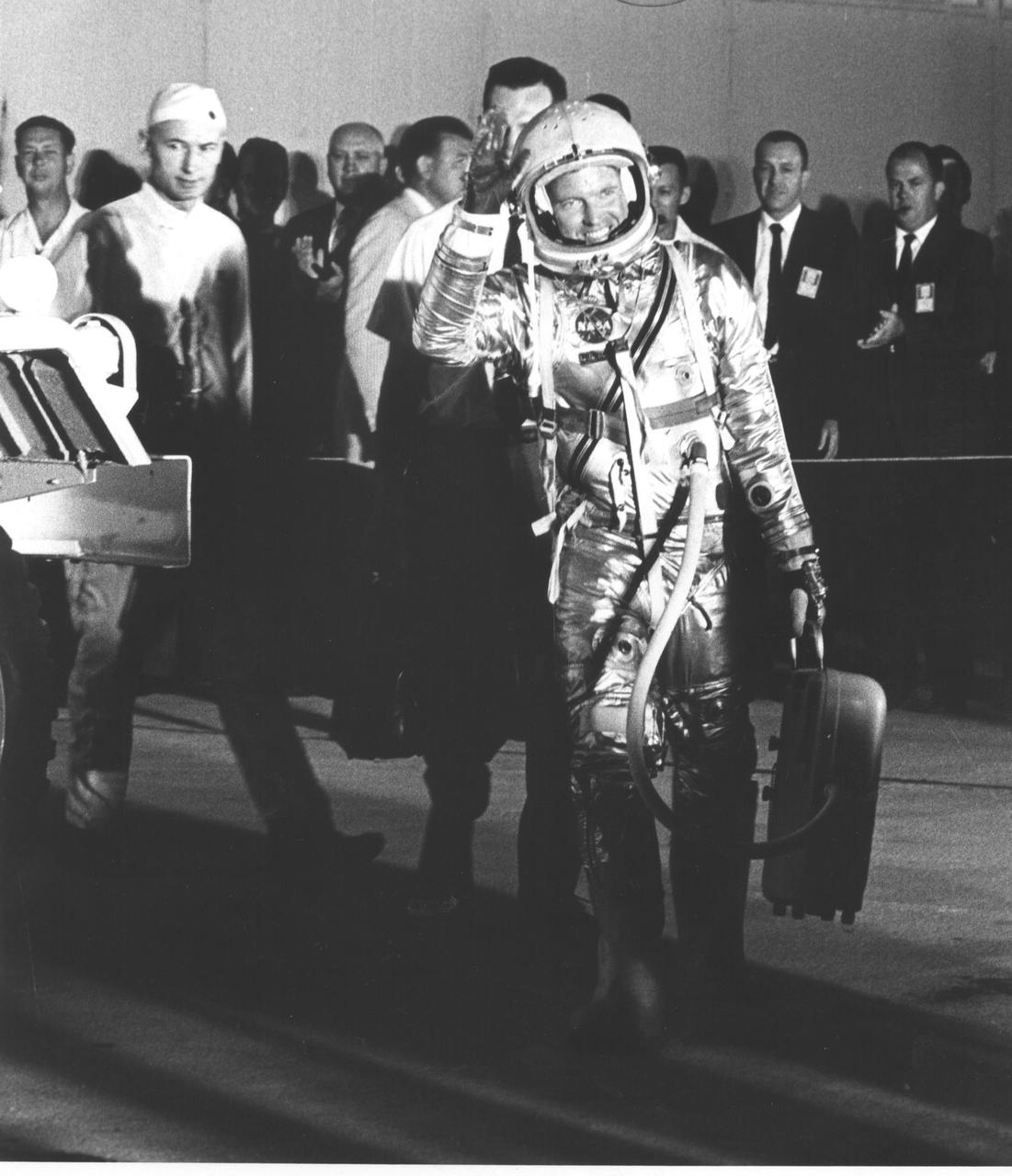
CAPE CANAVERAL, FLA. -- Hangar 'S' -- Mercury workers and news media are greeted by astronaut L. Gordon Cooper as he leaves Hangar 'S' for Pad 14 to start his 22-orbit mission, MA-9.
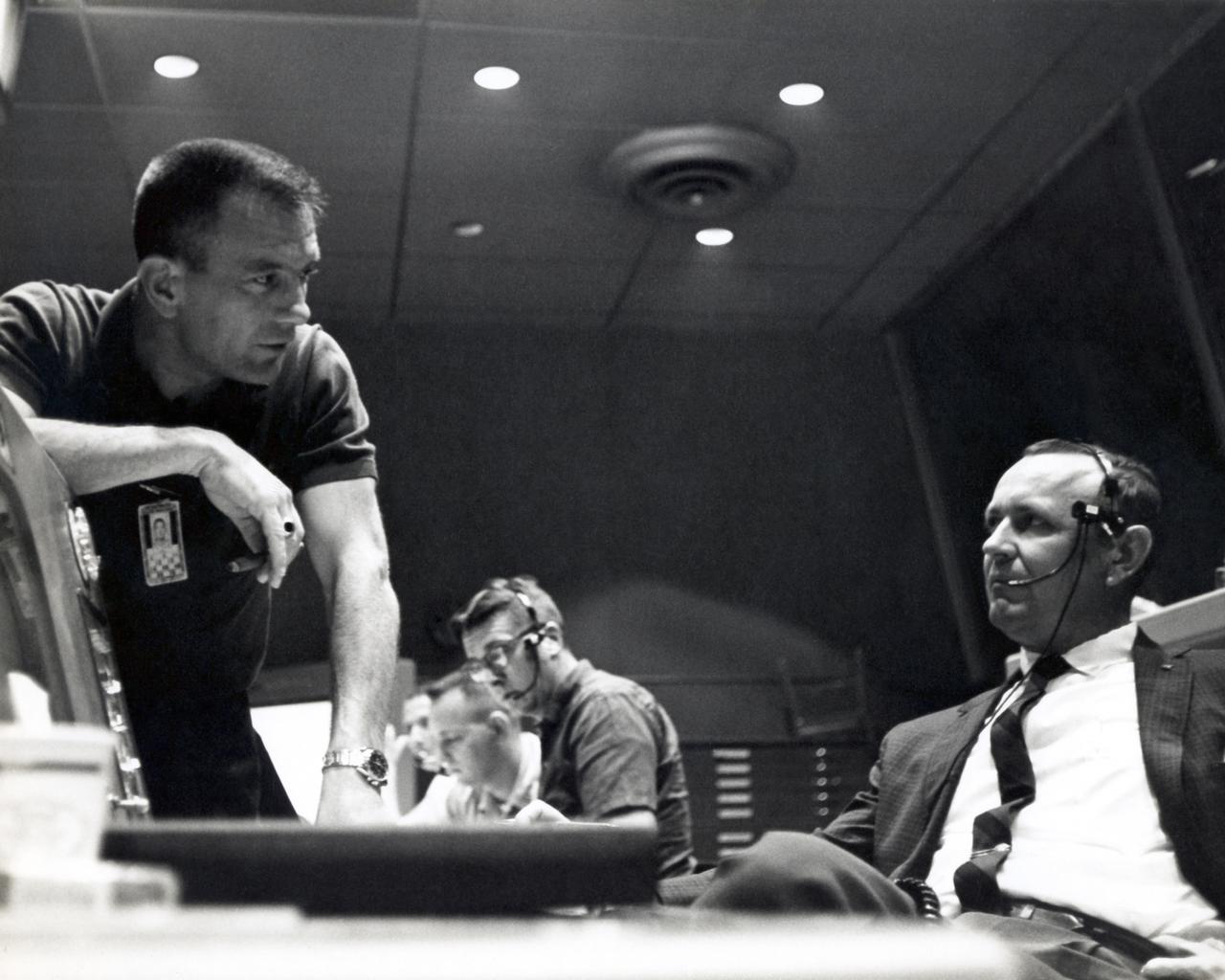
CAPE CANAVERAL, Fla. - Inside Mercury Mission Control, astronaut Deke Slayton left discusses a point with Christopher Kraft, Mercury's flight director, during preparations for astronaut Gordon Cooper's Faith 7 launch, which took place on May 15, 1963. The Mercury Mission Control Center in Florida played a key role in the United States' early spaceflight program. Located at Cape Canaveral Air Force Station, the original part of the building was constructed between 1956 and 1958, with additions in 1959 and 1963. The facility officially was transferred to NASA on Dec. 26, 1963, and served as mission control during all the Project Mercury missions, as well as the first three flights of the Gemini Program, when it was renamed Mission Control Center. With its operational days behind, on June 1, 1967, the Mission Control Center became a stop on the public tour of NASA facilities until the mid-90s. In 1999, much of the equipment and furnishings from the Flight Control Area were moved to the Kennedy Space Center Visitor Complex where they became part of the exhibit there. The building was demolished in spring 2010. Photo credit: NASA
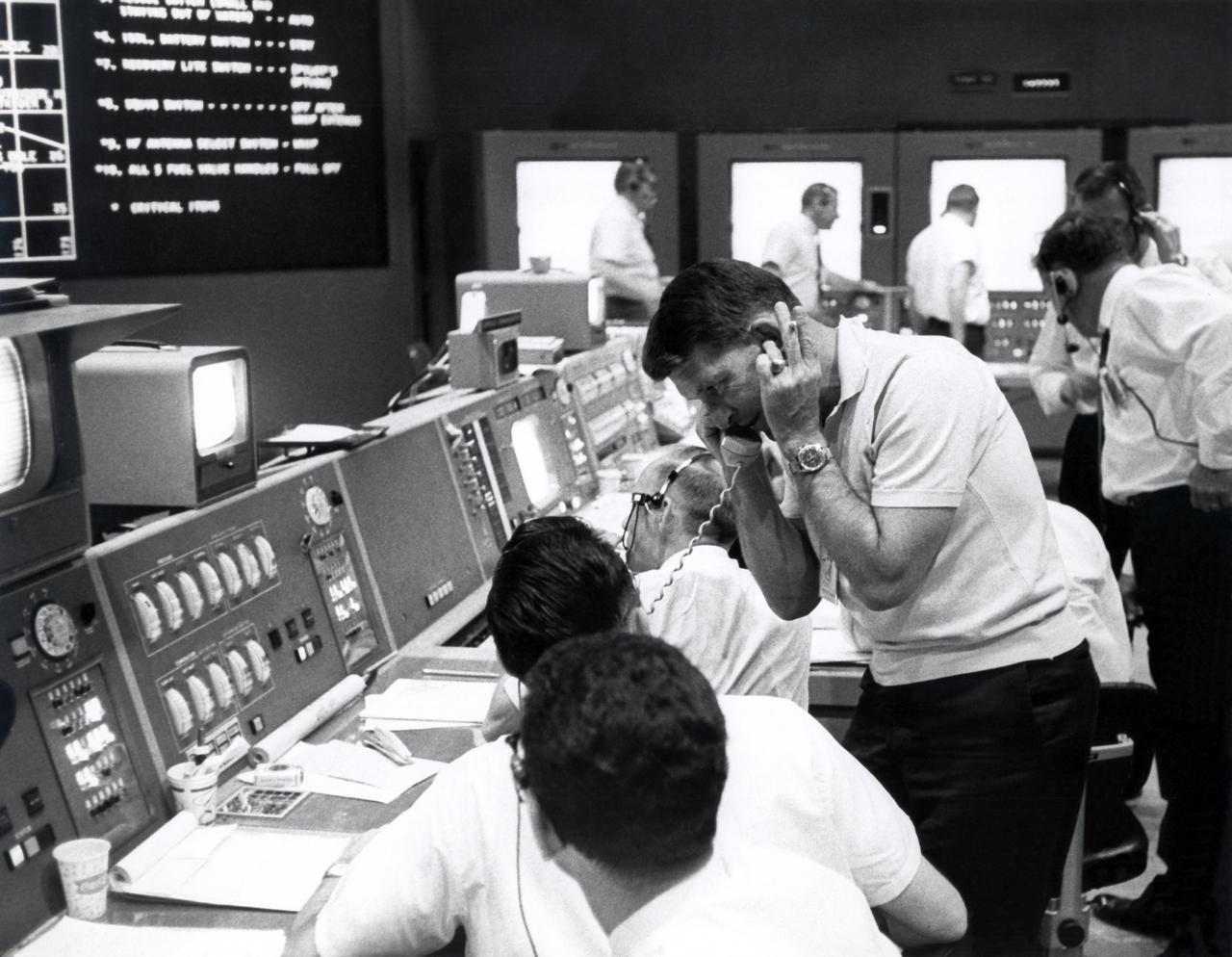
CAPE CANAVERAL, Fla. - Inside Mercury Mission Control, astronaut Wally Schirra, capsule communicator, or capcom for the Mercury-Atlas 9 mission, talks to Trudy Cooper, wife of astronaut Gordon Cooper, on May 16, 1963, to inform her that he had just been recovered by the USS Kearsarge after his 22-orbit flight. The Mercury Mission Control Center in Florida played a key role in the United States' early spaceflight program. Located at Cape Canaveral Air Force Station, the original part of the building was constructed between 1956 and 1958, with additions in 1959 and 1963. The facility officially was transferred to NASA on Dec. 26, 1963, and served as mission control during all the Project Mercury missions, as well as the first three flights of the Gemini Program, when it was renamed Mission Control Center. With its operational days behind, on June 1, 1967, the Mission Control Center became a stop on the public tour of NASA facilities until the mid-90s. In 1999, much of the equipment and furnishings from the Flight Control Area were moved to the Kennedy Space Center Visitor Complex where they became part of the exhibit there. The building was demolished in spring 2010. Photo credit: NASA

KENNEDY SPACE CENTER, FLA. -- For the second straight day, astronaut L. Gordon Cooper Jr. sets out at 4:55 a.m. EST from his living quarters at Hangar 'S' to go to Launch Pad 14 for the fourth manned Earth orbital mission. After being launched aboard a Mercury Atlas, astronaut Cooper will orbit the Earth 22 times. Following astronaut Cooper to the transfer van is astronaut Walter Schirra.
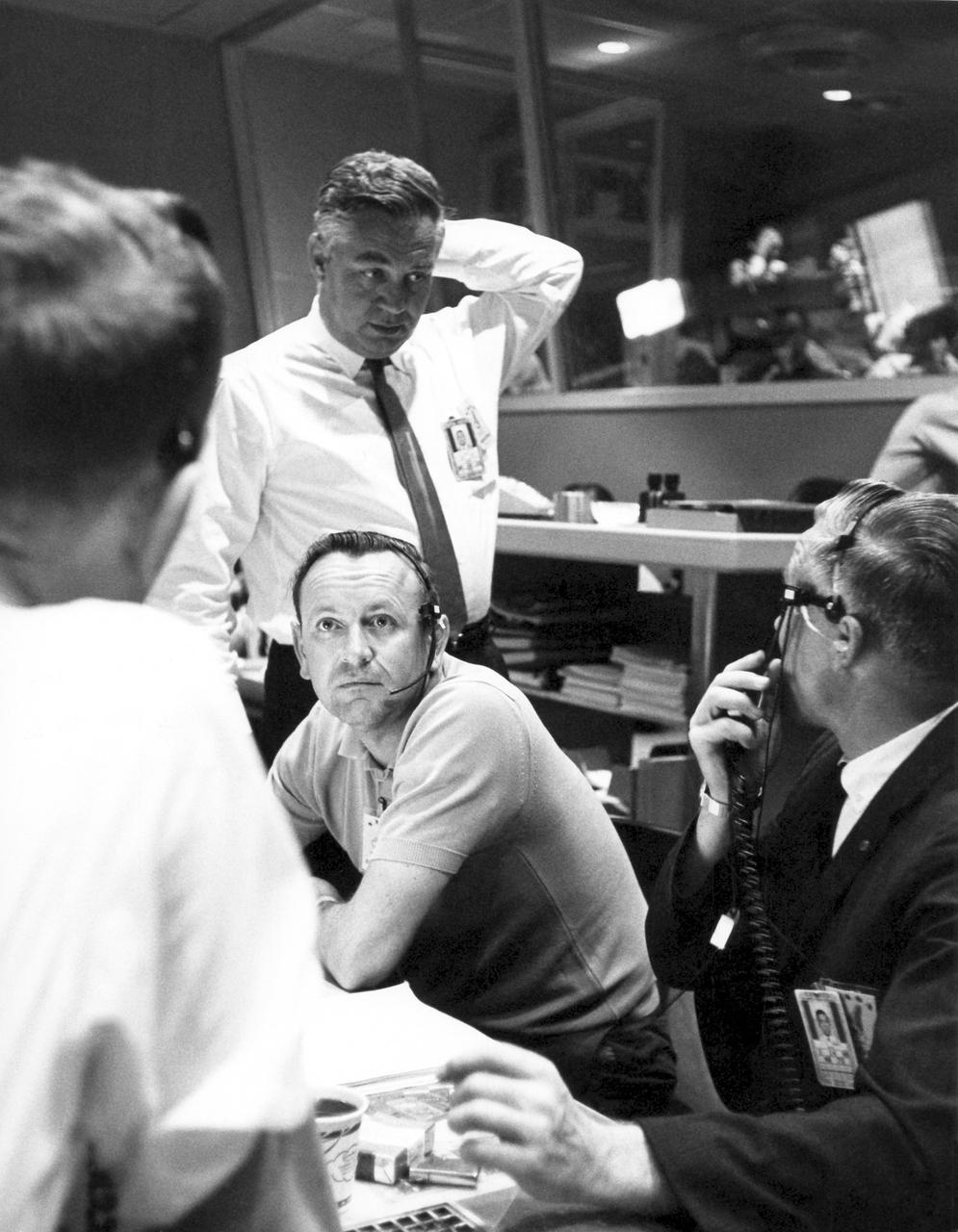
CAPE CANAVERAL, Fla. - Inside Mercury Mission Control, Walter C. Williams standing, associate director for Project Mercury operations, and Christopher Kraft seated, left, flight director, work in flight control as the decision is made to have Mercury astronaut Gordon Cooper aboard his spacecraft, Faith 7, go the full 22 orbits. The launch took place on May 15, 1963. The Mercury Mission Control Center in Florida played a key role in the United States' early spaceflight program. Located at Cape Canaveral Air Force Station, the original part of the building was constructed between 1956 and 1958, with additions in 1959 and 1963. The facility officially was transferred to NASA on Dec. 26, 1963, and served as mission control during all the Project Mercury missions, as well as the first three flights of the Gemini Program, when it was renamed Mission Control Center. With its operational days behind, on June 1, 1967, the Mission Control Center became a stop on the public tour of NASA facilities until the mid-90s. In 1999, much of the equipment and furnishings from the Flight Control Area were moved to the Kennedy Space Center Visitor Complex where they became part of the exhibit there. The building was demolished in spring 2010. Photo credit: NASA
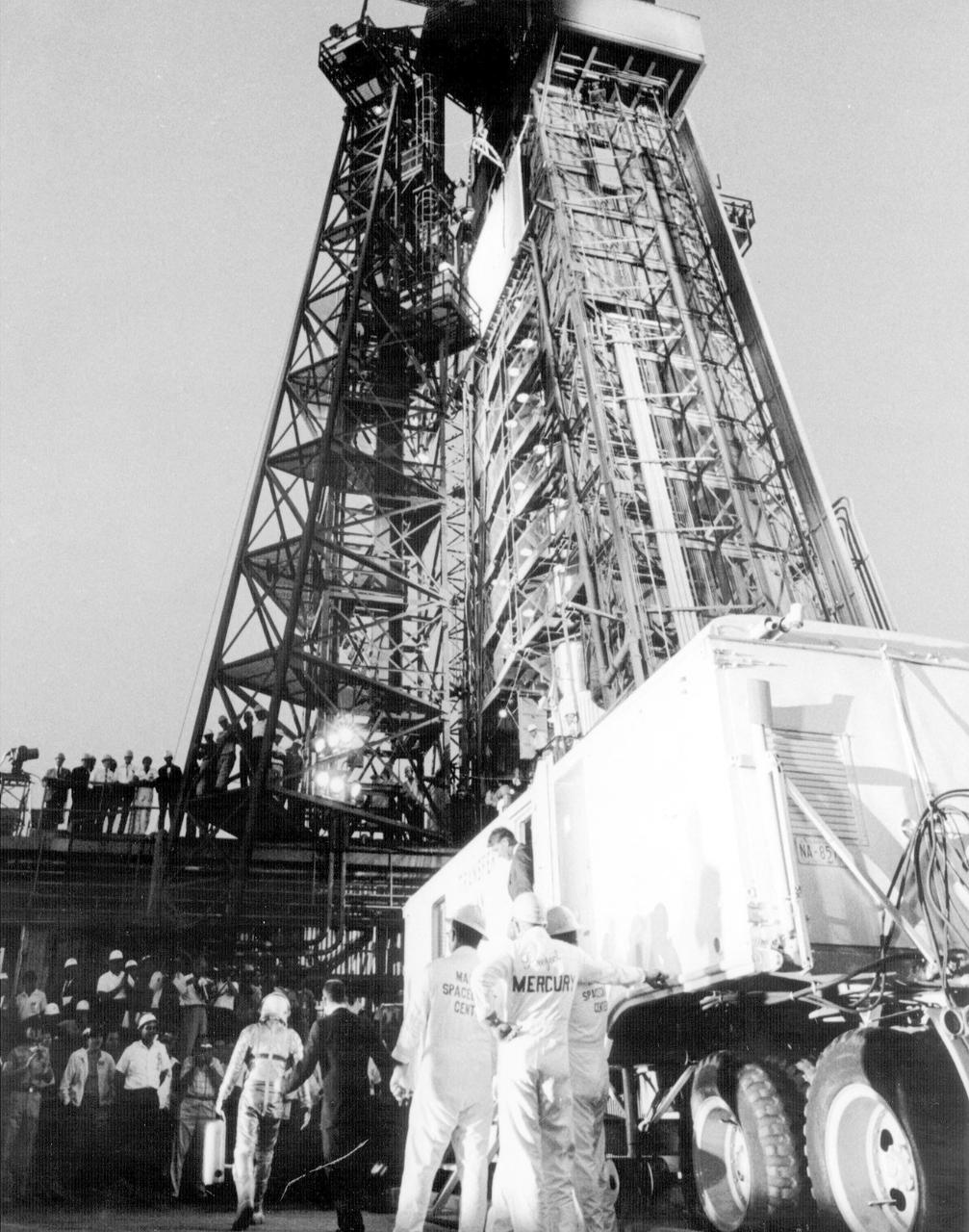
JSC2013-E-076221 (15 May 1963) --- Astronaut L. Gordon Cooper Jr. waited inside the transfer van for several minutes and then leaving the transfer van walked to the elevator which took him to the spacecraft "Faith 7" atop the Atlas vehicle for his mission. (63-MA9-132) Photo credit: NASA
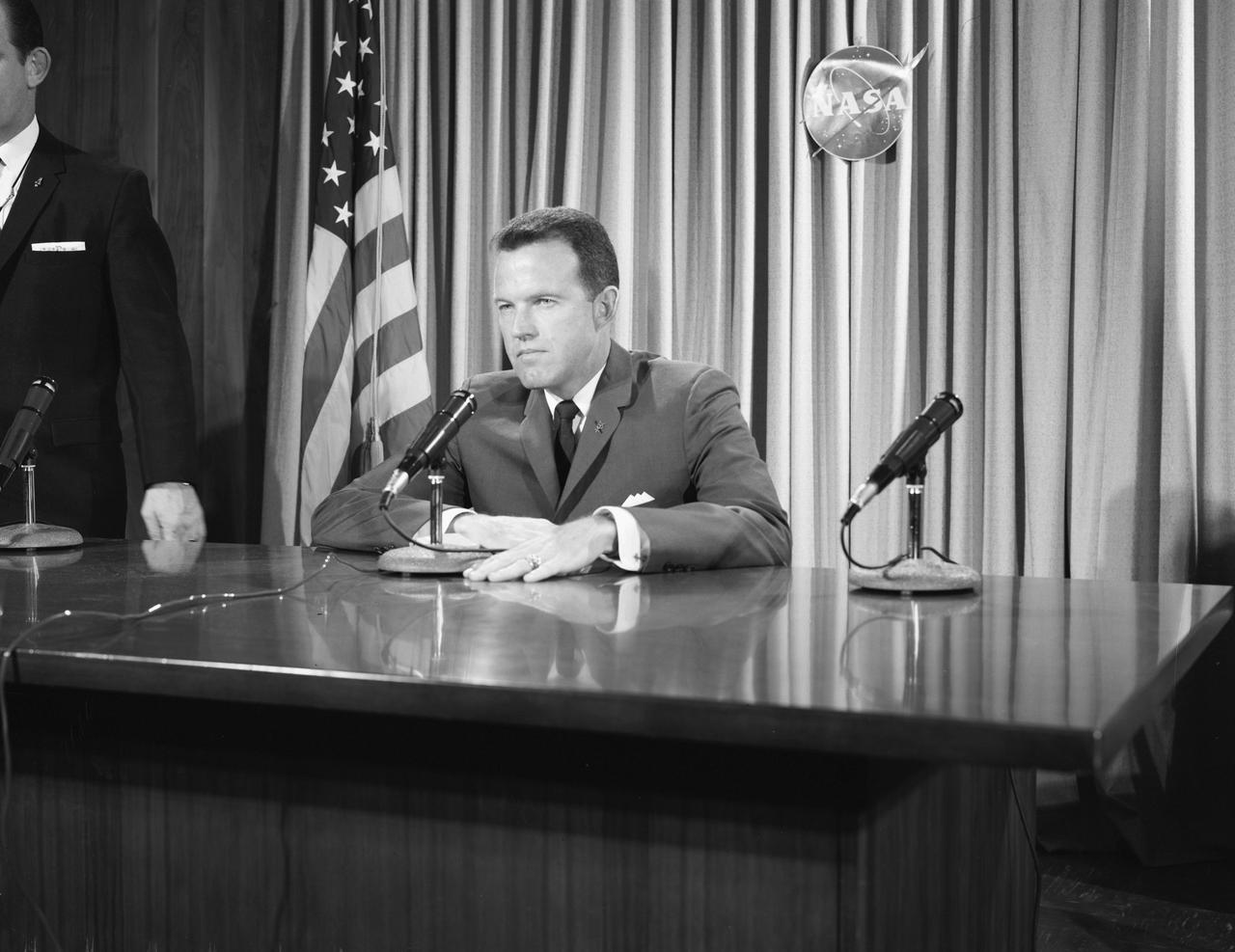
S63-00581 (1963) --- Astronaut L. Gordon Cooper Jr., pilot of the Mercury Atlas 9 (MA-9) space mission, appears before newsmen at a preflight press conference. Photo credit: NASA