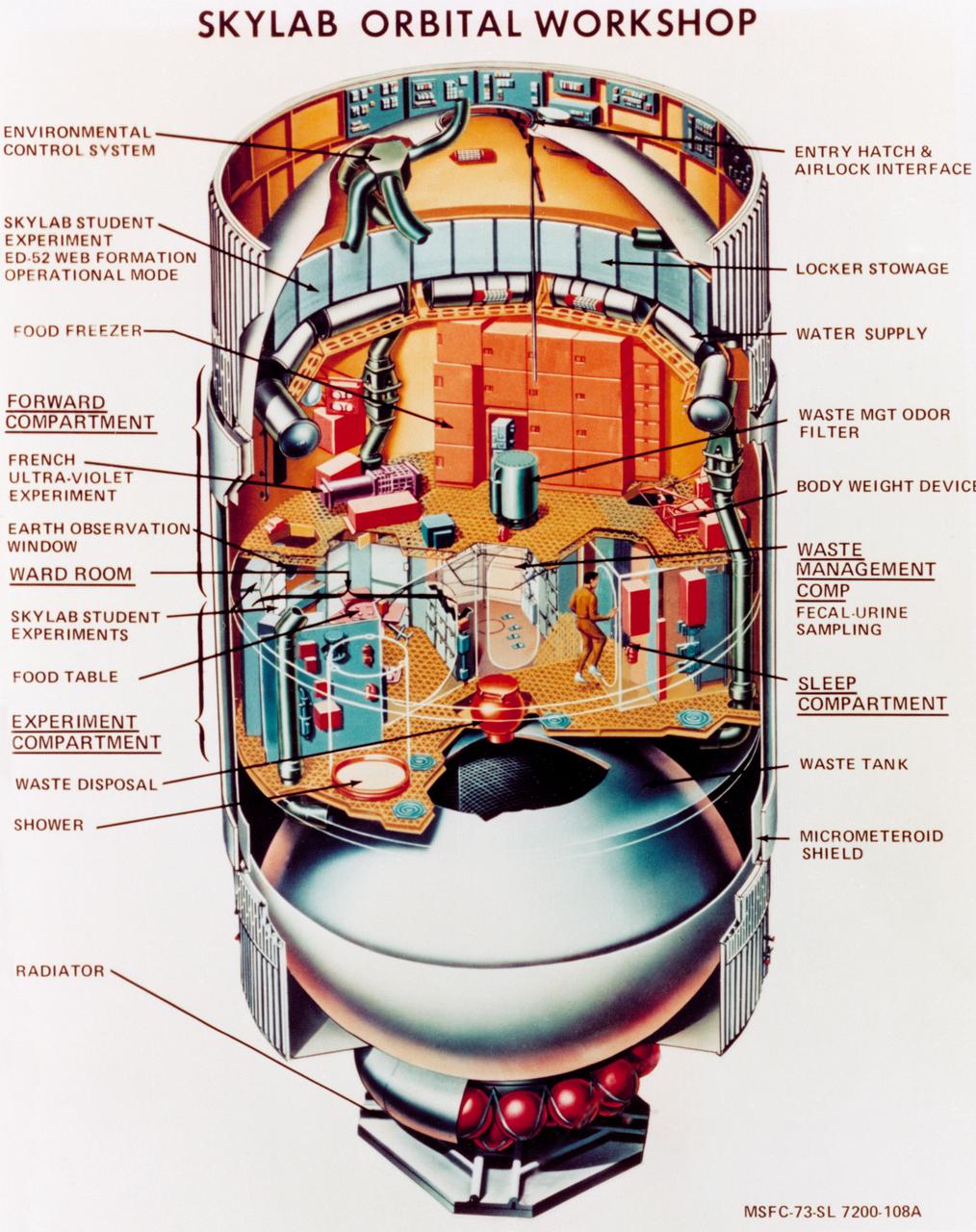
S73-23919 (May 1973) --- An artist's concept illustrating a cutaway view of the Skylab 1 Orbital Workshop (OWS). The OWS is one of the five major components of the Skylab 1 space station cluster which was launched by a Saturn V on May 14, 1973 into Earth orbit. Photo credit: NASA
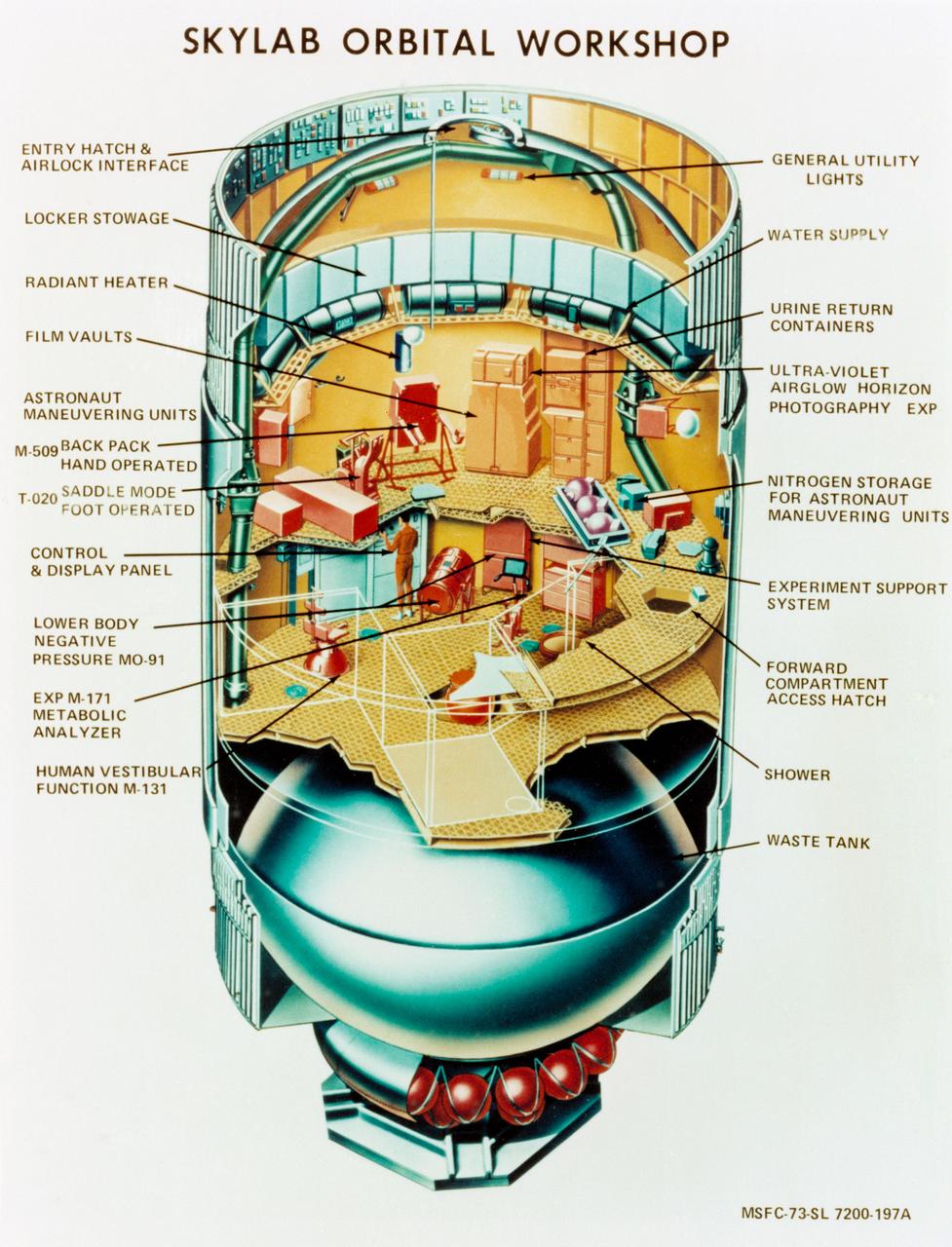
S73-23918 (May 1973) --- An artist's concept illustrating a cutaway view of the Skylab 1 Orbital Workshop (OWS). The OWS is one of the five major components of the Skylab 1 space station cluster which was launched by a Saturn V on May 14, 1973 into Earth orbit. Photo credit: NASA
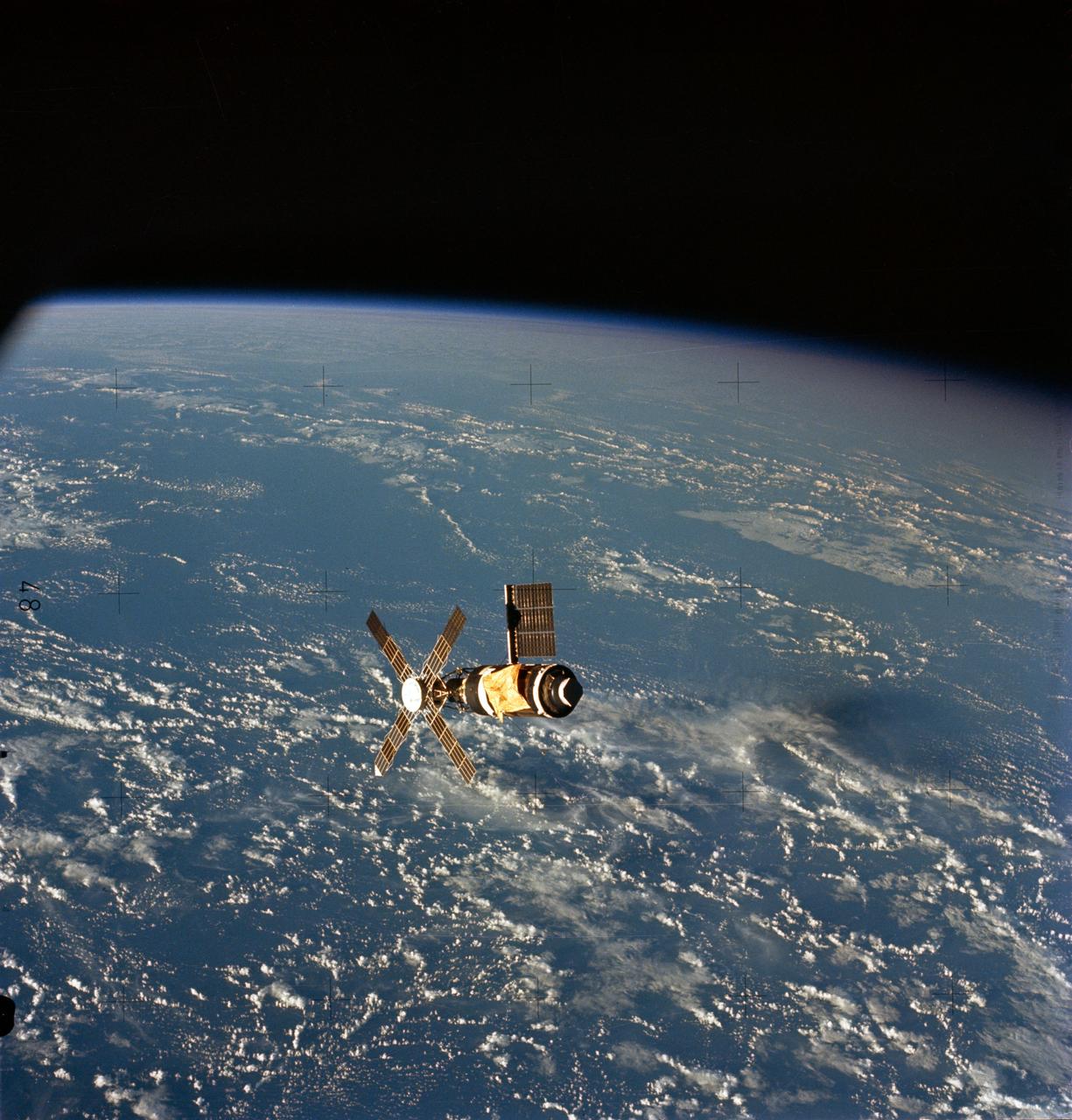
SL2-07-651 (22 June 1973) --- This overhead view of the Skylab Space Station was taken from the Departing Skylab Command/Service Module during the Skylab 2's final fly-around inspection. The single solar panel is quite evident as well as the parasol solar shield, rigged to replace the missing micrometeoroid shield. Both the second solar panel and the micrometeoroid shield were torn away during a mishap in the original Skylab 1 liftoff and orbital insertion. Photo credit: NASA
This view of the Skylab Orbital Space Station was taken from the Skylab 2 Command/Service Module during it's initial fly around inspection. The micrometeoroid shield can be seen to be missing and a parasol solar shield was later fitted in its place. The damaged and partially deployed solar array, in the center of the scene, can be seen to be restrained by a strap that was later cut during an early EVA, allowing the panel to fully deploy.
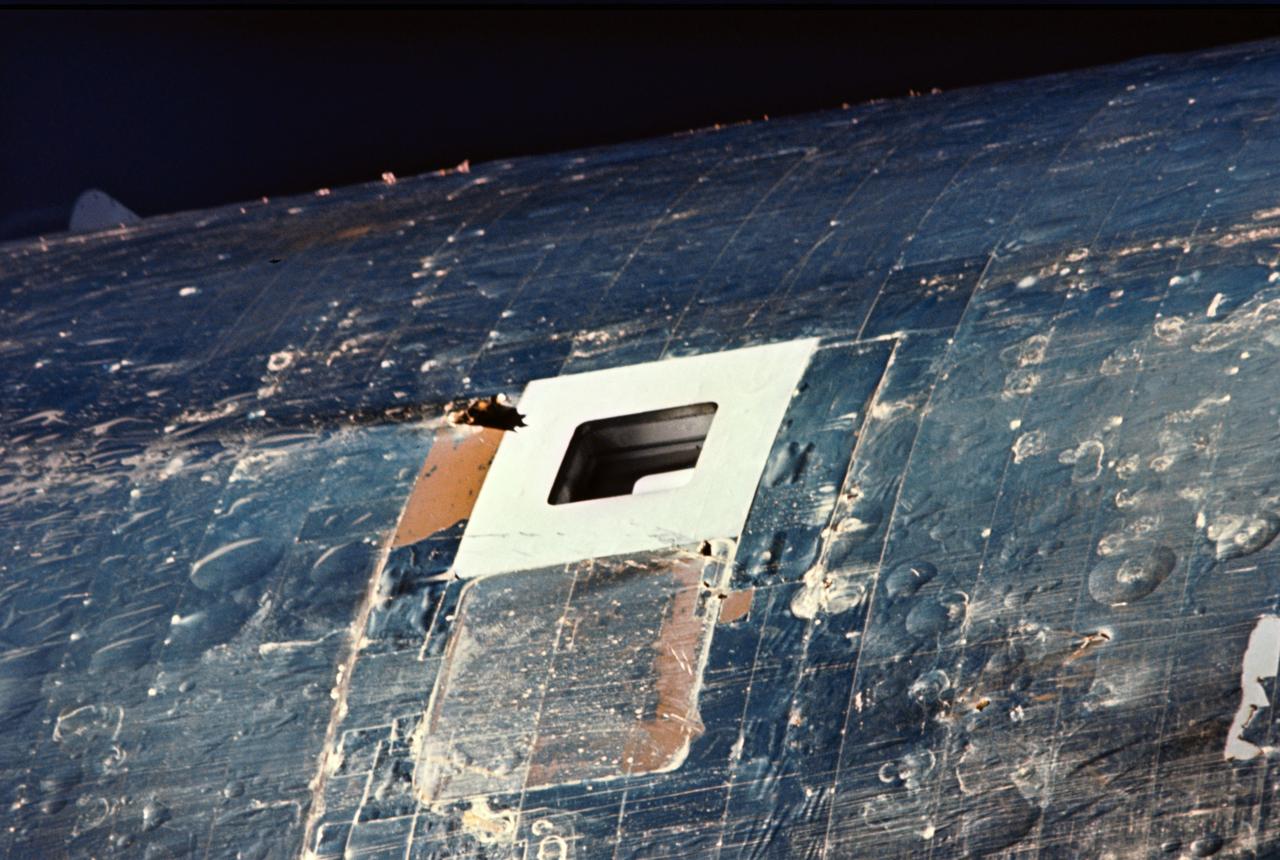
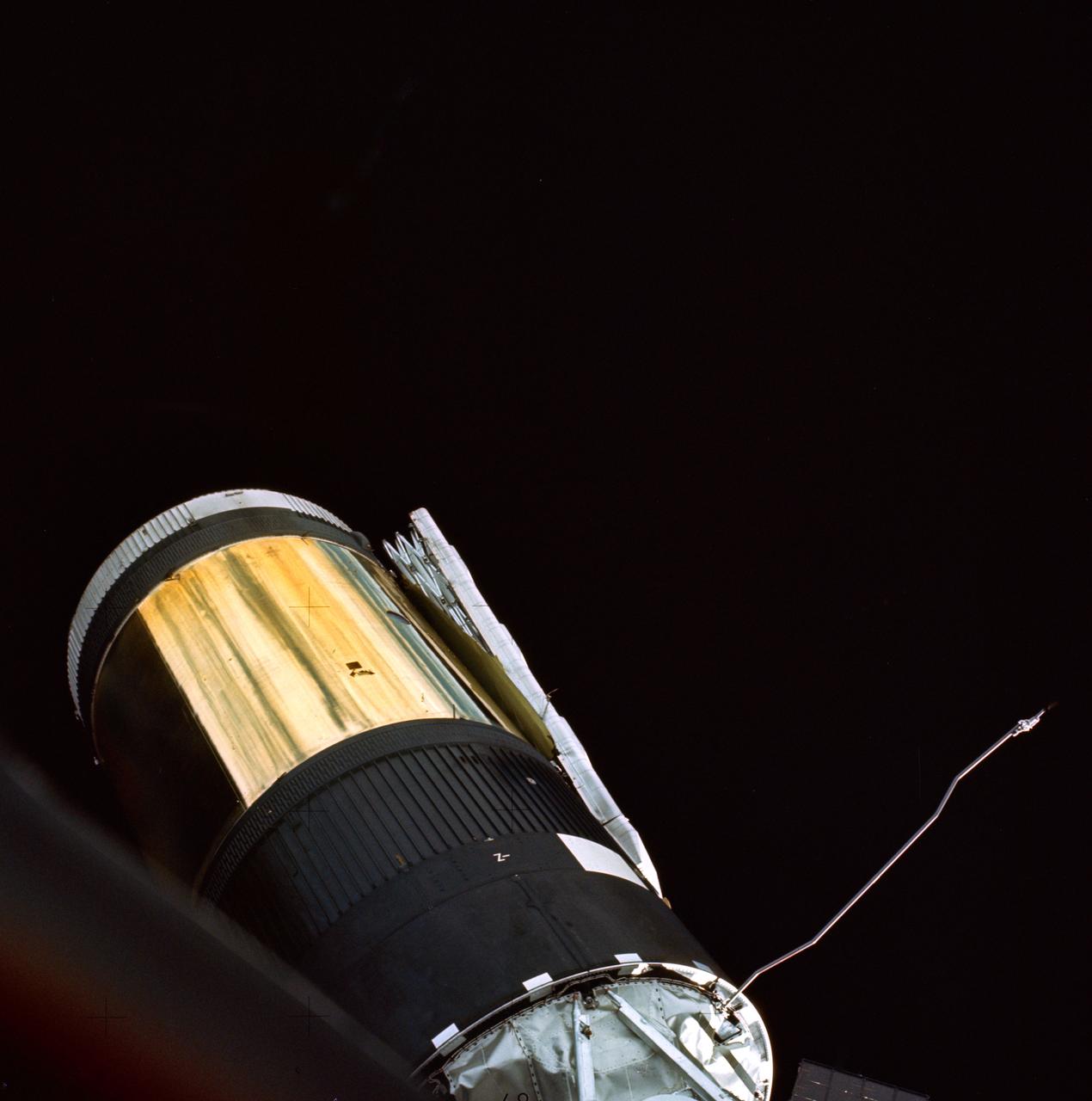
This close up view of one of the two scientific airlocks on the Skylab Orbital Workshop Section was taken from the Skylab 2 Command/Service Module during its initial fly around inspection. The micrometeoroid shield can be seen to be missing from this section of the orbital workshop. A parasol solar shield was later devised and put in place over this damaged area through this very same airlock opening.
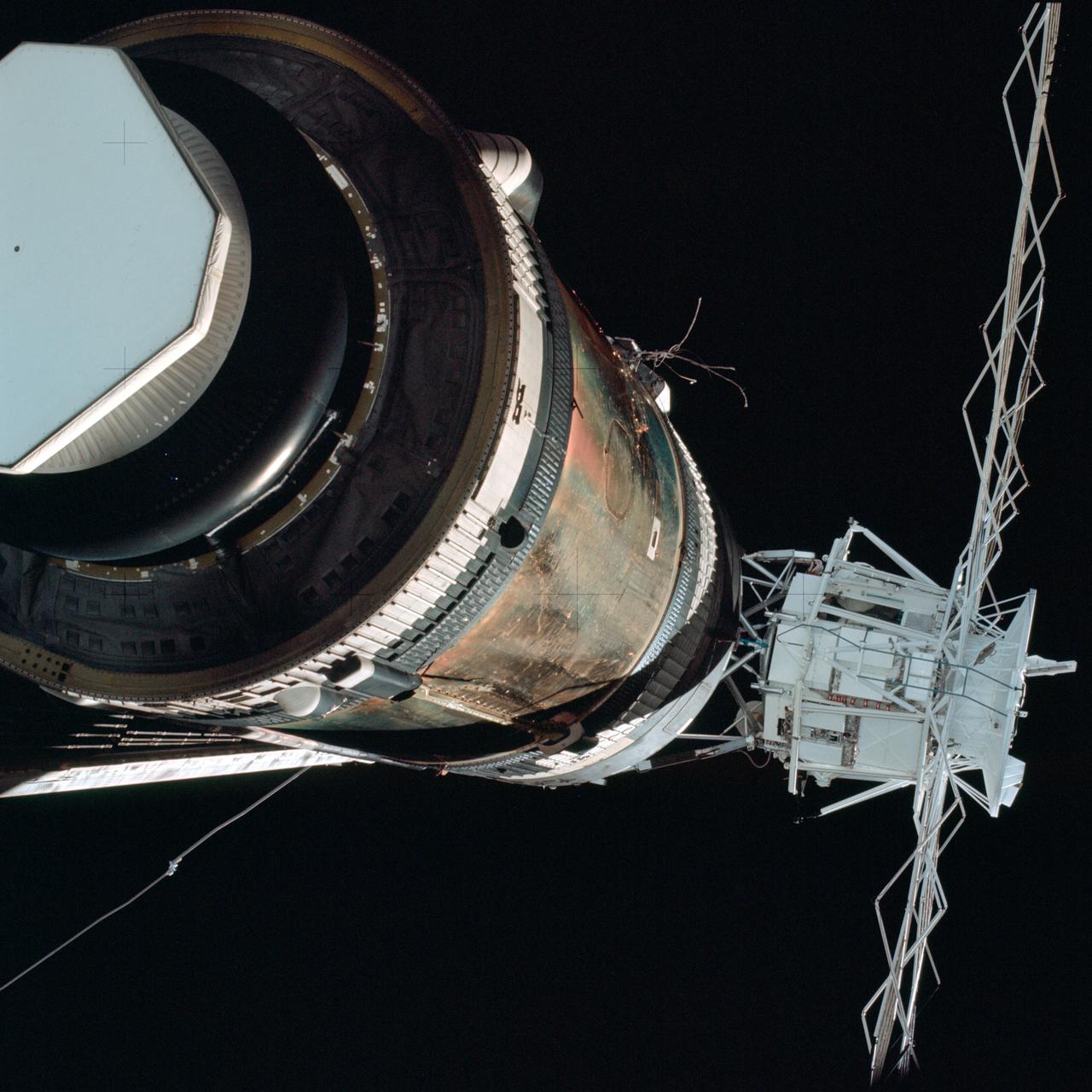
SL2-4-265 (25 May 1973) --- Skylab 2, approach to Skylab at long range, fly-around inspection. Orbital Workshop with area of missing micrometeoroid shield visible and partially deployed solar array visible. Photo credit: NASA
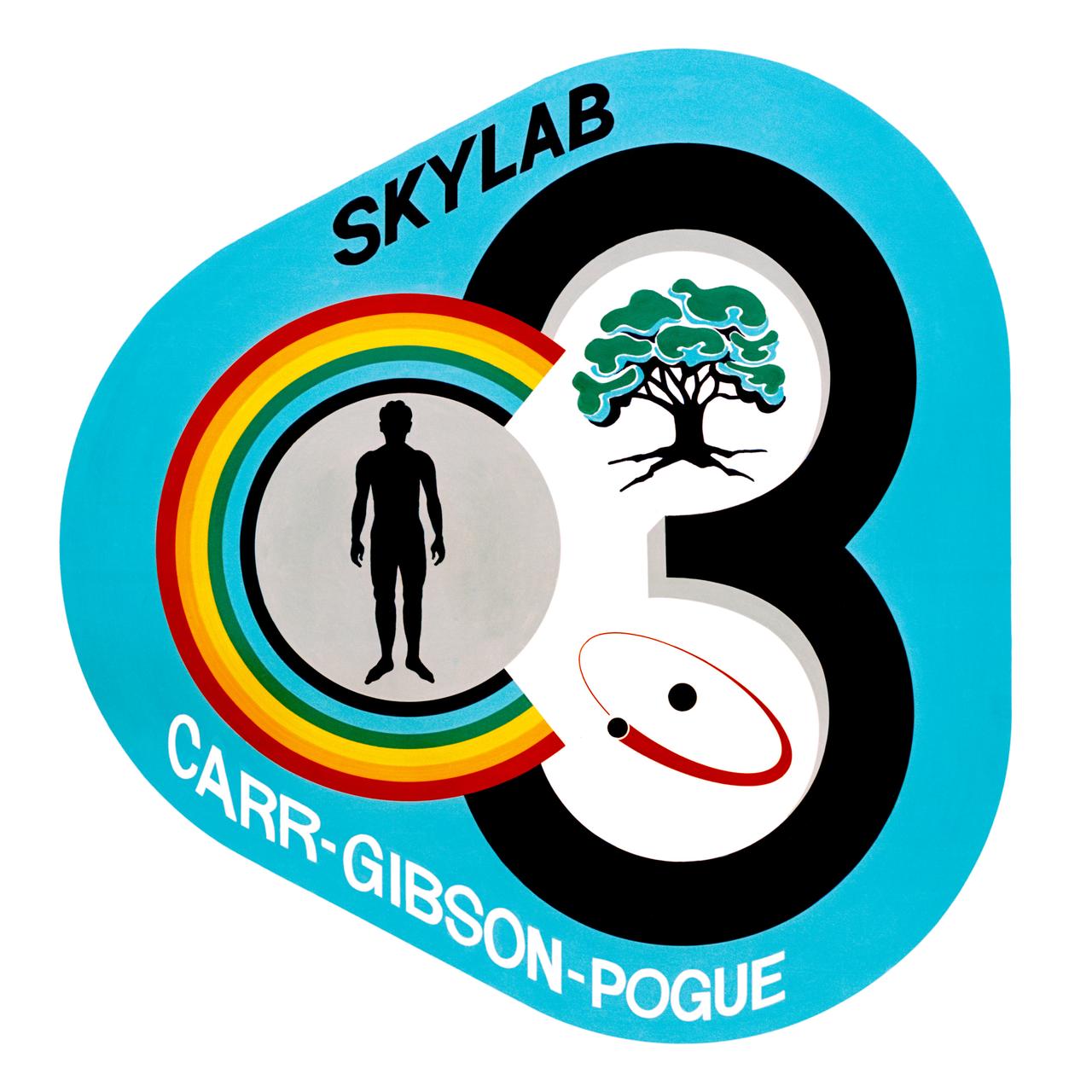
S72-53094 (For release February 1973) --- This is the emblem for the third manned Skylab mission. It will be a mission of up to 56 days. Skylab is an experimental space station consisting of a 100-ton laboratory complex in which medical, scientific and technological experiments will be performed in Earth orbit. The members of the crew will be astronaut Gerald P. Carr, commander; scientist-astronaut Edward G. Gibson, science pilot; and astronaut William R. Pogue, pilot. The symbols in the patch refer to the three major areas of investigation proposed in the mission. The tree represents man's natural environment and relates directly to the Skylab mission objectives of advancing the study of Earth resources. The hydrogen atom, as the basic building block of the universe, represents man's exploration of the physical world, his application of knowledge, and his development of technology. Since the sun is composed primarily of hydrogen, it is appropriate that the symbol refers to the solar physics mission objectives. The human silhouette represents mankind and the human capacity to direct technology with a wisdom tempered by regard for his natural environment. It also directly relates to the Skylab medical studies of man himself. The rainbow, adopted from the Biblical story of the flood, symbolizes the promise that is offered man. It embraces man and extends to the tree and the hydrogen atom emphasizing man's pivotal role in the conciliation of technology with nature. Photo credit: NASA
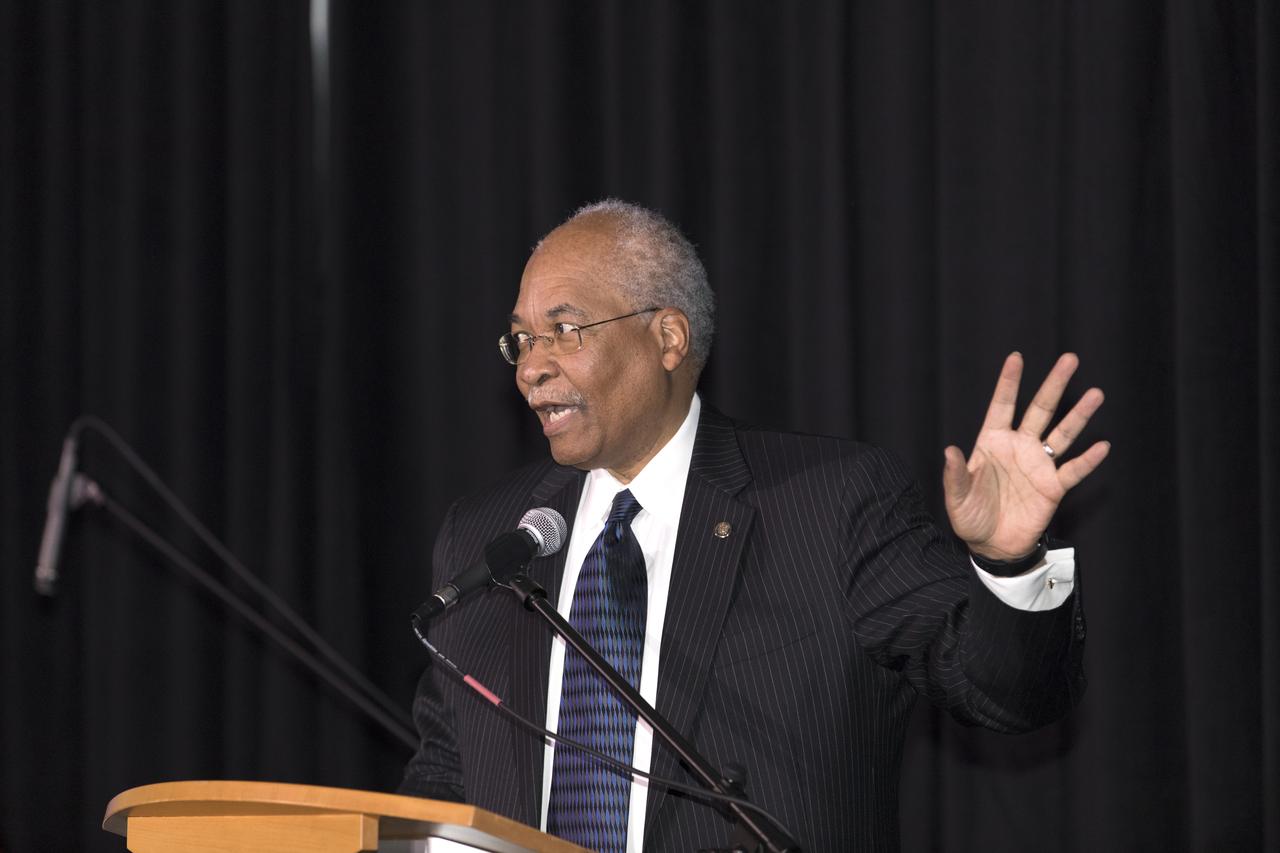
During an Astronauts Memorial Foundation tribute honoring U.S. Air Foce Maj. Robert Lawrence, physicist Herman White, Ph.D., of the Fermi National Accelerator Laboratory, speaks to guests during the ceremony. Selected in 1967 for the Manned Orbiting Laboratory Program, Lawrence was the first African-American astronaut. He lost his life in a training accident 50 years ago. The ceremony took place in the Center for Space Education at the Kennedy Space Center Visitor Complex.
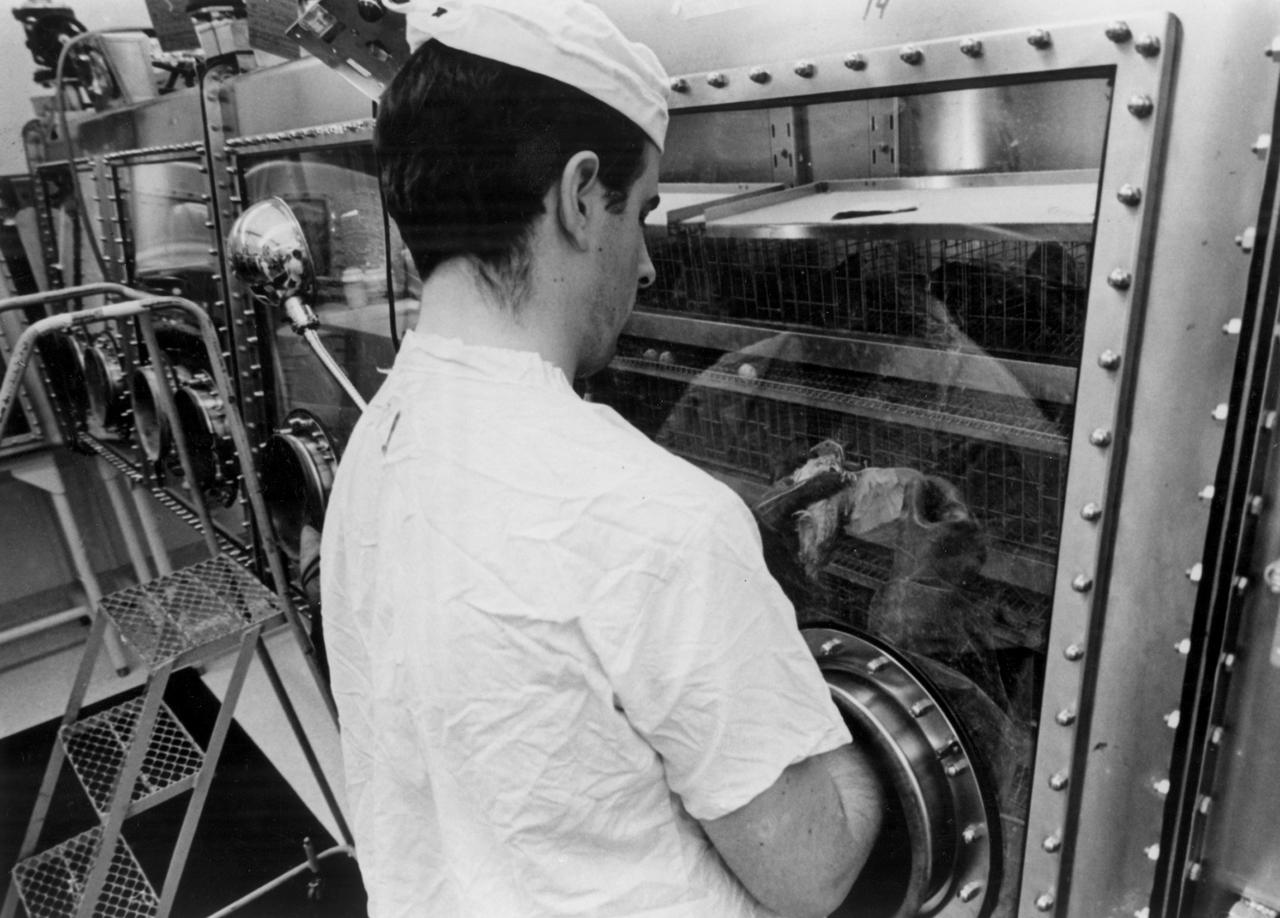
In this photograph, laboratory technician Bart Ruark visually inspects a Japanese Qail confined within a class III cabinet in the Intervertebrae, Aves, and Fish Laboratory of the Lunar Receiving Laboratory, Building 37 of the Manned Spacecraft Center (MSC) in Houston, Texas. This laboratory was part of the overall physical, chemical, and biological test program of the Apollo 11 returned lunar samples. Aboard the Marshall Space Flight Center (MSFC) developed Saturn V launch vehicle, the Apollo 11 mission launched from The Kennedy Space Center, Florida on July 16, 1969 and safely returned to Earth on July 24, 1969. The 3-man crew aboard the flight consisted of astronauts Neil A. Armstrong, commander; Edwin Aldrin, Lunar Module (LM) pilot; and Michael Collins, Command Module (CM) pilot. The CM, piloted by Michael Collins remained in a parking orbit around the Moon while the LM, named “Eagle’’, carrying astronauts Neil Armstrong and Edwin Aldrin, landed on the Moon. In 2 1/2 hours, the crew collected 47 pounds of lunar surface material which was returned to Earth for analysis.
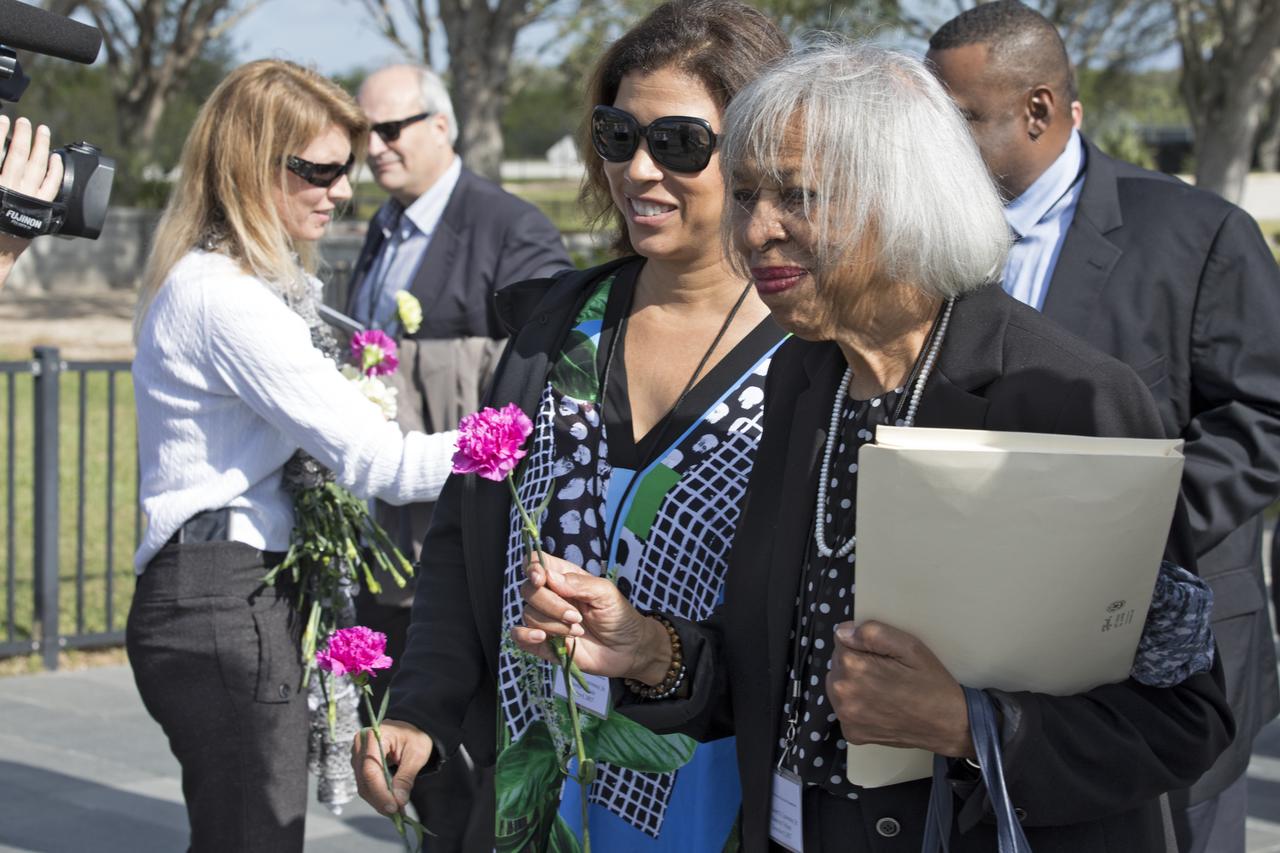
During an Astronauts Memorial Foundation tribute honoring U.S. Air Foce Maj. Robert Lawrence, his sister, Barbara Lawrence, Ph.D., places a flower at the Space Mirror Memorial which honors those lost in efforts to explore space. Selected in 1967 for the Manned Orbiting Laboratory Program, Lawrence was the first African-American astronaut. He lost his life in a training accident 50 years ago. The ceremony took place in the Center for Space Education at the Kennedy visitor complex.
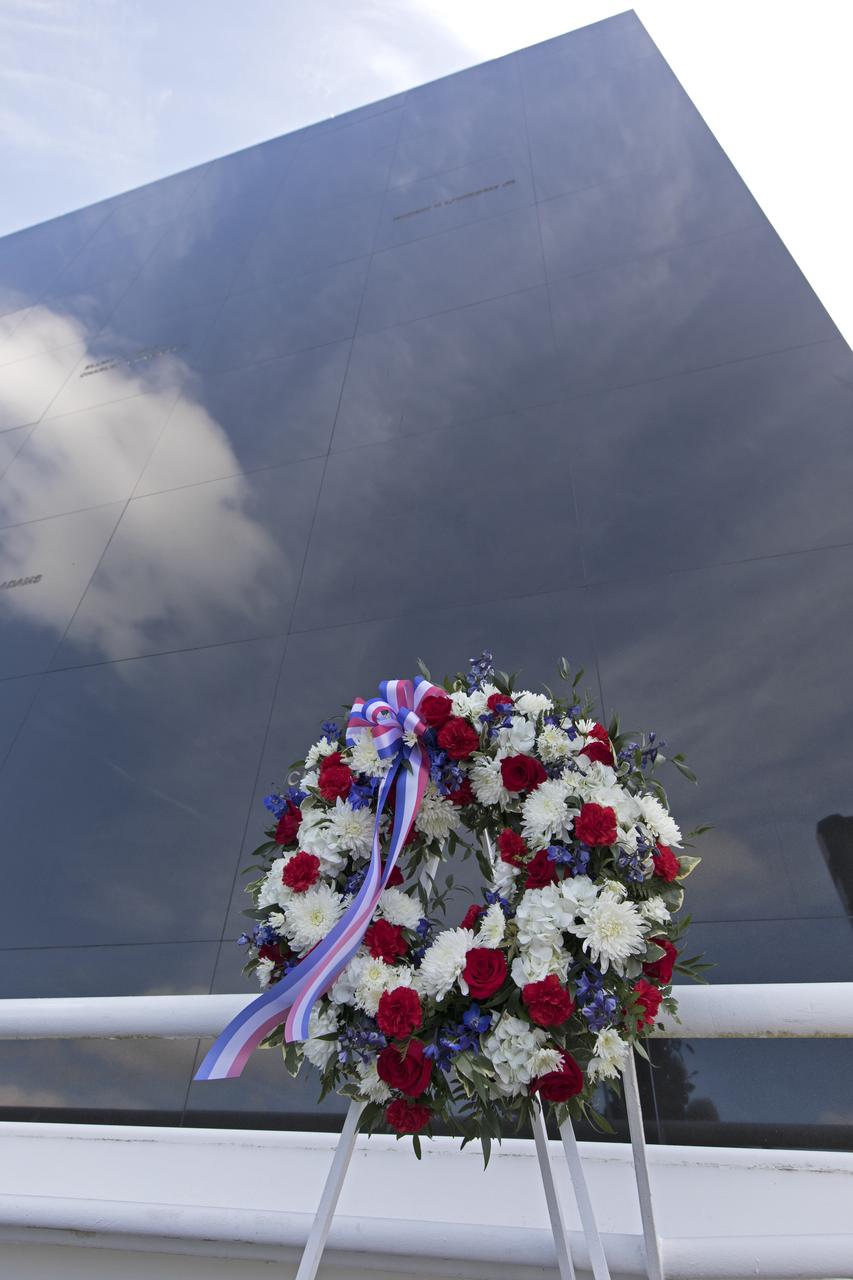
Following an Astronauts Memorial Foundation tribute honoring U.S. Air Foce Maj. Robert Lawrence, a wreath was place at the Space Mirror Memorial at the Kenendy Space Center Visitor Compelx. Selected in 1967 for the Manned Orbiting Laboratory Program, Lawrence was the first African-American astronaut. He lost his life in a training accident 50 years ago. The ceremony took place in the Center for Space Education at the Kennedy Space Center Visitor Complex.
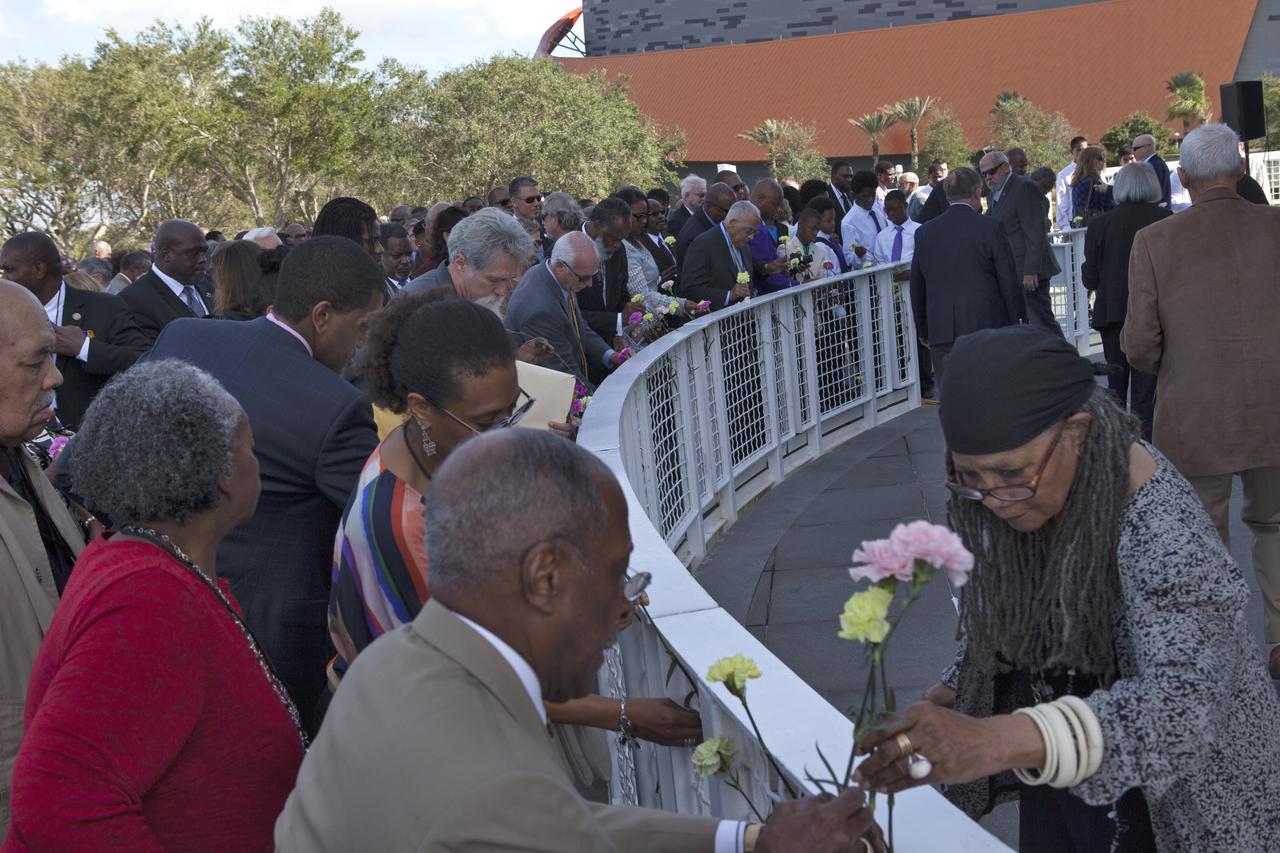
Following an Astronauts Memorial Foundation tribute honoring U.S. Air Foce Maj. Robert Lawrence, guests place flowers at the Space Mirror Memorial at the Kennedy Space Center Visitor Complex. Selected in 1967 for the Manned Orbiting Laboratory Program, Lawrence was the first African-American astronaut. He lost his life in a training accident 50 years ago. The ceremony took place in the Center for Space Education at the Kennedy Space Center Visitor Complex.
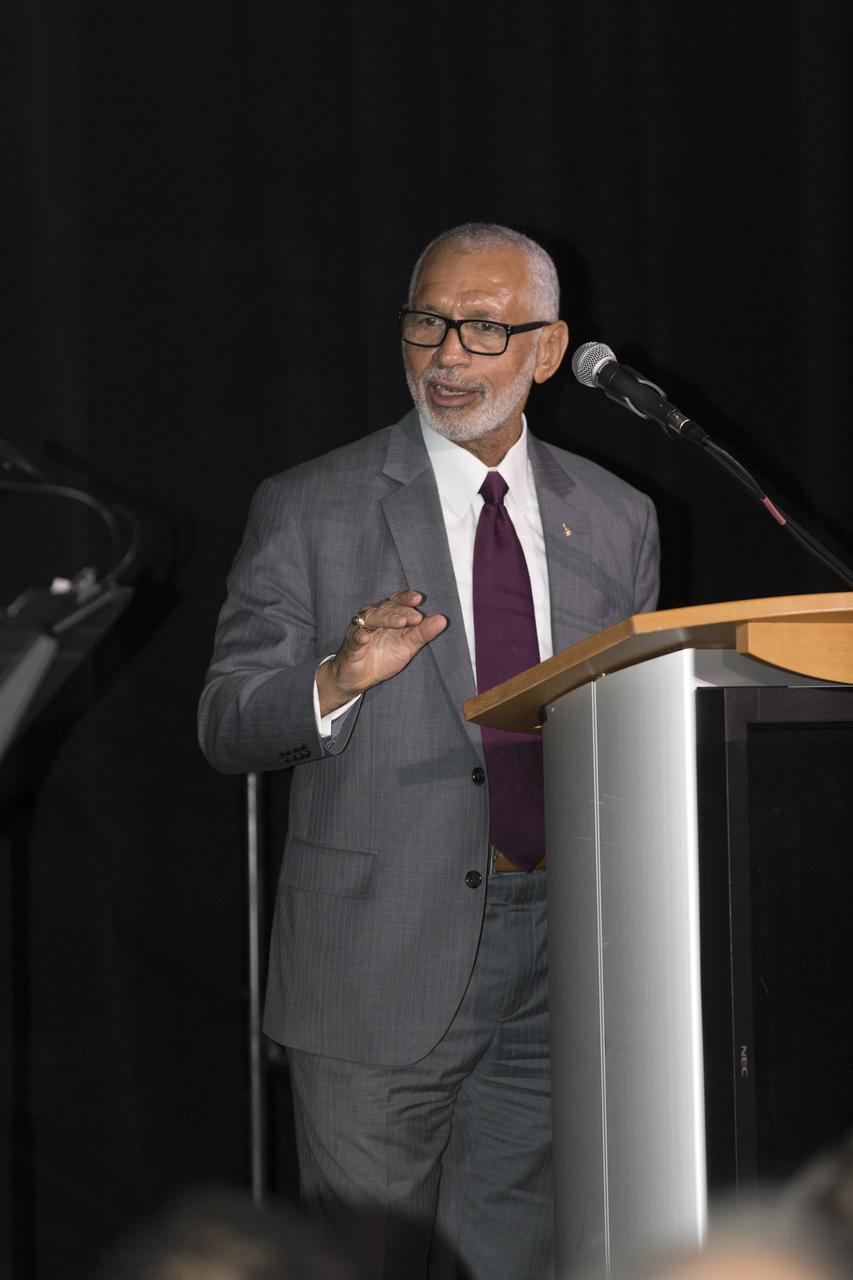
Former NASA administrator Charlie Bolden speaks during an Astronauts Memorial Foundation tribute honoring U.S. Air Foce Maj. Robert Lawrence. Selected in 1967 for the Manned Orbiting Laboratory Program, Lawrence was the first African-American astronaut. He lost his life in a training accident 50 years ago. The ceremony took place in the Center for Space Education at the Kennedy Space Center Visitor Complex.
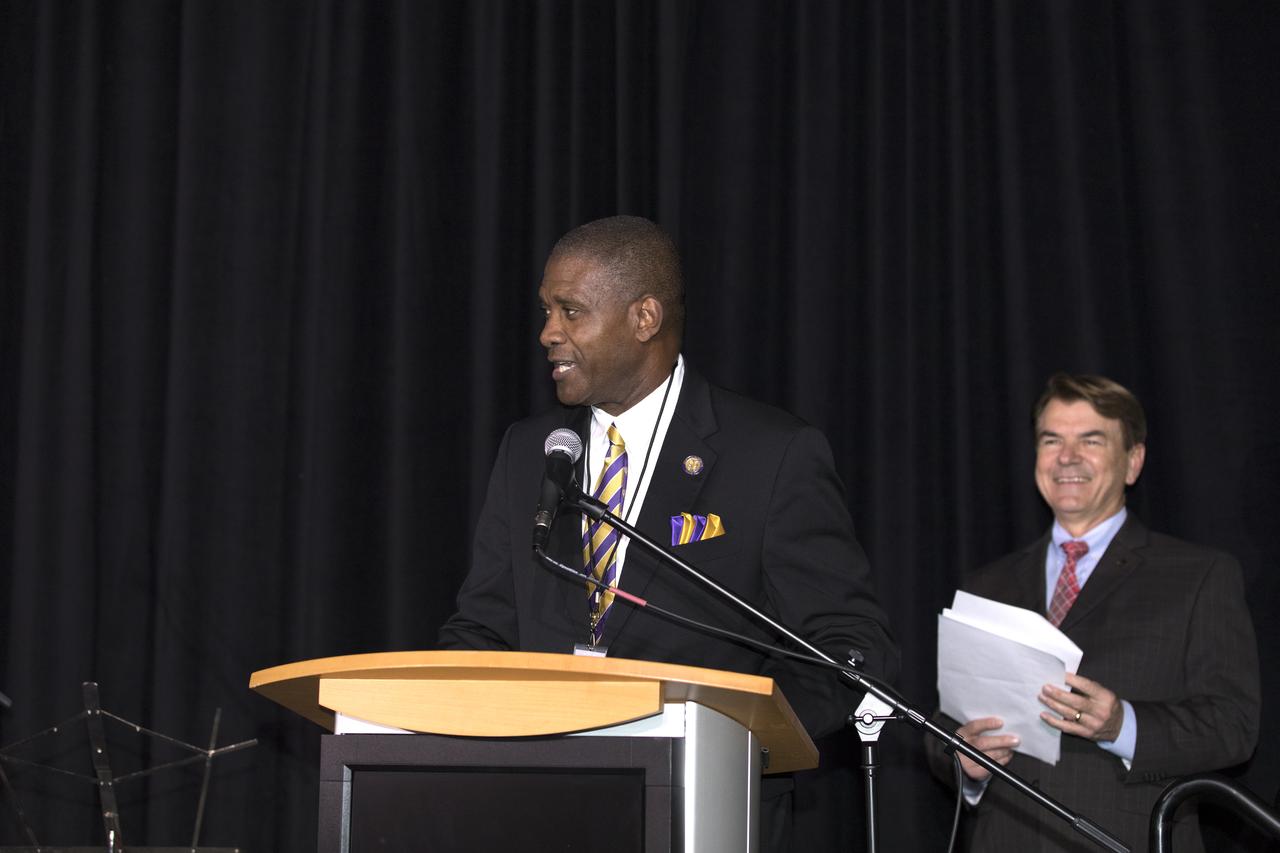
Former Florida State Sen. Tony Hill speaks during an Astronauts Memorial Foundation tribute honoring U.S. Air Foce Maj. Robert Lawrence. Looking on is State Rep. Thad Altman, president of the AMF. Selected in 1967 for the Manned Orbiting Laboratory Program, Lawrence was the first African-American astronaut. He lost his life in a training accident 50 years ago. The ceremony took place in the Center for Space Education at the Kennedy Space Center Visitor Complex.
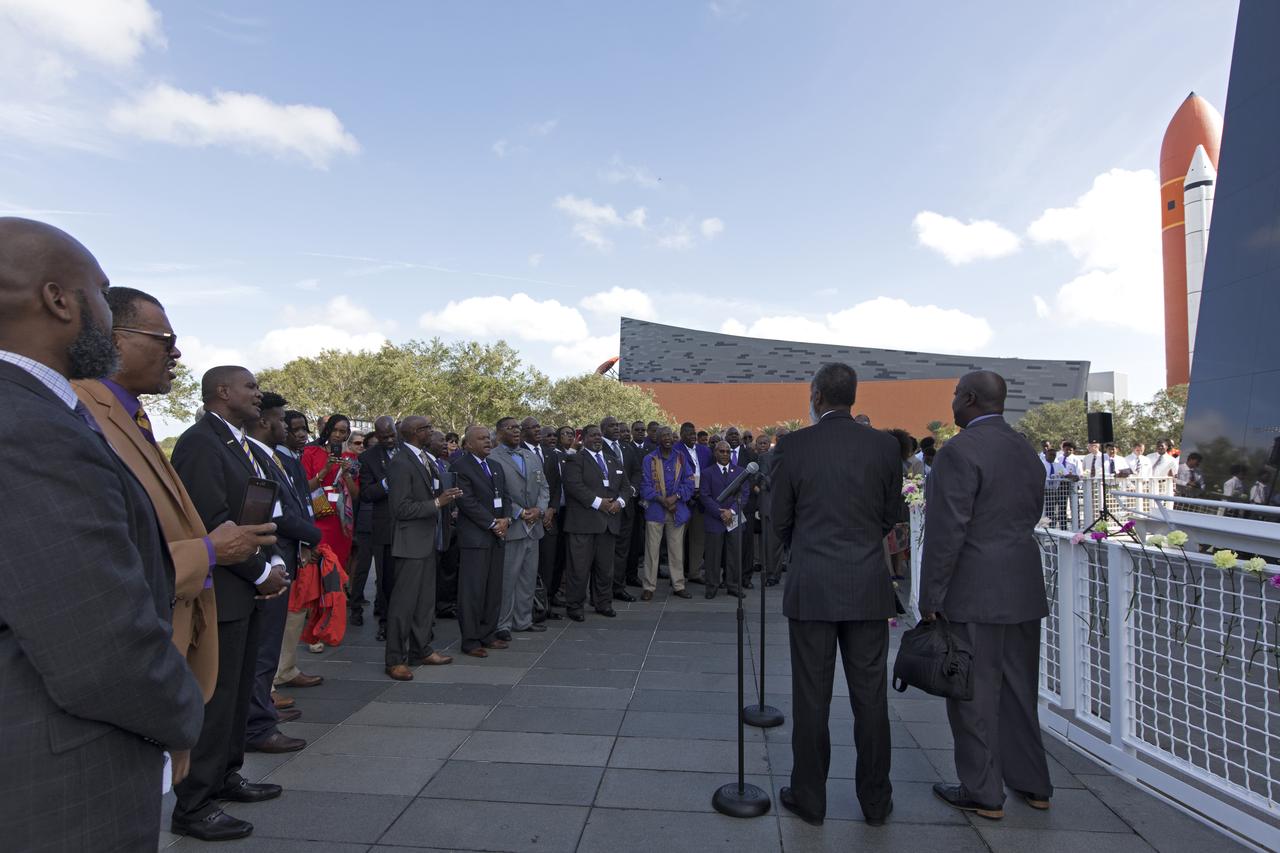
Following an Astronauts Memorial Foundation tribute honoring U.S. Air Foce Maj. Robert Lawrence, guests listen to speakers at the Space Mirror Memorial at the Kenendy Space Center Visitor Compelx. Selected in 1967 for the Manned Orbiting Laboratory Program, Lawrence was the first African-American astronaut. He lost his life in a training accident 50 years ago. The ceremony took place in the Center for Space Education at the Kennedy Space Center Visitor Complex.

During an Astronauts Memorial Foundation tribute honoring U.S. Air Foce Maj. Robert Lawrence, his sister, Barbara Lawrence, Ph.D., speaks to guests during the ceremony. Selected in 1967 for the Manned Orbiting Laboratory Program, Lawrence was the first African-American astronaut. He lost his life in a training accident 50 years ago. The ceremony took place in the Center for Space Education at the Kennedy Space Center Visitor Complex.
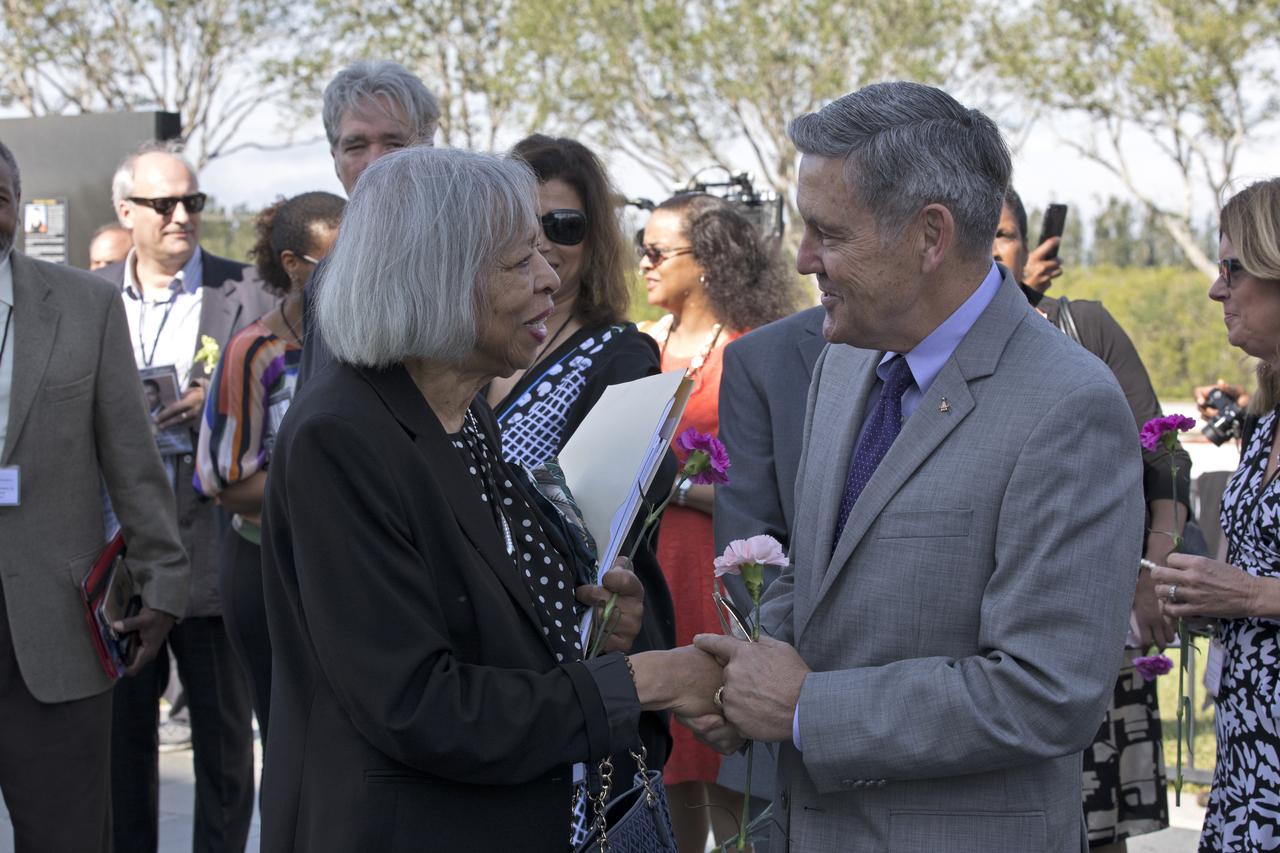
Following an Astronauts Memorial Foundation tribute honoring U.S. Air Foce Maj. Robert Lawrence, Kennedy Space Center Director Bob Cabana, right, speaks with Lawrence's sister, Barbara Lawrence, Ph.D. Selected in 1967 for the Manned Orbiting Laboratory Program, Lawrence was the first African-American astronaut. He lost his life in a training accident 50 years ago. The ceremony took place in the Center for Space Education at the Kennedy Space Center Visitor Complex.
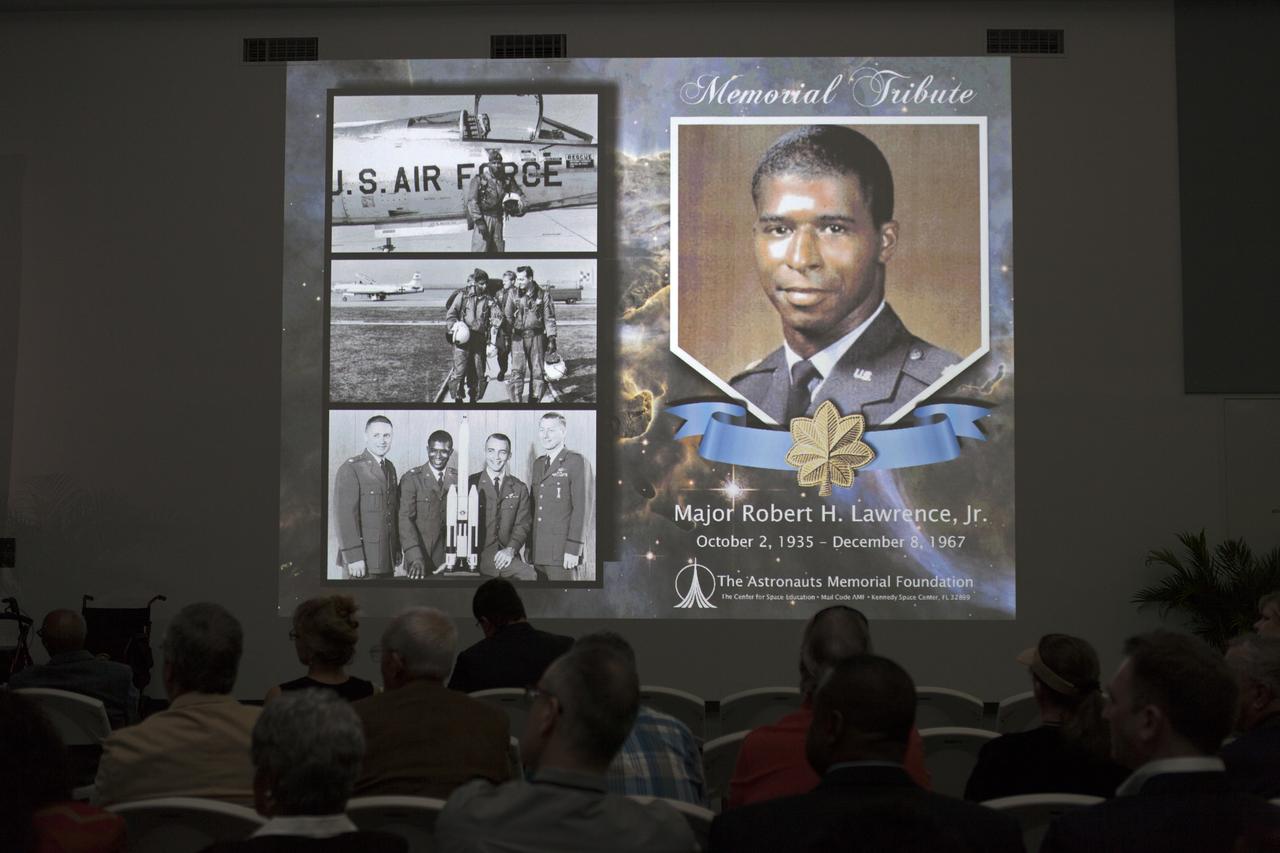
During an Astronauts Memorial Foundation tribute honoring U.S. Air Foce Maj. Robert Lawrence, photographs are projected during a video presentation. Selected in 1967 for the Manned Orbiting Laboratory Program, Lawrence was the first African-American astronaut. He lost his life in a training accident 50 years ago. The ceremony took place in the Center for Space Education at the Kennedy Space Center Visitor Complex.
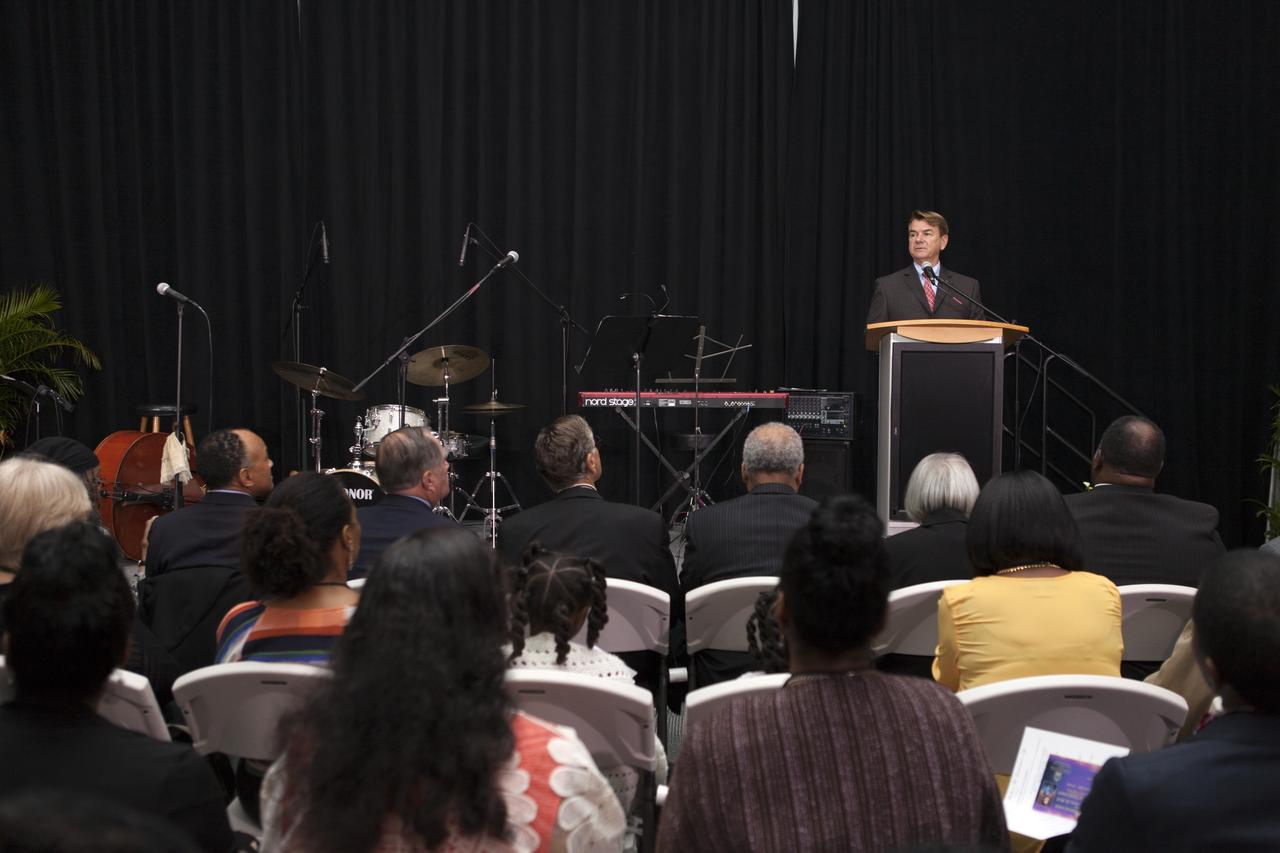
State Rep. Thad Altman, president of the Astronauts Memorial Foundation (AMF), speaks during a tribute honoring U.S. Air Foce Maj. Robert Lawrence. Selected in 1967 for the Manned Orbiting Laboratory Program, Lawrence was the first African-American astronaut. He lost his life in a training accident 50 years ago. The ceremony took place in the Center for Space Education at the Kennedy Space Center Visitor Complex.
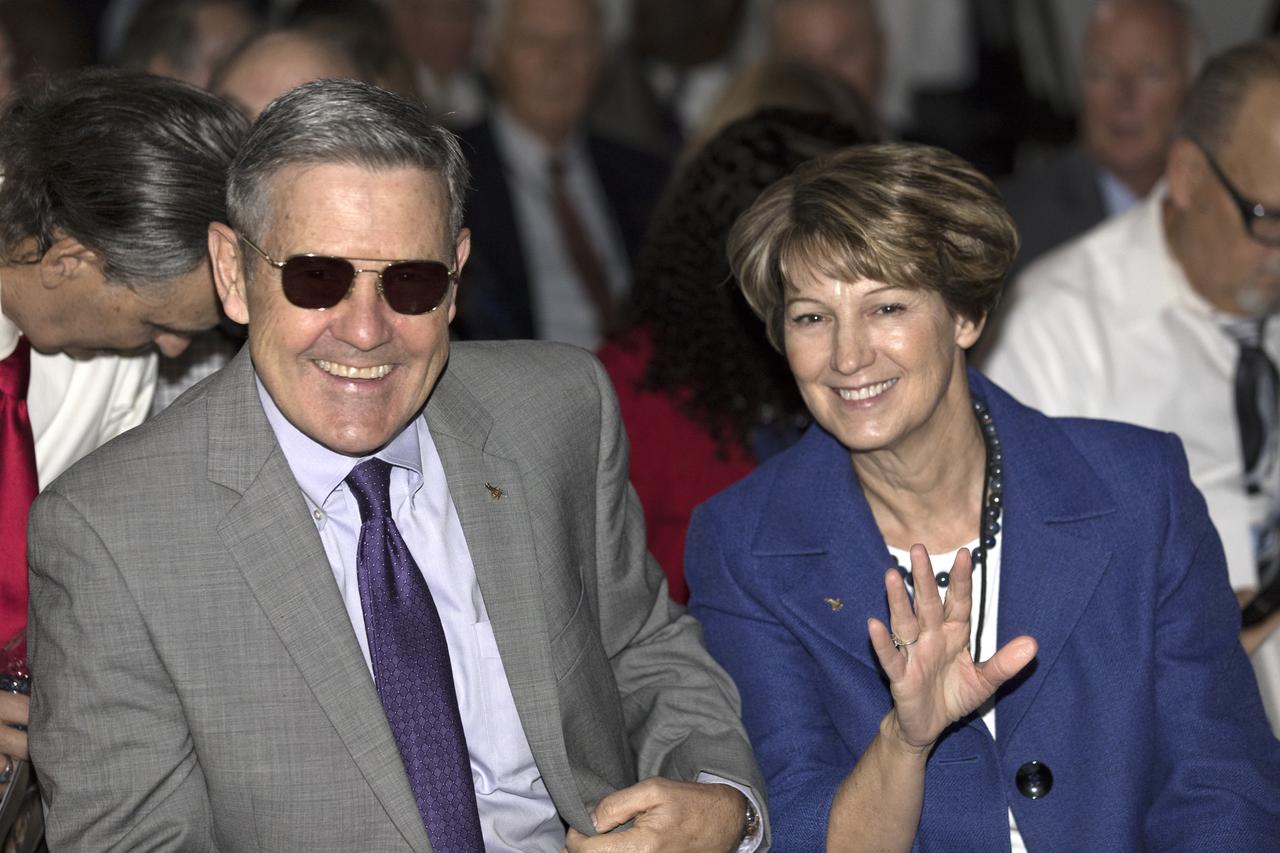
Kennedy Space Center Director Bob Cabana, left, and Astronauts Memorial Foundation board chair Eileen Collins, acknowledge guests during a tribute honoring U.S. Air Foce Maj. Robert Lawrence. Both Cabana and Collins are former NASA astronauts. Selected in 1967 for the Manned Orbiting Laboratory Program, Lawrence was the first African-American astronaut. He lost his life in a training accident 50 years ago. The ceremony took place in the Center for Space Education at the Kennedy Space Center Visitor Complex.
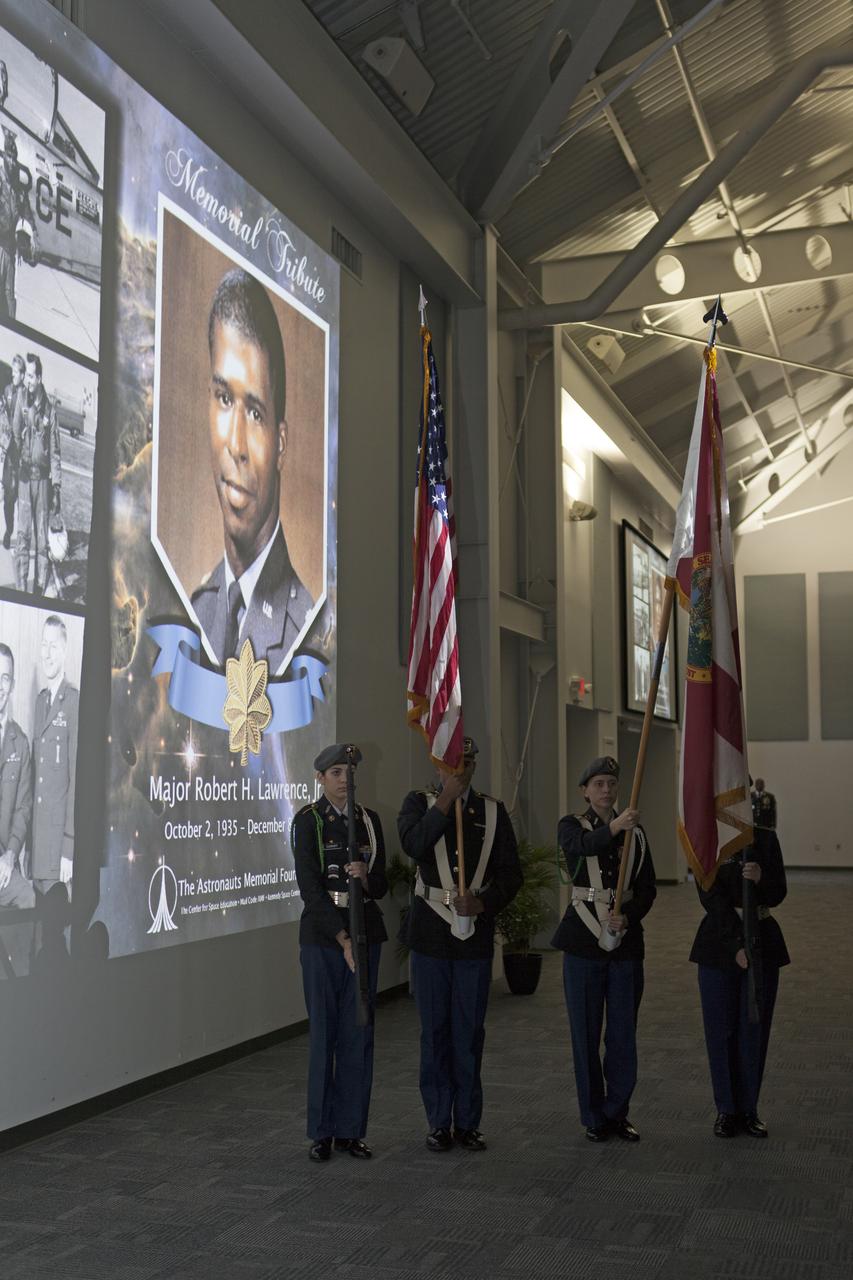
The Viera High School Army JROTC Color Guard presented the colors during an Astronauts Memorial Foundation tribute honoring U.S. Air Foce Maj. Robert Lawrence. Selected in 1967 for the Manned Orbiting Laboratory Program, Lawrence was the first African-American astronaut. He lost his life in a training accident 50 years ago. The ceremony took place in the Center for Space Education at the Kennedy Space Center Visitor Complex.
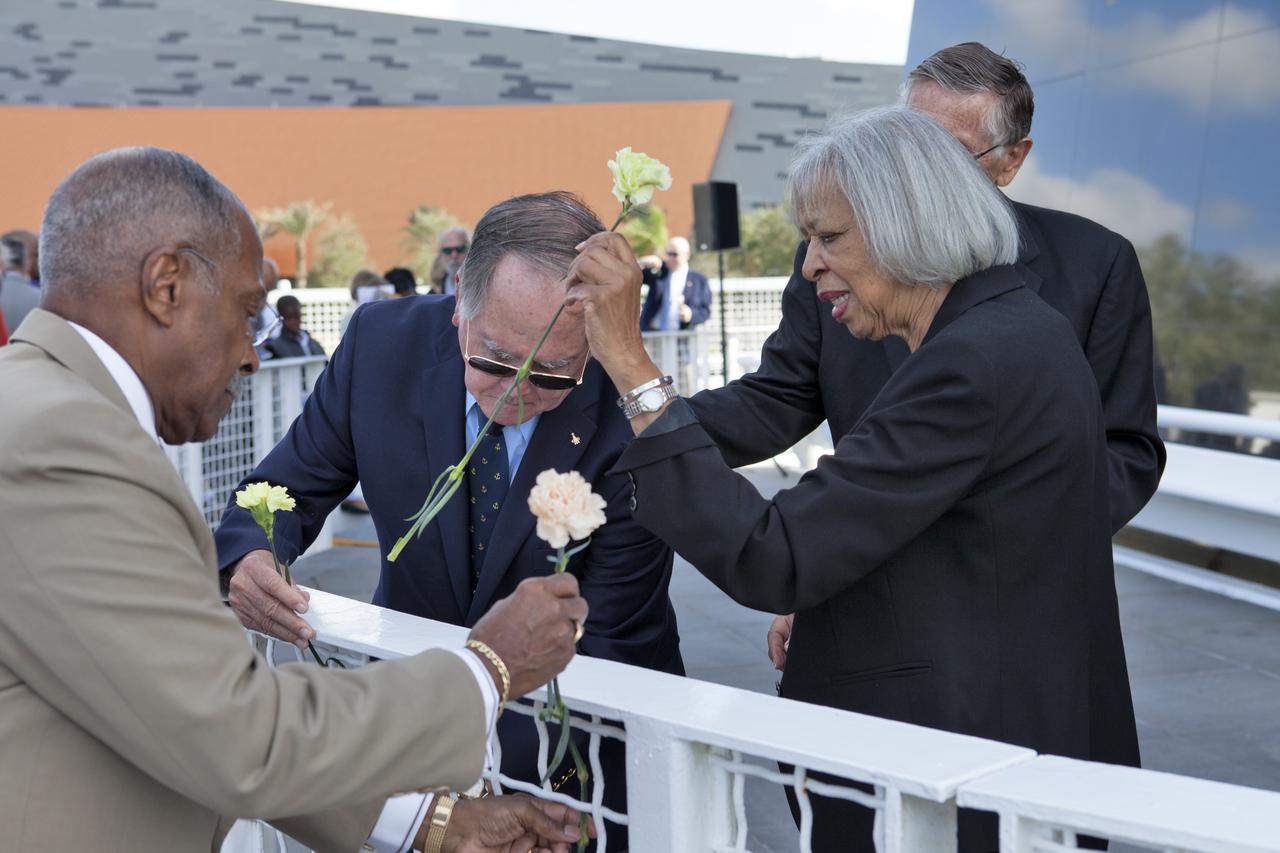
During an Astronauts Memorial Foundation tribute honoring U.S. Air Foce Maj. Robert Lawrence, his sister, Barbara Lawrence, Ph.D., far right, places a flower at the Space Mirror Memorial at the Kennedy Space Center Visitor Complex. Selected in 1967 for the Manned Orbiting Laboratory Program, Lawrence was the first African-American astronaut. He lost his life in a training accident 50 years ago. The ceremony took place in the Center for Space Education at the Kennedy Space Center Visitor Complex.
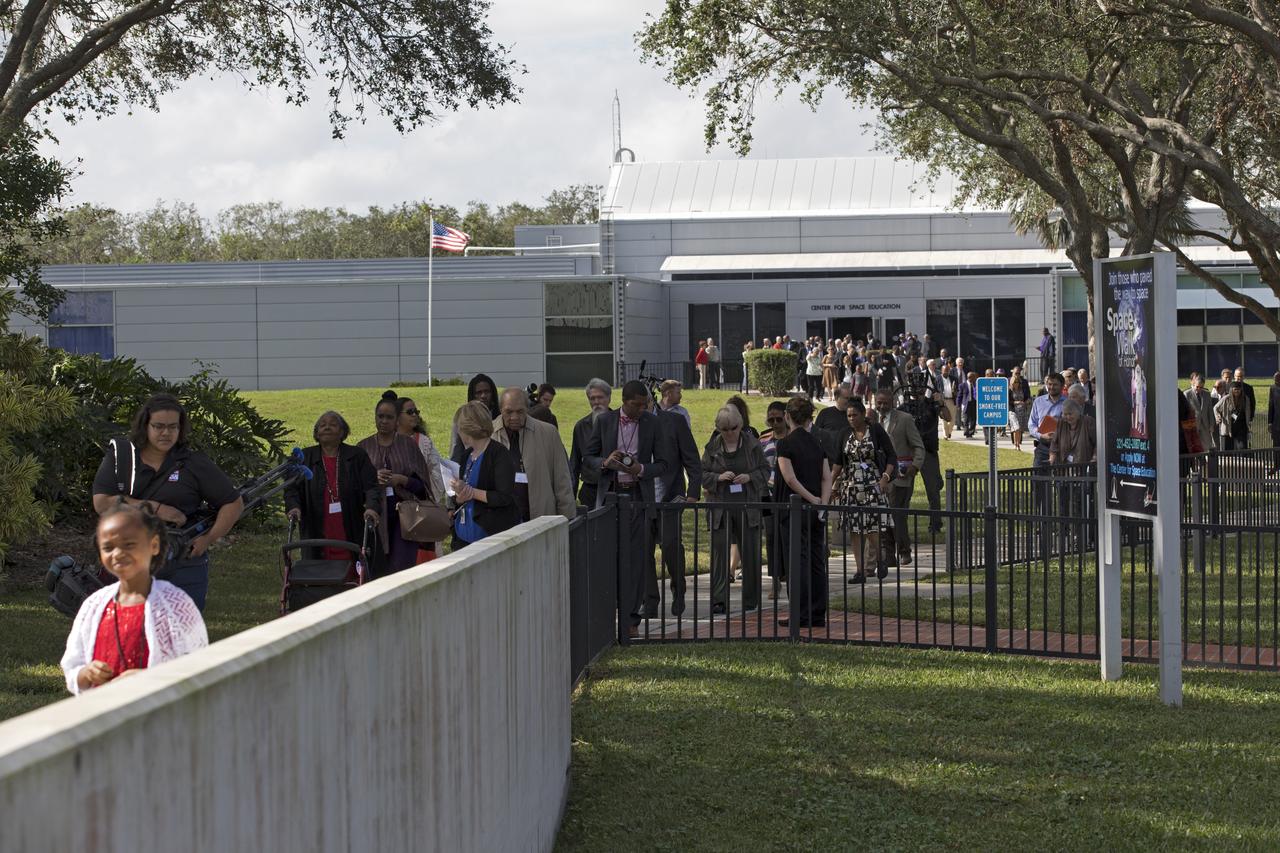
During an Astronauts Memorial Foundation tribute honoring U.S. Air Foce Maj. Robert Lawrence, guests walk to the Space Mirror Memorial at the Kennedy Space Center's Visitor Complex. Selected in 1967 for the Manned Orbiting Laboratory Program, Lawrence was the first African-American astronaut. He lost his life in a training accident 50 years ago. The ceremony took place in the Center for Space Education at the Kennedy visitor complex.
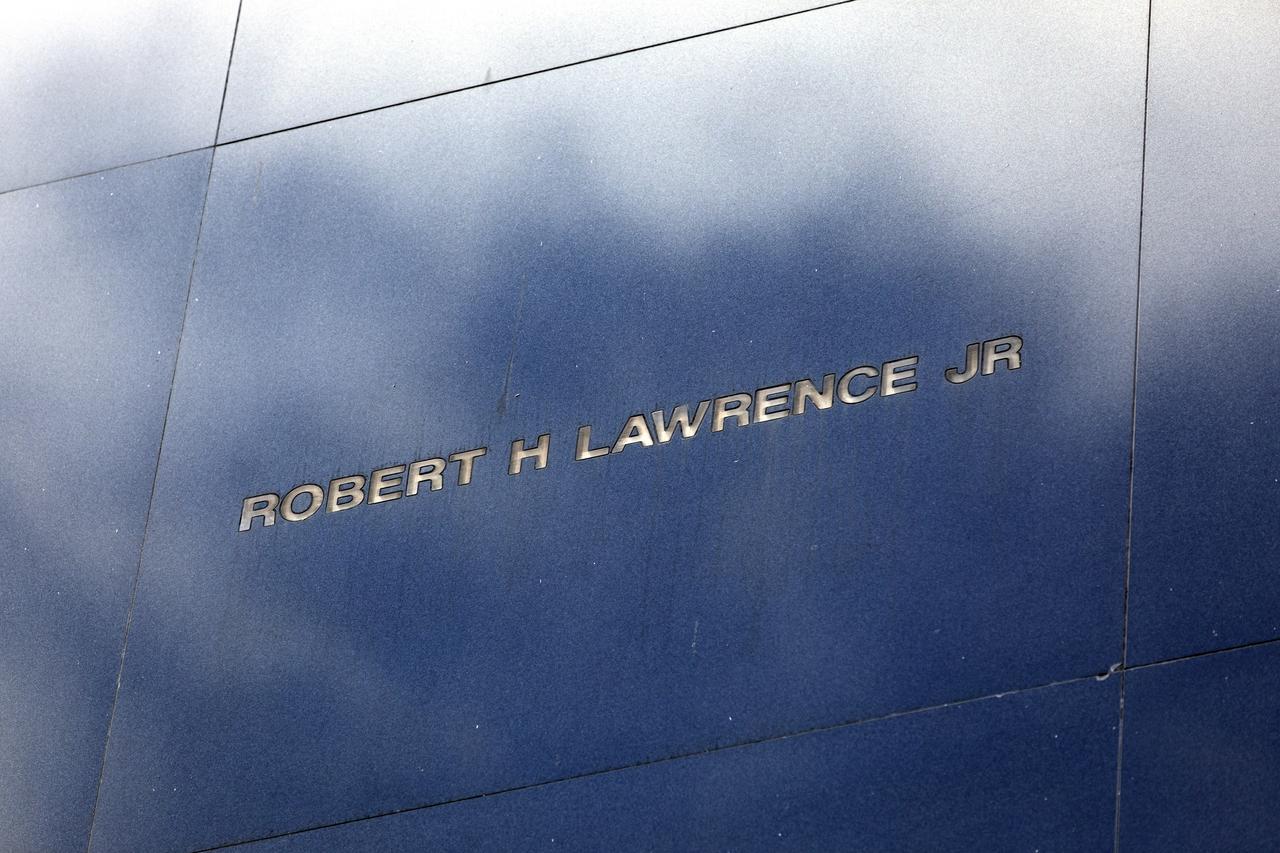
At the Kennedy Space Center's Visitor Complex, the name of U.S. Air Foce Maj. Robert Lawrence is one of those included on the Space Mirror Memorial which honors those lost in efforts to explore space. Selected in 1967 for the Manned Orbiting Laboratory Program, Lawrence was the first African-American astronaut. He lost his life in a training accident 50 years ago. The ceremony took place in the Center for Space Education at the Kennedy visitor complex.
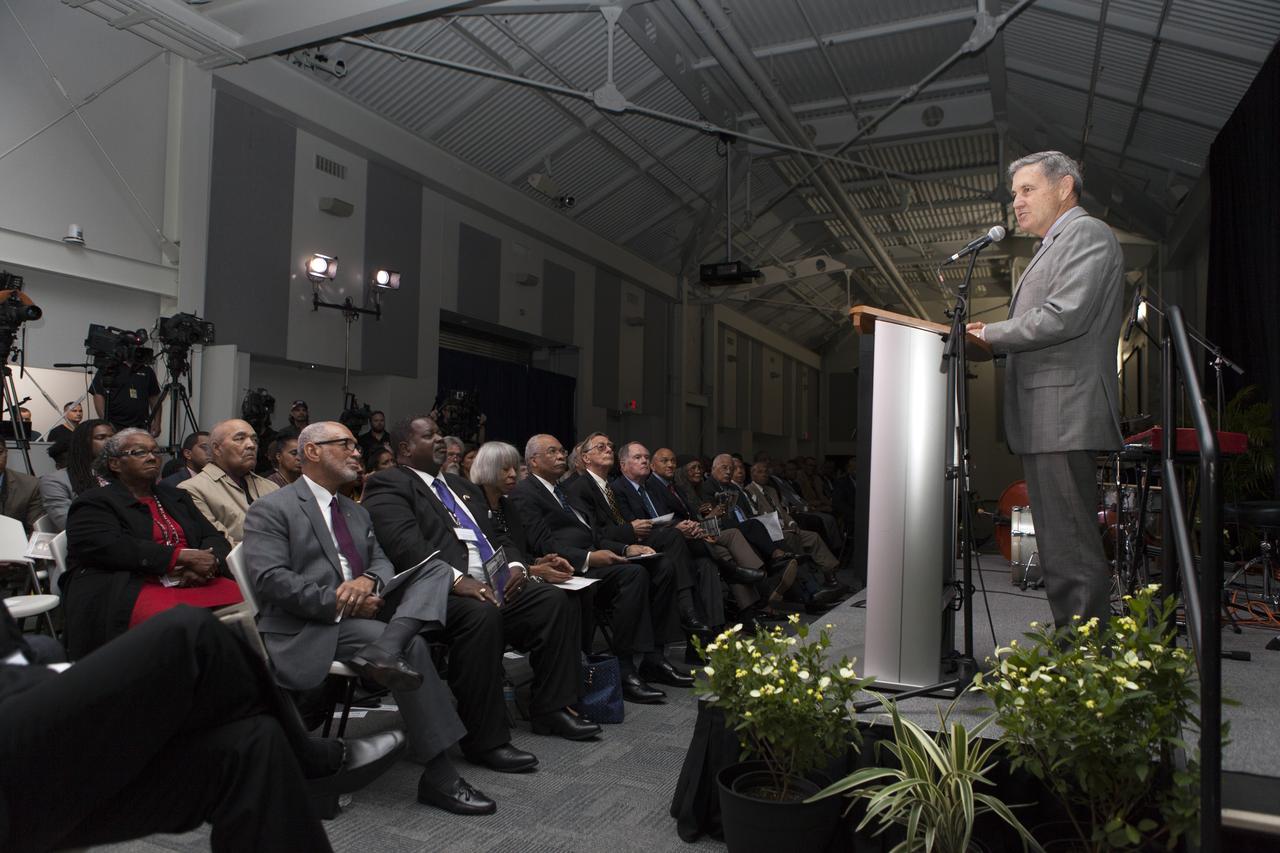
Kennedy Space Center Director Bob Cabana speaks during an Astronauts Memorial Foundation tribute honoring U.S. Air Foce Maj. Robert Lawrence. Selected in 1967 for the Manned Orbiting Laboratory Program, Lawrence was the first African-American astronaut. He lost his life in a training accident 50 years ago. The ceremony took place in the Center for Space Education at the Kennedy Space Center Visitor Complex.
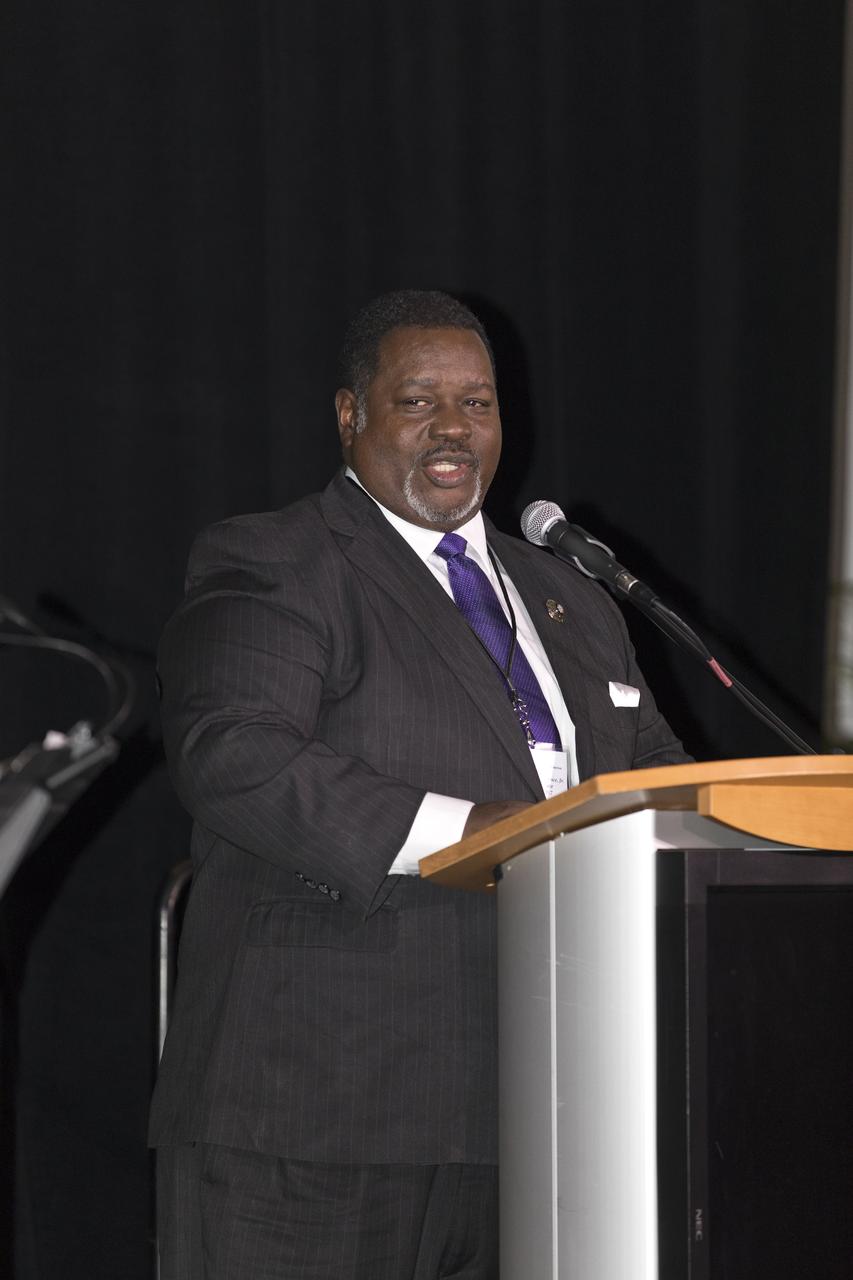
Antonio "Tony" Knox, grand basileus of the Omega Psi Phi, speaks during an Astronauts Memorial Foundation tribute honoring U.S. Air Foce Maj. Robert Lawrence who was a member of the fraternity. Selected in 1967 for the Manned Orbiting Laboratory Program, Lawrence was the first African-American astronaut. He lost his life in a training accident 50 years ago. The ceremony took place in the Center for Space Education at the Kennedy Space Center Visitor Complex.
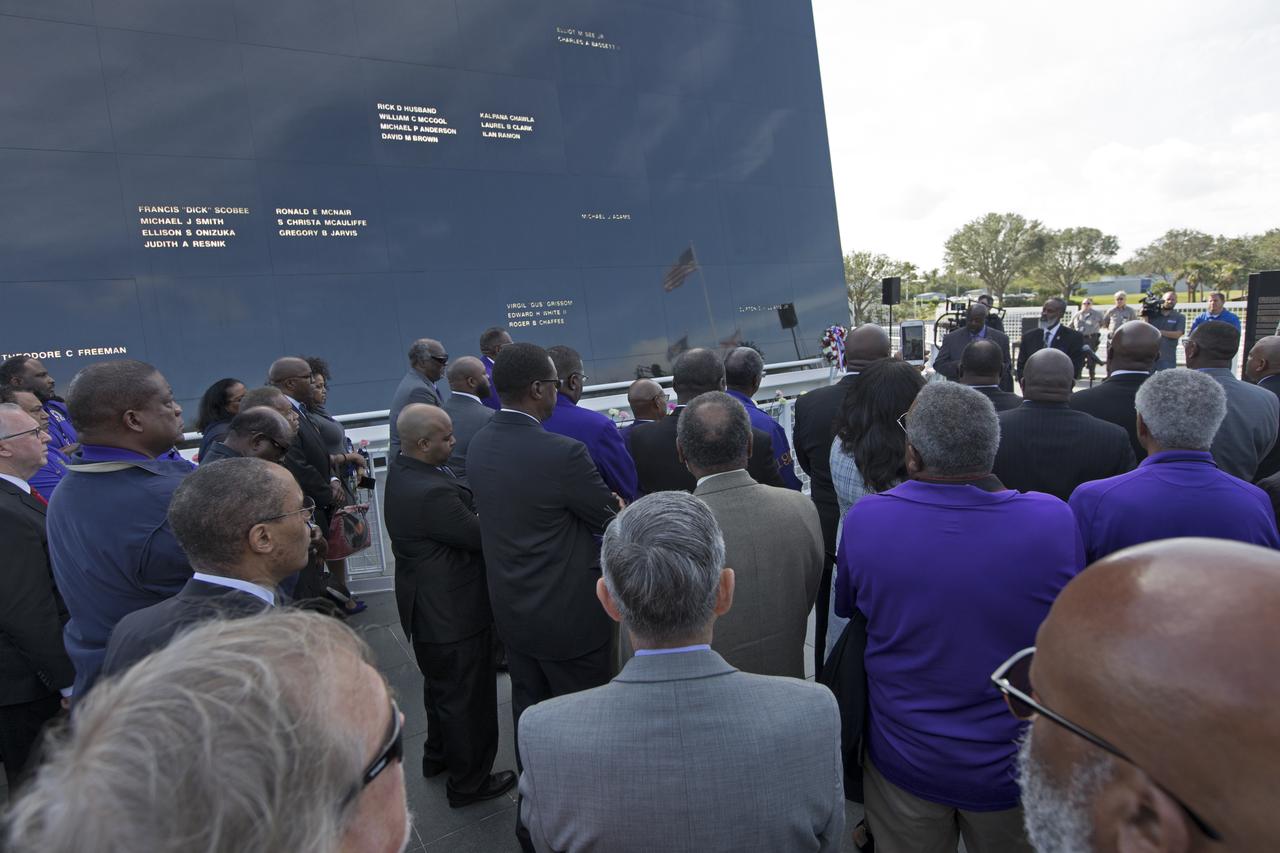
Following an Astronauts Memorial Foundation tribute honoring U.S. Air Foce Maj. Robert Lawrence, guests gathered at the Space Mirror Memorial at the Kenendy Space Center Visitor Compelx. Selected in 1967 for the Manned Orbiting Laboratory Program, Lawrence was the first African-American astronaut. He lost his life in a training accident 50 years ago. The ceremony took place in the Center for Space Education at the Kennedy Space Center Visitor Complex.
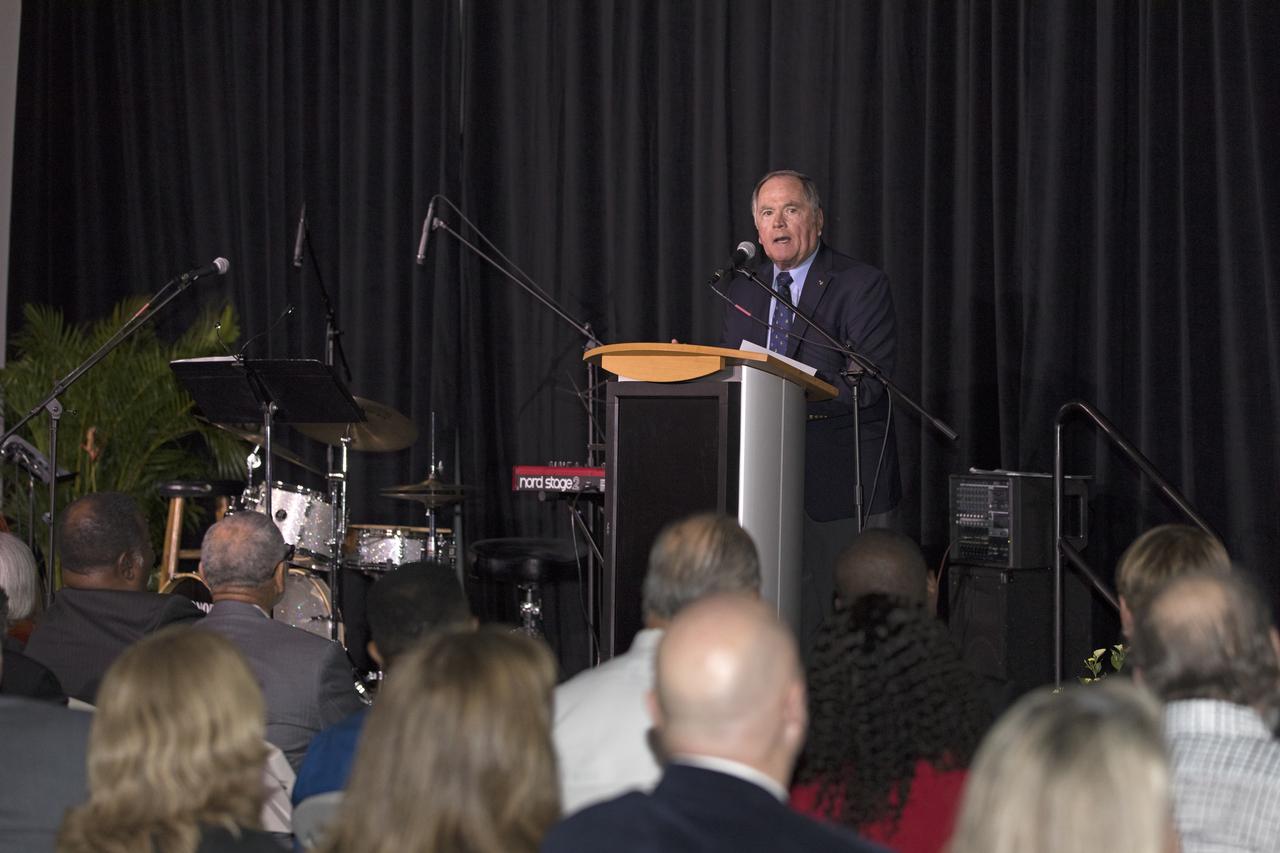
Bob Crippen, former Kennedy center director and NASA astronaut, speaks to guests during an Astronauts Memorial Foundation tribute honoring U.S. Air Foce Maj. Robert Lawrence. Like Crippen, Lawrence was selected in the 1960s for the Manned Orbiting Laboratory Program. As such, Lawrence was the first African-American astronaut. He lost his life in a training accident 50 years ago. The ceremony took place in the Center for Space Education at the Kennedy Space Center Visitor Complex.
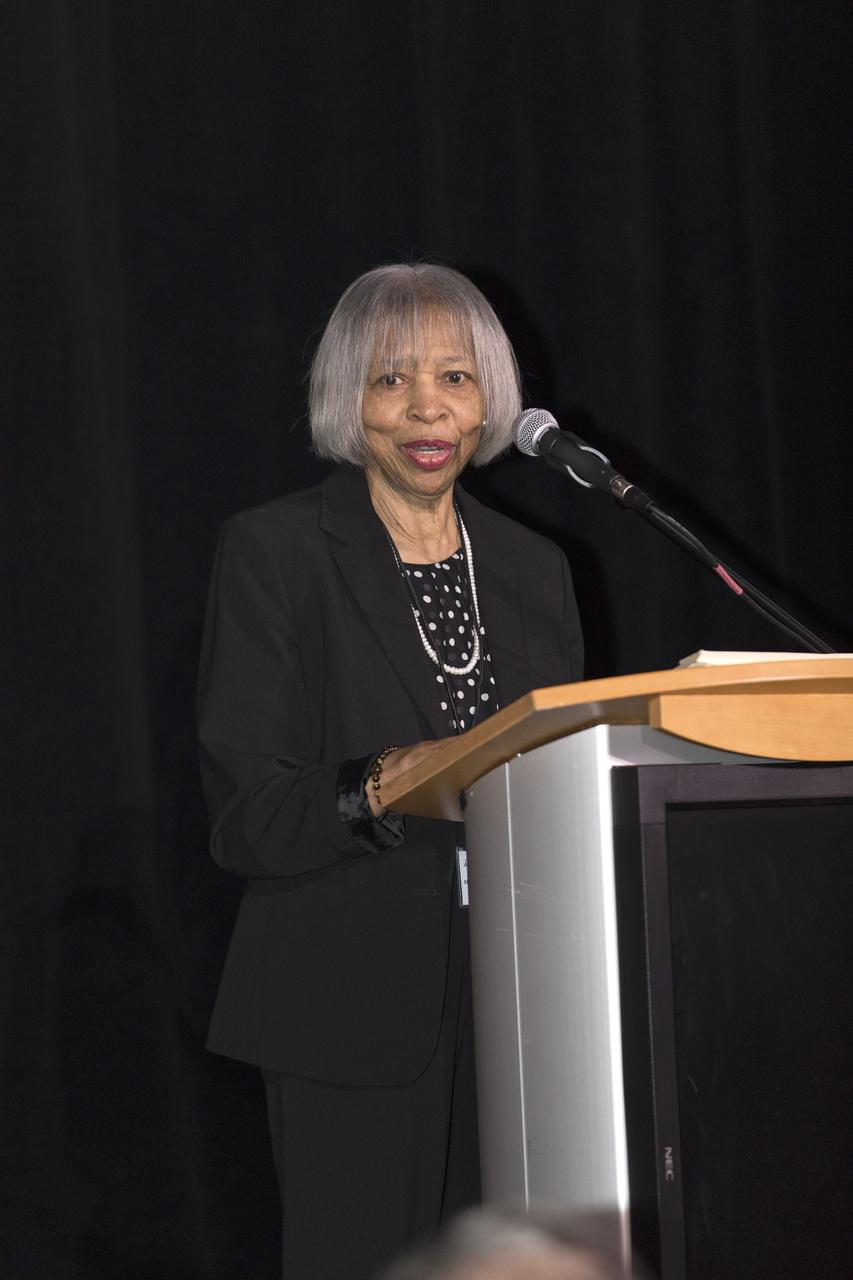
During an Astronauts Memorial Foundation tribute honoring U.S. Air Foce Maj. Robert Lawrence, his sister, Barbara Lawrence, Ph.D., speaks to guests during the ceremony. Selected in 1967 for the Manned Orbiting Laboratory Program, Lawrence was the first African-American astronaut. He lost his life in a training accident 50 years ago. The ceremony took place in the Center for Space Education at the Kennedy Space Center Visitor Complex.
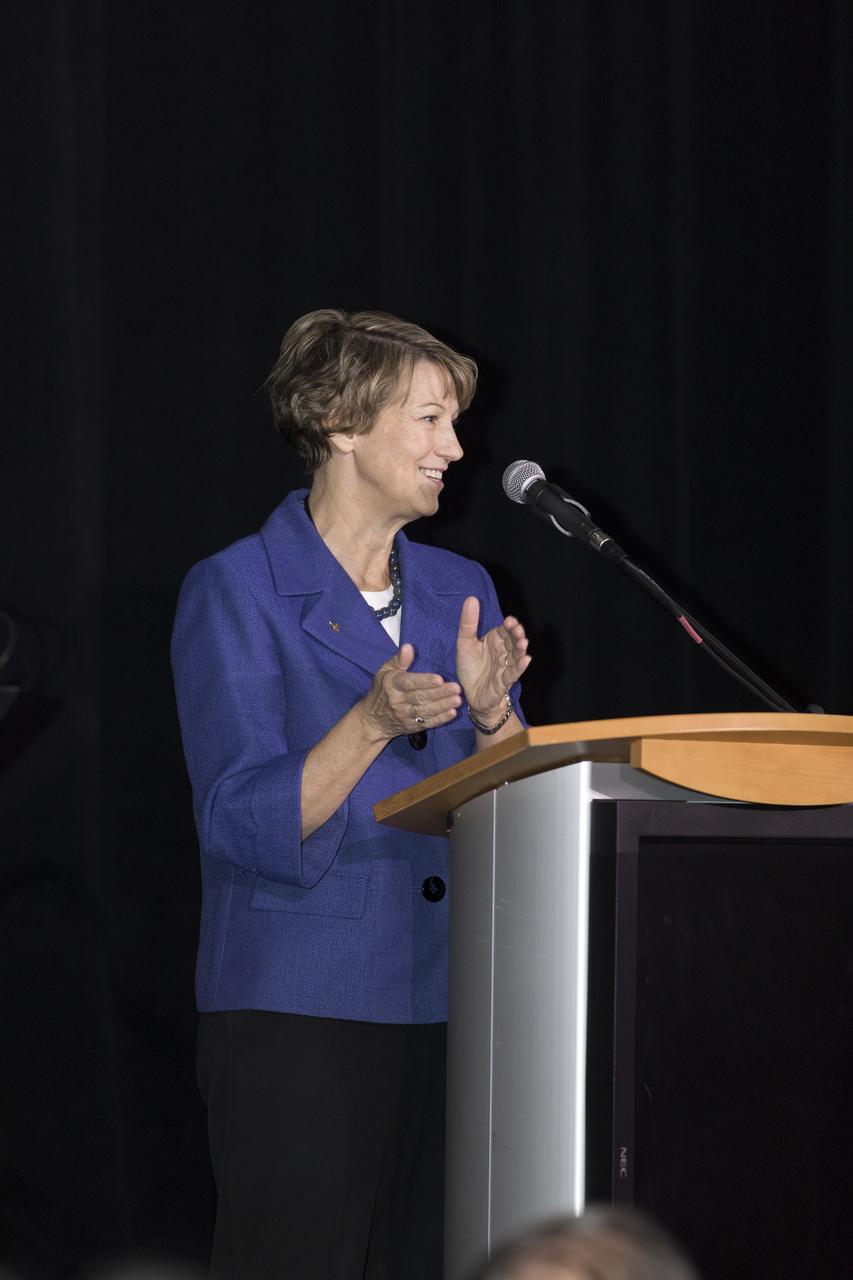
Former NASA astronaut Eileen Collins, who now is chair of the Astronauts Memorial Foundation, speaks during a tribute honoring U.S. Air Foce Maj. Robert Lawrence. Selected in 1967 for the Manned Orbiting Laboratory Program, Lawrence was the first African-American astronaut. He lost his life in a training accident 50 years ago. The ceremony took place in the Center for Space Education at the Kennedy Space Center Visitor Complex.
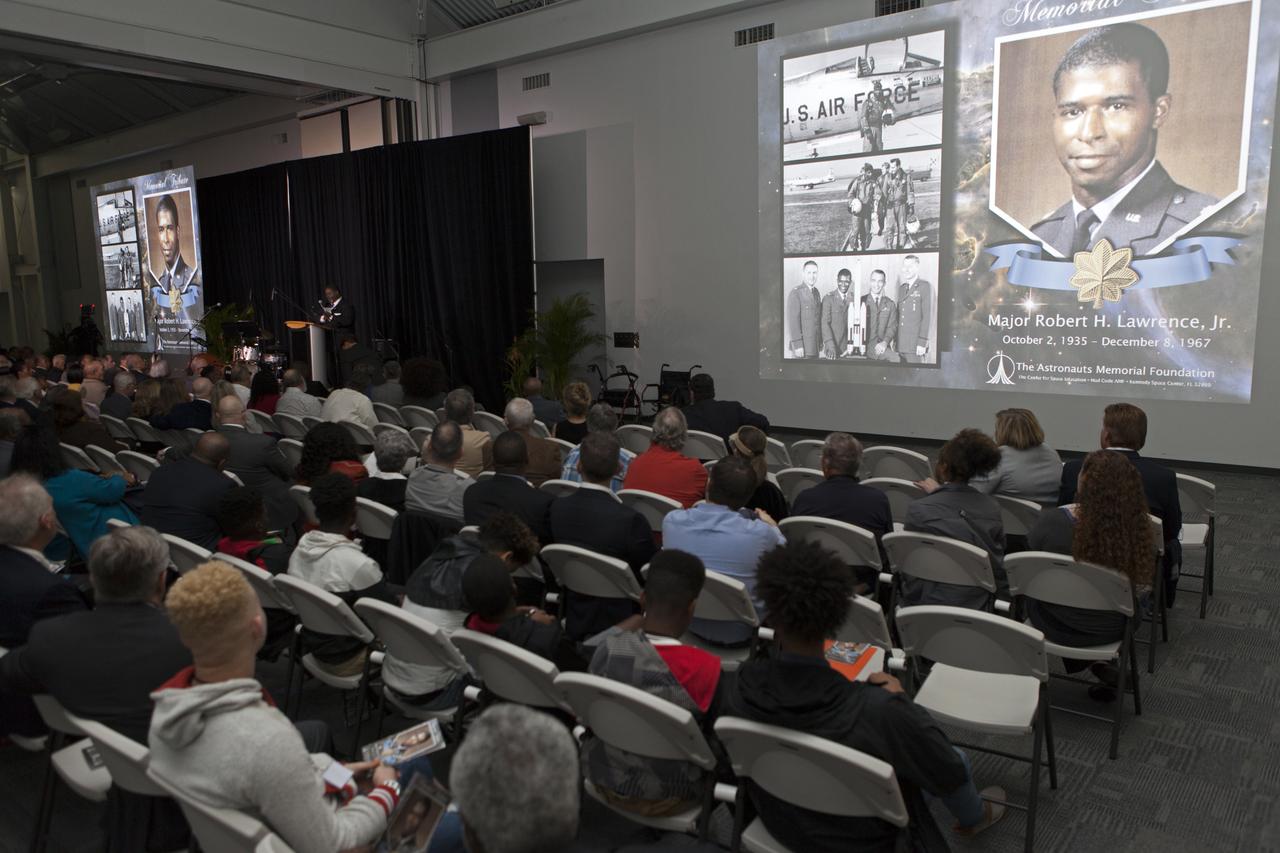
During an Astronauts Memorial Foundation tribute honoring U.S. Air Foce Maj. Robert Lawrence, photographs are projected during a video presentation. Selected in 1967 for the Manned Orbiting Laboratory Program, Lawrence was the first African-American astronaut. He lost his life in a training accident 50 years ago. The ceremony took place in the Center for Space Education at the Kennedy Space Center Visitor Complex.
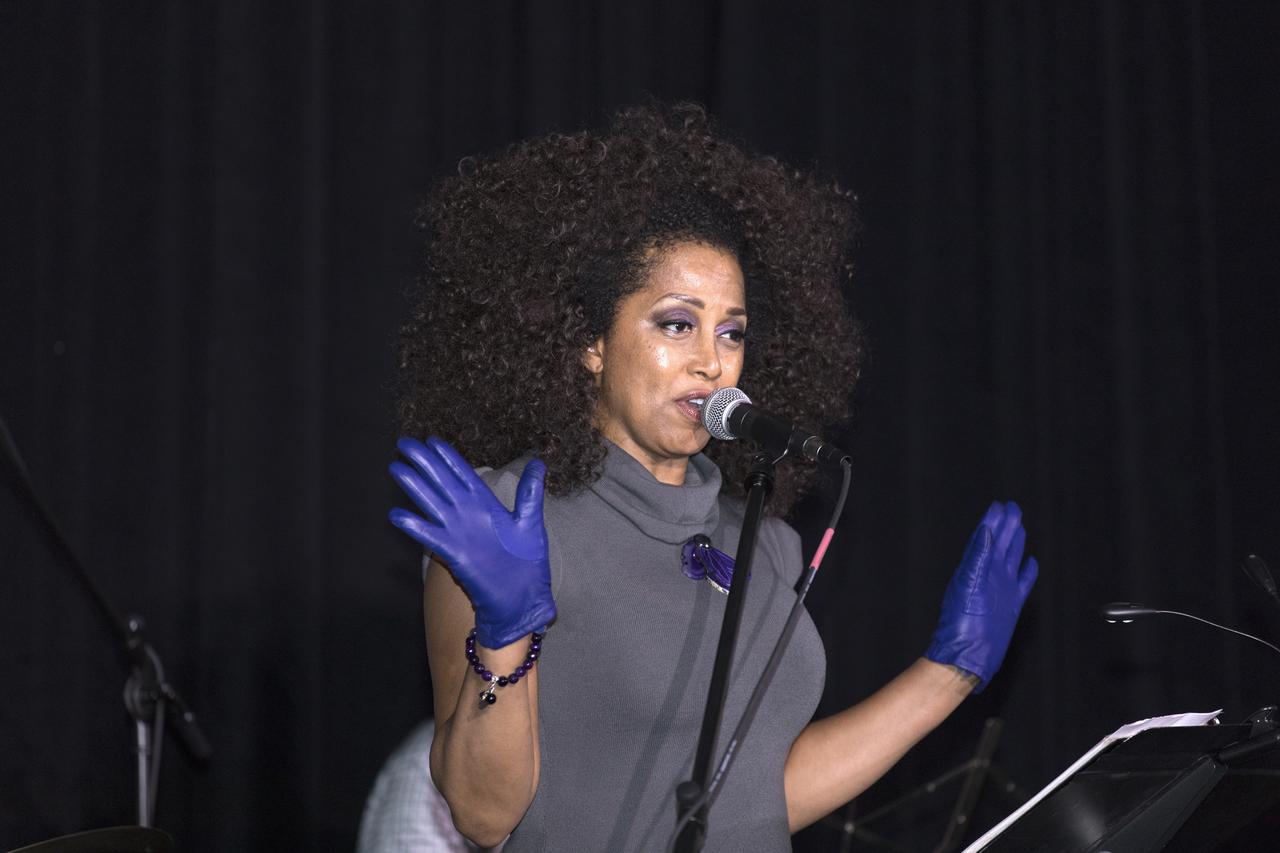
During an Astronauts Memorial Foundation tribute honoring U.S. Air Foce Maj. Robert Lawrence, vocalist Marva King sings with the Winston Scott “Cosmic Jazz Ensemble.” Selected in 1967 for the Manned Orbiting Laboratory Program, Lawrence was the first African-American astronaut. He lost his life in a training accident 50 years ago. The ceremony took place in the Center for Space Education at the Kennedy Space Center Visitor Complex.
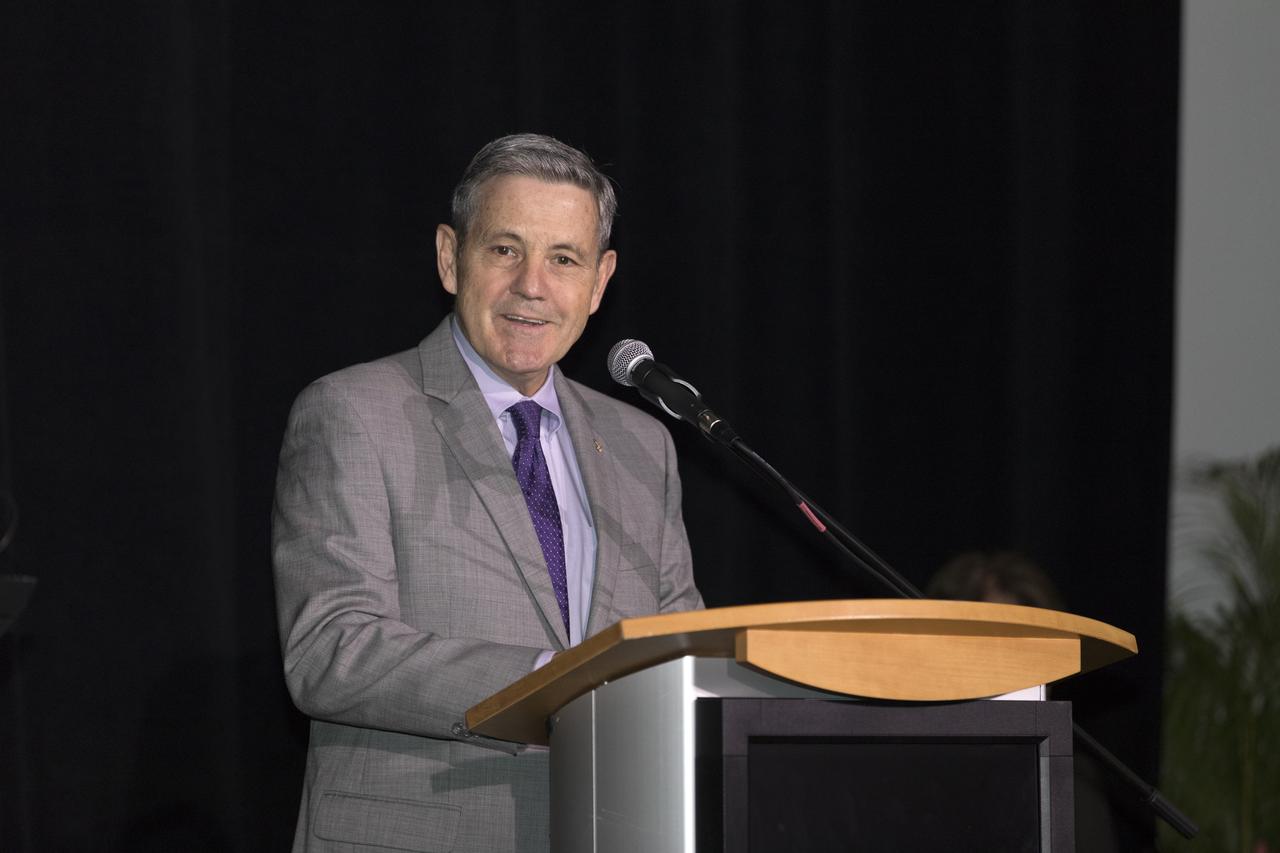
Kennedy Space Center Director Bob Cabana speaks during an Astronauts Memorial Foundation tribute honoring U.S. Air Foce Maj. Robert Lawrence. Selected in 1967 for the Manned Orbiting Laboratory Program, Lawrence was the first African-American astronaut. He lost his life in a training accident 50 years ago. The ceremony took place in the Center for Space Education at the Kennedy Space Center Visitor Complex.
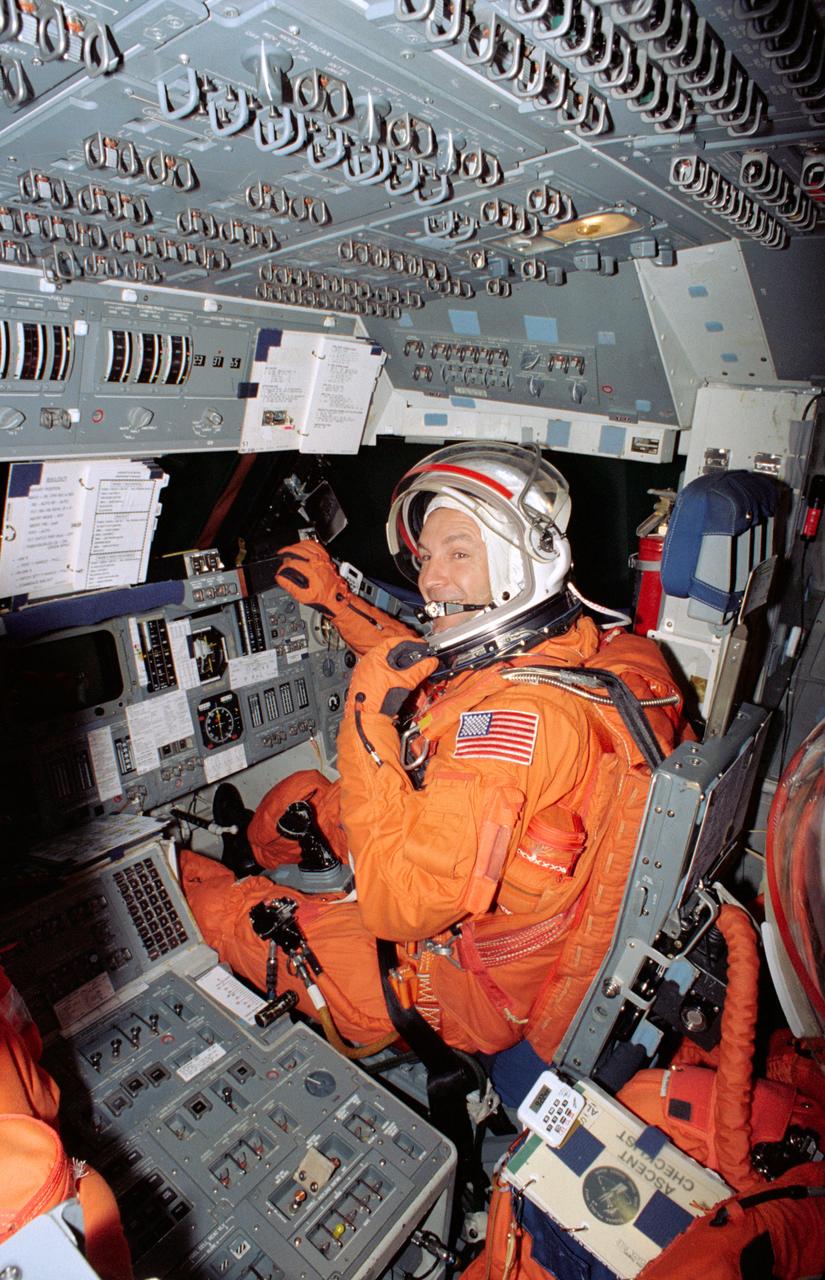
S94-40091 (23 June 1994) --- Astronaut Curtis L. Brown mans the pilot's station of a Shuttle trainer during a rehearsal of procedures to be followed during launch and entry phases of the scheduled November flight of STS-66. This rehearsal, held in the Crew Compartment Trainer (CCT) of the Johnson Space Center's (JSC) Shuttle Mockup and Integration Laboratory, was followed by a training session on emergency egress procedures. Making his second flight in space, Brown will join four other NASA astronauts and a European mission specialist for a week and a half aboard the Space Shuttle Atlantis in Earth-orbit in support of the Atmospheric Laboratory for Applications and Science (ATLAS-3).
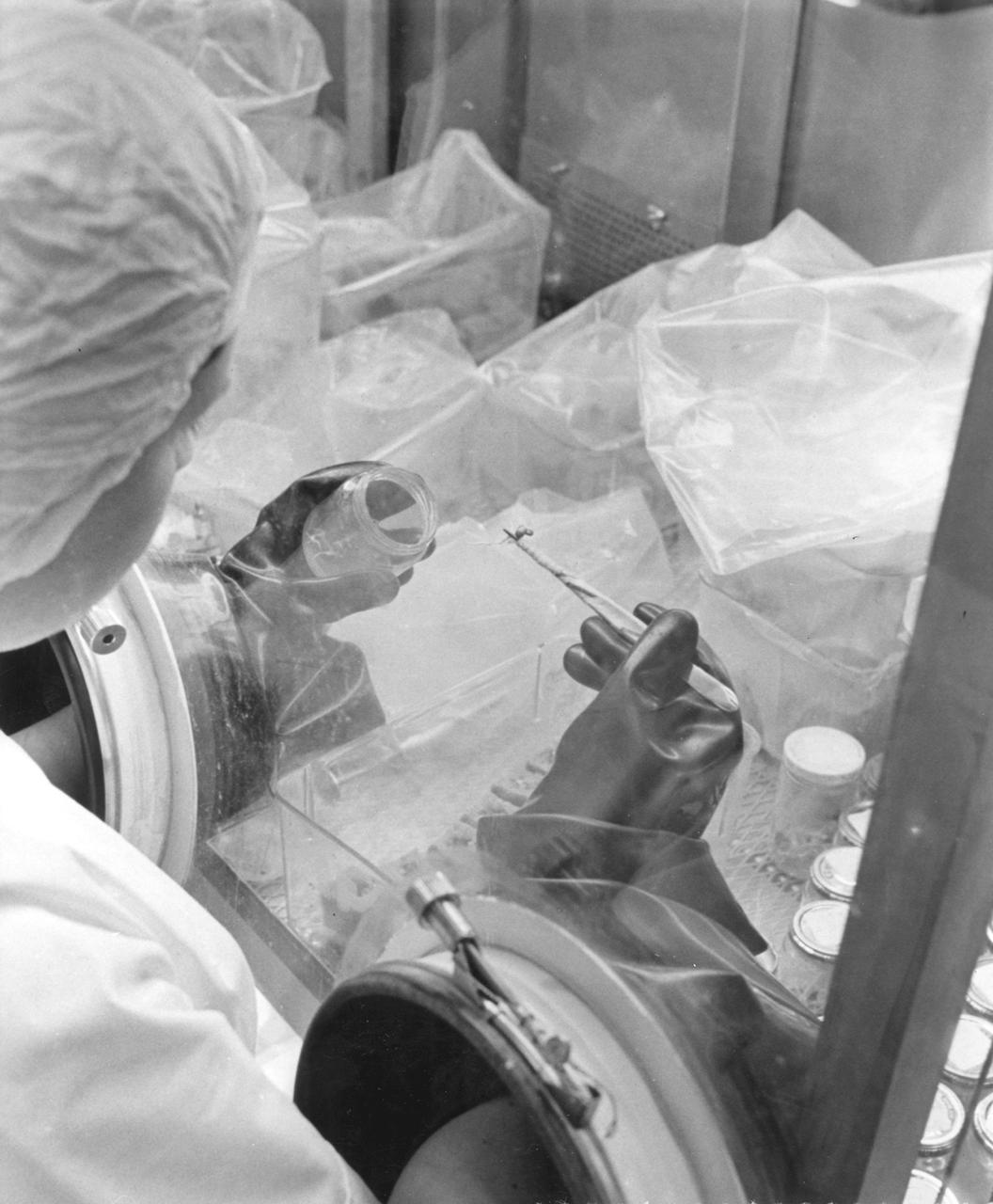
In this photograph, a laboratory technician handles a portion of the more than 20 different plant lines that were used within the Lunar Receiving Laboratory, Building 37 of the Manned Spacecraft Center (MSC) in Houston, Texas. This laboratory was part of the overall physical, chemical, and biological test program of the Apollo 11 returned lunar samples. Aboard the Marshall Space Flight Center (MSFC) developed Saturn V launch vehicle, the Apollo 11 mission launched from The Kennedy Space Center, Florida on July 16, 1969 and safely returned to Earth on July 24, 1969. The 3-man crew aboard the flight consisted of astronauts Neil A. Armstrong, commander; Edwin Aldrin, Lunar Module (LM) pilot; and Michael Collins, Command Module (CM) pilot. The CM, piloted by Michael Collins remained in a parking orbit around the Moon while the LM, named “Eagle’’, carrying astronauts Neil Armstrong and Edwin Aldrin, landed on the Moon. In 2 1/2 hours, the crew collected 47 pounds of lunar surface material which was returned to Earth for analysis.
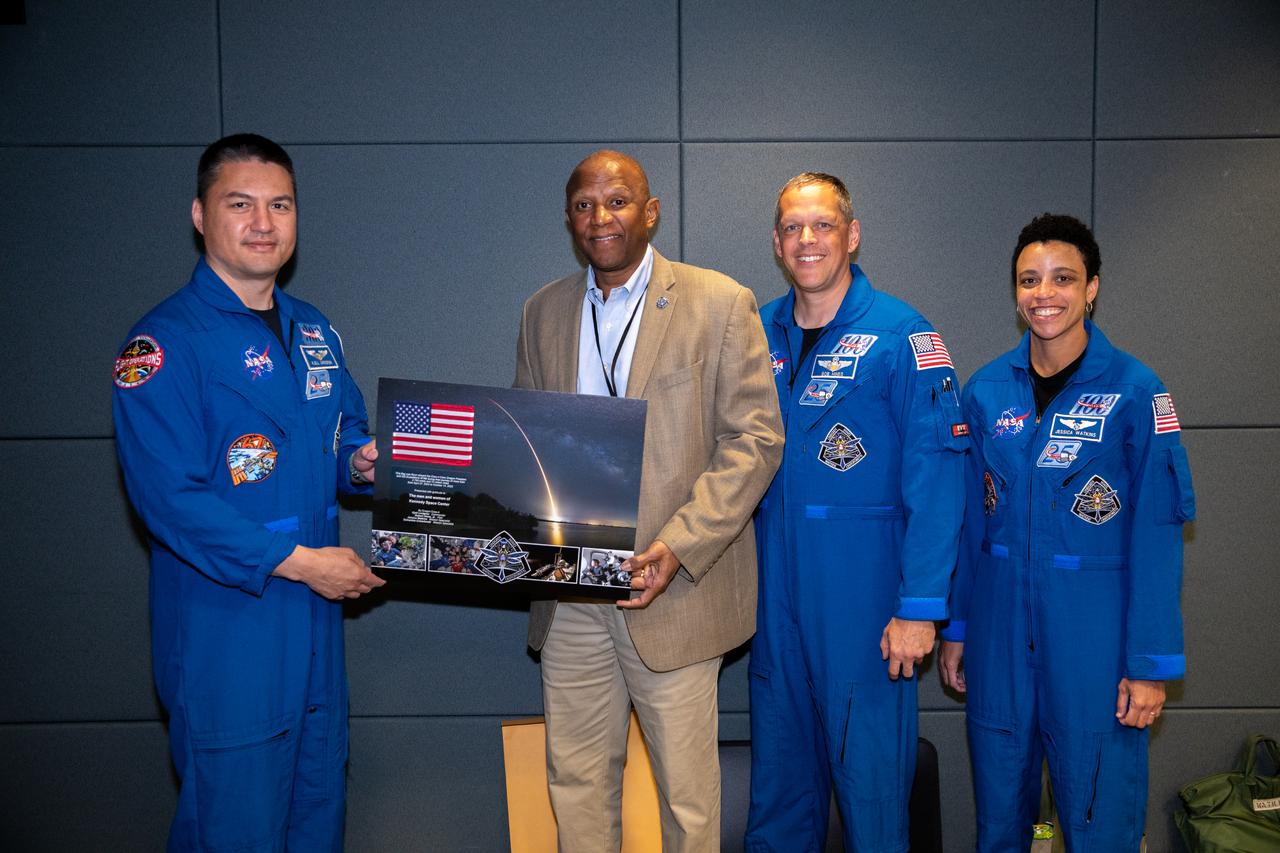
NASA astronaut Kjell Lindgren (left) presents a photo to Kennedy Space Center Deputy Director Kelvin Manning on March 22, 2023, on behalf of the astronaut corps to thank Kennedy employees for supporting NASA’s SpaceX Crew-4 launch. To the right of Manning are NASA astronauts Bob Hines and Jessica Watkins. Lindgren, Hines, and Watkins, along with ESA (European Space Agency) astronaut Samantha Cristoforetti, launched to the International Space Station aboard a SpaceX Crew Dragon spacecraft on April 27, 2022, from the Florida spaceport’s Launch Complex 39A. The crew remained at the orbiting laboratory for approximately six months, conducting critical science as part of the fourth crew rotation mission for NASA’s Commercial Crew Program.
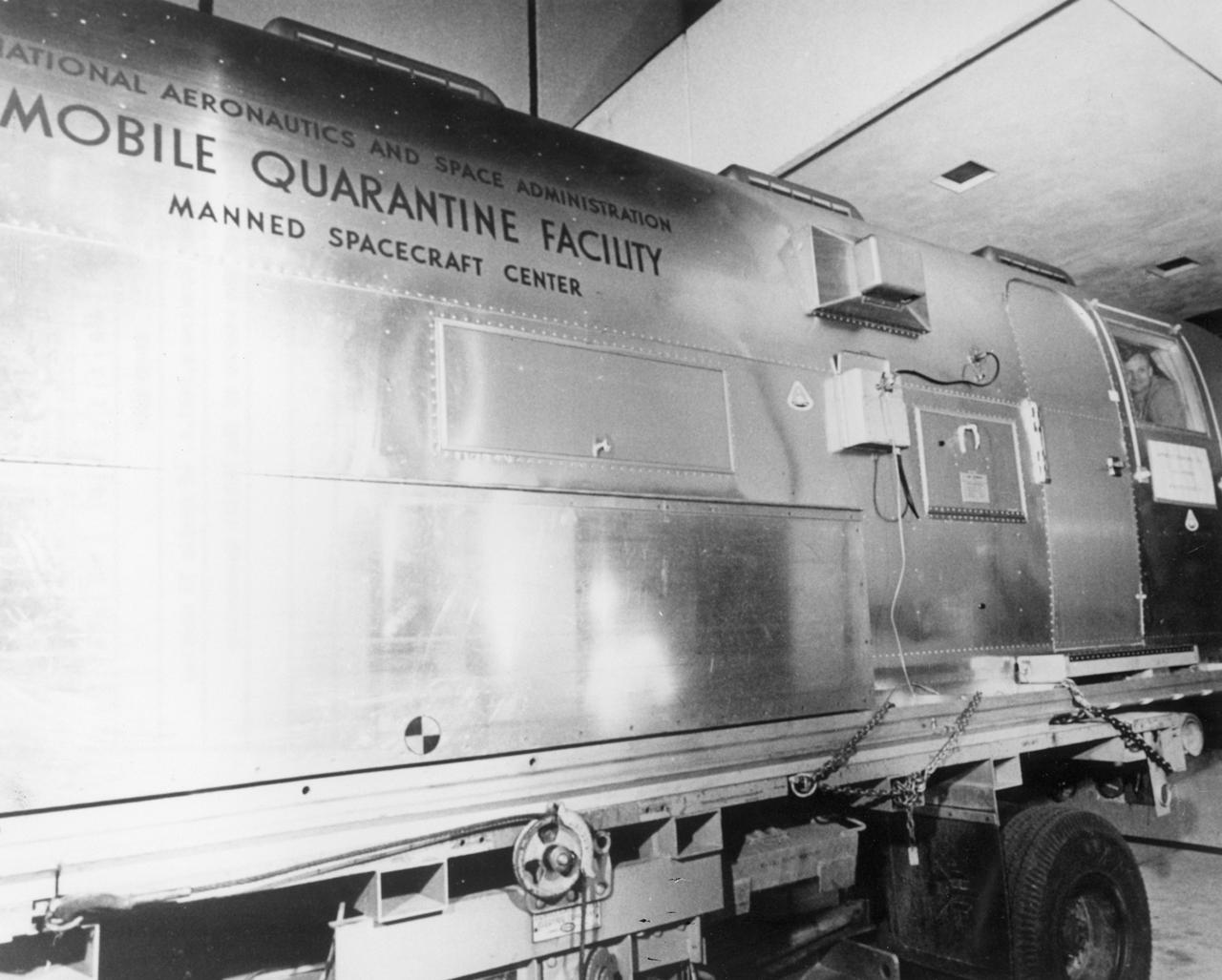
The Apollo 11 mission, the first manned lunar mission, launched from the Kennedy Space Center, Florida via the Marshall Space Flight Center (MSFC) developed Saturn V launch vehicle on July 16, 1969 and safely returned to Earth on July 24, 1969. Aboard the space craft were astronauts Neil A. Armstrong, commander; Michael Collins, Command Module (CM) pilot; and Edwin E. Aldrin Jr., Lunar Module (LM) pilot. The CM, piloted by Michael Collins remained in a parking orbit around the Moon while the LM, named “Eagle’’, carrying astronauts Neil Armstrong and Edwin Aldrin, landed on the Moon. During 2½ hours of surface exploration, the crew collected 47 pounds of lunar surface material for analysis back on Earth. The recovery operation took place in the Pacific Ocean where Navy para-rescue men recovered the capsule housing the 3-man Apollo 11 crew. The crew was airlifted to safety aboard the U.S.S. Hornet, where they were quartered in a Mobile Quarantine Facility (MQF) which served as their home until they reached the NASA Manned Spacecraft Center (MSC) Lunar Receiving Laboratory in Houston, Texas. In this close up of the MQF, commander Armstrong can be seen through the facility window after its arrival at the MSC.
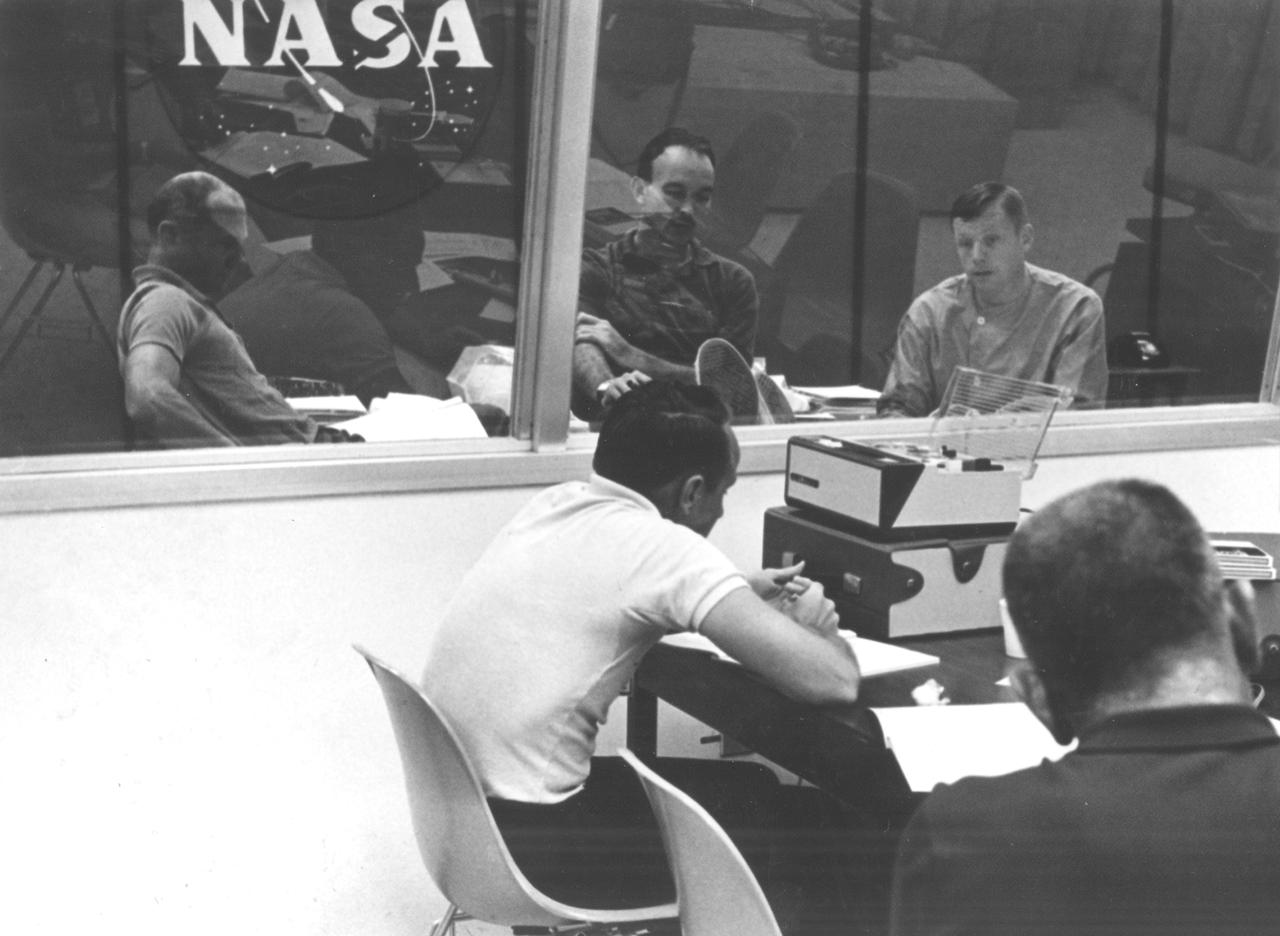
The Apollo 11 mission, the first manned lunar mission, launched from the Kennedy Space Center, Florida via the Marshall Space Flight Center (MSFC) developed Saturn V launch vehicle on July 16, 1969 and safely returned to Earth on July 24, 1969. Aboard the space craft were astronauts Neil A. Armstrong, commander; Michael Collins, Command Module (CM) pilot; and Edwin E. Aldrin Jr., Lunar Module (LM) pilot. The CM, piloted by Michael Collins remained in a parking orbit around the Moon while the LM, named “Eagle’’, carrying astronauts Neil Armstrong and Edwin Aldrin, landed on the Moon. During 2½ hours of surface exploration, the crew collected 47 pounds of lunar surface material for analysis back on Earth. The recovery operation took place in the Pacific Ocean where Navy para-rescue men recovered the capsule housing the 3-man Apollo 11 crew. The crew was airlifted to safety aboard the U.S.S. Hornet, where they were quartered in a Mobile Quarantine Facility (MQF) which served as their home until they reached the NASA Manned Spacecraft Center (MSC) Lunar Receiving Laboratory in Houston, Texas. The three are seen here at the MSC, still inside the MQF, undergoing their first debriefing on Sunday, August 3, 1969. Behind the glass are (L-R): Edwin Aldrin, Michael Collins, and Neil Armstrong.
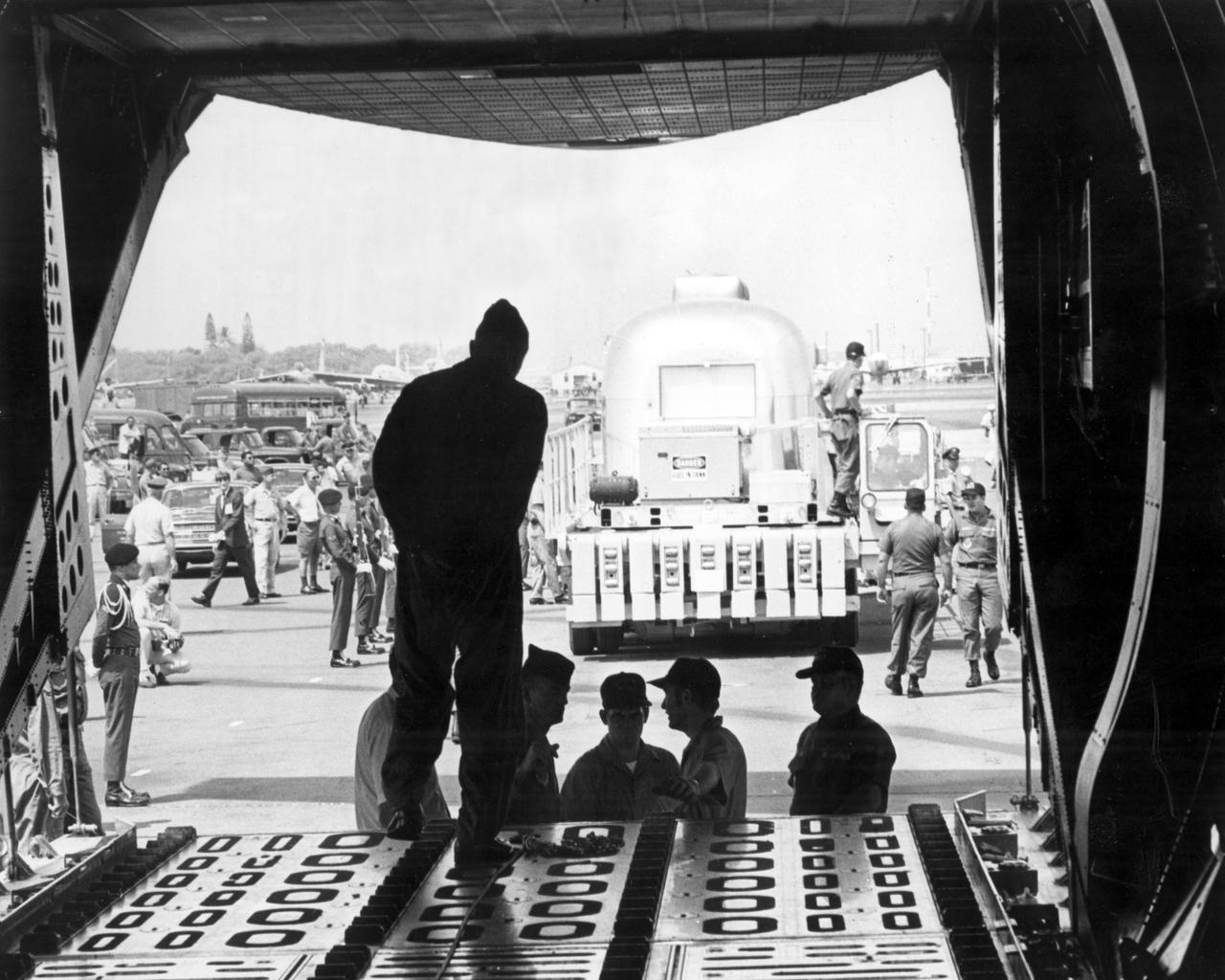
The Apollo 11 mission, the first manned lunar mission, launched from the Kennedy Space Center, Florida via the Marshall Space Flight Center (MSFC) developed Saturn V launch vehicle on July 16, 1969 and safely returned to Earth on July 24, 1969. Aboard the space craft were astronauts Neil A. Armstrong, commander; Michael Collins, Command Module (CM) pilot; and Edwin E. Aldrin Jr., Lunar Module (LM) pilot. The CM, piloted by Michael Collins remained in a parking orbit around the Moon while the LM, named “Eagle’’, carrying astronauts Neil Armstrong and Edwin Aldrin, landed on the Moon. During 2½ hours of surface exploration, the crew collected 47 pounds of lunar surface material for analysis back on Earth. The recovery operation took place in the Pacific Ocean where Navy para-rescue men recovered the capsule housing the 3-man Apollo 11 crew. The crew was airlifted to safety aboard the U.S.S. Hornet, where they were quartered in a Mobile Quarantine Facility (MQF) which served as their home until they reached the NASA Manned Spacecraft Center (MSC) Lunar Receiving Laboratory in Houston, Texas. In this photo taken at Pearl Harbor, Hawaii, the inhabited MQF is prepared for loading into an Air Force C-141 jet transport for the flight back to Ellington Air Force Base Texas and then on to the MSC.
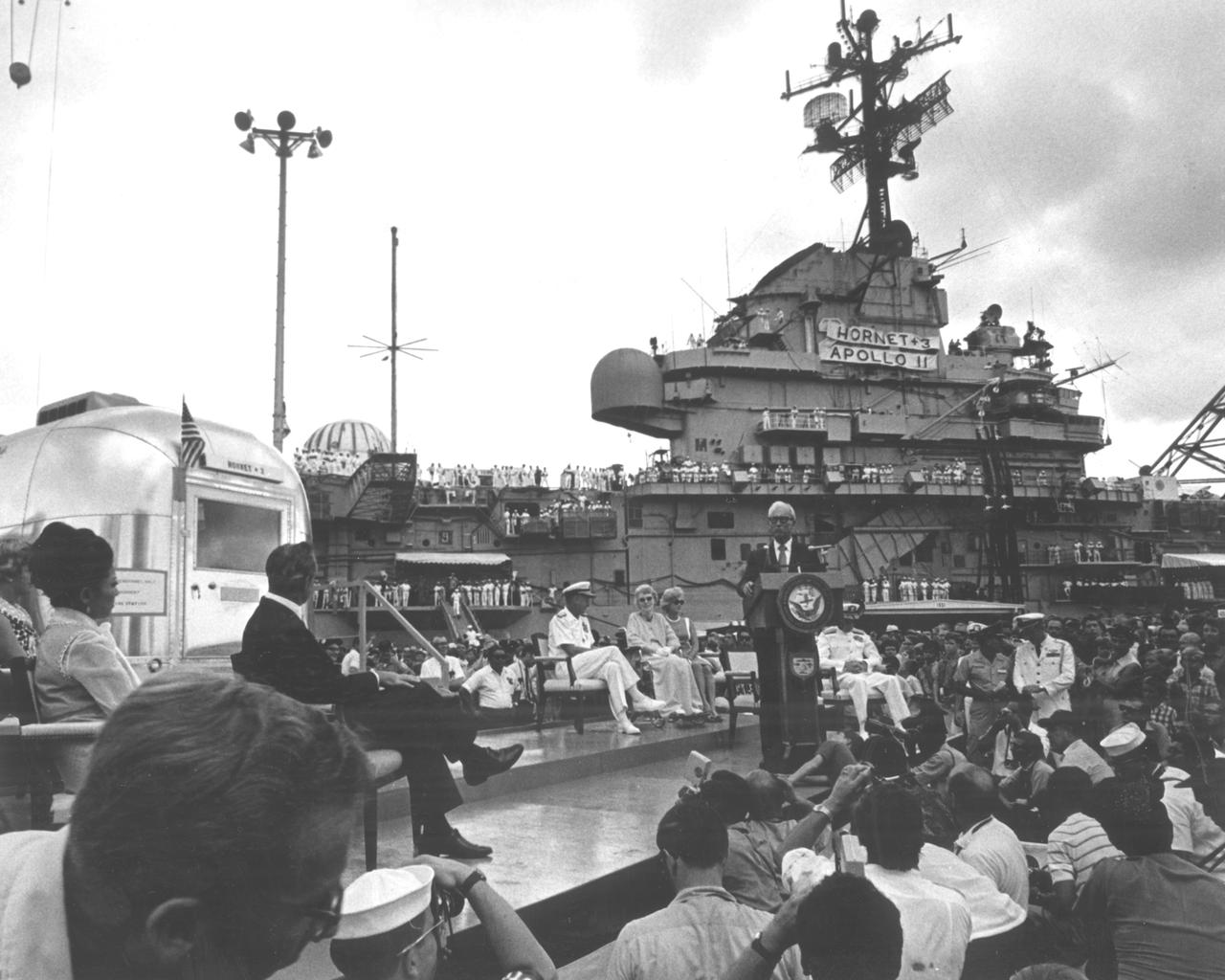
The Apollo 11 mission, the first manned lunar mission, launched from the Kennedy Space Center, Florida via the Marshall Space Flight Center (MSFC) developed Saturn V launch vehicle on July 16, 1969 and safely returned to Earth on July 24, 1969. Aboard the space craft were astronauts Neil A. Armstrong, commander; Michael Collins, Command Module (CM) pilot; and Edwin E. Aldrin Jr., Lunar Module (LM) pilot. The CM, piloted by Michael Collins remained in a parking orbit around the Moon while the LM, named “Eagle’’, carrying astronauts Neil Armstrong and Edwin Aldrin, landed on the Moon. During 2½ hours of surface exploration, the crew collected 47 pounds of lunar surface material for analysis back on Earth. The recovery operation took place in the Pacific Ocean where Navy para-rescue men recovered the capsule housing the 3-man Apollo 11 crew. The crew was airlifted to safety aboard the U.S.S. Hornet recovery ship, where they were quartered in a Mobile Quarantine Facility (MQF) for 21 days. The recovery vessel docked in Pearl Harbor Hawaii, where the occupied MQF was transferred for transport to the to NASA Manned Spacecraft Center (MSC) Lunar Receiving Laboratory in Houston, Texas. In this photo the quarantined astronauts are addressed by Hawaiian Governor John Burns upon their arrival at Pearl Harbor.
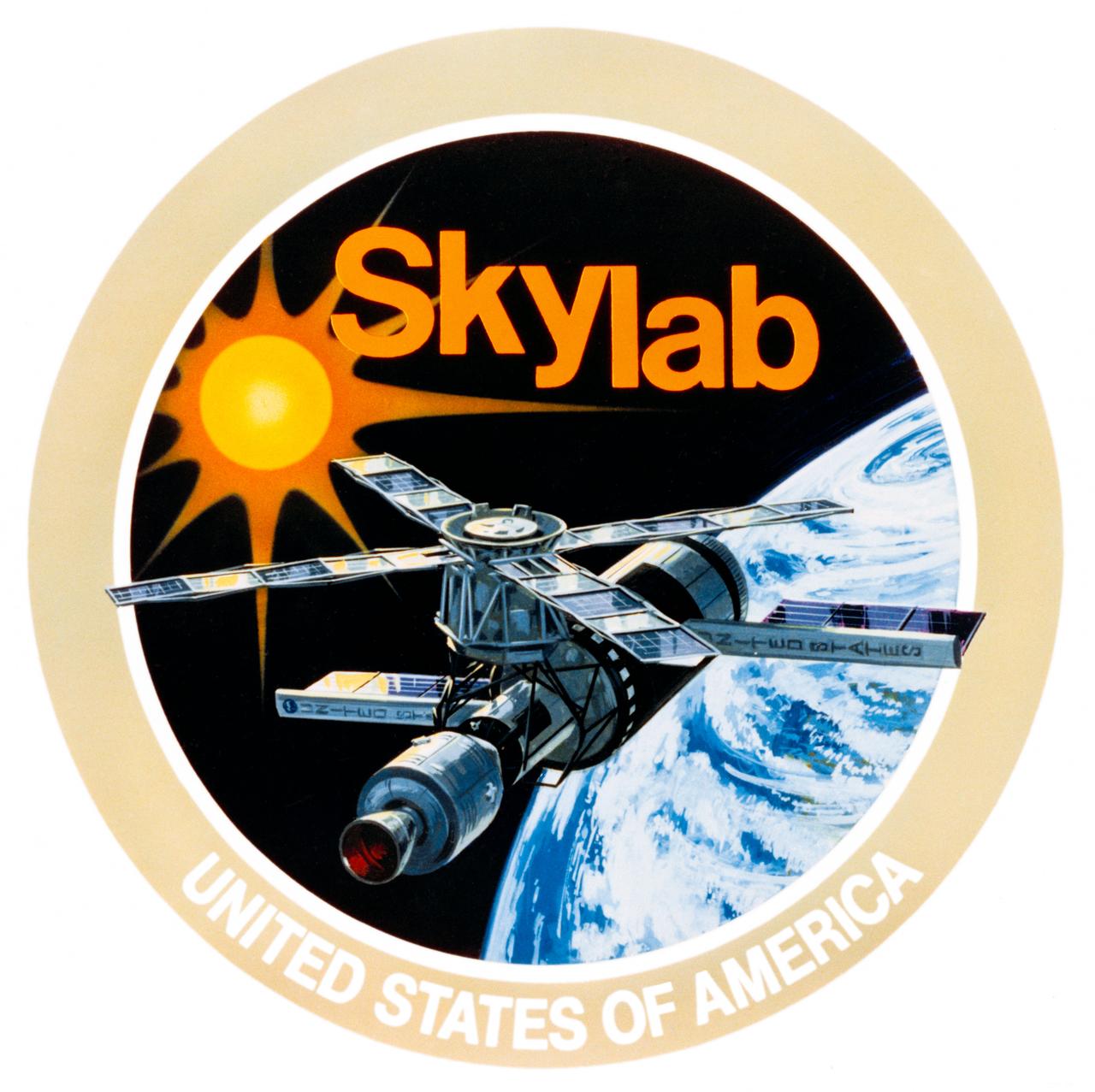
S73-23952 (May 1973) --- This is the official emblem for the National Aeronautics and Space Administration's (NASA) Skylab Program. The emblem depicts the United States Skylab space station cluster in Earth orbit with the sun in the background. Skylab will evaluate systems and techniques designed to gather information on Earth resources and environmental problems. Solar telescopes will increase man's knowledge of our sun and the multitude of solar influences on Earth environment. Medical experiments will increase knowledge of man himself and his relationship to his earthly environment and adaptability to spaceflight. Additionally, Skylab will experiment with industrial processes which may be enhanced by the unique weightless, vacuum environment of orbital spaceflight. The 100-ton laboratory complex Skylab space station is composed of the Command/Service Module (CSM), Orbital Workshop (OW), Apollo Telescope Mount (ATM), Multiple Docking Adapter (MDA), and Airlock Module (AM). The NASA insignia design for Skylab is reserved for use by the astronauts and for other official use as the NASA Administrator may authorize. Public availability has been approved only in the form of illustrations by the various news media. When and if there is any change in this policy, which we do not anticipate, it will be publicly announced. Photo credit: NASA
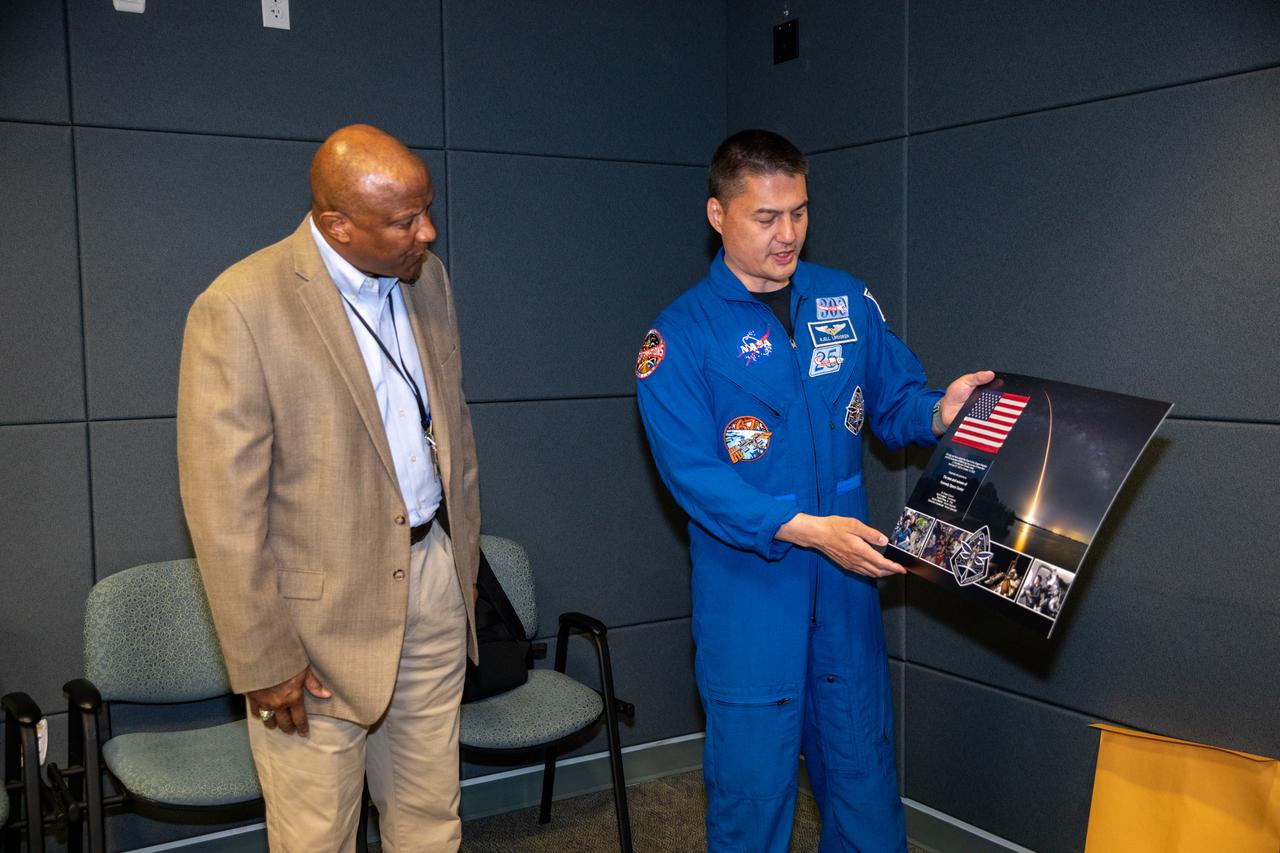
NASA astronaut Kjell Lindgren (right) presents a photo to Kennedy Space Center Deputy Director Kelvin Manning on March 22, 2023, on behalf of the astronaut corps to thank Kennedy employees for supporting NASA’s SpaceX Crew-4 launch. Lindgren, along with NASA astronauts Bob Hines and Jessica Watkins, and ESA (European Space Agency) astronaut Samantha Cristoforetti, launched to the International Space Station aboard a SpaceX Crew Dragon spacecraft on April 27, 2022, from the Florida spaceport’s Launch Complex 39A. The crew remained at the orbiting laboratory for approximately six months, conducting critical science as part of the fourth crew rotation mission for NASA’s Commercial Crew Program.
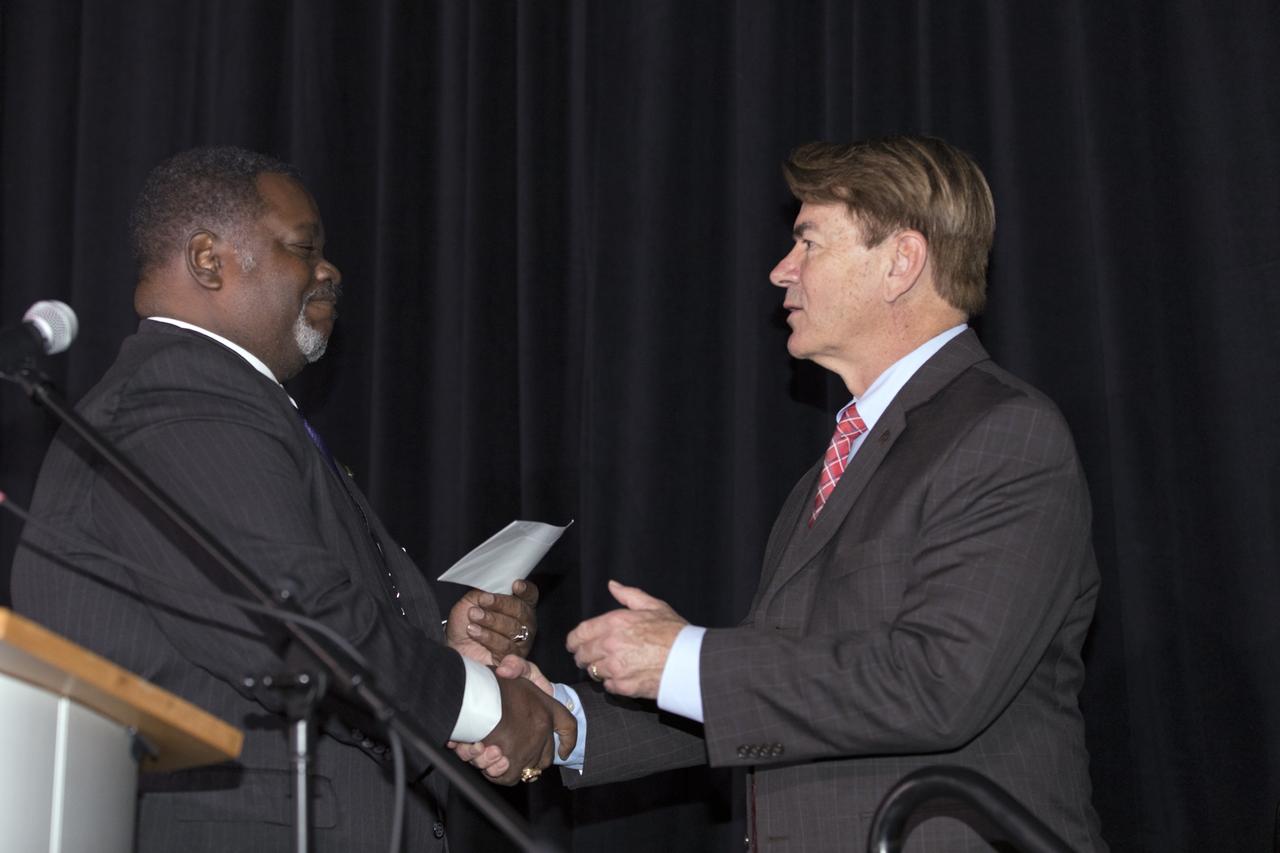
Antonio "Tony" Knox, grand basileus of the Omega Psi Phi farternity, makes a presentation to the Astronauts Memorial Foundation (AMF) with State Rep. Thad Altman, AMF president, accepting on behalf of the organization. The presentation took palce during an AMF tribute honoring U.S. Air Foce Maj. Lawrence who was a member of the fraternity. Selected in 1967 for the Manned Orbiting Laboratory Program, Lawrence was the first African-American astronaut. He lost his life in a training accident 50 years ago. The ceremony took place in the Center for Space Education at the Kennedy Space Center Visitor Complex.
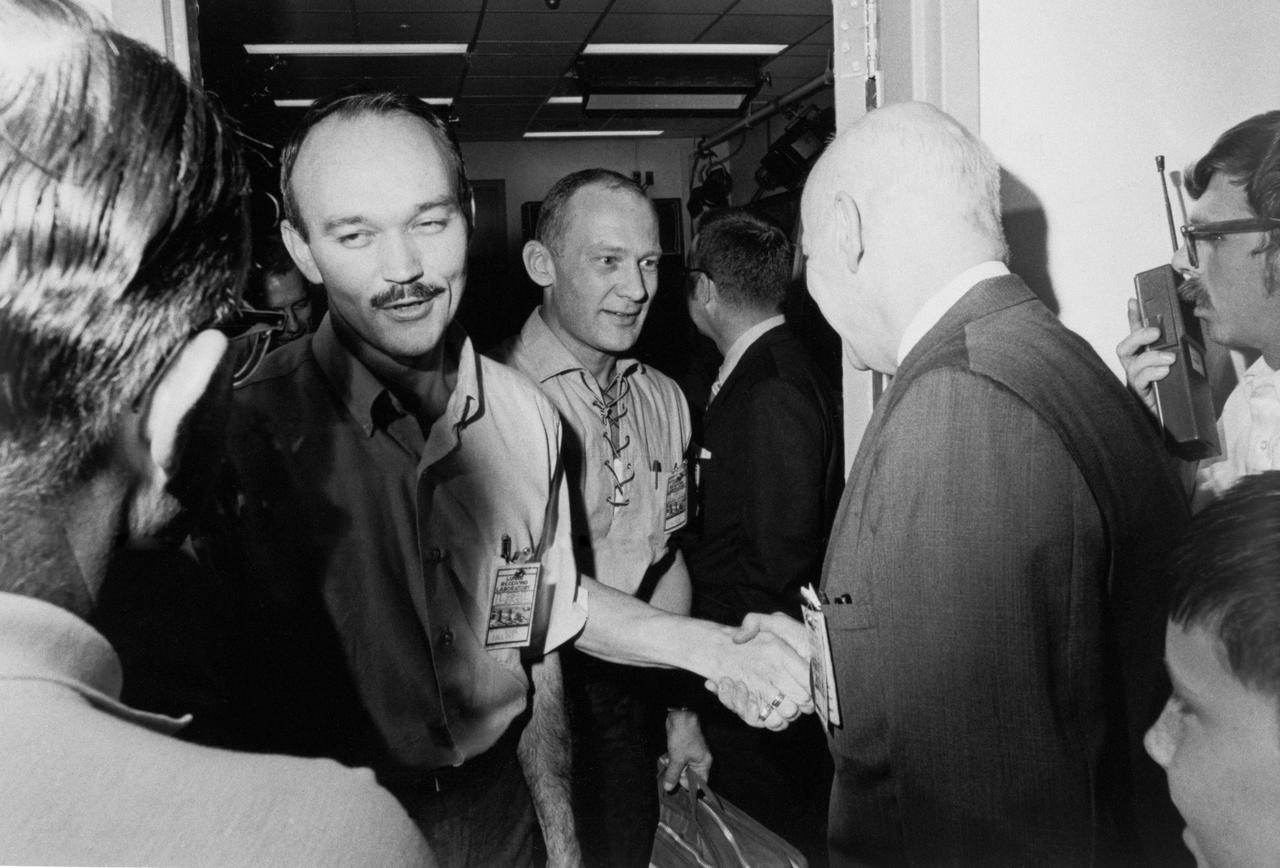
S69-41359 (10 Aug. 1969) --- Astronauts Michael Collins (left) and Edwin E. Aldrin Jr., are greeted by Dr. Robert R. Gilruth, director, Manned Spacecraft Center (MSC), and others upon their release from quarantine. The Apollo 11 crew left the Crew Reception Area (CRA) of the Lunar Receiving Laboratory (LRL) at 9 p.m., Aug. 10, 1969. While astronauts Neil A. Armstrong, commander, and Aldrin, lunar module pilot, descended in the Lunar Module (LM) "Eagle" to explore the Sea of Tranquility region of the moon, astronaut Collins, command module pilot, remained with the Command and Service Modules (CSM) "Columbia" in lunar orbit.
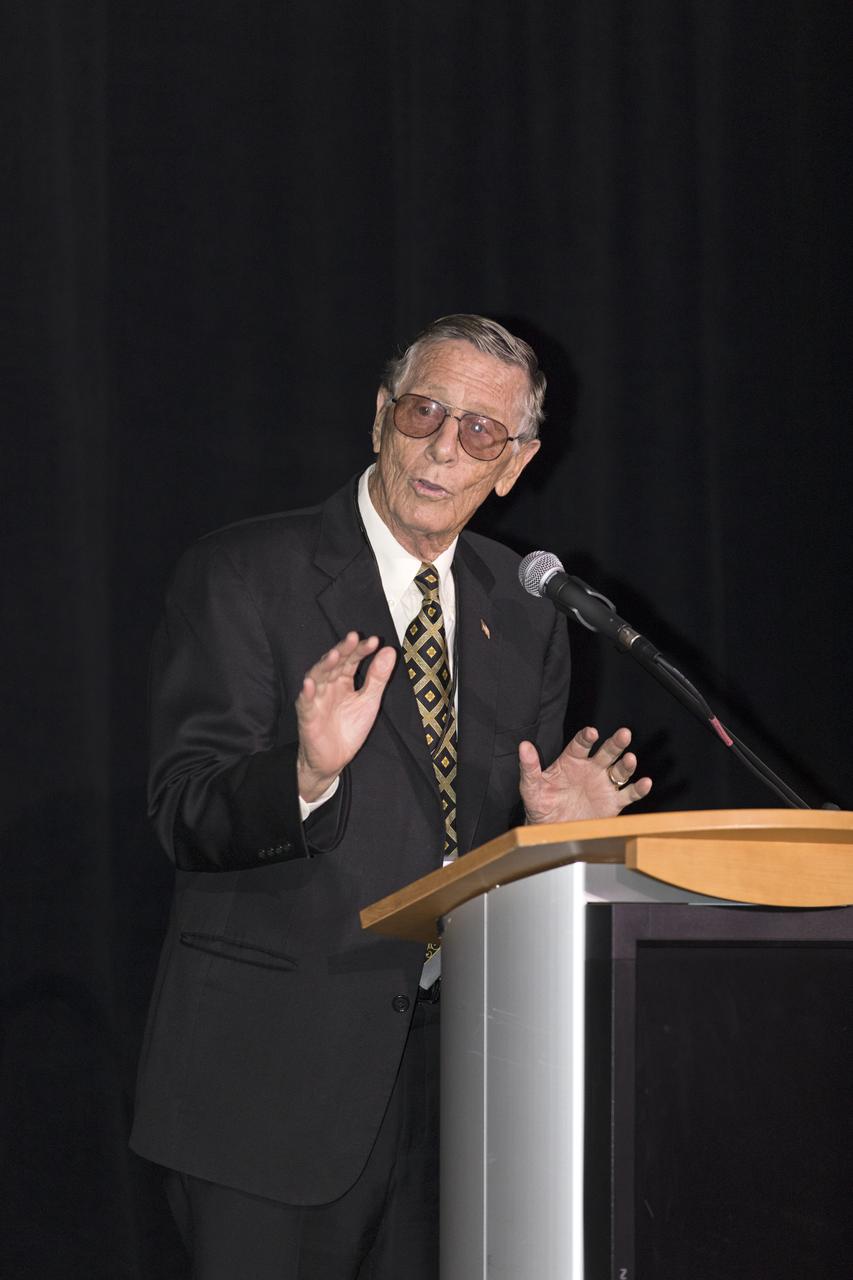
During an Astronauts Memorial Foundation tribute honoring U.S. Air Foce Maj. Robert Lawrence, James Abrahamson, speaks to guests during the ceremony. A retired U.S. Air Force lieutenant general, Abrahamson also was a Manned Orbiting Laboratory astronaut who later was associate administrator of NASA and served as director of the Strategic Defense Initiative. Selected in 1967 for the MOL Program, Lawrence was the first African-American astronaut. He lost his life in a training accident 50 years ago. The ceremony took place in the Center for Space Education at the Kennedy Space Center Visitor Complex.
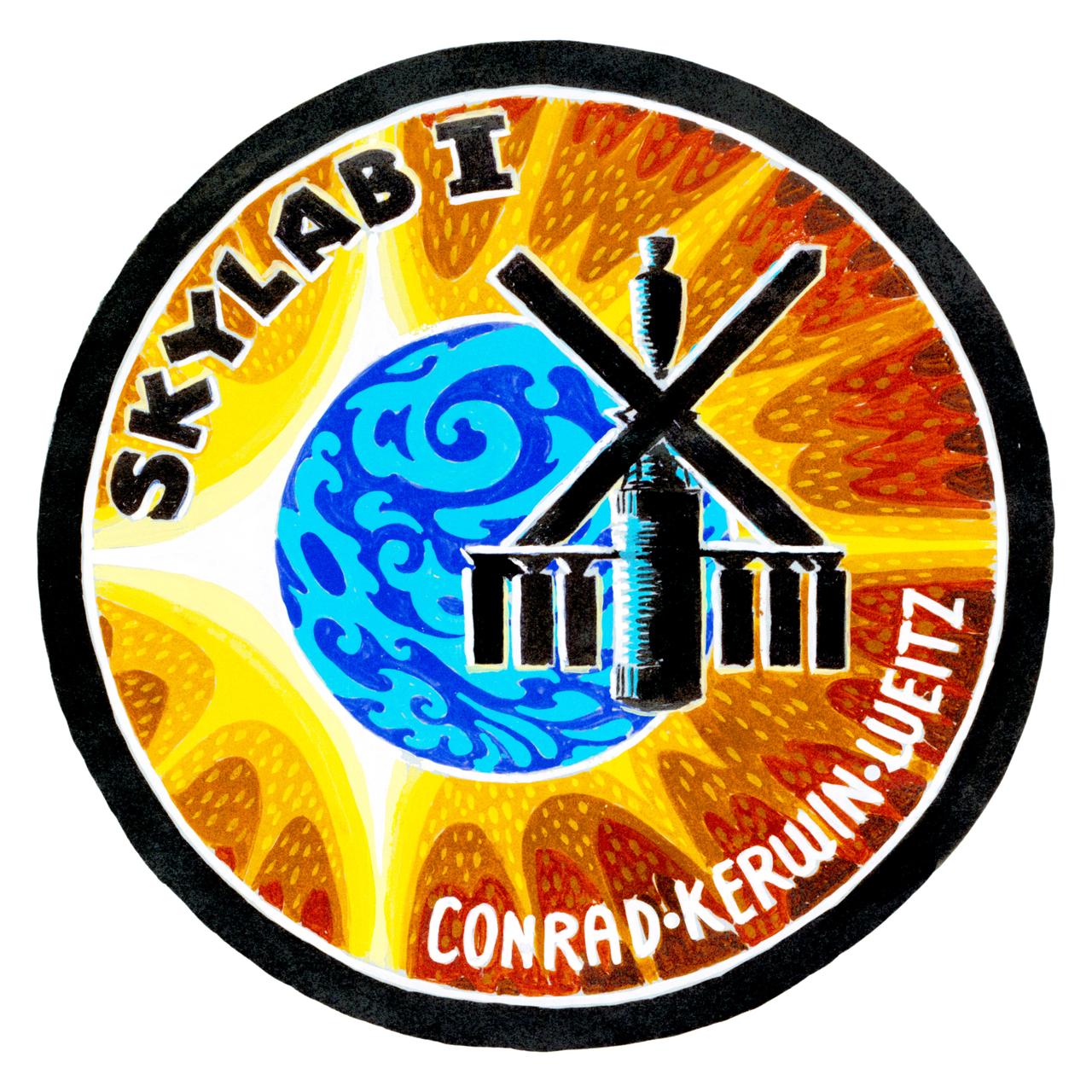
S72-52630 (February 1972) --- This is the emblem for the first manned Skylab mission. It will be a mission of up to 28 days. Skylab is an experimental space station consisting of a 100-ton laboratory complex in which medical, scientific and technological experiments will be performed in Earth orbit. The prime crew of this mission will be astronaut Charles Conrad Jr., commander; scientist-astronaut Joseph P. Kerwin, science pilot; and astronaut Paul J. Weits, pilot. The patch, designed by artist Kelly Freas, shows the Skylab silhouetted against the Earth's globe, which in turn is eclipsing the sun--showing the brilliant signet-ring pattern of the instant before the total eclipse. Photo credit: NASA
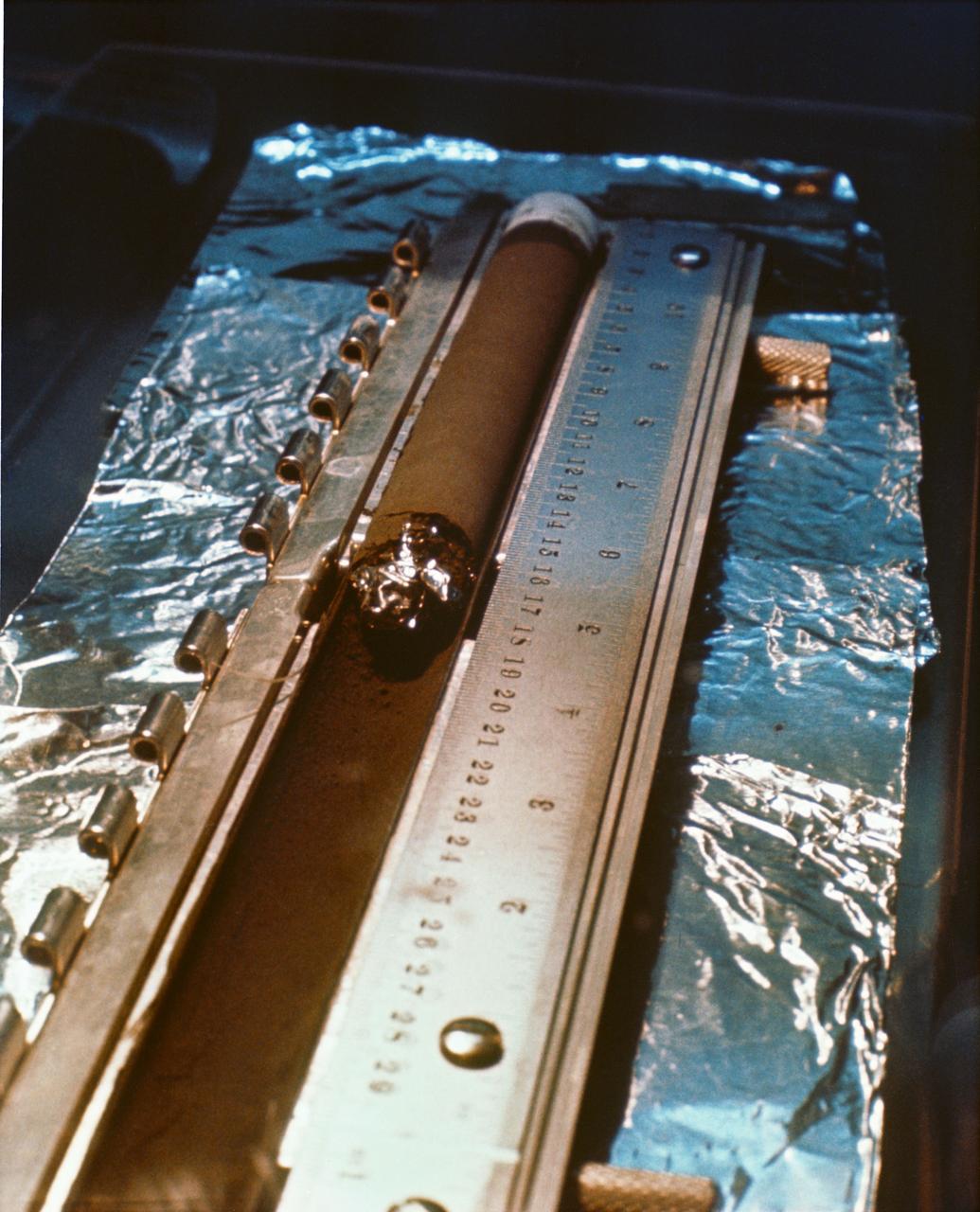
S69-40945 (August 1969) --- This is a core tube sample under study and examination in the Manned Spacecraft Center?s (MSC) Lunar Receiving Laboratory (LRL). The sample was among lunar soil and rock samples collected by astronauts Neil A. Armstrong and Edwin E. Aldrin Jr. during their extravehicular activity (EVA) on July 20, 1969. While astronauts Armstrong, commander; and Aldrin, lunar module pilot; descended in the Apollo 11 Lunar Module (LM) "Eagle" to explore the Sea of Tranquility landing site on the moon. Astronaut Michael Collins, command module pilot, remained with the Command and Service Modules (CSM) "Columbia" in lunar orbit.
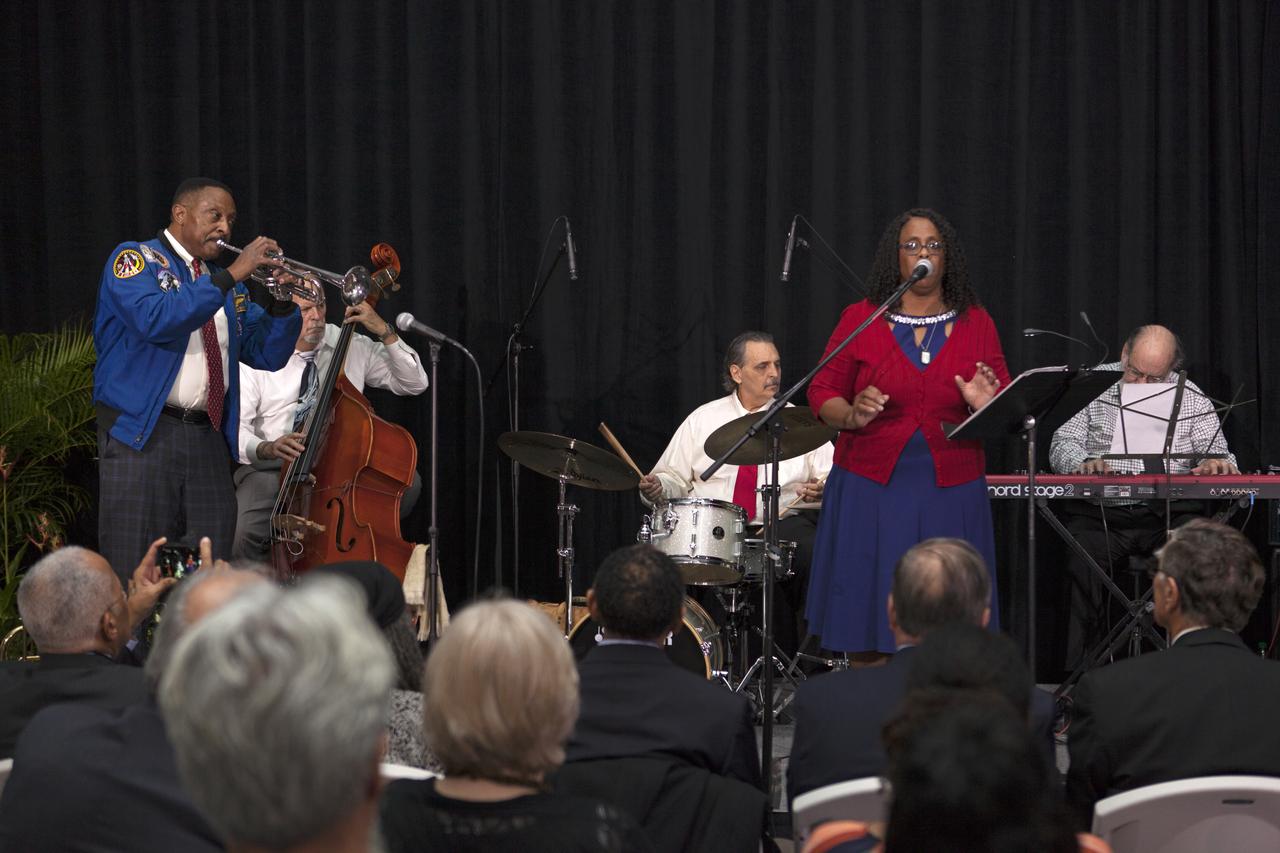
During an Astronauts Memorial Foundation tribute honoring U.S. Air Foce Maj. Robert Lawrence, The Winston Scott “Cosmic Jazz Ensemble” performed. Participants are, from the left, former NASA astronaut Winston Scott playing trumpet, Al Dodds on bass, Stan Soloko playing drums, vocalist Shyrl “Lady Tandy” Johnson, and Ron Teixeira playing piano. Selected in 1967 for the Manned Orbiting Laboratory Program, Lawrence was the first African-American astronaut. He lost his life in a training accident 50 years ago. The ceremony took place in the Center for Space Education at the Kennedy Space Center Visitor Complex.
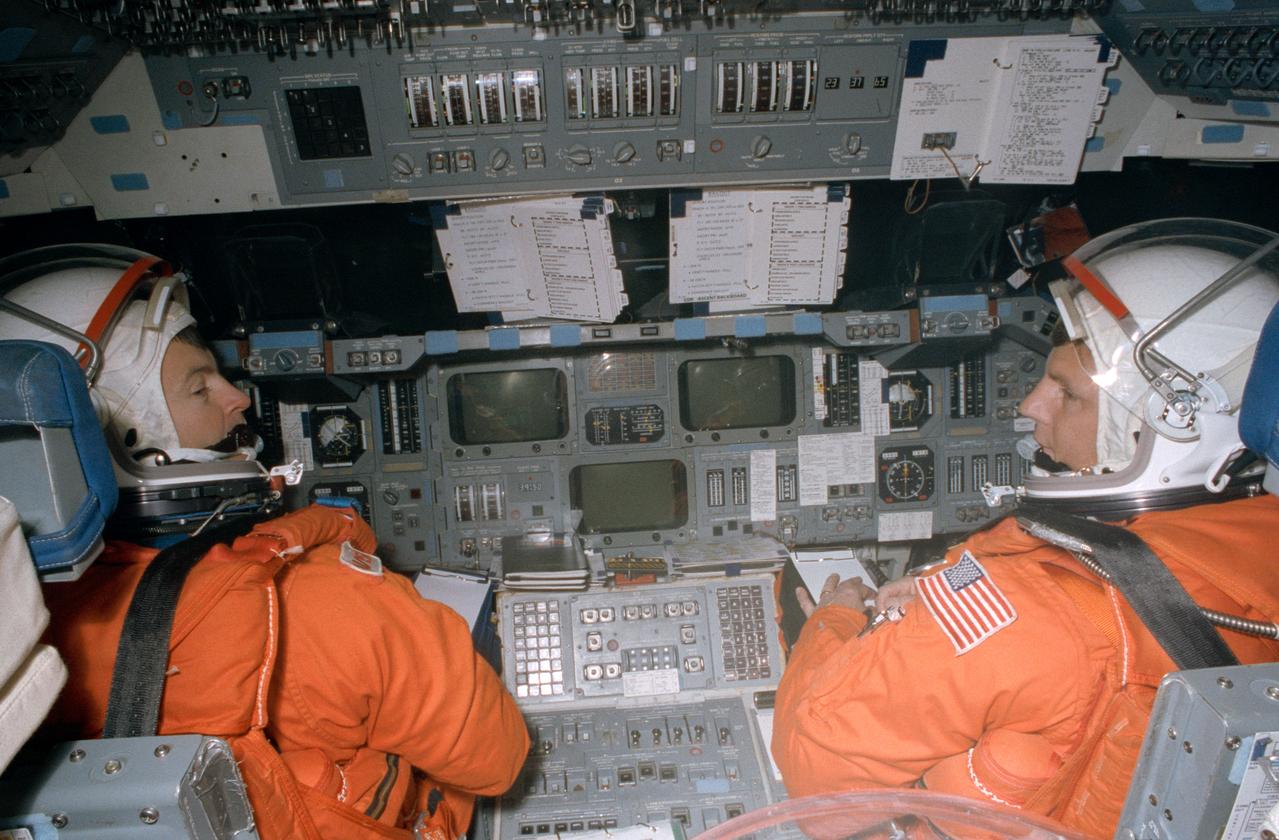
STS-56 Discovery, Orbiter Vehicle (OV) 103, Commander Kenneth Cameron, (left) and Pilot Stephen S. Oswald, wearing launch and entry suits (LESs) and launch and entry helmets (LEHs), are seated on the forward flight deck of the crew compartment trainer (CCT), a shuttle mockup. Cameron mans the commander station controls and Oswald the pilots station controls during an emergency egress (bailout) simulation. The view was taken from the aft flight deck looking forward and includes Cameron's and Oswald's profiles and the forward flight deck controls and checklists. The CCT is located in JSC's Mockup and Integration Laboratory (MAIL) Bldg 9NE.
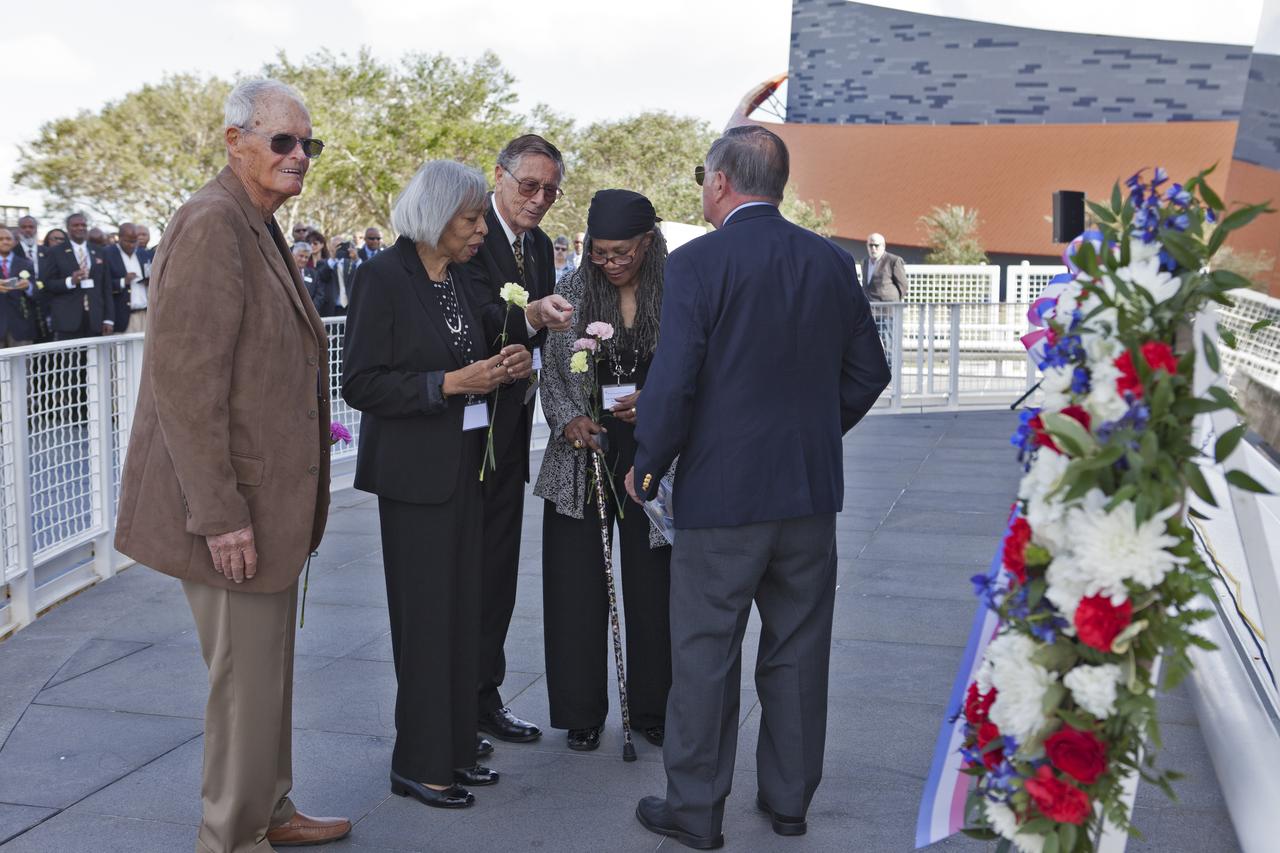
During an Astronauts Memorial Foundation tribute honoring U.S. Air Foce Maj. Robert Lawrence, a wreath is placed at the Space Mirror Memorial at the Kenendy Space Center Visitor Compelx. Participating are, from thje left, Al Crews, Lawrence's sister, Barbara Lawrence, Ph.D., James Abrahamson, Lawrence's sister-in-law Lorne Cress Love, and Bob Crippen. Crews, Abrahamson and Crippen all were selected as astronauts for the Manned Orbiting Laboratory (MOL) Program. Selected in 1967 for MOL, Lawrence was the first African-American astronaut. He lost his life in a training accident 50 years ago. The ceremony took place in the Center for Space Education at the Kennedy Space Center Visitor Complex.

This is an illustration of the Space Base concept. In-house work of the Marshall Space Flight Center, as well as a Phase B contract with the McDornel Douglas Astronautics Company, resulted in a preliminary design for a space station in 1969 and l970. The Marshall-McDonnel Douglas approach envisioned the use of two common modules as the core configuration of a 12-man space station. Each common module was 33 feet in diameter and 40 feet in length and provided the building blocks, not only for the space station, but also for a 50-man space base. Coupled together, the two modules would form a four-deck facility: two decks for laboratories and two decks for operations and living quarters. Zero-gravity would be the normal mode of operation, although the station would have an artificial-gravity capability. This general-purpose orbital facility was to provide wide-ranging research capabilities. The design of the facility was driven by the need to accommodate a broad spectrum of activities in support of astronomy, astrophysics, aerospace medicine, biology, materials processing, space physics, and space manufacturing. To serve the needs of Earth observations, the station was to be placed in a 242-nautical-mile orbit at a 55-degree inclination. An Intermediate-21 vehicle (comprised of Saturn S-IC and S-II stages) would have launched the station in 1977.
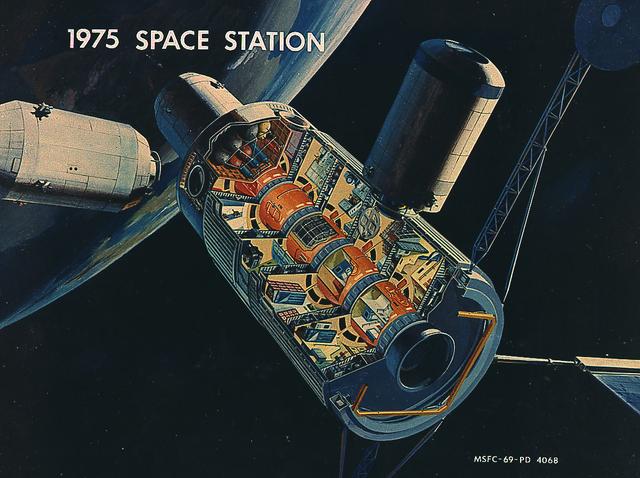
This picture illustrates a concept of a 33-Foot-Diameter Space Station Leading to a Space Base. In-house work of the Marshall Space Flight Center, as well as a Phase B contract with the McDornel Douglas Astronautics Company, resulted in a preliminary design for a space station in 1969 and l970. The Marshall-McDonnel Douglas approach envisioned the use of two common modules as the core configuration of a 12-man space station. Each common module was 33 feet in diameter and 40 feet in length and provided the building blocks, not only for the space station, but also for a 50-man space base. Coupled together, the two modules would form a four-deck facility: two decks for laboratories and two decks for operations and living quarters. Zero-gravity would be the normal mode of operation, although the station would have an artificial gravity capability. This general-purpose orbital facility was to provide wide-ranging research capabilities. The design of the facility was driven by the need to accommodate a broad spectrum of activities in support of astronomy, astrophysics, aerospace medicine, biology, materials processing, space physics, and space manufacturing. To serve the needs of Earth observations, the station was to be placed in a 242-nautical-mile orbit at a 55-degree inclination. An Intermediate-21 vehicle (comprised of Saturn S-IC and S-II stages) would have launched the station in 1977.
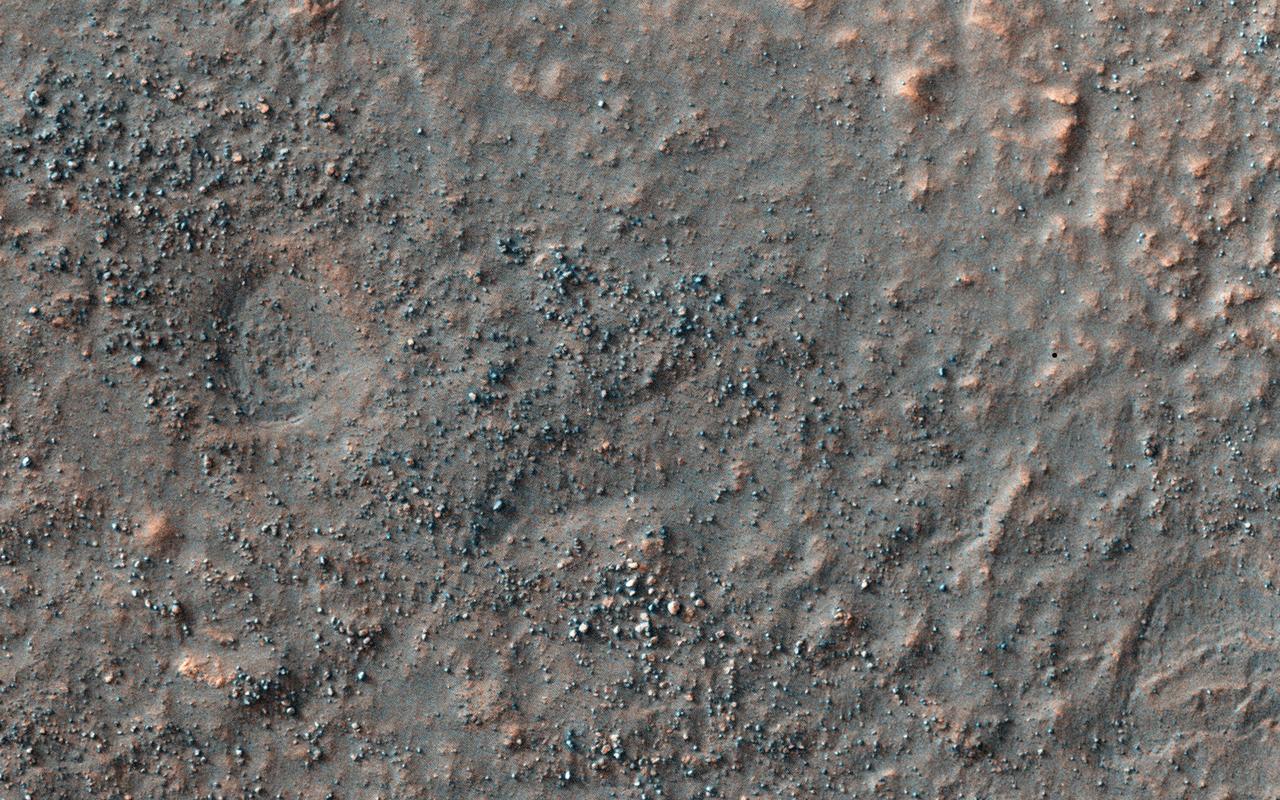
NASA Mars Reconnaissance Orbiter acquired this image to aid in the search for the missing lander, Mars 2. If the debris field is found, it could serve as a future landing location to study the effects of crash landing on the Martian surface. Despite the recent successes of missions landing on Mars, like the Mars Science Laboratory (Curiosity) or the arrival of new satellites, such as India's MOM orbiter, the Red Planet is also a graveyard of failed missions. The Soviet Mars 2 lander was the first man-made object to touch the surface of the Red Planet when it crashed landed on 27 November 1971. It is believed that the descent stage malfunctioned after the lander entered the atmosphere at too steep an angle. Attempts to contact the probe after the crash were unsuccessful. http://photojournal.jpl.nasa.gov/catalog/PIA18888
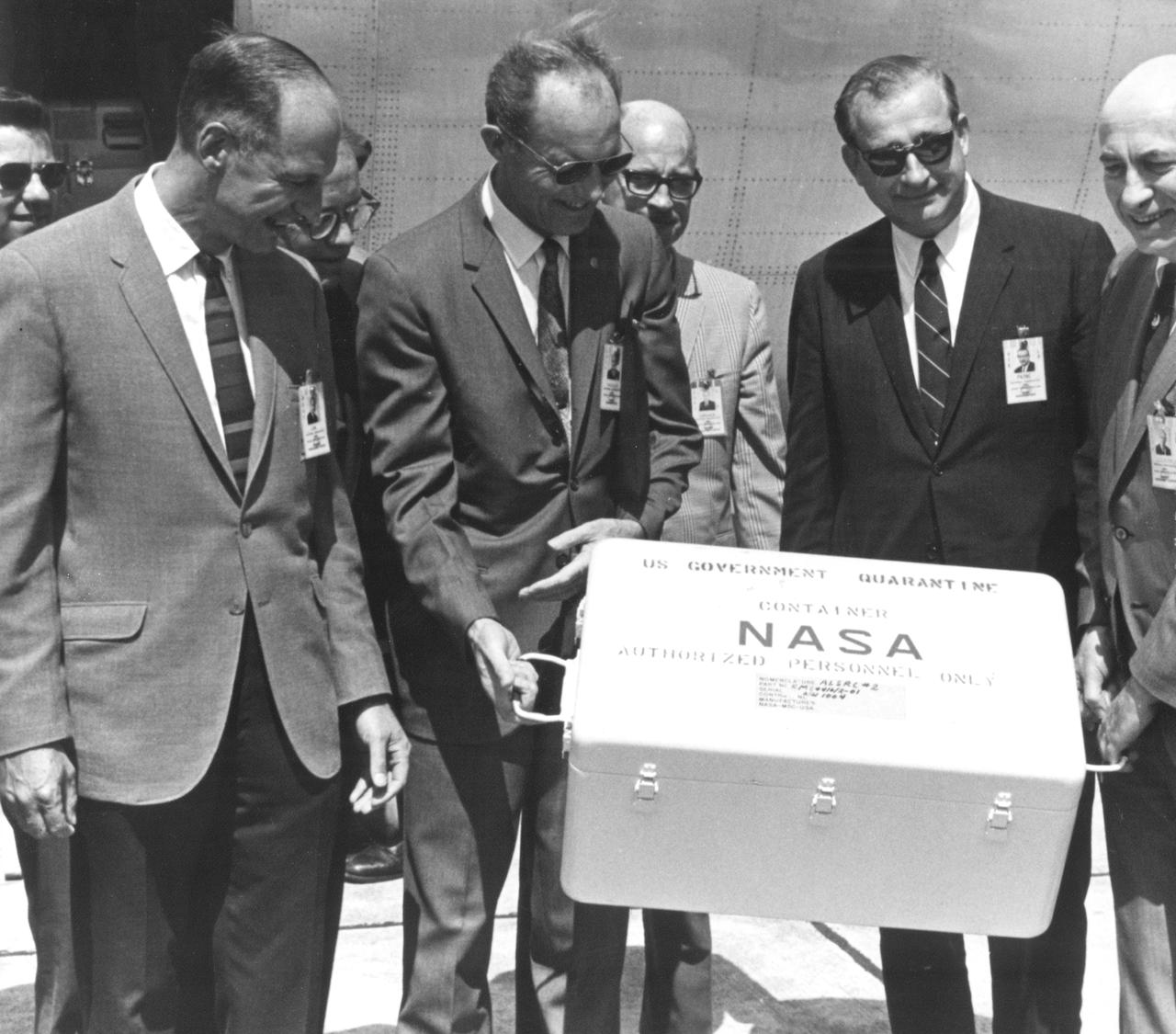
The Apollo 11 mission, the first manned lunar mission, launched from the Kennedy Space Center, Florida via the Marshall Space Flight Center (MSFC) developed Saturn V launch vehicle on July 16, 1969 and safely returned to Earth on July 24, 1969. Aboard the space craft were astronauts Neil A. Armstrong, commander; Michael Collins, Command Module (CM) pilot; and Edwin E. Aldrin Jr., Lunar Module (LM) pilot. The CM, piloted by Michael Collins remained in a parking orbit around the Moon while the LM, named “Eagle’’, carrying astronauts Neil Armstrong and Edwin Aldrin, landed on the Moon. During 2½ hours of surface exploration, the crew collected 47 pounds of lunar surface material for analysis back on Earth. This photograph was taken as the mission’s first loaded sample return container arrived at Ellington Air Force Base by air from the Pacific recovery area. The rock box was immediately taken to the Lunar Receiving Laboratory at the Manned Spacecraft Center (MSC) in Houston, Texas. Happily posing for the photograph with the rock container are (L-R) Richard S. Johnston (back), special assistant to the MSC Director; George M. Low, MSC Apollo Spacecraft Program manager; George S. Trimble (back), MSC Deputy Director; Lt. General Samuel C. Phillips, Apollo Program Director, Office of Manned Spaceflight at NASA headquarters; Eugene G. Edmonds, MSC Photographic Technology Laboratory; Dr. Thomas O. Paine, NASA Administrator; and Dr. Robert R. Gilruth, MSC Director.
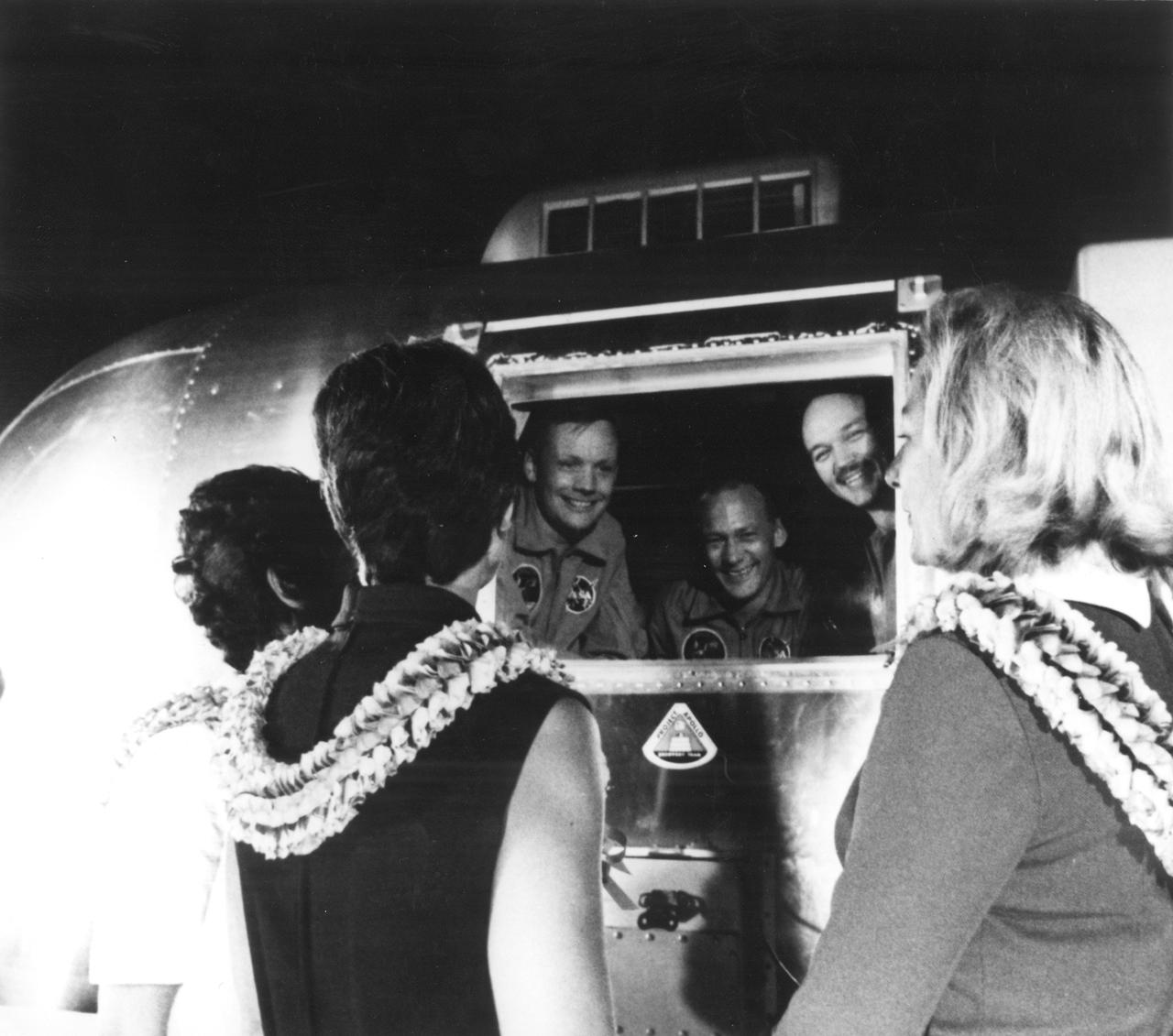
The Apollo 11 mission, the first manned lunar mission, launched from the Kennedy Space Center, Florida via the Marshall Space Flight Center (MSFC) developed Saturn V launch vehicle on July 16, 1969 and safely returned to Earth on July 24, 1969. Aboard the space craft were astronauts Neil A. Armstrong, commander; Michael Collins, Command Module (CM) pilot; and Edwin E. Aldrin Jr., Lunar Module (LM) pilot. The CM, piloted by Michael Collins remained in a parking orbit around the Moon while the LM, named “Eagle’’, carrying astronauts Neil Armstrong and Edwin Aldrin, landed on the Moon. During 2½ hours of surface exploration, the crew collected 47 pounds of lunar surface material for analysis back on Earth. The recovery operation took place in the Pacific Ocean where Navy para-rescue men recovered the capsule housing the 3-man Apollo 11 crew. The crew was airlifted to safety aboard the U.S.S. Hornet, where they were quartered in a Mobile Quarantine Facility (MQF) which served as their home until they reached the NASA Manned Spacecraft Center (MSC) Lunar Receiving Laboratory in Houston, Texas. On arrival at Ellington Air Force base near the MSC, the crew, still under a 21 day quarantine in the MQF are greeted by their wives. Looking out of the facility are (L-R) Armstrong, Aldrin, and Collins. Wives are (L-R) Pat Collins, Jan Armstrong, and Joan Aldrin.
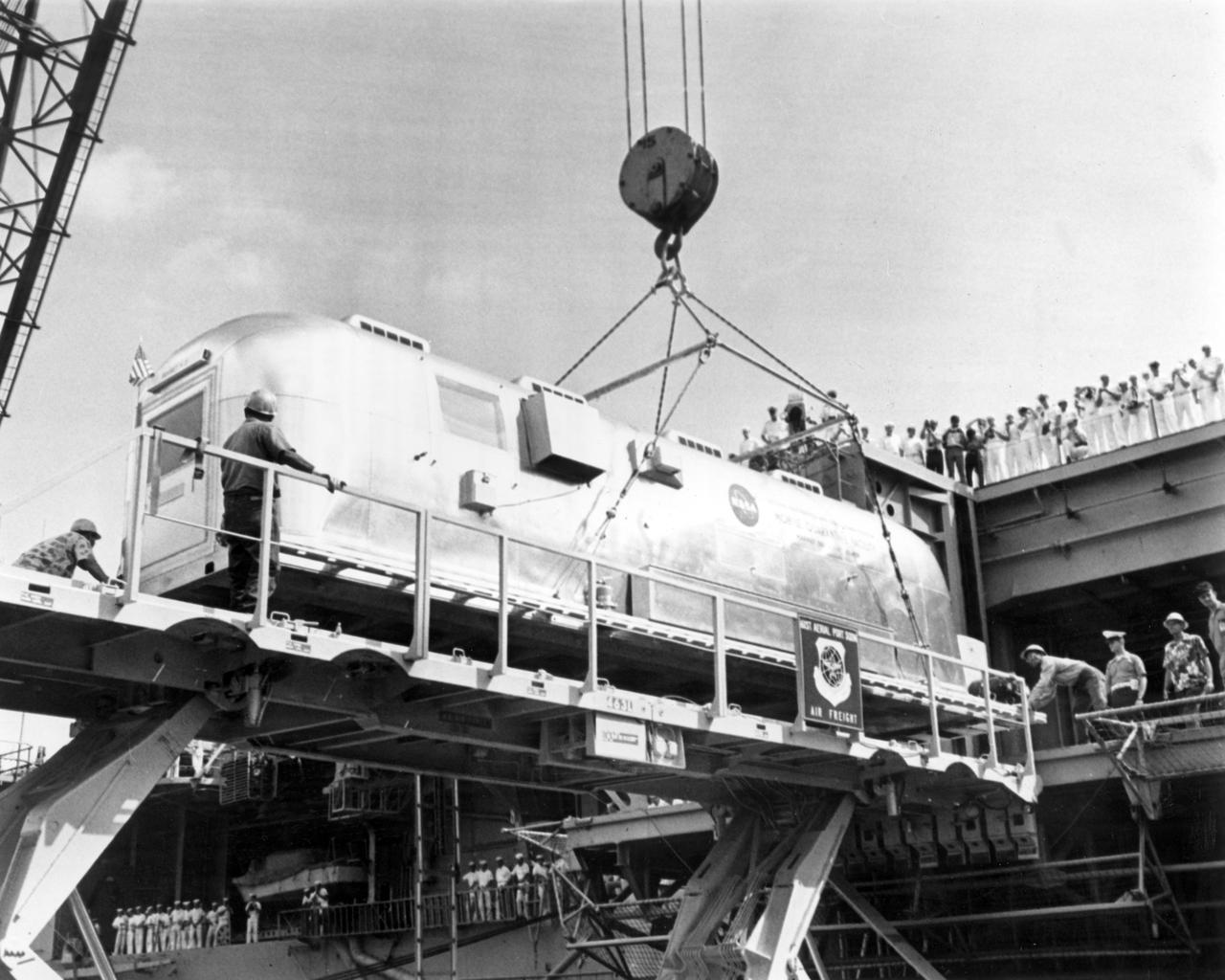
The Apollo 11 mission, the first manned lunar mission, launched from the Kennedy Space Center, Florida via the Marshall Space Flight Center (MSFC) developed Saturn V launch vehicle on July 16, 1969 and safely returned to Earth on July 24, 1969. Aboard the space craft were astronauts Neil A. Armstrong, commander; Michael Collins, Command Module (CM) pilot; and Edwin E. Aldrin Jr., Lunar Module (LM) pilot. The CM, piloted by Michael Collins remained in a parking orbit around the Moon while the LM, named “Eagle’’, carrying astronauts Neil Armstrong and Edwin Aldrin, landed on the Moon. During 2½ hours of surface exploration, the crew collected 47 pounds of lunar surface material for analysis back on Earth. The recovery operation took place in the Pacific Ocean where Navy para-rescue men recovered the capsule housing the 3-man Apollo 11 crew. The crew was airlifted to safety aboard the U.S.S. Hornet recovery ship, where they were quartered in a Mobile Quarantine Facility (MQF) which served as their home for 21 days. In this photo taken at Pearl Harbor, Hawaii, the quarantined housing facility is being lowered from the U.S.S. Hornet, onto a trailer for transport to Hickam Field. From there, it was loaded aboard an Air Force C-141 jet and flown back to Ellington Air Force Base Texas, and then on to the NASA Manned Spacecraft Center (MSC) Lunar Receiving Laboratory in Houston, Texas.
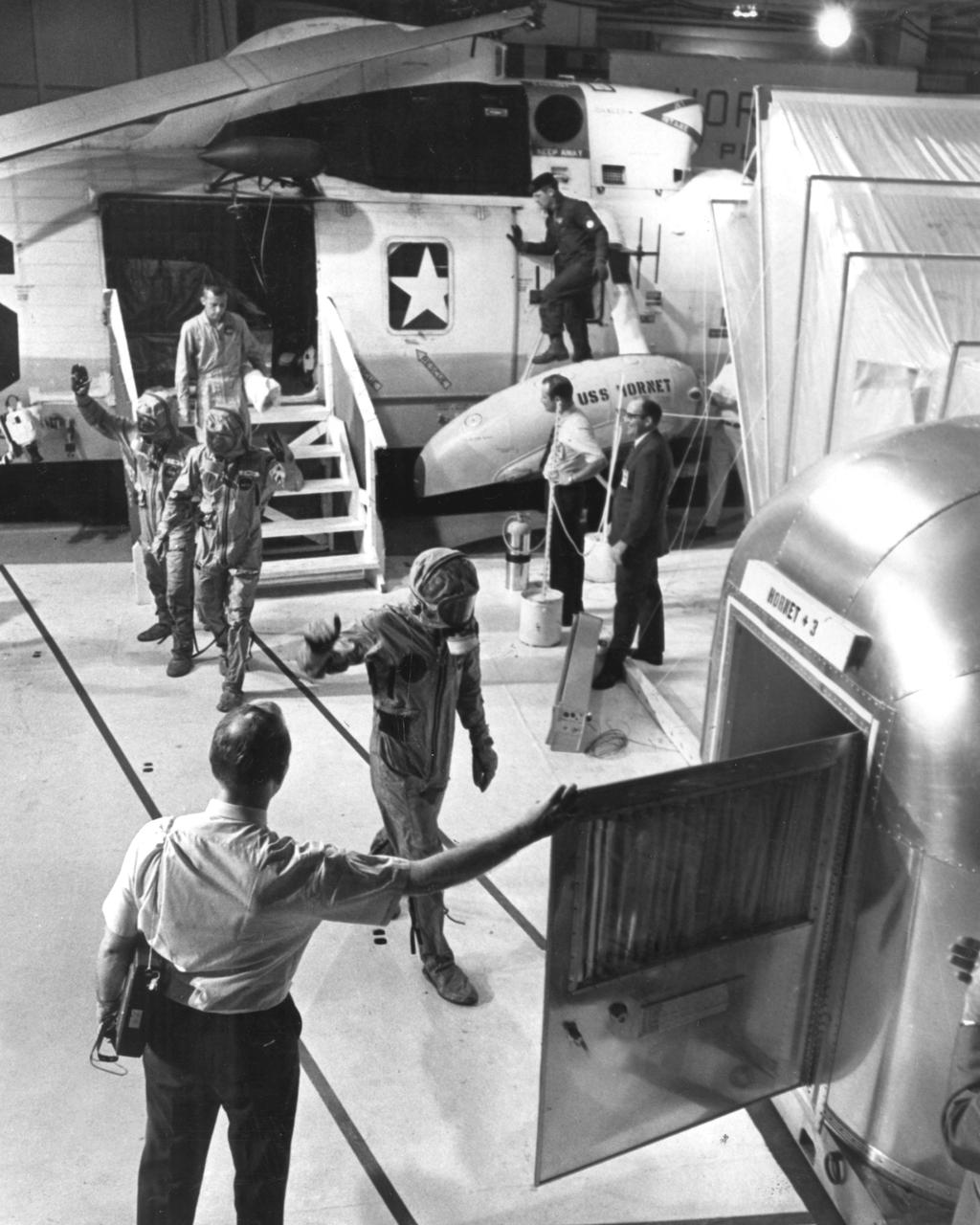
The Apollo 11 mission, the first manned lunar mission, launched from the Kennedy Space Center, Florida via the Saturn V launch vehicle on July 16, 1969 and safely returned to Earth on July 24, 1969. The Saturn V vehicle was developed by the Marshall Space Flight Center (MSFC) under the direction of Dr. Wernher von Braun. Aboard the craft were astronauts Neil A. Armstrong, commander; Michael Collins, Command Module (CM) pilot; and Edwin E. Aldrin Jr., Lunar Module (LM) pilot. The CM, piloted by Michael Collins remained in a parking orbit around the Moon while the LM, named “Eagle’’, carrying astronauts Neil Armstrong and Edwin Aldrin, landed on the Moon. Armstrong was the first human to ever stand on the lunar surface followed by Aldrin. During 2½ hours of surface exploration, the crew collected 47 pounds of lunar surface material for analysis back on Earth. The recovery operation took place in the Pacific Ocean where Navy para-rescue men recovered the capsule housing the 3-man Apollo 11 crew. The crew was airlifted to safety aboard the U.S.S. Hornet, where they were quartered in a Mobile Quarantine Facility (MQF). Donned in biological isolation garments, the Apollo 11 crew members (front to rear) Armstrong, Collins, and Aldrin leave the pick up helicopter making their way to the MQF. This portable facility served as their home until they reached the NASA Manned Spacecraft Center Lunar Receiving Laboratory in Houston, Texas. With the success of Apollo 11 mission the national objective to land men on the Moon and return them safely to Earth had been accomplished.
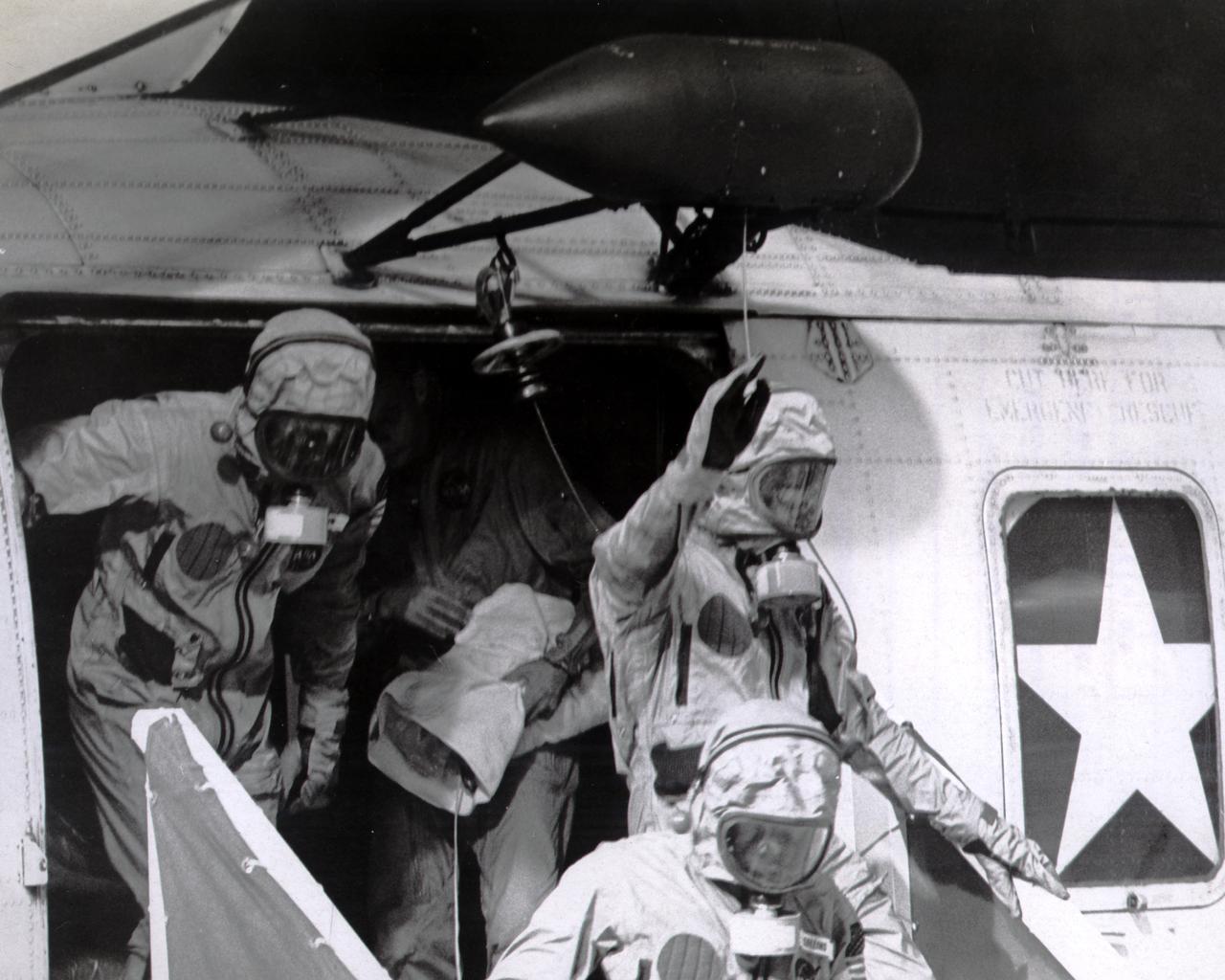
Donned in biological isolation garments, the Apollo 11 crew members, (L-R) Edwin Aldrin, Neil Armstrong (waving), and Michael Collins exit the recovery pick up helicopter to board the U.S.S. Hornet aircraft carrier after splashdown. The recovery operation took place in the Pacific Ocean where Navy para-rescue men recovered the capsule housing the 3-man Apollo 11 crew. The crew was airlifted to safety aboard the U.S.S. Hornet, where they were quartered in a Mobile Quarantine Facility (MQF). This portable facility served as their home until they reached the NASA Manned Spacecraft Center (MSC) Lunar Receiving Laboratory in Houston, Texas. The Apollo 11 mission, the first manned lunar mission, launched from the Kennedy Space Center (KSC), Florida via the Saturn V launch vehicle on July 16, 1969 and safely returned to Earth on July 24, 1969. Aboard were Neil A. Armstrong, commander; Michael Collins, Command Module (CM) pilot; and Edwin E. Aldrin Jr., Lunar Module (LM) pilot. The CM, piloted by Michael Collins remained in a parking orbit around the Moon while the LM, named “Eagle’’, carrying astronauts Neil Armstrong and Edwin Aldrin, landed on the Moon. Armstrong was the first human to ever stand on the lunar surface, followed by Aldrin. During 2½ hours of surface exploration, the crew collected 47 pounds of lunar surface material for analysis back on Earth. With the success of Apollo 11, the national objective to land men on the Moon and return them safely to Earth had been accomplished. The Saturn V vehicle was developed by the Marshall Space Flight Center (MSFC) under the direction of Dr. Werher von Braun.
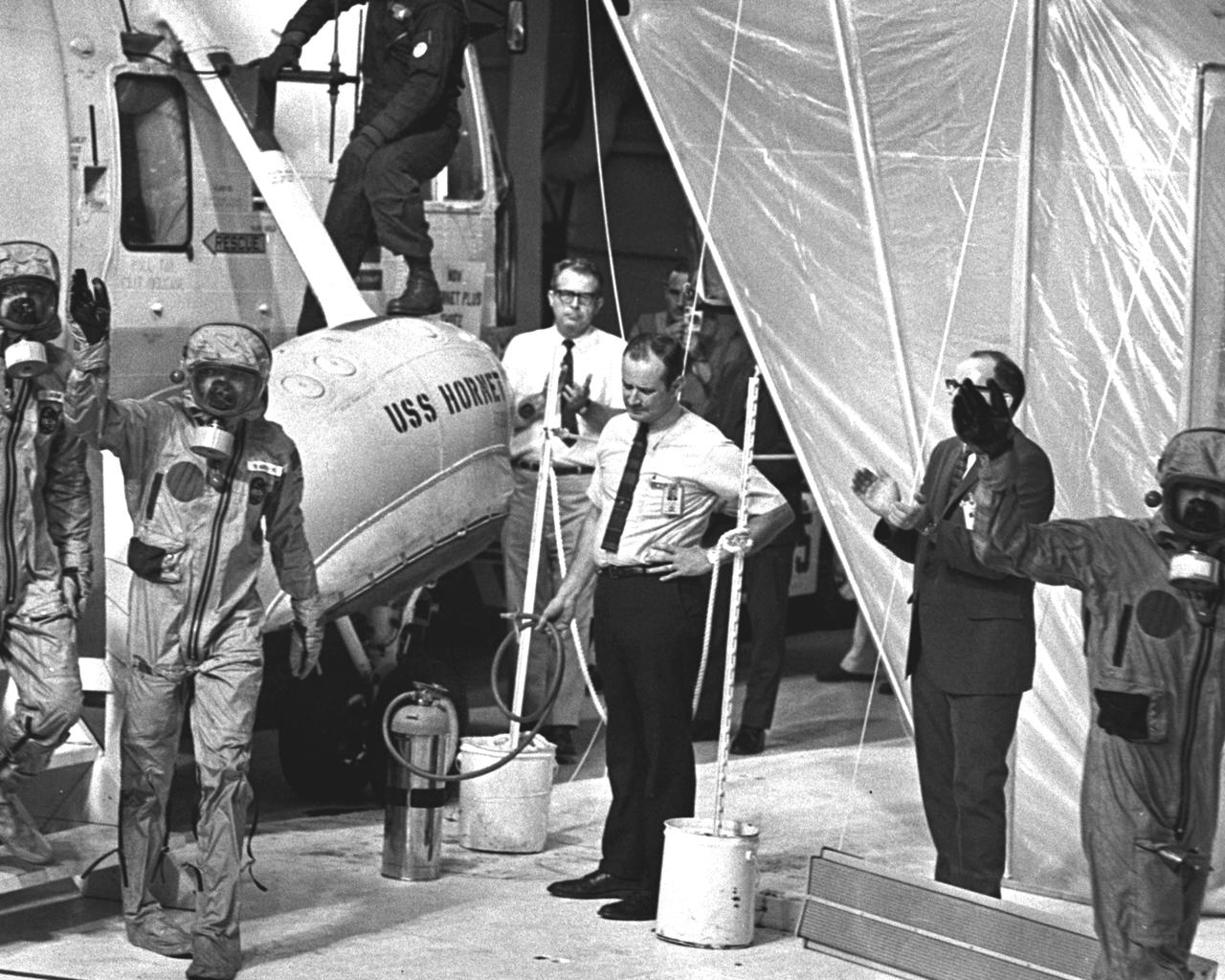
The Apollo 11 mission, the first manned lunar mission, launched from the Kennedy Space Center, Florida via the Saturn V launch vehicle on July 16, 1969 and safely returned to Earth on July 24, 1969. The Saturn V vehicle was developed by the Marshall Space Flight Center (MSFC) under the direction of Dr. Wernher von Braun. Aboard were Neil A. Armstrong, commander; Michael Collins, Command Module (CM) pilot; and Edwin E. Aldrin Jr., Lunar Module (LM) pilot. The CM, piloted by Michael Collins remained in a parking orbit around the Moon while the LM, named “Eagle’’, carrying astronauts Neil Armstrong and Edwin Aldrin, landed on the Moon. Armstrong was the first human to ever stand on the lunar surface, Aldrin. During 2½ hours of surface exploration, the crew collected 47 pounds of lunar surface material for analysis back on Earth. The recovery operation took place in the Pacific Ocean where Navy para-rescue men recovered the capsule housing the 3-man Apollo 11 crew. The crew was airlifted to safety aboard the U.S.S. Hornet, where they were quartered in a Mobile Quarantine Facility (MQF). Donned in biological isolation garments, the Apollo 11 crew members wave to well wishers as they leave the pick up helicopter making their way to the MQF. This portable facility served as their home until they reached the NASA Manned Spacecraft Center (MSC) Lunar Receiving Laboratory in Houston, Texas. With the success of Apollo 11, the national objective to land men on the Moon and return them safely to Earth had been accomplished.
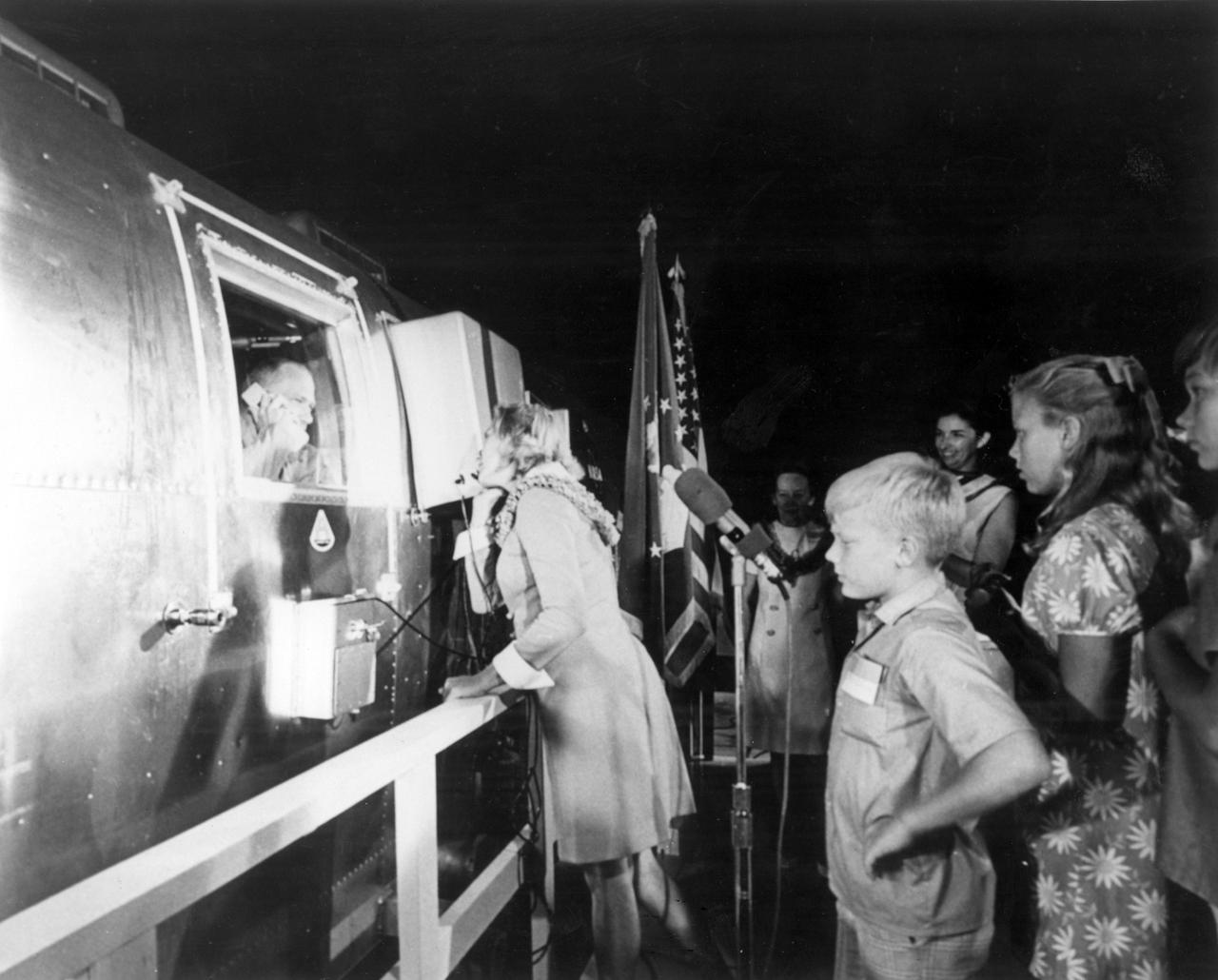
The Apollo 11 mission, the first manned lunar mission, launched from the Kennedy Space Center, Florida via the Marshall Space Flight Center (MSFC) developed Saturn V launch vehicle on July 16, 1969 and safely returned to Earth on July 24, 1969. Aboard the space craft were astronauts Neil A. Armstrong, commander; Michael Collins, Command Module (CM) pilot; and Edwin E. (Buzz) Aldrin Jr., Lunar Module (LM) pilot. The CM, piloted by Michael Collins remained in a parking orbit around the Moon while the LM, named “Eagle’’, carrying astronauts Neil Armstrong and Edwin Aldrin, landed on the Moon. During 2½ hours of surface exploration, the crew collected 47 pounds of lunar surface material for analysis back on Earth. The recovery operation took place in the Pacific Ocean where Navy para-rescue men recovered the capsule housing the 3-man Apollo 11 crew. The crew was airlifted to safety aboard the U.S.S. Hornet, where they were quartered in a Mobile Quarantine Facility (MQF) which served as their home until they reached the NASA Manned Spacecraft Center (MSC) Lunar Receiving Laboratory in Houston, Texas. On arrival at Ellington Air Force base near the MSC, the crew, still under a 21 day quarantine in the MQF, were greeted by their wives. Pictured here is Joan Aldrin, wife of Buzz Aldrin, speaking with her husband via telephone patch.
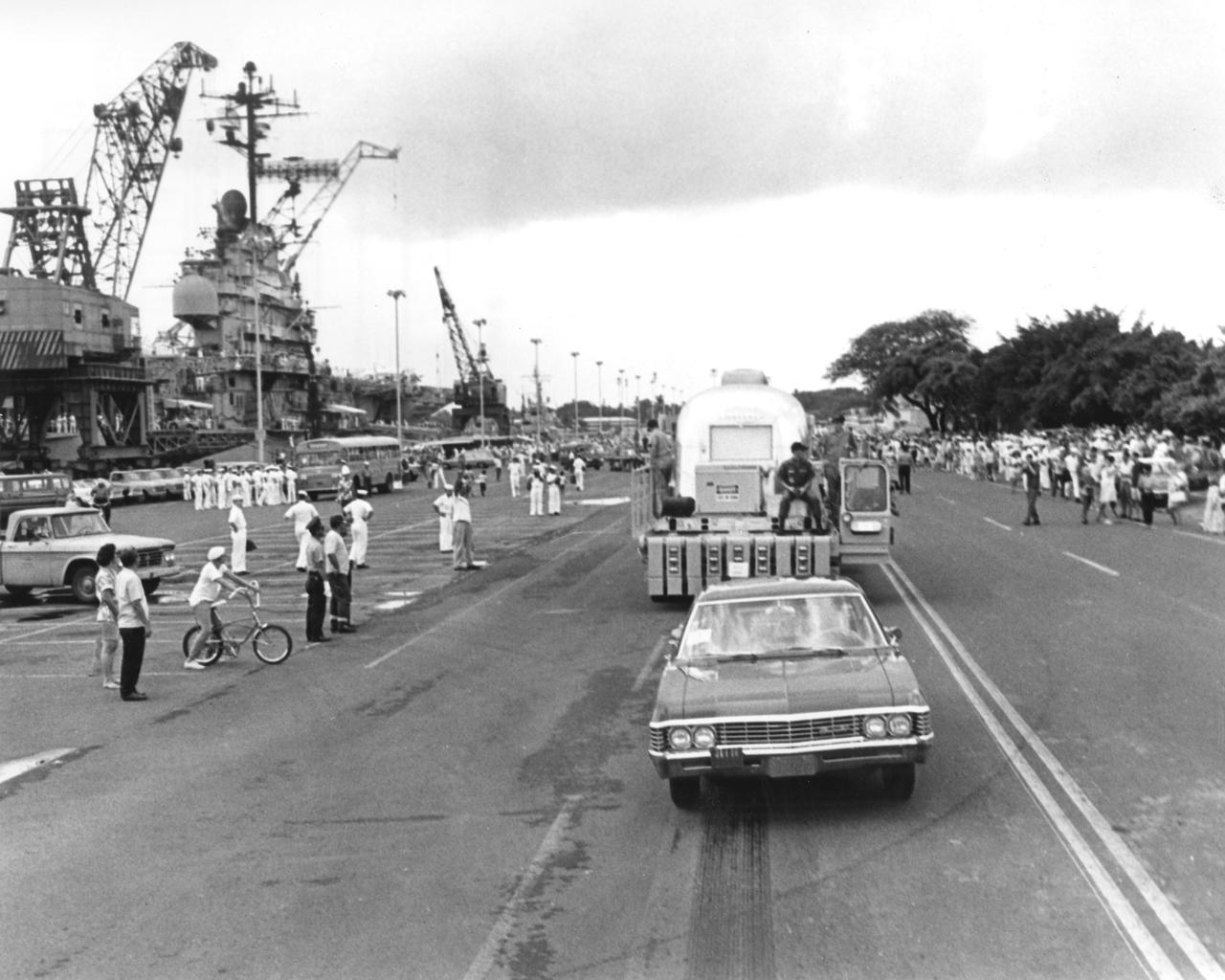
The Apollo 11 mission, the first manned lunar mission, launched from the Kennedy Space Center, Florida via the Marshall Space Flight Center (MSFC) developed Saturn V launch vehicle on July 16, 1969 and safely returned to Earth on July 24, 1969. Aboard the space craft were astronauts Neil A. Armstrong, commander; Michael Collins, Command Module (CM) pilot; and Edwin E. Aldrin Jr., Lunar Module (LM) pilot. The CM, piloted by Michael Collins remained in a parking orbit around the Moon while the LM, named “Eagle’’, carrying astronauts Neil Armstrong and Edwin Aldrin, landed on the Moon. During 2½ hours of surface exploration, the crew collected 47 pounds of lunar surface material for analysis back on Earth. The recovery operation took place in the Pacific Ocean where Navy para-rescue men recovered the capsule housing the 3-man Apollo 11 crew. The crew was airlifted to safety aboard the U.S.S. Hornet recovery ship, where they were quartered in a Mobile Quarantine Facility (MQF) which served as their home until they reached the NASA Manned Spacecraft Center (MSC) Lunar Receiving Laboratory in Houston, Texas. The occupied MQF was unloaded from the U.S.S. Hornet in Pearl Harbor, Hawaii. In this photo, the facility is moved from the Hornet’s dock enroute to Hickam Field where it was loaded aboard an Air Force C-141 jet transport for the flight back to Ellington Air Force Base Texas, and then on to the MSC.
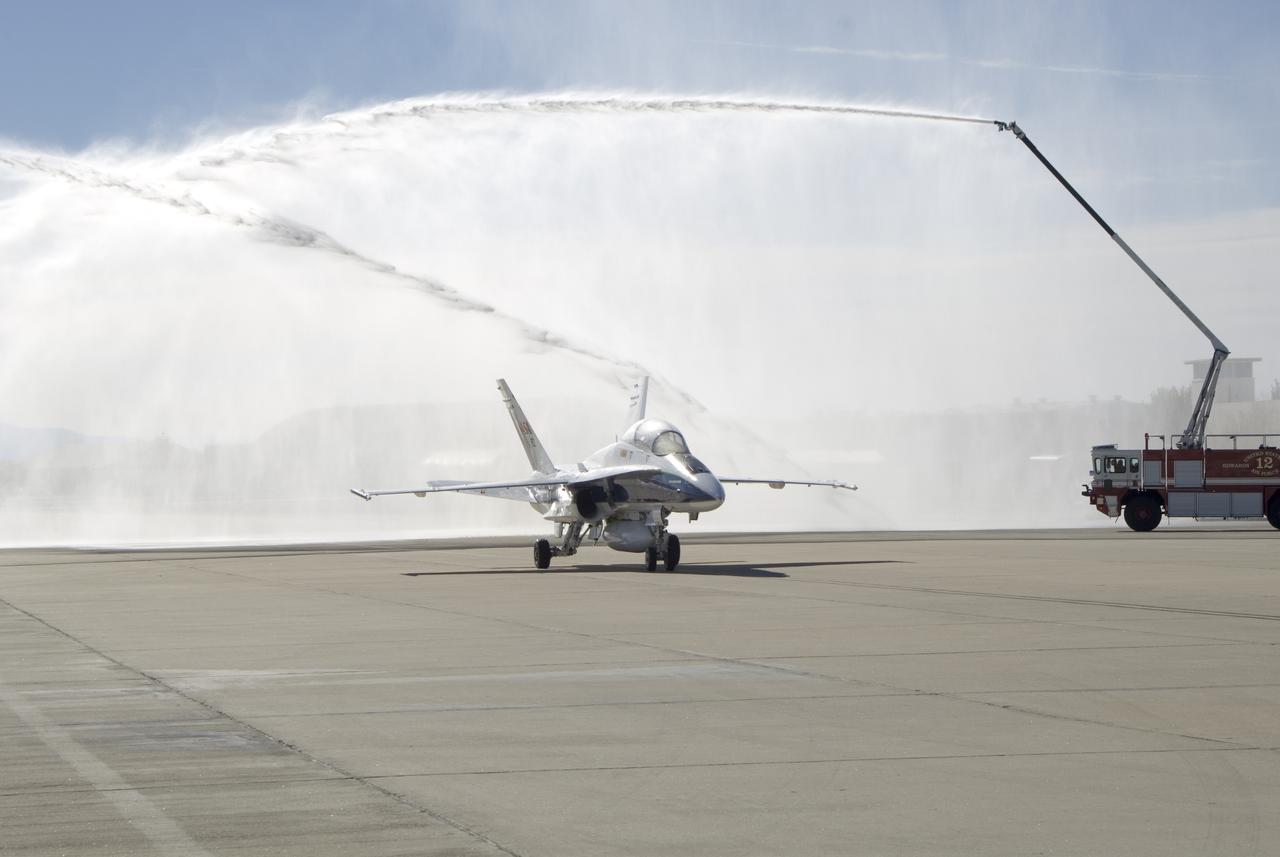
Long-time NASA Dryden research pilot and former astronaut C. Gordon Fullerton capped an almost 50-year flying career, including more than 38 years with NASA, with a final flight in a NASA F/A-18 on Dec. 21, 2007. Fullerton and Dryden research pilot Jim Smolka flew a 90-minute pilot proficiency formation aerobatics flight with another Dryden F/A-18 and a Dryden T-38 before concluding with two low-level formation flyovers of Dryden before landing. Fullerton was honored with a water-cannon spray arch provided by two fire trucks from the Edwards Air Force Base fire department as he taxied the F/A-18 up to the Dryden ramp, and was then greeted by his wife Marie and several hundred Dryden staff after his final flight. Fullerton began his flying career with the U.S. Air Force in 1958 after earning bachelor's and master's degrees in mechanical engineering from the California Institute of Technology. Initially trained as a fighter pilot, he later transitioned to multi-engine bombers and became a bomber operations test pilot after attending the Air Force Aerospace Research Pilot School at Edwards Air Force Base, Calif. He then was assigned to the flight crew for the planned Air Force Manned Orbital Laboratory in 1966. Upon cancellation of that program, the Air Force assigned Fullerton to NASA's astronaut corps in 1969. He served on the support crews for the Apollo 14, 15, 16 and 17 lunar missions, and was later assigned to one of the two flight crews that piloted the space shuttle prototype Enterprise during the Approach and Landing Test program at Dryden. He then logged some 382 hours in space when he flew on two early space shuttle missions, STS-3 on Columbia in 1982 and STS-51F on Challenger in 1985. He joined the flight crew branch at NASA Dryden after leaving the astronaut corps in 1986. During his 21 years at Dryden, Fullerton was project pilot on a number of high-profile research efforts, including the Propulsion Controlled Aircraft, the high-speed landing tests of
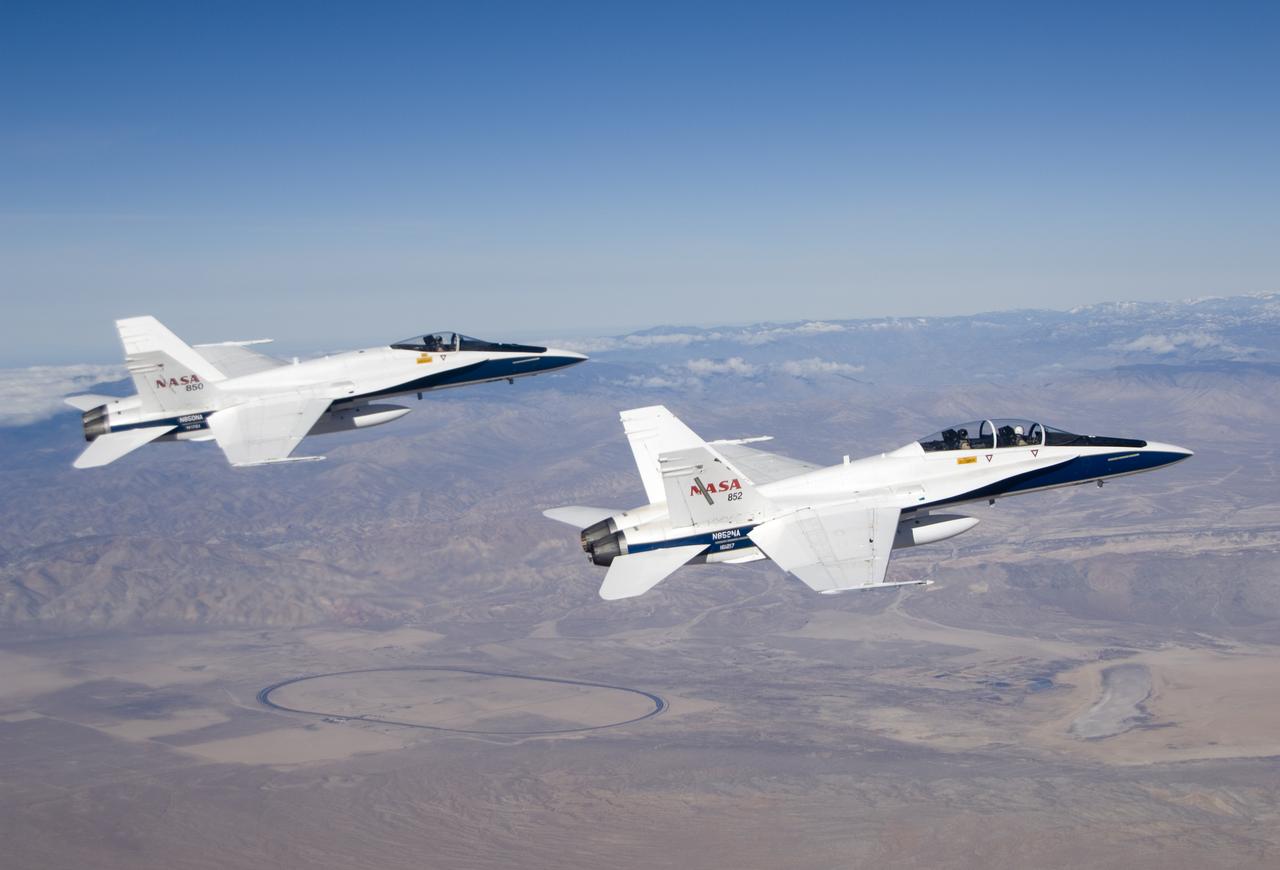
Long-time NASA Dryden research pilot and former astronaut C. Gordon Fullerton capped an almost 50-year flying career, including more than 38 years with NASA, with a final flight in a NASA F/A-18 on Dec. 21, 2007. Fullerton and Dryden research pilot Jim Smolka flew a 90-minute pilot proficiency formation aerobatics flight with another Dryden F/A-18 and a Dryden T-38 before concluding with two low-level formation flyovers of Dryden before landing. Fullerton was honored with a water-cannon spray arch provided by two fire trucks from the Edwards Air Force Base fire department as he taxied the F/A-18 up to the Dryden ramp, and was then greeted by his wife Marie and several hundred Dryden staff after his final flight. Fullerton began his flying career with the U.S. Air Force in 1958 after earning bachelor's and master's degrees in mechanical engineering from the California Institute of Technology. Initially trained as a fighter pilot, he later transitioned to multi-engine bombers and became a bomber operations test pilot after attending the Air Force Aerospace Research Pilot School at Edwards Air Force Base, Calif. He then was assigned to the flight crew for the planned Air Force Manned Orbital Laboratory in 1966. Upon cancellation of that program, the Air Force assigned Fullerton to NASA's astronaut corps in 1969. He served on the support crews for the Apollo 14, 15, 16 and 17 lunar missions, and was later assigned to one of the two flight crews that piloted the space shuttle prototype Enterprise during the Approach and Landing Test program at Dryden. He then logged some 382 hours in space when he flew on two early space shuttle missions, STS-3 on Columbia in 1982 and STS-51F on Challenger in 1985. He joined the flight crew branch at NASA Dryden after leaving the astronaut corps in 1986. During his 21 years at Dryden, Fullerton was project pilot on a number of high-profile research efforts, including the Propulsion Controlled Aircraft, the high-speed landing tests of sp
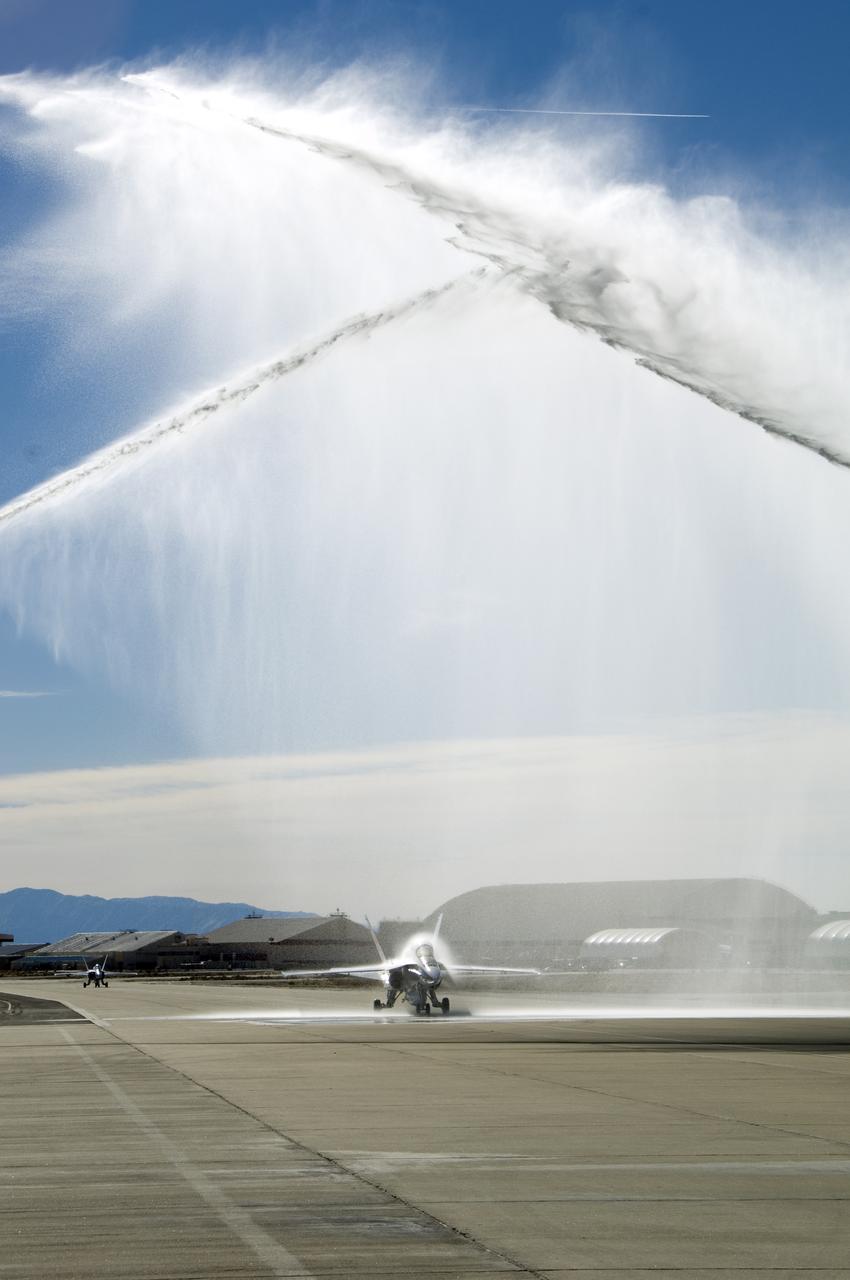
Long-time NASA Dryden research pilot and former astronaut C. Gordon Fullerton capped an almost 50-year flying career, including more than 38 years with NASA, with a final flight in a NASA F/A-18 on Dec. 21, 2007. Fullerton and Dryden research pilot Jim Smolka flew a 90-minute pilot proficiency formation aerobatics flight with another Dryden F/A-18 and a Dryden T-38 before concluding with two low-level formation flyovers of Dryden before landing. Fullerton was honored with a water-cannon spray arch provided by two fire trucks from the Edwards Air Force Base fire department as he taxied the F/A-18 up to the Dryden ramp, and was then greeted by his wife Marie and several hundred Dryden staff after his final flight. Fullerton began his flying career with the U.S. Air Force in 1958 after earning bachelor's and master's degrees in mechanical engineering from the California Institute of Technology. Initially trained as a fighter pilot, he later transitioned to multi-engine bombers and became a bomber operations test pilot after attending the Air Force Aerospace Research Pilot School at Edwards Air Force Base, Calif. He then was assigned to the flight crew for the planned Air Force Manned Orbital Laboratory in 1966. Upon cancellation of that program, the Air Force assigned Fullerton to NASA's astronaut corps in 1969. He served on the support crews for the Apollo 14, 15, 16 and 17 lunar missions, and was later assigned to one of the two flight crews that piloted the space shuttle prototype Enterprise during the Approach and Landing Test program at Dryden. He then logged some 382 hours in space when he flew on two early space shuttle missions, STS-3 on Columbia in 1982 and STS-51F on Challenger in 1985. He joined the flight crew branch at NASA Dryden after leaving the astronaut corps in 1986. During his 21 years at Dryden, Fullerton was project pilot on a number of high-profile research efforts, including the Propulsion Controlled Aircraft, the high-speed landing tests of
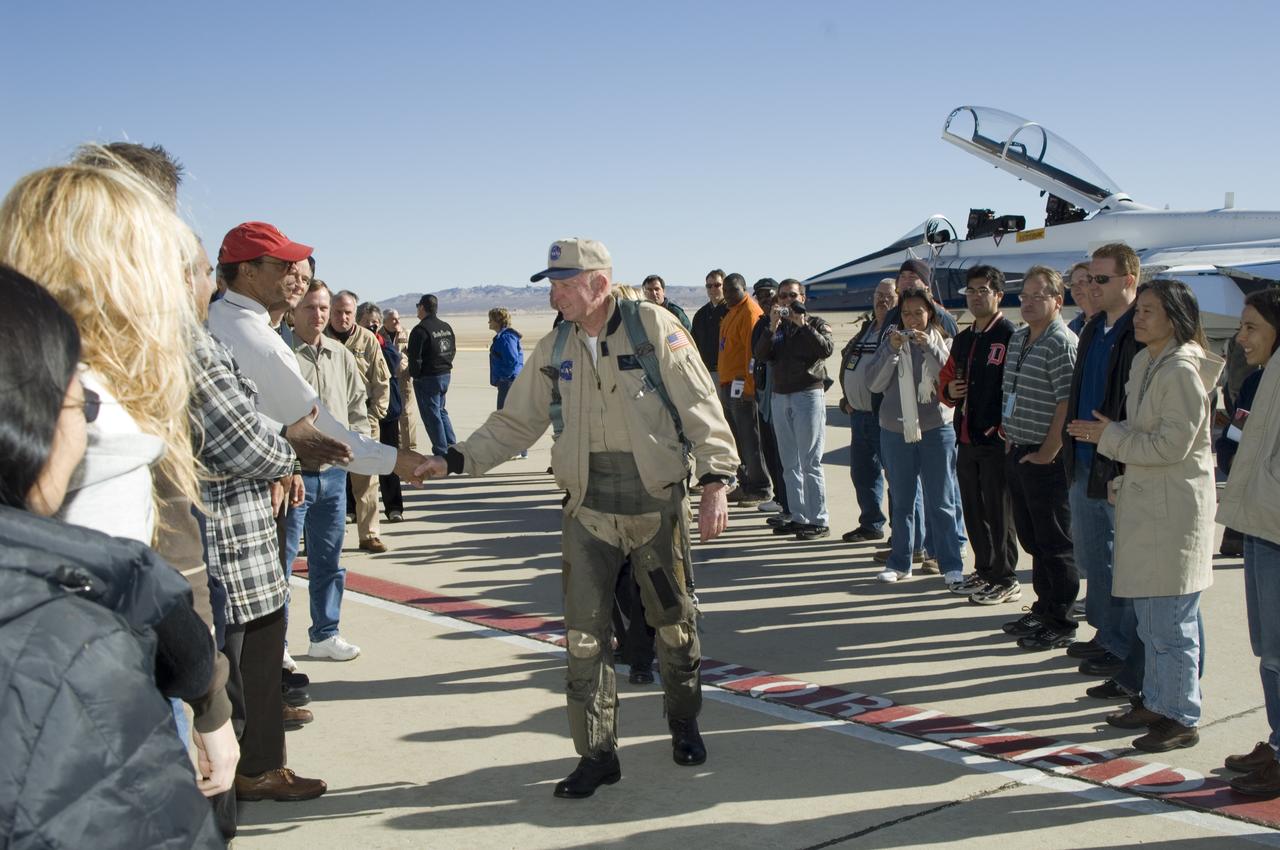
Long-time NASA Dryden research pilot and former astronaut C. Gordon Fullerton capped an almost 50-year flying career, including more than 38 years with NASA, with a final flight in a NASA F/A-18 on Dec. 21, 2007. Fullerton and Dryden research pilot Jim Smolka flew a 90-minute pilot proficiency formation aerobatics flight with another Dryden F/A-18 and a Dryden T-38 before concluding with two low-level formation flyovers of Dryden before landing. Fullerton was honored with a water-cannon spray arch provided by two fire trucks from the Edwards Air Force Base fire department as he taxied the F/A-18 up to the Dryden ramp, and was then greeted by his wife Marie and several hundred Dryden staff after his final flight. Fullerton began his flying career with the U.S. Air Force in 1958 after earning bachelor's and master's degrees in mechanical engineering from the California Institute of Technology. Initially trained as a fighter pilot, he later transitioned to multi-engine bombers and became a bomber operations test pilot after attending the Air Force Aerospace Research Pilot School at Edwards Air Force Base, Calif. He then was assigned to the flight crew for the planned Air Force Manned Orbital Laboratory in 1966. Upon cancellation of that program, the Air Force assigned Fullerton to NASA's astronaut corps in 1969. He served on the support crews for the Apollo 14, 15, 16 and 17 lunar missions, and was later assigned to one of the two flight crews that piloted the space shuttle prototype Enterprise during the Approach and Landing Test program at Dryden. He then logged some 382 hours in space when he flew on two early space shuttle missions, STS-3 on Columbia in 1982 and STS-51F on Challenger in 1985. He joined the flight crew branch at NASA Dryden after leaving the astronaut corps in 1986. During his 21 years at Dryden, Fullerton was project pilot on a number of high-profile research efforts, including the Propulsion Controlled Aircraft, the high-speed landing tests of
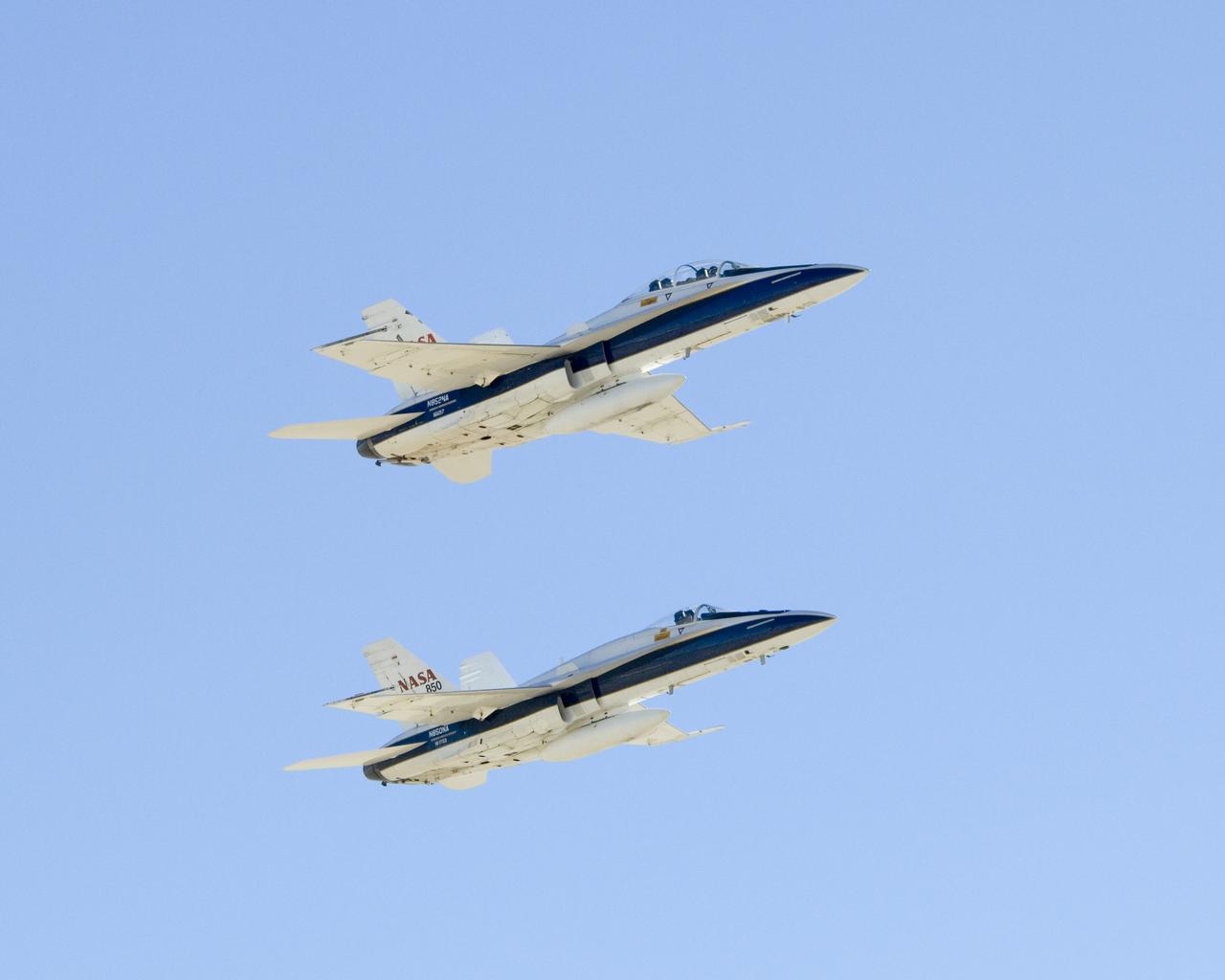
Long-time NASA Dryden research pilot and former astronaut C. Gordon Fullerton capped an almost 50-year flying career, including more than 38 years with NASA, with a final flight in a NASA F/A-18 on Dec. 21, 2007. Fullerton and Dryden research pilot Jim Smolka flew a 90-minute pilot proficiency formation aerobatics flight with another Dryden F/A-18 and a Dryden T-38 before concluding with two low-level formation flyovers of Dryden before landing. Fullerton was honored with a water-cannon spray arch provided by two fire trucks from the Edwards Air Force Base fire department as he taxied the F/A-18 up to the Dryden ramp, and was then greeted by his wife Marie and several hundred Dryden staff after his final flight. Fullerton began his flying career with the U.S. Air Force in 1958 after earning bachelor's and master's degrees in mechanical engineering from the California Institute of Technology. Initially trained as a fighter pilot, he later transitioned to multi-engine bombers and became a bomber operations test pilot after attending the Air Force Aerospace Research Pilot School at Edwards Air Force Base, Calif. He then was assigned to the flight crew for the planned Air Force Manned Orbital Laboratory in 1966. Upon cancellation of that program, the Air Force assigned Fullerton to NASA's astronaut corps in 1969. He served on the support crews for the Apollo 14, 15, 16 and 17 lunar missions, and was later assigned to one of the two flight crews that piloted the space shuttle prototype Enterprise during the Approach and Landing Test program at Dryden. He then logged some 382 hours in space when he flew on two early space shuttle missions, STS-3 on Columbia in 1982 and STS-51F on Challenger in 1985. He joined the flight crew branch at NASA Dryden after leaving the astronaut corps in 1986. During his 21 years at Dryden, Fullerton was project pilot on a number of high-profile research efforts, including the Propulsion Controlled Aircraft, the high-speed landing tests of
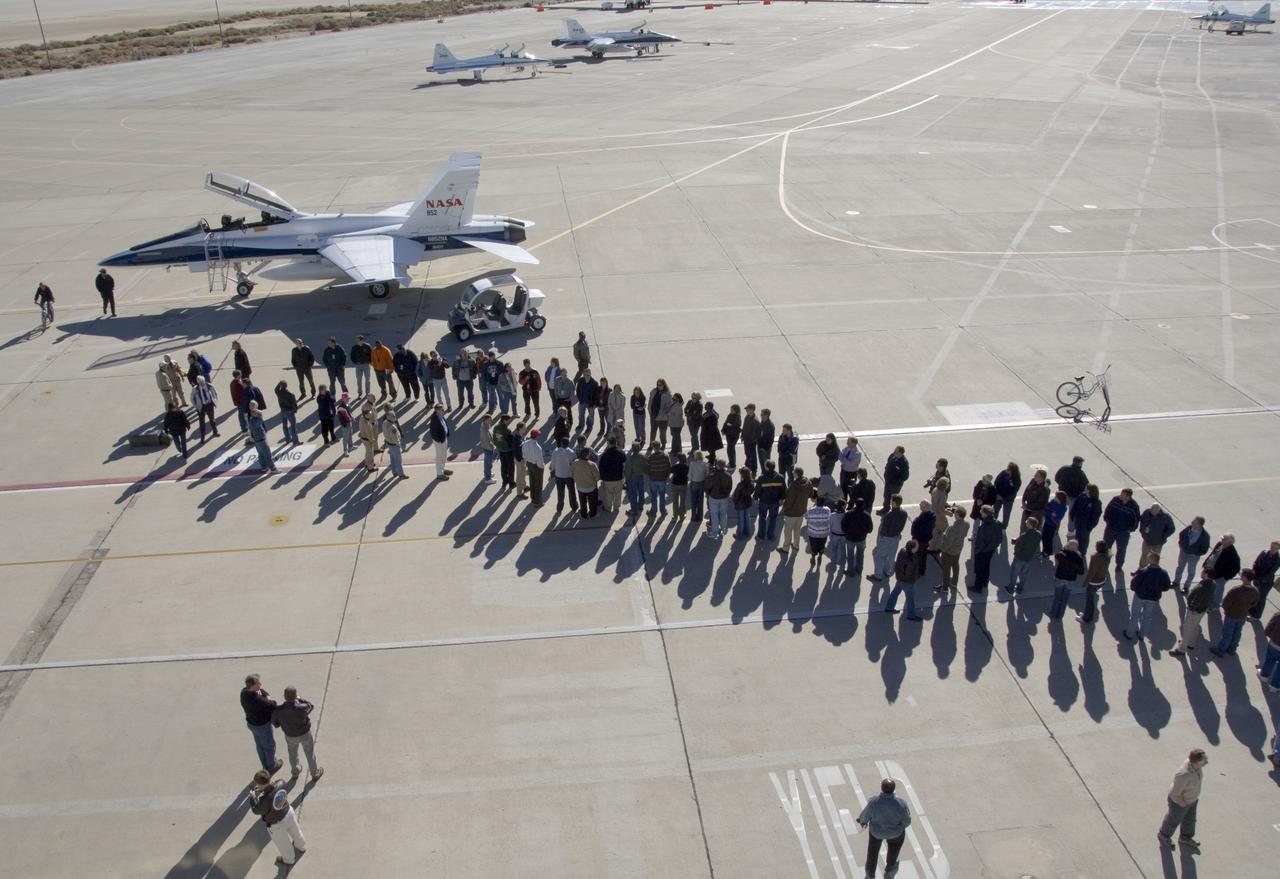
Long-time NASA Dryden research pilot and former astronaut C. Gordon Fullerton capped an almost 50-year flying career, including more than 38 years with NASA, with a final flight in a NASA F/A-18 on Dec. 21, 2007. Fullerton and Dryden research pilot Jim Smolka flew a 90-minute pilot proficiency formation aerobatics flight with another Dryden F/A-18 and a Dryden T-38 before concluding with two low-level formation flyovers of Dryden before landing. Fullerton was honored with a water-cannon spray arch provided by two fire trucks from the Edwards Air Force Base fire department as he taxied the F/A-18 up to the Dryden ramp, and was then greeted by his wife Marie and several hundred Dryden staff after his final flight. Fullerton began his flying career with the U.S. Air Force in 1958 after earning bachelor's and master's degrees in mechanical engineering from the California Institute of Technology. Initially trained as a fighter pilot, he later transitioned to multi-engine bombers and became a bomber operations test pilot after attending the Air Force Aerospace Research Pilot School at Edwards Air Force Base, Calif. He then was assigned to the flight crew for the planned Air Force Manned Orbital Laboratory in 1966. Upon cancellation of that program, the Air Force assigned Fullerton to NASA's astronaut corps in 1969. He served on the support crews for the Apollo 14, 15, 16 and 17 lunar missions, and was later assigned to one of the two flight crews that piloted the space shuttle prototype Enterprise during the Approach and Landing Test program at Dryden. He then logged some 382 hours in space when he flew on two early space shuttle missions, STS-3 on Columbia in 1982 and STS-51F on Challenger in 1985. He joined the flight crew branch at NASA Dryden after leaving the astronaut corps in 1986. During his 21 years at Dryden, Fullerton was project pilot on a number of high-profile research efforts, including the Propulsion Controlled Aircraft, the high-speed landing tests of
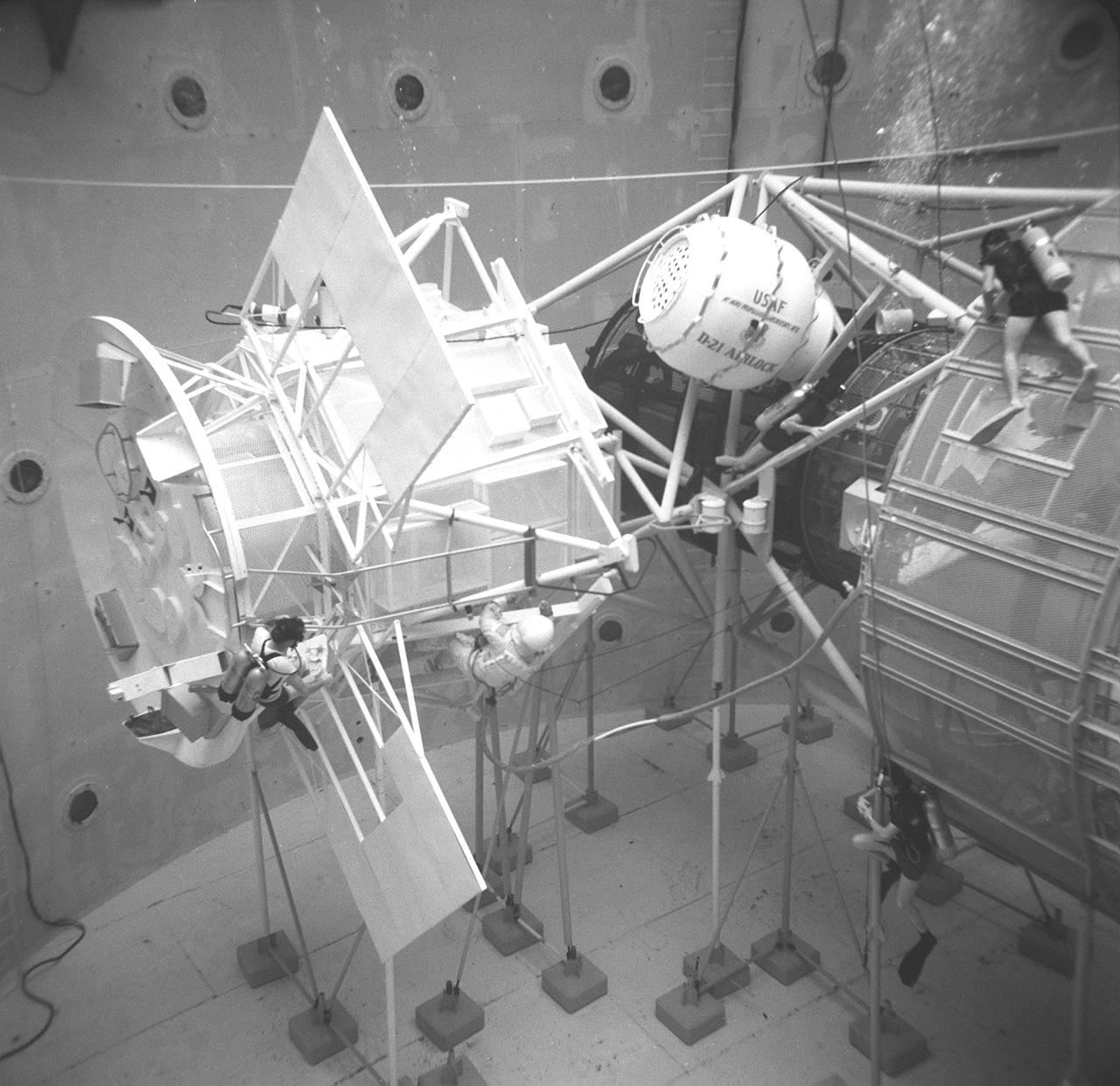
After the end of the Apollo missions, NASA's next adventure into space was the marned spaceflight of Skylab. Using an S-IVB stage of the Saturn V launch vehicle, Skylab was a two-story orbiting laboratory, one floor being living quarters and the other a work room. The objectives of Skylab were to enrich our scientific knowledge of the Earth, the Sun, the stars, and cosmic space; to study the effects of weightlessness on living organisms, including man; to study the effects of the processing and manufacturing of materials utilizing the absence of gravity; and to conduct Earth resource observations. At the Marshall Space Flight Center (MSFC), astronauts and engineers spent hundreds of hours in an MSFC Neutral Buoyancy Simulator (NBS) rehearsing procedures to be used during the Skylab mission, developing techniques, and detecting and correcting potential problems. The NBS was a 40-foot deep water tank that simulated the weightlessness environment of space. This photograph shows astronaut Ed Gibbon (a prime crew member of the Skylab-4 mission) during the neutral buoyancy Skylab extravehicular activity training at the Apollo Telescope Mount (ATM) mockup. One of Skylab's major components, the ATM was the most powerful astronomical observatory ever put into orbit to date.
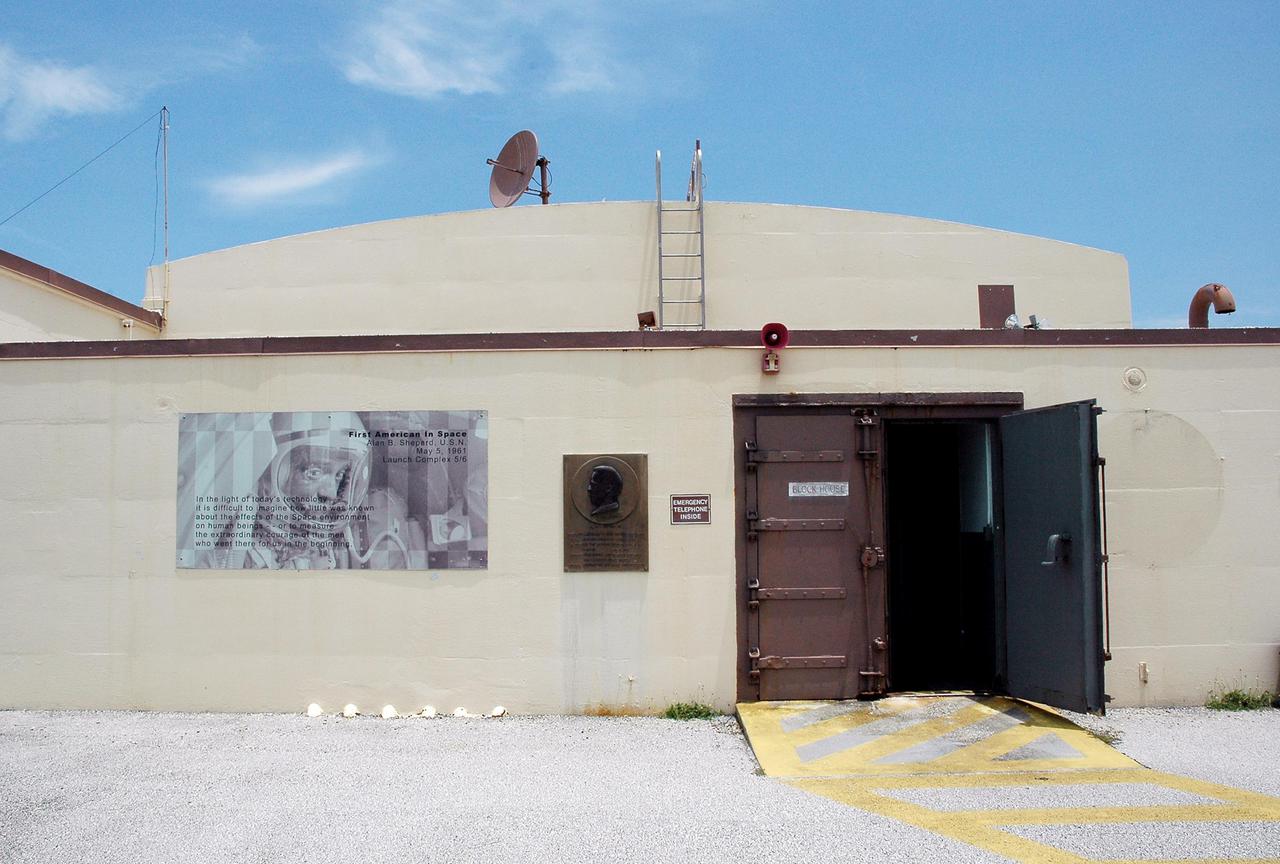
KENNEDY SPACE CENTER, FLA. - This is Launch Complex 5_6 blockhouse, now a museum at the Cape Canaveral Air Force Station (CCAFS) in Florida, where long-lost space suits were found. A recent venture into a long-locked room at CCAFS uncovered interesting artifacts of a bygone era: retired space suits from Americans who trained in the 1960s to be astronauts aboard an Air Force orbiting reconnaissance laboratory. Two security officers were doing a check of a facility at Launch Complex 5_6 blockhouse. NASA Special Agent Dan E. Oakland and Security Manager Henry Butler, who is with Delaware North Parks and Resorts, the company that oversees the museum, discovered a locked room. Space suits from the Air Force’s planned Manned Orbiting Laboratory (MOL) program were found in the room Begun in 1964, the MOL program was an Air Force initiative that would have sent Air Force astronauts to a space station in a Gemini capsule. After spending a few weeks in orbit, the crew would undock and return to Earth. A test launch from Complex 40 on Nov. 30, 1966, of a MOL was conducted with an unmanned Gemini capsule. The MOL was constructed from tankage of a Titan II rocket. The operational MOL was planned to be launched into a polar orbit from Vandenberg Air Force Base in California. The Air Force abandoned the program in 1969, but the program produced a great deal of technological development, and three groups of military officers trained to be MOL astronauts. When the program was cancelled, seven of the younger astronauts were transferred to the agency’s human space flight program and went on to have standout careers. Among them were Robert Crippen, pilot of the first Space Shuttle mission, and Richard H. 'Dick' Truly, who later became NASA Administrator.
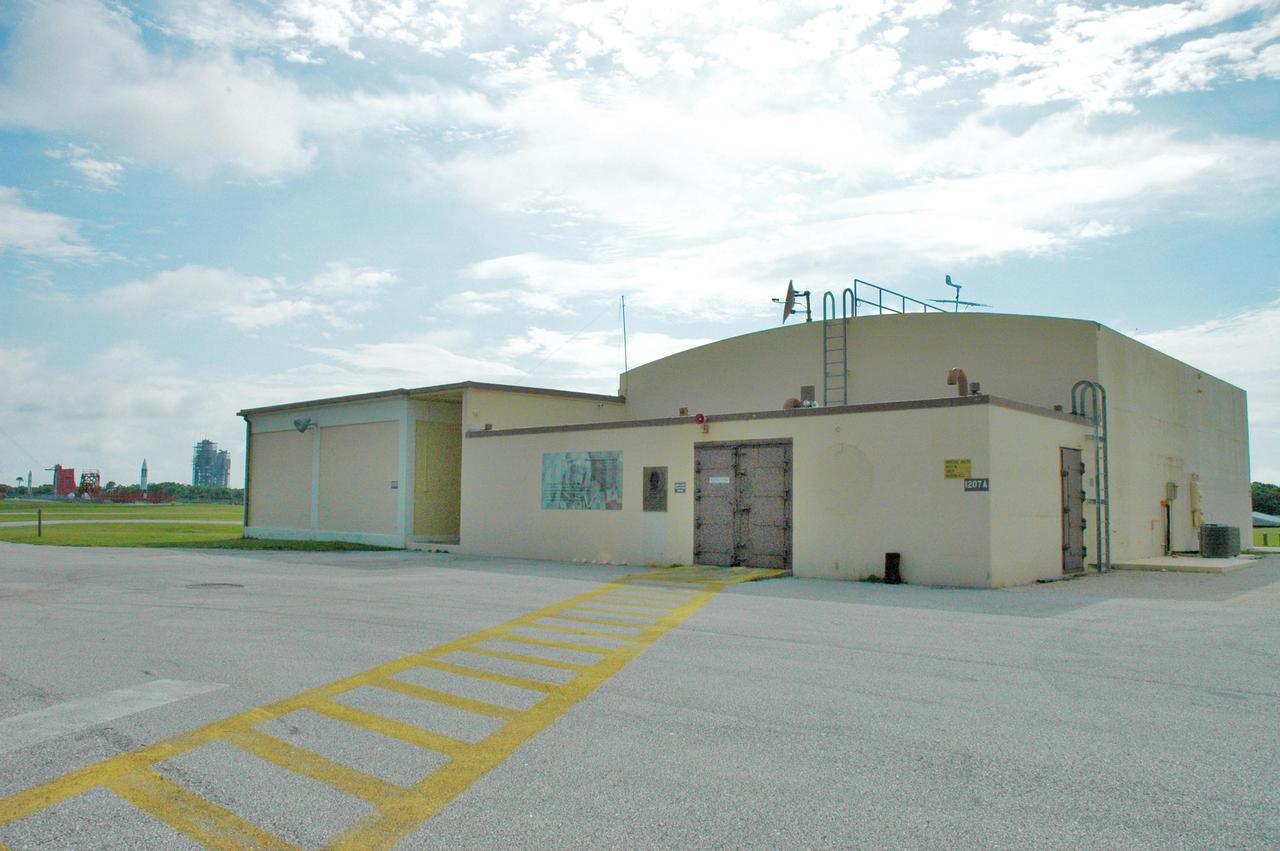
KENNEDY SPACE CENTER, FLA. - This is Launch Complex 5_6 blockhouse, now a museum at the Cape Canaveral Air Force Station (CCAFS) in Florida, where long-lost spacesuits were found. A recent venture into a long-locked room at CCAFS uncovered interesting artifacts of a bygone era: retired space suits from Americans who trained in the 1960s to be astronauts aboard an Air Force orbiting reconnaissance laboratory. Two security officers were doing a check of a facility at Launch Complex 5_6 blockhouse. NASA Special Agent Dan E. Oakland and Security Manager Henry Butler, with Delaware North Parks and Resorts, which oversees the museum, discovered a locked room. Space suits from the Air Force’s planned Manned Orbiting Laboratory (MOL) program were found in the room Begun in 1964, the MOL program was an Air Force initiative that would have sent Air Force astronauts to a space station in a Gemini capsule. After spending a few weeks in orbit, the crew would undock and return to Earth. A test launch from Complex 40 on Nov. 30, 1966, of a MOL was conducted with an unmanned Gemini capsule. The MOL was constructed from tankage of a Titan II rocket. The operational MOL was planned to be launched into a polar orbit from Vandenberg Air Force Base in California. The Air Force abandoned the program in 1969, but the program produced a great deal of technological development, and three groups of military officers trained to be MOL astronauts. When the program was cancelled, seven of the younger astronauts were transferred to the agency’s human space flight program and went on to have standout careers. Among them were Robert Crippen, pilot of the first Space Shuttle mission, and Richard H. 'Dick' Truly, who later became NASA Administrator.
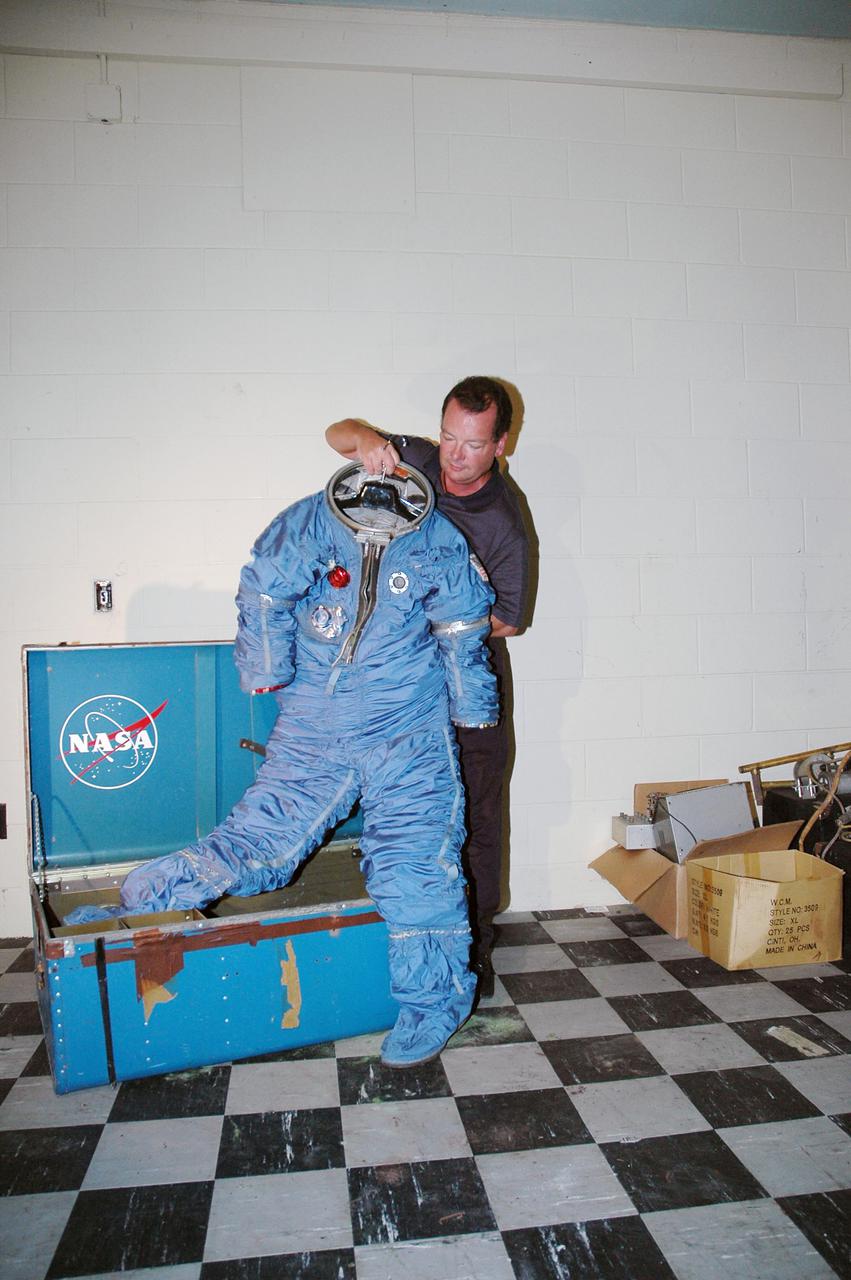
KENNEDY SPACE CENTER, FLA. - NASA Special Agent Dan Oakland holds up a long-lost spacesuit recently uncovered at the Cape Canaveral Air Force Station (CCAFS) in Florida. A recent venture into a long-locked room at CCAFS uncovered interesting artifacts of a by-gone era: retired space suits from Americans who trained in the 1960s to be astronauts aboard an Air Force orbiting reconnaissance laboratory. Two security officers were doing a check of a facility at Launch Complex 5_6 blockhouse. Oakland and Security Manager Henry Butler, who is with Delaware North Parks and Resorts, the company that oversees the museum, discovered a locked room. Space suits from the Air Force’s planned Manned Orbiting Laboratory (MOL) program were found in the room Begun in 1964, the MOL program was an Air Force initiative that would have sent Air Force astronauts to a space station in a Gemini capsule. After spending a few weeks in orbit, the crew would undock and return to Earth. A test launch from Complex 40 on Nov. 30, 1966, of a MOL was conducted with an unmanned Gemini capsule. The MOL was constructed from tankage of a Titan II rocket. The operational MOL was planned to be launched into a polar orbit from Vandenberg Air Force Base in California. The Air Force abandoned the program in 1969, but the program produced a great deal of technological development, and three groups of military officers trained to be MOL astronauts. When the program was cancelled, seven of the younger astronauts were transferred to the agency’s human space flight program and went on to have standout careers. Among them were Robert Crippen, pilot of the first Space Shuttle mission, and Richard H. 'Dick' Truly, who later became NASA Administrator.
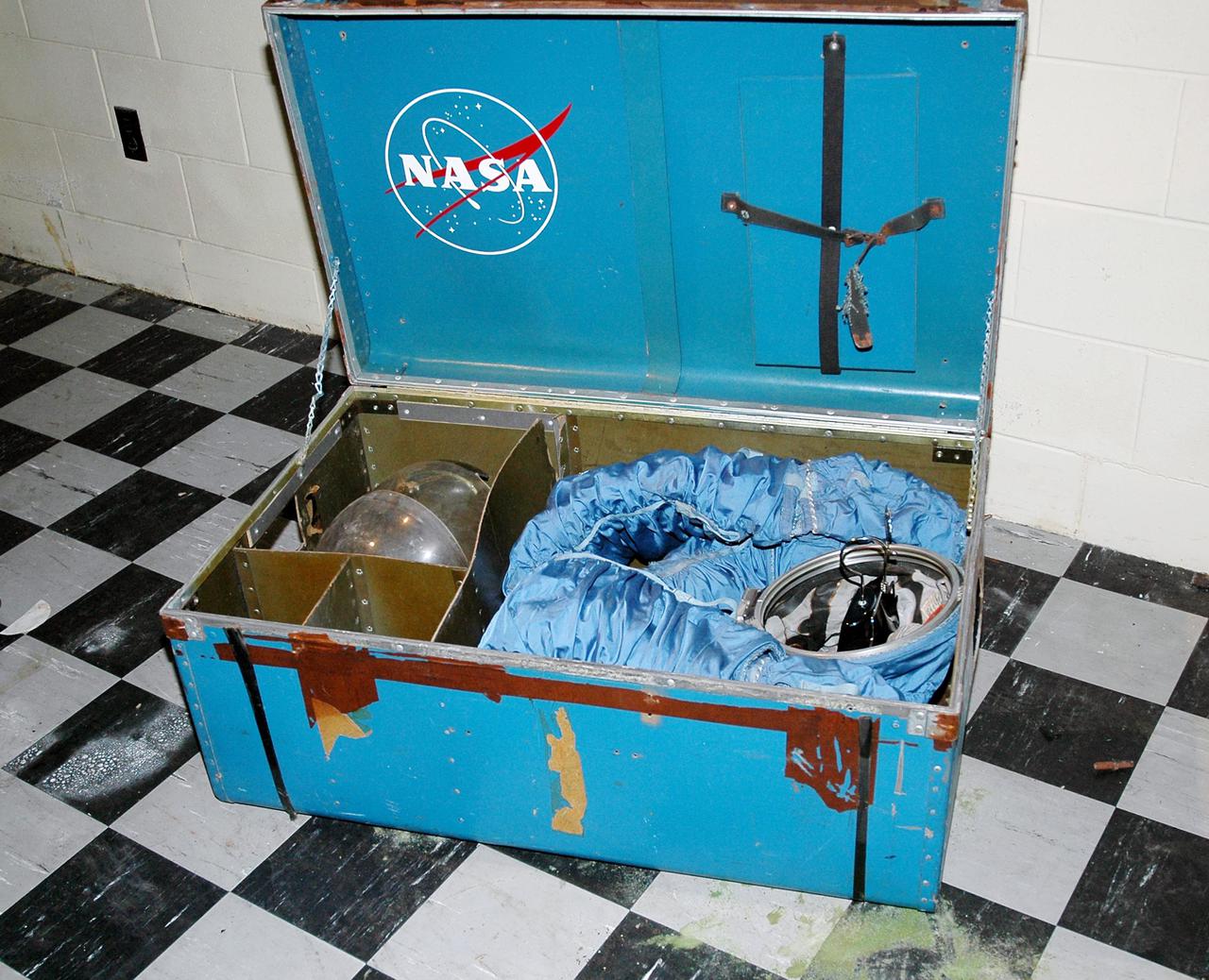
KENNEDY SPACE CENTER, FLA. - This locker reveals a long-lost spacesuit recently uncovered at the Cape Canaveral Air Force Station (CCAFS) in Florida. A recent venture into a long-locked room at CCAFS uncovered interesting artifacts of a bygone era: retired space suits from Americans who trained in the 1960s to be astronauts aboard an Air Force orbiting reconnaissance laboratory. Two security officers were doing a check of a facility at Launch Complex 5_6 blockhouse. NASA Special Agent Dan E. Oakland and Security Manager Henry Butler, who is with Delaware North Parks and Resorts, the company that oversees the museum, discovered a locked room. Space suits from the Air Force’s planned Manned Orbiting Laboratory (MOL) program were found in the room Begun in 1964, the MOL program was an Air Force initiative that would have sent Air Force astronauts to a space station in a Gemini capsule. After spending a few weeks in orbit, the crew would undock and return to Earth. A test launch from Complex 40 on Nov. 30, 1966, of a MOL was conducted with an unmanned Gemini capsule. The MOL was constructed from tankage of a Titan II rocket. The operational MOL was planned to be launched into a polar orbit from Vandenberg Air Force Base in California. The Air Force abandoned the program in 1969, but the program produced a great deal of technological development, and three groups of military officers trained to be MOL astronauts. When the program was cancelled, seven of the younger astronauts were transferred to the agency’s human space flight program and went on to have standout careers. Among them were Robert Crippen, pilot of the first Space Shuttle mission, and Richard H. 'Dick' Truly, who later became NASA Administrator.
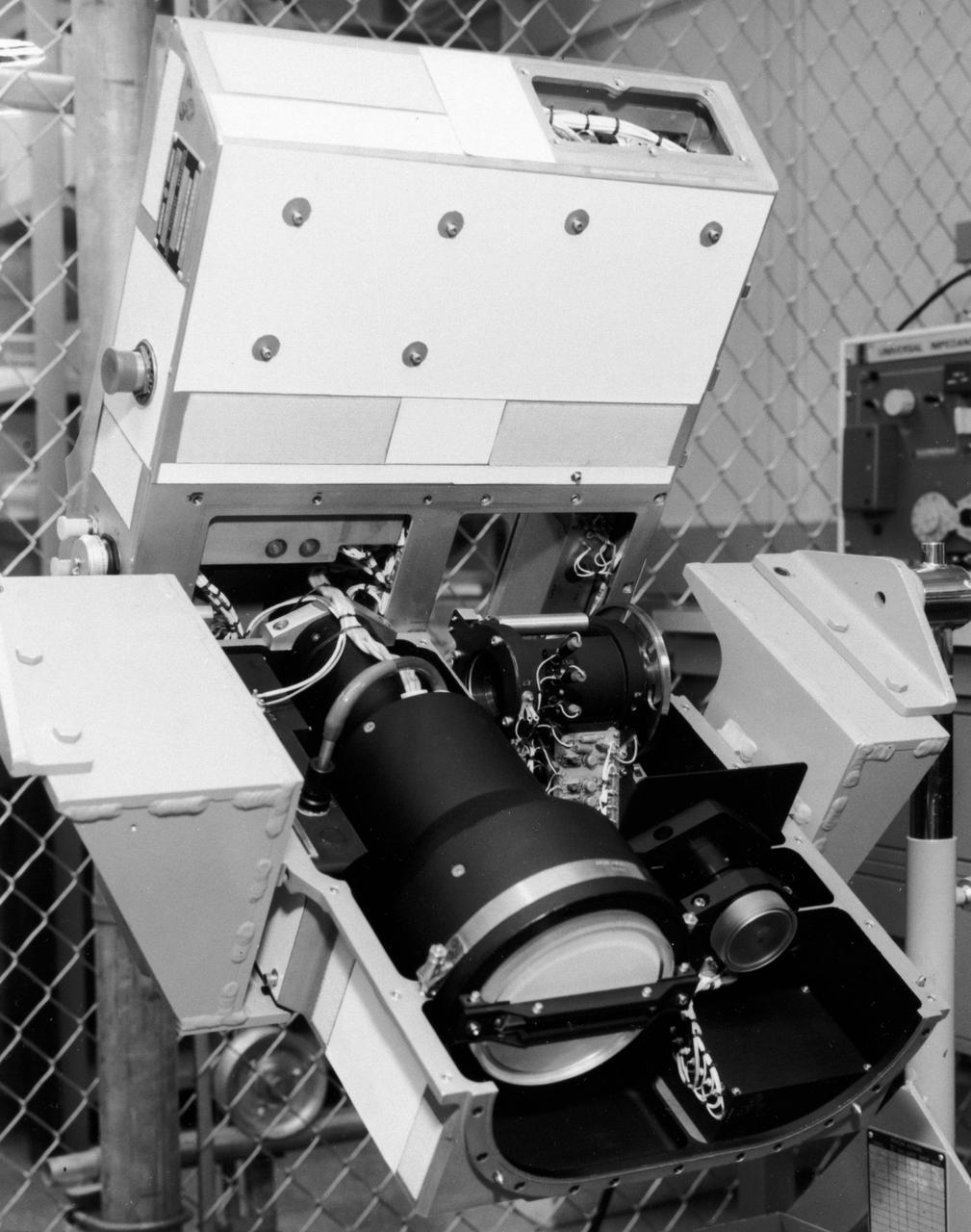
S72-49482 (November 1972) --- The Optical Recorder of the Lunar Sounder Experiment (S-209) which will be mounted in the SIM bay of the Apollo 17 Service Module. The three functional parts of the Lunar Sounder are the optical recorder, the coherent synthetic aperture radar, and the antennas, a retractable dipole for HF and a yagi for VHF. The Lunar Sounder will probe three-quarters of a mile below the moon's surface from the orbiting Apollo 17 spacecraft. Electronic data recorded on film will be retrieved by the crew during trans-Earth EVA. Geologic information on the lunar interior obtained by the sounder will permit scientific investigation of underground rock layers, lava flow patterns, rille (canyon) structures, mascon properties, and any areas containing water. A prototype lunar sounder has been flight tested in aircraft over selected Earth sites to confirm the equipment design and develop scientific analysis techniques. The Lunar Sounder Experiment was developed by North American Rockwell's (NR) Space Division for NASA's Manned Spacecraft Center to provide data for a scientific investigation team with representatives from the Jet Propulsion Laboratory, University of Utah, University of Michigan, U.S. Geological Survey, and NASA Ames Research Center.
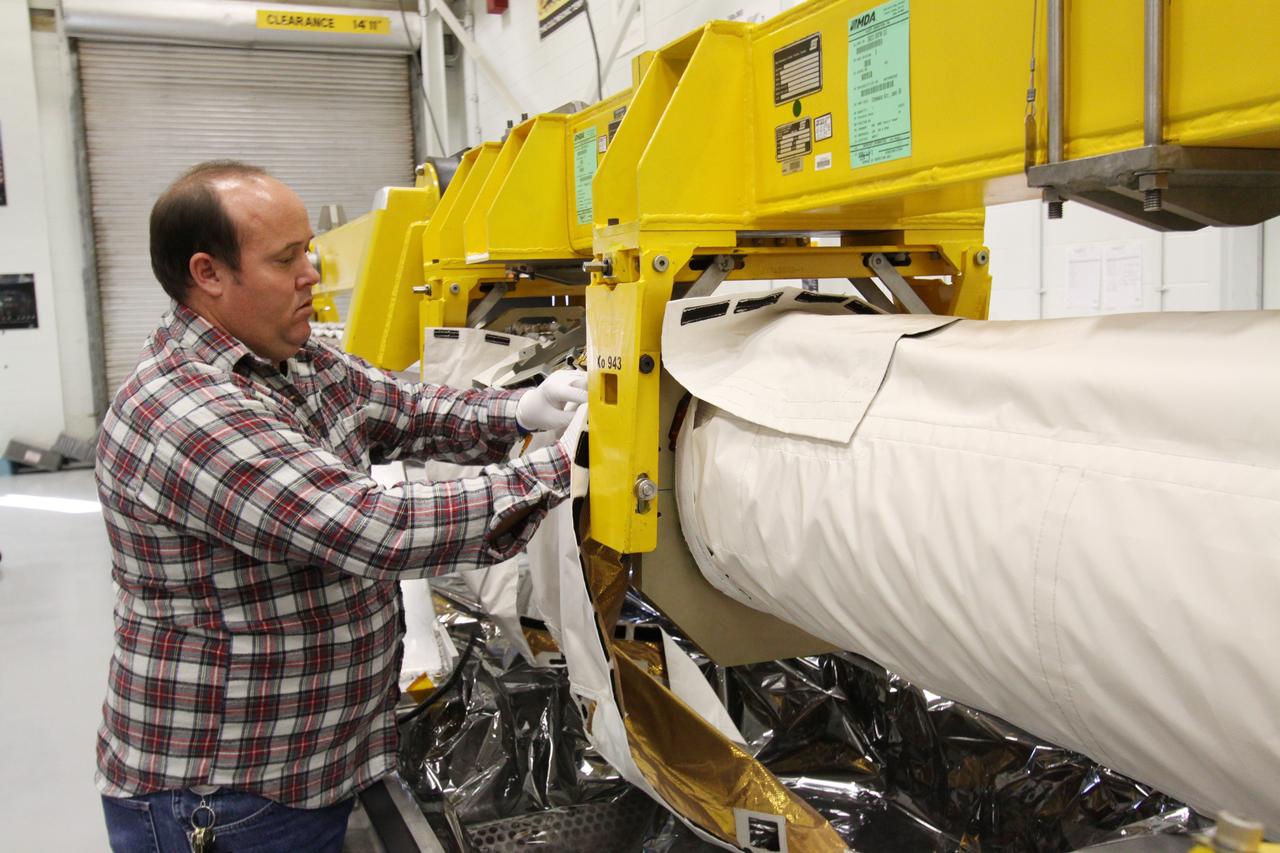
CAPE CANAVERAL, Fla. - In the Remote Manipulator System Lab inside the Vehicle Assembly Building at NASA's Kennedy Space Center in Florida, Patrick Manning, an advanced systems technician with United Space Alliance, installs the mid-transition thermal blanket onto the inspection boom assembly, or IBA, on space shuttle Atlantis' orbiter boom sensor system, or OBSS. The IBA is removed from the shuttle every other processing flow for a detailed inspection. After five consecutive flights, all IBA internal components are submitted to a thorough electrical checkout in the lab. The 50-foot-long OBSS attaches to the end of the shuttle’s robotic arm and supports the cameras and laser systems used to inspect the shuttle’s thermal protection system while in space. Atlantis is next slated to deliver an Integrated Cargo Carrier and Russian-built Mini Research Module to the International Space Station on the STS-132 mission. The second in a series of new pressurized components for Russia, the module will be permanently attached to the Zarya module. Three spacewalks are planned to store spare components outside the station, including six spare batteries, a boom assembly for the Ku-band antenna and spares for the Canadian Dextre robotic arm extension. A radiator, airlock and European robotic arm for the Russian Multi-purpose Laboratory Module also are payloads on the flight. Launch is targeted for May 14, 2010. Photo credit: NASA/Jack Pfaller
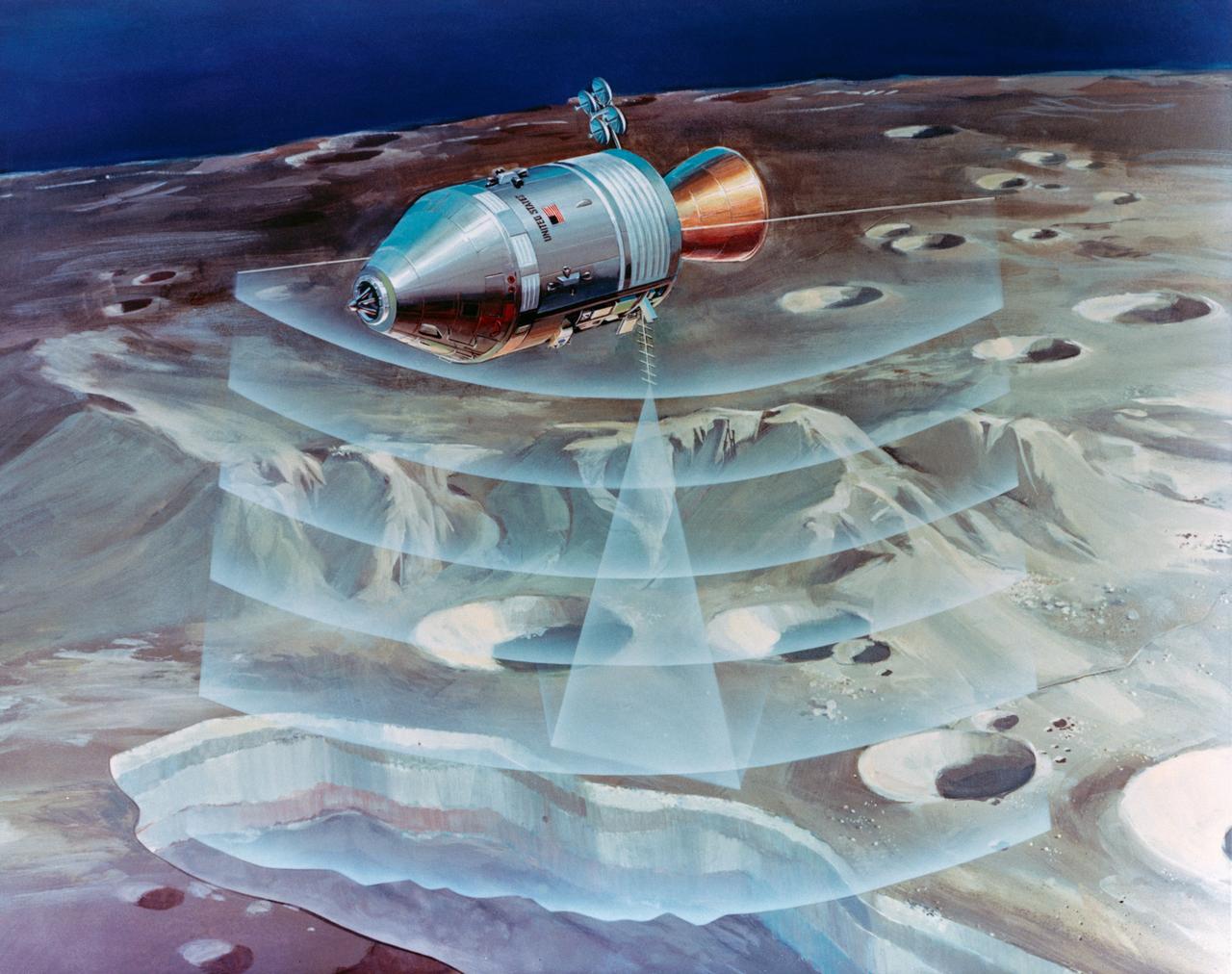
S72-53472 (November 1972) --- An artist's concept illustrating how radar beams of the Apollo 17 lunar sounder experiment will probe three-quarters of a mile below the moon's surface from the orbiting spacecraft. The Lunar Sounder will be mounted in the SIM bay of the Apollo 17 Service Module. Electronic data recorded on film will be retrieved by the crew during trans-Earth EVA. Geologic information on the lunar interior obtained by the sounder will permit scientific investigation of underground rock layers, lava flow patterns, rille (canyon) structures, mascon properties, and any areas containing water. A prototype lunar sounder has been flight tested in aircraft over selected Earth sites to confirm the equipment design and develop scientific analysis techniques. The Lunar Sounder Experiment (S-209) was developed by North American Rockwell's (NR) Space Division for NASA's Manned Spacecraft Center to provide data for a scientific investigation team with representatives from the Jet Propulsion Laboratory, University of Utah, University of Michigan, U.S. Geological Survey, and NASA Ames Research Center.
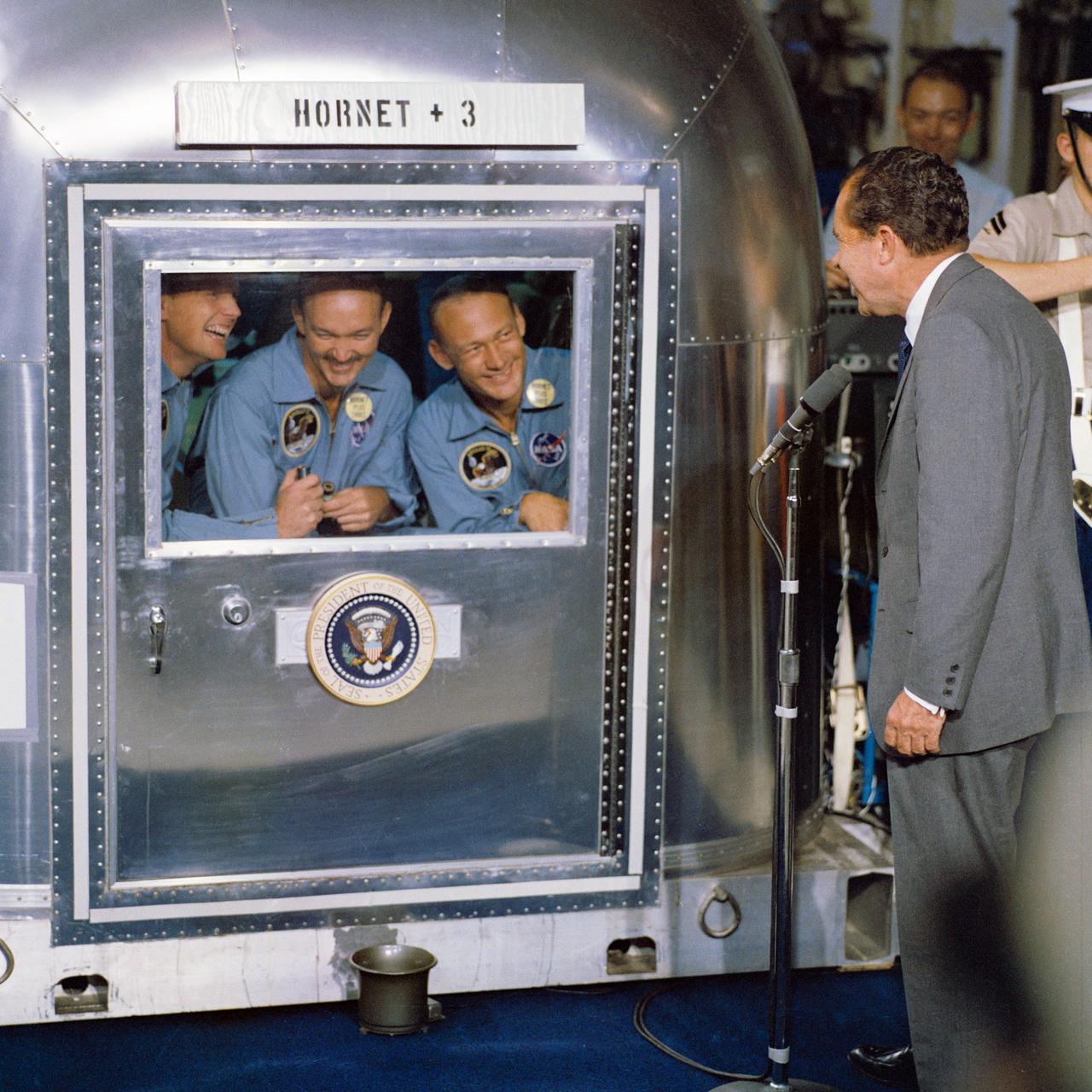
S69-21365 (24 July 1969) --- United States President Richard M. Nixon was in the central Pacific recovery area to welcome the Apollo 11 astronauts aboard the USS Hornet, prime recovery ship for the historic Apollo 11 lunar landing mission. Already confined to the Mobile Quarantine Facility (MQF) are (left to right) Neil A. Armstrong, commander; Michael Collins, command module pilot; and Edwin E. Aldrin Jr., lunar module pilot. Apollo 11 splashed down at 11:49 a.m. (CDT), July 24, 1969, about 812 nautical miles southwest of Hawaii and only 12 nautical miles from the USS Hornet. The three crewmen will remain in the MQF until they arrive at the Manned Spacecraft Center's (MSC) Lunar Receiving Laboratory (LRL). While astronauts Armstrong and Aldrin descended in the Lunar Module (LM) "Eagle" to explore the Sea of Tranquility region of the moon, astronaut Collins remained with the Command and Service Modules (CSM) "Columbia" in lunar orbit. Photo credit: NASA
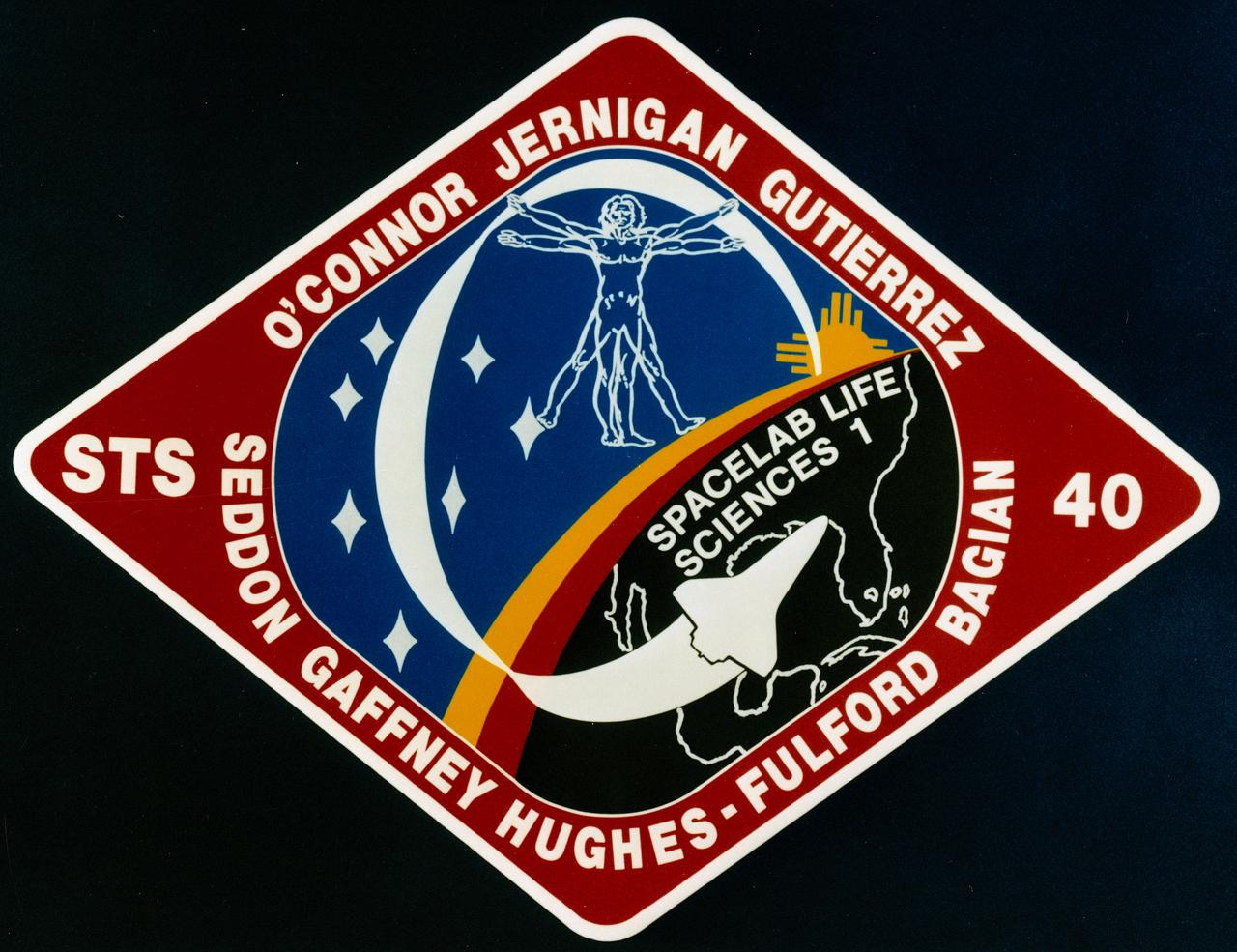
The STS-40 patch makes a contemporary statement focusing on human beings living and working in space. Against a background of the universe, seven silver stars, interspersed about the orbital path of Columbia, represent the seven crew members. The orbiter's flight path forms a double-helix, designed to represent the DNA molecule common to all living creatures. In the words of a crew spokesman, ...(the helix) affirms the ceaseless expansion of human life and American involvement in space while simultaneously emphasizing the medical and biological studies to which this flight is dedicated. Above Columbia, the phrase Spacelab Life Sciences 1 defines both the Shuttle mission and its payload. Leonardo Da Vinci's Vitruvian man, silhouetted against the blue darkness of the heavens, is in the upper center portion of the patch. With one foot on Earth and arms extended to touch Shuttle's orbit, the crew feels, he serves as a powerful embodiment of the extension of human inquiry from the boundaries of Earth to the limitless laboratory of space. Sturdily poised amid the stars, he serves to link scentists on Earth to the scientists in space asserting the harmony of efforts which produce meaningful scientific spaceflight missions. A brilliant red and yellow Earth limb (center) links Earth to space as it radiates from a native American symbol for the sun. At the frontier of space, the traditional symbol for the sun vividly links America's past to America's future, the crew states. Beneath the orbiting Shuttle, darkness of night rests peacefully over the United States. Drawn by artist Sean Collins, the STS 40 Space Shuttle patch was designed by the crewmembers for the flight.
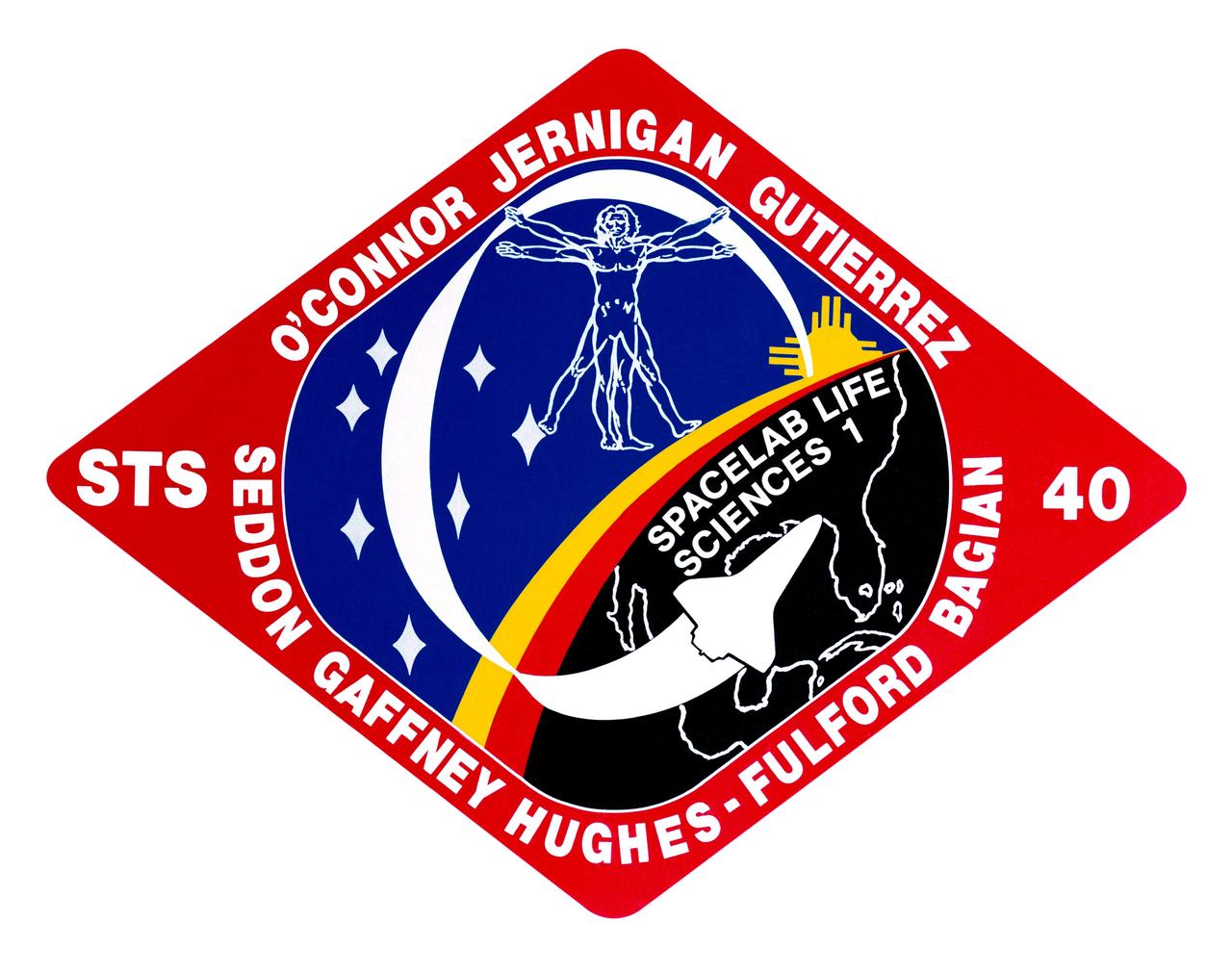
STS40-S-001 (May 1990) --- The STS-40 patch makes a contemporary statement focusing on human beings living and working in space. Against a background of the universe, seven silver stars, interspersed about the Orbital path of the space shuttle Columbia, represent the seven crew members. The orbiter's flight path forms a double-helix, designed to represent the DNA molecule common to all living creatures. In the words of a crew spokesman, "...(the helix) affirms the ceaseless expansion of human life and American involvement in space while simultaneously emphasizing the medical and biological studies to which this flight is dedicated." Above Columbia, the phrase "Spacelab Life Sciences 1" defines both the shuttle mission and its payload. Leonardo Da Vinci's Vitruvian man, silhouetted against the blue darkness of the heavens, is in the upper center portion of the patch. With one foot on Earth and arms extended to touch shuttle's orbit, the crew feels, he serves as a powerful embodiment of the extension of human inquiry from the boundaries of Earth to the limitless laboratory of space. Sturdily poised amid the stars, he serves to link scentists on Earth to the scientists in space asserting the harmony of efforts which produce meaningful scientific spaceflight missions. A brilliant red and yellow Earth limb (center) links Earth to space as it radiates from a native American symbol for the sun. At the frontier of space, the traditional symbol for the sun vividly links America's past to America's future, the crew states. Beneath the orbiting space shuttle, darkness of night rests peacefully over the United States. Drawn by artist Sean Collins, the STS-40 space shuttle patch was designed by the crew members for the flight. The NASA insignia design for space shuttle flights is reserved for use by the astronauts and for other official use as the NASA Administrator may authorize. Public availability has been approved only in the forms of illustrations by the various news media. When and if there is any change in this policy, which is not anticipated, the change will be publicly announced. Photo credit: NASA
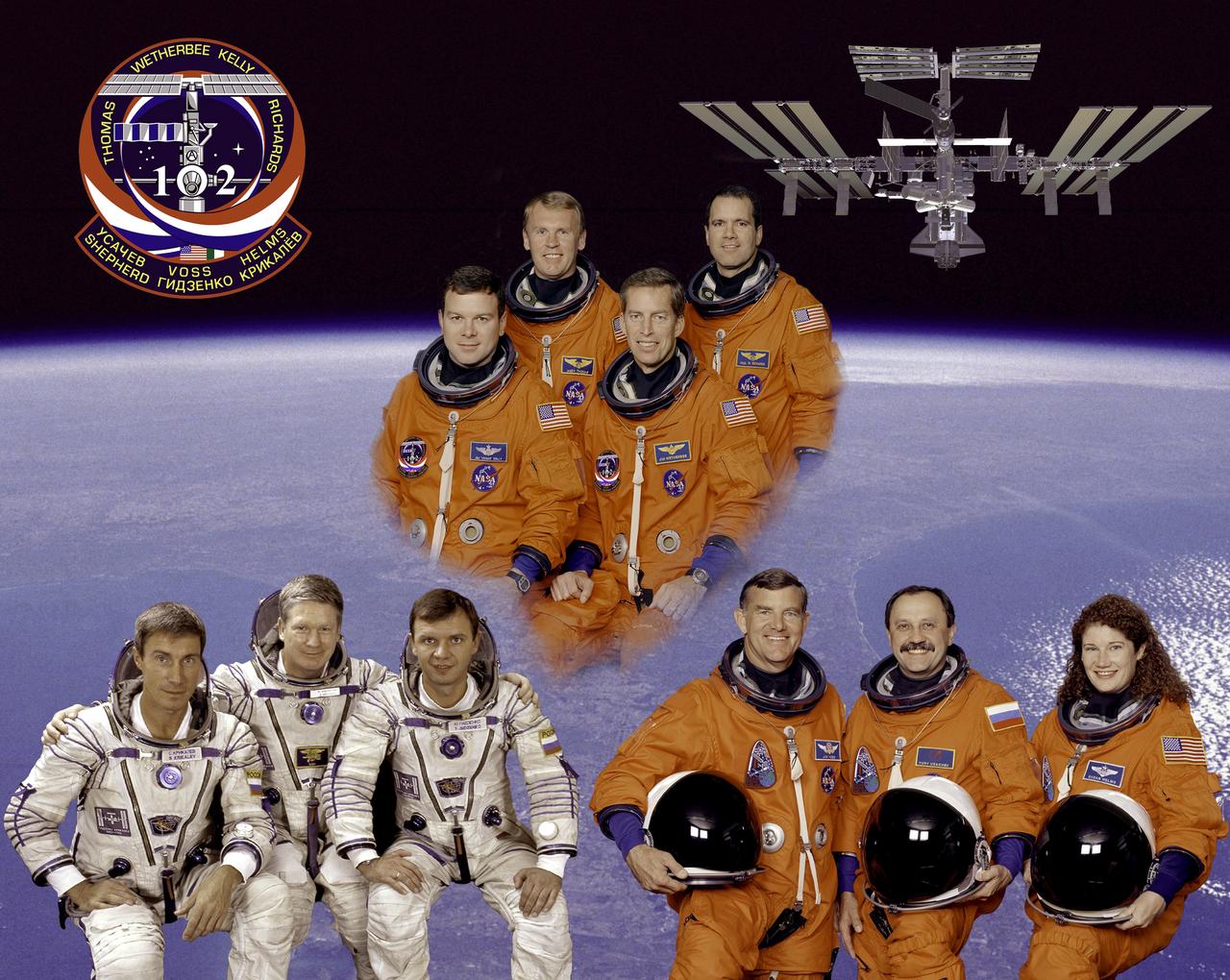
These 10 astronauts and cosmonauts represent the base STS-102 space travelers, as well as the crew members for the station crews switching out turns aboard the outpost. Those astronauts wearing orange represent the STS-102 crew members. In the top photo, from left to right are: James M. Kelly, pilot; Andrew S.W. Thomas, mission specialist; James D. Wetherbee, commander; and Paul W. Richards, mission specialist. The group pictured in the lower right portion of the portrait are STS-members as well as Expedition Two crew members (from left): mission specialist and flight engineer James S. Voss; cosmonaut Yury V. Usachev, Expedition Two Commander; and mission specialist and flight engineer Susan Helms. The lower left inset are the 3 man crew of Expedition One (pictured from left): Cosmonaut Sergei K. Krikalev, flight engineer; astronaut William M. (Bill) Shepherd, commander; and cosmonaut Yuri P. Gidzenko, Soyuz commander. The main objective of the STS-102 mission was the first Expedition Crew rotation and the primary cargo was the Leonardo, the Italian Space Agency-built Multipurpose Logistics Module (MPLM). The Leonardo MPLM is the first of three such pressurized modules that will serve as the International Space Station's (ISS') moving vans, carrying laboratory racks filled with equipment, experiments, and supplies to and from the Station aboard the Space Shuttle. NASA's 103rd overall mission and the 8th Space Station Assembly Flight, STS-102 mission launched on March 8, 2001 aboard the Space Shuttle Orbiter Discovery.
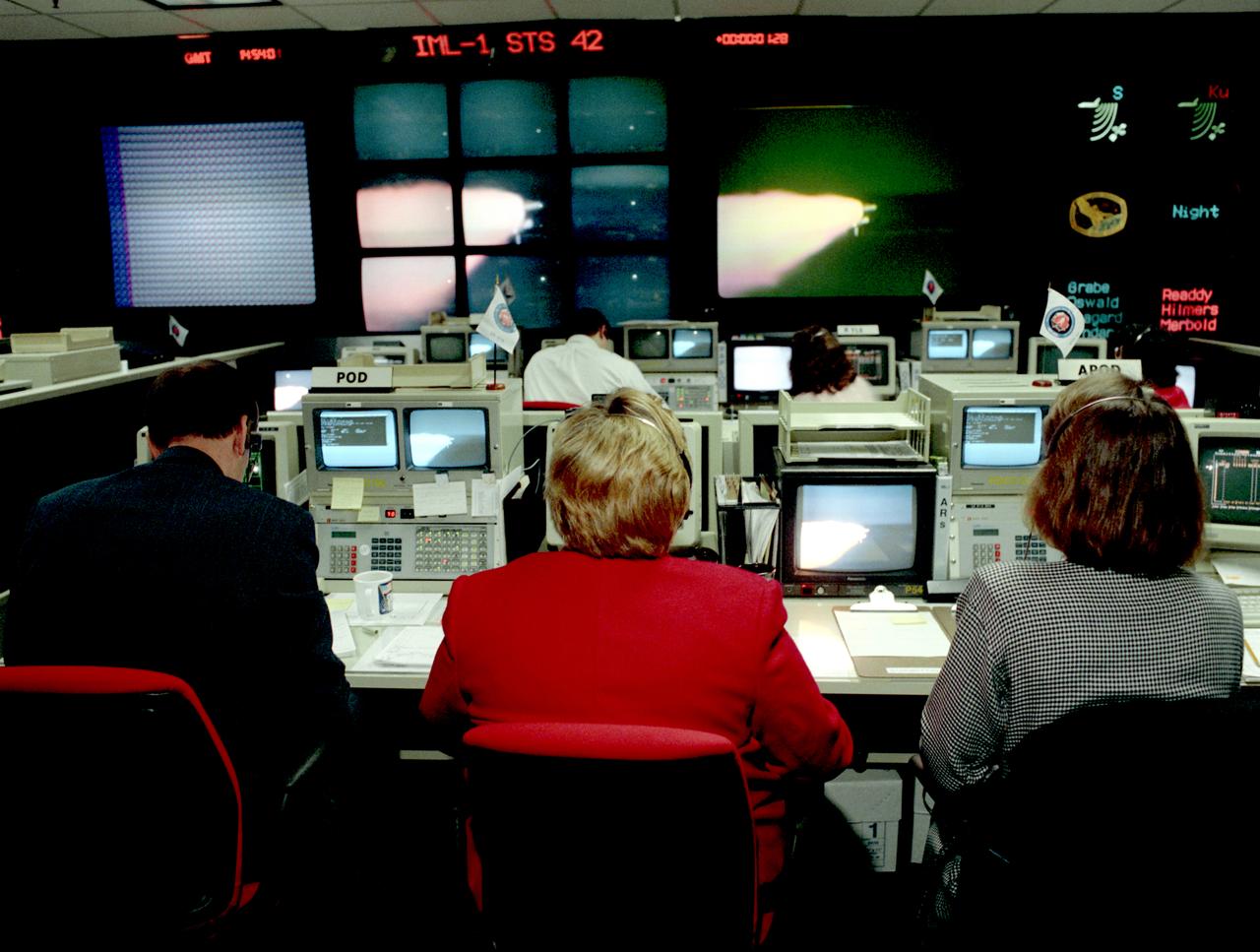
The primary payload for Space Shuttle Mission STS-42, launched January 22, 1992, was the International Microgravity Laboratory-1 (IML-1), a pressurized manned Spacelab module. The goal of IML-1 was to explore in depth the complex effects of weightlessness of living organisms and materials processing. Around-the-clock research was performed on the human nervous system's adaptation to low gravity and effects of microgravity on other life forms such as shrimp eggs, lentil seedlings, fruit fly eggs, and bacteria. Materials processing experiments were also conducted, including crystal growth from a variety of substances such as enzymes, mercury iodide and a virus. The Huntsville Operations Support Center (HOSC) Spacelab Payload Operations Control Center (SL POCC) at the Marshall Space Flight Center (MSFC) was the air/ground communication channel used between the astronauts aboard the Spacelab and scientists, researchers, and ground control teams during the Spacelab missions. The facility made instantaneous video and audio communications possible for scientists on the ground to follow the progress and to send direct commands of their research almost as if they were in space with the crew. Teams of controllers and researchers directed on-orbit science operations, sent commands to the spacecraft, received data from experiments aboard the Space Shuttle, adjusted mission schedules to take advantage of unexpected science opportunities or unexpected results, and worked with crew members to resolve problems with their experiments. In this photograph the Payload Operations Director (POD) views the launch.
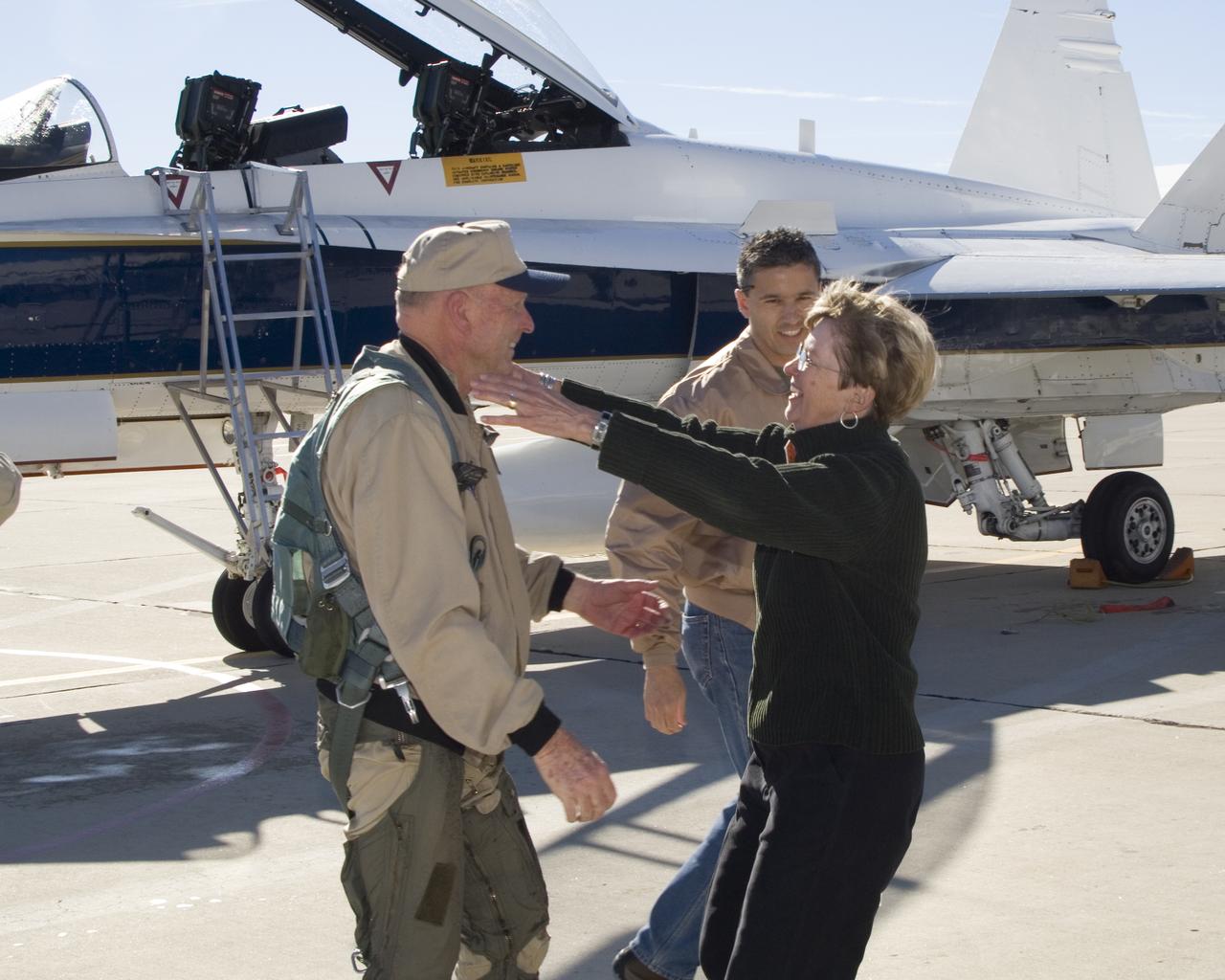
NASA Dryden research pilot Gordon Fullerton is greeted by his wife Marie on the Dryden ramp after his final flight in a NASA F/A-18 on Dec. 21, 2007.