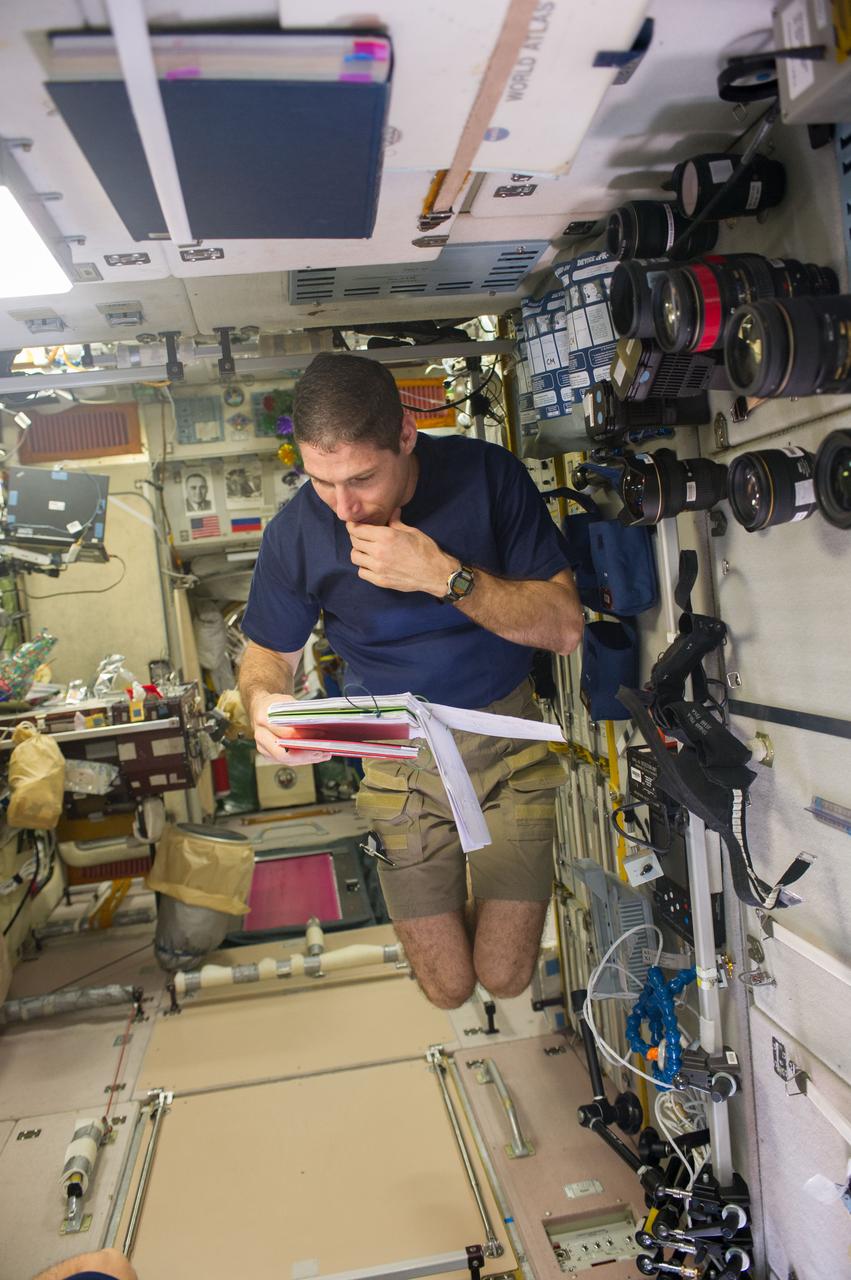
ISS038-E-032817 (14 Jan. 2014) --- NASA astronaut Mike Hopkins, Expedition 38 flight engineer, reads procedure manuals in the Zvezda Service Module of the International Space Station.
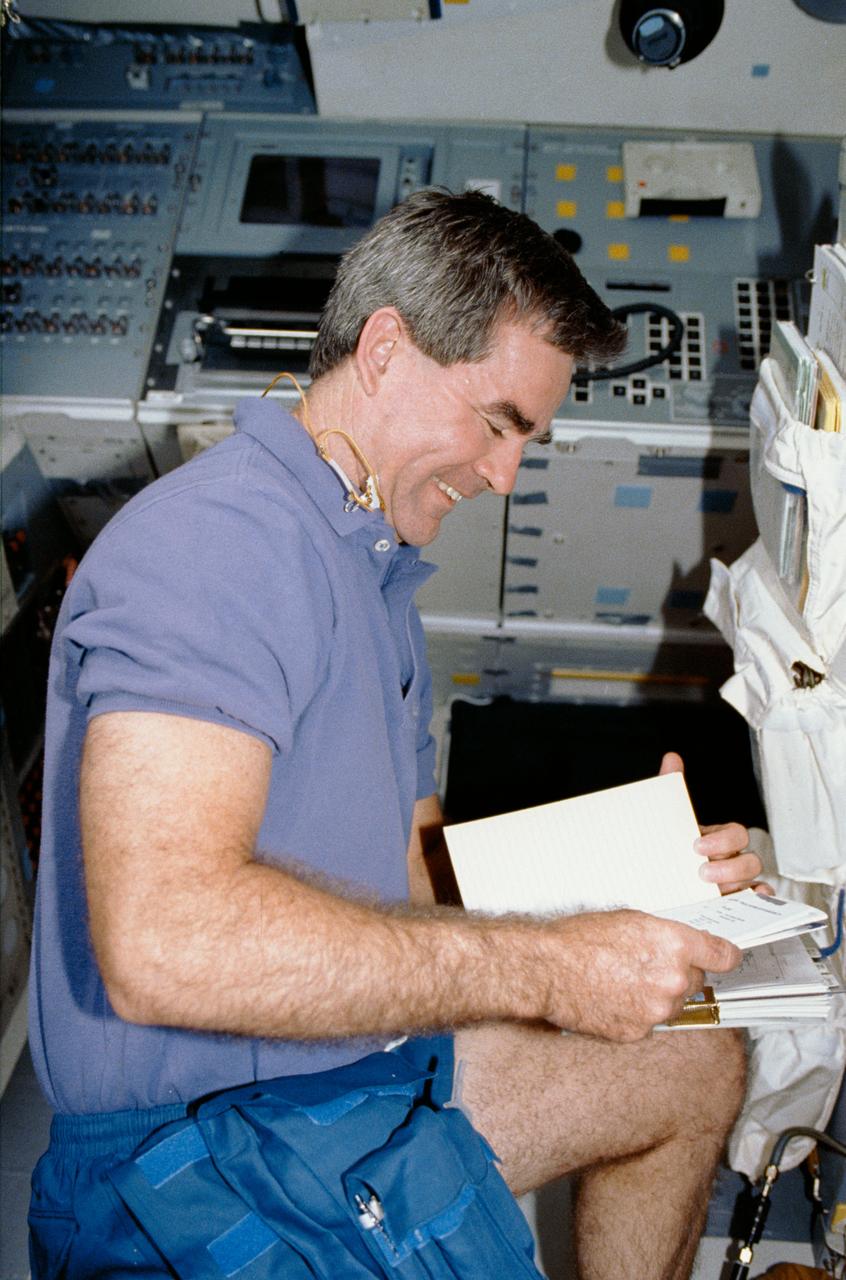
Mission Specialist Lacy Veach in the aft flight deck reviewing a procedures manual.
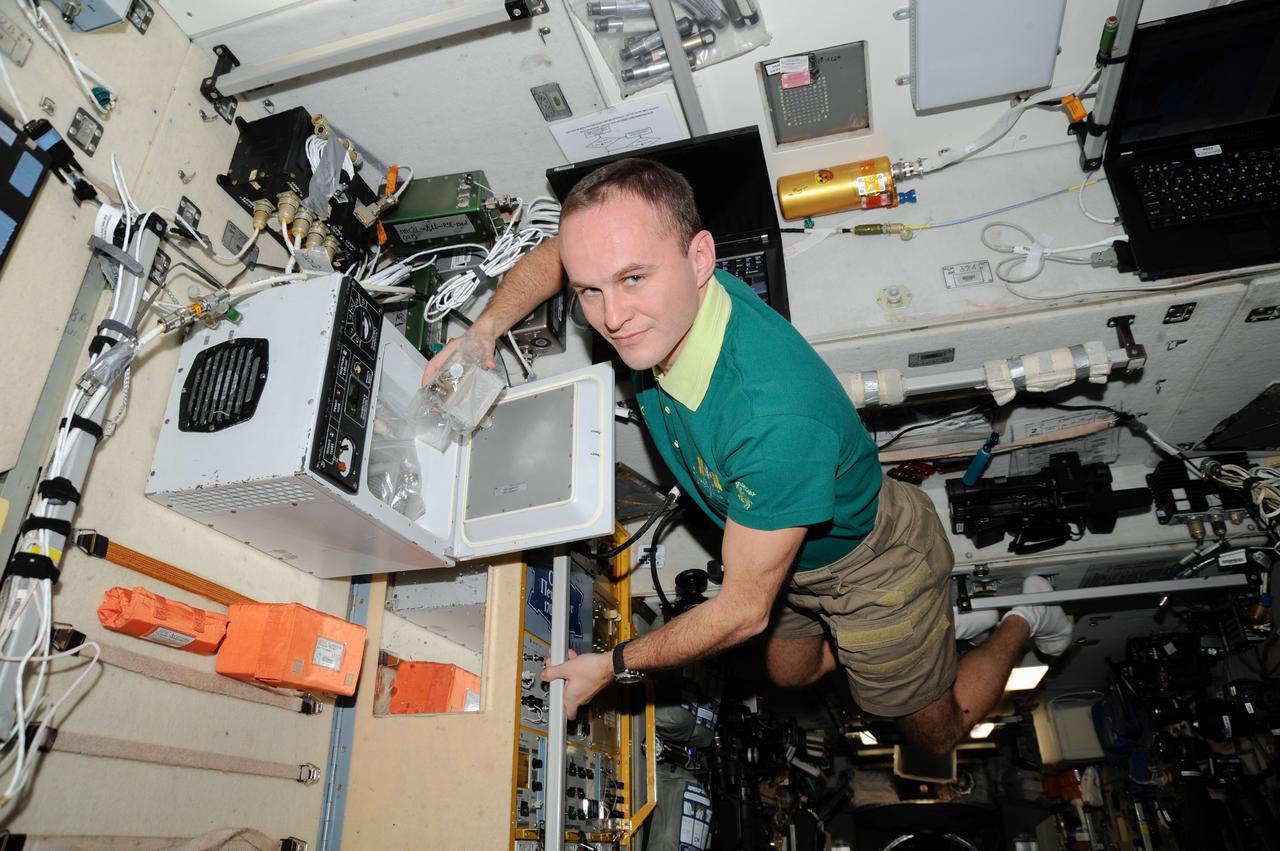
ISS037-E-005692 (5 Oct. 2013) --- Russian cosmonaut Sergey Ryazanskiy, Expedition 37 flight engineer, prepares to manually mix samples in a Bioreactor for the CASKAD experiment in the Poisk Mini-Research Module 2 (MRM2) of the International Space Station.
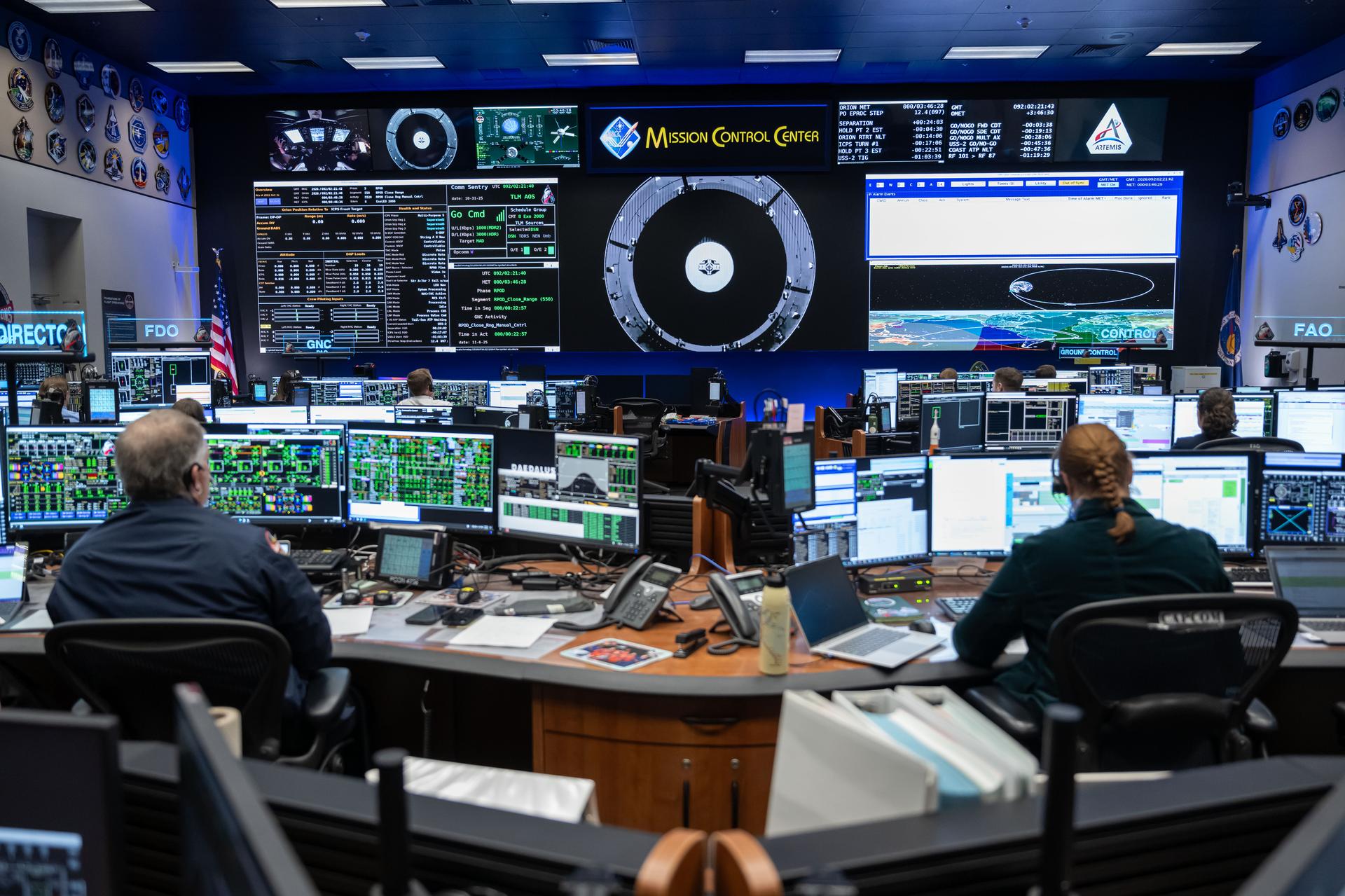
jsc2026e019255 (April 1, 2026) – Lead Artemis II Flight Director Jeff Radigan (left) and capsule communicator (capcom) Amy Dill (right) in the White Flight Control Room at the Mission Control Center at NASA’s Johnson Space Center in Houston. At the time of this photograph, a little over three hours into the mission, the Artemis II crew conducting a manual piloting test called the proximity operations demonstration. During the demonstration, mission controllers monitored Orion as the astronauts transitioned the spacecraft to manual mode and piloted its flight path and orientation. This demonstration will provide performance data and operational experience that cannot be readily gained on the ground in preparation for critical rendezvous, proximity operations, docking, and undocking for future Artemis missions. Credit: NASA
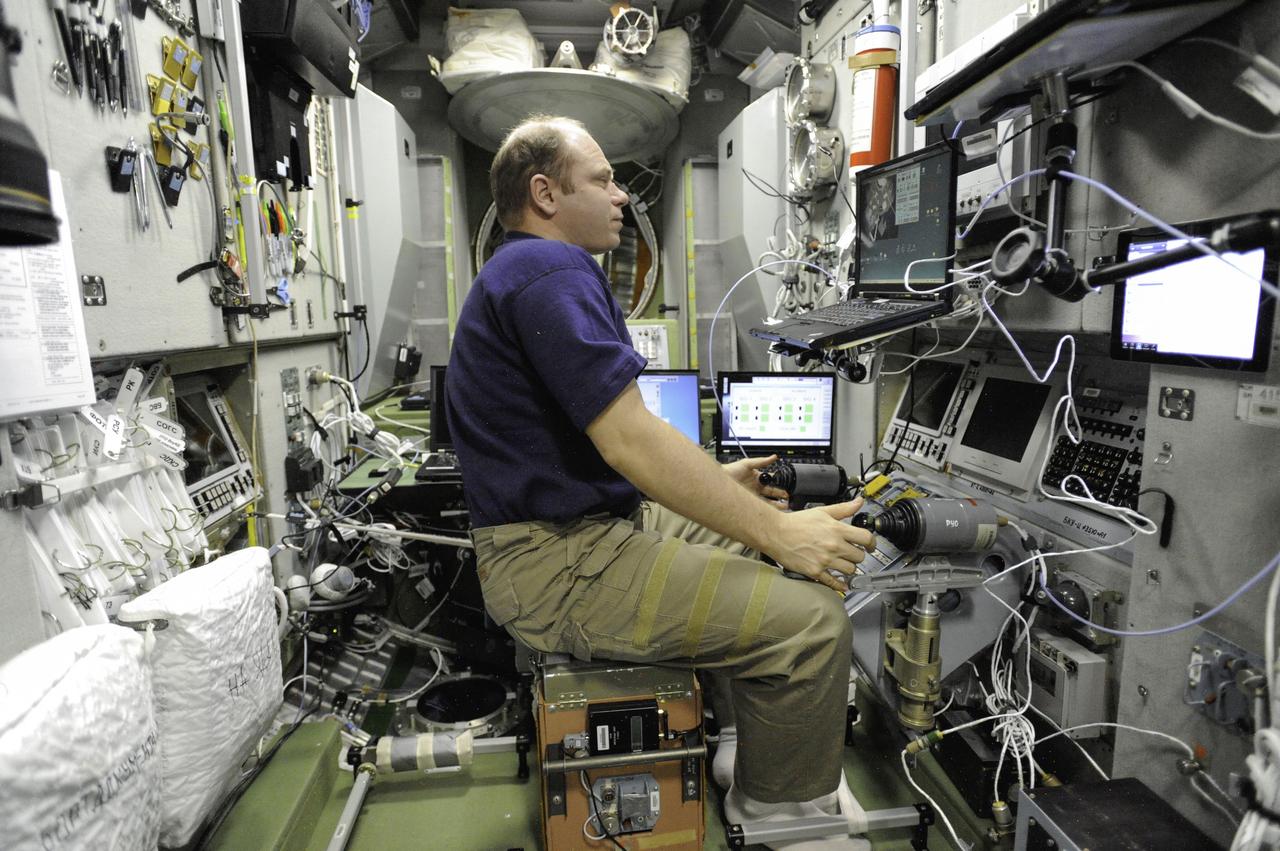
ISS038-E-006656 (22 Nov. 2013) --- Russian cosmonaut Oleg Kotov, Expedition 38 commander, practices manual docking techniques with the TORU, or telerobotically operated rendezvous system, in the Zvezda Service Module of the International Space Station in preparation for the docking of the Progress 53 spacecraft. Kotov, using the Simvol-TS screen and hand controllers, could manually dock the Progress to the station in the event of a failure of the Kurs automated docking system. The Progress 53 craft is scheduled to complete its automated docking to the aft port of Zvezda at 5:28 p.m. (EST) on Nov. 29.
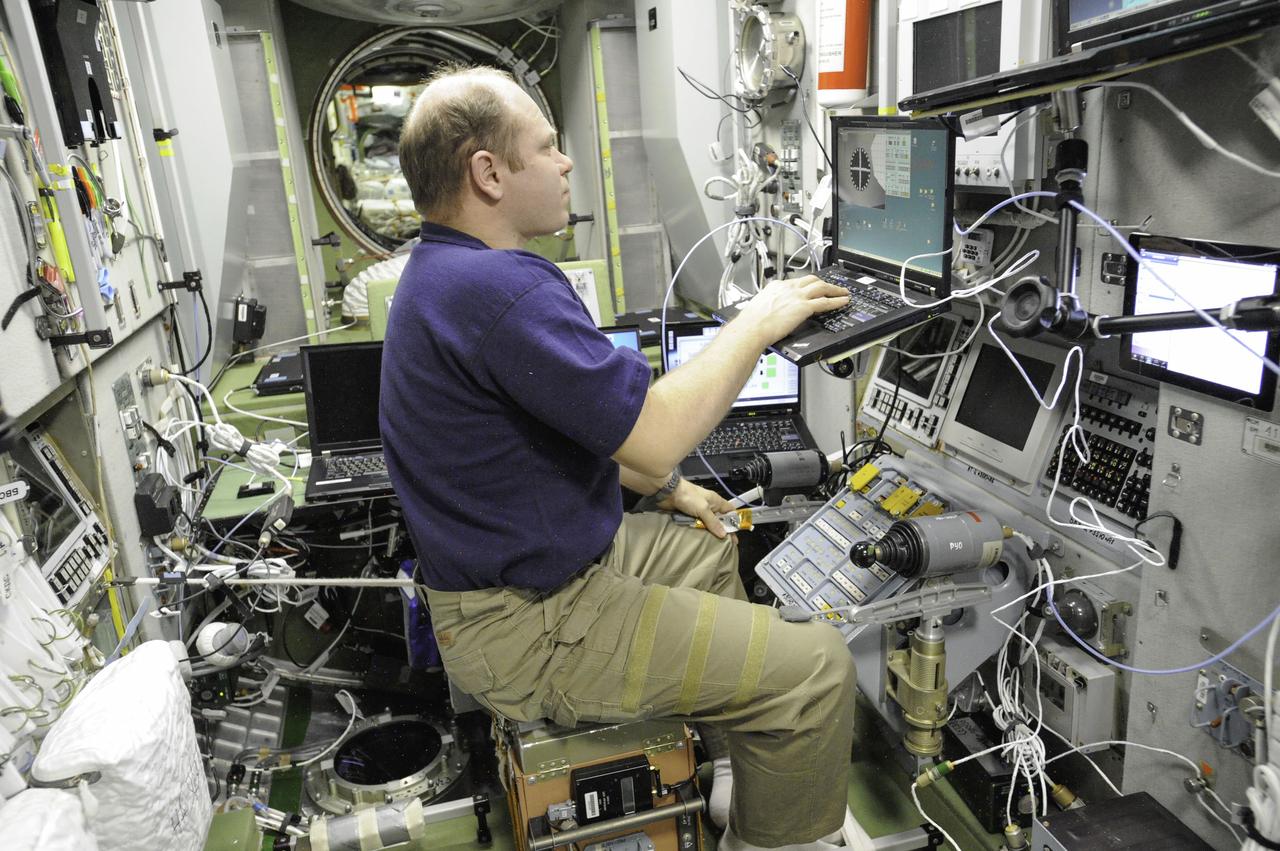
ISS038-E-006660 (22 Nov. 2013) --- Russian cosmonaut Oleg Kotov, Expedition 38 commander, practices manual docking techniques with the TORU, or telerobotically operated rendezvous system, in the Zvezda Service Module of the International Space Station in preparation for the docking of the Progress 53 spacecraft. Kotov, using the Simvol-TS screen and hand controllers, could manually dock the Progress to the station in the event of a failure of the Kurs automated docking system. The Progress 53 craft is scheduled to complete its automated docking to the aft port of Zvezda at 5:28 p.m. (EST) on Nov. 29.
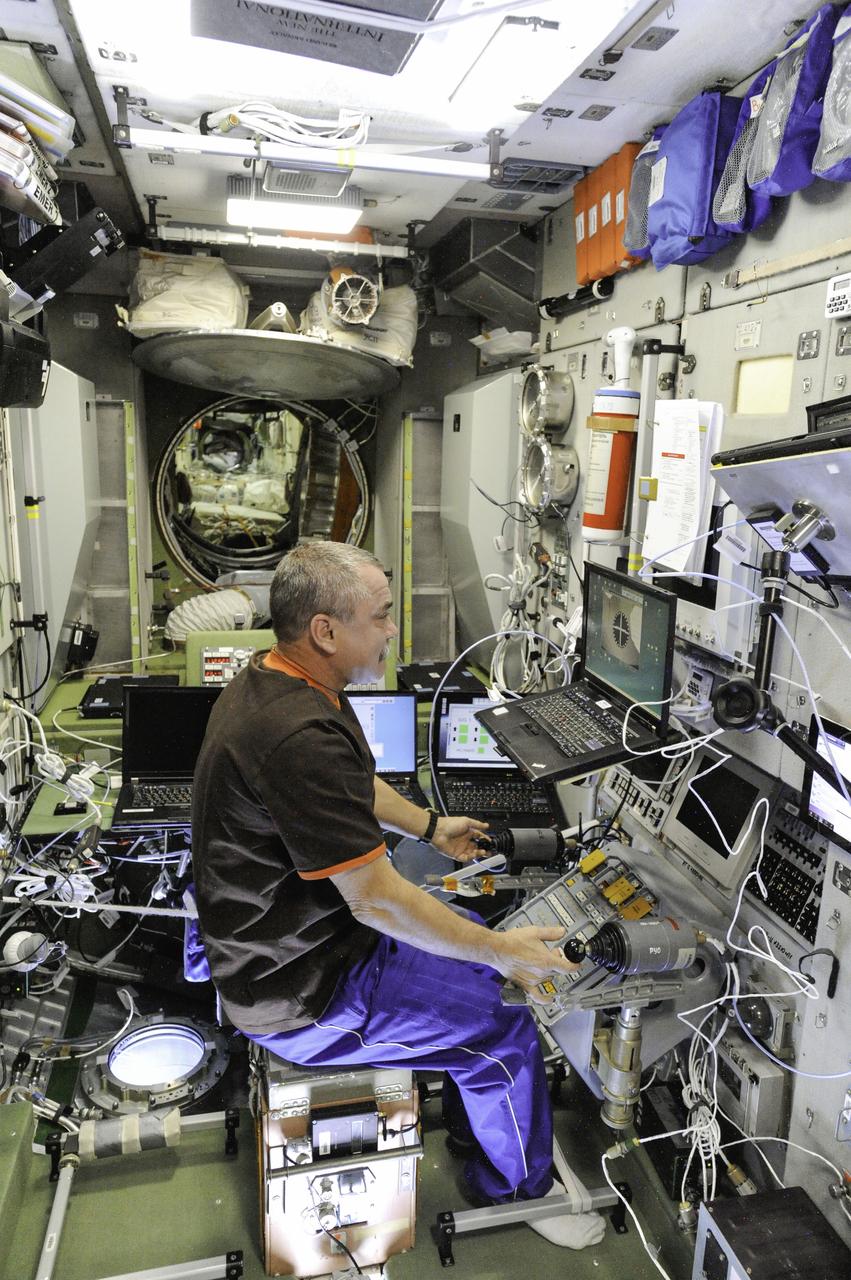
ISS038-E-006663 (22 Nov. 2013) --- Russian cosmonaut Mikhail Tyurin, Expedition 38 flight engineer, practices manual docking techniques with the TORU, or telerobotically operated rendezvous system, in the Zvezda Service Module of the International Space Station in preparation for the docking of the Progress 53 spacecraft. Tyurin, using the Simvol-TS screen and hand controllers, could manually dock the Progress to the station in the event of a failure of the Kurs automated docking system. The Progress 53 craft is scheduled to complete its automated docking to the aft port of Zvezda at 5:28 p.m. (EST) on Nov. 29.
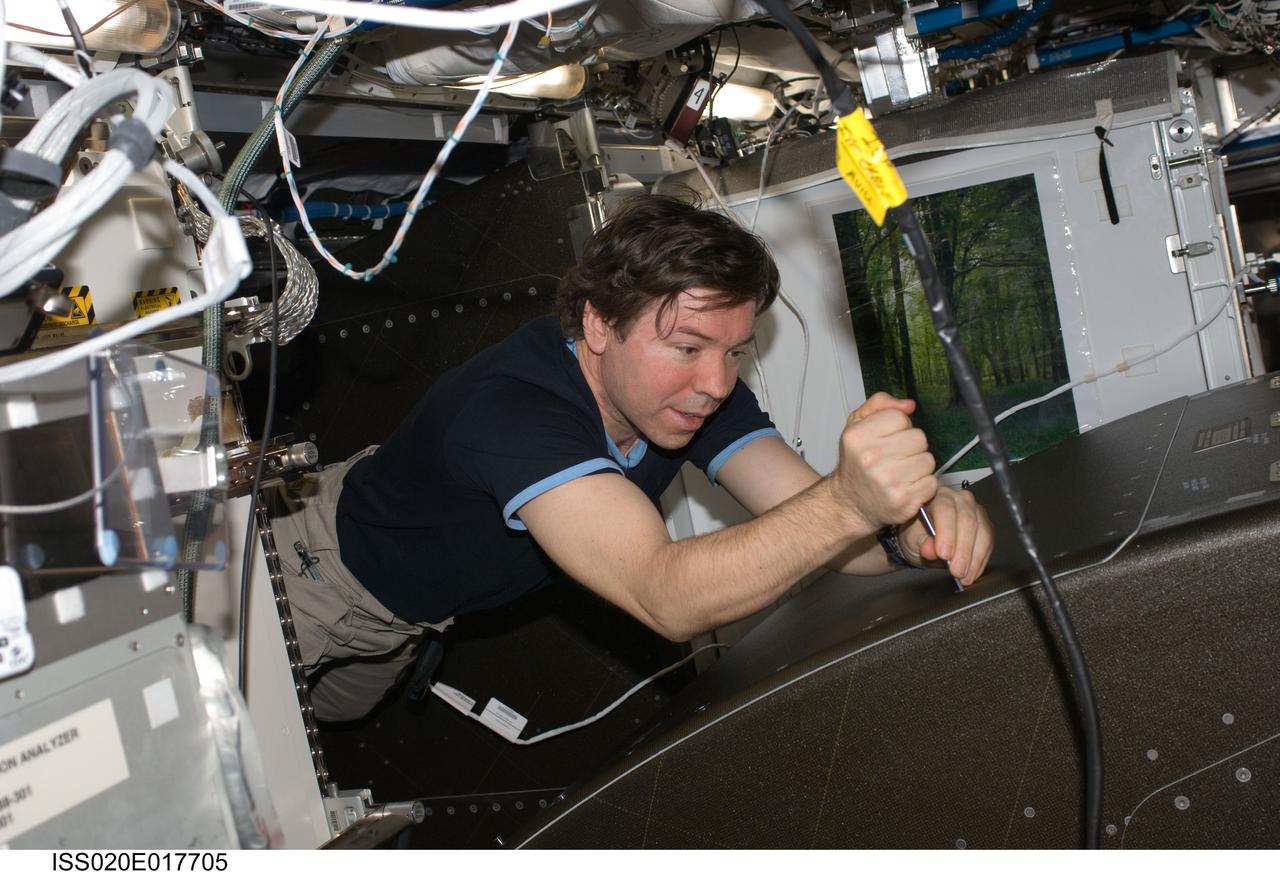
ISS020-E-017705 (7 July 2009) --- NASA astronaut Michael Barratt, Expedition 20 flight engineer, works at a rotated rack in the Destiny laboratory of the International Space Station during in-flight maintenance (IFM) to adjust the periodic flow rate of manual flow control valves for coolant loops.
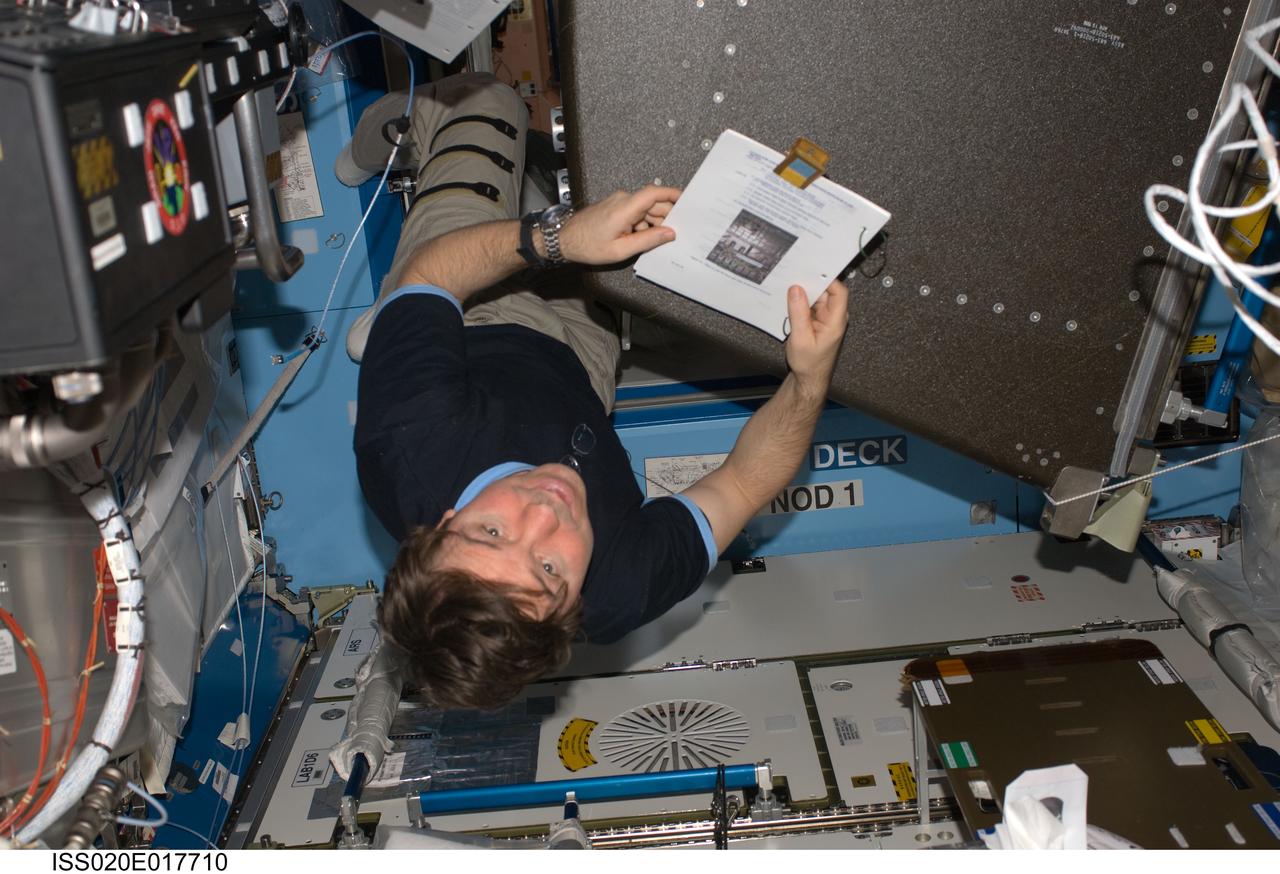
ISS020-E-017710 (7 July 2009) --- NASA astronaut Michael Barratt, Expedition 20 flight engineer, works at a rotated rack in the Destiny laboratory of the International Space Station during in-flight maintenance (IFM) to adjust the periodic flow rate of manual flow control valves for coolant loops.
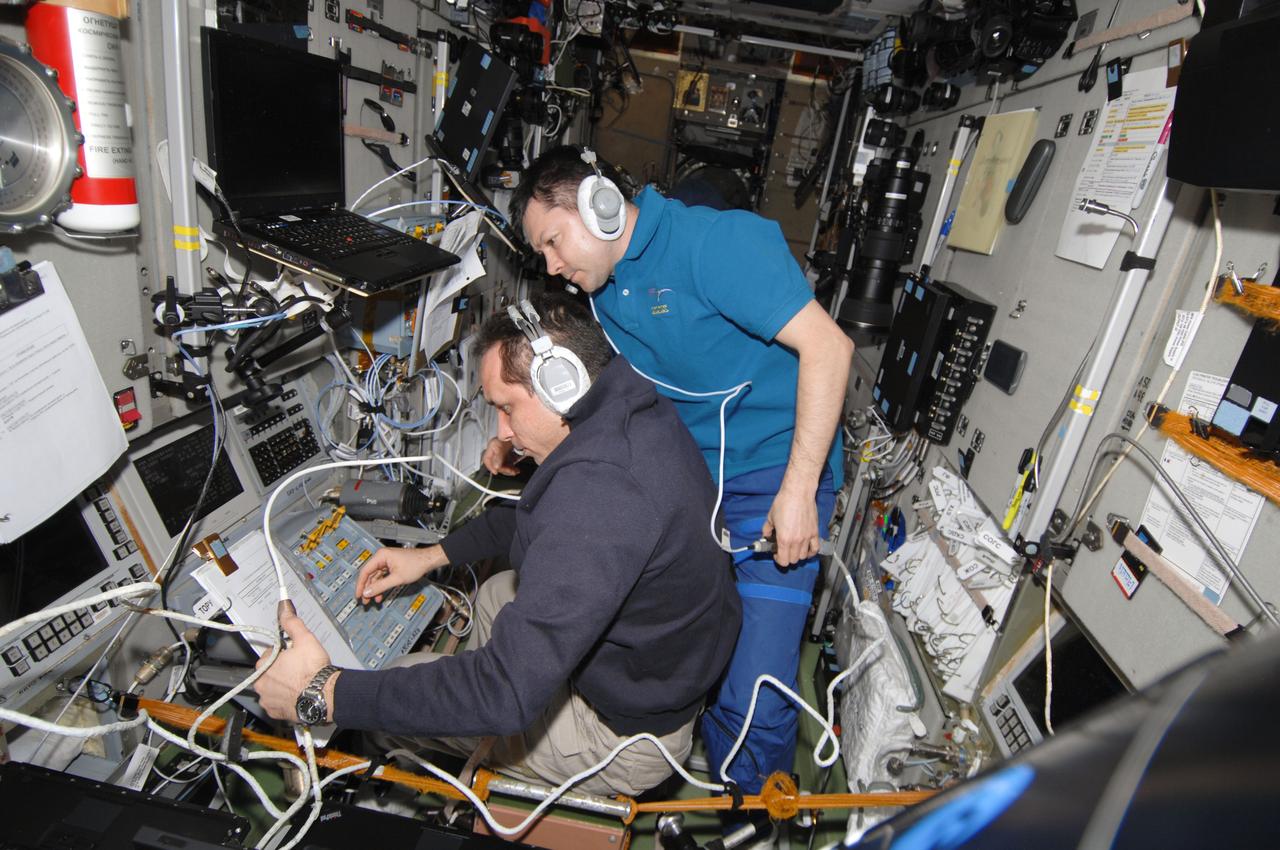
ISS030-E-156562 (27 Jan. 2012) --- Russian cosmonauts Anton Shkaplerov (left) and Oleg Kononenko, both Expedition 30 flight engineers, monitor data at the manual TORU docking system controls in the Zvezda Service Module of the International Space Station during approach and docking operations of the unpiloted ISS Progress 46 resupply vehicle. Progress 46 docked automatically to the Pirs Docking Compartment via the Kurs automated rendezvous system at 7:00 p.m. (EST) on Jan. 27, 2012.
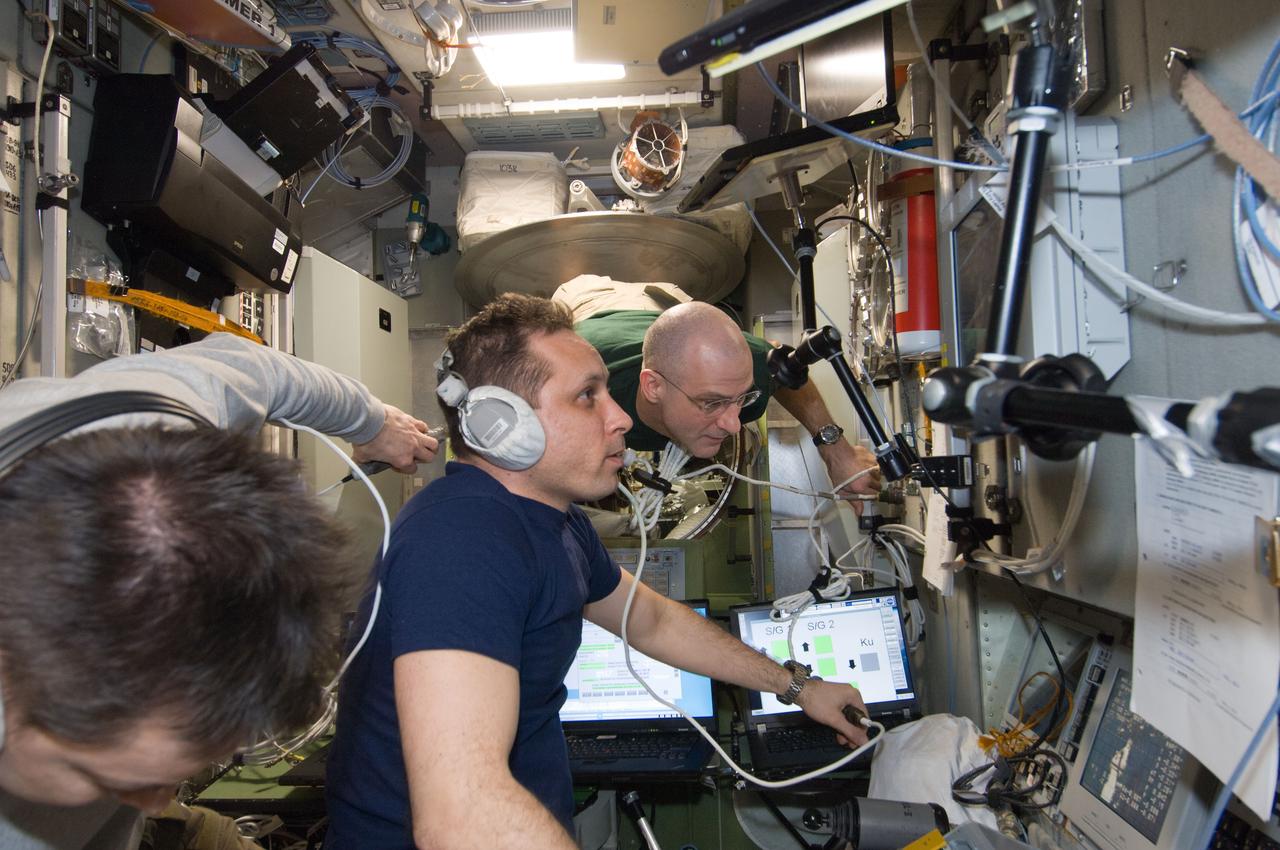
ISS030-E-241403 (22 April 2012) --- Russian cosmonauts Anton Shkaplerov (center) and Oleg Kononenko (left foreground); along with NASA astronaut Don Pettit, all Expedition 30 flight engineers, monitor data at the manual TORU docking system controls in the Zvezda Service Module of the International Space Station during approach and docking operations of the unpiloted ISS Progress 47 resupply vehicle. Progress 47 docked automatically to the Pirs Docking Compartment via the Kurs automated rendezvous system at 10:39 a.m. (EDT) on April 22, 2012.
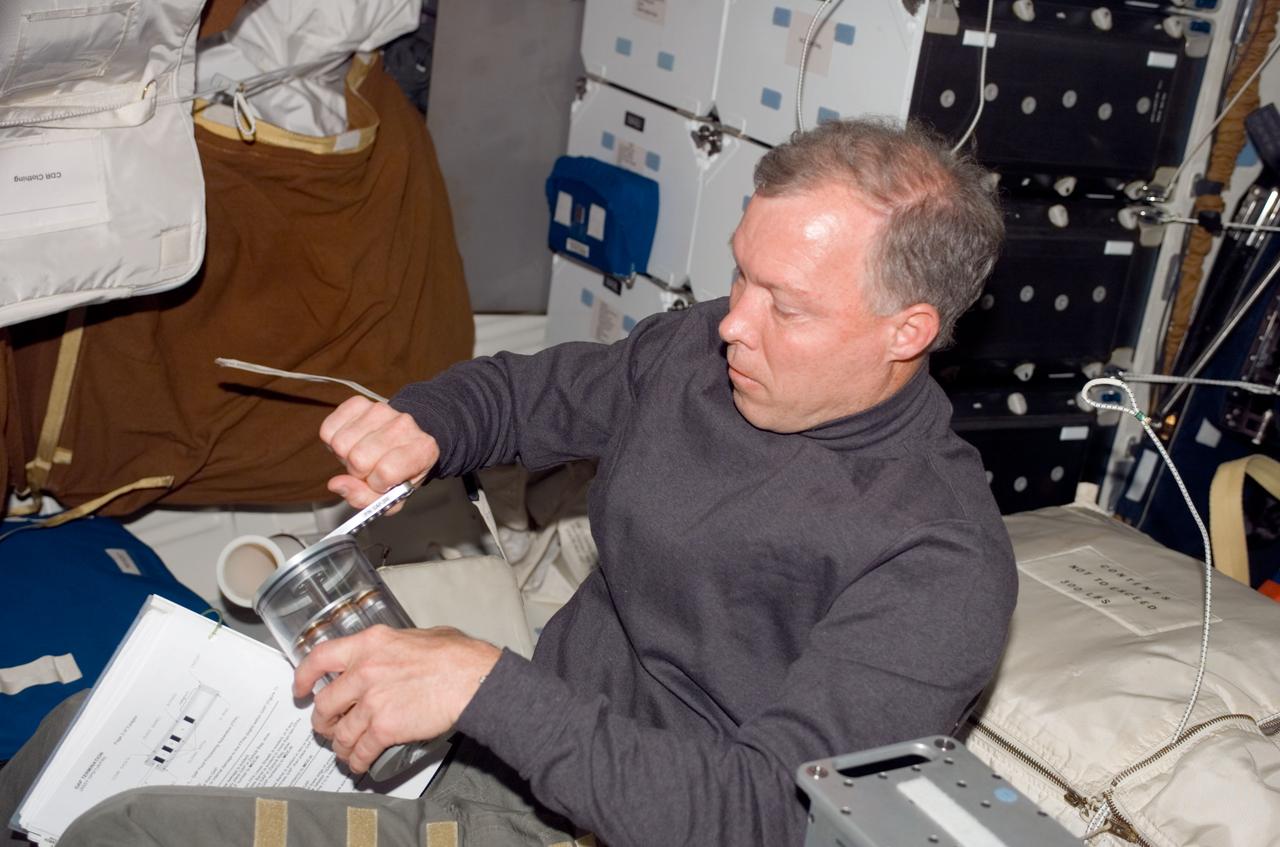
S123-E-006327 (15 March 2008) --- Astronaut Dominic Gorie, STS-123 commander, manually activates a Group Activation Pack (GAP) using a small hand crank on the middeck of Space Shuttle Endeavour while docked with the International Space Station. This will introduce fresh growth medium into the cultures. The GAP contains eight Fluid Processing Apparatus (FPA) tubes.
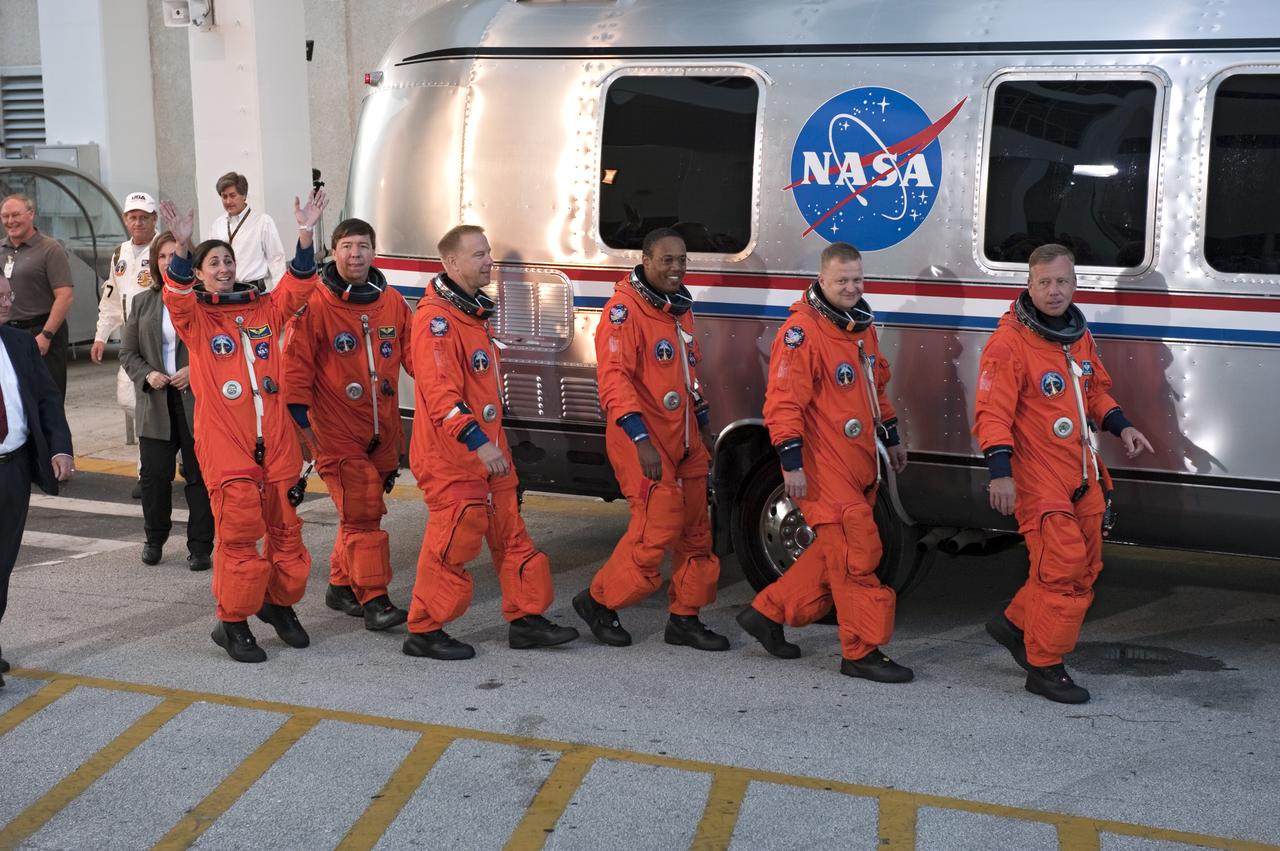
STS-133 TCDT - MANUAL WALKOUT
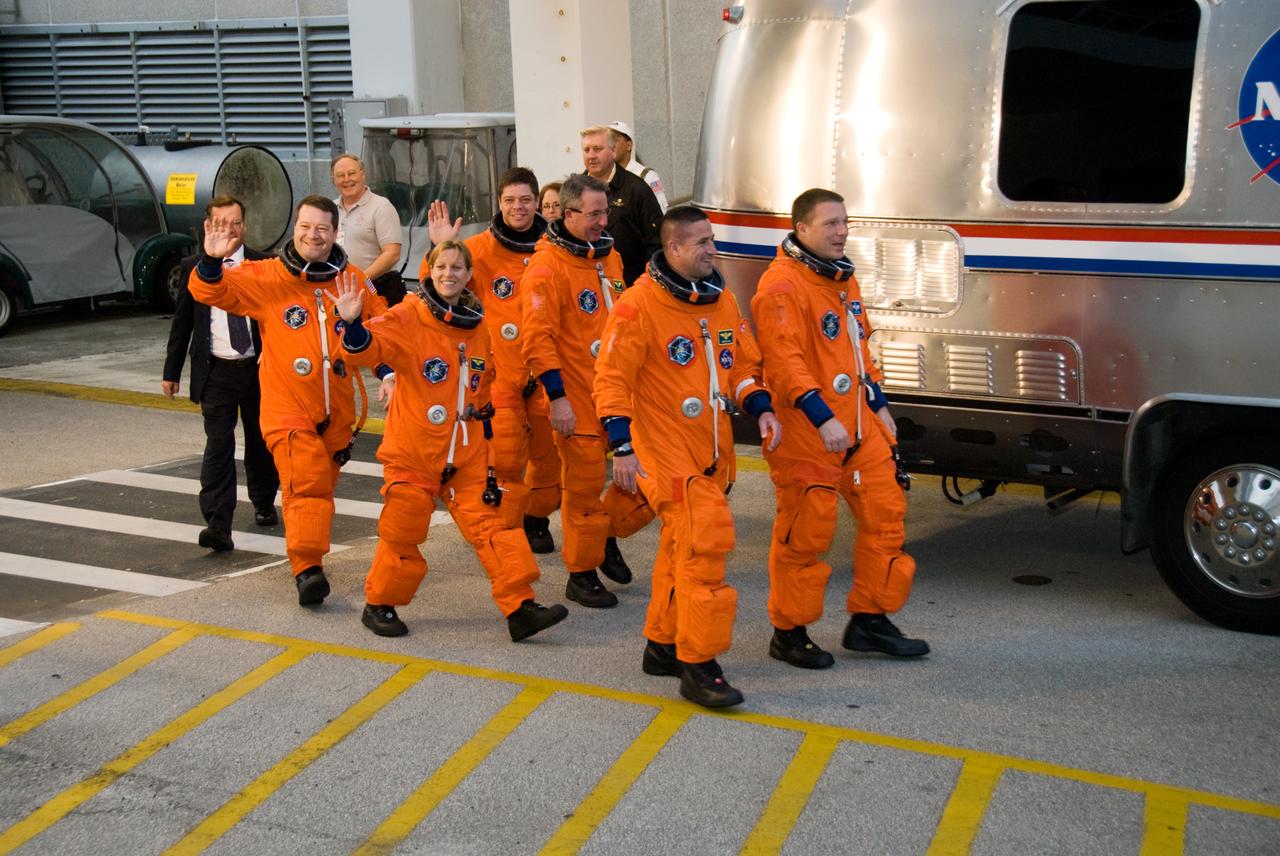
STS-130 TCDT - MANUAL WALKOUT
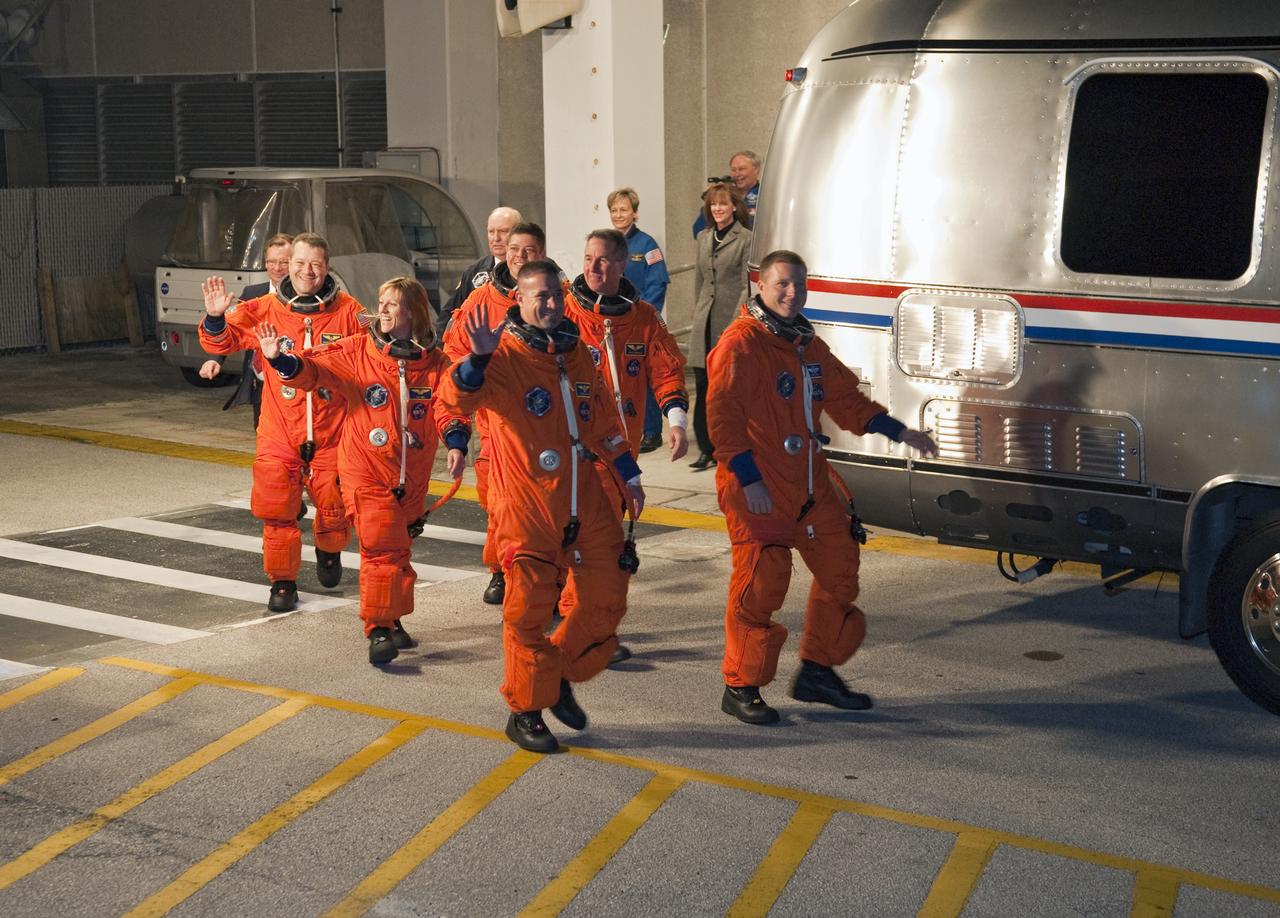
STS-130 LAUNCH L-0 MANUAL WALKOUT
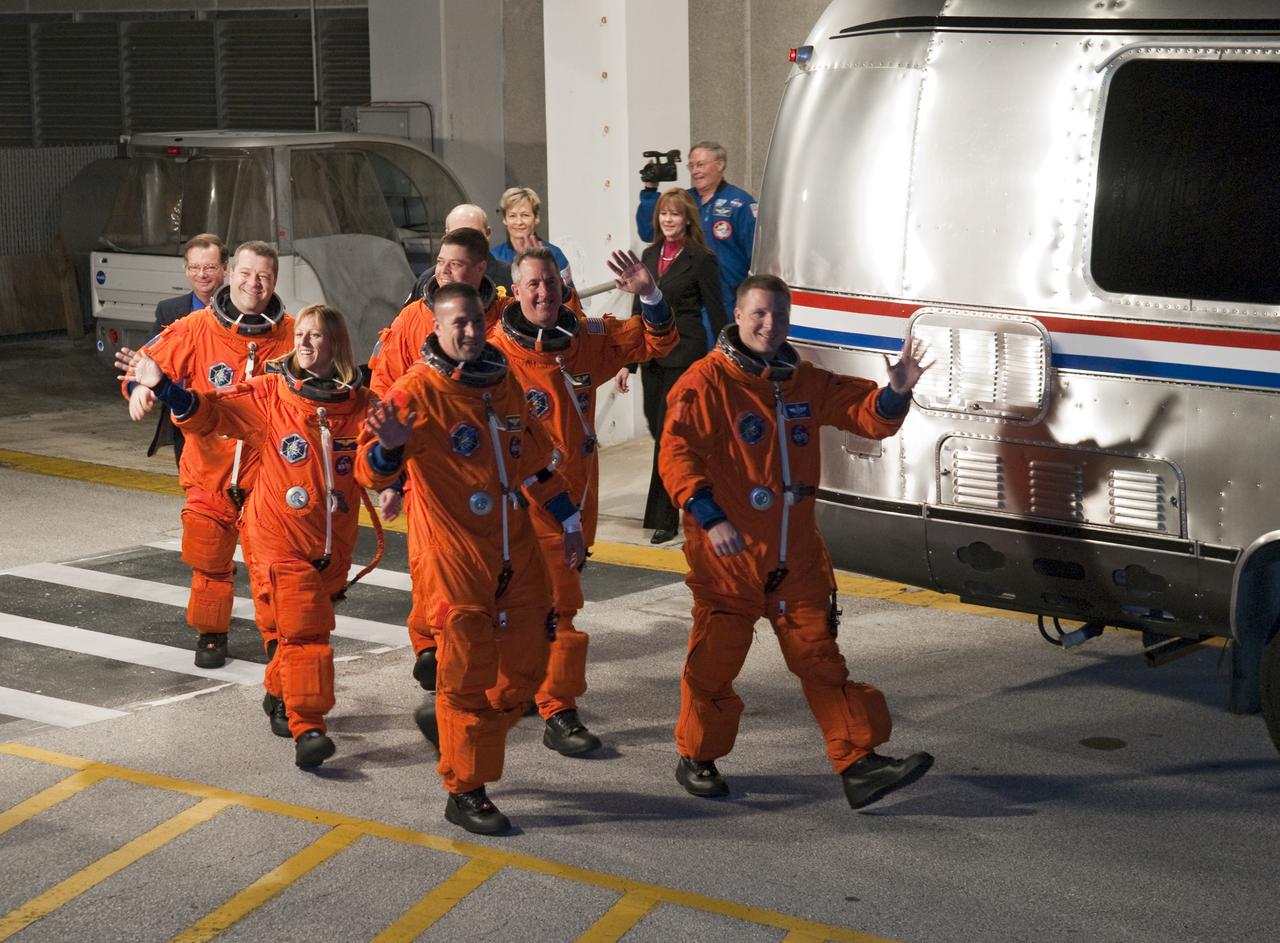
STS-130 LAUNCH L-0 MANUAL WALKOUT
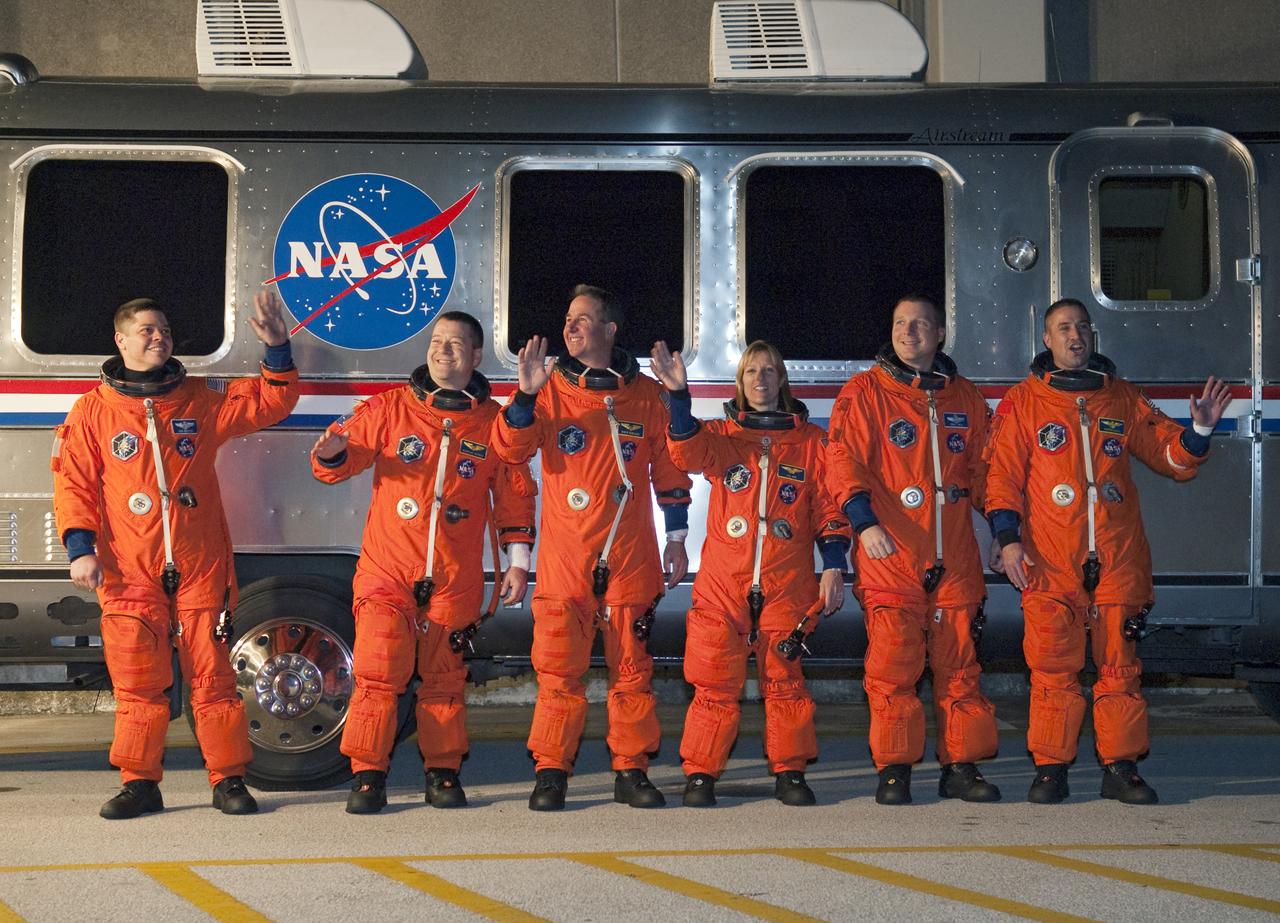
STS-130 LAUNCH L-0 MANUAL WALKOUT
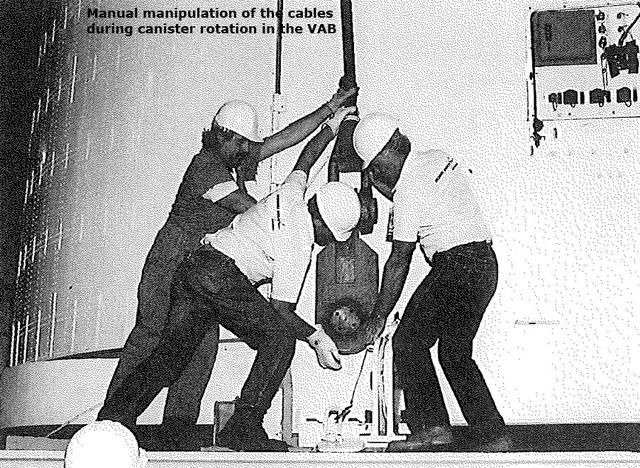
Manual manipulation of the cables during canister rotation in the VAB
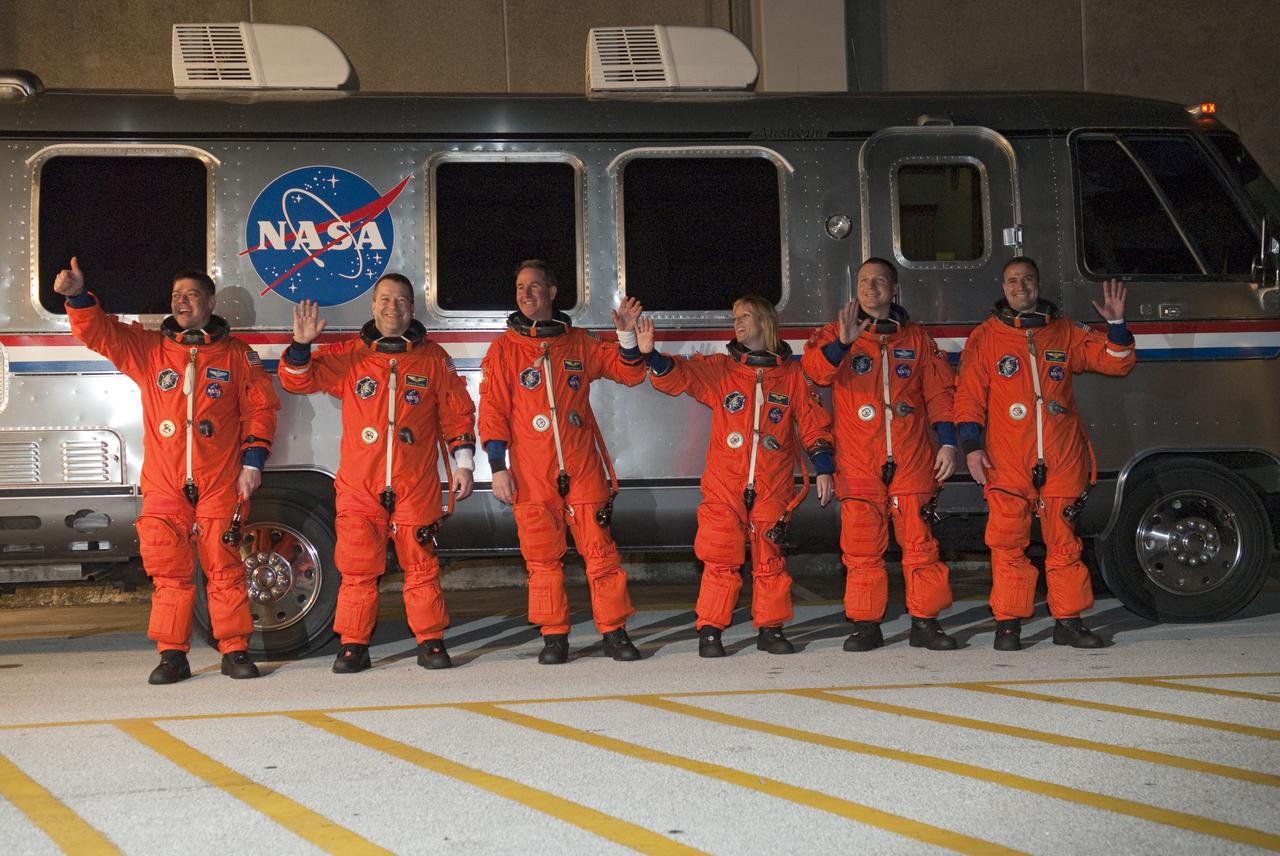
STS-130 LAUNCH L-0 MANUAL WALKOUT
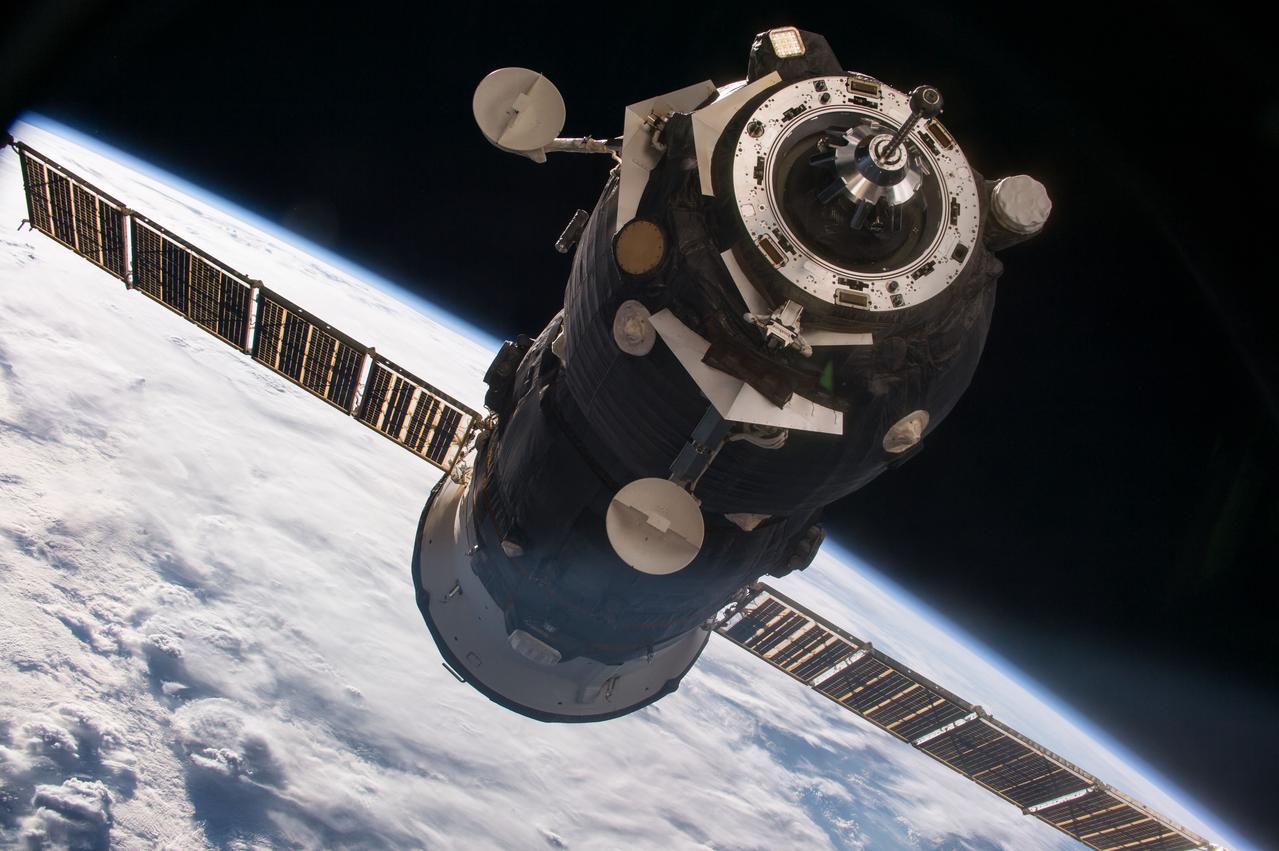
View of the Progress 62P spacecraft on final approach for redocking during a test of the upgraded Teleoperator Control System (TORU) manual docking system.

A view of the TAGSAM (Touch and Go Sample Acquisition Mechanism) from above, showing the Mylar flap with a pile of asteroid material resting on it. This image was created using manual high-resolution precision photography and semi-automated focus stacking procedure. Created using manual high-resolution precision photography and semi-automated focus stacking procedure. Credit: NASA/Erika Blumenfeld & Joseph Aebersold
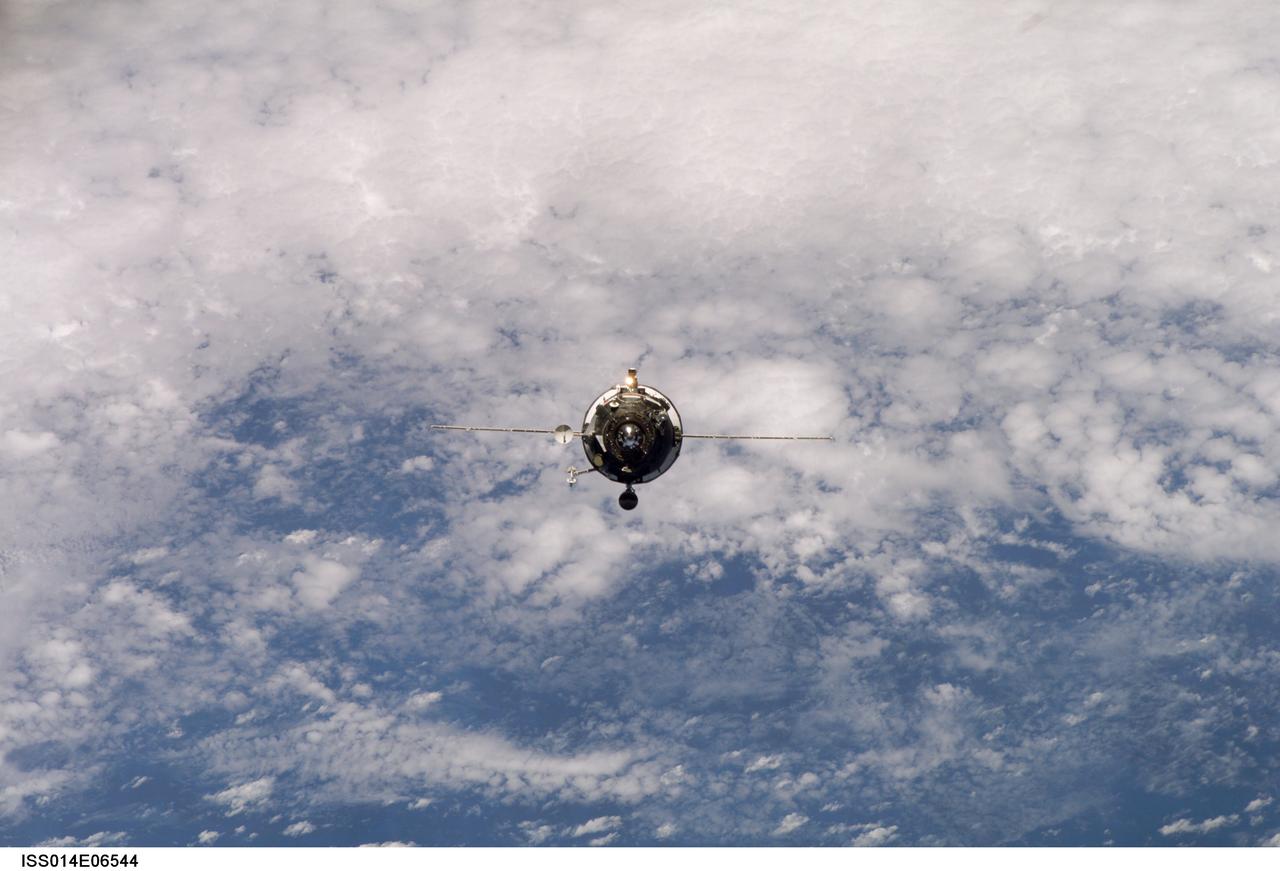
ISS014-E-06544 (26 Oct. 2006) --- Backdropped by a blue and white Earth, an unpiloted Progress supply vehicle approaches the International Space Station. Progress docked to the aft port of the Zvezda Service Module at 9:29 a.m. (CDT) on Oct. 26. The spacecraft used the automated Kurs system to dock at the aft port of the Zvezda service module. Expedition 14 flight engineer Mikhail Tyurin stood by at the manual Toru docking system controls, but the automated system functioned as designed and manual intervention was not needed.
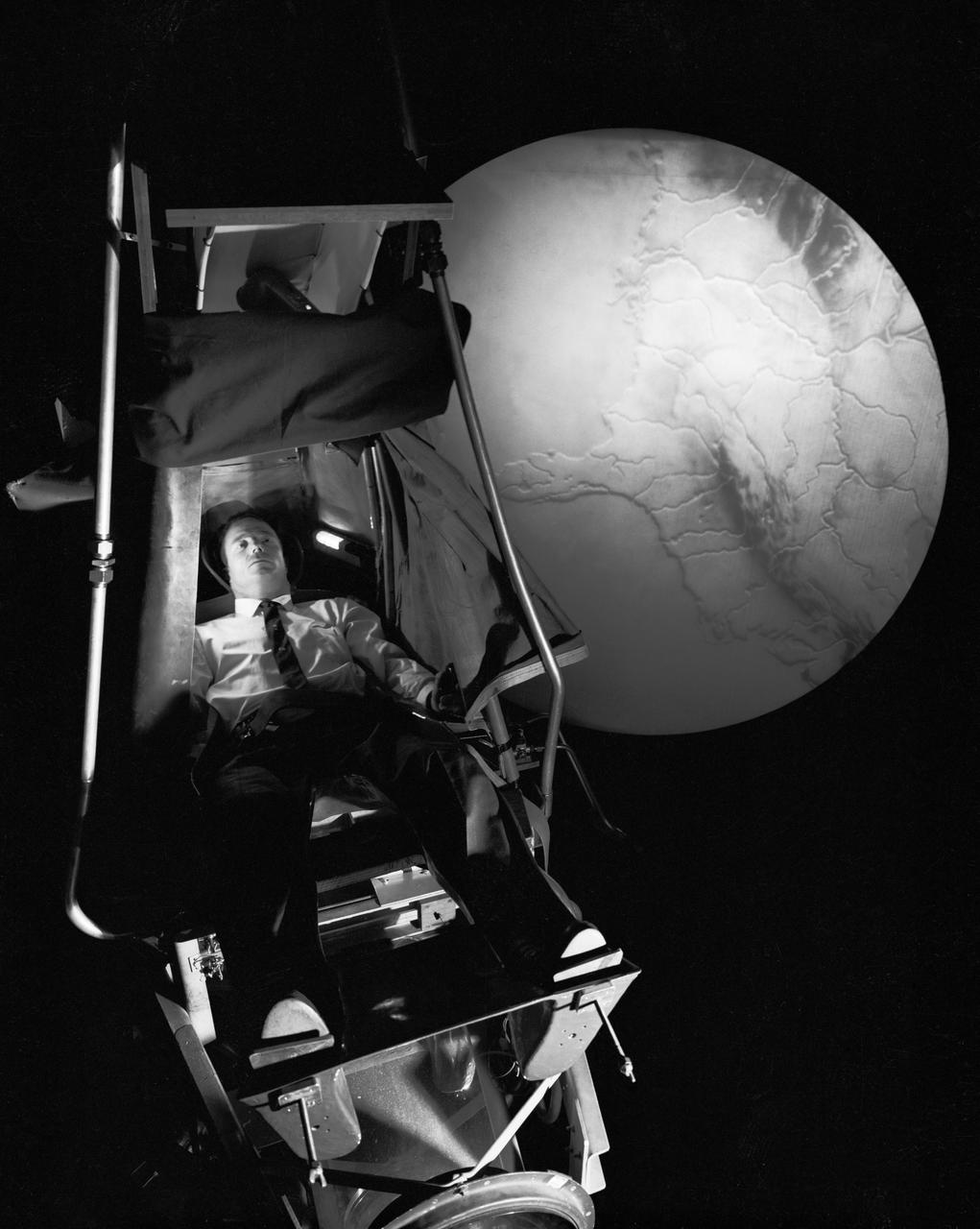
S62-01145 (1961) --- Project Mercury astronaut M. Scott Carpenter practices manual control of a spacecraft in the Air Lubricated Free Attitude (ALFA) trainer located at NASA?s Langley Air Force Base, Virginia. This trainer allows the astronaut to see the image of Earth?s surface at his feet while manually controlling the spacecraft. Carpenter has been selected as the prime pilot of the United States? second orbital flight. Photo credit: NASA
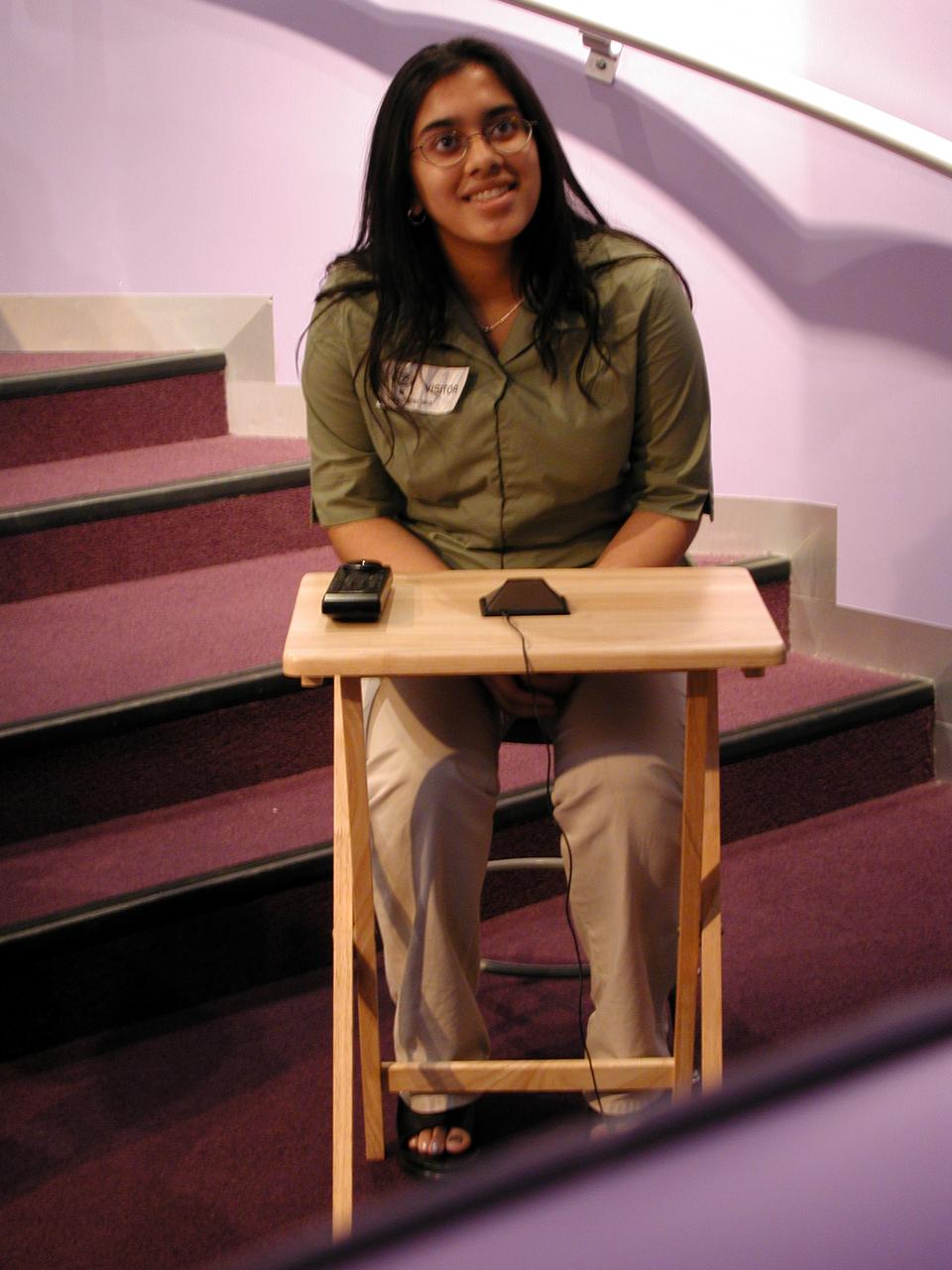
Sutta Chernubhotta (grade 10) from DuPont Manual High School in Louisville, Kentucky, asks a question of on of the on-line lecturers during the Pan-Pacific Basin Workshop on Microgravity Sciences held in Pasadena, California. The event originated at the California Science Center in Los Angeles. The DuPont Manual students patched in to the event through the distance learning lab at the Louisville Science Center. This image is from a digital still camera; higher resolution is not available.
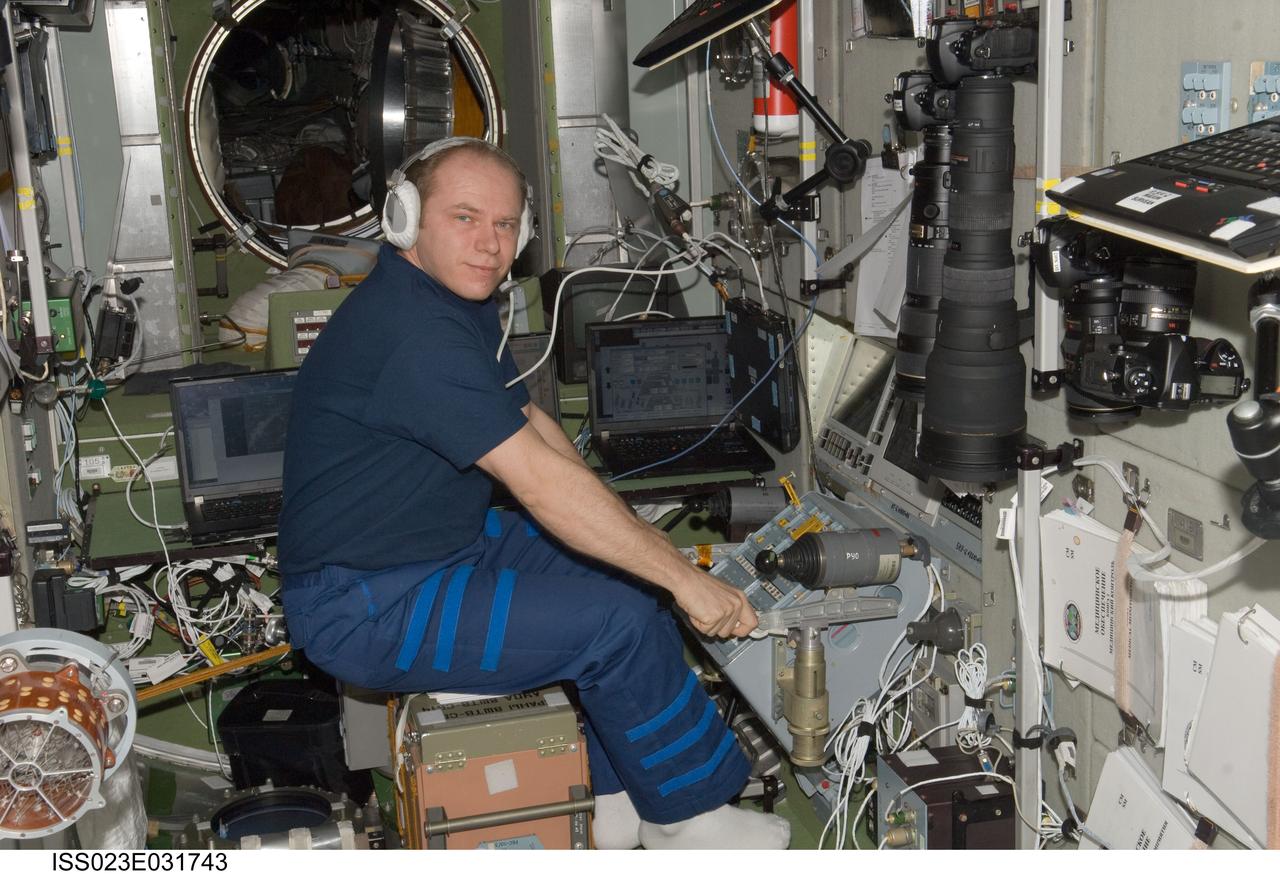
ISS023-E-031743 (1 May 2010) --- Russian cosmonaut Oleg Kotov, Expedition 23 commander, is pictured at the manual TORU docking system controls in the Zvezda Service Module of the International Space Station just before conducting a manual control docking of the Progress 37 due to a jet failure on the Progress that forced a shutdown of the Kurs automated rendezvous system. Progress 37 docked to the Pirs Docking Compartment at 2:30 p.m. (EDT) on May 1, 2010, after a three-day flight from the Baikonur Cosmodrome in Kazakhstan.
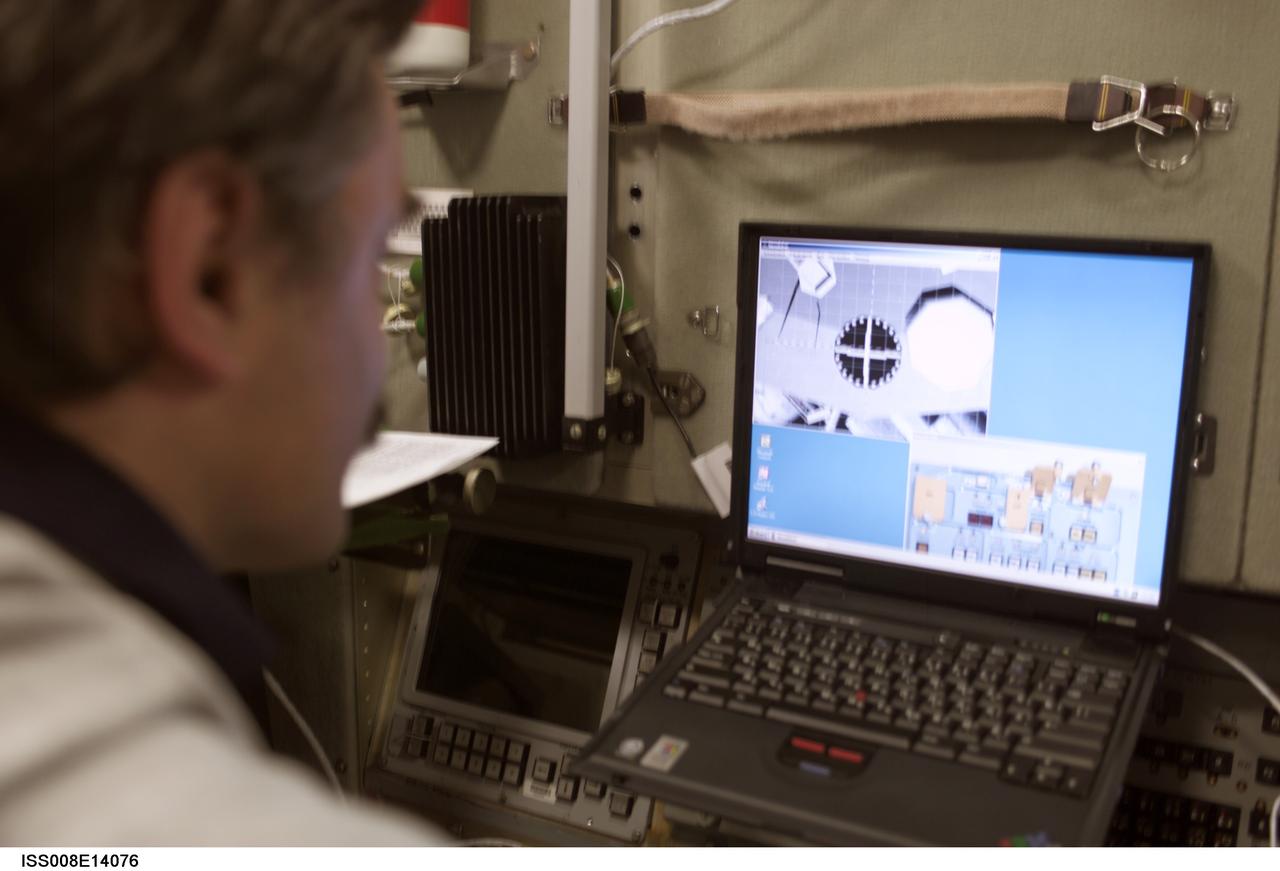
ISS008-E-14076 (30 January 2004) --- Cosmonaut Alexander Y. Kaleri, Expedition 8 flight engineer, practices docking procedures with the manual TORU rendezvous system in the Zvezda Service Module on the International Space Station (ISS) in preparation for the docking of the Progress 13 on January 31. With the manual TORU mode, Kaleri can perform necessary guidance functions from Zvezda via two hand controllers in the event of a failure of the “Kurs” automated rendezvous and docking (AR&D) of the Progress. Kaleri represents Rosaviakosmos.
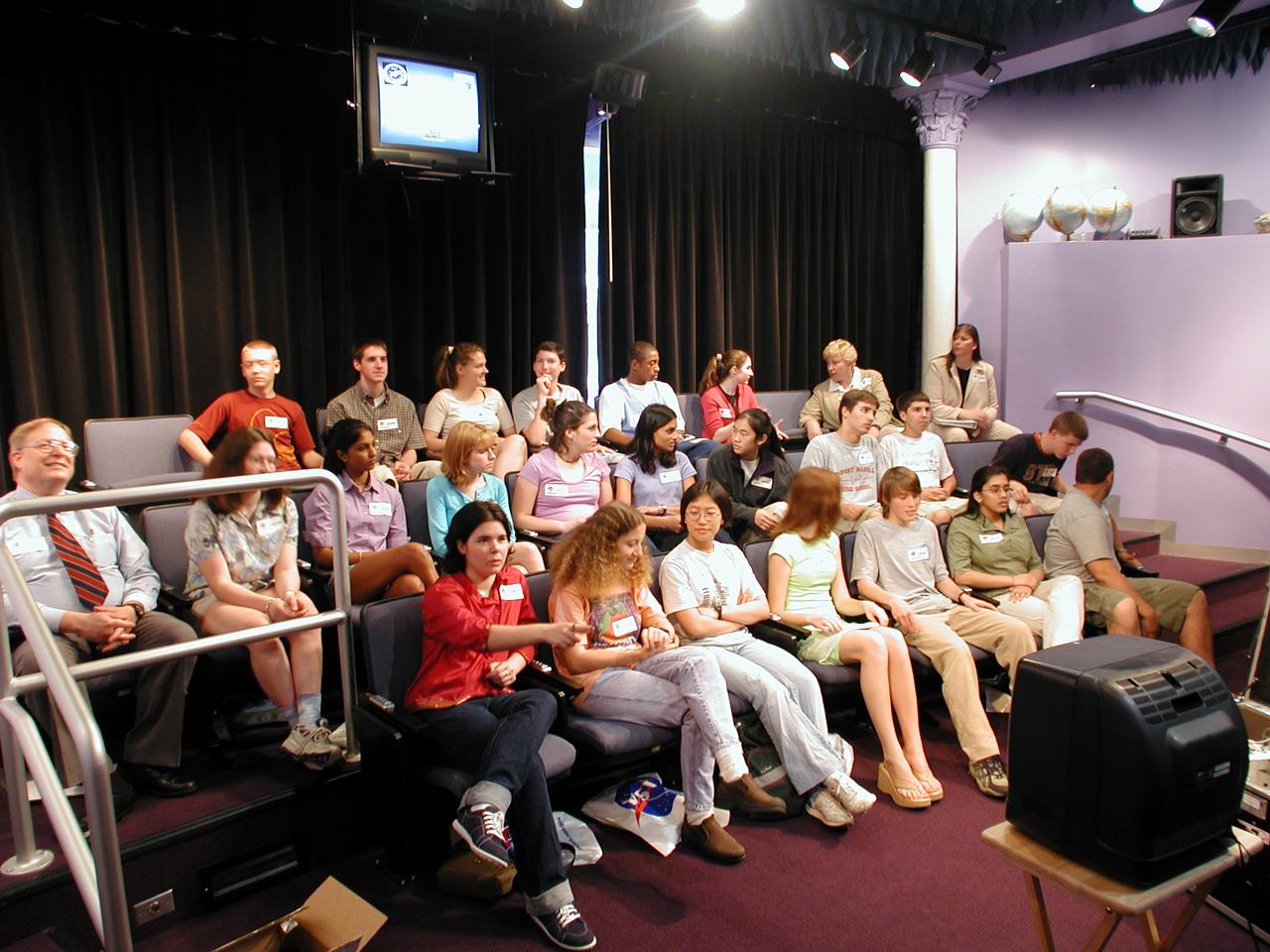
Students from DuPont Manual High School in Louisville, Kentucky participated in a video-teleconference during the Pan-Pacific Basin Workshop on Microgravity Sciences held in Pasadena, California. The event originated at the California Science Center in Los Angeles. The DuPont Manual students patched in to the event through the distance learning lab at the Louisville Science Center. This image is from a digital still camera; higher resolution is not available.
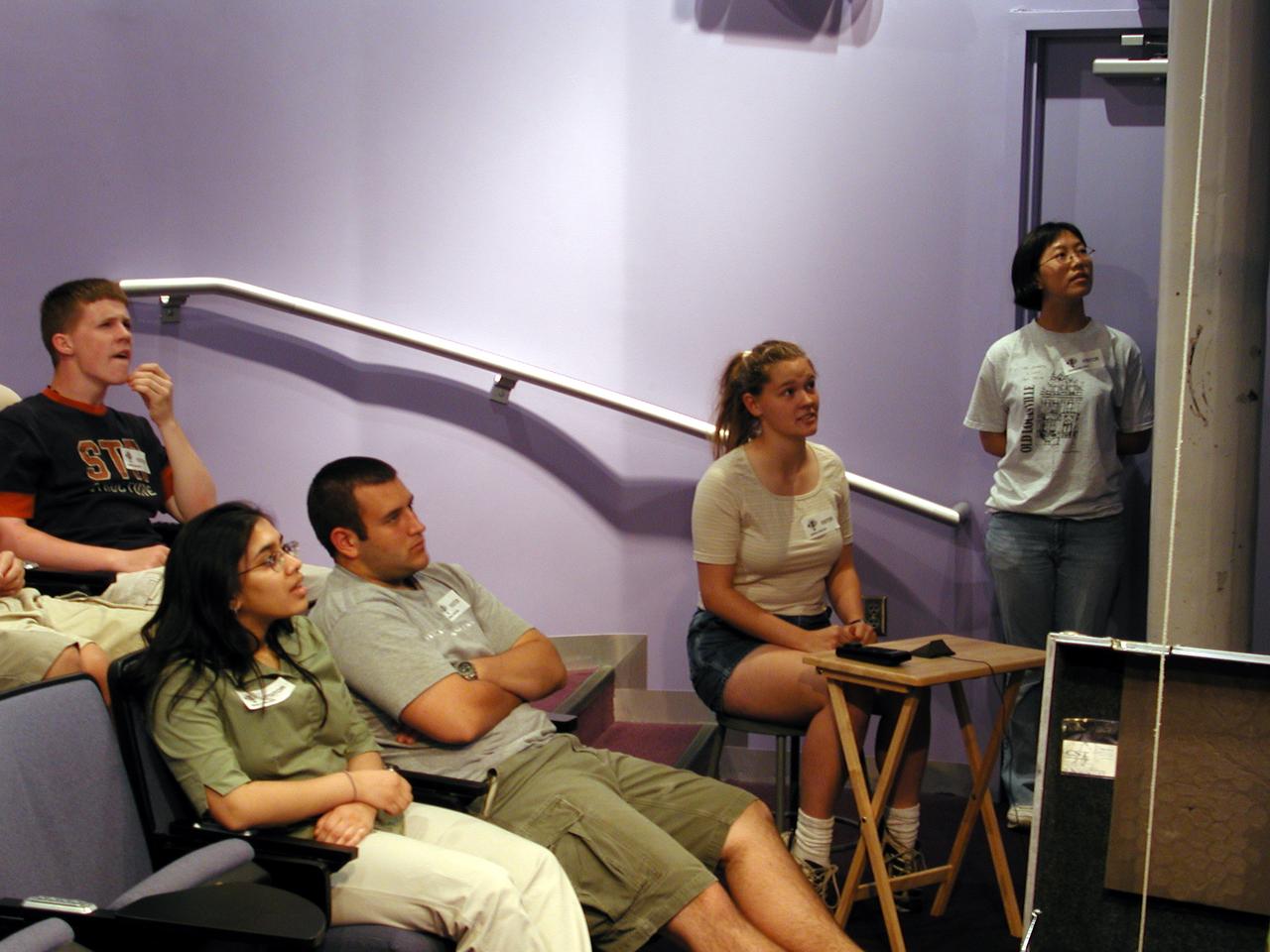
Suzarne Nichols (12th grade) from DuPont Manual High School in Louisville, Kentucky, asks a question of on of the on-line lecturers during the Pan-Pacific Basin Workshop on Microgravity Sciences held in Pasadena, California. The event originated at the California Science Center in Los Angeles. The DuPont Manual students patched in to the event through the distance learning lab at the Louisville Science Center. Jie Ma (grade 10, at right) waits her turn to ask a question. This image is from a digital still camera; higher resolution is not available.
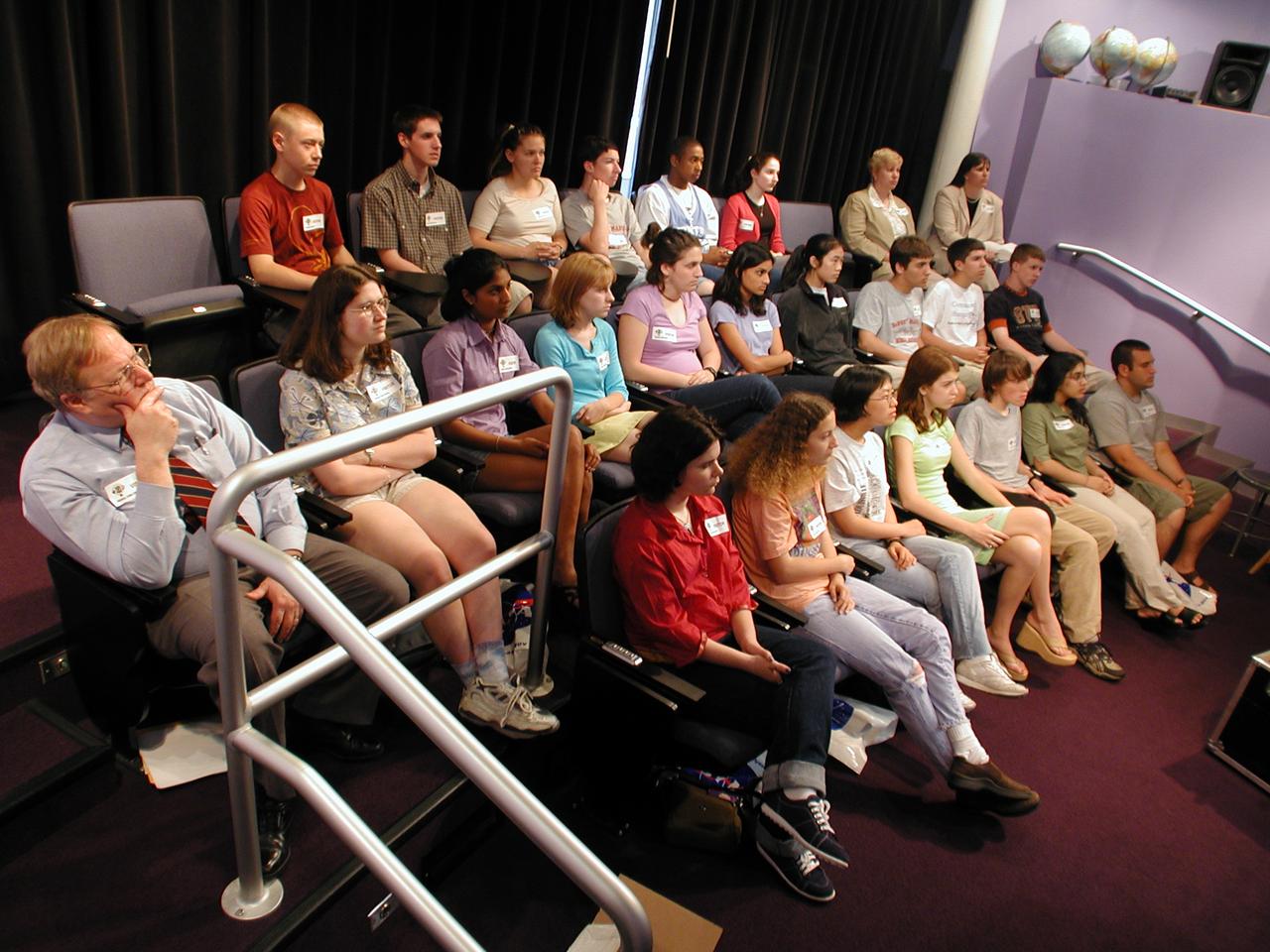
Students from DuPont Manual High School in Louisville, Kentucky participated in a video-teleconference during the Pan-Pacific Basin Workshop on Microgravity Sciences held in Pasadena, California. The event originated at the California Science Center in Los Angeles. The DuPont Manual students patched in to the event through the distance learning lab at the Louisville Science Center. This image is from a digital still camera; higher resolution is not available.
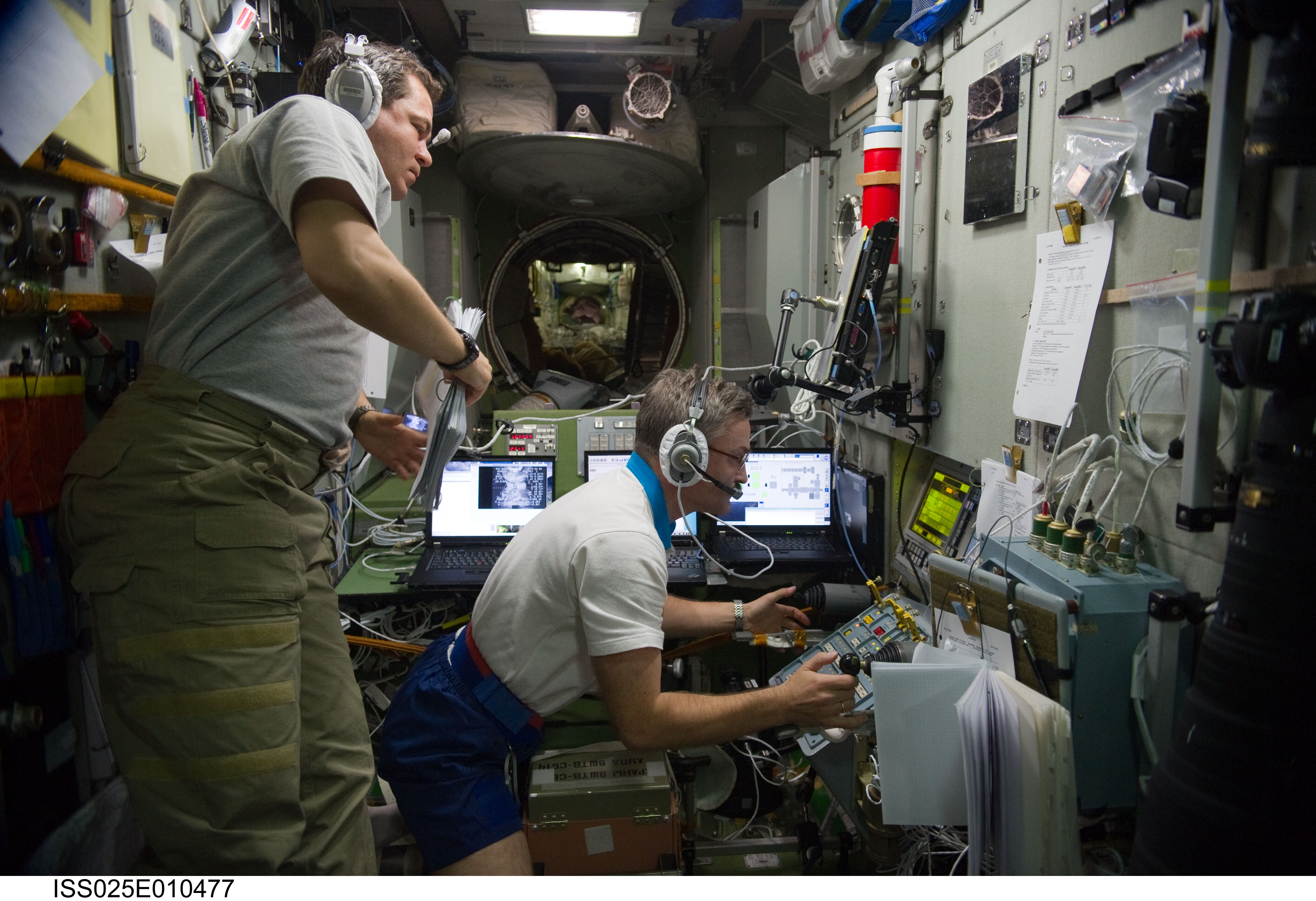
ISS025-E-010477 (30 Oct. 2010) --- Russian cosmonauts Alexander Kaleri (right) and Oleg Skripochka, both Expedition 25 flight engineers, monitor data at the manual TORU docking system controls in the Zvezda Service Module of the International Space Station during the docking operations of the unpiloted ISS Progress 40 resupply vehicle. Progress 40 docked to the Pirs Docking Compartment at 12:36 p.m. (EDT) on Oct. 30, 2010, after Kaleri took over manual control to guide the Progress to its final connection.
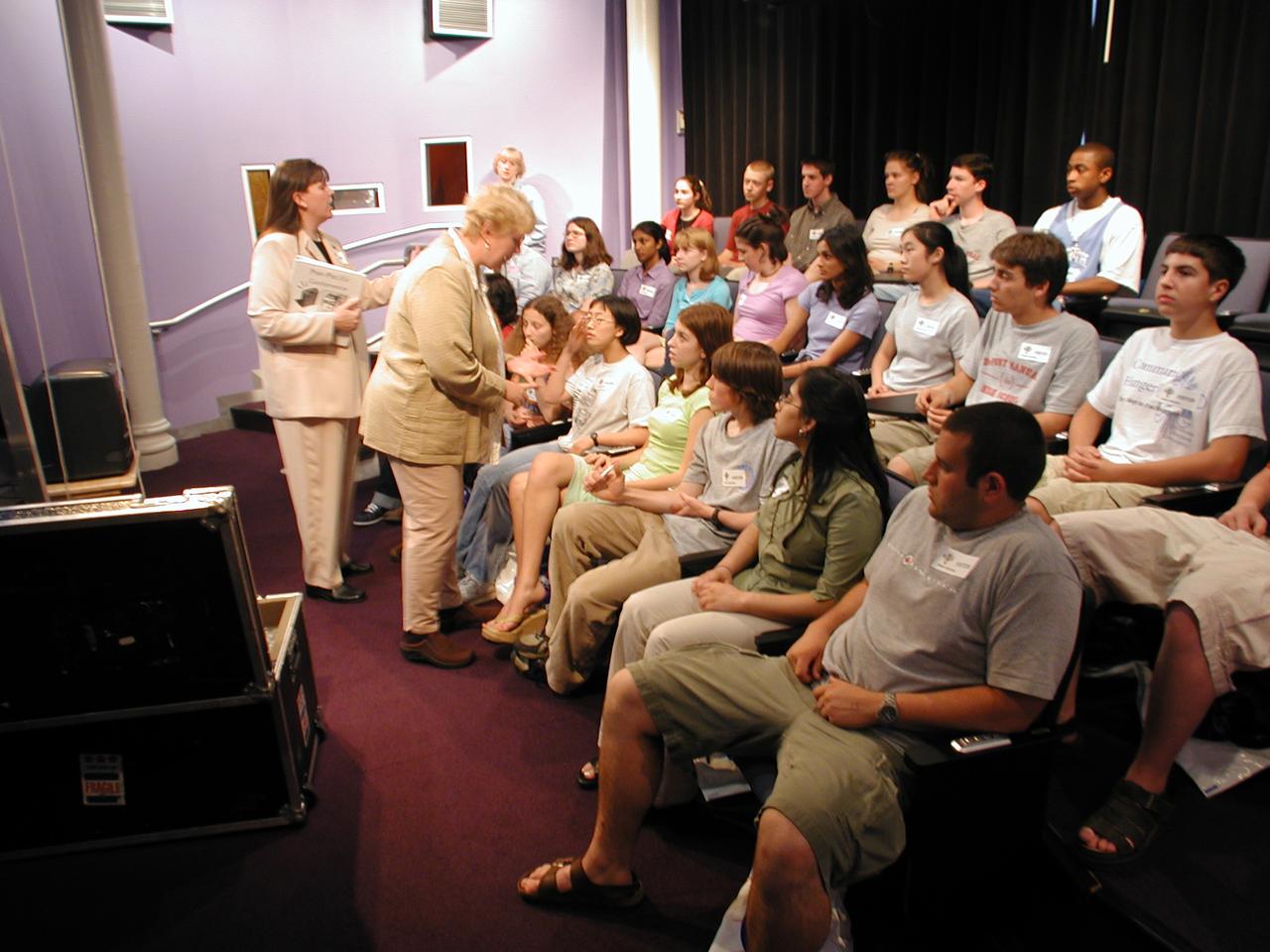
Students from DuPont Manual High School in Louisville, Kentucky participated in a video-teleconference during the Pan-Pacific Basin Workshop on Microgravity Sciences held in Pasadena, California. The event originated at the California Science Center in Los Angeles. The DuPont Manual students patched in to the event through the distance learning lab at the Louisville Science Center. Education coordinator Twila Schneider (left) of Infinity Technology and NASA materials engineer Chris Cochrane prepare students for the on-line workshop. This image is from a digital still camera; higher resolution is not available.
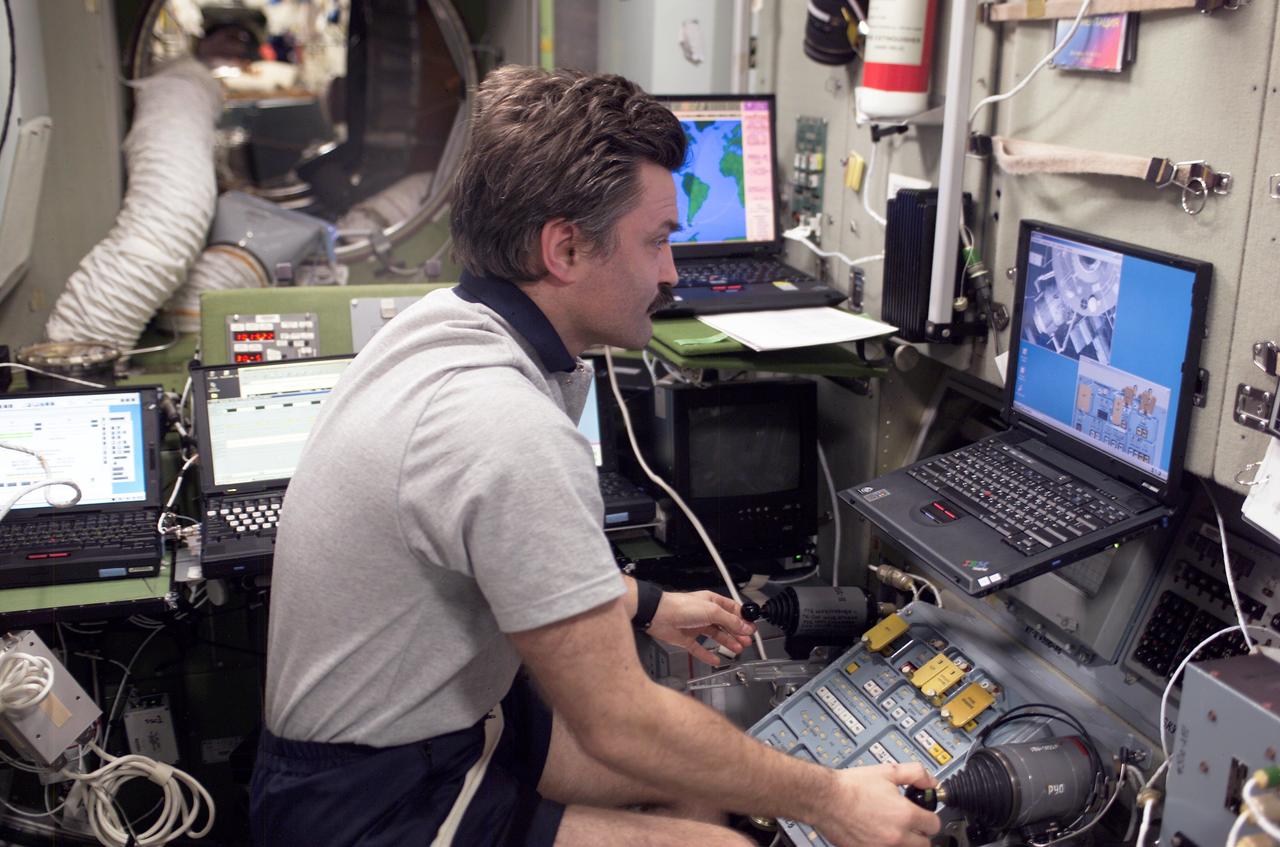
ISS008-E-14073 (30 January 2004) --- Cosmonaut Alexander Y. Kaleri, Expedition 8 flight engineer, practices docking procedures with the manual TORU rendezvous system in the Zvezda Service Module on the International Space Station (ISS) in preparation for the docking of the Progress 13 on January 31. With the manual TORU mode, Kaleri can perform necessary guidance functions from Zvezda via two hand controllers in the event of a failure of the “Kurs” automated rendezvous and docking (AR&D) of the Progress. Kaleri represents Rosaviakosmos.
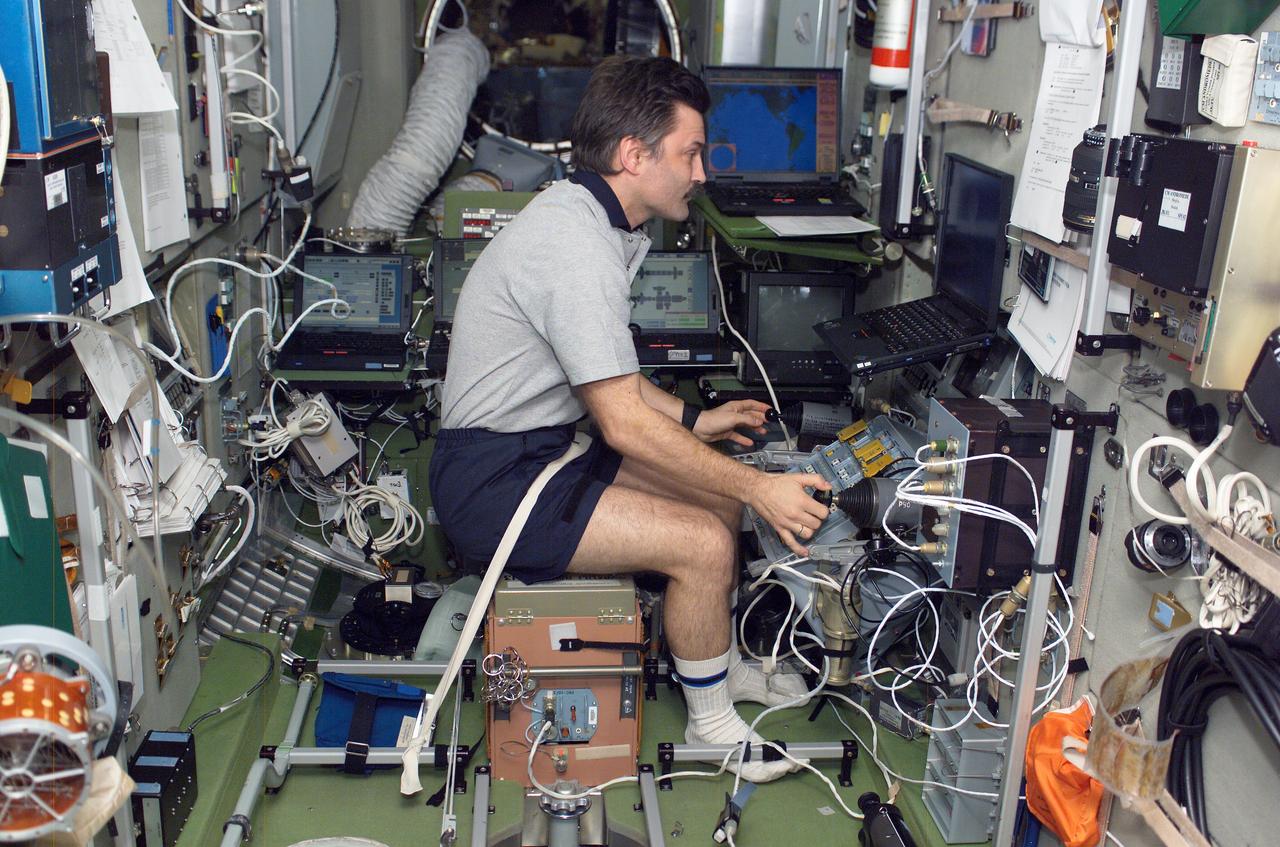
ISS008-E-14067 (30 January 2004) --- Cosmonaut Alexander Y. Kaleri, Expedition 8 flight engineer, practices docking procedures with the manual TORU rendezvous system in the Zvezda Service Module on the International Space Station (ISS) in preparation for the docking of the Progress 13 on January 31. With the manual TORU mode, Kaleri can perform necessary guidance functions from Zvezda via two hand controllers in the event of a failure of the “Kurs” automated rendezvous and docking (AR&D) of the Progress. Kaleri represents Rosaviakosmos.
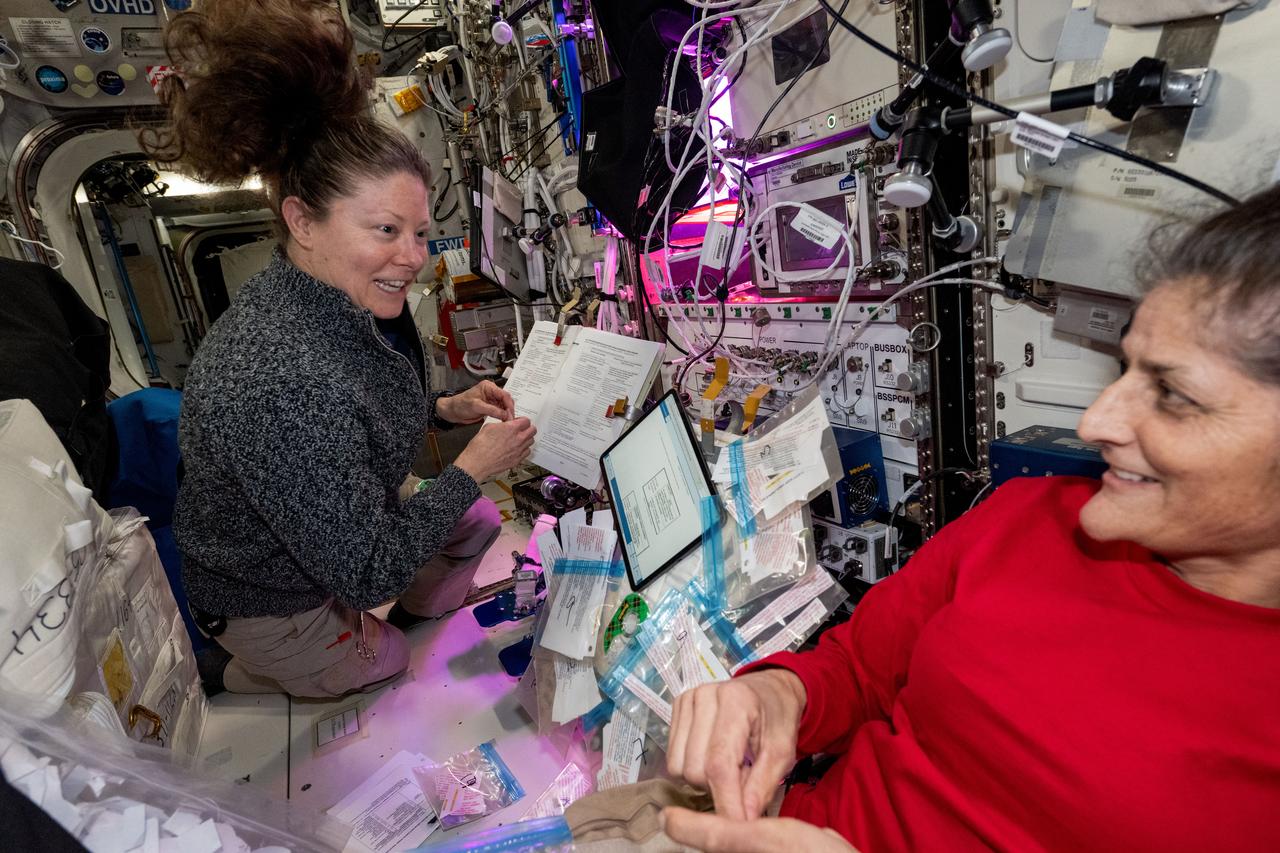
iss071e580038 (Aug. 28, 2024) --- NASA astronauts (from left) Tracy C. Dyson and Suni Williams update emergency procedure manuals aboard the International Space Station's Columbus laboratory module.
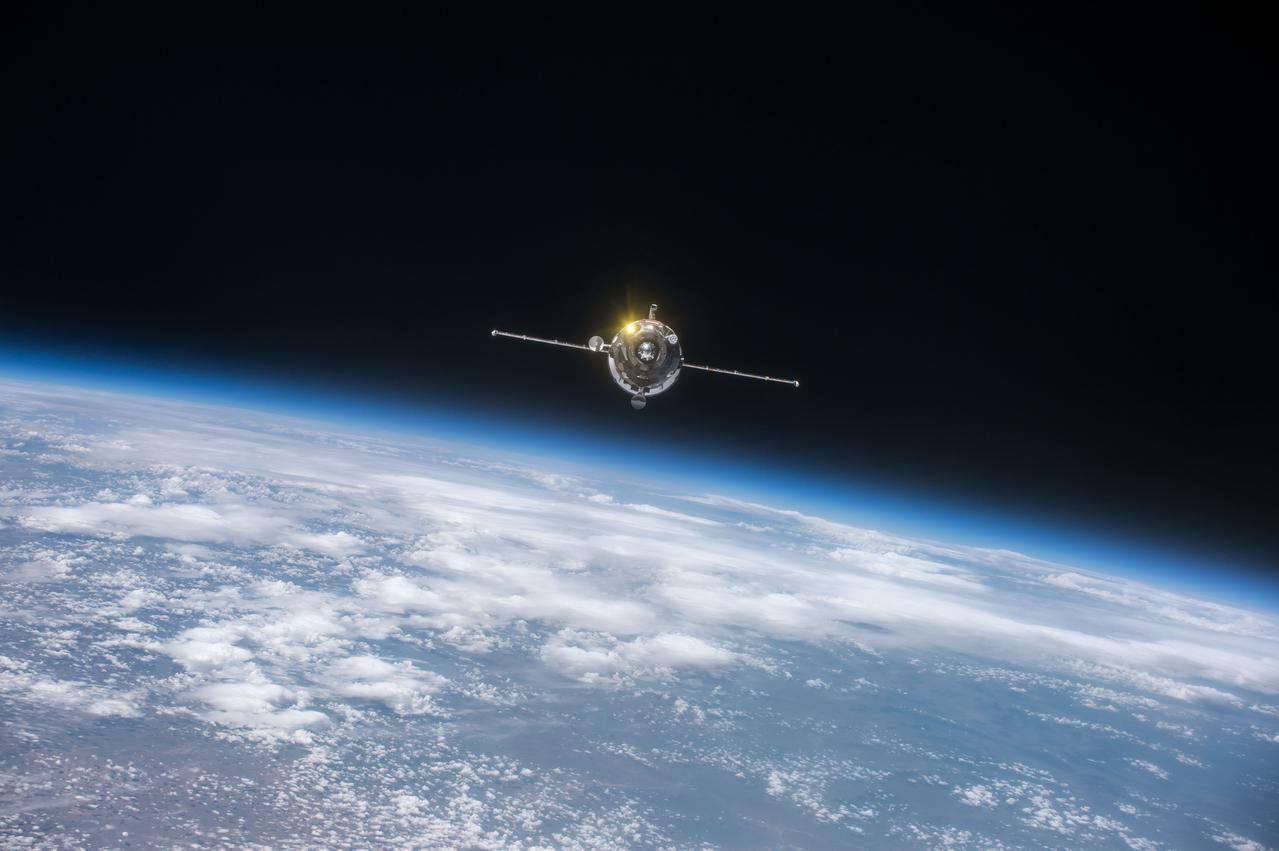
ISS048e017204 (07/01/2016) --- Image of the undocked Progress 62P supply spacecraft against a backdrop of Earth and space during a test of the upgraded Teleoperator Control System (TORU) manual docking system.
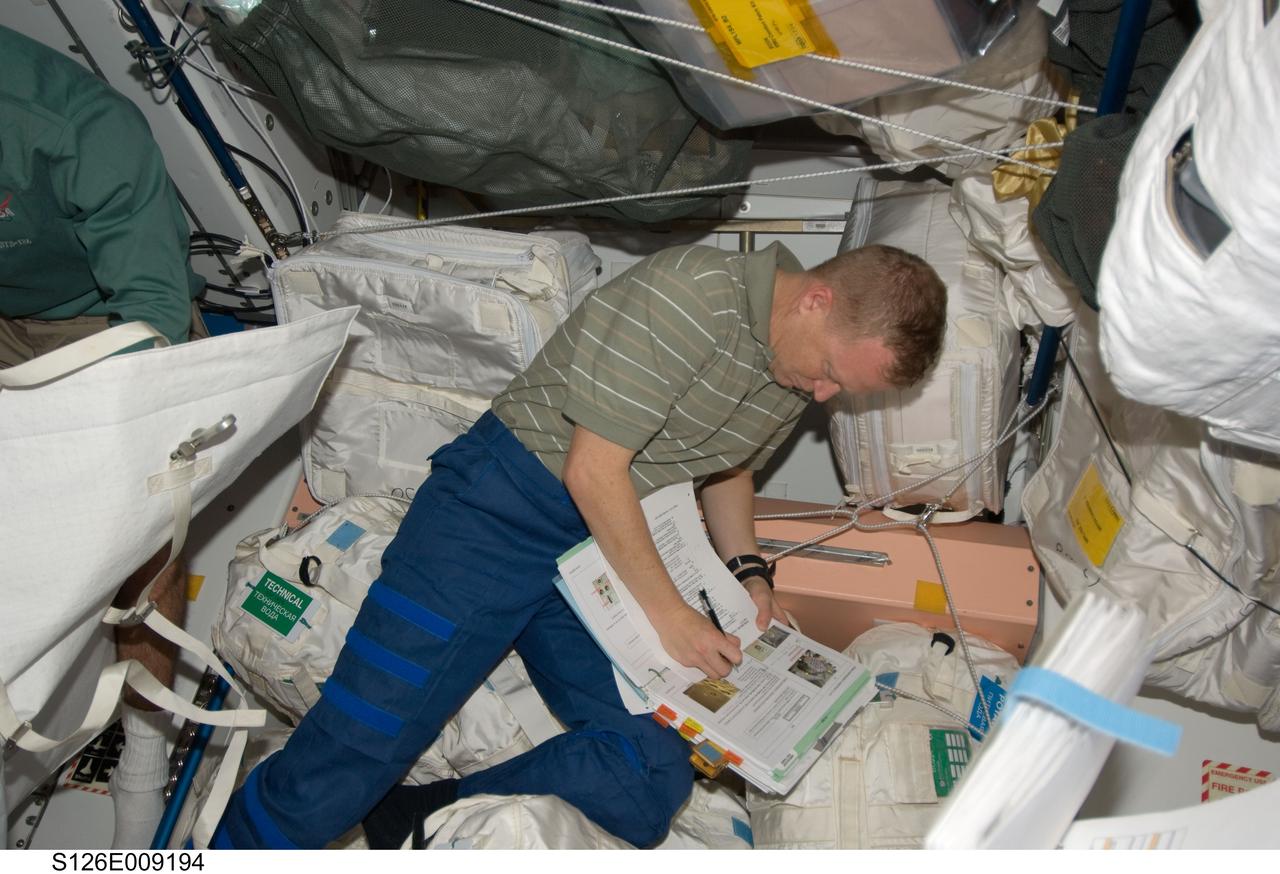
S126-E-009194 (23 Nov. 2008) --- Astronaut Eric Boe, STS-126 pilot, makes notations on a procedures manual in the Unity node of the International Space Station while Space Shuttle Endeavour remains docked with the station.
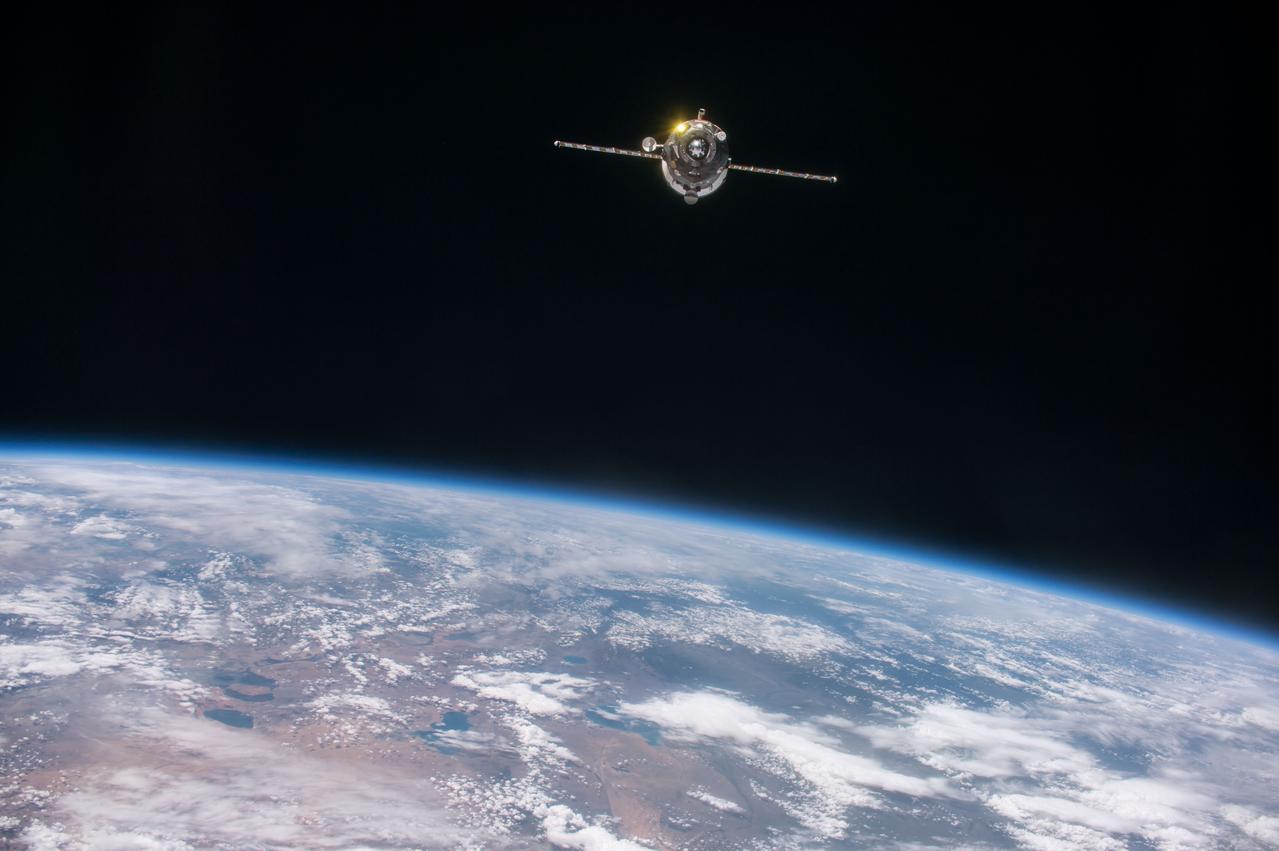
iss048e017190 (07/01/2016) --- The undocked Russian Progress 62 spacecraft backs away from the International Space Station for a test of the upgraded tele-robotically operated rendezvous system, or the TORU manual docking system.
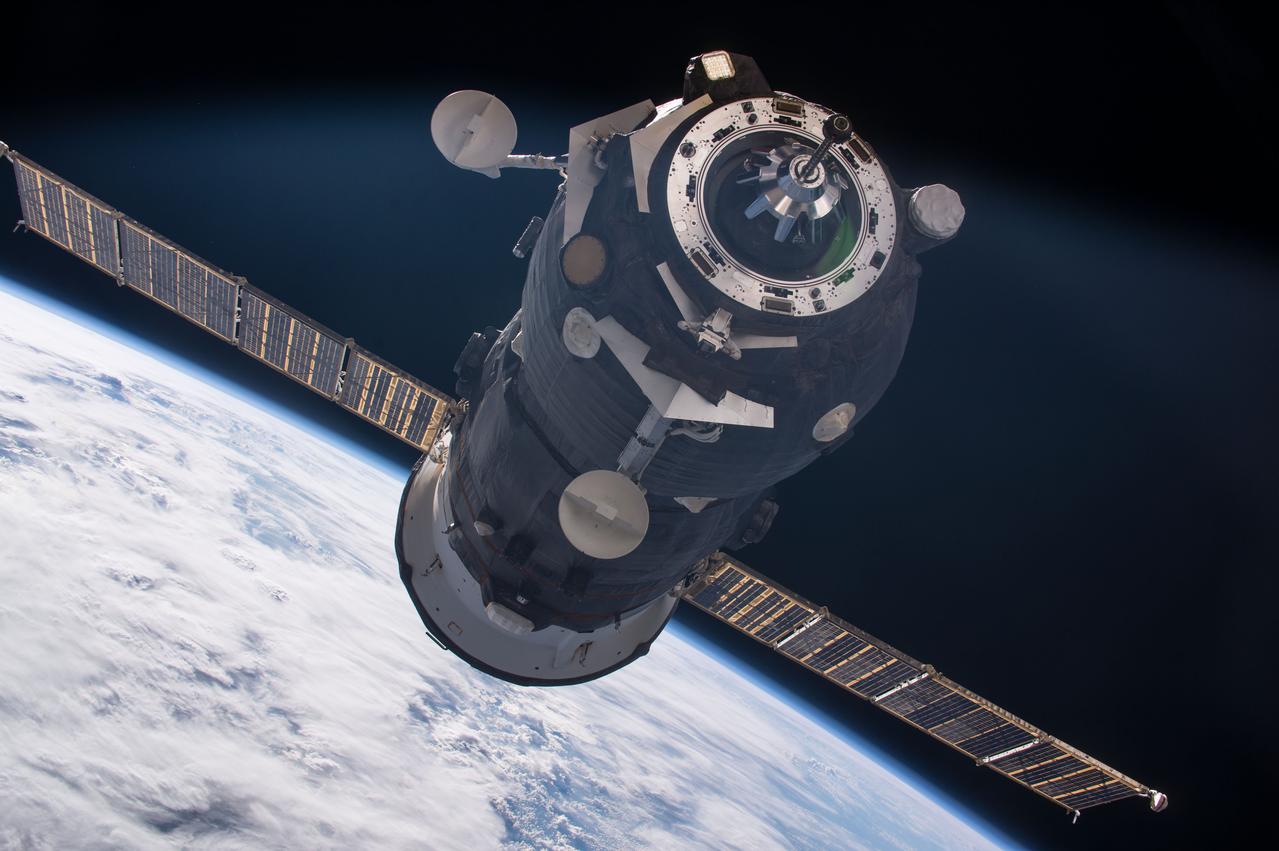
iss048e017379 (07/01/2016) --- The undocked Russian Progress 62 spacecraft approaches the International Space Station for redocking during a test of the upgraded tele-robotically operated rendezvous system, or the TORU manual docking system.
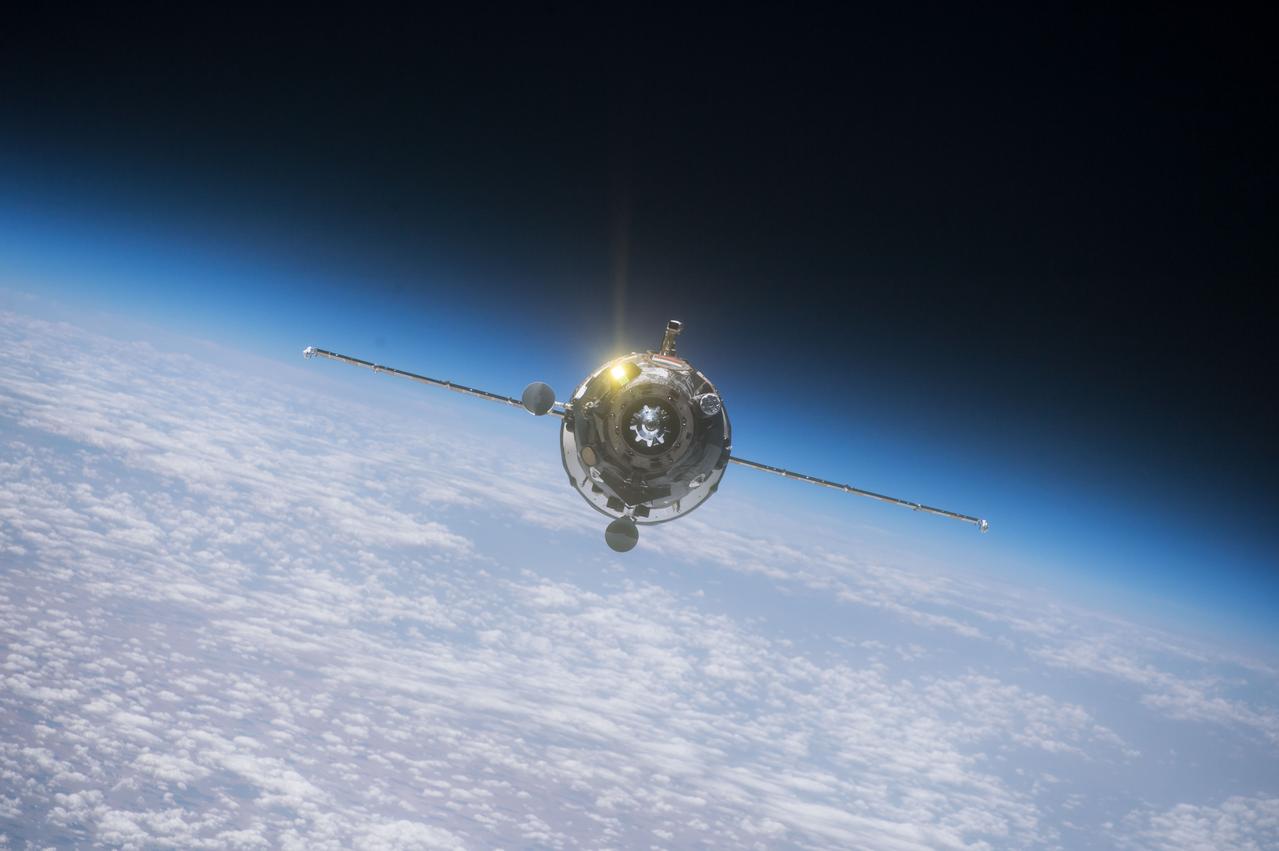
iss048e017239 (07/01/2016) --- View of the undocked Russian Progress 62 spacecraft against a backdrop of Earth and space during a test of the upgraded tele-robotically operated rendezvous system, or the TORU manual docking system.
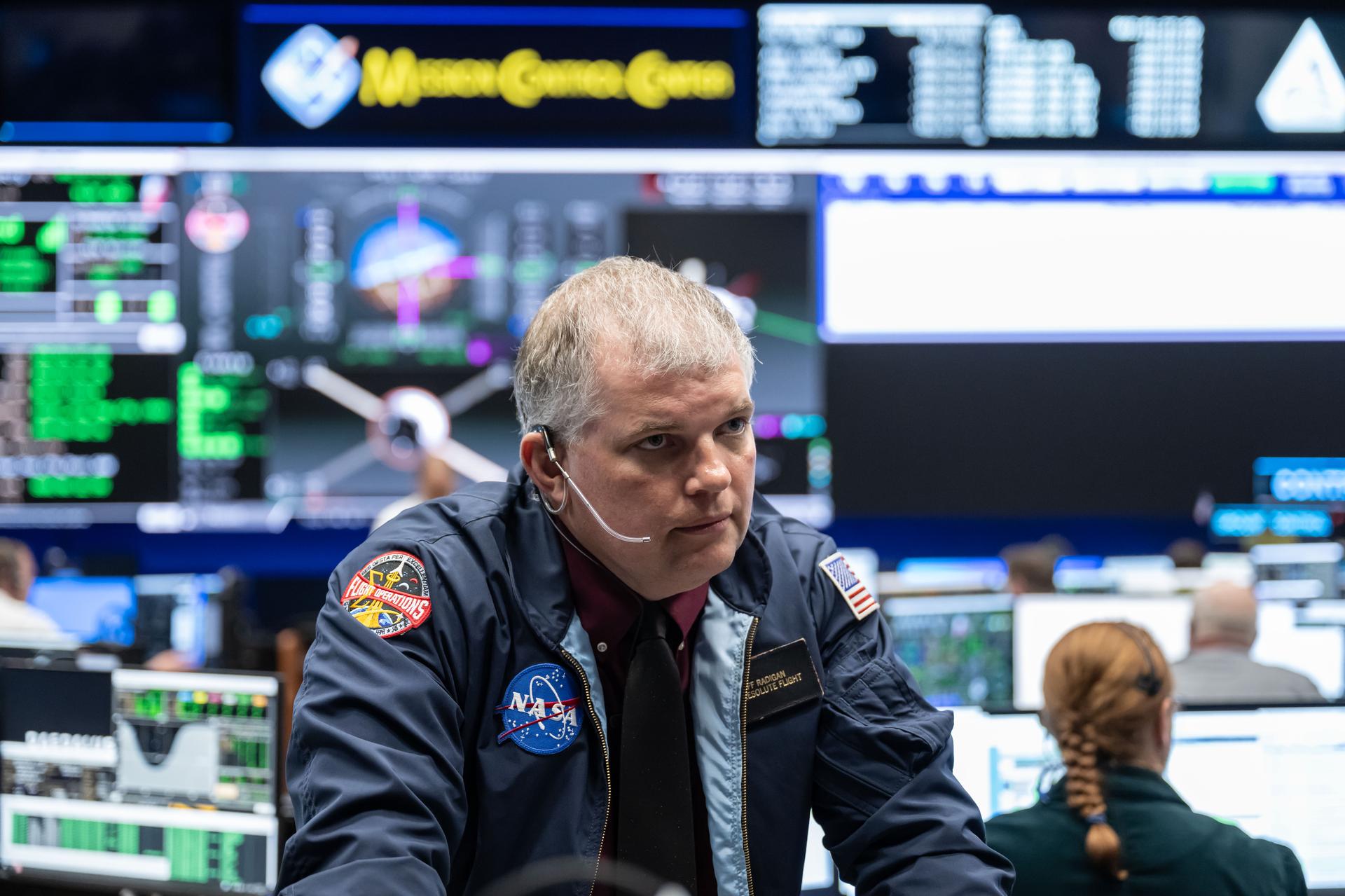
jsc2026e019217 (April 1, 2026) – Lead Artemis II Flight Director Jeff Radigan in the White Flight Control Room at the Mission Control Center at NASA’s Johnson Space Center in Houston. At the time of this photograph, a little over three hours into the mission, the Artemis II crew was conducting a manual piloting test called the proximity operations demonstration. During the demonstration, mission controllers monitored Orion as the astronauts transitioned the spacecraft to manual mode and piloted its flight path and orientation. This demonstration will provide performance data and operational experience that cannot be readily gained on the ground in preparation for critical rendezvous, proximity operations, docking, and undocking for future Artemis missions. Credit: NASA
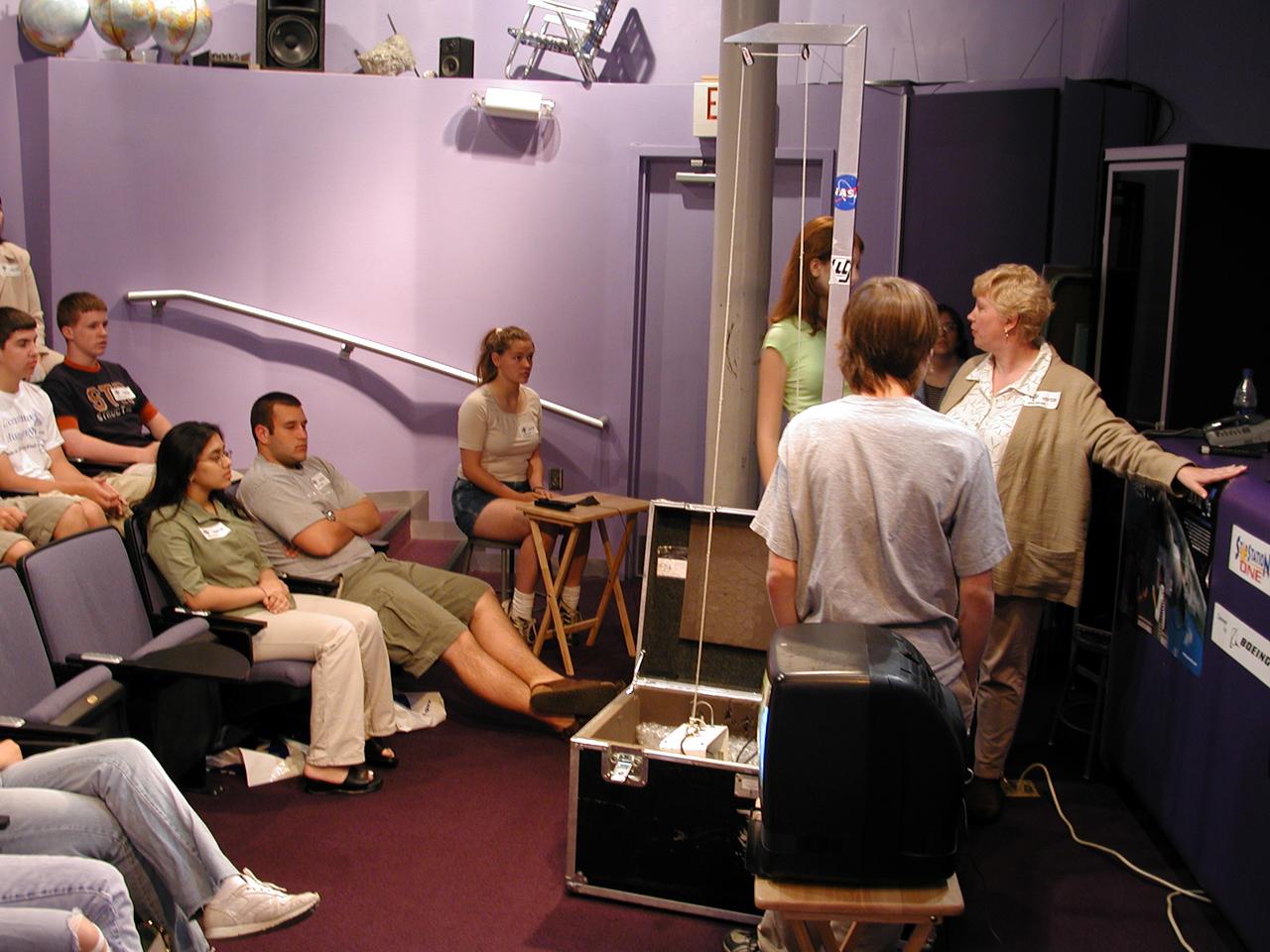
Suzarne Nichols (12th grade) from DuPont Manual High School in Louisville, Kentucky, asks a question of on of the on-line lecturers during the Pan-Pacific Basin Workshop on Microgravity Sciences held in Pasadena, California. The event originated at the California Science Center in Los Angeles. The DuPont Manual students patched in to the event through the distance learning lab at the Louisville Science Center. NASA materials engineer Chris Cochrane prepare students for the on-line workshop helps two students prepare a drop demonstration. This image is from a digital still camera; higher resolution is not available.
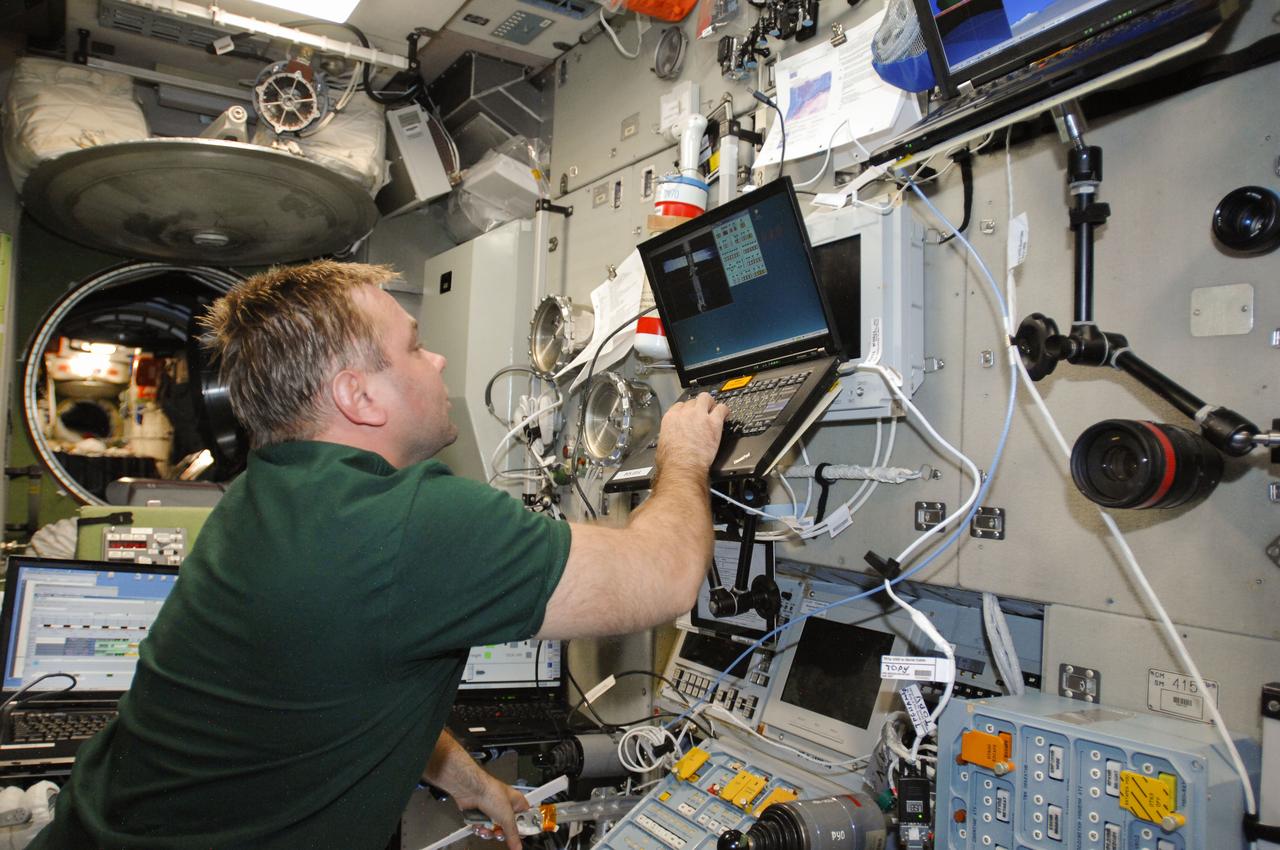
ISS040-E-070861 (22 July 2014) --- Russian cosmonaut Maxim Suraev, Expedition 40 flight engineer, practices manual docking techniques with the TORU, or telerobotically operated rendezvous system, in the Zvezda Service Module of the International Space Station in preparation for the docking of the Progress 56 spacecraft. Suraev, using the Simvol-TS screen and hand controllers, could manually dock the Progress to the station in the event of a failure of the Kurs automated docking system. The Progress 56 craft is scheduled to complete its automated docking to the Pirs docking compartment at 11:30 p.m. (EDT) on July 23, 2014.
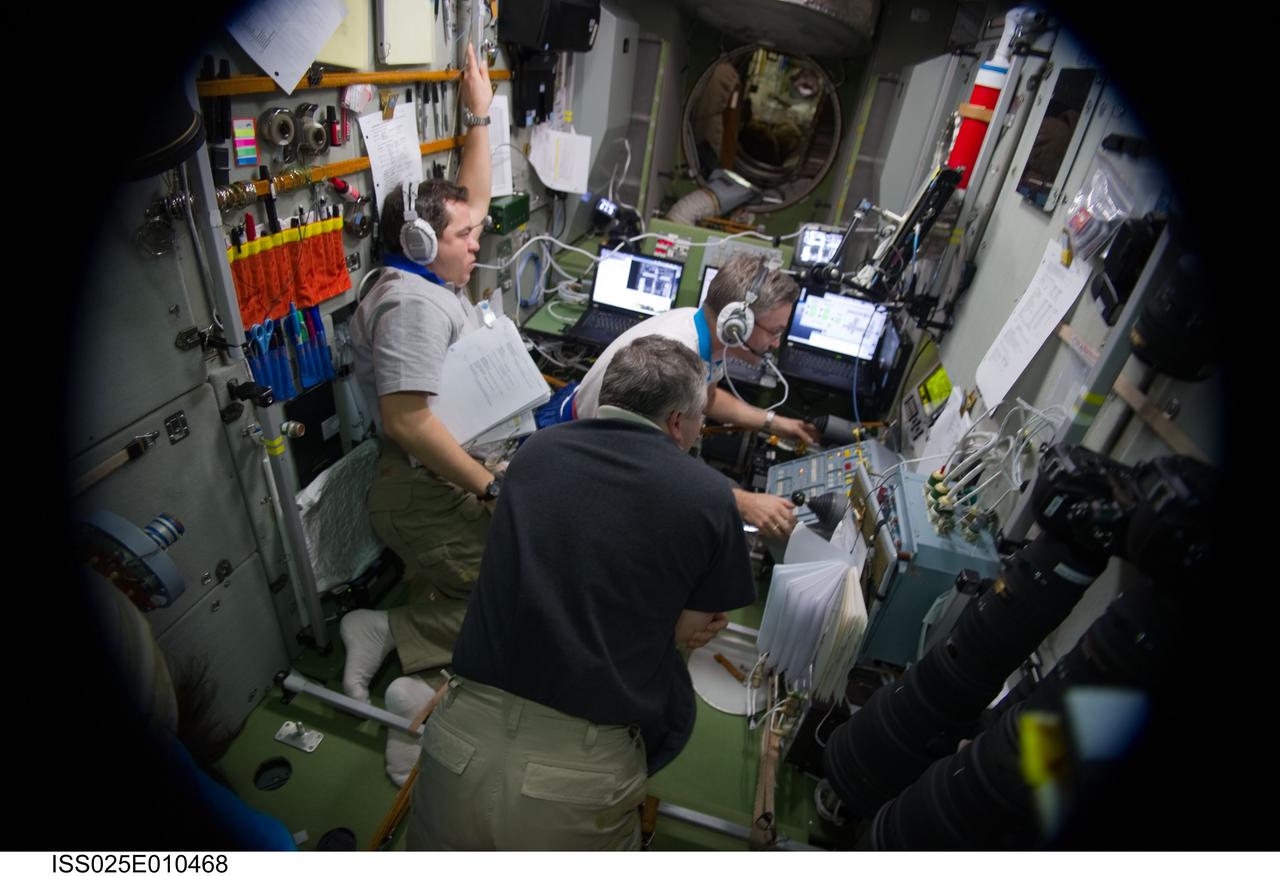
ISS025-E-010468 (30 Oct. 2010) --- Russian cosmonauts Alexander Kaleri (right background), Fyodor Yurchikhin (foreground) and Oleg Skripochka, all Expedition 25 flight engineers, monitor data at the manual TORU docking system controls in the Zvezda Service Module of the International Space Station during the docking operations of the unpiloted ISS Progress 40 resupply vehicle. Progress 40 docked to the Pirs Docking Compartment at 12:36 p.m. (EDT) on Oct. 30, 2010, after Kaleri took over manual control to guide the Progress to its final connection.
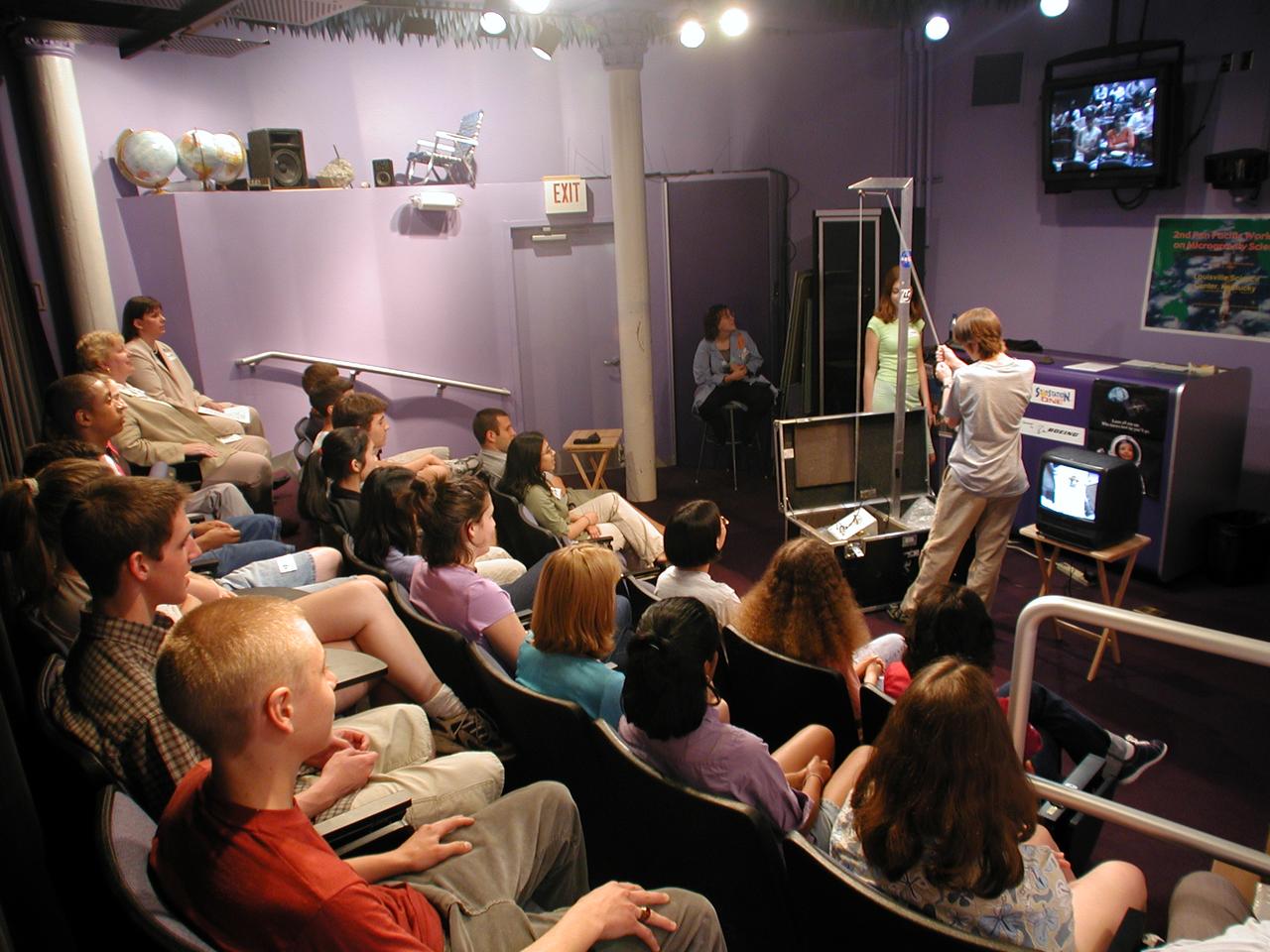
John Henson (grade 12) and Suzi Bryce (grade 10) from DuPont Manual High School in Louisville, Kentucky, conduct a drop with NASA's Microgravity Demonstrator. A camera and a TV/VCR unit let students play back recordings of how different physical devices behave differently during freefall as compared to 1-g. The activity was part of the education outreach segment of the Pan-Pacific Basin Workshop on Microgravity Sciences held in Pasadena, California. The event originated at the California Science Center in Los Angeles. The DuPont Manual students patched in to the event through the distance learning lab at the Louisville Science Center. This image is from a digital still camera; higher resolution is not available.
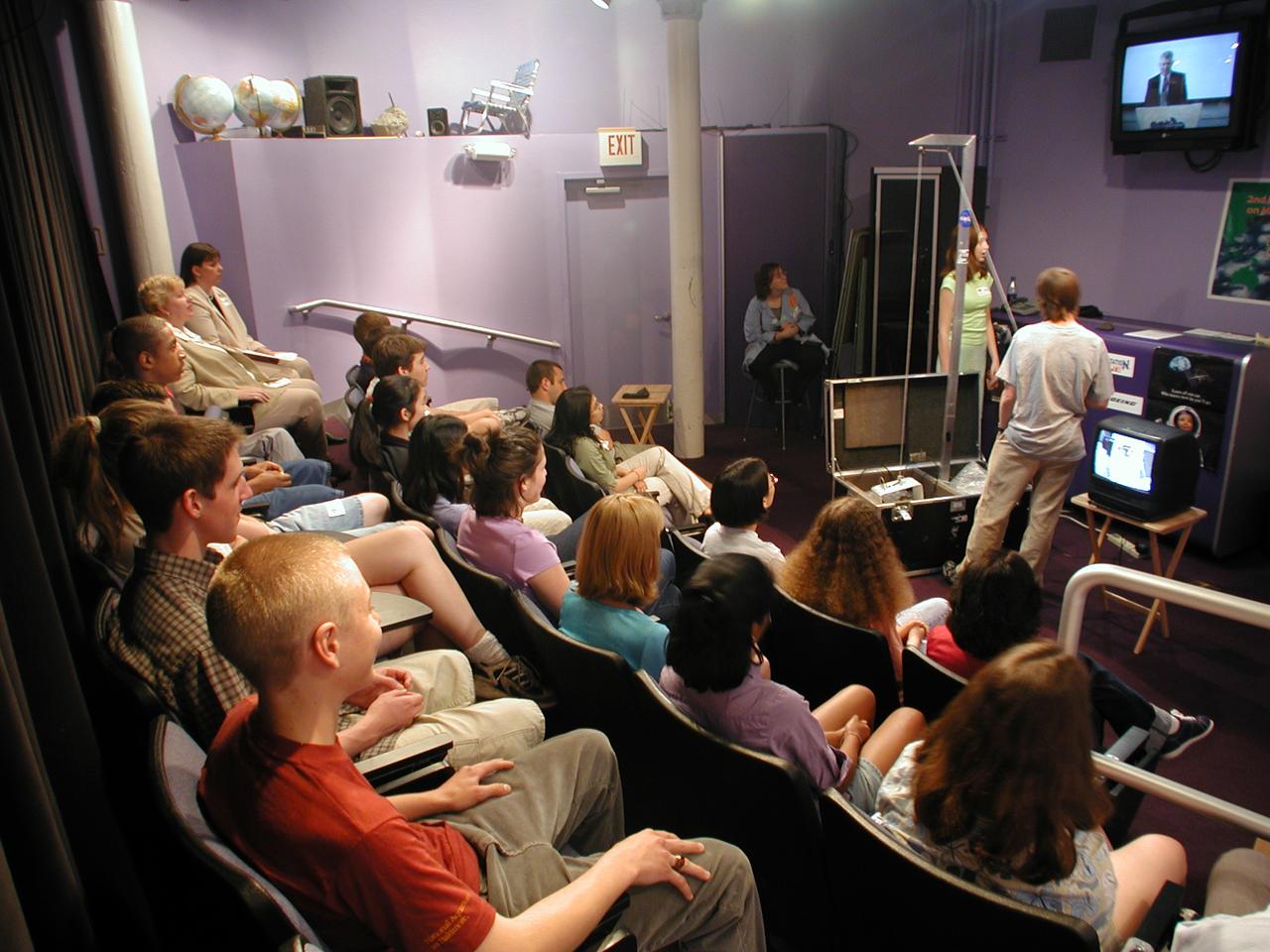
John Henson (grade 12) and Suzi Bryce (grade 10) conducted the drop from DuPont Manual High School in Louisville, Kentucky, conduct a drop with NASA's Microgravity Demonstrator. A camera and a TV/VCR unit let students play back recordings of how different physical devices behave differently during freefall as compared to 1-g. The activity was part of the education outreach segment of the Pan-Pacific Basin Workshop on Microgravity Sciences held in Pasadena, California. The event originated at the California Science Center in Los Angeles. The DuPont Manual students patched in to the event through the distance learning lab at the Louisville Science Center. This image is from a digital still camera; higher resolution is not available.
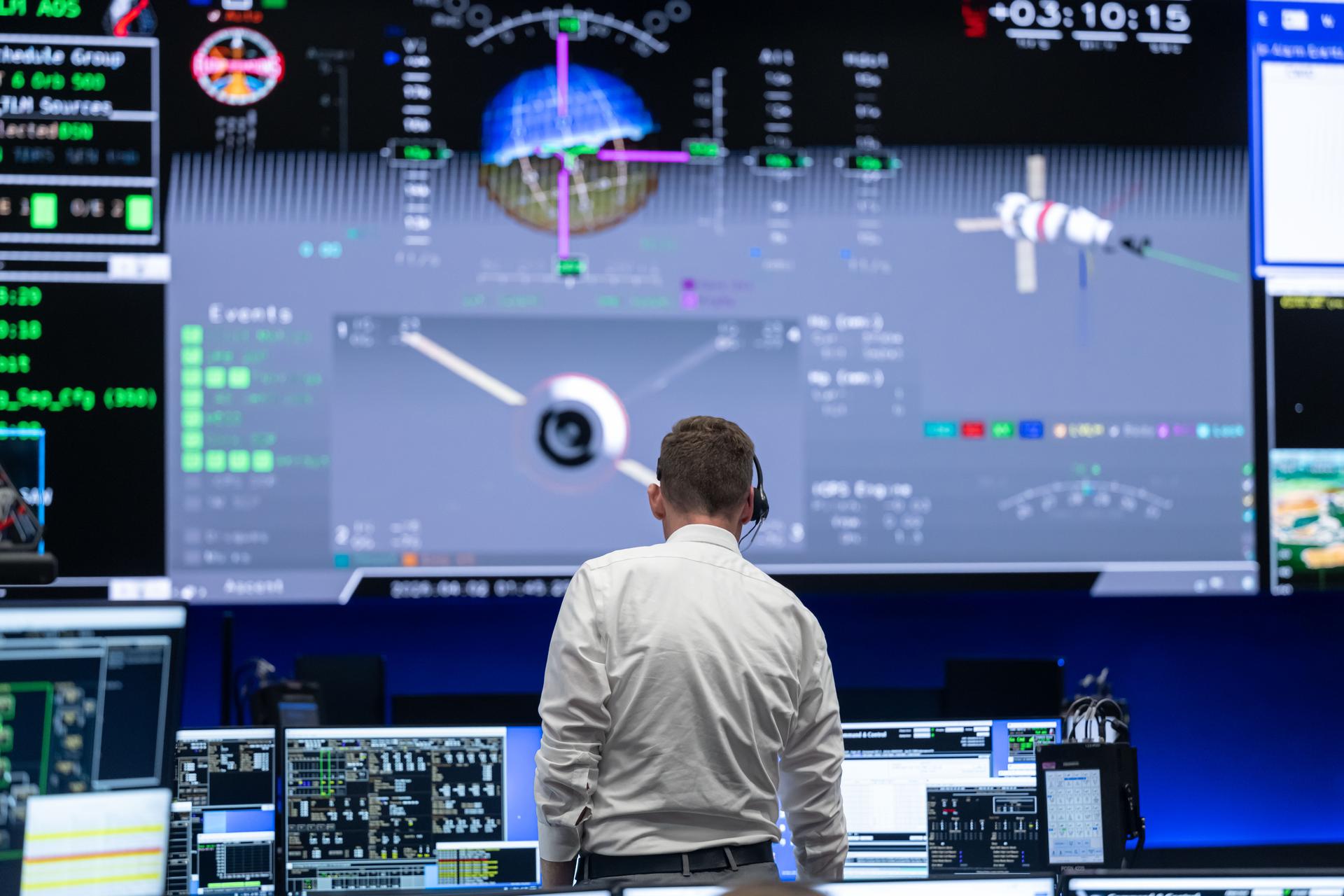
jsc2026e019242 (April 1, 2026) – Artemis II Flight Controller Jeremy Raush in the White Flight Control Room at the Mission Control Center at NASA’s Johnson Space Center in Houston. At the time of this photograph, a little over three hours into the mission, the Artemis II crew began a manual piloting test called the proximity operations demonstration. During the demonstration, mission controllers monitored Orion as the astronauts transitioned the spacecraft to manual mode and piloted its flight path and orientation. This demonstration will provide performance data and operational experience that cannot be readily gained on the ground in preparation for critical rendezvous, proximity operations, docking, and undocking for future Artemis missions. Credit: NASA
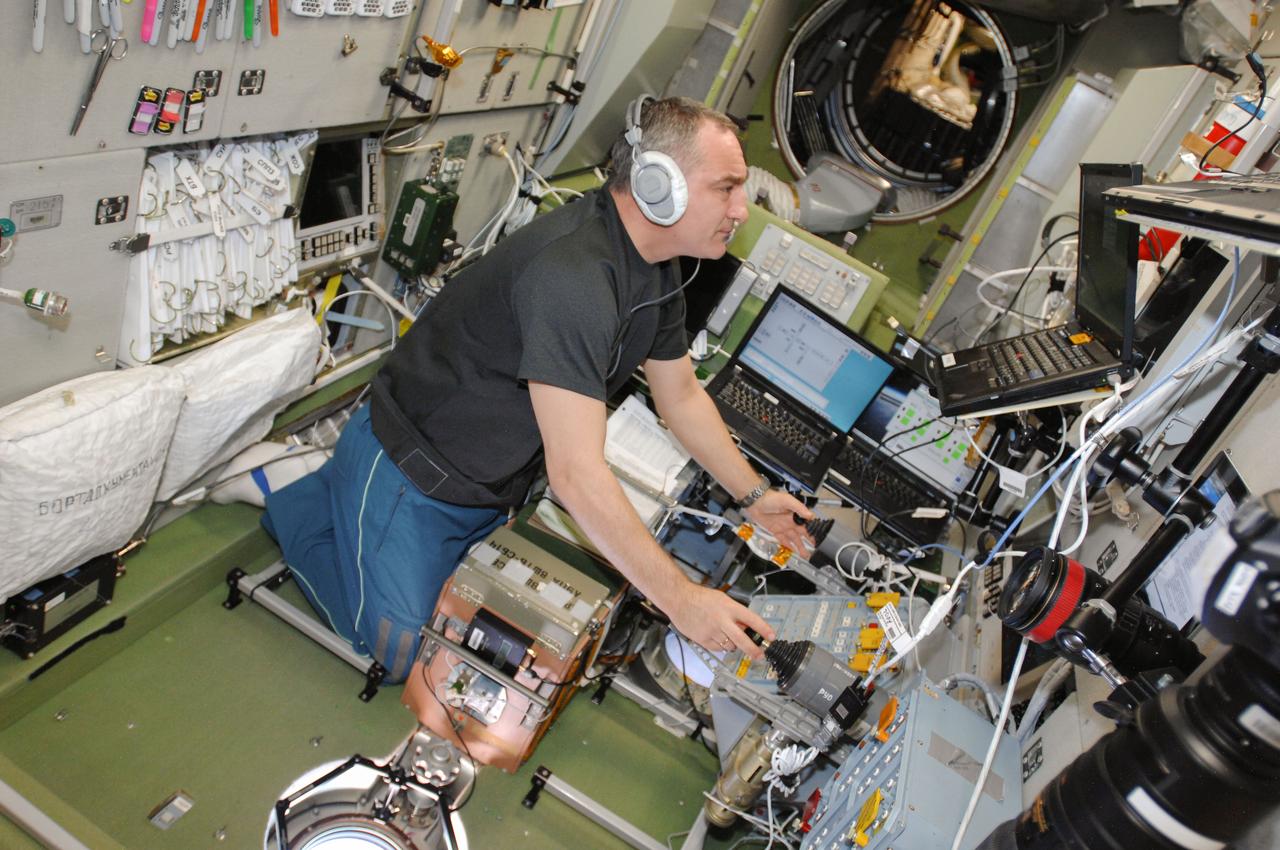
ISS040-E-070857 (22 July 2014) --- Russian cosmonaut Alexander Skvortsov, Expedition 40 flight engineer, practices manual docking techniques with the TORU, or telerobotically operated rendezvous system, in the Zvezda Service Module of the International Space Station in preparation for the docking of the Progress 56 spacecraft. Skvortsov, using the Simvol-TS screen and hand controllers, could manually dock the Progress to the station in the event of a failure of the Kurs automated docking system. The Progress 56 craft is scheduled to complete its automated docking to the Pirs docking compartment at 11:30 p.m. (EDT) on July 23, 2014.
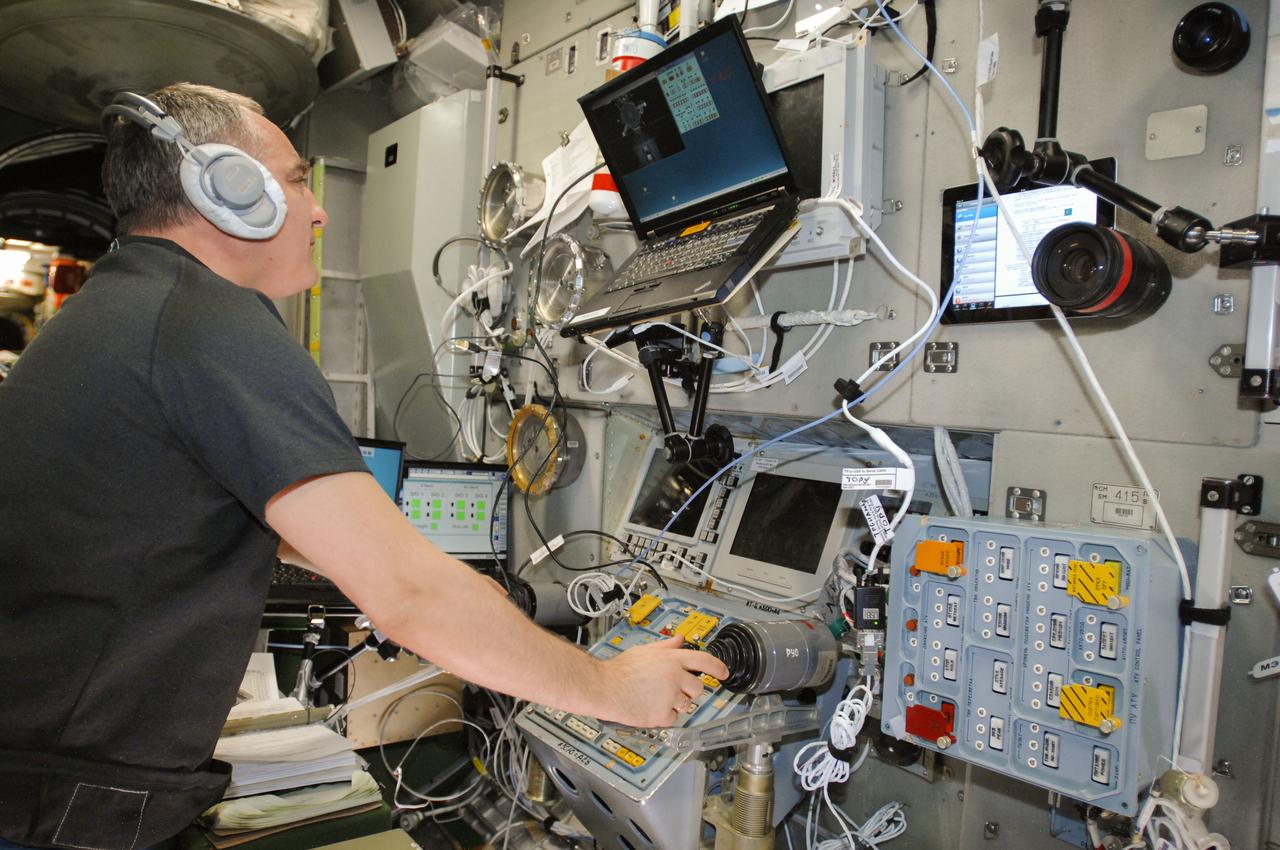
ISS040-E-070859 (22 July 2014) --- Russian cosmonaut Alexander Skvortsov, Expedition 40 flight engineer, practices manual docking techniques with the TORU, or telerobotically operated rendezvous system, in the Zvezda Service Module of the International Space Station in preparation for the docking of the Progress 56 spacecraft. Skvortsov, using the Simvol-TS screen and hand controllers, could manually dock the Progress to the station in the event of a failure of the Kurs automated docking system. The Progress 56 craft is scheduled to complete its automated docking to the Pirs docking compartment at 11:30 p.m. (EDT) on July 23, 2014.
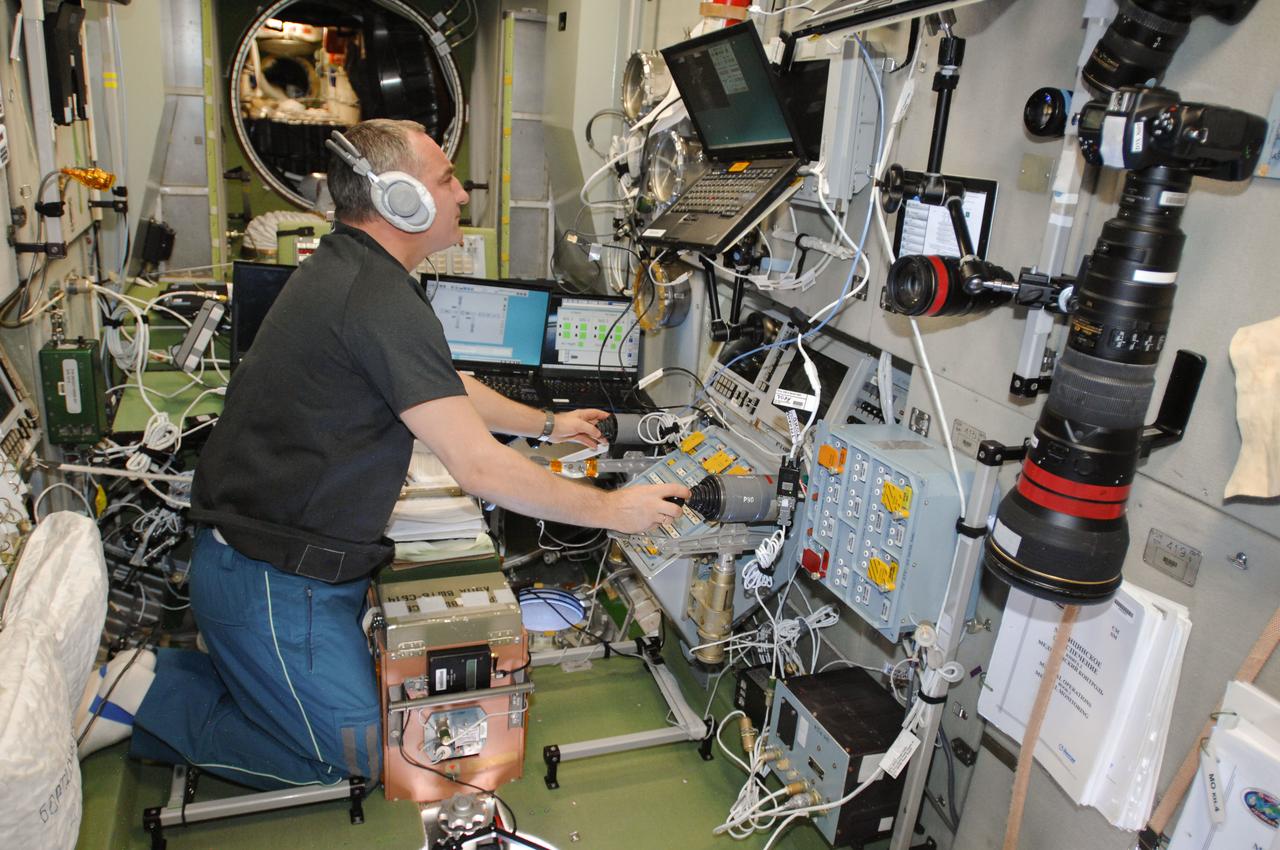
ISS040-E-070856 (22 July 2014) --- Russian cosmonaut Alexander Skvortsov, Expedition 40 flight engineer, practices manual docking techniques with the TORU, or telerobotically operated rendezvous system, in the Zvezda Service Module of the International Space Station in preparation for the docking of the Progress 56 spacecraft. Skvortsov, using the Simvol-TS screen and hand controllers, could manually dock the Progress to the station in the event of a failure of the Kurs automated docking system. The Progress 56 craft is scheduled to complete its automated docking to the Pirs docking compartment at 11:30 p.m. (EDT) on July 23, 2014.
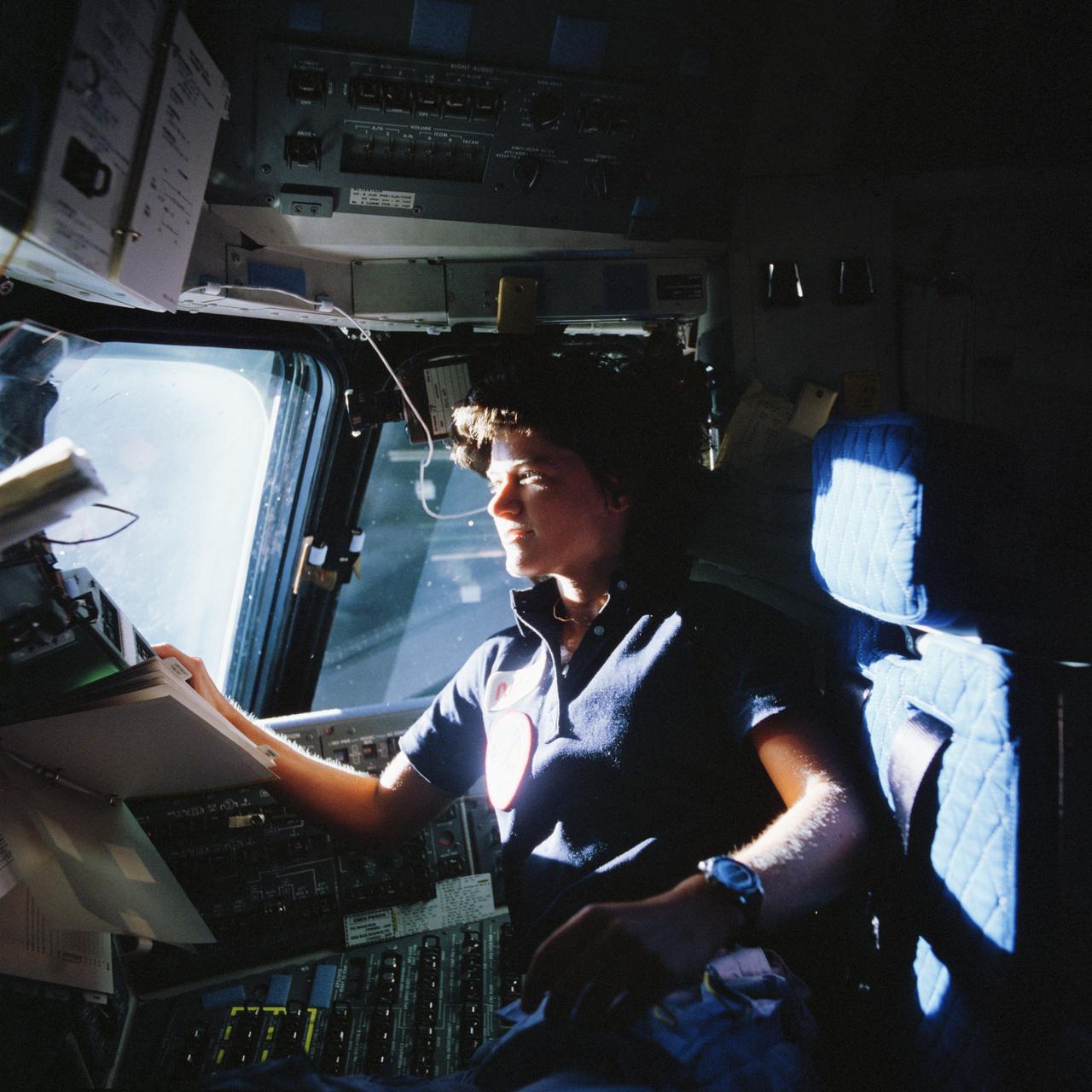
S83-35783 / STS007-05-029 (18-24 June 1983) --- Astronaut Sally K. Ride, mission specialist, is shown here sitting in the front seat and looking out the windows of the Earth-orbiting Space Shuttle Challenger. Ride and four other crew members are onboard the Challenger.
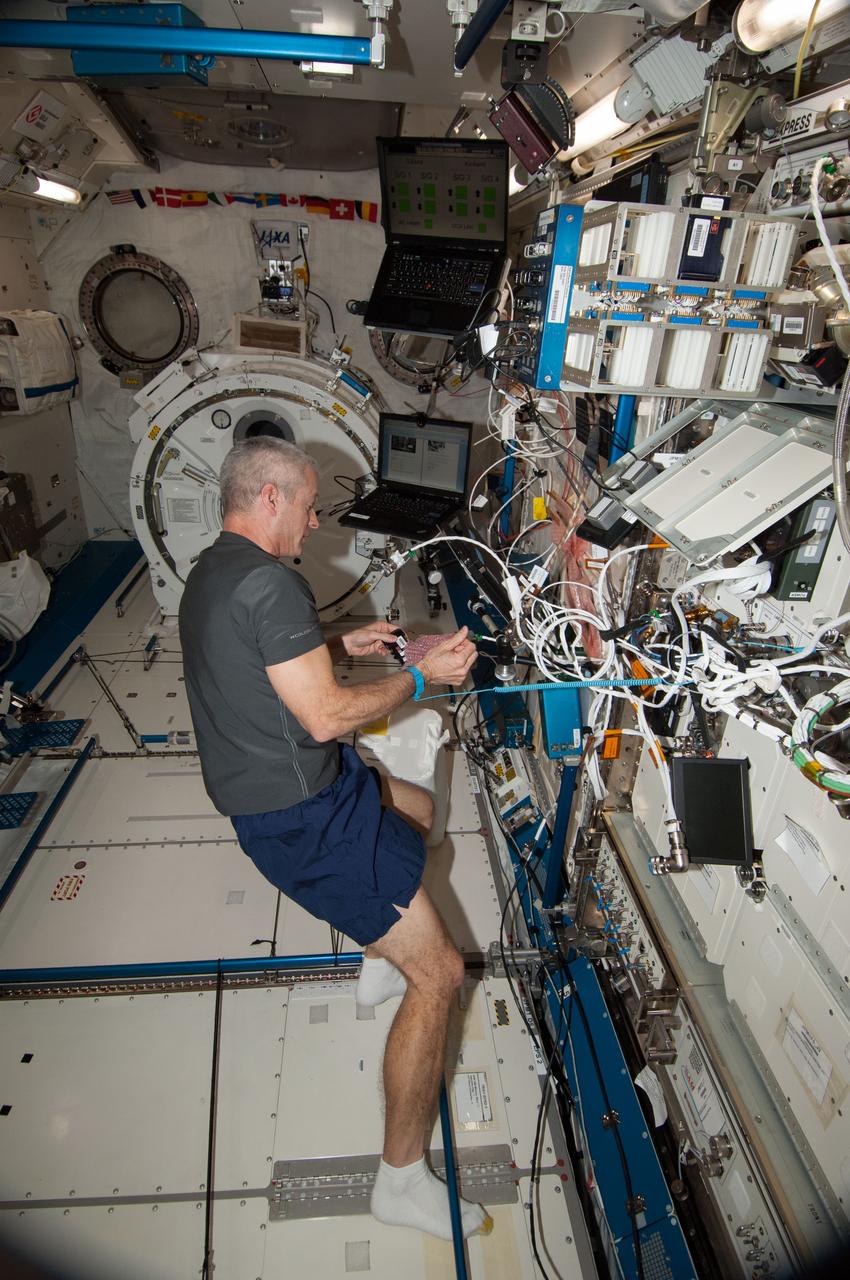
ISS039-E-017568 (30 April 2014) --- NASA astronaut Steve Swanson, Expedition 39 flight engineer, works with NanoRacks hardware in the Kibo laboratory of the Japan Aerospace Exploration Agency (JAXA). He is in the process of inserting BioRack experiment containers and experiment controllers into the BioRack frame. .
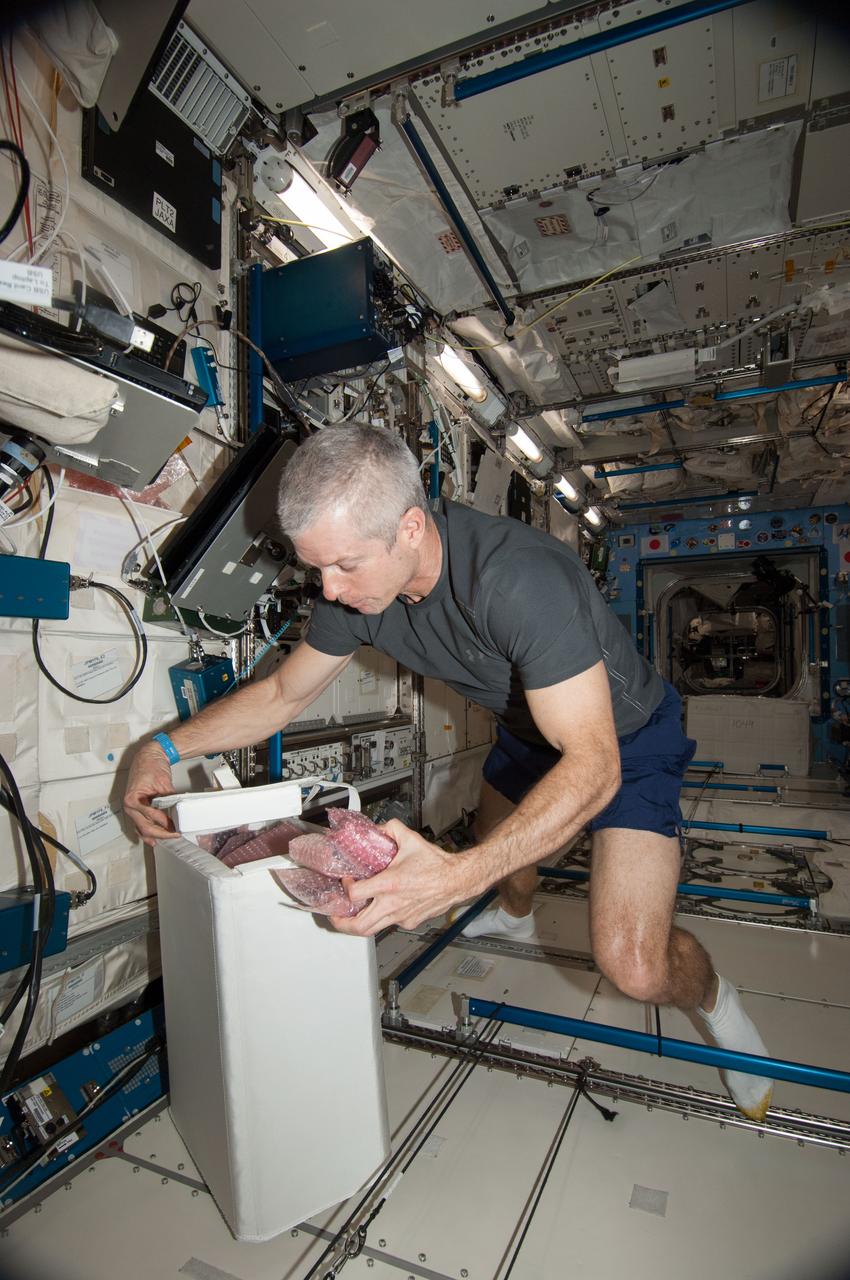
ISS039-E-017566 (30 April 2014) --- NASA astronaut Steve Swanson, Expedition 39 flight engineer, works with NanoRacks hardware in the Kibo laboratory of the Japan Aerospace Exploration Agency (JAXA). He is about to insert BioRack experiment containers and experiment controllers into the BioRack frame.
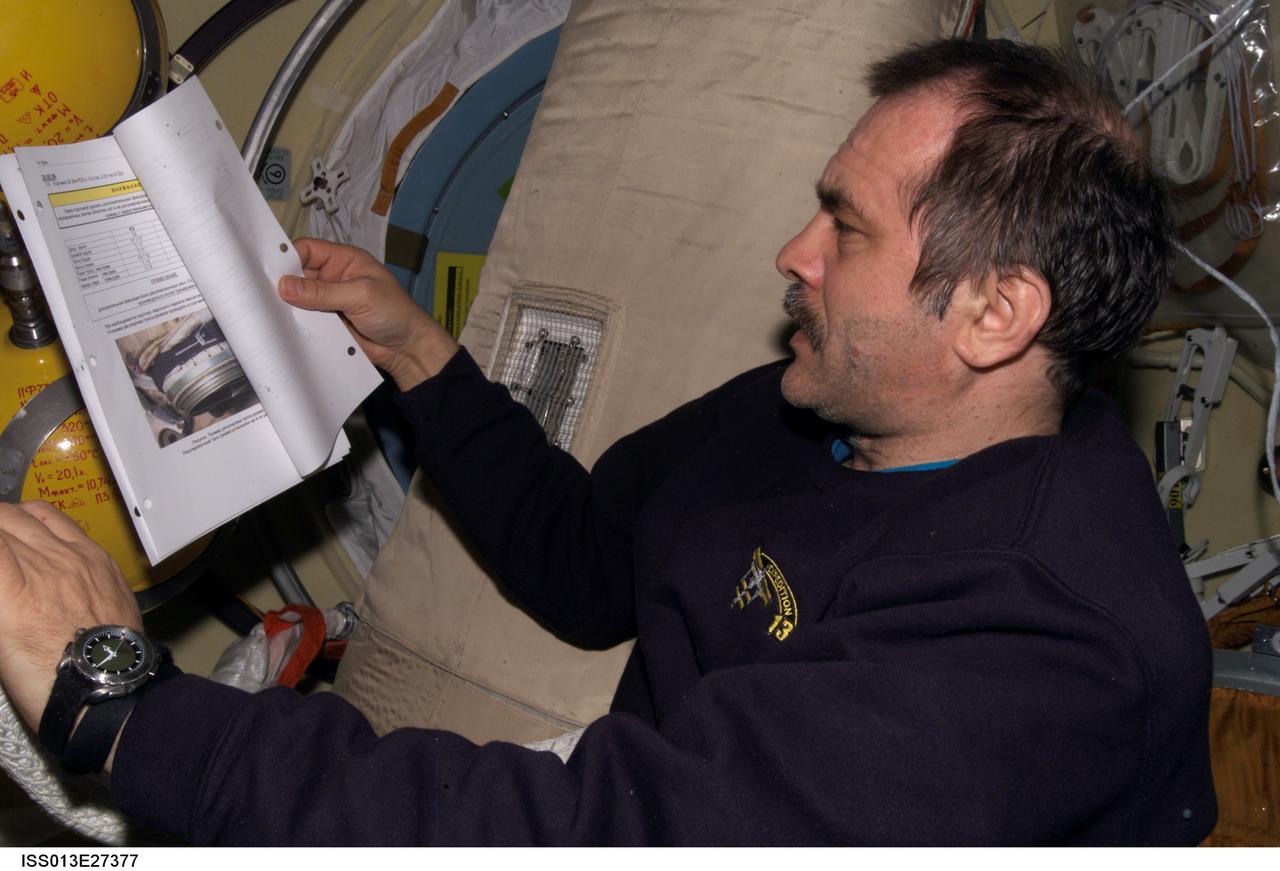
ISS013-E-27377 (26 May 2006) --- Cosmonaut Pavel V. Vinogradov, Expedition 13 commander representing Russia's Federal Space Agency, looks over a procedures checklist in the Zvezda Service Module of the International Space Station.
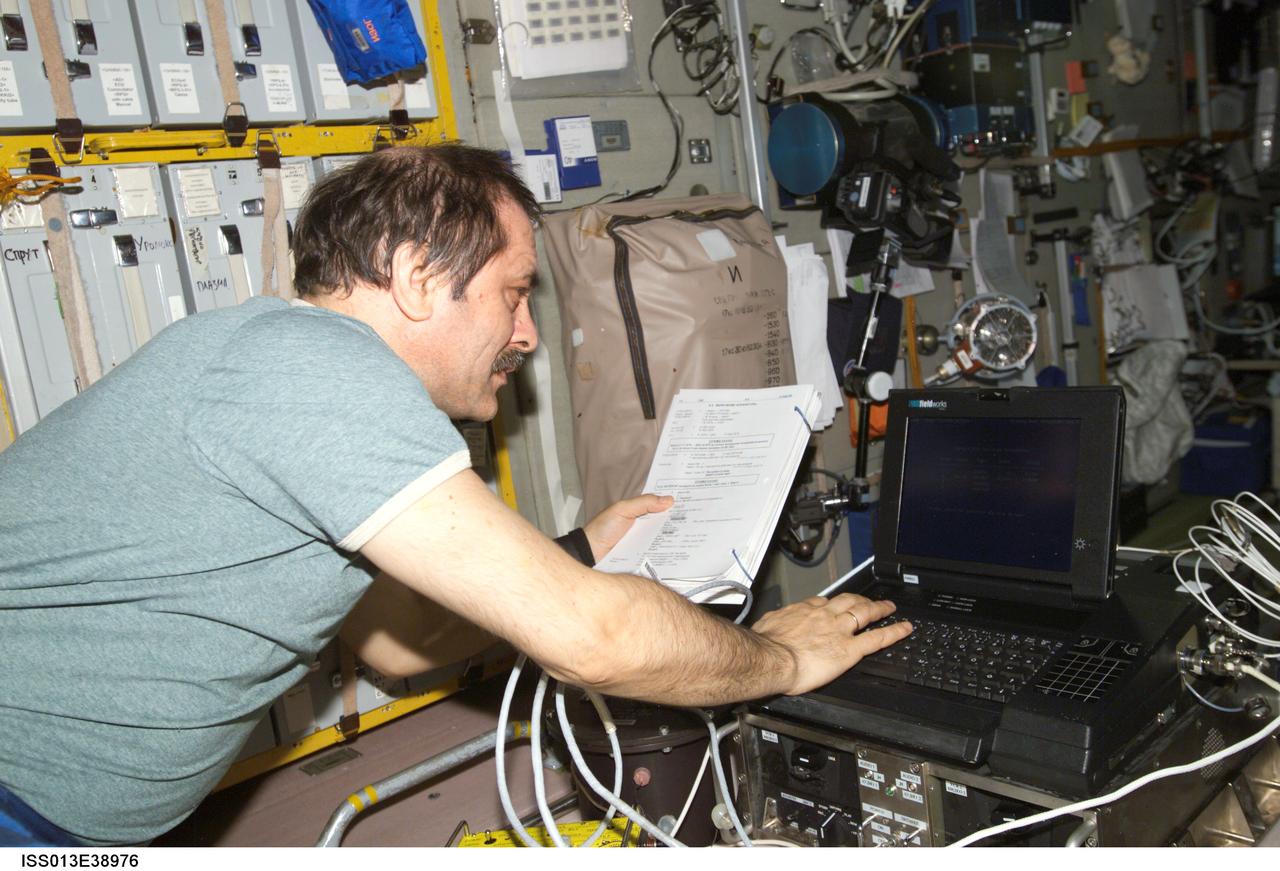
ISS013-E-38976 (21 June 2006) --- Cosmonaut Pavel V. Vinogradov, Expedition 13 commander representing Russia's Federal Space Agency, refers to a procedures checklist as he uses a computer in the Zvezda Service Module of the International Space Station.
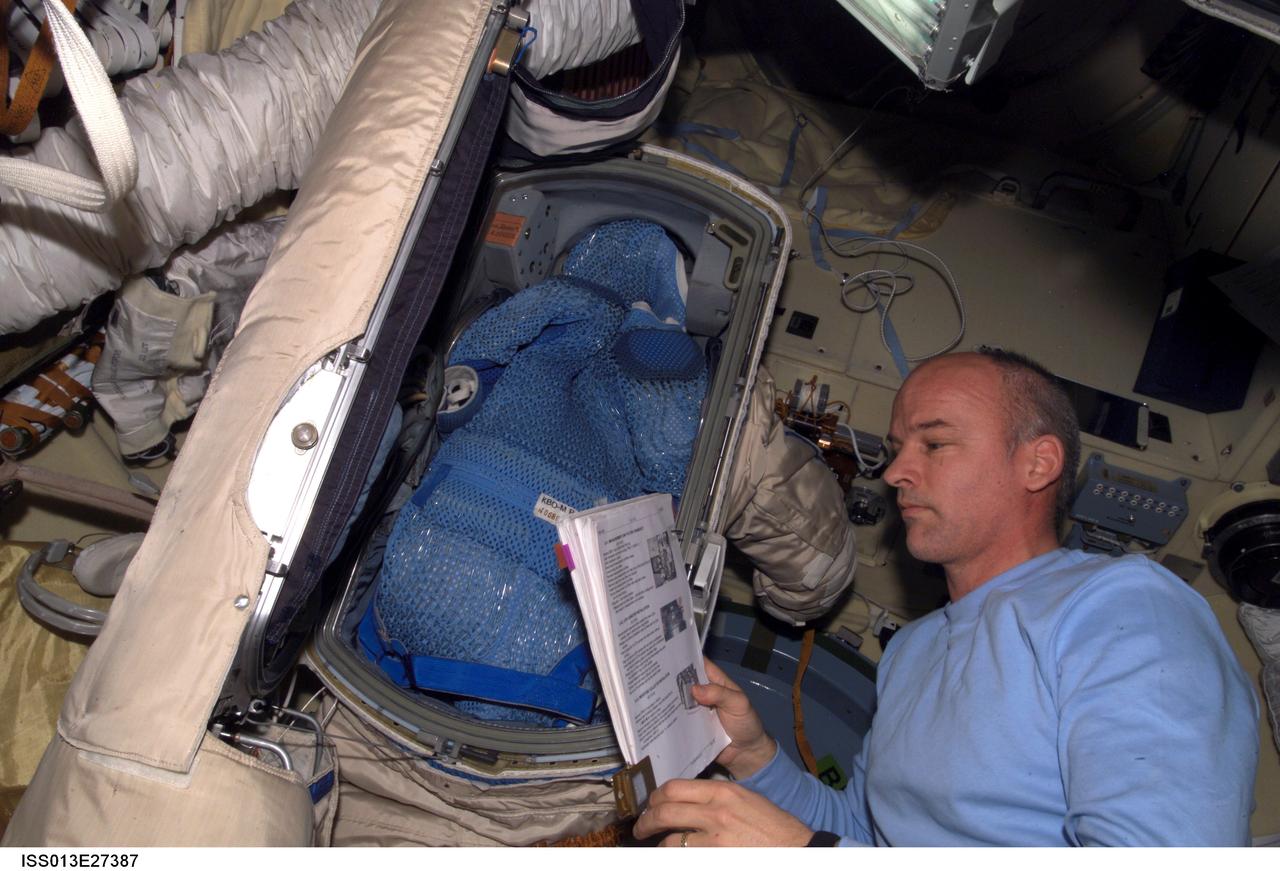
ISS013-E-27387 (26 May 2006) --- Astronaut Jeffrey N. Williams, Expedition 13 NASA space station science officer and flight engineer, looks over a procedures checklist near a Russian Orlan spacesuit in the Zvezda Service Module of the International Space Station.
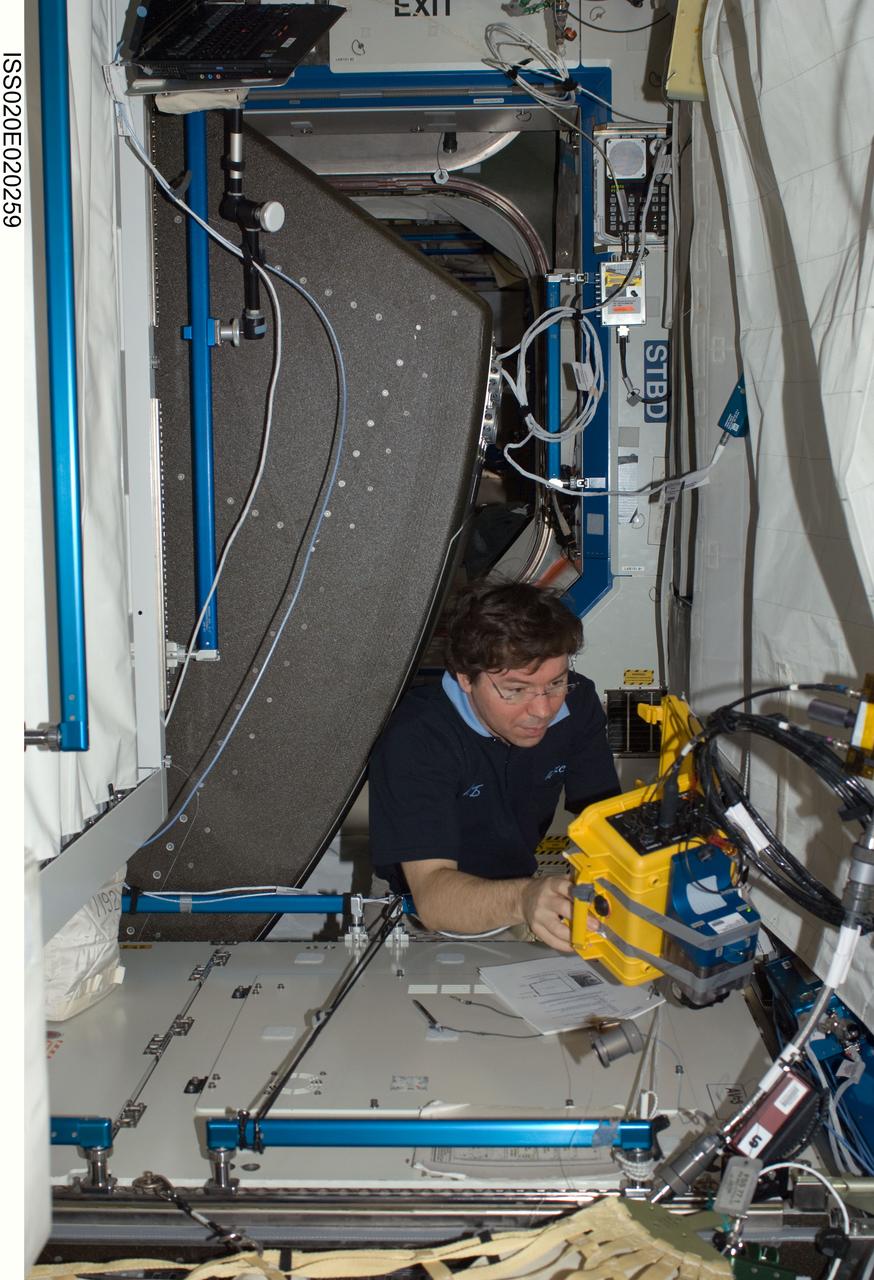
ISS020-E-020259 (8 July 2009) --- NASA astronaut Michael Barratt, Expedition 20 flight engineer, works at a rotated rack in the Destiny laboratory of the International Space Station during in-flight maintenance (IFM) to adjust the periodic flow rate of manual flow control valves for coolant loops.

S127-E-007295 (20 July 2009) --- Astronaut Tom Marshburn, STS-127 mission specialist, participates in his first spacewalk and the second overall for the crew members of the Space Shuttle Endeavour and the International Space Station. Astronauts Marshburn and Dave Wolf manually moved some hardware around and performed other chores on the spacewalk.
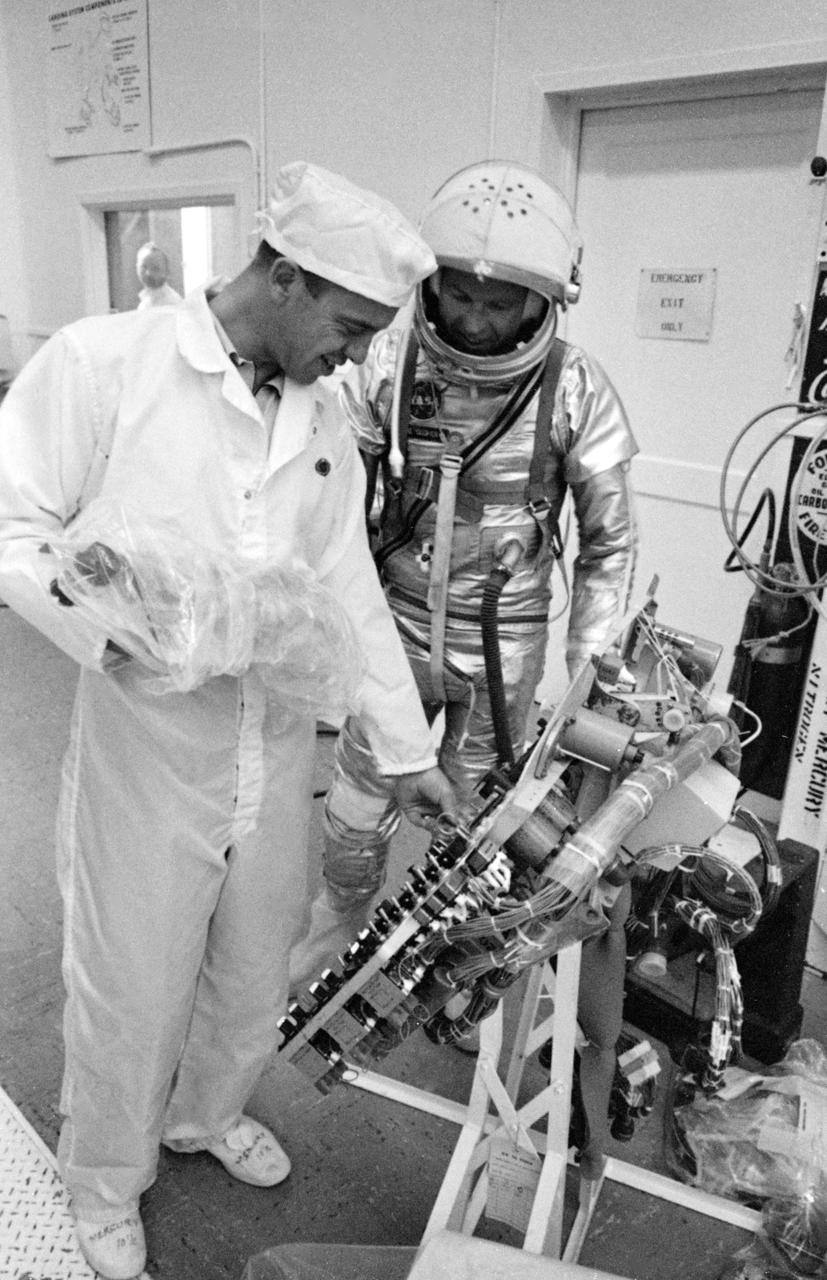
S63-03965 (1963) --- Astronauts Alan Shepard (left) and L. Gordon Cooper Jr.(in suit) check over the instrument panel from Mercury spacecraft #20. It contains the instruments necessary to monitor spacecraft systems and sequencing, the controls required to initiate primary sequences manually, and the necessary flight control displays. Photo credit: NASA
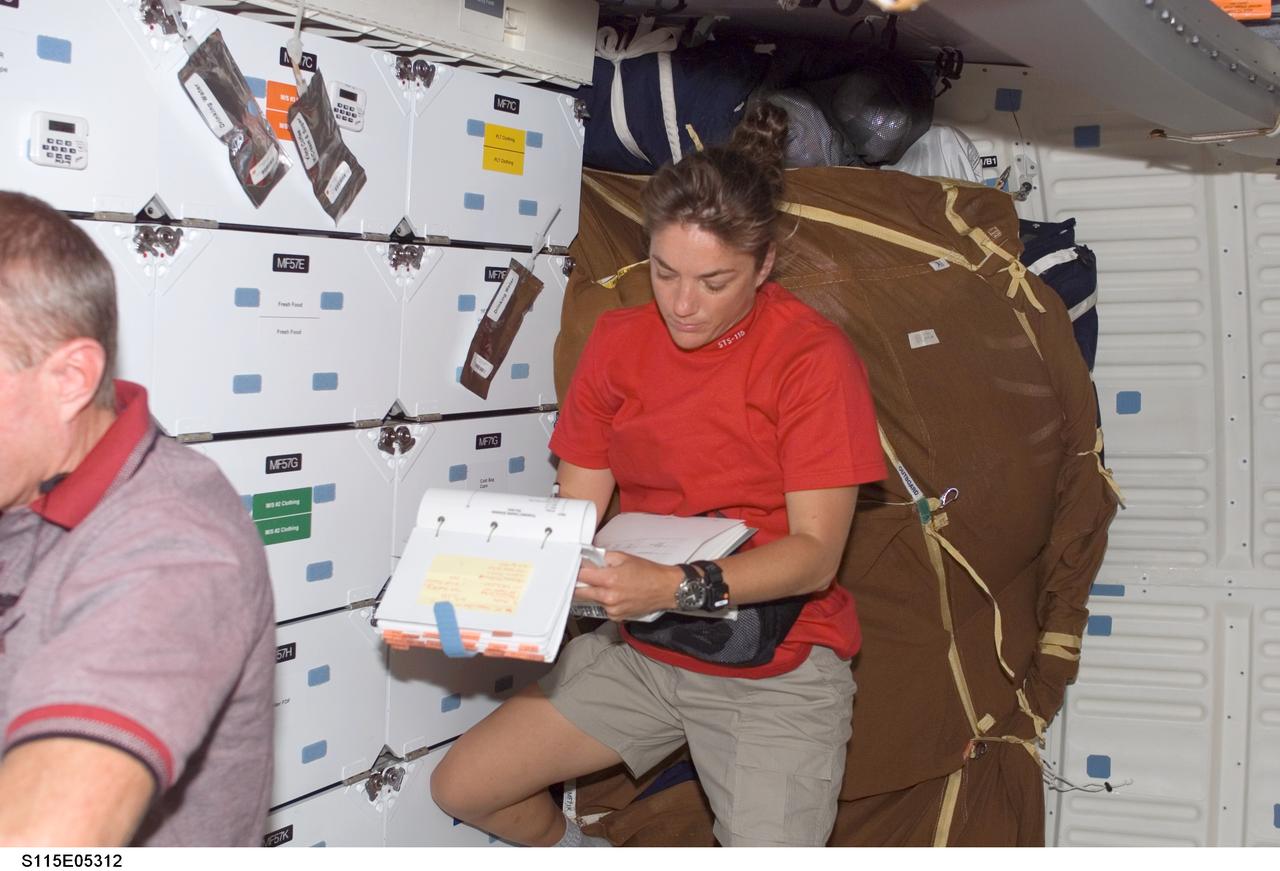
S115-E-05312 (10 Sept. 2006) --- Astronaut Heidemarie M. Stefanyshyn-Piper, STS-115 mission specialist, refers to a manual on the middeck of the Space Shuttle Atlantis during activities on the second flight day. Astronaut Brent W. Jett Jr., commander, is partially in the frame at left.
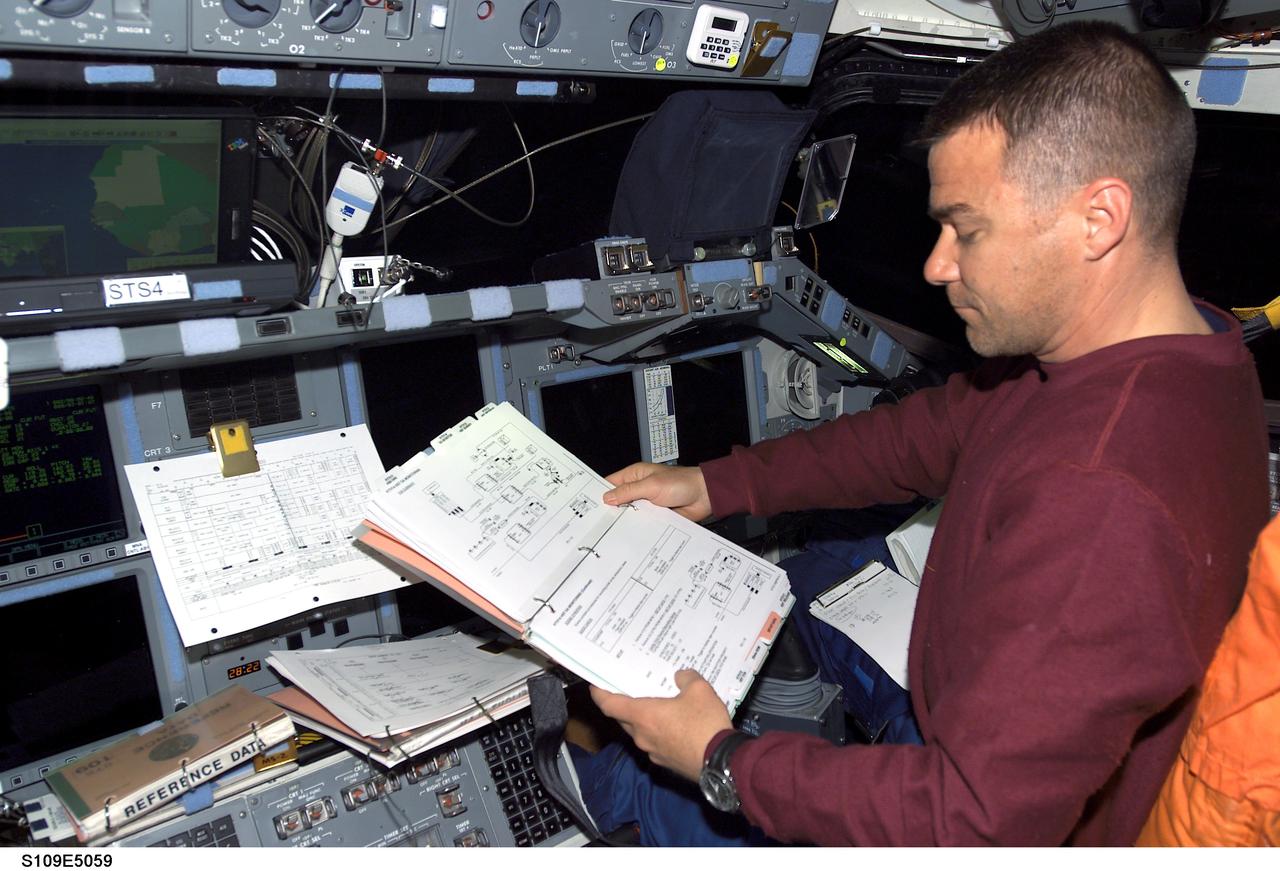
STS109-E-5059 (3 March 2002) --- Astronaut Duane G. Carey, STS-109 pilot, looks over a reference manual during capture and latch operations with the Hubble Space Telescope. The image was recorded with a digital still camera.
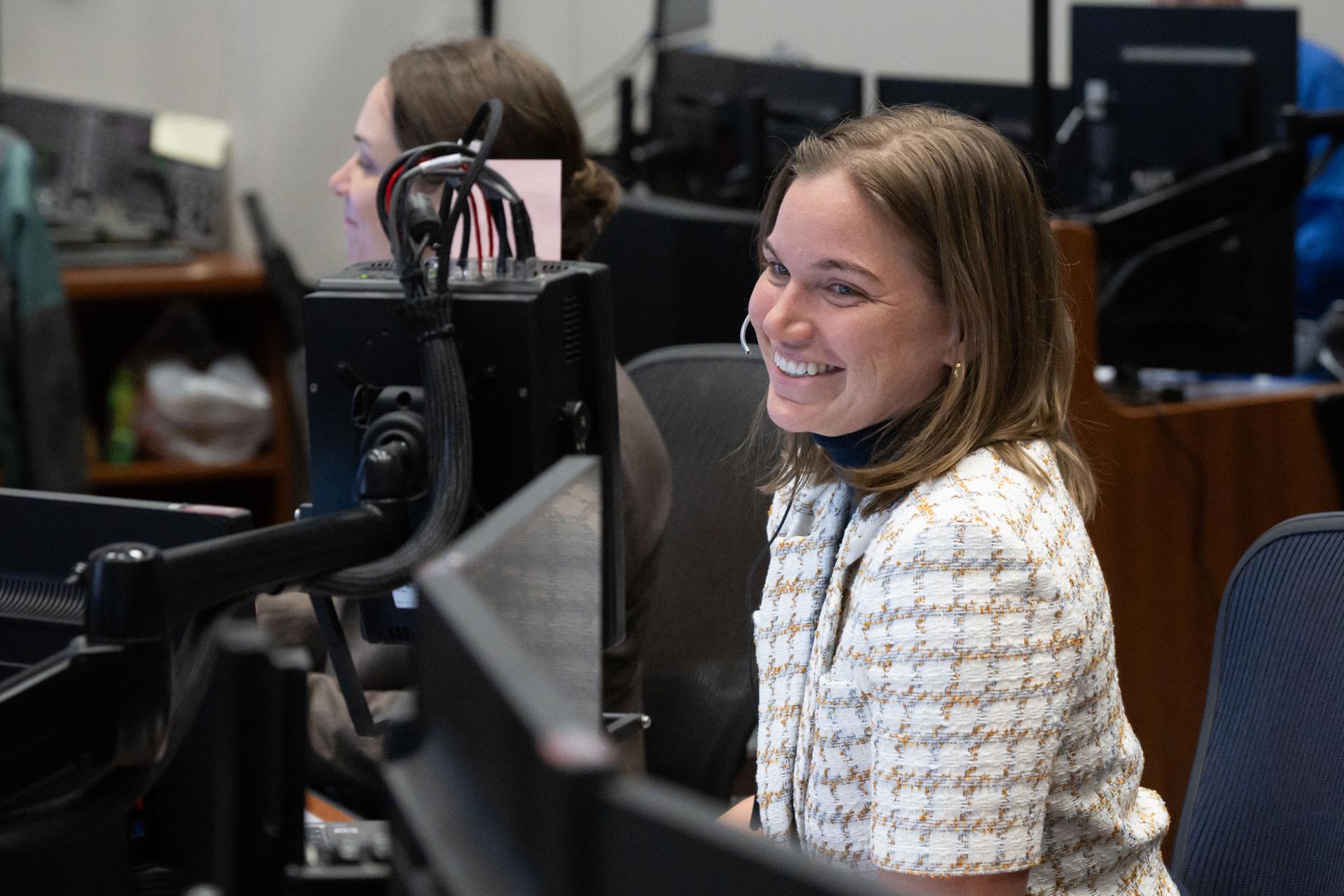
jsc2026e021107 (April 4, 2026) – CSA (Canadian Space Agency) astronaut and backup Artemis II crew member Jenni Gibbons serves as capsule communicator (capcom) during an Orion manual piloting demonstration on the fourth day of the mission. Credit: NASA/Bill Stafford
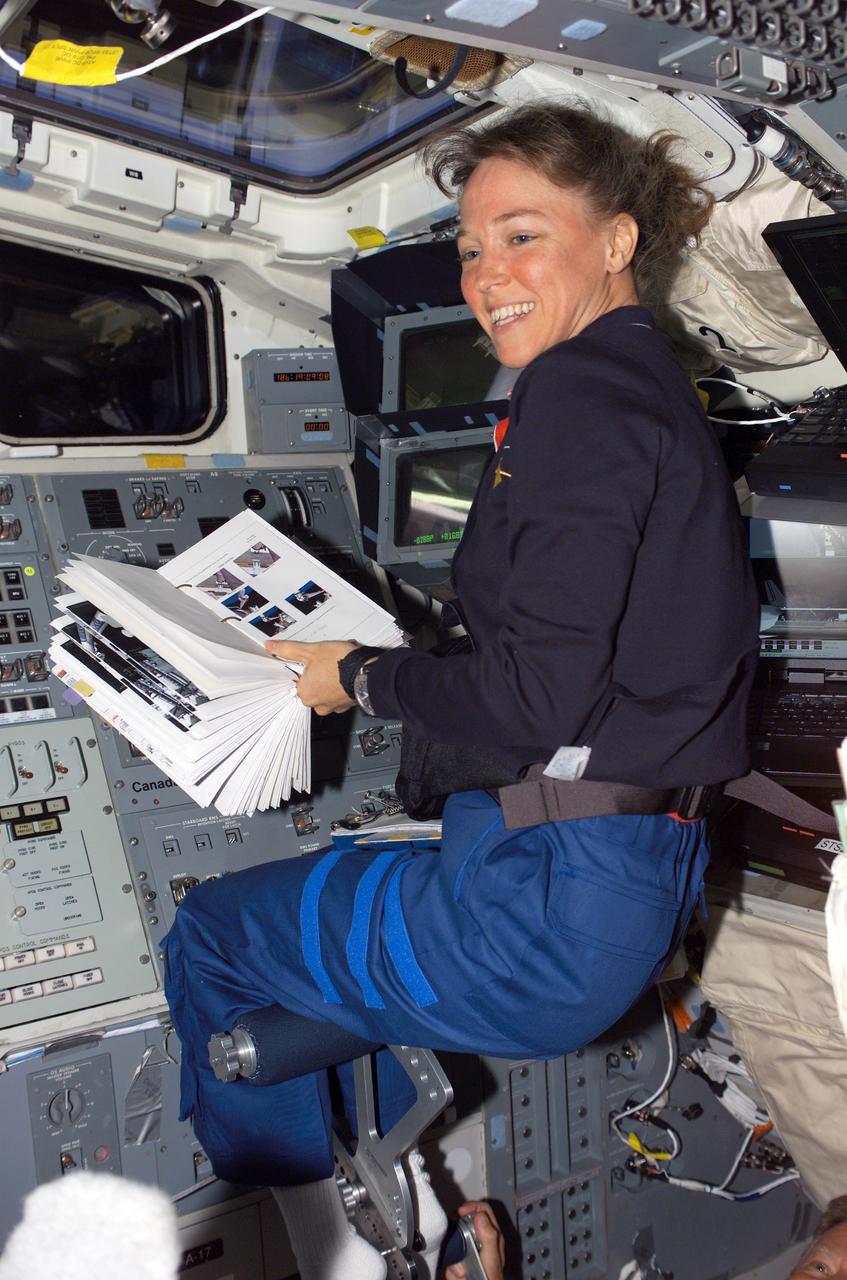
S121-E-05401 (5 July 2006) --- Astronaut Lisa M. Nowak, STS-121 mission specialist, uses a handy reference manual while stationed at the controls on the aft flight deck of the Space Shuttle Discovery. She is preparing for the next day's activities which include docking with the International Space Station.
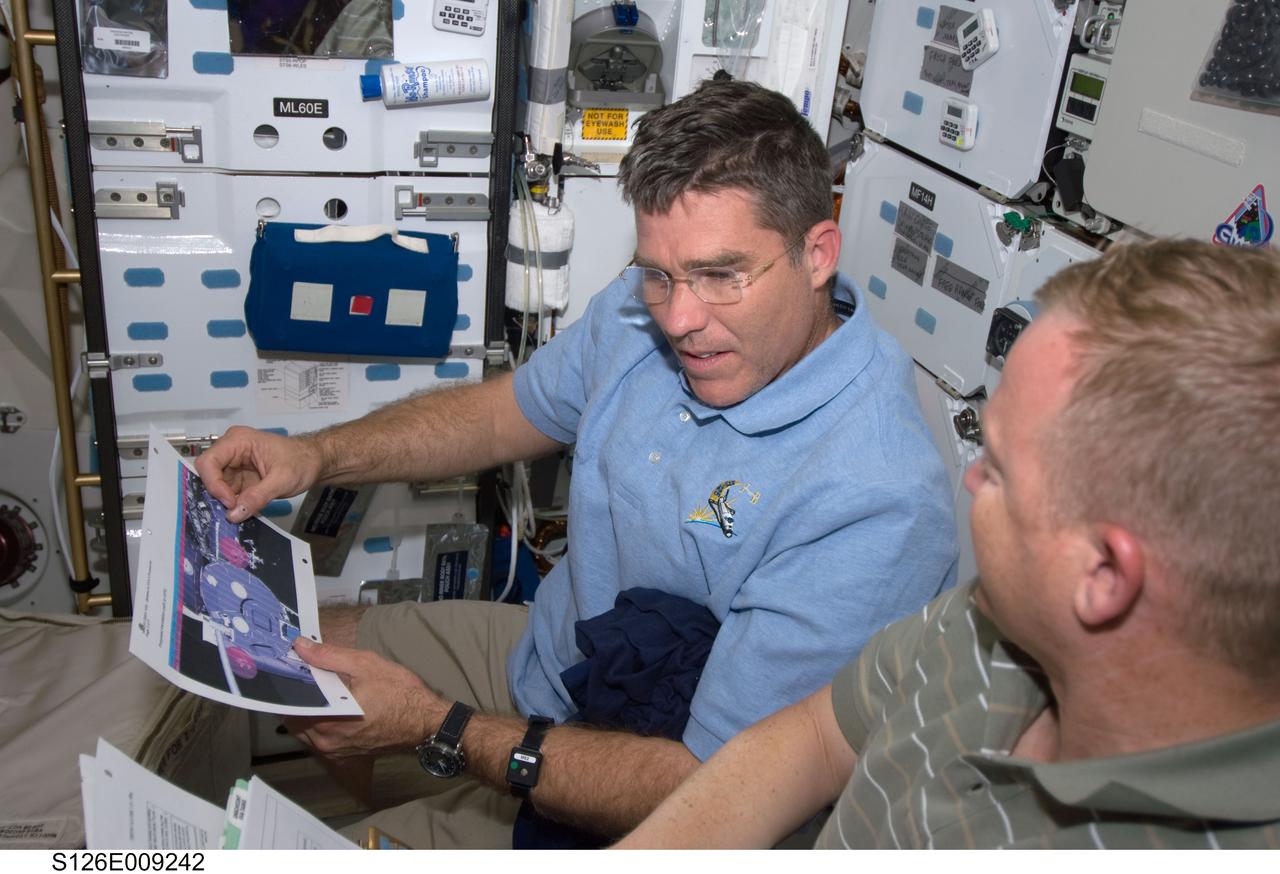
S126-E-009242 (23 Nov. 2008) --- Astronauts Eric Boe (right), STS-126 pilot, and Steve Bowen, mission specialist, look over a procedures manual on the middeck of Space Shuttle Endeavour while docked with the International Space Station.
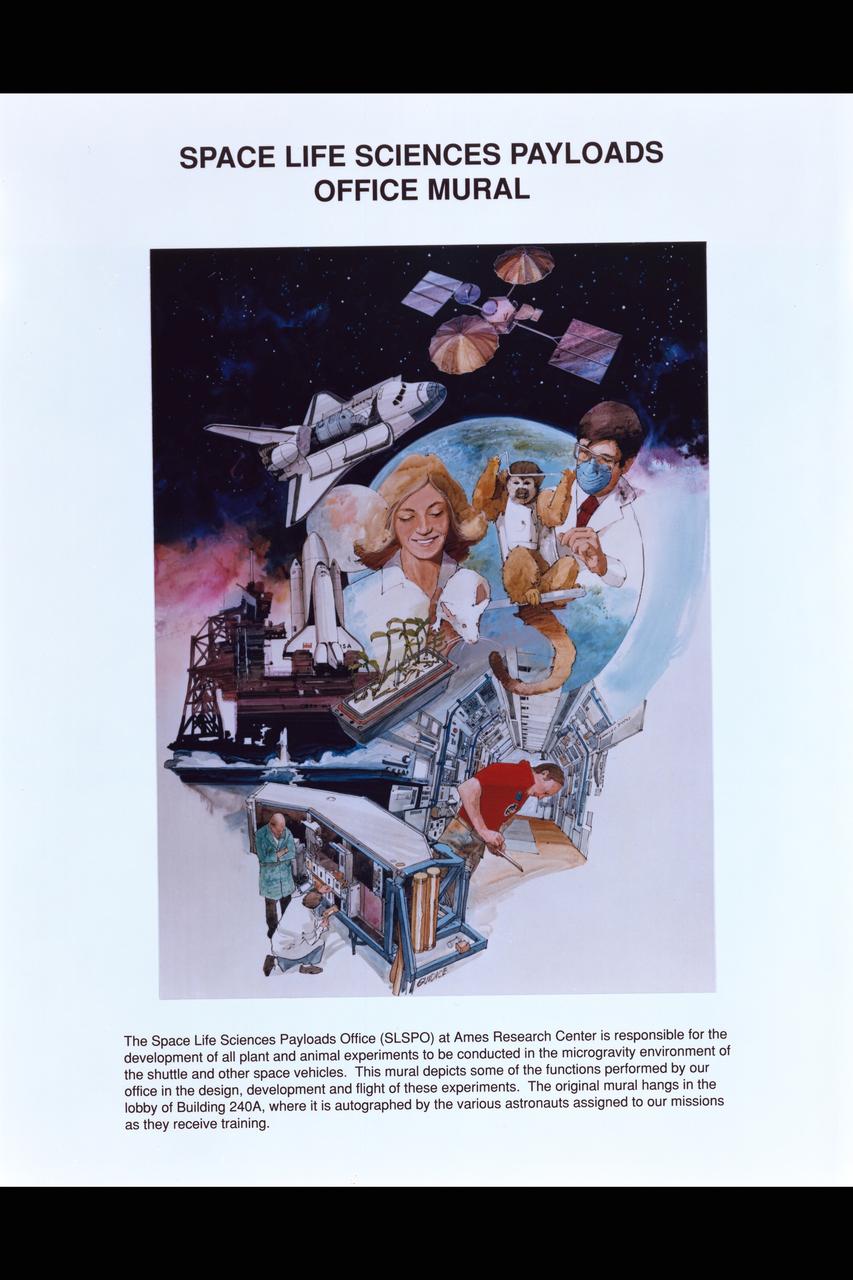
Original Art by Artist: Rick Guidice Space Life Sciences Payloads Office (SLSPO) office manual cover with mission statement. This mural (original in lobby of N-240A) depicts some of the functions performed by our office in the design, development and flight of these experiments.
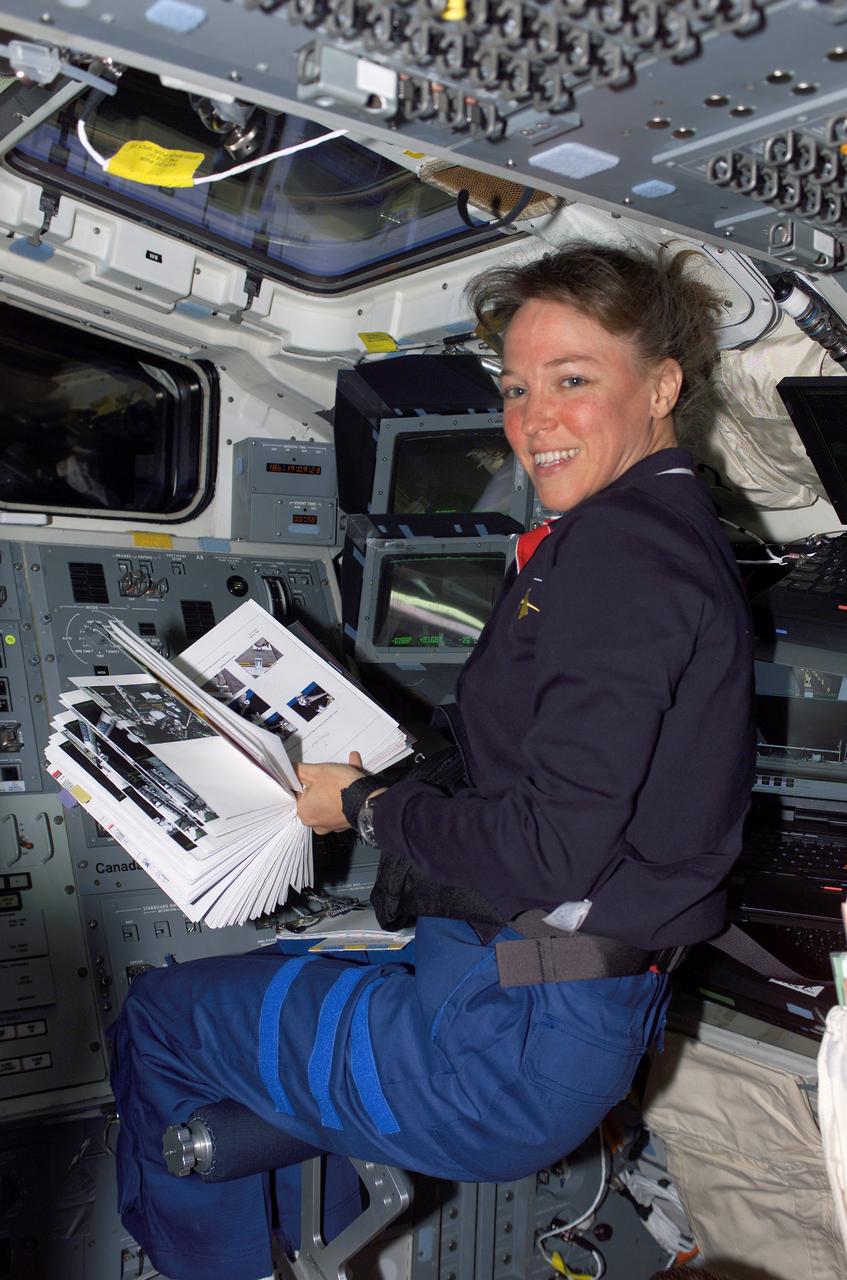
S121-E-05402 (5 July 2006) --- Astronaut Lisa M. Nowak, STS-121 mission specialist, uses a handy reference manual while stationed at the controls on the aft flight deck of the Space Shuttle Discovery. She is preparing for the next day's activities which include docking with the International Space Station.
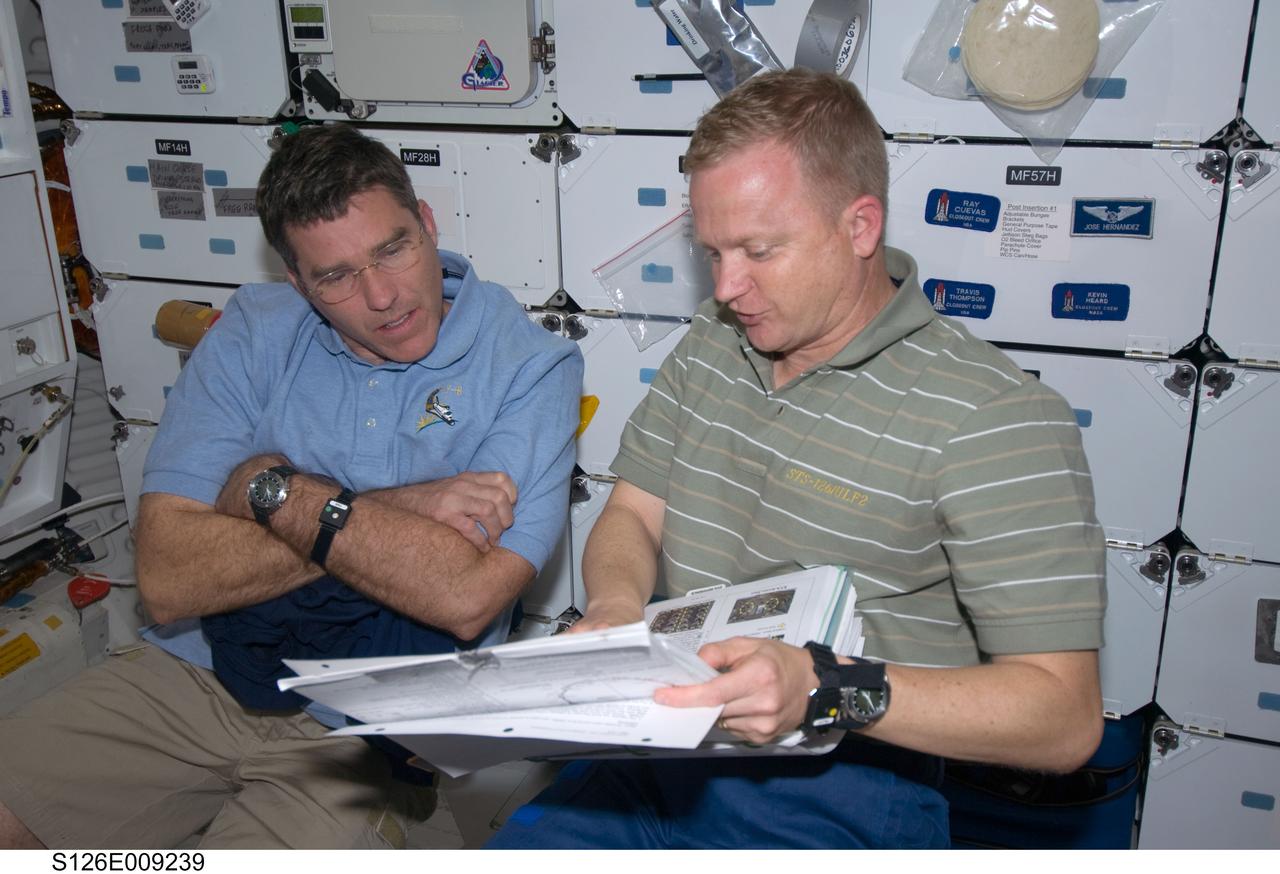
S126-E-009239 (23 Nov. 2008) --- Astronauts Eric Boe (right), STS-126 pilot, and Steve Bowen, mission specialist, look over a procedures manual on the middeck of Space Shuttle Endeavour while docked with the International Space Station.
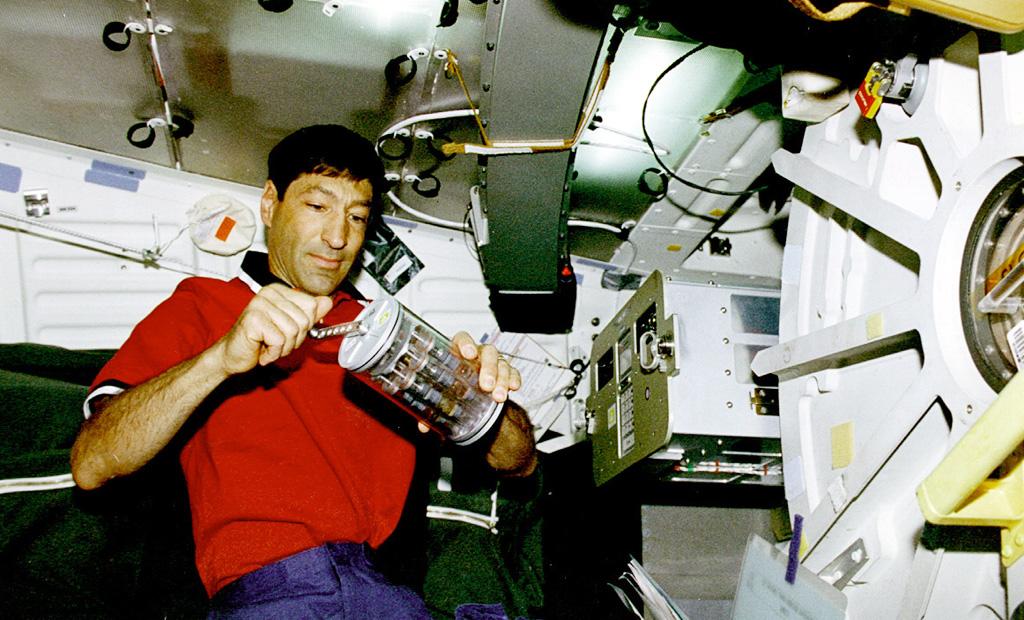
Manual activation of 8 FPAs in an earlier version of the Group Activation Pack. The Fluids Processing Apparatus is essentially a microgravity test tube that allows a variety of complex investigations to be performed in space. Developed by BioServe Space Technologies, a NASA Commercial Space Center. Flown on STS-95.
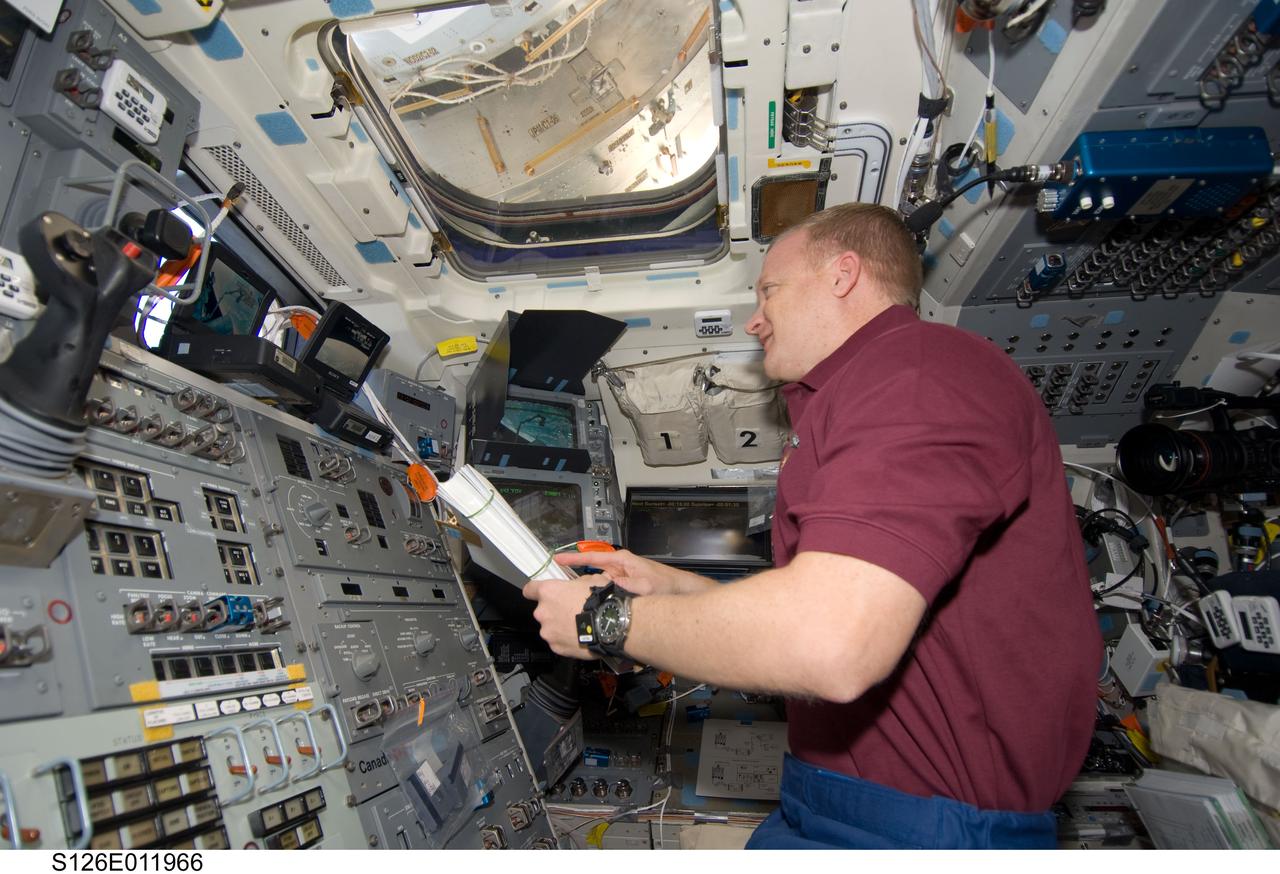
S126-E-011966 (26 Nov. 2008) --- Astronaut Eric Boe, STS-126 pilot, looks over a procedures manual on the aft flight deck of the Space Shuttle Endeavour, scheduled to undock from the International Space Station later in the week.

iss048e017273 (07/01/2016) --- The undocked Russian Progress 62 spacecraft is photographed at a 25 meter hold point in its approach to the International Space Station during a test of the upgraded tele-robotically operated rendezvous system, or the TORU manual docking system.
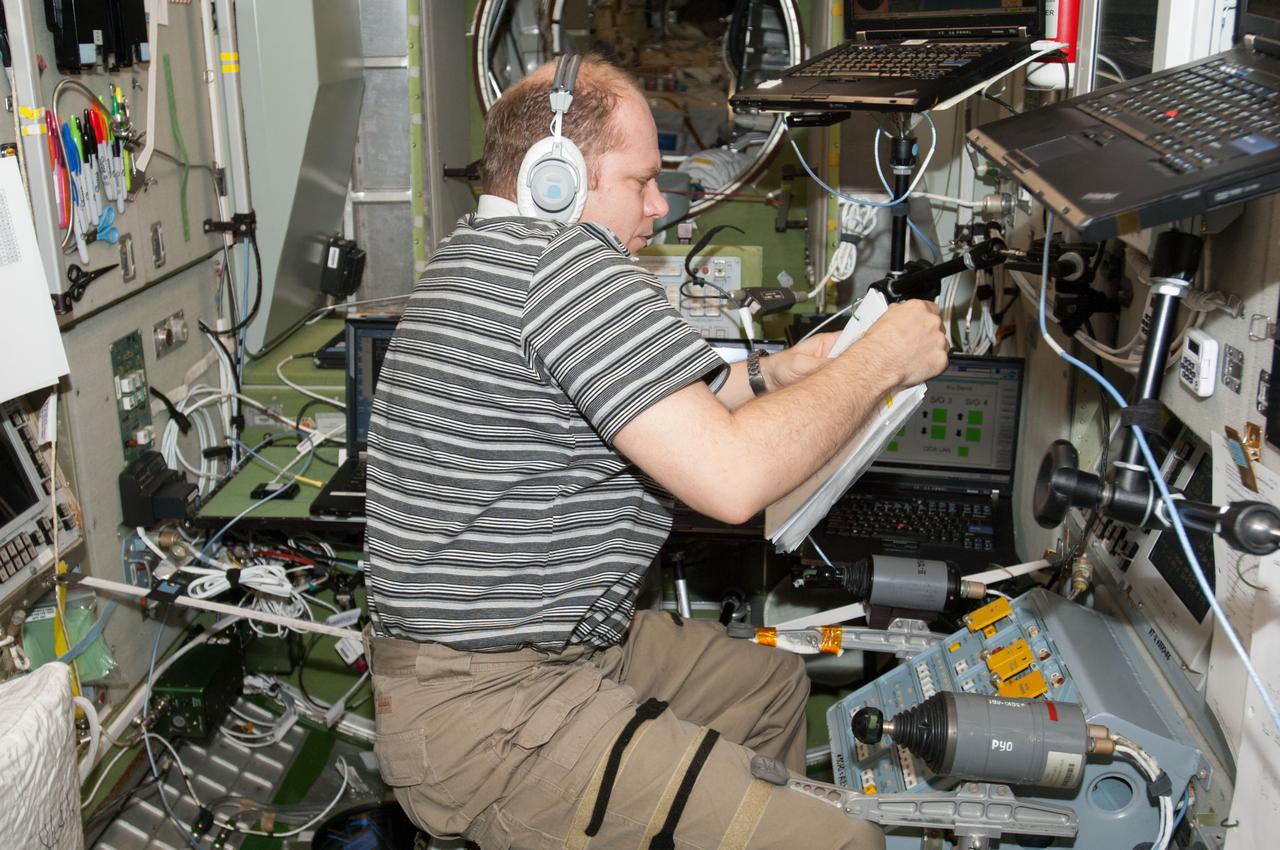
ISS038-E-010383 (29 Nov. 2013) --- Russian cosmonaut Oleg Kotov, Expedition 38 commander, monitors data at the manual TORU docking system controls in the Zvezda Service Module of the International Space Station during approach and docking operations of the unpiloted ISS Progress 53 resupply vehicle.
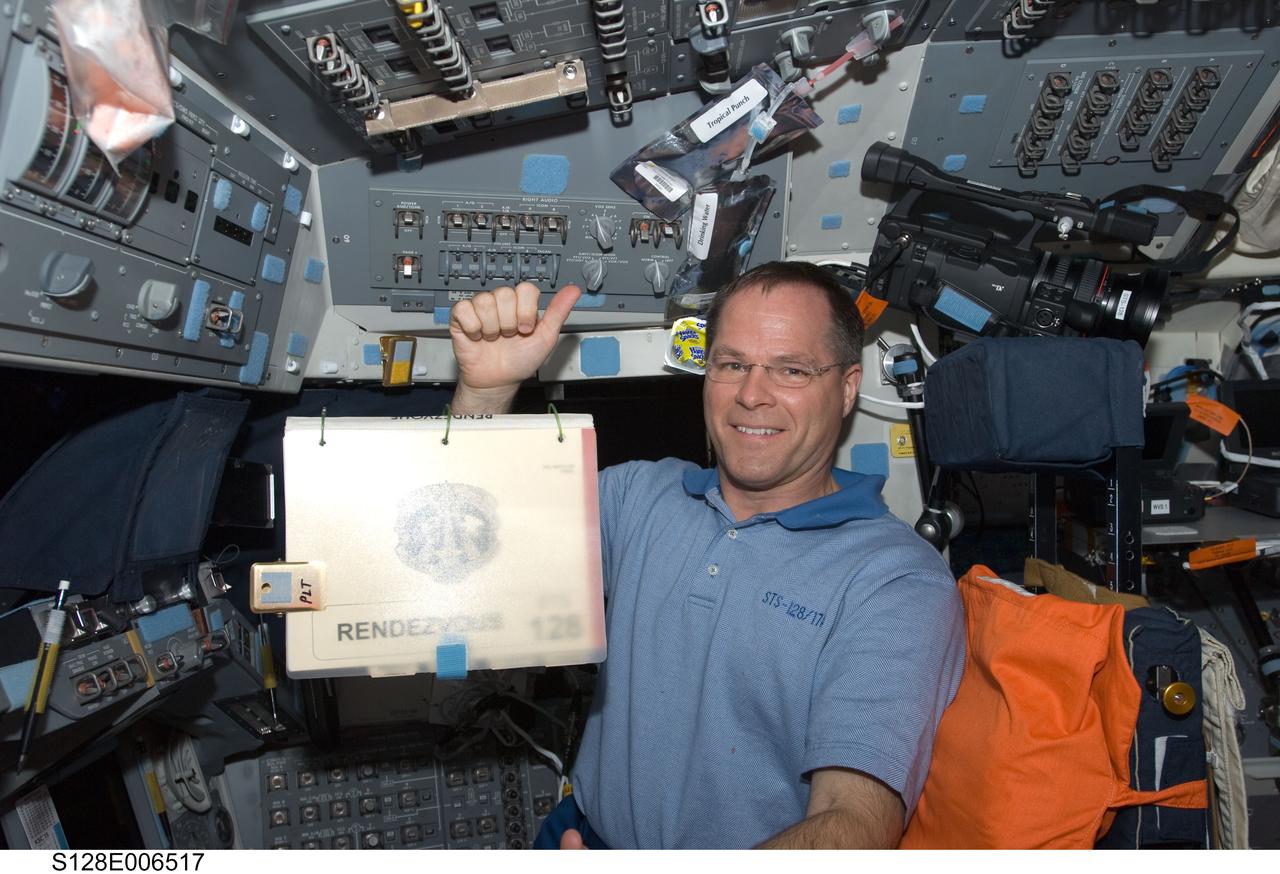
S128-E-006517 (29 Aug. 2009) --- Astronaut Kevin Ford, STS-128 pilot, occupies the pilot’s station on the forward flight deck of Space Shuttle Discovery during flight day two activities. A rendezvous procedure manual floats freely in the foreground.
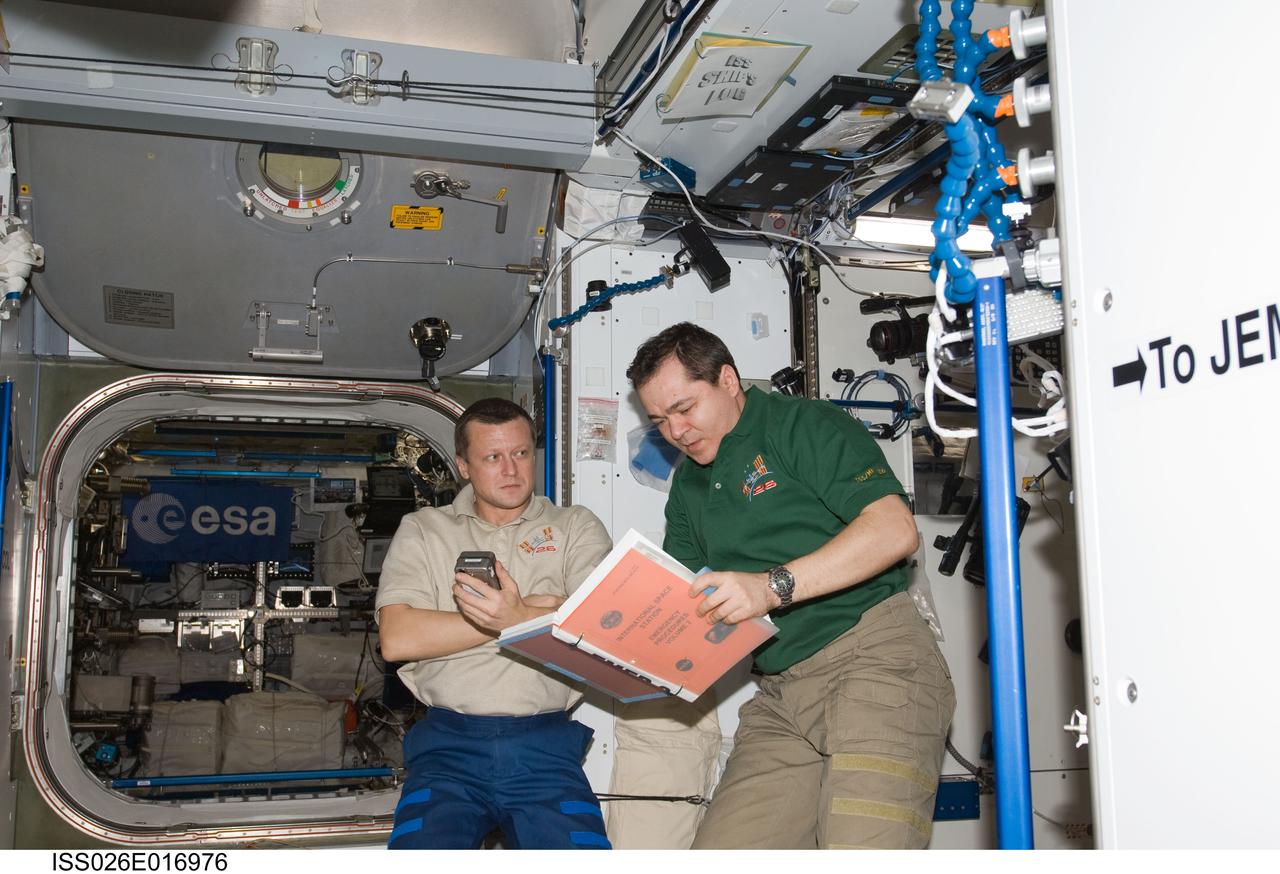
ISS026-E-016976 (11 Jan. 2011) --- Russian cosmonauts Dmitry Kondratyev (left) and Oleg Skripochka, both Expedition 26 flight engineers, look over a procedures manual during an emergency scenarios drill in the Harmony node of the International Space Station.
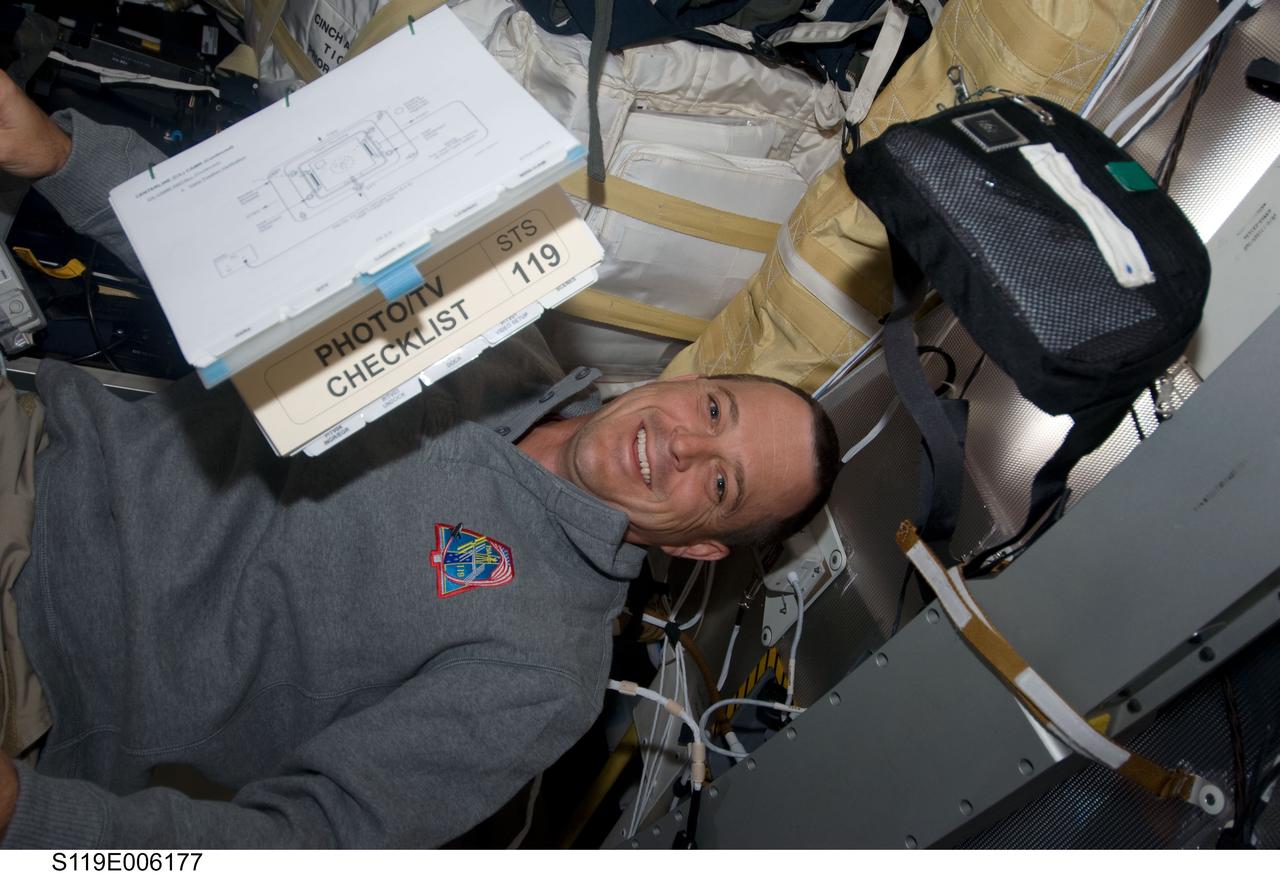
S119-E-006177 (16 March 2009) --- Astronaut Richard Arnold, STS-119 mission specialist, takes a moment for a photo while working on the middeck of Space Shuttle Discovery during flight day two activities. A procedures checklist manual floats freely near Arnold.
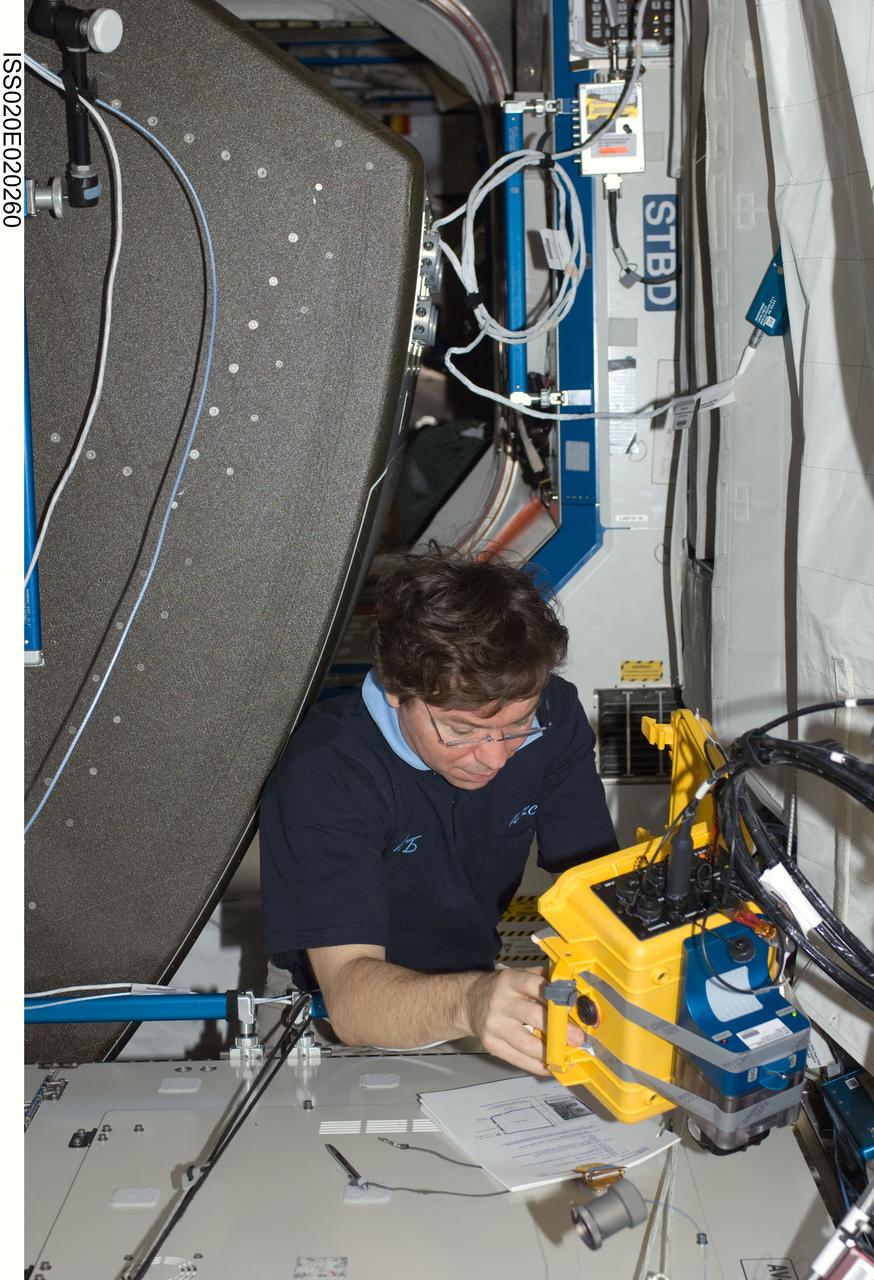
ISS020-E-020260 (8 July 2009) --- NASA astronaut Michael Barratt, Expedition 20 flight engineer, works at a rotated rack in the Destiny laboratory of the International Space Station during in-flight maintenance (IFM) to adjust the periodic flow rate of manual flow control valves for coolant loops.
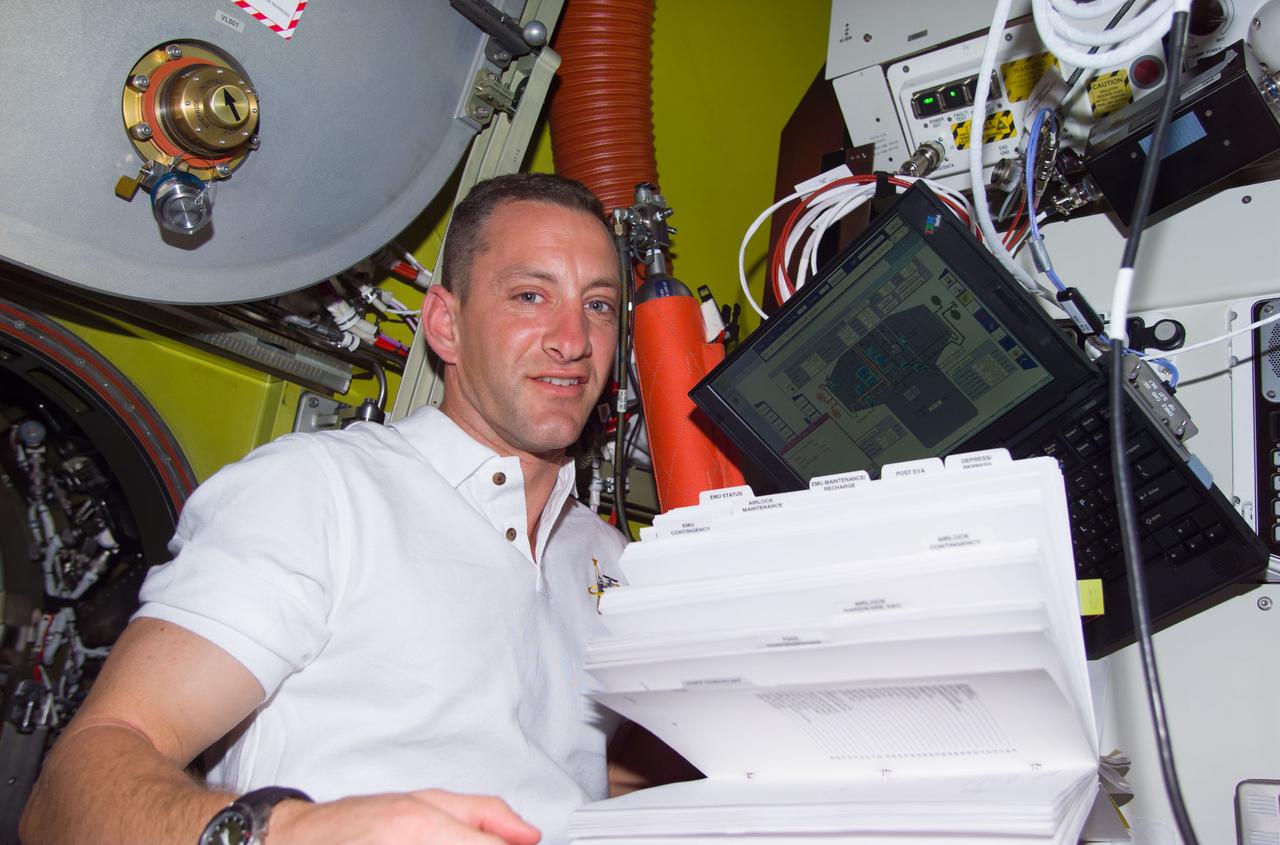
STS104-E-5157 (17 July 2001) --- Astronaut Charles O. Hobaugh, STS-104 pilot, looks over a reference manual in the Quest Airlock aboard the International Space Station (ISS). The image was recorded with a digital still camera.
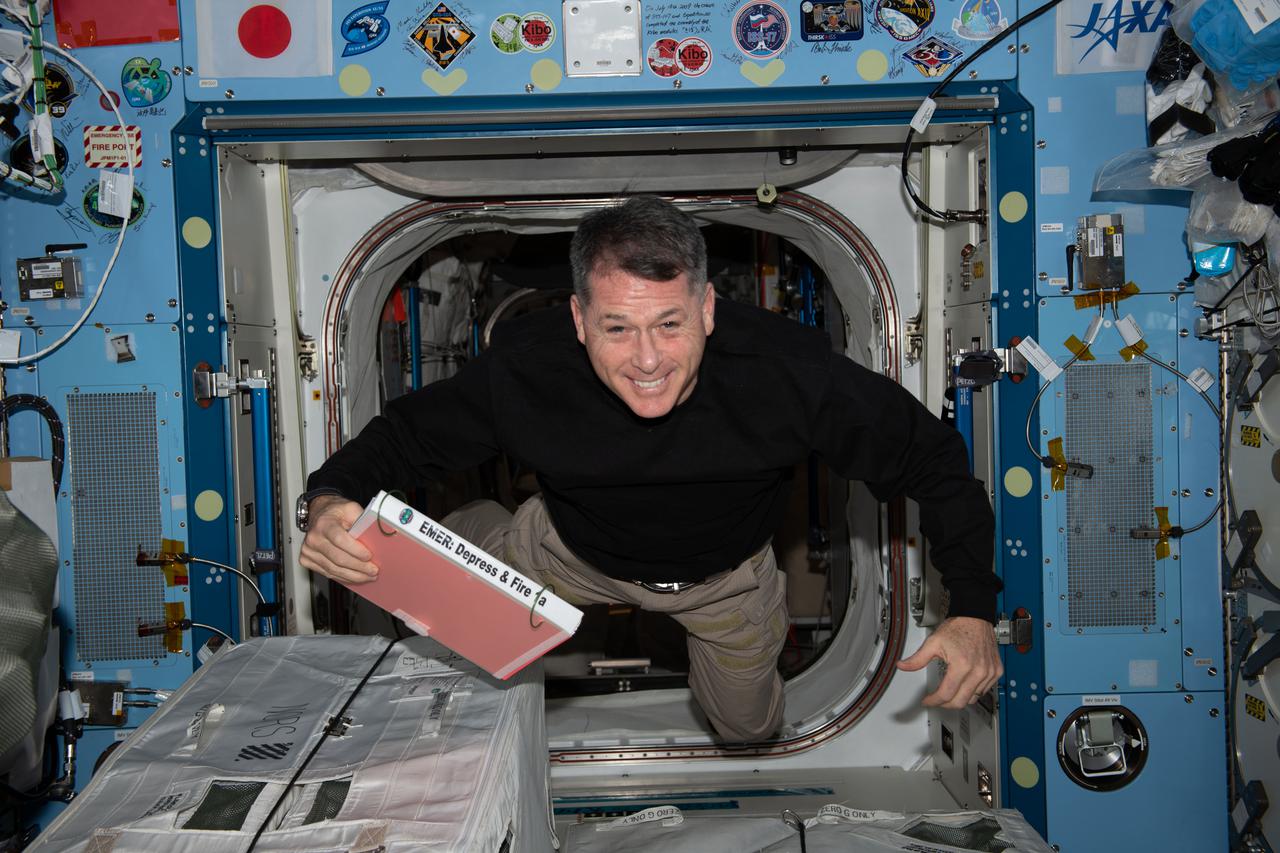
iss065e257442 (Aug. 17, 2021) --- NASA astronaut and Expedition 65 Flight Engineer Shane Kimbrough maneuvers through the International Space Station carrying an emergency manual describing procedures the crew would take in the unlikely event of a depressurization or a fire aboard the orbiting lab.
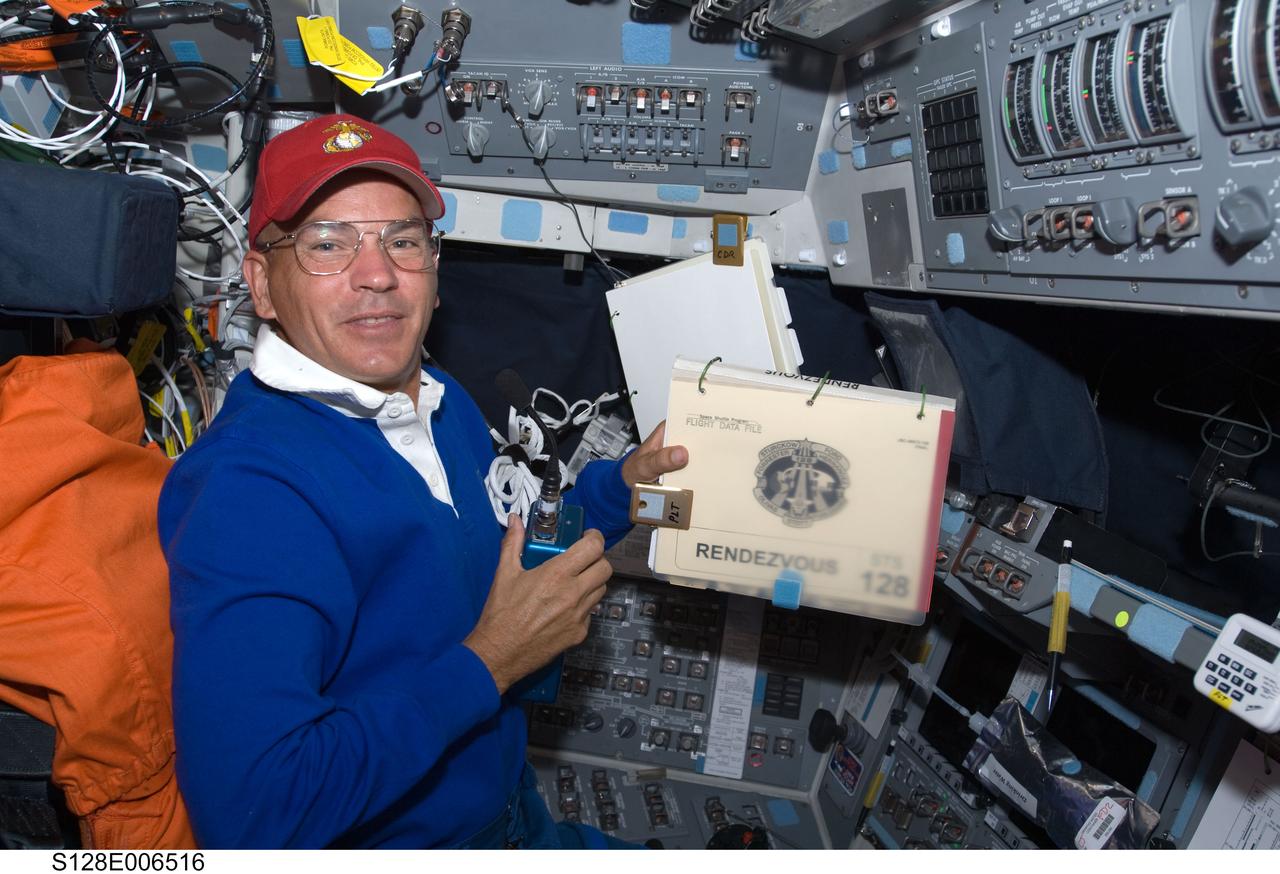
S128-E-006516 (29 Aug. 2009) --- Astronaut Rick Sturckow, STS-128 commander, holds a rendezvous procedure manual while occupying the commander’s station on the forward flight deck of Space Shuttle Discovery during flight day two activities.
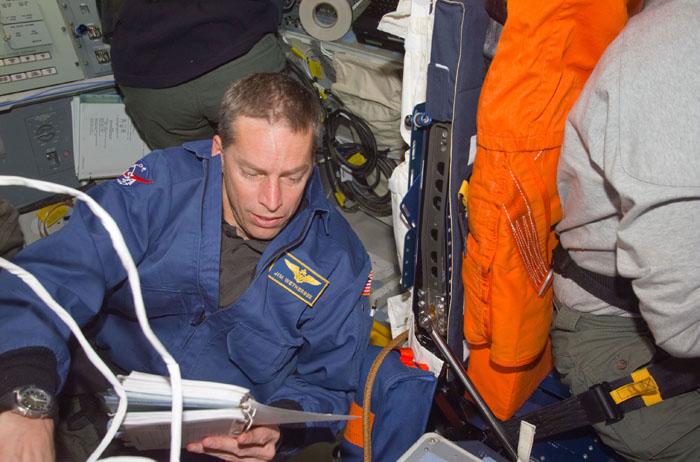
STS102-E-5014 (9 March 2001) --- Astronaut James D. Wetherbee, mission commander, refers to a manual during activity on the initial day in space for the STS-102 astronauts and cosmonaut. Wetherbee is behind the commander's station on the flight deck of the Space Shuttle Discovery.
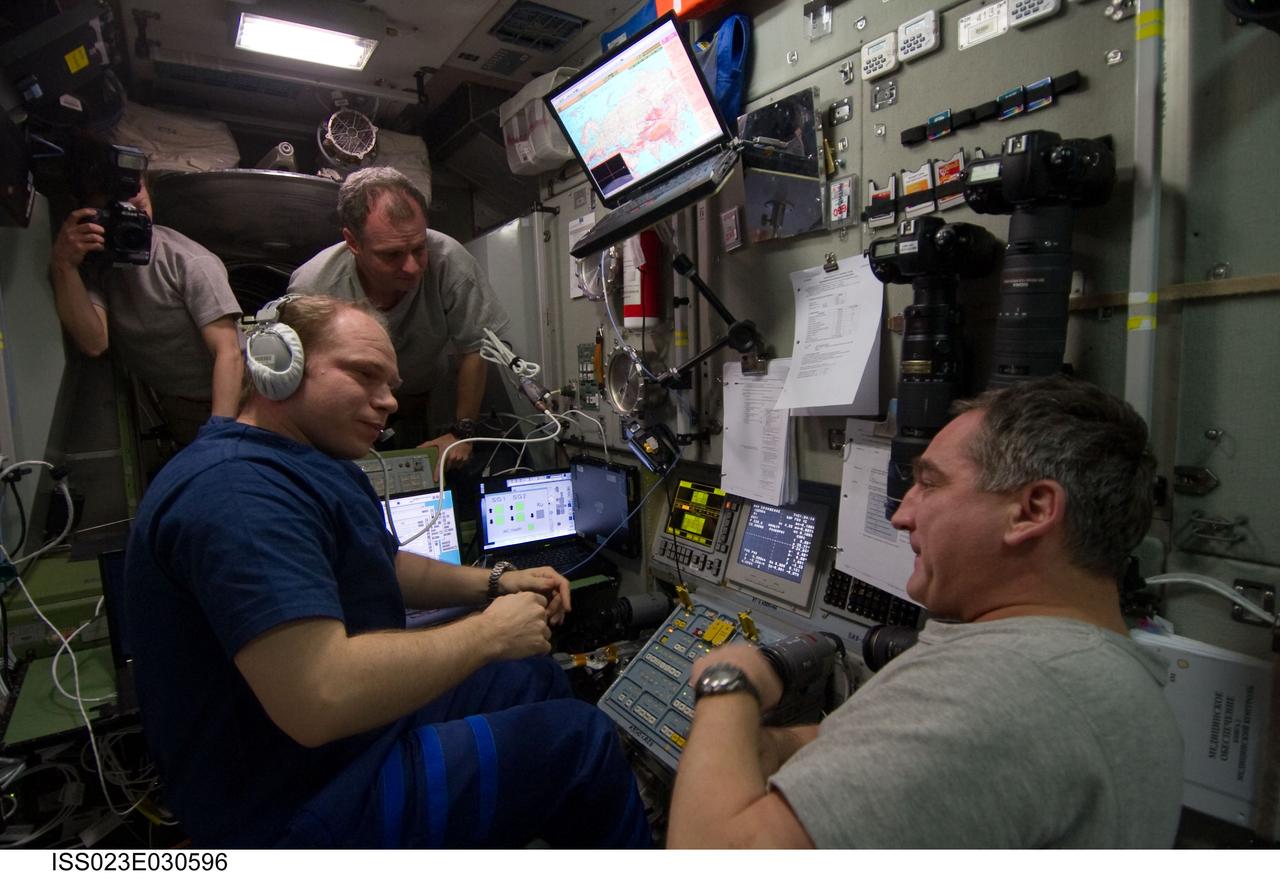
ISS023-E-030596 (1 May 2010) --- Russian cosmonaut Oleg Kotov (left foreground), Expedition 23 commander, is pictured at the manual TORU docking system controls in the Zvezda Service Module of the International Space Station shortly after conducting a manual control docking of the Progress 37 due to a jet failure on the Progress that forced a shutdown of the Kurs automated rendezvous system. Progress 37 docked to the Pirs Docking Compartment at 2:30 p.m. (EDT) on May 1, 2010, after a three-day flight from the Baikonur Cosmodrome in Kazakhstan. Also pictured are NASA astronauts Tracy Caldwell Dyson (left background) and T.J. Creamer; along with Russian cosmonaut Alexander Skvortsov (right foreground), all flight engineers.
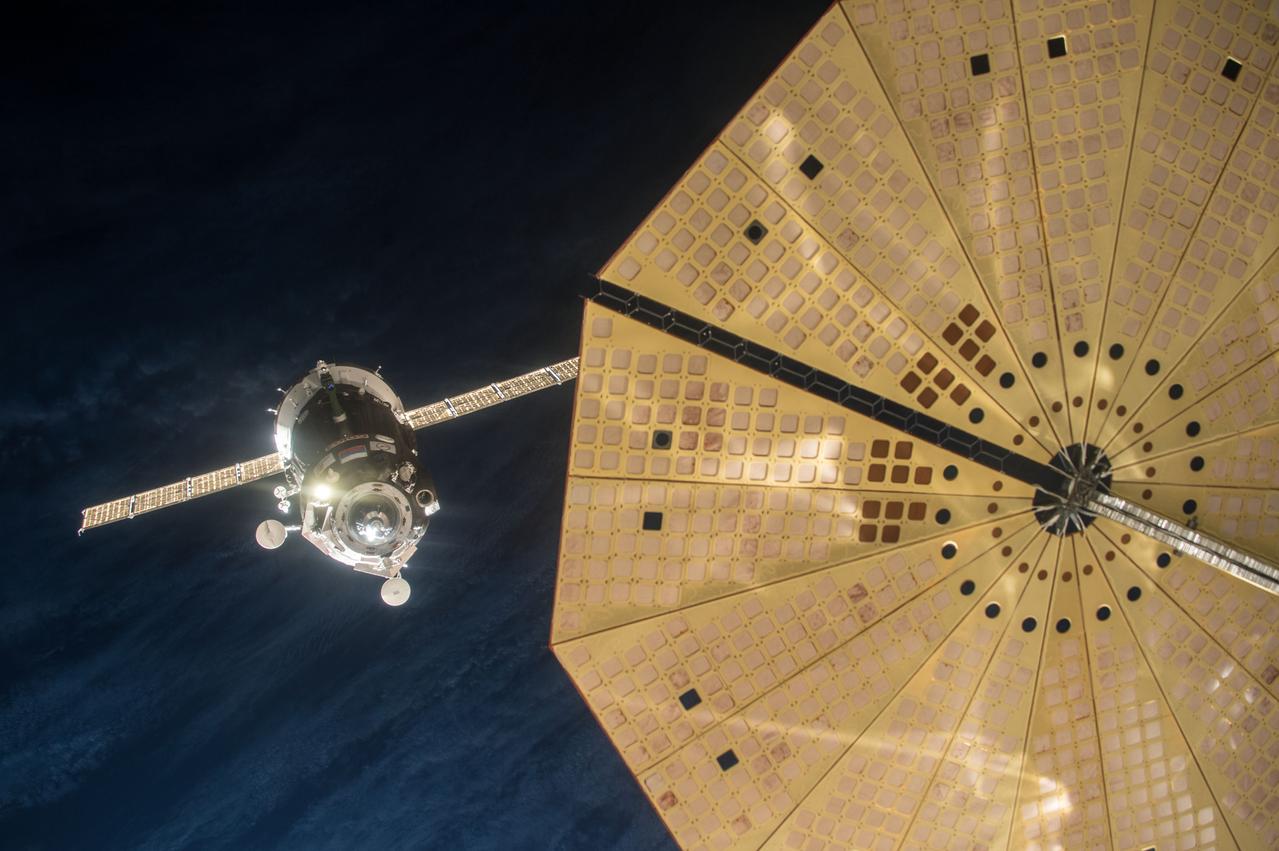
ISS046e001535 (12/15/2015) --- Russian cosmonaut Yuri Malenchenko manually docked the Soyuz TMA-19M spacecraft on Dec. 15, 2015 to the International Space Station’s Rassvet module after an initial automated attempt was aborted. Malenchenko took control of the Soyuz, backed it away from the station to assess the Soyuz’ systems, then re-approached the complex for the manual docking. Flight Engineer Tim Kopra of NASA and Flight Engineer Tim Peake of ESA (European Space Agency) flanked Malenchenko as he brought the Soyuz to the Rassvet port for the start of a six-month mission. After leak checks were conducted on both sides of the docking interface, hatches were opened and Malenchenko, Kopra and Peake were greeted by Expedition 46 Commander Scott Kelly of NASA and Flight Engineers Mikhail Kornienko and Sergey Volkov of the Russian Federal Space Agency (Roscosmos). The solar array from the docked Orbital ATK's Cygnus cargo vehicle is also in view.
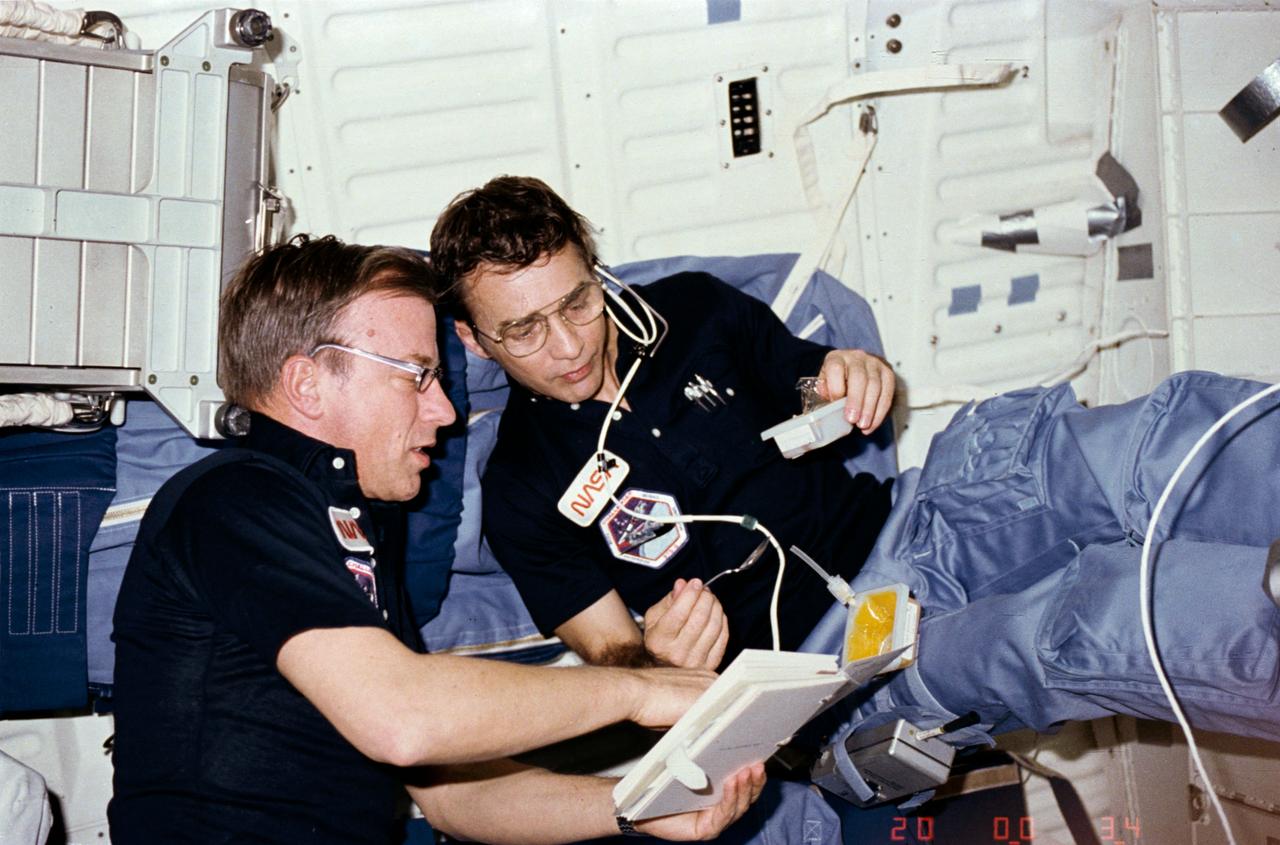
STS006-06-456 (4-9 April 1983) --- Astronaut Paul J. Weitz, STS-6 commander, points out an item in the crew activity plan (CAP) to astronaut Donald H. Peterson as the mission specialist uses a spoon to eat a meal aboard the Earth-orbiting space shuttle Challenger. The two are on the middeck. They are wearing the shirt and trouser portions of the blue cotton multi-piece constant wear garments. This frame was photographed with a 35mm camera. Photo credit: NASA
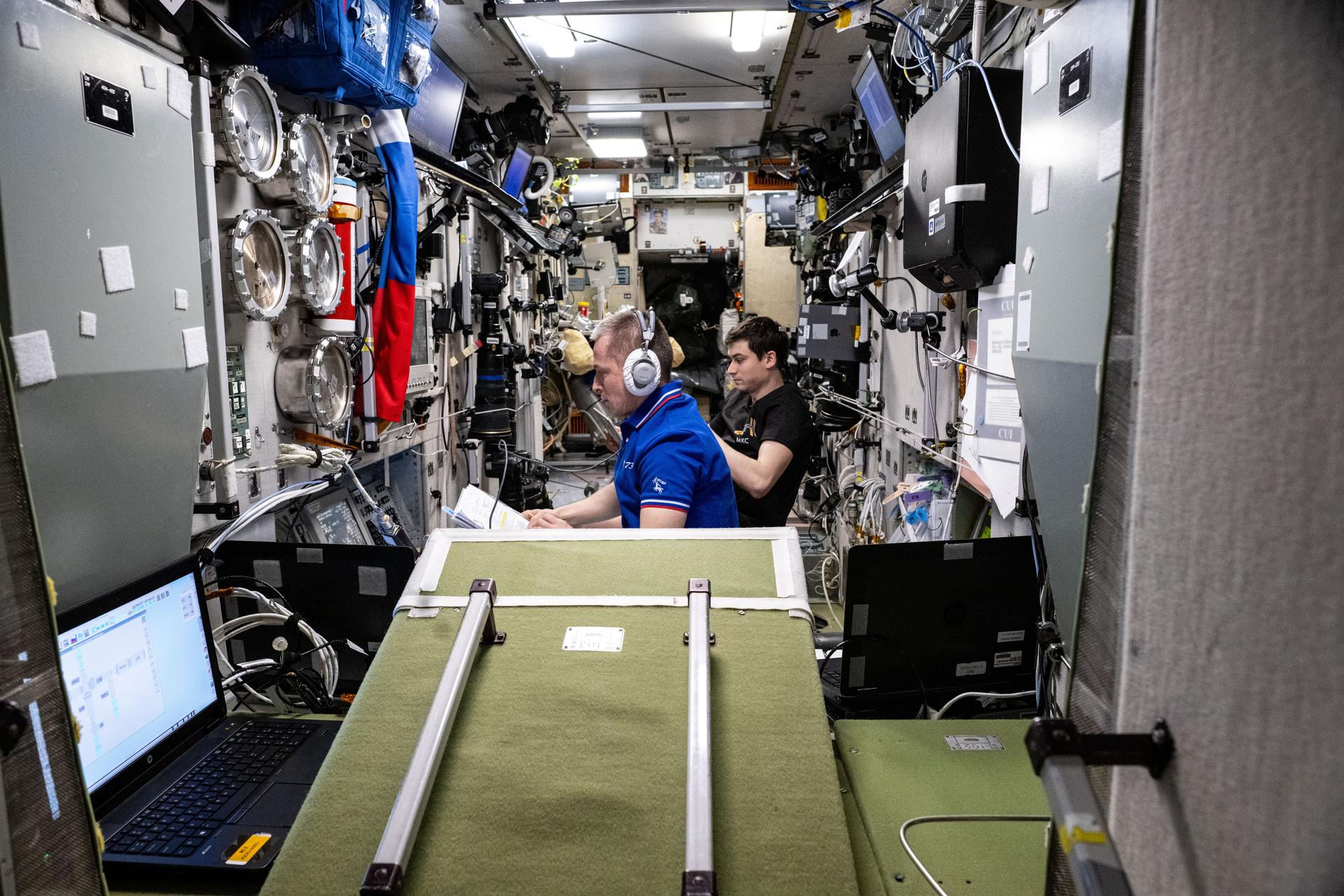
iss073e0698329 (Sept. 16, 2025) --- Roscosmos cosmonauts (from left) Sergey Ryzhikov and Alexey Zubritsky, Expedition 73 Commander and Flight Engineer respectively, monitor the arrival of the Progress 93 cargo craft during its approach and rendezvous with the International Space Station. The crewmates were inside the Zvezda service module at the controls of the telerobotically operated rendezvous unit, or TORU, watching Progress' arrival via video and telemetry. TORU could be used to manually guide an approaching spacecraft to a docking on the orbital outpost if necessary, though unlikely.
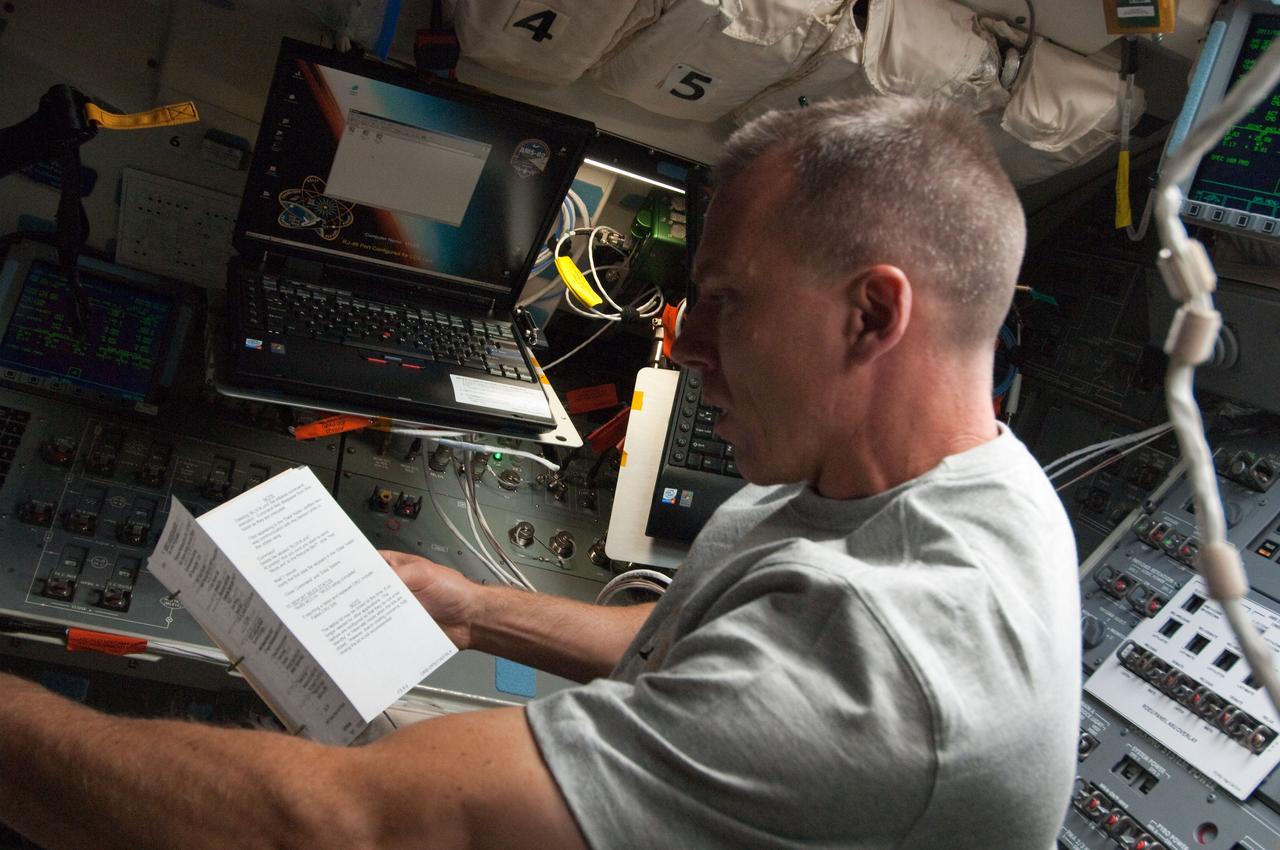
S134-E-005334 (16 May 2011) --- Astronaut Andrew Feustel, STS-134 mission specialist, looks over a crew procedures manual on the aft flight deck during the crew's first day in space, May 16, 2011. Feustel and five crewmates are destined for the International Space Station to continue work on the orbital complex. Photo credit: NASA
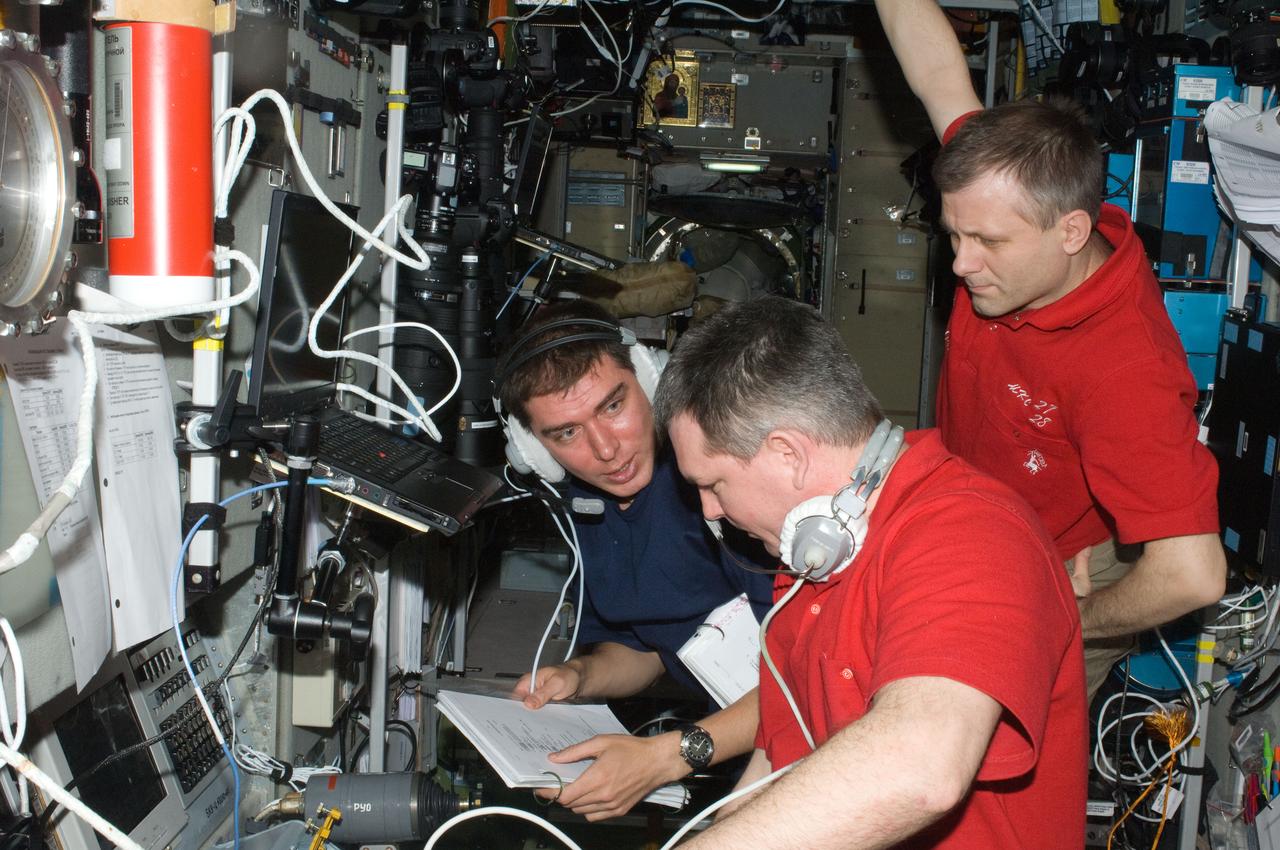
ISS028-E-009283 (23 June 2011) --- Russian cosmonauts Andrey Borisenko (right), Expedition 28 commander; Alexander Samokutyaev (foreground) and Sergei Volkov, both flight engineers, monitor data at the manual TORU docking system controls in the Zvezda Service Module of the International Space Station during the docking operations of the unpiloted ISS Progress 43 resupply vehicle. Progress 43 docked automatically to Zvezda?s aft port via the Kurs automated rendezvous system at 12:37 p.m. (EDT) on June 23, 2011.
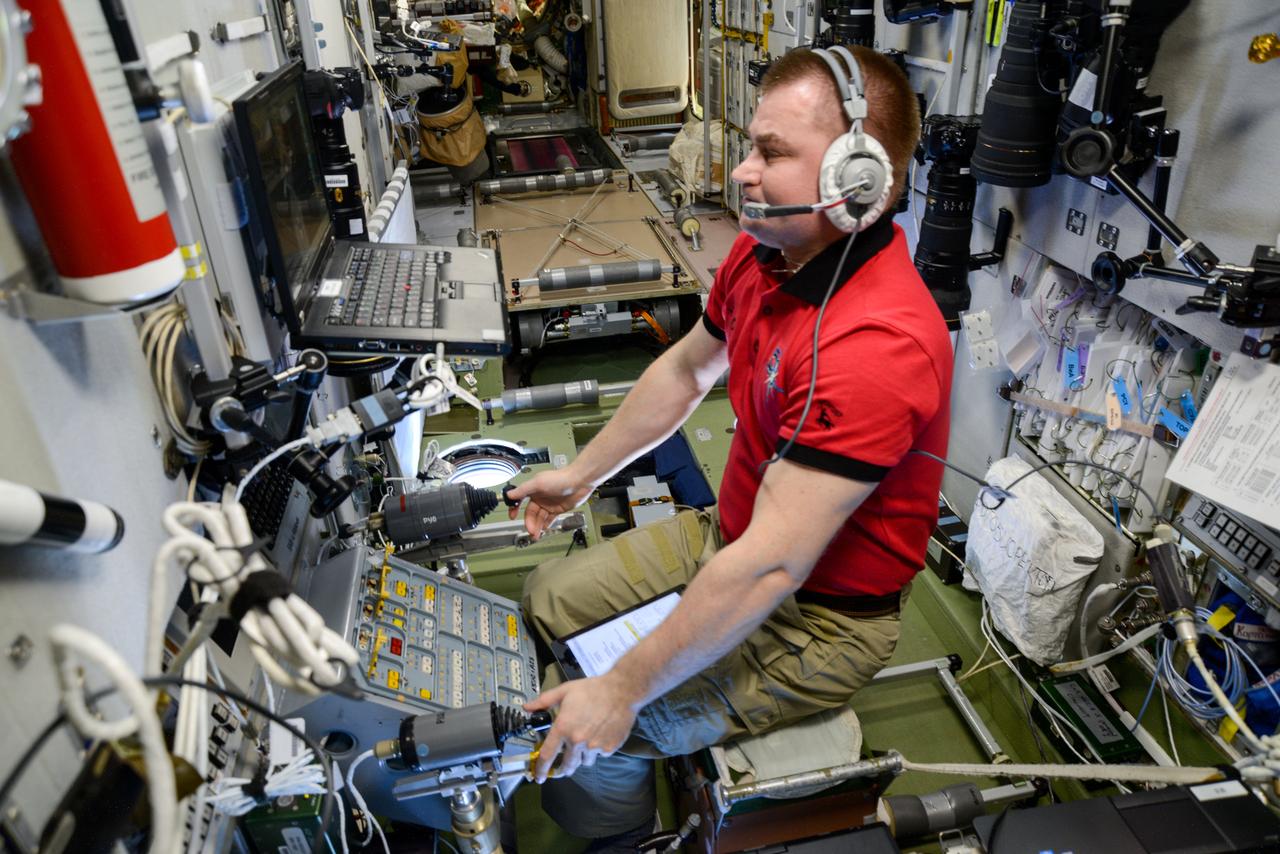
iss060e019910 (July 29, 2019) --- Cosmonaut Alexey Ovchinin of Expedition 60 trains on the tele-robotically operated rendezvous unit (TORU) two days before the arrival of the Progress 73 (73P) cargo ship. The 73P docked July 31 to the International Space Station's Zvezda service module just three hours and 19 minutes after launching from the Baikonur Cosmodrome in Kazakhstan. The TORU can be used to take over manual docking operations of an approaching Russian spaceship in the unlikely event of an emergency.
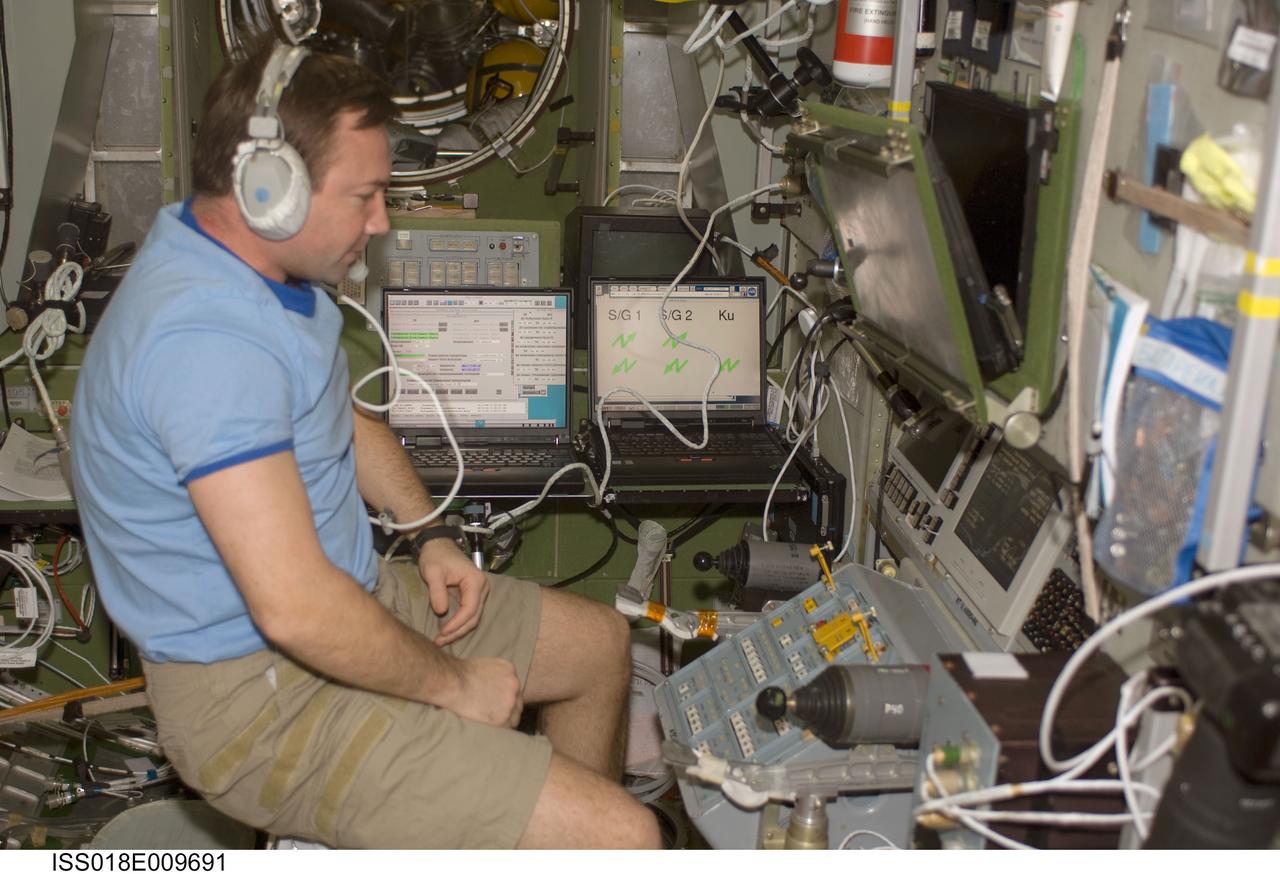
ISS018-E-009691 (30 Nov. 2008) --- Cosmonaut Yury Lonchakov, Expedition 18 flight engineer, monitors the approach of the Progress 31 supply vehicle at the manual TORU docking system controls in the Zvezda Service Module of the International Space Station. Progress 31 docked to the Pirs Docking Compartment at 6:28 a.m. (CST) on Nov. 30, after a four day flight from Baikonur Cosmodrome in Kazakhstan. Lonchakov used the TORU system to bring the Progress to its docking port.
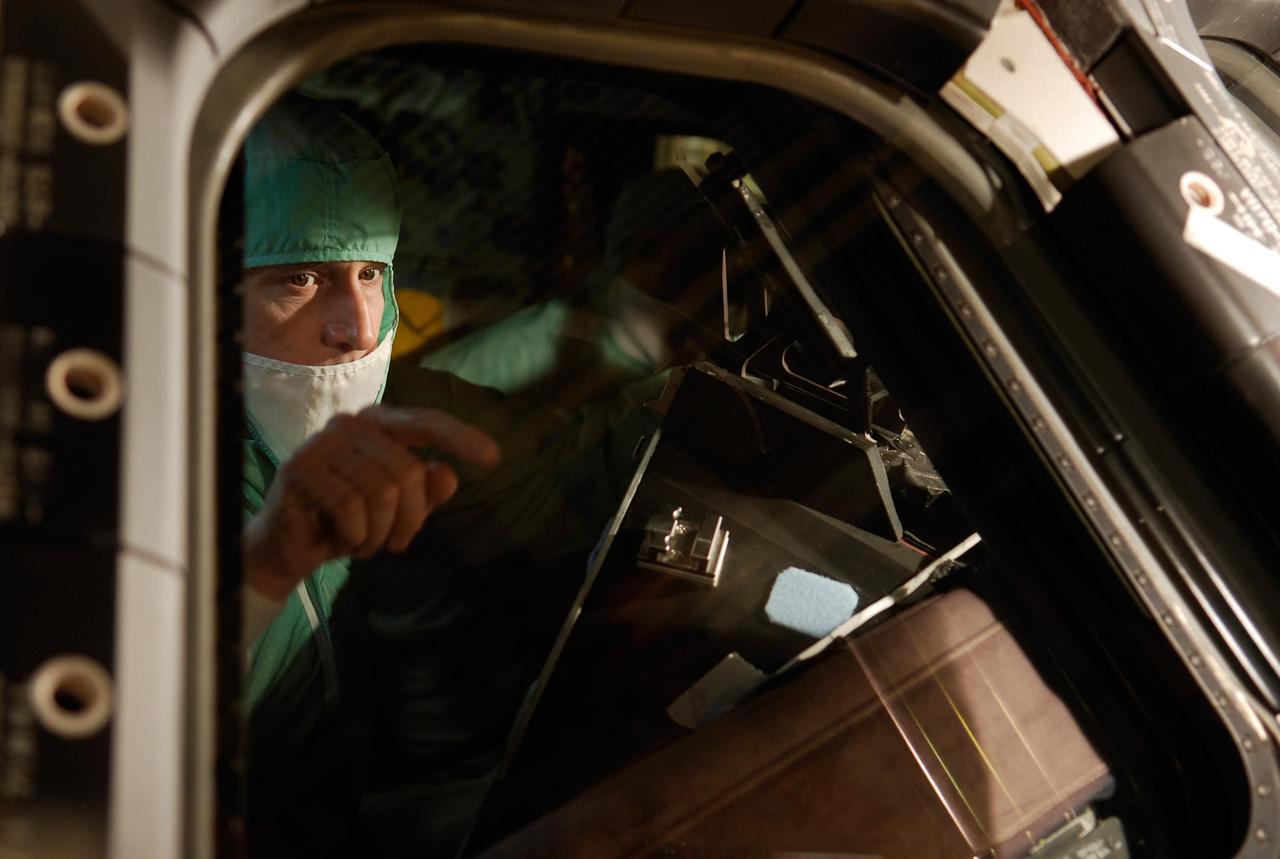
KENNEDY SPACE CENTER, FLA. -- During a crew equipment interface test in the Orbiter Processing Facility bay 3 at NASA's Kennedy Space Center, STS-124 Pilot Kenneth Ham checks a manual in the cockpit of space shuttle Discovery. The shuttle will transport the Kibo Japanese Experiment Module - Pressurized Module (JEM-PM) and the Japanese Remote Manipulator System (JEM-RMS) to the International Space Station to complete the Kibo laboratory. The launch of Discovery is targeted for April 24. Photo credit: NASA/Kim Shiflett
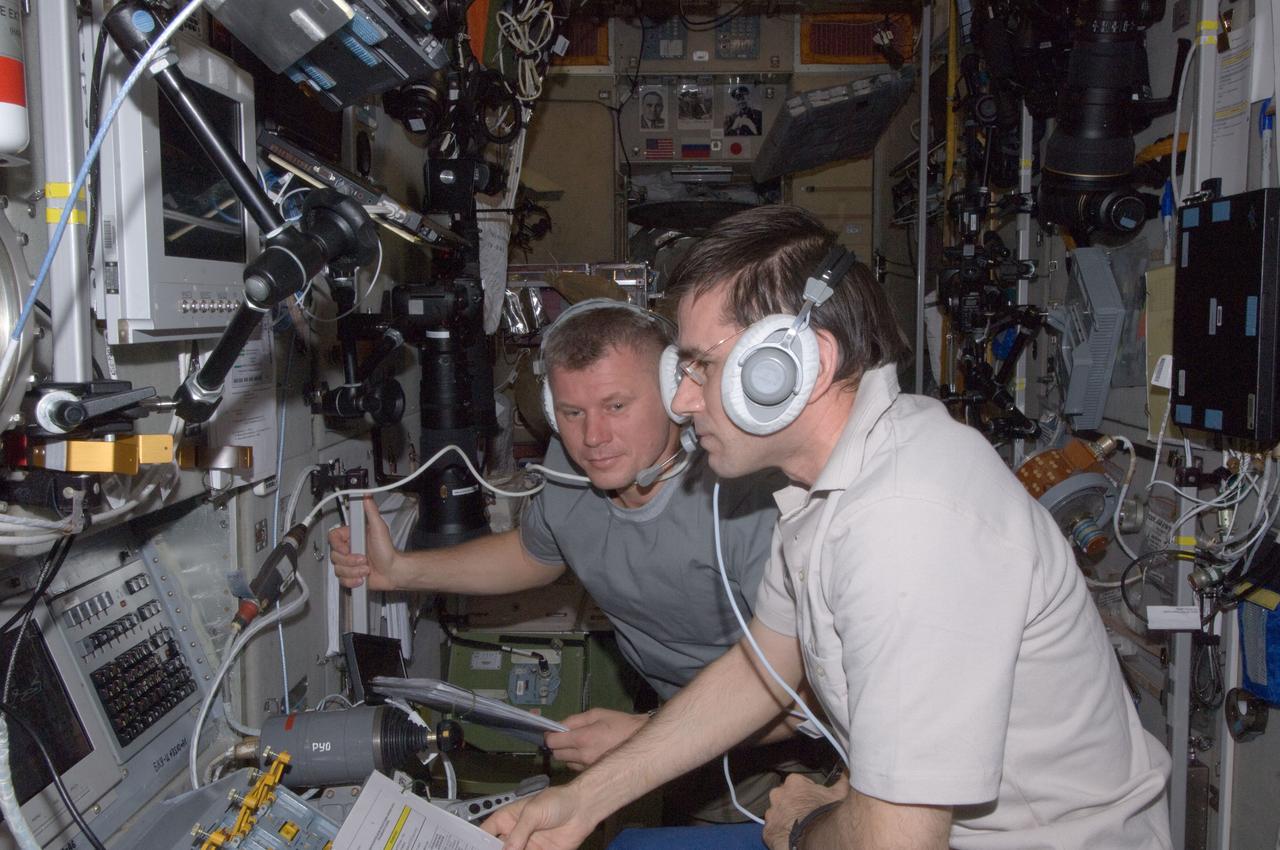
ISS033-E-017605 (31 Oct. 2012) --- Russian cosmonauts Yuri Malenchenko (foreground) and Oleg Novitskiy, both Expedition 33 flight engineers, monitor data at the manual TORU docking system controls in the Zvezda Service Module of the International Space Station during approach and docking operations of the unpiloted ISS Progress 49 resupply vehicle. Progress 49 docked automatically to Zvezda’s aft port at 9:33 a.m. (EDT) on Oct. 31, 2012.
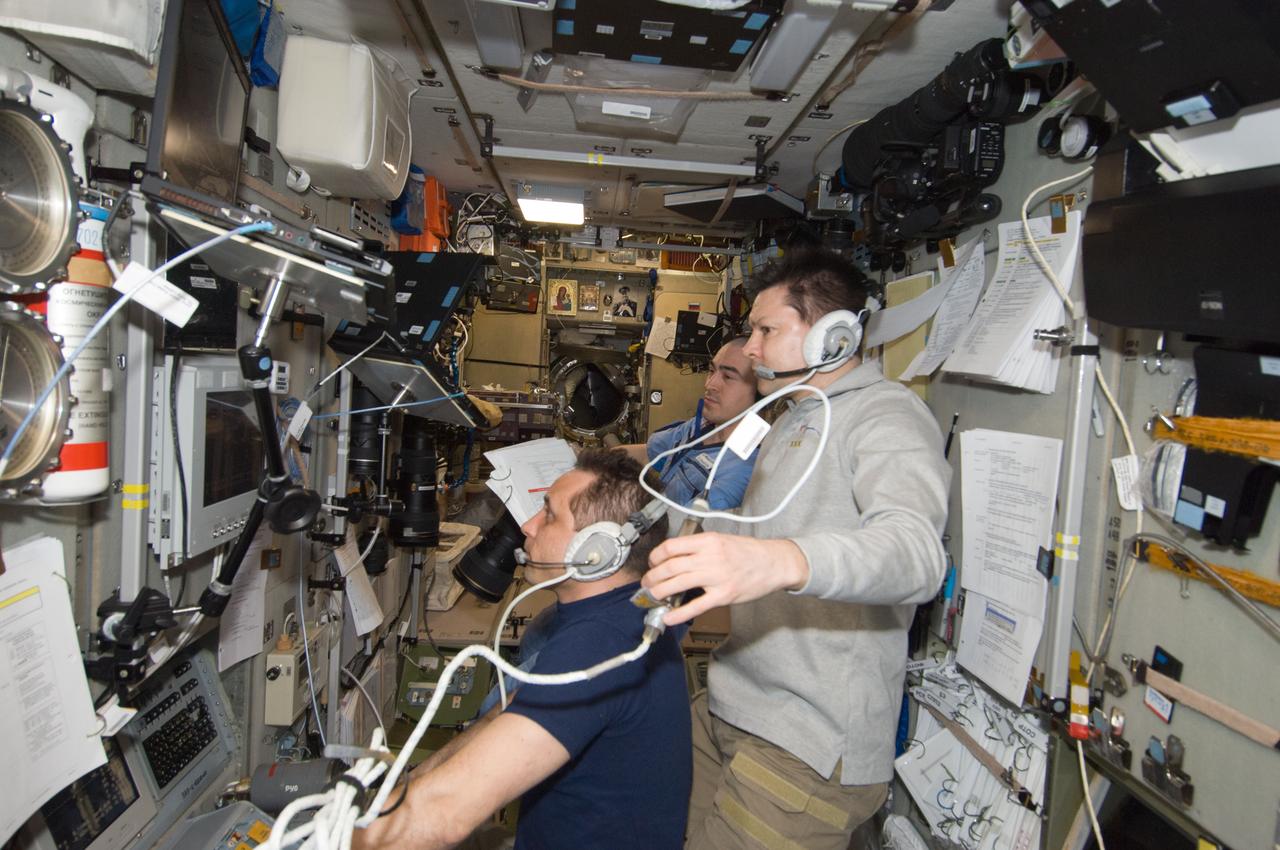
ISS030-E-241387 (22 April 2012) --- Russian cosmonauts Anton Shkaplerov (left), Oleg Kononenko (right) and Anatoly Ivanishin, all Expedition 30 flight engineers, monitor data at the manual TORU docking system controls in the Zvezda Service Module of the International Space Station during approach and docking operations of the unpiloted ISS Progress 47 resupply vehicle. Progress 47 docked automatically to the Pirs Docking Compartment via the Kurs automated rendezvous system at 10:39 a.m. (EDT) on April 22, 2012.

iss059e007838 (April 1, 2019) --- (From right) Flight Engineer Alexey Ovchinin and Commander Oleg Kononenko, both cosmonauts from Roscosmos, train for the arrival of the Russian Progress 72 (72P) resupply ship. The Expedition 59 duo inside the Zvezda service module practiced using the TORU, a backup manual docking system, to guide the 72P to a docking in the unlikely event the resupply ship’s automatic Kurs docking system failed.
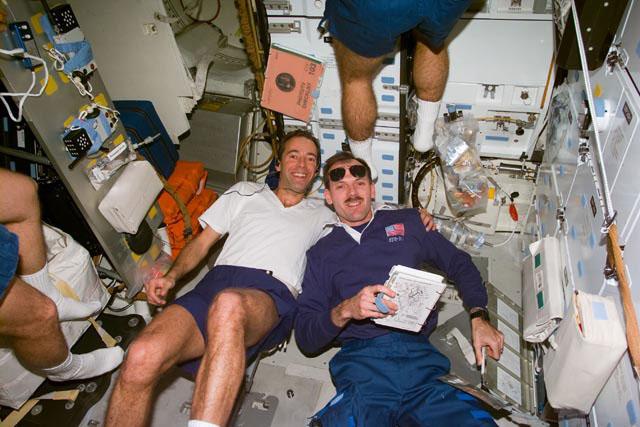
S103-E-5194 (21 December 1999) --- Astronaut Jean-Francois Clervoy (left), mission specialist representing the European Space Agency (ESA), works out on an ergometer device; and astronaut Steven L. Smith, payload commander, fetches a reference manual. Two unidentified STS-103 crew mates are busy at various tasks, partially out of the frame. This photo was taken with an electronic still camera (ESC) at 11:08:38 GMT, Dec. 21, 1999.
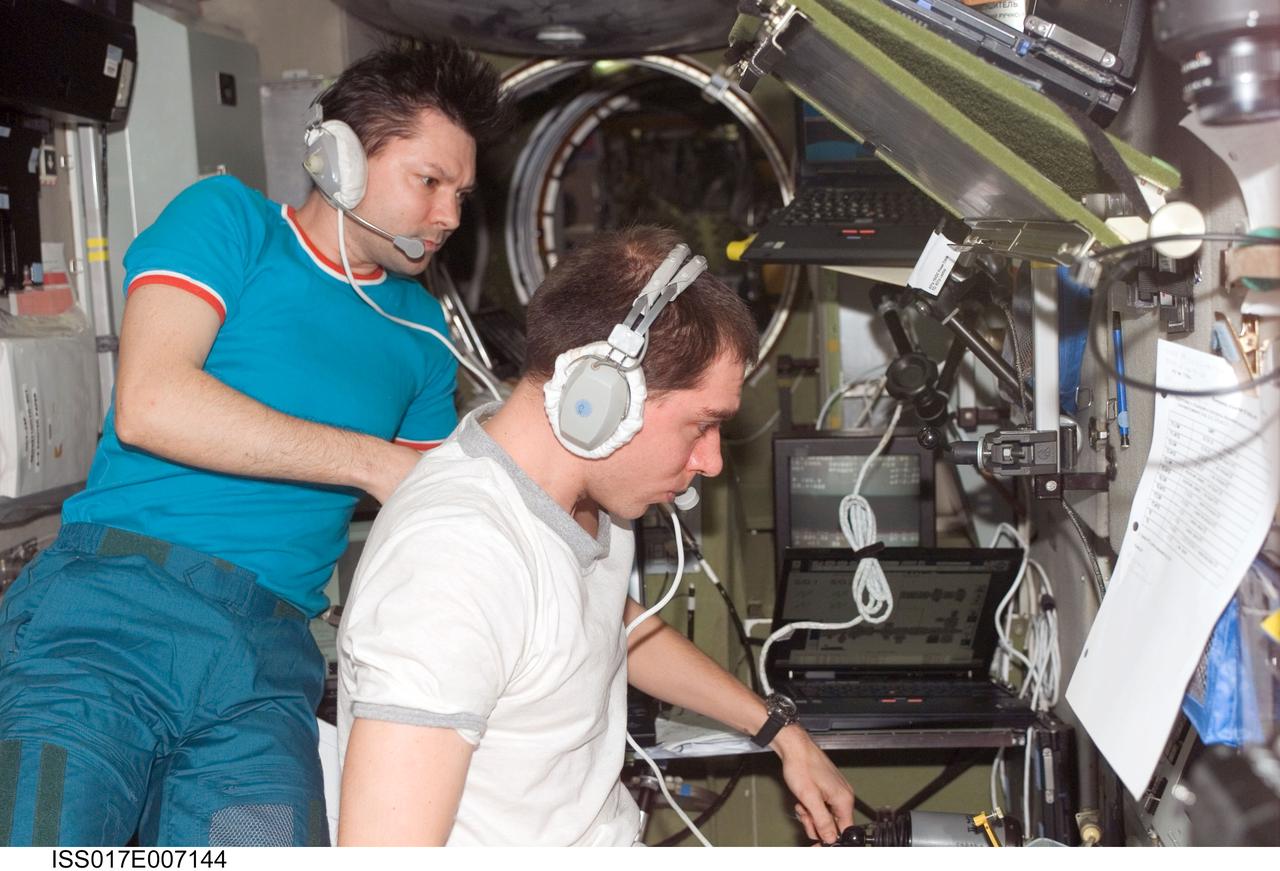
ISS017-E-007144 (16 May 2008) --- Cosmonauts Sergei Volkov (right) and Oleg Kononenko, Expedition 17 commander and flight engineer, respectively, monitor data at the manual TORU docking system controls in the Zvezda Service Module of the International Space Station during the docking of the Progress 29 supply vehicle. The Progress used the automated Kurs system to dock to the station's Zarya nadir port, which occurred at 4:39 p.m. (CDT) on May 16, 2008.
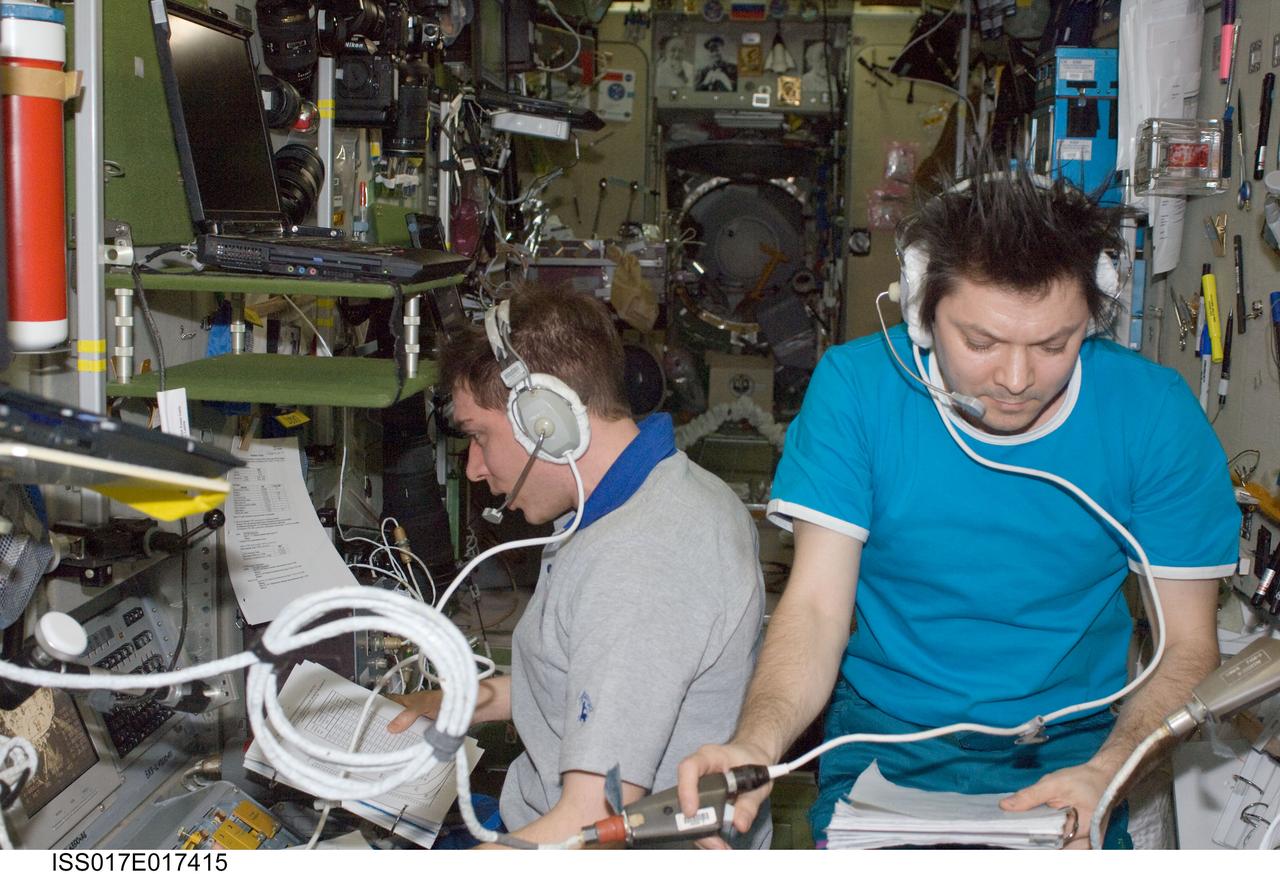
ISS017-E-017415 (17 Sept. 2008) --- Russian Federal Space Agency cosmonauts Sergei Volkov (left) and Oleg Kononenko, Expedition 17 commander and flight engineer, respectively, monitor data at the manual TORU docking system controls in the Zvezda Service Module of the International Space Station during the docking of the unpiloted Progress 30 supply vehicle. The Progress used the automated Kurs system to dock to Zvezda's aft port on Sept. 17.
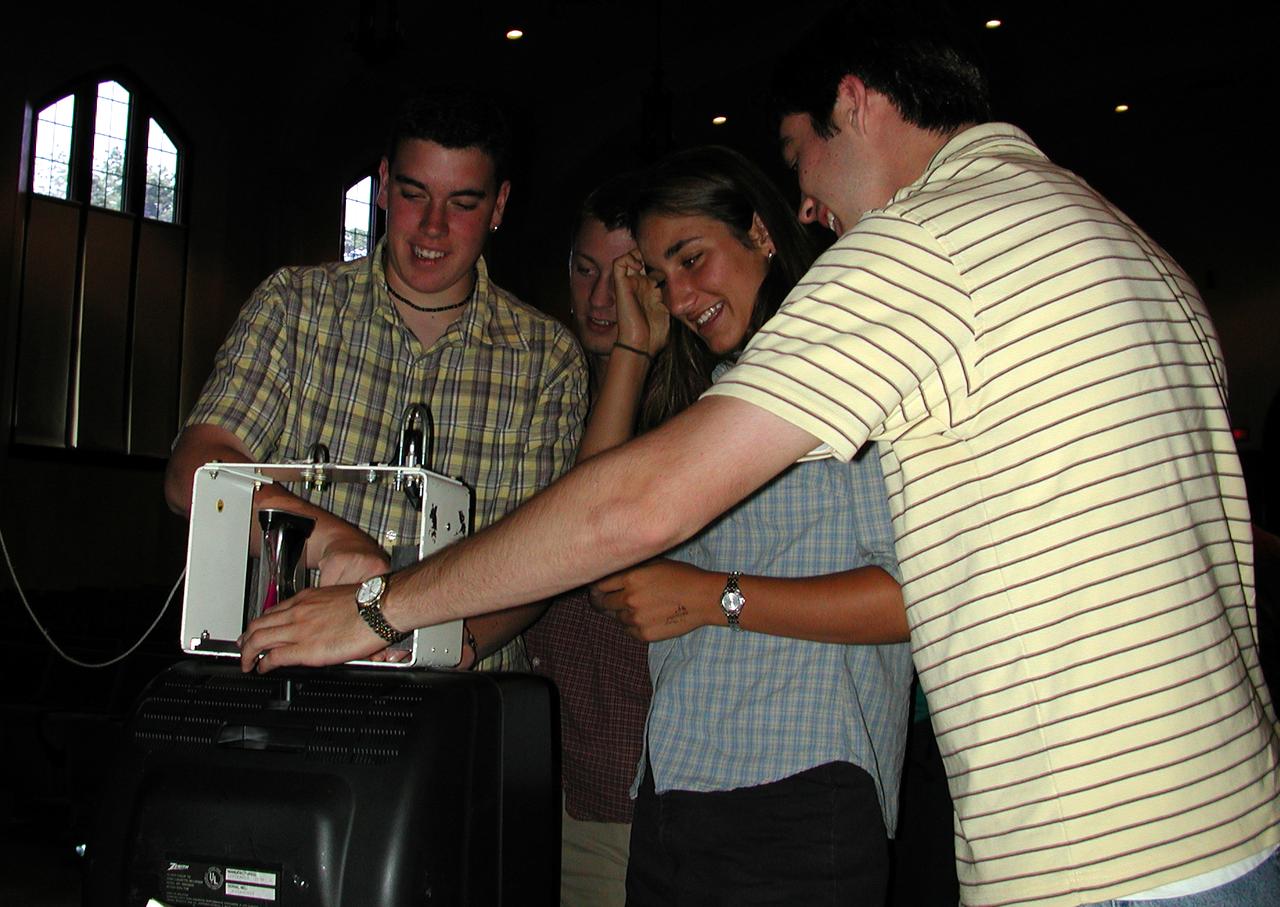
Marshall Space Flight Center employees visited DuPont Manual High School in Louisville, Kentucky. NASA's Mini Drop Tower was used to demonstrate free fall and a presentation was given on microgravity and the science performed in a microgravity environment. The visit coincided with the Pan-Pacific Basin Workshop on Microgravity Sciences held in Pasadena, California. Students experiment with the mini-drop tower. This image is from a digital still camera; higher resolution is not available.
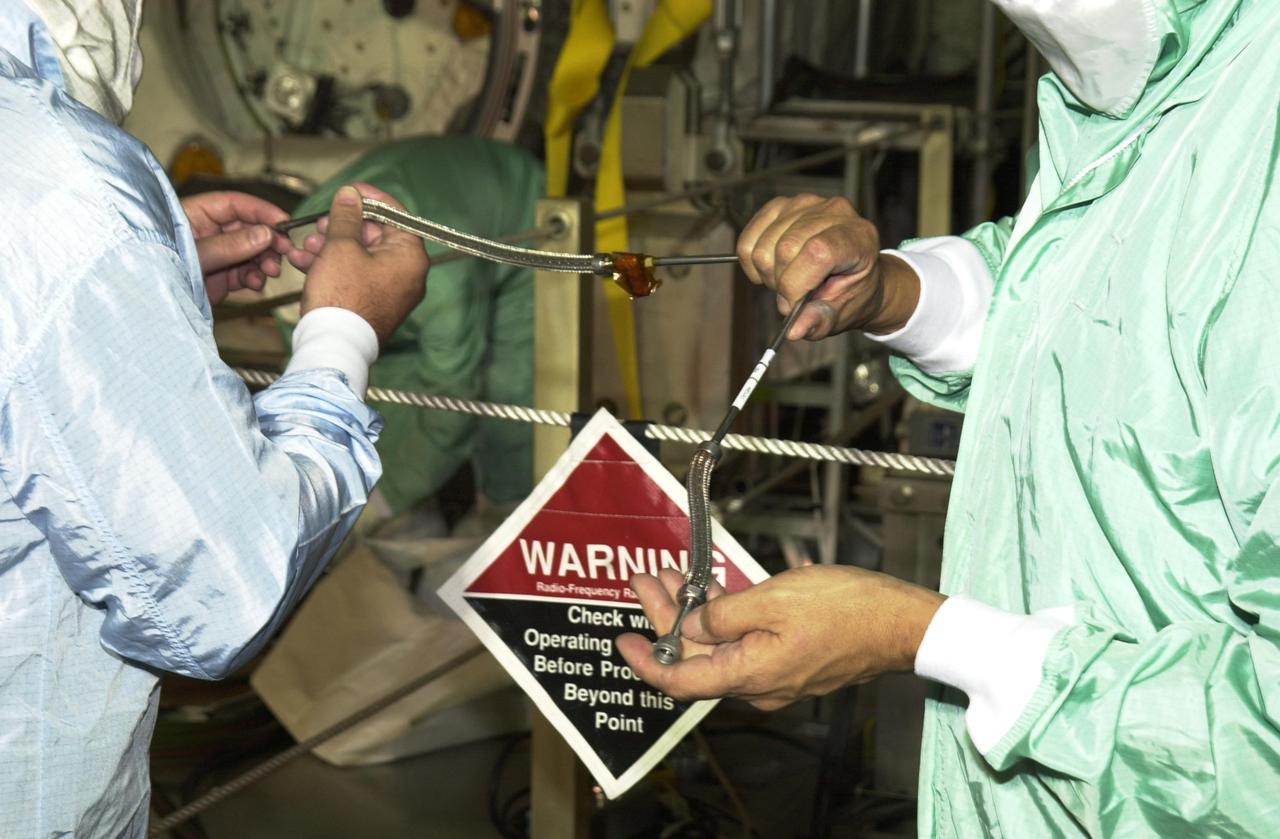
KENNEDY SPACE CENTER, FLA. -- Workers on Launch Pad 39A inspect an oxygen flex hose fitting. Through manual inspection and using helium detectors, the flex hose was identified as the source of an oxygen leak in Endeavour's mid-body. Visual inspection found a deformity in the flex line braid where it connects to rigid tubing. The entire flex hose assembly and bulkhead fitting were removed early today, and work is under way to complete the installation of a replacement.
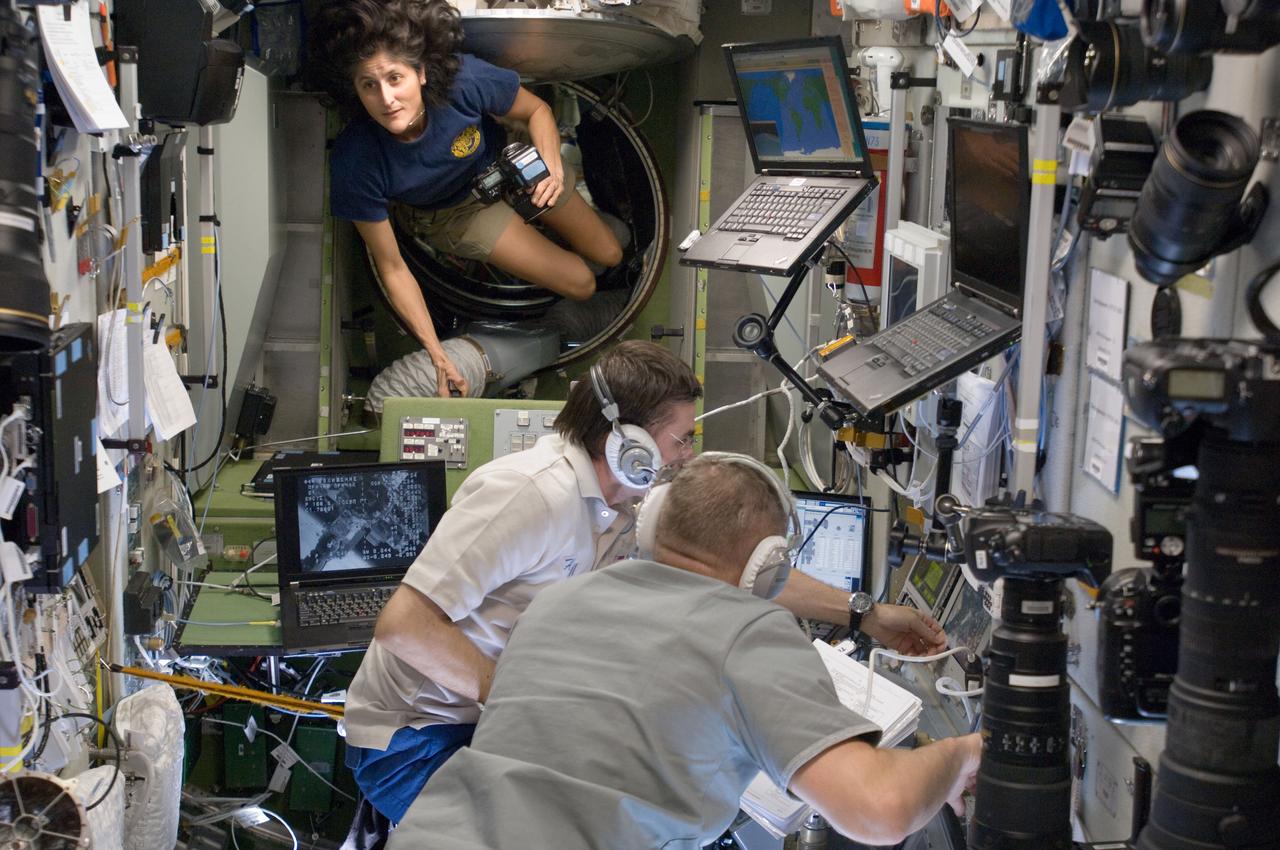
ISS033-E-016948 (31 Oct. 2012) --- Russian cosmonauts Yuri Malenchenko and Oleg Novitskiy, both Expedition 33 flight engineers, monitor data at the manual TORU docking system controls in the Zvezda Service Module of the International Space Station during approach and docking operations of the unpiloted ISS Progress 49 resupply vehicle. Progress 49 docked automatically to Zvezda’s aft port at 9:33 a.m. (EDT) on Oct. 31, 2012. NASA astronaut Sunita Williams, commander, is visible at top left.

STS037-18-032 (7 April 1991) --- Astronaut Jerry L. Ross, mission specialist, peers into Space Shuttle Atlantis' cabin and is photographed by a fellow crew member using a 35mm camera. Ross was in the space shuttle's cargo bay to join astronaut Jerome (Jay) Apt in accomplishing a repair task on the Gamma Ray Observatory (GRO), seen in left frame. The two had been called upon to manually extend the high-gain antenna on GRO.
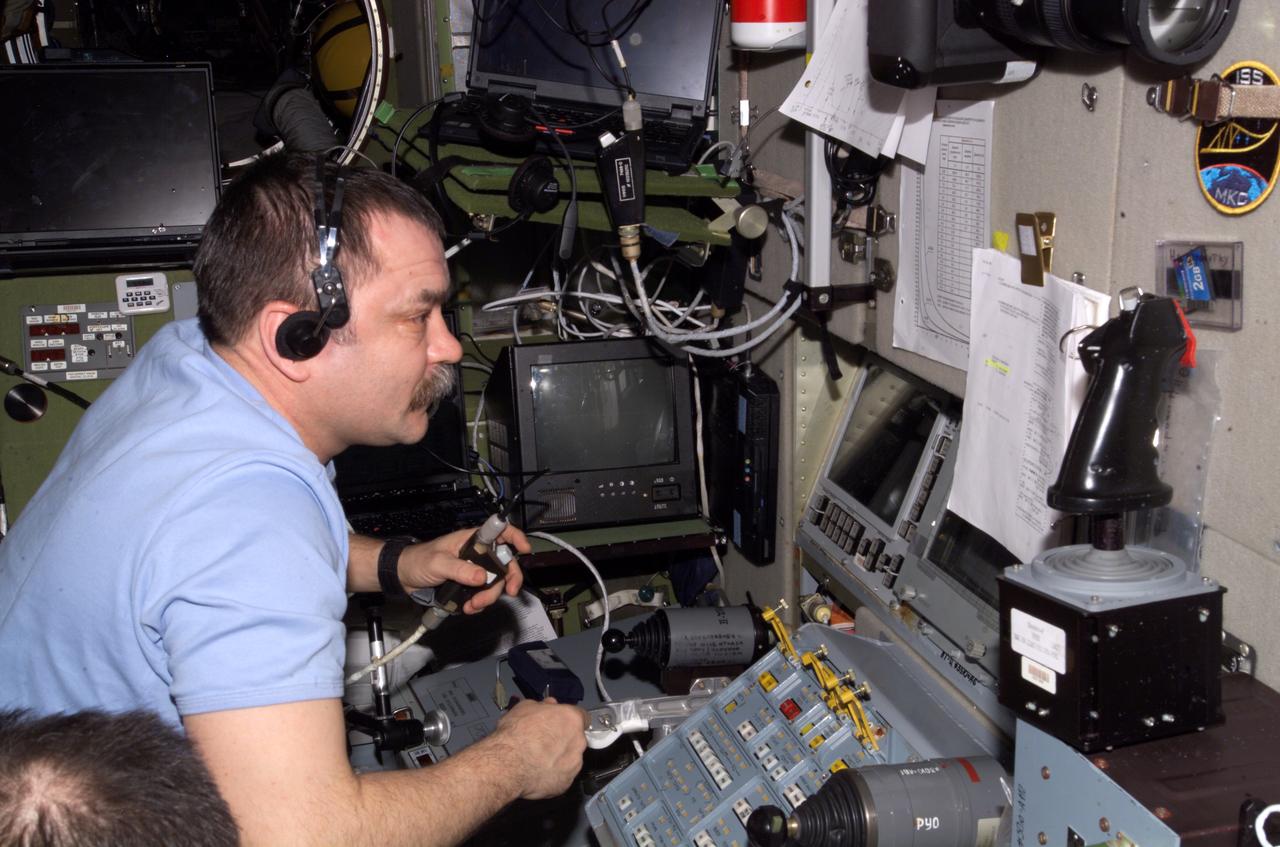
ISS014-E-12482 (19 Jan. 2007) --- Cosmonaut Mikhail Tyurin, Expedition 14 flight engineer representing Russia's Federal Space Agency, practices docking procedures with the TORU teleoperated control system in the Zvezda Service Module of the International Space Station in preparation for the docking of the Progress 24 spacecraft. Tyurin, using the Simvol-TS screen and hand controllers, could manually dock the Progress to the station in the event of a failure of the Kurs automated docking system.
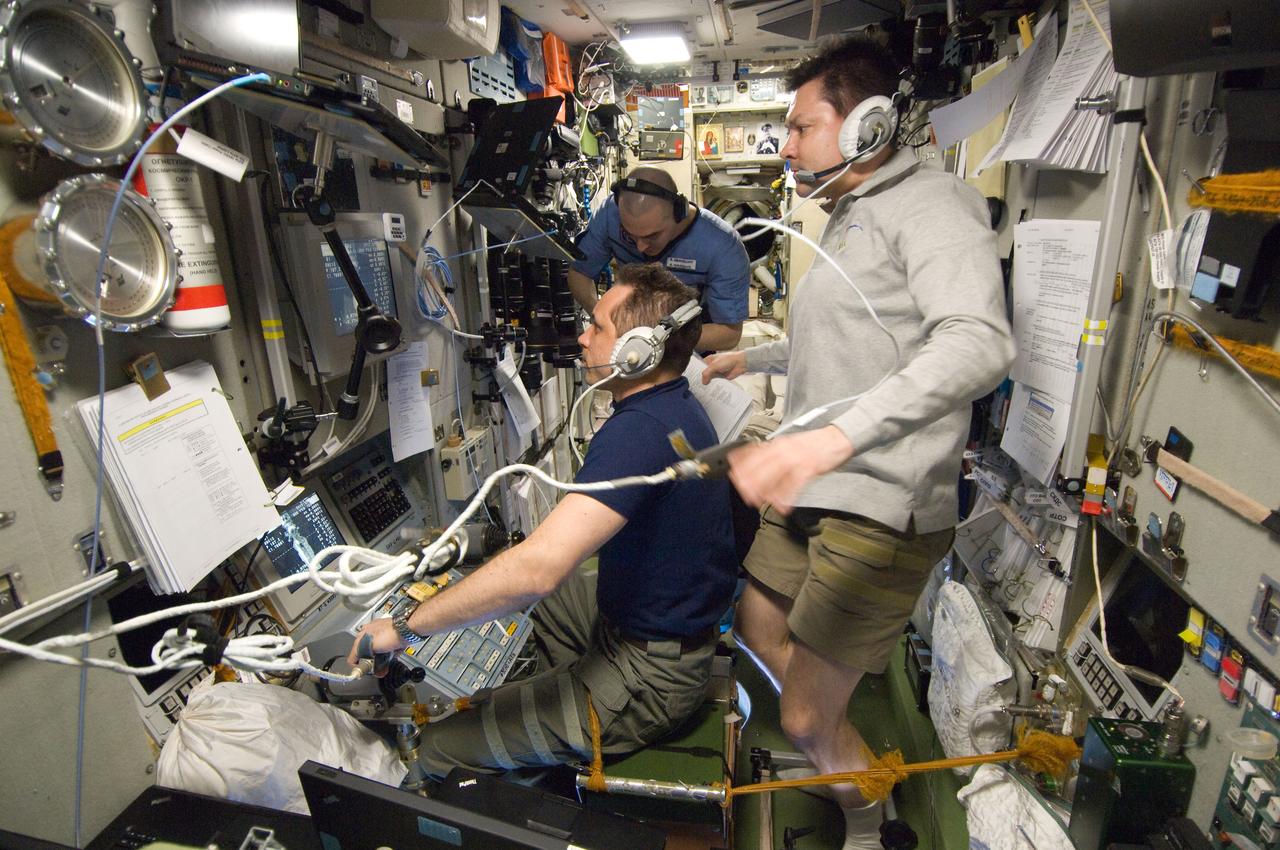
ISS030-E-267689 (22 April 2012) --- Russian cosmonauts Anton Shkaplerov (left), Oleg Kononenko (right) and Anatoly Ivanishin, all Expedition 30 flight engineers, monitor data at the manual TORU docking system controls in the Zvezda Service Module of the International Space Station during approach and docking operations of the unpiloted ISS Progress 47 resupply vehicle. Progress 47 docked automatically to the Pirs Docking Compartment via the Kurs automated rendezvous system at 10:39 a.m. (EDT) on April 22, 2012.
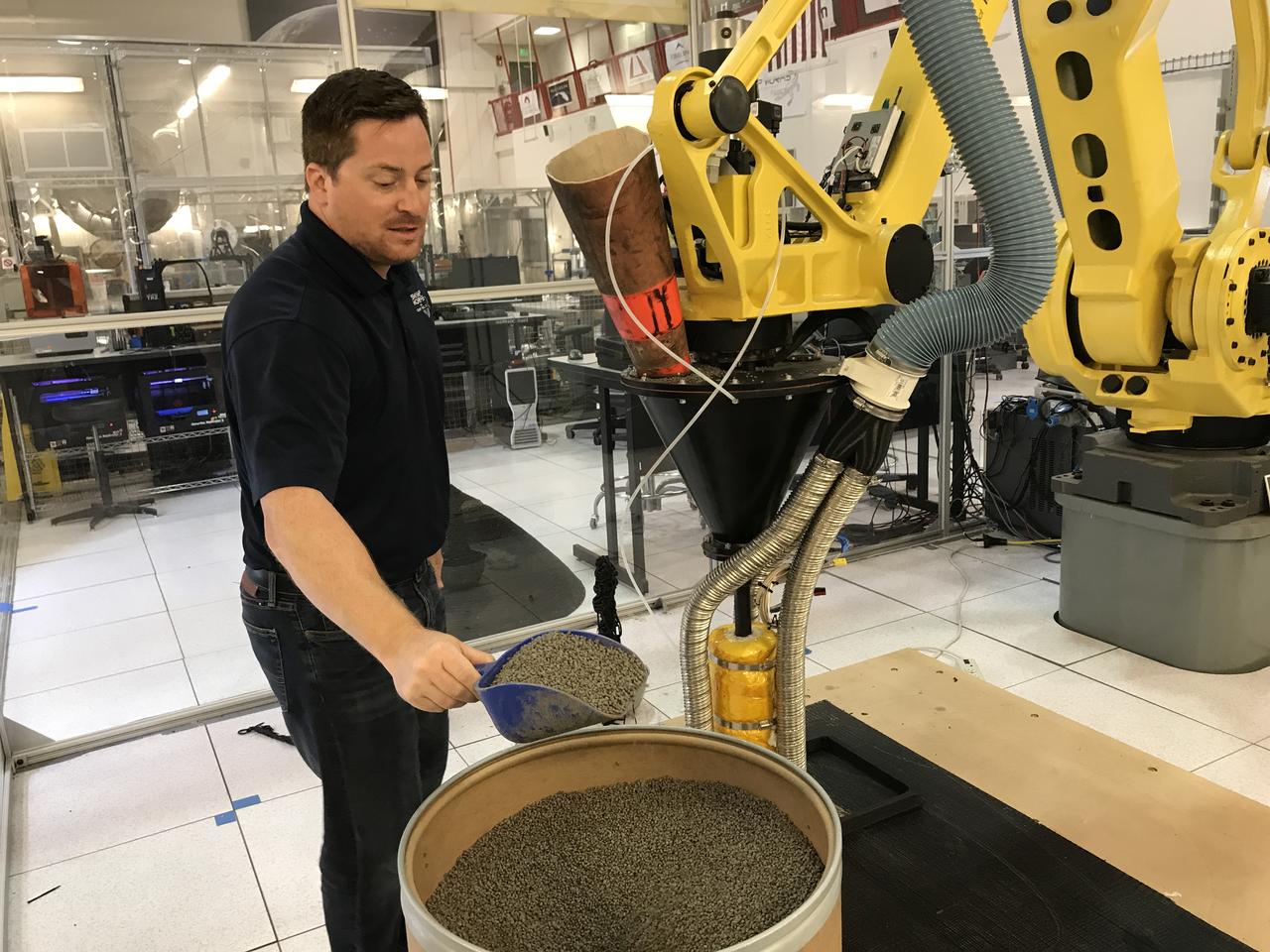
Nathan Gelino, a research engineer, manually loads materials into the Zero Launch Mass 3-D Printer at Kennedy Space Center’s Swamp Works Tuesday. The 3-D printer heated the pellets to about 600 degrees F and extruded them to produce specimens for material strength properties testing. Automated pellet delivery system will be added to the printer soon.