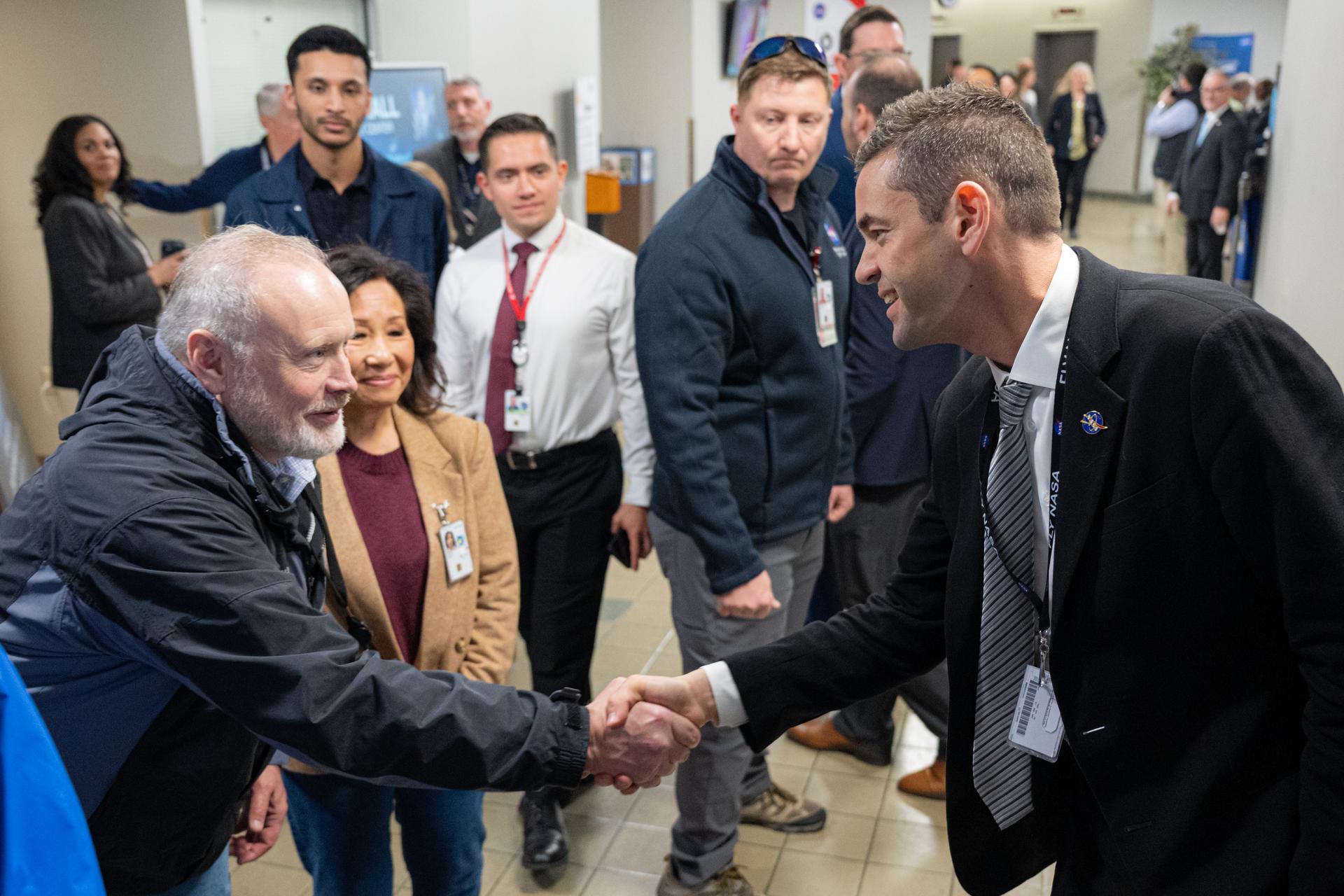
NASA Administrator Jared Isaacman, right, greets members of the workforce, Wednesday, Jan. 14, 2026, at NASA’s Marshall Space Flight Center in Huntsville, Ala. Marshall marks the fifth stop in Isaacman’s roadshow to visit NASA facilities and engage directly with the agency’s workforce. Photo Credit: (NASA/John Kraus)
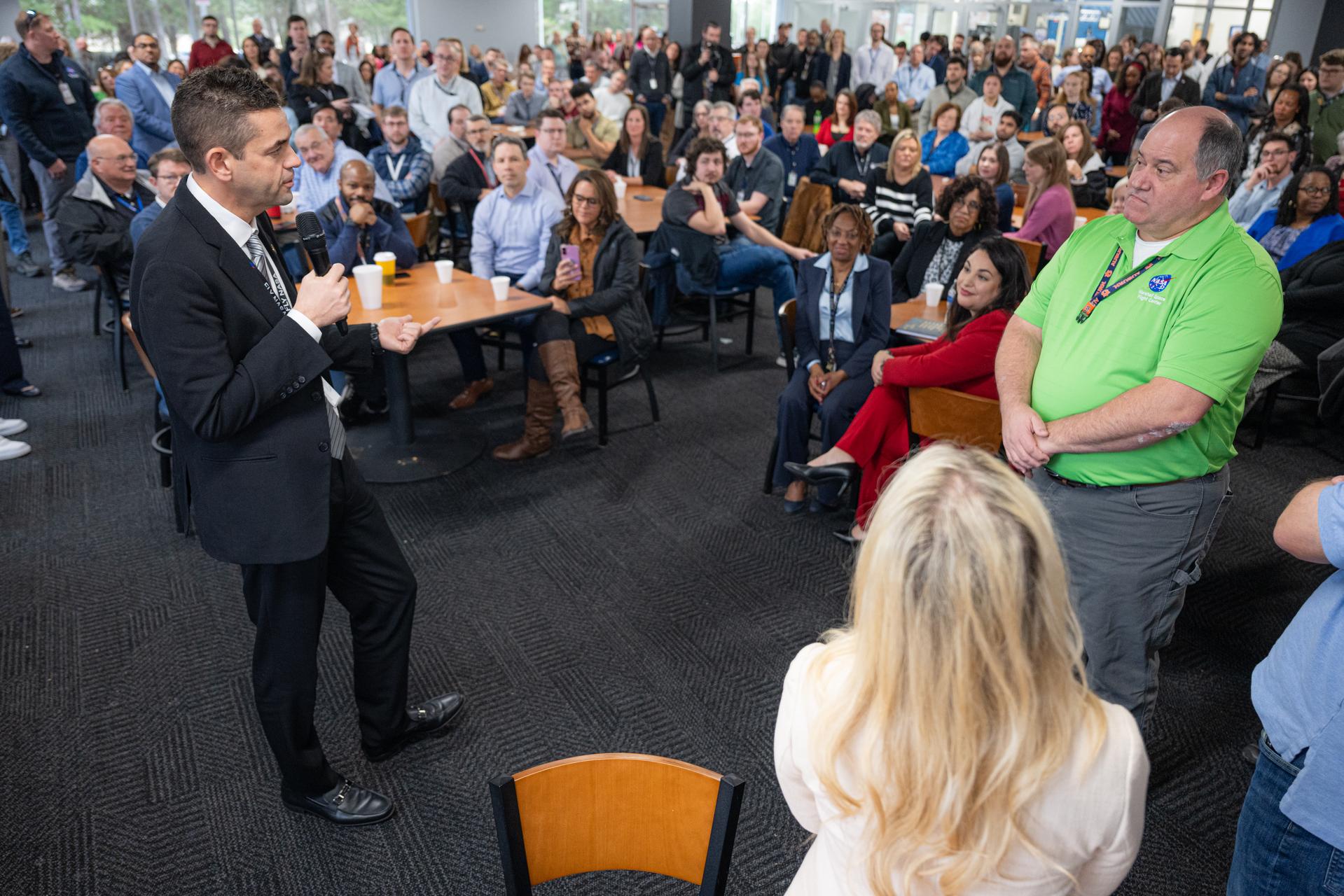
NASA Administrator Jared Isaacman, left, speaks during a workforce Q&A session, Wednesday, Jan. 14, 2026, at NASA’s Marshall Space Flight Center in Huntsville, Ala. Marshall marks the fifth stop in Isaacman’s roadshow to visit NASA facilities and engage directly with the agency’s workforce. Photo Credit: (NASA/John Kraus)
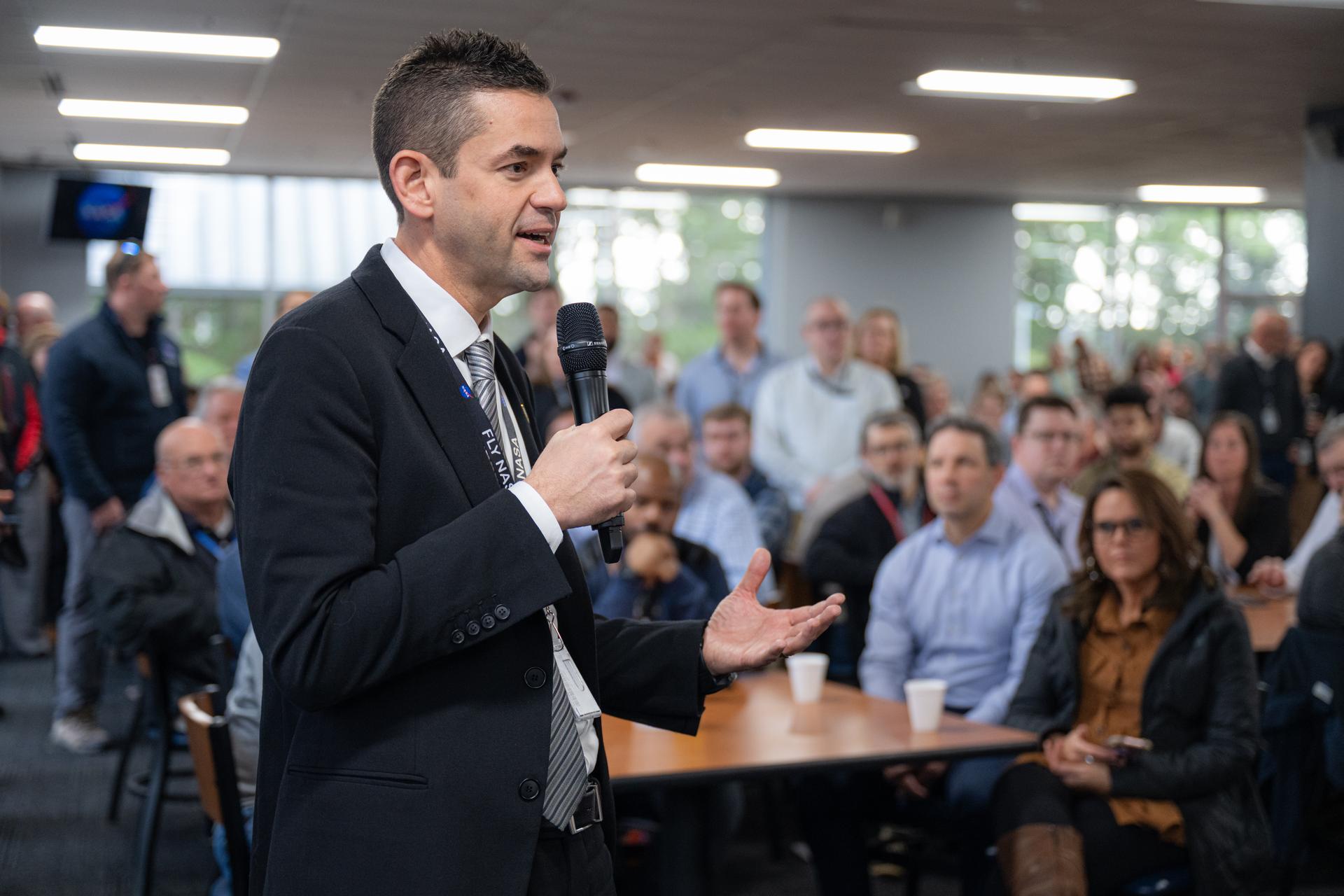
NASA Administrator Jared Isaacman speaks during a workforce Q&A session, Wednesday, Jan. 14, 2026, at NASA’s Marshall Space Flight Center in Huntsville, Ala. Marshall marks the fifth stop in Isaacman’s roadshow to visit NASA facilities and engage directly with the agency’s workforce. Photo Credit: (NASA/John Kraus)
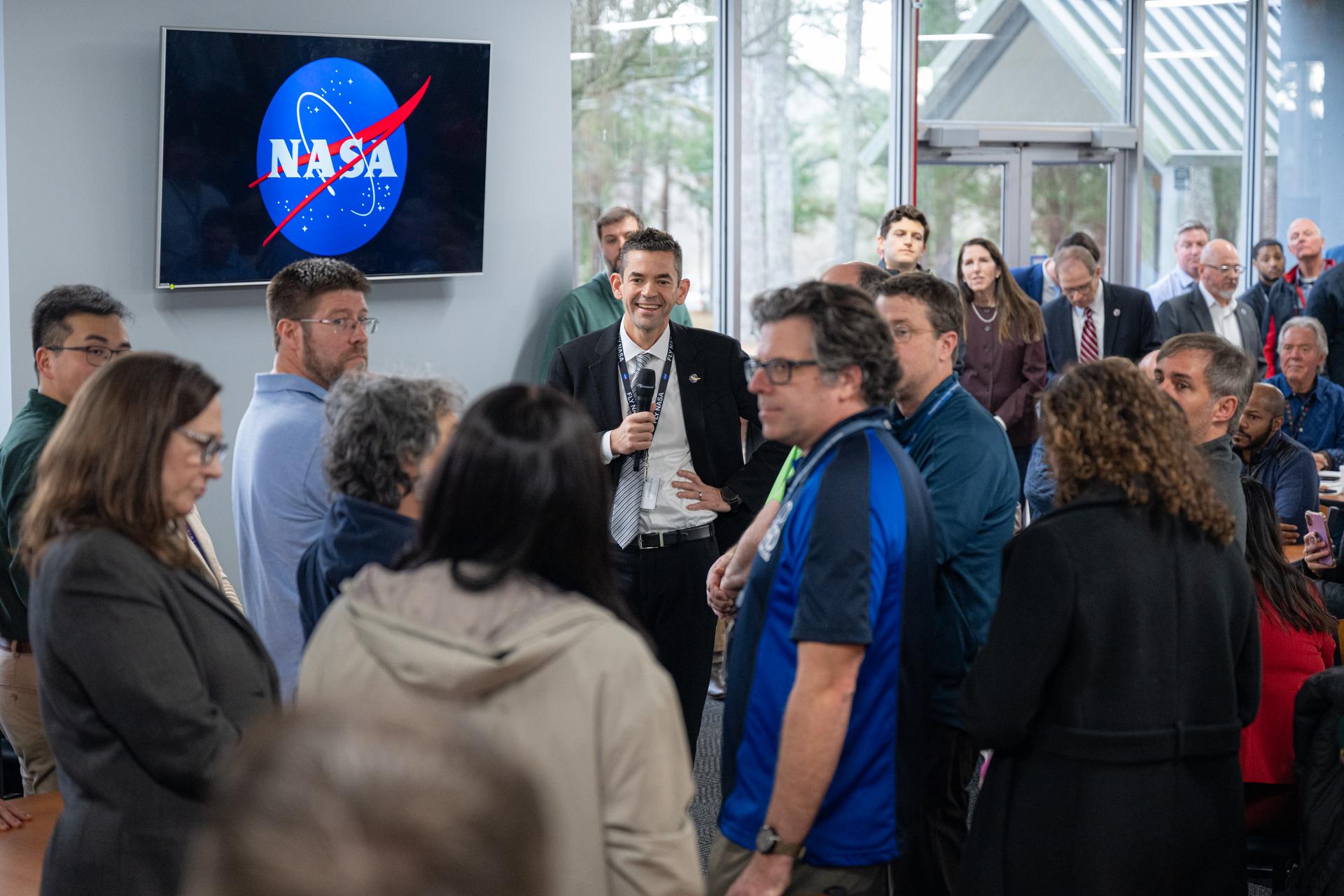
NASA Administrator Jared Isaacman, center, speaks during a workforce Q&A session, Wednesday, Jan. 14, 2026, at NASA’s Marshall Space Flight Center in Huntsville, Ala. Marshall marks the fifth stop in Isaacman’s roadshow to visit NASA facilities and engage directly with the agency’s workforce. Photo Credit: (NASA/John Kraus)
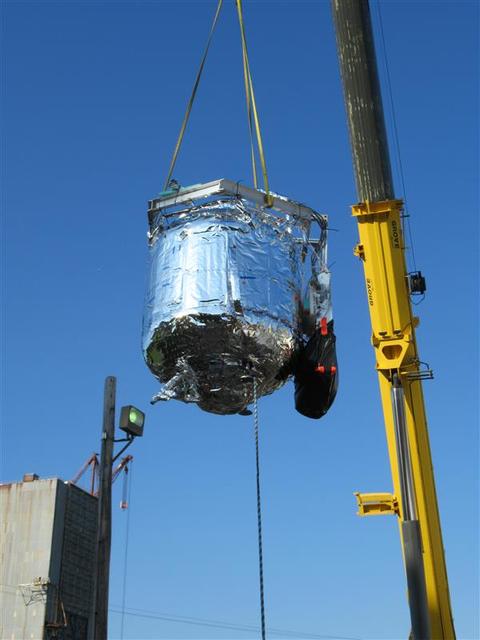
These photos show how teams at NASA’s Marshall Space Flight Center in Huntsville, Alabama, are testing an innovative approach to achieve zero boiloff storage of liquid hydrogen using two stages of active cooling, which could prevent the loss of valuable propellant during future long-duration spaceflight missions. Test teams installed the propellant tank in Test Stand 300 at NASA Marshall in early June, and the 90-day test campaign is scheduled to conclude in September. The tank is wrapped in a multi-layer insulation blanket that includes a thin aluminum heat shield fitted between layers. A second set of tubes, carrying helium at about minus 298 Fahrenheit, is integrated into the shield. This intermediate cooling layer intercepts and rejects incoming heat before it reaching the tank, easing the heat load on the tube-on-tank system. The Cryogenic Fluid Management Portfolio Project is a cross-agency team based at NASA Marshall and the agency’s Glenn Research Center in Cleveland. The cryogenic portfolio’s work is under NASA’s Technology Demonstration Missions Program, part of NASA’s Space Technology Mission Directorate, and is comprised of more than 20 individual technology development activities. For more information, contact NASA Marshall’s Office of Communications at 256-544-0034.

These photos show how teams at NASA’s Marshall Space Flight Center in Huntsville, Alabama, are testing an innovative approach to achieve zero boiloff storage of liquid hydrogen using two stages of active cooling, which could prevent the loss of valuable propellant during future long-duration spaceflight missions. Test teams installed the propellant tank in Test Stand 300 at NASA Marshall in early June, and the 90-day test campaign is scheduled to conclude in September. The tank is wrapped in a multi-layer insulation blanket that includes a thin aluminum heat shield fitted between layers. A second set of tubes, carrying helium at about minus 298 Fahrenheit, is integrated into the shield. This intermediate cooling layer intercepts and rejects incoming heat before it reaching the tank, easing the heat load on the tube-on-tank system. The Cryogenic Fluid Management Portfolio Project is a cross-agency team based at NASA Marshall and the agency’s Glenn Research Center in Cleveland. The cryogenic portfolio’s work is under NASA’s Technology Demonstration Missions Program, part of NASA’s Space Technology Mission Directorate, and is comprised of more than 20 individual technology development activities. For more information, contact NASA Marshall’s Office of Communications at 256-544-0034.
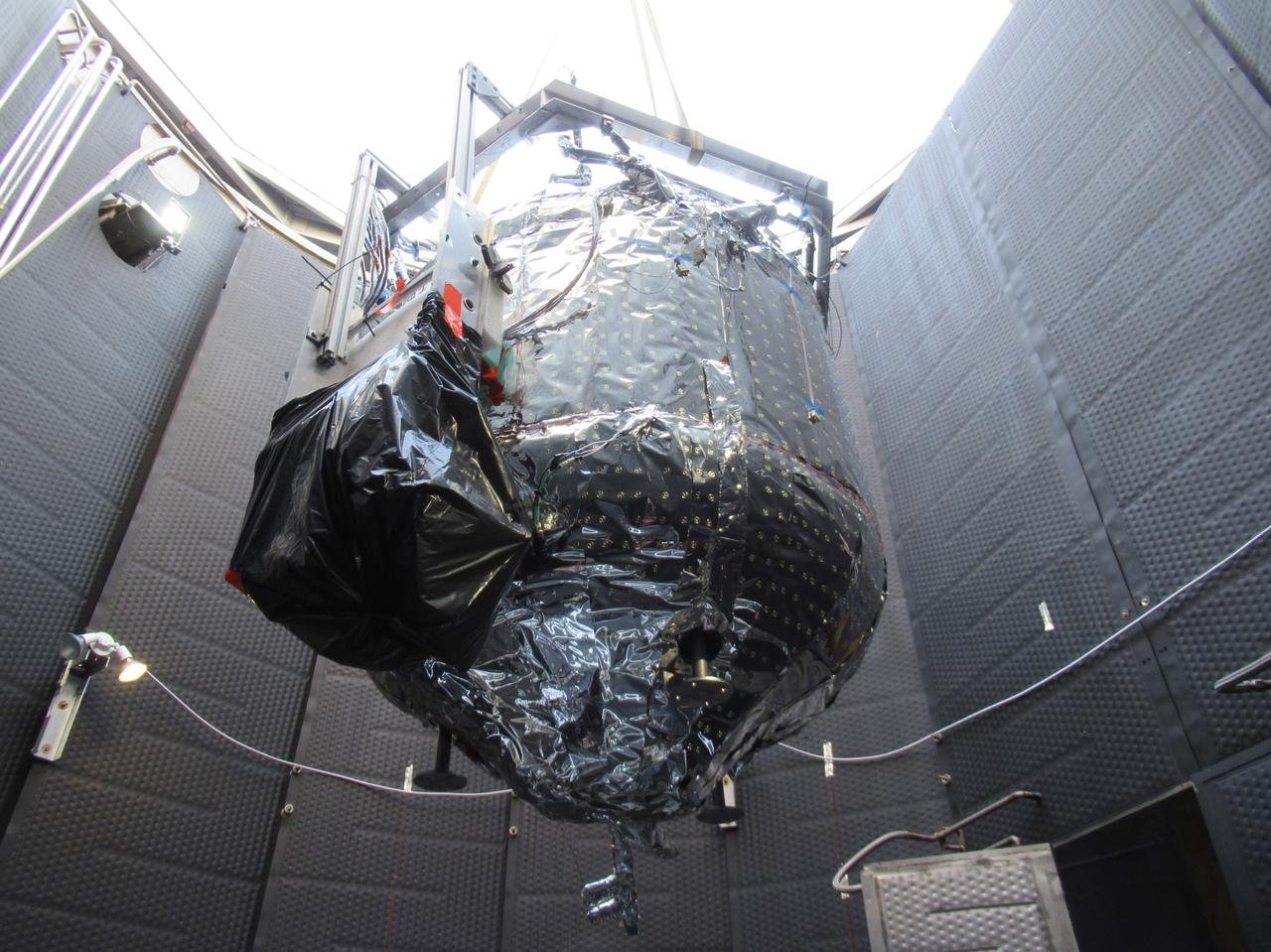
These photos show how teams at NASA’s Marshall Space Flight Center in Huntsville, Alabama, are testing an innovative approach to achieve zero boiloff storage of liquid hydrogen using two stages of active cooling, which could prevent the loss of valuable propellant during future long-duration spaceflight missions. Test teams installed the propellant tank in Test Stand 300 at NASA Marshall in early June, and the 90-day test campaign is scheduled to conclude in September. The tank is wrapped in a multi-layer insulation blanket that includes a thin aluminum heat shield fitted between layers. A second set of tubes, carrying helium at about minus 298 Fahrenheit, is integrated into the shield. This intermediate cooling layer intercepts and rejects incoming heat before it reaching the tank, easing the heat load on the tube-on-tank system. The Cryogenic Fluid Management Portfolio Project is a cross-agency team based at NASA Marshall and the agency’s Glenn Research Center in Cleveland. The cryogenic portfolio’s work is under NASA’s Technology Demonstration Missions Program, part of NASA’s Space Technology Mission Directorate, and is comprised of more than 20 individual technology development activities. For more information, contact NASA Marshall’s Office of Communications at 256-544-0034.
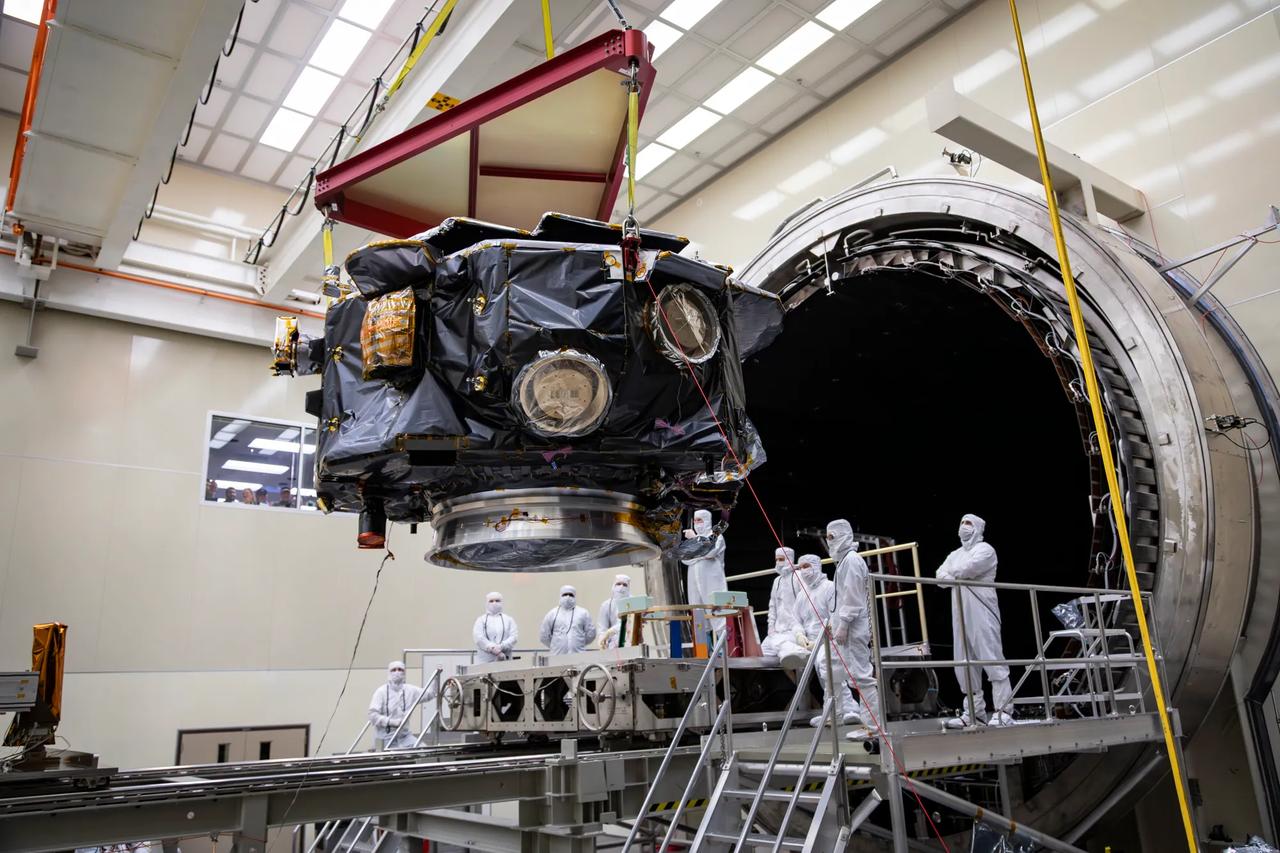
These photos and timelapse show NASA’s IMAP mission being loaded into the thermal vacuum chamber of NASA Marshall Space Flight Center’s X-Ray and Cryogenic Facility (XRCF) in Huntsville, Alabama. IMAP arrived at Marshall March 18 and was loaded into the chamber March 19. IMAP will undergo testing such as dramatic temperature changes to simulate the harsh environment of space. The XRCF’s vacuum chamber is is 20 feet in diameter and 60 feet long making it one of the largest across NASA. The IMAP mission is a modern-day celestial cartographer that will map the solar system by studying the heliosphere, a giant bubble created by the Sun’s solar wind that surrounds our solar system and protects it from harmful interstellar radiation. Photos and video courtesy of Ed Whitman from Johns Hopkins University’s Applied Physics Laboratory. For more information, contact NASA Marshall’s Office of Communications at 256-544-0034.
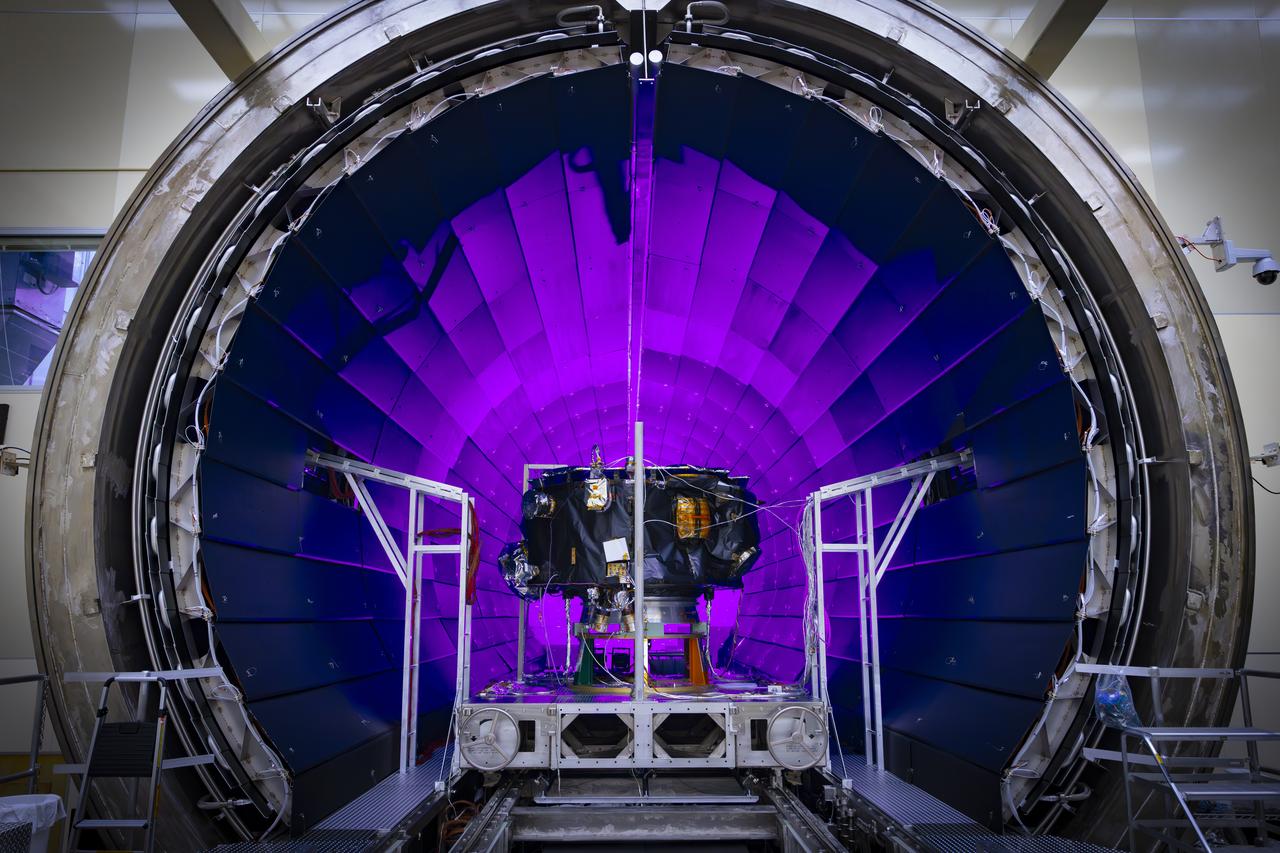
These photos and timelapse show NASA’s IMAP mission being loaded into the thermal vacuum chamber of NASA Marshall Space Flight Center’s X-Ray and Cryogenic Facility (XRCF) in Huntsville, Alabama. IMAP arrived at Marshall March 18 and was loaded into the chamber March 19. IMAP will undergo testing such as dramatic temperature changes to simulate the harsh environment of space. The XRCF’s vacuum chamber is is 20 feet in diameter and 60 feet long making it one of the largest across NASA. The IMAP mission is a modern-day celestial cartographer that will map the solar system by studying the heliosphere, a giant bubble created by the Sun’s solar wind that surrounds our solar system and protects it from harmful interstellar radiation. Photos and video courtesy of Ed Whitman from Johns Hopkins University’s Applied Physics Laboratory. For more information, contact NASA Marshall’s Office of Communications at 256-544-0034.
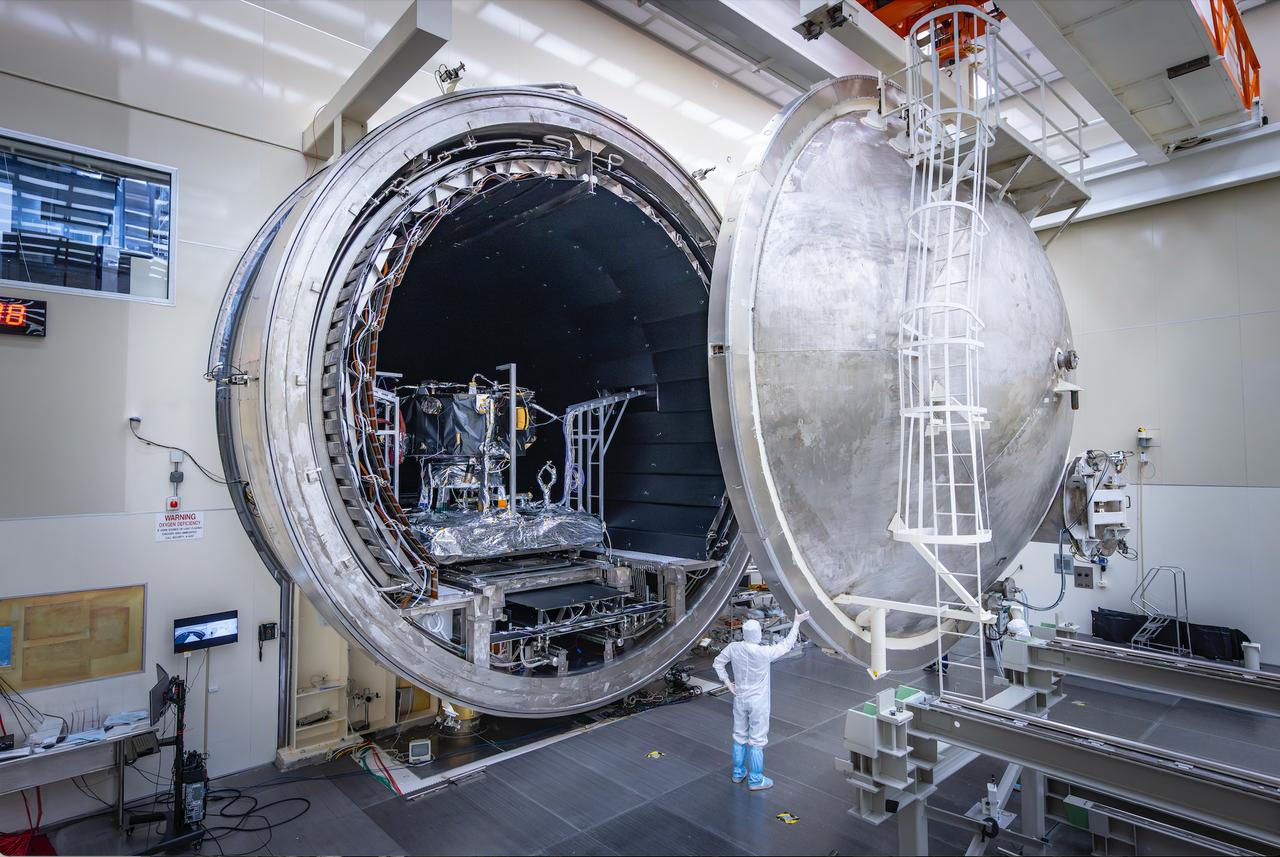
These photos and timelapse show NASA’s IMAP mission being loaded into the thermal vacuum chamber of NASA Marshall Space Flight Center’s X-Ray and Cryogenic Facility (XRCF) in Huntsville, Alabama. IMAP arrived at Marshall March 18 and was loaded into the chamber March 19. IMAP will undergo testing such as dramatic temperature changes to simulate the harsh environment of space. The XRCF’s vacuum chamber is is 20 feet in diameter and 60 feet long making it one of the largest across NASA. The IMAP mission is a modern-day celestial cartographer that will map the solar system by studying the heliosphere, a giant bubble created by the Sun’s solar wind that surrounds our solar system and protects it from harmful interstellar radiation. Photos and video courtesy of Ed Whitman from Johns Hopkins University’s Applied Physics Laboratory. For more information, contact NASA Marshall’s Office of Communications at 256-544-0034.
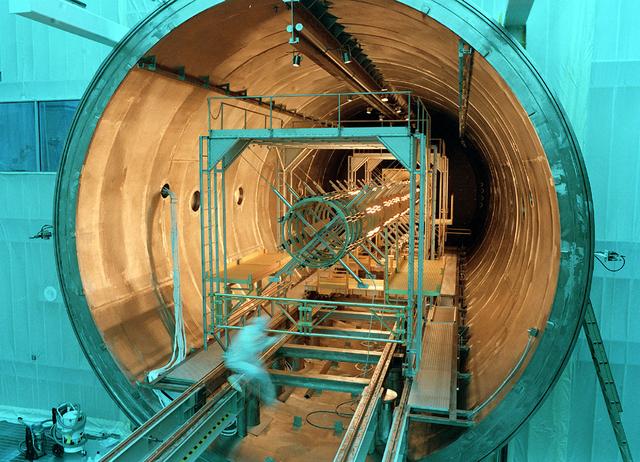
Marshall scientists testing a Lamp array at the X-Ray Calibration Facility (XRCF).
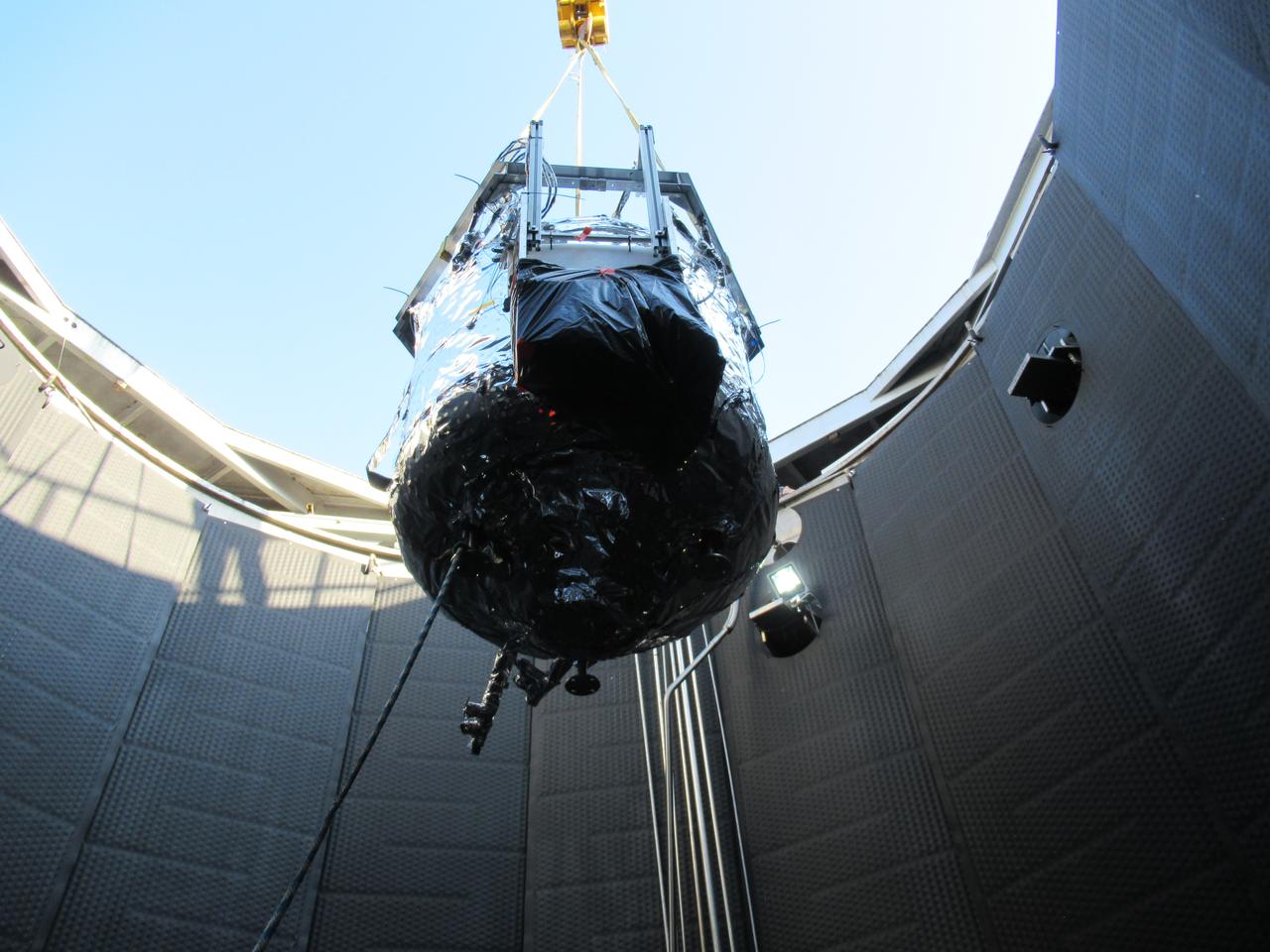
These photos show how teams at NASA’s Marshall Space Flight Center in Huntsville, Alabama, are testing an innovative approach to achieve zero boiloff storage of liquid hydrogen using two stages of active cooling, which could prevent the loss of valuable propellant during future long-duration spaceflight missions. Test teams installed the propellant tank in Test Stand 300 at NASA Marshall in early June, and the 90-day test campaign is scheduled to conclude in September. The tank is wrapped in a multi-layer insulation blanket that includes a thin aluminum heat shield fitted between layers. A second set of tubes, carrying helium at about minus 298 Fahrenheit, is integrated into the shield. This intermediate cooling layer intercepts and rejects incoming heat before it reaching the tank, easing the heat load on the tube-on-tank system. The Cryogenic Fluid Management Portfolio Project is a cross-agency team based at NASA Marshall and the agency’s Glenn Research Center in Cleveland. The cryogenic portfolio’s work is under NASA’s Technology Demonstration Missions Program, part of NASA’s Space Technology Mission Directorate, and is comprised of more than 20 individual technology development activities. For more information, contact NASA Marshall’s Office of Communications at 256-544-0034.

These photos and videos show how crews guided a test version of the universal stage adapter for NASA’s more powerful version of its SLS (Space Launch System) rocket to Building 4619 at the agency’s Marshall Space Flight Center in Huntsville, Alabama, Feb. 22. Built by Leidos, the lead contractor for the universal stage adapter, crews transported the hardware from a Leidos facility in Decatur, Alabama, the same day. The universal stage adapter will connect the SLS rocket’s upgraded in-space propulsion stage, called the exploration upper stage, to NASA’s Orion spacecraft as part of the evolved Block 1B configuration of the SLS rocket. It will also serve as a compartment capable of accommodating large payloads, such as modules or other exploration spacecraft. In Building 4619’s Load Test Annex High Bay at Marshall, the development test article will first undergo modal testing that will shake the hardware to validate dynamic models. Later, during ultimate load testing, force will be applied vertically and to the sides of the hardware. Unlike the flight hardware, the development test article has flaws intentionally included in its design, which will help engineers verity that the flight adapter can withstand the extreme forces it will face during launch and flight.
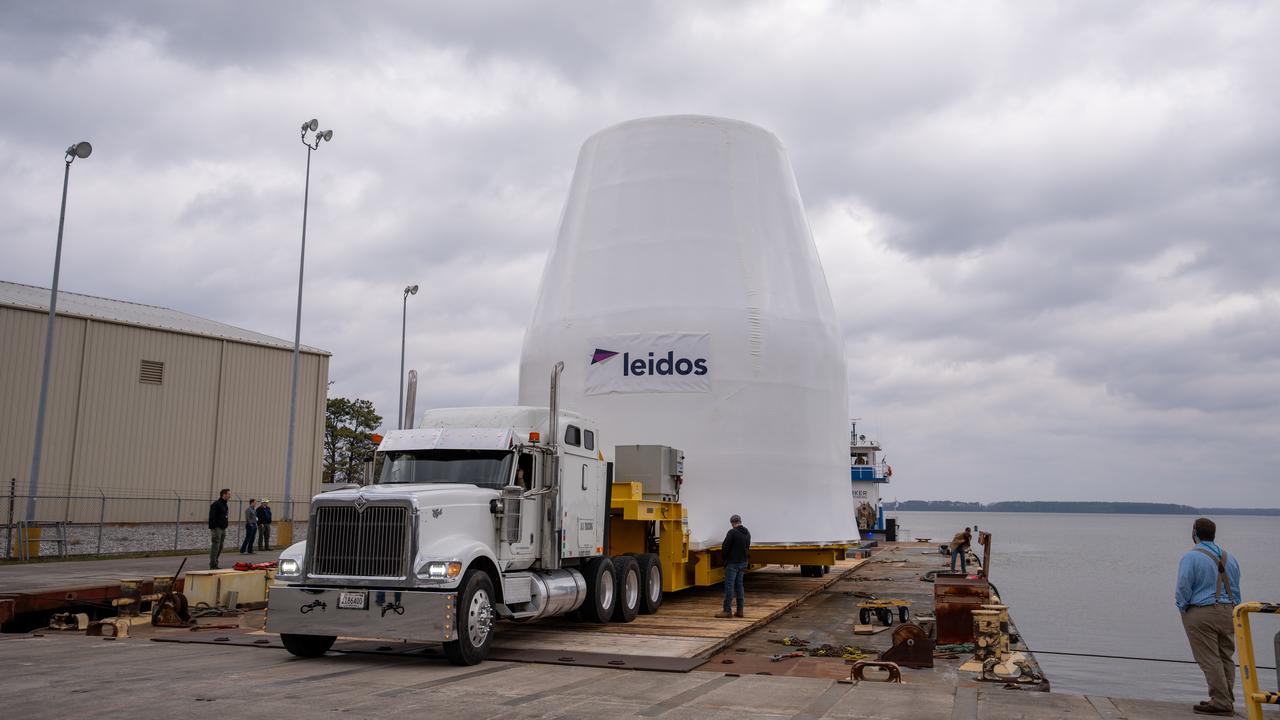
These photos and videos show how crews guided a test version of the universal stage adapter for NASA’s more powerful version of its SLS (Space Launch System) rocket to Building 4619 at the agency’s Marshall Space Flight Center in Huntsville, Alabama, Feb. 22. Built by Leidos, the lead contractor for the universal stage adapter, crews transported the hardware from a Leidos facility in Decatur, Alabama, the same day. The universal stage adapter will connect the SLS rocket’s upgraded in-space propulsion stage, called the exploration upper stage, to NASA’s Orion spacecraft as part of the evolved Block 1B configuration of the SLS rocket. It will also serve as a compartment capable of accommodating large payloads, such as modules or other exploration spacecraft. In Building 4619’s Load Test Annex High Bay at Marshall, the development test article will first undergo modal testing that will shake the hardware to validate dynamic models. Later, during ultimate load testing, force will be applied vertically and to the sides of the hardware. Unlike the flight hardware, the development test article has flaws intentionally included in its design, which will help engineers verity that the flight adapter can withstand the extreme forces it will face during launch and flight.
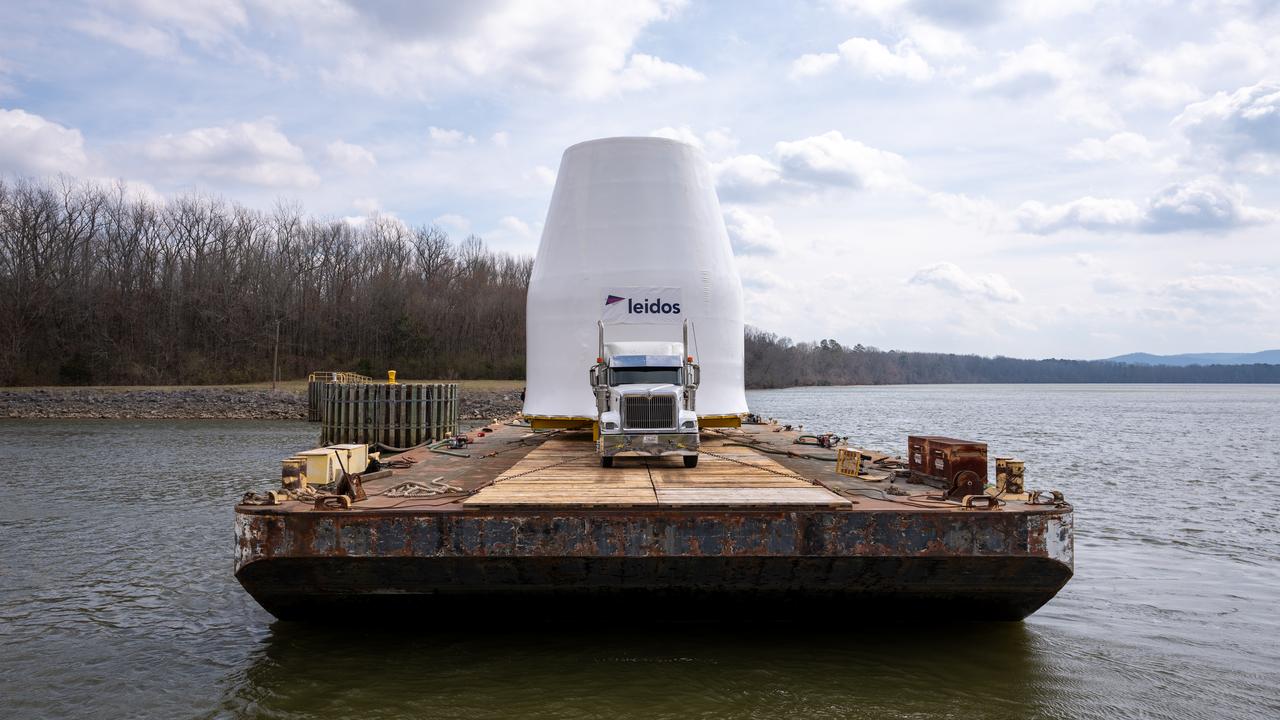
These photos and videos show how crews guided a test version of the universal stage adapter for NASA’s more powerful version of its SLS (Space Launch System) rocket to Building 4619 at the agency’s Marshall Space Flight Center in Huntsville, Alabama, Feb. 22. Built by Leidos, the lead contractor for the universal stage adapter, crews transported the hardware from a Leidos facility in Decatur, Alabama, the same day. The universal stage adapter will connect the SLS rocket’s upgraded in-space propulsion stage, called the exploration upper stage, to NASA’s Orion spacecraft as part of the evolved Block 1B configuration of the SLS rocket. It will also serve as a compartment capable of accommodating large payloads, such as modules or other exploration spacecraft. In Building 4619’s Load Test Annex High Bay at Marshall, the development test article will first undergo modal testing that will shake the hardware to validate dynamic models. Later, during ultimate load testing, force will be applied vertically and to the sides of the hardware. Unlike the flight hardware, the development test article has flaws intentionally included in its design, which will help engineers verity that the flight adapter can withstand the extreme forces it will face during launch and flight.

These photos and videos show how crews guided a test version of the universal stage adapter for NASA’s more powerful version of its SLS (Space Launch System) rocket to Building 4619 at the agency’s Marshall Space Flight Center in Huntsville, Alabama, Feb. 22. Built by Leidos, the lead contractor for the universal stage adapter, crews transported the hardware from a Leidos facility in Decatur, Alabama, the same day. The universal stage adapter will connect the SLS rocket’s upgraded in-space propulsion stage, called the exploration upper stage, to NASA’s Orion spacecraft as part of the evolved Block 1B configuration of the SLS rocket. It will also serve as a compartment capable of accommodating large payloads, such as modules or other exploration spacecraft. In Building 4619’s Load Test Annex High Bay at Marshall, the development test article will first undergo modal testing that will shake the hardware to validate dynamic models. Later, during ultimate load testing, force will be applied vertically and to the sides of the hardware. Unlike the flight hardware, the development test article has flaws intentionally included in its design, which will help engineers verity that the flight adapter can withstand the extreme forces it will face during launch and flight.
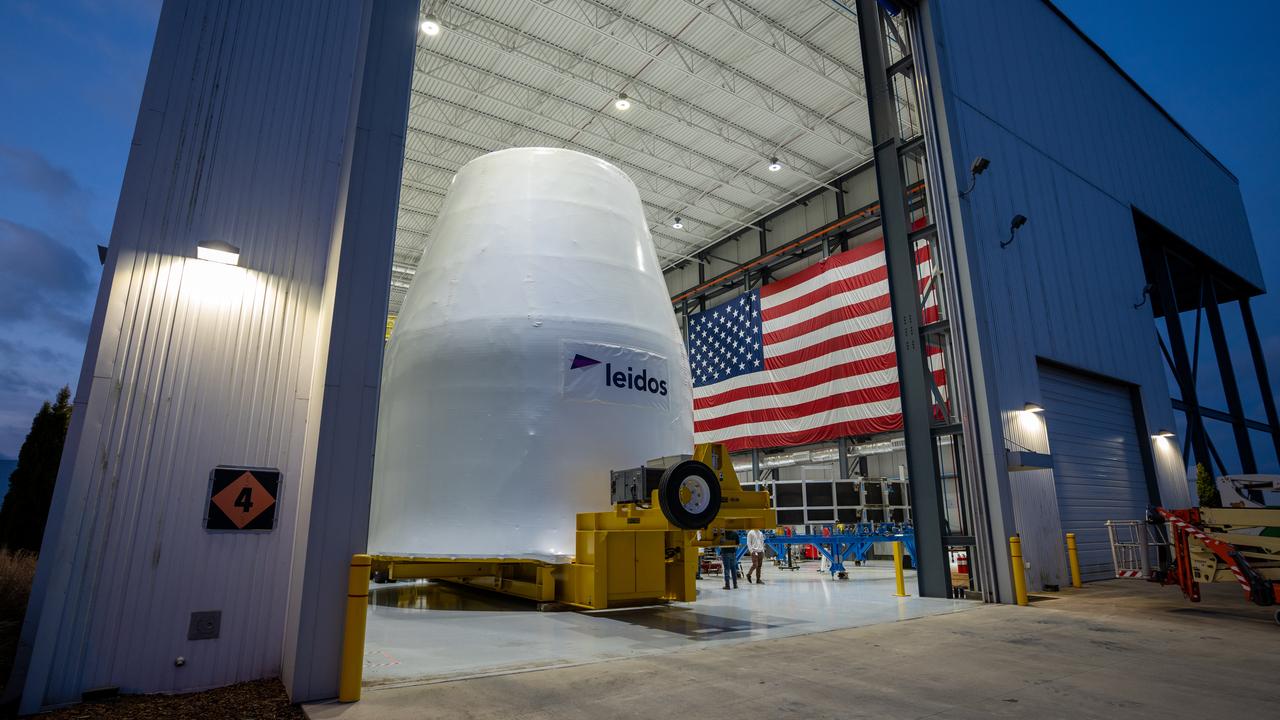
These photos and videos show how crews guided a test version of the universal stage adapter for NASA’s more powerful version of its SLS (Space Launch System) rocket to Building 4619 at the agency’s Marshall Space Flight Center in Huntsville, Alabama, Feb. 22. Built by Leidos, the lead contractor for the universal stage adapter, crews transported the hardware from a Leidos facility in Decatur, Alabama, the same day. The universal stage adapter will connect the SLS rocket’s upgraded in-space propulsion stage, called the exploration upper stage, to NASA’s Orion spacecraft as part of the evolved Block 1B configuration of the SLS rocket. It will also serve as a compartment capable of accommodating large payloads, such as modules or other exploration spacecraft. In Building 4619’s Load Test Annex High Bay at Marshall, the development test article will first undergo modal testing that will shake the hardware to validate dynamic models. Later, during ultimate load testing, force will be applied vertically and to the sides of the hardware. Unlike the flight hardware, the development test article has flaws intentionally included in its design, which will help engineers verity that the flight adapter can withstand the extreme forces it will face during launch and flight.
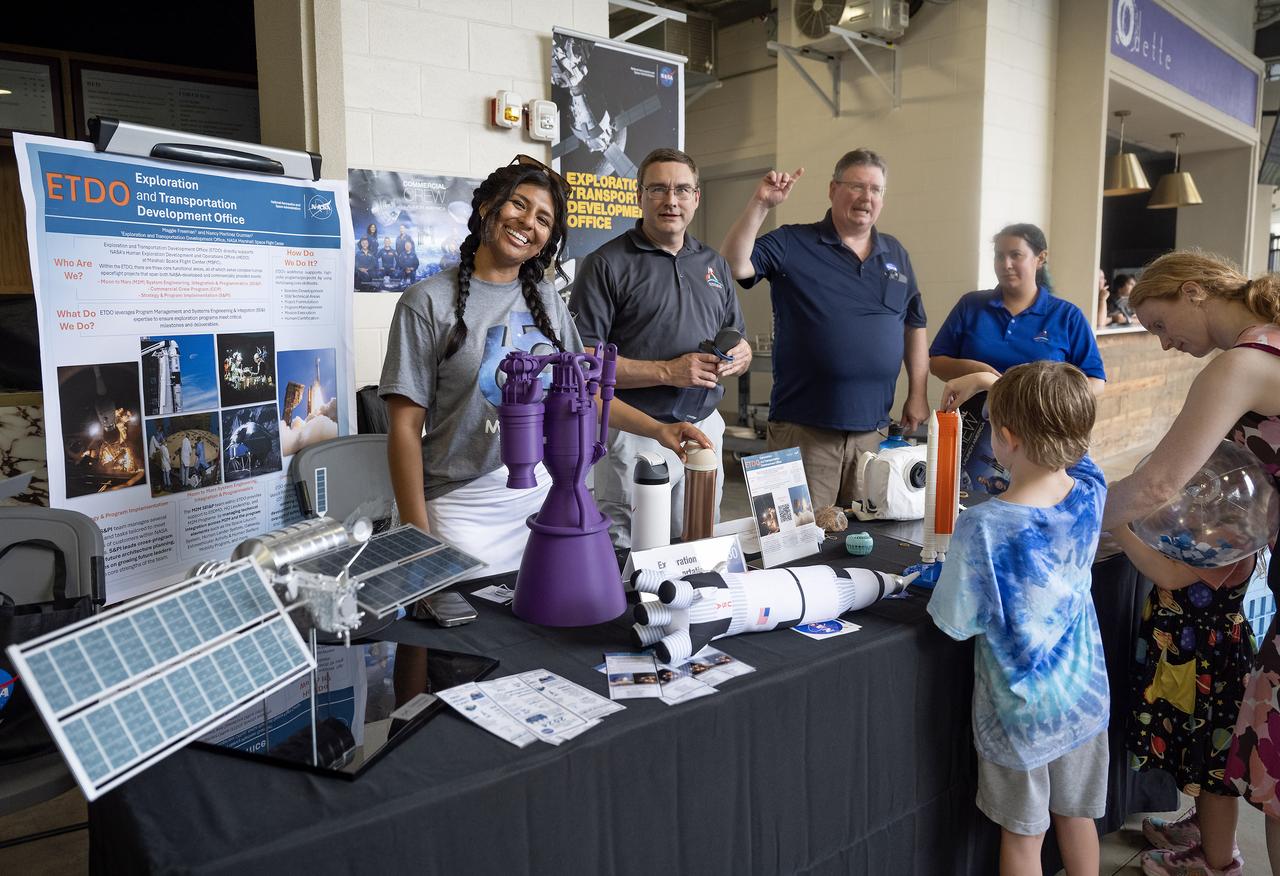
NASA’s Marshall Space Flight Center celebrated the 65th anniversary of its founding on July 19, 2025, with a free, public celebration at The Orion Amphitheater in Huntsville, Alabama. Thousands of team members, families, and “Rocket City” residents took part, enjoying live music, games, food, and exhibits commemorating Marshall’s legacy of ingenuity and service to the U.S. space program. During a program for the celebration, guests heard remarks from Joseph Pelfrey, director of NASA Marshall, Huntsville Mayor Tommy Battle, and Kamerra Liles, assistant general manager of The Orion Amphitheater, followed by Pelfrey sharing a new video overview about Marshall. The program continued with a video presentation from NASA astronauts from the Expedition 72 crew – which contributed more than 1,000 total hours of scientific studies on plant growth, stem cell growth for treating diseases, the resilience of microorganisms to the harsh space environment, and more on the International Space Station. NASA astronauts Suni Williams and Don Pettit, who served as space station commander and flight engineer, respectively, shared their experiences in space with the community and told the audience how vital Marshall’s on the ground support was to their mission success. Marshall has shaped and expanded human space exploration every decade since the NASA center opened its doors on July 1, 1960. The center’s civil service and contract workers built the nation’s flagship rockets, from the Saturn V to the SLS (Space Launch System), managed the space shuttle propulsion program, delivered the Chandra X-ray Observatory and critical elements of the International Space Station to orbit, and continue to spearhead numerous advances in science and engineering.
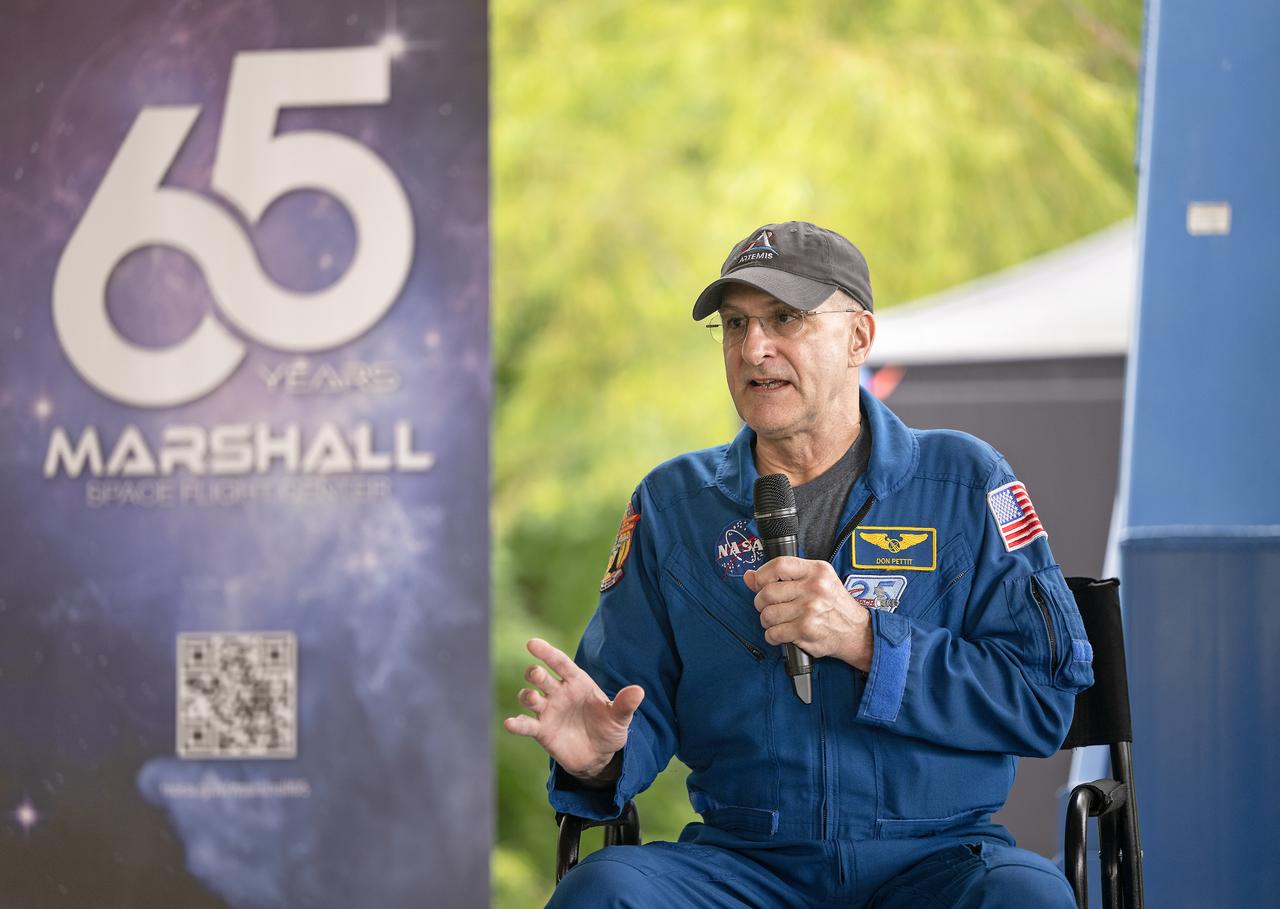
NASA’s Marshall Space Flight Center celebrated the 65th anniversary of its founding on July 19, 2025, with a free, public celebration at The Orion Amphitheater in Huntsville, Alabama. Thousands of team members, families, and “Rocket City” residents took part, enjoying live music, games, food, and exhibits commemorating Marshall’s legacy of ingenuity and service to the U.S. space program. During a program for the celebration, guests heard remarks from Joseph Pelfrey, director of NASA Marshall, Huntsville Mayor Tommy Battle, and Kamerra Liles, assistant general manager of The Orion Amphitheater, followed by Pelfrey sharing a new video overview about Marshall. The program continued with a video presentation from NASA astronauts from the Expedition 72 crew – which contributed more than 1,000 total hours of scientific studies on plant growth, stem cell growth for treating diseases, the resilience of microorganisms to the harsh space environment, and more on the International Space Station. NASA astronauts Suni Williams and Don Pettit, who served as space station commander and flight engineer, respectively, shared their experiences in space with the community and told the audience how vital Marshall’s on the ground support was to their mission success. Marshall has shaped and expanded human space exploration every decade since the NASA center opened its doors on July 1, 1960. The center’s civil service and contract workers built the nation’s flagship rockets, from the Saturn V to the SLS (Space Launch System), managed the space shuttle propulsion program, delivered the Chandra X-ray Observatory and critical elements of the International Space Station to orbit, and continue to spearhead numerous advances in science and engineering.
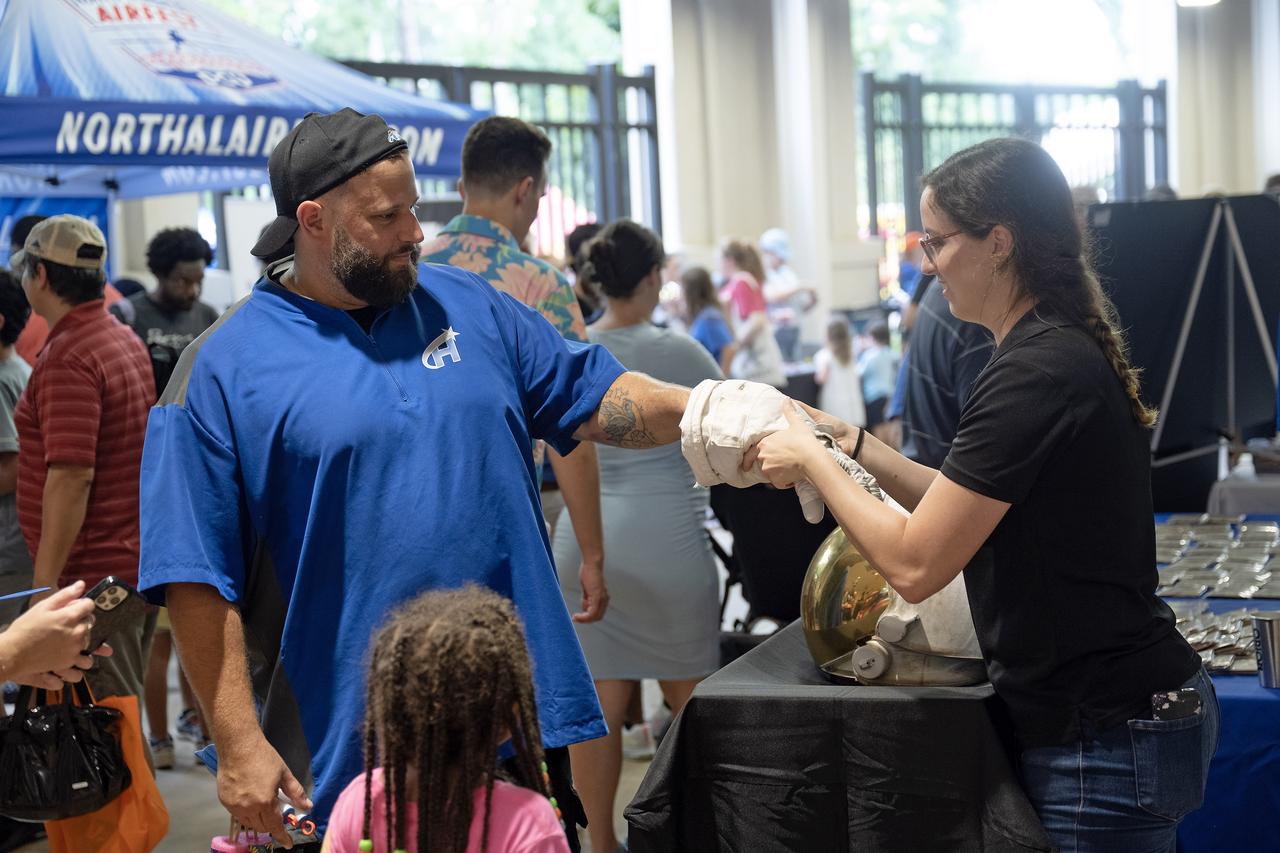
NASA’s Marshall Space Flight Center celebrated the 65th anniversary of its founding on July 19, 2025, with a free, public celebration at The Orion Amphitheater in Huntsville, Alabama. Thousands of team members, families, and “Rocket City” residents took part, enjoying live music, games, food, and exhibits commemorating Marshall’s legacy of ingenuity and service to the U.S. space program. During a program for the celebration, guests heard remarks from Joseph Pelfrey, director of NASA Marshall, Huntsville Mayor Tommy Battle, and Kamerra Liles, assistant general manager of The Orion Amphitheater, followed by Pelfrey sharing a new video overview about Marshall. The program continued with a video presentation from NASA astronauts from the Expedition 72 crew – which contributed more than 1,000 total hours of scientific studies on plant growth, stem cell growth for treating diseases, the resilience of microorganisms to the harsh space environment, and more on the International Space Station. NASA astronauts Suni Williams and Don Pettit, who served as space station commander and flight engineer, respectively, shared their experiences in space with the community and told the audience how vital Marshall’s on the ground support was to their mission success. Marshall has shaped and expanded human space exploration every decade since the NASA center opened its doors on July 1, 1960. The center’s civil service and contract workers built the nation’s flagship rockets, from the Saturn V to the SLS (Space Launch System), managed the space shuttle propulsion program, delivered the Chandra X-ray Observatory and critical elements of the International Space Station to orbit, and continue to spearhead numerous advances in science and engineering.
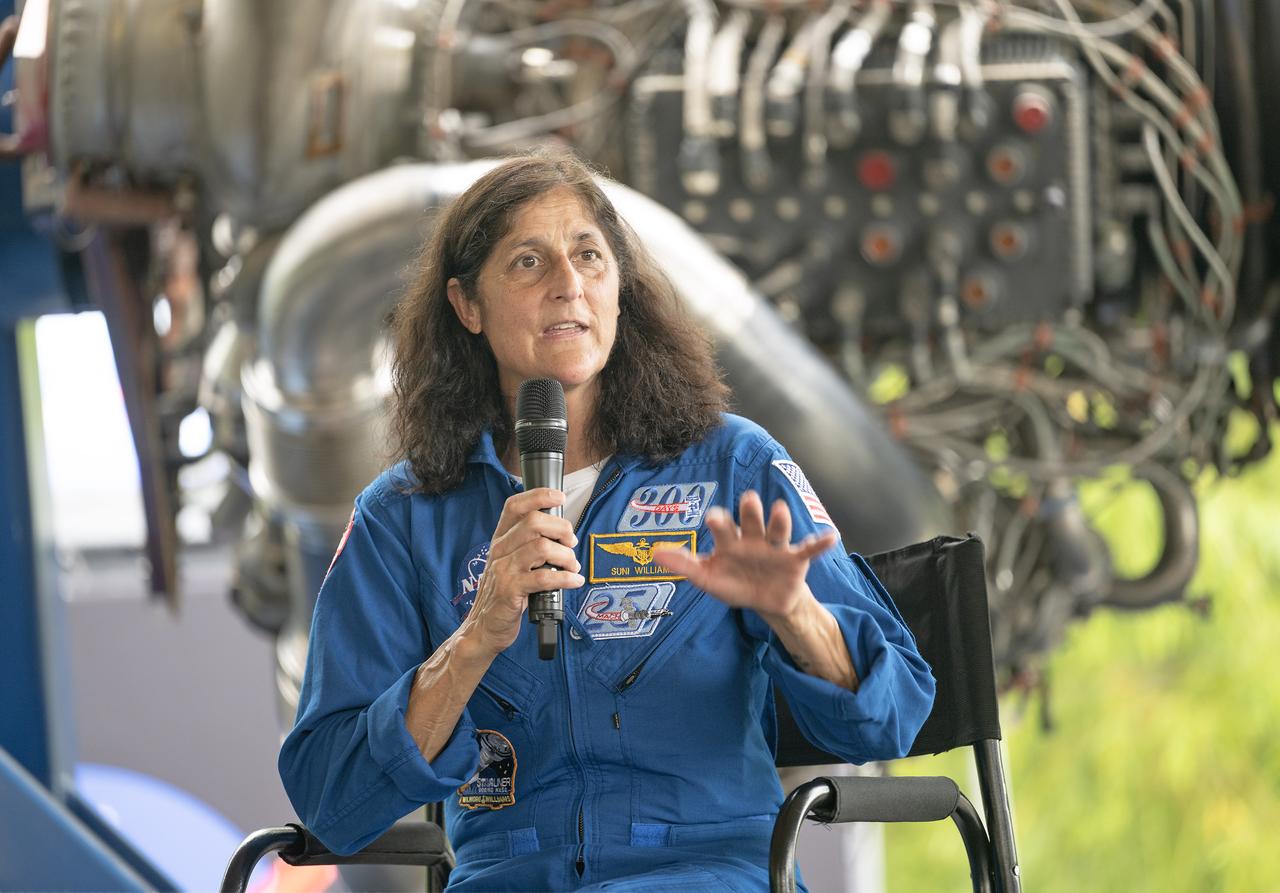
NASA’s Marshall Space Flight Center celebrated the 65th anniversary of its founding on July 19, 2025, with a free, public celebration at The Orion Amphitheater in Huntsville, Alabama. Thousands of team members, families, and “Rocket City” residents took part, enjoying live music, games, food, and exhibits commemorating Marshall’s legacy of ingenuity and service to the U.S. space program. During a program for the celebration, guests heard remarks from Joseph Pelfrey, director of NASA Marshall, Huntsville Mayor Tommy Battle, and Kamerra Liles, assistant general manager of The Orion Amphitheater, followed by Pelfrey sharing a new video overview about Marshall. The program continued with a video presentation from NASA astronauts from the Expedition 72 crew – which contributed more than 1,000 total hours of scientific studies on plant growth, stem cell growth for treating diseases, the resilience of microorganisms to the harsh space environment, and more on the International Space Station. NASA astronauts Suni Williams and Don Pettit, who served as space station commander and flight engineer, respectively, shared their experiences in space with the community and told the audience how vital Marshall’s on the ground support was to their mission success. Marshall has shaped and expanded human space exploration every decade since the NASA center opened its doors on July 1, 1960. The center’s civil service and contract workers built the nation’s flagship rockets, from the Saturn V to the SLS (Space Launch System), managed the space shuttle propulsion program, delivered the Chandra X-ray Observatory and critical elements of the International Space Station to orbit, and continue to spearhead numerous advances in science and engineering.
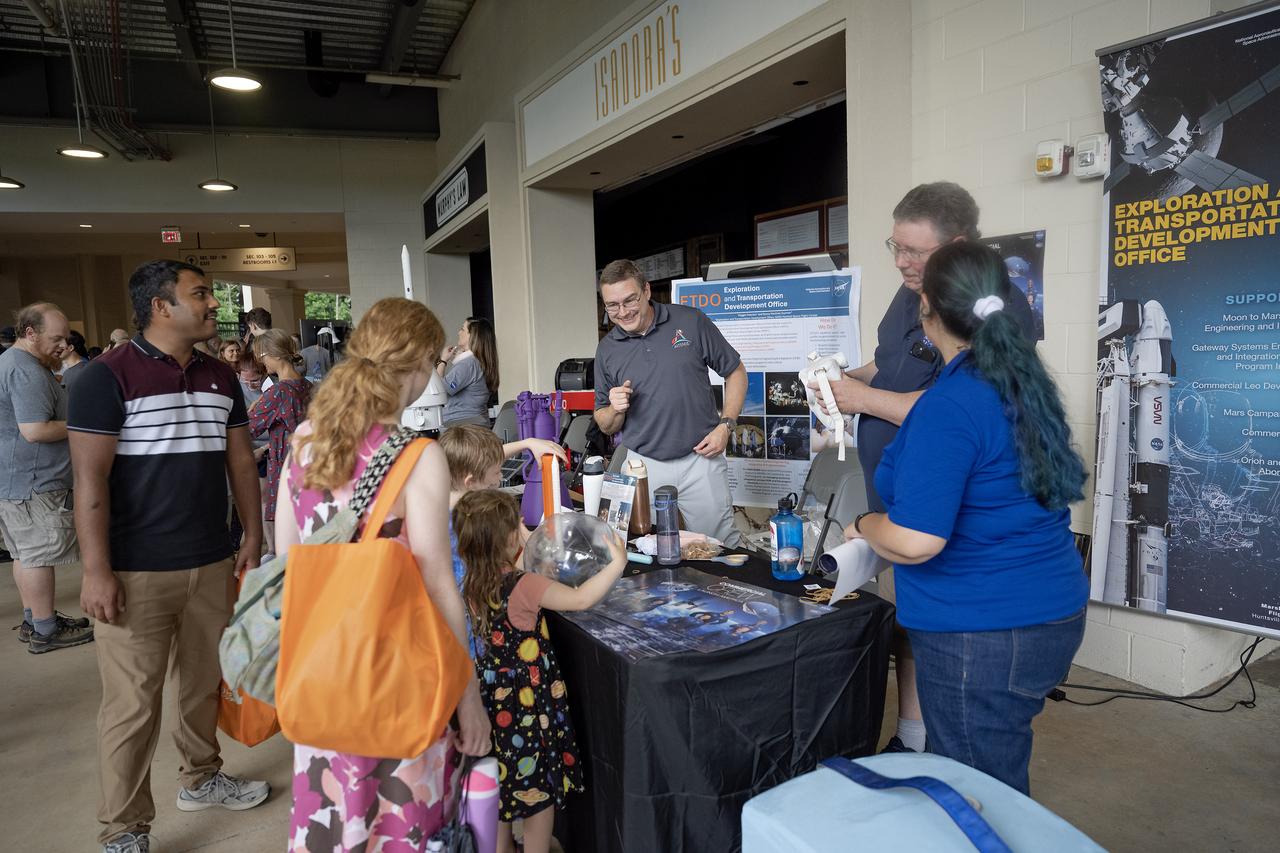
NASA’s Marshall Space Flight Center celebrated the 65th anniversary of its founding on July 19, 2025, with a free, public celebration at The Orion Amphitheater in Huntsville, Alabama. Thousands of team members, families, and “Rocket City” residents took part, enjoying live music, games, food, and exhibits commemorating Marshall’s legacy of ingenuity and service to the U.S. space program. During a program for the celebration, guests heard remarks from Joseph Pelfrey, director of NASA Marshall, Huntsville Mayor Tommy Battle, and Kamerra Liles, assistant general manager of The Orion Amphitheater, followed by Pelfrey sharing a new video overview about Marshall. The program continued with a video presentation from NASA astronauts from the Expedition 72 crew – which contributed more than 1,000 total hours of scientific studies on plant growth, stem cell growth for treating diseases, the resilience of microorganisms to the harsh space environment, and more on the International Space Station. NASA astronauts Suni Williams and Don Pettit, who served as space station commander and flight engineer, respectively, shared their experiences in space with the community and told the audience how vital Marshall’s on the ground support was to their mission success. Marshall has shaped and expanded human space exploration every decade since the NASA center opened its doors on July 1, 1960. The center’s civil service and contract workers built the nation’s flagship rockets, from the Saturn V to the SLS (Space Launch System), managed the space shuttle propulsion program, delivered the Chandra X-ray Observatory and critical elements of the International Space Station to orbit, and continue to spearhead numerous advances in science and engineering.
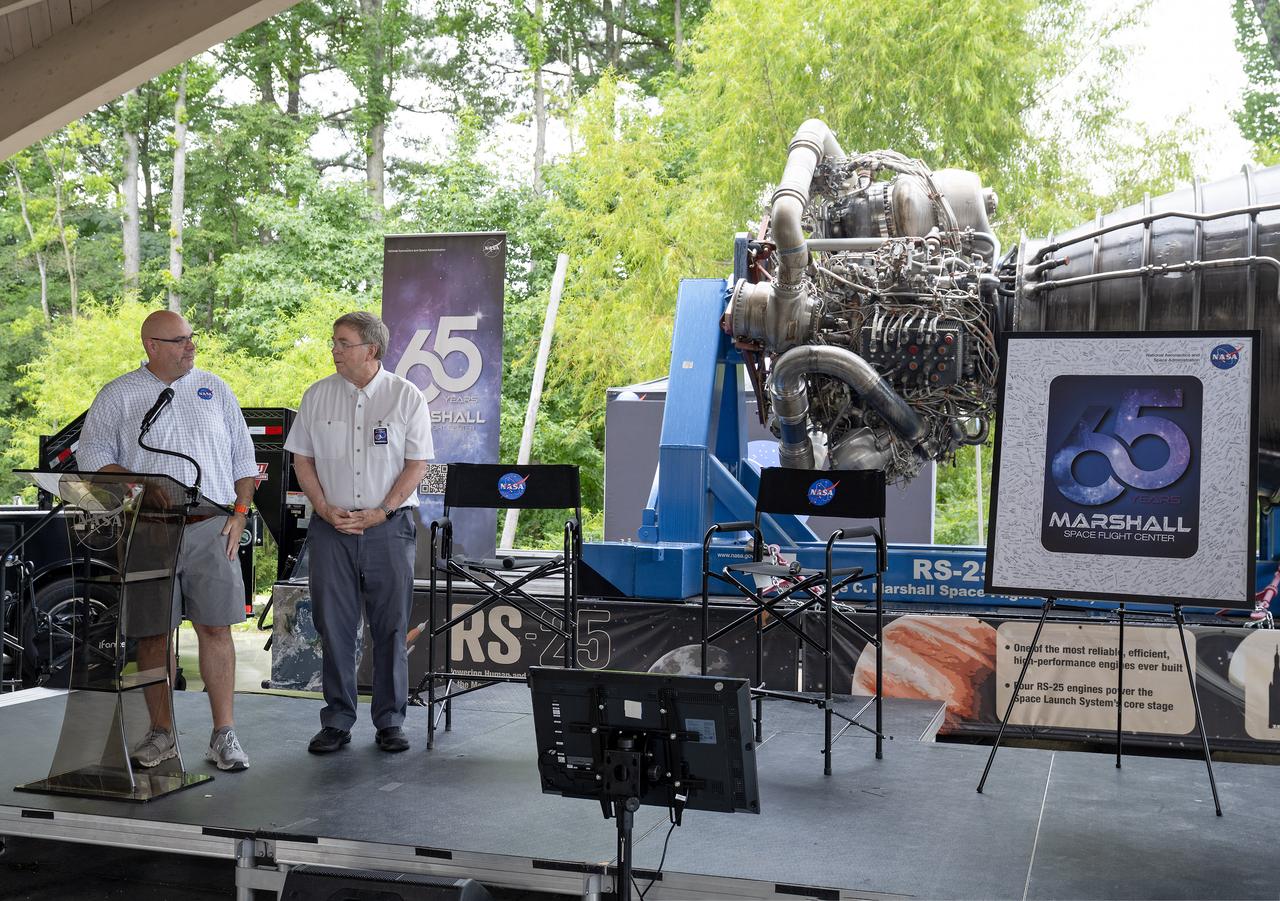
NASA’s Marshall Space Flight Center celebrated the 65th anniversary of its founding on July 19, 2025, with a free, public celebration at The Orion Amphitheater in Huntsville, Alabama. Thousands of team members, families, and “Rocket City” residents took part, enjoying live music, games, food, and exhibits commemorating Marshall’s legacy of ingenuity and service to the U.S. space program. During a program for the celebration, guests heard remarks from Joseph Pelfrey, director of NASA Marshall, Huntsville Mayor Tommy Battle, and Kamerra Liles, assistant general manager of The Orion Amphitheater, followed by Pelfrey sharing a new video overview about Marshall. The program continued with a video presentation from NASA astronauts from the Expedition 72 crew – which contributed more than 1,000 total hours of scientific studies on plant growth, stem cell growth for treating diseases, the resilience of microorganisms to the harsh space environment, and more on the International Space Station. NASA astronauts Suni Williams and Don Pettit, who served as space station commander and flight engineer, respectively, shared their experiences in space with the community and told the audience how vital Marshall’s on the ground support was to their mission success. Marshall has shaped and expanded human space exploration every decade since the NASA center opened its doors on July 1, 1960. The center’s civil service and contract workers built the nation’s flagship rockets, from the Saturn V to the SLS (Space Launch System), managed the space shuttle propulsion program, delivered the Chandra X-ray Observatory and critical elements of the International Space Station to orbit, and continue to spearhead numerous advances in science and engineering.
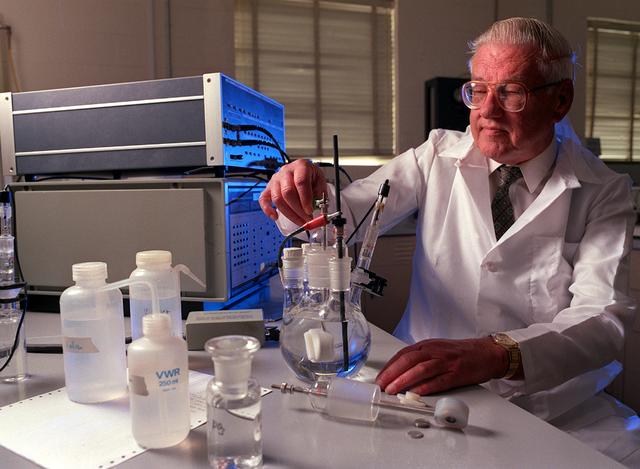
Marshall researcher studies hydrogen diffusion and corrosion effects on metals.
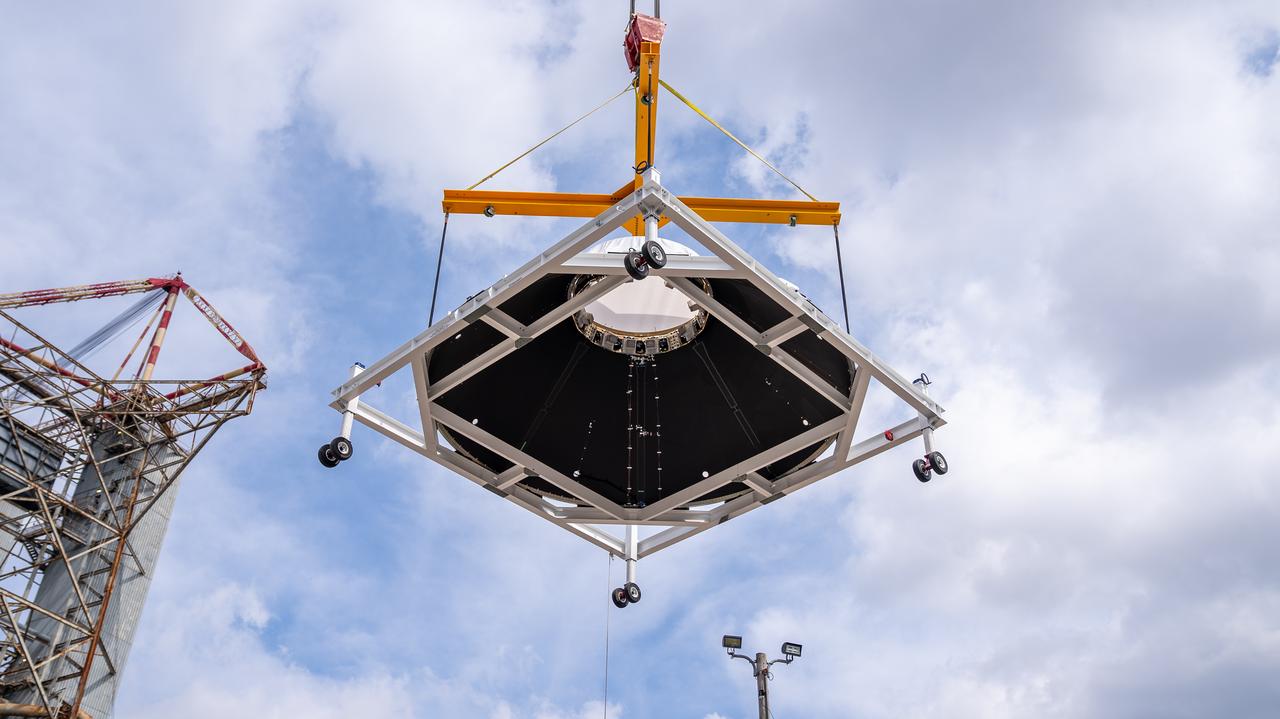
These photos and videos show how crews at NASA’s Marshall Space Flight Center in Huntsville, Alabama, moved and installed the payload adapter that will be used in the Block 1B configuration of the SLS (Space Launch System) rocket from Building 4708, where it was manufactured, into Structural Test Stand 4697 at NASA’s Marshall Space Flight Center on March 13. Teams at Marshall will begin structural testing the engineering development unit of the payload adapter – an exact replica of the flight version of the hardware – this spring. The cone-shaped payload adapter is about 8.5 feet tall and features two metal rings and eight composite panels. The adapter, which will debut on NASA’s Artemis IV mission, is an evolution from the Orion stage adapter used in the Block 1 configuration of the first three Artemis missions. It will be housed inside the universal stage adapter atop the rocket’s more powerful in-space stage, called the exploration upper stage. The payload adapter, like the launch vehicle stage adapter and the Orion stage adapter, is fully manufactured and tested at Marshall, which manages the SLS Program. NASA is working to land the first woman, first person of color, and its first international partner astronaut on the Moon under Artemis. SLS is part of NASA’s backbone for deep space exploration, along with the Orion spacecraft and Gateway in orbit around the Moon and commercial human landing systems, next-generational spacesuits, and rovers on the lunar surface. SLS is the only rocket that can send Orion, astronauts, and supplies to the Moon in a single launch.
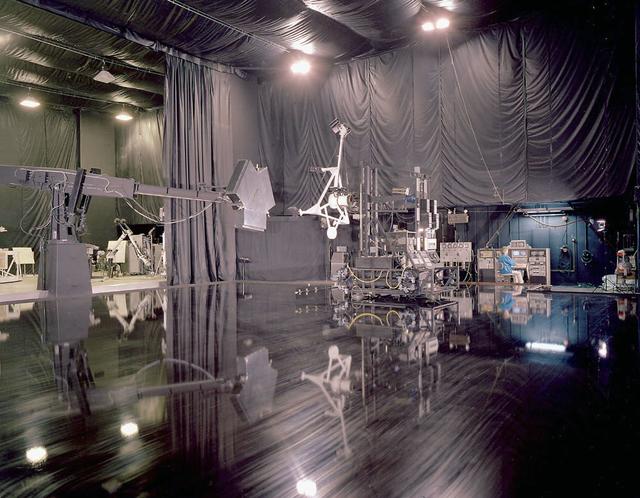
Marshall employees conduct tests on the simulated rendezvous docking mechanism (SRDM)as depicted in this photo of the flat floor area in building 4619.
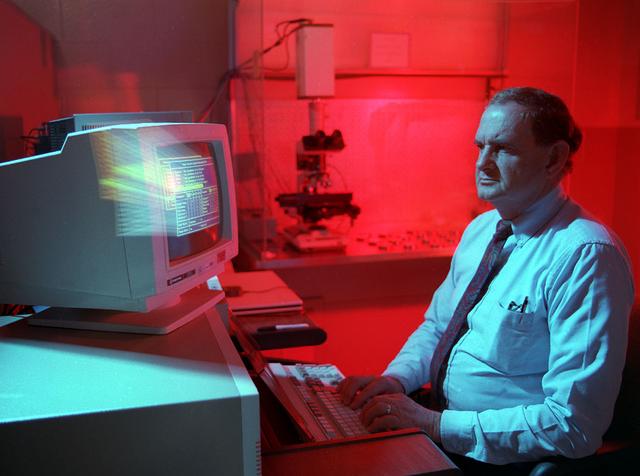
A NASA scientist operates the image analyzer to determine if telescope mirrors have become contaminated in the Materials and Processes lab at Marshall.
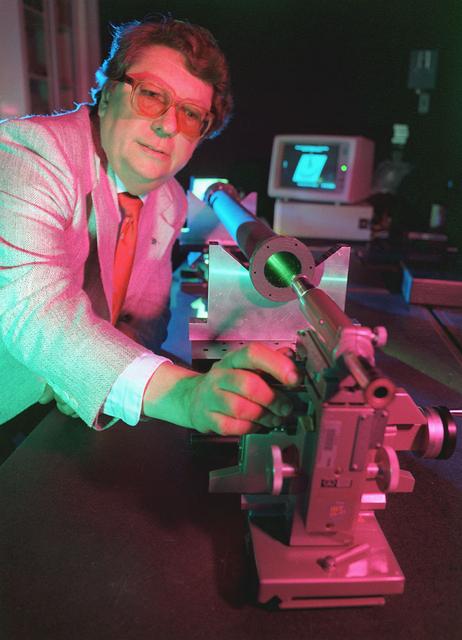
Marshall's 1992 Inventor of the Year demonstrates his multi-layer water window imaging x-ray microscope.

Prior to the commencement of Apollo 11th's 30th arniversary festivities at Marshall Space Flight Center, visiting Saturn astronauts take a tour of the Center. Pictured are (L/R): Dick Gordon, Owen Garriott and Edgar Mitchell
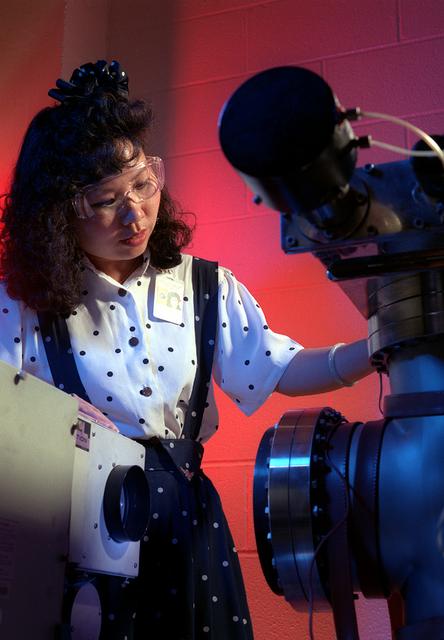
A pigment (phthalocyanine) is studied at the Marshall Materials and Processes Lab. The pigment has the ability to protect spacecraft against the harmful effects of the Sun's ultraviolet rays, and to increase the efficiency and life of solar cells.
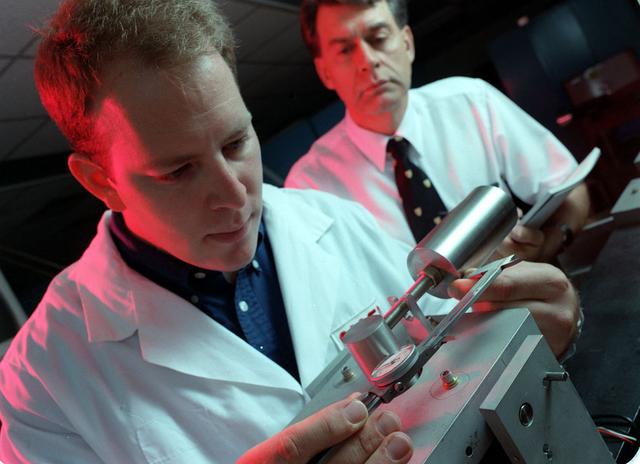
Marshall researchers, in the Astrionics lab, study rotating unbalanced mass devices. These require less power, and are lighter than current devices used for scanning images, a slice at a time. They have a wide range of space-based applications.
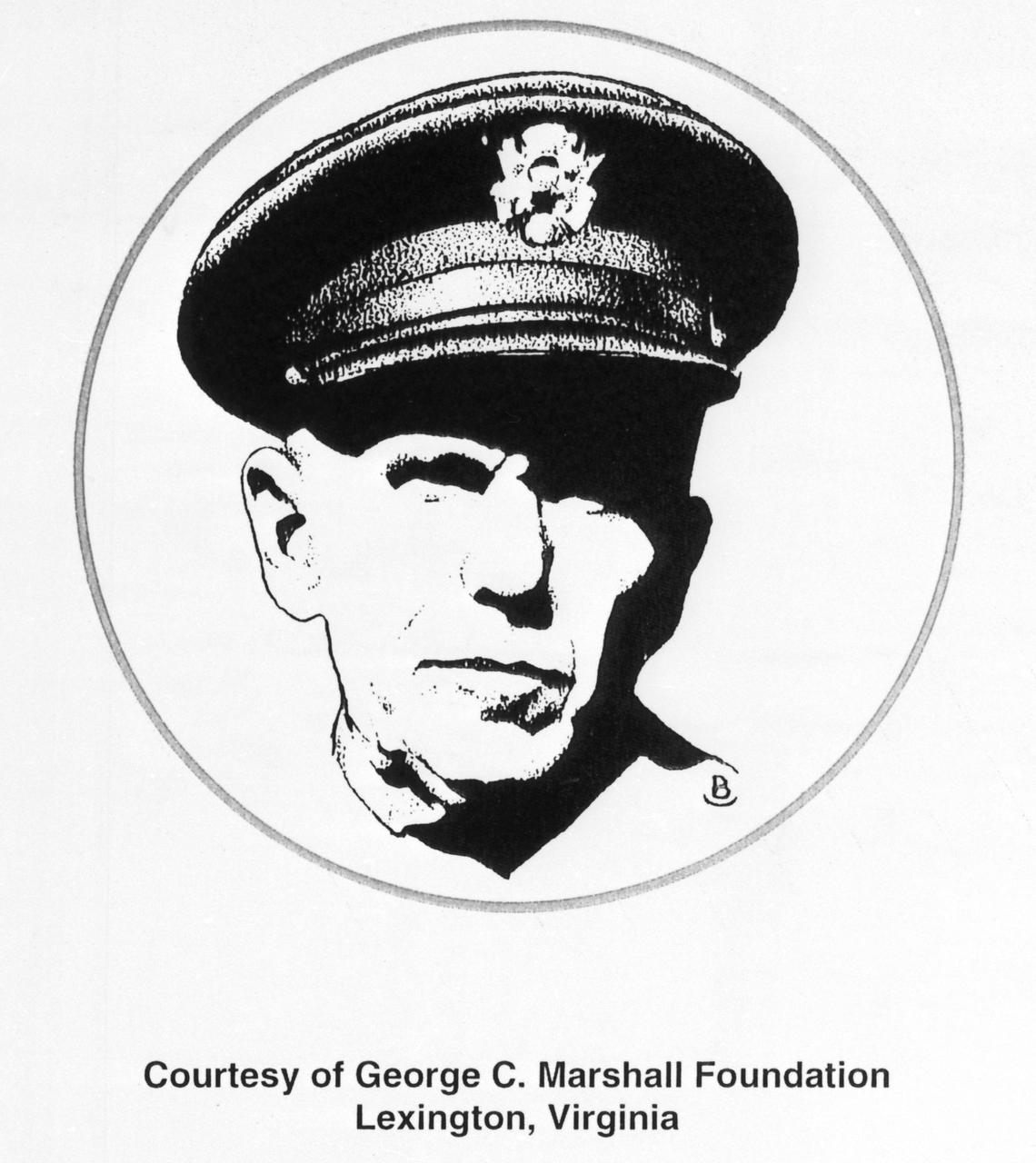
The Marshall Space Flight Center, a NASA field installation, was established at Huntsville, Alabama, in 1960. The Center was named in honor of General George C. Marshall, the Army Chief of Staff during World War II, Secretary of State, and Nobel Prize Wirner for his world-renowned Marshall Plan.
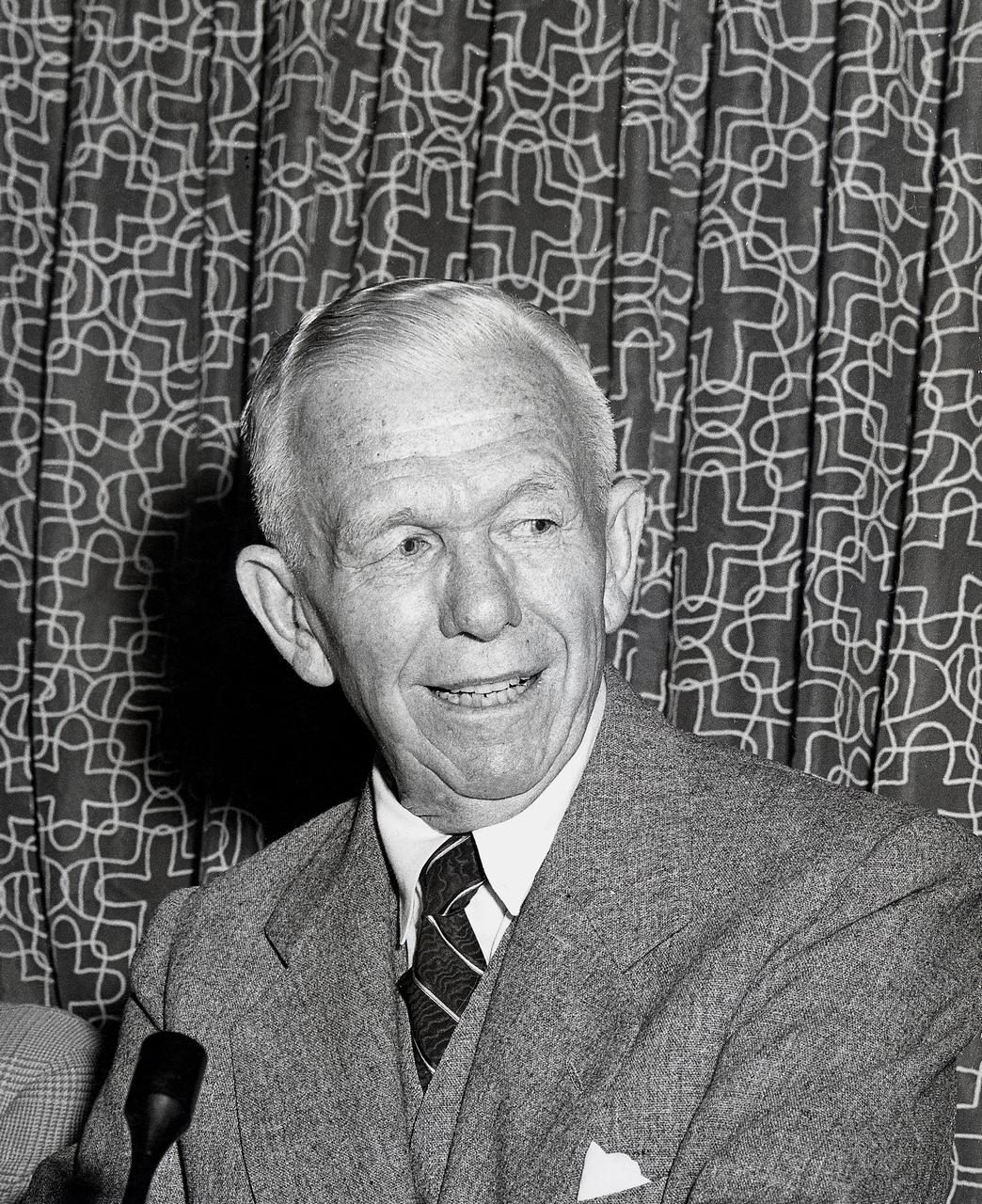
The Marshall Space Flight Center, a NASA field installation, was established at Huntsville, Alabama, in 1960. The Center was named in honor of General George C. Marshall, the Army Chief of Staff during World War II, Secretary of State, and Nobel Prize Wirner for his world-renowned Marshall Plan.
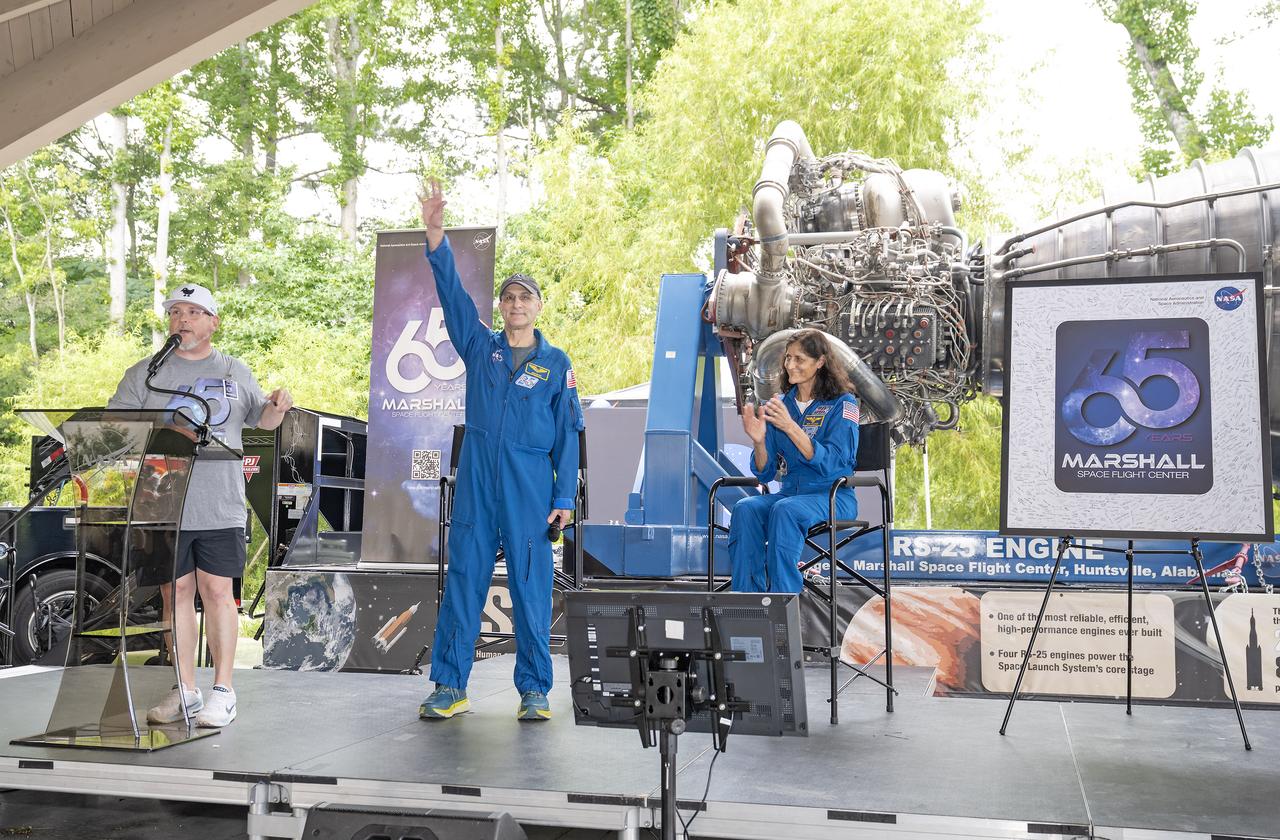
NASA’s Marshall Space Flight Center celebrated the 65th anniversary of its founding on July 19, 2025, with a free, public celebration at The Orion Amphitheater in Huntsville, Alabama. Thousands of team members, families, and “Rocket City” residents took part, enjoying live music, games, food, and exhibits commemorating Marshall’s legacy of ingenuity and service to the U.S. space program. During a program for the celebration, guests heard remarks from Joseph Pelfrey, director of NASA Marshall, Huntsville Mayor Tommy Battle, and Kamerra Liles, assistant general manager of The Orion Amphitheater, followed by Pelfrey sharing a new video overview about Marshall. The program continued with a video presentation from NASA astronauts from the Expedition 72 crew – which contributed more than 1,000 total hours of scientific studies on plant growth, stem cell growth for treating diseases, the resilience of microorganisms to the harsh space environment, and more on the International Space Station. NASA astronauts Suni Williams and Don Pettit, who served as space station commander and flight engineer, respectively, shared their experiences in space with the community and told the audience how vital Marshall’s on the ground support was to their mission success. Marshall has shaped and expanded human space exploration every decade since the NASA center opened its doors on July 1, 1960. The center’s civil service and contract workers built the nation’s flagship rockets, from the Saturn V to the SLS (Space Launch System), managed the space shuttle propulsion program, delivered the Chandra X-ray Observatory and critical elements of the International Space Station to orbit, and continue to spearhead numerous advances in science and engineering.
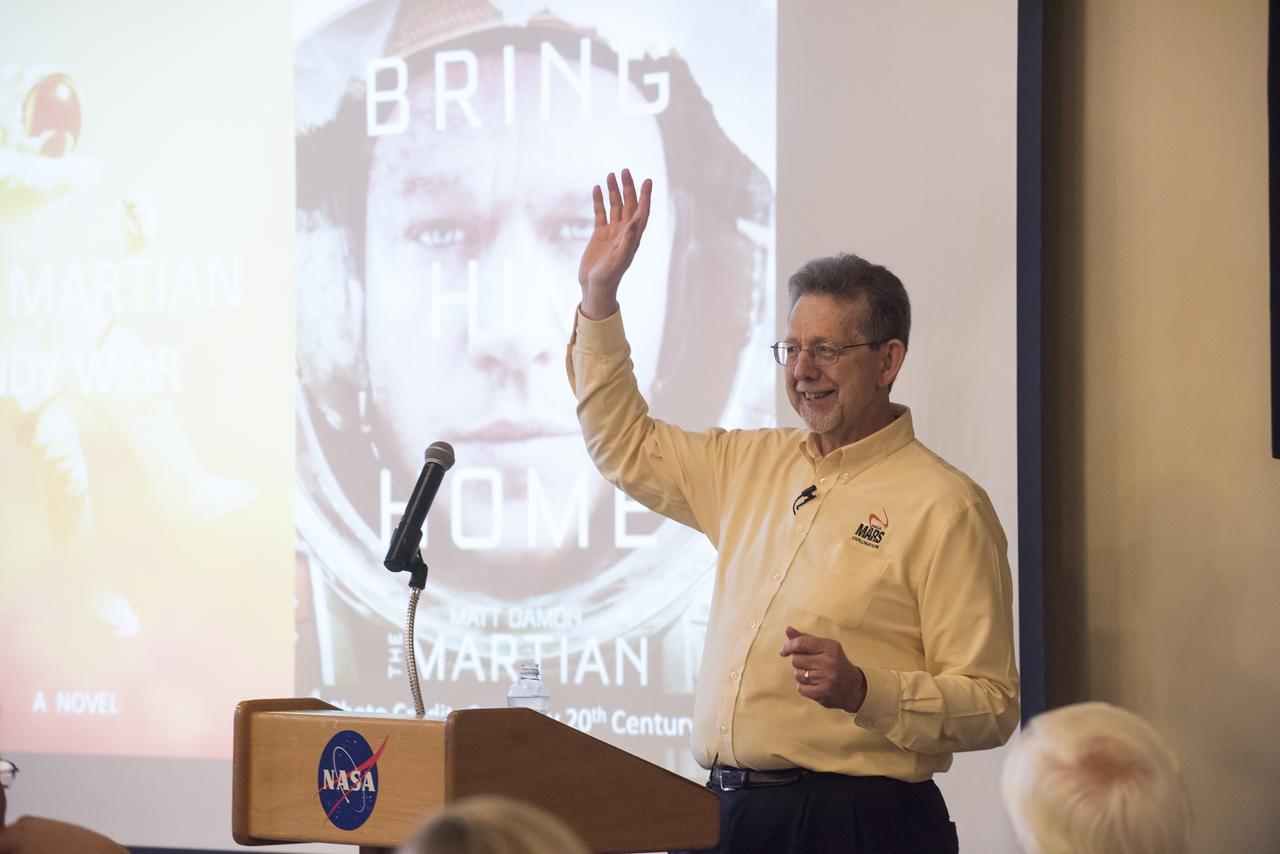
JIM GREEN, DIRECTOR OF PLANETARY SCIENCE AT NASA HEADQUARTERS, ADDRESSES MARSHALL TEAM MEMBERS DURING A JUNE 28 LUNCHEON HOSTED BY THE MARSHALL ASSOCIATION. OVER THE COURSE OF HIS 35-YEAR CAREER AT NASA, HE HAS SUPPORTED A DIVERSE ARRAY OF PLANETARY SCIENCE MISSIONS, AND RECENTLY SERVED AS SCIENCE ADVISOR FOR THE FILM ADAPTATION OF "THE MARTIAN." GREEN'S PRESENTATION WAS TITLED "THE MARTIAN: SCIENCE FICTION VS. SCIENCE FACT," IN WHICH HE DISCUSSED THE MOVIE AND THE NATION'S JOURNEY TO MARS. THE MARSHALL ASSOCIATION IS THE CENTER'S PROFESSIONAL, EMPLOYEE SERVICE ORGANIZATION.
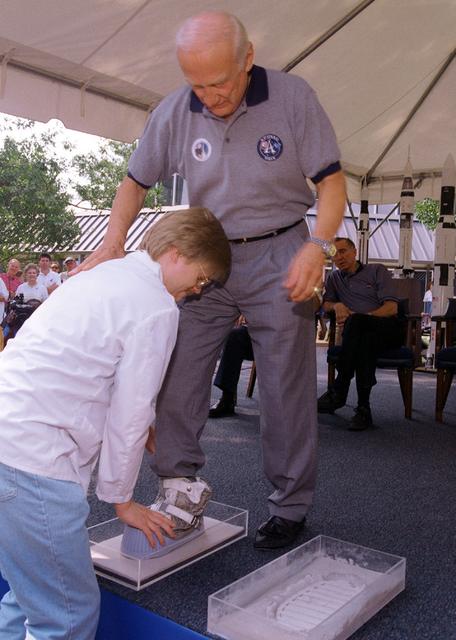
Apollo 11 Astronaut Buzz Aldrin has his footprints casted during the dedication ceremony of the rocket fountain at Building 4200 at Marshall Space Flight Center. The casts of Aldrin's footprints will be placed in the newly constructed Von Braun courtyard representing the accomplishments of the Apollo 11 lunar landing.
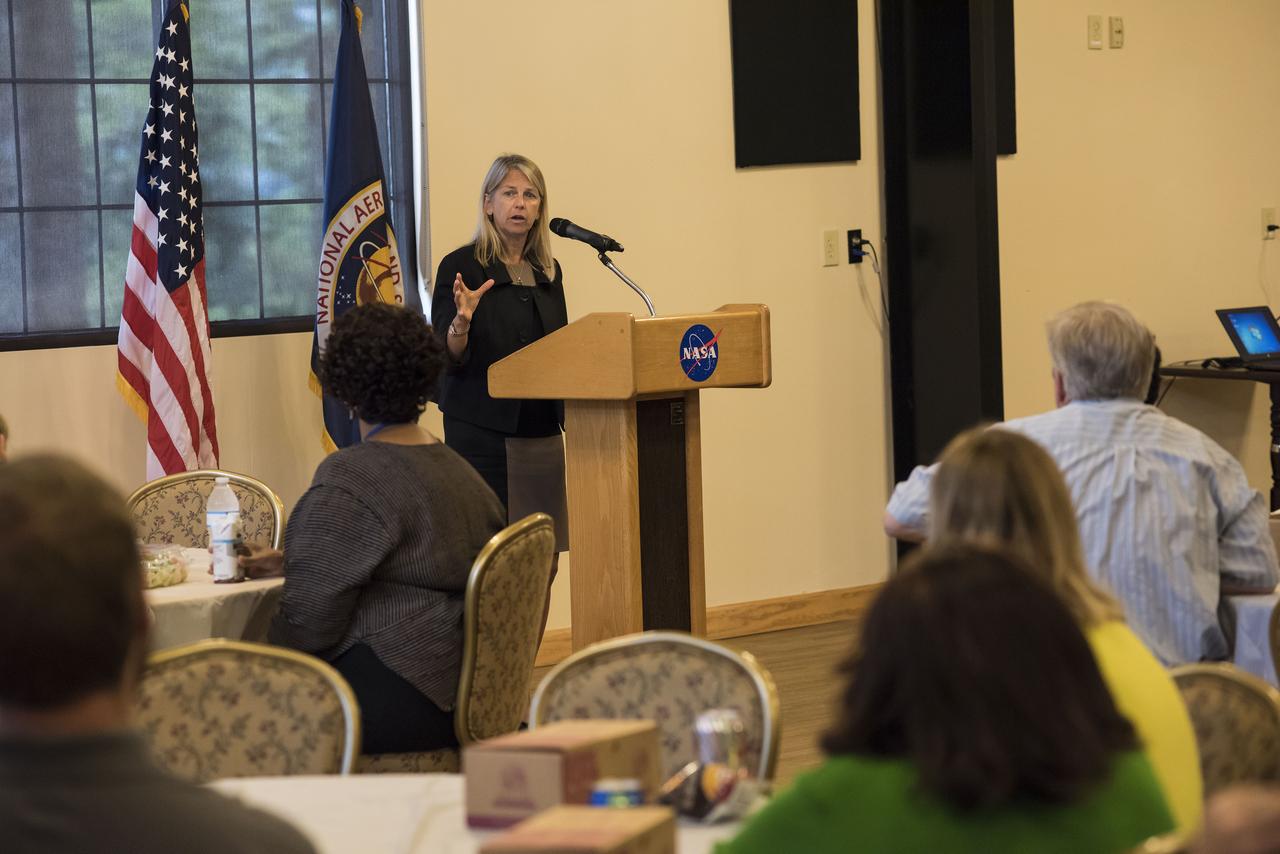
MARSHALL ASSOCIATION LUNCHEON WITH GUEST SPEAKER DR. DAVA NEWMAN, NASA DEPUTY ADMINISTRATOR. AUGUST 16, 2016.
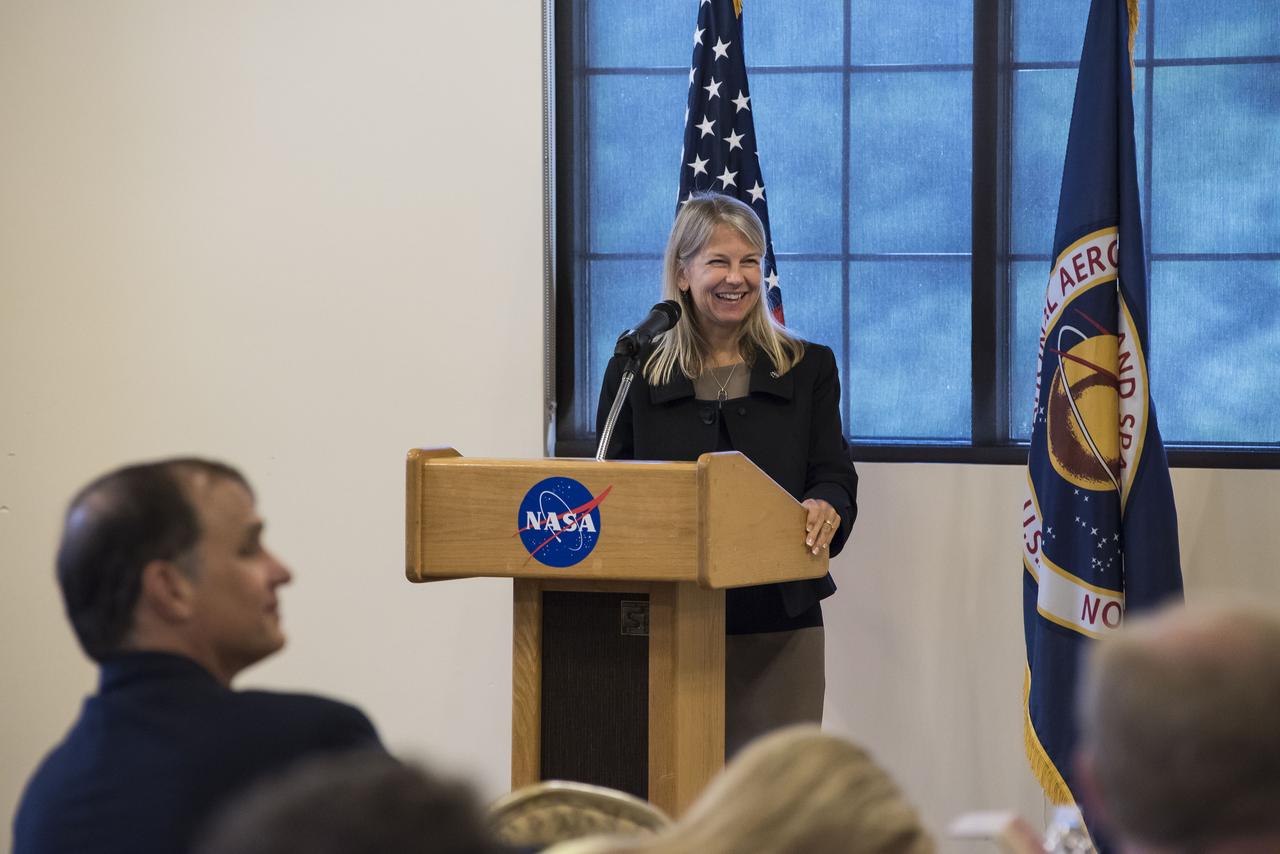
MARSHALL ASSOCIATION LUNCHEON WITH GUEST SPEAKER DR. DAVA NEWMAN, NASA DEPUTY ADMINISTRATOR. AUGUST 16, 2016.
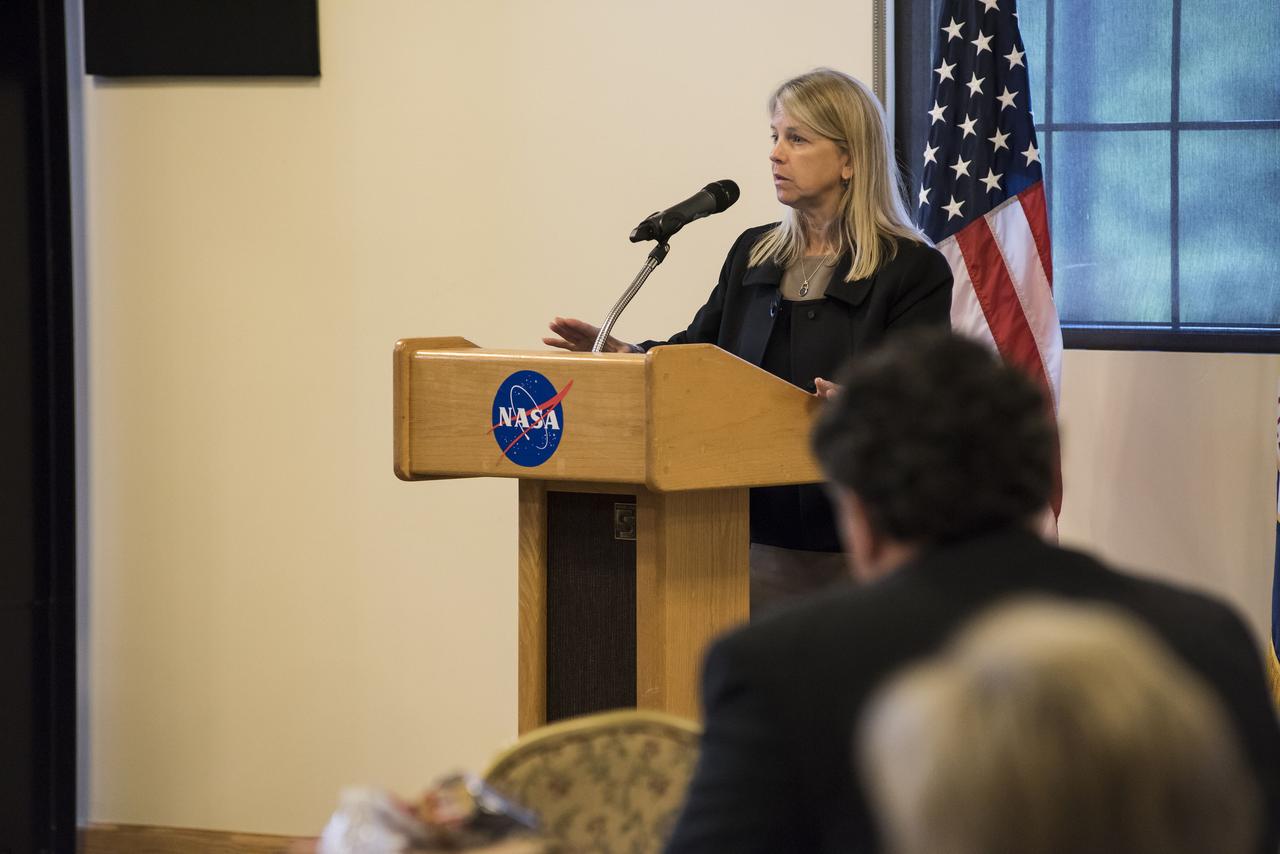
MARSHALL ASSOCIATION LUNCHEON WITH GUEST SPEAKER DR. DAVA NEWMAN, NASA DEPUTY ADMINISTRATOR. AUGUST 16, 2016.
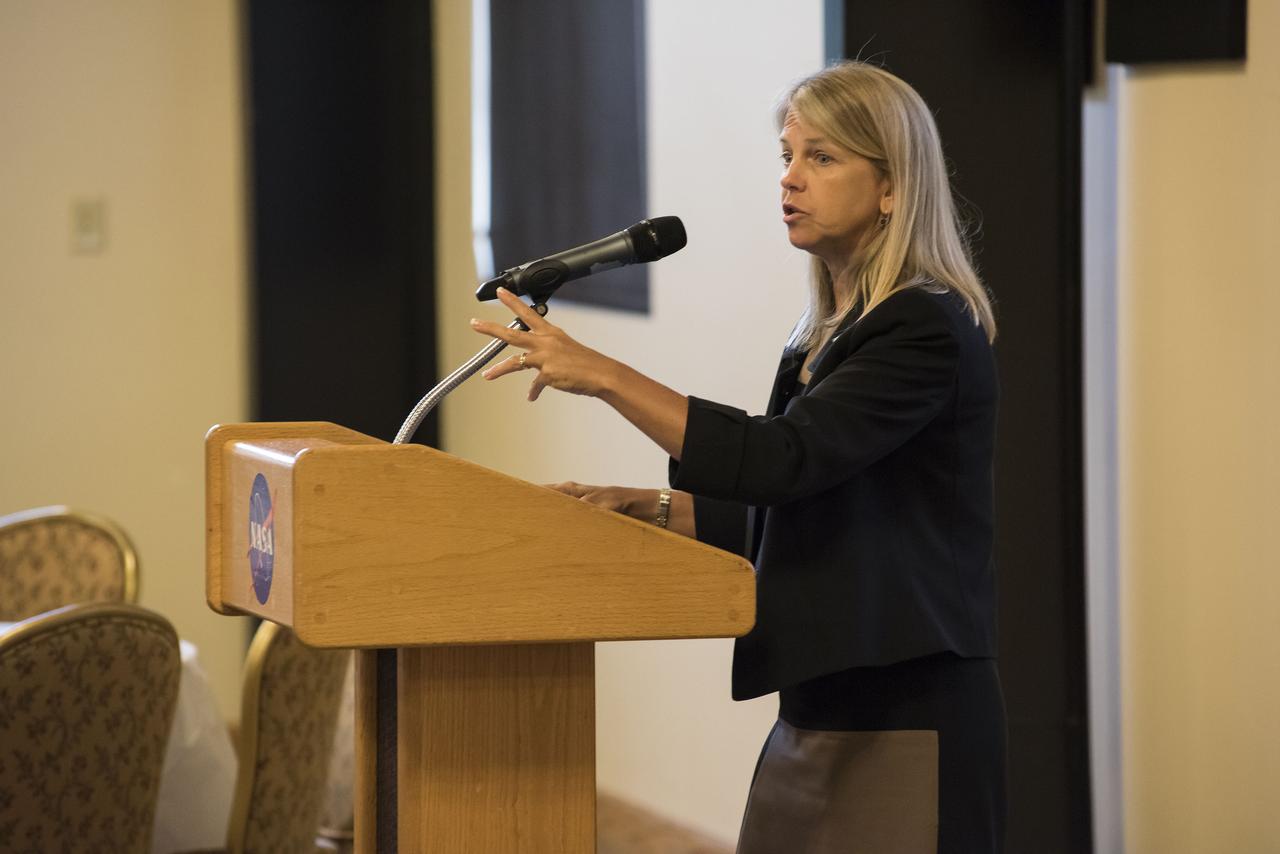
MARSHALL ASSOCIATION LUNCHEON WITH GUEST SPEAKER DR. DAVA NEWMAN, NASA DEPUTY ADMINISTRATOR. AUGUST 16, 2016.
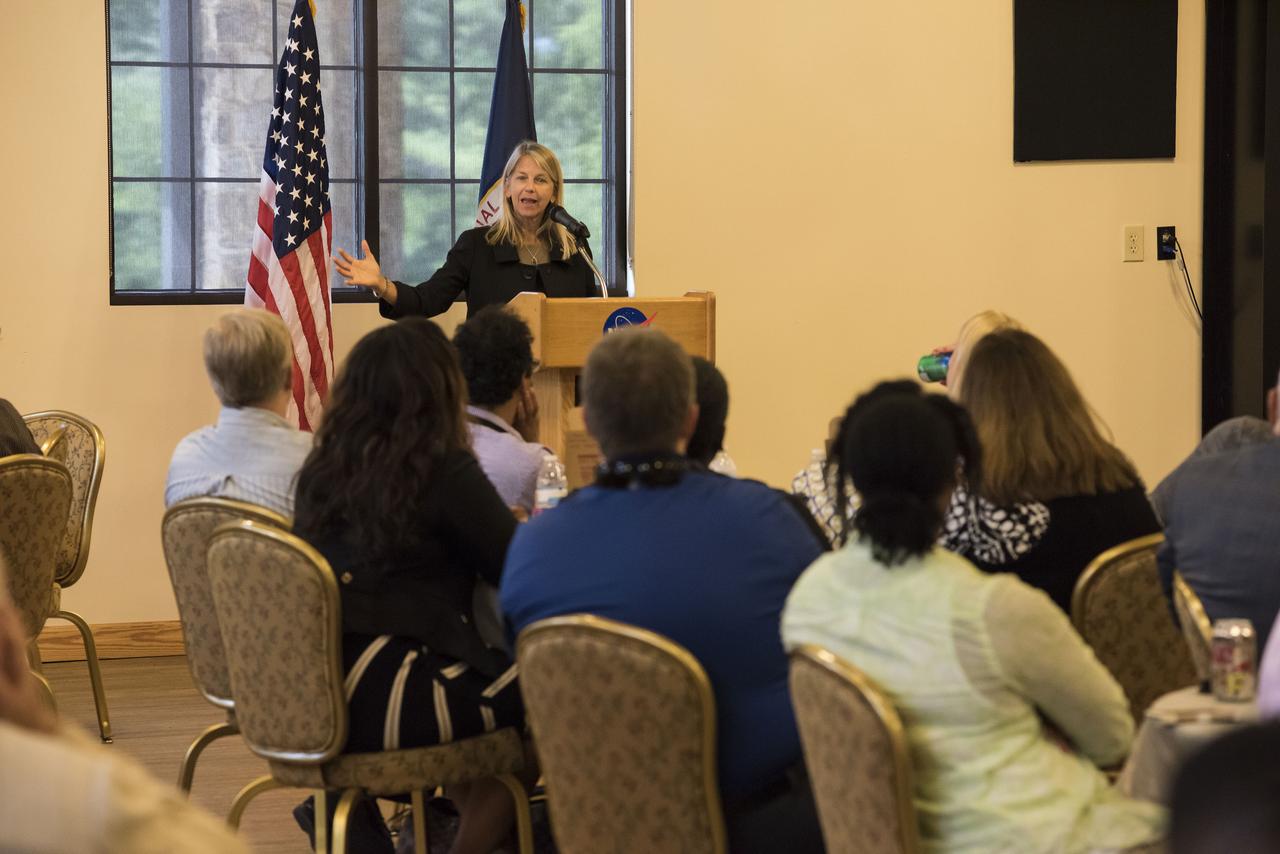
MARSHALL ASSOCIATION LUNCHEON WITH GUEST SPEAKER DR. DAVA NEWMAN, NASA DEPUTY ADMINISTRATOR. AUGUST 16, 2016.
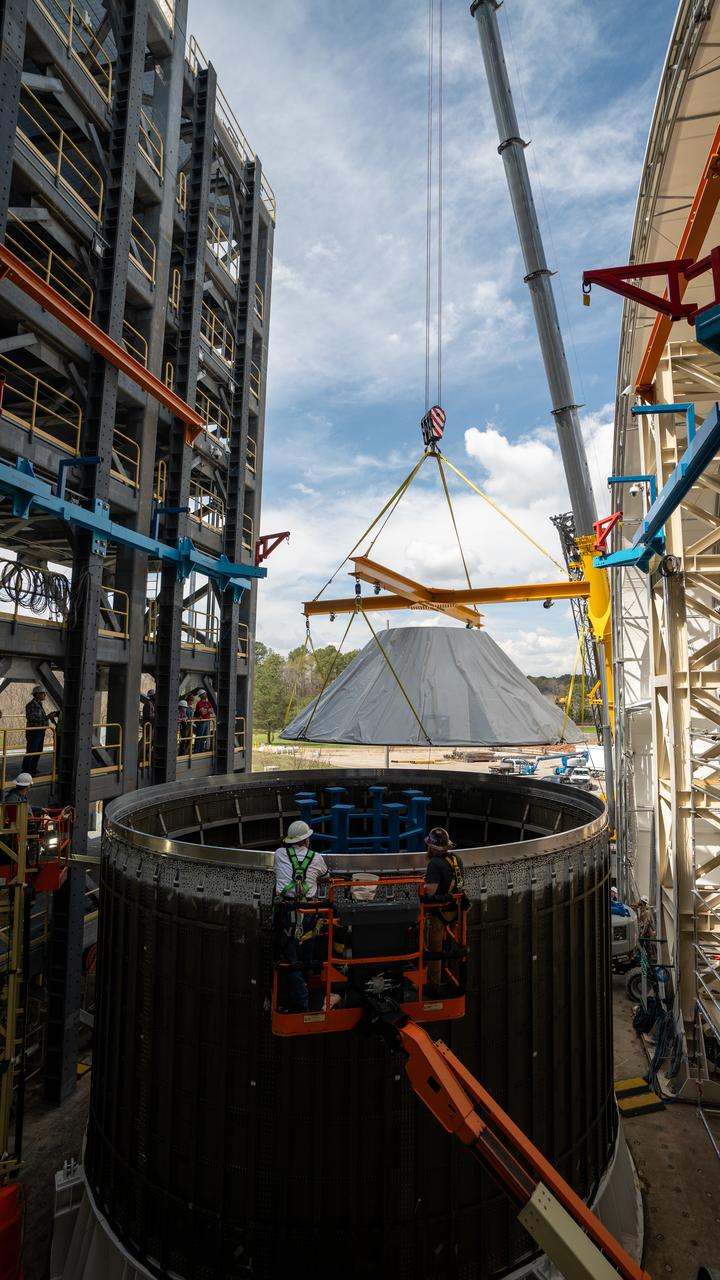
These photos and videos show how crews at NASA’s Marshall Space Flight Center in Huntsville, Alabama, moved and installed the payload adapter that will be used in the Block 1B configuration of the SLS (Space Launch System) rocket from Building 4708, where it was manufactured, into Structural Test Stand 4697 at NASA’s Marshall Space Flight Center on March 13. Teams at Marshall will begin structural testing the engineering development unit of the payload adapter – an exact replica of the flight version of the hardware – this spring. The cone-shaped payload adapter is about 8.5 feet tall and features two metal rings and eight composite panels. The adapter, which will debut on NASA’s Artemis IV mission, is an evolution from the Orion stage adapter used in the Block 1 configuration of the first three Artemis missions. It will be housed inside the universal stage adapter atop the rocket’s more powerful in-space stage, called the exploration upper stage. The payload adapter, like the launch vehicle stage adapter and the Orion stage adapter, is fully manufactured and tested at Marshall, which manages the SLS Program. NASA is working to land the first woman, first person of color, and its first international partner astronaut on the Moon under Artemis. SLS is part of NASA’s backbone for deep space exploration, along with the Orion spacecraft and Gateway in orbit around the Moon and commercial human landing systems, next-generational spacesuits, and rovers on the lunar surface. SLS is the only rocket that can send Orion, astronauts, and supplies to the Moon in a single launch.
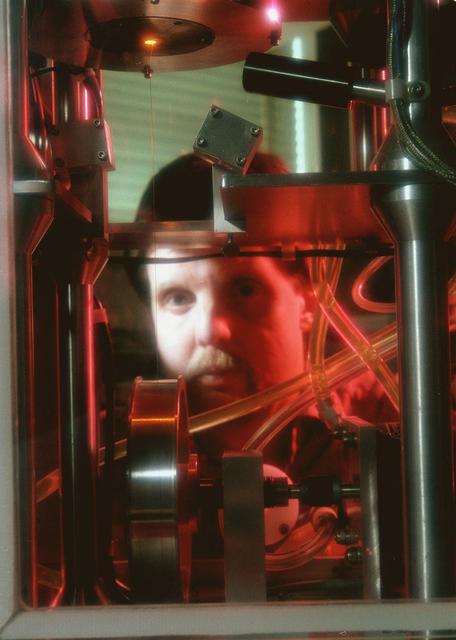
Scientists at Marshall's Materials and Processes Lab are pulling glass fibers from simulated lunar soil. This technology could lead to the building of thermally protected lunar buildings made of materials already there.
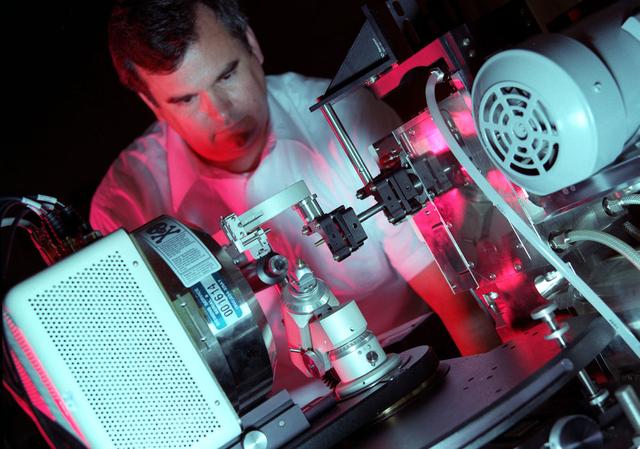
NASA scientist, in the Space Sciences lab at Marshall, works with capillary optics that generate more intense X-rays than conventional sources. This capability is useful in studying the structure of important proteins.
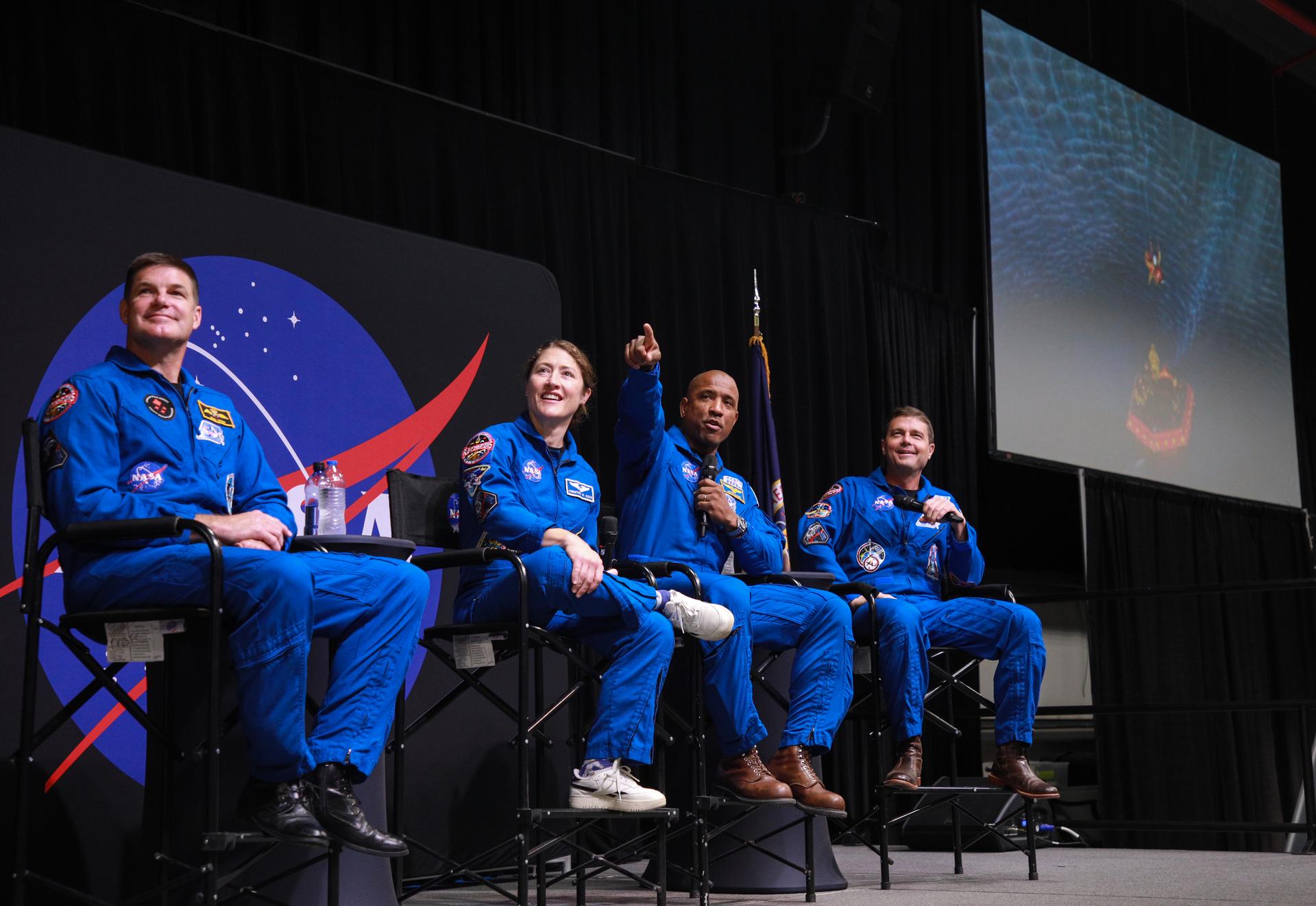
The crew of NASA’s Artemis II mission – NASA astronauts Reid Wiseman, Victor Glover, and Christina Koch, and Canadian Space Agency astronaut Jeremy Hansen – visited the agency’s Marshall Space Flight Center in Huntsville, Alabama, on Tuesday, Sept. 1, 2026. During an employee all-hands event, the crew reflected on their journey around the Moon, thanked Marshall team members for their contributions to the mission, and answered questions from the workforce. Artemis II was the first crewed mission of NASA’s Artemis campaign. Wiseman, Glover, Koch, and Hansen completed the approximately 10-day mission around the Moon in April 2026.
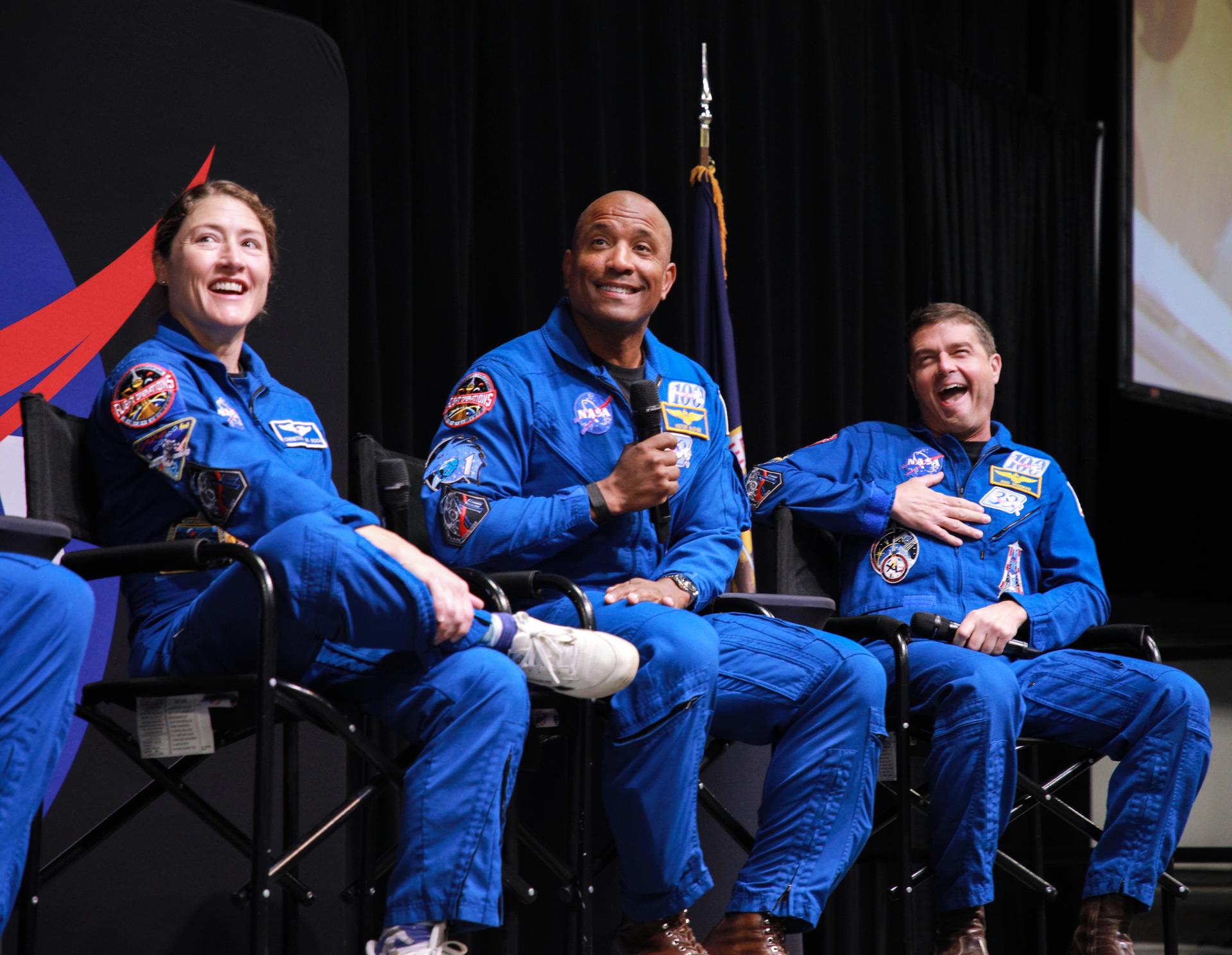
The crew of NASA’s Artemis II mission – NASA astronauts Reid Wiseman, Victor Glover, and Christina Koch, and Canadian Space Agency astronaut Jeremy Hansen – visited the agency’s Marshall Space Flight Center in Huntsville, Alabama, on Tuesday, Sept. 1, 2026. During an employee all-hands event, the crew reflected on their journey around the Moon, thanked Marshall team members for their contributions to the mission, and answered questions from the workforce. Artemis II was the first crewed mission of NASA’s Artemis campaign. Wiseman, Glover, Koch, and Hansen completed the approximately 10-day mission around the Moon in April 2026.
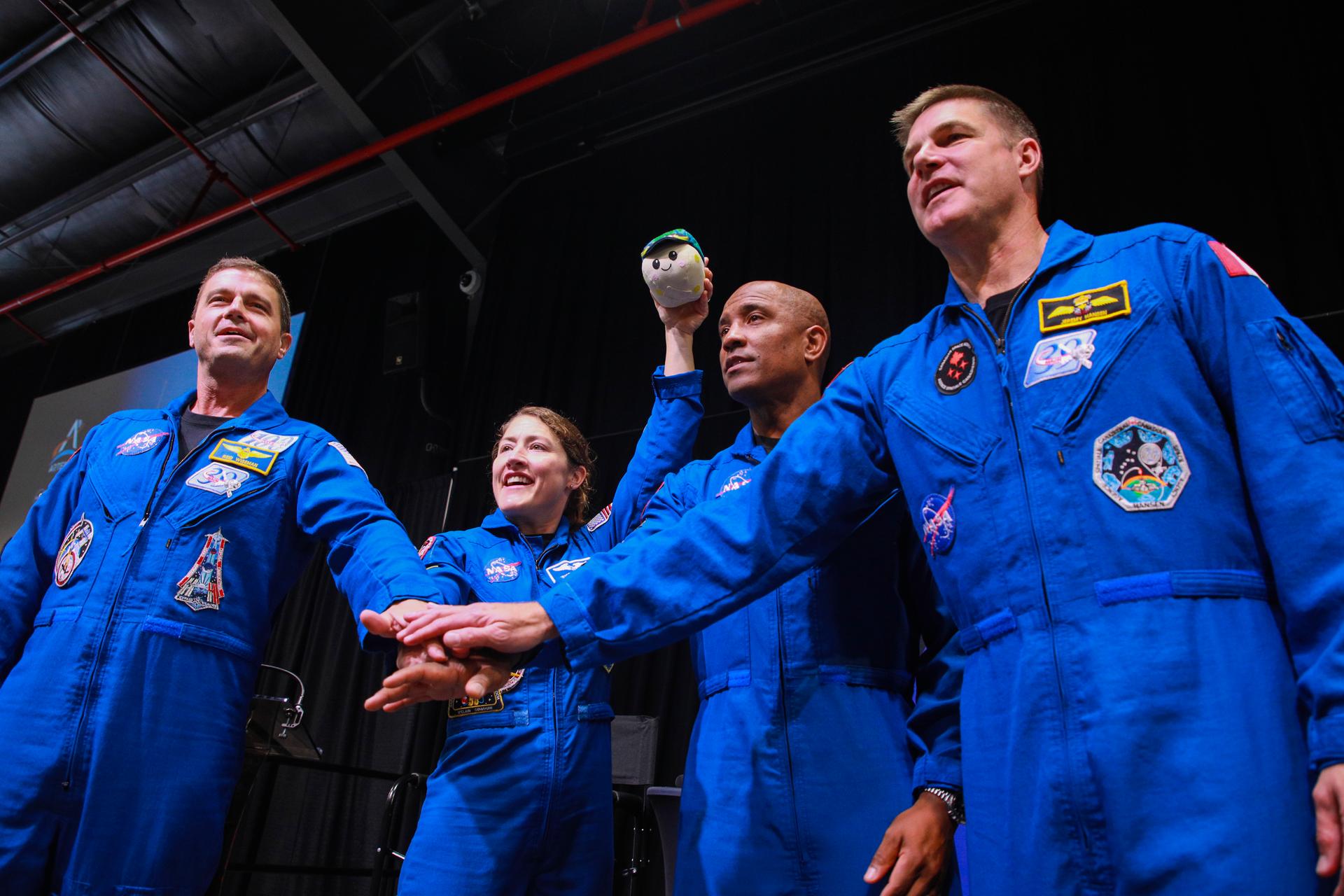
The crew of NASA’s Artemis II mission – NASA astronauts Reid Wiseman, Victor Glover, and Christina Koch, and Canadian Space Agency astronaut Jeremy Hansen – visited the agency’s Marshall Space Flight Center in Huntsville, Alabama, on Tuesday, Sept. 1, 2026. During an employee all-hands event, the crew reflected on their journey around the Moon, thanked Marshall team members for their contributions to the mission, and answered questions from the workforce. Artemis II was the first crewed mission of NASA’s Artemis campaign. Wiseman, Glover, Koch, and Hansen completed the approximately 10-day mission around the Moon in April 2026.
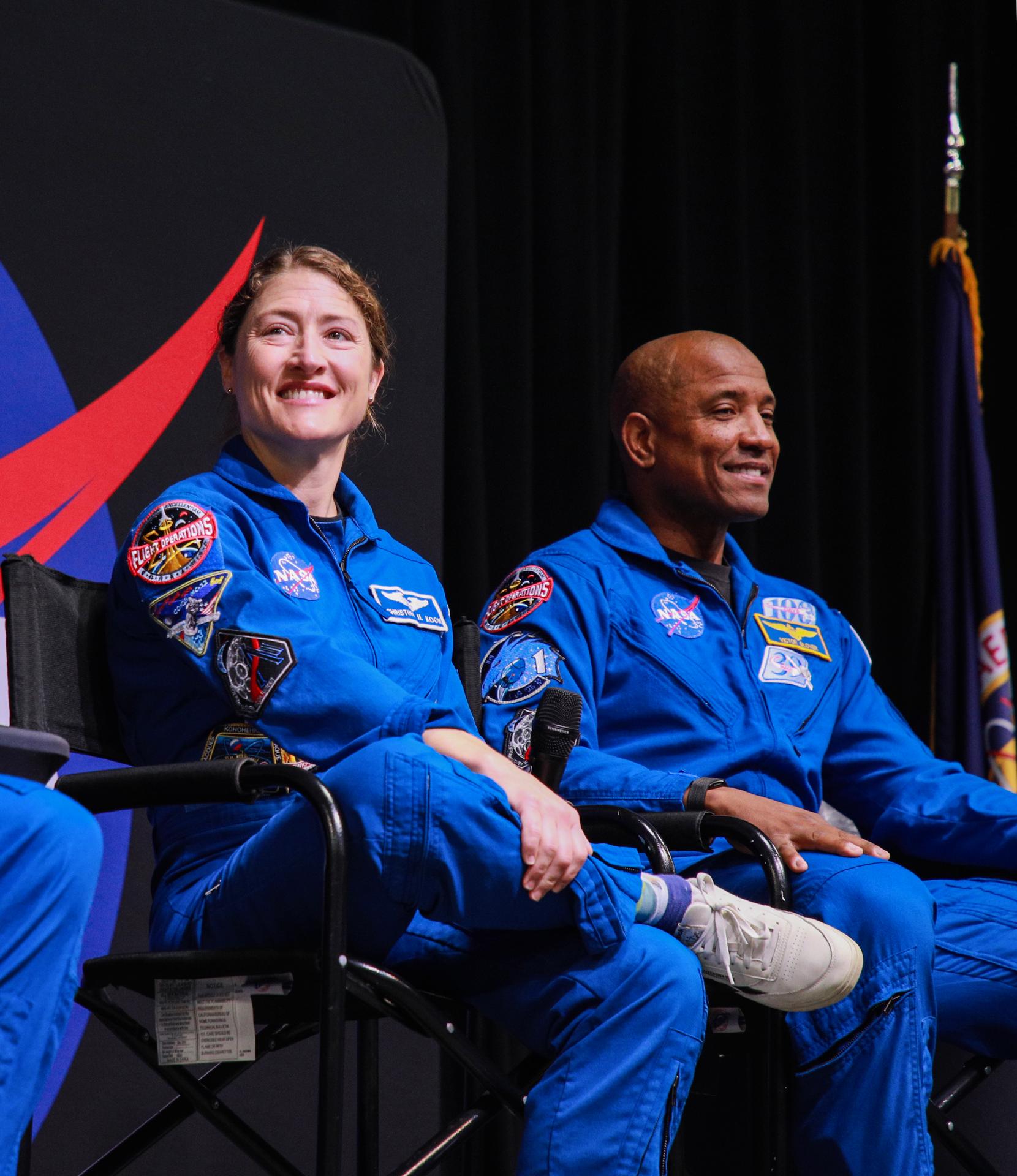
The crew of NASA’s Artemis II mission – NASA astronauts Reid Wiseman, Victor Glover, and Christina Koch, and Canadian Space Agency astronaut Jeremy Hansen – visited the agency’s Marshall Space Flight Center in Huntsville, Alabama, on Tuesday, Sept. 1, 2026. During an employee all-hands event, the crew reflected on their journey around the Moon, thanked Marshall team members for their contributions to the mission, and answered questions from the workforce. Artemis II was the first crewed mission of NASA’s Artemis campaign. Wiseman, Glover, Koch, and Hansen completed the approximately 10-day mission around the Moon in April 2026.
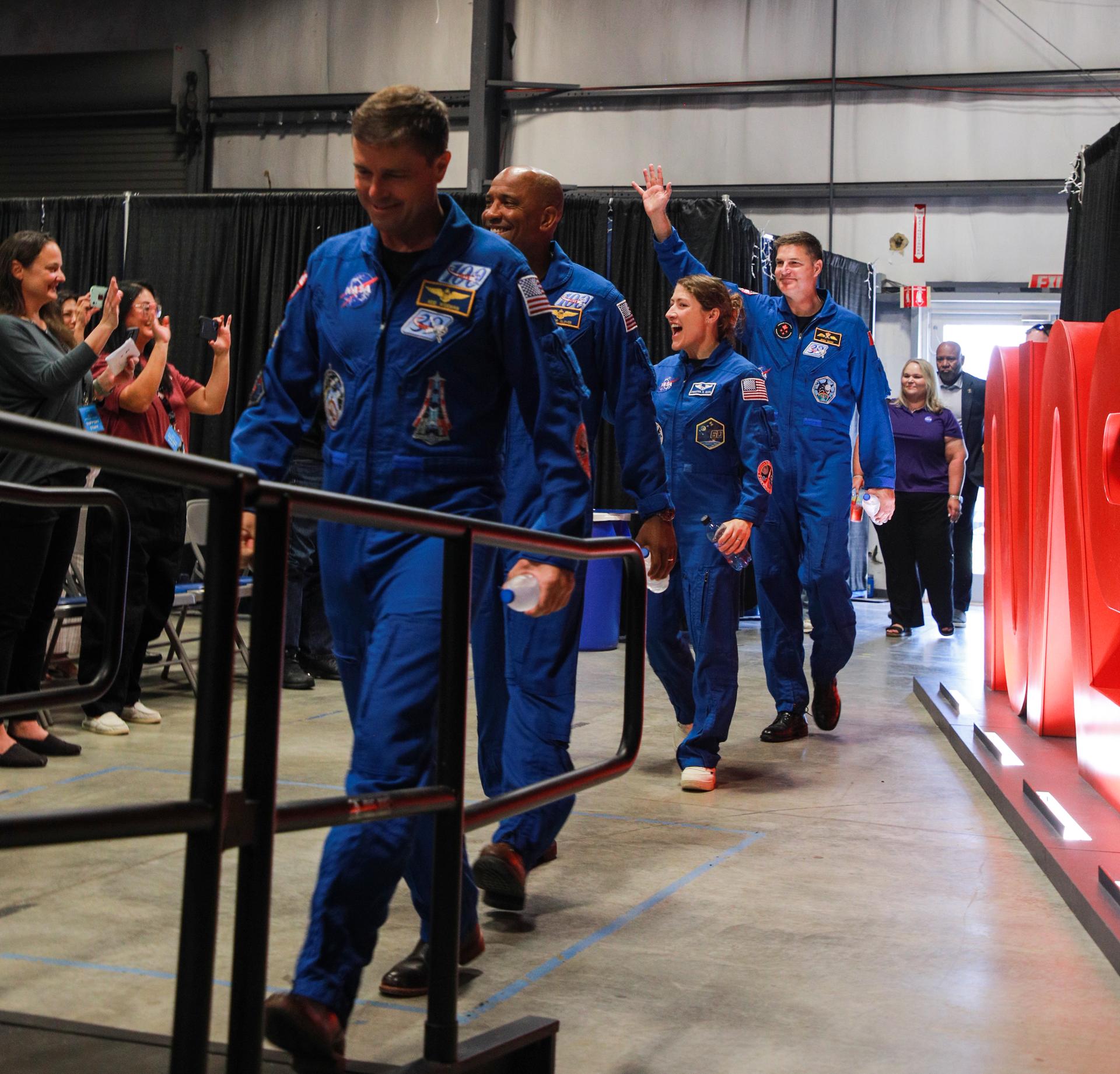
The crew of NASA’s Artemis II mission – NASA astronauts Reid Wiseman, Victor Glover, and Christina Koch, and Canadian Space Agency astronaut Jeremy Hansen – visited the agency’s Marshall Space Flight Center in Huntsville, Alabama, on Tuesday, Sept. 1, 2026. During an employee all-hands event, the crew reflected on their journey around the Moon, thanked Marshall team members for their contributions to the mission, and answered questions from the workforce. Artemis II was the first crewed mission of NASA’s Artemis campaign. Wiseman, Glover, Koch, and Hansen completed the approximately 10-day mission around the Moon in April 2026.
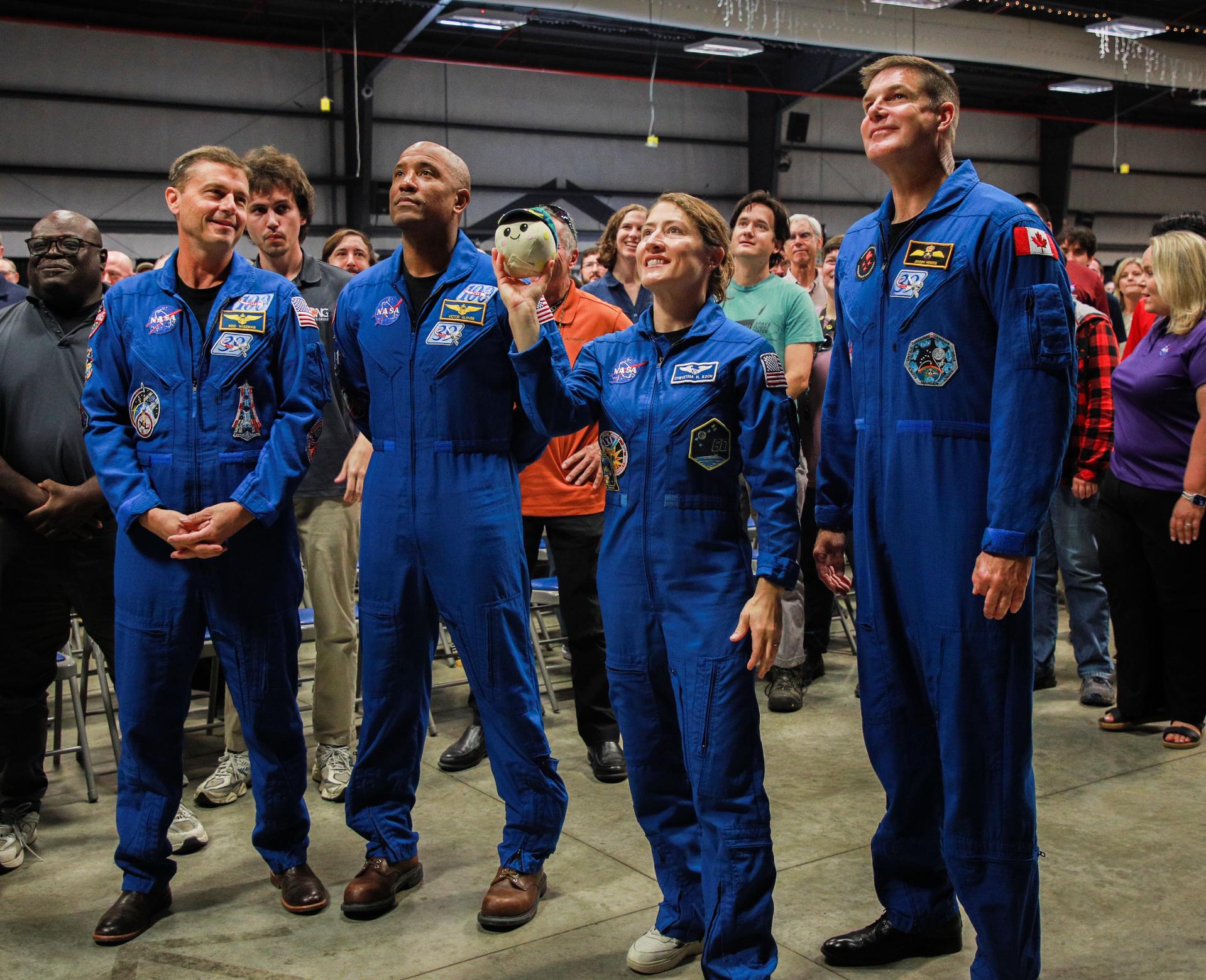
The crew of NASA’s Artemis II mission – NASA astronauts Reid Wiseman, Victor Glover, and Christina Koch, and Canadian Space Agency astronaut Jeremy Hansen – visited the agency’s Marshall Space Flight Center in Huntsville, Alabama, on Tuesday, Sept. 1, 2026. During an employee all-hands event, the crew reflected on their journey around the Moon, thanked Marshall team members for their contributions to the mission, and answered questions from the workforce. Artemis II was the first crewed mission of NASA’s Artemis campaign. Wiseman, Glover, Koch, and Hansen completed the approximately 10-day mission around the Moon in April 2026.
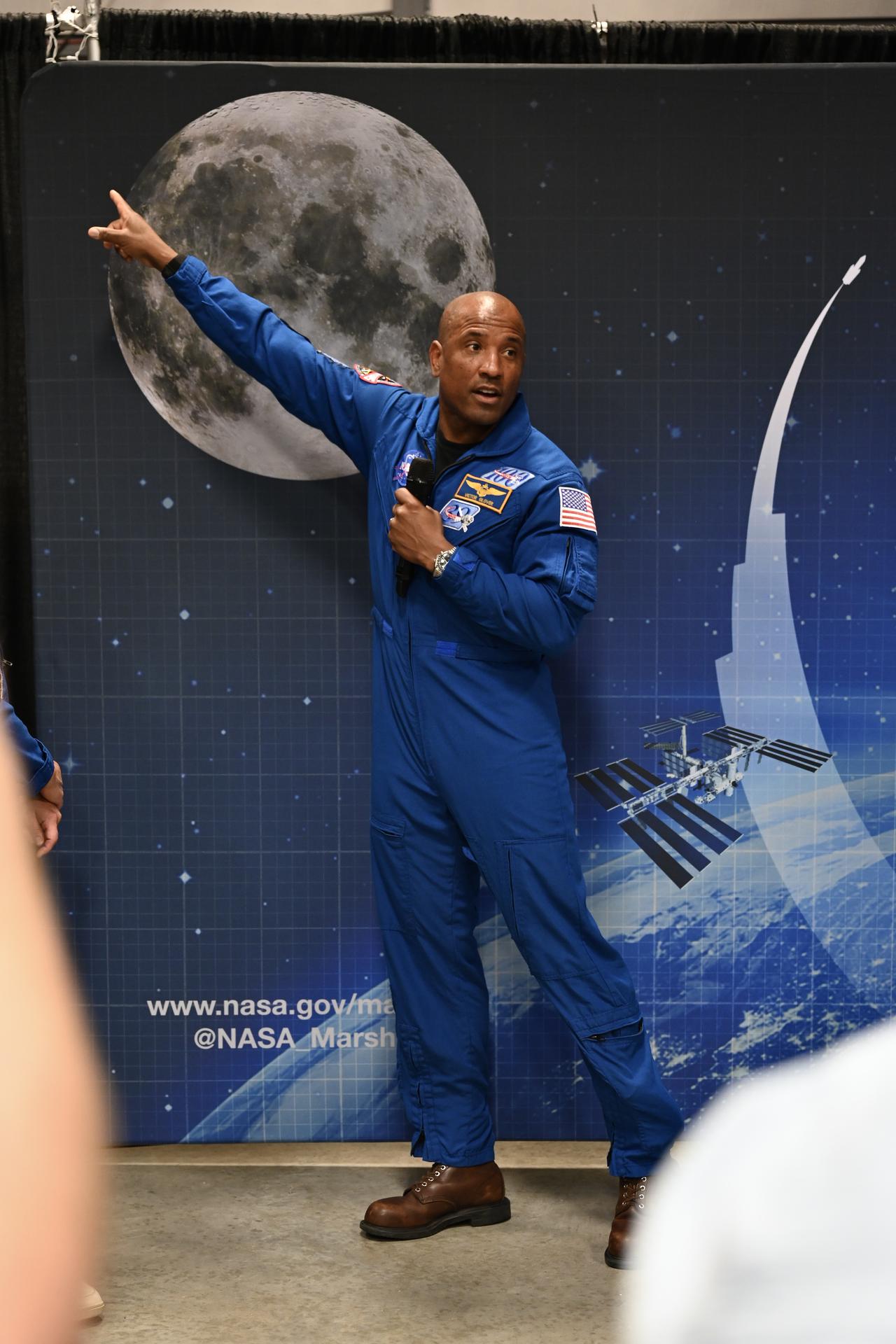
The crew of NASA’s Artemis II mission – NASA astronauts Reid Wiseman, Victor Glover, and Christina Koch, and Canadian Space Agency astronaut Jeremy Hansen – visited the agency’s Marshall Space Flight Center in Huntsville, Alabama, on Tuesday, Sept. 1, 2026. During an employee all-hands event, the crew reflected on their journey around the Moon, thanked Marshall team members for their contributions to the mission, and answered questions from the workforce. Artemis II was the first crewed mission of NASA’s Artemis campaign. Wiseman, Glover, Koch, and Hansen completed the approximately 10-day mission around the Moon in April 2026.
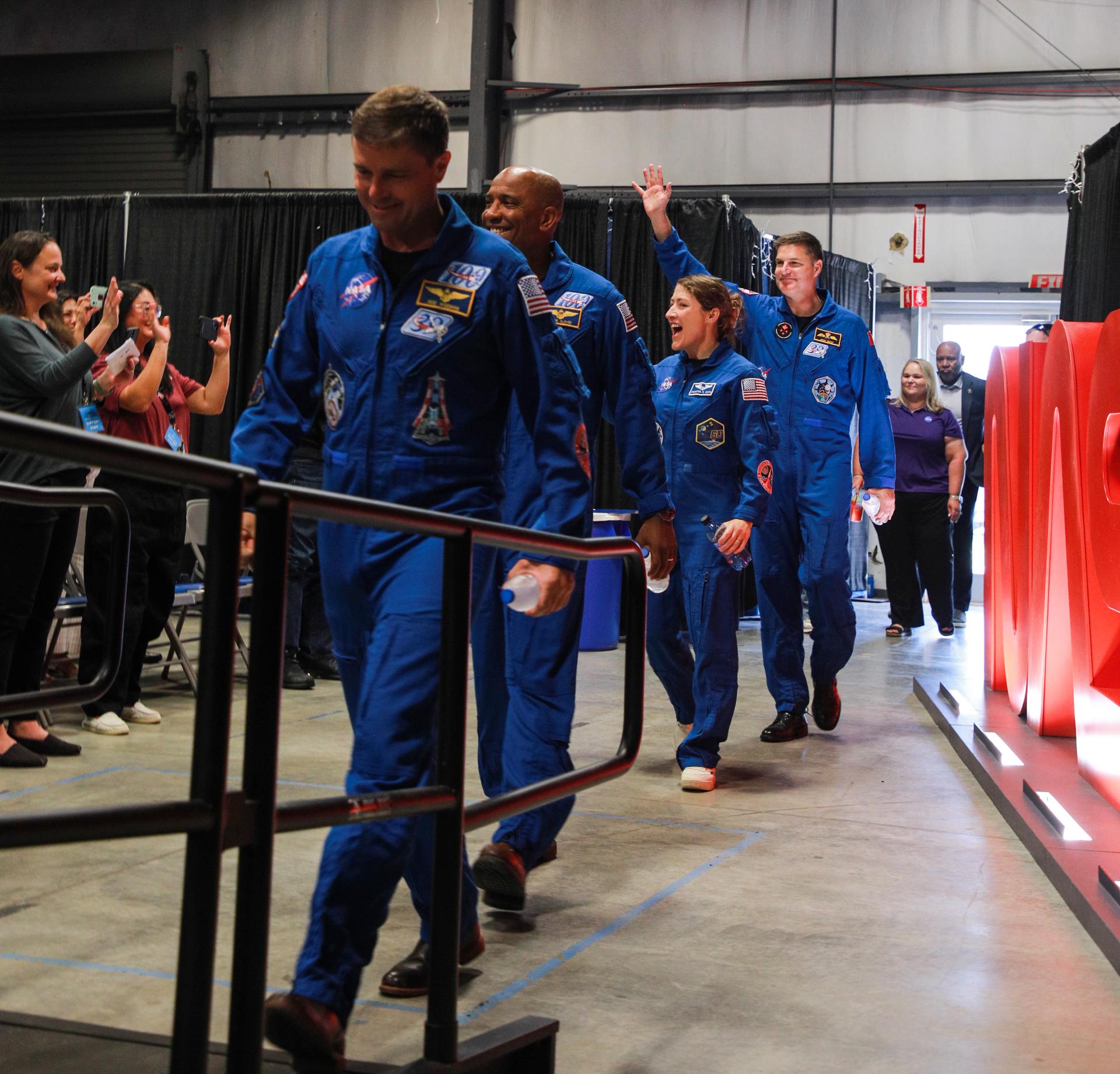
The crew of NASA’s Artemis II mission – NASA astronauts Reid Wiseman, Victor Glover, and Christina Koch, and Canadian Space Agency astronaut Jeremy Hansen – visited the agency’s Marshall Space Flight Center in Huntsville, Alabama, on Tuesday, Sept. 1, 2026. During an employee all-hands event, the crew reflected on their journey around the Moon, thanked Marshall team members for their contributions to the mission, and answered questions from the workforce. Artemis II was the first crewed mission of NASA’s Artemis campaign. Wiseman, Glover, Koch, and Hansen completed the approximately 10-day mission around the Moon in April 2026.
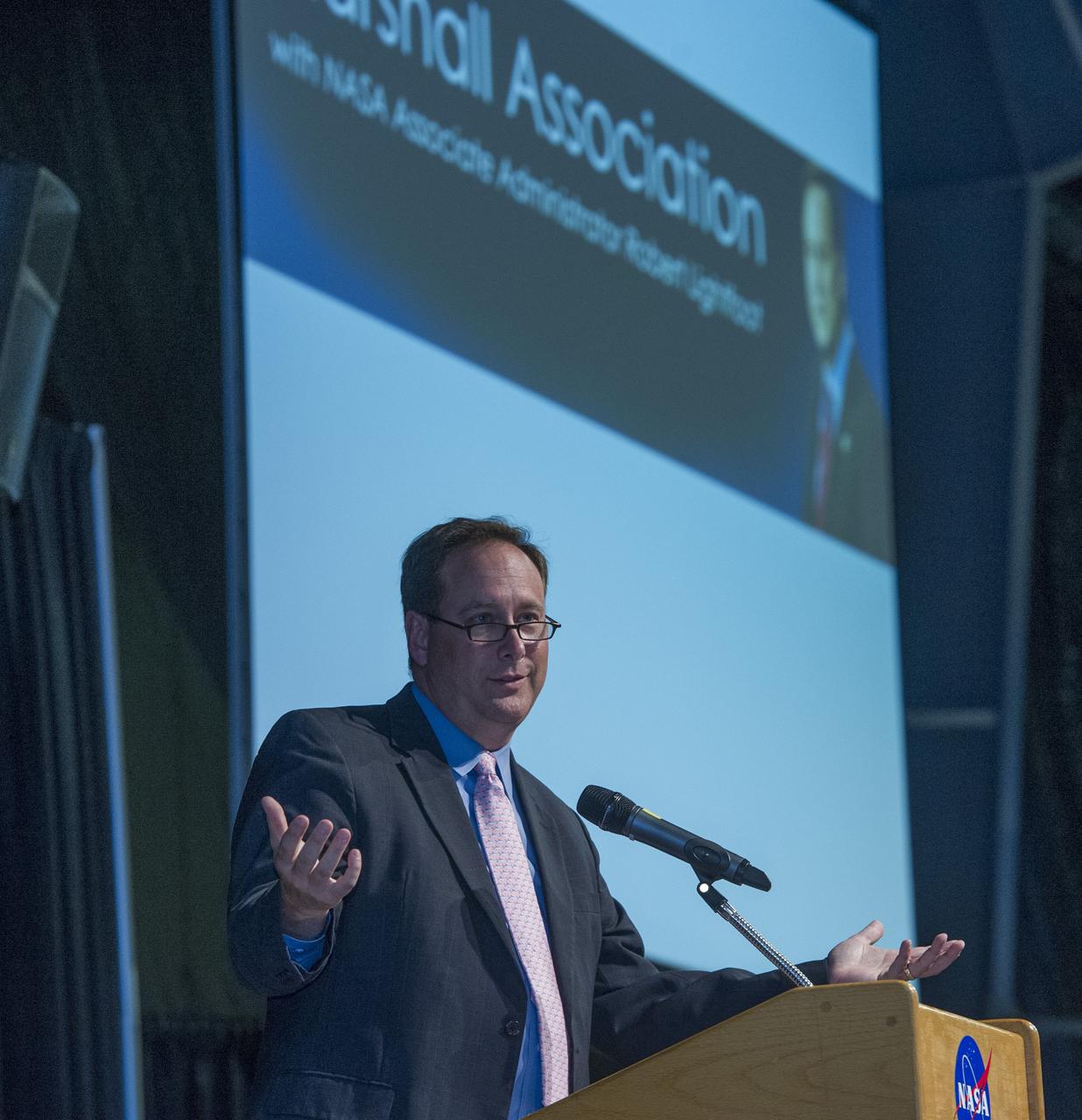
NASA ASSOCIATE ADMINISTRATOR ROBERT LIGHTFOOT SHARED HIS PERSONAL REFLECTIONS ON LEADERSHIP WITH MARSHALL ASSOCIATION MEMBERS AND GUESTS DURING A LUNCHEON JULY 28 AT NASA’S MARSHALL SPACE FLIGHT CENTER.
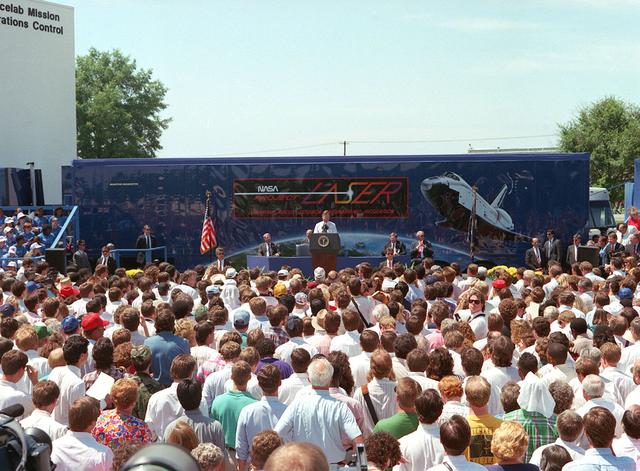
President George Bush delivers an address to Marshall Space Flight Center (MSFC) employees during his visit to the center. President Bush gave NASA employees an objective to send missions back to the moon to stay then continue on to Mars, referring to the Space Station project.
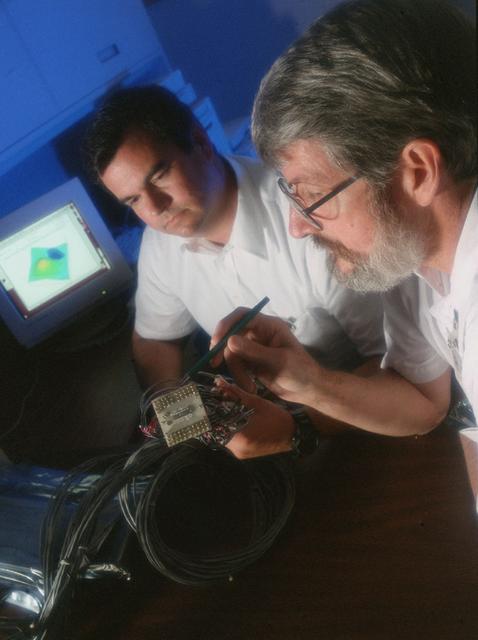
Researchers at Marshall's Space Science Laboratory successfully demonstrate that linear arrays of Hall probes can be constructed in high Hall coefficient films and used to digitally image magnetic fields. This research is beneficial to visually imaging any magnetic field.
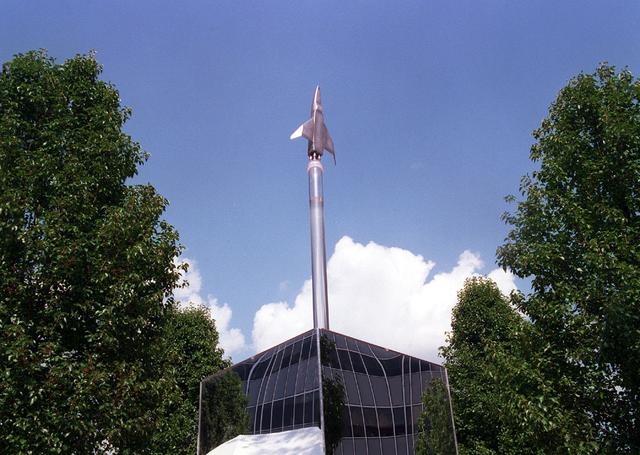
A fountain representing a rocket launch was dedicated in the Von Braun courtyard outside of Building 4200 at Marshall Space Flight Center during the weekend celebrating the 30th arniversary of the Apollo 11 lunar landing. On hand for the festivities were many of the Saturn and Apollo astronauts.
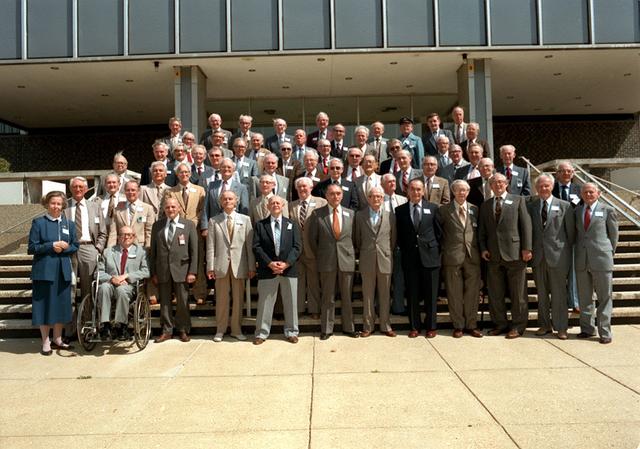
The Peenemunde Rocket Team reunited on the steps of Marshall Space Flight Center's (MSFC) Headquarter Building 4200 for a reunion. The Peenemunde Rocket team were first assembled in Germany prior to World War II. They came to the United States at the end of the War and became the nucleus of the United States Army's rocket program.
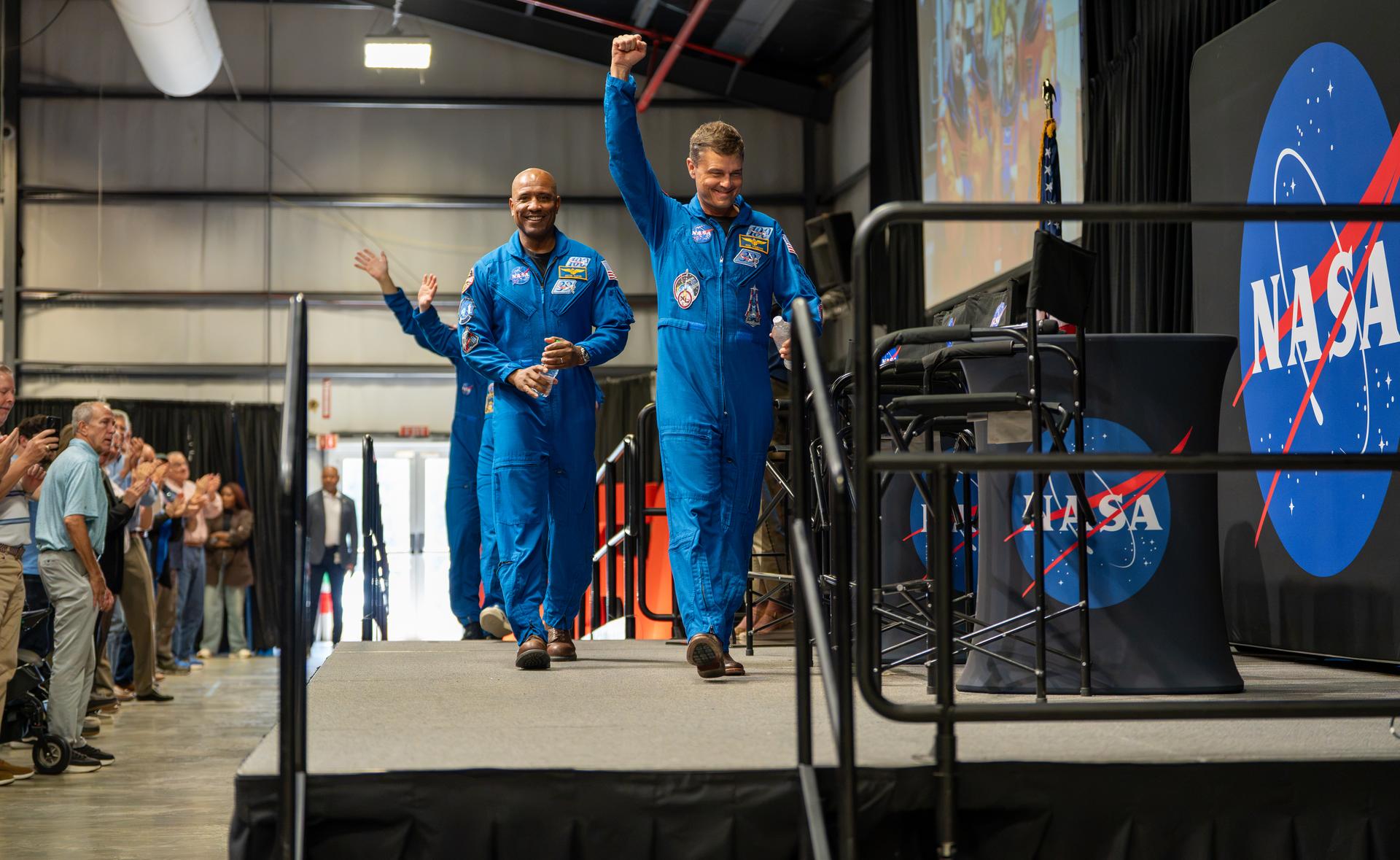
The crew of NASA’s Artemis II mission – NASA astronauts Reid Wiseman, Victor Glover, and Christina Koch, and CSA (Canadian Space Agency) astronaut Jeremy Hansen – visited Huntsville, Alabama, Tuesday, Aug. 1, where they met with the NASA workforce at NASA’s Marshall Space Flight Center. The event gave the crew an opportunity to share firsthand experiences from their mission, reflect on their time in space, and connect with the workforce that supported the mission through an engaging question-and-answer session.
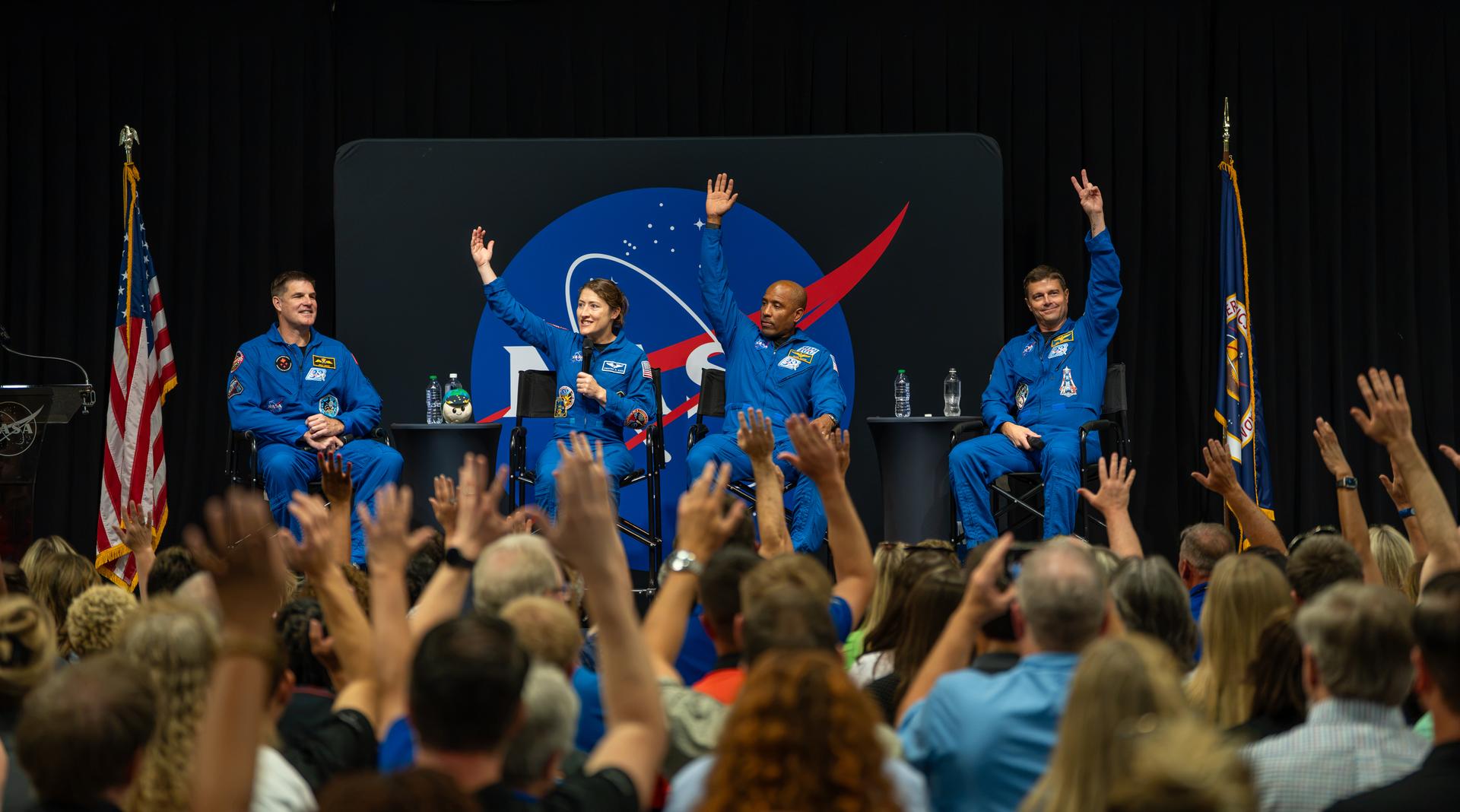
The crew of NASA’s Artemis II mission – NASA astronauts Reid Wiseman, Victor Glover, and Christina Koch, and CSA (Canadian Space Agency) astronaut Jeremy Hansen – visited Huntsville, Alabama, Tuesday, Aug. 1, where they met with the NASA workforce at NASA’s Marshall Space Flight Center. The event gave the crew an opportunity to share firsthand experiences from their mission, reflect on their time in space, and connect with the workforce that supported the mission through an engaging question-and-answer session.
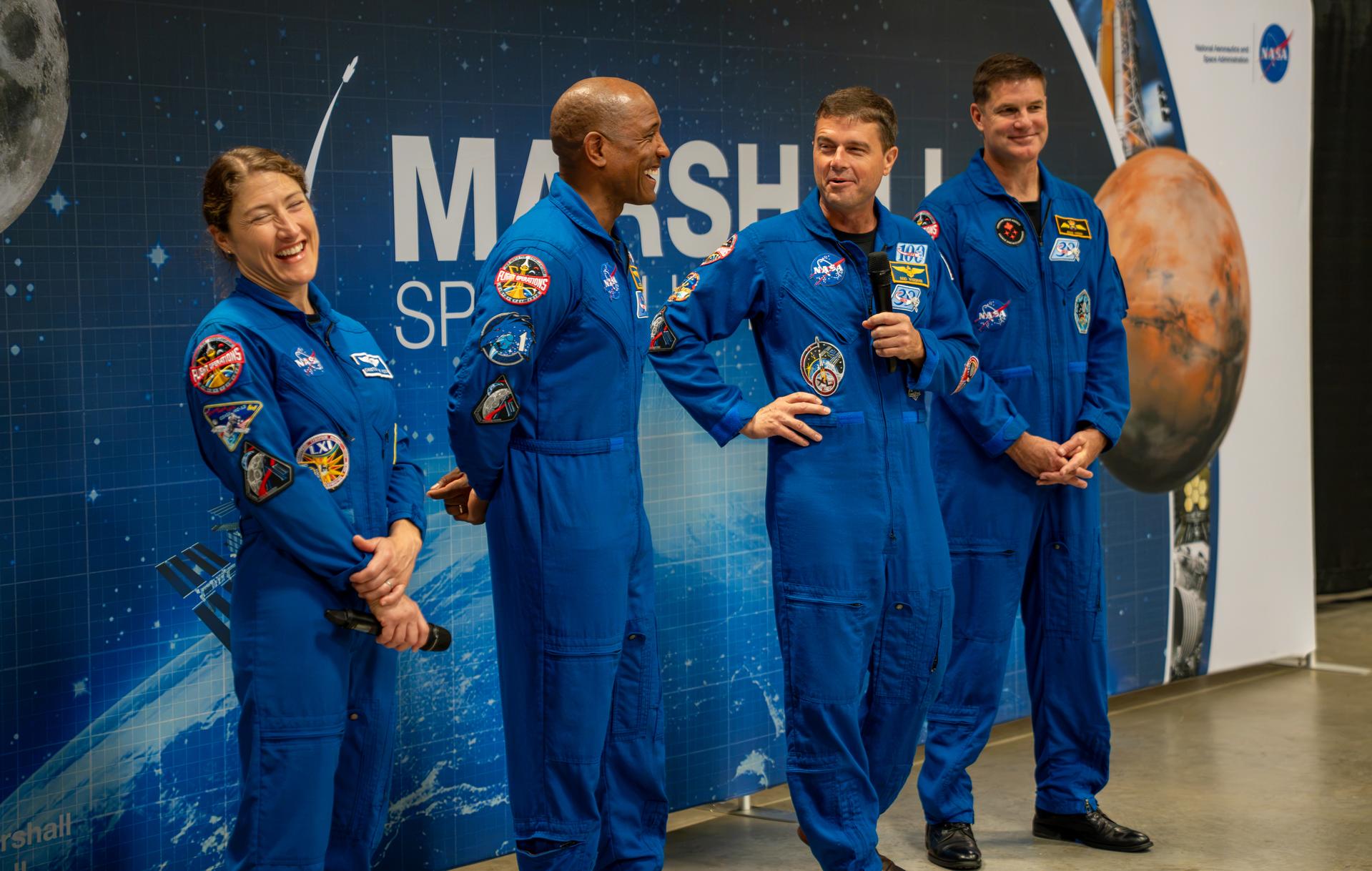
The crew of NASA’s Artemis II mission – NASA astronauts Reid Wiseman, Victor Glover, and Christina Koch, and CSA (Canadian Space Agency) astronaut Jeremy Hansen – visited Huntsville, Alabama, Tuesday, Aug. 1, where they met with the NASA workforce at NASA’s Marshall Space Flight Center. The event gave the crew an opportunity to share firsthand experiences from their mission, reflect on their time in space, and connect with the workforce that supported the mission through an engaging question-and-answer session.
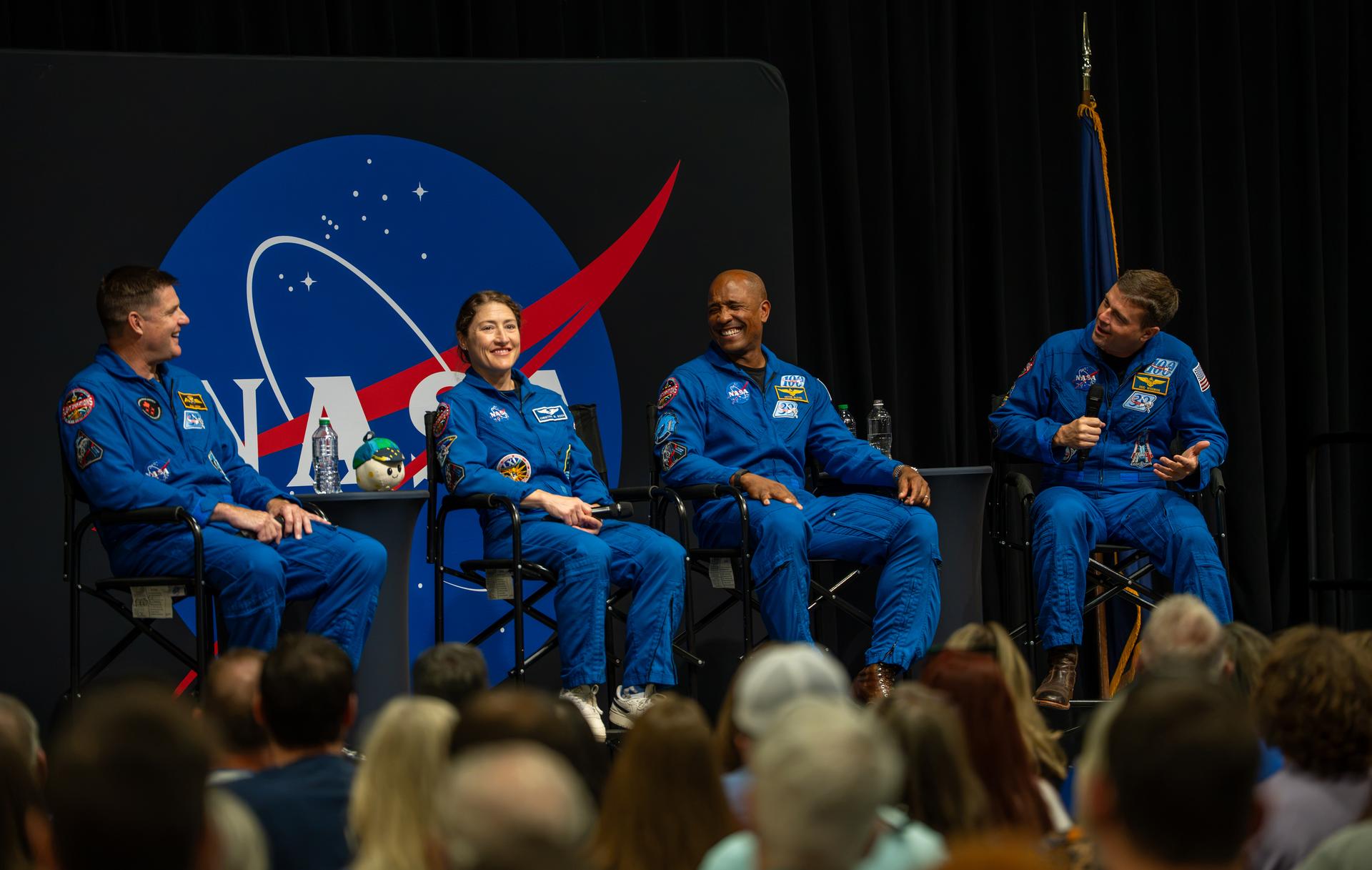
The crew of NASA’s Artemis II mission – NASA astronauts Reid Wiseman, Victor Glover, and Christina Koch, and CSA (Canadian Space Agency) astronaut Jeremy Hansen – visited Huntsville, Alabama, Tuesday, Aug. 1, where they met with the NASA workforce at NASA’s Marshall Space Flight Center. The event gave the crew an opportunity to share firsthand experiences from their mission, reflect on their time in space, and connect with the workforce that supported the mission through an engaging question-and-answer session.
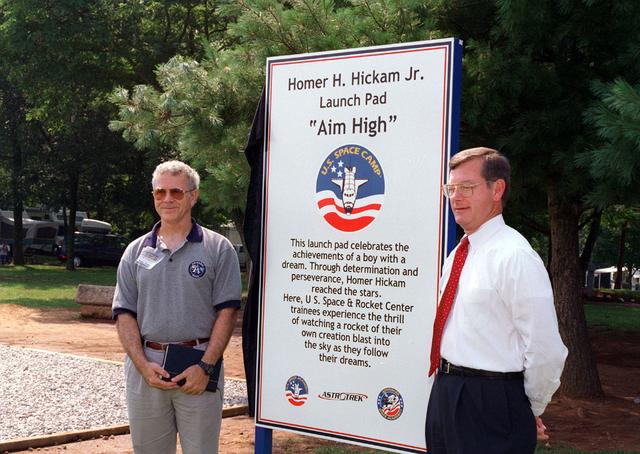
Noted author and previous Marshall Space Flight Center employee Mr. Homer Hickam Jr. poses in front of a placque commemorating his achievement in realizing his dreams of becoming a rocket scientist. The dedication site is located at the U. S. Space and Rocket Center in Huntsville, AL, and is used by amature rocket builders attending the Space Camp to launch their self-made rockets like Mr. Hickam did as a youth growing up in rural West Virginia. Posing with Mr. Hickam is the Madison County Commissioner Mr. Mike Gillispie.
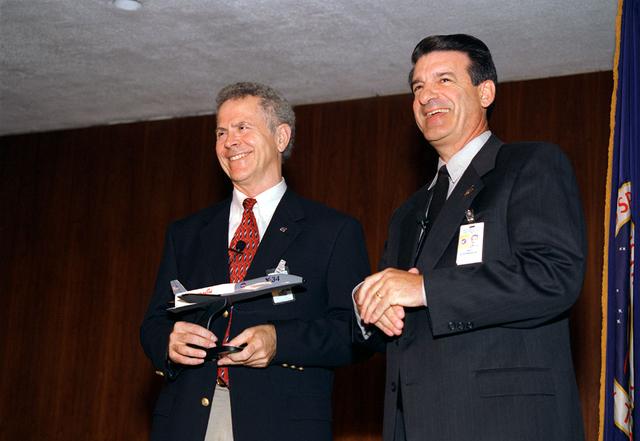
Author of Rocket Boys Homer Hickam, Jr. (left) and Marshall Space Flight Center Director Art Stephenson during a conference at Morris Auditorium. Homer Hickam worked at MSFC during the Apollo project years. As a young man, Mr. Hickam always dreamed of becoming a rocket scientist and following in the footsteps fo Wernher von Braun. Years later he would see his dream realized and had written Rocket Boys commemorating his life and the people at MSFC.
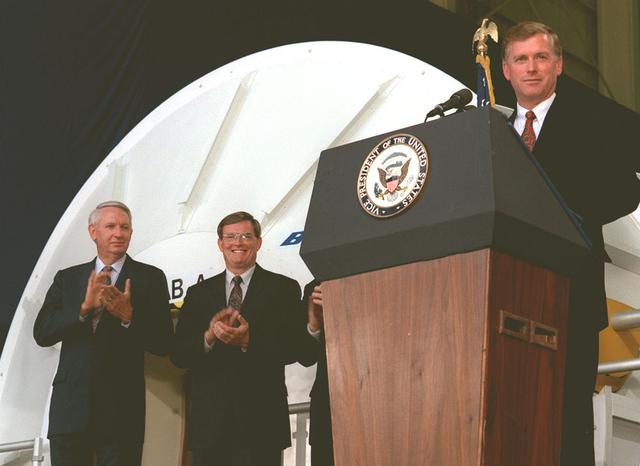
Vice-president Dan Quayle and Alabama Governor Guy Hunt with Marshall's sixth Center Director Thomas J. Lee (1989-1994) visit a model of the space station.
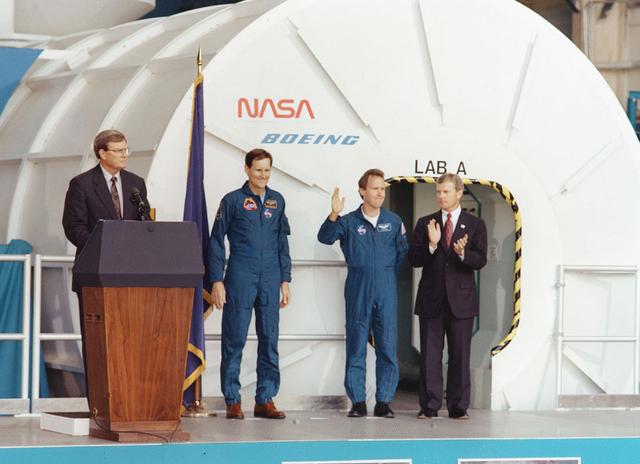
Vice-president Dan Quayle tours the model space station with astronauts Kerneth Reightler Jr. and Dr. Thomas Jones at Marshall Space Flight Center (MSFC). The first deployment of the space station module is scheduled for Spring of 1999.
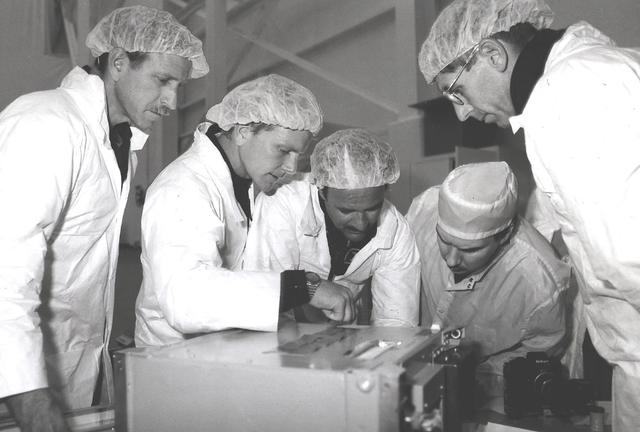
Space Shuttle Discovery (STS-26) astronauts George Nelson, John Lounge, and Richard Covey are pictured training on protein crystal growth (PCG) experiment in Marshall's Building 4708's clean room.
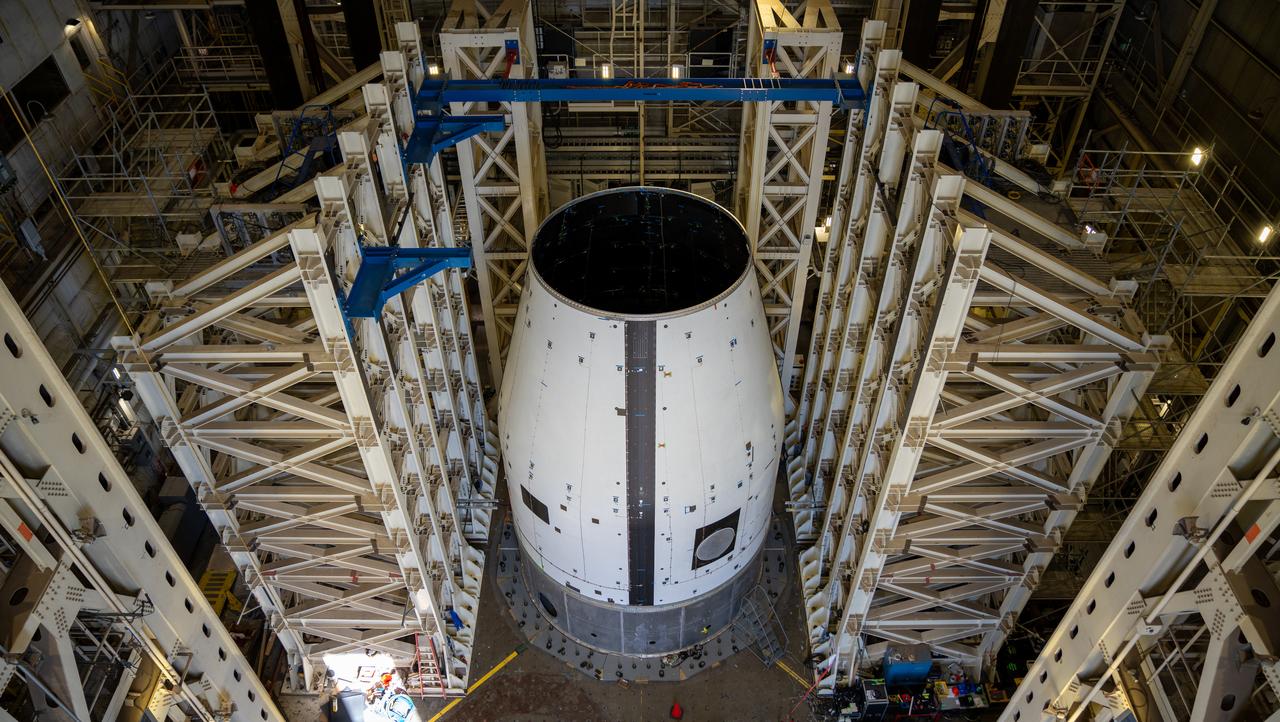
These photos and videos show how crews guided a test version of the universal stage adapter for NASA’s more powerful version of its SLS (Space Launch System) rocket to Building 4619 at the agency’s Marshall Space Flight Center in Huntsville, Alabama, Feb. 22. Built by Leidos, the lead contractor for the universal stage adapter, crews transported the hardware from a Leidos facility in Decatur, Alabama, the same day. The universal stage adapter will connect the SLS rocket’s upgraded in-space propulsion stage, called the exploration upper stage, to NASA’s Orion spacecraft as part of the evolved Block 1B configuration of the SLS rocket. It will also serve as a compartment capable of accommodating large payloads, such as modules or other exploration spacecraft. In Building 4619’s Load Test Annex High Bay at Marshall, the development test article will first undergo modal testing that will shake the hardware to validate dynamic models. Later, during ultimate load testing, force will be applied vertically and to the sides of the hardware. Unlike the flight hardware, the development test article has flaws intentionally included in its design, which will help engineers verity that the flight adapter can withstand the extreme forces it will face during launch and flight.
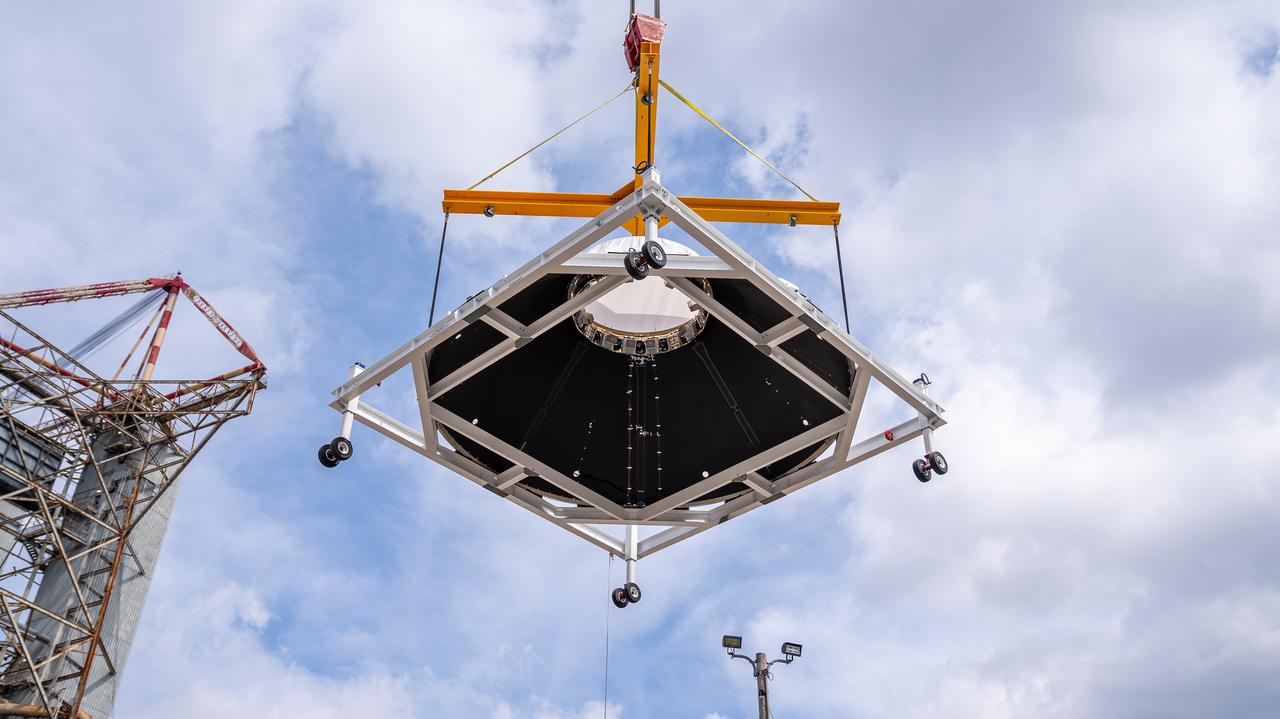
Crews at NASA’s Marshall Space Flight Center in Huntsville, Alabama, moved and installed the payload adapter that will be used in the Block 1B configuration of the SLS (Space Launch System) rocket from Building 4708, where it was manufactured, into Structural Test Stand 4697 at NASA’s Marshall Space Flight Center on March 13.
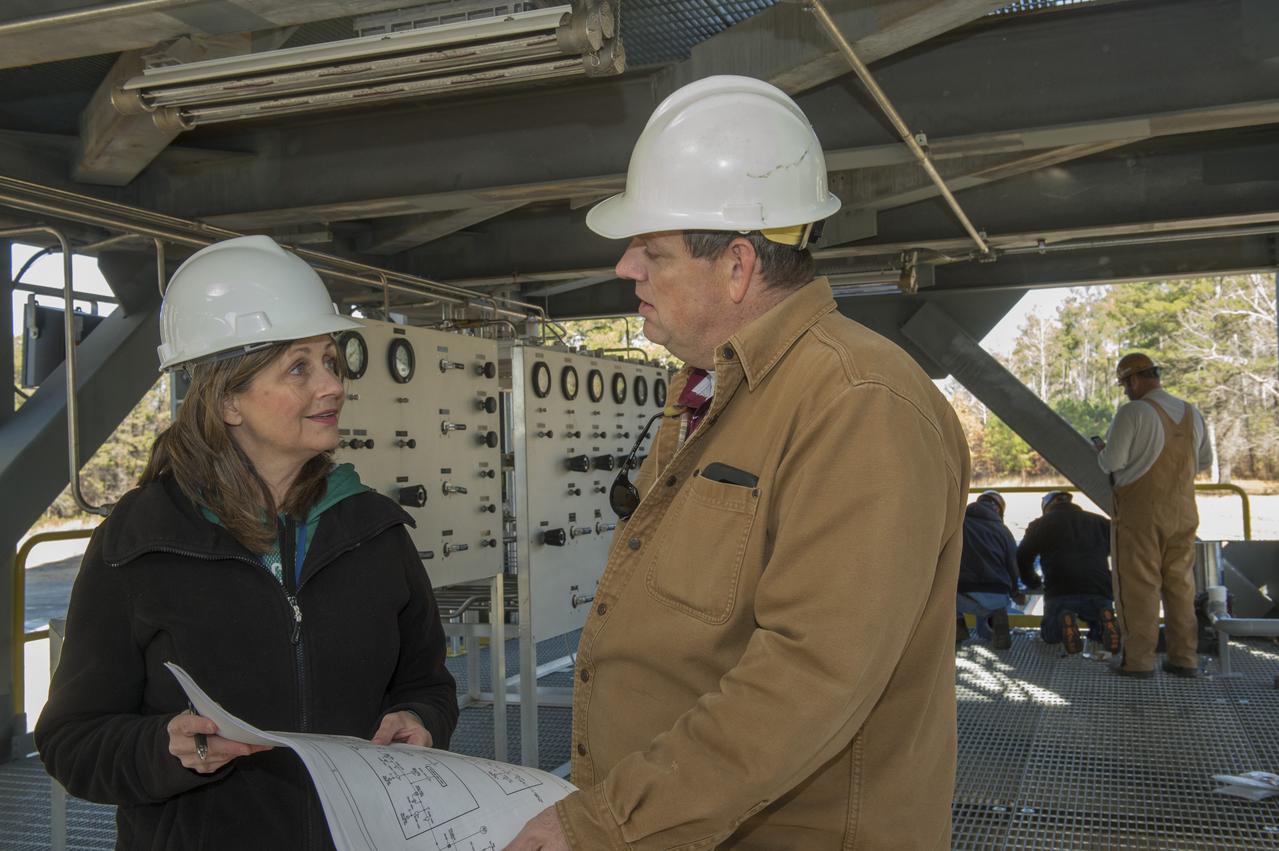
TARA MARSHALL, LEFT, A MARSHALL ENGINEER, TALKS ABOUT THE INSTALLATION OF A PRESSURIZATION CONTROL PANEL AT TEST STAND 4693 WITH MIKE NICHOLS, LEAD TEST ENGINEER FOR THE SPACE LAUNCH SYSTEM LIQUID HYDROGEN TANK STRUCTURAL TEST ARTICLE.
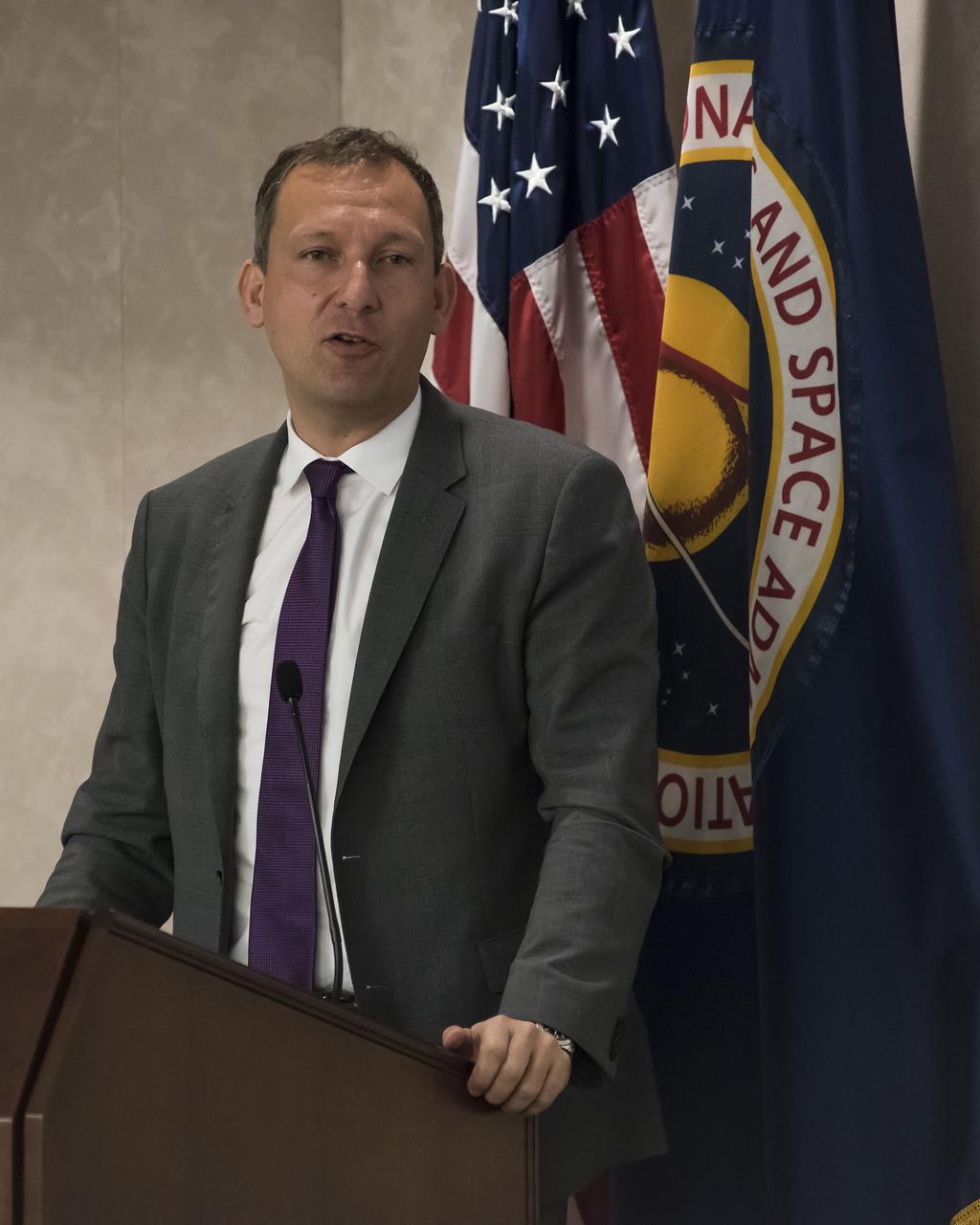
THOMAS ZURBUCHEN, NASA ASSOCIATE ADMINISTRATOR FOR THE SCIENCE MISSION DIRECTORATE, ADDRESSES THE MARCH 21 LUNCHEON MEETING OF THE MARSHALL ASSOCIATION IN BUILDING 4200, ROOM P110. ZURBUCHEN, WHO TOOK ON HIS NEW ROLE IN OCTOBER 2016, PROVIDED THE KEYNOTE ADDRESS FOR THE LUNCHEON BEFORE TOURING KEY MARSHALL SPACE FLIGHT CENTER MANUFACTURING AND TEST FACILITIES. THE MARSHALL ASSOCIATION IS THE CENTER’S PROFESSIONAL, EMPLOYEE SERVICE ORGANIZATION.
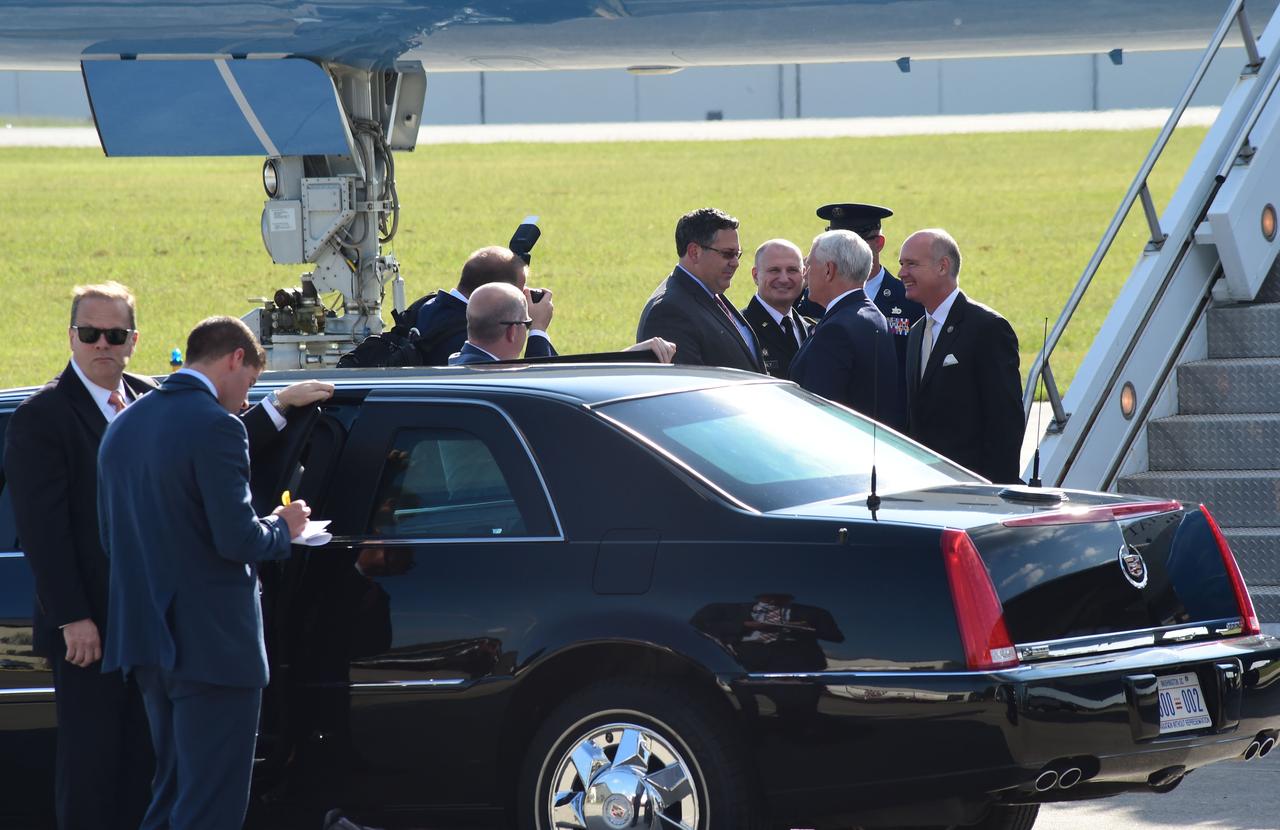
Air Force Two lands with Vice President Mike Pence along with Congressman Robert Aderholt at the Redstone Army Airfield in Huntsville, Alabama, on Monday, Sept. 25. They were greeted by NASA’s Marshall Space Flight Center Director Todd May and Redstone Arsenal’s Lt. Gen. Edward Daly. The Vice President is visiting NASA’s Marshall Center to meet with employees, view test hardware for NASA’s Space Launch System — America’s new deep-space rocket, and tour the Payload Operations Integration Center, “science central” for the International Space Station. Photo Credit: (NASA/Emmett Given)
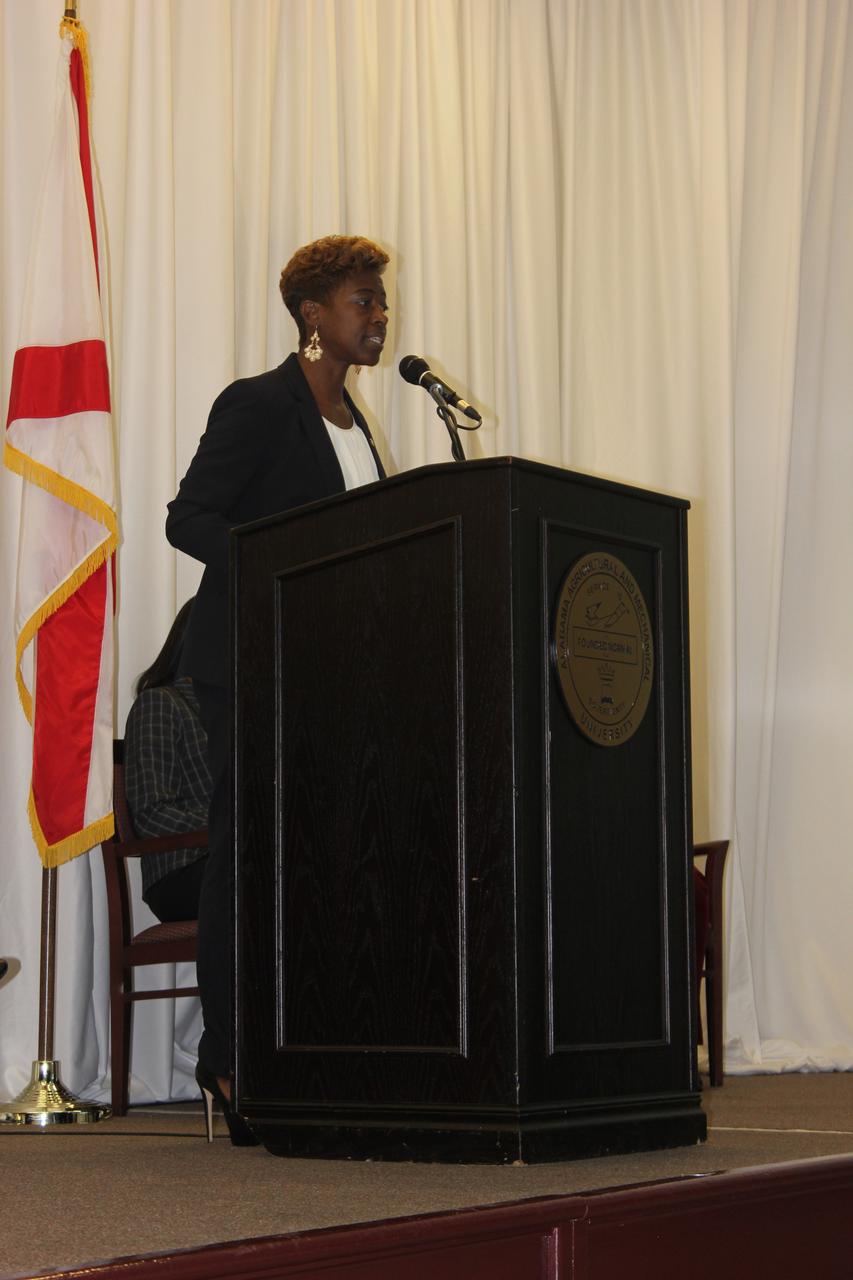
Marshall’s Ruth Jones, a mishap investigation specialist, told her NASA story and spoke about minority statistics in science, technology, engineering and mathematics (STEM). Jones also led a panel discussing how to engage, encourage and draw more minority students in to STEM fields and careers.
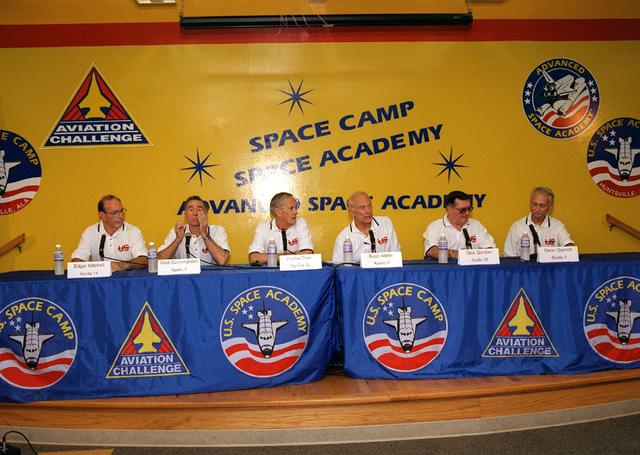
Marking the occasion of the Apollo 11 30th Anniversary, members of the Apollo and Saturn astronaut programs attended festivities at Marshall Space Flight Center in Huntsville, AL. A press conference was held at the U. S. Space and Rocket Center for the visiting astronauts. Pictured are (L/R): Edgar Mitchell, Walt Cunningham, Charlie Duke, Buzz Aldrin, Dick Gordon and Owen Garriott.
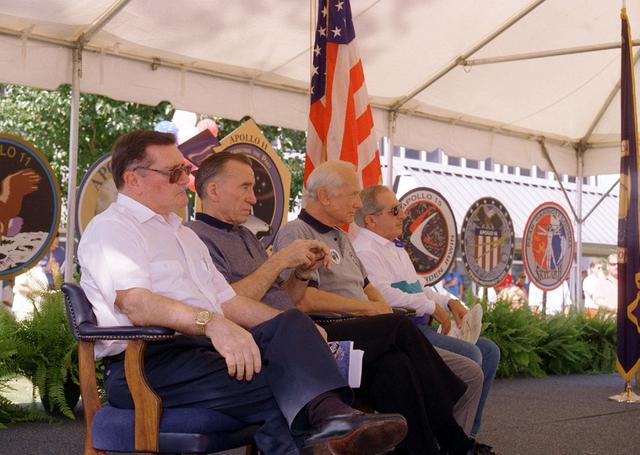
Outside of Building 4200 at Marshall Space Flight Center, a courtyard was constructed in memory of Dr. Wernher von Braun and his contributions to the U. S. Space program. In the middle of the courtyard a fountain was built. The fountain was made operational prior to the 30th arniversary celebration of the Apollo 11 lunar landing. Attending the dedication ceremony were visiting Apollo astronauts and NASA's Safety and Assurance Director Rothenberg.
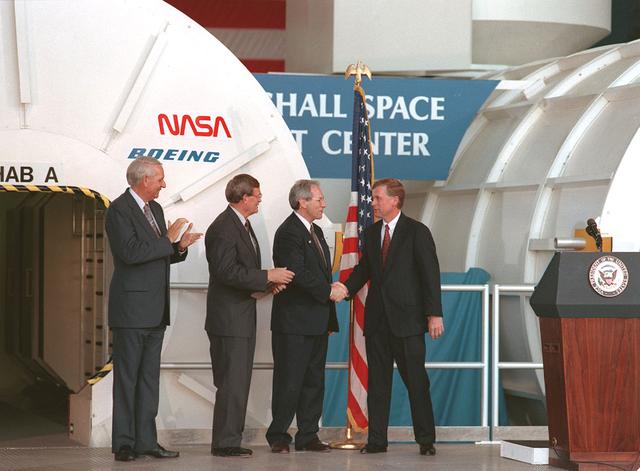
Vice-president Dan Quayle and Alabama Governor Guy Hunt are greeted by Marshall Center Director Thomas J. Lee (1989-1994) (center) and NASA Administrator Dan Goldin (shaking hands with Vice-president Quayle) at the space station engineering mock-up.

A Marshall researcher examines a sample from the Solar Array Passive Long Duration Exposure Facility (LDEF). LDEF, which flew in space, measured the number, severity, and effects of micrometeroid hits on various materials. The data will lead to improved spacecraft design in the future.

With the theme of “Mission, People, Partners,” NASA’s Marshall Space Flight Center Director Jody Singer outlined how the center’s priorities align with the agency’s strategic plan in the first Marshall Association luncheon of the year March 14 in the Activities Building. The Marshall Association offers opportunities to network and share ideas with colleagues and members of the Marshall community. The Marshall Association offers opportunities to network and share ideas with colleagues and members of the Marshall community. Membership is open to NASA employees, retirees, contractors and community members. Membership dues support the annual scholarship program and other events throughout the year.
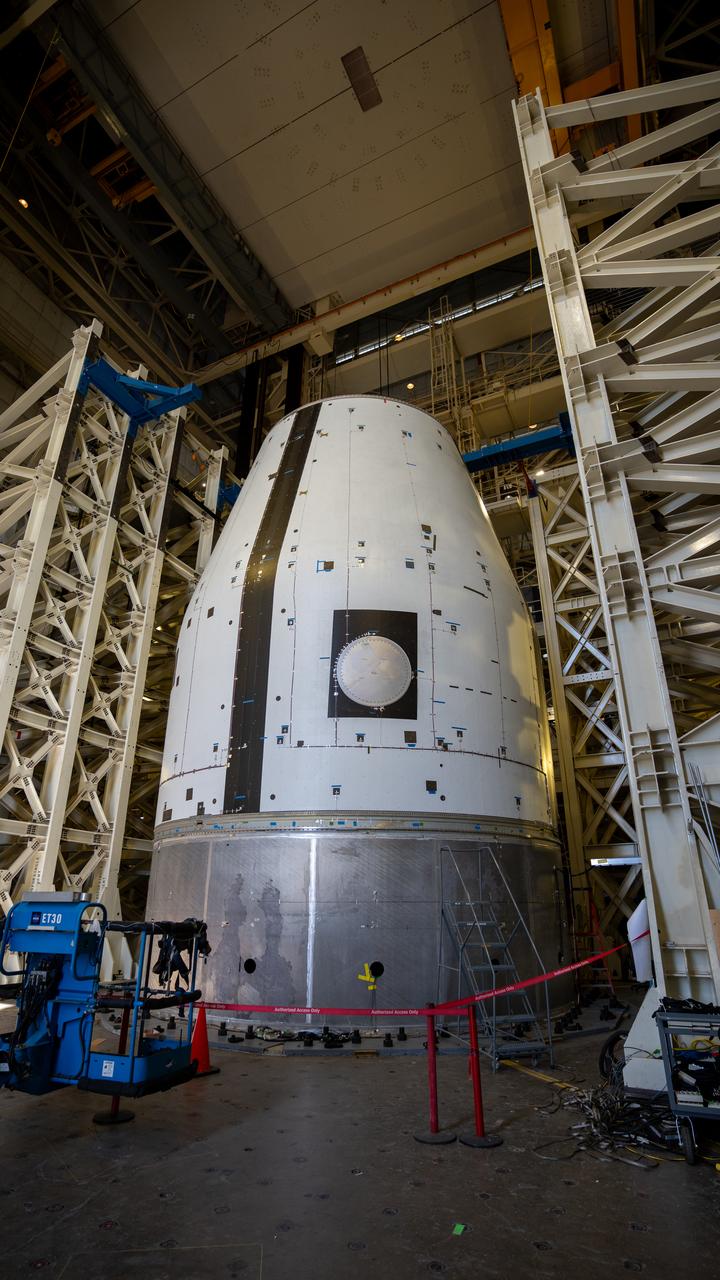
These photos and videos show how crews guided a test version of the universal stage adapter for NASA’s more powerful version of its SLS (Space Launch System) rocket to Building 4619 at the agency’s Marshall Space Flight Center in Huntsville, Alabama, Feb. 22. Built by Leidos, the lead contractor for the universal stage adapter, crews transported the hardware from a Leidos facility in Decatur, Alabama, the same day. The universal stage adapter will connect the SLS rocket’s upgraded in-space propulsion stage, called the exploration upper stage, to NASA’s Orion spacecraft as part of the evolved Block 1B configuration of the SLS rocket. It will also serve as a compartment capable of accommodating large payloads, such as modules or other exploration spacecraft. In Building 4619’s Load Test Annex High Bay at Marshall, the development test article will first undergo modal testing that will shake the hardware to validate dynamic models. Later, during ultimate load testing, force will be applied vertically and to the sides of the hardware. Unlike the flight hardware, the development test article has flaws intentionally included in its design, which will help engineers verity that the flight adapter can withstand the extreme forces it will face during launch and flight.
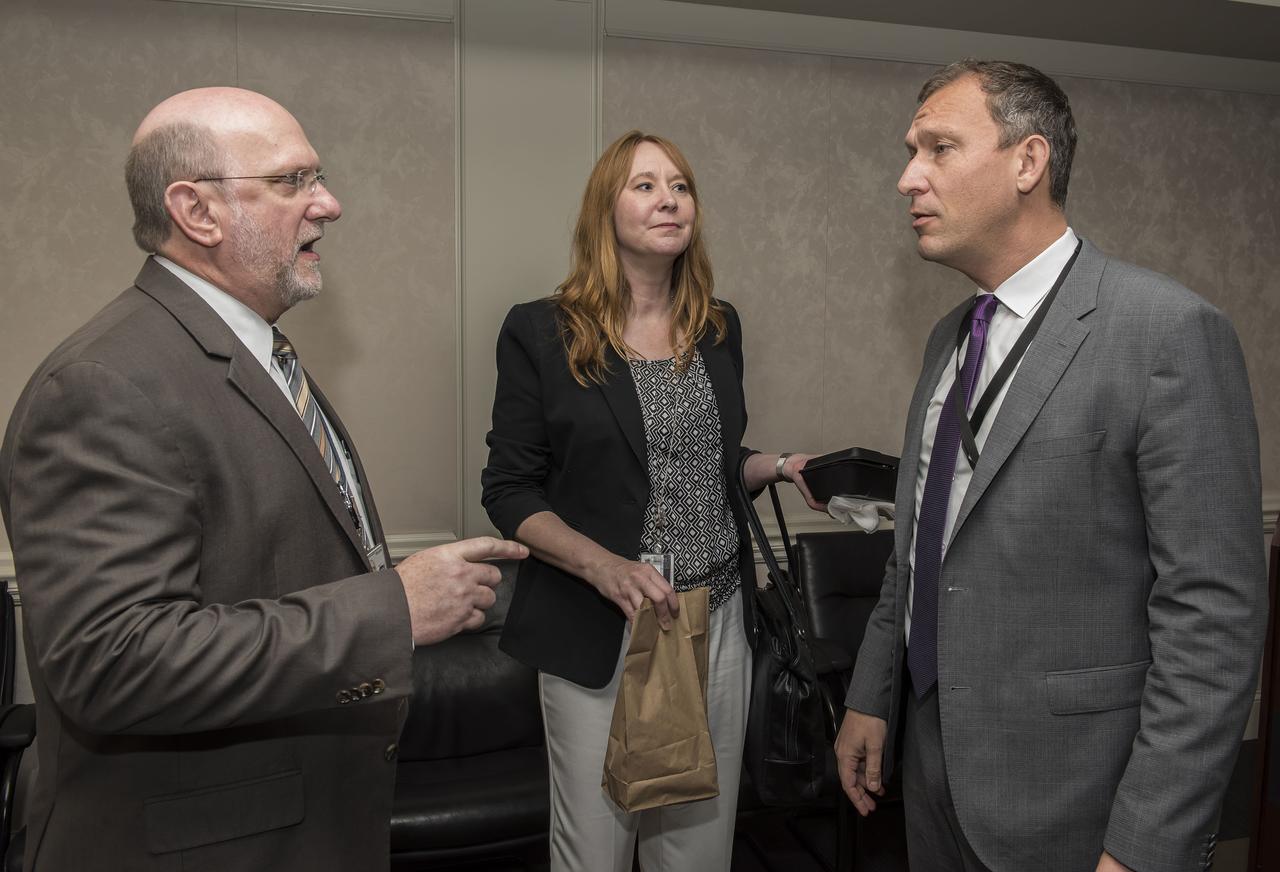
THOMAS ZURBUCHEN, RIGHT, NASA ASSOCIATE ADMINISTRATOR FOR THE SCIENCE MISSION DIRECTORATE, SPEAKS WITH DENNON CLARDY, LEFT, DEPUTY MANAGER OF THE SCIENCE & TECHNOLOGY OFFICE AT NASA’S MARSHALL SPACE FLIGHT CENTER IN HUNTSVILLE, ALABAMA, AND SHAWN MCINERY, AFTER HIS KEYNOTE ADDRESS AT THE MARCH 21 LUNCHEON MEETING OF THE MARSHALL ASSOCIATION. ZURBUCHEN, WHO ASSUMED HIS NEW ROLE IN OCTOBER 2016, ALSO TOURED KEY MARSHALL MANUFACTURING AND TEST FACILITIES. THE MARSHALL ASSOCIATION IS THE CENTER’S PROFESSIONAL, EMPLOYEE SERVICE ORGANIZATION.
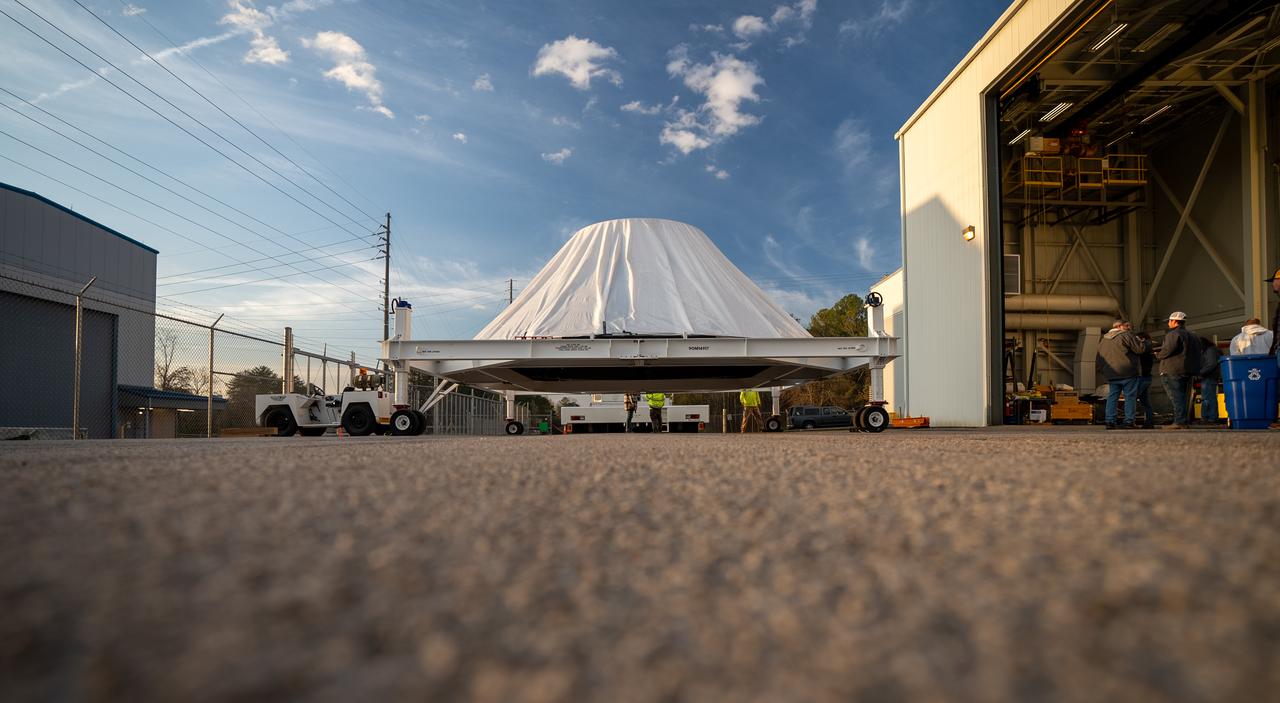
These photos and videos show how crews at NASA’s Marshall Space Flight Center in Huntsville, Alabama, moved and installed the payload adapter that will be used in the Block 1B configuration of the SLS (Space Launch System) rocket from Building 4708, where it was manufactured, into Structural Test Stand 4697 at NASA’s Marshall Space Flight Center on March 13. Teams at Marshall will begin structural testing the engineering development unit of the payload adapter – an exact replica of the flight version of the hardware – this spring. The cone-shaped payload adapter is about 8.5 feet tall and features two metal rings and eight composite panels. The adapter, which will debut on NASA’s Artemis IV mission, is an evolution from the Orion stage adapter used in the Block 1 configuration of the first three Artemis missions. It will be housed inside the universal stage adapter atop the rocket’s more powerful in-space stage, called the exploration upper stage. The payload adapter, like the launch vehicle stage adapter and the Orion stage adapter, is fully manufactured and tested at Marshall, which manages the SLS Program. NASA is working to land the first woman, first person of color, and its first international partner astronaut on the Moon under Artemis. SLS is part of NASA’s backbone for deep space exploration, along with the Orion spacecraft and Gateway in orbit around the Moon and commercial human landing systems, next-generational spacesuits, and rovers on the lunar surface. SLS is the only rocket that can send Orion, astronauts, and supplies to the Moon in a single launch.
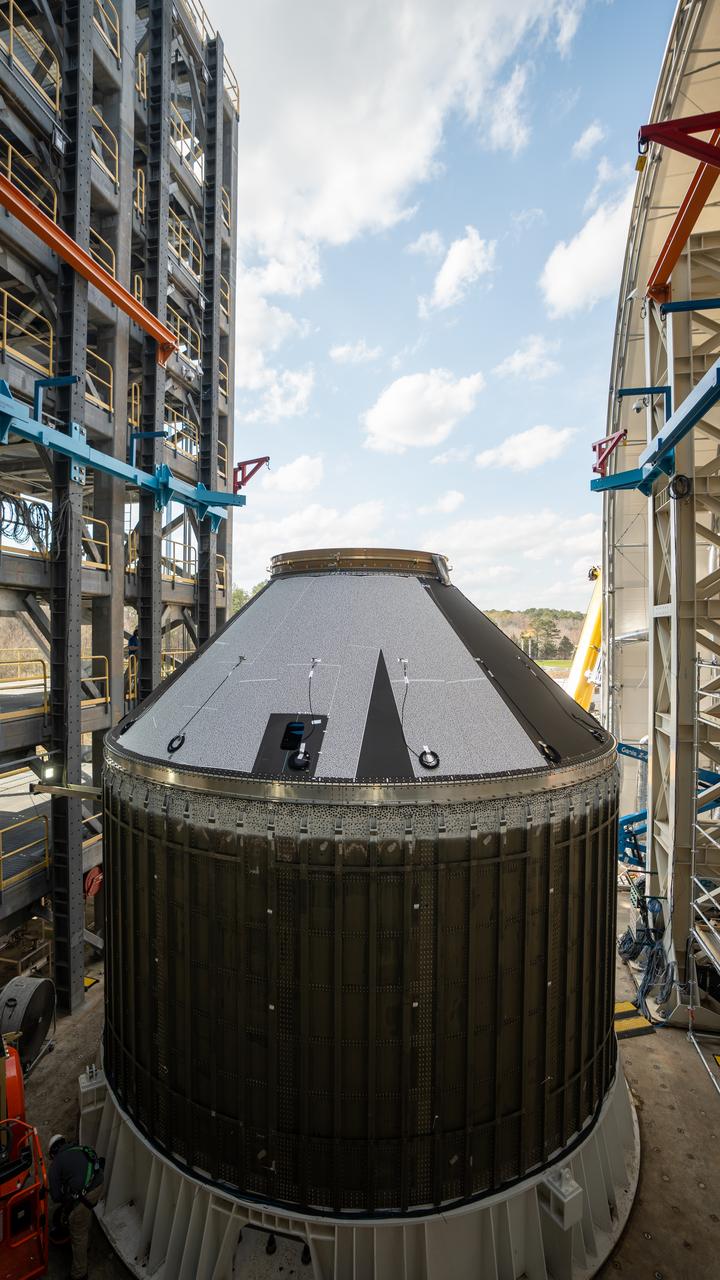
These photos and videos show how crews at NASA’s Marshall Space Flight Center in Huntsville, Alabama, moved and installed the payload adapter that will be used in the Block 1B configuration of the SLS (Space Launch System) rocket from Building 4708, where it was manufactured, into Structural Test Stand 4697 at NASA’s Marshall Space Flight Center on March 13. Teams at Marshall will begin structural testing the engineering development unit of the payload adapter – an exact replica of the flight version of the hardware – this spring. The cone-shaped payload adapter is about 8.5 feet tall and features two metal rings and eight composite panels. The adapter, which will debut on NASA’s Artemis IV mission, is an evolution from the Orion stage adapter used in the Block 1 configuration of the first three Artemis missions. It will be housed inside the universal stage adapter atop the rocket’s more powerful in-space stage, called the exploration upper stage. The payload adapter, like the launch vehicle stage adapter and the Orion stage adapter, is fully manufactured and tested at Marshall, which manages the SLS Program. NASA is working to land the first woman, first person of color, and its first international partner astronaut on the Moon under Artemis. SLS is part of NASA’s backbone for deep space exploration, along with the Orion spacecraft and Gateway in orbit around the Moon and commercial human landing systems, next-generational spacesuits, and rovers on the lunar surface. SLS is the only rocket that can send Orion, astronauts, and supplies to the Moon in a single launch.
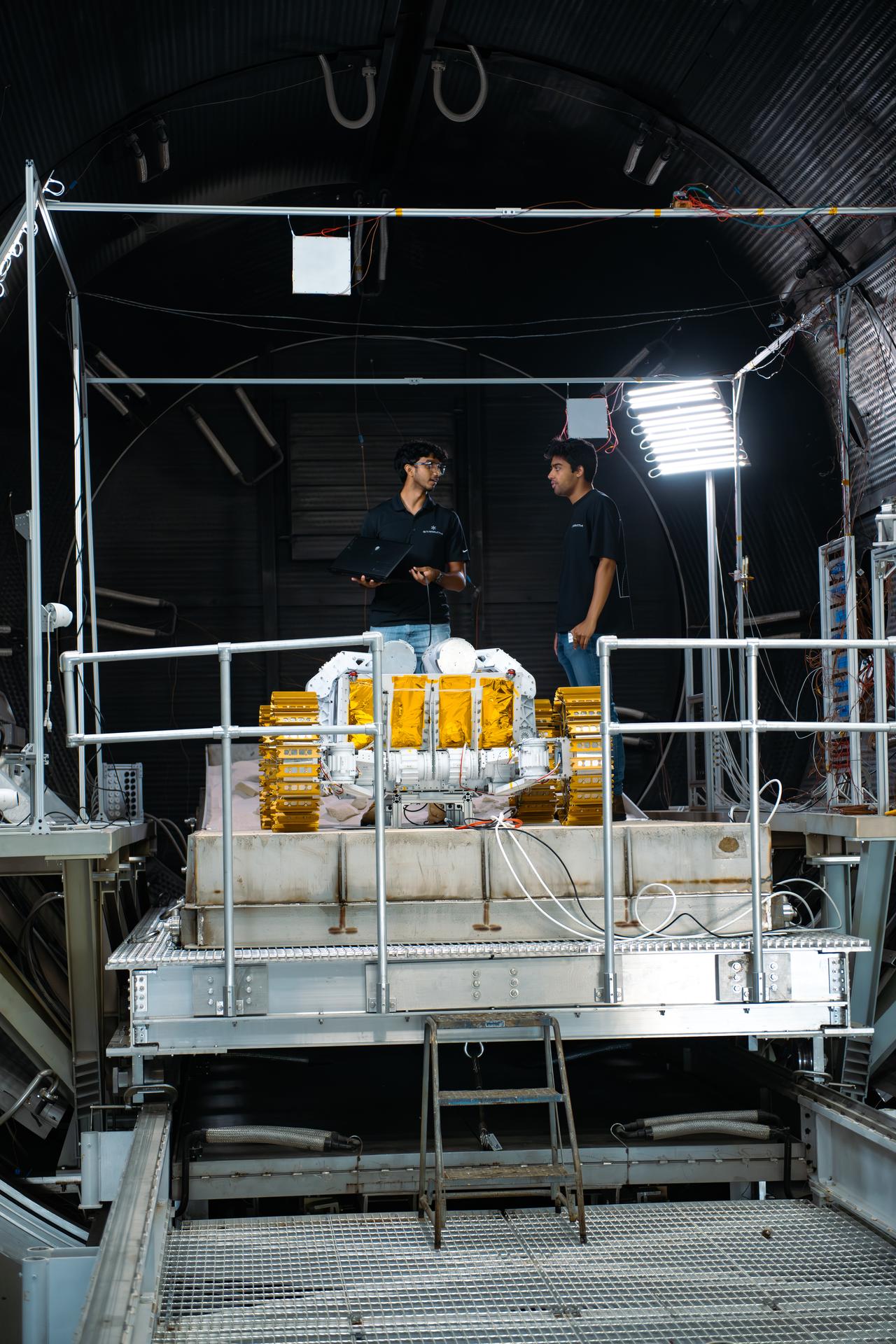
On July 30, 2025, members of the Starpath team discuss what final preparations need to be made before the chamber is closed for testing of their rover at NASA’s Marshall Space Flight Center in Huntsville, Alabama. The technology startup headquartered in Hawthorne, California, won second place overall at the Break the Ice Lunar Challenge’s live demonstration and finale in June 2024. This competition, one of NASA’s Centennial Challenges, tasked competitors to design, build, and demonstrate robotic technologies that could excavate and transport the icy, rocky dirt – otherwise known as regolith – found on the Moon. Starpath’s visit to NASA Marshall was part of their prize opportunity to test their upgraded lunar regolith excavation and transportation rover in the center’s 20-foot thermal vacuum chamber. For more information, contact NASA Marshall’s Office of Communications at 256-544-0034.
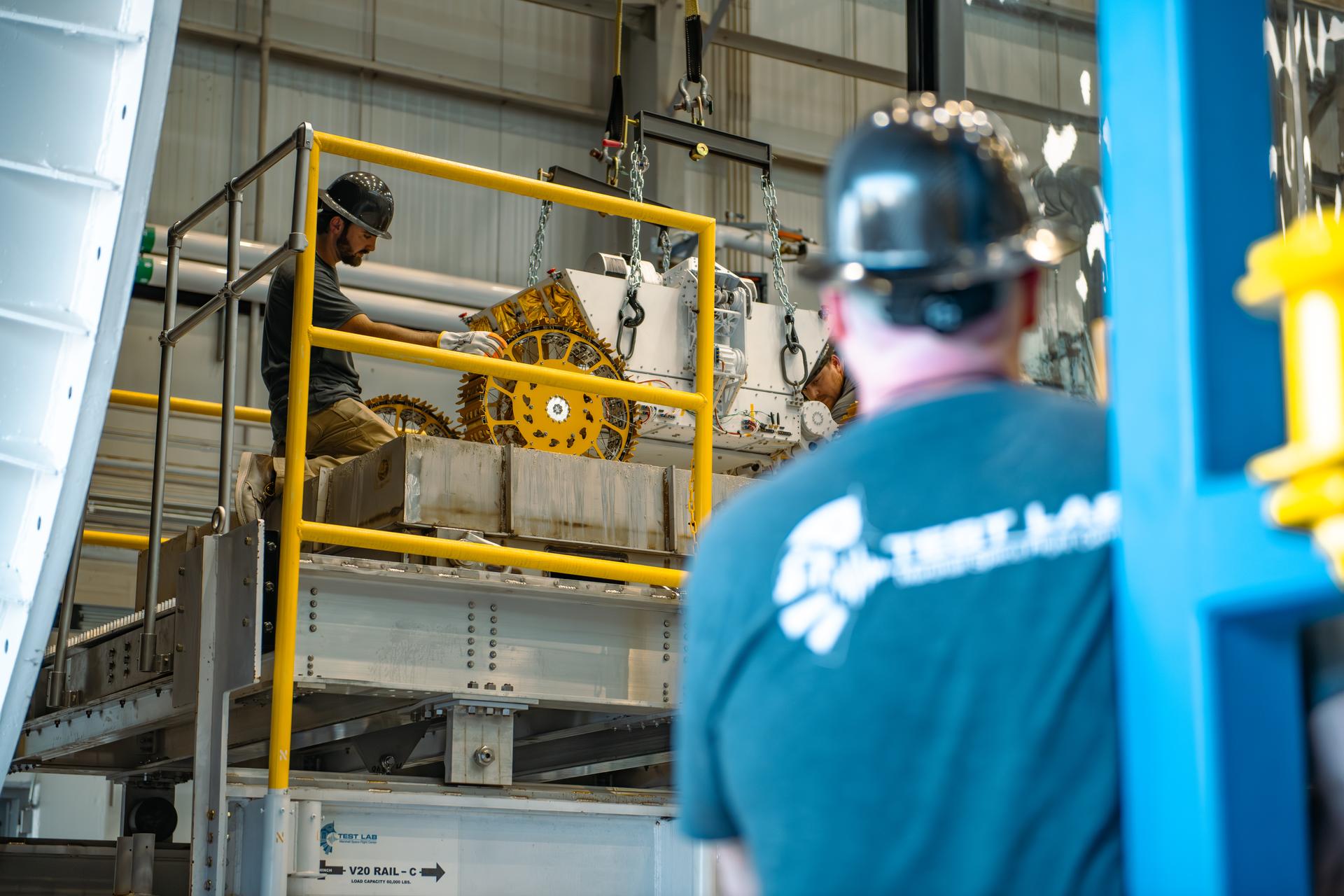
NASA test engineers with the Environmental Test Facility at NASA’s Marshall Space Flight Center situate the rover over the concrete slab that it will operate on before removing the suspension straps that lifted it onto the platform. The technology startup headquartered in Hawthorne, California, won second place overall at the agency’s Break the Ice Lunar Challenge’s live demonstration and finale in June 2024. This competition, one of NASA’s Centennial Challenges, tasked competitors to design, build, and demonstrate robotic technologies that could excavate and transport the icy, rocky dirt – otherwise known as regolith – found on the Moon. Starpath’s visit to NASA Marshall was part of their prize opportunity to test their upgraded lunar regolith excavation and transportation rover in the center’s 20-foot thermal vacuum chamber. For more information, contact NASA Marshall’s Office of Communications at 256-544-0034.
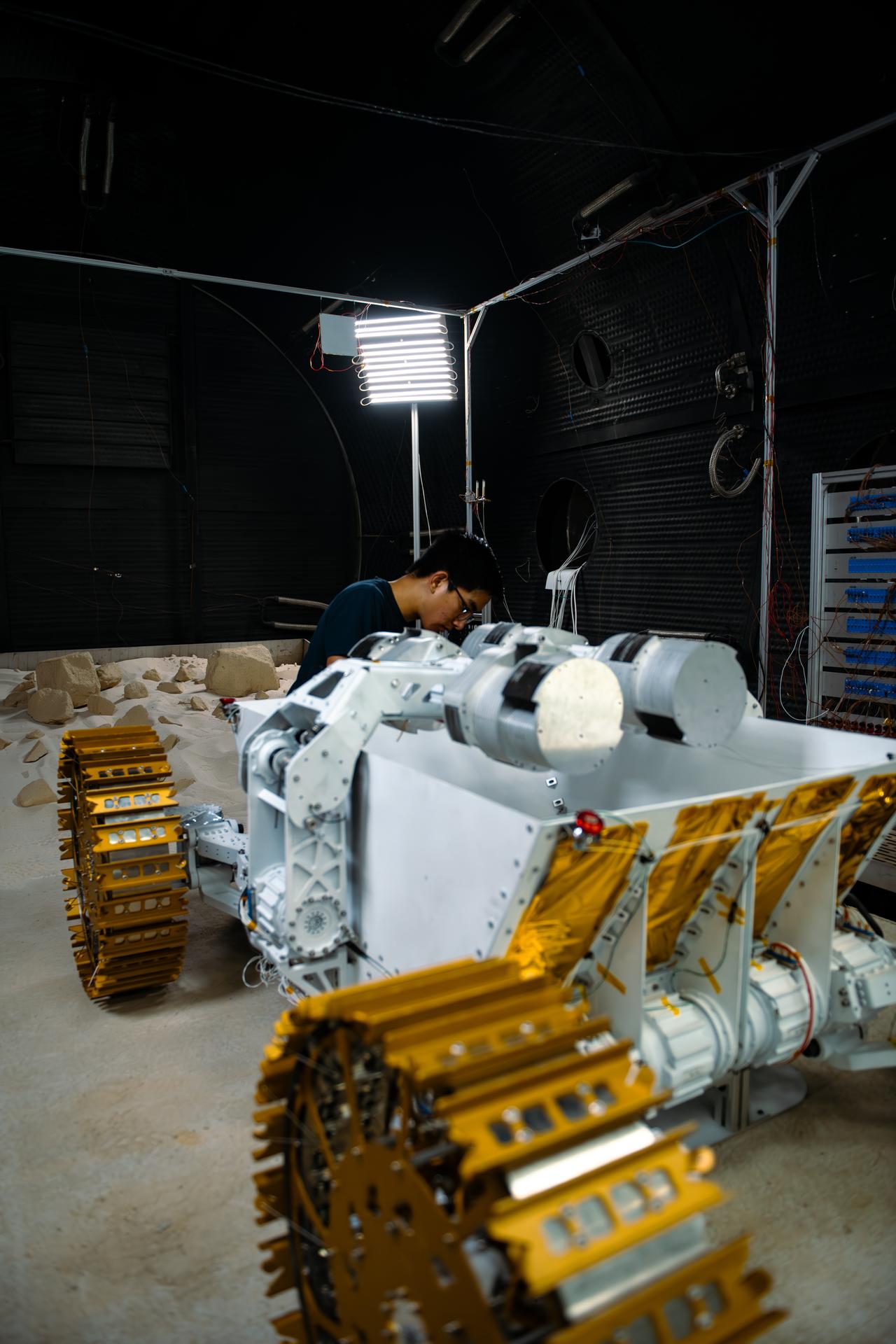
Starpath’s rover sits on a concrete slab that will be used to mimic the rugged lunar surface within a vacuum chamber at NASA’s Marshall Space Flight Center in Huntsville, Alabama, on July 30, 2025. The slab features a sandy, rocky terrain, and lamps within the chamber will turn on and off to simulate sunlight. The technology startup headquartered in Hawthorne, California, won second place overall at the agency’s Break the Ice Lunar Challenge’s live demonstration and finale in June 2024. This competition, one of NASA’s Centennial Challenges, tasked competitors to design, build, and demonstrate robotic technologies that could excavate and transport the icy, rocky dirt – otherwise known as regolith – found on the Moon. Starpath’s visit to NASA Marshall was part of their prize opportunity to test their upgraded lunar regolith excavation and transportation rover in the center’s 20-foot thermal vacuum chamber. For more information, contact NASA Marshall’s Office of Communications at 256-544-0034
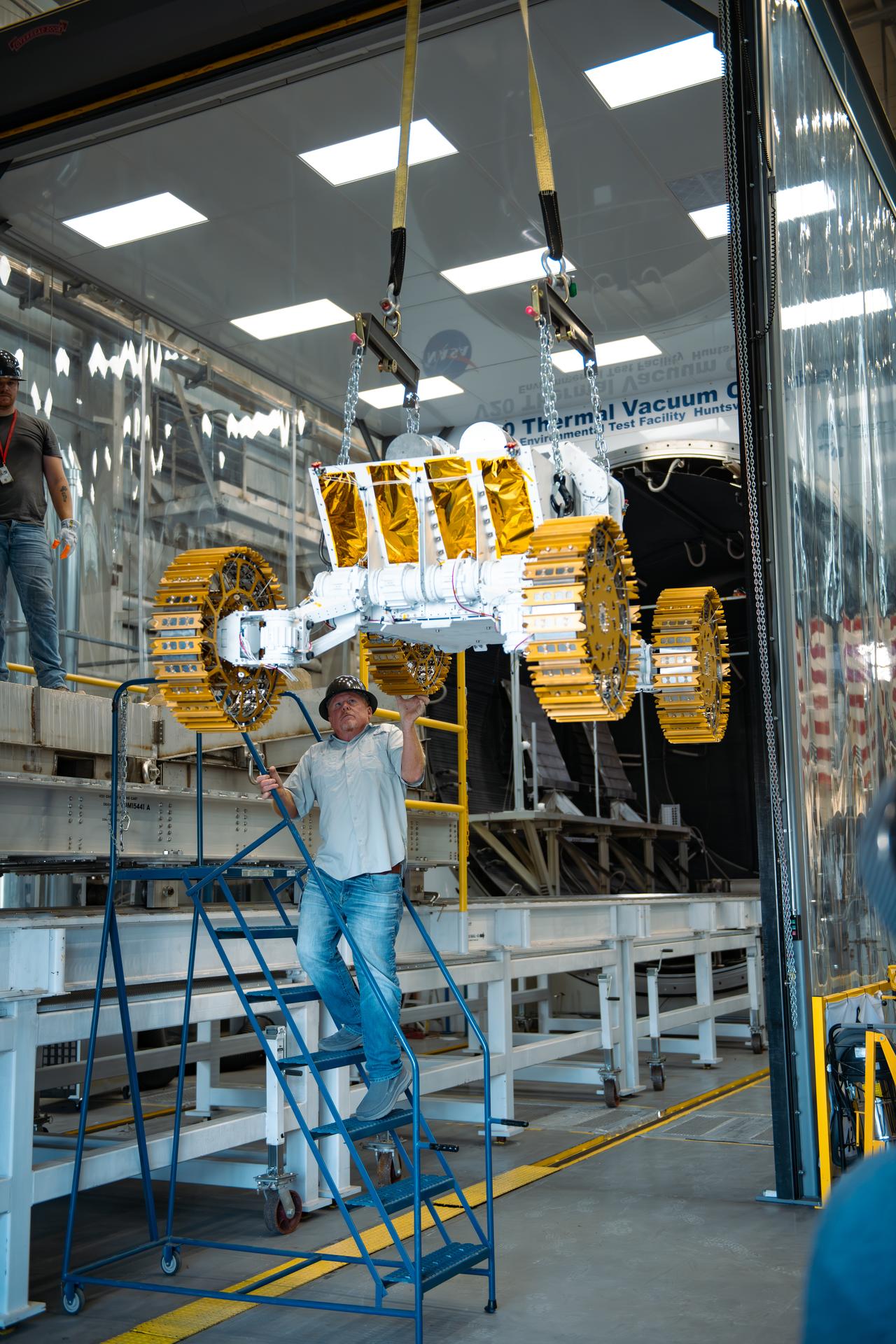
Employees from Environmental Test Facility at NASA’s Marshall Space Flight Center in Huntsville, Alabama, work with the Starpath team on July 30, 2025, to carefully maneuver the rover onto a platform that will slide the rover into the chamber. The technology startup headquartered in Hawthorne, California, won second place overall at the agency’s Break the Ice Lunar Challenge’s live demonstration and finale in June 2024. Their visit to NASA Marshall was part of their prize opportunity to test their upgraded lunar regolith excavation and transportation rover in the center’s 20-foot thermal vacuum chamber. The competition, one of NASA’s Centennial Challenges, tasked competitors to design, build, and demonstrate robotic technologies that could excavate and transport the icy, rocky dirt – otherwise known as regolith – found on the Moon. For more information, contact NASA Marshall’s Office of Communications at 256-544-0034.
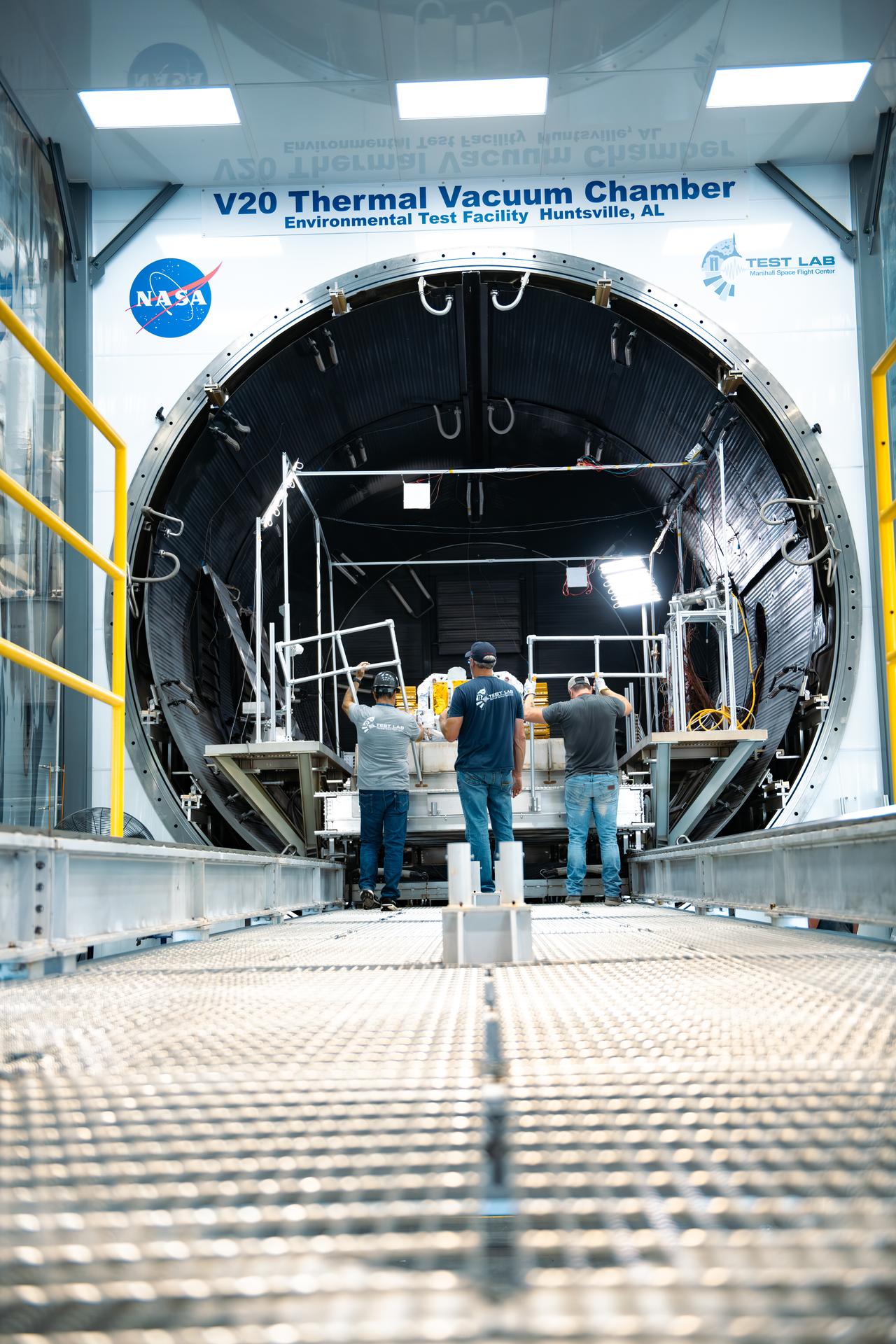
NASA Environmental Test Facility employees at the agency’s Marshall Space Flight Center in Huntsville, Alabama, work with members from the Starpath team to push the sliding platform into the thermal vacuum chamber, with the heavy rover and concrete slab in tow. The technology startup headquartered in Hawthorne, California, won second place overall at the agency’s Break the Ice Lunar Challenge’s live demonstration and finale in June 2024. This competition, one of NASA’s Centennial Challenges, tasked competitors to design, build, and demonstrate robotic technologies that could excavate and transport the icy, rocky dirt – otherwise known as regolith – found on the Moon. Starpath’s visit to NASA Marshall was part of their prize opportunity to test their upgraded lunar regolith excavation and transportation rover in the center’s 20-foot thermal vacuum chamber. For more information, contact NASA Marshall’s Office of Communications at 256-544-0034.
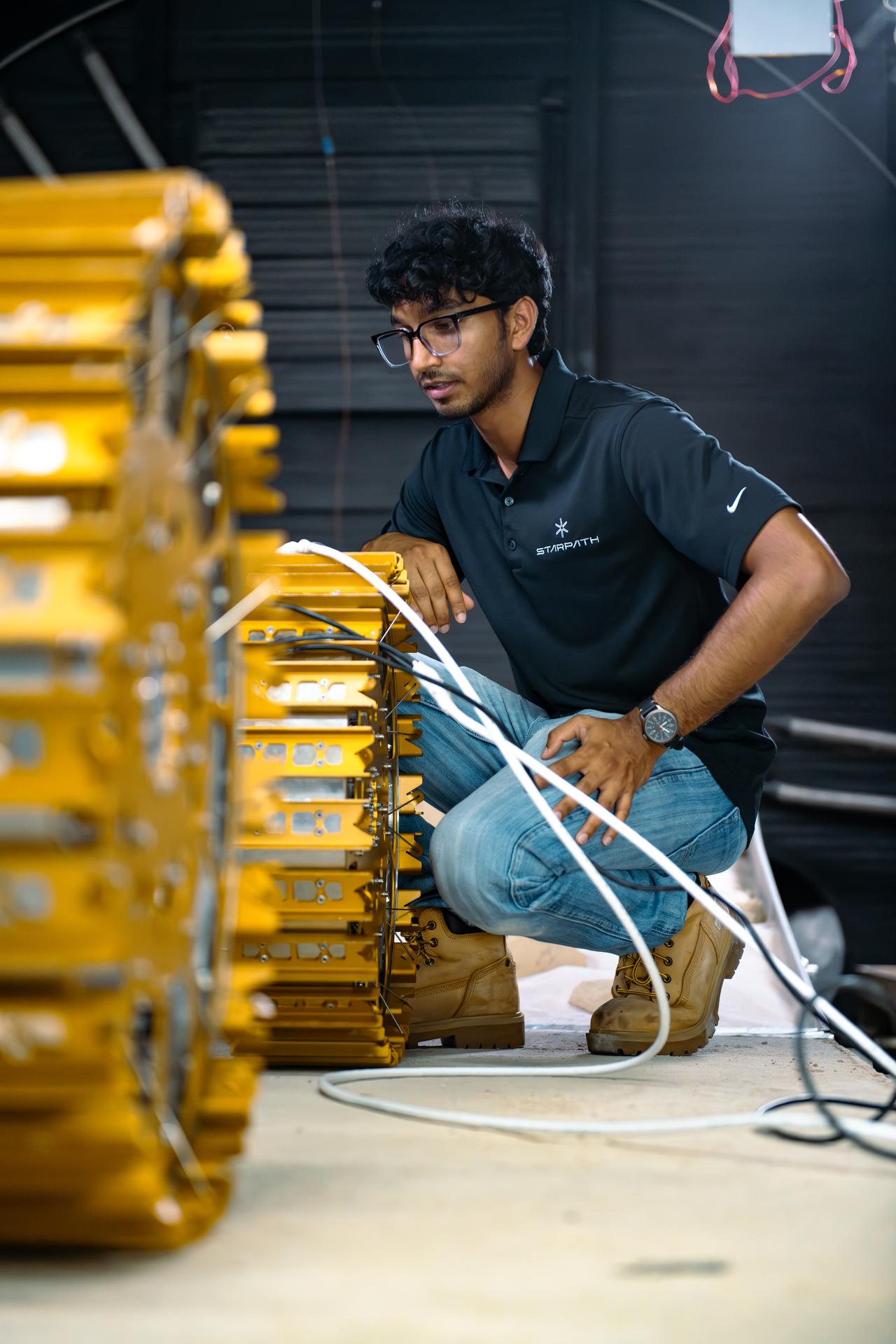
Starpath mechanical engineer Josh Kavilaveettil monitors a component of the rover, attached to wires, in preparation for testing at NASA’s Marshall Space Flight Center in Huntsville, Alabama on July 30, 2025. The technology startup headquartered in Hawthorne, California, won second place overall at the agency’s Break the Ice Lunar Challenge’s live demonstration and finale in June 2024. This competition, one of NASA’s Centennial Challenges, tasked competitors to design, build, and demonstrate robotic technologies that could excavate and transport the icy, rocky dirt – otherwise known as regolith – found on the Moon. Starpath’s visit to NASA Marshall was part of their prize opportunity to test their upgraded lunar regolith excavation and transportation rover in the center’s 20-foot thermal vacuum chamber. For more information, contact NASA Marshall’s Office of Communications at 256-544-0034.
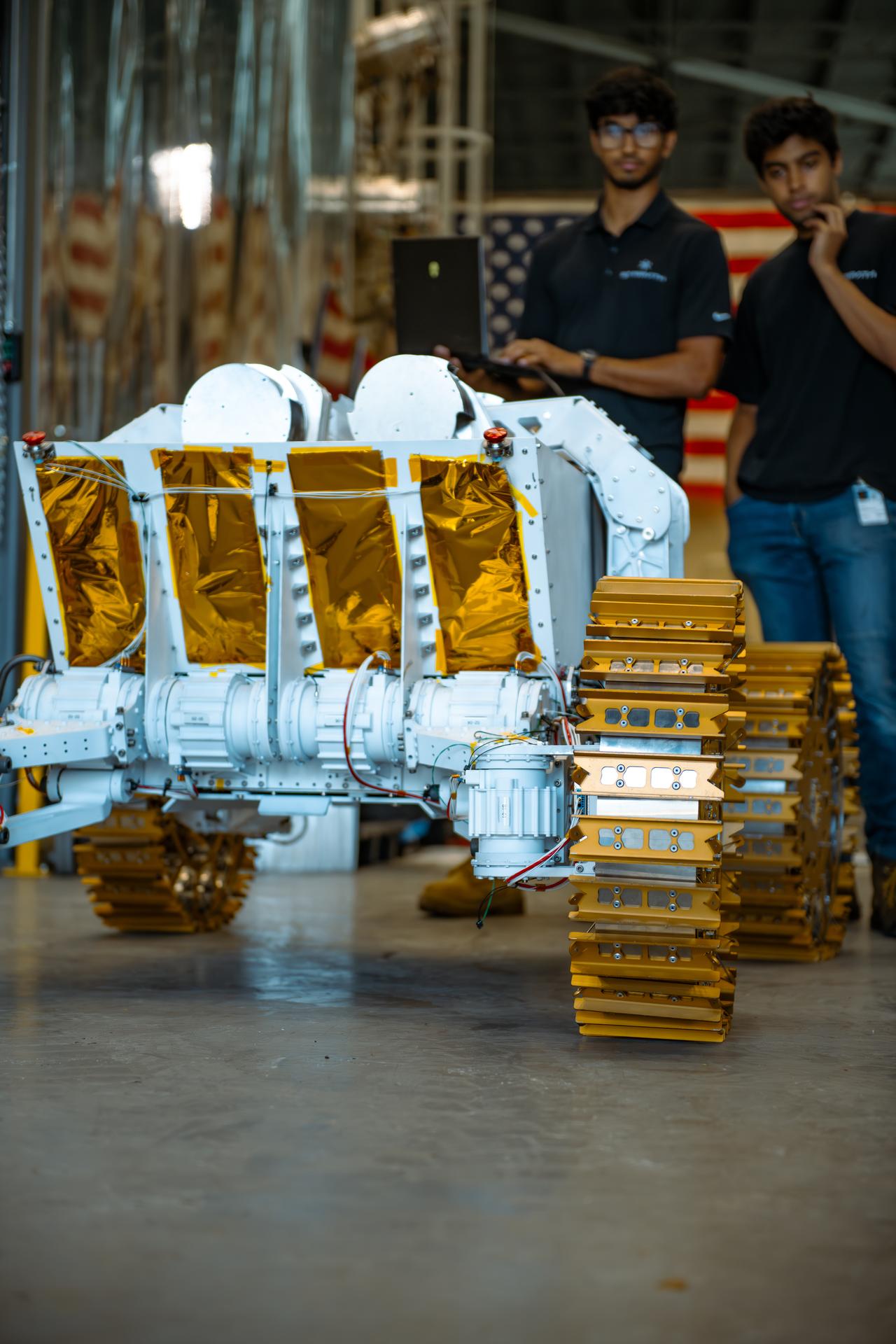
Members of the small business Starpath remotely operate the rover and run data in preparation for its entrance to the V20 Thermal Vacuum Chamber at NASA’s Marshall Space Flight Center in Huntsville, Alabama, on July 30, 2025. The technology startup headquartered in Hawthorne, California, won second place overall at the agency’s Break the Ice Lunar Challenge’s live demonstration and finale in June 2024. Their visit to NASA Marshall was part of their prize opportunity to test their upgraded lunar regolith excavation and transportation rover in the center’s 20-foot thermal vacuum chamber. The competition, one of NASA’s Centennial Challenges, tasked competitors to design, build, and demonstrate robotic technologies that could excavate and transport the icy, rocky dirt – otherwise known as regolith – found on the Moon. For more information, contact NASA Marshall’s Office of Communications at 256-544-0034.
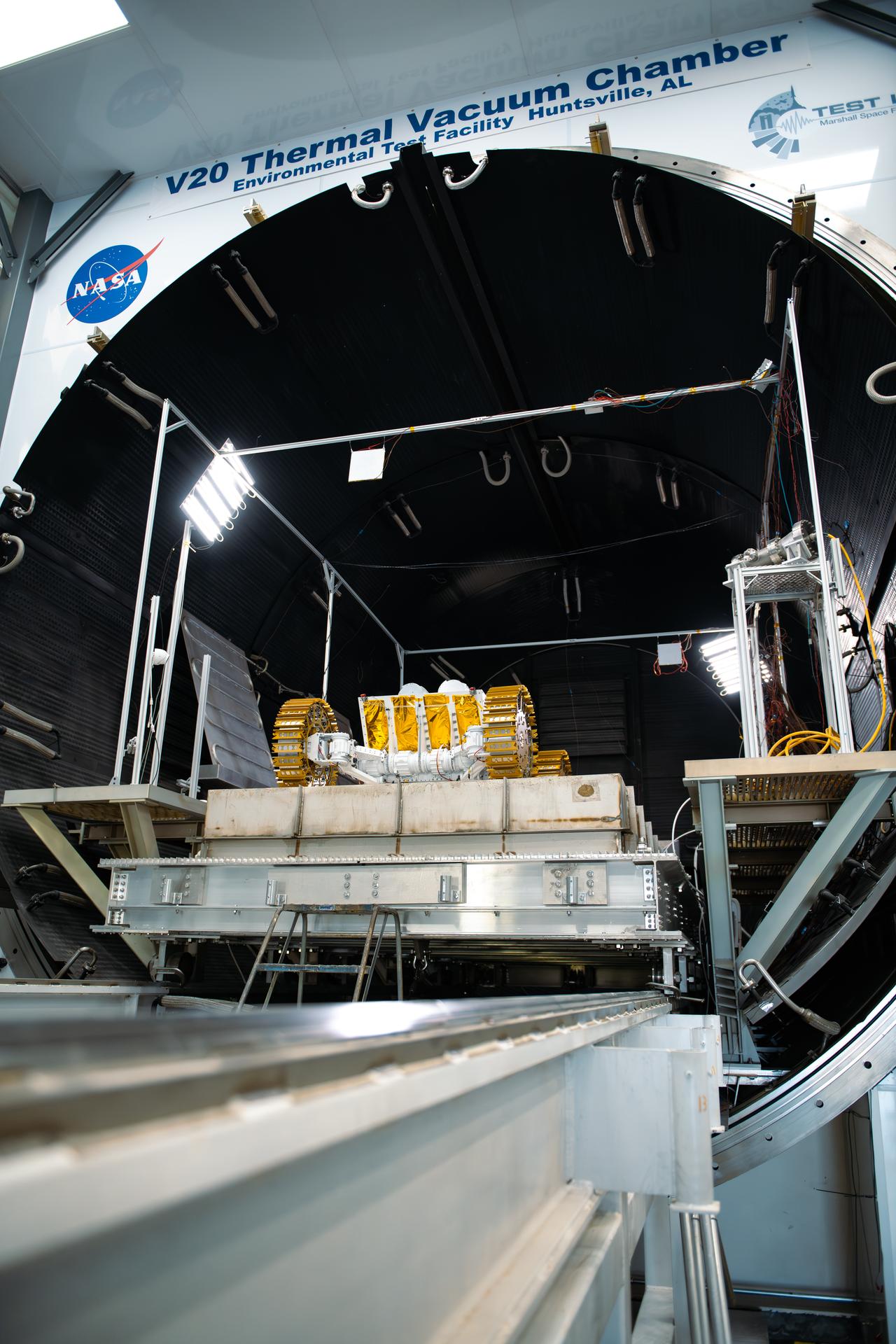
Starpath’s rover sits atop a concrete slab at the mouth of the thermal vacuum chamber, ready to be closed in and commence testing at NASA’s Marshall Space Flight Center in Huntsville, Alabama, on July 30, 2025. The technology startup headquartered in Hawthorne, California, won second place overall at the Break the Ice Lunar Challenge’s live demonstration and finale in June 2024. This competition, one of NASA’s Centennial Challenges, tasked competitors to design, build, and demonstrate robotic technologies that could excavate and transport the icy, rocky dirt – otherwise known as regolith – found on the Moon. Starpath’s visit to NASA Marshall was part of their prize opportunity to test their upgraded lunar regolith excavation and transportation rover in the center’s 20-foot thermal vacuum chamber. For more information, contact NASA Marshall’s Office of Communications at 256-544-0034.
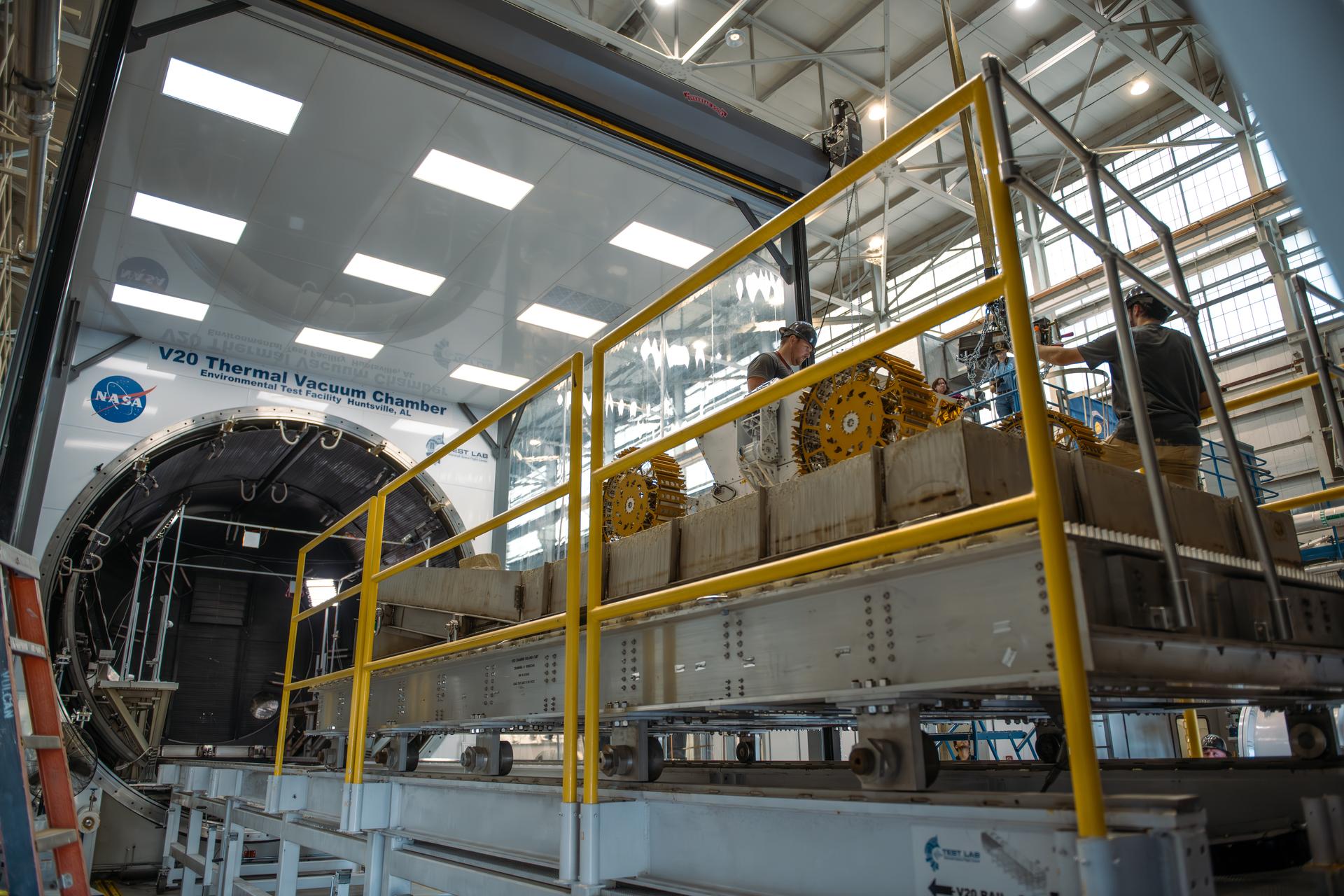
Starpath’s rover freely rests on a concrete slab at the end of a platform at NASA’s Marshall Space Flight Center in Huntsville, Alabama. The large metal structure will slide into the chamber, bringing the rover and concrete slab with it. The technology startup headquartered in Hawthorne, California, won second place overall at the agency’s Break the Ice Lunar Challenge’s live demonstration and finale in June 2024. This competition, one of NASA’s Centennial Challenges, tasked competitors to design, build, and demonstrate robotic technologies that could excavate and transport the icy, rocky dirt – otherwise known as regolith – found on the Moon. Starpath’s visit to NASA Marshall was part of their prize opportunity to test their upgraded lunar regolith excavation and transportation rover in the center’s 20-foot thermal vacuum chamber. For more information, contact NASA Marshall’s Office of Communications at 256-544-0034.
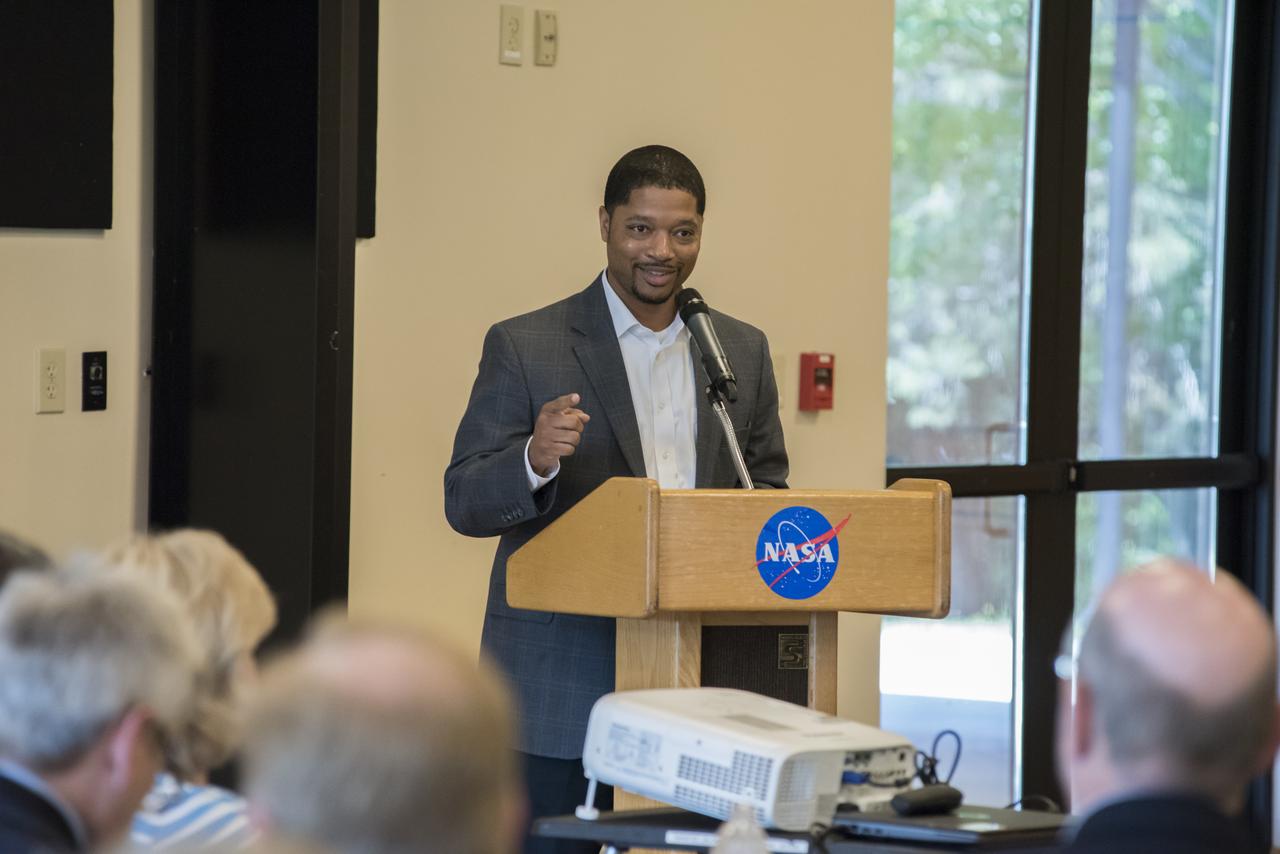
Markeeva Morgan, SLS avionics subsystem manager at NASA’s Marshall Space Flight Center, speaks to an audience of Marshall team members April 26 at the Overlook at Redstone. Morgan was the introductory speaker for the luncheon meeting of the Marshall Association, the center’s professional, employee service organization.
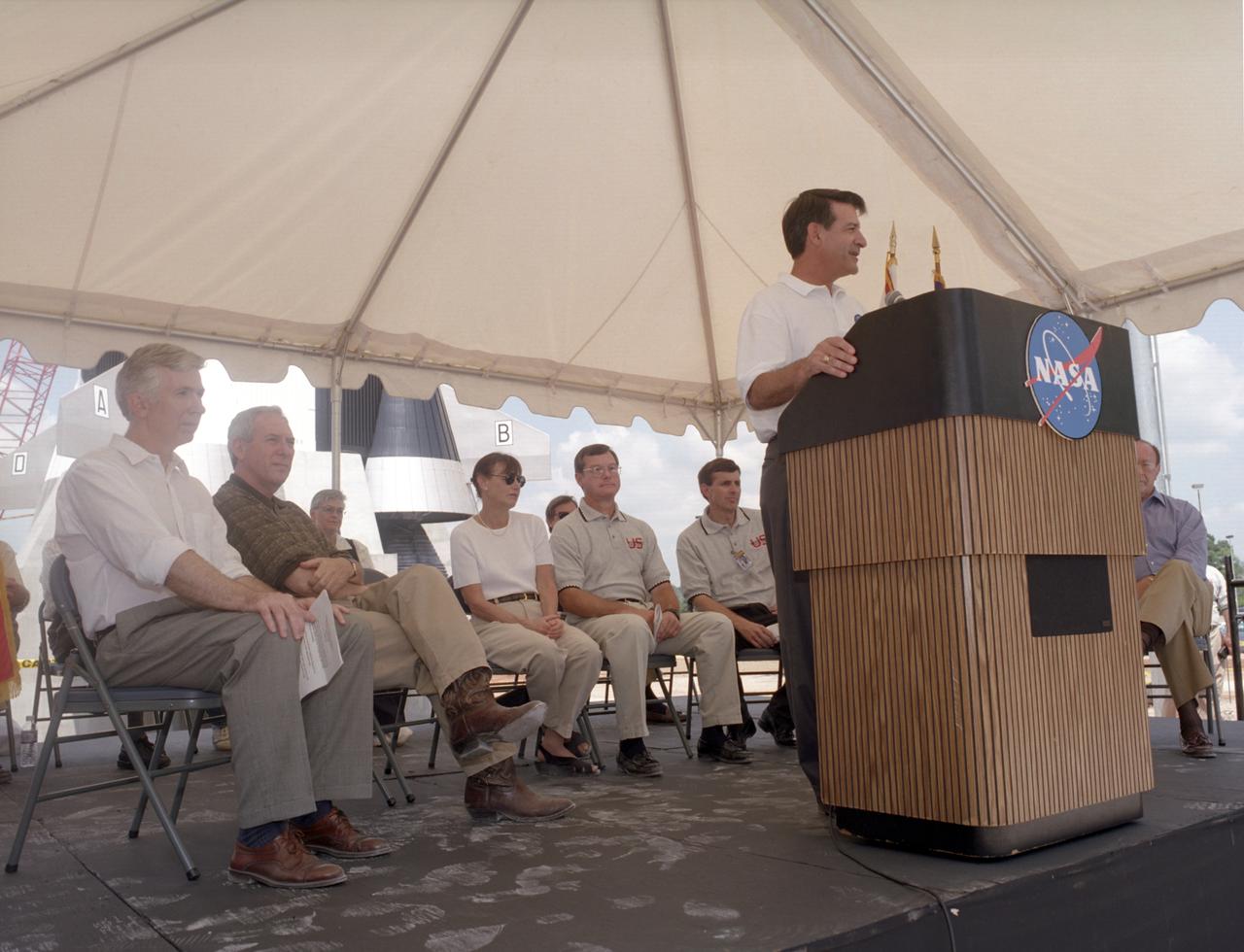
A replica of the Saturn V rocket that propelled man from the confines of Earth's gravity to the surface of the Moon was built on the grounds of the U. S. Space and Rocket Center in Huntsville, AL. in time for the 30th arniversary celebration of that historic occasion. Marshall Space Flight Center and its team of German rocket scientists headed by Dr. Wernher von Braun were responsible for the design and development of the Saturn V rocket. Pictured are MSFC's current Center Director Art Stephenson, Alabama Congressman Bud Cramer, and NASA Administrator Dan Goldin during the dedication ceremony.

A replica of the Saturn V rocket that propelled man from the confines of Earth's gravity to the surface of the Moon was built on the grounds of the U. S. Space and Rocket Center in Huntsville, AL. in time for the 30th arniversary celebration of that historic occasion. Marshall Space Flight Center and its team of German rocket scientists headed by Dr. Wernher von Braun were responsible for the design and development of the Saturn V rocket. Pictured are MSFC's current Center Director Art Stephenson, Alabama Congressman Bud Cramer, NASA Administrator Dan Goldin, and director of the U. S. Space and Rocket Center Mike Wing during the dedication ceremony.
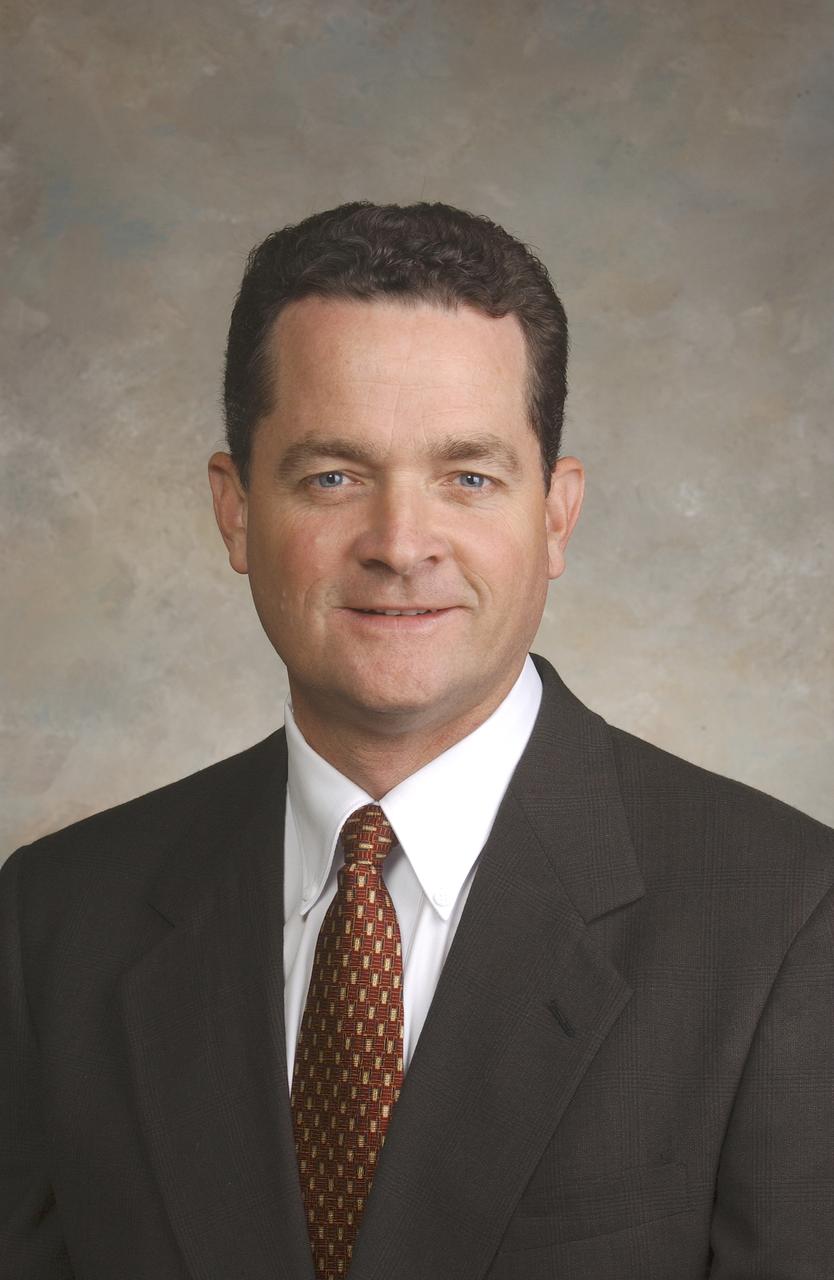
Mr. David A. King has been named the tenth Director of NASA's Marshall Space Flight Center (MSFC). Appointed to take Director's office June 15, 2003, King has been serving as Deputy Director of MSFC since November 2002. With 20 years experience in spacecraft and high-technology systems, Mr. King began his NASA career at NASA's Kennedy Space Center, Florida in 1983 as a main propulsion system engineer. He later served as flow director for the Space Shuttle Discovery and then as the acting deputy director of the installation Operations Directorate. He was appointed deputy director of Shuttle Processing in 1996, Launch Director in 1997, and director of Shuttle Processing in 1999.
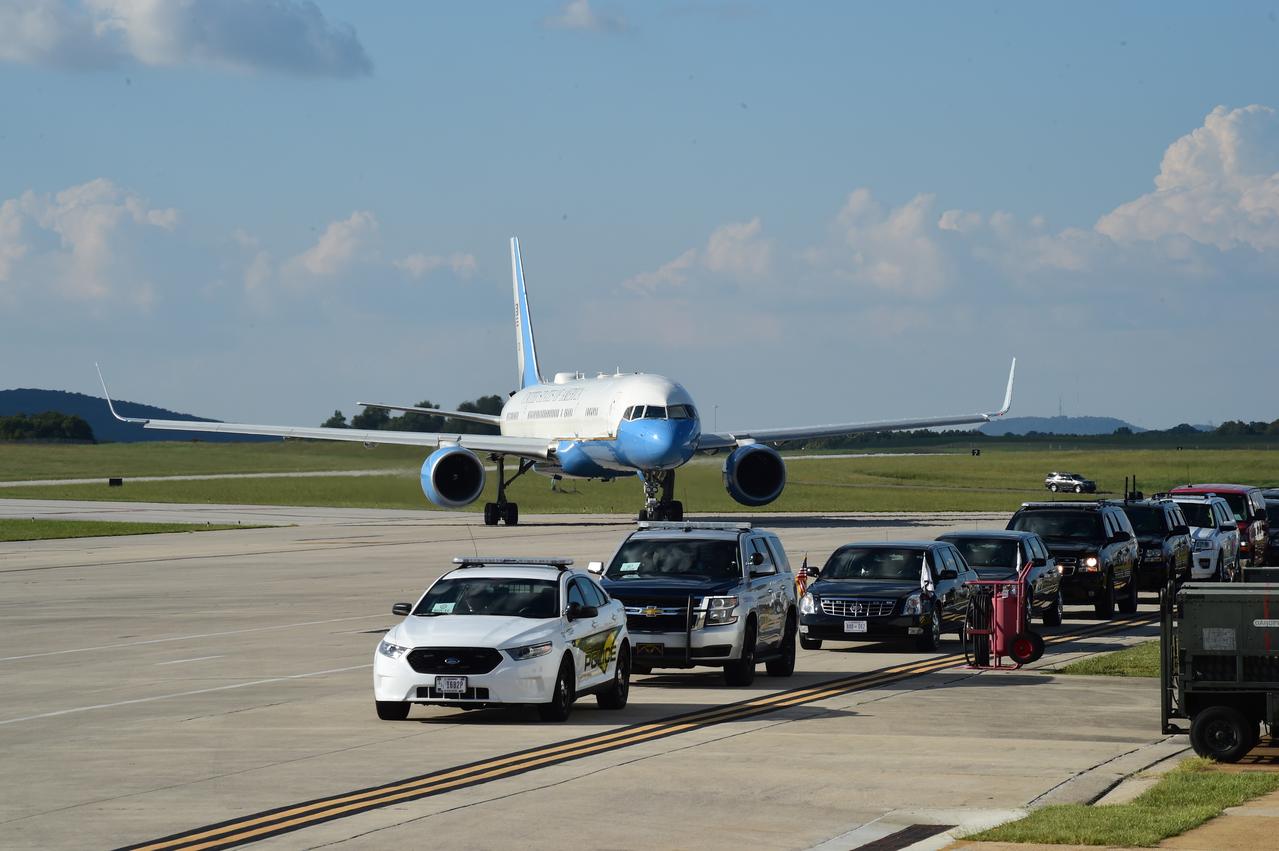
Air Force Two lands with Vice President Mike Pence along with Congressman Robert Aderholt at the Redstone Army Airfield in Huntsville, Alabama, on Monday, Sept. 25. The Vice President is visiting NASA’s Marshall Space Flight Center, located on Redstone Arsenal, to meet with employees, view test hardware for NASA’s Space Launch System — America’s new deep-space rocket, and tour the Payload Operations Integration Center, “science central” for the International Space Station. Photo Credit: (NASA/Emmett Given)
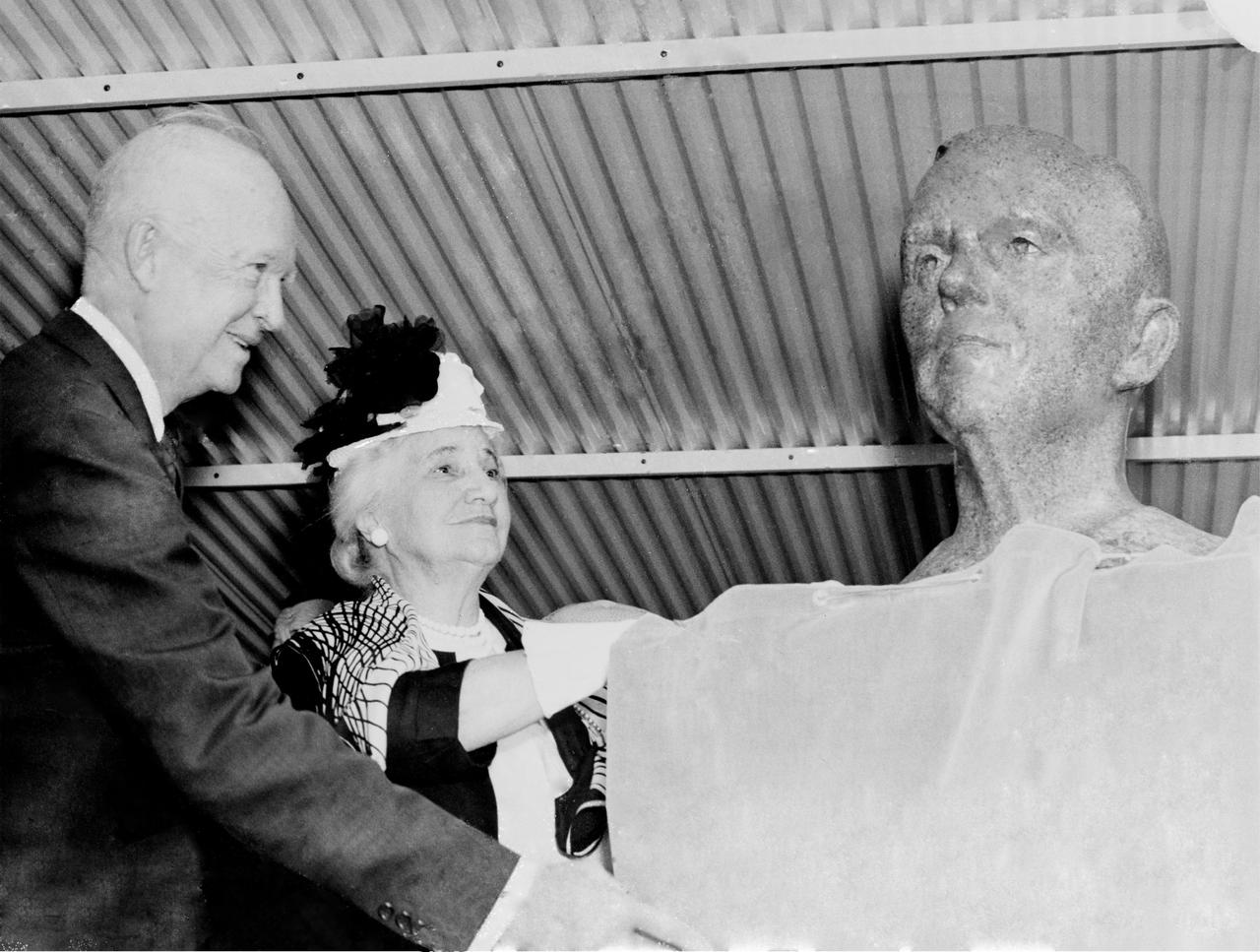
President Dwight D. Eisenhower and Mrs. George C. Marshall unveil the bronze bust of General George C. Marshall during the dedication of the Marshall Space Flight Center. Eisenhower signed an Executive Order on October 21, 1959 directing the transfer of persornel from the Redstone Arsenal's Army Ballistic Missile Agency Development Operations Division to NASA. On March 15, 1960, another Executive Order announced that the space complex formed within the boundaries of Redstone Arsenal would become the George C. Marshall Space Flight Center. The Center was activated on July 1, 1960, with dedication ceremonies taking place September 8, 1960.
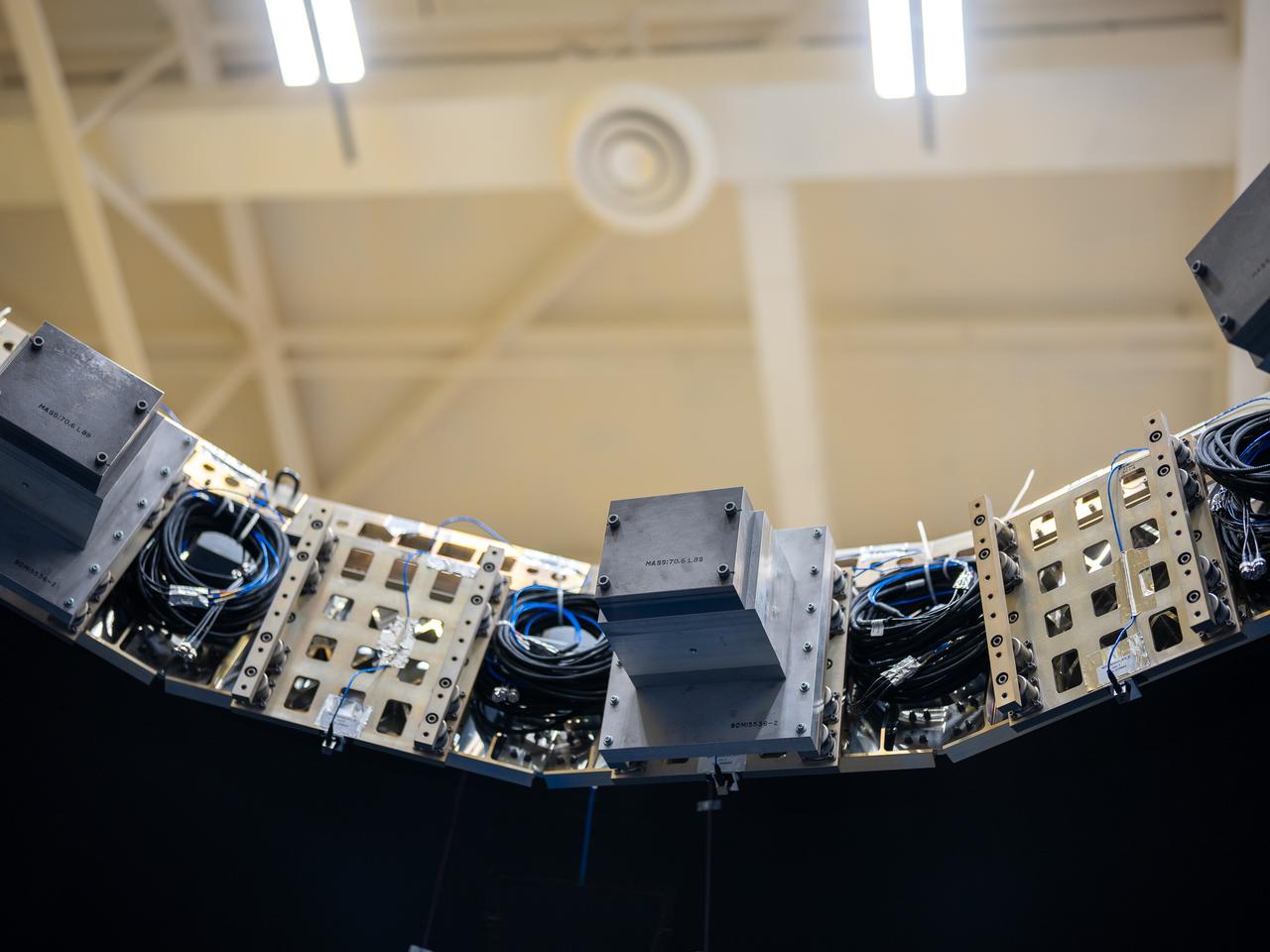
These photos and videos show how NASA manufactured and prepared to transport the payload adapter in February inside Building 4708 at NASA’s Marshall Space Flight Center in Huntsville, Alabama. Prior to moving the hardware for testing, teams installed the New Explorations Secondary Transport component, called the NEST, into the top of the engineering development unit. The NEST component will allow the hardware to hold a series of secondary payloads, or small satellites. The cone-shaped payload adapter is about 8.5 feet tall and features two metal rings and eight composite panels. The adapter, which will debut on NASA’s Artemis IV mission, is an evolution from the Orion stage adapter used in the Block 1 configuration of the rocket for the first three Artemis missions. It will be housed inside the universal stage adapter atop the rocket’s more powerful in-space stage, called the exploration upper stage. The payload adapter, like the launch vehicle stage adapter and the Orion stage adapter, is fully manufactured and tested at Marshall, which manages the SLS Program. NASA is working to land the first woman, first person of color, and its first international partner astronaut on the Moon under Artemis. SLS is part of NASA’s backbone for deep space exploration, along with the Orion spacecraft and Gateway in orbit around the Moon and commercial human landing systems, next-generational spacesuits, and rovers on the lunar surface. SLS is the only rocket that can send Orion, astronauts, and supplies to the Moon in a single launch.
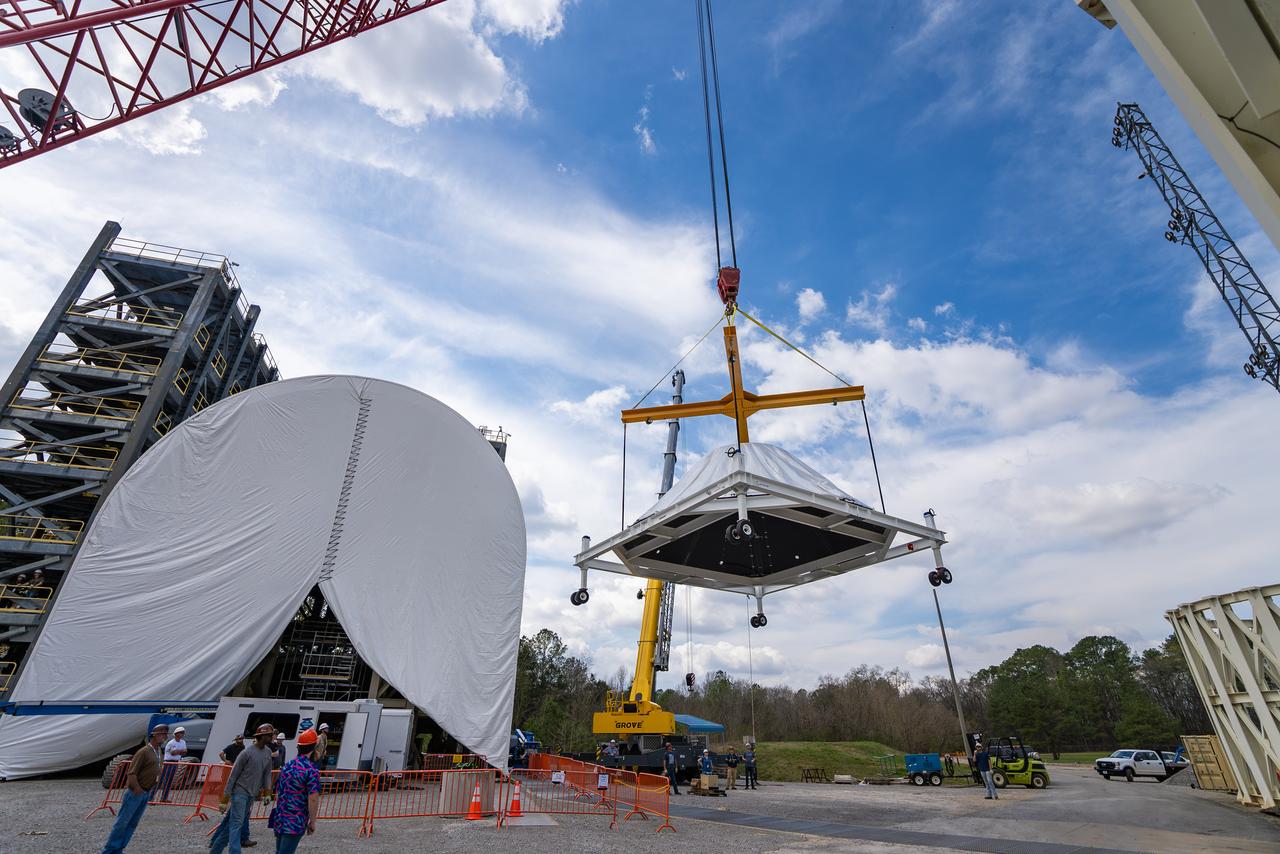
These photos and videos show how crews at NASA’s Marshall Space Flight Center in Huntsville, Alabama, moved and installed the payload adapter that will be used in the Block 1B configuration of the SLS (Space Launch System) rocket from Building 4708, where it was manufactured, into Structural Test Stand 4697 at NASA’s Marshall Space Flight Center on March 13. Teams at Marshall will begin structural testing the engineering development unit of the payload adapter – an exact replica of the flight version of the hardware – this spring. The cone-shaped payload adapter is about 8.5 feet tall and features two metal rings and eight composite panels. The adapter, which will debut on NASA’s Artemis IV mission, is an evolution from the Orion stage adapter used in the Block 1 configuration of the first three Artemis missions. It will be housed inside the universal stage adapter atop the rocket’s more powerful in-space stage, called the exploration upper stage. The payload adapter, like the launch vehicle stage adapter and the Orion stage adapter, is fully manufactured and tested at Marshall, which manages the SLS Program. NASA is working to land the first woman, first person of color, and its first international partner astronaut on the Moon under Artemis. SLS is part of NASA’s backbone for deep space exploration, along with the Orion spacecraft and Gateway in orbit around the Moon and commercial human landing systems, next-generational spacesuits, and rovers on the lunar surface. SLS is the only rocket that can send Orion, astronauts, and supplies to the Moon in a single launch.
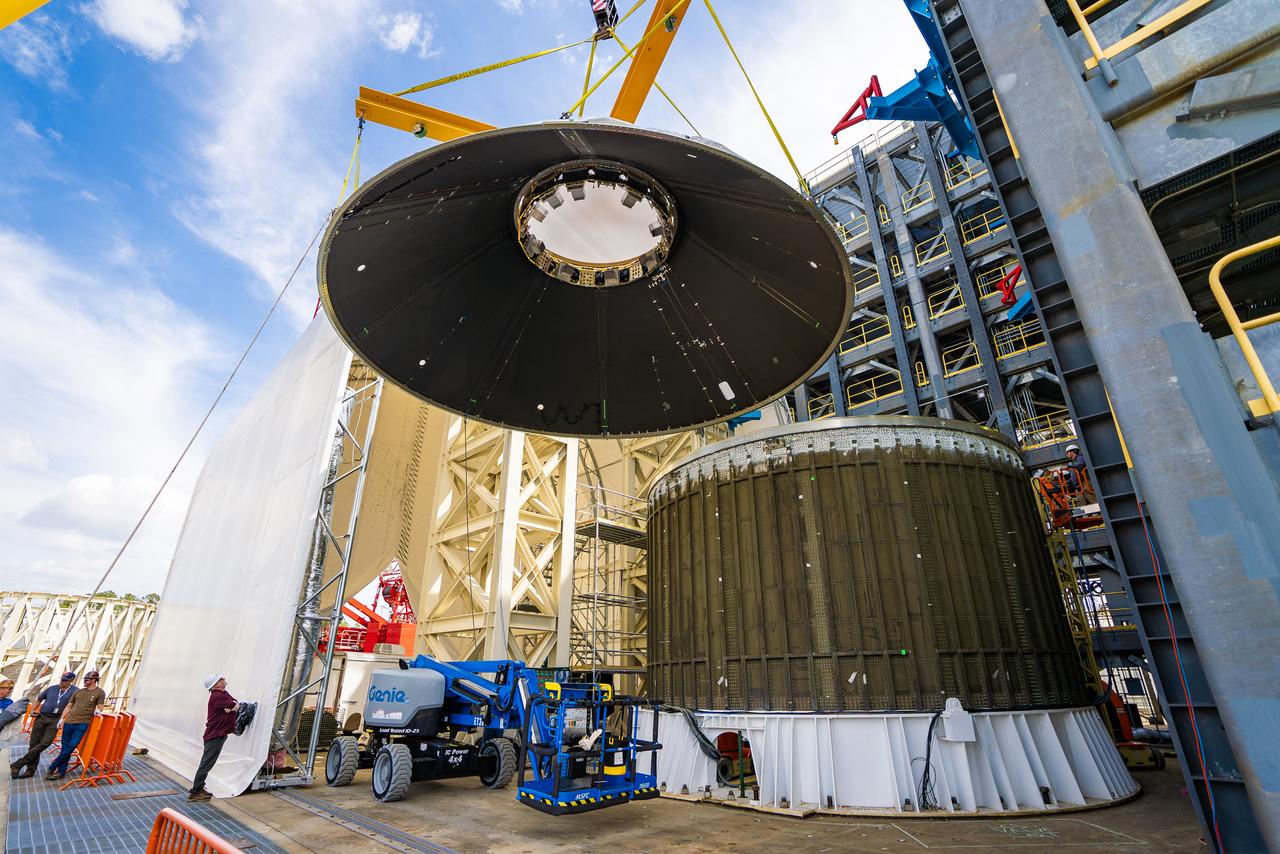
These photos and videos show how crews at NASA’s Marshall Space Flight Center in Huntsville, Alabama, moved and installed the payload adapter that will be used in the Block 1B configuration of the SLS (Space Launch System) rocket from Building 4708, where it was manufactured, into Structural Test Stand 4697 at NASA’s Marshall Space Flight Center on March 13. Teams at Marshall will begin structural testing the engineering development unit of the payload adapter – an exact replica of the flight version of the hardware – this spring. The cone-shaped payload adapter is about 8.5 feet tall and features two metal rings and eight composite panels. The adapter, which will debut on NASA’s Artemis IV mission, is an evolution from the Orion stage adapter used in the Block 1 configuration of the first three Artemis missions. It will be housed inside the universal stage adapter atop the rocket’s more powerful in-space stage, called the exploration upper stage. The payload adapter, like the launch vehicle stage adapter and the Orion stage adapter, is fully manufactured and tested at Marshall, which manages the SLS Program. NASA is working to land the first woman, first person of color, and its first international partner astronaut on the Moon under Artemis. SLS is part of NASA’s backbone for deep space exploration, along with the Orion spacecraft and Gateway in orbit around the Moon and commercial human landing systems, next-generational spacesuits, and rovers on the lunar surface. SLS is the only rocket that can send Orion, astronauts, and supplies to the Moon in a single launch.
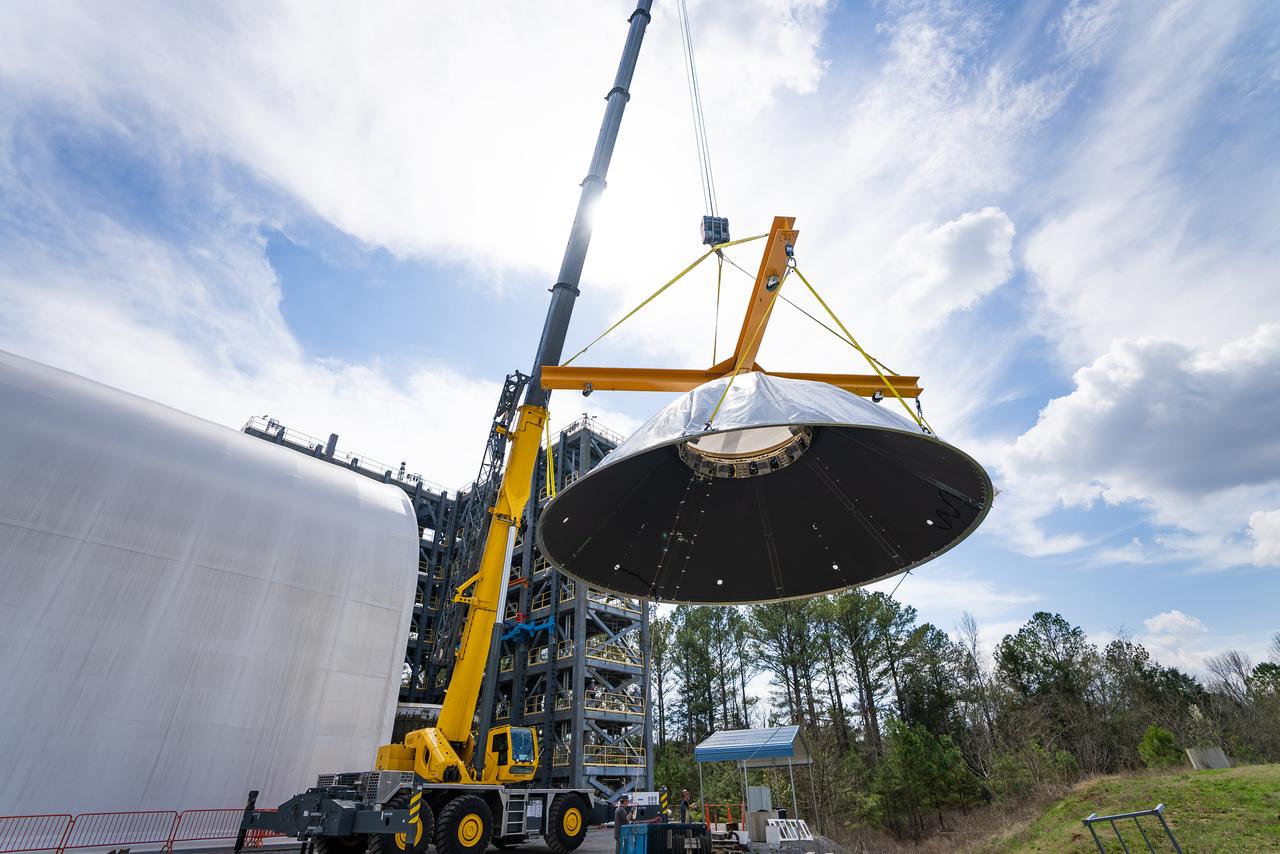
These photos and videos show how crews at NASA’s Marshall Space Flight Center in Huntsville, Alabama, moved and installed the payload adapter that will be used in the Block 1B configuration of the SLS (Space Launch System) rocket from Building 4708, where it was manufactured, into Structural Test Stand 4697 at NASA’s Marshall Space Flight Center on March 13. Teams at Marshall will begin structural testing the engineering development unit of the payload adapter – an exact replica of the flight version of the hardware – this spring. The cone-shaped payload adapter is about 8.5 feet tall and features two metal rings and eight composite panels. The adapter, which will debut on NASA’s Artemis IV mission, is an evolution from the Orion stage adapter used in the Block 1 configuration of the first three Artemis missions. It will be housed inside the universal stage adapter atop the rocket’s more powerful in-space stage, called the exploration upper stage. The payload adapter, like the launch vehicle stage adapter and the Orion stage adapter, is fully manufactured and tested at Marshall, which manages the SLS Program. NASA is working to land the first woman, first person of color, and its first international partner astronaut on the Moon under Artemis. SLS is part of NASA’s backbone for deep space exploration, along with the Orion spacecraft and Gateway in orbit around the Moon and commercial human landing systems, next-generational spacesuits, and rovers on the lunar surface. SLS is the only rocket that can send Orion, astronauts, and supplies to the Moon in a single launch.