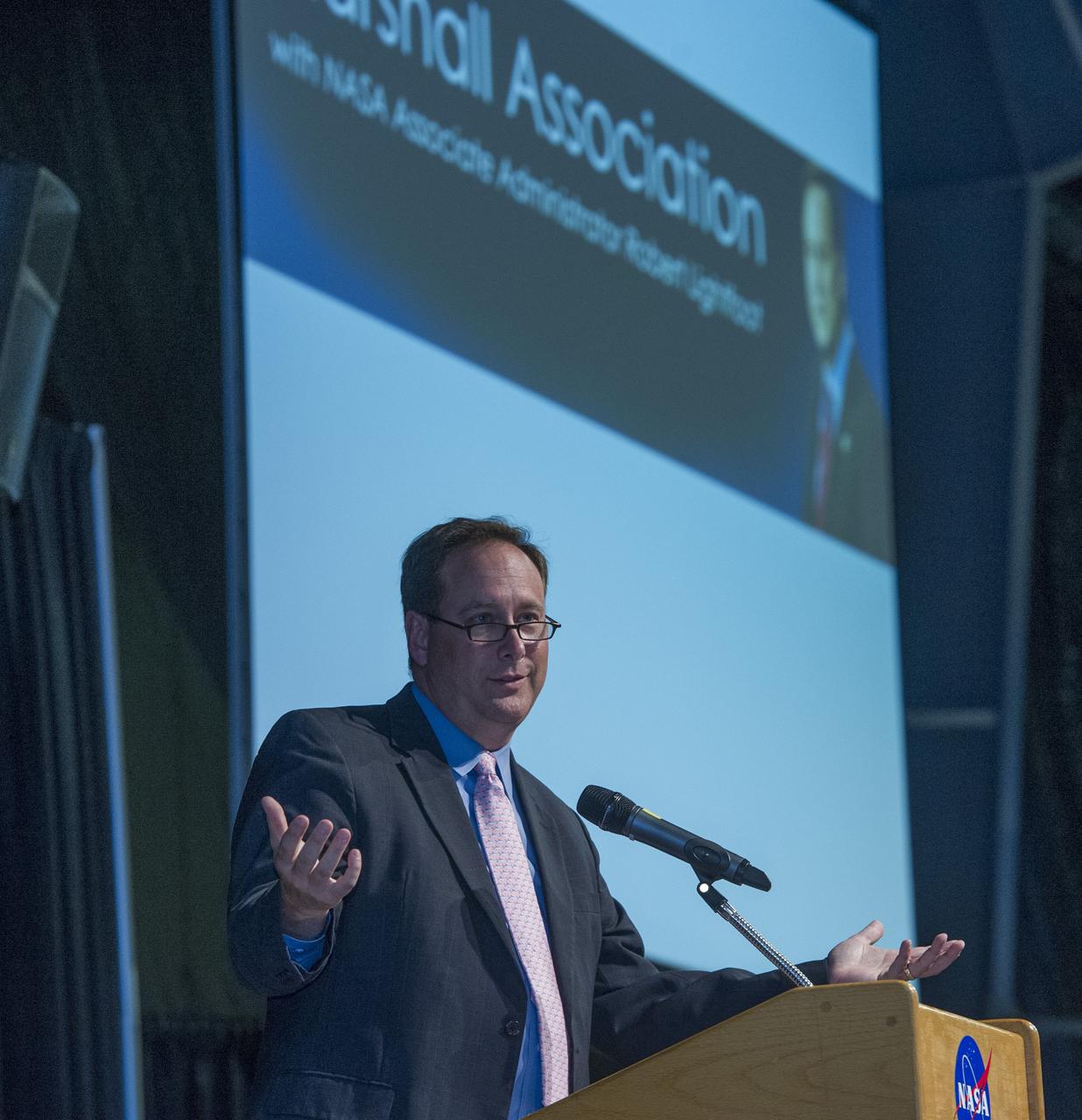
NASA ASSOCIATE ADMINISTRATOR ROBERT LIGHTFOOT SHARED HIS PERSONAL REFLECTIONS ON LEADERSHIP WITH MARSHALL ASSOCIATION MEMBERS AND GUESTS DURING A LUNCHEON JULY 28 AT NASA’S MARSHALL SPACE FLIGHT CENTER.
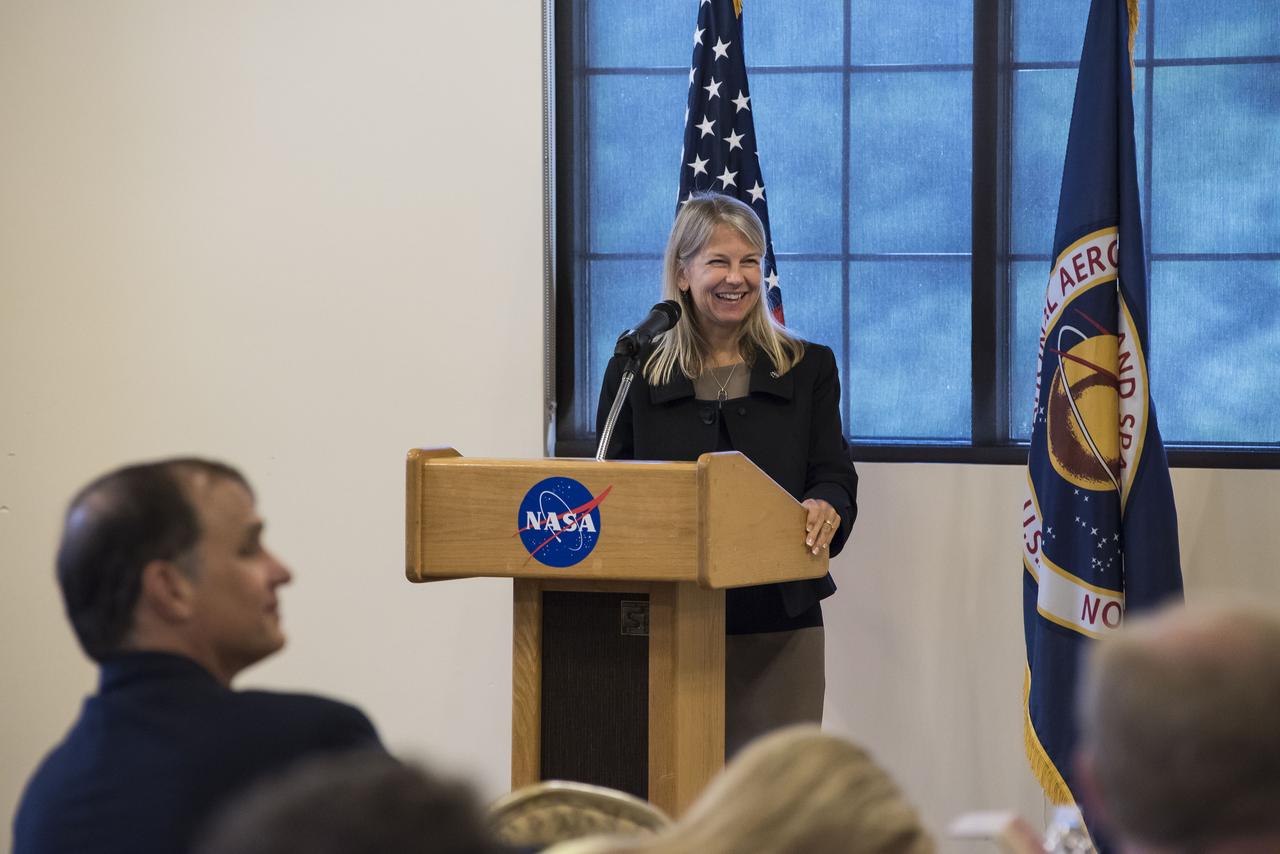
MARSHALL ASSOCIATION LUNCHEON WITH GUEST SPEAKER DR. DAVA NEWMAN, NASA DEPUTY ADMINISTRATOR. AUGUST 16, 2016.
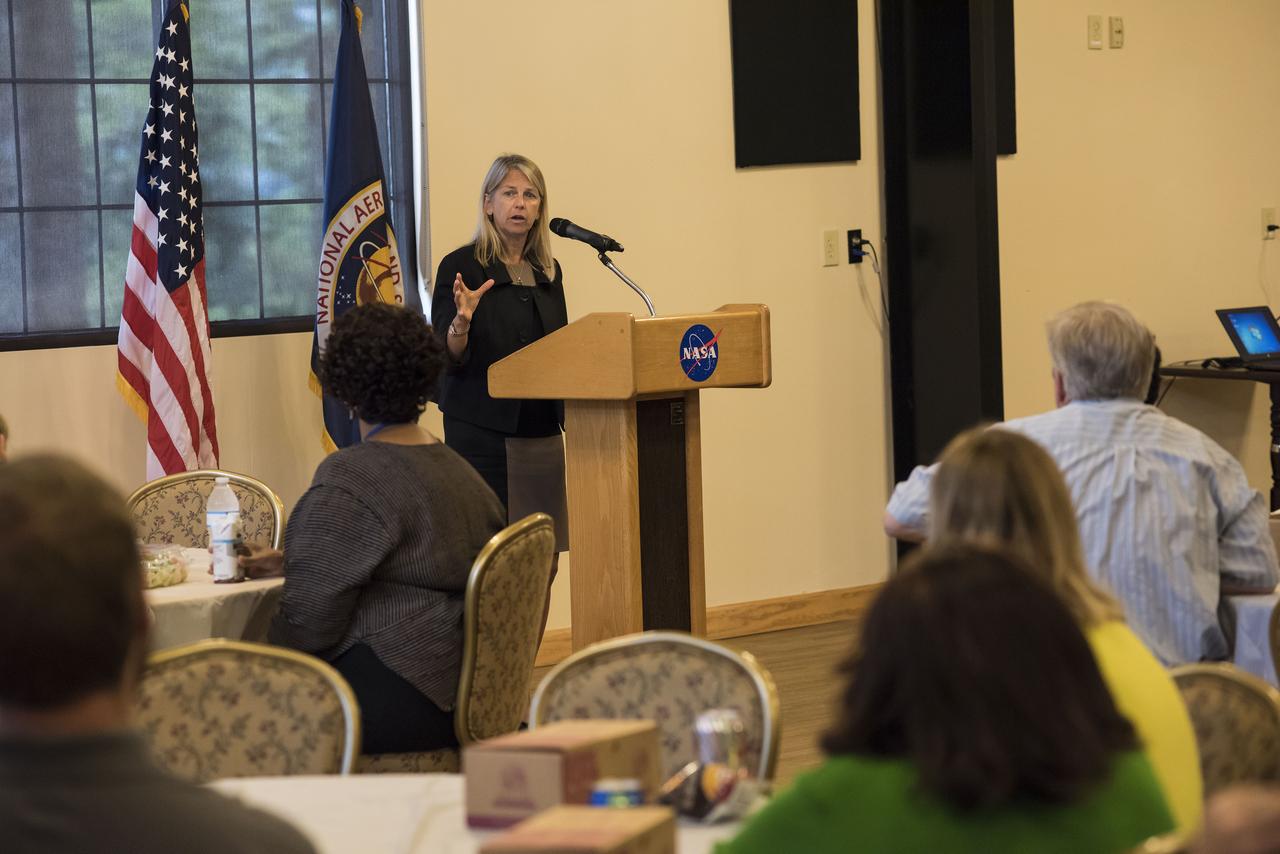
MARSHALL ASSOCIATION LUNCHEON WITH GUEST SPEAKER DR. DAVA NEWMAN, NASA DEPUTY ADMINISTRATOR. AUGUST 16, 2016.
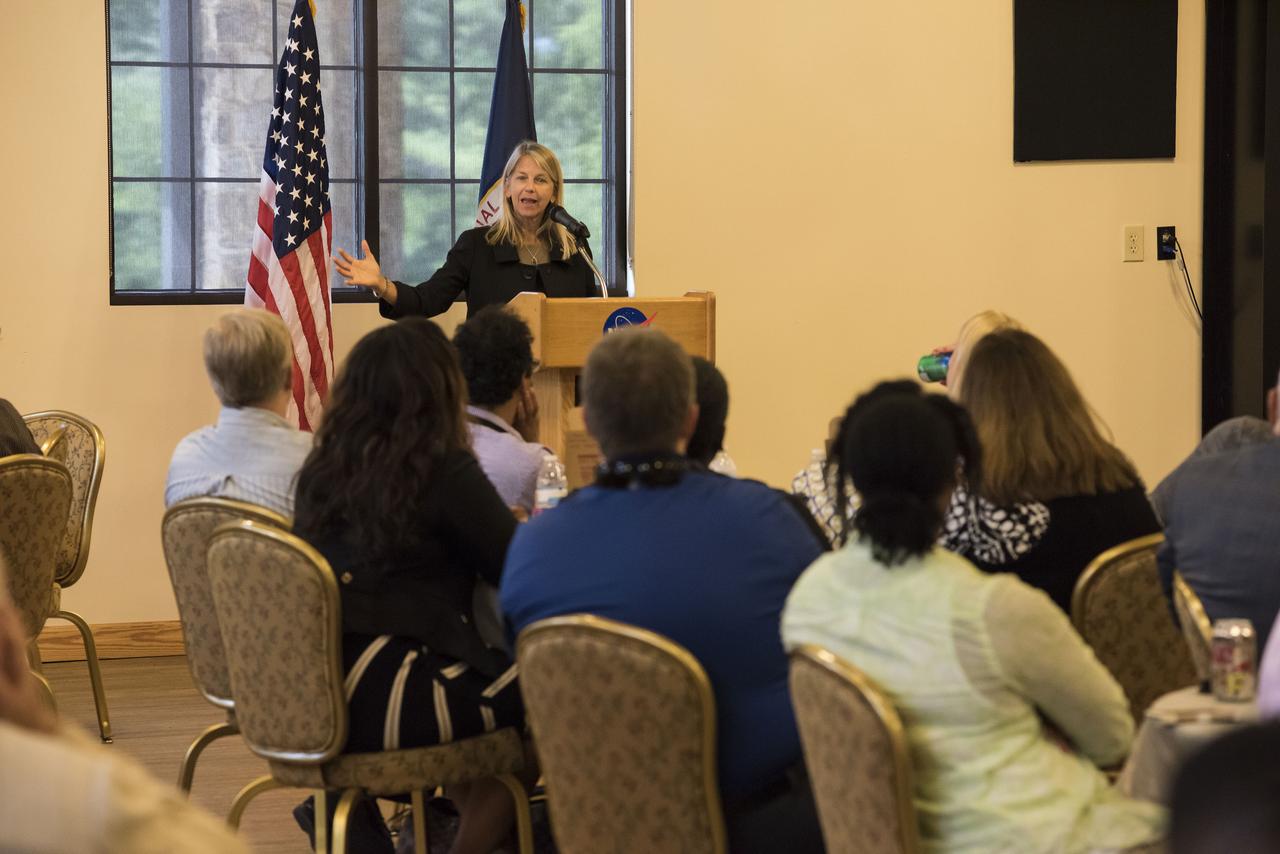
MARSHALL ASSOCIATION LUNCHEON WITH GUEST SPEAKER DR. DAVA NEWMAN, NASA DEPUTY ADMINISTRATOR. AUGUST 16, 2016.
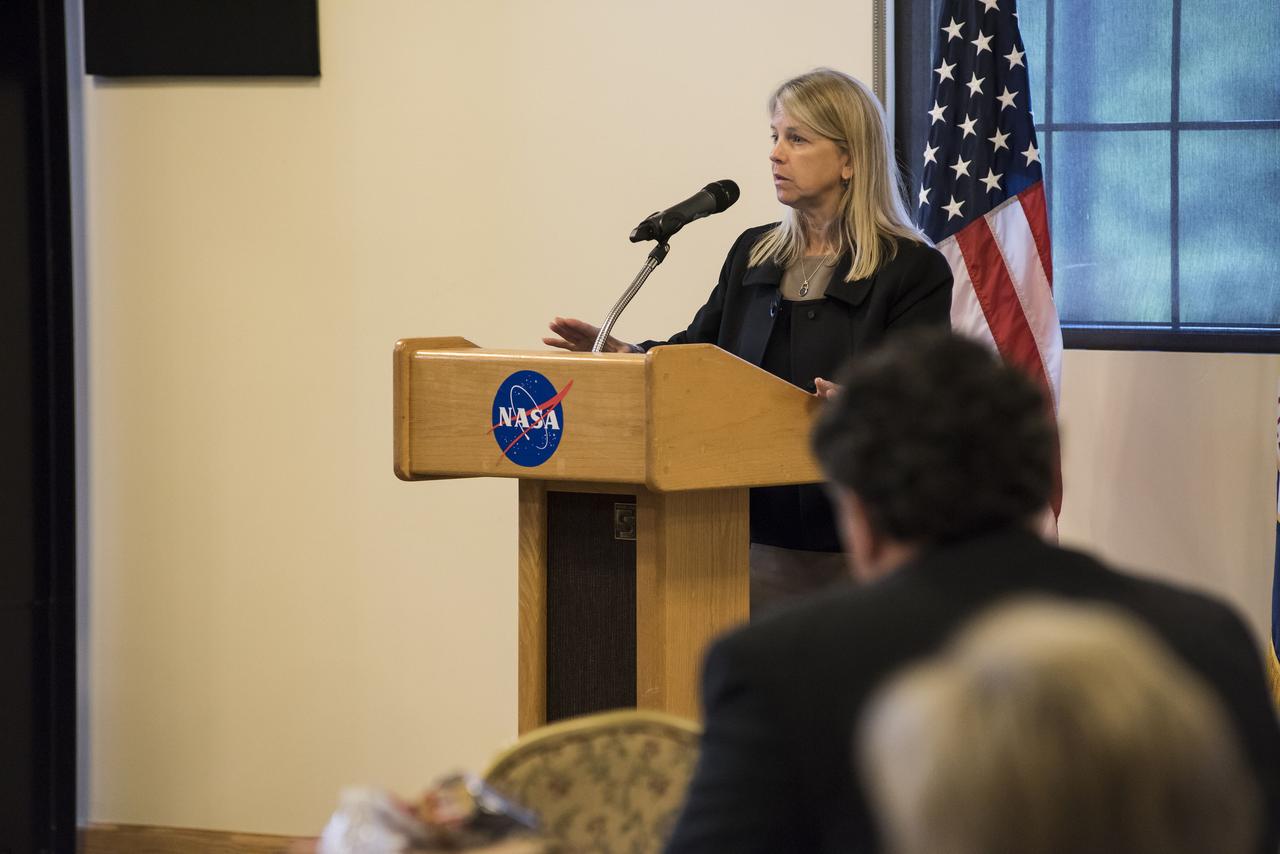
MARSHALL ASSOCIATION LUNCHEON WITH GUEST SPEAKER DR. DAVA NEWMAN, NASA DEPUTY ADMINISTRATOR. AUGUST 16, 2016.
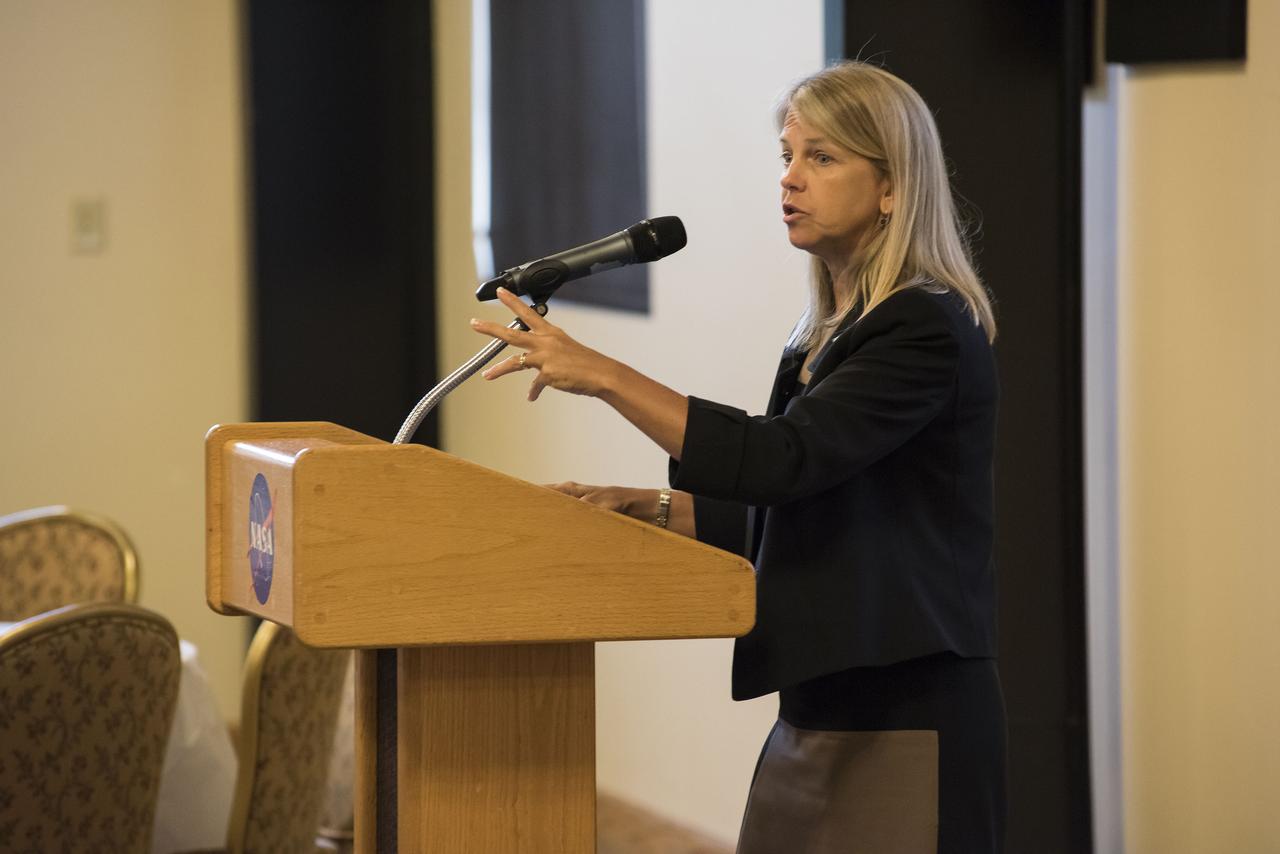
MARSHALL ASSOCIATION LUNCHEON WITH GUEST SPEAKER DR. DAVA NEWMAN, NASA DEPUTY ADMINISTRATOR. AUGUST 16, 2016.
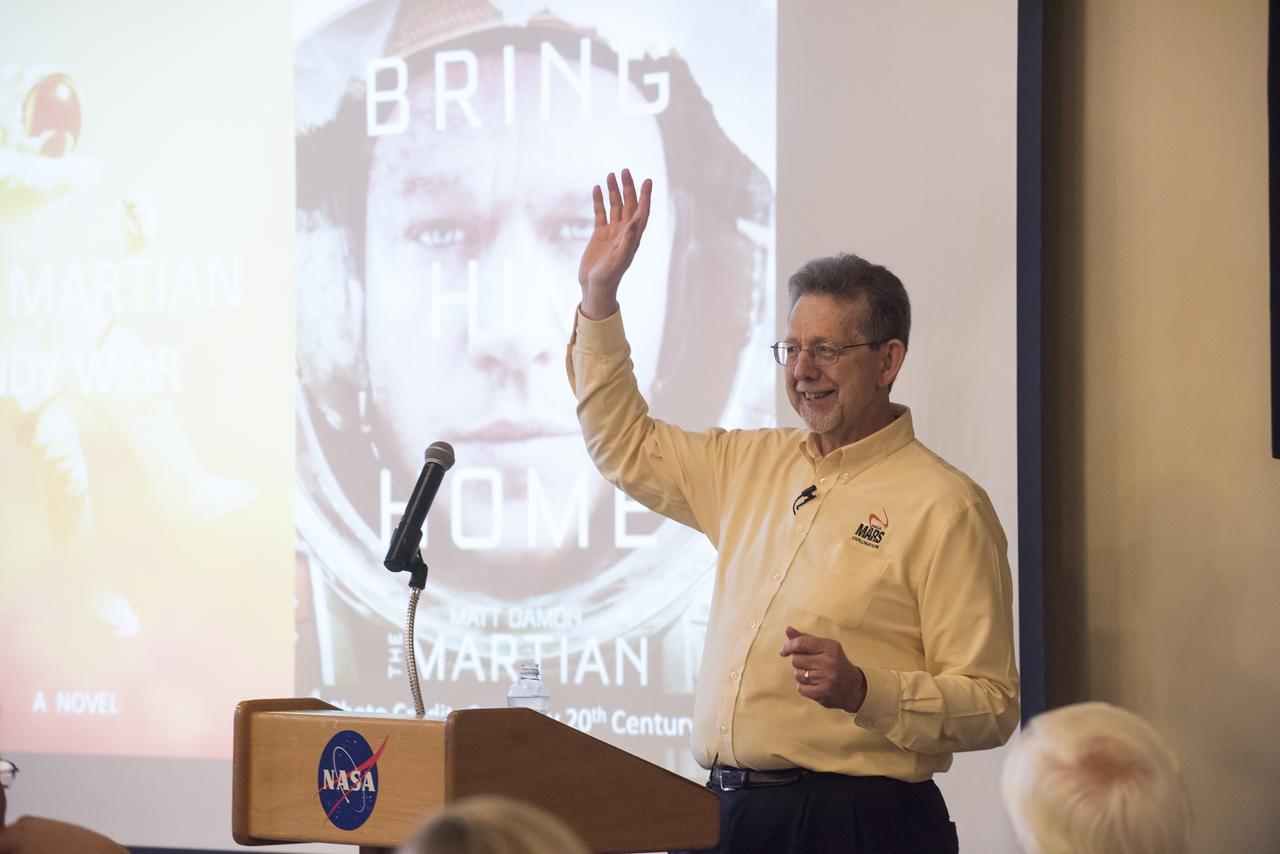
JIM GREEN, DIRECTOR OF PLANETARY SCIENCE AT NASA HEADQUARTERS, ADDRESSES MARSHALL TEAM MEMBERS DURING A JUNE 28 LUNCHEON HOSTED BY THE MARSHALL ASSOCIATION. OVER THE COURSE OF HIS 35-YEAR CAREER AT NASA, HE HAS SUPPORTED A DIVERSE ARRAY OF PLANETARY SCIENCE MISSIONS, AND RECENTLY SERVED AS SCIENCE ADVISOR FOR THE FILM ADAPTATION OF "THE MARTIAN." GREEN'S PRESENTATION WAS TITLED "THE MARTIAN: SCIENCE FICTION VS. SCIENCE FACT," IN WHICH HE DISCUSSED THE MOVIE AND THE NATION'S JOURNEY TO MARS. THE MARSHALL ASSOCIATION IS THE CENTER'S PROFESSIONAL, EMPLOYEE SERVICE ORGANIZATION.
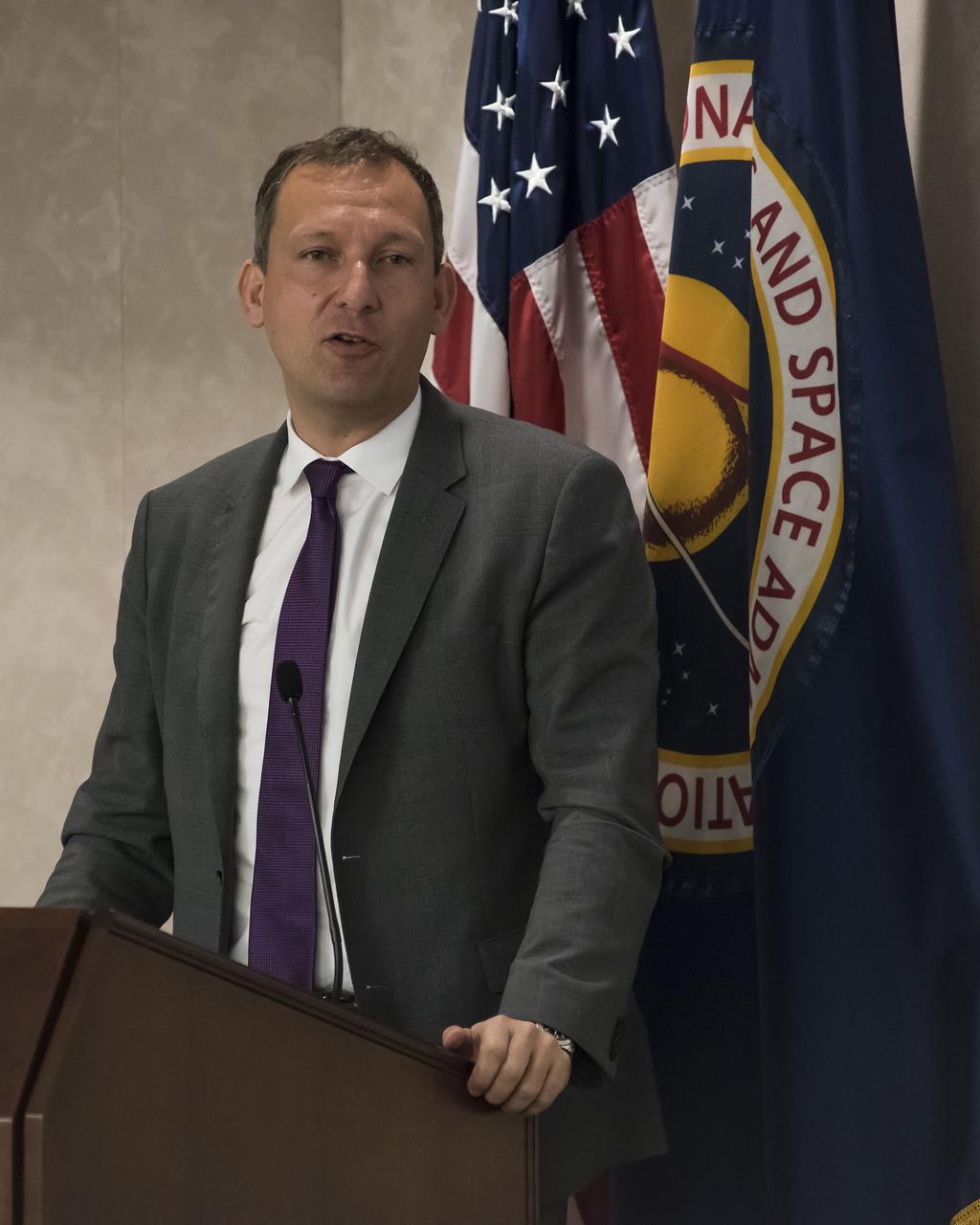
THOMAS ZURBUCHEN, NASA ASSOCIATE ADMINISTRATOR FOR THE SCIENCE MISSION DIRECTORATE, ADDRESSES THE MARCH 21 LUNCHEON MEETING OF THE MARSHALL ASSOCIATION IN BUILDING 4200, ROOM P110. ZURBUCHEN, WHO TOOK ON HIS NEW ROLE IN OCTOBER 2016, PROVIDED THE KEYNOTE ADDRESS FOR THE LUNCHEON BEFORE TOURING KEY MARSHALL SPACE FLIGHT CENTER MANUFACTURING AND TEST FACILITIES. THE MARSHALL ASSOCIATION IS THE CENTER’S PROFESSIONAL, EMPLOYEE SERVICE ORGANIZATION.

With the theme of “Mission, People, Partners,” NASA’s Marshall Space Flight Center Director Jody Singer outlined how the center’s priorities align with the agency’s strategic plan in the first Marshall Association luncheon of the year March 14 in the Activities Building. The Marshall Association offers opportunities to network and share ideas with colleagues and members of the Marshall community. The Marshall Association offers opportunities to network and share ideas with colleagues and members of the Marshall community. Membership is open to NASA employees, retirees, contractors and community members. Membership dues support the annual scholarship program and other events throughout the year.
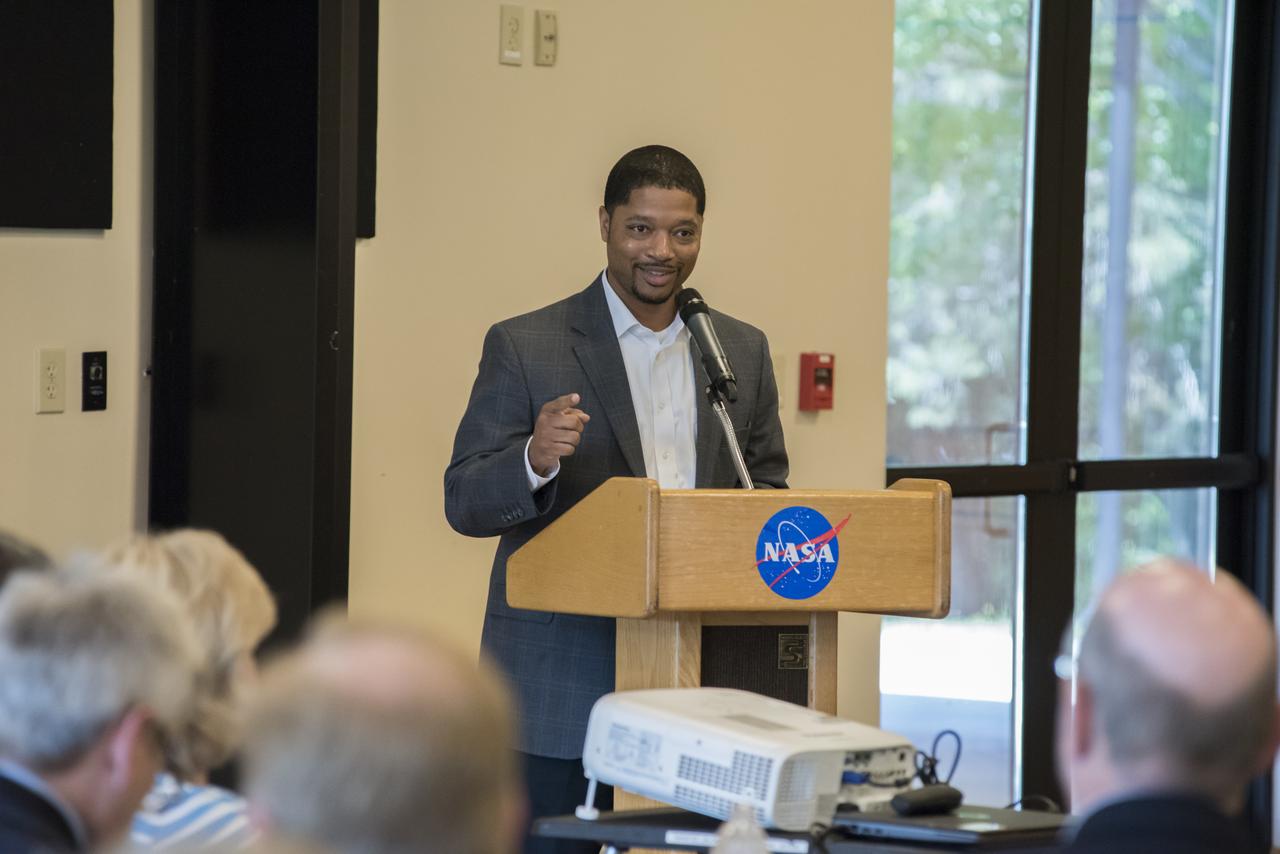
Markeeva Morgan, SLS avionics subsystem manager at NASA’s Marshall Space Flight Center, speaks to an audience of Marshall team members April 26 at the Overlook at Redstone. Morgan was the introductory speaker for the luncheon meeting of the Marshall Association, the center’s professional, employee service organization.
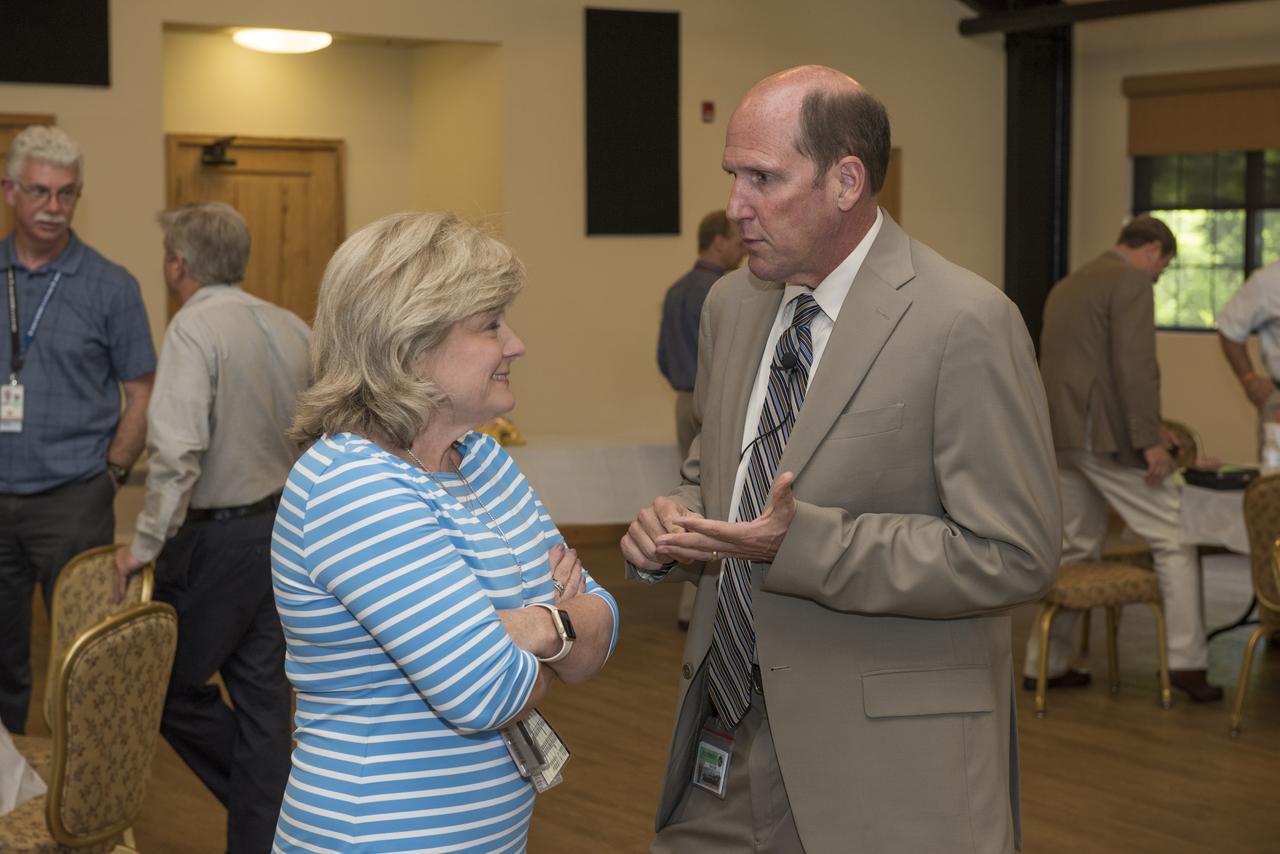
Paul Finley, mayor of the City of Madison, Alabama, chats with Jody Singer, deputy director of NASA’s Marshall Space Flight Center, following the April 26 lunch meeting of the Marshall Association, the center's professional, employee service organization. Finley, the guest speaker for the event, served as mayor of Madison from 2008-2012 and was elected to the post again in 2016.
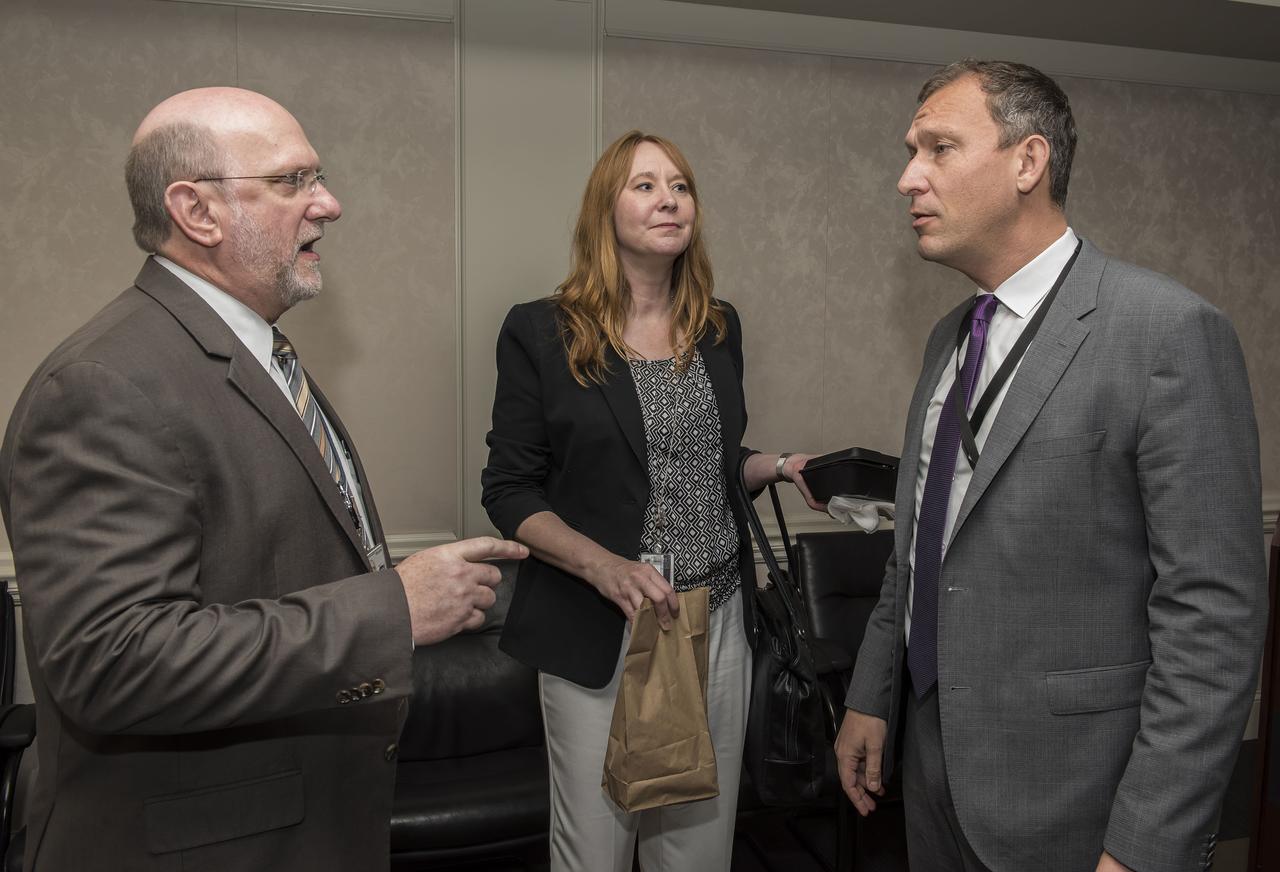
THOMAS ZURBUCHEN, RIGHT, NASA ASSOCIATE ADMINISTRATOR FOR THE SCIENCE MISSION DIRECTORATE, SPEAKS WITH DENNON CLARDY, LEFT, DEPUTY MANAGER OF THE SCIENCE & TECHNOLOGY OFFICE AT NASA’S MARSHALL SPACE FLIGHT CENTER IN HUNTSVILLE, ALABAMA, AND SHAWN MCINERY, AFTER HIS KEYNOTE ADDRESS AT THE MARCH 21 LUNCHEON MEETING OF THE MARSHALL ASSOCIATION. ZURBUCHEN, WHO ASSUMED HIS NEW ROLE IN OCTOBER 2016, ALSO TOURED KEY MARSHALL MANUFACTURING AND TEST FACILITIES. THE MARSHALL ASSOCIATION IS THE CENTER’S PROFESSIONAL, EMPLOYEE SERVICE ORGANIZATION.
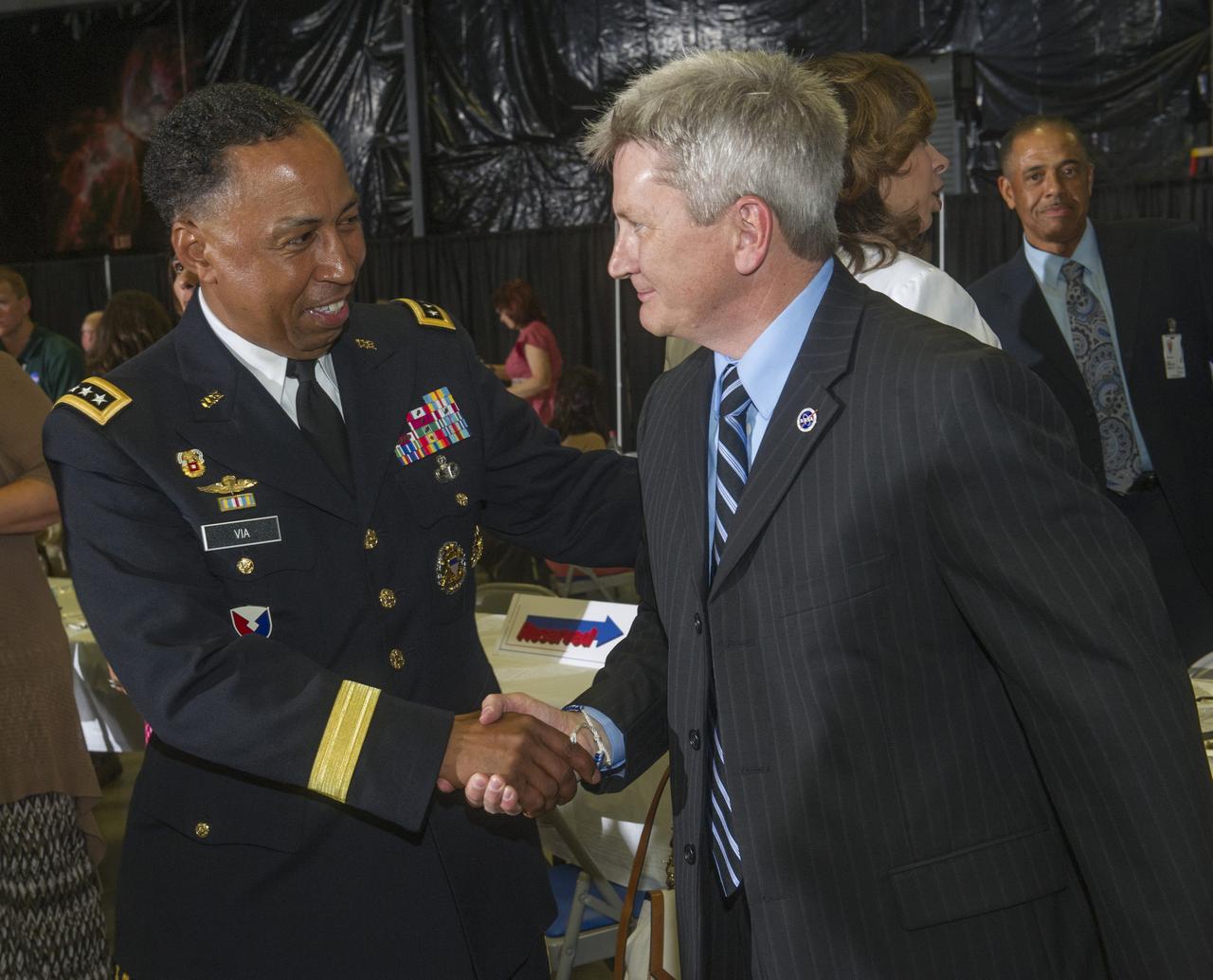
JOHNNY STEPHENSON, RIGHT, DEPUTY DIRECTOR OF THE MARSHALL SPACE FLIGHT CENTER'S OFFICE OF STRATEGIC ANALYSIS & COMMUNICATIONS, GREETS GENERAL DENNIS VIA, COMMANDER OF THE U.S. ARMY MATERIEL COMMAND (AMC) ON REDSTONE ARSENAL. VIA, WHO OVERSEES A WORK FORCE OF MORE THAN 67,000 DEDICATED MILITARY AND CIVILIAN EMPLOYEES, WAS THE GUEST SPEAKER AT THE JULY 10 LUNCHEON MEETING OF THE MARSHALL ASSOCIATION, THE CENTER'S PROFESSIONAL, EMPLOYEE SERVICE ORGANIZATION.
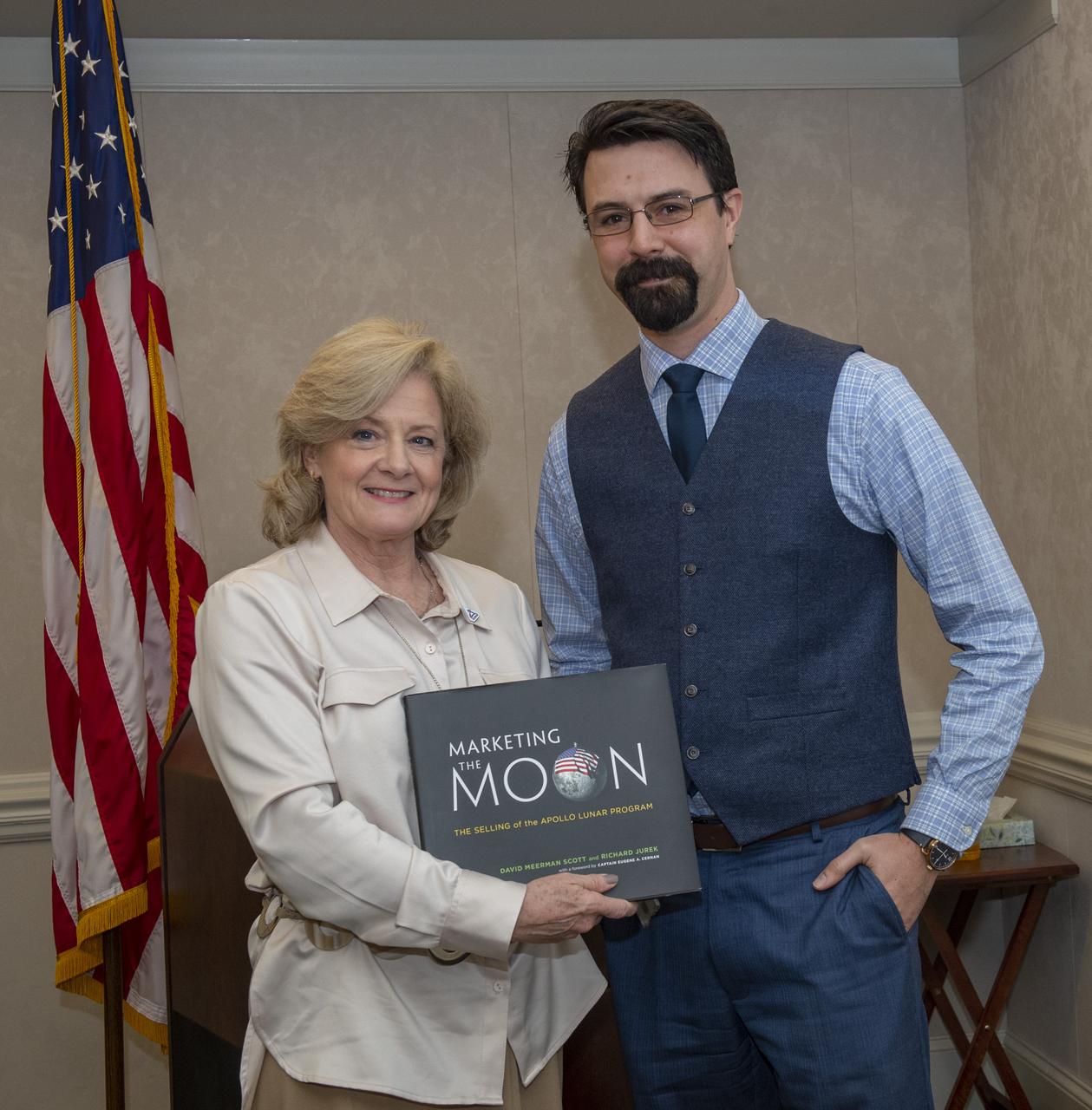
Matthew McSavaney presents memento to Jody Singer in appreciation of her speaking at February, 2020, Marshall Association Luncheon.
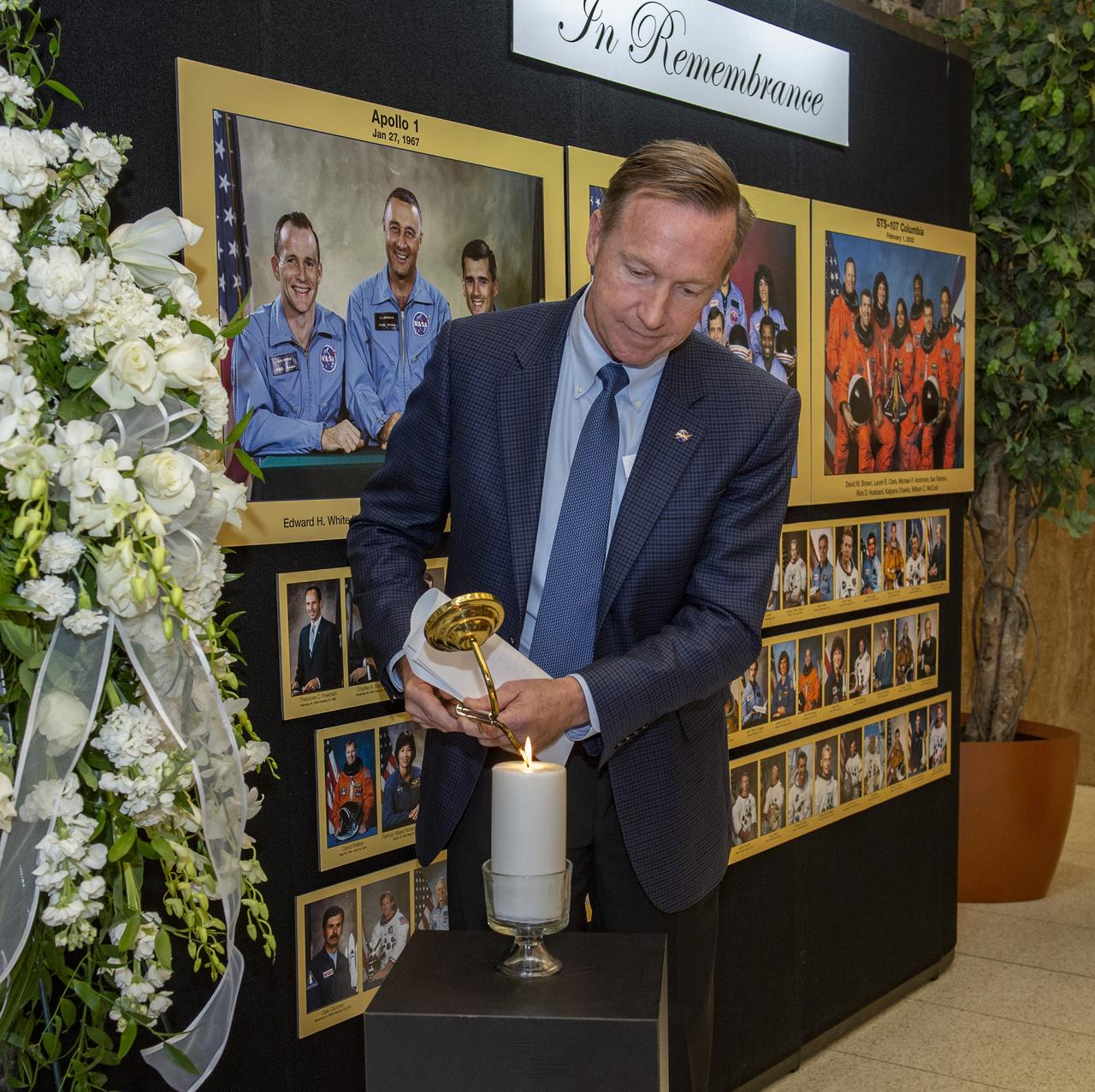
STEVE MILEY, ASSOCIATE DIRECTOR OF NASA'S MARSHALL SPACE FLIGHT CENTER, LIGHTS A MEMORIAL CANDLE JAN. 30, HONORING THE BRAVE EXPLORERS WHO LOST THEIR LIVES IN PURSUIT OF HUMANITY’S DESTINY IN SPACE. MARSHALL, ALONG WITH NASA CENTERS AND PARTNER FACILITIES AROUND THE COUNTRY, HOLD DAY OF REMEMBRANCE CEREMONIES EARLY EACH YEAR TO RECOGNIZE ITS FALLEN HEROES
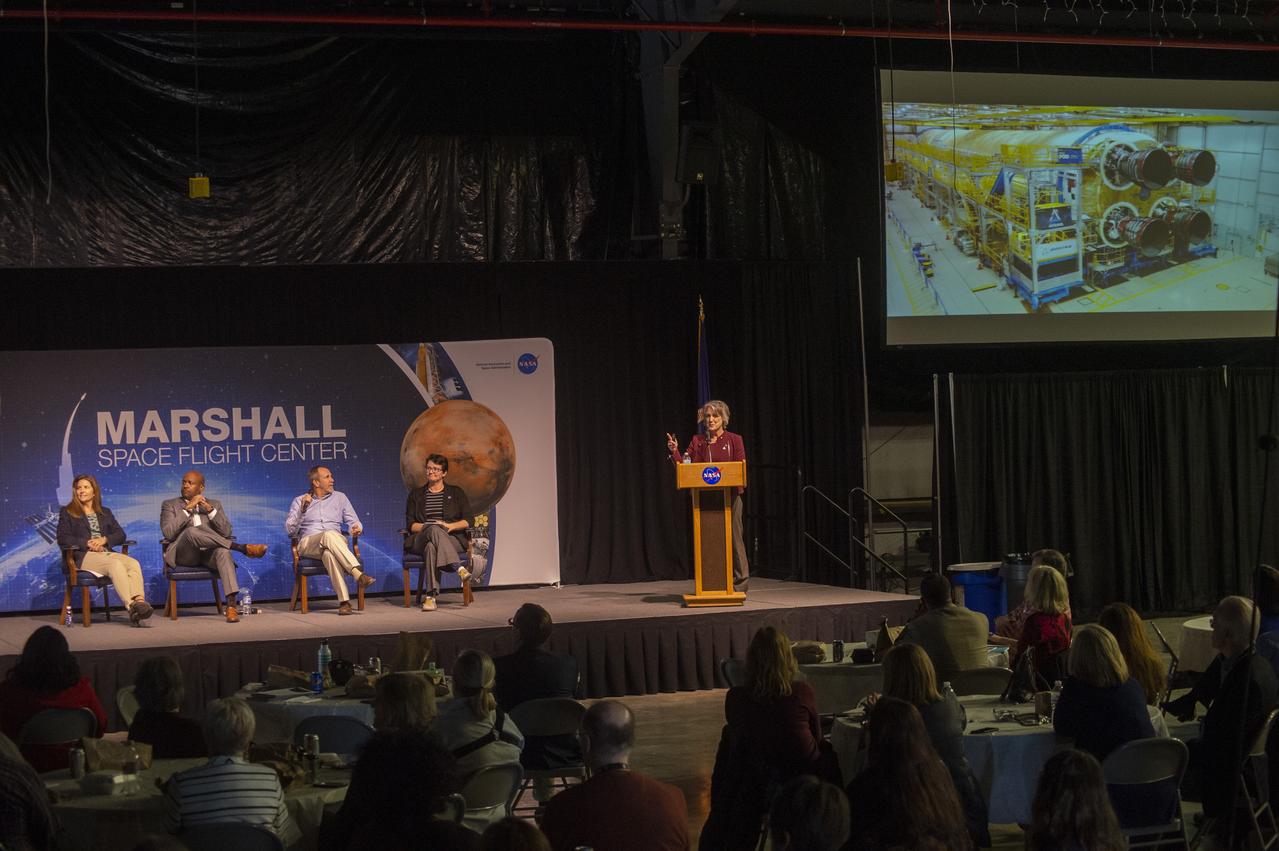
MARCIA LINDSTROM, AT PODIUM, FACILITATES ARTEMIS PROGRAM PANEL DISCUSSION AT NOVEMBER MARSHALL ASSOCIATION LUNCHEON. (L TO R), LISA WATSON-MORGAN, PROGRAM MANAGER, HUMAN LANDING SYSTEM; BOBBY WATKINS, DIRECTOR HUMAN EXPLORATION DEVELOPMENT & OPERATIONS OFFICE; DAVID BEAMAN, MANAGER, SYSTEMS ENGINEERING & INTEGRATION OFFICE, RENEE WEBER, ACTING CENTER CHIEF SCIENTIST
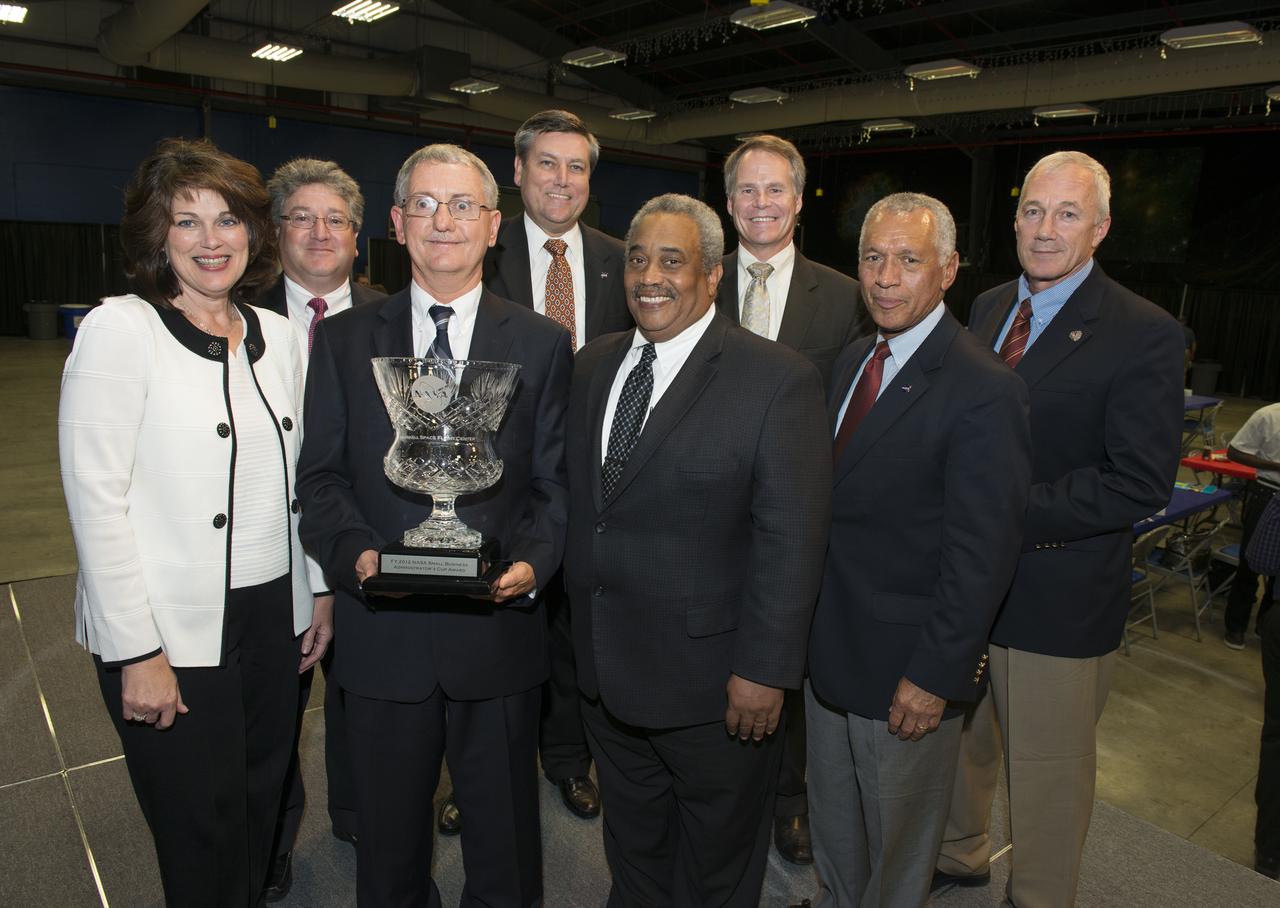
NASA ADMINISTRATOR CHARLES BOLDEN PRESENTS CENTER LEADERS WITH THE SMALL BUSINESS ADMINISTRATOR’S CUP. PARTICIPATING IN THE AWARD CEREMONY WERE, FROM LEFT, MARSHALL ASSOCIATE DIRECTOR ROBIN HENDERSON, DAVID IOSCO, DEPUTY DIRECTOR OF MARSHALL’S OFFICE OF PROCUREMENT; MARSHALL SMALL BUSINESS SPECIALIST DAVID BROCK; MARSHALL CENTER DIRECTOR PATRICK SCHEUERMANN; GLENN DELGADO, ASSOCIATE ADMINISTRATOR OF NASA’S OFFICE OF SMALL BUSINESS PROGRAMS; KIM WHITSON, DIRECTOR OF MARSHALL’S OFFICE OF PROCUREMENT; NASA ADMINISTRATOR CHARLES BOLDEN; AND TERRY WILCUTT, ASSOCIATE ADMINISTRATOR OF NASA’S OFFICE OF SAFETY AND MISSION ASSURANCE.
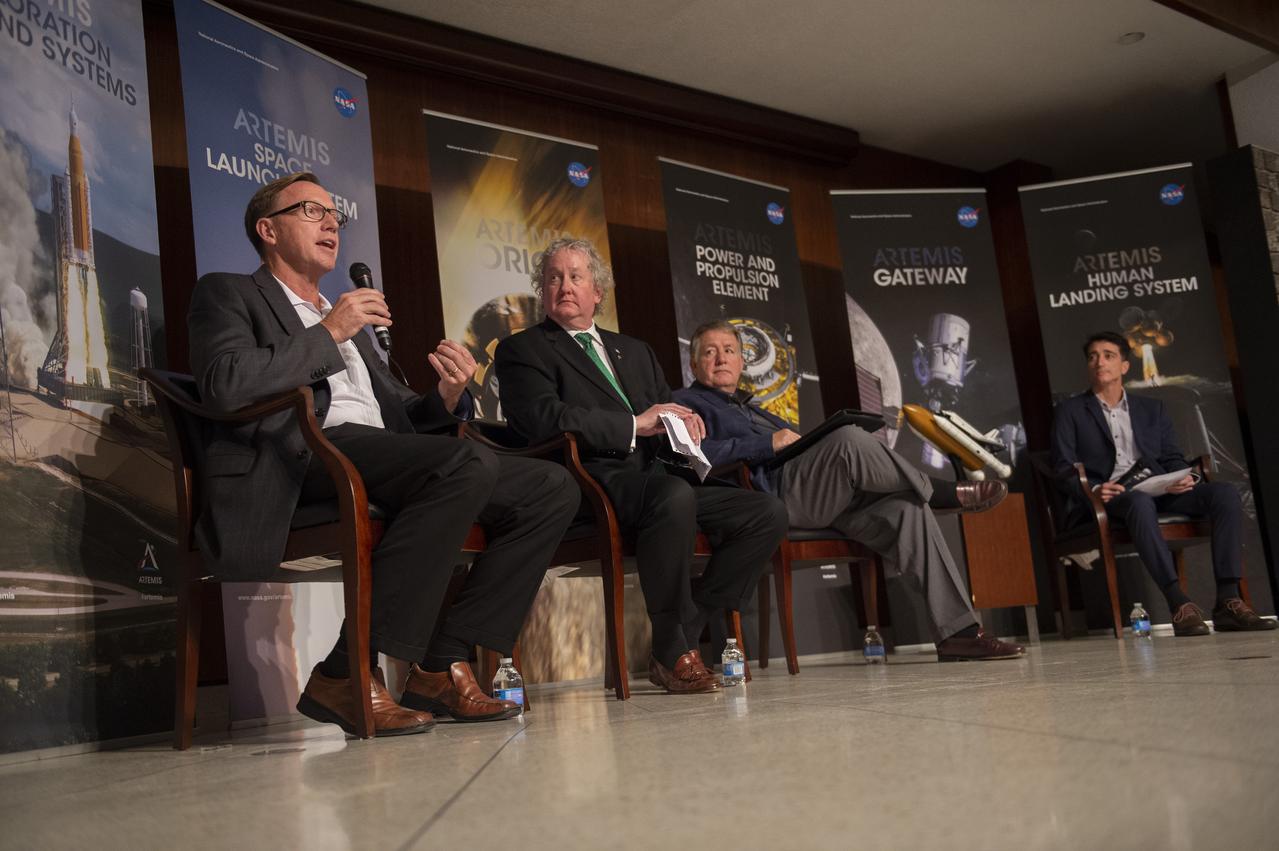
A Nov. 5 panel at NASA’s Marshall Space Flight Center discusses lessons learned from Columbia including, from left, Steve Miley, associate director of Marshall; Bill Hill, director of advanced technology at Marshall; Preston Jones, associate director, technical, at Marshall; and Mike Ciannilli, Apollo Challenger Columbia Lessons Learned Program manager at NASA’s Kennedy Space Center.
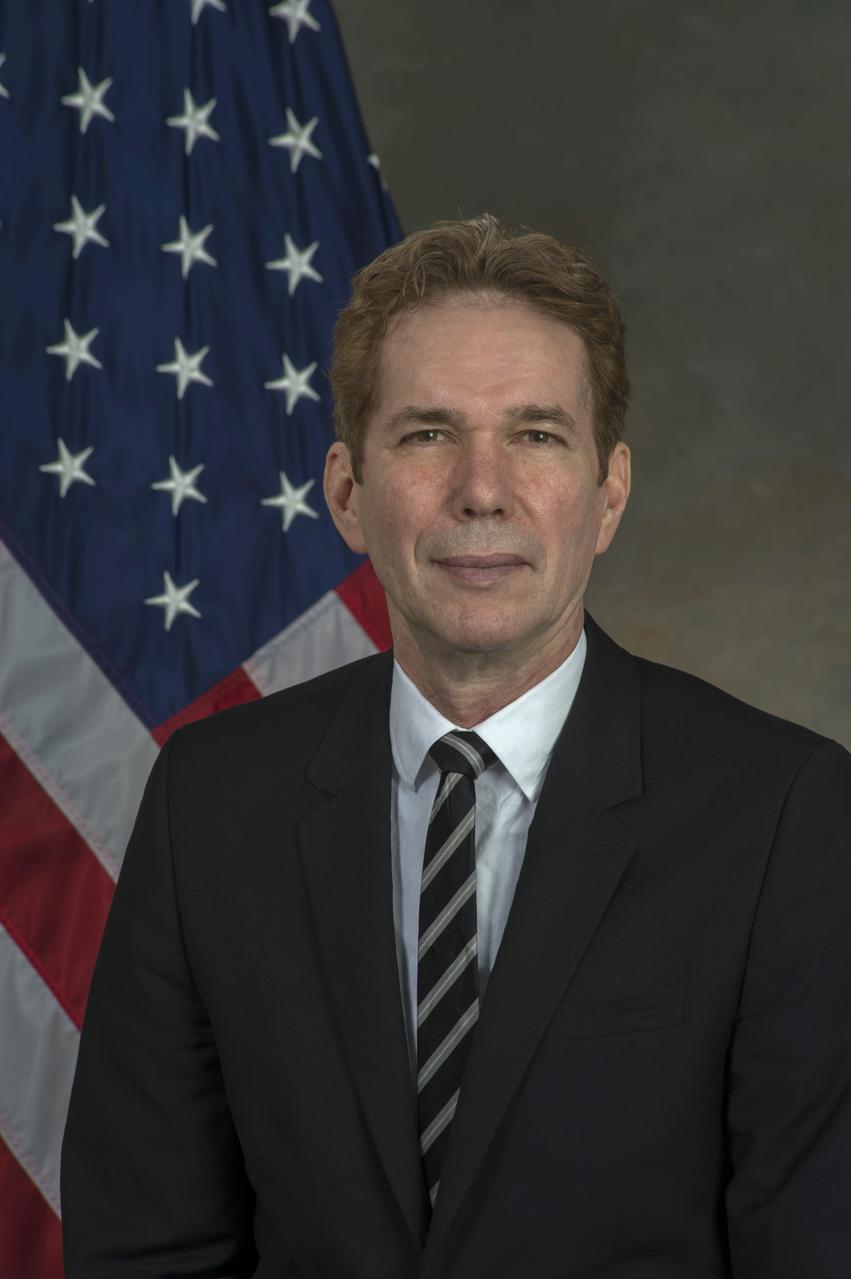
Official Portrait of Marshall Space Flight Center Associate Director Paul McConnaughey
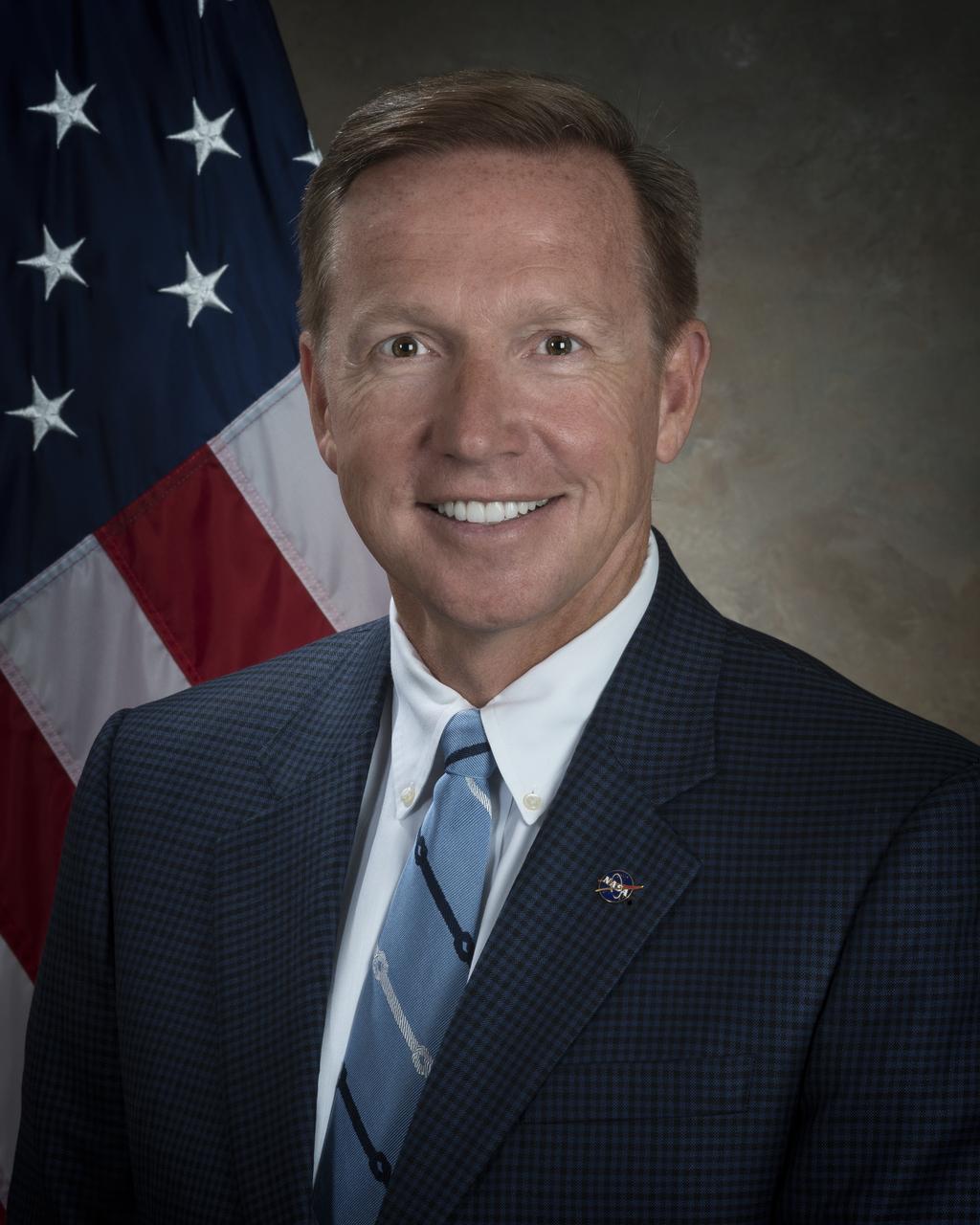
Official portrait of Marshall Space Flight Center Associate Director Steve Miley
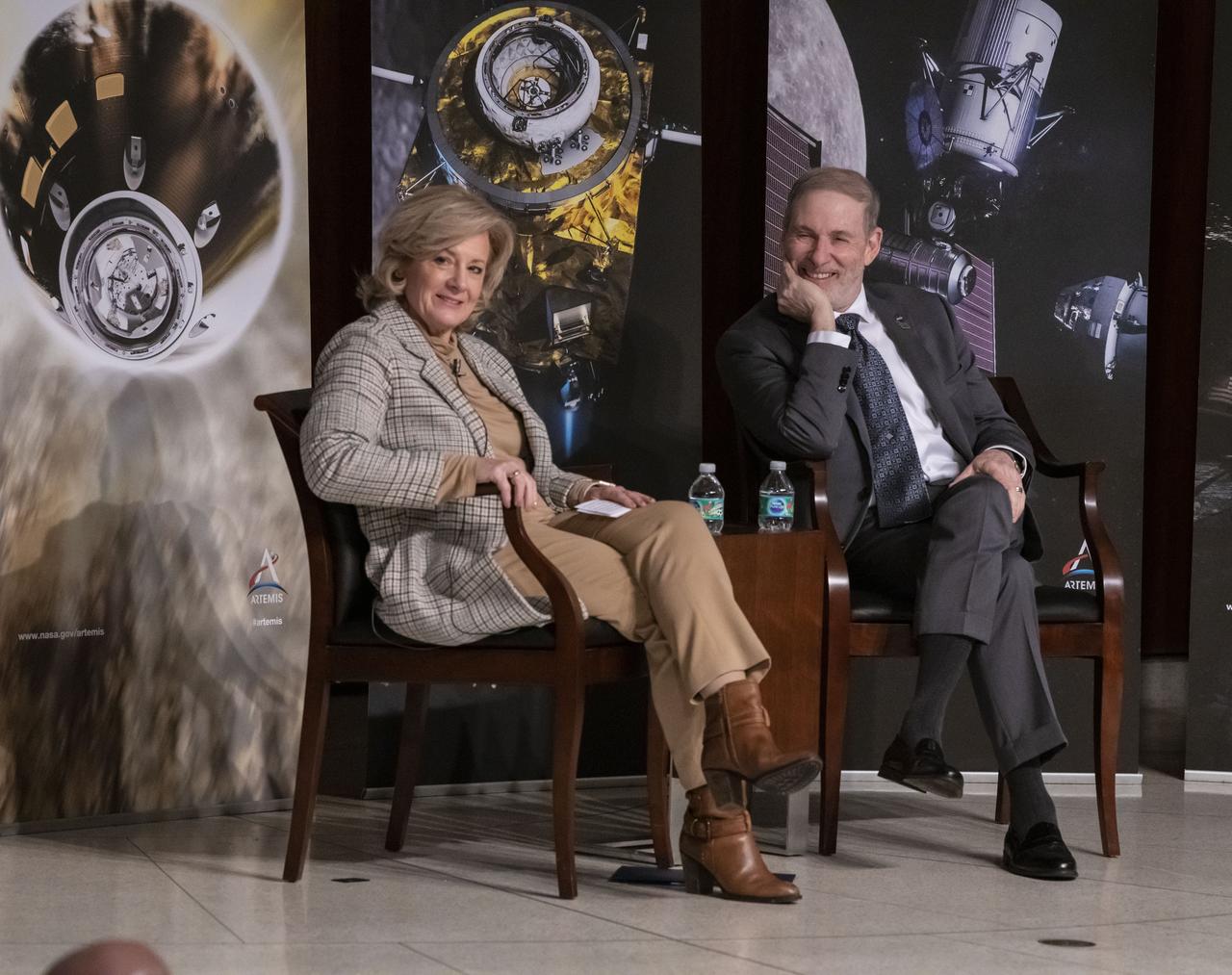
Douglas Loverro, NASA Associate Administrator for the Human Exploration and Operations Mission Directorate, and Marshall Center Director Jody Singer participate in a Town Hall with Marshall Space Flight Center employees
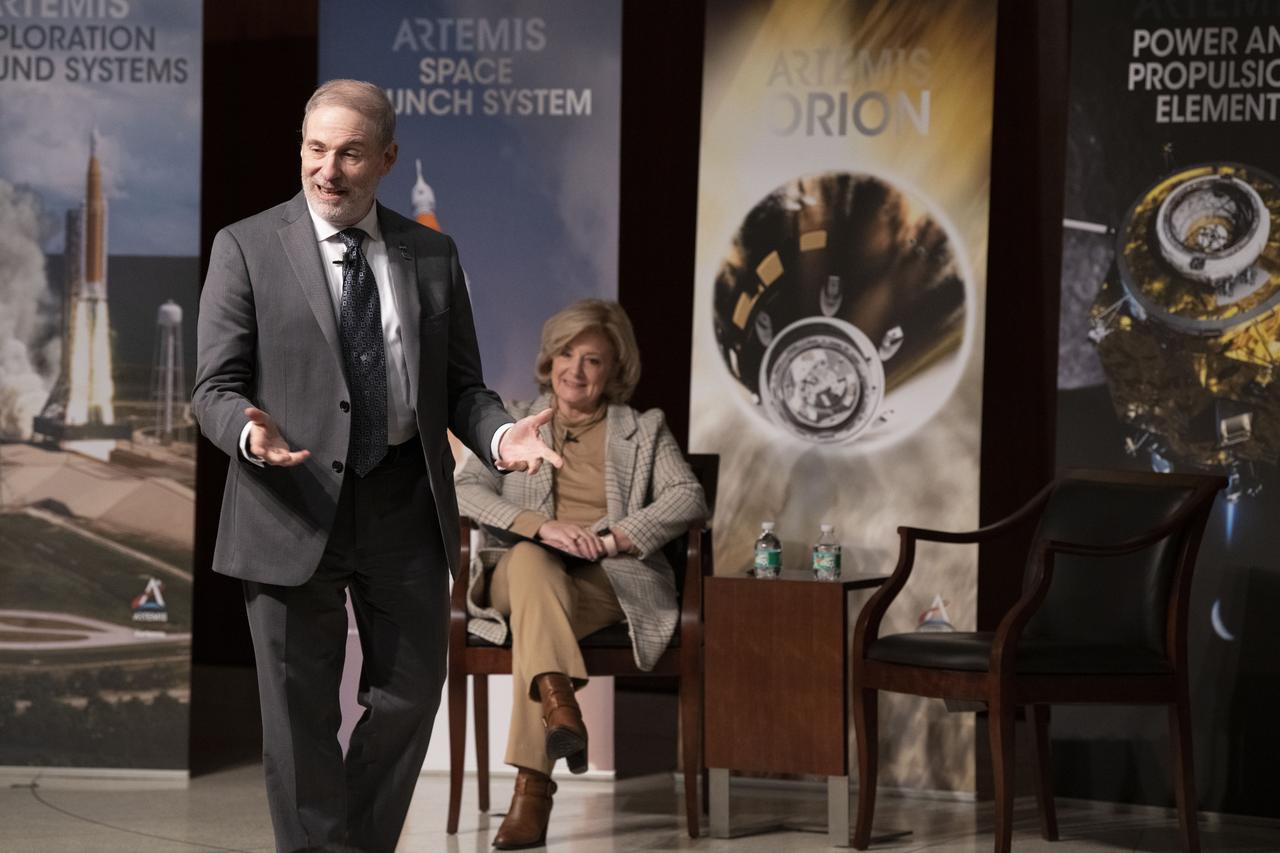
Douglas Loverro, NASA Associate Administrator for the Human Exploration and Operations Mission Directorate, and Marshall Center Director Jody Singer participate in a Town Hall with Marshall Space Flight Center employees
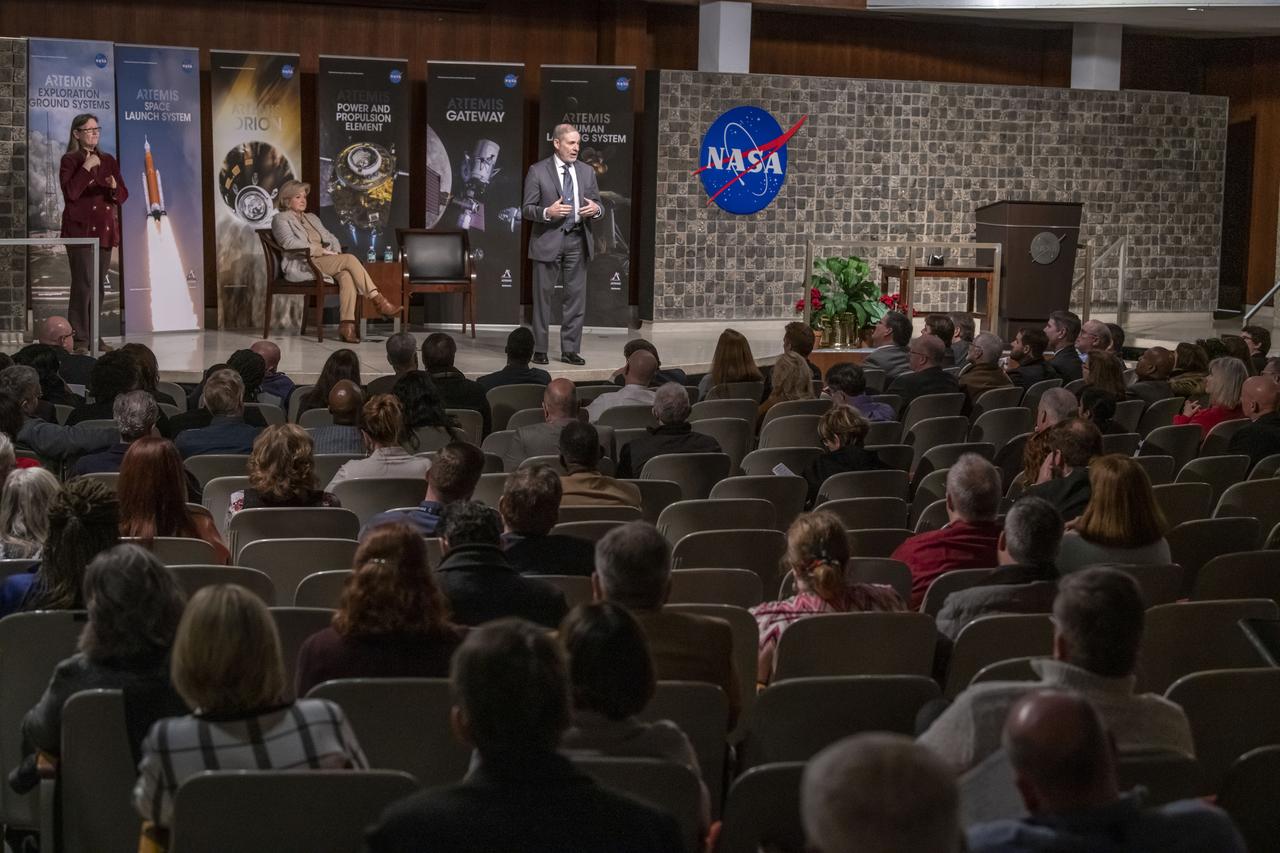
Douglas Loverro, NASA Associate Administrator for the Human Exploration and Operations Mission Directorate, and Marshall Center Director Jody Singer participate in a Town Hall with Marshall Space Flight Center employees
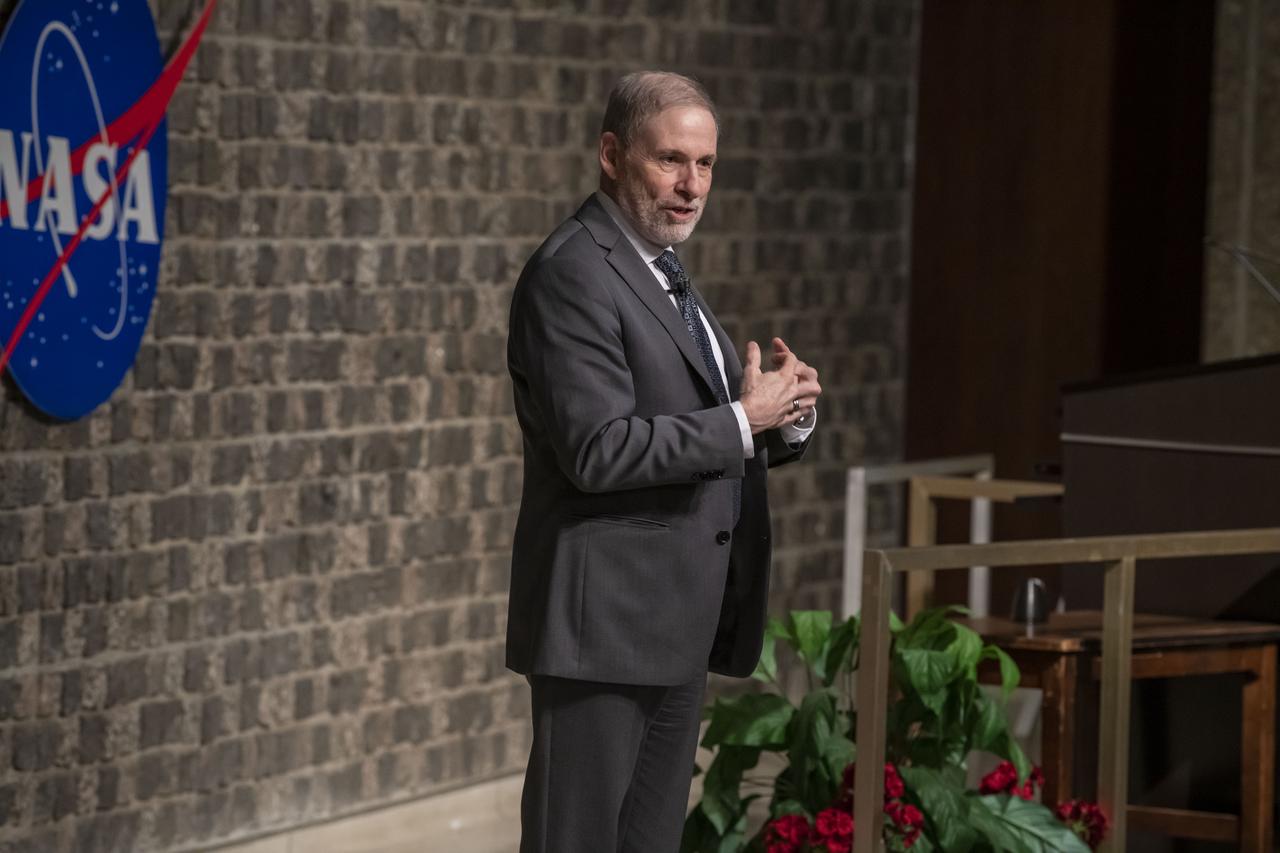
Douglas Loverro, NASA Associate Administrator for the Human Exploration and Operations Mission Directorate, and Marshall Center Director Jody Singer participate in a Town Hall with Marshall Space Flight Center employees
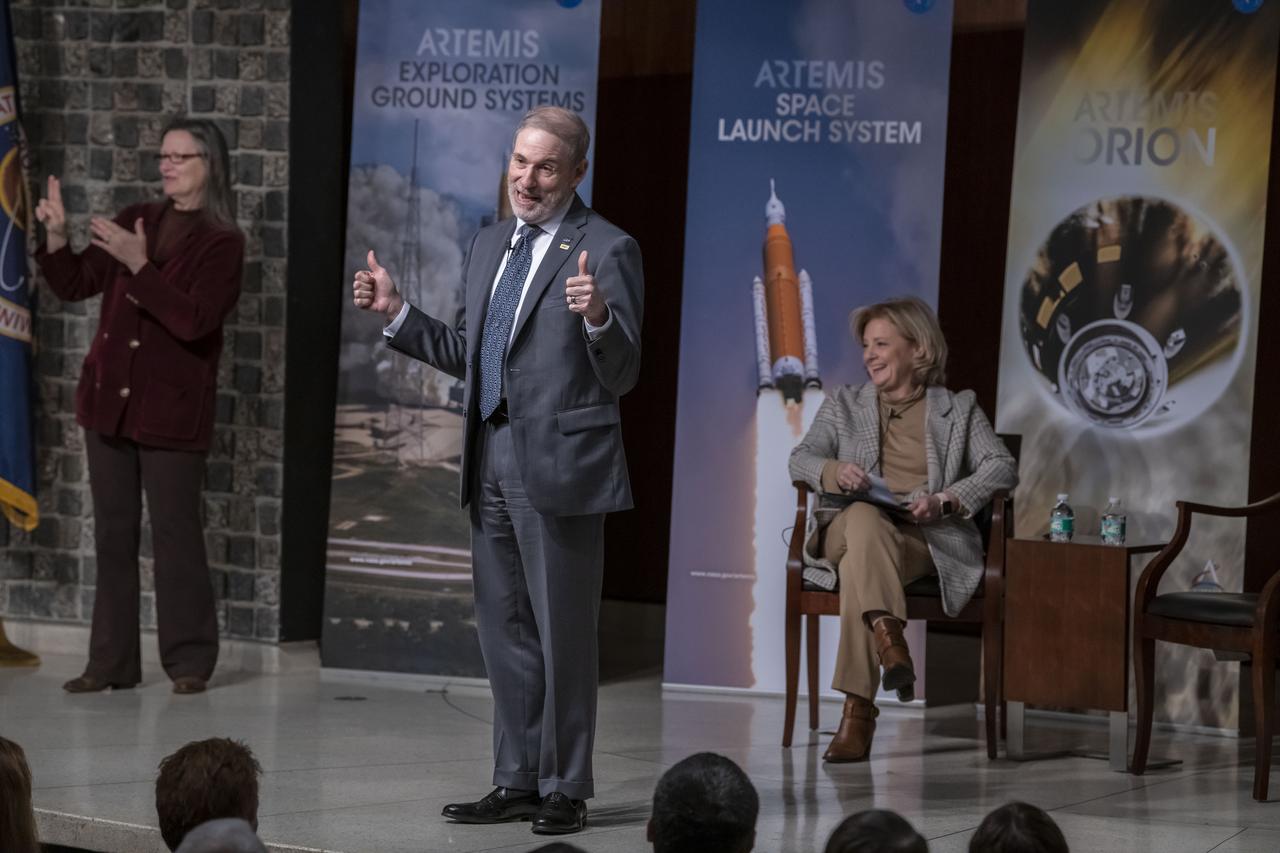
Douglas Loverro, NASA Associate Administrator for the Human Exploration and Operations Mission Directorate, and Marshall Center Director Jody Singer participate in a Town Hall with Marshall Space Flight Center employees
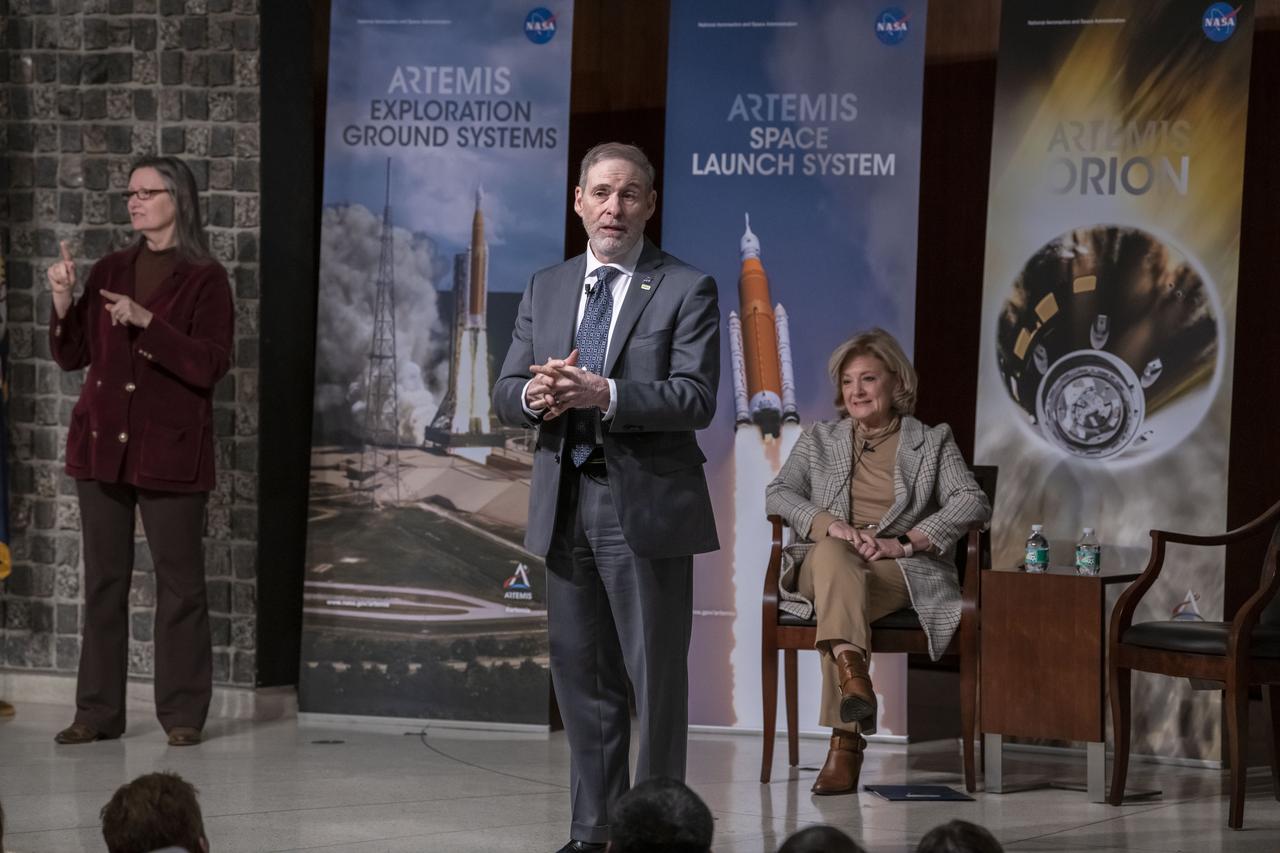
Douglas Loverro, NASA Associate Administrator for the Human Exploration and Operations Mission Directorate, and Marshall Center Director Jody Singer participate in a Town Hall with Marshall Space Flight Center employees
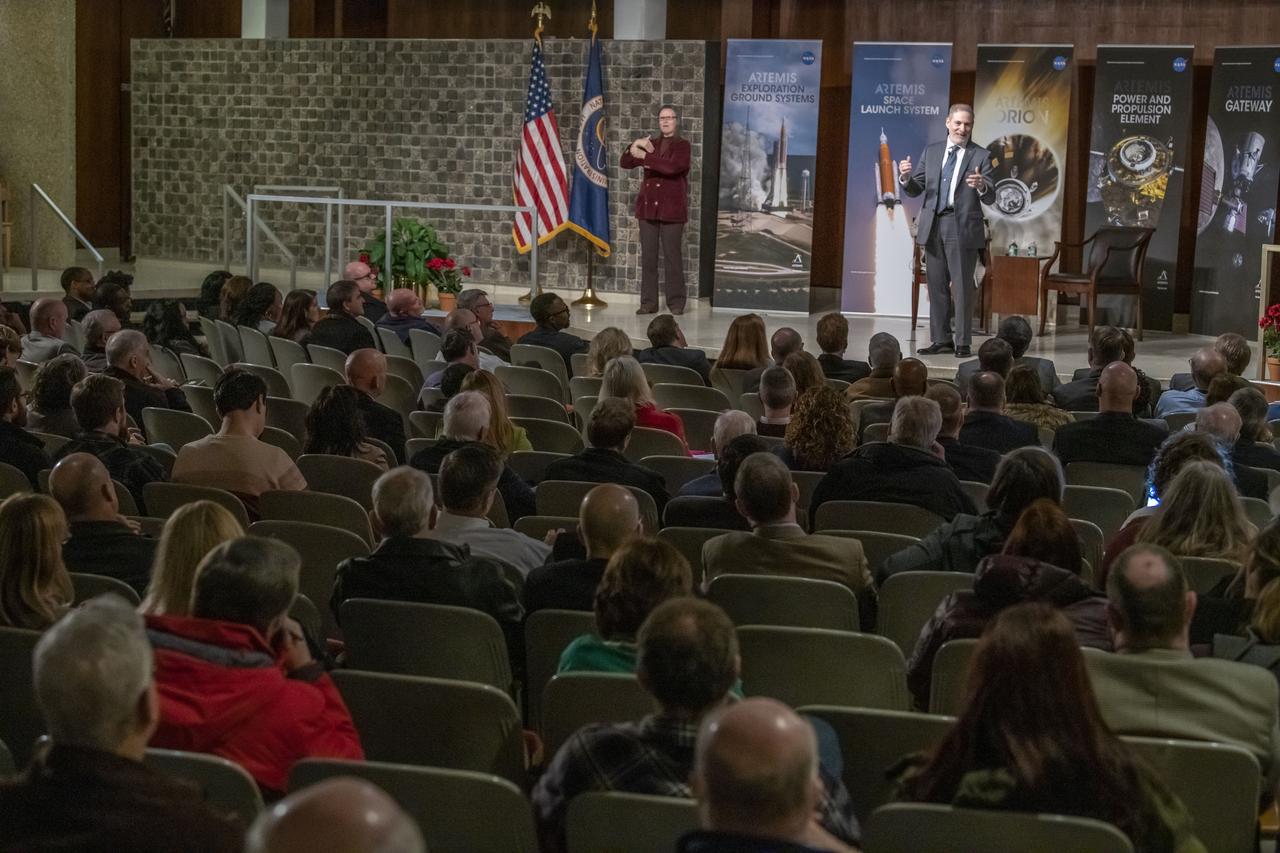
Douglas Loverro, NASA Associate Administrator for the Human Exploration and Operations Mission Directorate, and Marshall Center Director Jody Singer participate in a Town Hall with Marshall Space Flight Center employees
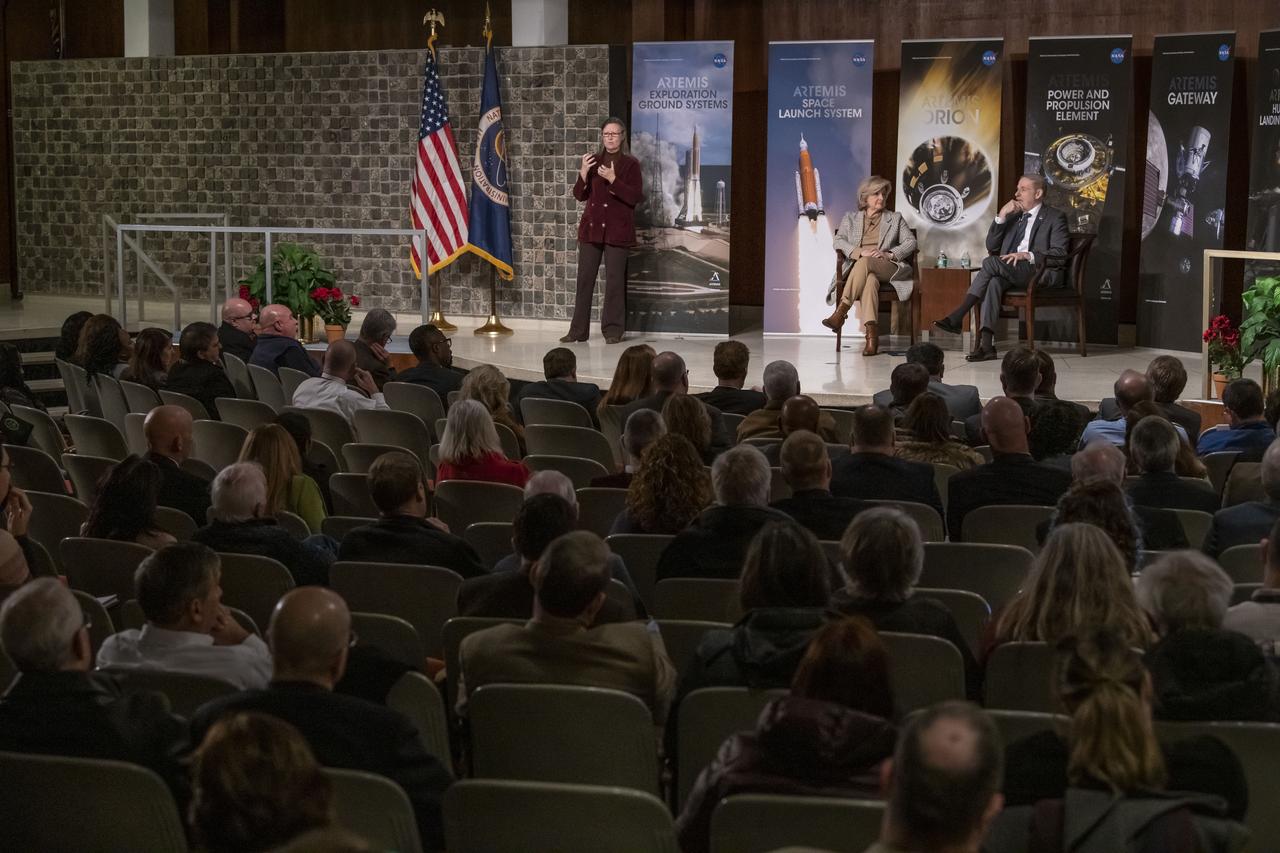
Douglas Loverro, NASA Associate Administrator for the Human Exploration and Operations Mission Directorate, and Marshall Center Director Jody Singer participate in a Town Hall with Marshall Space Flight Center employees
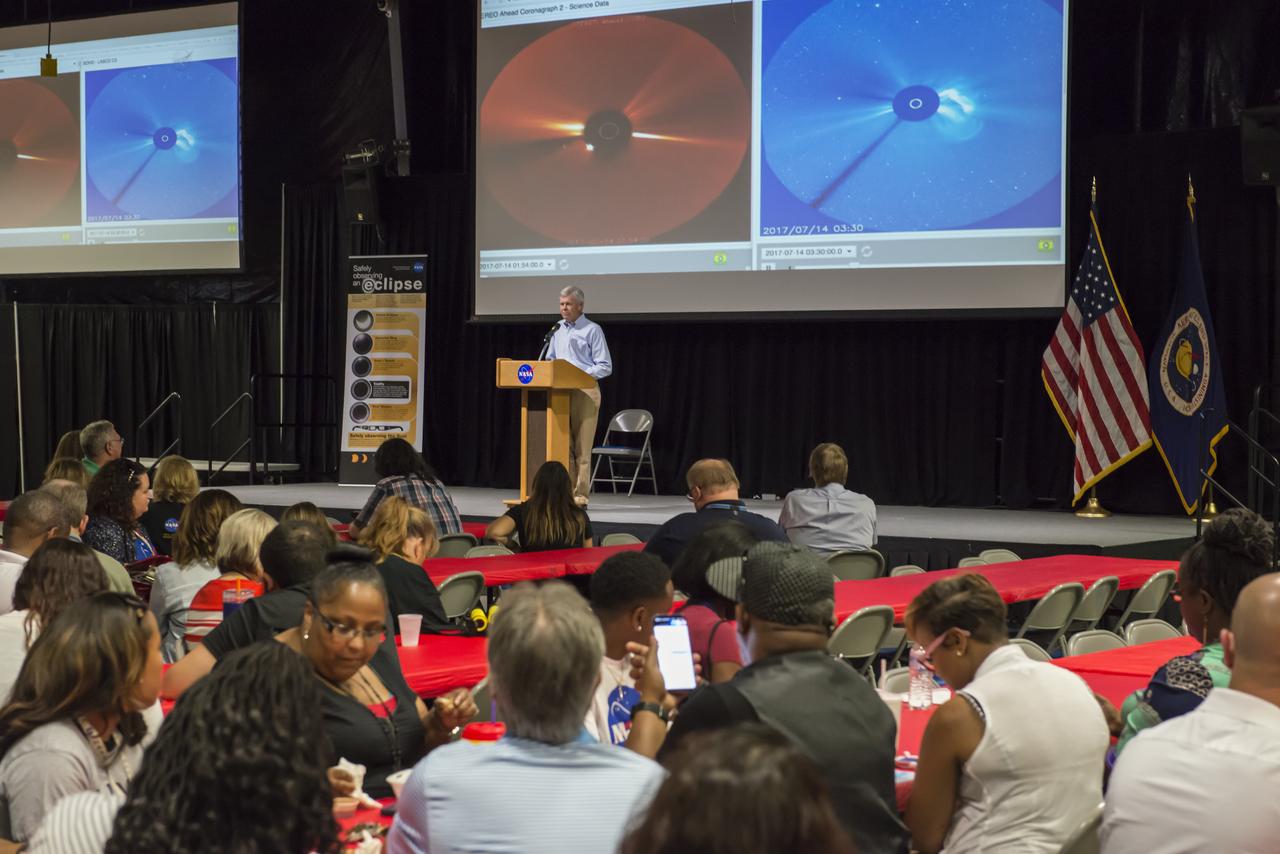
Former Spacelab 1 mission scientist Rick Chappell addresses Marshall team members during the Aug. 21 eclipse-watching event in Activities Building 4316. Chappell, a former associate director for science at Marshall and now a physics professor at Vanderbilt University in Nashville, joined a throng of Marshall personnel to marvel at the eclipse.
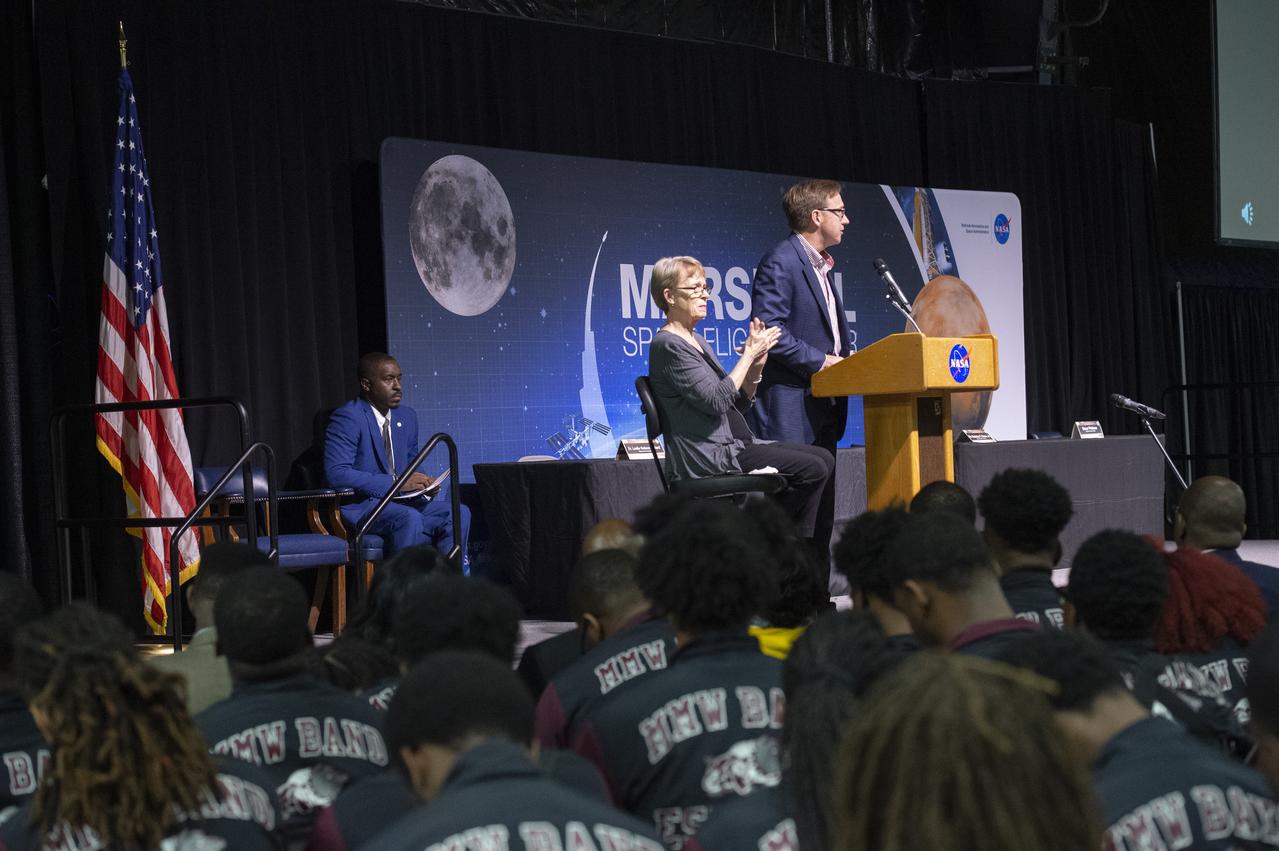
Marshall Space Flight Center's Black History Month program with Associate Director Steve Miley welcoming the audience
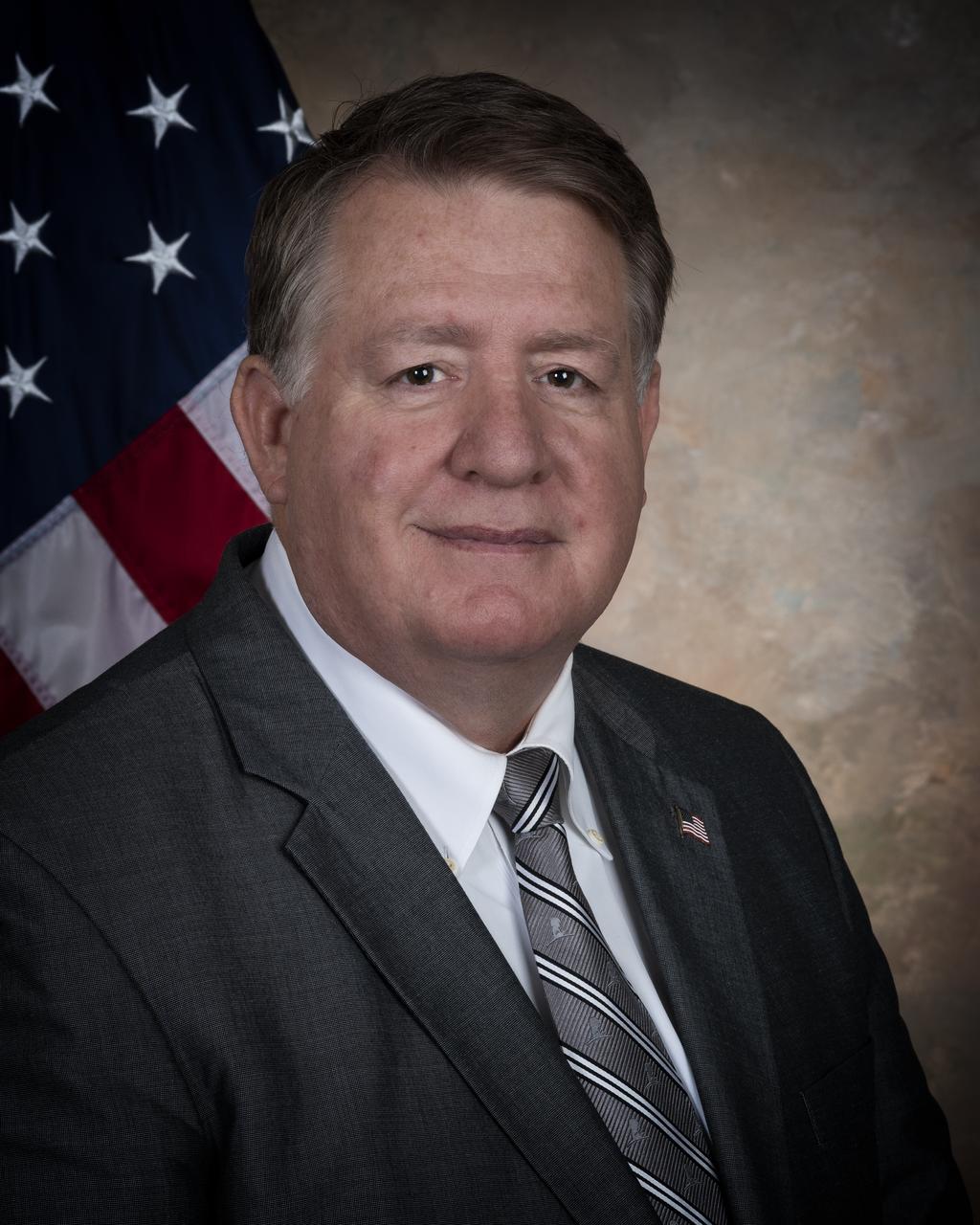
Carl Preston Jones has been appointed associate director, technical, of NASA's Marshall Space Flight Center.
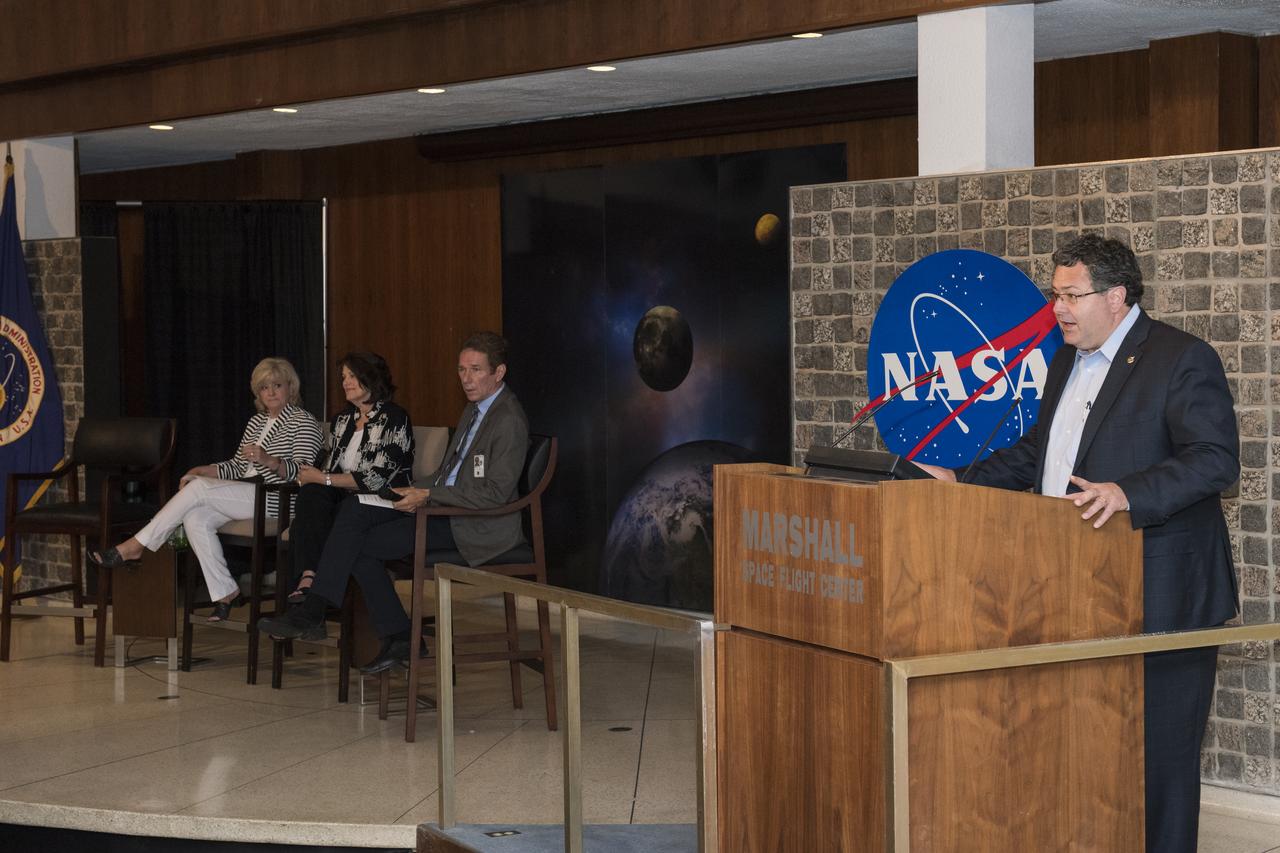
NASA MARSHALL SPACE FLIGHT CENTER DIRECTOR TODD MAY TALKS ABOUT HIS VISION FOR THE CENTER DURING AN ALL-HANDS MEETING JUNE 22 IN MORRIS AUDITORIUM, AND BROADCAST CENTERWIDE. ALSO SPEAKING TO THE MARSHALL TEAM AND TAKING QUESTIONS DURING THE EVENT ARE, FROM LEFT, MARSHALL DEPUTY DIRECTOR JODY SINGER, ASSOCIATE DIRECTOR ROBIN HENDERSON AND ASSOCIATE DIRECTOR, TECHNICAL, PAUL MCCONNAUGHEY. "WE'RE IN THE BUSINESS OF MAKING THE IMPOSSIBLE POSSIBLE," SAID MAY, CITING PROGRESS ON THE SPACE LAUNCH SYSTEM AND THE JOURNEY TO MARS AND RECOUNTING HIGHLIGHTS OF MARSHALL'S 56-YEAR HISTORY.
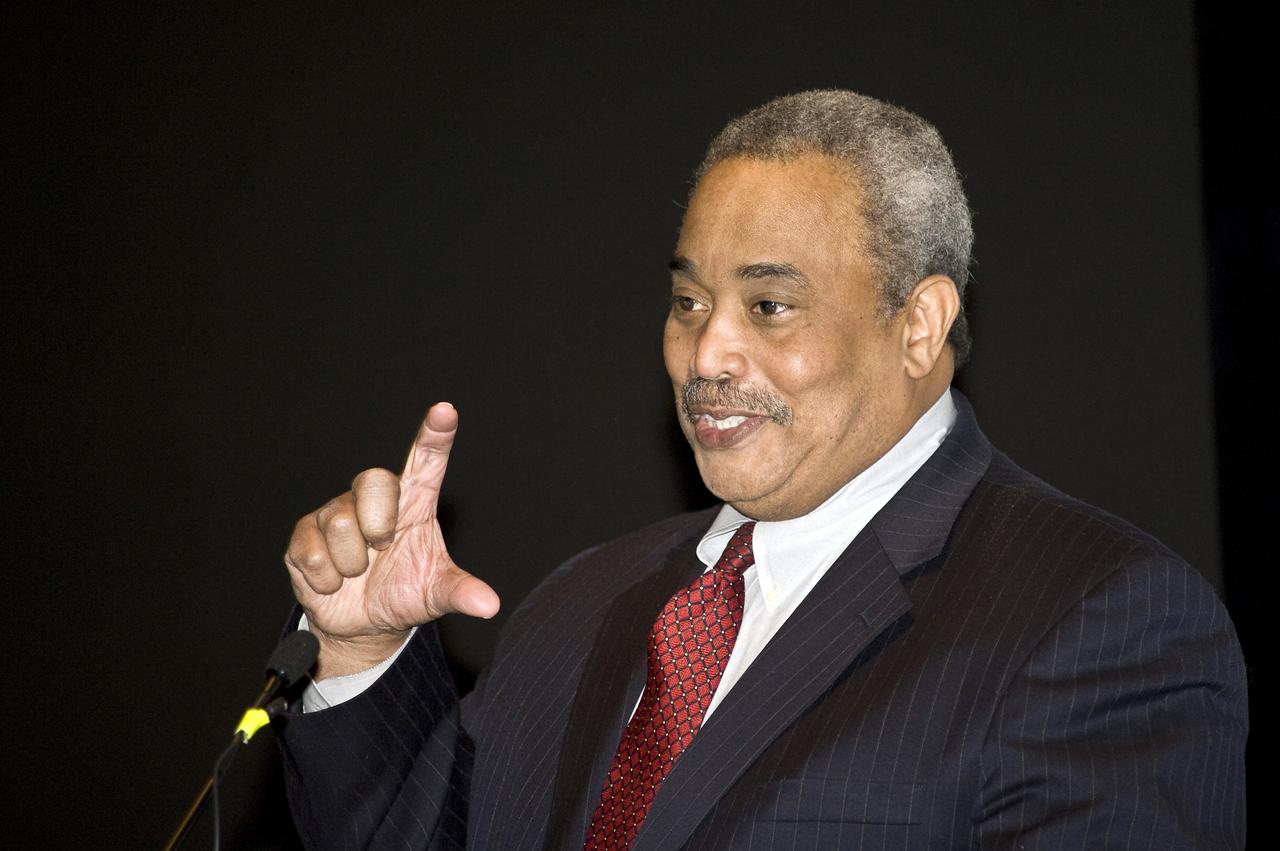
GLENN DELGADO, ASSOCIATE DIRECTOR, NASA OFFICE OF SMALL BUSINESS PROGRAMS PRESENTING UPDATES AT THE 2011 MARSHALL BUSINESS ALLIANCE MEETING HELD AT THE HUNTSVILLE DAVIDSON CENTER.
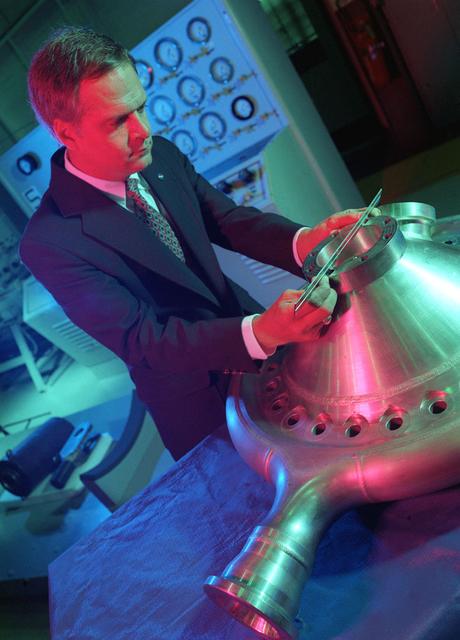
Research to lower the cost of thrust chamber assembly is conducted by Marshall scientist to significantly reduce the costs associated with thrust chamber/injector development and fabrication.
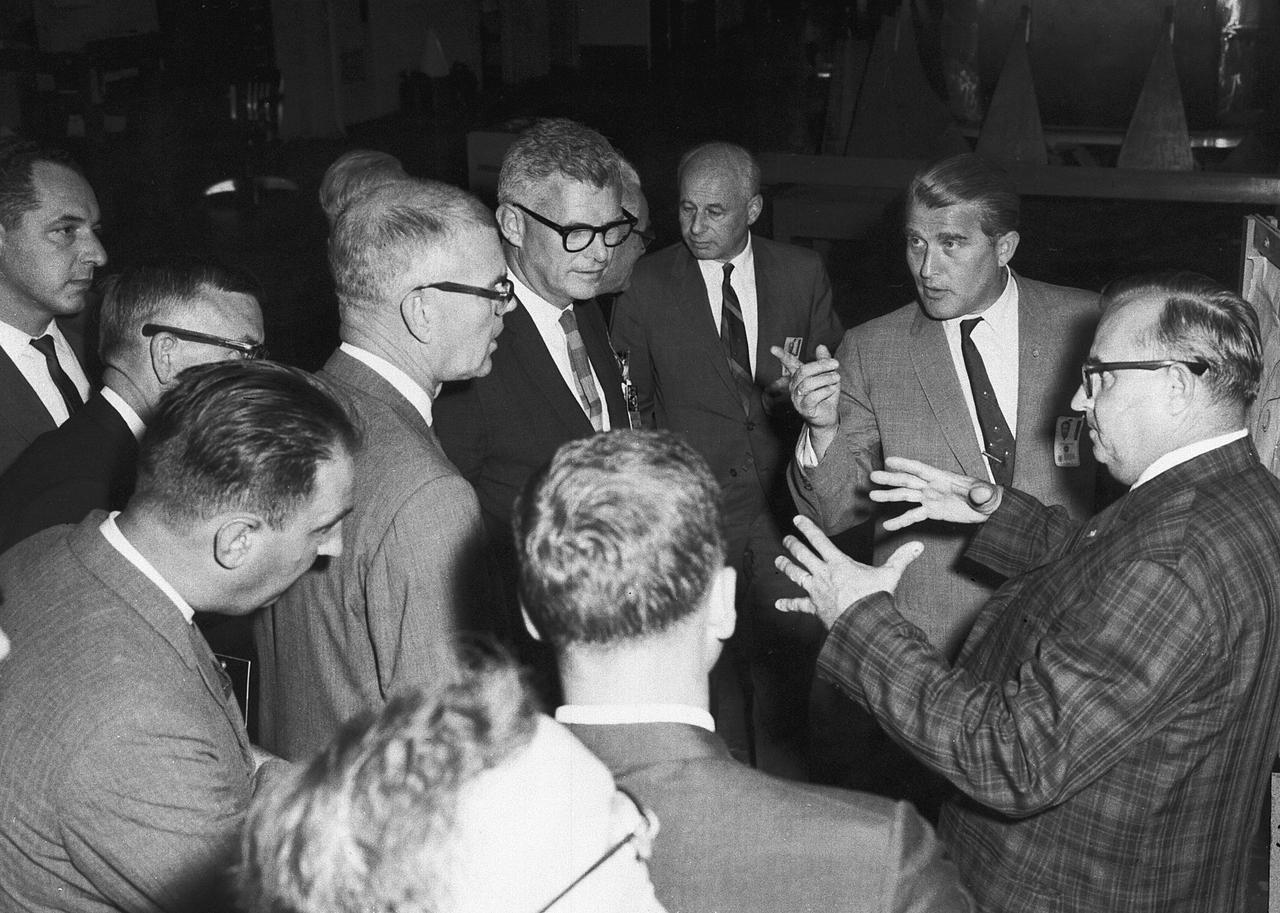
A group of NASA officials, headed by Associate Administrator Robert Seamans, toured the Marshall Space Flight Center with Dr. von Braun in 1963.
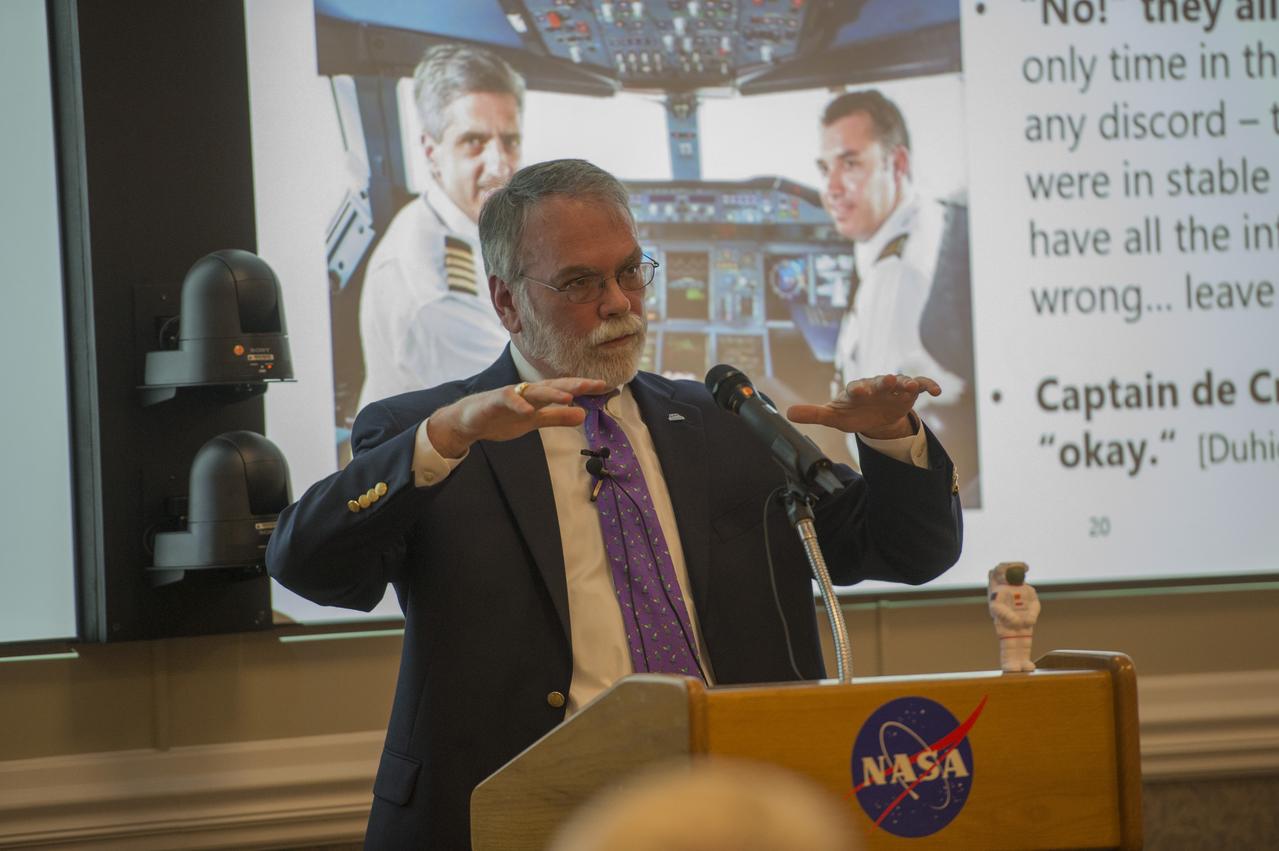
Dale Thomas, retired associate director, technical, of NASA's Marshall Space Flight Center presents during the May 18 Shared Experiences Forum.
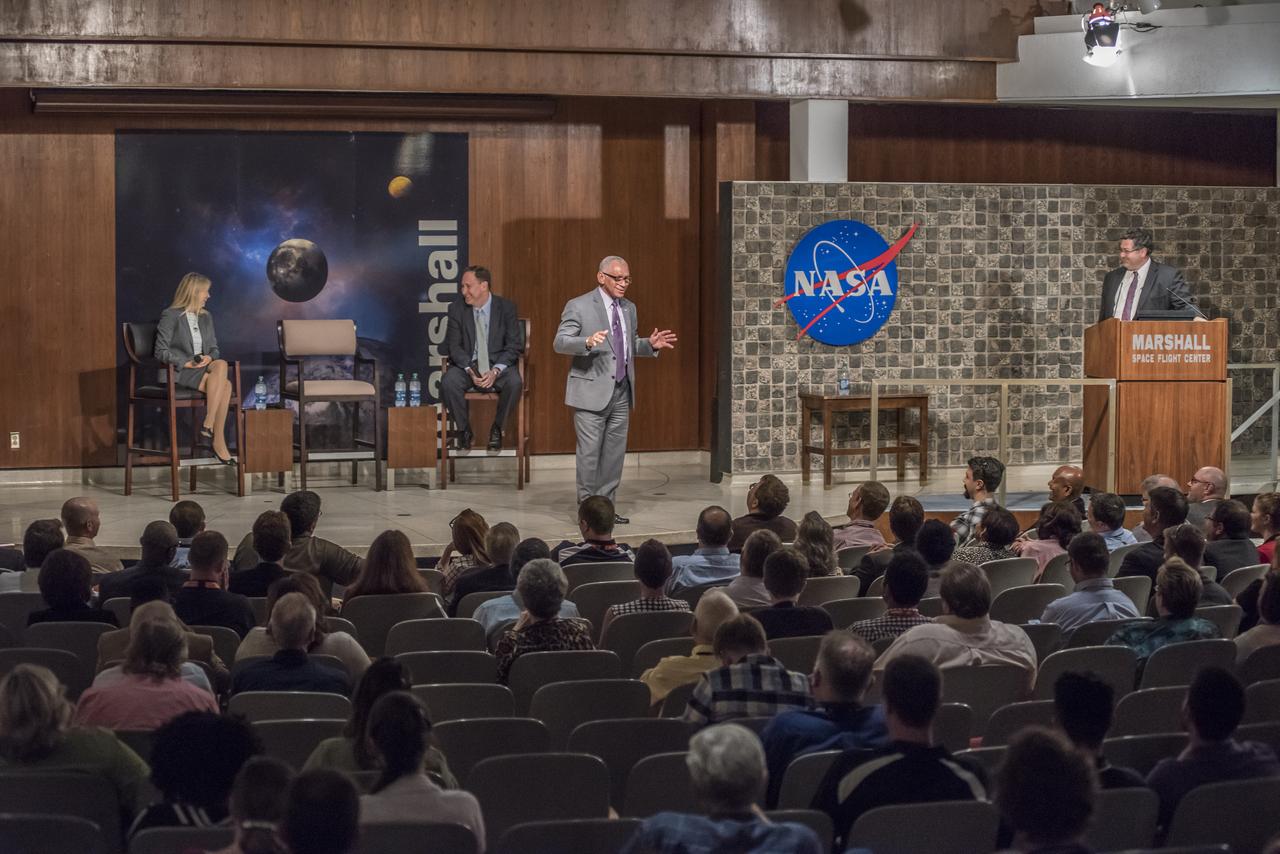
NASA ADMINISTRATOR CHARLES BOLDEN TALKS WITH MARSHALL SPACE FLIGHT CENTER TEAM MEMBERS IN MORRIS AUDITORIUM DURING AN ALL-HANDS MEETING OCT. 27. BOLDEN SAID NASA'S PROGRESS ON THE SPACE LAUNCH SYSTEM AND OTHER PROGRAMS -- MILESTONES DELIVERED BY THE WORKFORCE AT MARSHALL AND AGENCY WIDE -- SHOULD ALLAY CONCERNS ABOUT MISSION CHANGES ASSOCIATED WITH A NEW PRESIDENT AND ADMINISTRATION. "I WANTED TO THANK ALL OF YOU," HE SAID. "WE'RE THE BEST SPACE PROGRAM IN THE WORLD. I COULD NOT BE MORE CONFIDENT." ON STAGE WITH BOLDEN ARE, FROM RIGHT, MARSHALL DIRECTOR TODD MAY, ASSOCIATE ADMINISTRATOR ROBERT LIGHTFOOT AND DEPUTY ADMINISTRATOR DAVA NEWMAN.
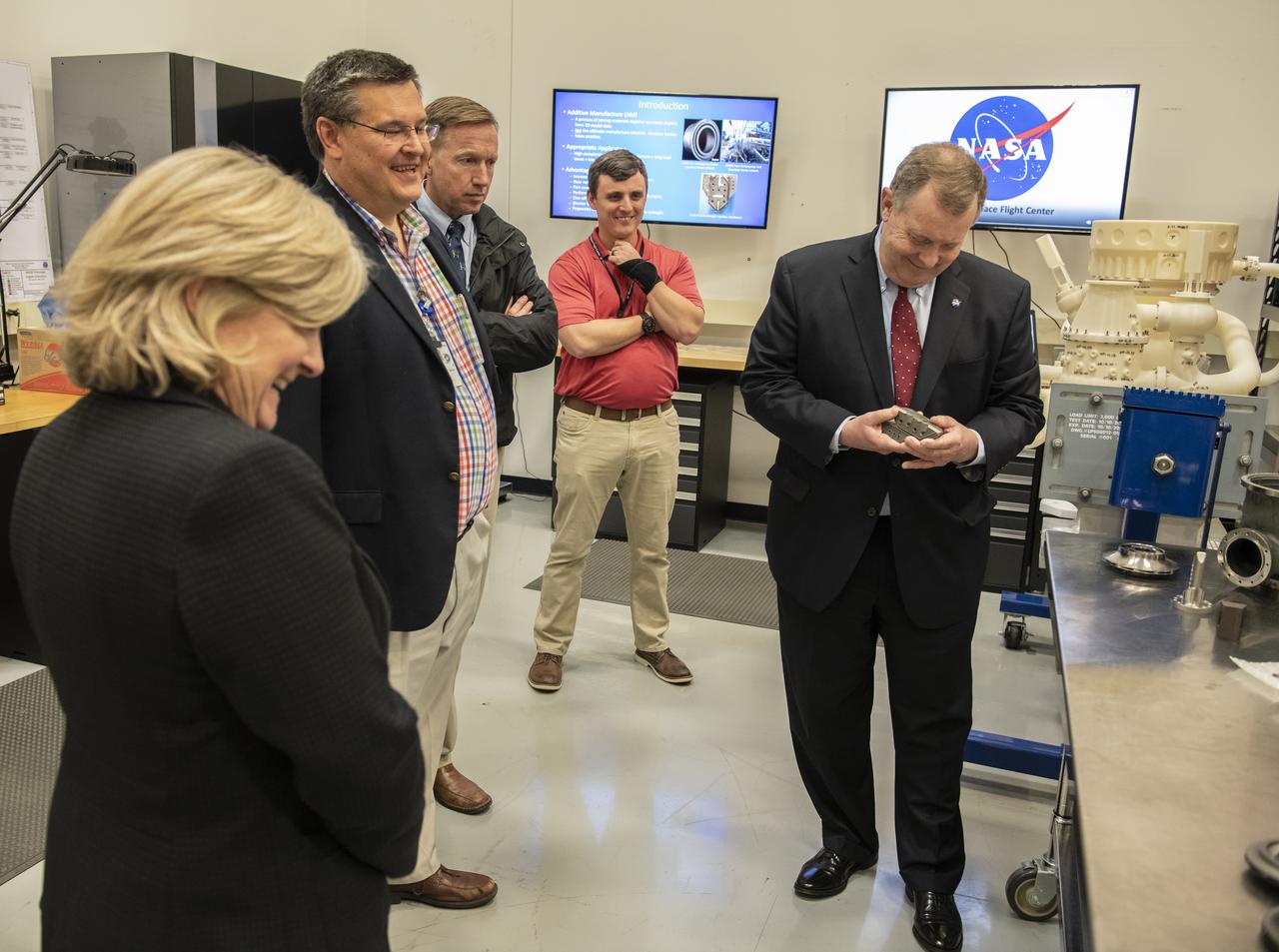
NASA Deputy Administrator James Morhard, right, tours Marshall's Additive Manufacturing Facility with, from left, Marshall Director Jody Singer; Larry Leopard, director of the Engineering Directorate; Marshall Associate Director Steve Miley; and Michael Allison, lead systems engineer for additive manufacturing assembly and integration. Morhard visited Marshall facilities to see first-hand the broad spectrum of engineering, science and exploration work here.
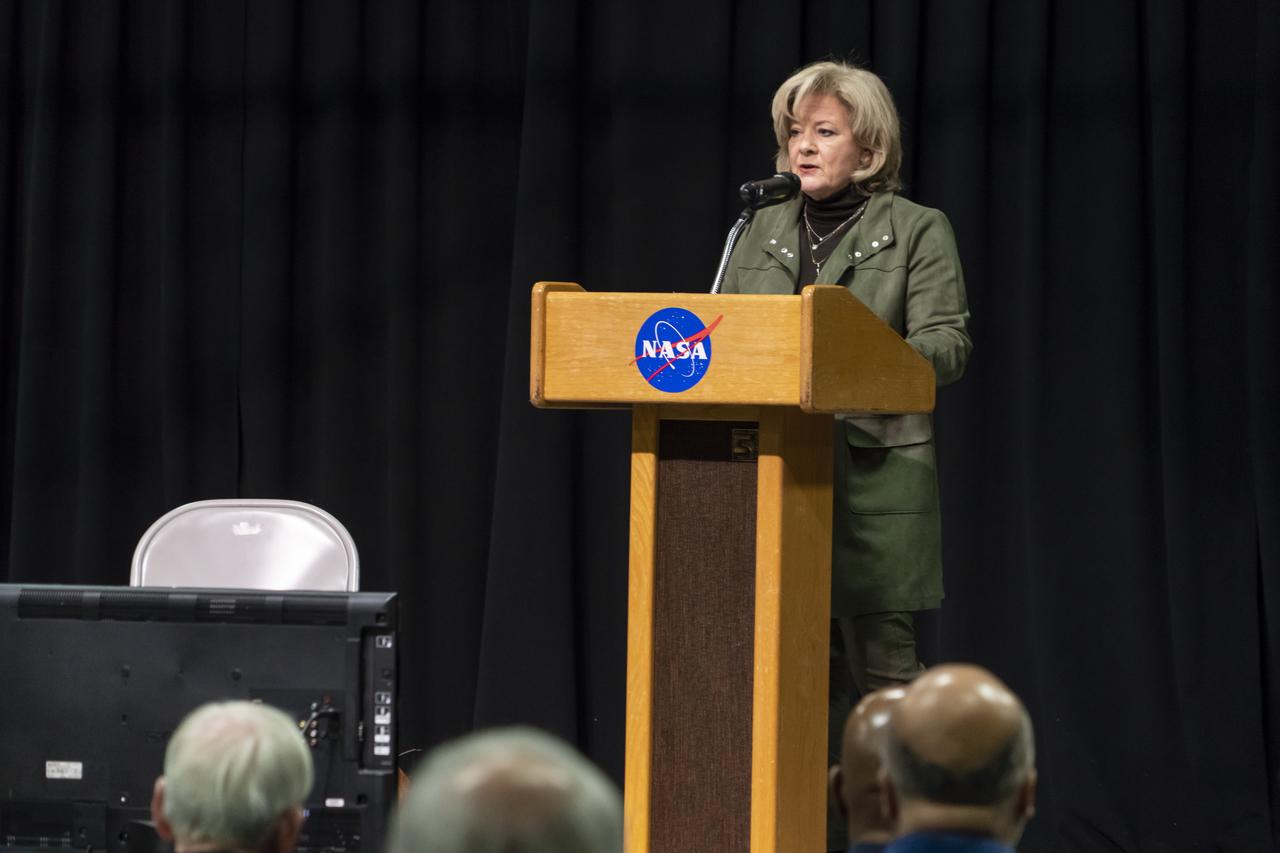
Marshall Space Flight Center Director Jody Singer addresses Marshall employees regarding the effects of the just ended furlough and talks about lessons learned. Assisting Ms. Singer was Deputy Director Paul McConnaughey, Associate Director Steve Miley, and Director of the Office of Strategic Analysis and Communications Johnny Stephenson.
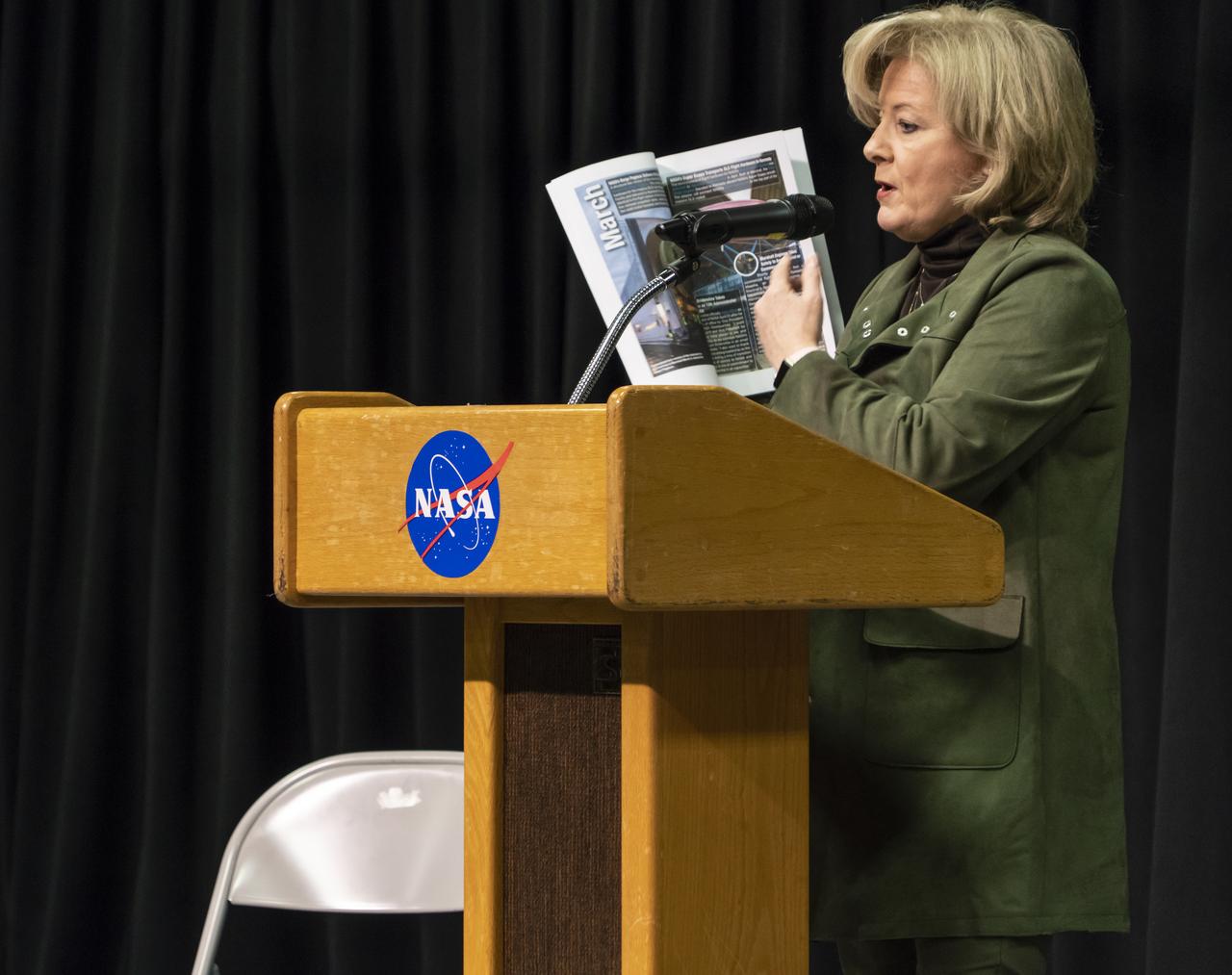
Marshall Space Flight Center Director Jody Singer addresses Marshall employees regarding the effects of the just ended furlough and talks about lessons learned. Assisting Ms. Singer was Deputy Director Paul McConnaughey, Associate Director Steve Miley, and Director of the Office of Strategic Analysis and Communications Johnny Stephenson.
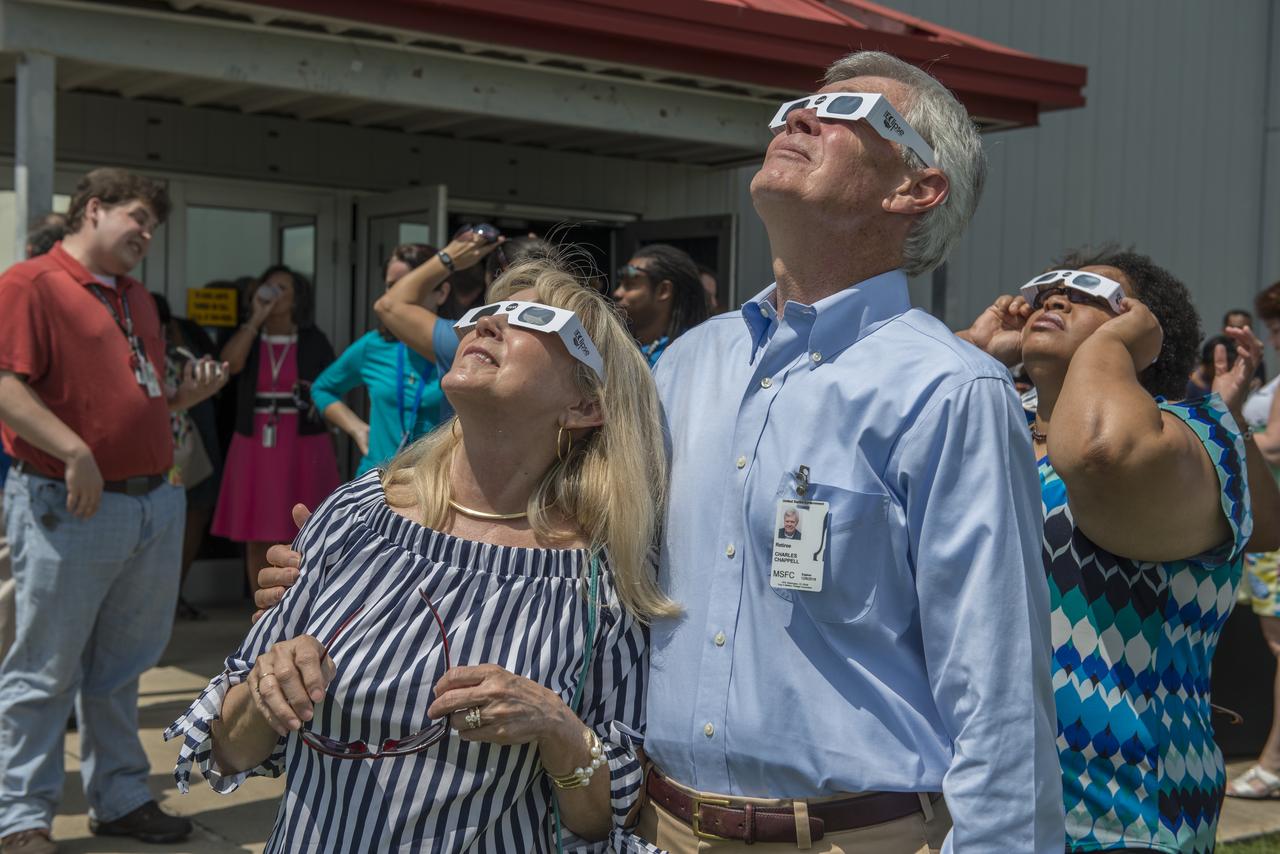
Former Spacelab 1 Mission scientist Rick Chappell views the August 21, 2017 solar eclipse with his wife. Chappell, a former associate director for science at Marshall and now a physics professor at Vanderbilt University in Nashville, joined a throng of Marshall personnel to marvel at the eclipse.
Marshall Space Flight Center Director Jody Singer addresses Marshall employees regarding the effects of the just ended furlough and talks about lessons learned. Assisting Ms. Singer was Deputy Director Paul McConnaughey, Associate Director Steve Miley, and Director of the Office of Strategic Analysis and Communications Johnny Stephenson.
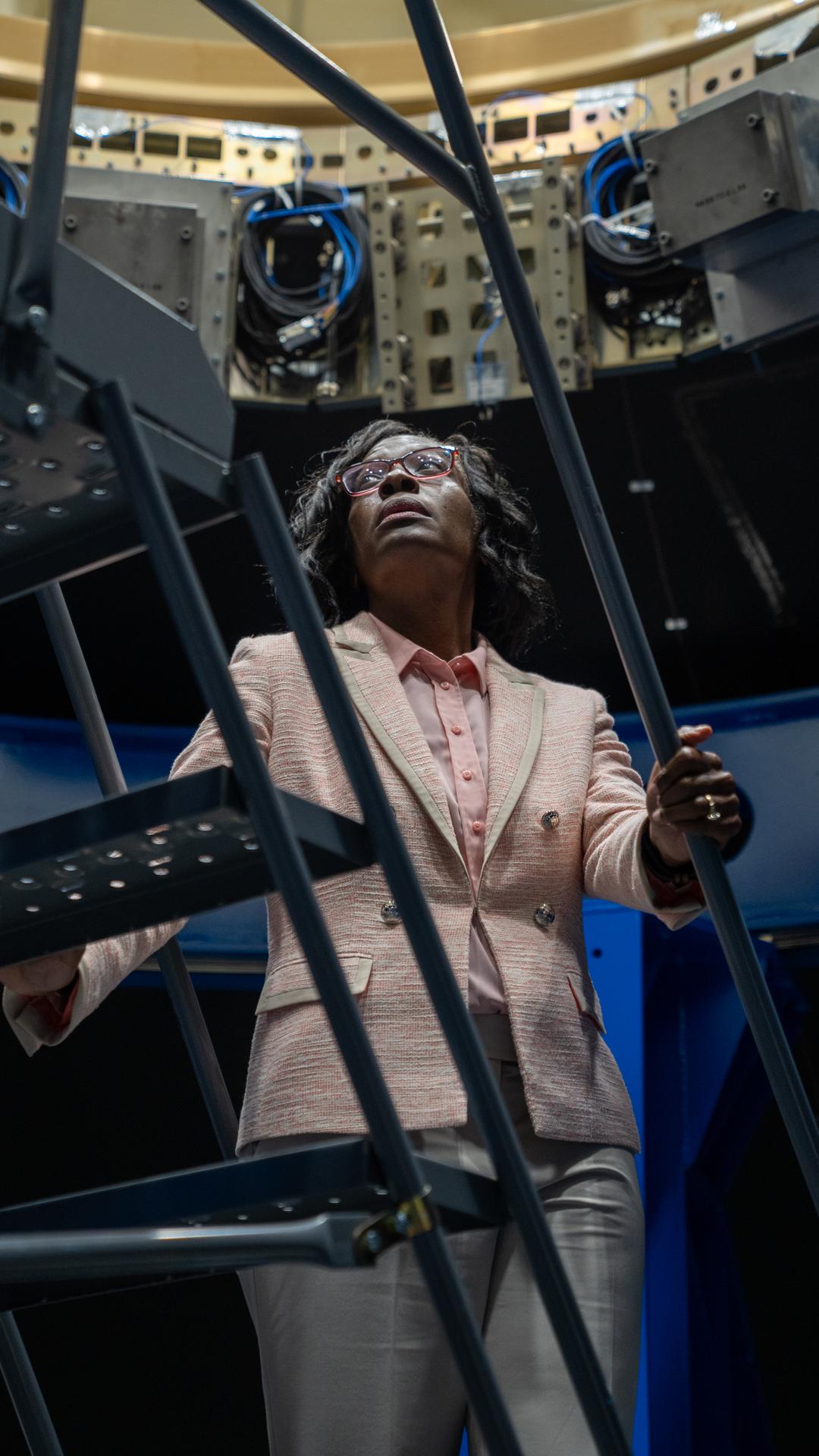
Lakiesha Hawkins, Assistant Deputy Associate Administrator for the Moon to Mars (M2M) Program within the Exploration Systems Development Mission Directorate (ESDMD), takes a peek at the Payload Adapter test article at Marshall Space Flight Center. The adapter, which will debut on NASA’s Artemis IV mission, is an evolution from the Orion stage adapter used in the Block 1 configuration of the rocket for the first three Artemis missions. It will be housed inside the universal stage adapter atop the rocket’s more powerful in-space stage, called the exploration upper stage. The payload adapter, like the launch vehicle stage adapter and the Orion stage adapter, is fully manufactured and tested at Marshall, which manages the SLS Program.
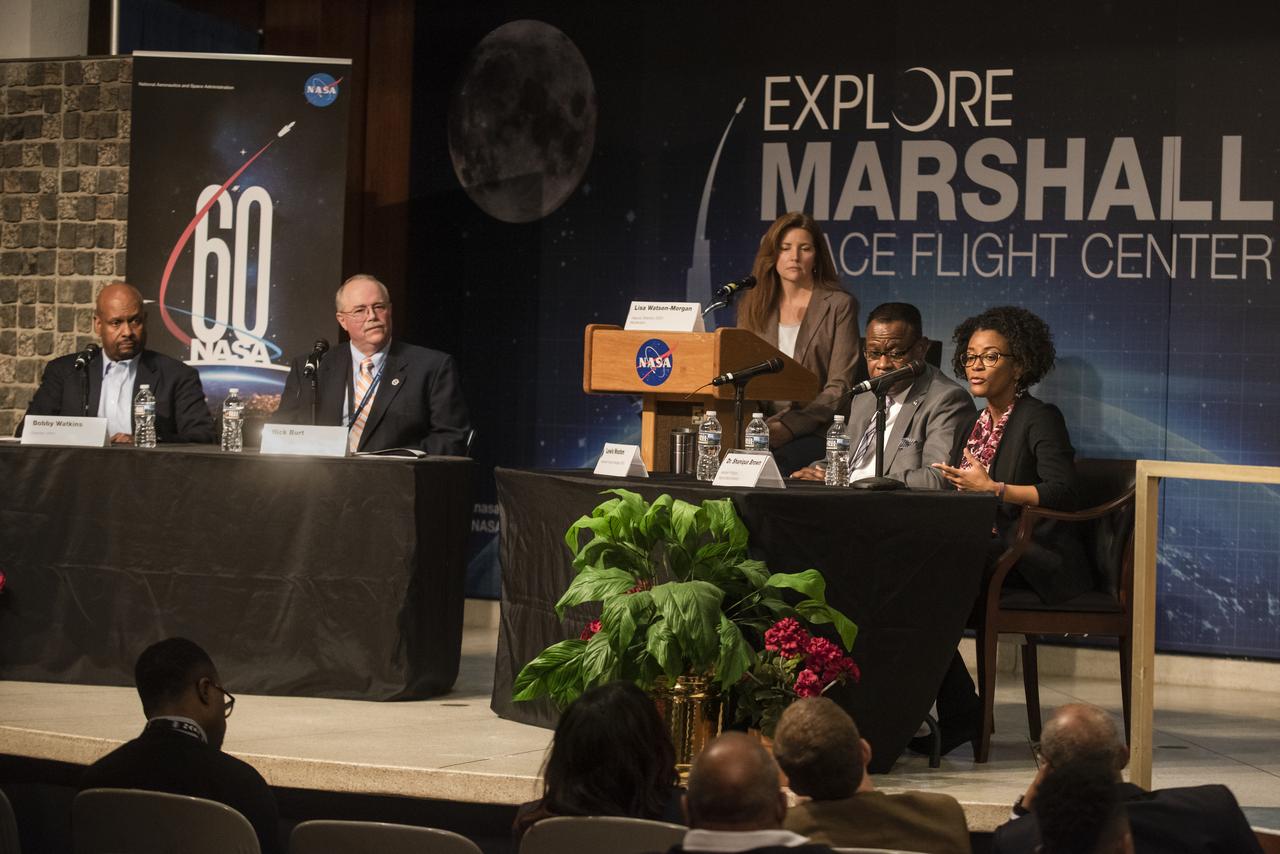
Wayne State University professor Shanique Brown, far right, takes part in a panel discussion on diversity and building strong, inclusive teams. She was joined by, from right, Lewis Wooten, associate program manager for the Space Launch System Program Office at Marshall; moderator Lisa Watson-Morgan, deputy director of Marshall's Engineering Directorate; Rick Burt, director of Marshall's Safety & Mission Assurance Directorate; and Bobby Watkins, director of the Human Exploration Development and Operations Office.
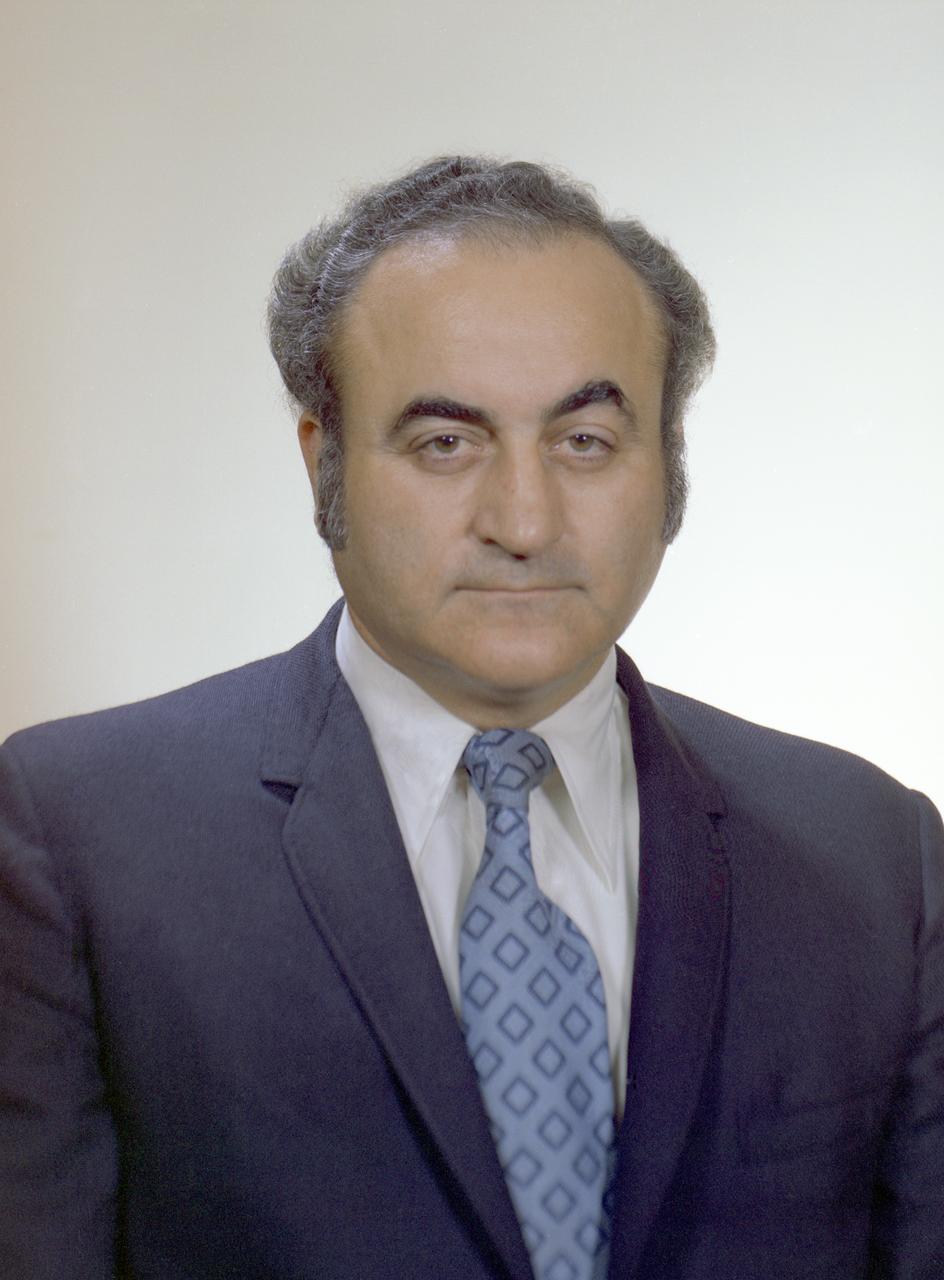
Dr. Rocco A. Petrone served at director of the Marshall Space Flight Center from January 26, 1973 to March 15, 1974. Prior to his tenure at Marshall, Petrone served as director of the Apollo program and director of launch operations at Kennedy Space Center. His career in rocket development and space programs began with his participation in the development of the Redstone missiles at the Army's Redstone Arsenal in Huntsville, Alabama. Upon his departure from Marshall, Petrone served as NASA Associate Administrator for Center Operations.
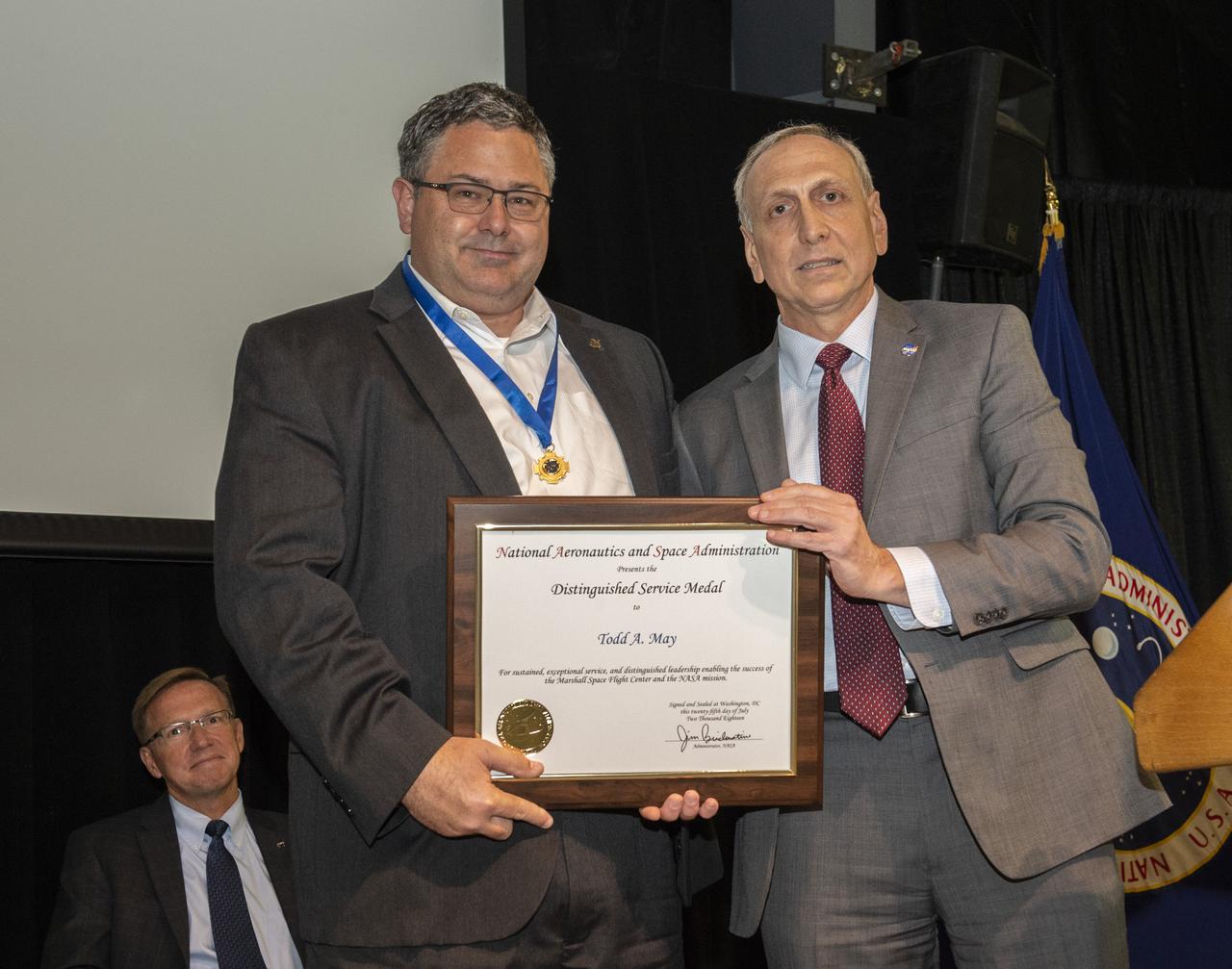
NASA Associate Administrator Steve Jurczyk presents retiring Marshall Space Flight Center Todd May with the NASA Distinguished Service Medal at the retirement ceremony for Mr. May.
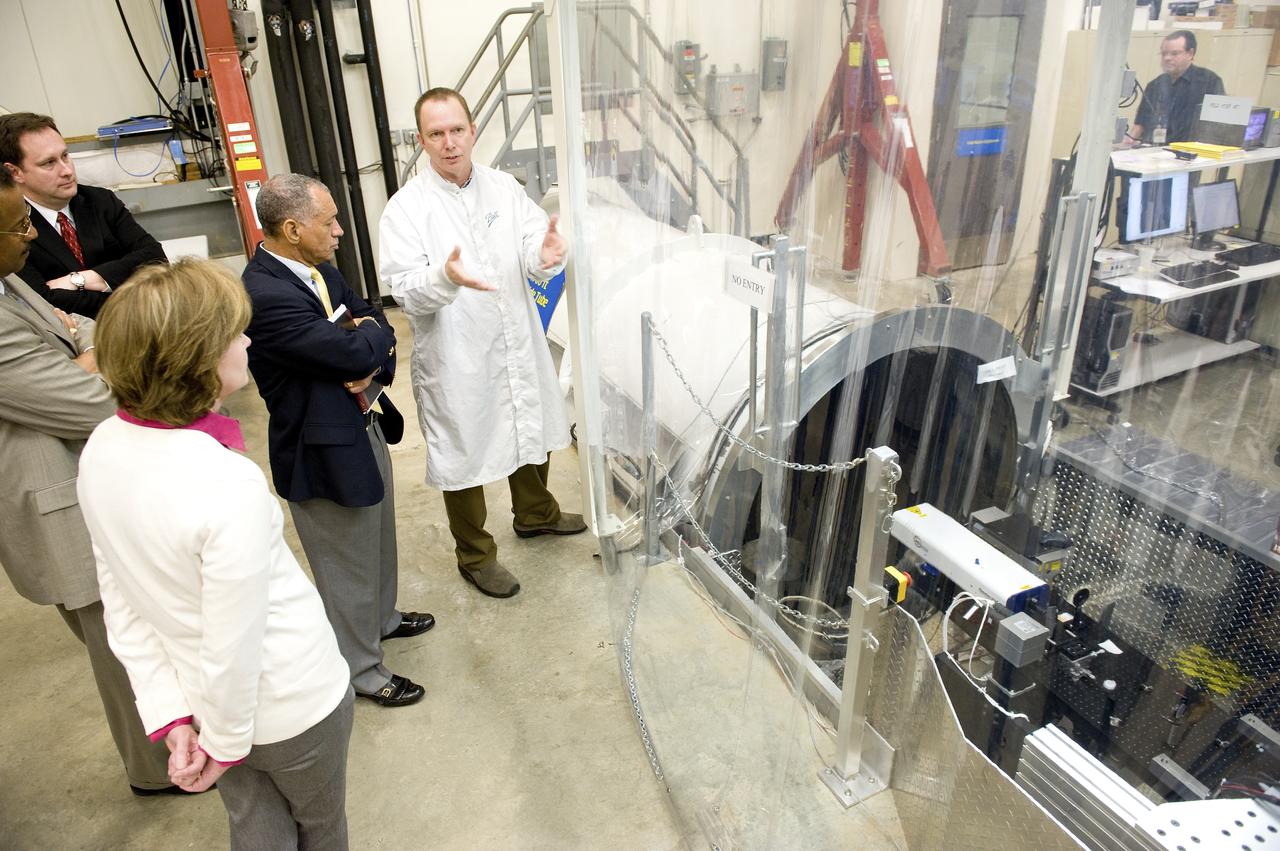
NASA ADMINISTRATOR CHARLES BOLDEN LOOKS ON AS BALL AEROSPACE TECHNOLOGIES CORPORATION PRINCIPLE OPTICAL ENGINEER DAVE CHANEY EXPLAINS HOW THE JAMES WEBB SPACE TELESCOPE MIRROR SEGMENTS ARE TESTED IN MARSHALL'S X-RAY AND CRYOGENIC FACILITY. PICTURED FROM LEFT: HELEN COLE, WEBB TELESCOPE ACTIVITIES PROJECT MANAGER AT MARSHALL; CHARLES SCALES, ASSOCIATE DEPUTY ADMINISTRATOR: ROBERT LIGHTFOOT, CENTER DIRECTOR; CHARLES BOLDEN, NASA ADMINISTRATOR; DAVE CHANEY, BALL OPTICAL ENGINEER.
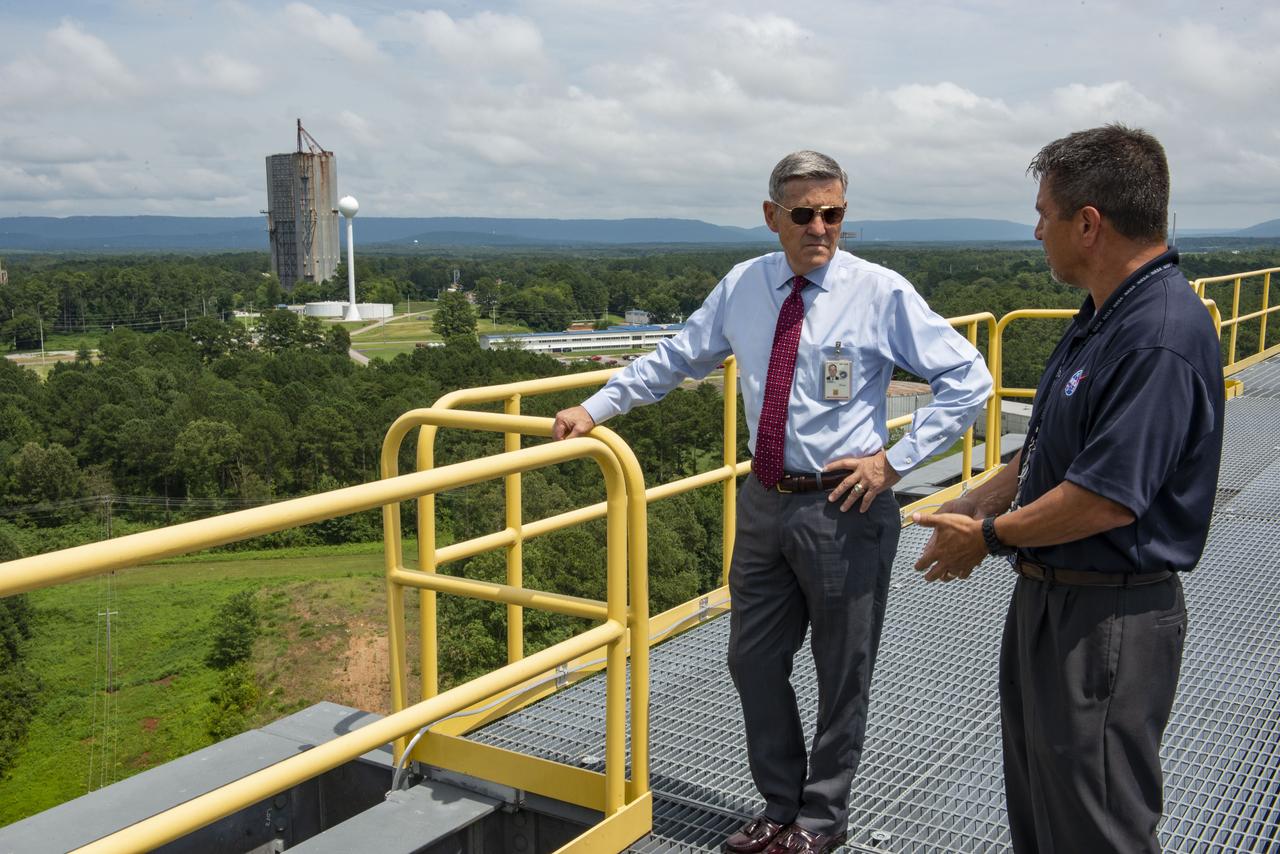
NASA's Kennedy Space Center Director Robert Cabana visited Marshall Space Flight Center July 16. With the Dynamic Test Stand in the background, Cabana, left, talks with Tim Flores, integration manager for stages in the Space Launch System Program Office, on top of Test Stand 4693, NASA’s largest SLS structural test stand. In addition to viewing SLS hardware, Cabana spoke to the Marshall Association and National Space Club Huntsville during his visit.
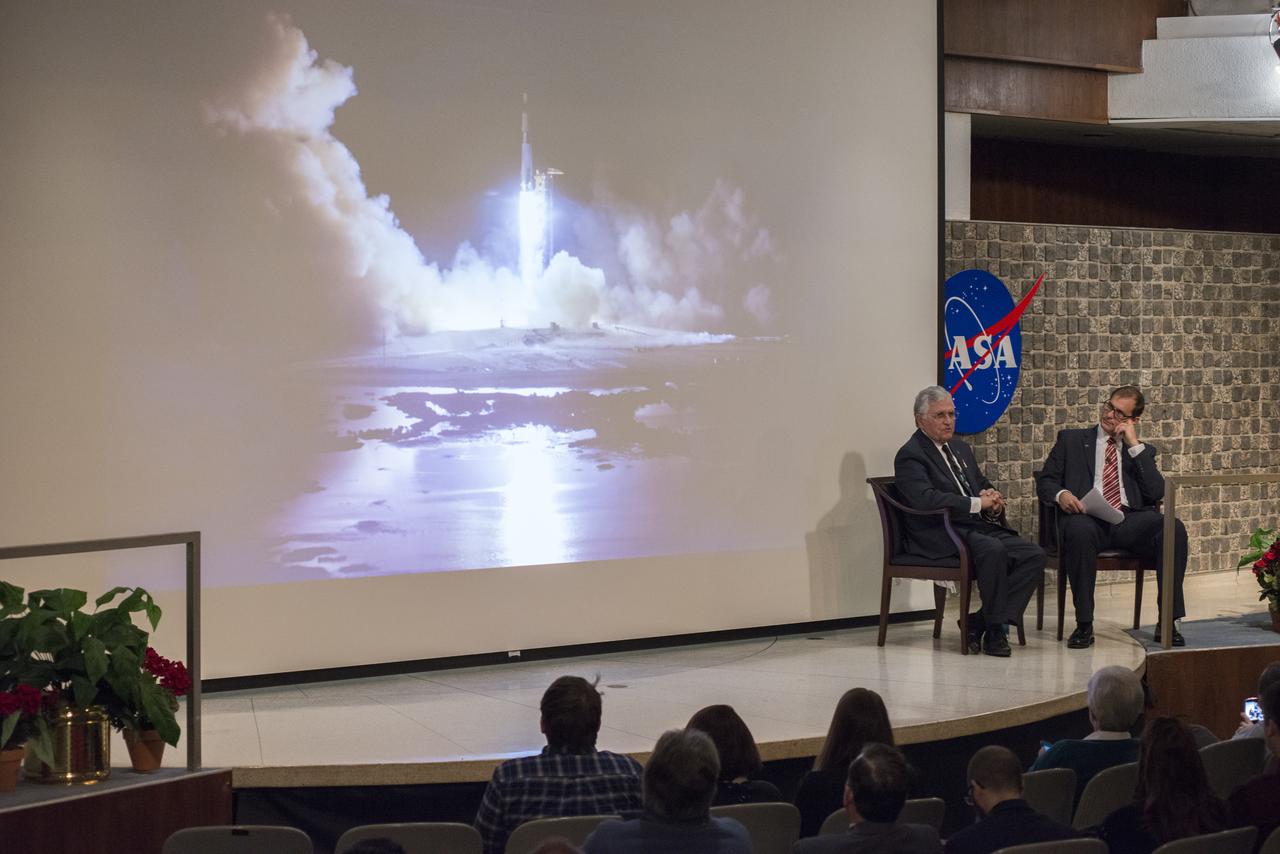
Apollo 17 lunar module pilot Harrison Schmitt, left, shared his experiences as an astronaut and lunar geologist during a visit to Marshall Dec. 7, as part of the Shared Experiences Forum. During an interactive Q&A moderated by Marshall Associate Director Jonathan Pettus, right, Schmitt spoke about launching on the Saturn V rocket, exploring the Moon and looking back at the Earth. The day of his visit was the 45th anniversary of the Apollo 17 launch.
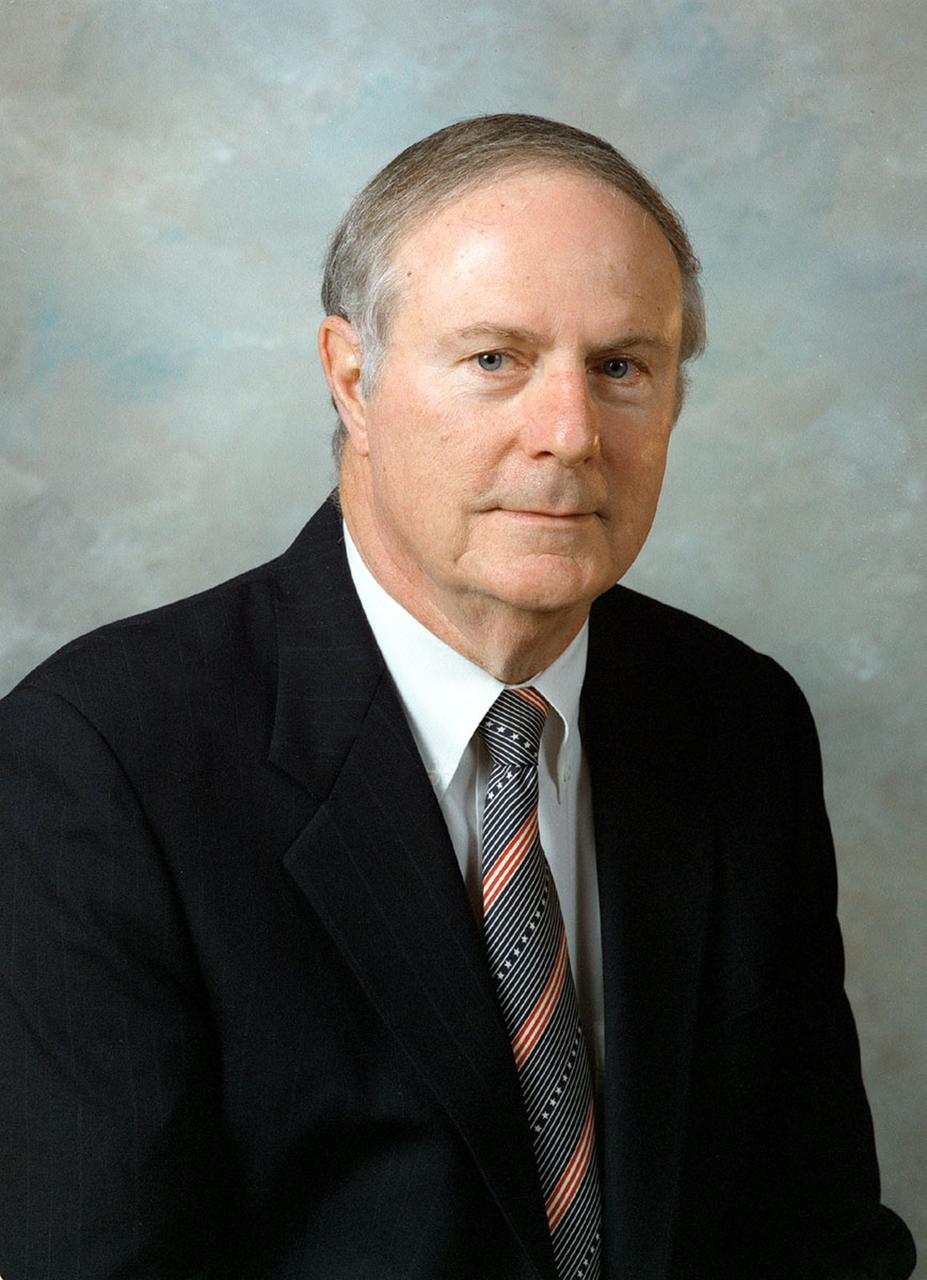
Dr. J. Wayne Littles served as director of the Marshall Space Flight Center from February 3, 1996 until his retirement from NASA, January 3, 1998. Prior to his appointment as Center Director, Littles served as NASA Associate Administrator for the Office of Space Flight (1994-1996). Littles began his NASA career in 1967 when he worked as an engineer in Marshall's former Propulsion and Vehicle Engineering Directorate. He worked in various capacities at the Marshall Center, including Science Engineering Director (1988-1989) and Center Deputy Director (1989-1994) before transferring to NASA Headquarters in 1994.
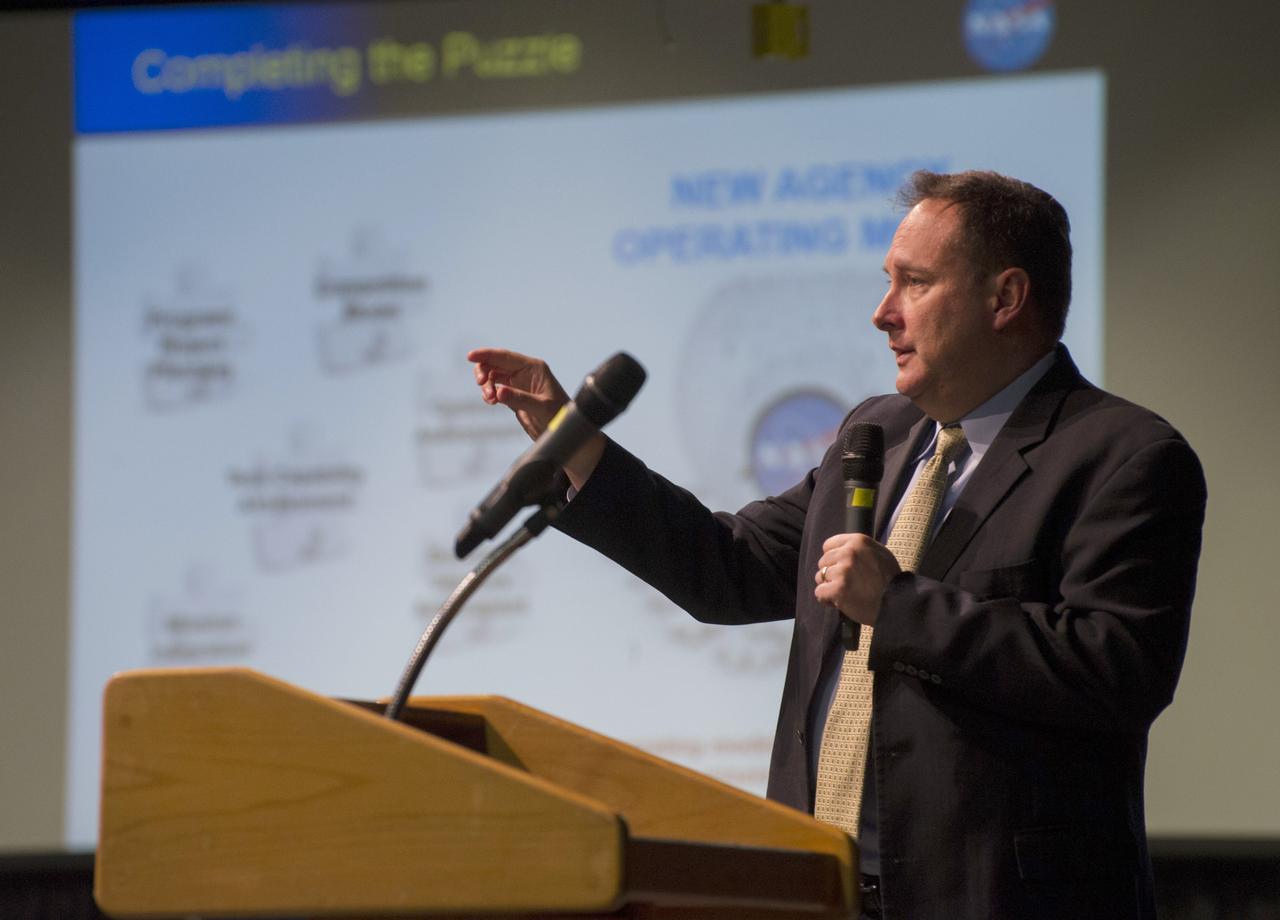
NASA ASSOCIATE ADMINISTRATOR ROBERT LIGHTFOOT HELD AN ALL-HANDS MEETING WITH TEAM MEMBERS AT THE MARSHALL CENTER ON JAN. 14, 2015. LIGHTFOOT, JOINED BY NASA DEPUTY ASSOCIATE ADMINISTRATOR LESA ROE, DISCUSSED THE YEAR AHEAD FOR THE AGENCY AND DEFINED A CAPABILITY LEADERSHIP MODEL WHICH INCLUDED RESULTS FROM THE ONGOING EFFORTS OF THE AGENCY'S TECHNICAL CAPABILITY ASSESSMENT TEAM.
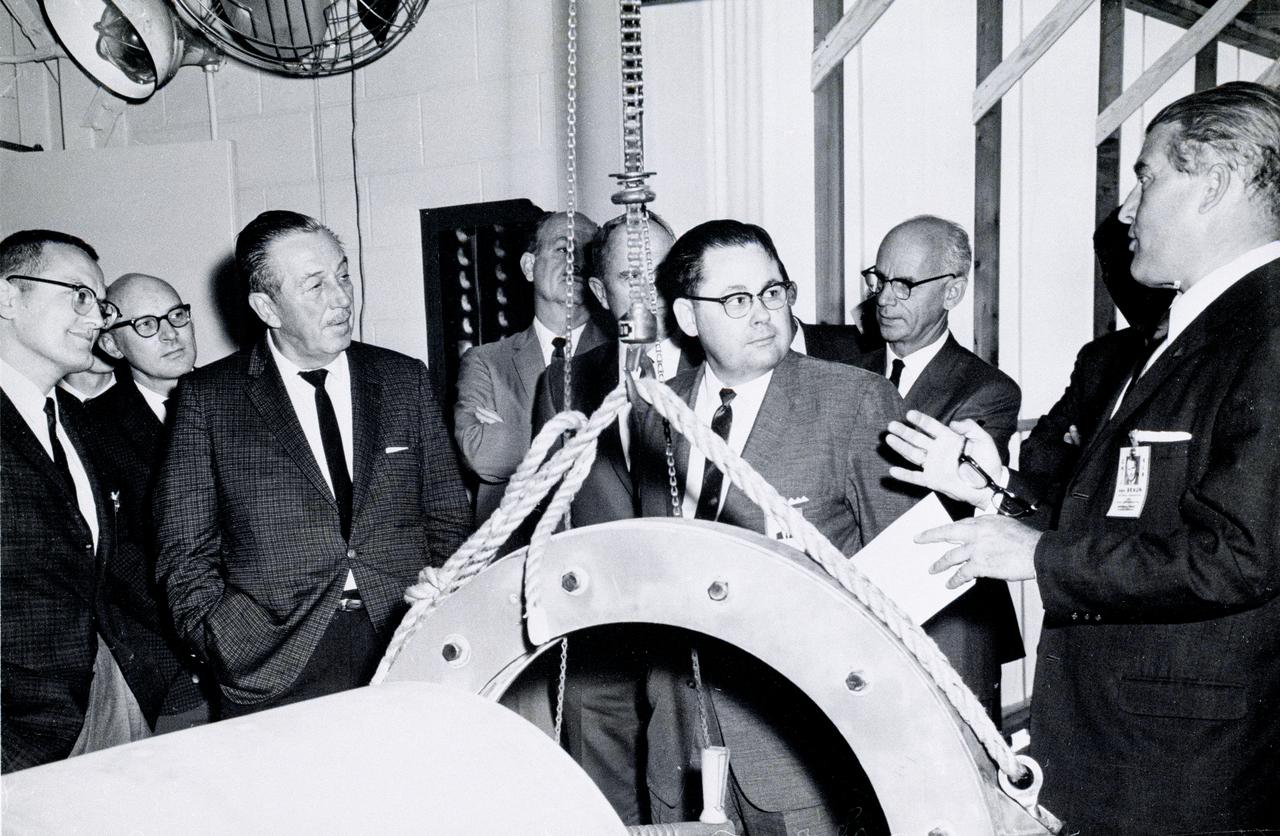
Dr. von Braun began his association with Walt Disney in the 1950s when the rocket scientist appeared in three Disney television productions related to the exploration of space. Years later, Dr. von Braun invited Disney and his associates to tour the Marshall Space Flight Center (MSFC) in Huntsville, Alabama. This photograph is dated April 13, 1965. From left are R.J. Schwinghamer from the MSFC, Disney, B.J. Bennight, and Dr. von Braun.

Steve Clarke, Deputy Associate Administrator for Exploration in NASA’s Science Mission Directorate, right, is seen with Ken Bowersox, acting Associate Administrator for NASA's Human Exploration and Operations Mission Directorate, center, and Jody Singer, Director of NASA’s Marshall Space Flight Center, left, during an interactive STEM discussion with students attending the 70th International Astronautical Congress, Wednesday, Oct. 23, 2019, at NASA Headquarters in Washington. Photo Credit: (NASA/Joel Kowsky)
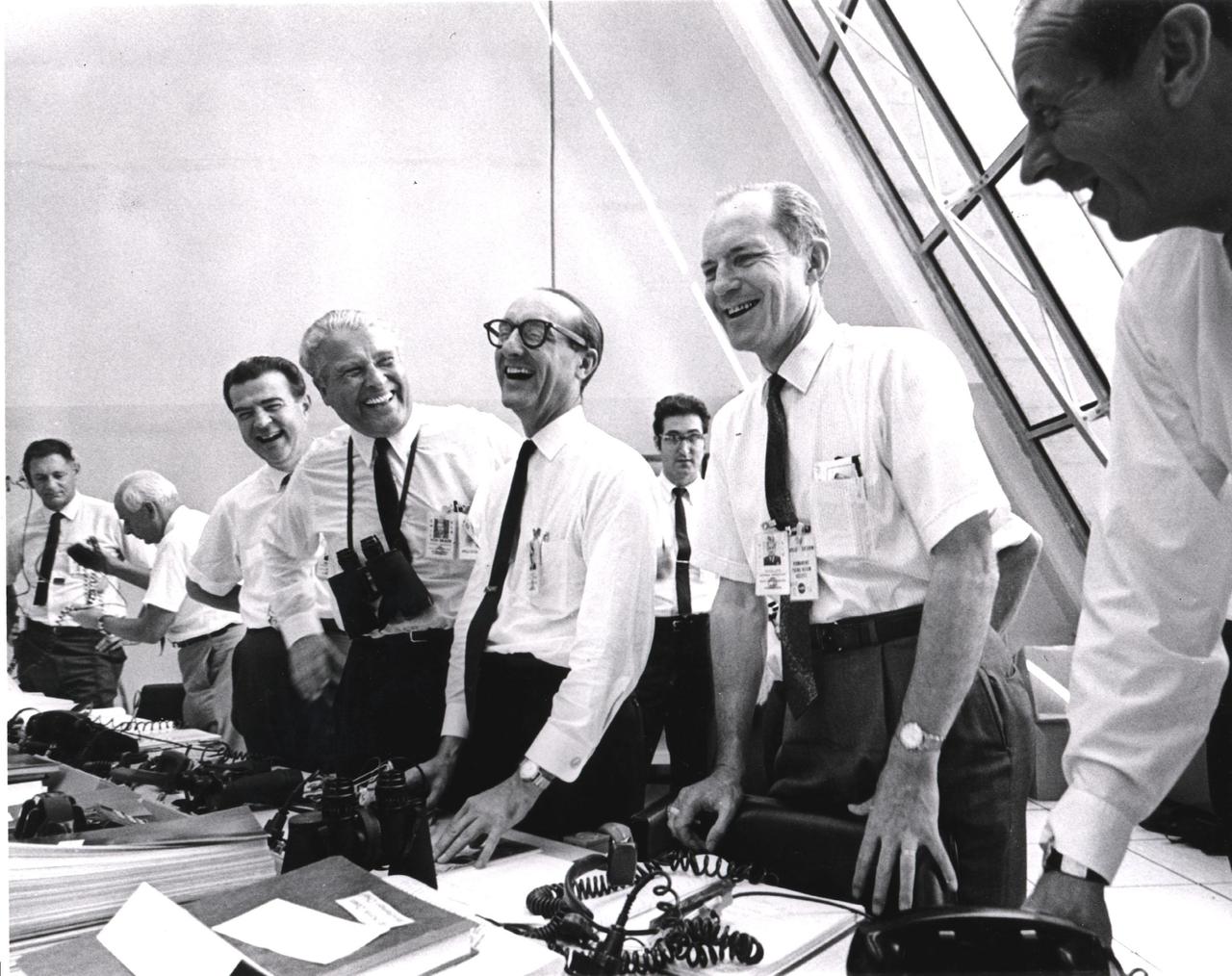
KENNEDY SPACE CENTER, FLA. - Apollo 11 mission officials relax in the Launch Control Center following the successful Apollo liftoff today. From left to right are Charles W. Mathews, deputy associate administrator for Manned Space Flight; Dr. Wernher von Braun, director of the Marshall Space Flight Center; Dr. George E. Mueller, associate administrator for Manned Space Flight; and Lt. Gen. Samuel C. Phillips, director of the Apollo Program.
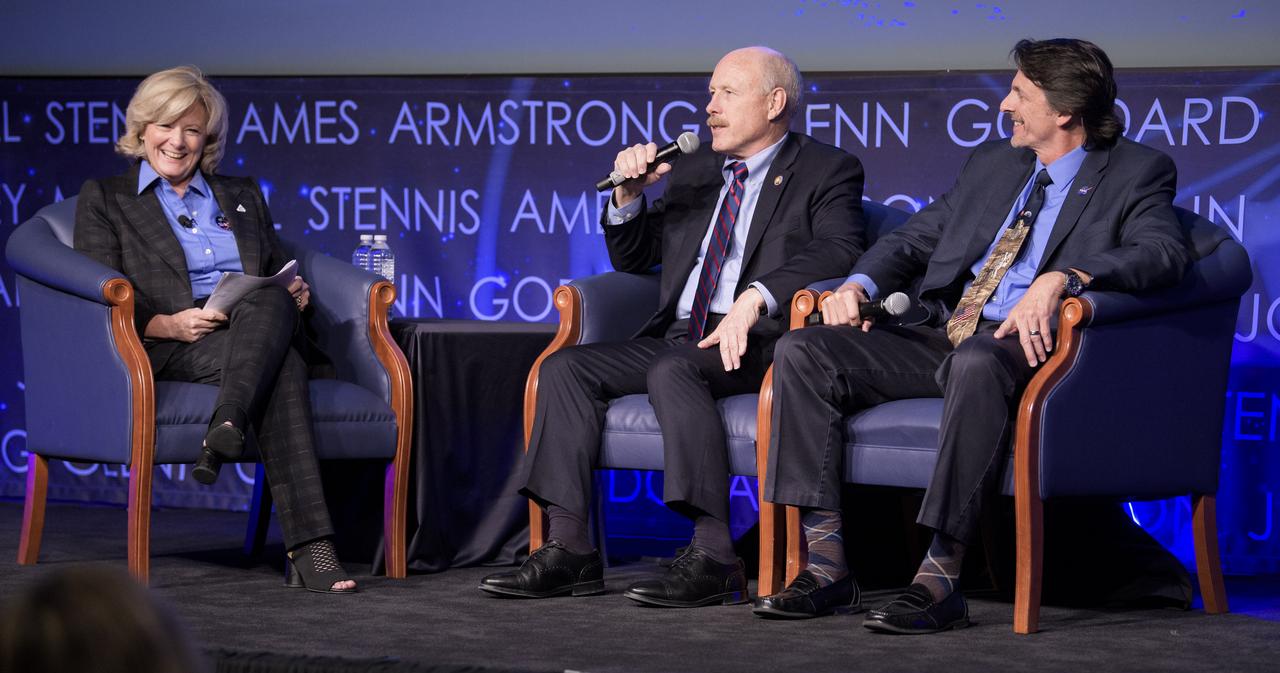
Jody Singer, Director of NASA’s Marshall Space Flight Center, left, Ken Bowersox, acting Associate Administrator for NASA's Human Exploration and Operations Mission Directorate, center, and Steve Clarke, Deputy Associate Administrator for Exploration in NASA’s Science Mission Directorate, right, discuss the agency’s Artemis program during an interactive STEM discussion with students attending the 70th International Astronautical Congress, Wednesday, Oct. 23, 2019, at NASA Headquarters in Washington. Photo Credit: (NASA/Joel Kowsky)
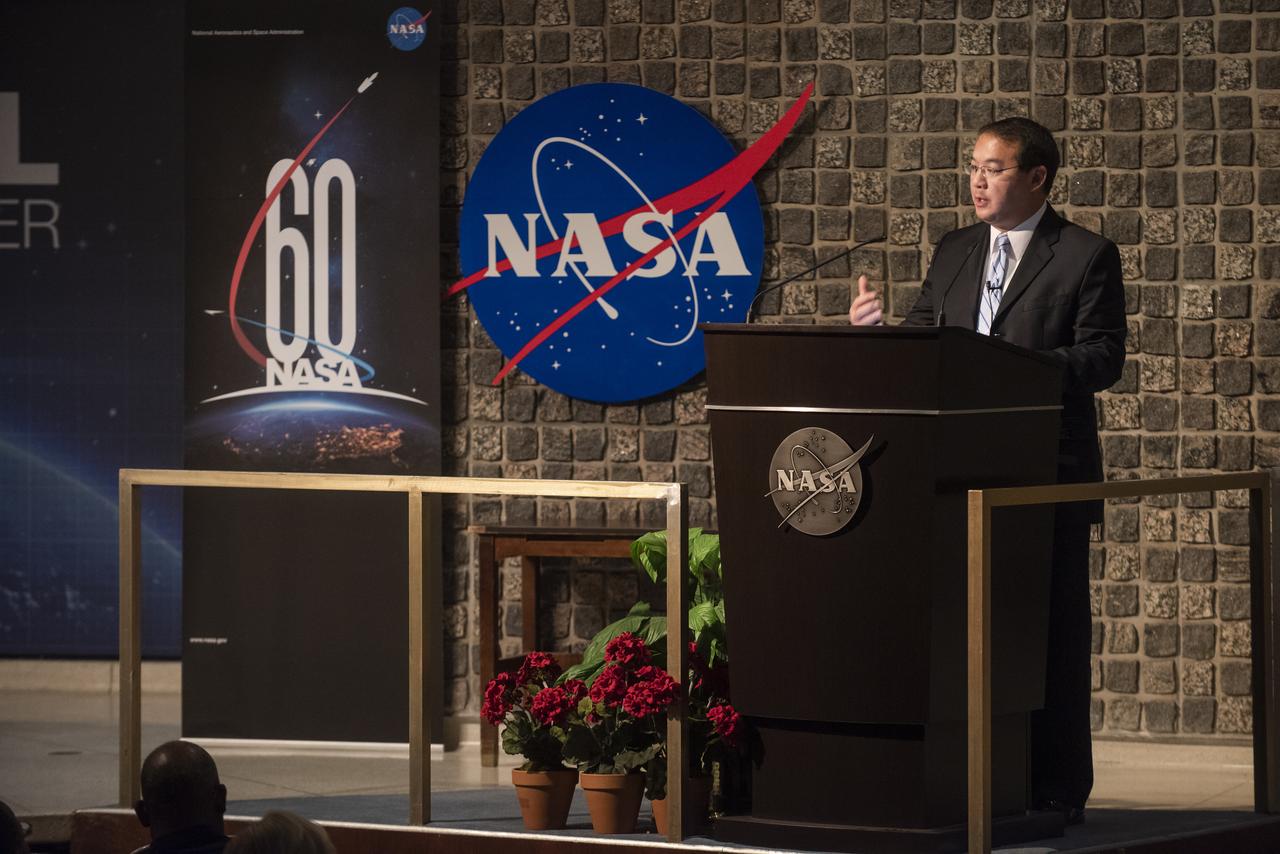
Steve Shih, NASA associate administrator for Diversity & Equal Opportunity, addresses NASA team members during a Nov. 6 mentoring event at the agency's Marshall Space Flight Center. Shih discussed ways for team members on both sides of the mentoring equation to get the most out of the experience.
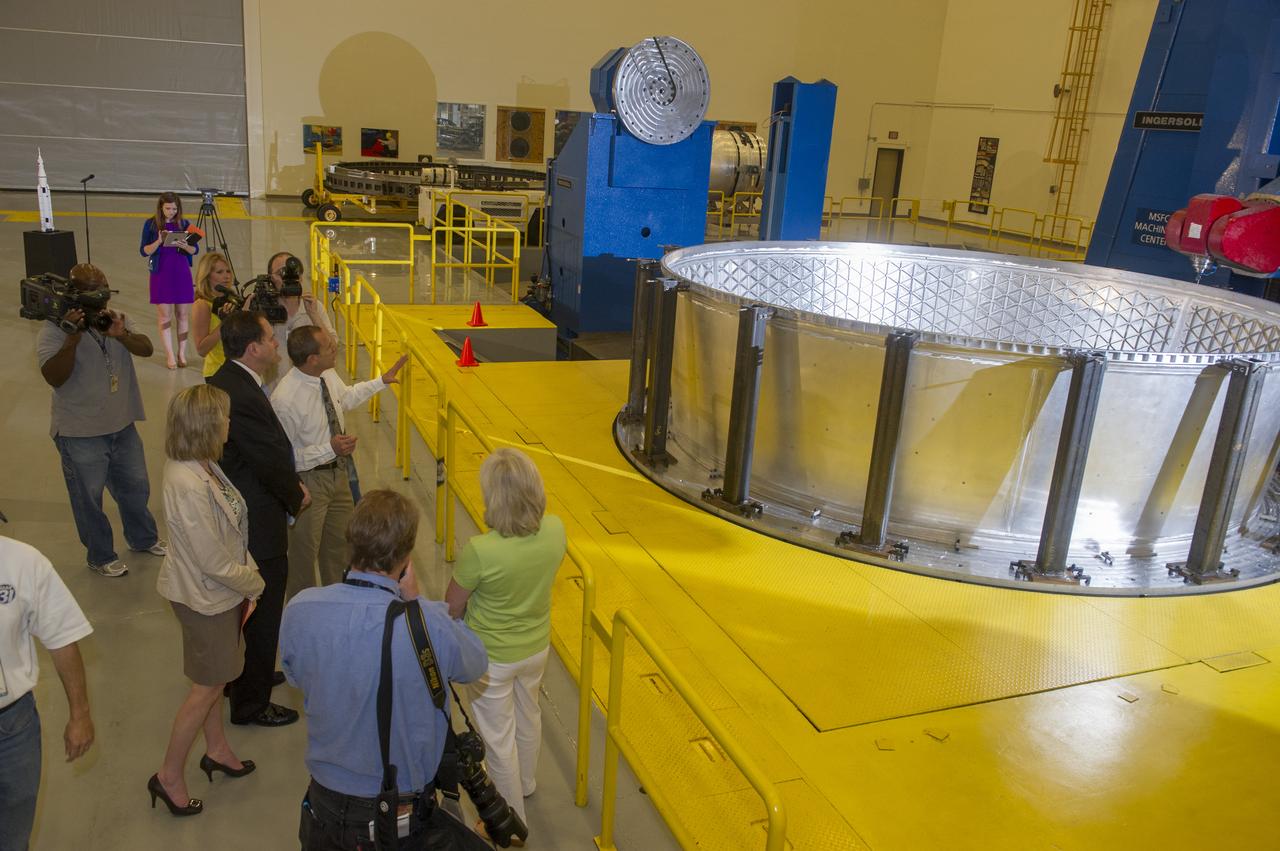
DAVID BEAMAN, MANAGER OF THE SPACECRAFT & PAYLOAD INTEGRATION OFFICE AT NASA'S SPACE LAUNCH SYSTEM, DISCUSSES THE FINER POINTS OF THE CONSTRUCTIONS OF THE SLS ADAPTER RING WITH NASA ASSOCIATE ADMINISTRATOR ROBERT LIGHTFOOT DURING MR. LIGHTFOOT'S VISIT TO THE MARSHALL SPACE FLIGHT CENTER
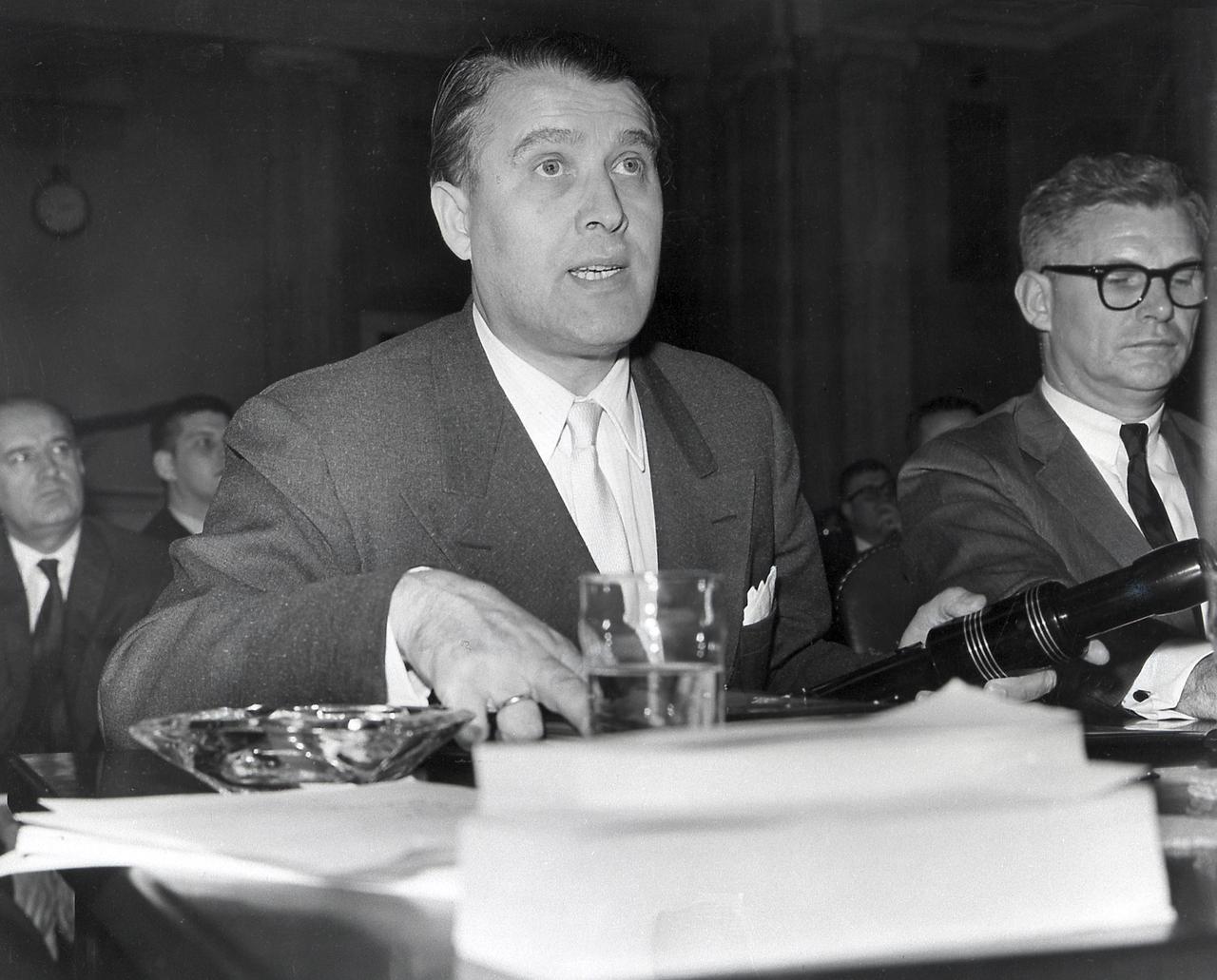
Dr. von Braun, Director of the Marshall Space Flight Center, spoke of the progress in the Saturn Program during his appearance before the Senate Committee on Aeronautical and Space Sciences. He was accompanied by Dr. Robert C. Seamans, Jr., Associate Administrator of the National Aeronautics and Space Administration (NASA).
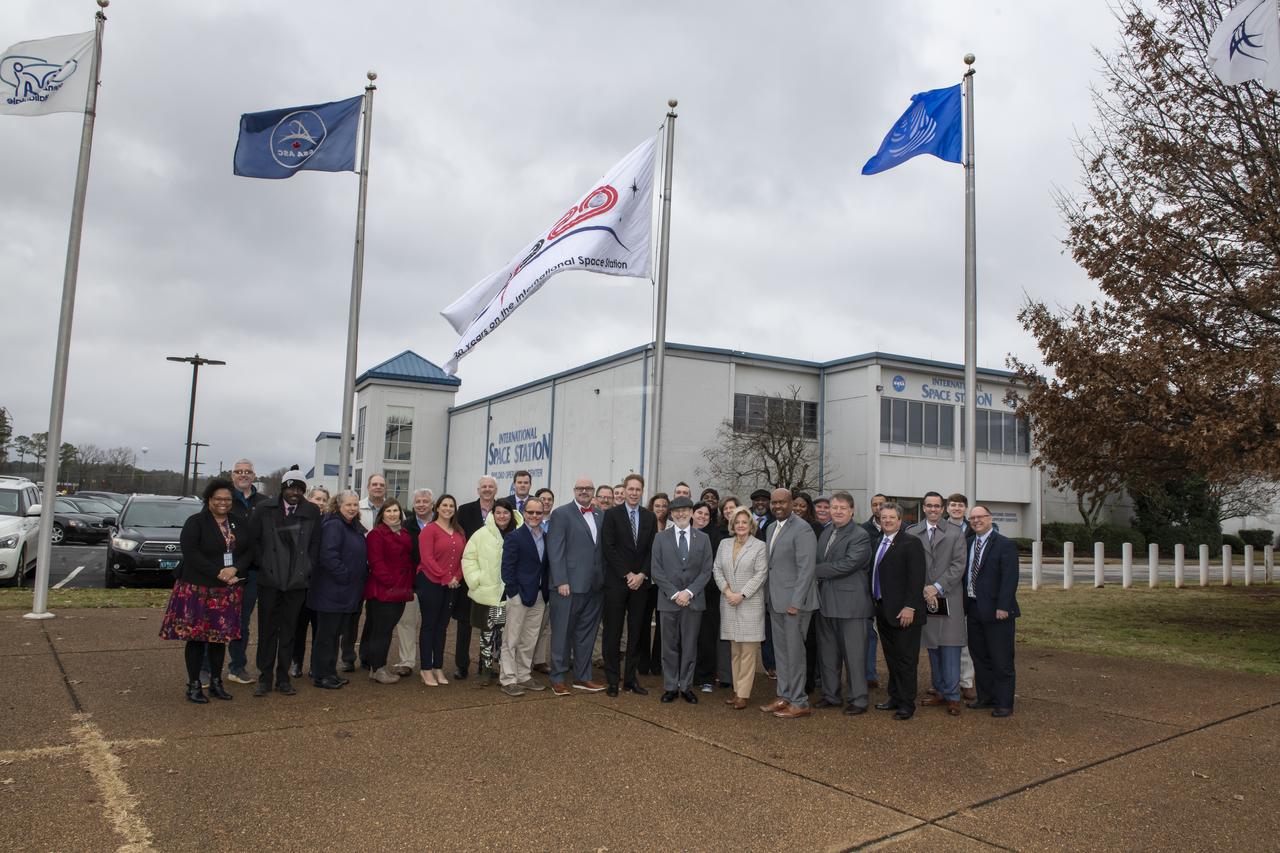
NASA Associate Administrator for the Human Exploration and Operations Mission Directorate and Marshall Center Director Jody Singer participate in the hanging of a new International Space Station flag out side of the Huntsville Operations Support Center (HOSC). Also participating were employees of the support center and the Payload Operations Integration Center.
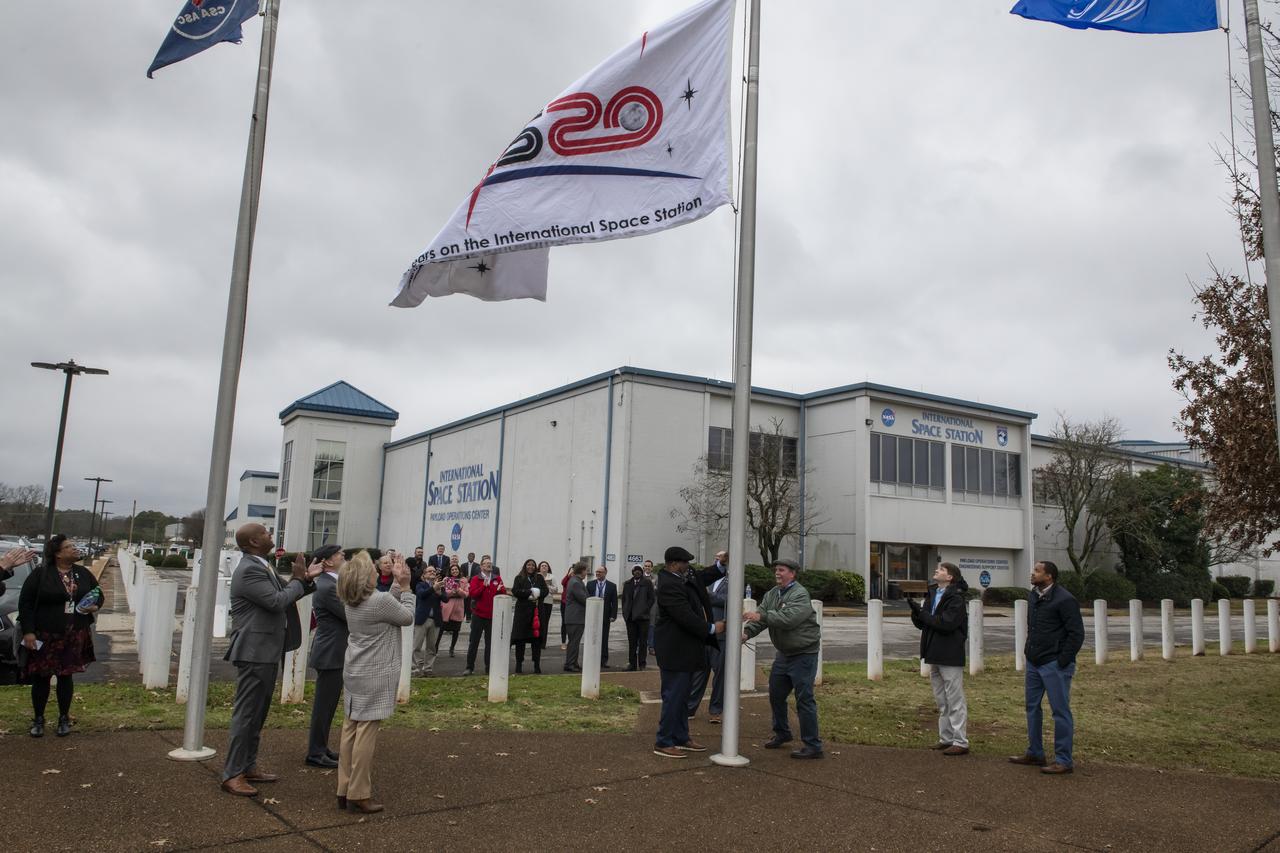
NASA Associate Administrator for the Human Exploration and Operations Mission Directorate and Marshall Center Director Jody Singer participate in the hanging of a new International Space Station flag out side of the Huntsville Operations Support Center (HOSC). Also participating were employees of the support center and the Payload Operations Integration Center.
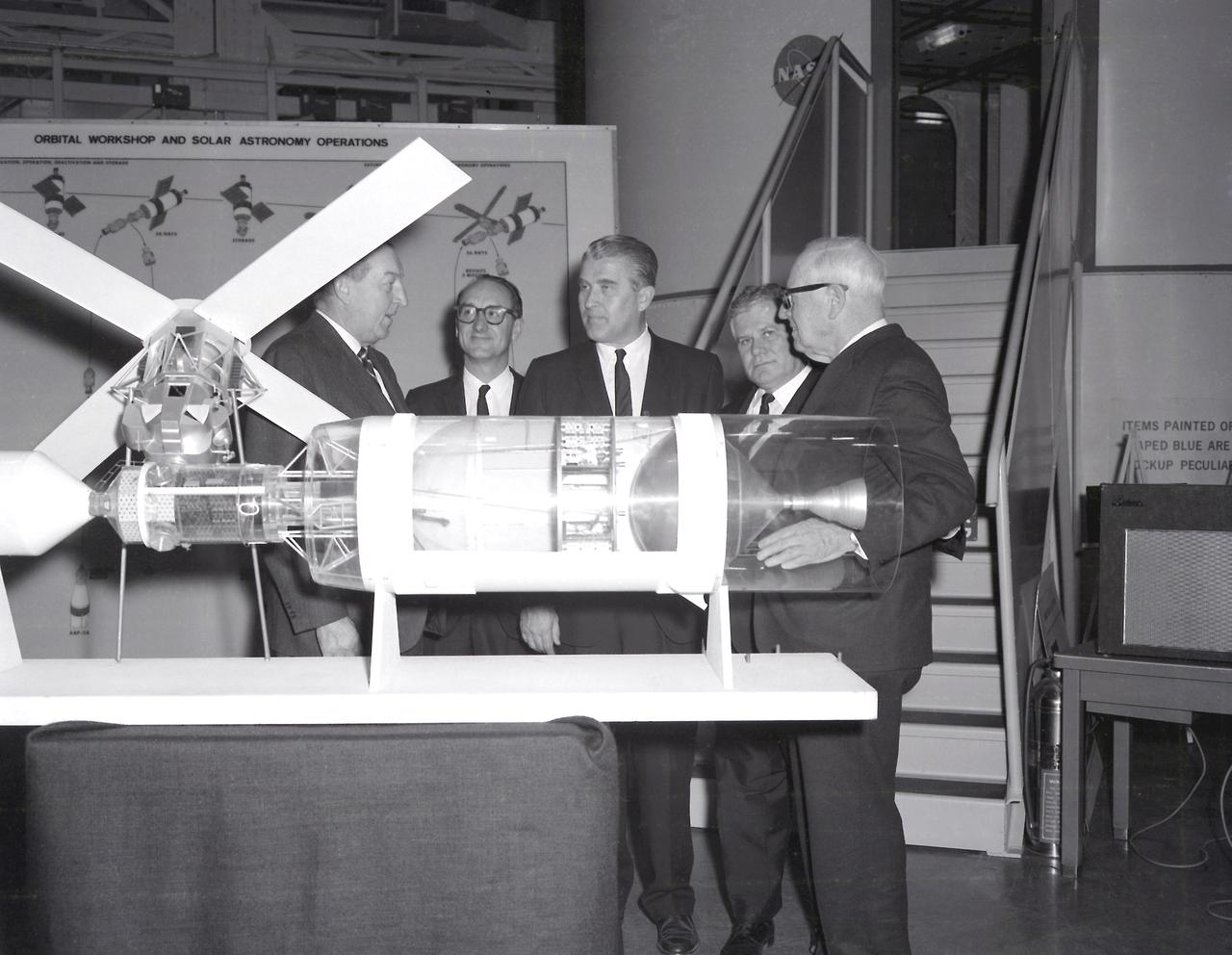
Congressman Jones; Dr. George Mueller, Associate Director for Marned Space Flight; Dr. von Braun, Director, MSFC; Congressman Teague; and Congressman Miller discussing the S-IV-B Workshop during the congressmen's visit to the Marshall Space Flight Center (MSFC) on February 22, 1968.

Cindy Barnes of University Space Research Association (USRA) at NASA's Marshall Space Flight Center pipettes a protein solution in preparation to grow crystals as part of NASA's structural biology program. Research on Earth helps scientists define conditions and specimens they will use in space experiments.
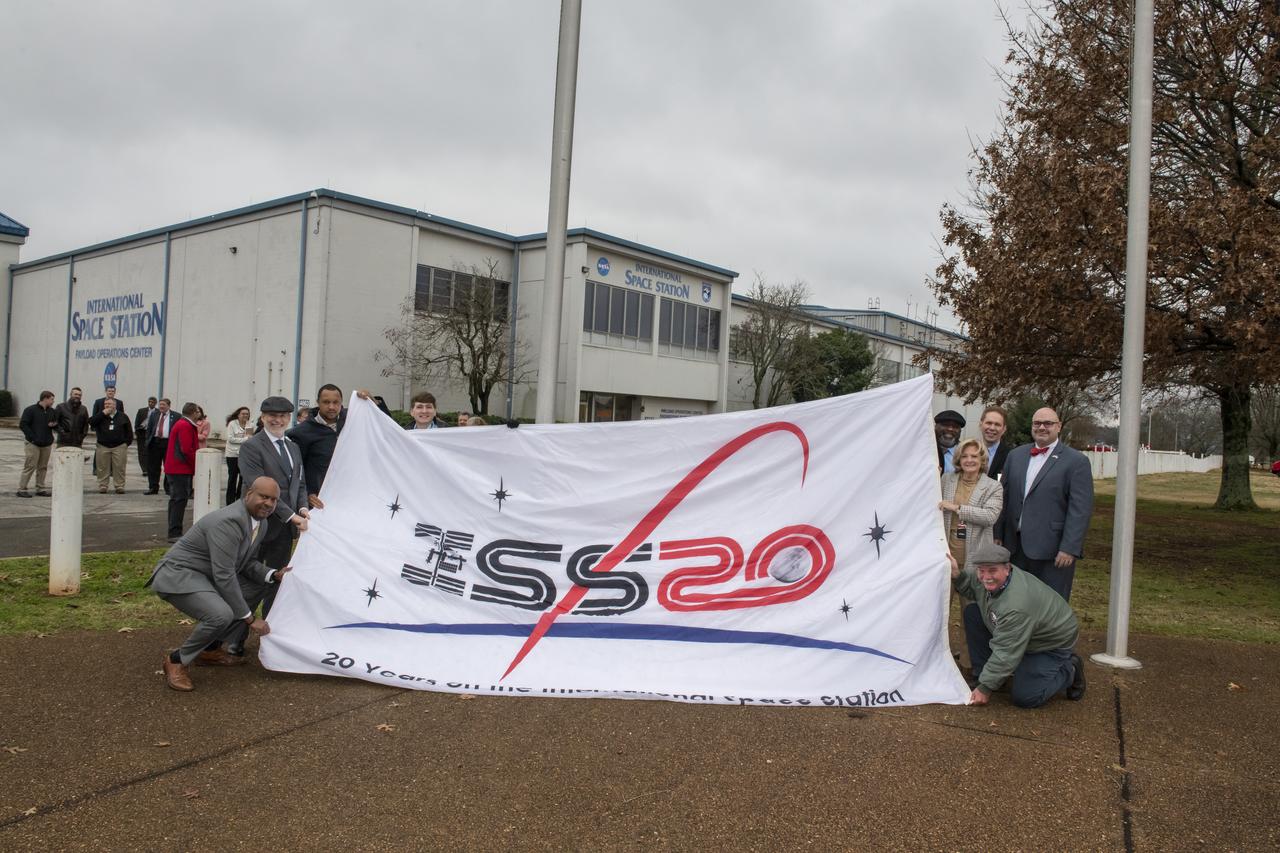
NASA Associate Administrator for the Human Exploration and Operations Mission Directorate and Marshall Center Director Jody Singer participate in the hanging of a new International Space Station flag out side of the Huntsville Operations Support Center (HOSC). Also participating were employees of the support center and the Payload Operations Integration Center.

SPARKY THE FIRE DOG, MASCOT FOR THE NATIONAL FIRE PROTECTION ASSOCIATION, TEAMS UP WITH PATRICK SCHEUERMANN AT THE MARSHALL CENTER SEPT. 26 TO PROMOTE THE NATIONWIDE FIRE PREVENTION WEEK CAMPAIGN, “WORKING SMOKE ALARMS SAVE LIVES: TEST YOURS EVERY MONTH!”-
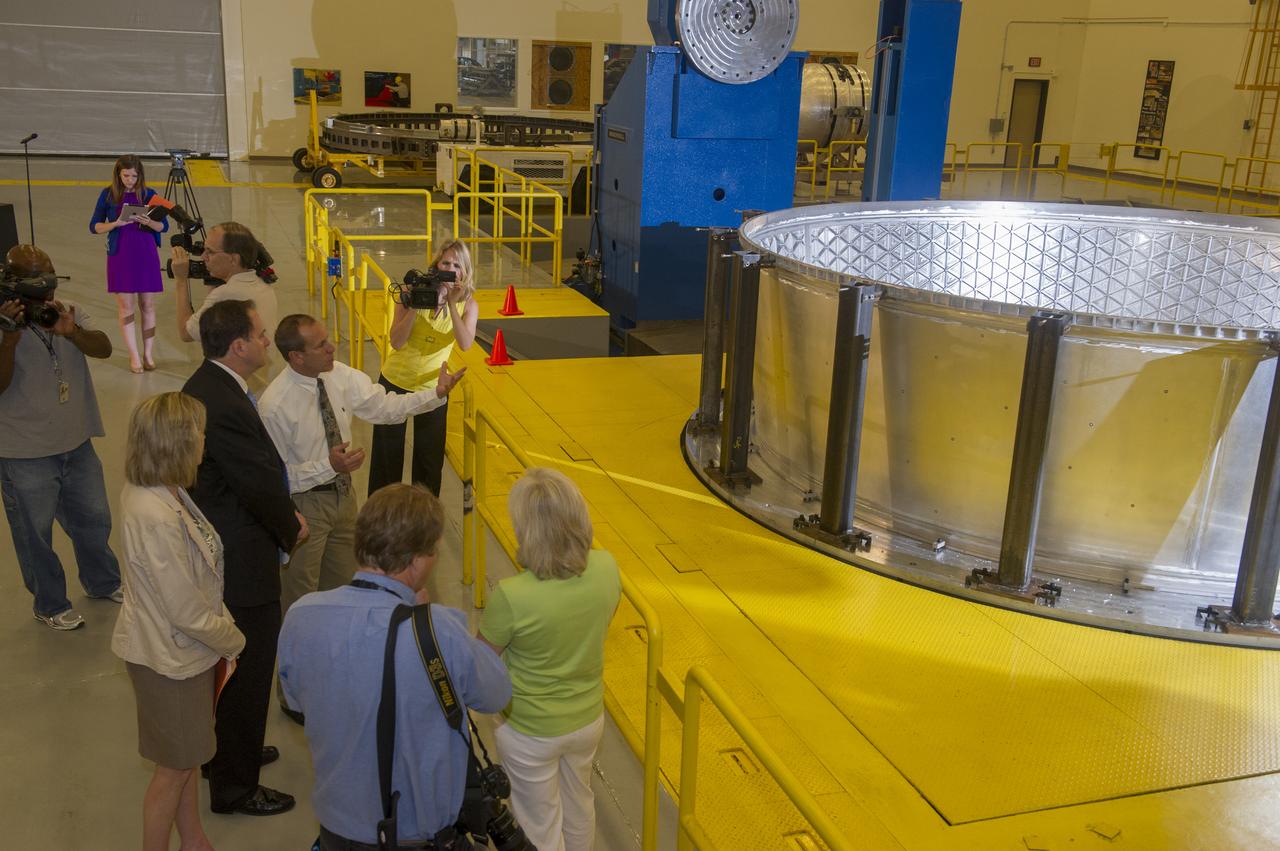
DAVID BEAMAN, MANAGER OF THE SPACECRAFT & PAYLOAD INTEGRATION OFFICE AT NASA'S SPACE LAUNCH SYSTEM, DISCUSSES THE FINER POINTS OF THE CONSTRUCTIONS OF THE SLS ADAPTER RING WITH NASA ASSOCIATE ADMINISTRATOR ROBERT LIGHTFOOT DURING MR. LIGHTFOOT'S VISIT TO THE MARSHALL SPACE FLIGHT CENTER
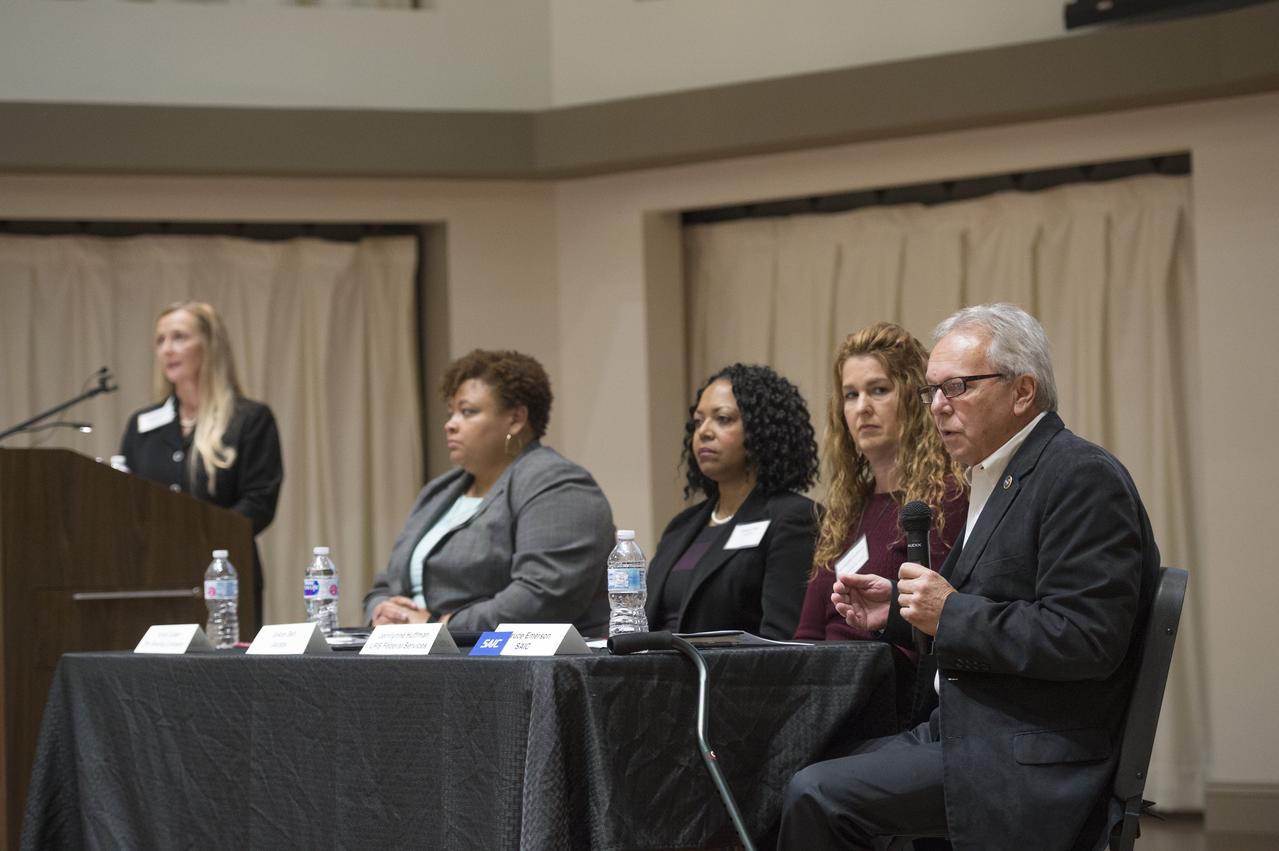
The Morgan County Economic Development Association and the City of Decatur, in Partnership with the NASA/Marshall Space Flight Center (MSFC), hosted a business forum on, How to Launch Your Business with NASA, Wednesday, October 18, 2017, at the Alabama Center for the Arts in downtown Decatur, AL. The event was open to all businesses allowed them to connect with Senior NASA representatives and their prime contractors. The program guided businesses through the process of working with NASA as a supplier, subcontractor, and/or a service provider. The Marshall Space Flight Center’s projected procurement budget in FY 2018 is approximately $2.2 billion and numerous procurement opportunities are available for small business participation each fiscal year. The program included Todd May, Director of Marshall Space Flight Center; Johnny Stephenson, Director of Marshall Space Flight Center’s Office of Strategic Analysis and Communication; David Brock, Small Business Specialist with Marshall Space Flight Center; and Lynn Garrison, Small Business Specialist Technical Advisor with Marshall Space Flight Center. Additionally, there was a prime contractor panel consisting of representatives from five NASA prime contractors. The event included a dedicated networking session with those prime contractors. The “Launch Your Business With NASA” event provides those in attendance the opportunity to network with key Marshall Space Flight Center procurement and technical personnel, and representatives of several major Marshall Space Flight Center prime contractors.Arts.
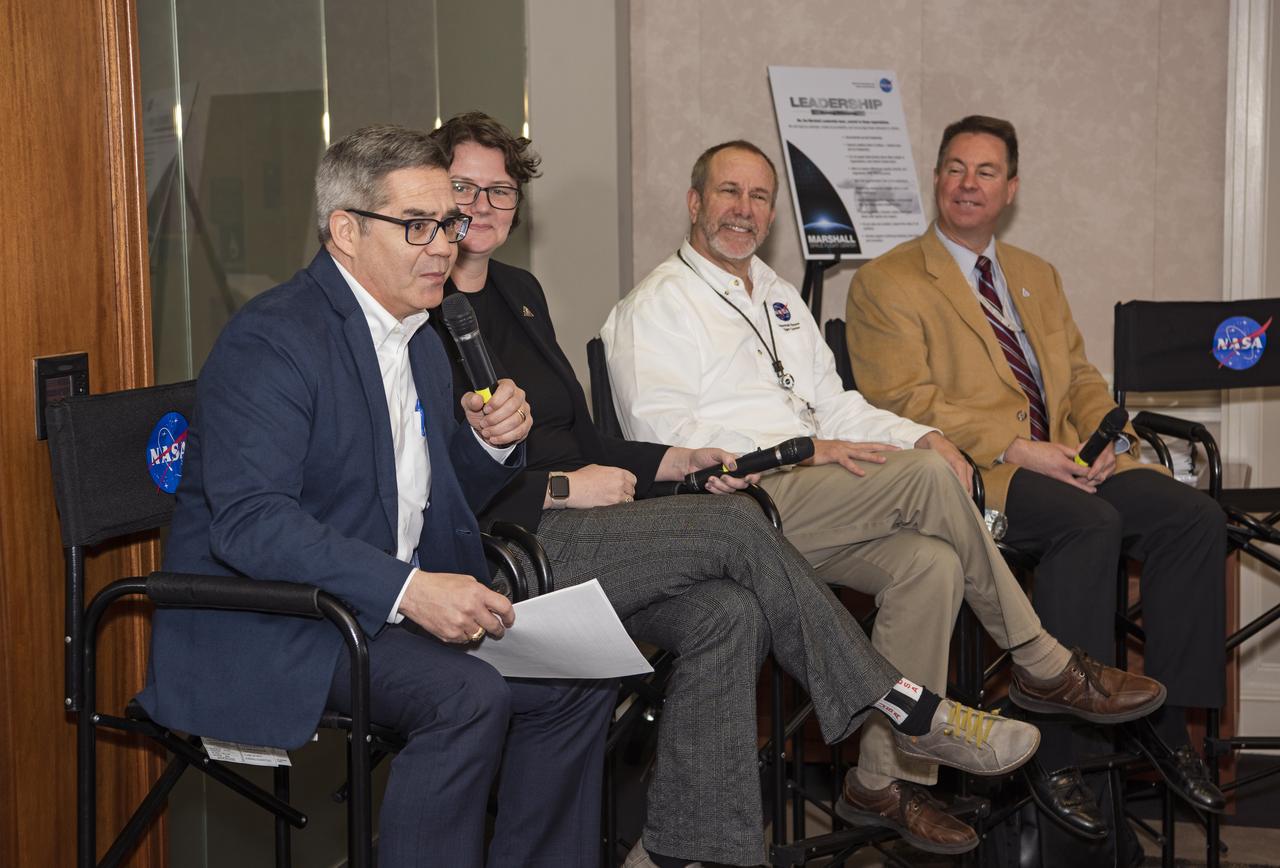
Sam Ortega, left, manager of the Partnerships Office at NASA’s Marshall Space Flight Center, moderates an Artemis Program panel featuring, second from left, Renee Weber, Marshall chief scientist; David Beaman, manager of Marshall’s Systems Engineering & Integration Office; and Don Krupp, associate program manager for the Human Landing System Program, during Universities of the Tennessee Valley Corridor activities Feb. 27 at Marshall. Leadership staff from eight universities and 10 junior colleges in Alabama, Tennessee and Kentucky also heard presentations on Office of STEM Engagement opportunities, partnership opportunities, Marshall’s Technology Transfer Office, the NASA software catalog and Marshall’s Advanced Concepts Office. The group toured several Marshall facilities to learn more about center capabilities.

NASA climatologist Gary Jedlovec, a member of the Earth Science team in Marshall Space Flight Center’s Science and Technology Office, discusses the satellite technology and ground-based tools used to record and trend regional and global climate changes over the past century and to provide forecast models looking 100 years into the future. Jedlovec and his team, which partners with National Oceanic and Atmospheric Association researchers and their colleagues around the world, spoke to the Marshall “Green Team” -- environmental engineers and support personnel who help guide Marshall’s focus on safer, more cost-efficient energy use. The Green Team, led by Marshall Sustainability Engineer Donna Leach of the Environmental Engineering & Occupational Health Office, currently is preparing activities and outreach for Earth Day 2020, set for next April.
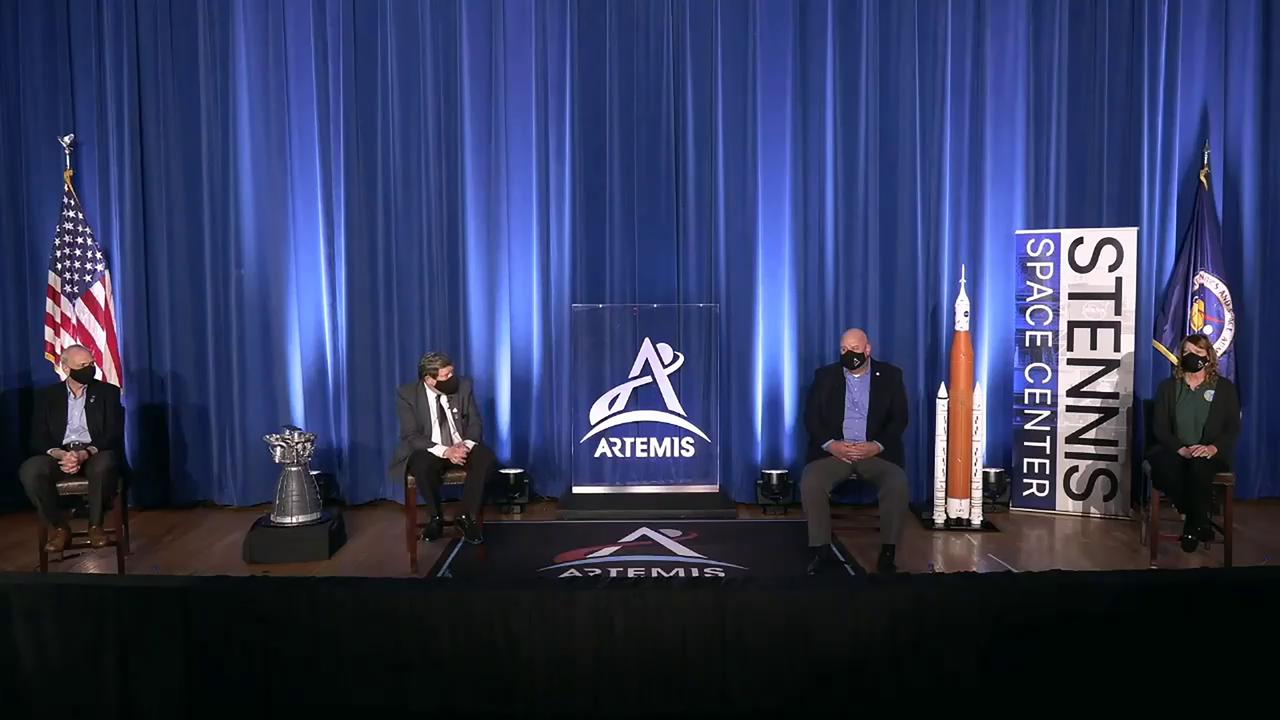
NASA leaders participated in a participate in a virtual press briefing following the Space Launch System core stage hot fire test at Stennis Space Center near Bay St. Louis, Mississippi, on March 18. The leaders fielded questions submitted by offsite media during the post-test session. Agency participants present at Stennis included (l to r): NASA acting Administrator Steve Jurczyk; Tom Whitmeyer, NASA deputy associate administrator for Exploration Systems Development; John Honeycutt, SLS Program manager at Marshall Space Flight Center; and Julie Bassler, SLS Stages Office manager at Marshall Space Flight Center.
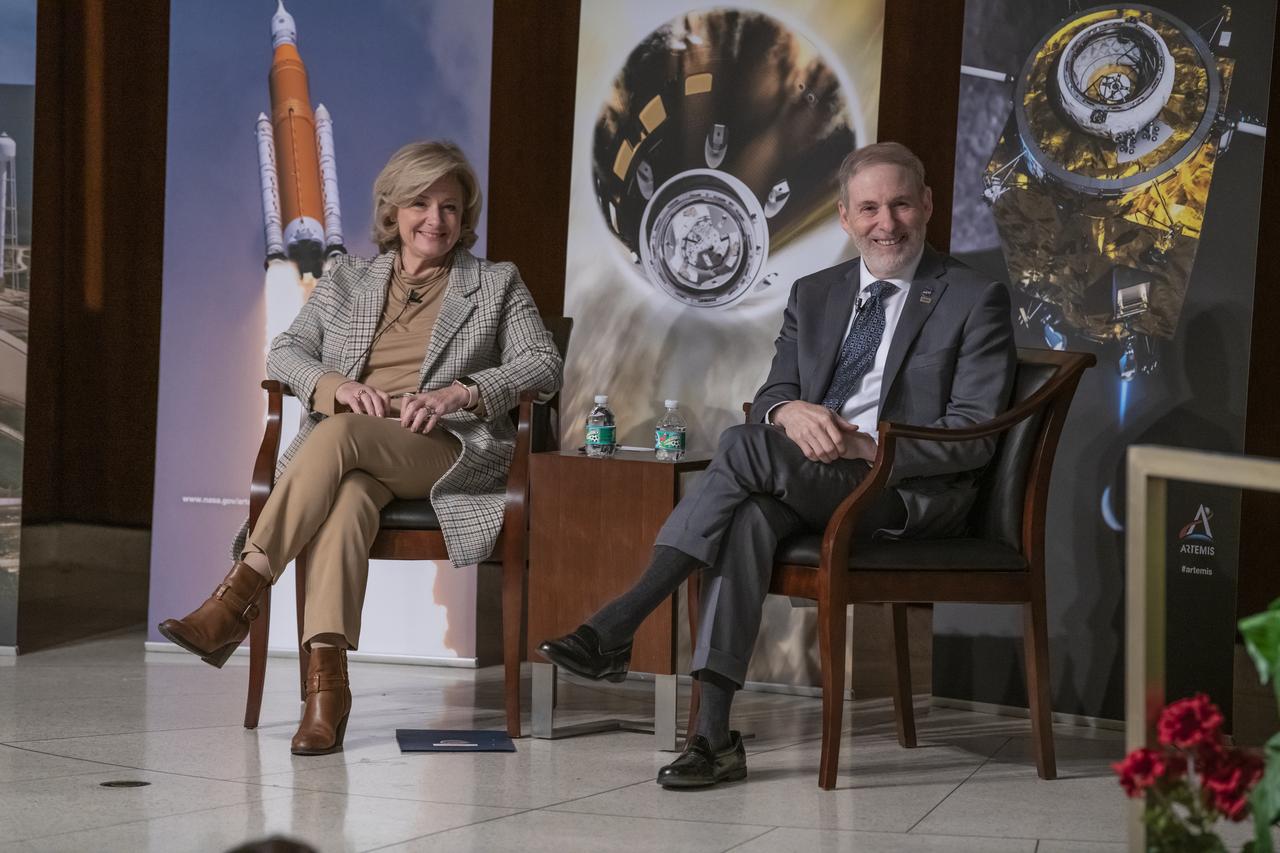
Douglas Loverro, NASA’s new associate administrator for the Human Exploration and Operations Mission Directorate, right, joins NASA’s Marshall Space Flight Center Director Jody Singer to answer questions from the Marshall team at a Dec. 17 town hall. Loverro discussed the importance of the workforce, positivity and the unifying and inspirational nature of space exploration. “At the end of the day, we depend on the workforce, not on Headquarters to further exploration,” Loverro said. “My job is to listen to you and translate that into telling Congress and the administration what you need to complete your job. We're seeking a common purpose, on a common mission. I'm relying on you to tell me what you need to get this mission done.”
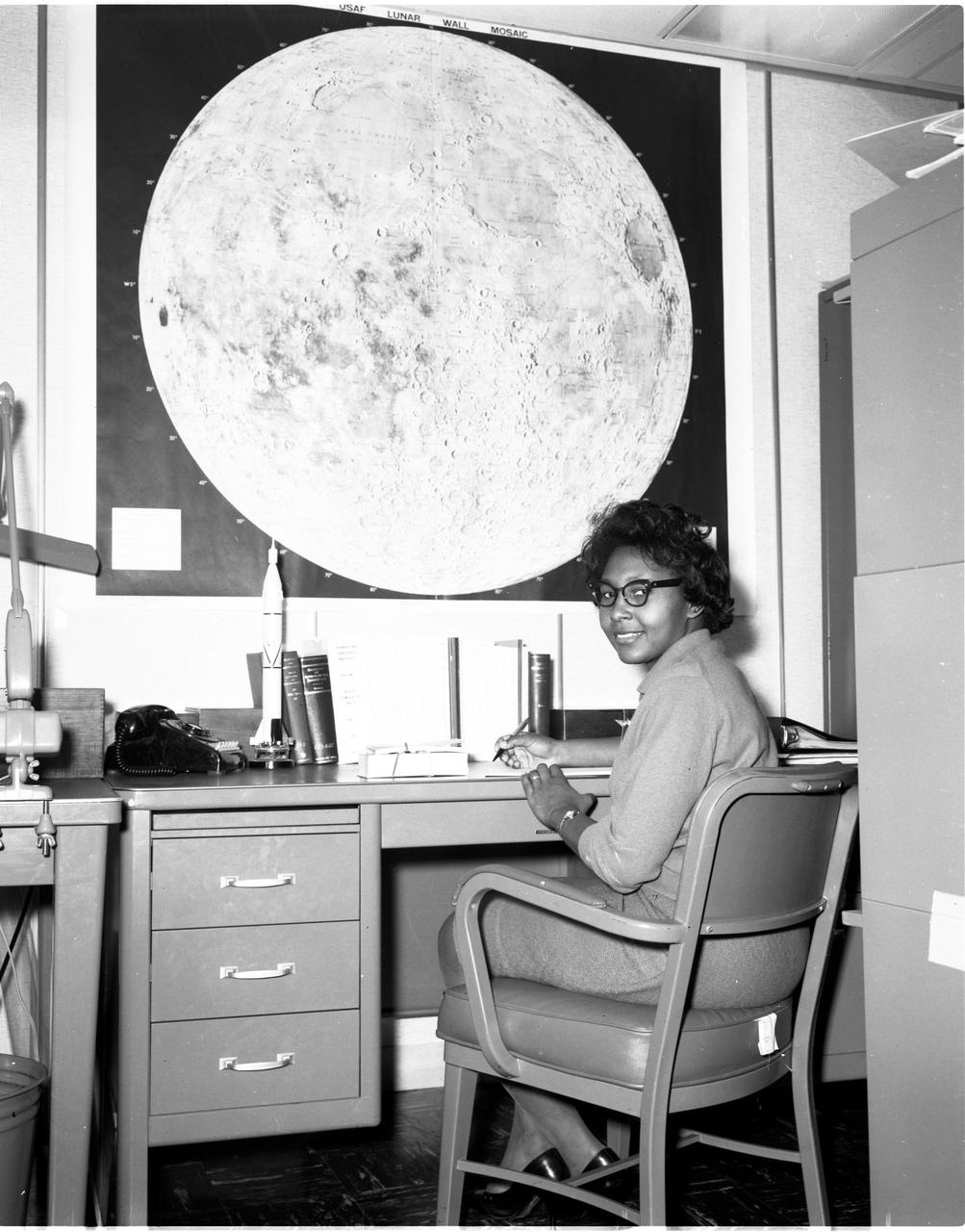
Jeanette Scissum joined NASA’s Marshall Space Flight Center in 1964 after earning bachelor's and master's degrees in mathematics from Alabama A&M University. Scissum published a NASA report in 1967, “Survey of Solar Cycle Prediction Models,” which put forward techniques for improved forecasting of the sunspot cycle. In the mid-1970s she worked as a space scientist in the Space Environment Branch of Marshall’s Space Sciences Laboratory and later led activities in Marshall’s Atmospheric, Magnetospheric, and Plasmas in Space project.In 1975, Scissum wrote an article for the National Technical Association, “Equal Employment Opportunity and the Supervisor – A Counselor’s View,” which argued that many discrimination complaints could be avoided “through adequate and meaningful communication.” Scissum later worked at NASA Headquarters as a computer systems analyst responsible for analyzing and directing NASA management information and technical support systems.
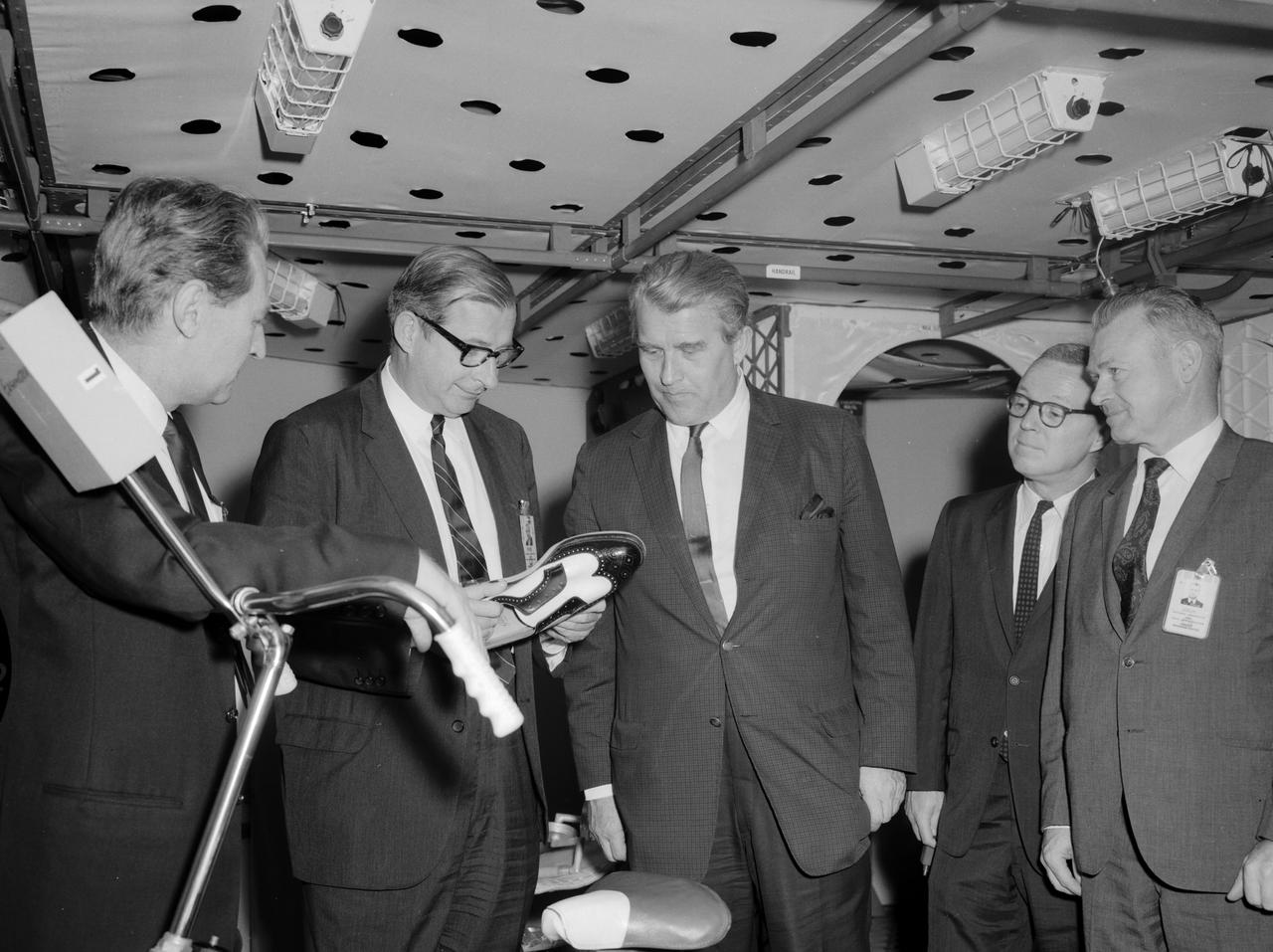
Pictured from the left, in the Saturn I mockup, are: William Brooksbank, Marshall Space Flight Center (MSFC) Propulsion and Vehicle Engineering Laboratory; Dr. Thomas O. Paine, Deputy Administrator of the National Aeronautics and Space Administration (NASA); Dr. Wernher von Braun, MSFC director; Colonel Clare F. Farley, executive officer of the Office of the Administrator; and Charles J. Donlan, newly appointed deputy associate administrator for Manned Space Flight, technical. The party examined an ordinary man’s shoe (held by Paine) outfitted for use in the Saturn I Workshop. The shoe had a unique fastener built into the sole to allow an astronaut to move about the workshop floor and to remain in one position if he desired. Dr. Paine and his party indulged in a two-day tour at the Marshall Space Flight Center getting acquainted with Marshall personnel and programs. It was Paine’s first visit to the center since assuming the NASA post on February 1, 1968.
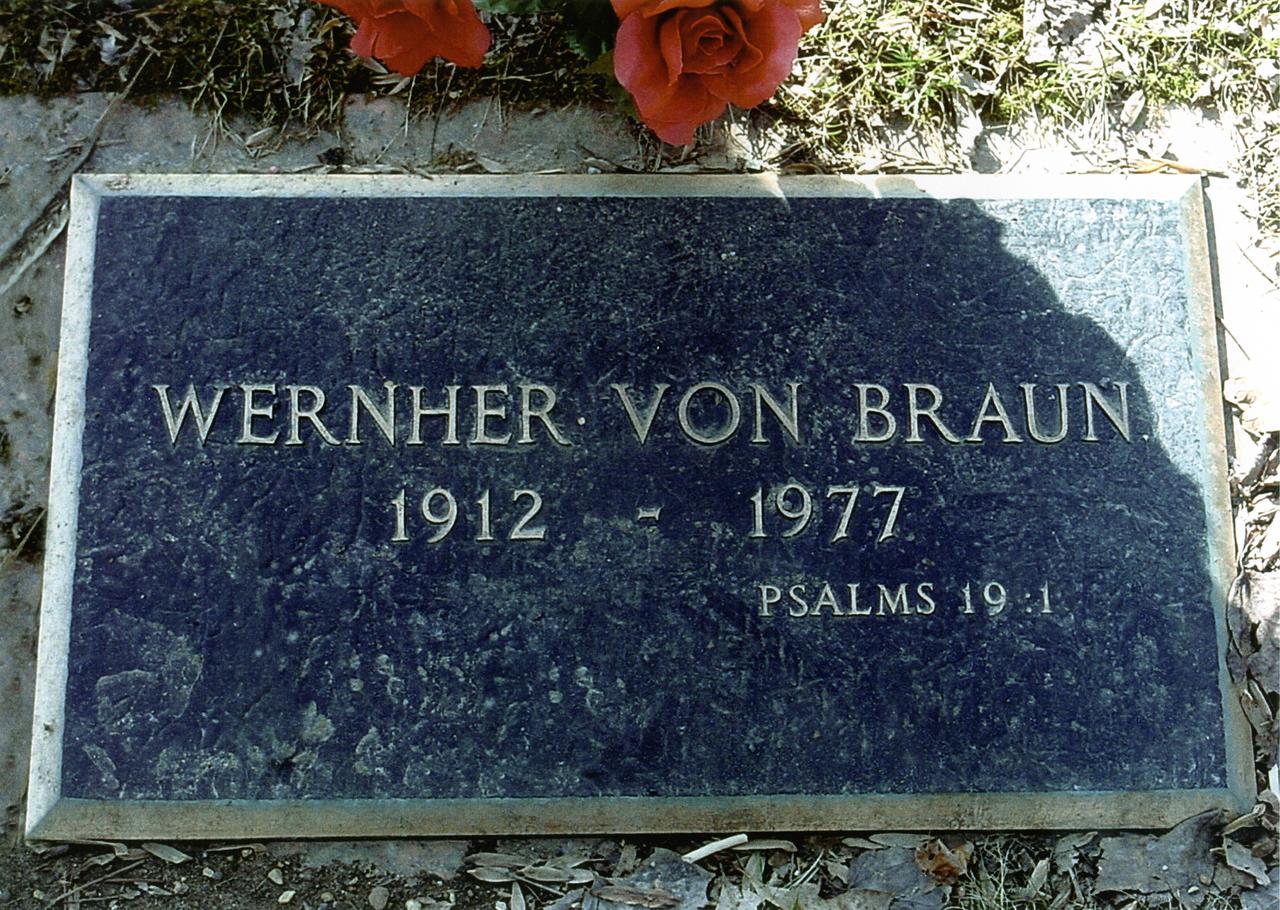
Dr. Wernher von Braun served as Marshall Space Flight Center's first director from July 1, 1960 until January 27, 1970, when he was appointed NASA Deputy Associate Administrator for Planning. Following World War II, Dr. von Braun and his German colleagues arrived in the United States under Project Paper Clip to continue their rocket development work. In 1950, von Braun and his rocket team were transferred from Ft. Bliss, Texas to Huntsville, Alabama to work for the Army's rocket program at Redstone Arsenal and later, NASA's Marshall Space Flight Center. Under von Braun's leadership, Marshall developed the Saturn V launch vehicle which took Apollo astronauts to the moon. Dr. von Braun died in Alexandria, Va., on June 16, 1977, seven years after his NASA appointment. This photo was taken at the site where he was laid to rest.
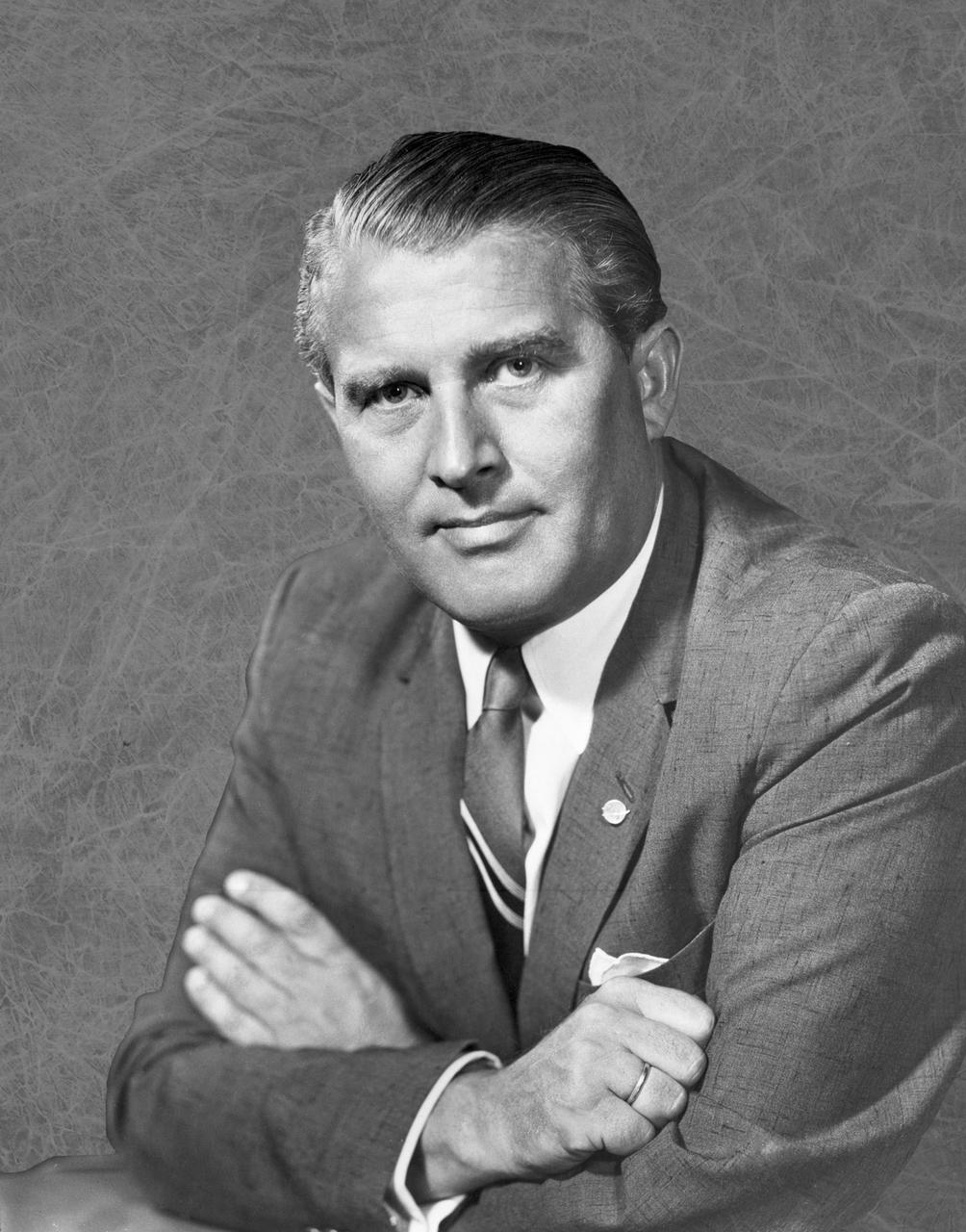
Dr. Wernher von Braun served as Marshall Space Flight Center's first director from July 1, 1960 until January 27, 1970, when he was appointed NASA Deputy Associate Administrator for Plarning. Following World War II, Dr. von Braun and his German colleagues arrived in the United States under Project Paperclip to continue their rocket development work. In 1950, von Braun and his rocket team were transferred from Ft. Bliss, Texas to Huntsville, Alabama to work for the Army's rocket program at Redstone Arsenal and later, NASA's Marshall Space Flight Center. Under von Braun's leadership, Marshall developed the Saturn V launch vehicle which took Apollo astronauts to the moon.
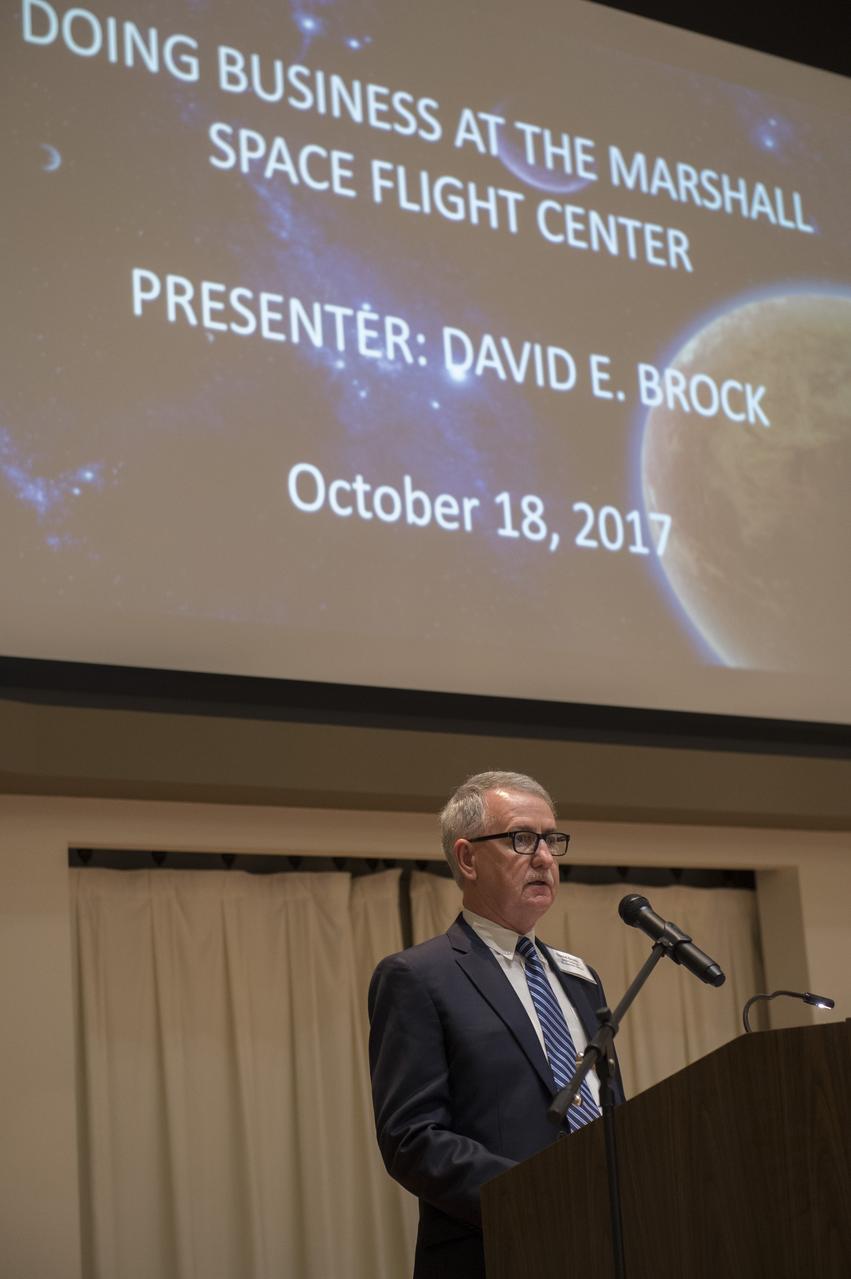
The Morgan County Economic Development Association and the City of Decatur, in Partnership with the NASA/Marshall Space Flight Center (MSFC), hosted a business forum on, How to Launch Your Business with NASA, Wednesday, October 18, 2017, at the Alabama Center for the Arts in downtown Decatur, AL. The event was open to all businesses allowed them to connect with Senior NASA representatives and their prime contractors. The program guided businesses through the process of working with NASA as a supplier, subcontractor, and/or a service provider. The Marshall Space Flight Center’s projected procurement budget in FY 2018 is approximately $2.2 billion and numerous procurement opportunities are available for small business participation each fiscal year. The program included Todd May, Director of Marshall Space Flight Center; Johnny Stephenson, Director of Marshall Space Flight Center’s Office of Strategic Analysis and Communication; David Brock, Small Business Specialist with Marshall Space Flight Center; and Lynn Garrison, Small Business Specialist Technical Advisor with Marshall Space Flight Center. Additionally, there was a prime contractor panel consisting of representatives from five NASA prime contractors. The event included a dedicated networking session with those prime contractors. The “Launch Your Business With NASA” event provides those in attendance the opportunity to network with key Marshall Space Flight Center procurement and technical personnel, and representatives of several major Marshall Space Flight Center prime contractors.Arts.. David Brock, head of Marshall's Small Business Office talks about doing business with Marshall.
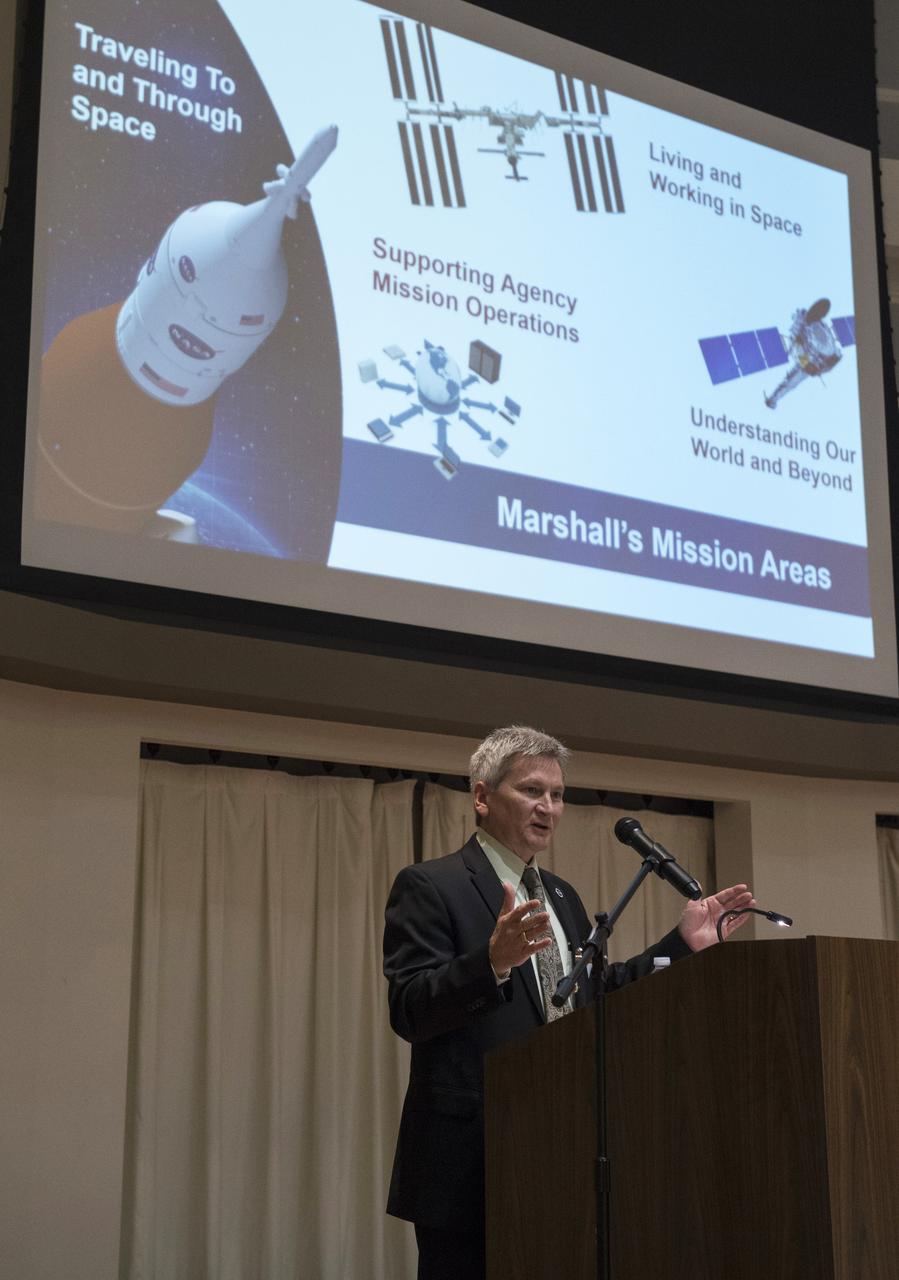
The Morgan County Economic Development Association and the City of Decatur, in Partnership with the NASA/Marshall Space Flight Center (MSFC), hosted a business forum on, How to Launch Your Business with NASA, Wednesday, October 18, 2017, at the Alabama Center for the Arts in downtown Decatur, AL. The event was open to all businesses allowed them to connect with Senior NASA representatives and their prime contractors. The program guided businesses through the process of working with NASA as a supplier, subcontractor, and/or a service provider. The Marshall Space Flight Center’s projected procurement budget in FY 2018 is approximately $2.2 billion and numerous procurement opportunities are available for small business participation each fiscal year. The program included Todd May, Director of Marshall Space Flight Center; Johnny Stephenson, Director of Marshall Space Flight Center’s Office of Strategic Analysis and Communication; David Brock, Small Business Specialist with Marshall Space Flight Center; and Lynn Garrison, Small Business Specialist Technical Advisor with Marshall Space Flight Center. Additionally, there was a prime contractor panel consisting of representatives from five NASA prime contractors. The event included a dedicated networking session with those prime contractors. The “Launch Your Business With NASA” event provides those in attendance the opportunity to network with key Marshall Space Flight Center procurement and technical personnel, and representatives of several major Marshall Space Flight Center prime contractors.Arts.. OSAC Director Johnny Stephenson talks about Marshall's Mission areas to audience
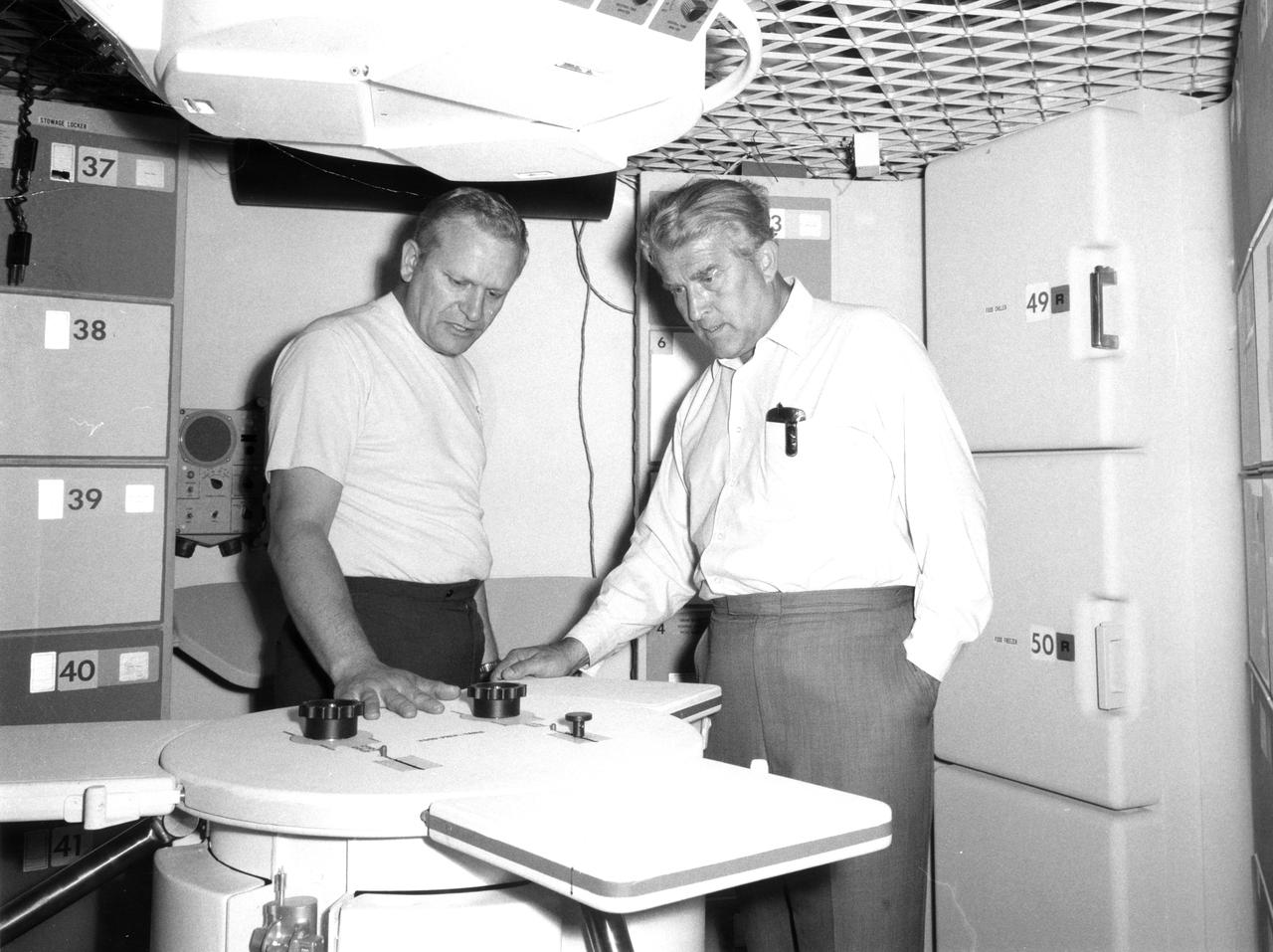
This photograph was taken after Dr. von Braun moved from his post as Director of the Marshall Space Flight Center (MSFC) to Deputy Associate Administrator for Planning at NASA Headquarters. On June 27, 1970, he visited the MSFC again during the center’s 10th anniversary to look at a mockup of the spacecraft that would later be known as Skylab. In this photograph, von Braun is talking with George Hardy of the MSFC Astronautics Lab.
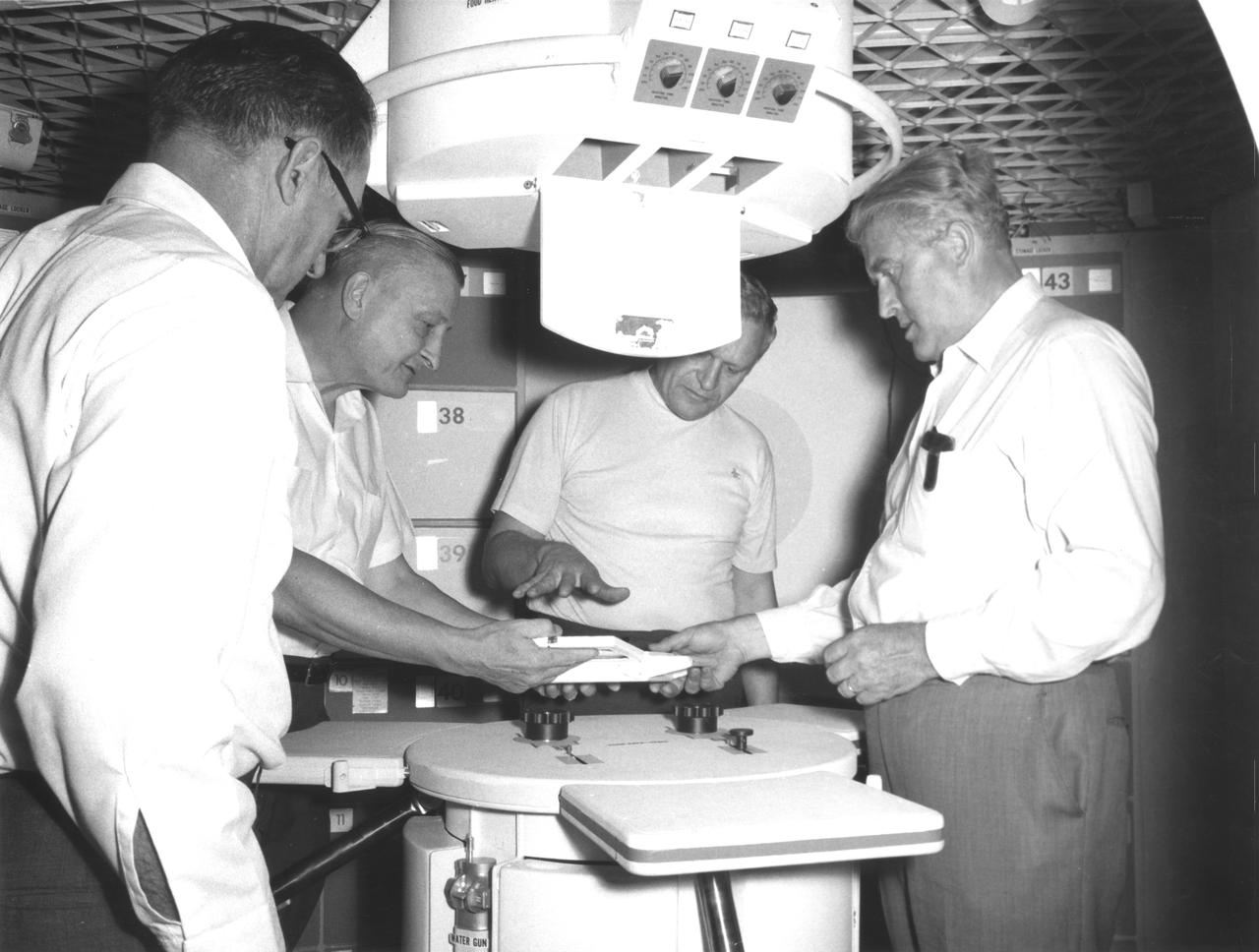
This photograph was taken after Dr. von Braun moved from his post as Director of the Marshall Space Flight Center (MSFC) to Deputy Associate Administrator for Planning at NASA Headquarters. On June 27, 1970, he visited the MSFC again during the Center’s 10th anniversary to look at a mockup of the spacecraft that would later be known as Skylab. Others in the photograph are, from left to right: Karl Heimburg, director of the Astronautics Lab; Hermann K. Weidner, director of Science and Engineering, and George Hardy of the Astronautics Lab.
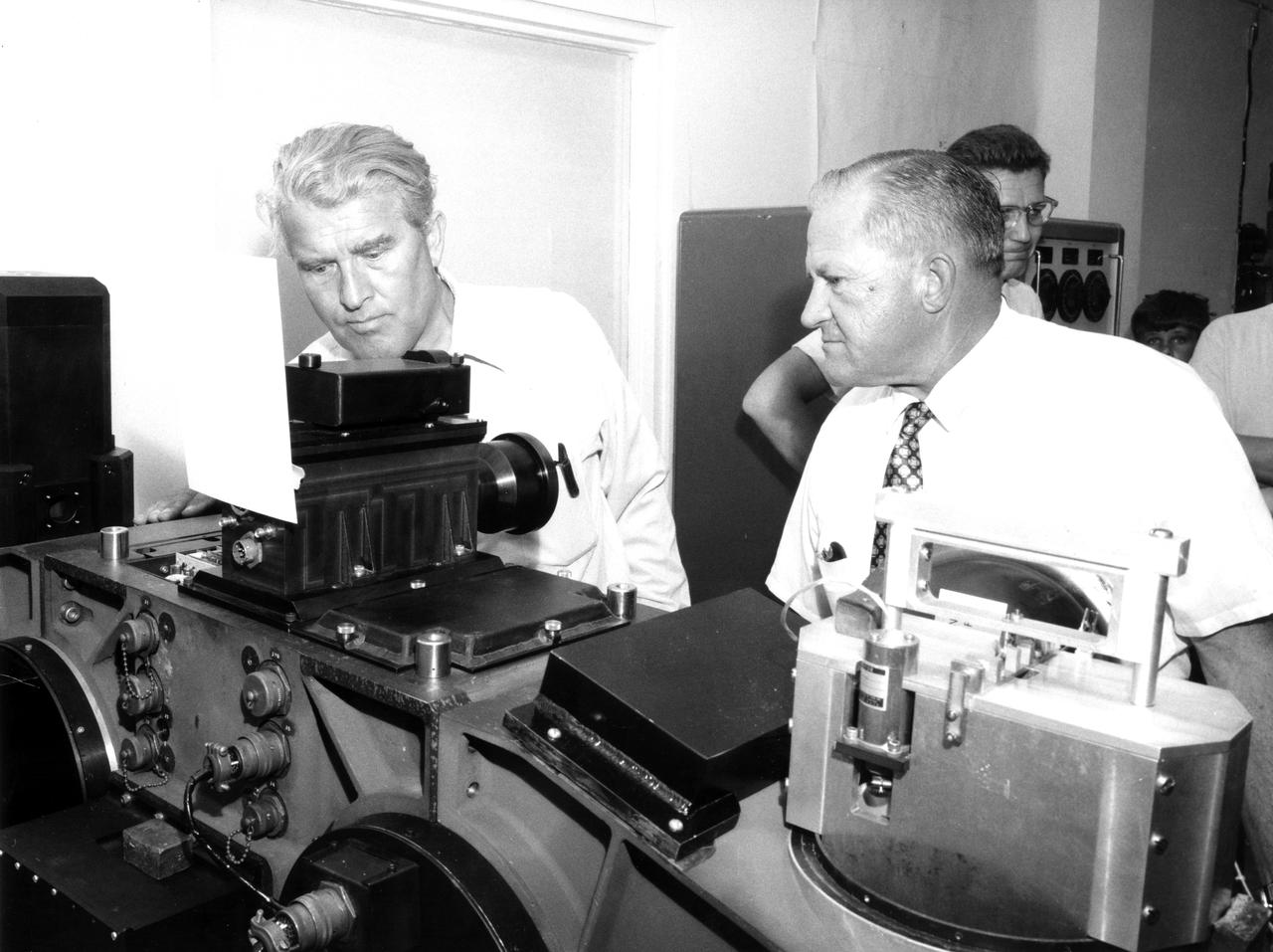
This photograph was taken after Dr. von Braun moved from his post as Director of the Marshall Space Flight Center (MSFC) to Deputy Associate Administrator for Planning at NASA Headquarters. On June 27, 1970, he visited the MSFC again during the center’s 10th anniversary to look at a mockup of the spacecraft that would later be known as Skylab. In this photograph, von Braun (left) and Fred W. Kelley examine an ST-100 stellar instrument platform in MSFC’s Astrionics Lab.
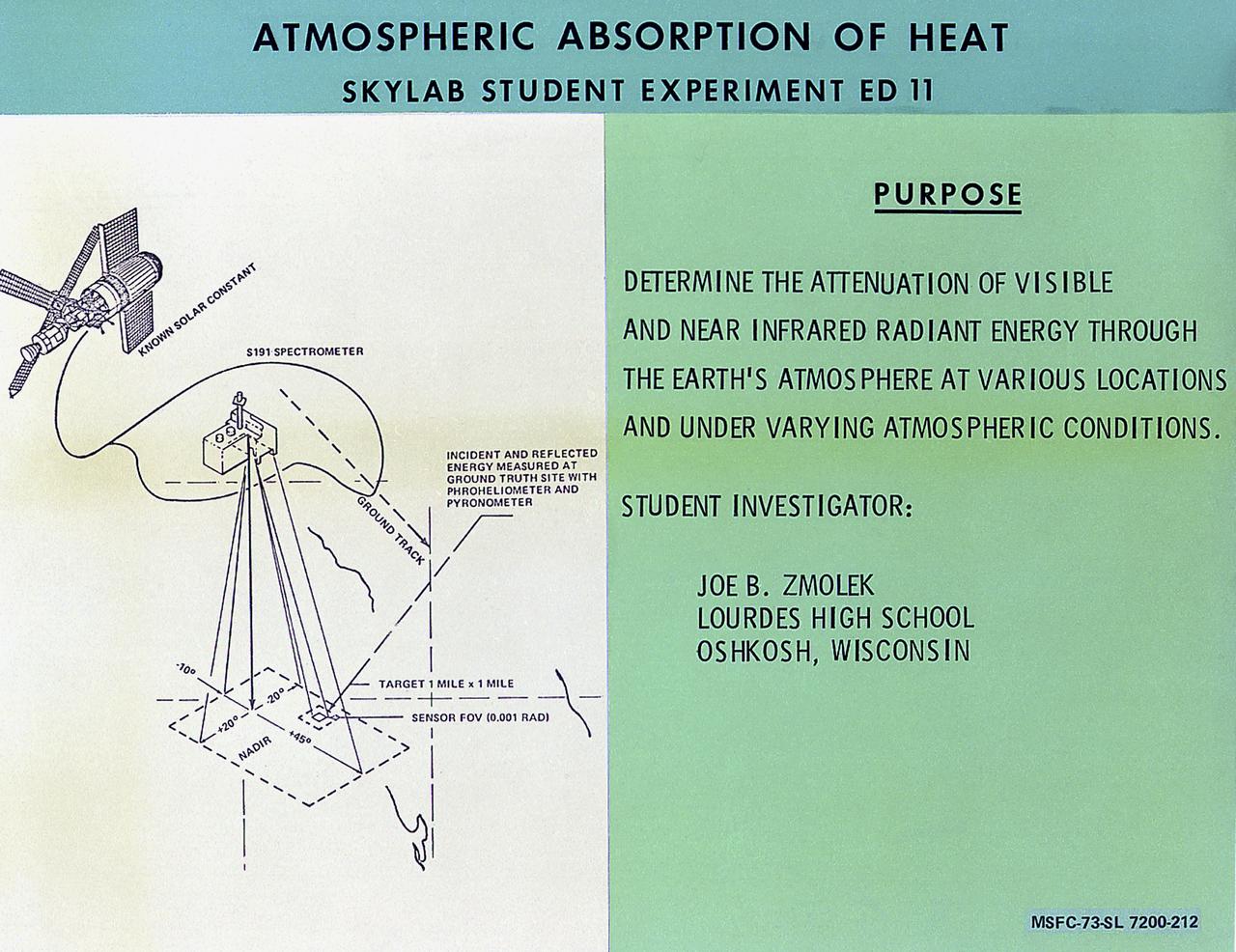
This chart describes the Skylab student experiment, Atmospheric Absorption of Heat, proposed by Joe B. Zmolek of Oshkosh, Wisconsin. This experiment utilized Skylab's Earth Resources Experiment spectrometers to determine the attenuation of radiant energy in the visible and near-infrared spectrums for both densely and sparsely populated areas. In March 1972, NASA and the National Science Teachers Association selected 25 experiment proposals for flight on Skylab. Science advisors from the Marshall Space Flight Center aided and assisted the students in developing the proposals for flight on Skylab.
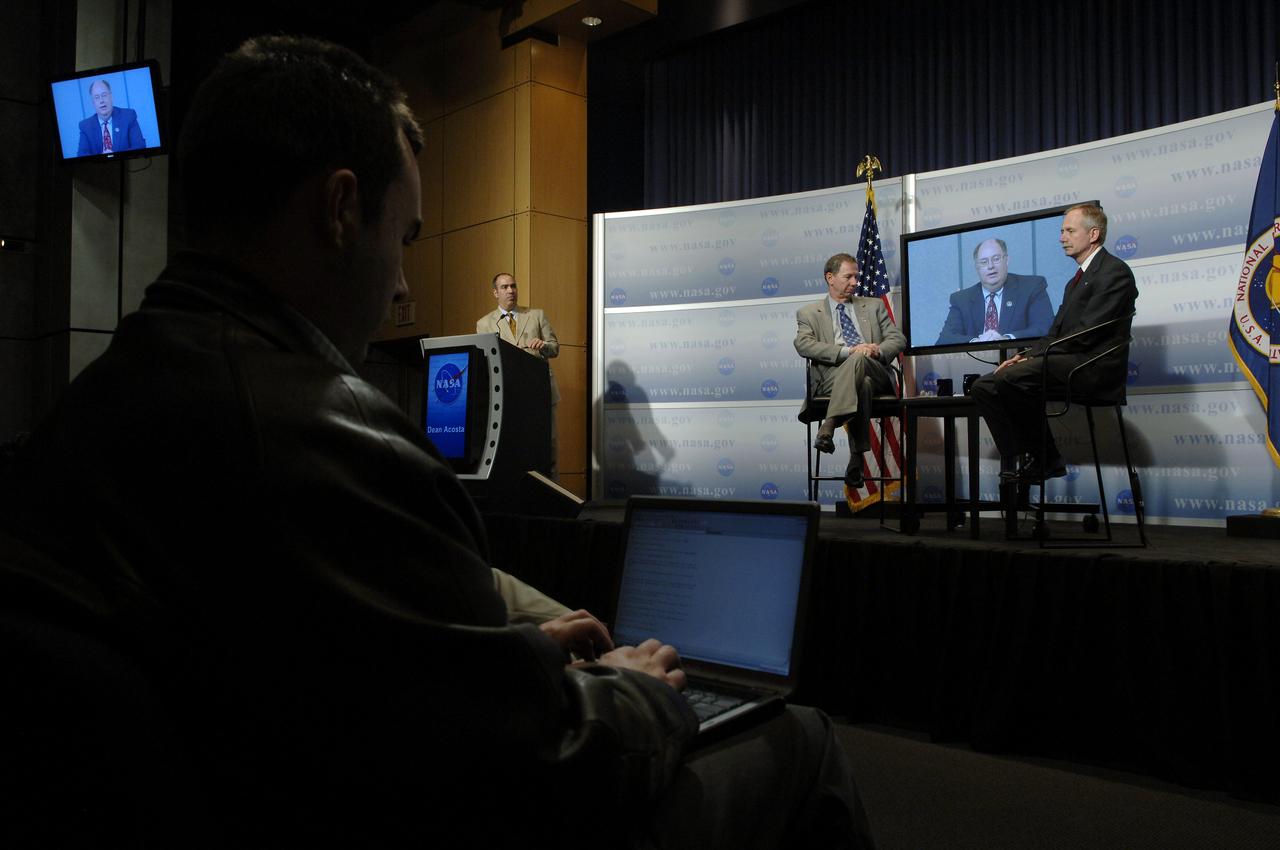
NASA Administrator Michael Griffin, second from left, and Associate Administrator for Space Operations William Gerstenmaier, right, look on as Space Shuttle Program Manager Wayne Hale speaks from NASA's Marshall Space Flight Center during a media briefing about the space shuttle program and processing for the STS-121 mission, Friday, April 28, 2006, at NASA Headquarters in Washington. Moderator Dean Acosta looks on af far left. Photo Credit (NASA/Bill Ingalls)
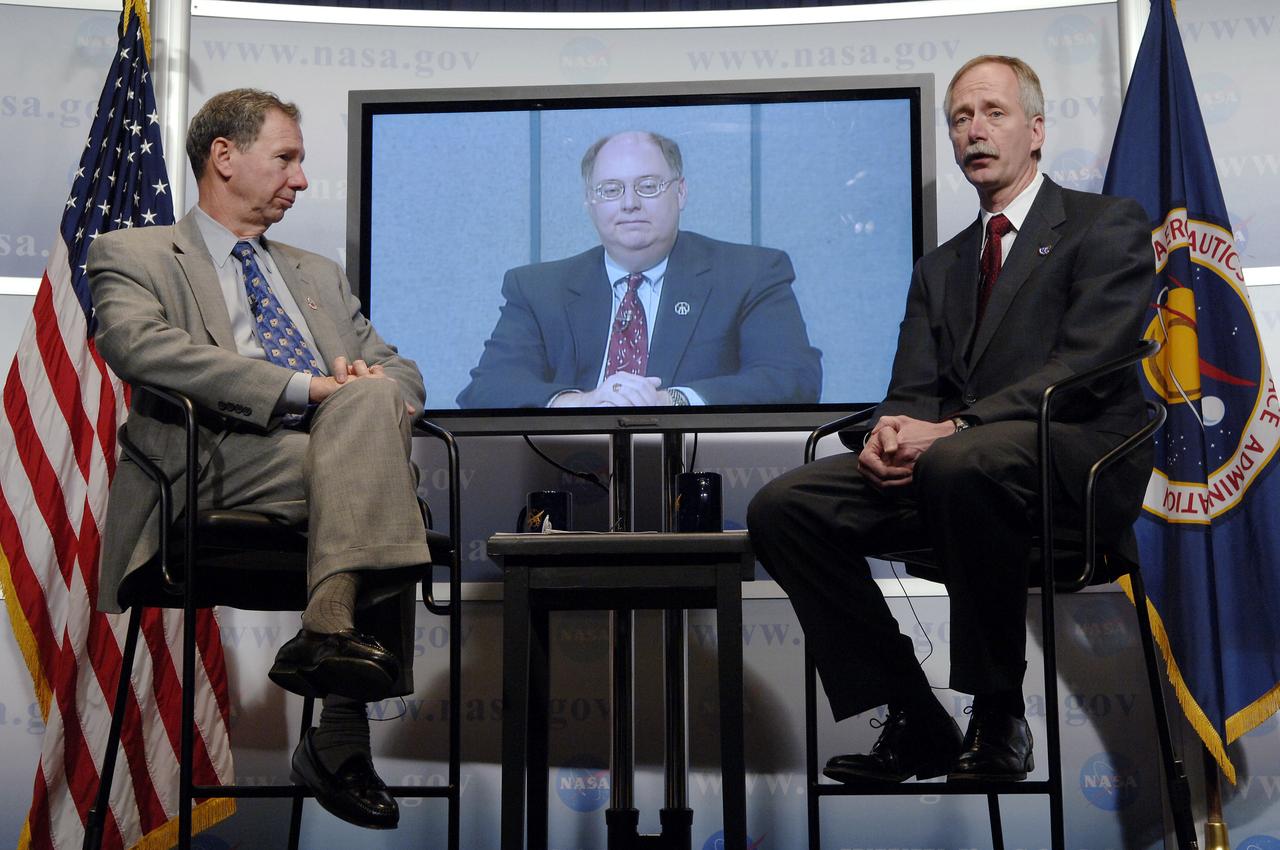
NASA Administrator Michael Griffin, left, looks on as Associate Administrator for Space Operations William Gerstenmaier, right, speaks while Space Shuttle Program Manager Wayne Hale of NASA's Marshall Space Flight Center waits by during a media briefing about the space shuttle program and processing for the STS-121 mission, Friday, April 28, 2006, at NASA Headquarters in Washington. Photo Credit (NASA/Bill Ingalls)
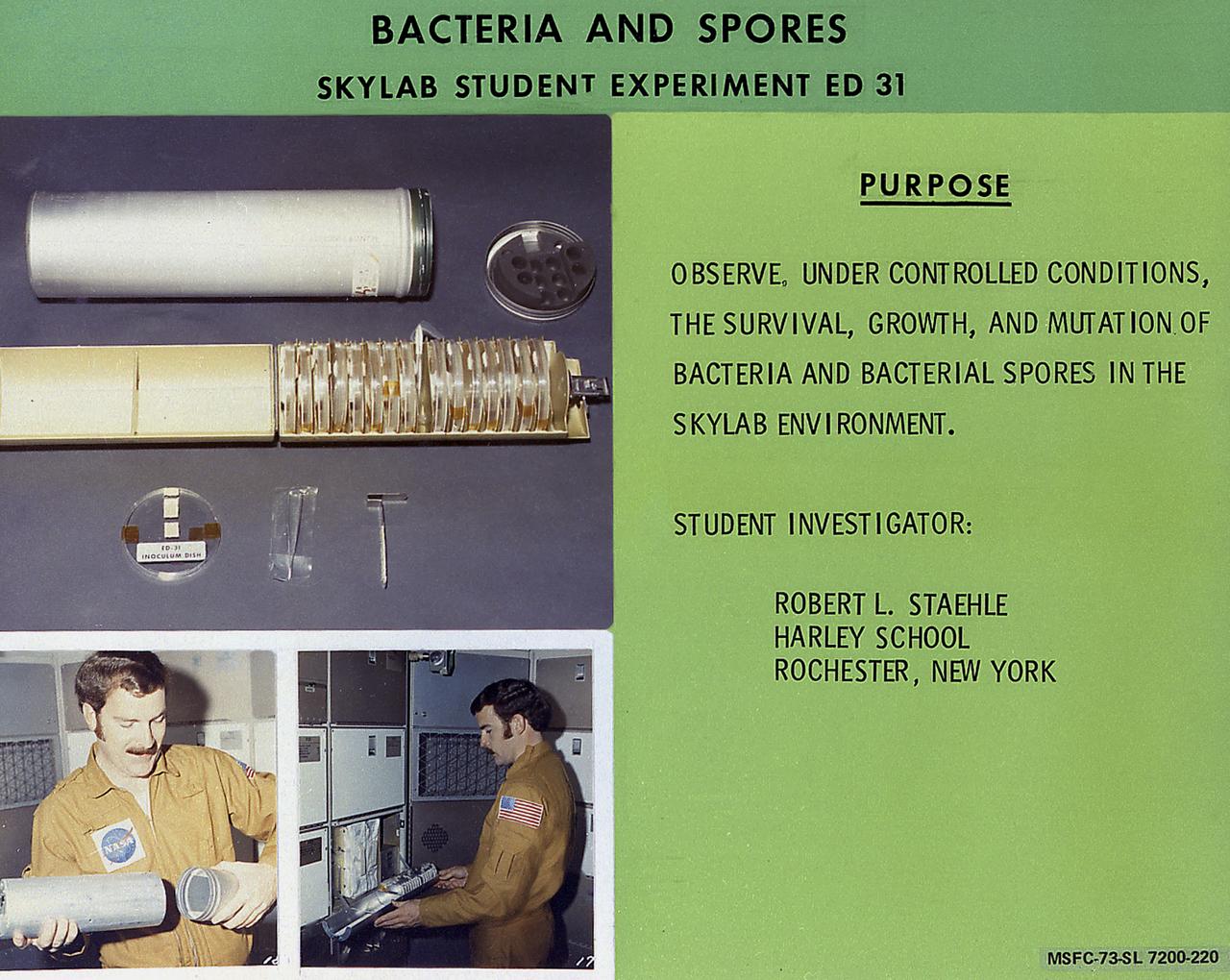
This chart describes the Skylab student experiment Bacteria and Spores, proposed by Robert L. Staehle of Rochester, New York. This experiment was intended to determine the effect of the Skylab environment (particularly weightlessness) on the survival, growth rates, and mutations of certain bacteria and spores. In March 1972, NASA and the National Science Teachers Association selected 25 experiment proposals for flight on Skylab. Science advisors from the Marshall Space Flight Center aided and assisted the students in developing the proposals for flight on Skylab.
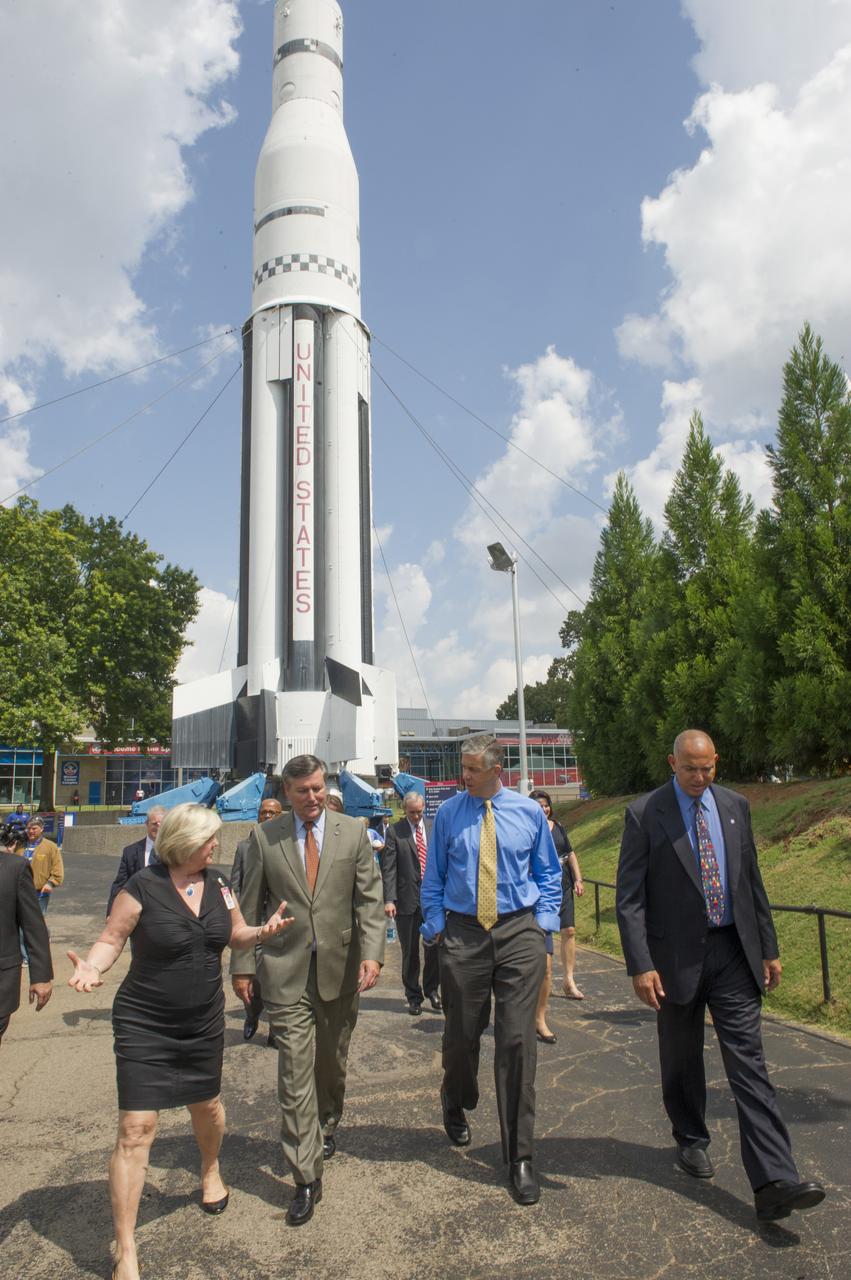
FROM LEFT, U.S. SPACE & ROCKET CENTER CEO DR. DEBORAH BARNHART AND MARSHALL CENTER DIRECTOR PATRICK SCHEUERMANN DISCUSS NASA’S HIGH-QUALITY EDUCATIONAL ACTIVITIES WITH U.S. SECRETARY OF EDUCATION ARNE DUNCAN AND THE NEWLY APPOINTED NASA ASSOCIATE ADMINISTRATOR OF EDUCATION, DONALD JAMES. THE SECRETARY’S VISIT TO THE SPACE & ROCKET CENTER WAS PART OF HIS FIFTH ANNUAL BACK-TO-SCHOOL BUS TOUR AND INCLUDED AN EDUCATIONAL TOWN HALL MEETING WITH LOCAL STUDENTS, TEACHERS AND PARENTS
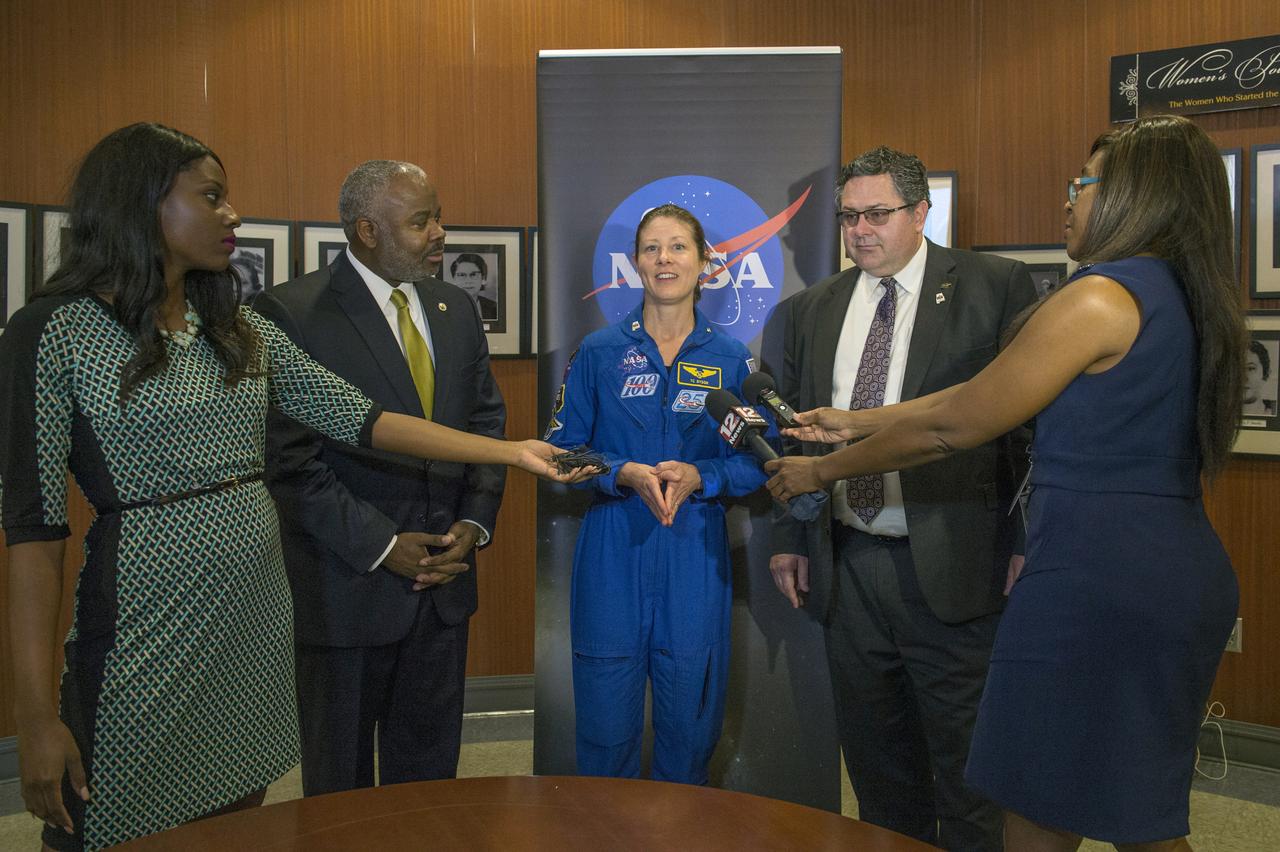
Officials from Marshall Space Flight Center discussed the state's role in leading America back to the Moon and on to Mars with elected officials, industry leaders, students and the public during the Aerospace States Association’s Alabama Aerospace Week in Montgomery, Ala. NASA was honored by the Alabama legislature with a resolution and proclamation from Gov. Kay Ivey recognizing the agency's achievements. Dr. Quentin T. Ross, Jr., President, Alabama State University, Astronaut Tracy Dyson, and MSFC Director Todd May talk to members of the media at Alabama State University.
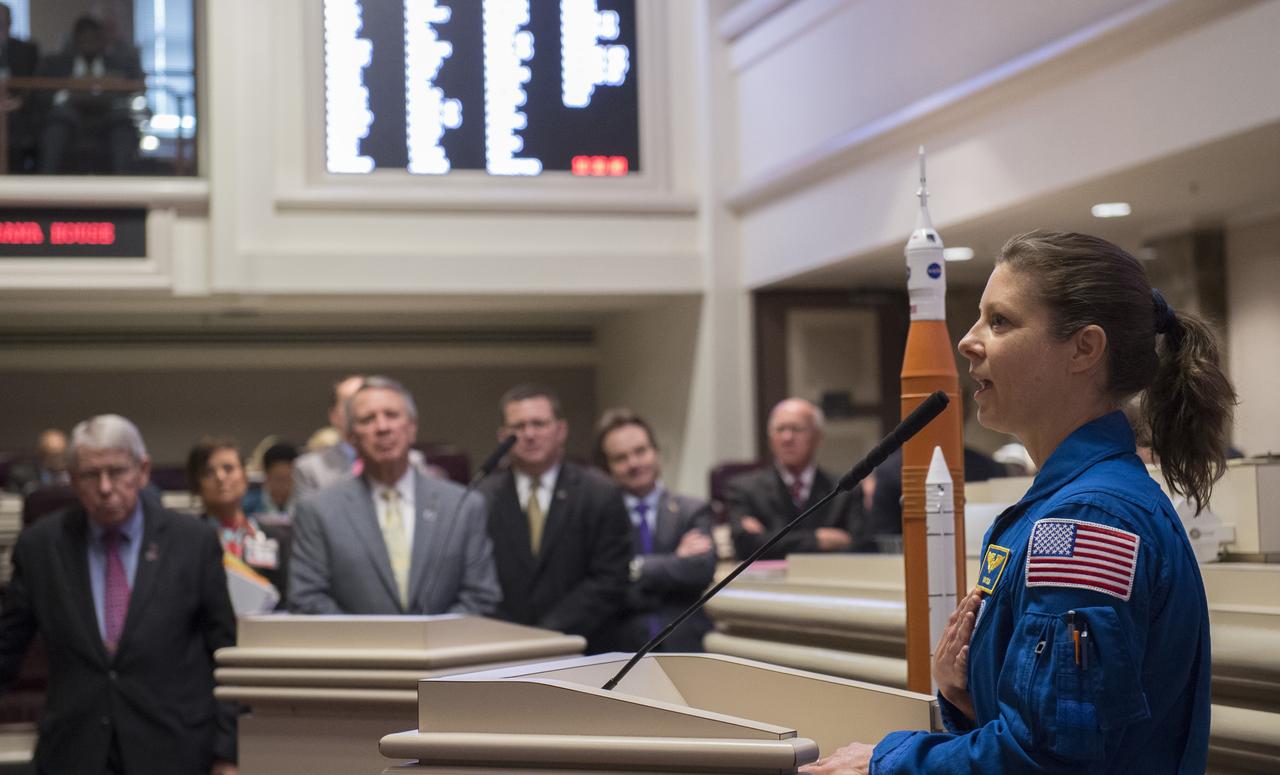
Officials from Marshall Space Flight Center discussed the state's role in leading America back to the Moon and on to Mars with elected officials, industry leaders, students and the public during the Aerospace States Association’s Alabama Aerospace Week in Montgomery, Ala. NASA was honored by the Alabama legislature with a resolution and proclamation from Gov. Kay Ivey recognizing the agency's achievements. Astronaut Tracy Dyson speaks to legislators in Alabama House of Representatives
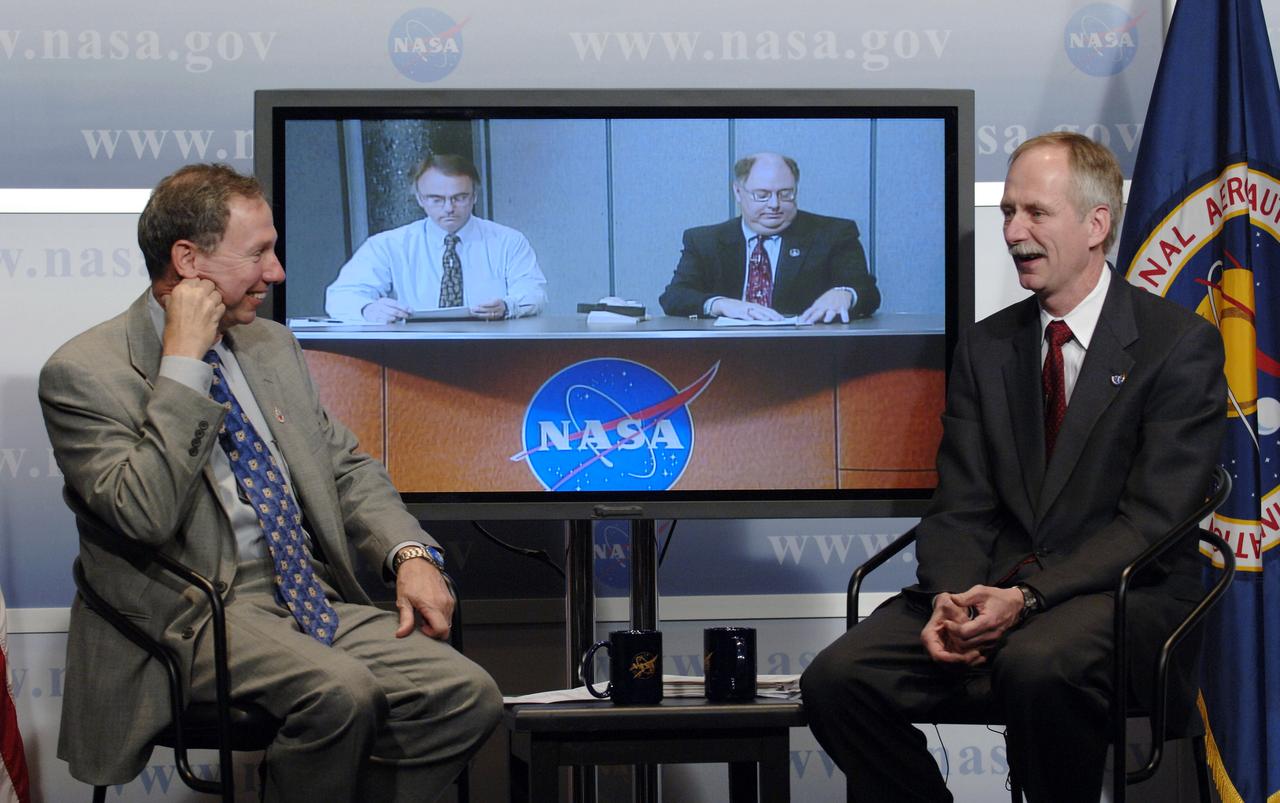
NASA Administrator Michael Griffin, left, and Associate Administrator for Space Operations William Gerstenmaier, right, smile as Space Shuttle Program Manager Wayne Hale, right on television screen, and Ken Welzyn, External Tank Chief Engineer, join in from NASA's Marshall Space Flight Center during a media briefing about the space shuttle program and processing for the STS-121 mission, Friday, April 28, 2006, at NASA Headquarters in Washington. Photo Credit (NASA/Bill Ingalls)
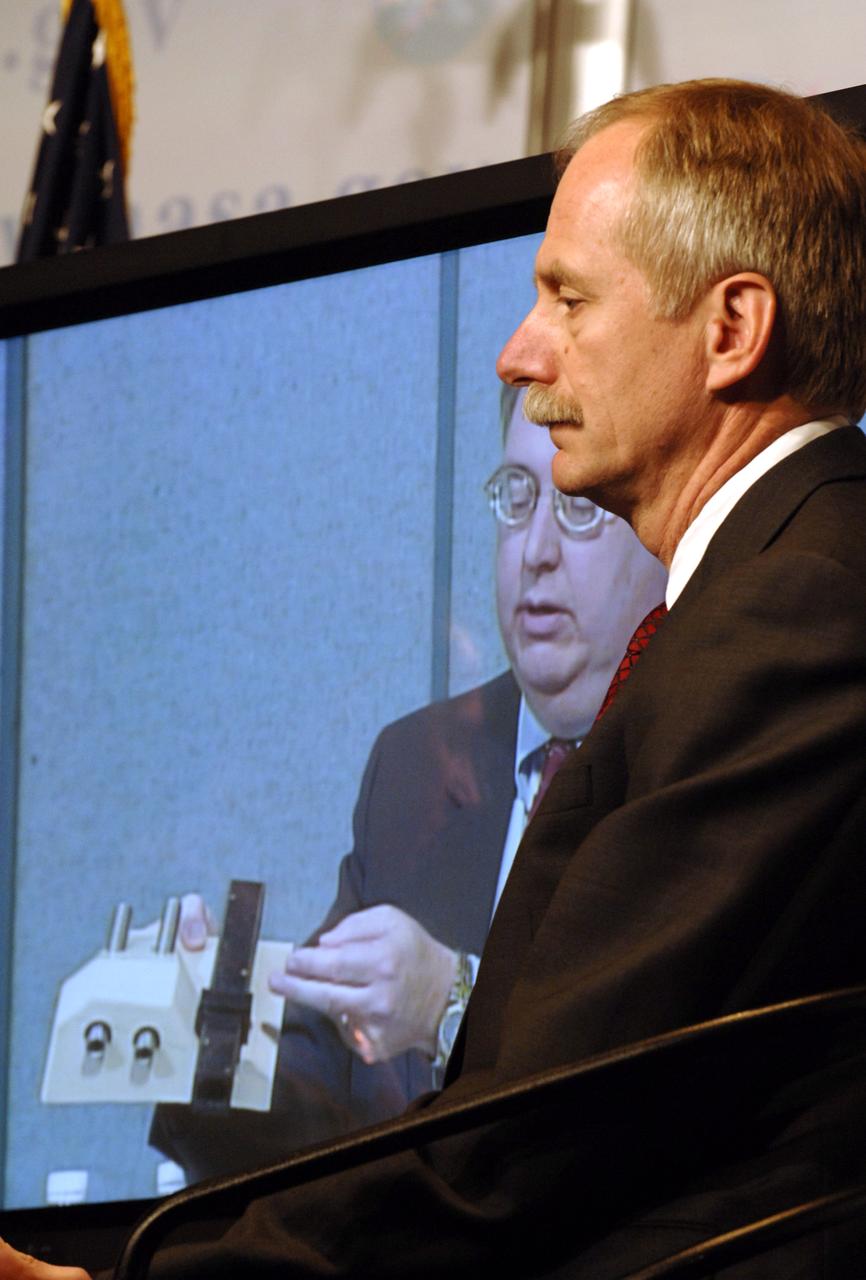
NASA Associate Administrator for Space Operations William Gerstenmaier, right, look on as Space Shuttle Program Manager Wayne Hale speaks from NASA's Marshall Space Flight Center during a media briefing about the space shuttle program and processing for the STS-121 mission, Friday, April 28, 2006, at NASA Headquarters in Washington. Photo Credit (NASA/Bill Ingalls)
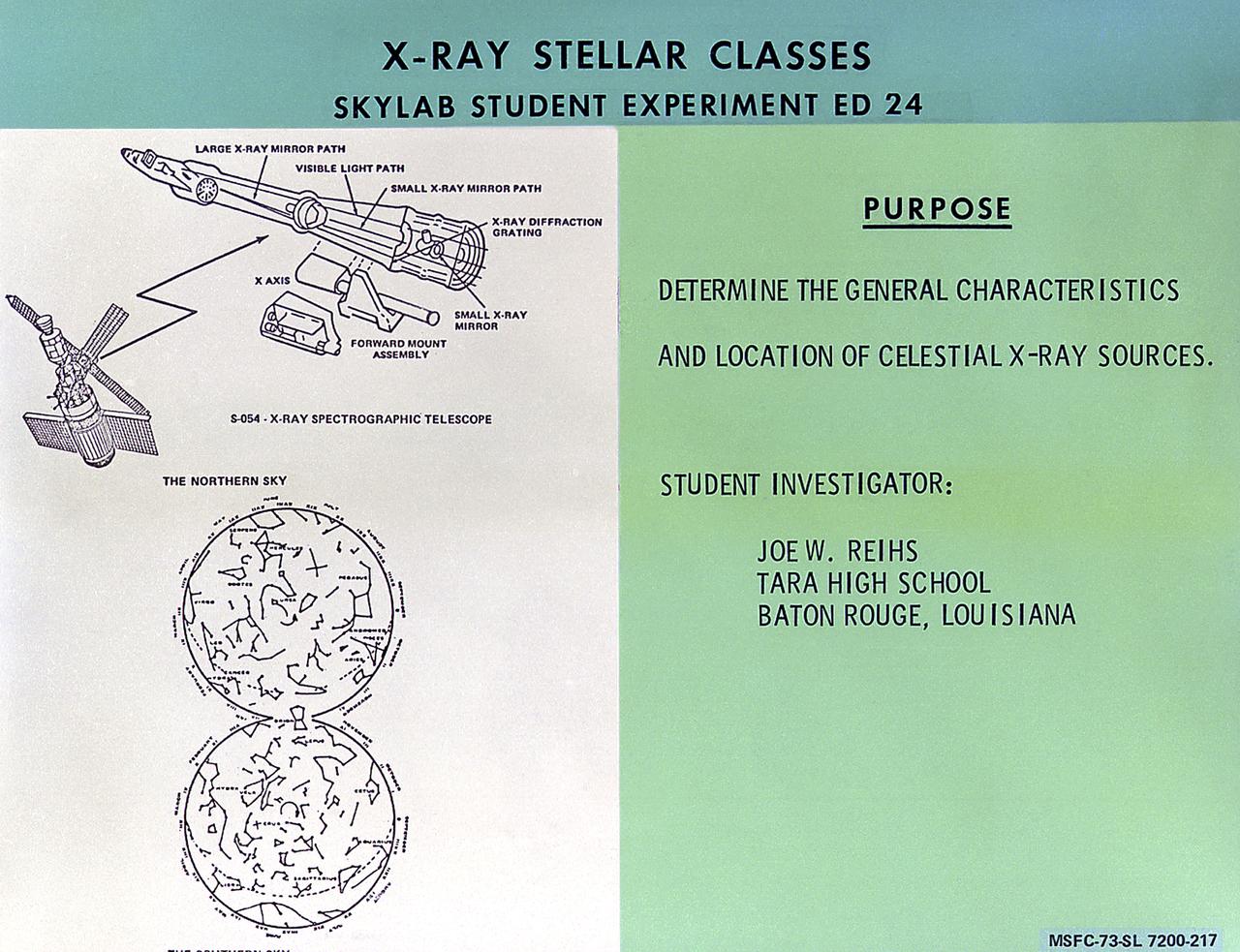
This chart describes the Skylab student experiment X-Ray Stellar Classes, proposed by Joe Reihs of Baton Rouge, Louisiana. This experiment utilized Skylab's X-Ray Spectrographic Telescope to observe and determine the general characteristics and location of x-ray sources. In March 1972, NASA and the National Science Teachers Association selected 25 experiment proposals for flight on Skylab. Science advisors from the Marshall Space Flight Center aided and assisted the students in developing the proposals for flight on Skylab.
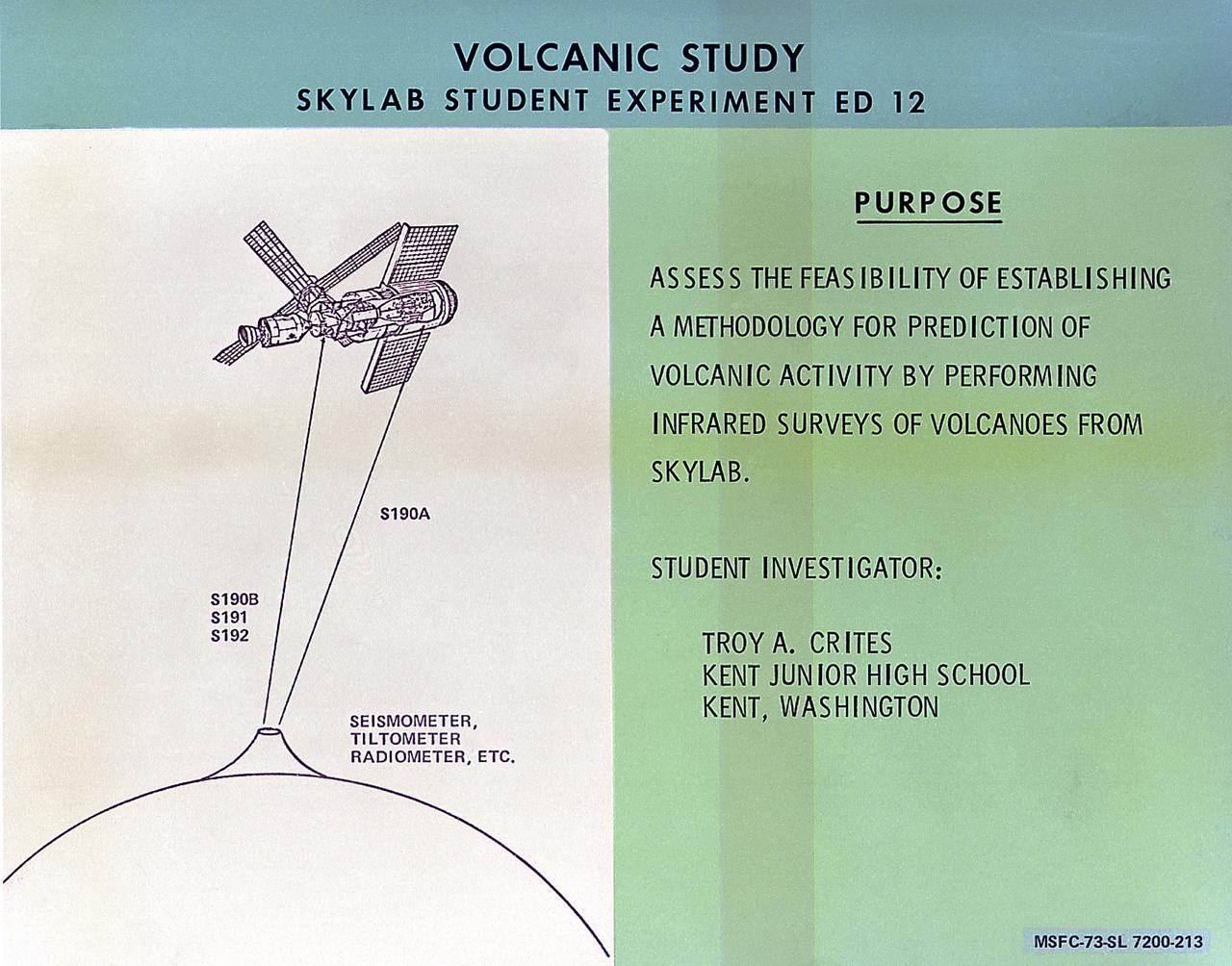
This chart describes the Skylab student experiment Volcanic Study, proposed by Troy A. Crites of Kent, Washington. This experiment utilized Skylab's Earth Resources Experiment sensors to determine if volcanic activity can be predicted using infrared surveys from orbit. In March 1972, NASA and the National Science Teachers Association selected 25 experiment proposals for flight on Skylab. Science advisors from the Marshall Space Flight Center aided and assisted the students in developing the proposals for flight on Skylab.
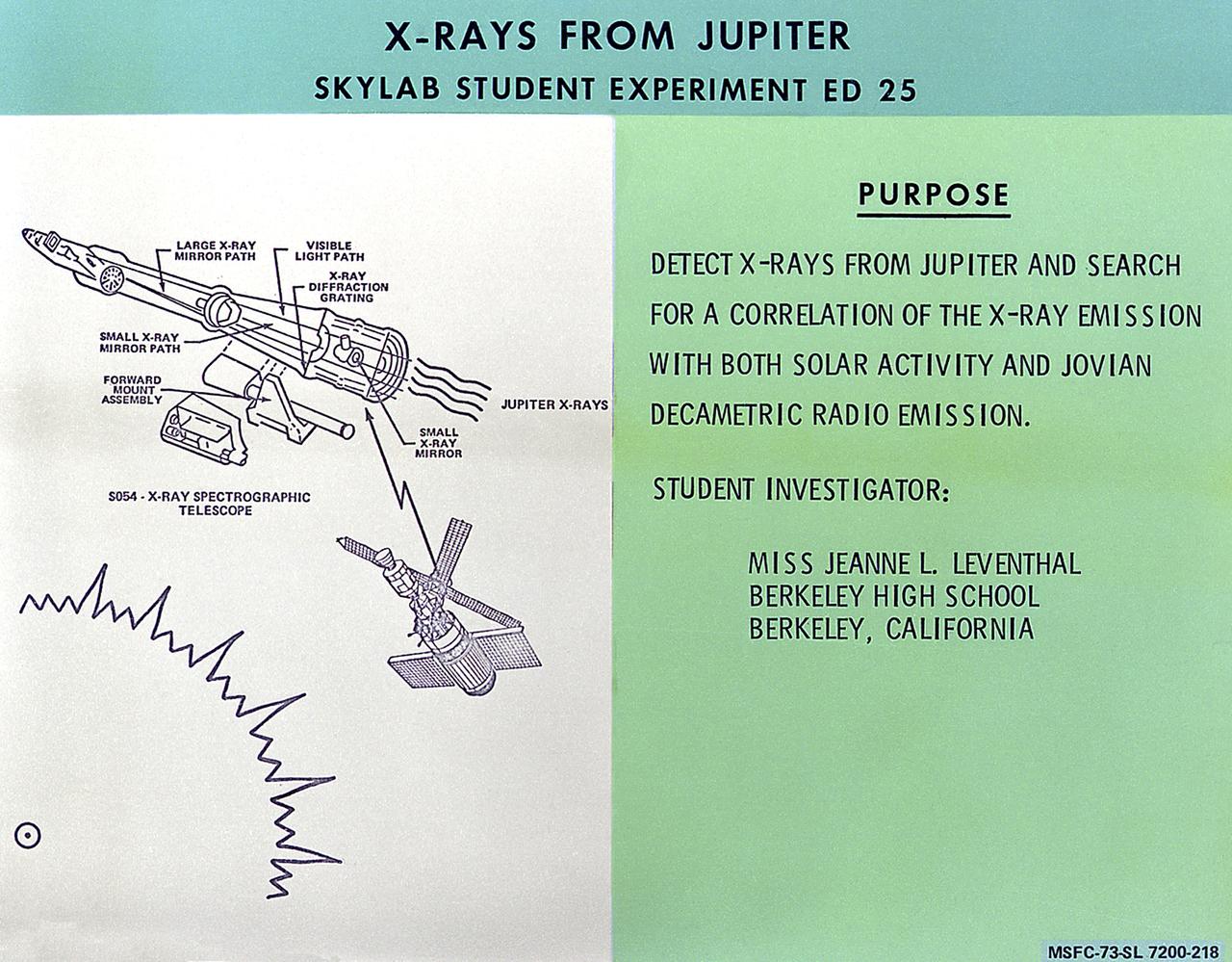
This chart describes the Skylab student experiment X-Rays from Jupiter, proposed by Jearne Leventhal of Berkeley, California. This experiment was an investigation to detect x-rays from the planet Jupiter and determine any correlation with solar flare activity. In March 1972, NASA and the National Science Teachers Association selected 25 experiment proposals for flight on Skylab. Science advisors from the Marshall Space Flight Center aided and assisted the students in developing the proposals for flight on Skylab.
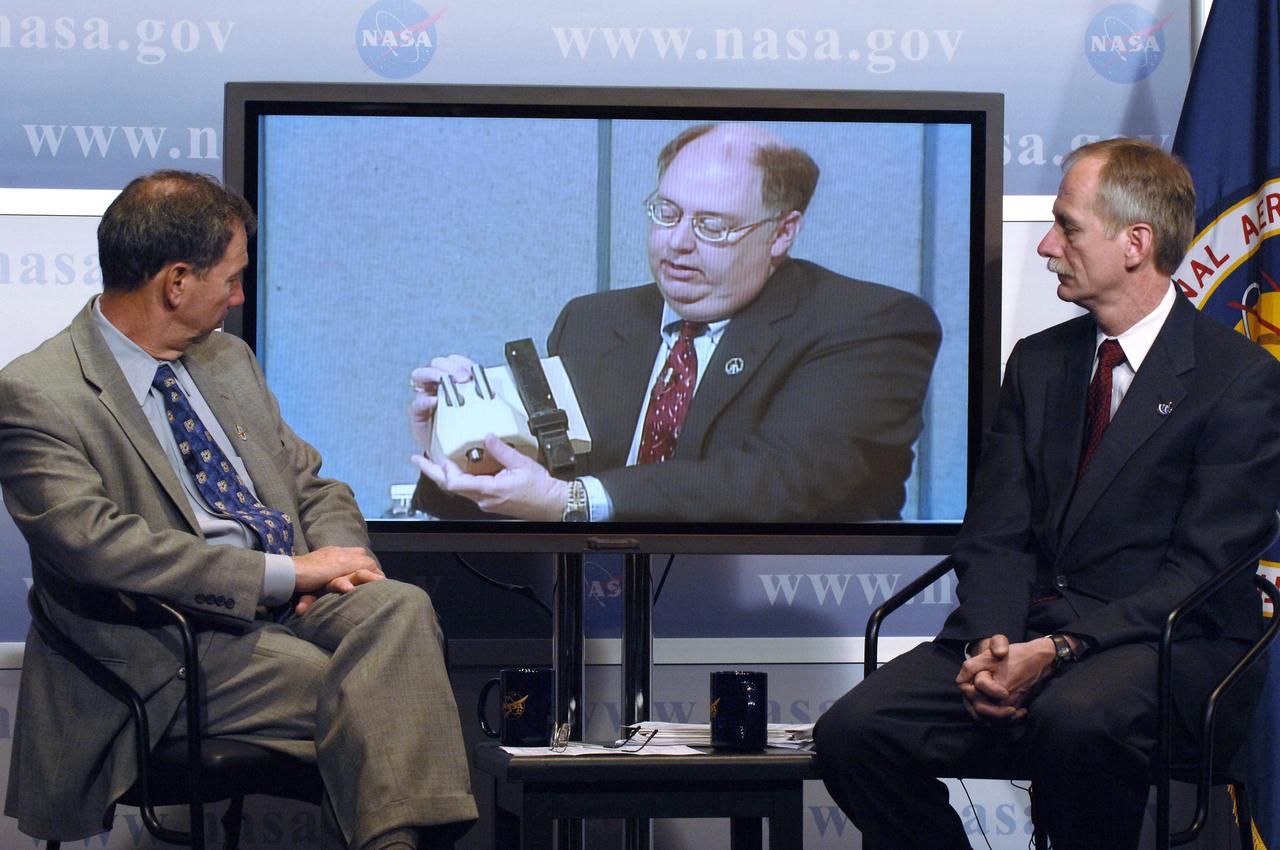
NASA Administrator Michael Griffin, left, and Associate Administrator for Space Operations William Gerstenmaier, right, look on as Space Shuttle Program Manager Wayne Hale talks from NASA's Marshall Space Flight Center about the space shuttle's ice frost ramps during a media briefing about the space shuttle program and processing for the STS-121 mission, Friday, April 28, 2006, at NASA Headquarters in Washington. Photo Credit (NASA/Bill Ingalls)
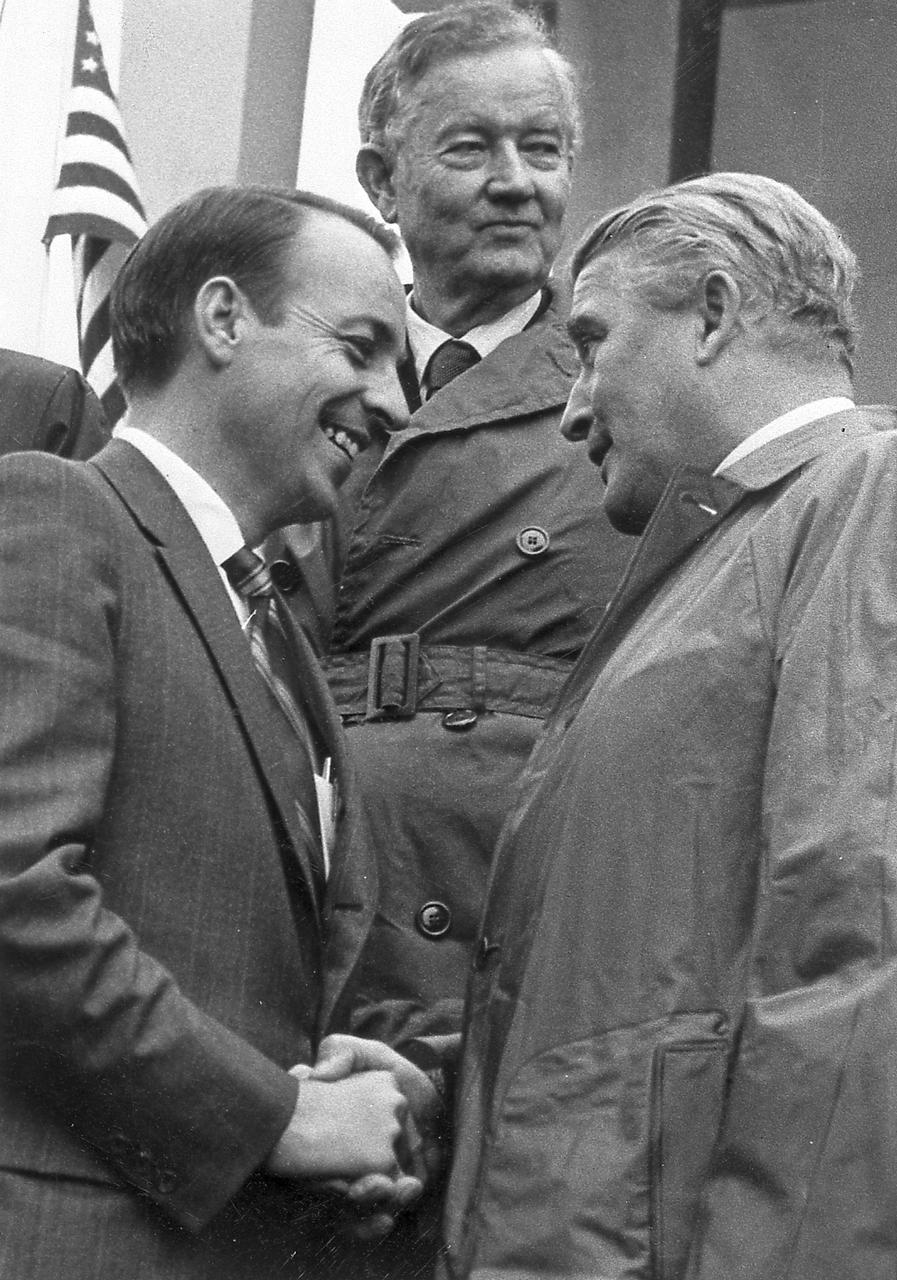
In 1970 Marshall Space Flight Center (MSFC) Director Dr. Wernher von Braun (right) was reassigned to NASA Headquarters to serve as Deputy Associate Administrator for Plarning. Prior to his transfer, Dr. von Braun was honored for his career in Huntsville, Alabama, with the celebration of "Wernher von Braun Day." Among those participating were Alabama Governor Albert Brewer (left) and Alabama Senator John Sparkman (center). (Courtesy of Huntsville/Madison County Public library)

This chart describes the Skylab student experiment Ultraviolet (UV) from Quasars, proposed by John C. Hamilton of Aiea, Hawaii. This experiment utilized Skylab's Ultraviolet Stellar Astronomy equipment to photograph quasars in the UV spectrum and compare those images to existing radio and visible data. In March 1972 NASA and the National Science Teachers Association selected 25 experiment proposals for flight on Skylab. Science advisors from the Marshall Space Flight Center aided and assisted the students in developing the proposals for flight on Skylab.
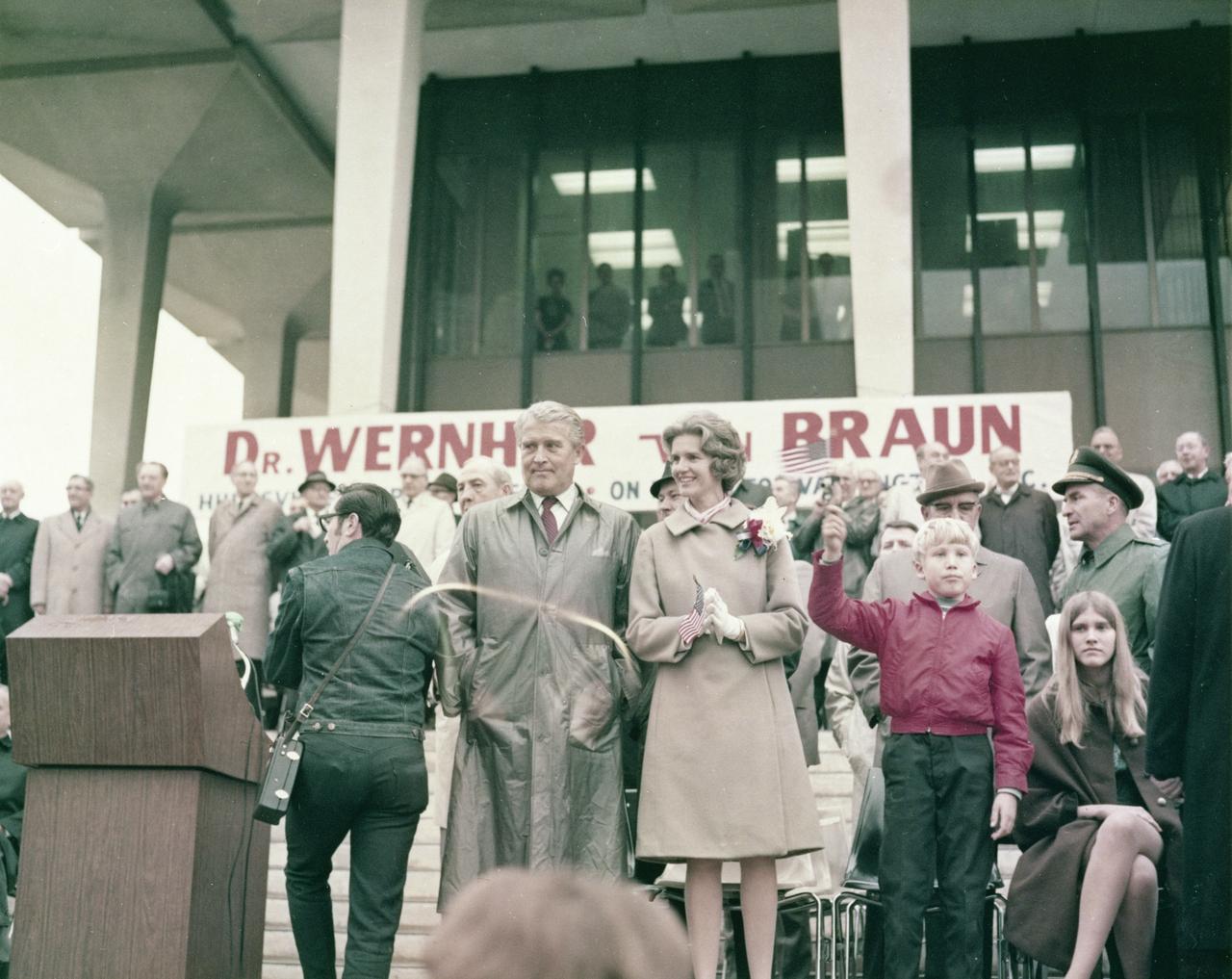
Marshall Space Flight Center (MSFC) Director Dr. von Braun and his family were honored with a series of events prior to his relocation to Washington, D.C., where he was assigned duties at NASA Headquarters as Deputy Associate Administrator for Plarning. (Left to right) Dr. von Braun, wife Maria, son Peter, and daughter Margrit are shown on the steps of the Madison County Courthouse, Huntsville, Alabama.
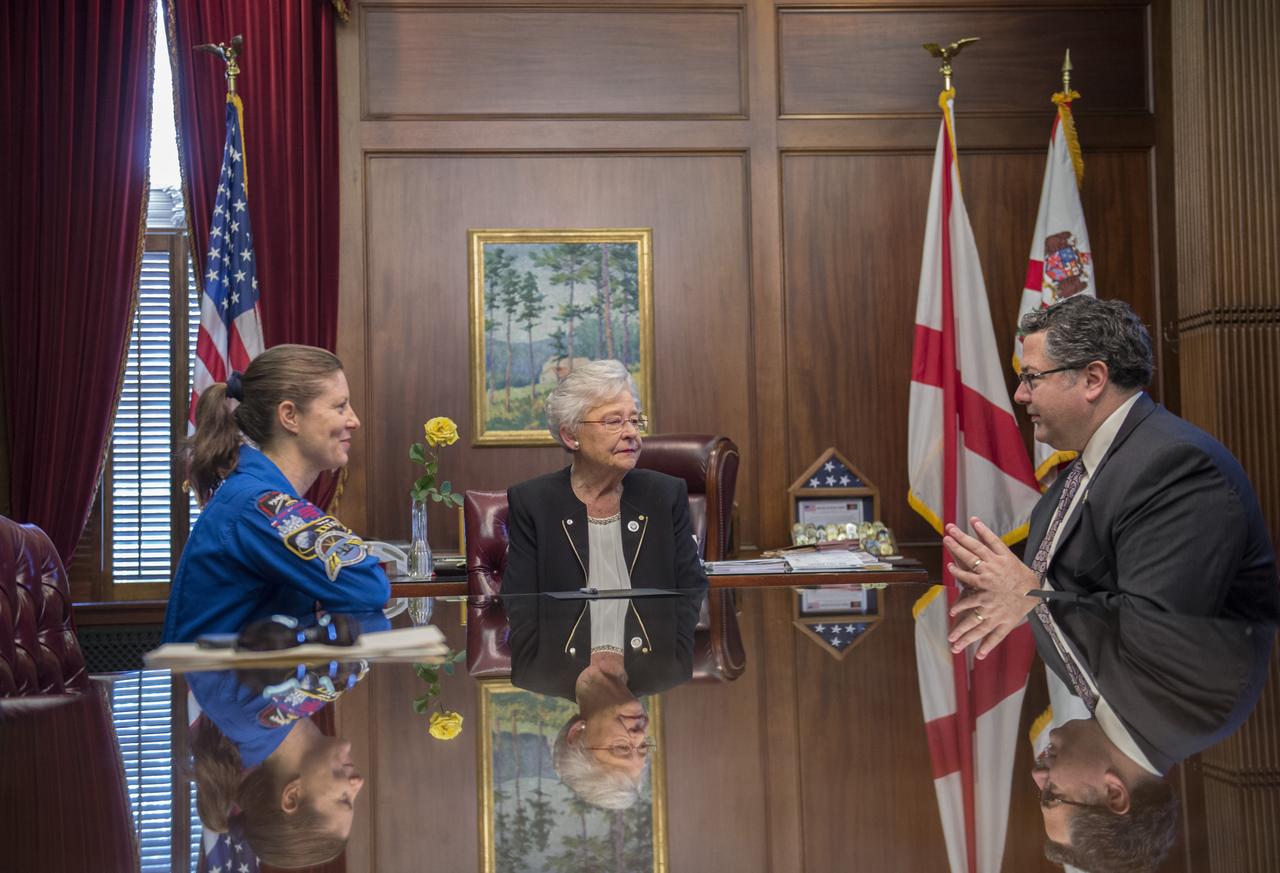
Officials from Marshall Space Flight Center discussed the state's role in leading America back to the Moon and on to Mars with elected officials, industry leaders, students and the public during the Aerospace States Association’s Alabama Aerospace Week in Montgomery, Ala. NASA was honored by the Alabama legislature with a resolution and proclamation from Gov. Kay Ivey recognizing the agency's achievements. MSFC Director Todd May and Astronaut Tracy Dyson chat with Alabama Governor Kay Ivey.
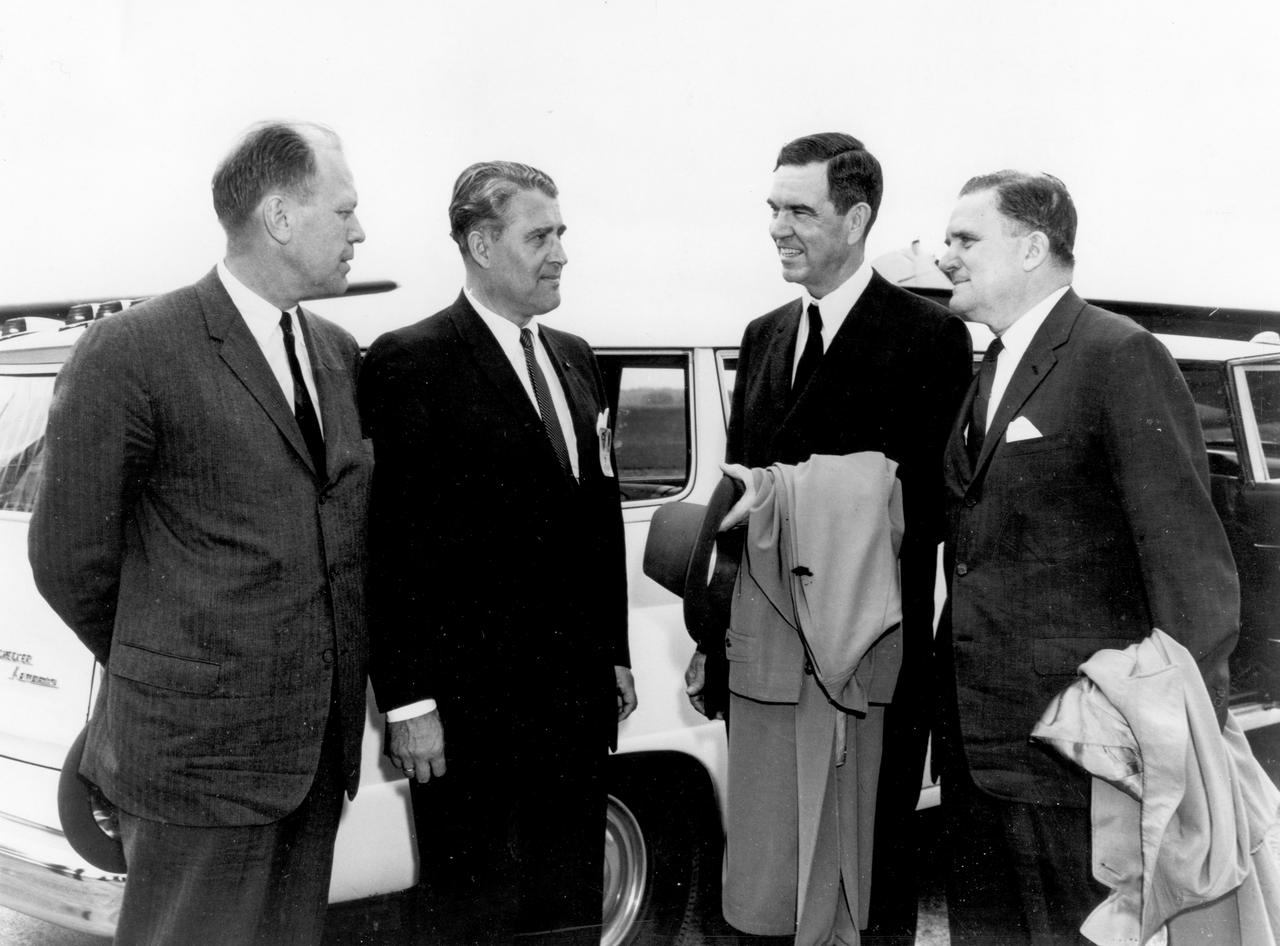
Two US Congressmen, accompanied by NASA Administrator James E. Webb, visited the Marshall Space Flight Center (MSFC) April 28, 1964, for a briefing on the Saturn program and a tour of the facilities. They are (left to right) Congressman Gerald Ford Jr., Republican representative of Michigan; Dr. Wernher von Braun, MSFC director; Congressman George H. Mahon, Democratic representative of Texas; and Mr. Webb. Not pictured is Dr. Robert Seamans, associate administrator, who was also in the group.
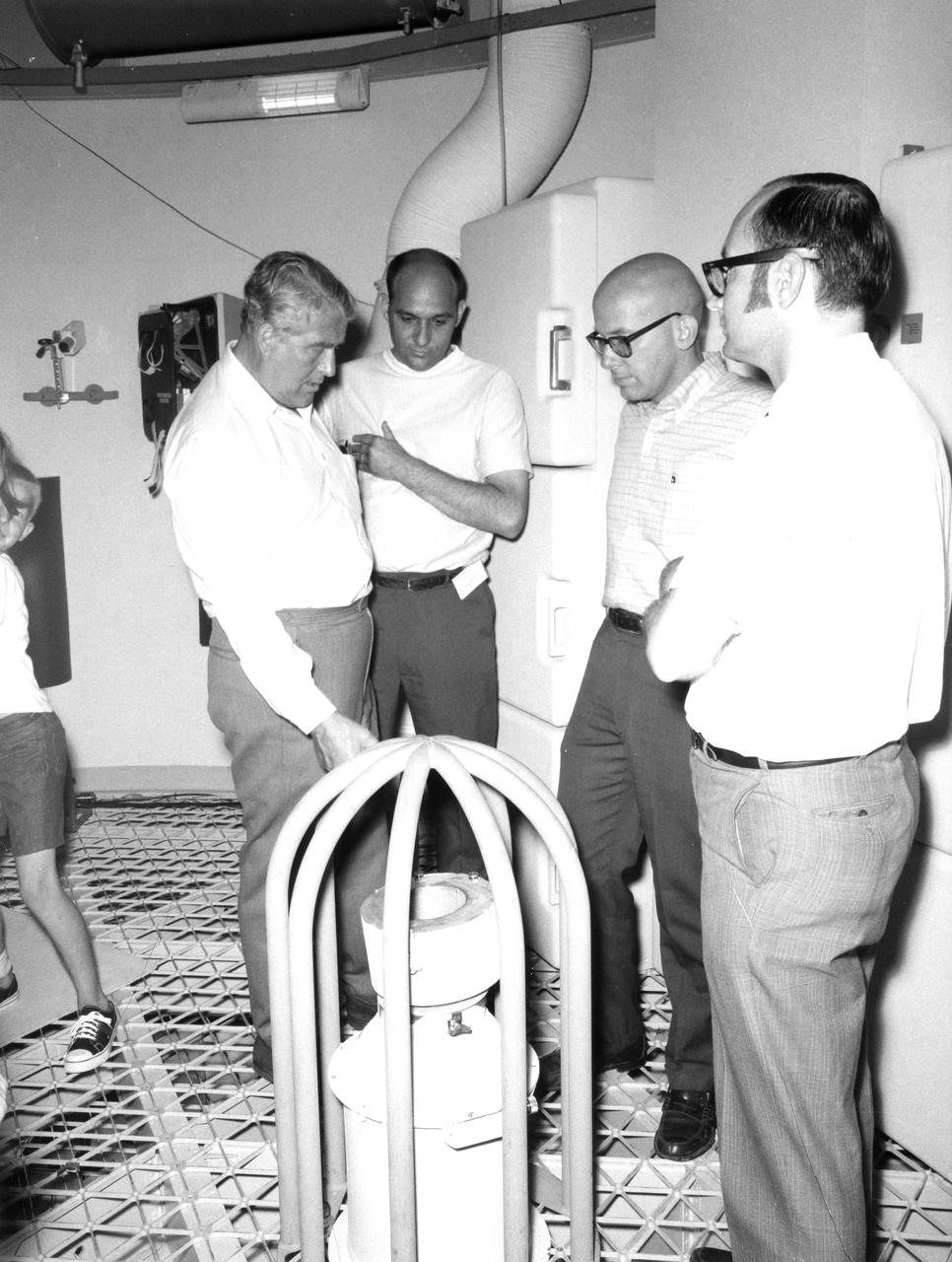
This photograph was taken after Dr. von Braun moved from his post as Director of the Marshall Space Flight Center (MSFC) to Deputy Associate Administrator for Planning at NASA Headquarters. On June 27, 1970, he visited the MSFC again during the center’s 10th anniversary to look at a mockup of the spacecraft that would later be known as Skylab. In this photo, he is examining an experiment in the mockup. With von Braun are (left to right): James R. Thompson, Richard T. Heckman, and Jack Stokes of the Center’s Astrionics Laboratory.
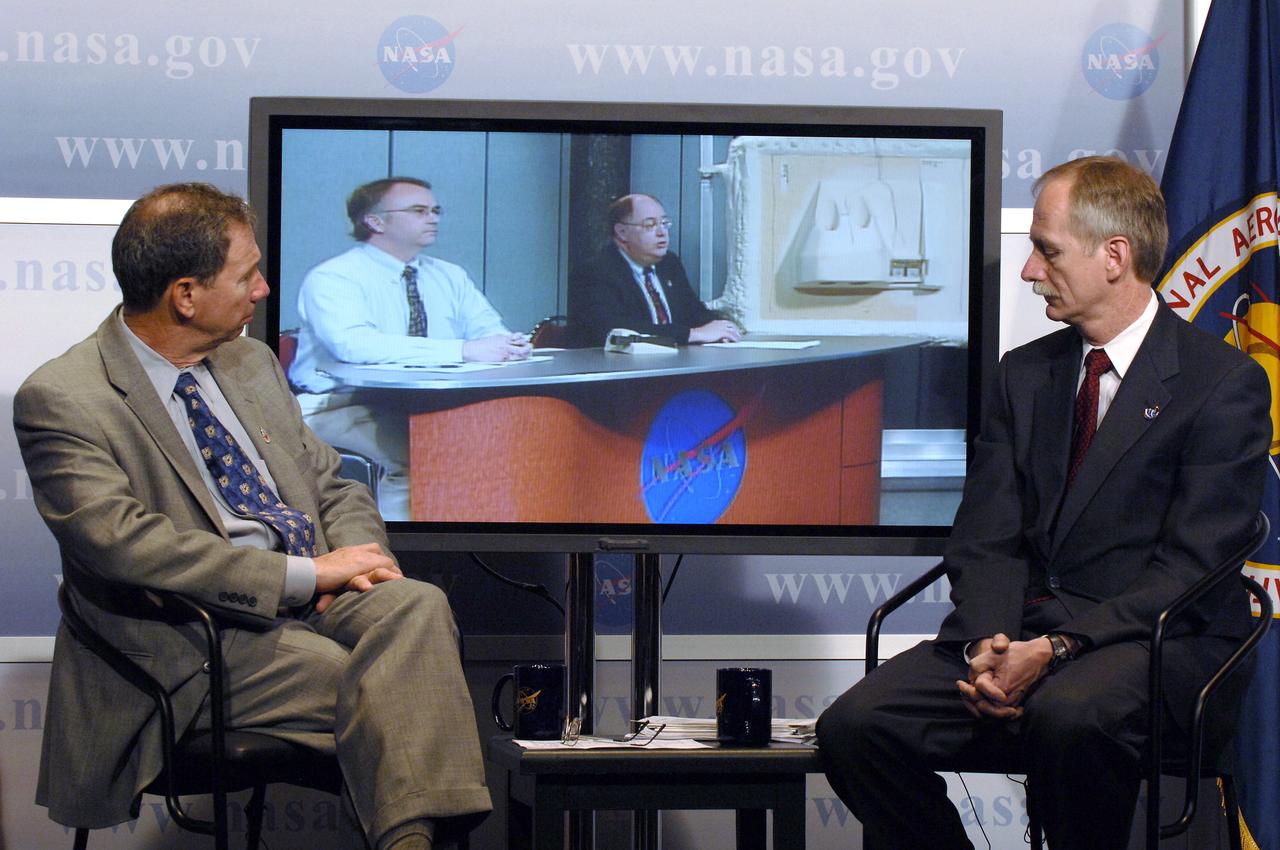
NASA Administrator Michael Griffin, left, and Associate Administrator for Space Operations William Gerstenmaier, right, look on as Space Shuttle Program Manager Wayne Hale speaks from NASA's Marshall Space Flight Center during a media briefing about the space shuttle program and processing for the STS-121 mission, Friday, April 28, 2006, at NASA Headquarters in Washington. At left on screen is Ken Welzyn, External Tank Chief Engineer. Photo Credit (NASA/Bill Ingalls)
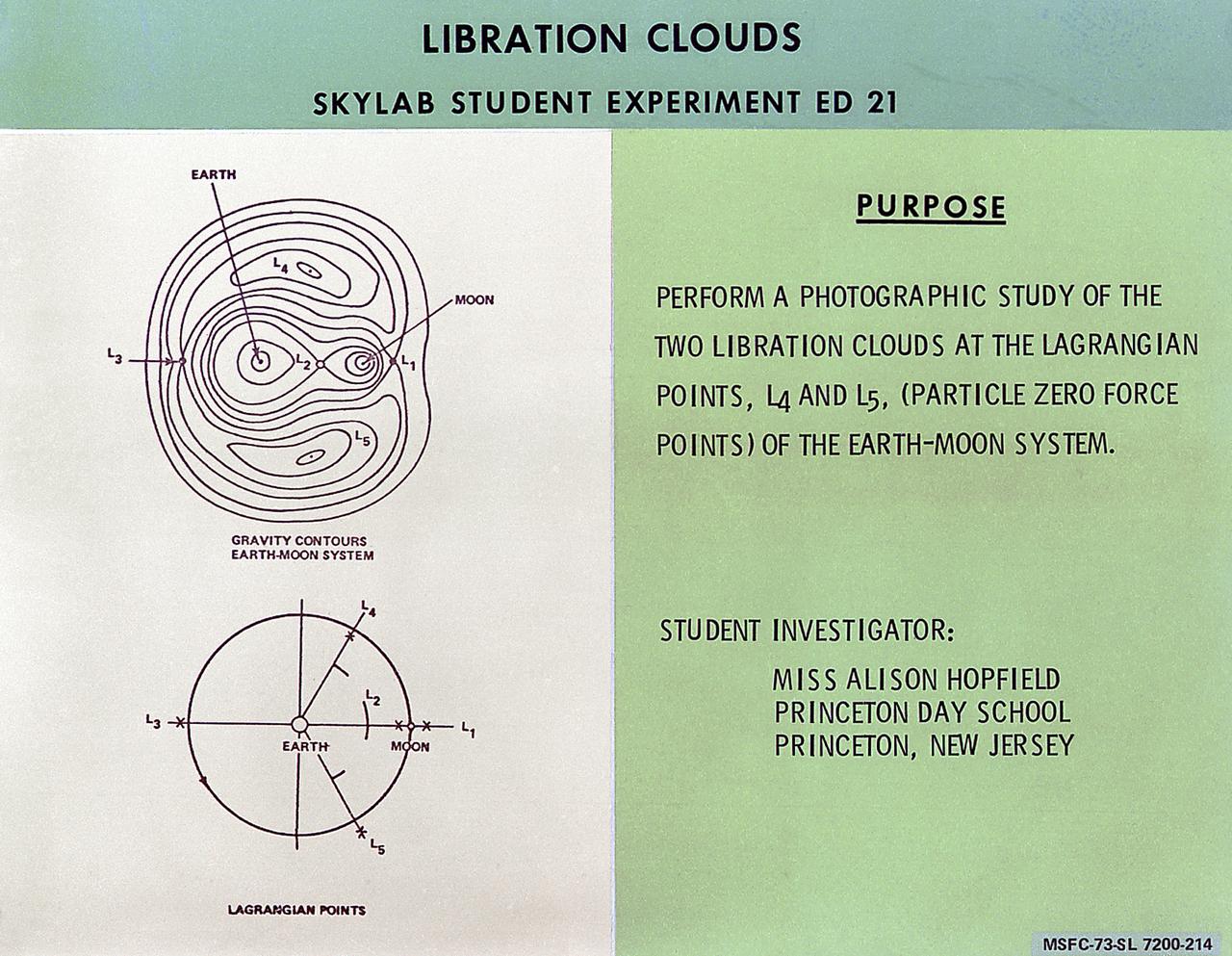
This chart describes the Skylab student experiment Libration Clouds, proposed by Alison Hopfield of Princeton, New Jersey. This experiment utilized Skylab's astronomical telescopes to observe the two zero-force regions (Lagrangian points) within the Earth-Moon System in which small space particles were expected to accumulate. In March 1972, NASA and the National Science Teachers Association selected 25 experiment proposals for flight on Skylab. Science advisors from the Marshall Space Flight Center aided and assisted the students in developing the proposals for flight on Skylab.