
Titan Mask
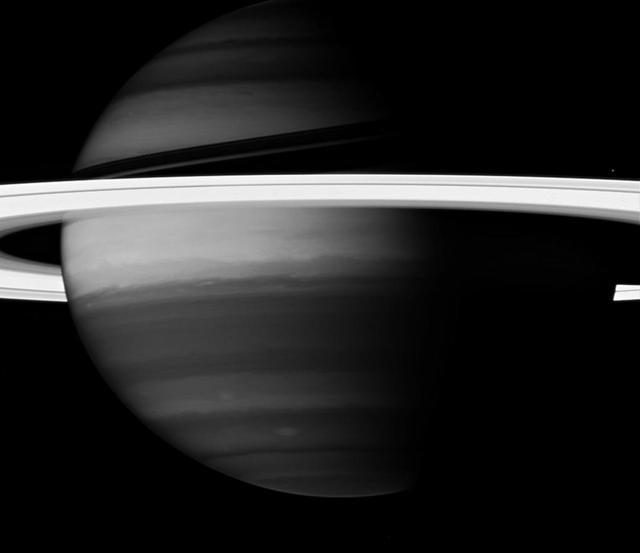
Masked by Methane
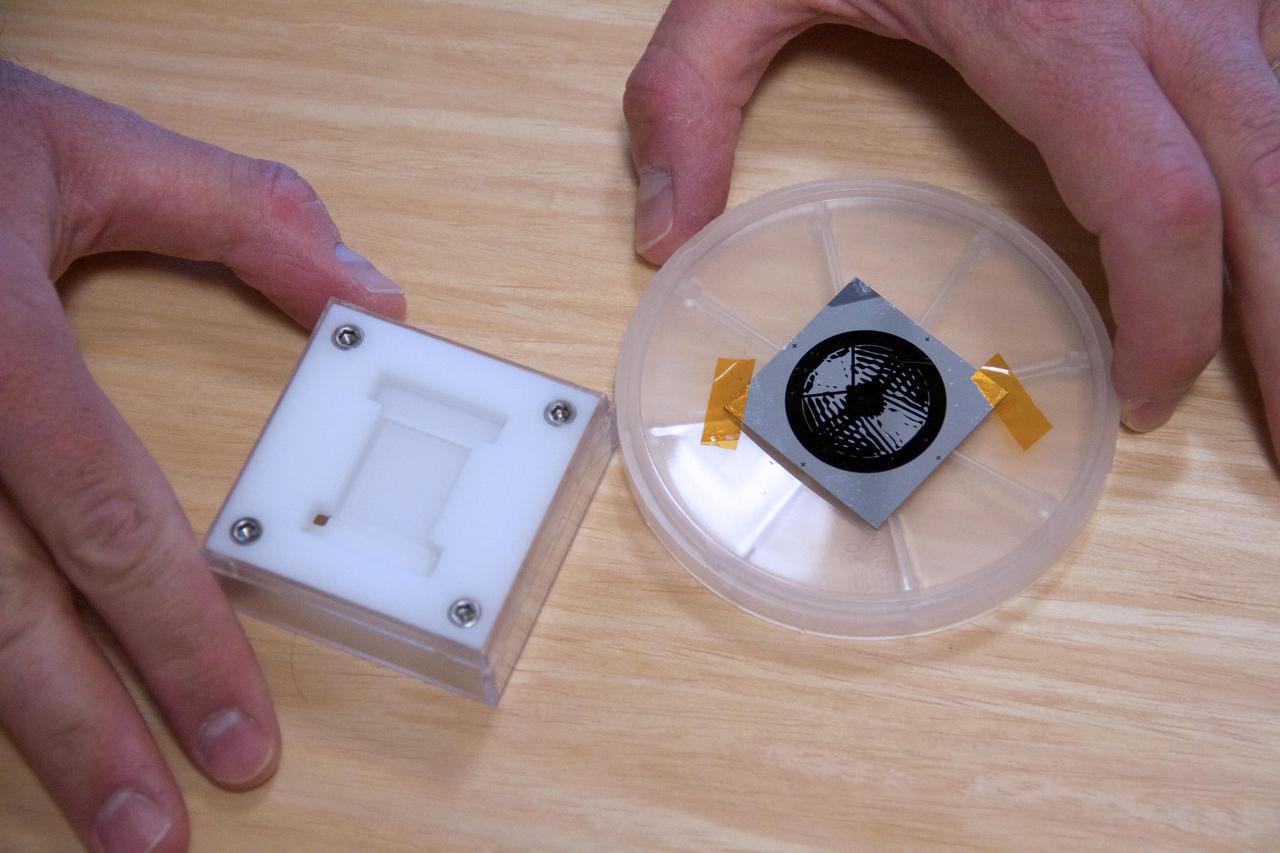
Two different types of masks to be used in NASA upcoming Wide-Field Infrared Survey Telescope, or WFIRST, coronagraph instrument, are pictured.

The focal plane mask for the Coronagraph Instrument on NASA's Nancy Grace Roman Space Telescope, shown here, is one of the components used to suppress starlight and reveal planets orbiting a star. Each circular section contains multiple "masks" – carefully engineered, opaque obstructions designed to block starlight. Some masks are about the width of a human hair. https://photojournal.jpl.nasa.gov/catalog/PIA25438
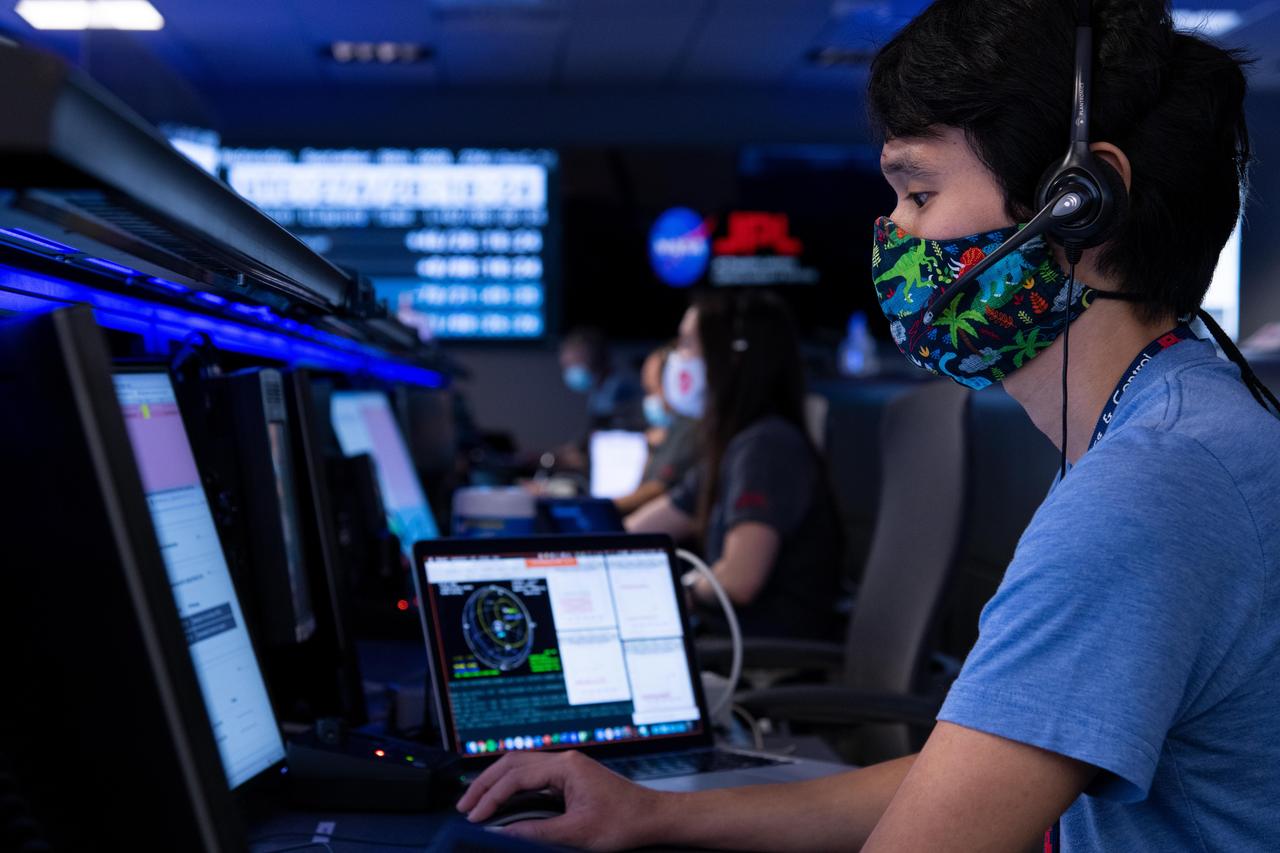
Attitude Control Systems lead Chris Pong donned a dinosaur-themed mask for his participation in the Mars 2020 mission's second trajectory correction maneuver at NASA's Jet Propulsion Laboratory in Southern California. The navigation team successfully sent commands to the spacecraft to adjust its flight path during its long cruise to Mars. https://photojournal.jpl.nasa.gov/catalog/PIA24191
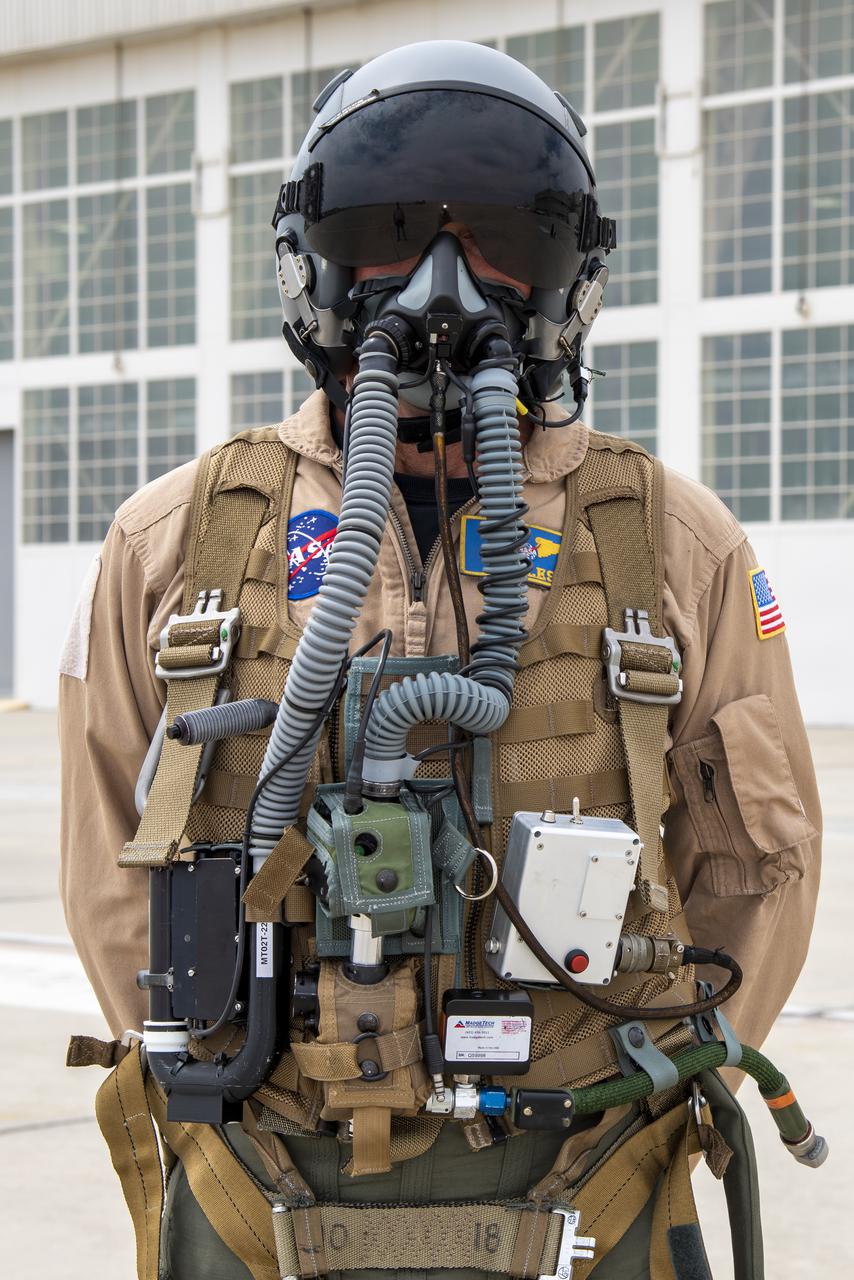
NASA research pilot Jim Less wears a U.S. Navy harness configuration with the NASA Jet Propulsion Laboratory in California prototype mask, which uses laser sensors to determine levels of carbon dioxide and water exhaled inside the mask. This prototype was tested in conjunction with the current VigilOX system, which measures the pilot’s oxygen concentration, breathing pressures and flow rates. This and the U.S. Air Force configuration was used in the Pilot Breathing Assessment program at NASA’s Armstrong Flight Research Center in California.
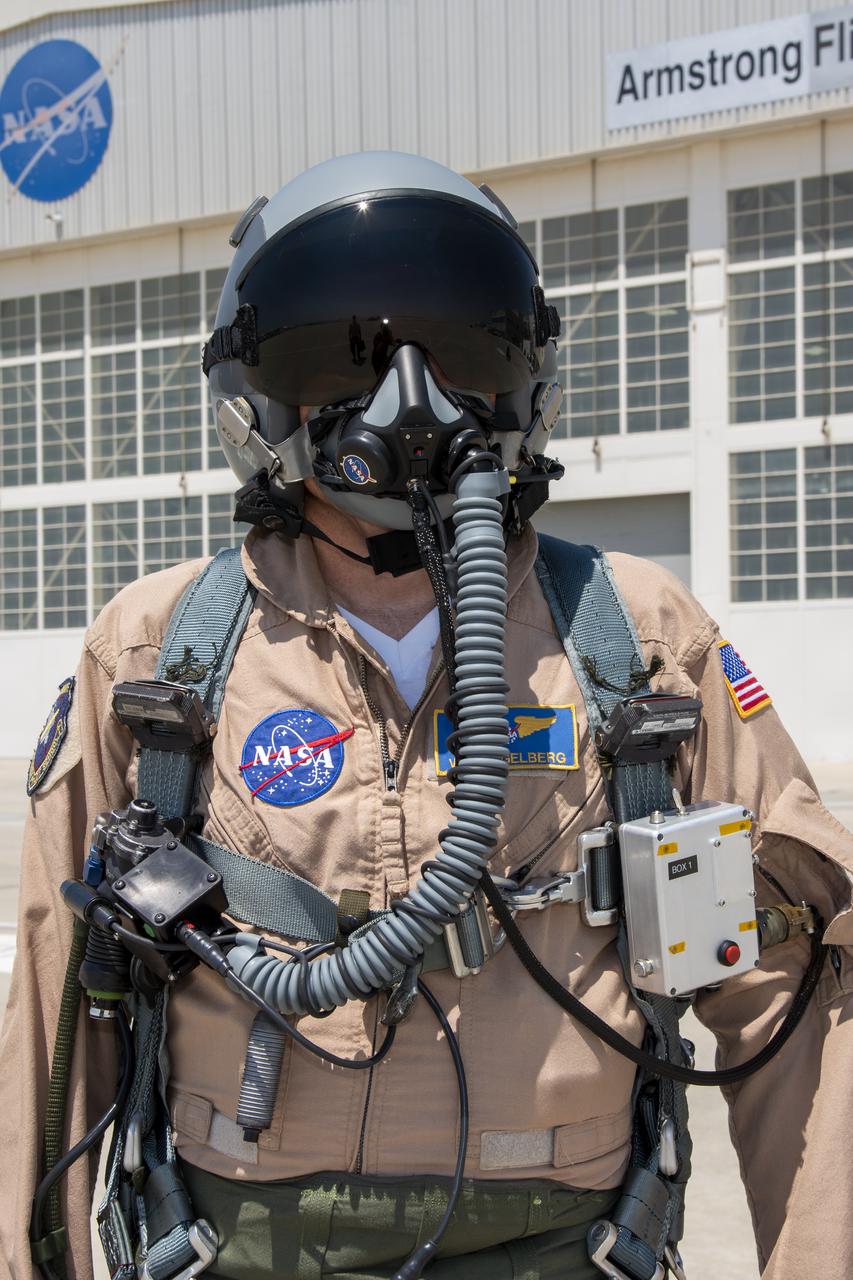
NASA research pilot Wayne Ringelberg wears a U.S. Air Force configuration of the NASA Jet Propulsion Laboratory in California prototype mask, which uses laser sensors to determine levels of carbon dioxide and water exhaled inside the mask. This prototype was tested in conjunction with the current VigilOX system, which measures the pilot’s oxygen concentration, breathing pressures and flow rates. This and the U.S. Navy configuration was used in the Pilot Breathing Assessment program at NASA’s Armstrong Flight Research Center in California.
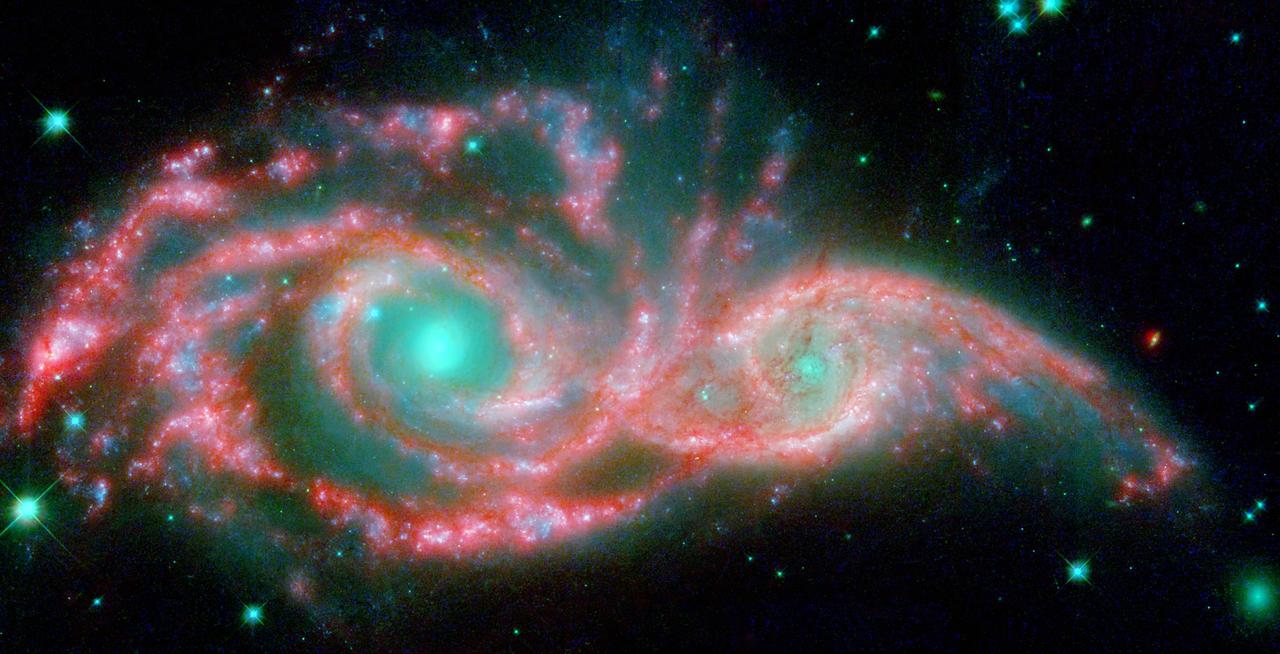
NASA Hubble and Spitzer telescopes combined to make these shape-shifting galaxies taking on the form of a giant mask. The icy blue eyes are actually the cores of two merging galaxies, called NGC 2207 and IC 2163, and the mask is their spiral arms.
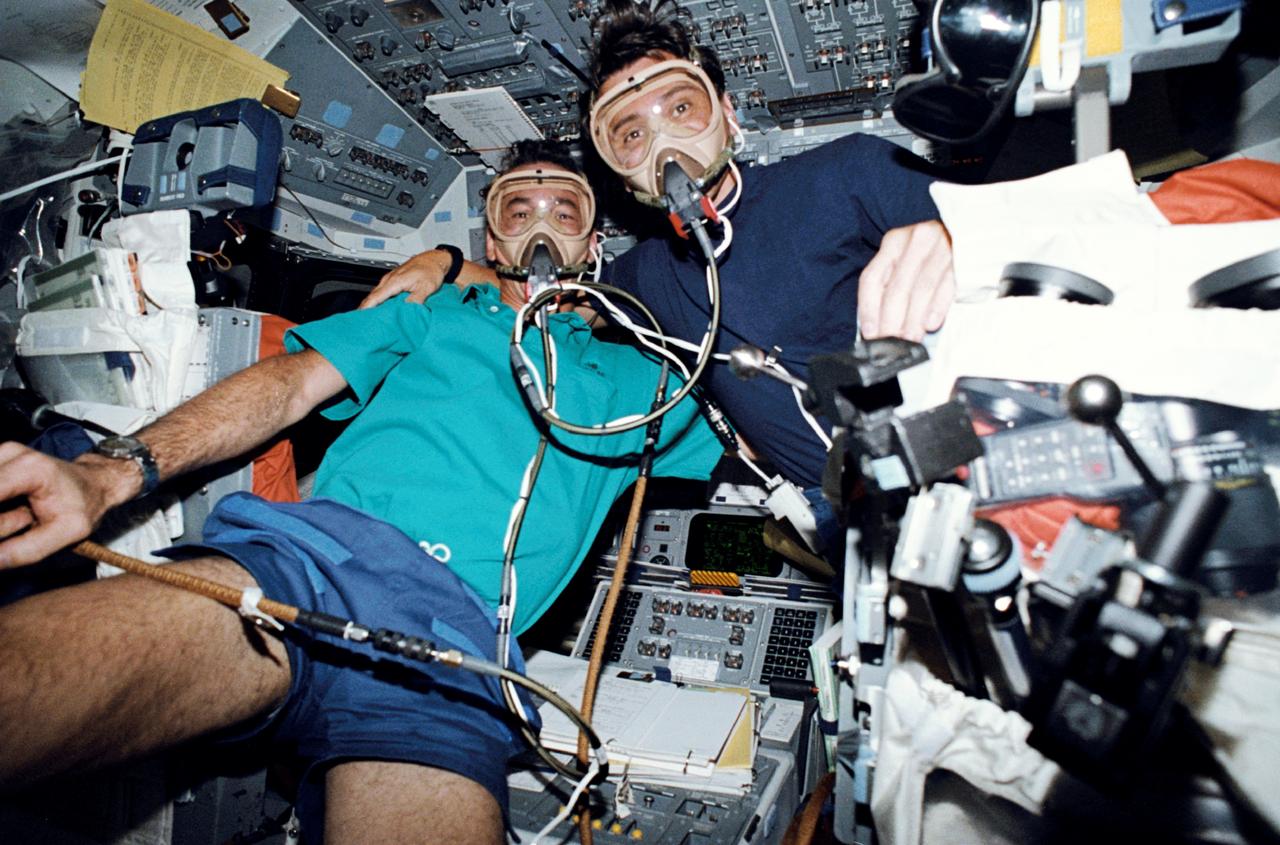
STS046-33-028 (4 Aug. 1992) --- With the possibility of an extravehicular activity (EVA) being added to the agenda, the two EVA-trained crew members begin their "pre-breathe" period on the space shuttle Atlantis' flight deck. Astronauts Jeffrey A. Hoffman (left), payload commander, and Franklin R. Chang-Diaz, mission specialist, reported to this station and began the "pre-breathe" process when problems developed during the extension of the Tethered Satellite System (TSS). When the human body is exposed to a sudden decrease in atmospheric pressure (for instance, from the 10.2 ppsi in the crew cabin to the 4.5 ppsi of the Extravehicular Mobility Unit (EMU) spacesuit), nitrogen traces in the bloodstream will expand. This expansion can create tiny bubbles and potential for the "bends". In order to lessen the effect, an astronaut must "pre-breathe" pure oxygen (the same pure oxygen that he will breathe in the suit) to help "purge" nitrogen from his/her bloodstream before exerting him/herself in the low-pressure environment of the suit. The "pre-breathe" exercise and the EVA turned out to be not needed as the TSS operations were resumed by remote operations.
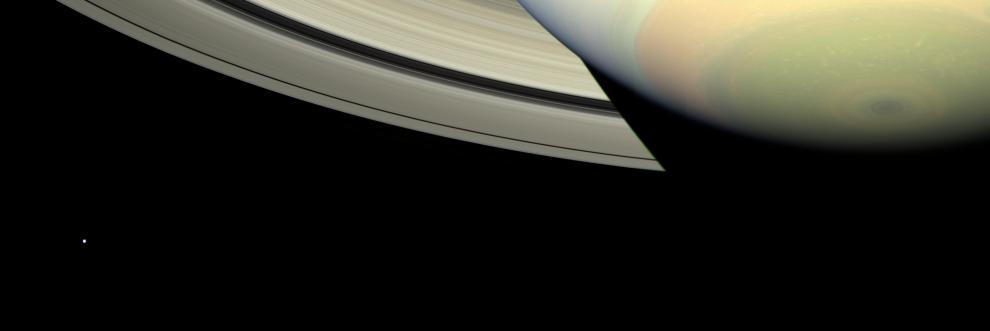
Cassini takes in a sweeping view of Saturn south polar region as the planet shadow masks the rings and bright, icy Mimas looks on from left
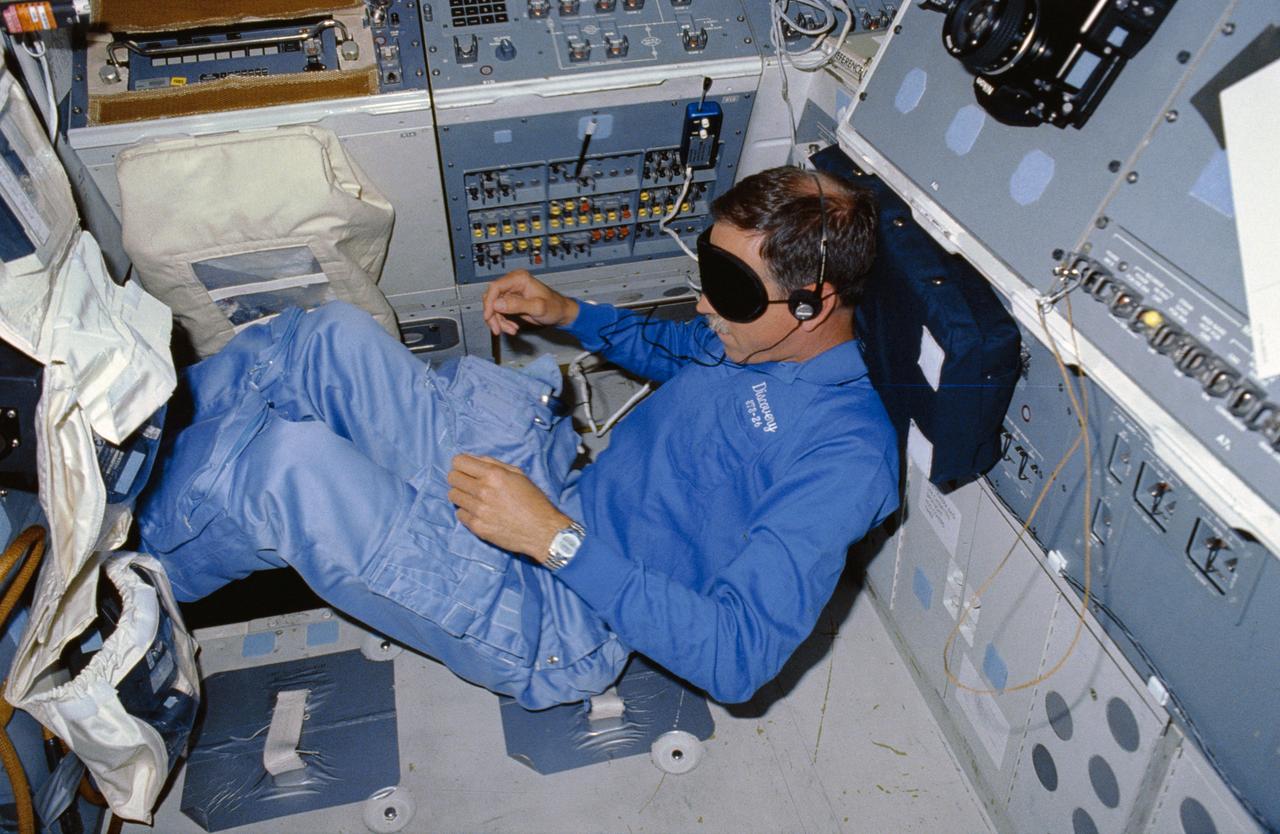
STS026-09-021 (3 Oct 1988) --- Astronaut Richard O. Covey, STS-26 pilot, wearing sleep mask (blindfold) and a headset, props his feet under the pilots seat and rests his head and back on the aft flight deck on orbit station panels while he sleeps. At Covey's right are the mission station control panels.
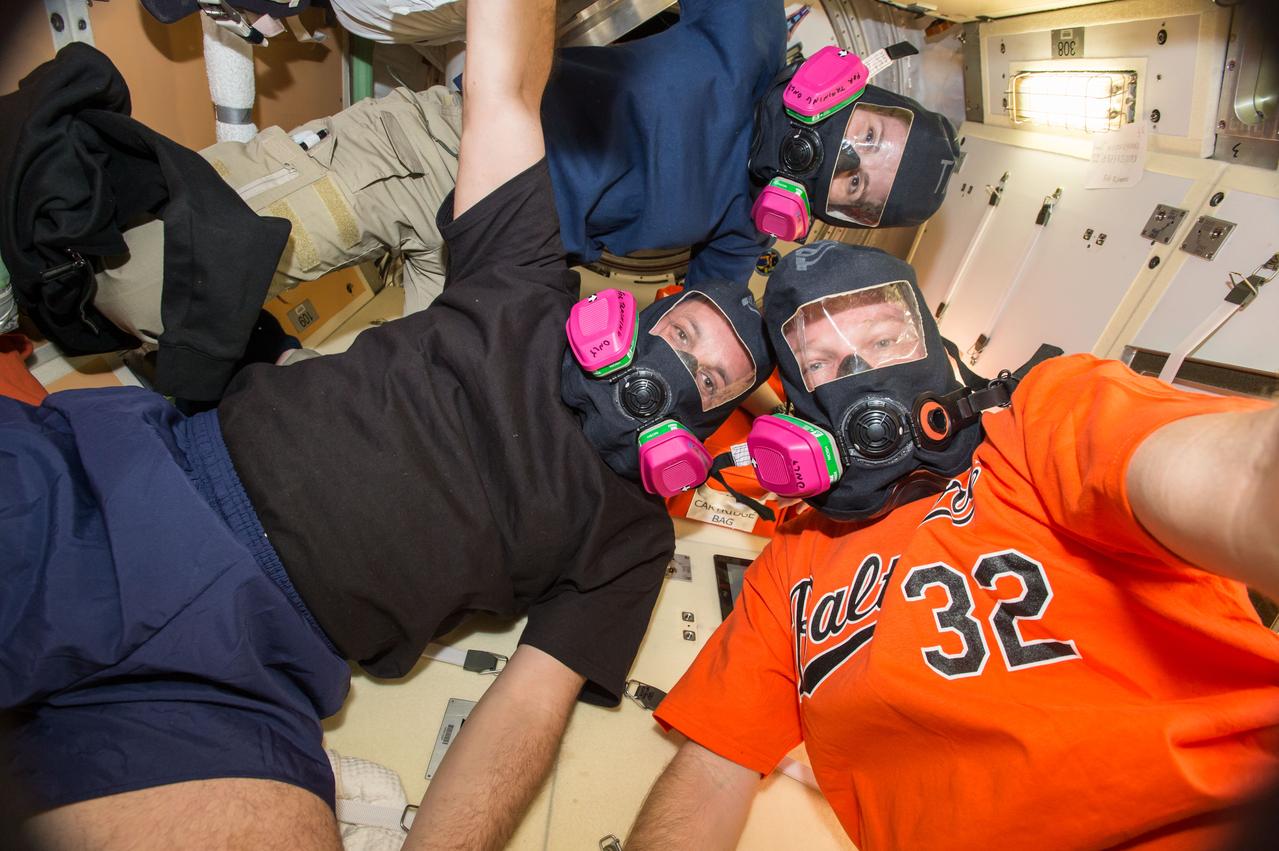
GMT335_19_38_Terry Virts_Emer Mask CBT me samantha anton_130
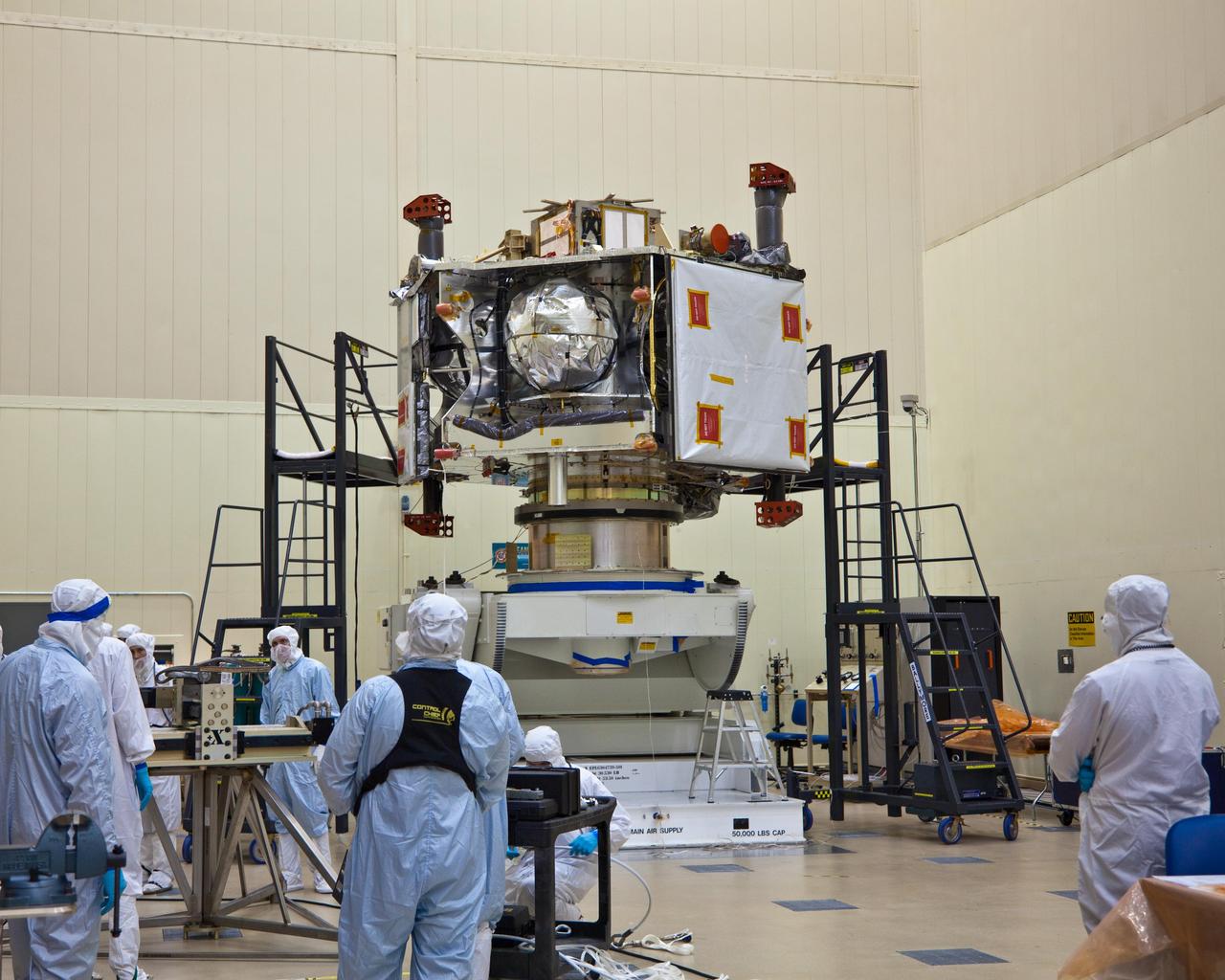
NASA Juno spacecraft rests atop its rotation fixture awaiting transfer to a shipping crate prior to environmental testing; the large white square on the spacecraft right is largest of six microwave radiometer antennas, masked by protective covering.
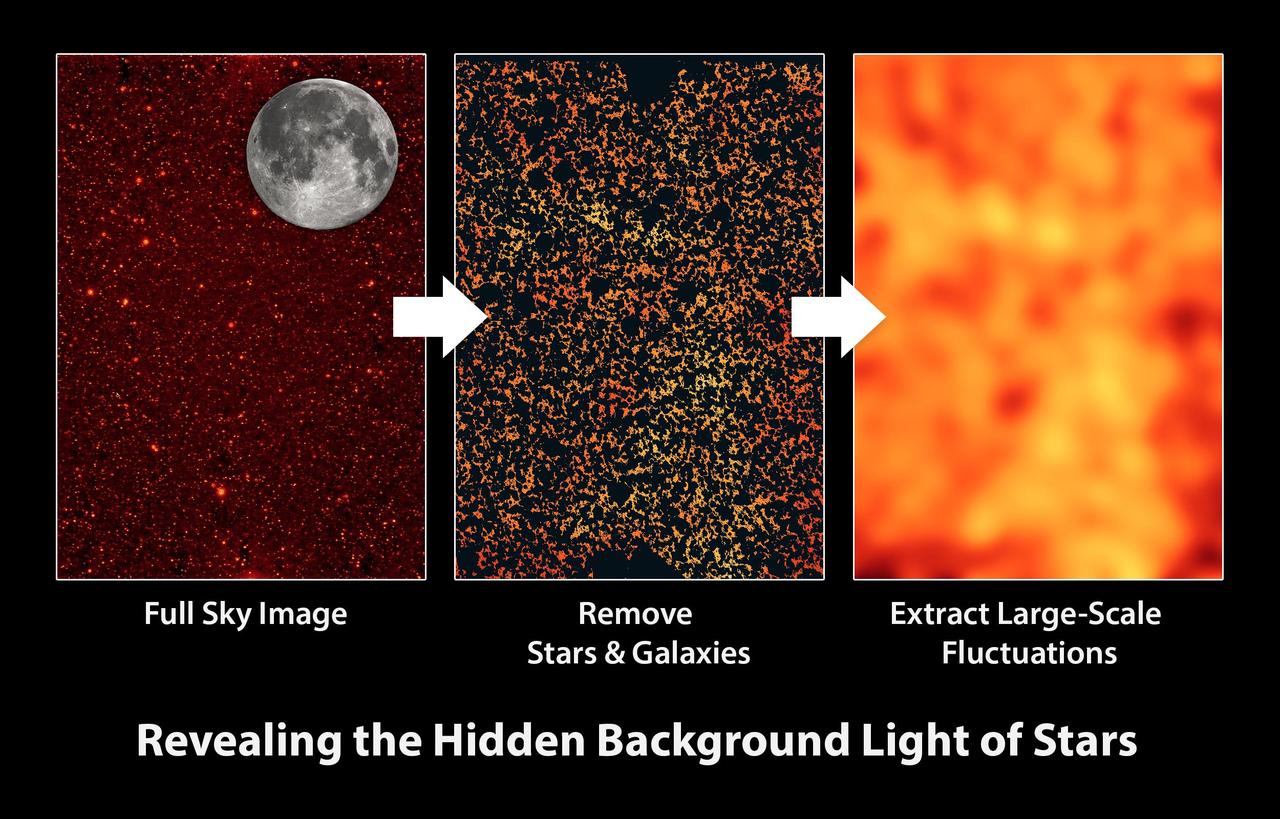
This graphic illustrates how the Cosmic Infrared Background Experiment, or CIBER, team measures a diffuse glow of infrared light filling the spaces between galaxies. The glow does not come from any known stars and galaxies.
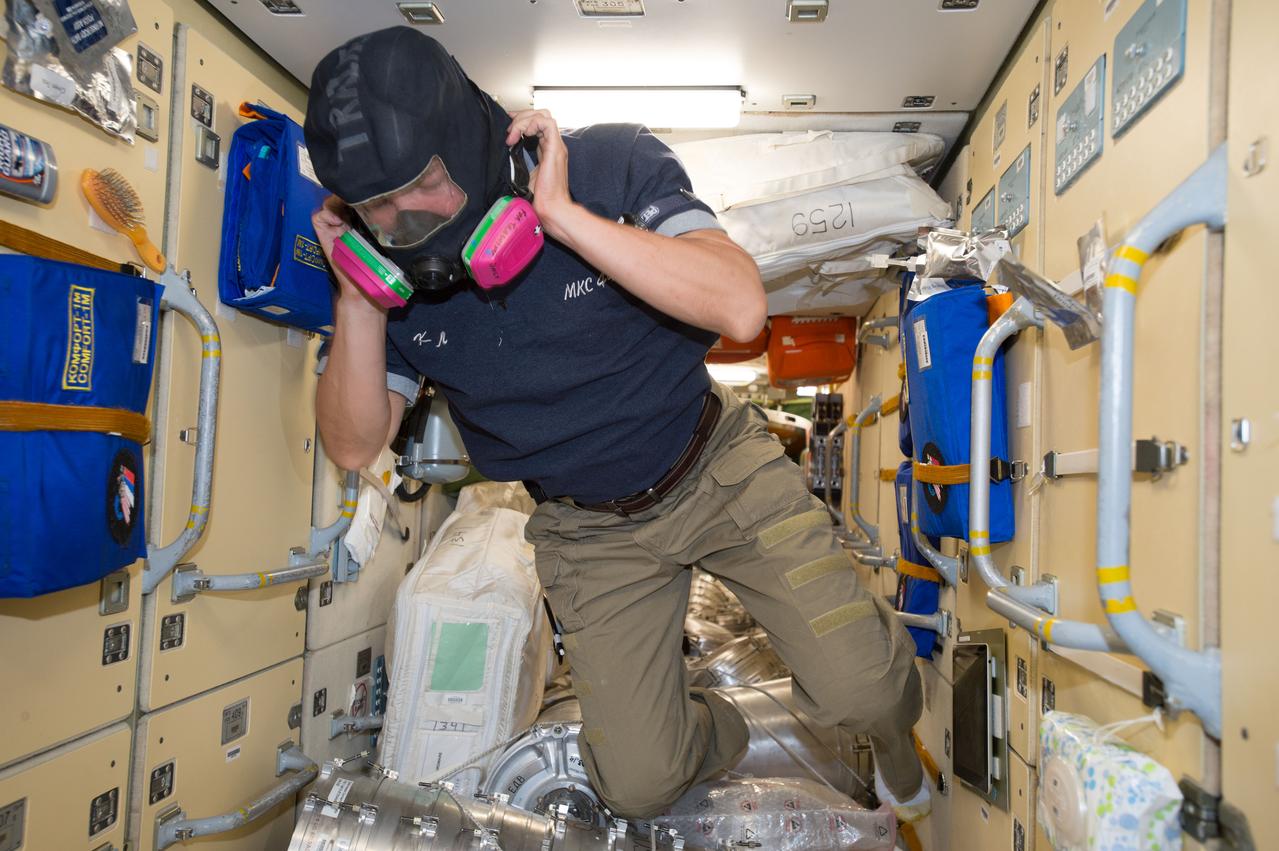
ISS044E025035 (07/29/2015) --- NASA astronaut Kjell Lindgren wears protective breathing apparatus that would be used in the unlikely event of a fire or hazardous chemical leak inside the pressurized air volume of the International Space Station. Familiarization of safety and emergency equipment is standard practice for all newly arrived crew members.
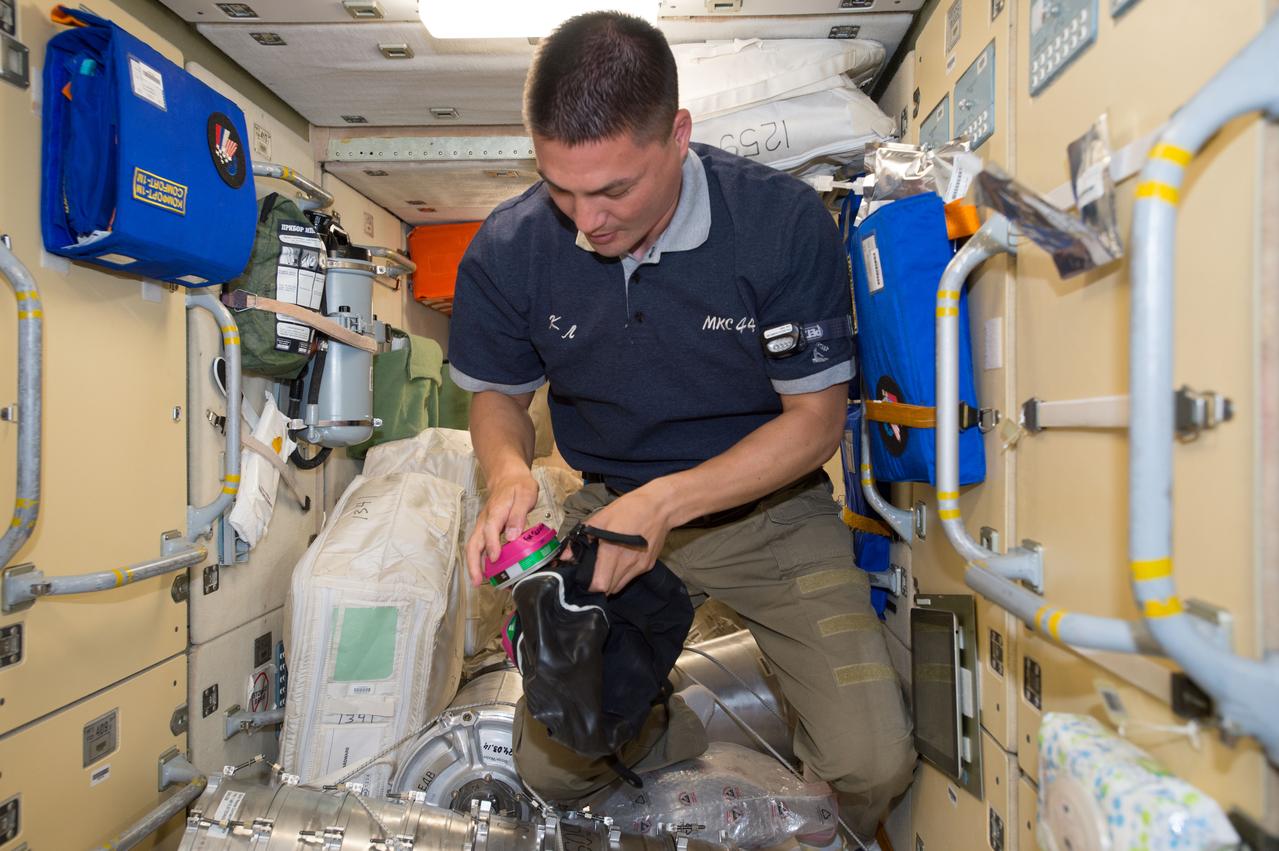
ISS044E025035 (07/29/2015) --- NASA astronaut Kjell Lindgren prepares to don protective breathing apparatus that would be used in the unlikely event of a fire or hazardous chemical leak inside the pressurized air volume of the International Space Station. Familiarization of safety and emergency equipment is standard practice for all newly arrived crew members.
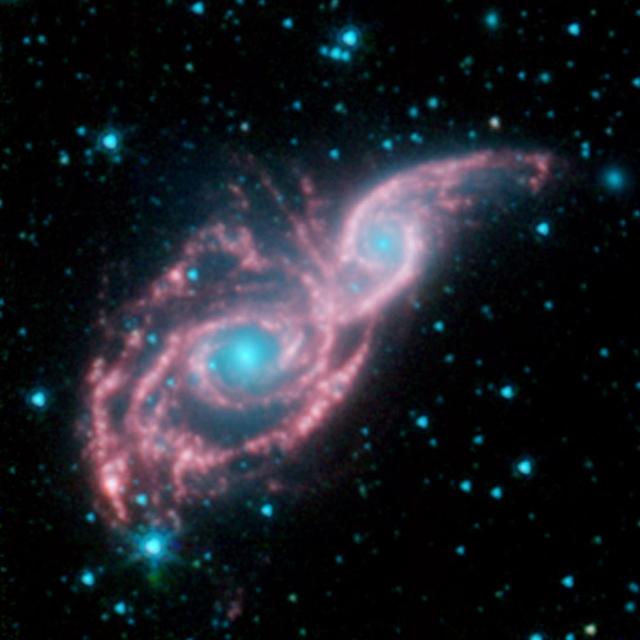
Something appears to be peering through a shiny red mask, in this new false-colored image from NASA Spitzer Space Telescope. The mysterious blue eyes are actually starlight from the cores of two merging galaxies, called NGC 2207 and IC 2163.
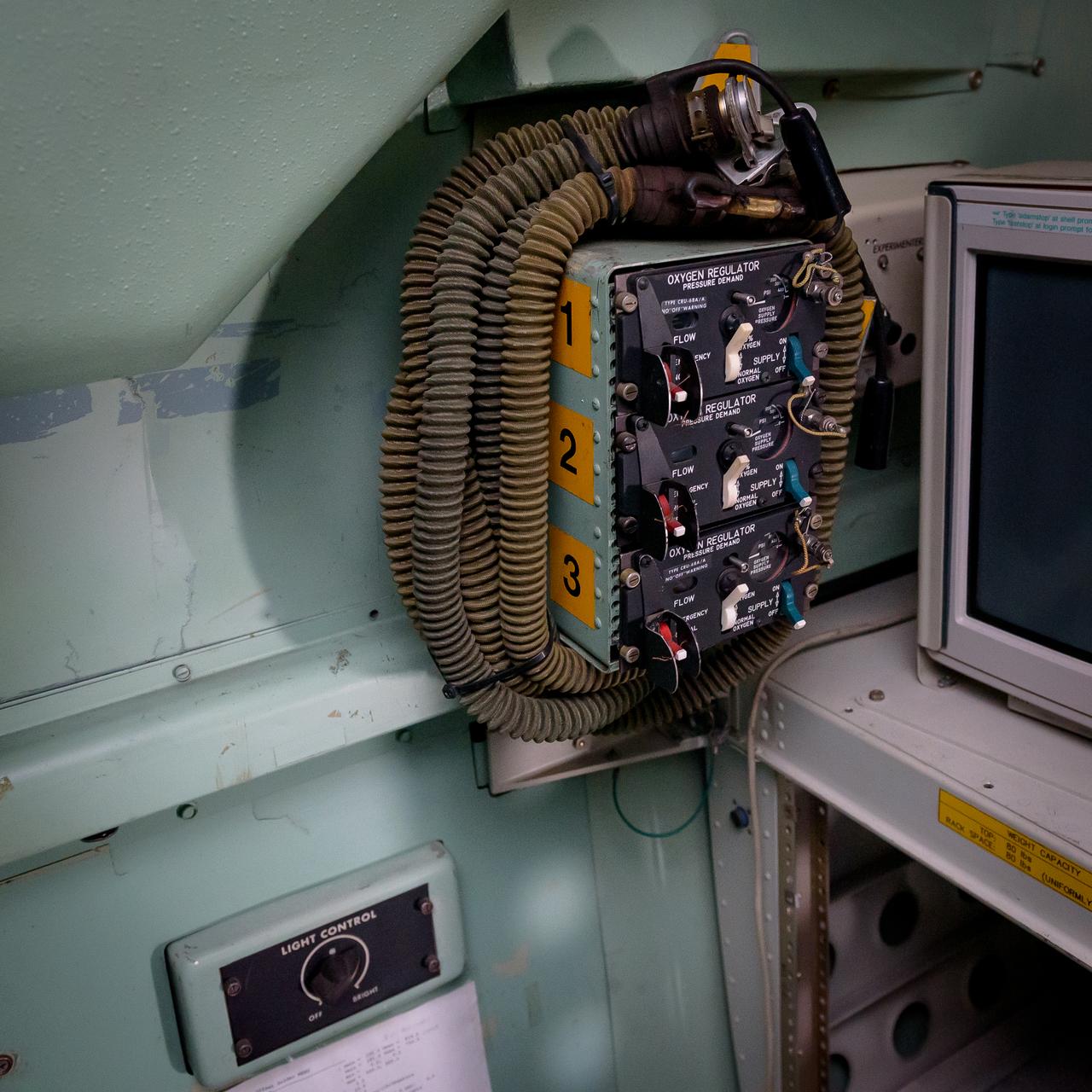
Oxygen regulator pressure demand. Aft of the port side work area. Everyone flying on the Kuiper Airborne Observatory, (KAO) (NASA-714), needed to have their own oxygen mask and operate their regulator.
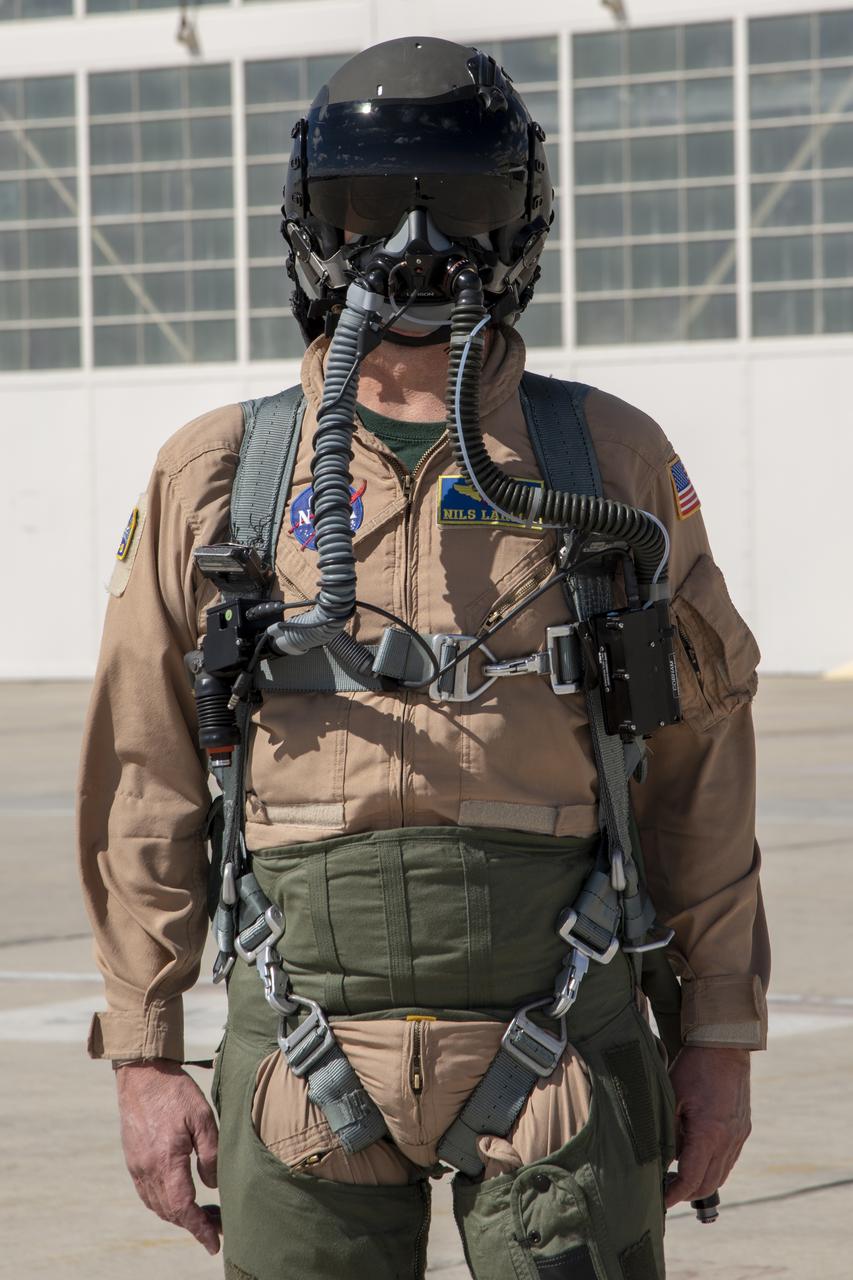
NASA Pilot Nils Larson wears a U.S. Air Force harness configuration with a helmet and an oxygen mask that is being used in the Pilot Breathing Assessment program at NASA's Armstrong Flight Research Center in California.
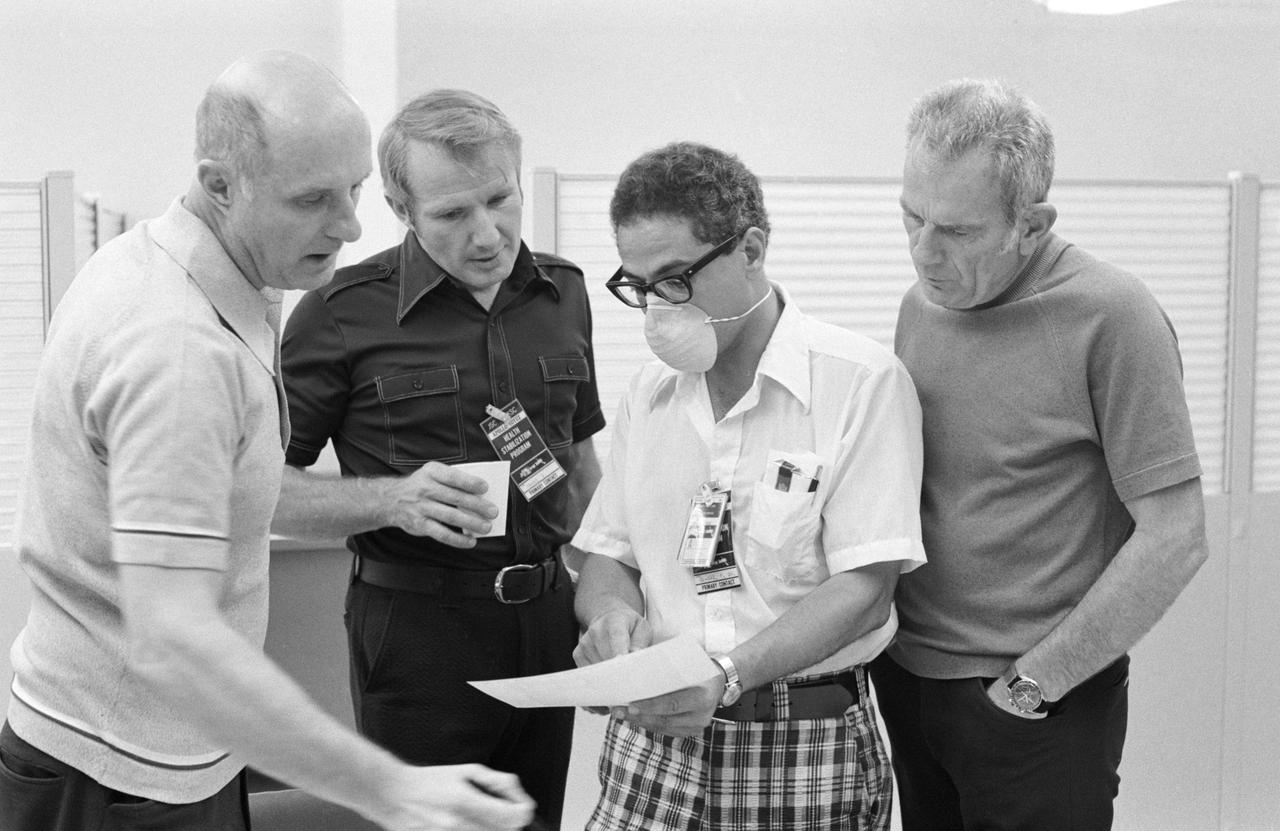
S75-28229 (8 July 1975) --- The three American ASTP prime crew astronauts participate in a photography mission briefing in Building 5 with Dr. Farouk El-Baz (wearing face mask) during Apollo-Soyuz Test Project preflight activity at NASA's Johnson Space Center. They are, left to right, Thomas P. Stafford, commander; Vance D. Brand, command module pilot; Dr. El-Baz; and Donald K. Slayton, docking module pilot. Dr. El-Baz is with the Center for Earth and Planetary Studies, National Air and Space Museum, Smithsonian Institution. The face mask is to protect the crewmen from possible exposure to disease prior to launch time. Photo credit: NASA
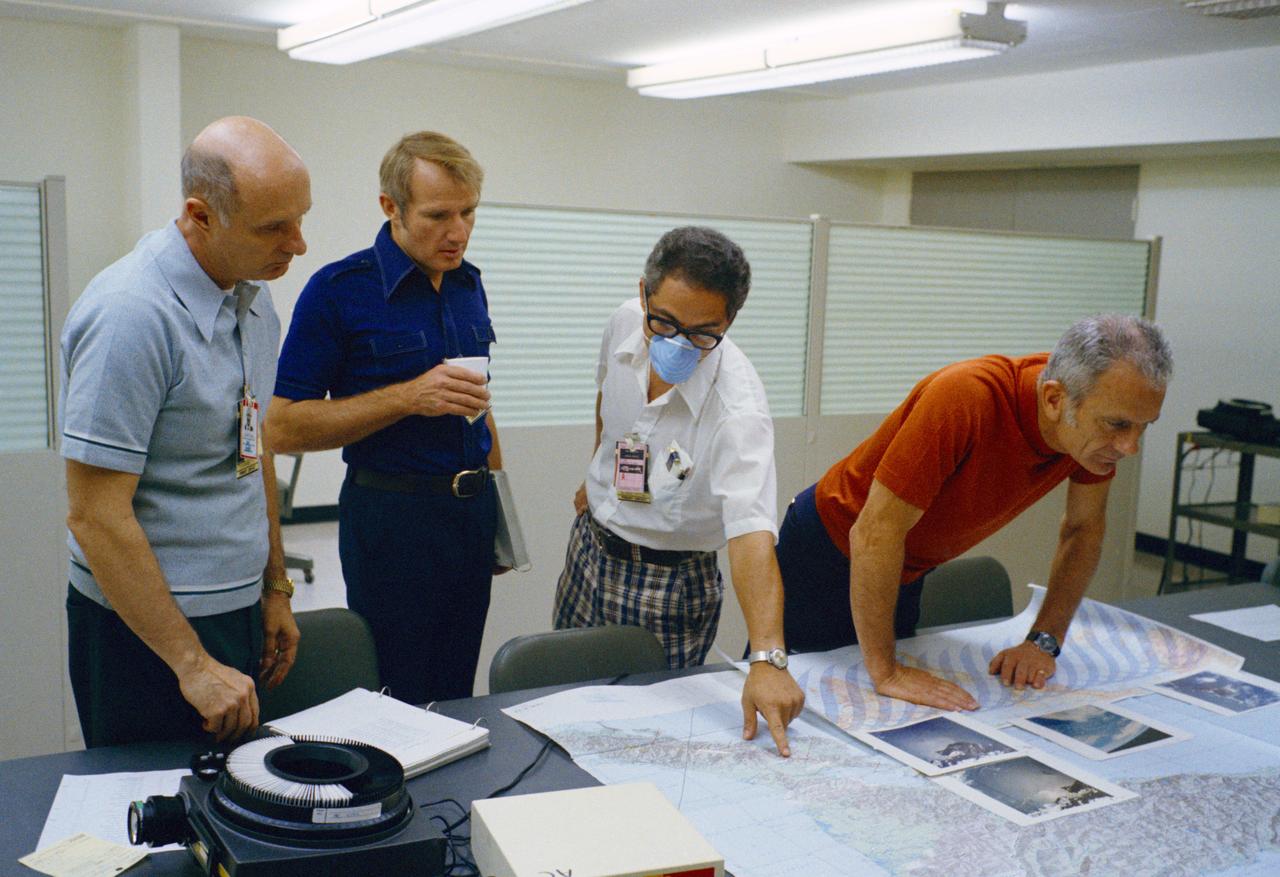
S76-20263 (1975) --- Farouk El-Baz (wearing face mask) is seen with ASTP crewmen T. Stafford, V. Brand and D. Slayton during training activity, Bldg. 5 prior to liftoff in mid-July 1975. They are studying geographic aerial photographs & maps. Photo credit: NASA
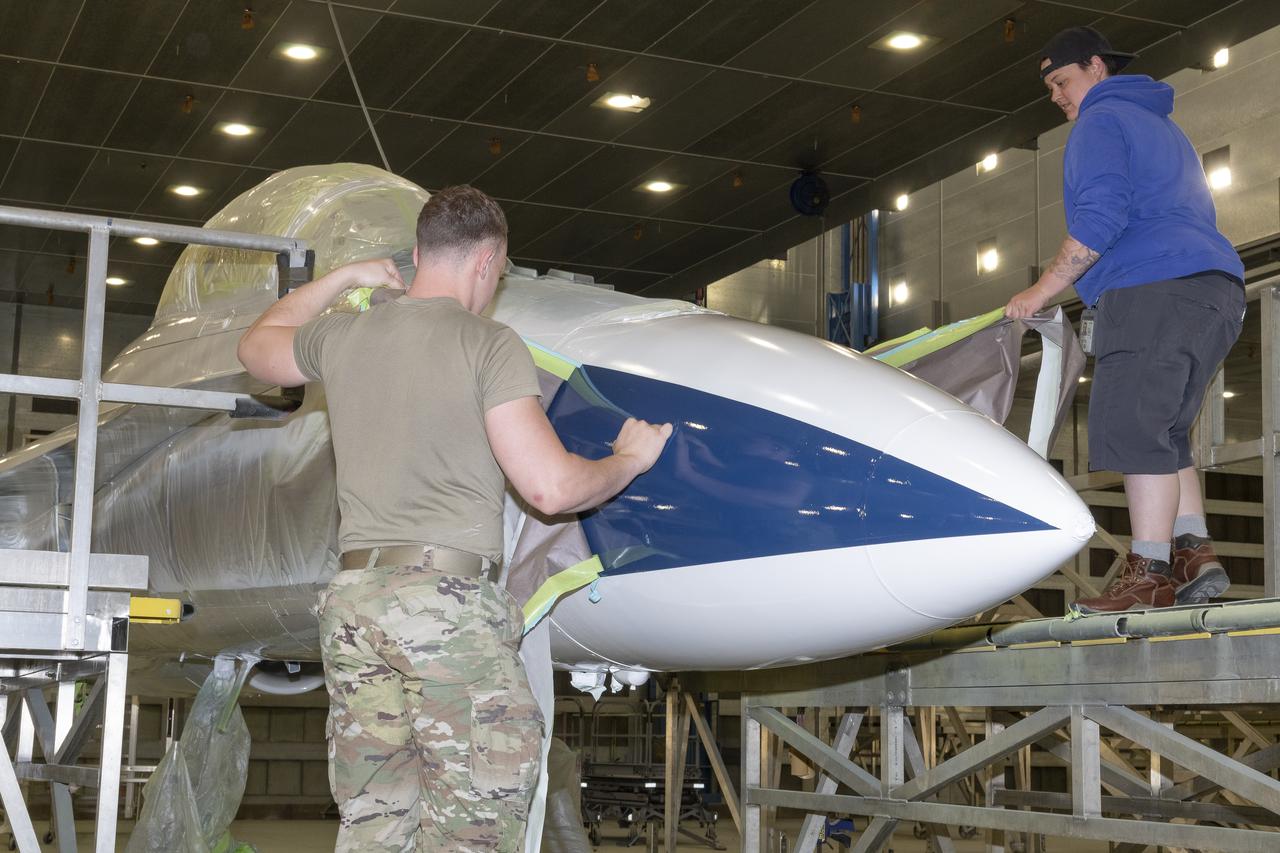
U.S. Air Force Corrosion Control Facility personnel Kristian Snoots and Shelby Youngo remove masking from NASA 862, which is an F/A-18D based at NASA’s Armstrong Flight Research Center in Edwards, California. The corrosion control facility is located on Edwards Air Force Base and is also known as the Paint Barn.
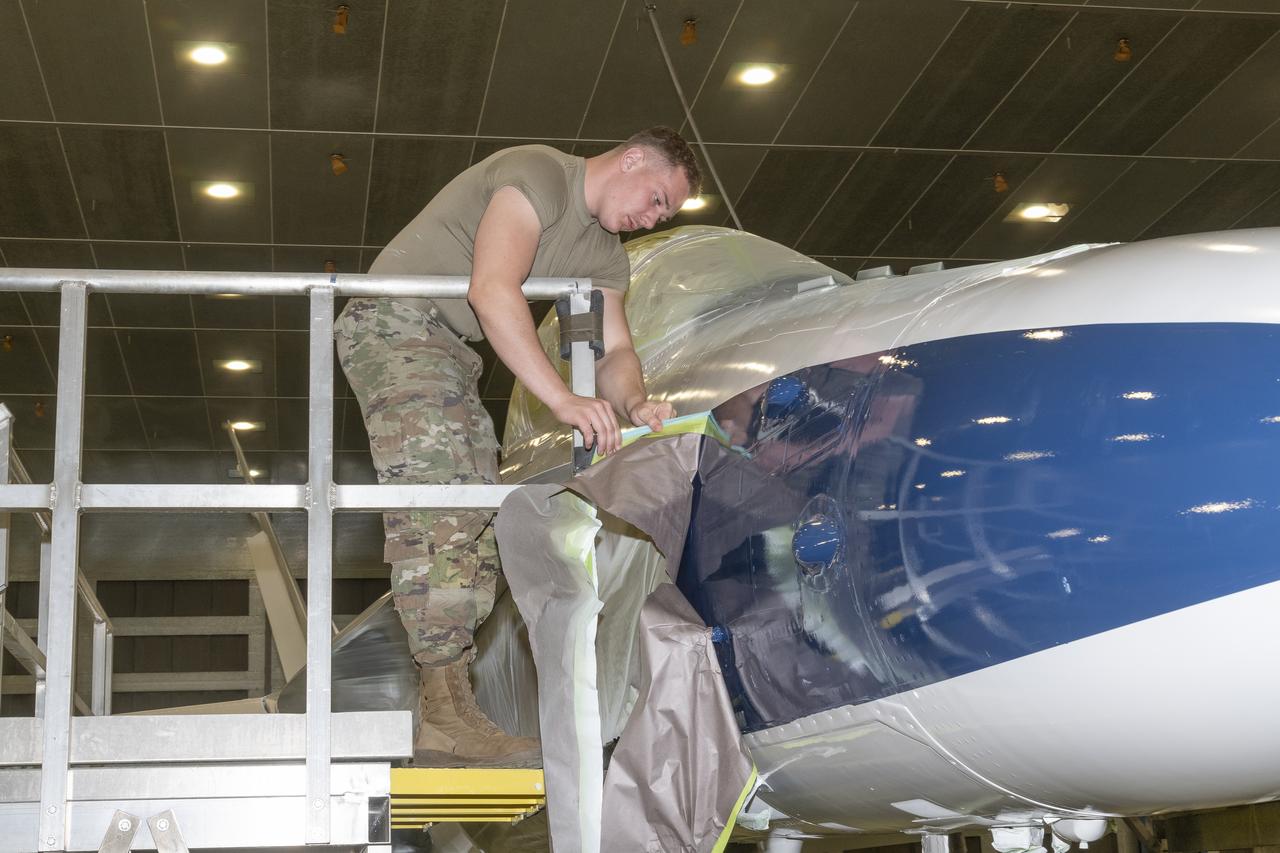
Kristian Snoots, who works at the U.S. Air Force Corrosion Control Facility on Edwards Air Force Base, removes masking from NASA 862, which is an F/A-18D based at NASA’s Armstrong Flight Research Center in Edwards, California.
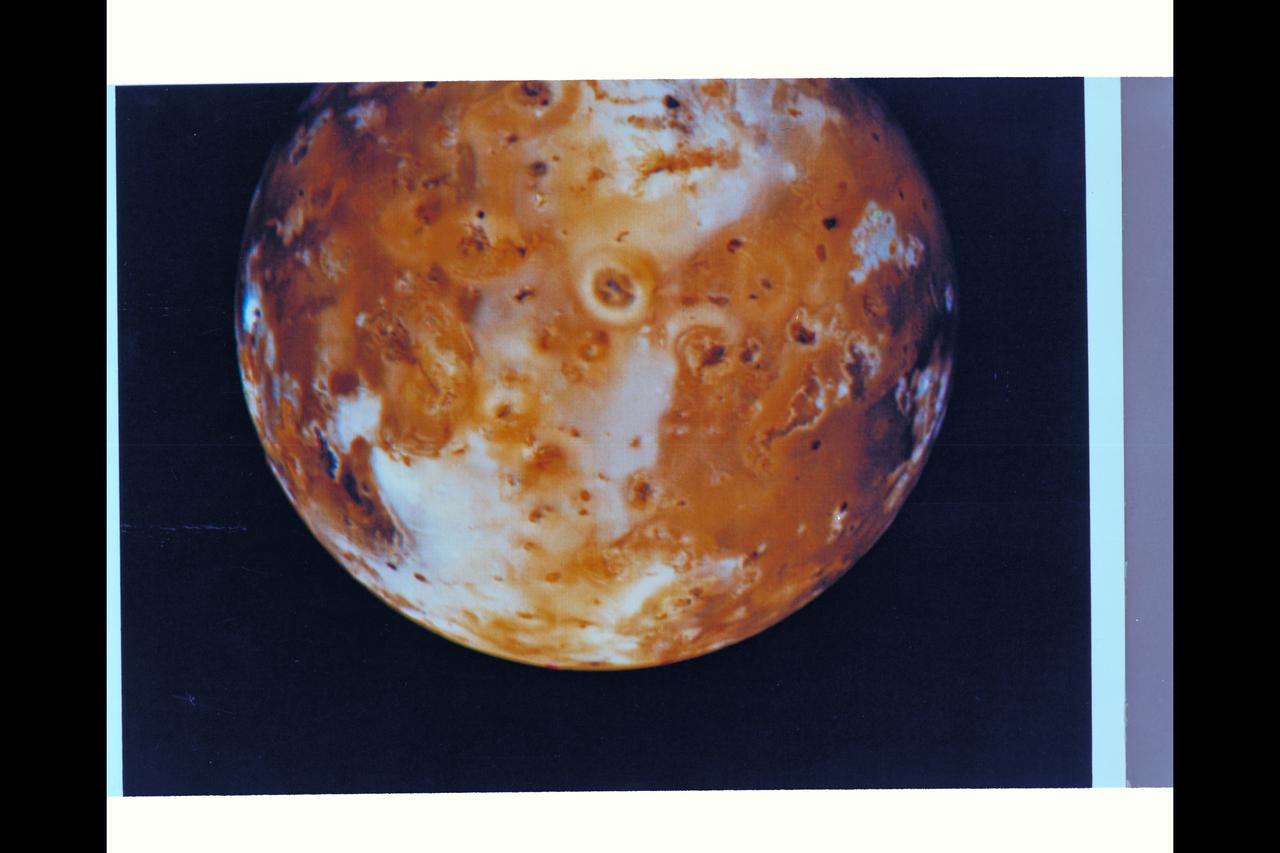
Range : 862,200 km. ( 500,000 miles ) This photograph shows subspacecraft longitude of approximately 146 degrees of Jupiter's moon Io. Circular features are seen that may be meteorite impact craters or features of internal origins. Irregular depressions are seen that indicate surface modifications. The bright irregular patches appear to be younger deposits masking the surface detail.
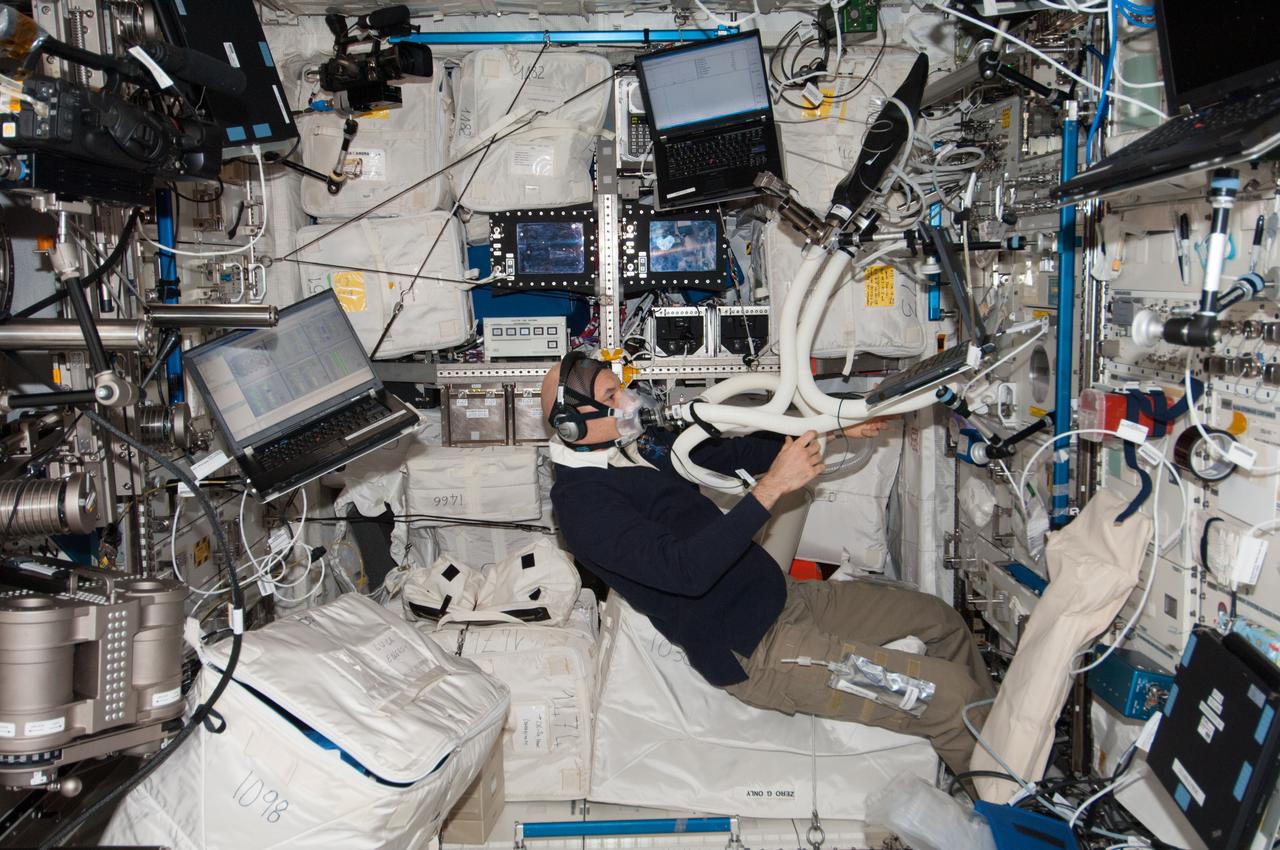
ISS037-E-004950 (2 Oct. 2013) --- European Space Agency astronaut Luca Parmitano, Expedition 37 flight engineer, performs an oxygen uptake measurement session in the Columbus laboratory of the International Space Station. He is wearing a Pulmonary Function System (PFS) face mask during the session.

STS070-334-031 (13-22 JULY 1995) --- Astronaut Kevin R. Kregel demonstrates the new shuttle sleep restraints on the space shuttle Discovery?s middeck. During an August 11, 1995, post flight presentation to fellow employees at the Johnson Space Center (JSC), the STS-70 pilot discussed features of the device and lauded its ability to add comfort for crew members.
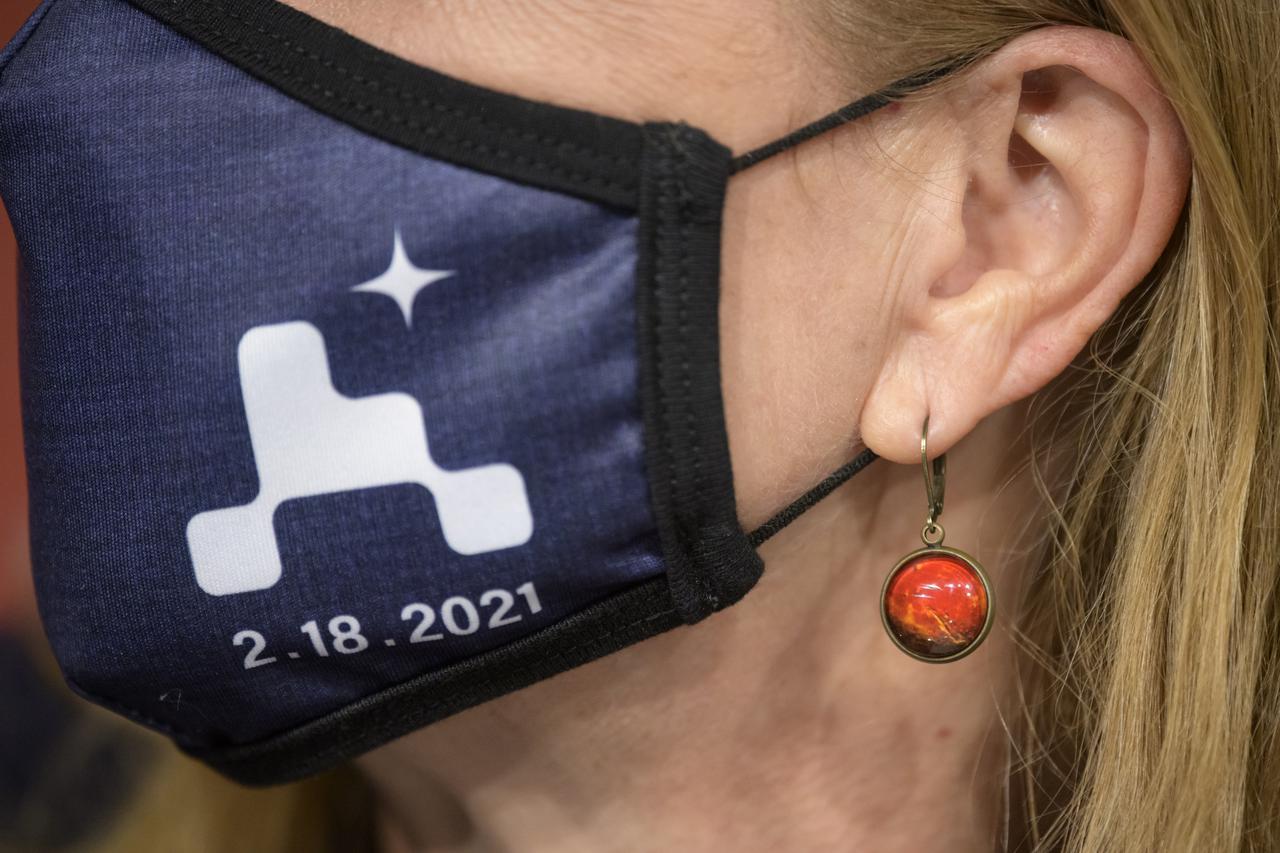
Mars earrings are seen on Director of NASA's Science Mission Directorate’s Planetary Science Division, Lori Glaze during a NASA Perseverance rover mission post-landing update, Thursday, Feb. 18, 2021, at NASA's Jet Propulsion Laboratory in Pasadena, California. A key objective for Perseverance’s mission on Mars is astrobiology, including the search for signs of ancient microbial life. The rover will characterize the planet’s geology and past climate, pave the way for human exploration of the Red Planet, and be the first mission to collect and cache Martian rock and regolith. Photo Credit: (NASA/Bill Ingalls)

STS064-23-037 (16 Sept. 1994) --- Astronauts Mark C. Lee (left) and Carl J. Meade were photographed in the midst of 15-minute pre-breathe exercise in preparation for their Extravehicular Activity (EVA) of Sept. 16, 1994. On that day the two performed an in-space rehearsal or demonstration of a contingency rescue using the never-before flown Simplified Aid for EVA Rescue (SAFER) system some 130 nautical miles above Earth. During the EVA the two STS-64 mission specialists took turns using the SAFER hardware. The test was the first phase of a larger SAFER program leading finally to the development of a production version for future shuttle and space station applications. Photo credit: NASA or National Aeronautics and Space Administration
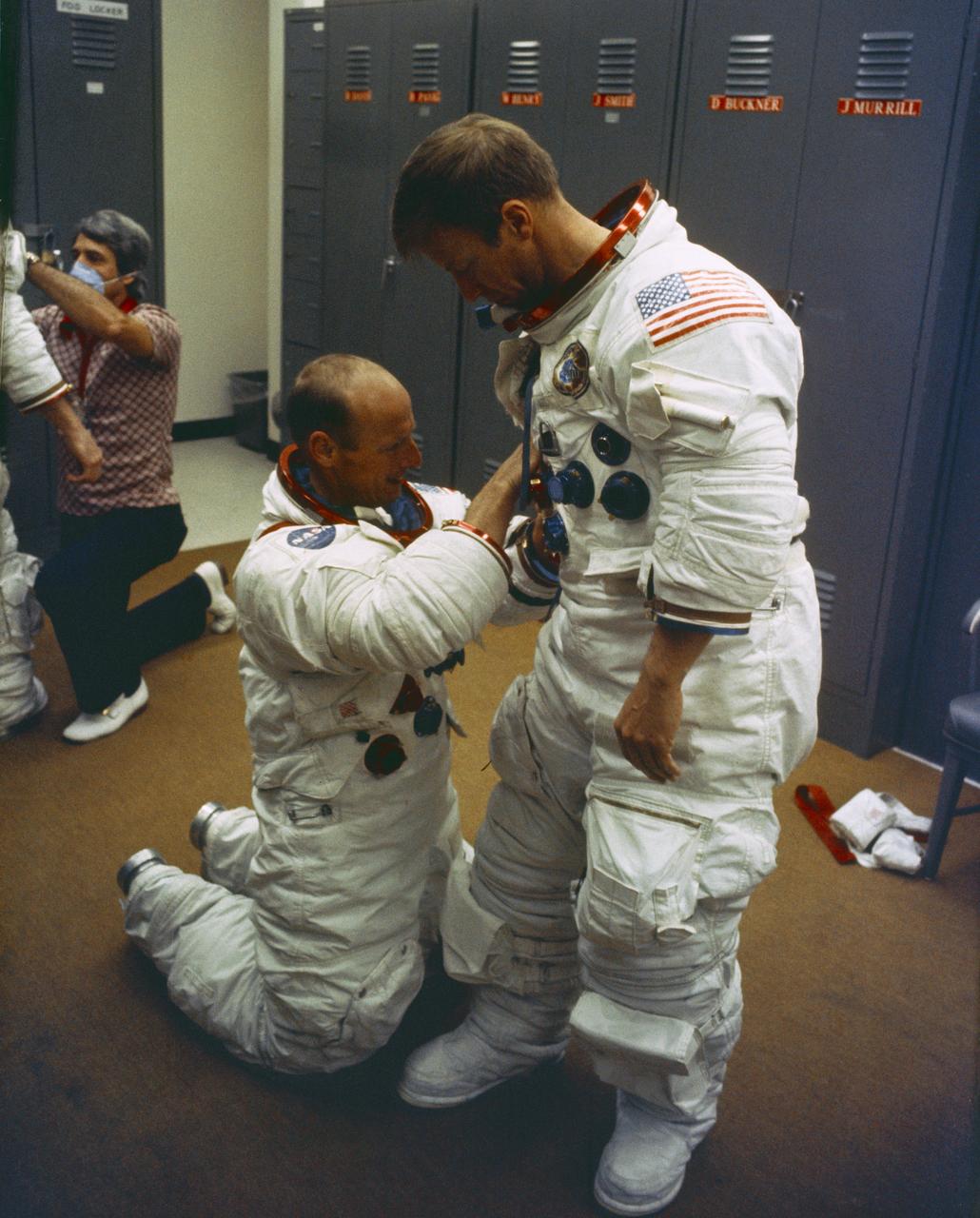
S73-25399 (8 May 1973) --- Astronaut Paul J. Weitz, prime crew pilot of the first manned Skylab mission, is suited up in Bldg. 5 at Johnson Space Center (JSC) during prelaunch training activity. He is assisted by astronaut Charles Conrad, Jr., prime crew commander. The man in the left background is wearing a face mask to insure that Conrad, Joseph Kerwin and Weitz are not exposed to disease prior to launch. Photo credit: NASA

iss074e0587453 (May 17, 2026) --- NASA astronauts Jessica Meir and Jack Hathaway, both Expedition 74 flight engineers, wear disposable gloves, dust masks, and safety goggles, as part of standard safety protocol, while unpacking temperature‑controlled scientific samples from a SpaceX Dragon cargo spacecraft and stowing them inside research facilities located aboard the International Space Station’s Kibo laboratory module. Credit: NASA/Chris Williams

iss074e0587456 (May 17, 2026) --- NASA astronauts Jessica Meir and Jack Hathaway, both Expedition 74 flight engineers, wear disposable gloves, dust masks, and safety goggles while unpacking temperature‑controlled scientific samples from a SpaceX Dragon cargo spacecraft and stowing them inside research facilities located aboard the International Space Station’s Kibo laboratory module. Credit: NASA/Chris Williams
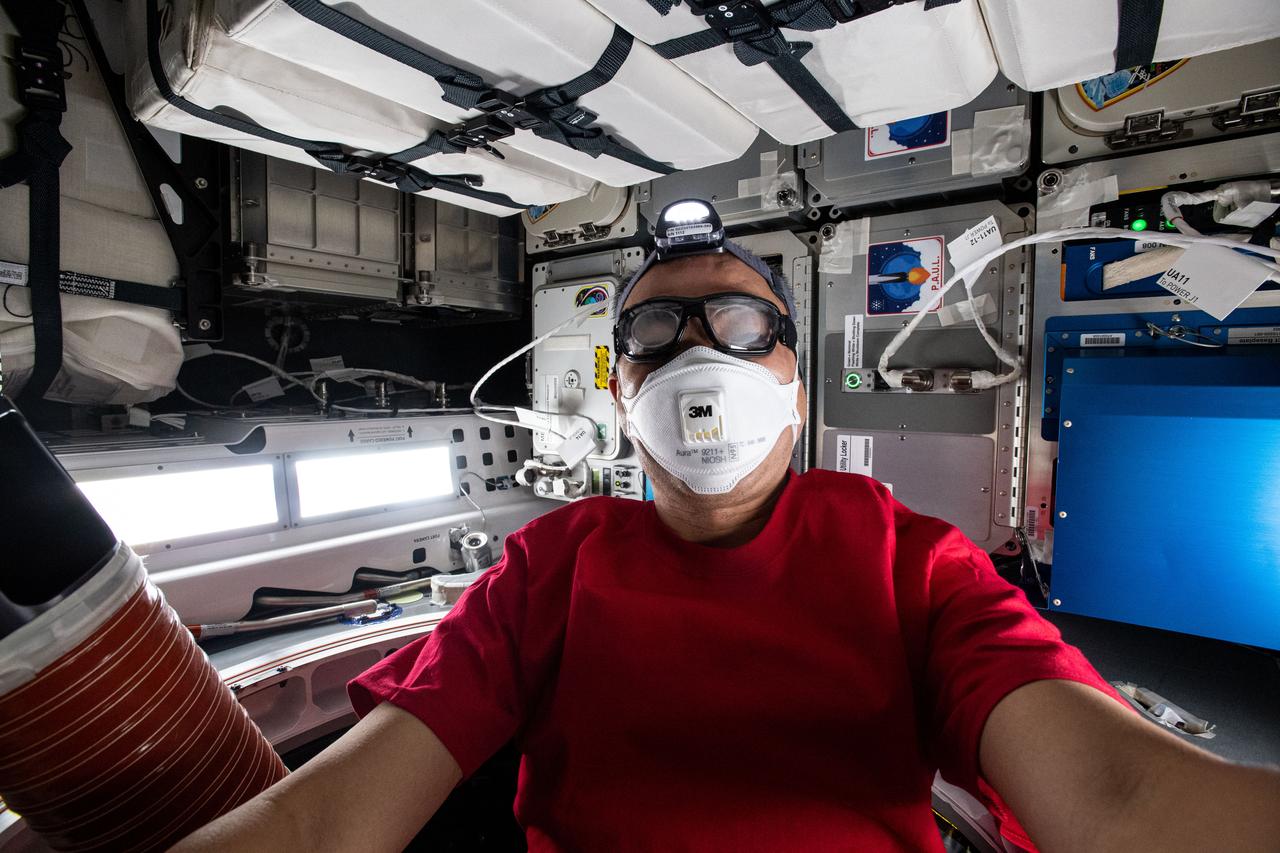
iss064e011228 (Dec. 7, 2020) --- JAXA astronaut Sochi Noguchi is pictured inside the newly arrived SpaceX Cargo Dragon vehicle wearing personal protective equipment. Safety goggles and masks are required when a crew member opens the hatch and enters a new spacecraft for the first time due to dust and debris that may have been dislodged during the ascent to space.
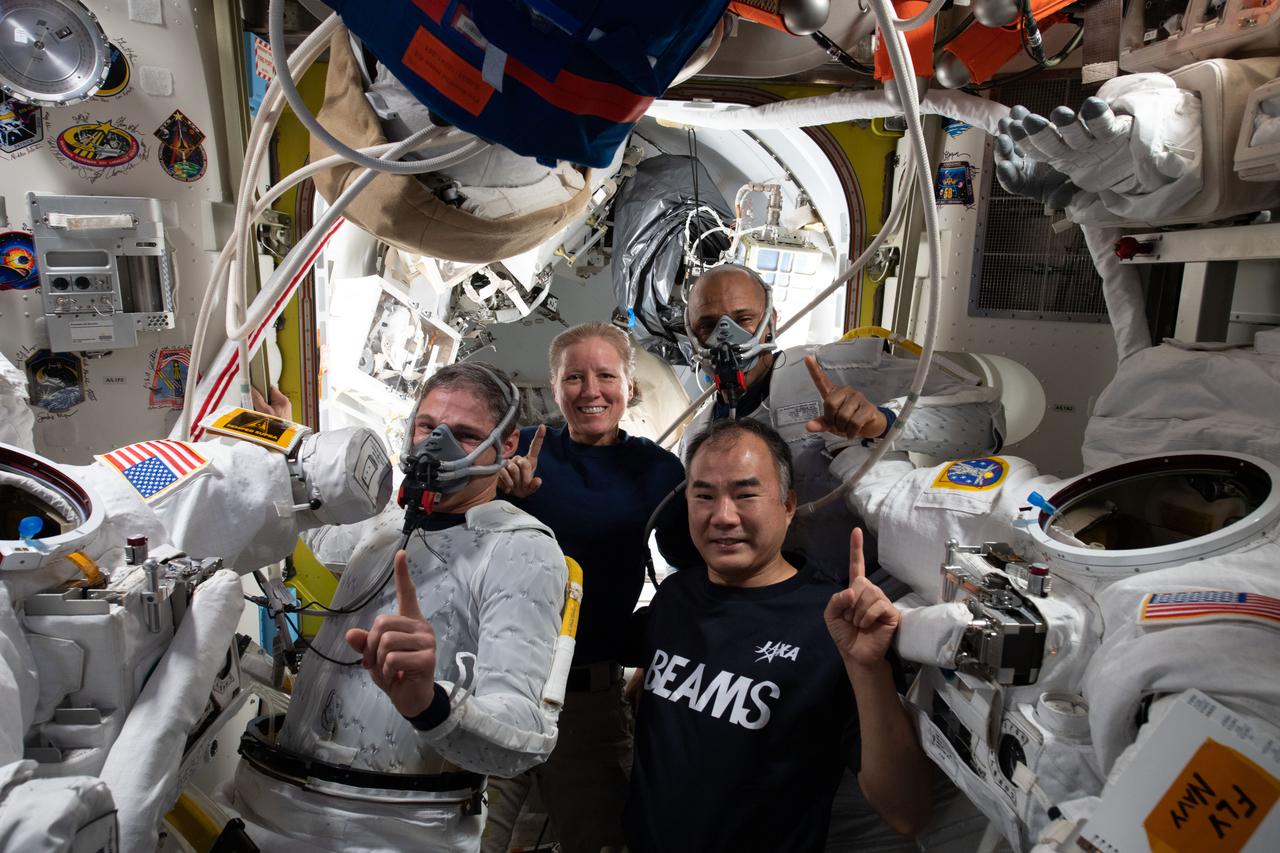
iss064e028065 (Feb. 1, 2021) --- Clockwise from bottom right are, Expedition 64 Flight Engineers and SpaceX Crew-1 members Soichi Noguchi, Michael Hopkins, Shannon Walker and Victor Glover during spacewalk preparations inside the U.S. Quest airlock. Hopkins and Glover are wearing masks breathing pure oxygen to purge nitrogen from their bodies before beginning their spacewalk. The pre-breathe protocol helps prevent a condition known as the "bends" that can occur when the body is exposed to different pressure environments.
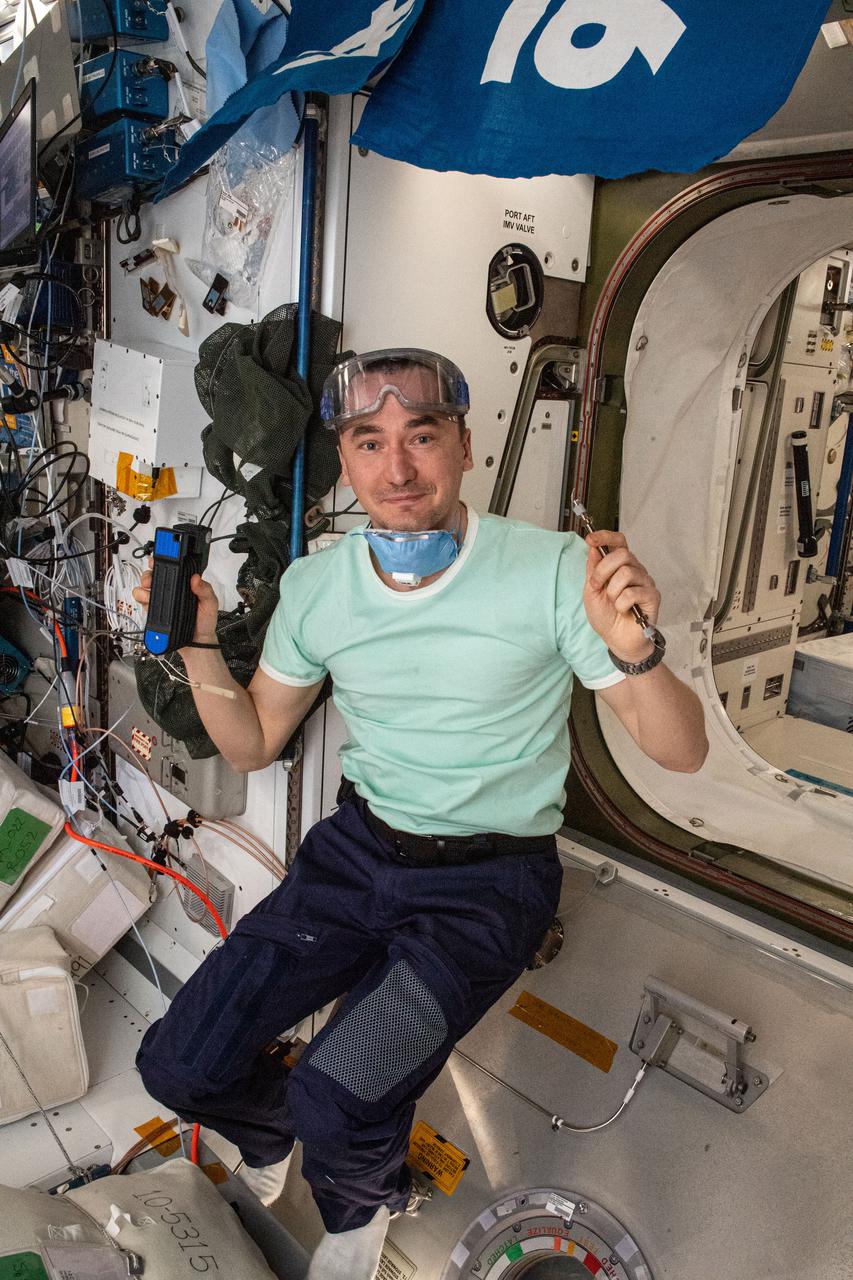
iss065e092395 (June 5, 2021) --- Roscosmos cosmonaut and Expedition 65 Flight Engineer Pyotr Dubrov is pictured inside the Harmony module wearing safety goggles and a mask during cargo operations shortly after the SpaceX Cargo Dragon resupply ship arrived. The Cargo Dragon had docked to Harmony's space-facing international docking adapter.
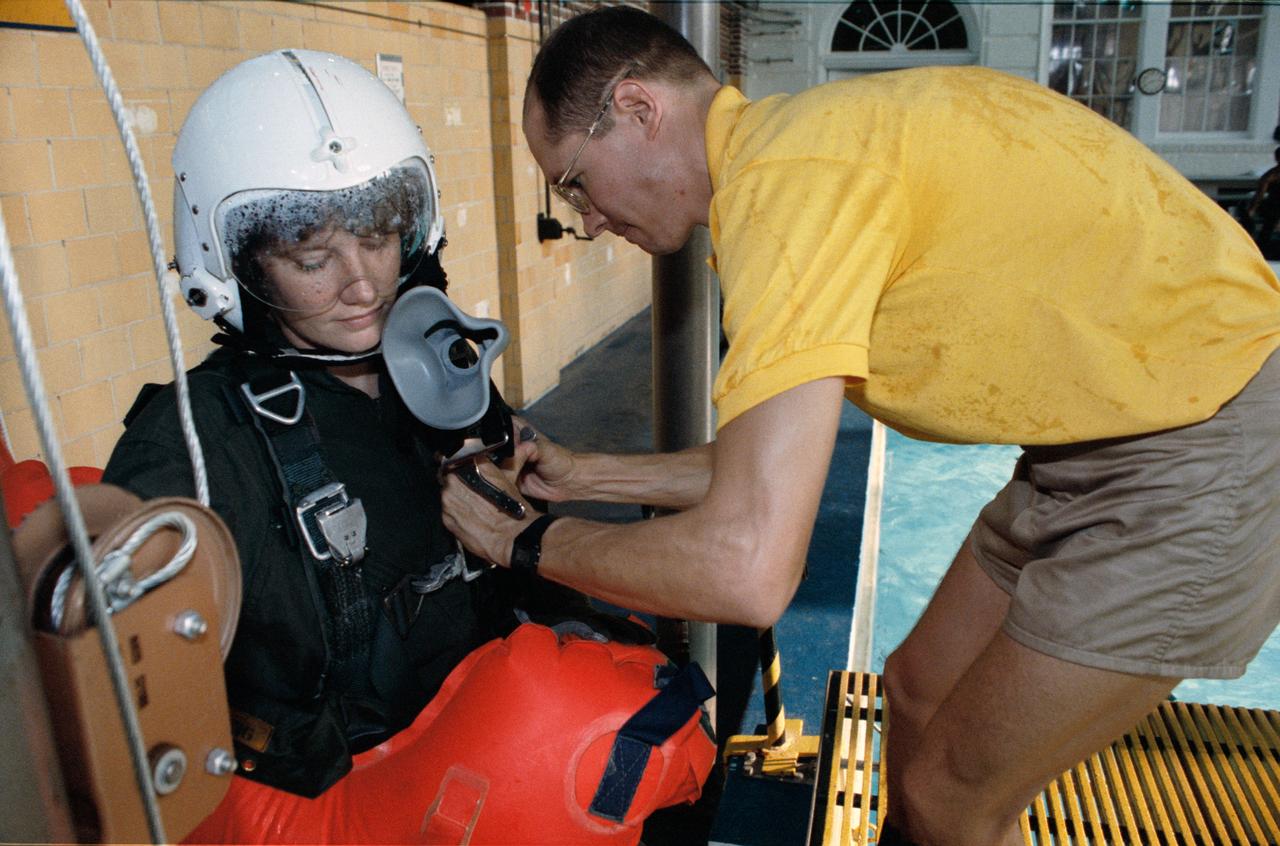
1990 Group 13 Astronaut Candidate (ASCAN) Susan J. Helms, wearing helmet with oxygen mask and inflated life jacket, is assisted by training instructor during water survival exercises at Elgin Air Force Base (AFB) in Pensacola, Florida. Helms looks on as the instructor adjusts her parachute harness. When ready, Helms will be dropped from the harness into the pool (in background) to simulate a water landing after T-38 ejection. ASCANs participated in the exercises from 08-14-90 through 08-17-90.
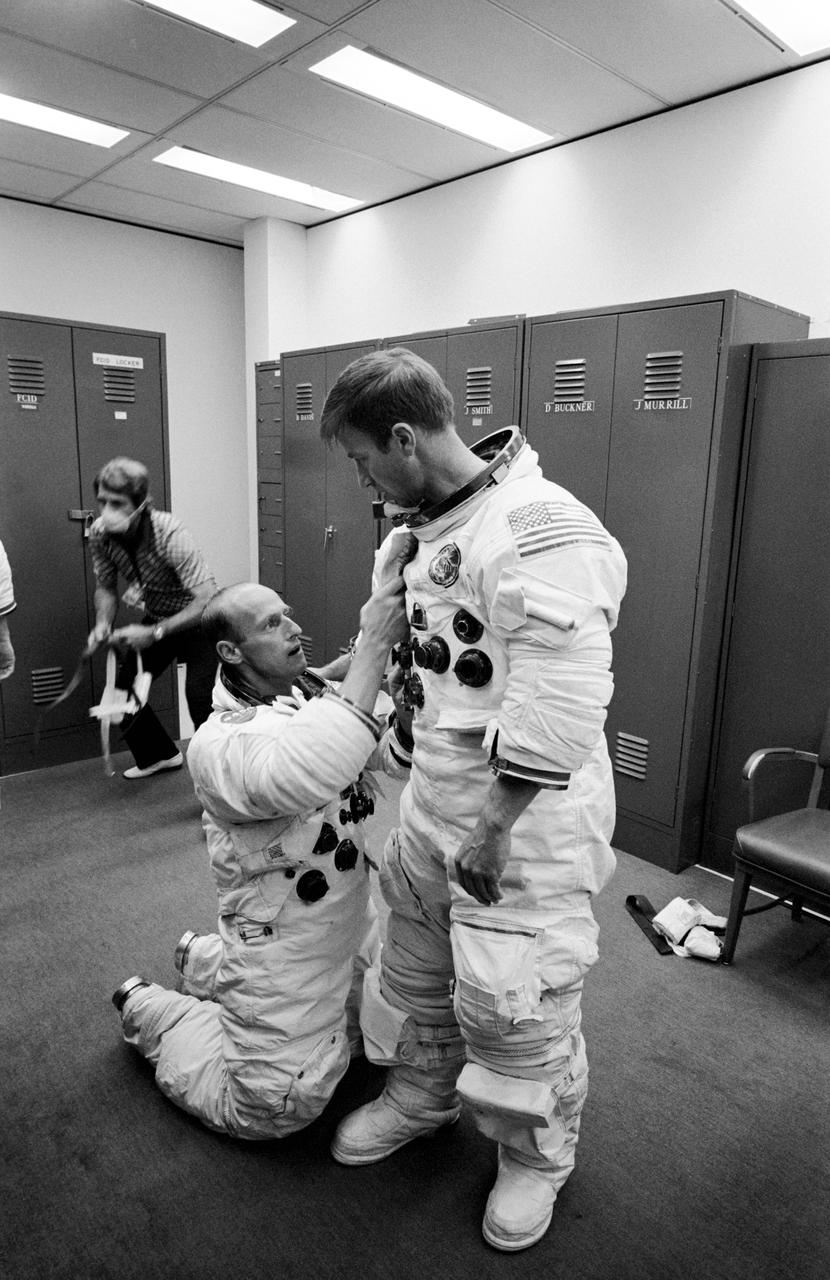
S73-25283 (8 May 1973) --- Astronaut Paul J. Weitz, prime crew pilot of the first manned Skylab mission, is suited up in Bldg. 5 at Johnson Space Center during prelaunch training activity. He is assisted by astronaut Charles Conrad Jr., prime crew commander. The man in the left background is wearing a face mask to insure that Conrad, Joseph Kerwin and Weitz are not exposed to disease prior to launch. Photo credit: NASA
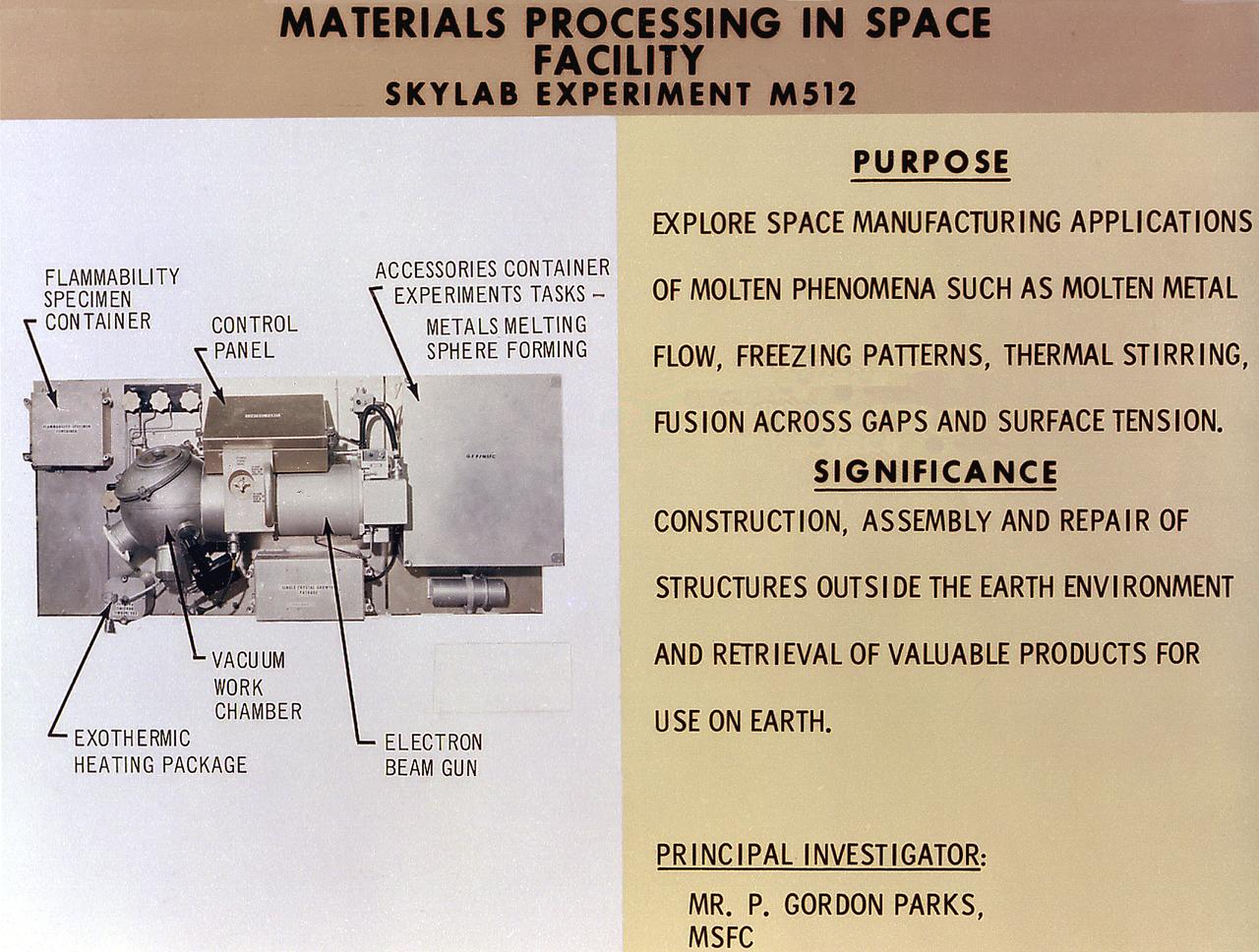
This chart details Skylab's Materials Processing Facility experiment (M512). This facility, located in the Multiple Docking Adapter, was developed for Skylab and accommodated 14 different experiments that were carried out during the three marned missions. The abilities to melt and mix without the contaminating effects of containers, to suppress thermal convection and buoyancy in fluids, and to take advantage of electrostatic and magnetic forces and otherwise masked by gravitation opened the way to new knowledge of material properties and processes. This beginning would ultimately lead to the production of valuable new materials for use on Earth.
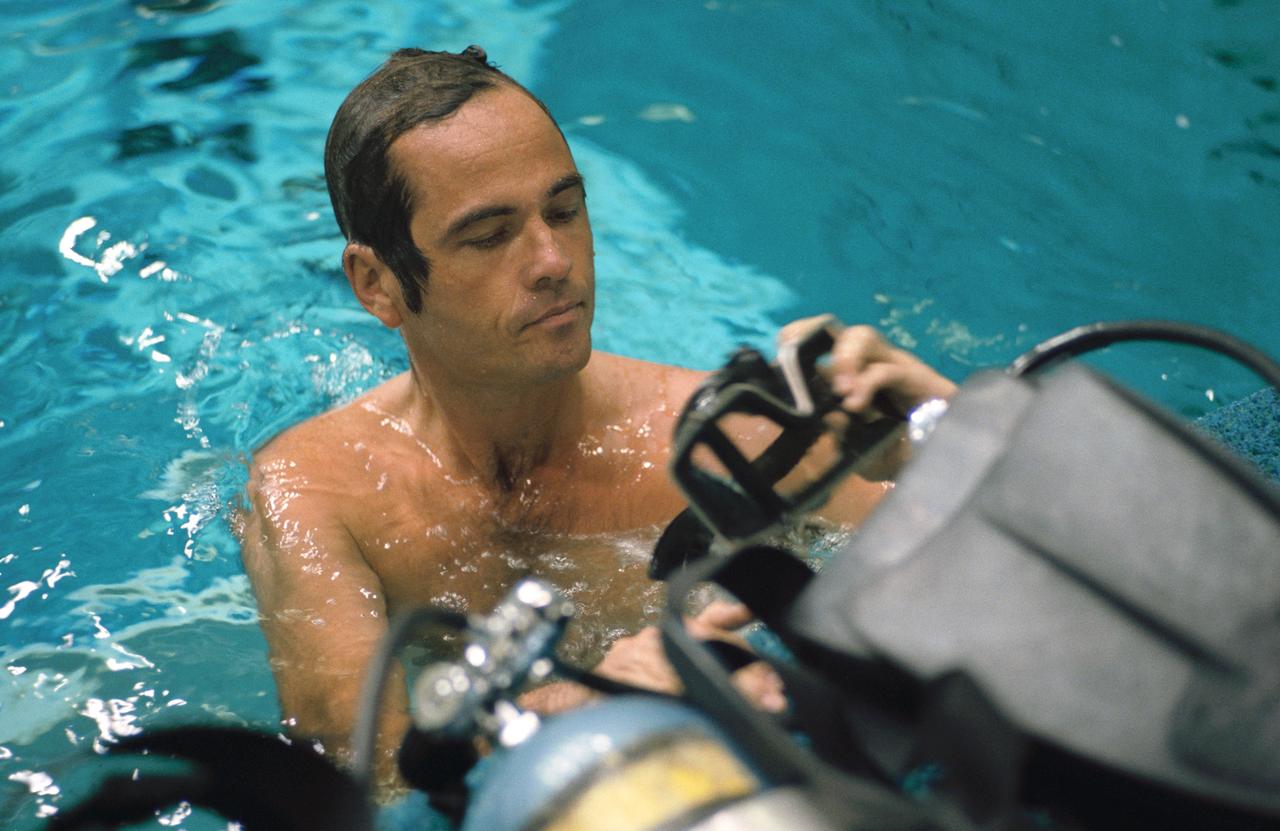
S84-36956 (1 July 1984) --- Astronaut Robert L. Crippen, 41-G crew commander, prepares his SCUBA mask prior to submerging into the weightless environment training facility's 25 ft. deep pool to observe a simulation exercise for two fellow 41-G crewmembers assigned to an extravehicular activity (EVA) in space. Not pictured are Astronauts Kathryn D. Sullivan and David C. Leestma, mission specialists who will perform the EVA during the eight-day mission scheduled for October of this year.
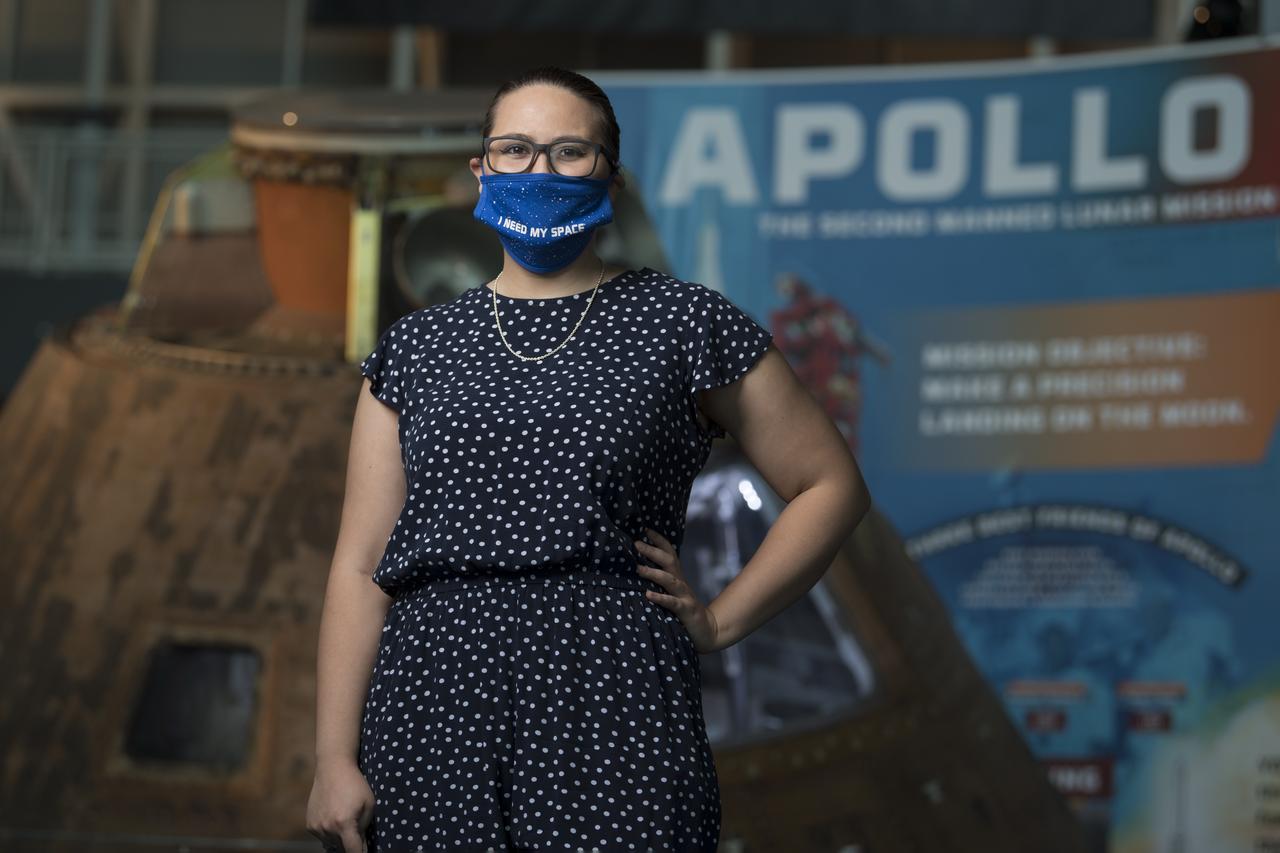
Portrait of Casey Denham in front of the Apollo 12 Command Module "Yankee Clipper" display at the Virginia Air and Space Center in Hampton, Virginia. Due to the COVID-19 pandemic, masks were mandated by Governor Northam in Virginia in public settings. This was for the faces of NASA project. "Now my whole family likes to brag that they have a rocket scientist daughter who works at NASA.” — Casey Denham, Pathways Intern, Langley Research Center
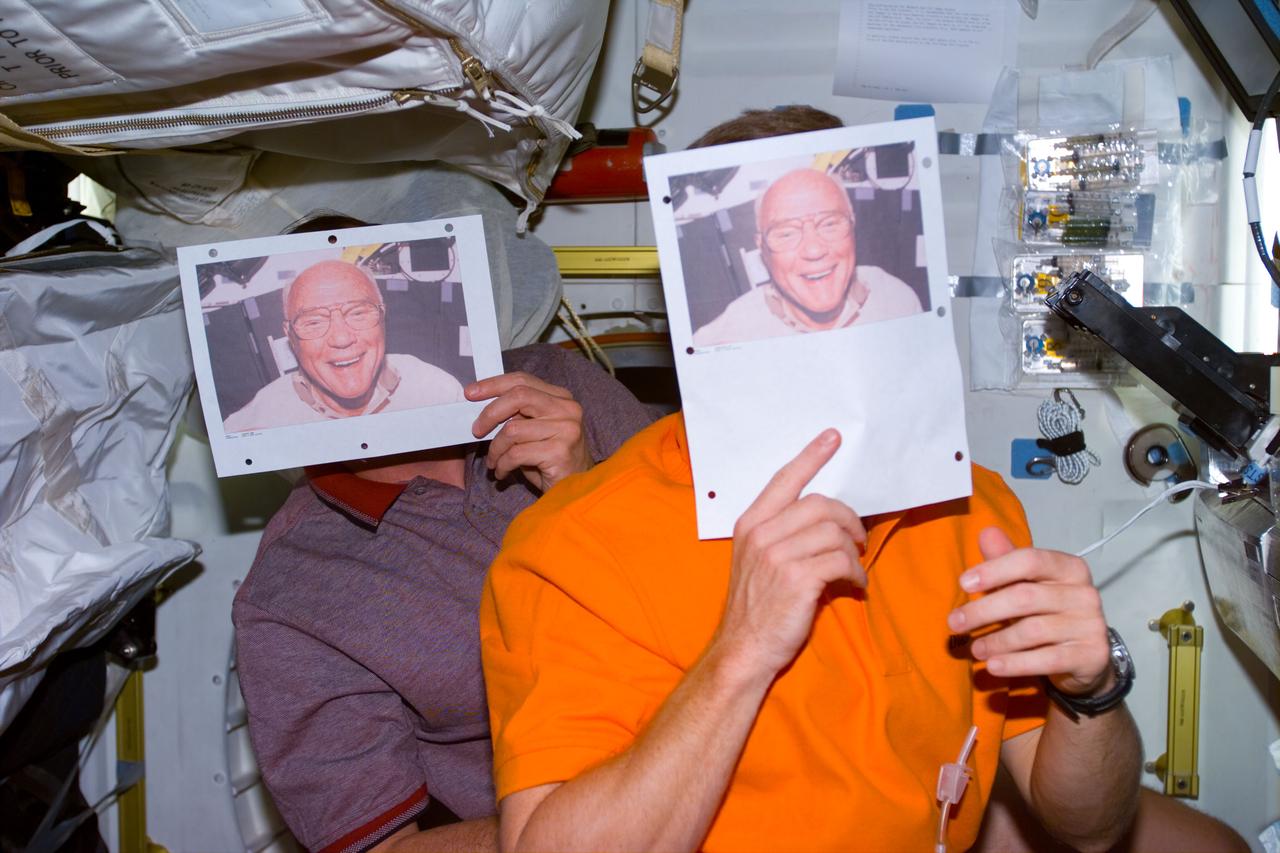
S95-E-5122 (31 Oct. 1998) -- STS-95 crew members participate in Halloween activities aboard the orbiter Discovery. Two crew members hold up masks of U.S. Sen. John H. Glenn as their Halloween disguises on Flight Day 3. Suspicions were relatively high that the participants were astronauts Steven Lindsay and Curtis Brown, pilot and commander, respectively. Photo credit: NASA
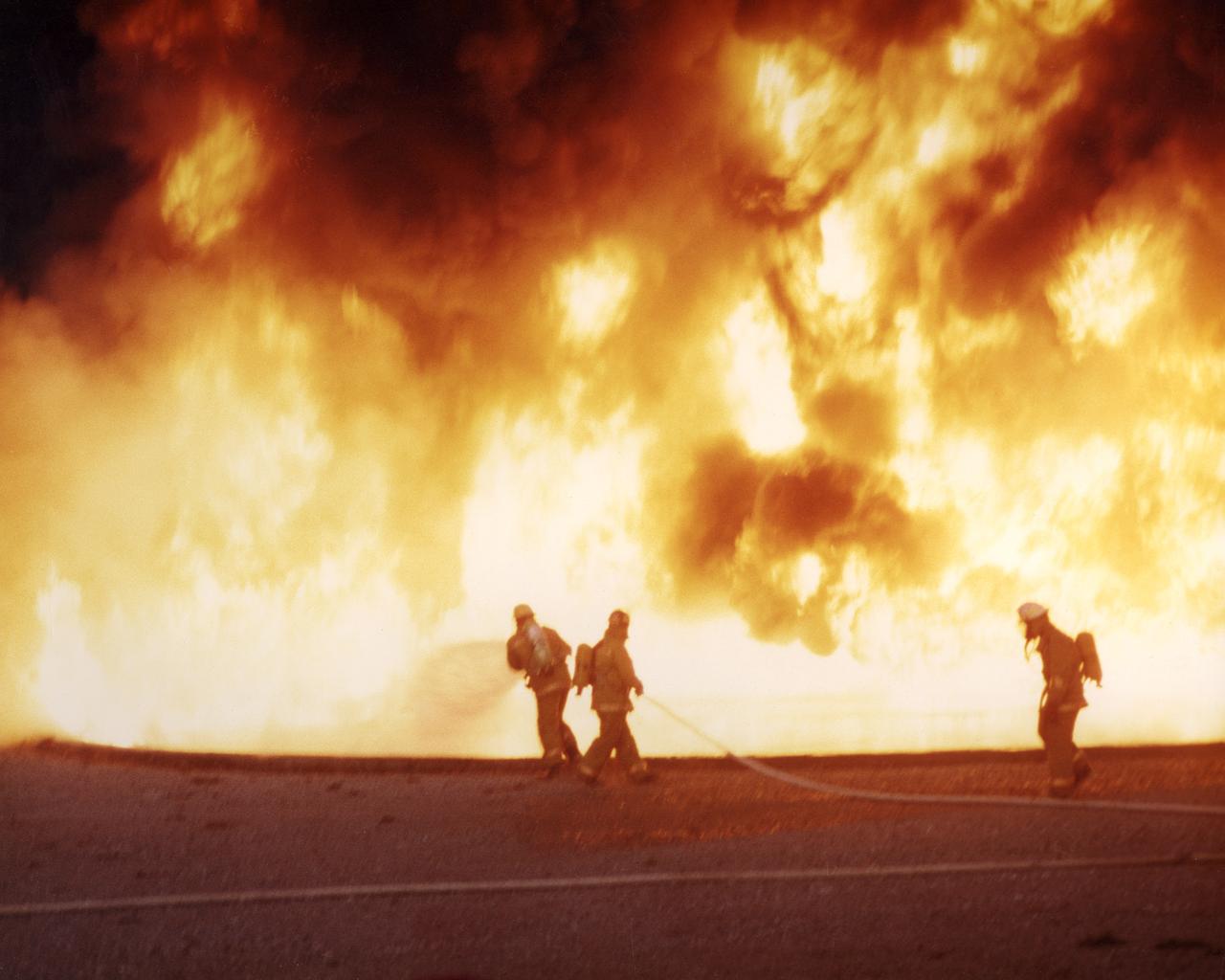
Firefighters are like astronauts. They both face dangerous, even hostile environments such as a building full of fire and the vacuum of space. They are both get breathing air from tanks on their backs. Early in the 1970's, NASA began working to improve firefighter breathing systems, which had hardly changed since the 1940s. NASA's Johnson Space Center conducted a 4-year program that applied technology from the portable life support systems used by Apollo astronauts on the moon. The new breathing system is made up of an air bottle, a frame and harness, a face mask, and a warning device. The new system weighs less than 20 pounds, one-third less than the old gear. The new air bottle provides 30 minutes of breathing air, as much as the old system. Like a good hiker's backpack, the new system puts the weight on the firefighter's hips rather than the shoulders. The face mask provides better visibility and the warning device lets the firefighter know when air in the bottle is low. Though they have made many design modifications and refinements, manufacturers of breathing apparatus still incorporate the original NASA technology.
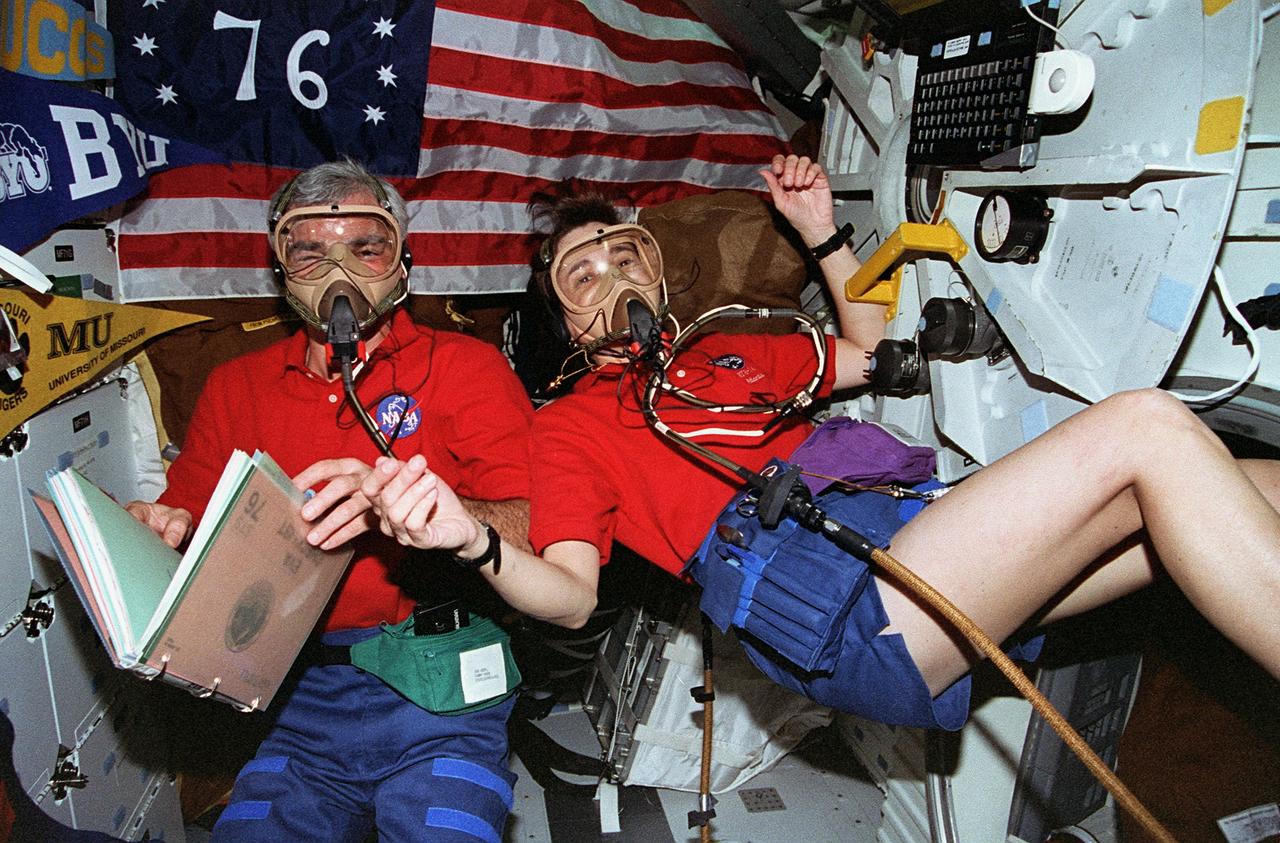
STS076-346-017 (22-31 March 1996) --- Astronauts Michael R. (Rich) Clifford and Linda M. Godwin, the assigned space-walking mission specialists for STS-76, go through a "pre-breathing" period on the Space Shuttle Atlantis' middeck. This practice is normal procedure for space-walkers in preparation for their Extravehicular Activity (EVA) and the wearing of their Extravehicular Mobility Units (EMU). The photograph was taken with a 35mm camera by one of the crew members.
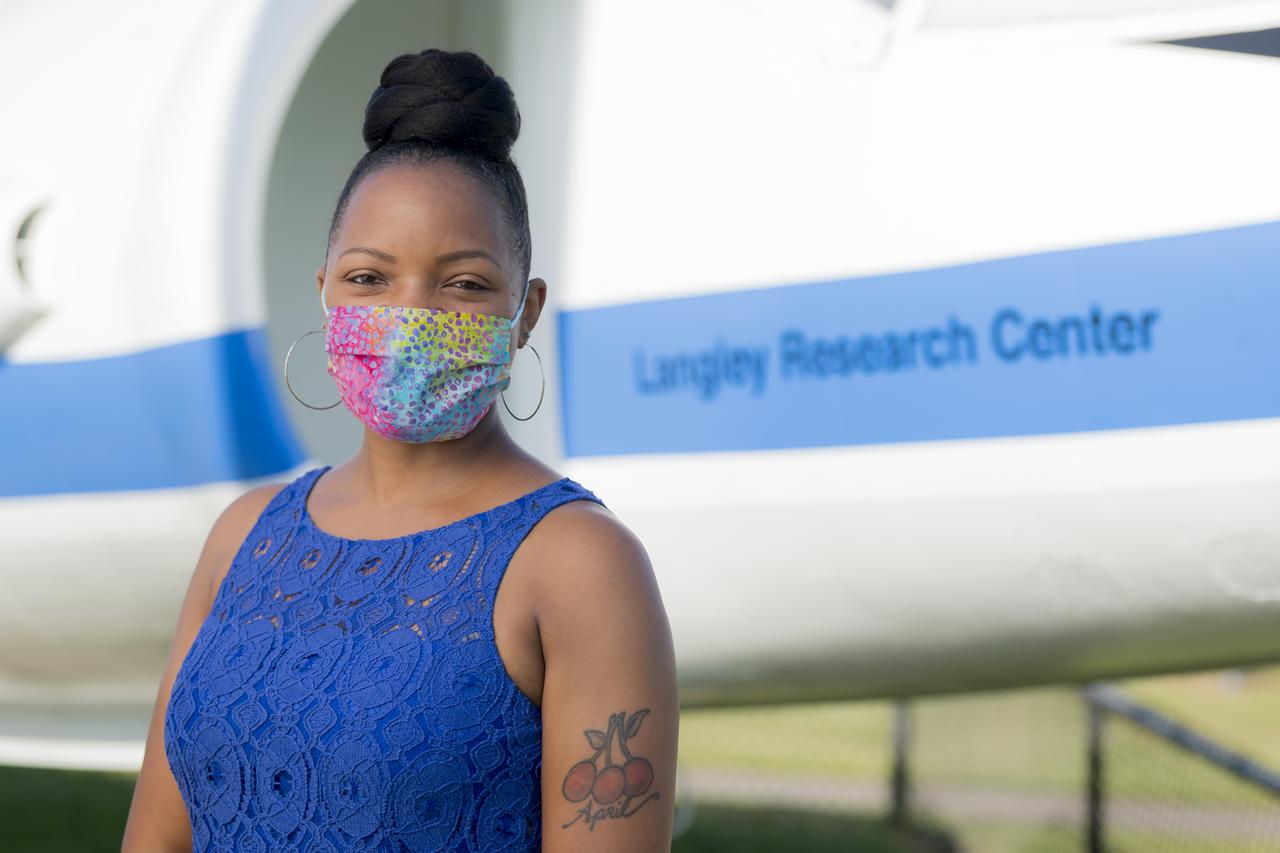
Portrait of April Albert in front of NASA Langley's Hawker Siddeley P-1127 on display at Air Power Park in Hampton, Virginia. Due to the COVID-19 pandemic, masks were mandated by Governor Northam in Virginia in public settings. This is for the faces of NASA project. "I am really made to feel like I am part of a family. I don’t feel like anybody is treated differently. We are all one team. To be a part of NASA, to me, is to be part of something special. There is nothing like the camaraderie of NASA. I feel like I’m where I belong.” — April Albert, Schedule Analyst, Langley Research Center
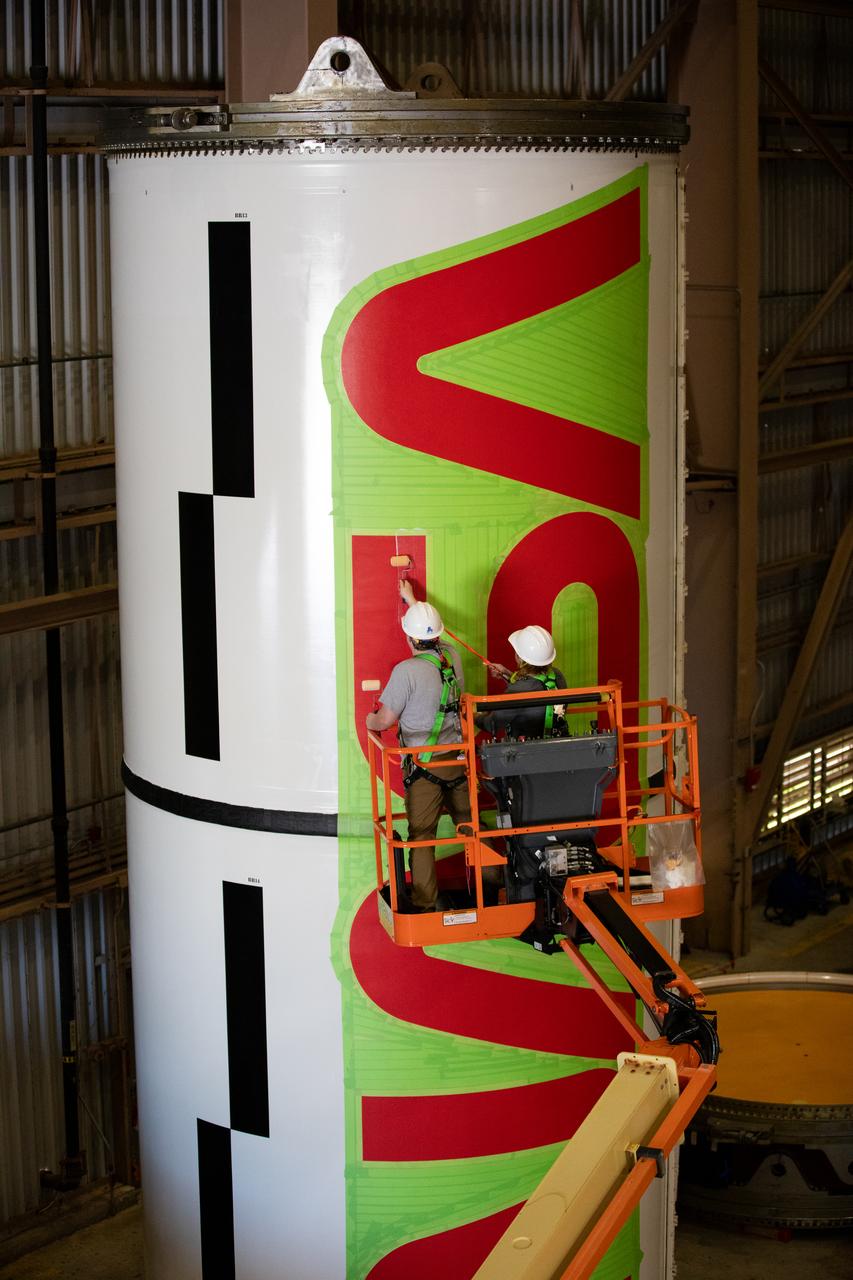
Workers with NASA’s Exploration Ground Systems (EGS) paint the bright red NASA “worm” logo on the side of an Artemis II solid rocket booster segment inside the Rotation, Processing and Surge Facility (RPSF) at Kennedy Space Center in Florida on Tuesday, Jan. 30, 2024. The EGS team used a laser projector to mask off the logo with tape, then painted the first coat of the iconic design. The booster segments will help propel the Space Launch System (SLS) rocket on the Artemis II mission to send four astronauts around the Moon as part of the agency’s effort to establish a long-term science and exploration presence at the Moon, and eventually Mars.
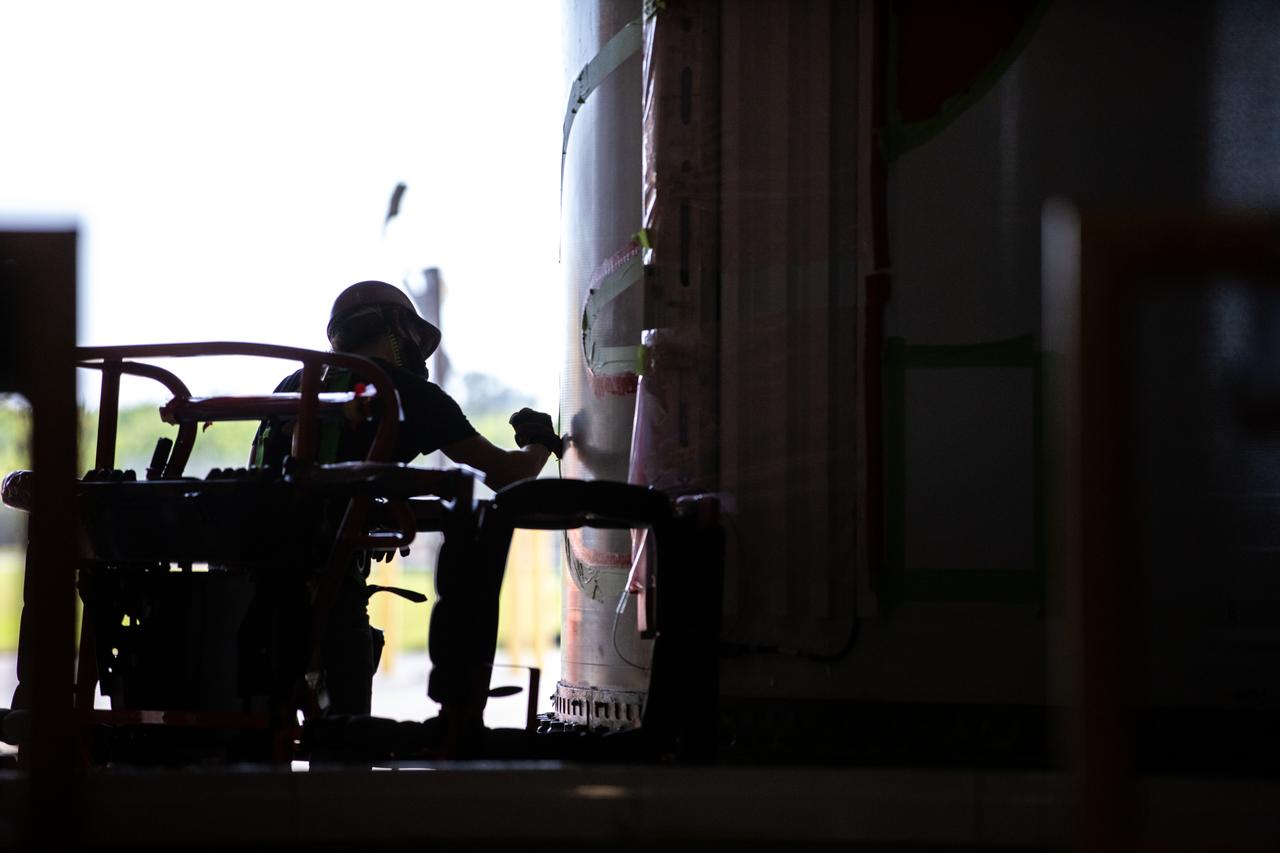
Silhouetted against the bright Florida sunlight outside, a worker with NASA’s Exploration Ground Systems (EGS) applies bright red paint to the agency’s “worm” logo taking shape on the side of an Artemis I solid rocket booster segment inside the Rotation, Processing and Surge Facility (RPSF) at Kennedy Space Center. The EGS team used a laser projector to mask off the logo with tape, then painted the first coat of the iconic design. The booster segments will help propel the Space Launch System (SLS) rocket on Artemis I, a test of the Orion spacecraft and SLS as an integrated system ahead of crewed flights to the Moon. Northrop Grumman, which built the booster segments, is covering the cost of the painting.
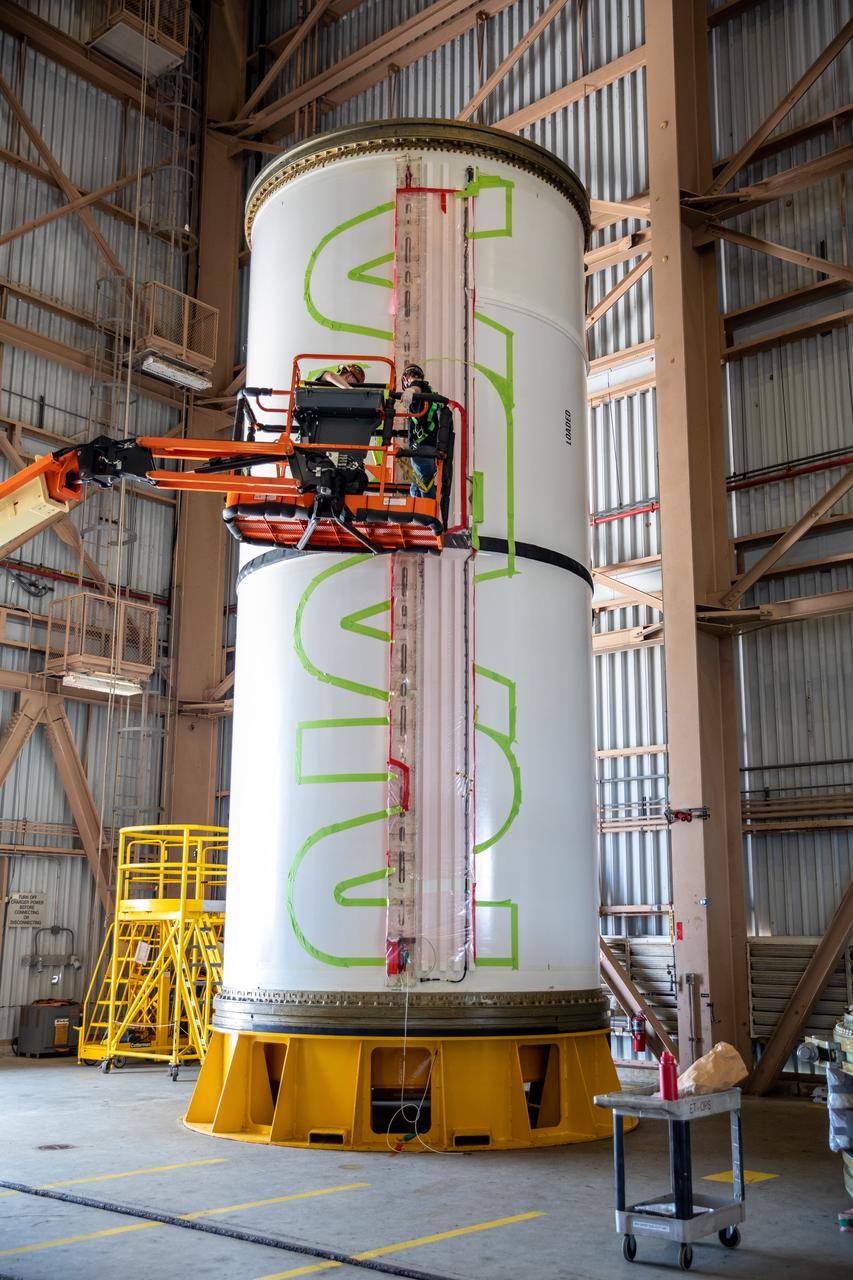
Workers with NASA’s Exploration Ground Systems (EGS) use a laser projector and green tape to mask off the shape of the agency’s “worm” logo on the side of an Artemis I solid rocket booster segment inside the Rotation, Processing and Surge Facility (RPSF) at Kennedy Space Center in Florida, Sept. 3, 2020. The booster segments will help propel the Space Launch System (SLS) rocket on Artemis I, a test of the Orion spacecraft and SLS as an integrated system ahead of crewed flights to the Moon. Northrop Grumman, which built the booster segments, is covering the cost of the painting.
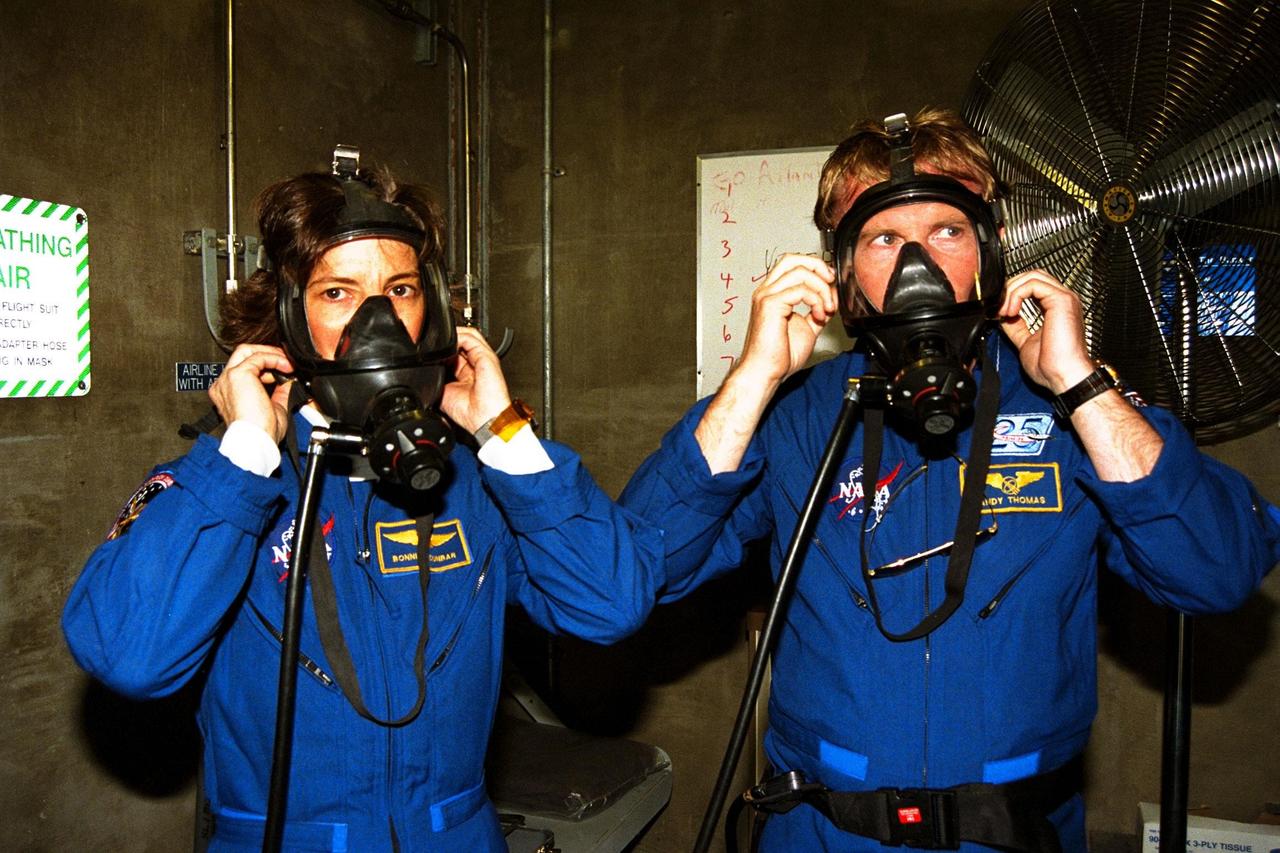
KENNEDY SPACE CENTER, Fla. -- STS-89 Mission Specialists Bonnie Dunbar, Ph.D., and Andrew Thomas, Ph.D., check out oxygen masks in the bunker at KSC’s Launch Pad 39A. The seven astronauts assigned to the eighth Shuttle-Mir docking flight are completing Terminal Countdown Demonstration Test (TCDT) activities. A dress rehearsal for launch, the TCDT includes emergency egress training at the launch pad and culminates with a simulated countdown. Dr. Thomas will transfer to the Russian Space Station Mir and succeed David Wolf, M.D., who will return to Earth aboard Endeavour. The Space Shuttle Endeavour is undergoing preparations for liftoff, scheduled for Jan. 22. Dr. Thomas will live and work on Mir until June
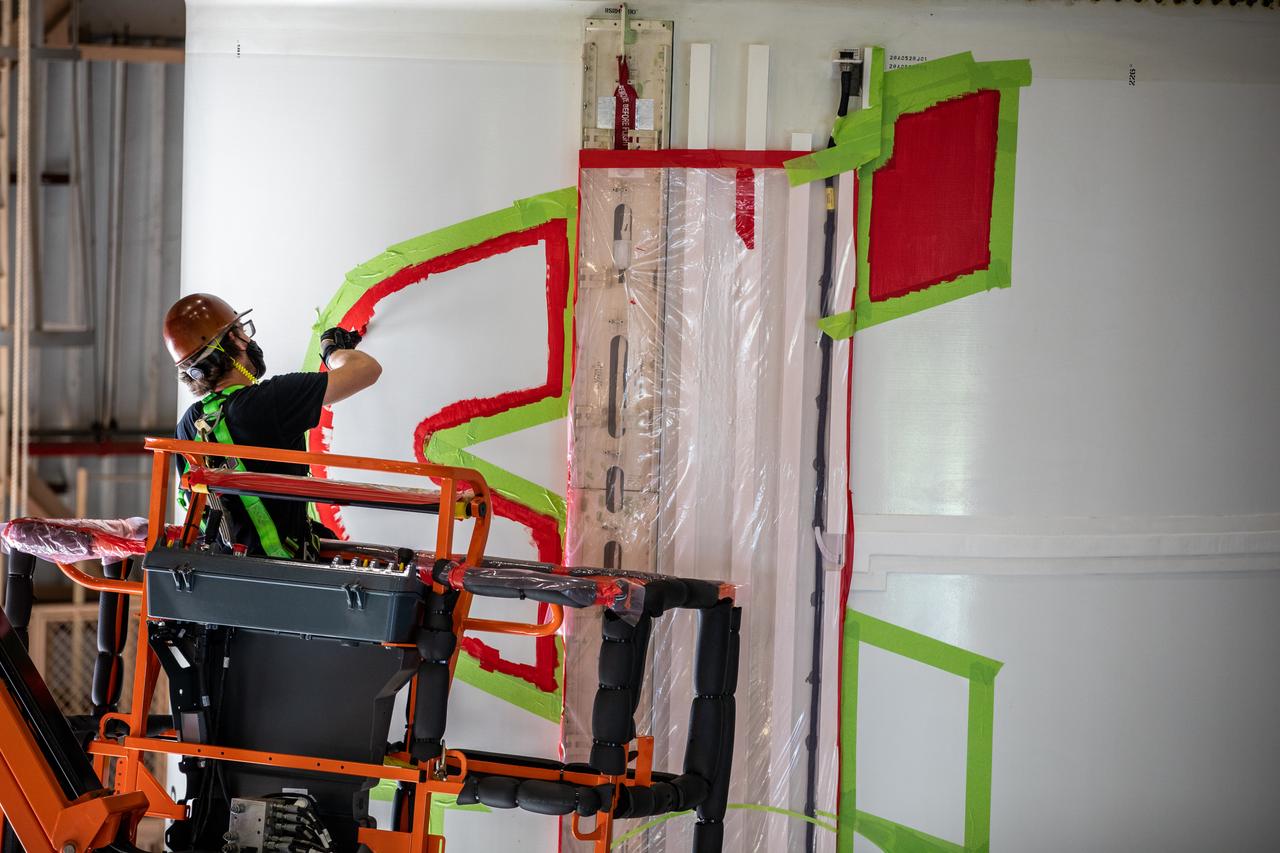
A worker with NASA’s Exploration Ground Systems (EGS) applies bright red paint to the agency’s “worm” logo taking shape on the side of an Artemis I solid rocket booster segment inside the Rotation, Processing and Surge Facility (RPSF) at Kennedy Space Center in Florida. The EGS team used a laser projector to mask off the logo with tape, then painted the first coat of the iconic design. The booster segments will help propel the Space Launch System (SLS) rocket on Artemis I, a test of the Orion spacecraft and SLS as an integrated system ahead of crewed flights to the Moon. Northrop Grumman, which built the booster segments, is covering the cost of the painting.
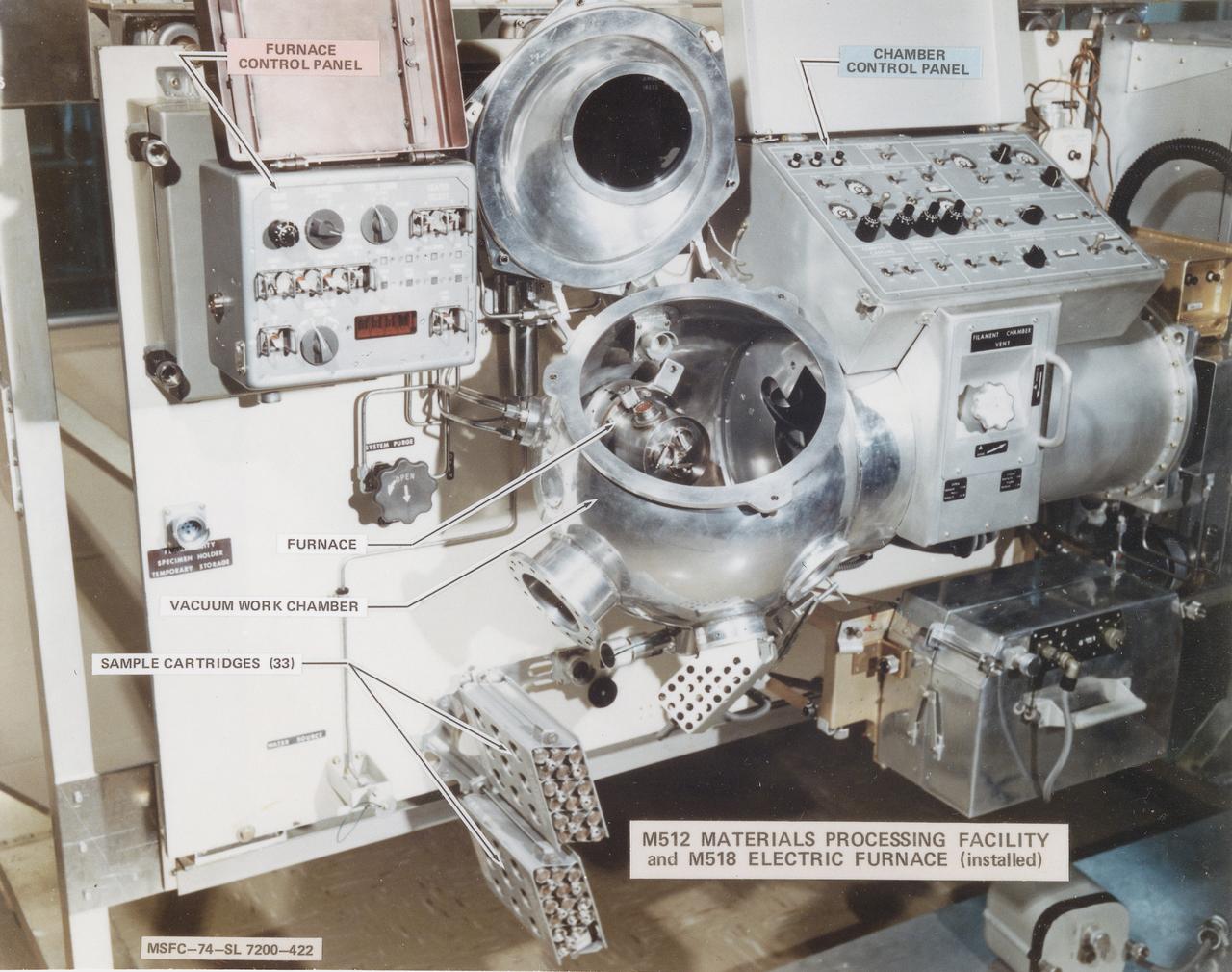
This photograph shows the Skylab Materials Processing Facility (M512) and the Multipurpose Furnace System (M518). This facility, located in the Multiple Docking Adapter, was developed for Skylab,and accommodated 14 different experiments that were carried out during the three marned missions. The abilities to melt and mix without the contaminating effects of containers, to suppress thermal convection and buoyancy in fluids, and to take advantage of electrostatic and magnetic forces and otherwise masked by gravitation opened the way to new knowledge of material properties and processes. This beginning would ultimately lead to the production of valuable new materials for use on Earth.
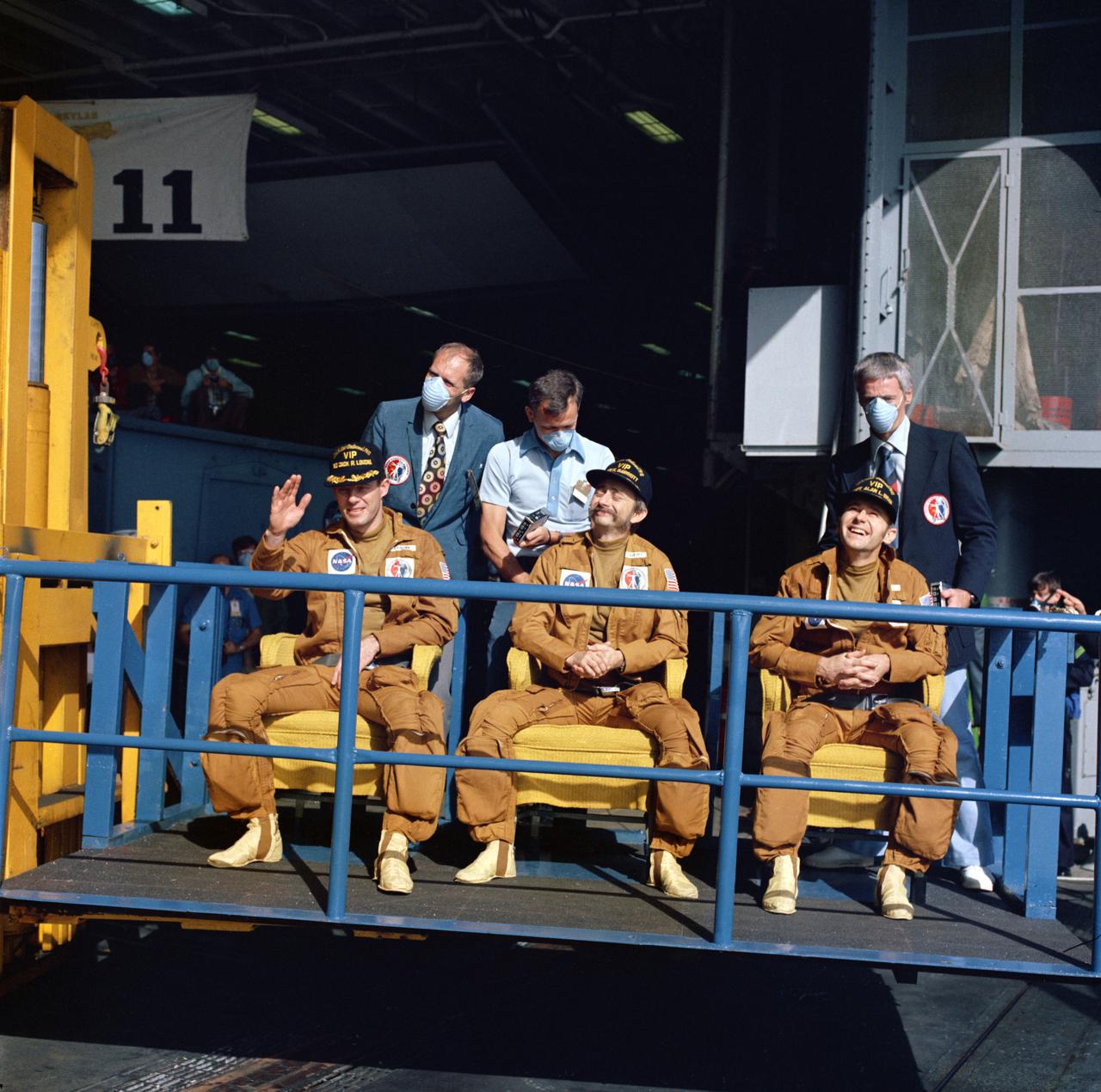
S73-36451 (25 Sept. 1973) --- The three crewmen of the Skylab 3 mission are seen aboard the prime recovery ship, USS New Orleans, following their successful 59-day visit to the Skylab space station in Earth orbit. They are, left to right, astronaut Jack R. Lousma, pilot; scientist-astronaut Owen K. Garriott, science pilot; and astronaut Alan L. Bean, commander. The Skylab 3 Command Module with the three crewmen aboard splashed down in the Pacific about 230 miles southwest of San Diego, California. They are seated atop a platform of a fork-lift dolly. Recovery support personnel are wearing face masks to prevent exposing the crewmen to disease. Photo credit: NASA
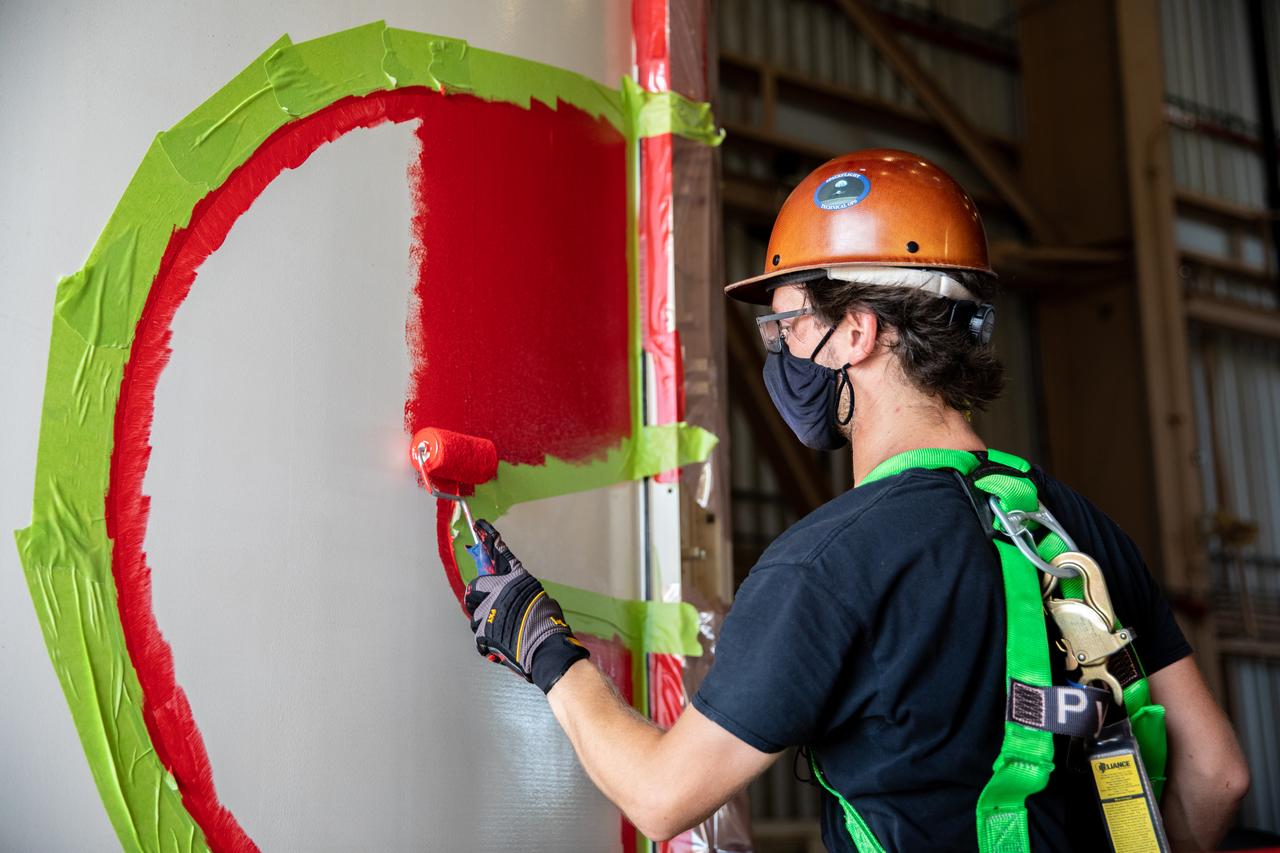
A worker with NASA’s Exploration Ground Systems (EGS) finishes the first coat of the bright red “worm” logo taking shape on the side of an Artemis I solid rocket booster segment inside the Rotation, Processing and Surge Facility (RPSF) at Kennedy Space Center in Florida. The EGS team used a laser projector to mask off the logo with tape, then painted the first coat of the iconic design. The booster segments will help propel the Space Launch System (SLS) rocket on Artemis I, a test of the Orion spacecraft and SLS as an integrated system ahead of crewed flights to the Moon. Northrop Grumman, which built the booster segments, is covering the cost of the painting.
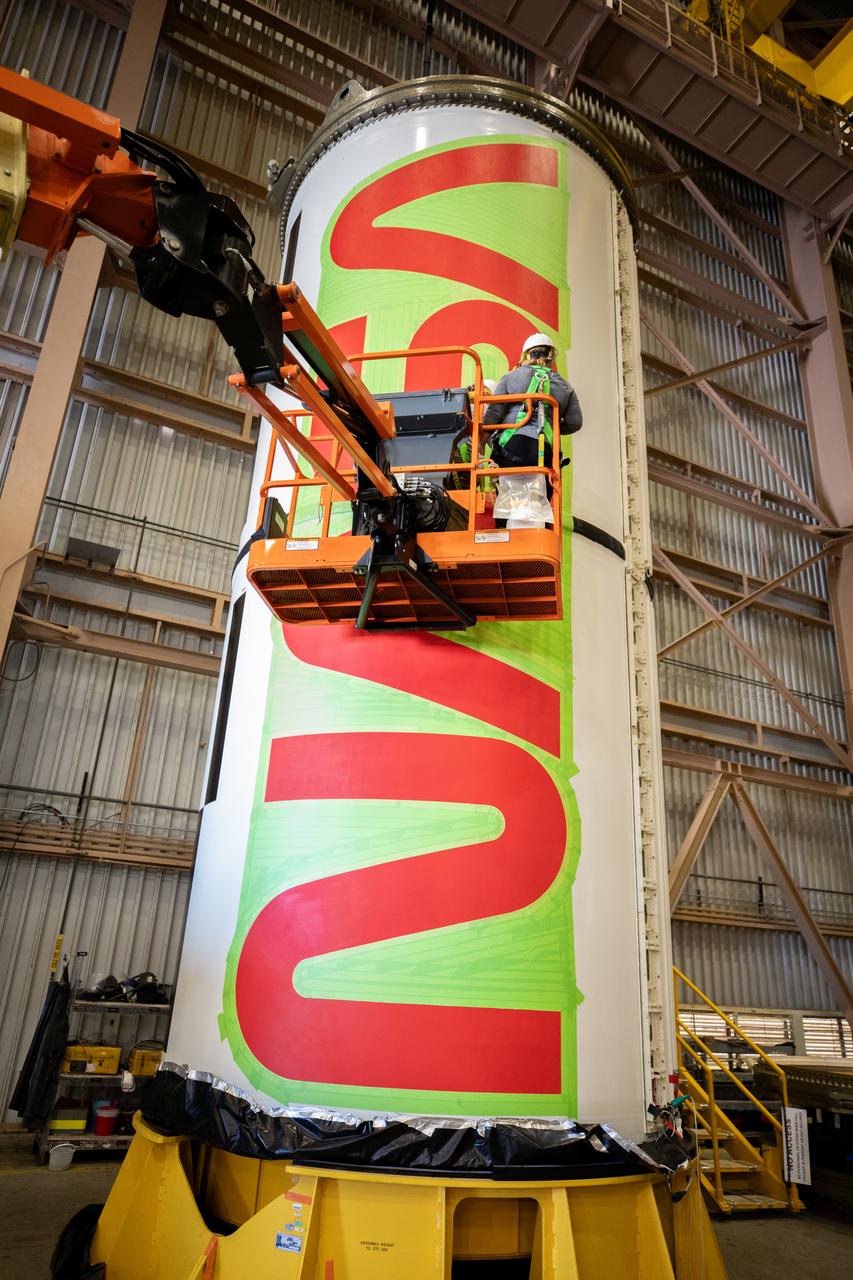
Workers with NASA’s Exploration Ground Systems (EGS) paint the bright red NASA “worm” logo on the side of an Artemis II solid rocket booster segment inside the Rotation, Processing and Surge Facility (RPSF) at Kennedy Space Center in Florida on Tuesday, Jan. 30, 2024. The EGS team used a laser projector to mask off the logo with tape, then painted the first coat of the iconic design. The booster segments will help propel the Space Launch System (SLS) rocket on the Artemis II mission to send four astronauts around the Moon as part of the agency’s effort to establish a long-term science and exploration presence at the Moon, and eventually Mars.
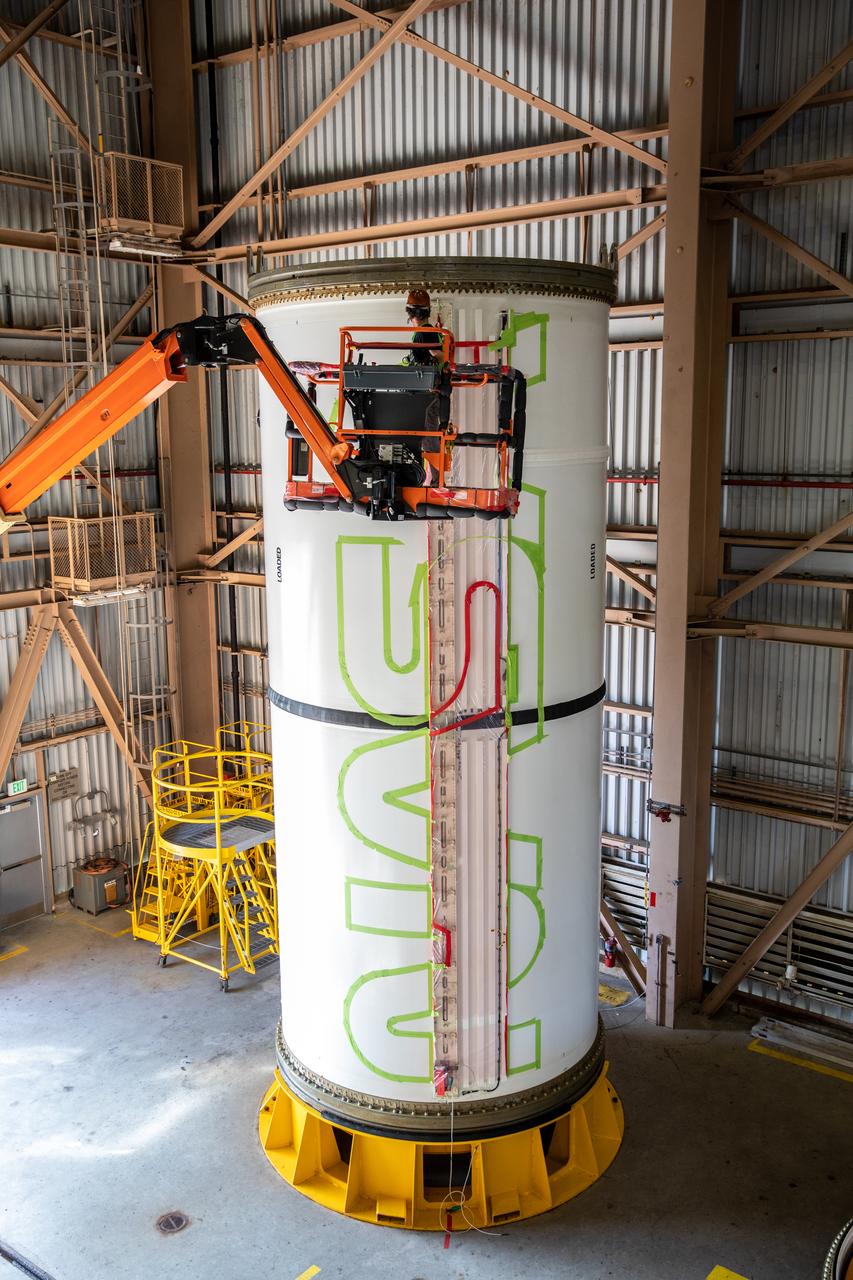
A worker with NASA’s Exploration Ground Systems (EGS) applies bright red paint to the agency’s “worm” logo taking shape on the side of an Artemis I solid rocket booster segment inside the Rotation, Processing and Surge Facility (RPSF) at Kennedy Space Center in Florida. The EGS team used a laser projector to mask off the logo with tape, then painted the first coat of the iconic design. The booster segments will help propel the Space Launch System (SLS) rocket on Artemis I, a test of the Orion spacecraft and SLS as an integrated system ahead of crewed flights to the Moon. Northrop Grumman, which built the booster segments, is covering the cost of the painting.
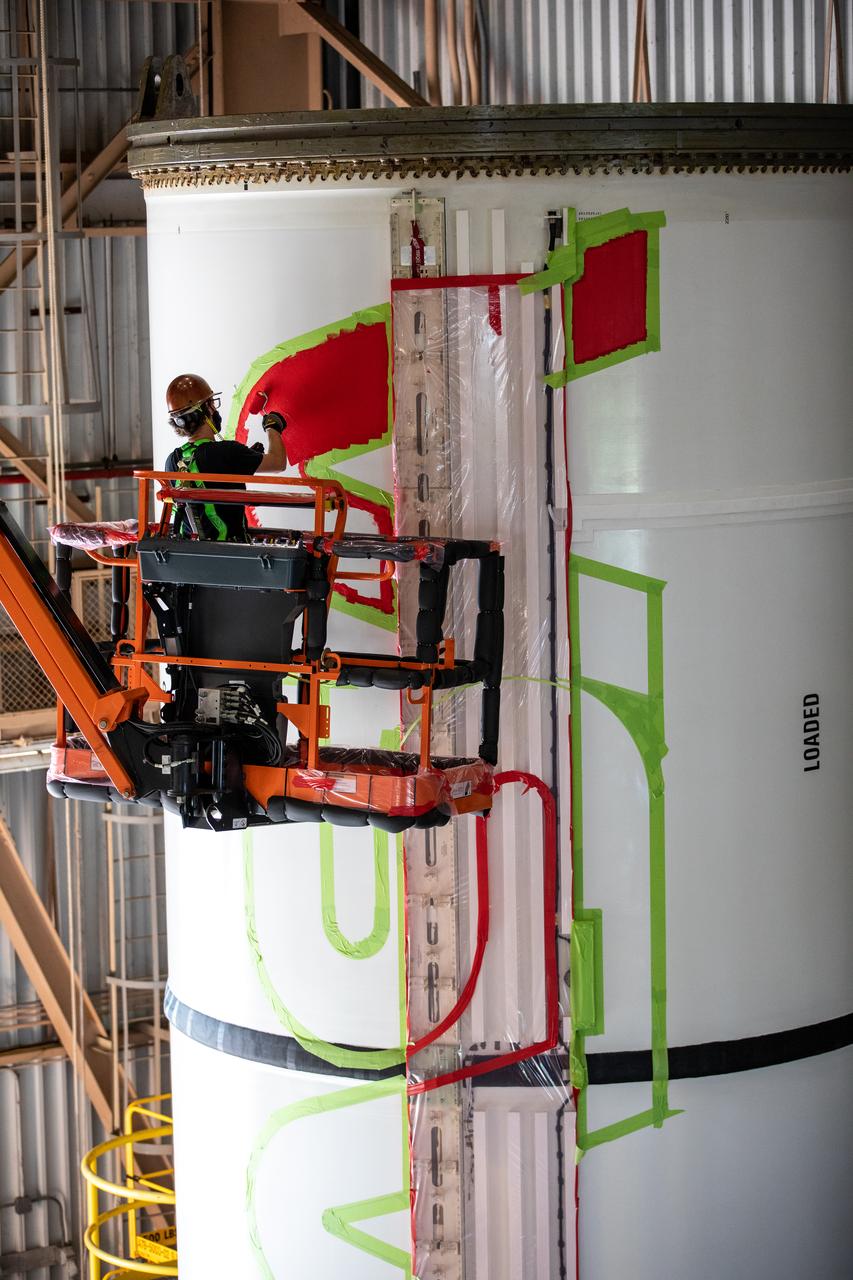
A worker with NASA’s Exploration Ground Systems (EGS) applies bright red paint to the agency’s “worm” logo taking shape on the side of an Artemis I solid rocket booster segment inside the Rotation, Processing and Surge Facility (RPSF) at Kennedy Space Center in Florida. The EGS team used a laser projector to mask off the logo with tape, then painted the first coat of the iconic design. The booster segments will help propel the Space Launch System (SLS) rocket on Artemis I, a test of the Orion spacecraft and SLS as an integrated system ahead of crewed flights to the Moon. Northrop Grumman, which built the booster segments, is covering the cost of the painting.
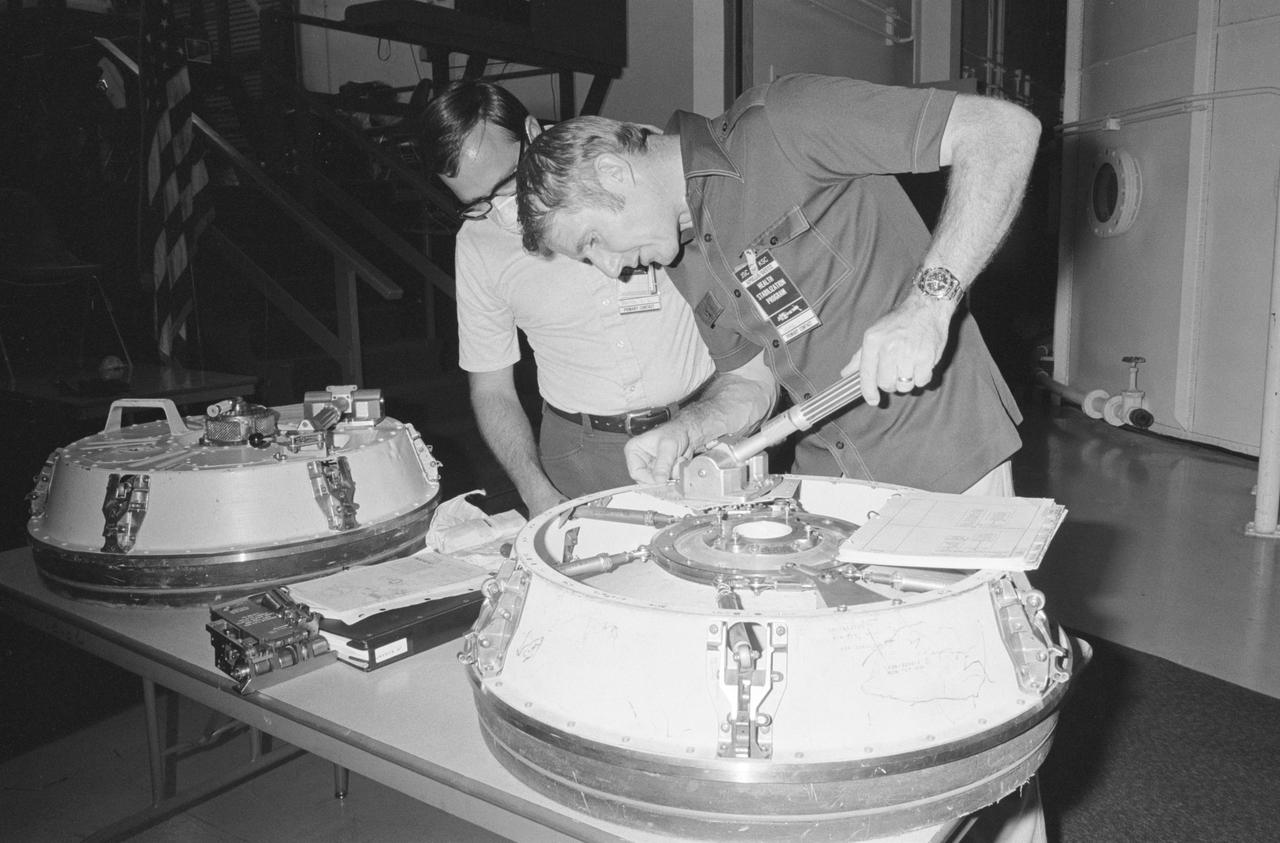
S75-28485 (12 July 1975) --- Astronaut Vance D. Brand, command module pilot of the American ASTP prime crew, practices operating a Docking Module hatch during Apollo-Soyuz Test Project preflight training at NASA's Johnson Space Center. The Docking Module is designed to link the Apollo and Soyuz spacecraft during their docking mission in Earth orbit. Gary L. Doerre of JSC?s Crew Training and Procedures Division is working with Brand. Doerre is wearing a face mask to help prevent possible exposure to Brand of disease prior to the ASTP launch.
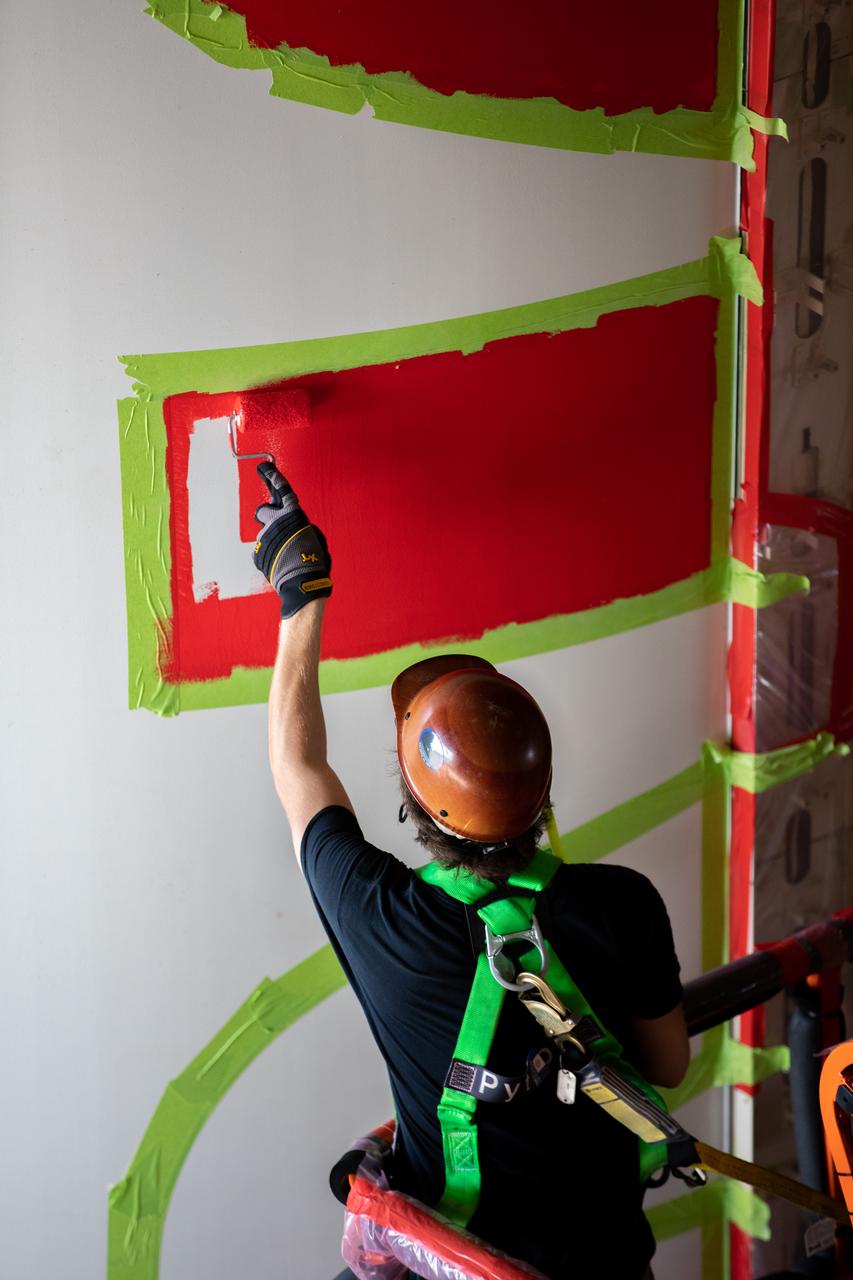
A worker with NASA’s Exploration Ground Systems (EGS) applies bright red paint to the agency’s “worm” logo taking shape on the side of an Artemis I solid rocket booster segment inside the Rotation, Processing and Surge Facility (RPSF) at Kennedy Space Center in Florida. The EGS team used a laser projector to mask off the logo with tape, then painted the first coat of the iconic design. The booster segments will help propel the Space Launch System (SLS) rocket on Artemis I, a test of the Orion spacecraft and SLS as an integrated system ahead of crewed flights to the Moon. Northrop Grumman, which built the booster segments, is covering the cost of the painting.
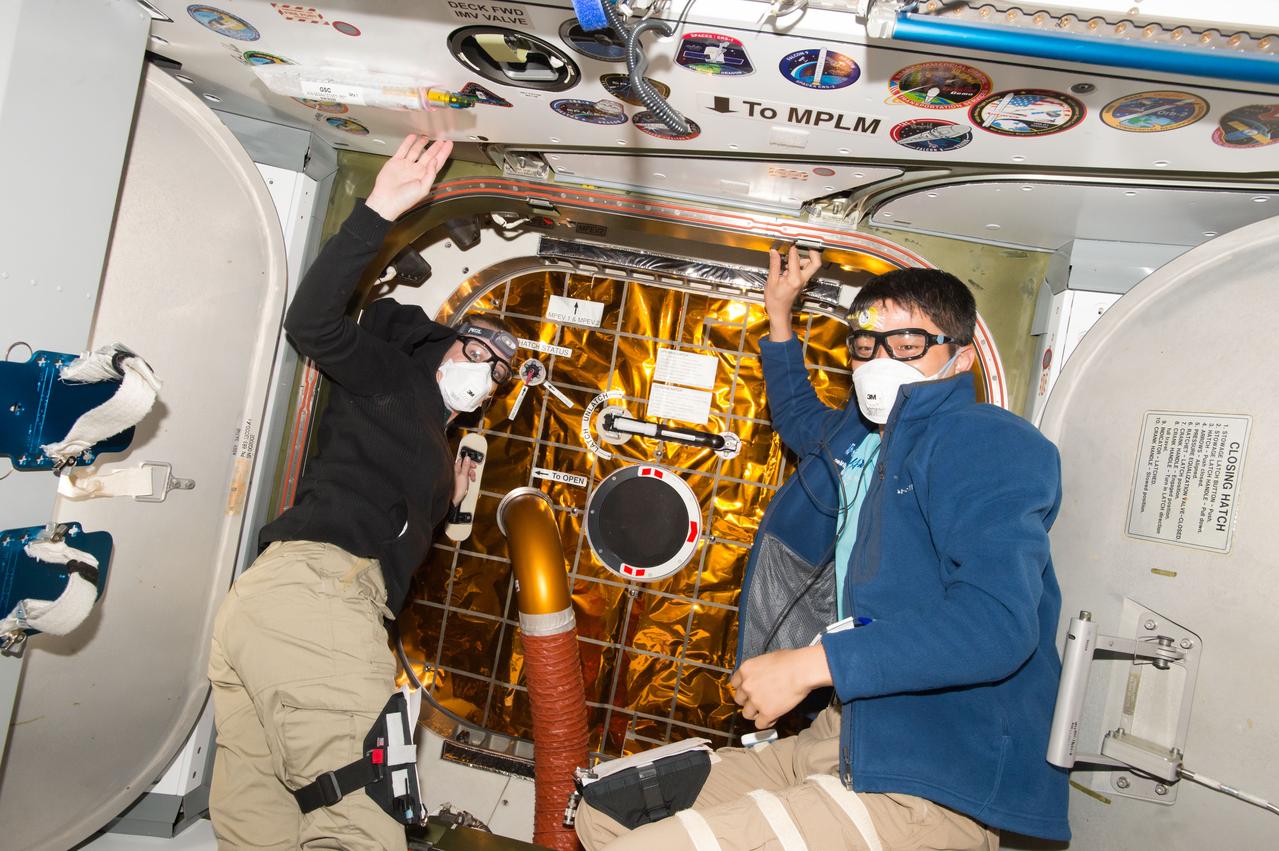
ISS048e042291 (07/20/2016) --- NASA astronaut Kate Rubins (left) and JAXA astronaut Takuya Onishi (right) prepare to open the hatch to SpaceX’s Dragon cargo spacecraft. The vehicle delivered nearly 5,000 pounds of supplies, hardware and experiments to the Expedition 48 crew. It is standard procedure for crew members to wear personal protective equipment, including masks, goggles and sometimes gloves, when entering recently arrived spacecraft. This protects them from any potential debris that may have been shaken loose during the launch and ascent phases of the flight to orbit.
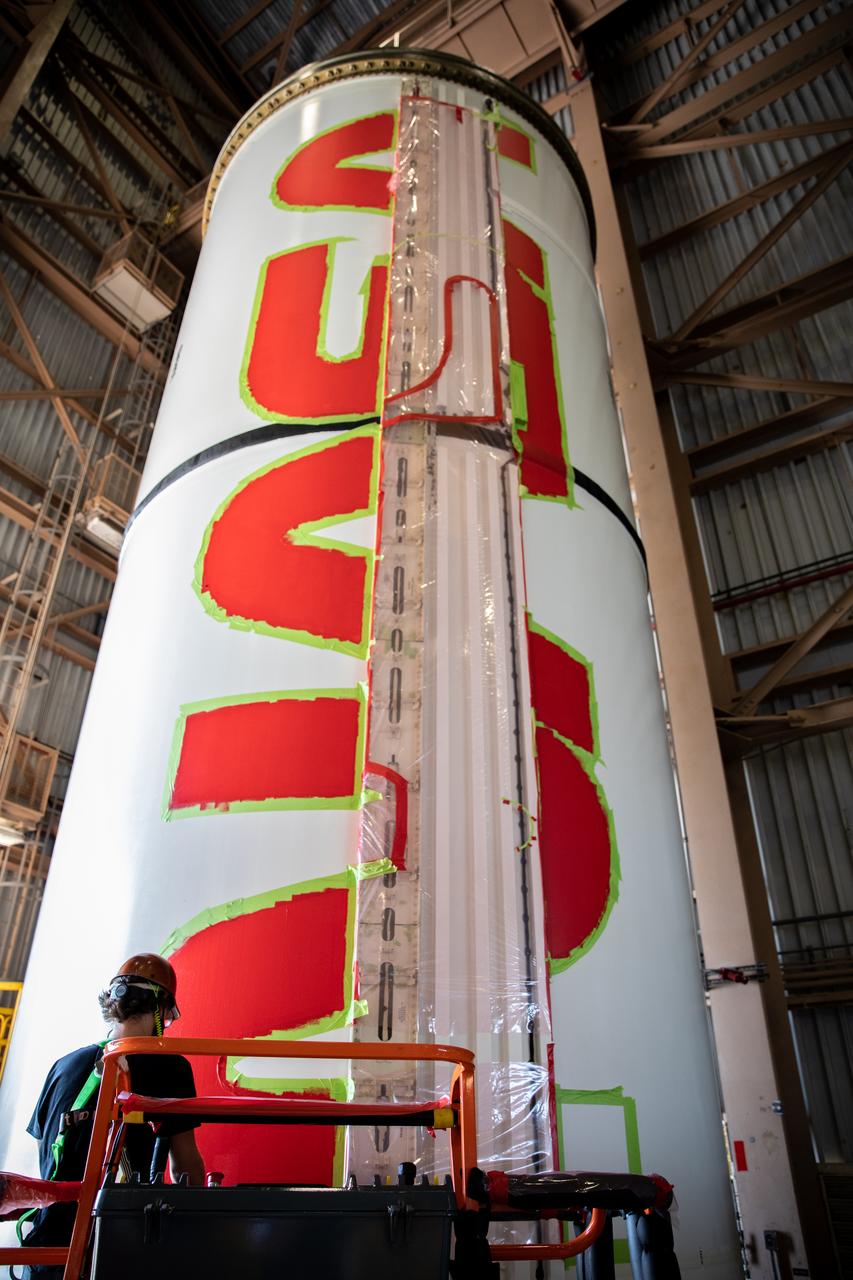
A worker with NASA’s Exploration Ground Systems (EGS) finishes the first coat of the bright red “worm” logo taking shape on the side of an Artemis I solid rocket booster segment inside the Rotation, Processing and Surge Facility (RPSF) at Kennedy Space Center in Florida. The EGS team used a laser projector to mask off the logo with tape, then painted the first coat of the iconic design. The booster segments will help propel the Space Launch System (SLS) rocket on Artemis I, a test of the Orion spacecraft and SLS as an integrated system ahead of crewed flights to the Moon. Northrop Grumman, which built the booster segments, is covering the cost of the painting.

Workers with NASA’s Exploration Ground Systems (EGS) use a laser projector and green tape to mask off the shape of the agency’s “worm” logo on the side of an Artemis I solid rocket booster segment inside the Rotation, Processing and Surge Facility (RPSF) at Kennedy Space Center in Florida, Sept. 3, 2020. The booster segments will help propel the Space Launch System (SLS) rocket on Artemis I, a test of the Orion spacecraft and SLS as an integrated system ahead of crewed flights to the Moon. Northrop Grumman, which built the booster segments, is covering the cost of the painting.
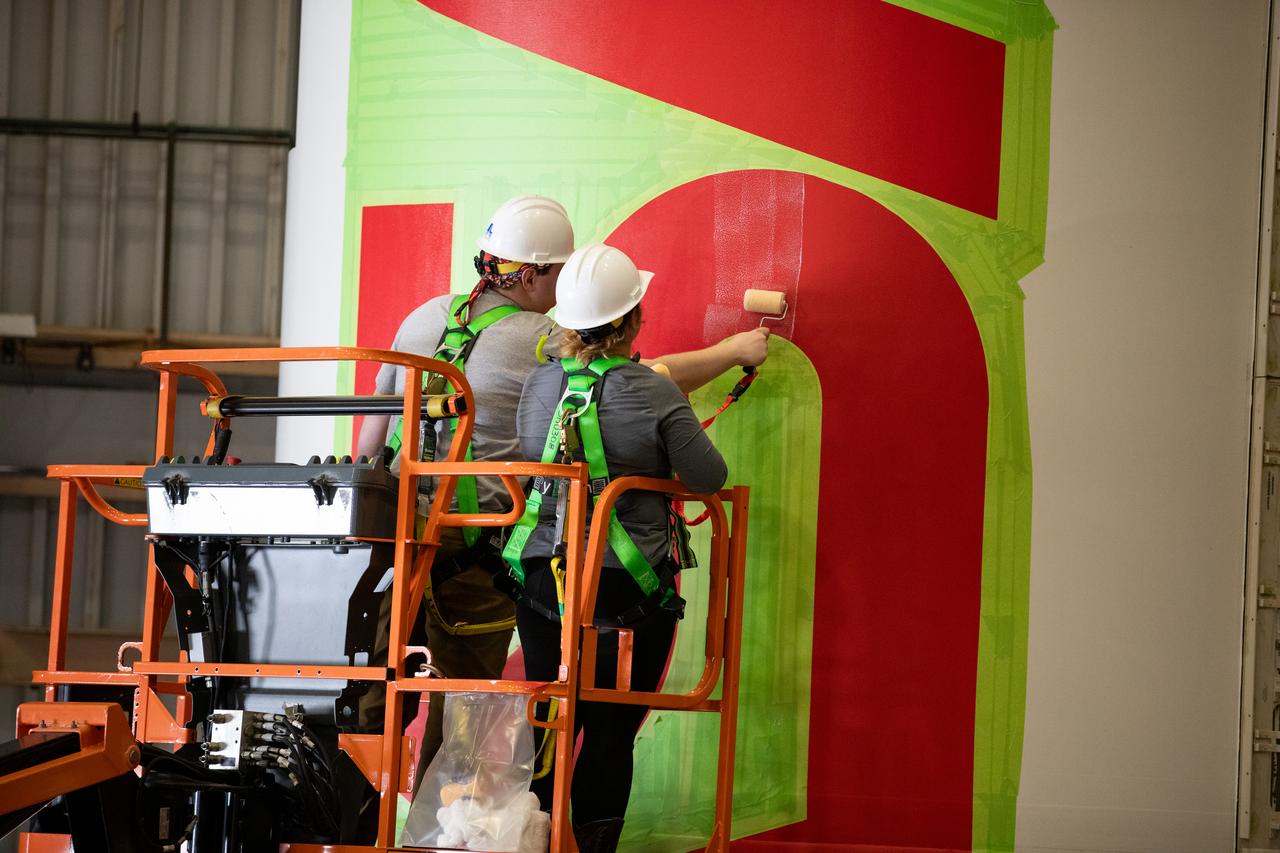
Workers with NASA’s Exploration Ground Systems (EGS) paint the bright red NASA “worm” logo on the side of an Artemis II solid rocket booster segment inside the Rotation, Processing and Surge Facility (RPSF) at Kennedy Space Center in Florida on Tuesday, Jan. 30, 2024. The EGS team used a laser projector to mask off the logo with tape, then painted the first coat of the iconic design. The booster segments will help propel the Space Launch System (SLS) rocket on the Artemis II mission to send four astronauts around the Moon as part of the agency’s effort to establish a long-term science and exploration presence at the Moon, and eventually Mars.
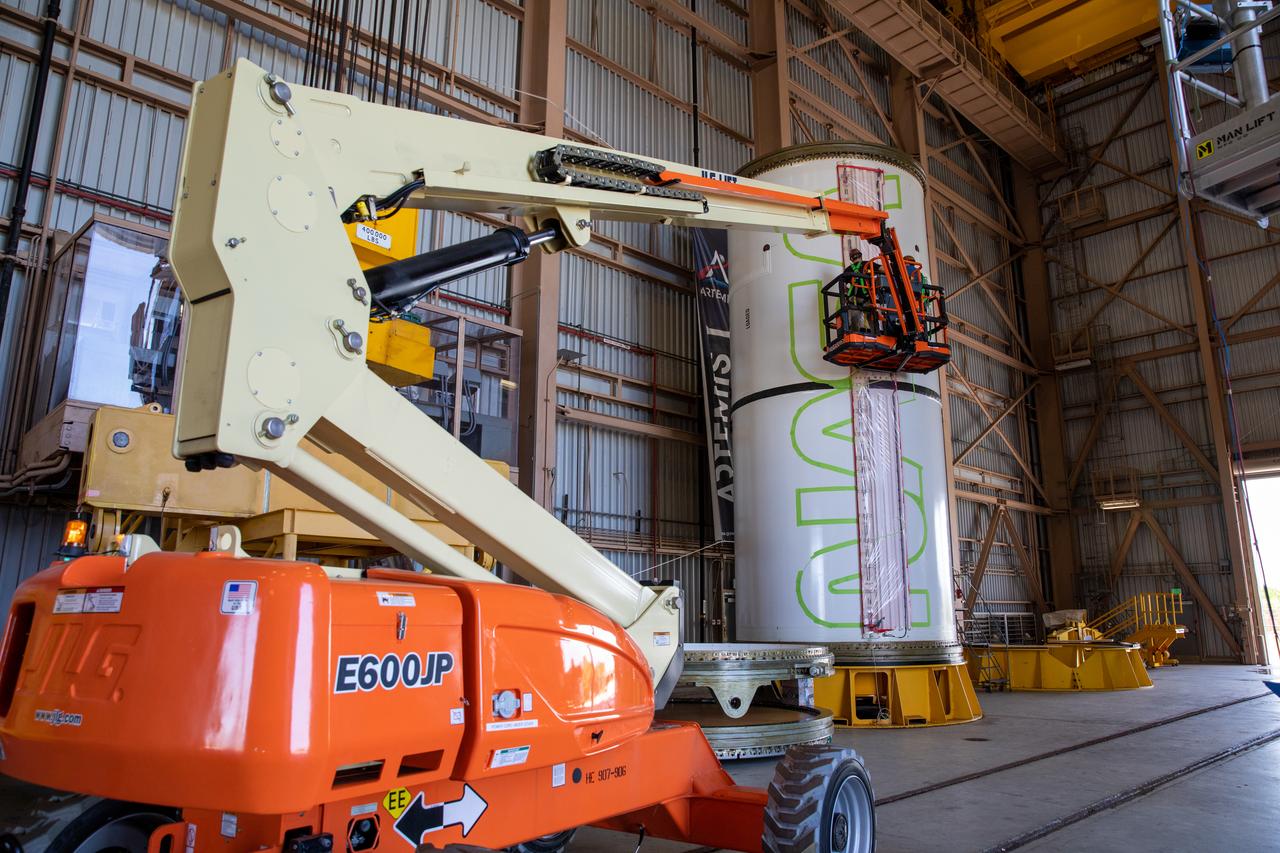
Workers with NASA’s Exploration Ground Systems (EGS) use a laser projector and green tape to mask off the shape of the agency’s “worm” logo on the side of an Artemis I solid rocket booster segment inside the Rotation, Processing and Surge Facility (RPSF) at Kennedy Space Center in Florida, Sept. 3, 2020. The booster segments will help propel the Space Launch System (SLS) rocket on Artemis I, a test of the Orion spacecraft and SLS as an integrated system ahead of crewed flights to the Moon. Northrop Grumman, which built the booster segments, is covering the cost of the painting.
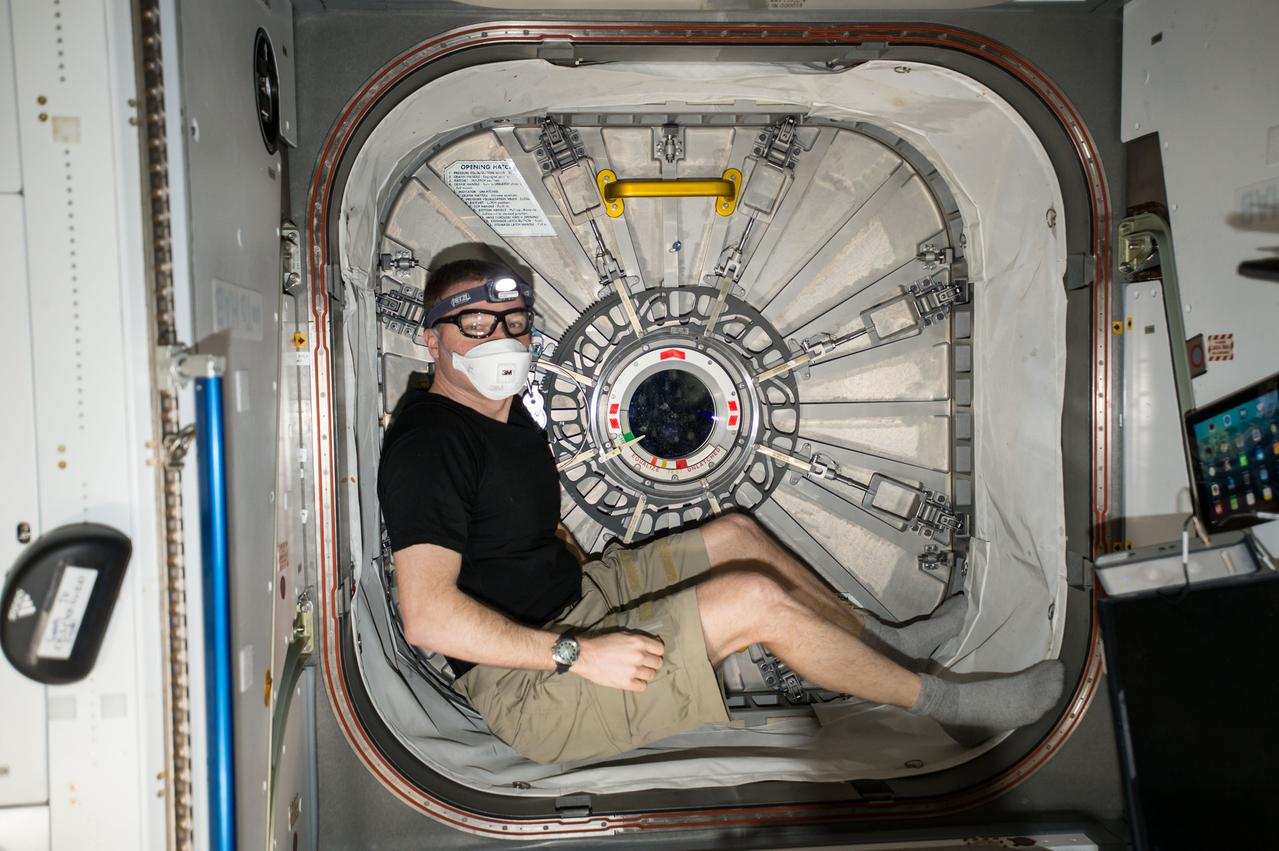
ISS043E266841 (05/28/2015) --- Expedition 43 Commander and NASA astronaut Terry Virts sits is one of the hatchways aboard the International Space Station following the relocation of the Leonardo Permanent Multipurpose Module (PMM.) The PMM was relocated from the Unity node to the Tranquility node as the next step in preparing the International Space Station for the installation of new International Docking Adapters which will enable future U.S. commercial crew vehicles to dock to the station. Crew members typically wear personal protective devices (mask, glasses, gloves) whenever opening a hatch following dynamic operations as a precaution.
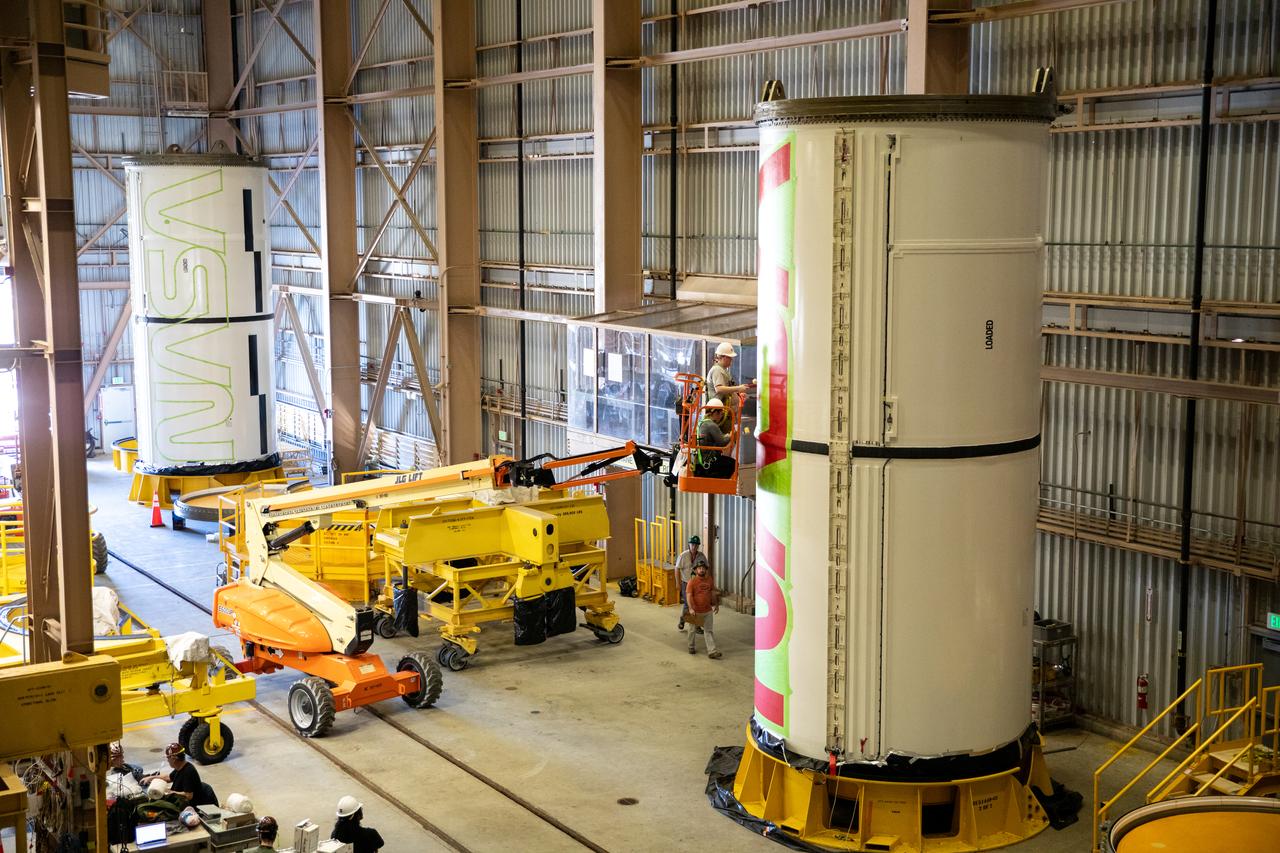
Workers with NASA’s Exploration Ground Systems (EGS) paint the bright red NASA “worm” logo on the side of an Artemis II solid rocket booster segment inside the Rotation, Processing and Surge Facility (RPSF) at Kennedy Space Center in Florida on Tuesday, Jan. 30, 2024. The EGS team used a laser projector to mask off the logo with tape, then painted the first coat of the iconic design. The booster segments will help propel the Space Launch System (SLS) rocket on the Artemis II mission to send four astronauts around the Moon as part of the agency’s effort to establish a long-term science and exploration presence at the Moon, and eventually Mars.
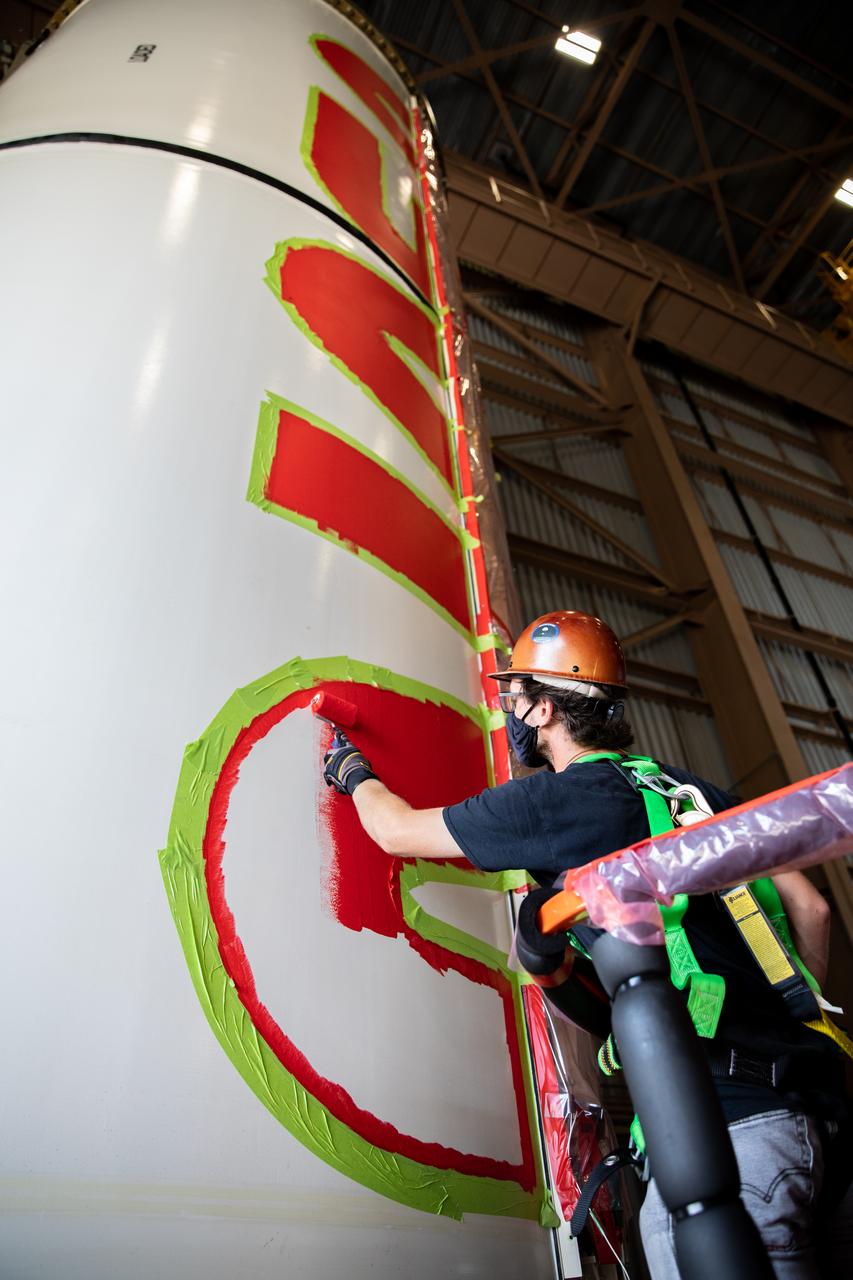
A worker with NASA’s Exploration Ground Systems (EGS) finishes the first coat of the bright red “worm” logo taking shape on the side of an Artemis I solid rocket booster segment inside the Rotation, Processing and Surge Facility (RPSF) at Kennedy Space Center in Florida. The EGS team used a laser projector to mask off the logo with tape, then painted the first coat of the iconic design. The booster segments will help propel the Space Launch System (SLS) rocket on Artemis I, a test of the Orion spacecraft and SLS as an integrated system ahead of crewed flights to the Moon. Northrop Grumman, which built the booster segments, is covering the cost of the painting.
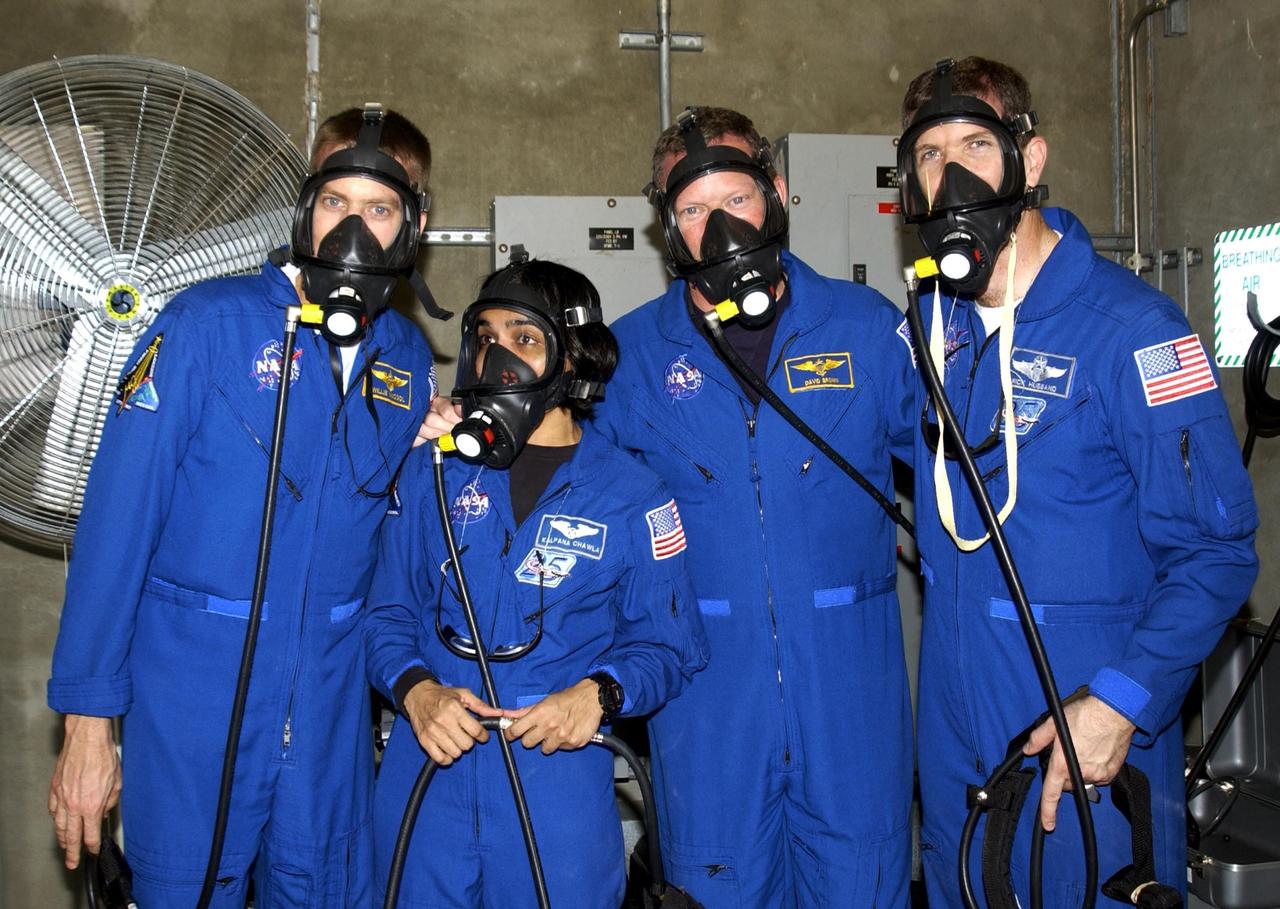
KENNEDY SPACE CENTER, FLA. -- During emergency egress training, part of Terminal Countdown Demonstration Test activities at the pad, STS-107 crew members test breathing masks in the emergency bunker. From left are Pilot William "Willie" McCool, Mission Specialists Kalpana Chawla and David Brown, and Commander Rick Husband. STS-107 is a mission devoted to research and will include more than 80 experiments that will study Earth and space science, advanced technology development, and astronaut health and safety. Launch is planned for Jan. 16, 2003, between 10 a.m. and 2 p.m. EST aboard Space Shuttle Columbia. .
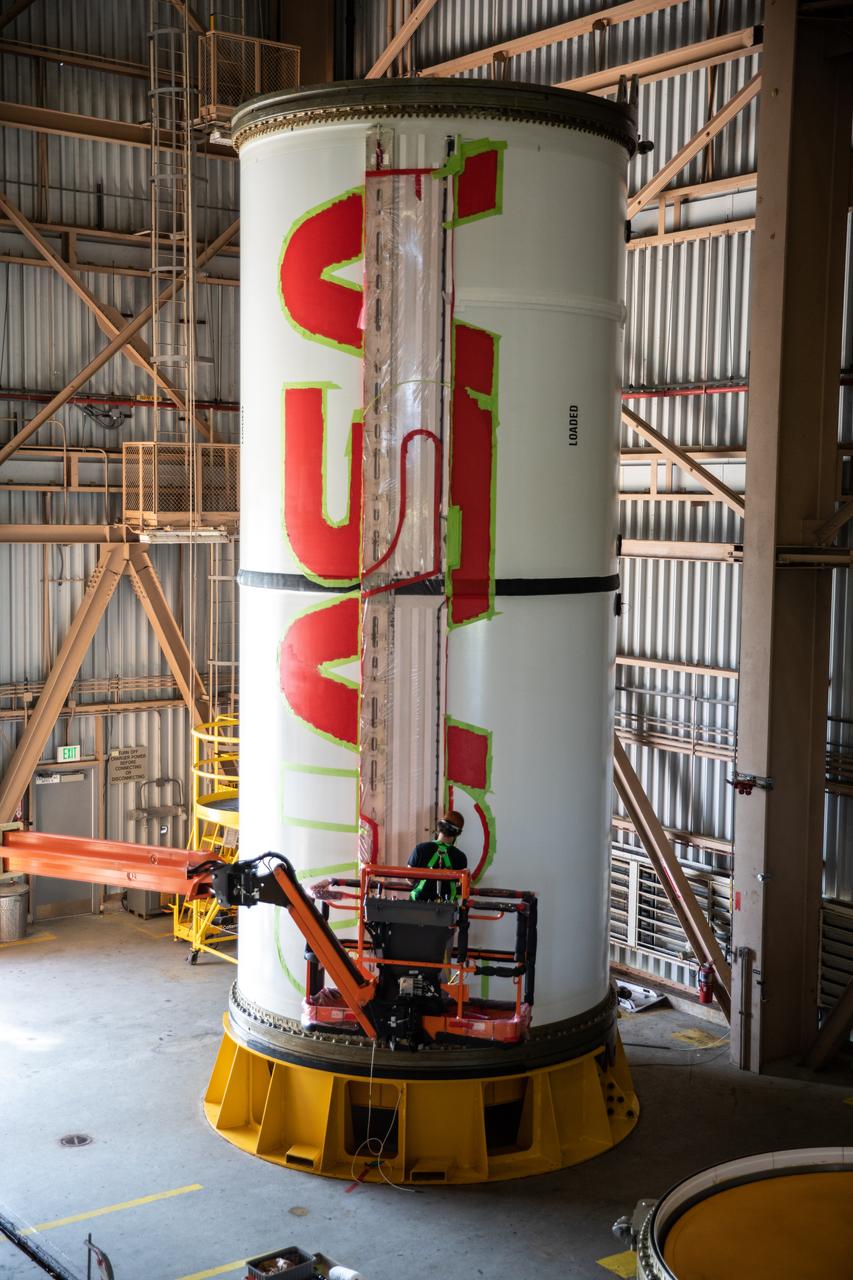
A worker with NASA’s Exploration Ground Systems (EGS) finishes the first coat of the bright red “worm” logo taking shape on the side of an Artemis I solid rocket booster segment inside the Rotation, Processing and Surge Facility (RPSF) at Kennedy Space Center in Florida. The EGS team used a laser projector to mask off the logo with tape, then painted the first coat of the iconic design. The booster segments will help propel the Space Launch System (SLS) rocket on Artemis I, a test of the Orion spacecraft and SLS as an integrated system ahead of crewed flights to the Moon. Northrop Grumman, which built the booster segments, is covering the cost of the painting.
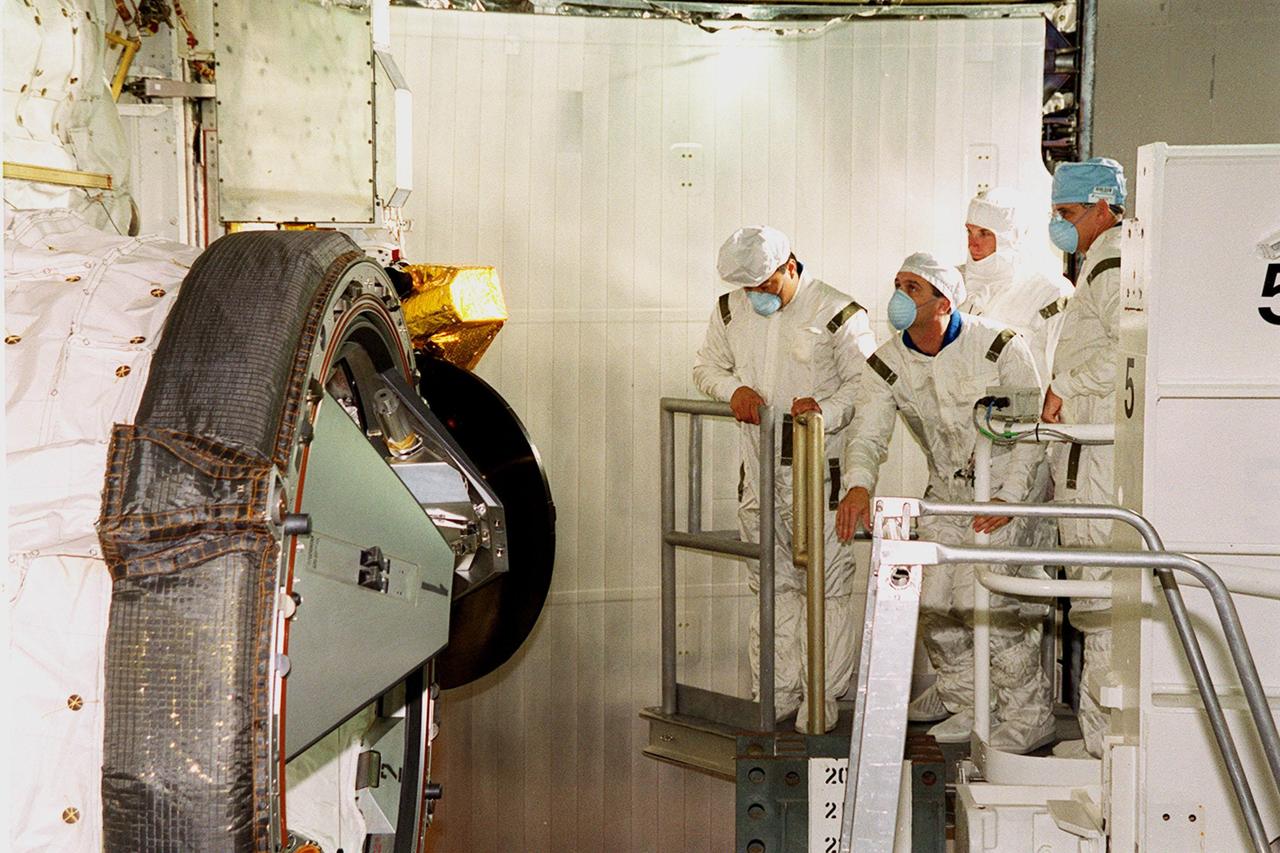
Members of the STS-92 crew look over the payload (left) in Space Shuttle Discovery’s payload bay. Left to right, in masks, are Mission Specialists Leroy Chiao, Peter J.K. “Jeff” Wisoff and William S. McArthur Jr. They and the other crew members Commander Brian Duffy, Pilot Pamela Ann Melroy and Mission Specialists Koichi Wakata of Japan, and Michael E. Lopez-Alegria are preparing for launch on Oct. 5, 2000. The mission is the fifth flight for the construction of the International Space Station. The payload includes the Integrated Truss Structure Z-1 and the third Pressurized Mating Adapter. During the 11-day mission, four extravehicular activities (EVAs), or space walks, are planned
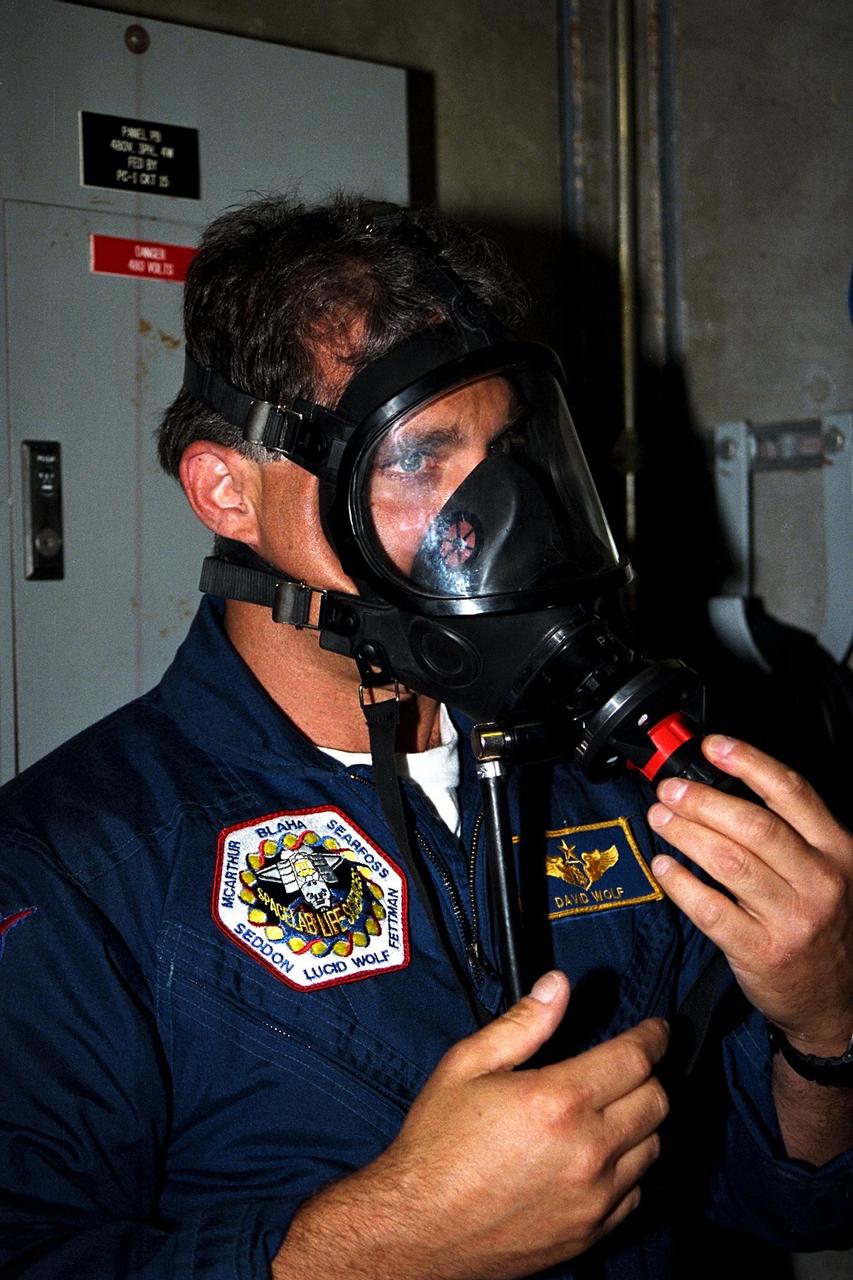
STS-86 Mission Specialist David A. Wolf dons a gas mask as part of training exercises during the Terminal Countdown Demonstration Test (TCDT), a dress rehearsal for launch. Wolf is wearing the patch from his first and only mission to date, STS-58 in 1993. STS-86 will be the seventh docking of the Space Shuttle with the Russian Space Station Mir. During the docking, Wolf will transfer to the orbiting Russian station and become a member of the Mir 24 crew, replacing U.S. astronaut C. Michael Foale, who has been on the Mir since the last docking mission, STS-84, in May. Launch of Mission STS-86 aboard the Space Shuttle Atlantis is targeted for Sept. 25
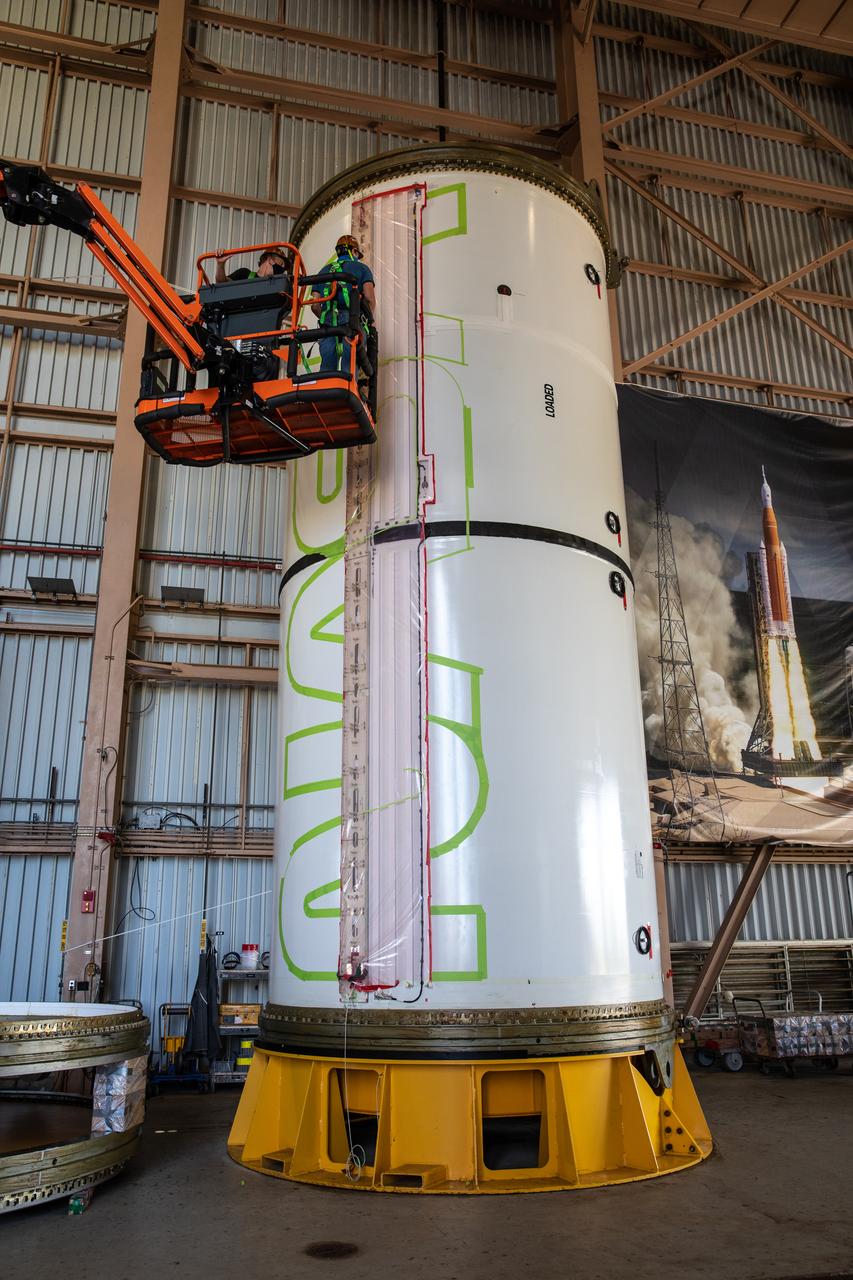
Workers with NASA’s Exploration Ground Systems (EGS) use a laser projector and green tape to mask off the shape of the agency’s “worm” logo on the side of an Artemis I solid rocket booster segment inside the Rotation, Processing and Surge Facility (RPSF) at Kennedy Space Center in Florida, Sept. 3, 2020. The booster segments will help propel the Space Launch System (SLS) rocket on Artemis I, a test of the Orion spacecraft and SLS as an integrated system ahead of crewed flights to the Moon. Northrop Grumman, which built the booster segments, is covering the cost of the painting.
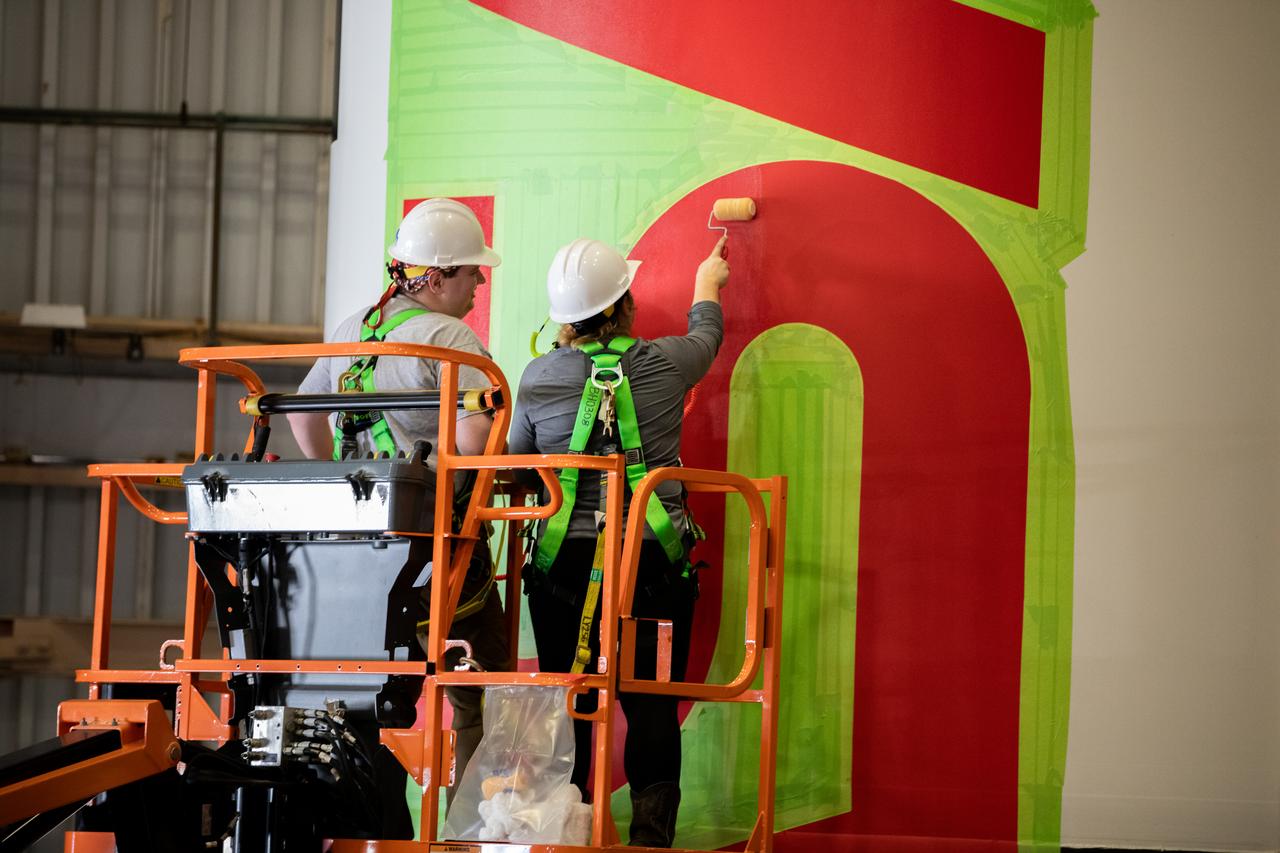
Workers with NASA’s Exploration Ground Systems (EGS) paint the bright red NASA “worm” logo on the side of an Artemis II solid rocket booster segment inside the Rotation, Processing and Surge Facility (RPSF) at Kennedy Space Center in Florida on Tuesday, Jan. 30, 2024. The EGS team used a laser projector to mask off the logo with tape, then painted the first coat of the iconic design. The booster segments will help propel the Space Launch System (SLS) rocket on the Artemis II mission to send four astronauts around the Moon as part of the agency’s effort to establish a long-term science and exploration presence at the Moon, and eventually Mars.
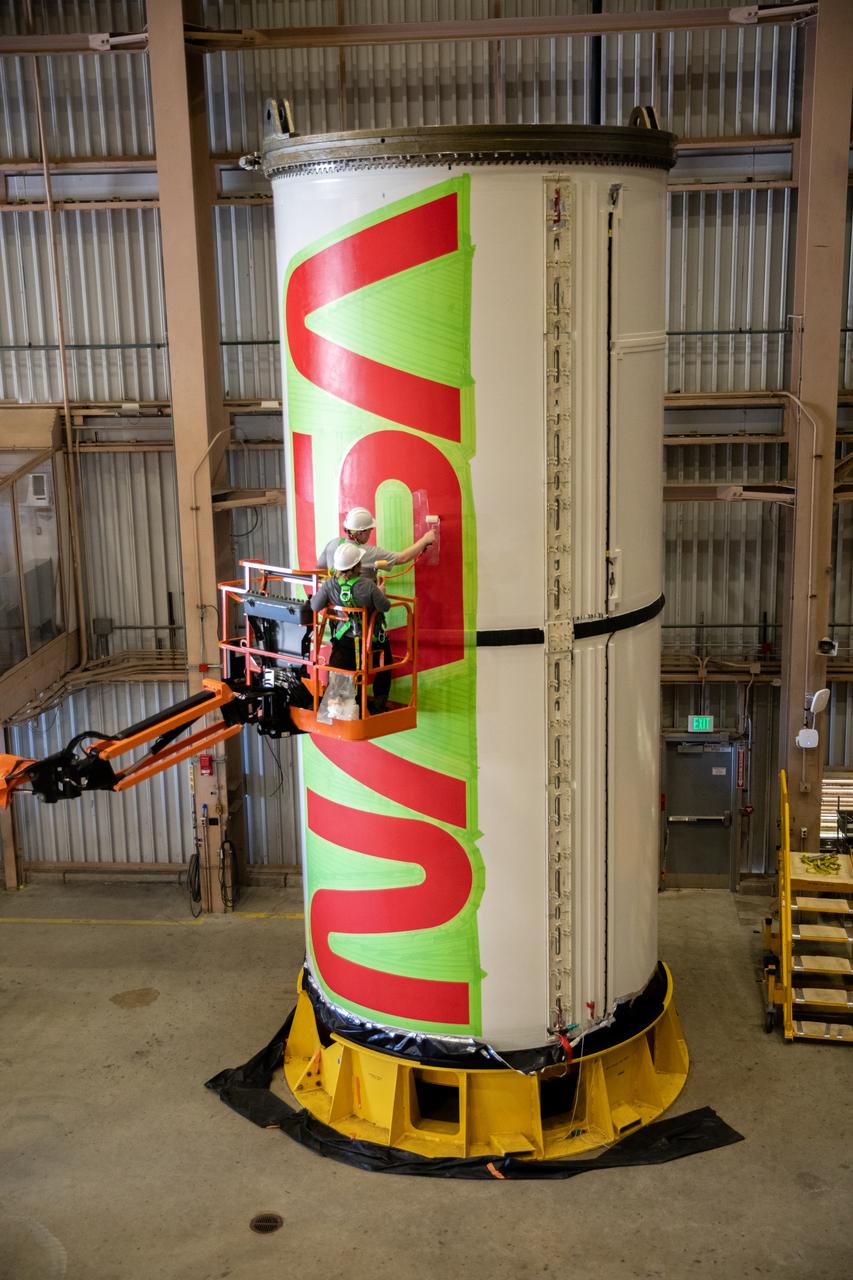
Workers with NASA’s Exploration Ground Systems (EGS) paint the bright red NASA “worm” logo on the side of an Artemis II solid rocket booster segment inside the Rotation, Processing and Surge Facility (RPSF) at Kennedy Space Center in Florida on Tuesday, Jan. 30, 2024. The EGS team used a laser projector to mask off the logo with tape, then painted the first coat of the iconic design. The booster segments will help propel the Space Launch System (SLS) rocket on the Artemis II mission to send four astronauts around the Moon as part of the agency’s effort to establish a long-term science and exploration presence at the Moon, and eventually Mars.
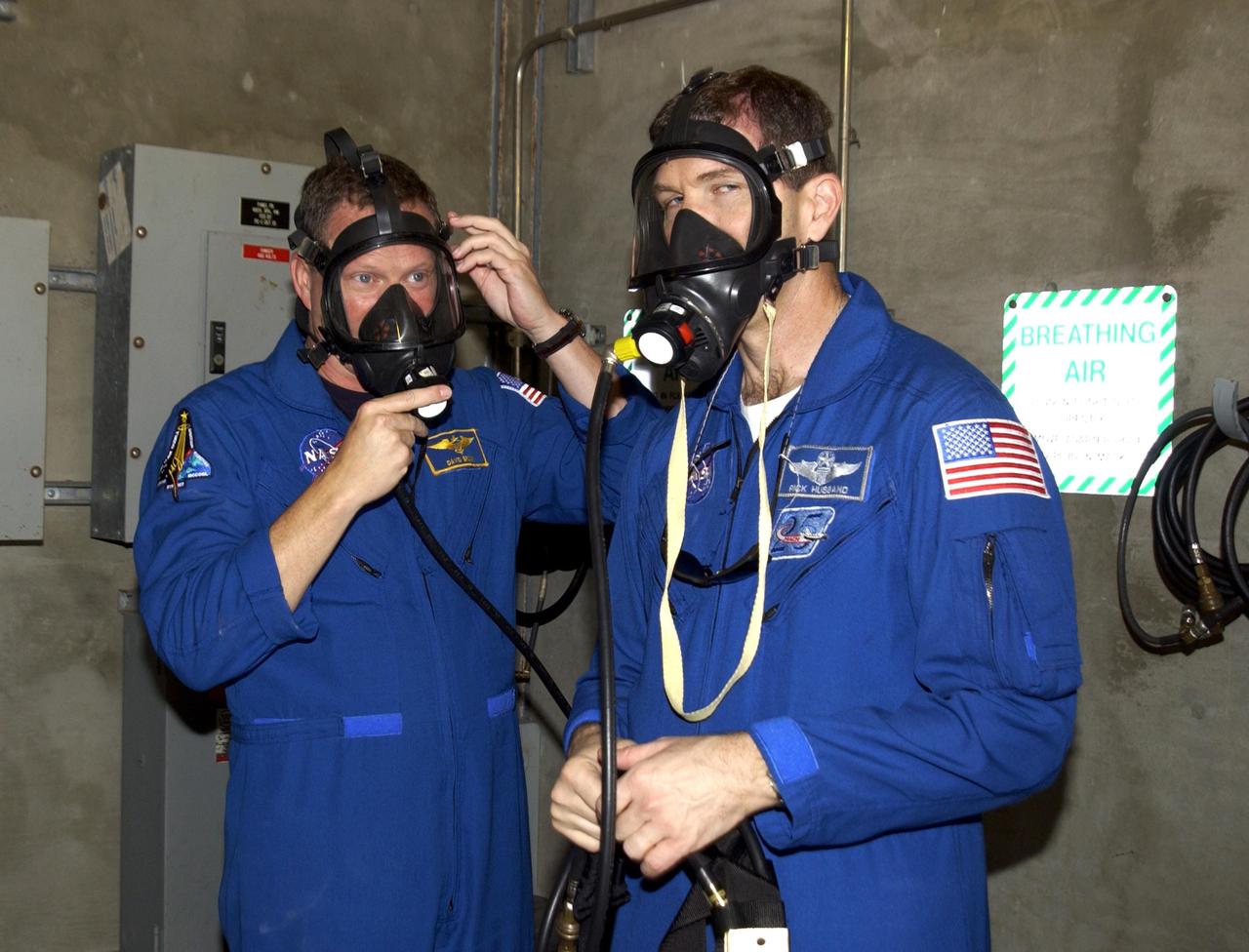
KENNEDY SPACE CENTER, FLA. -- During emergency egress training, part of Terminal Countdown Demonstration Test activities at the pad, STS-107 Mission Specialist David Brown (left) and Commander Rick Husband (right) test breathing masks in the emergency bunker. The TCDT also includes a simulated launch countdown. STS-107 is a mission devoted to research and will include more than 80 experiments that will study Earth and space science, advanced technology development, and astronaut health and safety. Launch is planned for Jan. 16, 2003, between 10 a.m. and 2 p.m. EST aboard Space Shuttle Columbia. .
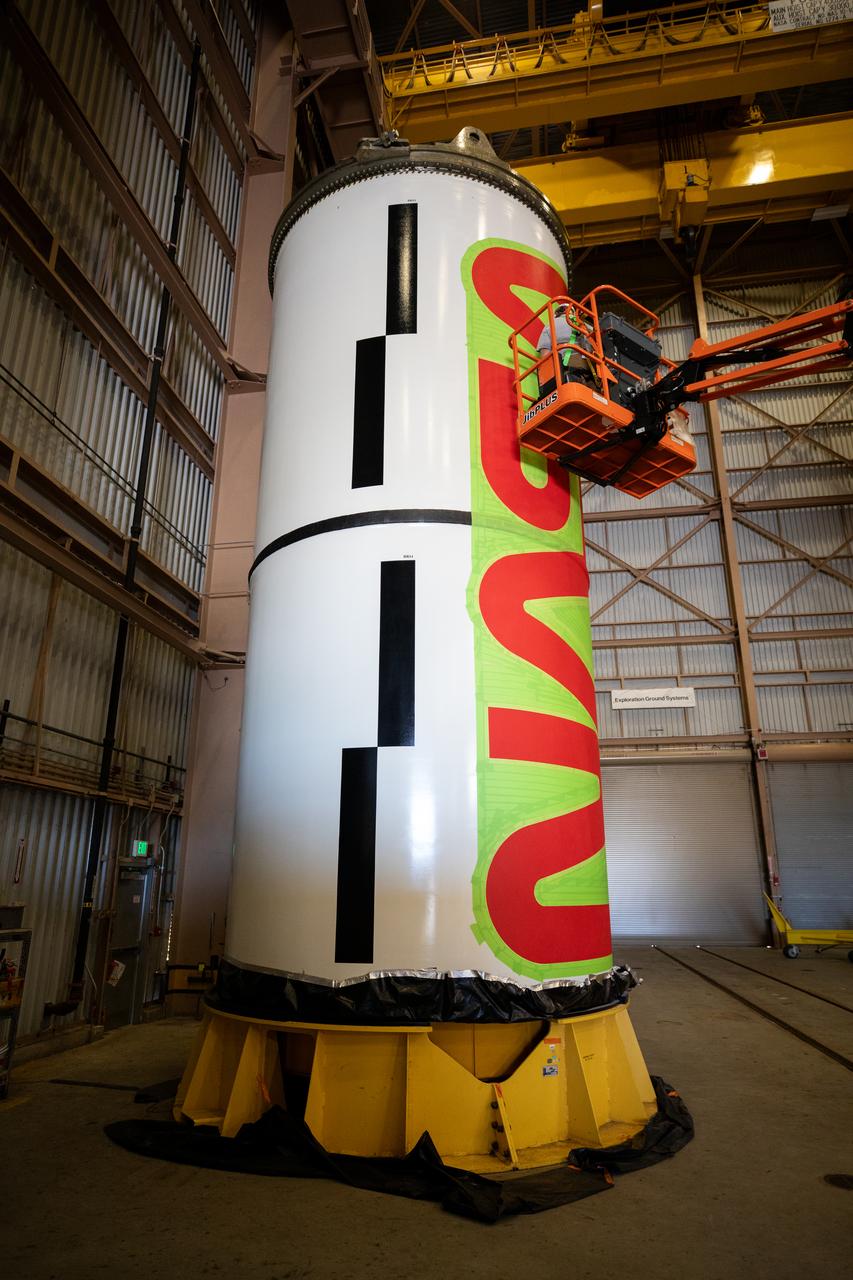
Workers with NASA’s Exploration Ground Systems (EGS) paint the bright red NASA “worm” logo on the side of an Artemis II solid rocket booster segment inside the Rotation, Processing and Surge Facility (RPSF) at Kennedy Space Center in Florida on Tuesday, Jan. 30, 2024. The EGS team used a laser projector to mask off the logo with tape, then painted the first coat of the iconic design. The booster segments will help propel the Space Launch System (SLS) rocket on the Artemis II mission to send four astronauts around the Moon as part of the agency’s effort to establish a long-term science and exploration presence at the Moon, and eventually Mars.
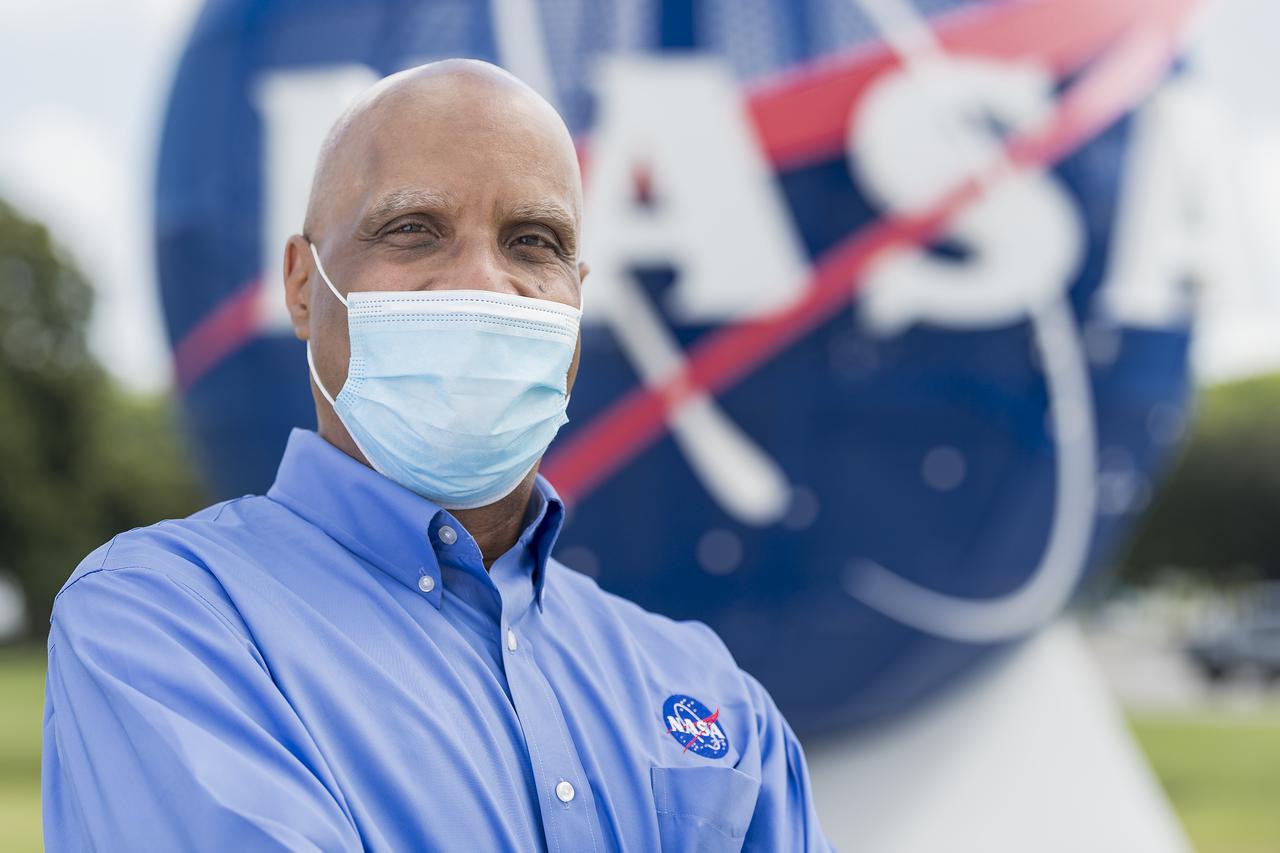
Portrait of Robin "Rob" Lee of the Office of Diversity & Equal Opp. Branch, in front of NASA Langley's "Meatball." The portrait was done for Thalia Patrinos at NASA Headquarters as part of "Faces of NASA" project. Due to the COVID-19 pandemic, masks were mandated by Governor Northam in Virginia in public settings. "Well, little did I know, even at a young age, he instilled in me the importance of seeing people for people. And being able to help people and being able to meet them in their time of need. And that carried me throughout my entire life. Even still today.” — Robin Lee, Director of Office of Diversity and Equal Opportunity, Langley Research Center
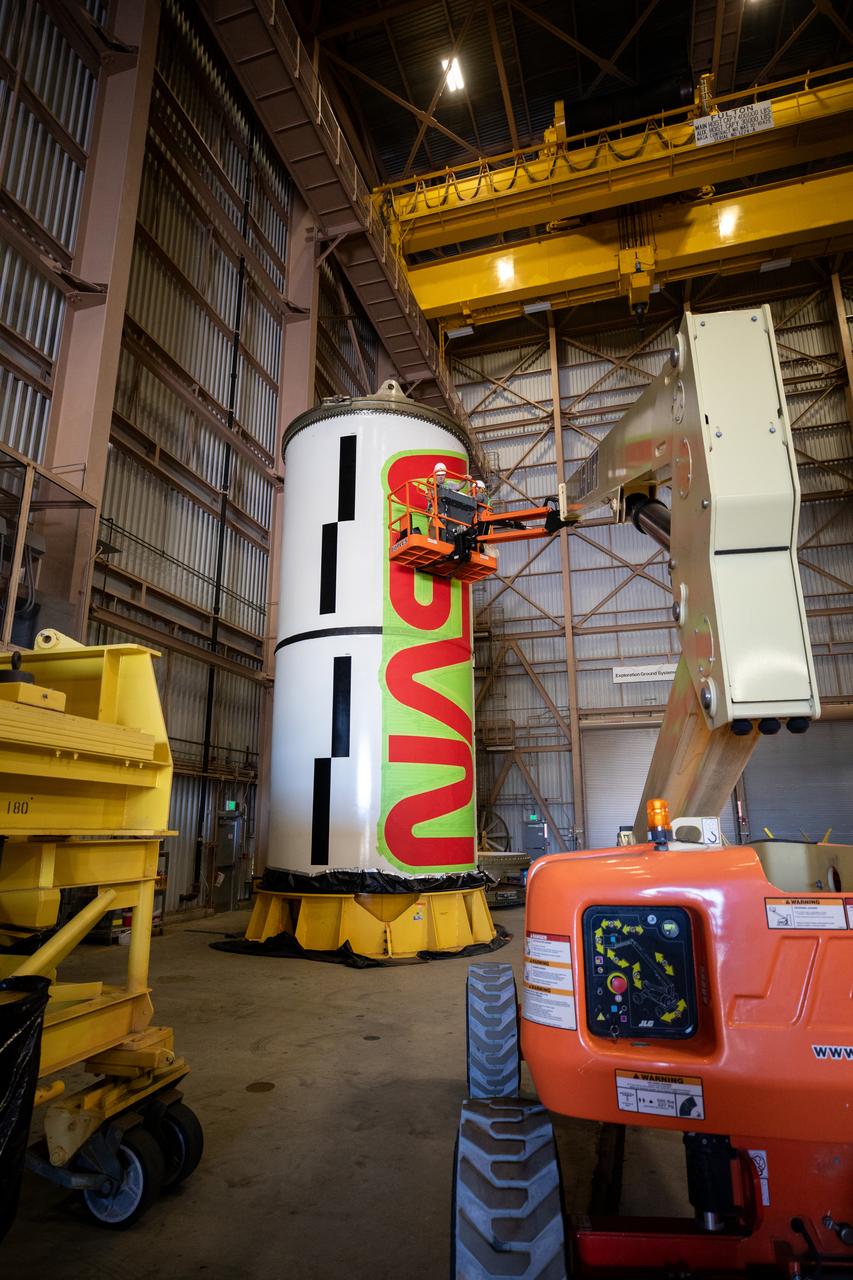
Workers with NASA’s Exploration Ground Systems (EGS) paint the bright red NASA “worm” logo on the side of an Artemis II solid rocket booster segment inside the Rotation, Processing and Surge Facility (RPSF) at Kennedy Space Center in Florida on Tuesday, Jan. 30, 2024. The EGS team used a laser projector to mask off the logo with tape, then painted the first coat of the iconic design. The booster segments will help propel the Space Launch System (SLS) rocket on the Artemis II mission to send four astronauts around the Moon as part of the agency’s effort to establish a long-term science and exploration presence at the Moon, and eventually Mars.
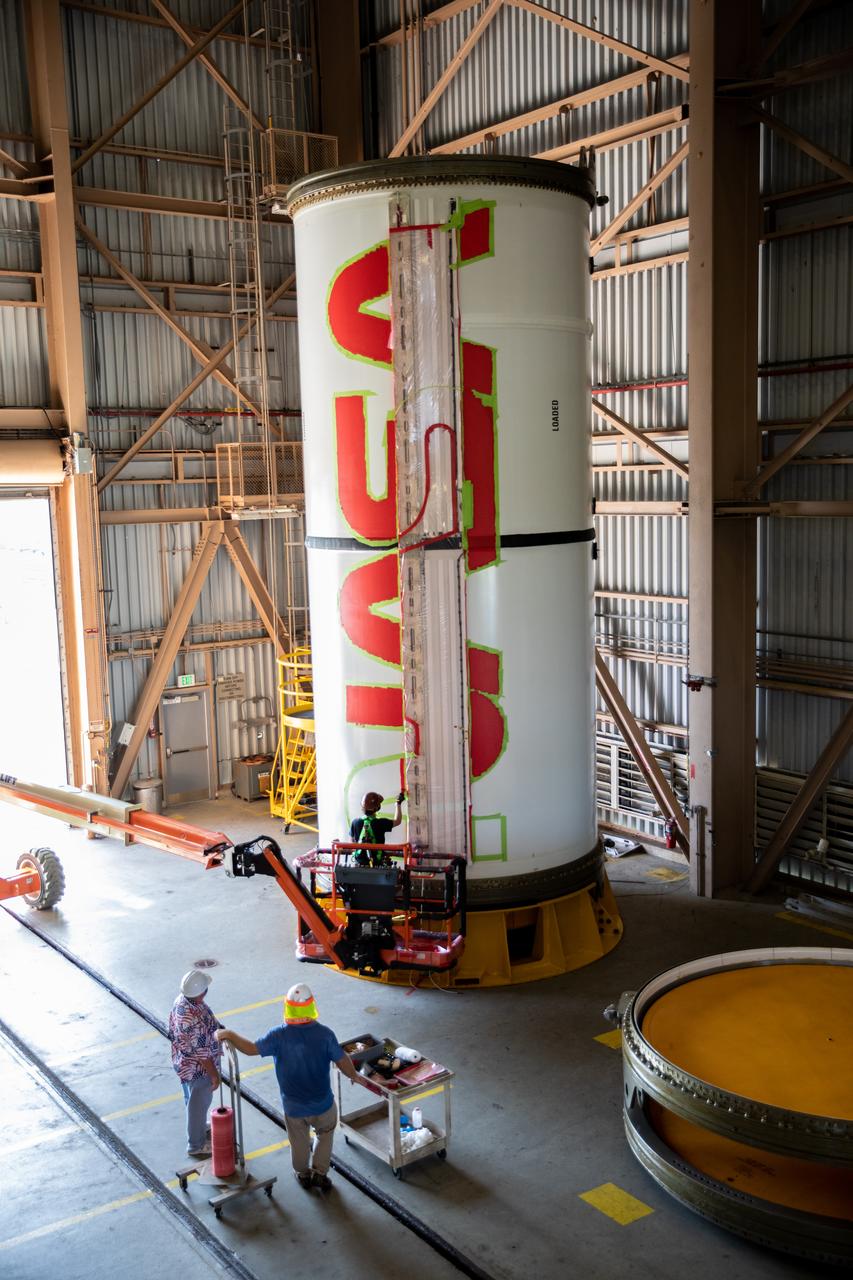
Workers with NASA’s Exploration Ground Systems (EGS) finishes the first coat of the bright red “worm” logo taking shape on the side of an Artemis I solid rocket booster segment inside the Rotation, Processing and Surge Facility (RPSF) at Kennedy Space Center in Florida. The EGS team used a laser projector to mask off the logo with tape, then painted the first coat of the iconic design. The booster segments will help propel the Space Launch System (SLS) rocket on Artemis I, a test of the Orion spacecraft and SLS as an integrated system ahead of crewed flights to the Moon. Northrop Grumman, which built the booster segments, is covering the cost of the painting.
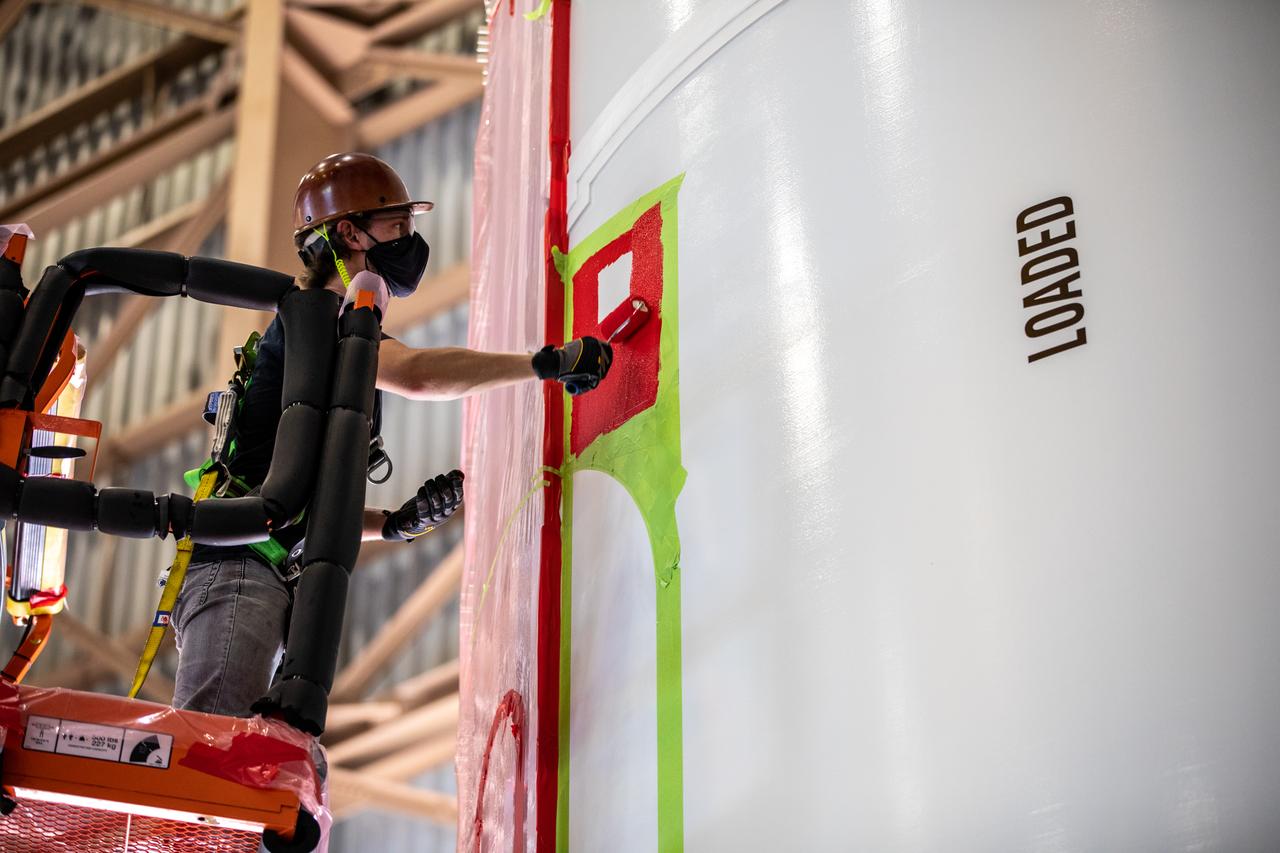
A worker with NASA’s Exploration Ground Systems (EGS) applies bright red paint to the agency’s “worm” logo taking shape on the side of an Artemis I solid rocket booster segment inside the Rotation, Processing and Surge Facility (RPSF) at Kennedy Space Center in Florida. The EGS team used a laser projector to mask off the logo with tape, then painted the first coat of the iconic design. The booster segments will help propel the Space Launch System (SLS) rocket on Artemis I, a test of the Orion spacecraft and SLS as an integrated system ahead of crewed flights to the Moon. Northrop Grumman, which built the booster segments, is covering the cost of the painting.
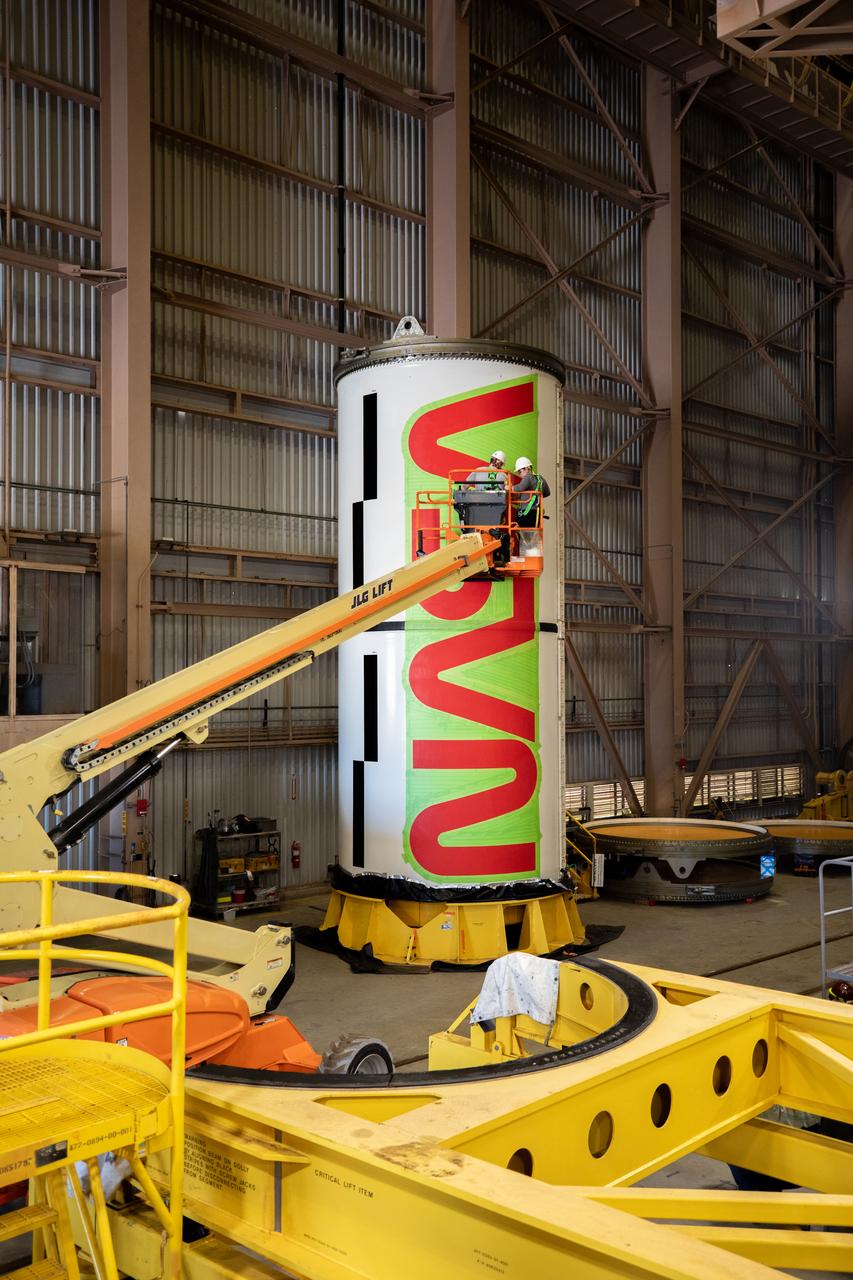
Workers with NASA’s Exploration Ground Systems (EGS) paint the bright red NASA “worm” logo on the side of an Artemis II solid rocket booster segment inside the Rotation, Processing and Surge Facility (RPSF) at Kennedy Space Center in Florida on Tuesday, Jan. 30, 2024. The EGS team used a laser projector to mask off the logo with tape, then painted the first coat of the iconic design. The booster segments will help propel the Space Launch System (SLS) rocket on the Artemis II mission to send four astronauts around the Moon as part of the agency’s effort to establish a long-term science and exploration presence at the Moon, and eventually Mars.
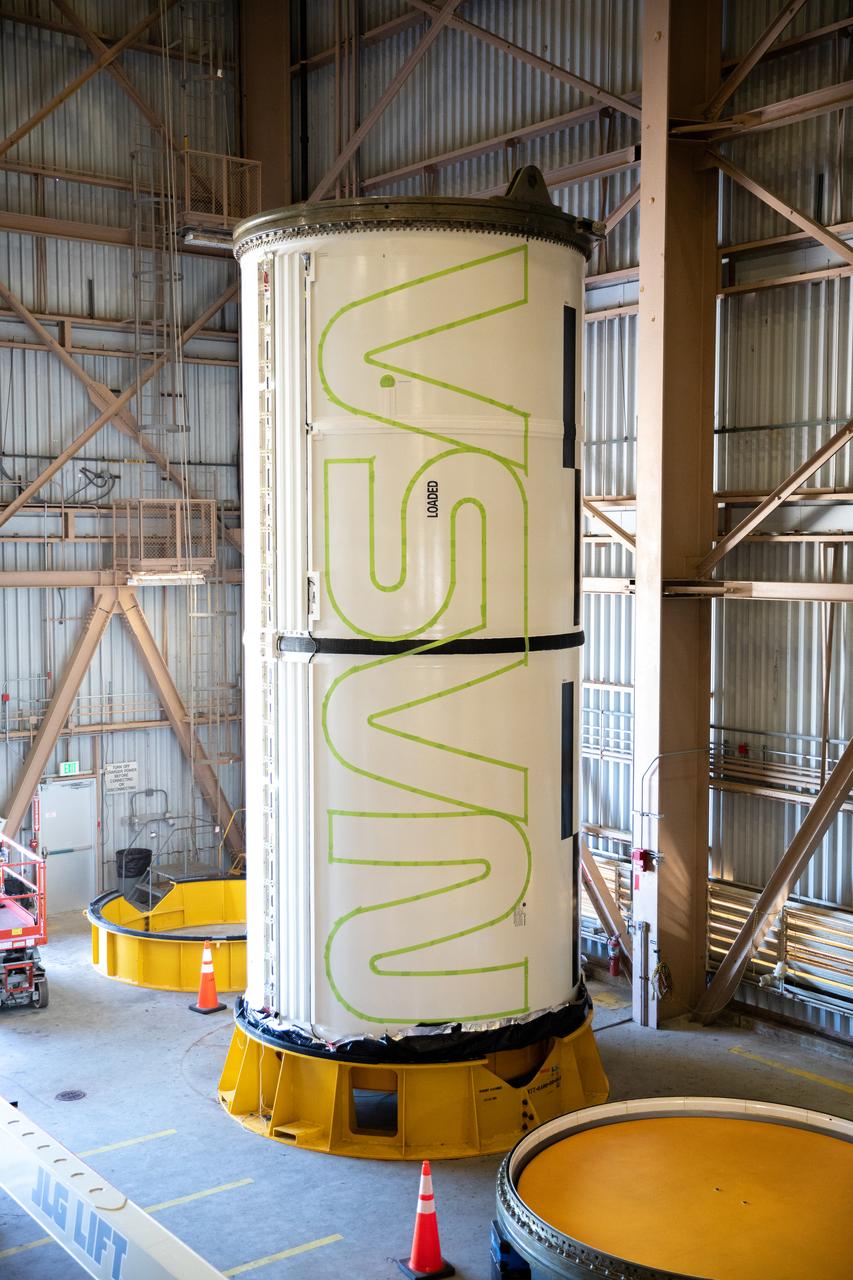
Workers with NASA’s Exploration Ground Systems (EGS) paint the bright red NASA “worm” logo on the side of an Artemis II solid rocket booster segment inside the Rotation, Processing and Surge Facility (RPSF) at Kennedy Space Center in Florida on Tuesday, Jan. 30, 2024. The EGS team used a laser projector to mask off the logo with tape, then painted the first coat of the iconic design. The booster segments will help propel the Space Launch System (SLS) rocket on the Artemis II mission to send four astronauts around the Moon as part of the agency’s effort to establish a long-term science and exploration presence at the Moon, and eventually Mars.
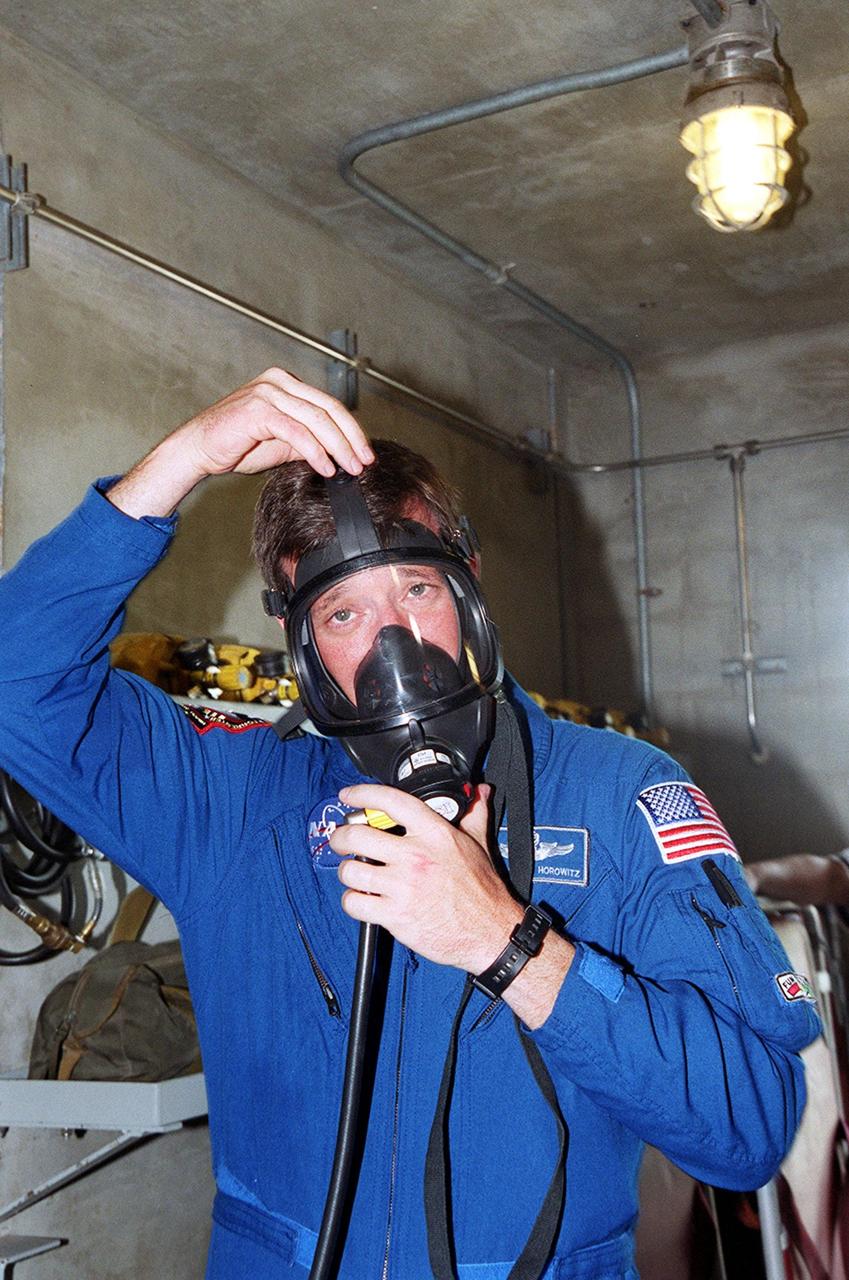
KENNEDY SPACE CENTER, Fla. -- At Launch Pad 39A, STS-105 Commander Scott Horowitz puts on a gas mask as part of Terminal Countdown Demonstration Test activities, which also include emergency egress, a simulated launch countdown and familiarization with the payload. Mission STS-105 will be transporting the Expedition Three crew, several payloads and scientific experiments to the International Space Station aboard Space Shuttle Discovery. The current Expedition Two crew members on the Station will return to Earth on Discovery. Launch is scheduled no earlier than Aug. 9, 2001
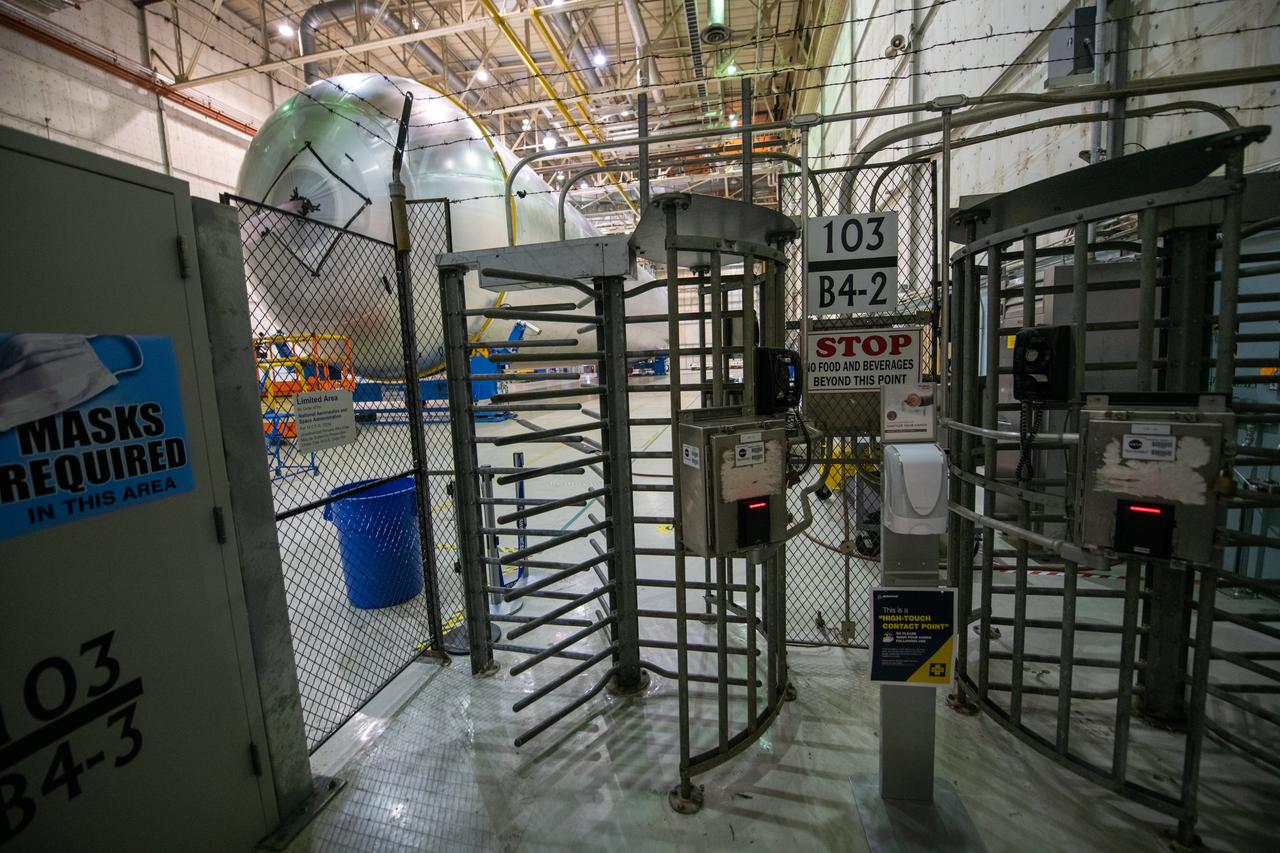
Employees wear personal protective gear at Michoud Assembly Facility as the facility transitioned to Stage 3 of NASA’s Framework for Return To On-Site Work. Employees wear the appropriate personal protective equipment (PPE) and/or cloth face coverings as required for assigned tasks. Access to the facility is limited to authorized personnel working on mission-critical tasks that must be conducted onsite. Mission-critical tasks include slowly and methodically resuming Space Launch System (SLS) Core Stage and Orion production activities, particularly critical path deliverables to support the Artemis Program, at a pace that limits personnel and follows federal guidelines for social distancing and use of personal protective equipment such as face masks. For more information about SLS, visit nasa.gov/sls.
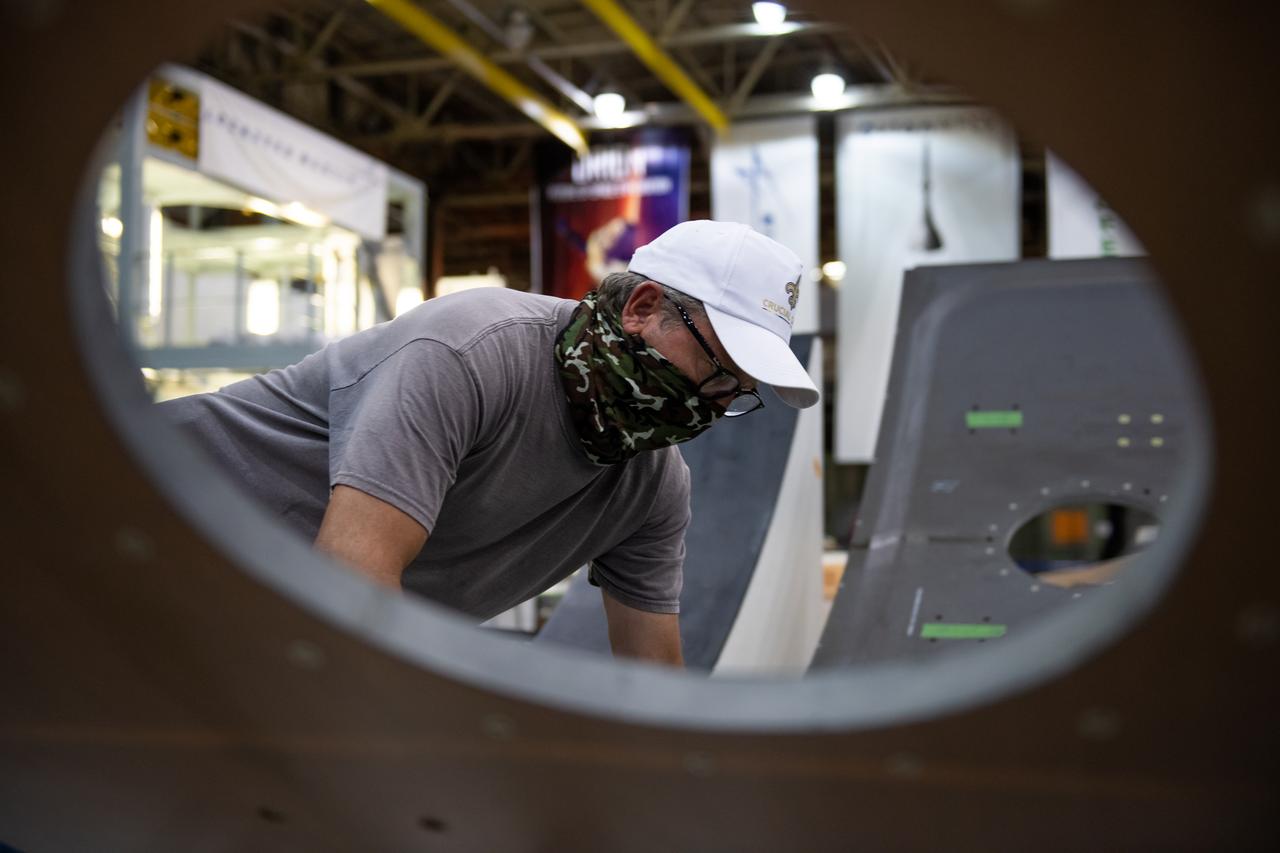
Employees wear personal protective gear at Michoud Assembly Facility as the facility transitioned to Stage 3 of NASA’s Framework for Return To On-Site Work. Employees wear the appropriate personal protective equipment (PPE) and/or cloth face coverings as required for assigned tasks. Access to the facility is limited to authorized personnel working on mission-critical tasks that must be conducted onsite. Mission-critical tasks include slowly and methodically resuming Space Launch System (SLS) Core Stage and Orion production activities, particularly critical path deliverables to support the Artemis Program, at a pace that limits personnel and follows federal guidelines for social distancing and use of personal protective equipment such as face masks. For more information about SLS, visit nasa.gov/sls.
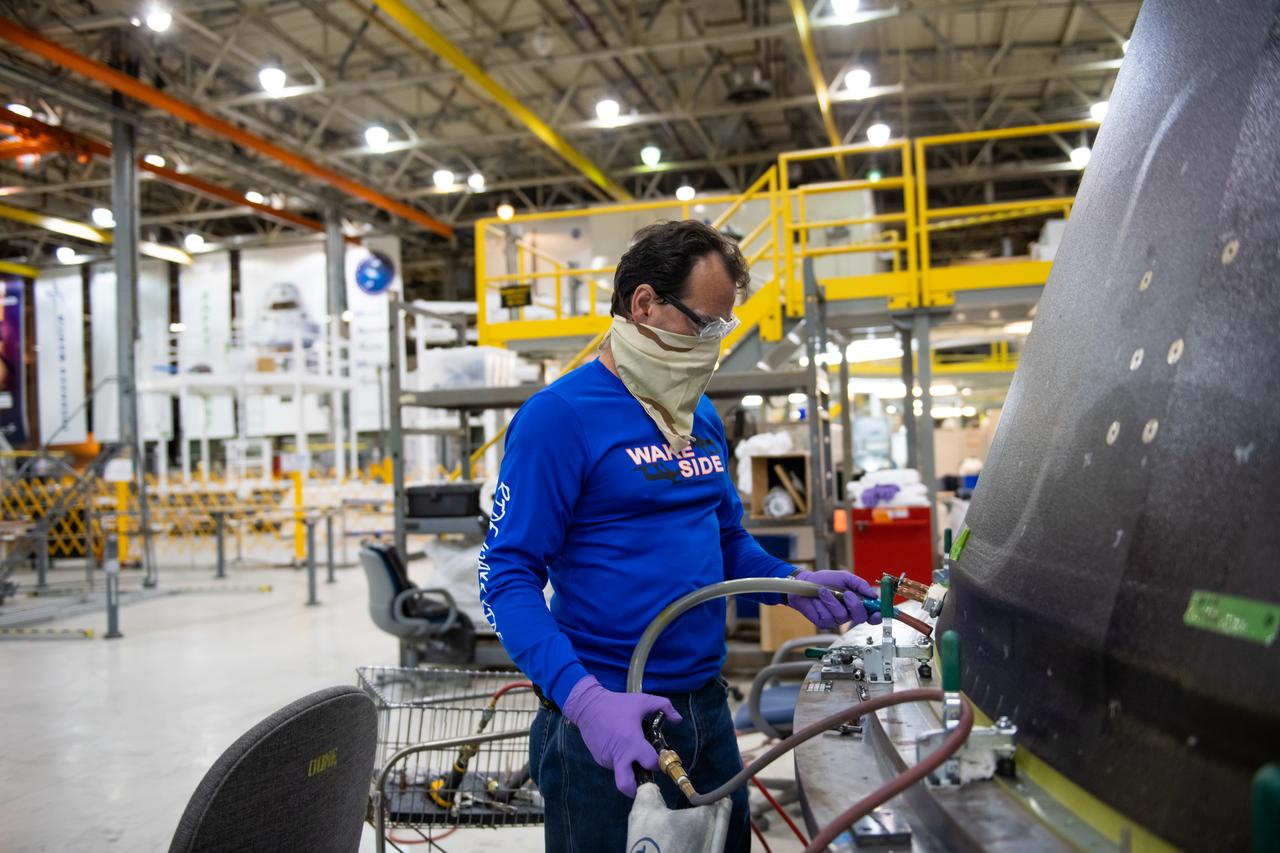
Employees wear personal protective gear at Michoud Assembly Facility as the facility transitioned to Stage 3 of NASA’s Framework for Return To On-Site Work. Employees wear the appropriate personal protective equipment (PPE) and/or cloth face coverings as required for assigned tasks. Access to the facility is limited to authorized personnel working on mission-critical tasks that must be conducted onsite. Mission-critical tasks include slowly and methodically resuming Space Launch System (SLS) Core Stage and Orion production activities, particularly critical path deliverables to support the Artemis Program, at a pace that limits personnel and follows federal guidelines for social distancing and use of personal protective equipment such as face masks. For more information about SLS, visit nasa.gov/sls.
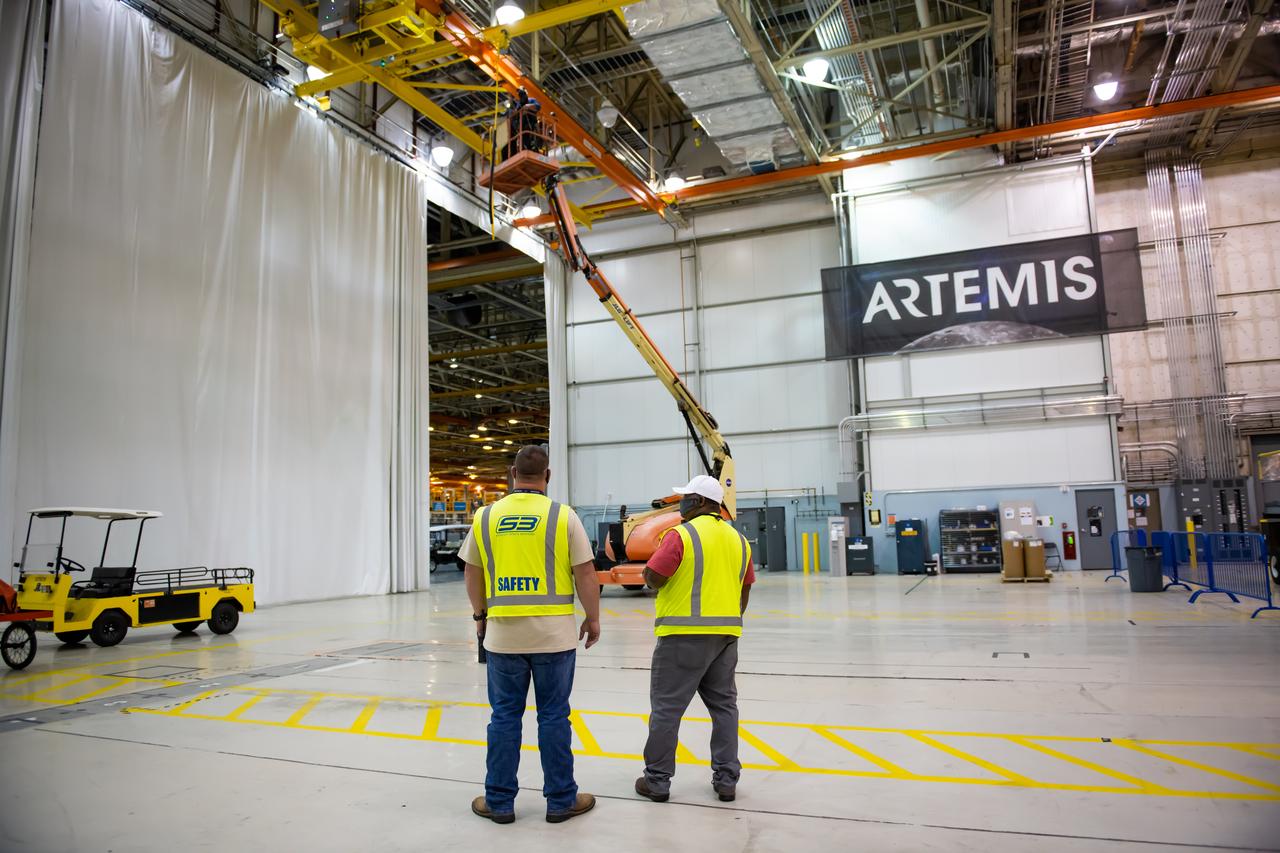
Employees wear personal protective gear at Michoud Assembly Facility as the facility transitioned to Stage 3 of NASA’s Framework for Return To On-Site Work. Employees wear the appropriate personal protective equipment (PPE) and/or cloth face coverings as required for assigned tasks. Access to the facility is limited to authorized personnel working on mission-critical tasks that must be conducted onsite. Mission-critical tasks include slowly and methodically resuming Space Launch System (SLS) Core Stage and Orion production activities, particularly critical path deliverables to support the Artemis Program, at a pace that limits personnel and follows federal guidelines for social distancing and use of personal protective equipment such as face masks. For more information about SLS, visit nasa.gov/sls.
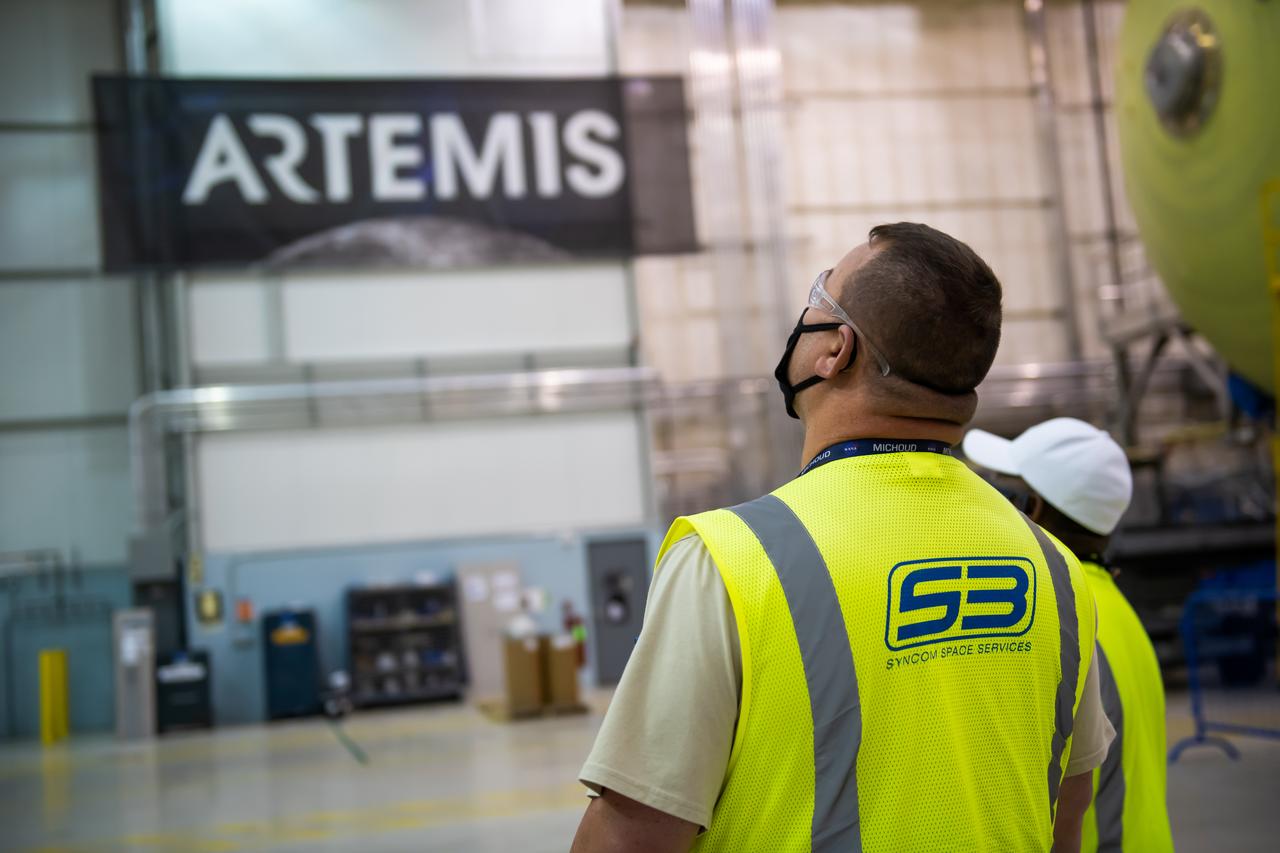
Employees wear personal protective gear at Michoud Assembly Facility as the facility transitioned to Stage 3 of NASA’s Framework for Return To On-Site Work. Employees wear the appropriate personal protective equipment (PPE) and/or cloth face coverings as required for assigned tasks. Access to the facility is limited to authorized personnel working on mission-critical tasks that must be conducted onsite. Mission-critical tasks include slowly and methodically resuming Space Launch System (SLS) Core Stage and Orion production activities, particularly critical path deliverables to support the Artemis Program, at a pace that limits personnel and follows federal guidelines for social distancing and use of personal protective equipment such as face masks. For more information about SLS, visit nasa.gov/sls.
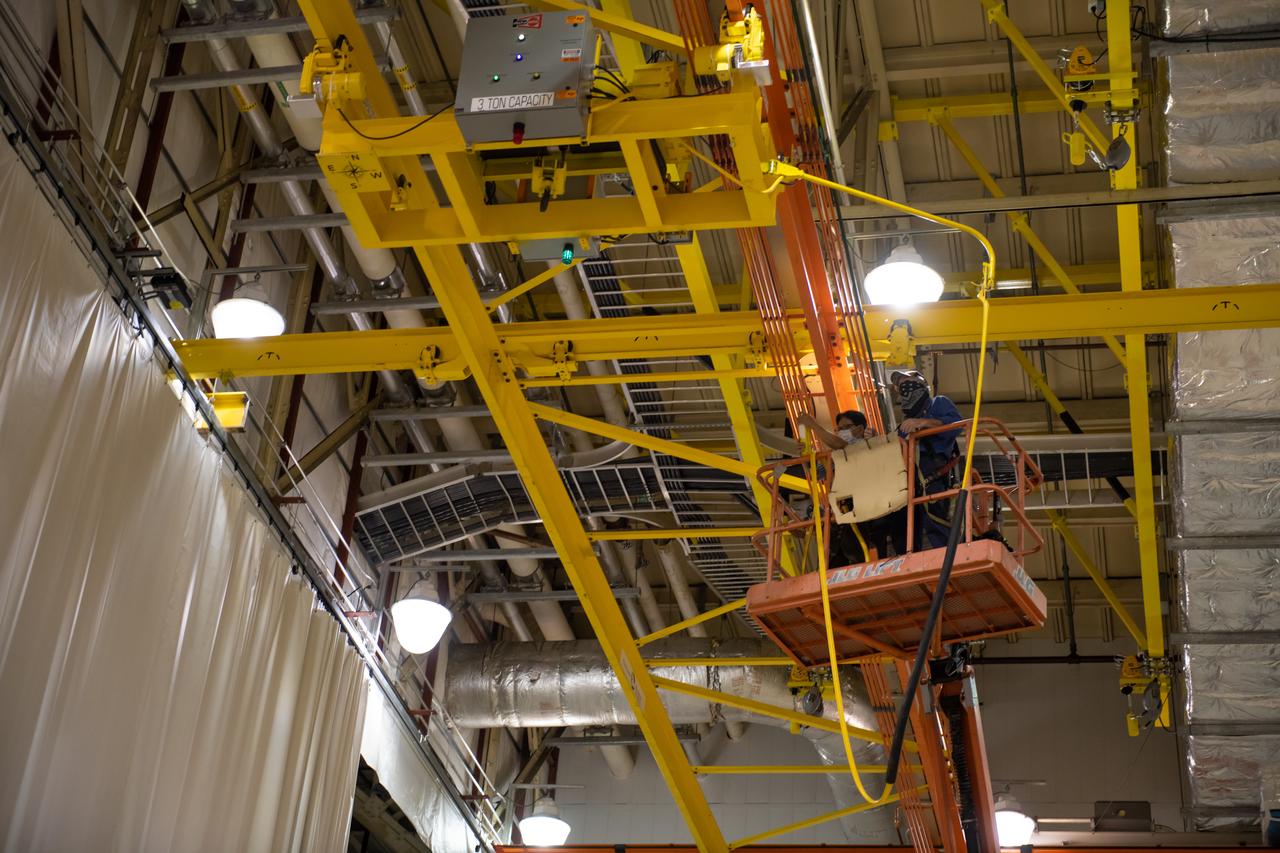
Employees wear personal protective gear at Michoud Assembly Facility as the facility transitioned to Stage 3 of NASA’s Framework for Return To On-Site Work. Employees wear the appropriate personal protective equipment (PPE) and/or cloth face coverings as required for assigned tasks. Access to the facility is limited to authorized personnel working on mission-critical tasks that must be conducted onsite. Mission-critical tasks include slowly and methodically resuming Space Launch System (SLS) Core Stage and Orion production activities, particularly critical path deliverables to support the Artemis Program, at a pace that limits personnel and follows federal guidelines for social distancing and use of personal protective equipment such as face masks. For more information about SLS, visit nasa.gov/sls.
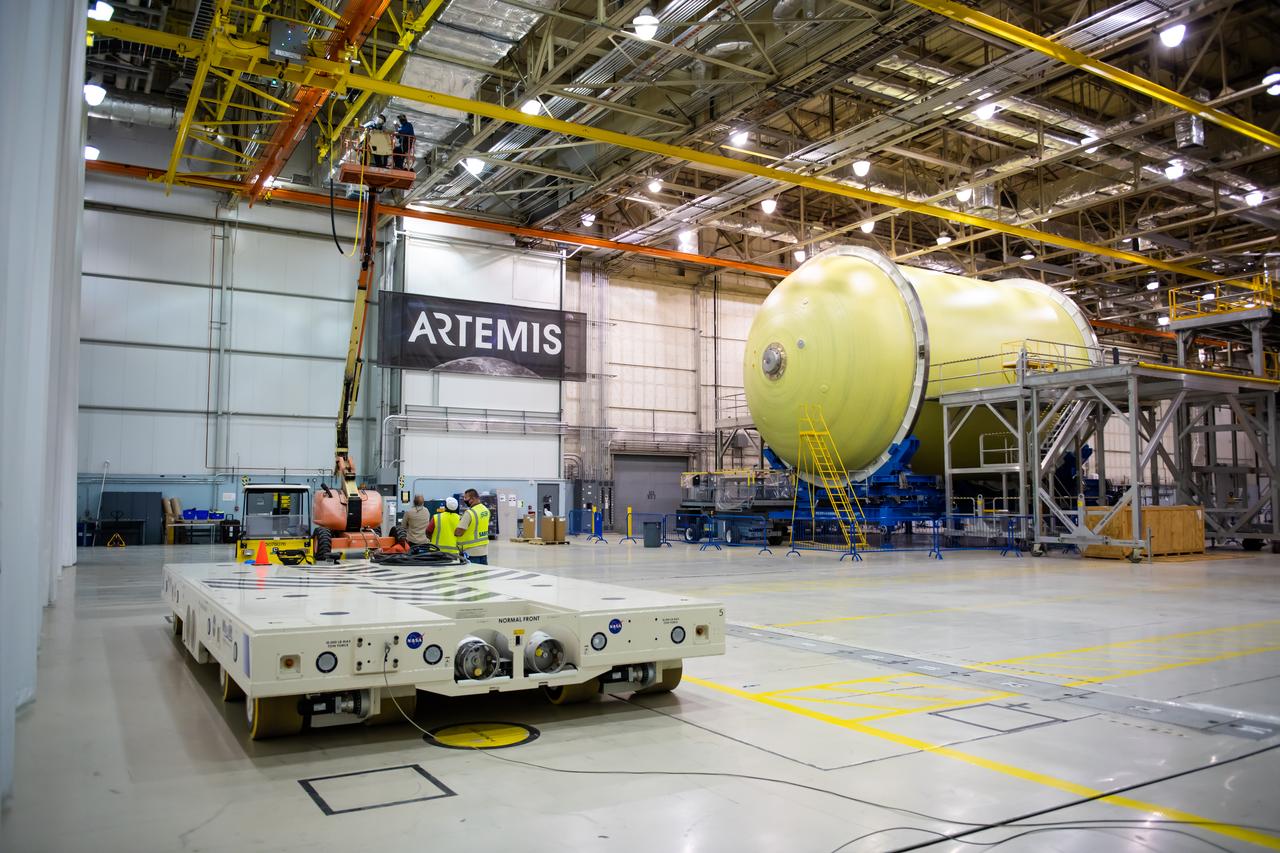
Employees wear personal protective gear at Michoud Assembly Facility as the facility transitioned to Stage 3 of NASA’s Framework for Return To On-Site Work. Employees wear the appropriate personal protective equipment (PPE) and/or cloth face coverings as required for assigned tasks. Access to the facility is limited to authorized personnel working on mission-critical tasks that must be conducted onsite. Mission-critical tasks include slowly and methodically resuming Space Launch System (SLS) Core Stage and Orion production activities, particularly critical path deliverables to support the Artemis Program, at a pace that limits personnel and follows federal guidelines for social distancing and use of personal protective equipment such as face masks. For more information about SLS, visit nasa.gov/sls.
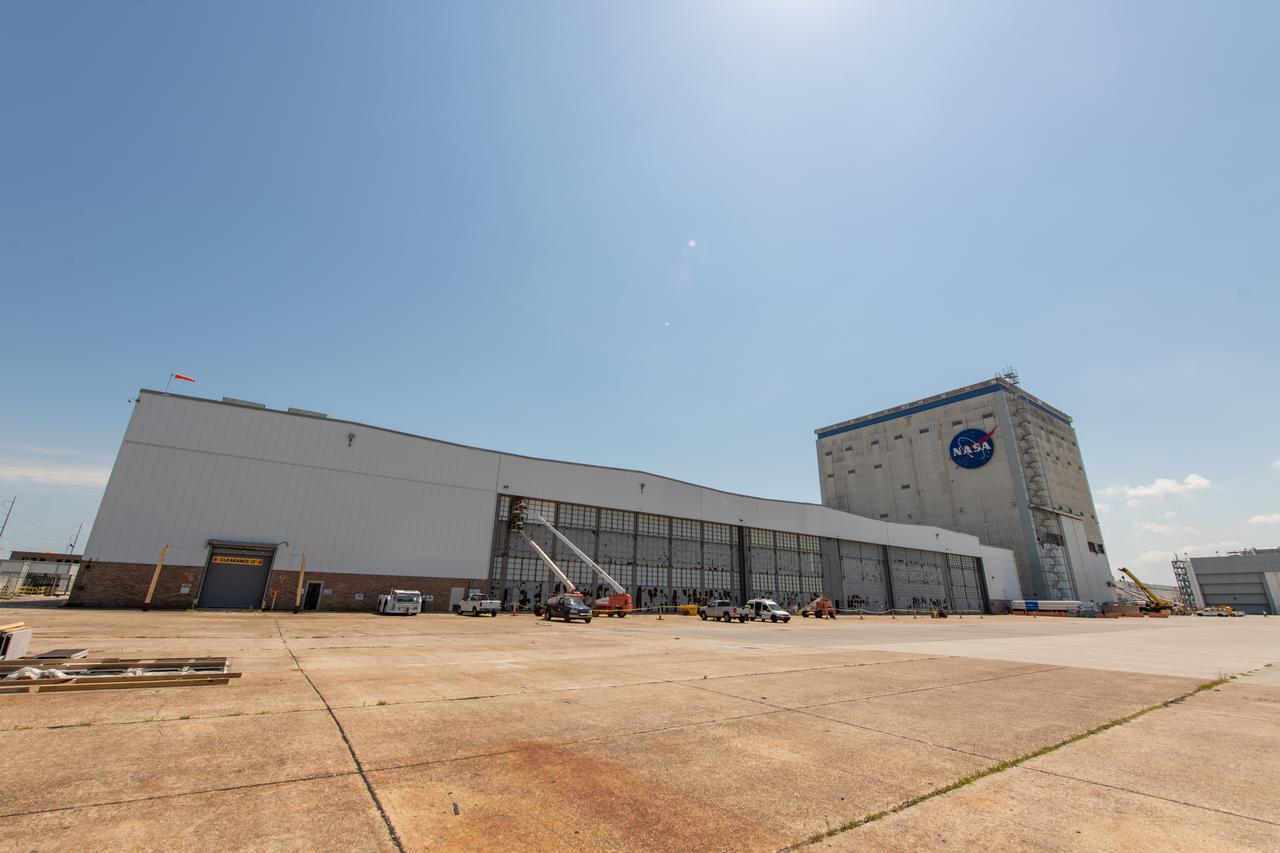
Employees wear personal protective gear at Michoud Assembly Facility as the facility transitioned to Stage 3 of NASA’s Framework for Return To On-Site Work. Employees wear the appropriate personal protective equipment (PPE) and/or cloth face coverings as required for assigned tasks. Access to the facility is limited to authorized personnel working on mission-critical tasks that must be conducted onsite. Mission-critical tasks include slowly and methodically resuming Space Launch System (SLS) Core Stage and Orion production activities, particularly critical path deliverables to support the Artemis Program, at a pace that limits personnel and follows federal guidelines for social distancing and use of personal protective equipment such as face masks. For more information about SLS, visit nasa.gov/sls.
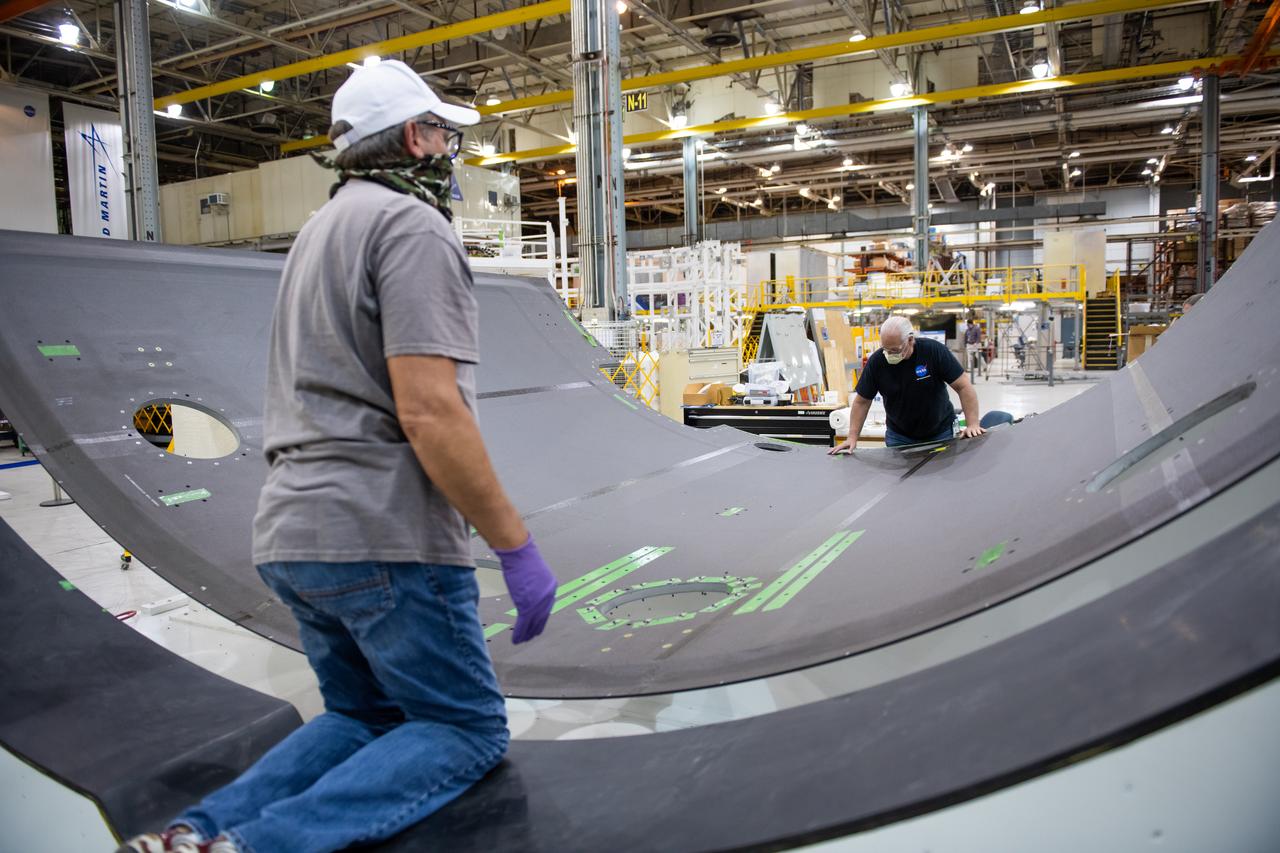
Employees wear personal protective gear at Michoud Assembly Facility as the facility transitioned to Stage 3 of NASA’s Framework for Return To On-Site Work. Employees wear the appropriate personal protective equipment (PPE) and/or cloth face coverings as required for assigned tasks. Access to the facility is limited to authorized personnel working on mission-critical tasks that must be conducted onsite. Mission-critical tasks include slowly and methodically resuming Space Launch System (SLS) Core Stage and Orion production activities, particularly critical path deliverables to support the Artemis Program, at a pace that limits personnel and follows federal guidelines for social distancing and use of personal protective equipment such as face masks. For more information about SLS, visit nasa.gov/sls.
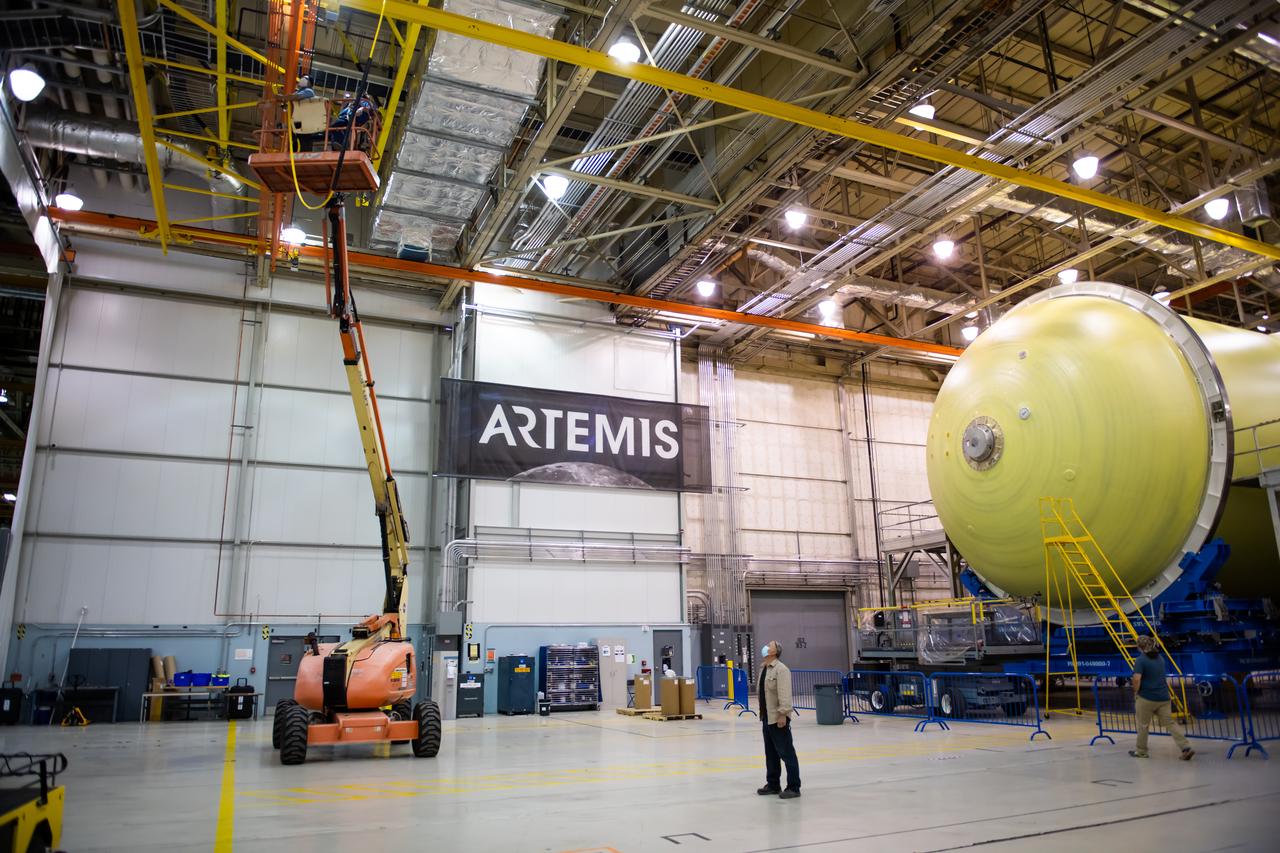
Employees wear personal protective gear at Michoud Assembly Facility as the facility transitioned to Stage 3 of NASA’s Framework for Return To On-Site Work. Employees wear the appropriate personal protective equipment (PPE) and/or cloth face coverings as required for assigned tasks. Access to the facility is limited to authorized personnel working on mission-critical tasks that must be conducted onsite. Mission-critical tasks include slowly and methodically resuming Space Launch System (SLS) Core Stage and Orion production activities, particularly critical path deliverables to support the Artemis Program, at a pace that limits personnel and follows federal guidelines for social distancing and use of personal protective equipment such as face masks. For more information about SLS, visit nasa.gov/sls.
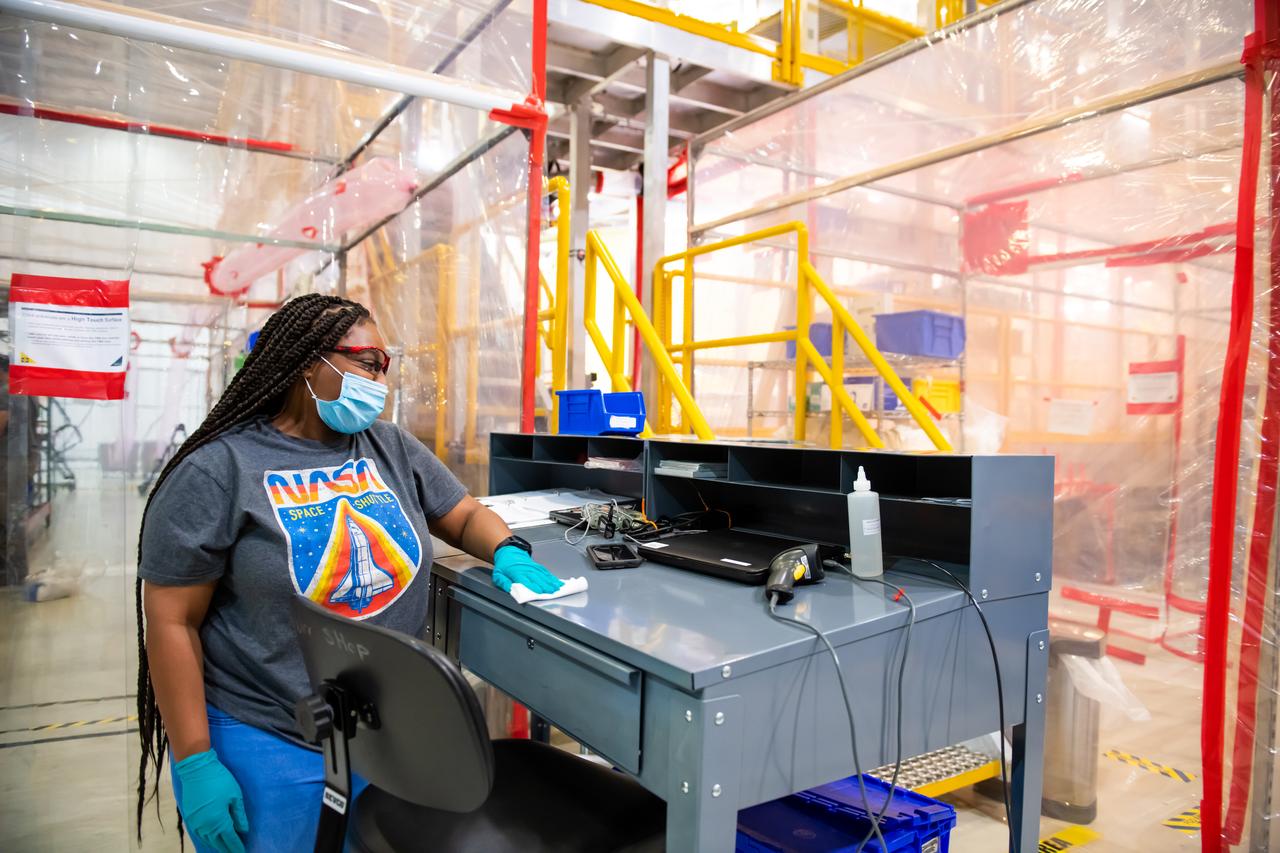
Employees wear personal protective gear at Michoud Assembly Facility as the facility transitioned to Stage 3 of NASA’s Framework for Return To On-Site Work. Employees wear the appropriate personal protective equipment (PPE) and/or cloth face coverings as required for assigned tasks. Access to the facility is limited to authorized personnel working on mission-critical tasks that must be conducted onsite. Mission-critical tasks include slowly and methodically resuming Space Launch System (SLS) Core Stage and Orion production activities, particularly critical path deliverables to support the Artemis Program, at a pace that limits personnel and follows federal guidelines for social distancing and use of personal protective equipment such as face masks. For more information about SLS, visit nasa.gov/sls.
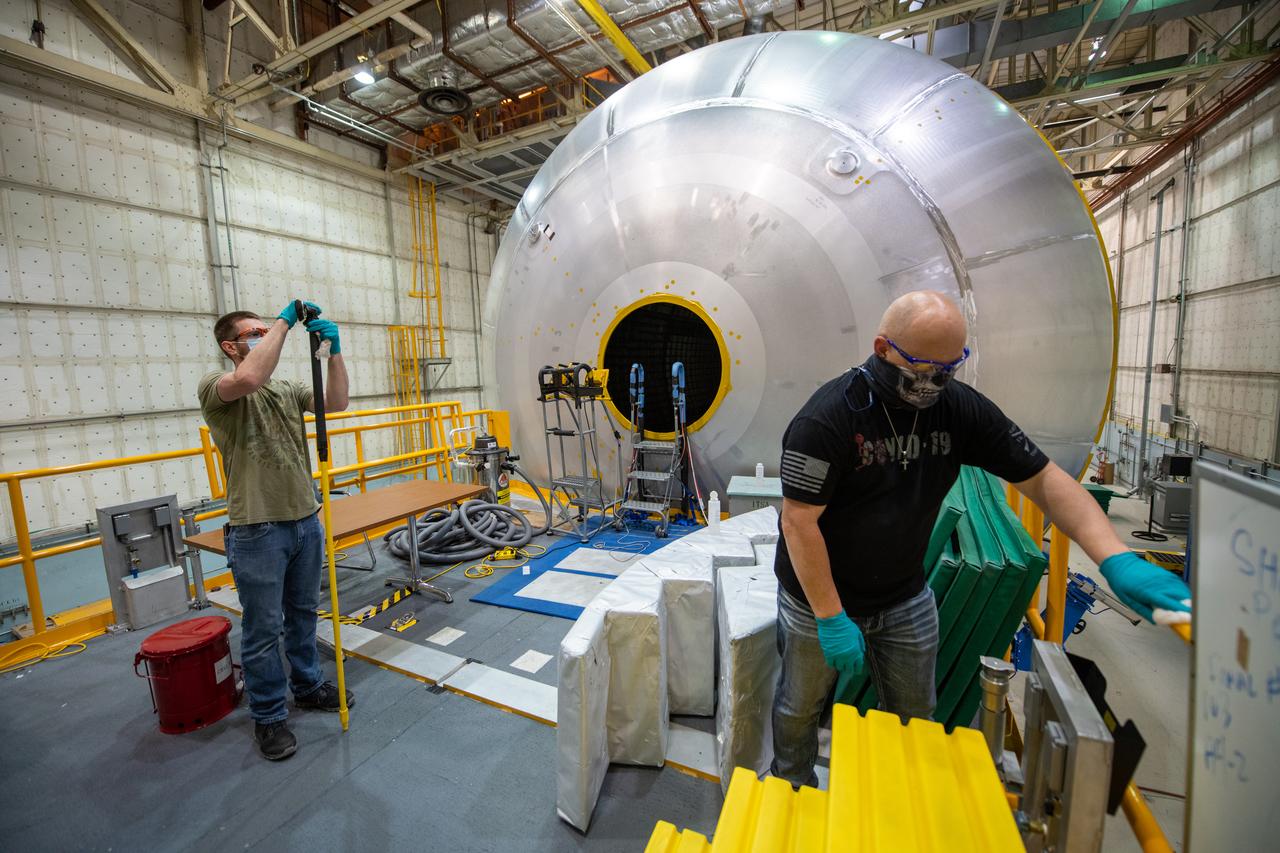
Employees wear personal protective gear at Michoud Assembly Facility as the facility transitioned to Stage 3 of NASA’s Framework for Return To On-Site Work. Employees wear the appropriate personal protective equipment (PPE) and/or cloth face coverings as required for assigned tasks. Access to the facility is limited to authorized personnel working on mission-critical tasks that must be conducted onsite. Mission-critical tasks include slowly and methodically resuming Space Launch System (SLS) Core Stage and Orion production activities, particularly critical path deliverables to support the Artemis Program, at a pace that limits personnel and follows federal guidelines for social distancing and use of personal protective equipment such as face masks. For more information about SLS, visit nasa.gov/sls.
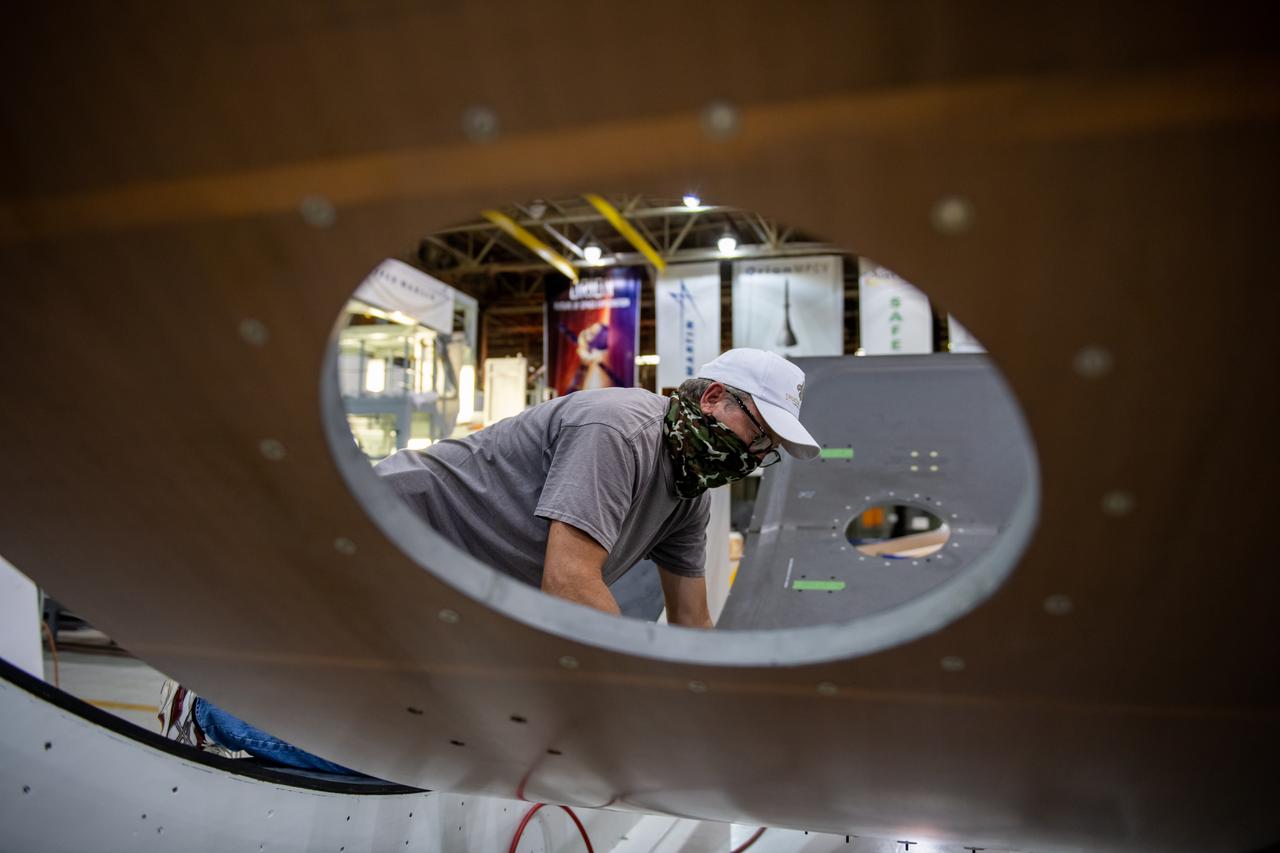
Employees wear personal protective gear at Michoud Assembly Facility as the facility transitioned to Stage 3 of NASA’s Framework for Return To On-Site Work. Employees wear the appropriate personal protective equipment (PPE) and/or cloth face coverings as required for assigned tasks. Access to the facility is limited to authorized personnel working on mission-critical tasks that must be conducted onsite. Mission-critical tasks include slowly and methodically resuming Space Launch System (SLS) Core Stage and Orion production activities, particularly critical path deliverables to support the Artemis Program, at a pace that limits personnel and follows federal guidelines for social distancing and use of personal protective equipment such as face masks. For more information about SLS, visit nasa.gov/sls.
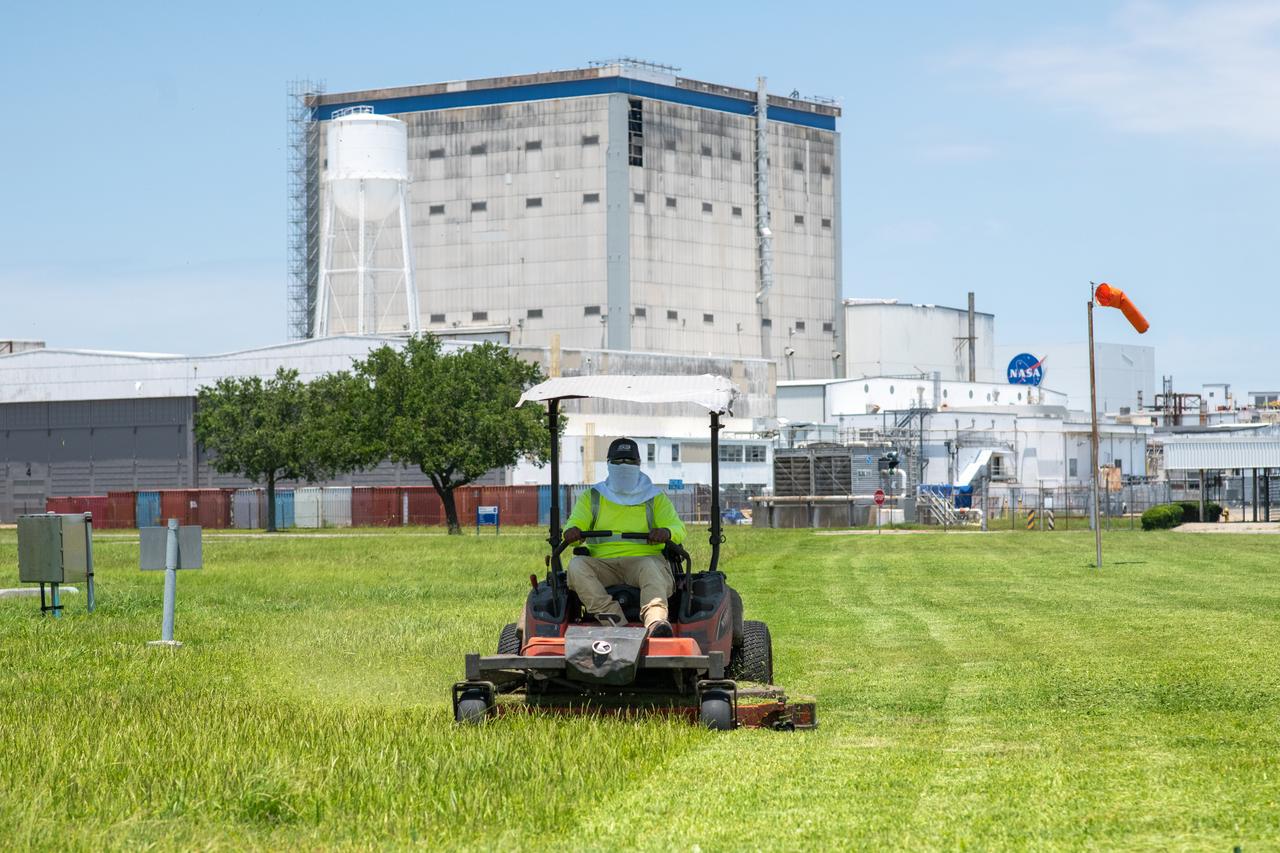
Employees wear personal protective gear at Michoud Assembly Facility as the facility transitioned to Stage 3 of NASA’s Framework for Return To On-Site Work. Employees wear the appropriate personal protective equipment (PPE) and/or cloth face coverings as required for assigned tasks. Access to the facility is limited to authorized personnel working on mission-critical tasks that must be conducted onsite. Mission-critical tasks include slowly and methodically resuming Space Launch System (SLS) Core Stage and Orion production activities, particularly critical path deliverables to support the Artemis Program, at a pace that limits personnel and follows federal guidelines for social distancing and use of personal protective equipment such as face masks. For more information about SLS, visit nasa.gov/sls.
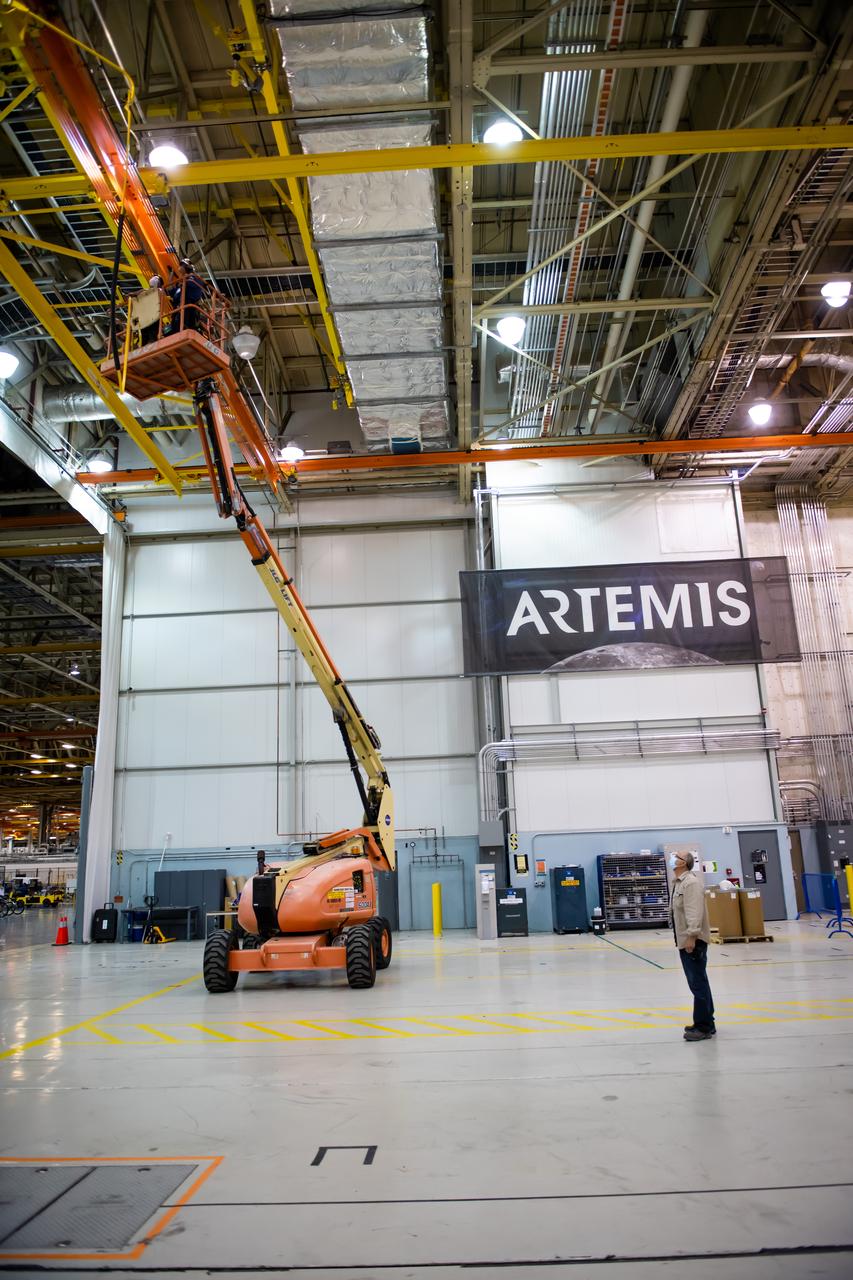
Employees wear personal protective gear at Michoud Assembly Facility as the facility transitioned to Stage 3 of NASA’s Framework for Return To On-Site Work. Employees wear the appropriate personal protective equipment (PPE) and/or cloth face coverings as required for assigned tasks. Access to the facility is limited to authorized personnel working on mission-critical tasks that must be conducted onsite. Mission-critical tasks include slowly and methodically resuming Space Launch System (SLS) Core Stage and Orion production activities, particularly critical path deliverables to support the Artemis Program, at a pace that limits personnel and follows federal guidelines for social distancing and use of personal protective equipment such as face masks. For more information about SLS, visit nasa.gov/sls.
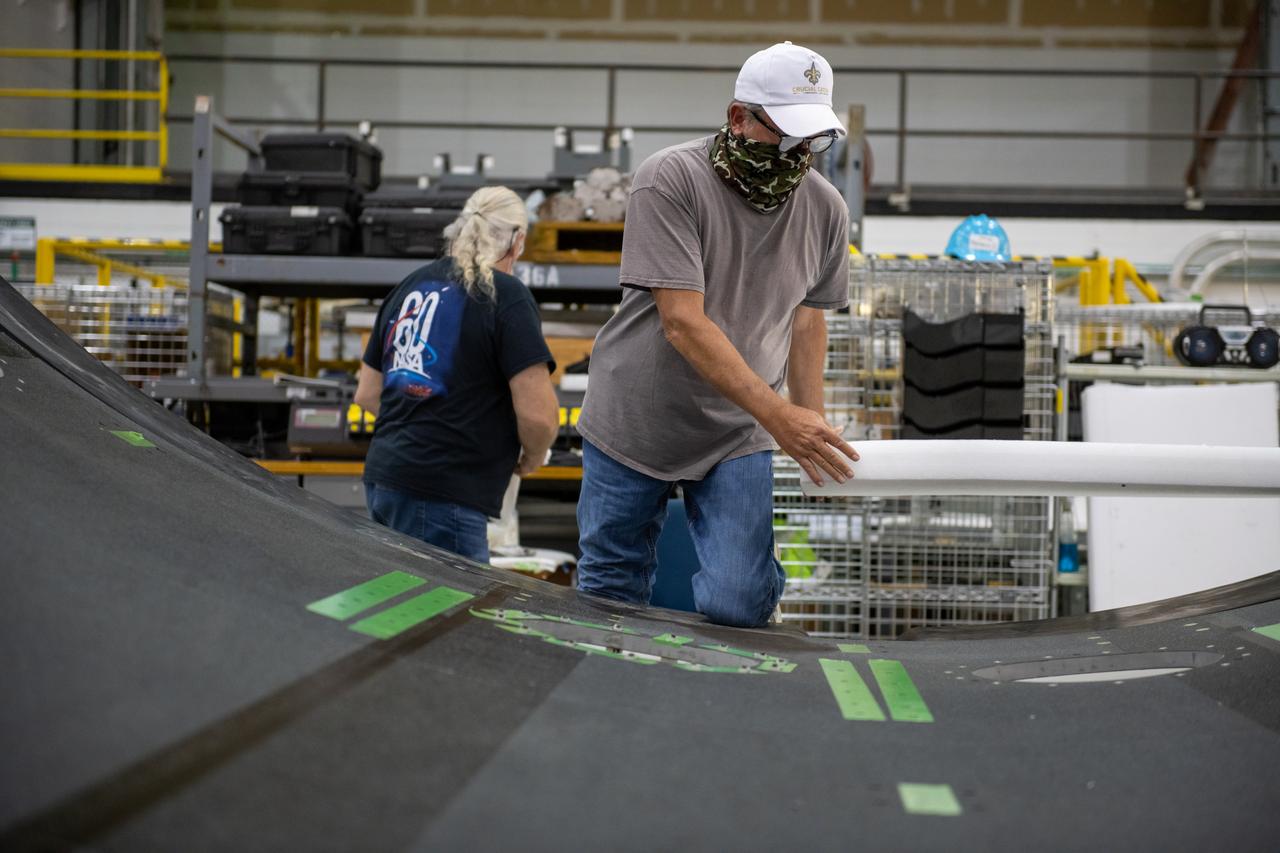
Employees wear personal protective gear at Michoud Assembly Facility as the facility transitioned to Stage 3 of NASA’s Framework for Return To On-Site Work. Employees wear the appropriate personal protective equipment (PPE) and/or cloth face coverings as required for assigned tasks. Access to the facility is limited to authorized personnel working on mission-critical tasks that must be conducted onsite. Mission-critical tasks include slowly and methodically resuming Space Launch System (SLS) Core Stage and Orion production activities, particularly critical path deliverables to support the Artemis Program, at a pace that limits personnel and follows federal guidelines for social distancing and use of personal protective equipment such as face masks. For more information about SLS, visit nasa.gov/sls.
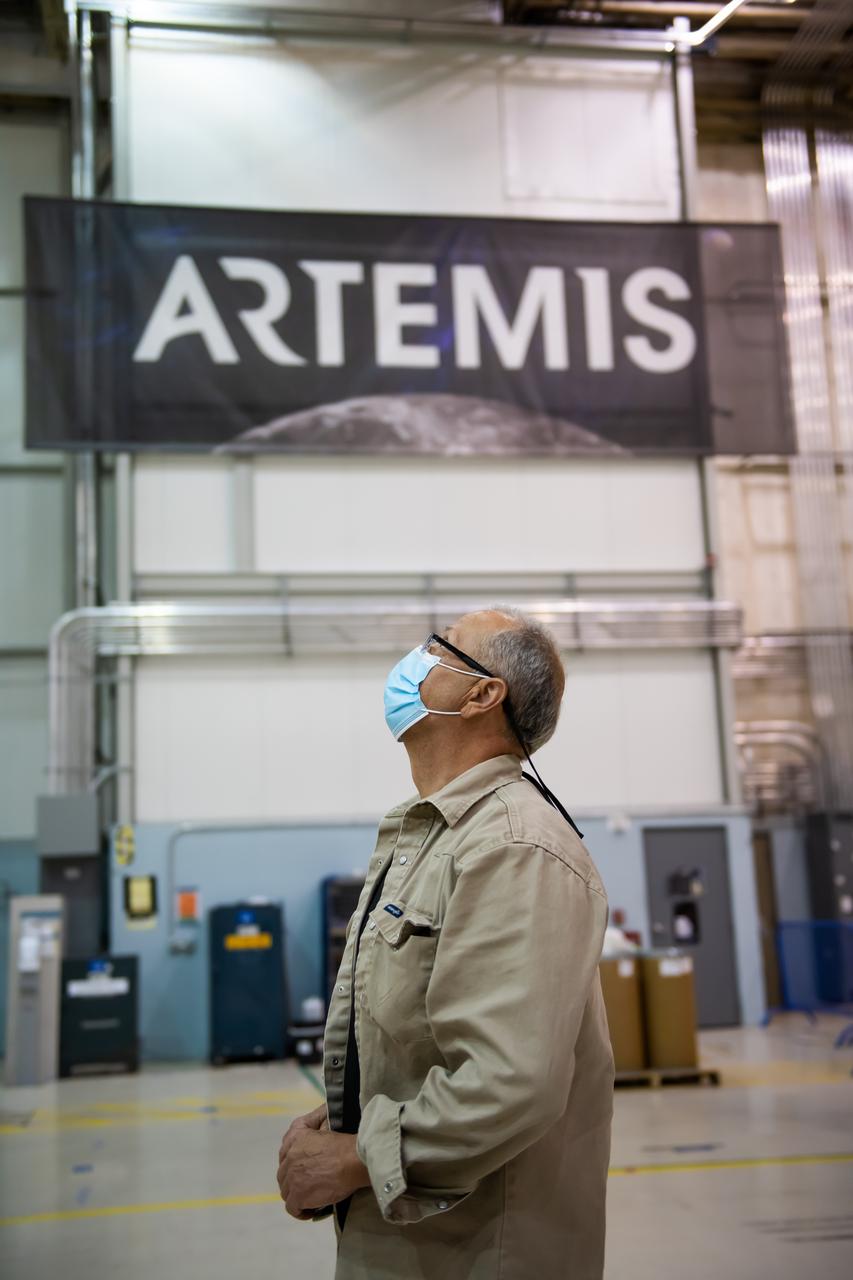
Employees wear personal protective gear at Michoud Assembly Facility as the facility transitioned to Stage 3 of NASA’s Framework for Return To On-Site Work. Employees wear the appropriate personal protective equipment (PPE) and/or cloth face coverings as required for assigned tasks. Access to the facility is limited to authorized personnel working on mission-critical tasks that must be conducted onsite. Mission-critical tasks include slowly and methodically resuming Space Launch System (SLS) Core Stage and Orion production activities, particularly critical path deliverables to support the Artemis Program, at a pace that limits personnel and follows federal guidelines for social distancing and use of personal protective equipment such as face masks. For more information about SLS, visit nasa.gov/sls.
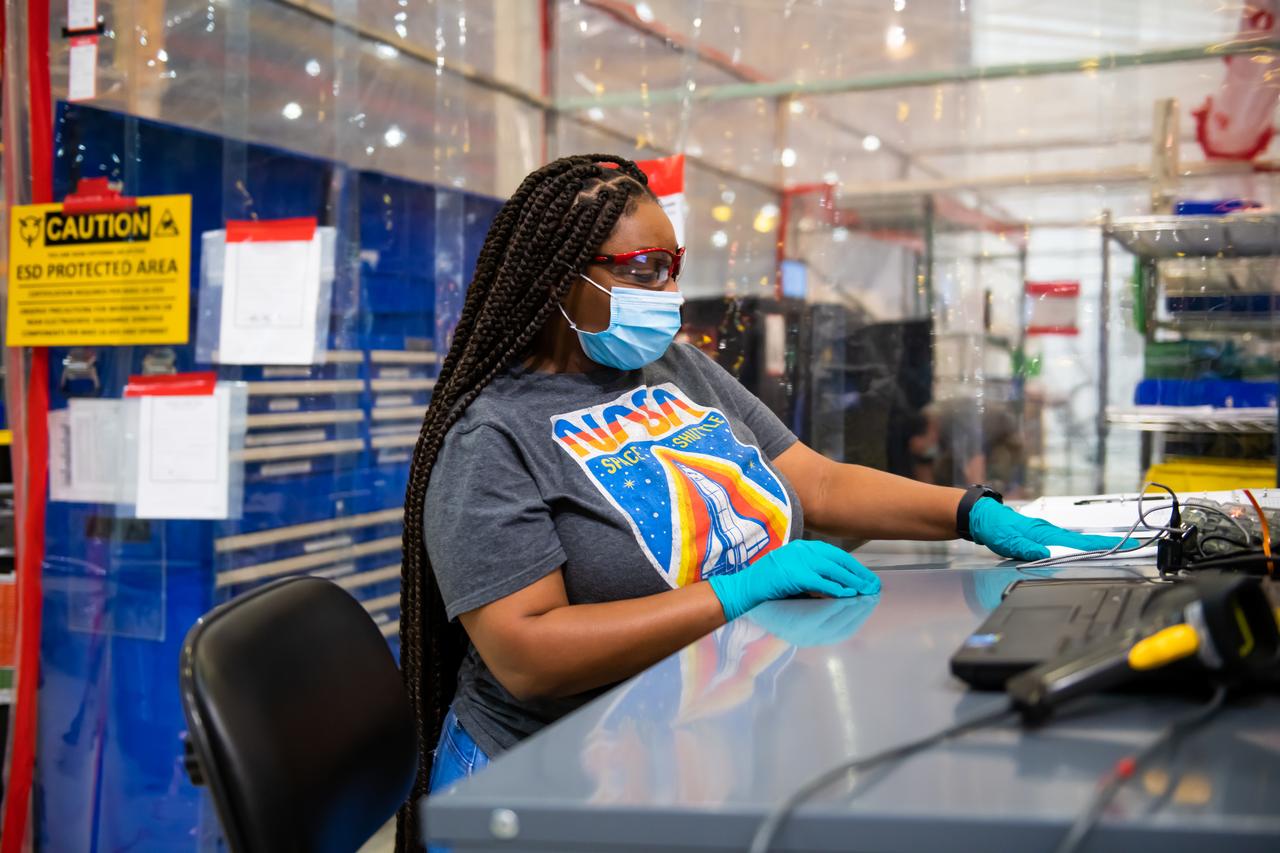
Employees wear personal protective gear at Michoud Assembly Facility as the facility transitioned to Stage 3 of NASA’s Framework for Return To On-Site Work. Employees wear the appropriate personal protective equipment (PPE) and/or cloth face coverings as required for assigned tasks. Access to the facility is limited to authorized personnel working on mission-critical tasks that must be conducted onsite. Mission-critical tasks include slowly and methodically resuming Space Launch System (SLS) Core Stage and Orion production activities, particularly critical path deliverables to support the Artemis Program, at a pace that limits personnel and follows federal guidelines for social distancing and use of personal protective equipment such as face masks. For more information about SLS, visit nasa.gov/sls.
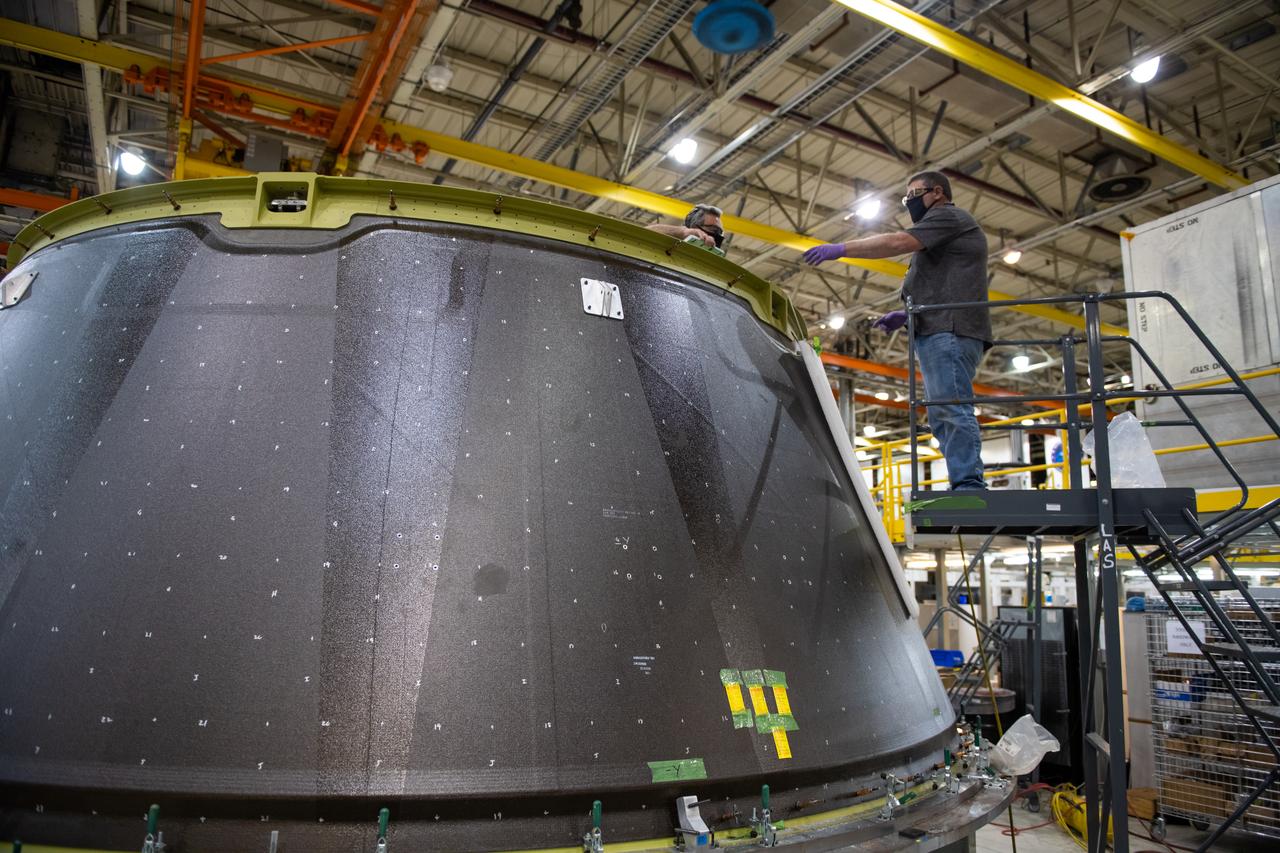
Employees wear personal protective gear at Michoud Assembly Facility as the facility transitioned to Stage 3 of NASA’s Framework for Return To On-Site Work. Employees wear the appropriate personal protective equipment (PPE) and/or cloth face coverings as required for assigned tasks. Access to the facility is limited to authorized personnel working on mission-critical tasks that must be conducted onsite. Mission-critical tasks include slowly and methodically resuming Space Launch System (SLS) Core Stage and Orion production activities, particularly critical path deliverables to support the Artemis Program, at a pace that limits personnel and follows federal guidelines for social distancing and use of personal protective equipment such as face masks. For more information about SLS, visit nasa.gov/sls.
Employees wear personal protective gear at Michoud Assembly Facility as the facility transitioned to Stage 3 of NASA’s Framework for Return To On-Site Work. Employees wear the appropriate personal protective equipment (PPE) and/or cloth face coverings as required for assigned tasks. Access to the facility is limited to authorized personnel working on mission-critical tasks that must be conducted onsite. Mission-critical tasks include slowly and methodically resuming Space Launch System (SLS) Core Stage and Orion production activities, particularly critical path deliverables to support the Artemis Program, at a pace that limits personnel and follows federal guidelines for social distancing and use of personal protective equipment such as face masks. For more information about SLS, visit nasa.gov/sls.