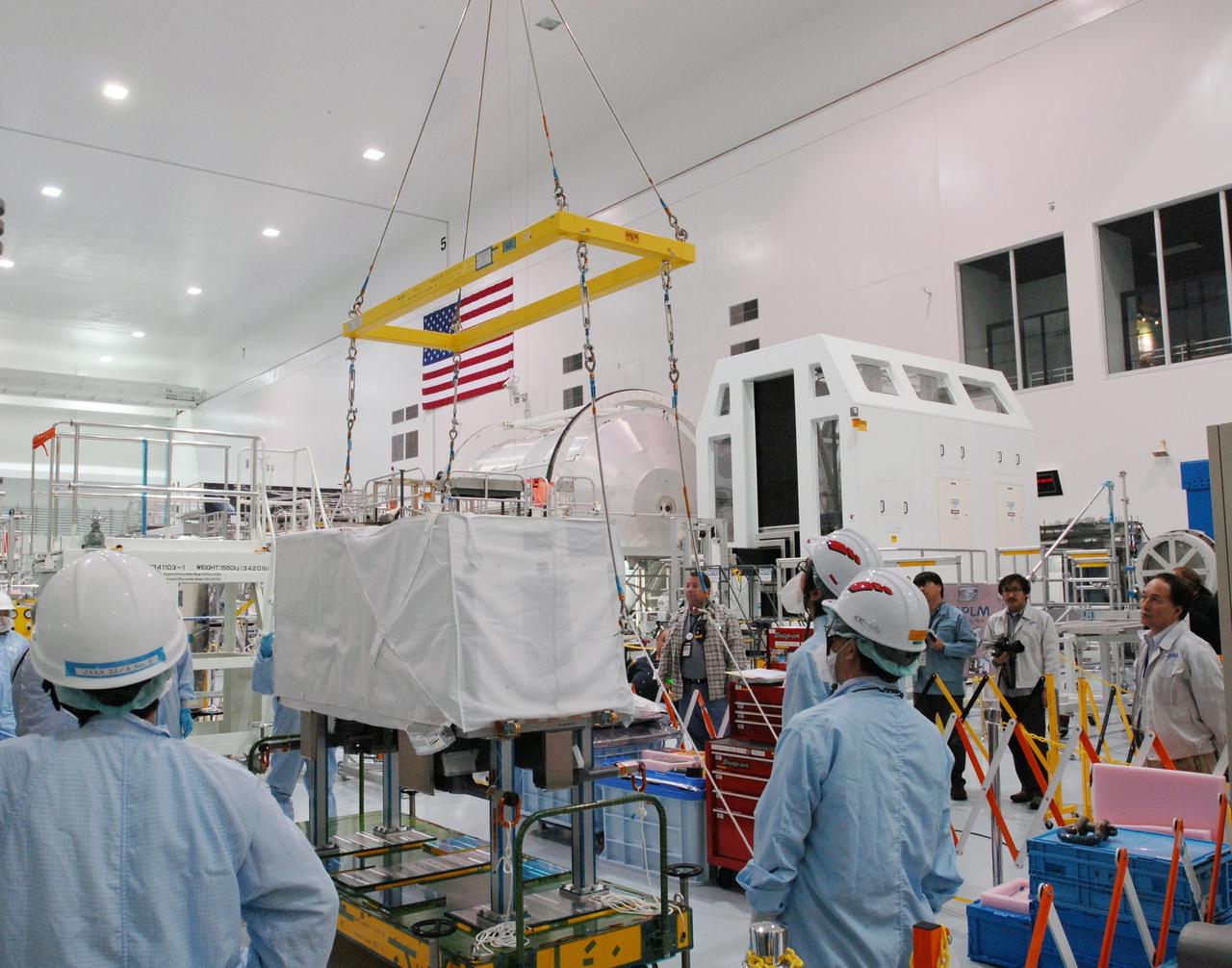
CAPE CANAVERAL, Fla. -- In the Space Station Processing Facility at NASA's Kennedy Space Center in Florida, a crane is moved over the MAXI (Monitor of All-sky X-ray Image). The crane will lift the MAXI onto the Japanese Experiment Module's Experiment Logistics Module-Exposed Section, or ELM-ES, where it will be installed. The MAXI is part of space shuttle Endeavour's payload on the STS-127 mission. Using X-ray slit cameras with high sensitivity, the MAXI will continuously monitor astronomical X-ray objects over a broad energy band (0.5 to 30 keV). Endeavour is targeted to launch May 15. Photo credit: NASA/Jim Grossmann
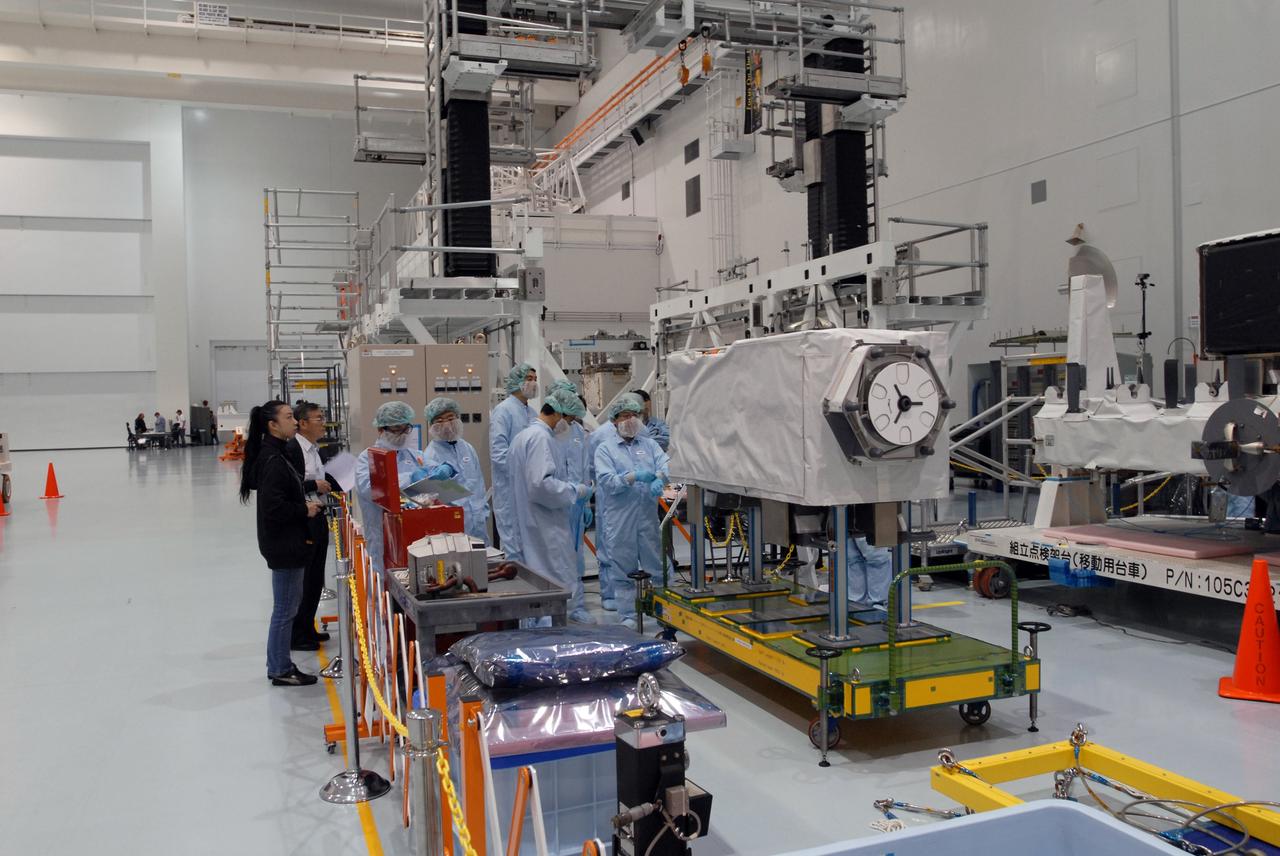
CAPE CANAVERAL, Fla. -- In the Space Station Processing Facility at NASA's Kennedy Space Center in Florida, the MAXI (Monitor of All-sky X-ray Image) is waiting to be installed on the Japanese Experiment Module's Experiment Logistics Module-Exposed Section, or ELM-ES. The MAXI is part of space shuttle Endeavour's payload on the STS-127 mission. Using X-ray slit cameras with high sensitivity, the MAXI will continuously monitor astronomical X-ray objects over a broad energy band (0.5 to 30 keV). Endeavour is targeted to launch May 15. Photo credit: NASA/Jim Grossmann
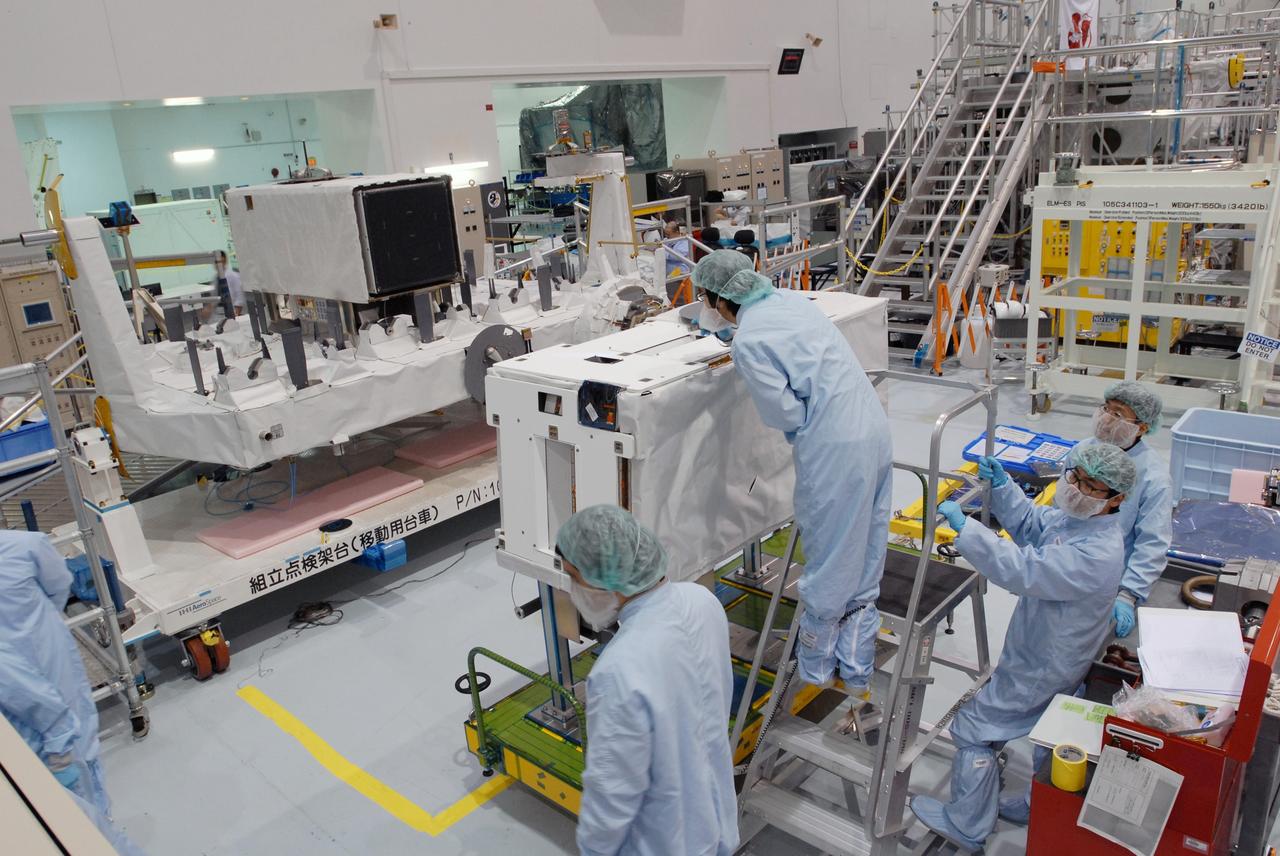
CAPE CANAVERAL, Fla. -- In the Space Station Processing Facility at NASA's Kennedy Space Center in Florida, workers check the MAXI (Monitor of All-sky X-ray Image) before it is installed on the Japanese Experiment Module's Experiment Logistics Module-Exposed Section, or ELM-ES. The MAXI is part of space shuttle Endeavour's payload on the STS-127 mission. Using X-ray slit cameras with high sensitivity, the MAXI will continuously monitor astronomical X-ray objects over a broad energy band (0.5 to 30 keV). Endeavour is targeted to launch May 15. Photo credit: NASA/Jim Grossmann
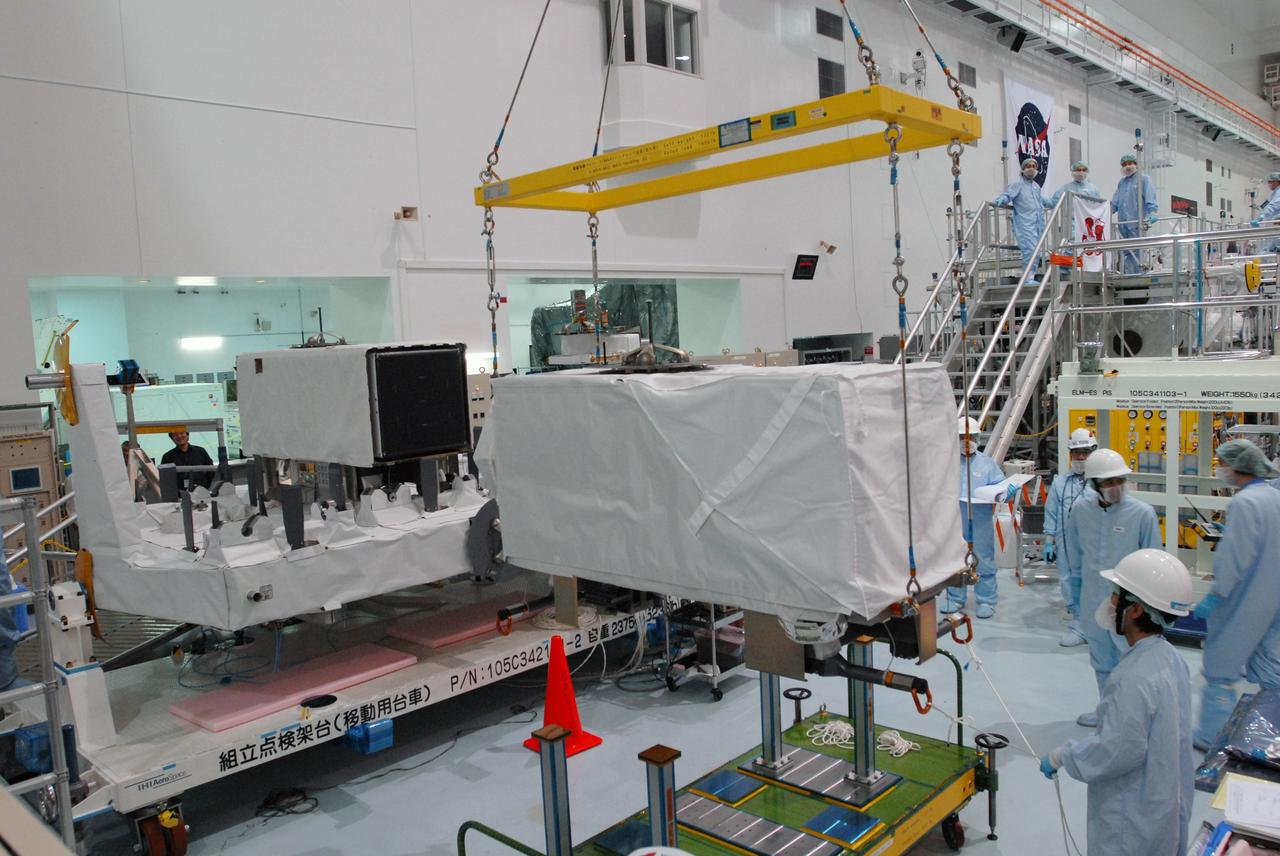
CAPE CANAVERAL, Fla. -- In the Space Station Processing Facility at NASA's Kennedy Space Center in Florida, a crane lifts the MAXI (Monitor of All-sky X-ray Image) to move it onto the Japanese Experiment Module's Experiment Logistics Module-Exposed Section, or ELM-ES, where it will be installed. The MAXI is part of space shuttle Endeavour's payload on the STS-127 mission. Using X-ray slit cameras with high sensitivity, the MAXI will continuously monitor astronomical X-ray objects over a broad energy band (0.5 to 30 keV). Endeavour is targeted to launch May 15. Photo credit: NASA/Jim Grossmann
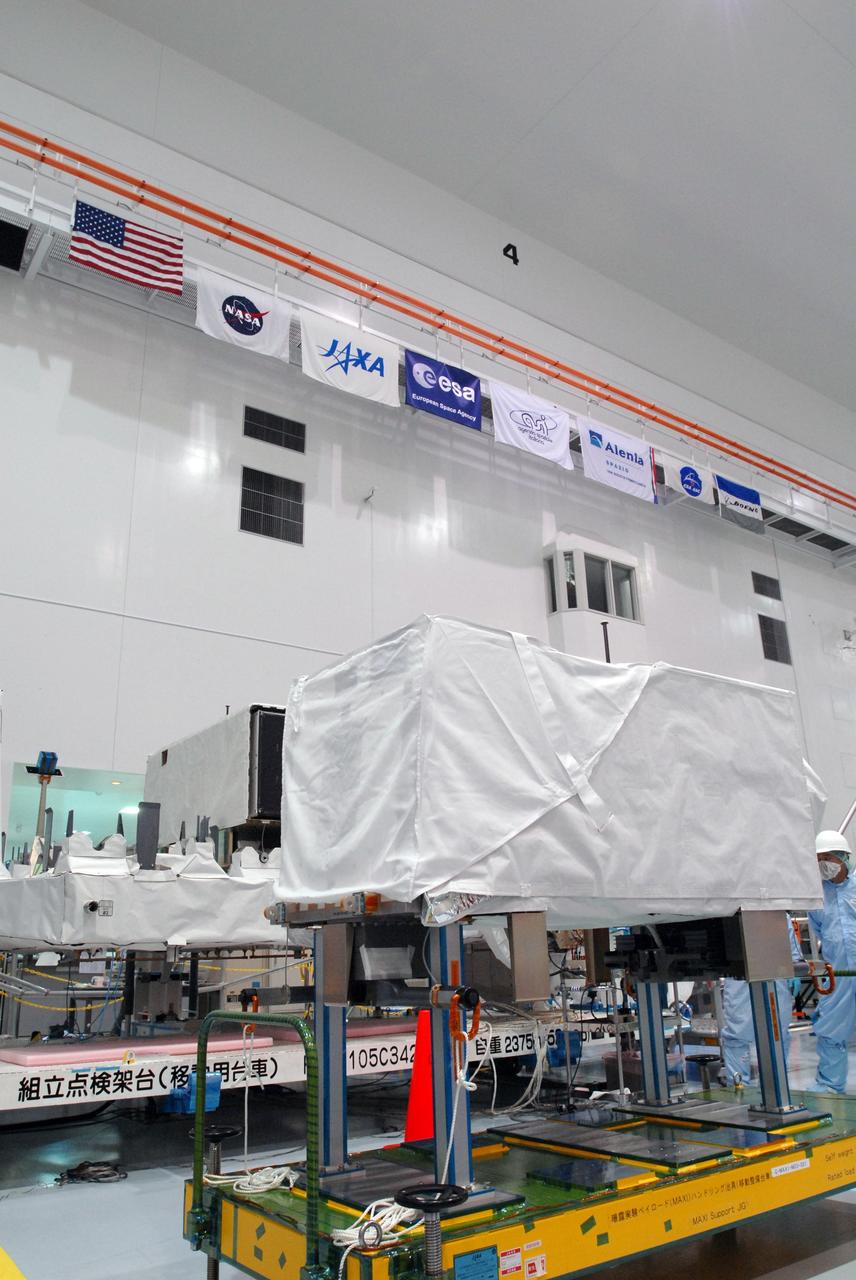
CAPE CANAVERAL, Fla. -- In the Space Station Processing Facility at NASA's Kennedy Space Center in Florida, the MAXI (Monitor of All-sky X-ray Image) is moved toward the Japanese Experiment Module's Experiment Logistics Module-Exposed Section, or ELM-ES, where it will be installed. The MAXI is part of space shuttle Endeavour's payload on the STS-127 mission. Using X-ray slit cameras with high sensitivity, the MAXI will continuously monitor astronomical X-ray objects over a broad energy band (0.5 to 30 keV). Endeavour is targeted to launch May 15. Photo credit: NASA/Jim Grossmann
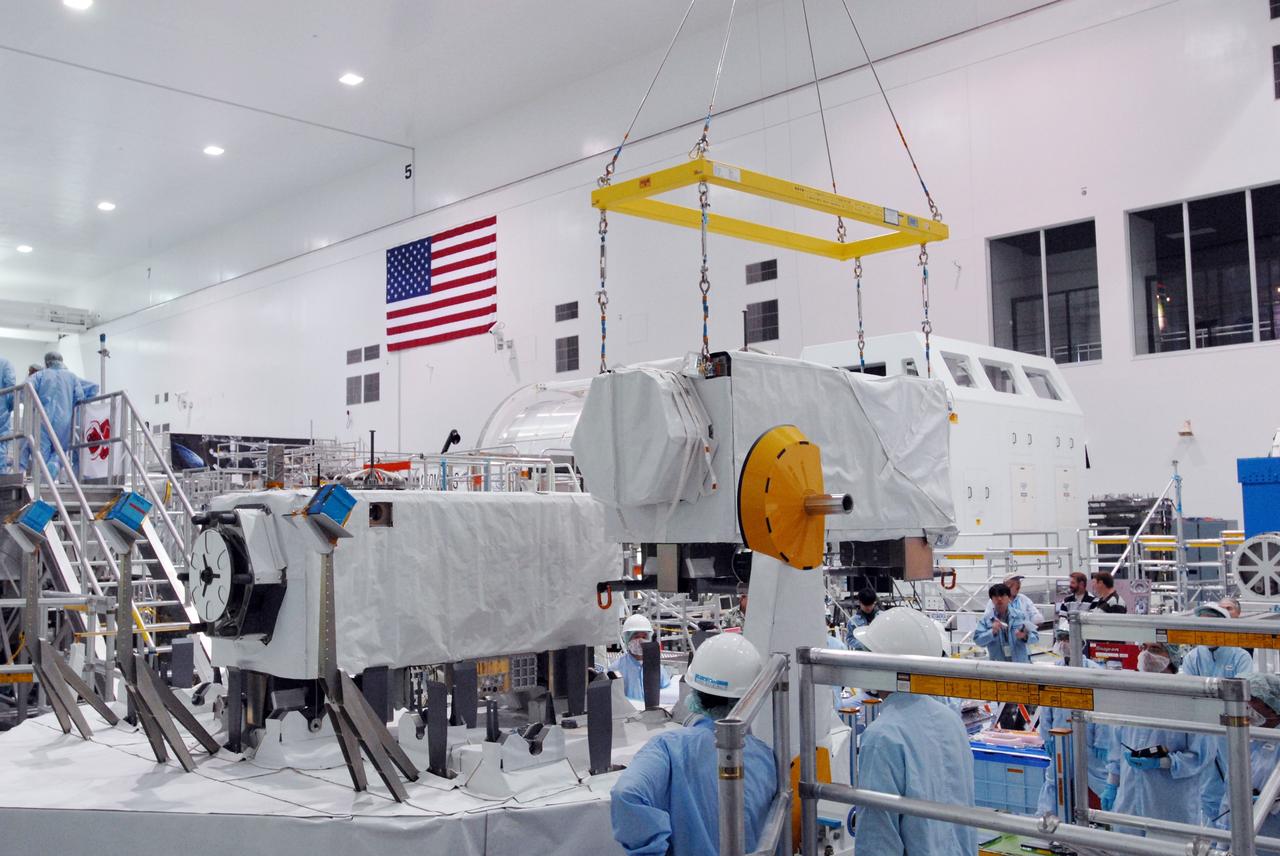
CAPE CANAVERAL, Fla. -- In the Space Station Processing Facility at NASA's Kennedy Space Center in Florida, a crane lifts the MAXI (Monitor of All-sky X-ray Image) to move it onto the Japanese Experiment Module's Experiment Logistics Module-Exposed Section, or ELM-ES, where it will be installed. The MAXI is part of space shuttle Endeavour's payload on the STS-127 mission. Using X-ray slit cameras with high sensitivity, the MAXI will continuously monitor astronomical X-ray objects over a broad energy band (0.5 to 30 keV). Endeavour is targeted to launch May 15. Photo credit: NASA/Jim Grossmann
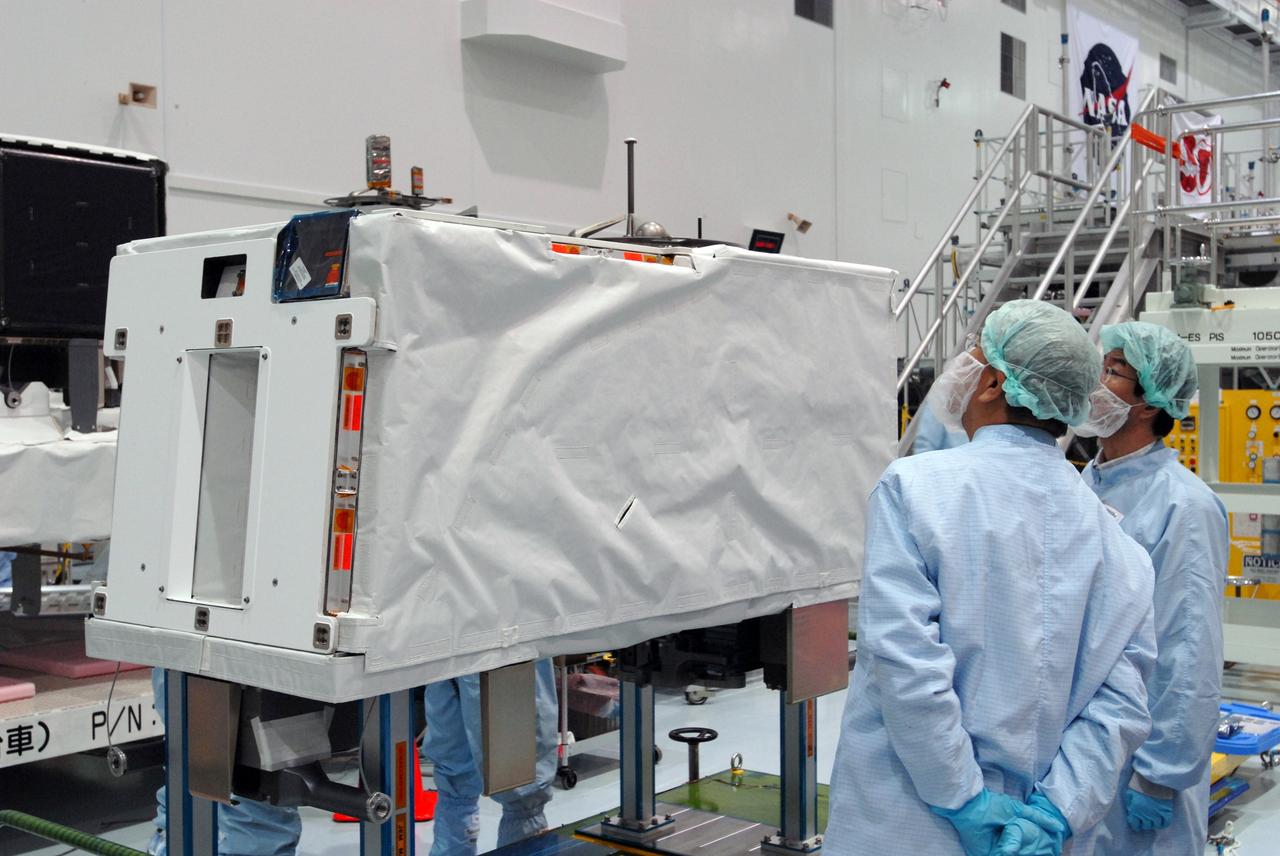
CAPE CANAVERAL, Fla. -- In the Space Station Processing Facility at NASA's Kennedy Space Center in Florida, the MAXI (Monitor of All-sky X-ray Image) is waiting to be installed on the Japanese Experiment Module's Experiment Logistics Module-Exposed Section, or ELM-ES. The MAXI is part of space shuttle Endeavour's payload on the STS-127 mission. Using X-ray slit cameras with high sensitivity, the MAXI will continuously monitor astronomical X-ray objects over a broad energy band (0.5 to 30 keV). Endeavour is targeted to launch May 15. Photo credit: NASA/Jim Grossmann
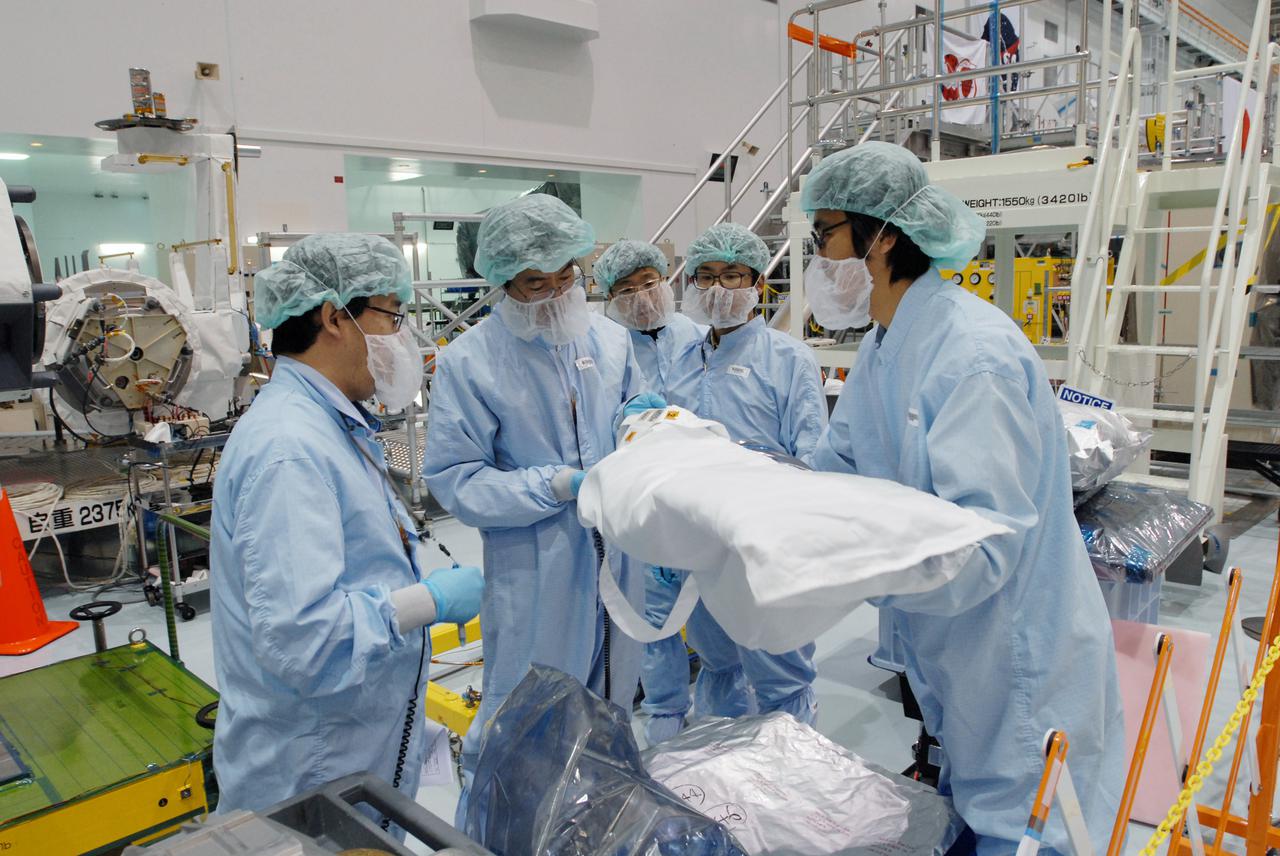
CAPE CANAVERAL, Fla. -- In the Space Station Processing Facility at NASA's Kennedy Space Center in Florida, workers examines equipment for the MAXI (Monitor of All-sky X-ray Image) before it is installed on the Japanese Experiment Module's Experiment Logistics Module-Exposed Section, or ELM-ES. The MAXI is part of space shuttle Endeavour's payload on the STS-127 mission. Using X-ray slit cameras with high sensitivity, the MAXI will continuously monitor astronomical X-ray objects over a broad energy band (0.5 to 30 keV). Endeavour is targeted to launch May 15. Photo credit: NASA_Jim Grossmann
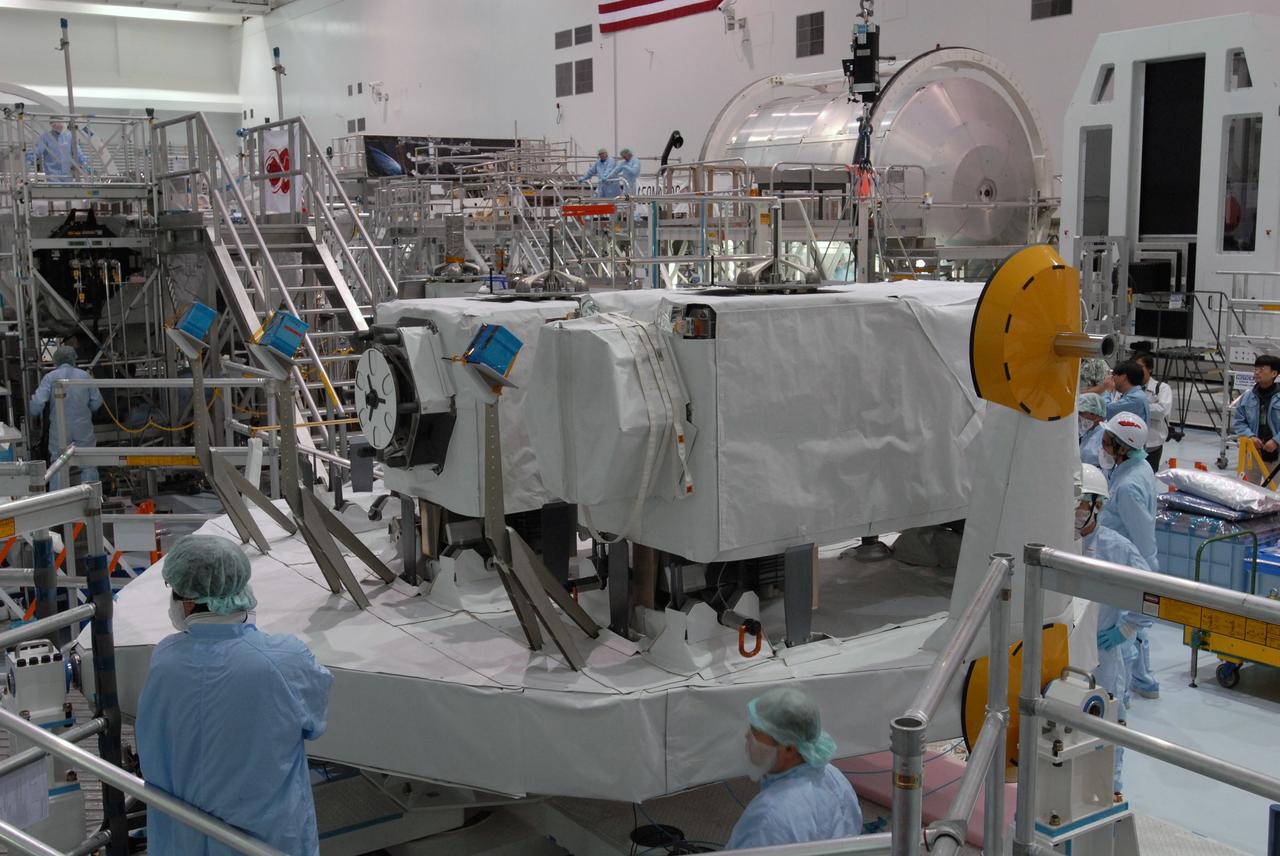
CAPE CANAVERAL, Fla. -- In the Space Station Processing Facility at NASA's Kennedy Space Center in Florida, the MAXI (Monitor of All-sky X-ray Image) has been installed next to the SEDA-AP (Space Environment Data Acquisition Equipment-Attached Payload) on the Japanese Experiment Module's Experiment Logistics Module-Exposed Section, or ELM-ES. The MAXI and SEDA-AP are part of space shuttle Endeavour's payload on the STS-127 mission. Using X-ray slit cameras with high sensitivity, the MAXI will continuously monitor astronomical X-ray objects over a broad energy band (0.5 to 30 keV). Endeavour is targeted to launch May 15. Photo credit: NASA/Jim Grossmann
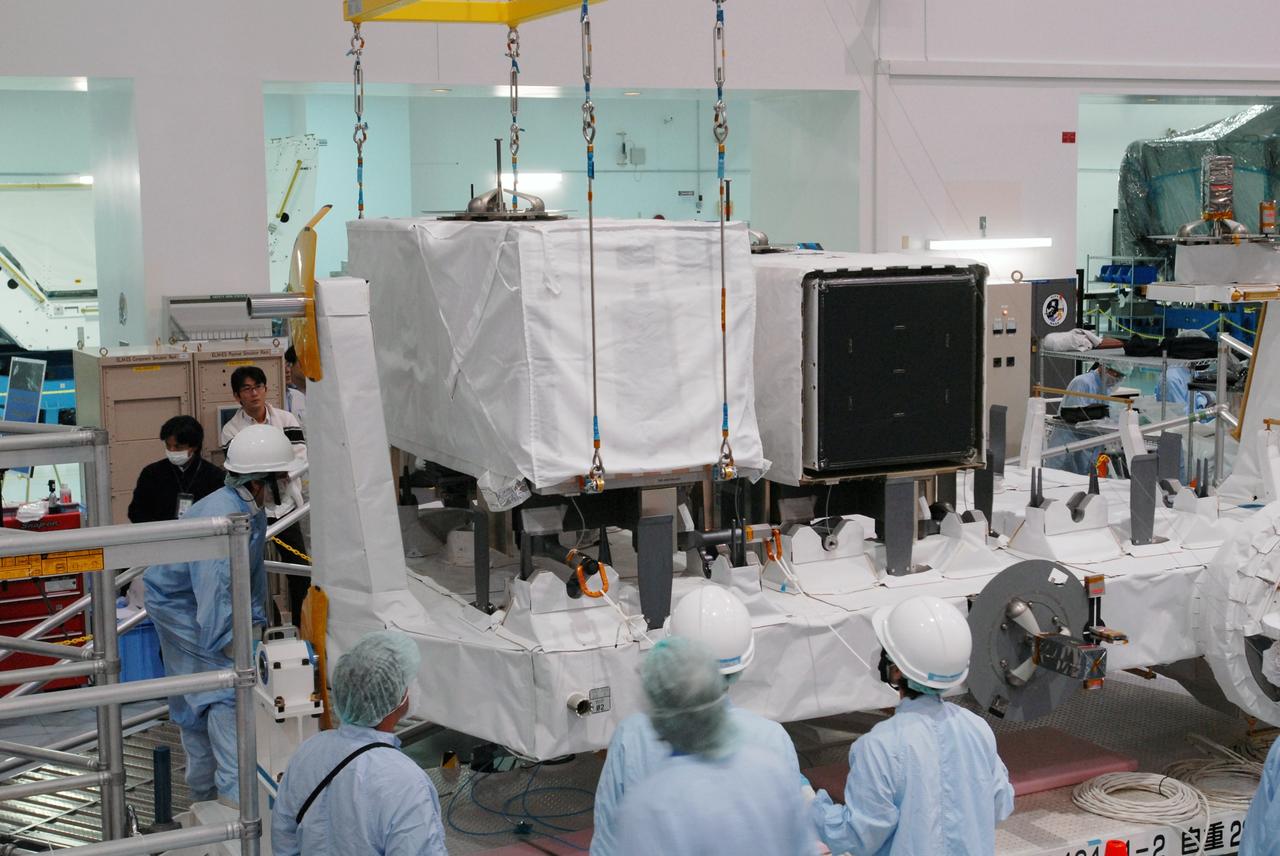
CAPE CANAVERAL, Fla. -- In the Space Station Processing Facility at NASA's Kennedy Space Center in Florida, a crane lowers the MAXI (Monitor of All-sky X-ray Image) onto the Payload Attachment Mechanism on the Japanese Experiment Module's Experiment Logistics Module-Exposed Section, or ELM-ES. It is being installed next to the SEDA-AP (Space Environment Data Acquisition Equipment-Attached Payload). The MAXI and SEDA-AP are part of space shuttle Endeavour's payload on the STS-127 mission. Using X-ray slit cameras with high sensitivity, the MAXI will continuously monitor astronomical X-ray objects over a broad energy band (0.5 to 30 keV). Endeavour is targeted to launch May 15. Photo credit: NASA/Jim Grossmann
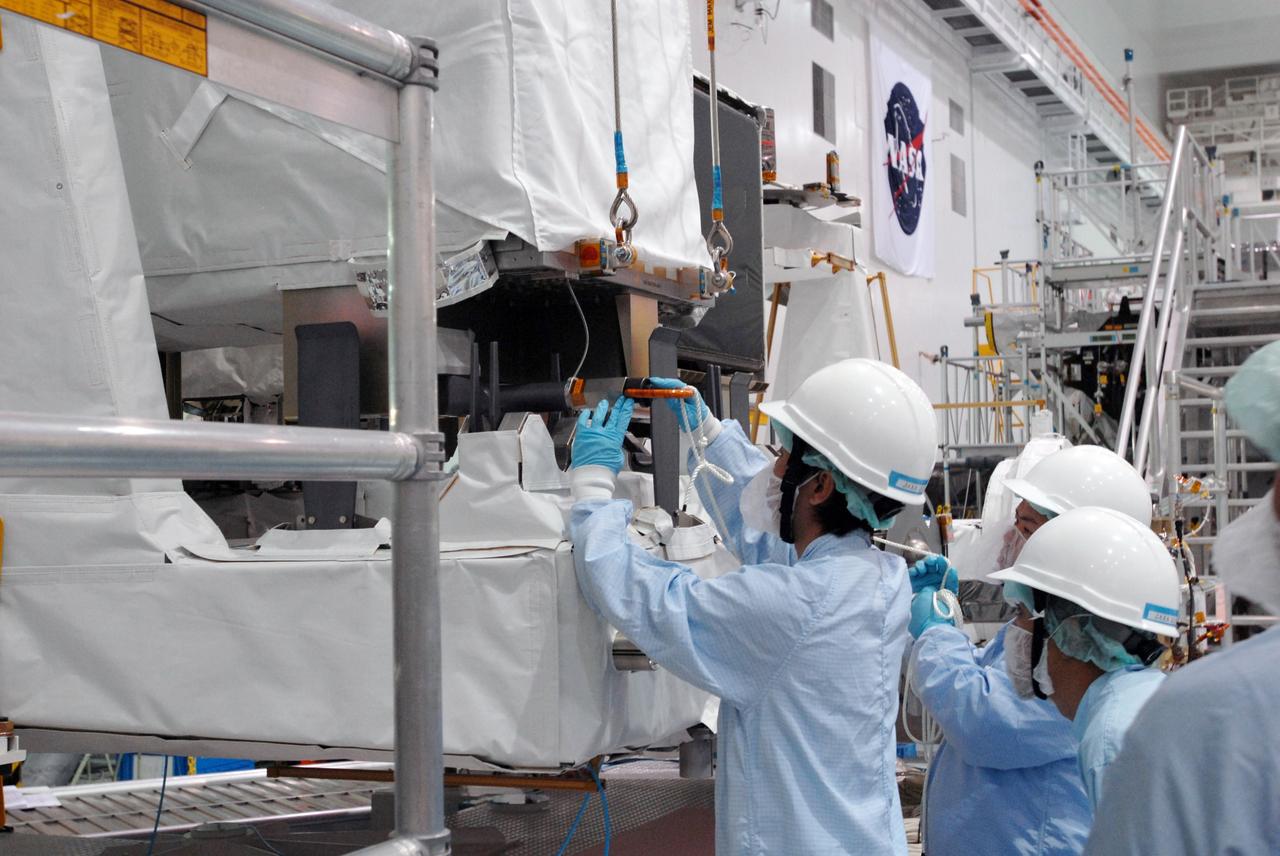
CAPE CANAVERAL, Fla. -- In the Space Station Processing Facility at NASA's Kennedy Space Center in Florida, a worker adjusts placement of the MAXI (Monitor of All-sky X-ray Image) on the Payload Attachment Mechanism on the Japanese Experiment Module's Experiment Logistics Module-Exposed Section, or ELM-ES. It is being installed next to the SEDA-AP (Space Environment Data Acquisition Equipment-Attached Payload). The MAXI and SEDA-AP are part of space shuttle Endeavour's payload on the STS-127 mission. Using X-ray slit cameras with high sensitivity, the MAXI will continuously monitor astronomical X-ray objects over a broad energy band (0.5 to 30 keV). Endeavour is targeted to launch May 15. Photo credit: NASA/Jim Grossmann
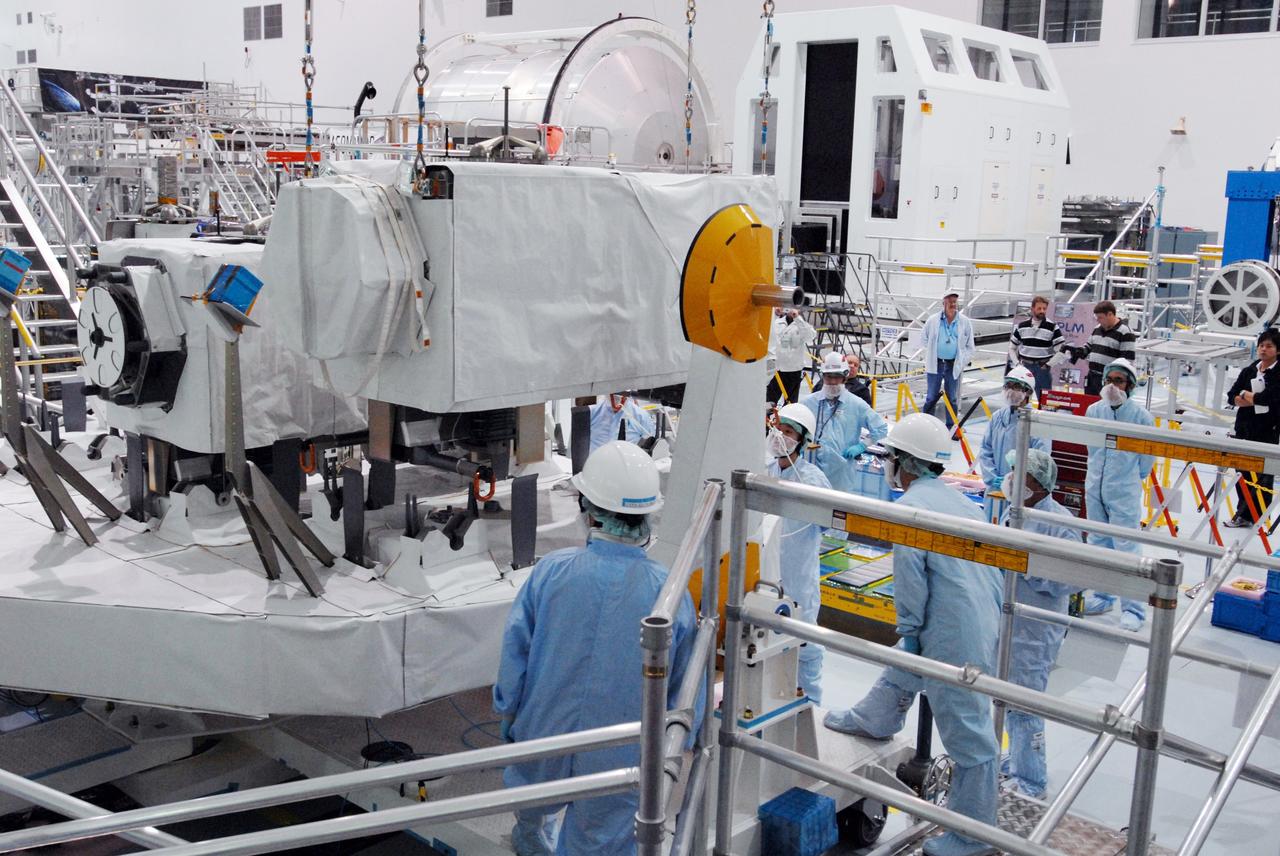
CAPE CANAVERAL, Fla. -- In the Space Station Processing Facility at NASA's Kennedy Space Center in Florida, a crane lowers the MAXI (Monitor of All-sky X-ray Image) onto the Payload Attachment Mechanism on the Japanese Experiment Module's Experiment Logistics Module-Exposed Section, or ELM-ES. It is being installed next to the SEDA-AP (Space Environment Data Acquisition Equipment-Attached Payload). The MAXI and SEDA-AP are part of space shuttle Endeavour's payload on the STS-127 mission. Using X-ray slit cameras with high sensitivity, the MAXI will continuously monitor astronomical X-ray objects over a broad energy band (0.5 to 30 keV). Endeavour is targeted to launch May 15. Photo credit: NASA/Jim Grossmann
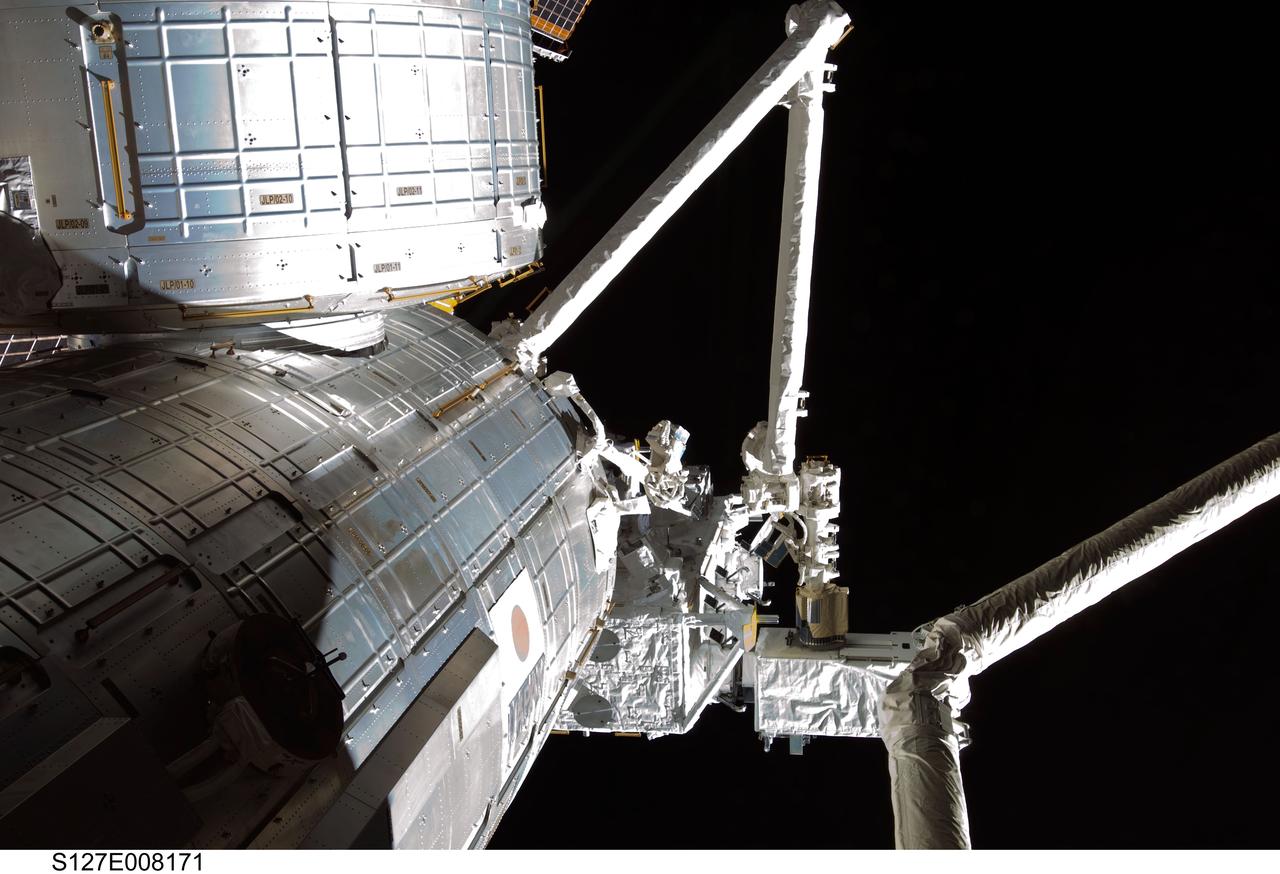
S127-E-008171 (23 July 2009)--- The robotic arm of the Japanese Experiment Module or Kibo assists in the installation of MAXI payload on the Japanese Exposed Facility (JEF) on flight day 9.
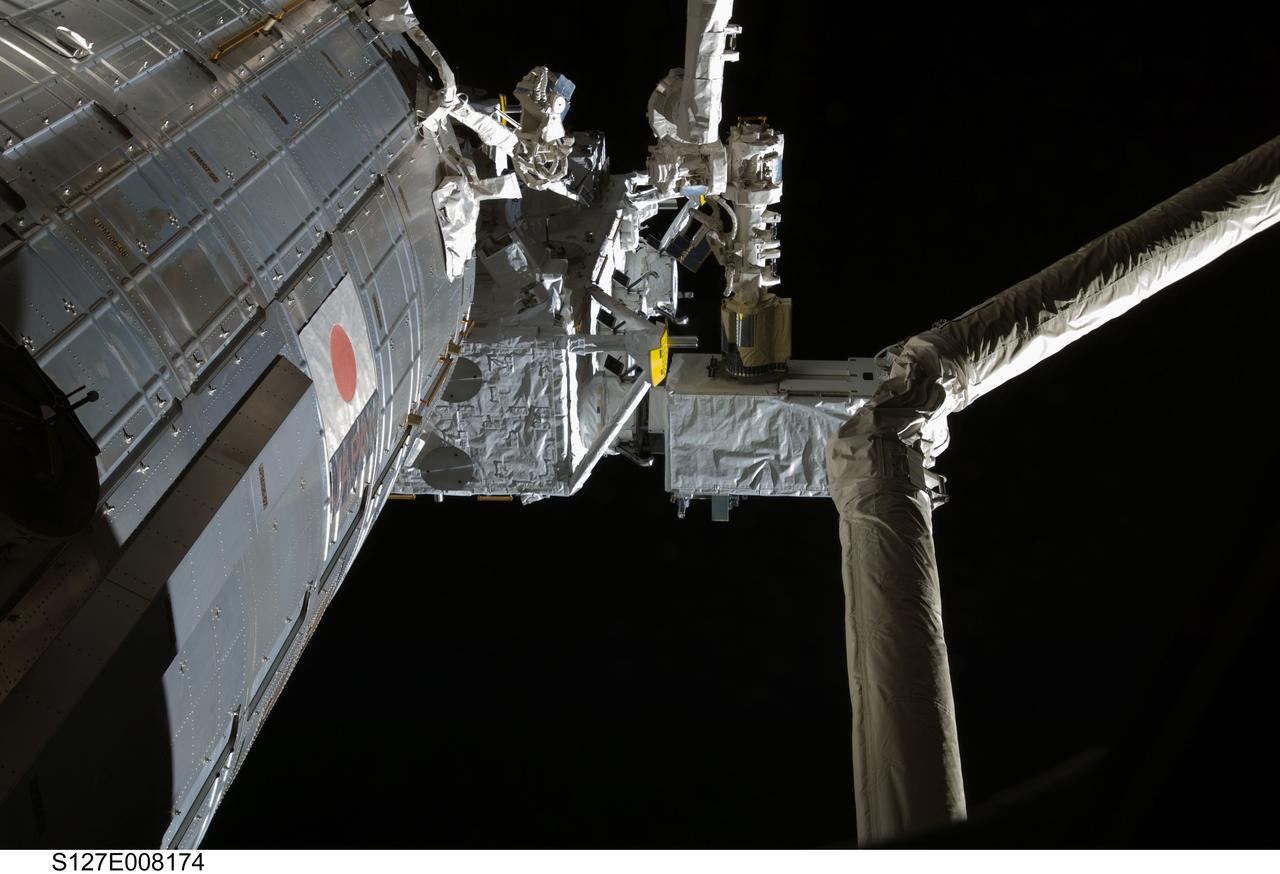
S127-E-008174 (23 July 2009)--- The robotic arm of the Japanese Experiment Module or Kibo assists in the installation of MAXI payload on the Japanese Exposed Facility (JEF) on flight day 9.
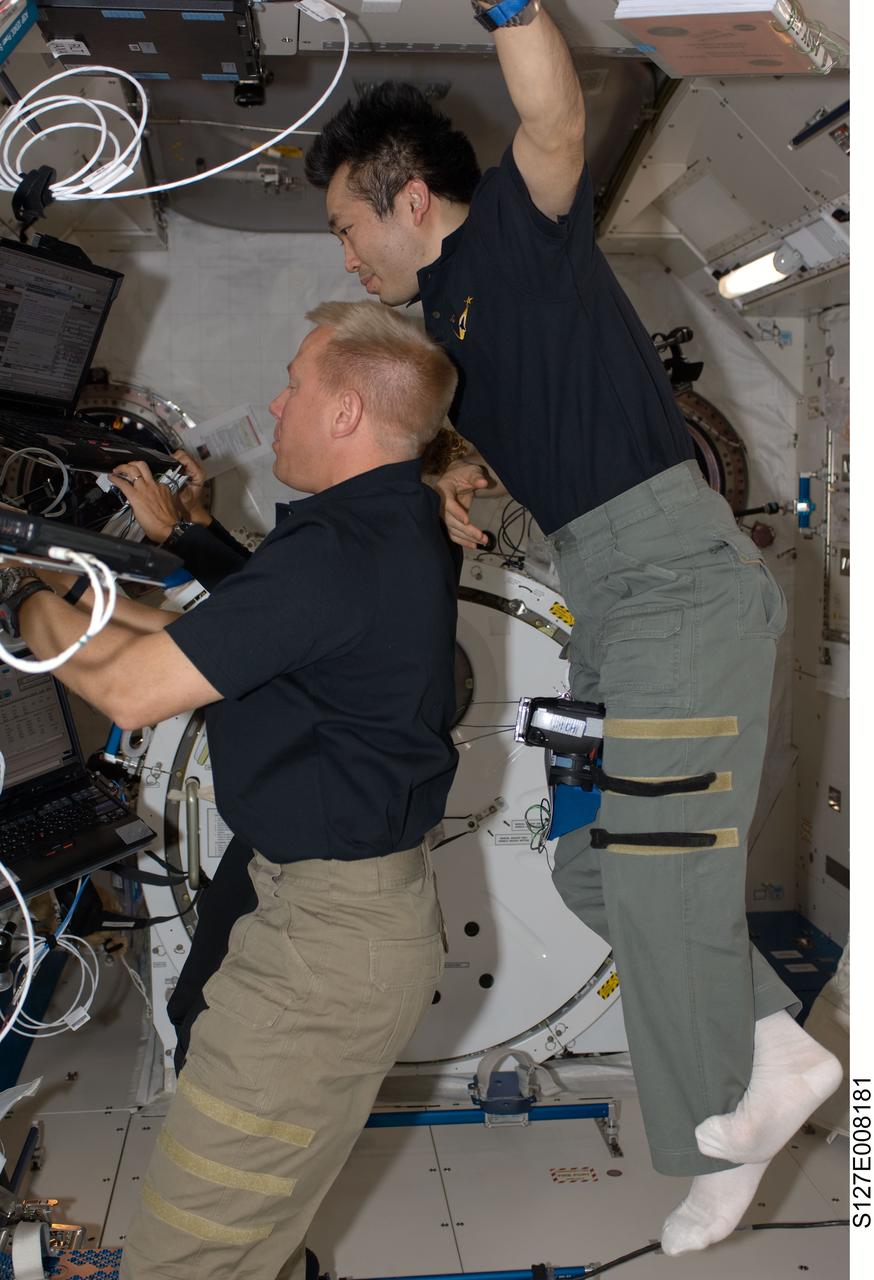
S127-E-008181 (23 July 2009) --- Inside the Japanese Experiment Module (JEM) or Kibo, astronaut Tim Kopra (left), Expedition 20's new flight engineer, and Japanese Aerospace Exploration Agency (JAXA) astronaut Koichi Wakata, who switched roles with Kopra and now serves as an STS-127 mission specialist, are pictured at work. Their current shared task concentrates on the relocation of the MAXI, ICS and SEDA-AP from the JEM Experiment Logistics Module-Exposed Section (JLE) to the JEM Exposed Facility (JEF). MAXI is the Monitor of All-sky X-ray Image experiment and SEDA-AP is the Space Environment Data Acquisition equipment - Attached Payload experiment.
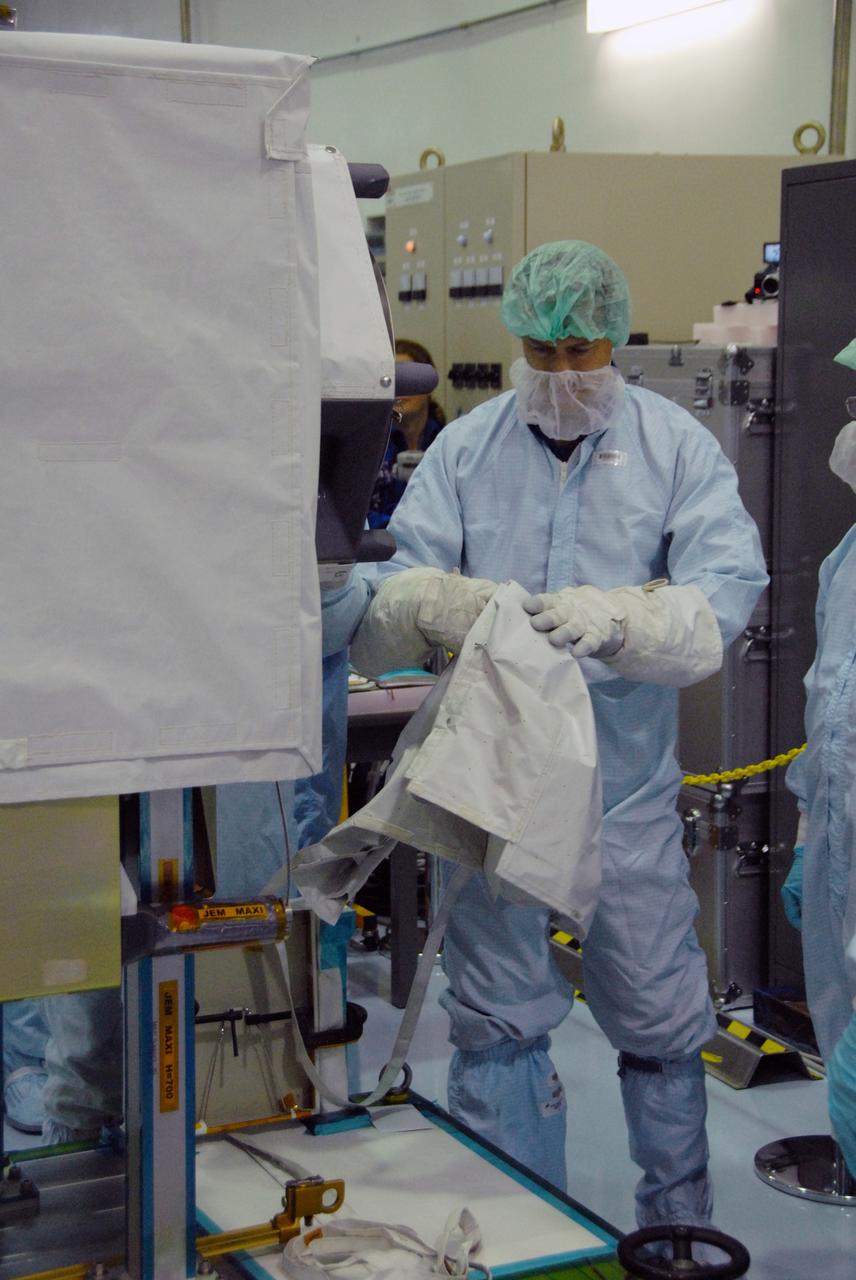
CAPE CANAVERAL, Fla. -- In the Space Station Processing Facility at NASA's Kennedy Space Center in Florida, a STS-127 crew member removes a portion of the cover on the MAXI (Monitor of All-Sky X-Ray Image), part of the payload for the mission. The crew members are at Kennedy for a crew equipment interface test, or CEIT, which provides experience handling tools, equipment and hardware they will use on the mission. The payload will be launched to the International Space Station aboard space shuttle Endeavour on the STS-127 mission, targeted for launch on May 15, 2009. Photo credit: NASA/Dimitrios Gerondidakis
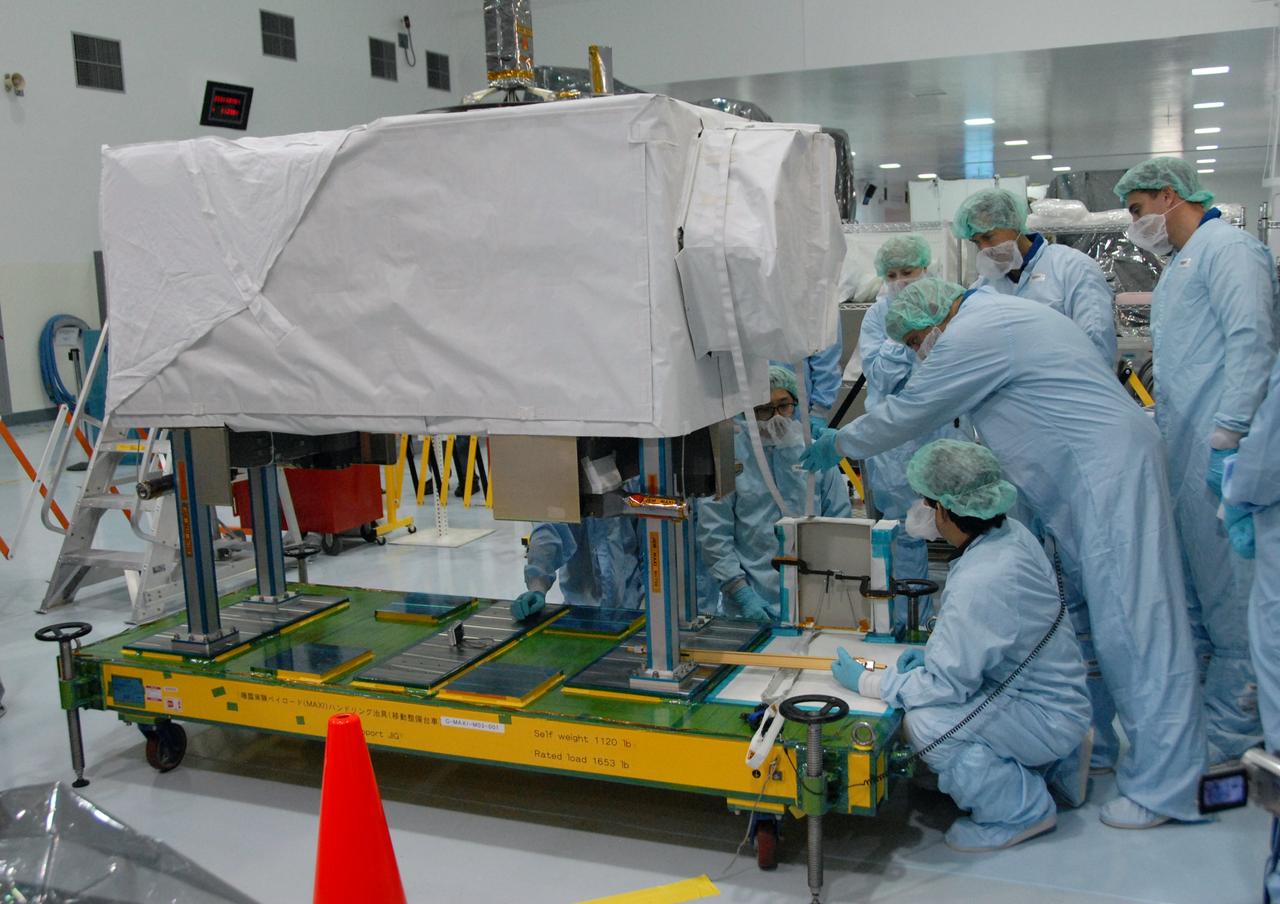
CAPE CANAVERAL, Fla. -- In the Space Station Processing Facility at NASA's Kennedy Space Center in Florida, STS-127 crew members look at the MAXI (Monitor of All-Sky X-Ray Image), part of the payload for their mission. The crew members are at Kennedy for a crew equipment interface test, or CEIT, which provides experience handling tools, equipment and hardware they will use on the mission. The payload will be launched to the International Space Station aboard space shuttle Endeavour on the STS-127 mission, targeted for launch on May 15, 2009. Photo credit: NASA/Dimitrios Gerondidakis
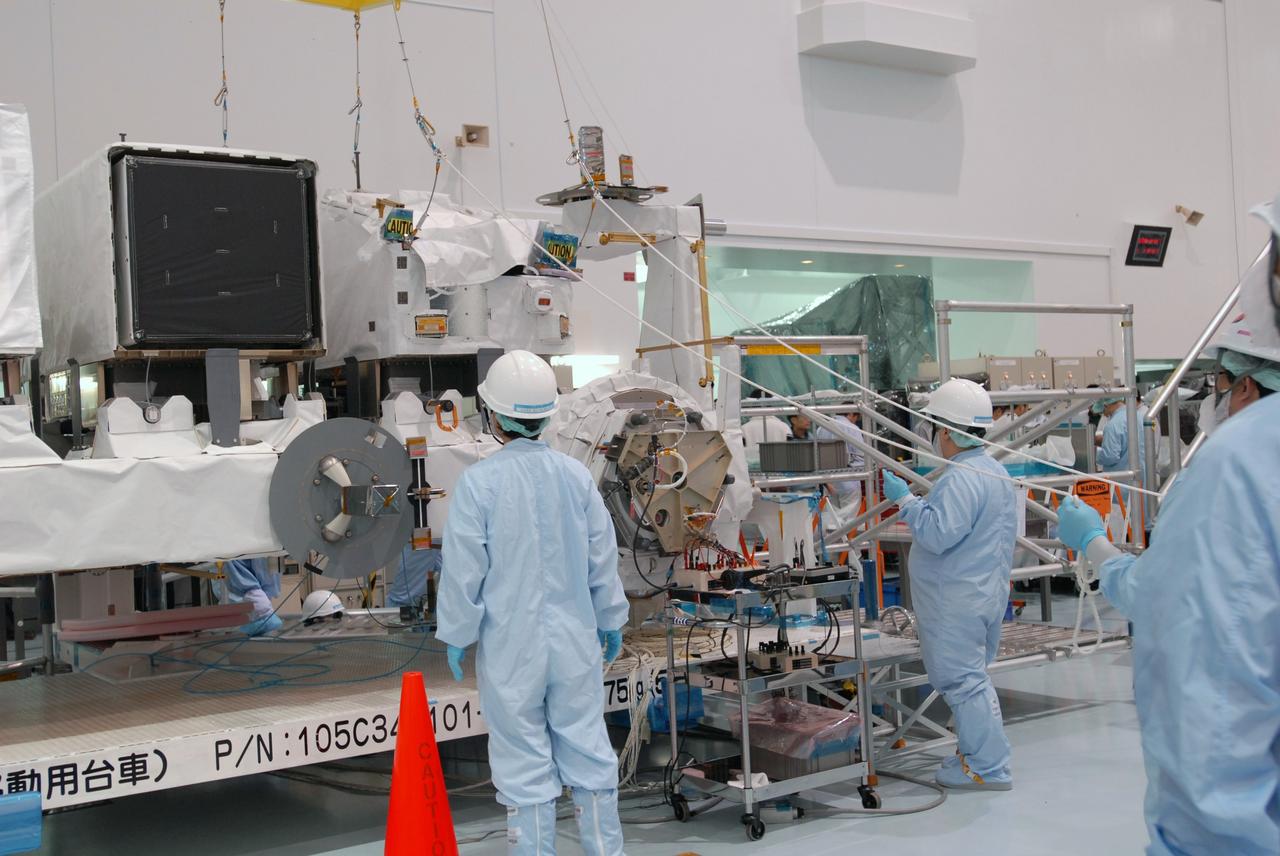
CAPE CANAVERAL, Fla. -- In the Space Station Processing Facility at NASA's Kennedy Space Center in Florida, an overhead crane lowers the ICS Exposed Facility, or ICS-EF, onto the Japanese Experiment Module's Experiment Logistics Module-Exposed Section, or ELM-ES, for installation. It is being placed next to two other payloads, the SEDA-AP (Space Environment Data Acquisition Equipment-Attached Payload) and MAXI (Monitor of All-sky X-ray Image). The ICS-EF is part of space shuttle Endeavour's payload on the STS-127 mission, targeted for launch on May 15. Photo credit: NASA/Jim Grossmann
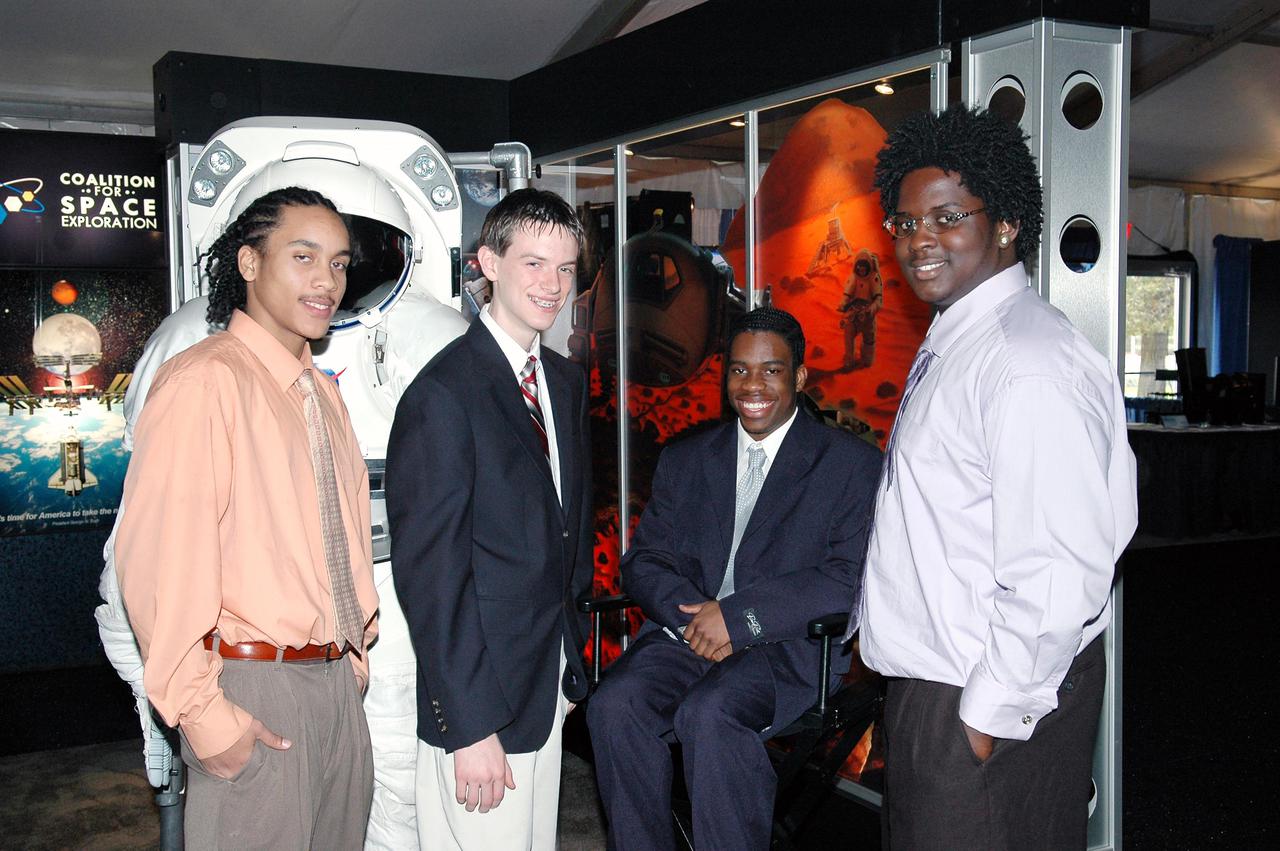
KENNEDY SPACE CENTER, FLA. - At the “1st Space Exploration Conference: Continuing the Voyage of Discovery,” held at Disney’s Contemporary Resort in Orlando, the winners of the Space Exploration Video Festival award sponsored by Lockheed Martin get together. Second from left is Daniel Stearns, from East Longmeadow, Mass. The others are the winning team from NASA Explorer School McNair High School in Dekalb County, Ga. At left is Theo Maxie; at right are Daniel Jackson and Trenten Nash. The three-day conference drew attendees from around the world. It presented topics on new missions, technologies and infrastructure needed to turn the vision for space exploration into reality. Keynote speakers at the three-day conference include NASA Administrator Sean O'Keefe, Congressman Dave Weldon, film director James Cameron and NASA’s senior Mars scientist James Garvin. The conference has drawn attendees from around the world.
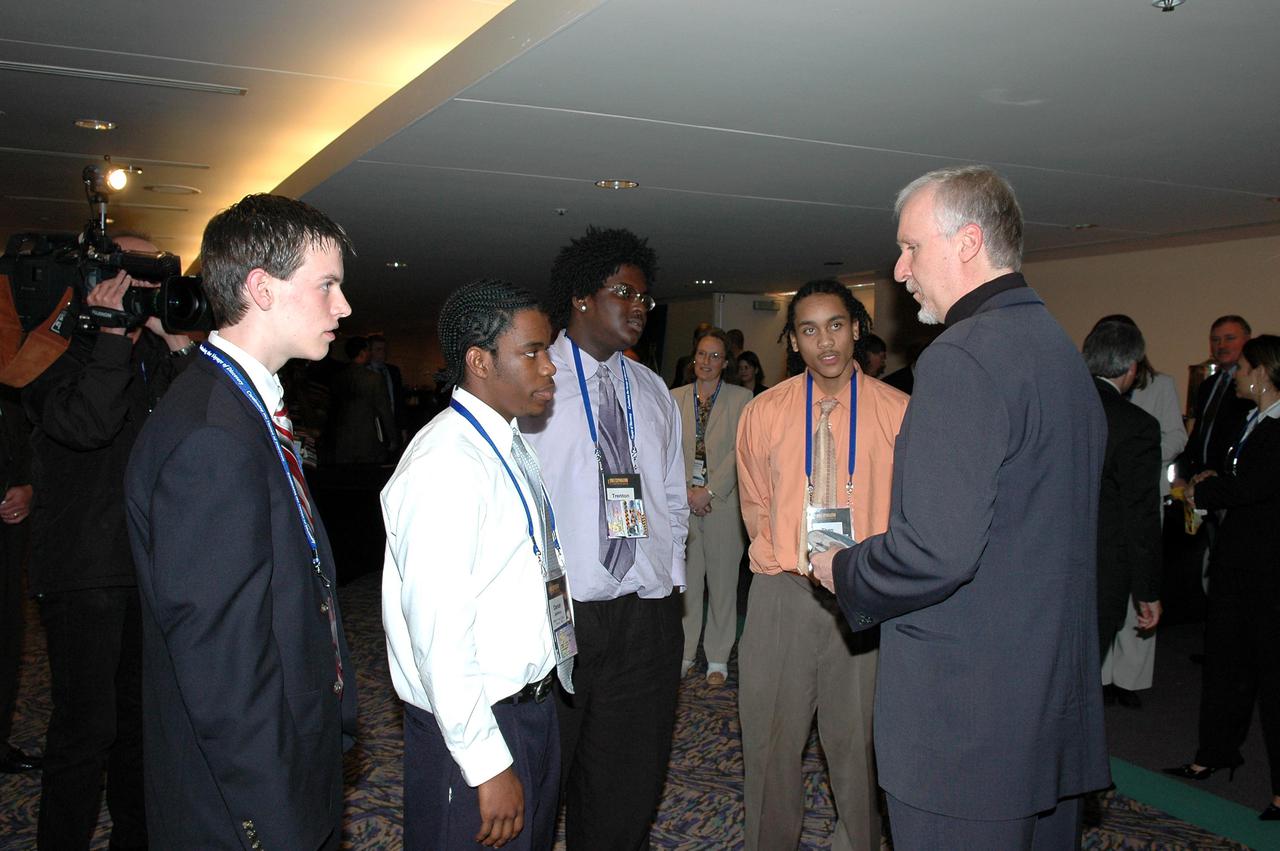
KENNEDY SPACE CENTER, FLA. - At the “1st Space Exploration Conference: Continuing the Voyage of Discovery,” held at Disney’s Contemporary Resort in Orlando, film director James Cameron (right) talks to the winning students of the Space Exploration Video Festival award sponsored by Lockheed Martin. At left is Daniel Stearns, from East Longmeadow, Mass. The others are Daniel Jackson, Trenten Nash and Theo Maxie, from the NASA Explorer School McNair High School in Dekalb County, Ga.. Cameron is one of the keynote speakers at the conference. Topics being presented focus on new missions, technologies and infrastructure needed to turn the vision for space exploration into reality. Keynote speakers at the three-day conference include NASA Administrator Sean O'Keefe, Congressman Dave Weldon, film director James Cameron and NASA’s senior Mars scientist James Garvin. The conference has drawn attendees from around the world.
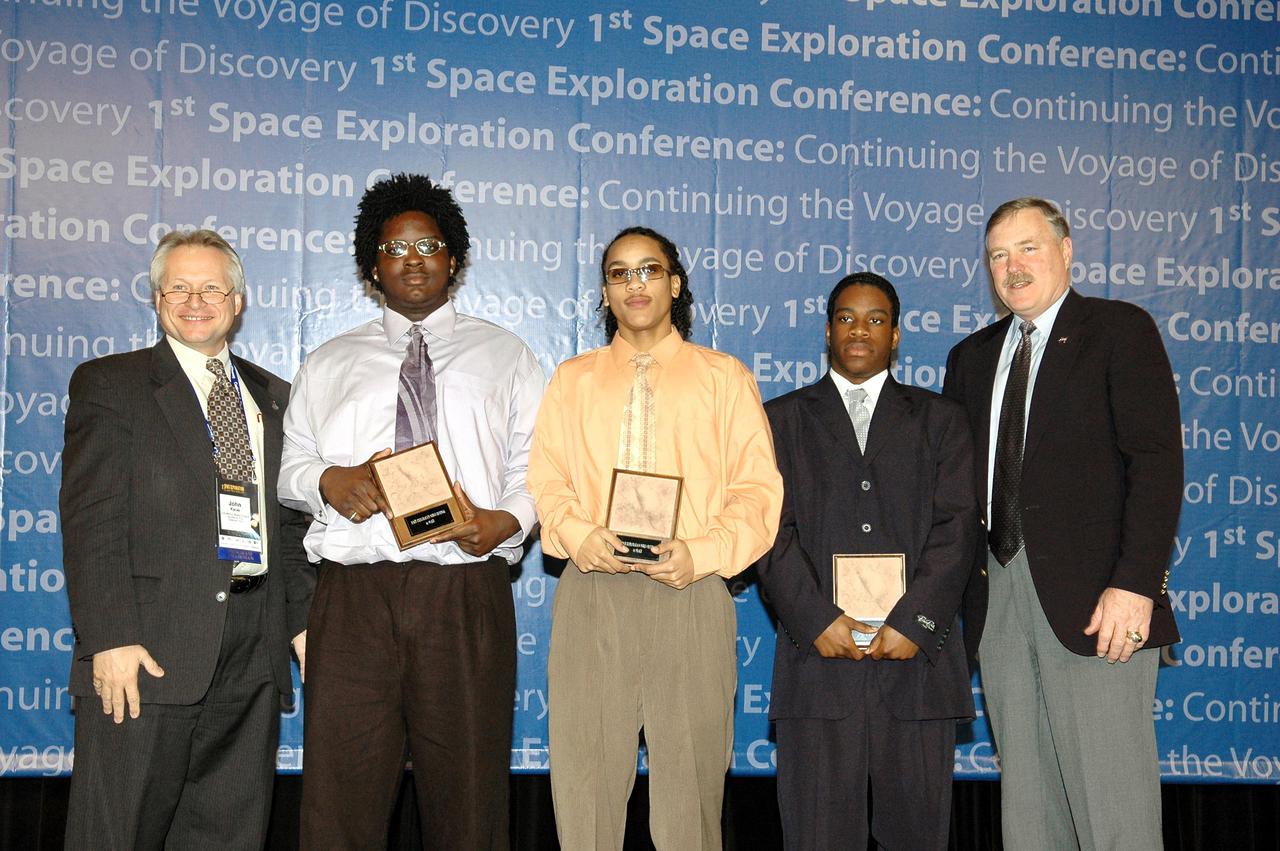
KENNEDY SPACE CENTER, FLA. - At the “1st Space Exploration Conference: Continuing the Voyage of Discovery,” being held at Disney’s Contemporary Resort in Orlando, the NASA Explorer School team from McNair High School in Dekalb County, Ga., receives the Space Exploration Video Festival award sponsored by Lockheed Martin. Standing with the awards are Trenten Nash, Theo Maxie and Daniel Jackson. Presenting the awards were John Karas (left), with Lockheed, and Adm. Craig Steidle (right), associate administrator, Office of Exploration Systems at NASA. The three-day conference drew attendees from around the world. It presented topics on new missions, technologies and infrastructure needed to turn the vision for space exploration into reality. Keynote speakers at the three-day conference include NASA Administrator Sean O'Keefe, Congressman Dave Weldon, film director James Cameron and NASA’s senior Mars scientist James Garvin. The conference has drawn attendees from around the world.
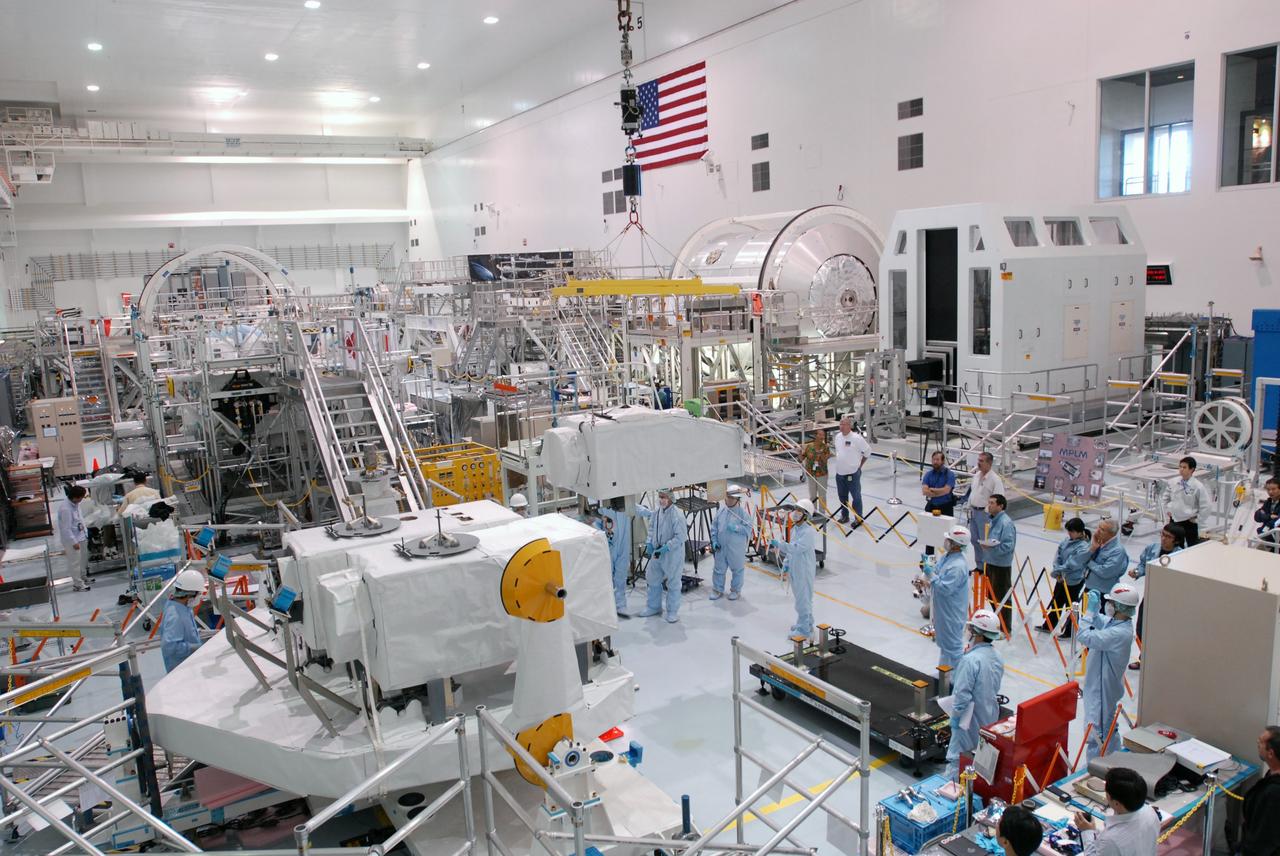
CAPE CANAVERAL, Fla. -- In the Space Station Processing Facility at NASA's Kennedy Space Center in Florida, the ICS Exposed Facility, or ICS-EF, is moved across the floor to the Japanese Experiment Module's Experiment Logistics Module-Exposed Section, or ELM-ES, where it will be installed alongside two other payloads, the SEDA-AP (Space Environment Data Acquisition Equipment-Attached Payload) and MAXI (Monitor of All-sky X-ray Image), already installed. The ICS-EF is composed of several components, including an antenna, pointing mechanism, frequency converters, high-power amplifier and various sensors including the Earth sensor, Sun sensor and inertial reference unit. The ICS-EF is part of space shuttle Endeavour's payload on the STS-127 mission, targeted for launch on May 15. Photo credit: NASA/Jim Grossmann
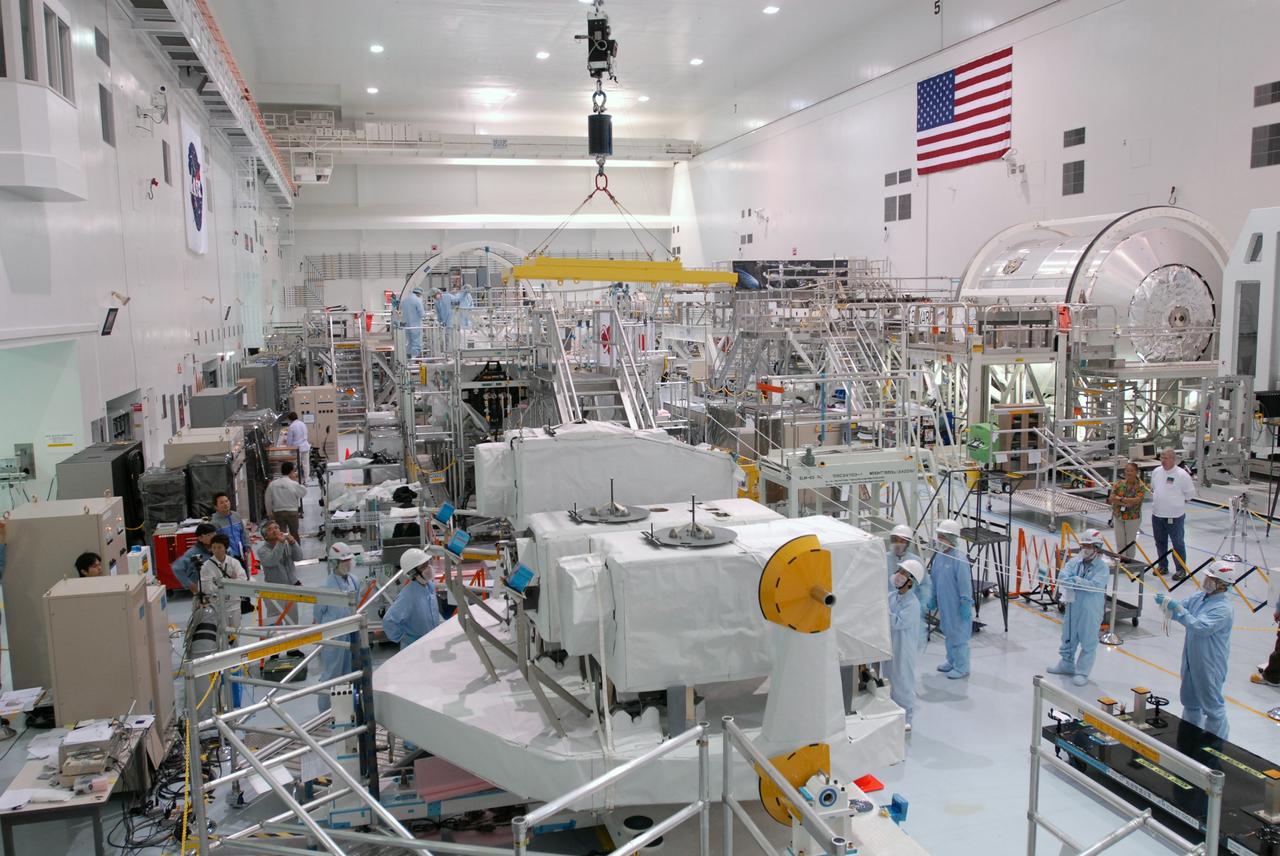
CAPE CANAVERAL, Fla. -- In the Space Station Processing Facility at NASA's Kennedy Space Center in Florida, an overhead crane lowers the ICS Exposed Facility, or ICS-EF, onto the Japanese Experiment Module's Experiment Logistics Module-Exposed Section, or ELM-ES, where it will be installed alongside two other payloads, the SEDA-AP (Space Environment Data Acquisition Equipment-Attached Payload) and MAXI (Monitor of All-sky X-ray Image). The ICS-EF is composed of several components, including an antenna, pointing mechanism, frequency converters, high-power amplifier and various sensors including the Earth sensor, Sun sensor and inertial reference unit. The ICS-EF is part of space shuttle Endeavour's payload on the STS-127 mission, targeted for launch on May 15. Photo credit: NASA/Jim Grossmann