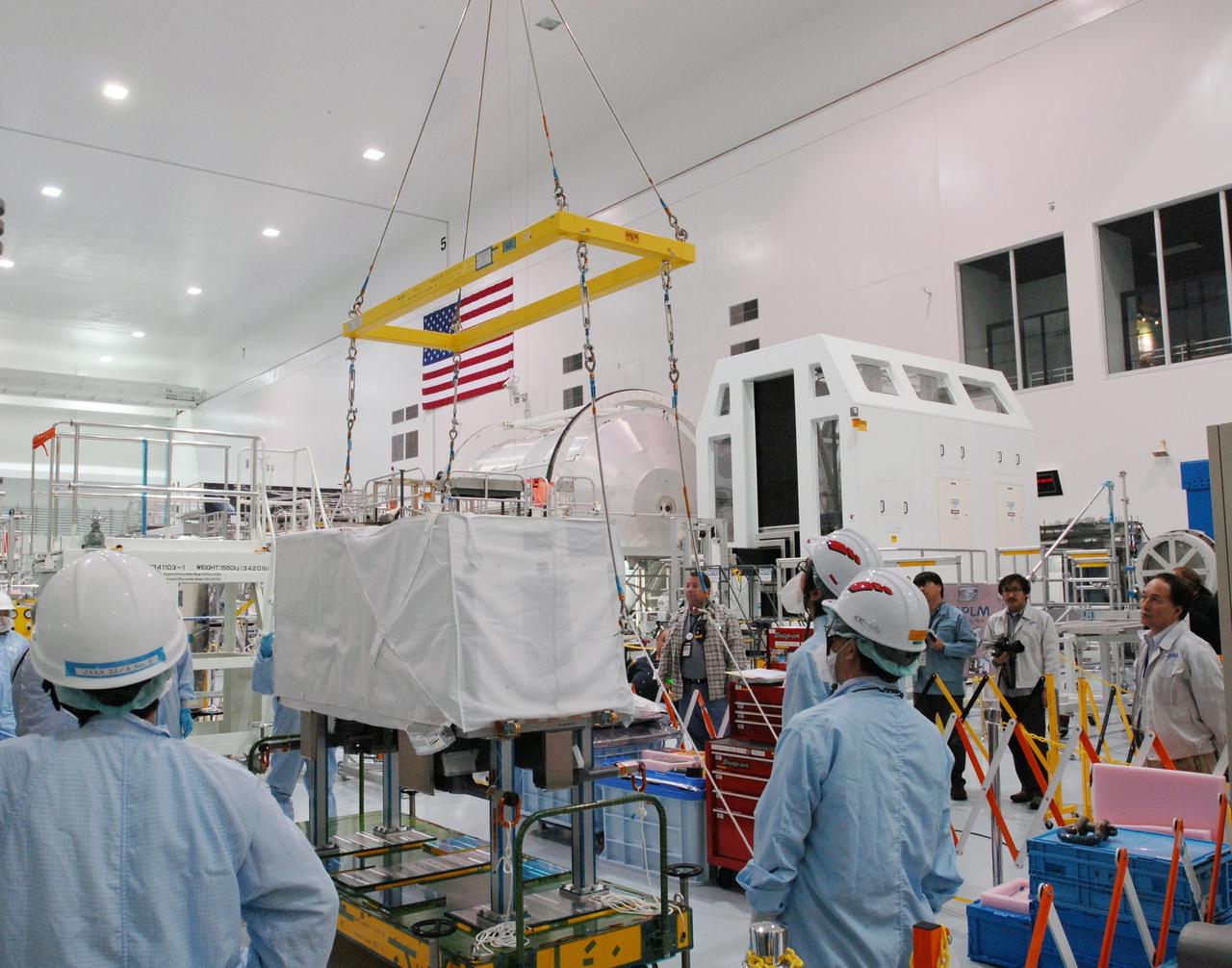
CAPE CANAVERAL, Fla. -- In the Space Station Processing Facility at NASA's Kennedy Space Center in Florida, a crane is moved over the MAXI (Monitor of All-sky X-ray Image). The crane will lift the MAXI onto the Japanese Experiment Module's Experiment Logistics Module-Exposed Section, or ELM-ES, where it will be installed. The MAXI is part of space shuttle Endeavour's payload on the STS-127 mission. Using X-ray slit cameras with high sensitivity, the MAXI will continuously monitor astronomical X-ray objects over a broad energy band (0.5 to 30 keV). Endeavour is targeted to launch May 15. Photo credit: NASA/Jim Grossmann
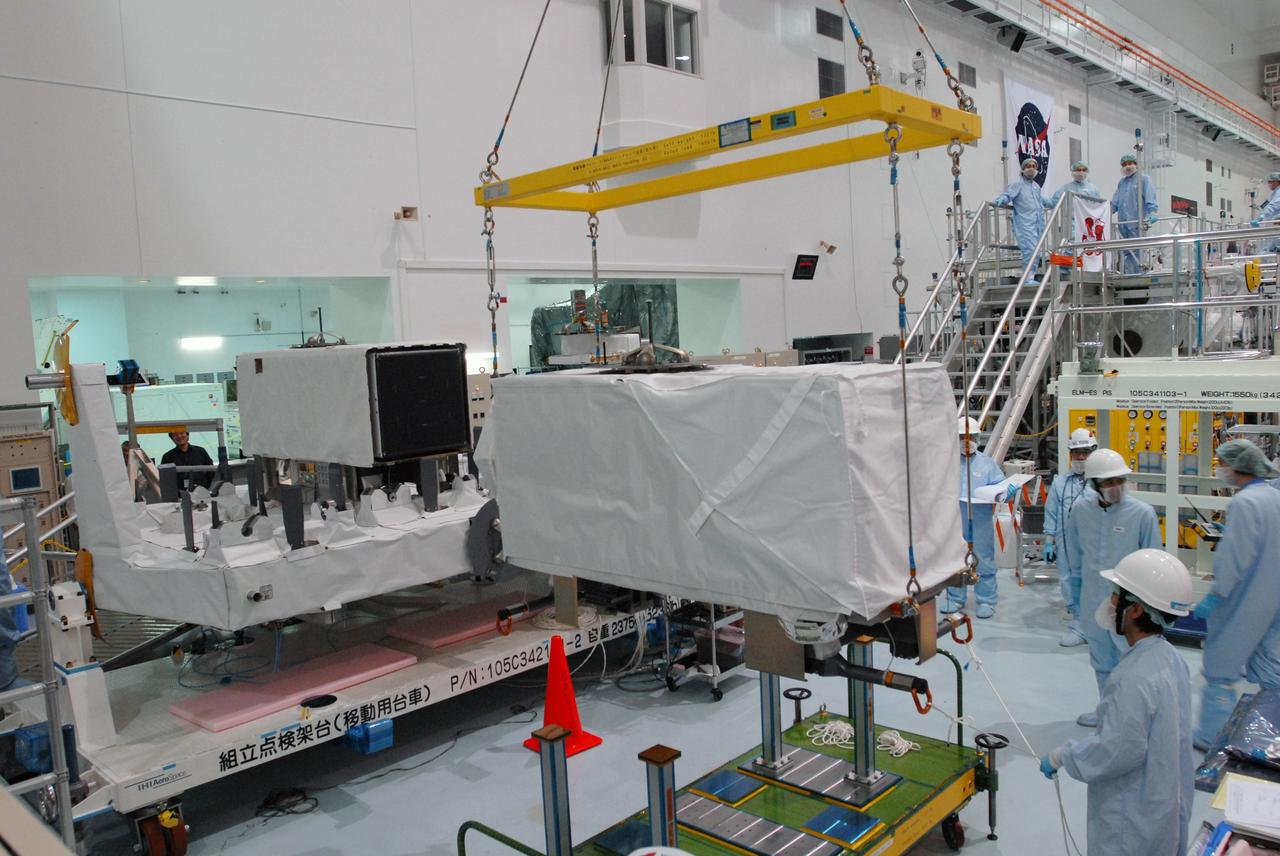
CAPE CANAVERAL, Fla. -- In the Space Station Processing Facility at NASA's Kennedy Space Center in Florida, a crane lifts the MAXI (Monitor of All-sky X-ray Image) to move it onto the Japanese Experiment Module's Experiment Logistics Module-Exposed Section, or ELM-ES, where it will be installed. The MAXI is part of space shuttle Endeavour's payload on the STS-127 mission. Using X-ray slit cameras with high sensitivity, the MAXI will continuously monitor astronomical X-ray objects over a broad energy band (0.5 to 30 keV). Endeavour is targeted to launch May 15. Photo credit: NASA/Jim Grossmann
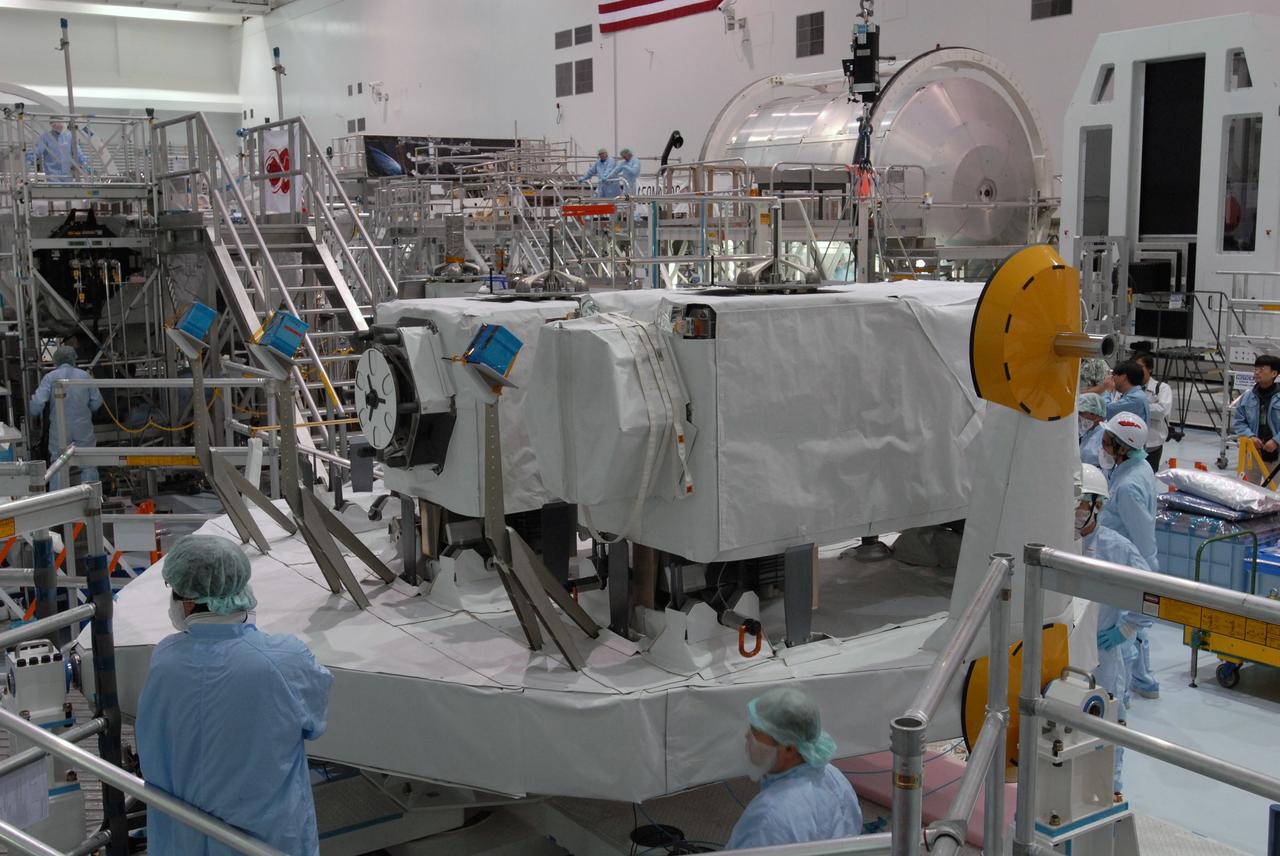
CAPE CANAVERAL, Fla. -- In the Space Station Processing Facility at NASA's Kennedy Space Center in Florida, the MAXI (Monitor of All-sky X-ray Image) has been installed next to the SEDA-AP (Space Environment Data Acquisition Equipment-Attached Payload) on the Japanese Experiment Module's Experiment Logistics Module-Exposed Section, or ELM-ES. The MAXI and SEDA-AP are part of space shuttle Endeavour's payload on the STS-127 mission. Using X-ray slit cameras with high sensitivity, the MAXI will continuously monitor astronomical X-ray objects over a broad energy band (0.5 to 30 keV). Endeavour is targeted to launch May 15. Photo credit: NASA/Jim Grossmann
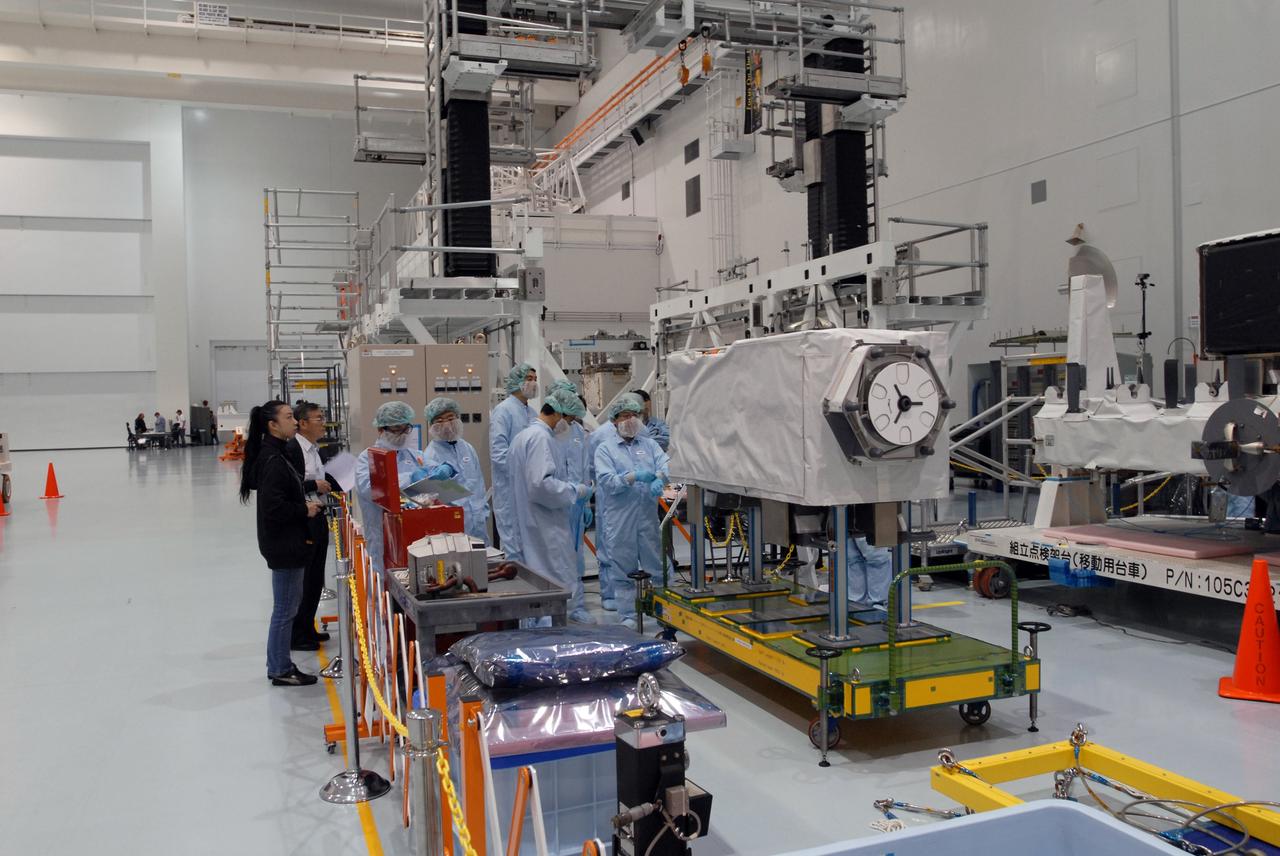
CAPE CANAVERAL, Fla. -- In the Space Station Processing Facility at NASA's Kennedy Space Center in Florida, the MAXI (Monitor of All-sky X-ray Image) is waiting to be installed on the Japanese Experiment Module's Experiment Logistics Module-Exposed Section, or ELM-ES. The MAXI is part of space shuttle Endeavour's payload on the STS-127 mission. Using X-ray slit cameras with high sensitivity, the MAXI will continuously monitor astronomical X-ray objects over a broad energy band (0.5 to 30 keV). Endeavour is targeted to launch May 15. Photo credit: NASA/Jim Grossmann
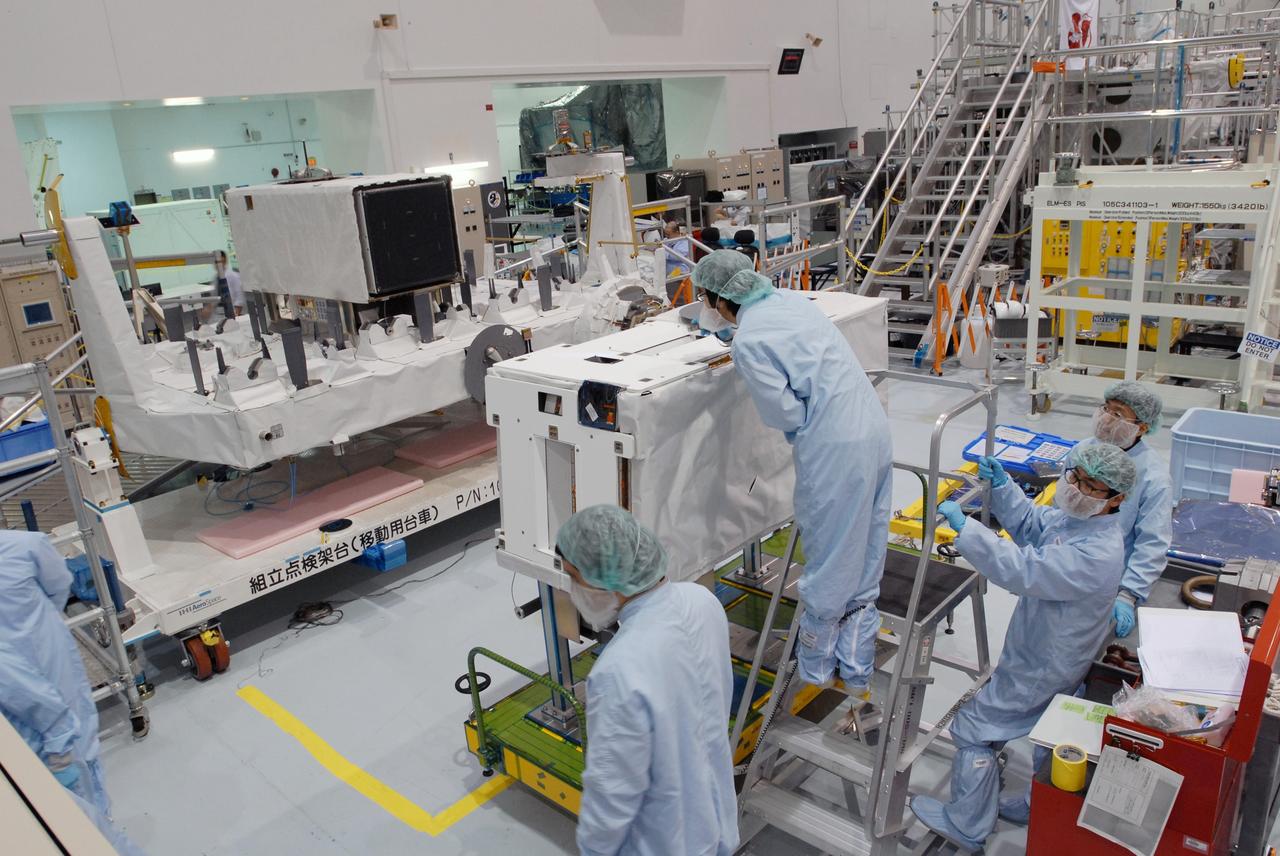
CAPE CANAVERAL, Fla. -- In the Space Station Processing Facility at NASA's Kennedy Space Center in Florida, workers check the MAXI (Monitor of All-sky X-ray Image) before it is installed on the Japanese Experiment Module's Experiment Logistics Module-Exposed Section, or ELM-ES. The MAXI is part of space shuttle Endeavour's payload on the STS-127 mission. Using X-ray slit cameras with high sensitivity, the MAXI will continuously monitor astronomical X-ray objects over a broad energy band (0.5 to 30 keV). Endeavour is targeted to launch May 15. Photo credit: NASA/Jim Grossmann
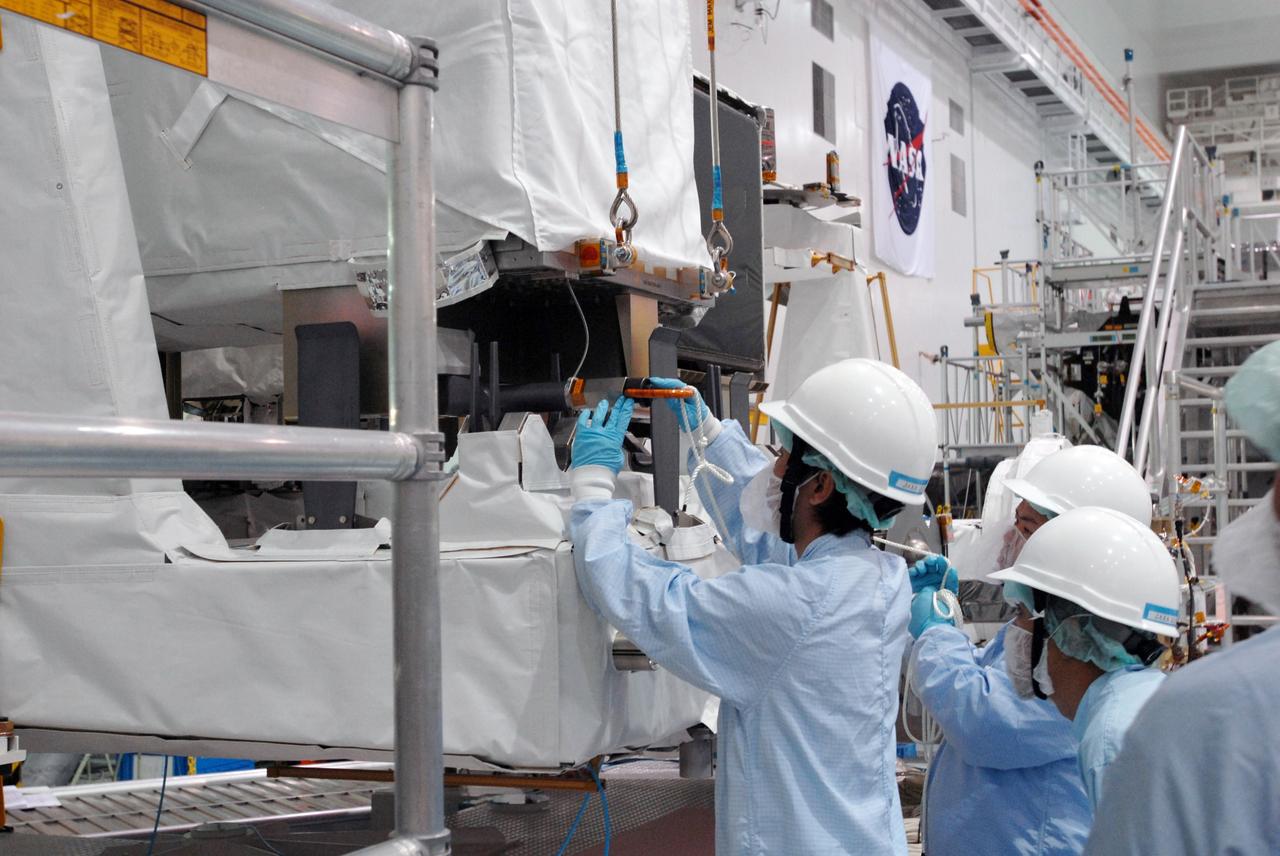
CAPE CANAVERAL, Fla. -- In the Space Station Processing Facility at NASA's Kennedy Space Center in Florida, a worker adjusts placement of the MAXI (Monitor of All-sky X-ray Image) on the Payload Attachment Mechanism on the Japanese Experiment Module's Experiment Logistics Module-Exposed Section, or ELM-ES. It is being installed next to the SEDA-AP (Space Environment Data Acquisition Equipment-Attached Payload). The MAXI and SEDA-AP are part of space shuttle Endeavour's payload on the STS-127 mission. Using X-ray slit cameras with high sensitivity, the MAXI will continuously monitor astronomical X-ray objects over a broad energy band (0.5 to 30 keV). Endeavour is targeted to launch May 15. Photo credit: NASA/Jim Grossmann
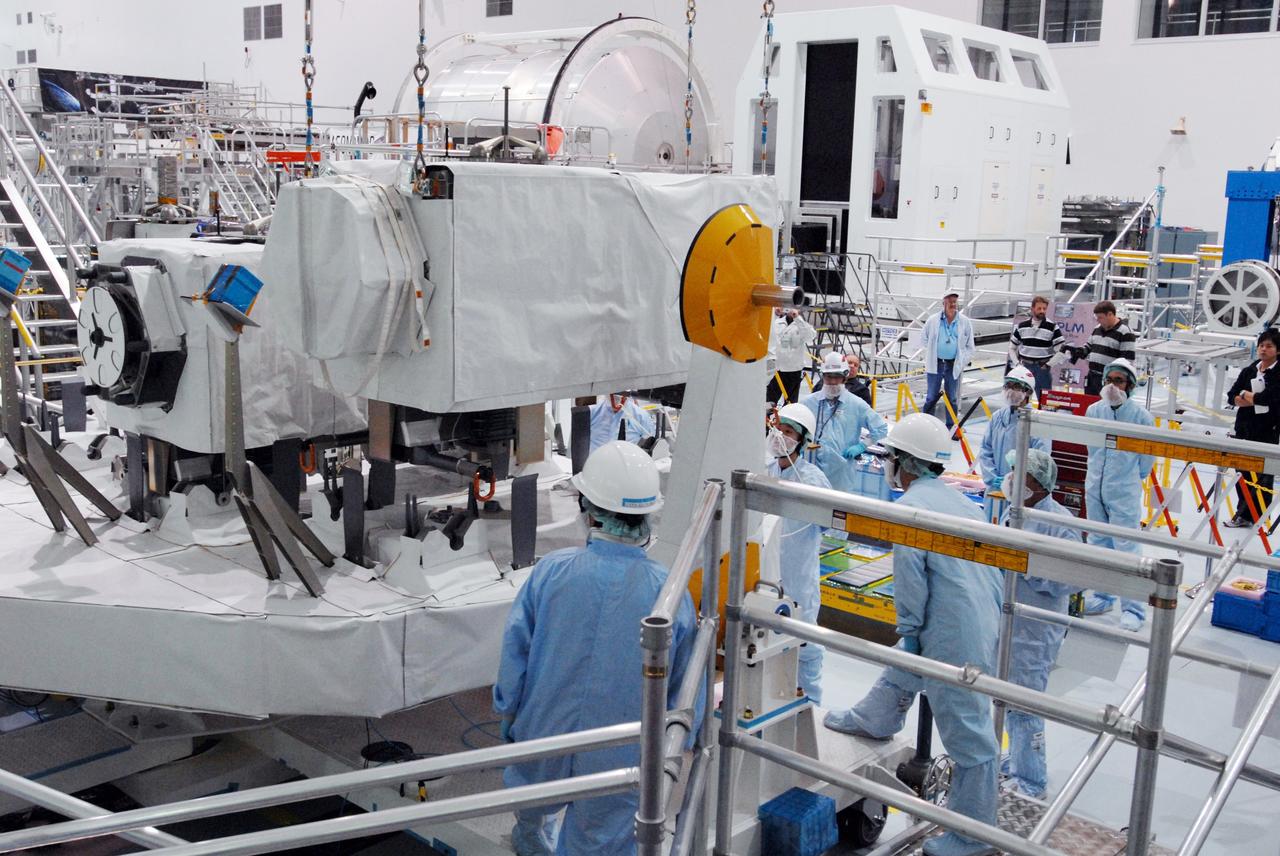
CAPE CANAVERAL, Fla. -- In the Space Station Processing Facility at NASA's Kennedy Space Center in Florida, a crane lowers the MAXI (Monitor of All-sky X-ray Image) onto the Payload Attachment Mechanism on the Japanese Experiment Module's Experiment Logistics Module-Exposed Section, or ELM-ES. It is being installed next to the SEDA-AP (Space Environment Data Acquisition Equipment-Attached Payload). The MAXI and SEDA-AP are part of space shuttle Endeavour's payload on the STS-127 mission. Using X-ray slit cameras with high sensitivity, the MAXI will continuously monitor astronomical X-ray objects over a broad energy band (0.5 to 30 keV). Endeavour is targeted to launch May 15. Photo credit: NASA/Jim Grossmann
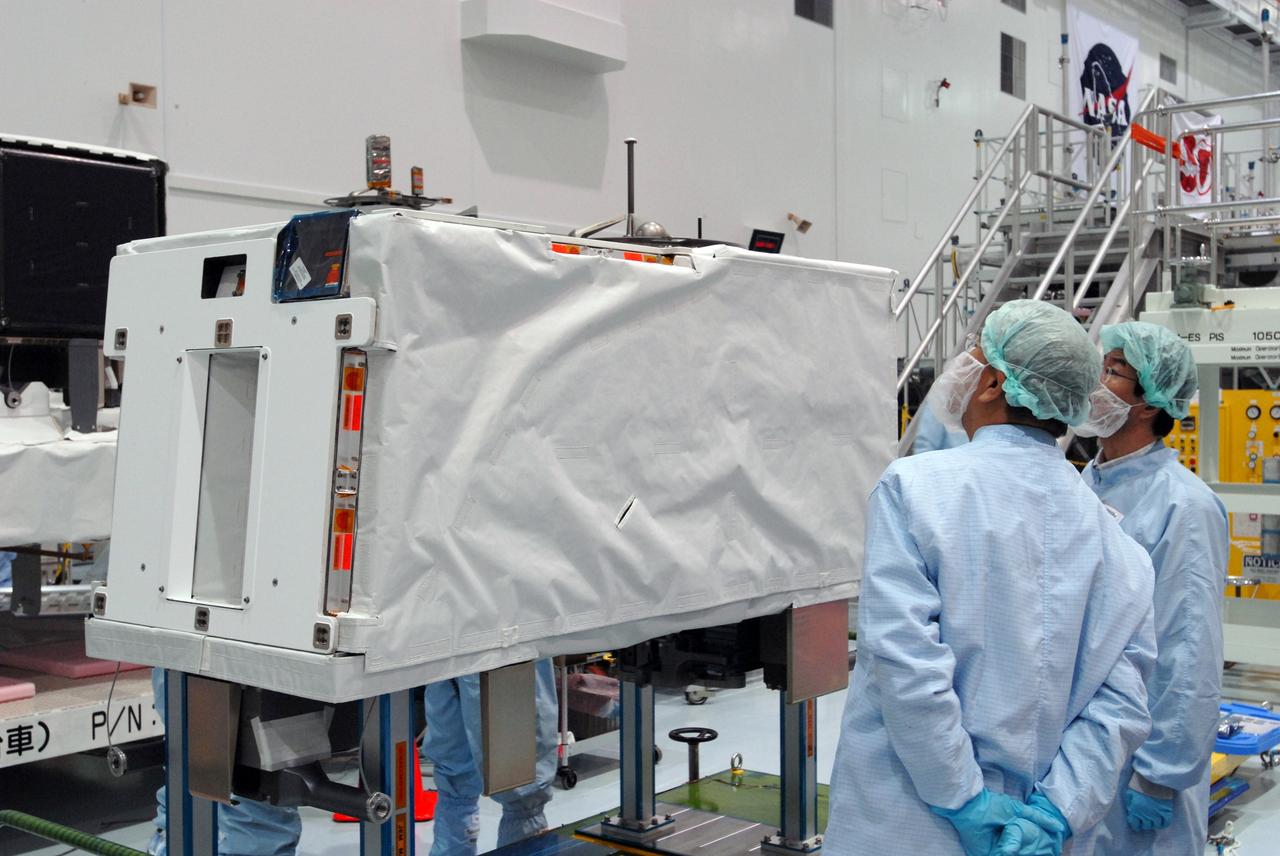
CAPE CANAVERAL, Fla. -- In the Space Station Processing Facility at NASA's Kennedy Space Center in Florida, the MAXI (Monitor of All-sky X-ray Image) is waiting to be installed on the Japanese Experiment Module's Experiment Logistics Module-Exposed Section, or ELM-ES. The MAXI is part of space shuttle Endeavour's payload on the STS-127 mission. Using X-ray slit cameras with high sensitivity, the MAXI will continuously monitor astronomical X-ray objects over a broad energy band (0.5 to 30 keV). Endeavour is targeted to launch May 15. Photo credit: NASA/Jim Grossmann
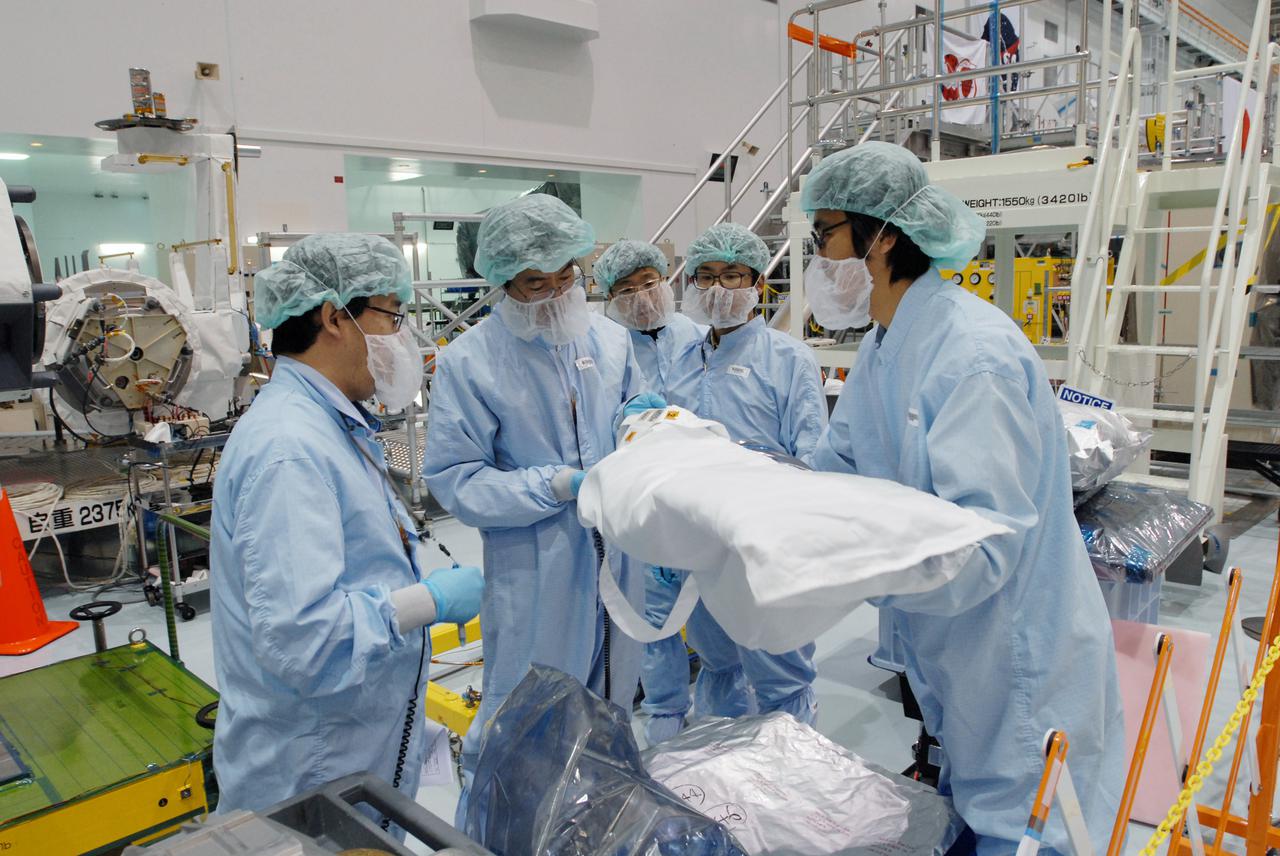
CAPE CANAVERAL, Fla. -- In the Space Station Processing Facility at NASA's Kennedy Space Center in Florida, workers examines equipment for the MAXI (Monitor of All-sky X-ray Image) before it is installed on the Japanese Experiment Module's Experiment Logistics Module-Exposed Section, or ELM-ES. The MAXI is part of space shuttle Endeavour's payload on the STS-127 mission. Using X-ray slit cameras with high sensitivity, the MAXI will continuously monitor astronomical X-ray objects over a broad energy band (0.5 to 30 keV). Endeavour is targeted to launch May 15. Photo credit: NASA_Jim Grossmann
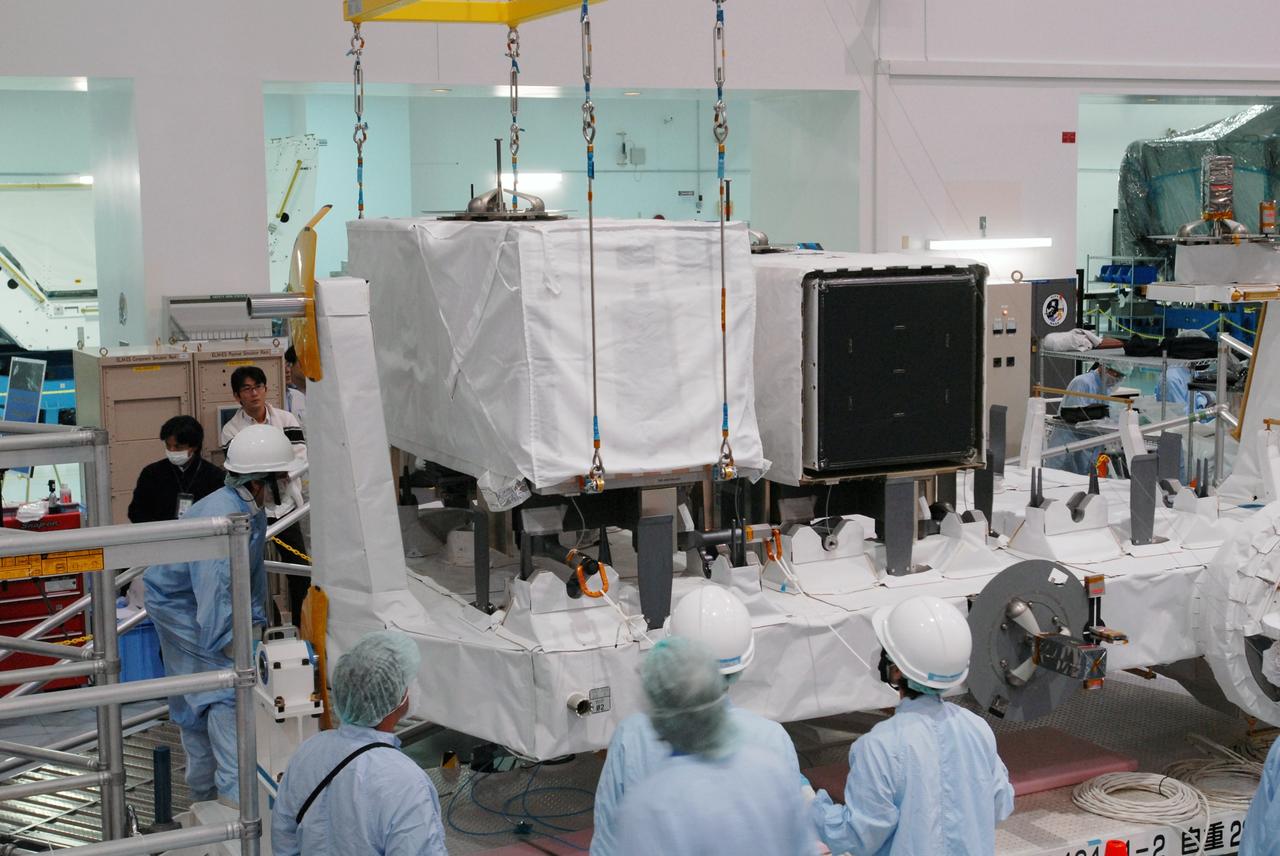
CAPE CANAVERAL, Fla. -- In the Space Station Processing Facility at NASA's Kennedy Space Center in Florida, a crane lowers the MAXI (Monitor of All-sky X-ray Image) onto the Payload Attachment Mechanism on the Japanese Experiment Module's Experiment Logistics Module-Exposed Section, or ELM-ES. It is being installed next to the SEDA-AP (Space Environment Data Acquisition Equipment-Attached Payload). The MAXI and SEDA-AP are part of space shuttle Endeavour's payload on the STS-127 mission. Using X-ray slit cameras with high sensitivity, the MAXI will continuously monitor astronomical X-ray objects over a broad energy band (0.5 to 30 keV). Endeavour is targeted to launch May 15. Photo credit: NASA/Jim Grossmann
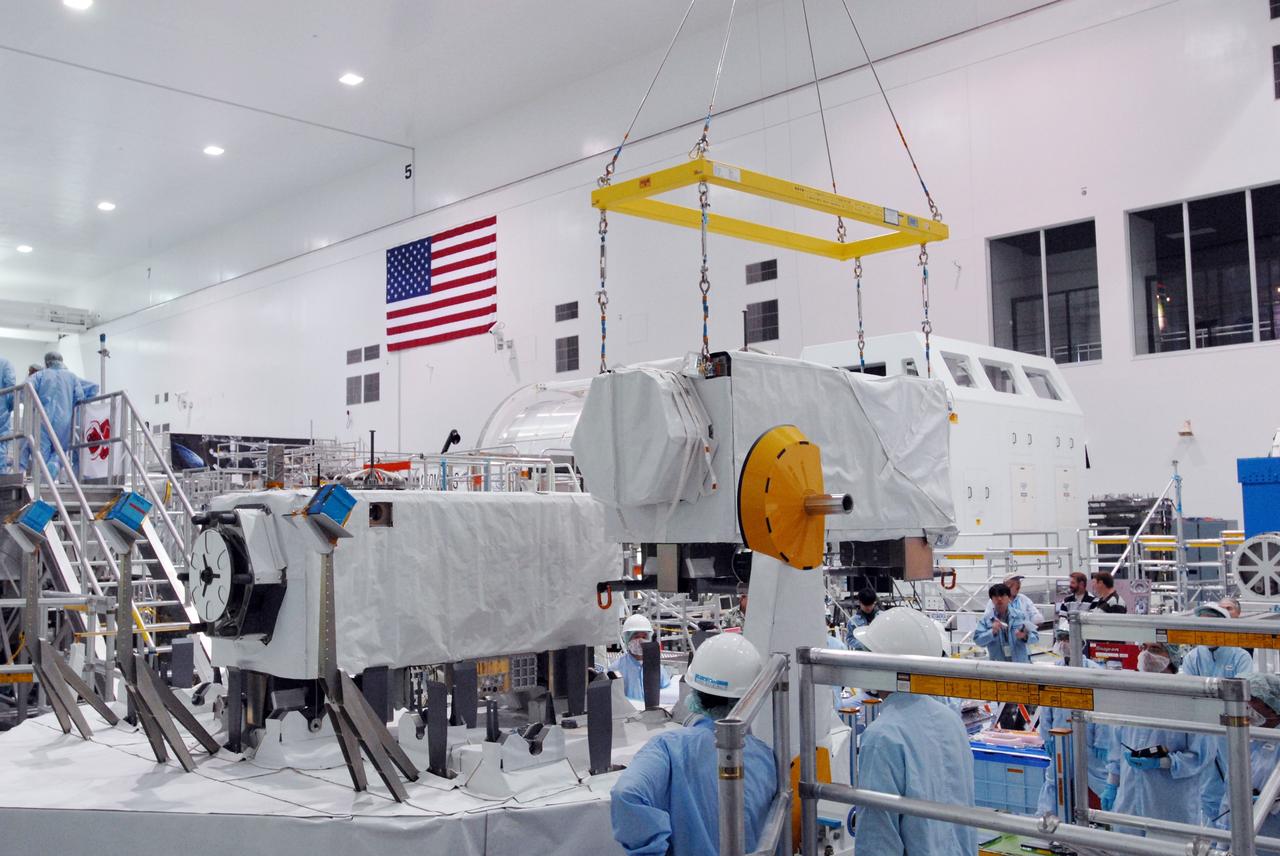
CAPE CANAVERAL, Fla. -- In the Space Station Processing Facility at NASA's Kennedy Space Center in Florida, a crane lifts the MAXI (Monitor of All-sky X-ray Image) to move it onto the Japanese Experiment Module's Experiment Logistics Module-Exposed Section, or ELM-ES, where it will be installed. The MAXI is part of space shuttle Endeavour's payload on the STS-127 mission. Using X-ray slit cameras with high sensitivity, the MAXI will continuously monitor astronomical X-ray objects over a broad energy band (0.5 to 30 keV). Endeavour is targeted to launch May 15. Photo credit: NASA/Jim Grossmann
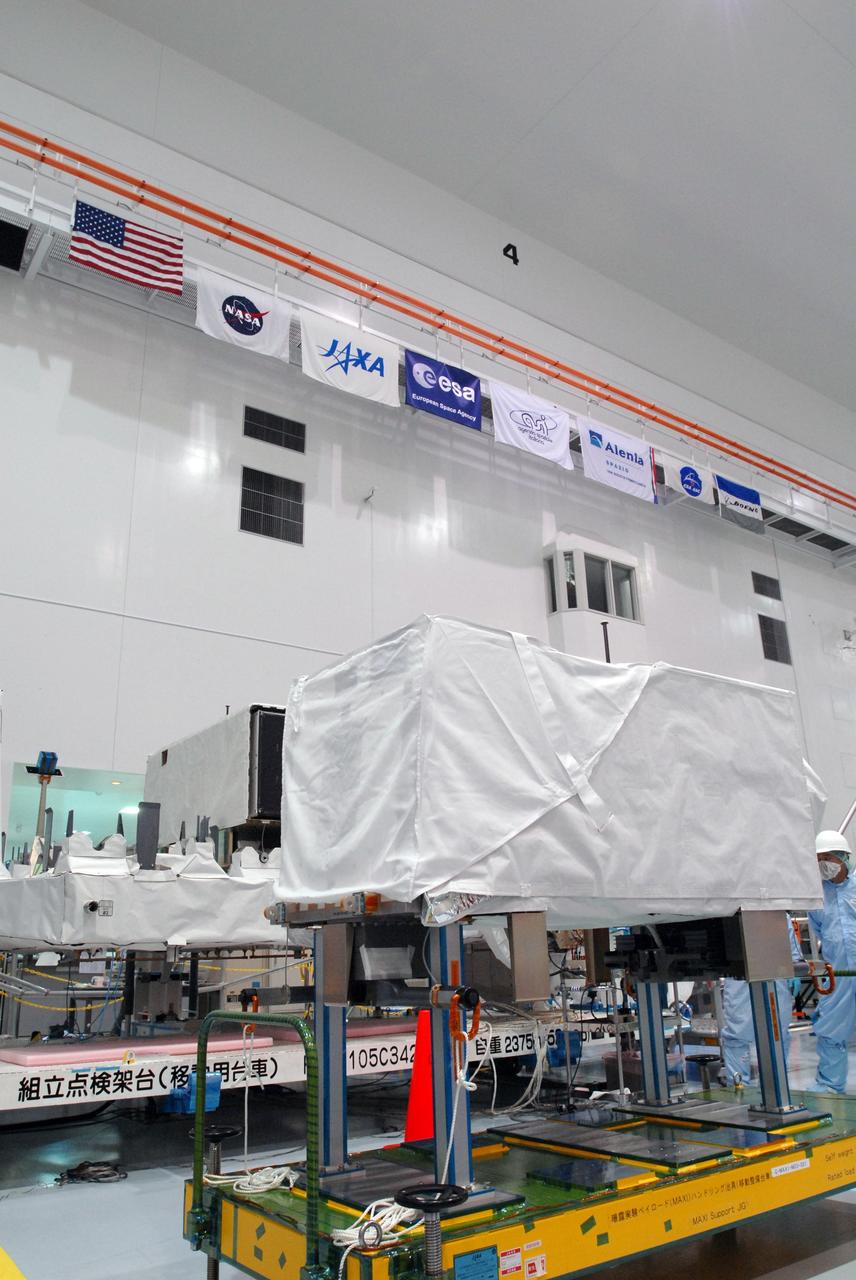
CAPE CANAVERAL, Fla. -- In the Space Station Processing Facility at NASA's Kennedy Space Center in Florida, the MAXI (Monitor of All-sky X-ray Image) is moved toward the Japanese Experiment Module's Experiment Logistics Module-Exposed Section, or ELM-ES, where it will be installed. The MAXI is part of space shuttle Endeavour's payload on the STS-127 mission. Using X-ray slit cameras with high sensitivity, the MAXI will continuously monitor astronomical X-ray objects over a broad energy band (0.5 to 30 keV). Endeavour is targeted to launch May 15. Photo credit: NASA/Jim Grossmann