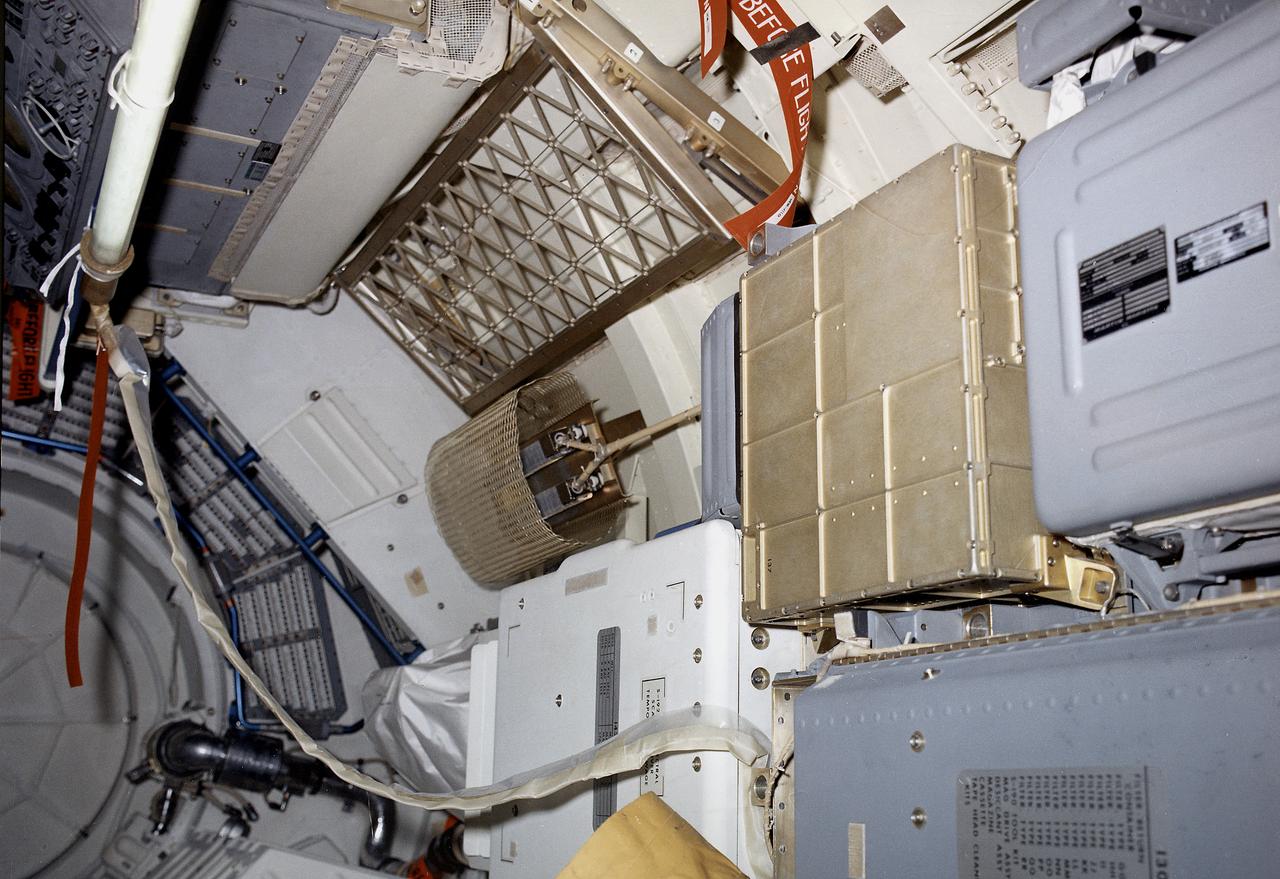
The Multiple Docking Adapter (MDA), designed and constructed under the direction of the Marshall Space Flight Center, was one of four principal sections comprising Skylab. The MDA provided the means by which the Command and Service Modules attached to the Skylab, enabling the crews to enter and work in it. Also included in the MDA was a control and display console for the Apollo Telescope Mount. This image shows an interior view of the MDA.
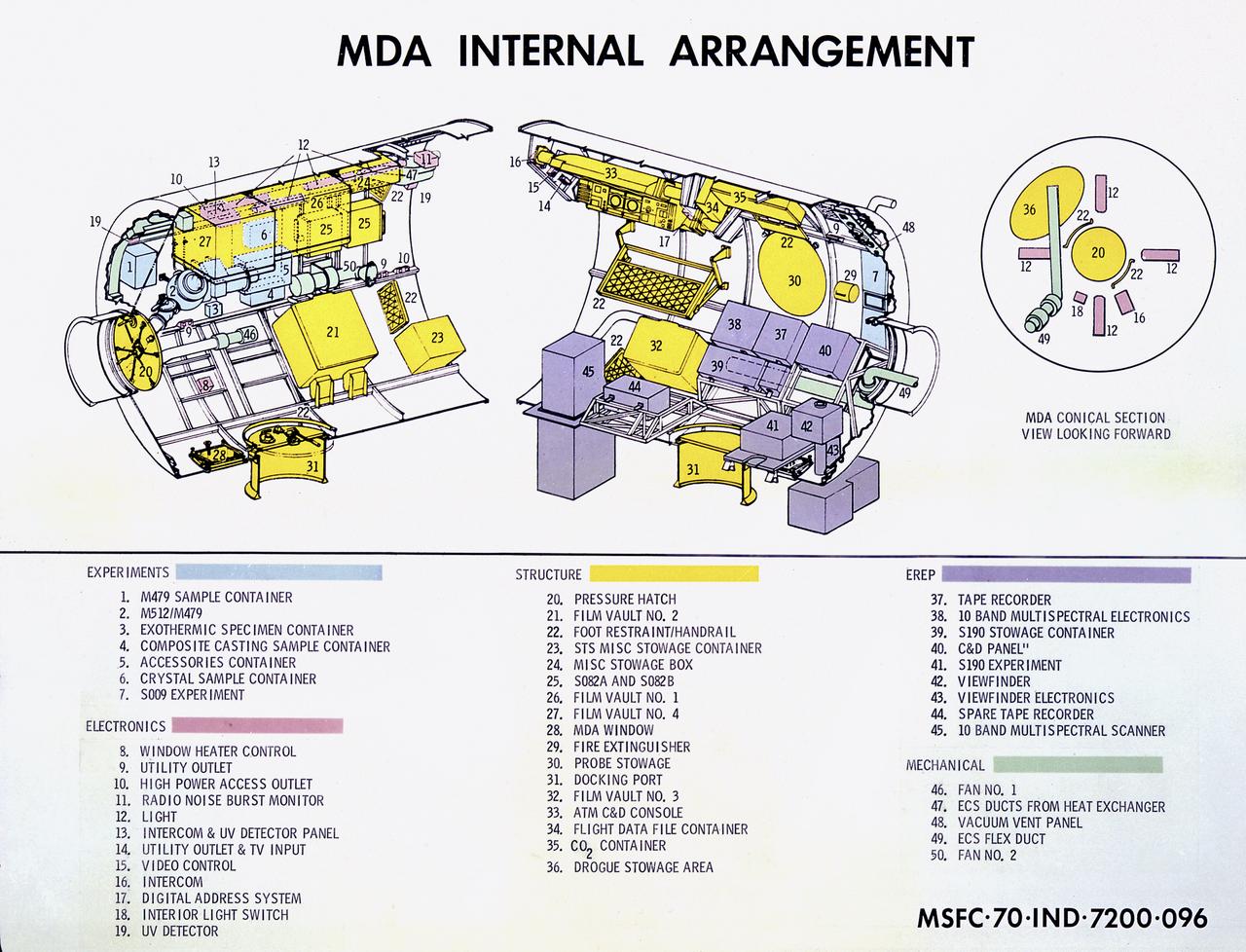
This cutaway drawing details the internal design of the Skylab Multiple Docking Adapter (MDA). The MDA, built under the direction of the Marshall Space Flight Center, housed various Skylab control and experiment units, and provided a docking port for the Apollo Command Module (CM).
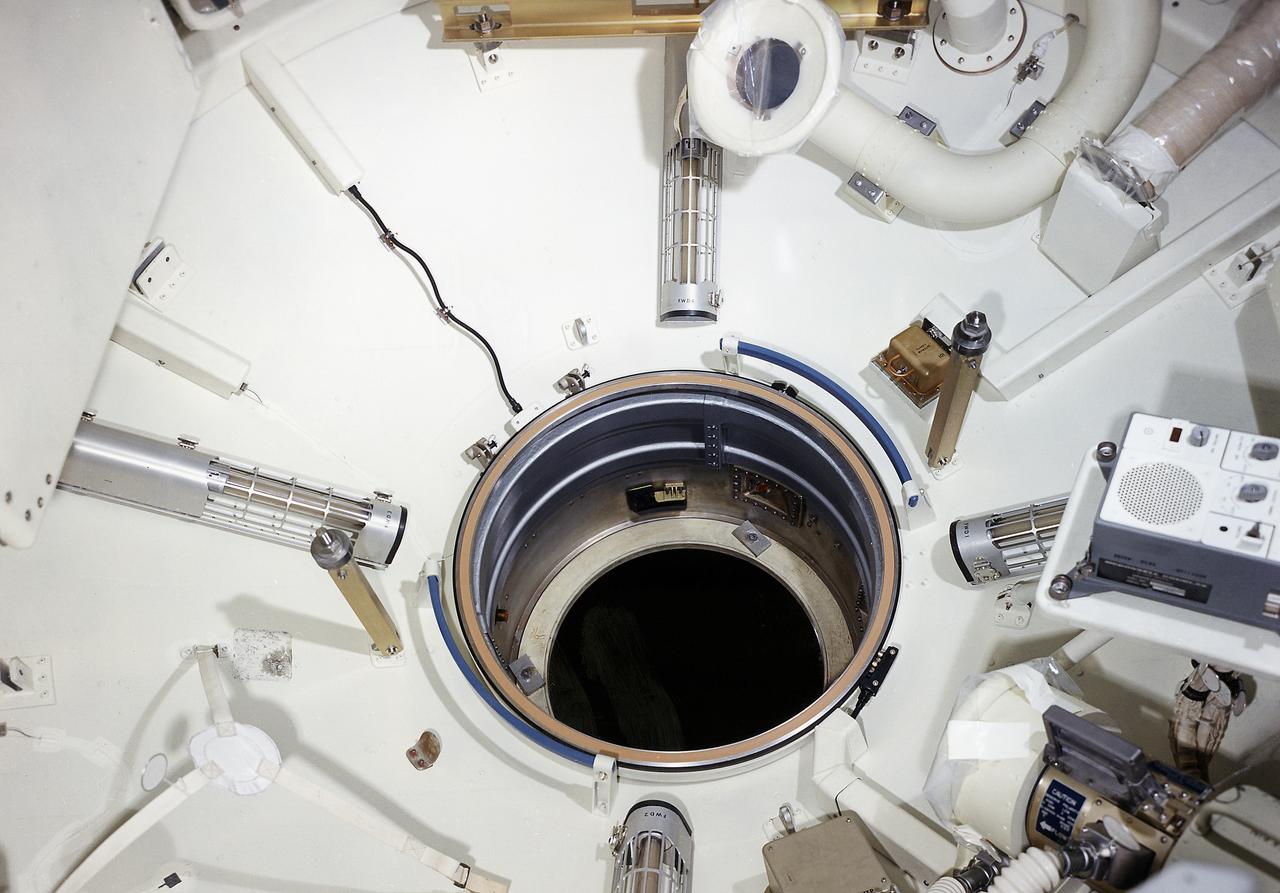
This August 1971 interior photograph of Skylab's Multiple Docking Adapter (MDA) flight article, undergoing outfitting at the Martin-Marietta Corporation's Space Center facility in Denver, Colorado, shows the forward cone area and docking tunnel (center) that attached to the Apollo Command Module. Designed and manufactured by the Marshall Space Flight Center, the MDA housed the control units for the Apollo Telescope Mount, Earth Resources Experiment Package, and Zero-Gravity Materials Processing Facility and provided a docking port for the Apollo Command Module.
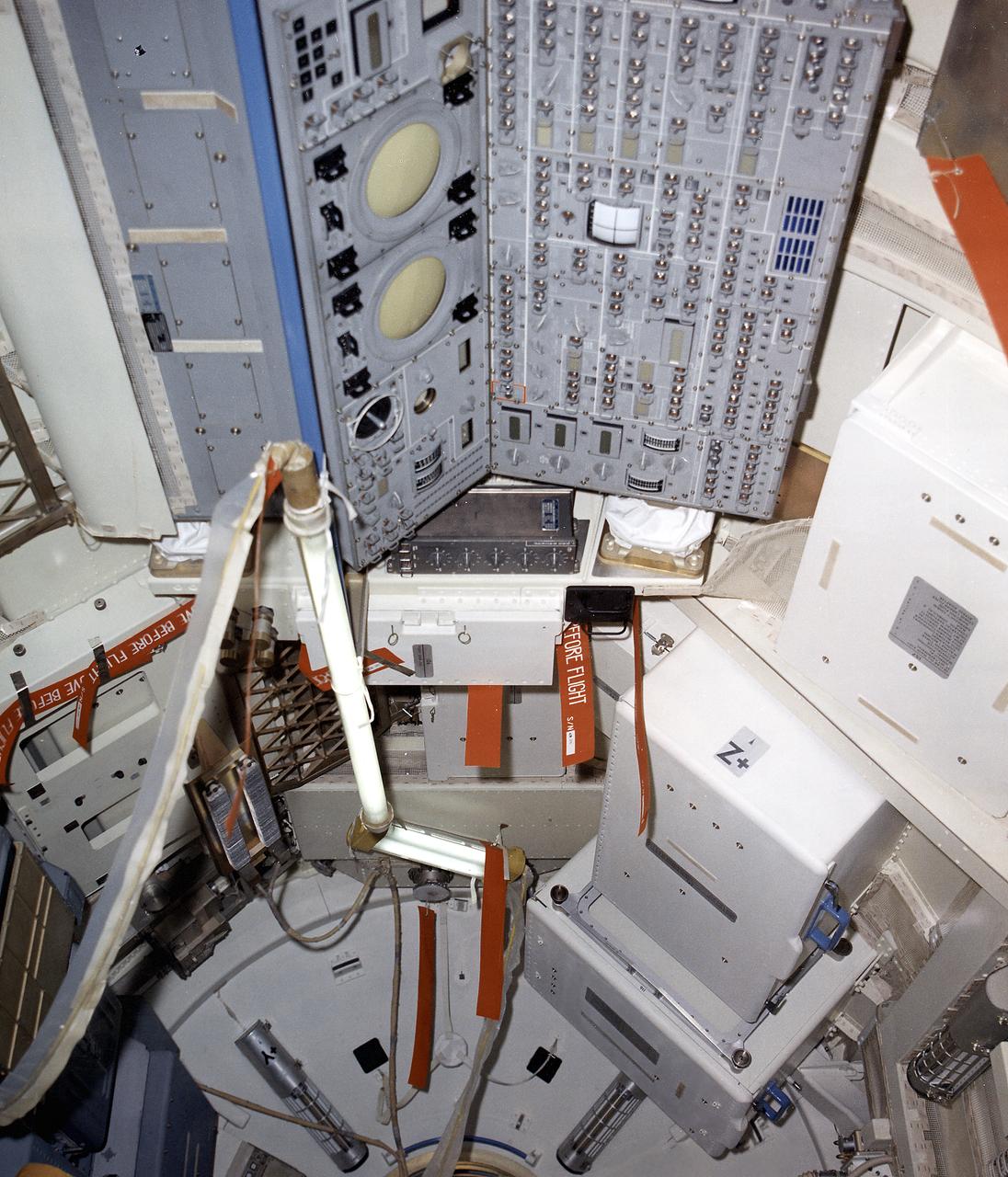
This December 1971 photograph shows the internal configuration of Skylab's Multiple Docking Adapter (MDA) as it appeared during the Crew Compartment and Function Review at the Martin-Marietta Corporation's Space Center facility in Denver, Colorado. At left is the control and display console for the Apollo Telescope Mount. Designed and manufactured by the Marshall Space Flight Center, the MDA housed a number of experiment control and stowage units and provided a docking port for the Apollo Command Module.
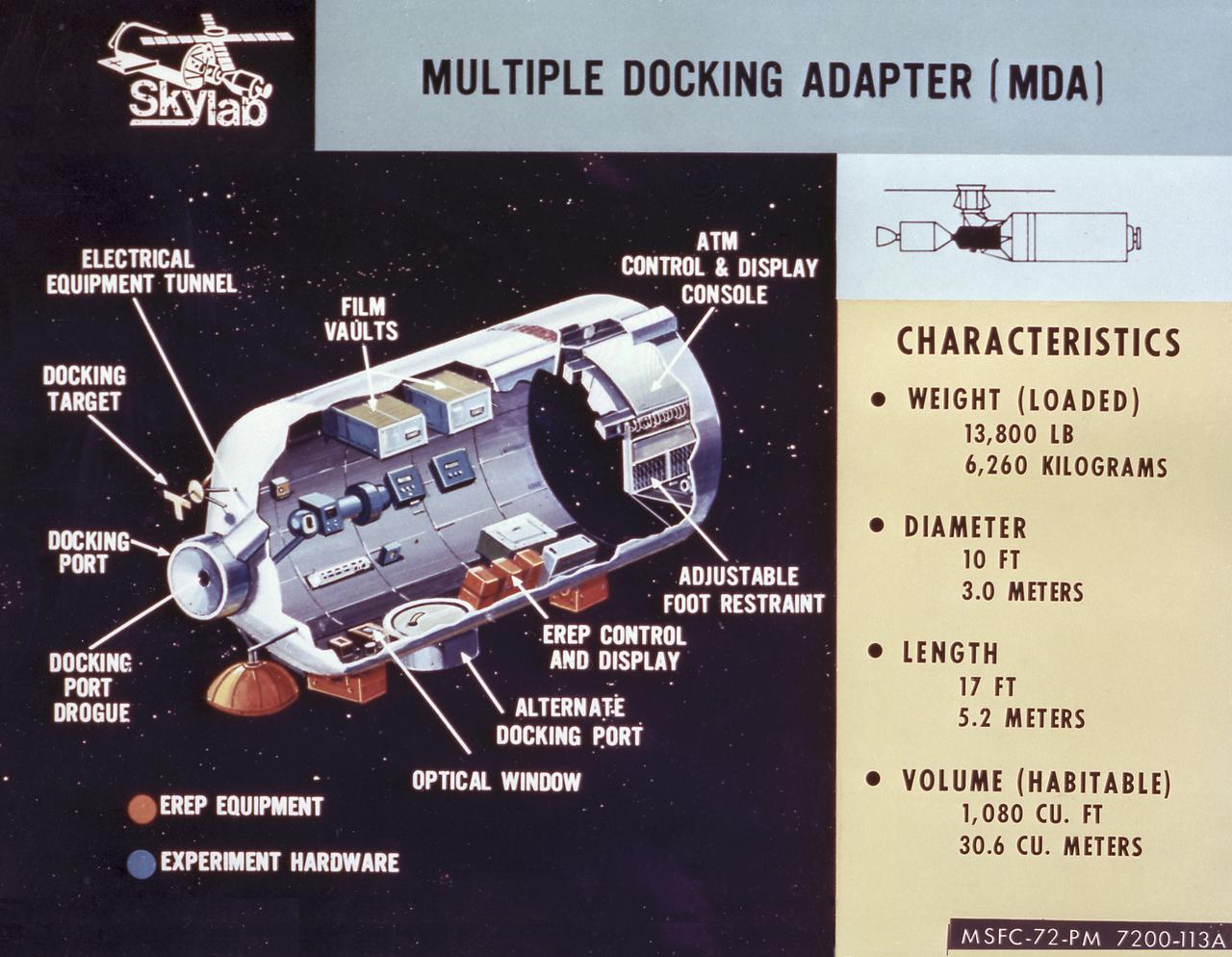
This cutaway drawing details the major characteristics of the Skylab Multiple Docking Adapter (MDA). The MDA, built under the direction of the Marshall Space Flight Center, housed the control units for the Apollo Telescope Mount (ATM), Earth Resources Experiment Package (EREP), and Zero-Gravity Materials Processing Facility, and provided a docking port for the Apollo Command Module (CM).
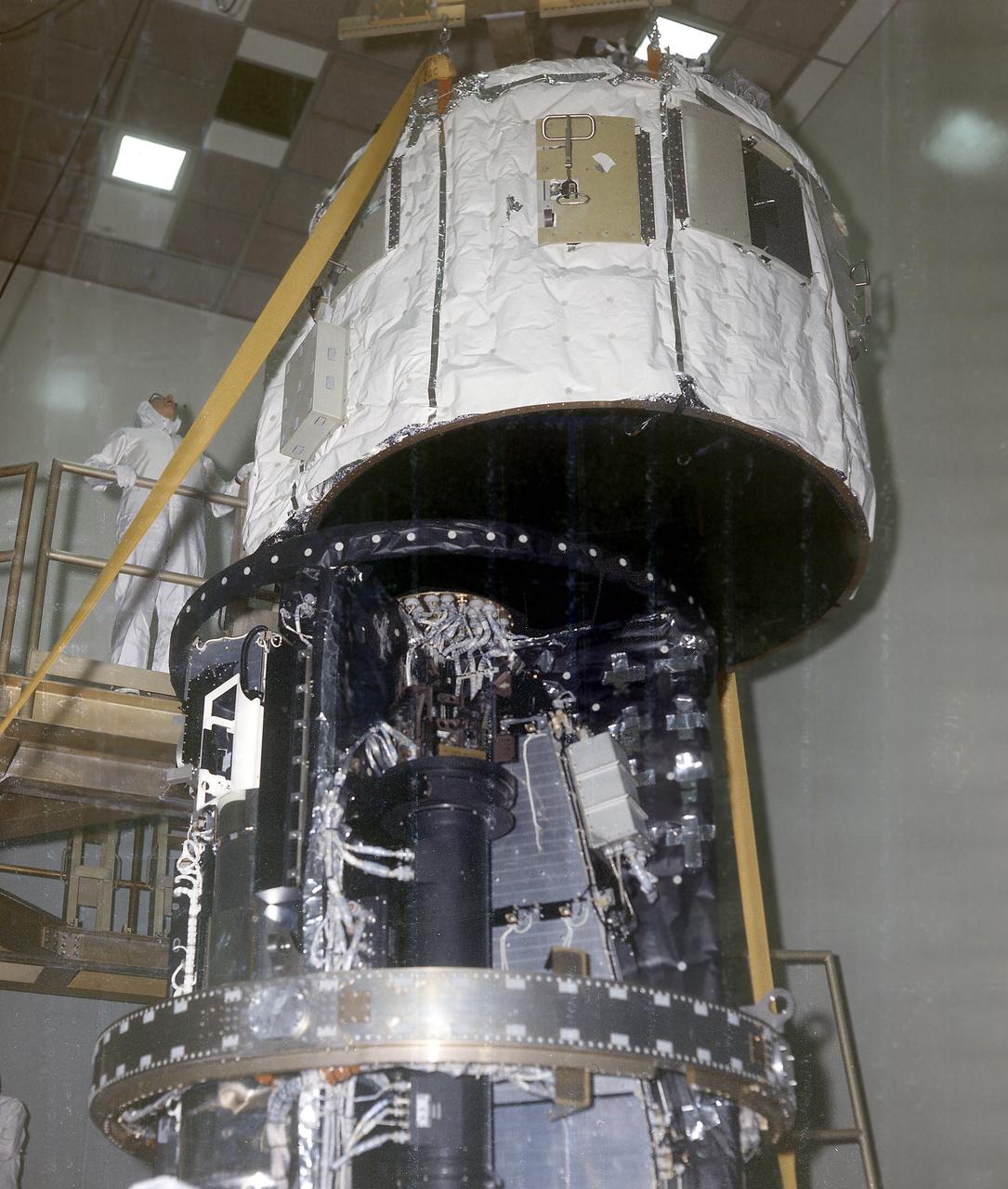
The final version of the Marshall Space Flight Center managed Skylab consisted of four primary parts. One component was the Apollo Telescope Mount (ATM) that housed the first marned scientific telescopes in space. This picture is a view of the ATM spar, which contained the scientific instruments, as the multiple docking adapter (MDA) canister end is lowered over it. The MDA served to link the major parts of Skylab together.
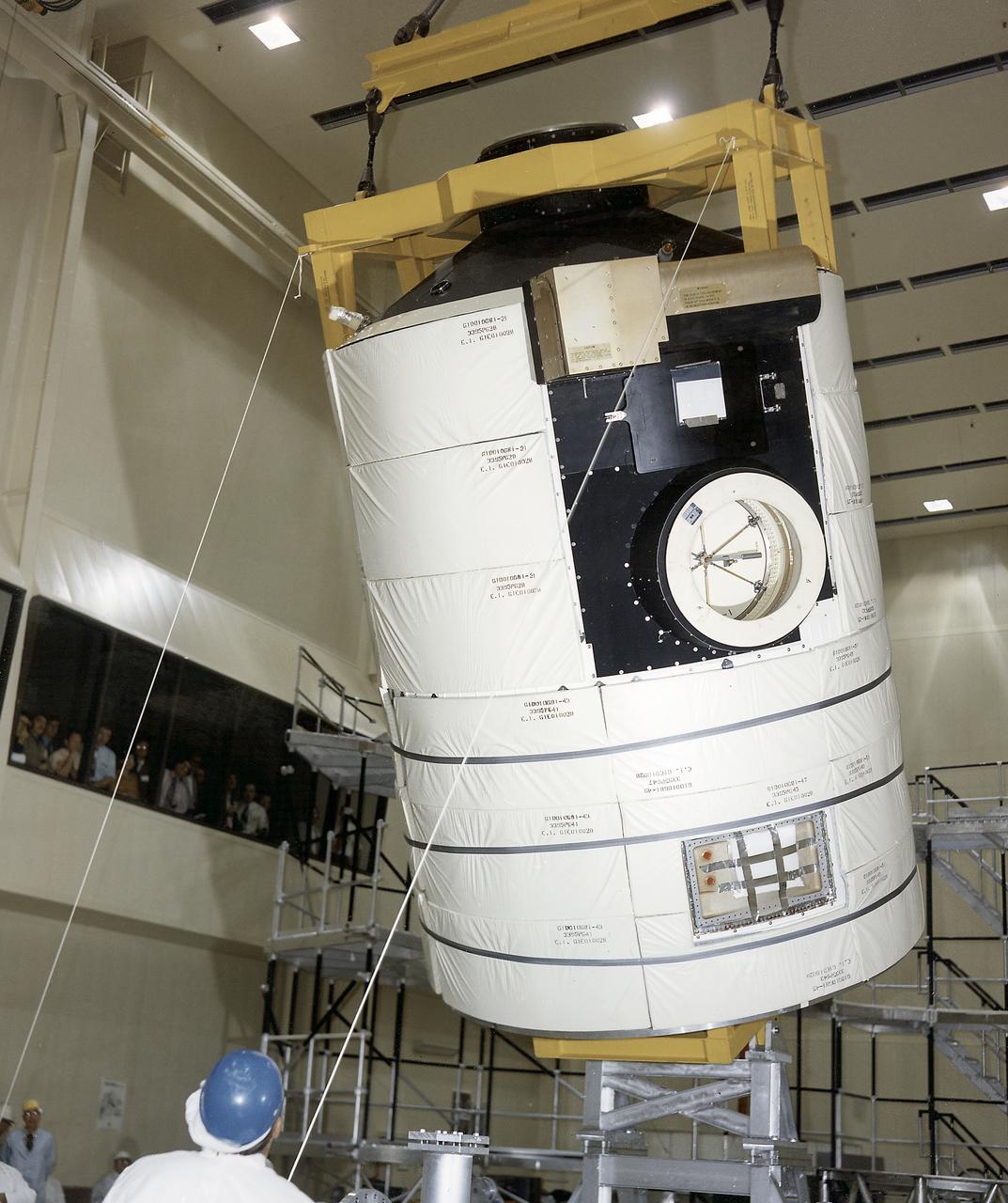
Workmen at the Martin Marietta Corporation's Space Center facility in Denver, Colorado, lower the Skylab Multiple Docking Adapter (MDA) flight article into the horizontal rotation fixture in preparation for the crew compartment and function review. Designed and manufactured by the Marshall Space Flight Center and outfitted by Martin Marietta, the MDA housed a number of experiment control and stowage units and provided a docking port for the Apollo Command Module.
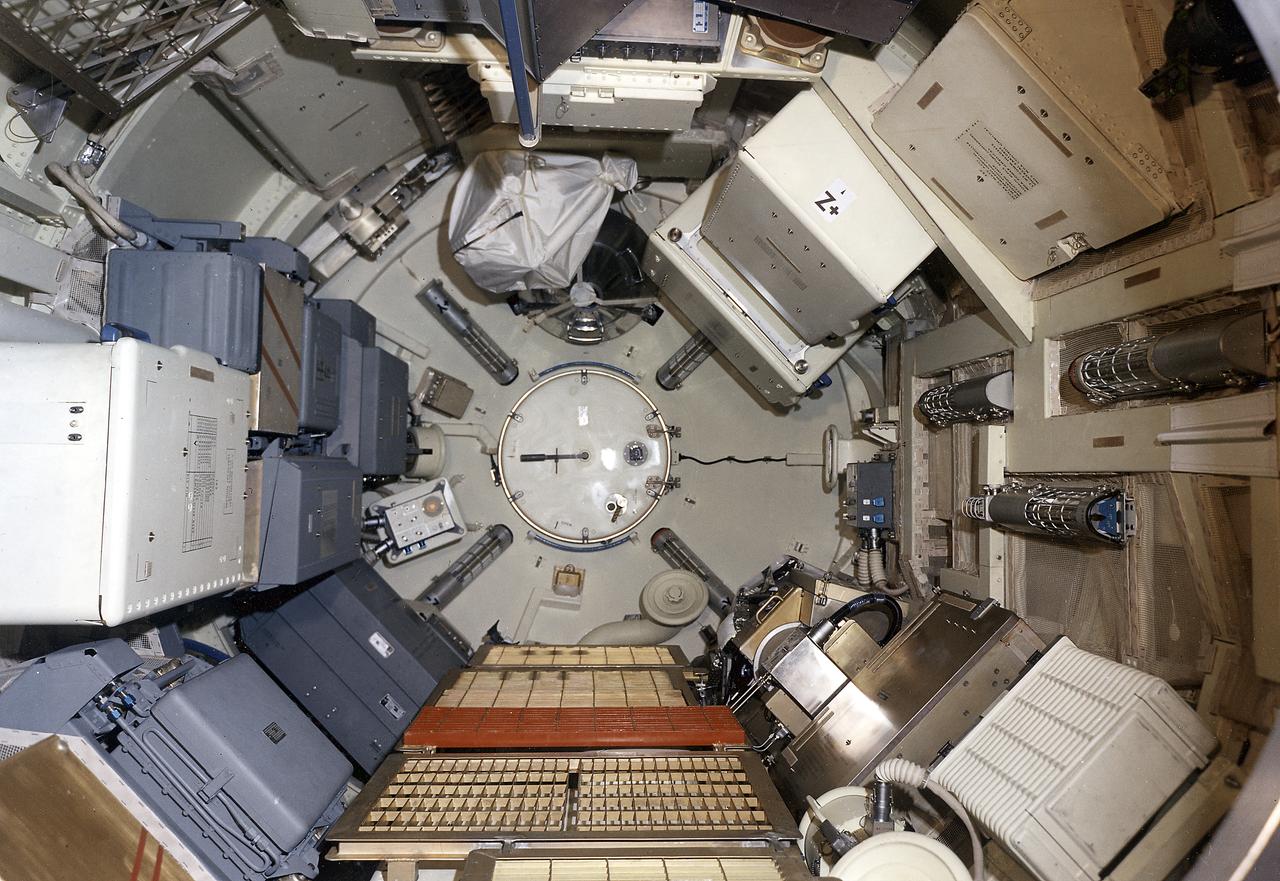
This December 1971 photograph shows the internal configuration of Skylab's Multiple Docking Adapter (MDA) flight article (forward view) as it appeared during the crew compartment and function review at the Martin-Marietta Corporation's Space Center Facility in Denver, Colorado. Designed and manufactured by the Marshall Space Flight Center, the MDA housed a number of experiment control and stowage units as well as providing a docking port for the Apollo Command module.
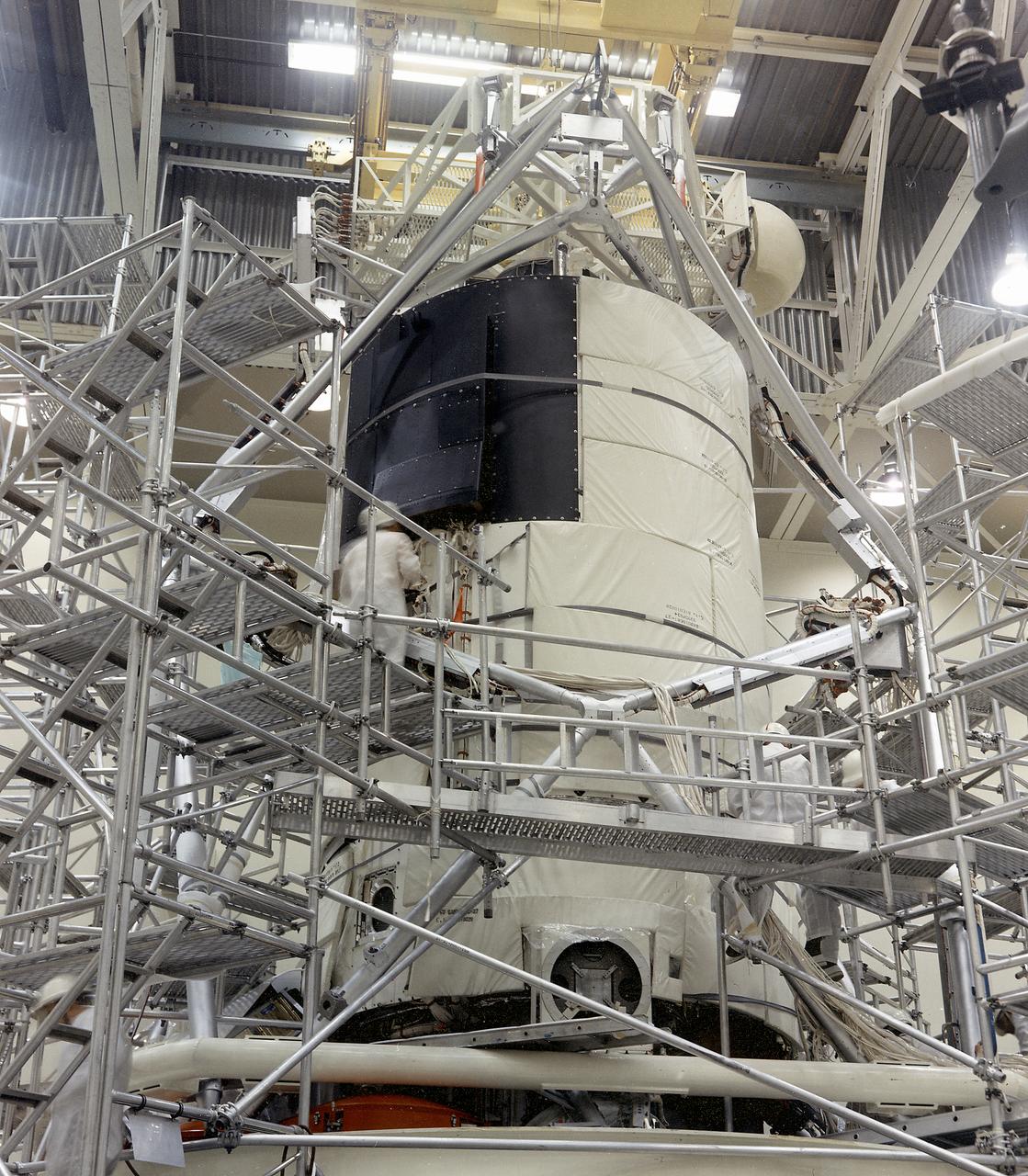
This photograph shows the flight article of the Airlock Module (AM)/Multiple Docking Adapter (MDA) assembly being readied for testing in a clean room at the McDornell Douglas Plant in St. Louis, Missouri. Although the AM and the MDA were separate entities, they were in many respects simply two components of a single module. The AM enabled crew members to conduct extravehicular activities outside Skylab as required for experiment support. Oxygen and nitrogen storage tanks needed for Skylab's life support system were mounted on the external truss work of the AM. Major components in the AM included Skylab's electric power control and distribution station, environmental control system, communication system, and data handling and recording systems. The MDA, forward of the AM, provided docking facilities for the Command and Service Module. It also accommodated several experiment systems, among them the Earth Resource Experiment Package, the materials processing facility, and the control and display console needed for the Apollo Telescope Mount solar astronomy studies. The AM was built by McDonnell Douglas and the MDA was built by Martin Marietta. The Marshall Space Flight Center was responsible for the design and development of the Skylab hardware and experiment management.
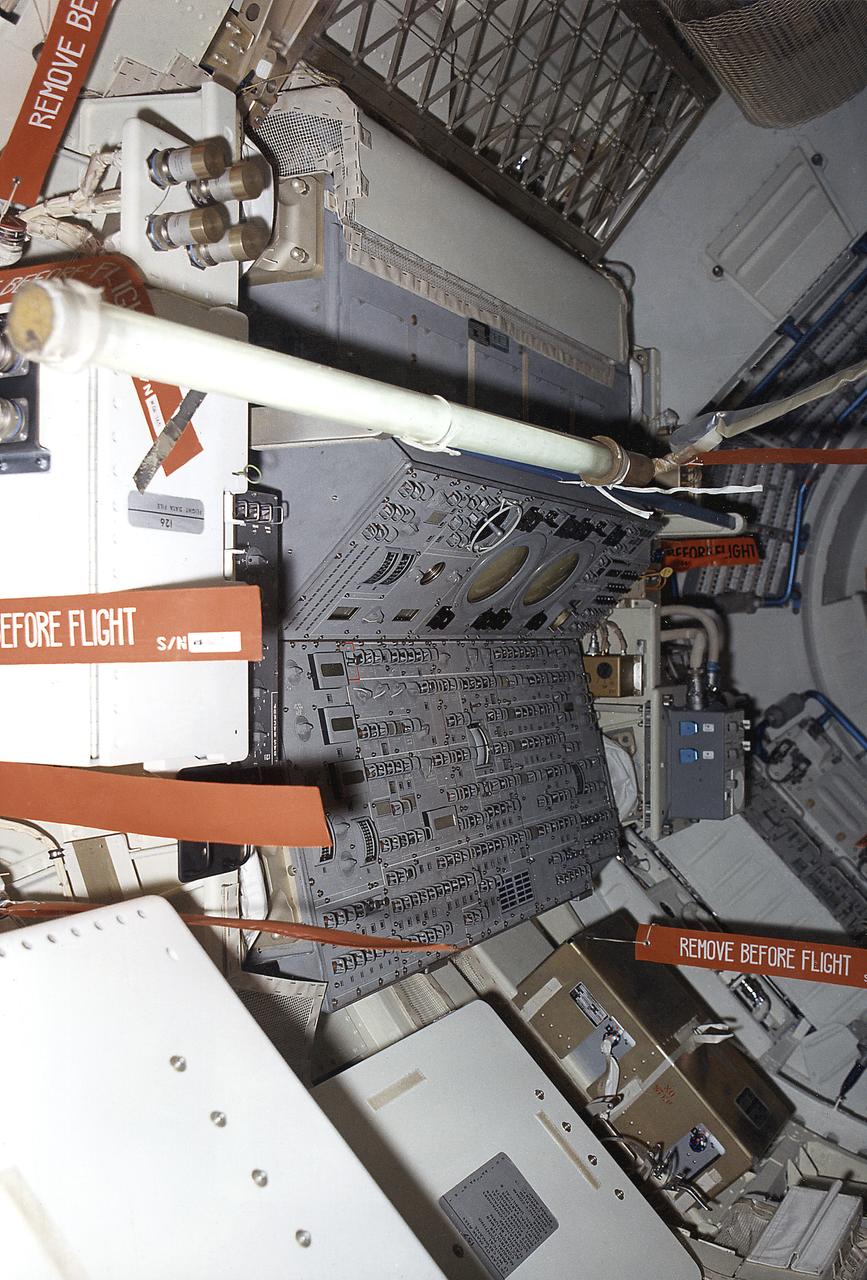
This September 1972 photograph shows the internal configuration of Skylab's Multiple Docking Adapter (MDA) flight article as it appeared during the Crew Compartment and Function Review at the Martin-Marietta Corporation's Space Center facility in Denver, Colorado. Designed and manufactured by the Marshall Space Flight Center, the MDA housed a number of experiment control and stowage units and provided a docking port for the Apollo Command Module.
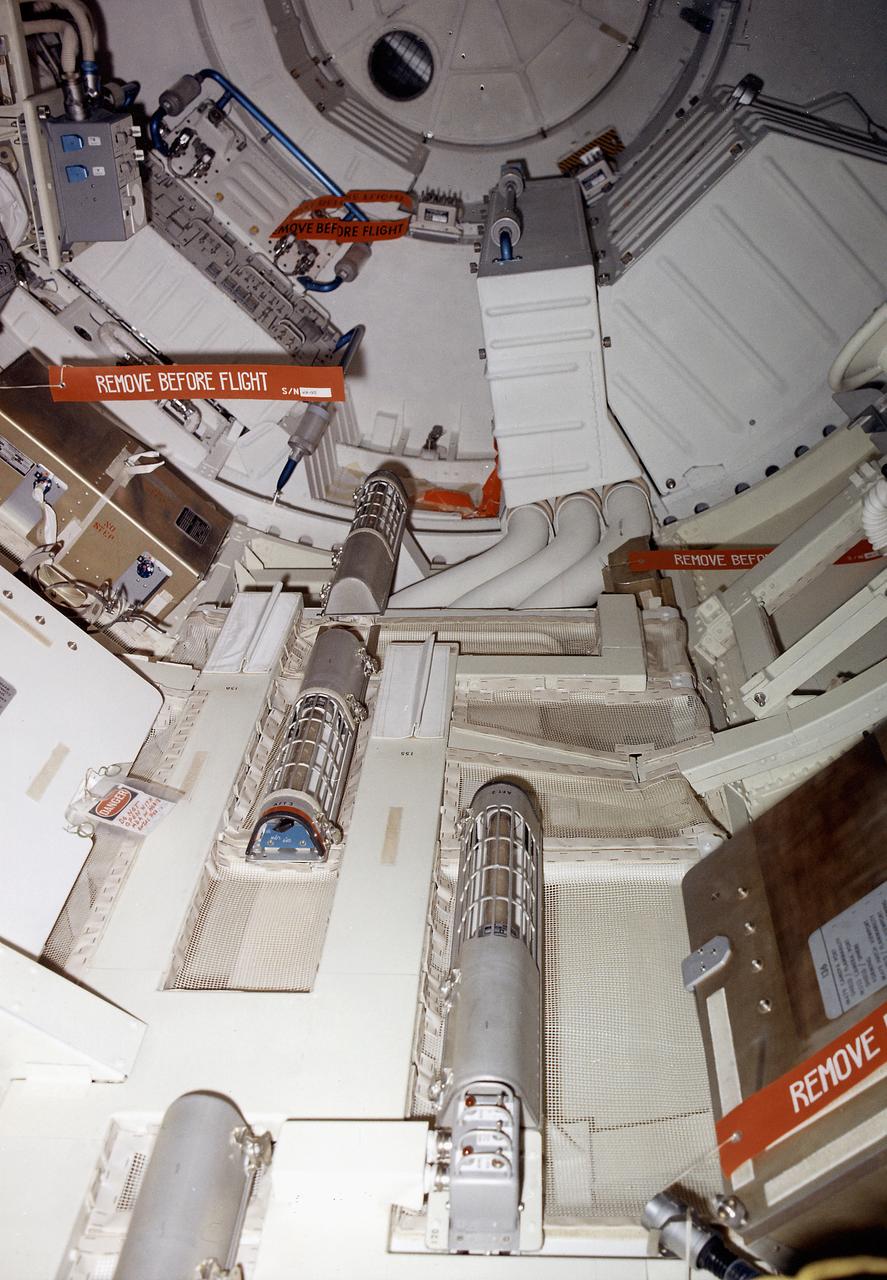
This September 1972 photograph shows the internal configuration of Skylab's Multiple Docking Adapter (MDA) flight article as it appeared during the Crew Compartment and Function Review at the Martin-Marietta Corporation's Space Center facility in Denver, Colorado. Designed and manufactured by the Marshall Space Flight Center, the MDA housed a number of experiment control and stowage units and provided a docking port for the Apollo Command Module.
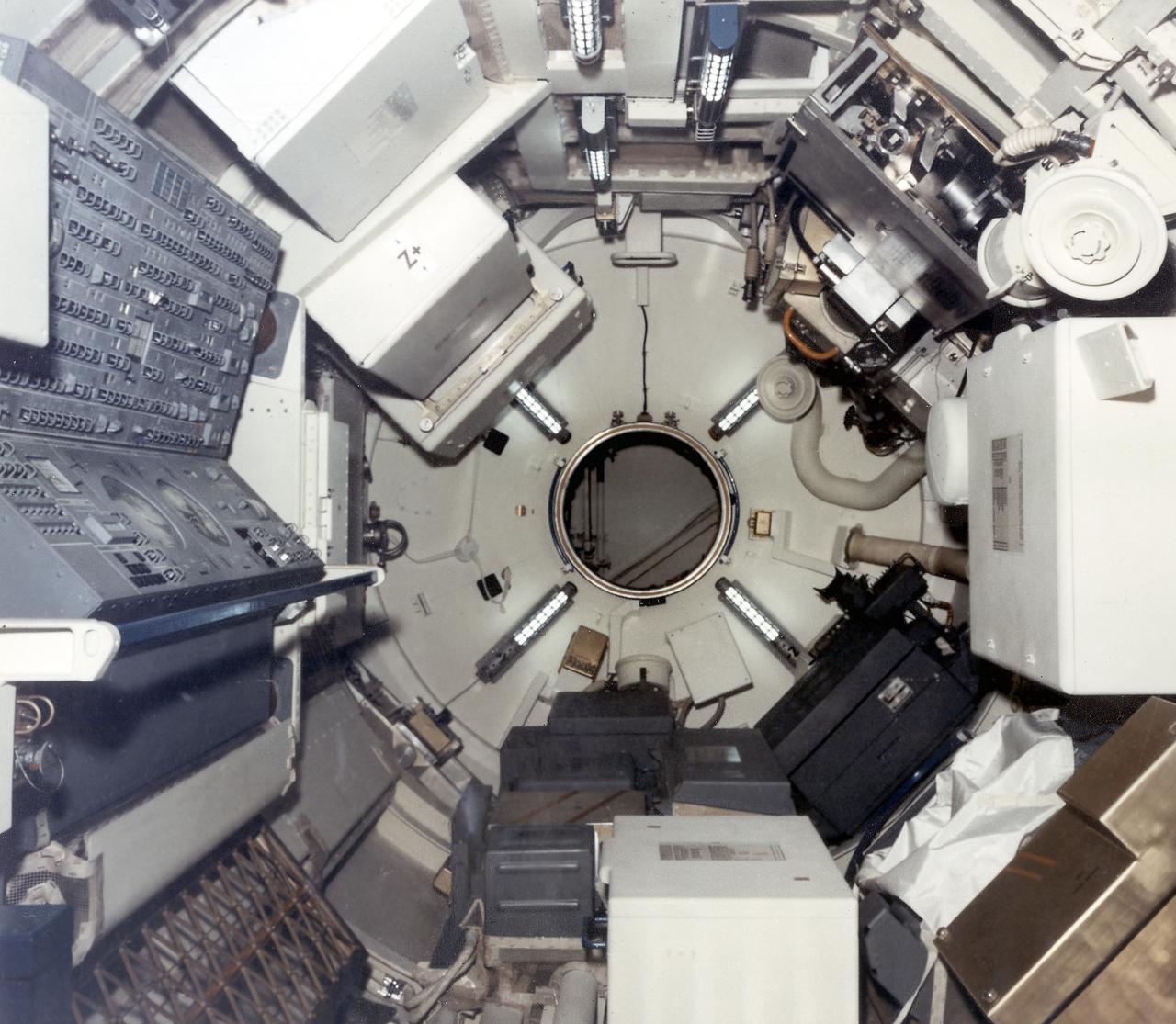
This interior photograph of Skylab's multiple docking adapter (MDA) flight article, then undergoing outfitting at the Martin Marietta Corporation's Space Center facility in Denver, Colorado, shows the forward cone area and docking turnel (center) that attached to the Apollo Command Module. Designed and manufactured by the Marshall Space Flight Center, the MDA housed the control units for the Apollo Telescope Mount (ATM), Earth Resources Experiment Package (EREP), and Zero-Gravity Materials Processing Facility and provided a docking port for the Apollo Command Module.
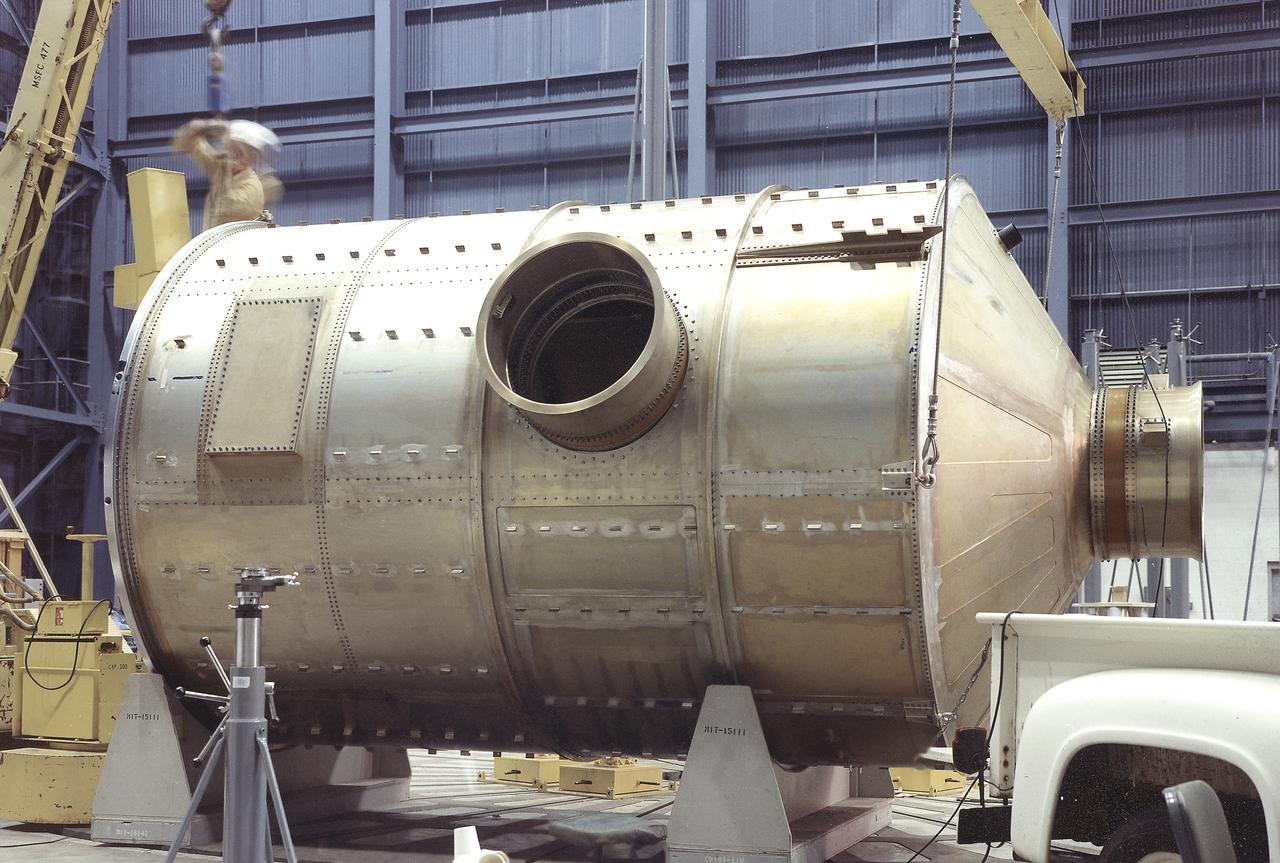
At Marshall Space Flight Center, Skylab's Multiple Docking Adapter (MDA) flight article undergoes center-of-gravity testing. Developed and fabricated by MSFC, the MDA housed the control units for the Apollo Telescope Mount (ATM), Earth Resources Experiment Package (EREP), and the Zero-Gravity Material Processing Facility and provided a docking port for the Apollo Command Module.
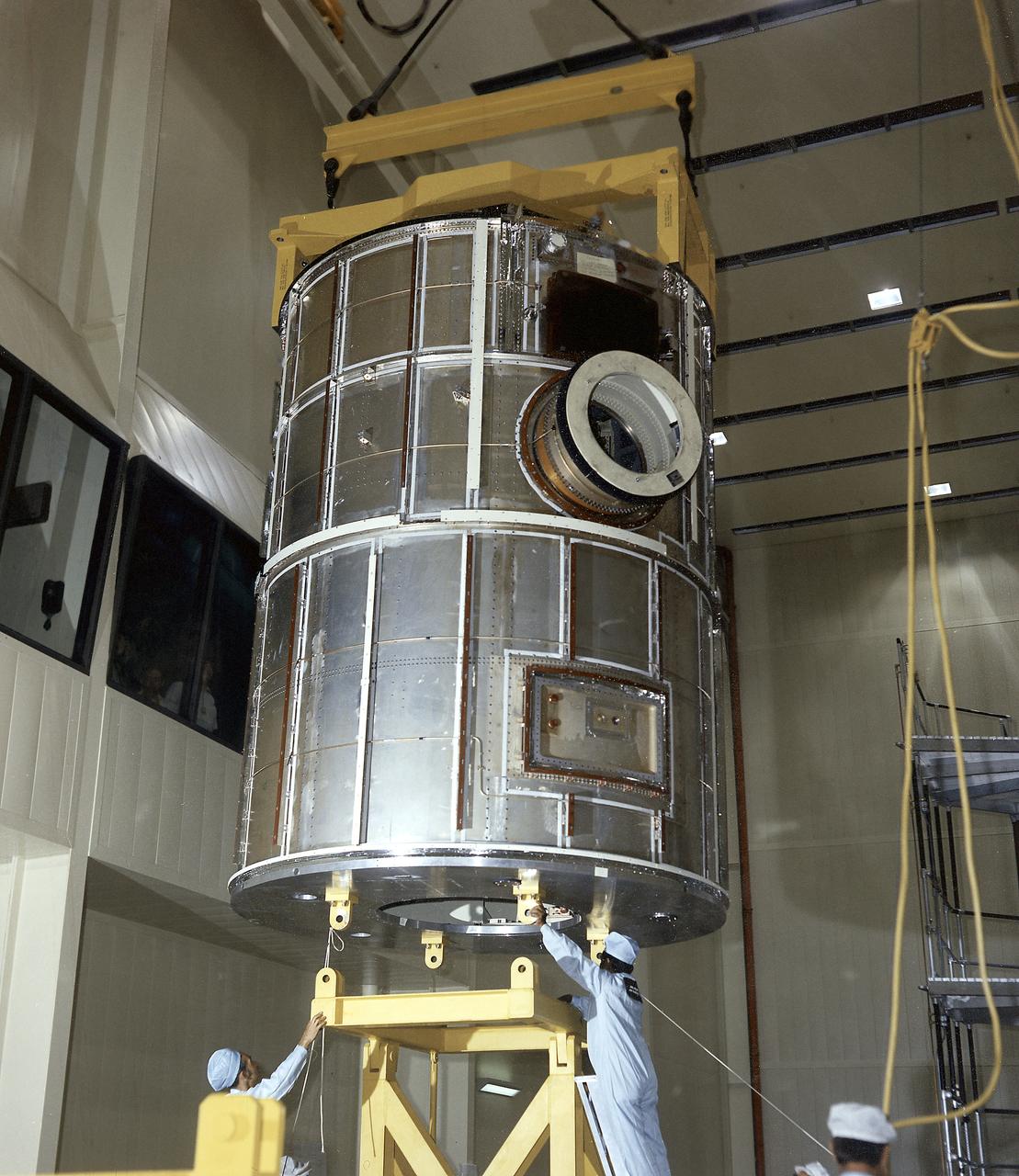
Workmen at the Martin Marietta Corporation's Space Center in Denver, Colorado, position Skylab's Multiple Docking Adapter (MDA) flight article in the horizontal transportation fixture. Designed and manufactured by the Marshall Space Flight Center and outfitted by Martin Marietta, the MDA housed the control units for the Apollo Telescope Mount (ATM), Earth Resources Experiment Package (EREP), and Zero-Gravity Materials Processing Facility and provided a docking port for the Apollo Command Module.
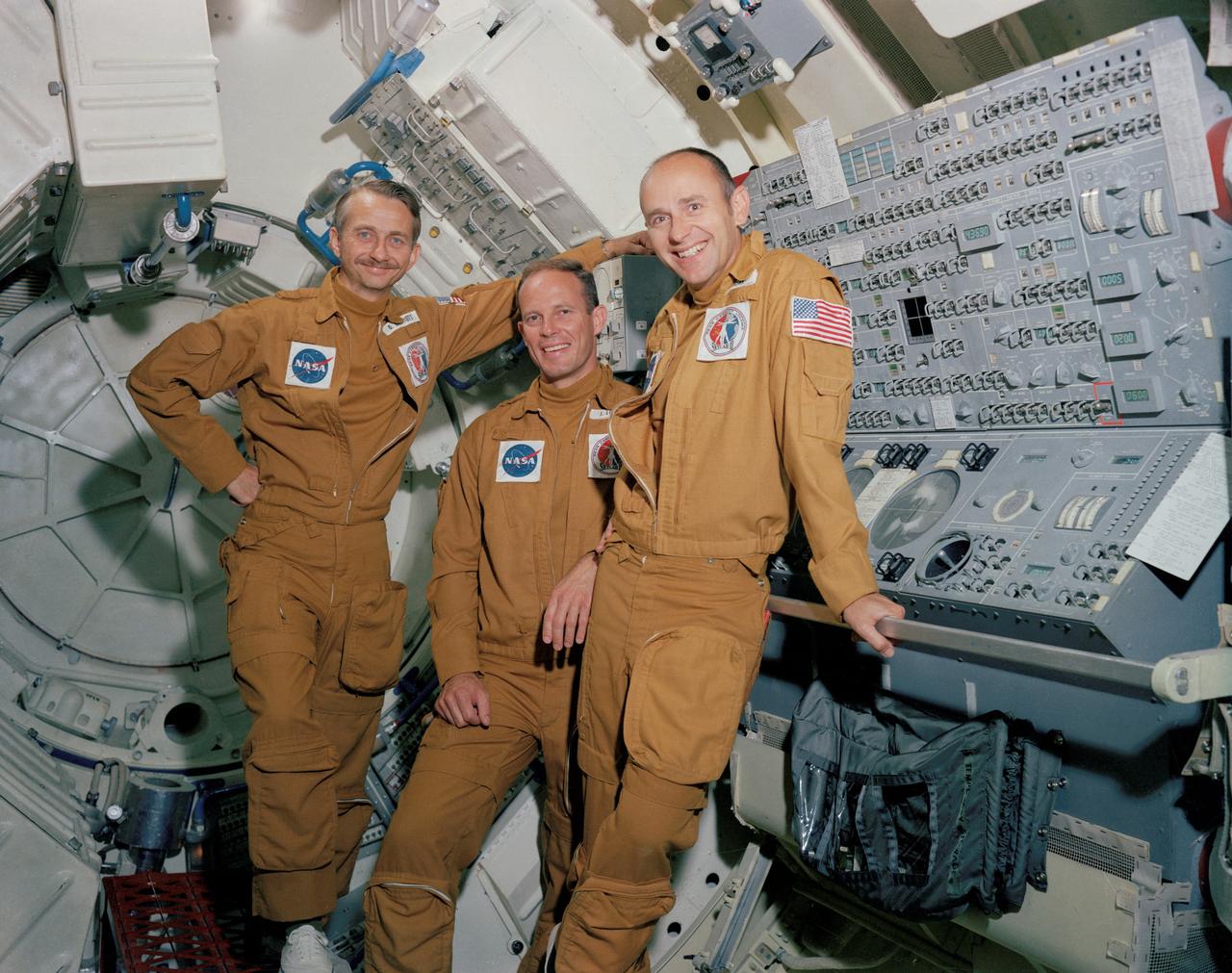
S73-28714 (29 June 1973) --- These three men are the prime crewmen for the Skylab 3 mission. Pictured in the one-G trainer Multiple Docking Adapter (MDA) at the Johnson Space Center (JSC) are, left to right, scientist-astronaut Owen K. Garriott, science pilot; and astronauts Jack R. Lousma and Alan L. Bean, pilot and commander, respectively. Photo credit: NASA
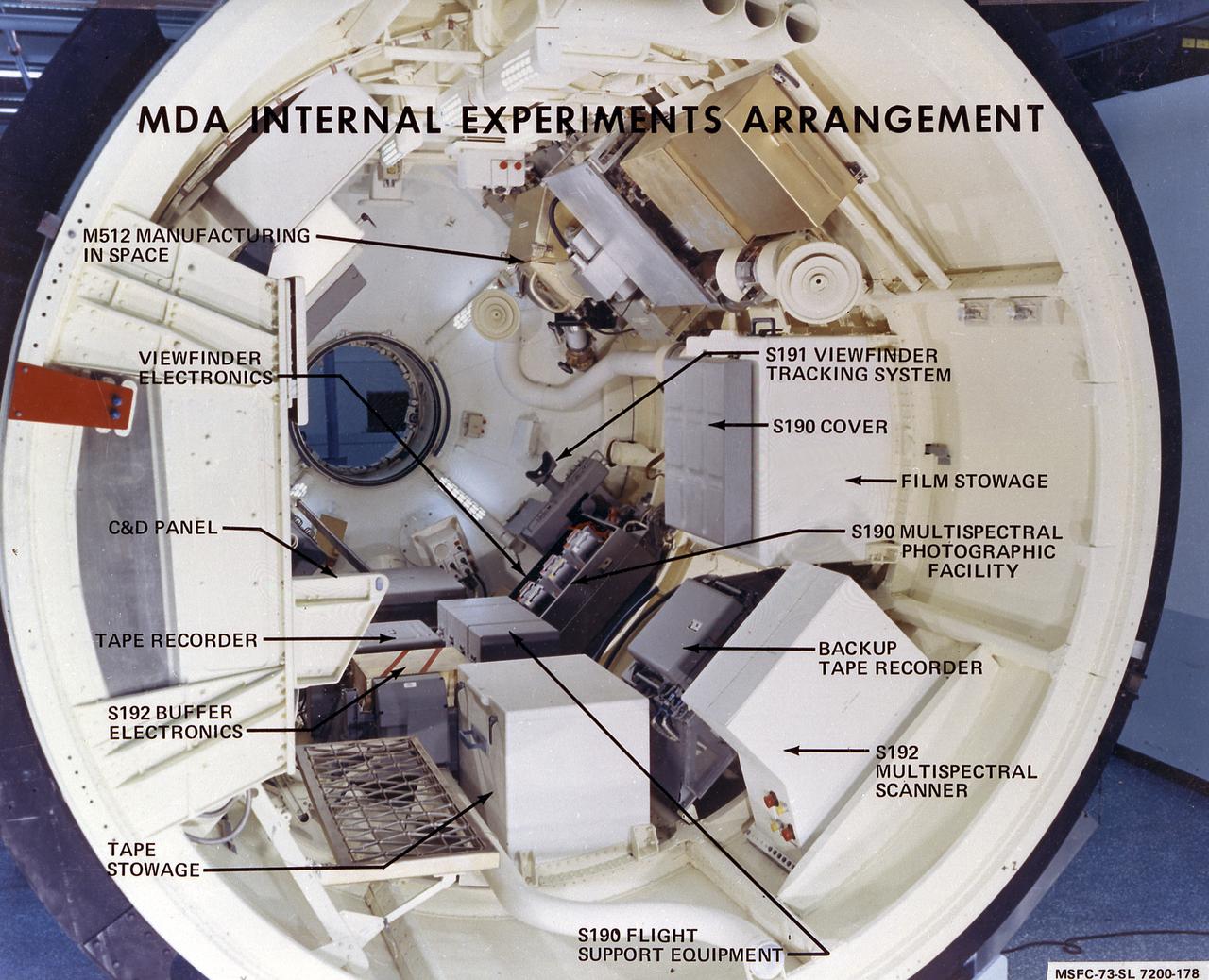
This photograph shows the internal configuration of Skylab's Multiple Docking Adapter (MDA), including callouts for its various internal experiments and facilities. Designed and manufactured by the Marshall Space Flight Center, the MDA housed a number of experiment control and stowage units and provided a docking port for the Apollo Command Module.
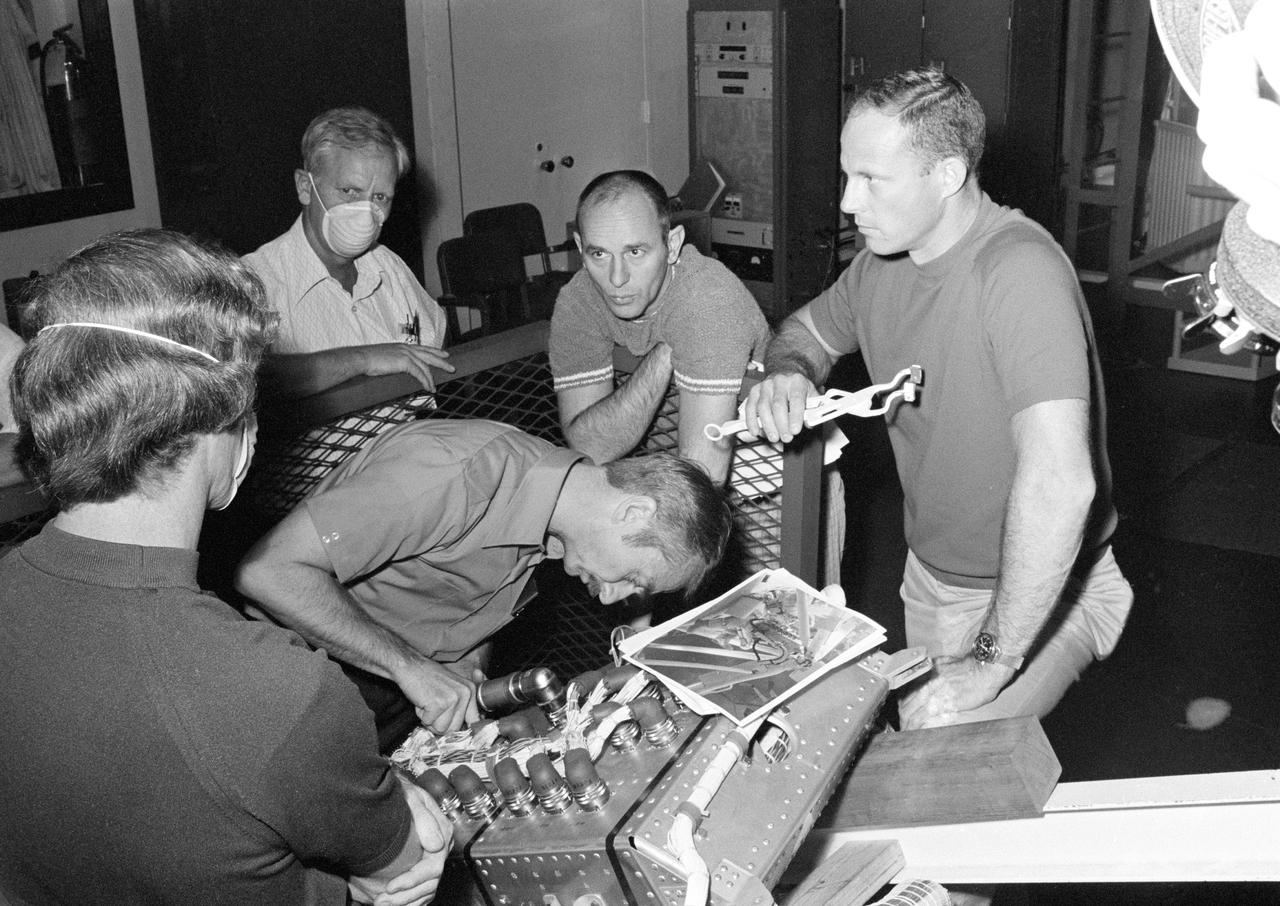
S73-31322 (30 June 1973) --- The three prime crewmen of the Skylab 3 mission practice procedures which will be used during the extravehicular activity (EVA) portion of the scheduled Skylab rate gyro six-pac installation. They are scientist-astronaut Owen K. Garriott (center), astronaut Alan L. Bean (center background) and astronaut Jack R. Lousma (right). Garriott is working with a mock-up of a trunion plug plate which is on the space station's deployment assembly. This picture was taken during Skylab 3 prelaunch training at Johnson Space Center. In the left foreground with back to camera is astronaut Russell L. Schweickart, who is assisting with the Skylab 3 training. Another training officer is in the left background. Photo credit: NASA
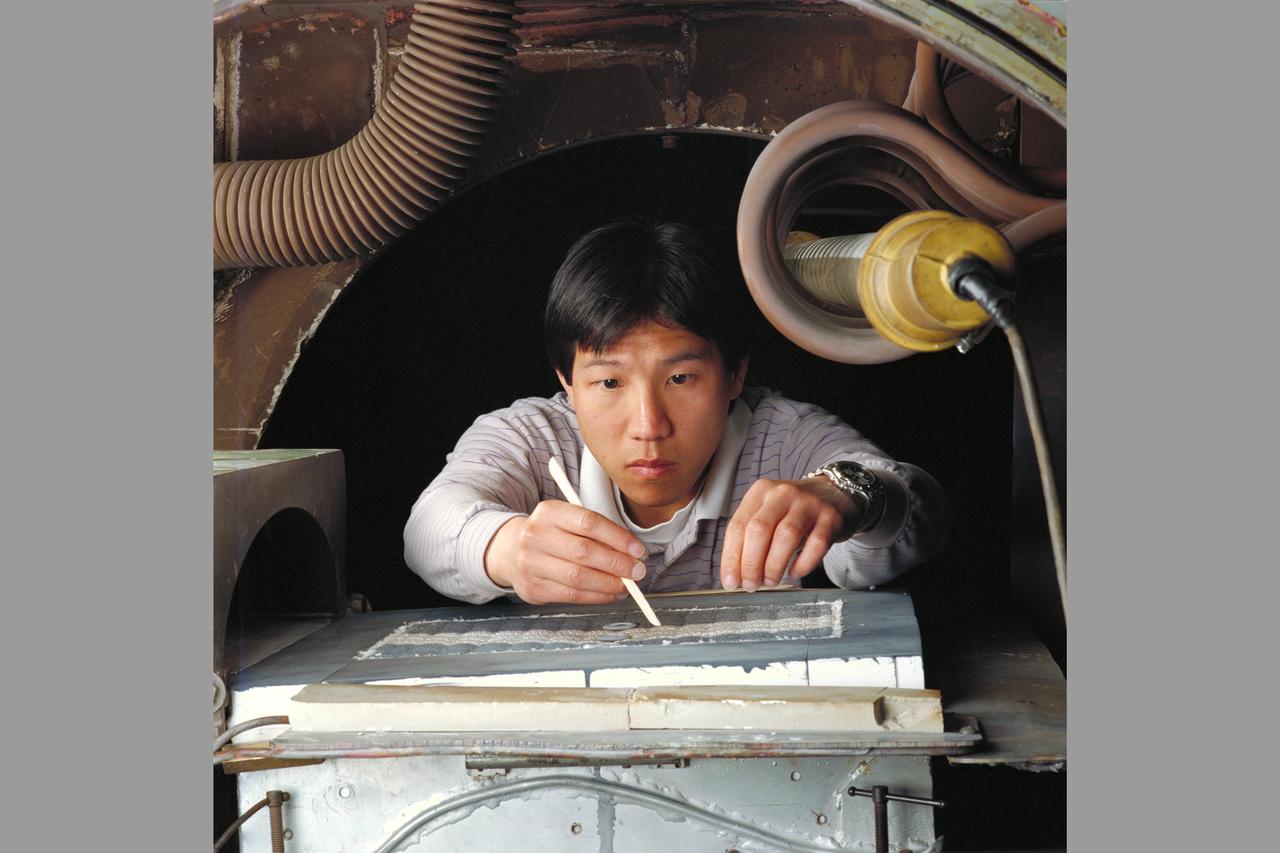
Space Shuttle tile rain erosion test: Frank Hui sets MDA samples in Panel Test Facility for PTF-65
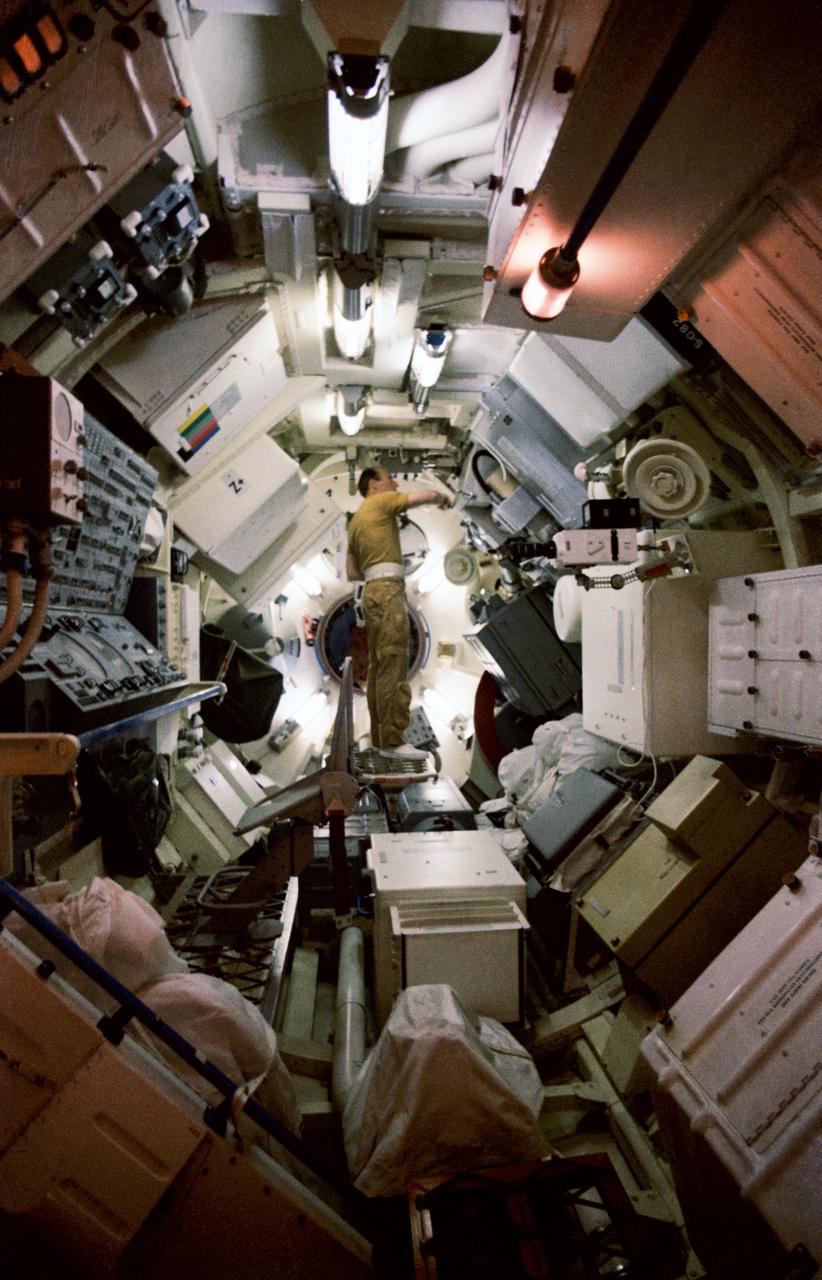
S73-20774 (1 March 1973) --- Astronaut Charles Conrad Jr., commander of the first manned Skylab mission, goes through a checklist of experiment activity during Skylab training at Johnson Space Center. Conrad is standing in the Multiple Docking Adapter (MDA) in the Mission Simulation and Training Facility at JSC. He is working at the "materials processing in space" facility in the MDA. Photo credit: NASA

VANDENBERG AIR FORCE BASE, Calif. -- A United Launch Alliance Delta II rocket, on behalf of the NASA Launch Services Program, is poised on its Space Launch Complex-2 launch pad at Vandenberg AFB, Calif., ready for launch. The Delta II will carry the Missile Defense Agency's Space Tracking and Surveillance System (STSS) Advanced Technology Risk Reduction (ATRR) payload into orbit. The launch is scheduled for 1:24 p.m. PDT. Photo by Carleton Bailie, United Launch Alliance.
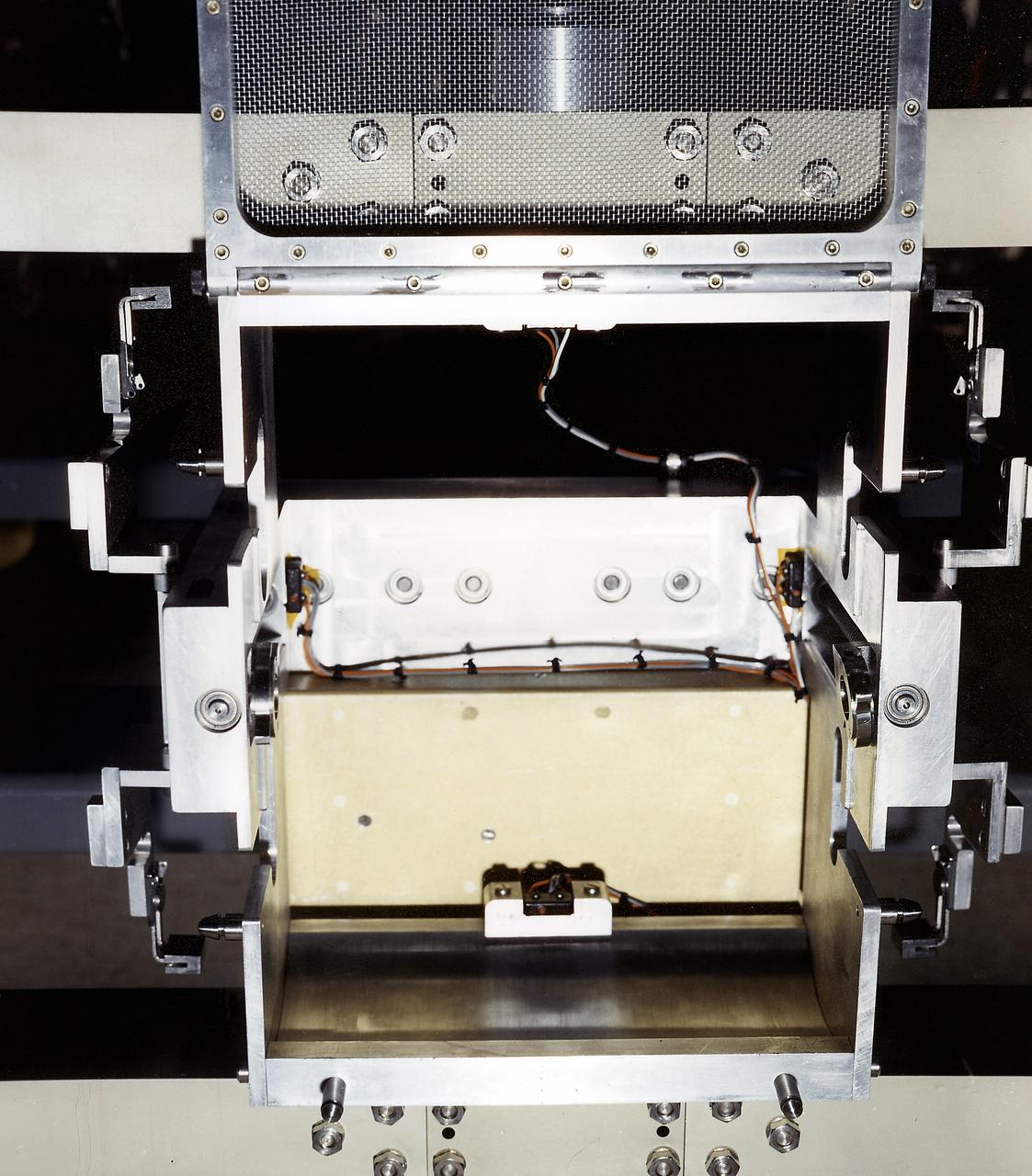
This photograph shows Skylab's Nuclear Emulsion experiment, a Skylab science facility that was mounted inside the Multiple Docking Adapter used to record the relative abundance of primary, high-energy heavy nuclei outside the Earth's atmosphere. The Marshall Space Flight Center had program management responsibility for the development of Skylab hardware and experiments.
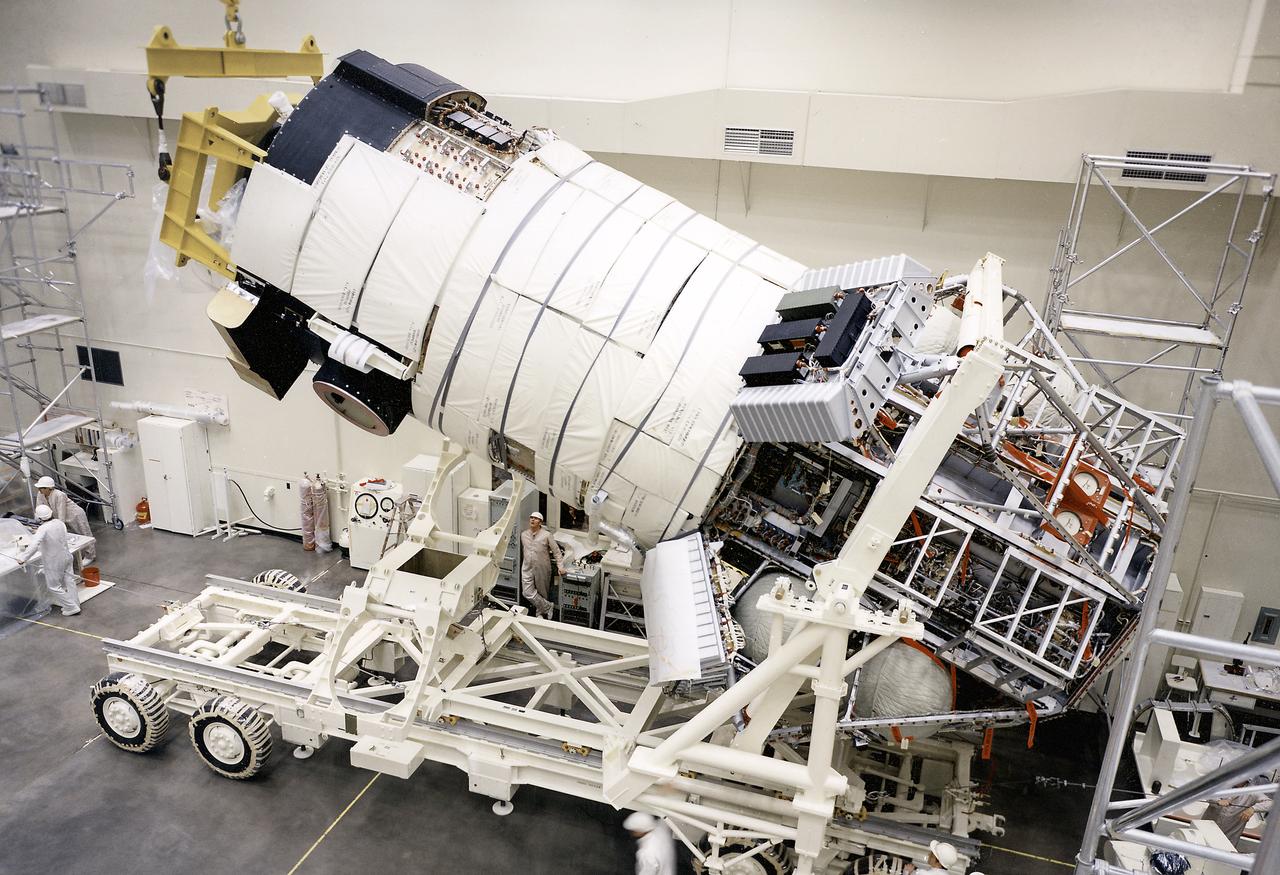
This photograph shows the flight article of the mated Airlock Module (AM) and Multiple Docking Adapter (MDA) being lowering into horizontal position on a transporter. Although the AM and the MDA were separate entities, they were in many respects simply two components of a single module. The AM enabled crew members to conduct extravehicular activities outside Skylab as required for experiment support. Oxygen and nitrogen storage tanks needed for Skylab's life support system were mounted on the external truss work of the AM. Major components in the AM included Skylab's electric power control and distribution station, environmental control system, communication system, and data handling and recording systems. The MDA, forward of the AM, provided docking facilities for the Command and Service Module. It also accommodated several experiment systems, among them the Earth Resource Experiment Package, the materials processing facility, and the control and display console needed for the Apollo Telescope Mount solar astronomy studies. The AM was built by McDornell Douglas and the MDA was built by Martin Marietta. The Marshall Space Flight Center was responsible for the design and development of the Skylab hardware and experiment management.
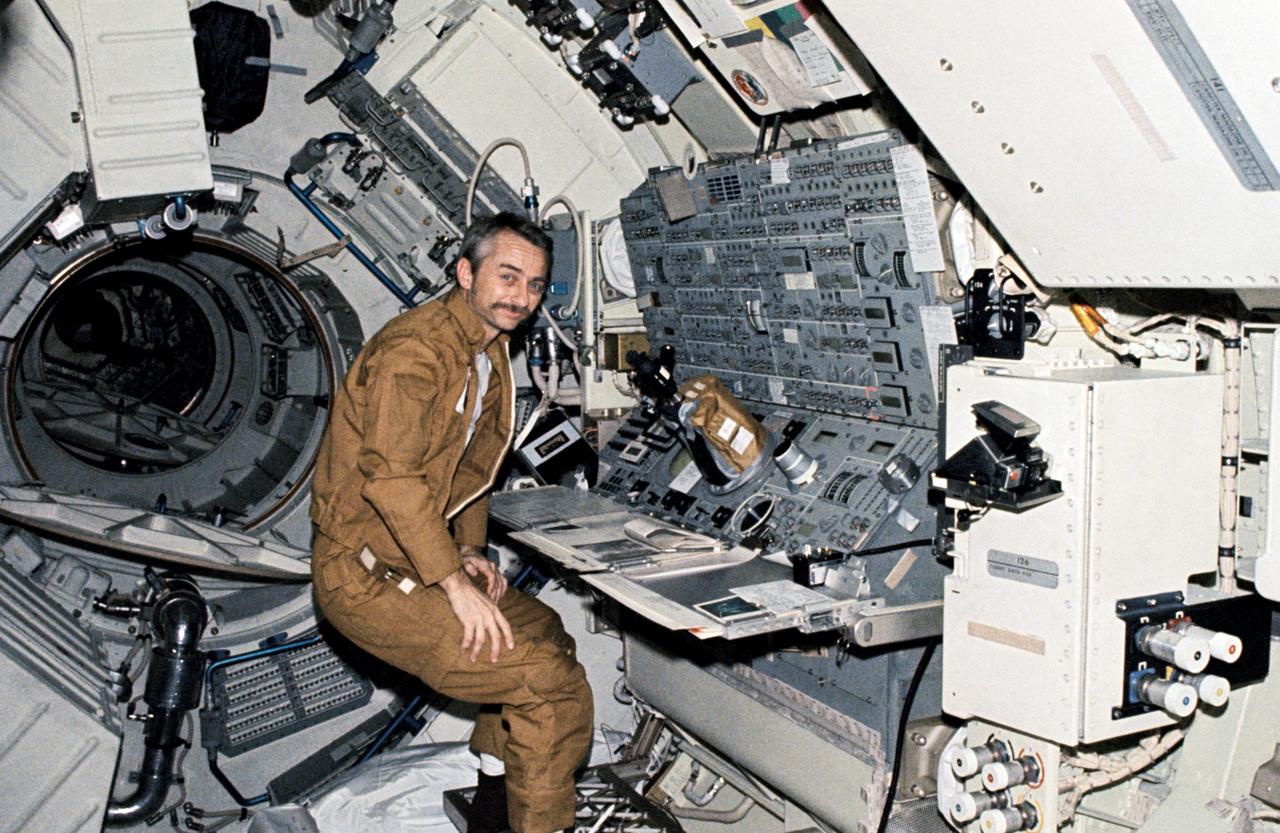
SL3-108-1288 (July-Sept. 1973) --- Astronaut Owen K. Garriott, science pilot of the Skylab 3 mission, is stationed at the Apollo Telescope Mount (ATM) console in the Multiple Docking Adapter (MDA) of the Skylab space station in Earth orbit. This picture was taken with a handheld 35mm Nikon camera. Astronauts Garriott, Alan L. Bean and Jack R. Lousma remained with the Skylab space station cluster in orbit for 59 days conducting numerous medical, scientific and technological experiments. In orbit the MDA functions as a major experiment control center for solar observations. From this console the astronauts actively control the ATM solar physics telescopes. Photo credit: NASA

S73-32837 (10 Sept. 1973) --- Scientist-astronaut Edward G. Gibson, seated, and astronaut William R. Pogue discuss a mission procedure at the Apollo Telescope Mount (ATM) display and control panel mock-up in the one-G trainer for the Multiple Docking Adapter (MDA) at Johnson Space Center. Photo credit: NASA
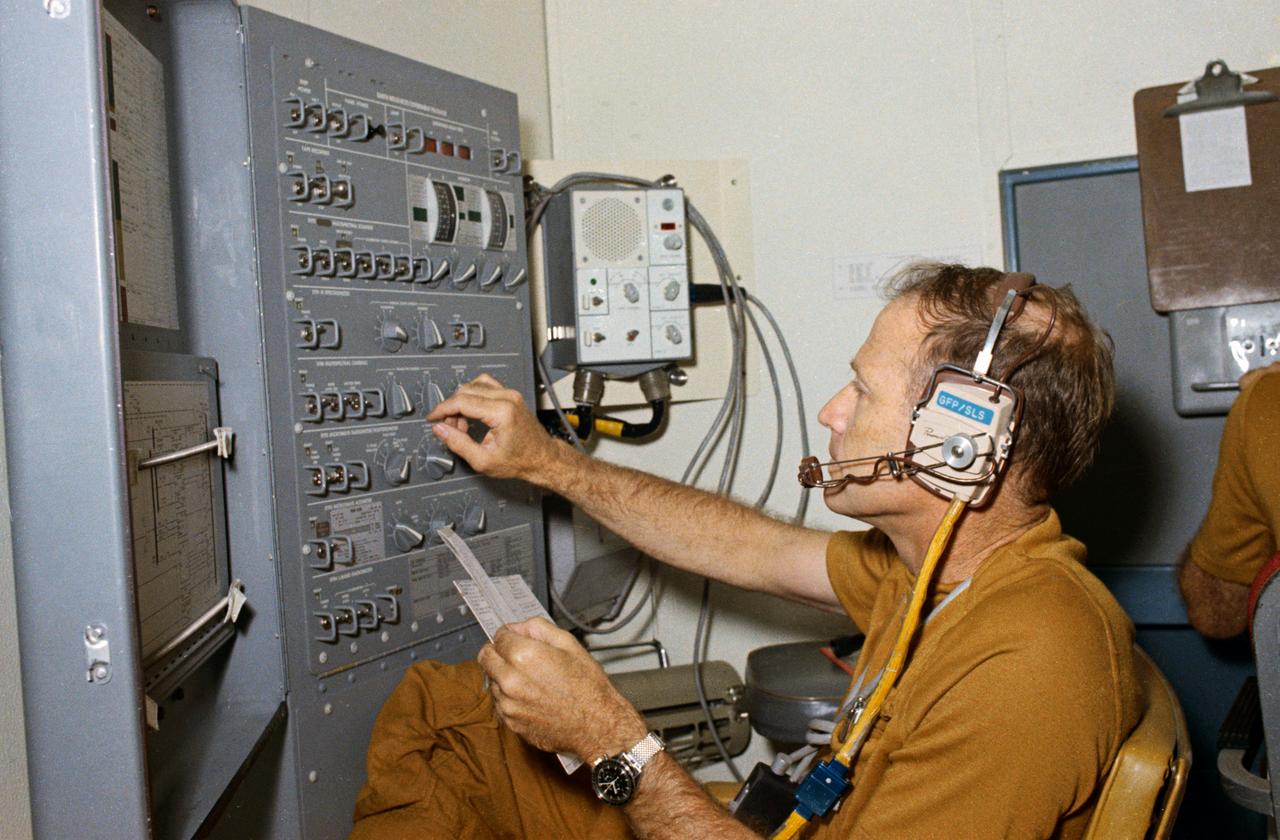
S73-32847 (10 Sept. 1973) --- Astronaut Gerald P. Carr, Skylab 4 commander, changes a dial on the control and display panel for the Earth Resources Experiments package (EREP) during a training exercise in the Multiple Docking Adapter (MDA) one-G trainer at Johnson Space Center. Photo credit: NASA
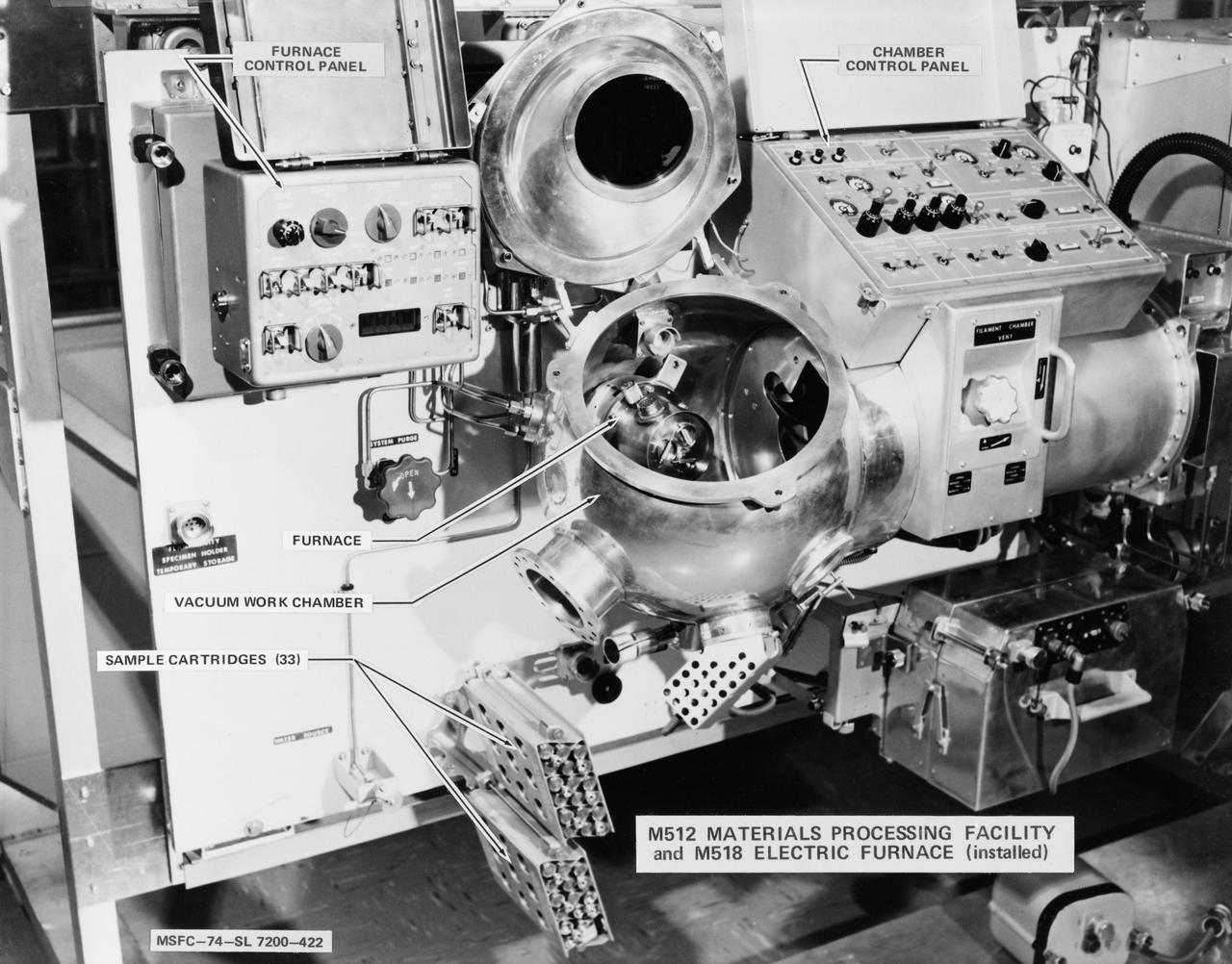
S74-19675 (1974) --- Medium close-up view of the M512 materials processing equipment storage assembly and the M518 electric furnace in the Multiple Docking Adapter (MDA), one of the primary elements of the Skylab space station. The assembly holds equipment designed to explore space manufacturing capability in a weightless state. Photo credit: NASA

VANDENBERG AIR FORCE BASE, Calif. – A United Launch Alliance Delta II rocket blasts off from Space Launch Complex-2 launch pad at Vandenberg AFB, Calif., at 1:24 p.m. PDT. The Delta II successfully carried the Missile Defense Agency's Space Tracking and Surveillance System (STSS) Advanced Technology Risk Reduction (ATRR) payload into orbit. Photo by Carleton Bailie, United Launch Alliance.
![CAPE CANAVERAL, Fla. – In the Astrotech payload processing facility in Titusville, Fla. , the STSS Demonstrator SV-1 spacecraft is lowered toward the orbital insertion system. The spacecraft is a midcourse tracking technology demonstrator, part of an evolving ballistic missile defense system. STSS is capable of tracking objects after boost phase and provides trajectory information to other sensors. It will be launched by NASA for the Missile Defense Agency in late summer. Photo credit: NASA/Tim Jacobs (Approved for Public Release 09-MDA-4800 [30 July 09] )](https://images-assets.nasa.gov/image/KSC-2009-4625/KSC-2009-4625~medium.jpg)
CAPE CANAVERAL, Fla. – In the Astrotech payload processing facility in Titusville, Fla. , the STSS Demonstrator SV-1 spacecraft is lowered toward the orbital insertion system. The spacecraft is a midcourse tracking technology demonstrator, part of an evolving ballistic missile defense system. STSS is capable of tracking objects after boost phase and provides trajectory information to other sensors. It will be launched by NASA for the Missile Defense Agency in late summer. Photo credit: NASA/Tim Jacobs (Approved for Public Release 09-MDA-4800 [30 July 09] )
![CAPE CANAVERAL, Fla. – In the Astrotech payload processing facility in Titusville, Fla. , the STSS Demonstrator SV-1 spacecraft is lifted from its shipping crate. The spacecraft is a midcourse tracking technology demonstrator, part of an evolving ballistic missile defense system. STSS is capable of tracking objects after boost phase and provides trajectory information to other sensors. It will be launched by NASA for the Missile Defense Agency in late summer. Photo credit: NASA/Tim Jacobs (Approved for Public Release 09-MDA-4800 [30 July 09] )](https://images-assets.nasa.gov/image/KSC-2009-4620/KSC-2009-4620~medium.jpg)
CAPE CANAVERAL, Fla. – In the Astrotech payload processing facility in Titusville, Fla. , the STSS Demonstrator SV-1 spacecraft is lifted from its shipping crate. The spacecraft is a midcourse tracking technology demonstrator, part of an evolving ballistic missile defense system. STSS is capable of tracking objects after boost phase and provides trajectory information to other sensors. It will be launched by NASA for the Missile Defense Agency in late summer. Photo credit: NASA/Tim Jacobs (Approved for Public Release 09-MDA-4800 [30 July 09] )
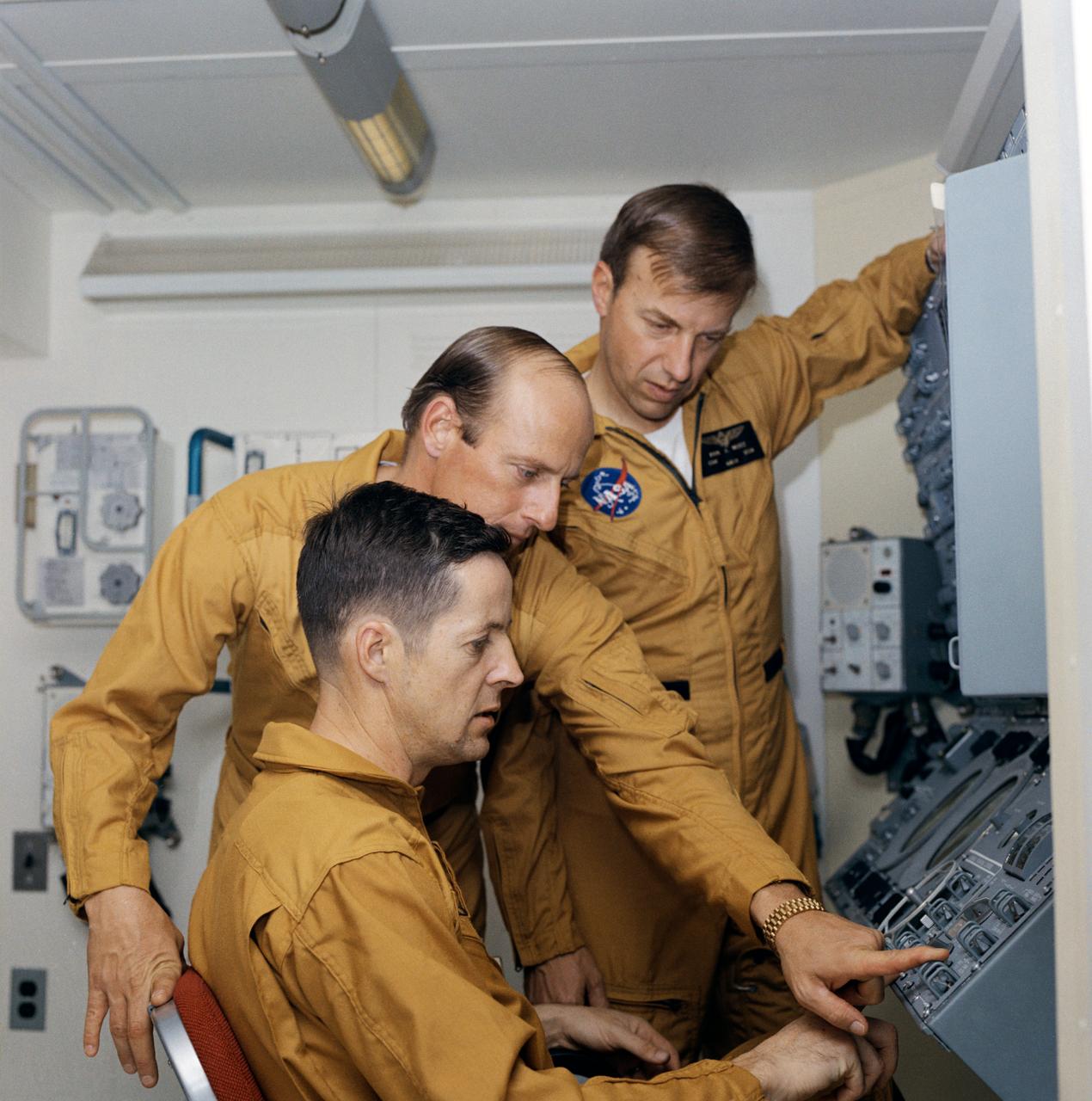
S72-17512 (19 Jan. 1972) --- These three men are the crewmen for the first manned Skylab mission. They are astronaut Charles Conrad Jr., commander, standing left; scientist-astronaut Joseph P. Kerwin, seated; and astronaut Paul J. Weitz, pilot. They were photographed and interviewed during an "open house" press day in the realistic atmosphere of the Multiple Docking Adapter (MDA) trainer in the Mission Simulation and Training Facility at the Manned Spacecraft Center (MSC). The control and display panel for the Apollo Telescope Mount (ATM) is at right. Photo credit: NASA
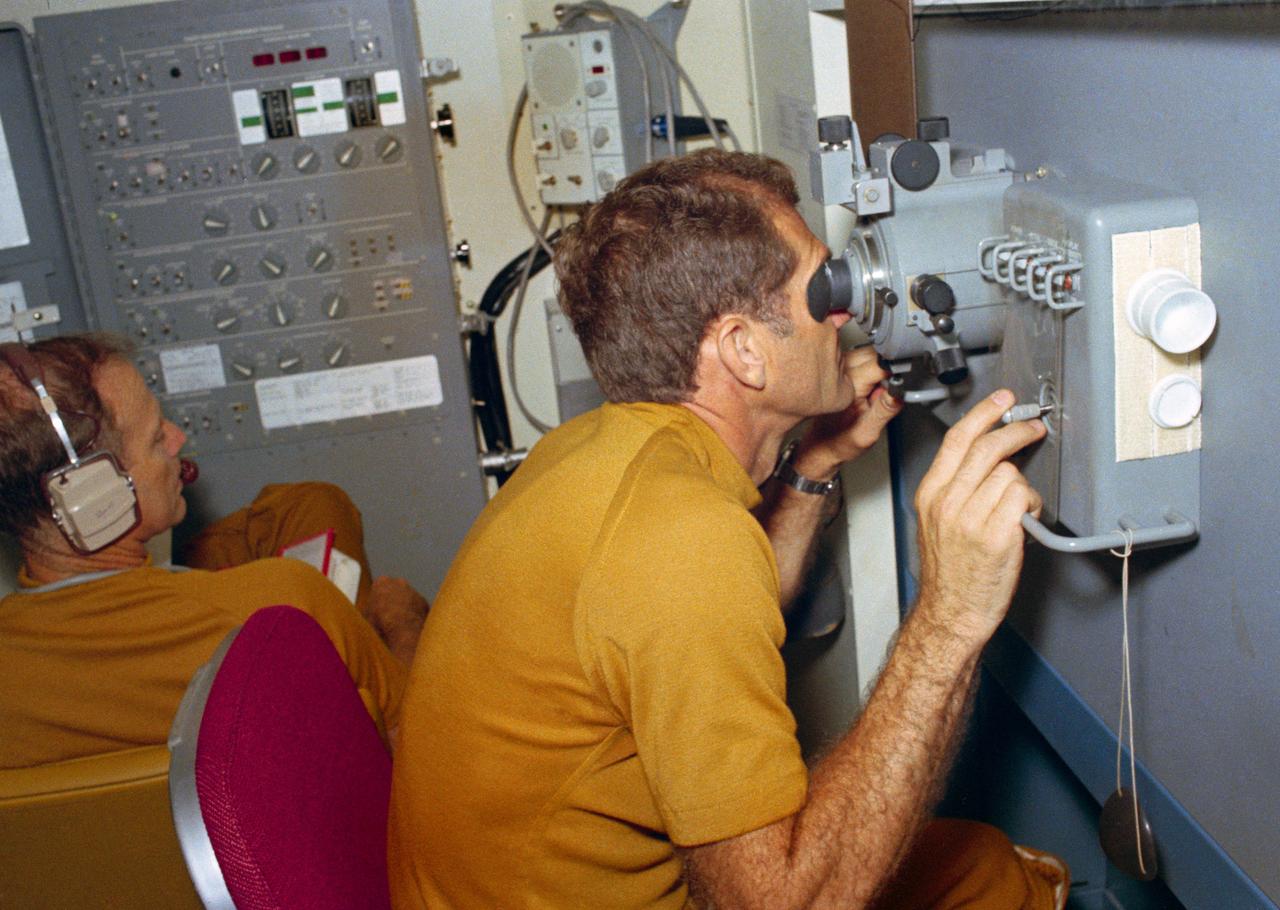
S73-32854 (10 Sept. 1973) --- Astronaut William R. Pogue, Skylab 4 pilot, uses the Skylab Viewfinder Tracking System (S191 experiment) during a training exercise in the Multiple Docking Adapter (MDA) one-G trainer at Johnson Space Center. In the background is astronaut Gerald P. Carr, seated at the control panel for the Earth Resources Experiments Package (EREP). Carr is Skylab 4 crew commander, and Gibson is science pilot. Photo credit: NASA

S73-25140 (16 April 1973) --- A ground-level view of Pad A, Launch Complex 39, Kennedy Space Center, Florida, showing the 341-feet tall Skylab 1/Saturn V space vehicle on the pad soon after being rolled out from the Vehicle Assembly Building (VAB). The vehicle is composed of the Saturn V first (S-1C) stage, the Apollo Telescope Mount (ATM), the Multiple Docking Adapter (MDA), the Airlock Module (AM), and the Orbital Workshop (OWS). Photo credit: NASA
![CAPE CANAVERAL, Fla. – In the Astrotech payload processing facility in Titusville, Fla. , the STSS Demonstrator SV-1 spacecraft is lowered onto a stand. The spacecraft is a midcourse tracking technology demonstrator, part of an evolving ballistic missile defense system. STSS is capable of tracking objects after boost phase and provides trajectory information to other sensors. It will be launched by NASA for the Missile Defense Agency in late summer. Photo credit: NASA/Tim Jacobs (Approved for Public Release 09-MDA-4800 [30 July 09] )](https://images-assets.nasa.gov/image/KSC-2009-4623/KSC-2009-4623~medium.jpg)
CAPE CANAVERAL, Fla. – In the Astrotech payload processing facility in Titusville, Fla. , the STSS Demonstrator SV-1 spacecraft is lowered onto a stand. The spacecraft is a midcourse tracking technology demonstrator, part of an evolving ballistic missile defense system. STSS is capable of tracking objects after boost phase and provides trajectory information to other sensors. It will be launched by NASA for the Missile Defense Agency in late summer. Photo credit: NASA/Tim Jacobs (Approved for Public Release 09-MDA-4800 [30 July 09] )
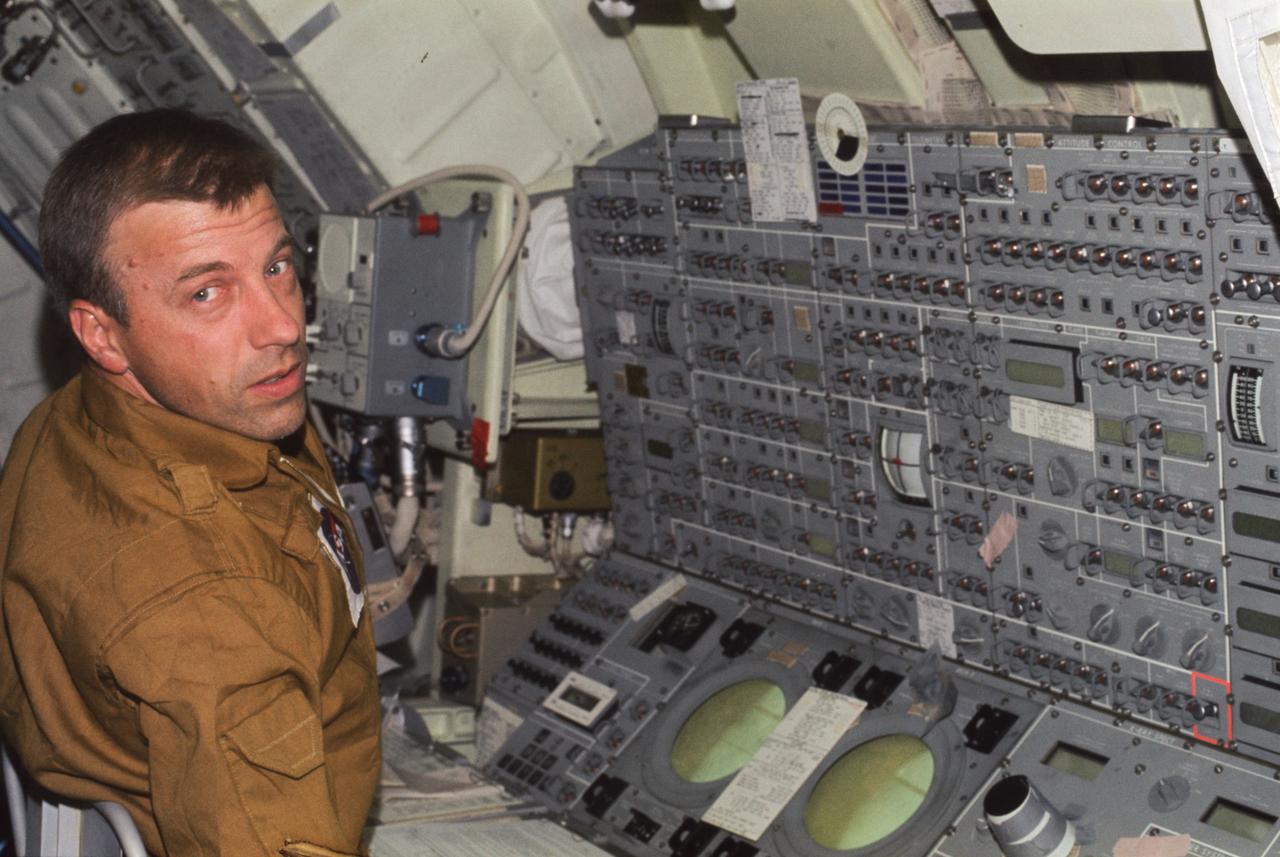
SL2-X9-747 (June 1973) --- Astronaut Paul J. Weitz, Skylab 2 pilot, mans the control and display console of the Apollo Telescope Mount (ATM) in this onboard view photographed in Earth orbit. The ATM C&D console is located in the Multiple Docking Adapter (MDA) of the Skylab 1/2 space station. Weitz, along with astronaut Charles Conrad Jr., commander, and scientist-astronaut Joseph P. Kerwin, science pilot, went on to successfully complete a 28-day mission in Earth orbit. Photo credit: NASA
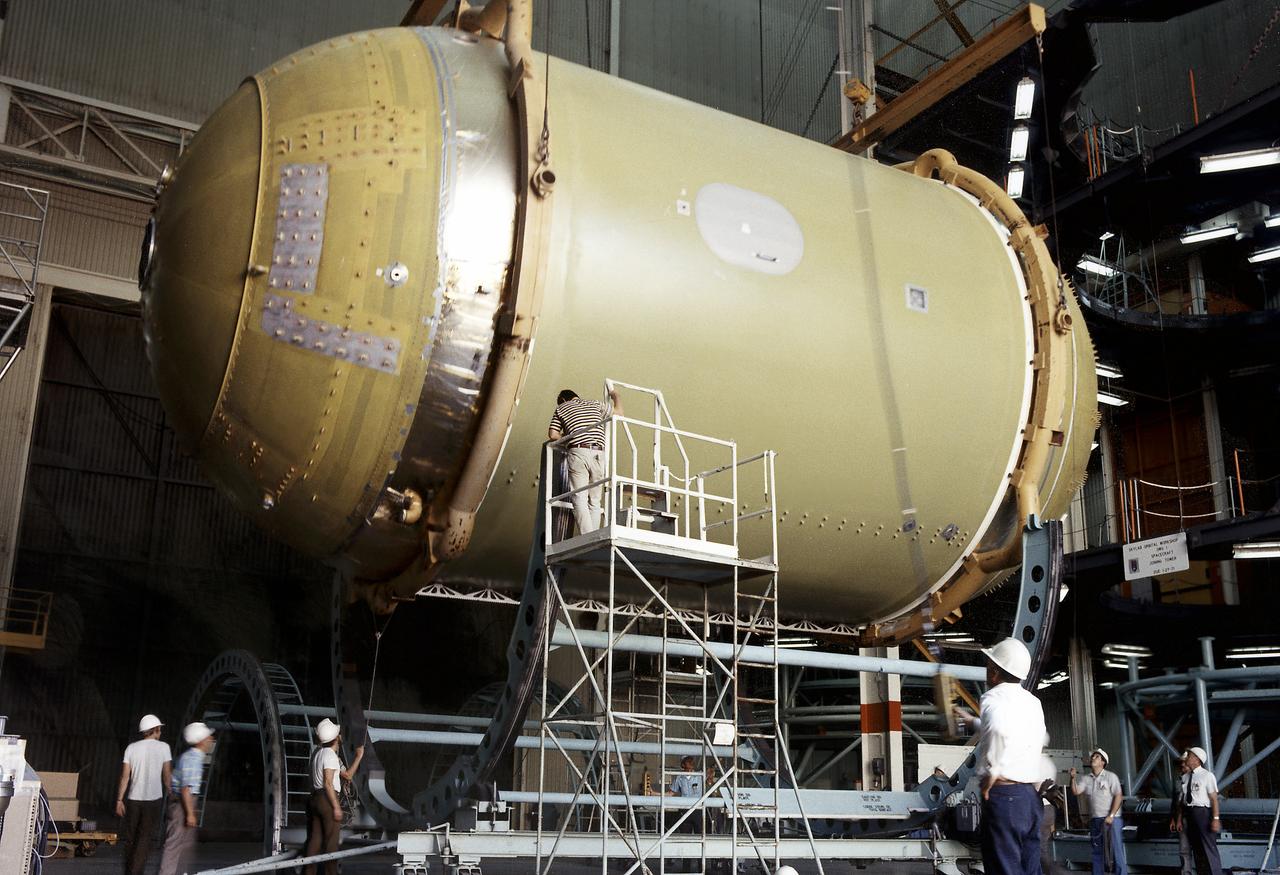
This photographs shows technicians positioning the Skylab Orbital Workshop (OWS) on a rotating work dolly during the assembly phase of the OWS at the McDornell Douglas facility in California. The OWS was the living and working quarters for the astronauts. The Marshall Space Flight Center (MSFC) had responsibility for developing and integrating most of the major components of the Skylab: the Orbital Workshop (OWS), Airlock Module (AM), Multiple Docking Adapter (MDA), Apollo Telescope Mount (ATM), Payload Shroud (PS), and most of the experiments.
![CAPE CANAVERAL, Fla. – The shipping crate is being removed from the STSS Demonstrator SV-1 spacecraft in the Astrotech payload processing facility in Titusville, Fla. The spacecraft is a midcourse tracking technology demonstrator, part of an evolving ballistic missile defense system. STSS is capable of tracking objects after boost phase and provides trajectory information to other sensors. It will be launched by NASA for the Missile Defense Agency in late summer. Photo credit: NASA/Tim Jacobs (Approved for Public Release 09-MDA-4800 [30 July 09] )](https://images-assets.nasa.gov/image/KSC-2009-4619/KSC-2009-4619~medium.jpg)
CAPE CANAVERAL, Fla. – The shipping crate is being removed from the STSS Demonstrator SV-1 spacecraft in the Astrotech payload processing facility in Titusville, Fla. The spacecraft is a midcourse tracking technology demonstrator, part of an evolving ballistic missile defense system. STSS is capable of tracking objects after boost phase and provides trajectory information to other sensors. It will be launched by NASA for the Missile Defense Agency in late summer. Photo credit: NASA/Tim Jacobs (Approved for Public Release 09-MDA-4800 [30 July 09] )
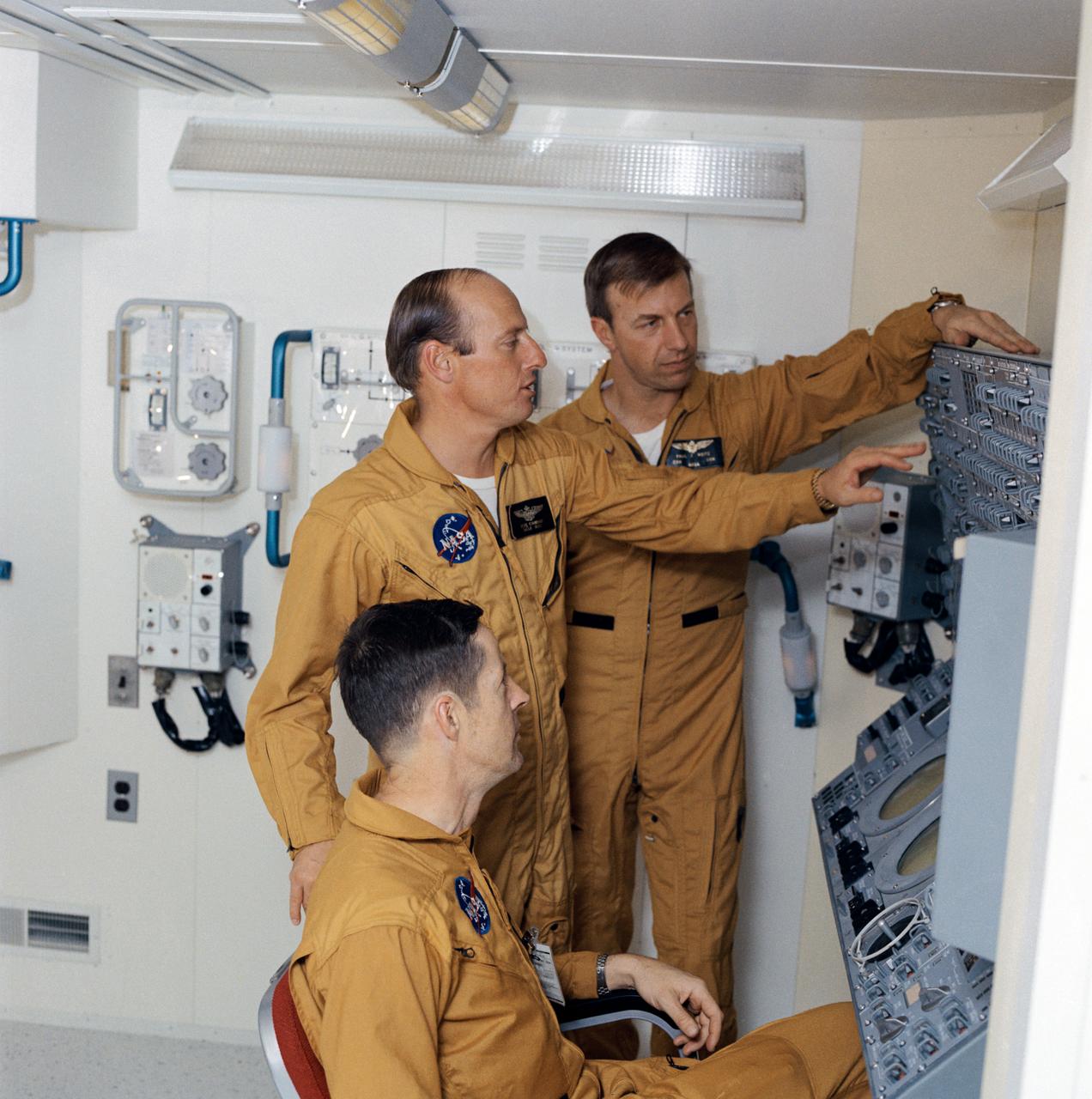
S72-17509 (19 Jan. 1972) --- These three men are the crewmen for the first manned Skylab mission. They are astronaut Charles Conrad Jr., commander, standing left; scientist-astronaut Joseph P. Kerwin, seated; and astronaut Paul J. Weitz, pilot. They were photographed and interviewed during an "open house" press day in the realistic atmosphere of the Multiple Docking Adapter (MDA) trainer in the Mission Simulation and Training Facility at the Manned Spacecraft Center (MSC). The control and display panel for the Apollo Telescope Mount (ATM) is at right. Photo credit: NASA
![CAPE CANAVERAL, Fla. – The STSS Demonstrator SV-2spacecraft arrives at the Astrotech payload processing facility in Titusville, Fla. The spacecraft is a midcourse tracking technology demonstrator, part of an evolving ballistic missile defense system. STSS is capable of tracking objects after boost phase and provides trajectory information to other sensors. It will be launched by NASA for the Missile Defense Agency in late summer. Photo credit: NASA/Jack Pfaller (Approved for Public Release 09-MDA-4616 [27 May 09])](https://images-assets.nasa.gov/image/KSC-2009-3667/KSC-2009-3667~medium.jpg)
CAPE CANAVERAL, Fla. – The STSS Demonstrator SV-2spacecraft arrives at the Astrotech payload processing facility in Titusville, Fla. The spacecraft is a midcourse tracking technology demonstrator, part of an evolving ballistic missile defense system. STSS is capable of tracking objects after boost phase and provides trajectory information to other sensors. It will be launched by NASA for the Missile Defense Agency in late summer. Photo credit: NASA/Jack Pfaller (Approved for Public Release 09-MDA-4616 [27 May 09])
![CAPE CANAVERAL, Fla. – A flatbed truck carrying the STSS Demonstrator SV-2spacecraft arrives at the Astrotech payload processing facility in Titusville, Fla. The spacecraft is a midcourse tracking technology demonstrator, part of an evolving ballistic missile defense system. STSS is capable of tracking objects after boost phase and provides trajectory information to other sensors. It will be launched by NASA for the Missile Defense Agency in late summer. Photo credit: NASA/Jack Pfaller (Approved for Public Release 09-MDA-4616 [27 May 09])](https://images-assets.nasa.gov/image/KSC-2009-3666/KSC-2009-3666~medium.jpg)
CAPE CANAVERAL, Fla. – A flatbed truck carrying the STSS Demonstrator SV-2spacecraft arrives at the Astrotech payload processing facility in Titusville, Fla. The spacecraft is a midcourse tracking technology demonstrator, part of an evolving ballistic missile defense system. STSS is capable of tracking objects after boost phase and provides trajectory information to other sensors. It will be launched by NASA for the Missile Defense Agency in late summer. Photo credit: NASA/Jack Pfaller (Approved for Public Release 09-MDA-4616 [27 May 09])
![CAPE CANAVERAL, Fla. – In the Astrotech payload processing facility in Titusville, Fla. , the STSS Demonstrator SV-1 spacecraft is being moved to a stand. The spacecraft is a midcourse tracking technology demonstrator, part of an evolving ballistic missile defense system. STSS is capable of tracking objects after boost phase and provides trajectory information to other sensors. It will be launched by NASA for the Missile Defense Agency in late summer. Photo credit: NASA/Tim Jacobs (Approved for Public Release 09-MDA-4800 [30 July 09] )](https://images-assets.nasa.gov/image/KSC-2009-4622/KSC-2009-4622~medium.jpg)
CAPE CANAVERAL, Fla. – In the Astrotech payload processing facility in Titusville, Fla. , the STSS Demonstrator SV-1 spacecraft is being moved to a stand. The spacecraft is a midcourse tracking technology demonstrator, part of an evolving ballistic missile defense system. STSS is capable of tracking objects after boost phase and provides trajectory information to other sensors. It will be launched by NASA for the Missile Defense Agency in late summer. Photo credit: NASA/Tim Jacobs (Approved for Public Release 09-MDA-4800 [30 July 09] )
![CAPE CANAVERAL, Fla. – In the Astrotech payload processing facility in Titusville, Fla. , the STSS Demonstrator SV-1 spacecraft is lifted clear from its shipping crate. The spacecraft is a midcourse tracking technology demonstrator, part of an evolving ballistic missile defense system. STSS is capable of tracking objects after boost phase and provides trajectory information to other sensors. It will be launched by NASA for the Missile Defense Agency in late summer. Photo credit: NASA/Tim Jacobs (Approved for Public Release 09-MDA-4800 [30 July 09] )](https://images-assets.nasa.gov/image/KSC-2009-4621/KSC-2009-4621~medium.jpg)
CAPE CANAVERAL, Fla. – In the Astrotech payload processing facility in Titusville, Fla. , the STSS Demonstrator SV-1 spacecraft is lifted clear from its shipping crate. The spacecraft is a midcourse tracking technology demonstrator, part of an evolving ballistic missile defense system. STSS is capable of tracking objects after boost phase and provides trajectory information to other sensors. It will be launched by NASA for the Missile Defense Agency in late summer. Photo credit: NASA/Tim Jacobs (Approved for Public Release 09-MDA-4800 [30 July 09] )
![CAPE CANAVERAL, Fla. – The flatbed truck with the SV-1 cargo of the STSS Demonstrator spacecraft arrives at the Astrotech payload processing facility in Titusville, Fla. The spacecraft is a midcourse tracking technology demonstrator, part of an evolving ballistic missile defense system. STSS is capable of tracking objects after boost phase and provides trajectory information to other sensors. It will be launched by NASA for the Missile Defense Agency in late summer. Photo credit: NASA/Kim Shiflett (Approved for Public Release 09-MDA-4804 [4 Aug 09] )](https://images-assets.nasa.gov/image/KSC-2009-4616/KSC-2009-4616~medium.jpg)
CAPE CANAVERAL, Fla. – The flatbed truck with the SV-1 cargo of the STSS Demonstrator spacecraft arrives at the Astrotech payload processing facility in Titusville, Fla. The spacecraft is a midcourse tracking technology demonstrator, part of an evolving ballistic missile defense system. STSS is capable of tracking objects after boost phase and provides trajectory information to other sensors. It will be launched by NASA for the Missile Defense Agency in late summer. Photo credit: NASA/Kim Shiflett (Approved for Public Release 09-MDA-4804 [4 Aug 09] )
![CAPE CANAVERAL, Fla. – The SV-1 cargo of the STSS Demonstrator spacecraft is moved into the Astrotech payload processing facility in Titusville, Fla. The spacecraft is a midcourse tracking technology demonstrator, part of an evolving ballistic missile defense system. STSS is capable of tracking objects after boost phase and provides trajectory information to other sensors. It will be launched by NASA for the Missile Defense Agency in late summer. Photo credit: NASA/Kim Shiflett (Approved for Public Release 09-MDA-4804 [4 Aug 09] )](https://images-assets.nasa.gov/image/KSC-2009-4618/KSC-2009-4618~medium.jpg)
CAPE CANAVERAL, Fla. – The SV-1 cargo of the STSS Demonstrator spacecraft is moved into the Astrotech payload processing facility in Titusville, Fla. The spacecraft is a midcourse tracking technology demonstrator, part of an evolving ballistic missile defense system. STSS is capable of tracking objects after boost phase and provides trajectory information to other sensors. It will be launched by NASA for the Missile Defense Agency in late summer. Photo credit: NASA/Kim Shiflett (Approved for Public Release 09-MDA-4804 [4 Aug 09] )
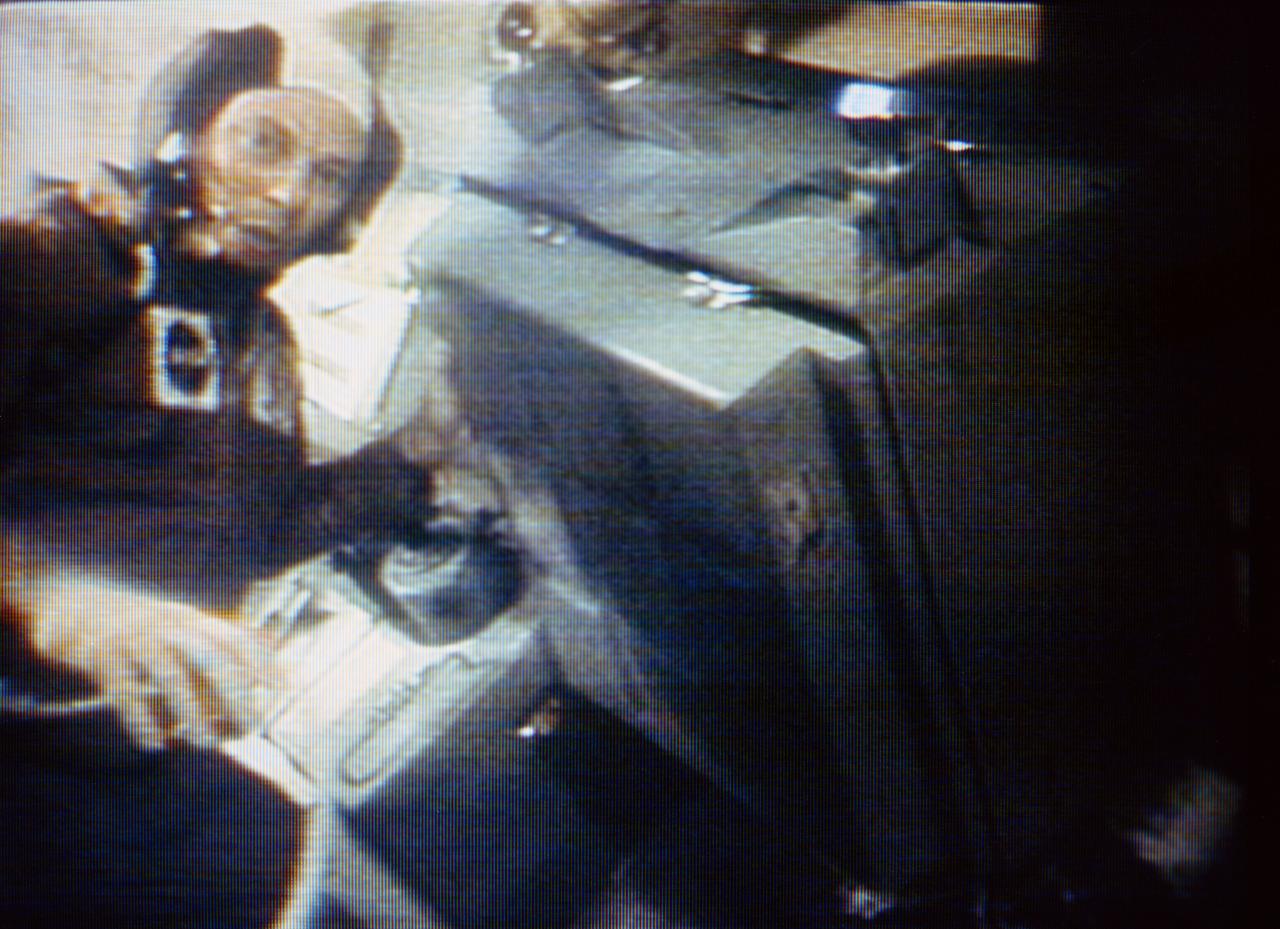
S73-34181 (July-September 1973) --- Astronaut Jack R. Lousma, Skylab 3 pilot, works at the S190A multispectral camera experiment in the Multiple Docking Adapter (MDA), seen from a color television transmission made by a TV camera aboard the Skylab space station cluster in Earth orbit. Lousma later used a small brush to clean the six lenses of the multispectral camera. Photo credit: NASA
![CAPE CANAVERAL, Fla. – In the Astrotech payload processing facility in Titusville, Fla. , technicians monitor the STSS Demonstrator SV-1 spacecraft as it is lowered to the orbital insertion system. The spacecraft is a midcourse tracking technology demonstrator, part of an evolving ballistic missile defense system. STSS is capable of tracking objects after boost phase and provides trajectory information to other sensors. It will be launched by NASA for the Missile Defense Agency in late summer. Photo credit: NASA/Tim Jacobs (Approved for Public Release 09-MDA-4800 [30 July 09] )](https://images-assets.nasa.gov/image/KSC-2009-4627/KSC-2009-4627~medium.jpg)
CAPE CANAVERAL, Fla. – In the Astrotech payload processing facility in Titusville, Fla. , technicians monitor the STSS Demonstrator SV-1 spacecraft as it is lowered to the orbital insertion system. The spacecraft is a midcourse tracking technology demonstrator, part of an evolving ballistic missile defense system. STSS is capable of tracking objects after boost phase and provides trajectory information to other sensors. It will be launched by NASA for the Missile Defense Agency in late summer. Photo credit: NASA/Tim Jacobs (Approved for Public Release 09-MDA-4800 [30 July 09] )
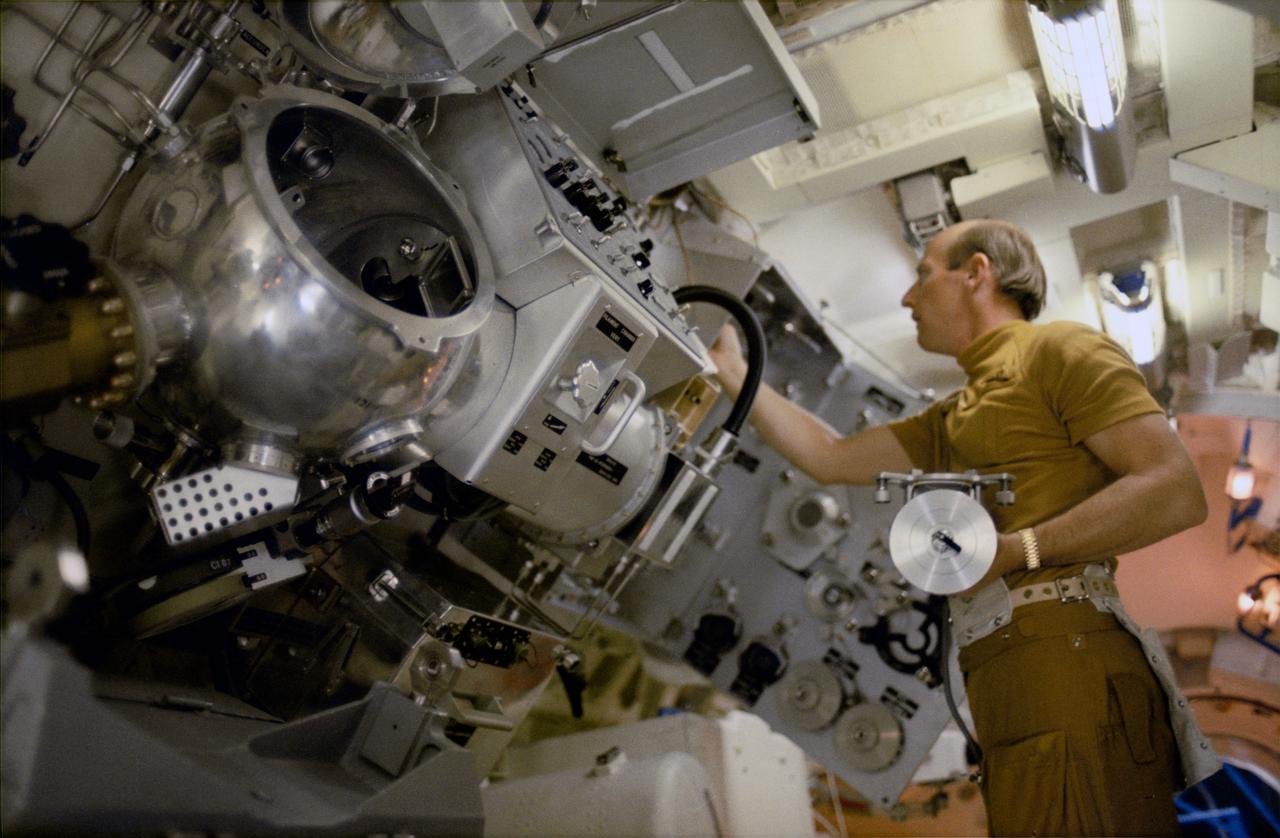
S73-20759 (1 March 1973) --- Astronaut Charles Conrad Jr., commander of the first manned Skylab mission, takes items from the M512 materials processing equipment storage assembly during Skylab training at Johnson Space Center. Conrad is standing in the Multiple Docking Adapter (MDA) trainer in the JSC Mission Simulation and Training Facility. The assembly holds equipment designed to explore space manufacturing capability in a weightless state. Conrad is holding one of the experiment parts in his left hand. Photo credit: NASA
![CAPE CANAVERAL, Fla. – The STSS Demonstrator SV-2spacecraft is moved inside a building at the Astrotech payload processing facility in Titusville, Fla. The spacecraft is a midcourse tracking technology demonstrator, part of an evolving ballistic missile defense system. STSS is capable of tracking objects after boost phase and provides trajectory information to other sensors. It will be launched by NASA for the Missile Defense Agency in late summer. Photo credit: NASA/Jack Pfaller (Approved for Public Release 09-MDA-4616 [27 May 09])](https://images-assets.nasa.gov/image/KSC-2009-3668/KSC-2009-3668~medium.jpg)
CAPE CANAVERAL, Fla. – The STSS Demonstrator SV-2spacecraft is moved inside a building at the Astrotech payload processing facility in Titusville, Fla. The spacecraft is a midcourse tracking technology demonstrator, part of an evolving ballistic missile defense system. STSS is capable of tracking objects after boost phase and provides trajectory information to other sensors. It will be launched by NASA for the Missile Defense Agency in late summer. Photo credit: NASA/Jack Pfaller (Approved for Public Release 09-MDA-4616 [27 May 09])
![CAPE CANAVERAL, Fla. – In the Astrotech payload processing facility in Titusville, Fla. , technicians monitor the STSS Demonstrator SV-1 spacecraft as it is lowered to the orbital insertion system. The spacecraft is a midcourse tracking technology demonstrator, part of an evolving ballistic missile defense system. STSS is capable of tracking objects after boost phase and provides trajectory information to other sensors. It will be launched by NASA for the Missile Defense Agency in late summer. Photo credit: NASA/Tim Jacobs (Approved for Public Release 09-MDA-4800 [30 July 09] )](https://images-assets.nasa.gov/image/KSC-2009-4626/KSC-2009-4626~medium.jpg)
CAPE CANAVERAL, Fla. – In the Astrotech payload processing facility in Titusville, Fla. , technicians monitor the STSS Demonstrator SV-1 spacecraft as it is lowered to the orbital insertion system. The spacecraft is a midcourse tracking technology demonstrator, part of an evolving ballistic missile defense system. STSS is capable of tracking objects after boost phase and provides trajectory information to other sensors. It will be launched by NASA for the Missile Defense Agency in late summer. Photo credit: NASA/Tim Jacobs (Approved for Public Release 09-MDA-4800 [30 July 09] )
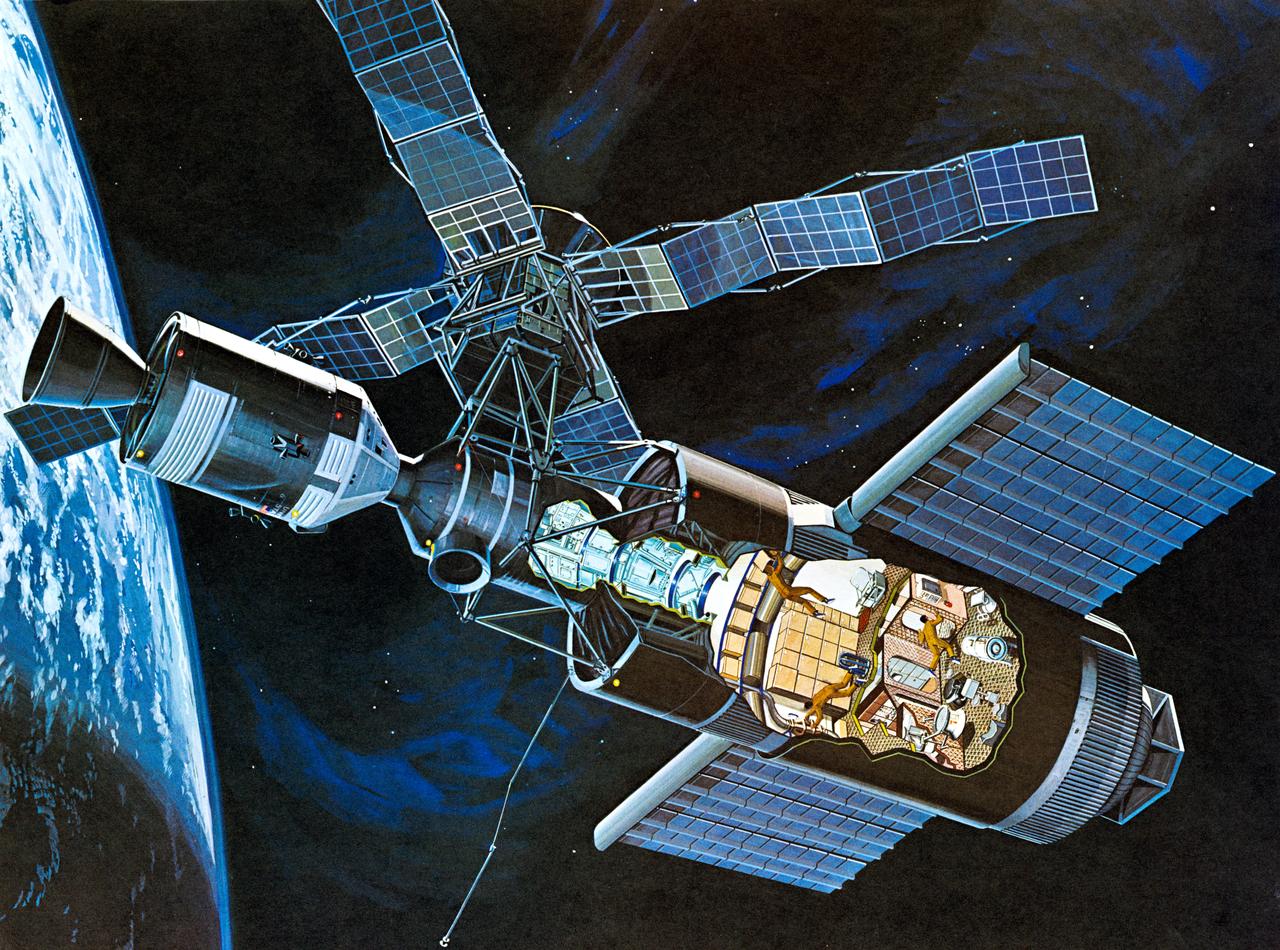
S71-52192 (1971) --- An artist's concept of the Skylab space station cluster in Earth's orbit. The cutaway view shows astronaut activity in the Orbital Workshop (OWS). The Skylab cluster is composed of the OWS, Airlock Module (AM), Multiple Docking Adapter (MDA), Apollo Telescope Mount (ATM), and the Command and Service Module (CSM). Photo credit: NASA
![CAPE CANAVERAL, Fla. – In the Astrotech payload processing facility in Titusville, Fla. , the STSS Demonstrator SV-1 spacecraft is moved toward the orbital insertion system. The spacecraft is a midcourse tracking technology demonstrator, part of an evolving ballistic missile defense system. STSS is capable of tracking objects after boost phase and provides trajectory information to other sensors. It will be launched by NASA for the Missile Defense Agency in late summer. Photo credit: NASA/Tim Jacobs (Approved for Public Release 09-MDA-4800 [30 July 09] )](https://images-assets.nasa.gov/image/KSC-2009-4624/KSC-2009-4624~medium.jpg)
CAPE CANAVERAL, Fla. – In the Astrotech payload processing facility in Titusville, Fla. , the STSS Demonstrator SV-1 spacecraft is moved toward the orbital insertion system. The spacecraft is a midcourse tracking technology demonstrator, part of an evolving ballistic missile defense system. STSS is capable of tracking objects after boost phase and provides trajectory information to other sensors. It will be launched by NASA for the Missile Defense Agency in late summer. Photo credit: NASA/Tim Jacobs (Approved for Public Release 09-MDA-4800 [30 July 09] )
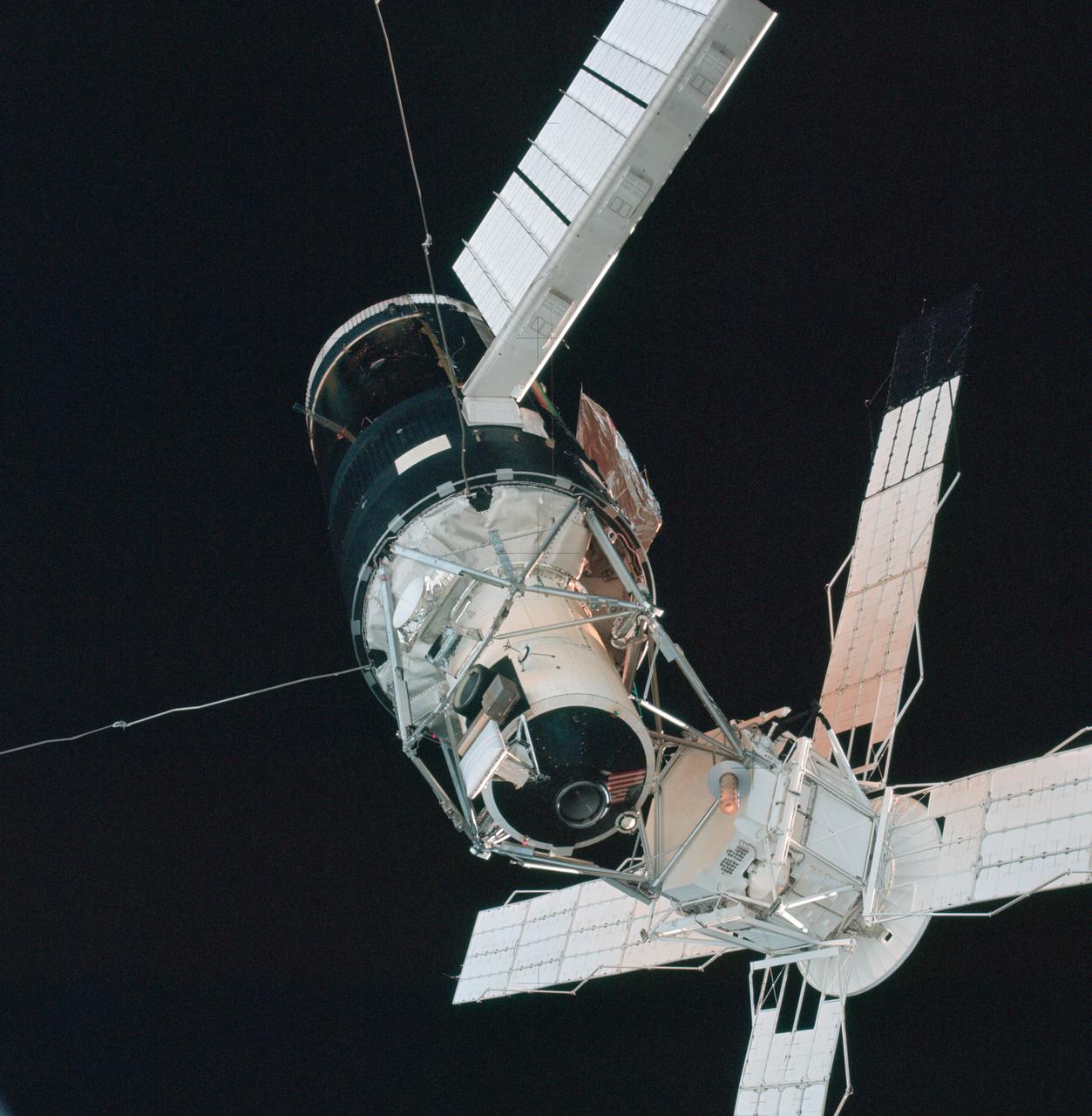
A close-up view of the Skylab space station cluster photographed against a black sky background from the Skylab 3 command module during the "fly around" inspection prior to docking. Note the one solar array system wing on the Orbital Workshop (OWS) which was successfully deployed during EVA on the first manned Skylab mission. The primary docking part at the forward end of the Multiple Docking Adapter (MDA) is visible below the Apollo Telescope Mount (ATM).
![CAPE CANAVERAL, Fla. – In the Astrotech payload processing facility in Titusville, Fla. , the STSS Demonstrator SV-1 spacecraft is lowered to the orbital insertion system. The spacecraft is a midcourse tracking technology demonstrator, part of an evolving ballistic missile defense system. STSS is capable of tracking objects after boost phase and provides trajectory information to other sensors. It will be launched by NASA for the Missile Defense Agency in late summer. Photo credit: NASA/Tim Jacobs (Approved for Public Release 09-MDA-4800 [30 July 09] )](https://images-assets.nasa.gov/image/KSC-2009-4628/KSC-2009-4628~medium.jpg)
CAPE CANAVERAL, Fla. – In the Astrotech payload processing facility in Titusville, Fla. , the STSS Demonstrator SV-1 spacecraft is lowered to the orbital insertion system. The spacecraft is a midcourse tracking technology demonstrator, part of an evolving ballistic missile defense system. STSS is capable of tracking objects after boost phase and provides trajectory information to other sensors. It will be launched by NASA for the Missile Defense Agency in late summer. Photo credit: NASA/Tim Jacobs (Approved for Public Release 09-MDA-4800 [30 July 09] )
![CAPE CANAVERAL, Fla. – The flatbed truck with the SV-1 cargo of the STSS Demonstrator spacecraft arrives at the Astrotech payload processing facility in Titusville, Fla. The spacecraft is a midcourse tracking technology demonstrator, part of an evolving ballistic missile defense system. STSS is capable of tracking objects after boost phase and provides trajectory information to other sensors. It will be launched by NASA for the Missile Defense Agency in late summer. Photo credit: NASA/Kim Shiflett (Approved for Public Release 09-MDA-4804 [4 Aug 09] )](https://images-assets.nasa.gov/image/KSC-2009-4617/KSC-2009-4617~medium.jpg)
CAPE CANAVERAL, Fla. – The flatbed truck with the SV-1 cargo of the STSS Demonstrator spacecraft arrives at the Astrotech payload processing facility in Titusville, Fla. The spacecraft is a midcourse tracking technology demonstrator, part of an evolving ballistic missile defense system. STSS is capable of tracking objects after boost phase and provides trajectory information to other sensors. It will be launched by NASA for the Missile Defense Agency in late summer. Photo credit: NASA/Kim Shiflett (Approved for Public Release 09-MDA-4804 [4 Aug 09] )
![CAPE CANAVERAL, Fla. – In the Astrotech payload processing facility in Titusville, Fla. , technicians check equipment on the STSS Demonstrator SV-1 spacecraft after it was lowered onto the orbital insertion system. The spacecraft is a midcourse tracking technology demonstrator, part of an evolving ballistic missile defense system. STSS is capable of tracking objects after boost phase and provides trajectory information to other sensors. It will be launched by NASA for the Missile Defense Agency in late summer. Photo credit: NASA/Tim Jacobs (Approved for Public Release 09-MDA-4800 [30 July 09] )](https://images-assets.nasa.gov/image/KSC-2009-4629/KSC-2009-4629~medium.jpg)
CAPE CANAVERAL, Fla. – In the Astrotech payload processing facility in Titusville, Fla. , technicians check equipment on the STSS Demonstrator SV-1 spacecraft after it was lowered onto the orbital insertion system. The spacecraft is a midcourse tracking technology demonstrator, part of an evolving ballistic missile defense system. STSS is capable of tracking objects after boost phase and provides trajectory information to other sensors. It will be launched by NASA for the Missile Defense Agency in late summer. Photo credit: NASA/Tim Jacobs (Approved for Public Release 09-MDA-4800 [30 July 09] )
![CAPE CANAVERAL, Fla. – At NASA Kennedy Space Center's Shuttle Landing Facility, the SV-1 cargo of the STSS Demonstrator spacecraft moves out of the U.S. Air Force C-17. The cargo will be transferred to the Astrotech payload processing facility in Titusville, Fla. The spacecraft is a midcourse tracking technology demonstrator, part of an evolving ballistic missile defense system. STSS is capable of tracking objects after boost phase and provides trajectory information to other sensors. It will be launched by NASA for the Missile Defense Agency in late summer. Photo credit: NASA/Kim Shiflett (Approved for Public Release 09-MDA-4804 [4 Aug 09] )](https://images-assets.nasa.gov/image/KSC-2009-4613/KSC-2009-4613~medium.jpg)
CAPE CANAVERAL, Fla. – At NASA Kennedy Space Center's Shuttle Landing Facility, the SV-1 cargo of the STSS Demonstrator spacecraft moves out of the U.S. Air Force C-17. The cargo will be transferred to the Astrotech payload processing facility in Titusville, Fla. The spacecraft is a midcourse tracking technology demonstrator, part of an evolving ballistic missile defense system. STSS is capable of tracking objects after boost phase and provides trajectory information to other sensors. It will be launched by NASA for the Missile Defense Agency in late summer. Photo credit: NASA/Kim Shiflett (Approved for Public Release 09-MDA-4804 [4 Aug 09] )
![CAPE CANAVERAL, Fla. – At NASA Kennedy Space Center's Shuttle Landing Facility, the shipping container with the STSS Demonstrator SV-2spacecraft is secured on a trailer for transfer to the Astrotech payload processing facility in Titusville, Fla. The spacecraft is a midcourse tracking technology demonstrator, part of an evolving ballistic missile defense system. STSS is capable of tracking objects after boost phase and provides trajectory information to other sensors. It will be launched by NASA for the Missile Defense Agency in late summer. Photo credit: NASA/Jack Pfaller (Approved for Public Release 09-MDA-4616 [27 May 09])](https://images-assets.nasa.gov/image/KSC-2009-3665/KSC-2009-3665~medium.jpg)
CAPE CANAVERAL, Fla. – At NASA Kennedy Space Center's Shuttle Landing Facility, the shipping container with the STSS Demonstrator SV-2spacecraft is secured on a trailer for transfer to the Astrotech payload processing facility in Titusville, Fla. The spacecraft is a midcourse tracking technology demonstrator, part of an evolving ballistic missile defense system. STSS is capable of tracking objects after boost phase and provides trajectory information to other sensors. It will be launched by NASA for the Missile Defense Agency in late summer. Photo credit: NASA/Jack Pfaller (Approved for Public Release 09-MDA-4616 [27 May 09])
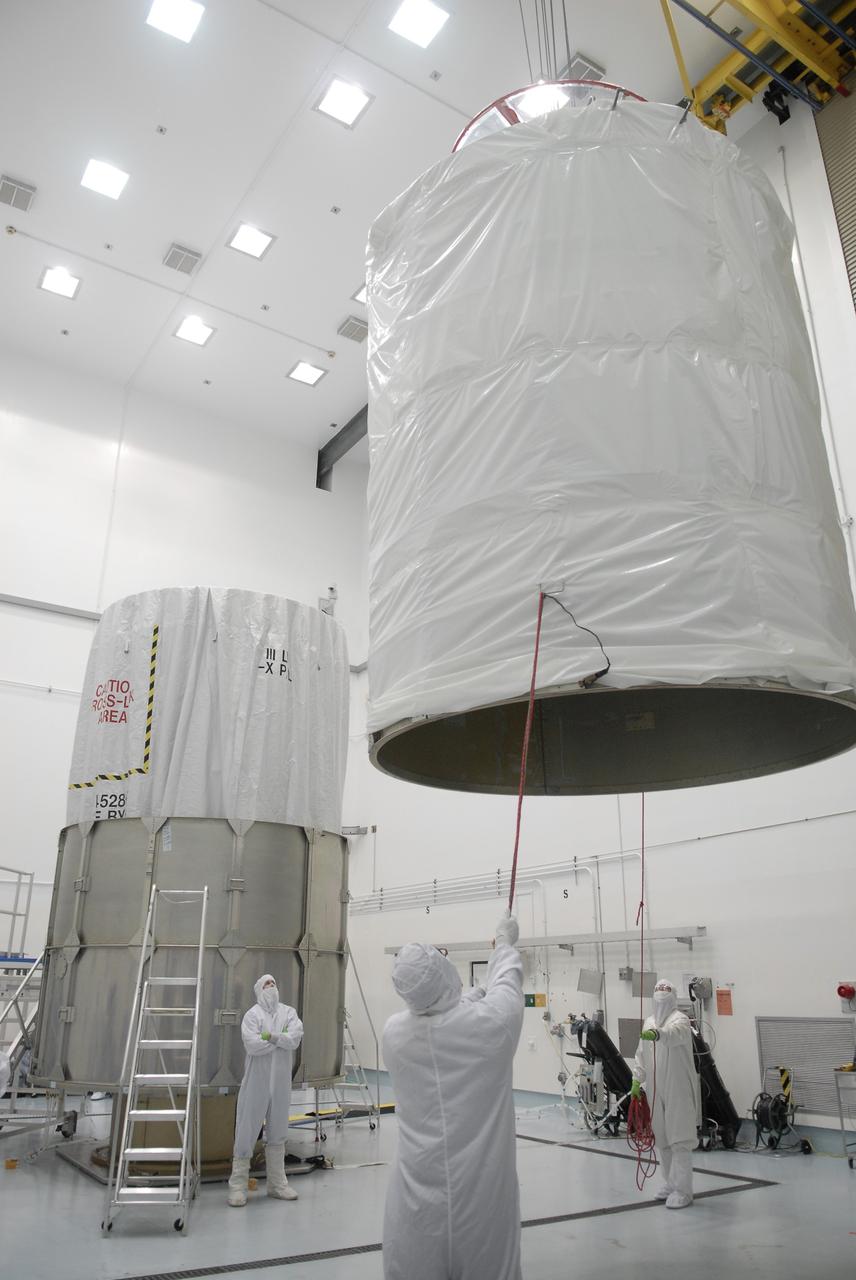
CAPE CANAVERAL, Fla. – At the Astrotech payload processing facility in Titusville, Fla., the upper segment of the transportation canister is moved toward the Space Tracking and Surveillance System – Demonstrators, or STSS Demo, spacecraft, at left. The STSS Demo is a space-based sensor component of a layered Ballistic Missile Defense System designed for the overall mission of detecting, tracking and discriminating ballistic missiles. STSS is capable of tracking objects after boost phase and provides trajectory information to other sensors. It will be launched by NASA for the Missile Defense Agency between 8 and 8:58 a.m. EDT Sept. 18. Approved for Public Release 09-MDA-04886 (10 SEPT 09) Photo credit: NASA/Kim Shiflett
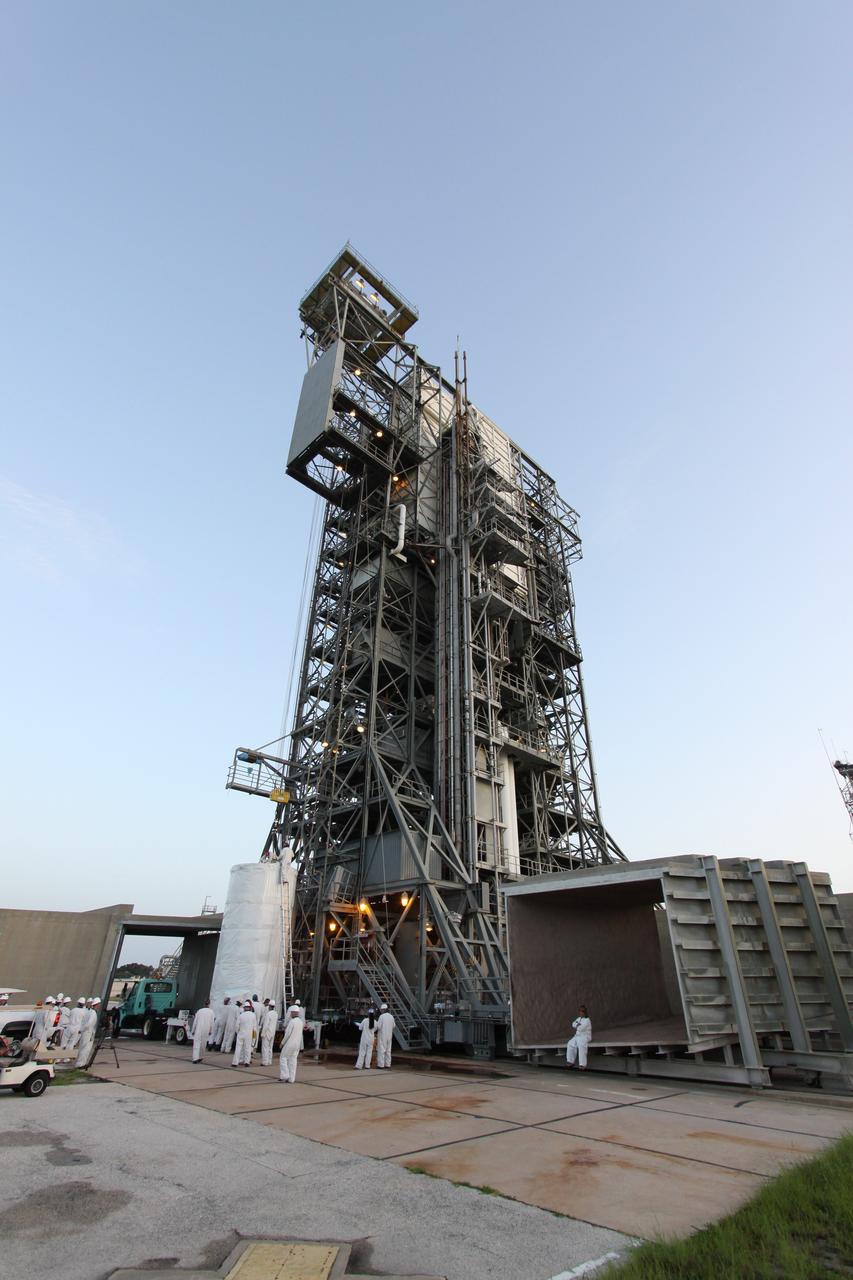
CAPE CANAVERAL, Fla. – The enclosed Space Tracking and Surveillance System – Demonstrators, or STSS-Demo, spacecraft arrives on Cape Canaveral Air Force Station's Launch Pad 17-B. The STSS Demo is a space-based sensor component of a layered Ballistic Missile Defense System designed for the overall mission of detecting, tracking and discriminating ballistic missiles. STSS is capable of tracking objects after boost phase and provides trajectory information to other sensors. It will be launched by NASA for the Missile Defense Agency between 8 and 8:58 a.m. EDT Sept. 18. Approved for Public Release 09-MDA-04886 (10 SEPT 09) Photo credit: NASA/Jack Pfaller
![CAPE CANAVERAL, Fla. – At NASA Kennedy Space Center's Shuttle Landing Facility, more equipment for the STSS Demonstrator SV-2 spacecraft is offloaded from the U.S. Air Force C-17 aircraft. The spacecraft will be transferred to the Astrotech payload processing facility in Titusville, Fla.The spacecraft is a midcourse tracking technology demonstrator, part of an evolving ballistic missile defense system. STSS is capable of tracking objects after boost phase and provides trajectory information to other sensors. It will be launched by NASA for the Missile Defense Agency in late summer. Photo credit: NASA/Jack Pfaller (Approved for Public Release 09-MDA-4616 [27 May 09])](https://images-assets.nasa.gov/image/KSC-2009-3660/KSC-2009-3660~medium.jpg)
CAPE CANAVERAL, Fla. – At NASA Kennedy Space Center's Shuttle Landing Facility, more equipment for the STSS Demonstrator SV-2 spacecraft is offloaded from the U.S. Air Force C-17 aircraft. The spacecraft will be transferred to the Astrotech payload processing facility in Titusville, Fla.The spacecraft is a midcourse tracking technology demonstrator, part of an evolving ballistic missile defense system. STSS is capable of tracking objects after boost phase and provides trajectory information to other sensors. It will be launched by NASA for the Missile Defense Agency in late summer. Photo credit: NASA/Jack Pfaller (Approved for Public Release 09-MDA-4616 [27 May 09])
![CAPE CANAVERAL, Fla. – At NASA Kennedy Space Center's Shuttle Landing Facility, the shipping container with the STSS Demonstrator SV-2spacecraft waits to be offloaded from the U.S. Air Force C-17 aircraft. The spacecraft will be transferred to the Astrotech payload processing facility in Titusville, Fla. The spacecraft is a midcourse tracking technology demonstrator, part of an evolving ballistic missile defense system. STSS is capable of tracking objects after boost phase and provides trajectory information to other sensors. It will be launched by NASA for the Missile Defense Agency in late summer. Photo credit: NASA/Jack Pfaller (Approved for Public Release 09-MDA-4616 [27 May 09])](https://images-assets.nasa.gov/image/KSC-2009-3661/KSC-2009-3661~medium.jpg)
CAPE CANAVERAL, Fla. – At NASA Kennedy Space Center's Shuttle Landing Facility, the shipping container with the STSS Demonstrator SV-2spacecraft waits to be offloaded from the U.S. Air Force C-17 aircraft. The spacecraft will be transferred to the Astrotech payload processing facility in Titusville, Fla. The spacecraft is a midcourse tracking technology demonstrator, part of an evolving ballistic missile defense system. STSS is capable of tracking objects after boost phase and provides trajectory information to other sensors. It will be launched by NASA for the Missile Defense Agency in late summer. Photo credit: NASA/Jack Pfaller (Approved for Public Release 09-MDA-4616 [27 May 09])

S73-32839 (10 Sept. 1973) --- Scientist-astronaut Edward G. Gibson, science pilot for the third manned Skylab mission (Skylab 4), enters a notation in a manual while seated at the control and display panel for the Apollo Telescope Mount (ATM) during simulations inside the one-G trainer for the Multiple Docking Adapter (MDA) at the Johnson Space Center (JSC). Dr. Gibson will be joined by astronauts Gerald P. Carr, commander, and William R. Pogue, pilot, when the Skylab 4 mission begins in November 1973. Photo credit: NASA
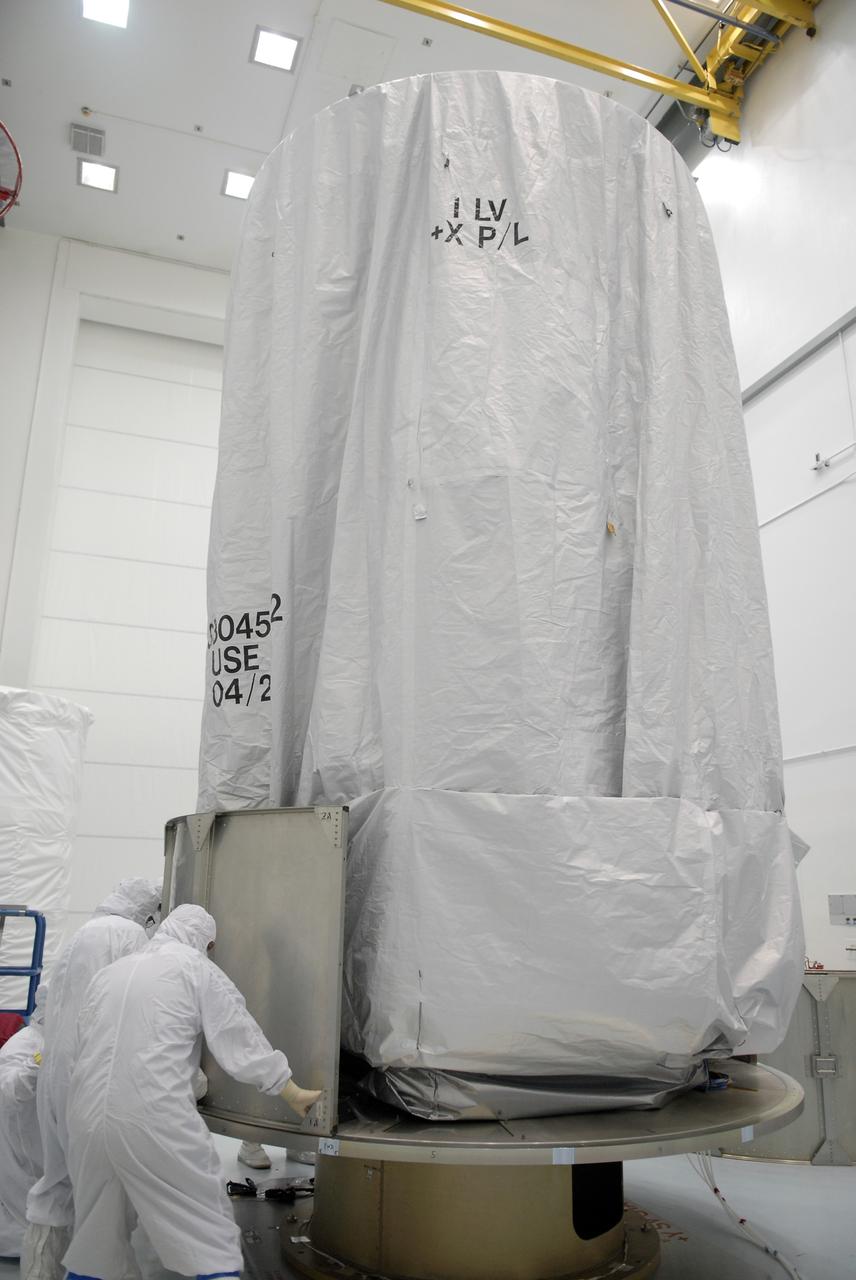
CAPE CANAVERAL, Fla. – At the Astrotech payload processing facility in Titusville, Fla., workers place the first segments of the transportation canister around the base of the Space Tracking and Surveillance System – Demonstrators, or STSS Demo, spacecraft. The STSS Demo is a space-based sensor component of a layered Ballistic Missile Defense System designed for the overall mission of detecting, tracking and discriminating ballistic missiles. STSS is capable of tracking objects after boost phase and provides trajectory information to other sensors. It will be launched by NASA for the Missile Defense Agency between 8 and 8:58 a.m. EDT Sept. 18. Approved for Public Release 09-MDA-04886 (10 SEPT 09) Photo credit: NASA/Kim Shiflett

CAPE CANAVERAL, Fla. – At the Astrotech payload processing facility in Titusville, Fla., workers place the second row of segments of the transportation canister around the Space Tracking and Surveillance System – Demonstrators, or STSS Demo, spacecraft. The STSS Demo is a space-based sensor component of a layered Ballistic Missile Defense System designed for the overall mission of detecting, tracking and discriminating ballistic missiles. STSS is capable of tracking objects after boost phase and provides trajectory information to other sensors. It will be launched by NASA for the Missile Defense Agency between 8 and 8:58 a.m. EDT Sept. 18. Approved for Public Release 09-MDA-04886 (10 SEPT 09) Photo credit: NASA/Kim Shiflett
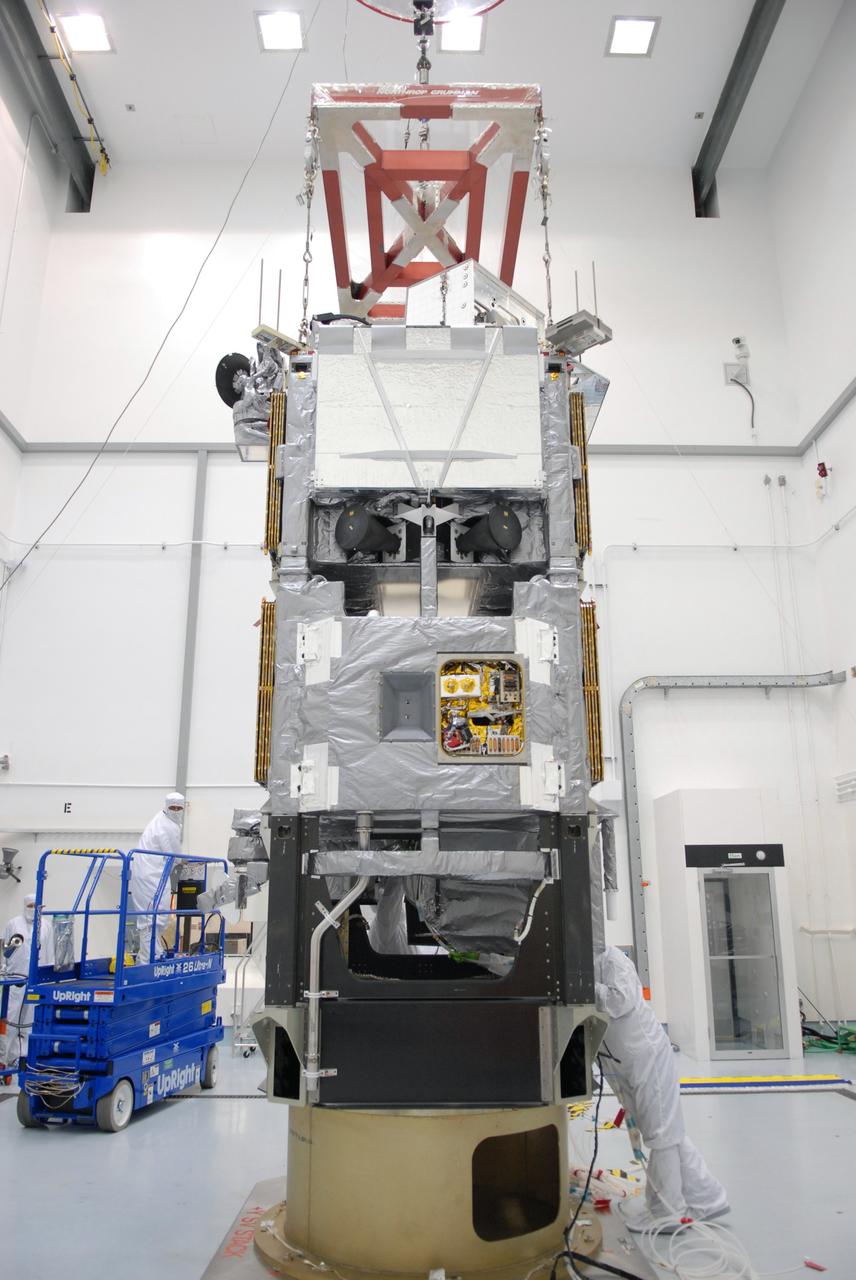
CAPE CANAVERAL, Fla. – At the Astrotech payload processing facility in Titusville, Fla., the SV1-SV2 spacecraft is ready to be weighed. The two spacecraft are known as the Space Tracking and Surveillance System – Demonstrators, or STSS Demo, which is a space-based sensor component of a layered Ballistic Missile Defense System designed for the overall mission of detecting, tracking and discriminating ballistic missiles. STSS is capable of tracking objects after boost phase and provides trajectory information to other sensors. It will be launched by NASA for the Missile Defense Agency between 8 and 8:58 a.m. EDT Sept. 18. Approved for Public Release 09-MDA-04886 (10 SEPT 09) Photo credit: NASA/Jim Grossmann
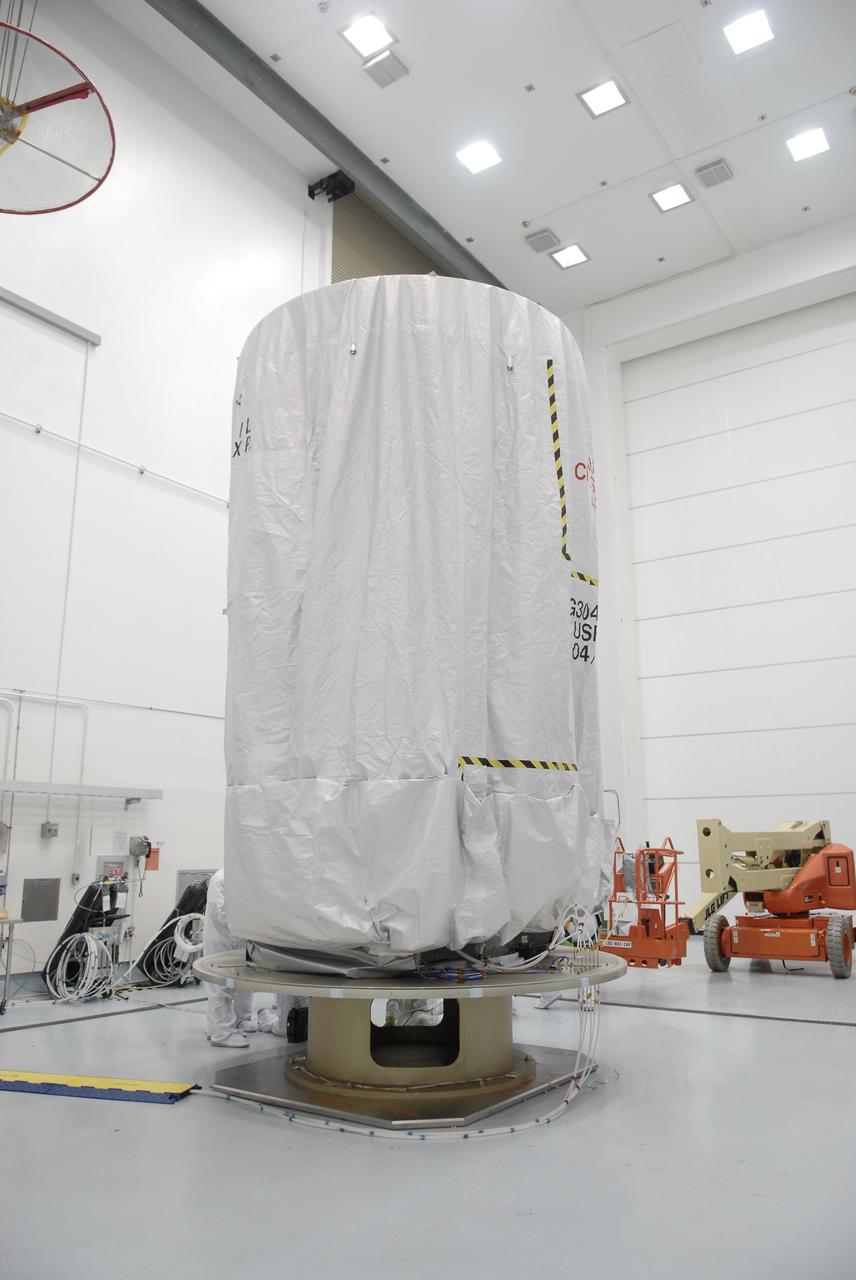
CAPE CANAVERAL, Fla. – At the Astrotech payload processing facility in Titusville, Fla., the Space Tracking and Surveillance System – Demonstrators, or STSS Demo, spacecraft is under a protective cover before being encased in the transportation canister. The STSS Demo is a space-based sensor component of a layered Ballistic Missile Defense System designed for the overall mission of detecting, tracking and discriminating ballistic missiles. STSS is capable of tracking objects after boost phase and provides trajectory information to other sensors. It will be launched by NASA for the Missile Defense Agency between 8 and 8:58 a.m. EDT Sept. 18. Approved for Public Release 09-MDA-04886 (10 SEPT 09) Photo credit: NASA/Kim Shiflett
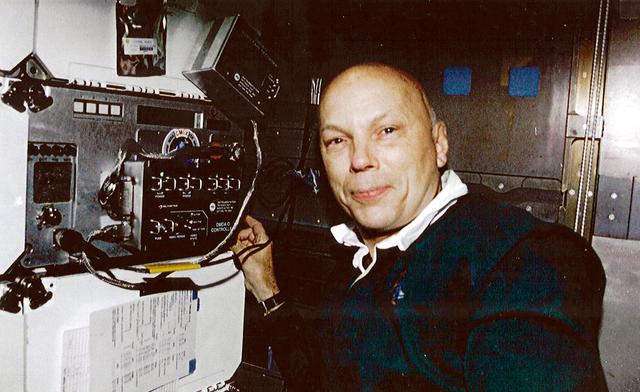
Experiments to seek solutions for a range of biomedical issues are at the heart of several investigations that will be hosted by the Commercial Instrumentation Technology Associates (ITA), Inc. The biomedical experiments CIBX-2 payload is unique, encompassing more than 20 separate experiments including cancer research, commercial experiments, and student hands-on experiments from 10 schools as part of ITA's ongoing University Among the stars program. Here, Astronaut Story Musgrave activates the CMIX-5 (Commercial MDA ITA experiment) payload in the Space Shuttle mid deck during the STS-80 mission in 1996 which is similar to CIBX-2. The experiments are sponsored by NASA's Space Product Development Program (SPD).
![CAPE CANAVERAL, Fla. – The U.S. Air Force C-17 aircraft arrives at NASA Kennedy Space Center's Shuttle Landing Facility with its cargo of the STSS Demonstrator SV-2 spacecraft. The spacecraft will be transferred to the Astrotech payload processing facility in Titusville, Fla. The spacecraft is a midcourse tracking technology demonstrator, part of an evolving ballistic missile defense system. STSS is capable of tracking objects after boost phase and provides trajectory information to other sensors. It will be launched by NASA for the Missile Defense Agency in late summer. Photo credit: NASA/Jack Pfaller (Approved for Public Release 09-MDA-4616 [27 May 09])](https://images-assets.nasa.gov/image/KSC-2009-3658/KSC-2009-3658~medium.jpg)
CAPE CANAVERAL, Fla. – The U.S. Air Force C-17 aircraft arrives at NASA Kennedy Space Center's Shuttle Landing Facility with its cargo of the STSS Demonstrator SV-2 spacecraft. The spacecraft will be transferred to the Astrotech payload processing facility in Titusville, Fla. The spacecraft is a midcourse tracking technology demonstrator, part of an evolving ballistic missile defense system. STSS is capable of tracking objects after boost phase and provides trajectory information to other sensors. It will be launched by NASA for the Missile Defense Agency in late summer. Photo credit: NASA/Jack Pfaller (Approved for Public Release 09-MDA-4616 [27 May 09])
![CAPE CANAVERAL, Fla. – At NASA Kennedy Space Center's Shuttle Landing Facility, the shipping container with the STSS Demonstrator SV-2spacecraft has been moved out of the U.S. Air Force C-17 aircraft. The spacecraft will be transferred to the Astrotech payload processing facility in Titusville, Fla. The spacecraft is a midcourse tracking technology demonstrator, part of an evolving ballistic missile defense system. STSS is capable of tracking objects after boost phase and provides trajectory information to other sensors. It will be launched by NASA for the Missile Defense Agency in late summer. Photo credit: NASA/Jack Pfaller (Approved for Public Release 09-MDA-4616 [27 May 09])](https://images-assets.nasa.gov/image/KSC-2009-3663/KSC-2009-3663~medium.jpg)
CAPE CANAVERAL, Fla. – At NASA Kennedy Space Center's Shuttle Landing Facility, the shipping container with the STSS Demonstrator SV-2spacecraft has been moved out of the U.S. Air Force C-17 aircraft. The spacecraft will be transferred to the Astrotech payload processing facility in Titusville, Fla. The spacecraft is a midcourse tracking technology demonstrator, part of an evolving ballistic missile defense system. STSS is capable of tracking objects after boost phase and provides trajectory information to other sensors. It will be launched by NASA for the Missile Defense Agency in late summer. Photo credit: NASA/Jack Pfaller (Approved for Public Release 09-MDA-4616 [27 May 09])
![CAPE CANAVERAL, Fla. – At NASA Kennedy Space Center's Shuttle Landing Facility, workers move STSS Demonstrator SV-2 spacecraft equipment out of the cargo hold of the U.S. Air Force C-17 aircraft. The spacecraft will be transferred to the Astrotech payload processing facility in Titusville, Fla. The spacecraft is a midcourse tracking technology demonstrator, part of an evolving ballistic missile defense system. STSS is capable of tracking objects after boost phase and provides trajectory information to other sensors. It will be launched by NASA for the Missile Defense Agency in late summer. Photo credit: NASA/Jack Pfaller (Approved for Public Release 09-MDA-4616 [27 May 09])](https://images-assets.nasa.gov/image/KSC-2009-3659/KSC-2009-3659~medium.jpg)
CAPE CANAVERAL, Fla. – At NASA Kennedy Space Center's Shuttle Landing Facility, workers move STSS Demonstrator SV-2 spacecraft equipment out of the cargo hold of the U.S. Air Force C-17 aircraft. The spacecraft will be transferred to the Astrotech payload processing facility in Titusville, Fla. The spacecraft is a midcourse tracking technology demonstrator, part of an evolving ballistic missile defense system. STSS is capable of tracking objects after boost phase and provides trajectory information to other sensors. It will be launched by NASA for the Missile Defense Agency in late summer. Photo credit: NASA/Jack Pfaller (Approved for Public Release 09-MDA-4616 [27 May 09])
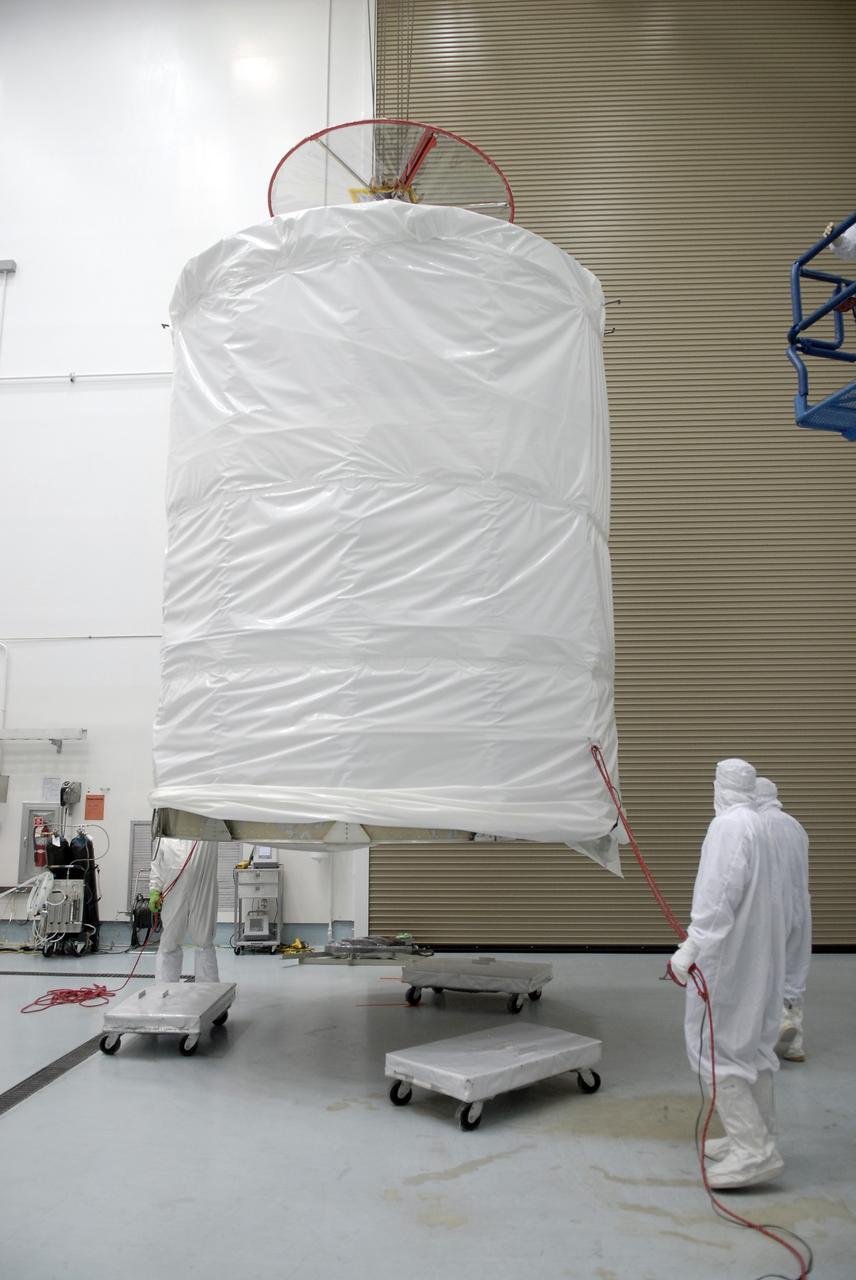
CAPE CANAVERAL, Fla. – At the Astrotech payload processing facility in Titusville, Fla., the upper segment of the transportation canister is lifted to be placed on the top of the Space Tracking and Surveillance System – Demonstrators, or STSS Demo, spacecraft. The STSS Demo is a space-based sensor component of a layered Ballistic Missile Defense System designed for the overall mission of detecting, tracking and discriminating ballistic missiles. STSS is capable of tracking objects after boost phase and provides trajectory information to other sensors. It will be launched by NASA for the Missile Defense Agency between 8 and 8:58 a.m. EDT Sept. 18. Approved for Public Release 09-MDA-04886 (10 SEPT 09) Photo credit: NASA/Kim Shiflett
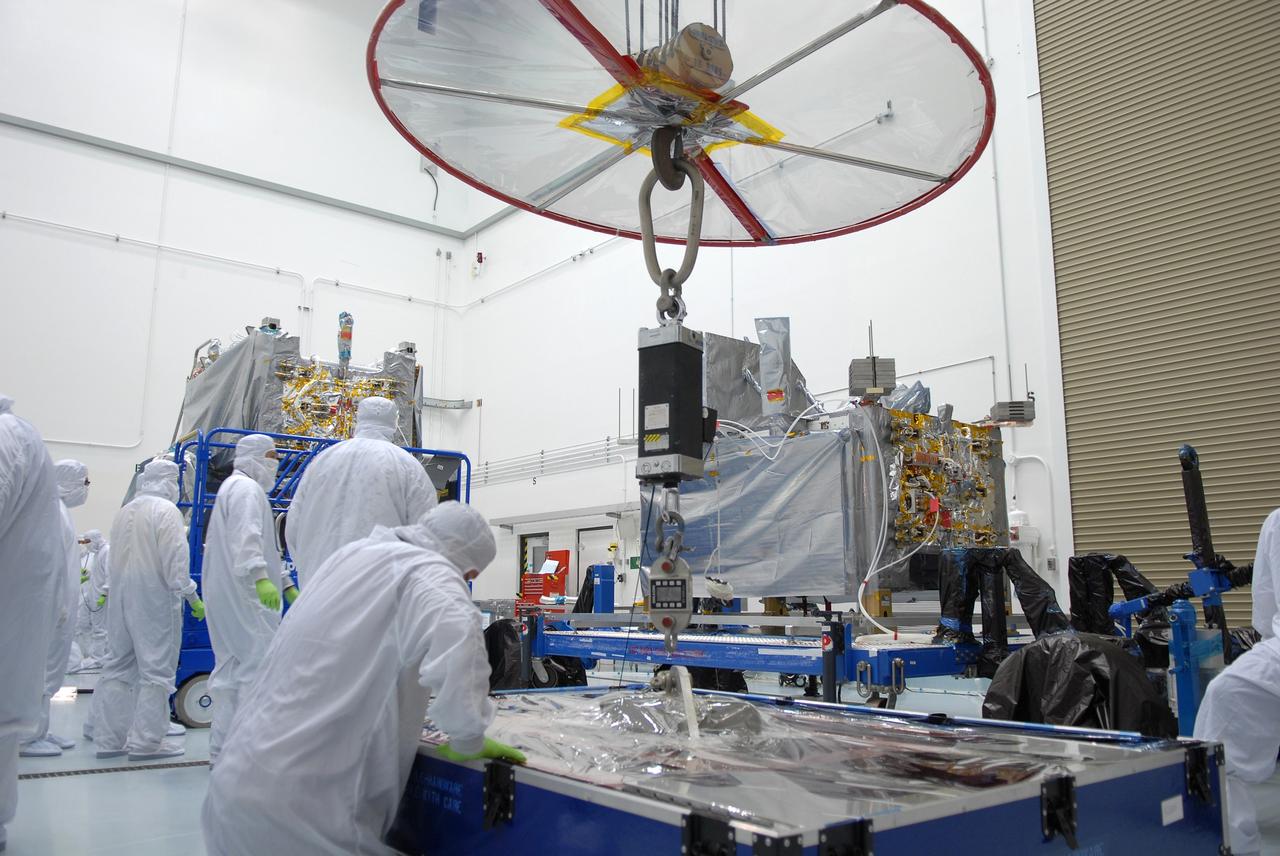
CAPE CANAVERAL, Fla. – At the Astrotech payload processing facility in Titusville, Fla., workers prepare to lift the SV1 and mate it to the SV2 spacecraft for the Space Tracking and Surveillance System – Demonstrators, or STSS Demo, Program. STSS-Demo is a space-based sensor component of a layered Ballistic Missile Defense System designed for the overall mission of detecting, tracking and discriminating ballistic missiles. The spacecraft is capable of tracking objects after boost phase and provides trajectory information to other sensors. It will be launched by NASA for the Missile Defense Agency between 8 and 8:58 a.m. EDT Sept. 18. Approved for Public Release 09-MDA-04886 (10 SEPT 09) Photo credit: NASA/Jim Grossmann
![CAPE CANAVERAL, Fla. – In the Astrotech payload processing facility in Titusville, Fla. , technicians get ready to remove the overhead crane from the STSS Demonstrator SV-1 spacecraft. The spacecraft is a midcourse tracking technology demonstrator, part of an evolving ballistic missile defense system. STSS is capable of tracking objects after boost phase and provides trajectory information to other sensors. It will be launched by NASA for the Missile Defense Agency in late summer. Photo credit: NASA/Tim Jacobs (Approved for Public Release 09-MDA-4800 [30 July 09] )](https://images-assets.nasa.gov/image/KSC-2009-4630/KSC-2009-4630~medium.jpg)
CAPE CANAVERAL, Fla. – In the Astrotech payload processing facility in Titusville, Fla. , technicians get ready to remove the overhead crane from the STSS Demonstrator SV-1 spacecraft. The spacecraft is a midcourse tracking technology demonstrator, part of an evolving ballistic missile defense system. STSS is capable of tracking objects after boost phase and provides trajectory information to other sensors. It will be launched by NASA for the Missile Defense Agency in late summer. Photo credit: NASA/Tim Jacobs (Approved for Public Release 09-MDA-4800 [30 July 09] )
![CAPE CANAVERAL, Fla. – At NASA Kennedy Space Center's Shuttle Landing Facility, the SV-1 cargo of the STSS Demonstrator spacecraft is moved onto a flatbed truck for transfer to the Astrotech payload processing facility in Titusville, Fla. The spacecraft is a midcourse tracking technology demonstrator, part of an evolving ballistic missile defense system. STSS is capable of tracking objects after boost phase and provides trajectory information to other sensors. It will be launched by NASA for the Missile Defense Agency in late summer. Photo credit: NASA/Kim Shiflett (Approved for Public Release 09-MDA-4804 [4 Aug 09] )](https://images-assets.nasa.gov/image/KSC-2009-4614/KSC-2009-4614~medium.jpg)
CAPE CANAVERAL, Fla. – At NASA Kennedy Space Center's Shuttle Landing Facility, the SV-1 cargo of the STSS Demonstrator spacecraft is moved onto a flatbed truck for transfer to the Astrotech payload processing facility in Titusville, Fla. The spacecraft is a midcourse tracking technology demonstrator, part of an evolving ballistic missile defense system. STSS is capable of tracking objects after boost phase and provides trajectory information to other sensors. It will be launched by NASA for the Missile Defense Agency in late summer. Photo credit: NASA/Kim Shiflett (Approved for Public Release 09-MDA-4804 [4 Aug 09] )
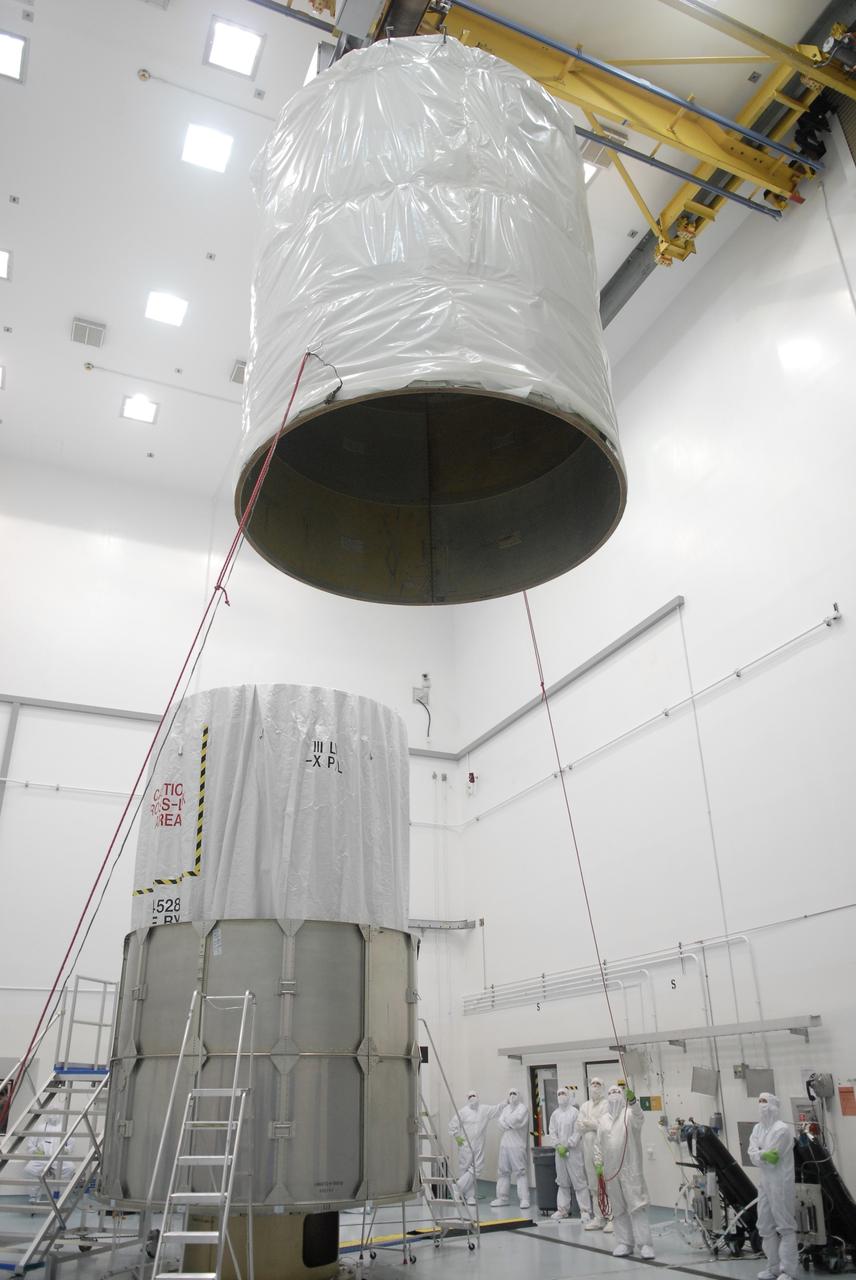
CAPE CANAVERAL, Fla. – At the Astrotech payload processing facility in Titusville, Fla., the upper segment of the transportation canister is moved toward the Space Tracking and Surveillance System – Demonstrators, or STSS Demo, spacecraft, at bottom left. The STSS Demo is a space-based sensor component of a layered Ballistic Missile Defense System designed for the overall mission of detecting, tracking and discriminating ballistic missiles. STSS is capable of tracking objects after boost phase and provides trajectory information to other sensors. It will be launched by NASA for the Missile Defense Agency between 8 and 8:58 a.m. EDT Sept. 18. Approved for Public Release 09-MDA-04886 (10 SEPT 09) Photo credit: NASA/Kim Shiflett
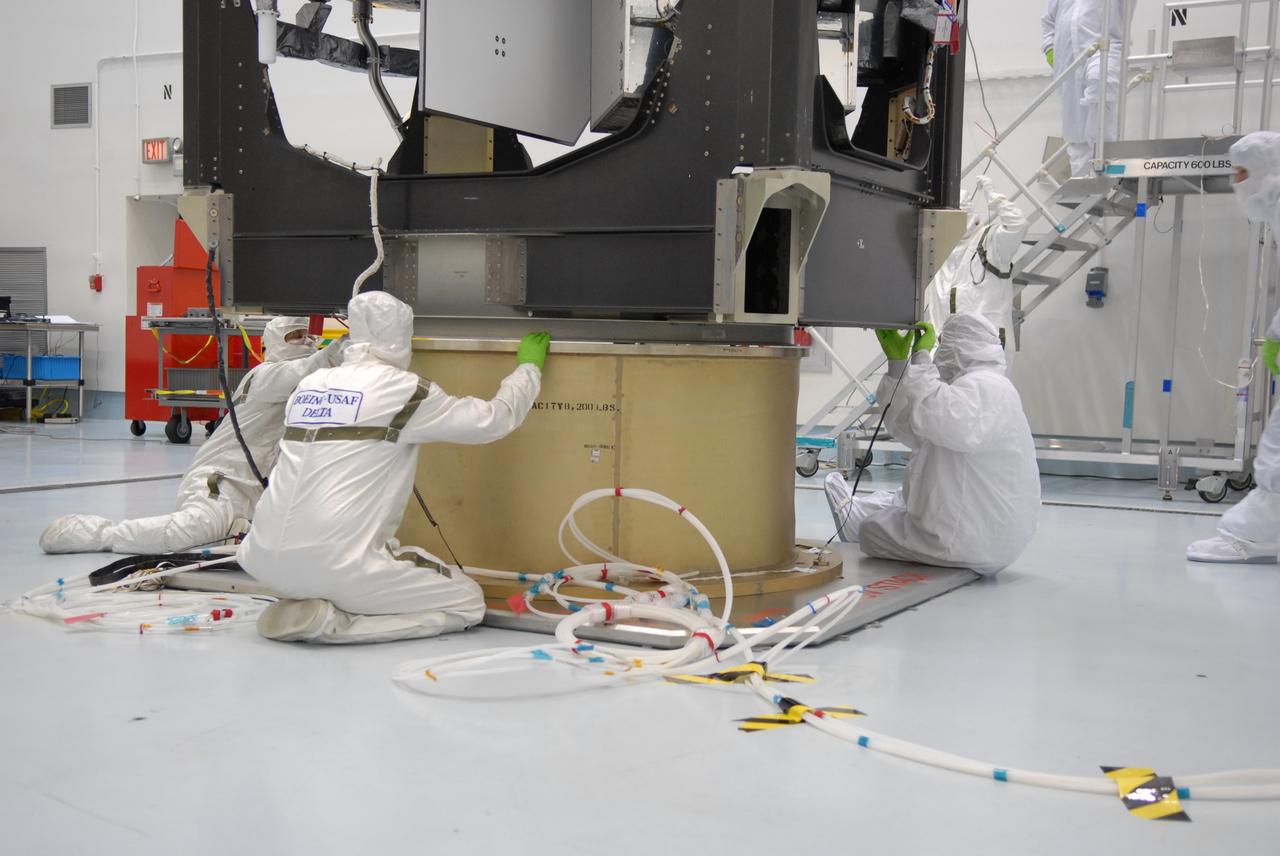
CAPE CANAVERAL, Fla. – At the Astrotech payload processing facility in Titusville, Fla., workers observe as the SV1-SV2 spacecraft is lifted for weighing. The two spacecraft are known as the Space Tracking and Surveillance System – Demonstrators, or STSS Demo, which is a space-based sensor component of a layered Ballistic Missile Defense System designed for the overall mission of detecting, tracking and discriminating ballistic missiles. STSS is capable of tracking objects after boost phase and provides trajectory information to other sensors. It will be launched by NASA for the Missile Defense Agency between 8 and 8:58 a.m. EDT Sept. 18. Approved for Public Release 09-MDA-04886 (10 SEPT 09) Photo credit: NASA/Jim Grossmann
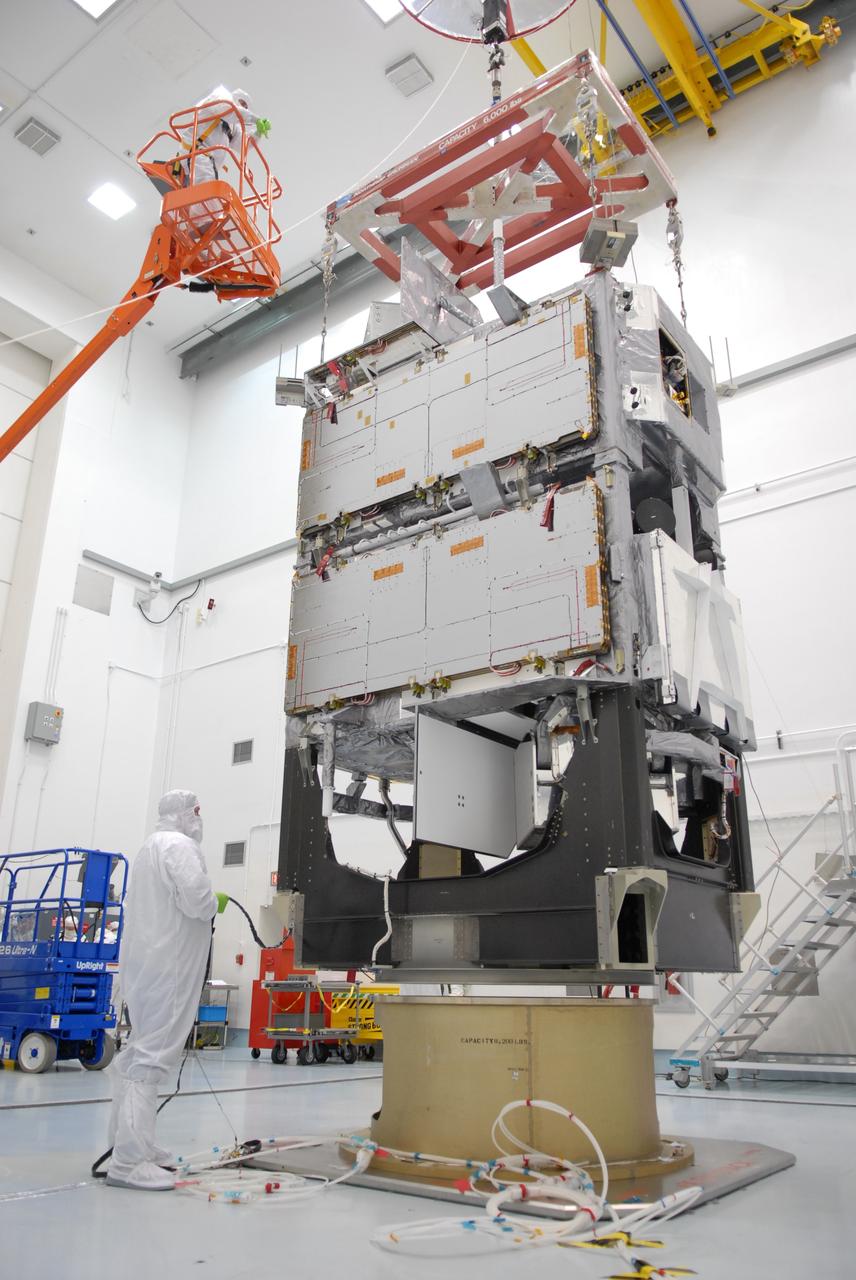
CAPE CANAVERAL, Fla. – At the Astrotech payload processing facility in Titusville, Fla., the SV1-SV2 spacecraft is lifted for weighing. The two spacecraft are known as the Space Tracking and Surveillance System – Demonstrators, or STSS Demo, which is a space-based sensor component of a layered Ballistic Missile Defense System designed for the overall mission of detecting, tracking and discriminating ballistic missiles. STSS is capable of tracking objects after boost phase and provides trajectory information to other sensors. It will be launched by NASA for the Missile Defense Agency between 8 and 8:58 a.m. EDT Sept. 18. Approved for Public Release 09-MDA-04886 (10 SEPT 09) Photo credit: NASA/Jim Grossmann
![CAPE CANAVERAL, Fla. – At NASA Kennedy Space Center's Shuttle Landing Facility, the flatbed truck with the SV-1 cargo of the STSS Demonstrator spacecraft begins moving to the Astrotech payload processing facility in Titusville, Fla. The spacecraft is a midcourse tracking technology demonstrator, part of an evolving ballistic missile defense system. STSS is capable of tracking objects after boost phase and provides trajectory information to other sensors. It will be launched by NASA for the Missile Defense Agency in late summer. Photo credit: NASA/Kim Shiflett (Approved for Public Release 09-MDA-4804 [4 Aug 09] )](https://images-assets.nasa.gov/image/KSC-2009-4615/KSC-2009-4615~medium.jpg)
CAPE CANAVERAL, Fla. – At NASA Kennedy Space Center's Shuttle Landing Facility, the flatbed truck with the SV-1 cargo of the STSS Demonstrator spacecraft begins moving to the Astrotech payload processing facility in Titusville, Fla. The spacecraft is a midcourse tracking technology demonstrator, part of an evolving ballistic missile defense system. STSS is capable of tracking objects after boost phase and provides trajectory information to other sensors. It will be launched by NASA for the Missile Defense Agency in late summer. Photo credit: NASA/Kim Shiflett (Approved for Public Release 09-MDA-4804 [4 Aug 09] )
![CAPE CANAVERAL, Fla. – At NASA Kennedy Space Center's Shuttle Landing Facility, the shipping container with the STSS Demonstrator SV-2spacecraft moves out of the U.S. Air Force C-17 aircraft. The spacecraft will be transferred to the Astrotech payload processing facility in Titusville, Fla. The spacecraft is a midcourse tracking technology demonstrator, part of an evolving ballistic missile defense system. STSS is capable of tracking objects after boost phase and provides trajectory information to other sensors. It will be launched by NASA for the Missile Defense Agency in late summer. Photo credit: NASA/Jack Pfaller (Approved for Public Release 09-MDA-4616 [27 May 09])](https://images-assets.nasa.gov/image/KSC-2009-3662/KSC-2009-3662~medium.jpg)
CAPE CANAVERAL, Fla. – At NASA Kennedy Space Center's Shuttle Landing Facility, the shipping container with the STSS Demonstrator SV-2spacecraft moves out of the U.S. Air Force C-17 aircraft. The spacecraft will be transferred to the Astrotech payload processing facility in Titusville, Fla. The spacecraft is a midcourse tracking technology demonstrator, part of an evolving ballistic missile defense system. STSS is capable of tracking objects after boost phase and provides trajectory information to other sensors. It will be launched by NASA for the Missile Defense Agency in late summer. Photo credit: NASA/Jack Pfaller (Approved for Public Release 09-MDA-4616 [27 May 09])
![CAPE CANAVERAL, Fla. – At NASA Kennedy Space Center's Shuttle Landing Facility, the shipping container with the STSS Demonstrator SV-2spacecraft is secured on a trailer for transfer to the Astrotech payload processing facility in Titusville, Fla. The spacecraft is a midcourse tracking technology demonstrator, part of an evolving ballistic missile defense system. STSS is capable of tracking objects after boost phase and provides trajectory information to other sensors. It will be launched by NASA for the Missile Defense Agency in late summer. Photo credit: NASA/Jack Pfaller (Approved for Public Release 09-MDA-4616 [27 May 09])](https://images-assets.nasa.gov/image/KSC-2009-3664/KSC-2009-3664~medium.jpg)
CAPE CANAVERAL, Fla. – At NASA Kennedy Space Center's Shuttle Landing Facility, the shipping container with the STSS Demonstrator SV-2spacecraft is secured on a trailer for transfer to the Astrotech payload processing facility in Titusville, Fla. The spacecraft is a midcourse tracking technology demonstrator, part of an evolving ballistic missile defense system. STSS is capable of tracking objects after boost phase and provides trajectory information to other sensors. It will be launched by NASA for the Missile Defense Agency in late summer. Photo credit: NASA/Jack Pfaller (Approved for Public Release 09-MDA-4616 [27 May 09])
![CAPE CANAVERAL, Fla. – The U.S. Air Force C-17 aircraft arrives at NASA Kennedy Space Center's Shuttle Landing Facility with its SV-1 cargo of the STSS Demonstrator spacecraft. The cargo will be transferred to the Astrotech payload processing facility in Titusville, Fla. The spacecraft is a midcourse tracking technology demonstrator, part of an evolving ballistic missile defense system. STSS is capable of tracking objects after boost phase and provides trajectory information to other sensors. It will be launched by NASA for the Missile Defense Agency in late summer. Photo credit: NASA/Kim Shiflett (Approved for Public Release 09-MDA-4804 [4 Aug 09] )](https://images-assets.nasa.gov/image/KSC-2009-4611/KSC-2009-4611~medium.jpg)
CAPE CANAVERAL, Fla. – The U.S. Air Force C-17 aircraft arrives at NASA Kennedy Space Center's Shuttle Landing Facility with its SV-1 cargo of the STSS Demonstrator spacecraft. The cargo will be transferred to the Astrotech payload processing facility in Titusville, Fla. The spacecraft is a midcourse tracking technology demonstrator, part of an evolving ballistic missile defense system. STSS is capable of tracking objects after boost phase and provides trajectory information to other sensors. It will be launched by NASA for the Missile Defense Agency in late summer. Photo credit: NASA/Kim Shiflett (Approved for Public Release 09-MDA-4804 [4 Aug 09] )
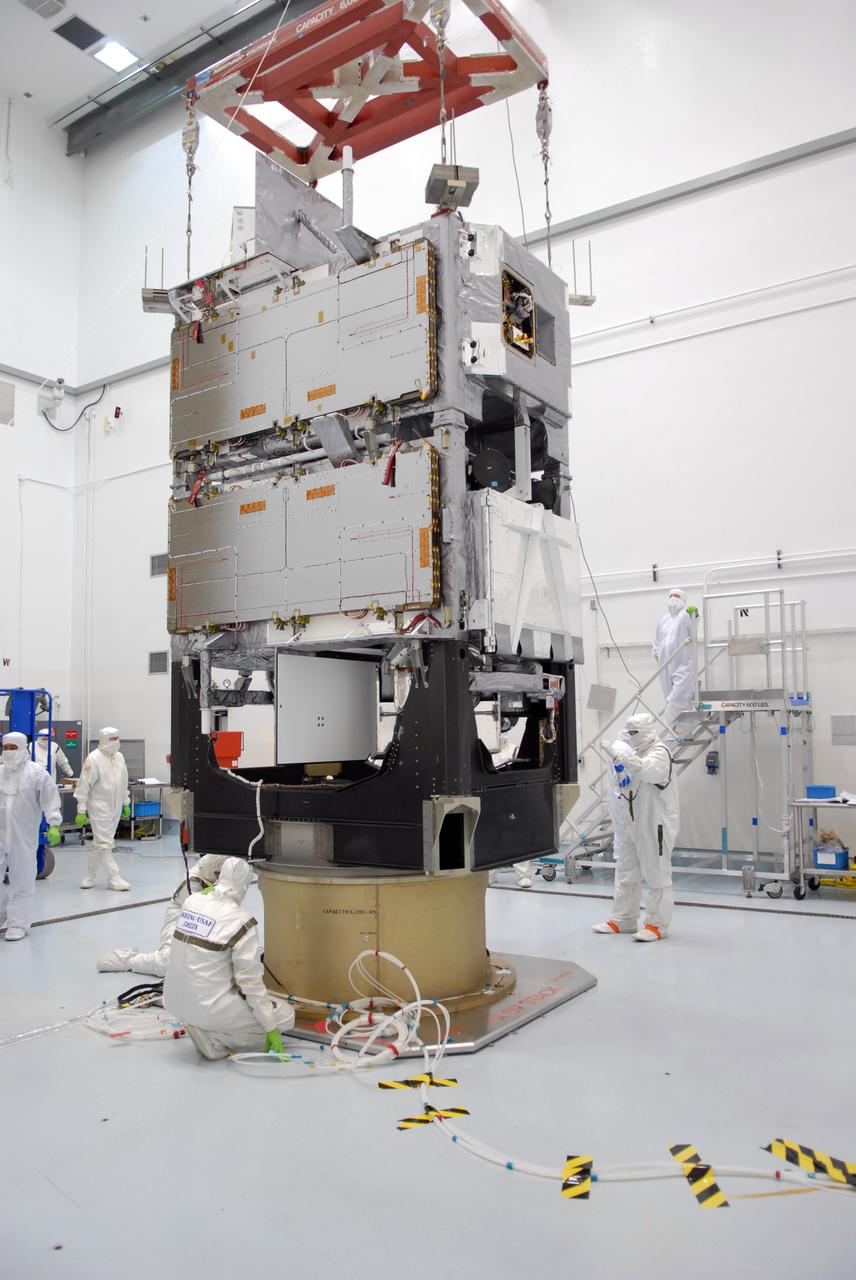
CAPE CANAVERAL, Fla. – At the Astrotech payload processing facility in Titusville, Fla., workers observe as the SV1-SV2 spacecraft is lifted for weighing. The two spacecraft are known as the Space Tracking and Surveillance System – Demonstrators, or STSS Demo, which is a space-based sensor component of a layered Ballistic Missile Defense System designed for the overall mission of detecting, tracking and discriminating ballistic missiles. STSS is capable of tracking objects after boost phase and provides trajectory information to other sensors. It will be launched by NASA for the Missile Defense Agency between 8 and 8:58 a.m. EDT Sept. 18. Approved for Public Release 09-MDA-04886 (10 SEPT 09) Photo credit: NASA/Jim Grossmann
![CAPE CANAVERAL, Fla. – At NASA Kennedy Space Center's Shuttle Landing Facility, the SV-1 cargo of the STSS Demonstrator spacecraft moves out of the U.S. Air Force C-17. The cargo will be transferred to the Astrotech payload processing facility in Titusville, Fla. The spacecraft is a midcourse tracking technology demonstrator, part of an evolving ballistic missile defense system. STSS is capable of tracking objects after boost phase and provides trajectory information to other sensors. It will be launched by NASA for the Missile Defense Agency in late summer. Photo credit: NASA/Kim Shiflett (Approved for Public Release 09-MDA-4804 [4 Aug 09] )](https://images-assets.nasa.gov/image/KSC-2009-4612/KSC-2009-4612~medium.jpg)
CAPE CANAVERAL, Fla. – At NASA Kennedy Space Center's Shuttle Landing Facility, the SV-1 cargo of the STSS Demonstrator spacecraft moves out of the U.S. Air Force C-17. The cargo will be transferred to the Astrotech payload processing facility in Titusville, Fla. The spacecraft is a midcourse tracking technology demonstrator, part of an evolving ballistic missile defense system. STSS is capable of tracking objects after boost phase and provides trajectory information to other sensors. It will be launched by NASA for the Missile Defense Agency in late summer. Photo credit: NASA/Kim Shiflett (Approved for Public Release 09-MDA-4804 [4 Aug 09] )
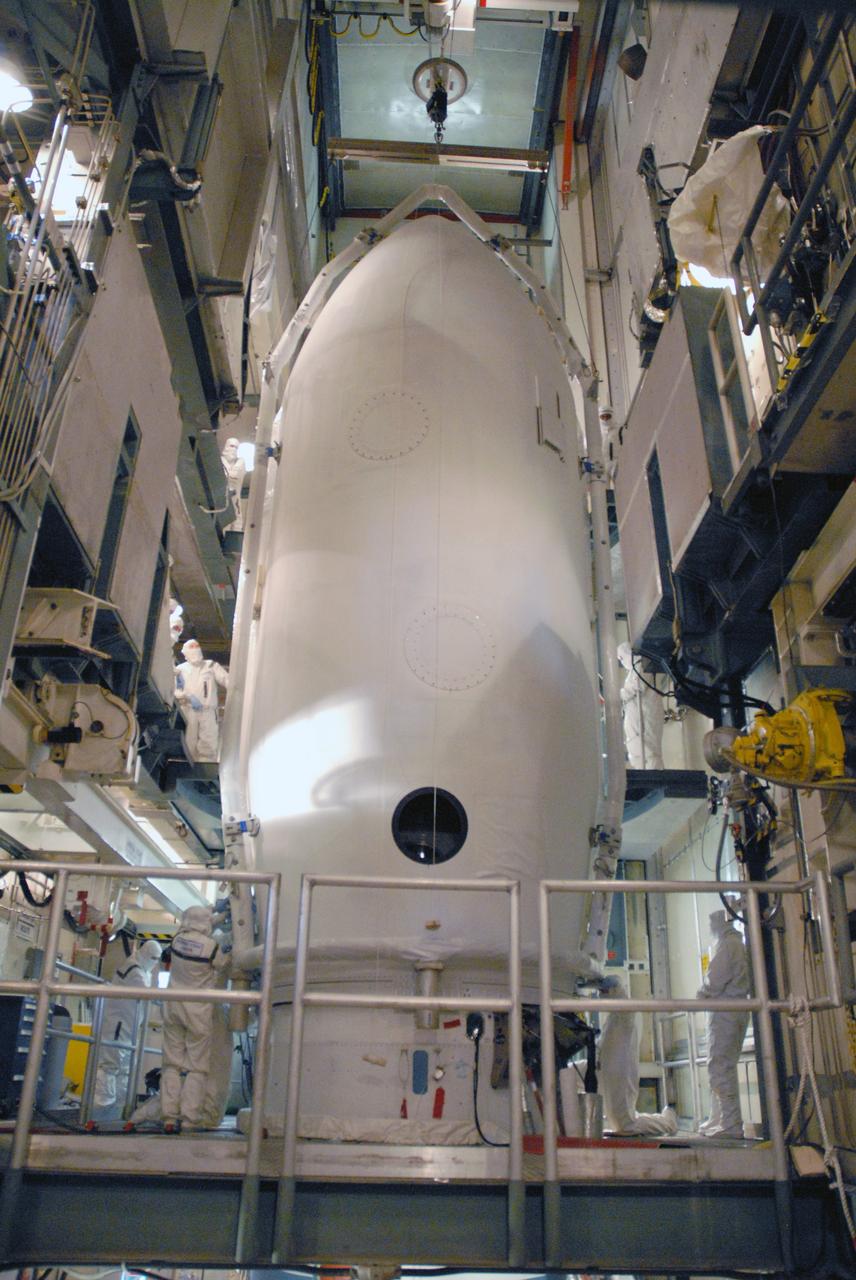
CAPE CANAVERAL, Fla. – Inside the mobile service tower on Launch Pad 17-B at Cape Canaveral Air Force Station in Florida, workers check the progress of the second half of the fairing as it moves into place around the Space Tracking and Surveillance System – Demonstrator spacecraft. The fairing is a two-part molded structure that fits flush with the outside surface of the rocket and forms an aerodynamically smooth nose cone, protecting the spacecraft during launch and ascent. STSS Demo is a space-based sensor component of a layered Ballistic Missile Defense System designed for the overall mission of detection, tracking and discriminating ballistic missiles. STSS is capable of tracking objects after boost phase and provides trajectory information to other sensors. It will be launched by NASA for the Missile Defense Agency between 8 and 8:58 a.m. EDT Sept. 18. Approved for Public Release 09-MDA-4934 (09-22-09) Photo credit: NASA/Cory Huston
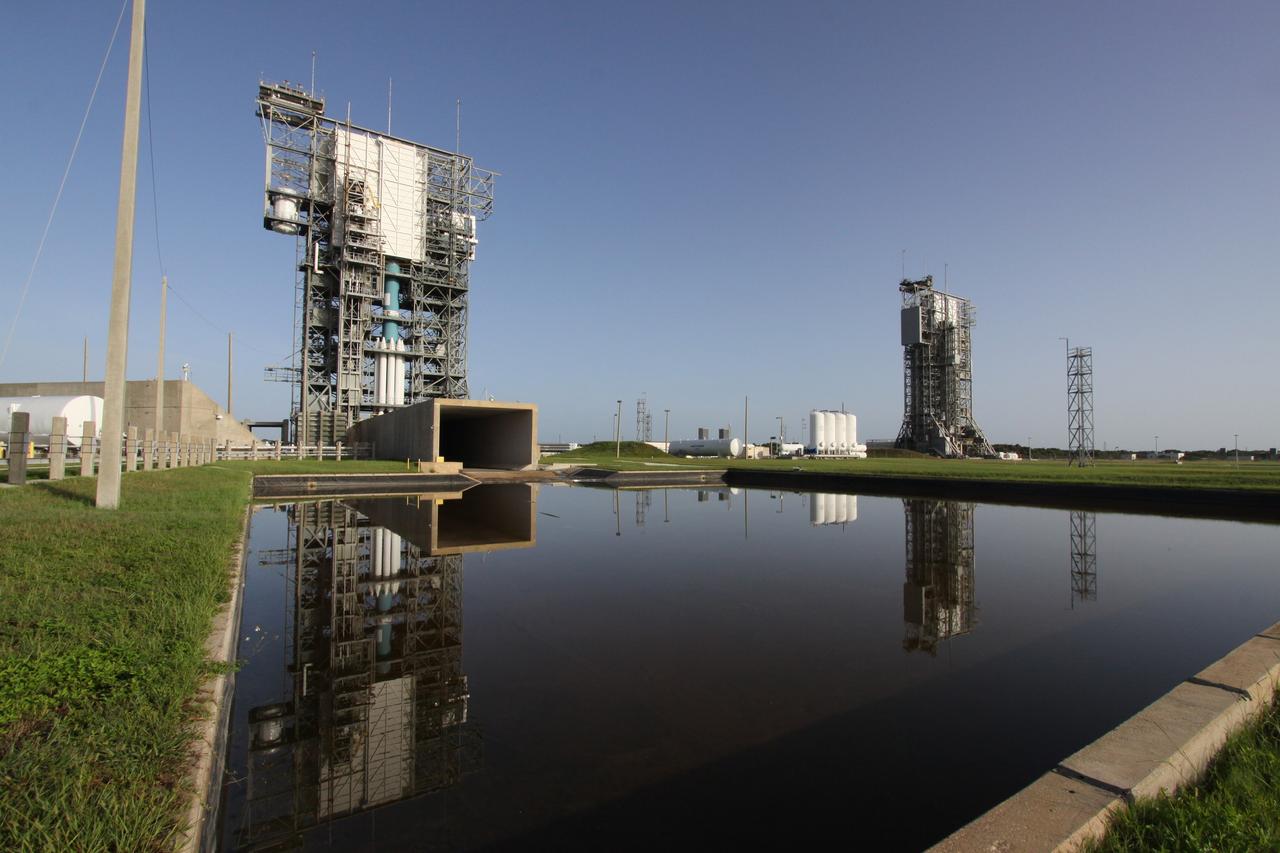
CAPE CANAVERAL, Fla. – The enclosed Space Tracking and Surveillance System – Demonstrators, or STSS-Demo, spacecraft is being lifted into the mobile service tower on Cape Canaveral Air Force Station's Launch Pad 17-B. The United Launch Alliance Delta II launch vehicle is already in place in the tower. The STSS Demo is a space-based sensor component of a layered Ballistic Missile Defense System designed for the overall mission of detecting, tracking and discriminating ballistic missiles. STSS is capable of tracking objects after boost phase and provides trajectory information to other sensors. It will be launched by NASA for the Missile Defense Agency between 8 and 8:58 a.m. EDT Sept. 18. Approved for Public Release 09-MDA-04886 (10 SEPT 09) Photo credit: NASA/Jack Pfaller

CAPE CANAVERAL, Fla. – At the Astrotech payload processing facility in Titusville, Fla., workers maneuver one of the second-row segments of the transportation canister that will be placed around the Space Tracking and Surveillance System – Demonstrators, or STSS Demo, spacecraft. The STSS Demo is a space-based sensor component of a layered Ballistic Missile Defense System designed for the overall mission of detecting, tracking and discriminating ballistic missiles. STSS is capable of tracking objects after boost phase and provides trajectory information to other sensors. It will be launched by NASA for the Missile Defense Agency between 8 and 8:58 a.m. EDT Sept. 18. Approved for Public Release 09-MDA-04886 (10 SEPT 09) Photo credit: NASA/Kim Shiflett
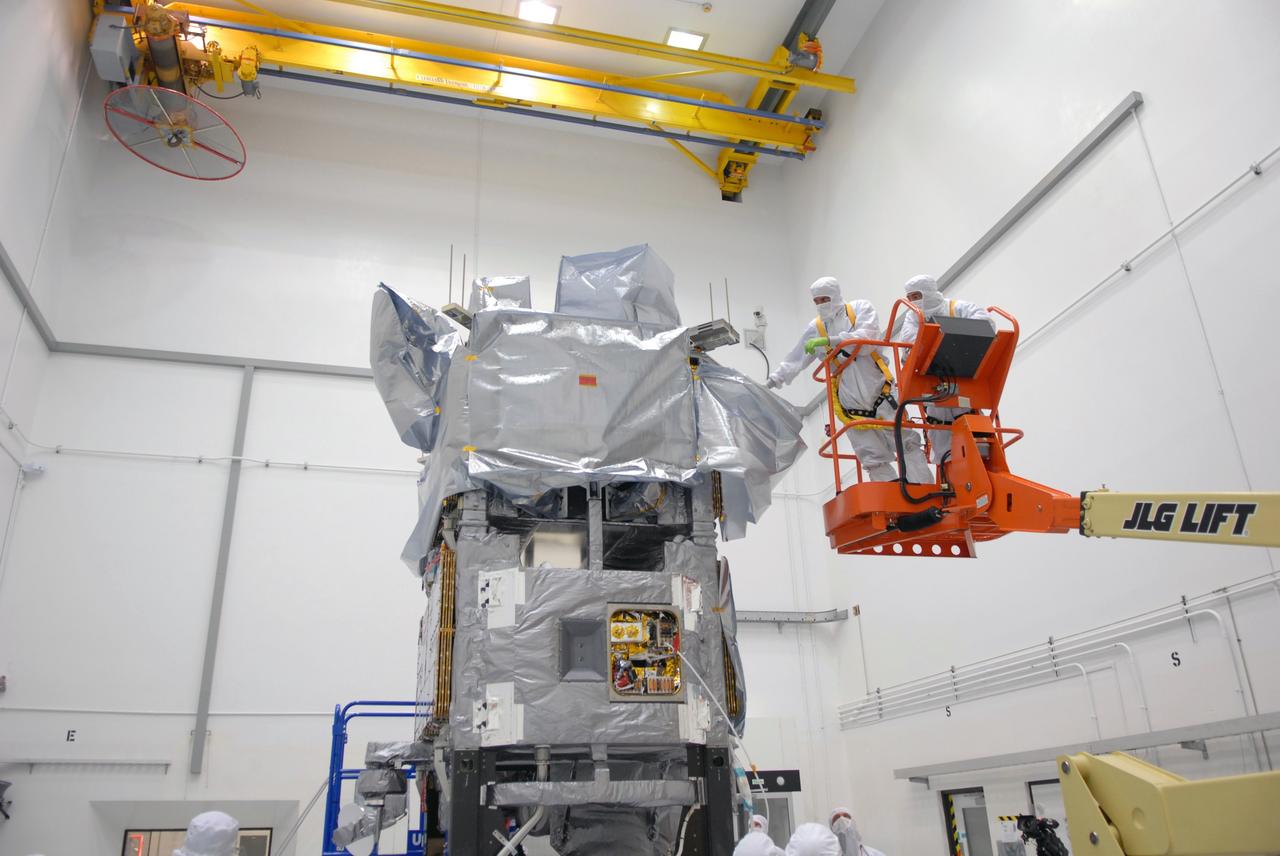
CAPE CANAVERAL, Fla. – At the Astrotech payload processing facility in Titusville, Fla., workers remove covers around the mated SV1 and SV2 spacecraft before center of gravity testing, weighing and balancing. The two spacecraft are known as the Space Tracking and Surveillance System – Demonstrators, or STSS Demo, which is a space-based sensor component of a layered Ballistic Missile Defense System designed for the overall mission of detecting, tracking and discriminating ballistic missiles. STSS is capable of tracking objects after boost phase and provides trajectory information to other sensors. It will be launched by NASA for the Missile Defense Agency between 8 and 8:58 a.m. EDT Sept. 18. Approved for Public Release 09-MDA-04886 (10 SEPT 09) Photo credit: NASA/Jim Grossmann
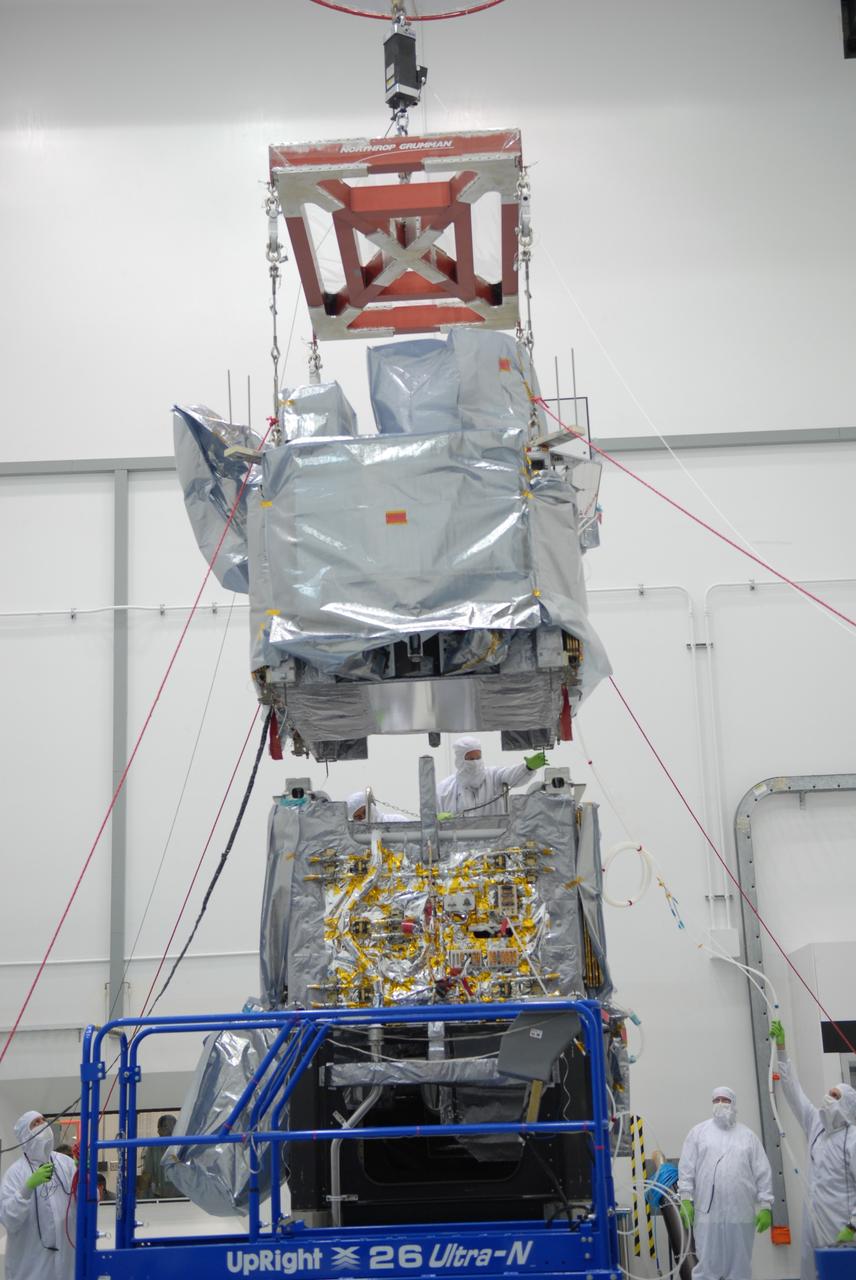
CAPE CANAVERAL, Fla. – At the Astrotech payload processing facility in Titusville, Fla., the SV1 spacecraft is lowered toward the SV2 for mating. The two spacecraft are part of the Space Tracking and Surveillance System – Demonstrators, or STSS Demo, Program. The STSS Demo is a space-based sensor component of a layered Ballistic Missile Defense System designed for the overall mission of detecting, tracking and discriminating ballistic missiles. STSS is capable of tracking objects after boost phase and provides trajectory information to other sensors. It will be launched by NASA for the Missile Defense Agency between 8 and 8:58 a.m. EDT Sept. 18. Approved for Public Release 09-MDA-04886 (10 SEPT 09) Photo credit: NASA/Jim Grossmann
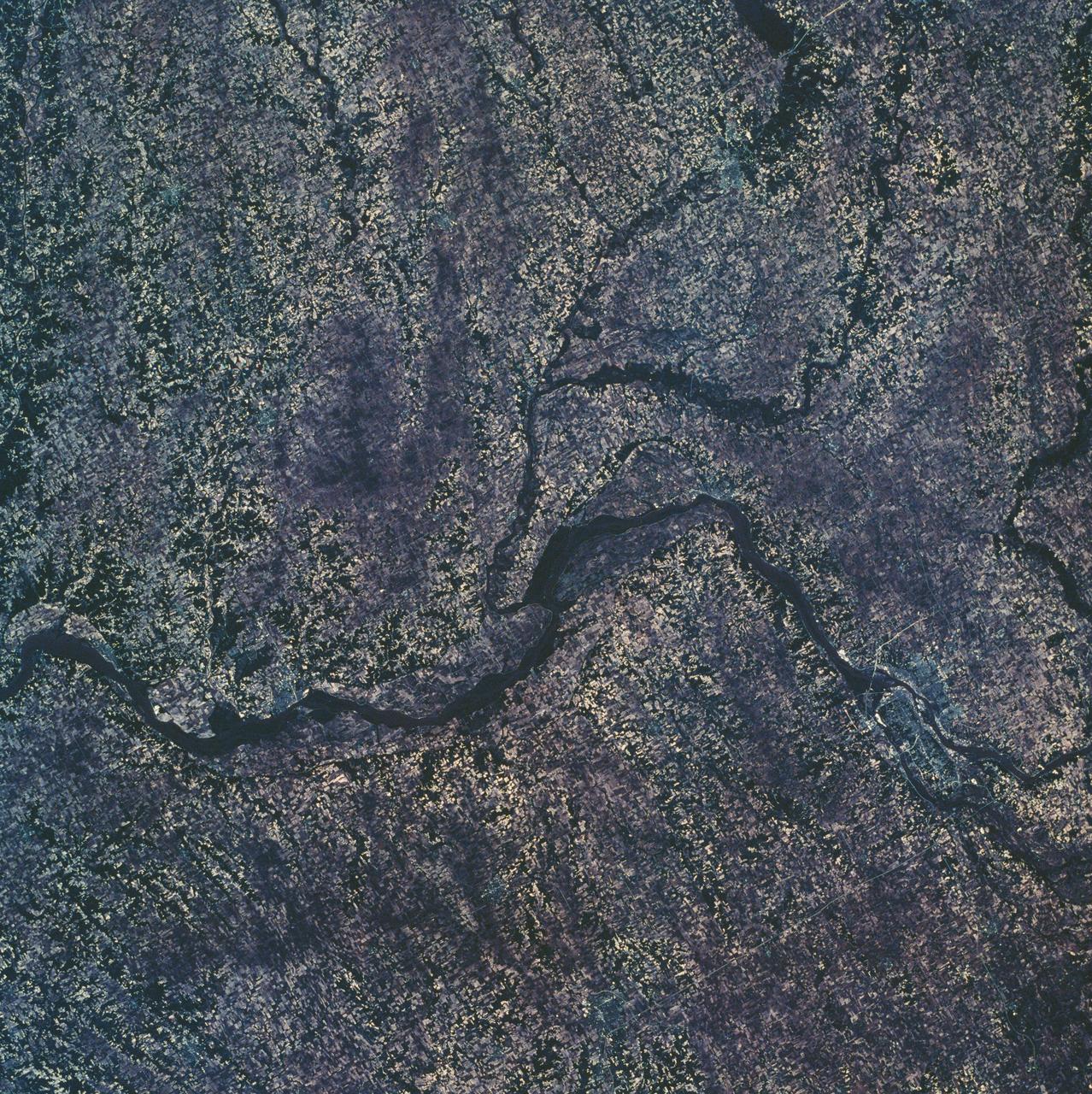
SL2-10-250 (May-June 1973) --- A vertical view of eastern Iowa and northwestern Illinois, as photographed from Skylab space station in Earth orbit. Davenport, Burlington and Muscatine, Iowa; and Rock Island and Moline, Illinois can be delineated on opposite sides of the Mississippi River. The Iowa River and tributaries of it can also be delineated. This photograph was taken with one of six lenses of the Itek-furnished Multispectral Photographic Facility Experiment S190-A mounted in the Multiple Docking Adapter (MDA) of the space station. A six-inch lens, using 70mm medium speed Ektachrome (SO-356) film, was used. Agencies participating with NASA on the EREP project are the Departments of Agriculture, Commerce and Interior; the Environmental Protection Agency and the Corps of Engineers. All EREP photography is available to the public through the Department of Interior's Earth Resources Observations Systems Data Center, Sioux Falls, South Dakota, 57198. Photo credit: NASA
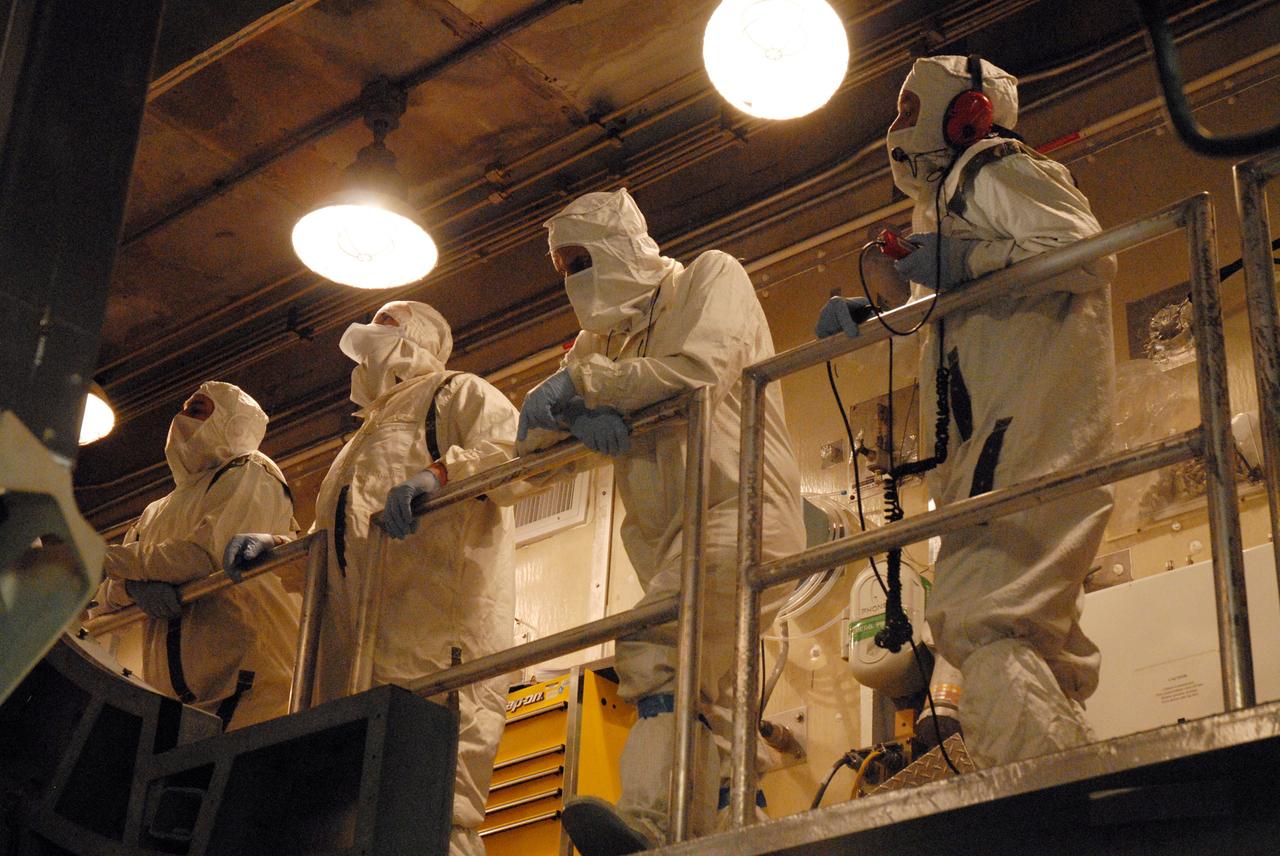
CAPE CANAVERAL, Fla. – Inside the mobile service tower on Launch Pad 17-B at Cape Canaveral Air Force Station in Florida, workers check the progress of the fairing being moved toward the Space Tracking and Surveillance System – Demonstrator spacecraft for encapsulation. The fairing is a two-part molded structure that fits flush with the outside surface of the rocket and forms an aerodynamically smooth nose cone, protecting the spacecraft during launch and ascent. STSS Demo is a space-based sensor component of a layered Ballistic Missile Defense System designed for the overall mission of detection, tracking and discriminating ballistic missiles. STSS is capable of tracking objects after boost phase and provides trajectory information to other sensors. It will be launched by NASA for the Missile Defense Agency between 8 and 8:58 a.m. EDT Sept. 18. Approved for Public Release 09-MDA-4934 (09-22-09) Photo credit: NASA/Cory Huston
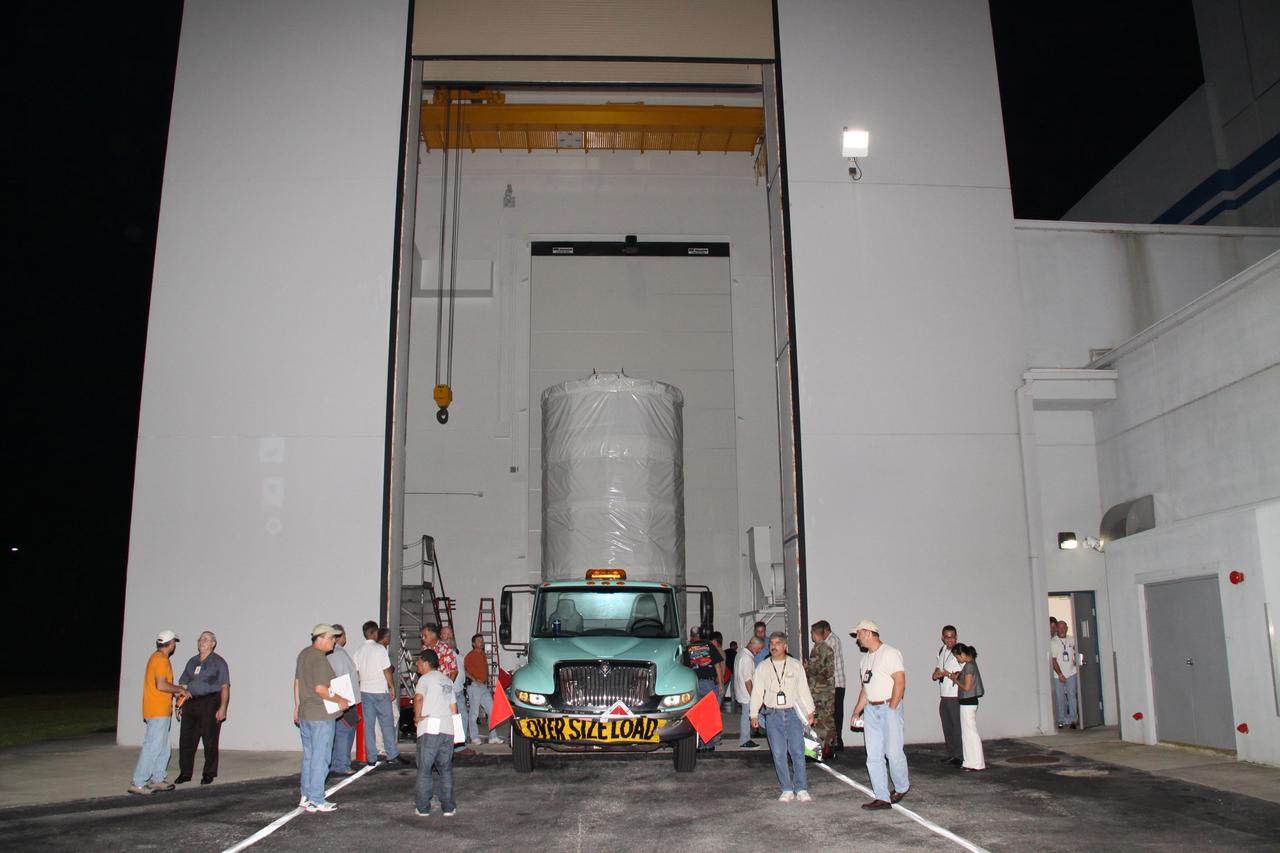
CAPE CANAVERAL, Fla. – The enclosed Space Tracking and Surveillance System – Demonstrators, or STSS-Demo, spacecraft moves out of the Astrotech payload processing facility. It is being moved to Cape Canaveral Air Force Station's Launch Pad 17-B. The STSS Demo is a space-based sensor component of a layered Ballistic Missile Defense System designed for the overall mission of detecting, tracking and discriminating ballistic missiles. STSS is capable of tracking objects after boost phase and provides trajectory information to other sensors. It will be launched by NASA for the Missile Defense Agency between 8 and 8:58 a.m. EDT Sept. 18. Approved for Public Release 09-MDA-04886 (10 SEPT 09) Photo credit: NASA/Jack Pfaller
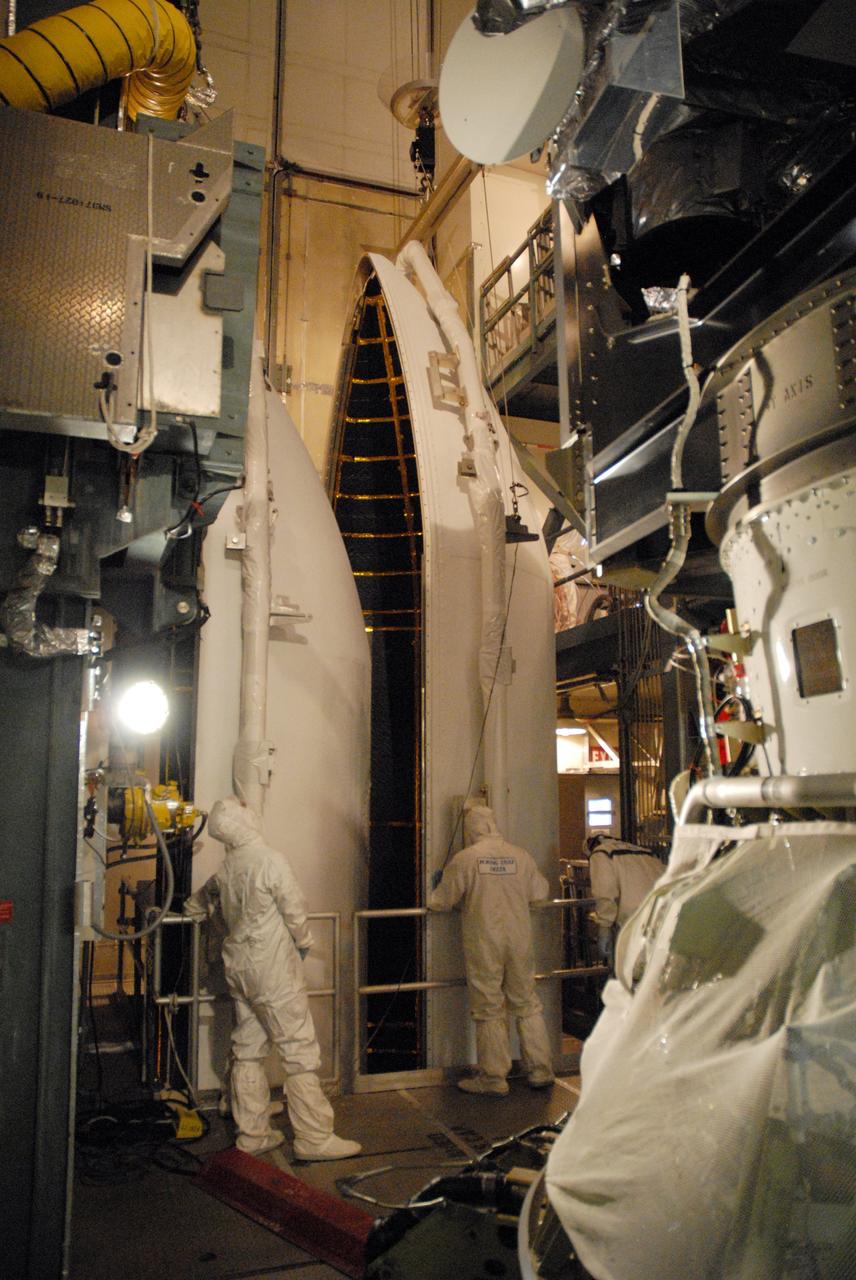
CAPE CANAVERAL, Fla. – The two halves of the fairing are moved into the mobile service tower on Launch Pad 17-B at Cape Canaveral Air Force Station in Florida. The two-part fairing will be placed around the Space Tracking and Surveillance System – Demonstrator spacecraft for protection during launch. STSS Demo is a space-based sensor component of a layered Ballistic Missile Defense System designed for the overall mission of detection, tracking and discriminating ballistic missiles. STSS is capable of tracking objects after boost phase and provides trajectory information to other sensors. It will be launched by NASA for the Missile Defense Agency between 8 and 8:58 a.m. EDT Sept. 18. Approved for Public Release 09-MDA-4934 (09-22-09) Photo credit: NASA/Cory Huston
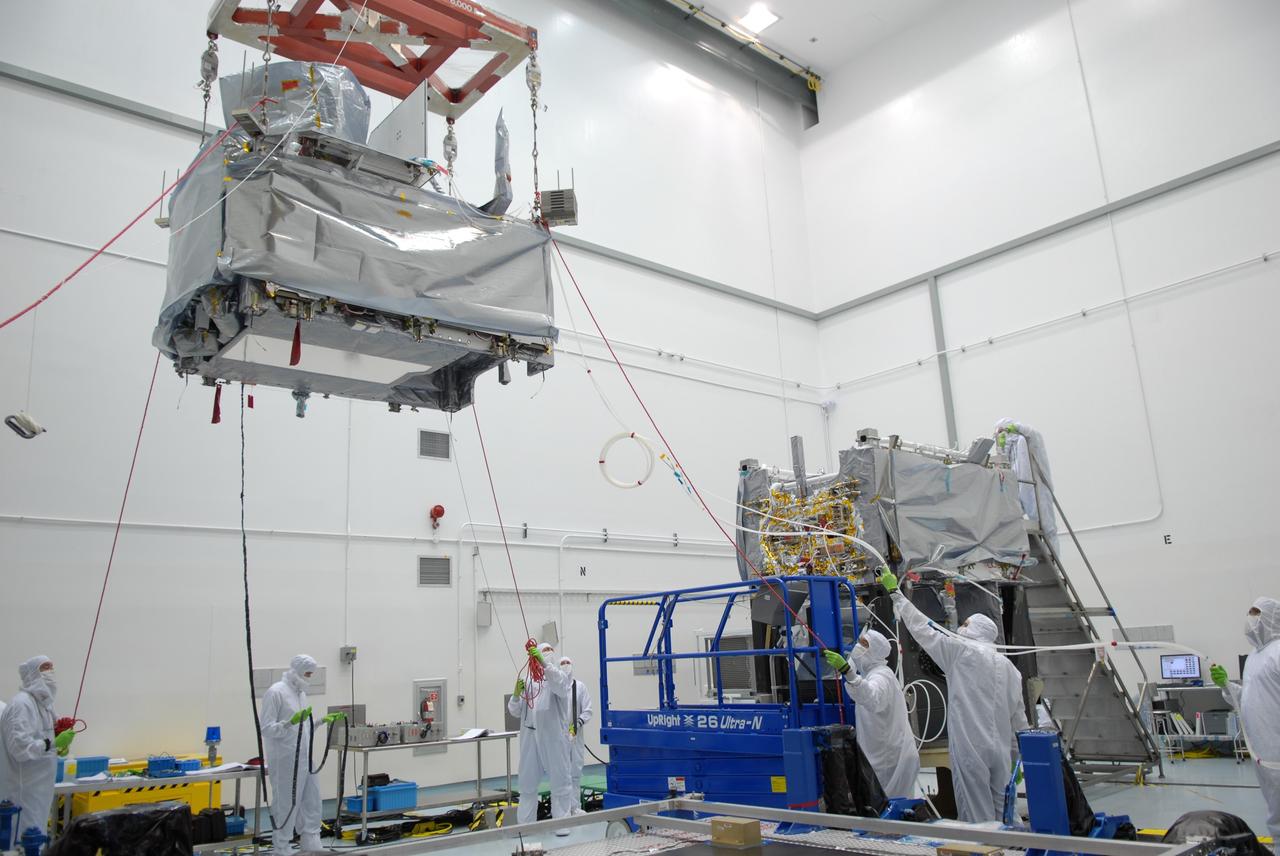
CAPE CANAVERAL, Fla. – At the Astrotech payload processing facility in Titusville, Fla., workers help guide the movement of the SV1 spacecraft as it is moved toward the SV2 at right. The two spacecraft are part of the Space Tracking and Surveillance System – Demonstrators, or STSS Demo, Program. The STSS Demo is a space-based sensor component of a layered Ballistic Missile Defense System designed for the overall mission of detecting, tracking and discriminating ballistic missiles. STSS is capable of tracking objects after boost phase and provides trajectory information to other sensors. It will be launched by NASA for the Missile Defense Agency between 8 and 8:58 a.m. EDT Sept. 18. Approved for Public Release 09-MDA-04886 (10 SEPT 09) Photo credit: NASA/Jim Grossmann
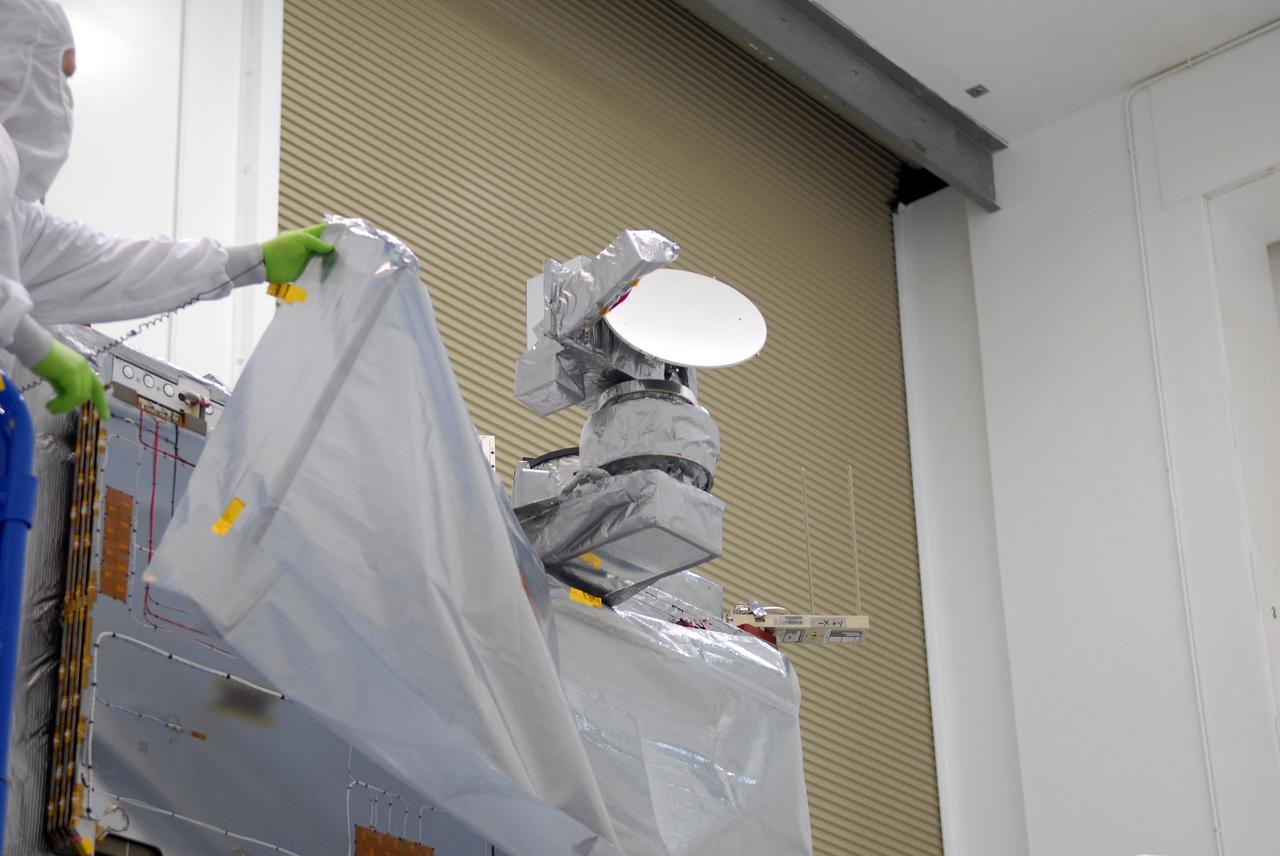
CAPE CANAVERAL, Fla. – At the Astrotech payload processing facility in Titusville, Fla., workers remove covers around the mated SV1 and SV2 spacecraft before center of gravity testing, weighing and balancing. The two spacecraft are known as the Space Tracking and Surveillance System – Demonstrators, or STSS Demo, which is a space-based sensor component of a layered Ballistic Missile Defense System designed for the overall mission of detecting, tracking and discriminating ballistic missiles. STSS is capable of tracking objects after boost phase and provides trajectory information to other sensors. It will be launched by NASA for the Missile Defense Agency between 8 and 8:58 a.m. EDT Sept. 18. Approved for Public Release 09-MDA-04886 (10 SEPT 09) Photo credit: NASA/Jim Grossmann
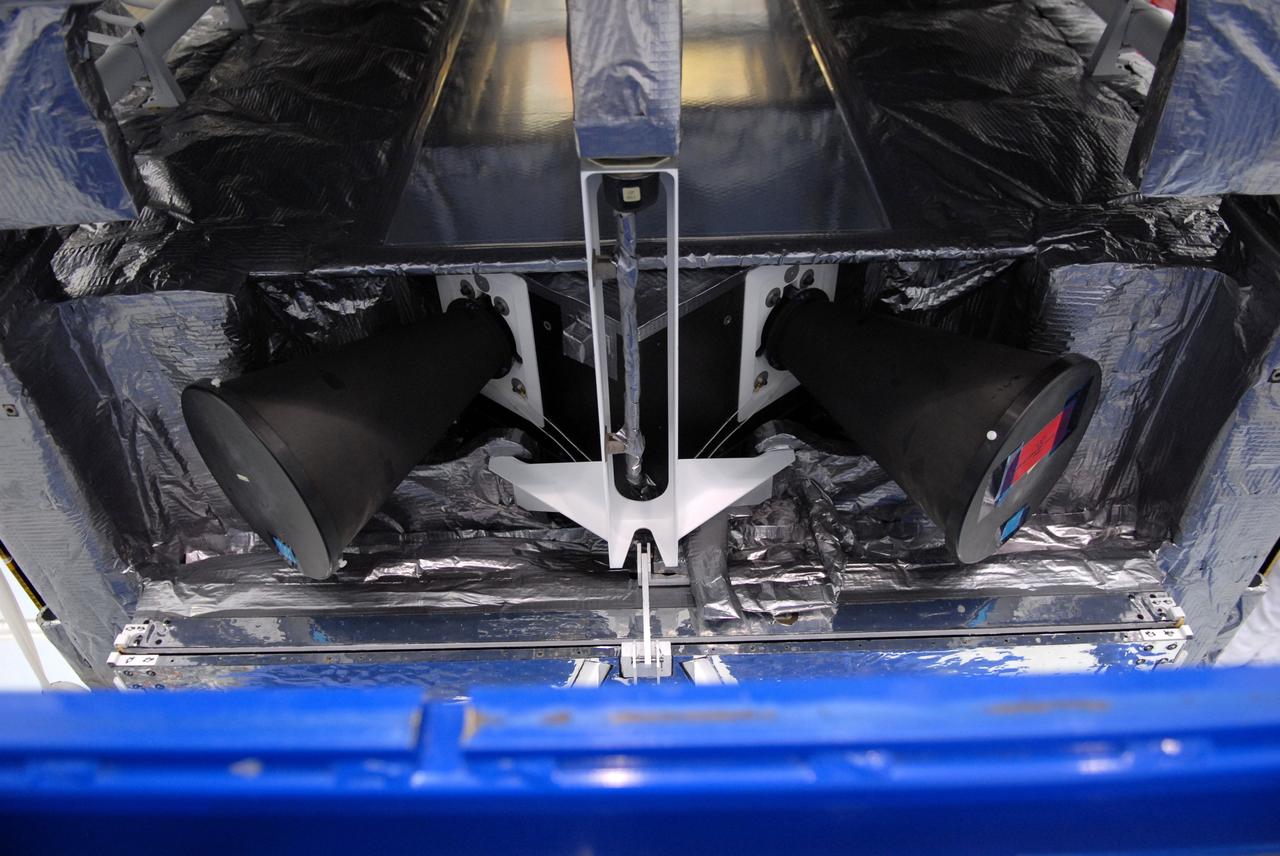
CAPE CANAVERAL, Fla. – At the Astrotech payload processing facility in Titusville, Fla., this closeup shows part of the mated SV1 and SV2 spacecraft, which is being prepared for center of gravity testing, weighing and balancing. The two spacecraft are known as the Space Tracking and Surveillance System – Demonstrators, or STSS Demo, which is a space-based sensor component of a layered Ballistic Missile Defense System designed for the overall mission of detecting, tracking and discriminating ballistic missiles. STSS is capable of tracking objects after boost phase and provides trajectory information to other sensors. It will be launched by NASA for the Missile Defense Agency between 8 and 8:58 a.m. EDT Sept. 18. Approved for Public Release 09-MDA-04886 (10 SEPT 09) Photo credit: NASA/Jim Grossmann
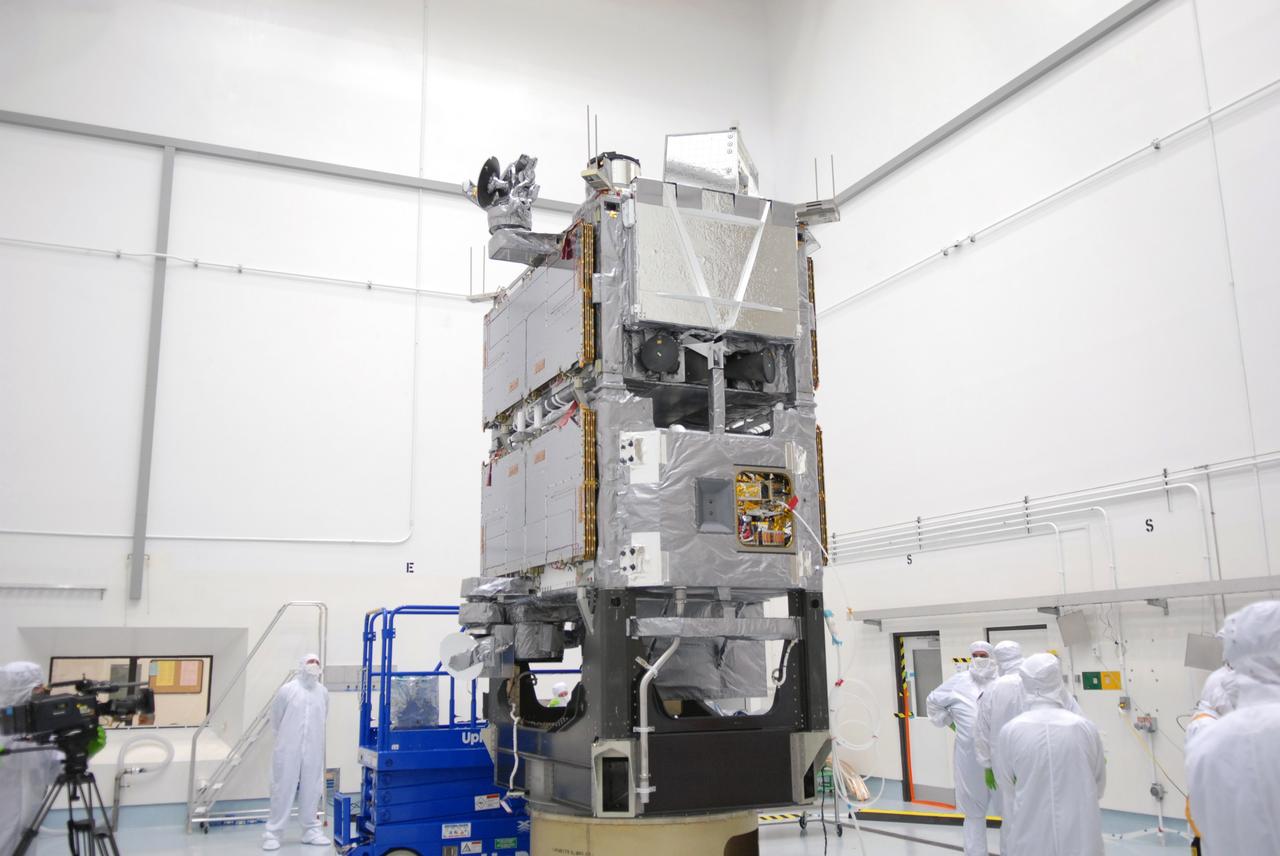
CAPE CANAVERAL, Fla. – At the Astrotech payload processing facility in Titusville, Fla., the mated SV1 and SV2 spacecraft are largely uncovered before center of gravity testing, weighing and balancing. The two spacecraft are known as the Space Tracking and Surveillance System – Demonstrators, or STSS Demo, which is a space-based sensor component of a layered Ballistic Missile Defense System designed for the overall mission of detecting, tracking and discriminating ballistic missiles. STSS is capable of tracking objects after boost phase and provides trajectory information to other sensors. It will be launched by NASA for the Missile Defense Agency between 8 and 8:58 a.m. EDT Sept. 18. Approved for Public Release 09-MDA-04886 (10 SEPT 09) Photo credit: NASA/Jim Grossmann
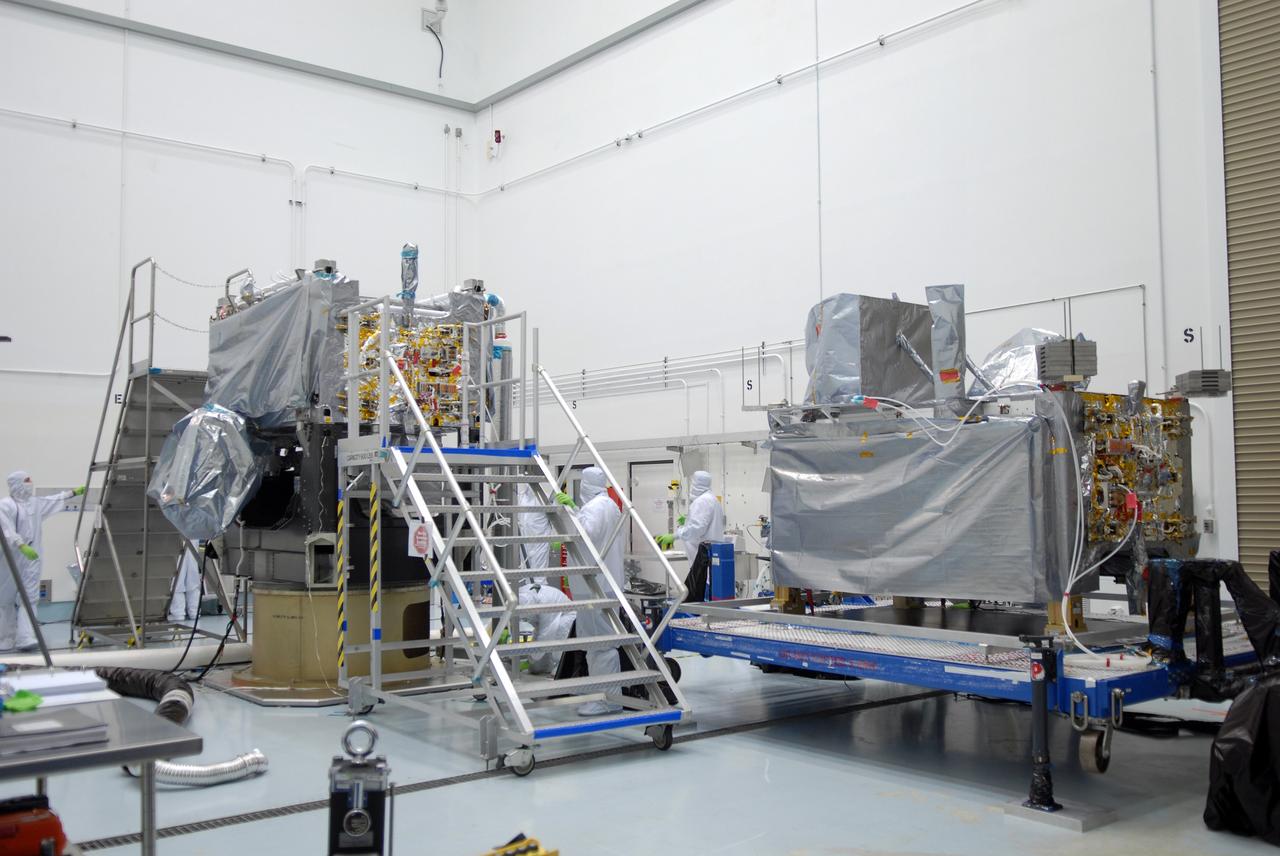
CAPE CANAVERAL, Fla. – At the Astrotech payload processing facility in Titusville, Fla., the SV1 and SV2 spacecraft are ready for mating for launch. The two spacecraft are part of the Space Tracking and Surveillance System – Demonstrators, or STSS Demo, Program. STSS-Demo is a space-based sensor component of a layered Ballistic Missile Defense System designed for the overall mission of detecting, tracking and discriminating ballistic missiles. The spacecraft is capable of tracking objects after boost phase and provides trajectory information to other sensors. It will be launched by NASA for the Missile Defense Agency between 8 and 8:58 a.m. EDT Sept. 18. Approved for Public Release 09-MDA-04886 (10 SEPT 09) Photo credit: NASA/Jim Grossmann
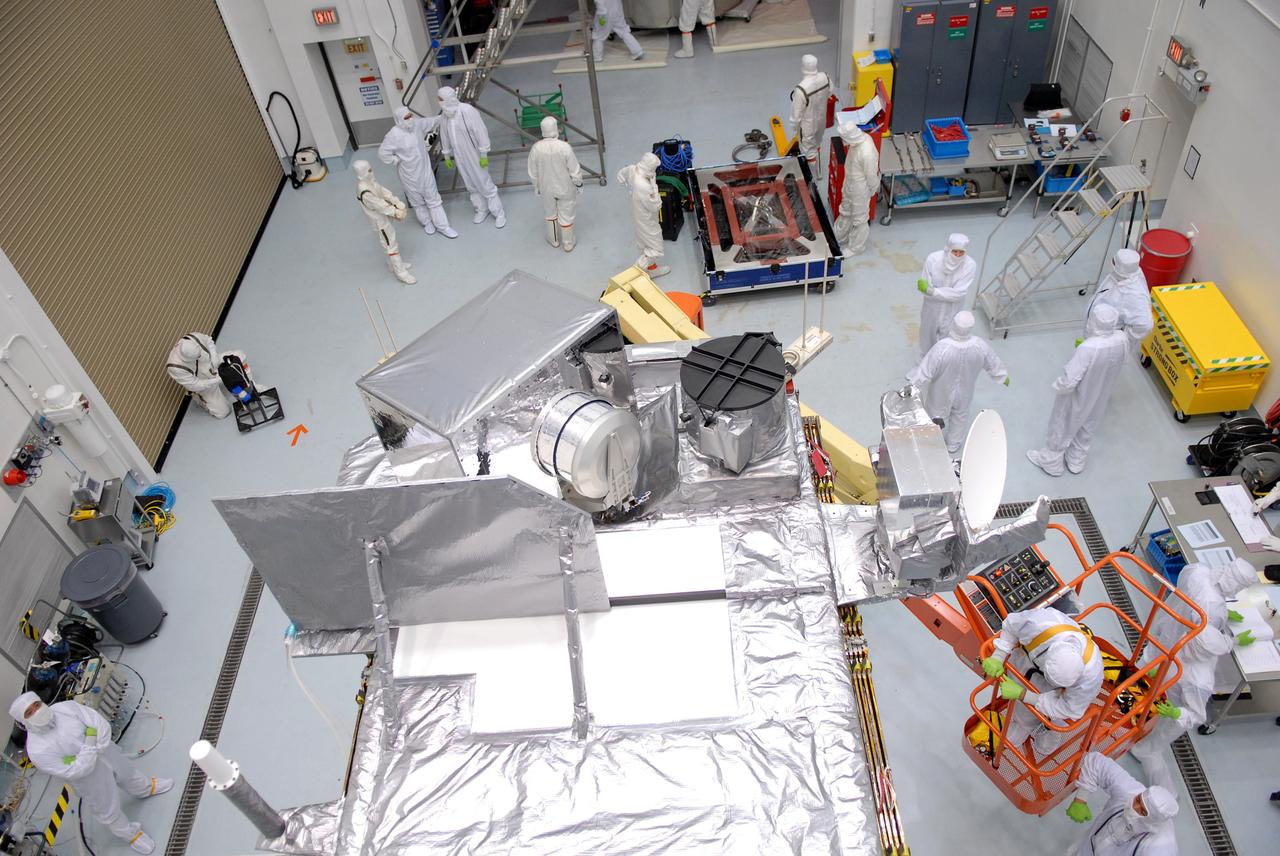
CAPE CANAVERAL, Fla. – At the Astrotech payload processing facility in Titusville, Fla., the top of the mated SV1 and SV2 remains covered. The spacecraft are being prepared for center of gravity testing, weighing and balancing. The two spacecraft are known as the Space Tracking and Surveillance System – Demonstrators, or STSS Demo, which is a space-based sensor component of a layered Ballistic Missile Defense System designed for the overall mission of detecting, tracking and discriminating ballistic missiles. STSS is capable of tracking objects after boost phase and provides trajectory information to other sensors. It will be launched by NASA for the Missile Defense Agency between 8 and 8:58 a.m. EDT Sept. 18. Approved for Public Release 09-MDA-04886 (10 SEPT 09) Photo credit: NASA/Jim Grossmann
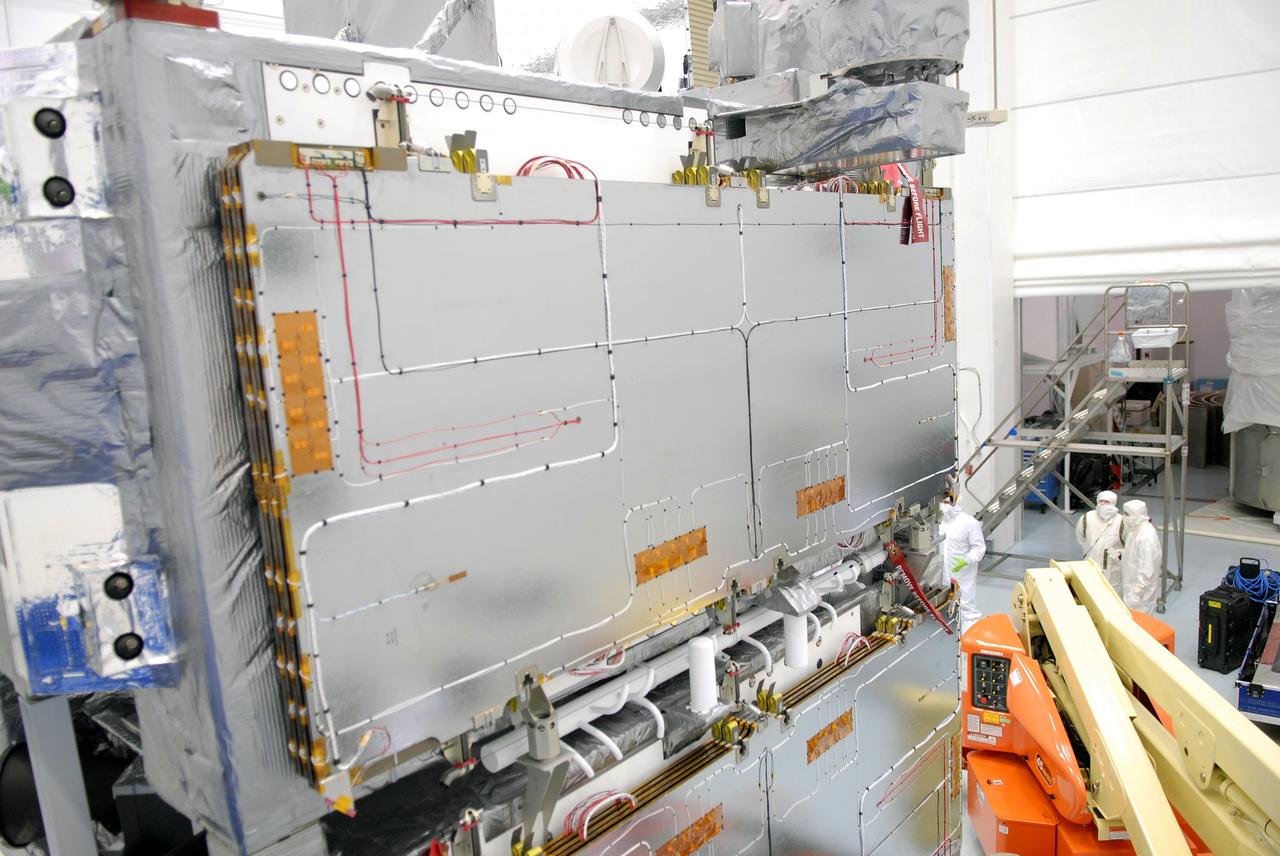
CAPE CANAVERAL, Fla. – At the Astrotech payload processing facility in Titusville, Fla., the mated SV1 and SV2 spacecraft are being prepared for center of gravity testing, weighing and balancing. The two spacecraft are known as the Space Tracking and Surveillance System – Demonstrators, or STSS Demo, which is a space-based sensor component of a layered Ballistic Missile Defense System designed for the overall mission of detecting, tracking and discriminating ballistic missiles. STSS is capable of tracking objects after boost phase and provides trajectory information to other sensors. It will be launched by NASA for the Missile Defense Agency between 8 and 8:58 a.m. EDT Sept. 18. Approved for Public Release 09-MDA-04886 (10 SEPT 09) Photo credit: NASA/Jim Grossmann
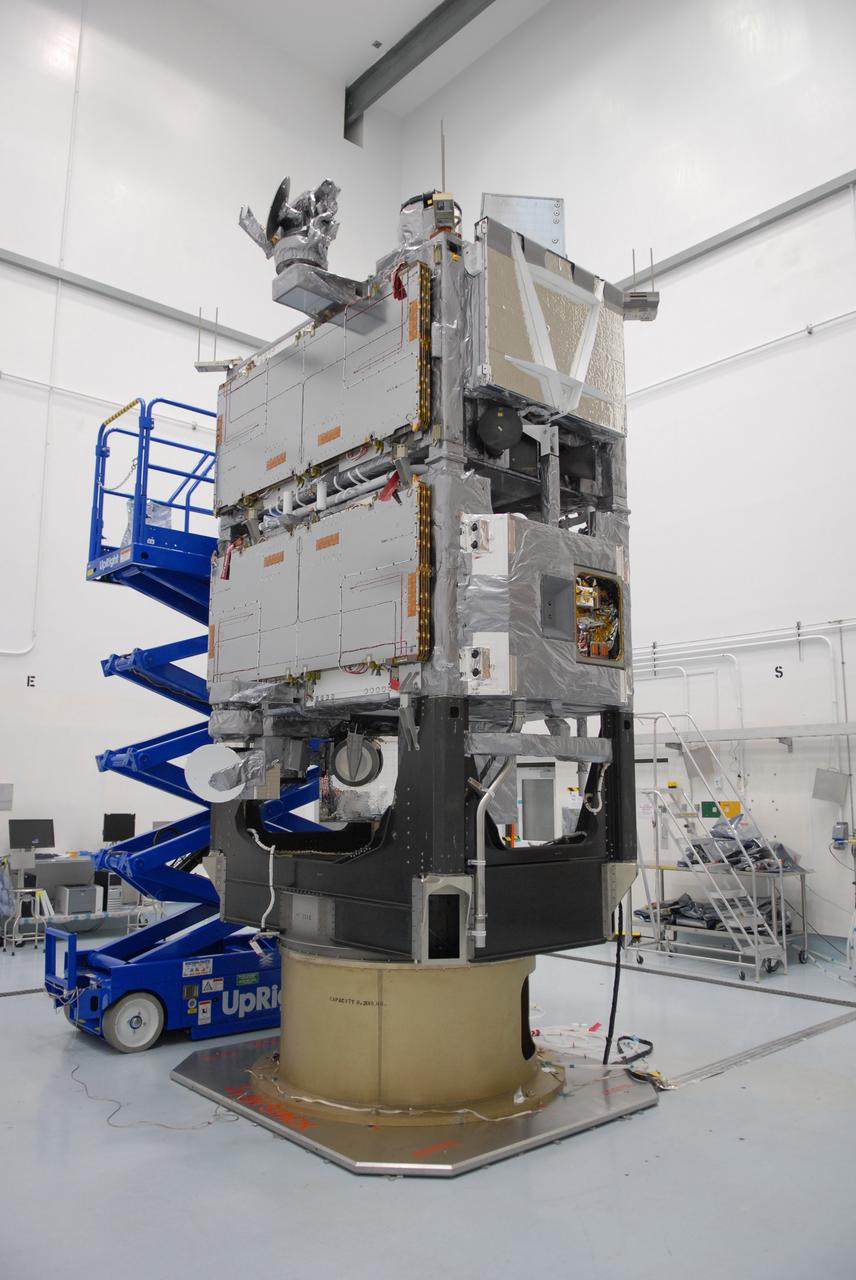
CAPE CANAVERAL, Fla. – At the Astrotech payload processing facility in Titusville, Fla., the SV1-SV2 spacecraft sits on the rotation stand after weighing. The two spacecraft are known as the Space Tracking and Surveillance System – Demonstrators, or STSS Demo, which is a space-based sensor component of a layered Ballistic Missile Defense System designed for the overall mission of detecting, tracking and discriminating ballistic missiles. STSS is capable of tracking objects after boost phase and provides trajectory information to other sensors. It will be launched by NASA for the Missile Defense Agency between 8 and 8:58 a.m. EDT Sept. 18. Approved for Public Release 09-MDA-04886 (10 SEPT 09) Photo credit: NASA/Jim Grossmann
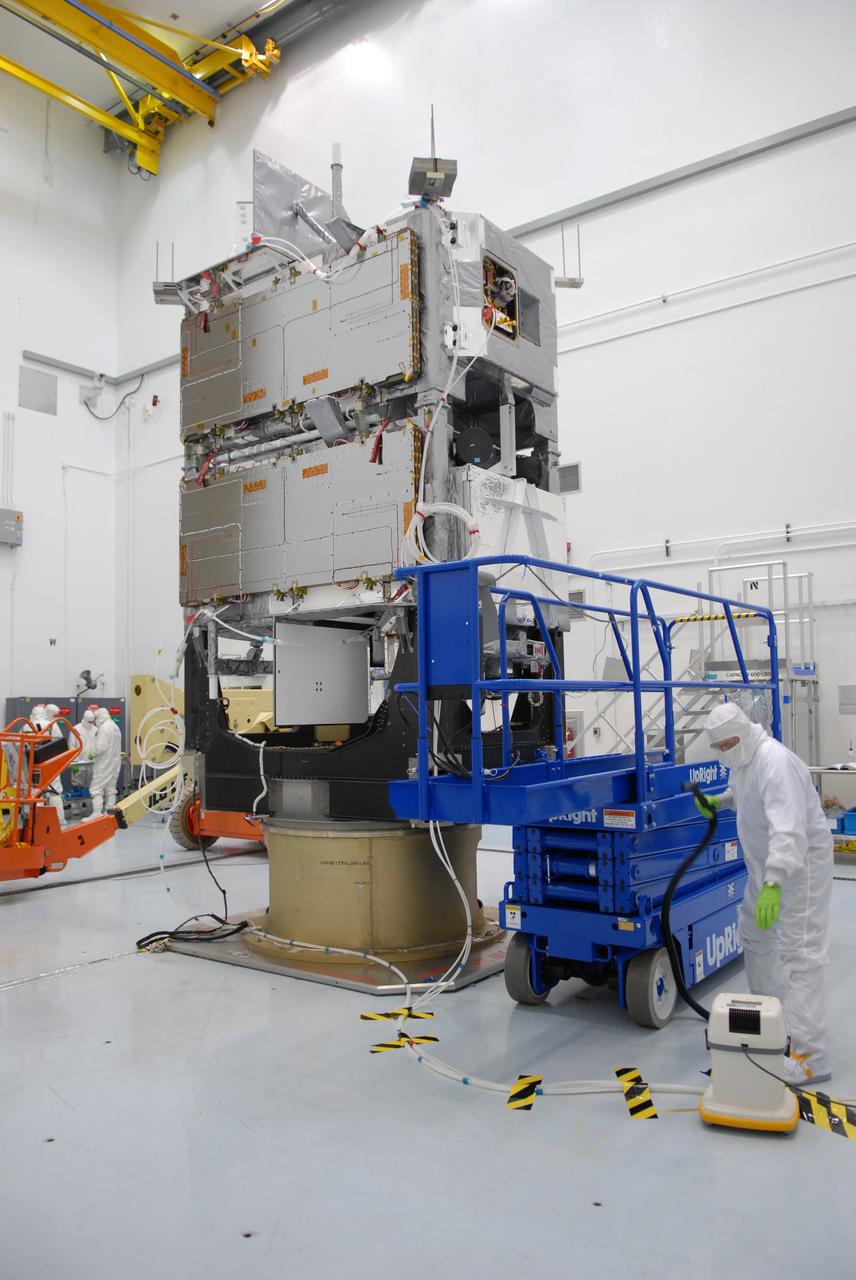
CAPE CANAVERAL, Fla. – At the Astrotech payload processing facility in Titusville, Fla., workers begin center of gravity testing, weighing and balancing on the SV1-SV2 spacecraft. The two spacecraft are known as the Space Tracking and Surveillance System – Demonstrators, or STSS Demo, which is a space-based sensor component of a layered Ballistic Missile Defense System designed for the overall mission of detecting, tracking and discriminating ballistic missiles. STSS is capable of tracking objects after boost phase and provides trajectory information to other sensors. It will be launched by NASA for the Missile Defense Agency between 8 and 8:58 a.m. EDT Sept. 18. Approved for Public Release 09-MDA-04886 (10 SEPT 09) Photo credit: NASA/Jim Grossmann