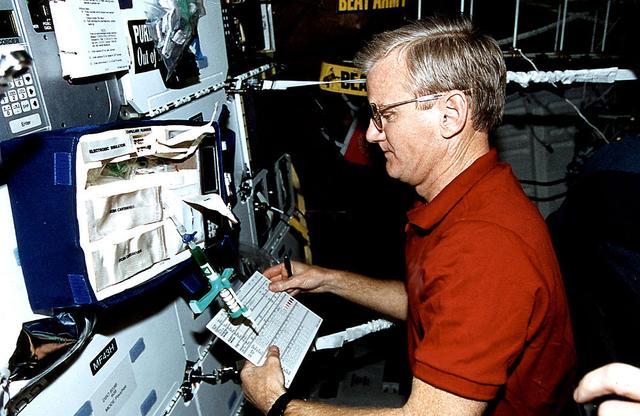
Onboard Space Shuttle Columbia (STS-62) Mission commander John H. Casper takes stock of paraphenalia used to support medical testing onboard Columbia's mid-deck.
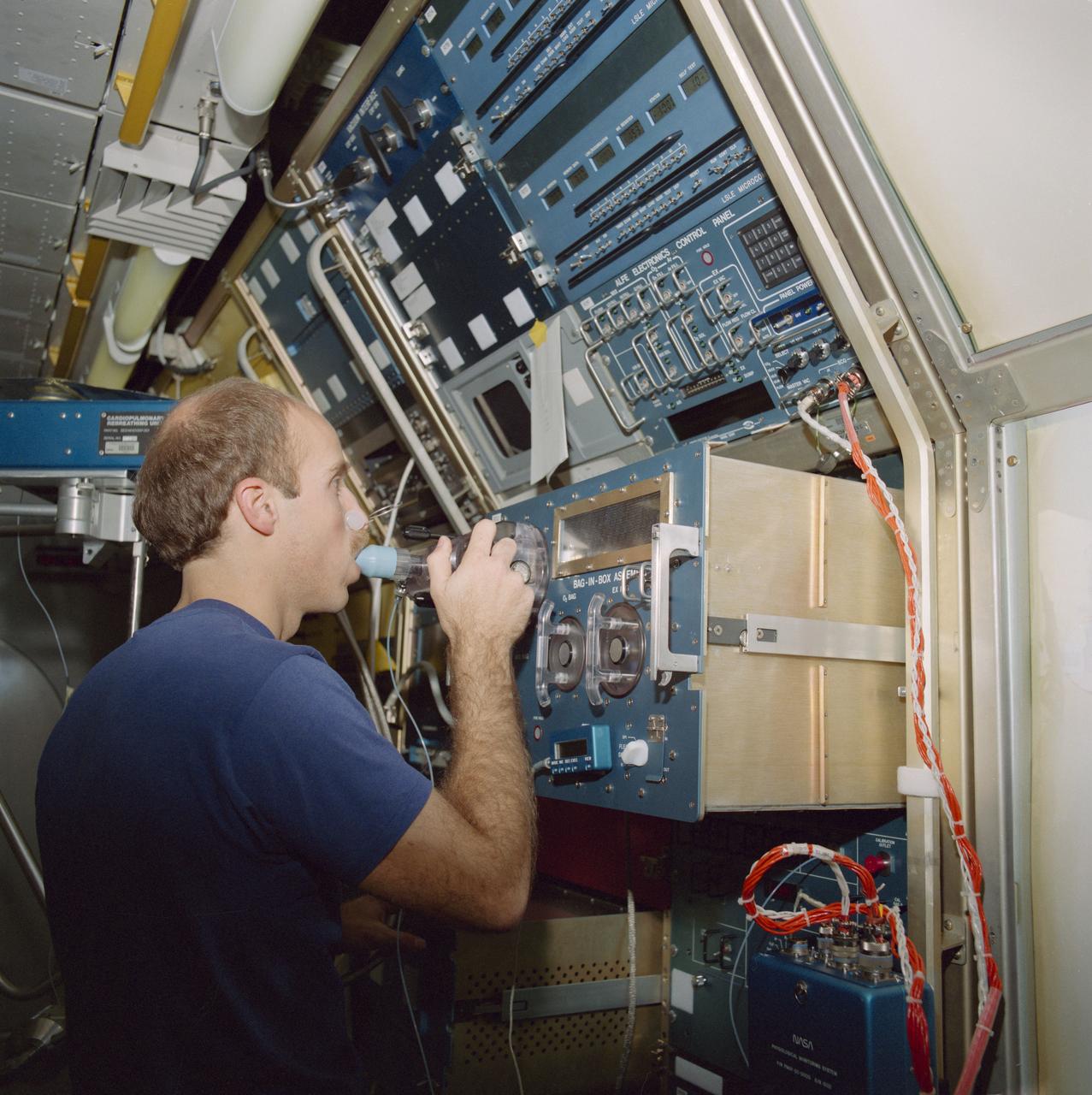
S85-26582 (Feb 1985) --- Training on the rebreathing assembly, astronaut James P. Bagian, STS-40 mission specialist, inhales a predetermined gas composition. A gas analyzer mass spectrometer determines the composition of the gases he exhales. The rebreathing assembly and gas analyzer system are part of an investigation that explores how lung function is altered. Dr. Bagian will be joined by two other mission specialists, the mission commander, the pilot and two payload specialists for the scheduled 10-day Spacelab Life Sciences-1 (SLS-1) mission. The flight is totally dedicated to biological and medical experimentation.
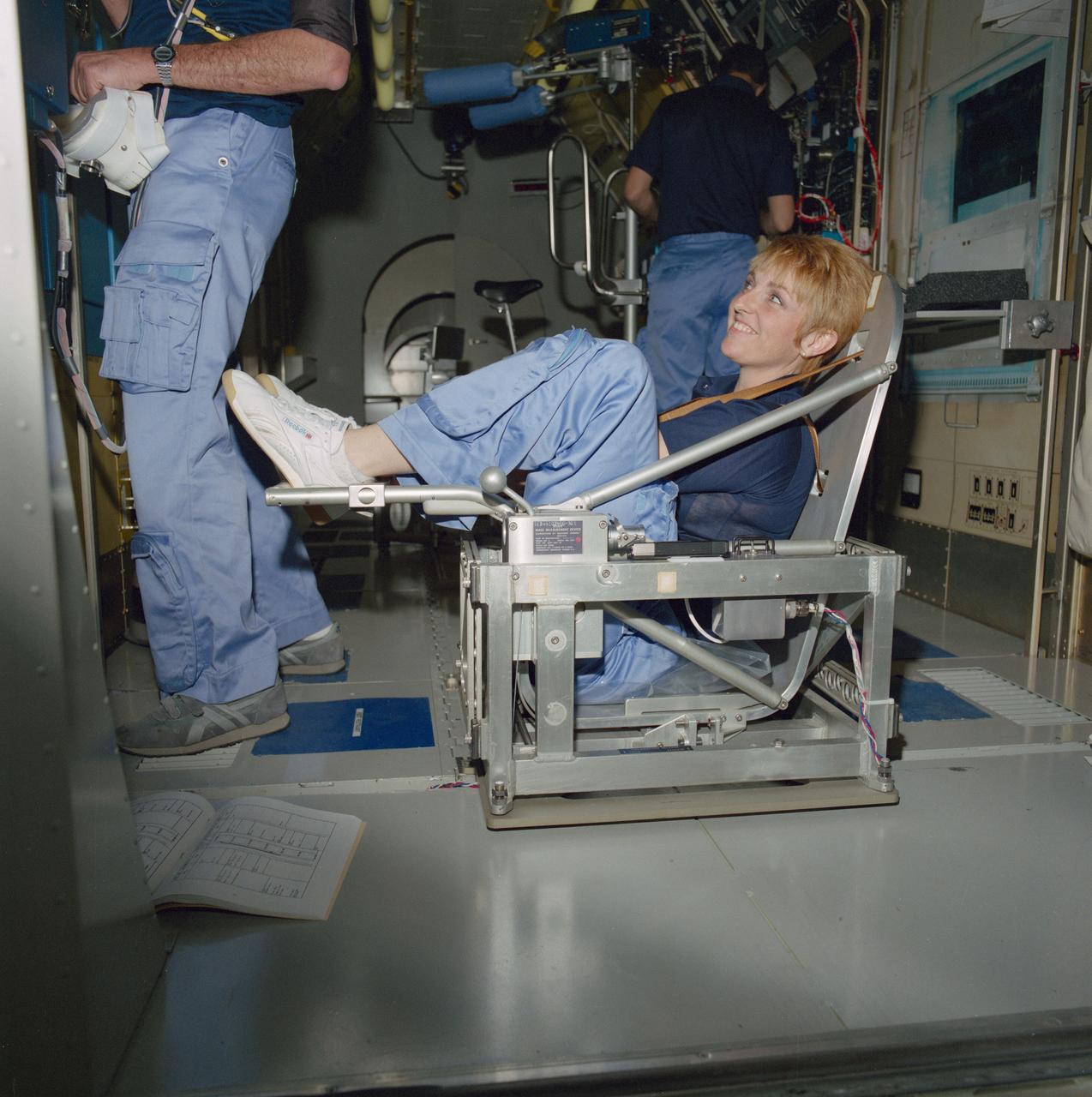
S85-26553 (Feb 1985) --- STS-40/SLS-1 payload specialist Millie Hughes-Fulford sits strapped in the special device scientists have developed for determining mass on orbit. As the chair swings back and forth, a timer records how much the crewmember's mass retards the chair's movement. Dr. Hughes-Fulford will be joined by three mission specialists, the mission commander, the pilot and a second payload specialist for the scheduled 10-day Spacelab Life Sciences-1 (SLS-1) mission. The flight is totally dedicated to biological and medical experimentation.
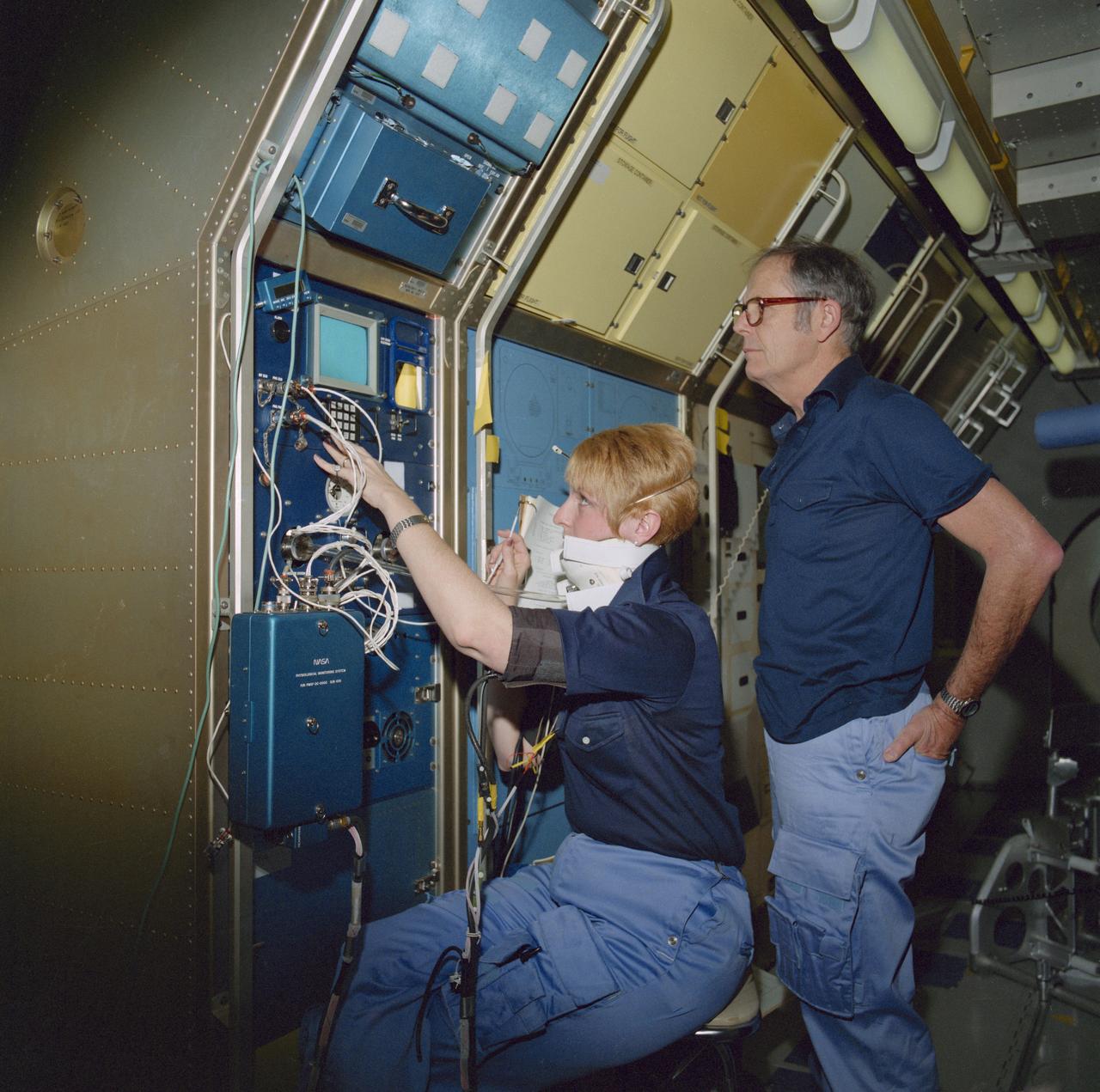
S85-26571 (Feb 1985) --- Wearing a special collar, Millie Hughes-Fulford, payload specialist, practices medical test operations scheduled for the Spacelab Life Sciences (SLS-1) mission. Robert Ward Phillips, backup payload specialist, looks on. The collar, called the baroflex neck pressure chamber, is designed to stimulate the bioceptors in the carotid artery, one of the two main arteries that supply blood to the head.
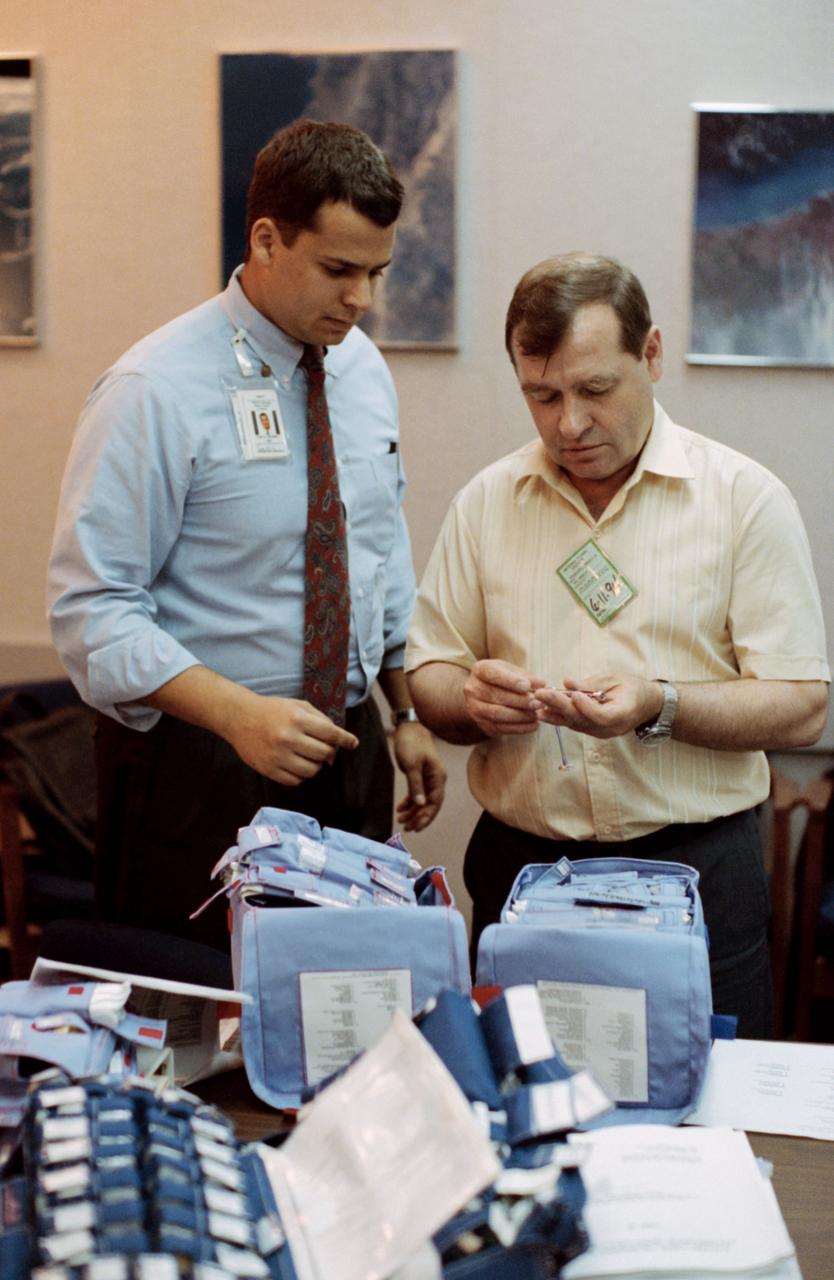
Cosmonaut Gennadiy M. Strekalov (right), Mir-18 flight engineer, is briefed on medical supplies by Ezra D. Kucharz, medical operations trainer for Krug Life Sciences, Incorporated. Strekalov and a number of other cosmonauts and astronauts participating in joint Russia - United States space missions are in Houston, Texas, to prepare for their upcoming missions.

iss074e0540893 (April 28, 2026) --- ESA (European Space Agency) astronaut and Expedition 74 flight engineer Sophie Adenot works inside the Kibo laboratory module's Life Science Glovebox. Adenot was exploring ways to use the International Space Station’s potable water to produce medical grade intravenous fluids, or saline solutions, to treat medical conditions in space. The Intravenous Fluid Generation – Mini technology demonstration seeks to reduce a crew’s dependence on cargo missions and avoid expiration of medical supplies on a spacecraft. Credit: ESA/Sophie Adenot

S72-41855 (15 June 1972) --- Astronaut Robert L. Crippen, Skylab Medical Experiment Altitude Test (SMEAT) commander, simulates the preparation of a Skylab meal. Crippen is a member of a three-man crew who will spend up to 56 days in the Crew Systems Division's 20-foot altitude chamber at the NASA Manned Spacecraft Center (MSC) beginning in mid-July to obtain medical data and evaluate medical experiment equipment for Skylab. The two crew members not shown in this view are astronauts Karol J. Bobko, SMEAT pilot, and Dr. William E. Thornton, SMEAT science pilot. Photo credit: NASA
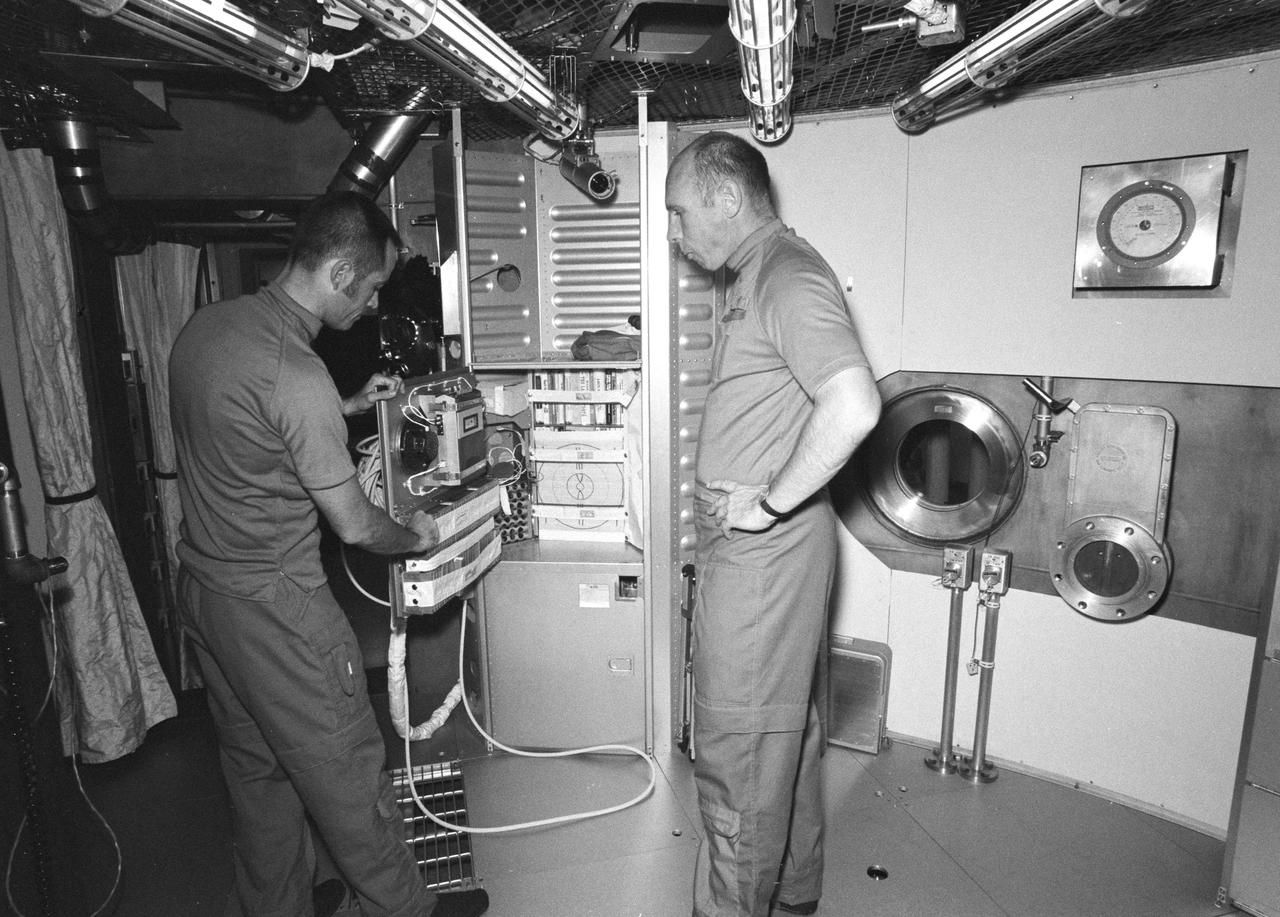
S72-41858 (15 June 1972) --- Astronauts Robert L. Crippen, left, Skylab Medical Experiment Altitude Test (SMEAT) crew commander, and Dr. William E. Thornton, SMEAT science pilot, stand at the cabinet containing off duty recreation equipment. They are two members of a three-man SMEAT crew who will spend up to 56 days in the Crew Systems Division's 20-foot altitude chamber at the NASA Manned Spacecraft Center (MSC) beginning in mid-July to obtain medical data and evaluate medical experiment equipment for Skylab. Astronaut Karol J. Bobko, SMEAT pilot, the third crew member is not shown in this view. Photo credit: NASA
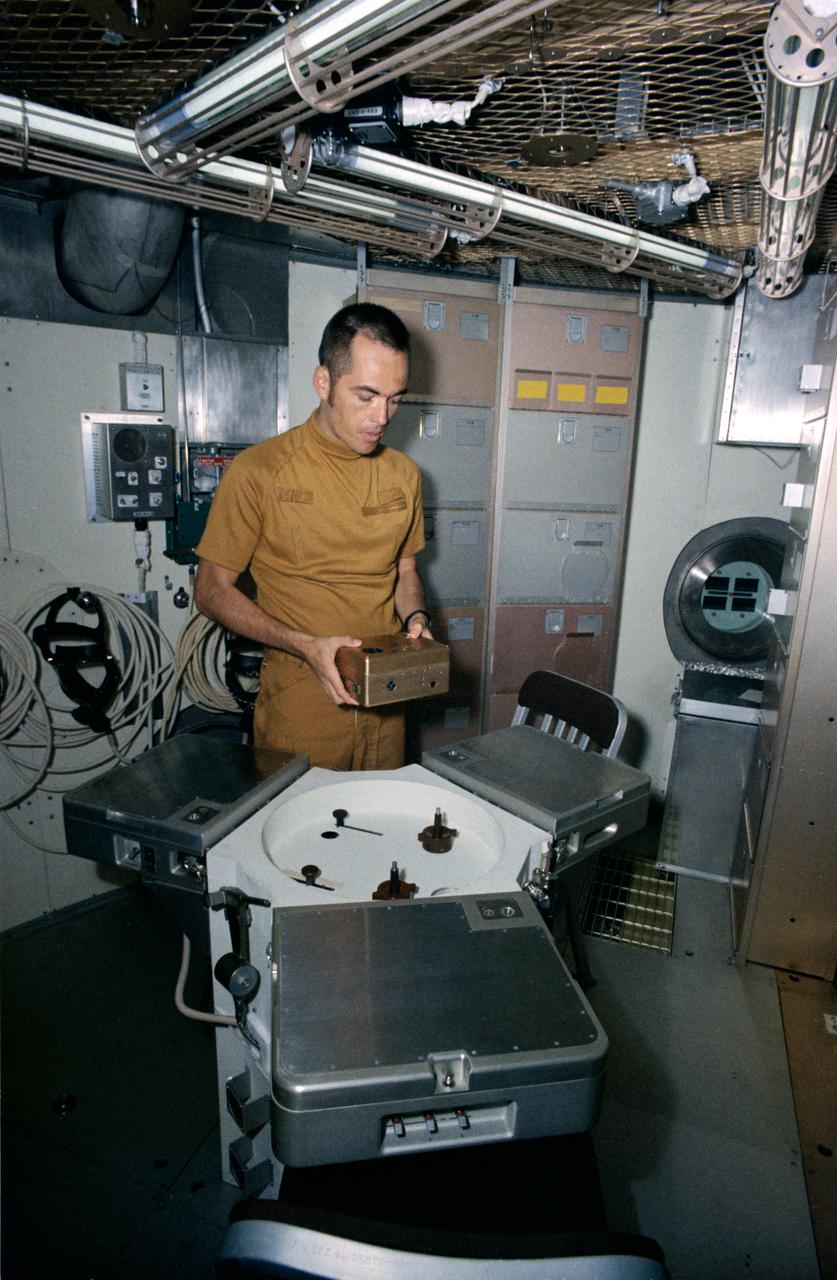
S72-43280 (15 June 1972) --- Astronaut Robert L. Crippen, Skylab Medical Experiment Altitude Test (SMEAT) commander, holds the training model of Skylab experiment T003, the aerosol analysis test, in this preview of SMEAT activity. He is part of a three-man SMEAT crew who will spend up to 56 days in the Crew Systems Division's 20-foot altitude chamber at the NASA Manned Spacecraft Center (MSC) beginning in mid-July to obtain medical data and evaluate medical experiment equipment for Skylab. The two crew members not shown in this view are astronauts Karol J. Bobko, SMEAT pilot, and Dr. William E. Thornton, SMEAT science pilot. Photo credit: NASA

iss074e0521504 (April 27, 2026) --- A top-down view of ESA (European Space Agency) astronaut and Expedition 74 flight engineer Sophie Adenot, who works inside the Kibo laboratory module's Life Science Glovebox on the Intravenous Fluid Generation – Mini (IVGen Mini) technology demonstration. Adenot was exploring ways to use the International Space Station’s potable water to produce medical-grade intravenous fluids, or saline solutions, to treat medical conditions in space. IVGen Mini seeks to reduce a crew’s dependence on cargo missions and avoid expiration of medical supplies on a spacecraft. Credit: NASA/Jessica Meir

iss074e0521507 (April 27, 2026) --- An over-the-shoulder view of ESA (European Space Agency) astronaut and Expedition 74 flight engineer Sophie Adenot working inside the Kibo laboratory module's Life Science Glovebox on the Intravenous Fluid Generation – Mini (IVGen Mini) technology demonstration. Adenot was exploring ways to use the International Space Station’s potable water to produce medical-grade intra-venous fluids, or saline solutions, to treat medical conditions in space. IVGen Mini seeks to re-duce a crew’s dependence on cargo missions and avoid expiration of medical supplies on a spacecraft. Credit: NASA/Jessica Meir

iss074e0540294 (April 28, 2026) --- ESA (European Space Agency) astronaut and Expedition 74 flight engineer Sophie Adenot activates the Kibo laboratory module's Life Science Glovebox for the Intravenous Fluid Generation – Mini (IVGEN Mini) technology demonstration. Adenot was exploring ways to use the International Space Station’s potable water to produce medical grade intravenous fluids, or saline solutions, to treat medical conditions in space. IVGEN Mini seeks to reduce a crew’s dependence on cargo missions and avoid expiration of medical supplies on a spacecraft. Credit: ESA/Sophie Adenot
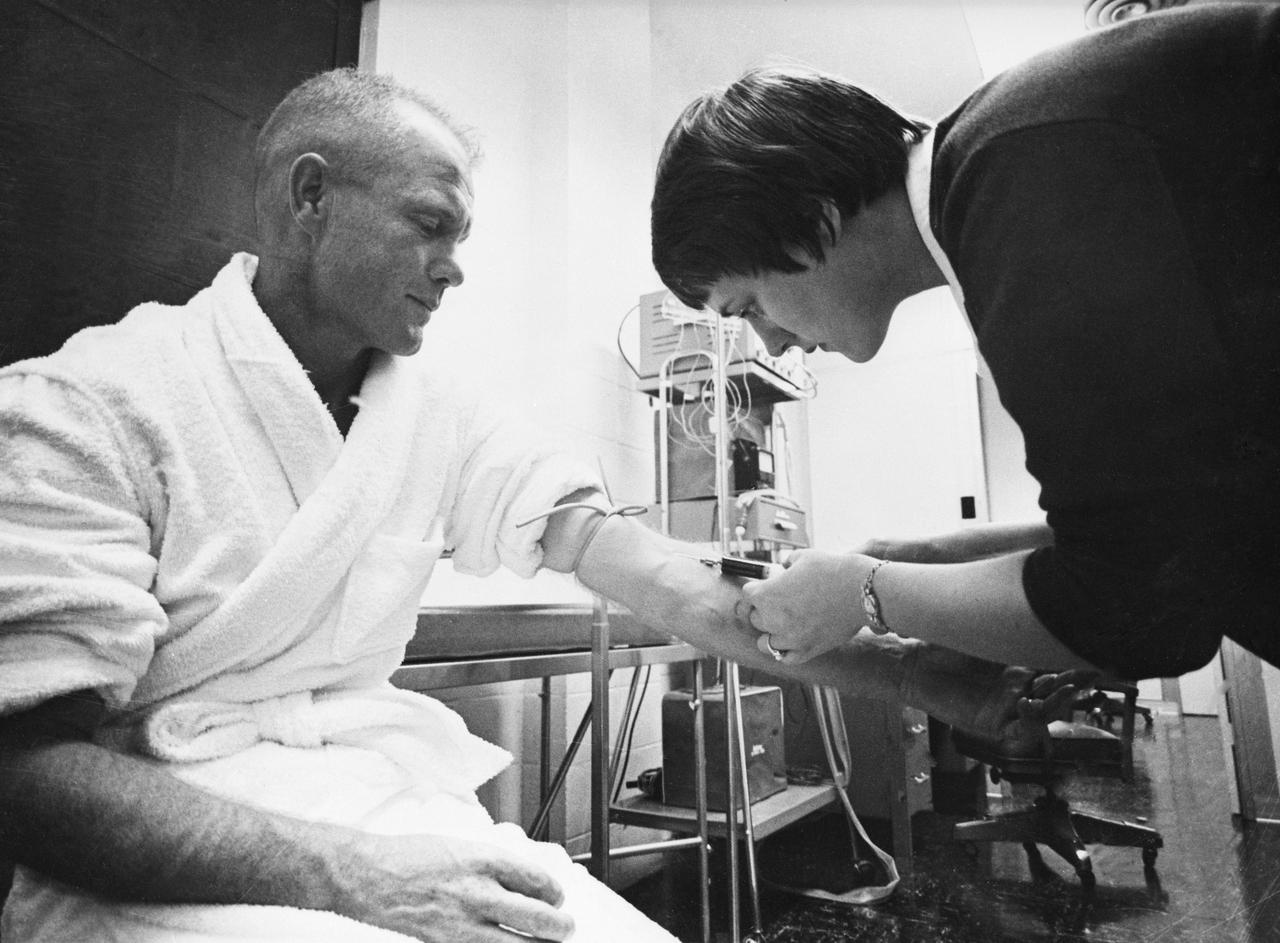
S61-02579 (1961) --- Astronaut nurse Delores B. O'Hara, R.N., in the Aeromedical Laboratory at Cape Canaveral, Florida, takes a blood sample from Mercury astronaut John H. Glenn Jr. Photo credit: NASA
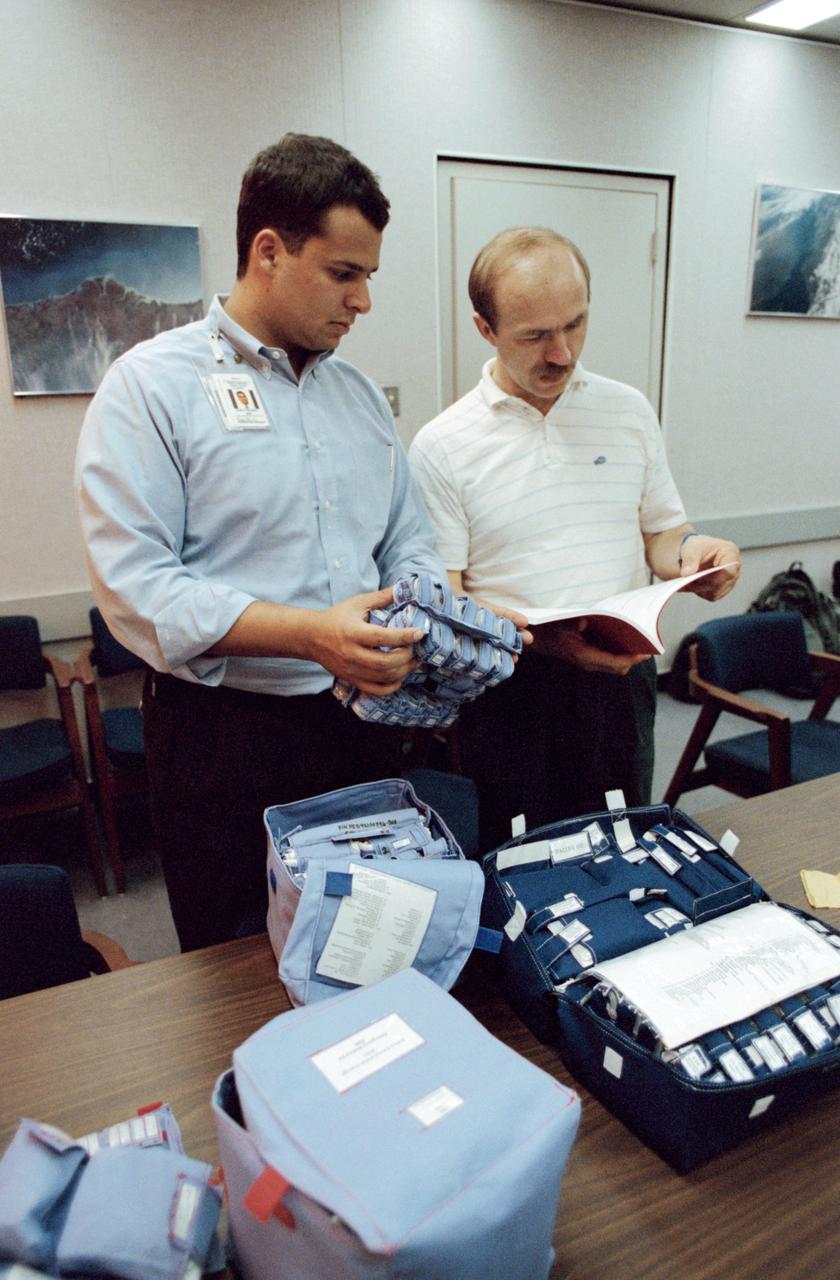
Cosmonaut Alexandr F. Poleshchuk (right) inventories medical supplies with Ezra D. Kucharz, medical operations trainer for Krug Life Sciences, Incorporated. Poleshchuk, a Mir reserve crew member, and a number of other cosmonauts and astronauts participating in the joint Russia - United States program were in Houston, Texas, to prepare for upcoming missions which involve crew members from the two nations.
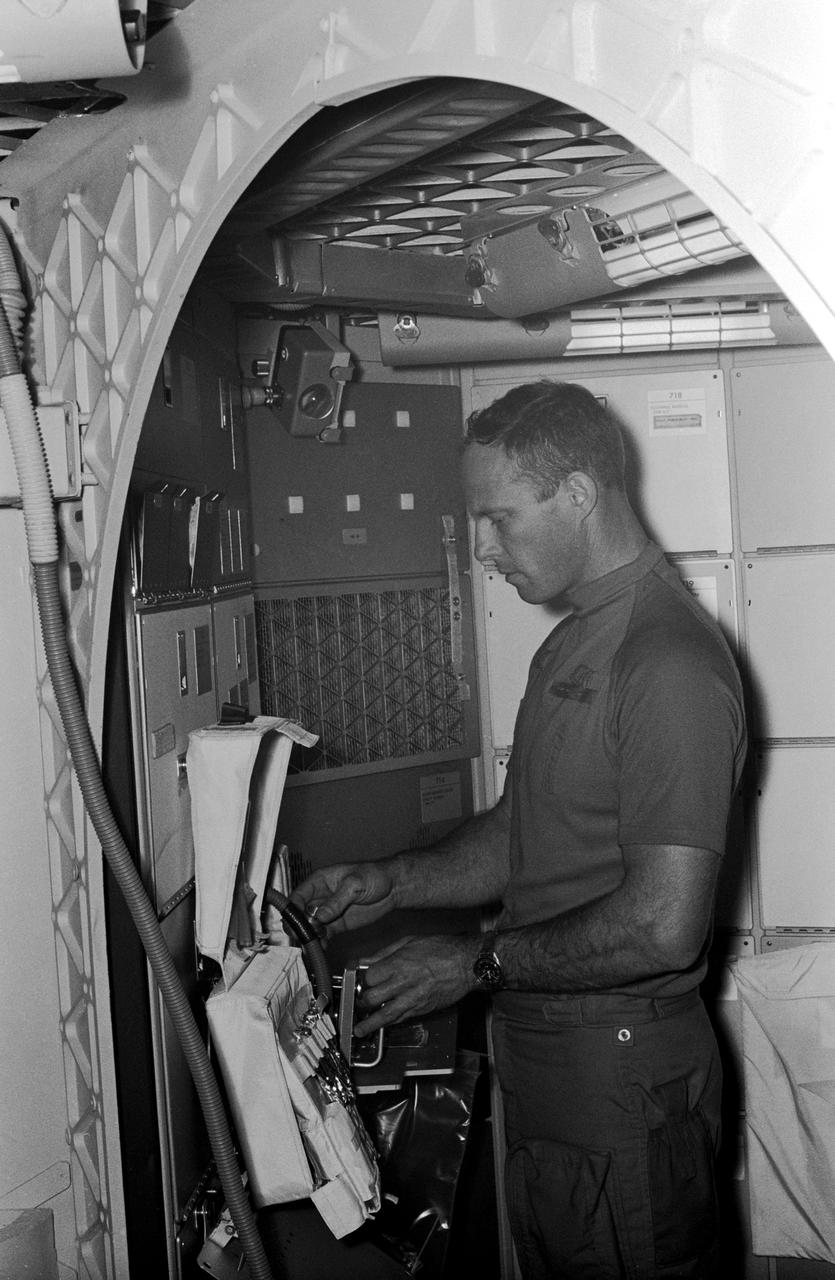
S73-28423 (16 June 1973) --- Astronaut Jack R. Lousma, Skylab 3 pilot, reaches into a medical kit, part of the Inflight Medical Support System (IMSS), during training for the second manned Skylab Earth-orbital mission. This activity took place in the OWS trainer in the Mission Simulation and Training Facility at the Johnson Space Center (JSC). Other Skylab 3 crewmen are astronaut Alan L. Bean, commander, and scientist-astronaut Owen K. Garriott, science pilot. Photo credit: NASA
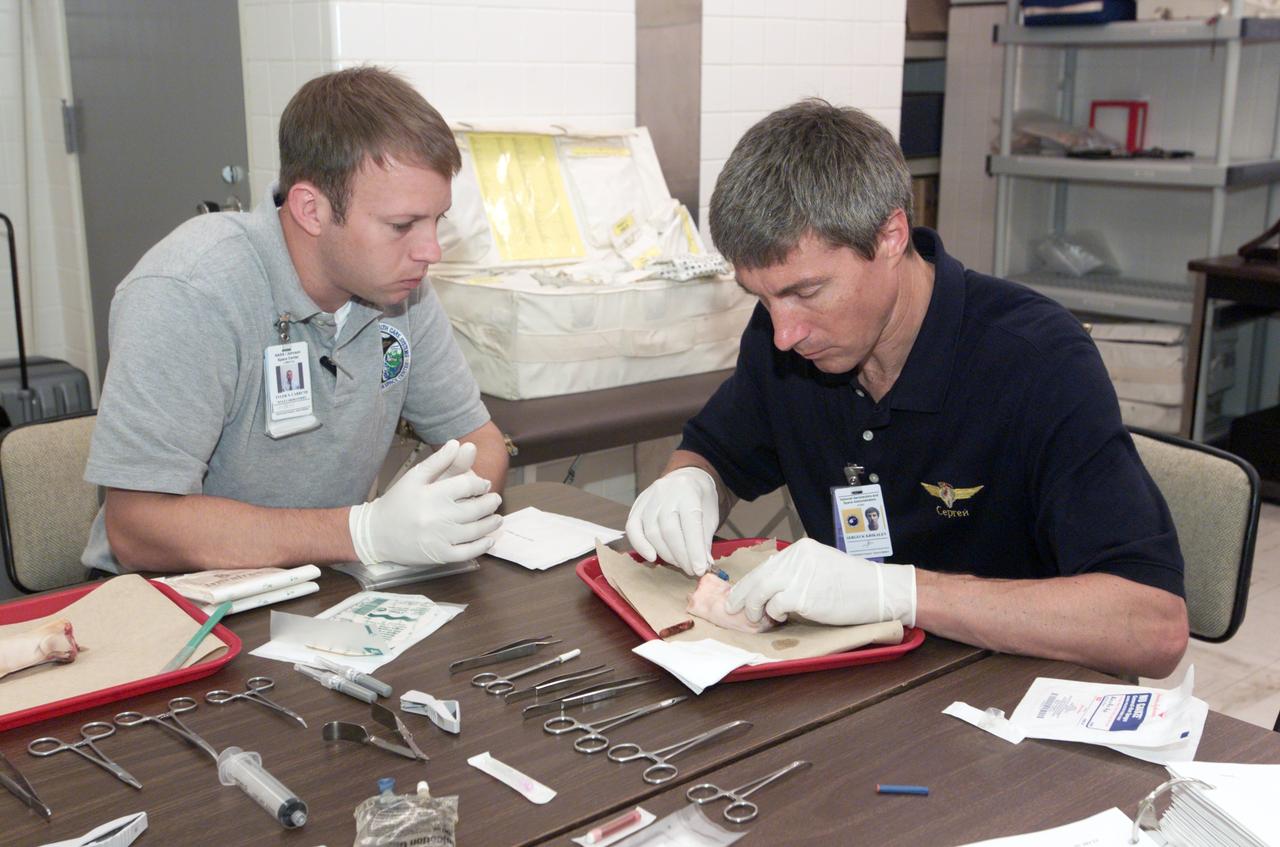
JSC2004-E-26778 (24 June 2004) --- Cosmonaut Sergei K. Krikalev, Expedition 11 commander representing Russia’s Federal Space Agency, participates in medical training at Johnson Space Center (JSC). Space Medicine Instructor Tyler N. Carruth with Wyle Life Sciences assisted Krikalev.
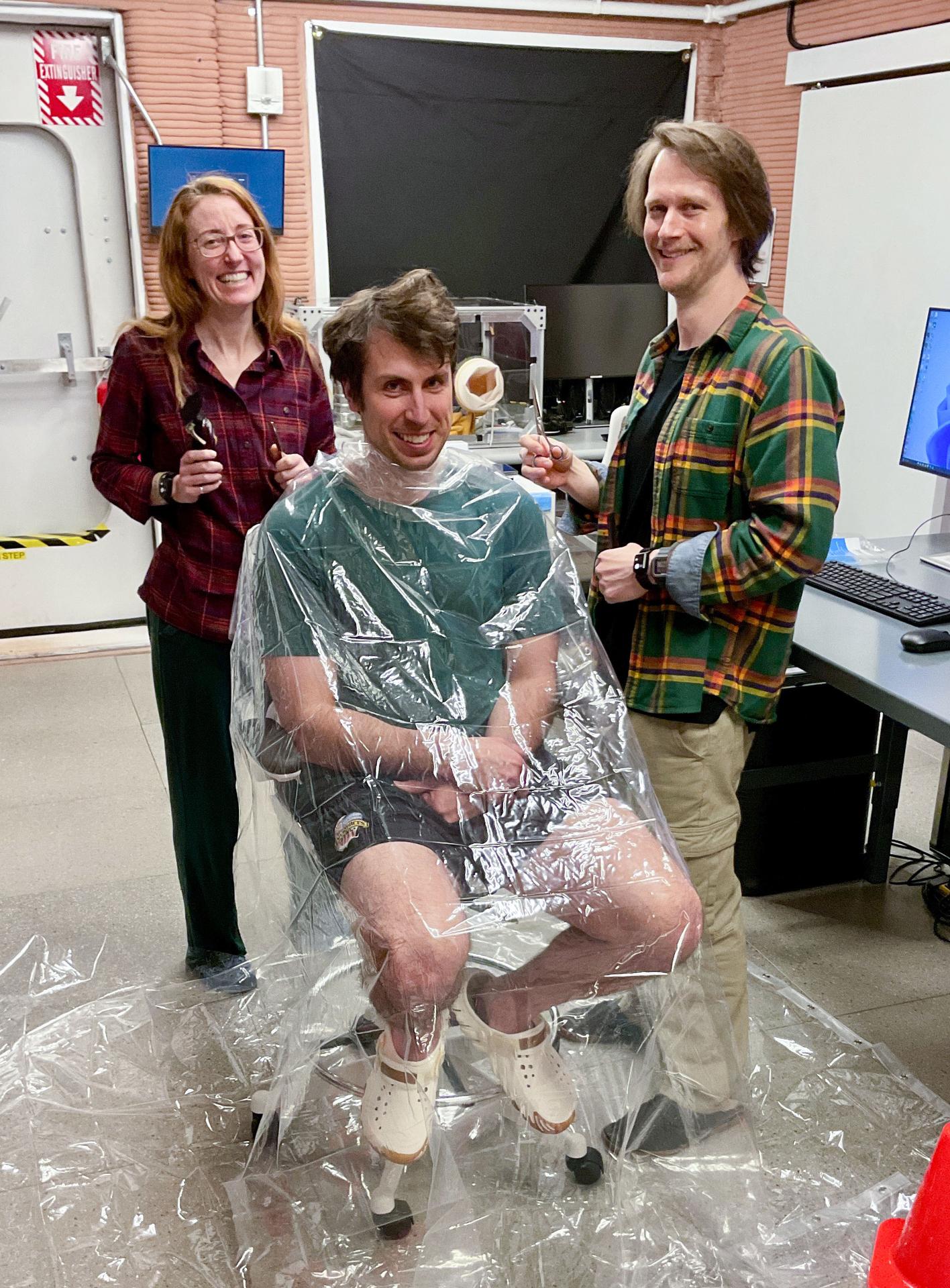
jsc2026e403160 (Jan. 11, 2026) -- Ross Elder, Crew Health and Performance Exploration Analog (CHAPEA) mission 2 commander, receiving a haircut from Ellen Ellis (left), CHAPEA mission 2 medical officer, and Matthew Montgomery (right) CHAPEA mission 2 science officer. Credit: NASA
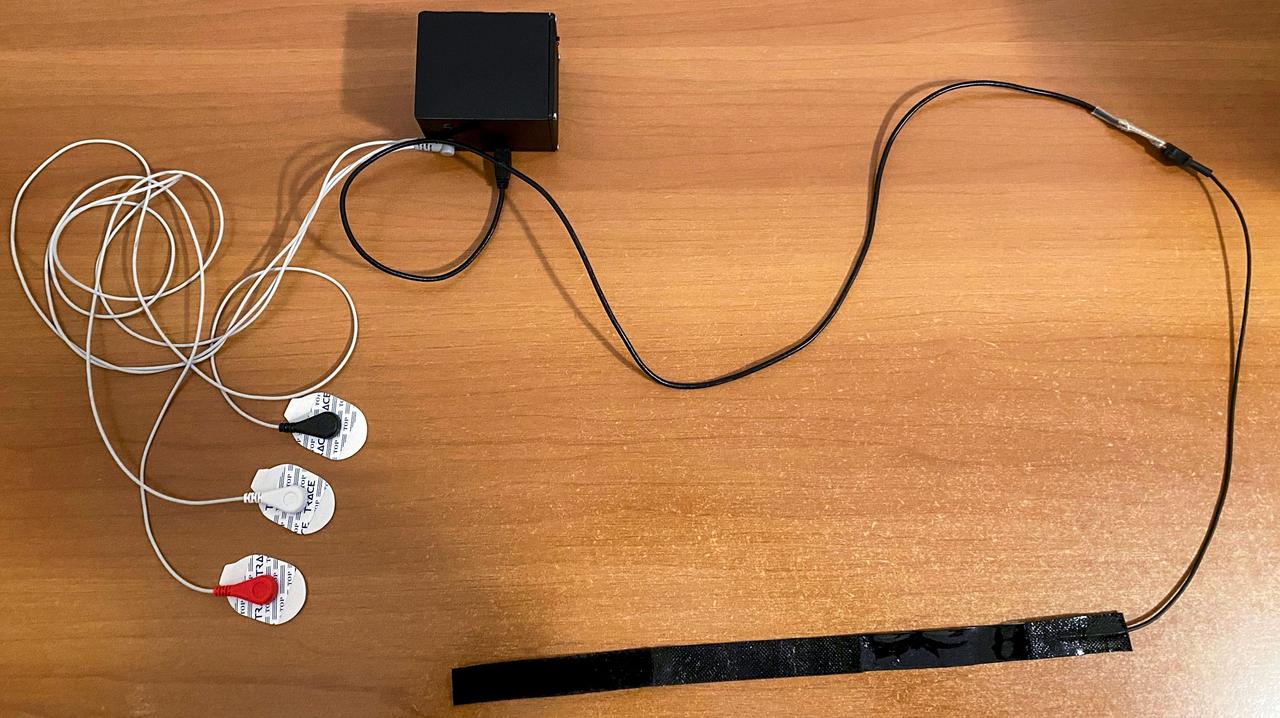
jsc2023e010174 (3/1/2023) --- First design of the new plethysmography system with ECG synchronization, developed in the laboratories of the Dept of Medical Physics and Earth Sciences, Univ. of Ferrara. The sensor consists of a strain-gauge device (black strip at the bottom) connected to the read-out electronics (black box at the top). Image courtesy of Angelo Taibi .
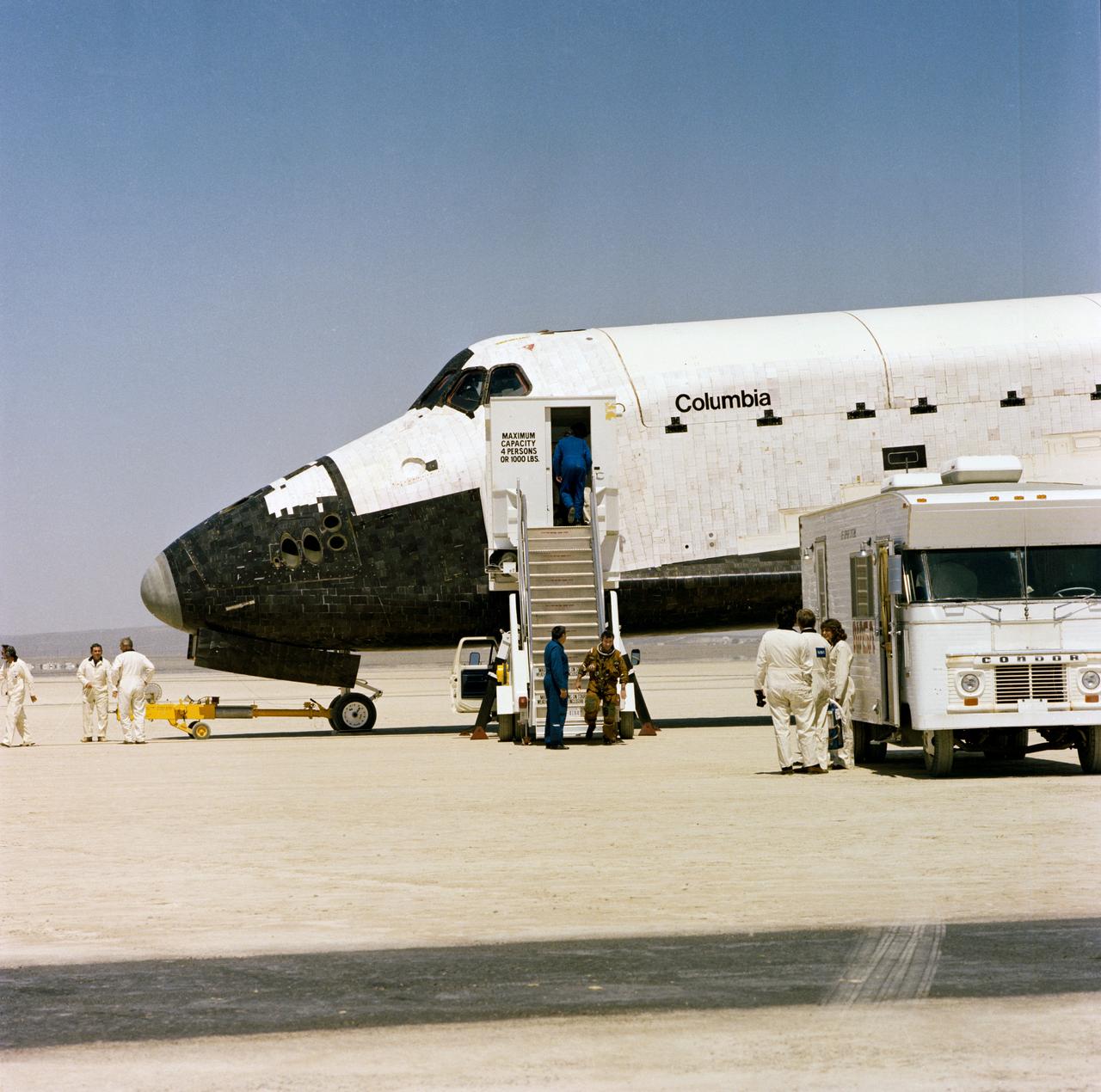
S81-30846 (14 April 1981) --- Astronaut John W. Young (near center of photo), STS-1 commander, egresses the space shuttle Columbia upon the completion of checklist activities following the successful landing of the spacecraft used on STS-1 space mission. George W.S. Abbey, director of flight operations at the Johnson Space Center (JSC), greets him at the bottom of the steps. Astronaut Robert L. Crippen, STS-1 pilot, is still inside Columbia. Dr. Craig L. Fischer, chief of the medical operations branch in the medical sciences division at JSC, ingresses the spacecraft at top of stairs. Photo credit: NASA
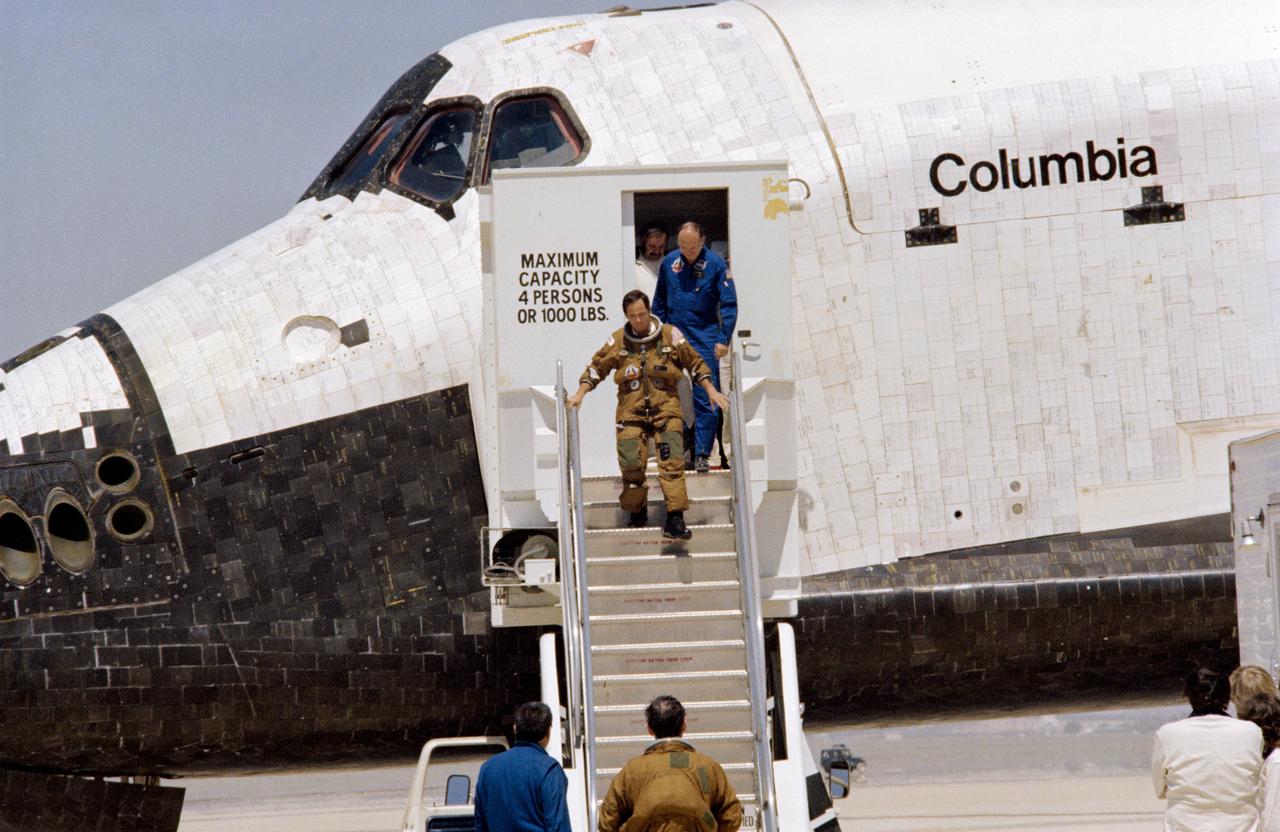
S81-30852 (14 April 1981) --- Astronaut Robert L. Crippen, pilot for the STS-1 flight, egresses the NASA space shuttle following touchdown of the Columbia on Rogers Dry Lake at Edwards Air Force Base, California. Astronaut John W. Young, crew commander, had earlier exited the craft and can be seen standing at the foot of the steps with George W.S. Abbey, director of flight operations at the Johnson Space Center (JSC). Dr. Craig L. Fischer, chief of the medical operations branch in JSC?s medical sciences division, follows Crippen down the steps. Photo credit: NASA
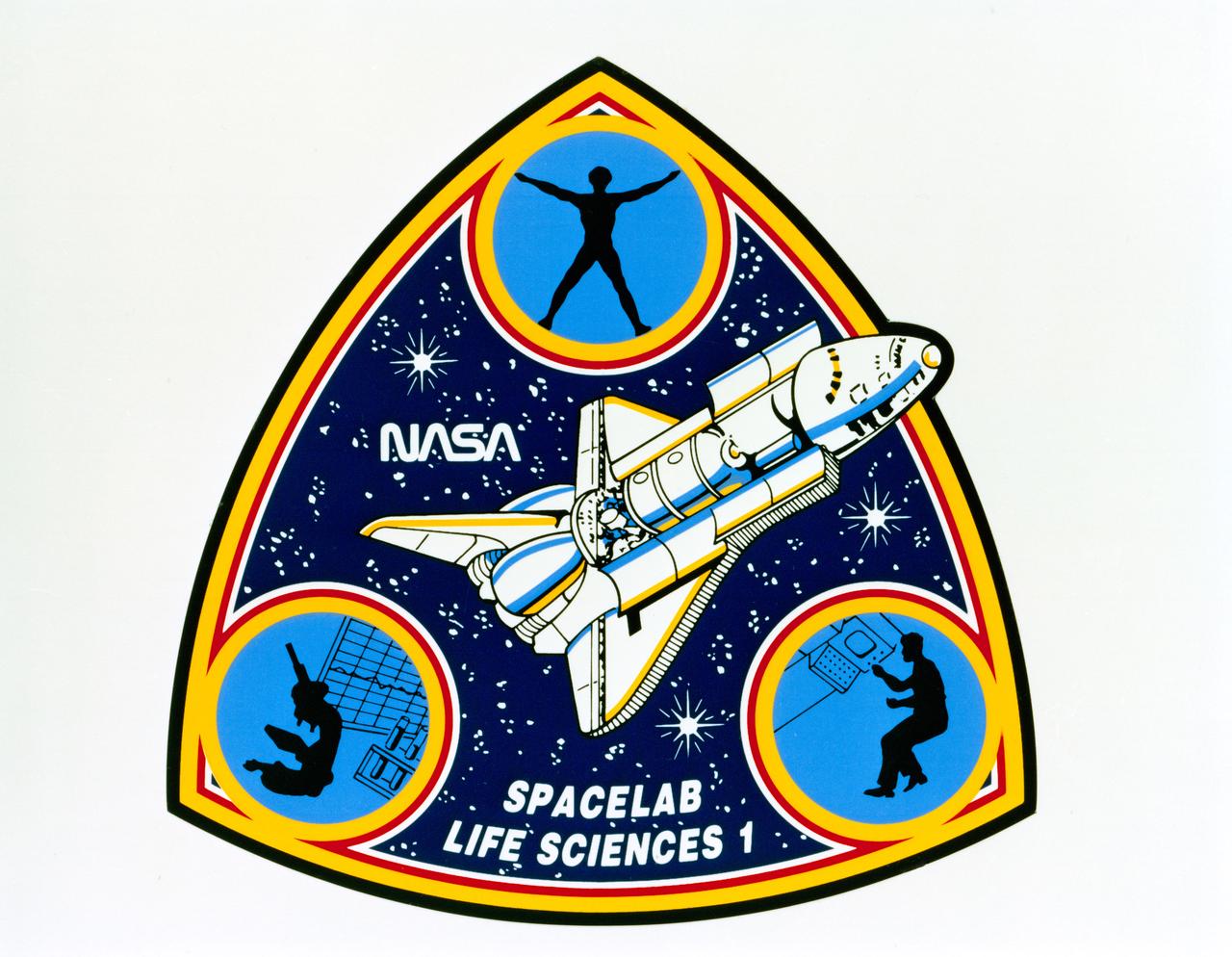
S86-27614 (Feb 1986) --- The Space Shuttle Columbia is at the center of the Spacelab Life Sciences 1 patch. The various elements of the logo serve to deliver the message of the dedication of this mission to medical and biological studies, a first for manned spaceflight. A crew of five NASA astronauts and two payload specialists will be split into shifts to maximize the exposure to space environment for variegated and thorough biological and medical experiments during the scheduled ten-day mission. The crew will maintain a constant communications link with scientists on Earth, considered by the flight crew to be an integral part of the overall mission, as well.
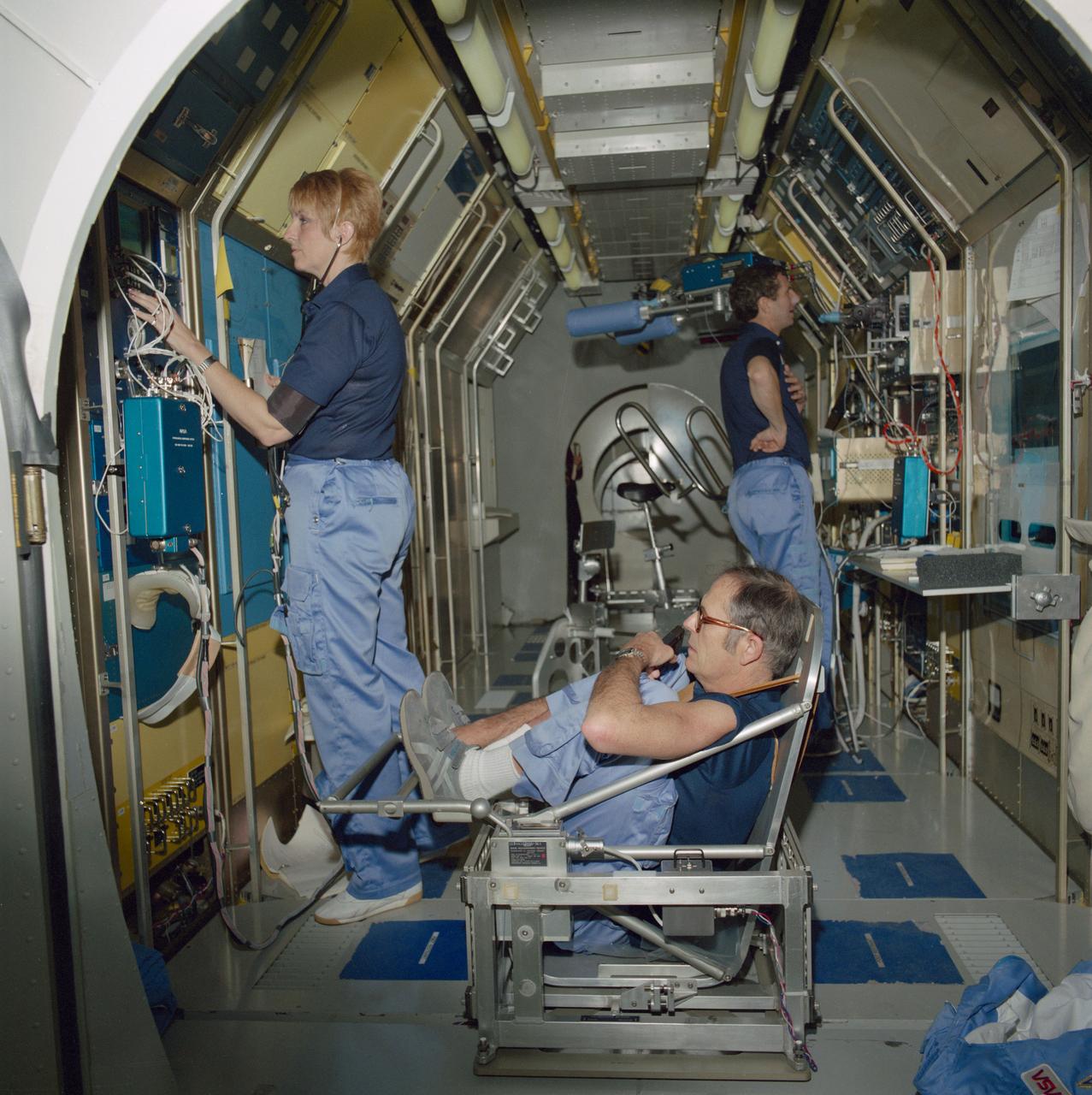
S85-26569 (Feb 1985) --- Two prime crew payload specialists (PS) for NASA's Space Life Sciences-1 (STS-40) mission and a backup PS rehearse medical experiments in a JSC trainer. Left to right are Millie Hughes-Fulford, Robert Phillips and Drew Gaffney. Hughes-Fulford and Gaffney are scheduled to join five NASA astronauts for a Space Shuttle mission devoted to the study of life sciences.
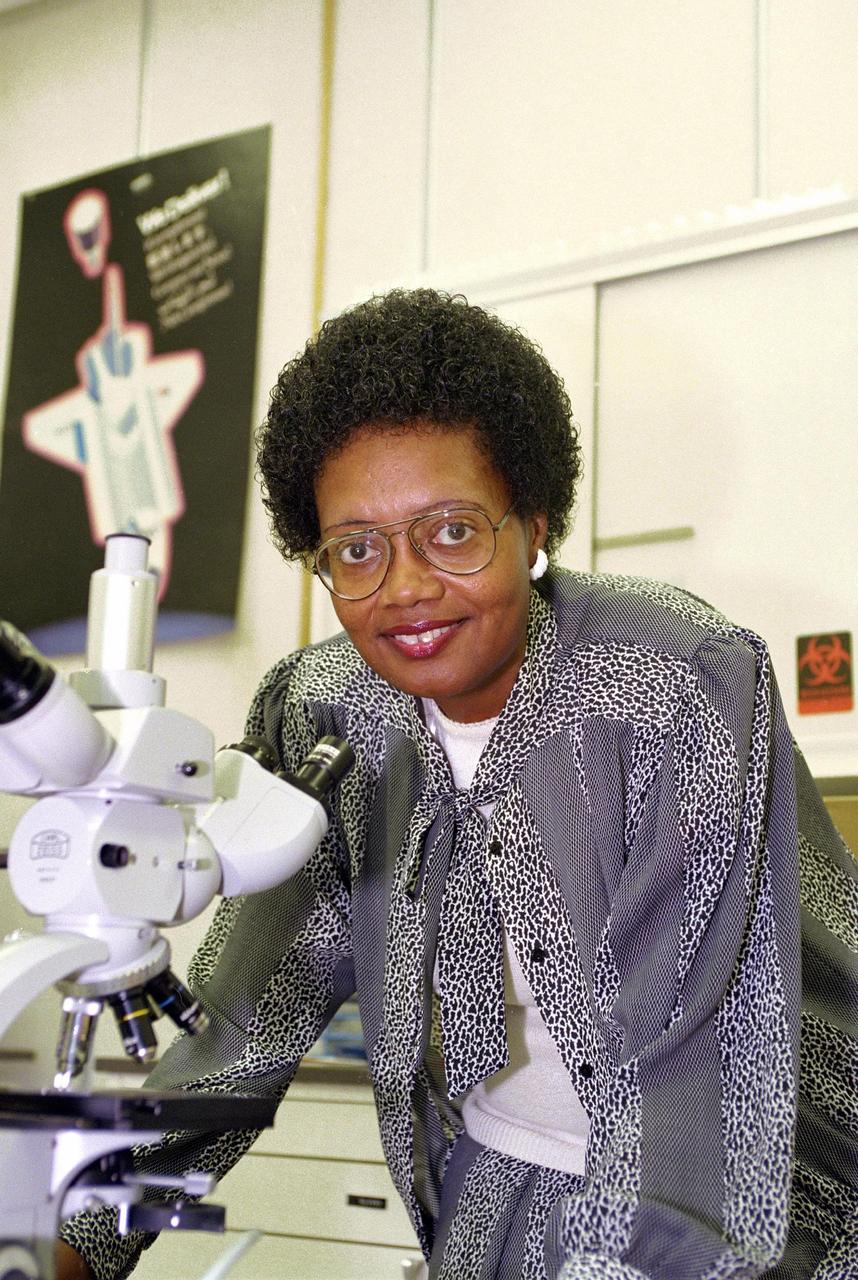
KENNEDY SPACE CENTER, FLA. -- Dr. Irene Duhart Long is the director, Biomedical Operations and Research Office, at the Kennedy Space Center effective July 24, 1994. She is responsible for the program management of the center's aerospace and occupational medicine, life sciences research, environmental health programs and the operations management of the life sciences support facilities. Dr. Long also is responsible for providing the coordinating medical, environmental monitoring and environmental health support to launch and landing activities and day-to-day institutional functions.
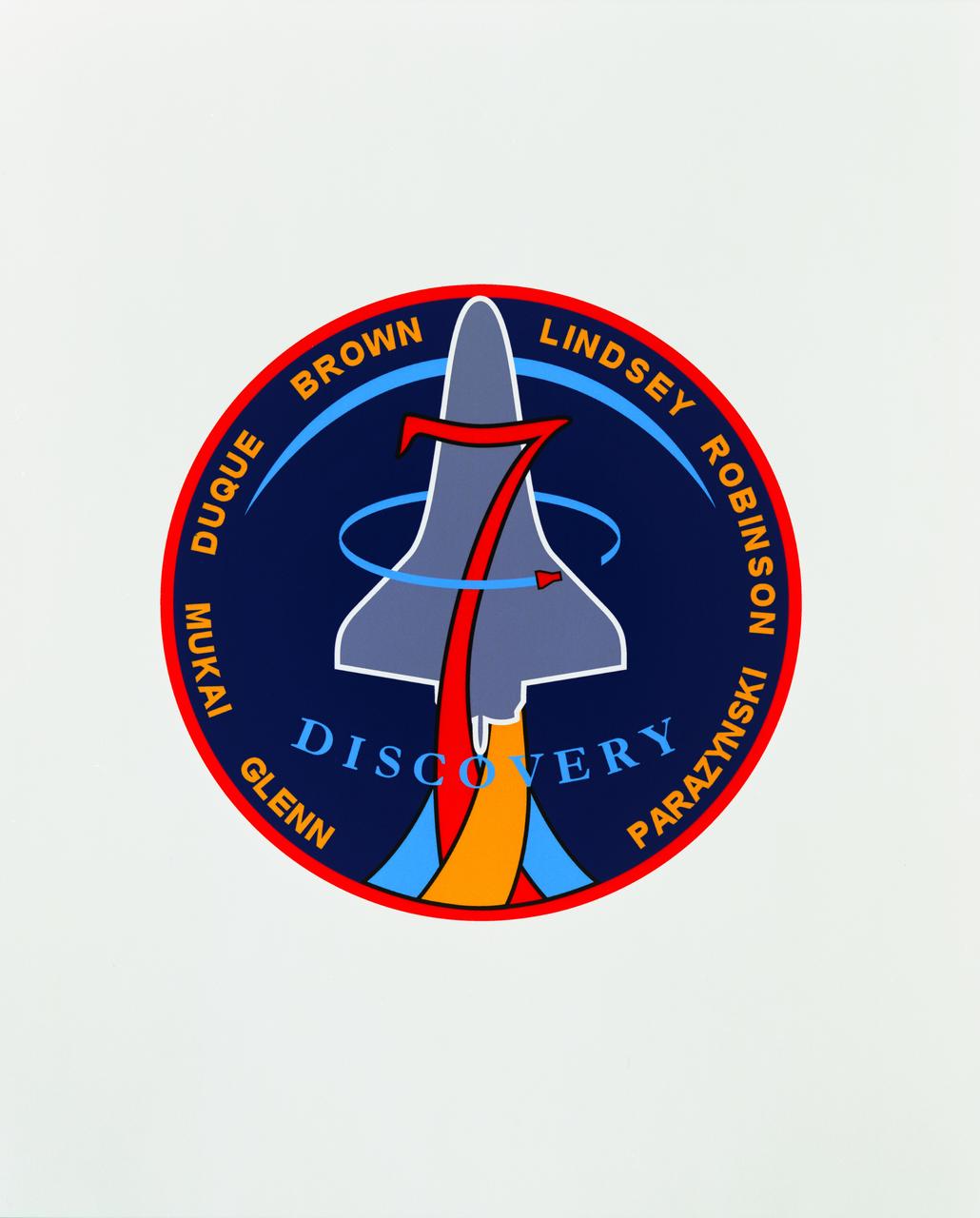
The STS-95 patch, designed by the crew, is intended to reflect the scientific, engineering, and historic elements of the mission. The Space Shuttle Discovery is shown rising over the sunlit Earth limb, representing the global benefits of the mission science and the solar science objectives of the Spartan Satellite. The bold number '7' signifies the seven members of Discovery's crew and also represents a historical link to the original seven Mercury astronauts. The STS-95 crew member John Glenn's first orbital flight is represented by the Friendship 7 capsule. The rocket plumes symbolize the three major fields of science represented by the mission payloads: microgravity material science, medical research for humans on Earth and in space, and astronomy.
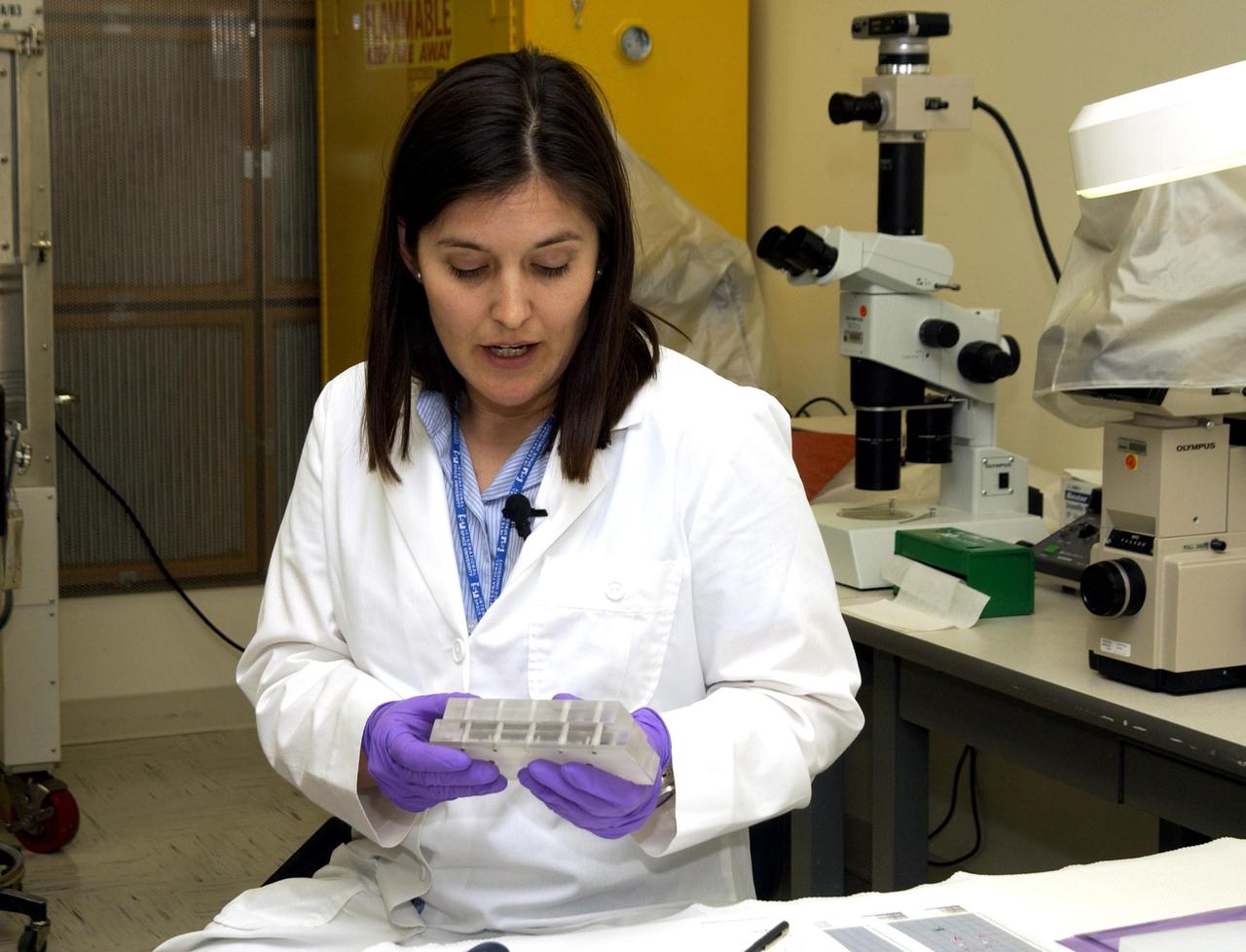
KENNEDY SPACE CENTER, FLA. - Valerie Cassanto holds a piece of the Commercial ITA Biomedical Experiments payload that was carried on mission STS-107 and recently recovered. She is the daughter of John Cassanto of ITA, who is part of a recovery team transferring experiments to alternate containers. One of the experiments was the Growth of Bacterial Biofilm on Surfaces during Spaceflight (GOBBSS), a Planetary Society-sponsored astrobiology experiment developed by the Israeli Aerospace Medical Institute and the Johnson Space Center Astrobiology Center, with joint participation of an Israeli and a Palestinian student. The recovery team also includes Eran Schenker of the Israeli Aerospace Medical Institute; David Warmflash of JSC, and Louis Friedman, executive director of the Planetary Society. The GOBBSS material will be sent to JSC where the science team will analyze the samples, studying the effects of spaceflight on bacterial growth.
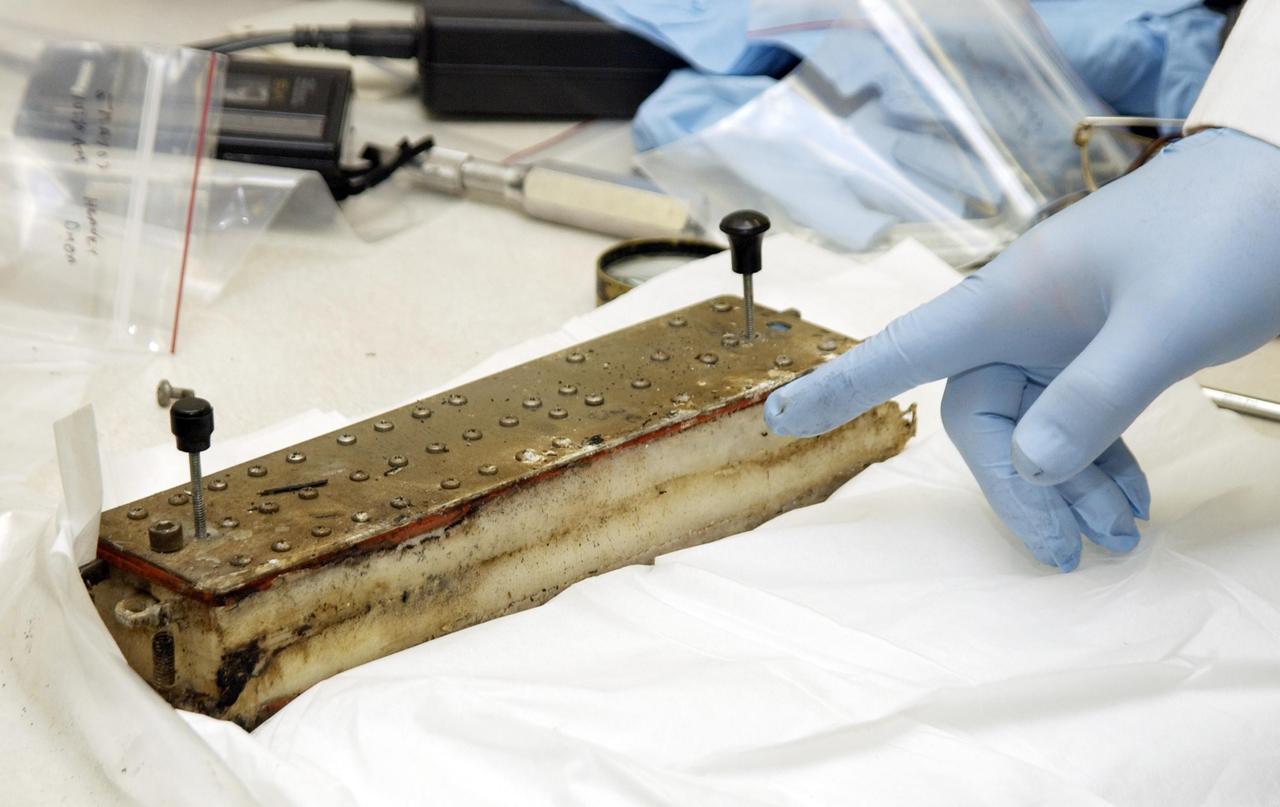
KENNEDY SPACE CENTER, FLA. - John Cassanto of ITA points to an area of the Growth of Bacterial Biofilm on Surfaces during Spaceflight (GOBBSS) experiment that was carried on mission STS-107 as part of the Commercial ITA Biomedical Experiments payload. He is part of a recovery team transferring experiments to alternate containers. GOBBSS was a Planetary Society-sponsored astrobiology experiment developed by the Israeli Aerospace Medical Institute and the Johnson Space Center Astrobiology Center, with joint participation of an Israeli and a Palestinian student. The recovery team also includes Eran Schenker of the Israeli Aerospace Medical Institute; David Warmflash of JSC, and Louis Friedman, executive director of the Planetary Society. The GOBBSS material will be sent to JSC where the science team will analyze the samples, studying the effects of spaceflight on bacterial growth.
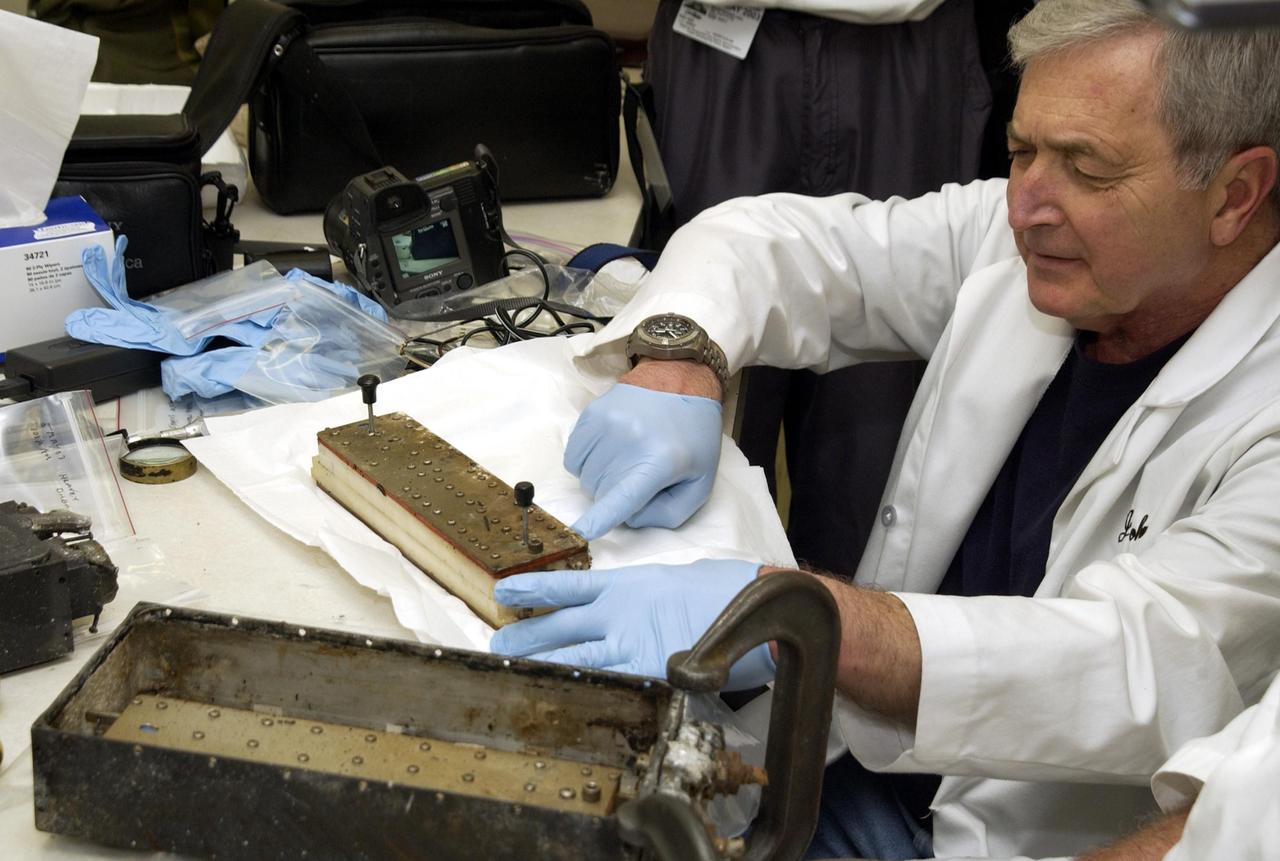
KENNEDY SPACE CENTER, FLA. - John Cassanto of ITA moves part of the Growth of Bacterial Biofilm on Surfaces during Spaceflight (GOBBSS) experiment that was carried on mission STS-107 as part of the Commercial ITA Biomedical Experiments payload. He is part of a recovery team transferring experiments to alternate containers. GOBBSS was a Planetary Society-sponsored astrobiology experiment developed by the Israeli Aerospace Medical Institute and the Johnson Space Center Astrobiology Center, with joint participation of an Israeli and a Palestinian student. The recovery team also includes Eran Schenker of the Israeli Aerospace Medical Institute; David Warmflash of JSC, and Louis Friedman, executive director of the Planetary Society. The GOBBSS material will be sent to JSC where the science team will analyze the samples, studying the effects of spaceflight on bacterial growth.
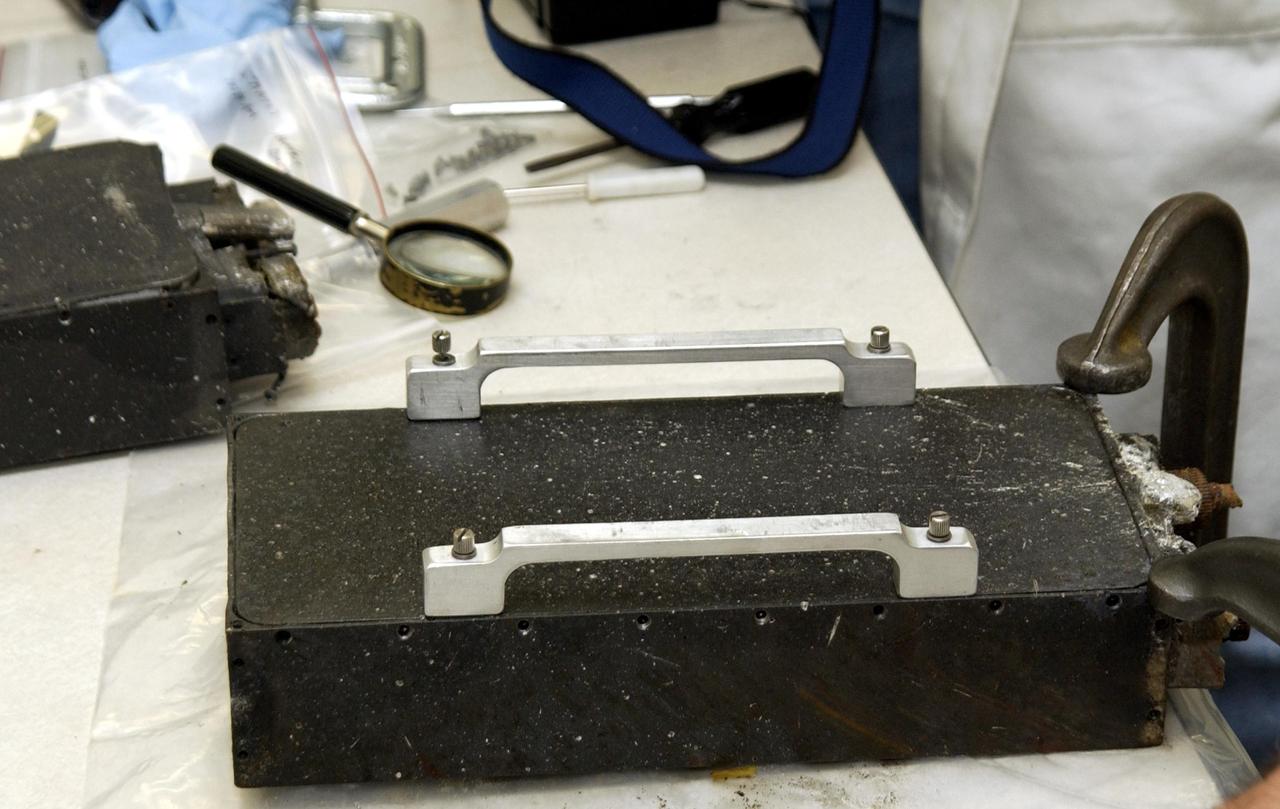
KENNEDY SPACE CENTER, FLA. - The Commercial ITA Biomedical Experiments payload retrieved from debris of Columbia is being dismantled at KSC. Inside are several experiments carried on mission STS-107 that will be removed and transferred to alternate containers. One experiment, the Growth of Bacterial Biofilm on Surfaces during Spaceflight (GOBBSS), was a Planetary Society-sponsored astrobiology experiment developed by the Israeli Aerospace Medical Institute and the Johnson Space Center Astrobiology Center, with joint participation of an Israeli and a Palestinian student. The recovery team includes Eran Schenker of the Israeli Aerospace Medical Institute; David Warmflash of JSC, John Cassanto of ITA, and Louis Friedman, executive director of the Planetary Society. The GOBBSS material will be sent to JSC where the science team will analyze the samples, studying the effects of spaceflight on bacterial growth.
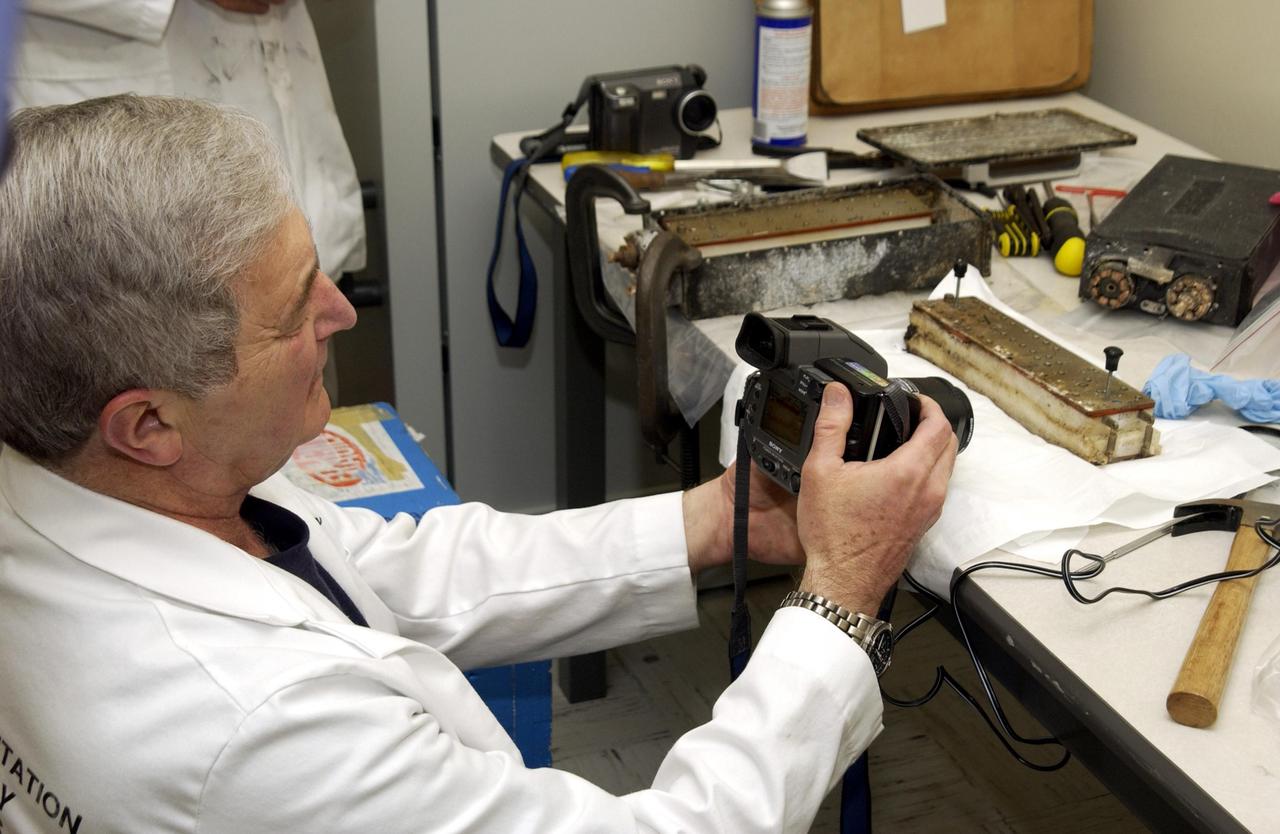
KENNEDY SPACE CENTER, FLA. - John Cassanto of ITA takes photos of the Growth of Bacterial Biofilm on Surfaces during Spaceflight (GOBBSS) experiment that was carried on mission STS-107 as part of the Commercial ITA Biomedical Experiments payload. He is part of a recovery team transferring experiments to alternate containers. GOBBSS was a Planetary Society-sponsored astrobiology experiment developed by the Israeli Aerospace Medical Institute and the Johnson Space Center Astrobiology Center, with joint participation of an Israeli and a Palestinian student. The recovery team also includes Eran Schenker of the Israeli Aerospace Medical Institute; David Warmflash of JSC, and Louis Friedman, executive director of the Planetary Society. The GOBBSS material will be sent to JSC where the science team will analyze the samples, studying the effects of spaceflight on bacterial growth.
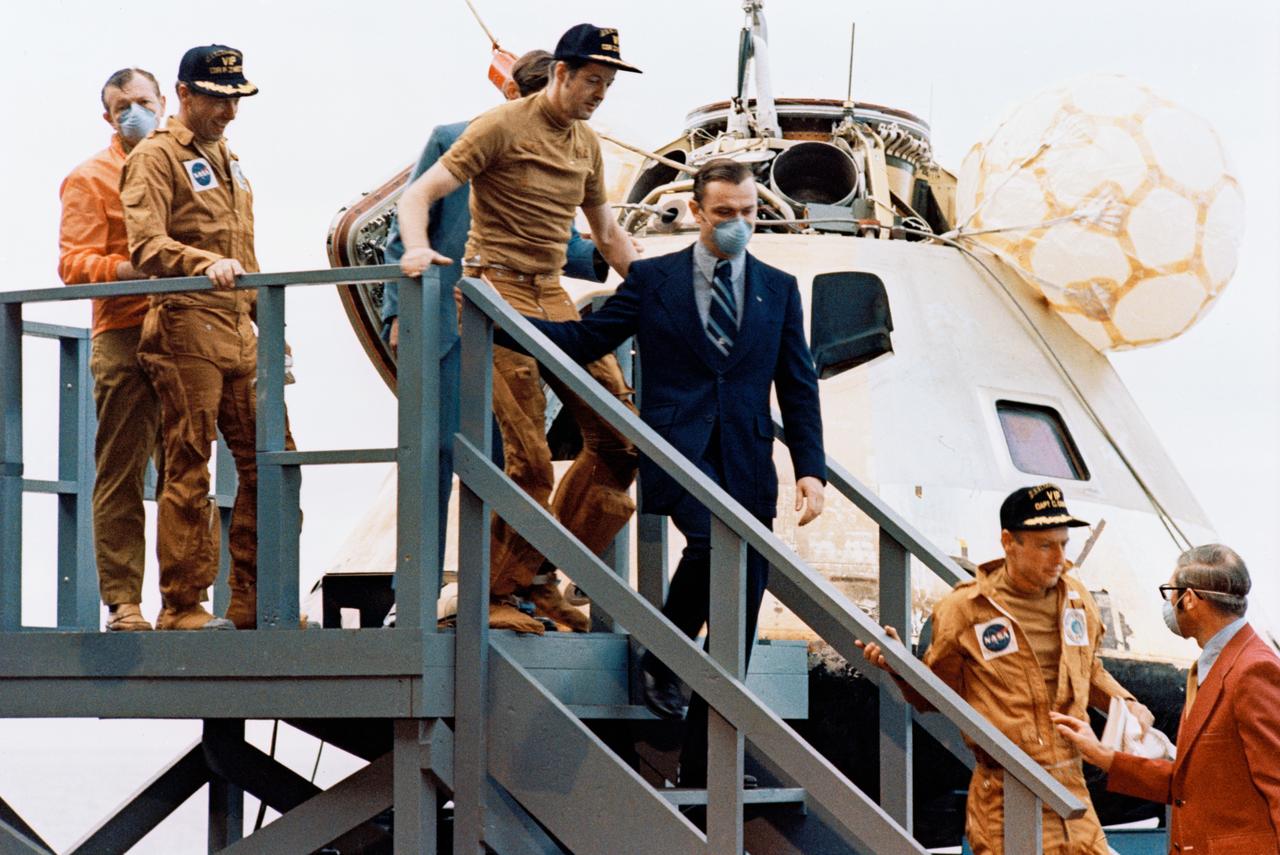
S73-29141 (22 June 1973) --- The three Skylab 2 crewmen arrive on the deck of the prime recovery ship, USS Ticonderoga, following the successful splashdown of the Skylab 2 Command Module about 835 miles southwest of San Diego, California. Leading down the steps is astronaut Charles Conrad Jr., commander, followed by scientist-astronaut Joseph P. Kerwin, science pilot, and astronaut Paul J. Weitz, pilot. Recovery and medical personnel walk down the steps with the astronauts. The crewmen remained inside the spacecraft (seen in background) until it was hoisted aboard the recovery ship. Conrad, Kerwin and Weitz had just completed a 28-day stay with the Skylab 1 space station in Earth orbit conducting numerous medical, scientific and technological experiments. Photo credit: NASA

KENNEDY SPACE CENTER, FLA. - A member of the recovery team examines with a magnifier the Growth of Bacterial Biofilm on Surfaces during Spaceflight (GOBBSS) experiment that was carried on mission STS-107 as part of the Commercial ITA Biomedical Experiments payload. He is part of a recovery team transferring experiments to alternate containers. GOBBSS was a Planetary Society-sponsored astrobiology experiment developed by the Israeli Aerospace Medical Institute and the Johnson Space Center Astrobiology Center, with joint participation of an Israeli and a Palestinian student. The recovery team includes Eran Schenker of the Israeli Aerospace Medical Institute; David Warmflash of JSC and Louis Friedman, executive director of the Planetary Society. The GOBBSS material will be sent to JSC where the science team will analyze the samples, studying the effects of spaceflight on bacterial growth.
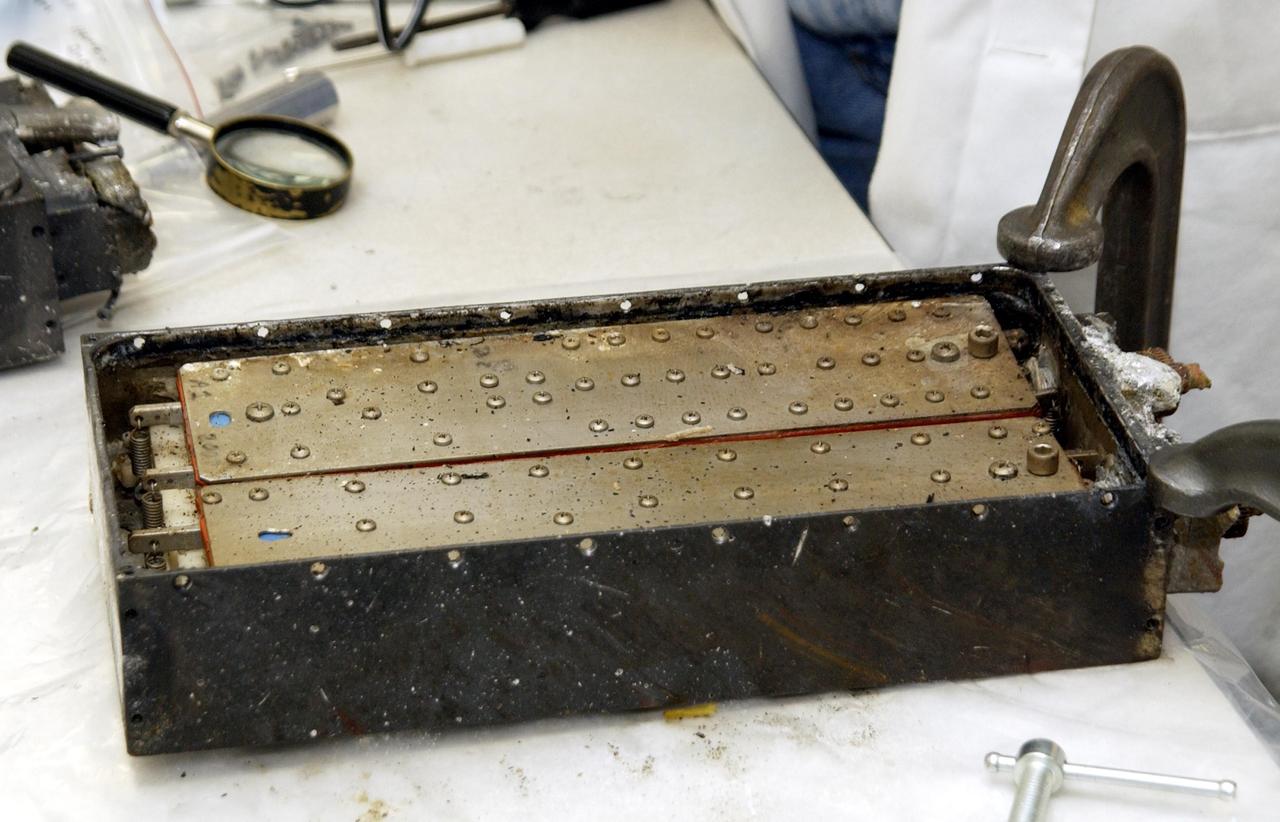
KENNEDY SPACE CENTER, FLA. - The Commercial ITA Biomedical Experiments payload retrieved from debris of Columbia is being dismantled at KSC. Inside are several experiments carried on mission STS-107 that will be removed and transferred to alternate containers. One experiment, the Growth of Bacterial Biofilm on Surfaces during Spaceflight (GOBBSS), was a Planetary Society-sponsored astrobiology experiment developed by the Israeli Aerospace Medical Institute and the Johnson Space Center Astrobiology Center, with joint participation of an Israeli and a Palestinian student. The recovery team includes Eran Schenker of the Israeli Aerospace Medical Institute; David Warmflash of JSC, John Cassanto of ITA, and Louis Friedman, executive director of the Planetary Society. The GOBBSS material will be sent to JSC where the science team will analyze the samples, studying the effects of spaceflight on bacterial growth.
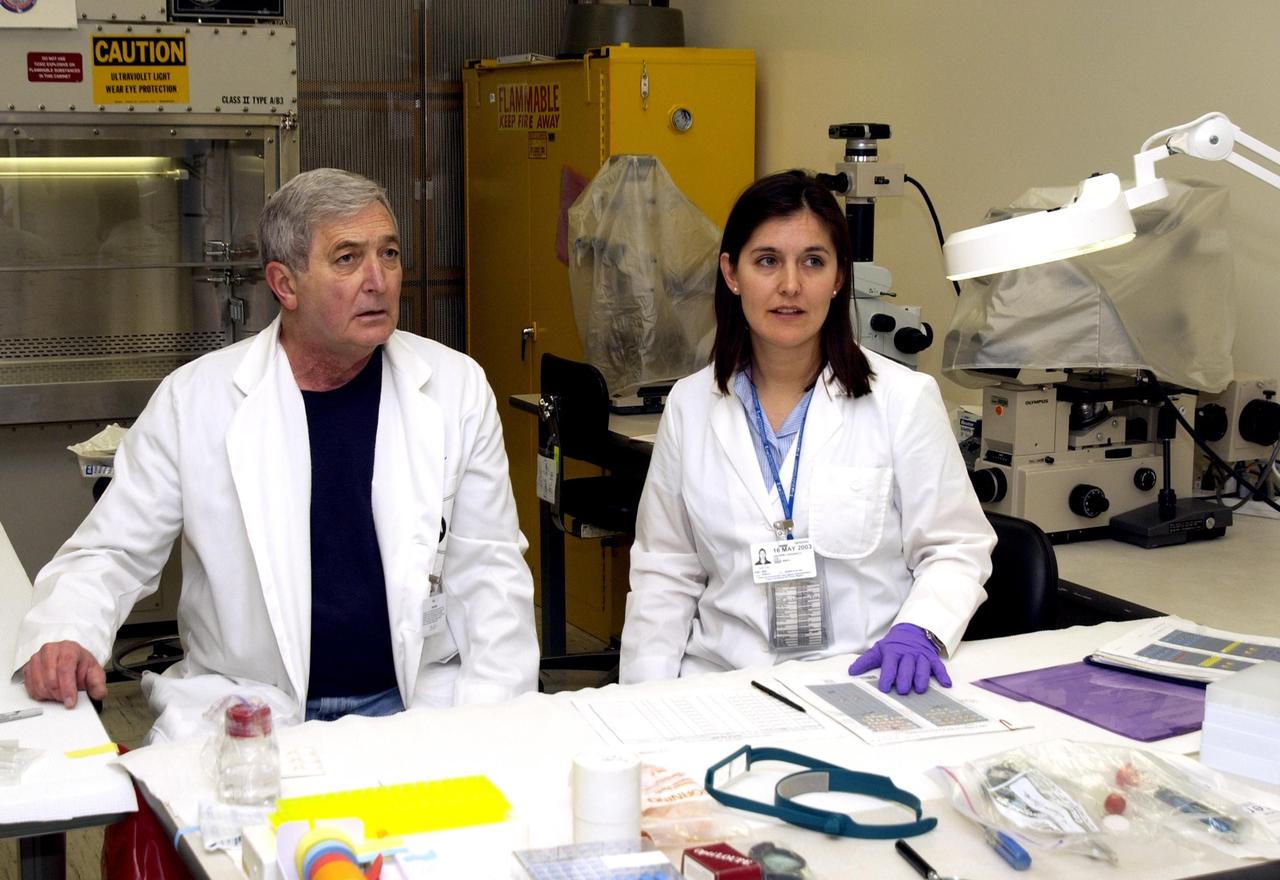
KENNEDY SPACE CENTER, FLA. - John Cassanto of ITA and his daughter Valerie stand next to the table holding the Growth of Bacterial Biofilm on Surfaces during Spaceflight (GOBBSS) experiment that was carried on mission STS-107 as part of the Commercial ITA Biomedical Experiments payload. He is part of a recovery team transferring experiments to alternate containers. GOBBSS was a Planetary Society-sponsored astrobiology experiment developed by the Israeli Aerospace Medical Institute and the Johnson Space Center Astrobiology Center, with joint participation of an Israeli and a Palestinian student. The recovery team also includes Eran Schenker of the Israeli Aerospace Medical Institute; David Warmflash of JSC, and Louis Friedman, executive director of the Planetary Society. The GOBBSS material will be sent to JSC where the science team will analyze the samples, studying the effects of spaceflight on bacterial growth.
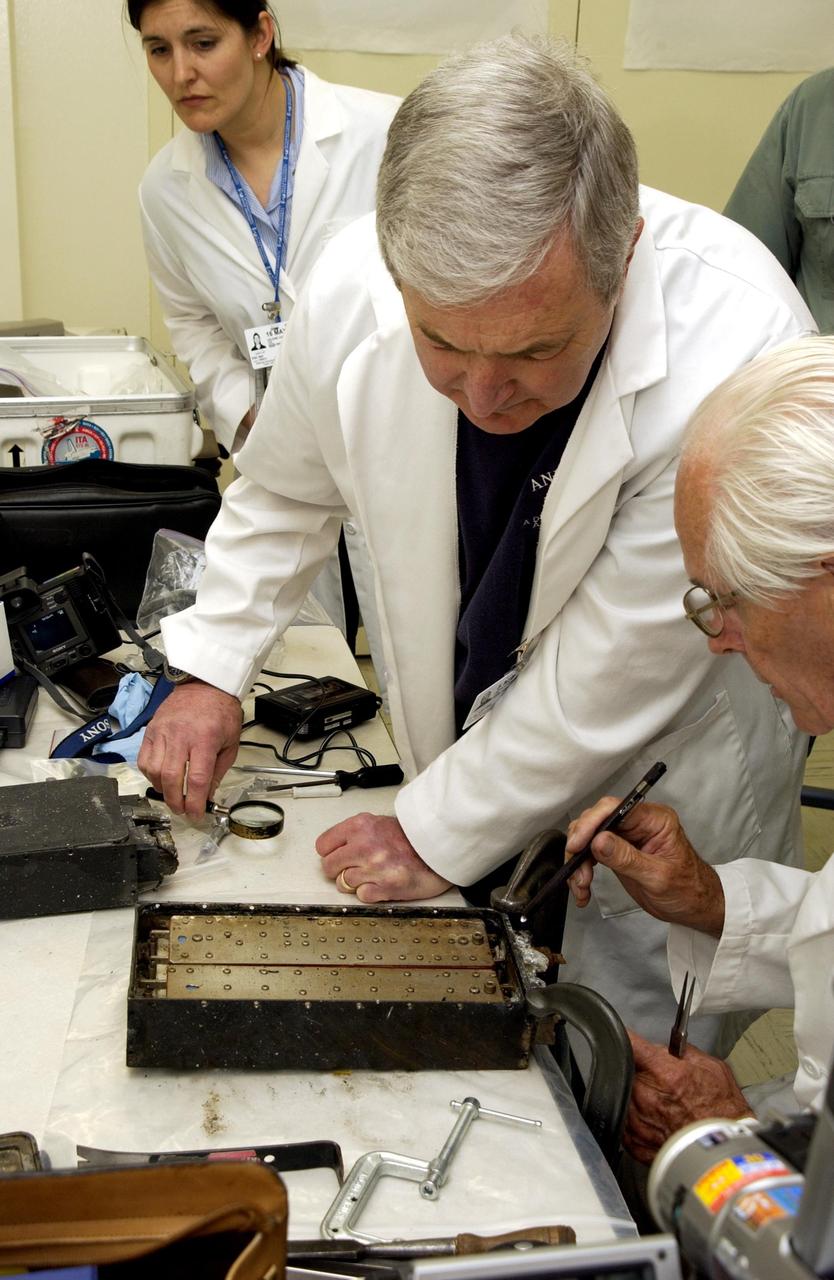
KENNEDY SPACE CENTER, FLA. - John Cassanto of ITA looks at the Growth of Bacterial Biofilm on Surfaces during Spaceflight (GOBBSS) experiment that was carried on mission STS-107 as part of the Commercial ITA Biomedical Experiments payload. He is part of a recovery team transferring experiments to alternate containers. GOBBSS was a Planetary Society-sponsored astrobiology experiment developed by the Israeli Aerospace Medical Institute and the Johnson Space Center Astrobiology Center, with joint participation of an Israeli and a Palestinian student. The recovery team also includes Eran Schenker of the Israeli Aerospace Medical Institute; David Warmflash of JSC, and Louis Friedman, executive director of the Planetary Society. The GOBBSS material will be sent to JSC where the science team will analyze the samples, studying the effects of spaceflight on bacterial growth.
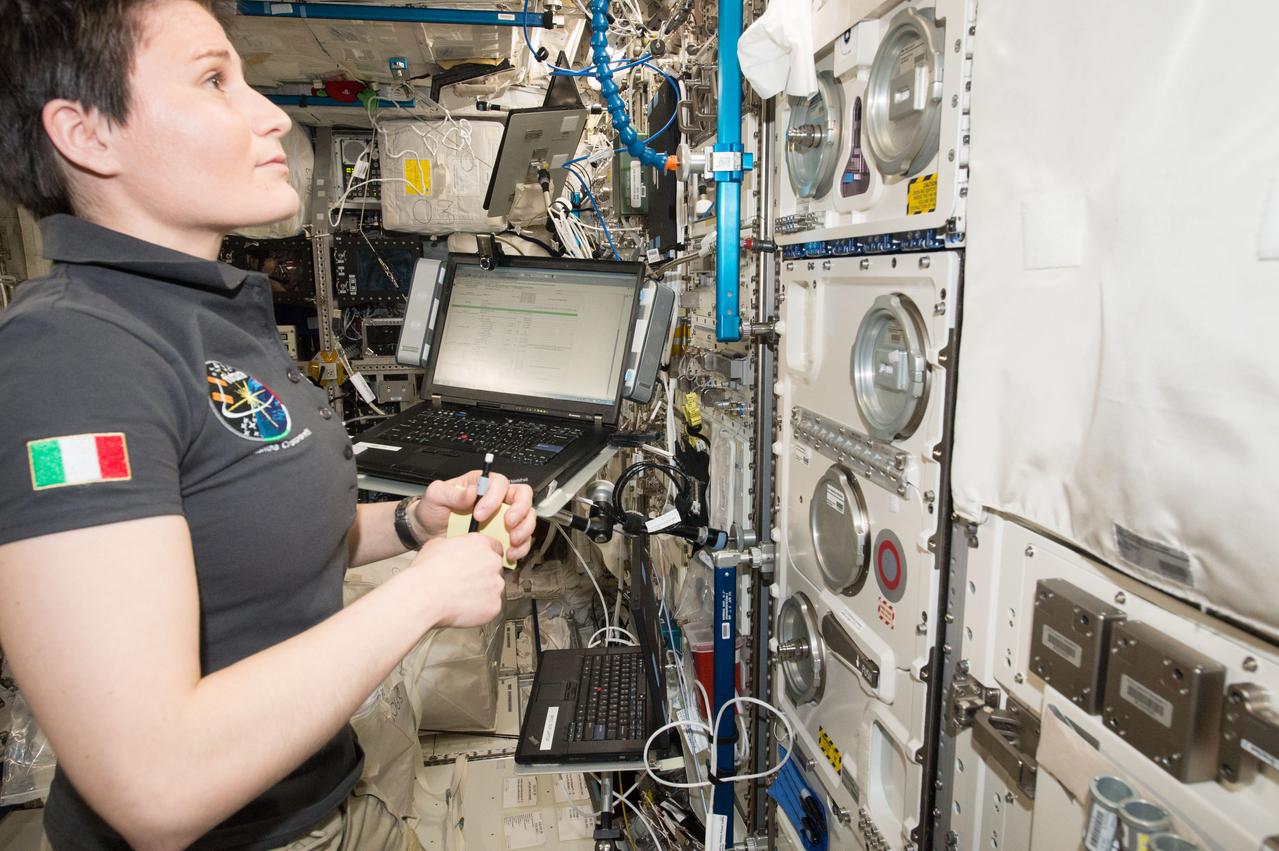
ISS043E070945 (03/31/2015) --- ESA (European Space Agency) astronaut Samantha Cristoforetti, Expedition 43 flight engineer aboard the International Space Station, is seen working on a science experiment that includes photographic documentation of Cellular Responses to Single and Combined Space Flight Conditions. Some effects of the space environment level appear to act at the cellular level and it is important to understand the underlying mechanisms of these effects. This science project uses invertebrate hemocytes to focus on two aspects of cellular function which may have medical importance. The synergy between the effects of the space radiation environment and microgravity on cellular function is the goal of this experiment along with studying the impairment of immune functions under spaceflight conditions.
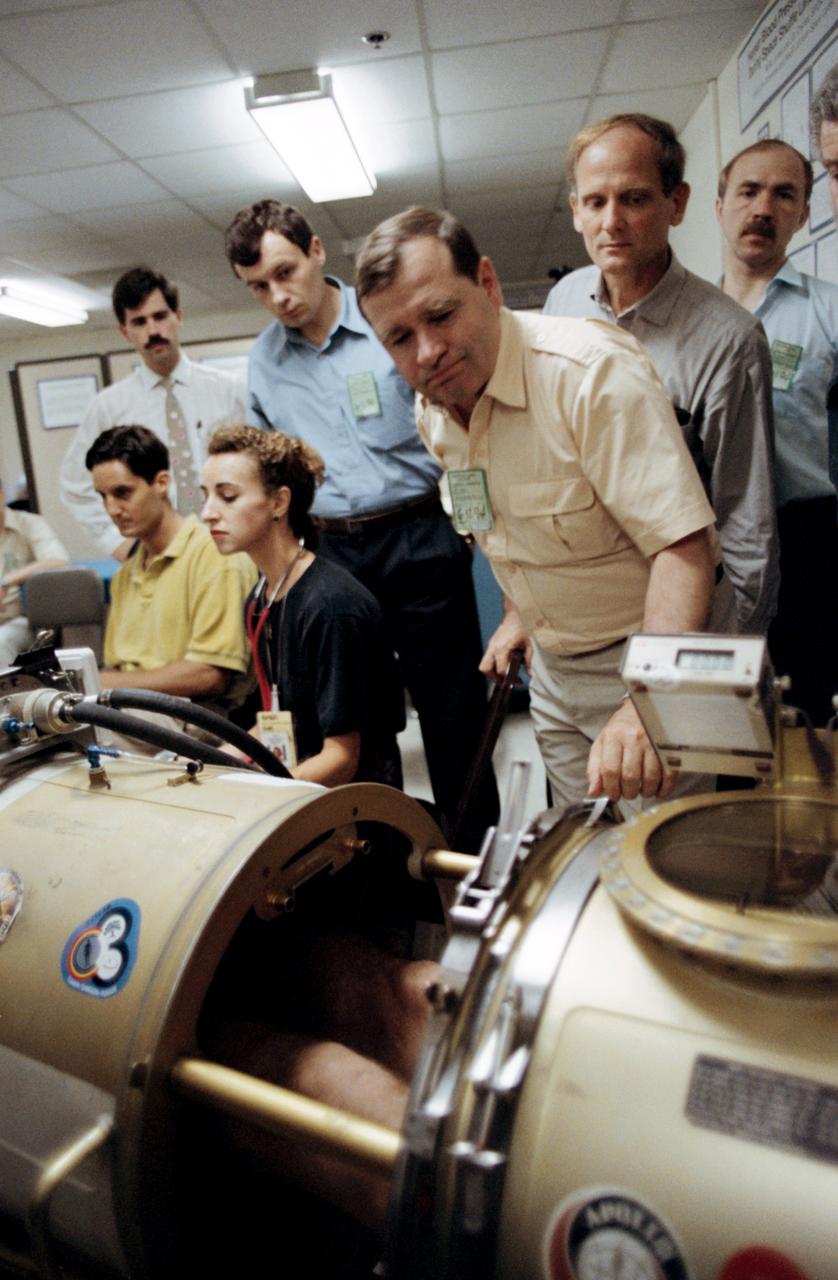
Astronaut Norman E. Thagard (right center), a guest researcher on Russia's Mir 18 mission, monitors a test of a subject (out of frame) in the Lower Body Negative Pressure (LBNP) device. Others pictured, left to right, are Todd Schlegel (seated) of the Medical Sciences Division at JSC, unidentified trainer, Linda Barrows of Krug; cosmonaut Vladimir N. Dezhurov, mission commander; cosmonaut Gennadiy M. Strekalov, Thagard and cosmonaut Alexsandr F. Poleshchuk, Mir 18 reserve flight engineer.
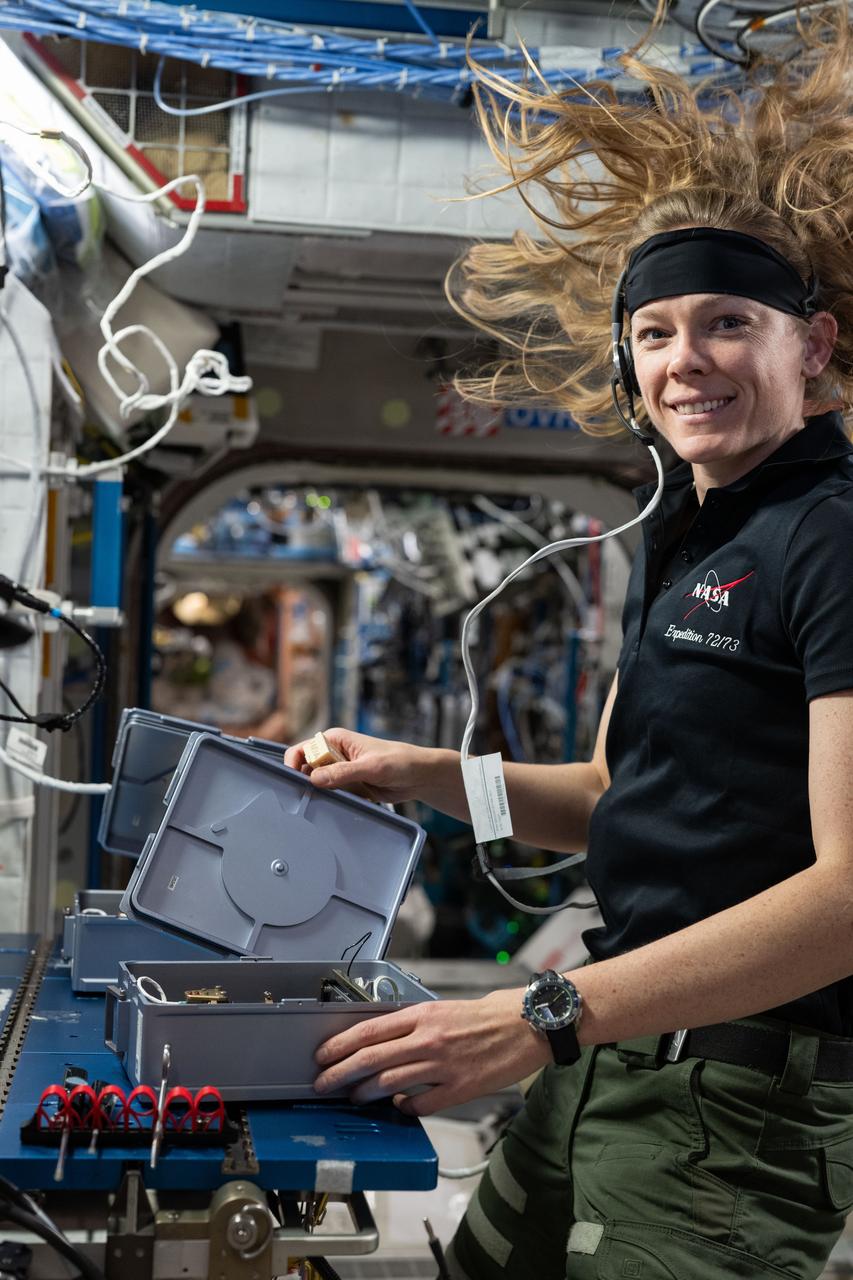
iss073e0025362 (May 7, 2025) --- NASA astronaut and Expedition 73 Flight Engineer Nichole Ayers swaps hardware that promotes physical science and crystalization research inside the Advanced Space Experiment Processor-4 (ADSEP-4) aboard the International Space Station. The ADSEP-4 is supporting a technology demonstration potentially enabling the synthesis of medications during deep space missions and improving the pharmaceutical industry on Earth.
iss073e0071610 (May 16, 2025) --- NASA astronaut and Expedition 73 Flight Engineer Jonny Kim removes a cryogenic storage unit, called a dewar, containing frozen protein crystal samples from a science freezer located inside International Space Station's Kibo laboratory module. The research activities were part of a technology demonstration potentially enabling the synthesis of medications during deep space missions and improving the pharmaceutical industry on Earth.
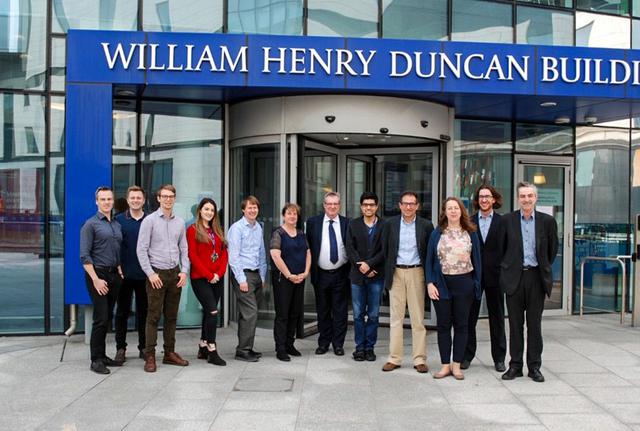
jsc2021e058711 (11/10/2021) --- The MicroAge team outside the Institute of Life Course and Medical Sciences, University of Liverpool. From left to right: James Henstock, Adam Janvier, William Blackler, Samantha Jones, Kai Hoettges, Anne McArdle, Chris McArdle, Shahjahan Shigdar, Gianluca Neri, Libby Jackson, Malcolm Jackson. The Micro Age investigation helps identify the mechanisms by which astronauts lose skeletal muscle mass in microgravity and identify optimum exercise regimens, nutritional, or pharmacological interventions for prevention. Image courtesy of University of Liverpool.
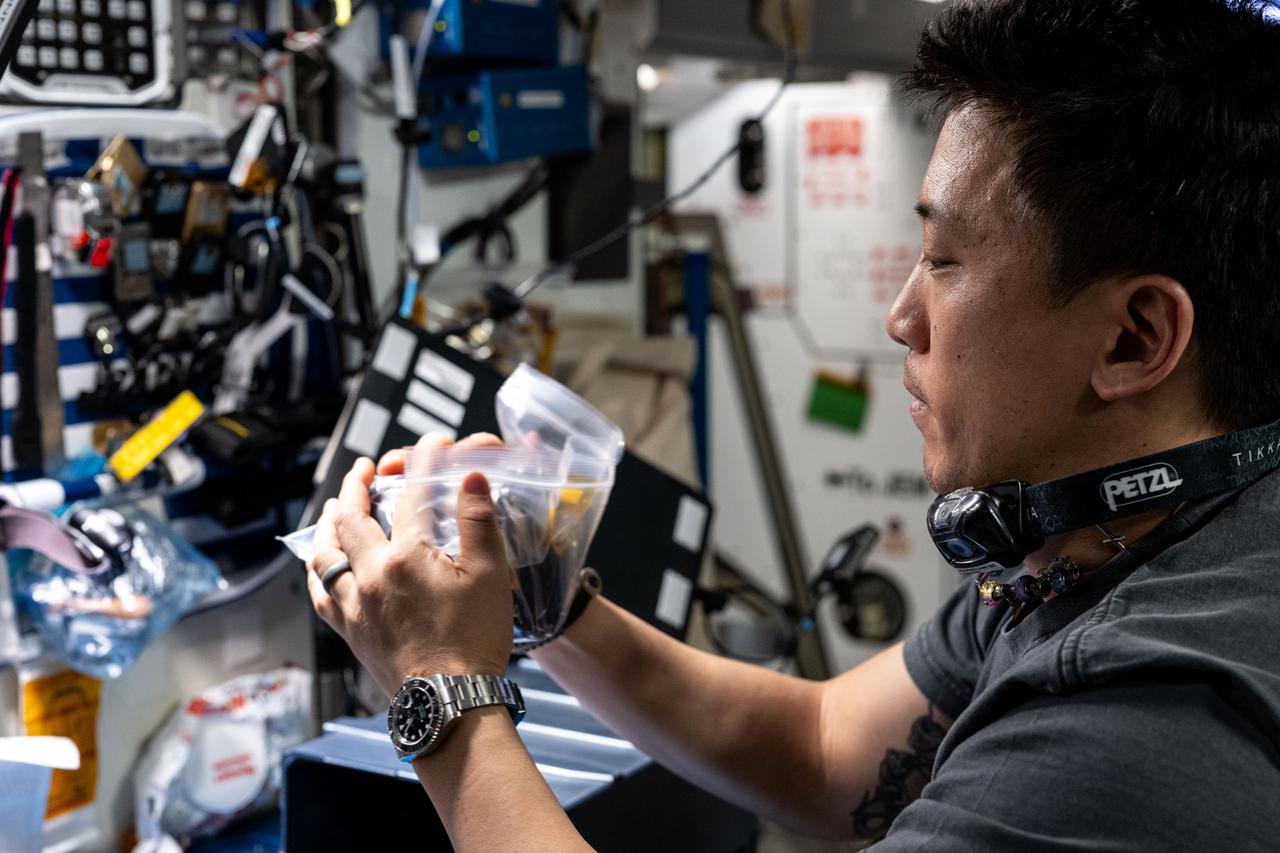
iss073e0032802 (May 16, 2025) --- NASA astronaut and Expedition 73 Flight Engineer Jonny Kim services hardware that promotes physical science and crystalization research inside the Advanced Space Experiment Processor-4 (ADSEP-4) aboard the International Space Station. The ADSEP-4 is supporting a technology demonstration potentially enabling the synthesis of medications during deep space missions and improving the pharmaceutical industry on Earth.
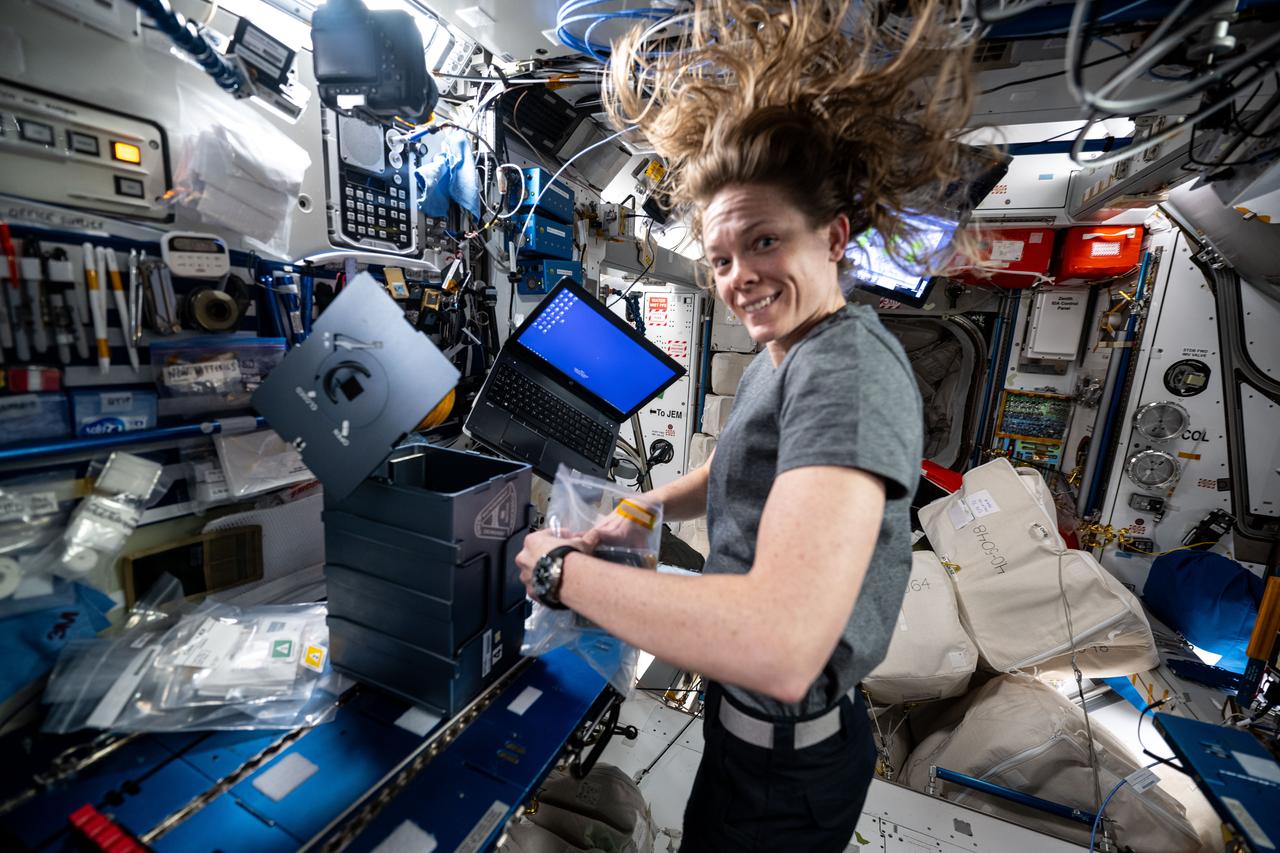
iss073e0030873 (May 14, 2025) --- NASA astronaut and Expedition 73 Flight Engineer Nichole Ayers swaps hardware that promotes physical science and crystalization research inside the Advanced Space Experiment Processor-4 (ADSEP-4) aboard the International Space Station. The ADSEP-4 is supporting a technology demonstration potentially enabling the synthesis of medications during deep space missions and improving the pharmaceutical industry on Earth.
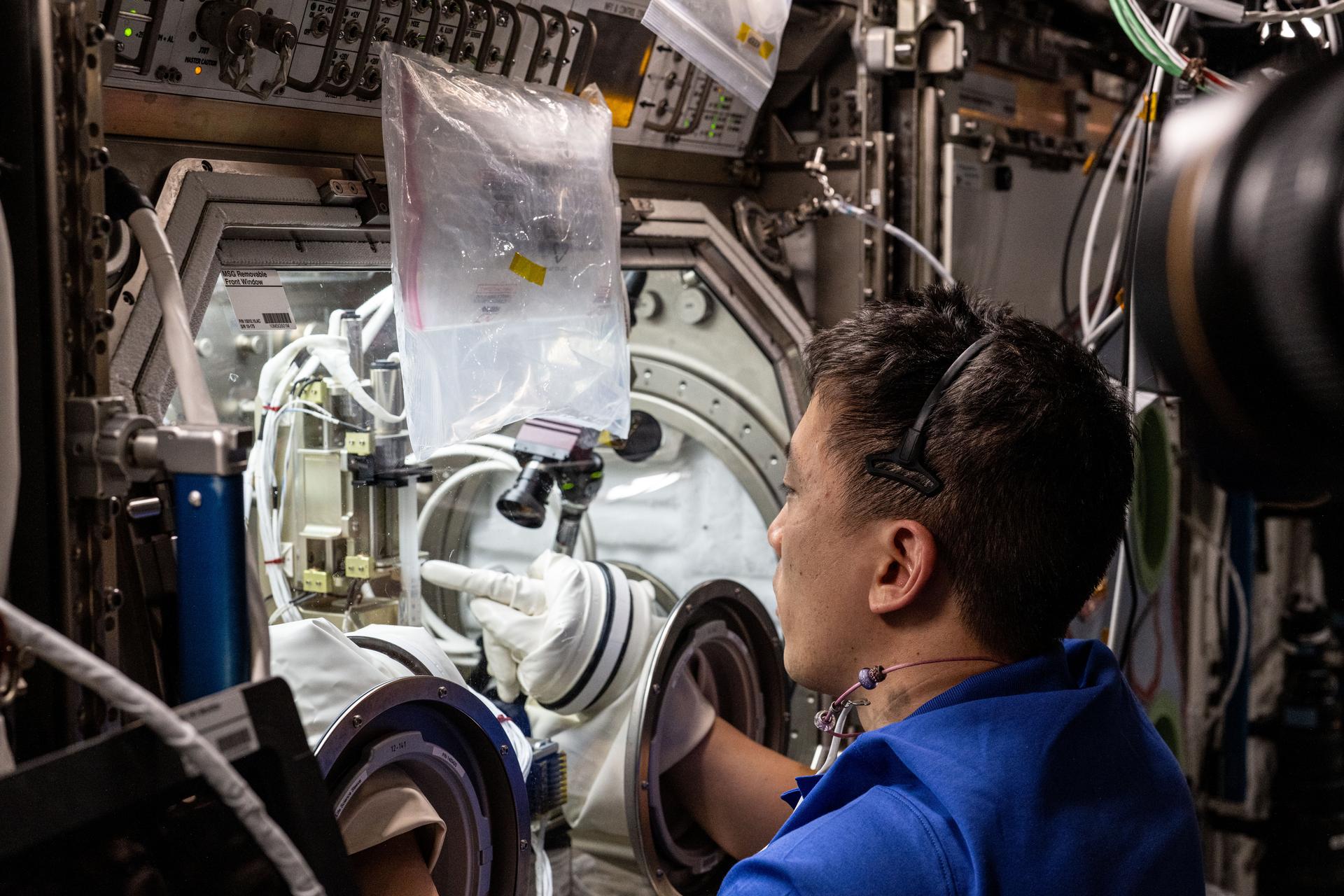
iss073e0177558 (June 12, 2025) -- NASA astronaut Jonny Kim works in the International Space Station’s Microgravity Science Glovebox on Ring Sheared Drop-IBP-2. This investigation studies the behavior of high-concentration protein fluids in microgravity using a special device that holds liquid protein solutions without containers, eliminating interference from interactions with container walls. Results could help advance manufacturing processes and 3D printing in space and for production of medicines, microelectronics, foods, and medical devices on Earth.
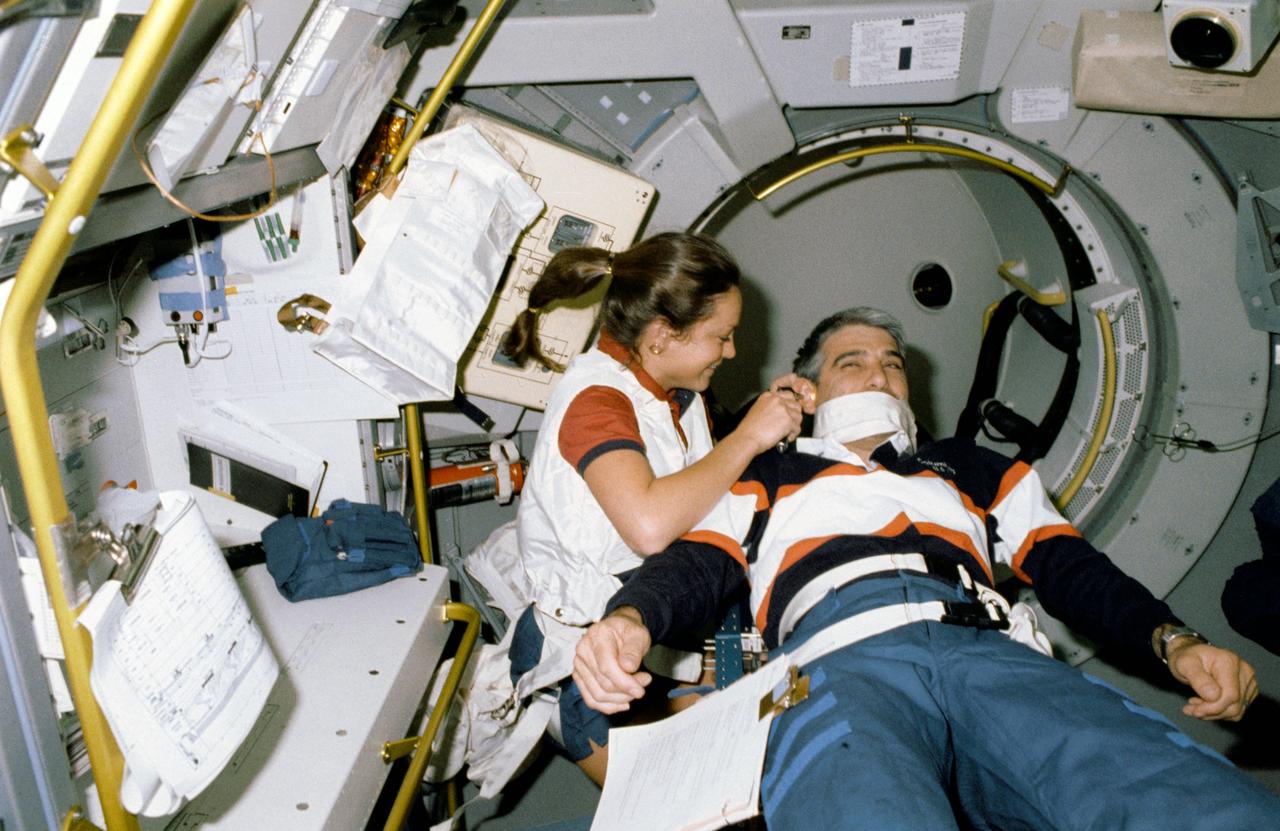
STS040-206-002 (5-14 June 1991) --- Held in place by the Spacelab Life Sciences (SLS-1) Medical Restraint System (MRS), astronaut Sidney M. Gutierrez, pilot, gets his ears checked by astronaut Tamara E. Jernigan, mission specialist. The two are in the SLS-1 module, onboard the Space Shuttle Columbia. The scene was photographed with a 35mm camera.
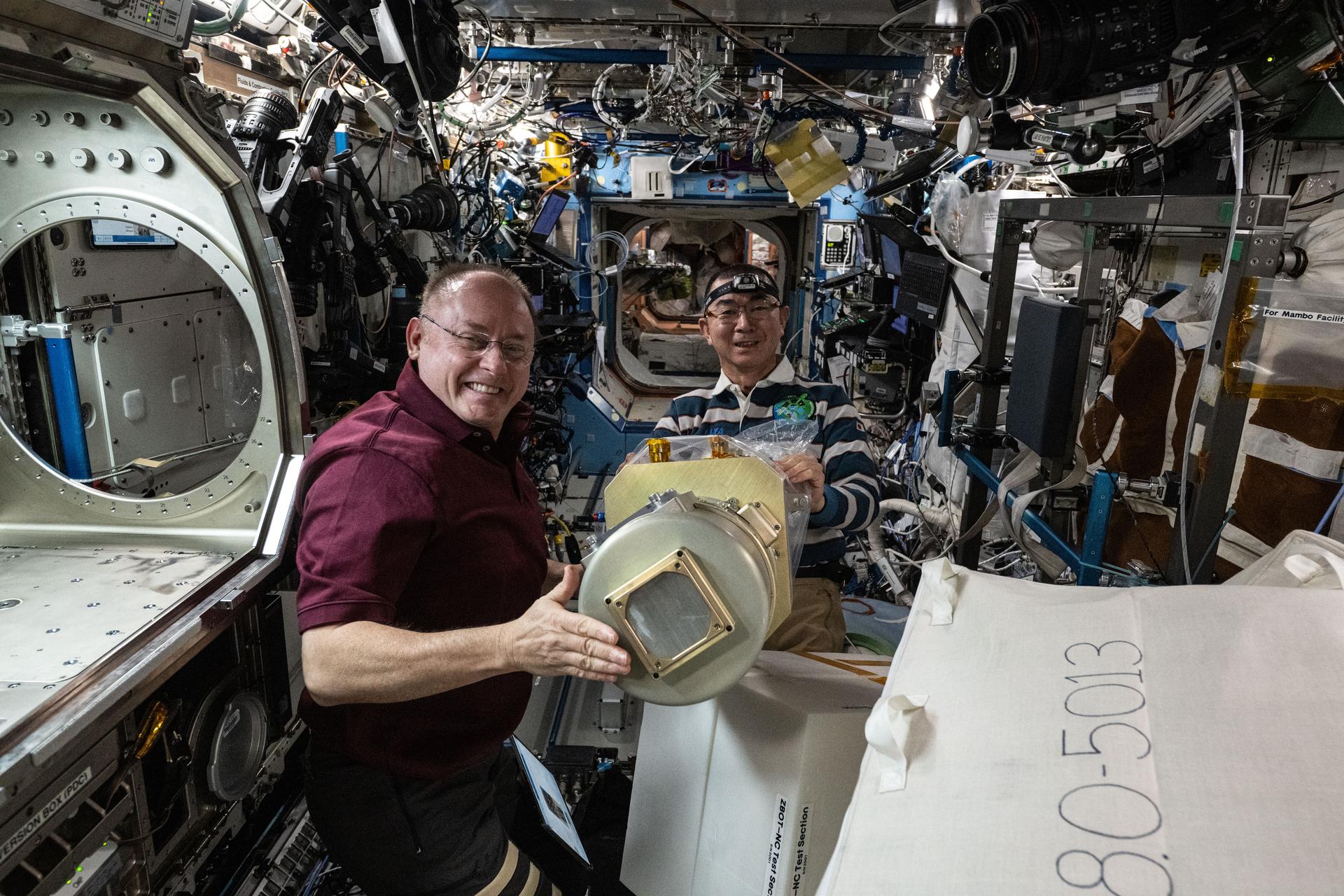
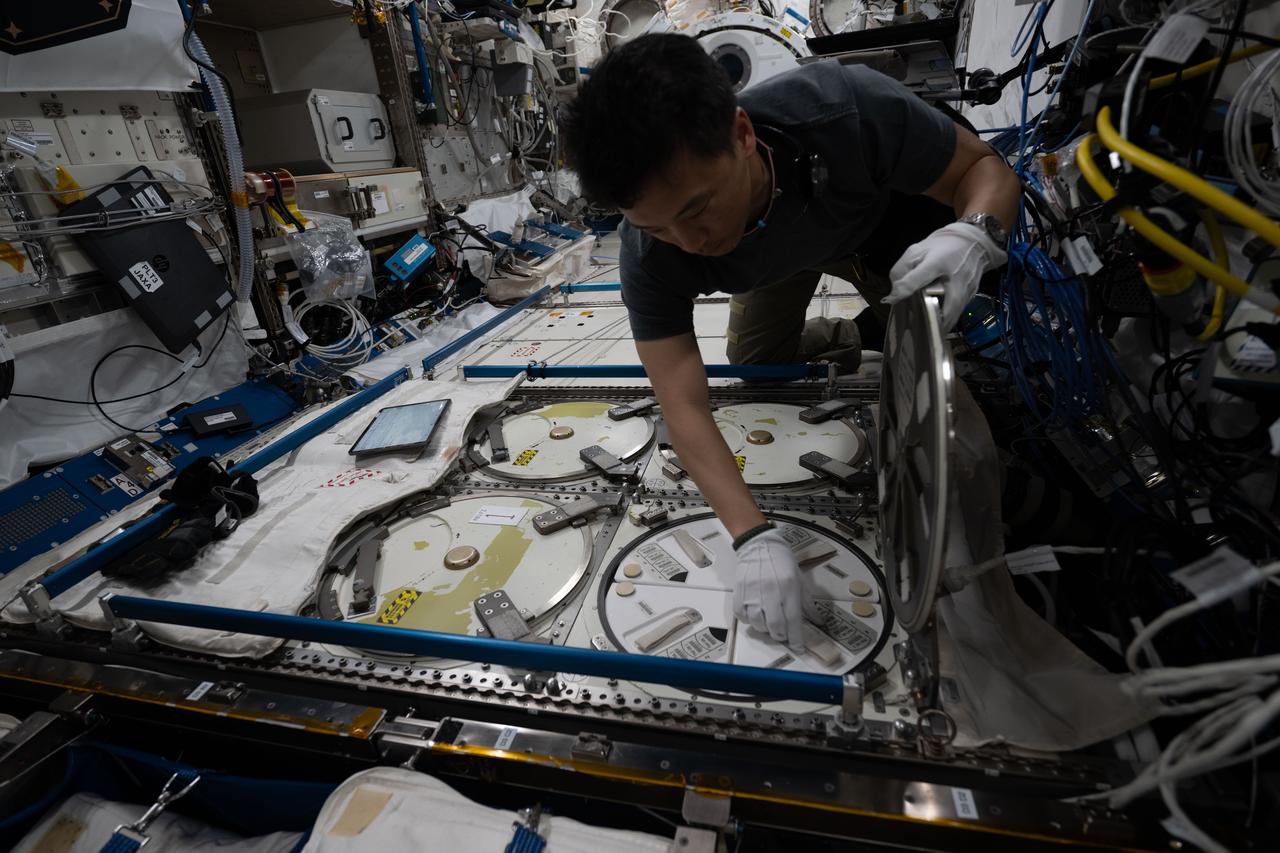
iss073e0982900 (Oct. 28, 2025) --- Expedition 73 Flight Engineers Mike Fincke of NASA and Kimiya Yui of JAXA (Japan Aerospace Exploration Agency) work together to configure research hardware for the Zero Boil-Off Tank physics investigation inside the Microgravity Science Glovebox aboard the International Space Station. The experiment explores methods for storing cryogenic fluids and supports advancements in spacecraft propulsion and life support systems, as well as biotechnological, medical, and industrial applications on Earth.
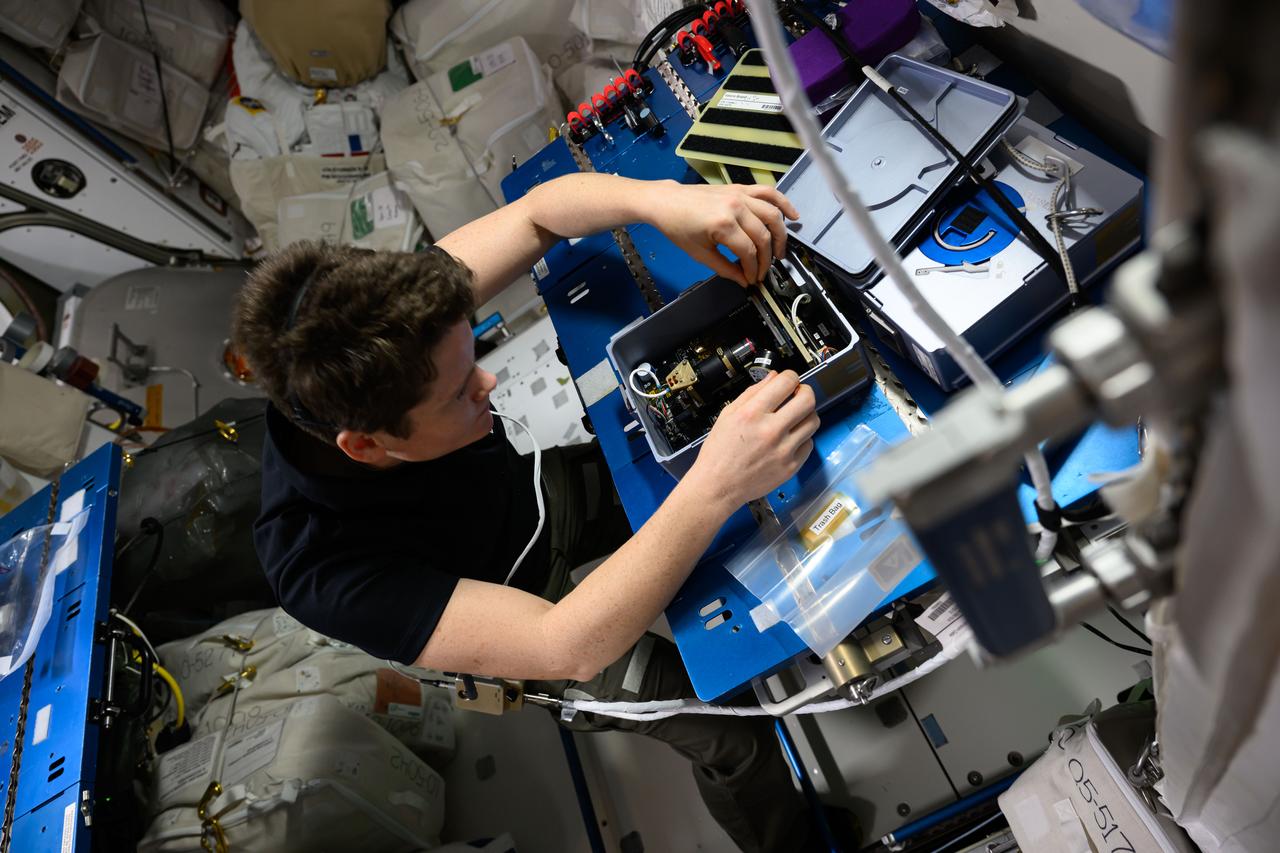
iss073e0011100 (May 5, 2025) --- NASA astronaut and Expedition 73 Flight Engineer Anne McClain swaps hardware that promotes physical science and crystalization research inside the Advanced Space Experiment Processor-4 (ADSEP-4) aboard the International Space Station. The ADSEP-4 is supporting a technology demonstration potentially enabling the synthesis of medications during deep space missions and improving the pharmaceutical industry on Earth.
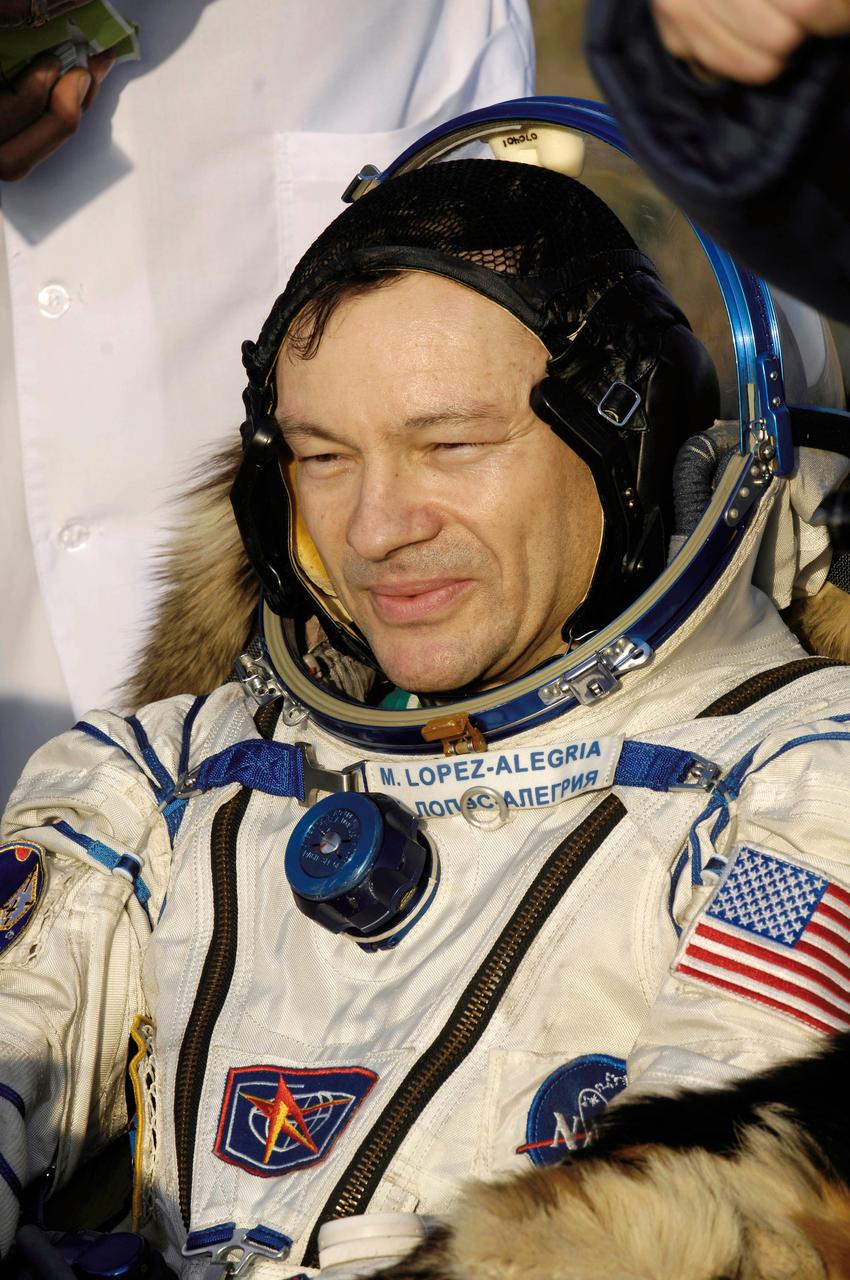
JSC2007-E-19321 (21 April 2007) --- Astronaut Michael E. Lopez-Alegria, Expedition 14 commander and NASA station science officer, sits in a chair near the Soyuz TMA-9 spacecraft at the landing site. Landing and recovery officials were conducting post-landing medical checks on the three crewmembers. The Soyuz spacecraft landed southwest of Karaganda, Kazakhstan at approximately 6:30 p.m. local time, April 21, 2007. Photo Credit: NASA/Bill Ingalls
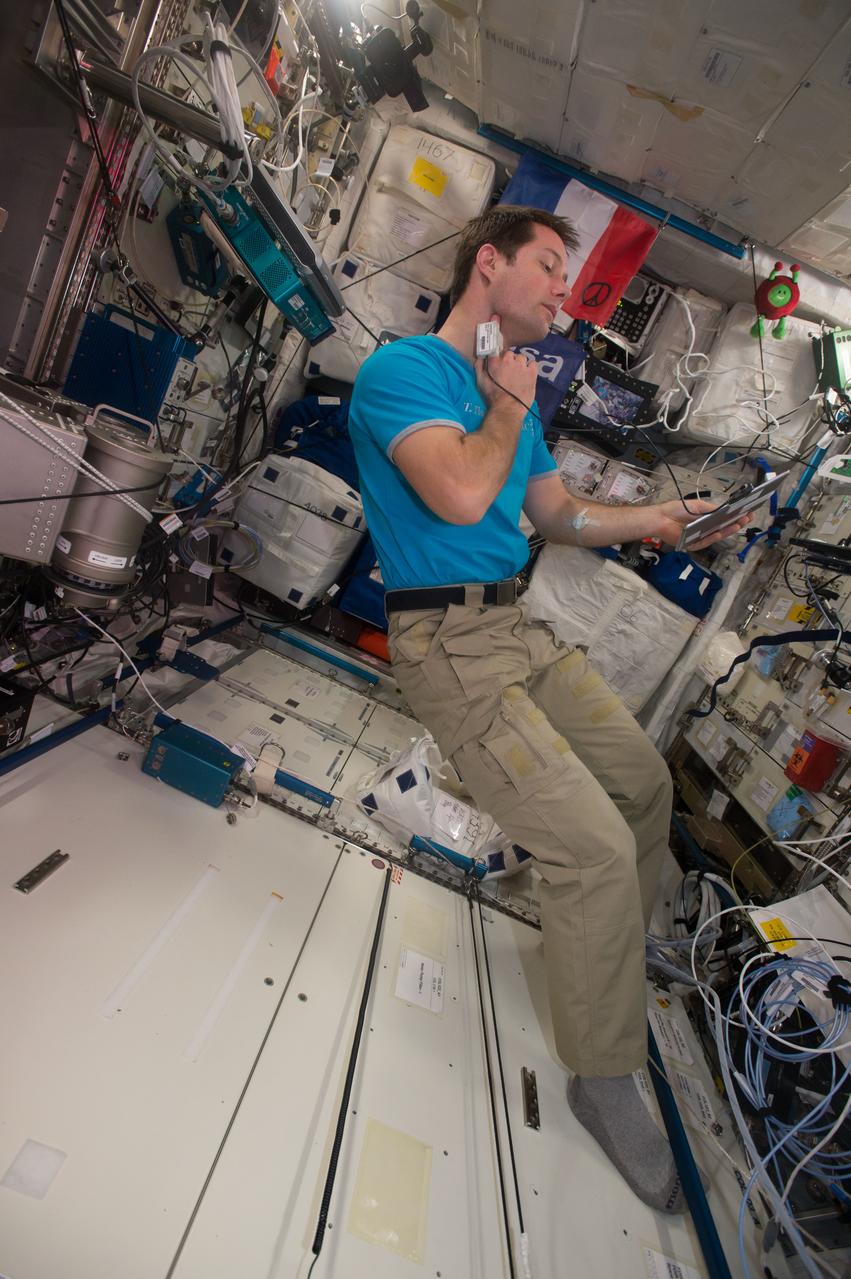
iss050e014804 (12/7/2016) --- European Space Agency (ESA) Thomas Pesquet wearing sensor (Tonometer) connected to iPad during EVERYWEAR experiment, in the Columbus Module. The EveryWear system is an ambulatory data collection system making use of wearable sensors connected to a station iPad itself wirelessly synchronized with ground. This easy-use system should demonstrate extensive physiology data collection for both science and medical follow-up purpose by improving usability for the astronauts.
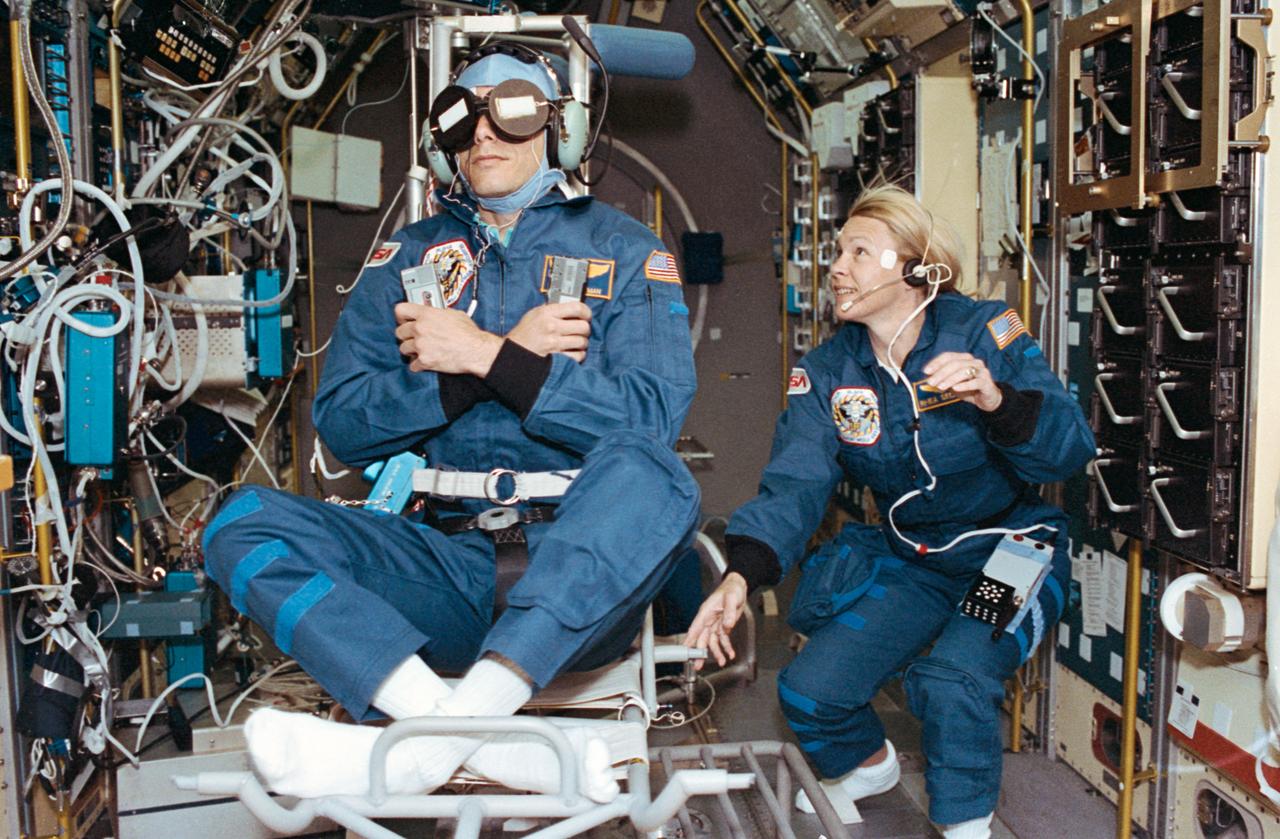
STS058-202-002 (18 Oct.-1 Nov. 1993) --- Astronaut Rhea Seddon, STS-58 payload commander, spins the Spacelab Life Sciences (SLS-2) rotating chair as payload specialist Martin J. Fettman serves as test subject. The two joined five NASA astronauts for fourteen days of medical research aboard the Earth-orbiting space shuttle Columbia. Photo credit: NASA
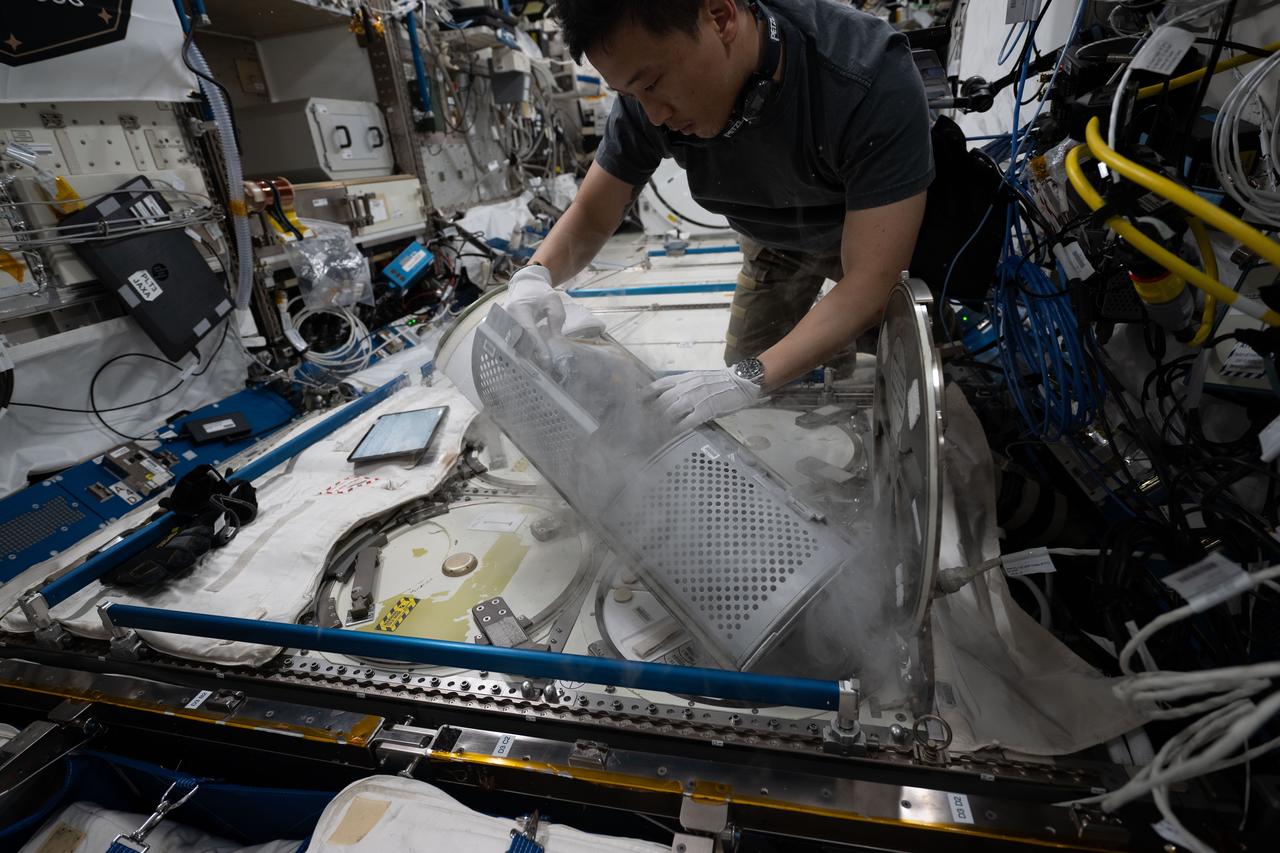
iss073e0071617 (May 16, 2025) --- NASA astronaut and Expedition 73 Flight Engineer Jonny Kim removes a cryogenic storage unit, called a dewar, containing frozen protein crystal samples from a science freezer located inside International Space Station's Kibo laboratory module. The research activities were part of a technology demonstration potentially enabling the synthesis of medications during deep space missions and improving the pharmaceutical industry on Earth.
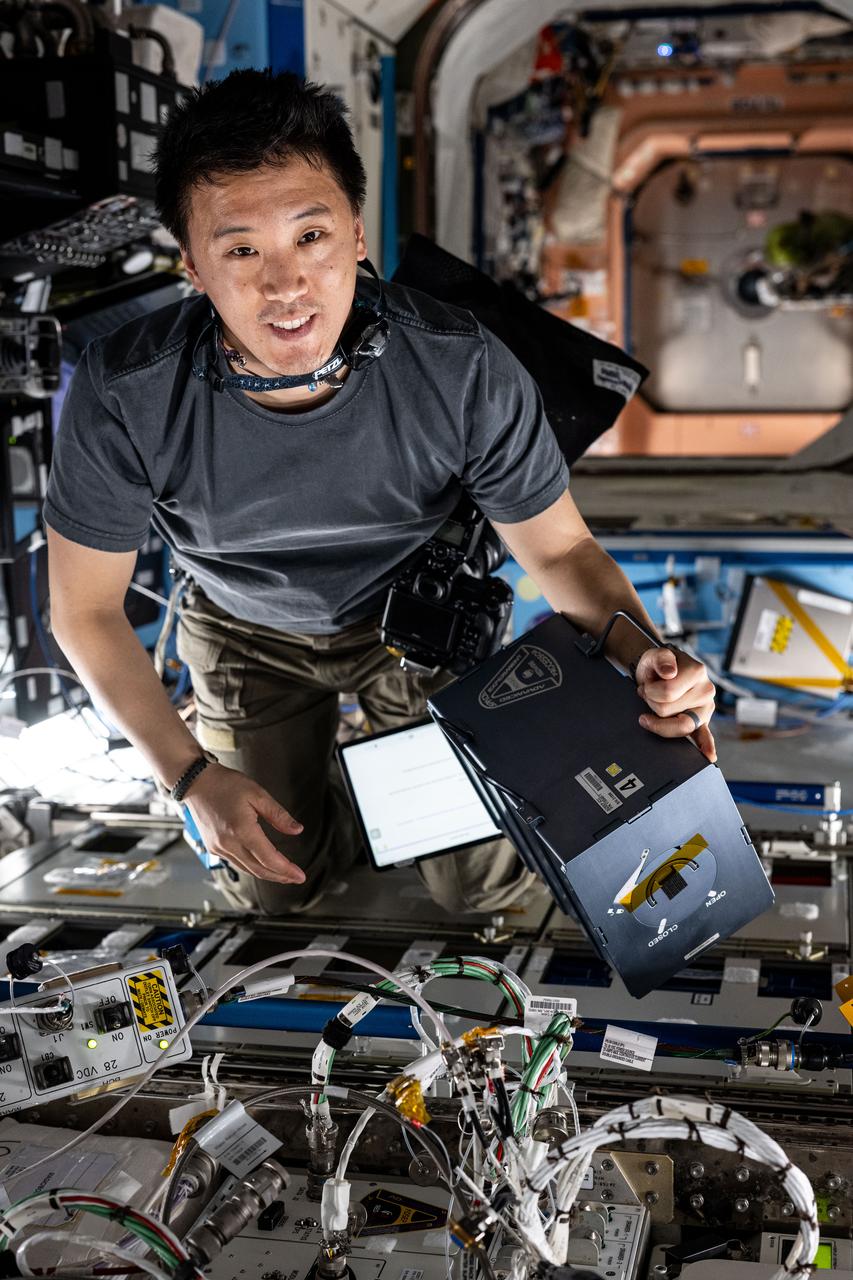
iss073e0032794 (May 16, 2025) --- NASA astronaut and Expedition 73 Flight Engineer Jonny Kim swaps hardware that promotes physical science and crystalization research inside the Advanced Space Experiment Processor-4 (ADSEP-4) aboard the International Space Station. The ADSEP-4 is supporting a technology demonstration potentially enabling the synthesis of medications during deep space missions and improving the pharmaceutical industry on Earth.
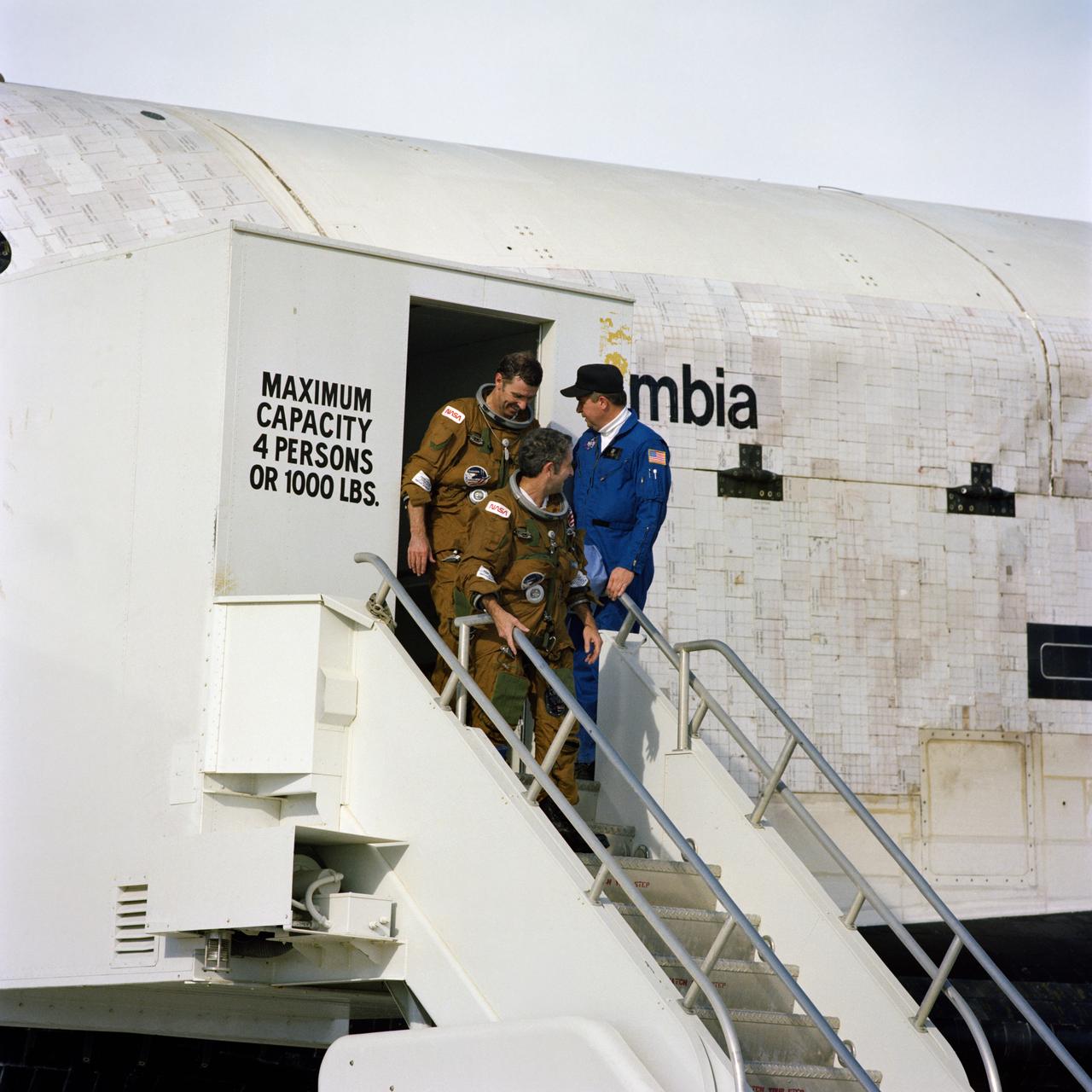
S81-39580 (14 Nov. 1981) --- Astronauts Joe H. Engle, rear, and Richard H. Truly egress the space shuttle Columbia after spending two days, six hours and 13 minutes on NASA?s STS-2 mission. At right is their physician, Dr. Charles La Pinta of the JSC Medical Sciences Division. Photo credit: NASA
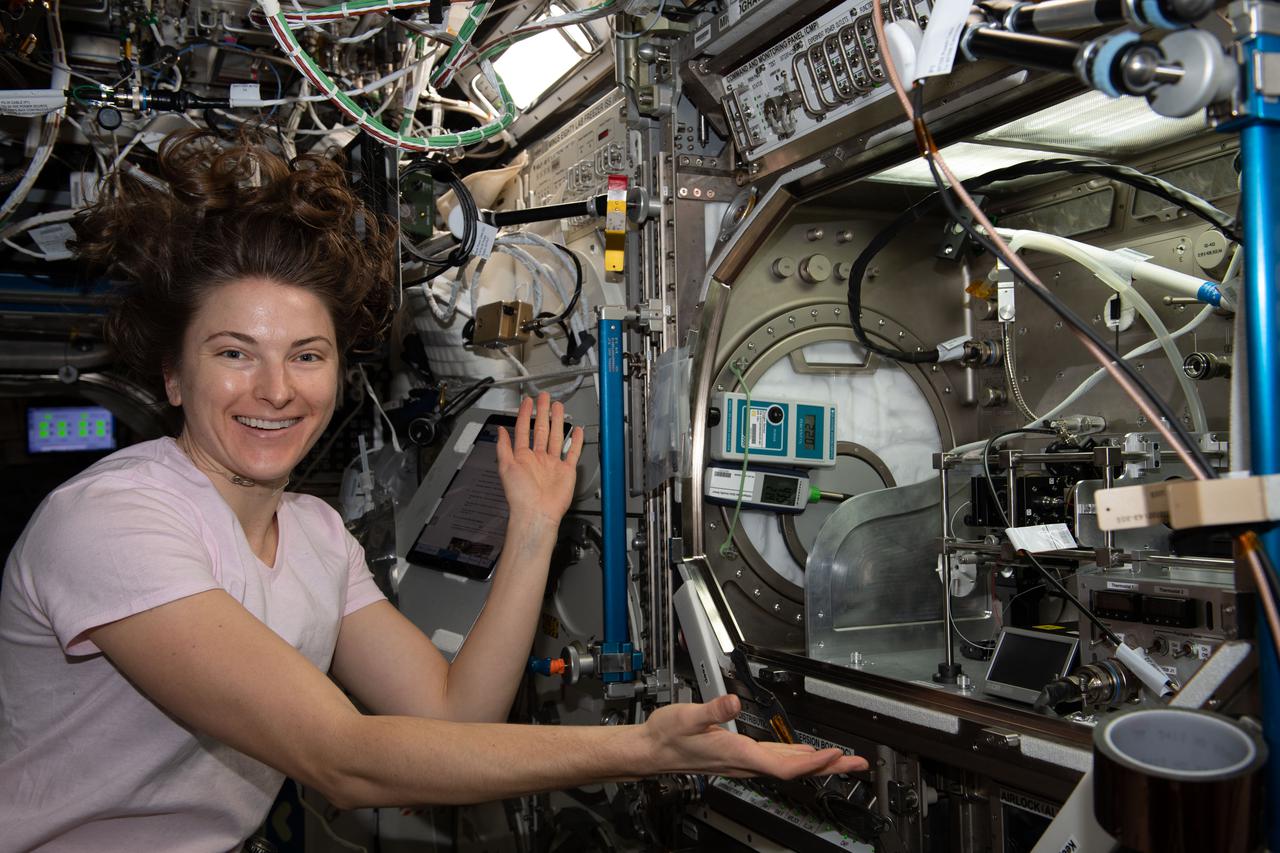
iss066e156064 (March 2, 2022) --- NASA astronaut and Expediiton 66 Flight Engineer Kayla Barron sets up hardware for the Intelligent Glass Optics investigation in the International Space Station's Microgravity Science Glovebox located in the U.S. Destiny laboratory. The advanced physics study may provide insights into manufacturing systems for Earth and space including communications, aerospace, and medical diagnostics.
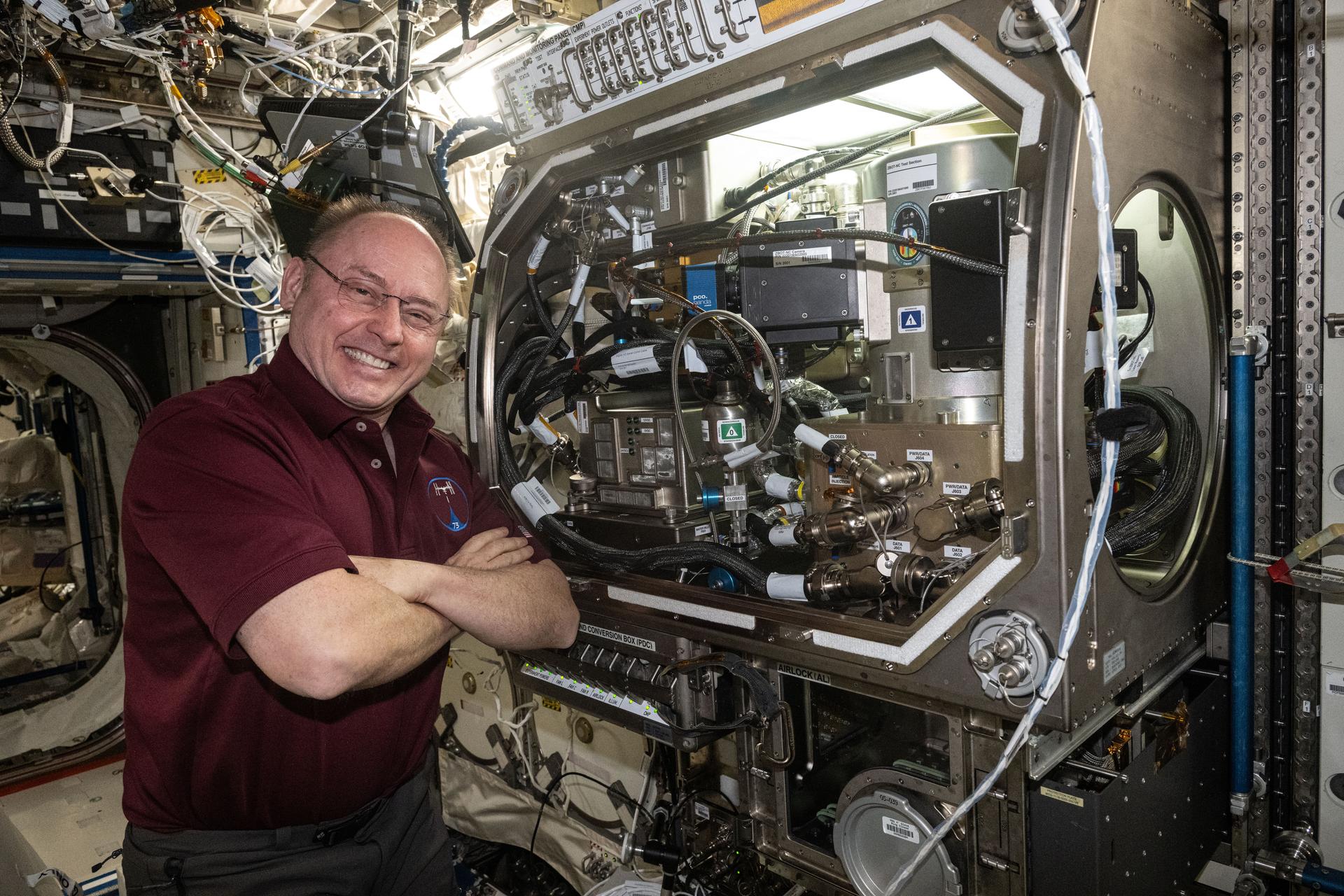
iss073e0982894 (Oct. 28, 2025) --- NASA astronaut and Expedition 73 Flight Engineer Mike Fincke poses for a portrait next to the Microgravity Science Glovebox aboard the International Space Station’s Destiny laboratory module. Fincke had just completed configuring research hardware for the Zero Boil-Off Tank physics investigation, which explores methods for storing cryogenic fluids. The experiment supports advancements in spacecraft propulsion and life support systems, as well as biotechnological, medical, and industrial applications on Earth.
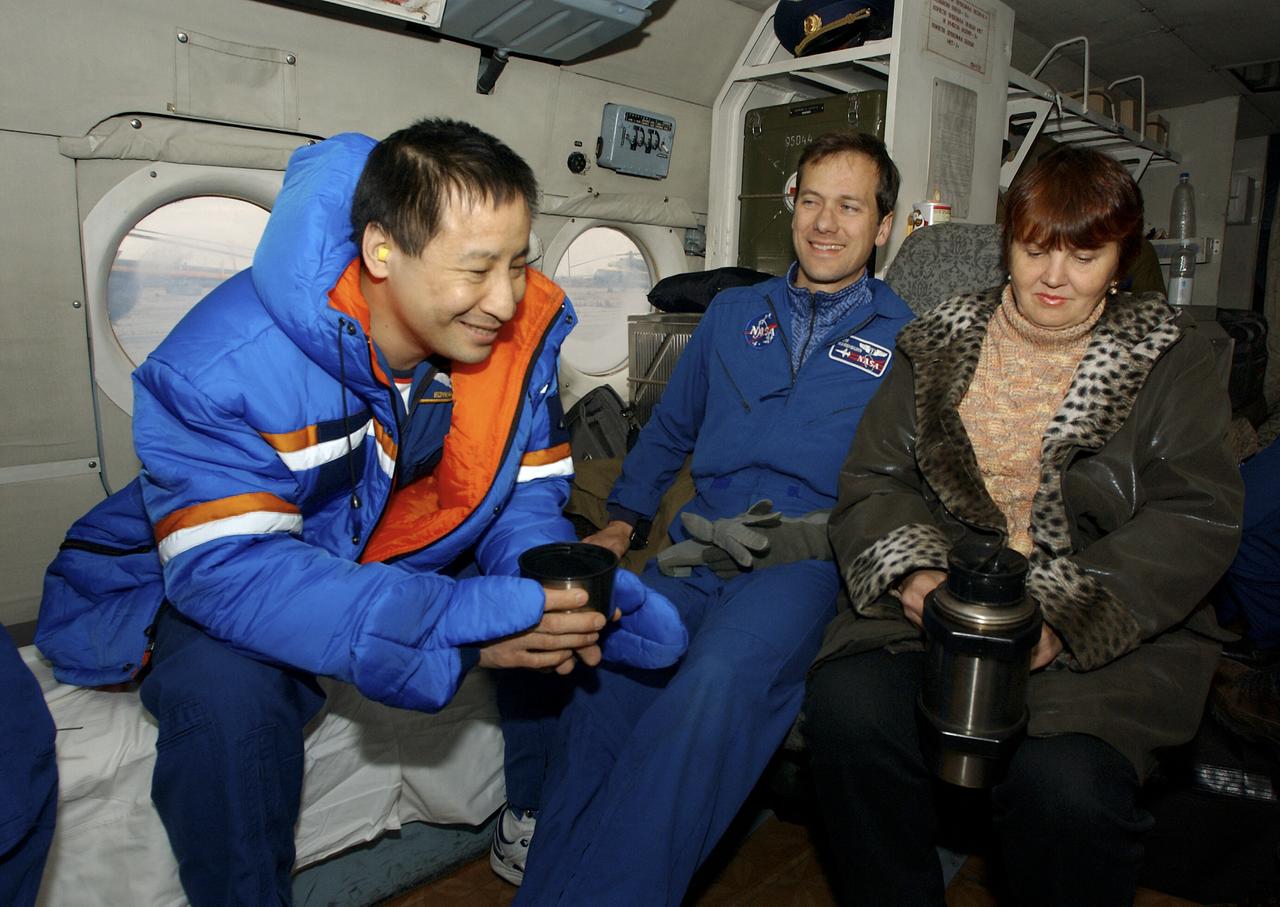
Astronaut Edward T. Lu, Expedition 7 NASA International Space Station Science Officer and Flight Engineer, left, enjoys some hot tea with NASA Flight Surgeon Dr. Thomas H. Marshburn, center, and a Russian Medical personnel onboard a Russian helicopter in Arqalyk, Kazakhstan, Monday, October 27, 2003. Photo Credit: (NASA/Bill Ingalls)
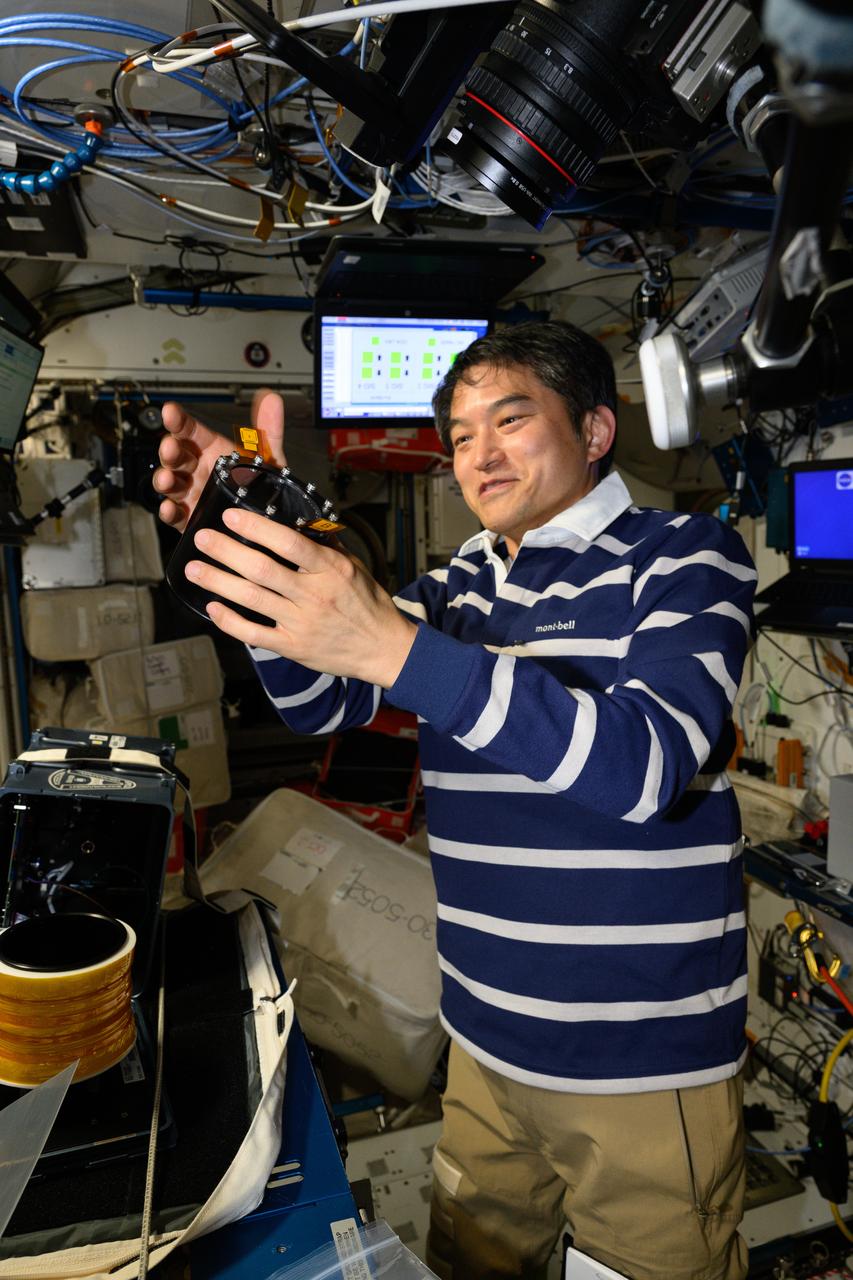
iss073e0033654 (May 19, 2025) --- JAXA (Japan Aerospace Exploration Agency) astronaut and Expedition 73 Commander Takuya Onishi services hardware that promotes physical science and crystalization research inside the Advanced Space Experiment Processor-4 (ADSEP-4) aboard the International Space Station. The ADSEP-4 is supporting a technology demonstration potentially enabling the synthesis of medications during deep space missions and improving the pharmaceutical industry on Earth.
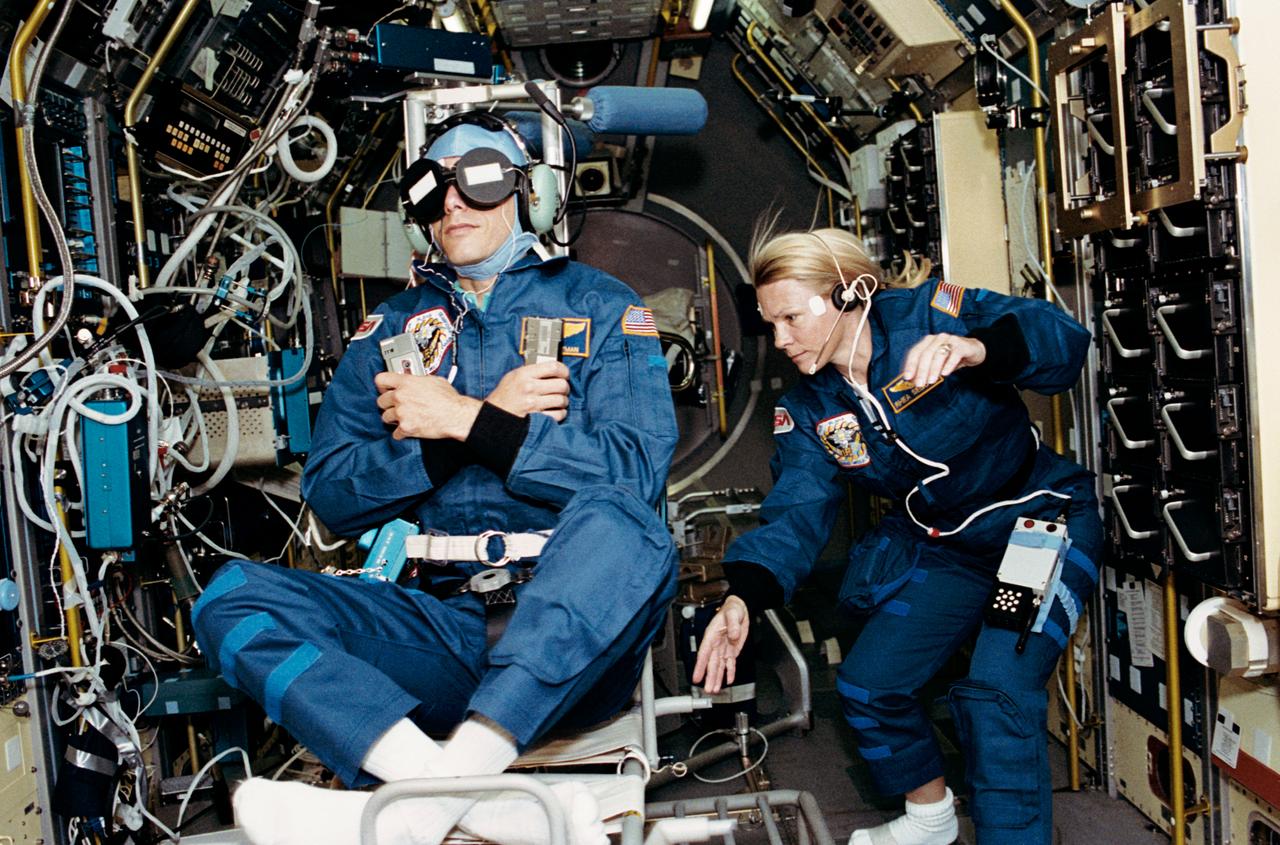
STS058-202-001 (18 Oct.-1 Nov. 1993) --- Astronaut Rhea Seddon, payload commander, spins the Spacelab Life Sciences (SLS-2) rotating chair as payload specialist Martin J. Fettman serves as test subject. The two joined five NASA astronauts for fourteen days of medical research aboard the Earth-orbiting space shuttle Columbia. Photo credit: NASA
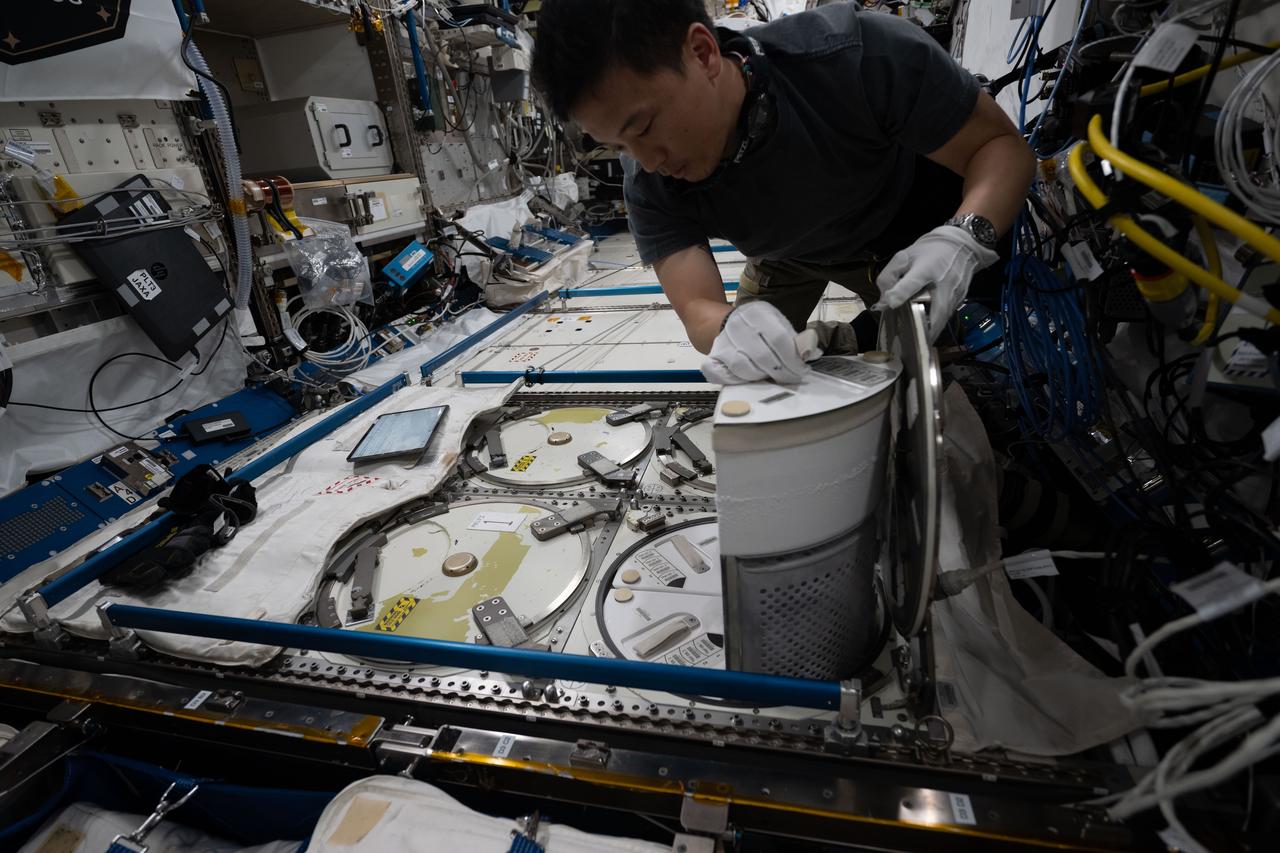
iss073e0071611 (May 16, 2025) --- NASA astronaut and Expedition 73 Flight Engineer Jonny Kim removes a cryogenic storage unit, called a dewar, containing frozen protein crystal samples from a science freezer located inside International Space Station's Kibo laboratory module. The research activities were part of a technology demonstration potentially enabling the synthesis of medications during deep space missions and improving the pharmaceutical industry on Earth.
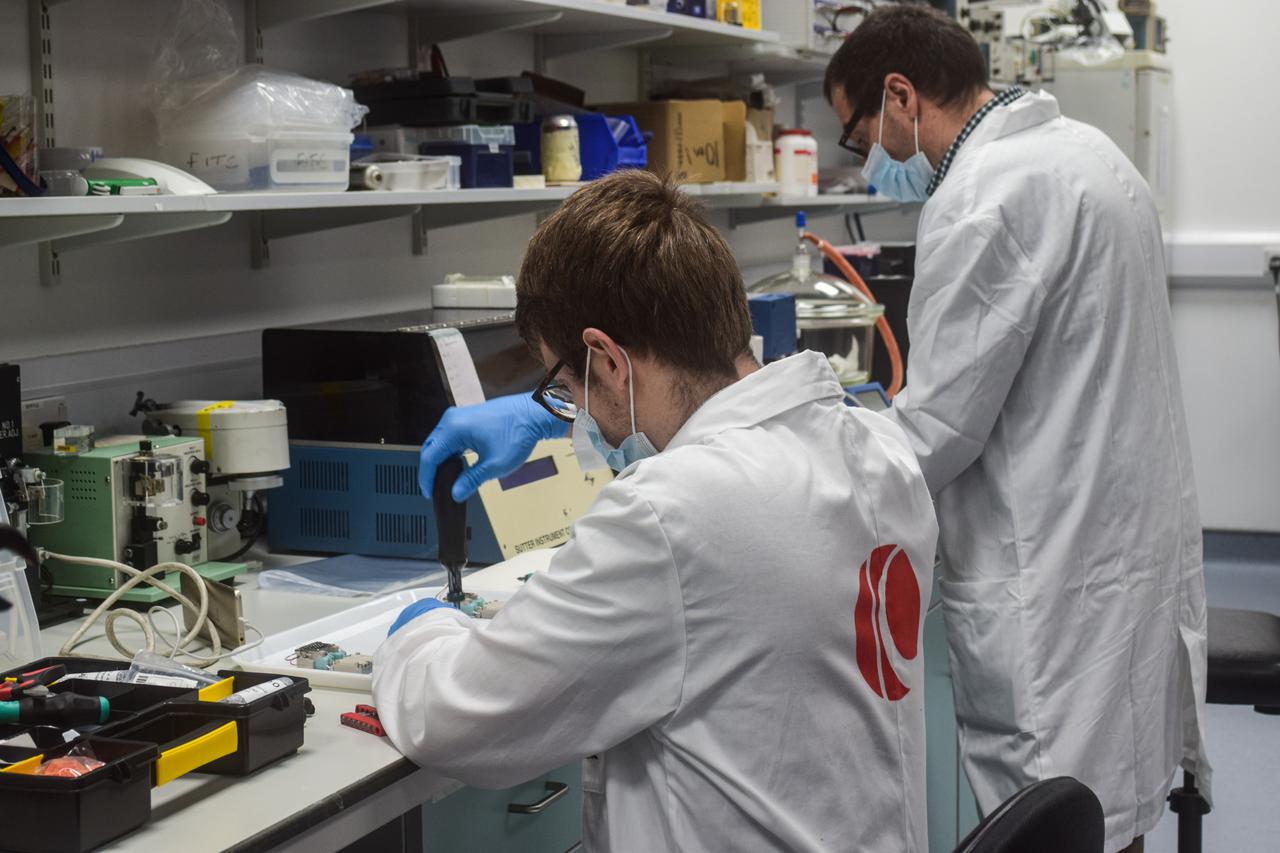
jsc2021e058714 (3/4/2021) --- The MicroAge experimental unit assembly at the University of Liverpool. Picture featuring Kayser Space Ltd (from left to right William Blackler and Gianluca Neri) at the Institute of Life Course and Medical Sciences. This investigation helps identify the mechanisms by which astronauts lose skeletal muscle mass in microgravity and identify optimum exercise regimens, nutritional, or pharmacological interventions for prevention. Image Courtesy of University of Liverpool.
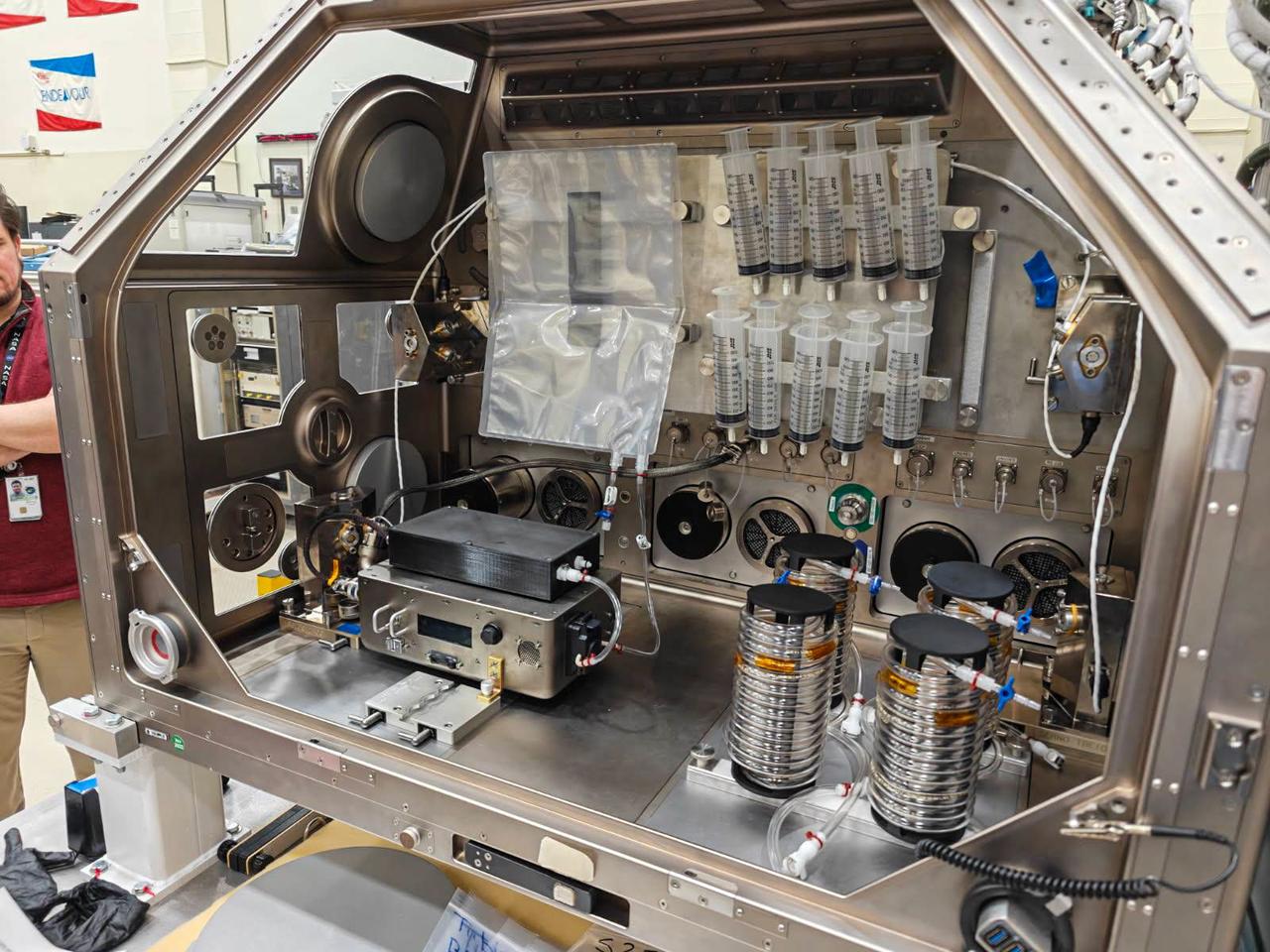
NASA Image: JSC2026E004232 - Intravenous Fluid Generation – Mini (IVGEN Mini) hardware inside the Life Sciences Glovebox (LSG) ground facility at Marshall Space Flight Center (MSFC). IVGEN Mini aims to verify operations for a miniaturized system and its ability to make medical-grade saline solution using potable water aboard the International Space Station. On future exploration missions, this system could give crew members the ability to generate intravenous fluids on demand. Credit: NASA.
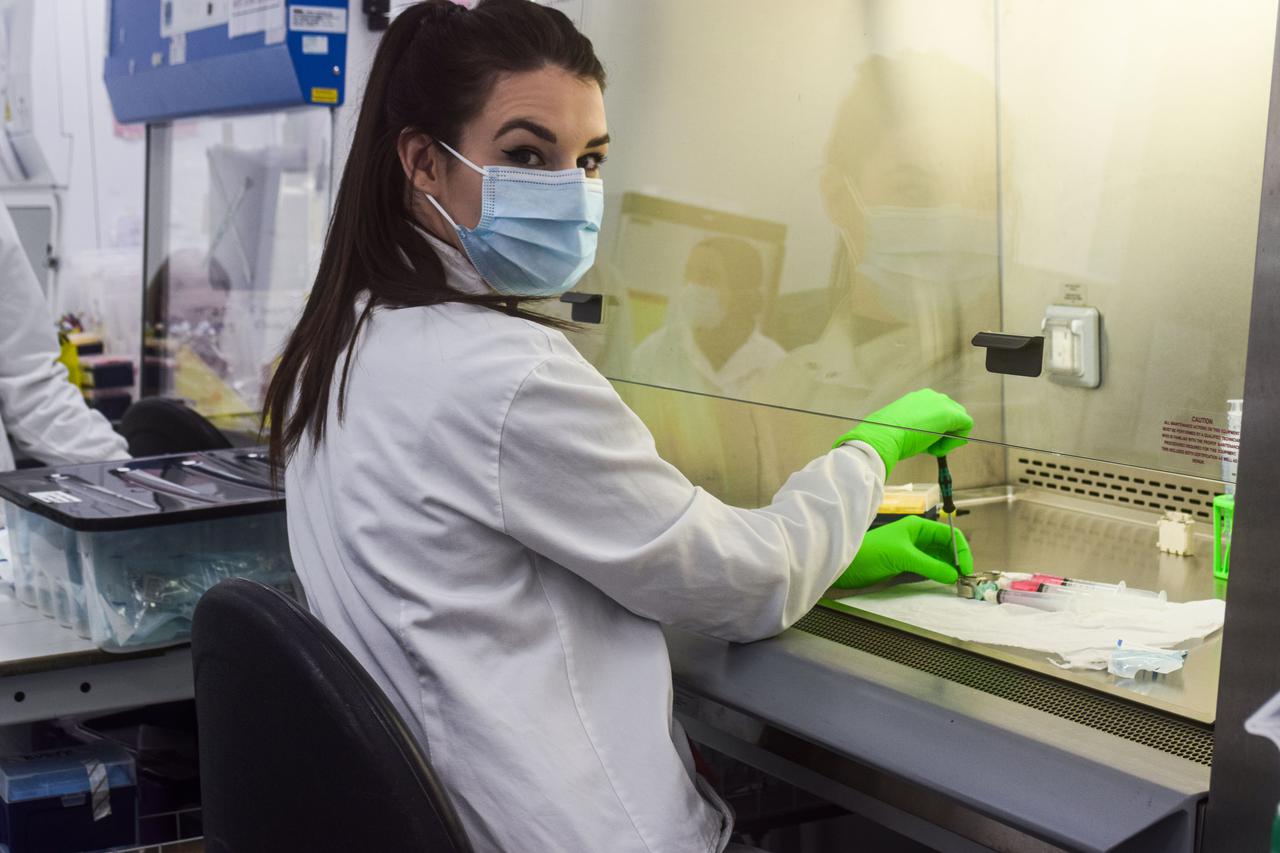
jsc2021e058712 (3/4/2021) --- The MicroAge experimental unit assembly at the University of Liverpool, featuring Dr Samantha Jones at the Institute of Life Course and Medical Sciences. This investigation helps identify the mechanisms by which astronauts lose skeletal muscle mass in microgravity and identify optimum exercise regimens, nutritional, or pharmacological interventions for prevention. Image courtesy of University of Liverpool.
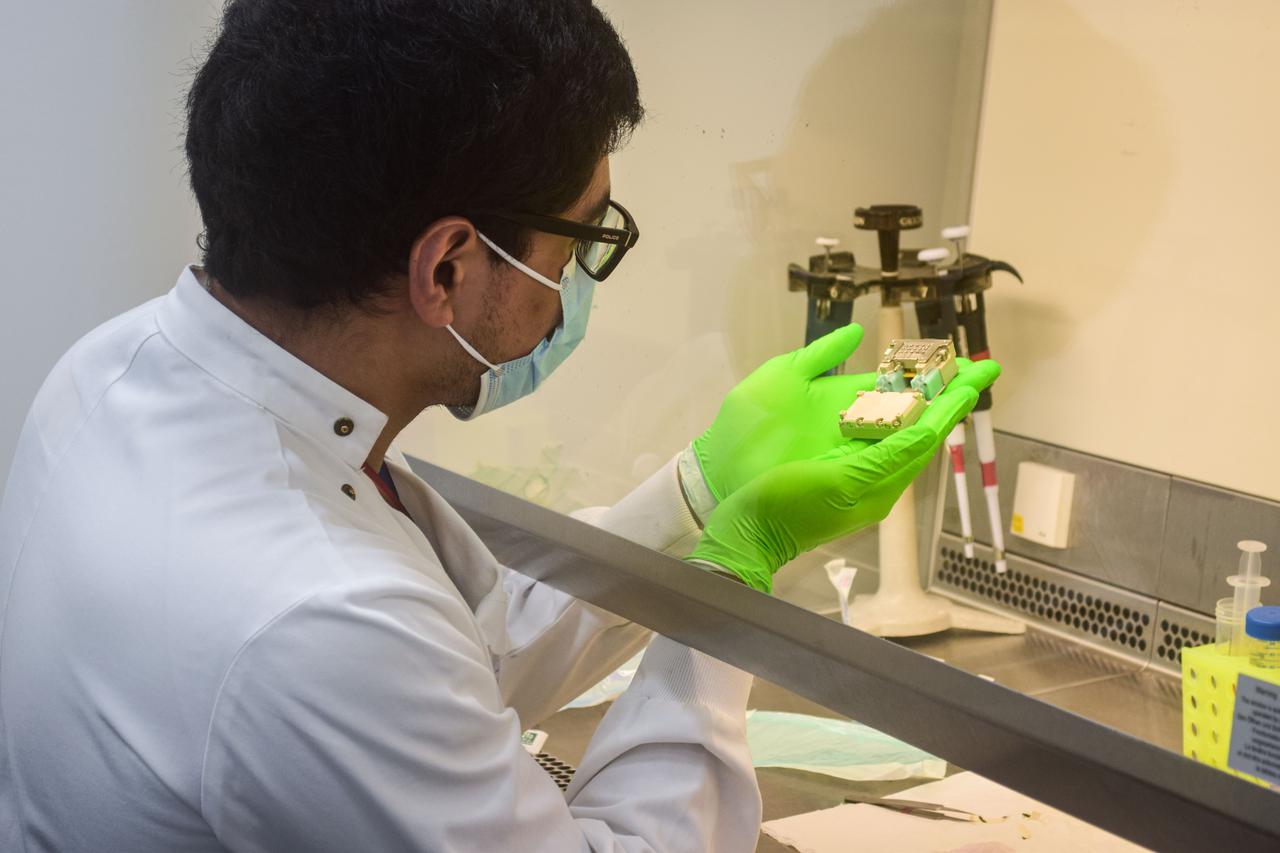
jsc2021e058713 (3/4/2021) --- The MicroAge experimental unit assembly at the University of Liverpool, featuring Dr Shahjahan Shigdar at the Institute of Life Course and Medical Sciences. This investigation helps identify the mechanisms by which astronauts lose skeletal muscle mass in microgravity and identify optimum exercise regimens, nutritional, or pharmacological interventions for prevention. Image courtesy of University of Liverpool.
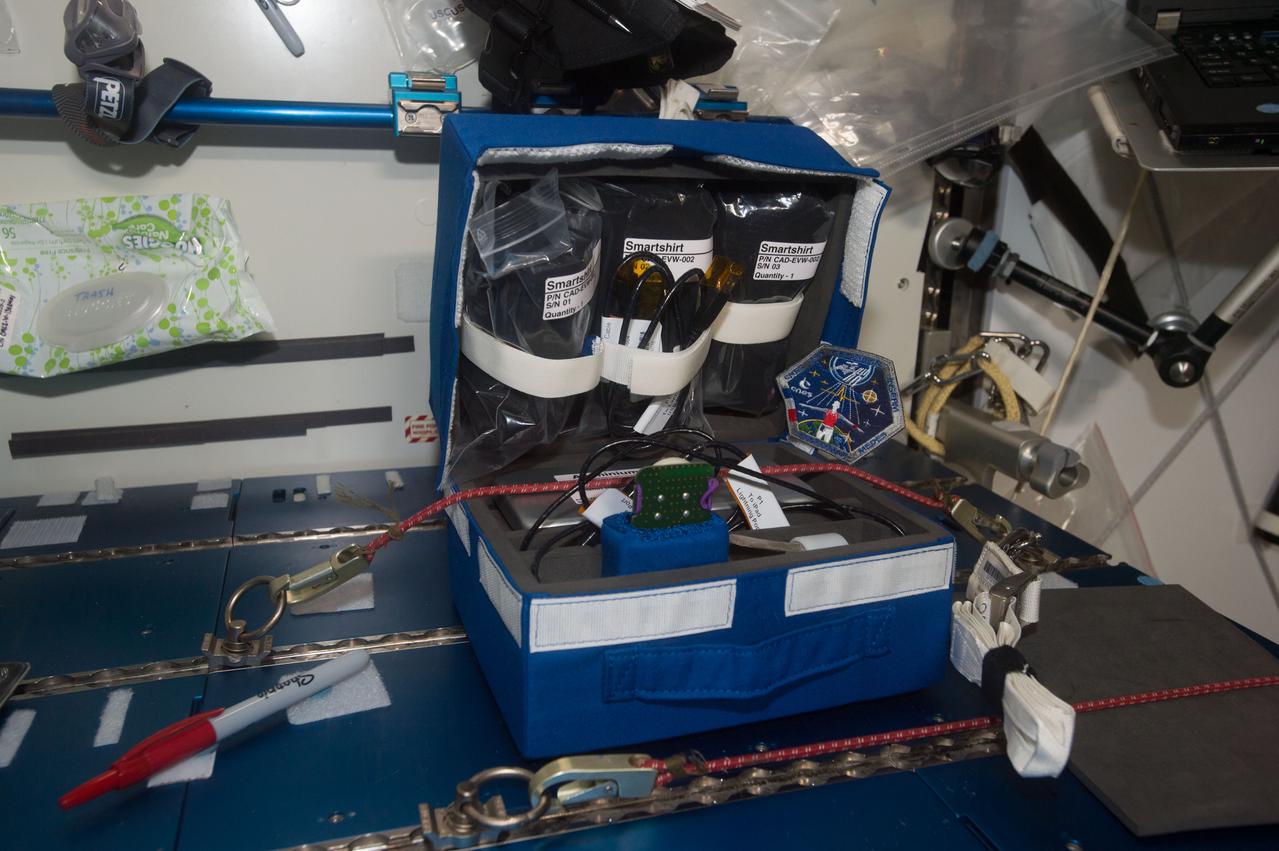
iss050e014794 (12/6/2016) --- View of Smartshirts within Cargo Transfer Bag (CTB). The EveryWear system is an ambulatory data collection system making use of wearable sensors connected to a station iPad itself wirelessly synchronized with ground. This easy-use system should demonstrate extensive physiology data collection for both science and medical follow-up purpose by improving usability for the astronauts.
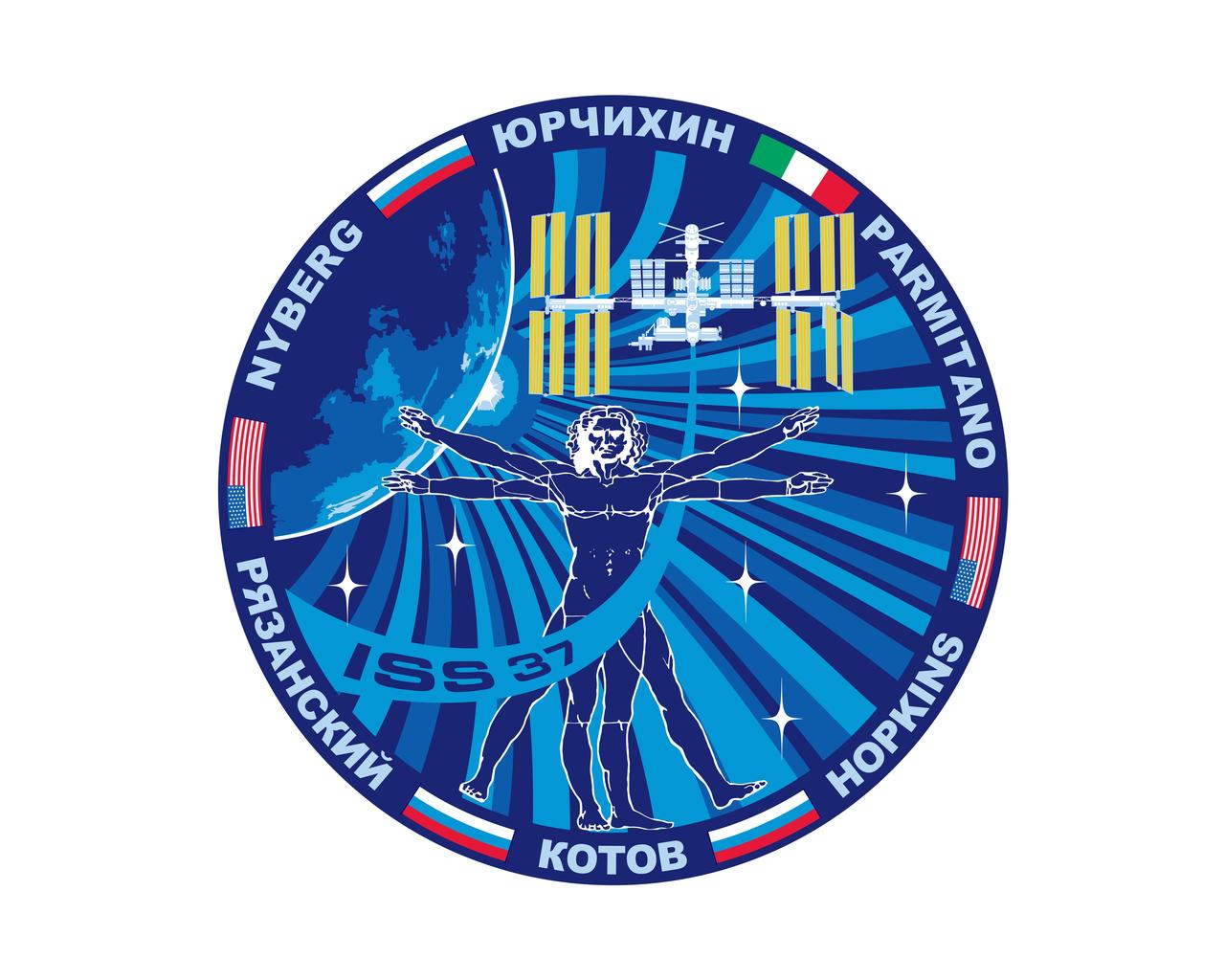
ISS037-S-001 (August 2012) --- Leonardo da Vinci's Vitruvian Man, created some 525 years ago, as a blend of art and science and a symbol of the medical profession, is depicted amongst the orbits of a variety of satellites circling the Earth at great speed. Da Vinci's drawing, based on the proportions of man as described by the Roman architect Vitruvius, is often used as a symbol of symmetry of the human body and the universe as a whole. Almost perfect in symmetry as well, the International Space Station, with its solar wings spread out and illuminated by the first rays of dawn, is pictured as a mighty beacon arcing upwards across our night skies, the ultimate symbol of science and technology of our age. Six stars represent the six members of Expedition 37 crew, which includes two cosmonauts with a medical background, as well as a native of Da Vinci's Italy. The design for insignia for space station flights is reserved for use by the crew members and for other official use as the NASA Administrator may authorize. Public availability has been approved only in the form of illustrations by the various news media. When and if there is any change in this policy, which is not anticipated, it will be publicly announced.
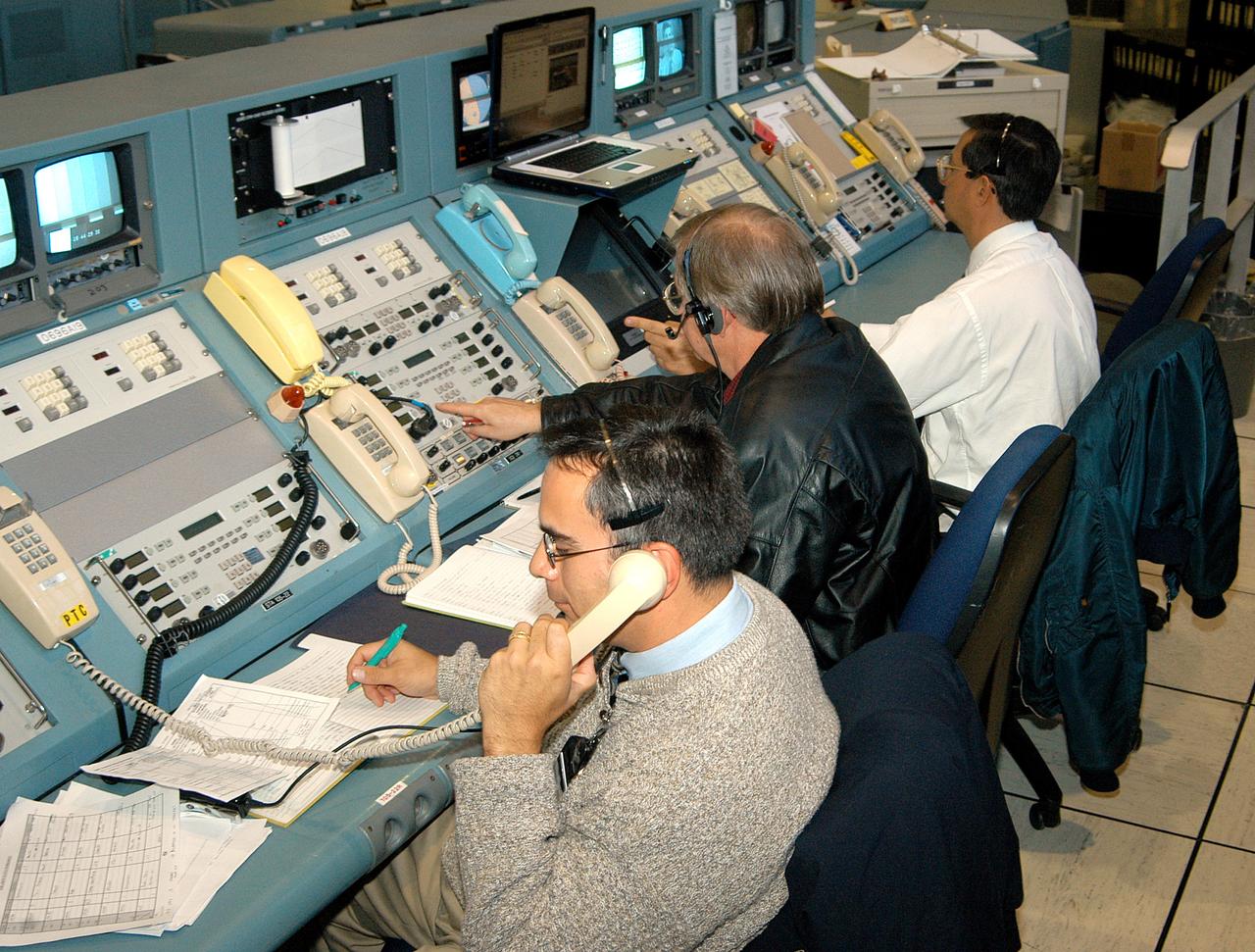
KENNEDY SPACE CENTER, FLA. - In the Launch Control Center, officials monitor the “Mode VII” emergency landing simulation being conducted at Kennedy Space Center and managed and directed from the LCC. From left are Dr. Luis Moreno and Dr. David Reed, with Bionetics Life Sciences, and Dr. Philip Scarpa, with the KSC Safety, Occupational Health and Environment Division. The purpose of the Mode VII is to exercise emergency preparedness personnel, equipment and facilities in rescuing astronauts from a downed orbiter and providing immediate medical attention. This simulation presents an orbiter that has crashed short of the Shuttle Landing Facility in a wooded area 2-1/2 miles south of Runway 33. Emergency crews are responding to the volunteer “astronauts” who are simulating various injuries inside the crew compartment mock-up. Rescuers must remove the crew, provide triage and transport to hospitals those who need further treatment. Local hospitals are participating in the exercise.
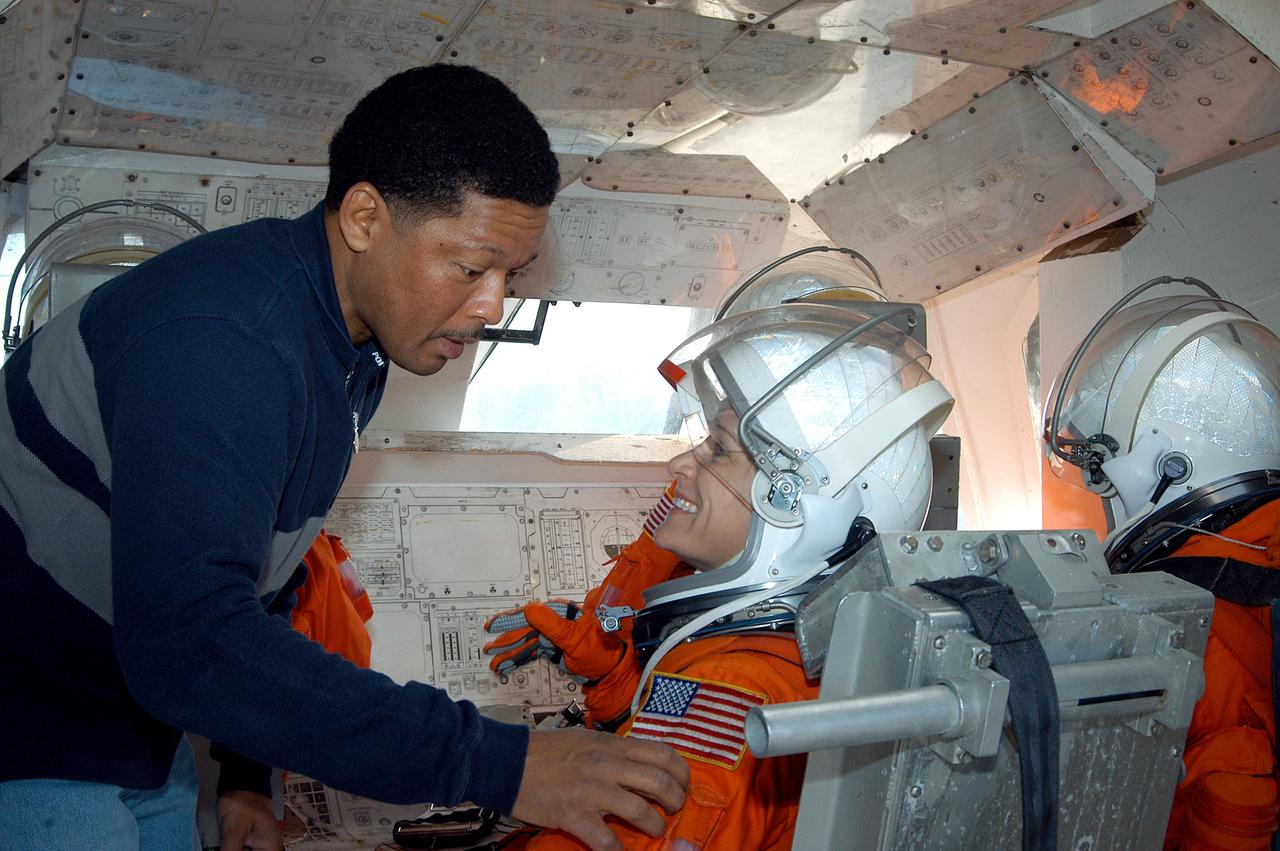
KENNEDY SPACE CENTER, FLA. - Volunteers from the KSC Fire-Rescue team dressed in launch and entry suits settle into seats in an orbiter crew compartment mock-up under the guidance of George Brittingham, USA suit technician on the Closeout Crew. Brittingham is helping Catherine Di Biase, a nurse with Bionetics Life Sciences. They are all taking part in a “Mode VII” emergency landing simulation at Kennedy Space Center. The purpose is to exercise emergency preparedness personnel, equipment and facilities in rescuing astronauts from a downed orbiter and providing immediate medical attention. This simulation presents an orbiter that has crashed short of the Shuttle Landing Facility in a wooded area 2-1/2 miles south of Runway 33. Emergency crews will respond to the volunteer “astronauts” simulating various injuries. Rescuers must remove the crew, provide triage and transport to hospitals those who need further treatment. Local hospitals are participating in the exercise.
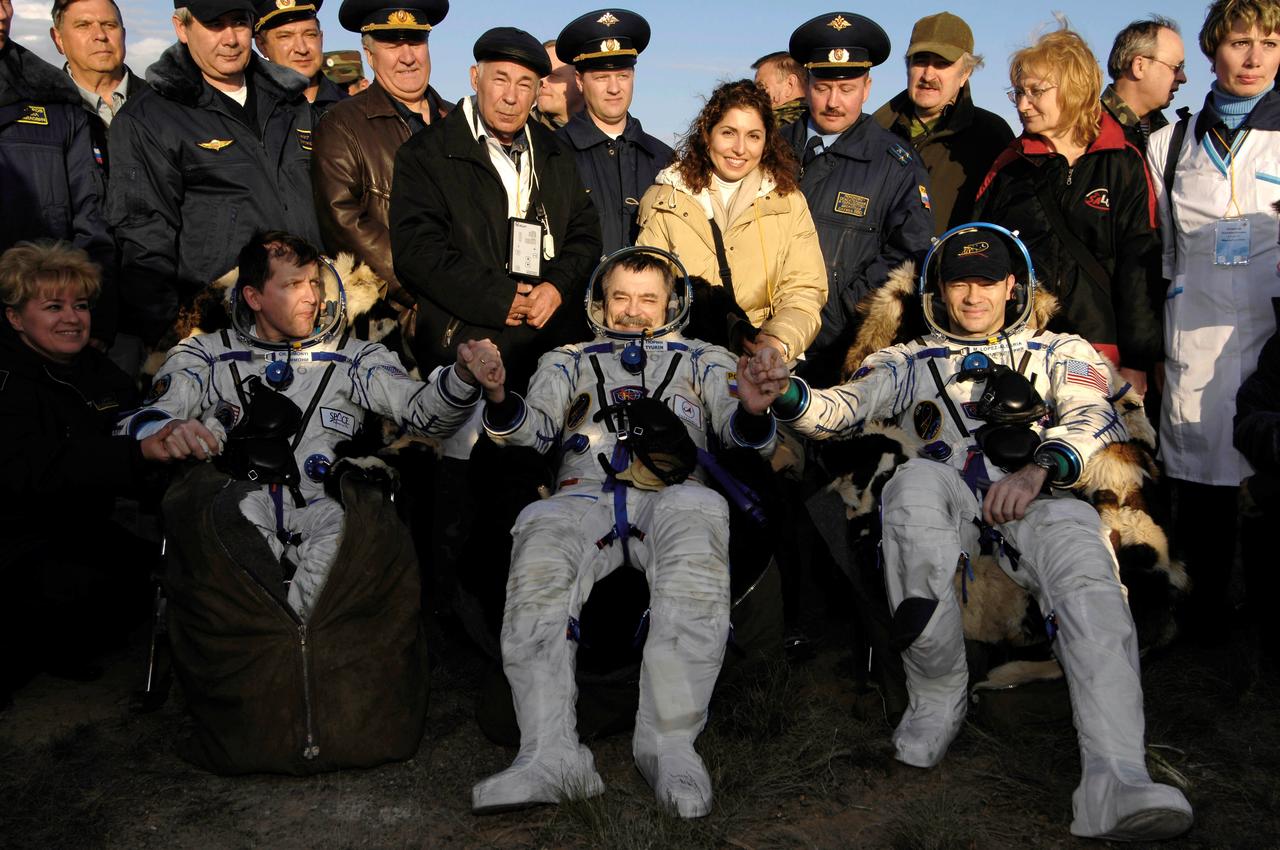
JSC2007-E-19320 (21 April 2007) --- From the left, U.S. spaceflight participant Charles Simonyi; cosmonaut Mikhail Tyurin, Expedition 14 Flight Engineer and Soyuz commander; and astronaut Michael E. Lopez-Alegria, Expedition 14 commander and NASA ISS science officer, sit in chairs near their Soyuz TMA-9 spacecraft at their landing site. Landing and recovery officials were conducting post-landing medical checks on the three crewmembers. The Soyuz spacecraft landed southwest of Karaganda, Kazakhstan at approximately 6:30 pm local time, April 21, 2007. Photo Credit: NASA/Bill Ingalls
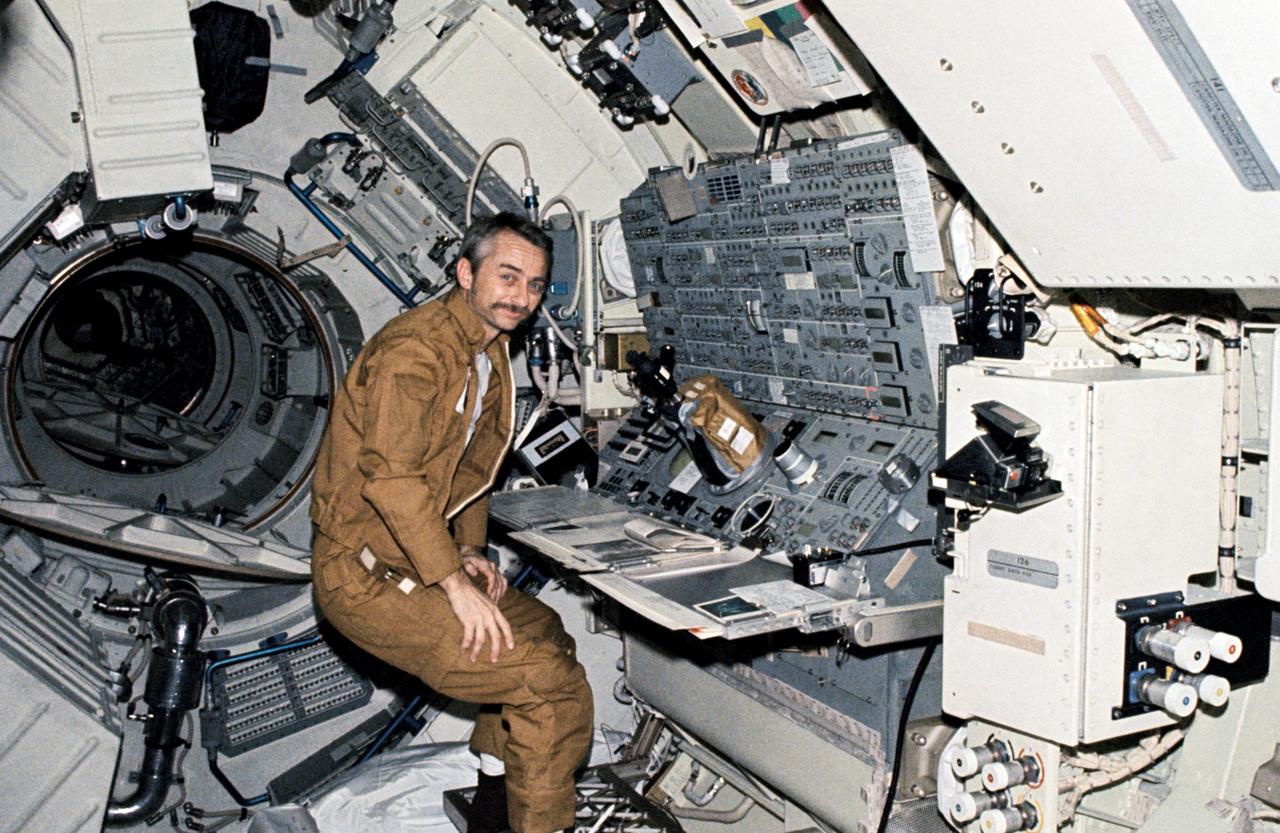
SL3-108-1288 (July-Sept. 1973) --- Astronaut Owen K. Garriott, science pilot of the Skylab 3 mission, is stationed at the Apollo Telescope Mount (ATM) console in the Multiple Docking Adapter (MDA) of the Skylab space station in Earth orbit. This picture was taken with a handheld 35mm Nikon camera. Astronauts Garriott, Alan L. Bean and Jack R. Lousma remained with the Skylab space station cluster in orbit for 59 days conducting numerous medical, scientific and technological experiments. In orbit the MDA functions as a major experiment control center for solar observations. From this console the astronauts actively control the ATM solar physics telescopes. Photo credit: NASA
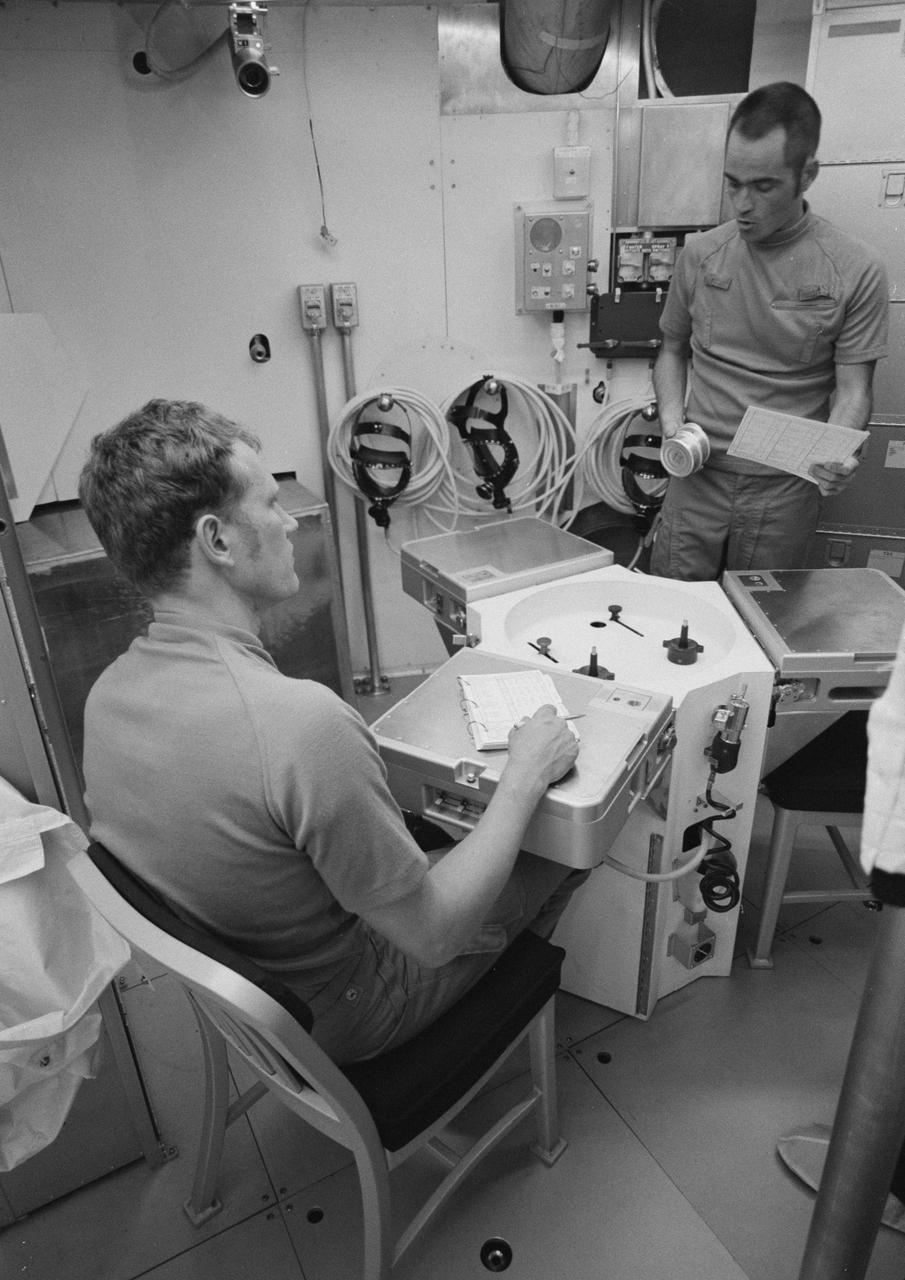
S72-41853 (15 June 1972) --- Two members of the three-man Skylab Medical Experiment Altitude Test (SMEAT) crew, that will spend up to 56 days in the Crew Systems Division's 20-foot altitude chamber at the Manned Spacecraft Center (MSC) beginning in mid-July, go over a menu in the food preparation area. Seated at the simulated wardroom food table is astronaut Karol J. Bobko, SMEAT pilot, and standing is astronaut Robert L. Crippen, SMEAT commander. Dr. William E. Thornton, SMEAT science pilot, the third crew member is not shown in this view. Photo credit: NASA

S72-52630 (February 1972) --- This is the emblem for the first manned Skylab mission. It will be a mission of up to 28 days. Skylab is an experimental space station consisting of a 100-ton laboratory complex in which medical, scientific and technological experiments will be performed in Earth orbit. The prime crew of this mission will be astronaut Charles Conrad Jr., commander; scientist-astronaut Joseph P. Kerwin, science pilot; and astronaut Paul J. Weits, pilot. The patch, designed by artist Kelly Freas, shows the Skylab silhouetted against the Earth's globe, which in turn is eclipsing the sun--showing the brilliant signet-ring pattern of the instant before the total eclipse. Photo credit: NASA
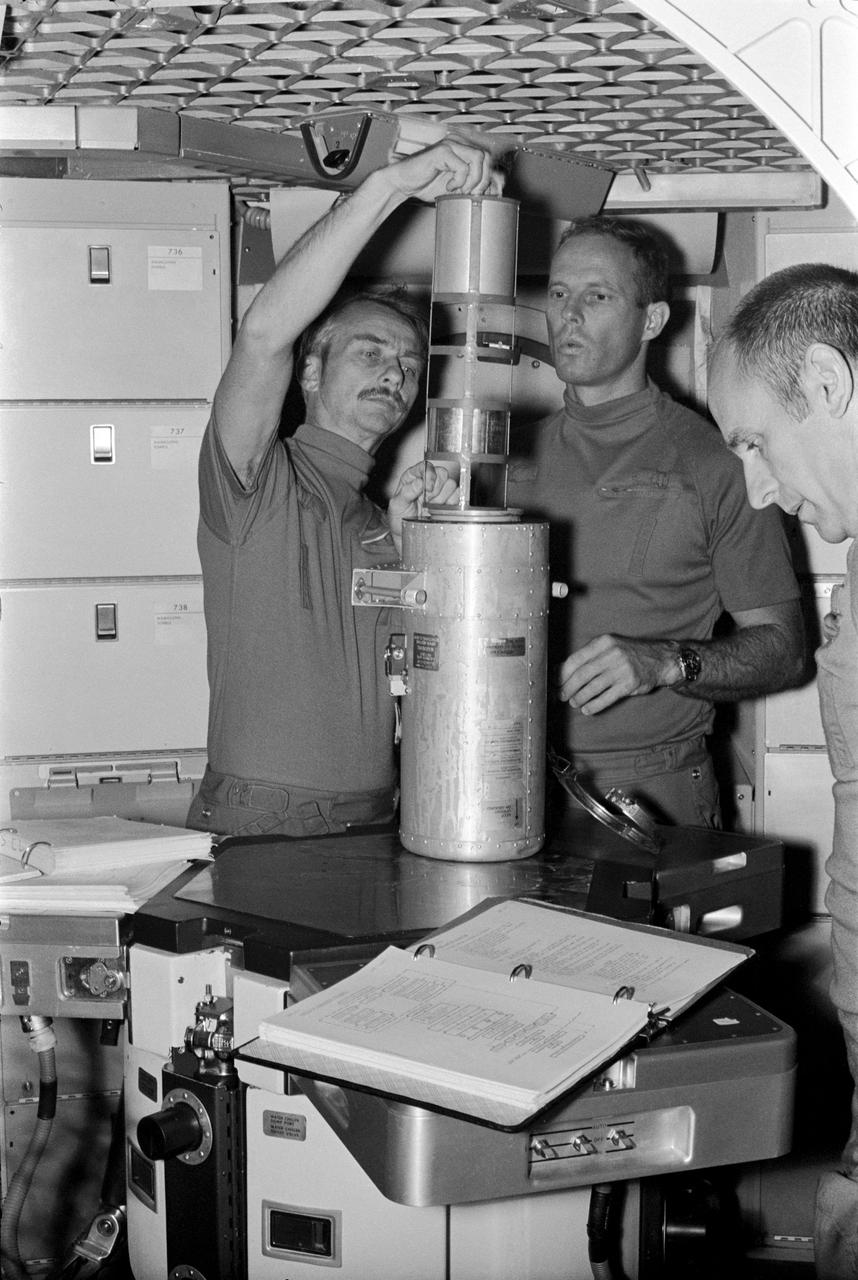
S73-28420 (16 June 1973) --- The three prime crewmen of the Skylab 3 mission check over flight data during a training session in the crew quarters of the Orbital Workshop (OWS) trainer in the Mission Simulation and Training Facility at the Johnson Space Center (JSC). Skylab 3 crew work with Inflight Medical Support System (IMSS) resupply container atop the food table in the OWS. They are from left to right, scientist-astronaut Owen K. Garriott, science pilot; and astronauts Jack R. Lousma, pilot; and Alan L. Bean, commander. Photo credit: NASA
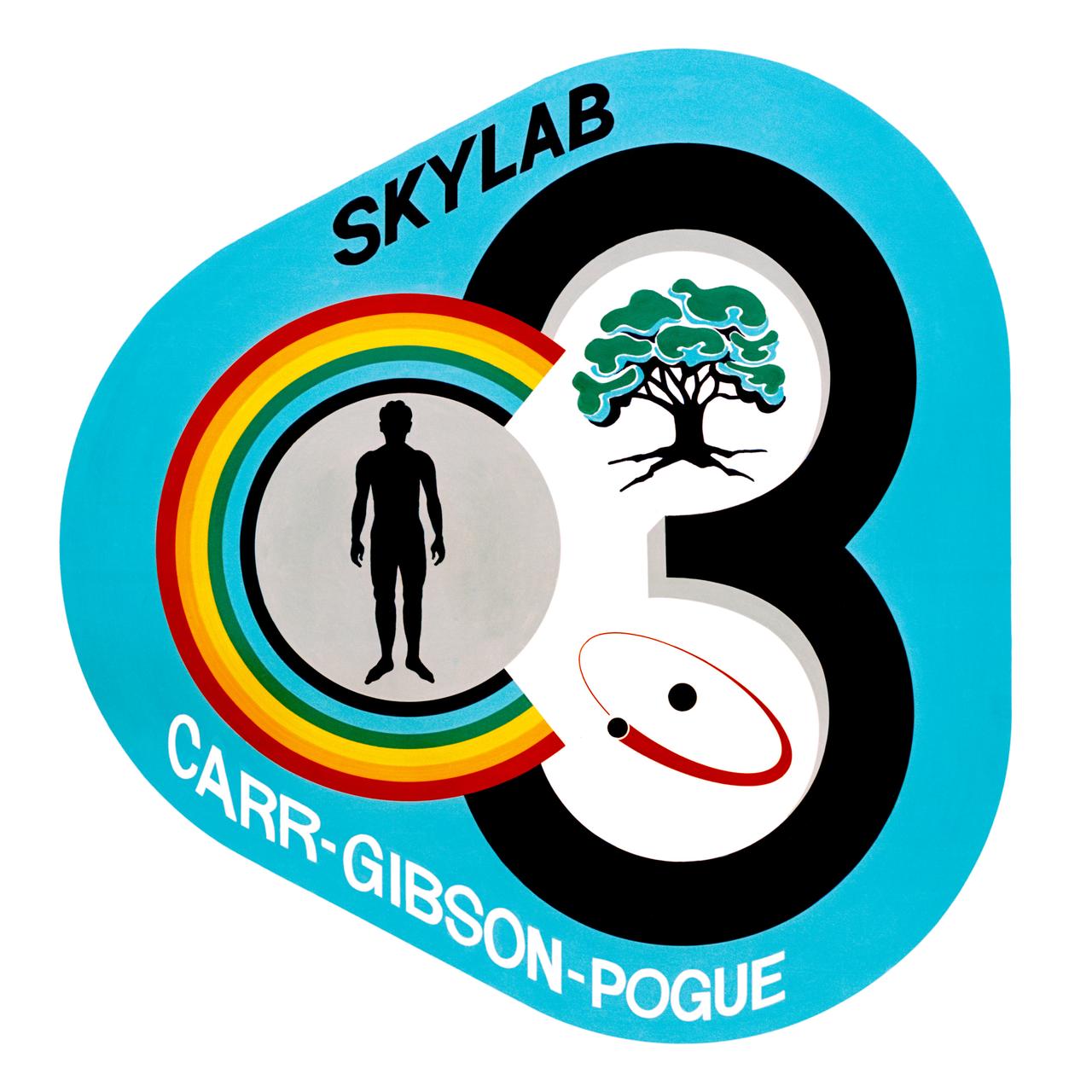
S72-53094 (For release February 1973) --- This is the emblem for the third manned Skylab mission. It will be a mission of up to 56 days. Skylab is an experimental space station consisting of a 100-ton laboratory complex in which medical, scientific and technological experiments will be performed in Earth orbit. The members of the crew will be astronaut Gerald P. Carr, commander; scientist-astronaut Edward G. Gibson, science pilot; and astronaut William R. Pogue, pilot. The symbols in the patch refer to the three major areas of investigation proposed in the mission. The tree represents man's natural environment and relates directly to the Skylab mission objectives of advancing the study of Earth resources. The hydrogen atom, as the basic building block of the universe, represents man's exploration of the physical world, his application of knowledge, and his development of technology. Since the sun is composed primarily of hydrogen, it is appropriate that the symbol refers to the solar physics mission objectives. The human silhouette represents mankind and the human capacity to direct technology with a wisdom tempered by regard for his natural environment. It also directly relates to the Skylab medical studies of man himself. The rainbow, adopted from the Biblical story of the flood, symbolizes the promise that is offered man. It embraces man and extends to the tree and the hydrogen atom emphasizing man's pivotal role in the conciliation of technology with nature. Photo credit: NASA
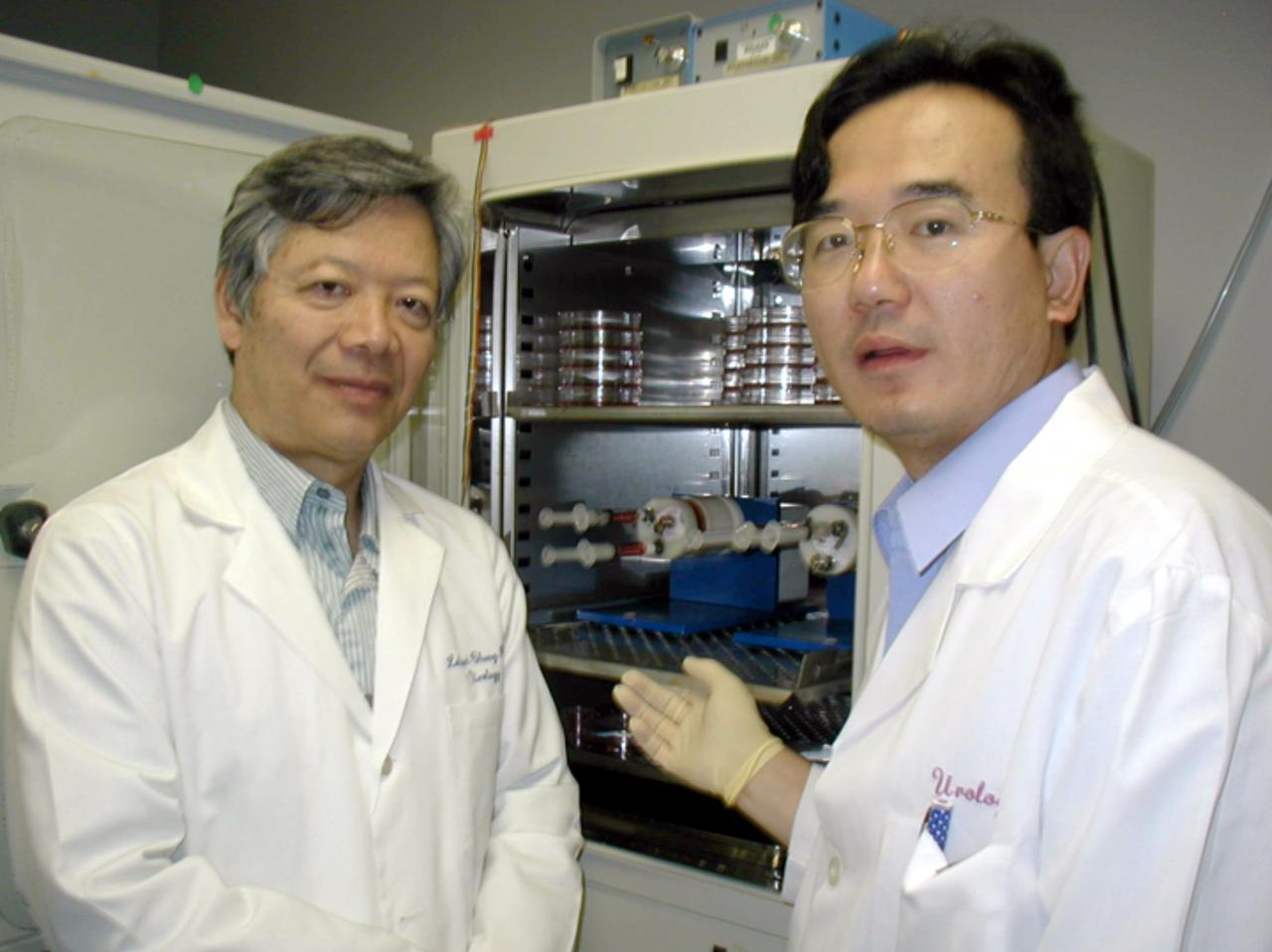
Leland W. K. Chung (left), Director, Molecular Urology Therapeutics Program at the Winship Cancer Institute at Emory University, is principal investigator for the NASA bioreactor demonstration system (BDS-05). With him is Dr. Jun Shu, an assistant professor of Orthopedics Surgery from Kuming Medical University China. The NASA Bioreactor provides a low turbulence culture environment which promotes the formation of large, three-dimensional cell clusters. Due to their high level of cellular organization and specialization, samples constructed in the bioreactor more closely resemble the original tumor or tissue found in the body. The Bioreactor is rotated to provide gentle mixing of fresh and spent nutrient without inducing shear forces that would damage the cells. The work is sponsored by NASA's Office of Biological and Physical Research. The bioreactor is managed by the Biotechnology Cell Science Program at NASA's Johnson Space Center (JSC). NASA-sponsored bioreactor research has been instrumental in helping scientists to better understand normal and cancerous tissue development. In cooperation with the medical community, the bioreactor design is being used to prepare better models of human colon, prostate, breast and ovarian tumors. Cartilage, bone marrow, heart muscle, skeletal muscle, pancreatic islet cells, liver and kidney are just a few of the normal tissues being cultured in rotating bioreactors by investigators. Credit: Emory University.
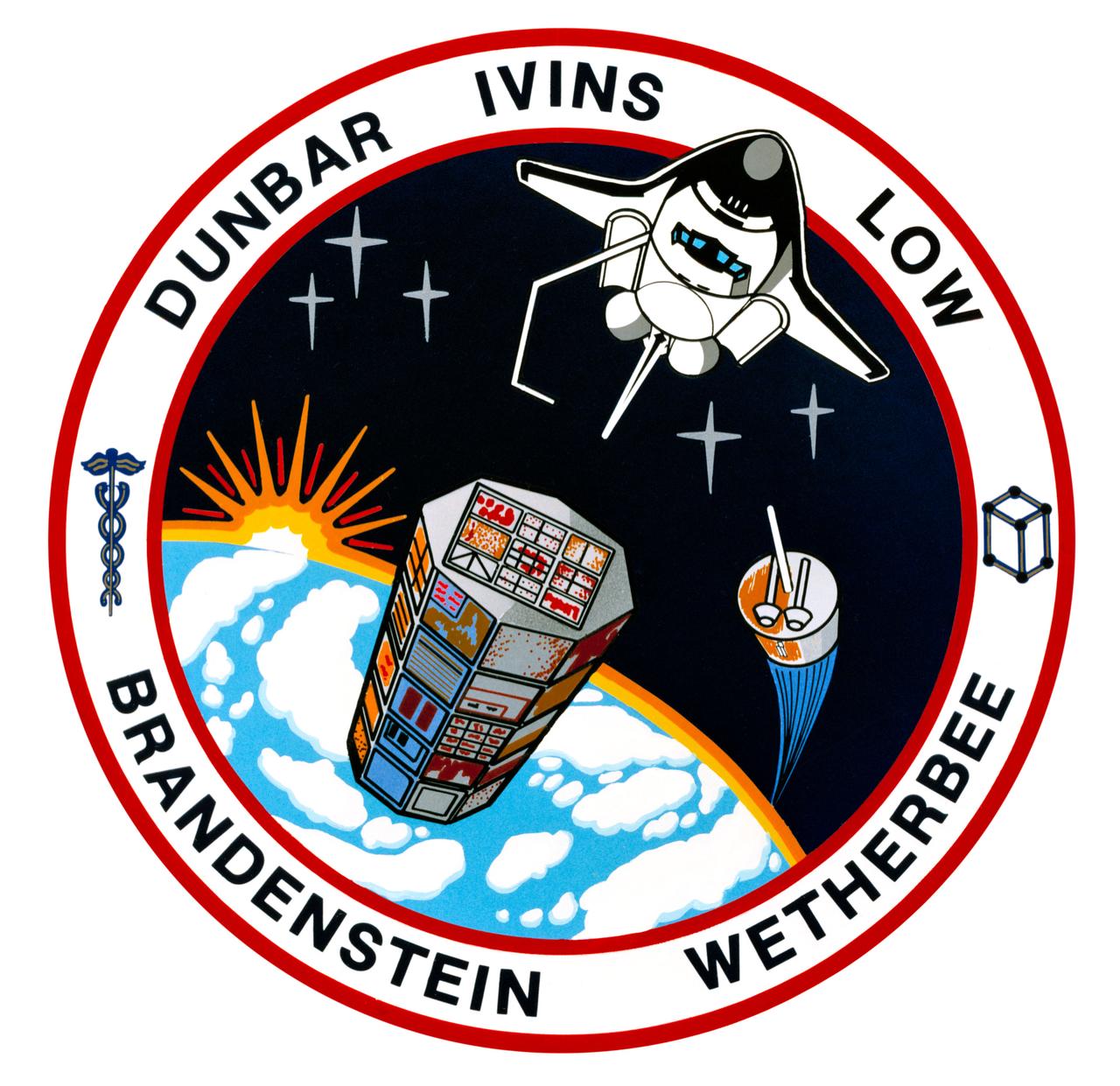
S89-44076 (November 1989) --- The STS-32 patch, designed by the five crew members for the scheduled December 1989 space mission, depicts the space shuttle orbiter rendezvousing with the Long Duration Exposure Facility (LDEF) satellite from above. The Syncom satellite is successfully deployed and on its way to geosynchronous orbit. Five stars have been arranged so that three are one side of the orbiter and two on the other to form the number 32. The seven major rays of the sun are in remembrance of the crew members for STS51-L. In preparation for the first Extended Duration Orbiter (EDO) missions, STS-32 will conduct a number of medical and middeck scientific experiments. The caduceus on the left represents the medical experiments, and the crystalline structure on the right represents the materials science. The crew is comprised of astronauts Daniel C. Brandenstein, James D. Wetherbee, Bonnie J. Dunbar, Marsha S. Ivins and G. David Low. The NASA insignia design for space shuttle flights is reserved for use by the astronauts and for other official use as the NASA Administrator may authorize. Public availability has been approved only in the form of illustrations by the various news media. When and if there is any change in this policy, which is not anticipated, it will be publicly announced. Photo credit: NASA
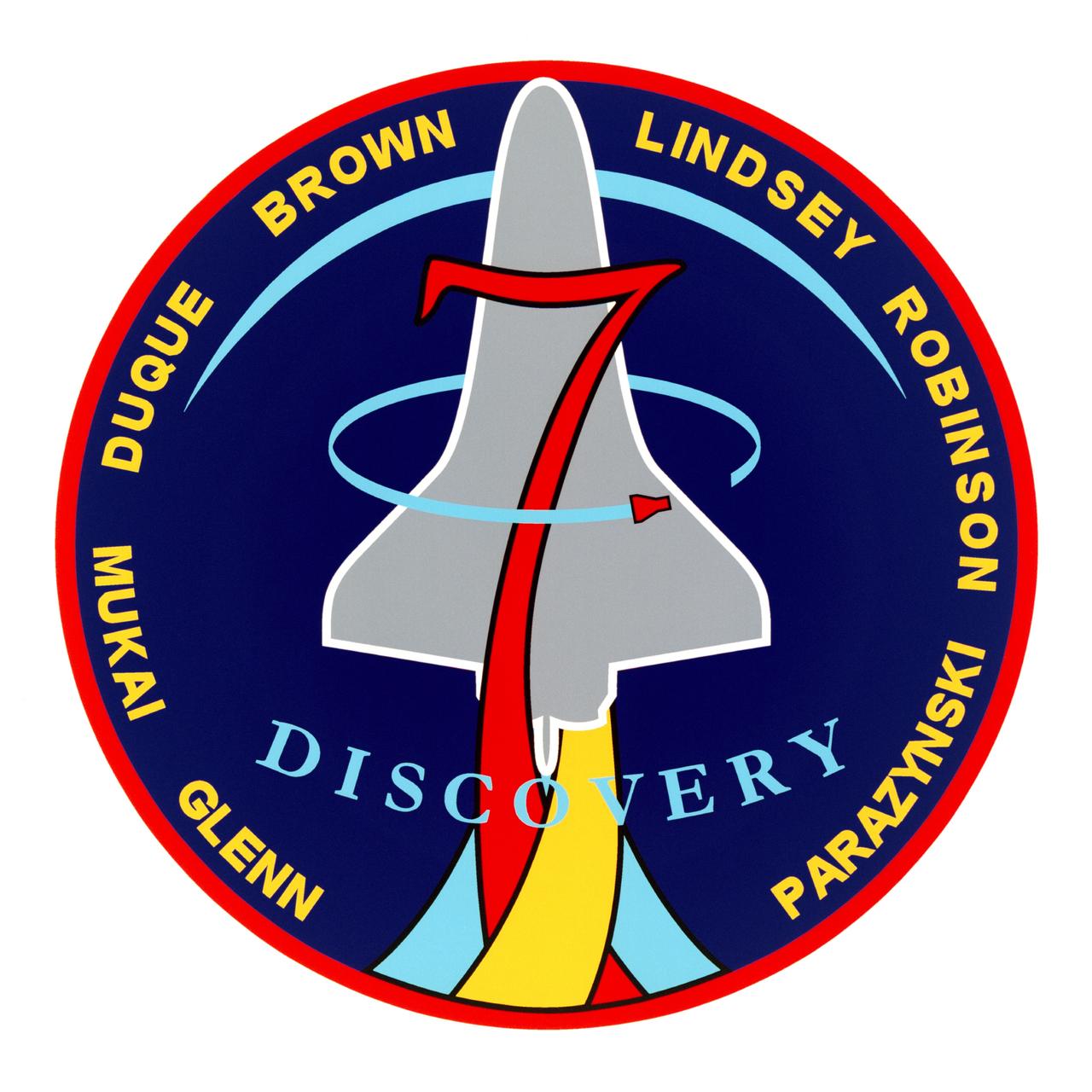
STS095-S-001 (June 1998) --- The STS-95 patch, designed by the crew, is intended to reflect the scientific, engineering, and historic elements of the mission. The space shuttle Discovery is shown rising over the sunlit Earth limb, representing the global benefits of the mission science and the solar science objectives of the Spartan Satellite. The bold number "7" signifies the seven members of Discovery's crew and also represents a historical link to the original seven Mercury astronauts. The STS-95 crew member John Glenn's first orbital flight is represnted by the Friendship 7 capsule. The rocket plumes symbolize the three major fields of science represented by the mission payloads: microgravity material science, medical research for humans on Earth and in space, and astronomy. The NASA insignia design for space shuttle flights is reserved for use by the astronauts and for other official use as the NASA Administrator may authorize. Public availability has been approved only in the forms of illustrations by the various news media. When and if there is any change in this policy, which is not anticipated, the change will be publicly announced. Photo credit: NASA
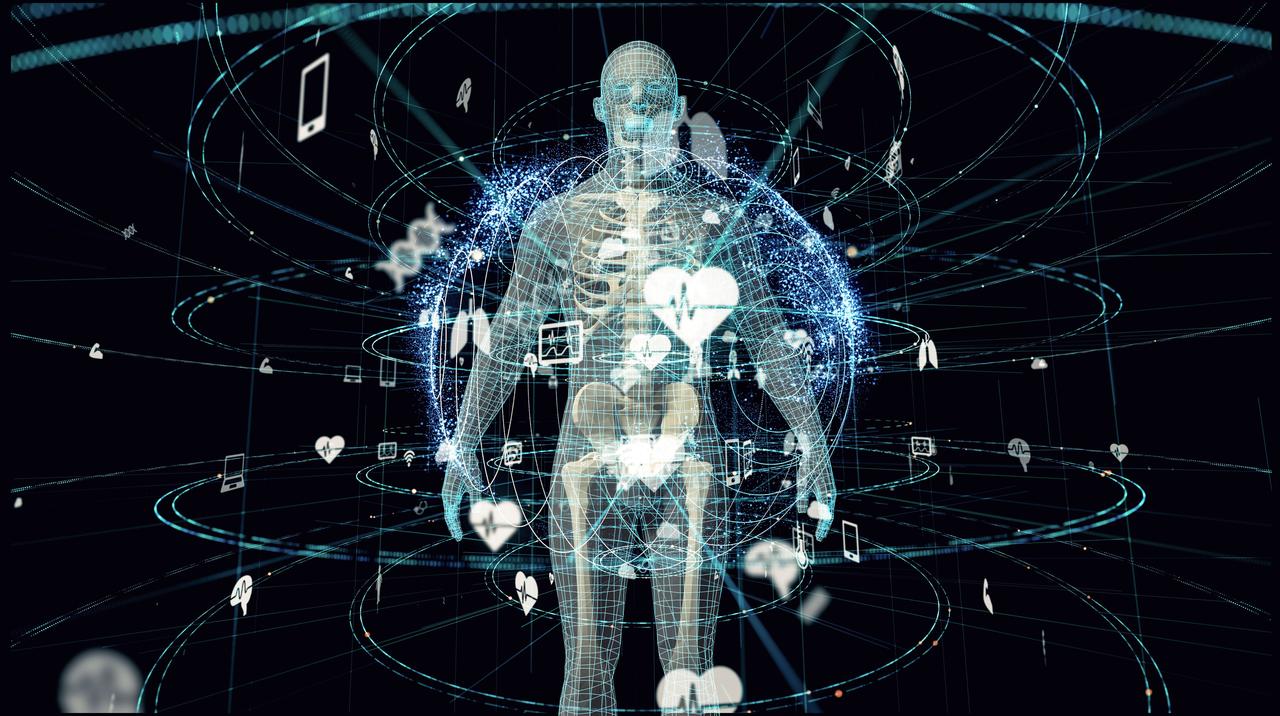
jsc2022e062020 (6/30/2022) --- Space Health will create a digital twin of the astronaut from the data collected by the Bio-Monitor and demonstrate how this could be used for autonomous health monitoring on future space missions. (Image courtesy of CSA)
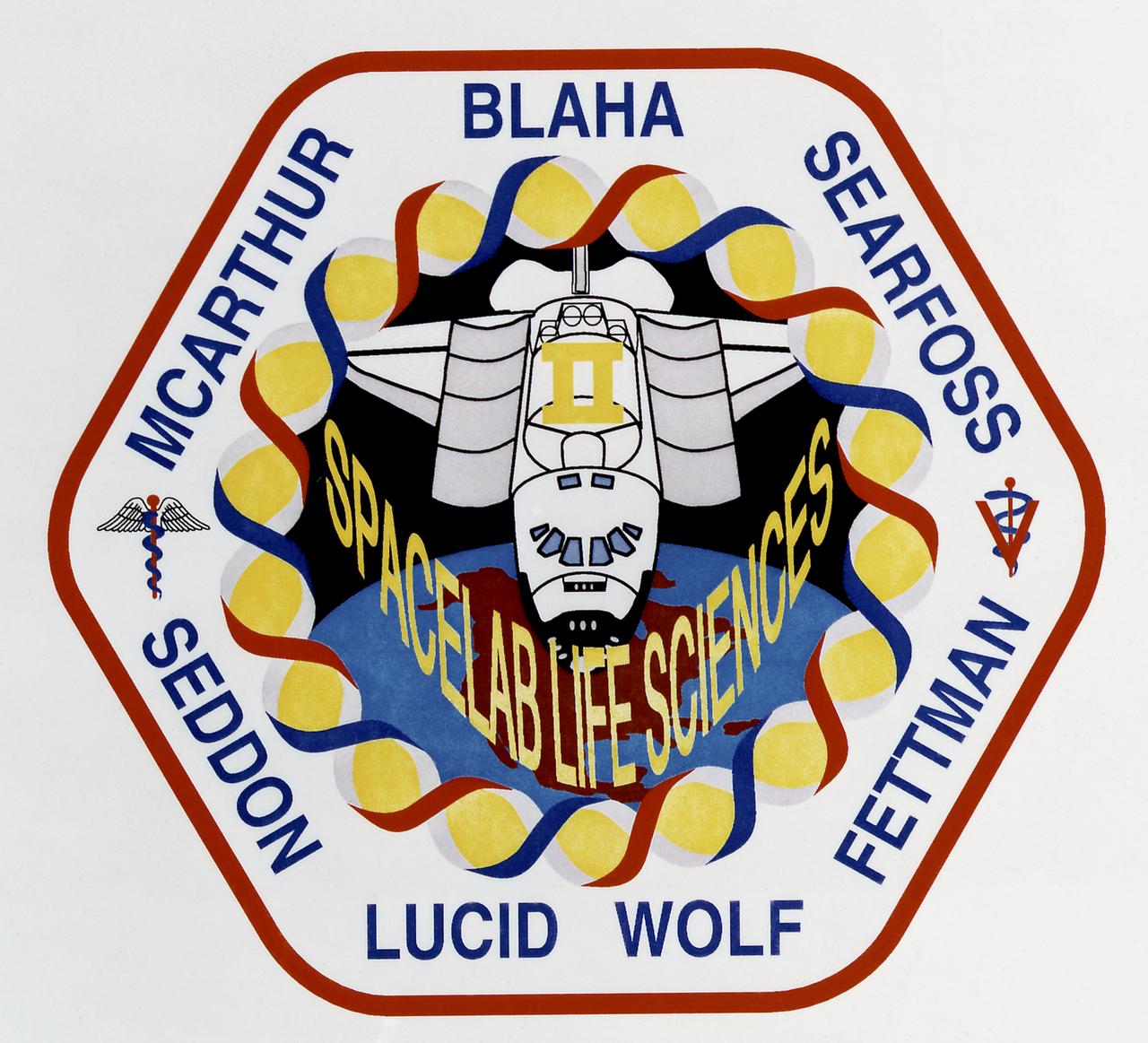
Designed by members of the flight crew, the STS-58 insignia depicts the Space Shuttle Columbia with a Spacelab module in its payload bay in orbit around Earth. The Spacelab and the lettering Spacelab Life Sciences ll highlight the primary mission of the second Space Shuttle flight dedicated to life sciences research. An Extended Duration Orbiter (EDO) support pallet is shown in the aft payload bay, stressing the scheduled two-week duration of the longest Space Shuttle mission to date. The hexagonal shape of the patch depicts the carbon ring, a molecule common to all living organisms. Encircling the inner border of the patch is the double helix of DNA, representing the genetic basis of life. Its yellow background represents the sun, energy source for all life on Earth. Both medical and veterinary caducei are shown to represent the STS- 58 life sciences experiments. The position of the spacecraft in orbit about Earth with the United States in the background symbolizes the ongoing support of the American people for scientific research intended to benefit all mankind.
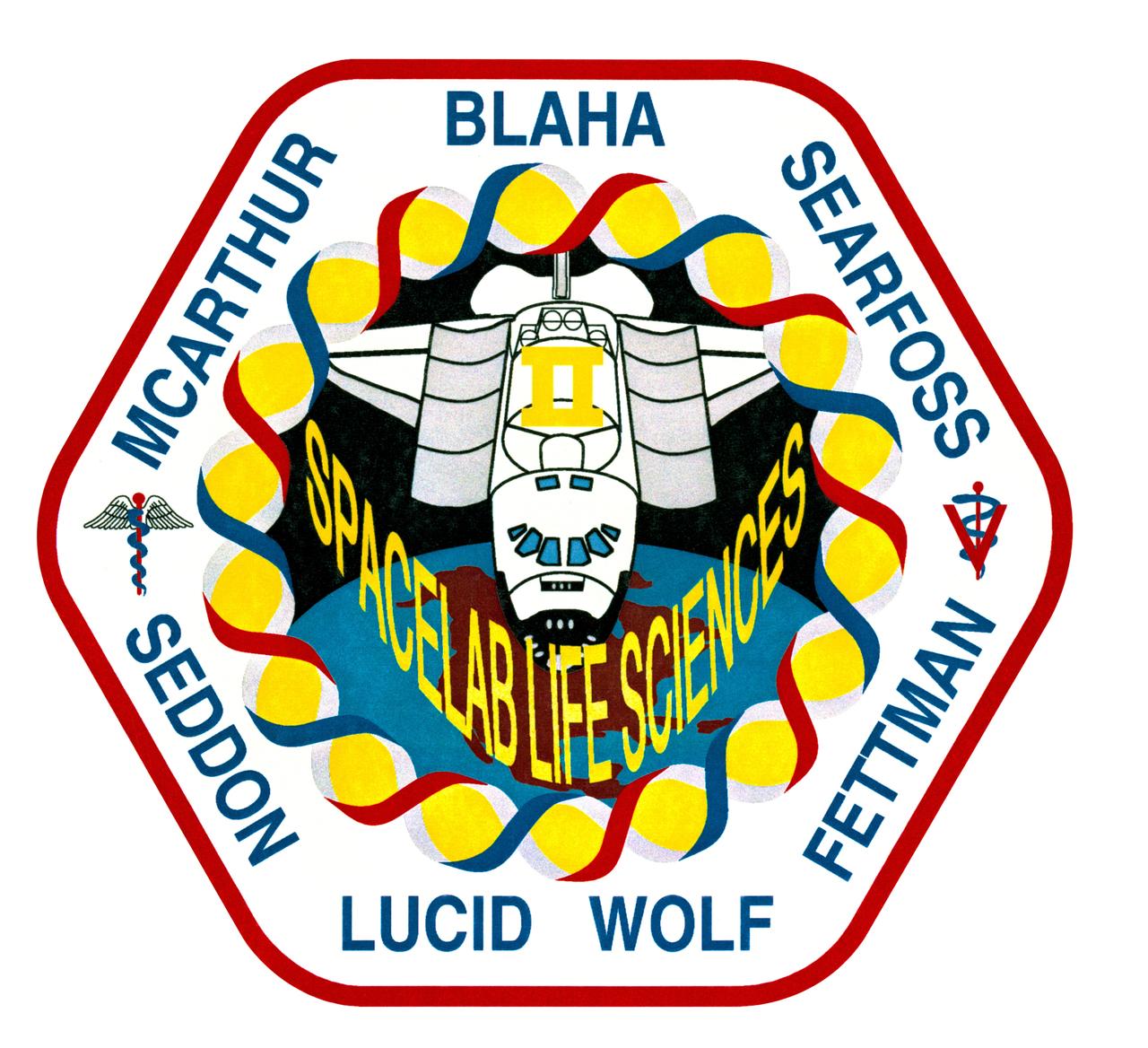
STS058-S-001 (May 1993) --- Designed by members of the flight crew, the STS-58 insignia depicts the space shuttle Columbia with a Spacelab module in its payload bay in orbit around Earth. The Spacelab and the lettering "Spacelab Life Sciences II" highlight the primary mission of the second space shuttle flight dedicated to life sciences research. An Extended Duration Orbiter (EDO) support pallet is shown in the aft payload bay, stressing the scheduled two-week duration of the longest space shuttle mission to date. The hexagonal shape of the patch depicts the carbon ring, a molecule common to all living organisms. Encircling the inner border of the patch is the double helix of DNA, representing the genetic basis of life. Its yellow background represents the sun, energy source for all life on Earth. Both medical and veterinary caducei are shown to represent the STS-58 life sciences experiments. The position of the spacecraft in orbit about Earth with the United States in the background symbolizes the ongoing support of the American people for scientific research intended to benefit all mankind. The NASA insignia design for space shuttle flights is reserved for use by the astronauts and for other official use as the NASA Administrator may authorize. Public availability has been approved only in the form of illustrations by the various news media. When and if there is any change in this policy, which we do not anticipate, it will be publicly announced. Photo credit: NASA
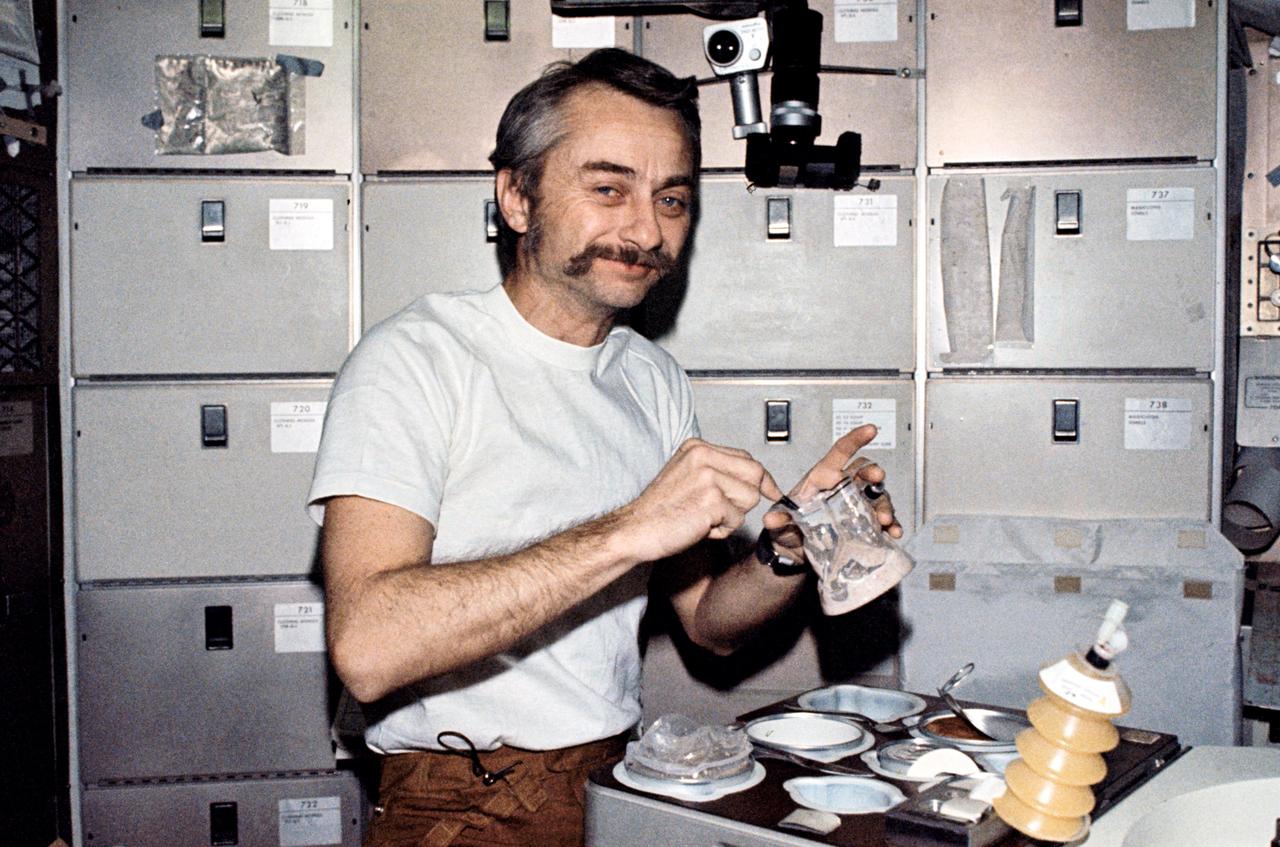
SL3-111-1519 (6 Aug. 1973) --- Scientist-astronaut Owen K. Garriott, Skylab 3 science pilot, reconstitutes a pre-packaged container of food at the crew quarters ward room table of the Orbital Workshop (OWS) of the Skylab Space Station cluster. This picture was taken with a hand-held 35mm Nikon camera. Astronauts Garriott, Alan L. Bean and Jack R. Lousma remained with the Skylab Space Station in Earth orbit for a total of 59 days conducting numerous medical, scientific and technological experiments. Note the knife and fork on the food tray and the utensil with which Garriott stirs the food mixed with water. Skylab is the first manned space program by NASA which affords the crew men an opportunity to eat with the same type utensils used on Earth. Photo credit: NASA
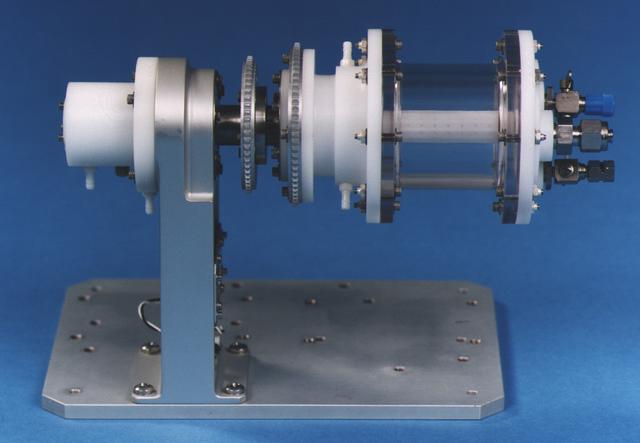
The heart of the bioreactor is the rotating wall vessel, shown without its support equipment. Volume is about 125 mL. The work is sponsored by NASA's Office of Biological and Physical Research. The bioreactor is managed by the Biotechnology Cell Science Program at NASA's Johnson Space Center (JSC). NASA-sponsored bioreactor research has been instrumental in helping scientists to better understand normal and cancerous tissue development. In cooperation with the medical community, the bioreactor design is being used to prepare better models of human colon, prostate, breast and ovarian tumors. Cartilage, bone marrow, heart muscle, skeletal muscle, pancreatic islet cells, liver and kidney are just a few of the normal tissues being cultured in rotating bioreactors by investigators.
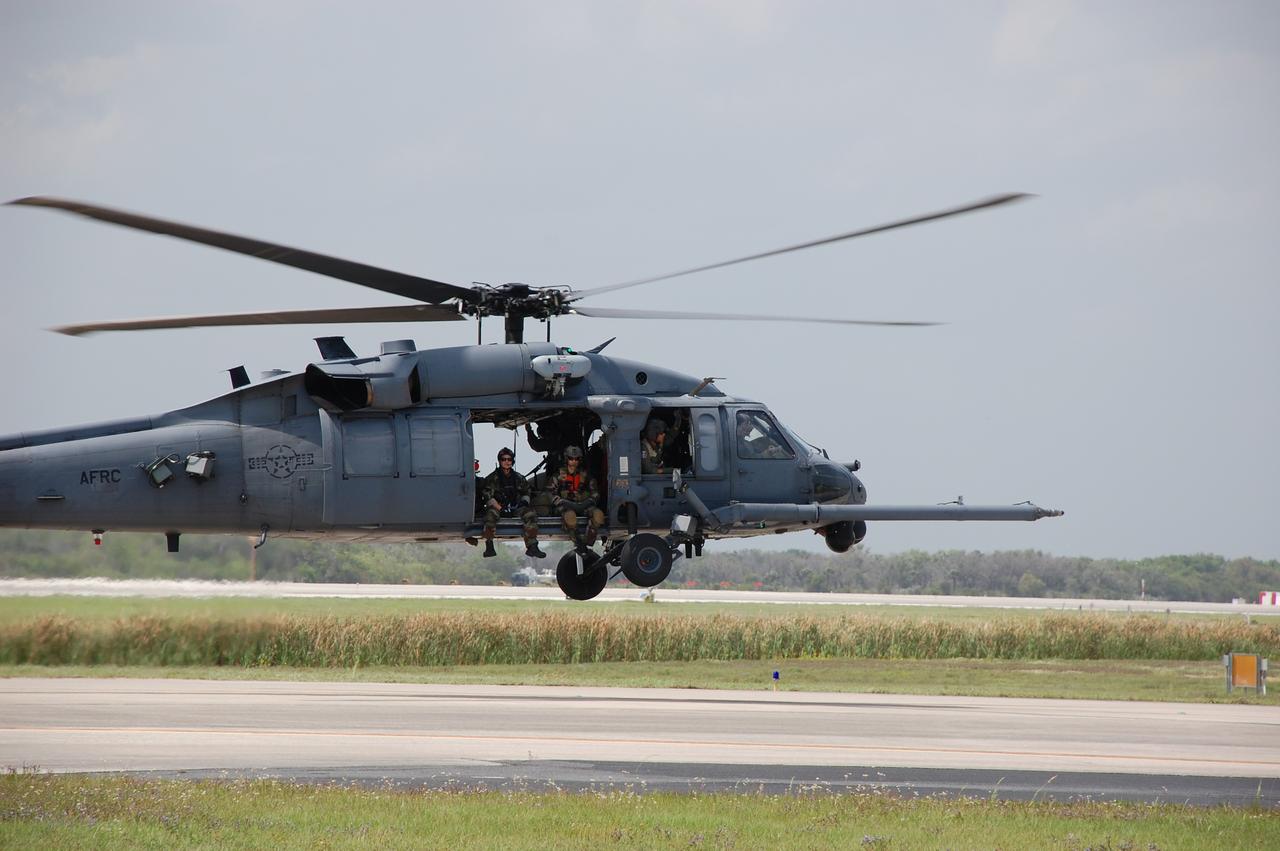
CAPE CANAVERAL, Fla. – Medical personnel aboard a helicopter arrive at the Shuttle Landing Facility at NASA's Kennedy Space Center in Florida before space shuttle Discovery's landing. Discovery returned from a 13-day journey of more than 5.3 million miles on the STS-119 mission. The STS-119 flight delivered the space station's fourth and final set of large solar array wings and the S6 truss segment, completing the station's truss, or backbone. The additional electricity provided by the arrays will fully power science experiments and help support six-person station operations in May. The mission was the 28th flight to the station, the 36th flight of Discovery and the 125th in the Space Shuttle Program, as well as the 70th landing at Kennedy. Photo credit: NASA/Ben Smegelsky

Astronaut John Blaha replaces an exhausted media bag and filled waste bag with fresh bags to continue a bioreactor experiment aboard space station Mir in 1996. NASA-sponsored bioreactor research has been instrumental in helping scientists to better understand normal and cancerous tissue development. In cooperation with the medical community, the bioreactor design is being used to prepare better models of human colon, prostate, breast and ovarian tumors. Cartilage, bone marrow, heart muscle, skeletal muscle, pancreatic islet cells, liver and kidney are just a few of the normal tissues being cultured in rotating bioreactors by investigators. This image is from a video downlink. The work is sponsored by NASA's Office of Biological and Physical Research. The bioreactor is managed by the Biotechnology Cell Science Program at NASA's Johnson Space Center (JSC).
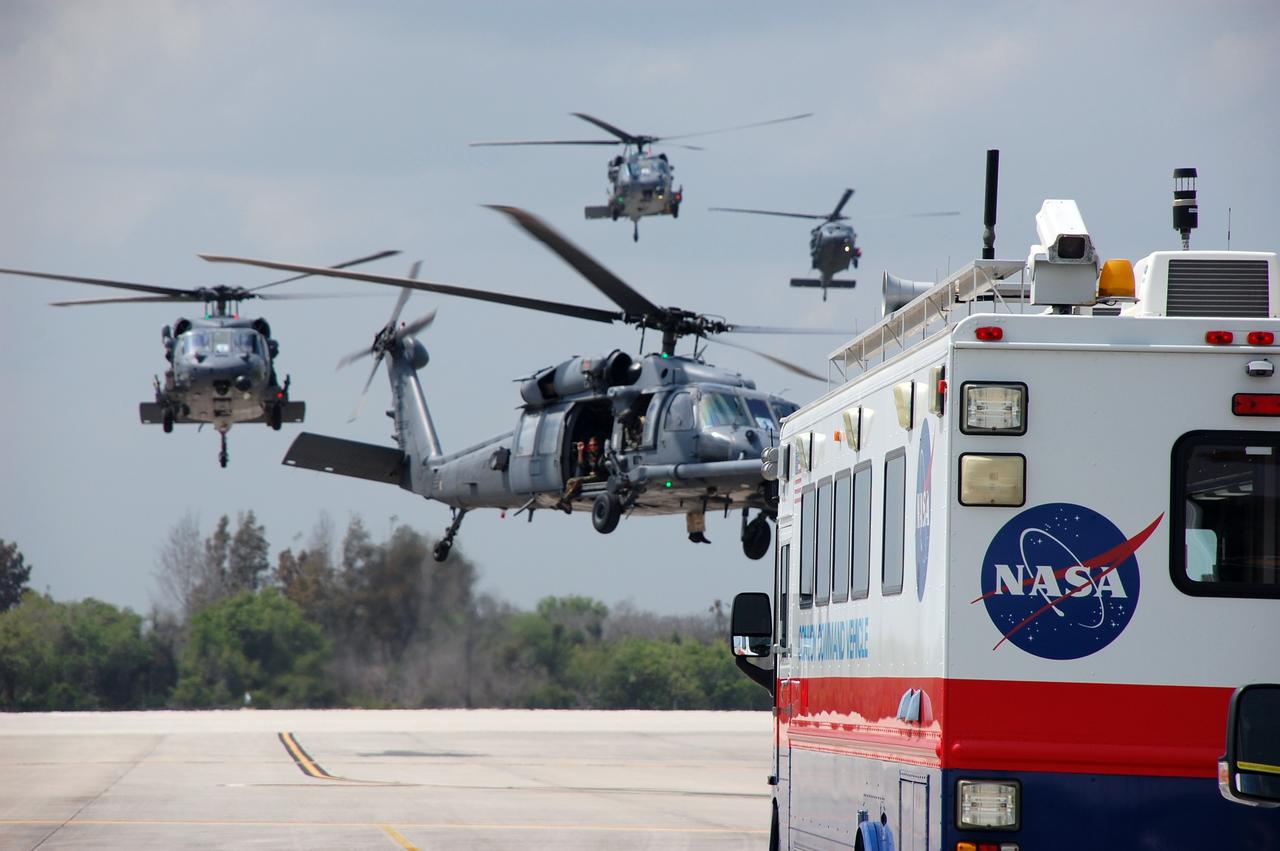
CAPE CANAVERAL, Fla. – Helicopters with medical personnel arrive at the Shuttle Landing Facility at NASA's Kennedy Space Center in Florida before space shuttle Discovery's landing. Discovery returned from a 13-day journey of more than 5.3 million miles on the STS-119 mission. The STS-119 flight delivered the space station's fourth and final set of large solar array wings and the S6 truss segment, completing the station's truss, or backbone. The additional electricity provided by the arrays will fully power science experiments and help support six-person station operations in May. The mission was the 28th flight to the station, the 36th flight of Discovery and the 125th in the Space Shuttle Program, as well as the 70th landing at Kennedy. Photo credit: NASA/Ben Smegelsky
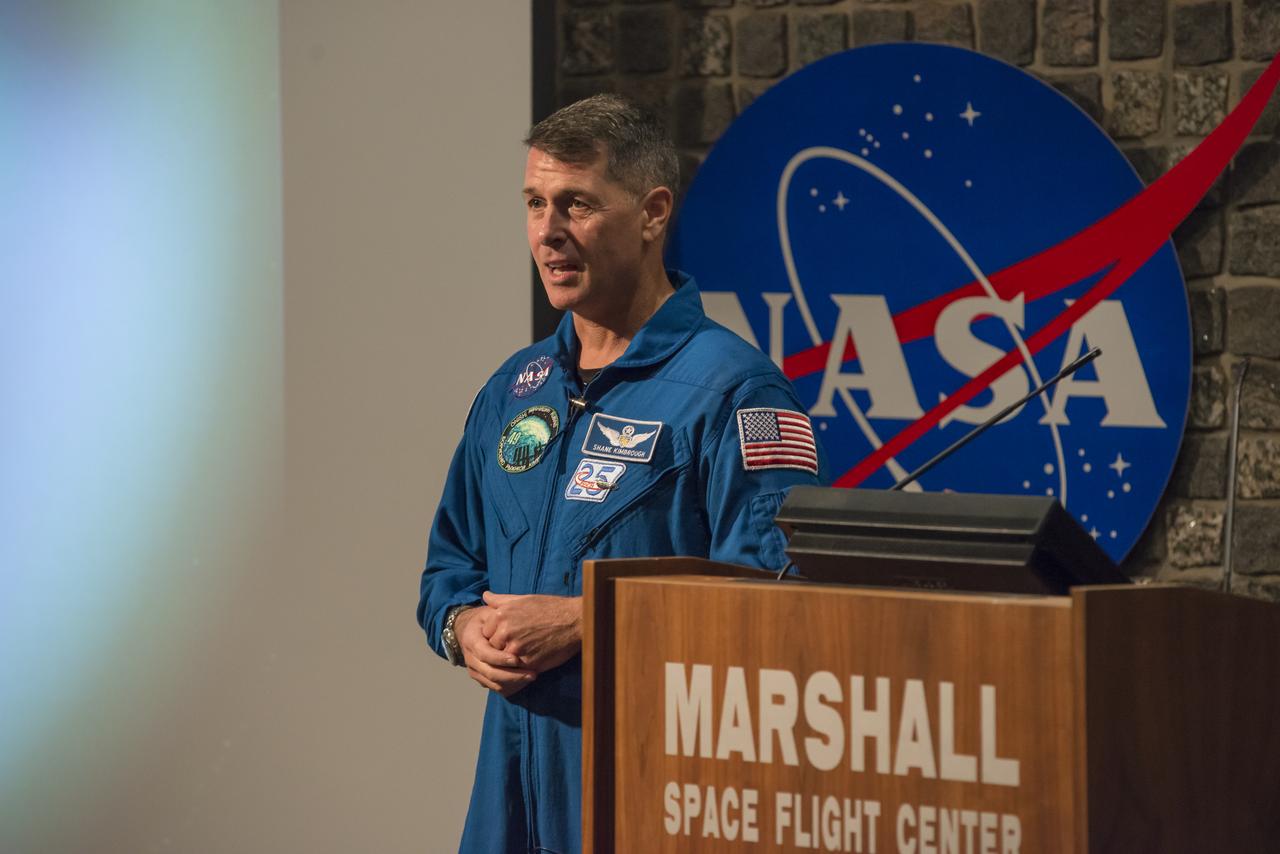
NASA astronaut Shane Kimbrough presents highlights from his Expedition 49-50 mission aboard the International Space Station Sept. 19 to students from theU.S. Space & Rocket Center's Space Camp and team members at NASA's Marshall Space Flight Center. While serving as commander of the station, Kimbrough conducted four spacewalks, during which he installed new batteries and relay boxes, and helped move a pressurized mating adapter for future commercial crew spacecraft visiting the outpost. He also contributed to hundreds of experiments in biology, biotechnology, physical science and Earthobservations. One of these experiments was the Microgravity Expanded Stem Cells investigation, results of which could lead to the treatment of diseases andinjury in space and provide a way to improve stem cell production for medical therapies on Earth.
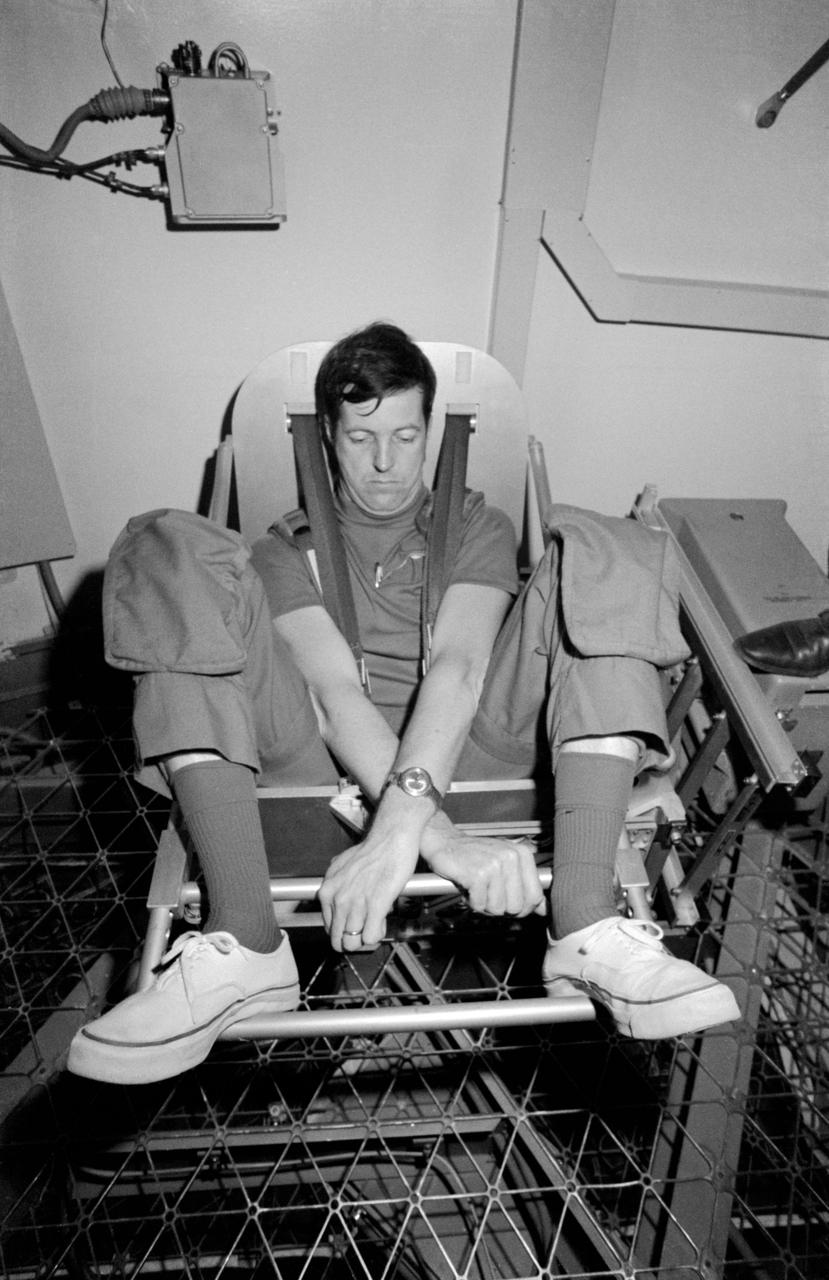
S73-20622 (March 1973) --- Scientist-astronaut Joseph P. Kerwin, science pilot of the first manned Skylab mission, demonstrates the Body Mass Measurement Experiment (M172) during Skylab training at the Johnson Space Center. Dr. Kerwin is in the work and experiments area of the crew quarters of the Skylab Orbital Workshop (OWS) trainer at JSC. The M172 experiment will demonstrate body mass measurement in a null gravity environment, validate theoretical behavior of this method, and support those medical experiments for which body mass measurements are required. The data to be collected in support of M172 are: preflight calibration of the body mass measurement device and measurements of known masses up to 100 kilograms (220 pounds) three times during each Skylab mission. The device, a spring/flexure pivot-mounted chair, will also be used for daily determination of the crewmen?s weight, which will be manually logged and voice recorded for subsequent telemetered transmission. Photo credit: NASA
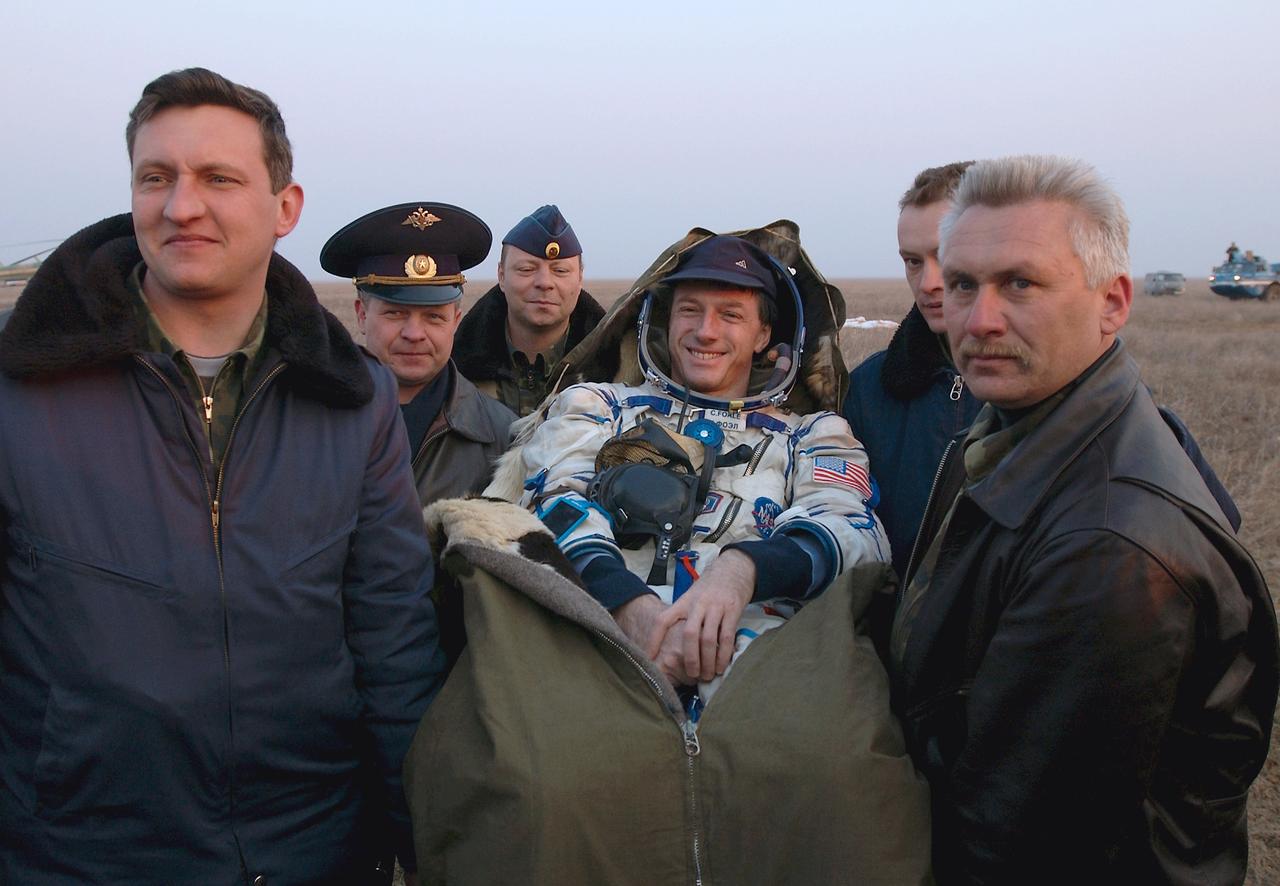
JSC2004-E-21252 (30 April 2004) --- Astronaut C. Michael Foale, Expedition 8 commander and NASA ISS science officer, is carried in a chair from the Soyuz landing site to an inflatable medical tent after he and his crewmates, cosmonaut Alexander Y. Kaleri (out of frame), Soyuz flight engineer representing Russia’s Federal Space Agency, and European Space Agency (ESA) astronaut Andre Kuipers (out of frame) of the Netherlands, successfully landed in north central Kazakhstan on April 30, 2004, in their Soyuz TMA-3 capsule. Foale and Kaleri completed 195 days in space aboard the International Space Station (ISS), while Kuipers returned after an 11-day research mission as part of a commercial agreement between ESA and Russia’s Federal Space Agency. Photo Credit: NASA/Bill Ingalls
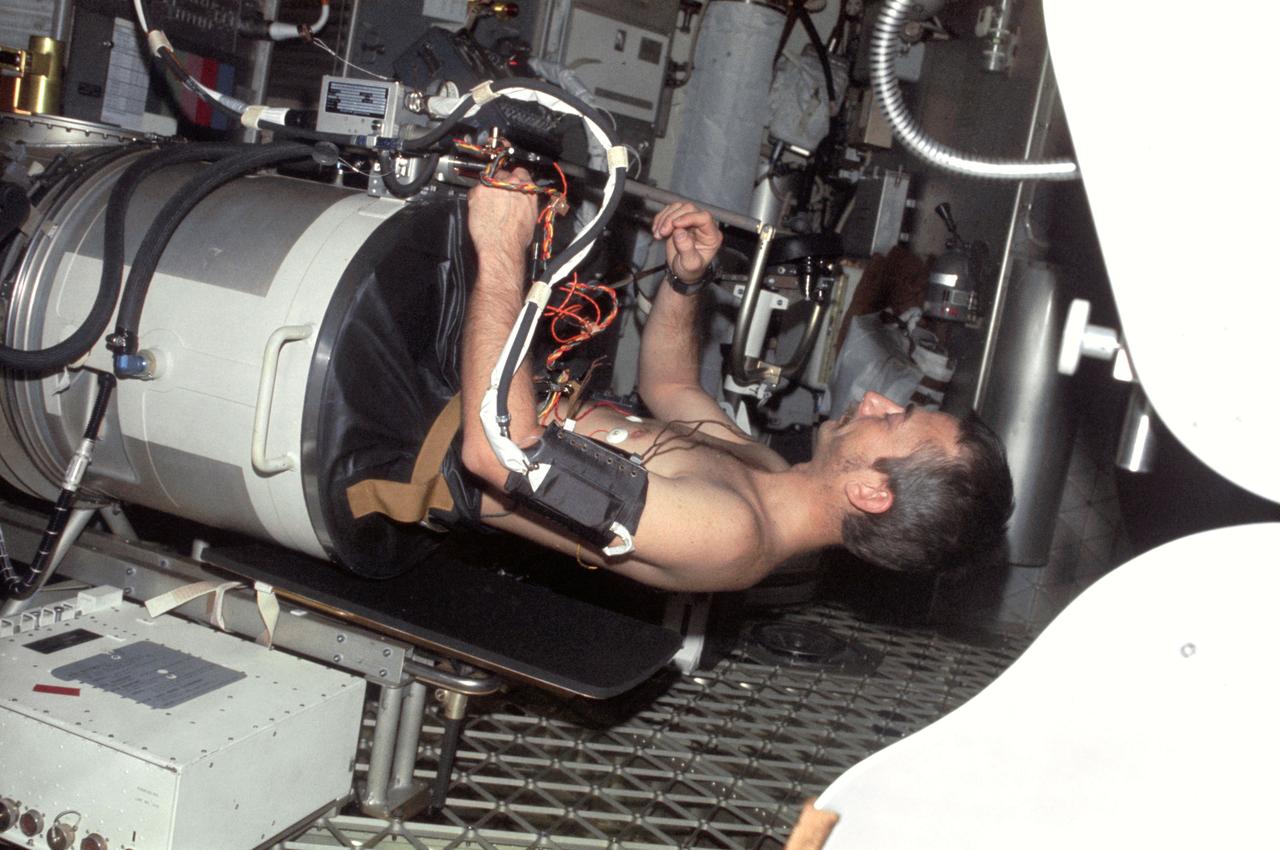
SL3-108-1278 (July-September 1973) --- Scientist-astronaut Owen K. Garriott, science pilot of the Skylab 3 mission, lies in the Lower Body Negative Pressure Device in the work and experiments area of the Orbital Workshop (OWS) crew quarters of the Skylab space station cluster in Earth orbit. This picture was taken with a hand-held 35mm Nikon camera. Astronauts Garriott, Alan L. Bean and Jack R. Lousma remained with the Skylab space station in orbit for 59 days conducting numerous medical, scientific and technological experiments. The LBNPD (MO92) Experiment is to provide information concerning the time course of cardiovascular adaptation during flight, and to provide in-flight data for predicting the degree of orthostatic intolerance and impairment of physical capacity to be expected upon return to Earth environment. The bicycle ergometer is in the right foreground. Photo credit: NASA
Paul Ducheyne, a principal investigator in the microgravity materials science program and head of the University of Pernsylvania's Center for Bioactive Materials and Tissue Engineering, is leading the trio as they use simulated microgravity to determine the optimal characteristics of tiny glass particles for growing bone tissue. The result could make possible a much broader range of synthetic bone-grafting applications. Even in normal gravity, bioactive glass particles enhance bone growth in laboratory tests with flat tissue cultures. Ducheyne and his team believe that using the bioactive microcarriers in a rotating bioreactor in microgravity will produce improved, three-dimensional tissue cultures. The work is sponsored by NASA's Office of Biological and Physical Research. The bioreactor is managed by the Biotechnology Cell Science Program at NASA's Johnson Space Center (JSC). NASA-sponsored bioreactor research has been instrumental in helping scientists to better understand normal and cancerous tissue development. In cooperation with the medical community, the bioreactor design is being used to prepare better models of human colon, prostate, breast and ovarian tumors. Cartilage, bone marrow, heart muscle, skeletal muscle, pancreatic islet cells, liver and kidney are just a few of the normal tissues being cultured in rotating bioreactors by investigators. Credit: NASA and University of Pennsylvania Center for Bioactive Materials and Tissue Engineering.
Interior of a Biotechnology Refrigerator that preserves samples for use in (or after culturing in) the NASA Bioreactor. The unit is shown extracted from a middeck locker shell. The NASA Bioreactor provides a low turbulence culture environment which promotes the formation of large, three-dimensional cell clusters. The Bioreactor is rotated to provide gentle mixing of fresh and spent nutrient without inducing shear forces that would damage the cells. Due to their high level of cellular organization and specialization, samples constructed in the bioreactor more closely resemble the original tumor or tissue found in the body. The work is sponsored by NASA's Office of Biological and Physical Research. The bioreactor is managed by the Biotechnology Cell Science Program at NASA's Johnson Space Center (JSC). NASA-sponsored bioreactor research has been instrumental in helping scientists to better understand normal and cancerous tissue development. In cooperation with the medical community, the bioreactor design is being used to prepare better models of human colon, prostate, breast and ovarian tumors. Cartilage, bone marrow, heart muscle, skeletal muscle, pancreatic islet cells, liver and kidney are just a few of the normal tissues being cultured in rotating bioreactors by investigators.
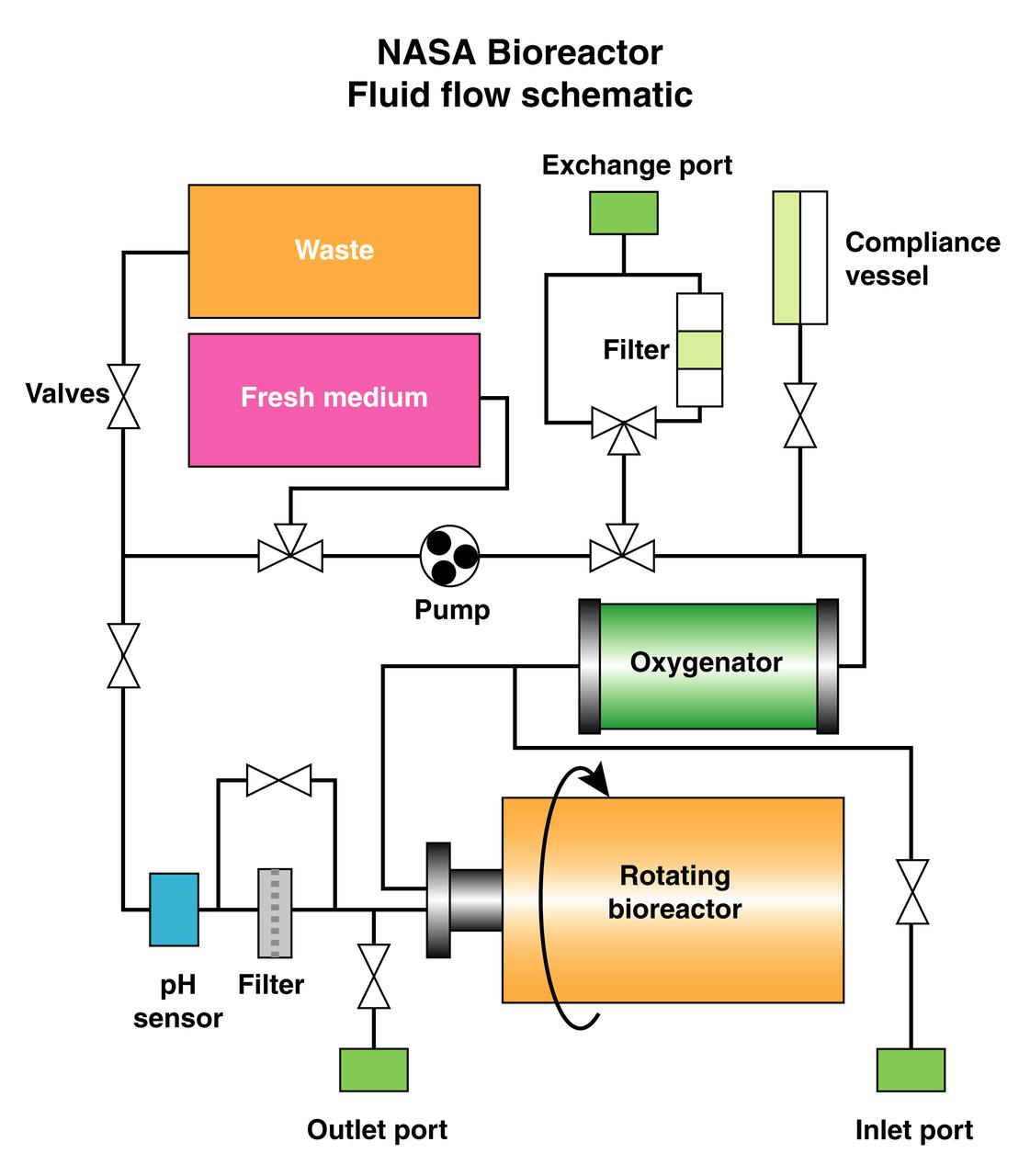
The schematic depicts the major elements and flow patterns inside the NASA Bioreactor system. Waste and fresh medium are contained in plastic bags placed side-by-side so the waste bag fills as the fresh medium bag is depleted. The compliance vessel contains a bladder to accommodate pressure transients that might damage the system. A peristolic pump moves fluid by squeezing the plastic tubing, thus avoiding potential contamination. The work is sponsored by NASA's Office of Biological and Physical Research. The bioreactor is managed by the Biotechnology Cell Science Program at NASA's Johnson Space Center (JSC). NASA-sponsored bioreactor research has been instrumental in helping scientists to better understand normal and cancerous tissue development. In cooperation with the medical community, the bioreactor design is being used to prepare better models of human colon, prostate, breast and ovarian tumors. Cartilage, bone marrow, heart muscle, skeletal muscle, pancreatic islet cells, liver and kidney are just a few of the normal tissues being cultured in rotating bioreactors by investigators.
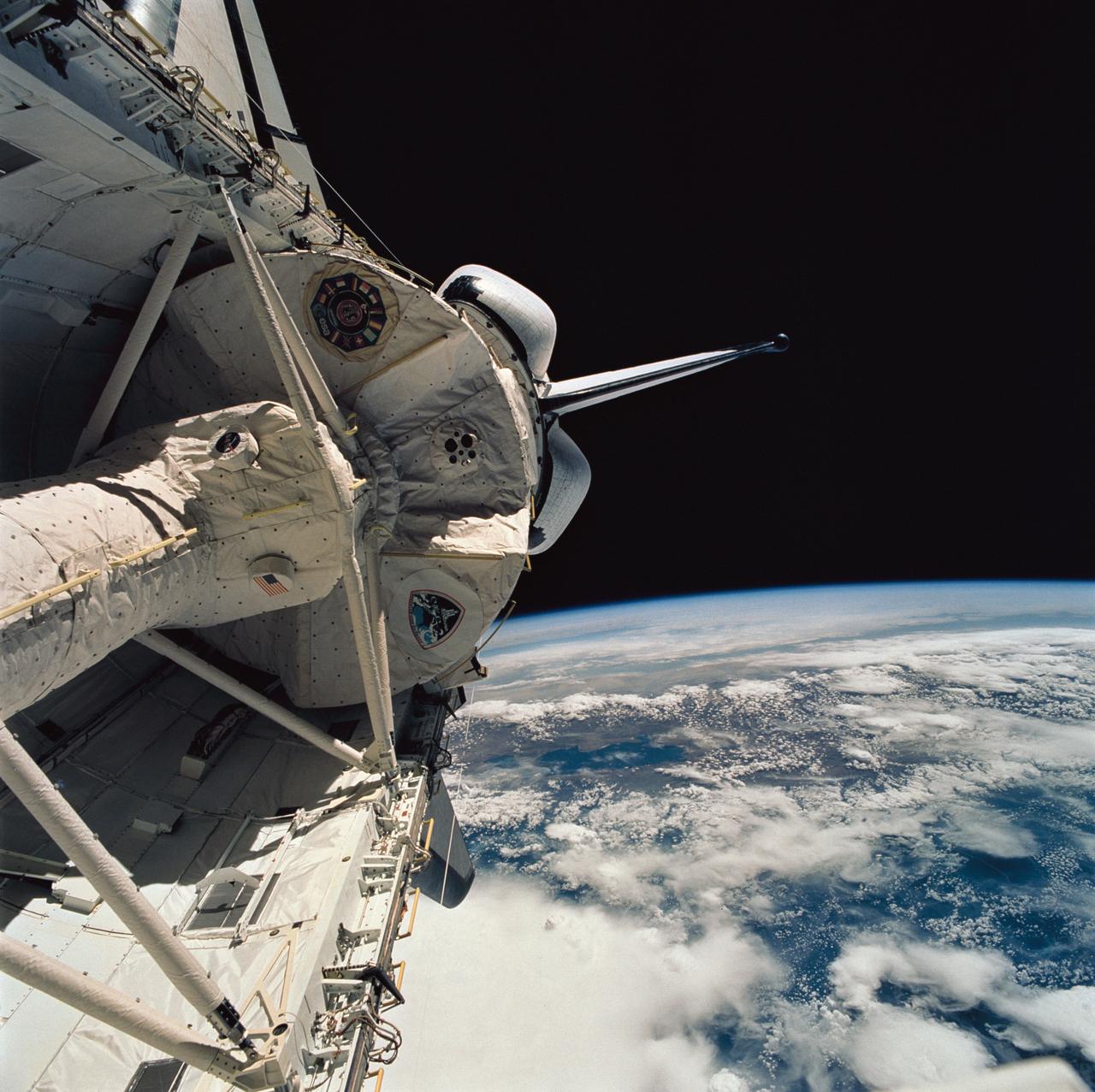
STS058-76-041 (18 Oct-1 Nov 1993) --- Backdropped against the Peru-Bolivia border and part of the Amazon basin, the Spacelab Life Sciences (SLS-2) laboratory module was captured with a 70mm camera, by one of the seven crew members inside the Space Shuttle Columbia's cabin. Part of the tunnel-like passageway is visible in the foreground. Six NASA astronauts and a veterinarian from the private sector spent two weeks devoted to medical research in Earth-orbit. Lake Titicaca, the largest high-altitude lake in the world lies in the Altiplano of Bolivia and Peru. Space Shuttle photography has been used to document fluctuations of several meters of the level of Lake Titicaca during the past decade, as well as to document the eutrophication of the north end of the lake, which is primarily due to increased population in the Peruvian shoreline areas. This view shows the effect of abnormally heavy precipitation of the region for the third successive year. Meteorologists feel this precipitation increase, which may portend another increase of the lake level, is due to the third successive El Nino - Southern Oscillation phenomenon in the 1993 - 94 southern hemisphere summertime. This global phenomenon is now resulting in major weather disturbances in Indonesia, California, Texas and elsewhere.
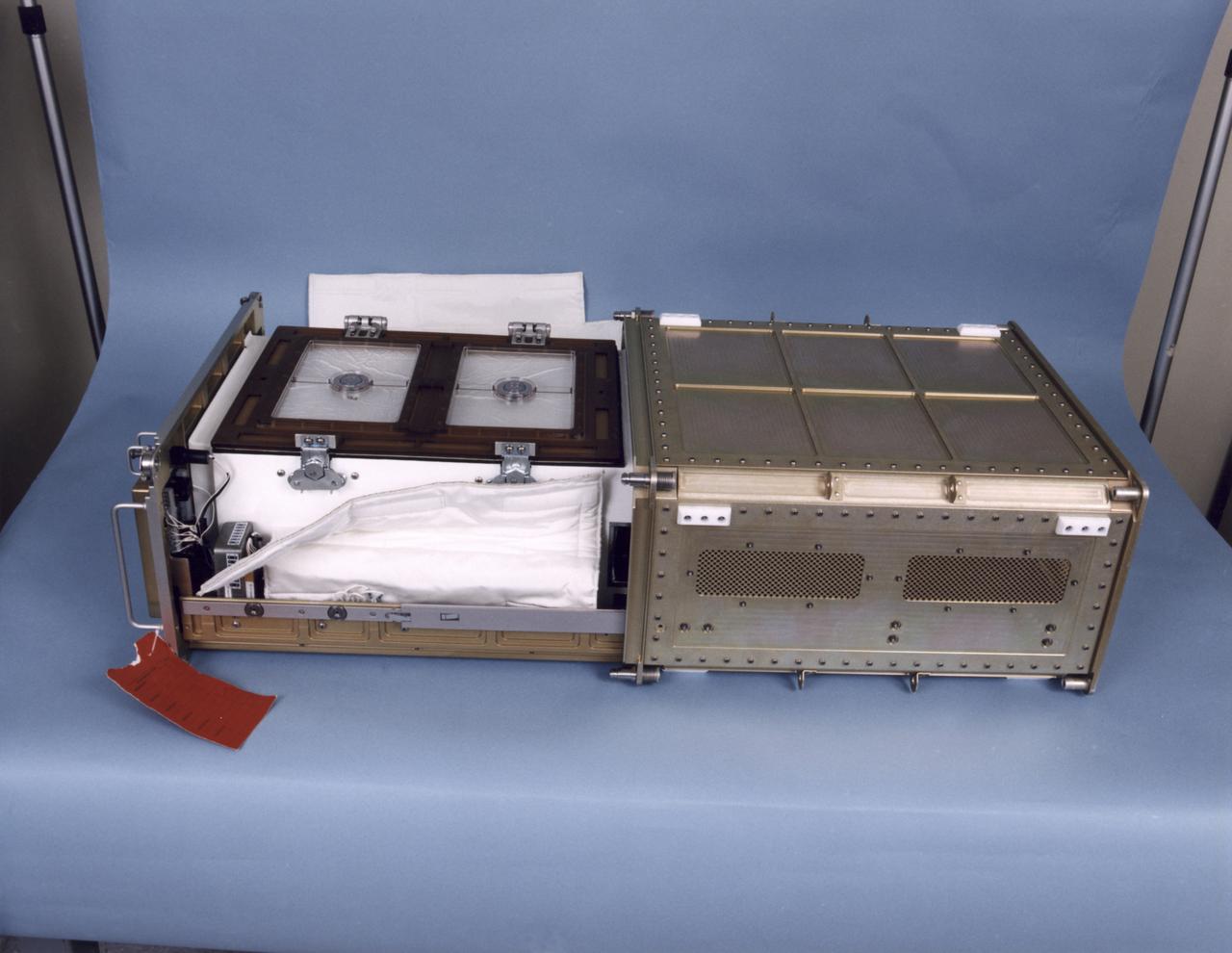
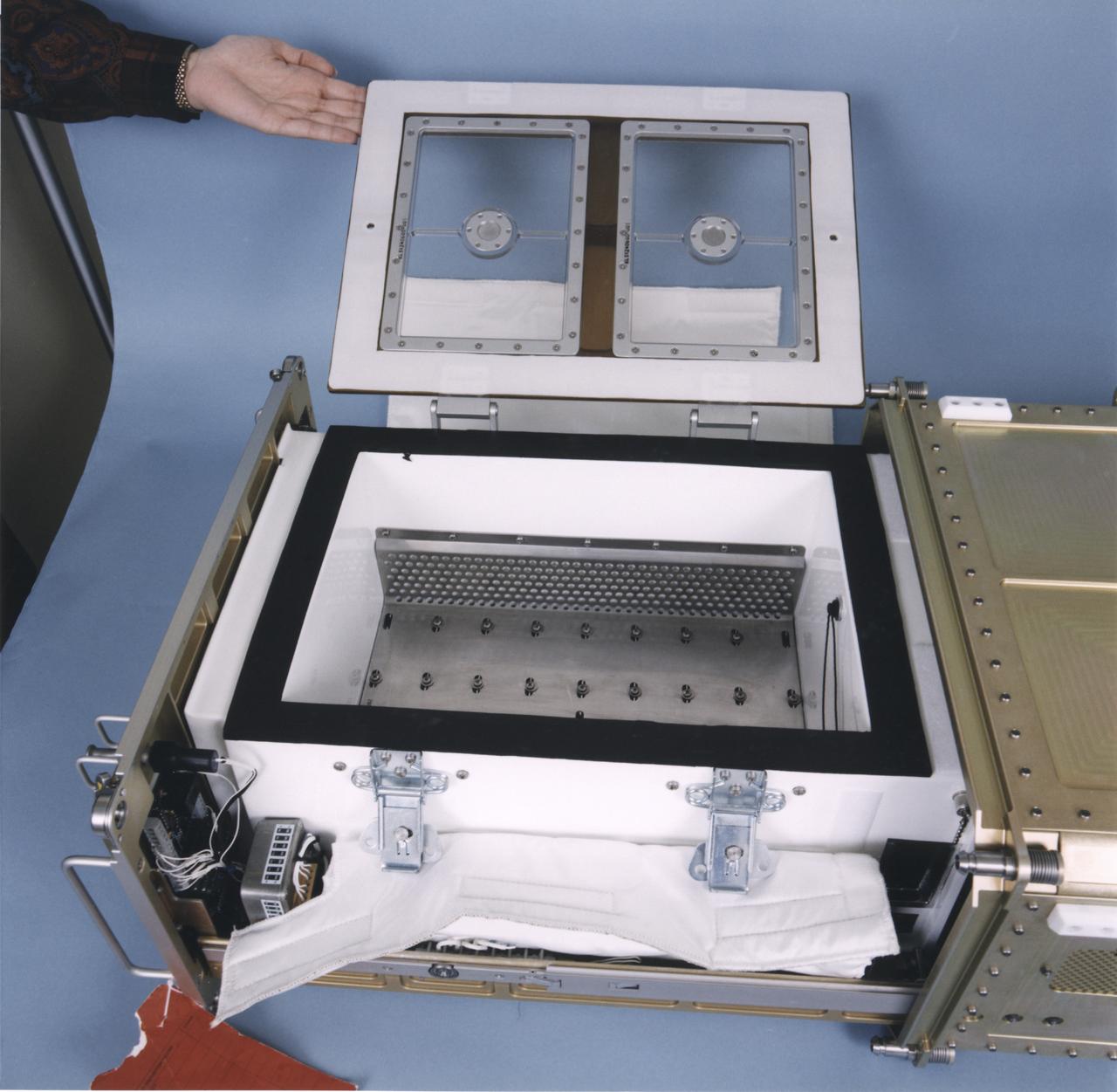
Biotechnology Refrigerator that preserves samples for use in (or after culturing in) the NASA Bioreactor. The unit is shown extracted from a middeck locker shell and with thermal blankets partially removed. The NASA Bioreactor provides a low turbulence culture environment which promotes the formation of large, three-dimensional cell clusters. The Bioreactor is rotated to provide gentle mixing of fresh and spent nutrient without inducing shear forces that would damage the cells. Due to their high level of cellular organization and specialization, samples constructed in the bioreactor more closely resemble the original tumor or tissue found in the body. The work is sponsored by NASA's Office of Biological and Physical Research. The bioreactor is managed by the Biotechnology Cell Science Program at NASA's Johnson Space Center (JSC). NASA-sponsored bioreactor research has been instrumental in helping scientists to better understand normal and cancerous tissue development. In cooperation with the medical community, the bioreactor design is being used to prepare better models of human colon, prostate, breast and ovarian tumors. Cartilage, bone marrow, heart muscle, skeletal muscle, pancreatic islet cells, liver and kidney are just a few of the normal tissues being cultured in rotating bioreactors by investigators.
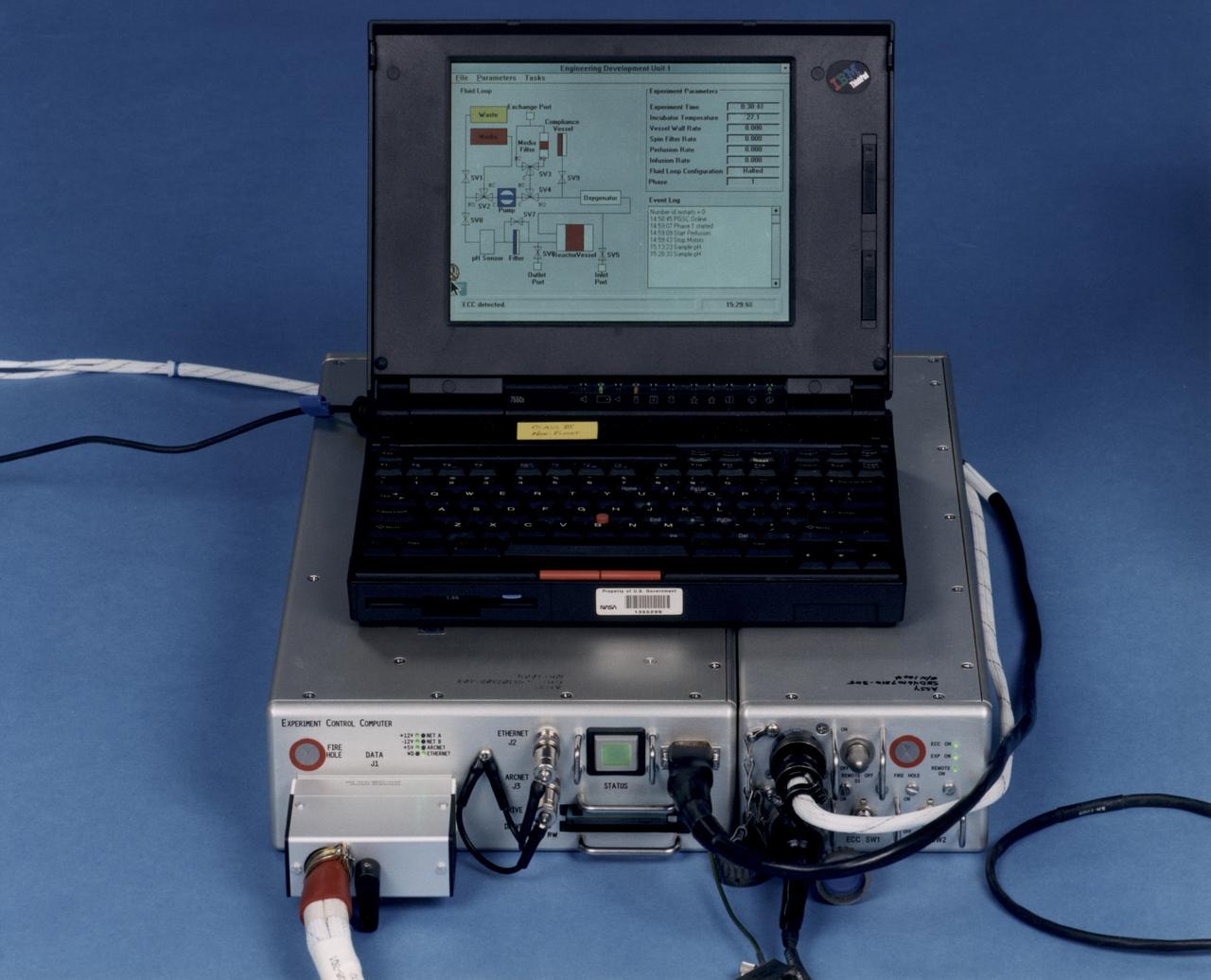
Laptop computer sits atop the Experiment Control Computer for a NASA Bioreactor. The flight crew can change operating conditions in the Bioreactor by using the graphical interface on the laptop. The NASA Bioreactor provides a low turbulence culture environment which promotes the formation of large, three-dimensional cell clusters. The Bioreactor is rotated to provide gentle mixing of fresh and spent nutrient without inducing shear forces that would damage the cells. Due to their high level of cellular organization and specialization, samples constructed in the bioreactor more closely resemble the original tumor or tissue found in the body. The work is sponsored by NASA's Office of Biological and Physical Research. The bioreactor is managed by the Biotechnology Cell Science Program at NASA's Johnson Space Center (JSC). NASA-sponsored bioreactor research has been instrumental in helping scientists to better understand normal and cancerous tissue development. In cooperation with the medical community, the bioreactor design is being used to prepare better models of human colon, prostate, breast and ovarian tumors. Cartilage, bone marrow, heart muscle, skeletal muscle, pancreatic islet cells, liver and kidney are just a few of the normal tissues being cultured in rotating bioreactors by investigators.
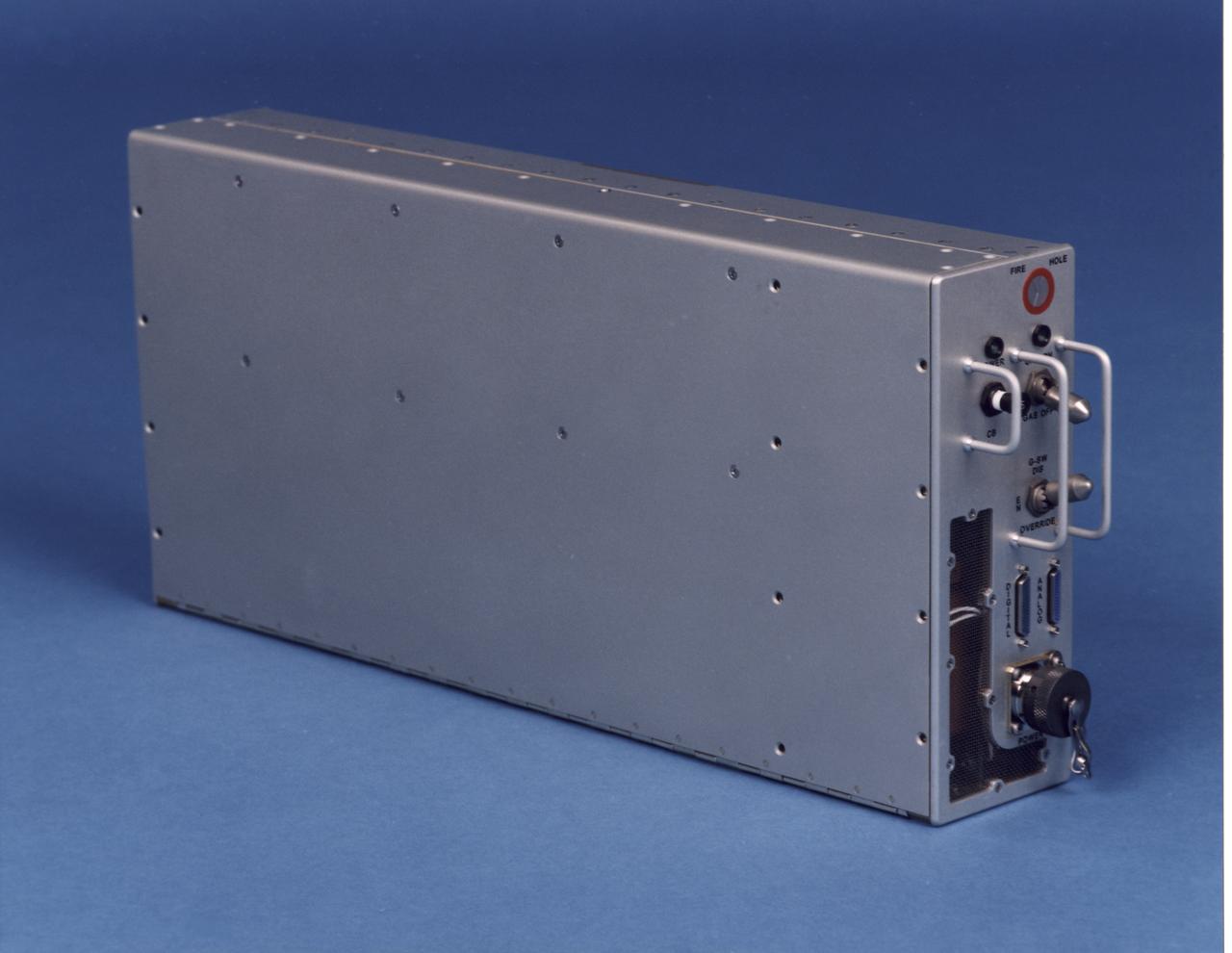
Electronics control module for the NASA Bioreactor. The NASA Bioreactor provides a low turbulence culture environment which promotes the formation of large, three-dimensional cell clusters. The Bioreactor is rotated to provide gentle mixing of fresh and spent nutrient without inducing shear forces that would damage the cells. Due to their high level of cellular organization and specialization, samples constructed in the bioreactor more closely resemble the original tumor or tissue found in the body. The work is sponsored by NASA's Office of Biological and Physical Research. The bioreactor is managed by the Biotechnology Cell Science Program at NASA's Johnson Space Center (JSC). NASA-sponsored bioreactor research has been instrumental in helping scientists to better understand normal and cancerous tissue development. In cooperation with the medical community, the bioreactor design is being used to prepare better models of human colon, prostate, breast and ovarian tumors. Cartilage, bone marrow, heart muscle, skeletal muscle, pancreatic islet cells, liver and kidney are just a few of the normal tissues being cultured in rotating bioreactors by investigators.
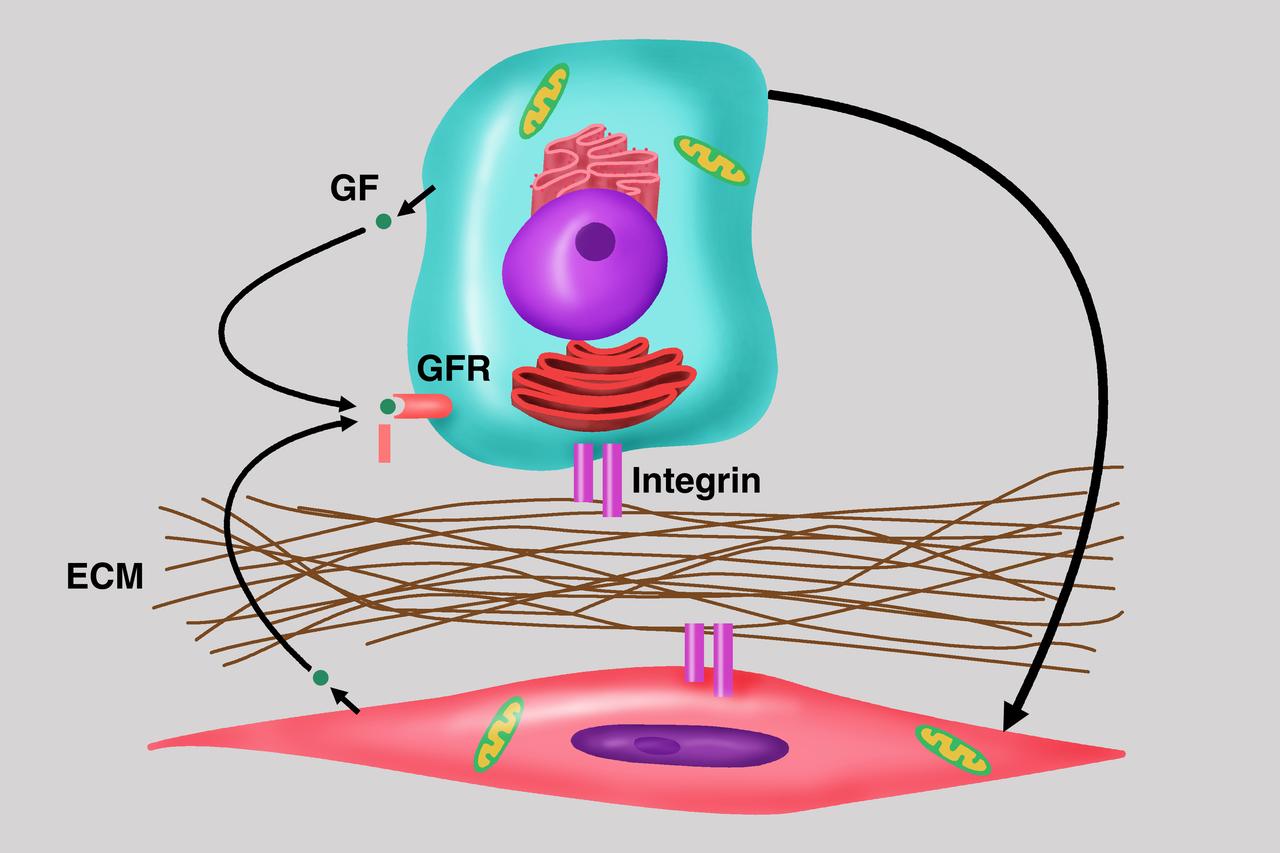
Diagram depicts the importance of cell-cell communication as central to the understanding of cancer growth and progression, the focus of the NASA bioreactor demonstration system (BDS-05) investigation. Microgravity studies will allow us to unravel the signaling and communication between these cells with the host and potential development of therapies for the treatment of cancer metastasis. The NASA Bioreactor provides a low turbulence culture environment which promotes the formation of large, three-dimensional cell clusters. Due to their high level of cellular organization and specialization, samples constructed in the bioreactor more closely resemble the original tumor or tissue found in the body. The Bioreactor is rotated to provide gentle mixing of fresh and spent nutrient without inducing shear forces that would damage the cells. The work is sponsored by NASA's Office of Biological and Physical Research. The bioreactor is managed by the Biotechnology Cell Science Program at NASA's Johnson Space Center (JSC). NASA-sponsored bioreactor research has been instrumental in helping scientists to better understand normal and cancerous tissue development. In cooperation with the medical community, the bioreactor design is being used to prepare better models of human colon, prostate, breast and ovarian tumors. Cartilage, bone marrow, heart muscle, skeletal muscle, pancreatic islet cells, liver and kidney are just a few of the normal tissues being cultured in rotating bioreactors by investigators. Credit: Emory University.
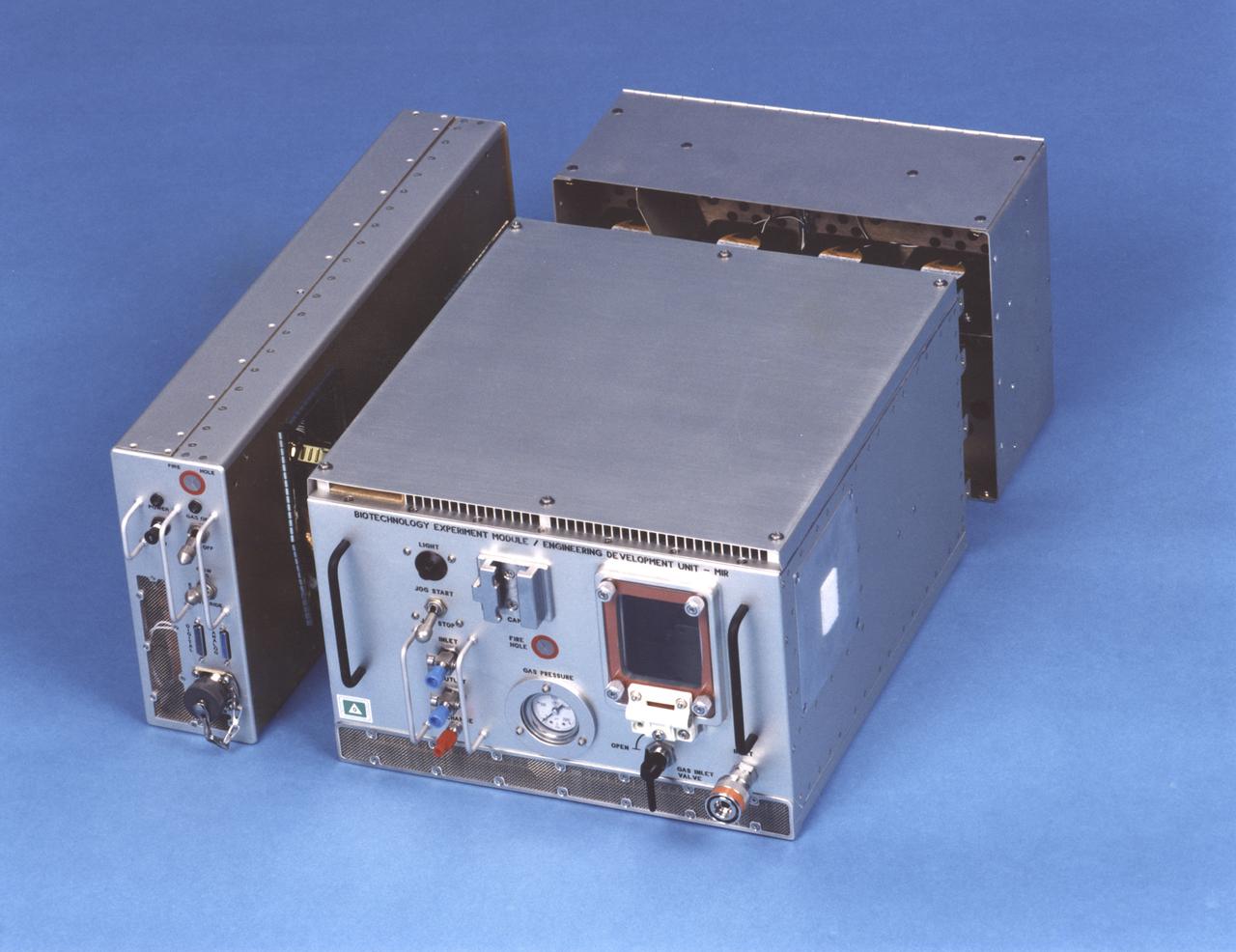
Exterior view of the NASA Bioreactor Engineering Development Unit flown on Mir. The rotating wall vessel is behind the window on the face of the large module. Control electronics are in the module at left; gas supply and cooling fans are in the module at back. The NASA Bioreactor provides a low turbulence culture environment which promotes the formation of large, three-dimensional cell clusters. The Bioreactor is rotated to provide gentle mixing of fresh and spent nutrient without inducing shear forces that would damage the cells. Due to their high level of cellular organization and specialization, samples constructed in the bioreactor more closely resemble the original tumor or tissue found in the body. The work is sponsored by NASA's Office of Biological and Physical Research. The bioreactor is managed by the Biotechnology Cell Science Program at NASA's Johnson Space Center (JSC). NASA-sponsored bioreactor research has been instrumental in helping scientists to better understand normal and cancerous tissue development. In cooperation with the medical community, the bioreactor design is being used to prepare better models of human colon, prostate, breast and ovarian tumors. Cartilage, bone marrow, heart muscle, skeletal muscle, pancreatic islet cells, liver and kidney are just a few of the normal tissues being cultured in rotating bioreactors by investigators.
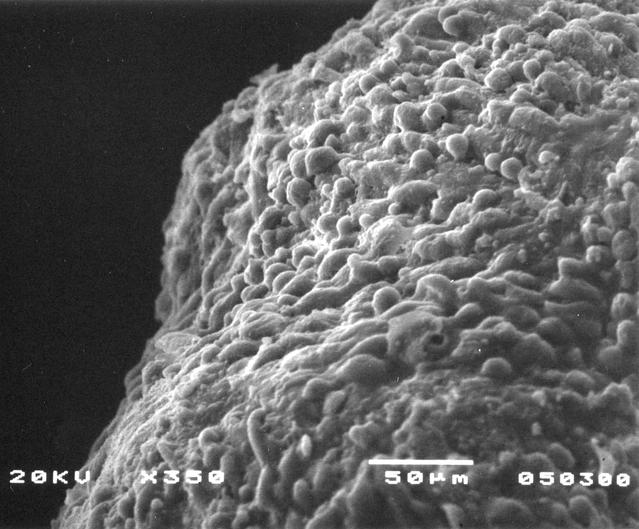
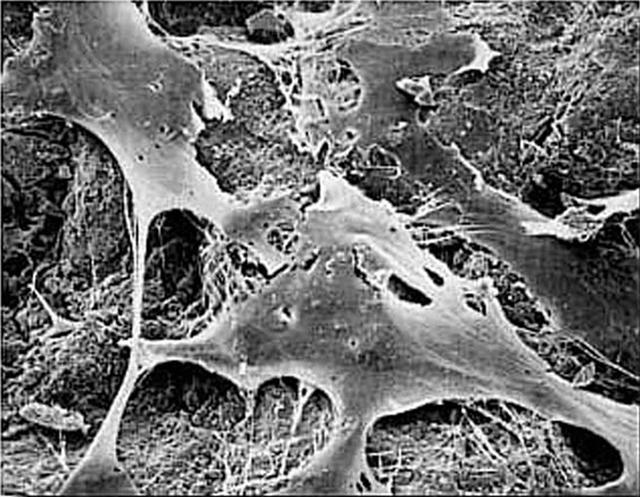
This prostate cancer construct was grown during NASA-sponsored bioreactor studies on Earth. Cells are attached to a biodegradable plastic lattice that gives them a head start in growth. Prostate tumor cells are to be grown in a NASA-sponsored Bioreactor experiment aboard the STS-107 Research-1 mission in 2002. Dr. Leland Chung of the University of Virginia is the principal investigator. The NASA Bioreactor provides a low turbulence culture environment which promotes the formation of large, three-dimensional cell clusters. Due to their high level of cellular organization and specialization, samples constructed in the bioreactor more closely resemble the original tumor or tissue found in the body. The Bioreactor is rotated to provide gentle mixing of fresh and spent nutrient without inducing shear forces that would damage the cells. The work is sponsored by NASA's Office of Biological and Physical Research. The bioreactor is managed by the Biotechnology Cell Science Program at NASA's Johnson Space Center (JSC). NASA-sponsored bioreactor research has been instrumental in helping scientists to better understand normal and cancerous tissue development. In cooperation with the medical community, the bioreactor design is being used to prepare better models of human colon, prostate, breast and ovarian tumors. Cartilage, bone marrow, heart muscle, skeletal muscle, pancreatic islet cells, liver and kidney are just a few of the normal tissues being cultured in rotating bioreactors by investigators. Credit: NASA and the University of Virginia.
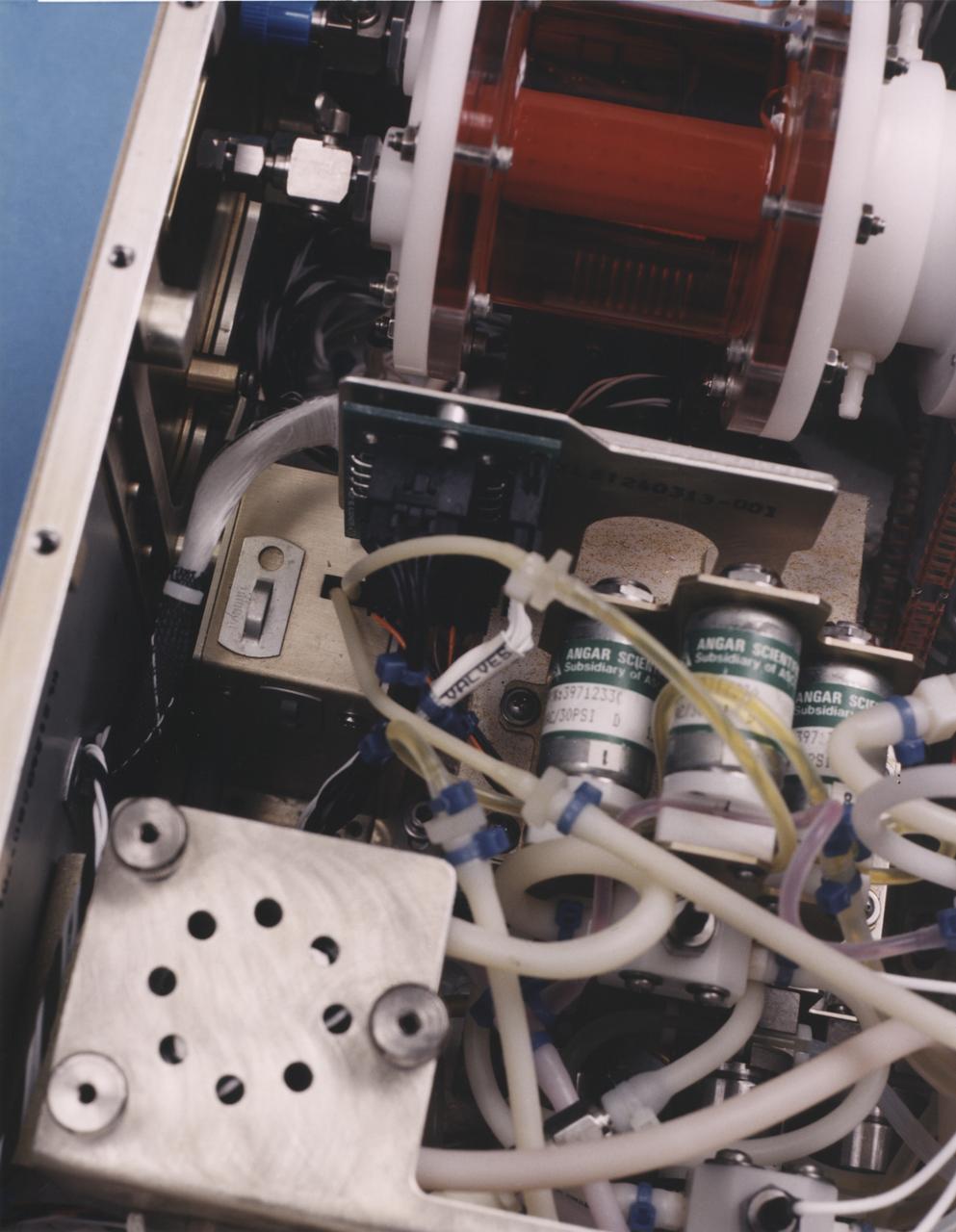
Close-up view of the interior of a NASA Bioreactor shows the plastic plumbing and valves (cylinders at right center) to control fluid flow. The rotating wall vessel is at top center. The NASA Bioreactor provides a low turbulence culture environment which promotes the formation of large, three-dimensional cell clusters. The Bioreactor is rotated to provide gentle mixing of fresh and spent nutrient without inducing shear forces that would damage the cells. Due to their high level of cellular organization and specialization, samples constructed in the bioreactor more closely resemble the original tumor or tissue found in the body. The work is sponsored by NASA's Office of Biological and Physical Research. The bioreactor is managed by the Biotechnology Cell Science Program at NASA's Johnson Space Center (JSC). NASA-sponsored bioreactor research has been instrumental in helping scientists to better understand normal and cancerous tissue development. In cooperation with the medical community, the bioreactor design is being used to prepare better models of human colon, prostate, breast and ovarian tumors. Cartilage, bone marrow, heart muscle, skeletal muscle, pancreatic islet cells, liver and kidney are just a few of the normal tissues being cultured in rotating bioreactors by investigators.
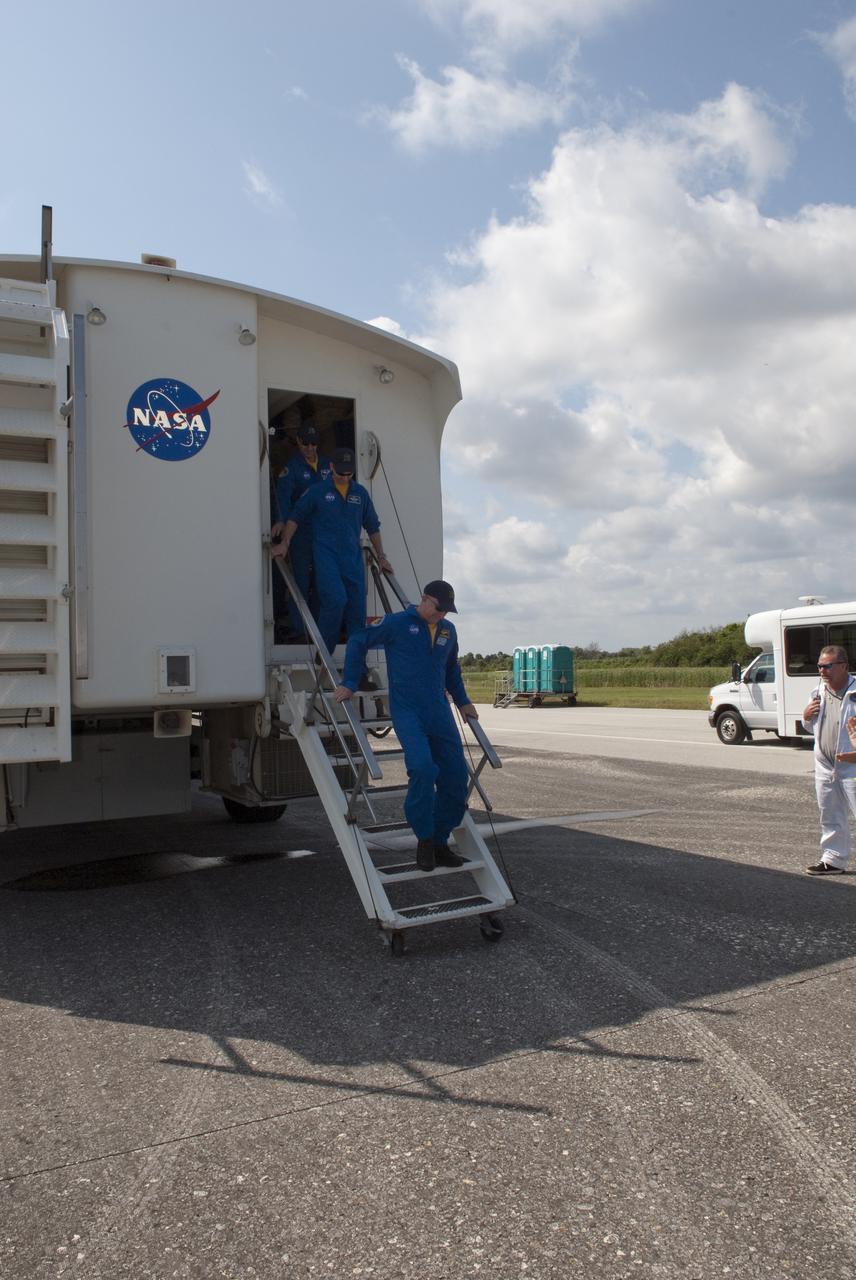
CAPE CANAVERAL, Fla. - At the Shuttle Landing Facility at NASA's Kennedy Space Center in Florida, STS-131 Commander Alan Poindexter, front, and his crew exit the crew transport vehicle following the landing of space shuttle Discovery on Runway 33. The crew received a brief preliminary medical examination before joining NASA managers and invited guests on the runway. Discovery landed at Kennedy after 15 days in space, completing the more than 6.2-million-mile STS-131 mission on orbit 238. Main gear touchdown was at 9:08:35 a.m. EDT followed by nose gear touchdown at 9:08:47 a.m. and wheelstop at 9:09:33 a.m. The seven-member STS-131 crew carried the multi-purpose logistics module Leonardo, filled with supplies, a new crew sleeping quarters and science racks that were transferred to the International Space Station's laboratories. The crew also switched out a gyroscope on the station’s truss, installed a spare ammonia storage tank and retrieved a Japanese experiment from the station’s exterior. STS-131 is the 33rd shuttle mission to the station and the 131st shuttle mission overall. For information on the STS-131 mission and crew, visit http:__www.nasa.gov_mission_pages_shuttle_shuttlemissions_sts131_index.html. Photo credit: NASA_Jim Grossmann
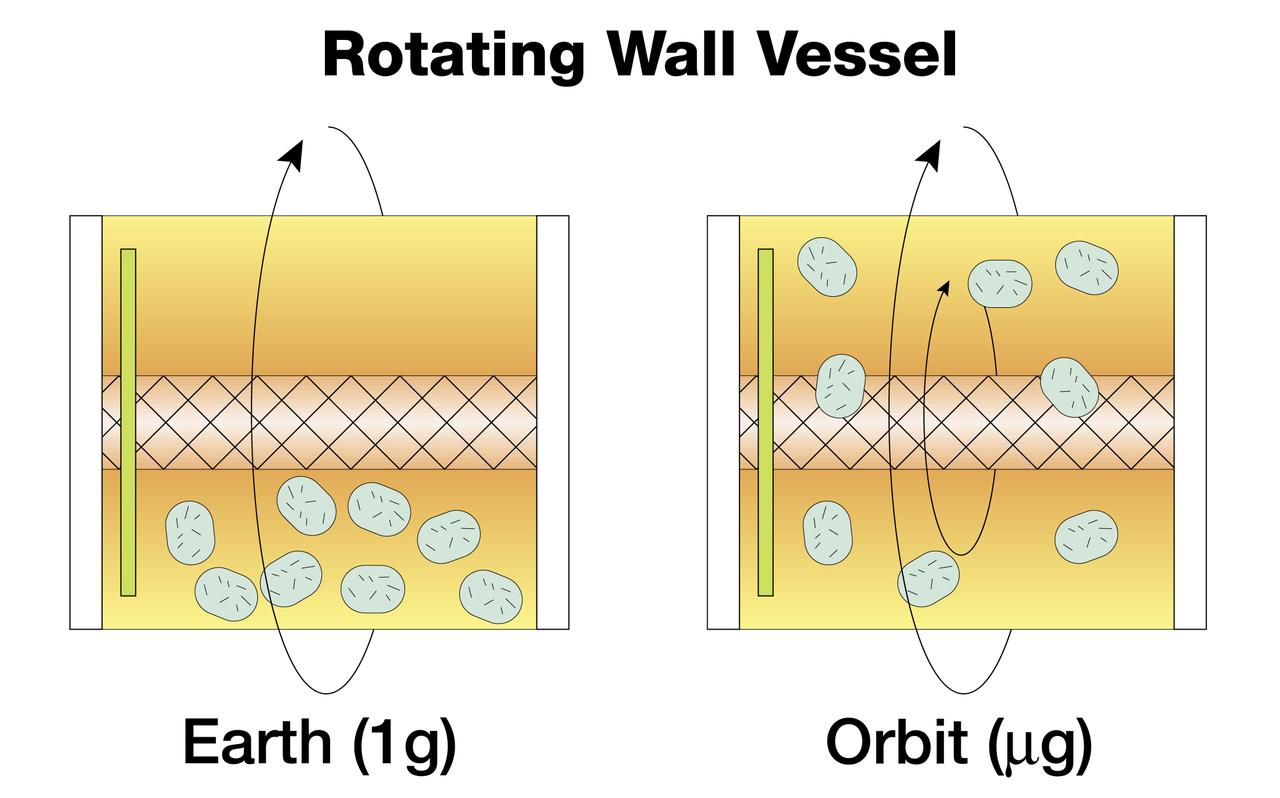
The NASA Bioreactor provides a low turbulence culture environment which promotes the formation of large, three-dimensional cell clusters. Due to their high level of cellular organization and specialization, samples constructed in the bioreactor more closely resemble the original tumor or tissue found in the body. The work is sponsored by NASA's Office of Biological and Physical Research. The bioreactor is managed by the Biotechnology Cell Science Program at NASA's Johnson Space Center (JSC). NASA-sponsored bioreactor research has been instrumental in helping scientists to better understand normal and cancerous tissue development. In cooperation with the medical community, the bioreactor design is being used to prepare better models of human colon, prostate, breast and ovarian tumors. Cartilage, bone marrow, heart muscle, skeletal muscle, pancreatic islet cells, liver and kidney are just a few of the normal tissues being cultured in rotating bioreactors by investigators. Cell constructs grown in a rotating bioreactor on Earth (left) eventually become too large to stay suspended in the nutrient media. In the microgravity of orbit, the cells stay suspended. Rotation then is needed for gentle stirring to replenish the media around the cells.
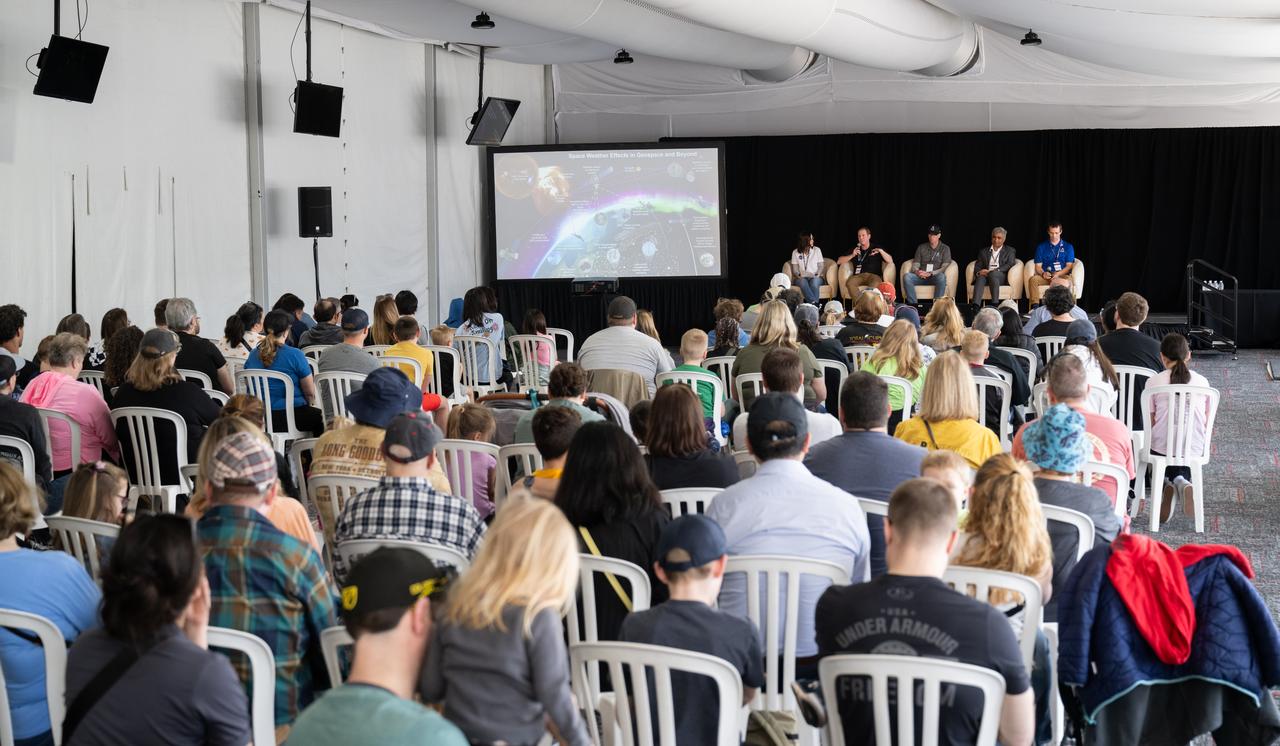
Patricia Moore, communications strategist for the Moon to Mars Program Office in NASA's Exploration Systems Development Mission Directorate, Bradley Williams, program executive in the Heliophysics Division of NASA's Science Mission Directorate, Matthew Roper, Crew Health and Medical Team Lead in NASA's Flight Operations Directorate, Arvind Raman, dean of the College of Engineering at Purdue University, and Logan Kennedy, surface lead for Human Landing System Programs in NASA's Exploration Systems Development Mission Directorate, are seen as they speaks to attendees at the Indianapolis Motor Speedway during a panel discussion about following your dreams to a career in STEM ahead of the total solar eclipse, Monday, April 8, 2024, in Indianapolis, Ind. A total solar eclipse swept across a narrow portion of the North American continent from Mexico’s Pacific coast to the Atlantic coast of Newfoundland, Canada. A partial solar eclipse was visible across the entire North American continent along with parts of Central America and Europe. Photo Credit: (NASA/Joel Kowsky)