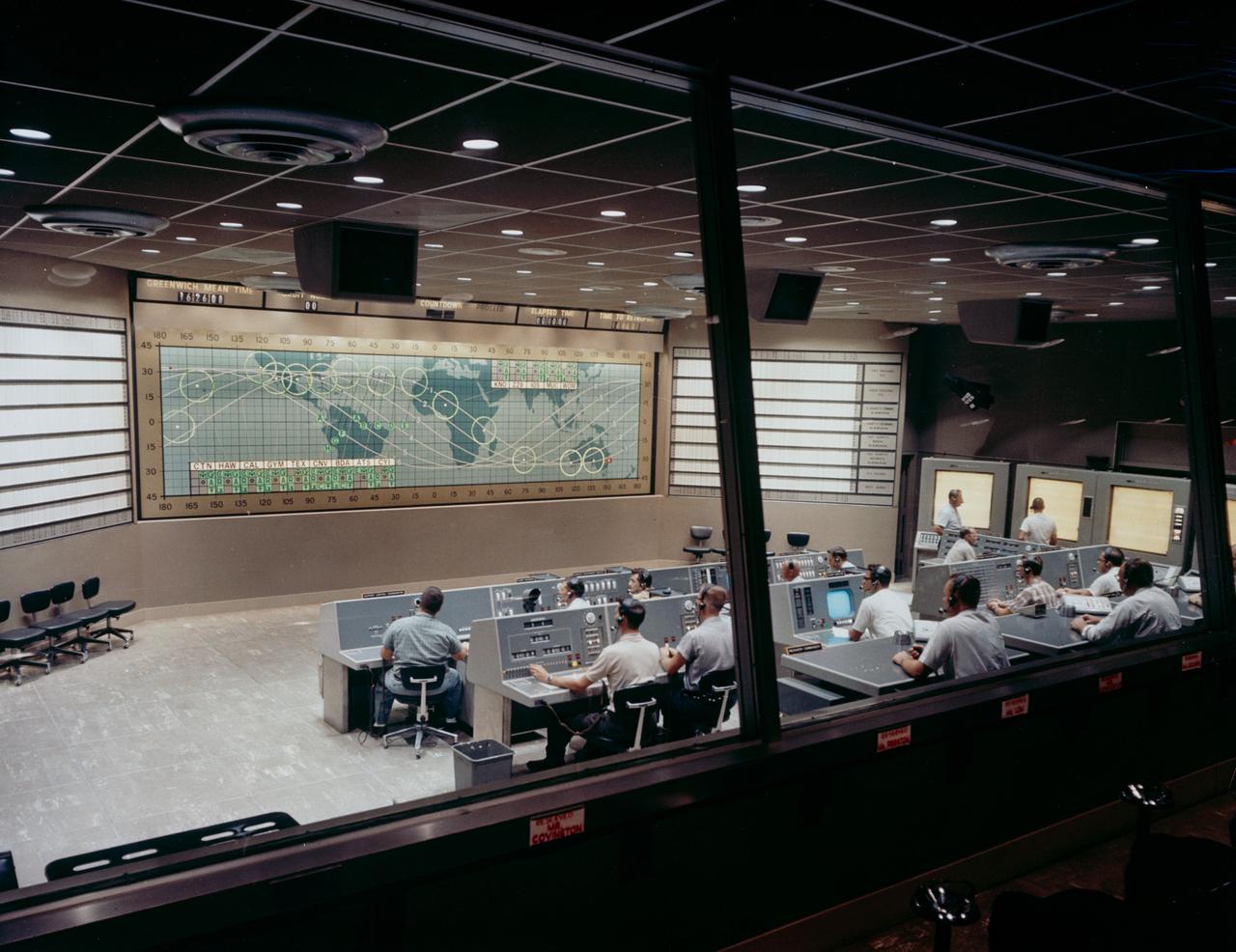
S62-05139 (1962) --- View of Mercury Control Center prior to the Mercury-Atlas 8 (MA-8) flight of the Sigma 7. Photo credit: NASA
View of Mercury Control Center prior to MA-8 flight
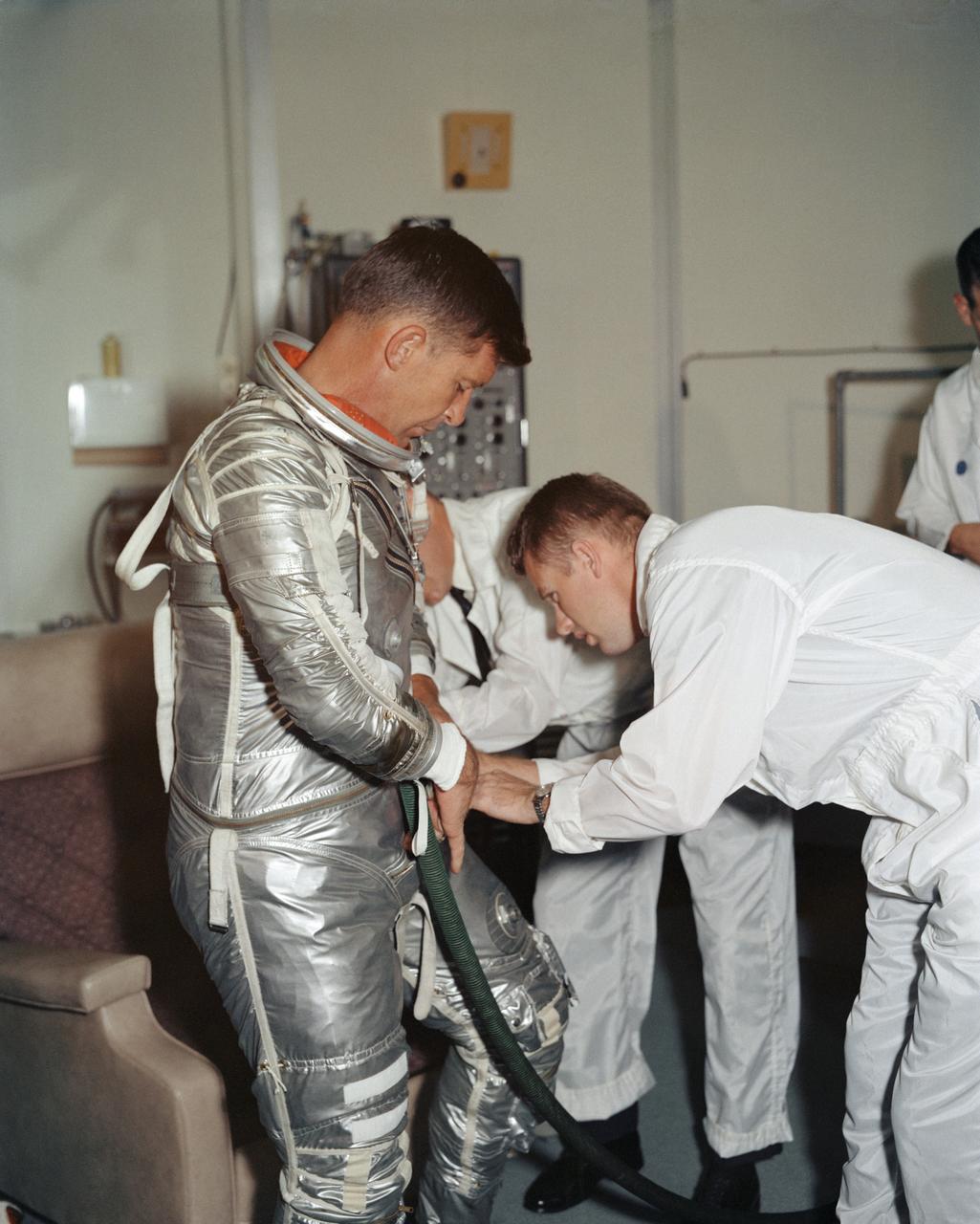
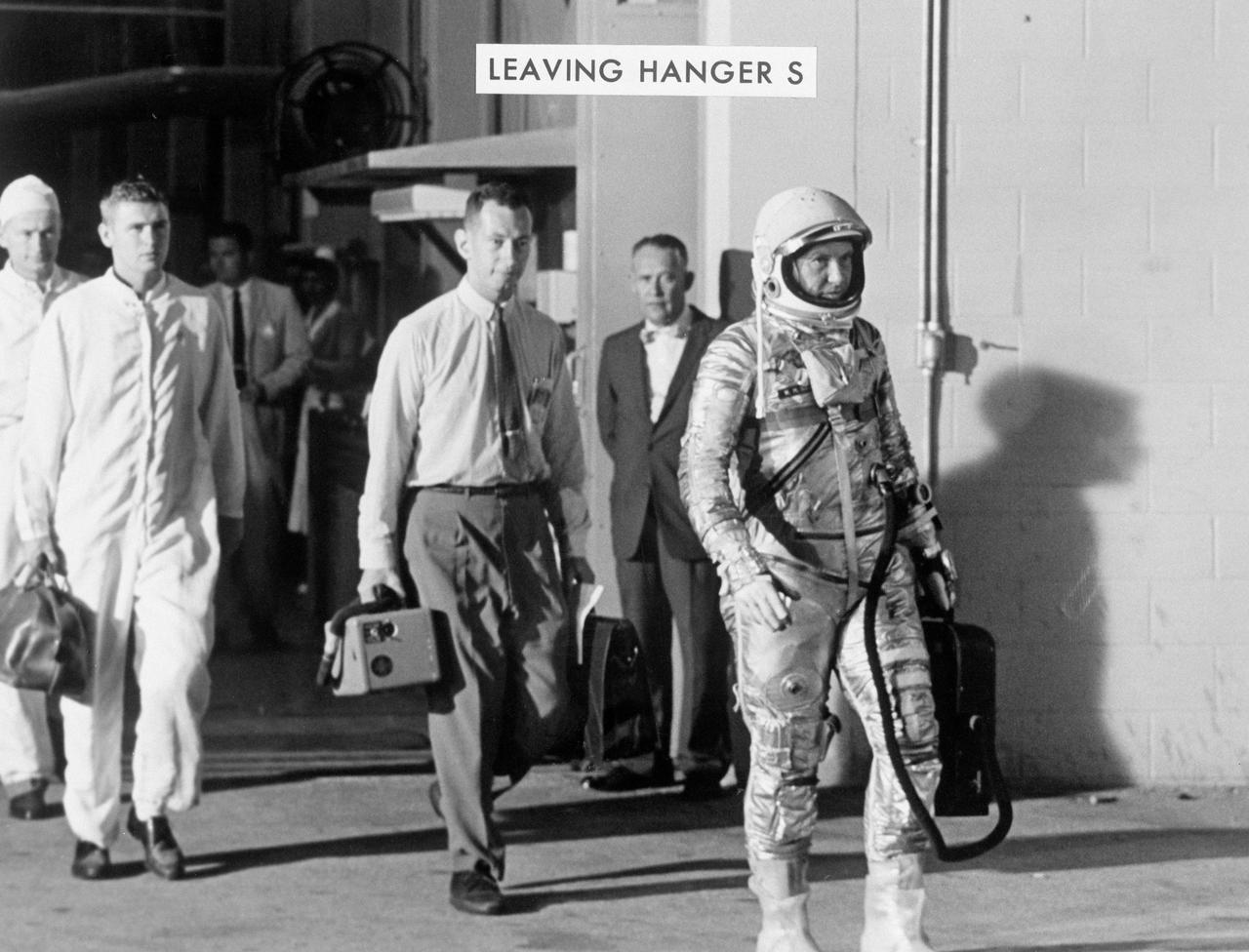
S62-08895 (1962) --- Astronaut Walter M. Schirra Jr., pilot of the Mercury-Atlas 8 (MA-8) Earth-orbital spaceflight, goes through a suiting-up exercise in Hangar "S" at Cape Canaveral several weeks prior to his scheduled Oct. 3, 1962 flight. Photo credit: NASA
Astronaut Walter Schirra during suiting-up exercise prior to MA-8 flight
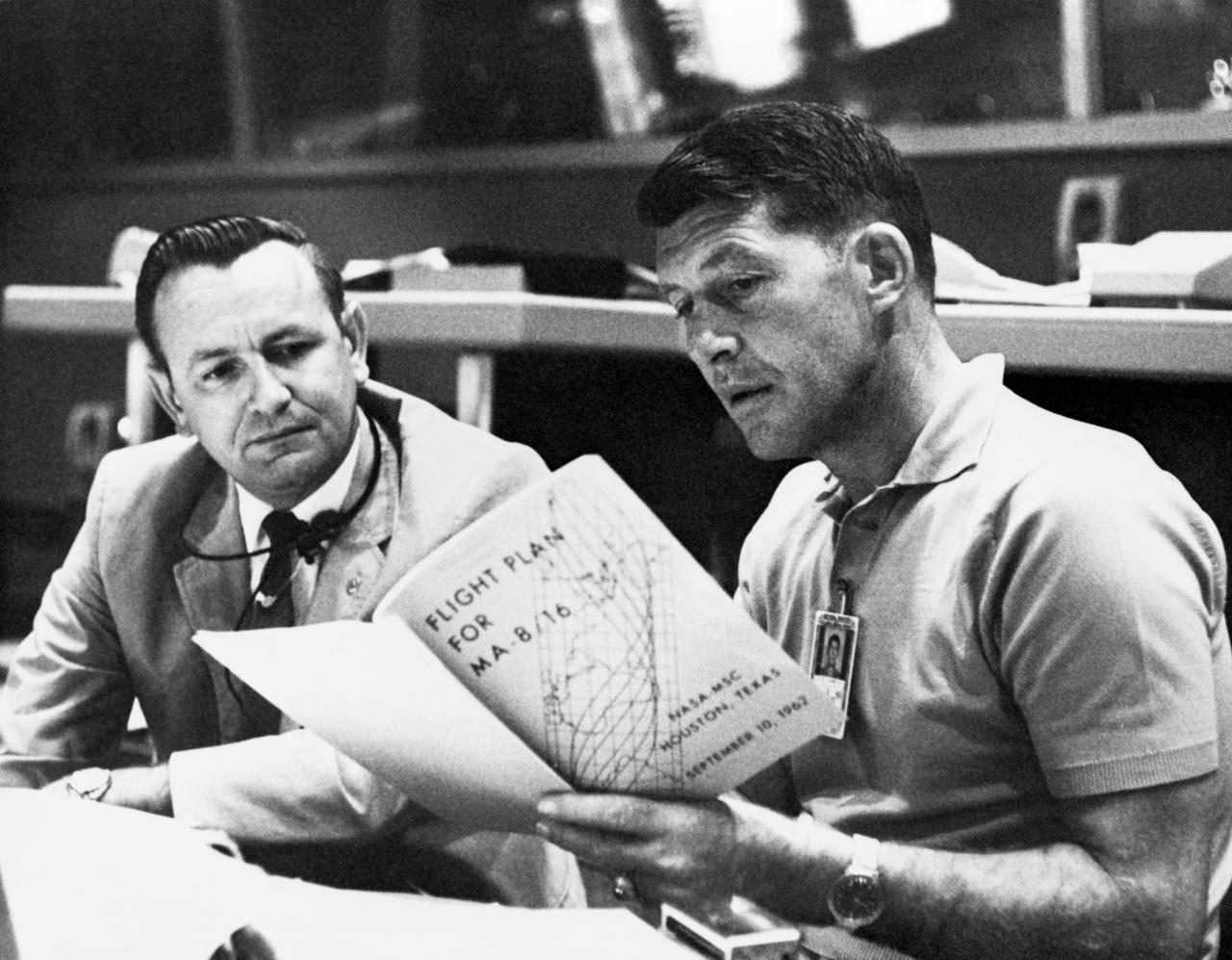
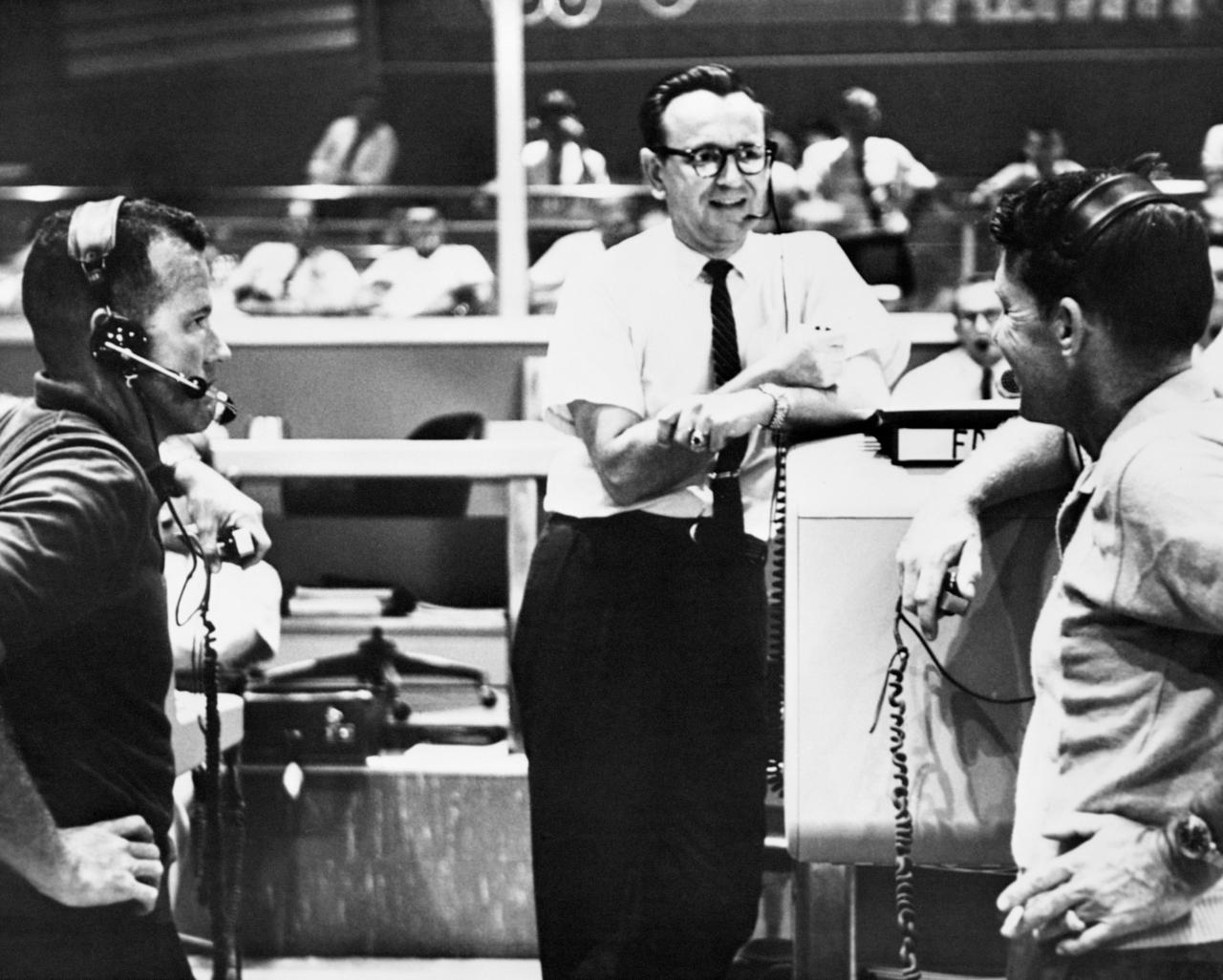
S74-33004 (19 Sept. 1962) --- Astronaut Walter M. Schirra Jr, (right), Mercury-Atlas 8 (MA-8) pilot, discusses the MA-8 flight plan with flight director Christopher C. Kraft Jr., Chief of the Flight Operations Division at the Manned Spacecraft Center, Houston, during MA-8 preflight preparations at Cape Canaveral, Florida. They are seated at a console in the Mercury Control Center. Photo credit: NASA
BLDG. 30 - SIMULATIONS (COMMUNICATIONS - ASTP)
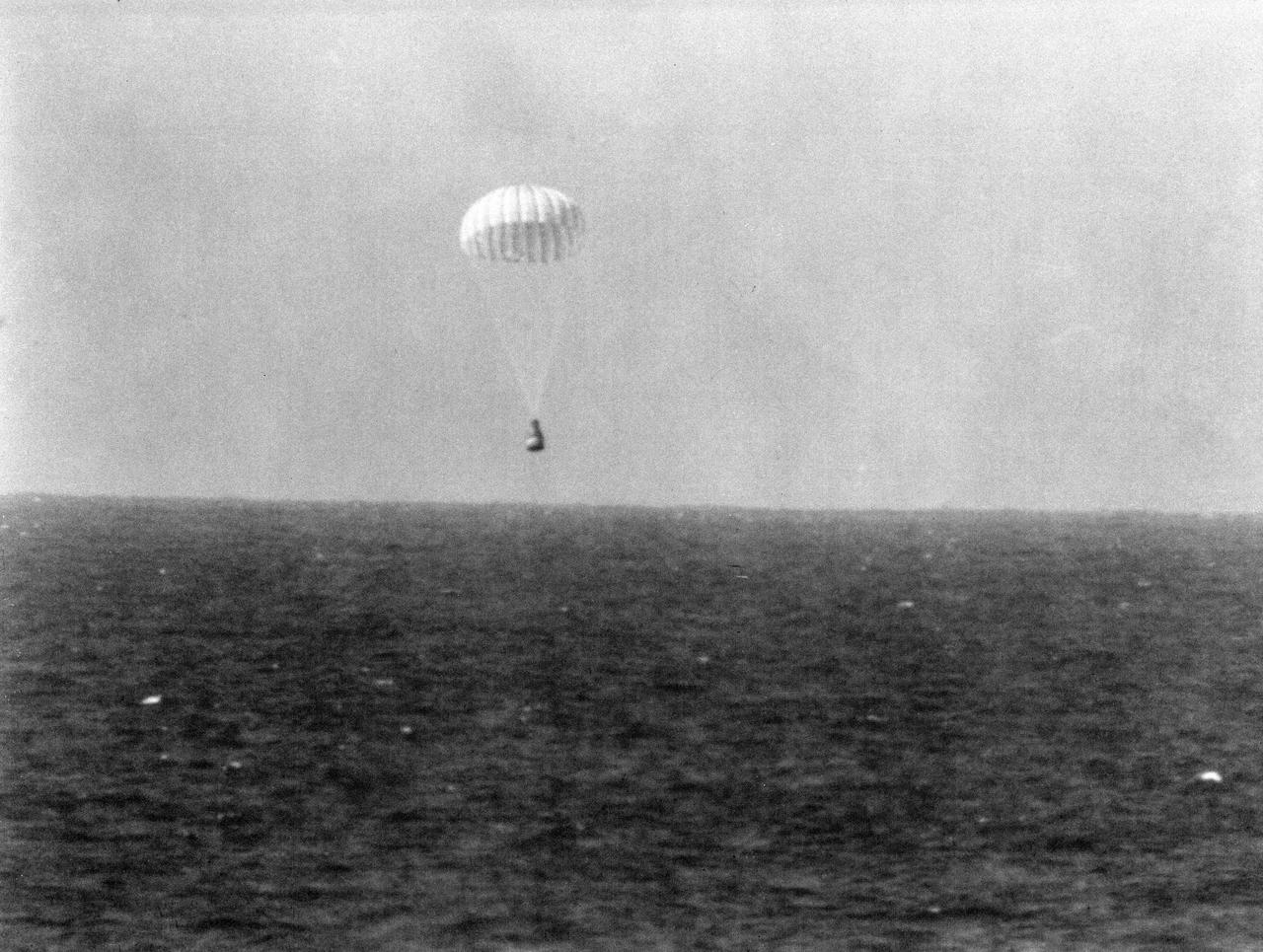
S62-04534 (3 Oct. 1962) --- Landing with parachute extended of astronaut Walter M. Schirra's Mercury-Atlas 8 (MA-8) capsule, called the Sigma 7, after a world orbital flight. Photo credit: NASA
ASTRONAUT SCHIRRA, WALTER M., JR. - MERCURY-ATLAS (MA)-8 RECOVERY - "SIGMA 7" - PRE-SPLASHDOWN
Astronaut Walter M. "Wally" Schirra, one of the original seven astronauts for Mercury Project selected by NASA on April 27, 1959. The MA-8 (Mercury-Atlas) mission with Sigma 7 spacecraft was the third marned orbital flight by the United States, and made the six orbits in 9-1/4 hours.
Mercury Project
S63-00695 (3 Oct. 1962) --- Astronaut Walter M. Schirra Jr., pilot of the Mercury-Atlas 8 (MA-8) Earth-orbital spaceflight, leaves Hangar "S" at Cape Canaveral on his way to his scheduled Oct. 3, 1962 flight. Photo credit: NASA
Astronaut Walter Schirra leaves Hangar "S" prior to MA-8 flight
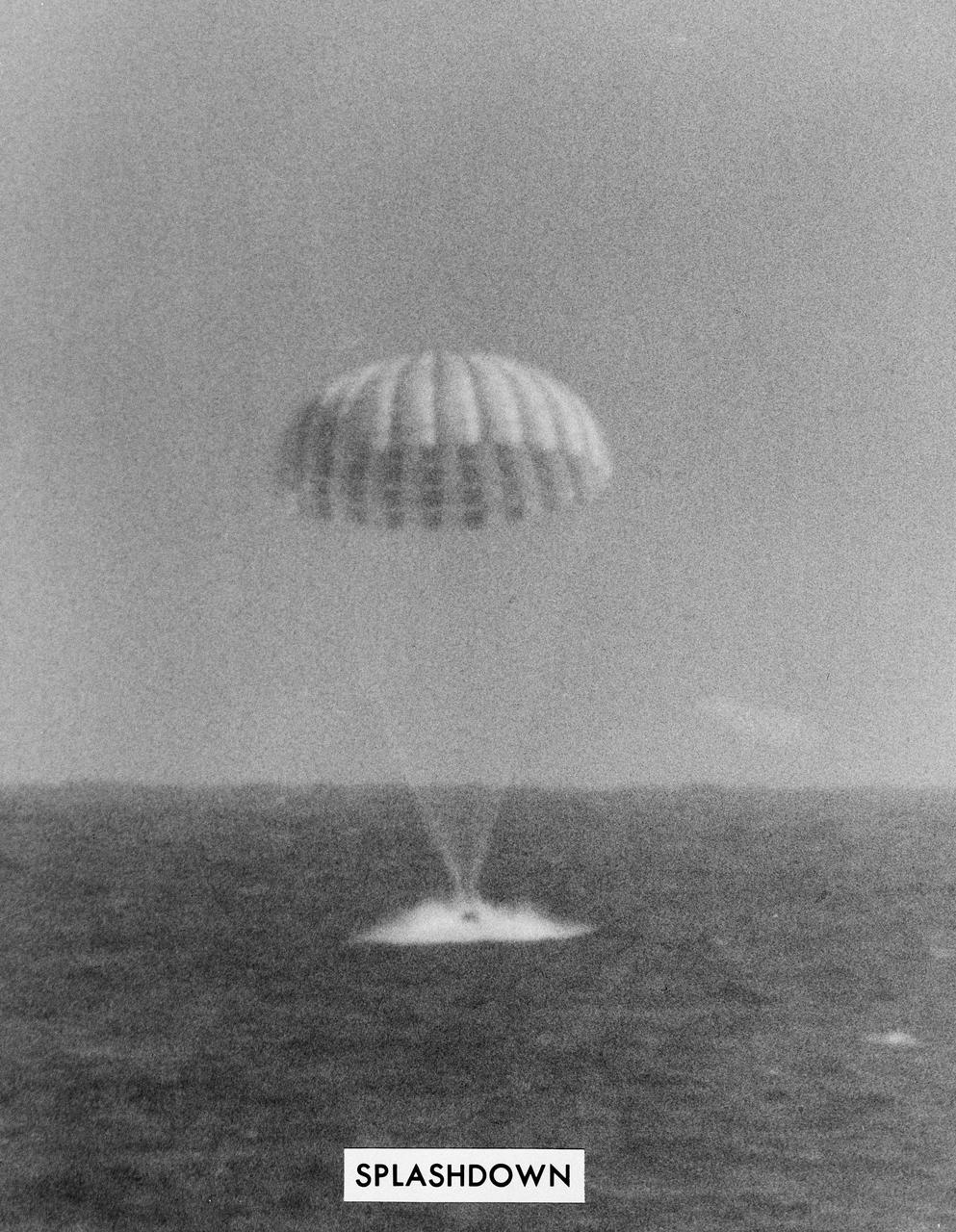
S63-00693 (3 Oct. 1962) --- Landing with parachute extended of astronaut Walter M. Schirra's Mercury-Atlas 8 (MA-8) capsule, called the Sigma 7, after a world orbital flight. Photo is labeled "Splashdown". Photo credit: NASA
Landing of Mercury-Atlas 8 spacecraft with parachute extended
S74-33006 (19 Sept. 1962) --- Flight director Christopher C. Kraft Jr. (center), Chief of the Flight Operations Division at the Manned Spacecraft Center, Houston, discusses the Mercury-Atlas 8 (MA-8) flight plan with astronauts L. Gordon Cooper Jr. (left) and Walter M. Schirra Jr., on Sept. 19, 1962. They are standing in the Mercury Control Center at Cape Canaveral, Florida. Photo credit: NASA
BLDG. 30 - SIMULATIONS (COMMUNICATIONS - ASTP)
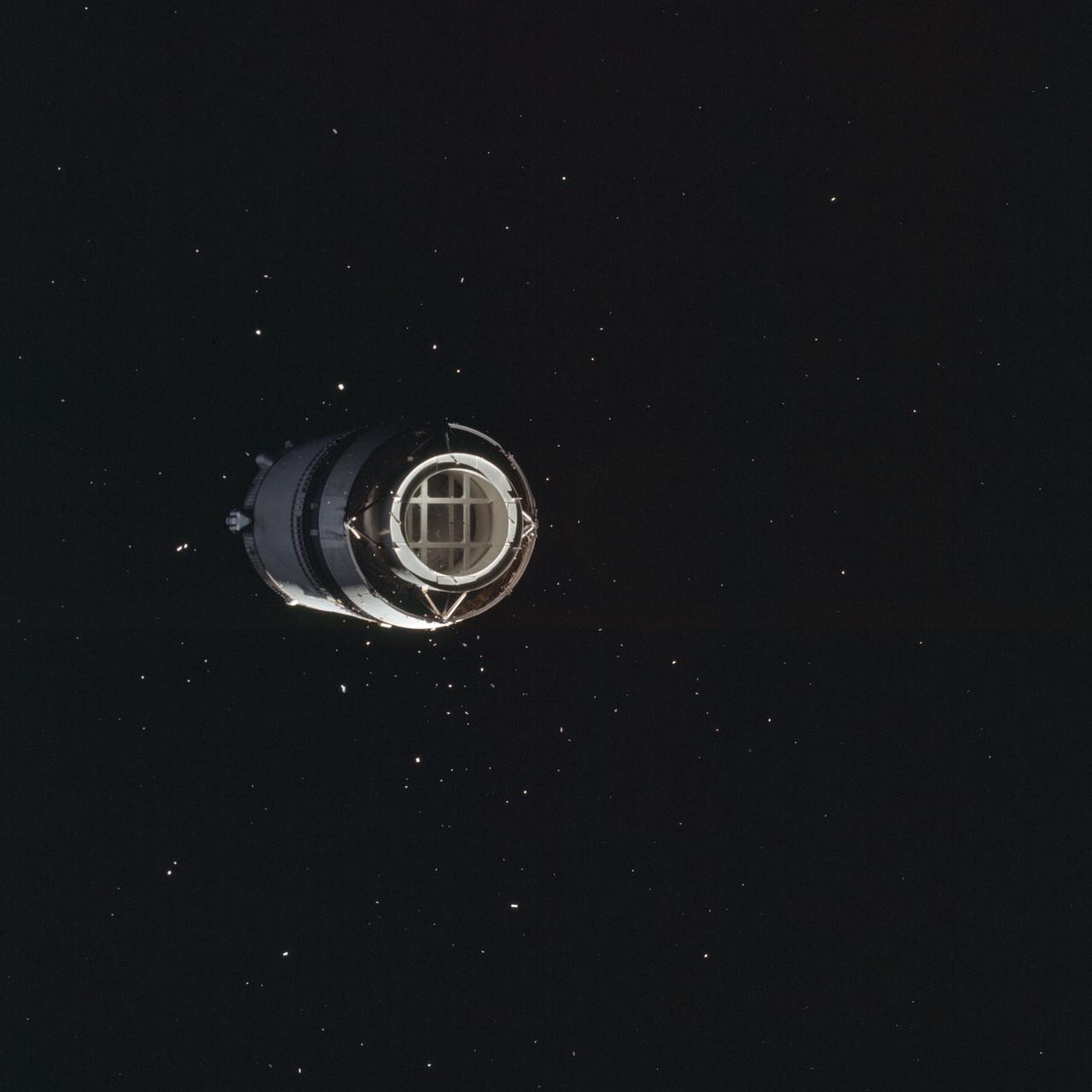
AS08-16-2584 (21 Dec. 1968) --- This is a photograph taken from the Apollo 8 spacecraft looking back at the Saturn V third (S-IVB) stage from which the spacecraft had just separated following trans-lunar injection. Attached to the S-IVB is the Lunar Module Test Article (LTA) which simulated the mass of a Lunar Module (LM) on the Apollo 8 lunar orbit mission. The 29-feet panels of the Spacecraft LM Adapter which enclosed the LTA during launch have already been jettisoned and are out of view. Sunlight reflected from small particles shows the "firefly" phenomenon which was reported by astronaut John H. Glenn Jr. during the first Earth-orbital flight, Mercury-Atlas 6 (MA-6) of the Mercury Program.
View of the Saturn V third stage from which the Apollo 8 has separated
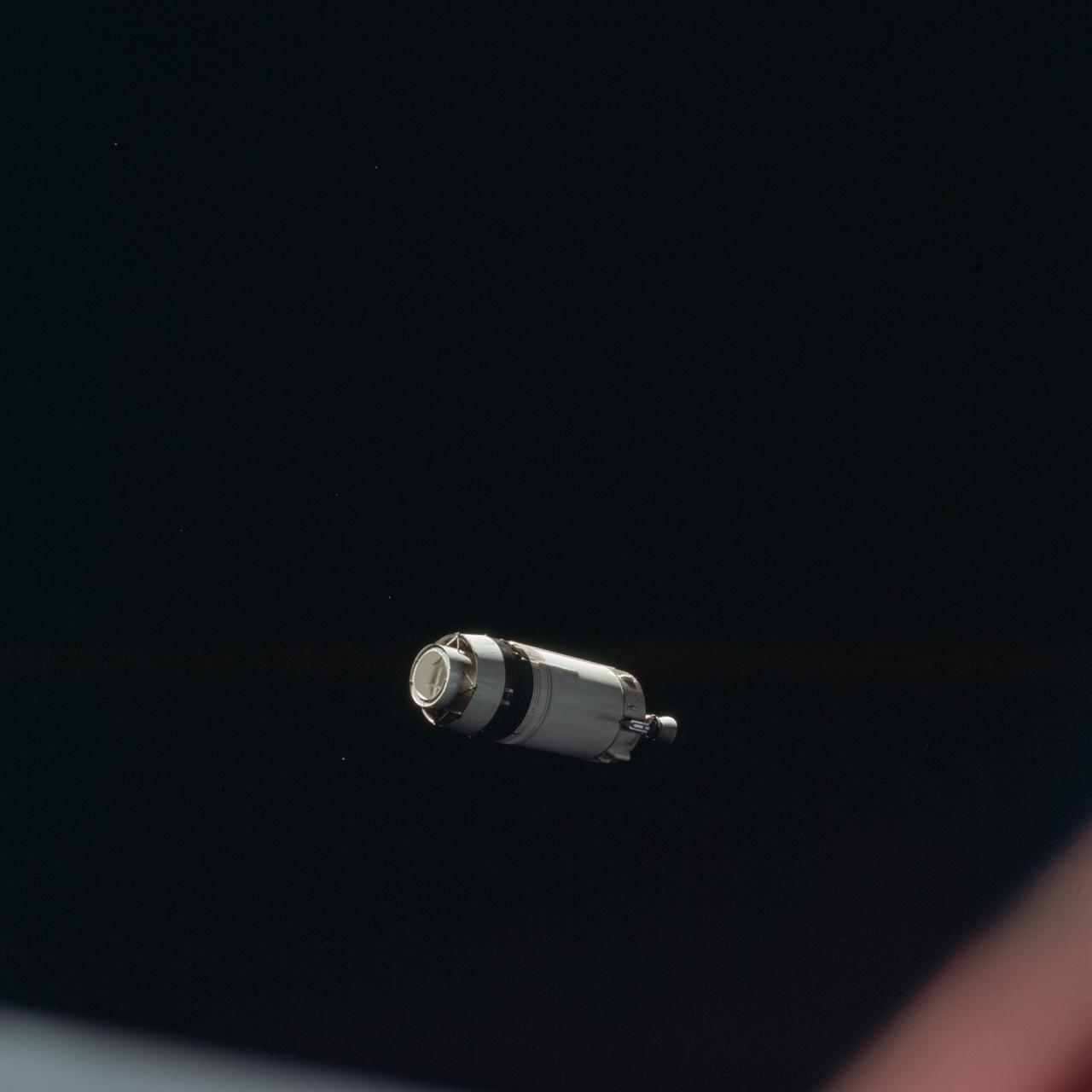
AS08-16-2583 (21 Dec. 1968) --- This is a photograph taken from the Apollo 8 spacecraft looking back at the Saturn V third (S-IVB) stage from which the spacecraft had just separated following trans-lunar injection. Attached to the S-IVB is the Lunar Module Test Article (LTA) which simulated the mass of a Lunar Module (LM) on the Apollo 8 lunar orbit mission. The 29-feet panels of the Spacecraft LM Adapter which enclosed the LTA during launch have already been jettisoned and are out of view. Sunlight reflected from small particles shows the "firefly" phenomenon which was reported by astronaut John H. Glenn Jr. during the first Earth-orbital flight, Mercury-Atlas 6 (MA-6) of the Mercury Program.
View of the Saturn V third stage from which the Apollo 8 has separated