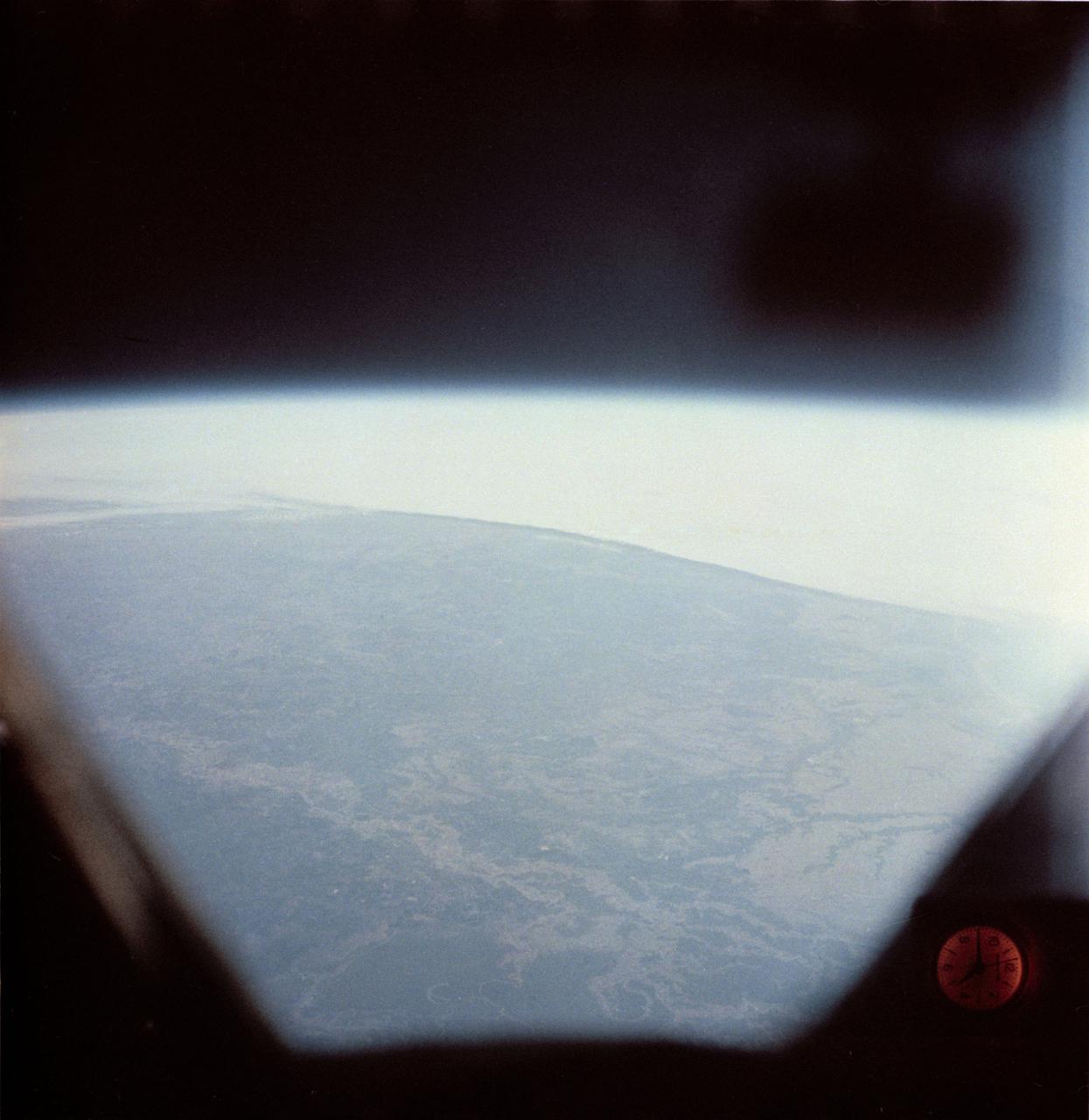
S62-01287 (21 July 1961) --- Earth observation take during the Mercury-Redstone 4 (MR-4) spaceflight. Photo credit: NASA
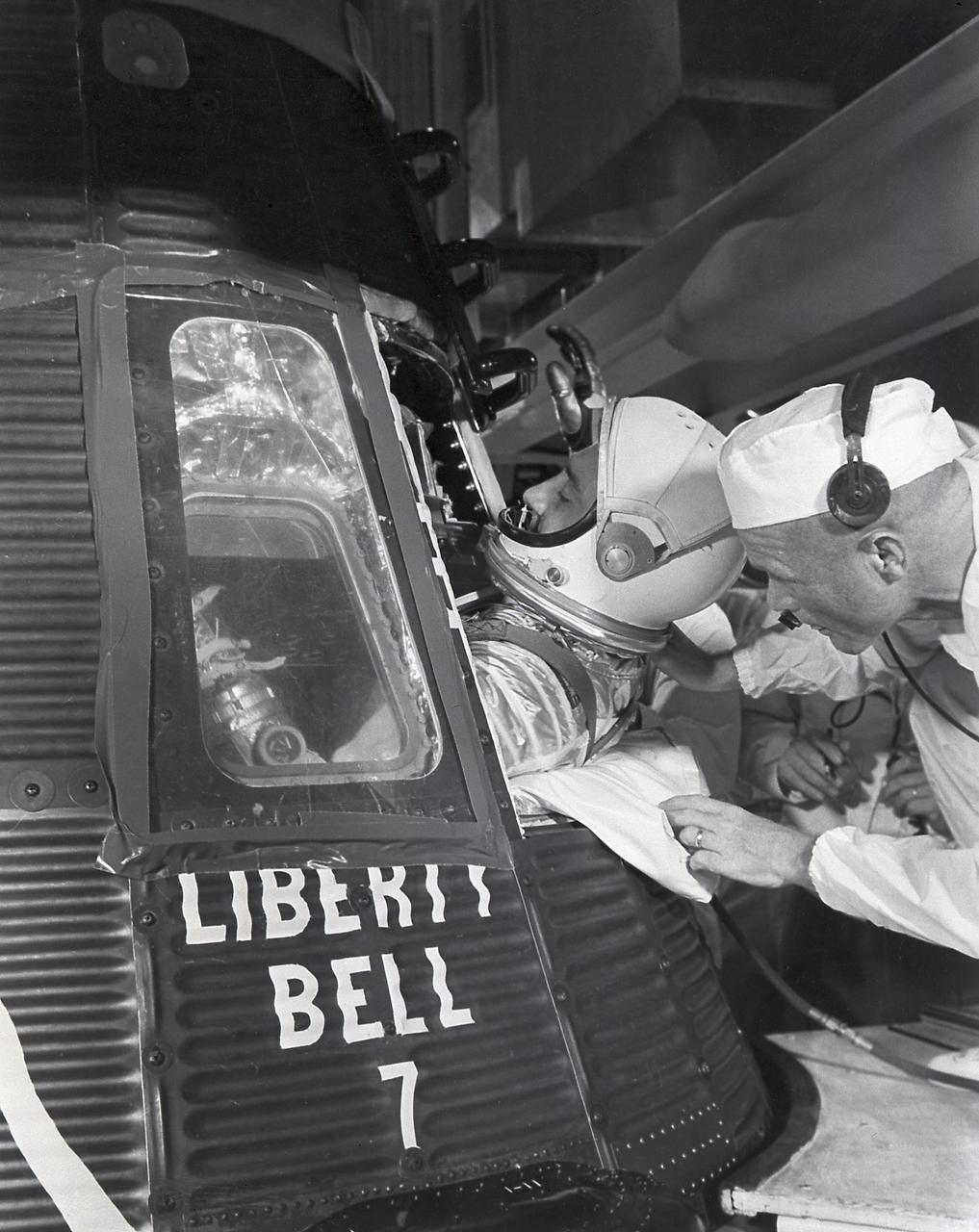
Assisted by Astronaut John Glenn, Astronaut Virgil Grissom enters the Mercury capsule, Liberty Bell 7, for the MR-4 mission on July 21, 1961. Boosted by the Mercury-Redstone vehicle, the MR-4 mission was the second manned suborbital flight.
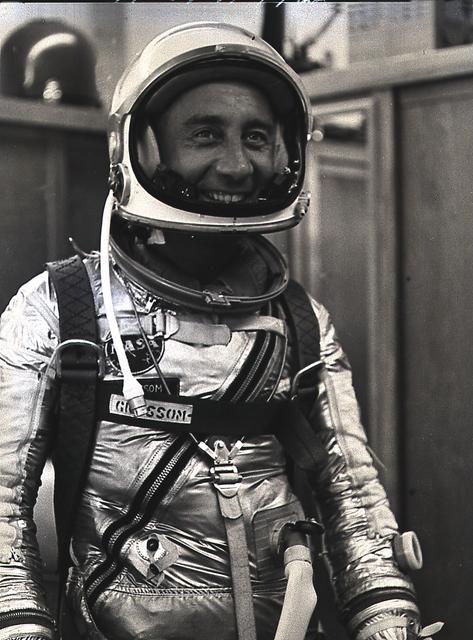
Astronaut Virgil Gus Grissom awaits America's second marned space mission, Mercury-Redstone 4 (MR-4) on July 21, 1961. During the 15-minute suborbital flight, the Liberty Bell 7 Mercury spacecraft reached an altitude of 118 miles and traveled 303 miles downrange. It was the fourth flight of the Mercury-Redstone launch vehicle (MR-4), developed by Dr. Wernher von Braun and the rocket team in Huntsville, Alabama.
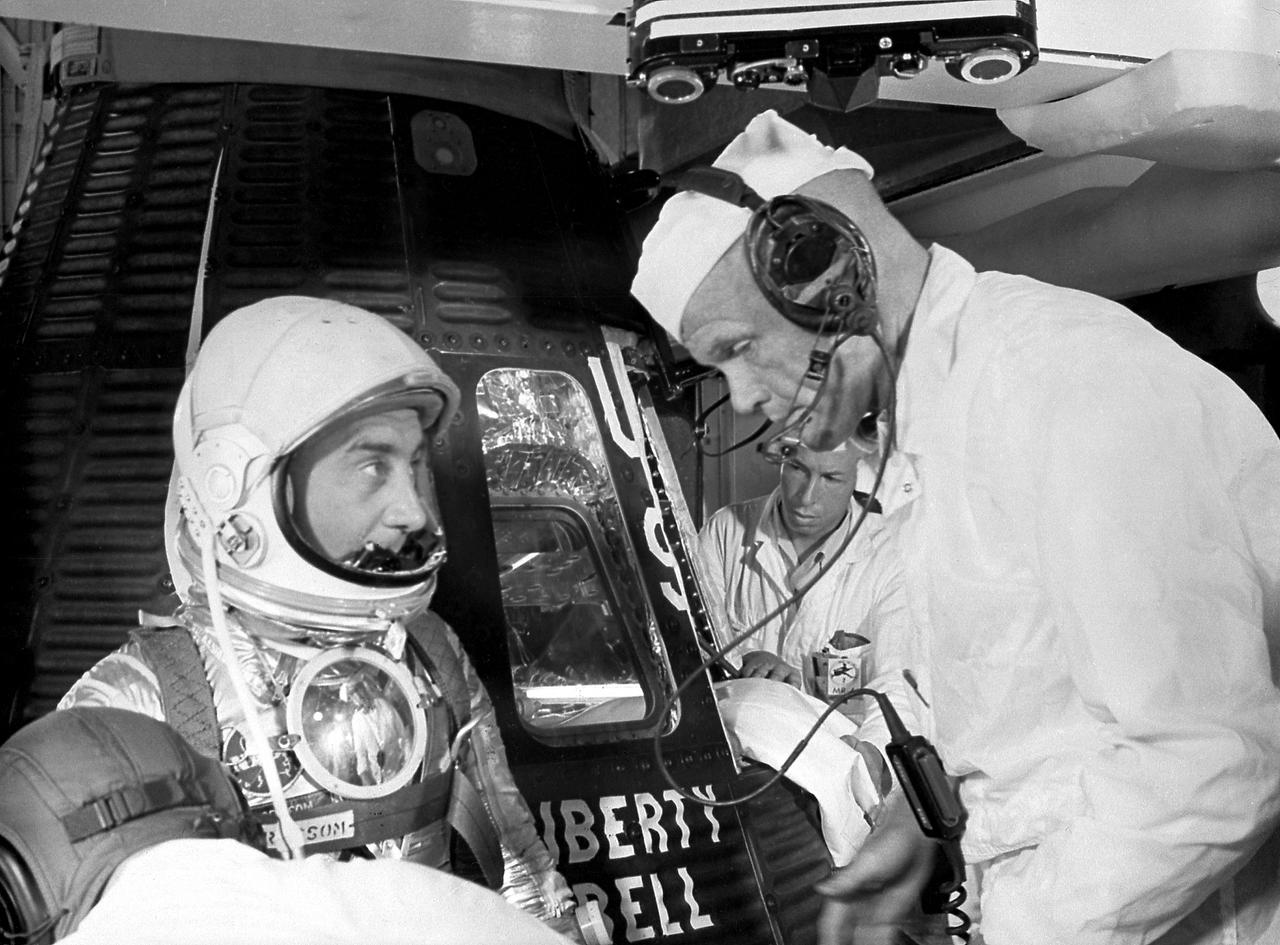
Astronaut Virgil Grissom chats with Astronaut John Glenn prior to entering the Liberty Bell 7 capsule for the MR-4 Mission. The MR-4 mission was the second manned suborbital flight using the Mercury-Redstone booster, which was developed by the Marshall Space Flight Center.
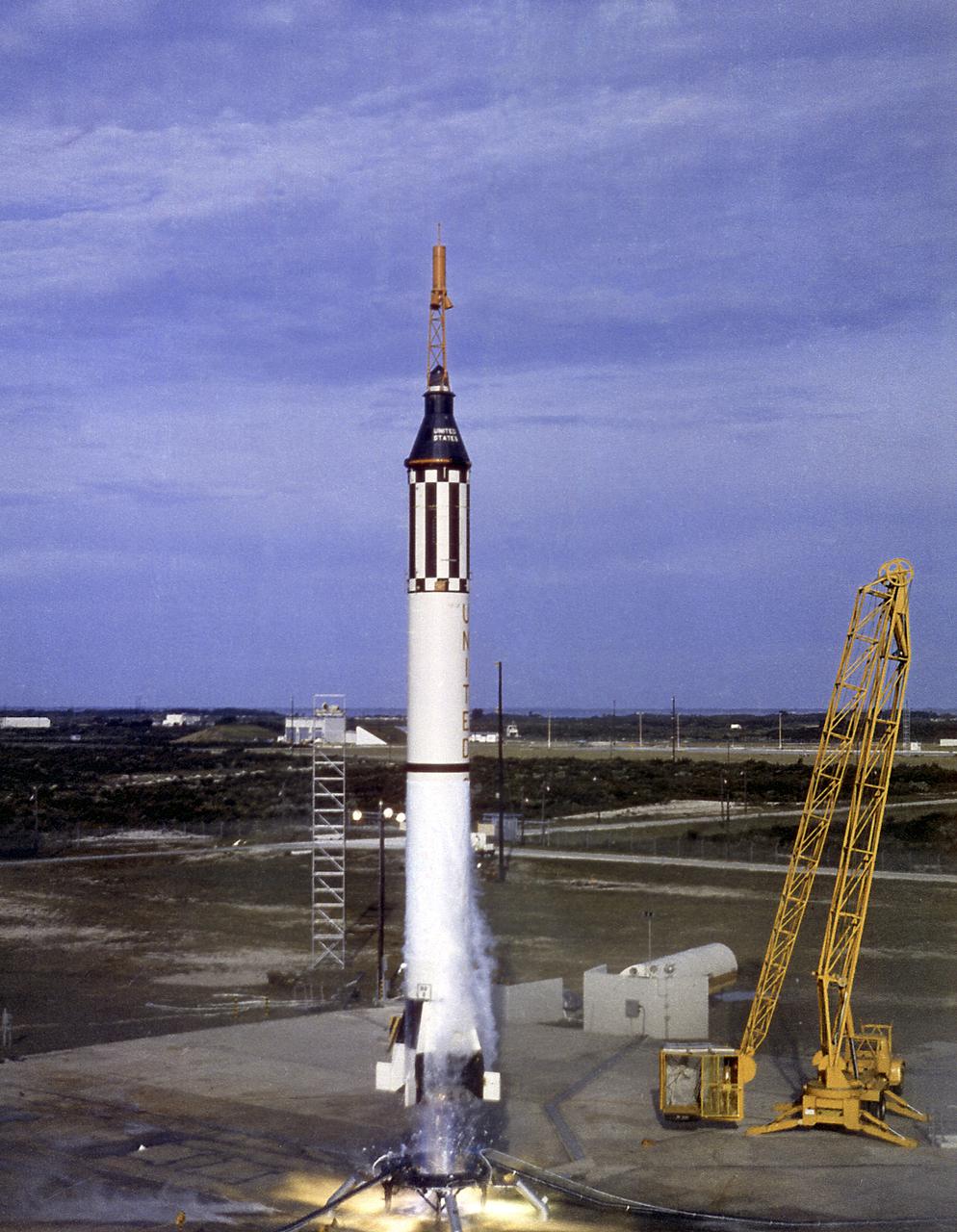
Liftoff of MR-4 (Mercury-Redstone), Liberty Bell 7, on July 21, 1961. MR-4 mission was the second marned suborbital flight and carried Astronaut Virgil Grissom aboard the Liberty Bell 7 spacecraft in space for a duration of 15-1/2 minutes.
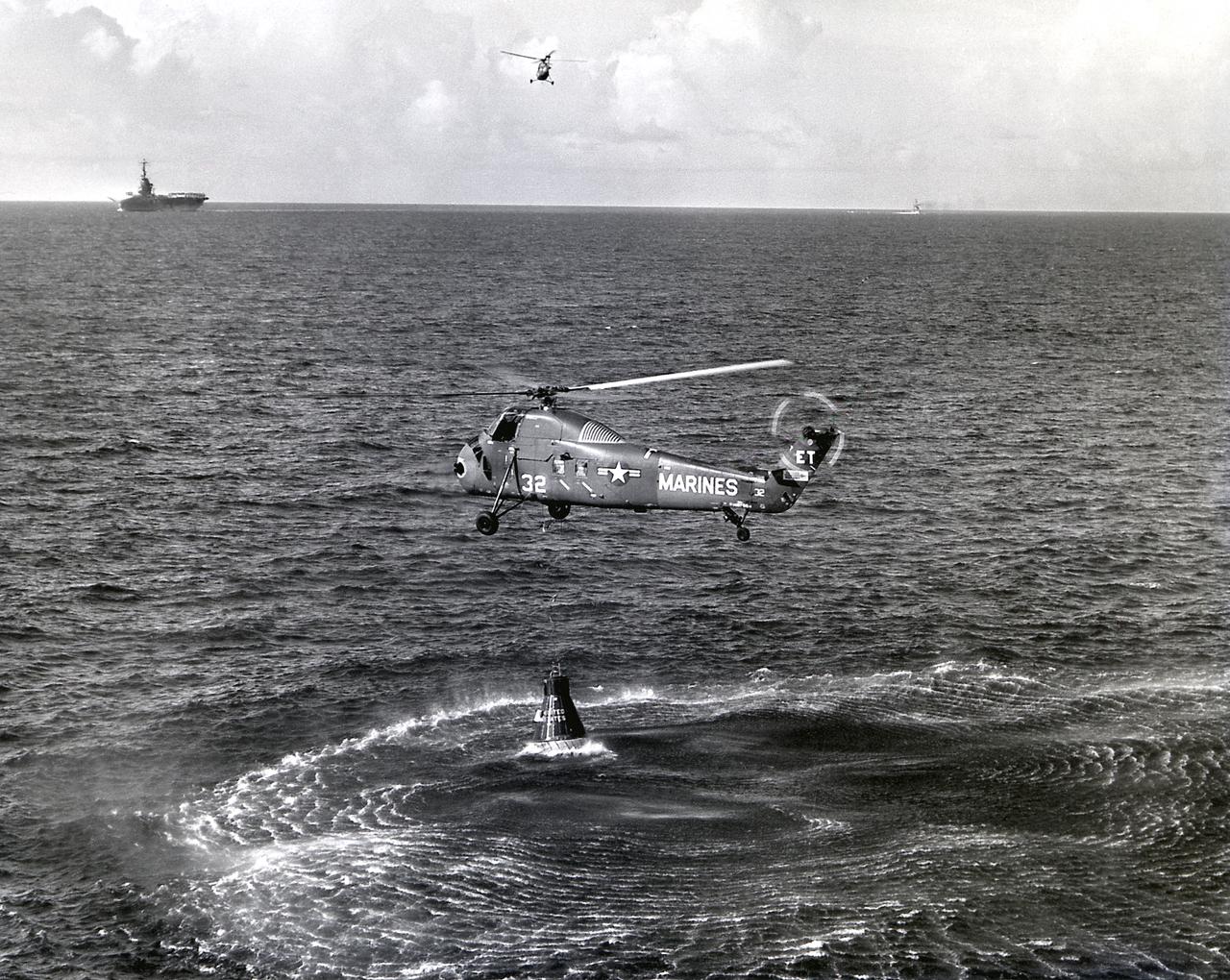
A U.S. Marine helicopter attempts to retrieve the sinking capsule, Liberty Bell 7, of the MR-4 mission. The attempt failed and the capsule sank. The MR-4 mission marned by Astronaut Virgil Grissom was the second manned orbital flight boosted by the Mercury-Redstone vehicle. The Recovery ship is in the background.
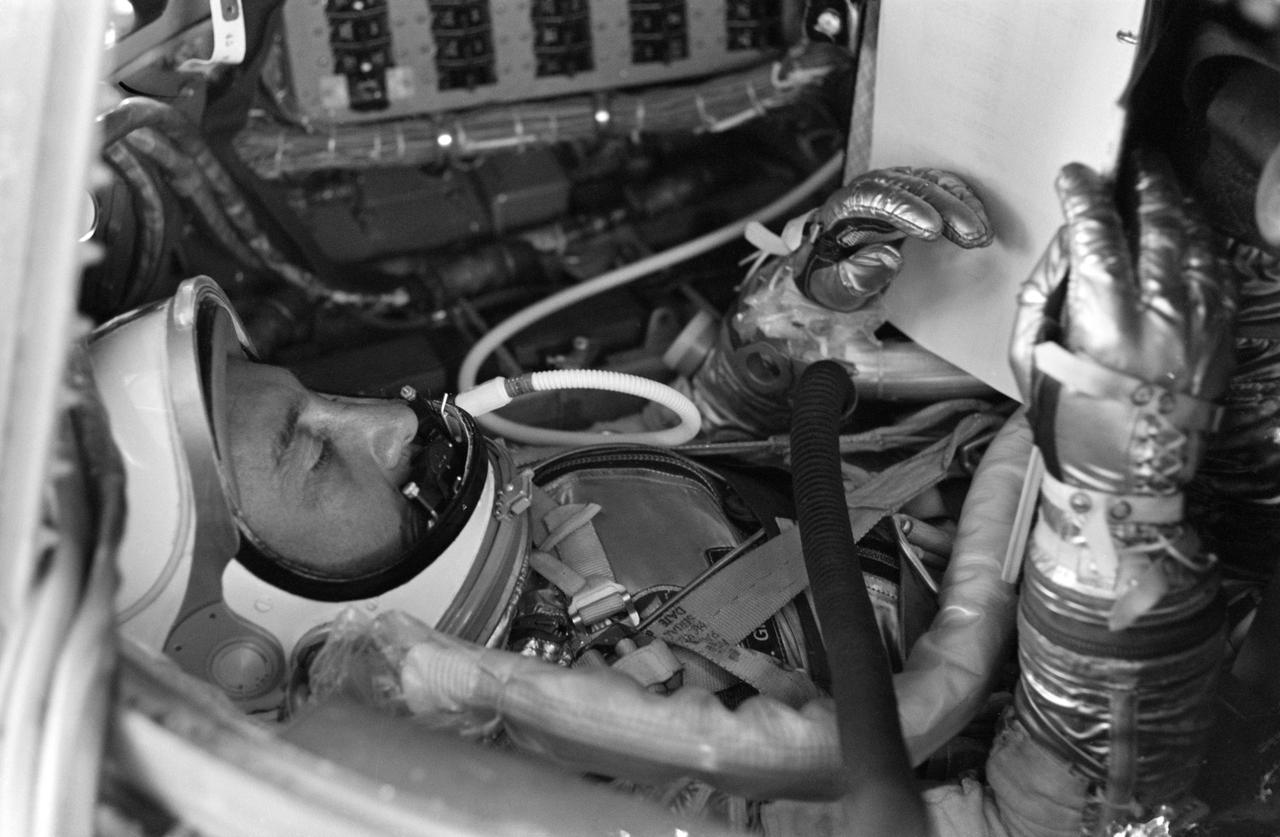
S64-10806 (21 July 1961) --- Astronaut Virgil I. (Gus) Grissom, pilot of the Mercury-Redstone 4 (MR-4) spaceflight, in his Mercury "Liberty Bell 7" spacecraft is checking his flight plan during prelaunch activities. Photo credit: NASA

Astronaut Virgil I. "Gus" Grissom, one of the original seven astronauts for Mercury Project selected by NASA on April 27, 1959. The MR-4 mission, boosted by the Mercury-Redstone vehicle, made the second marned suborbital flight. The capsule, Liberty Bell 7, sank into the sea after the splashdown.
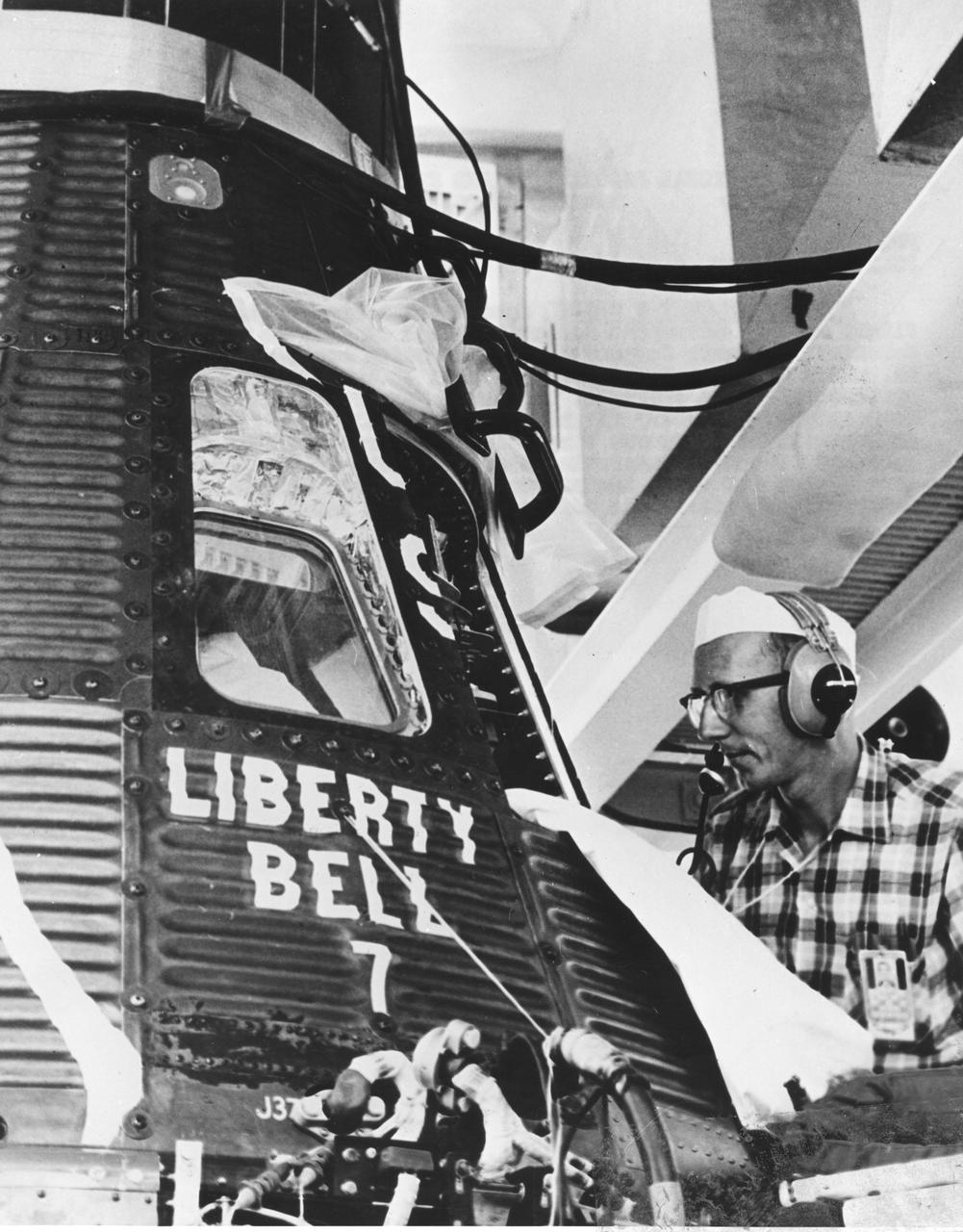
KENNEDY SPACE CENTER, FLA. -- PROJECT MERCURY'S SECOND suborbital astronaut training flight will be attempted during the week of July 16 with McDonnell Aircraft Corporation's production spacecraft number 11, which has been named 'Liberty Bell 7.' The number seven stresses the team effort of the seven Mercury pilots necessary for conducting Mercury flights. Mission pilot for the MR-4 launch will be astronaut Virgil I. 'Gus' Grissom. His spacecraft is seen here undergoing systems checks in the National Aeronautics and Space Administration's Mercury Hangar at Cape Canaveral, Florida, weeks before the planned launch
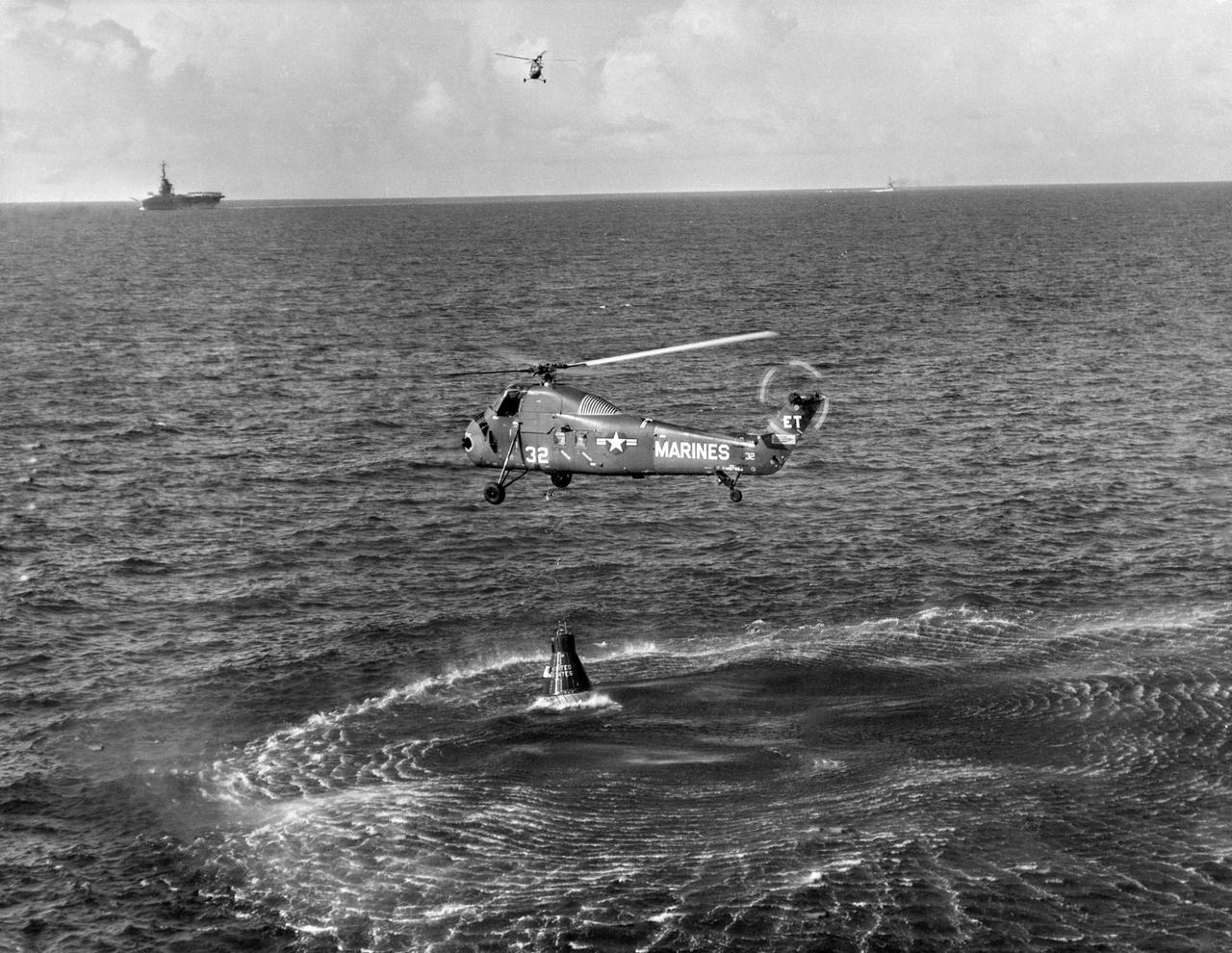
S61-02821 (21 July 1961) --- Attempted recovery of Mercury spacecraft at end of the Mercury-Redstone 4 (MR-4) mission. View shows the Marine helicopter dropping a recovery line to the capsule. In the upper left corner of the view, the recovery ship and another helicopter can be seen. Photo credit: NASA
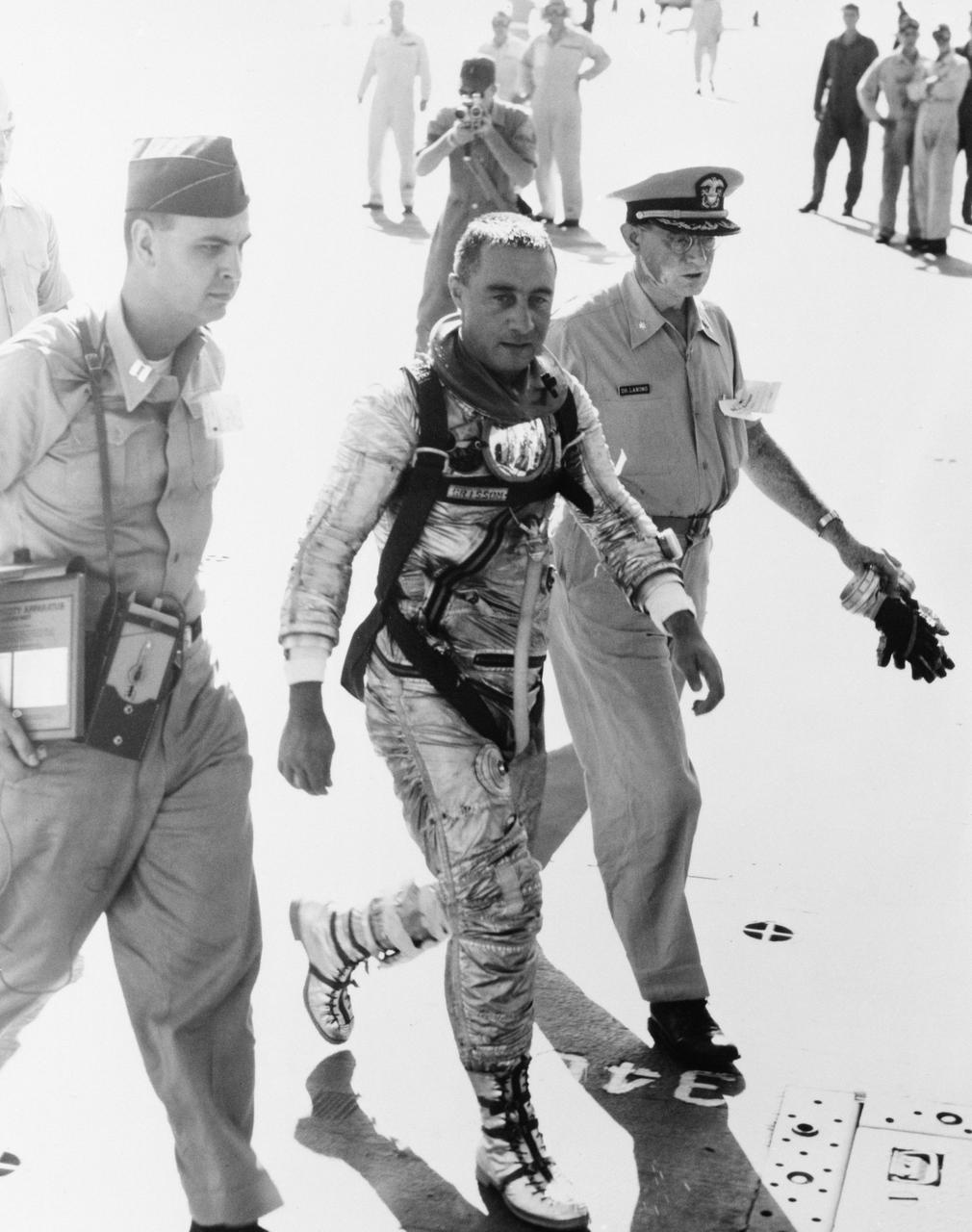
S61-02894 (21 July 1961) --- Astronaut Virgil I. (Gus) Grissom, pilot of the Mercury-Redstone 4 (MR-4) “Liberty Bell 7” spaceflight, arrives aboard the recovery ship, USS Randolph, following his 15-minute, 37-second suborbital space mission. He is flanked by military medical officers. Photo credit: NASA
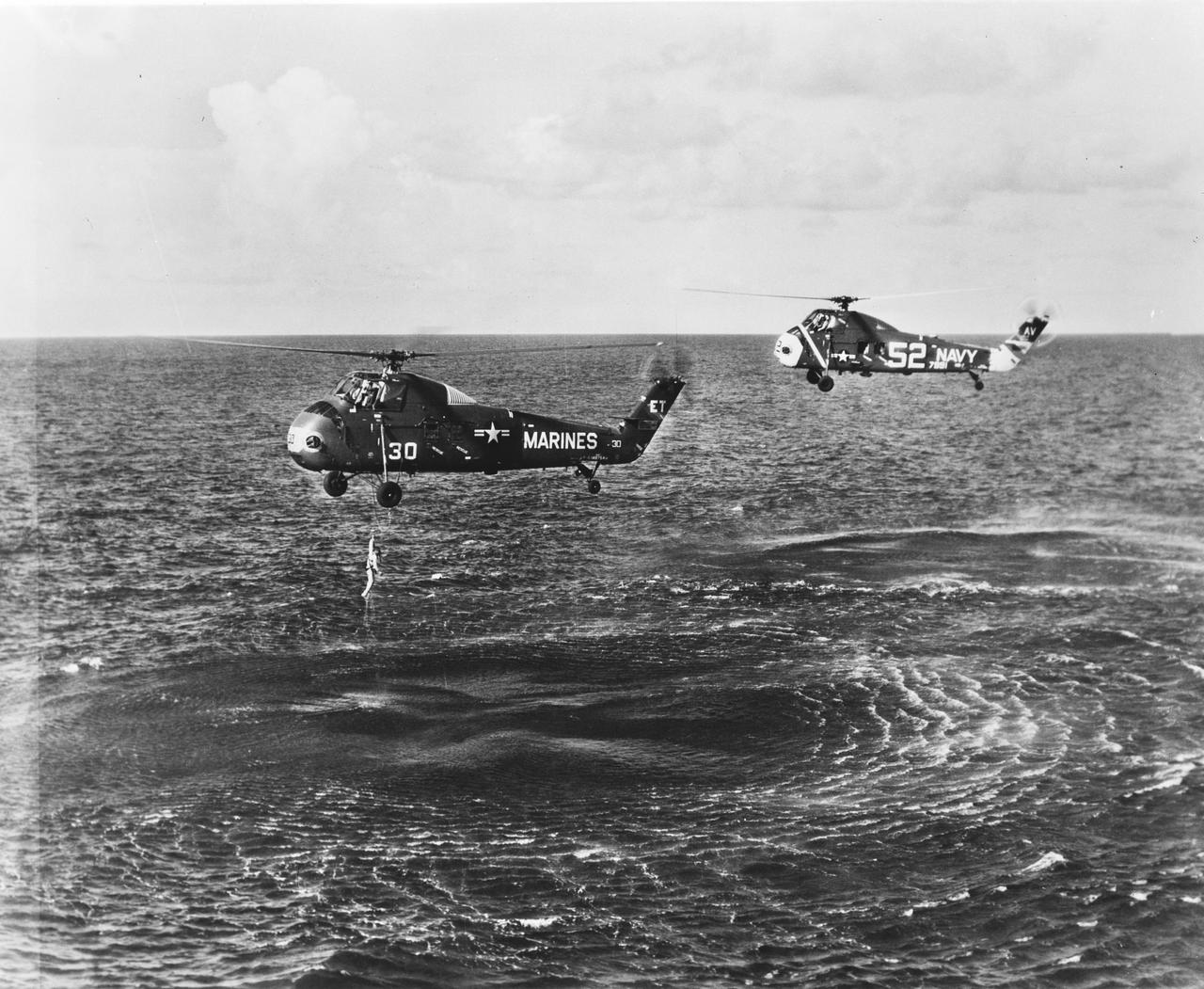
S61-02819 (21 July 1961) --- A U.S. Marine Corps helicopter retrieves astronaut Virgil I. Grissom from the Atlantic Ocean following the Mercury-Redstone 4 (MR-4) spaceflight. Grissom's "Liberty Bell" Mercury spacecraft sank to the bottom of the ocean and was not recovered. Photo credit: NASA
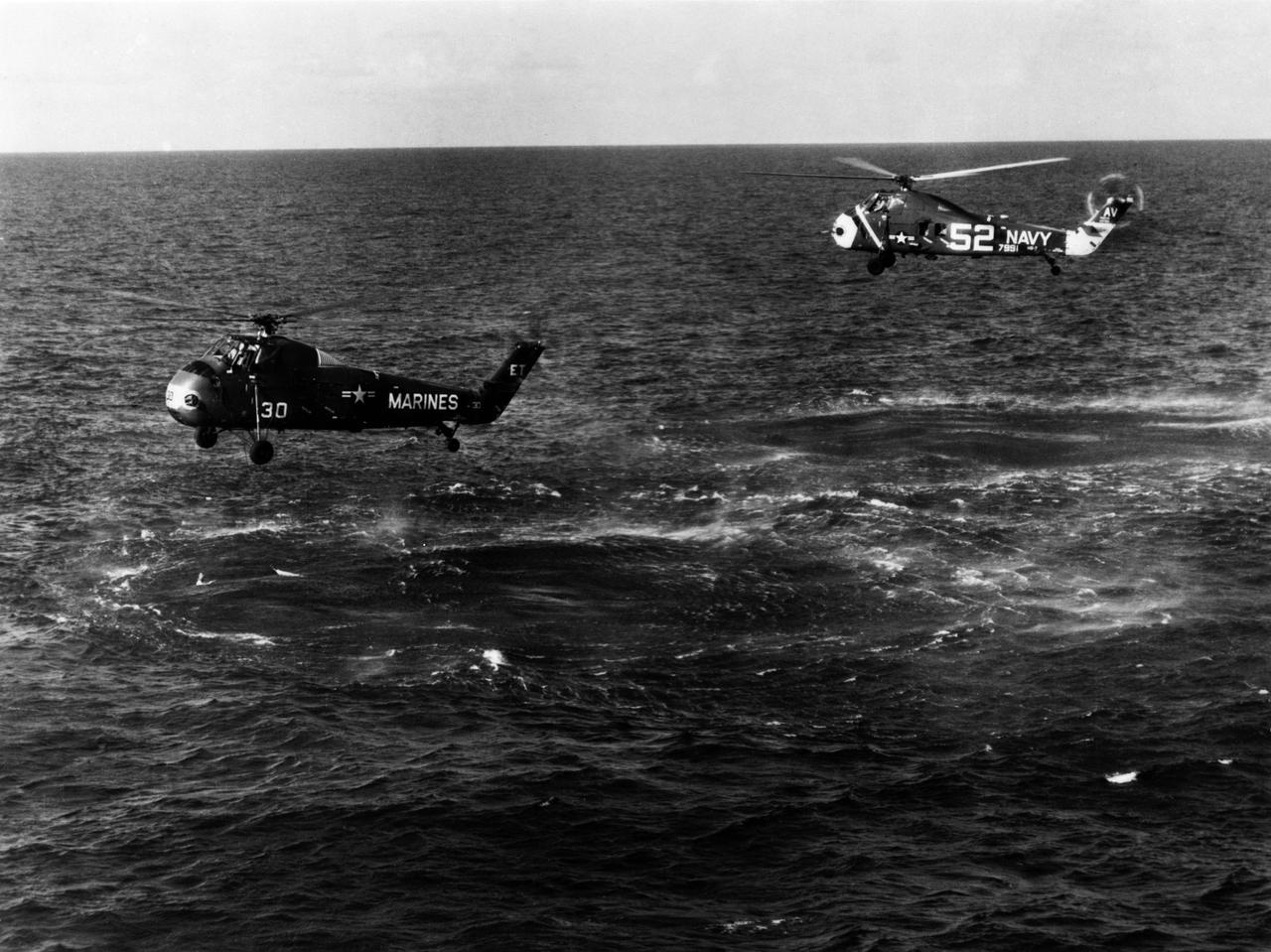
S61-02820 (21 July 1961) --- Attempted recovery of Mercury spacecraft at end of the Mercury-Redstone 4 (MR-4) mission. View shows the Marine helicopter pulled almost to the waters surface by the weight of the capsule, which filled with water. It eventually had to abandon its recovery attempts. Behind the Marine helicopter, a Navy helicopter prepares to assist. Photo credit: NASA
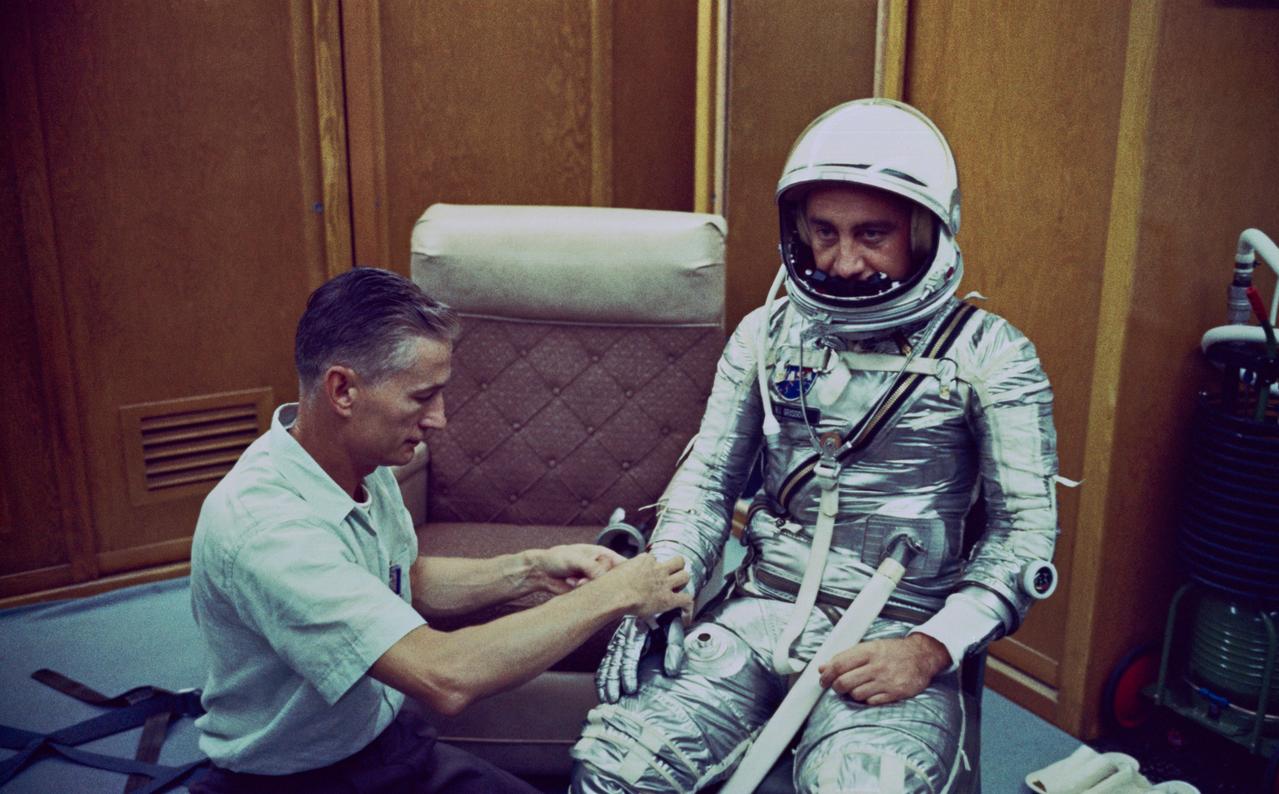
S88-55875 (19 July 1961) --- Donning a spacesuit for the Mercury-Redstone 4 (MR-4) mission, astronaut Virgil I. (Gus) Grissom chats with spaceflight equipment specialist Joe W. Schmitt in the personal equipment room of Hangar S at Cape Canaveral, Florida. Shortly after this photograph was taken, the launch was postponed two days due to unfavorable weather conditions in the area. Photo credit: NASA
/61-mr4-60(s)~medium.jpg)
KENNEDY SPACE CENTER, FLA. -- AWAITING ORDERS to proceed to the launching site for Project Mercury's second attempt to launch a man into space, Astronaut Virgil I. 'Gus' Grissom relaxes in a contour chair in the Personal Equipment Room Hangar 'S,' Cape Canaveral, Fla. A parabolic plexiglas mirror on his chest reflects the faces of two fellow Mercury pilots: Walter M. Schirra (left) and M. Scott Carpenter. The mirror, which was not included in the May 5 Shepard flight, will be used to reflect the instrument panel, bringing it into view of the pilot observer camera. MR-4, known as Liberty Bell 7, has been rescheduled for Friday, July 21. (NASA Photo

On June 4, 1974, 5 years after the successful Apollo 11 lunar landing mission, commander Neil Armstrong (right) presented a plaque to U.S. President Richard Milhous Nixon (left) on behalf of all people who had taken part in the space program. In making the presentation, Armstrong said “Mr. President, you have proclaimed this week to be United States Space week in conjunction with the fifth anniversary of our first successful landing on the Moon. It is my privilege to represent my colleagues, the crewmen of projects Mercury, Gemini, Apollo, and Skylab, and the men and women of NASA, and the hundreds of thousands of Americans from across the land who contributed so mightily to the success of our efforts in space in presenting this plaque which bears the names of each individual who has had the privilege of representing this country” in a space flight. The presentation was made at the California white house in San Clemente.