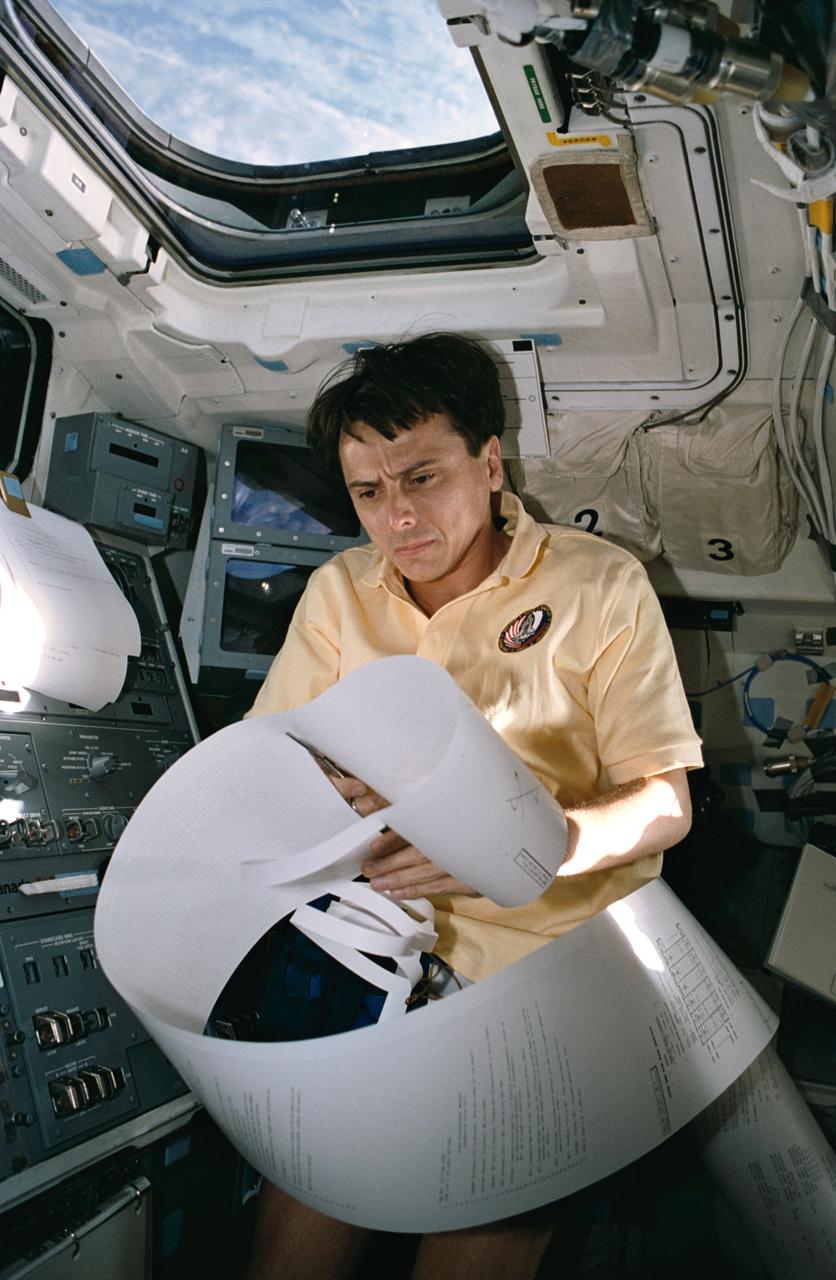
STS060-25-016 (6 Feb. 1994) --- On space shuttle Discovery?s aft flight deck, astronaut Franklin R. Chang-Diaz, STS-60 payload commander, begins to organize what was believed to be among the longest mail messages in shuttle history. Though early shuttle flights could brag of longer teleprinted messages, the Thermal Imaging Printing System?s day four correspondence, most of which is out of frame here, is record length for recent flights. Chang-Diaz joined four other NASA astronauts and a Russian cosmonaut for eight days aboard Discovery. Photo credit: NASA or National Aeronautics and Space Administration
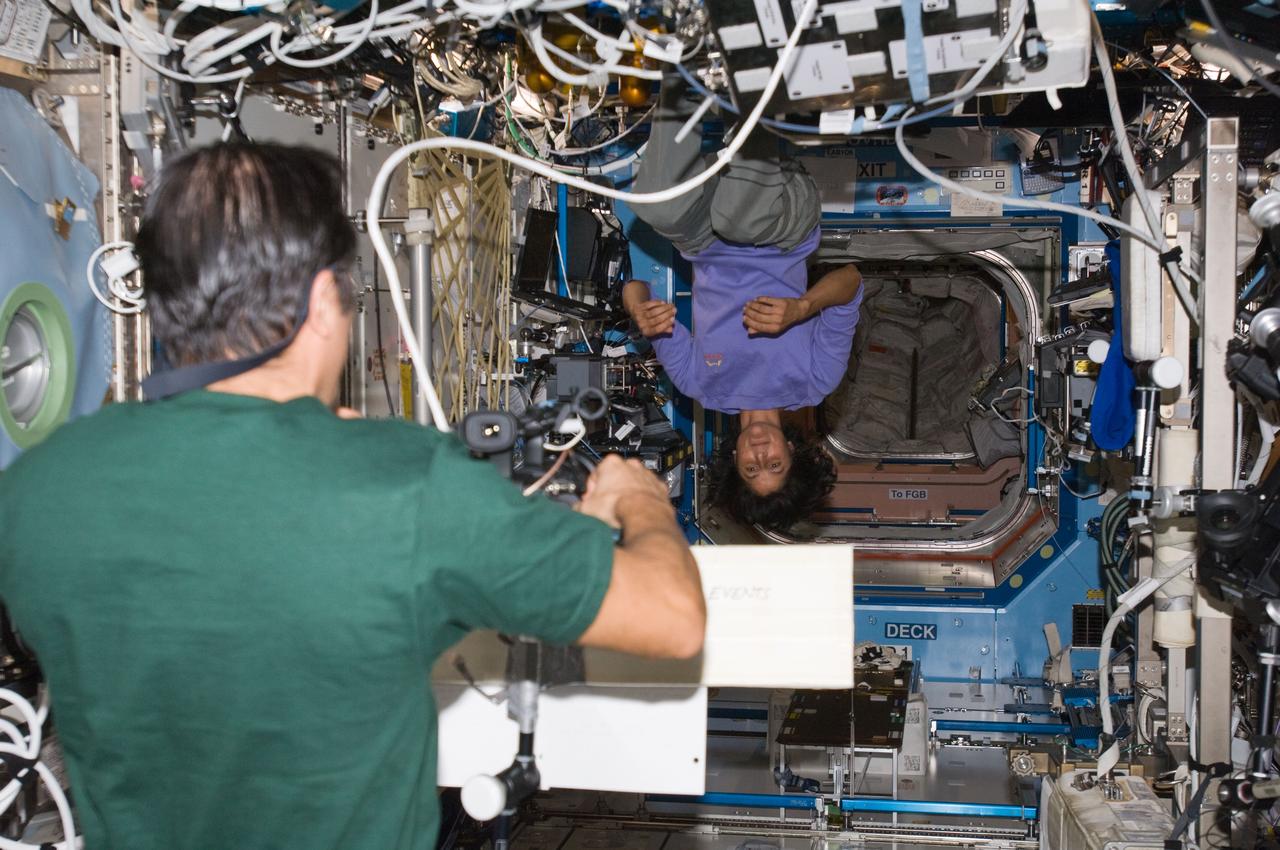
ISS032-E-009061 (25 July 2012) --- NASA astronauts Joe Acaba and Sunita Williams, both Expedition 32 flight engineers, perform video message recording in the Destiny laboratory of the International Space Station.
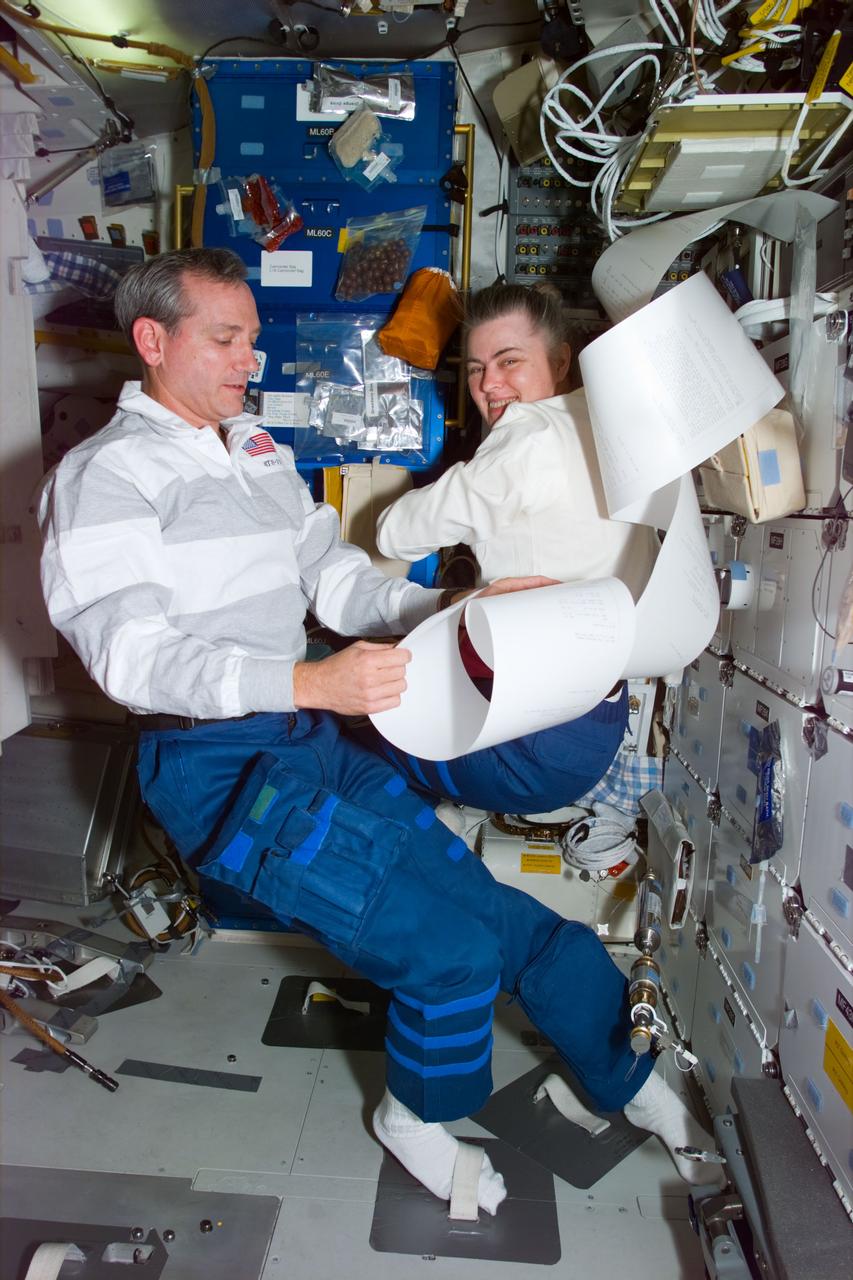
STS79-E-5246 (22 September 1996) --- Astronauts Thomas D. Akers and Shannon W. Lucid check the latest send-up of "mail" on the Space Shuttle Atlantis' mid deck, during Flight Day 7. The Thermal Imaging Printing System (TIPS) messages likely include information pertinent to the final day of joint activities with the Mir-22 crew members whom Lucid will leave behind for her return to Earth later this week.

51D-05-22 (12-19 April 1985) --- Astronauts Karol J. Bobko (foreground), mission commander, and Donald E. Williams, pilot, are surrounded by teleprinted messages transmitted from ground controllers. The two are on Discovery's middeck.
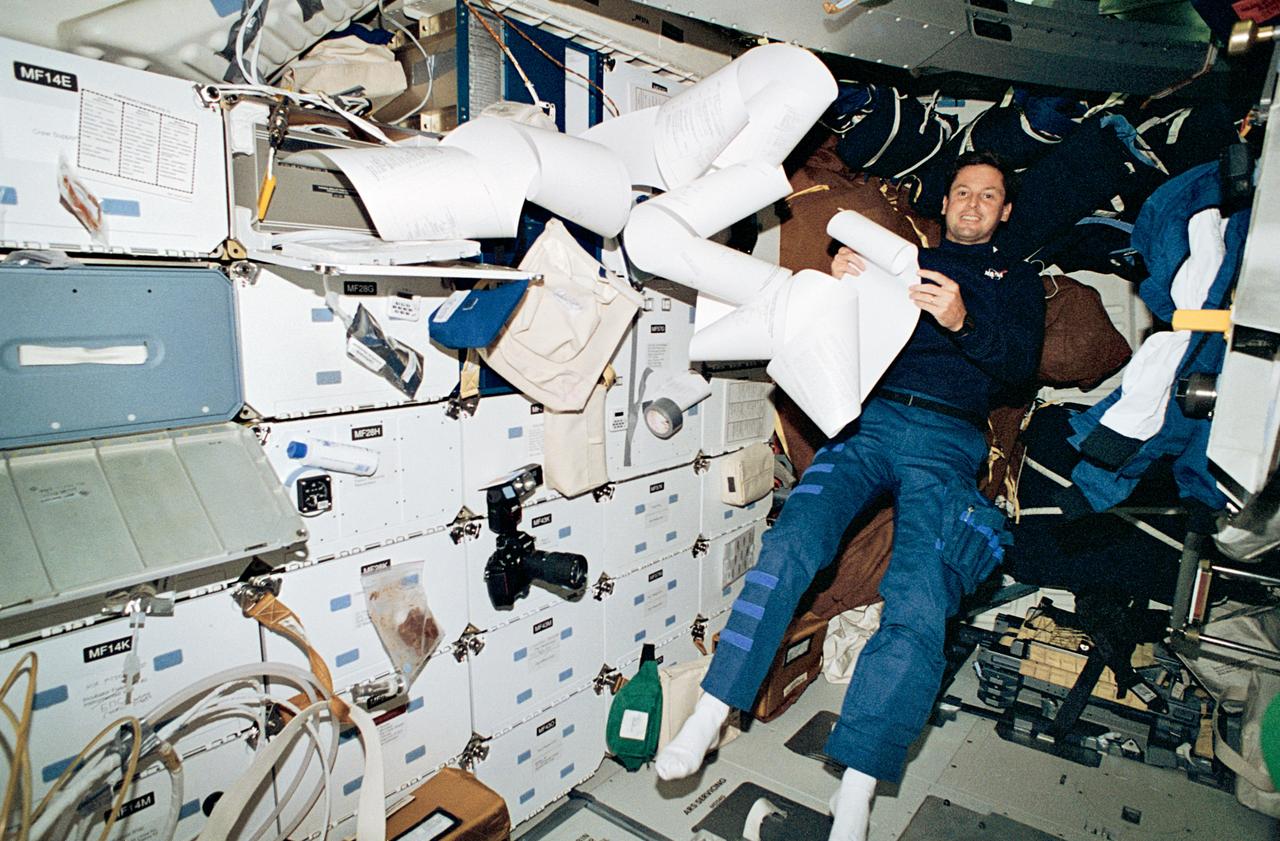
STS071-122-018 (27 June-7 July 1995) --- Astronaut Gregory J. Harbaugh, STS-71 mission specialist, is pictured on the space shuttle Atlantis' middeck, with a roll of messages from the Thermal Imaging Printing System (TIPS). The volume of information had been up-linked by ground controllers in Houston, Texas.

STS064-23-025 (9-20 Sept. 1994) --- With scissors in hand, astronaut Jerry M. Linenger, STS-64 mission specialist, prepares to cut off a lengthy sheet of correspondence from ground controllers. Called the Thermal Imaging Printing System (TIPS), the message center occupies a stowage locker on the space shuttle Discovery's middeck. Astronaut L. Blaine Hammond, pilot, retrieves a clothing item from a nearby locker. Photo credit: NASA or National Aeronautics and Space Administration
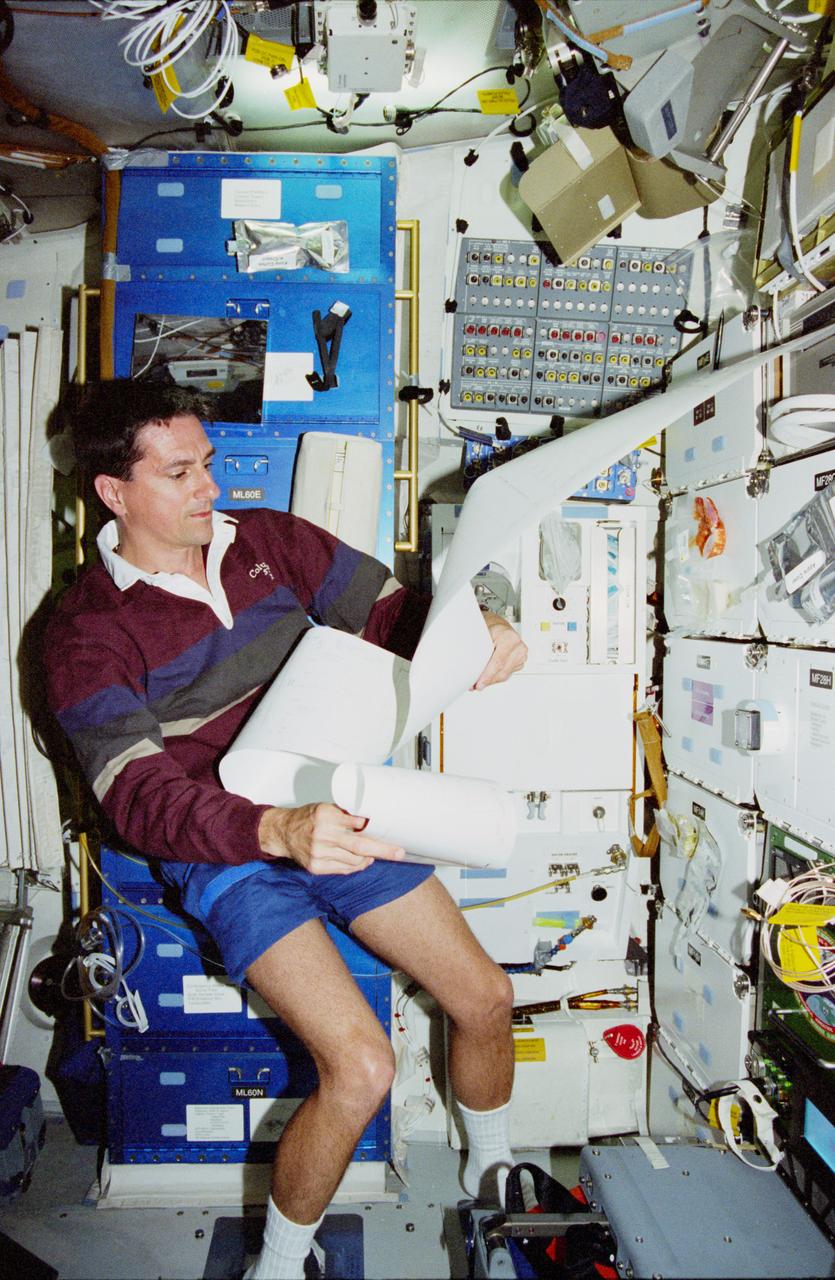
STS083-309-003 (4-8 April 1997) --- Astronaut Donald A. Thomas, mission specialist, checks a fresh delivery of messages from ground controllers onboard the Earth-orbiting Space Shuttle Columbia. The Thermal Impulse Imaging System (TIPS) is located on the mid deck of Columbia. Thomas, along with four other NASA astronauts and two payload specialists supporting the Microgravity Sciences Laboratory (MSL-1) mission were less than a fourth of the way through a scheduled 16-day flight when a power problem cut short their planned stay.
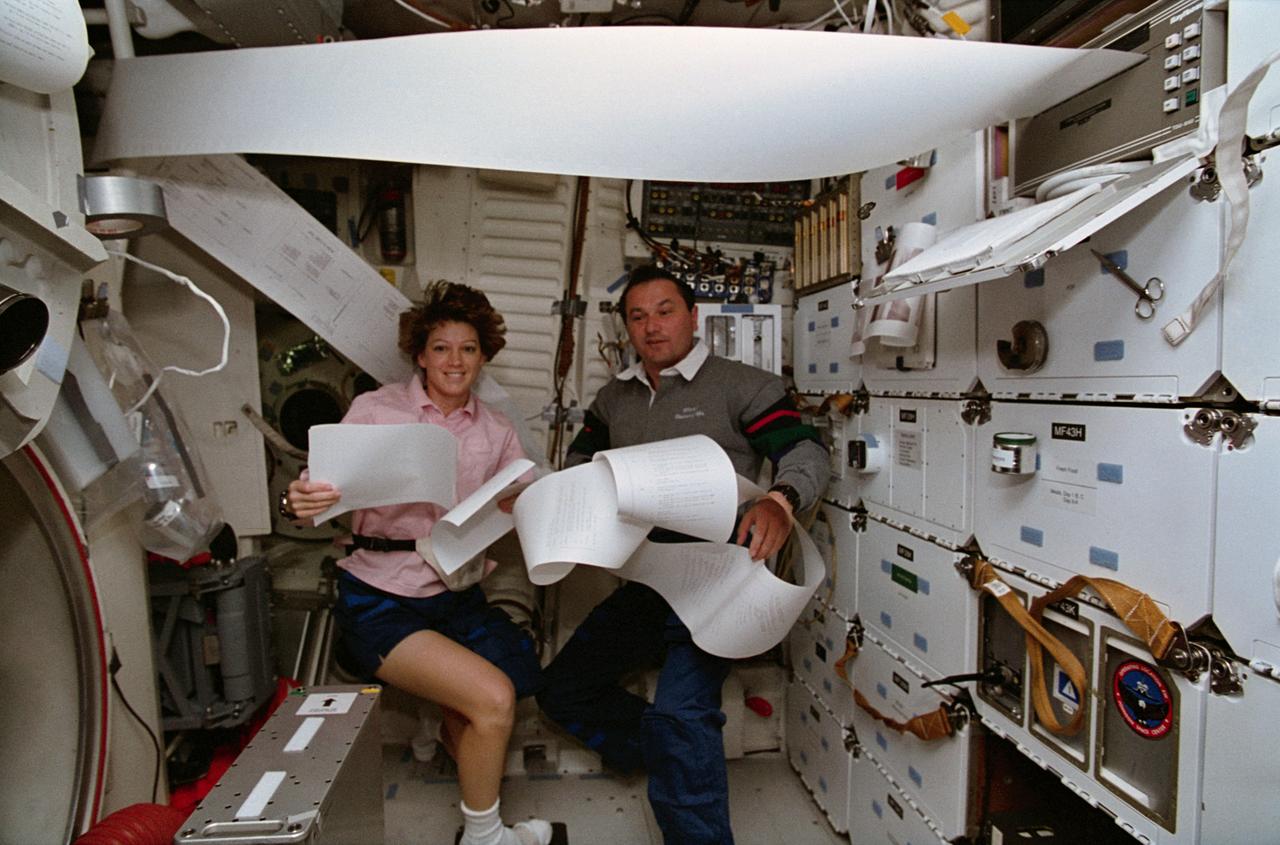
STS063-86-028 (3-11 Feb 1995) --- On the Space Shuttle Discovery's middeck, astronaut Eileen M. Collins and cosmonaut Vladimir G. Titov attempt to organize a lengthy mail message from flight controllers on Earth. Collins was pilot for the eight day mission and Titov served as a mission specialist representing the Russian Space Agency (RSA), thus becoming one of a small number of people to have flown on spacecraft launched by the United States and Russia. Approximately 30 feet of messages from the Thermal Imaging Printing System (TIPS) are spread around the middeck.
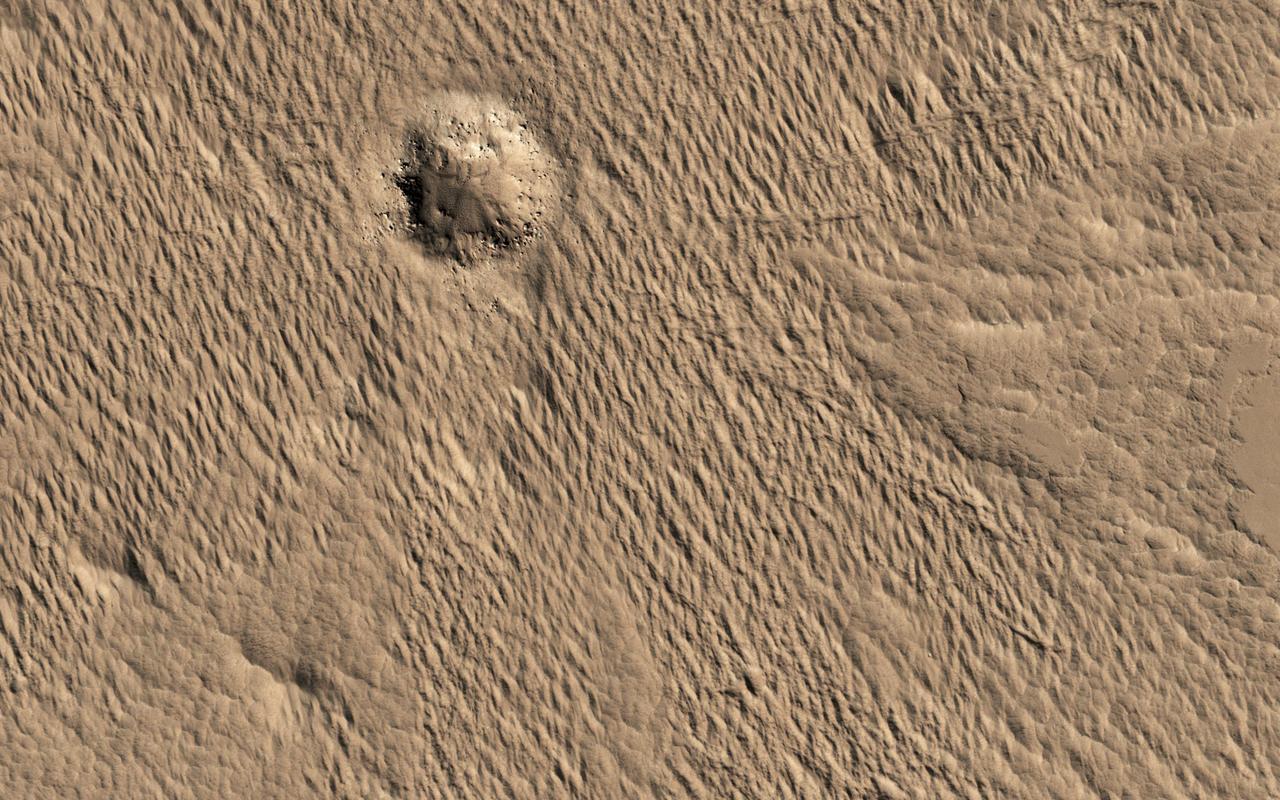
A close-up image from NASA's Mars Reconnaissance Orbiter of a recent 150-meter diameter impact crater near Amazonis Mensa and Medusae Fossae is another great example of geologic complexity of Mars. The spider web-like texture of this crater is intriguing. But what does it mean? On Earth, we have many geologic mechanisms that embrace the surface of the planet in an almost constant state of metamorphosis. Although Mars is not nearly as geologically active as Earth, it is still a host to many processes that shape its surface even today (e.g., aeolian modification, periglacial processes, recent impacts, etc.). The appearance of the ejecta of this crater is likely a combination of both the characteristics of the target material it was deposited on, and processes that modified and degraded it over time. When we look to other images in this region we find a similar texture. This texture is referred to as “yardangs†by scientists who study wind erosion. Yardangs are streamlined ridge-and-trough patterns formed by the erosion of wind dominating from a specific direction; in this particular case, from the southeast to the northwest. The specific direction of the winds is supported by regional context images that show many craters in the region have wind streak "tails" that points to the northwest. Craters of this size have been observed to form recently on Mars, so the fact that this crater is modified speaks volumes, and gives us a chance to decode some geological messages from Mars. https://photojournal.jpl.nasa.gov/catalog/PIA21759
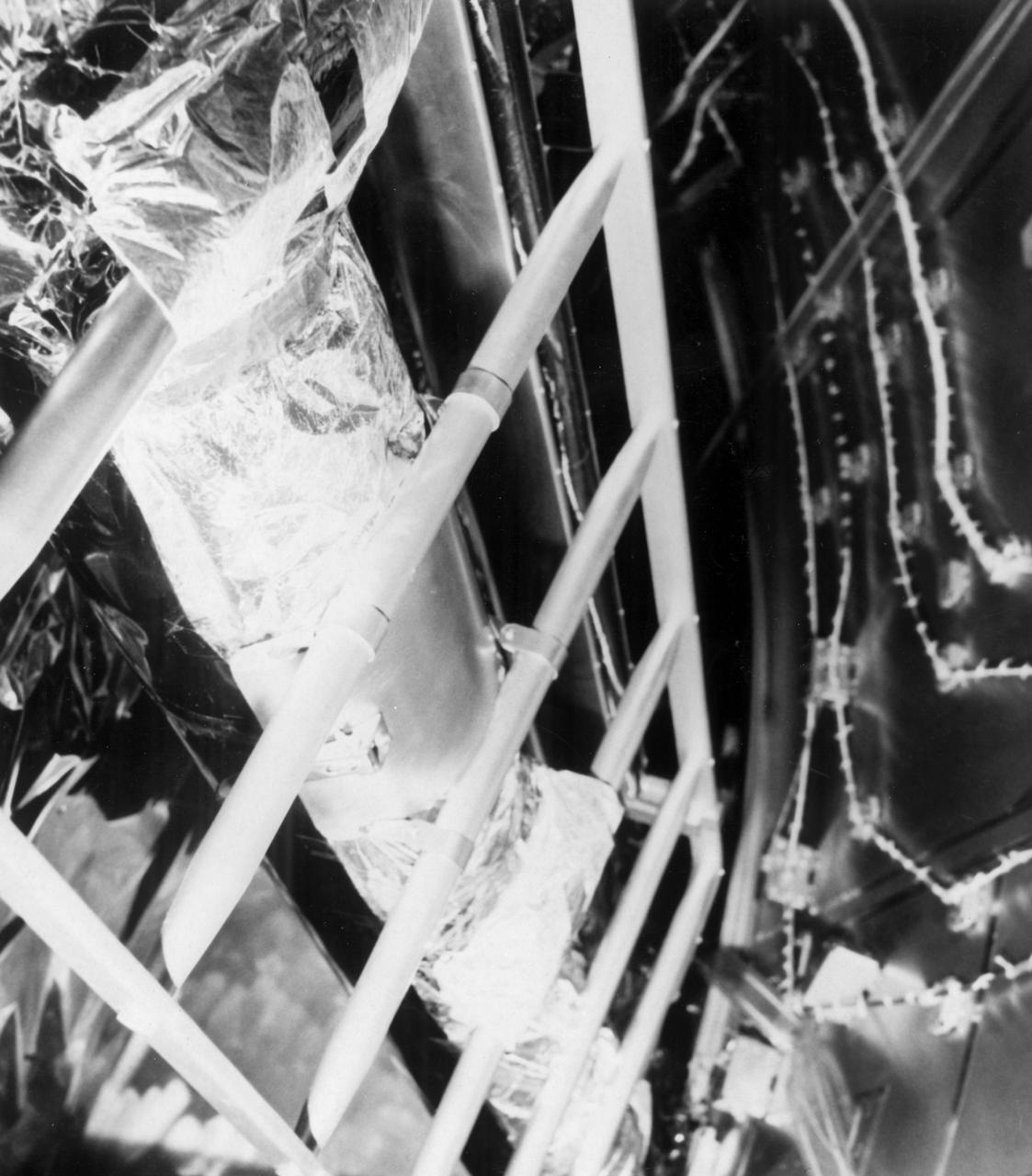
Millions of people on Earth watched via television as a message for all mankind was delivered to the Mare Tranquilitatis (Sea of Tranquility) region of the Moon during the historic Apollo 11 mission, where it still remains today. A commemorative plaque was attached to the leg of the Lunar Module (LM), Eagle, engraved with the following words: “Here men from the planet Earth first set foot upon the Moon July, 1969 A.D. We came in peace for all of mankind.” It bears the signatures of the Apollo 11 astronauts Neil A. Armstrong, commander; Michael Collins, Command Module (CM) pilot; and Edwin E. Aldrin, Jr., Lunar Module (LM) pilot along with the signature of the U.S. President Richard M. Nixon. The plaque, as shown here, covered with protective steel for the launch and journey to the moon, was uncovered by crew members after landing. The Apollo 11 mission launched from the Kennedy Space Center (KSC) in Florida via the Marshall Space Flight Center (MSFC) developed Saturn V launch vehicle on July 16, 1969 and safely returned to Earth on July 24, 1969. The CM, “Columbia”, piloted by Collins, remained in a parking orbit around the Moon while the LM, “Eagle’’, carrying astronauts Armstrong and Aldrin, landed on the Moon. On July 20, 1969, Armstrong was the first human to ever stand on the lunar surface, followed by Aldrin. During 2½ hours of surface exploration, the crew collected 47 pounds of lunar surface material for analysis back on Earth. With the success of Apollo 11, the national objective to land men on the Moon and return them safely to Earth had been accomplished.
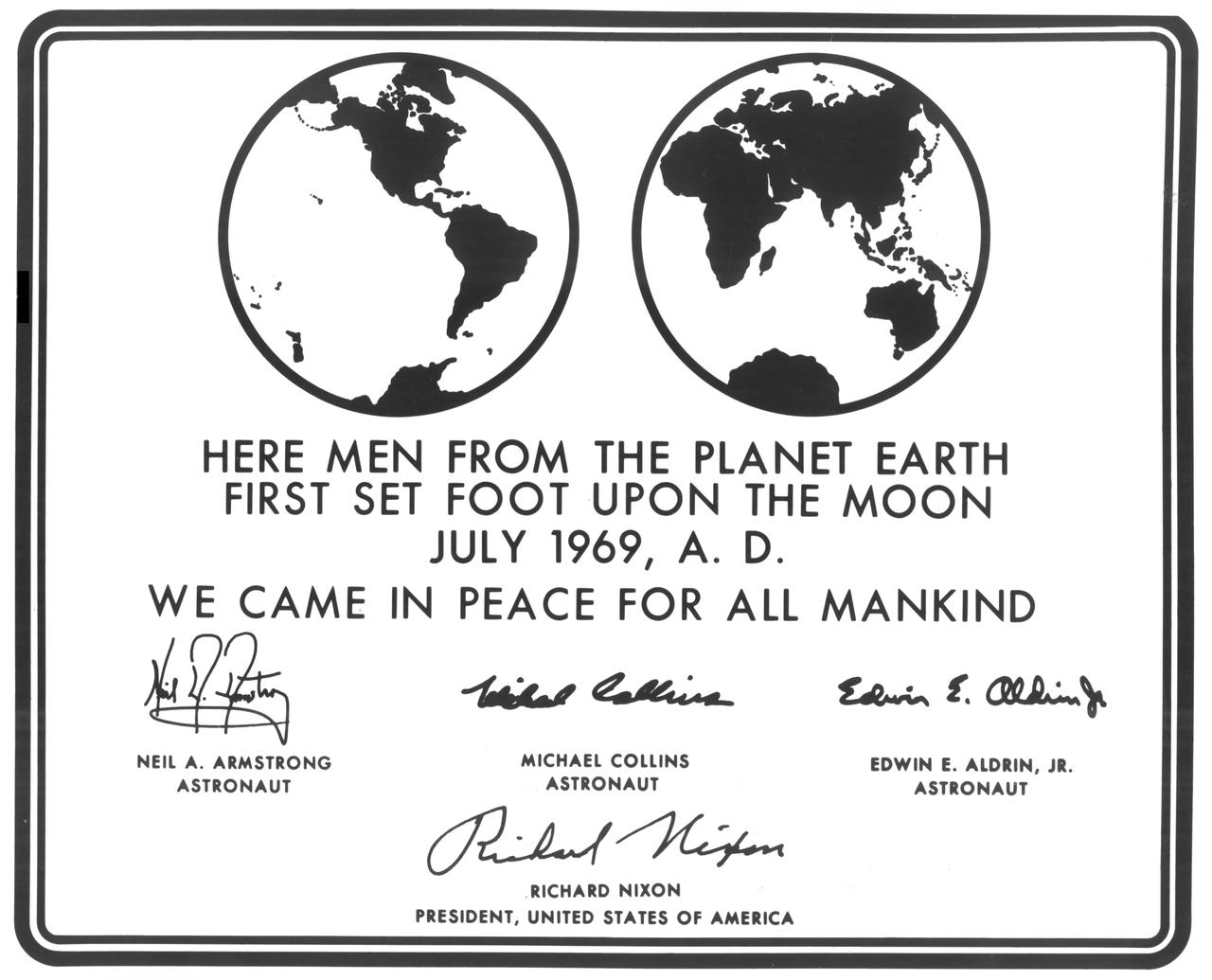
Millions of people on Earth watched via television as a message for all mankind was delivered to the Mare Tranquilitatis (Sea of Tranquility) region of the Moon during the historic Apollo 11 mission, where it still remains today. This photograph is a reproduction of the commemorative plaque that was attached to the leg of the Lunar Module (LM), Eagle, engraved with the following words: “Here men from the planet Earth first set foot upon the Moon July, 1969 A.D. We came in peace for all of mankind.” It bears the signatures of the Apollo 11 astronauts Neil A. Armstrong, commander; Michael Collins, Command Module (CM) pilot; and Edwin E. Aldrin, Jr., Lunar Module (LM) pilot along with the signature of the U.S. President Richard M. Nixon. The Apollo 11 mission launched from the Kennedy Space Center (KSC) in Florida via the Marshall Space Flight Center (MSFC) developed Saturn V launch vehicle on July 16, 1969 and safely returned to Earth on July 24, 1969. The CM, “Columbia”, piloted by Collins, remained in a parking orbit around the Moon while the LM, “Eagle’’, carrying astronauts Armstrong and Aldrin, landed on the Moon. On July 20, 1969, Armstrong was the first human to ever stand on the lunar surface, followed by Aldrin. During 2½ hours of surface exploration, the crew collected 47 pounds of lunar surface material for analysis back on Earth. With the success of Apollo 11, the national objective to land men on the Moon and return them safely to Earth had been accomplished.
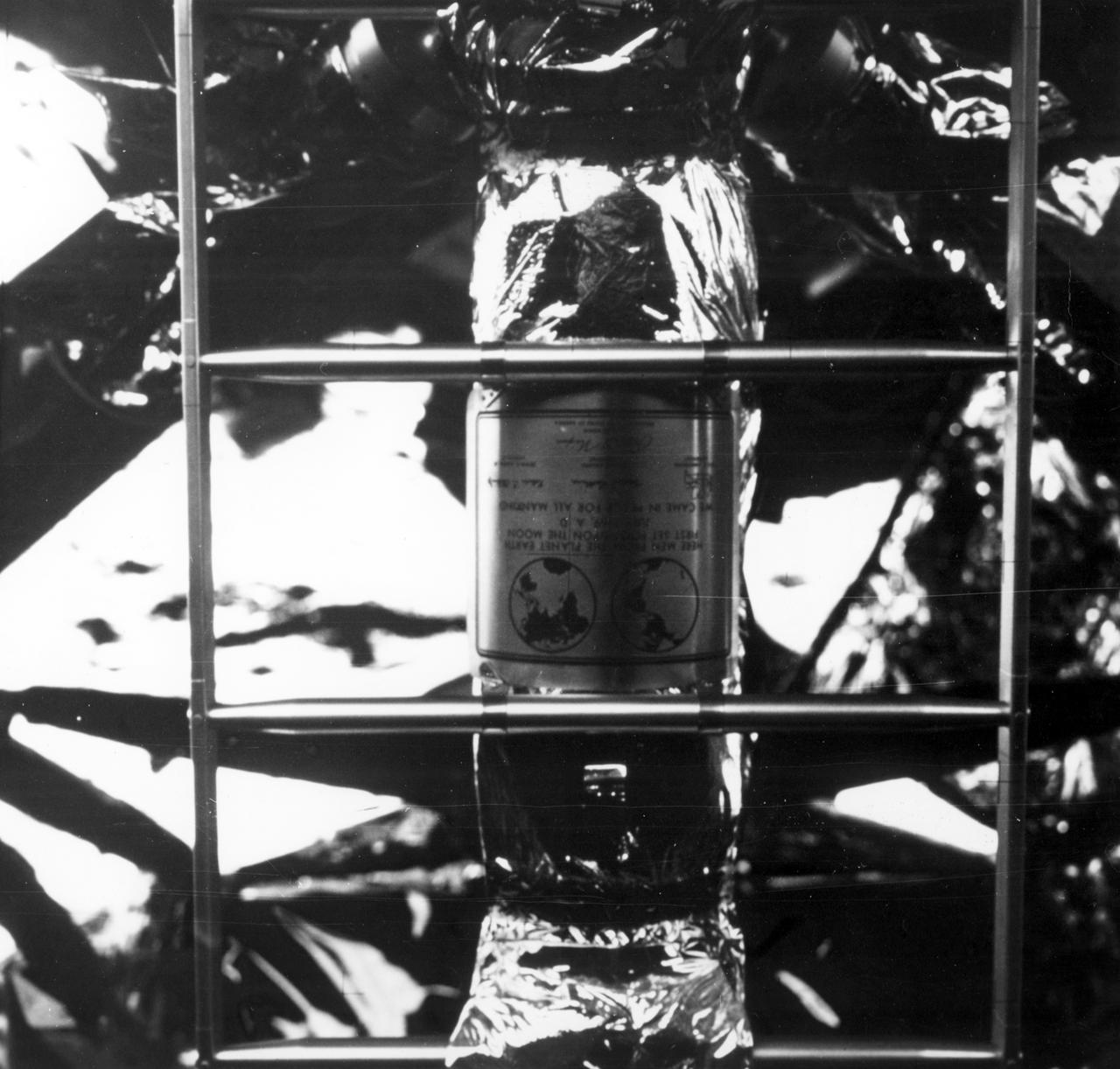
Millions of people on Earth watched via television as a message for all mankind was delivered to the Mare Tranquilitatis (Sea of Tranquility) region of the Moon during the historic Apollo 11 mission, where it still remains today. This commemorative plaque, attached to the leg of the Lunar Module (LM), Eagle, is engraved with the following words: “Here men from the planet Earth first set foot upon the Moon July, 1969 A.D. We came in peace for all of mankind.” It bears the signatures of the Apollo 11 astronauts Neil A. Armstrong, commander; Michael Collins, Command Module (CM) pilot; and Edwin E. Aldrin, Jr., Lunar Module (LM) pilot along with the signature of the U.S. President Richard M. Nixon. The Apollo 11 mission launched from the Kennedy Space Center (KSC) in Florida via the Marshall Space Flight Center (MSFC) developed Saturn V launch vehicle on July 16, 1969 and safely returned to Earth on July 24, 1969. The CM, “Columbia”, piloted by Collins, remained in a parking orbit around the Moon while the LM, “Eagle’’, carrying astronauts Armstrong and Aldrin, landed on the Moon. On July 20, 1969, Armstrong was the first human to ever stand on the lunar surface, followed by Aldrin. During 2½ hours of surface exploration, the crew collected 47 pounds of lunar surface material for analysis back on Earth. With the success of Apollo 11, the national objective to land men on the Moon and return them safely to Earth had been accomplished.
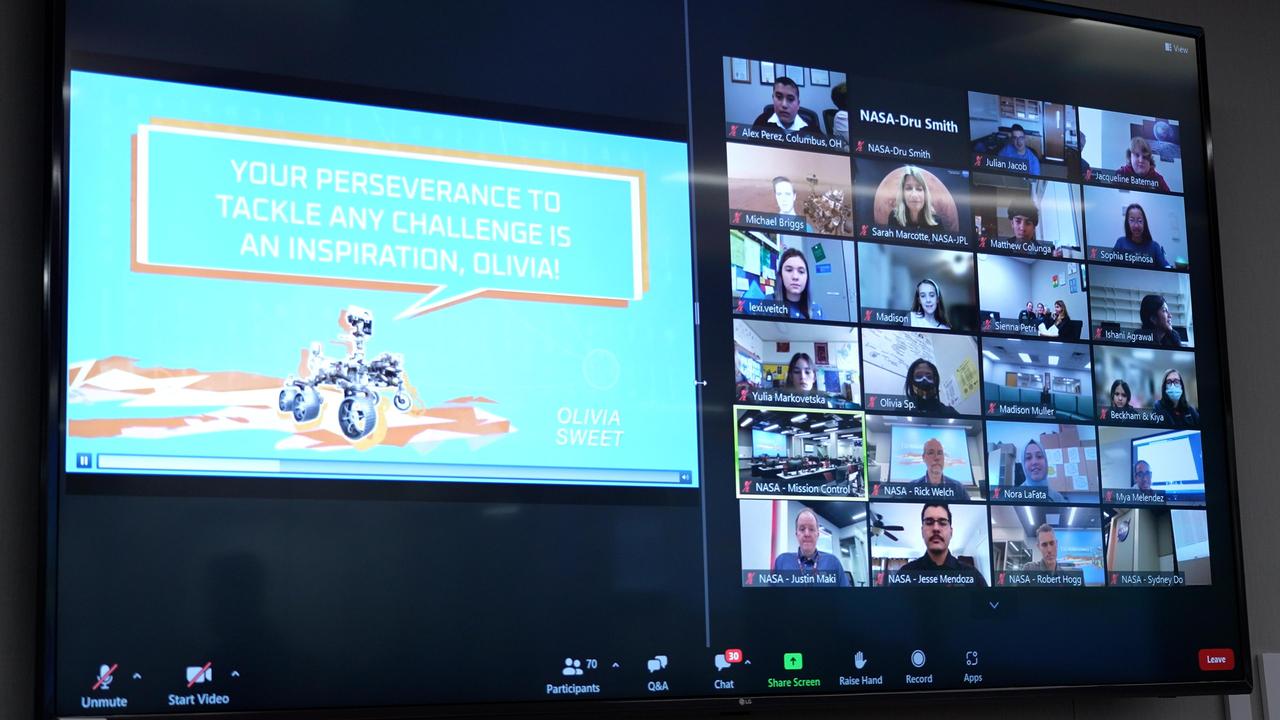
During a Dec. 6, 2022 webinar, students who have overcome academic challenges were honored with personal messages from the Perseverance rover on Mars, during a virtual meetup with team members for the "You've Got Perseverance" event. https://photojournal.jpl.nasa.gov/catalog/PIA25636

Twenty students – along with their parents, teachers, and classmates – met virtually with Mars rover team members at JPL, where they received personalized messages beamed from NASA's Perseverance rover as part of the "You've Got Perseverance" campaign. https://photojournal.jpl.nasa.gov/catalog/PIA25271
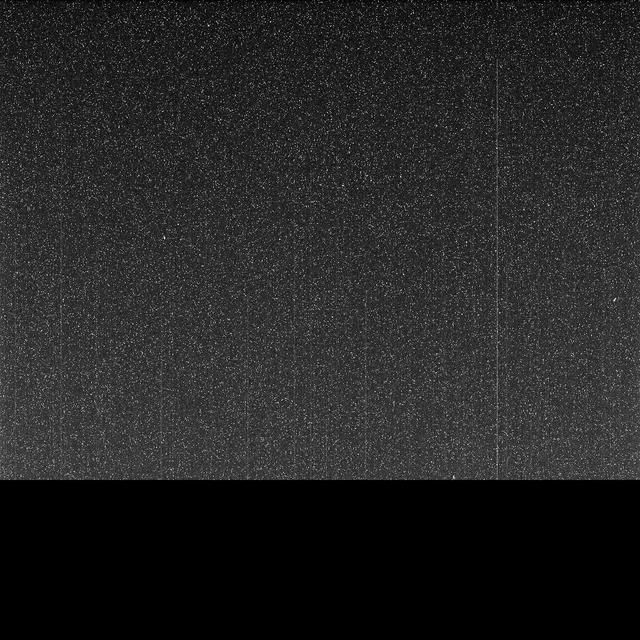
Taken on June 10, 2018 (the 5,111th Martian day, or sol, of the mission) this "noisy", incomplete image was the last data NASA's Opportunity rover sent back from Perseverance Valley on Mars. The partial, full-frame image from the Panoramic Camera (Pancam) was sent up to NASA's Mars Reconnaissance Orbiter around 9:45 a.m. PDT (12:45 p.m. EDT) to relay back to Earth as an intense dust storm darkened the skies around the solar-powered rover. The image was received on Earth at around 10:05 a.m. PDT (1:05 p.m. EDT). Opportunity took this image with the left eye of the Pancam, with its solar filter pointed at the Sun. But since the dust storm blotted out the Sun, the image is dark. The white speckles are noise from the camera. All Pancam images have noise in them, but the darkness makes it more apparent. The transmission stopped before the full image was transmitted, leaving the bottom of the image incomplete, represented here as black pixels. While this partial full-frame image was the last that Opportunity transmitted, it was not actually the last set of images from Opportunity. This image was taken at around 9:30 a.m. PDT (12:30 p.m. EDT) on June 10, 2018. Another set of images (PIA22930) was taken about three minutes later. The thumbnail versions of the last images taken were transmitted, but the rover lost contact before transmitting the full-frame versions. https://photojournal.jpl.nasa.gov/catalog/PIA22929
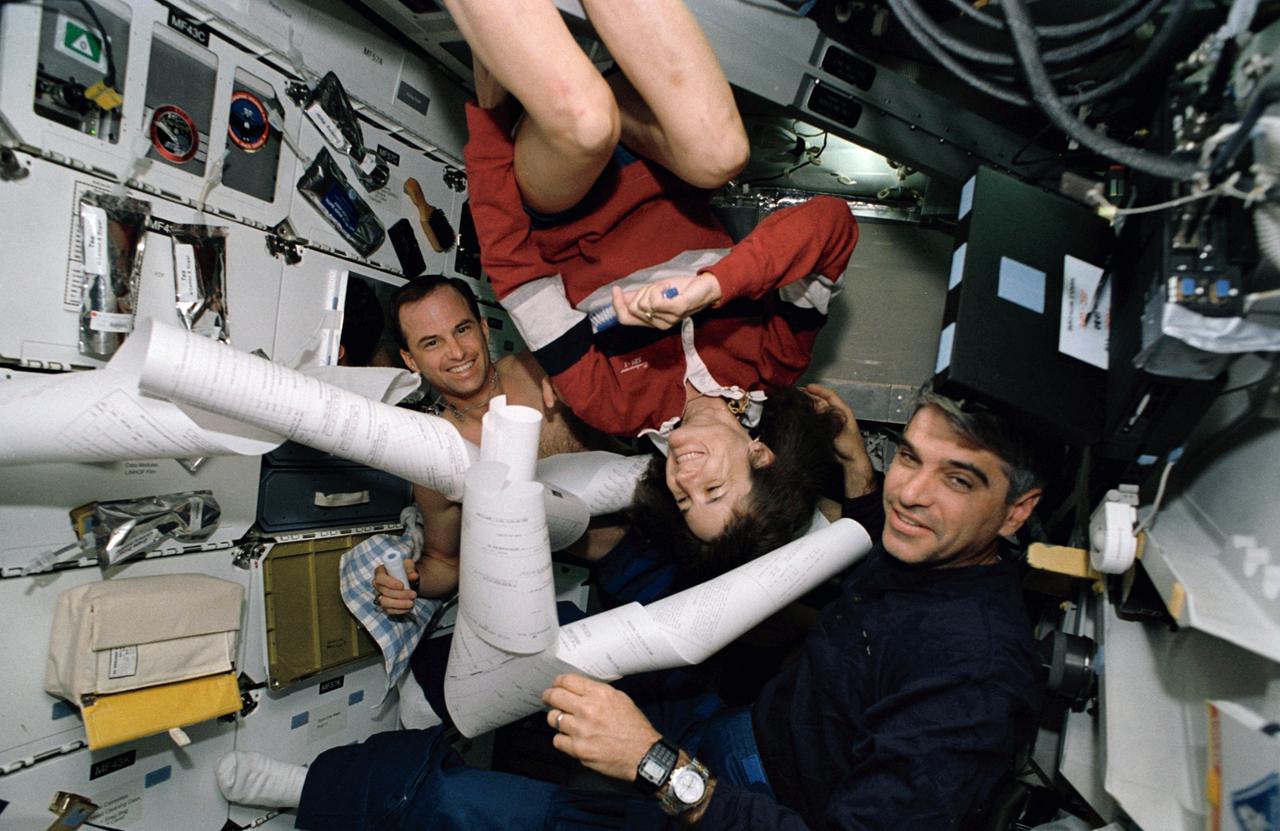
STS059-05-007 (9-20 April 1994) --- On Endeavour's middeck, the three STS-59 red shift crew members begin to organize what was believed to be among the longest mail messages in recent Shuttle history. With the picture held vertically, astronaut Sidney M. Gutierrez, mission commander, is in upper right. Also seen are astronauts Linda M. Godwin, payload commander, and Kevin P. Chilton, pilot. Though early Shuttle flights could brag of longer teleprinted messages, this Thermal Imaging Printing System's (TIPS) message from the ground competes with those of recent Shuttle flights.
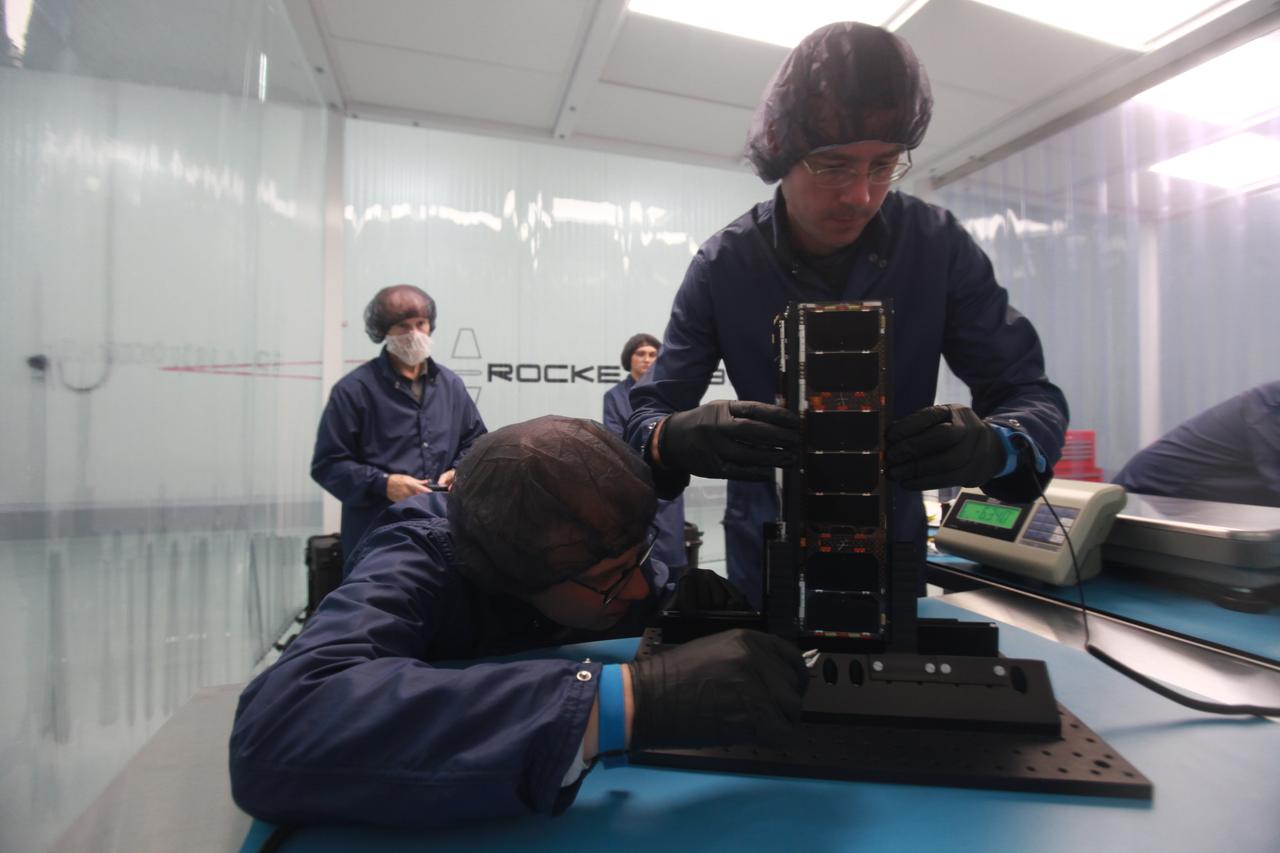
Project DaVinci is a student-led team at North Idaho STEM Charter Academy. Their spacecraft, the DaVinci satellite, has been constructed with the intent to connect with students worldwide to help reignite a passion for space. When launched, the DaVinci satellite will begin broadcasting messages across the globe using amateur radio uplink and downlink frequencies. Students in nearly every country will be able to receive these messages using a USB receiver dongle, open source software, and a yagi antenna in locations where the signal may be weaker. All messages will be education-related, and messages received will be in Morse Code requiring students to download a translating app or to translate it themselves. The DaVinci satellite will use the internet as a redundancy communication channel while in orbit. It is one of the few CubeSat to have a GlobalStar modem onboard, and will allow team members to upload digital messages to internet through the satellite. DaVinci satellite has an onboard Arducam as well, and will provide photos of Earth from its position in orbit. These pictures can be retrieved by the team using the GlobalStar modem and its corresponding server. To Learn more about the DaVinci satellite, visit www.projectdavincicubesat.org/
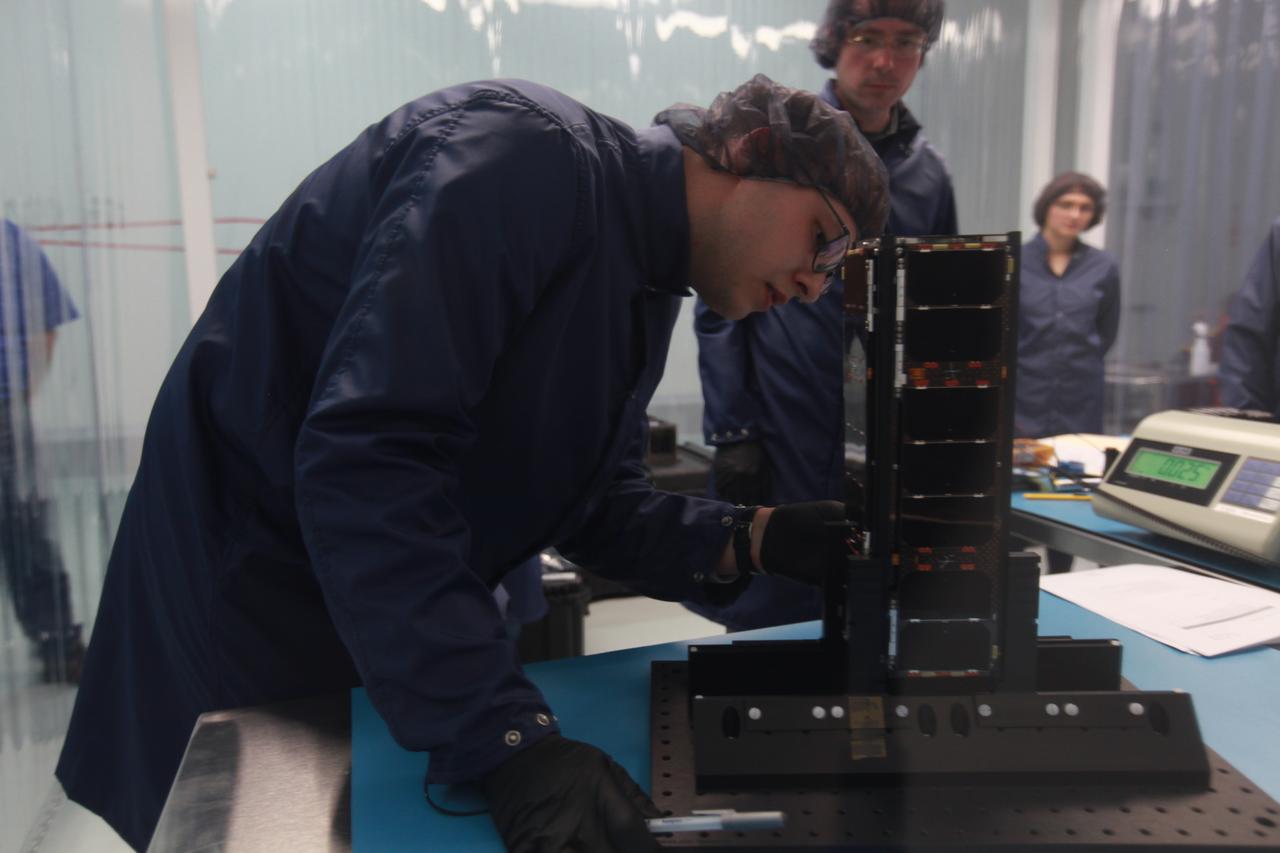
Project DaVinci is a student-led team at North Idaho STEM Charter Academy. Their spacecraft, the DaVinci satellite, has been constructed with the intent to connect with students worldwide to help reignite a passion for space. When launched, the DaVinci satellite will begin broadcasting messages across the globe using amateur radio uplink and downlink frequencies. Students in nearly every country will be able to receive these messages using a USB receiver dongle, open source software, and a yagi antenna in locations where the signal may be weaker. All messages will be education-related, and messages received will be in Morse Code requiring students to download a translating app or to translate it themselves. The DaVinci satellite will use the internet as a redundancy communication channel while in orbit. It is one of the few CubeSat to have a GlobalStar modem onboard, and will allow team members to upload digital messages to internet through the satellite. DaVinci satellite has an onboard Arducam as well, and will provide photos of Earth from its position in orbit. These pictures can be retrieved by the team using the GlobalStar modem and its corresponding server. To Learn more about the DaVinci satellite, visit www.projectdavincicubesat.org/
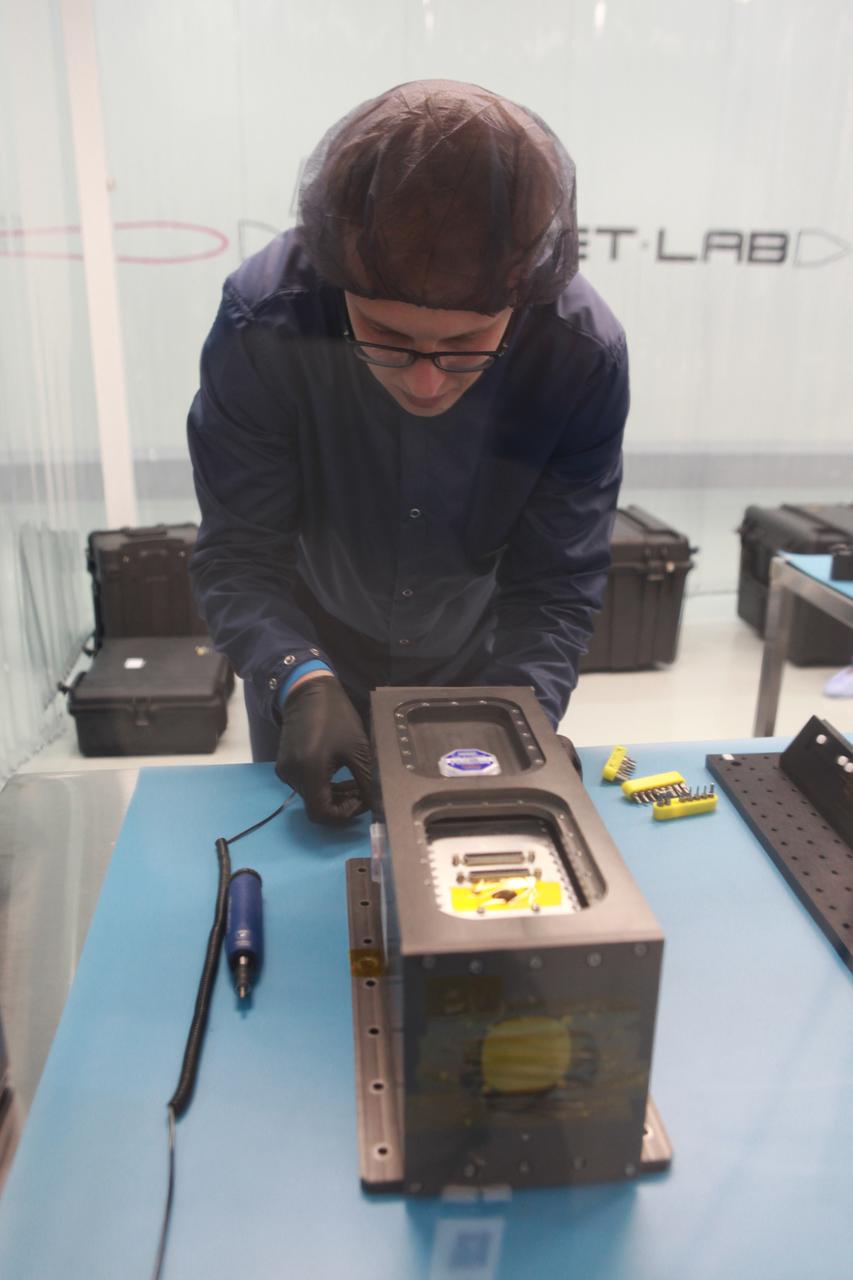
Project DaVinci is a student-led team at North Idaho STEM Charter Academy. Their spacecraft, the DaVinci satellite, has been constructed with the intent to connect with students worldwide to help reignite a passion for space. When launched, the DaVinci satellite will begin broadcasting messages across the globe using amateur radio uplink and downlink frequencies. Students in nearly every country will be able to receive these messages using a USB receiver dongle, open source software, and a yagi antenna in locations where the signal may be weaker. All messages will be education-related, and messages received will be in Morse Code requiring students to download a translating app or to translate it themselves. The DaVinci satellite will use the internet as a redundancy communication channel while in orbit. It is one of the few CubeSat to have a GlobalStar modem onboard, and will allow team members to upload digital messages to internet through the satellite. DaVinci satellite has an onboard Arducam as well, and will provide photos of Earth from its position in orbit. These pictures can be retrieved by the team using the GlobalStar modem and its corresponding server. To Learn more about the DaVinci satellite, visit www.projectdavincicubesat.org/
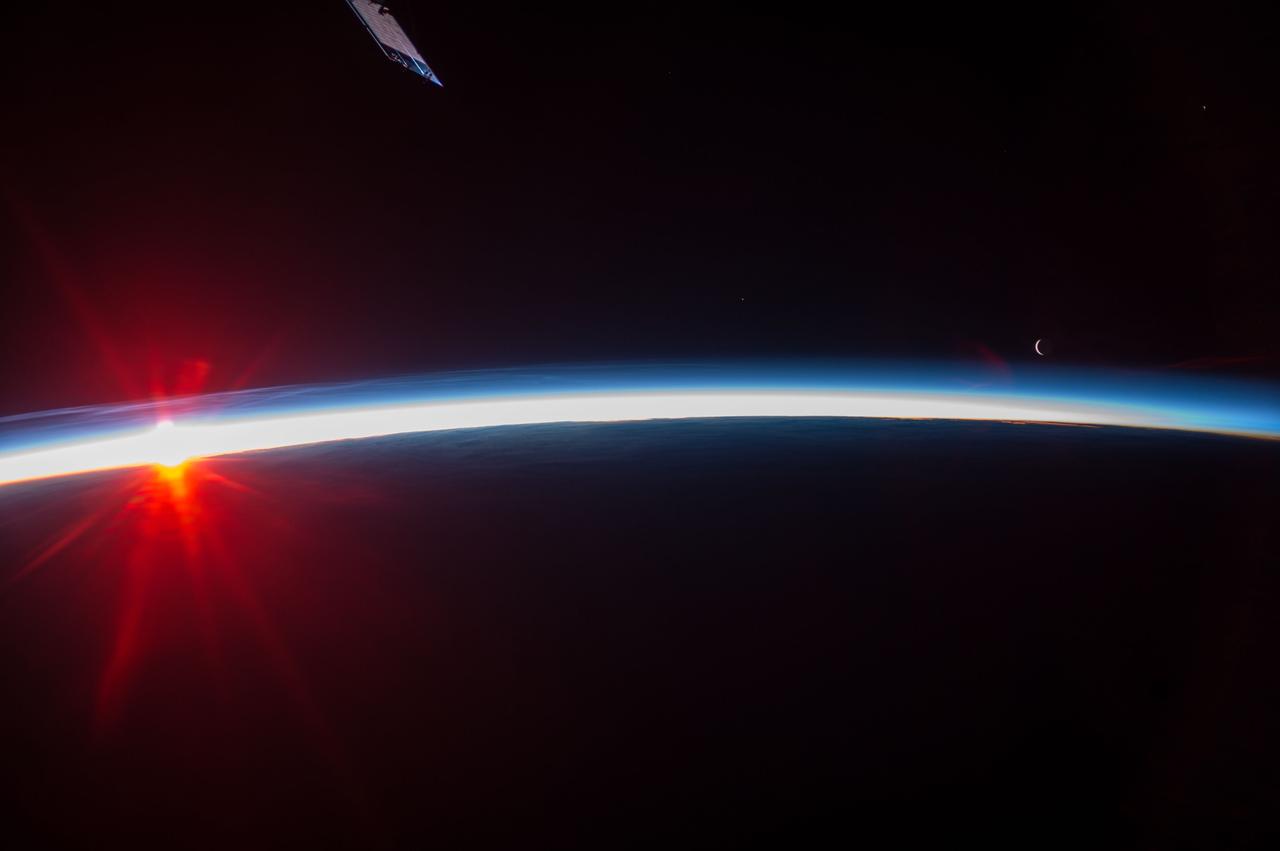
A sunset over the Aleutian Islands,with noctilucent clouds,as documented by the Expedition 36 crew. Per Twitter message: Sunrise and moonrise.
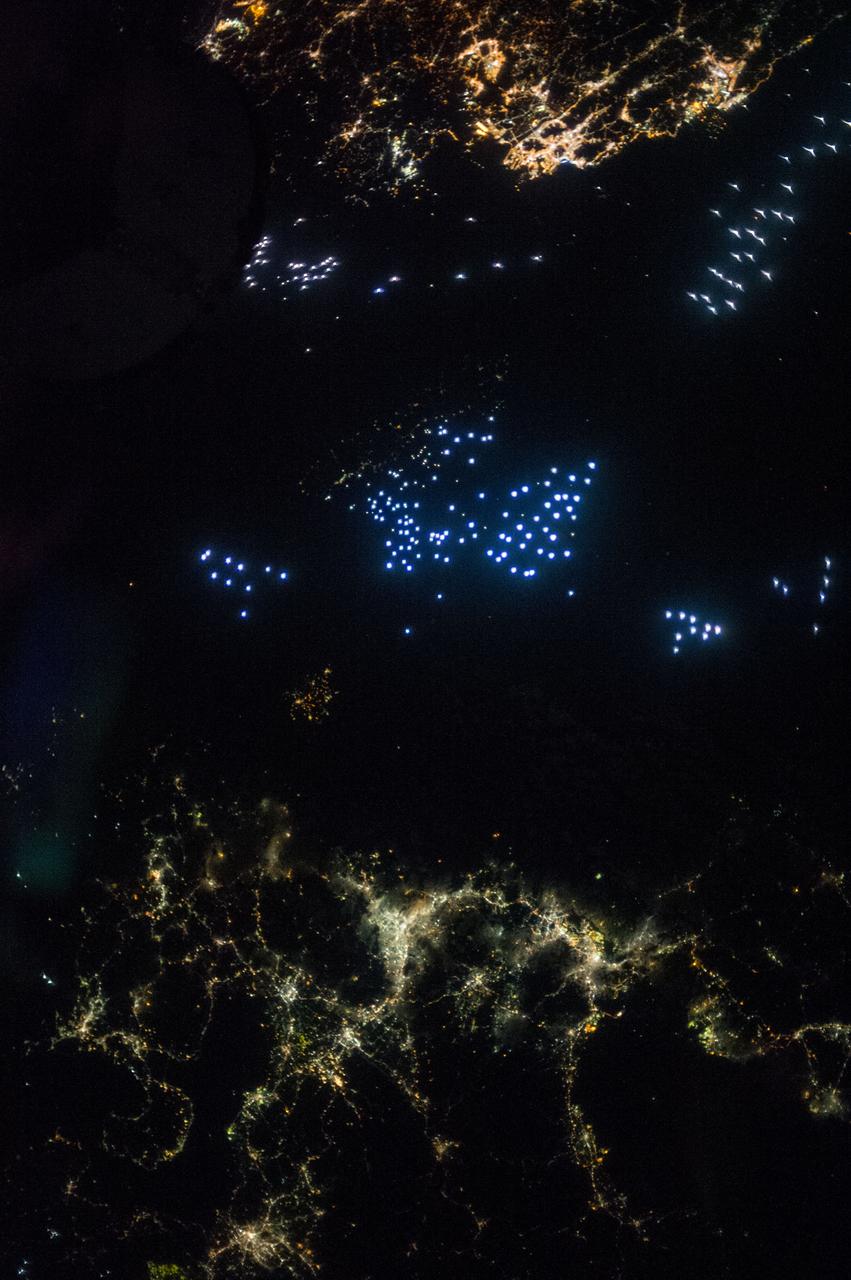
Earth observation taken during a night pass by the Expedition 37 crew. Per Twitter message: The Korea Strait.
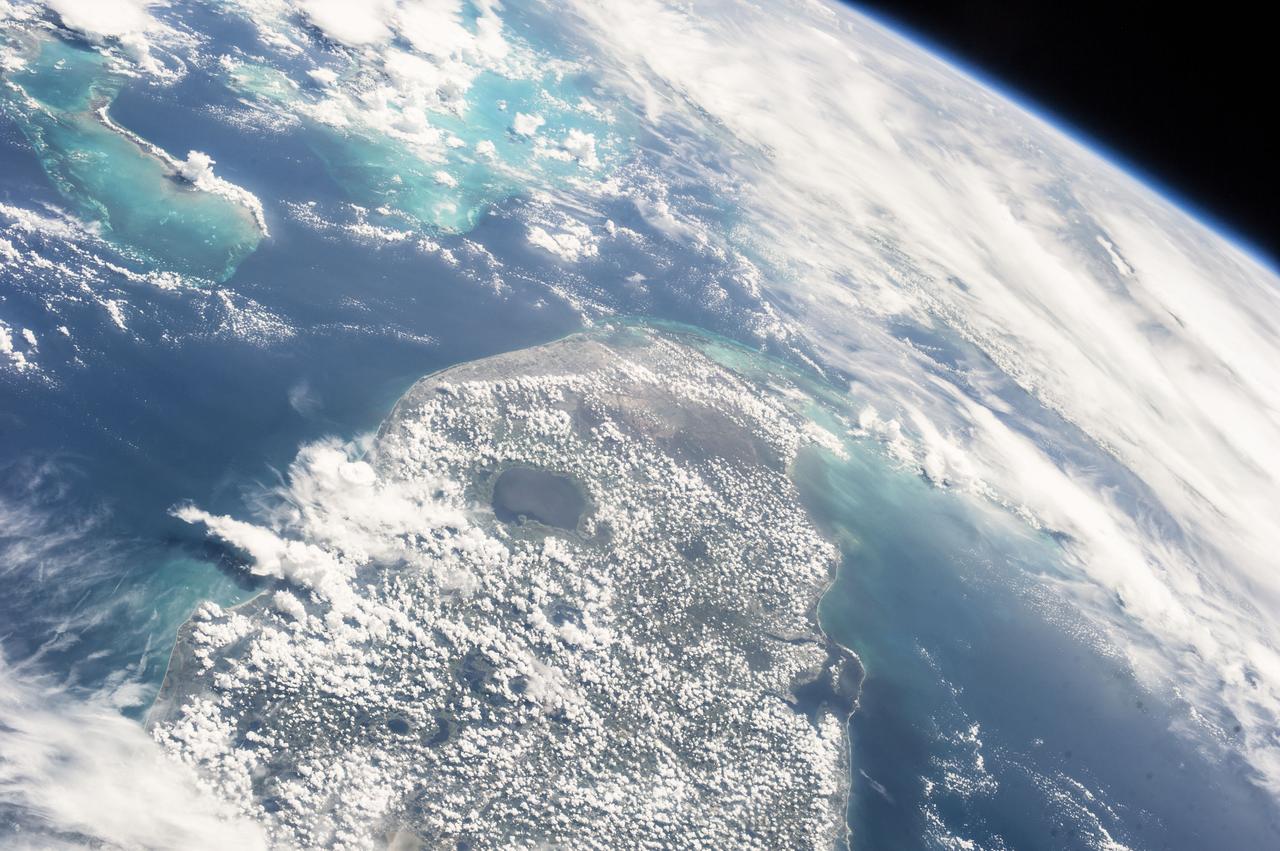
Earth observation taken during a day pass by the Expedition 37 crew. Per Twitter message: Southern Florida & the Bahamas.
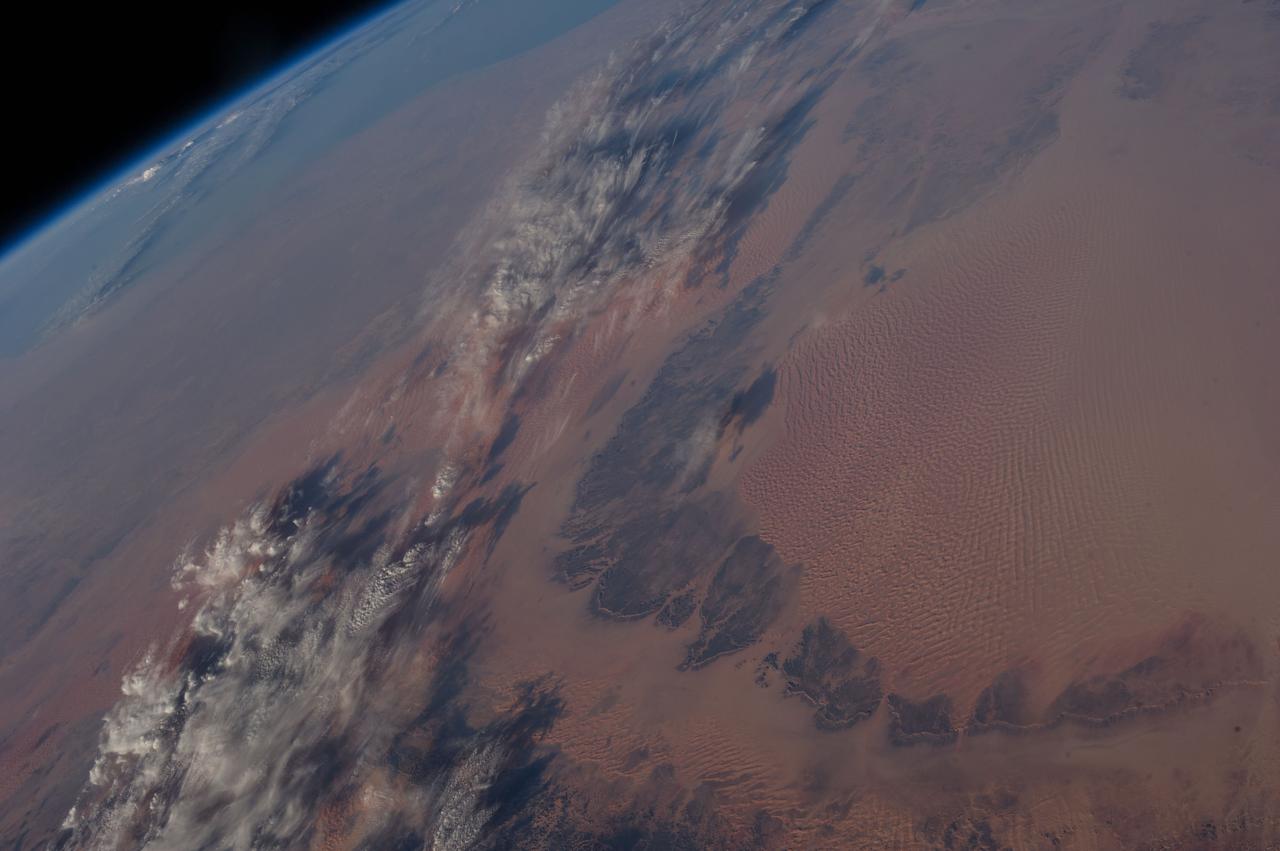
Earth observation taken during a day pass by the Expedition 37 crew. Per Twitter message: Southwest Libya to the Mediterranean coast.
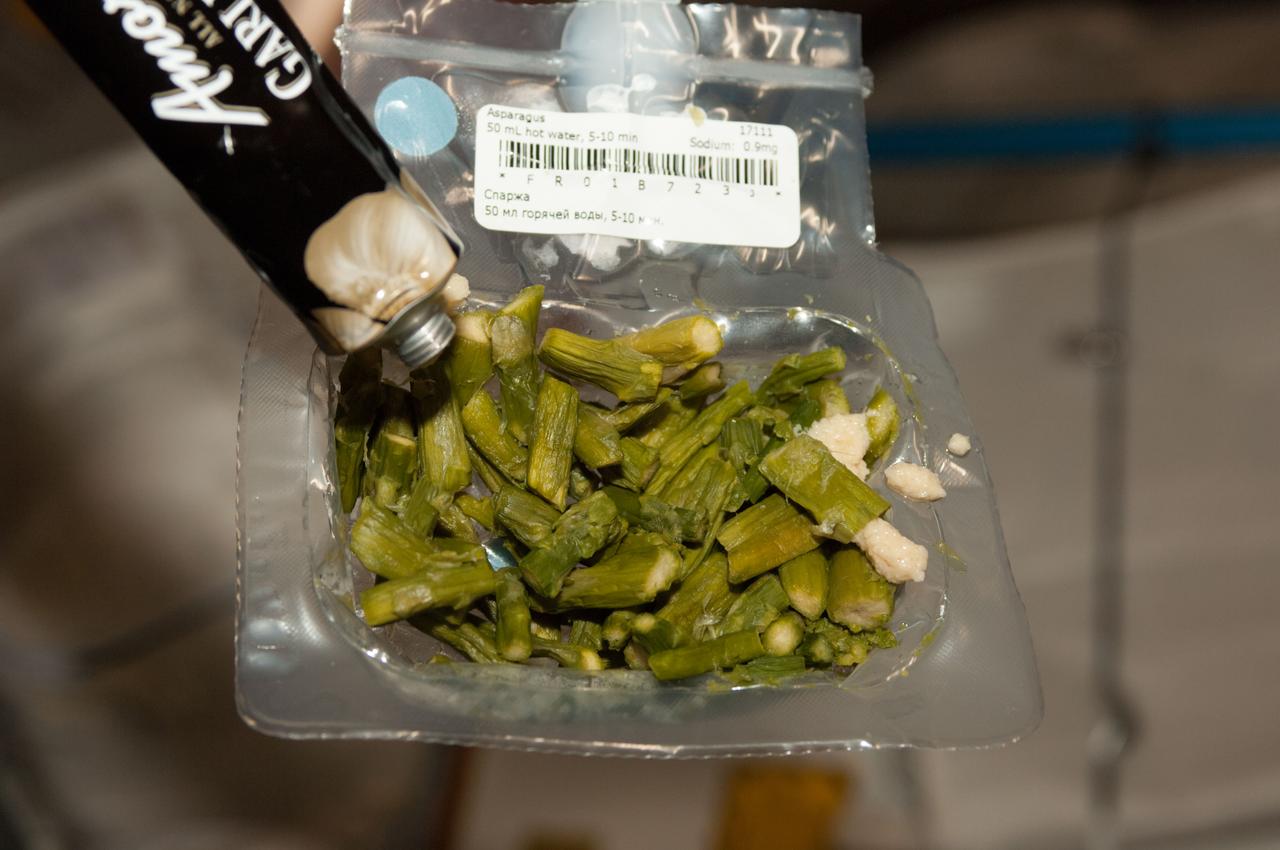
View of a bag of asparagus and garlic paste about to be rehydrated documented by the Expedition 36 crew. Also sent as Twitter message.
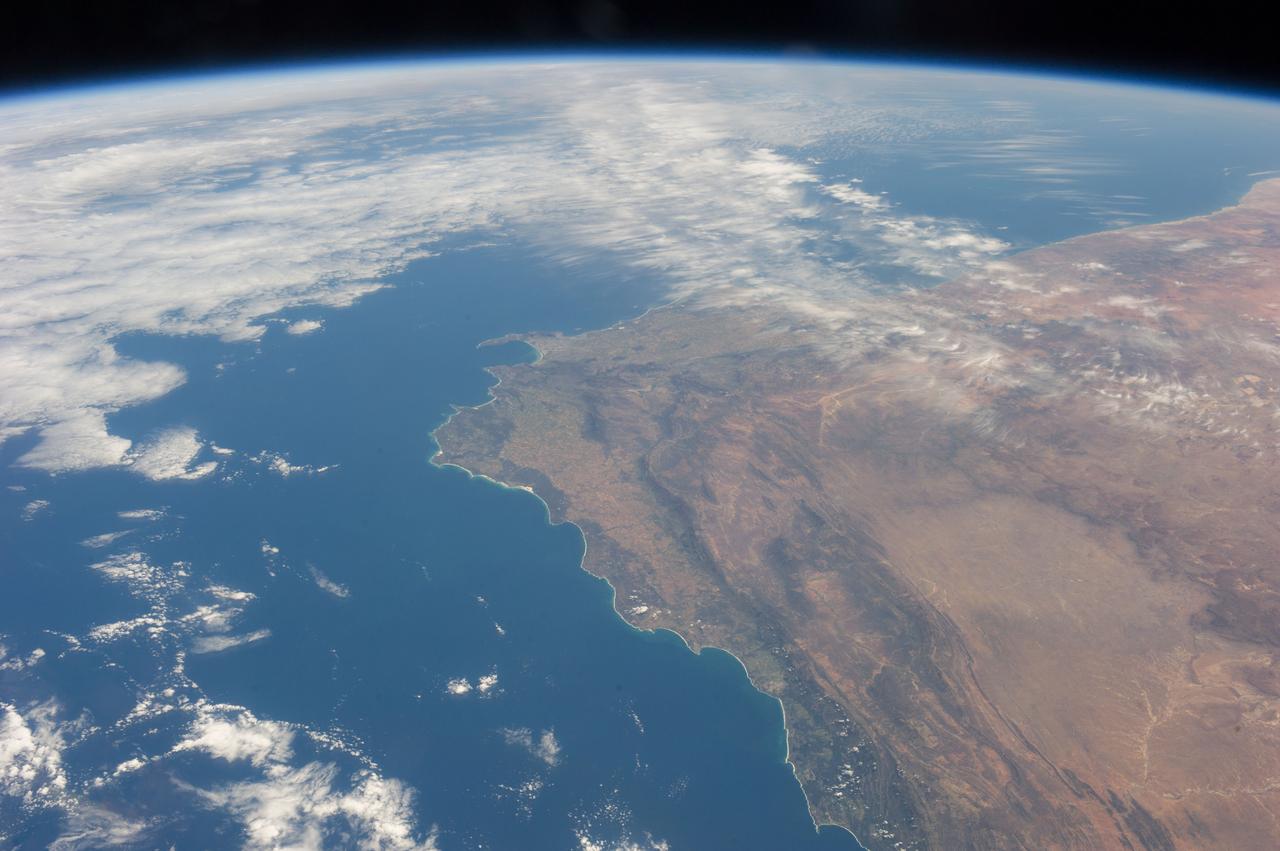
Earth observation taken during a day pass by the Expedition 37 crew. Per Twitter message: The tip of Africa.
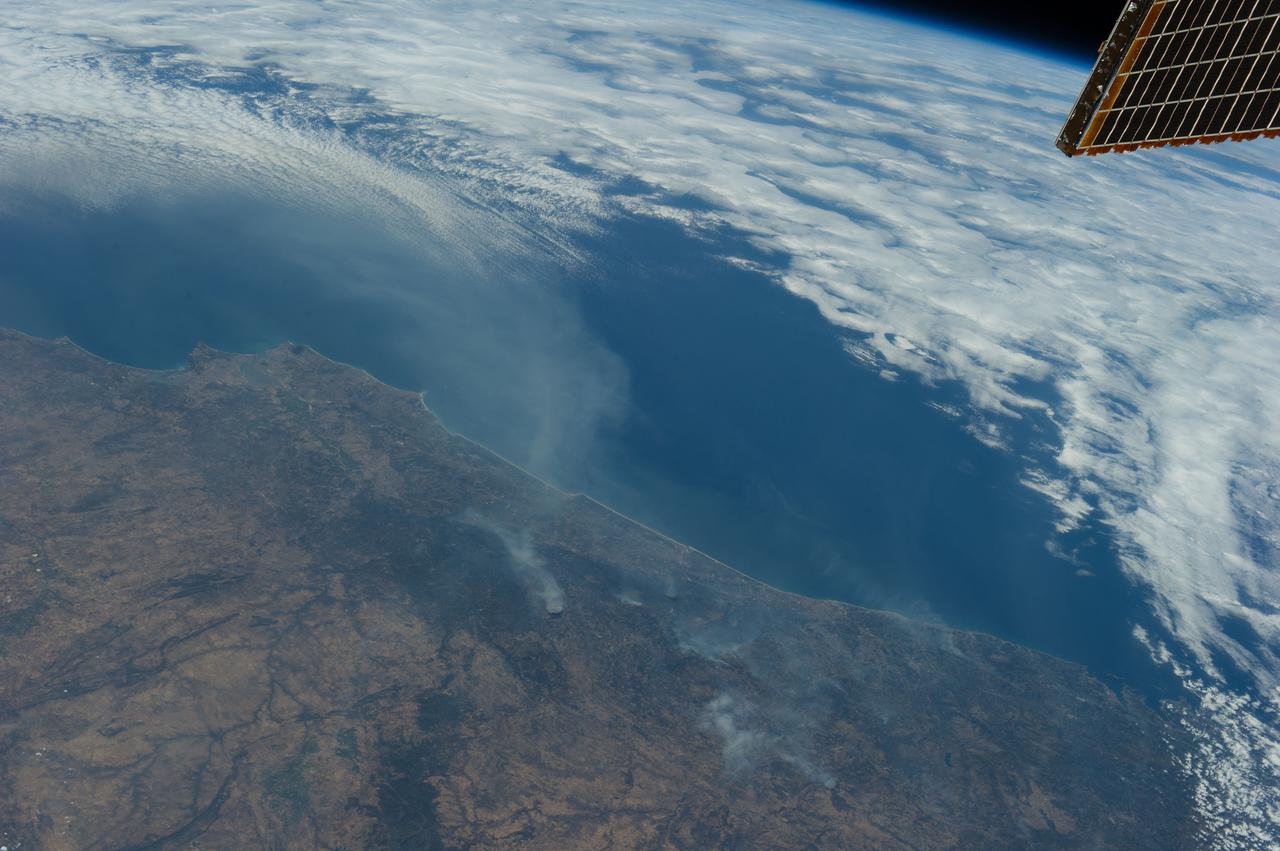
Earth observation taken during a day pass by the Expedition 36 crew. Per Twitter message: Forest fires in Portugal.
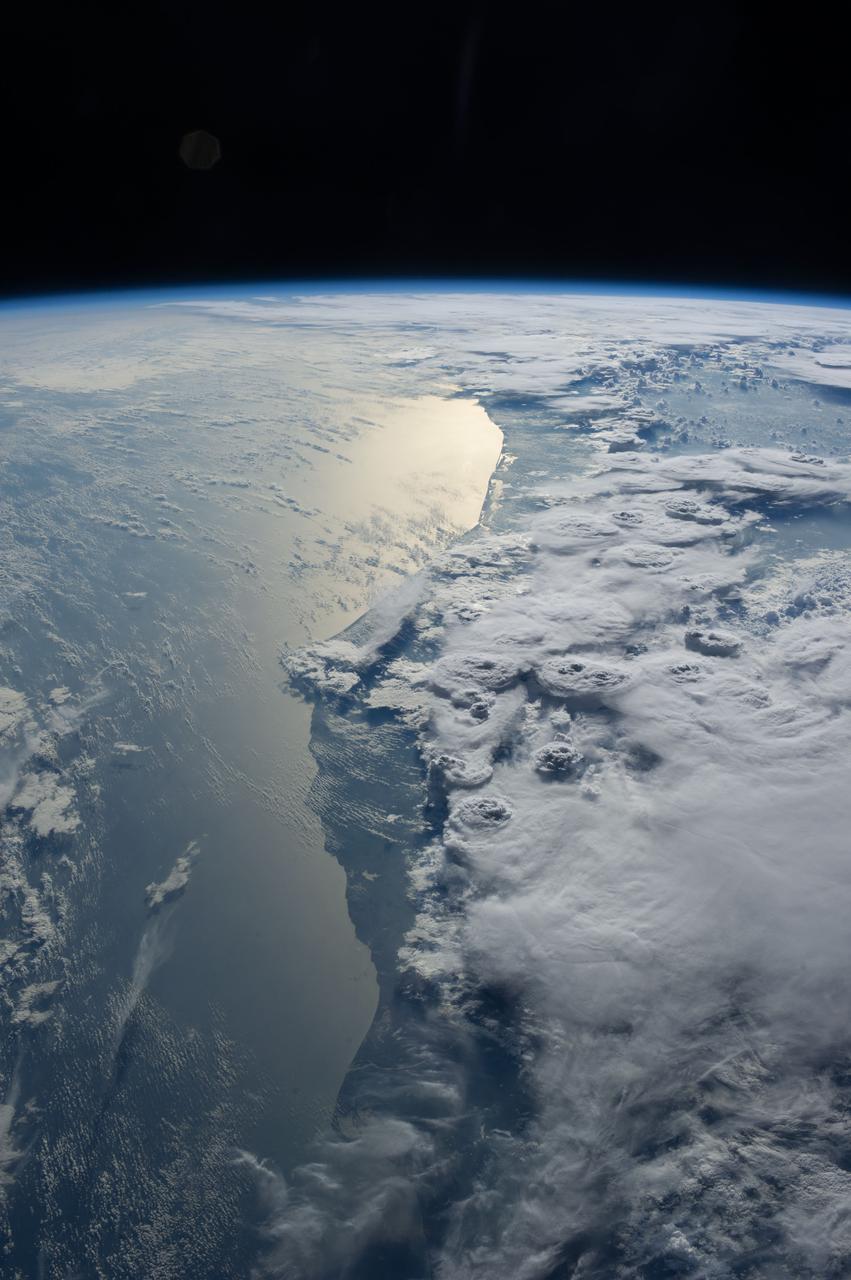
Earth observation taken during a day pass by the Expedition 37 crew. Per Twitter message these are storms over Ghana.
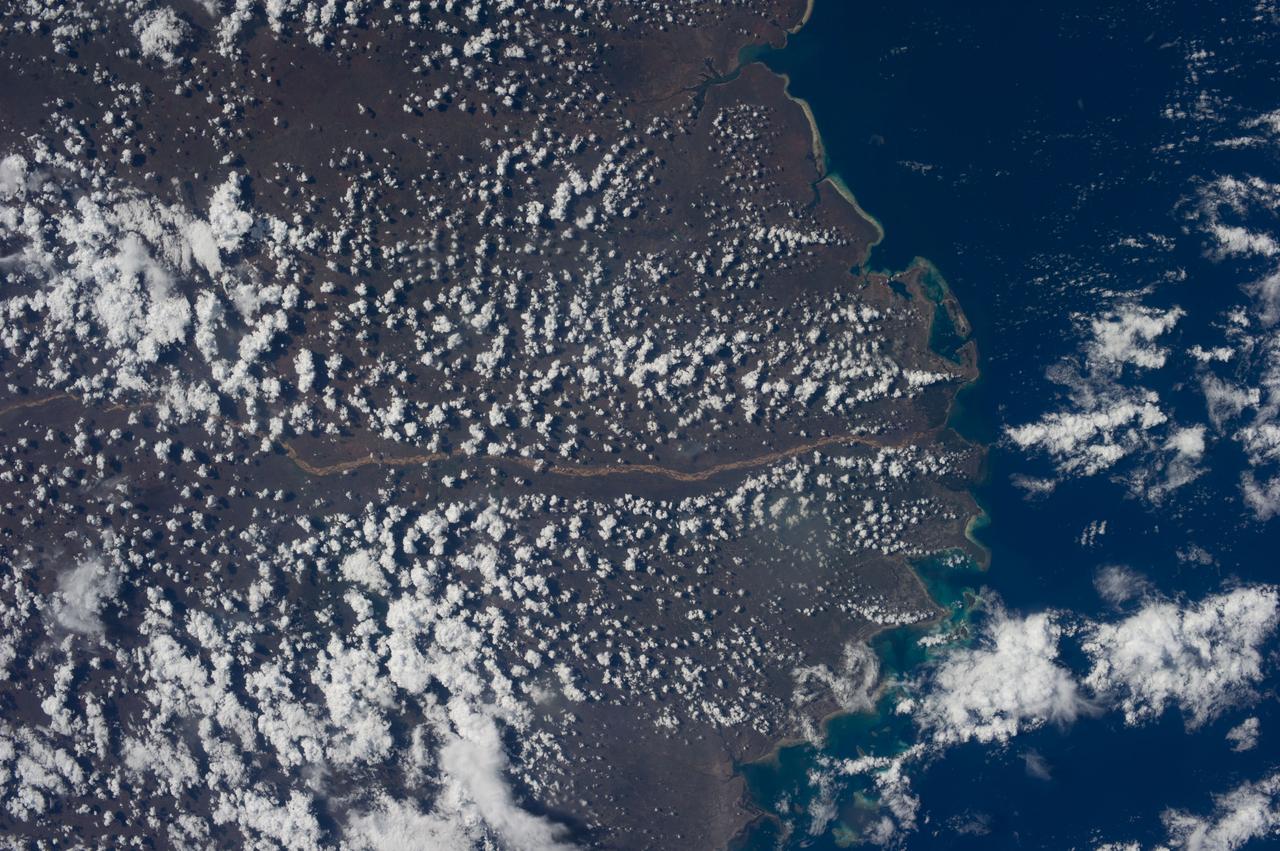
Earth observation taken during a day pass by the Expedition 37 crew. Per Twitter message: Ruvuma River, Tanzania and Mozambique.
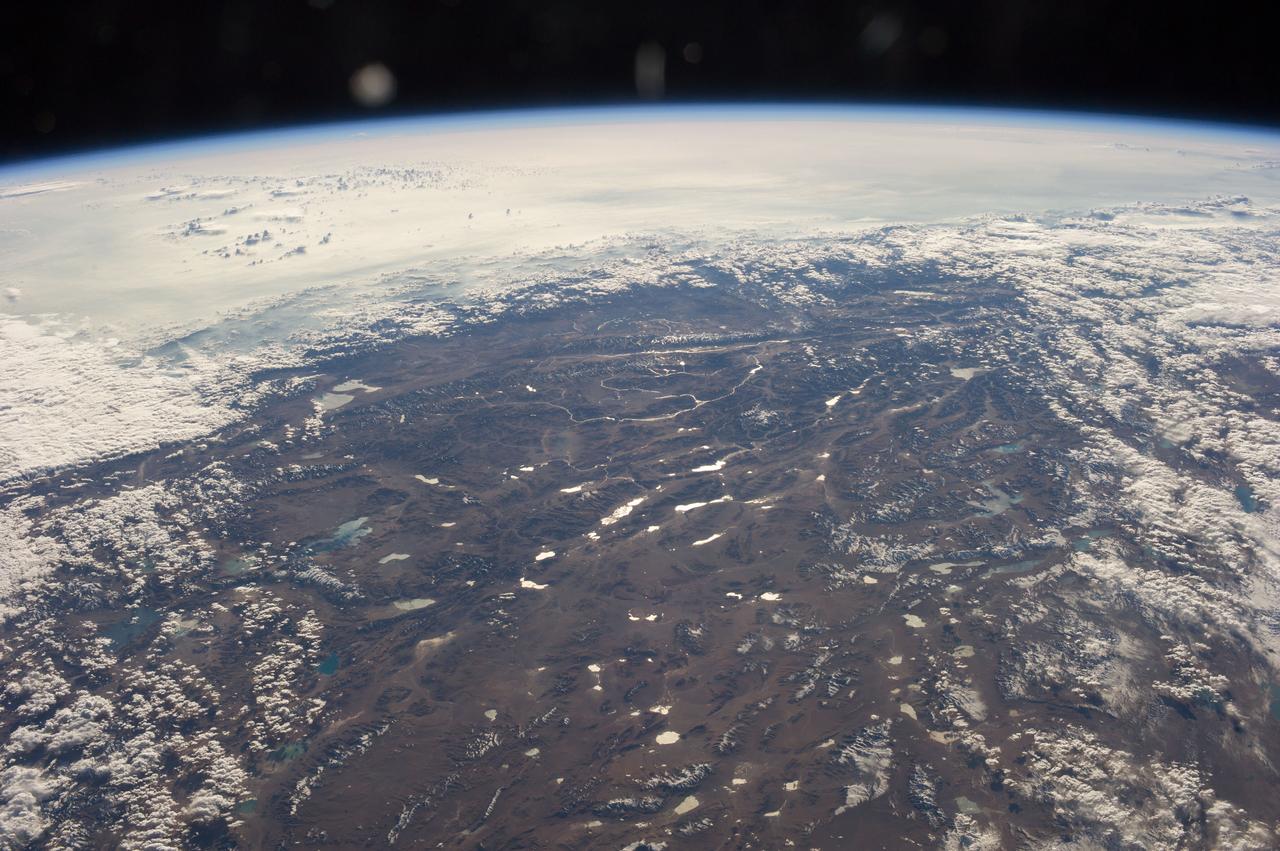
Earth observation taken during a day pass by the Expedition 37 crew. View identified via Twitter message as the Tibetan Plateau.
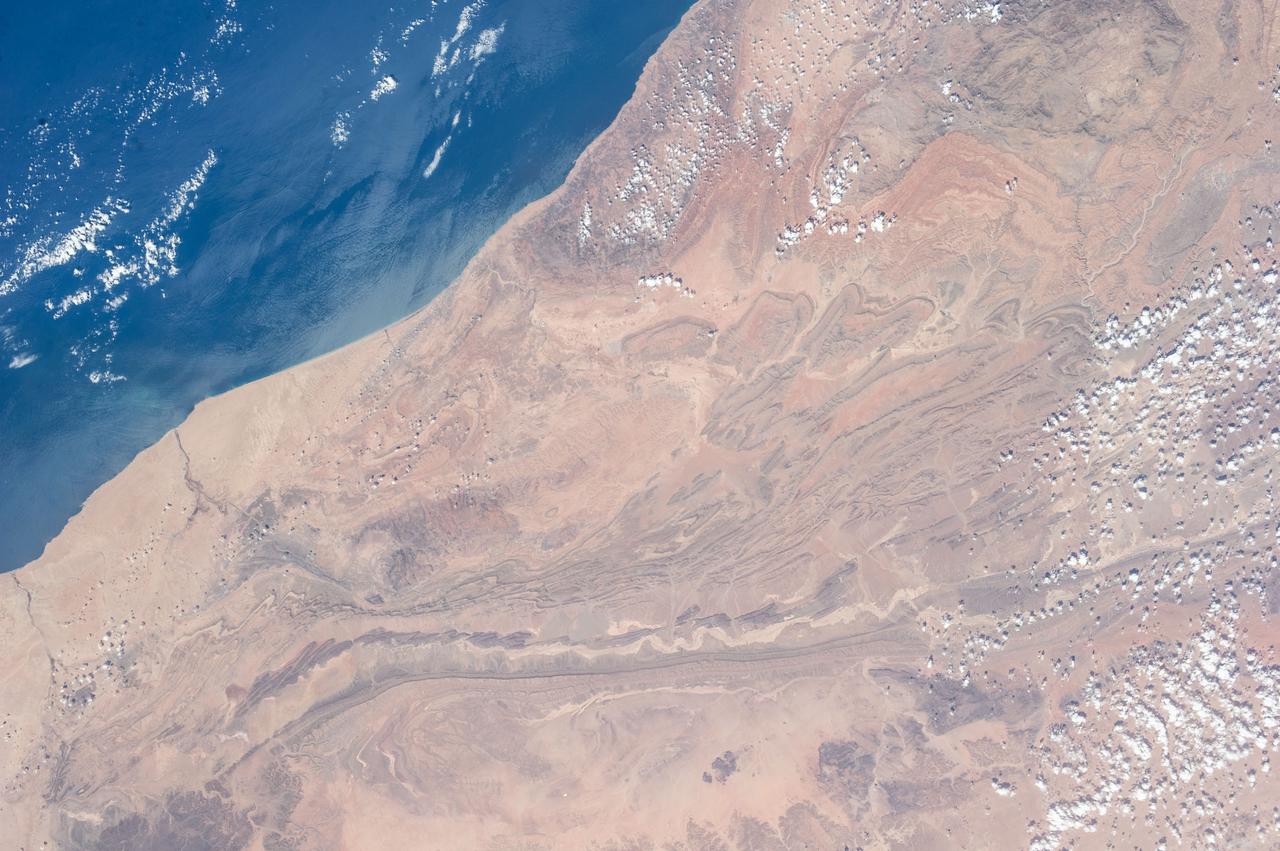
Earth observation taken during a day pass by the Expedition 37 crew. Per Twitter message: Southern Morocco.
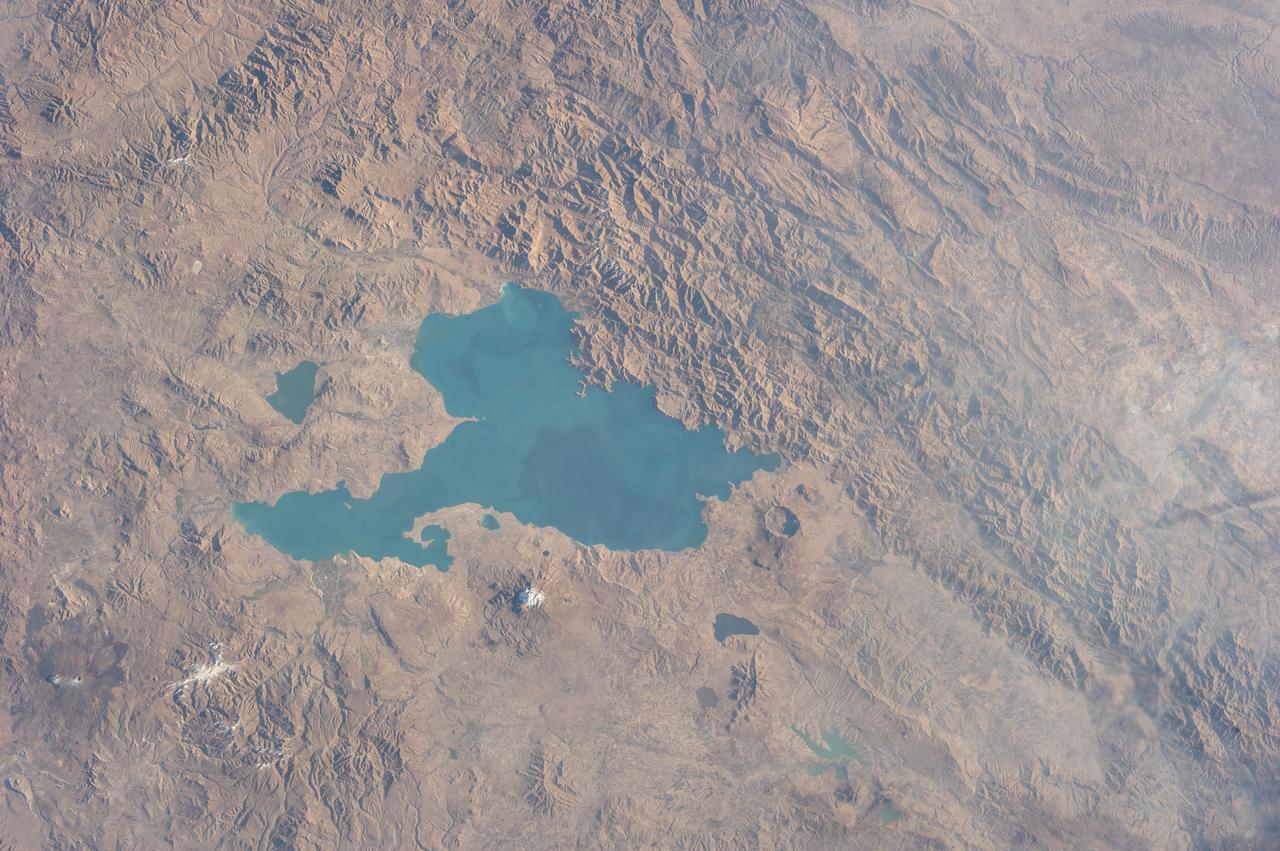
Earth observation taken during a day pass by the Expedition 37 crew. Per Twitter message: Lake Van, eastern Turkey.

This chart illustrates how NASA Curiosity rover talks to Earth. While the rover can send direct messages, it communicates more efficiently with the help of spacecraft in orbit, including NASA Odyssey and MRO, and European Space Agency Mars Express.
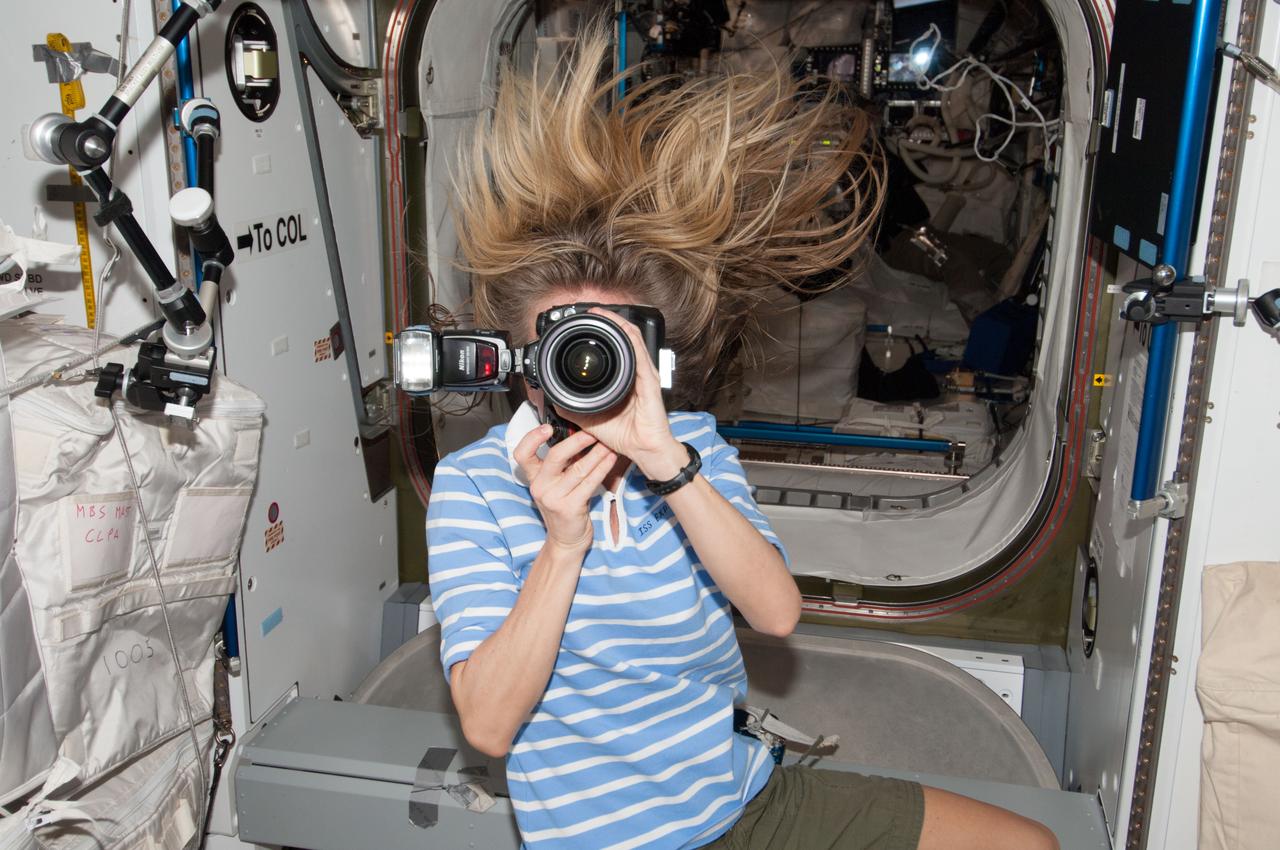
Expedition 37 Flight engineer Karen Nyberg uses a camera to document activities in the Node 2 module. Also sent as Twitter message.
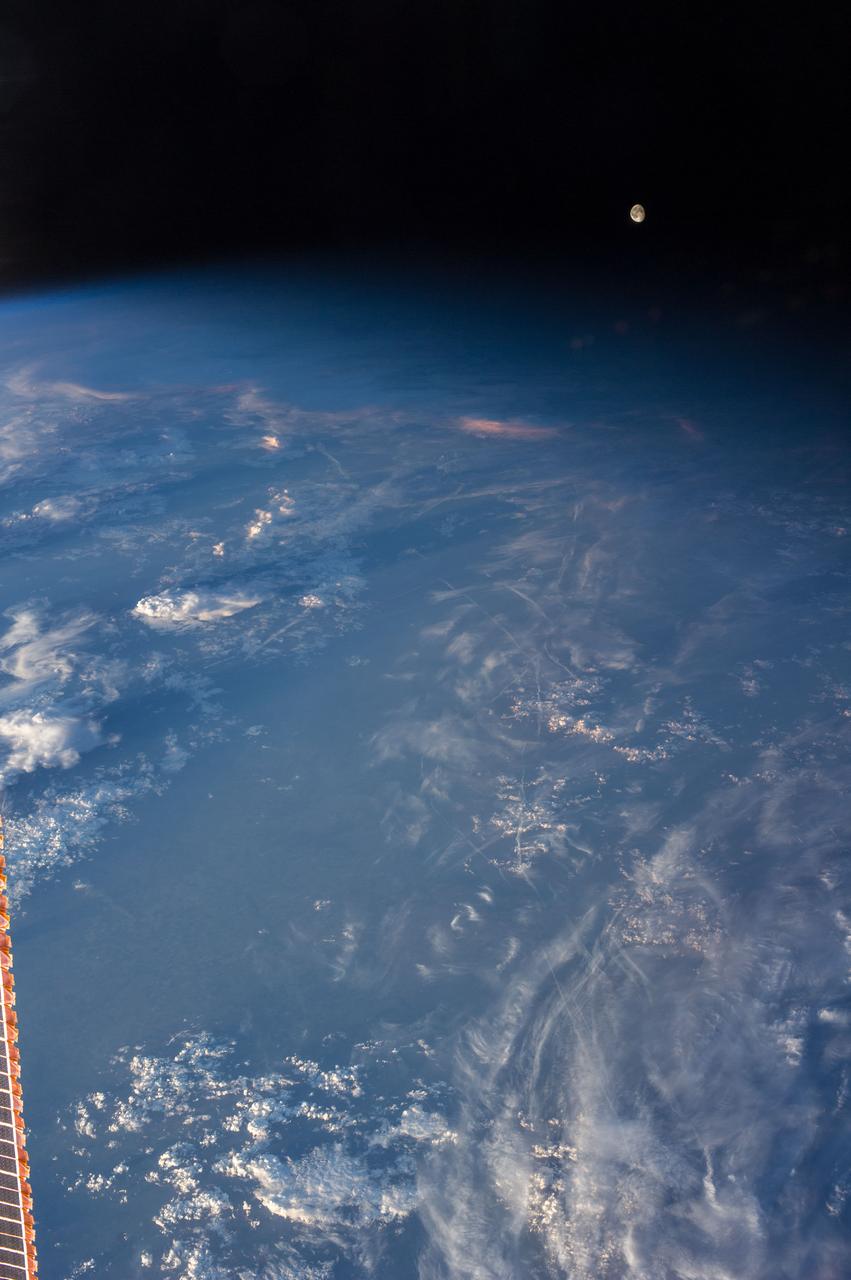
Earth observation taken during a day pass by the Expedition 36 crew. Per Twitter message: The waning gibbous moon and the Earth's terminator.
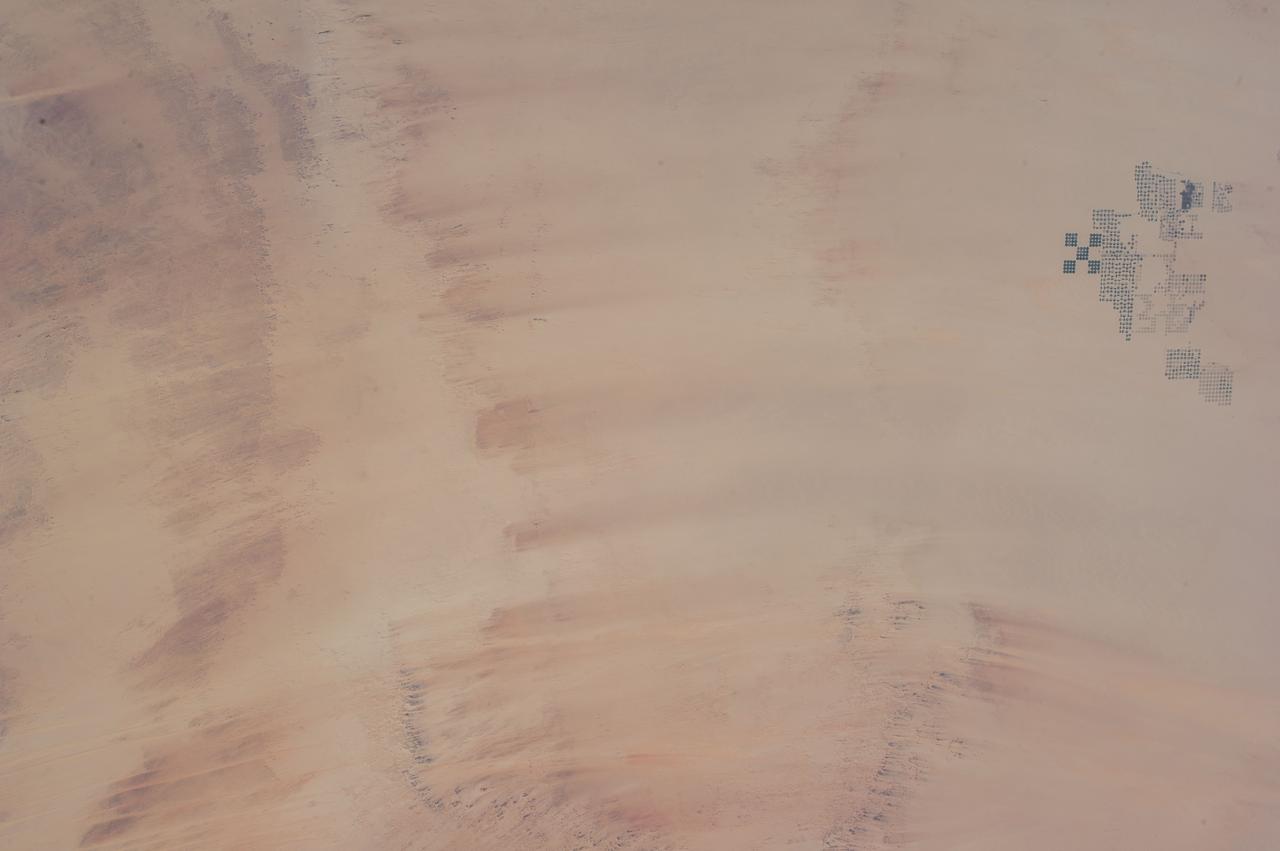
Earth observation taken during a day pass by an Expedition 36 crew member on board the International Space Station (ISS). Per Twitter message: Southwest Egypt.
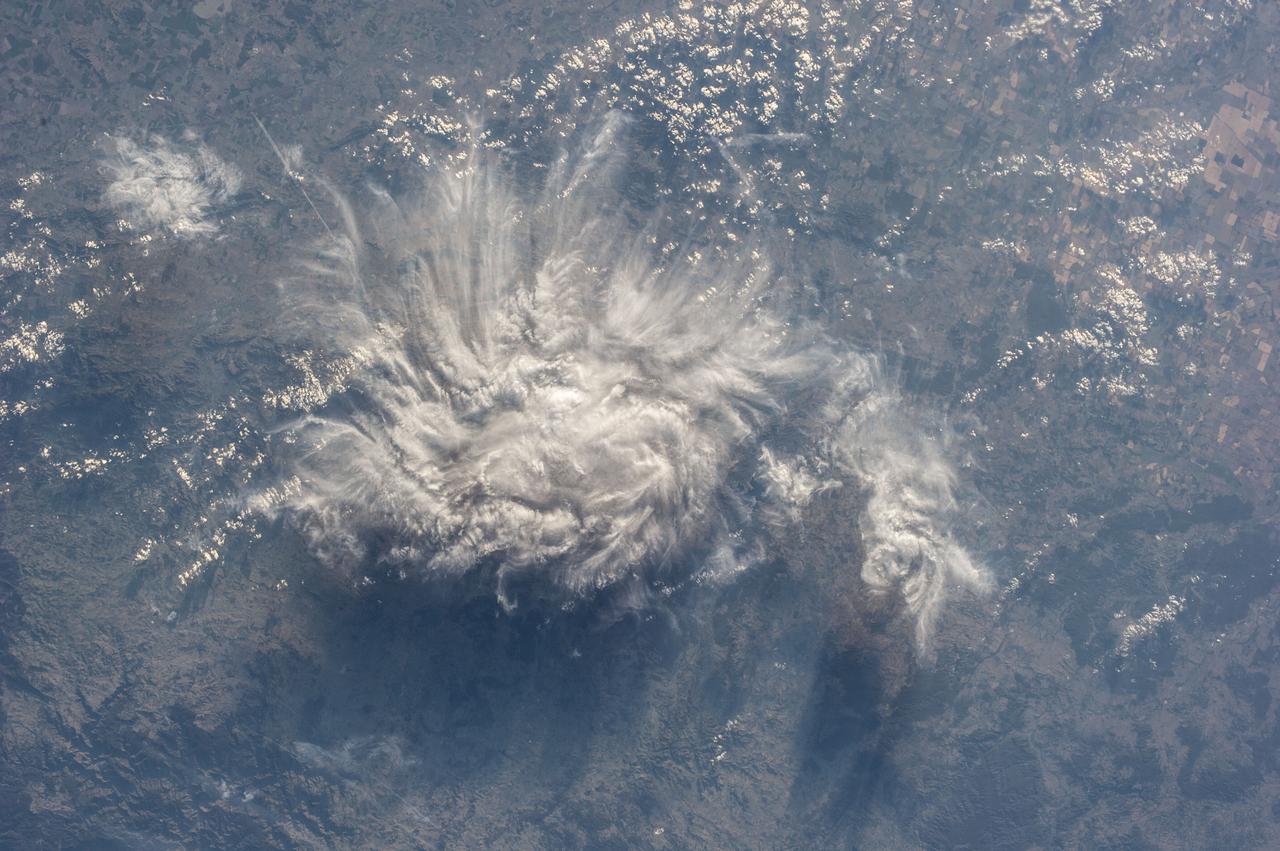
Earth Observation taken during a day pass by the Expedition 37 crew aboard the International Space Station (ISS). Also sent as Twitter message.
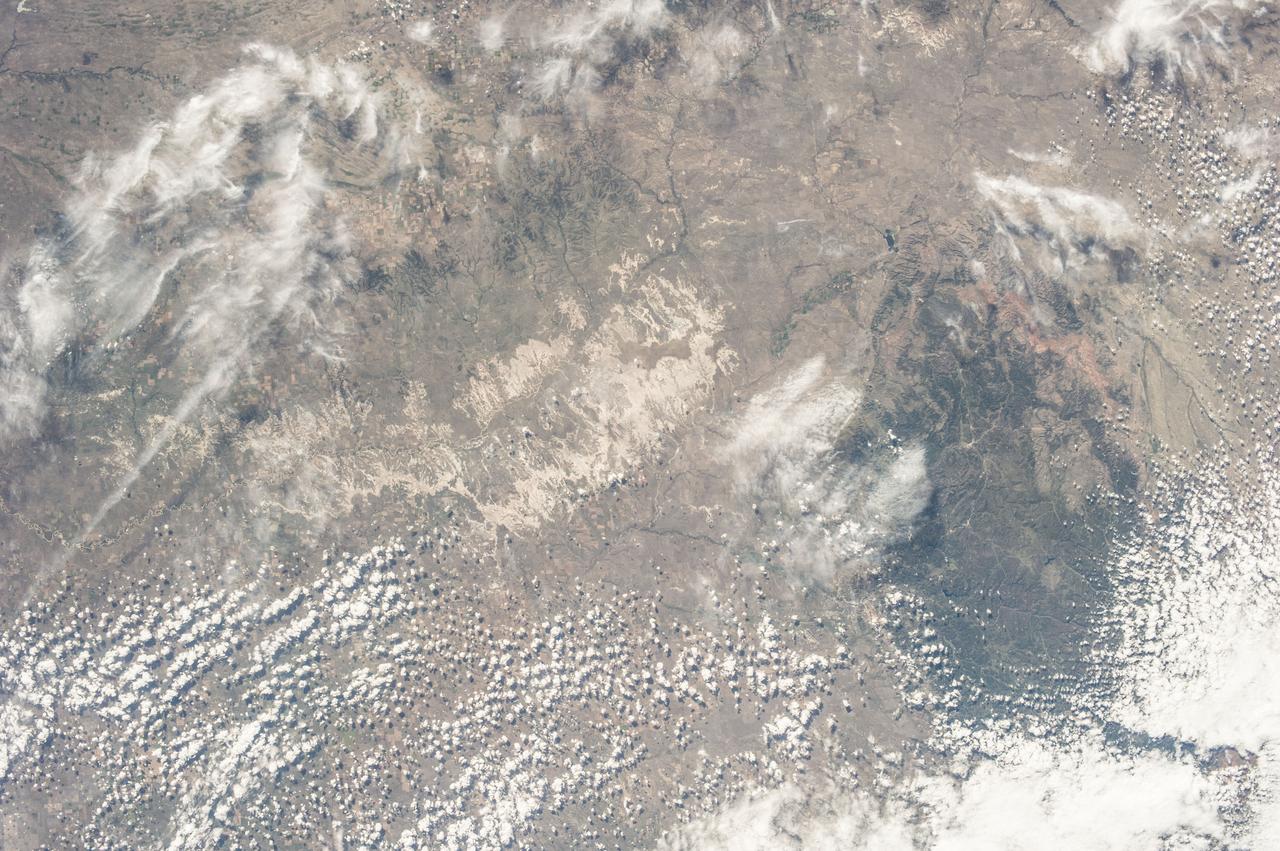
Earth observation taken during a day pass by the Expedition 37 crew. Per Twitter message: The Black Hills & Badlands of South Dakota.
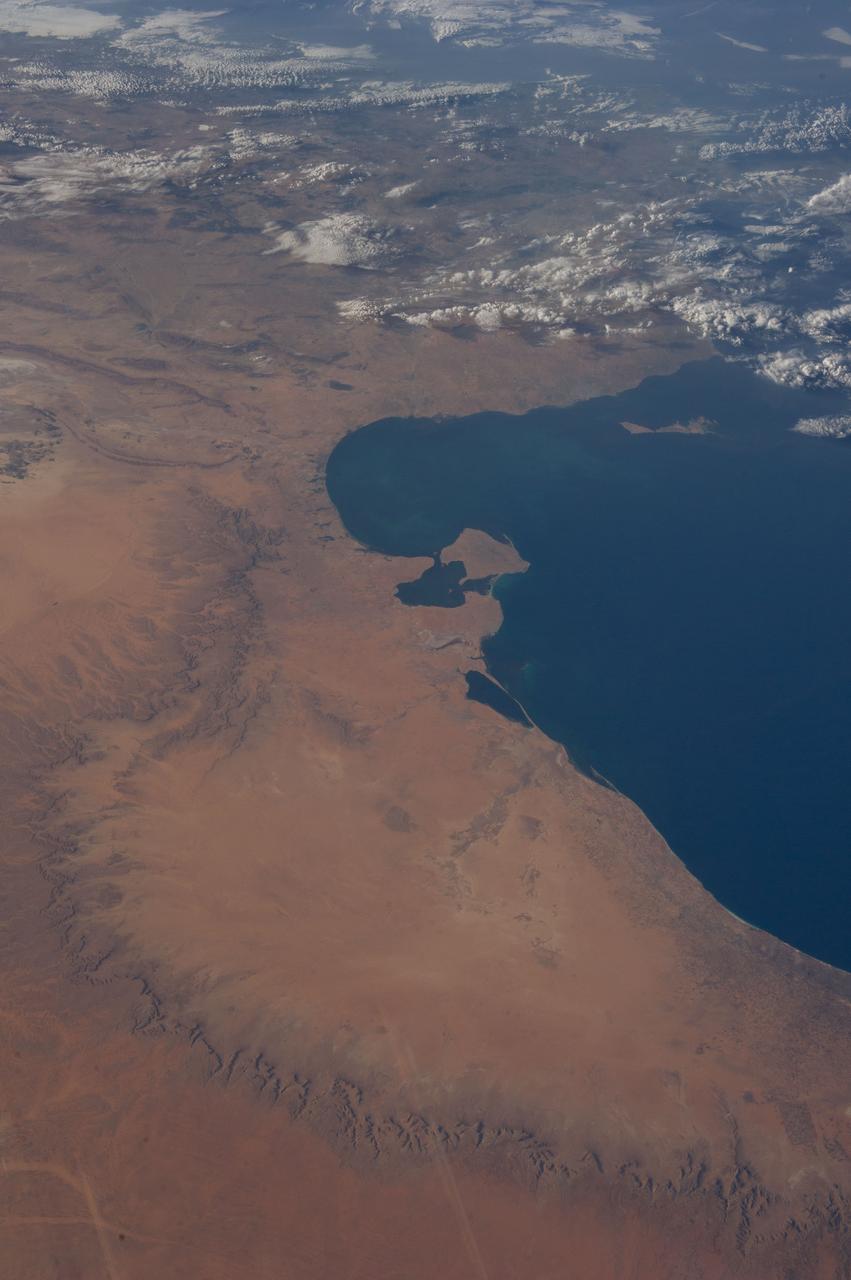
Earth observation taken during a day pass by the Expedition 37 crew. Per Twitter message: Mediterranean coast of Tunisia & northwest Libya.
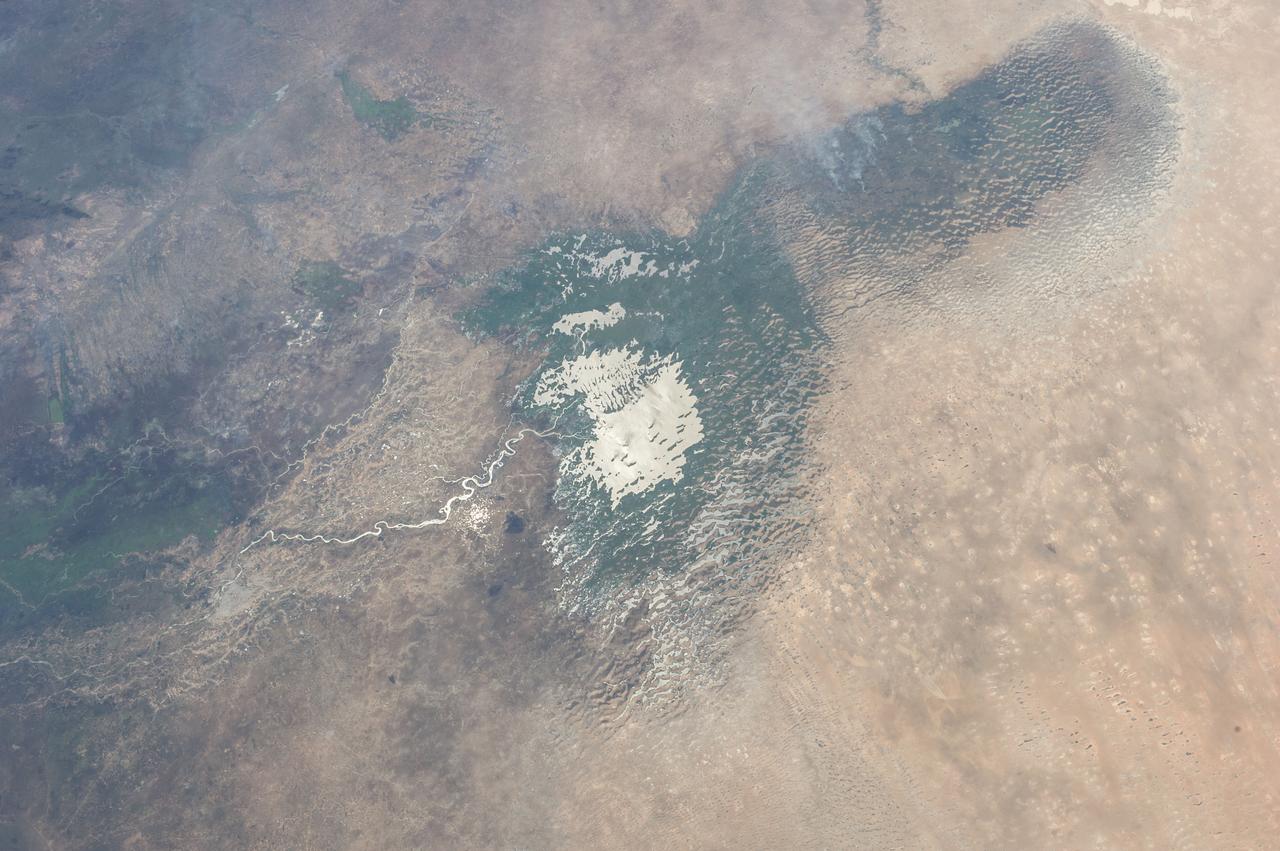
Earth observation taken during a day pass by the Expedition 37 crew. Per Twitter message: Sun glint on shallow Lake Chad in Chad & Nigeria.
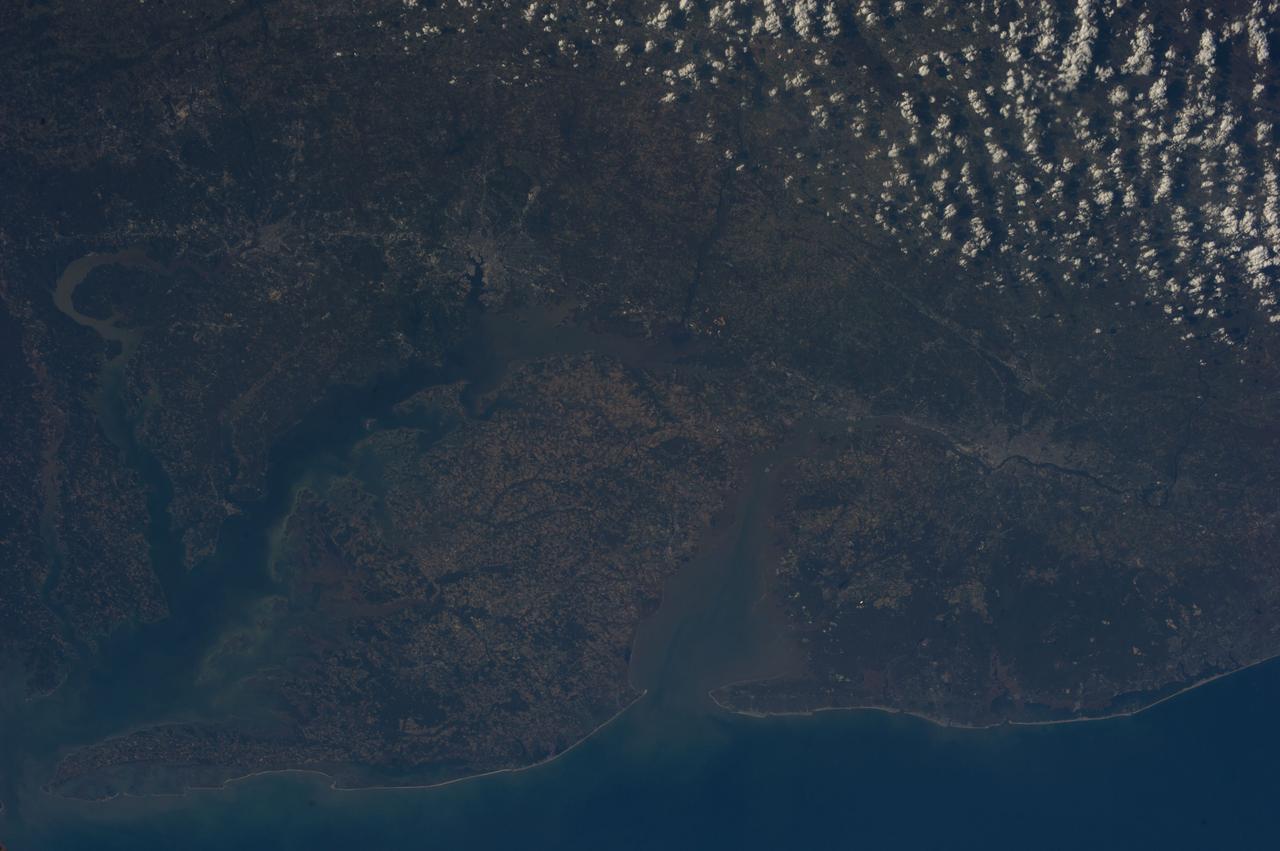
Earth Observation taken during a day pass by the Expedition 37 crew. Identified via Twitter message as Washington, D.C., Baltimore and Philidelphia.
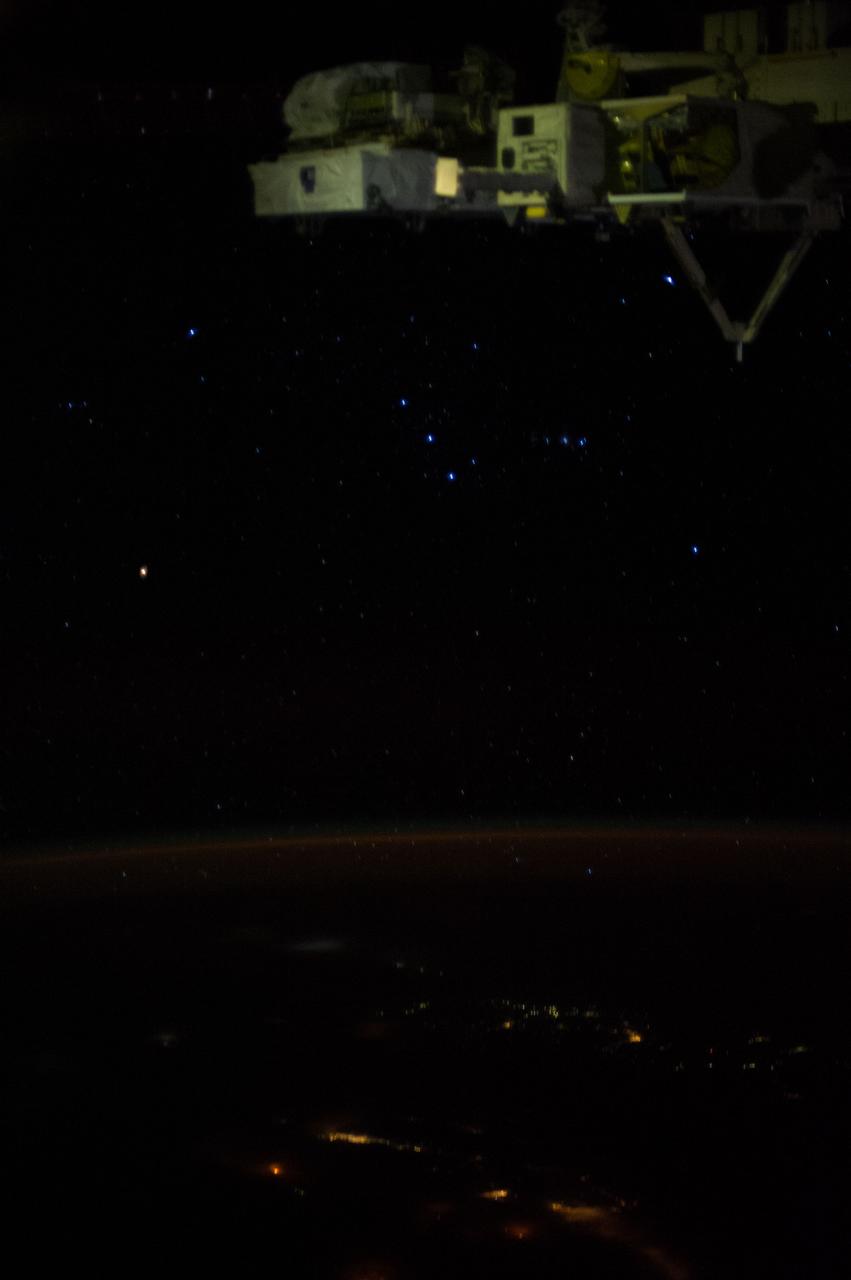
Earth observation taken during a night pass by an Expedition 36 crew member on board the International Space Station (ISS). Per Twitter message: Orion.
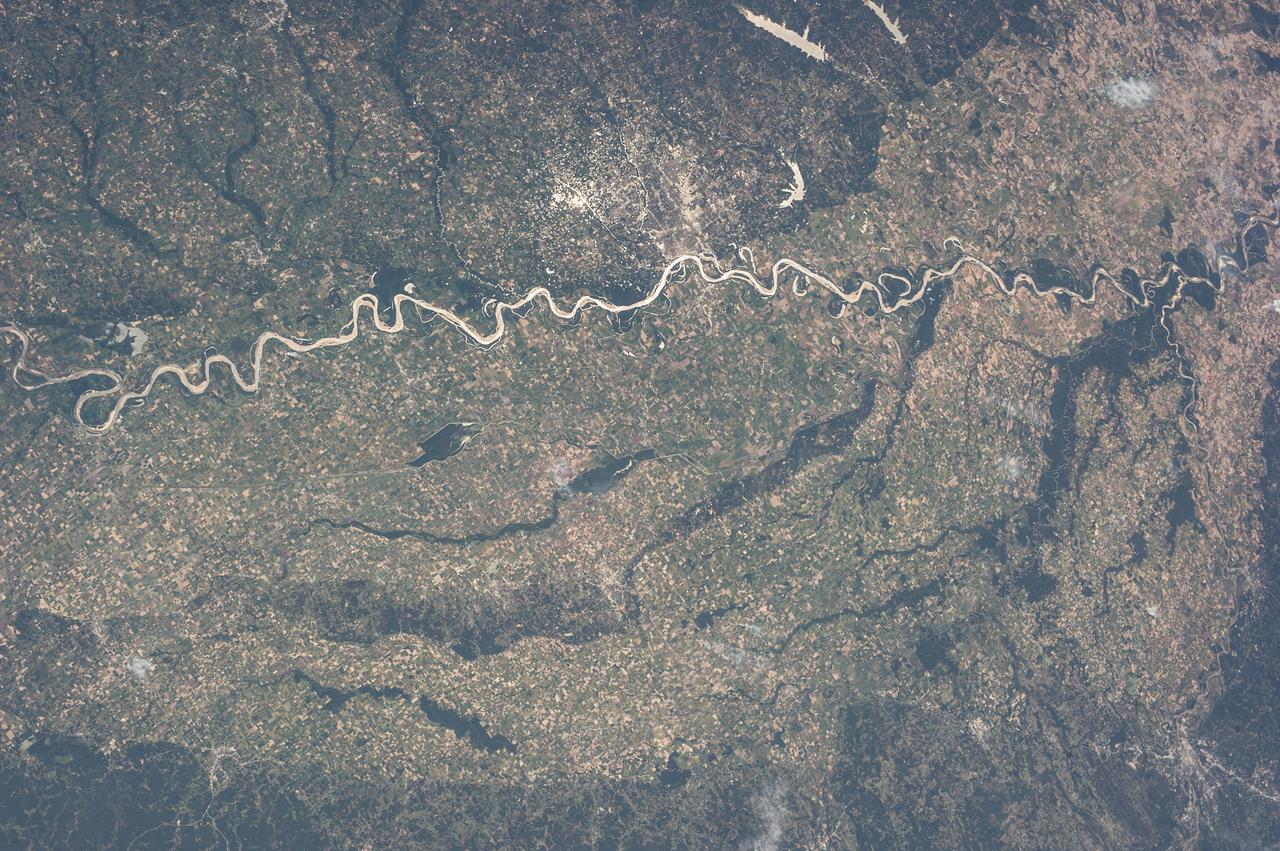
Earth observation taken during a day pass by the Expedition 37 crew. Per Twitter message: The Mississippi River through Missouri, Tennessee, Arkansas, Mississippi.
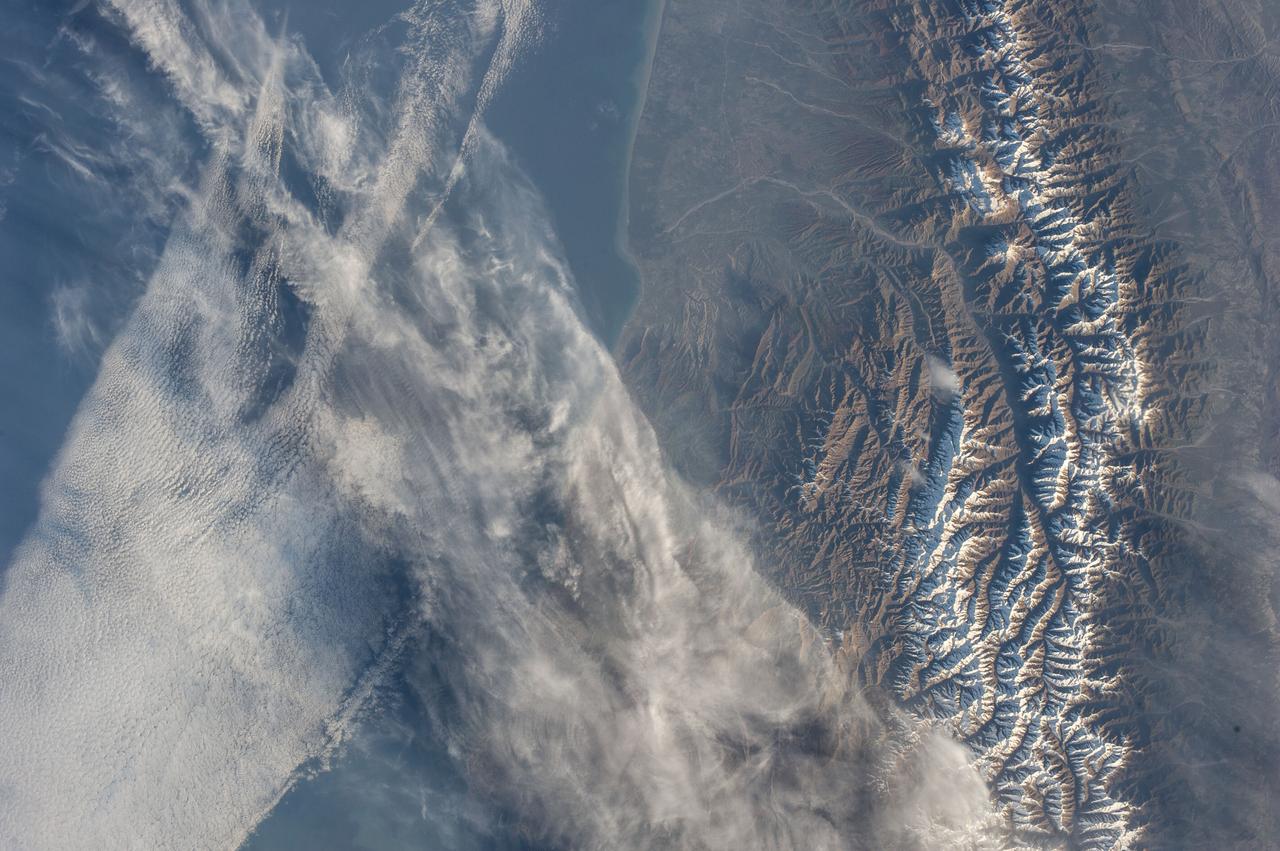
Earth observation taken during a day pass by the Expedition 37 crew. Per Twitter message: intersecting clouds over the Caspian Sea & Caucasus Mountains.
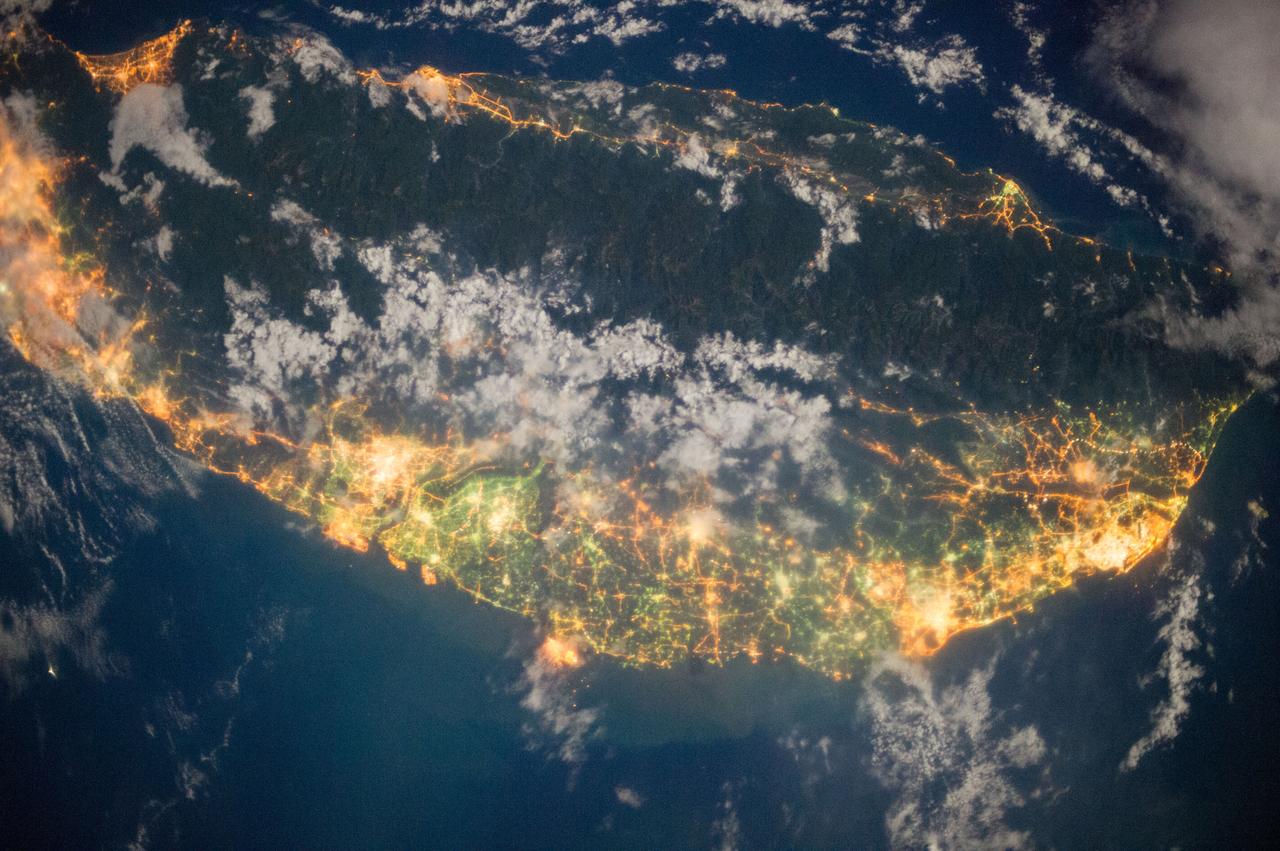
Earth observation taken during a night pass by an Expedition 36 crew member on board the International Space Station (ISS). Per Twitter message this is labeled as: Taiwan.
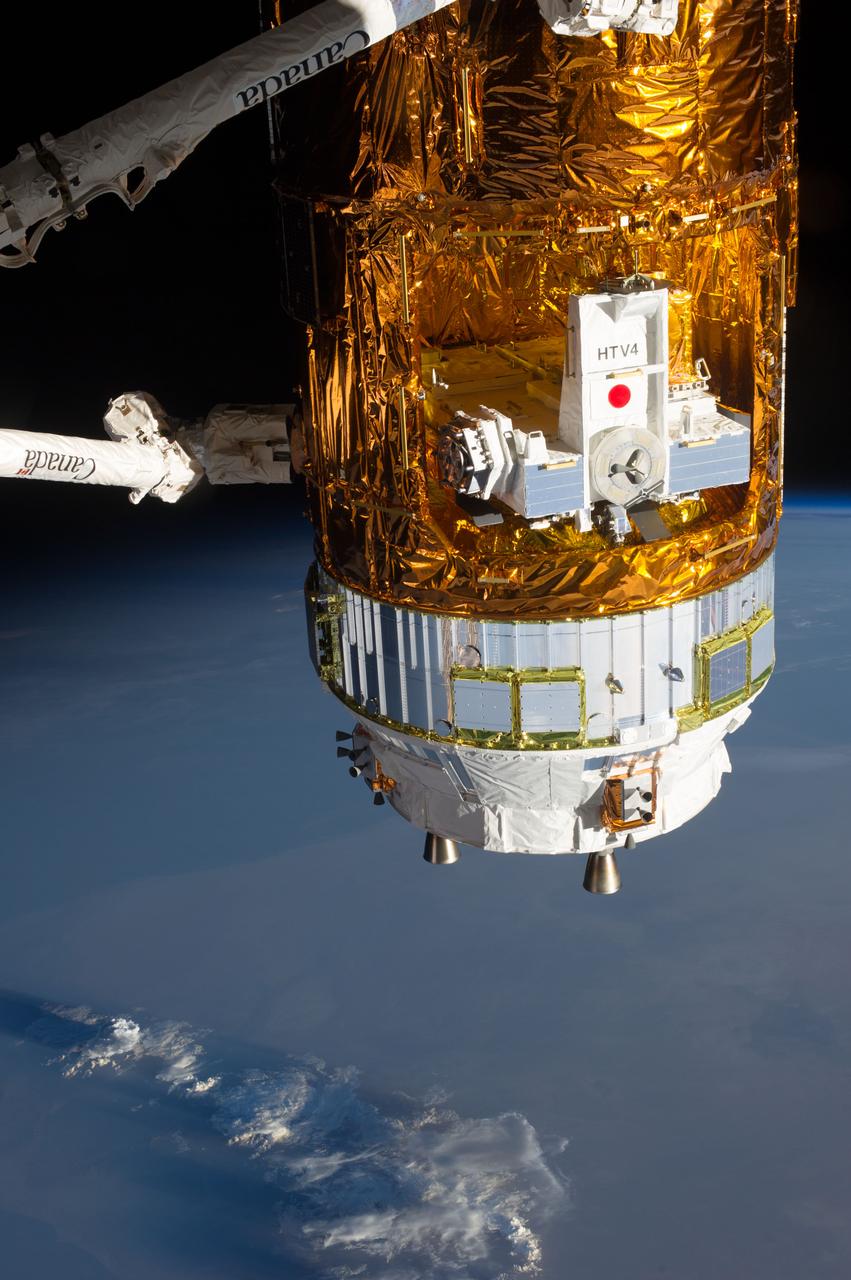
View of Japanese Kounotori H2 Transfer Vehicle-4 (HTV-4) docked to the International Space Station's Harmony Node 2 module. Sent as Twitter message.
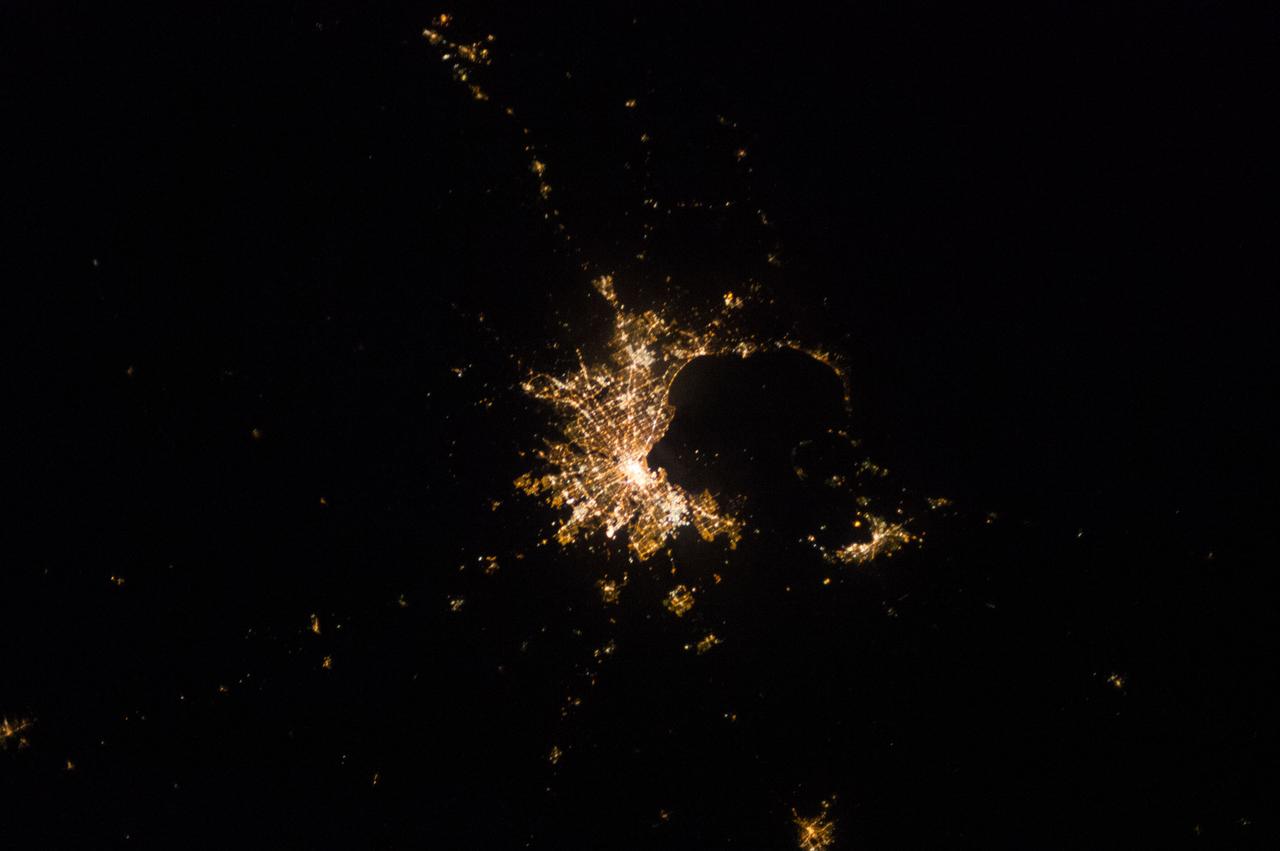
Earth observation taken during a night pass by an Expedition 36 crew member on board the International Space Station (ISS). Per Twitter message: Melbourne, Australia.
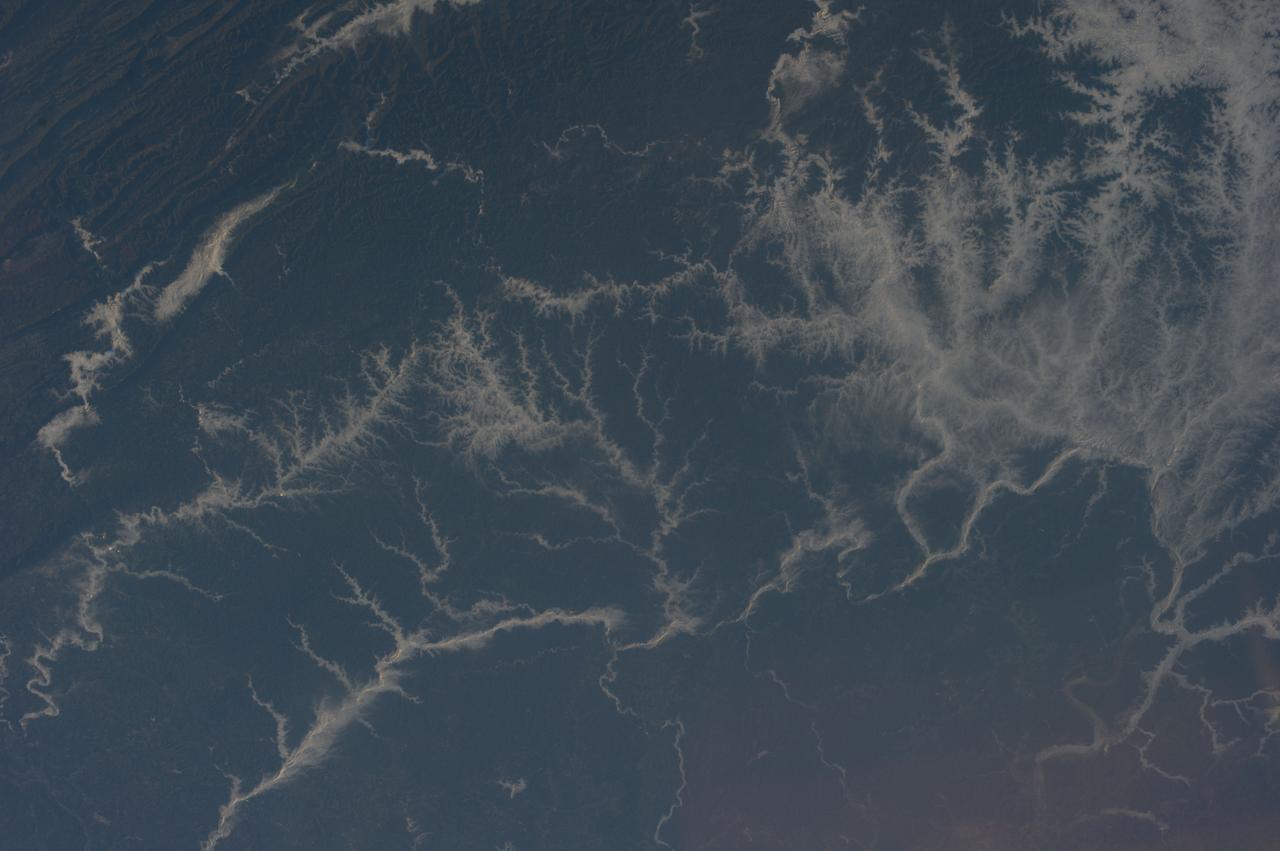
Earth observation taken during a day pass by the Expedition 37 crew. Per Twitter message: Early morning fog in the river valleys of Ohio and West Virginia.

Earth observation taken during day pass by an Expedition 36 crew member on board the International Space Station (ISS). Per Twitter message: Simply Earth.
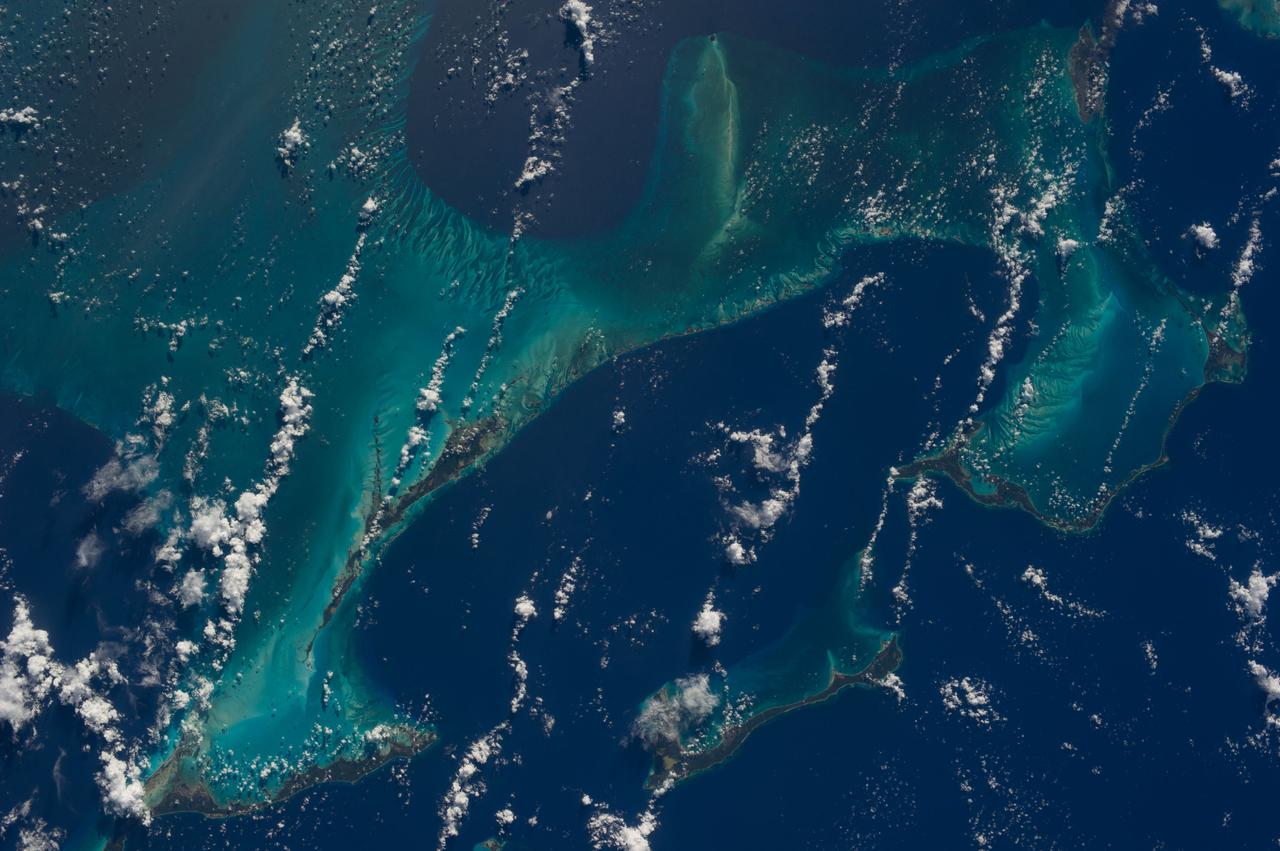
Earth observation taken during day pass by an Expedition 36 crew member on board the International Space Station (ISS). Per Twitter message: Bahamas.
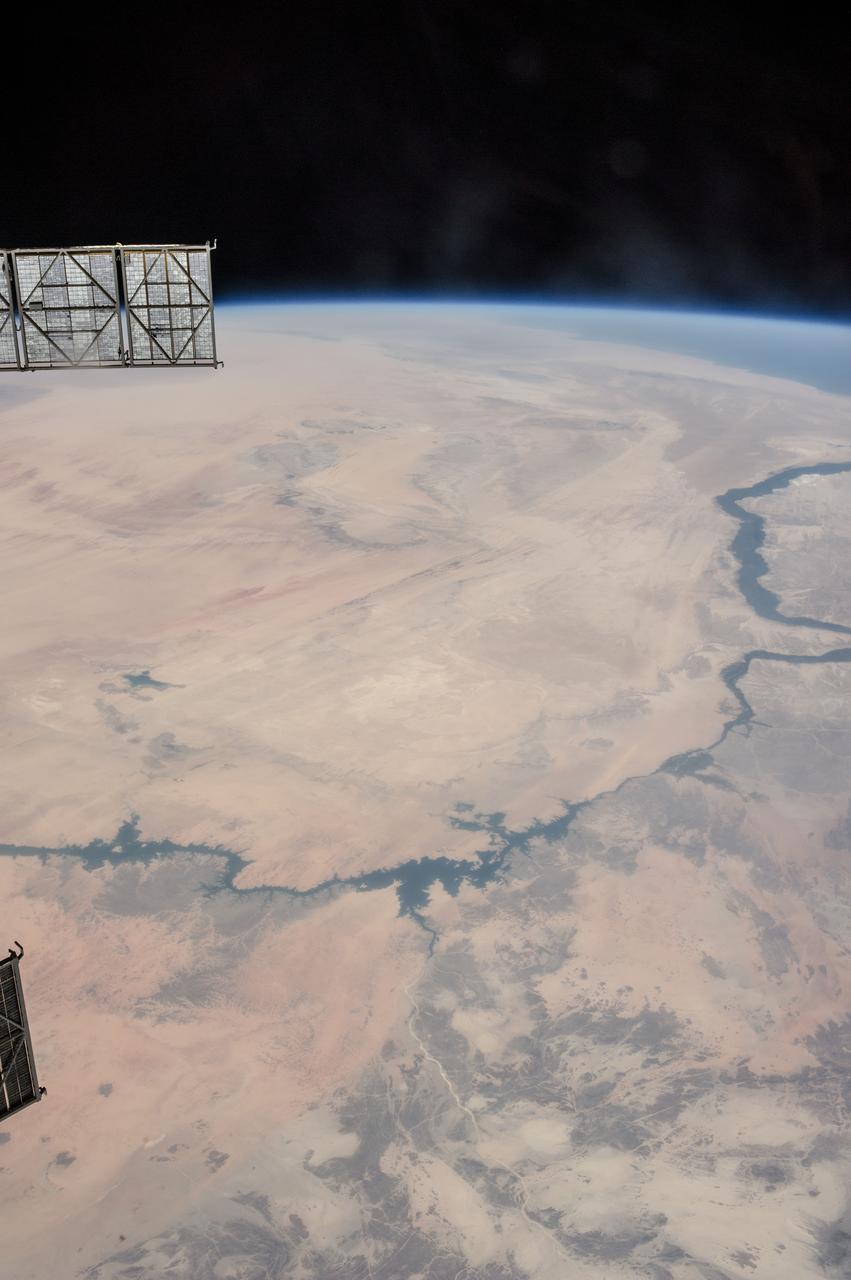
Earth observation taken during a day pass by an Expedition 36 crew member on board the International Space Station (ISS). Per Twitter message: The Nile.
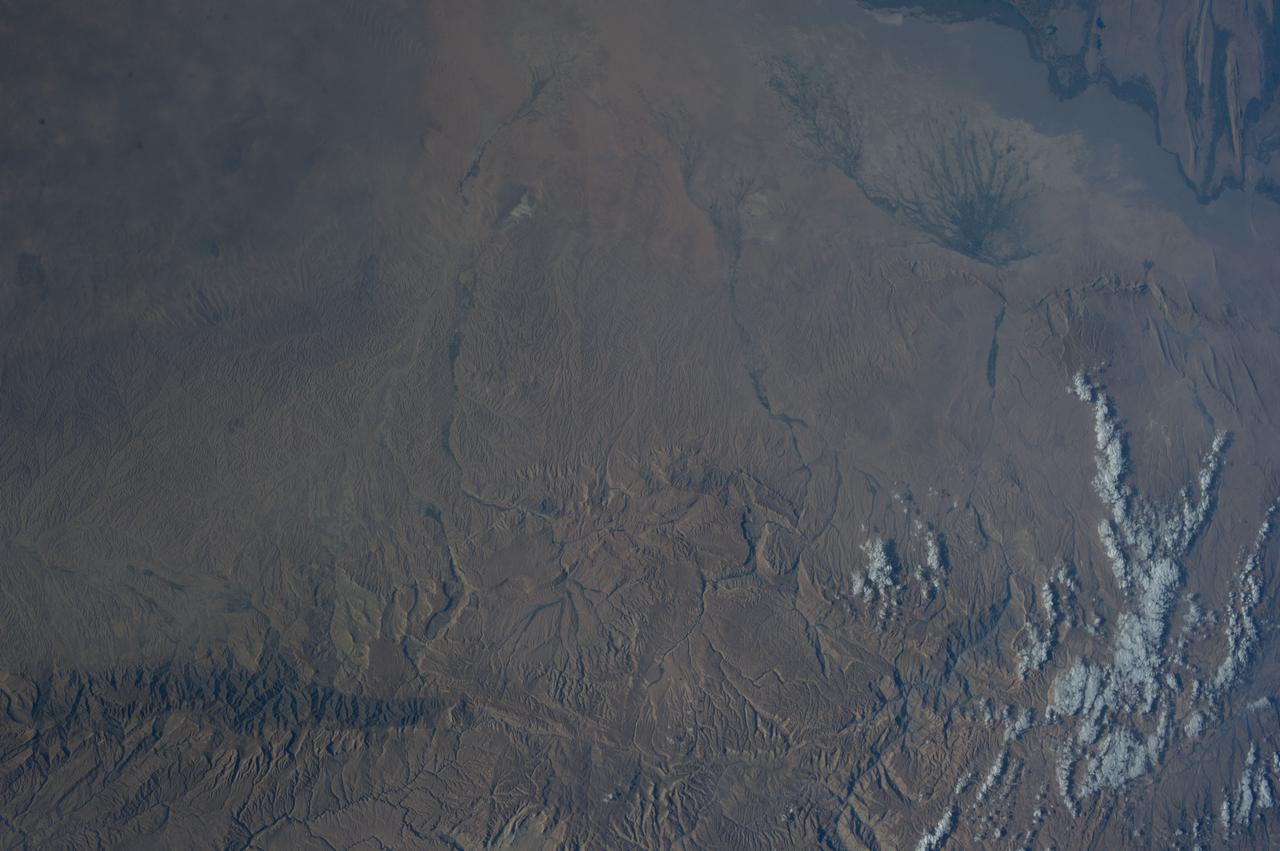
Earth observation taken during a day pass by an Expedition 36 crew member on board the International Space Station (ISS). Per Twitter message: Northern Afghanistan.
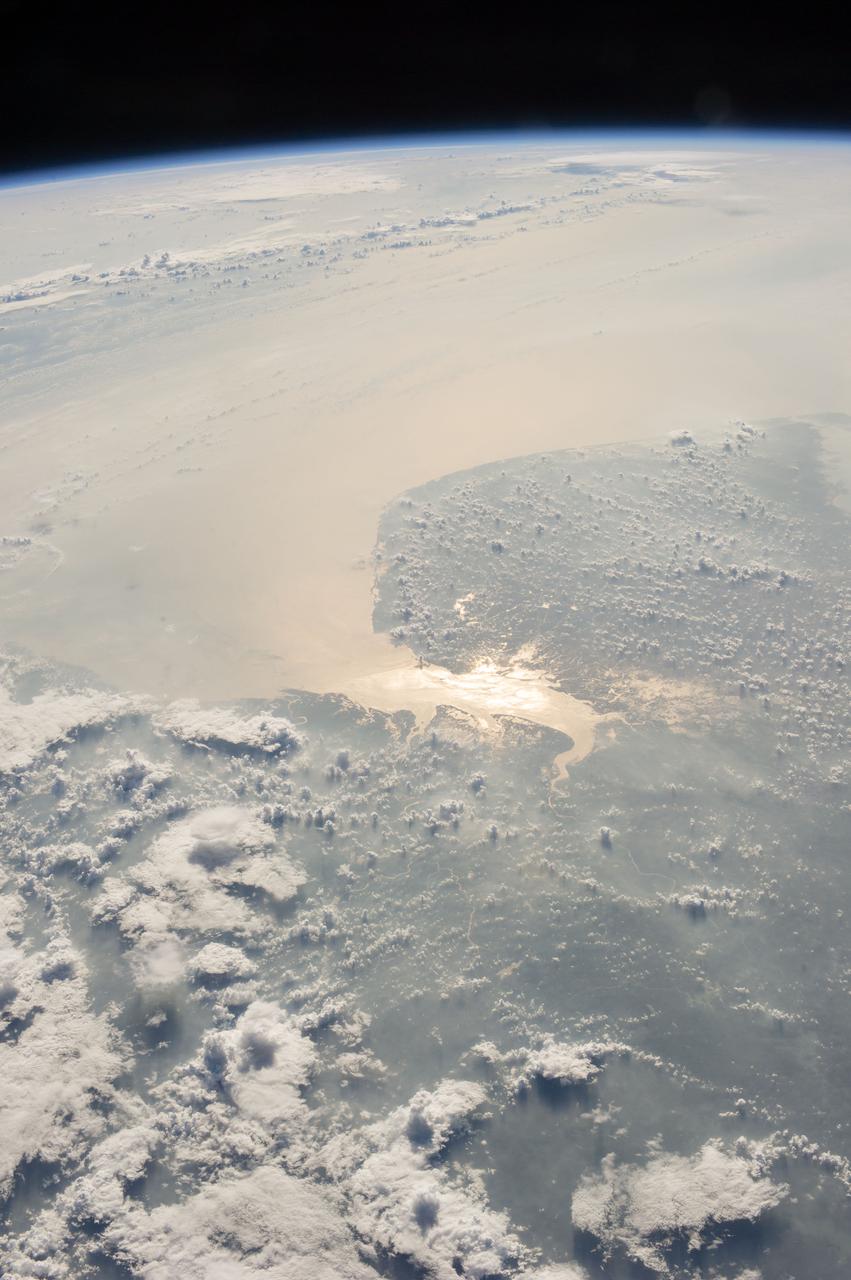
Earth observation taken during a day pass by the Expedition 37 crew. Per Twitter message: Sun glint on the Gulf of Khambhat, India.
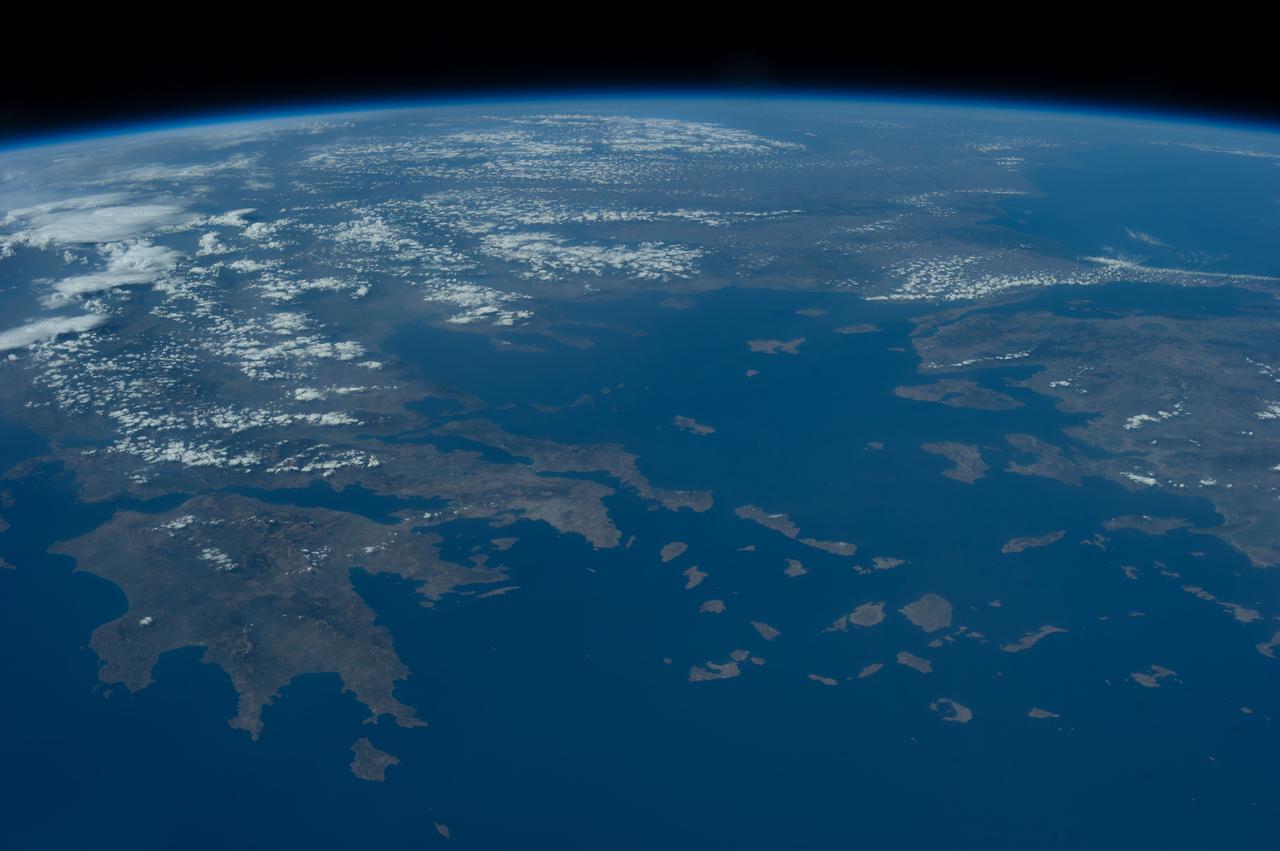
Earth observation taken during day pass by an Expedition 36 crew member on board the International Space Station (ISS). Per Twitter message: The Aegean Sea.
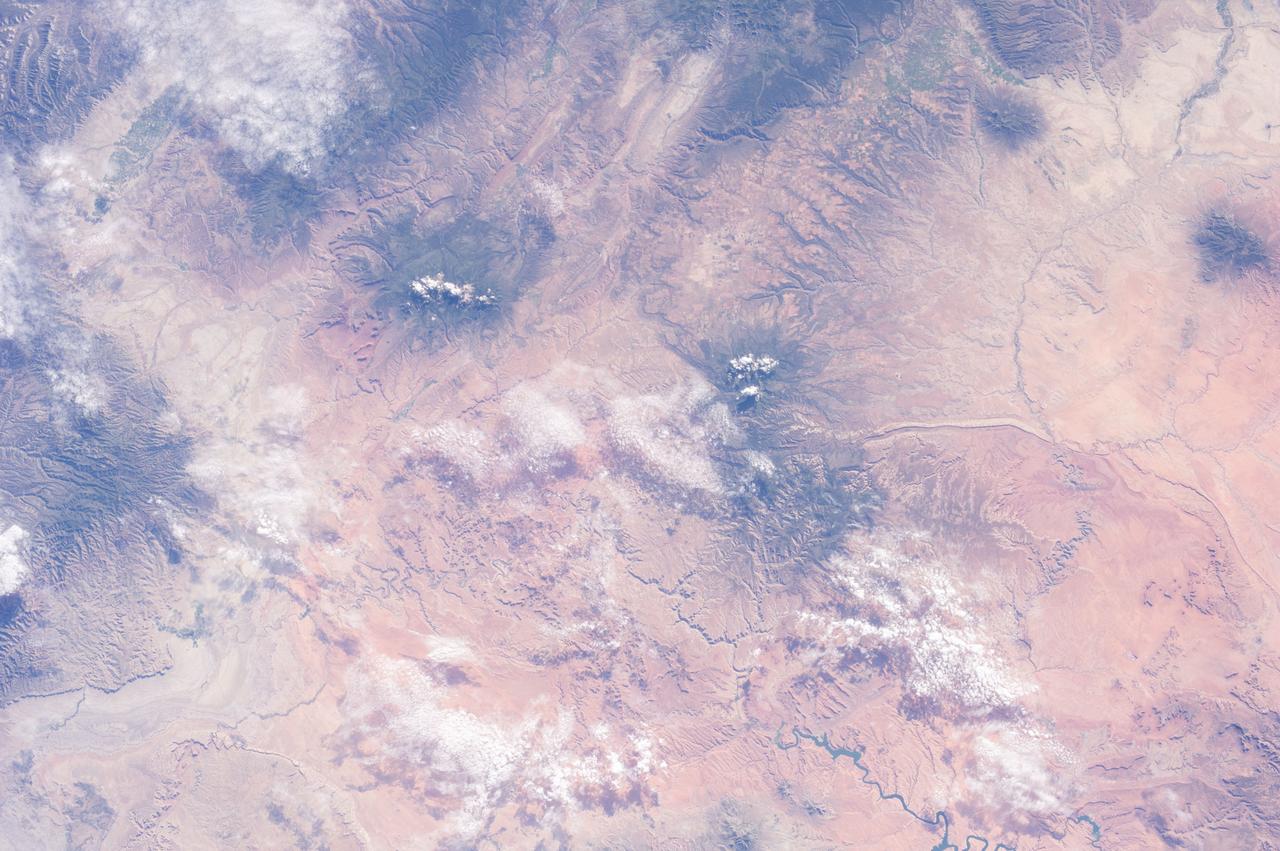
Earth observation taken during a day pass by an Expedition 36 crew member on board the International Space Station (ISS). Per Twitter message: Southeast Utah.
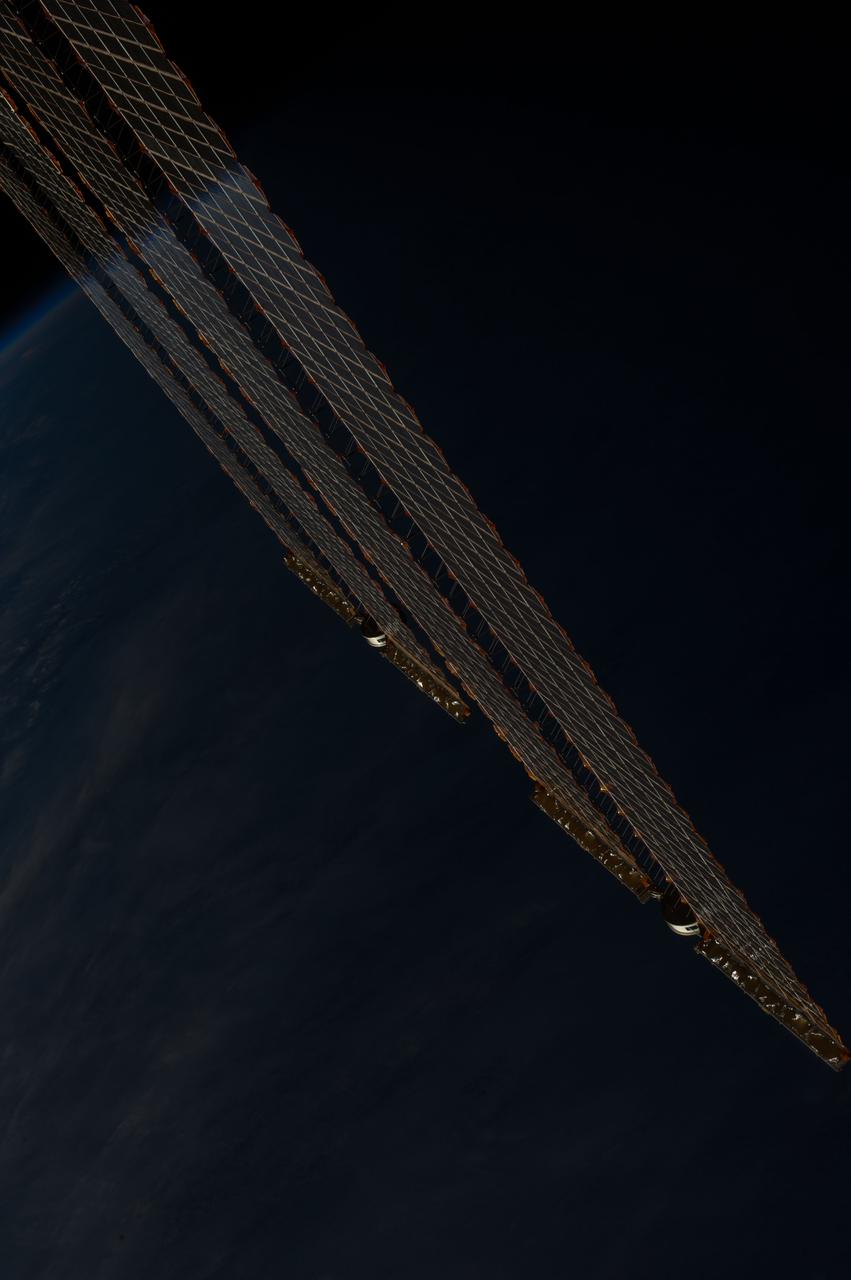
Earth observation taken during a day pass by the Expedition 37 crew. Per Twitter message: Caught the reflection of Earth's horizon on our solar arrays at sunset.

Earth observation taken during a night pass by an Expedition 36 crew member on board the International Space Station (ISS). Per Twitter message: Tokyo, Japan.
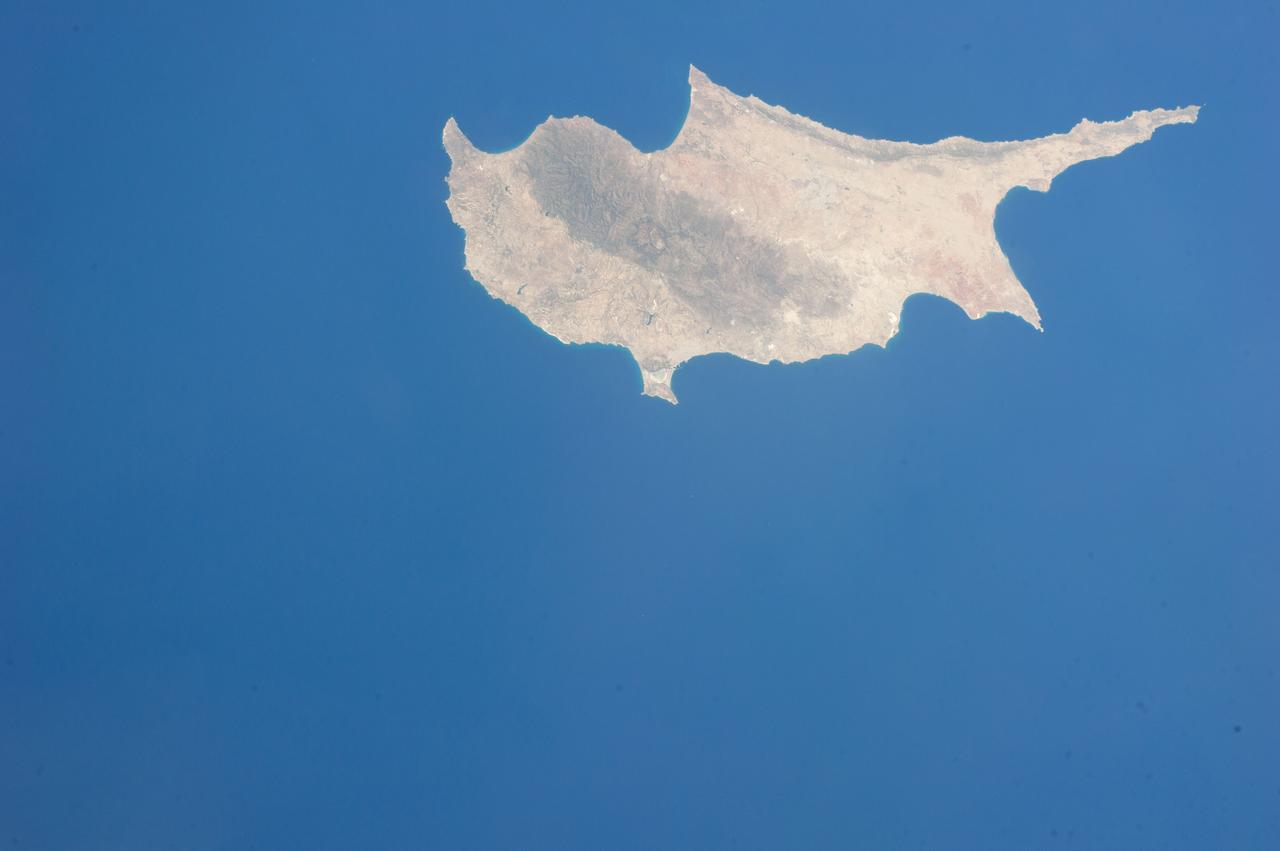
Earth observation taken during a day pass by an Expedition 36 crew member on board the International Space Station (ISS). Per Twitter message: Cyprus.
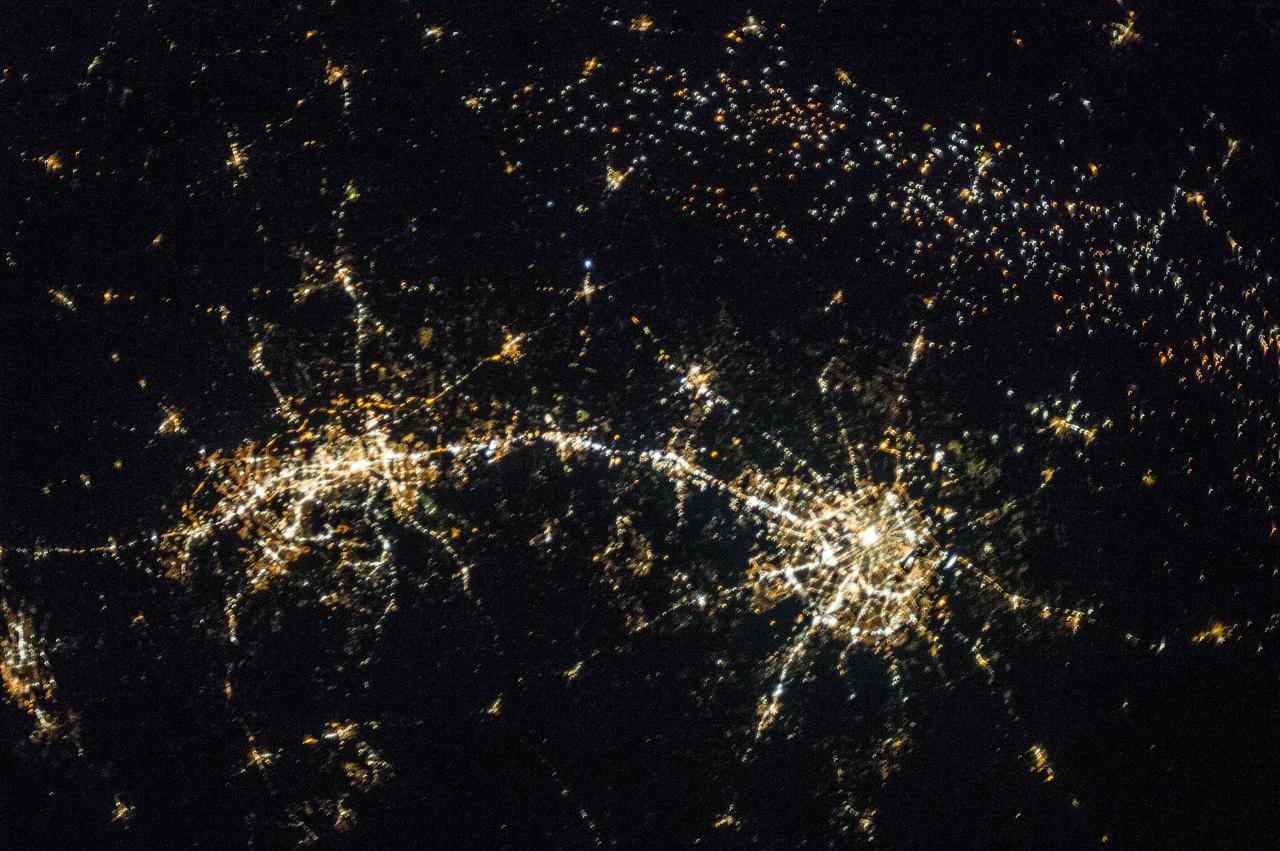
Earth observation taken during a night pass by the Expedition 37 crew. City lights are visible. Per Twitter message this is San Antonio and Austin Texas.
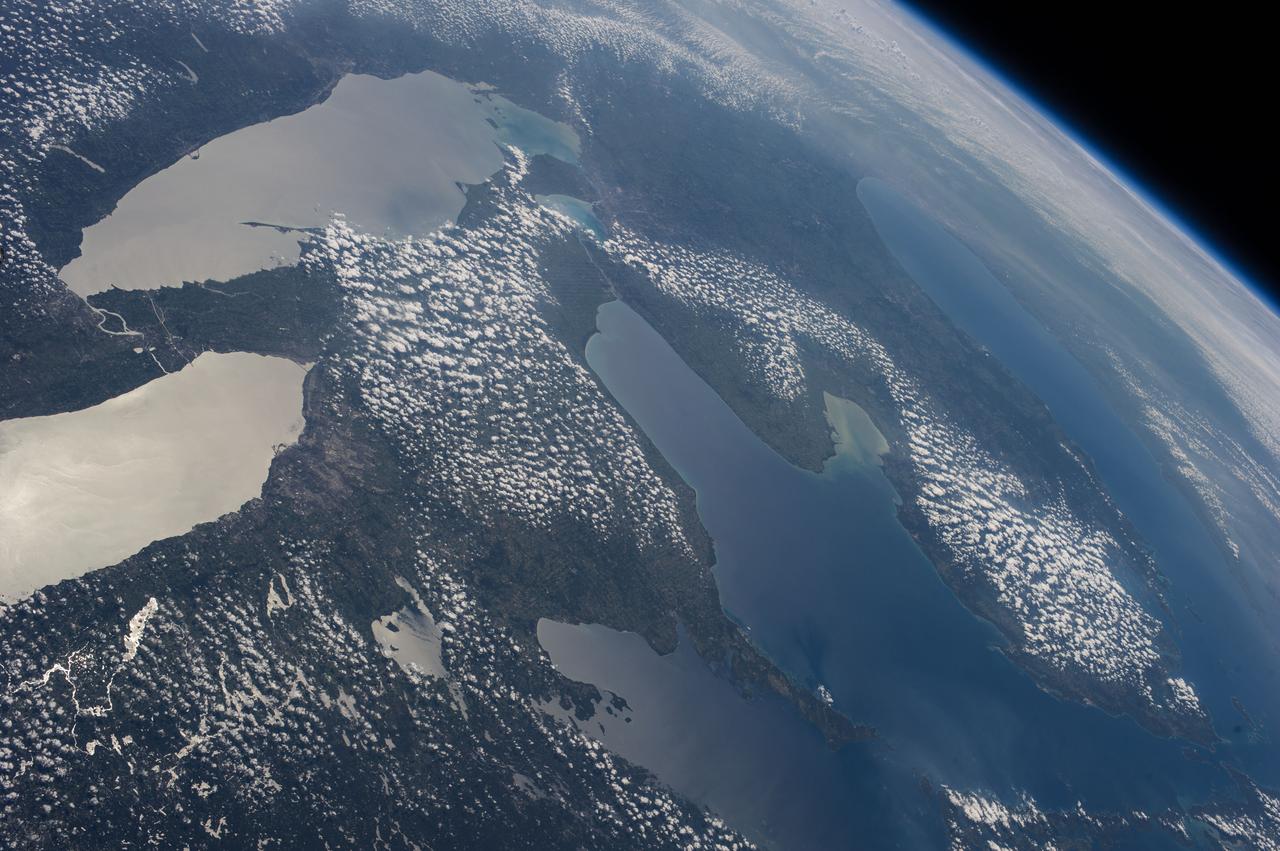
Earth observation taken during a day pass by an Expedition 36 crew member on board the International Space Station (ISS). Per Twitter message: The Great Lakes.
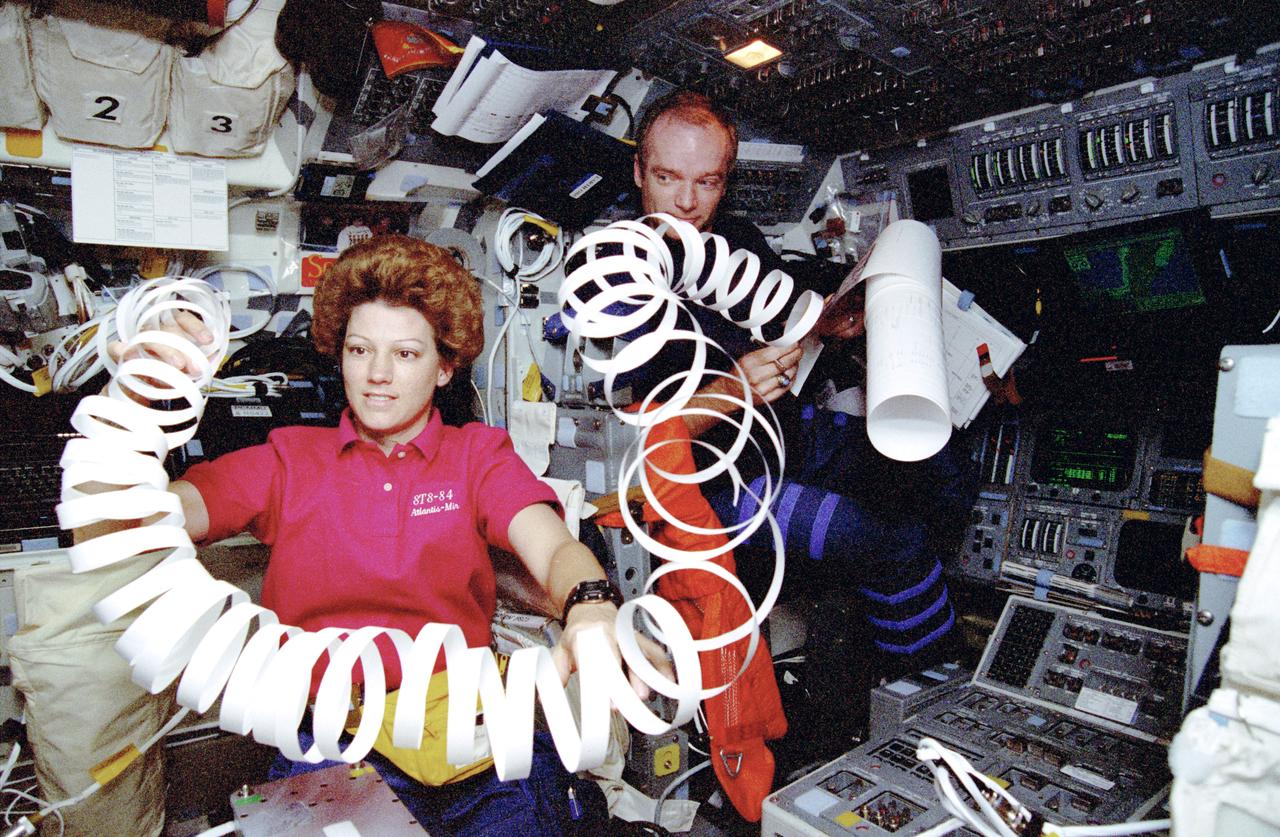
STS084-358-009 (15-24 May 1997) --- Astronaut Eileen M. Collins, STS-84 pilot, handles what appears to be an oversized space toy but is actually a lengthy roll of paper margin, separated from the main roll of messages just transmitted to the flight crew from ground controllers in Houston, Texas. Seated at the commander's station, astronaut Charles J. Precourt, commander, checks the latest transmission from a message device called Thermal Imaging Printing System (TIPS).
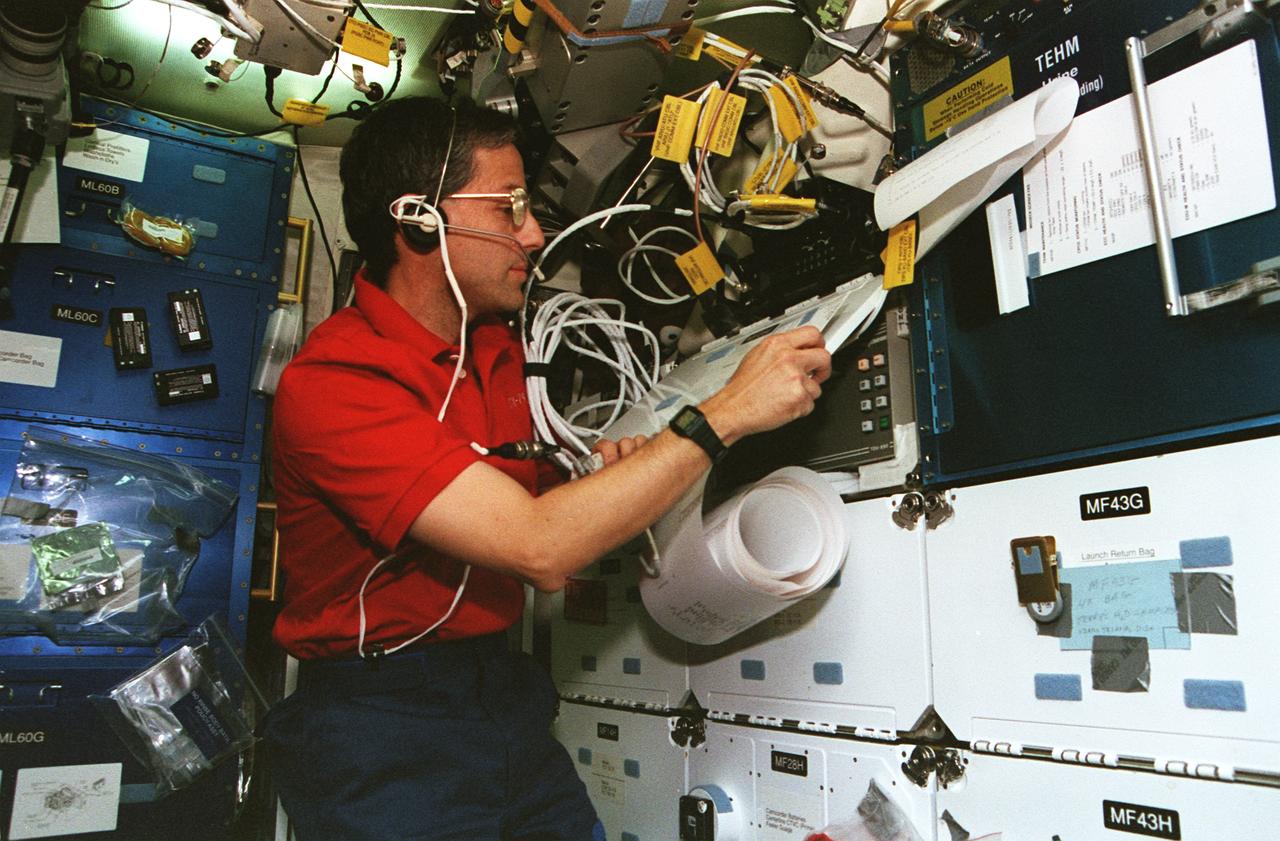
STS079-365-004 (16-26 Sept. 1996) --- During off-duty time, Jerome (Jay) Apt, a licensed amateur radio operator, talks to ground contacts via the Shuttle Amateur Radio Experiment (SAREX). The radio was also used for communications between the Space Shuttle Atlantis and Russia's Mir Space Station during docking and undocking activities. This photograph is one of fifteen 35mm frames (along with four 70mm frames) of still photography documenting the activities of NASA's STS-79 mission, which began with a September 16, 1996, liftoff from Launch Pad 39A the Kennedy Space Center (KSC) and ended with a landing at KSC on September 26, 1996. Onboard for the launch were astronauts William F. Readdy, commander; Terrence W. Wilcutt, pilot; John E. Blaha, Apt, Thomas D. Akers and Carl E. Walz, all mission specialists. On flight day 4, the crew docked with Mir. Shannon W. Lucid, who had spent six months aboard Mir, switched cosmonaut guest researcher roles with Blaha. The latter joined fellow Mir-22 crew members Valeri G. Korzun, commander, and Aleksandr Y. Kaleri, flight engineer.
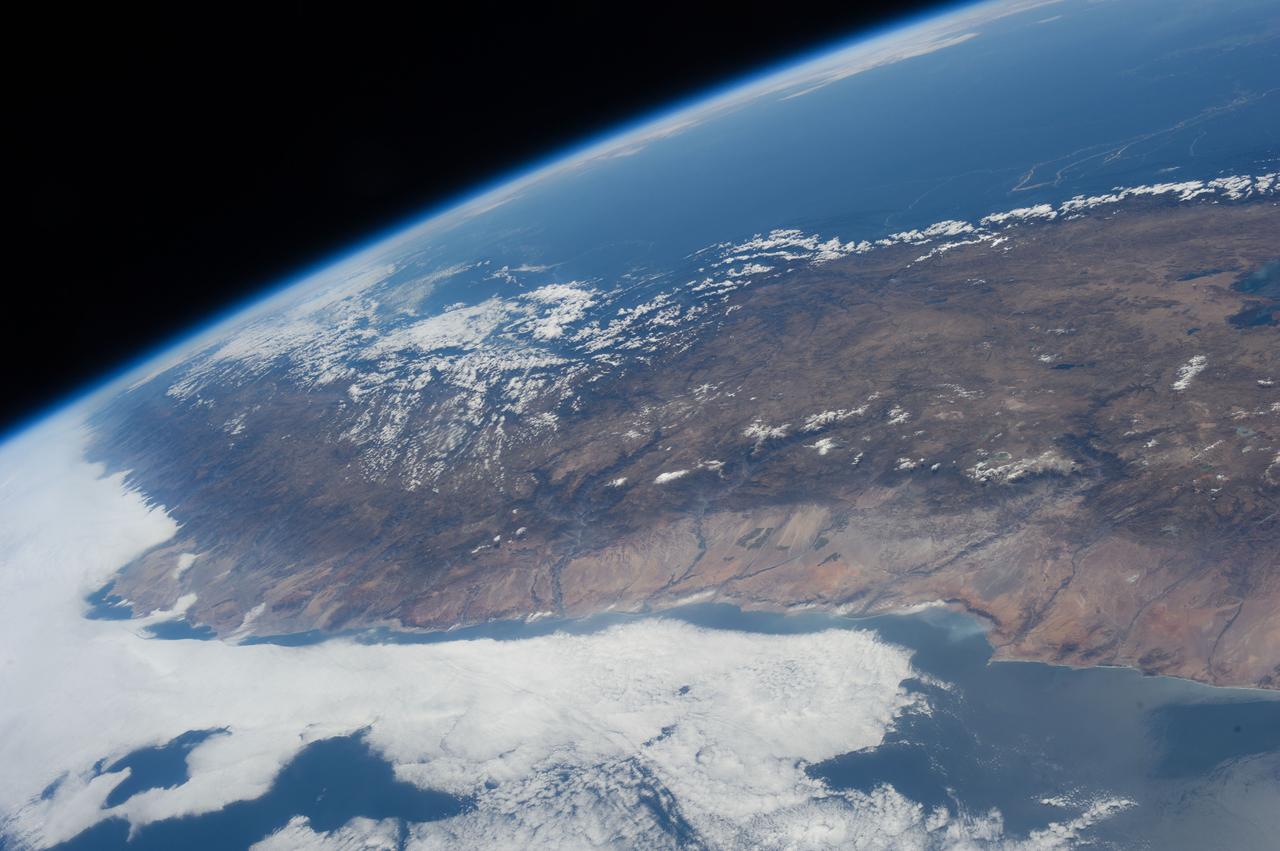
Earth observation taken during day pass by an Expedition 36 crew member on board the International Space Station (ISS). Per Twitter message: Southwest coast of Peru.
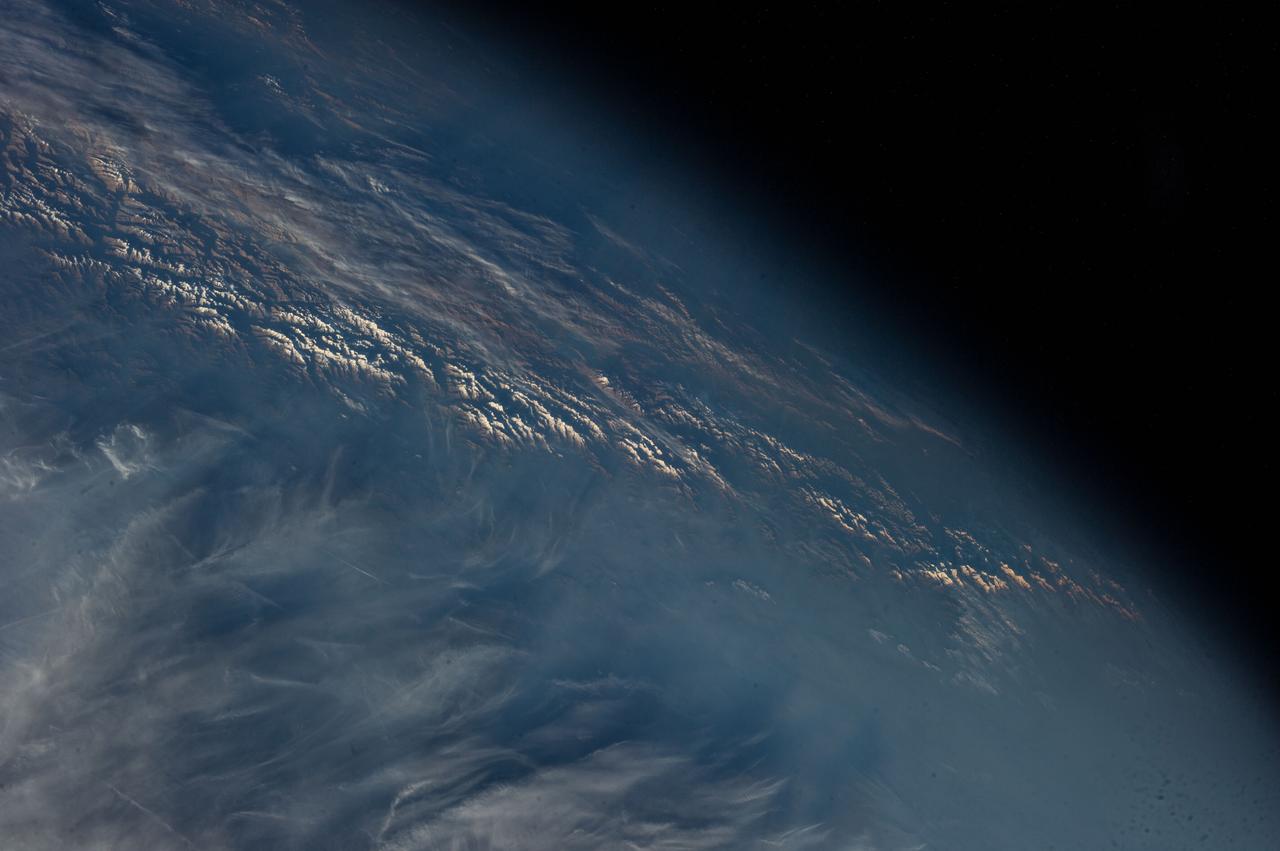
Earth observation taken during a day pass by an Expedition 37 crew member on board the International Space Station (ISS). Identified via Twitter message as dusk on the Himalayas.
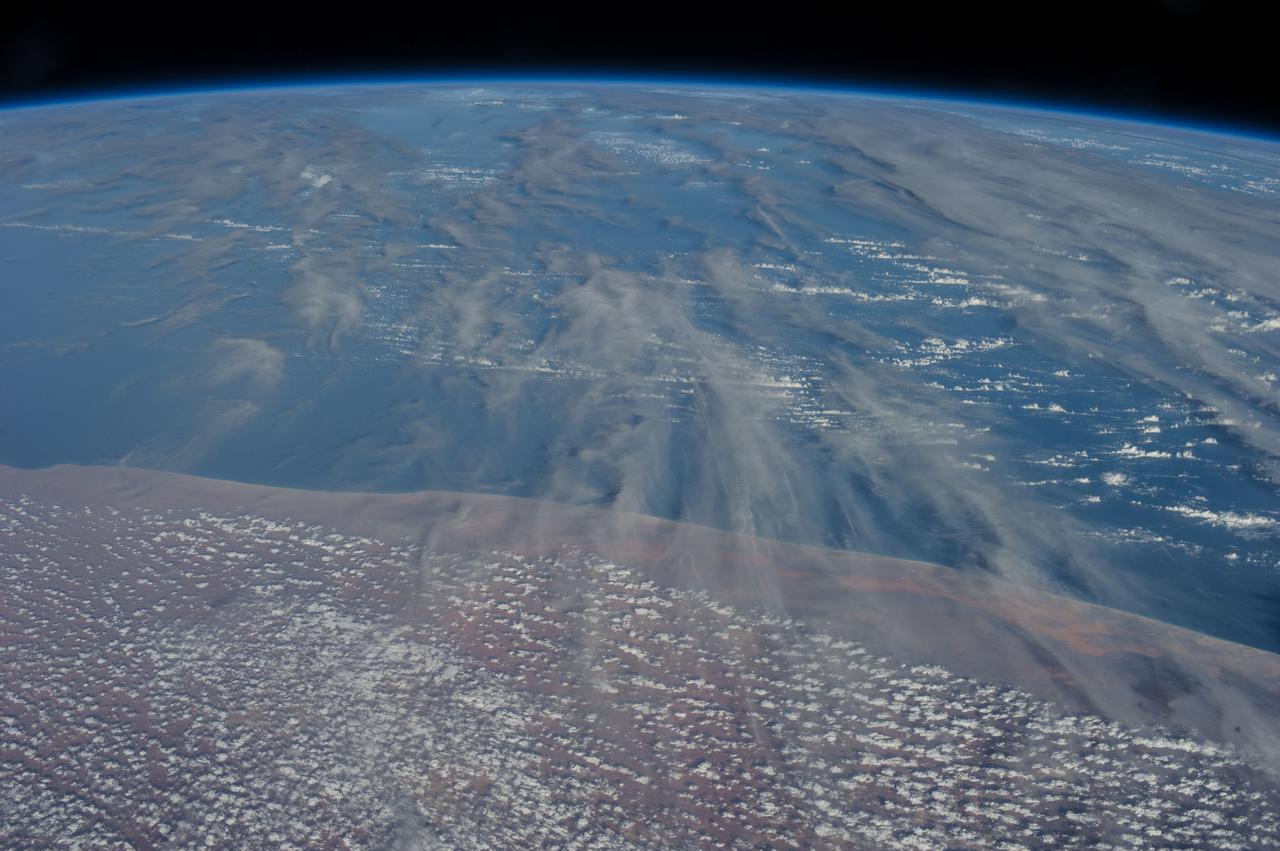
Earth observation taken during a day pass by an Expedition 36 crew member on board the International Space Station (ISS). Per Twitter message: Coast of Somalia on the Indian Ocean.
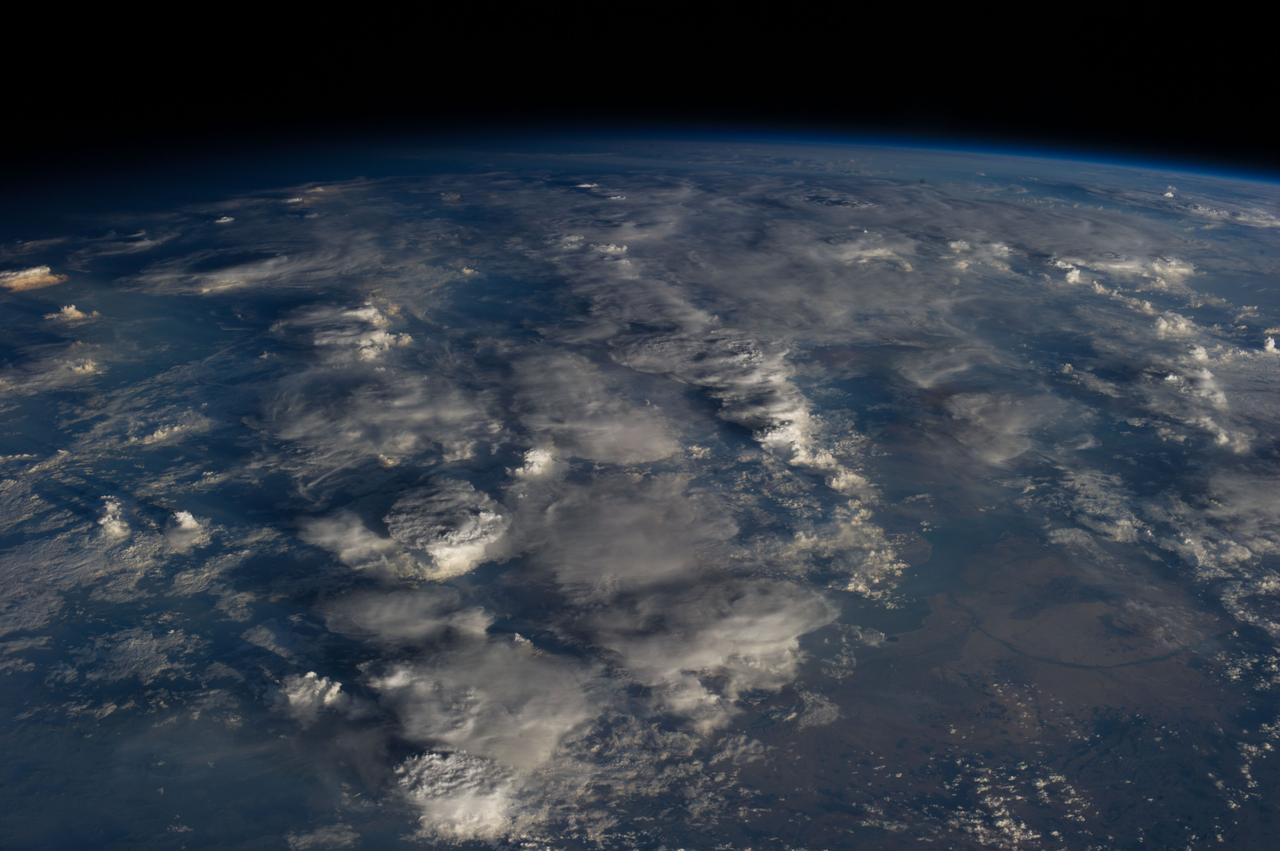
Earth observation taken during day pass by an Expedition 37 crew member on board the International Space Station (ISS). Identified via Twitter message as over Eastern Africa.
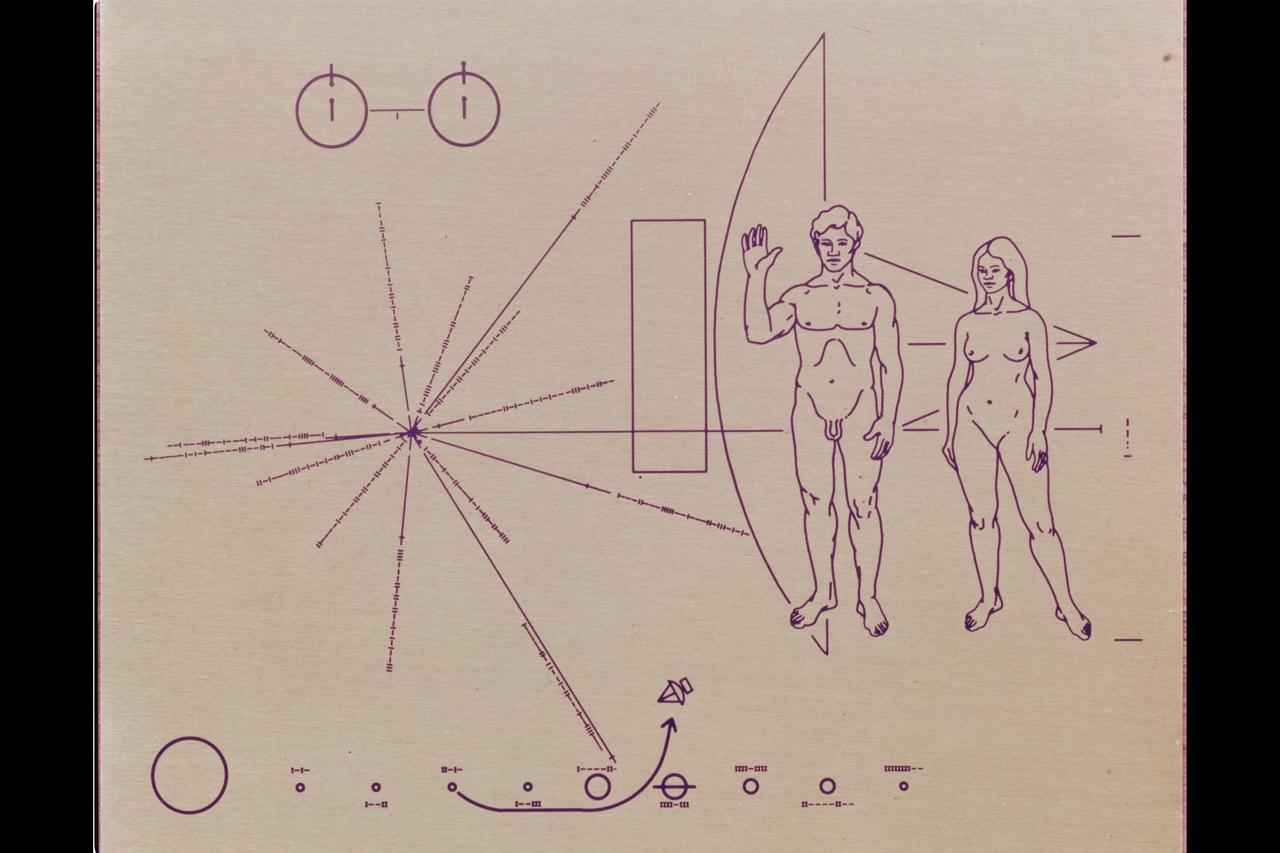
Pioneer F/G Plaque: Pioneer 10 the first spacecraft to leave our solar system carries a message to other worlds. The plaque was designed by Drs. Carl Sagan and Frank Drake, the artwork was prepared by Linda Salzman Sagan.
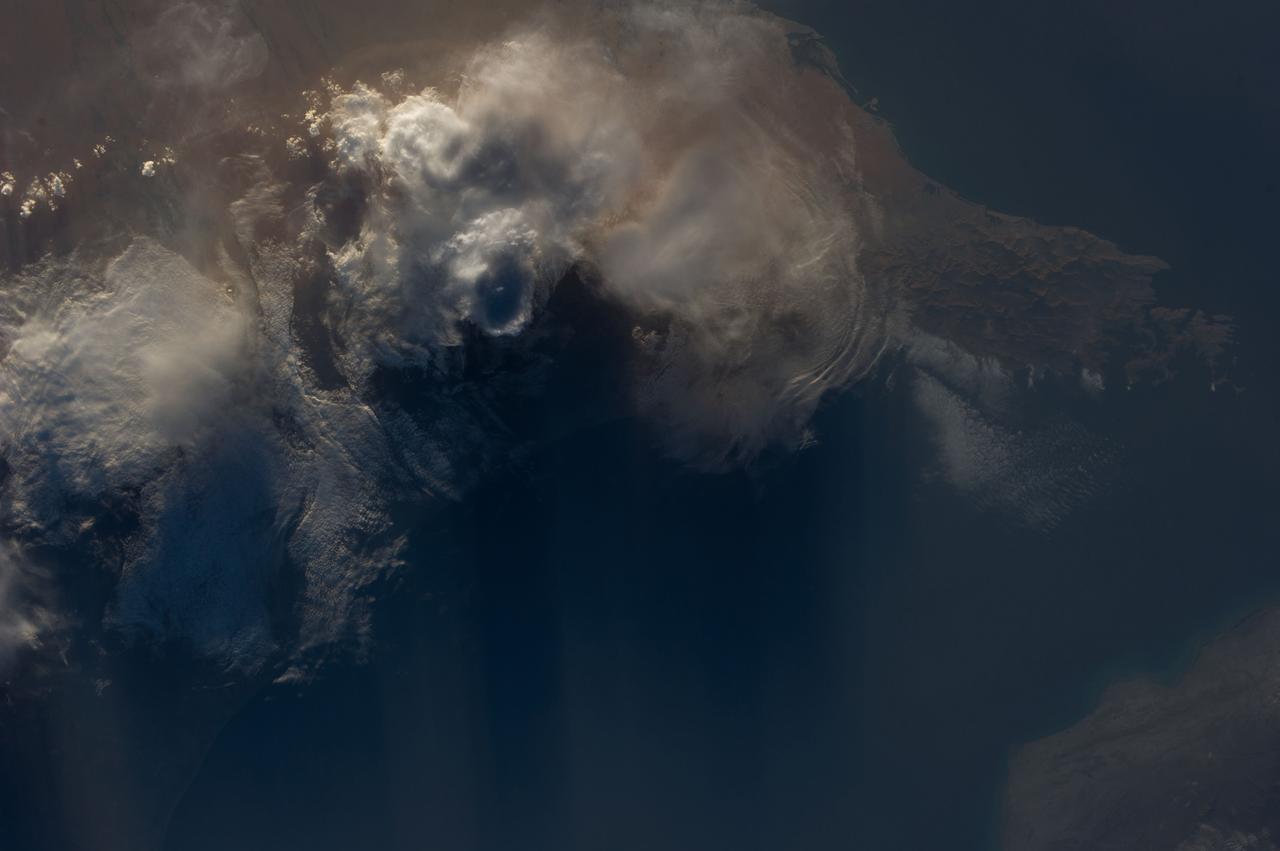
Earth observation taken by an Expedition 36 crew member on board the International Space Station (ISS). Per Twitter message: Evening storms over Oman & United Arab Emirates.

Earth observation taken during a night pass by the Expedition 37 crew. Folder lists this as Seoul, South Korea. City lights are visible. Also sent as Twitter message.
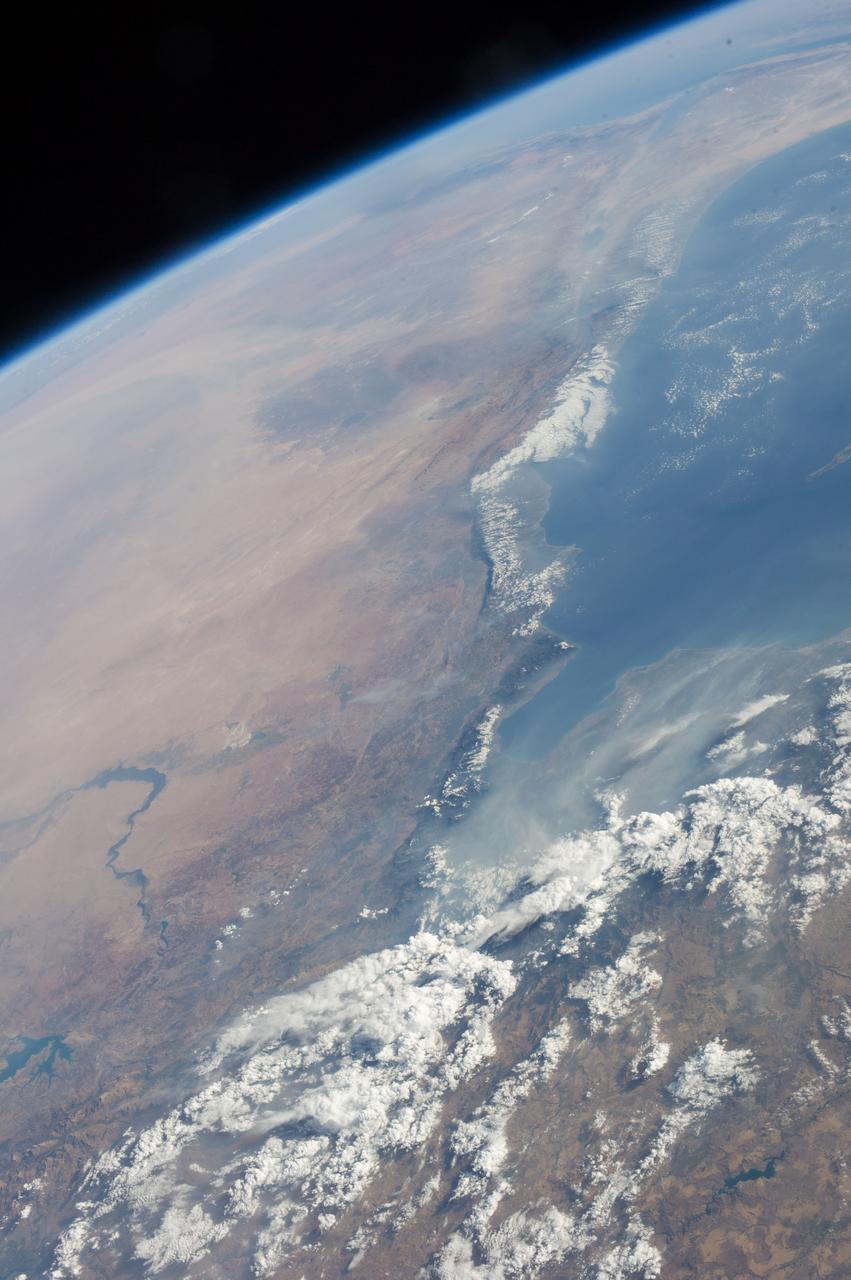
Earth observation taken by an Expedition 36 crew member on board the International Space Station (ISS). Per Twitter message: Eastern Mediterranean Sea coast, Turkey, Syria, Lebanon, Israel.

Photo of Astronaut Karen Nyber,Expedition 36 flight engineer,with a snack of peanut butter and chocolate sandwiched between two waffles. Photo taken in the Node 1 module. Also sent as Twitter message.
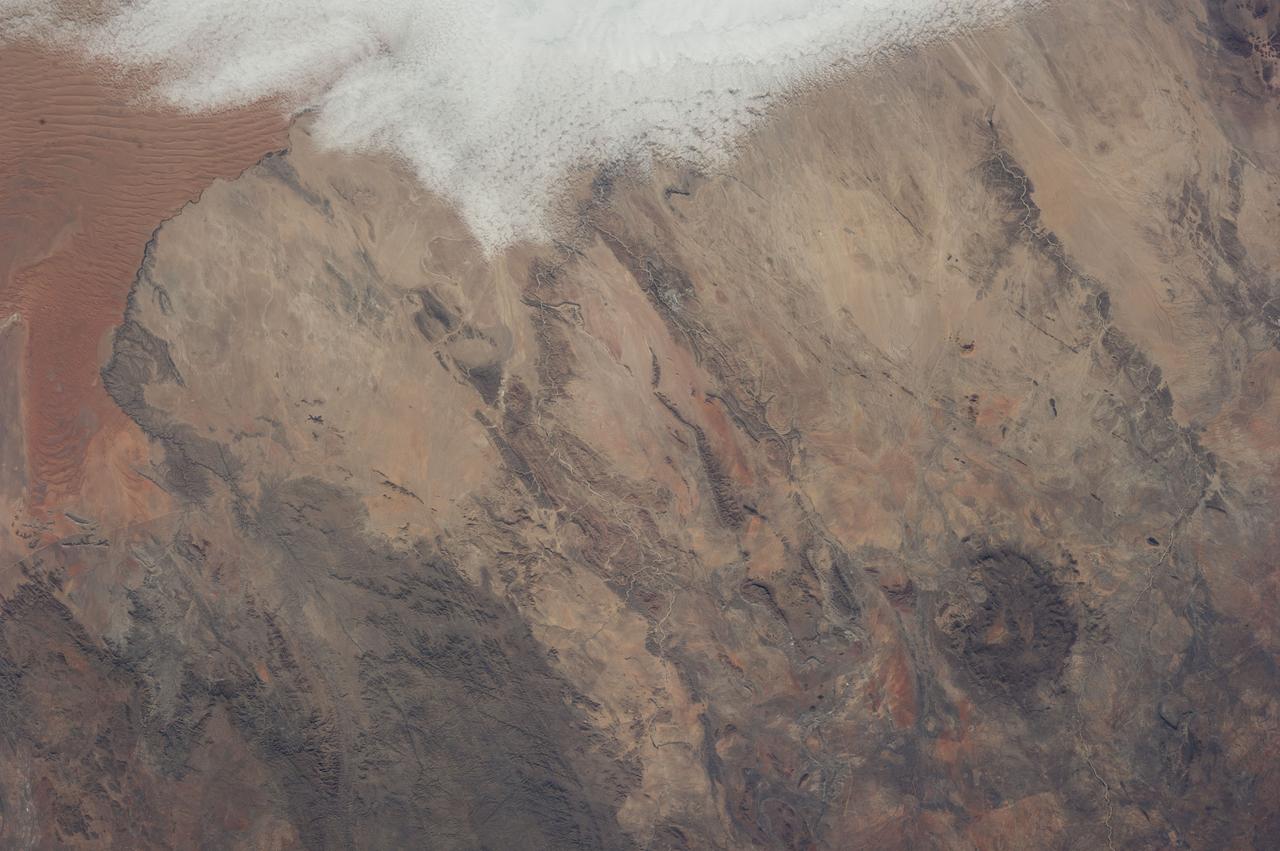
Earth observation taken during a day pass by an Expedition 37 crew member on board the International Space Station (ISS). Identified via Twitter message as west central coast of Namibia.
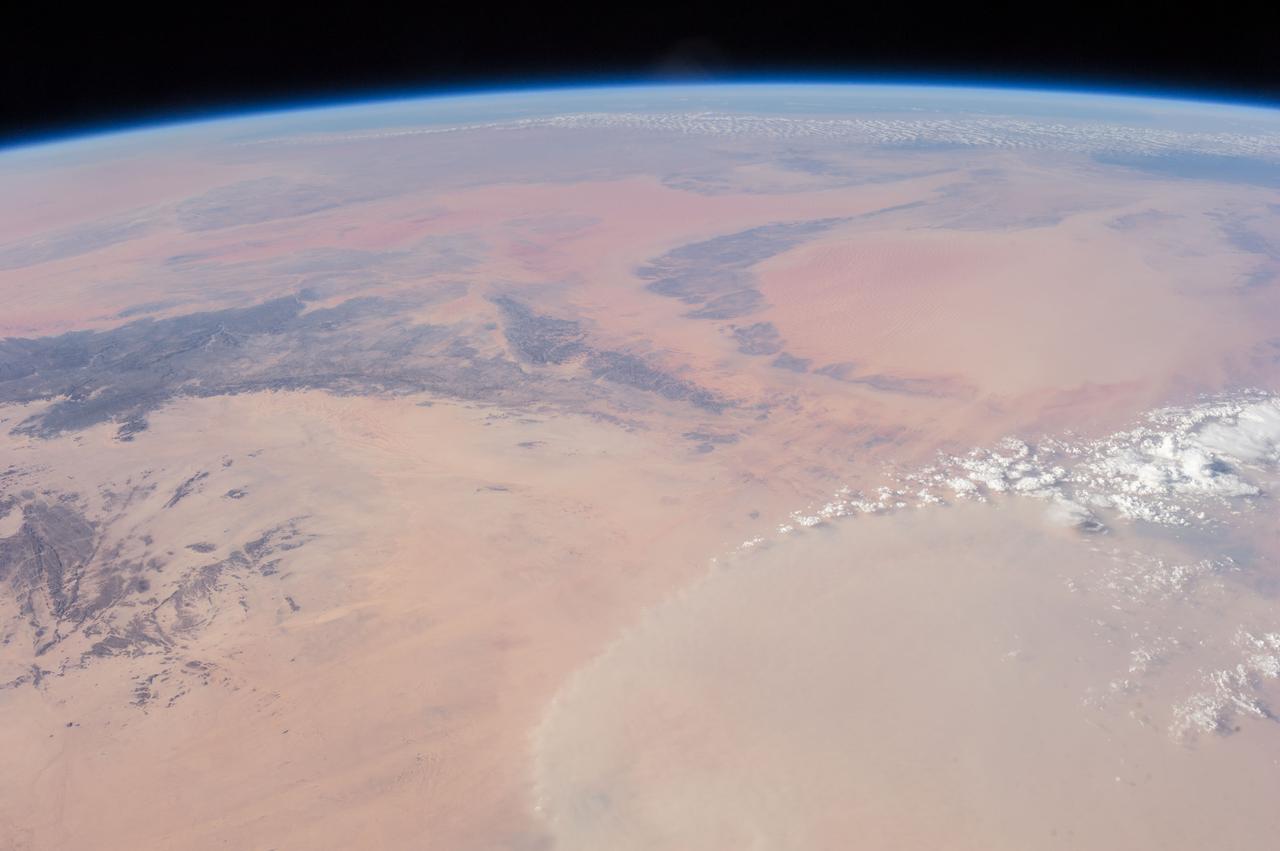
Earth observation taken during day pass by an Expedition 36 crew member on board the International Space Station (ISS). Per Twitter message: North central Africa.
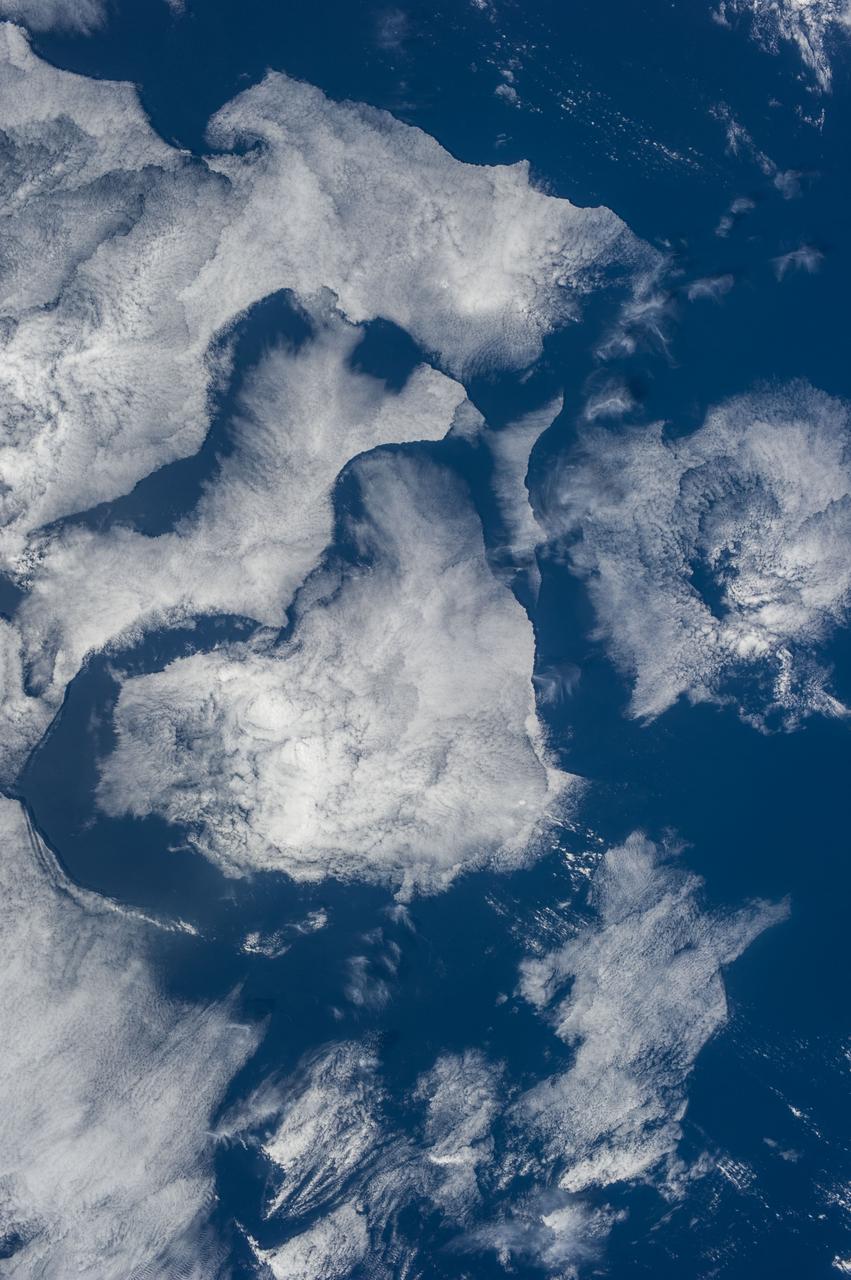
Earth observation taken during day pass by an Expedition 36 crew member on board the International Space Station (ISS). Per Twitter message: Cloud gazing over the Pacific Ocean. Hearts?
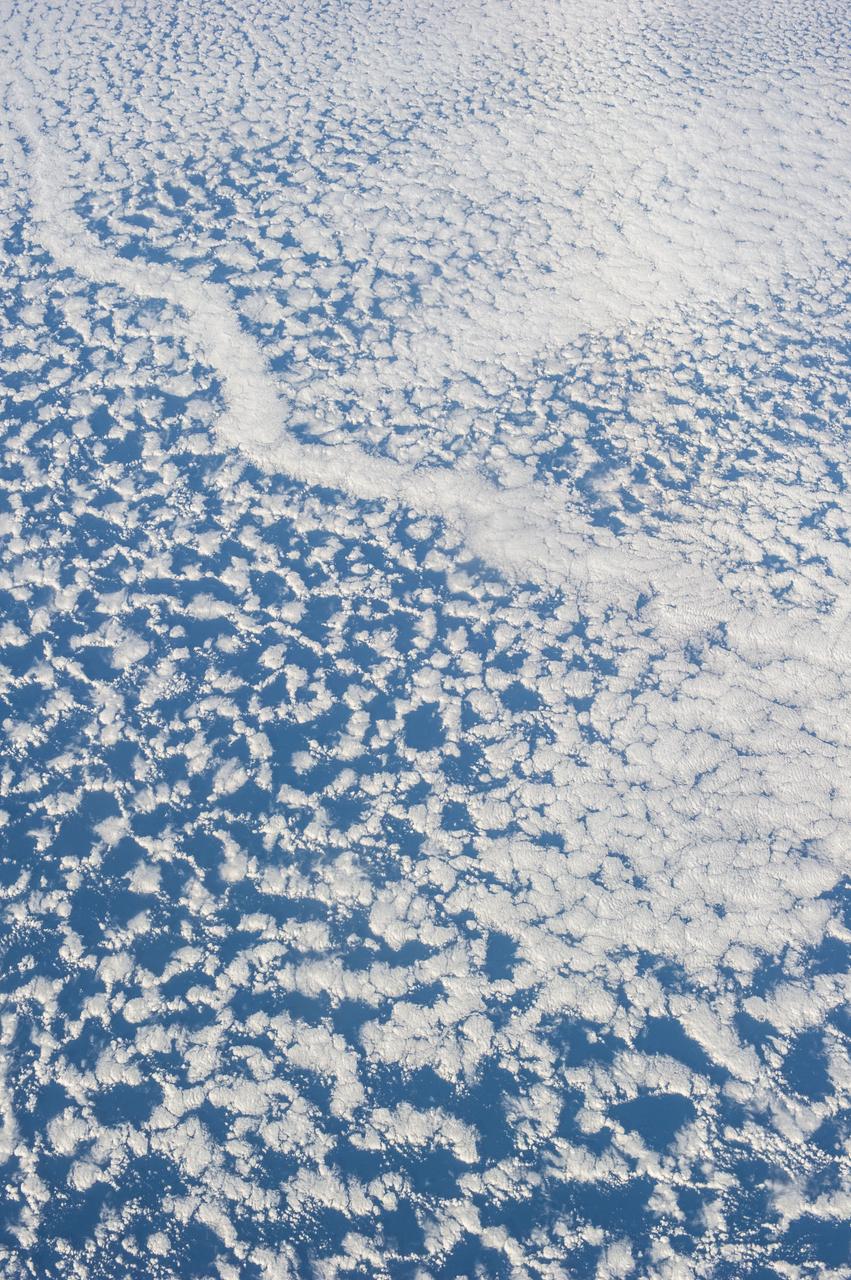
Earth observation taken during day pass by an Expedition 36 crew member on board the International Space Station (ISS). Per Twitter message: Perhaps a dandelion losing its seeds in the wind? Love clouds!
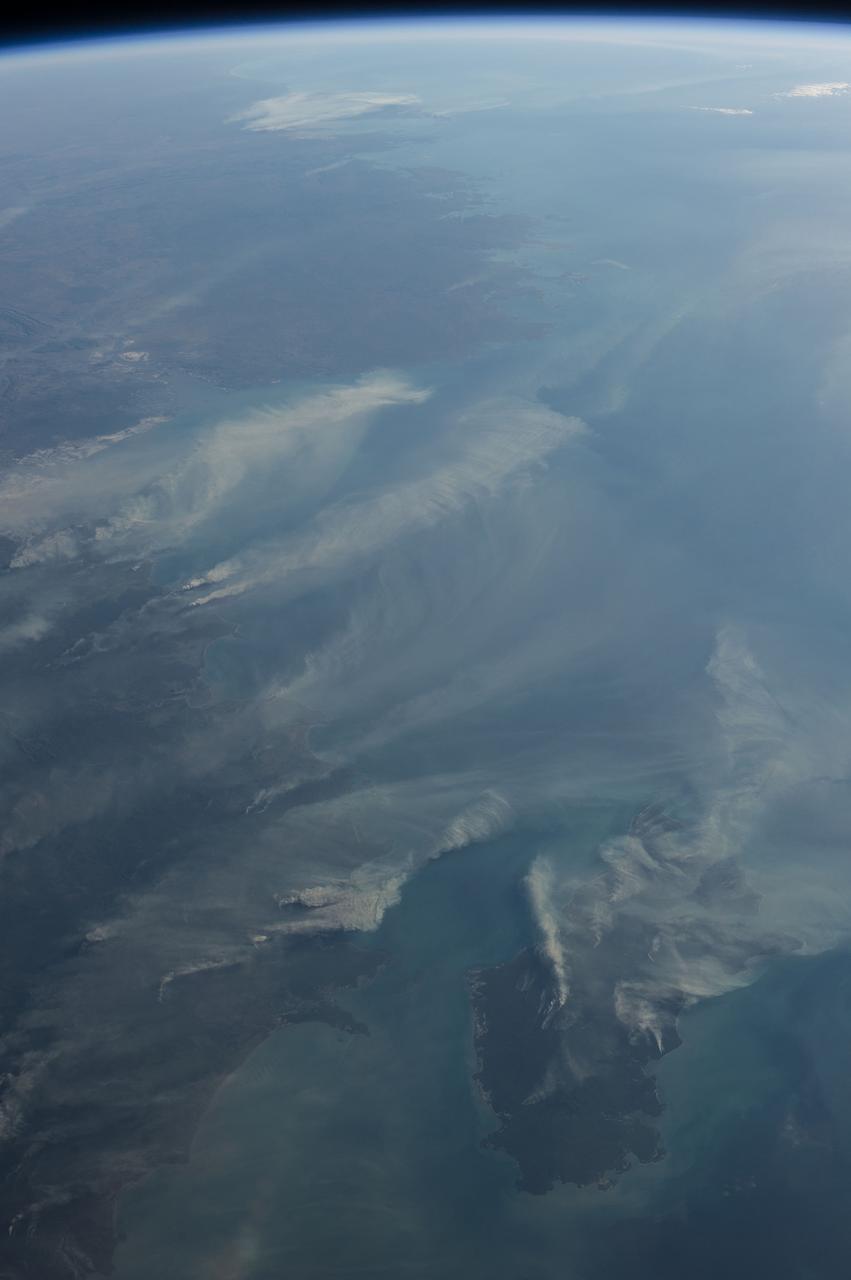
Earth observation taken during a day pass by an Expedition 36 crew member on board the International Space Station (ISS). Per Twitter message: A broader view of the northern coast of Australia on the Timor Sea.
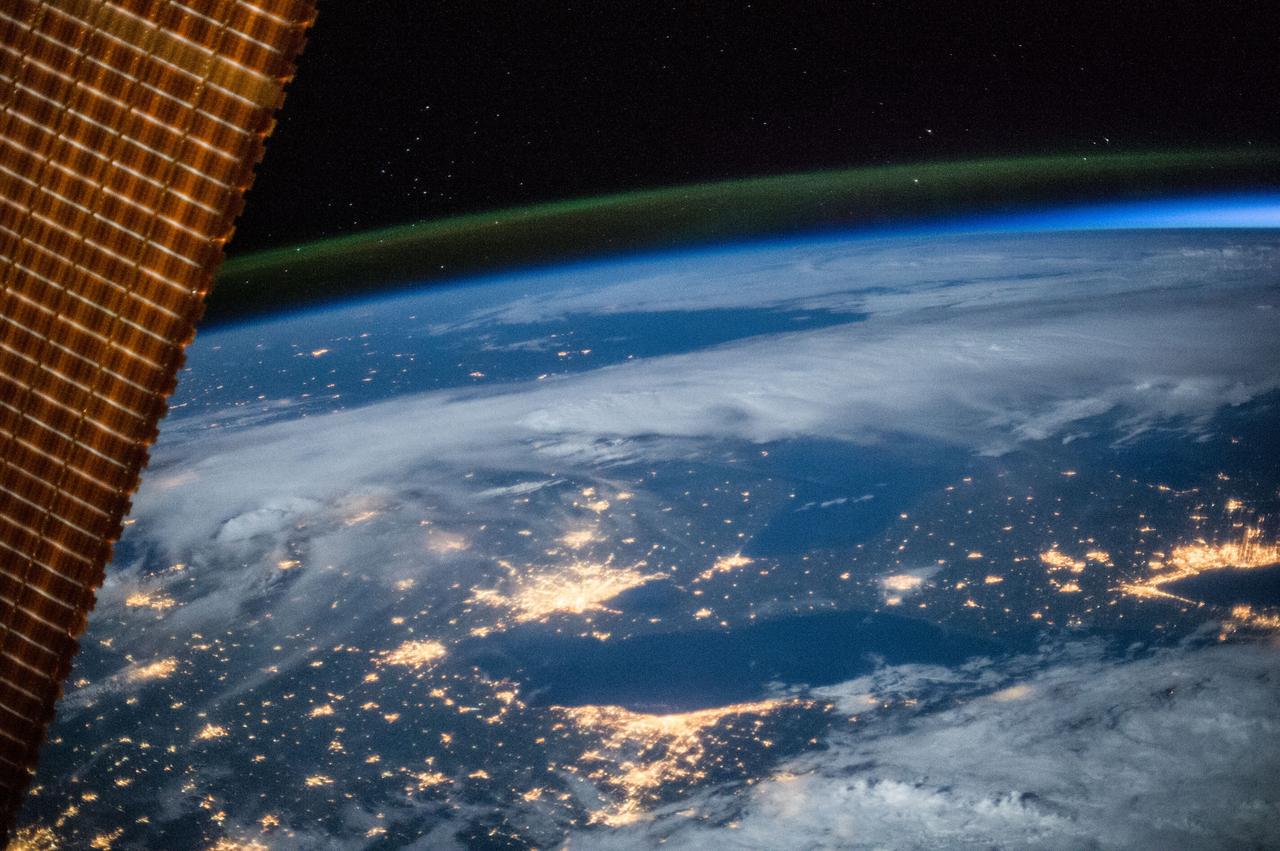
Earth observation taken during a night pass by an Expedition 36 crew member on board the International Space Station (ISS). Per Twitter message this is labeled as: Detroit, Cleveland, Toronto and a blue hint of sunrise.
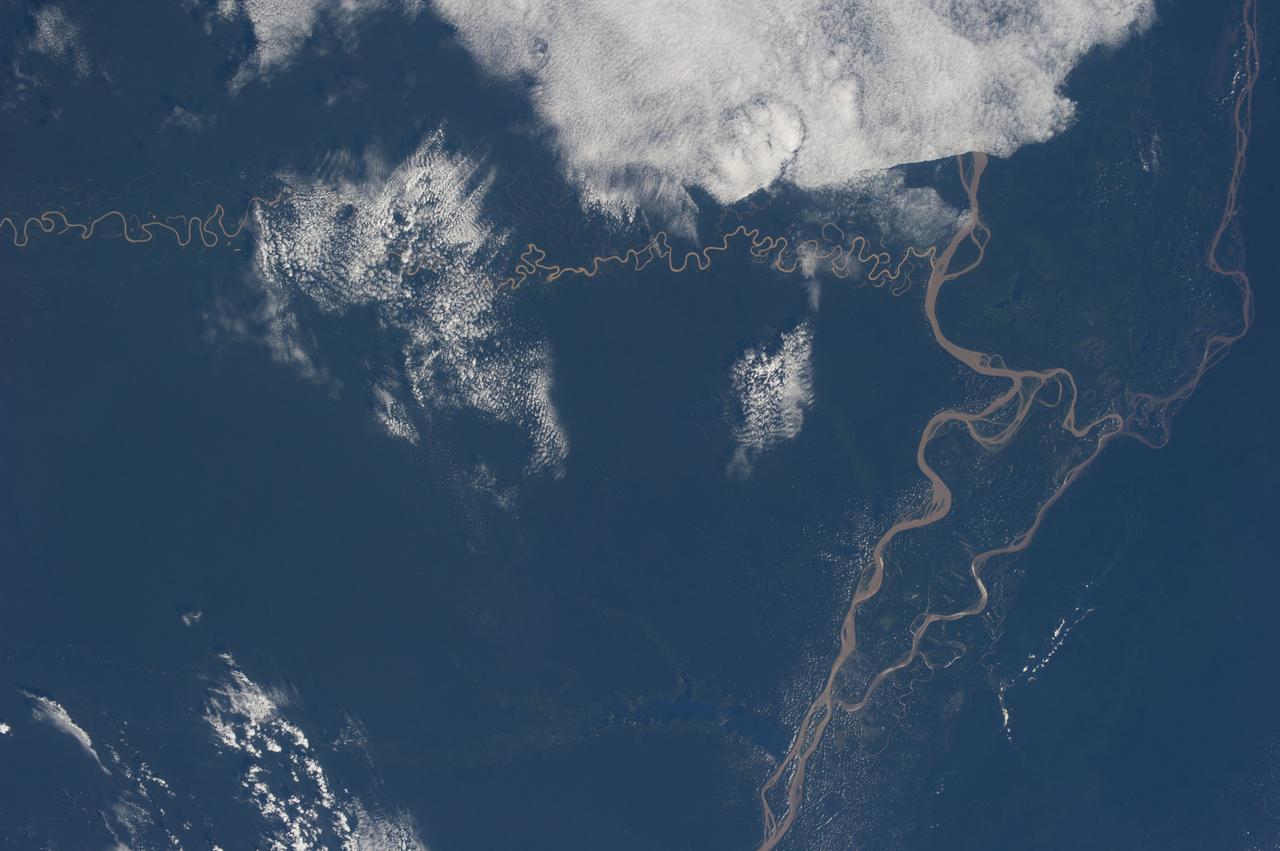
Earth observation taken during day pass by an Expedition 36 crew member on board the International Space Station (ISS). Per Twitter message: Amazing rivers in Brazil.
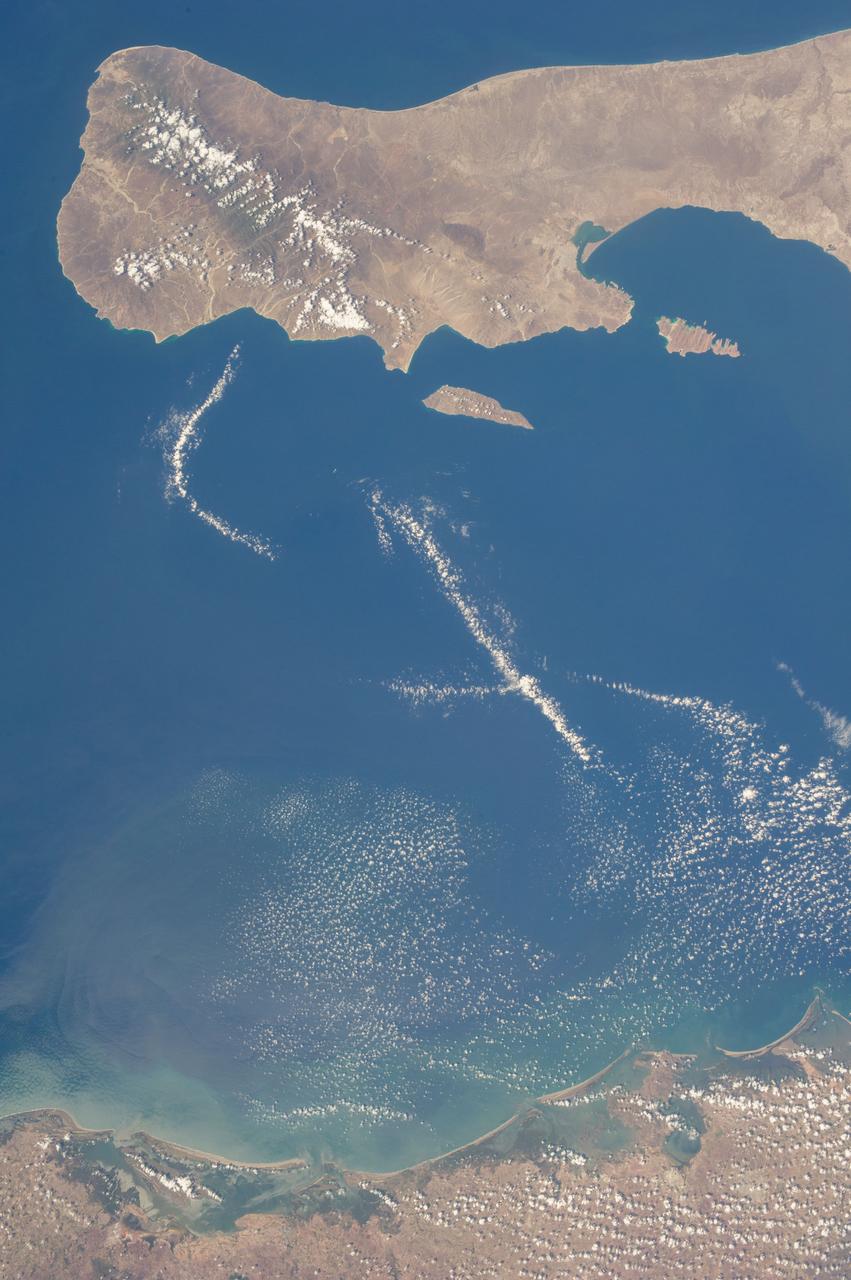
Earth observation taken during a day pass by an Expedition 36 crew member on board the International Space Station (ISS). Per twitter message this is labeled as: Southernmost Gulf of California/Sea of Cortez.

"Earth observation taken during a night pass by the Expedition 37 crew. Folder lists this as Cairo, Tel-Aviv, at night. " Per Twitter message this is Cairo and the Nile Delta.
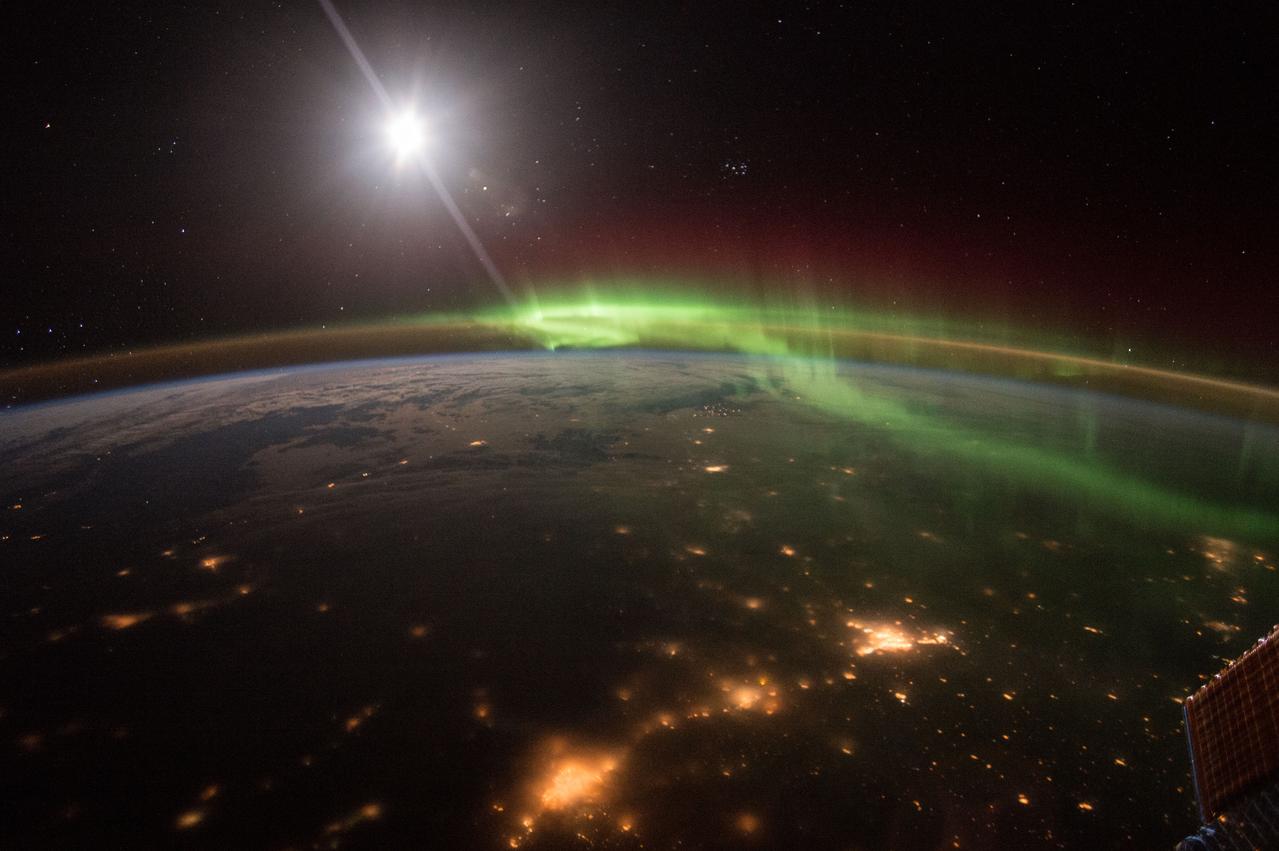
ISS046e015697 (01/20/2016) --- NASA astronaut Scott Kelly took this majestic image of the Earth at night highlighting the green and red hues of an Aurora. He tweeted this message along with the image: “The dance of #aurora. #YearInSpace"
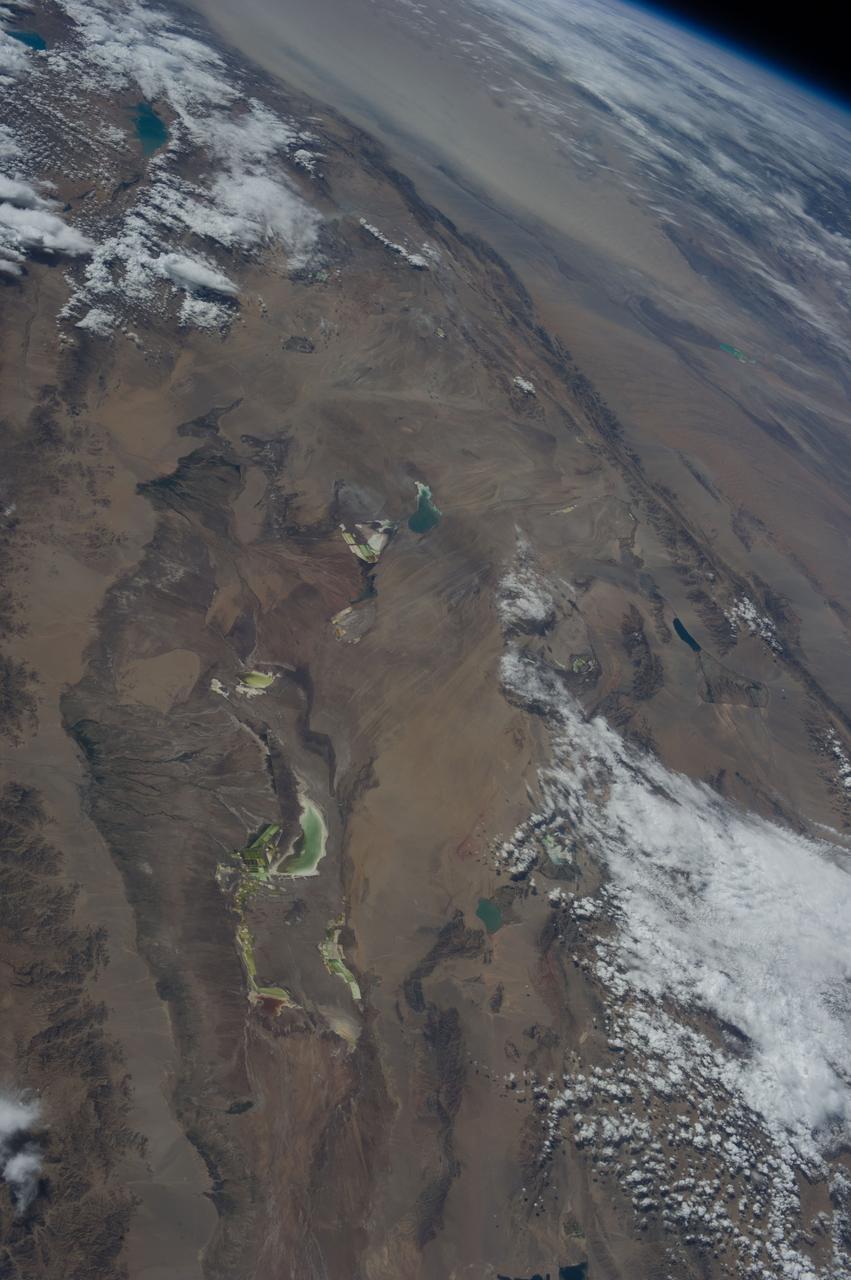
Earth observation taken during day pass by an Expedition 36 crew member on board the International Space Station (ISS). Per Twitter message: Qinghai Province, western China.
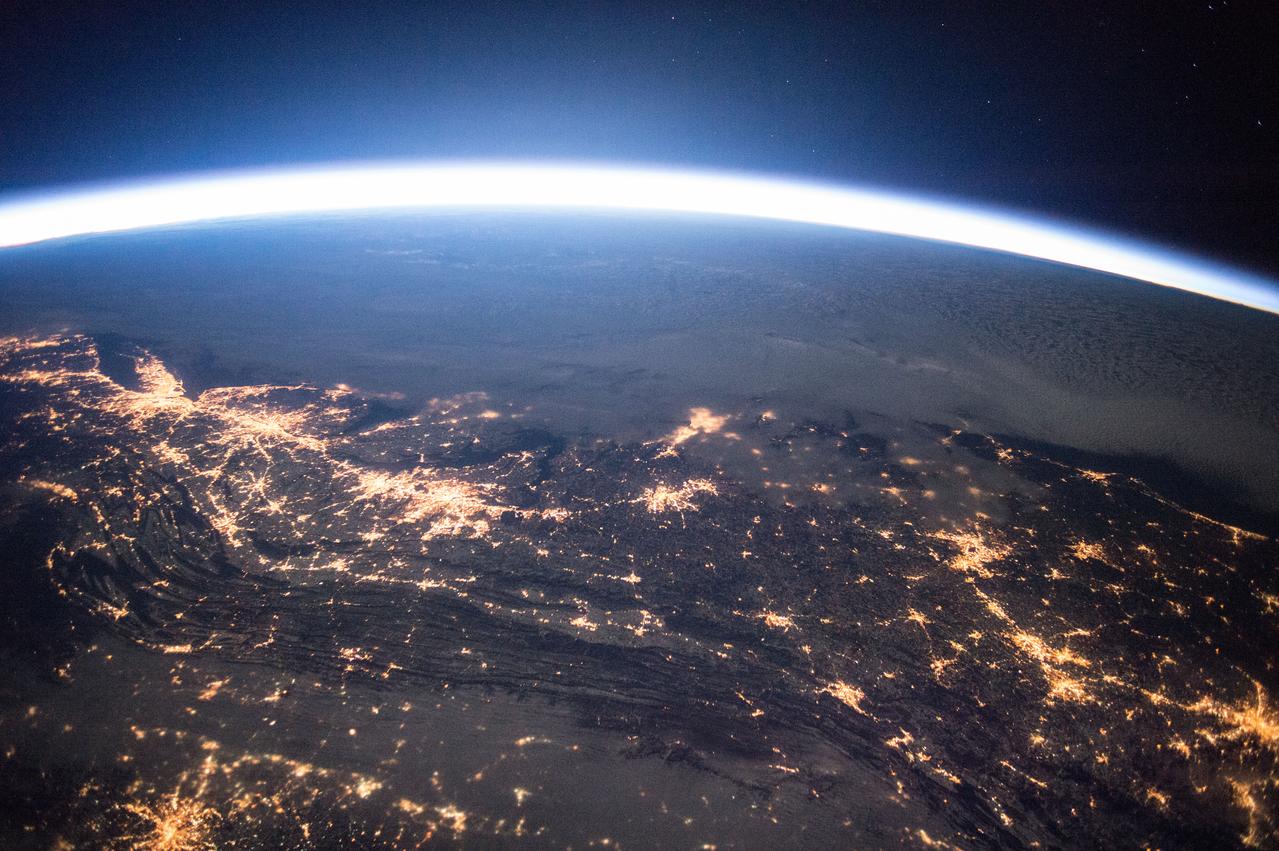
ISS046e022766 (01/24/2016) --- NASA astronaut Scott Kelly captured this sunrise over Earth and tweeted this message: " blizzard2016 clearly seen off the #EastCoast as the sun begins to rise. Hope all OK! #BlizzardJonas #YearInSpace".
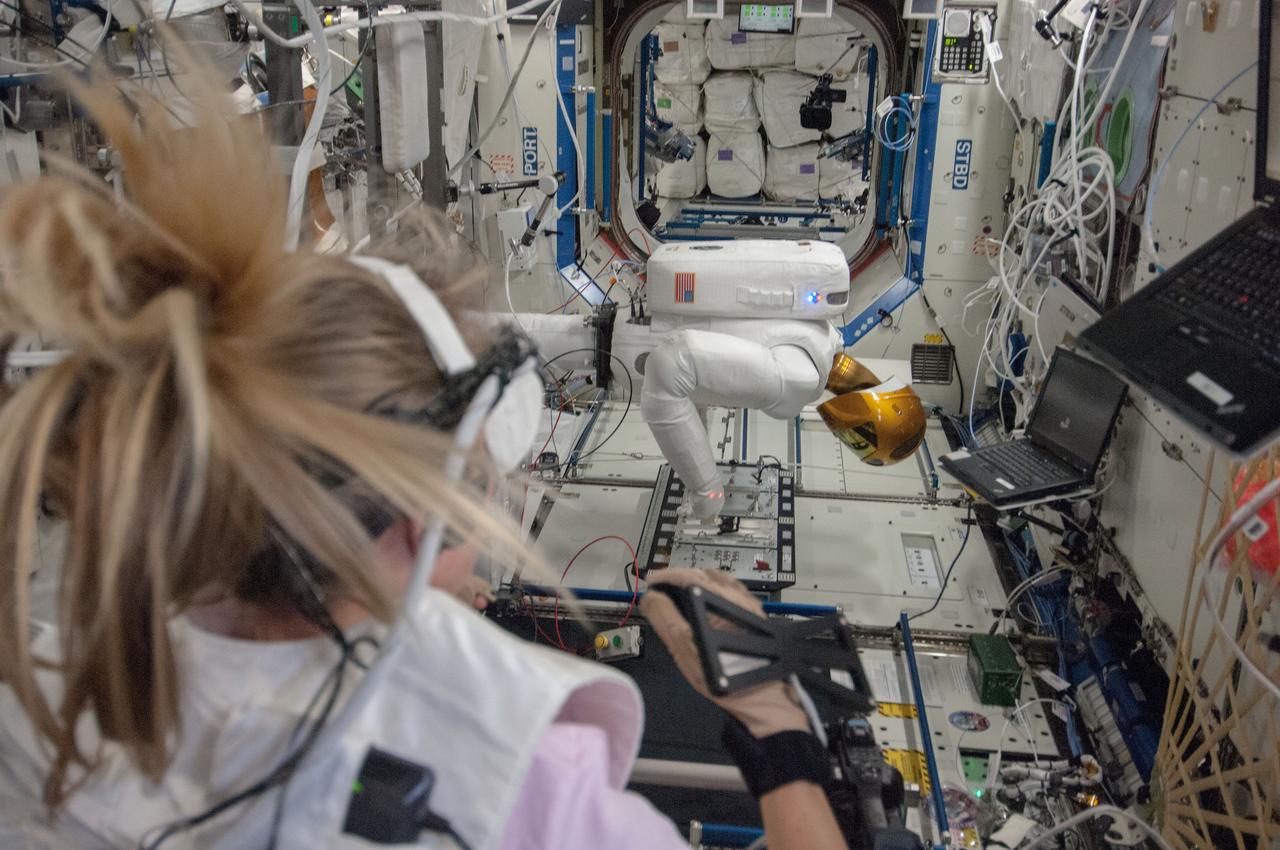
View of Astronaut Karen Nyberg, Expedition 36 flight engineer, performing Robonaut Teleops activities with Robonaut 2,the first humanoid robot in space,in the Destiny laboratory of the International Space Station. Sent also as Twitter message.
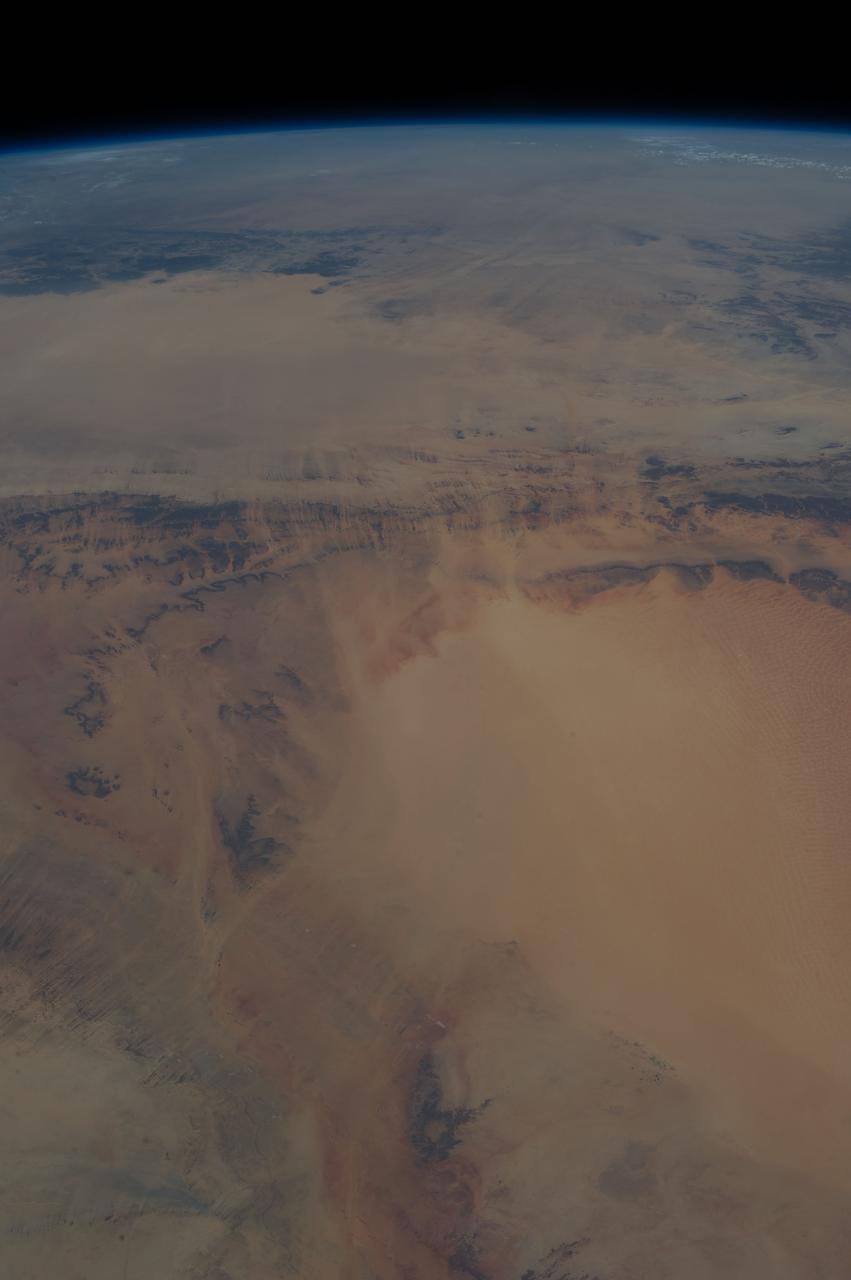
Earth observation taken during day pass by an Expedition 36 crew member on board the International Space Station (ISS). Per Twitter message: Looking southwest over northern Africa. Libya, Algeria, Niger.
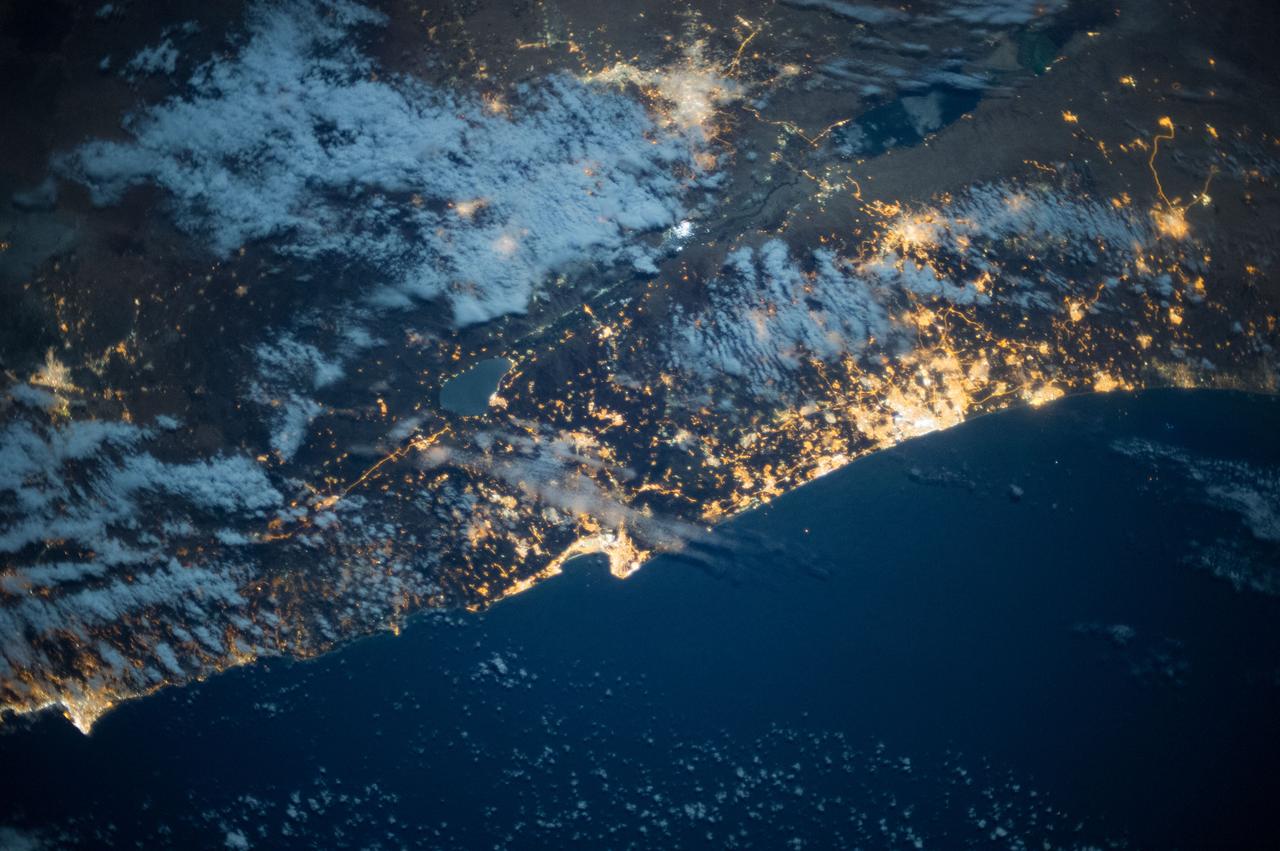
Earth observation taken during a night pass by the Expedition 37 crew. City lights visible. Per Twitter message this is eastern Mediterranean coast, Tel Aviv to Beirut.

Earth observation taken during night pass by an Expedition 36 crew member on board the International Space Station (ISS). Per Twitter message: First hint of sunrise is blue. Then red creeps in.
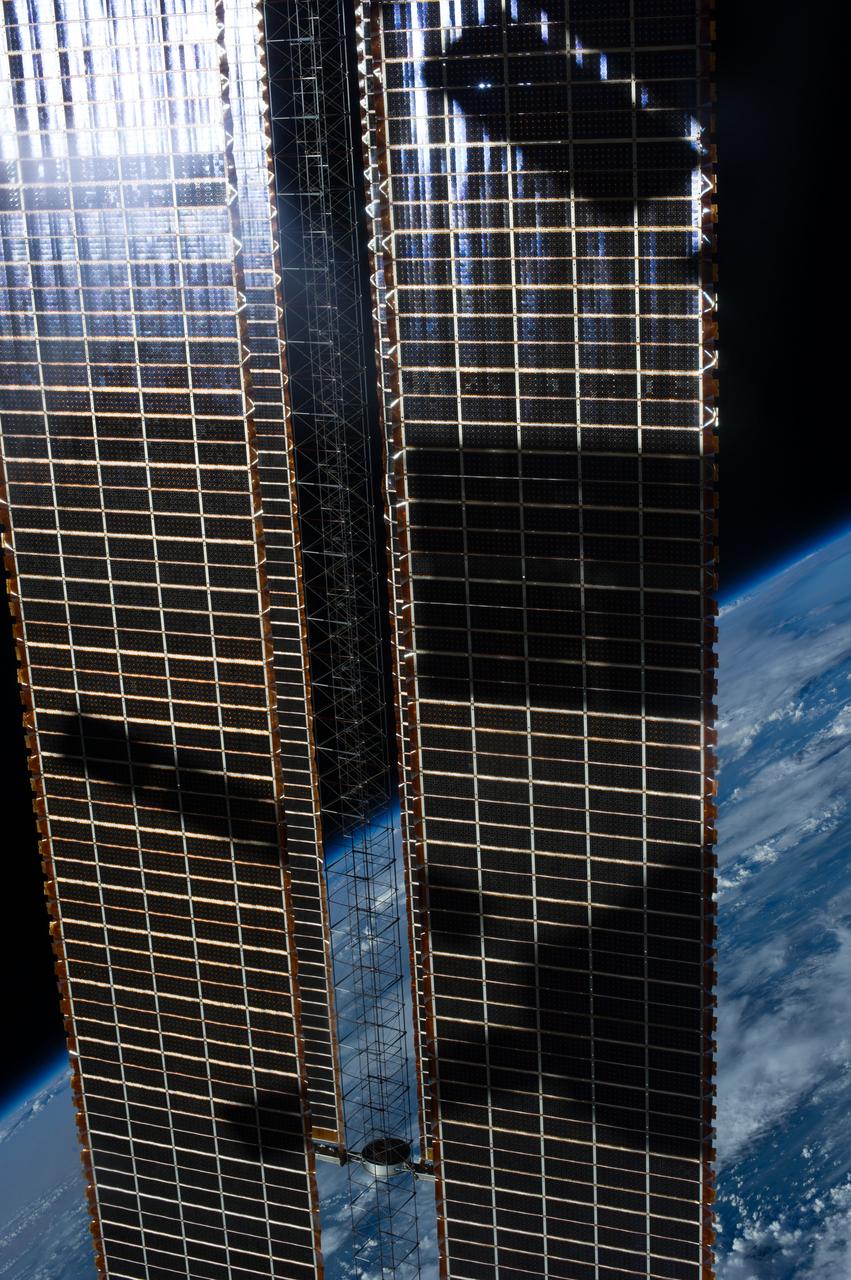
View of the solar array over an Earth limb taken during a day pass by an Expedition 36 crew member on board the International Space Station (ISS). Per Twitter message: Our Space Station casting shadows on itself.
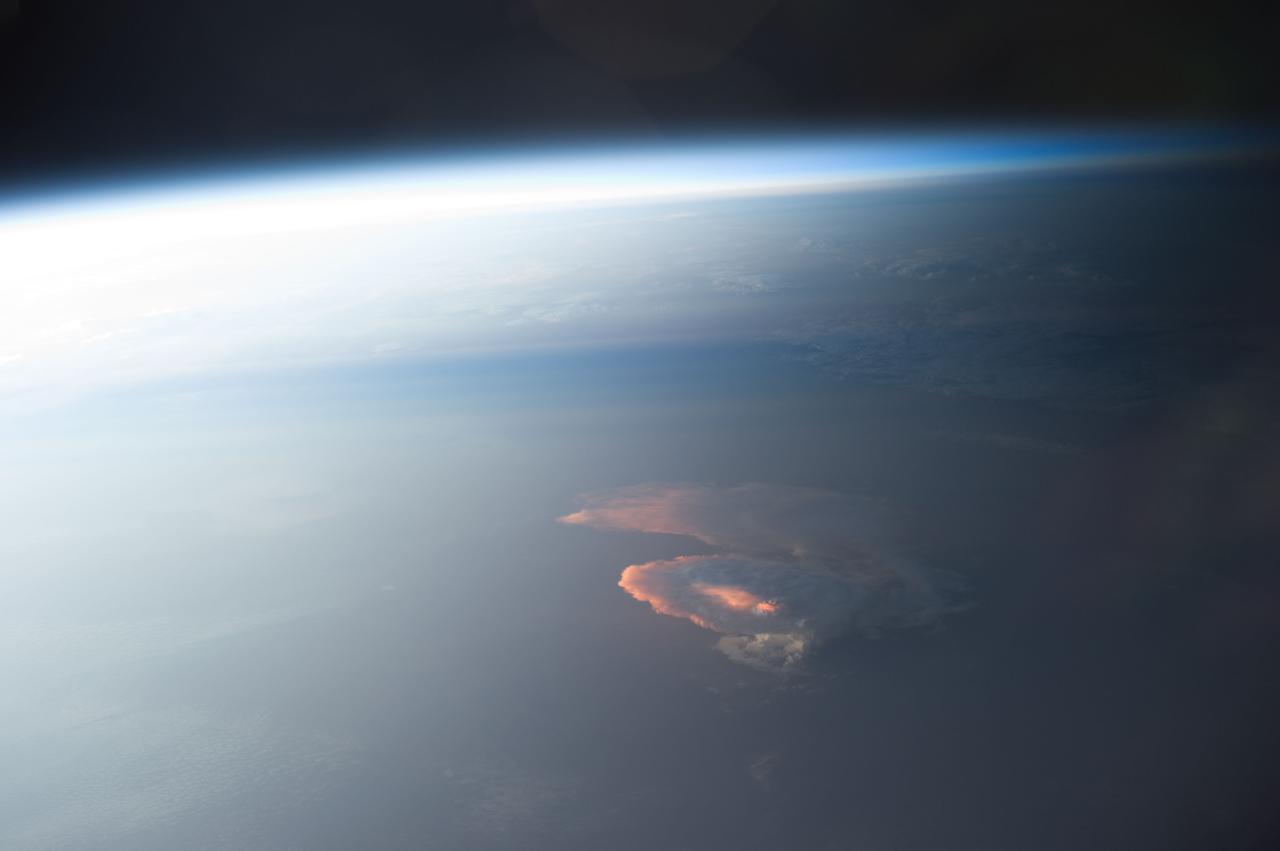
Earth Observation taken during a day pass by the Expedition 40 crew aboard the International Space Station (ISS). Folder lists this as: Afterglow on clouds. Also sent as Twitter message: Sun highlights a storm from underneath.
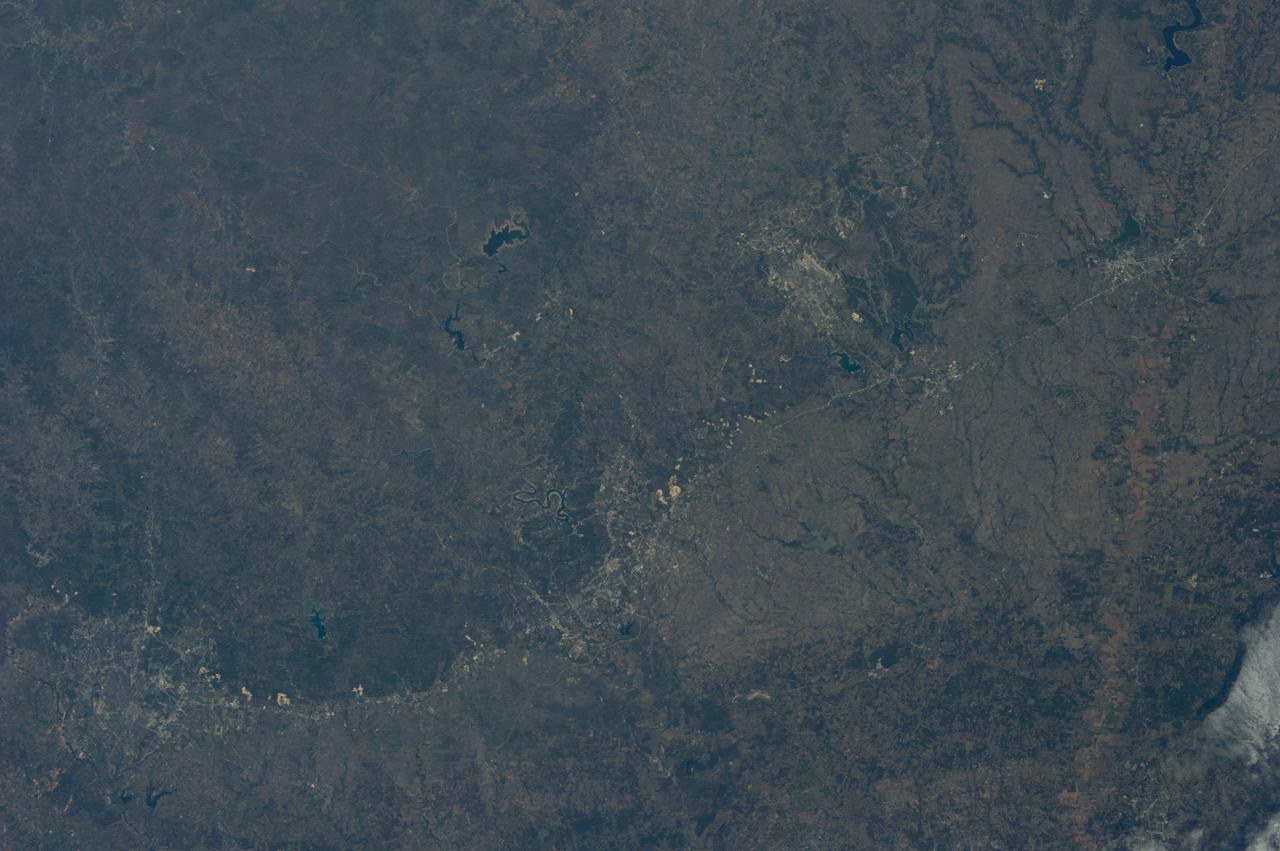
Earth Observation taken during a day pass by the Expedition 37 crew aboard the International Space Station (ISS). Per Twitter message: Interstate 35, San Antonio to Waco, Texas.
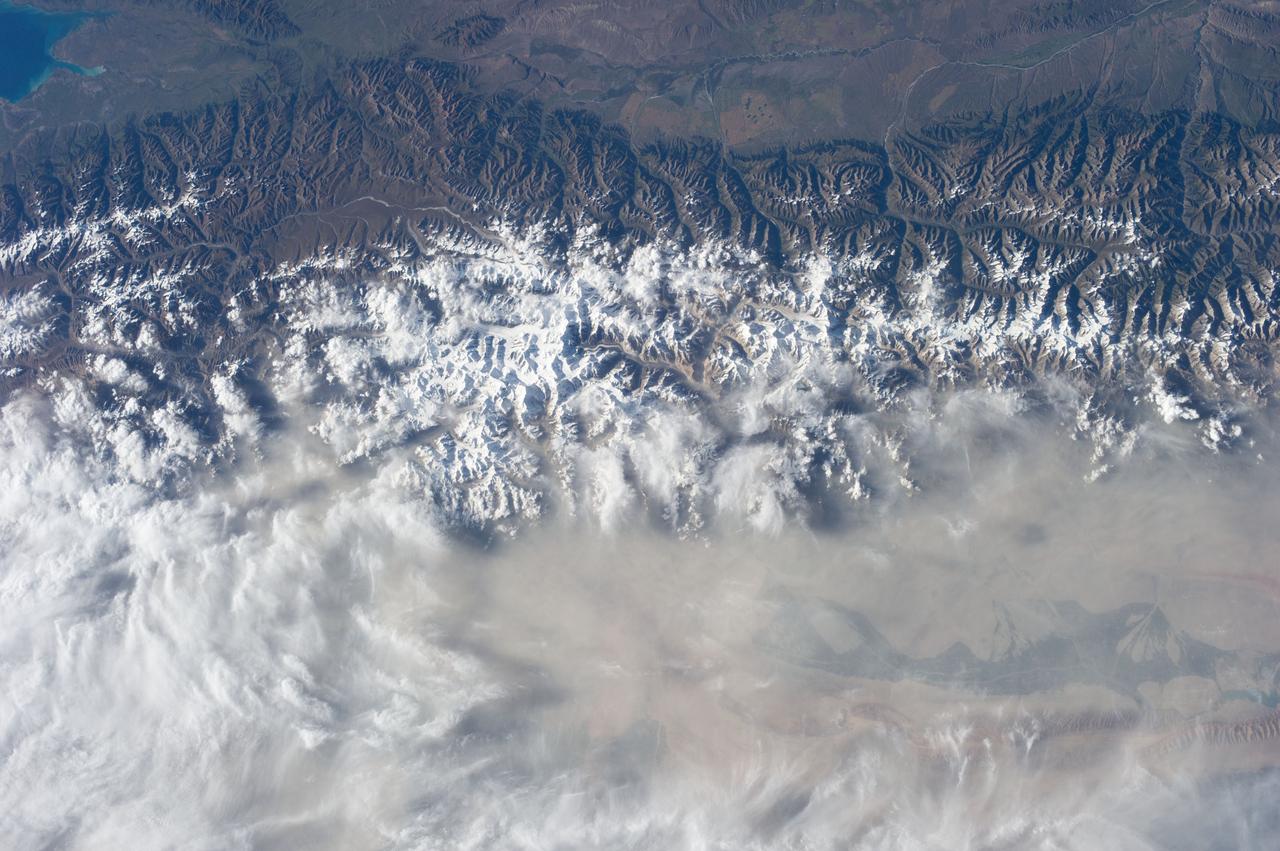
Earth observation taken by an Expedition 36 crew member on board the International Space Station (ISS). Per Twitter message: Tien Shan mountain range, Central Asia.
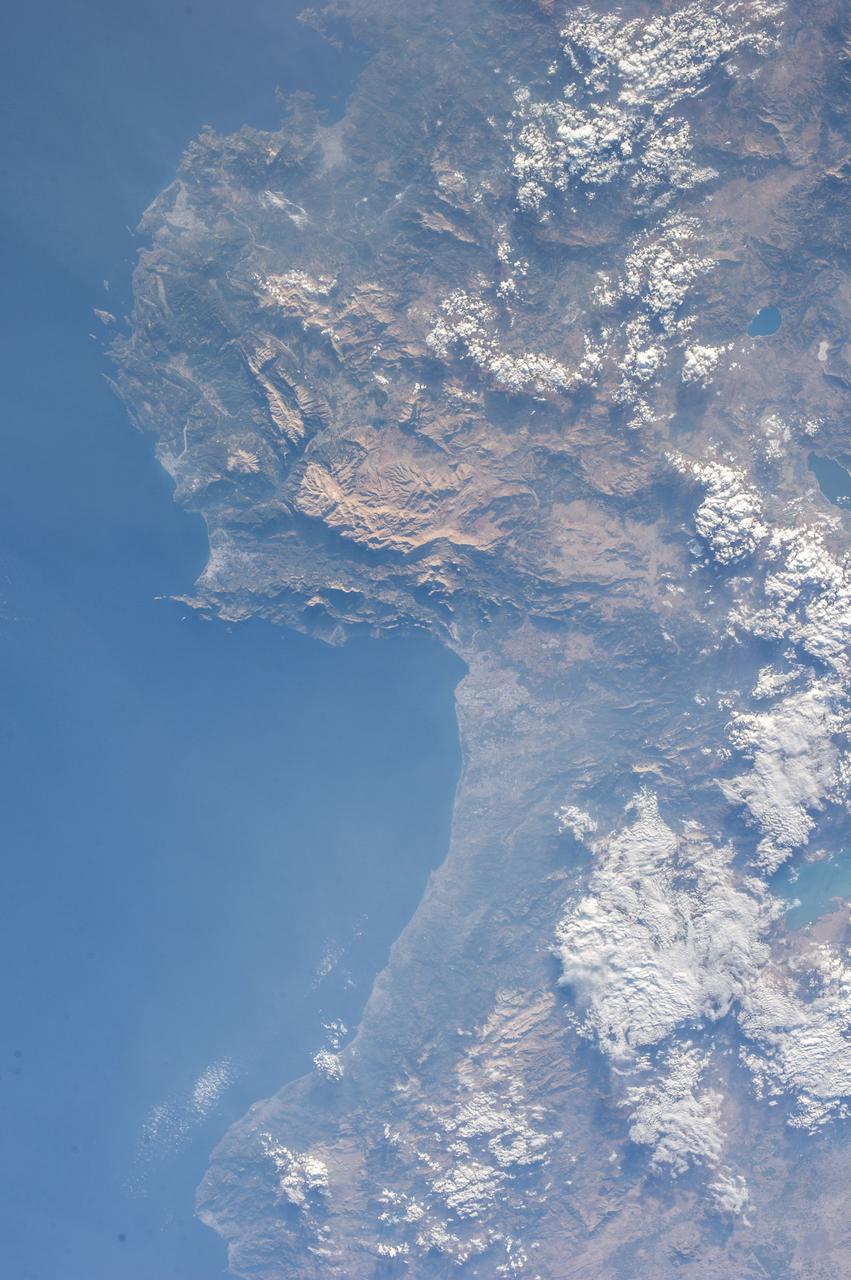
Earth observation taken during day pass by an Expedition 36 crew member on board the International Space Station (ISS). Per Twitter message: Evening in southern Turkey, on the Mediterranean Sea.
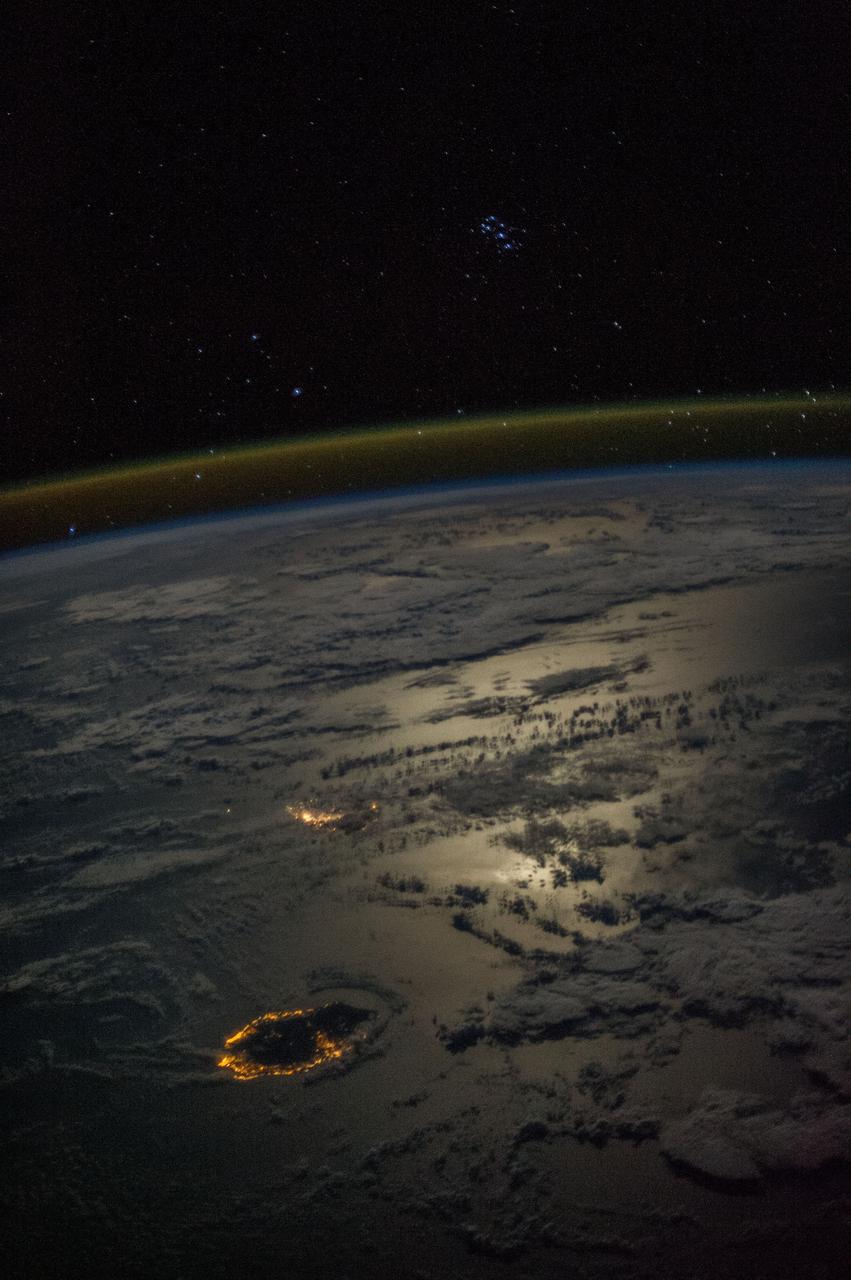
Earth observation taken during a night pass by the Expedition 36 crew. Per Twitter message: Seven Sisters overlooking Reunion & Mauritius Islands in a moonlit Indian Ocean.
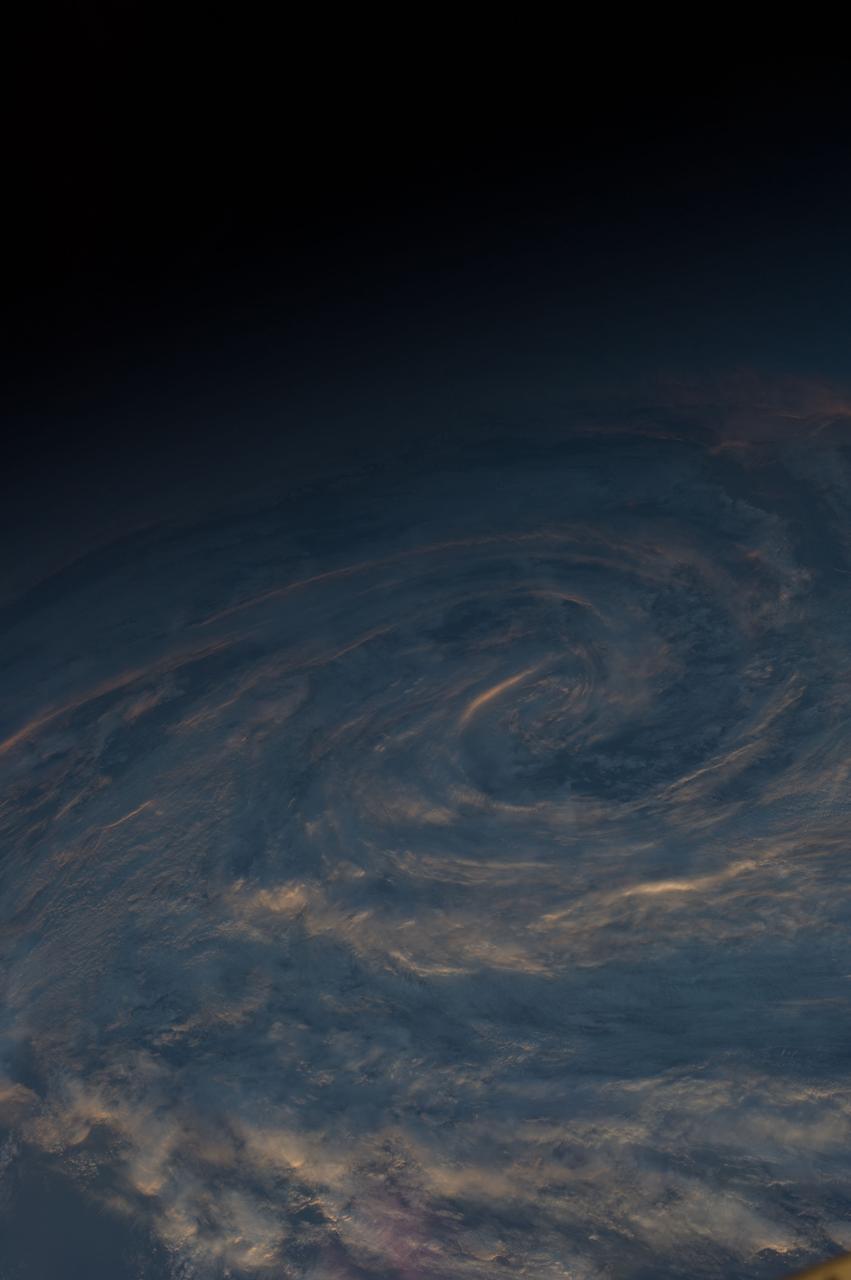
Earth observation taken during day pass by an Expedition 36 crew member on board the International Space Station (ISS). Per Twitter message: Dusk, as we traveled south of the tip of Africa.
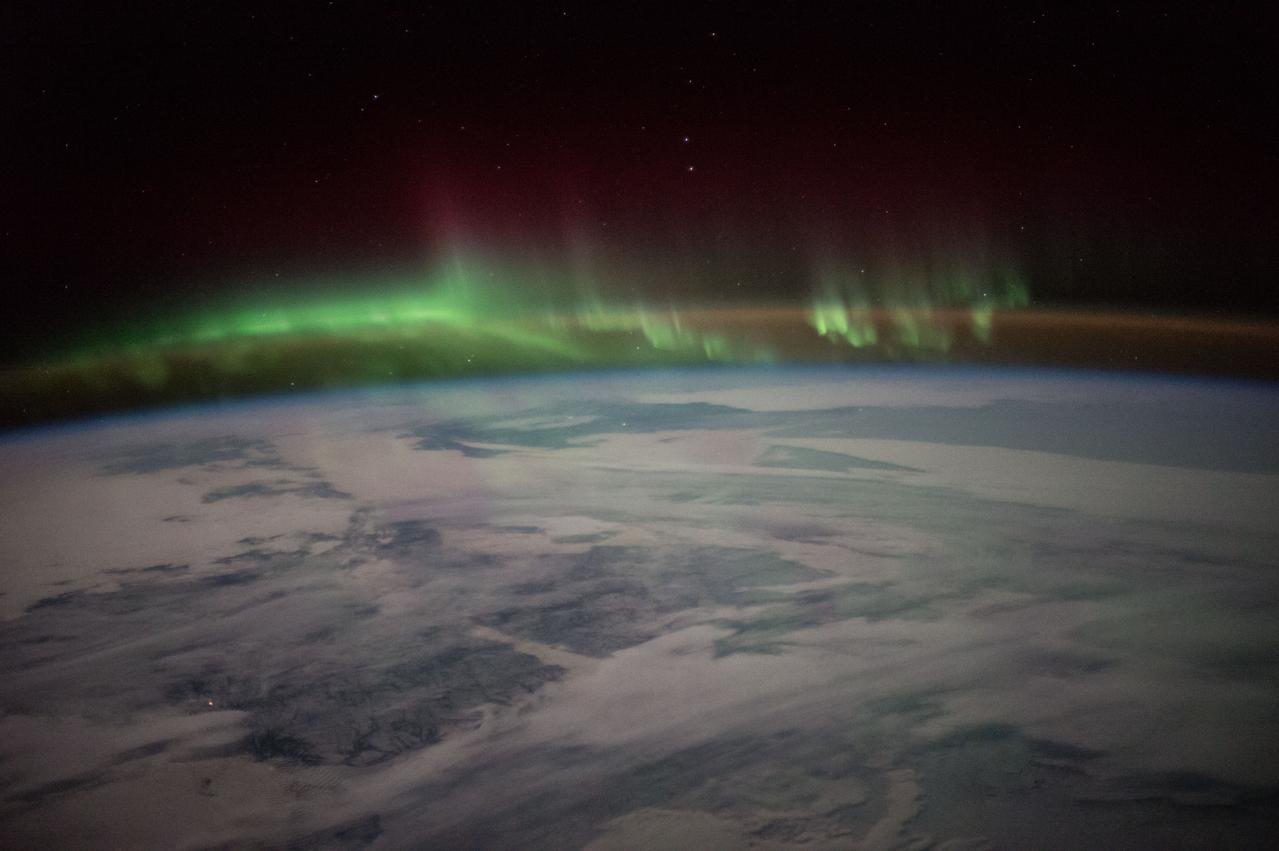
ISS046e016803 (01/21/2016) --- NASA astronaut Scott Kelly tweeted this aurora image over Canada on Jan. 21, 2016 with the message: ""O Canada! Beneath thy shining skies. You were beautiful this morning! #YearInSpace”
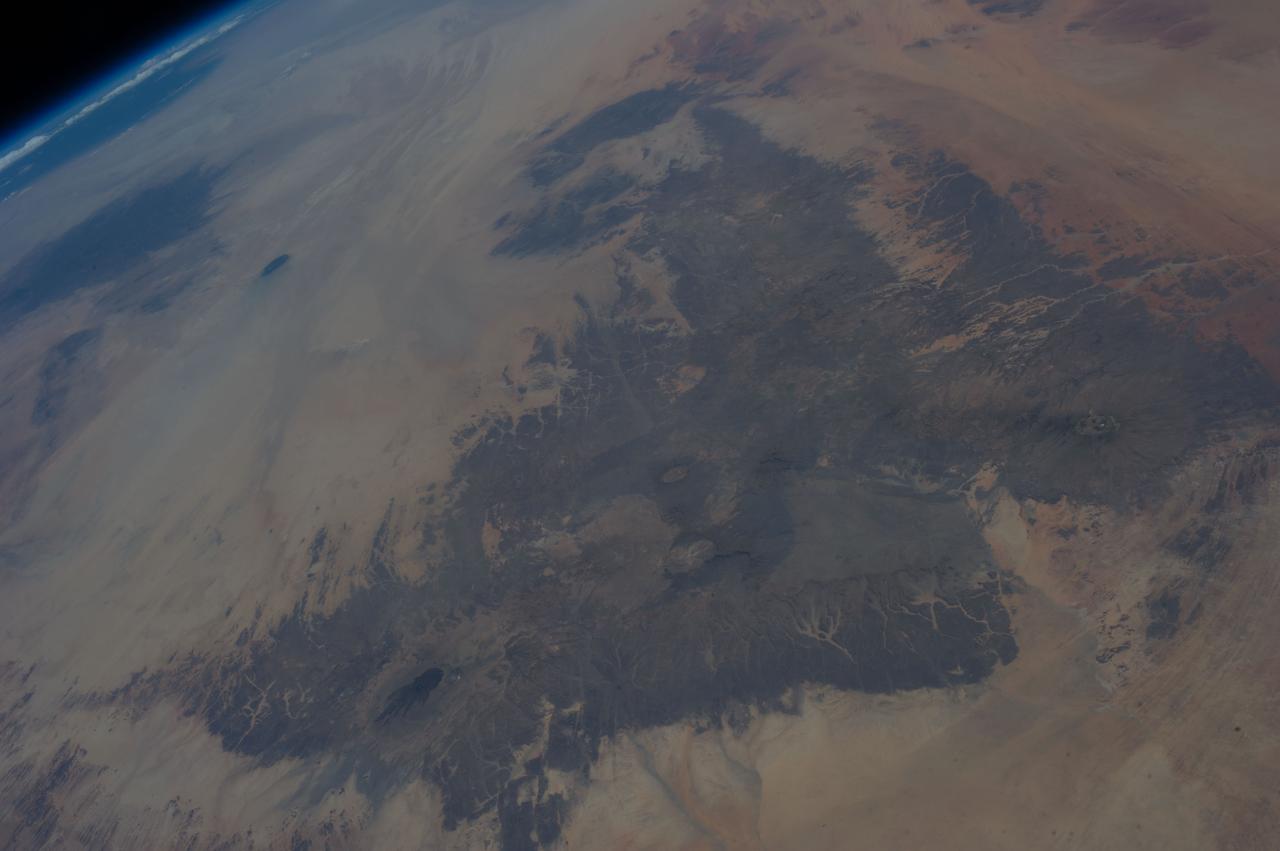
Earth Observation taken during a day pass by the Expedition 37 crew aboard the International Space Station (ISS). Per Twitter message: Northern Chad, looking north across Libya.
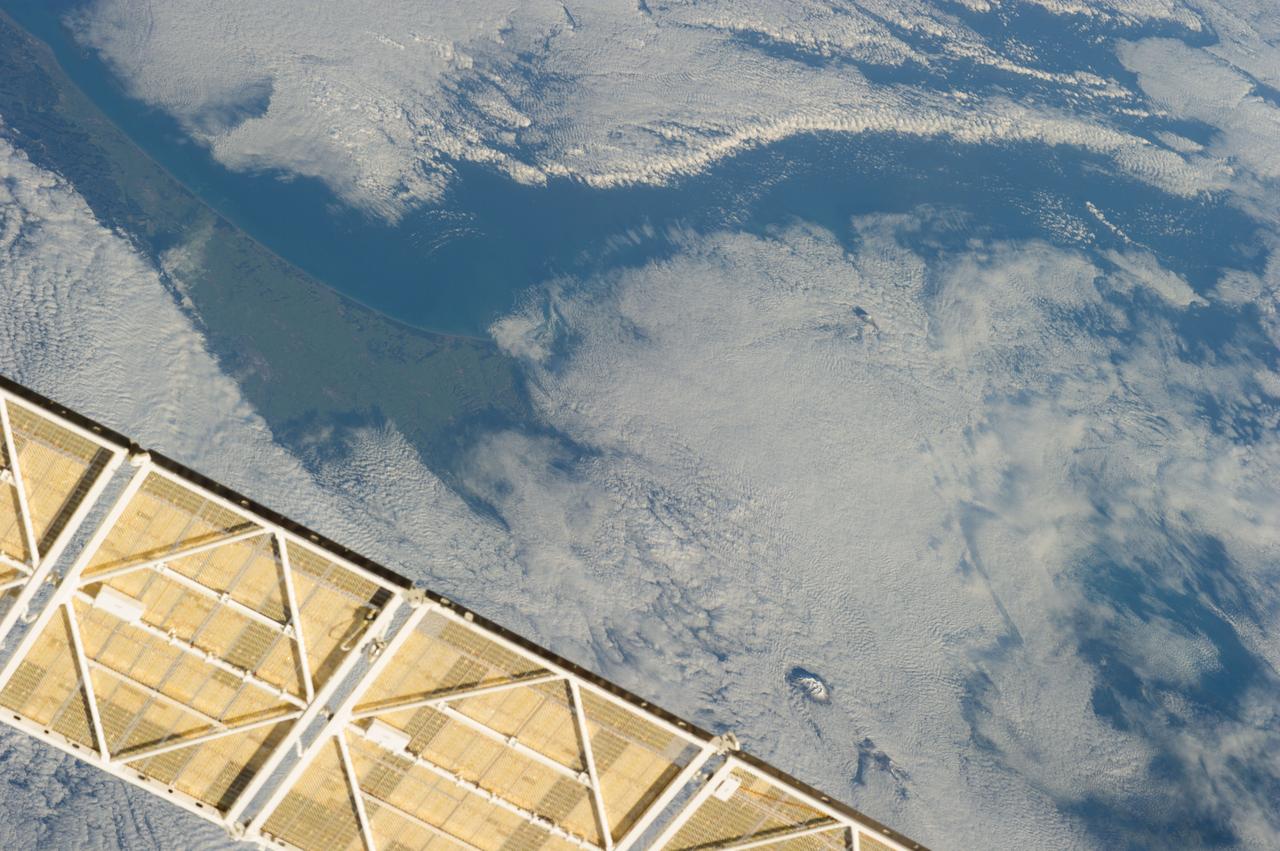
Earth observation taken during a day pass by the Expedition 40 crew aboard the International Space Station. Also sent down as Twitter message: Two volcanoes peek through the morning clouds near Auckland, New Zealand
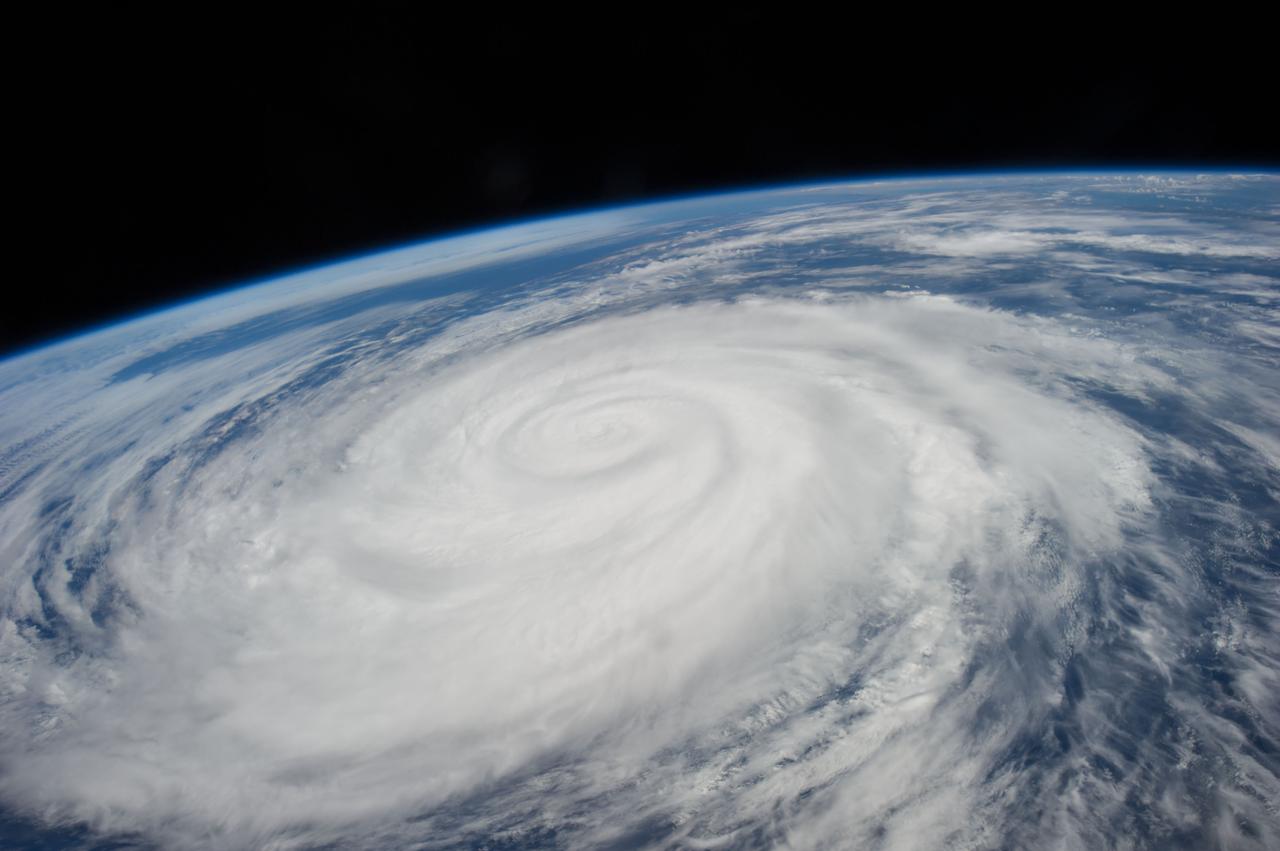
Earth Observation taken during a day pass by the Expedition 40 crew aboard the International Space Station (ISS). Folder lists this as: Hurricane Marie. Sent down as Twitter message.

Earth observation taken during night pass by an Expedition 36 crew member on board the International Space Station (ISS). Per Twitter message: Florida and US east coast.
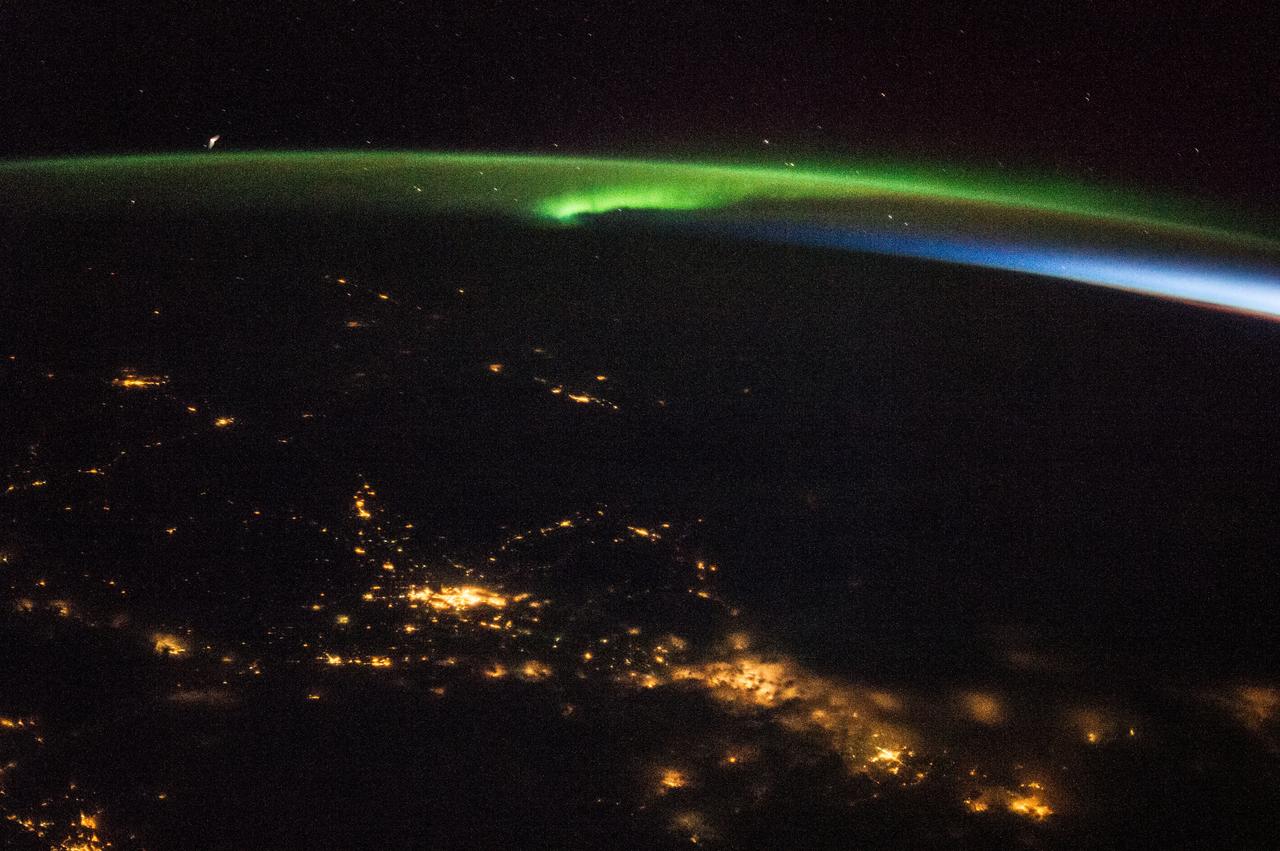
Earth observation taken during a night pass by an Expedition 36 crew member on board the International Space Station (ISS). Per Twitter message: Was not expecting this as we flew over the NE US this morning!
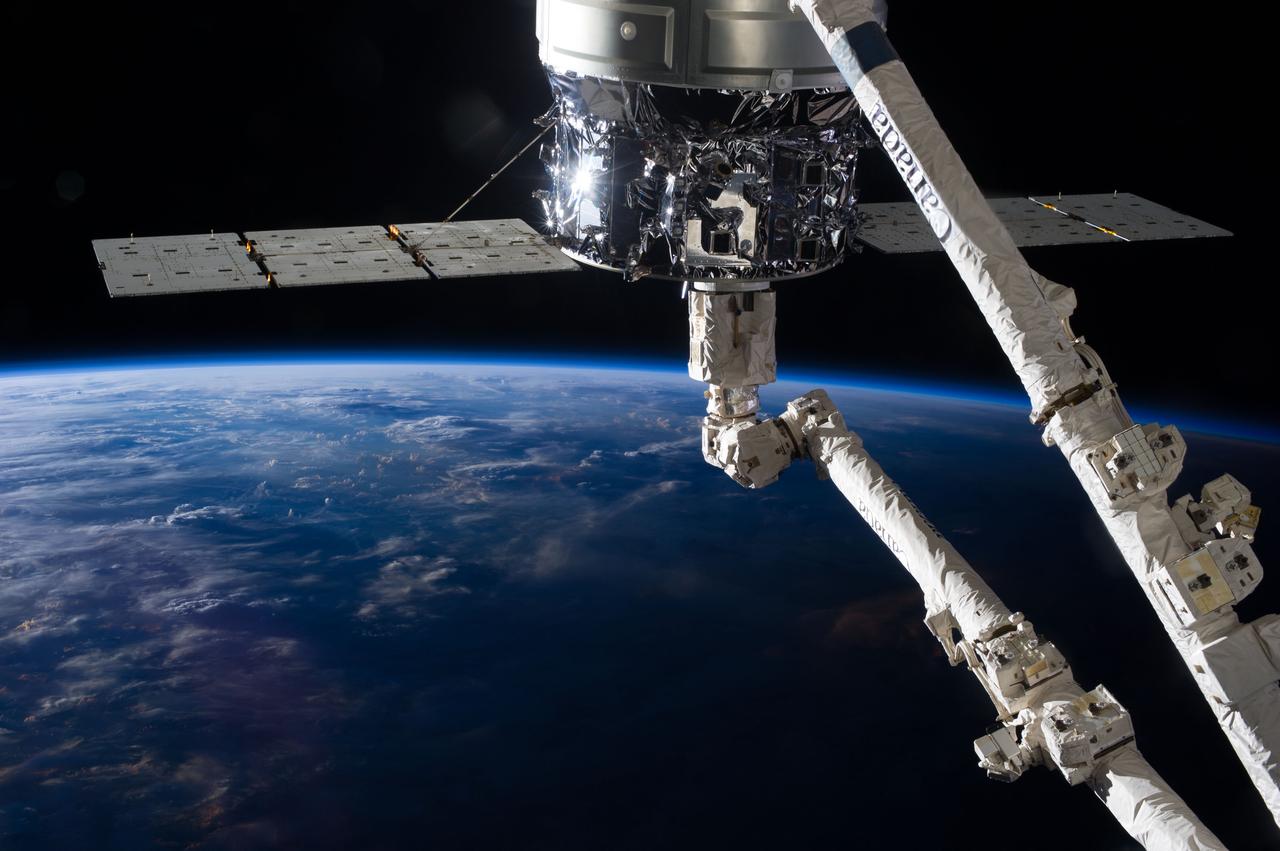
View of the first Cygnus commercial cargo spacecraft built by Orbital Sciences Corp attached to the end of the robotic arm (AKA Canadarm2) and docked the Node 2 module of the ISS. Per Twitter message: Sunrise on #Cygnus and #Canadarm2.