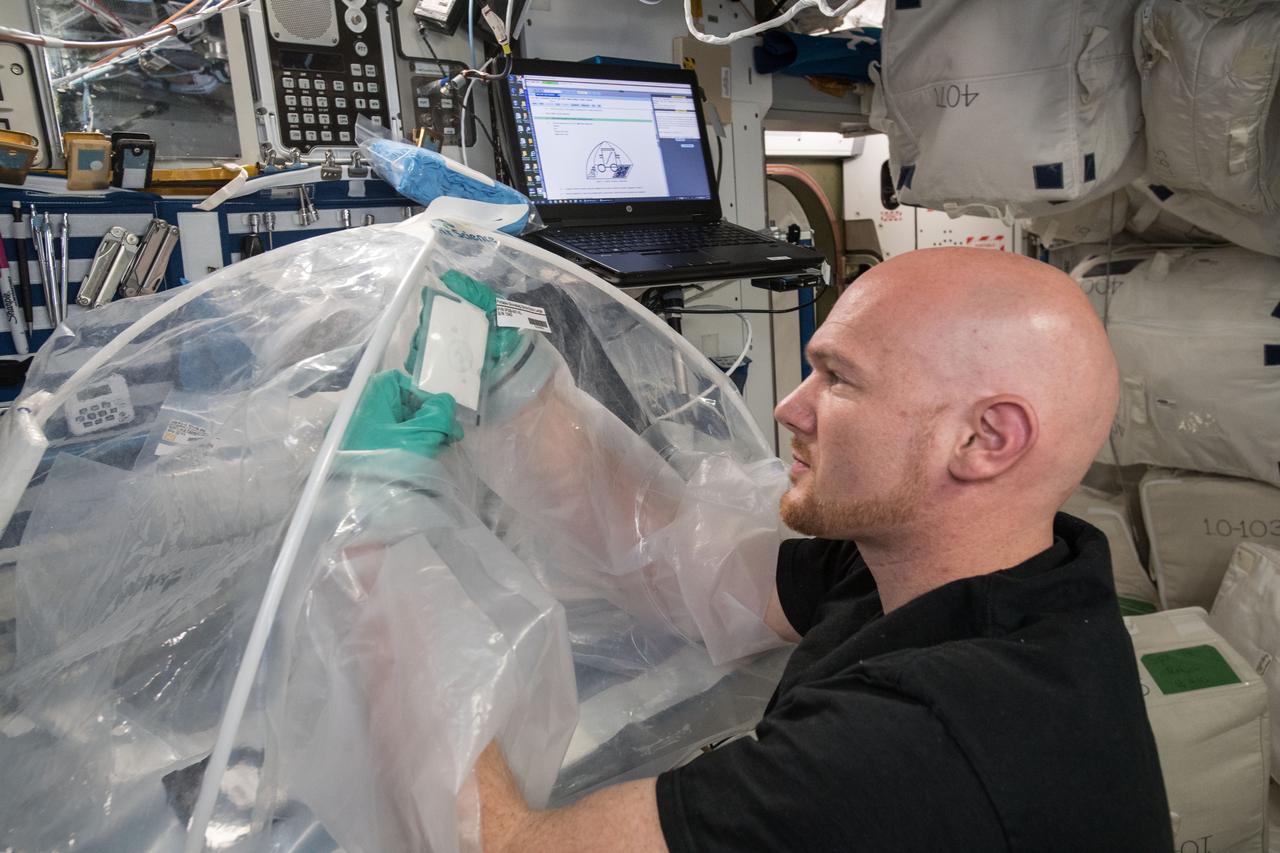
iss056e073250 (July 2, 2018) --- Astronaut Alexander Gerst of ESA (European Space Agency) works on the Microgravity Investigation of Cement Solidification (MICS) 2 experiment aboard the International Space Station. MICS 2 is researching how cement reacts in space during the hardening process and may help engineers better understand its microstructure and material properties. Observations could improve cement processing techniques on Earth and lead to the design of safer, lightweight space habitats.
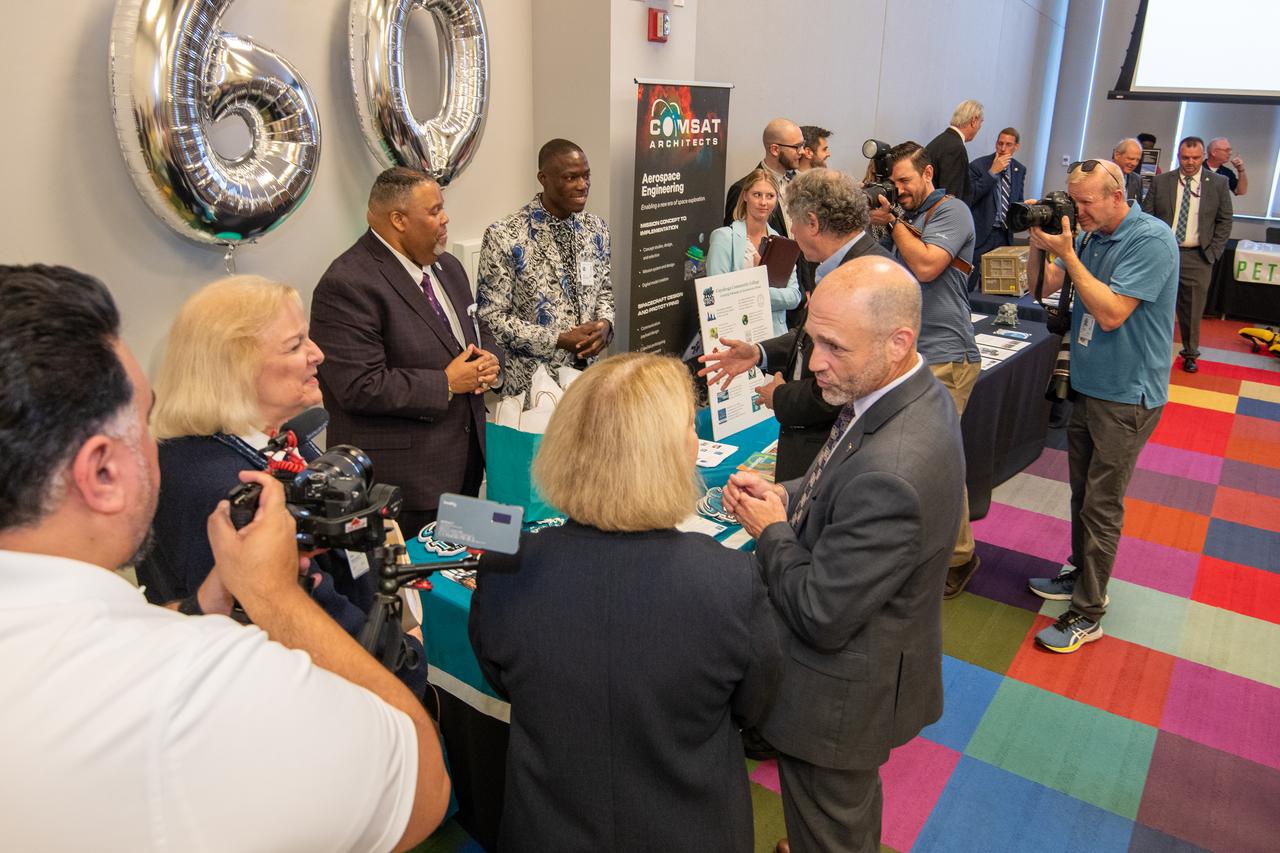
A Congressional Member of Congress visited Glenn research Center. The Congressman engaged with GRC industry partners and researchers in the MIC (Mission Integration Center) Auditorium. Pictured is GRC Center Director, James Kenyon.
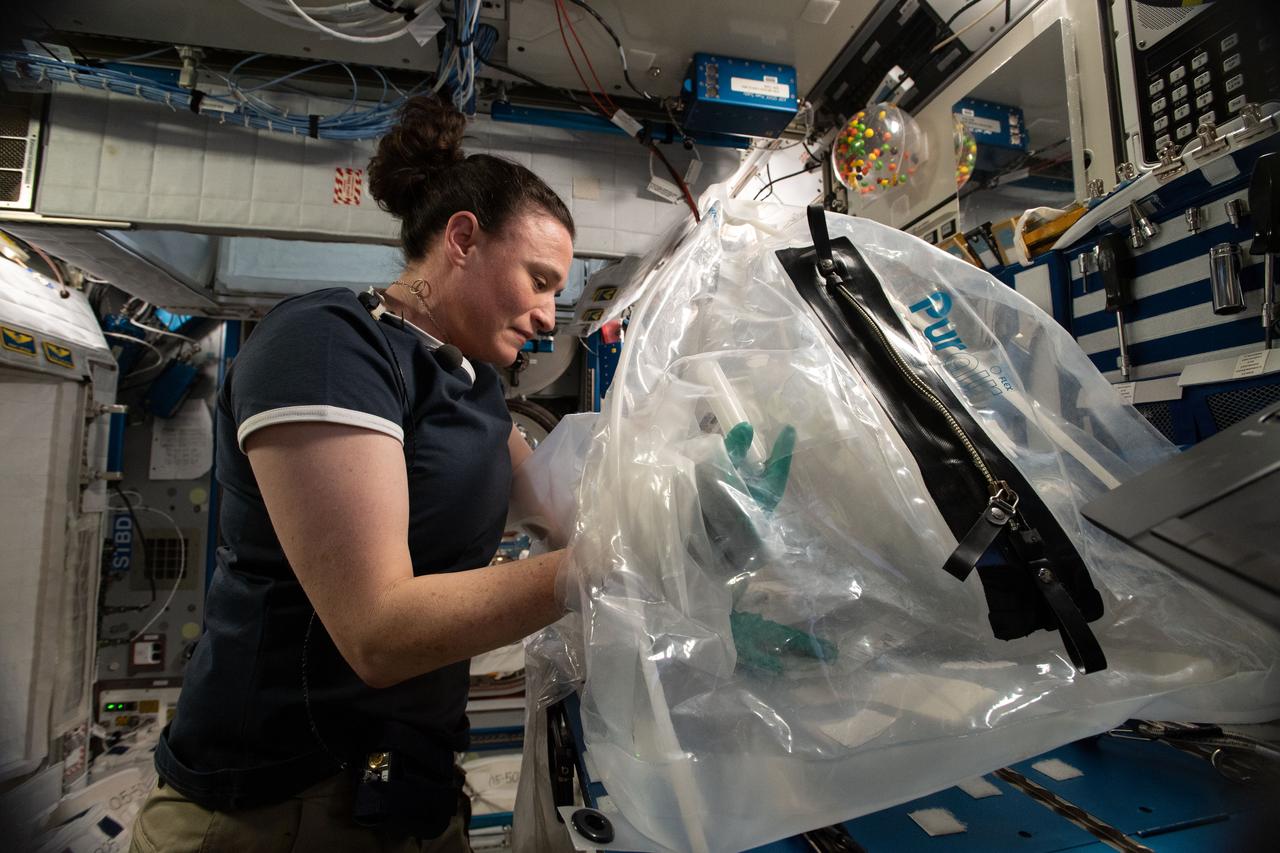
iss056e037491 (June 26, 2018) --- Astronaut Serena Auñón-Chancellor from NASA works on the Microgravity Investigation of Cement Solidification (MICS) 2 experiment aboard the International Space Station. MICS 2 is researching how cement reacts in space during the hardening process and may help engineers better understand its microstructure and material properties. Observations could improve cement processing techniques on Earth and lead to the design of safer, lightweight space habitats.
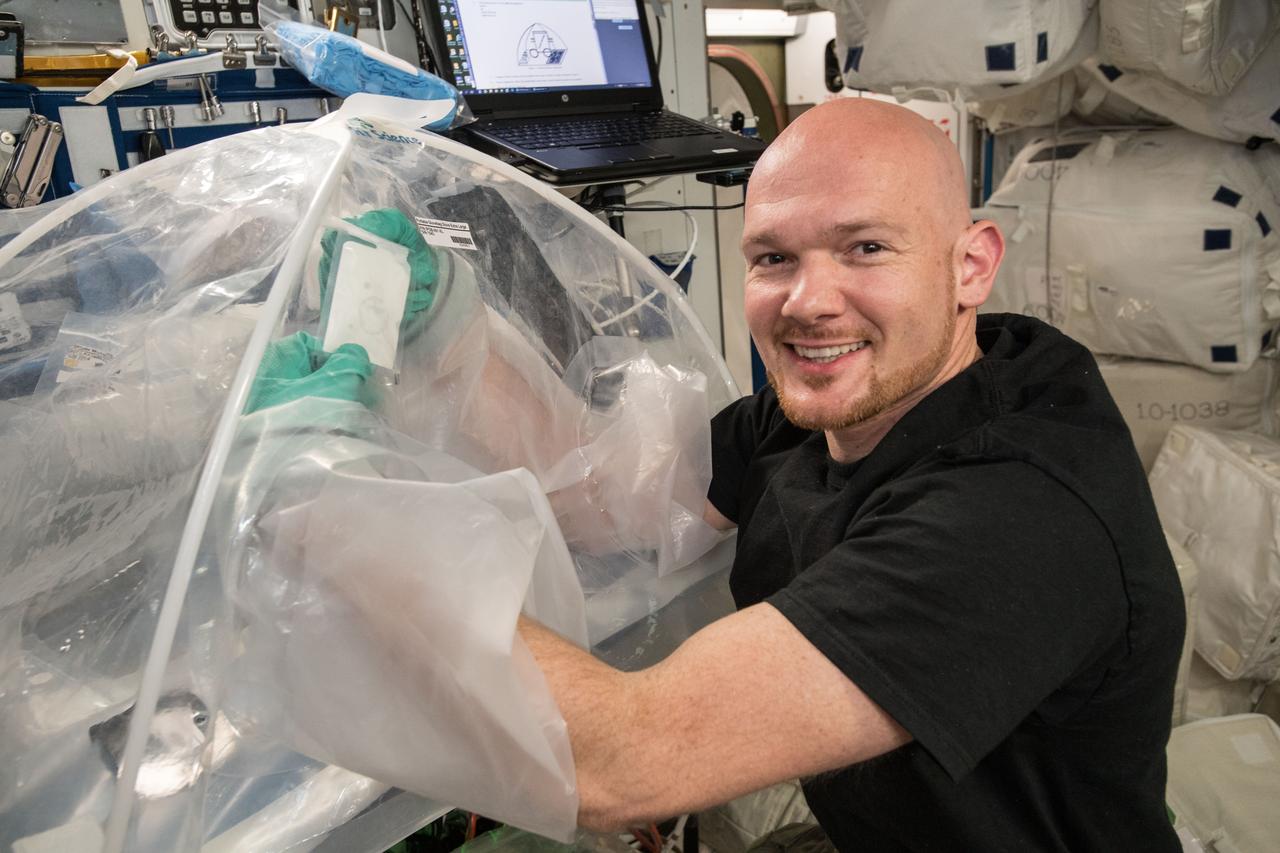
iss056e073247 (July 2, 2018) --- Astronaut Alexander Gerst of ESA (European Space Agency) works on the Microgravity Investigation of Cement Solidification (MICS) 2 experiment aboard the International Space Station. MICS 2 is researching how cement reacts in space during the hardening process and may help engineers better understand its microstructure and material properties. Observations could improve cement processing techniques on Earth and lead to the design of safer, lightweight space habitats.
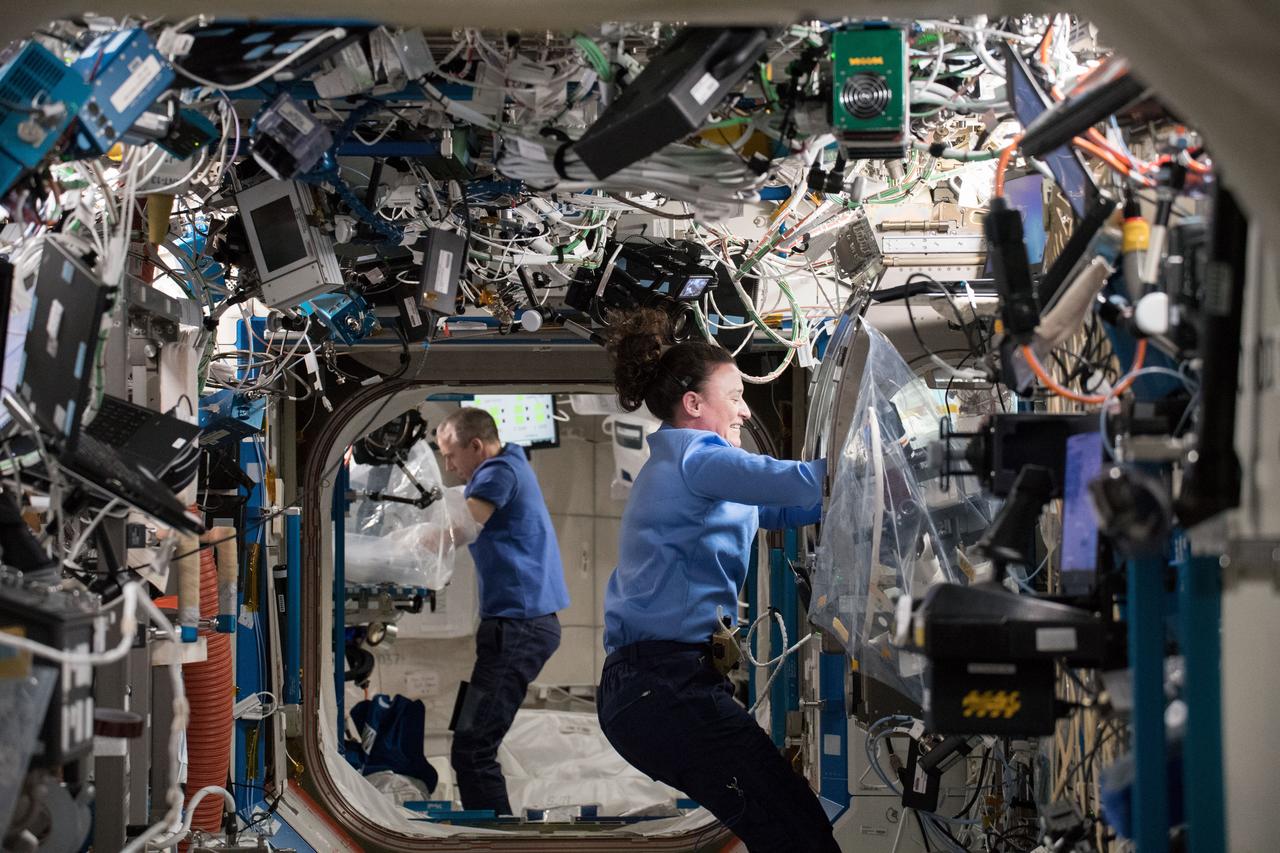
iss056e131403 (7/31/2018) --- NASA astronaut Serena Auñón-Chancellor conducts research operations for the AngieX Cancer Therapy study inside the Microgravity Science Glovebox. The new cancer research seeks to test a safer, more effective treatment that targets tumor cells and blood vessels. In the background, NASA astronaut Drew Feustel can be seen working on the Microgravity Investigation of Cement Solidification (MICS) 2 experiment aboard the International Space Station. MICS 2 is researching how cement reacts in space during the hardening process and may help engineers better understand its microstructure and material properties.
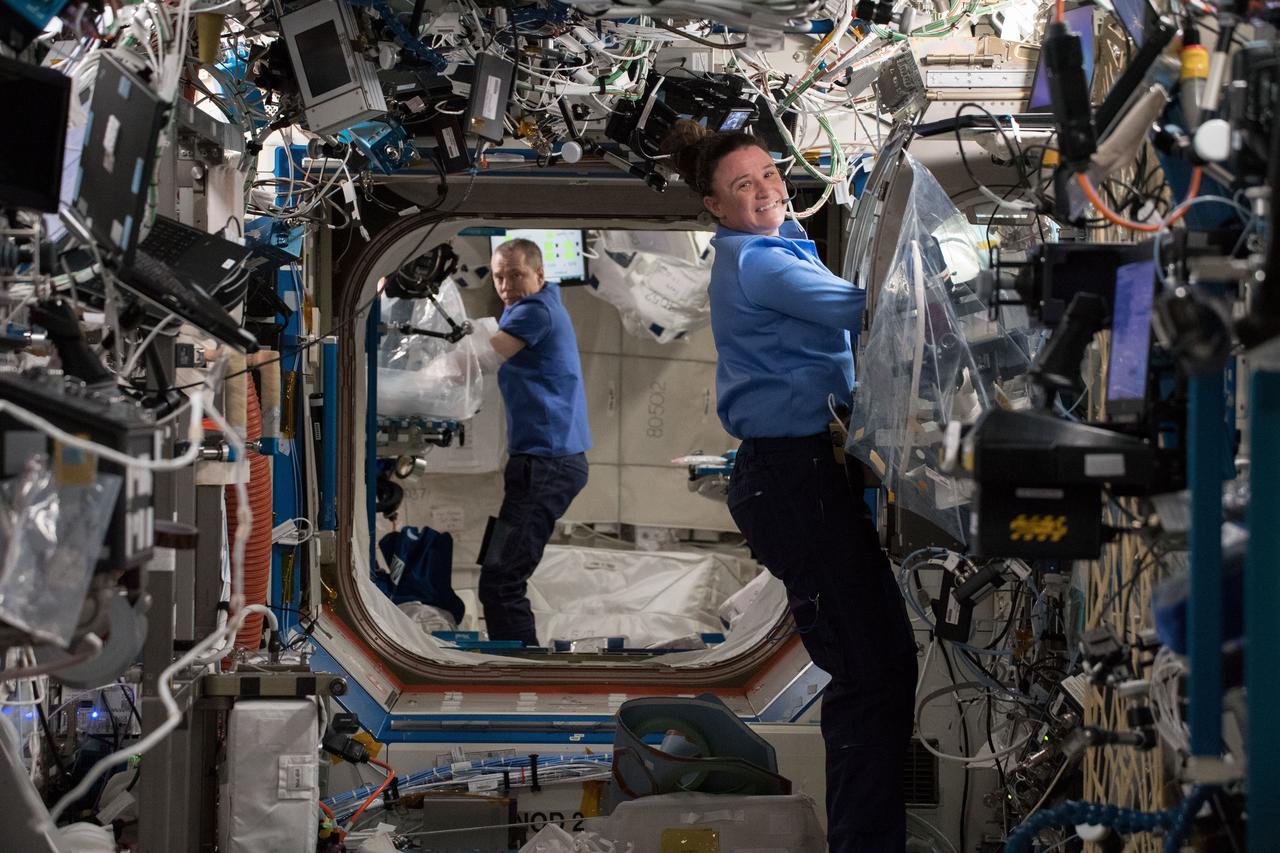
iss056e131400 (7/31/2018) --- NASA astronaut Serena Auñón-Chancellor conducts research operations for the AngieX Cancer Therapy study inside the Microgravity Science Glovebox. The new cancer research seeks to test a safer, more effective treatment that targets tumor cells and blood vessels. In the background, NASA astronaut Drew Feustel can be seen working on the Microgravity Investigation of Cement Solidification (MICS) 2 experiment aboard the International Space Station. MICS 2 is researching how cement reacts in space during the hardening process and may help engineers better understand its microstructure and material properties.
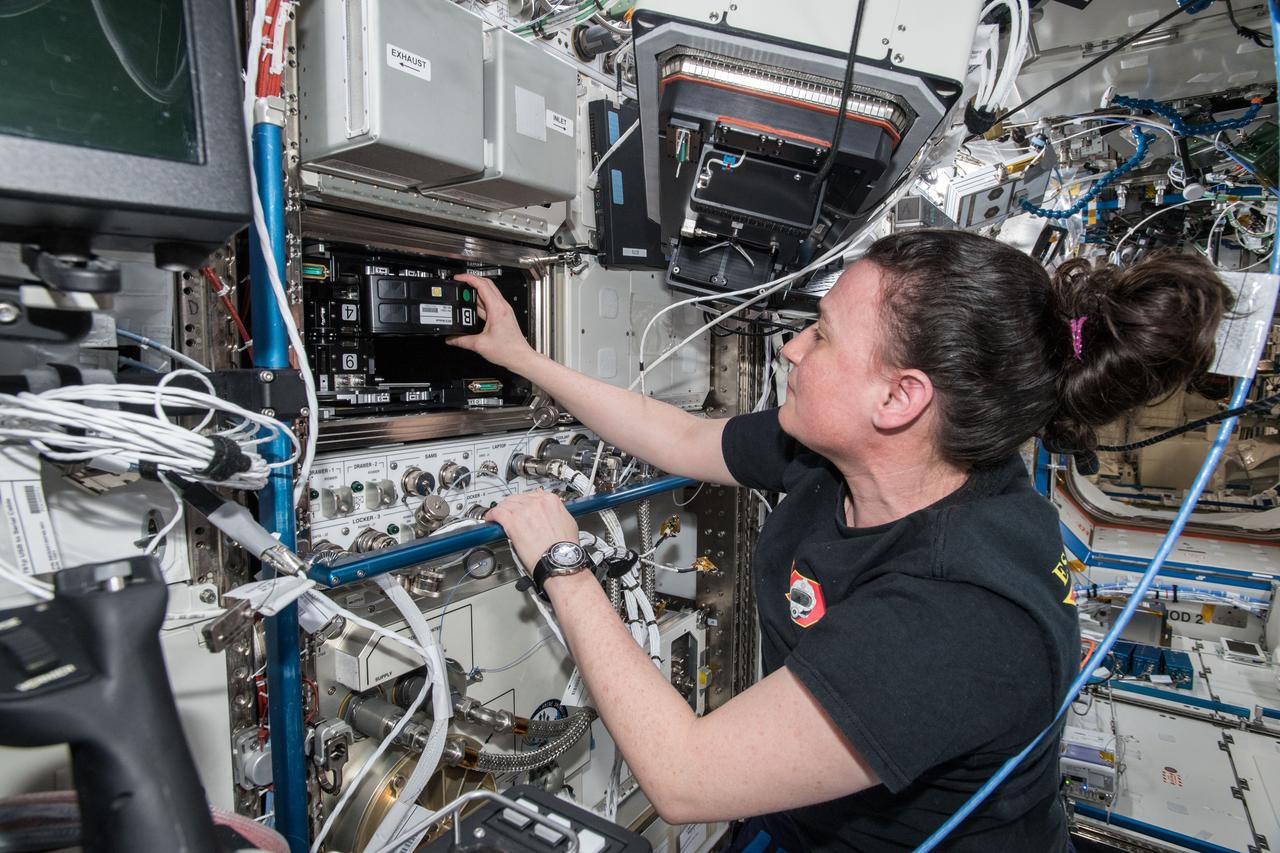
iss057e106250 (Nov. 27, 2018) --- NASA astronaut Serena Auñón-Chancellor mixes samples for the Microgravity Investigation of Cement Solidification (MICS) experiment and installs them into the Multi-use Variable-g Platform. The research utilizes the microgravity environment aboard the International Space Station to investigate the complex process of cement solidification. Results may impact possible construction processes and designs for space habitats on the surface of the Moon and Mars.
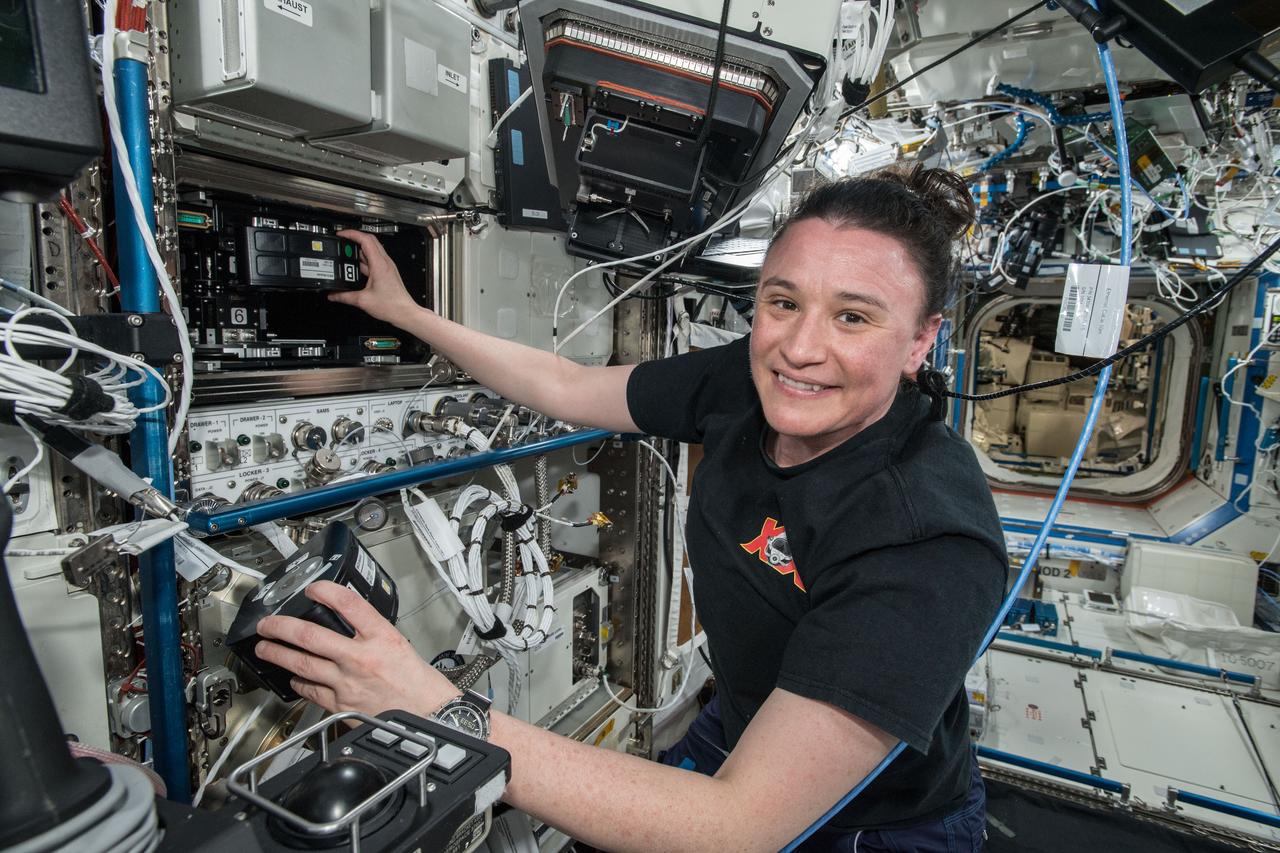
iss057e106264 (Nov. 27, 2018) --- Flight Engineer Serena Auñón-Chancellor mixes samples for the Microgravity Investigation of Cement Solidification (MICS) experiment and installs them into the Multi-use Variable-g Platform. The research utilizes the microgravity environment aboard the International Space Station to investigate the complex process of cement solidification. Results may impact possible construction processes and designs for space habitats on the surface of the Moon and Mars.
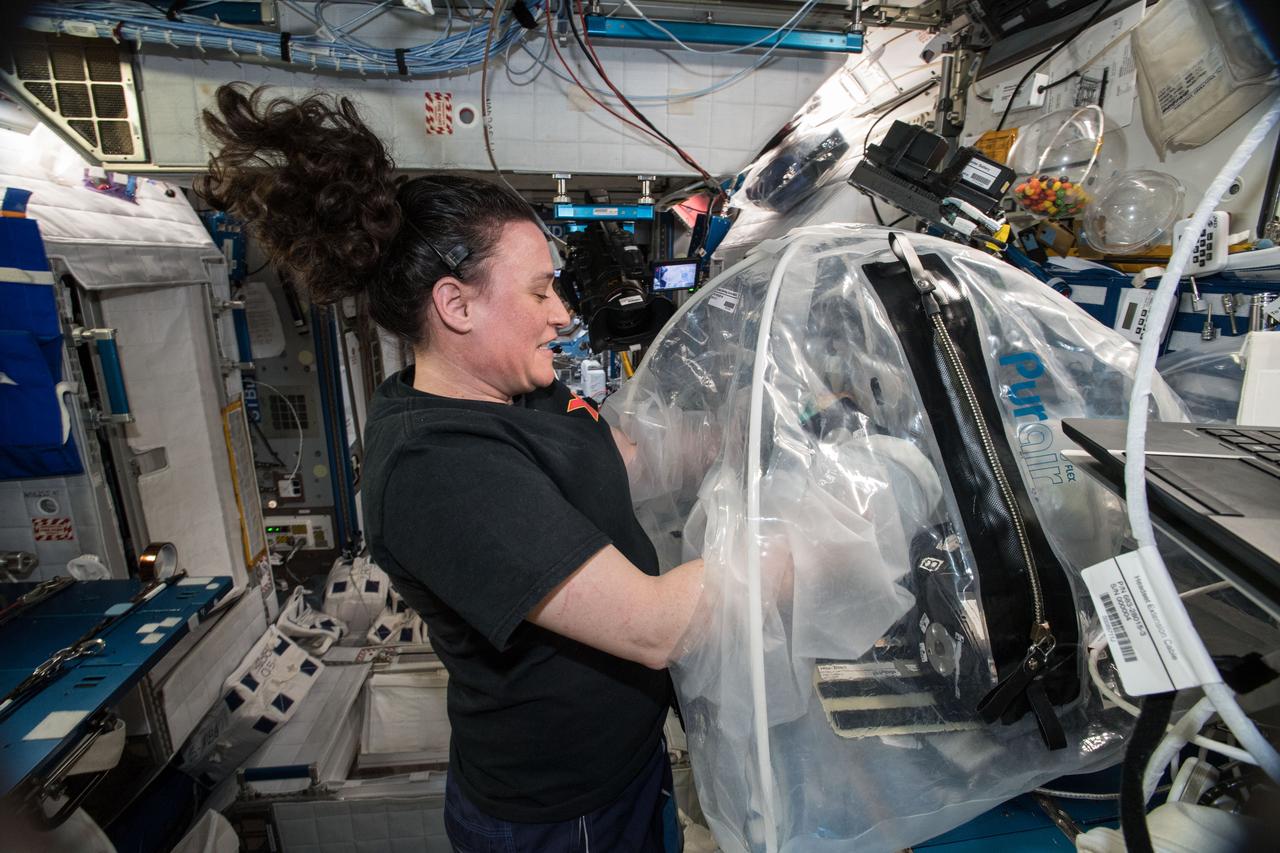
iss057e106244 (Nov. 27, 2018) --- NASA astronaut Serena Auñón-Chancellor mixes samples for the Microgravity Investigation of Cement Solidification (MICS) experiment and installs them into the Multi-use Variable-g Platform. The research utilizes the microgravity environment aboard the International Space Station to investigate the complex process of cement solidification. Results may impact possible construction processes and designs for space habitats on the surface of the Moon and Mars.
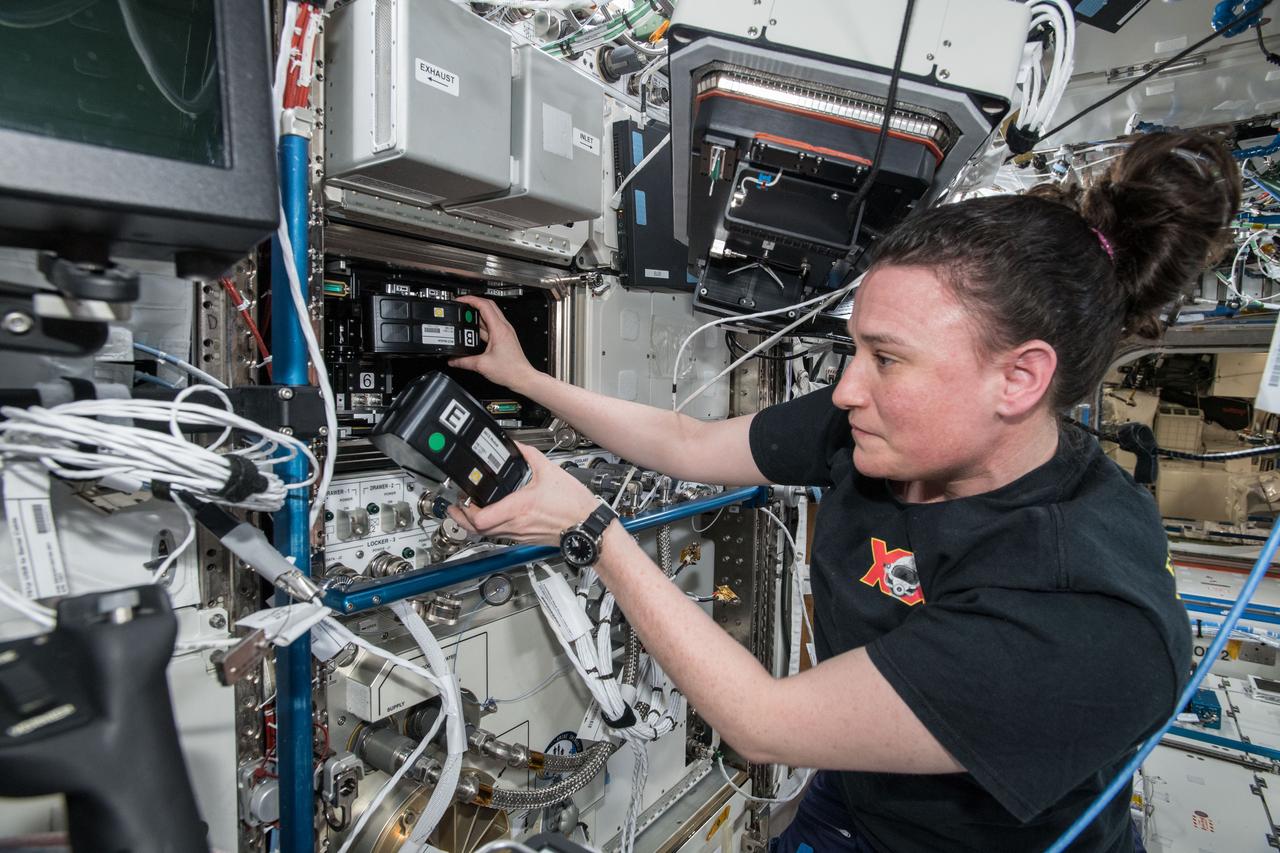
iss057e106256 (Nov. 27, 2018) --- NASA astronaut Serena Auñón-Chancellor mixes samples for the Microgravity Investigation of Cement Solidification (MICS) experiment and installs them into the Multi-use Variable-g Platform. The research utilizes the microgravity environment aboard the International Space Station to investigate the complex process of cement solidification. Results may impact possible construction processes and designs for space habitats on the surface of the Moon and Mars.

KENNEDY SPACE CENTER, FLA. -- During filming at KSC by a crew from India, KSC videographer Glen “Mic” Miracle (left) and Bobbie Faye Ferguson talk to actor Rahul Vohra (right). The film crew spent several days at KSC filming at various sites for the movie “Swades,” a story about India’s brain-drain. Vohra is one of the actors in the film that stars Shahrukh Khan and Gayatri Joshi. The writer-director is Ashutosh Gowariker. Sunita Gowariker is executive producer. Ferguson is manager of Multimedia, for NASA Public Affairs.

Mic Woltman, chief of the Fleet Systems Integration Branch of NASA's Launch Services Program, speaks to Kennedy Space Center employees about plans for the coming year. The event took place in the Lunar Theater at the Kennedy Space Center Visitor Complex’s Apollo Saturn V Center. The year will be highlighted with NASA's partners preparing test flights for crewed missions to the International Space Station as part of the agency's Commercial Crew Program and six launches by the Launch Services Program. Exploration Ground Systems will be completing facilities to support the Space Launch System rocket and Orion spacecraft. Exploration Research and Technology Programs will continue to provide supplies to the space station launched as part of the Commercial Resupply Services effort.
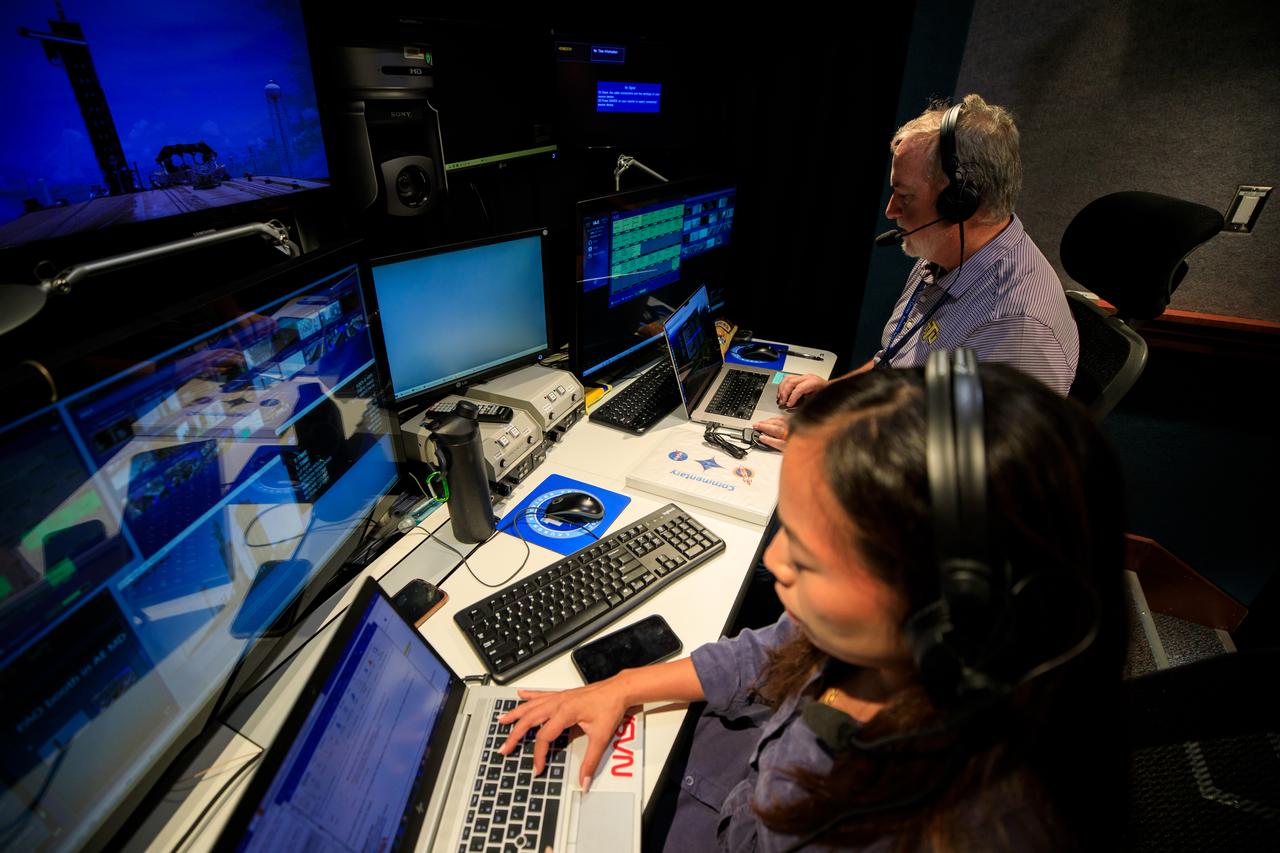
From left, Megan Cruz, NASA Communications at NASA’s Kennedy Space Center and Mic Woltman, chief of Fleet Systems Integration for the Launch Services Program at NASA’s Kennedy Space Center participate in a mission dress rehearsal on Monday, June 17, 2024, inside Hangar AE at Cape Canaveral Space Force Station in Florida for the National Oceanic and Atmospheric Administration (NOAA) GOES-U (Geostationary Operational Environmental Satellite U) mission. The GOES-U satellite, the final addition to GOES-R series, will serve a critical role in providing continuous coverage of the Western Hemisphere, including monitoring tropical systems in the eastern Pacific and Atlantic oceans launched Tuesday, June 25, 2024.
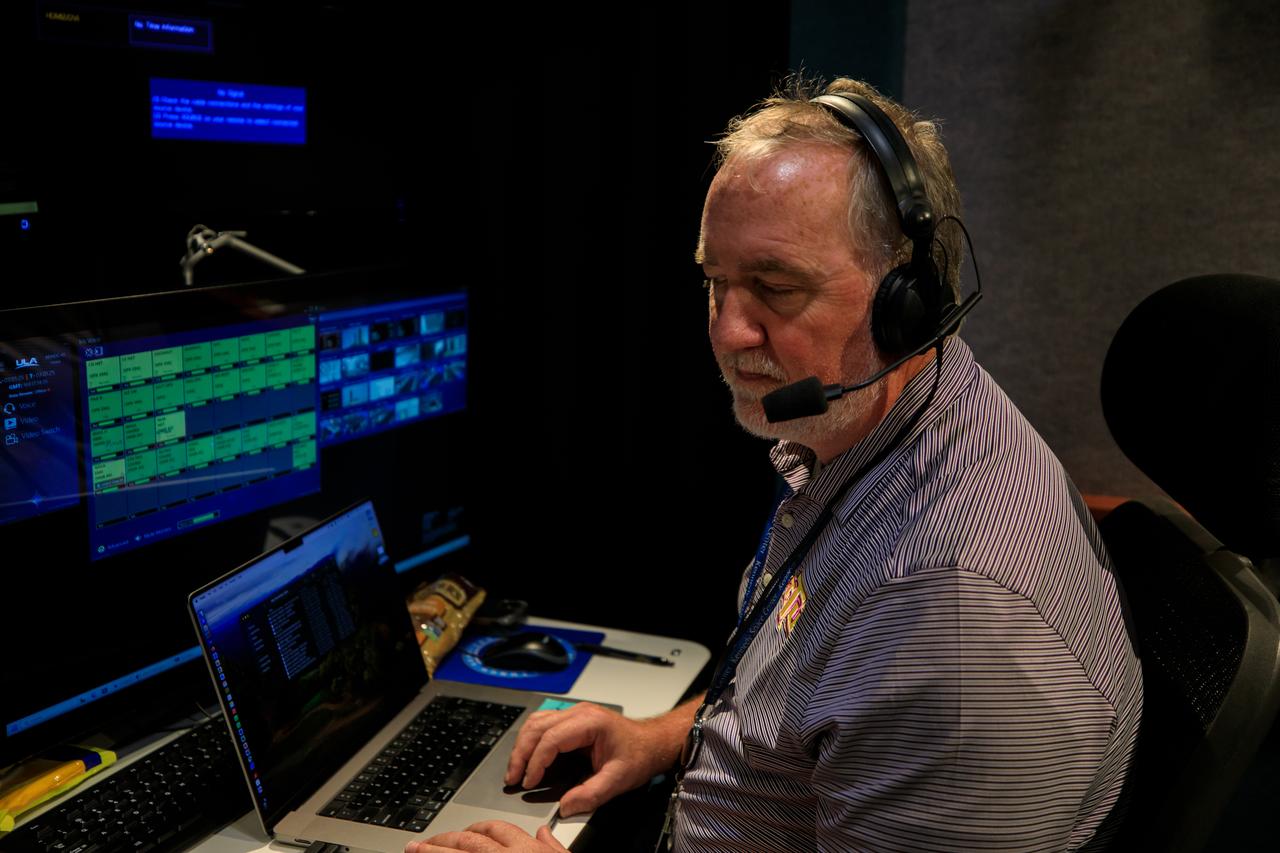
Mic Woltman, chief of Fleet Systems Integration for the Launch Services Program at NASA’s Kennedy Space Center participates in a mission dress rehearsal on Monday, June 17, 2024, inside Hangar AE at Cape Canaveral Space Force Station in Florida for the National Oceanic and Atmospheric Administration (NOAA) GOES-U (Geostationary Operational Environmental Satellite U) mission. The GOES-U satellite, the final addition to GOES-R series, will serve a critical role in providing continuous coverage of the Western Hemisphere, including monitoring tropical systems in the eastern Pacific and Atlantic oceans launched Tuesday, June 25, 2024.
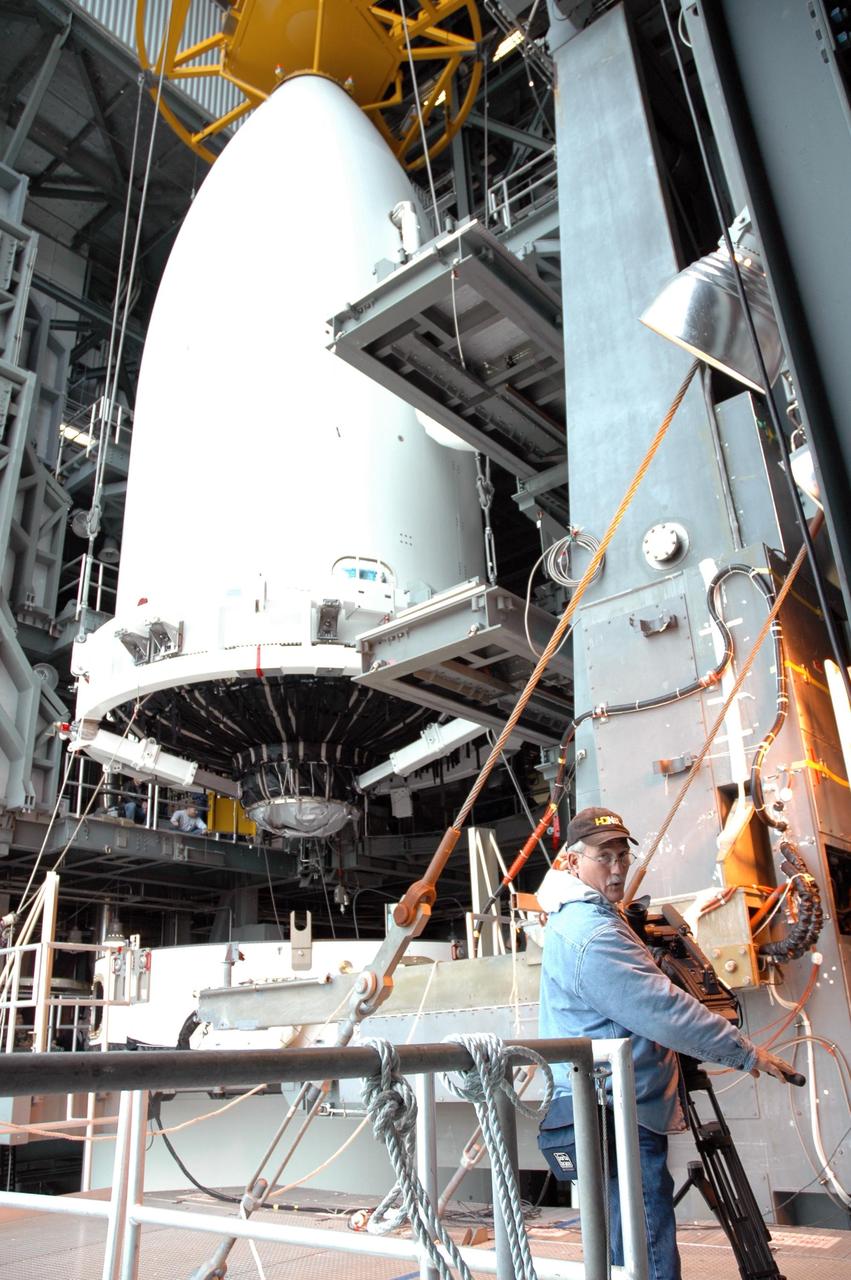
KENNEDY SPACE CENTER, FLA. - InDyne employee Mic Miracle captures on video the arrival of the fairing enclosing New Horizons at the top of a Lockheed Martin Atlas V launch vehicle in the Vertical Integration Facility at Complex 41 on Cape Canaveral Air Force Station. New Horizons carries seven scientific instruments that will characterize the global geology and geomorphology of Pluto and its moon Charon, map their surface compositions and temperatures, and examine Pluto's complex atmosphere. After that, flybys of Kuiper Belt objects from even farther in the solar system may be undertaken in an extended mission. New Horizons is the first mission in NASA's New Frontiers program of medium-class planetary missions. The spacecraft, designed for NASA by the Johns Hopkins University Applied Physics Laboratory in Laurel, Md., will launch aboard a Lockheed Martin Atlas V rocket and fly by Pluto and Charon as early as summer 2015.
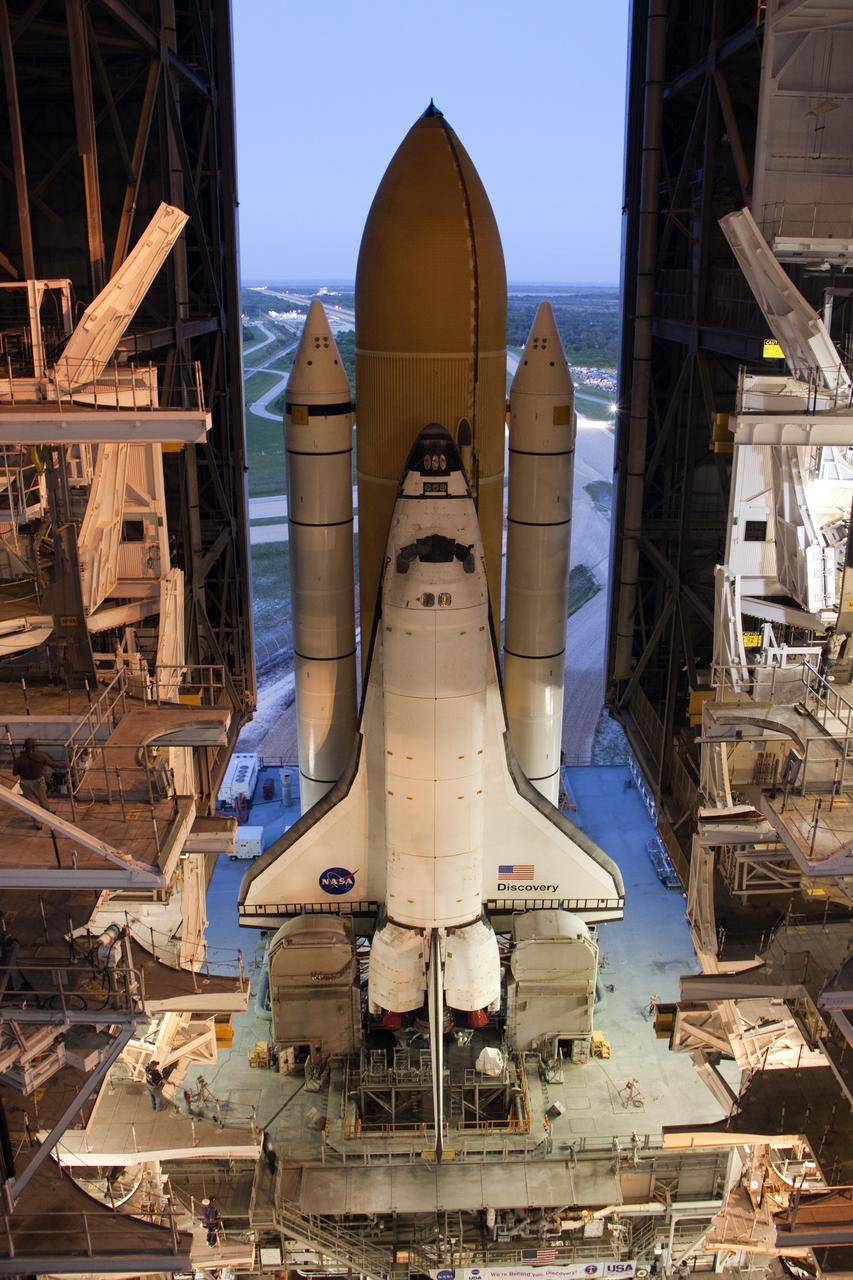
CAPE CANAVERAL, Fla. -- At NASA's Kennedy Space Center in Florida, space shuttle Discovery begins its nighttime trek, known as "rollout," from the Vehicle Assembly Building to Launch Pad 39A. It will take the shuttle, attached to its external fuel tank, twin solid rocket boosters and mobile launcher platform, about six hours to complete the move atop a crawler-transporter. Rollout sets the stage for Discovery's STS-133 crew to practice countdown and launch procedures during the Terminal Countdown Demonstration Test in mid-October. Targeted to liftoff Nov. 1, Discovery will take the Permanent Multipurpose Module (PMM) packed with supplies and critical spare parts, as well as Robonaut 2 (R2) to the International Space Station. Photo credit: NASA/Mic Miracle
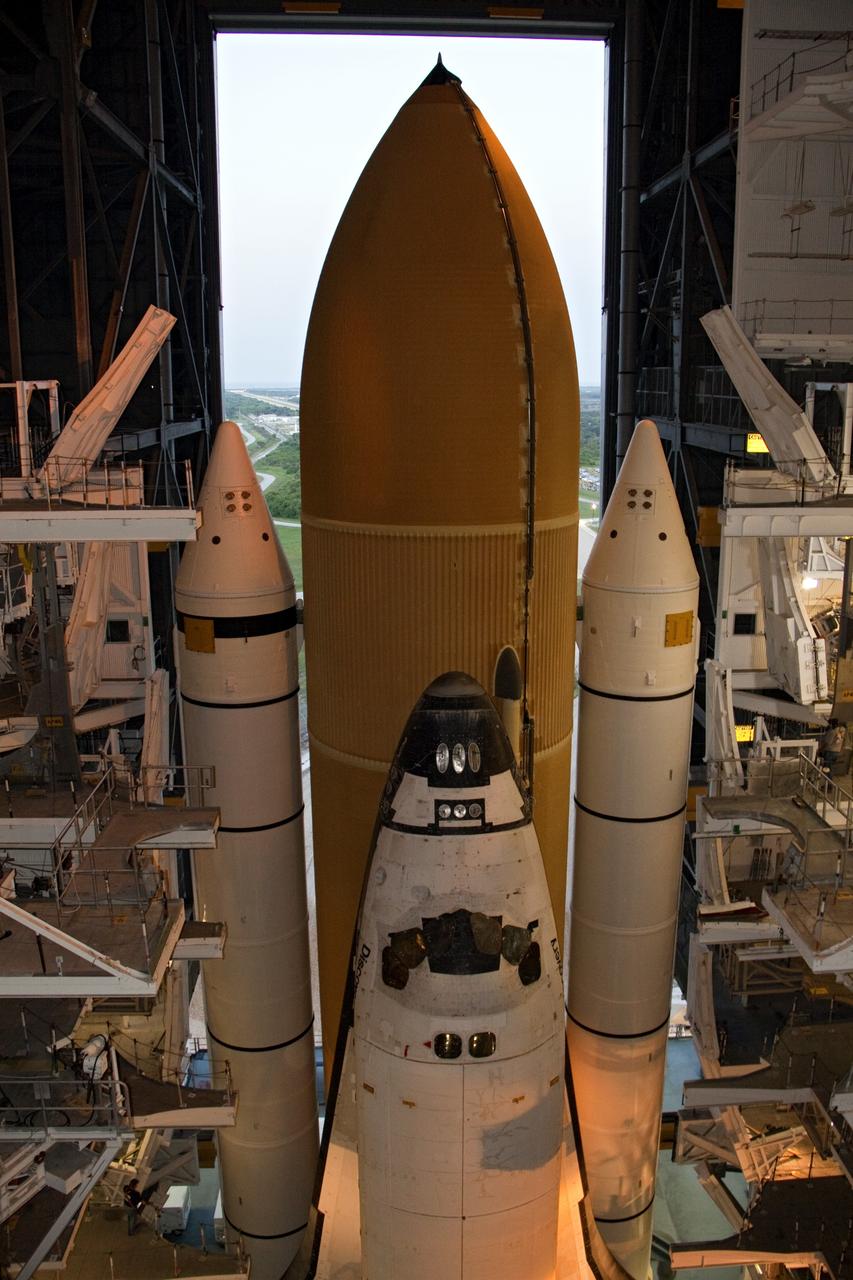
CAPE CANAVERAL, Fla. -- At NASA's Kennedy Space Center in Florida, space shuttle Discovery is ready for its nighttime trek, known as "rollout," from the Vehicle Assembly Building to Launch Pad 39A. It will take the shuttle, attached to its external fuel tank, twin solid rocket boosters and mobile launcher platform, about six hours to complete the move atop a crawler-transporter. Rollout sets the stage for Discovery's STS-133 crew to practice countdown and launch procedures during the Terminal Countdown Demonstration Test in mid-October. Targeted to liftoff Nov. 1, Discovery will take the Permanent Multipurpose Module (PMM) packed with supplies and critical spare parts, as well as Robonaut 2 (R2) to the International Space Station. Photo credit: NASA/Mic Miracle
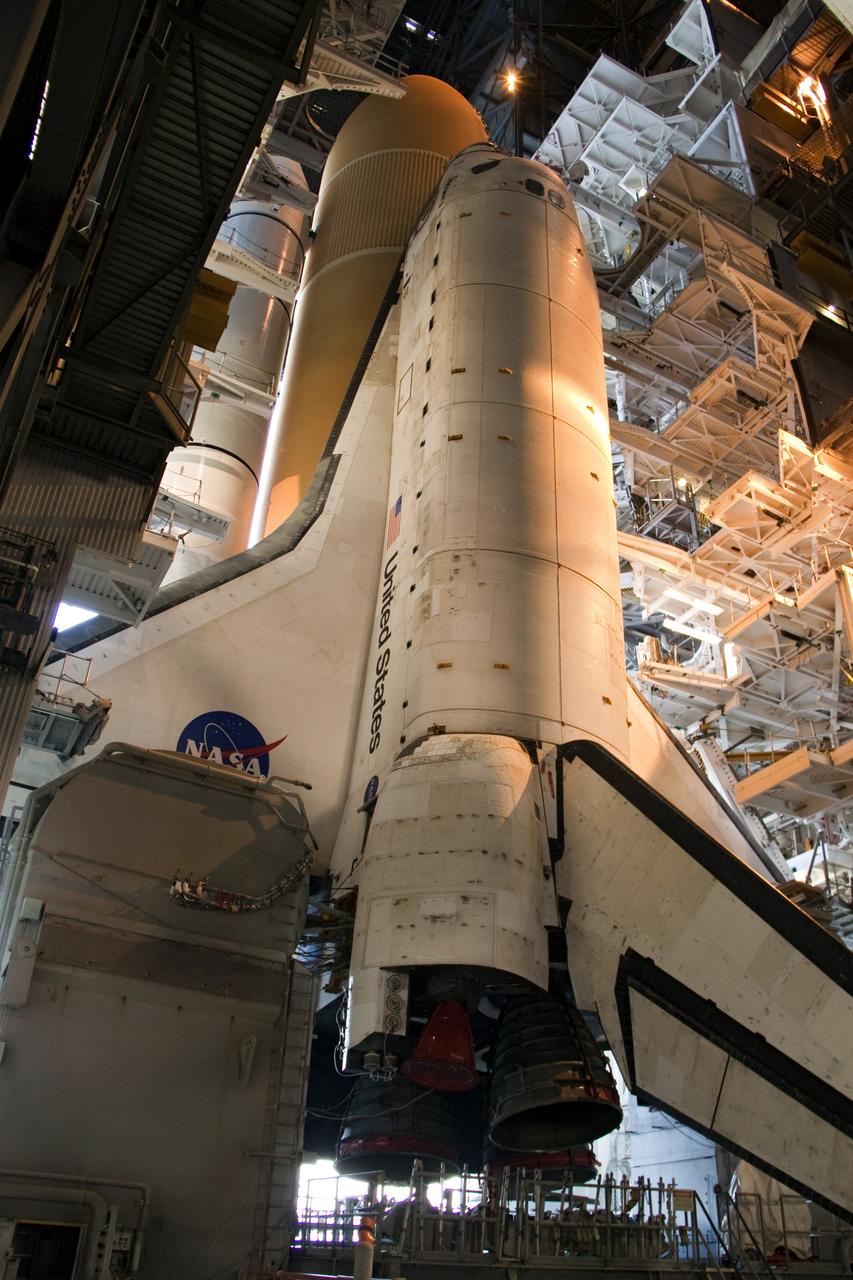
CAPE CANAVERAL, Fla. -- At NASA's Kennedy Space Center in Florida, space shuttle Discovery is prepared for its nighttime trek, known as "rollout," from the Vehicle Assembly Building to Launch Pad 39A. It will take the shuttle, attached to its external fuel tank, twin solid rocket boosters and mobile launcher platform, about six hours to complete the move atop a crawler-transporter. Rollout sets the stage for Discovery's STS-133 crew to practice countdown and launch procedures during the Terminal Countdown Demonstration Test in mid-October. Targeted to liftoff Nov. 1, Discovery will take the Permanent Multipurpose Module (PMM) packed with supplies and critical spare parts, as well as Robonaut 2 (R2) to the International Space Station. Photo credit: NASA/Mic Miracle
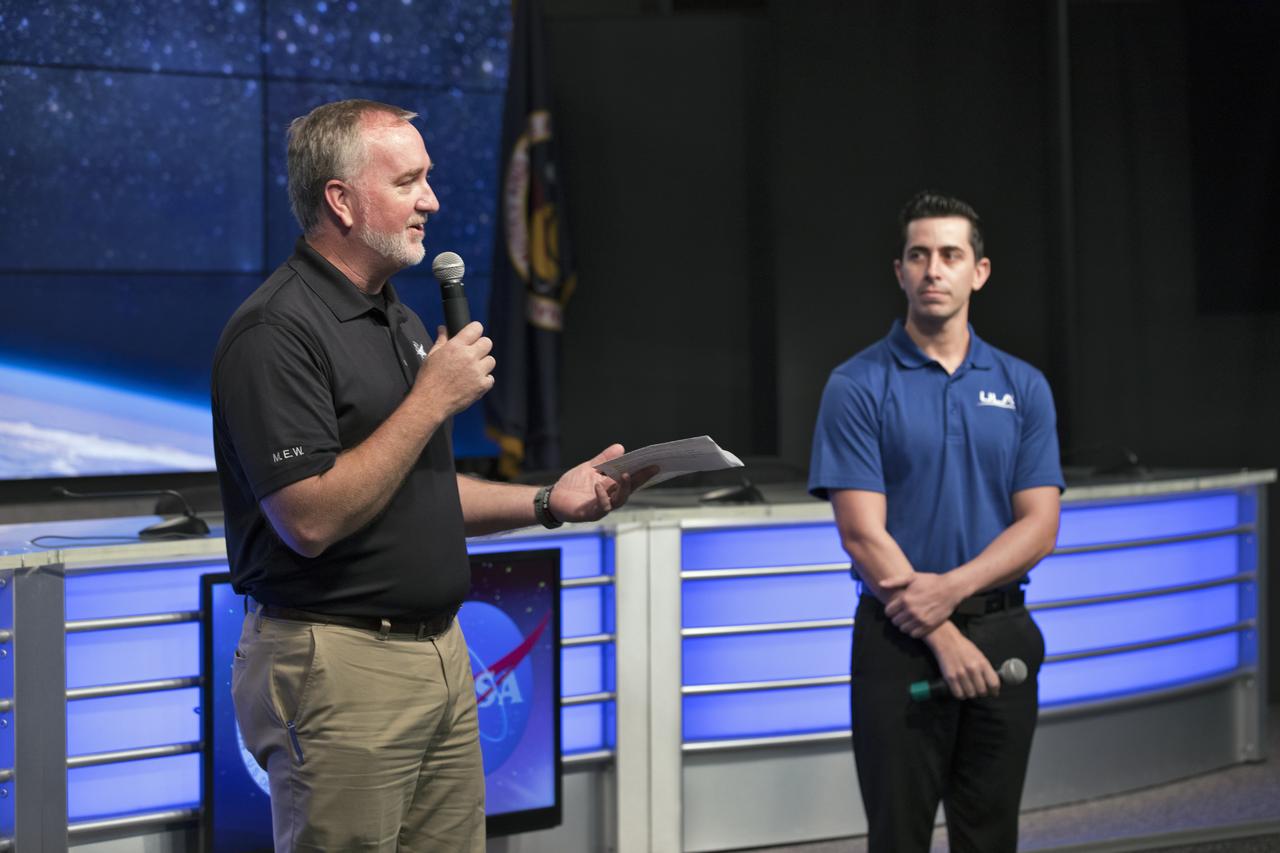
Mic Woltman, chief of the Fleet Systems Integration Branch of NASA's Launch Services Program, left, and Gabriel Rodriguez-Mena, a United Launch Alliance systems test engineer, speak to members of social media in the Kennedy Space Center’s Press Site auditorium. The briefing focused on the National Oceanic and Atmospheric Administration's, or NOAA's, Geostationary Operational Environmental Satellite, or GOES-S. The spacecraft is the second satellite in a series of next-generation NOAA weather satellites. It will launch to a geostationary position over the U.S. to provide images of storms and help predict weather forecasts, severe weather outlooks, watches, warnings, lightning conditions and longer-term forecasting. GOES-S is slated to lift off at 5:02 p.m. EST on March 1, 2018 aboard a United Launch Alliance Atlas V rocket.
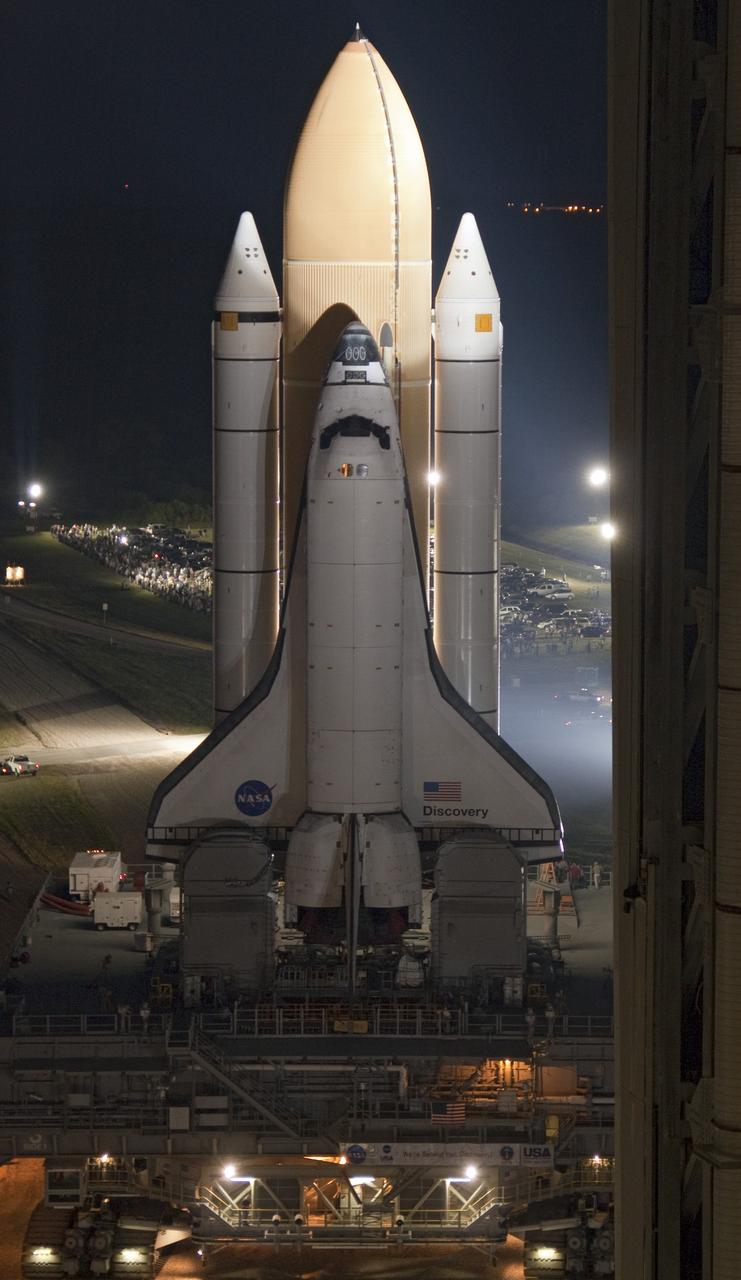
CAPE CANAVERAL, Fla. -- Bathed in bright xenon lights, space shuttle Discovery makes its nighttime trek, known as "rollout," from the Vehicle Assembly Building to Launch Pad 39A at NASA's Kennedy Space Center in Florida. It will take the shuttle, attached to its external fuel tank, twin solid rocket boosters and mobile launcher platform, about six hours to complete the move atop a crawler-transporter. Rollout sets the stage for Discovery's STS-133 crew to practice countdown and launch procedures during the Terminal Countdown Demonstration Test in mid-October. Targeted to liftoff Nov. 1, Discovery will take the Permanent Multipurpose Module (PMM) packed with supplies and critical spare parts, as well as Robonaut 2 (R2) to the International Space Station. Photo credit: NASA/Mic Miracle
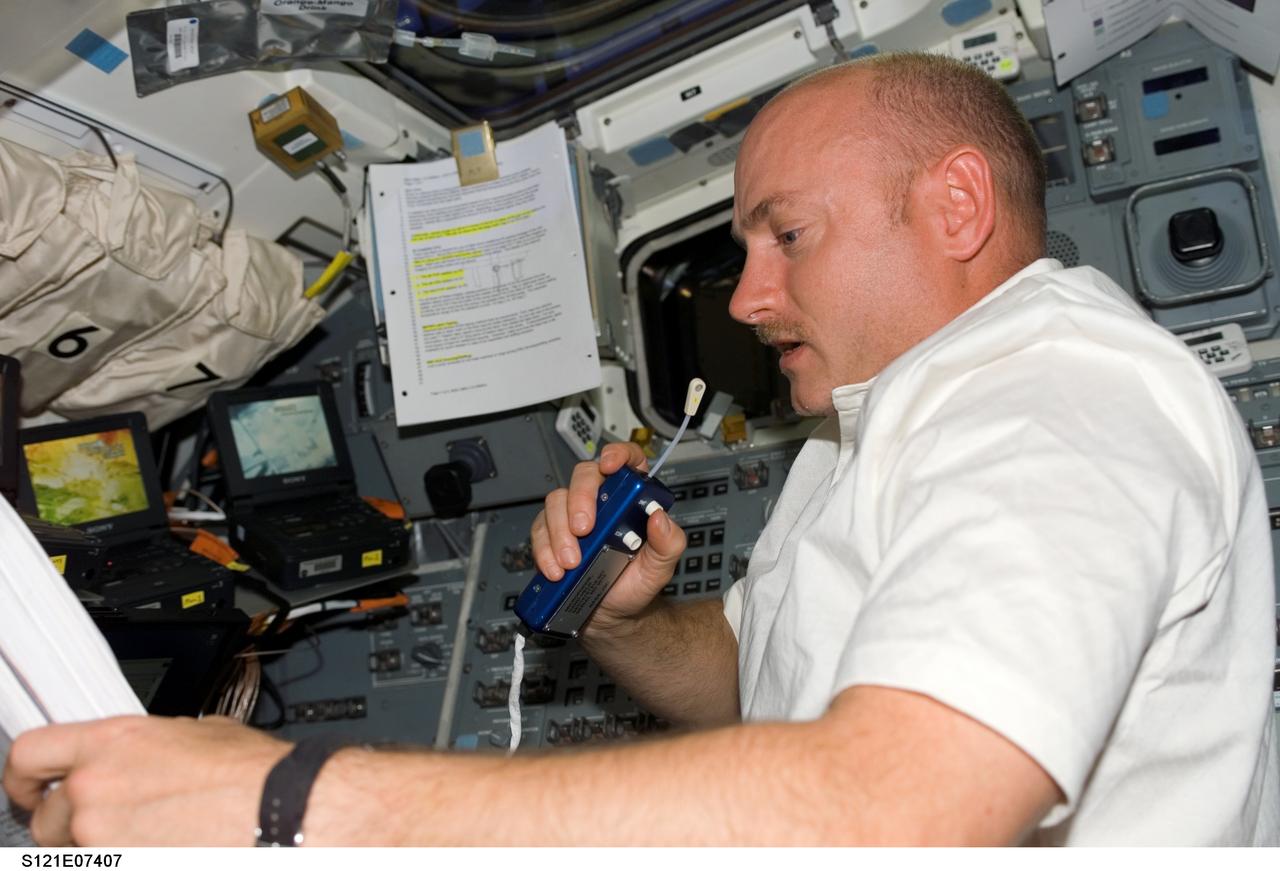
S121-E-07407 (12 July 2006) --- Astronaut Mark E. Kelly, STS-121 pilot, uses a communication system on the aft flight deck of Space Shuttle Discovery while docked with the International Space Station.
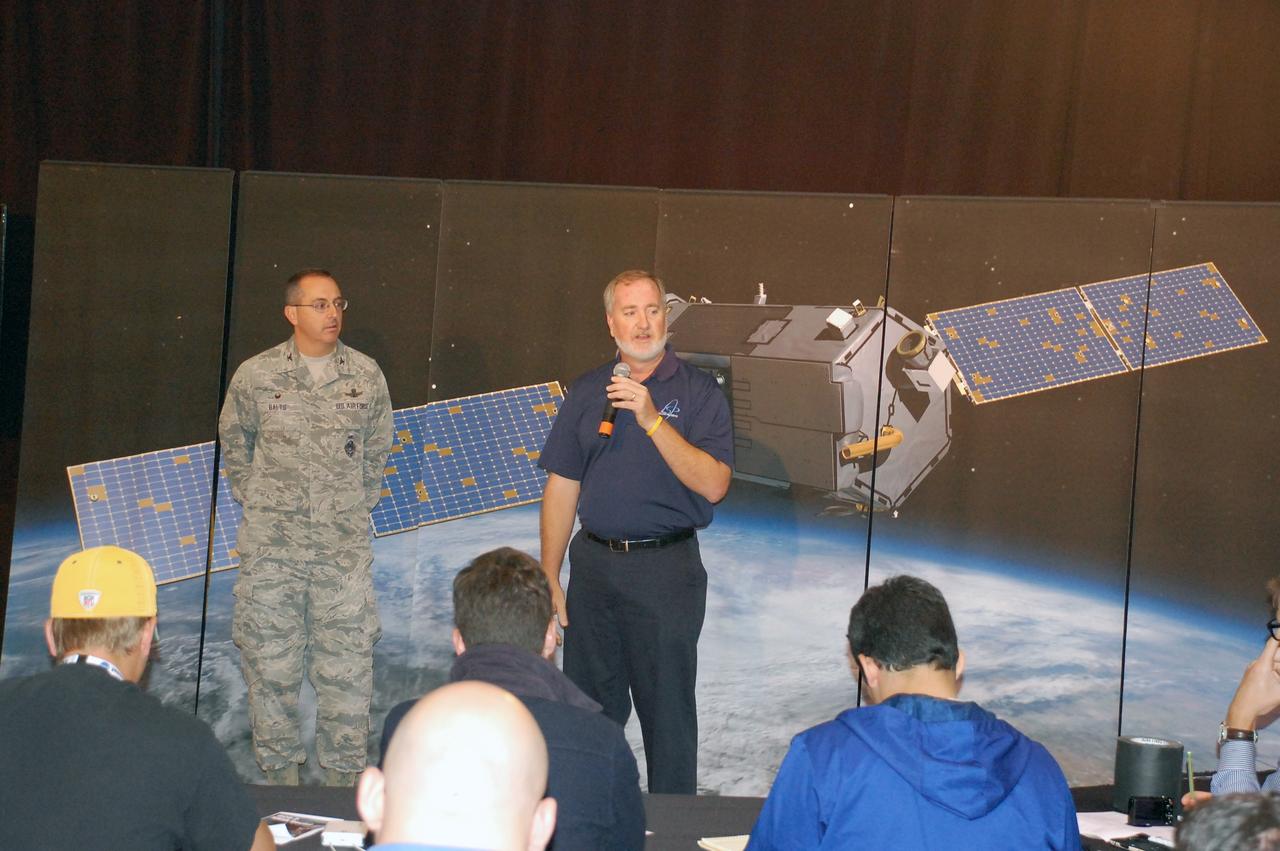
VANDENBERG AIR FORCE BASE, Calif. – Col. Keith Balts, 30th Space Wing commander at Vandenberg Air Force Base in California, and Michael "Mic" Woltman, senior vehicle systems engineer for the Launch Services Program at NASA's Kennedy Space Center in Florida, discuss the upcoming launch of NASA's Orbiting Carbon Observatory-2, or OCO-2, with representatives of social media outlets attending a NASA Social at Vandenberg. Launch of OCO-2 aboard a United Launch Alliance Delta II rocket from Space Launch Complex 2 is scheduled for 5:56 a.m. EDT on July 1. The social media users selected to attend the two-day event on June 30 and July 1 are given the same access as news media in an effort to align their experience with those of traditional media. OCO-2 is NASA’s first mission dedicated to studying atmospheric carbon dioxide, the leading human-produced greenhouse gas driving changes in Earth’s climate. OCO-2 will provide a new tool for understanding the human and natural sources of carbon dioxide emissions and the natural "sinks" that absorb carbon dioxide and help control its buildup. The observatory will measure the global geographic distribution of these sources and sinks and study their changes over time. To learn more about OCO-2, visit http://www.nasa.gov/oco2. Photo credit: NASA/Ben Smegelsky