
S94-E-5001 (5 July 1997) --- Astronaut Donald Thomas, mission specialist, uses a microscope at the glovebox onboard the Space Shuttle Columbia's Spacelab Module during flight day five activities.
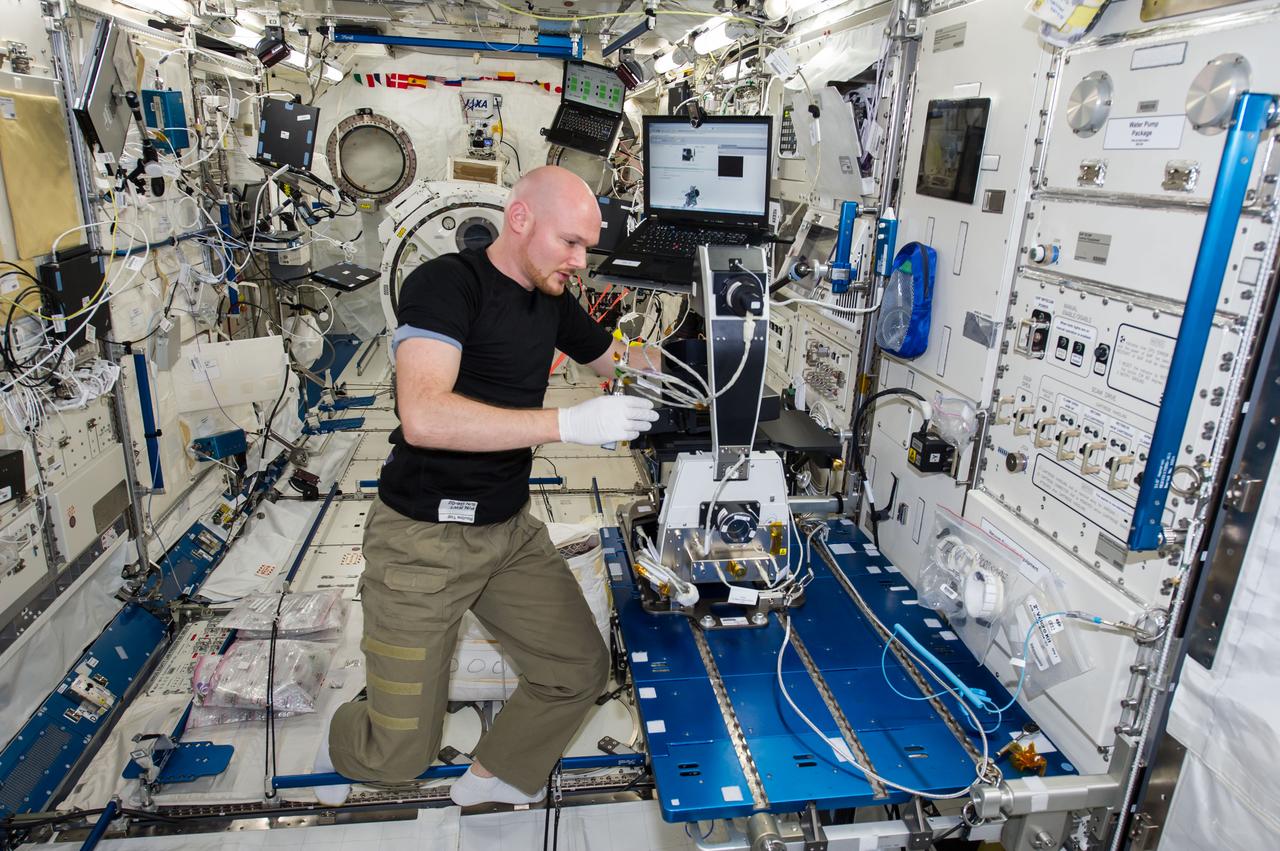
ISS040-E-130233 (9 Sept. 2014) --- European Space Agency astronaut Alexander Gerst, Expedition 40 flight engineer, installs a microscope for the Cell Mechanosensing-2 experiment in the Kibo laboratory of the International Space Station. The Japanese experiment, which is conducted in Kibo’s Kobairo rack, seeks to identify gravity sensors in cells that may change the expression of key proteins and genes and allowing muscles to atrophy in microgravity.
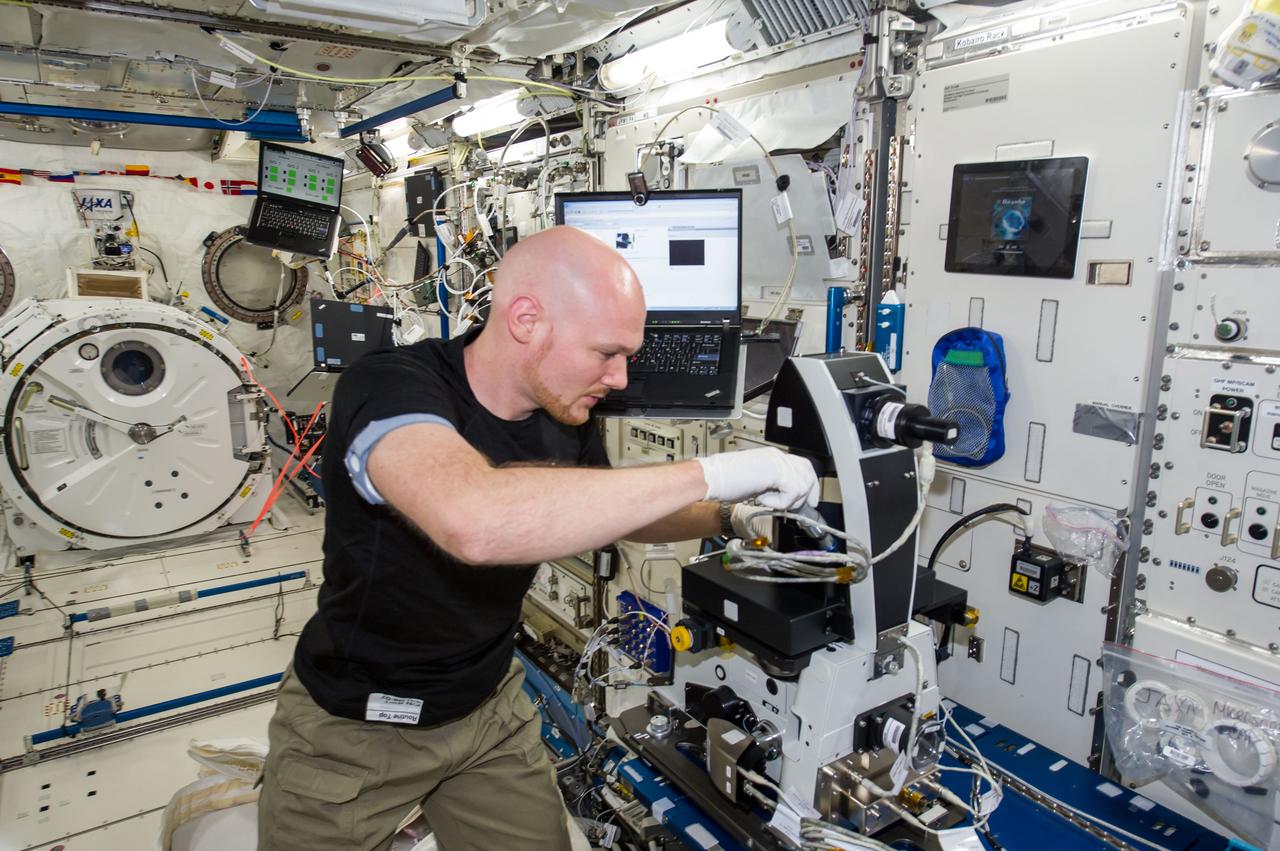
European Space Agency astronaut Alexander Gerst,Expedition 40 flight engineer,installs a microscope for the Cell Mechanosensing-2 experiment in the Kibo laboratory of the International Space Station. The Japanese experiment,which is conducted in Kibos Kobairo rack,seeks to identify gravity sensors in cells that may change the expression of key proteins and genes and allowing muscles to atrophy in microgravity.
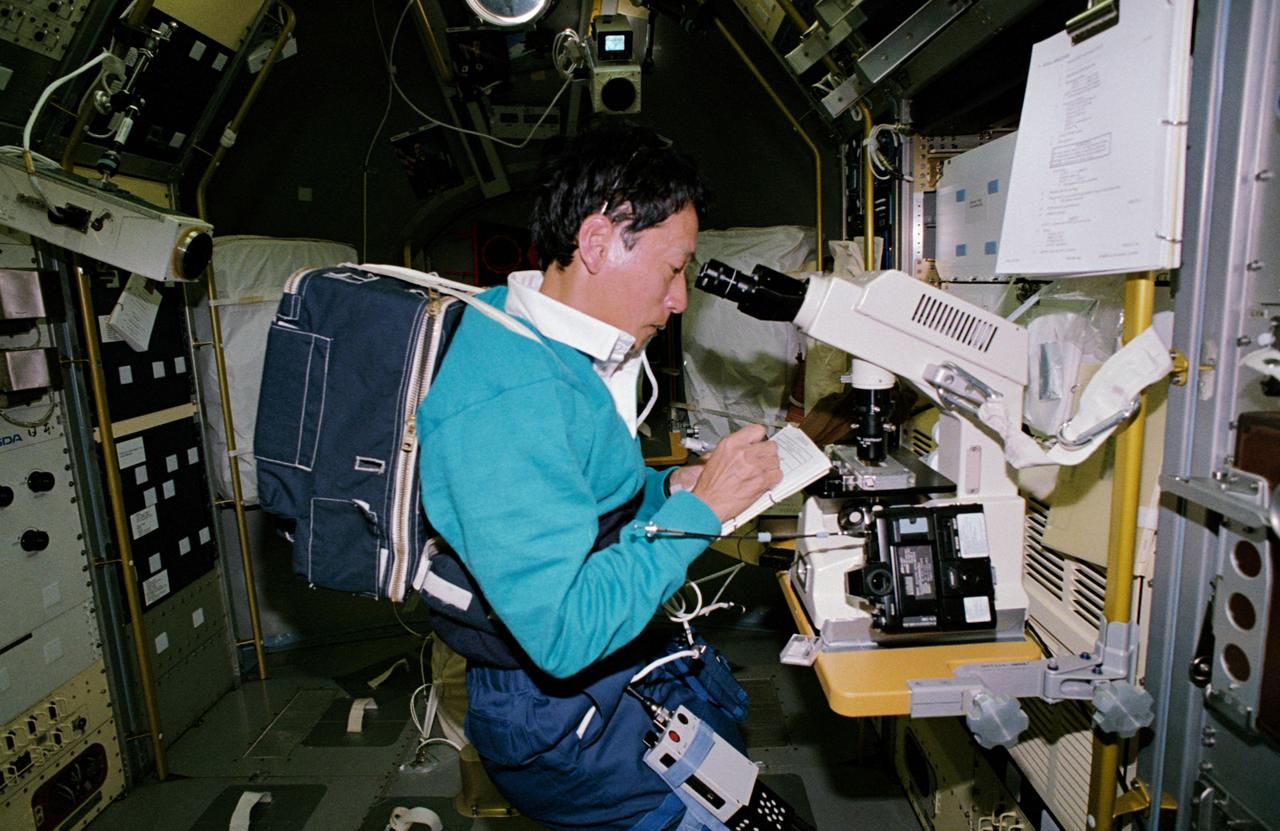
STS047-05-025 (12 - 20 Sept 1992) --- Payload specialist Mamoru Mohri, representing Japan's National Space Development Agency (NASDA), uses a microscope to produce photomicrographs of mammalian cells. The mammal cell structure experiment is one of a large number of tests that were performed during the eight-day Spacelab-J mission. On his back, Dr. Mohri totes a health monitoring experiment. The primary objective of the physiological monitoring system is to observe the health condition of the Japanese payload specialist so that good health can be maintained during and after the spaceflight.