
TEST FLIGHT OF THE LANDER PROTOTYPE “MIGHTY EAGLE” OVER A SIMULATED LUNAR LANDSCAPE. SEPTEMBER 20, 2013

TEST FLIGHT OF THE LANDER PROTOTYPE “MIGHTY EAGLE” OVER A SIMULATED LUNAR LANDSCAPE. SEPTEMBER 20, 2013

TEST FLIGHT OF THE LANDER PROTOTYPE “MIGHTY EAGLE” OVER A SIMULATED LUNAR LANDSCAPE. SEPTEMBER 20, 2013

TEST FLIGHT OF THE LANDER PROTOTYPE “MIGHTY EAGLE” OVER A SIMULATED LUNAR LANDSCAPE. SEPTEMBER 20, 2013

TEST FLIGHT OF THE LANDER PROTOTYPE “MIGHTY EAGLE” OVER A SIMULATED LUNAR LANDSCAPE. SEPTEMBER 20, 2013

TEST FLIGHT OF THE LANDER PROTOTYPE “MIGHTY EAGLE” OVER A SIMULATED LUNAR LANDSCAPE. SEPTEMBER 20, 2013

TEST FLIGHT OF THE LANDER PROTOTYPE “MIGHTY EAGLE” OVER A SIMULATED LUNAR LANDSCAPE. SEPTEMBER 20, 2013
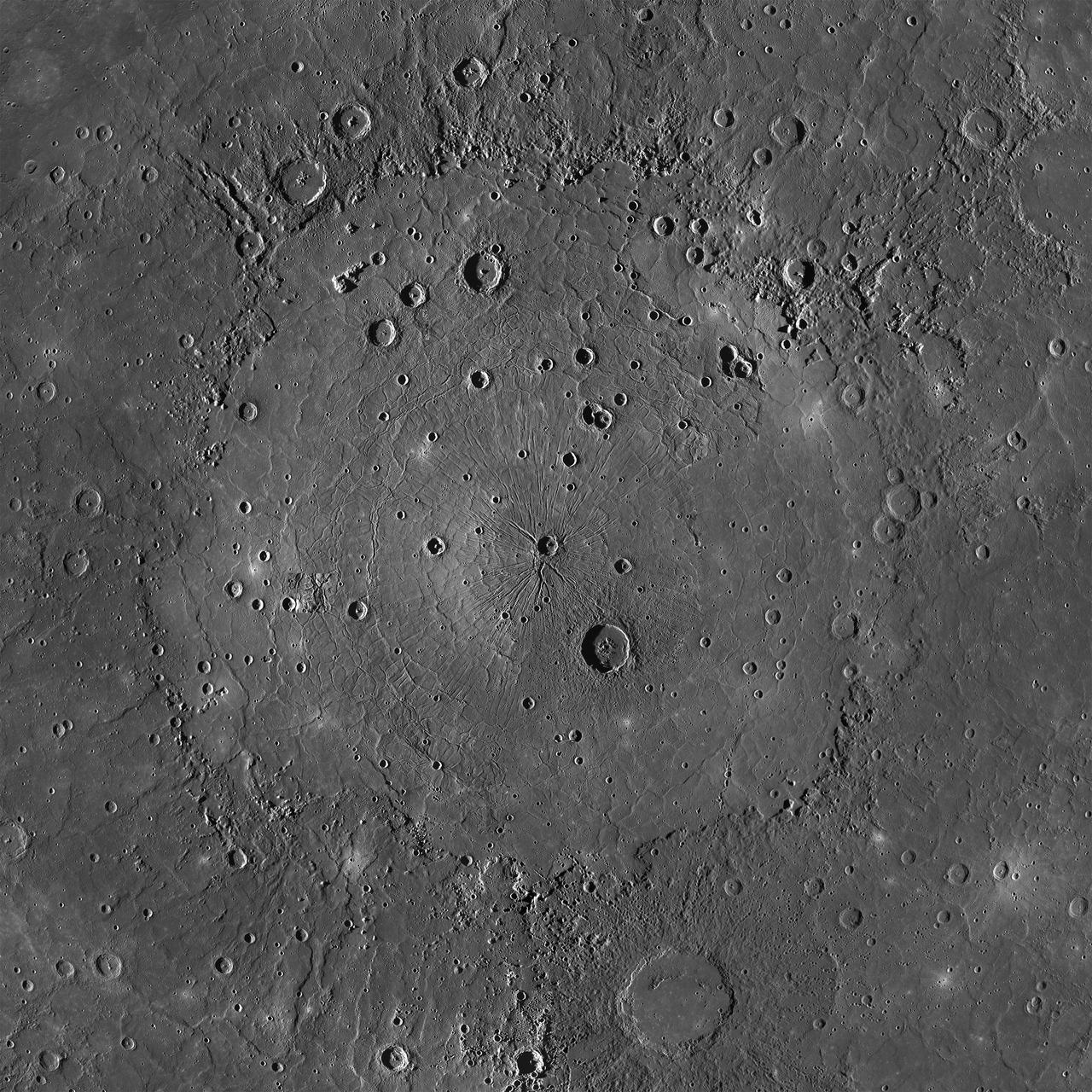
This is an MDIS mosaic of the mighty Caloris basin, Mercury's youngest large impact basin. Caloris has been filled by volcanic plains that are distinctive in color from the surrounding terrain. Subsequent craters have excavated low-reflectance material from beneath these volcanic plains, possibly giving clues to the composition of the basin floor. The basin interior has a complex tectonic history. The interior smooth plains have an area approximately the area of Alaska! Over 640 Rhode Islands would fit inside of this massive basin. http://photojournal.jpl.nasa.gov/catalog/PIA19213
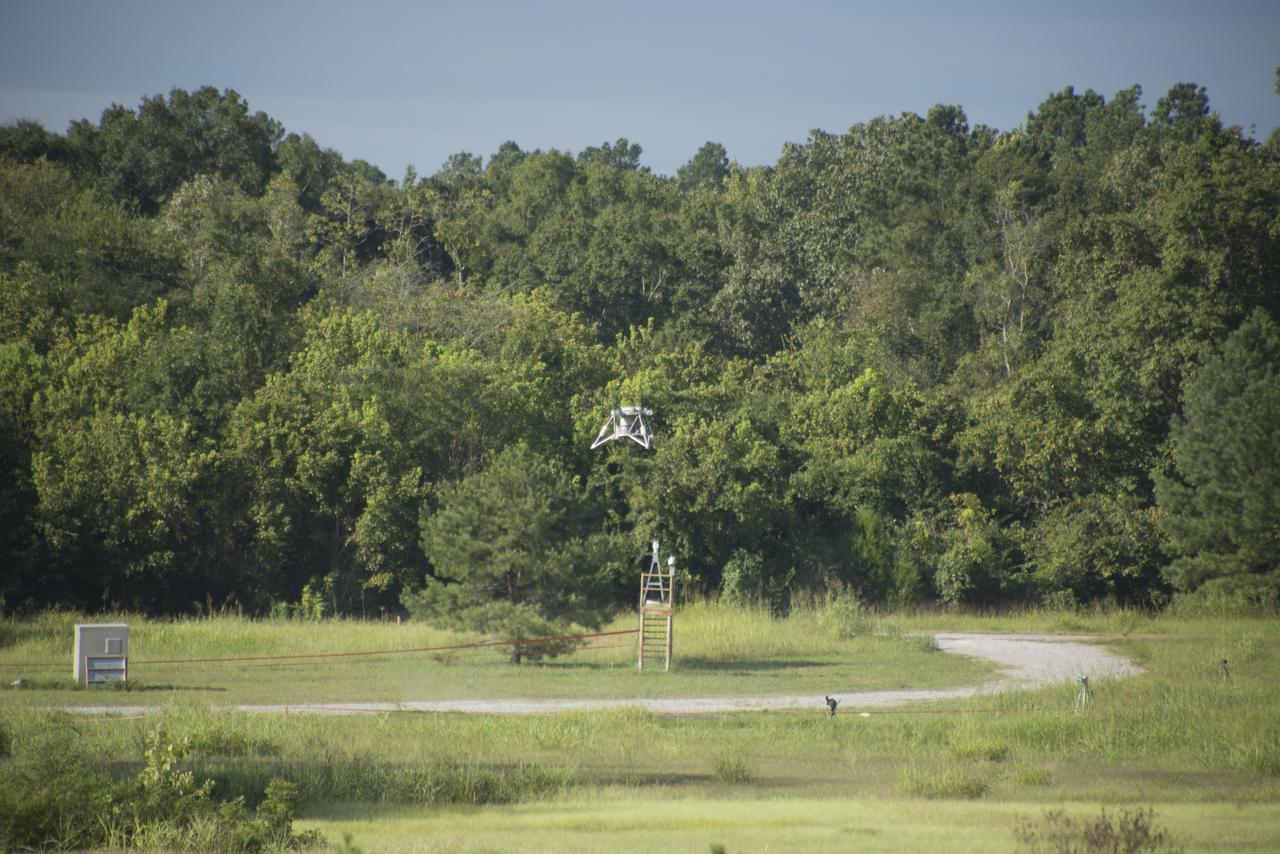
TEST FLIGHT OF MSFC'S "MIGHTY EAGLE" ROBOTIC LANDER IN THE WEST TEST AREA. AUGUST 28, 2012
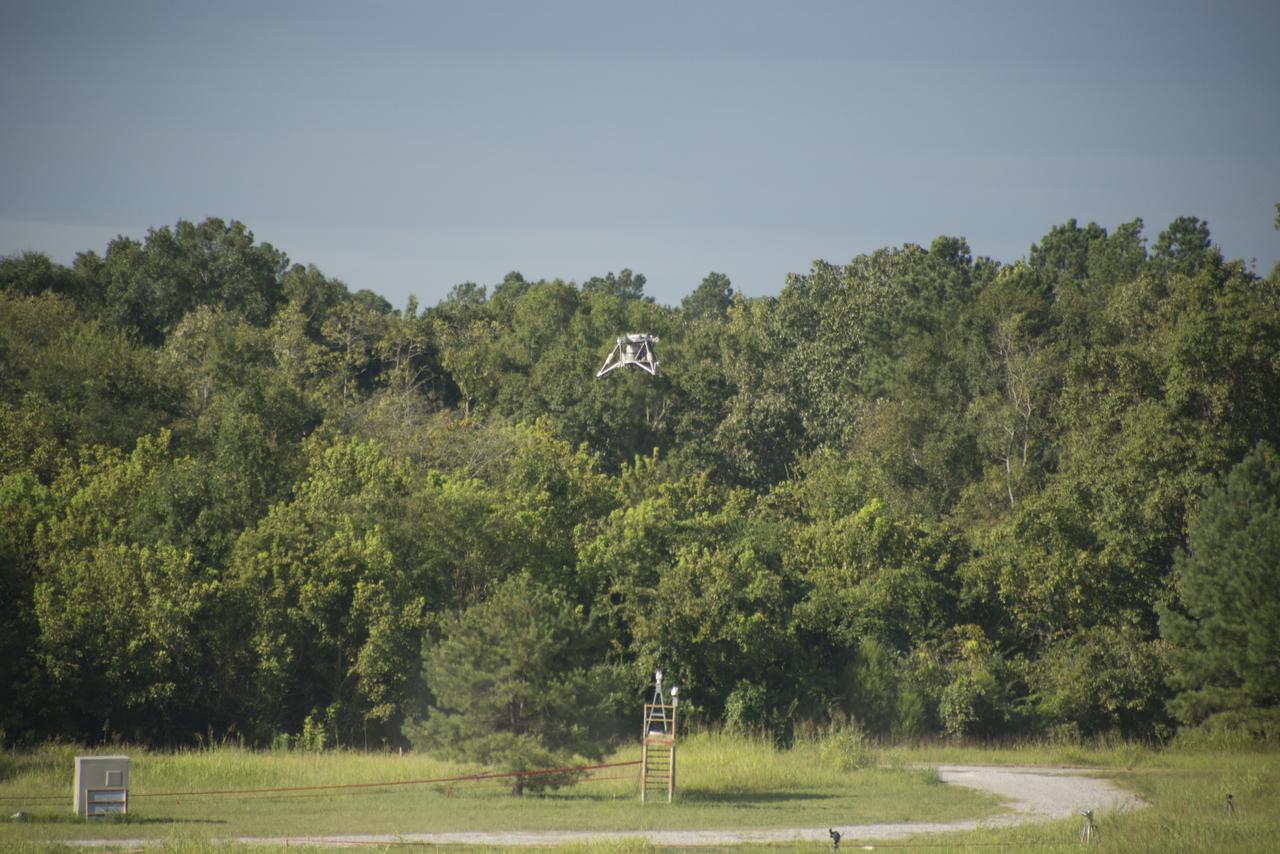
TEST FLIGHT OF MSFC'S "MIGHTY EAGLE" ROBOTIC LANDER IN THE WEST TEST AREA. AUGUST 28, 2012
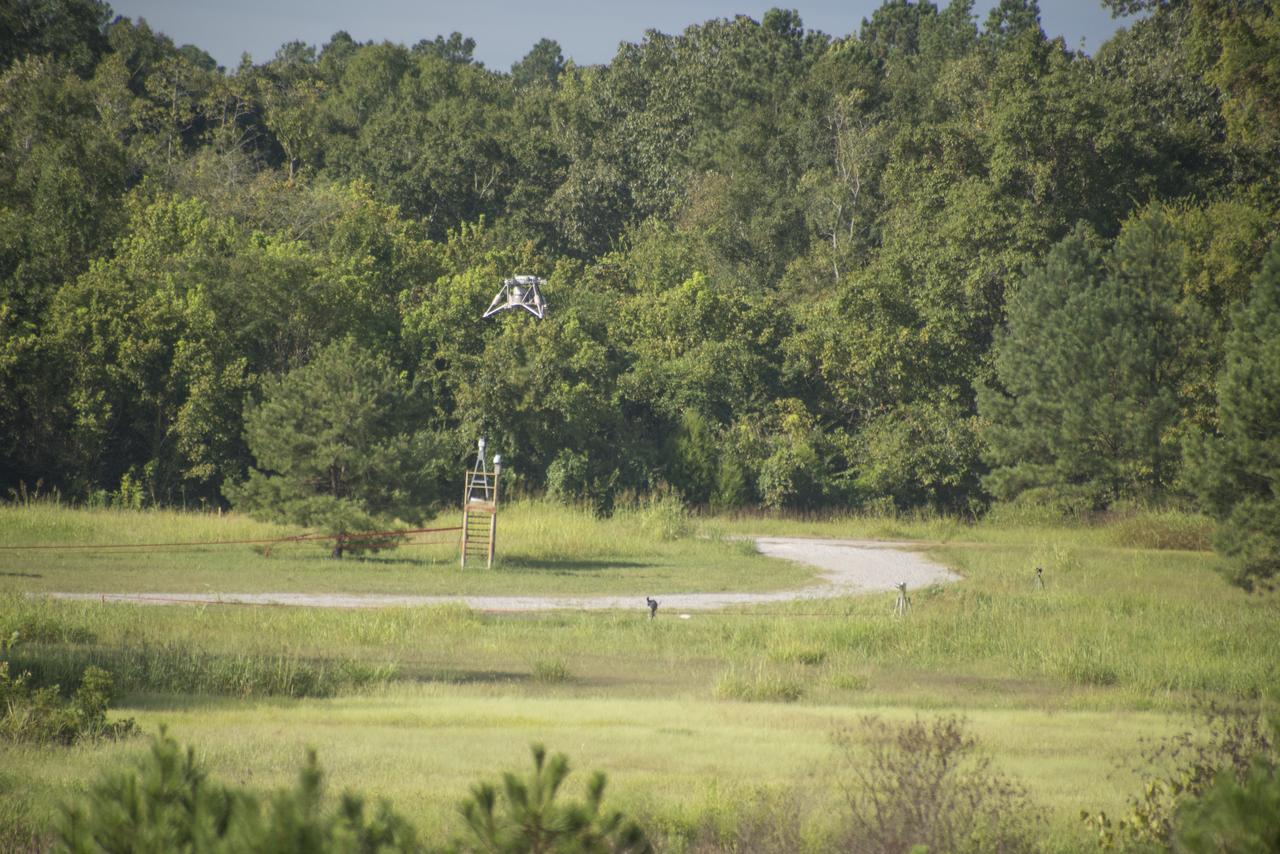
TEST FLIGHT OF MSFC'S "MIGHTY EAGLE" ROBOTIC LANDER IN THE WEST TEST AREA. AUGUST 28, 2012
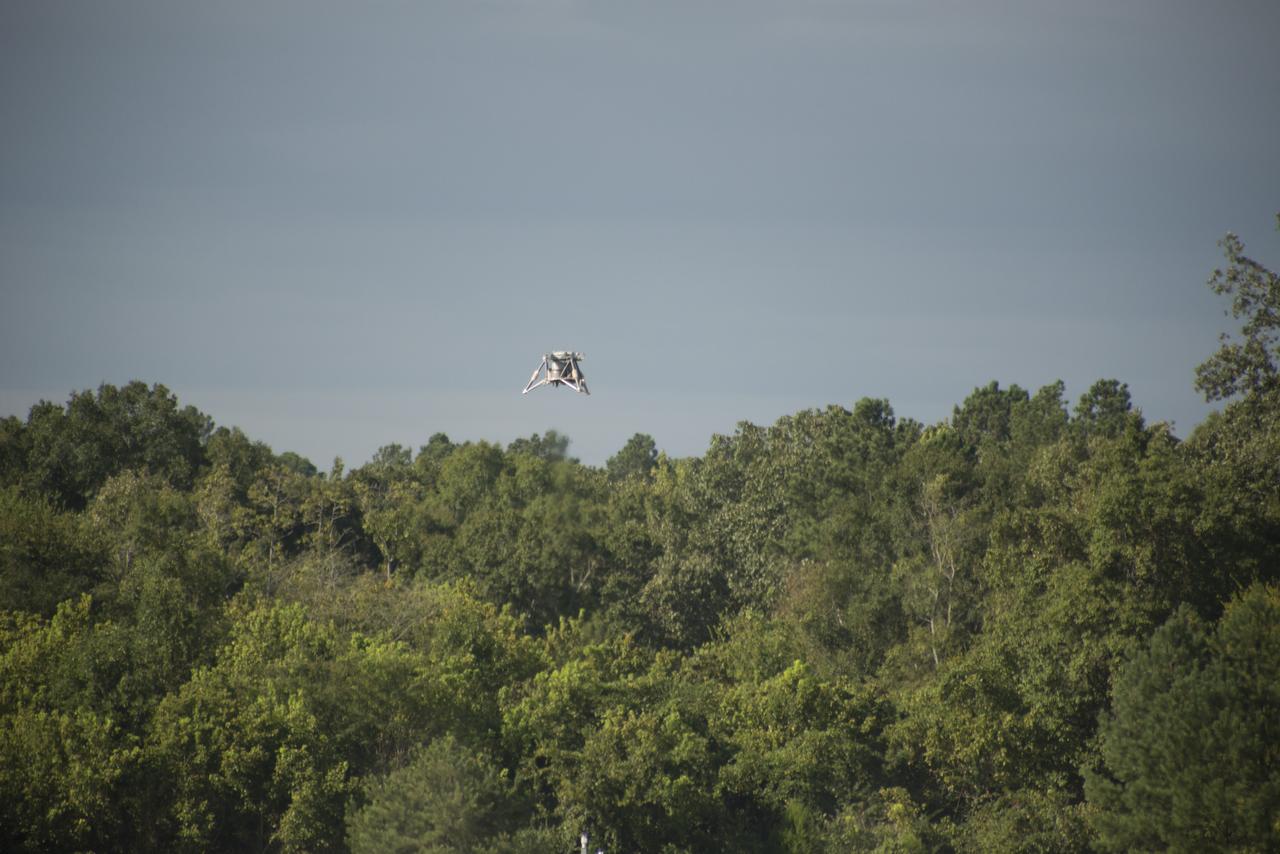
TEST FLIGHT OF MSFC'S "MIGHTY EAGLE" ROBOTIC LANDER IN THE WEST TEST AREA. AUGUST 28, 2012
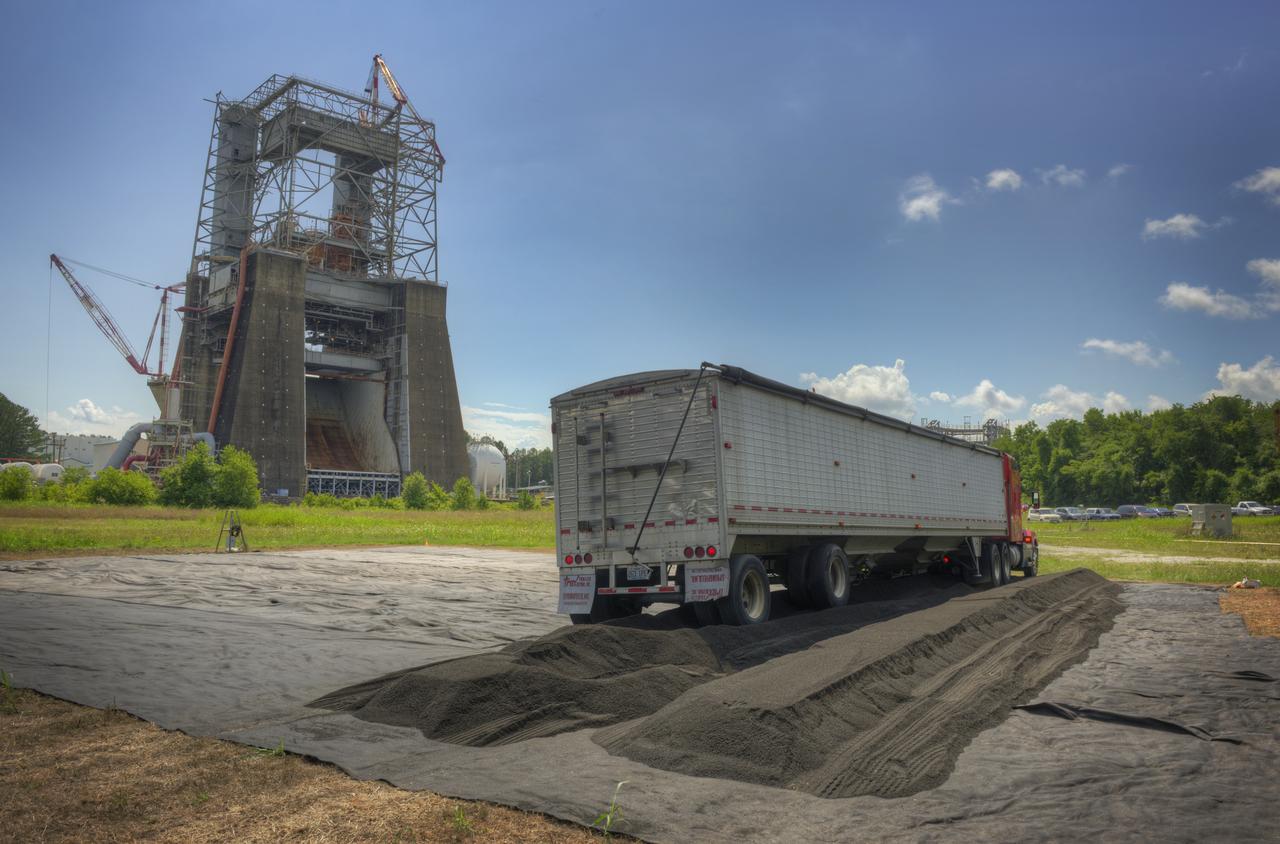
SOIL UNLOAD FOR THE SIMULATED PLANETARY BODY FIELD IN THE WEST TEST AREA. AREA TO BE USED FOR TESTING OF THE MIGHTY EAGLE LANDER

SORITA WHERRY PHOTOGRAPHED WITH THE MIGHTY EAGLE LANDER FOR THE MARSHALL STAR’S “FACE OF MISSION SUCCESS”.

The mighty river featured in this image is called the Yarlung Tsangpo in China, and is then known as the Dikrong during its passage through India state of Arunachal Pradesh. This image from NASA Terra satellite is MISR Mystery Image Quiz #8.
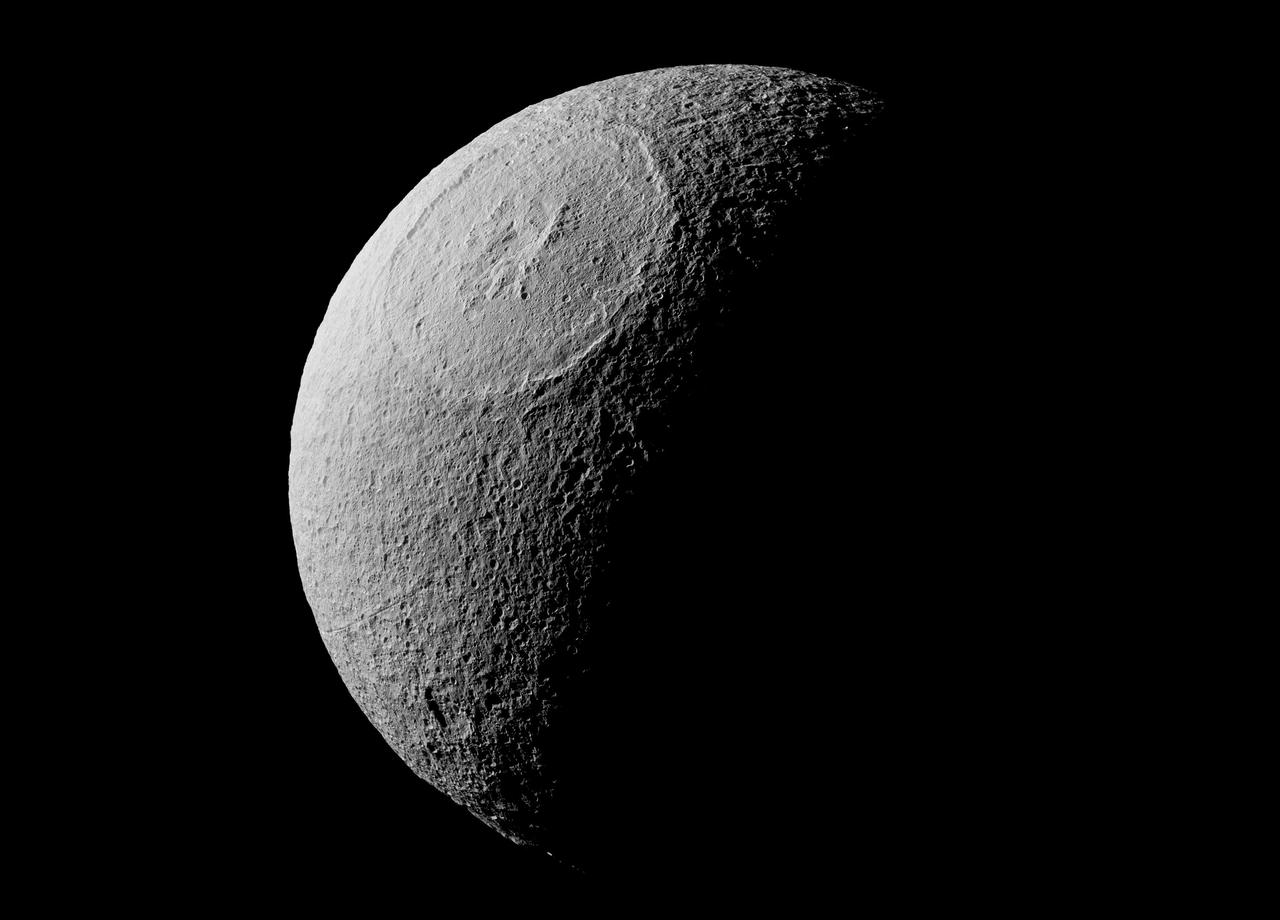
The most visually striking feature on Saturn's icy moon Tethys is Odysseus crater. An enormous impact created the crater, which is about 280 miles (450 kilometers) across, with its ring of steep cliffs and the mountains that rise at its center. Odysseus is on the leading hemisphere of Tethys (1,071 kilometers, or 665 miles across). In this image, north on Tethys is up. This view is a composite of several images taken in visible light with the Cassini spacecraft narrow-angle camera on Aug. 17, 2015, at a distance of about 28,000 miles (44,500 kilometers) from Tethys. The Cassini spacecraft ended its mission on Sept. 15, 2017 https://photojournal.jpl.nasa.gov/catalog/PIA21613
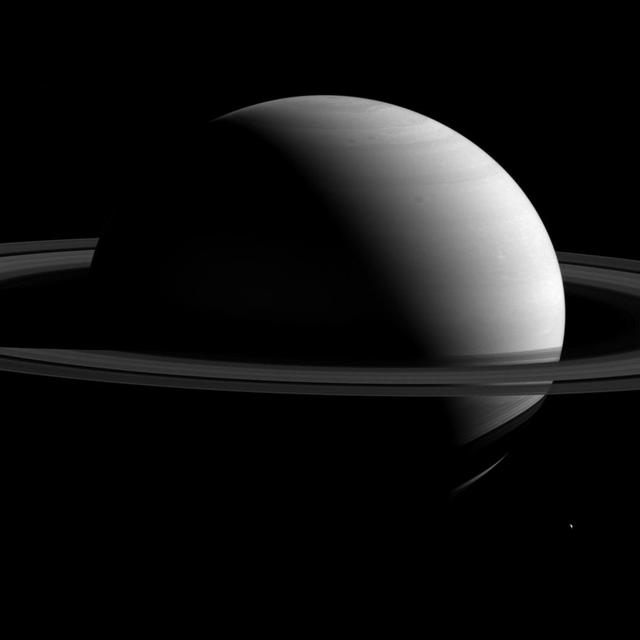
NASA Cassini spacecraft captured Saturn, around 10 times the diameter of Earth, dwarfs it retinue of moons. Tethys is seen here at lower right. http://photojournal.jpl.nasa.gov/catalog/PIA18350
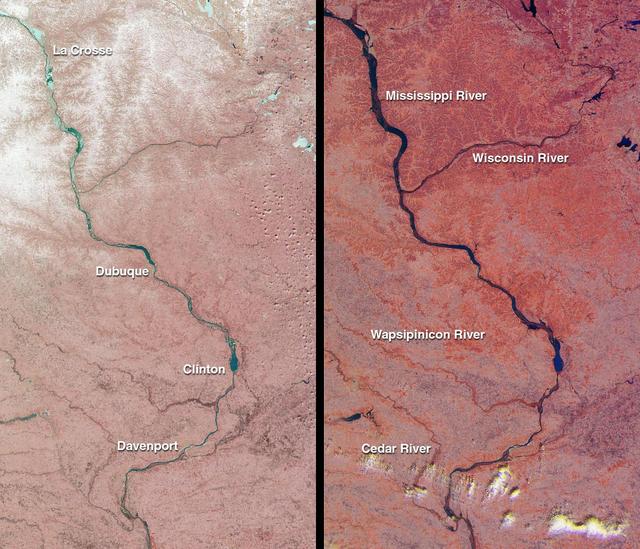
The mighty Mississippi River, from its source at Lake Itasca, Minnesota to the Gulf of Mexico, is approximately 3780 kilometers long and has flooded many times during its history. NASA Terra satellite acquired these images one month apart in 2001.
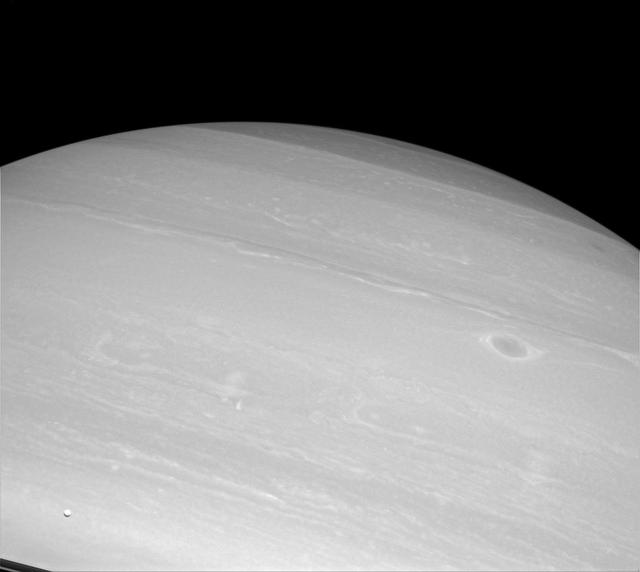
Enceladus (visible in the lower-left corner of the image) is but a speck before enormous Saturn, but even a small moon can generate big waves of excitement throughout the scientific community. Enceladus, only 313 miles (504 kilometers) across, spurts vapor jets from its south pole. The presence of these jets from Enceladus has been the subject of intense study since they were discovered by Cassini. Their presence may point to a sub-surface water reservoir. This view looks toward the unilluminated side of the rings from about 2 degrees below the ringplane. The image was taken with the Cassini spacecraft wide-angle camera on Oct. 20, 2014 using a spectral filter which preferentially admits wavelengths of near-infrared light centered at 752 nanometers. The view was obtained at a distance of approximately 589,000 miles (948,000 kilometers) from Saturn and at a Sun-Saturn-spacecraft, or phase, angle of 26 degrees. Image scale is 35 miles (57 kilometers) per pixel. http://photojournal.jpl.nasa.gov/catalog/PIA18296
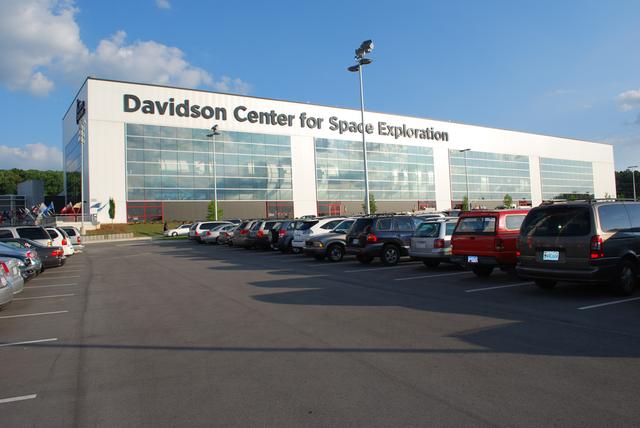
The Davidson Center for Space Exploration is like no other in the country. In its 476 foot long, 90 foot wide and 63 foot high structure, suspended 10 feet above the floor, is a national historic treasure, the mighty Saturn V, restored to its Apollo era readiness.
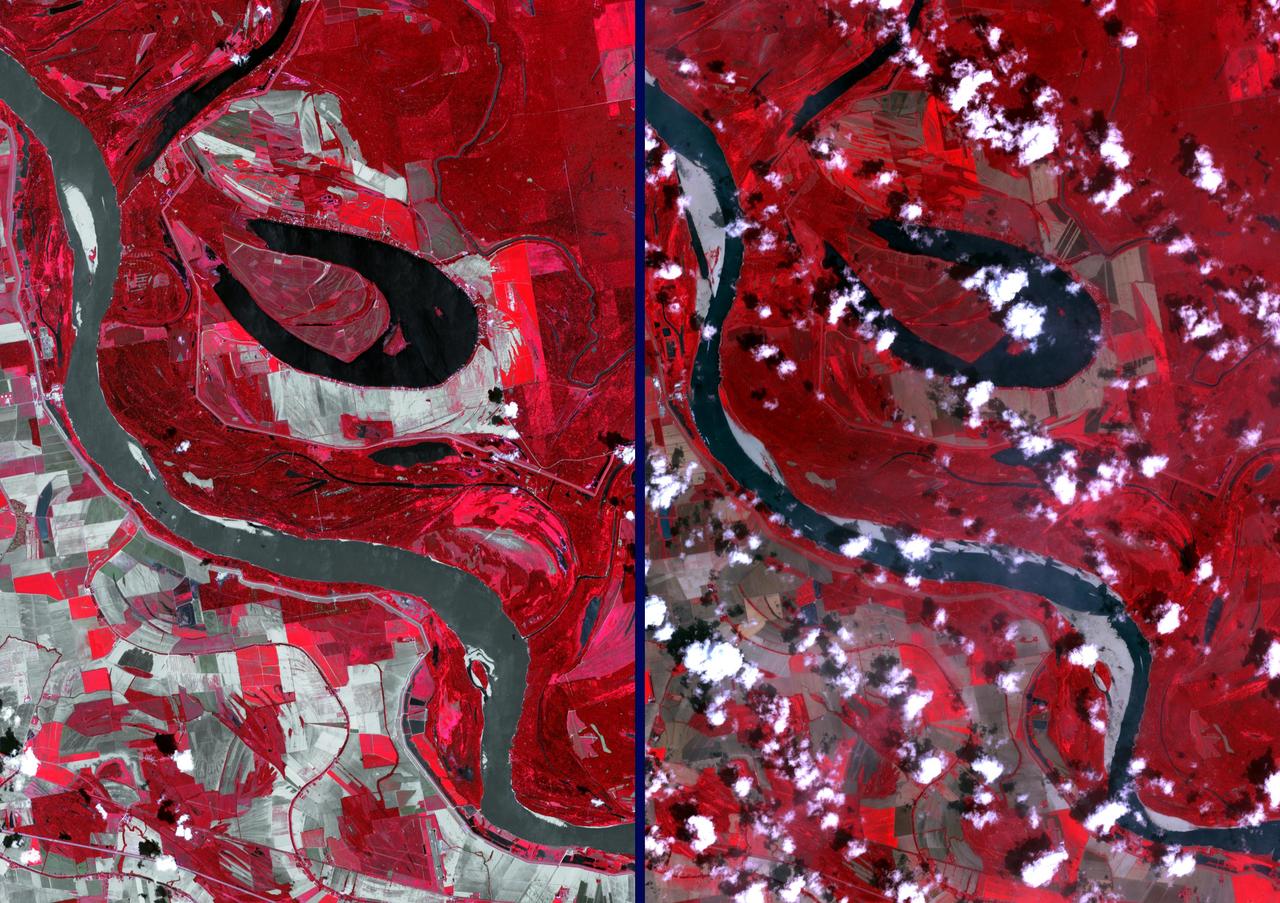
NASA Terra spacecraft acquired this image on Aug. 24, 2012, 13 miles 20 kilometers north of Vicksburg, Miss., as drought continued to afflict the U.S. Midwest, water levels of the Mississippi River approached historic lows.
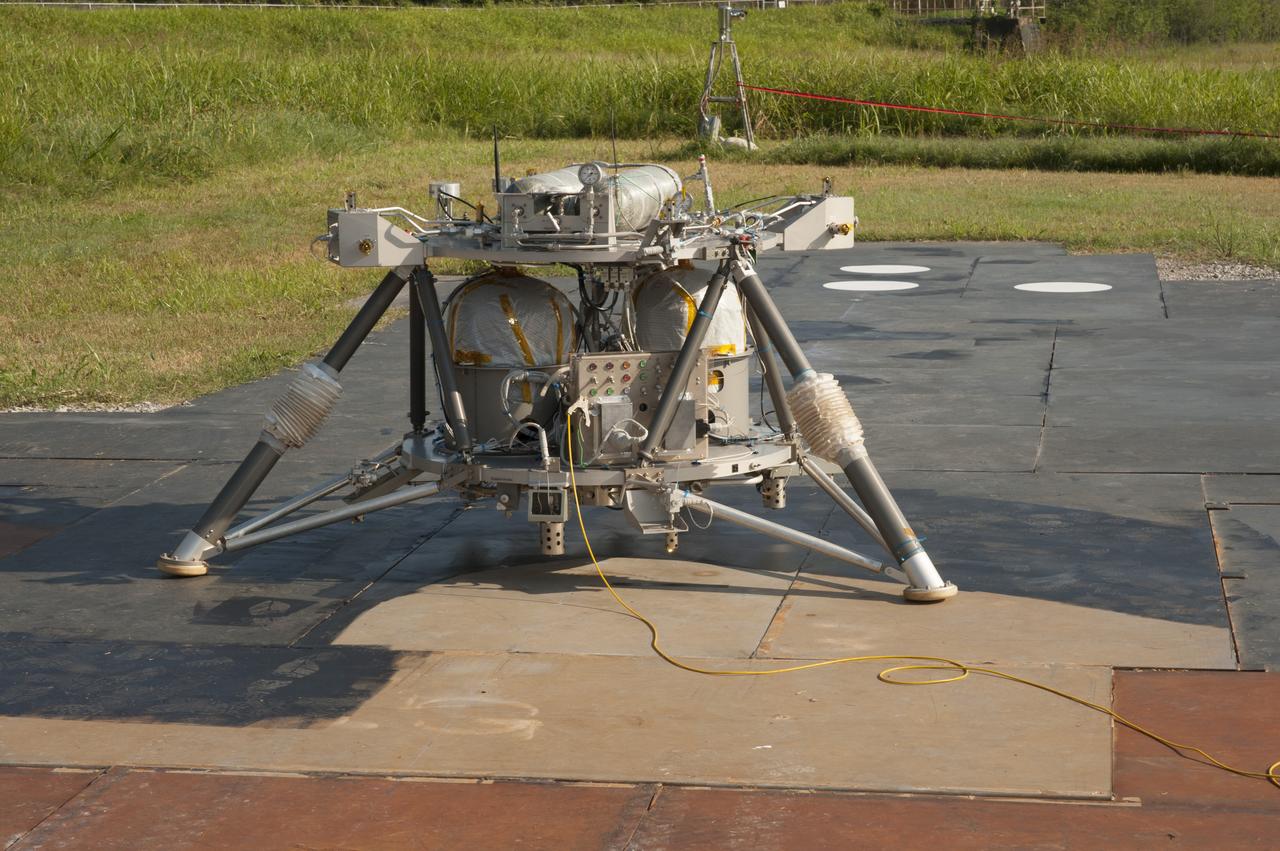
PHOTOGRAPH IN WEST TEST AREA OF THE "MIGHT EAGLE" LANDER
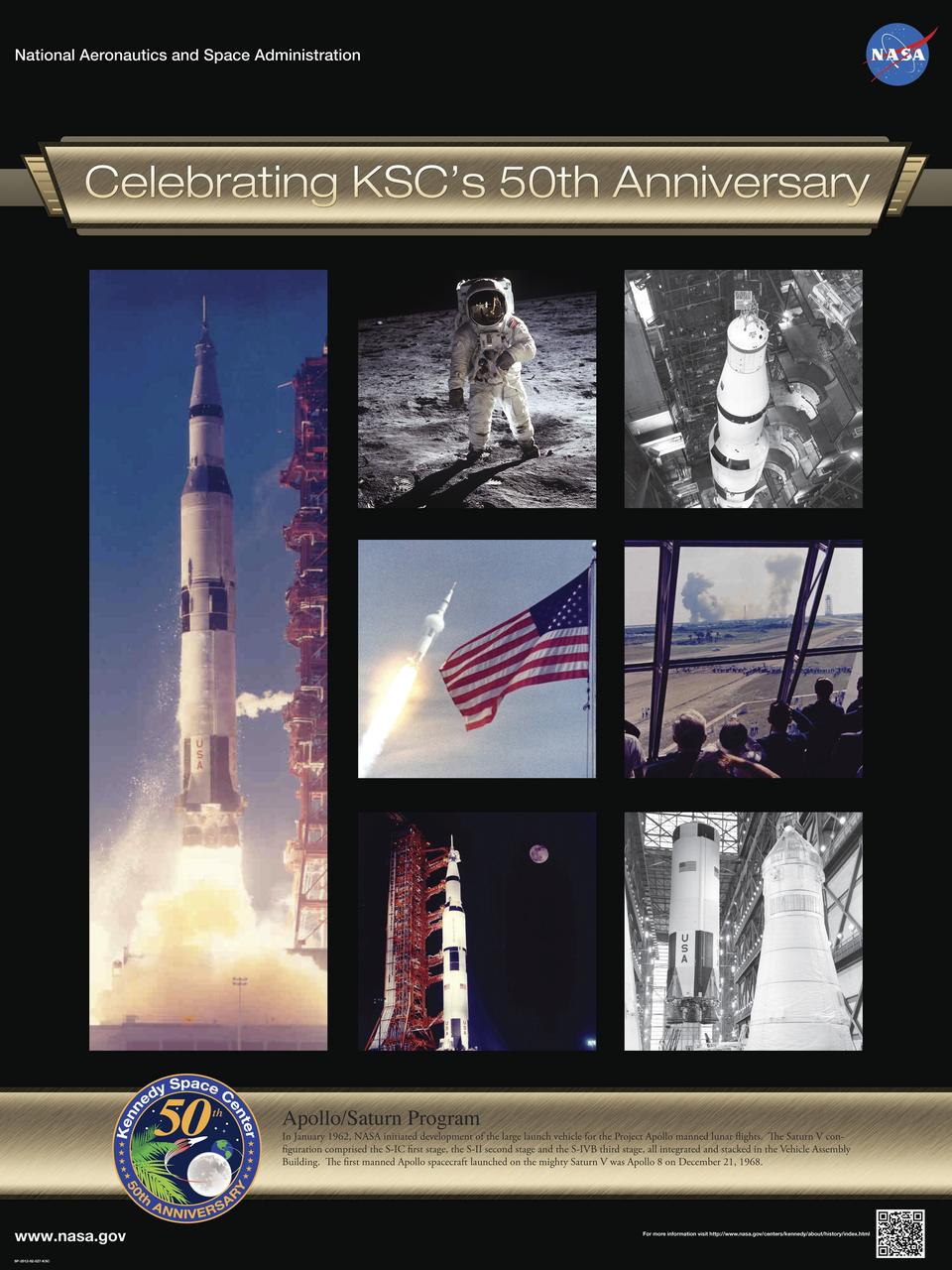
Apollo/Saturn Program: In January 1962, NASA initiated development of the large launch vehicle for the Project Apollo manned lunar flights. The Saturn V configuration comprised the S-IC first stage, the S-II second stage and the S-IVB third stage, all integrated and stacked in the Vehicle Assembly Building. The first manned Apollo spacecraft launched on the mighty Saturn V was Apollo 8 on December 21, 1968. Poster designed by Kennedy Space Center Graphics Department/Greg Lee. Credit: NASA
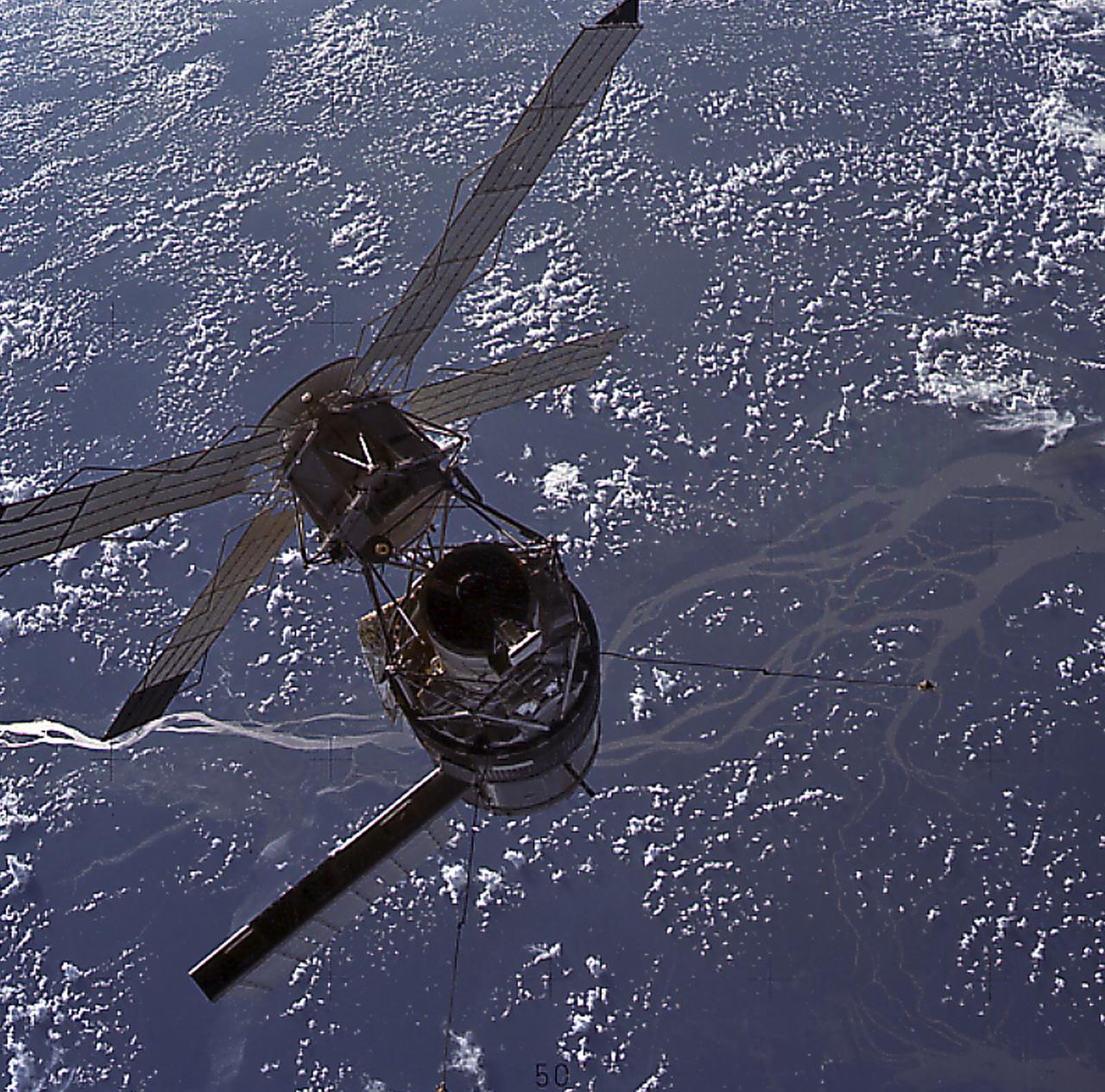
This striking image of Skylab was photographed by Astronaut Jack Lousma (Skylab-3), as the second crew reached the orbiting laboratory over the delta of the mighty Amazon River. Skylab's solar arrays were exposed directly to the Sun's rays. Solar energy was transformed into electrical power for operation of all spacecraft systems. The proper operation of these solar arrays was vital to the mission.
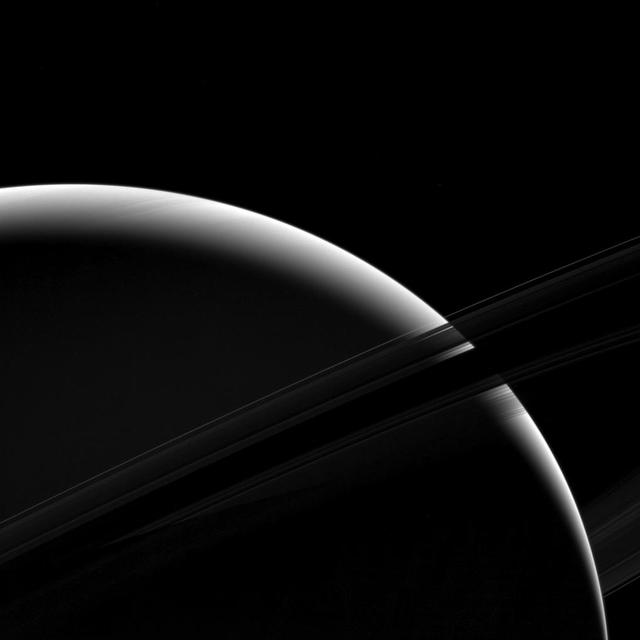
Although only a sliver of Saturn's sunlit face is visible in this view, the mighty gas giant planet still dominates the view. From this vantage point just beneath the ring plane, the dense B ring becomes dark and essentially opaque, letting almost no light pass through. But some light reflected by the planet passes through the less dense A ring, which appears above the B ring in this photo. The C ring, silhouetted just below the B ring, lets almost all of Saturn's reflected light pass right through it, as if it were barely there at all. The F ring appears as a bright arc in this image, which is visible against both the backdrop of Saturn and the dark sky. This view looks toward the unilluminated side of the rings from about 7 degrees below the ring plane. The image was taken in green light with the Cassini spacecraft wide-angle camera on Jan. 18, 2017. The view was acquired at a distance of approximately 630,000 miles (1 million kilometers) from Saturn. Image scale is 38 miles (61 kilometers) per pixel. https://photojournal.jpl.nasa.gov/catalog/PIA20530
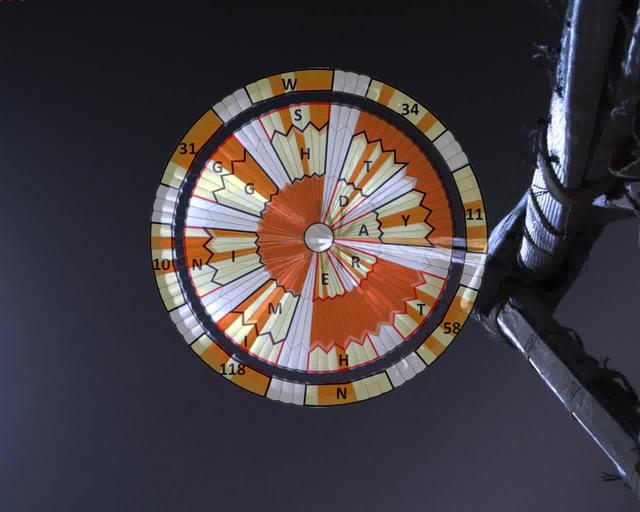
This annotated image was taken by a parachute-up-look camera aboard the protective back shell of NASA's Perseverance rover during its descent toward Mars' Jezero Crater on February 18, 2021. Using binary code, two messages have been encoded in the neutral white and international-orange parachute gores (the sections that make up the canopy's hemispherical shape). The inner portion spells out "DARE MIGHTY THINGS," with each word located on its own ring of gores. The outer band of the canopy provides GPS coordinates for NASA's Jet Propulsion Laboratory in Southern California, where the rover was built and the project is managed. Mars 2020 Perseverance Systems Engineer Ian Clark designed the binary code pattern. The saying is JPL's motto and is an abridgement of a quote from Teddy Roosevelt's "Strenuous Life" speech: "Far better is it to dare mighty things, to win glorious triumphs, even though checkered by failure ... than to rank with those poor spirits who neither enjoy nor suffer much, because they live in a gray twilight that knows not victory nor defeat." https://photojournal.jpl.nasa.gov/catalog/PIA24431
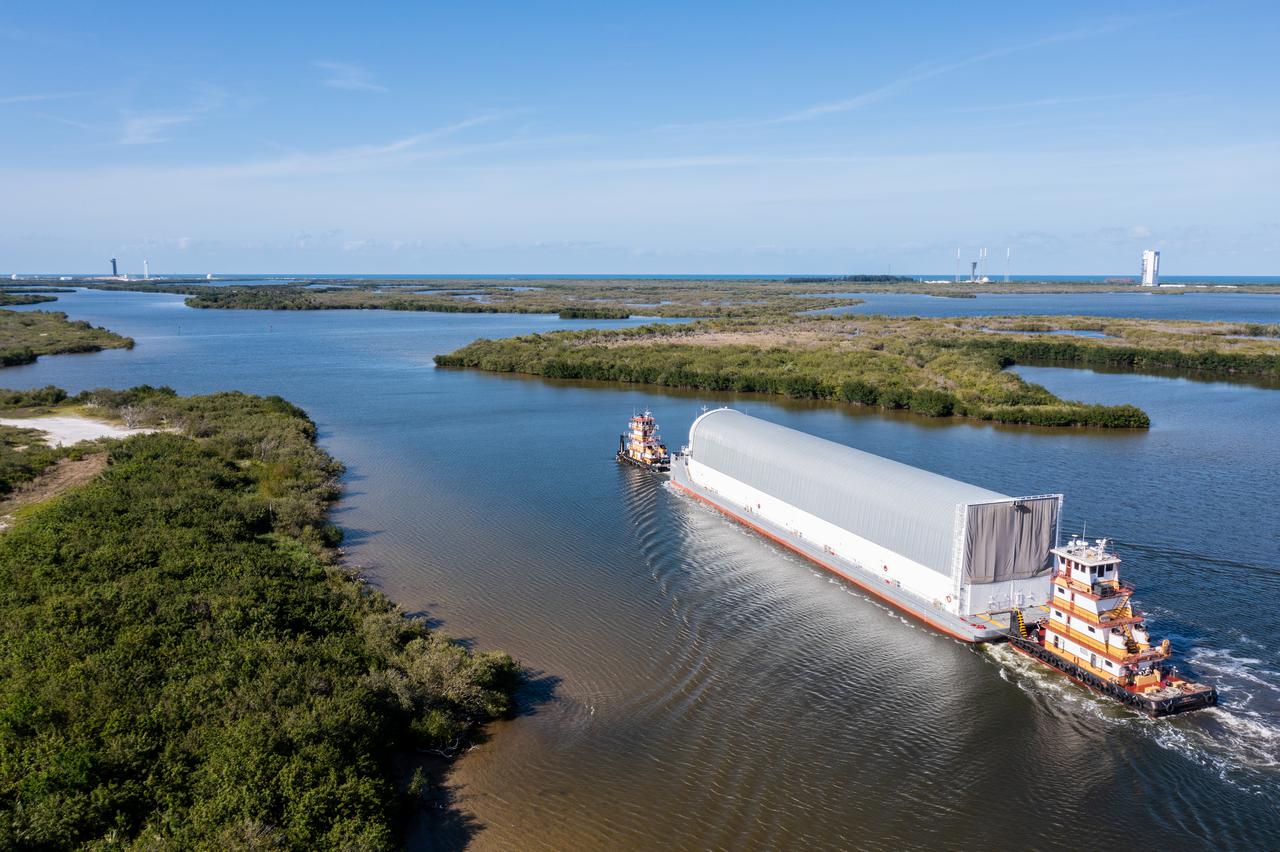
The Pegasus barge, carrying the mighty Space Launch System (SLS) core stage, arrives at NASA’s Kennedy Space Center in Florida on April 27, 2021, after journeying from the agency’s Stennis Space Center in Mississippi. The core stage is the final piece of Artemis hardware to arrive at the spaceport and will be offloaded and moved to Kennedy’s Vehicle Assembly Building, where it will be prepared for integration atop the mobile launcher with the completed stack of solid rocket boosters ahead of the Artemis I launch. The first in a series of increasingly complex missions, Artemis I will test SLS and Orion as an integrated system prior to crewed flights to the Moon.
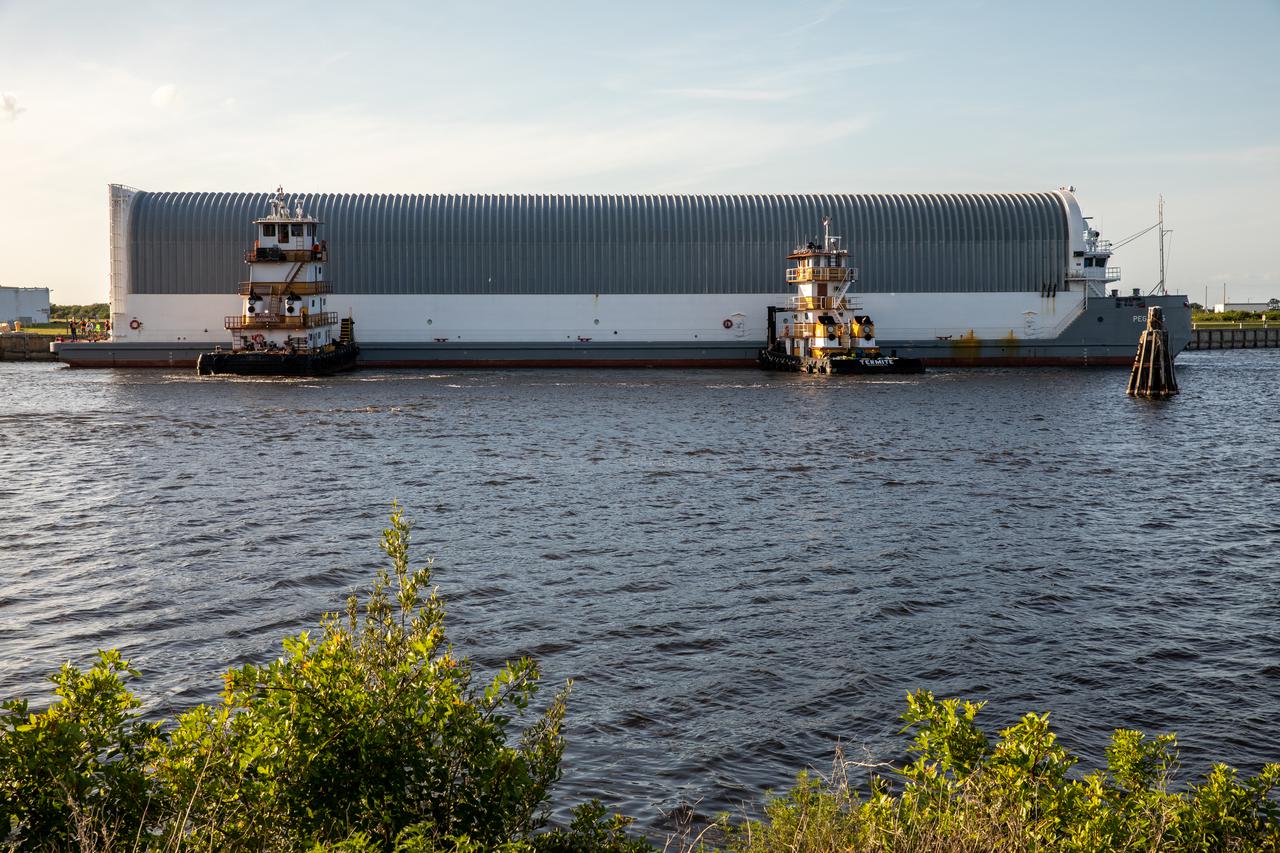
The Pegasus barge, carrying the mighty Space Launch System (SLS) core stage, arrives at NASA’s Kennedy Space Center in Florida on April 27, 2021, after journeying from the agency’s Stennis Space Center in Mississippi. The core stage is the final piece of Artemis hardware to arrive at the spaceport and will be offloaded and moved to Kennedy’s Vehicle Assembly Building, where it will be prepared for integration atop the mobile launcher with the completed stack of solid rocket boosters ahead of the Artemis I launch. The first in a series of increasingly complex missions, Artemis I will test SLS and Orion as an integrated system prior to crewed flights to the Moon.
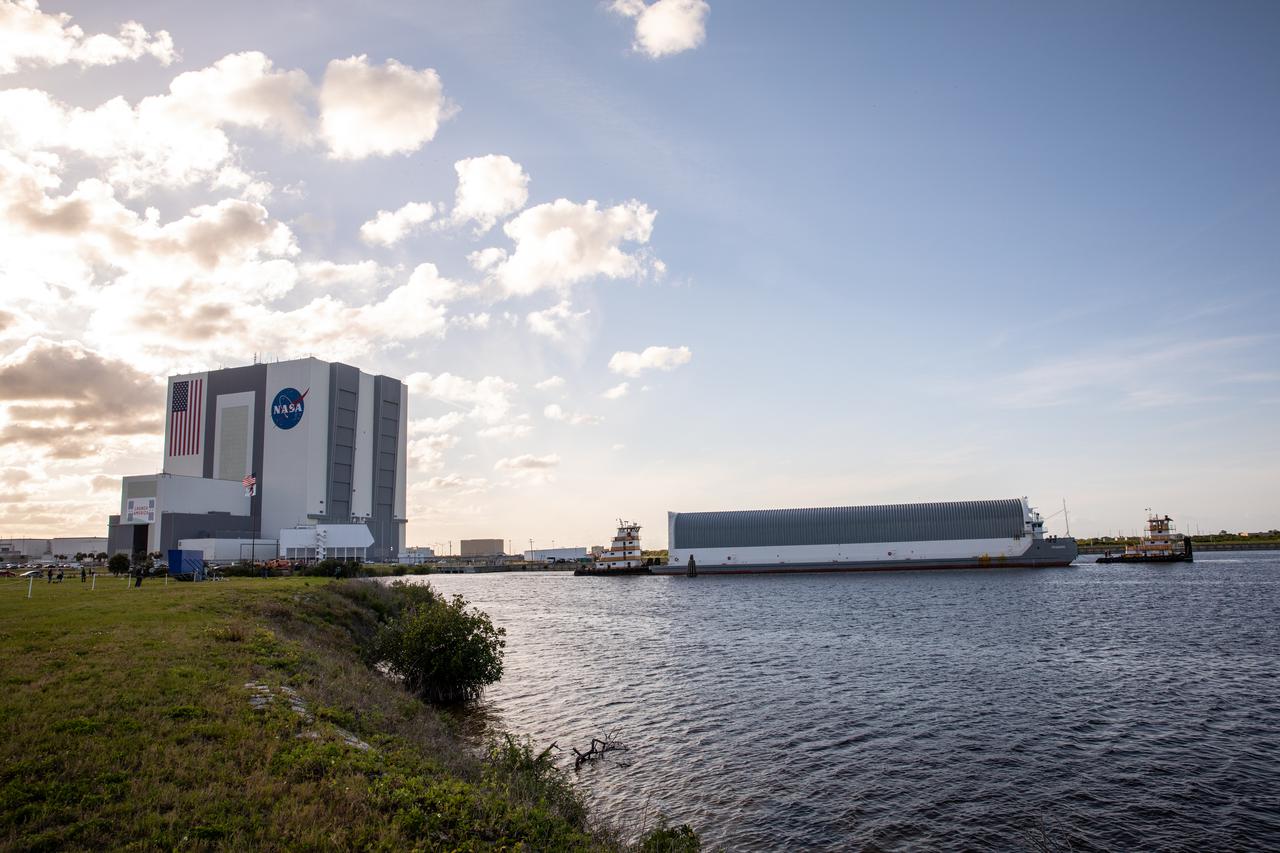
After its journey from NASA’s Stennis Space Center in Mississippi aboard the Pegasus barge, the mighty Space Launch System (SLS) core stage arrives at the agency’s Kennedy Space Center in Florida on April 27, 2021. The core stage is the final piece of Artemis hardware to arrive at the spaceport and will be offloaded and moved to Kennedy’s Vehicle Assembly Building, where it will be prepared for integration atop the mobile launcher with the completed stack of solid rocket boosters ahead of the Artemis I launch. The first in a series of increasingly complex missions, Artemis I will test SLS and Orion as an integrated system prior to crewed flights to the Moon.
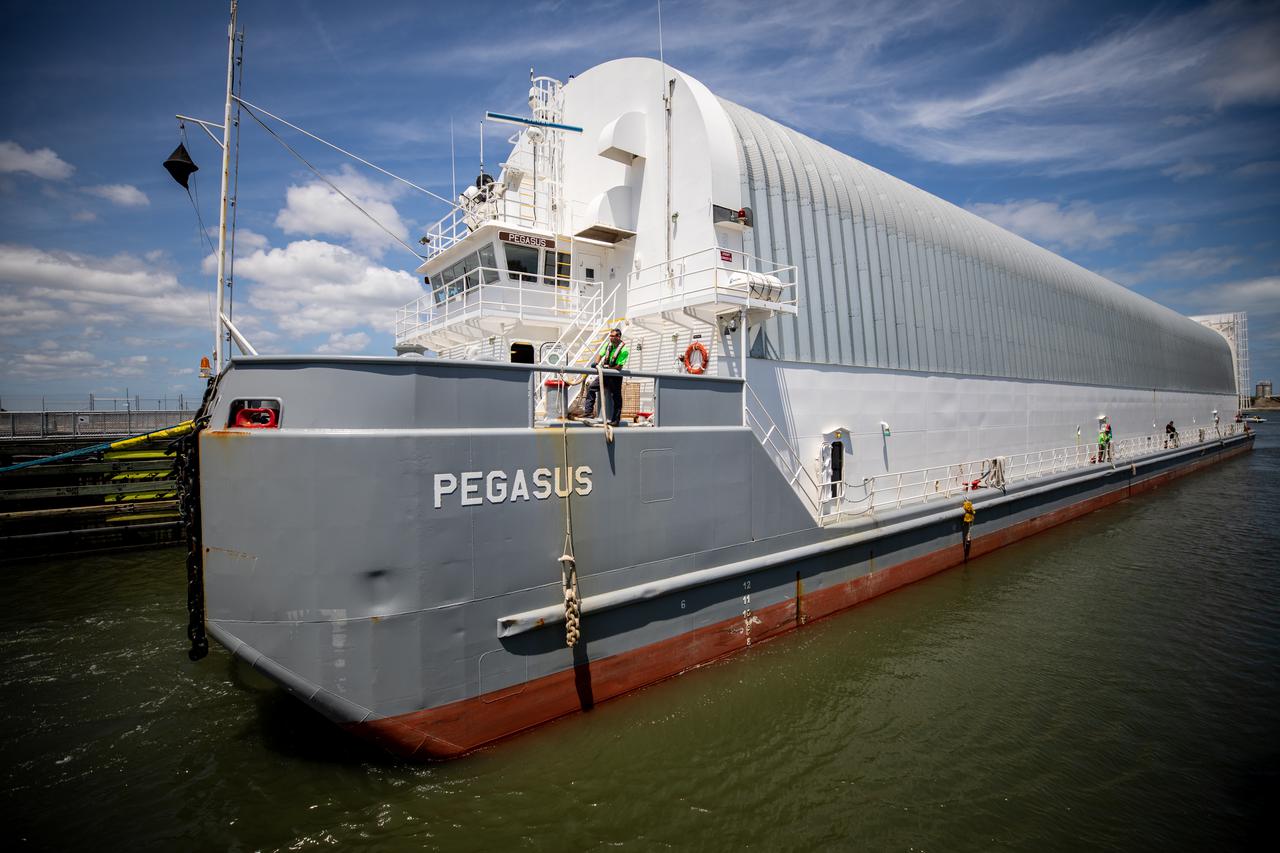
The Pegasus barge, carrying the mighty Space Launch System (SLS) core stage, passes through Port Canaveral on its way to NASA’s Kennedy Space Center in Florida on April 27, 2021, after journeying from the agency’s Stennis Space Center in Mississippi. The core stage is the final piece of Artemis hardware to arrive at the spaceport and will be offloaded and moved to Kennedy’s Vehicle Assembly Building, where it will be prepared for integration atop the mobile launcher with the completed stack of solid rocket boosters ahead of the Artemis I launch. The first in a series of increasingly complex missions, Artemis I will test SLS and Orion as an integrated system prior to crewed flights to the Moon.
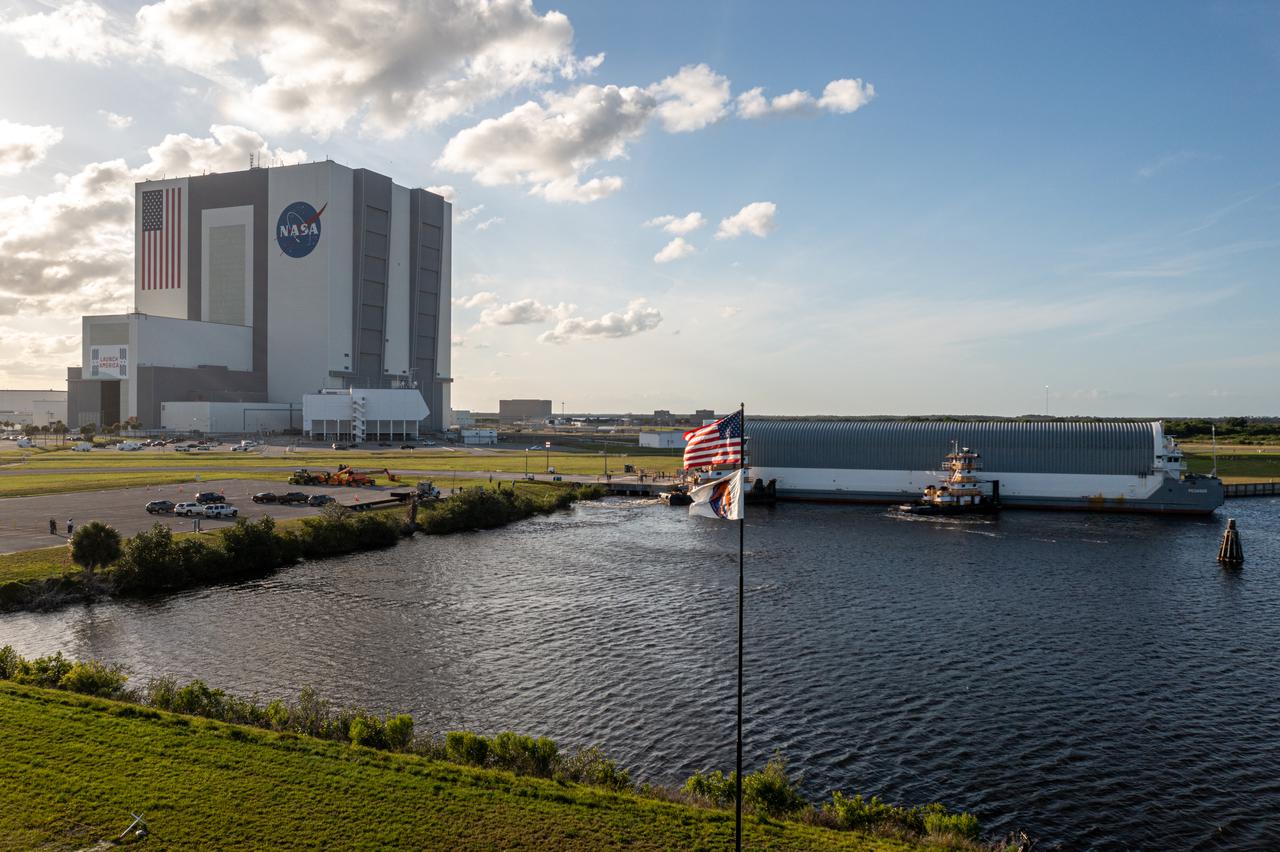
After its journey from NASA’s Stennis Space Center in Mississippi aboard the Pegasus barge, the mighty Space Launch System (SLS) core stage arrives at the agency’s Kennedy Space Center in Florida on April 27, 2021. The core stage is the final piece of Artemis hardware to arrive at the spaceport and will be offloaded and moved to Kennedy’s Vehicle Assembly Building, where it will be prepared for integration atop the mobile launcher with the completed stack of solid rocket boosters ahead of the Artemis I launch. The first in a series of increasingly complex missions, Artemis I will test SLS and Orion as an integrated system prior to crewed flights to the Moon.

Some of the prominences that float like lazy clouds above the solar surface suddenly erupt and break away from the Sun in cataclysmic action. The trigger of this coronal transient, like many others seen by Skylab's coronagraph, was an eruptive prominence that surged outward from the limb of the Sun, ejecting matter that disturbed the outer corona. This image is of the surge in action in ultraviolet light of ionized helium. Simultaneous observations like this made possible an almost immediate understanding of the new-found cosmic phenomenon. The elbow prominence was accidentally photographed by Astronaut Garriott (Skylab-3) while observing a small flare near the limb of the Sun beneath the mighty arch on August 9, 1973.
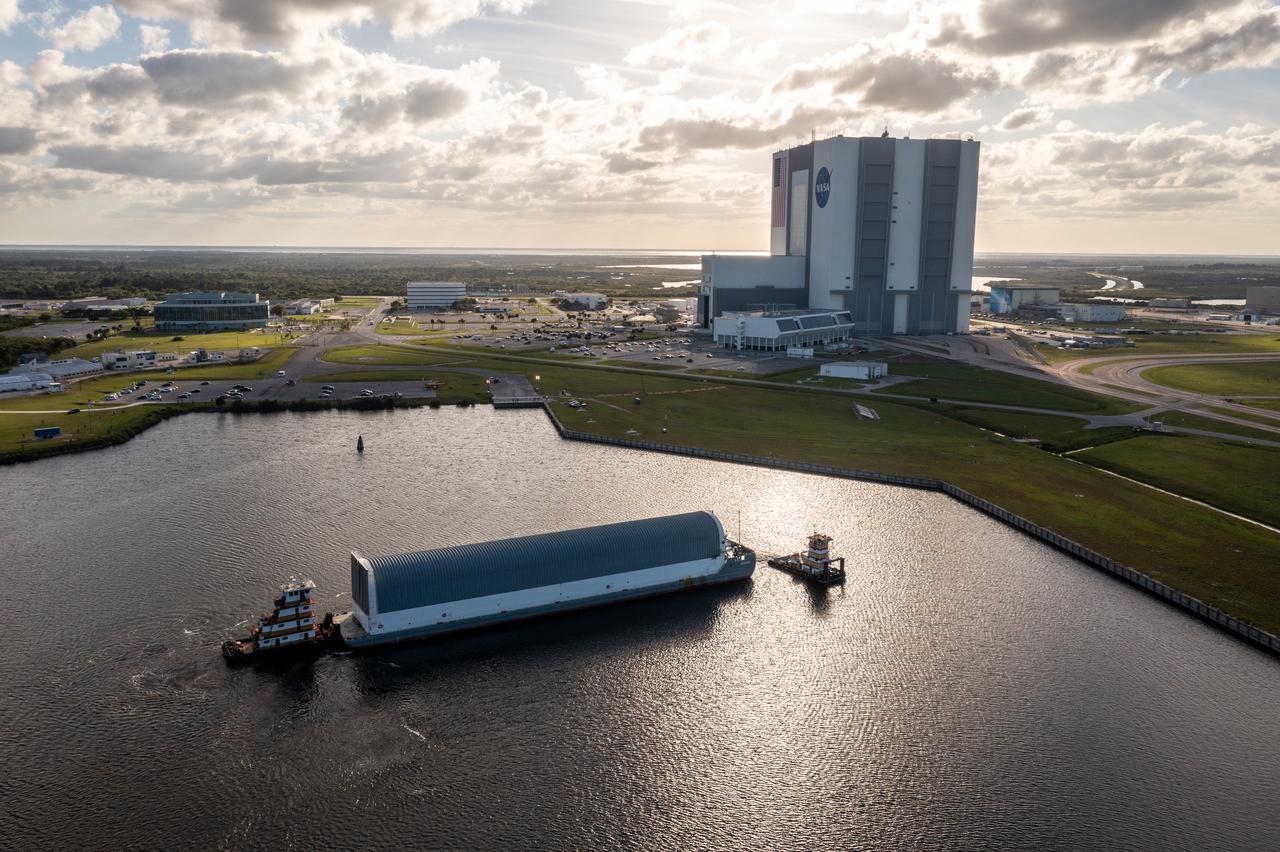
The Pegasus barge, carrying the mighty Space Launch System (SLS) core stage, arrives at NASA’s Kennedy Space Center in Florida on April 27, 2021, after journeying from the agency’s Stennis Space Center in Mississippi. The core stage is the final piece of Artemis hardware to arrive at the spaceport and will be offloaded and moved to Kennedy’s Vehicle Assembly Building, where it will be prepared for integration atop the mobile launcher with the completed stack of solid rocket boosters ahead of the Artemis I launch. The first in a series of increasingly complex missions, Artemis I will test SLS and Orion as an integrated system prior to crewed flights to the Moon.
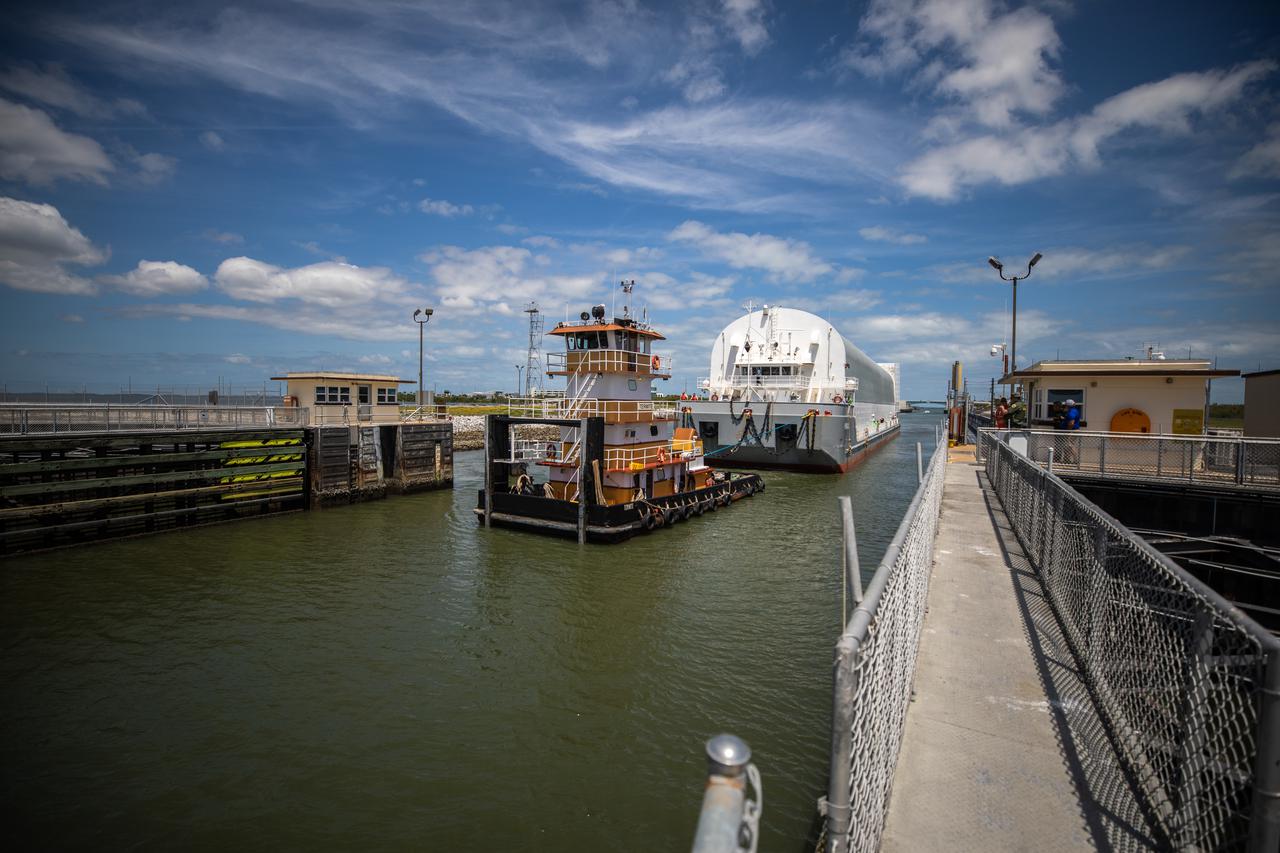
After its journey from NASA’s Stennis Space Center in Mississippi aboard the Pegasus barge, the mighty Space Launch System (SLS) core stage passes through Port Canaveral on its way to the agency’s Kennedy Space Center in Florida on April 27, 2021. The core stage is the final piece of Artemis hardware to arrive at the spaceport and will be offloaded and moved to Kennedy’s Vehicle Assembly Building, where it will be prepared for integration atop the mobile launcher with the completed stack of solid rocket boosters ahead of the Artemis I launch. The first in a series of increasingly complex missions, Artemis I will test SLS and Orion as an integrated system prior to crewed flights to the Moon.
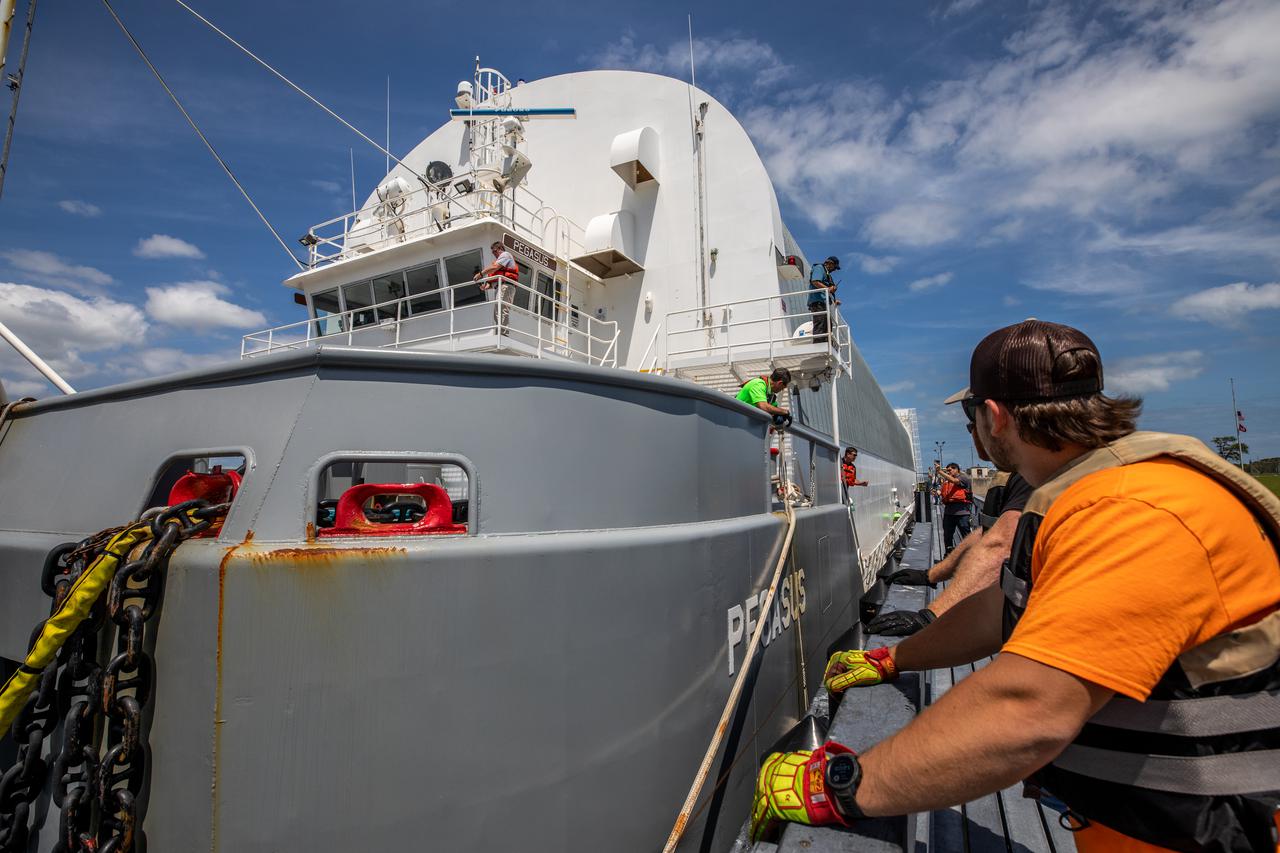
After its journey from NASA’s Stennis Space Center in Mississippi aboard the Pegasus barge, the mighty Space Launch System (SLS) core stage passes through Port Canaveral on its way to the agency’s Kennedy Space Center in Florida on April 27, 2021. The core stage is the final piece of Artemis hardware to arrive at the spaceport and will be offloaded and moved to Kennedy’s Vehicle Assembly Building, where it will be prepared for integration atop the mobile launcher with the completed stack of solid rocket boosters ahead of the Artemis I launch. The first in a series of increasingly complex missions, Artemis I will test SLS and Orion as an integrated system prior to crewed flights to the Moon.
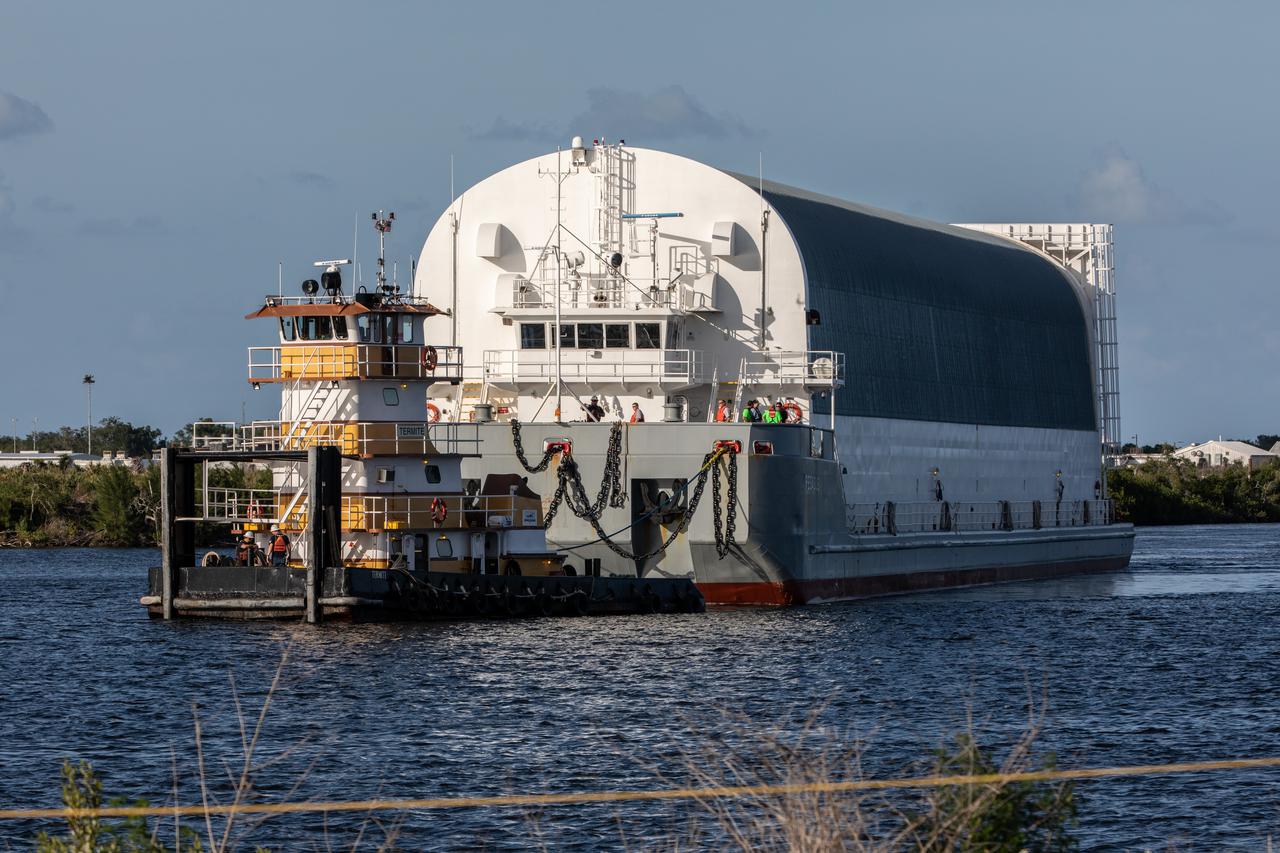
The Pegasus barge, carrying the mighty Space Launch System (SLS) core stage, arrives at NASA’s Kennedy Space Center in Florida on April 27, 2021, after journeying from the agency’s Stennis Space Center in Mississippi. The core stage is the final piece of Artemis hardware to arrive at the spaceport and will be offloaded and moved to Kennedy’s Vehicle Assembly Building, where it will be prepared for integration atop the mobile launcher with the completed stack of solid rocket boosters ahead of the Artemis I launch. The first in a series of increasingly complex missions, Artemis I will test SLS and Orion as an integrated system prior to crewed flights to the Moon.
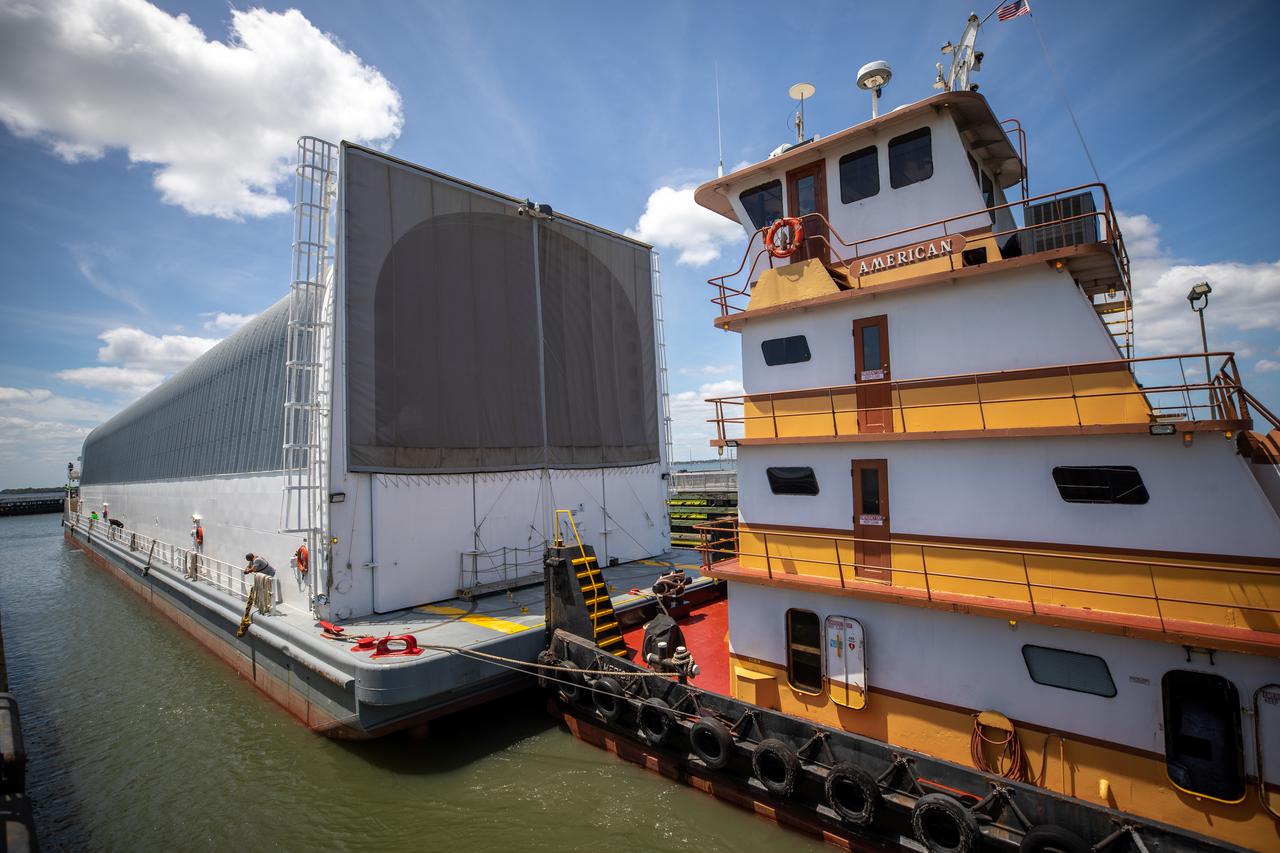
The Pegasus barge, carrying the mighty Space Launch System (SLS) core stage, passes through Port Canaveral on its way to NASA’s Kennedy Space Center in Florida on April 27, 2021, after journeying from the agency’s Stennis Space Center in Mississippi. The core stage is the final piece of Artemis hardware to arrive at the spaceport and will be offloaded and moved to Kennedy’s Vehicle Assembly Building, where it will be prepared for integration atop the mobile launcher with the completed stack of solid rocket boosters ahead of the Artemis I launch. The first in a series of increasingly complex missions, Artemis I will test SLS and Orion as an integrated system prior to crewed flights to the Moon.
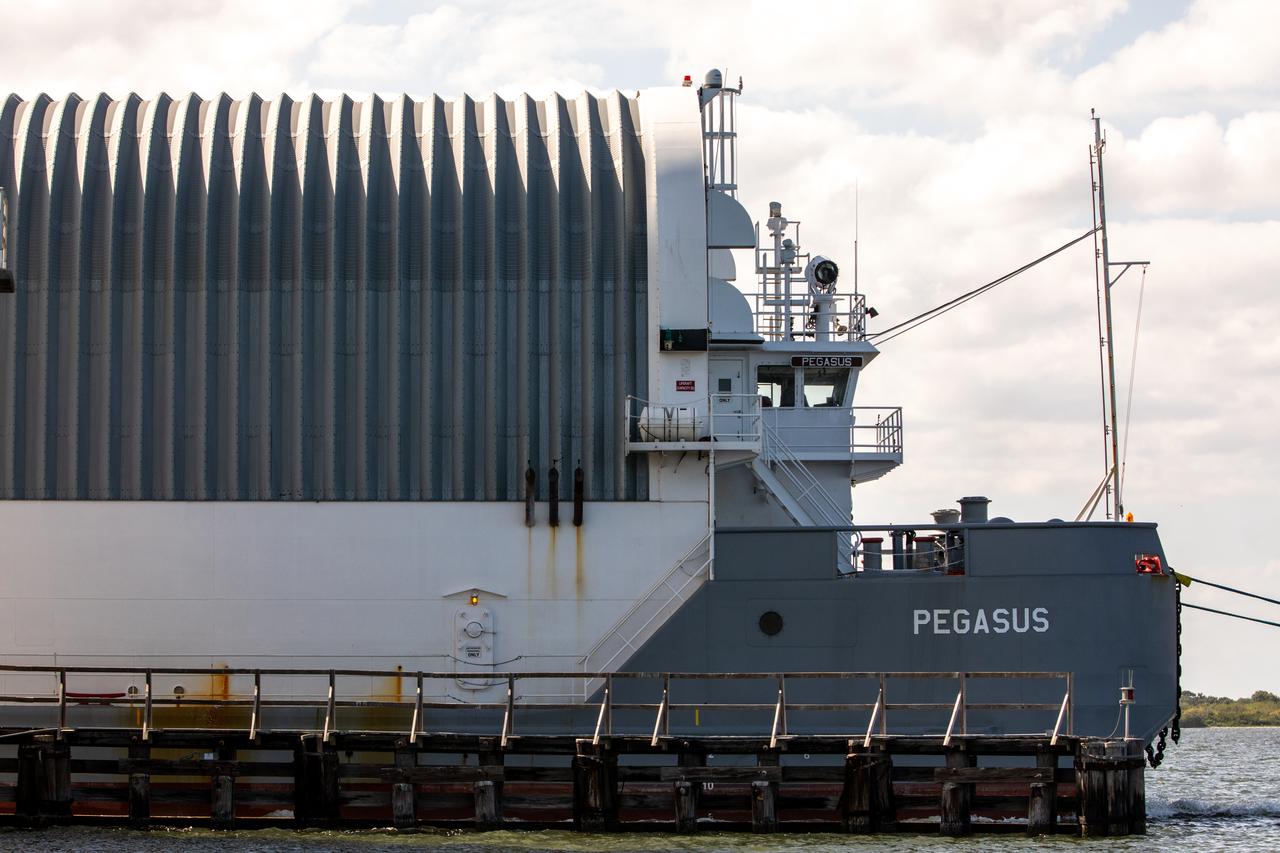
The Pegasus barge, carrying the mighty Space Launch System (SLS) core stage, arrives at NASA’s Kennedy Space Center in Florida on April 27, 2021, after journeying from the agency’s Stennis Space Center in Mississippi. The core stage is the final piece of Artemis hardware to arrive at the spaceport and will be offloaded and moved to Kennedy’s Vehicle Assembly Building, where it will be prepared for integration atop the mobile launcher with the completed stack of solid rocket boosters ahead of the Artemis I launch. The first in a series of increasingly complex missions, Artemis I will test SLS and Orion as an integrated system prior to crewed flights to the Moon.
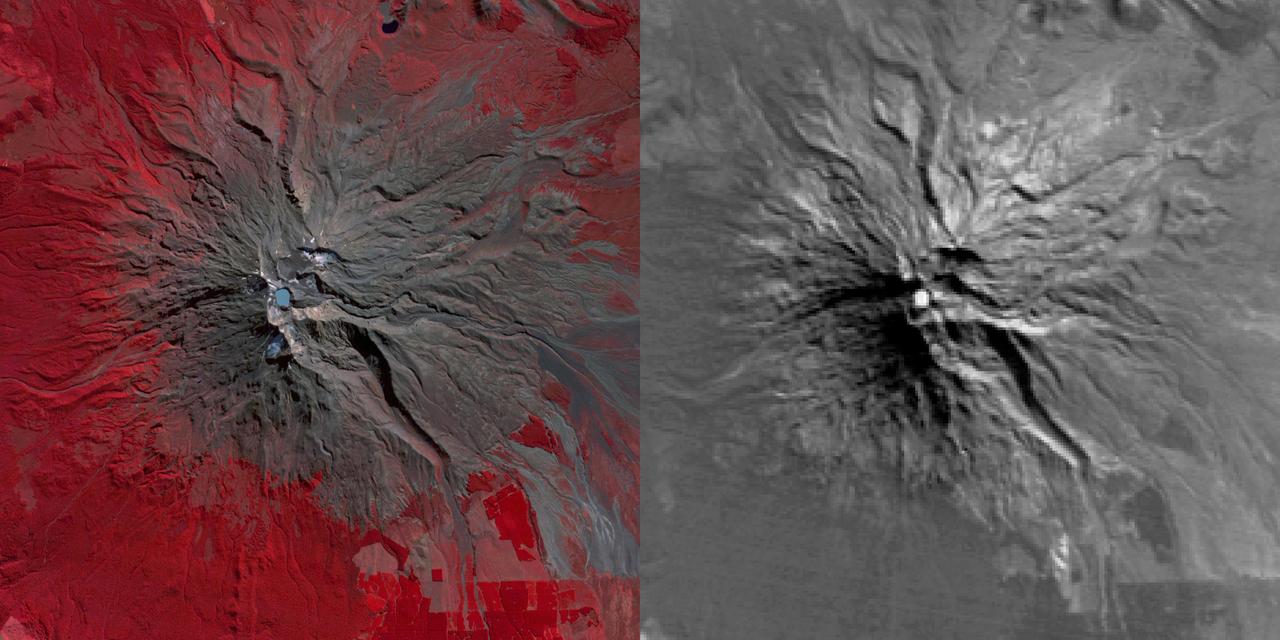
NASA Terra spacecraft reveals signs of life in New Zealand Mount Ruapehu Volcano which has been on a level 1 volcanic alert for some time, indicating minor volcanic unrest.

jsc2025e034457 (March 18, 2025) -- The official Artemis II mission crew patch. The Artemis II test flight begins when a mighty team launches the first crew of the Artemis generation. This patch designates the mission as “AII,” signifying not only the second major flight of the Artemis campaign, but also an endeavor of discovery that seeks to explore for all and by all. Framed in Apollo 8’s famous Earthrise photo, the scene of the Earth and the Moon represents the dual nature of human spaceflight, both equally compelling: The Moon represents our exploration destination, focused on discovery of the unknown. The Earth represents home, focused on the perspective we gain when we look back at our shared planet and learn what it is to be uniquely human. The orbit around Earth highlights the ongoing exploration missions that have enabled Artemis to set sights on a long-term presence on the Moon and soon, Mars. Credit: NASA
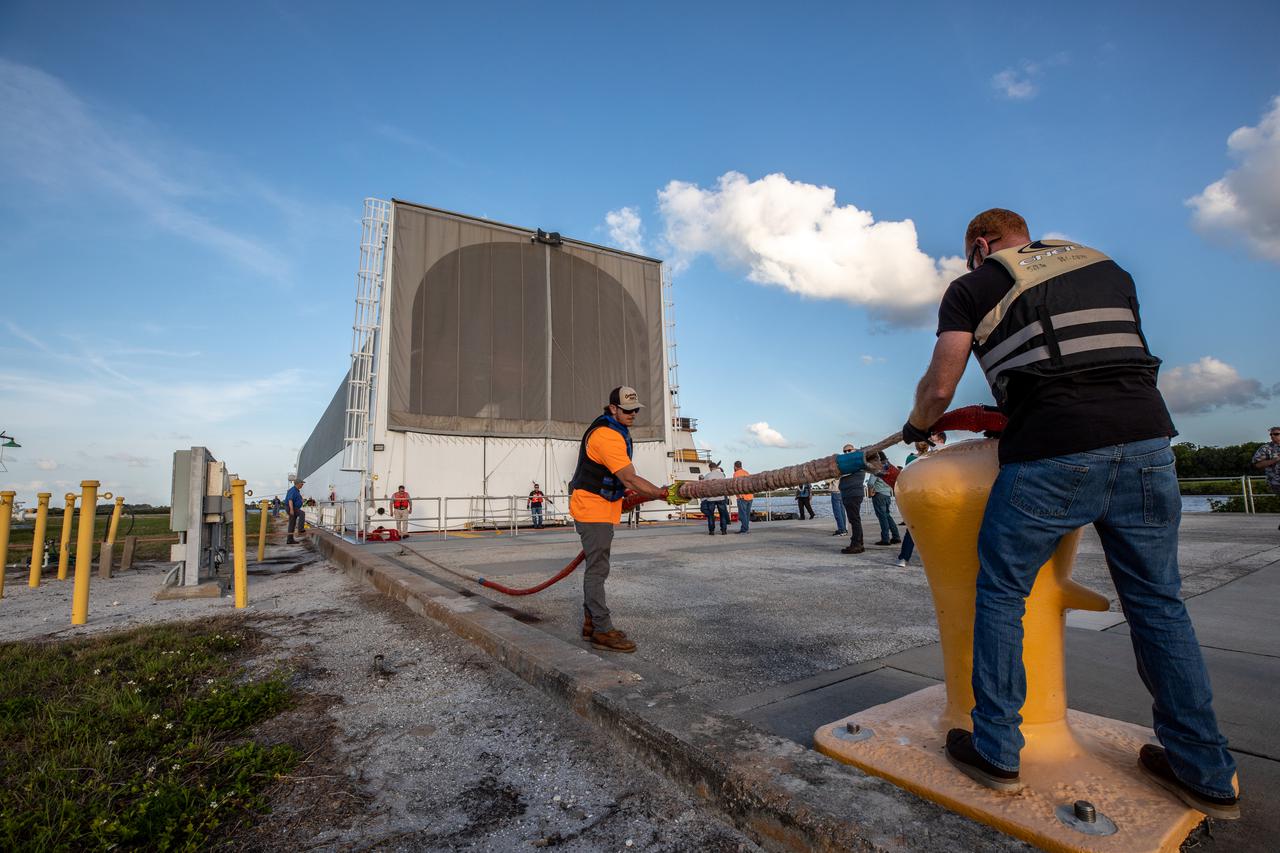
After its journey from NASA’s Stennis Space Center in Mississippi aboard the Pegasus barge, the mighty Space Launch System (SLS) core stage arrives at the agency’s Kennedy Space Center in Florida on April 27, 2021. In view is the iconic countdown clock at the NASA News Center, commonly referred to as the Press Site. The core stage is the final piece of Artemis hardware to arrive at the spaceport and will be offloaded and moved to Kennedy’s Vehicle Assembly Building, where it will be prepared for integration atop the mobile launcher with the completed stack of solid rocket boosters ahead of the Artemis I launch. The first in a series of increasingly complex missions, Artemis I will test SLS and Orion as an integrated system prior to crewed flights to the Moon.
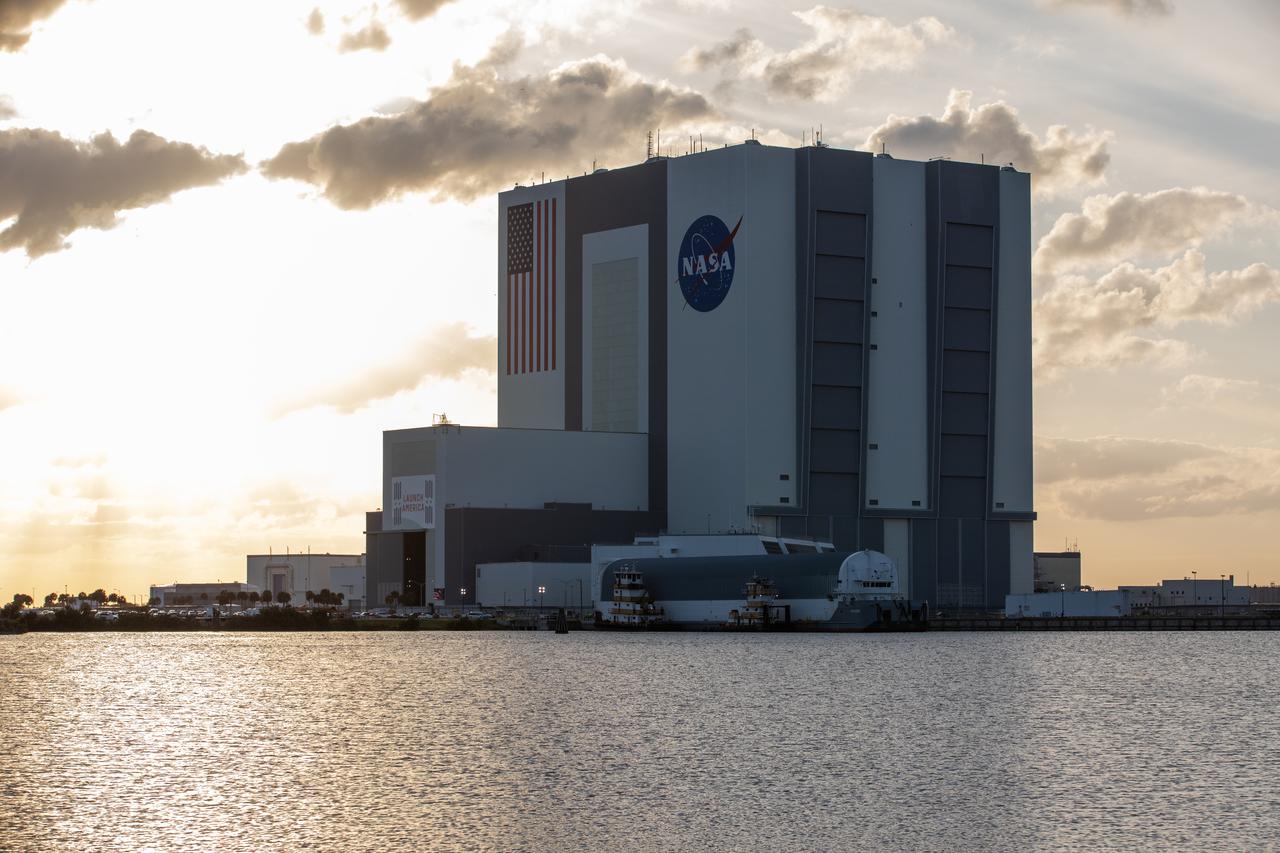
After its journey from NASA’s Stennis Space Center in Mississippi aboard the Pegasus barge, the mighty Space Launch System (SLS) core stage arrives at the agency’s Kennedy Space Center in Florida on April 27, 2021. In view is the iconic countdown clock at the NASA News Center, commonly referred to as the Press Site. The core stage is the final piece of Artemis hardware to arrive at the spaceport and will be offloaded and moved to Kennedy’s Vehicle Assembly Building, where it will be prepared for integration atop the mobile launcher with the completed stack of solid rocket boosters ahead of the Artemis I launch. The first in a series of increasingly complex missions, Artemis I will test SLS and Orion as an integrated system prior to crewed flights to the Moon.
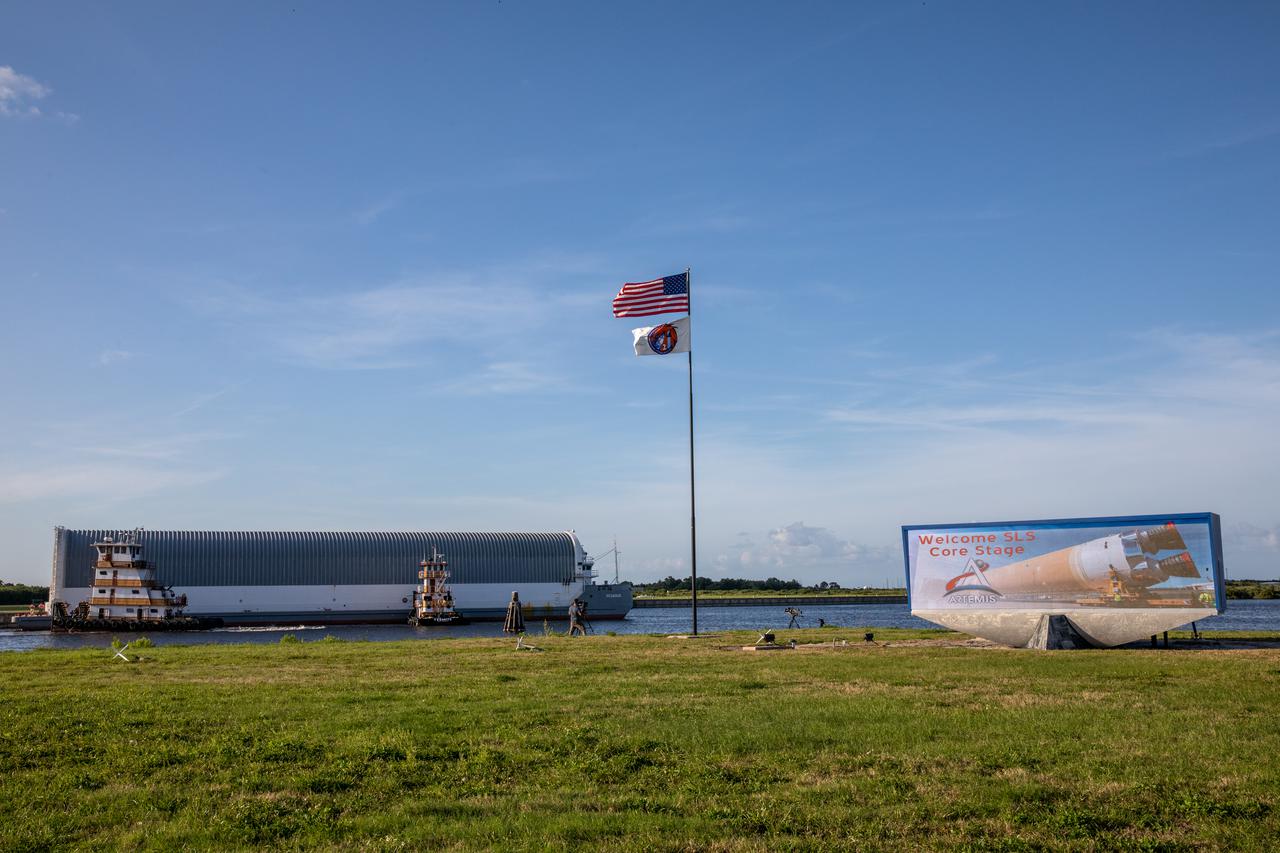
After its journey from NASA’s Stennis Space Center in Mississippi aboard the Pegasus barge, the mighty Space Launch System (SLS) core stage arrives at the agency’s Kennedy Space Center in Florida on April 27, 2021. In view is the iconic countdown clock at the NASA News Center, commonly referred to as the Press Site. The core stage is the final piece of Artemis hardware to arrive at the spaceport and will be offloaded and moved to Kennedy’s Vehicle Assembly Building, where it will be prepared for integration atop the mobile launcher with the completed stack of solid rocket boosters ahead of the Artemis I launch. The first in a series of increasingly complex missions, Artemis I will test SLS and Orion as an integrated system prior to crewed flights to the Moon.

CAPE CANAVERAL, Fla. – At NASA's Kennedy Space Center in Florida, Beth Nielson Chapman performs "The Mighty Night Sky" for agency social media followers during the second day of NASA Social activities revolving around NASA's Radiation Belt Storm Probes, or RBSP, mission. The probes are set to launch aboard a United Launch Alliance, or ULA, Atlas V rocket from nearby Cape Canaveral Air Force Station. About 40 followers were selected to participate in RBSP's prelaunch and launch activities. The RBSP mission will help us understand the sun’s influence on Earth and near-Earth space by studying the Earth’s radiation belts on various scales of space and time. RBSP will begin its mission of exploration of Earth’s Van Allen radiation belts and the extremes of space weather. For more information, visit http://www.nasa.gov/rbsp. Photo credit: NASA/Frankie Martin
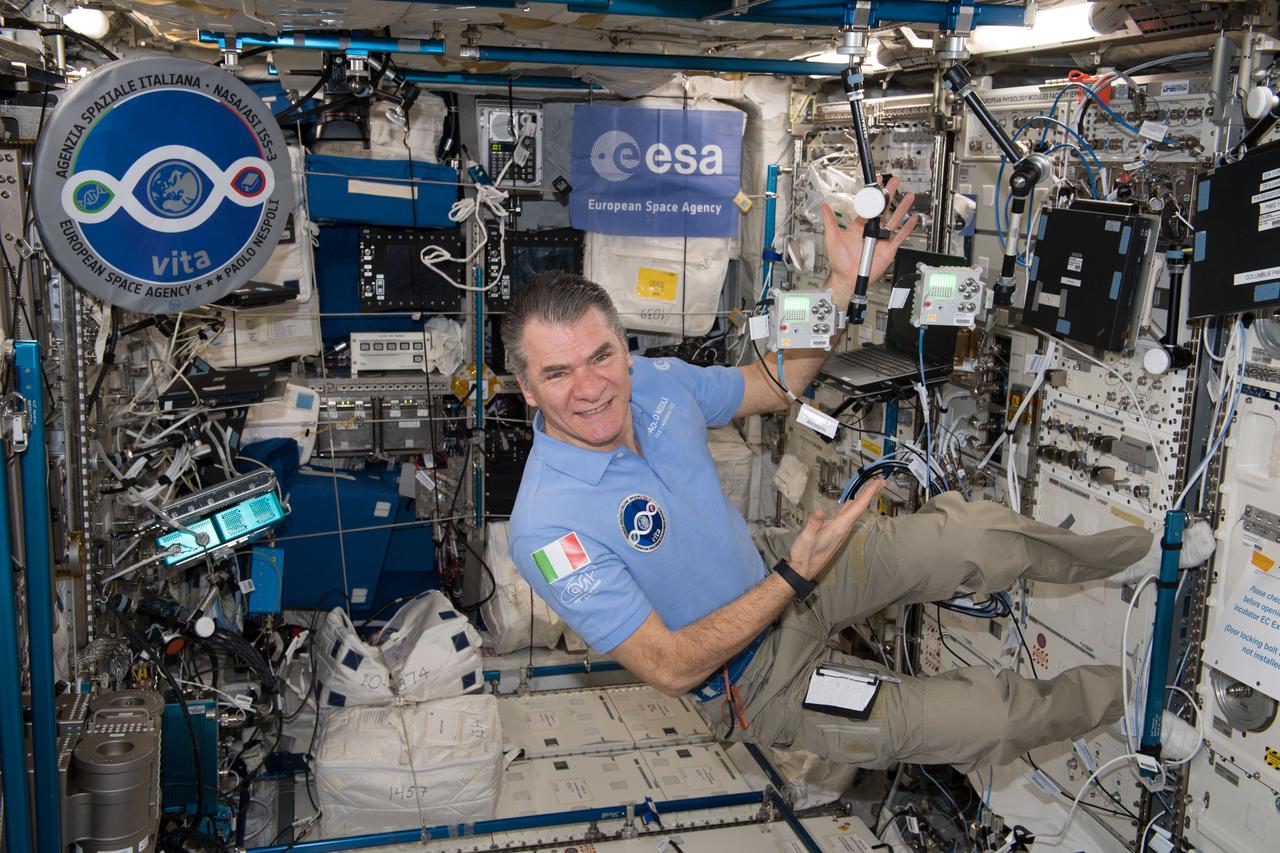
iss053e323106 (12/10/2017) --- European Space Agency (ESA) astronaut Paolo Nespoli in the Columbus module with AstroPi hardware. AstroPi uses two augmented Raspberry Pi computers equipped with the mighty Sense HAT (Hardware Attached on Top) that measures the environment inside the space station, detect how the station moves through space, and pick up the Earth’s magnetic field. Each AstroPi is also equipped with different kinds of cameras: one has an infrared camera, and the other has a standard visible spectrum camera. The activities related to this project are intended to encourage and strengthen the teaching of computing and coding curriculums, and through this stimulate the curiosity of students and motivate them towards further study of STEM (Science, Technology, Engineering and Mathematics) subjects.

The mighty Yukon River and nearby lakes appear in red in this image produced using data recorded on June 18, 2023, by the international Surface Water and Ocean Topography (SWOT) satellite as it passed over Alaska. The satellite measures the height of nearly all the water on Earth's surface, providing one of the most detailed, comprehensive views yet of the planet's ocean and fresh water. The mission is a collaboration between NASA and the French space agency, CNES (Centre National d'Études Spatiales). SWOT will address some of the most pressing climate change questions of our time, offering insights into areas including how a warming world is accelerating Earth's water cycle, leading to more volatile precipitation patterns. SWOT will also help researchers better understand how climate change affects water storage in lakes, rivers, and reservoirs, and how communities can better manage water resources and prepare for floods and other disasters. SWOT passed over the Yukon River and recorded this data during a period called calibration and validation, when the mission confirms the accuracy of its data. Calibration involved ensuring SWOT's software and hardware – including its main scientific instrument, the Ka-band Radar Interferometer (KaRIn) and its antenna – operate as designed. During validation activities, dozens of research teams headed into the field to measure water levels and the slope of rivers, including the Yukon. Mission scientists then compared field measurements to the data taken by the satellite to ensure SWOT's accuracy. In mid-June, the team of freshwater researchers tasked with gathering data on the Yukon drifted down the waterway around midnight – the same time as SWOT passed overhead, collecting its own data on the river. Launched on Dec. 16, 2022, from Vandenberg Space Force Base in central California, SWOT is now in its operations phase, collecting data that will be used for research and other purposes. https://photojournal.jpl.nasa.gov/catalog/PIA25780
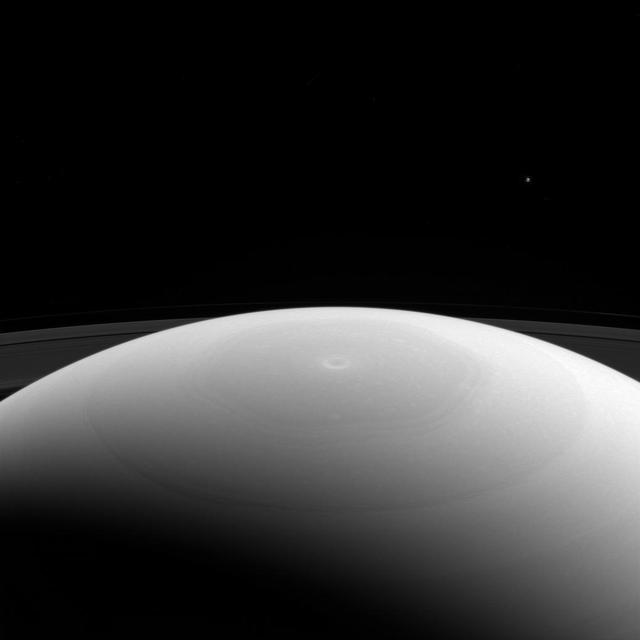
From high above Saturn's northern hemisphere, NASA's Cassini spacecraft gazes over the planet's north pole, with its intriguing hexagon and bullseye-like central vortex. Saturn's moon Mimas is visible as a mere speck near upper right. At 246 miles (396 kilometers across) across, Mimas is considered a medium-sized moon. It is large enough for its own gravity to have made it round, but isn't one of the really large moons in our solar system, like Titan. Even enormous Titan is tiny beside the mighty gas giant Saturn. This view looks toward Saturn from the sunlit side of the rings, from about 27 degrees above the ring plane. The image was taken in green light with the Cassini spacecraft wide-angle camera on March 27, 2017. The view was acquired at a distance of approximately 617,000 miles (993,000 kilometers) from Saturn. Image scale is 37 miles (59 kilometers) per pixel. Mimas' brightness has been enhanced by a factor of 3 in this image to make it easier to see. https://photojournal.jpl.nasa.gov/catalog/PIA21331
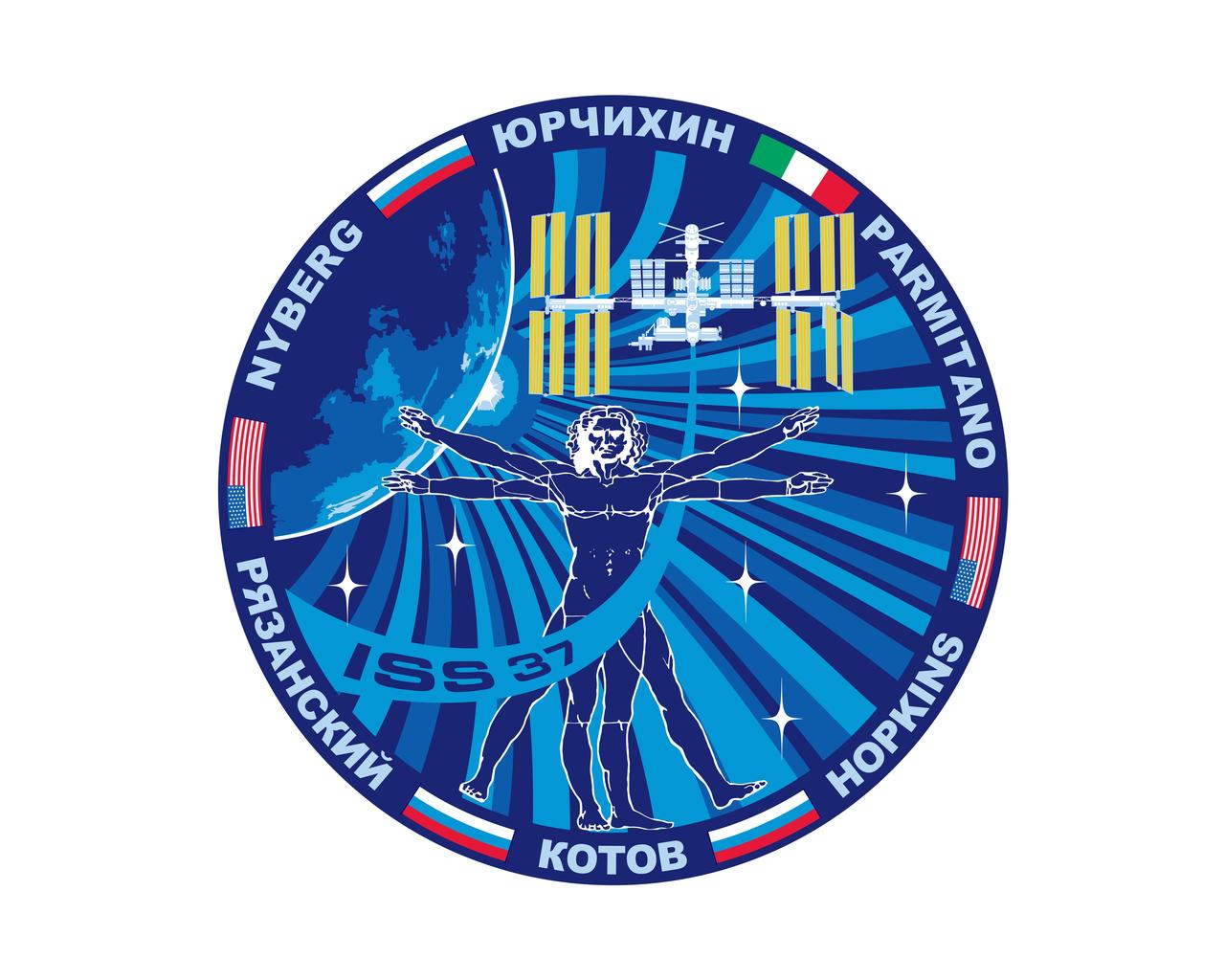
ISS037-S-001 (August 2012) --- Leonardo da Vinci's Vitruvian Man, created some 525 years ago, as a blend of art and science and a symbol of the medical profession, is depicted amongst the orbits of a variety of satellites circling the Earth at great speed. Da Vinci's drawing, based on the proportions of man as described by the Roman architect Vitruvius, is often used as a symbol of symmetry of the human body and the universe as a whole. Almost perfect in symmetry as well, the International Space Station, with its solar wings spread out and illuminated by the first rays of dawn, is pictured as a mighty beacon arcing upwards across our night skies, the ultimate symbol of science and technology of our age. Six stars represent the six members of Expedition 37 crew, which includes two cosmonauts with a medical background, as well as a native of Da Vinci's Italy. The design for insignia for space station flights is reserved for use by the crew members and for other official use as the NASA Administrator may authorize. Public availability has been approved only in the form of illustrations by the various news media. When and if there is any change in this policy, which is not anticipated, it will be publicly announced.

Meandering Mississippi - May 28th, 2003 Description: Small, blocky shapes of towns, fields, and pastures surround the graceful swirls and whorls of the Mississippi River. Countless oxbow lakes and cutoffs accompany the meandering river south of Memphis, Tennessee, on the border between Arkansas and Mississippi, USA. The "mighty Mississippi" is the largest river system in North America. Credit: USGS/NASA/Landsat 7 To learn more about the Landsat satellite go to: <a href="http://landsat.gsfc.nasa.gov/" rel="nofollow">landsat.gsfc.nasa.gov/</a> <b><a href="http://www.nasa.gov/centers/goddard/home/index.html" rel="nofollow">NASA Goddard Space Flight Center</a></b> enables NASA’s mission through four scientific endeavors: Earth Science, Heliophysics, Solar System Exploration, and Astrophysics. Goddard plays a leading role in NASA’s accomplishments by contributing compelling scientific knowledge to advance the Agency’s mission. <b>Follow us on <a href="http://twitter.com/NASA_GoddardPix" rel="nofollow">Twitter</a></b> <b>Join us on <a href="http://www.facebook.com/pages/Greenbelt-MD/NASA-Goddard/395013845897?ref=tsd" rel="nofollow">Facebook</a></b>
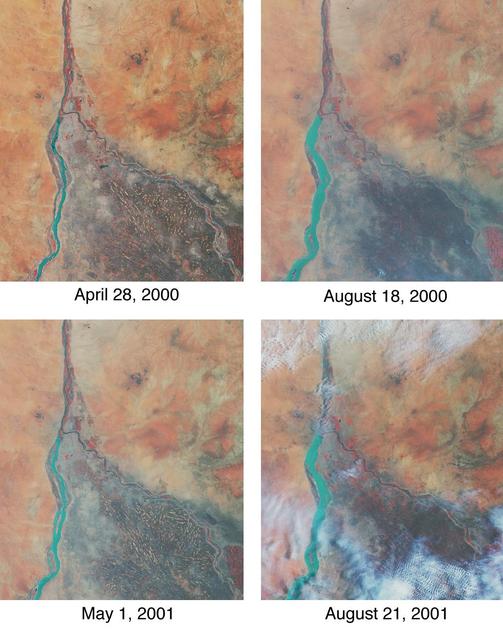
Throughout history, the rising and falling waters of the mighty Nile River have directly impacted the lives of the people who live along its banks. These images of the area around Sudan's capital city of Khartoum capture the river's dynamic nature. Acquired by the Multi-angle Imaging SpectroRadiometer's nadir (vertical-viewing) camera, they display the extent of the Nile waters before and after the onset of the rainy seasons of 2000 (top pair) and 2001 (bottom pair). The images are displayed in "false color," using the camera's near-infrared, green, and blue bands. With this particular spectral combination, water appears in shades of blue and turquoise, and highly vegetated areas show up as bright red. Originating in Uganda and Ethiopia, respectively, the waters of the White Nile (western branch) and Blue Nile (eastern branch) converge at Khartoum (about half-way between image center and the left-hand side), and continue to flow northward as the Great Nile. Although the most obvious feature in these images is the increased width of the White Nile between spring and summer, careful inspection shows that the Great Nile is at its widest in August 2001 (note in particular the area between the clouds near the top of this panel). Heavy rains in the Blue Nile catchment area of the Ethiopian highlands led to a rapid overflow of the river's floodwaters into the main stream of the Great Nile, leading to extensive flooding, the worst effects of which occurred north of Khartoum. According to the Food and Agriculture Organization of the United Nations, tens of thousands of people have fled their homes, and the number of people in need of urgent food assistance in Sudan, estimated at three million earlier in the year, was likely to increase with the onset of these floods. South of the confluence of the White Nile and the Blue Nile, the area of a cross-hatched appearance is the irrigated plain of El Gezira. The Gezira irrigation scheme uses water from the Makwar Dam (now called the Sennar Dam), located across the Blue Nile south of Khartoum. Among the main agricultural products of this region are cotton, millet, peanuts and fodder crops. Overall prospects for Sudan's 2001 grain crop were already poor prior to the flooding due to a late start of the rainy season in parts of the country. Following two consecutive years of serious drought, precipitation arrived too late to save the grain harvest that normally begins in late August. Lower harvests for the past two years coupled with depletion of stocks have led to a rise in cereal prices, reducing access to food for the Sudan's poorer citizens, already suffering from the effects of Africa's longest running civil war. Each of these images represents an area of about 130 kilometers x 150 kilometers. The data were obtained during Terra orbits 1922, 3553, 7281, and 8912. http://photojournal.jpl.nasa.gov/catalog/PIA03420
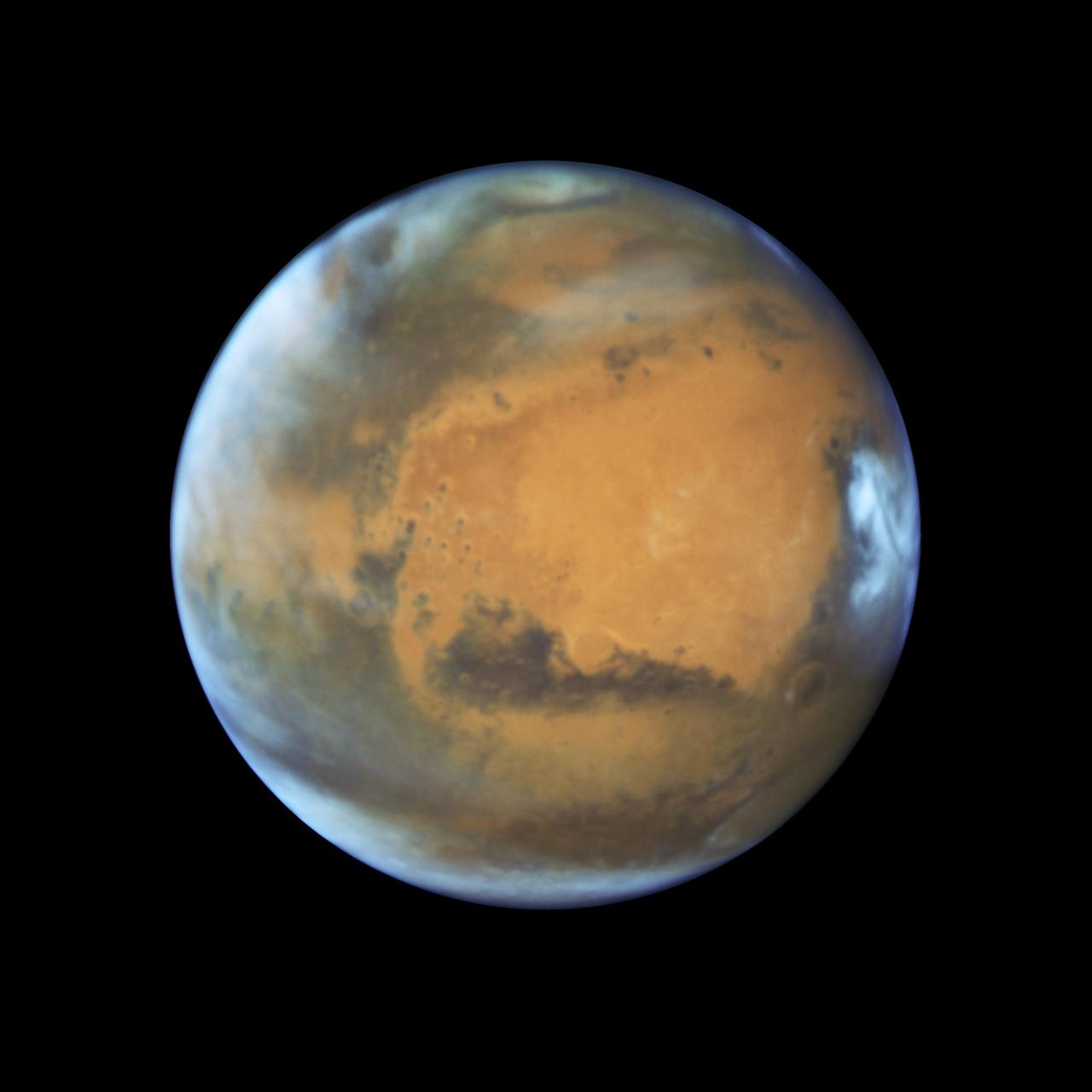
Mars is looking mighty fine in this portrait nabbed by the Hubble Space Telescope on a near close approach! Read more: <a href="http://go.nasa.gov/1rWYiBT" rel="nofollow">go.nasa.gov/1rWYiBT</a> The Hubble Space Telescope is more well known for its picturesque views of nebulae and galaxies, but it's also useful for studying our own planets, including Mars. Hubble imaged Mars on May 12, 2016 - ten days before Mars would be on the exact opposite side of the Earth from the Sun. Bright, frosty polar caps, and clouds above a vivid, rust-colored landscape reveal Mars as a dynamic seasonal planet in this NASA Hubble Space Telescope view taken on May 12, 2016, when Mars was 50 million miles from Earth. The Hubble image reveals details as small as 20 to 30 miles across. The large, dark region at far right is Syrtis Major Planitia, one of the first features identified on the surface of the planet by seventeenth-century observers. Christiaan Huygens used this feature to measure the rotation rate of Mars. (A Martian day is about 24 hours and 37 minutes.) Today we know that Syrtis Major is an ancient, inactive shield volcano. Late-afternoon clouds surround its summit in this view. A large oval feature to the south of Syrtis Major is the bright Hellas Planitia basin. About 1,100 miles across and nearly five miles deep, it was formed about 3.5 billion years ago by an asteroid impact. The orange area in the center of the image is Arabia Terra, a vast upland region in northern Mars that covers about 2,800 miles. The landscape is densely cratered and heavily eroded, indicating that it could be among the oldest terrains on the planet. Dried river canyons (too small to be seen here) wind through the region and empty into the large northern lowlands. Credit: NASA, ESA, the Hubble Heritage Team (STScI/AURA), J. Bell (ASU), and M. Wolff (Space Science Institute) #nasagoddard #mars #hubble #space <b><a href="http://www.nasa.gov/audience/formedia/features/MP_Photo_Guidelines.html" rel="nofollow">NASA image use policy.</a></b> <b><a href="http://www.nasa.gov/centers/goddard/home/index.html" rel="nofollow">NASA Goddard Space Flight Center</a></b> enables NASA’s mission through four scientific endeavors: Earth Science, Heliophysics, Solar System Exploration, and Astrophysics. Goddard plays a leading role in NASA’s accomplishments by contributing compelling scientific knowledge to advance the Agency’s mission. <b>Follow us on <a href="http://twitter.com/NASAGoddardPix" rel="nofollow">Twitter</a></b> <b>Like us on <a href="http://www.facebook.com/pages/Greenbelt-MD/NASA-Goddard/395013845897?ref=tsd" rel="nofollow">Facebook</a></b> <b>Find us on <a href="http://instagrid.me/nasagoddard/?vm=grid" rel="nofollow">Instagram</a></b>
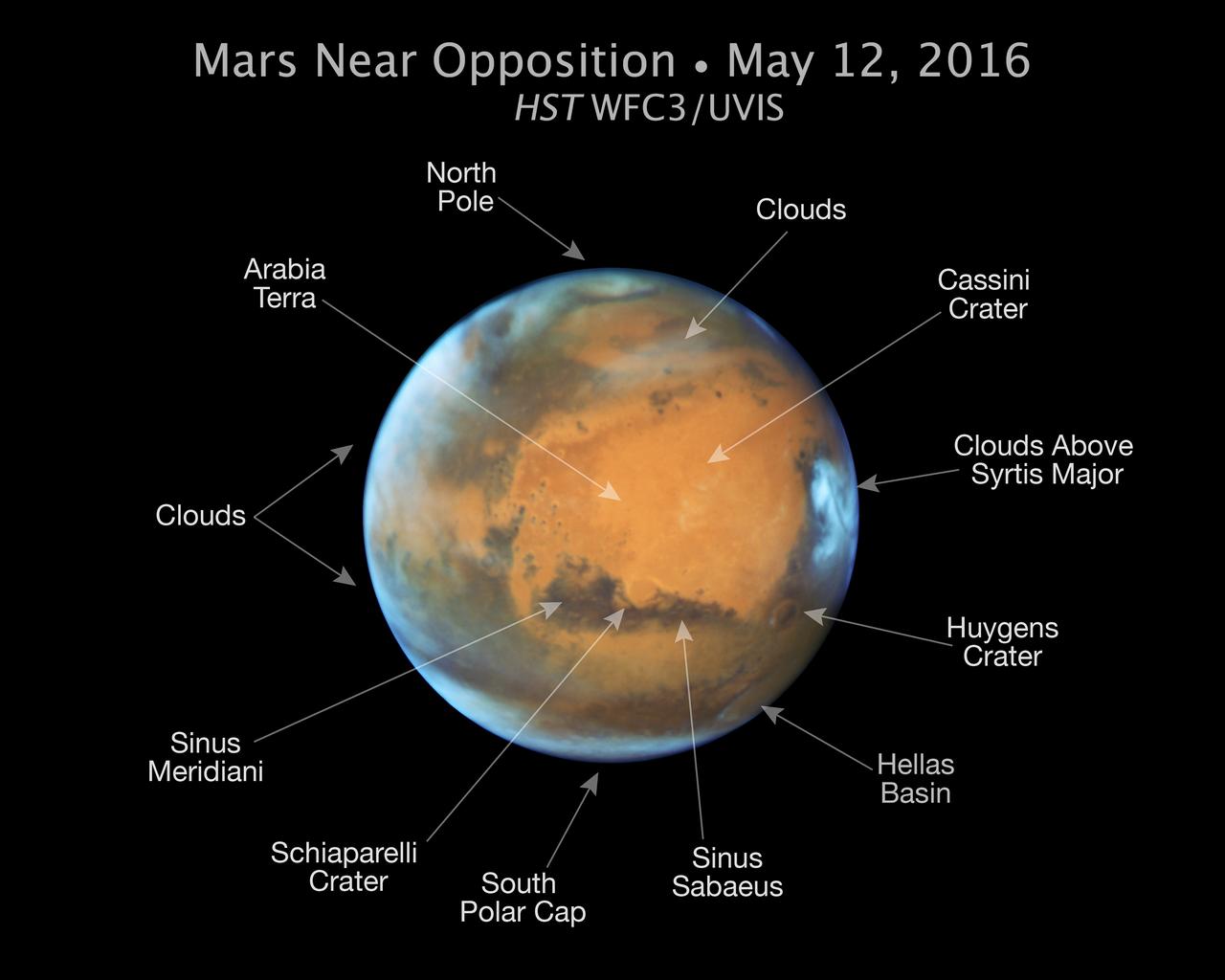
Mars is looking mighty fine in this portrait nabbed by the Hubble Space Telescope on a near close approach! Read more: <a href="http://go.nasa.gov/1rWYiBT" rel="nofollow">go.nasa.gov/1rWYiBT</a> The Hubble Space Telescope is more well known for its picturesque views of nebulae and galaxies, but it's also useful for studying our own planets, including Mars. Hubble imaged Mars on May 12, 2016 - ten days before Mars would be on the exact opposite side of the Earth from the Sun. Bright, frosty polar caps, and clouds above a vivid, rust-colored landscape reveal Mars as a dynamic seasonal planet in this NASA Hubble Space Telescope view taken on May 12, 2016, when Mars was 50 million miles from Earth. The Hubble image reveals details as small as 20 to 30 miles across. The large, dark region at far right is Syrtis Major Planitia, one of the first features identified on the surface of the planet by seventeenth-century observers. Christiaan Huygens used this feature to measure the rotation rate of Mars. (A Martian day is about 24 hours and 37 minutes.) Today we know that Syrtis Major is an ancient, inactive shield volcano. Late-afternoon clouds surround its summit in this view. A large oval feature to the south of Syrtis Major is the bright Hellas Planitia basin. About 1,100 miles across and nearly five miles deep, it was formed about 3.5 billion years ago by an asteroid impact. The orange area in the center of the image is Arabia Terra, a vast upland region in northern Mars that covers about 2,800 miles. The landscape is densely cratered and heavily eroded, indicating that it could be among the oldest terrains on the planet. Dried river canyons (too small to be seen here) wind through the region and empty into the large northern lowlands. Credit: NASA, ESA, the Hubble Heritage Team (STScI/AURA), J. Bell (ASU), and M. Wolff (Space Science Institute) #nasagoddard #mars #hubble #space <b><a href="http://www.nasa.gov/audience/formedia/features/MP_Photo_Guidelines.html" rel="nofollow">NASA image use policy.</a></b> <b><a href="http://www.nasa.gov/centers/goddard/home/index.html" rel="nofollow">NASA Goddard Space Flight Center</a></b> enables NASA’s mission through four scientific endeavors: Earth Science, Heliophysics, Solar System Exploration, and Astrophysics. Goddard plays a leading role in NASA’s accomplishments by contributing compelling scientific knowledge to advance the Agency’s mission. <b>Follow us on <a href="http://twitter.com/NASAGoddardPix" rel="nofollow">Twitter</a></b> <b>Like us on <a href="http://www.facebook.com/pages/Greenbelt-MD/NASA-Goddard/395013845897?ref=tsd" rel="nofollow">Facebook</a></b> <b>Find us on <a href="http://instagrid.me/nasagoddard/?vm=grid" rel="nofollow">Instagram</a></b>

Mars is looking mighty fine in this portrait nabbed by the Hubble Space Telescope on a near close approach! Read more: <a href="http://go.nasa.gov/1rWYiBT" rel="nofollow">go.nasa.gov/1rWYiBT</a> The Hubble Space Telescope is more well known for its picturesque views of nebulae and galaxies, but it's also useful for studying our own planets, including Mars. Hubble imaged Mars on May 12, 2016 - ten days before Mars would be on the exact opposite side of the Earth from the Sun. Bright, frosty polar caps, and clouds above a vivid, rust-colored landscape reveal Mars as a dynamic seasonal planet in this NASA Hubble Space Telescope view taken on May 12, 2016, when Mars was 50 million miles from Earth. The Hubble image reveals details as small as 20 to 30 miles across. The large, dark region at far right is Syrtis Major Planitia, one of the first features identified on the surface of the planet by seventeenth-century observers. Christiaan Huygens used this feature to measure the rotation rate of Mars. (A Martian day is about 24 hours and 37 minutes.) Today we know that Syrtis Major is an ancient, inactive shield volcano. Late-afternoon clouds surround its summit in this view. A large oval feature to the south of Syrtis Major is the bright Hellas Planitia basin. About 1,100 miles across and nearly five miles deep, it was formed about 3.5 billion years ago by an asteroid impact. The orange area in the center of the image is Arabia Terra, a vast upland region in northern Mars that covers about 2,800 miles. The landscape is densely cratered and heavily eroded, indicating that it could be among the oldest terrains on the planet. Dried river canyons (too small to be seen here) wind through the region and empty into the large northern lowlands. Credit: NASA, ESA, the Hubble Heritage Team (STScI/AURA), J. Bell (ASU), and M. Wolff (Space Science Institute) #nasagoddard #mars #hubble #space <b><a href="http://www.nasa.gov/audience/formedia/features/MP_Photo_Guidelines.html" rel="nofollow">NASA image use policy.</a></b> <b><a href="http://www.nasa.gov/centers/goddard/home/index.html" rel="nofollow">NASA Goddard Space Flight Center</a></b> enables NASA’s mission through four scientific endeavors: Earth Science, Heliophysics, Solar System Exploration, and Astrophysics. Goddard plays a leading role in NASA’s accomplishments by contributing compelling scientific knowledge to advance the Agency’s mission. <b>Follow us on <a href="http://twitter.com/NASAGoddardPix" rel="nofollow">Twitter</a></b> <b>Like us on <a href="http://www.facebook.com/pages/Greenbelt-MD/NASA-Goddard/395013845897?ref=tsd" rel="nofollow">Facebook</a></b> <b>Find us on <a href="http://instagrid.me/nasagoddard/?vm=grid" rel="nofollow">Instagram</a></b>
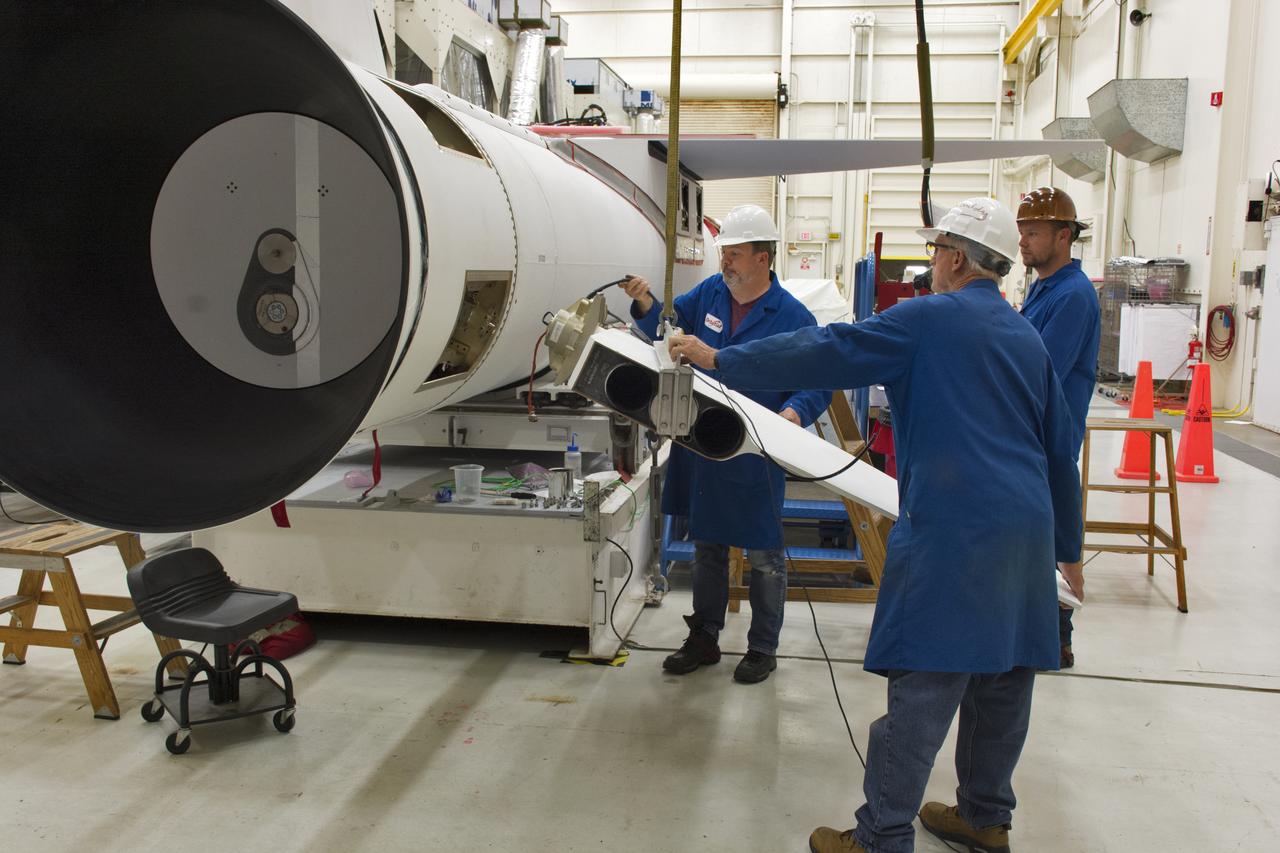
Technicians install the starboard fin on the Orbital ATK Pegasus XL rocket July 8, 2017, inside Building 1555 at Vandenberg Air Force Base in California. The Pegasus rocket is being prepared for NASA's Ionospheric Connection Explorer, or ICON, mission. ICON will launch on June 15 from Kwajalein Atoll in the Marshall Islands (June 14 in the continental United States) on Orbital ATK's Pegasus XL rocket, which is attached to the company's L-1011 Stargazer aircraft. ICON will study the frontier of space - the dynamic zone high in Earth's atmosphere where terrestrial weather from below meets space weather above. The explorer will help determine the physics of Earth's space environment and pave the way for mitigating its effects on our technology, communications systems and society.
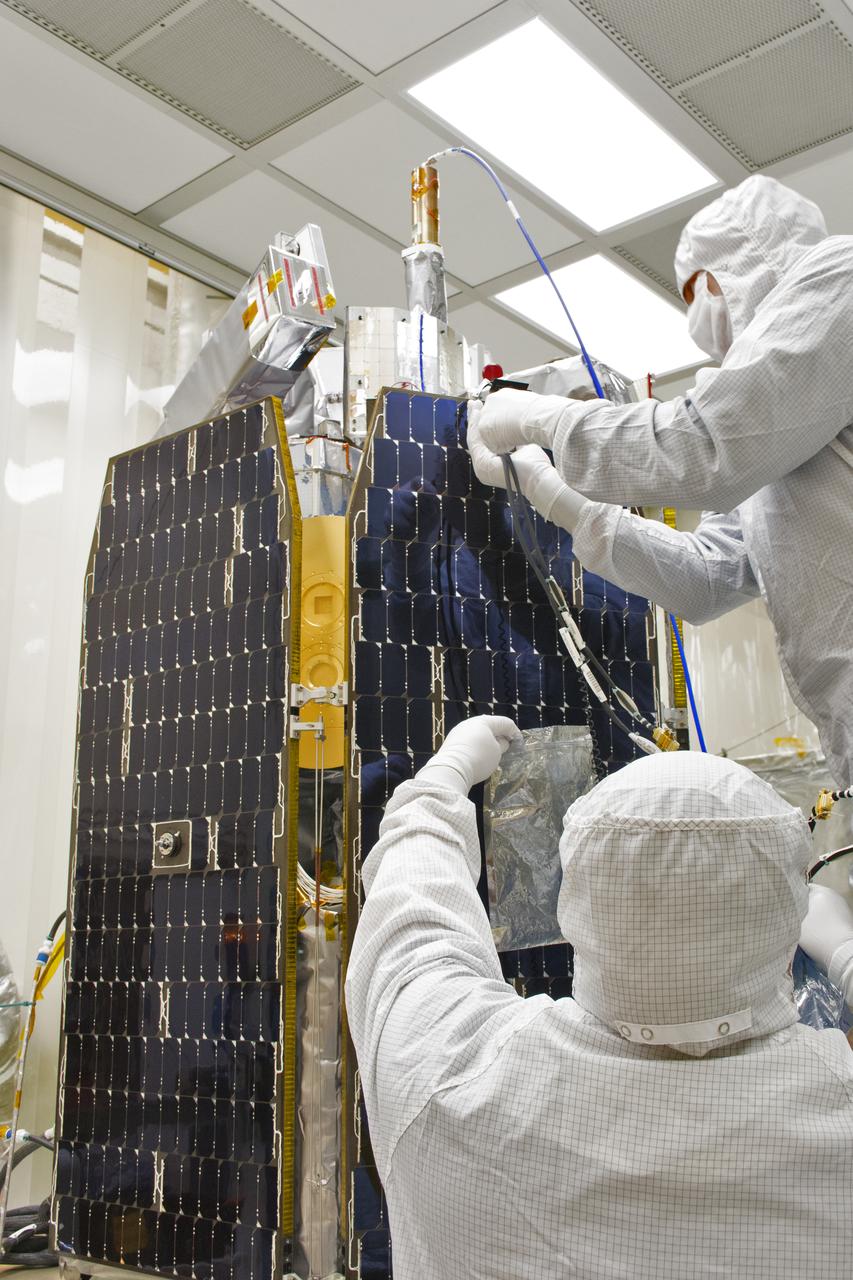
Technicians prepare NASA's Ionospheric Connection Explorer (ICON) for a solar array illumination test in a clean room inside Building 1555 at Vandenberg Air Force Base in California on May 4, 2018. The test checks for any imperfections and confirms that the solar arrays are functioning properly. The explorer will launch on June 15, 2018, from Kwajalein Atoll in the Marshall Islands (June 14 in the continental United States) on Orbital ATK's Pegasus XL rocket, which is attached to the company's L-1011 Stargazer aircraft. ICON will study the frontier of space - the dynamic zone high in Earth's atmosphere where terrestrial weather from below meets space weather above. The explorer will help determine the physics of Earth's space environment and pave the way for mitigating its effects on our technology, communications systems and society.
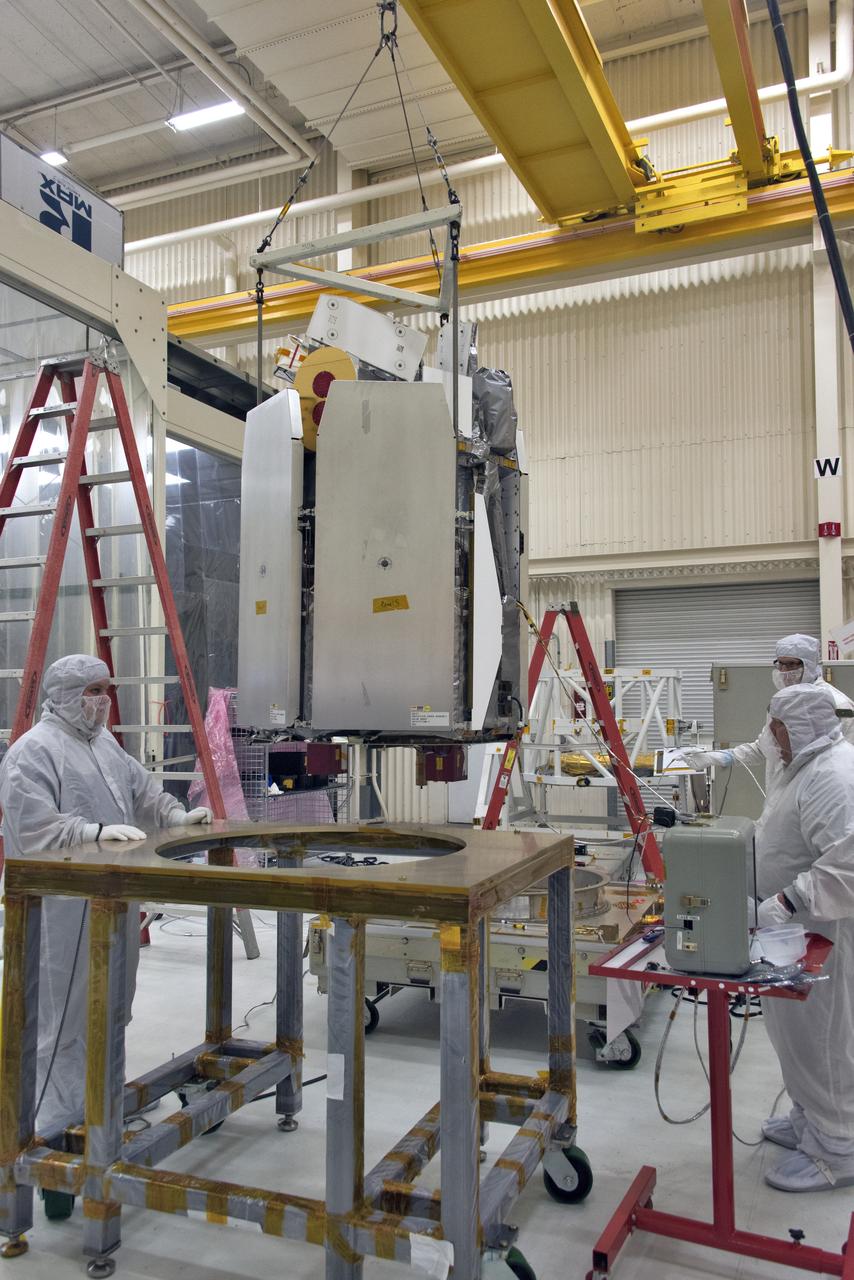
A crane lifts and moves NASA's Ionospheric Connection Explorer (ICON) to a work stand on May 1, 2018, inside Building 1555 at Vandenberg Air Force Base in California. The explorer will launch on June 15, 2018, from Kwajalein Atoll in the Marshall Islands (June 14 in the continental United States) on Orbital ATK's Pegasus XL rocket, which is attached to the company's L-1011 Stargazer aircraft. ICON will study the frontier of space - the dynamic zone high in Earth's atmosphere where terrestrial weather from below meets space weather above. The explorer will help determine the physics of Earth's space environment and pave the way for mitigating its effects on our technology, communications systems and society.
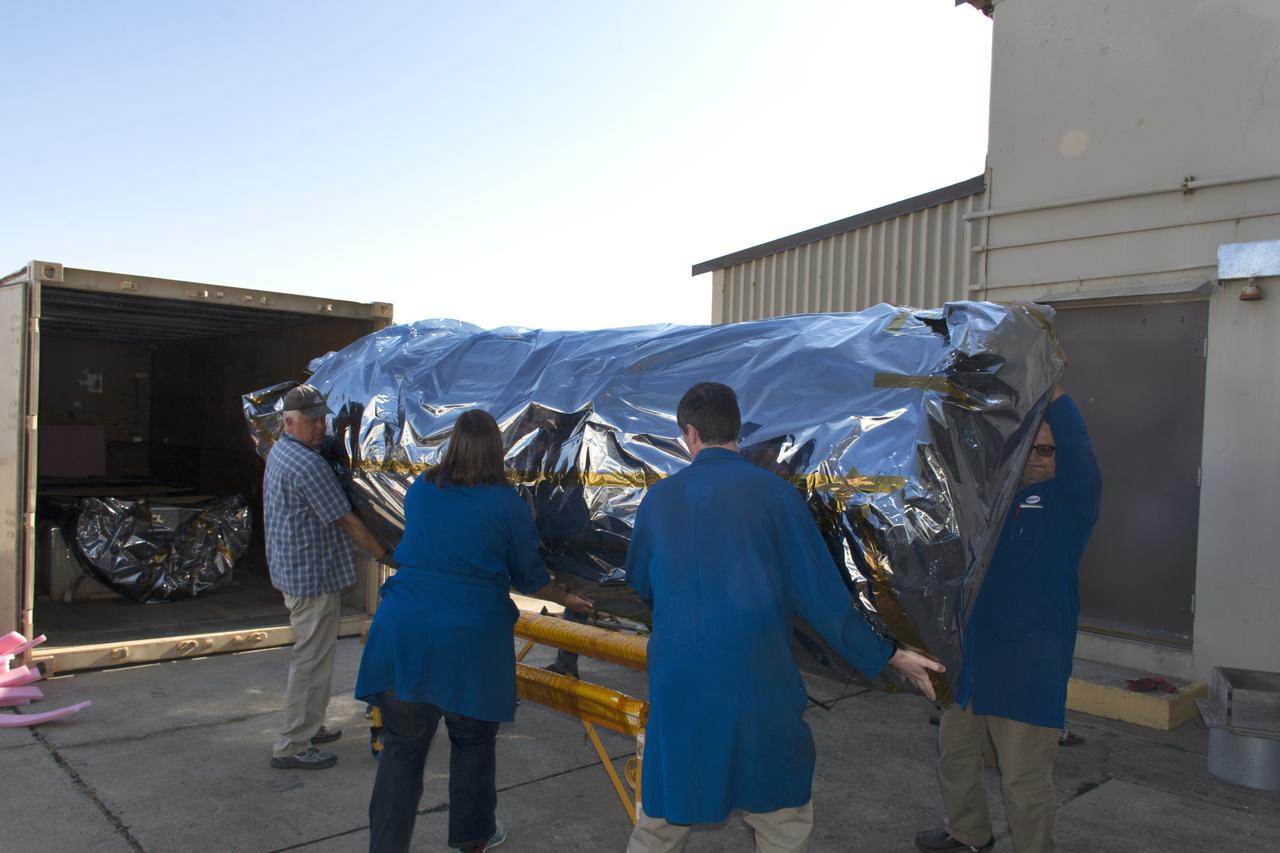
Orbital ATK technicians remove the first half of the payload fairing for the Orbital ATK Pegasus XL rocket from its shipping container Aug. 4, 2017, at Vandenberg Air Force Base in California. The Pegasus rocket is being prepared for NASA's Ionospheric Connection Explorer, or ICON, mission. The explorer will launch on June 15, 2018, from Kwajalein Atoll in the Marshall Islands (June 14 in the continental United States) on Orbital ATK's Pegasus XL rocket, which is attached to the company's L-1011 Stargazer aircraft. ICON will study the frontier of space - the dynamic zone high in Earth's atmosphere where terrestrial weather from below meets space weather above. The explorer will help determine the physics of Earth's space environment and pave the way for mitigating its effects on our technology, communications systems and society.
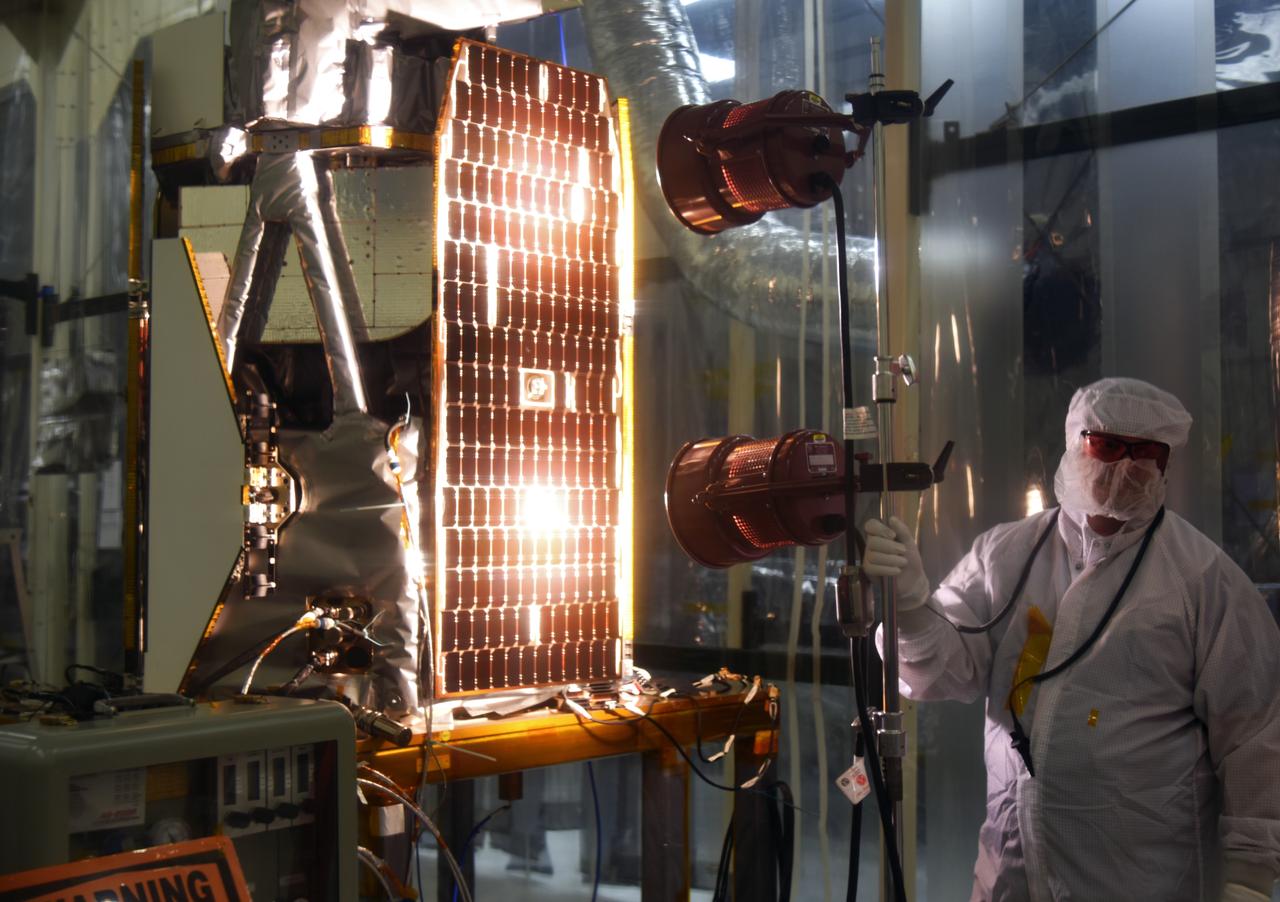
A solar array illumination test is performed on NASA's Ionospheric Connection Explorer (ICON) in a clean room on May 4, 2018, inside Building 1555 at Vandenberg Air Force Base in California. The test checks for any imperfections and confirms that the solar arrays are functioning properly. The explorer will launch on June 15, 2018, from Kwajalein Atoll in the Marshall Islands (June 14 in the continental United States) on Orbital ATK's Pegasus XL rocket, which is attached to the company's L-1011 Stargazer aircraft. ICON will study the frontier of space - the dynamic zone high in Earth's atmosphere where terrestrial weather from below meets space weather above. The explorer will help determine the physics of Earth's space environment and pave the way for mitigating its effects on our technology, communications systems and society.
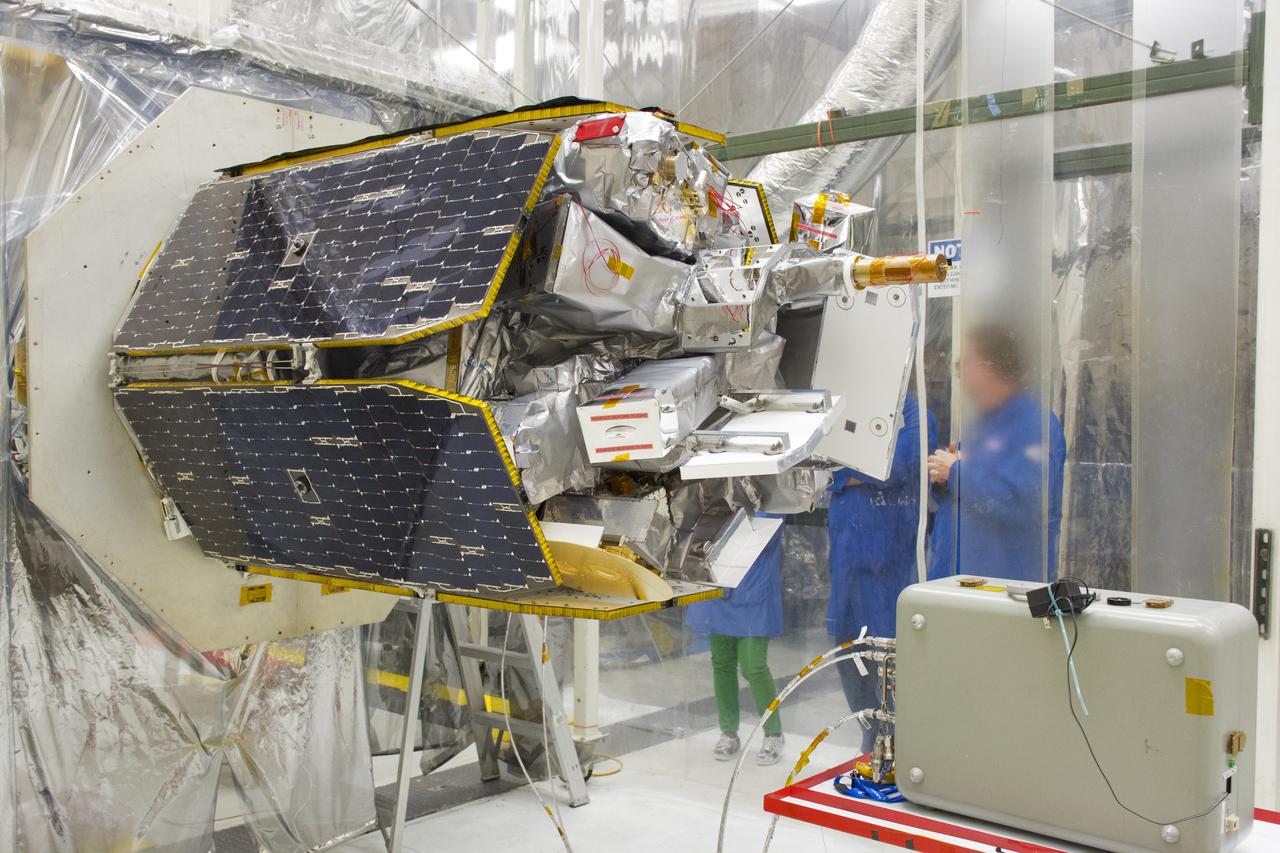
NASA's Ionospheric Connection Explorer (ICON) is attached to the Orbital ATK Pegasus XL rocket May 14, 2018, inside a clean room in Building 1555 at Vandenberg Air Force Base in California. The explorer will launch on June 15, 2018, from Kwajalein Atoll in the Marshall Islands (June 14 in the continental United States) on the Pegasus XL rocket, which is attached to the company's L-1011 Stargazer aircraft. ICON will study the frontier of space - the dynamic zone high in Earth's atmosphere where terrestrial weather from below meets space weather above. The explorer will help determine the physics of Earth's space environment and pave the way for mitigating its effects on our technology, communications systems and society.

A technician performs a ultraviolet light inspection of the Orbital ATK Pegasus starboard on May 22, 2018, prior to fully mating NASA's Ionospheric Connection Explorer (ICON) to Pegasus inside Building 1555 at Vandenberg Air Force Base in California. The explorer will launch on June 15, 2018, from Kwajalein Atoll in the Marshall Islands (June 14 in the continental United States) on the Pegasus XL, which is attached to the company's L-1011 Stargazer aircraft. ICON will study the frontier of space - the dynamic zone high in Earth's atmosphere where terrestrial weather from below meets space weather above. The explorer will help determine the physics of Earth's space environment and pave the way for mitigating its effects on our technology and communications systems.
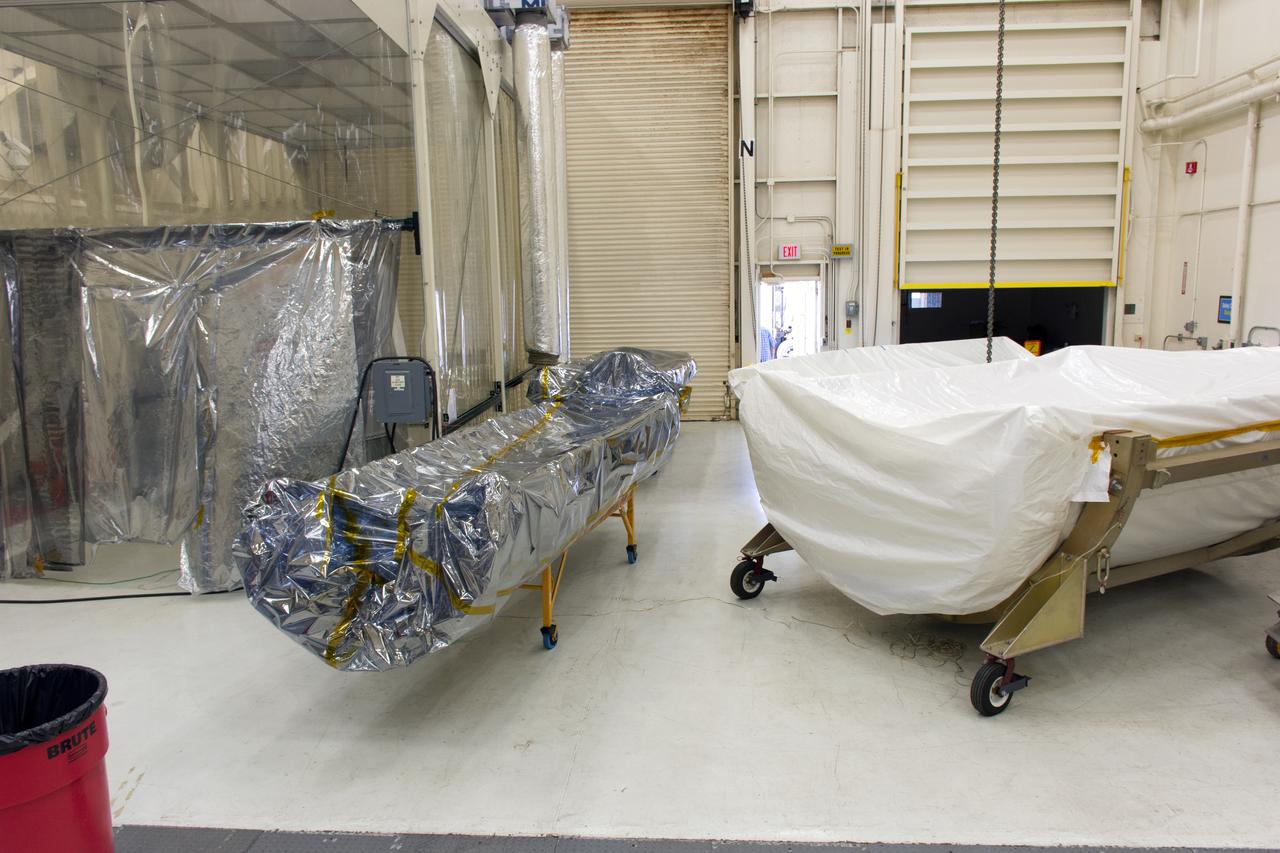
The first half of the payload fairing for the Orbital ATK Pegasus XL rocket is inside Building 1555 at Vandenberg Air Force Base in California on Aug. 4, 2018. The Pegasus rocket is being prepared for NASA's Ionospheric Connection Explorer, or ICON, mission. The explorer will launch on June 15, 2018, from Kwajalein Atoll in the Marshall Islands (June 14 in the continental United States) on Orbital ATK's Pegasus XL rocket, which is attached to the company's L-1011 Stargazer aircraft. ICON will study the frontier of space - the dynamic zone high in Earth's atmosphere where terrestrial weather from below meets space weather above. The explorer will help determine the physics of Earth's space environment and pave the way for mitigating its effects on our technology, communications systems and society.
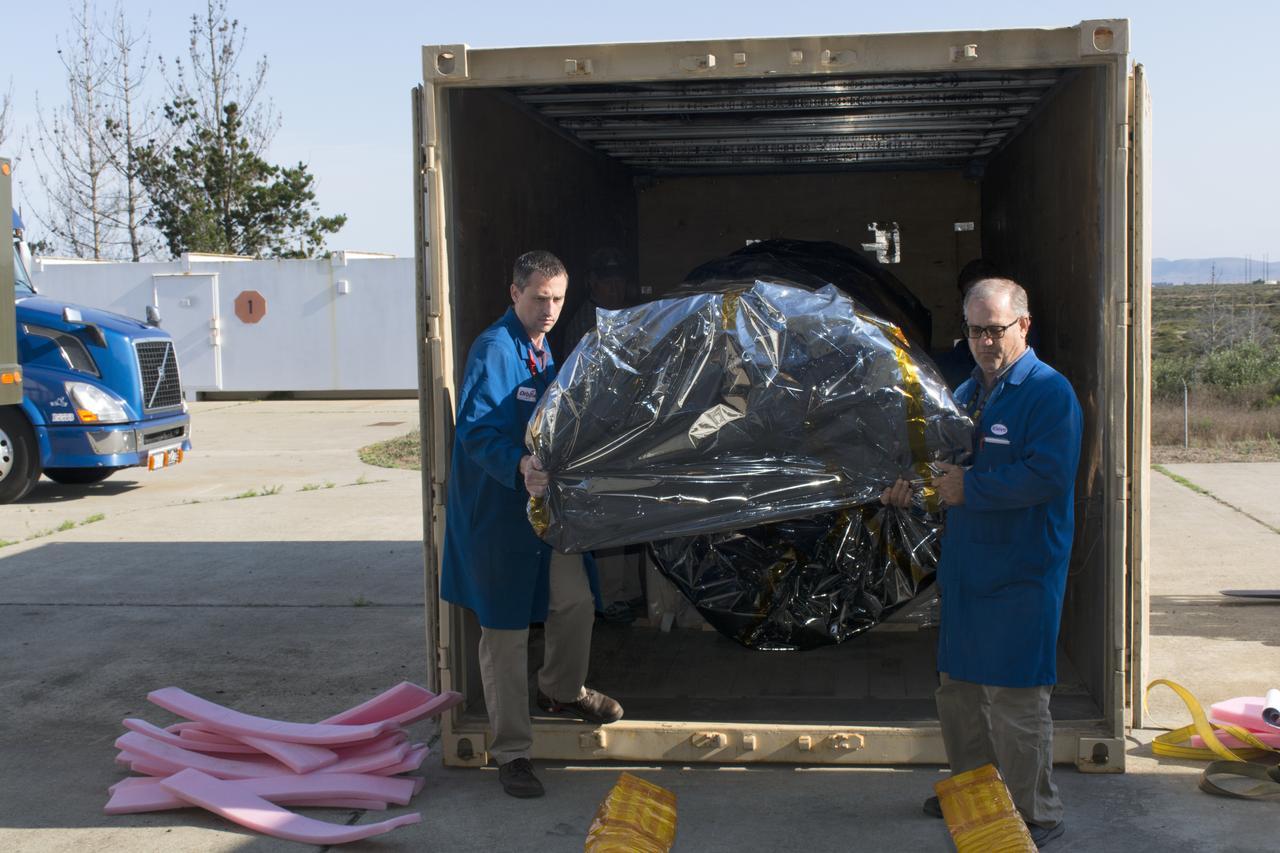
Orbital ATK technicians remove the first half of the payload fairing for the Orbital ATK Pegasus XL rocket from its shipping container Aug. 4, 2017, at Vandenberg Air Force Base in California. The Pegasus rocket is being prepared for NASA's Ionospheric Connection Explorer, or ICON, mission. The explorer will launch on June 15, 2018, from Kwajalein Atoll in the Marshall Islands (June 14 in the continental United States) on Orbital ATK's Pegasus XL rocket, which is attached to the company's L-1011 Stargazer aircraft. ICON will study the frontier of space - the dynamic zone high in Earth's atmosphere where terrestrial weather from below meets space weather above. The explorer will help determine the physics of Earth's space environment and pave the way for mitigating its effects on our technology, communications systems and society.
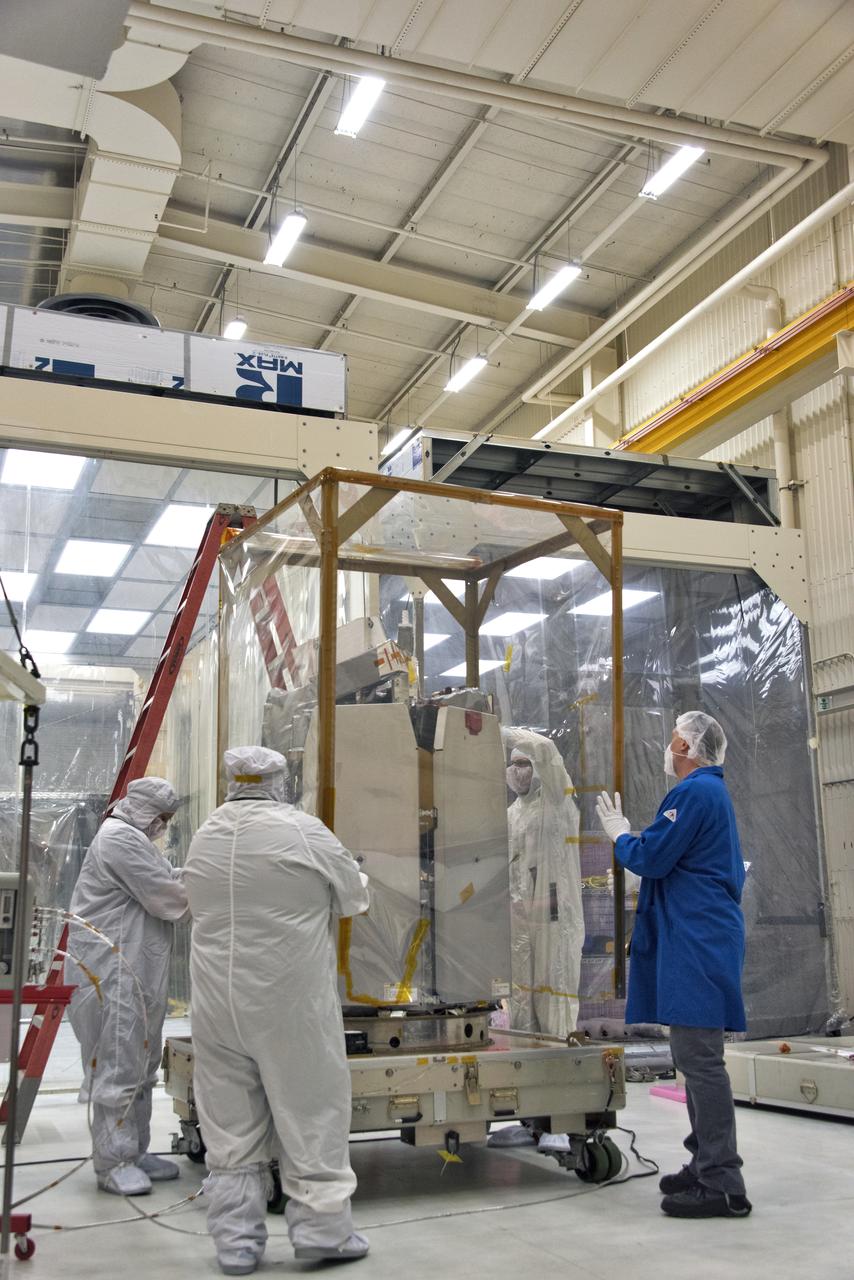
Technicians prepare NASA's Ionospheric Connection Explorer (ICON) for lift and transfer to a work stand on May 1, 2018, inside Building 1555 at Vandenberg Air Force Base in California. The explorer will launch on June 15, 2018, from Kwajalein Atoll in the Marshall Islands (June 14 in the continental United States) on Orbital ATK's Pegasus XL rocket, which is attached to the company's L-1011 Stargazer aircraft. ICON will study the frontier of space - the dynamic zone high in Earth's atmosphere where terrestrial weather from below meets space weather above. The explorer will help determine the physics of Earth's space environment and pave the way for mitigating its effects on our technology, communications systems and society.
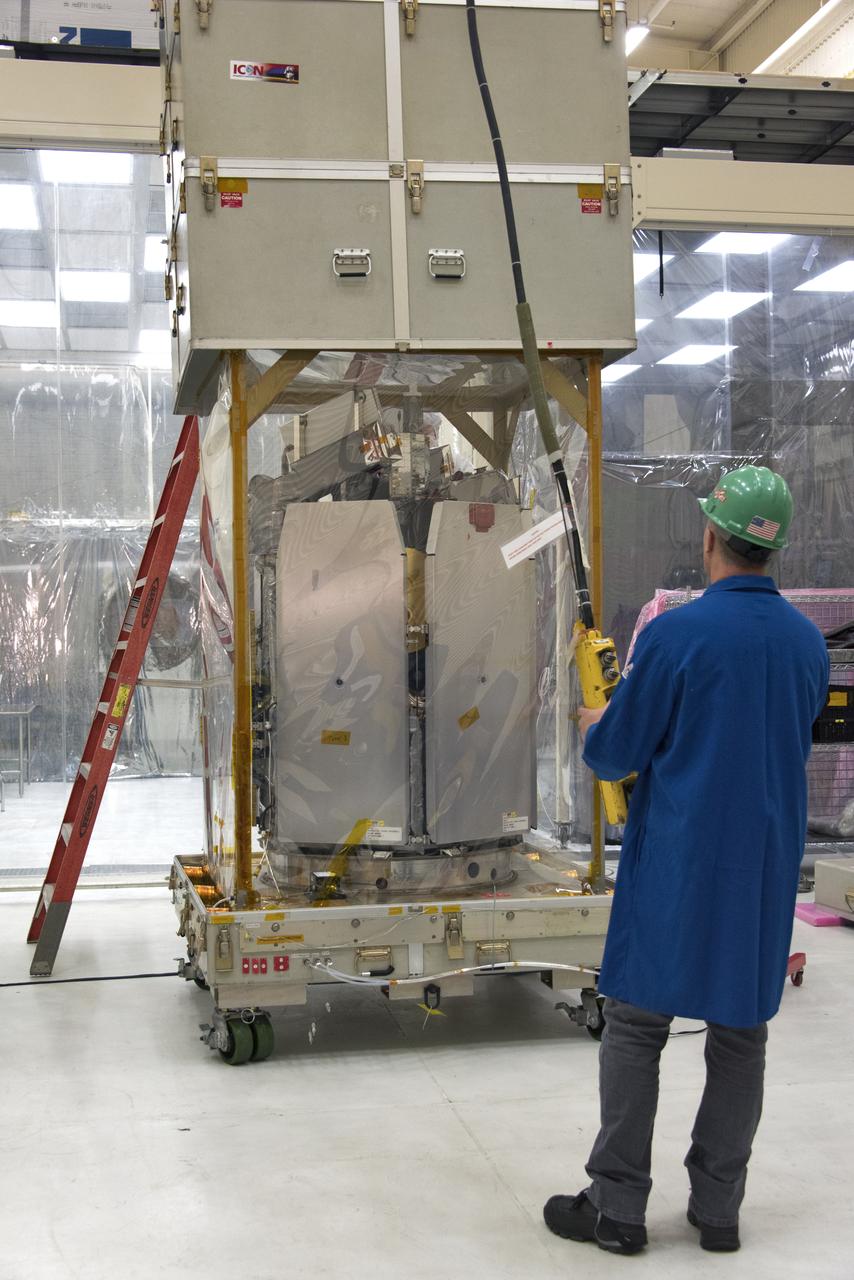
A technician operates a crane that lifts the shipping container up from NASA's Ionospheric Connection Explorer (ICON) on May 1, 2018, inside Building 1555 at Vandenberg Air Force Base in California. The explorer will launch on June 15, 2018, from Kwajalein Atoll in the Marshall Islands (June 14 in the continental United States) on Orbital ATK's Pegasus XL rocket, which is attached to the company's L-1011 Stargazer aircraft. ICON will study the frontier of space - the dynamic zone high in Earth's atmosphere where terrestrial weather from below meets space weather above. The explorer will help determine the physics of Earth's space environment and pave the way for mitigating its effects on our technology, communications systems and society.
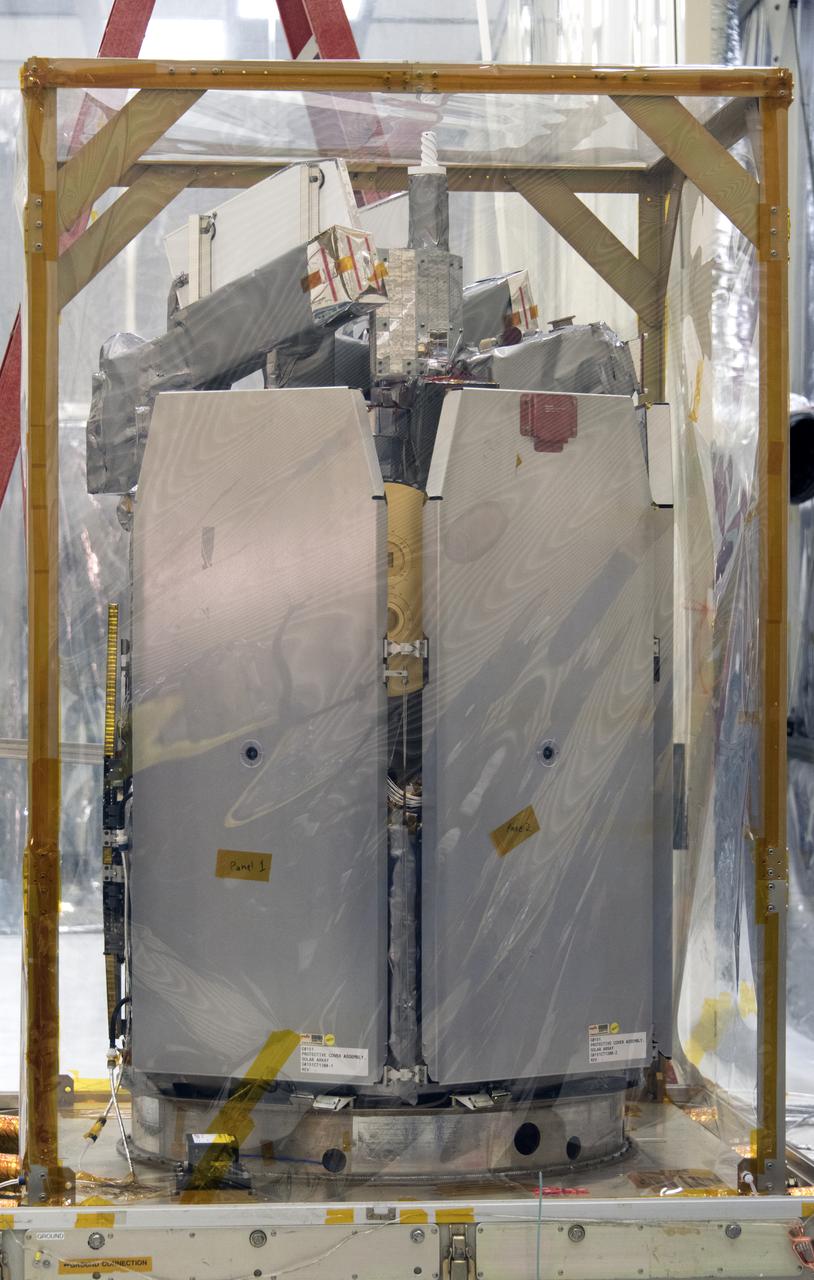
NASA's Ionospheric Connection Explorer (ICON) is uncrated from its shipping container on May 1, 2018, inside Building 1555 at Vandenberg Air Force Base in California. The explorer will launch on June 15, 2018, from Kwajalein Atoll in the Marshall Islands (June 14 in the continental United States) on Orbital ATK's Pegasus XL rocket, which is attached to the company's L-1011 Stargazer aircraft. ICON will study the frontier of space - the dynamic zone high in Earth's atmosphere where terrestrial weather from below meets space weather above. The explorer will help determine the physics of Earth's space environment and pave the way for mitigating its effects on our technology, communications systems and society.
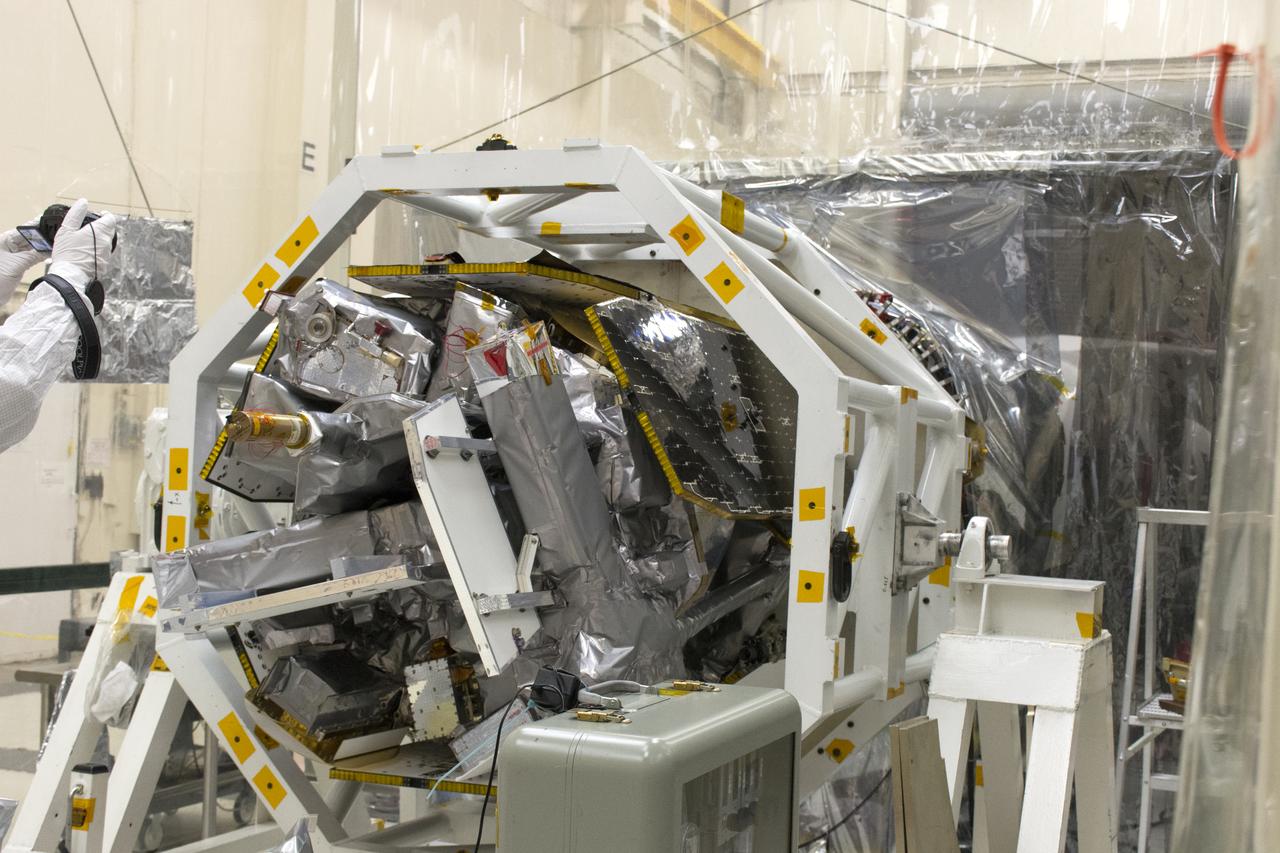
NASA's Ionospheric Connection Explorer (ICON) is in the horizontal position May 11, 2018, inside a clean room in Building 1555 at Vandenberg Air Force Base in California. ICON is being prepared to be attached to the Orbital ATK Pegasus XL rocket. The explorer will launch on June 15, 2018, from Kwajalein Atoll in the Marshall Islands (June 14 in the continental United States) on the Pegasus XL rocket, which is attached to the company's L-1011 Stargazer aircraft. ICON will study the frontier of space - the dynamic zone high in Earth's atmosphere where terrestrial weather from below meets space weather above. The explorer will help determine the physics of Earth's space environment and pave the way for mitigating its effects on our technology, communications systems and society.
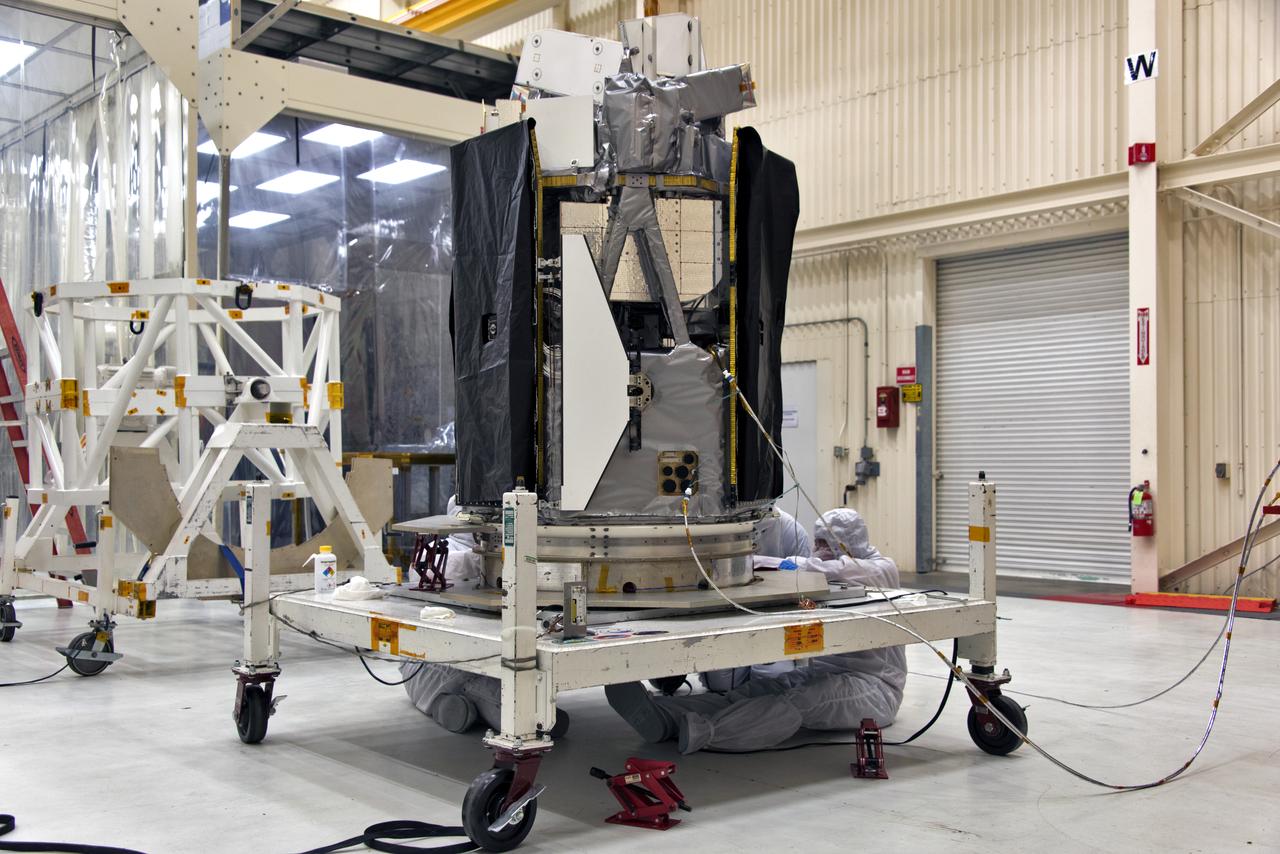
Technicians secure NASA's Ionospheric Connection Explorer (ICON) on the spacecraft separation system May 9, 2018, in a clean room inside Building 1555 at Vandenberg Air Force Base in California. The explorer will launch on June 15, 2018, from Kwajalein Atoll in the Marshall Islands (June 14 in the continental United States) on Orbital ATK's Pegasus XL rocket, which is attached to the company's L-1011 Stargazer aircraft. ICON will study the frontier of space - the dynamic zone high in Earth's atmosphere where terrestrial weather from below meets space weather above. The explorer will help determine the physics of Earth's space environment and pave the way for mitigating its effects on our technology, communications systems and society.
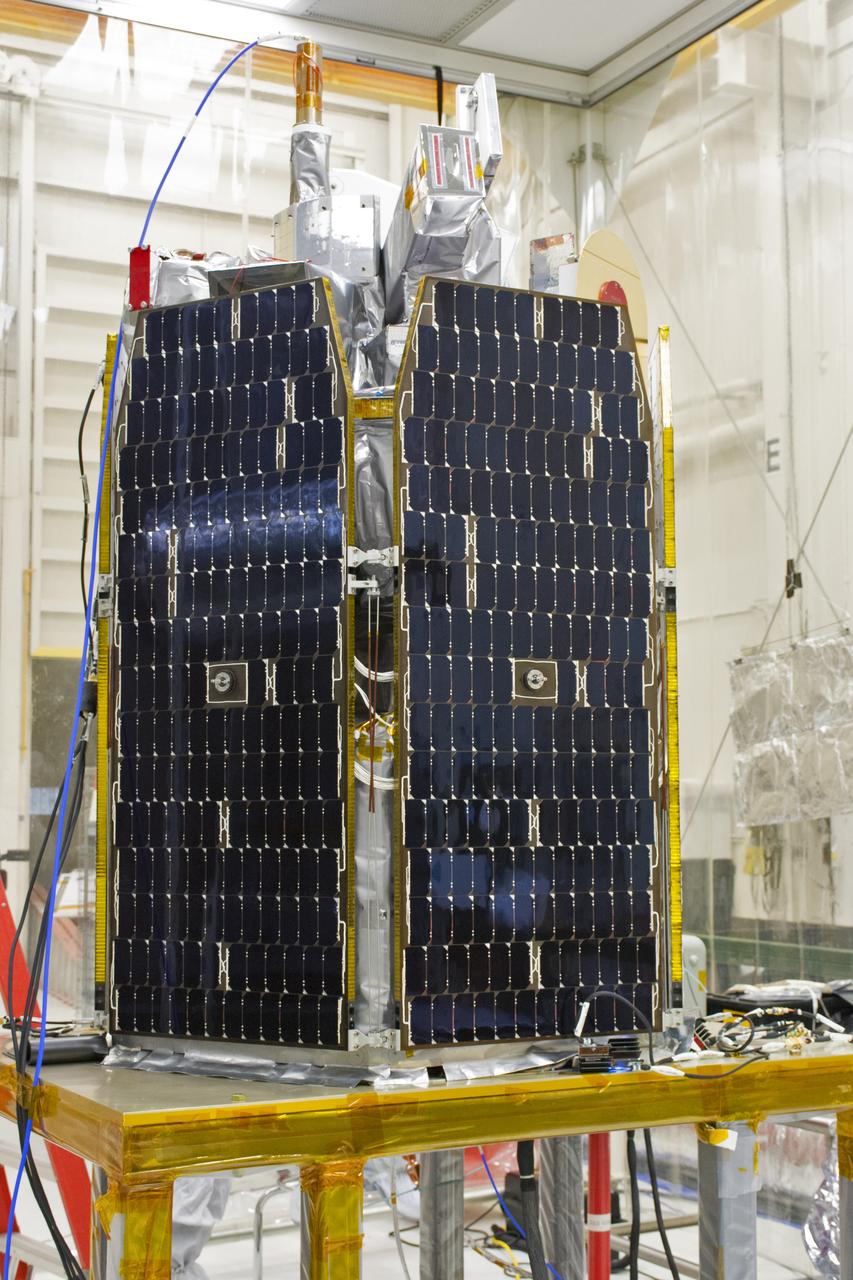
NASA's Ionospheric Connection Explorer (ICON) is prepared for a solar array illumination test in a clean room inside Building 1555 at Vandenberg Air Force Base in California on May 4, 2018. The test checks for any imperfections and confirms that the solar arrays are functioning properly. The explorer will launch on June 15, 2018, from Kwajalein Atoll in the Marshall Islands (June 14 in the continental United States) on Orbital ATK's Pegasus XL rocket, which is attached to the company's L-1011 Stargazer aircraft. ICON will study the frontier of space - the dynamic zone high in Earth's atmosphere where terrestrial weather from below meets space weather above. The explorer will help determine the physics of Earth's space environment and pave the way for mitigating its effects on our technology, communications systems and society.
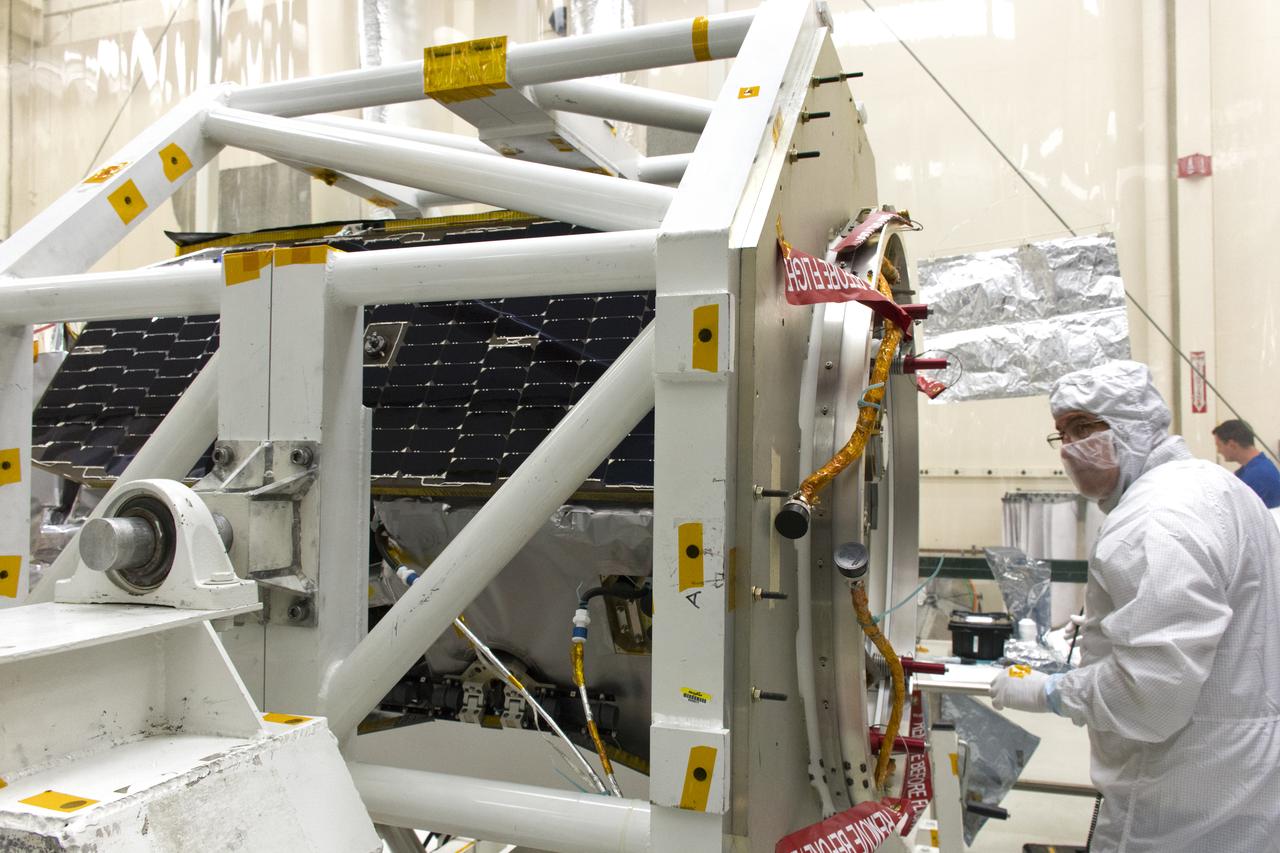
NASA's Ionospheric Connection Explorer (ICON) is in the horizontal position May 11, 2018, inside a clean room in Building 1555 at Vandenberg Air Force Base in California. ICON is being prepared to be attached to the Orbital ATK Pegasus XL rocket. The explorer will launch on June 15, 2018, from Kwajalein Atoll in the Marshall Islands (June 14 in the continental United States) on the Pegasus XL rocket, which is attached to the company's L-1011 Stargazer aircraft. ICON will study the frontier of space - the dynamic zone high in Earth's atmosphere where terrestrial weather from below meets space weather above. The explorer will help determine the physics of Earth's space environment and pave the way for mitigating its effects on our technology, communications systems and society.

A technician assists with connections as NASA's Ionospheric Connection Explorer (ICON) is attached to the Orbital ATK Pegasus XL rocket May 14, 2018, inside a clean room in Building 1555 at Vandenberg Air Force Base in California. The explorer will launch on June 15, 2018, from Kwajalein Atoll in the Marshall Islands (June 14 in the continental United States) on the Pegasus XL rocket, which is attached to the company's L-1011 Stargazer aircraft. ICON will study the frontier of space - the dynamic zone high in Earth's atmosphere where terrestrial weather from below meets space weather above. The explorer will help determine the physics of Earth's space environment and pave the way for mitigating its effects on our technology, communications systems and society.
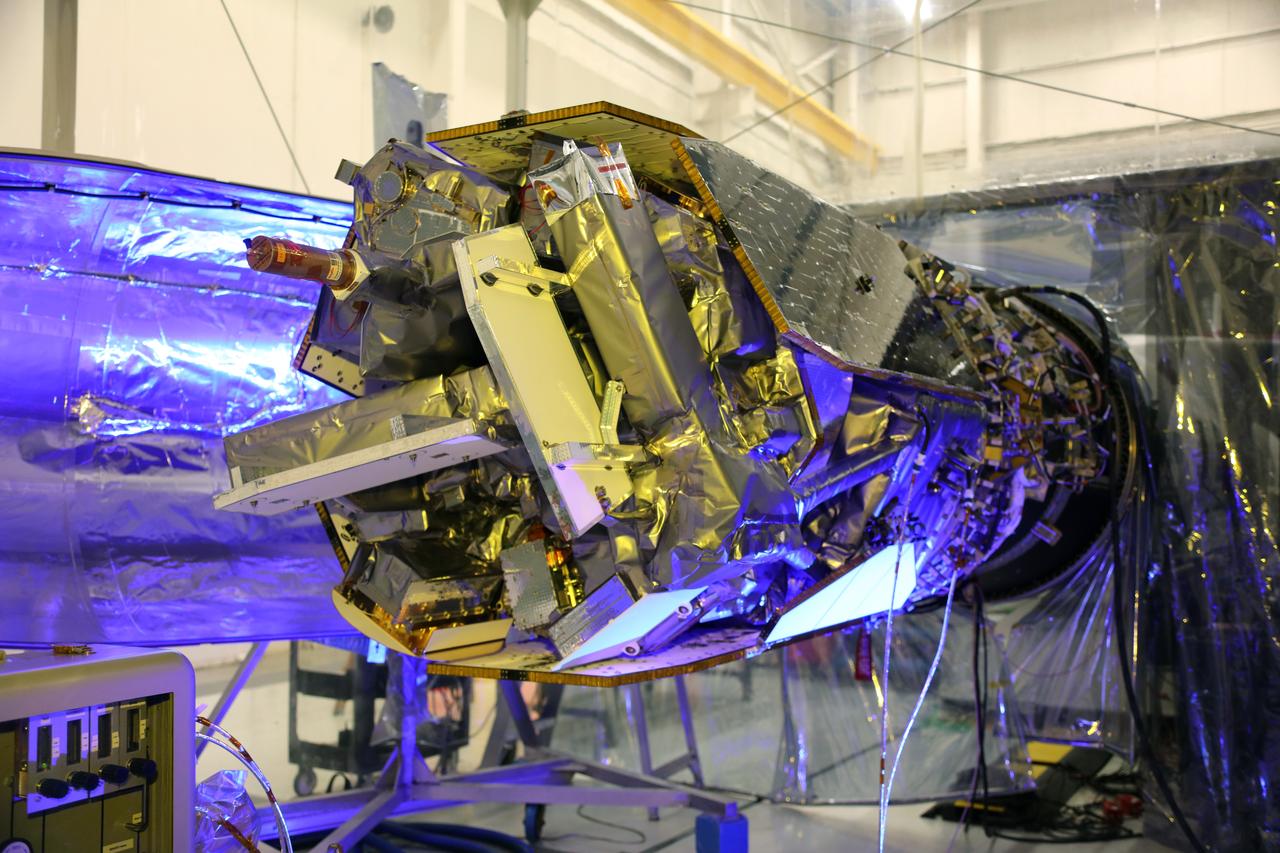
NASA's Ionospheric Connection Explorer (ICON) spacecraft is partially mated to the starboard faring of Orbital ATK's Pegasus XL rocket on May 21, 2018, inside Building 1555 at Vandenberg Air Force Base in California. The explorer will launch on June 15, 2018, from Kwajalein Atoll in the Marshall Islands (June 14 in the continental United States) on the Pegasus XL, which is attached to the company's L-1011 Stargazer aircraft. ICON will study the frontier of space - the dynamic zone high in Earth's atmosphere where terrestrial weather from below meets space weather above. The explorer will help determine the physics of Earth's space environment and pave the way for mitigating its effects on our technology and communications systems.
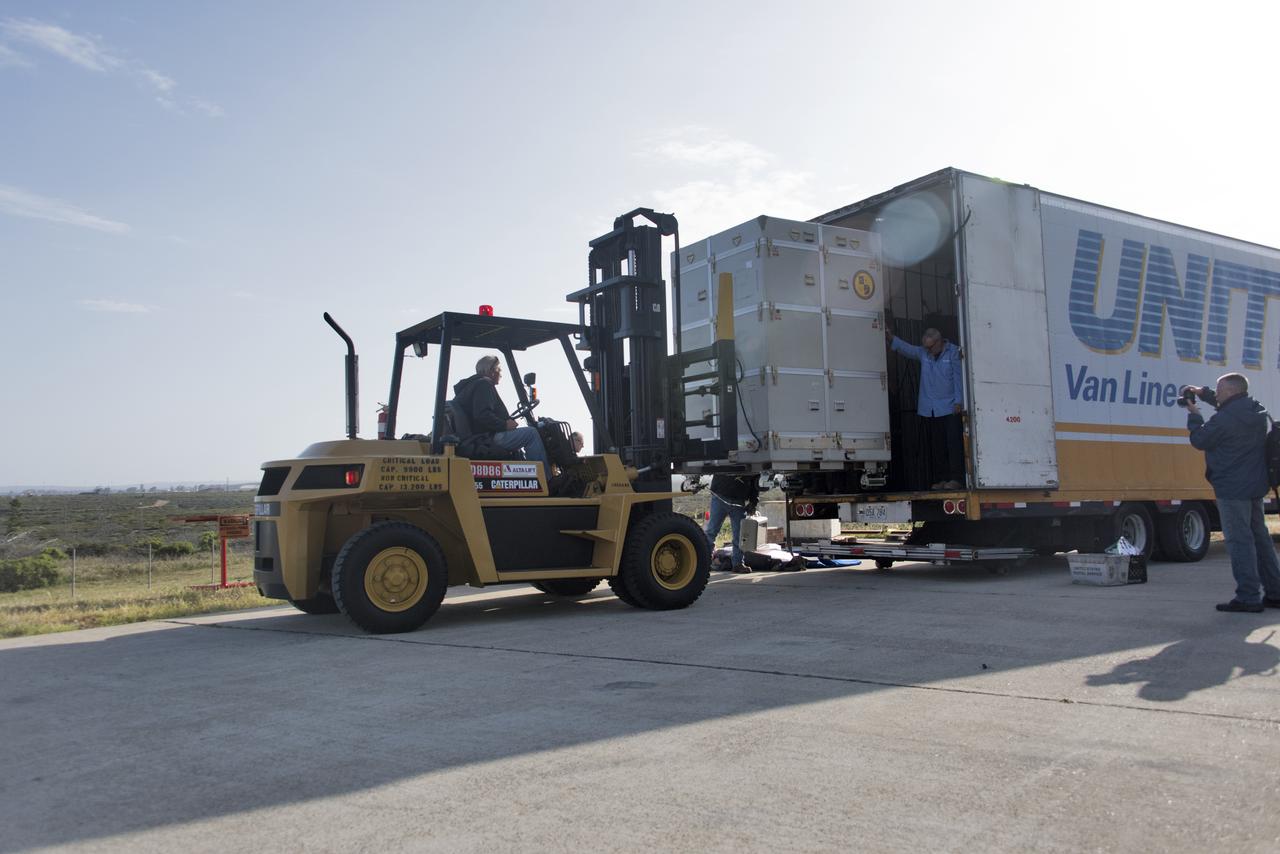
NASA's Ionospheric Connection Explorer (ICON) arrives by truck on May 1, 2018, at Vandenberg Air Force Base in California. ICON will be offloaded and transported to Building 1555. The explorer will launch on June 15, 2018, from Kwajalein Atoll in the Marshall Islands (June 14 in the continental United States) on Orbital ATK's Pegasus XL rocket, which is attached to the company's L-1011 Stargazer aircraft. ICON will study the frontier of space - the dynamic zone high in Earth's atmosphere where terrestrial weather from below meets space weather above. The explorer will help determine the physics of Earth's space environment and pave the way for mitigating its effects on our technology, communications systems and society.
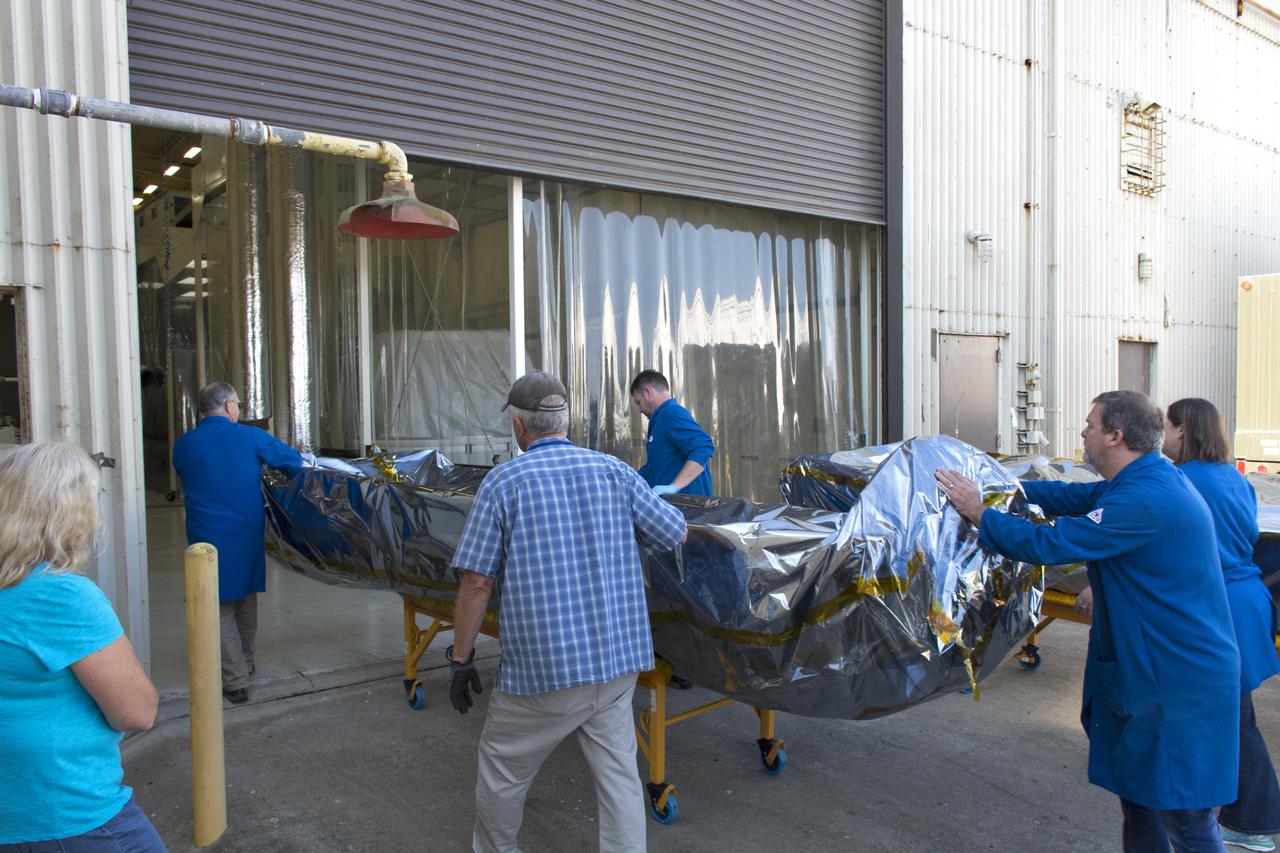
Technicians move the first half of the payload fairing for the Orbital ATK Pegasus XL rocket inside Building 1555 at Vandenberg Air Force Base in California on Aug. 4, 2018. The Pegasus rocket is being prepared for NASA's Ionospheric Connection Explorer, or ICON, mission. The explorer will launch on June 15, 2018, from Kwajalein Atoll in the Marshall Islands (June 14 in the continental United States) on Orbital ATK's Pegasus XL rocket, which is attached to the company's L-1011 Stargazer aircraft. ICON will study the frontier of space - the dynamic zone high in Earth's atmosphere where terrestrial weather from below meets space weather above. The explorer will help determine the physics of Earth's space environment and pave the way for mitigating its effects on our technology, communications systems and society.
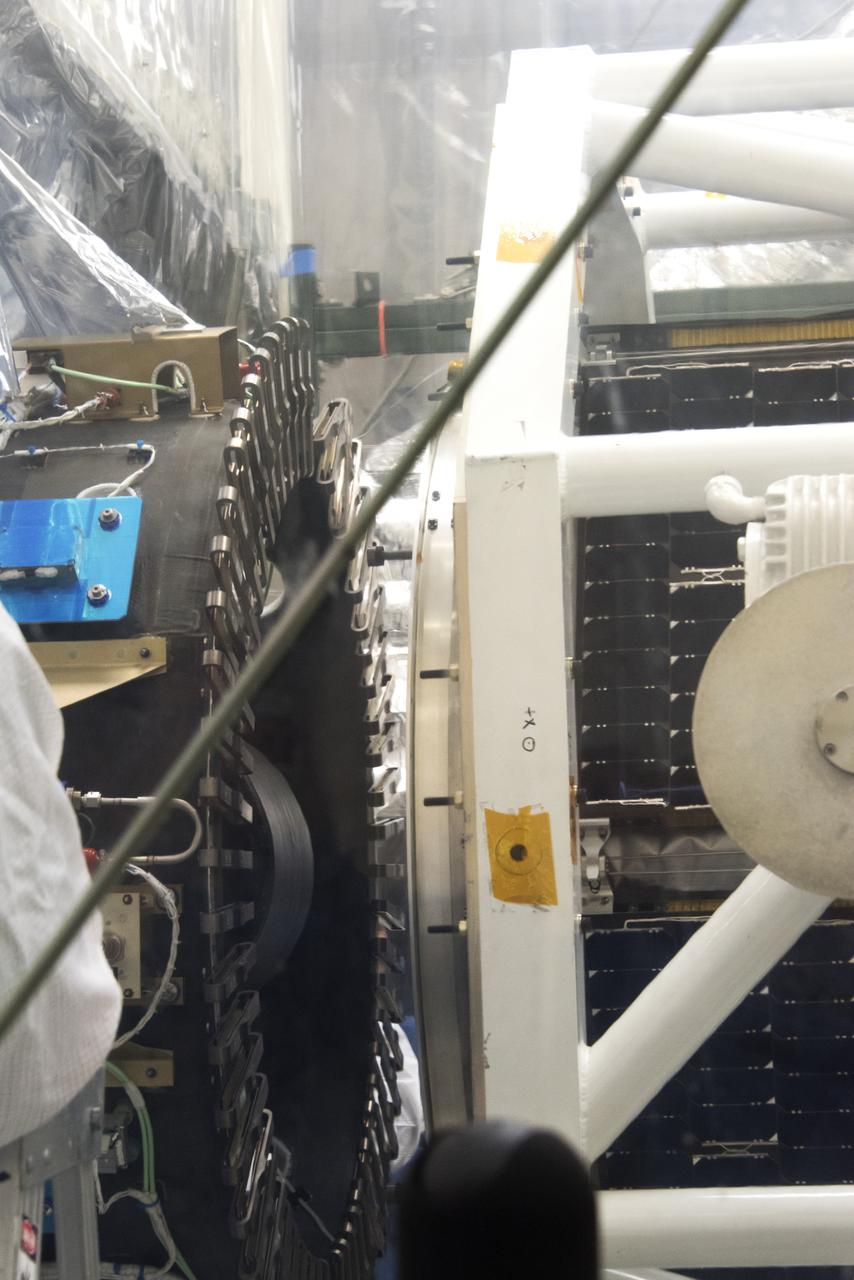
NASA's Ionospheric Connection Explorer (ICON) is being attached to the Orbital ATK Pegasus XL rocket May 14, 2018, inside a clean room in Building 1555 at Vandenberg Air Force Base in California. The explorer will launch on June 15, 2018, from Kwajalein Atoll in the Marshall Islands (June 14 in the continental United States) on the Pegasus XL rocket, which is attached to the company's L-1011 Stargazer aircraft. ICON will study the frontier of space - the dynamic zone high in Earth's atmosphere where terrestrial weather from below meets space weather above. The explorer will help determine the physics of Earth's space environment and pave the way for mitigating its effects on our technology, communications systems and society.
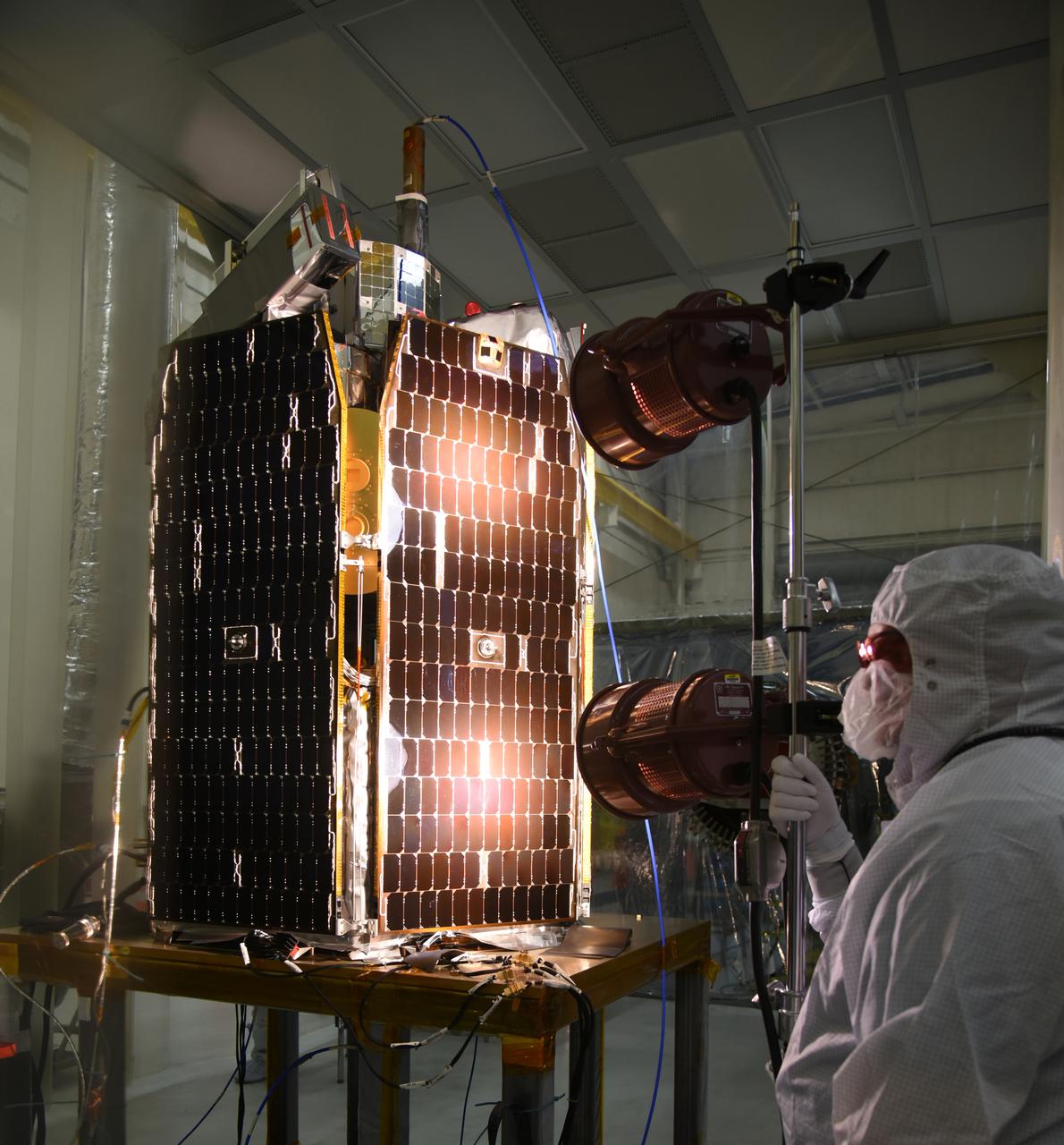
A solar array illumination test is performed on NASA's Ionospheric Connection Explorer (ICON) in a clean room on May 4, 2018, inside Building 1555 at Vandenberg Air Force Base in California. The test checks for any imperfections and confirms that the solar arrays are functioning properly. The explorer will launch on June 15, 2018, from Kwajalein Atoll in the Marshall Islands (June 14 in the continental United States) on Orbital ATK's Pegasus XL rocket, which is attached to the company's L-1011 Stargazer aircraft. ICON will study the frontier of space - the dynamic zone high in Earth's atmosphere where terrestrial weather from below meets space weather above. The explorer will help determine the physics of Earth's space environment and pave the way for mitigating its effects on our technology, communications systems and society.
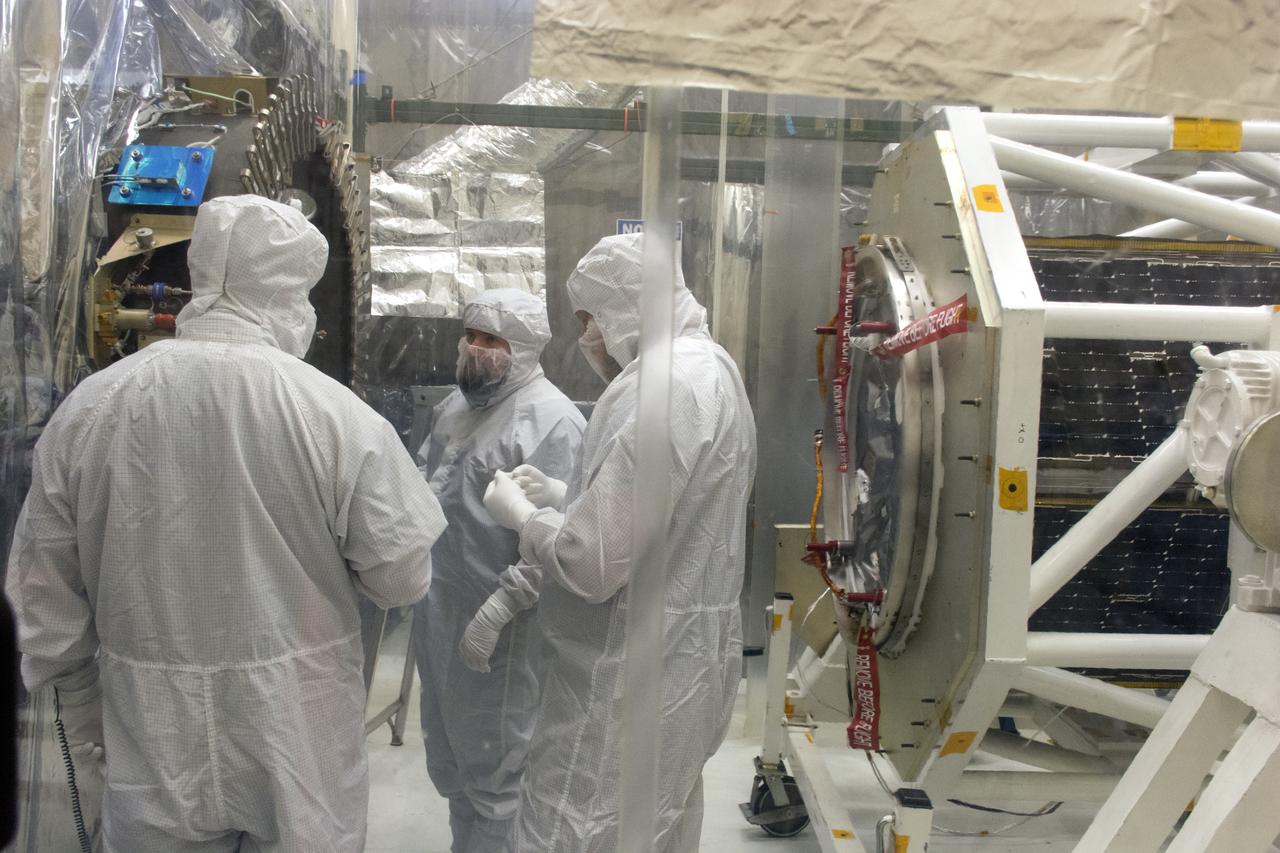
Technicians prepare NASA's Ionospheric Connection Explorer (ICON) for mating to the Orbital ATK Pegasus XL rocket May 14, 2018, inside a clean room in Building 1555 at Vandenberg Air Force Base in California. The explorer will launch on June 15, 2018, from Kwajalein Atoll in the Marshall Islands (June 14 in the continental United States) on the Pegasus XL rocket, which is attached to the company's L-1011 Stargazer aircraft. ICON will study the frontier of space - the dynamic zone high in Earth's atmosphere where terrestrial weather from below meets space weather above. The explorer will help determine the physics of Earth's space environment and pave the way for mitigating its effects on our technology, communications systems and society.
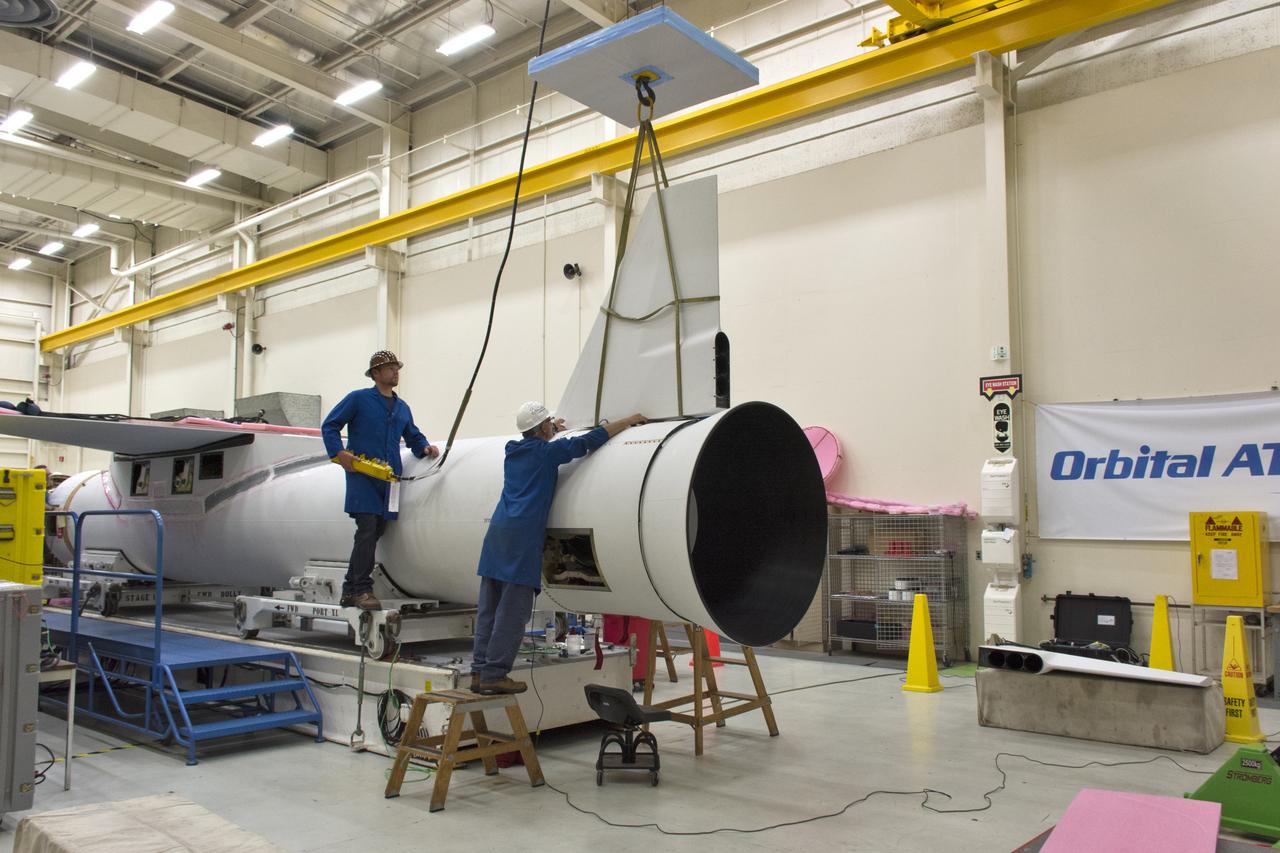
Technicians install the rudder on the Orbital ATK Pegasus XL rocket July 8, 2017, inside Building 1555 at Vandenberg Air Force Base in California. The Pegasus rocket is being prepared for NASA's Ionospheric Connection Explorer, or ICON, mission. ICON will launch on June 15 from Kwajalein Atoll in the Marshall Islands (June 14 in the continental United States) on Orbital ATK's Pegasus XL rocket, which is attached to the company's L-1011 Stargazer aircraft. ICON will study the frontier of space - the dynamic zone high in Earth's atmosphere where terrestrial weather from below meets space weather above. The explorer will help determine the physics of Earth's space environment and pave the way for mitigating its effects on our technology, communications systems and society.
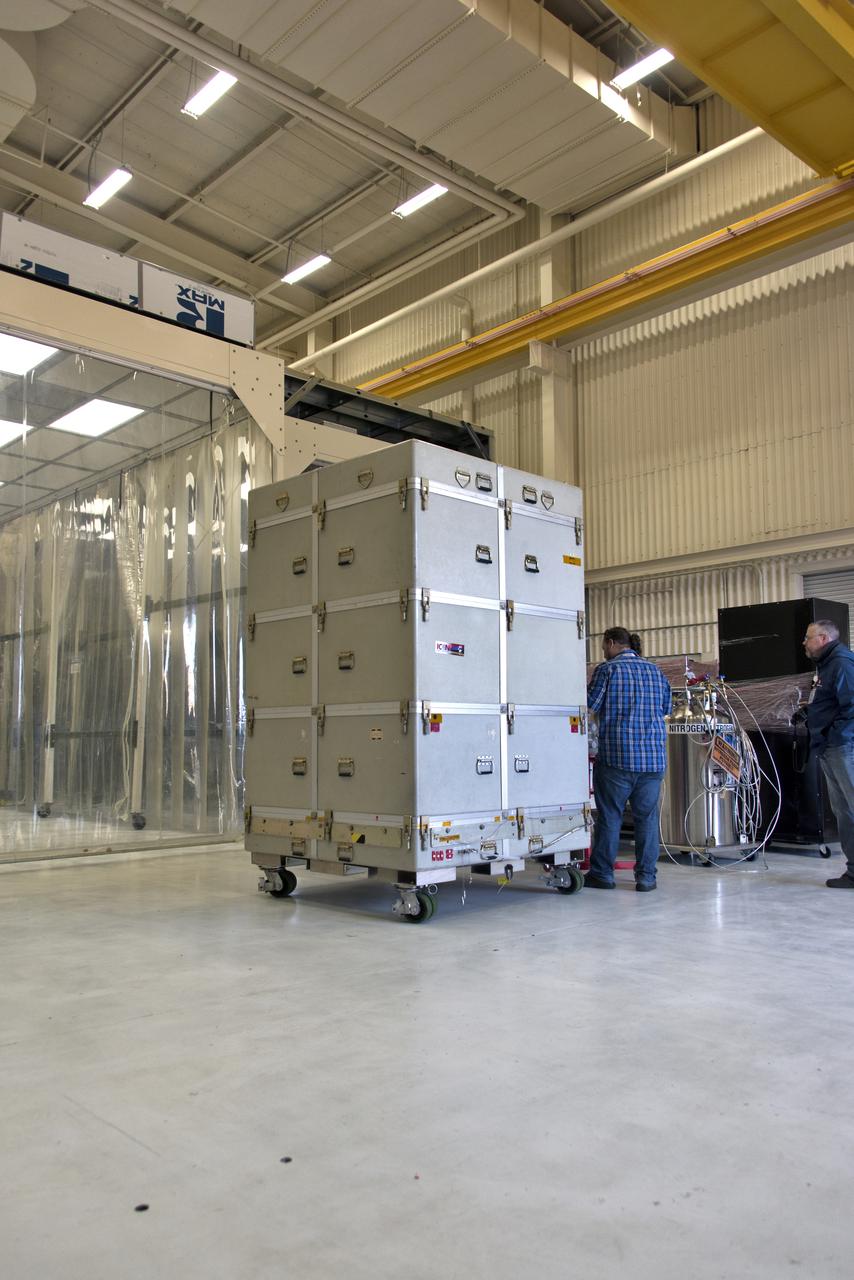
NASA's Ionospheric Connection Explorer (ICON), inside its shipping container, is moved inside Building 1555 on May 1, 2018, at Vandenberg Air Force Base in California. The explorer will launch on June 15, 2018, from Kwajalein Atoll in the Marshall Islands (June 14 in the continental United States) on Orbital ATK's Pegasus XL rocket, which is attached to the company's L-1011 Stargazer aircraft. ICON will study the frontier of space - the dynamic zone high in Earth's atmosphere where terrestrial weather from below meets space weather above. The explorer will help determine the physics of Earth's space environment and pave the way for mitigating its effects on our technology, communications systems and society.
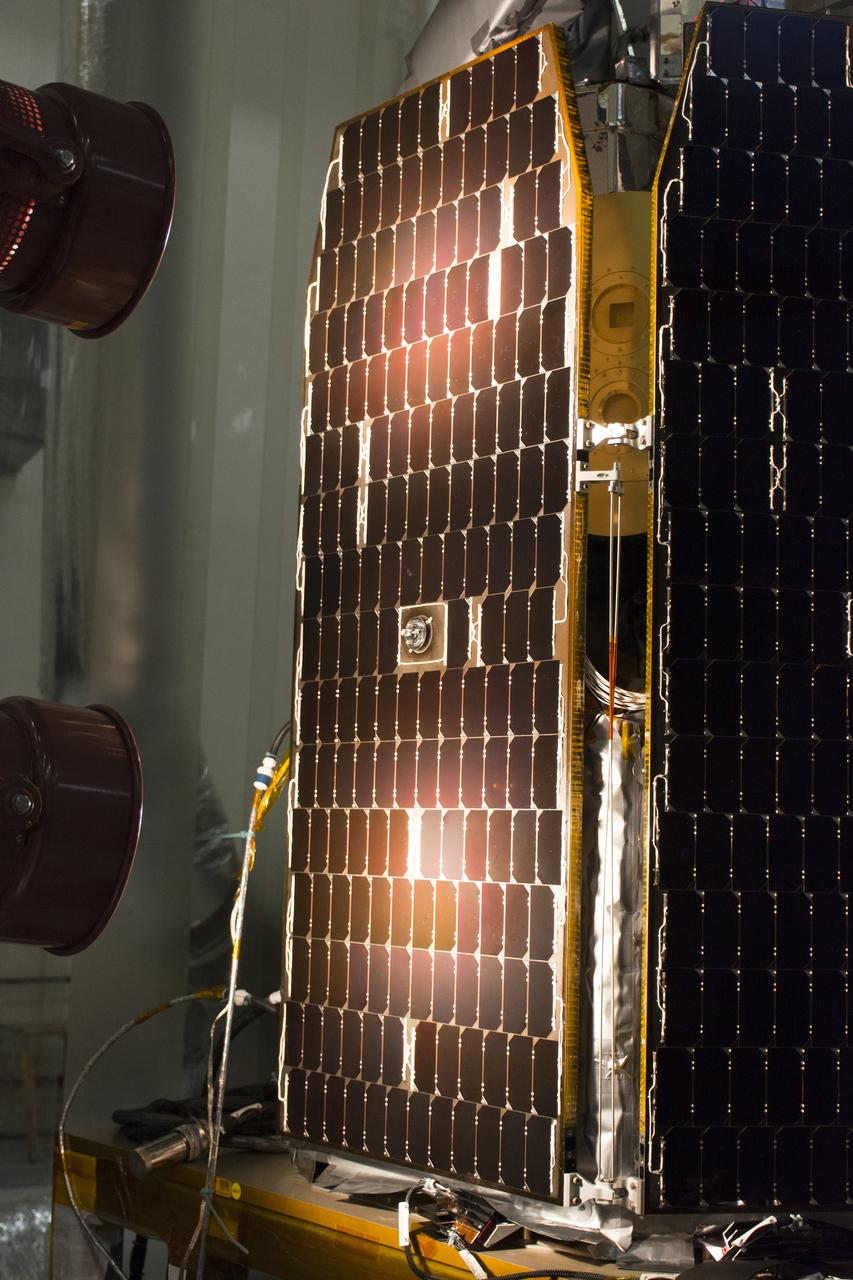
A solar array illumination test is performed on NASA's Ionospheric Connection Explorer (ICON) in a clean room inside Building 1555 at Vandenberg Air Force Base in California on May 4, 2018. The test checks for any imperfections and confirms that the solar arrays are functioning properly. The explorer will launch on June 15, 2018, from Kwajalein Atoll in the Marshall Islands (June 14 in the continental United States) on Orbital ATK's Pegasus XL rocket, which is attached to the company's L-1011 Stargazer aircraft. ICON will study the frontier of space - the dynamic zone high in Earth's atmosphere where terrestrial weather from below meets space weather above. The explorer will help determine the physics of Earth's space environment and pave the way for mitigating its effects on our technology, communications systems and society.
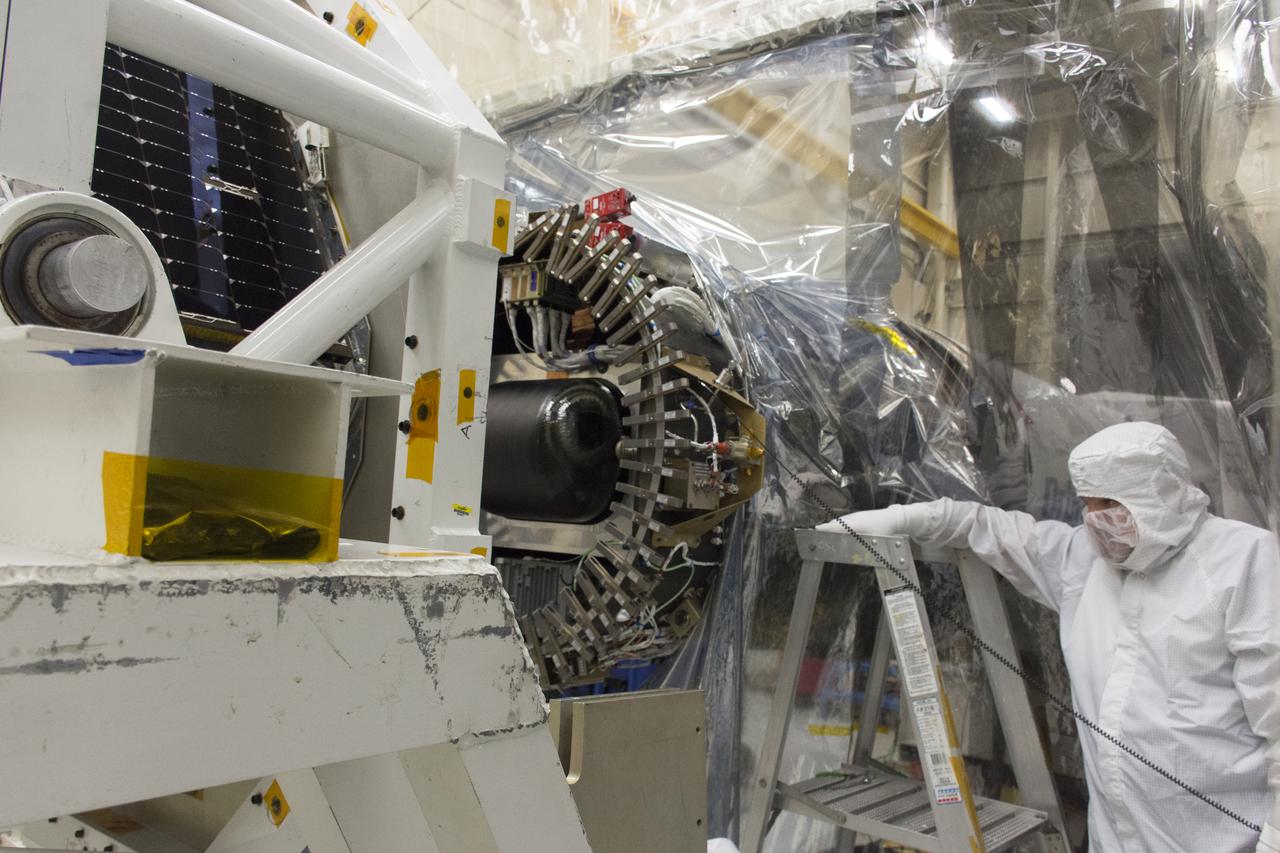
A technician monitors the progress as NASA's Ionospheric Connection Explorer (ICON) is attached to the Orbital ATK Pegasus XL rocket May 14, 2018, inside a clean room in Building 1555 at Vandenberg Air Force Base in California. The explorer will launch on June 15, 2018, from Kwajalein Atoll in the Marshall Islands (June 14 in the continental United States) on the Pegasus XL rocket, which is attached to the company's L-1011 Stargazer aircraft. ICON will study the frontier of space - the dynamic zone high in Earth's atmosphere where terrestrial weather from below meets space weather above. The explorer will help determine the physics of Earth's space environment and pave the way for mitigating its effects on our technology, communications systems and society.
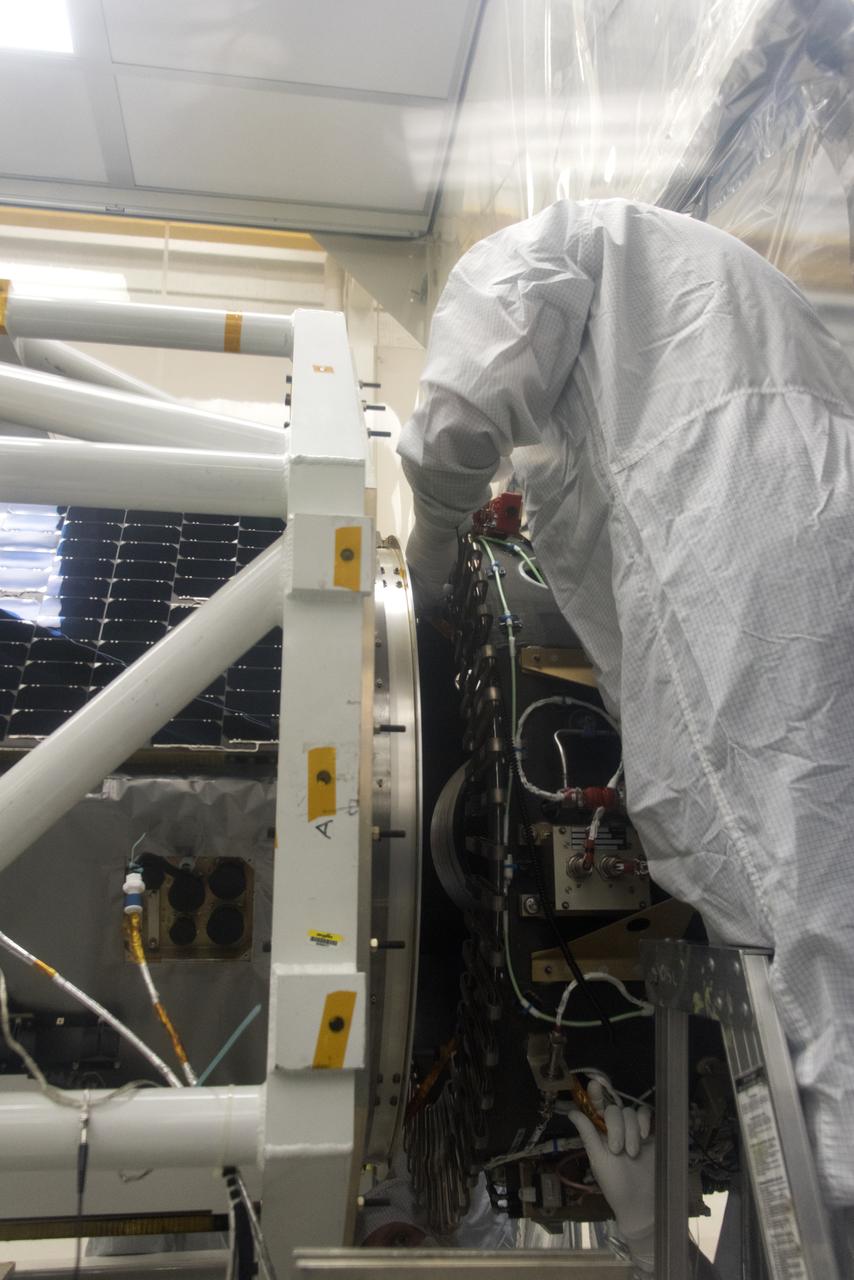
A technician assists as NASA's Ionospheric Connection Explorer (ICON) is being attached to the Orbital ATK Pegasus XL rocket May 14, 2018, inside a clean room in Building 1555 at Vandenberg Air Force Base in California. The explorer will launch on June 15, 2018, from Kwajalein Atoll in the Marshall Islands (June 14 in the continental United States) on the Pegasus XL rocket, which is attached to the company's L-1011 Stargazer aircraft. ICON will study the frontier of space - the dynamic zone high in Earth's atmosphere where terrestrial weather from below meets space weather above. The explorer will help determine the physics of Earth's space environment and pave the way for mitigating its effects on our technology, communications systems and society.

A technician begins a ultraviolet light inspection of the Orbital ATK Pegasus starboard on May 22, 2018, prior to mating NASA's Ionospheric Connection Explorer (ICON) to Pegasus inside Building 1555 at Vandenberg Air Force Base in California. The explorer will launch on June 15, 2018, from Kwajalein Atoll in the Marshall Islands (June 14 in the continental United States) on the Pegasus XL, which is attached to the company's L-1011 Stargazer aircraft. ICON will study the frontier of space - the dynamic zone high in Earth's atmosphere where terrestrial weather from below meets space weather above. The explorer will help determine the physics of Earth's space environment and pave the way for mitigating its effects on our technology and communications systems.
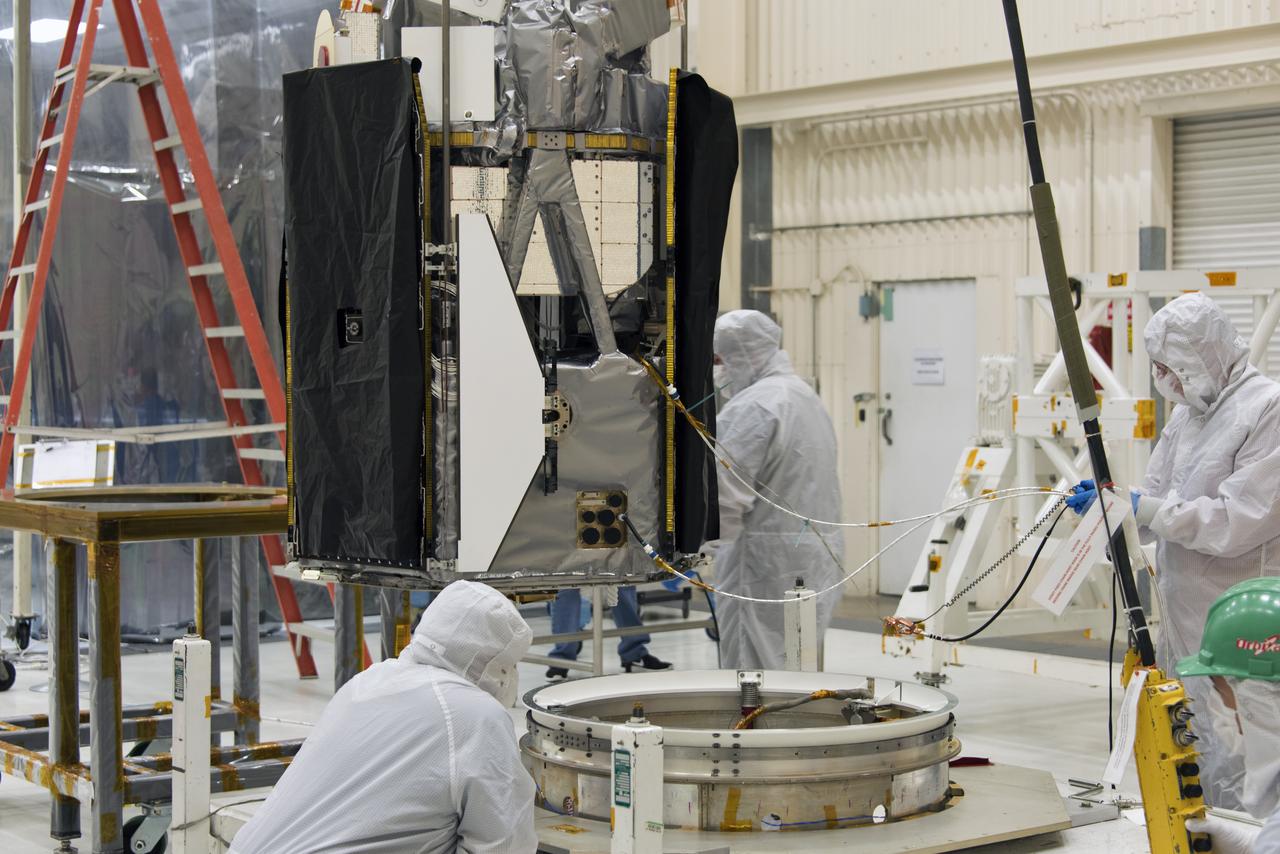
Technicians prepare NASA's Ionospheric Connection Explorer (ICON) to be attached to the spacecraft separation system May 9, 2018, in a clean room inside Building 1555 at Vandenberg Air Force Base in California. The explorer will launch on June 15, 2018, from Kwajalein Atoll in the Marshall Islands (June 14 in the continental United States) on Orbital ATK's Pegasus XL rocket, which is attached to the company's L-1011 Stargazer aircraft. ICON will study the frontier of space - the dynamic zone high in Earth's atmosphere where terrestrial weather from below meets space weather above. The explorer will help determine the physics of Earth's space environment and pave the way for mitigating its effects on our technology, communications systems and society.
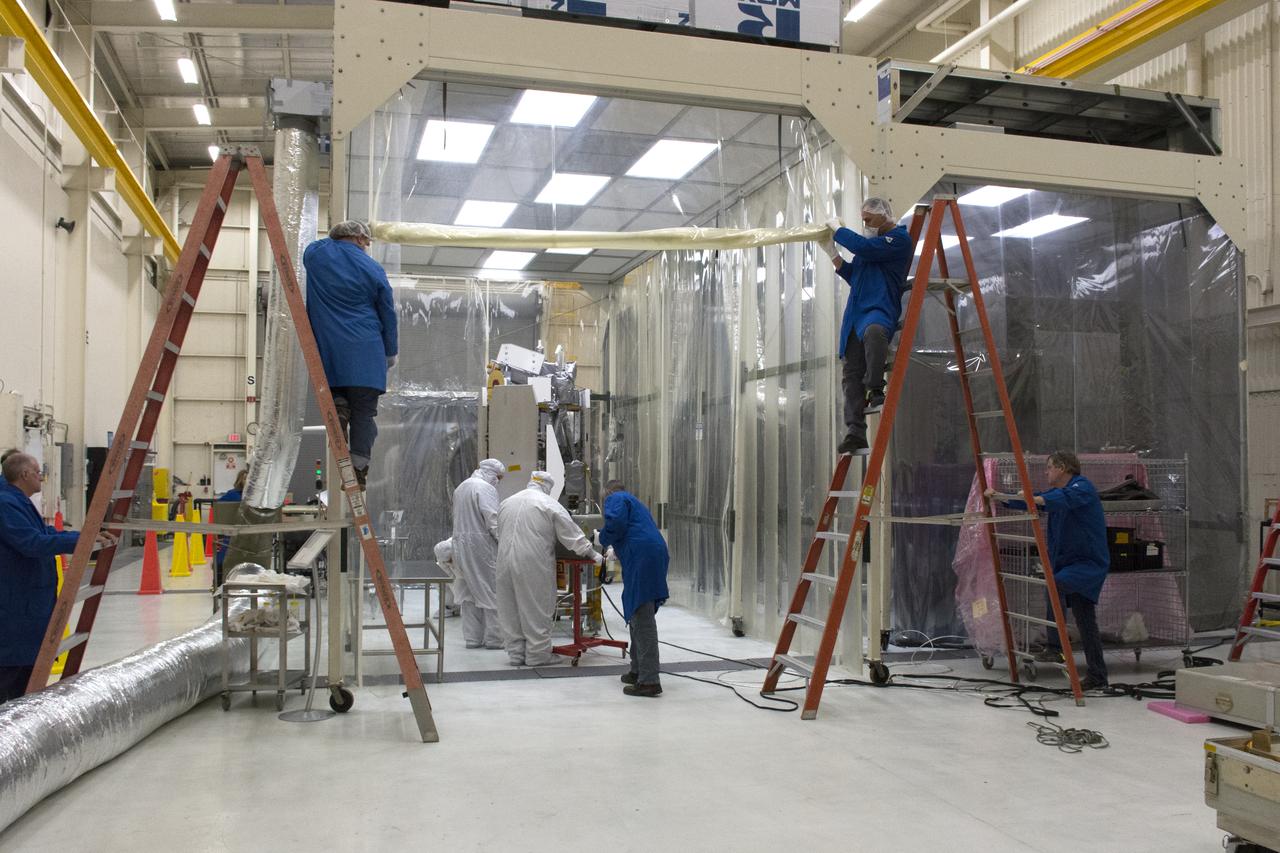
NASA's Ionospheric Connection Explorer (ICON) is moved to a clean room on May 4, 2018, inside Building 1555 at Vandenberg Air Force Base in California. The explorer will launch on June 15, 2018, from Kwajalein Atoll in the Marshall Islands (June 14 in the continental United States) on Orbital ATK's Pegasus XL rocket, which is attached to the company's L-1011 Stargazer aircraft. ICON will study the frontier of space - the dynamic zone high in Earth's atmosphere where terrestrial weather from below meets space weather above. The explorer will help determine the physics of Earth's space environment and pave the way for mitigating its effects on our technology, communications systems and society.
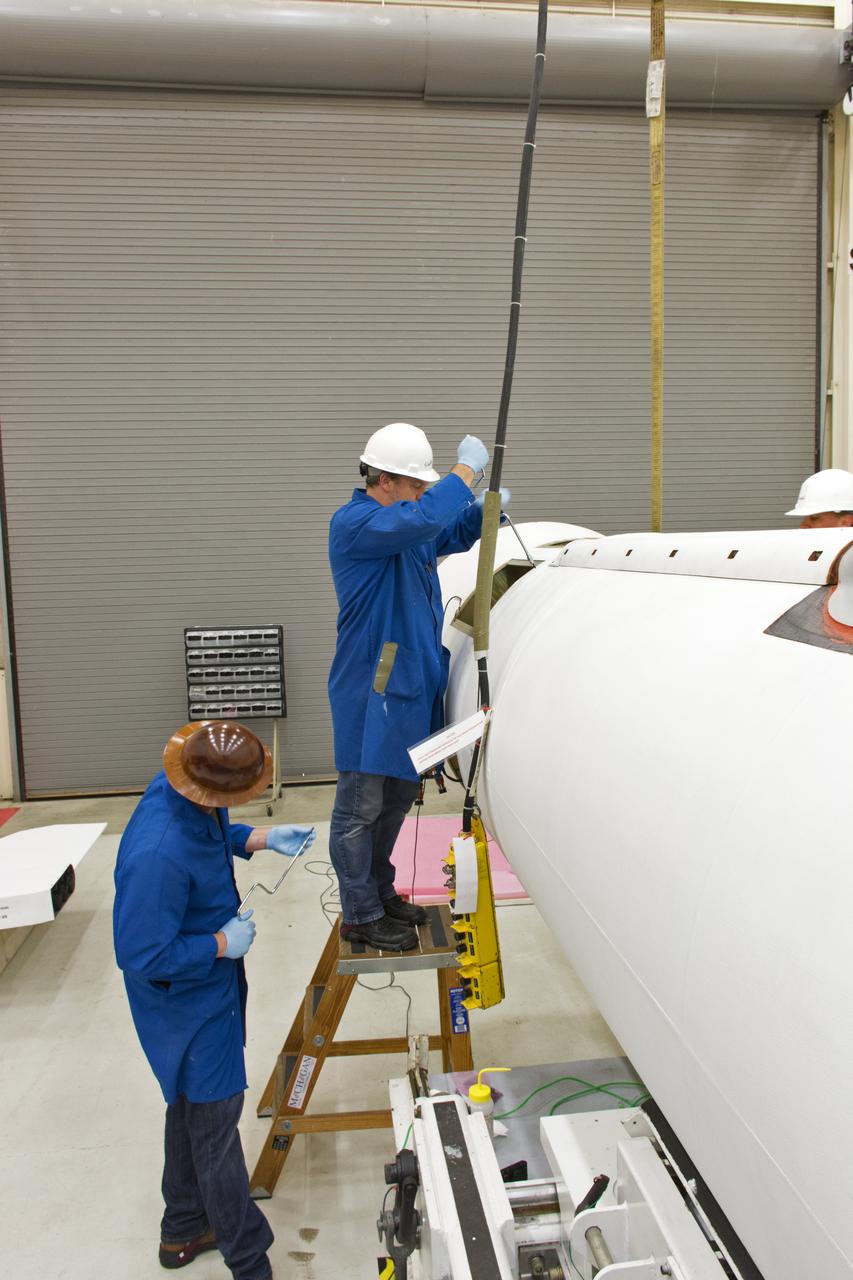
Technician install the aft skirt on the Orbital ATK Pegasus XL rocket July 8, 2017, inside Building 1555 at Vandenberg Air Force Base in California. When the aft skirt is installed, the rudder and fins can be installed. The Pegasus rocket is being prepared for NASA's Ionospheric Connection Explorer, or ICON, mission. The explorer will launch on June 15, 2018, from Kwajalein Atoll in the Marshall Islands (June 14 in the continental United States) on Orbital ATKS's Pegasus XL, which is attached to the company's L-1011 Stargazer aircraft. ICON will study the frontier of space - the dynamic zone high in Earth's atmosphere where terrestrial weather from below meets space weather above. The explorer will help determine the physics of Earth's space environment and pave the way for mitigating its effects on our technology, communications systems and society.

Technicians install the starboard fin on the Orbital ATK Pegasus XL rocket July 8, 2017, inside Building 1555 at Vandenberg Air Force Base in California. The Pegasus rocket is being prepared for NASA's Ionospheric Connection Explorer, or ICON, mission. ICON will launch on June 15 from Kwajalein Atoll in the Marshall Islands (June 14 in the continental United States) on Orbital ATK's Pegasus XL rocket, which is attached to the company's L-1011 Stargazer aircraft. ICON will study the frontier of space - the dynamic zone high in Earth's atmosphere where terrestrial weather from below meets space weather above. The explorer will help determine the physics of Earth's space environment and pave the way for mitigating its effects on our technology, communications systems and society.
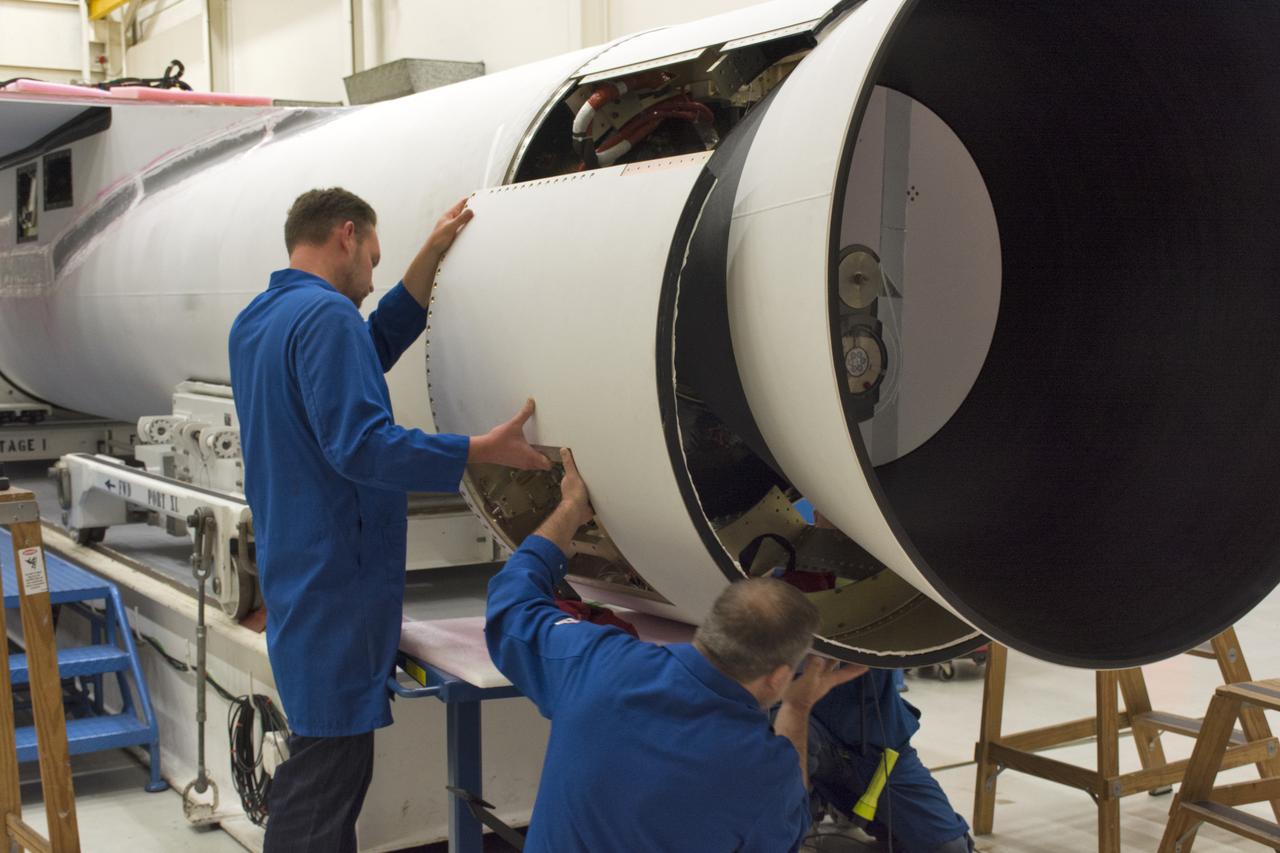
Technicians install the aft skirt on the Orbital ATK Pegasus XL rocket July 8, 2017, inside Building 1555 at Vandenberg Air Force Base in California. When the aft skirt is installed, the rudder and fins can be installed. The Pegasus rocket is being prepared for NASA's Ionospheric Connection Explorer, or ICON, mission. The explorer will launch on June 15, 2018, from Kwajalein Atoll in the Marshall Islands (June 14 in the continental United States) on Orbital ATKS's Pegasus XL, which is attached to the company's L-1011 Stargazer aircraft. ICON will study the frontier of space - the dynamic zone high in Earth's atmosphere where terrestrial weather from below meets space weather above. The explorer will help determine the physics of Earth's space environment and pave the way for mitigating its effects on our technology, communications systems and society.
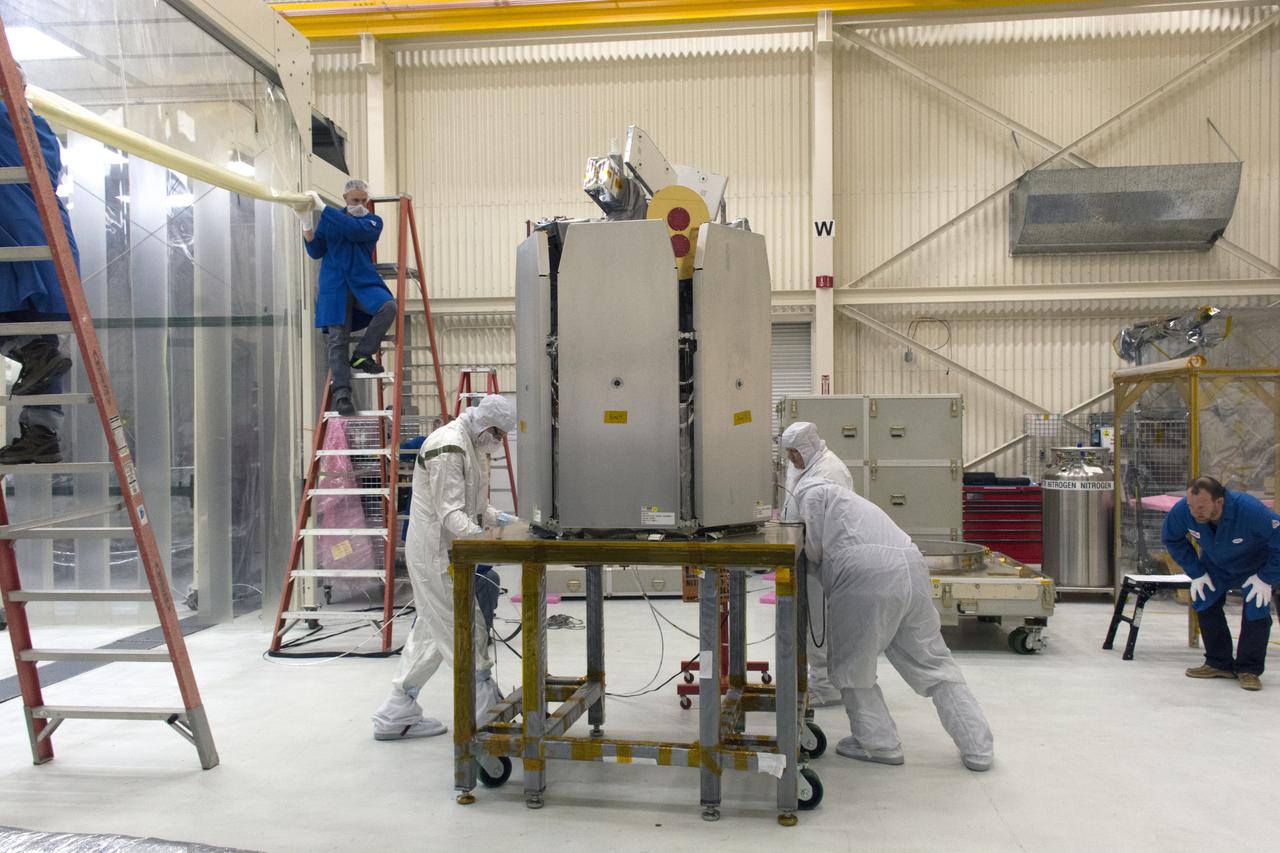
Technicians prepare NASA's Ionospheric Connection Explorer (ICON) for its move to a clean room on May 4, 2018, inside Building 1555 at Vandenberg Air Force Base in California. The explorer will launch on June 15, 2018, from Kwajalein Atoll in the Marshall Islands (June 14 in the continental United States) on Orbital ATK's Pegasus XL rocket, which is attached to the company's L-1011 Stargazer aircraft. ICON will study the frontier of space - the dynamic zone high in Earth's atmosphere where terrestrial weather from below meets space weather above. The explorer will help determine the physics of Earth's space environment and pave the way for mitigating its effects on our technology, communications systems and society.
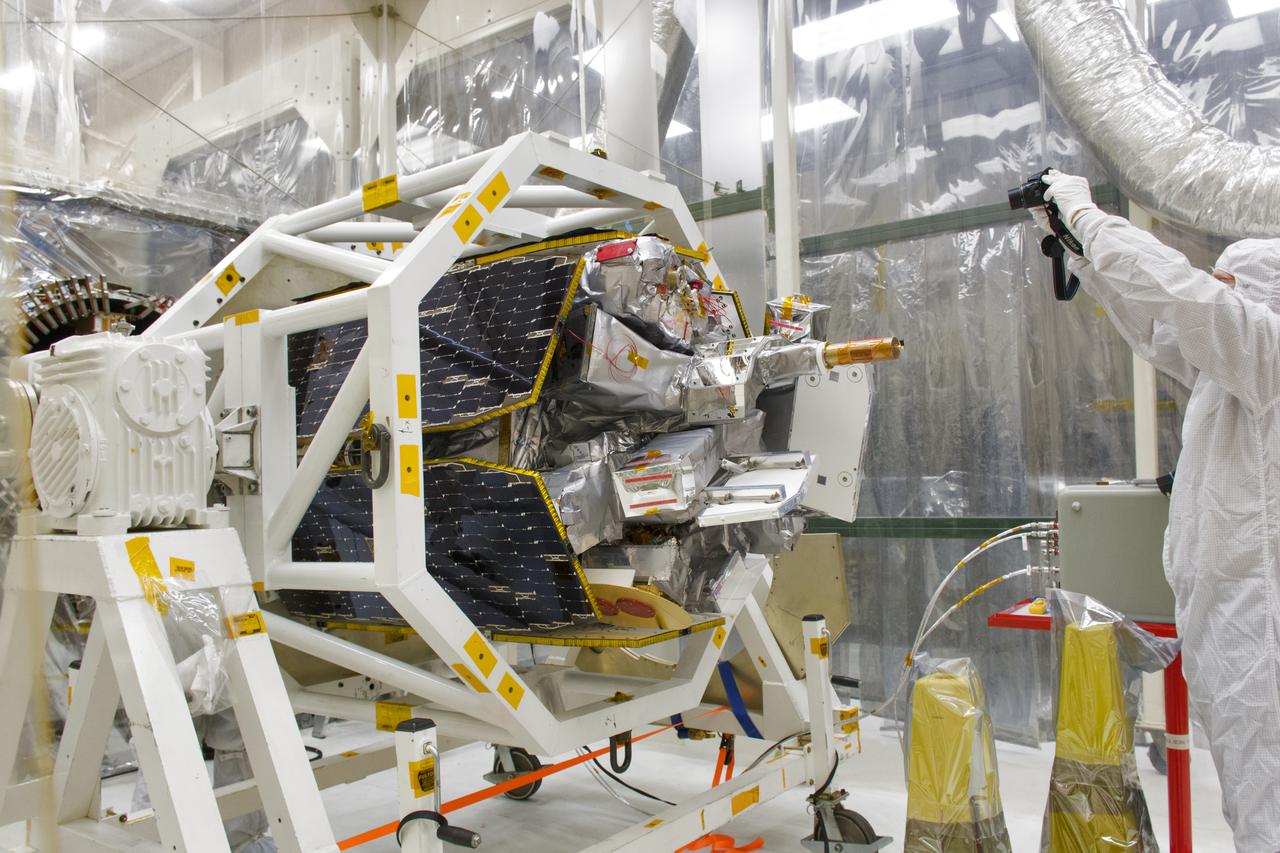
NASA's Ionospheric Connection Explorer (ICON) is in the horizontal position May 11, 2018, inside a clean room in Building 1555 at Vandenberg Air Force Base in California. ICON is being prepared to be attached to the Orbital ATK Pegasus XL rocket. The explorer will launch on June 15, 2018, from Kwajalein Atoll in the Marshall Islands (June 14 in the continental United States) on the Pegasus XL rocket, which is attached to the company's L-1011 Stargazer aircraft. ICON will study the frontier of space - the dynamic zone high in Earth's atmosphere where terrestrial weather from below meets space weather above. The explorer will help determine the physics of Earth's space environment and pave the way for mitigating its effects on our technology, communications systems and society.
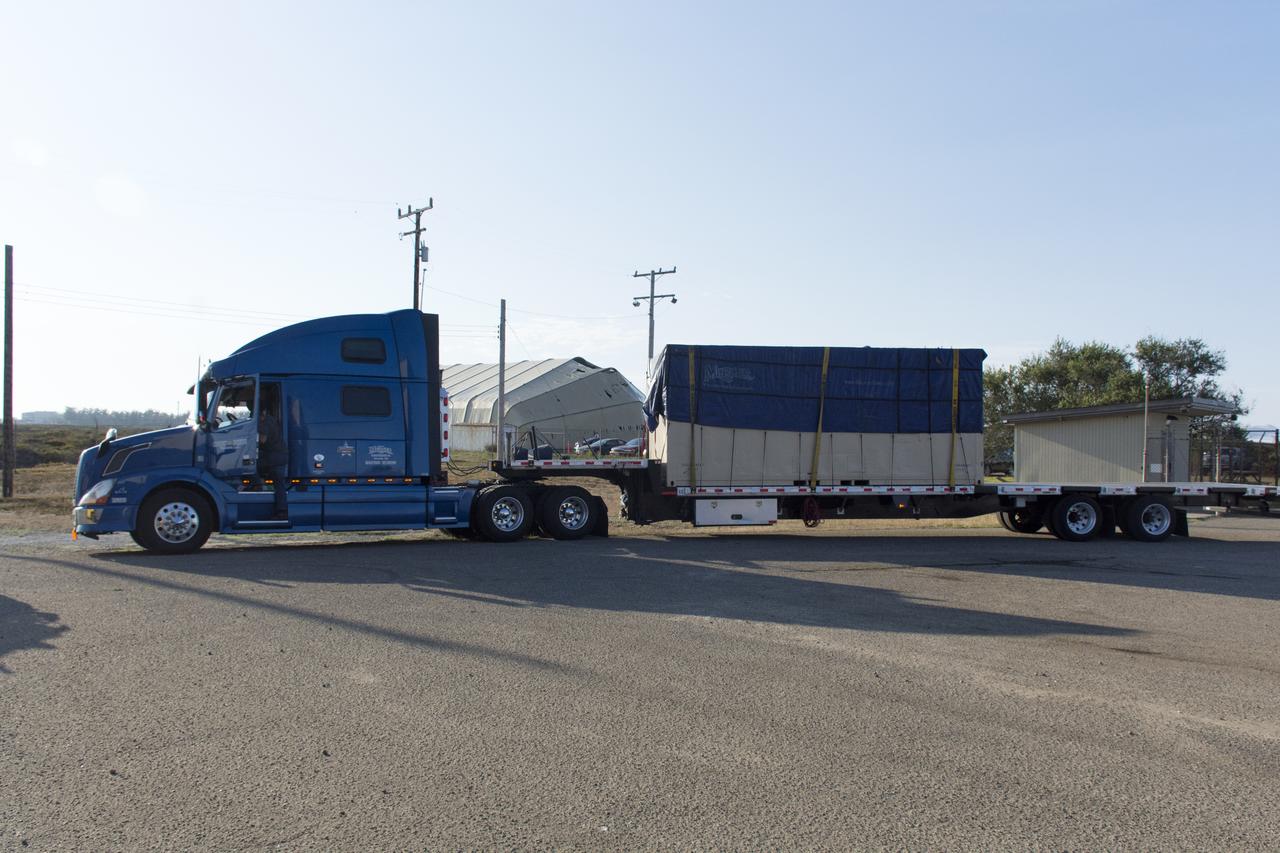
The payload fairing for Orbital ATK's Pegasus XL rocket arrives by flatbed truck Aug. 4, 2017, at Vandenberg Air Force Base in California. The Pegasus rocket is being prepared for NASA's Ionospheric Connection Explorer, or ICON, mission. The explorer will launch on June 15, 2018, from Kwajalein Atoll in the Marshall Islands (June 14 in the continental United States) on Orbital ATK's Pegasus XL rocket, which is attached to the company's L-1011 Stargazer aircraft. ICON will study the frontier of space - the dynamic zone high in Earth's atmosphere where terrestrial weather from below meets space weather above. The explorer will help determine the physics of Earth's space environment and pave the way for mitigating its effects on our technology, communications systems and society.
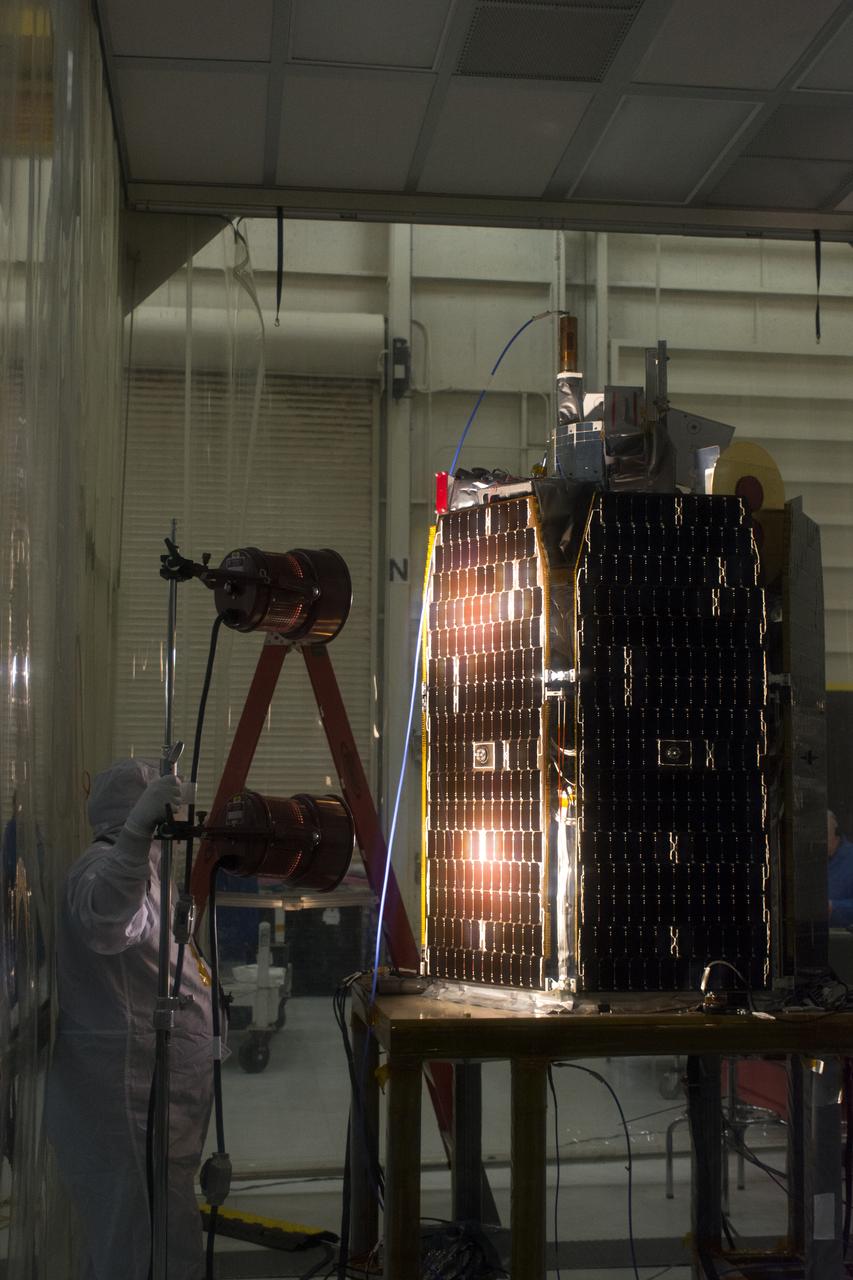
A solar array illumination test is performed on NASA's Ionospheric Connection Explorer (ICON) in a clean room inside Building 1555 at Vandenberg Air Force Base in California on May 4, 2018. The test checks for any imperfections and confirms that the solar arrays are functioning properly. The explorer will launch on June 15, 2018, from Kwajalein Atoll in the Marshall Islands (June 14 in the continental United States) on Orbital ATK's Pegasus XL rocket, which is attached to the company's L-1011 Stargazer aircraft. ICON will study the frontier of space - the dynamic zone high in Earth's atmosphere where terrestrial weather from below meets space weather above. The explorer will help determine the physics of Earth's space environment and pave the way for mitigating its effects on our technology, communications systems and society.

A technician performs a ultraviolet light inspection of the Orbital ATK Pegasus starboard on May 22, 2018, prior to fully mating NASA's Ionospheric Connection Explorer (ICON) to Pegasus inside Building 1555 at Vandenberg Air Force Base in California. The explorer will launch on June 15, 2018, from Kwajalein Atoll in the Marshall Islands (June 14 in the continental United States) on the Pegasus XL, which is attached to the company's L-1011 Stargazer aircraft. ICON will study the frontier of space - the dynamic zone high in Earth's atmosphere where terrestrial weather from below meets space weather above. The explorer will help determine the physics of Earth's space environment and pave the way for mitigating its effects on our technology and communications systems.
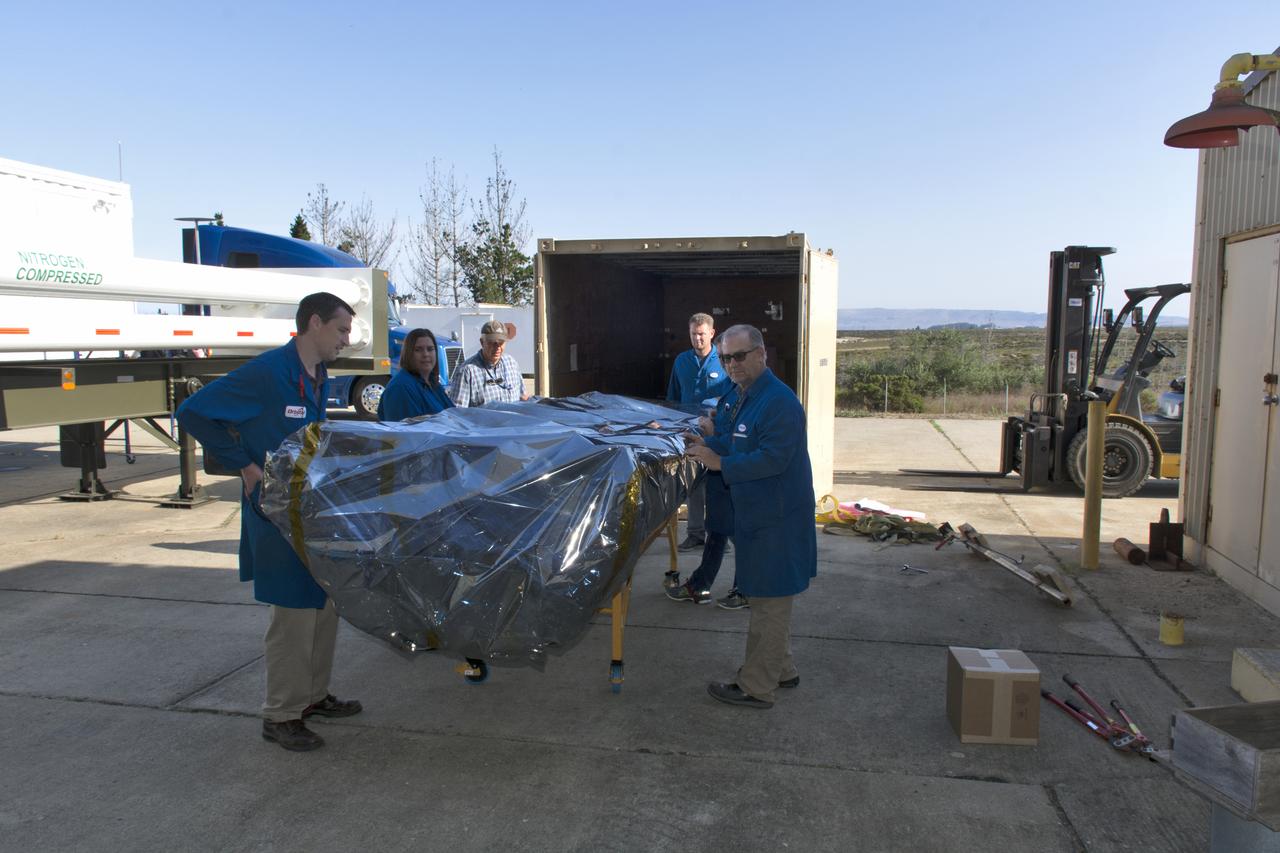
Orbital ATK technicians remove the second half of the payload fairing for the Orbital ATK Pegasus XL rocket from its shipping container Aug. 4, 2017, at Vandenberg Air Force Base in California. The Pegasus rocket is being prepared for NASA's Ionospheric Connection Explorer, or ICON, mission. The explorer will launch on June 15, 2018, from Kwajalein Atoll in the Marshall Islands (June 14 in the continental United States) on Orbital ATK's Pegasus XL rocket, which is attached to the company's L-1011 Stargazer aircraft. ICON will study the frontier of space - the dynamic zone high in Earth's atmosphere where terrestrial weather from below meets space weather above. The explorer will help determine the physics of Earth's space environment and pave the way for mitigating its effects on our technology, communications systems and society.
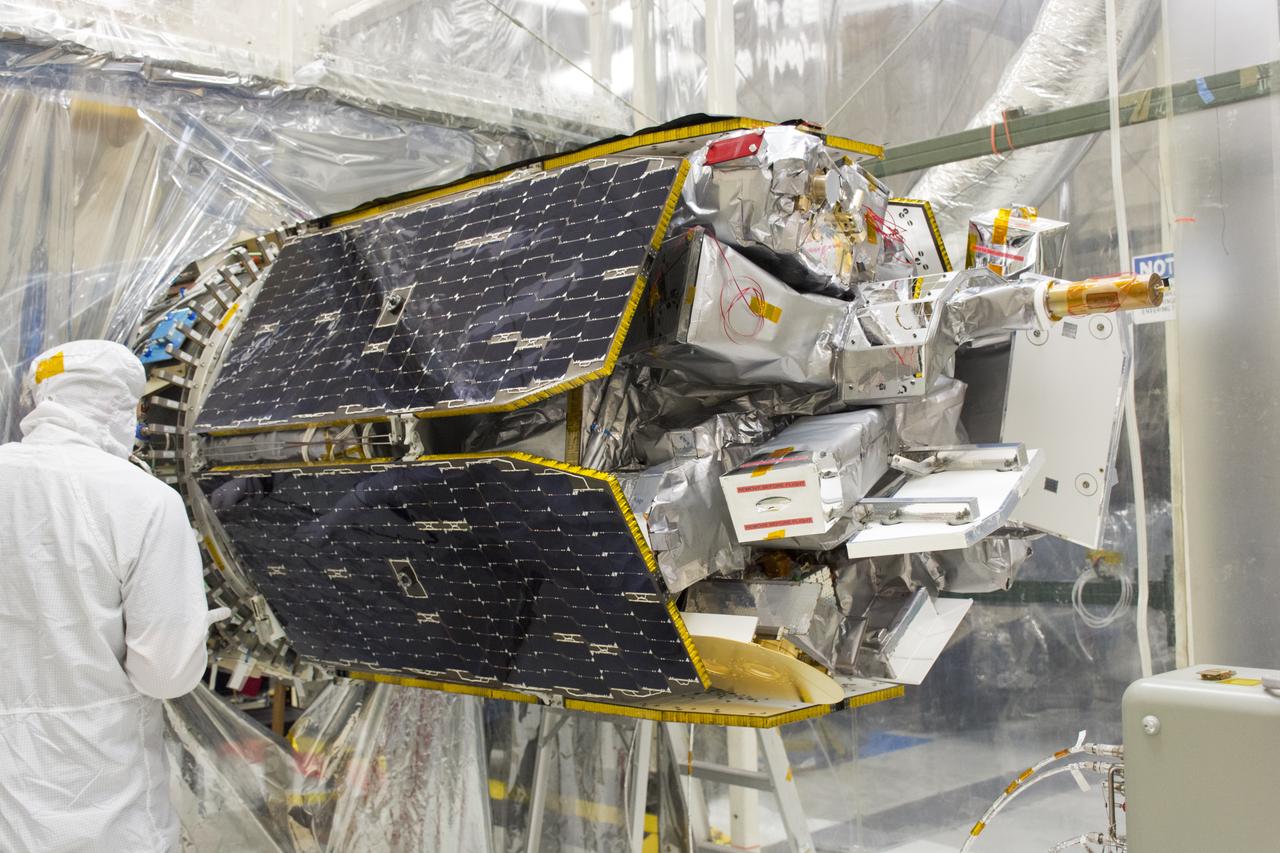
A technician assists with connections as NASA's Ionospheric Connection Explorer (ICON) is attached to the Orbital ATK Pegasus XL rocket May 14, 2018, inside a clean room in Building 1555 at Vandenberg Air Force Base in California. The explorer will launch on June 15, 2018, from Kwajalein Atoll in the Marshall Islands (June 14 in the continental United States) on the Pegasus XL rocket, which is attached to the company's L-1011 Stargazer aircraft. ICON will study the frontier of space - the dynamic zone high in Earth's atmosphere where terrestrial weather from below meets space weather above. The explorer will help determine the physics of Earth's space environment and pave the way for mitigating its effects on our technology, communications systems and society.
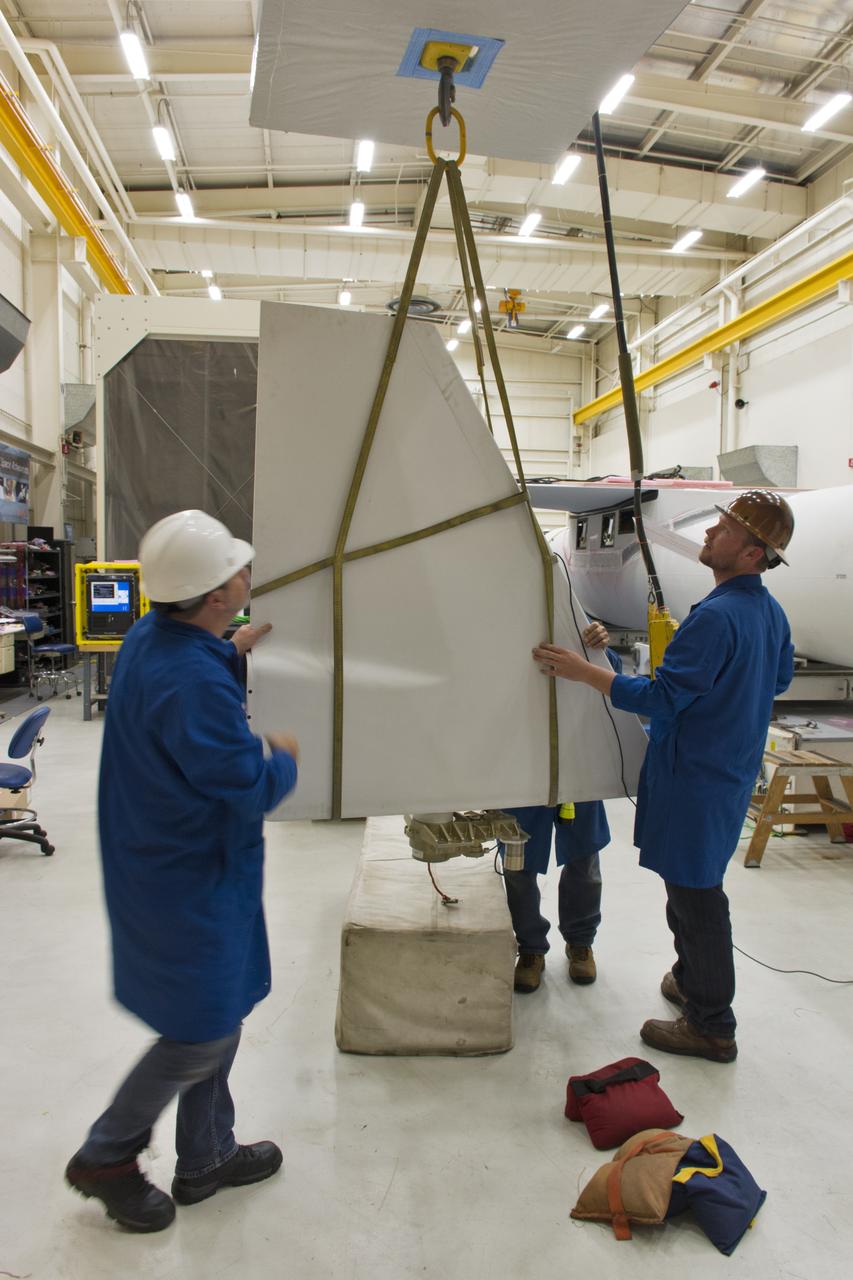
Technicians prepare the rudder for installation on the Orbital ATK Pegasus XL rocket July 8, 2017, inside Building 1555 at Vandenberg Air Force Base in California. The Pegasus rocket is being prepared for NASA's Ionospheric Connection Explorer, or ICON, mission. ICON will launch on June 15 from Kwajalein Atoll in the Marshall Islands (June 14 in the continental United States) on Orbital ATK's Pegasus XL rocket, which is attached to the company's L-1011 Stargazer aircraft. ICON will study the frontier of space - the dynamic zone high in Earth's atmosphere where terrestrial weather from below meets space weather above. The explorer will help determine the physics of Earth's space environment and pave the way for mitigating its effects on our technology, communications systems and society.
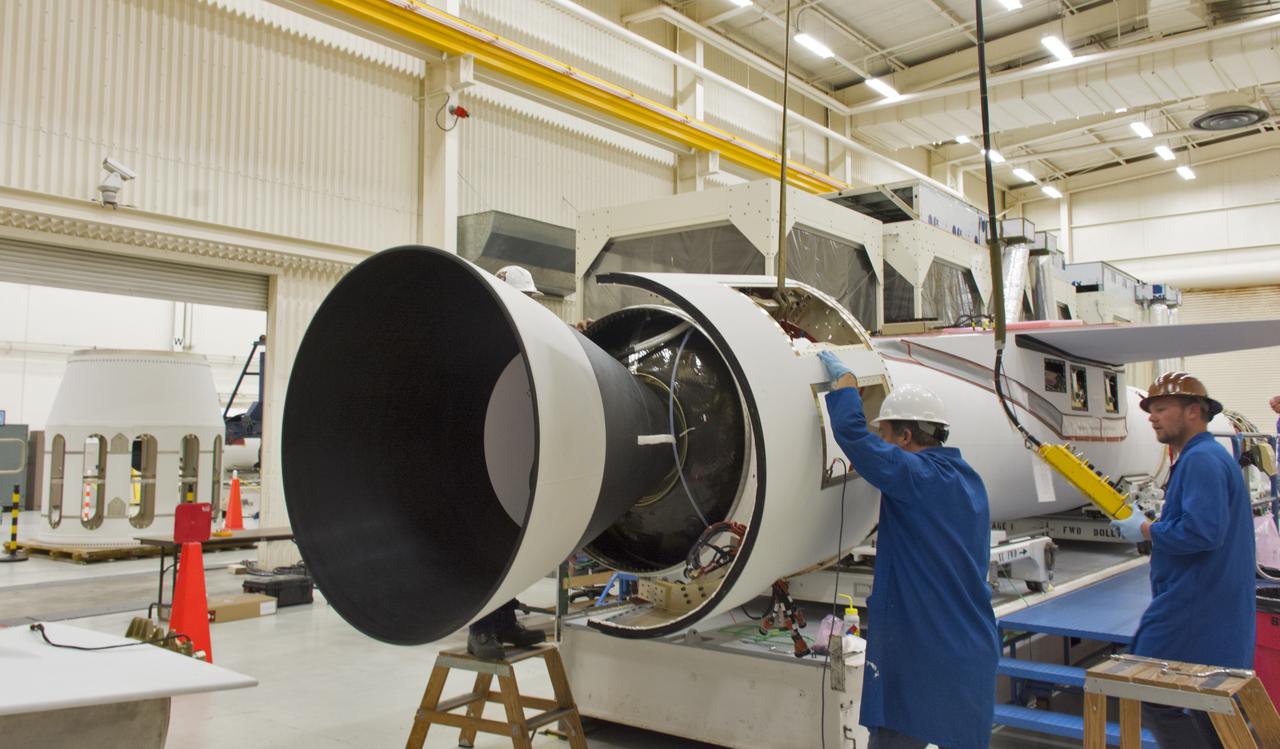
A technician installs the aft skirt on the Orbital ATK Pegasus XL rocket July 8, 2017, inside Building 1555 at Vandenberg Air Force Base in California. When the aft skirt is installed, the rudder and fins can be installed. The Pegasus rocket is being prepared for NASA's Ionospheric Connection Explorer, or ICON, mission. The explorer will launch on June 15, 2018, from Kwajalein Atoll in the Marshall Islands (June 14 in the continental United States) on Orbital ATKS's Pegasus XL, which is attached to the company's L-1011 Stargazer aircraft. ICON will study the frontier of space - the dynamic zone high in Earth's atmosphere where terrestrial weather from below meets space weather above. The explorer will help determine the physics of Earth's space environment and pave the way for mitigating its effects on our technology, communications systems and society.

A technician begins a ultraviolet light inspection of the Orbital ATK Pegasus starboard on May 22, 2018, prior to mating NASA's Ionospheric Connection Explorer (ICON) to Pegasus inside Building 1555 at Vandenberg Air Force Base in California. The explorer will launch on June 15, 2018, from Kwajalein Atoll in the Marshall Islands (June 14 in the continental United States) on the Pegasus XL, which is attached to the company's L-1011 Stargazer aircraft. ICON will study the frontier of space - the dynamic zone high in Earth's atmosphere where terrestrial weather from below meets space weather above. The explorer will help determine the physics of Earth's space environment and pave the way for mitigating its effects on our technology and communications systems.