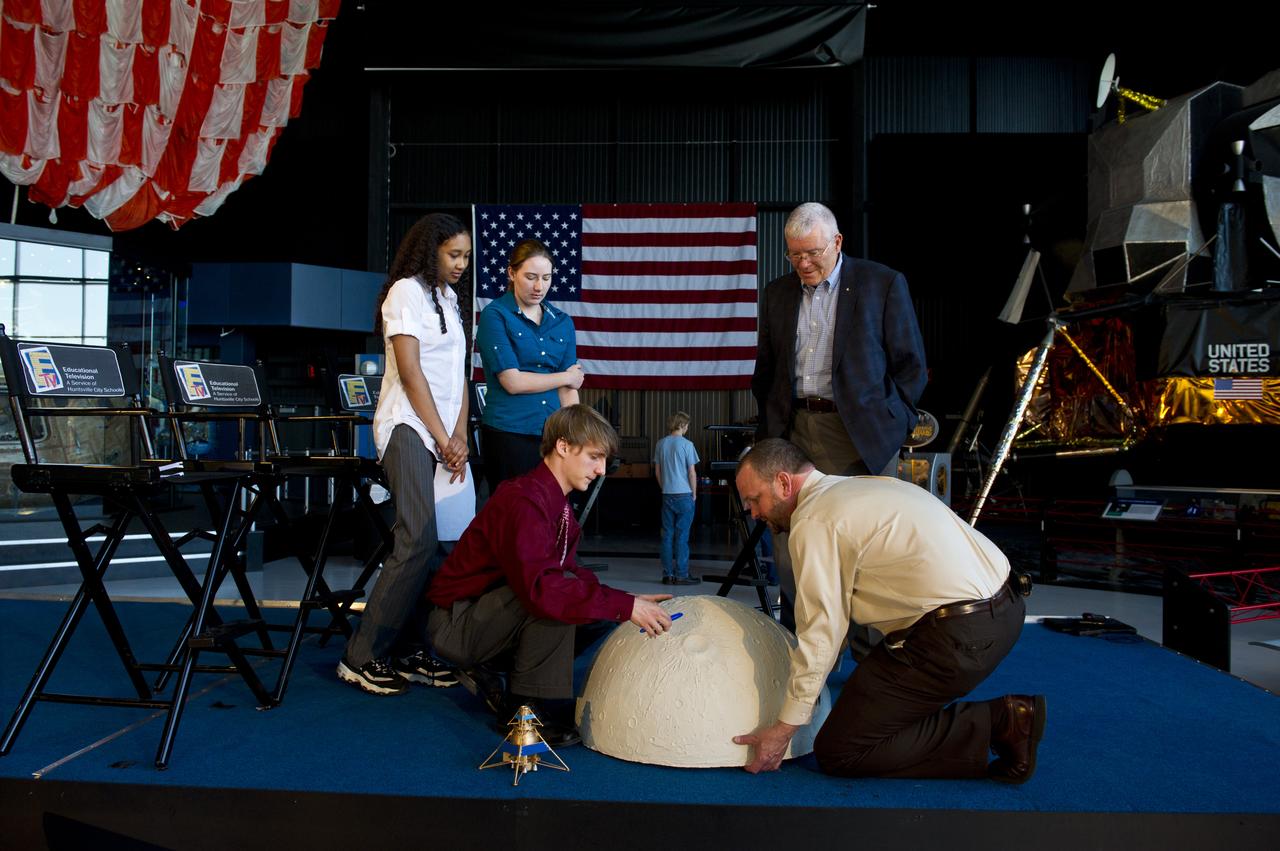
STUDENTS FROM THE CENTER FOR TECHNOLOGY SHOW APOLLO 13 ASTRONAUT FRED HAISE A DISPLAY MODEL FOR A MOON BASED PROJECT THEY ARE DESIGNING FOR COMPETITION WITH OTHER SCHOOLS IN ALABAMA. (L to R) QUIANA HUNT, SARAH FOLSE, MICHAEL HARTMAN, MIKE EVANS (TEACHER), AND FRED HAISE
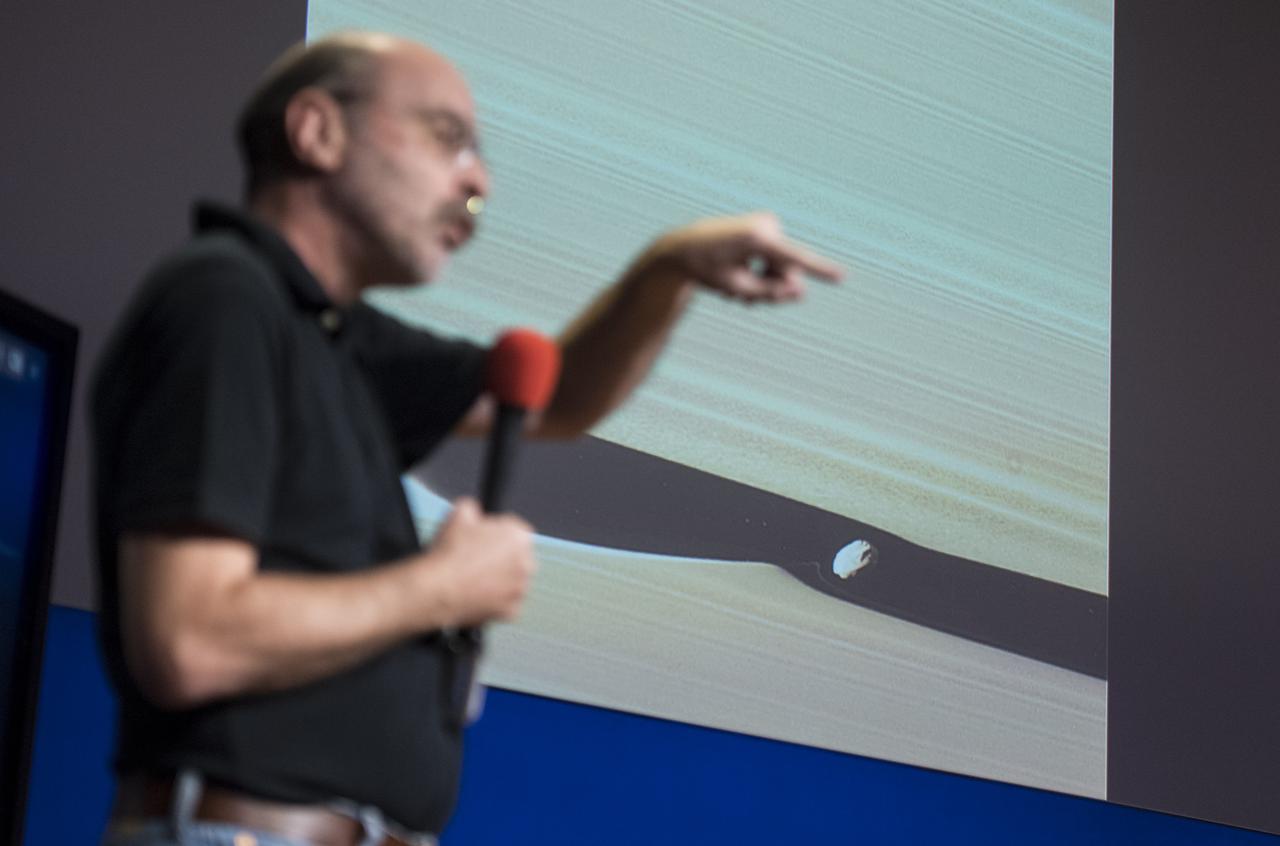
Cassini imaging science subsystem (ISS) team associate Mike Evans discusses an image of Saturn's moon Daphnis with Cassini NASA Social attendees, Thursday, Sept. 14, 2017 at NASA's Jet Propulsion Laboratory in Pasadena, California. Since its arrival in 2004, the Cassini-Huygens mission has been a discovery machine, revolutionizing our knowledge of the Saturn system and captivating us with data and images never before obtained with such detail and clarity. On Sept. 15, 2017, operators will deliberately plunge the spacecraft into Saturn, as Cassini gathered science until the end. The “plunge” ensures Saturn’s moons will remain pristine for future exploration. During Cassini’s final days, mission team members from all around the world gathered at NASA’s Jet Propulsion Laboratory, Pasadena, California, to celebrate the achievements of this historic mission. Photo Credit: (NASA/Joel Kowsky)
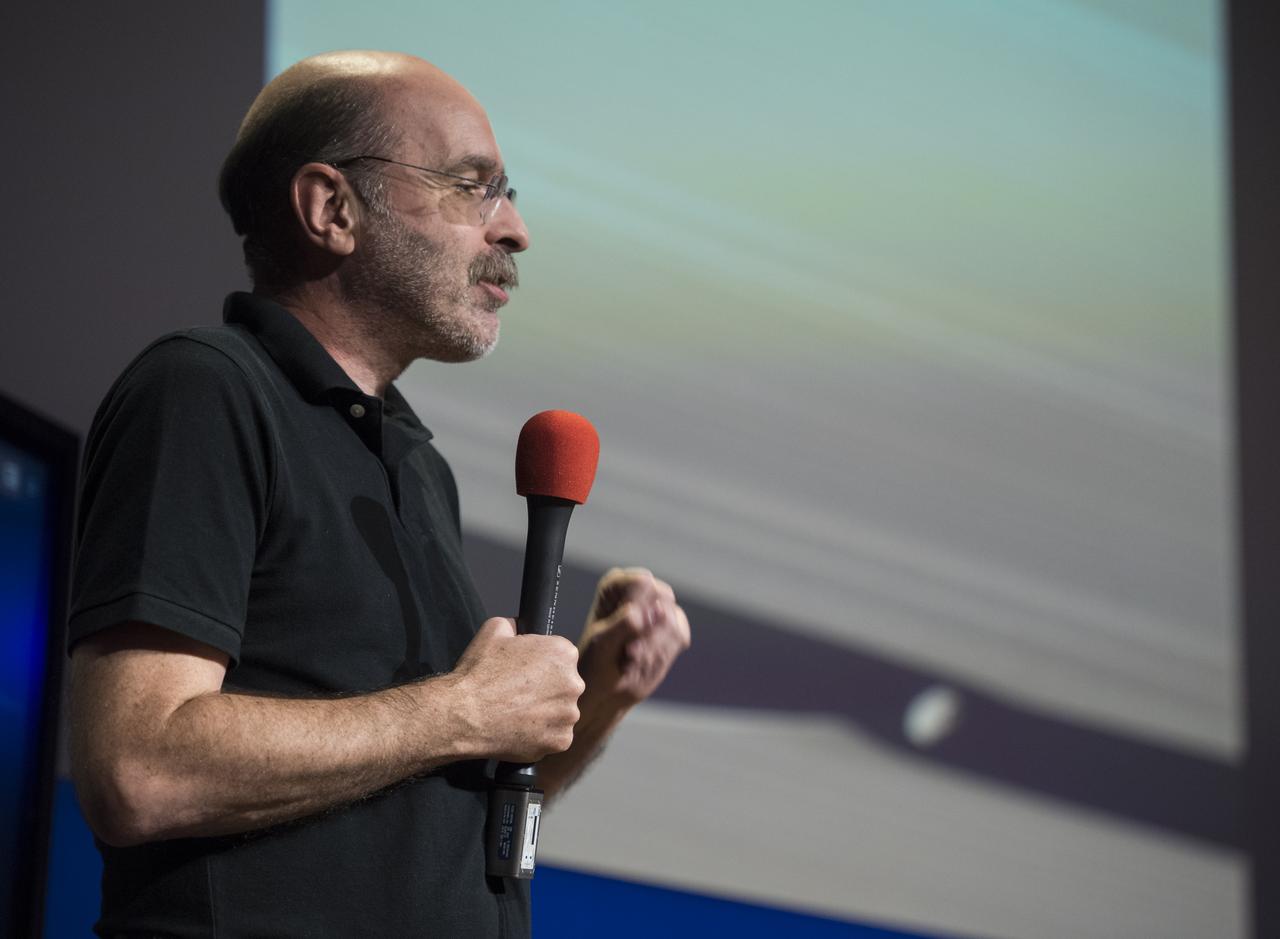
Cassini imaging science subsystem (ISS) team associate Mike Evans speaks with Cassini NASA Social attendees, Thursday, Sept. 14, 2017 at NASA's Jet Propulsion Laboratory in Pasadena, California. Since its arrival in 2004, the Cassini-Huygens mission has been a discovery machine, revolutionizing our knowledge of the Saturn system and captivating us with data and images never before obtained with such detail and clarity. On Sept. 15, 2017, operators will deliberately plunge the spacecraft into Saturn, as Cassini gathered science until the end. The “plunge” ensures Saturn’s moons will remain pristine for future exploration. During Cassini’s final days, mission team members from all around the world gathered at NASA’s Jet Propulsion Laboratory, Pasadena, California, to celebrate the achievements of this historic mission. Photo Credit: (NASA/Joel Kowsky)
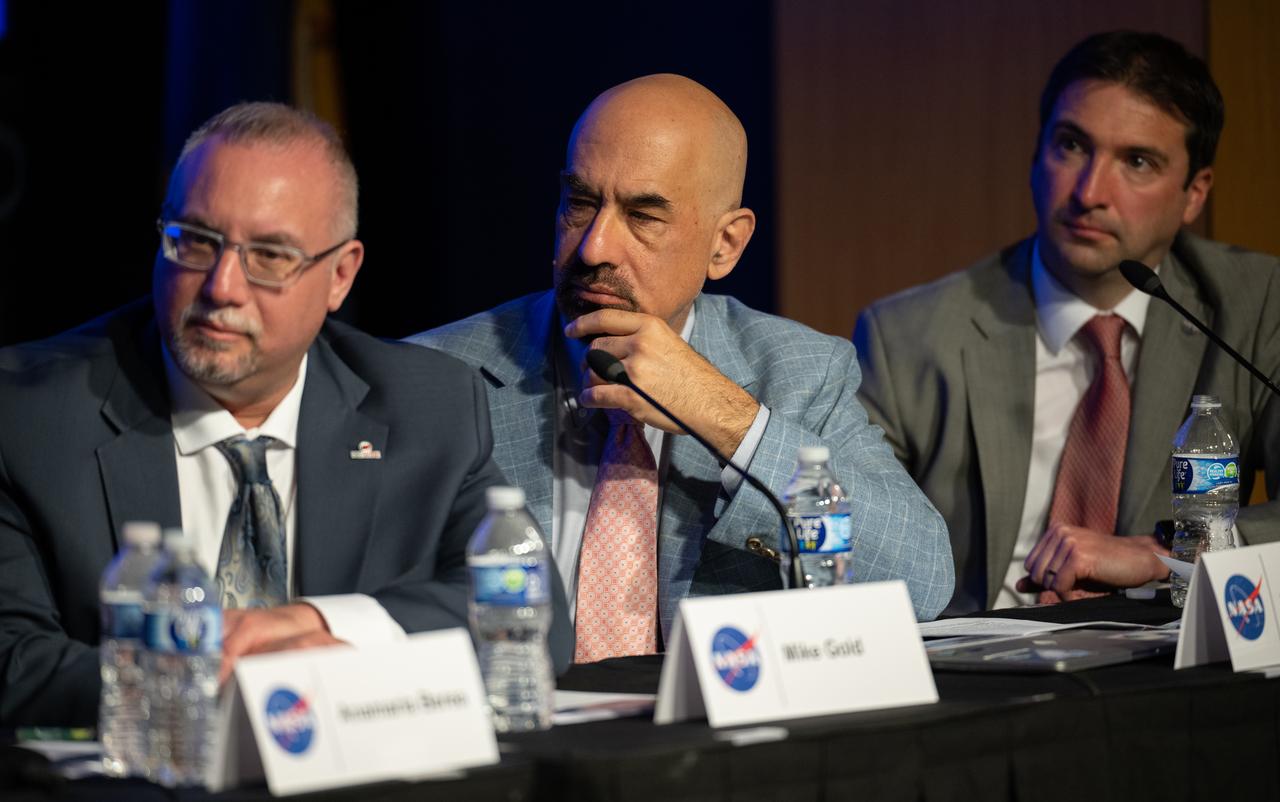
Mike Gold, chief growth officer at Redwire, left, David Spergel, chair of NASA's independent study on unidentified anomalous phenomena and President of the Simons Foundation, center, and Daniel Evans, assistant deputy associate administrator for Research in NASA's Science Mission Directorate, right, are seen during a public meeting of NASA’s unidentified anomalous phenomena (UAP) independent study team, Wednesday, May 31, 2023 at the Mary W. Jackson NASA Headquarters building in Washington. The UAP independent study team is a counsel of 16 community experts across diverse areas on matters relevant to potential methods of study for unidentified anomalous phenomena. NASA commissioned the nine-month study to examine UAP from a scientific perspective and create a roadmap for how to use data and the tools of science to move our understanding of UAP forward. Photo Credit: (NASA/Joel Kowsky)