MILA Closing Ceremony
MILA Closing Ceremony
MILA Closing Ceremony
MILA Closing Ceremony
MILA Closing Ceremony
MILA Closing Ceremony
MILA Closing Ceremony
MILA Closing Ceremony
MILA Closing Ceremony
MILA Closing Ceremony
MILA Closing Ceremony

MILA Closing Ceremony
MILA Closing Ceremony
MILA Closing Ceremony
MILA Closing Ceremony
MILA Closing Ceremony
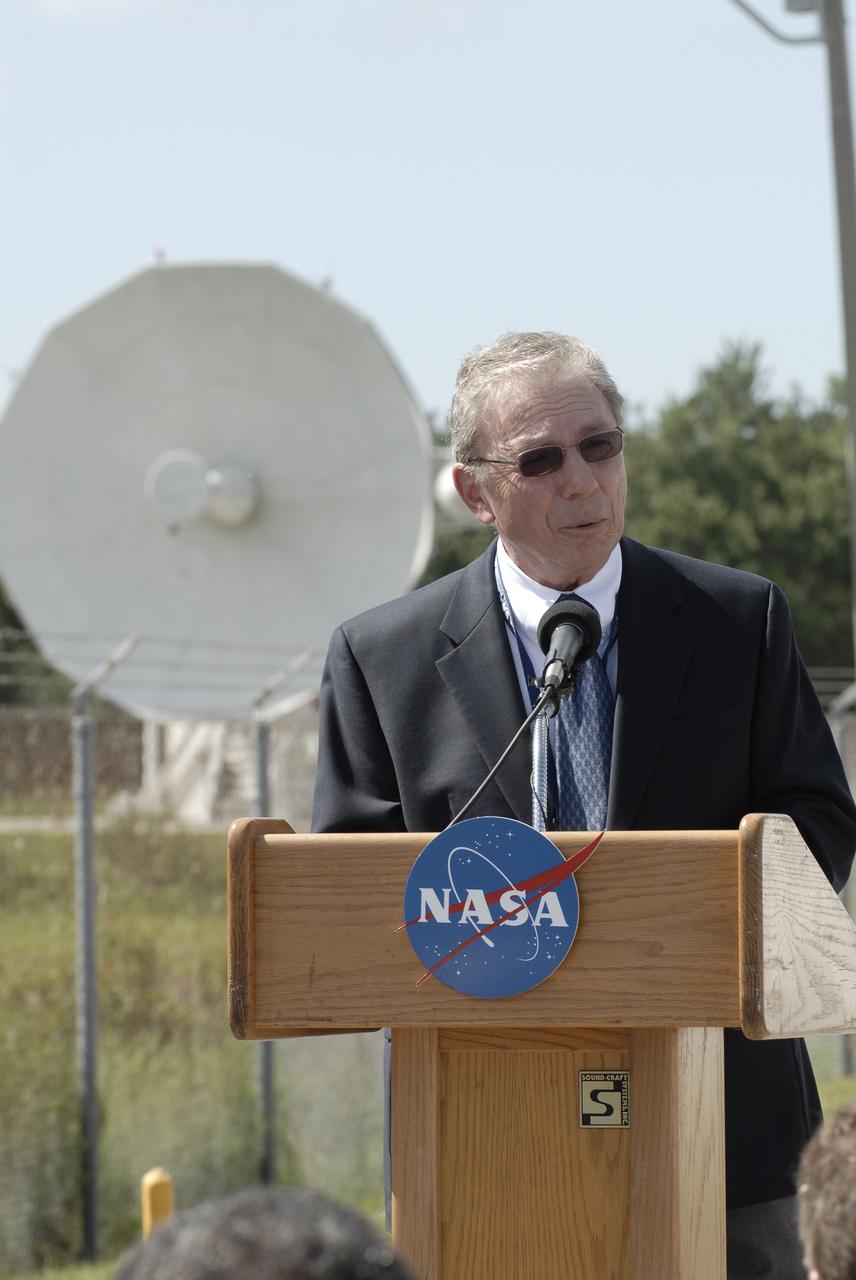
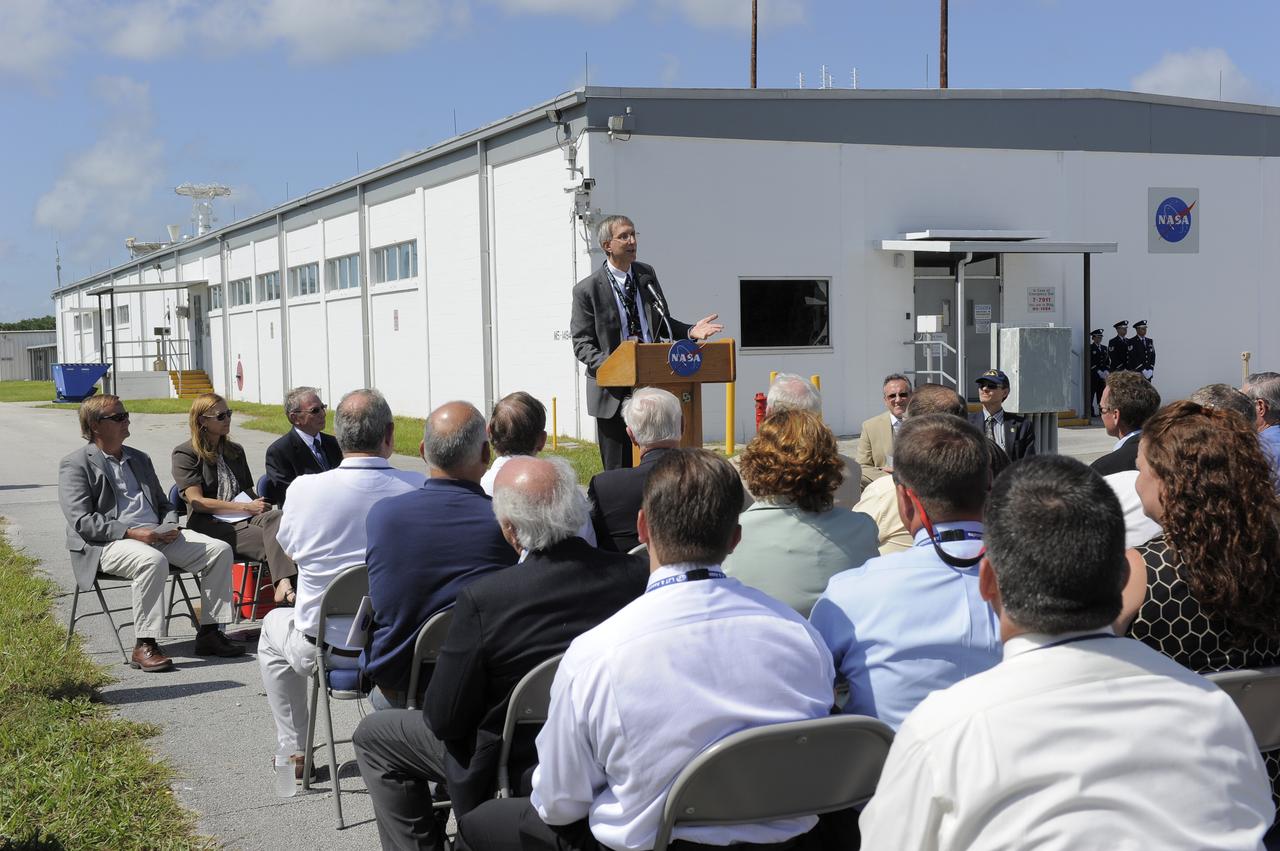
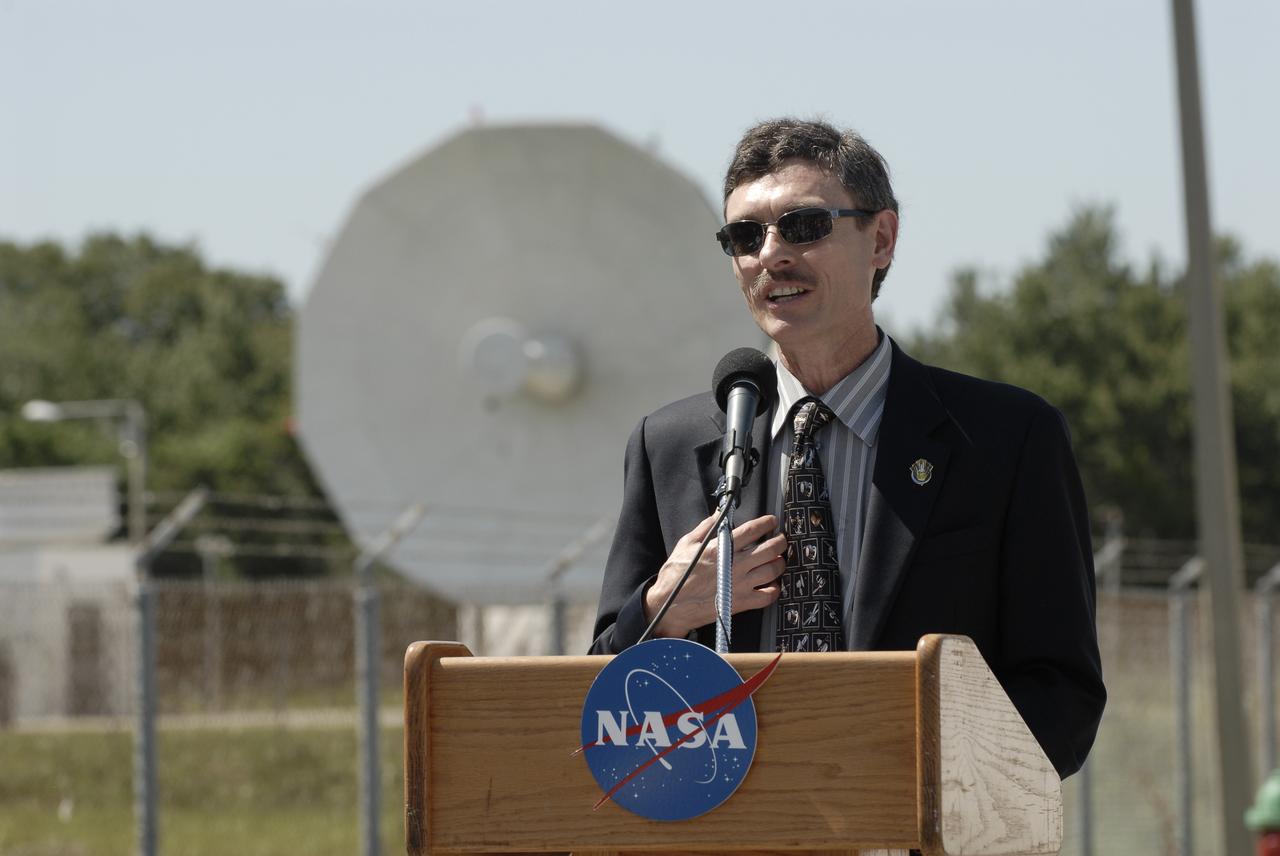
CAPE CANAVERAL, Fla. -- At the Merritt Island Launch Annex (MILA) Spaceflight Tracking and Data Network Station at NASA's Kennedy Space Center in Florida, Gary Morse, MILA station director, addresses those in attendance at a closing ceremony recognizing the station's 45 years of service. The station was originally established by NASA's Goddard Space Flight Center as one of 17 Space Flight Tracking and Data Network stations around the world. Commissioned for the Apollo Program, the first launch it supported was the Apollo/Saturn 203 test flight from Launch Complex 37 on July 5, 1966. It also provided orbital support for low earth-orbiting scientific satellites. In recent history, the station has been used almost exclusively for space shuttle launch and landing support. Following the final launch and landing of the Space Shuttle Program in July 2011, the MILA station is officially decommissioned. For more information, visit http://www.nasa.gov/centers/kennedy/pdf/167424main_MILA-08C.pdf. Photo credit: NASA/Kim Shiflett
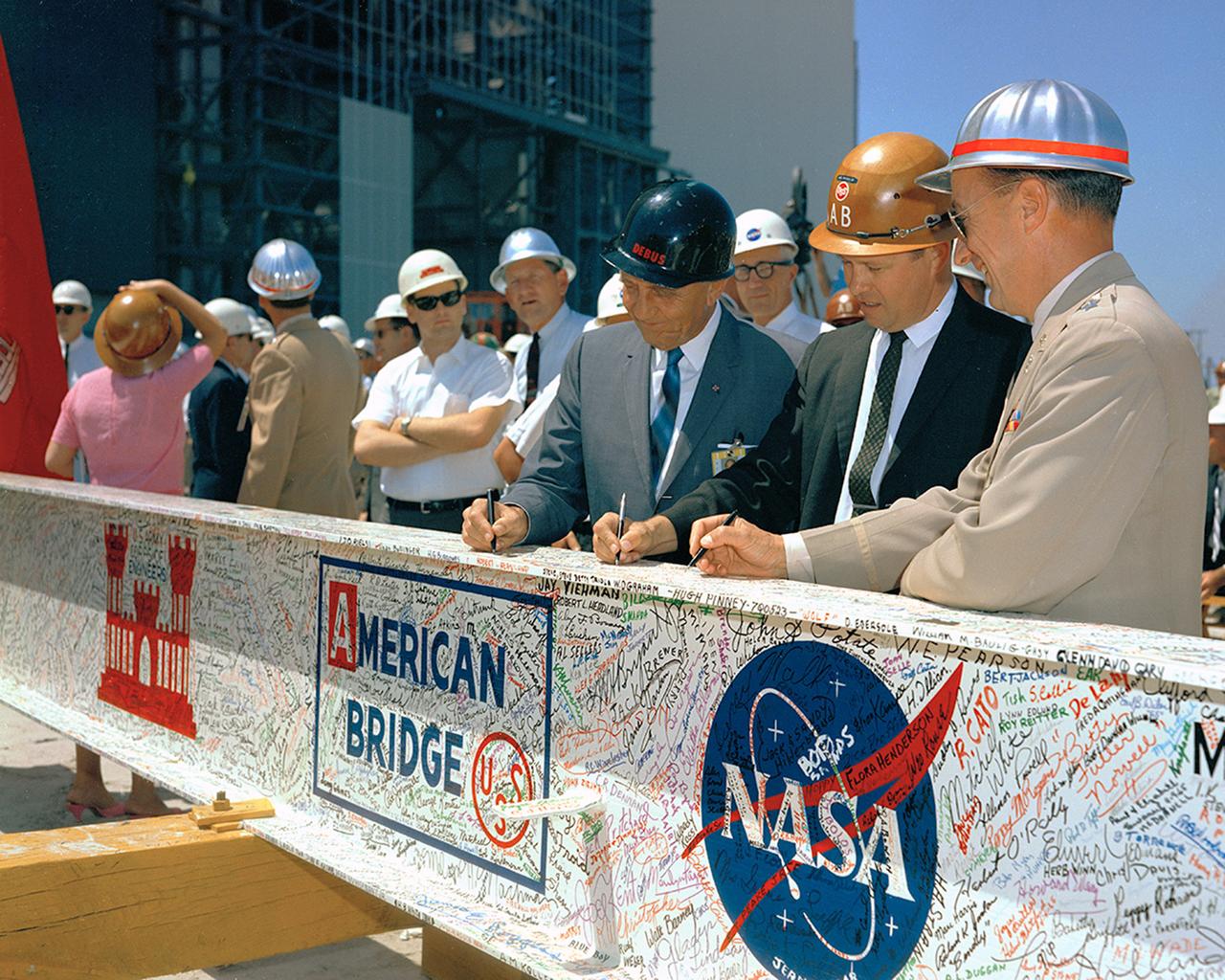
Dr. Kurt Debus (Director, NASA-KSC) signs the last major beam autographed by construction workers, NASA, and Corps of Engineers employees to be installed during the VAB Topping-Off Ceremony. MILA.
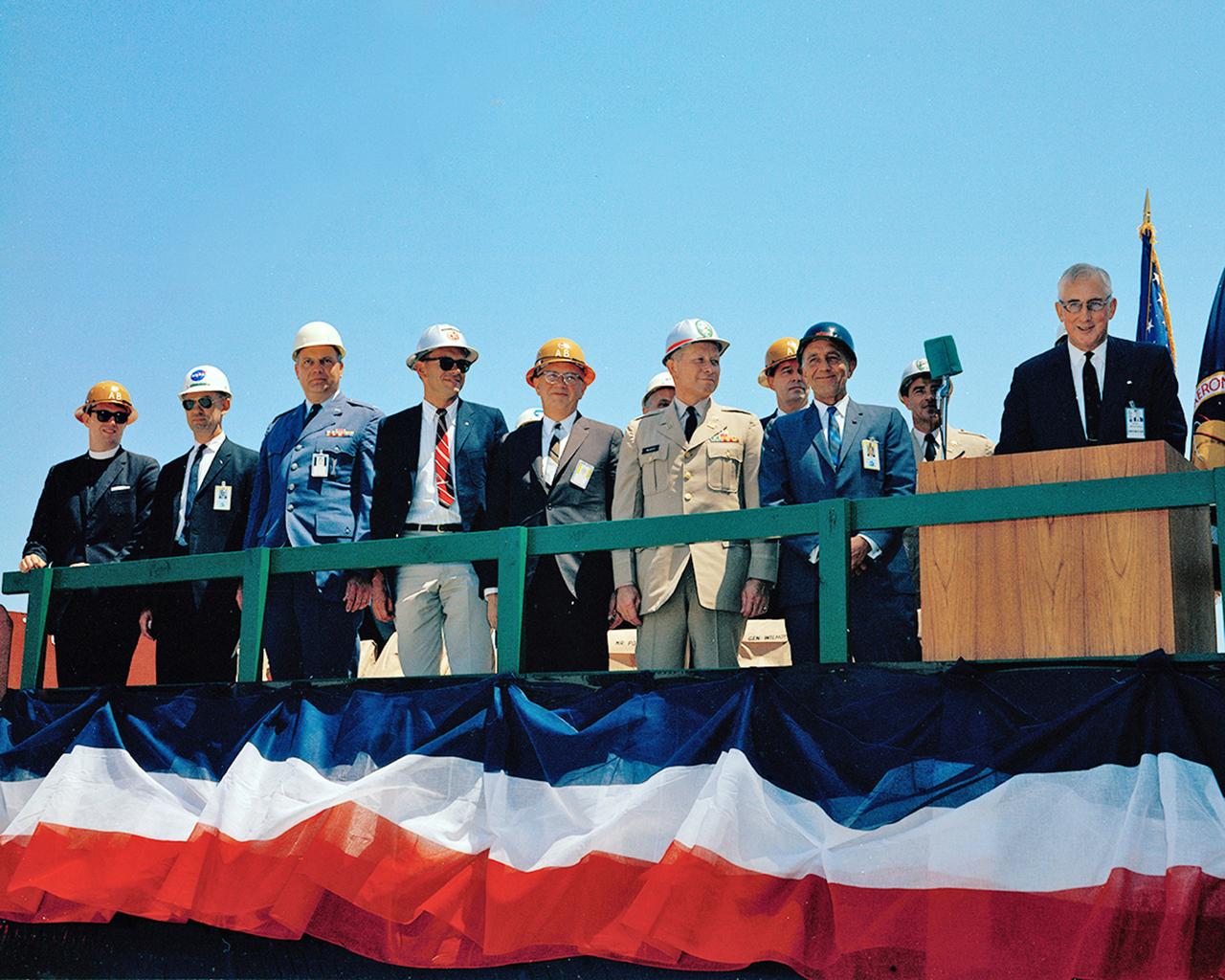
Dignataries (KSC Director Dr. Kurt Debus is second from right, NASA Administrator James C. Fletcher speaking), at the Last Major Beam Installation, attending the VAB Topping-Off Ceremony. MILA.
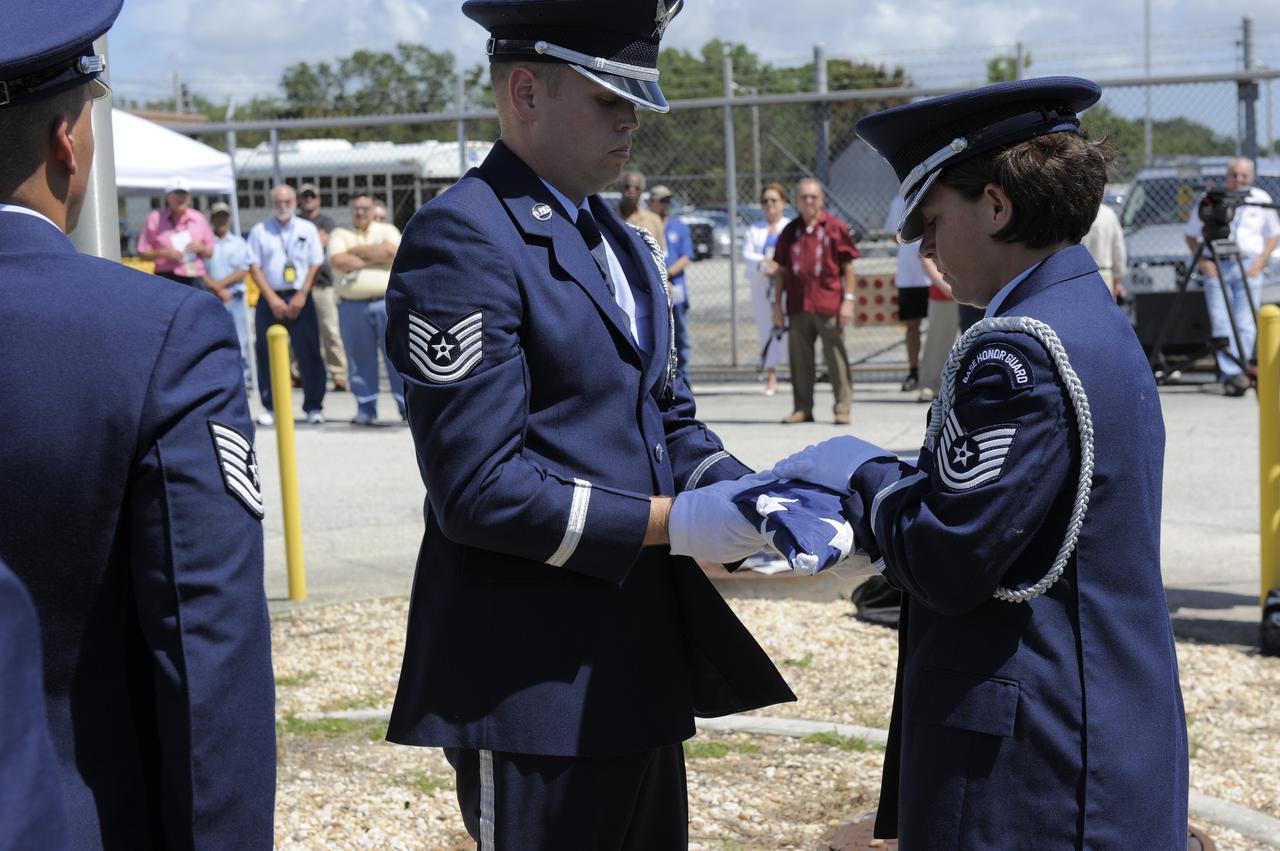
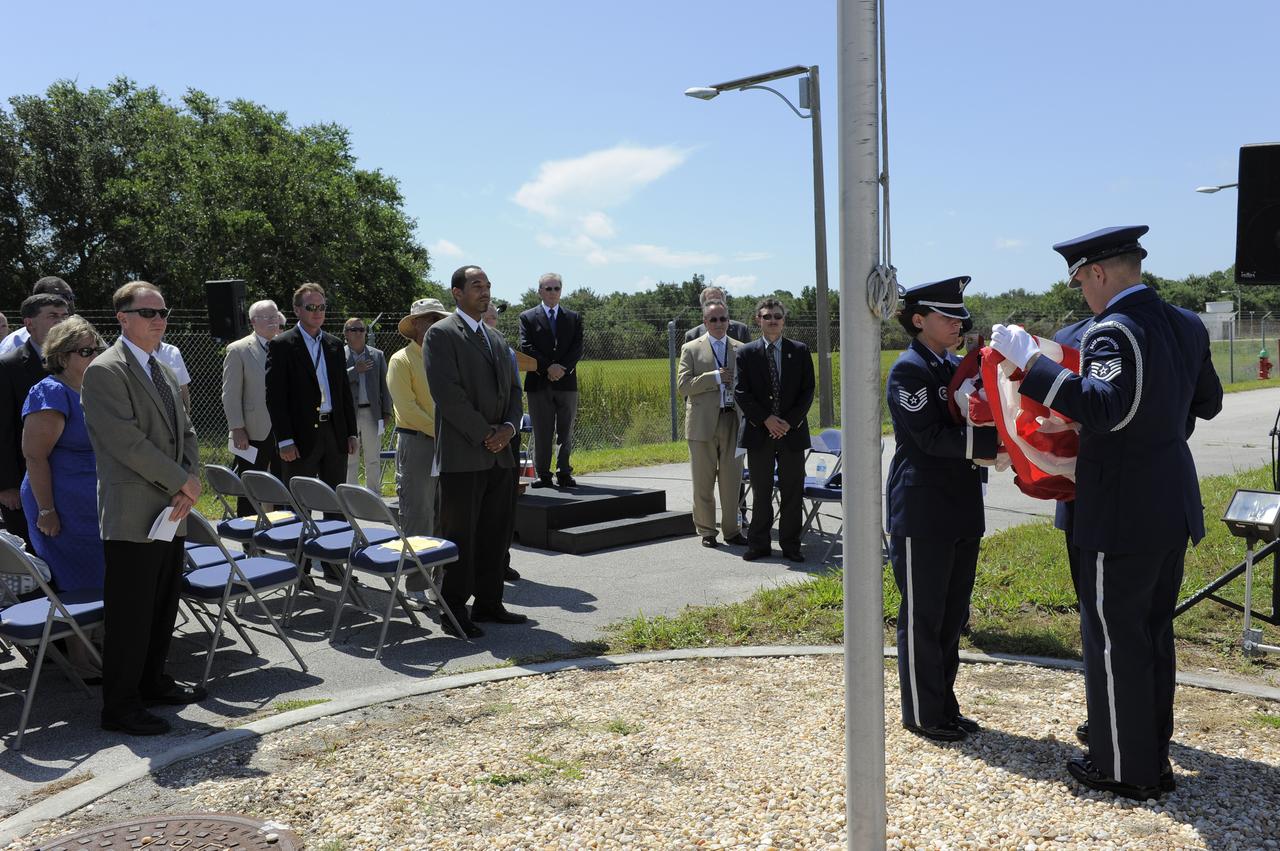
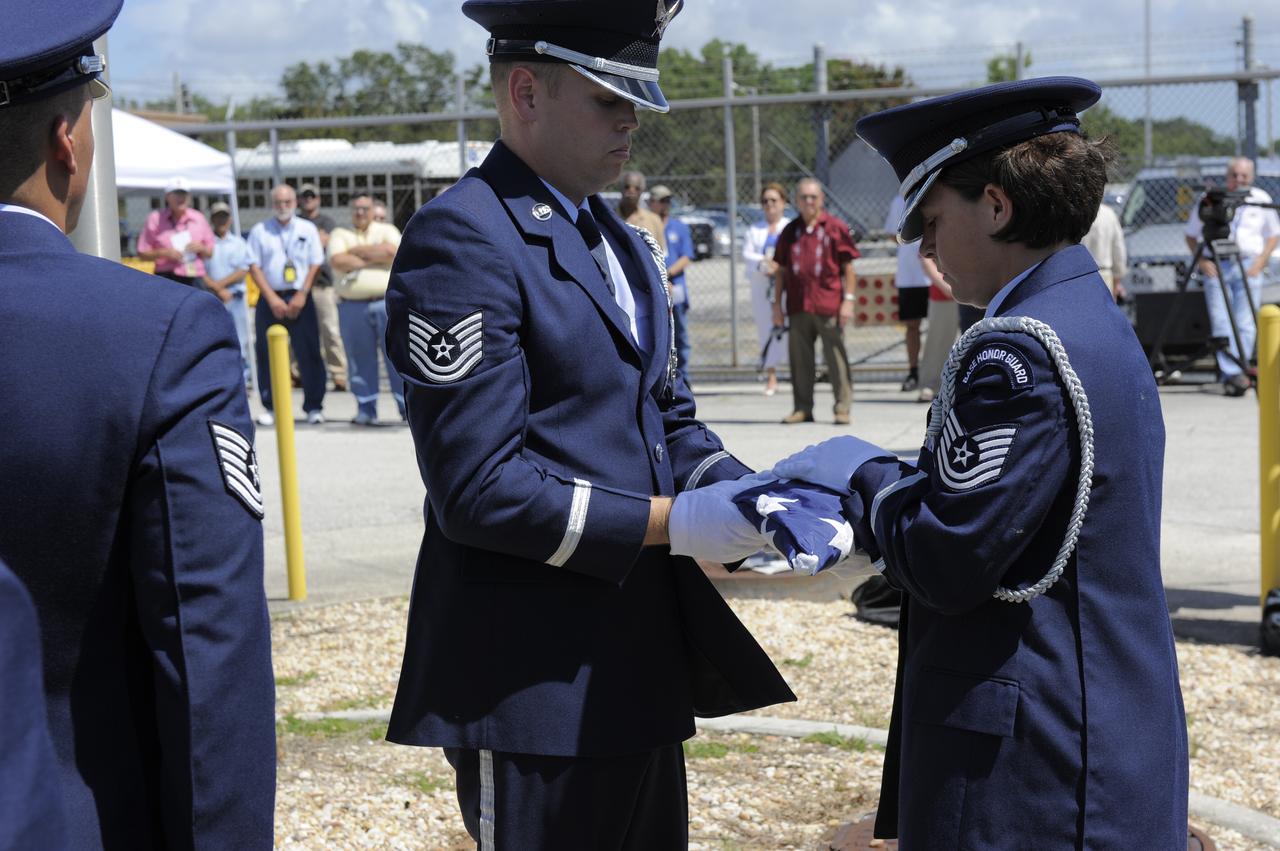
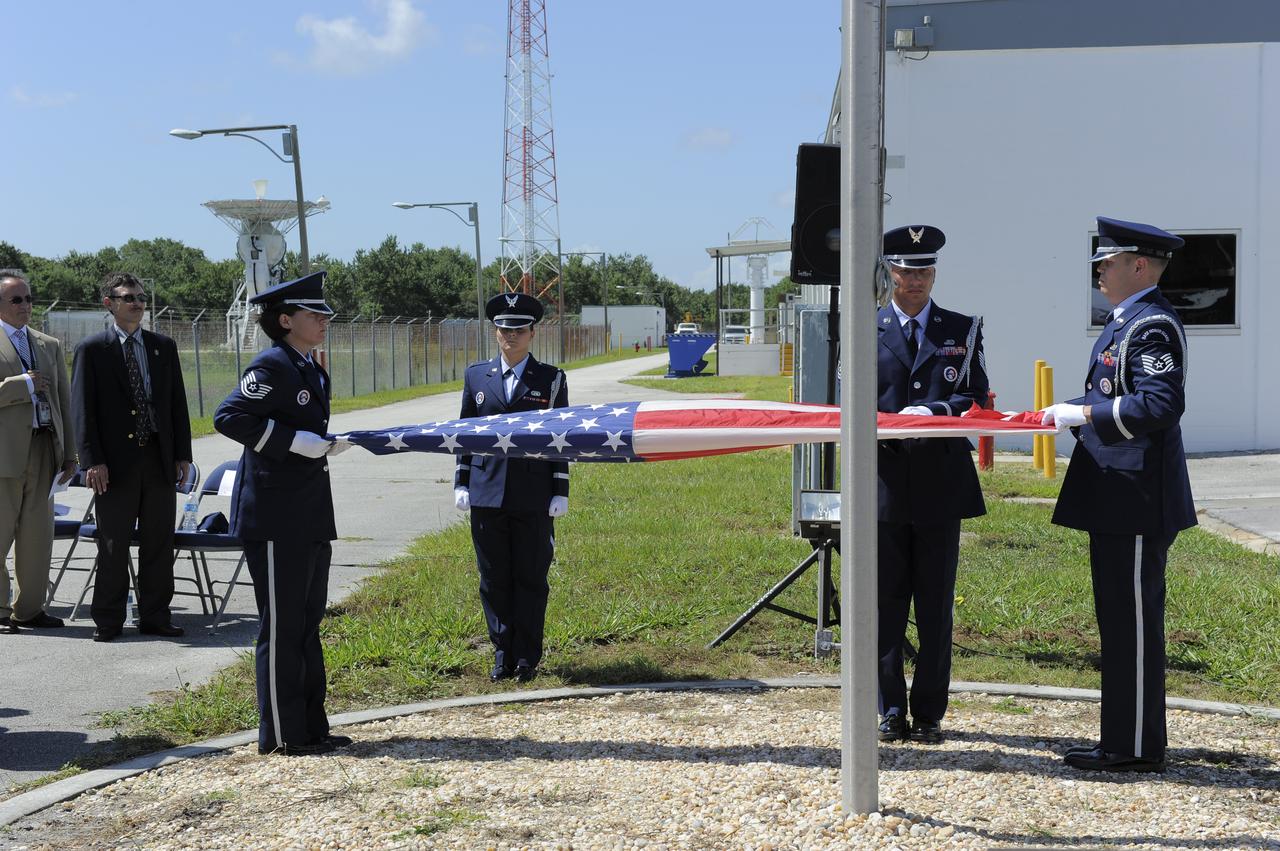
CAPE CANAVERAL, Fla. -- At the Merritt Island Launch Annex (MILA) Spaceflight Tracking and Data Network Station at NASA's Kennedy Space Center in Florida, the Patrick Air Force Base Color Guard folds the U.S. flag for the last time at a closing ceremony recognizing the station's 45 years of service. The station was originally established by NASA's Goddard Space Flight Center as one of 17 Space Flight Tracking and Data Network stations around the world. Commissioned for the Apollo Program, the first launch it supported was the Apollo/Saturn 203 test flight from Launch Complex 37 on July 5, 1966. It also provided orbital support for low earth-orbiting scientific satellites. In recent history, the station has been used almost exclusively for space shuttle launch and landing support. Following the final launch and landing of the Space Shuttle Program in July 2011, the MILA station is officially decommissioned. For more information, visit http://www.nasa.gov/centers/kennedy/pdf/167424main_MILA-08C.pdf. Photo credit: NASA/Kim Shiflett
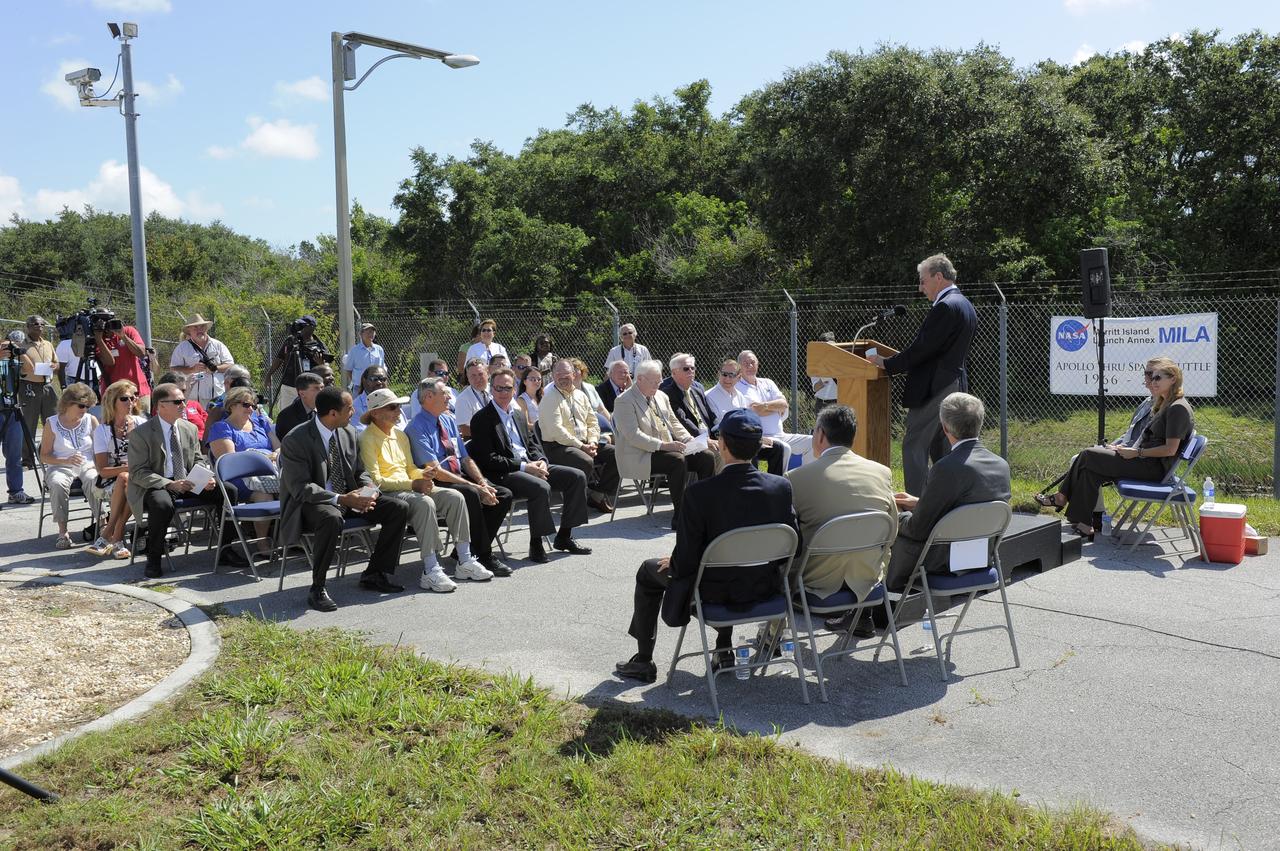
CAPE CANAVERAL, Fla. -- Media representatives, family members, and current and former employees, attend a closing ceremony for the Merritt Island Launch Annex (MILA) Spaceflight Tracking and Data Network Station at NASA's Kennedy Space Center in Florida. NASA Station Director Gary Morse presides over the ceremony recognizing the station's 45 years of service. The station was originally established by NASA's Goddard Space Flight Center as one of 17 Space Flight Tracking and Data Network stations around the world. Commissioned for the Apollo Program, the first launch it supported was the Apollo/Saturn 203 test flight from Launch Complex 37 on July 5, 1966. It also provided orbital support for low earth-orbiting scientific satellites. In recent history, the station has been used almost exclusively for space shuttle launch and landing support. Following the final launch and landing of the Space Shuttle Program in July 2011, the MILA station is officially decommissioned. For more information, visit http://www.nasa.gov/centers/kennedy/pdf/167424main_MILA-08C.pdf. Photo credit: NASA/Kim Shiflett
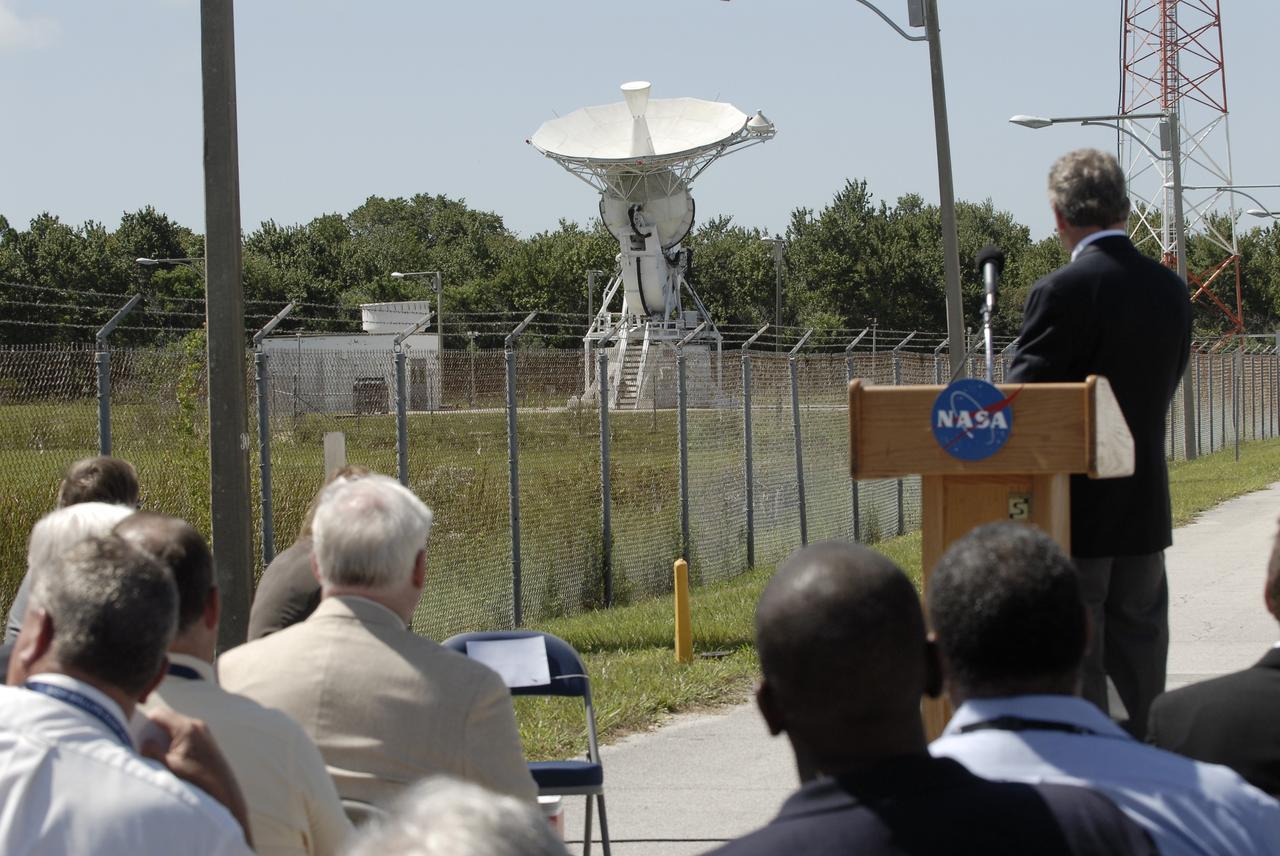
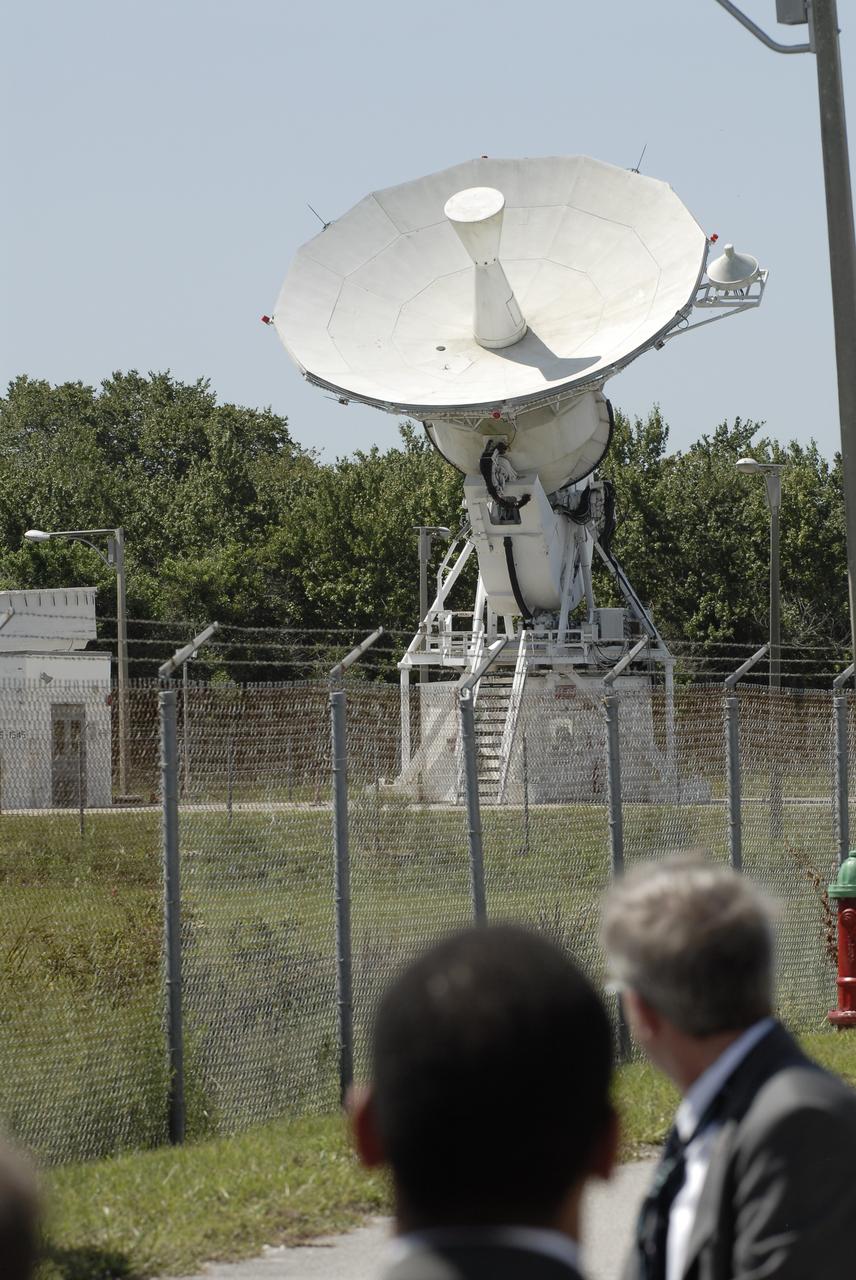
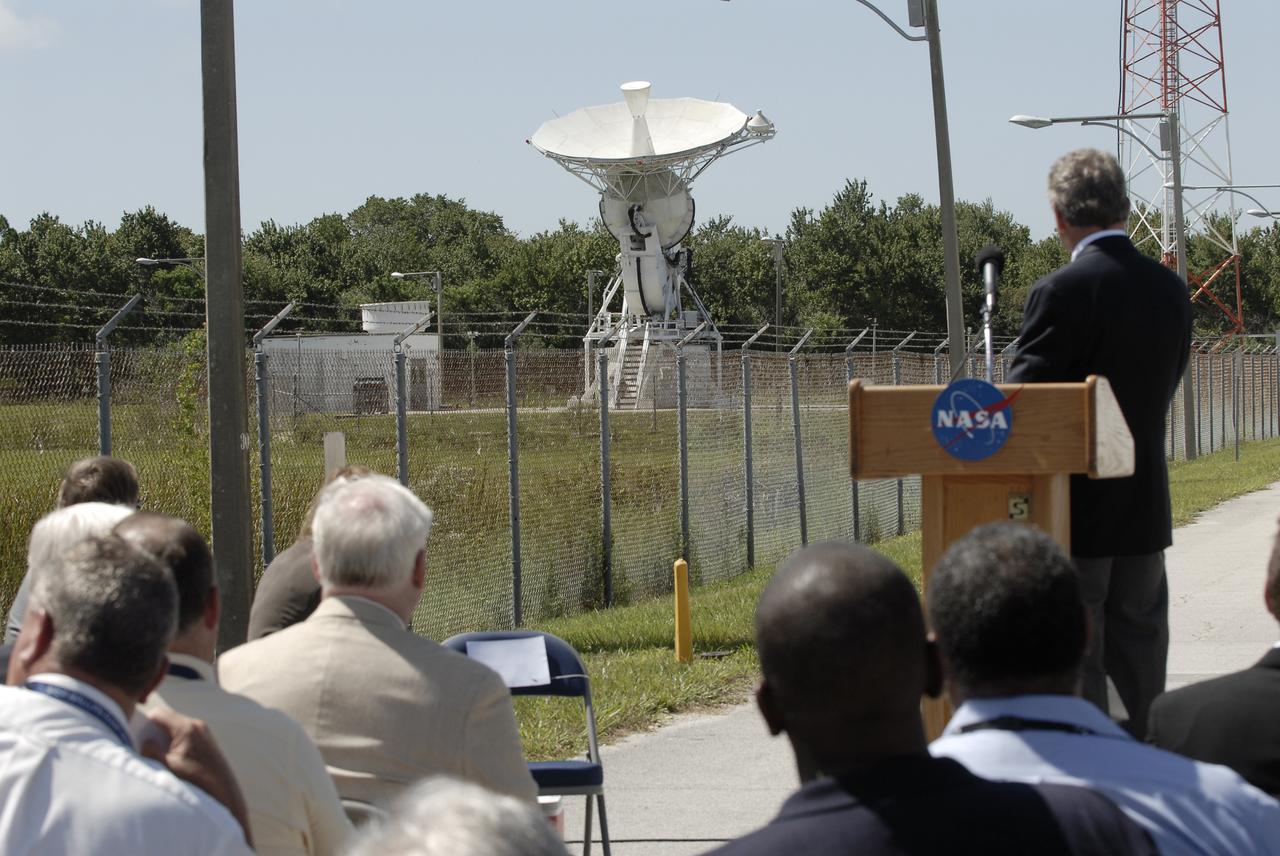
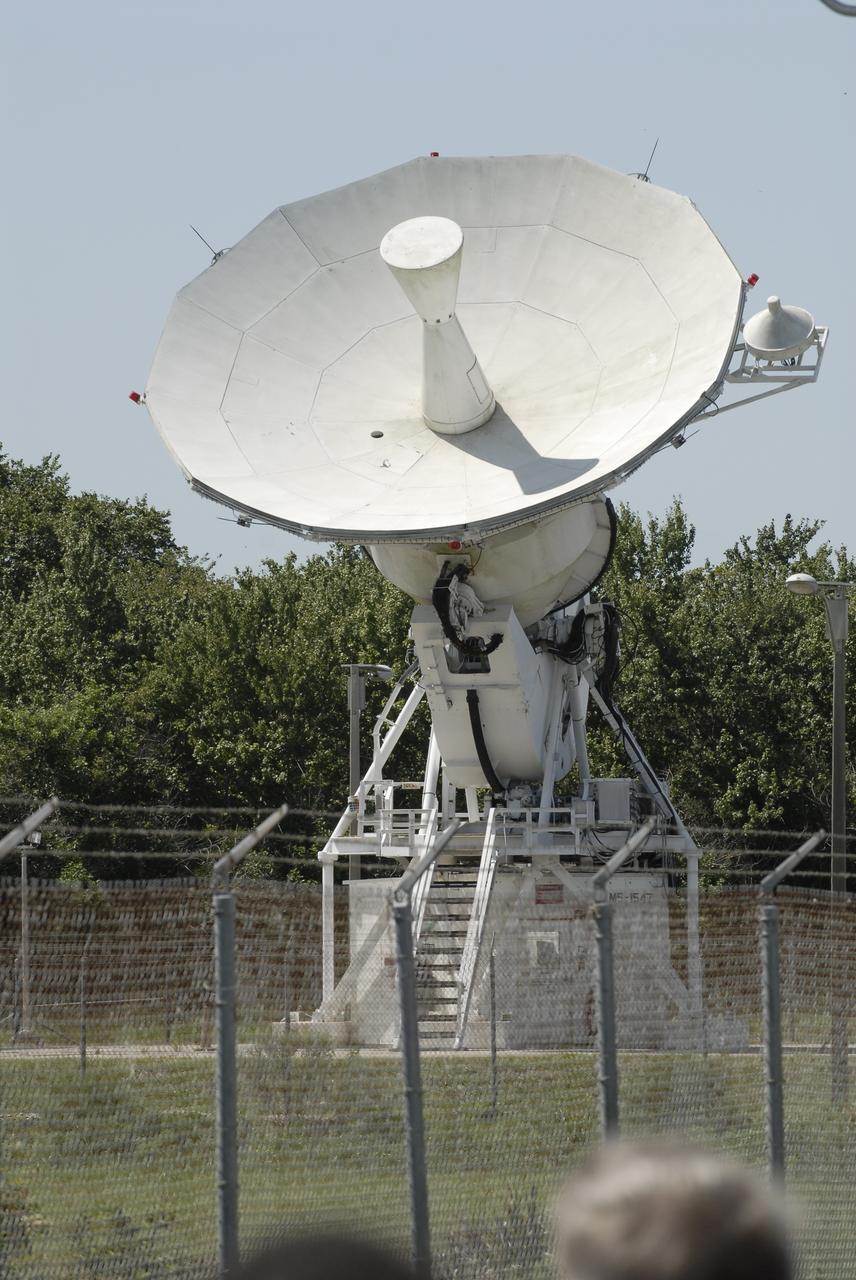
CAPE CANAVERAL, Fla. -- At the Merritt Island Launch Annex (MILA) Spaceflight Tracking and Data Network Station at NASA's Kennedy Space Center in Florida, one of two signature 30-foot steerable S-band antennas is slewed from the horizontal to the vertical position for the last time during a closing ceremony recognizing the station's 45 years of service. The antenna was pointed at Kennedy's Shuttle Landing Facility as it was for its last assignment, support of the landing of space shuttle Atlantis, concluding the STS-135 mission. STS-135 was the final mission of the Space Shuttle Program. The station was originally established by NASA's Goddard Space Flight Center as one of 17 Space Flight Tracking and Data Network stations around the world. Commissioned for the Apollo Program, the first launch it supported was the Apollo/Saturn 203 test flight from Launch Complex 37 on July 5, 1966. It also provided orbital support for low earth-orbiting scientific satellites. In recent history, the station has been used almost exclusively for space shuttle launch and landing support. Following the final launch and landing of the Space Shuttle Program in July 2011, the MILA station is officially decommissioned. For more information, visit http://www.nasa.gov/centers/kennedy/pdf/167424main_MILA-08C.pdf. Photo credit: NASA/Kim Shiflett
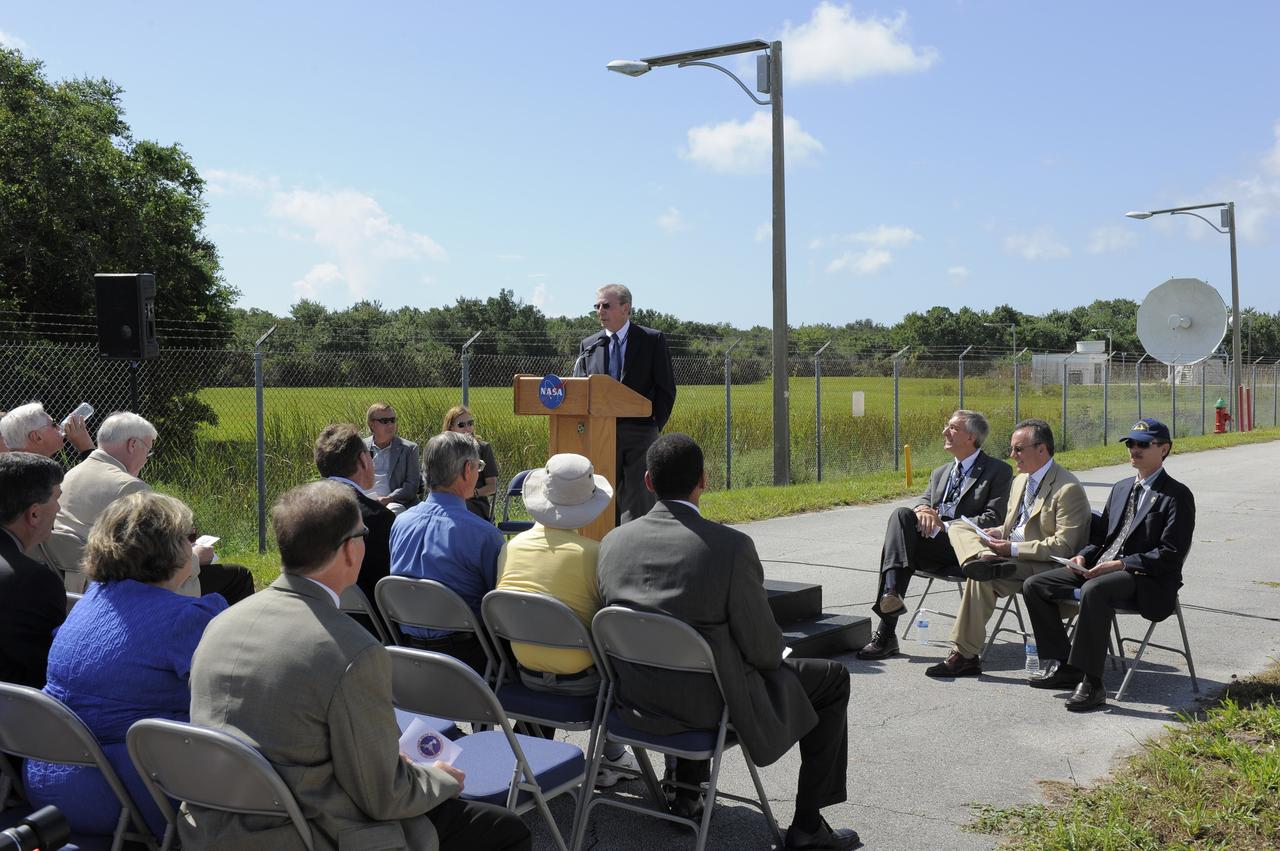
CAPE CANAVERAL, Fla. -- At the Merritt Island Launch Annex (MILA) Spaceflight Tracking and Data Network Station at NASA's Kennedy Space Center in Florida, NASA Station Director Gary Morse presides over a closing ceremony recognizing the station's 45 years of service. The station was originally established by NASA's Goddard Space Flight Center as one of 17 Space Flight Tracking and Data Network stations around the world. Commissioned for the Apollo Program, the first launch it supported was the Apollo/Saturn 203 test flight from Launch Complex 37 on July 5, 1966. It also provided orbital support for low earth-orbiting scientific satellites. In recent history, the station has been used almost exclusively for space shuttle launch and landing support. Following the final launch and landing of the Space Shuttle Program in July 2011, the MILA station is officially decommissioned. For more information, visit http://www.nasa.gov/centers/kennedy/pdf/167424main_MILA-08C.pdf. Photo credit: NASA/Kim Shiflett
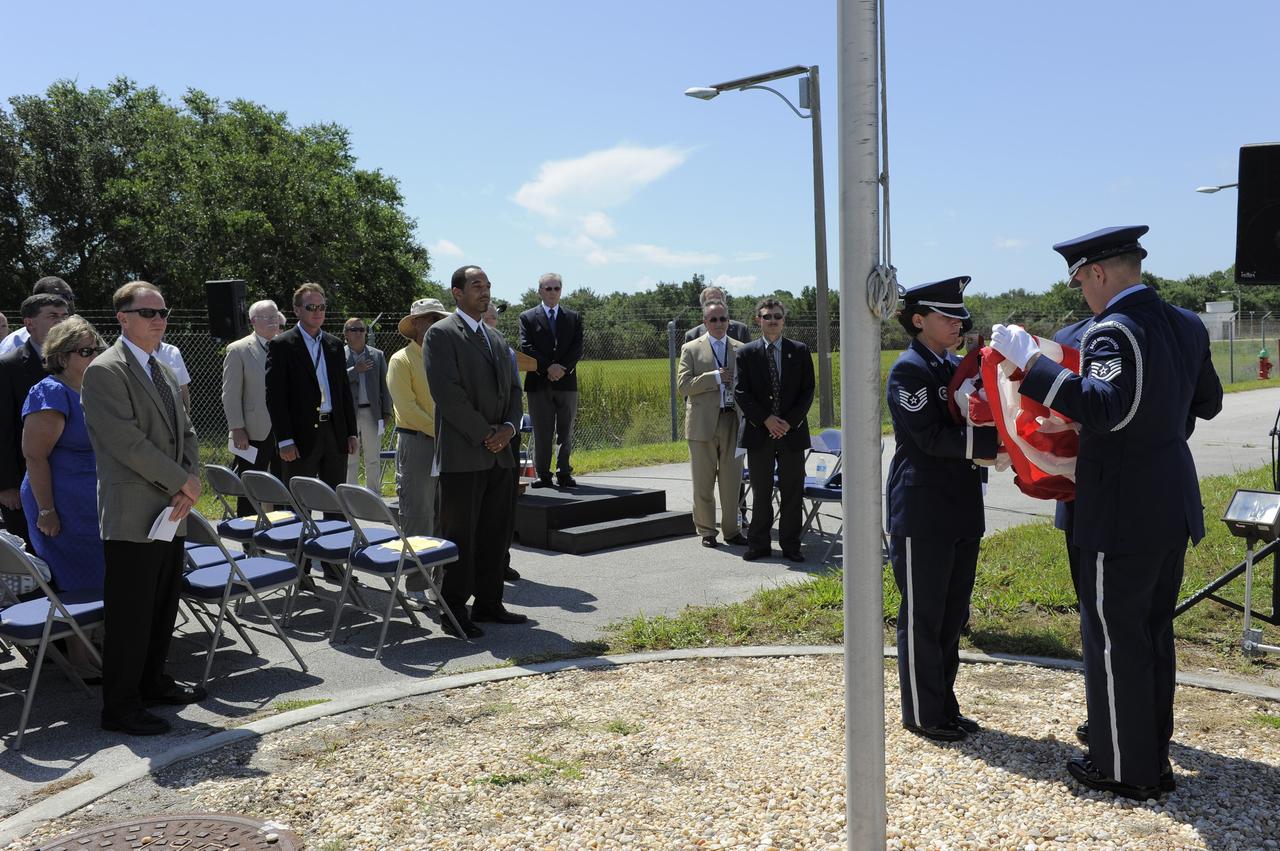
CAPE CANAVERAL, Fla. -- At the Merritt Island Launch Annex (MILA) Spaceflight Tracking and Data Network Station at NASA's Kennedy Space Center in Florida, the Patrick Air Force Base Color Guard folds the U.S. flag for the last time at a closing ceremony recognizing the station's 45 years of service. The station was originally established by NASA's Goddard Space Flight Center as one of 17 Space Flight Tracking and Data Network stations around the world. Commissioned for the Apollo Program, the first launch it supported was the Apollo/Saturn 203 test flight from Launch Complex 37 on July 5, 1966. It also provided orbital support for low earth-orbiting scientific satellites. In recent history, the station has been used almost exclusively for space shuttle launch and landing support. Following the final launch and landing of the Space Shuttle Program in July 2011, the MILA station is officially decommissioned. For more information, visit http://www.nasa.gov/centers/kennedy/pdf/167424main_MILA-08C.pdf. Photo credit: NASA/Kim Shiflett
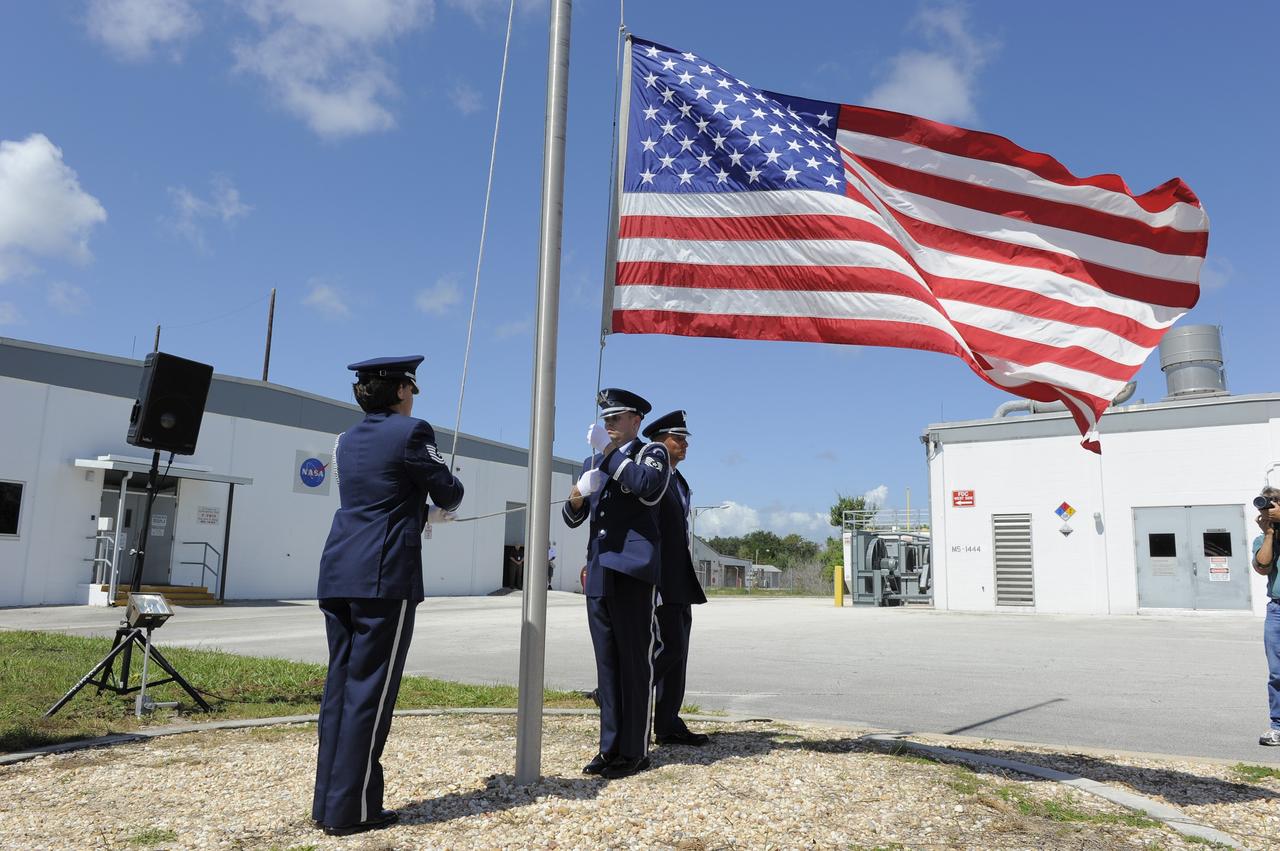
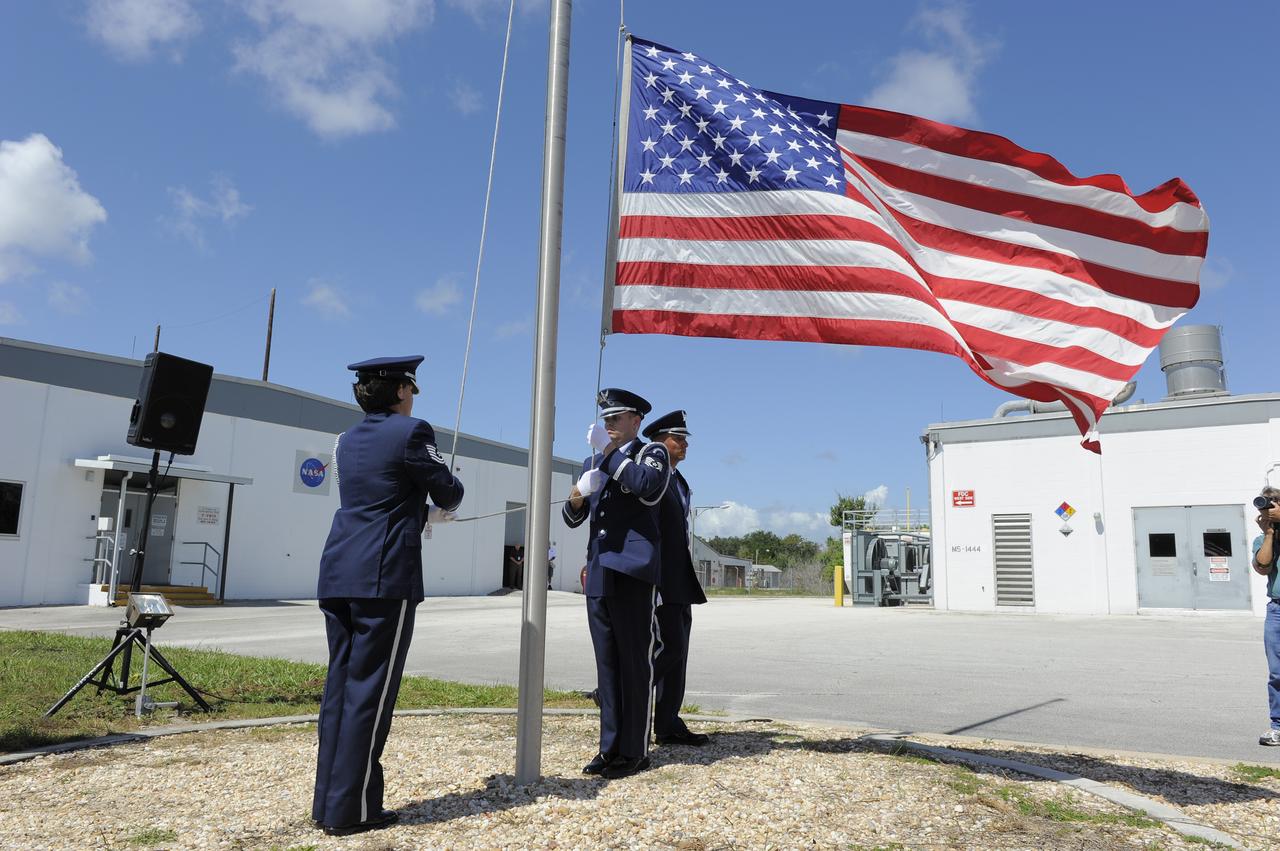
CAPE CANAVERAL, Fla. -- At the Merritt Island Launch Annex (MILA) Spaceflight Tracking and Data Network Station at NASA's Kennedy Space Center in Florida, the Patrick Air Force Base Color Guard lowers the U.S. flag for the last time at a closing ceremony recognizing the station's 45 years of service. The station was originally established by NASA's Goddard Space Flight Center as one of 17 Space Flight Tracking and Data Network stations around the world. Commissioned for the Apollo Program, the first launch it supported was the Apollo/Saturn 203 test flight from Launch Complex 37 on July 5, 1966. It also provided orbital support for low earth-orbiting scientific satellites. In recent history, the station has been used almost exclusively for space shuttle launch and landing support. Following the final launch and landing of the Space Shuttle Program in July 2011, the MILA station is officially decommissioned. For more information, visit http://www.nasa.gov/centers/kennedy/pdf/167424main_MILA-08C.pdf. Photo credit: NASA/Kim Shiflett
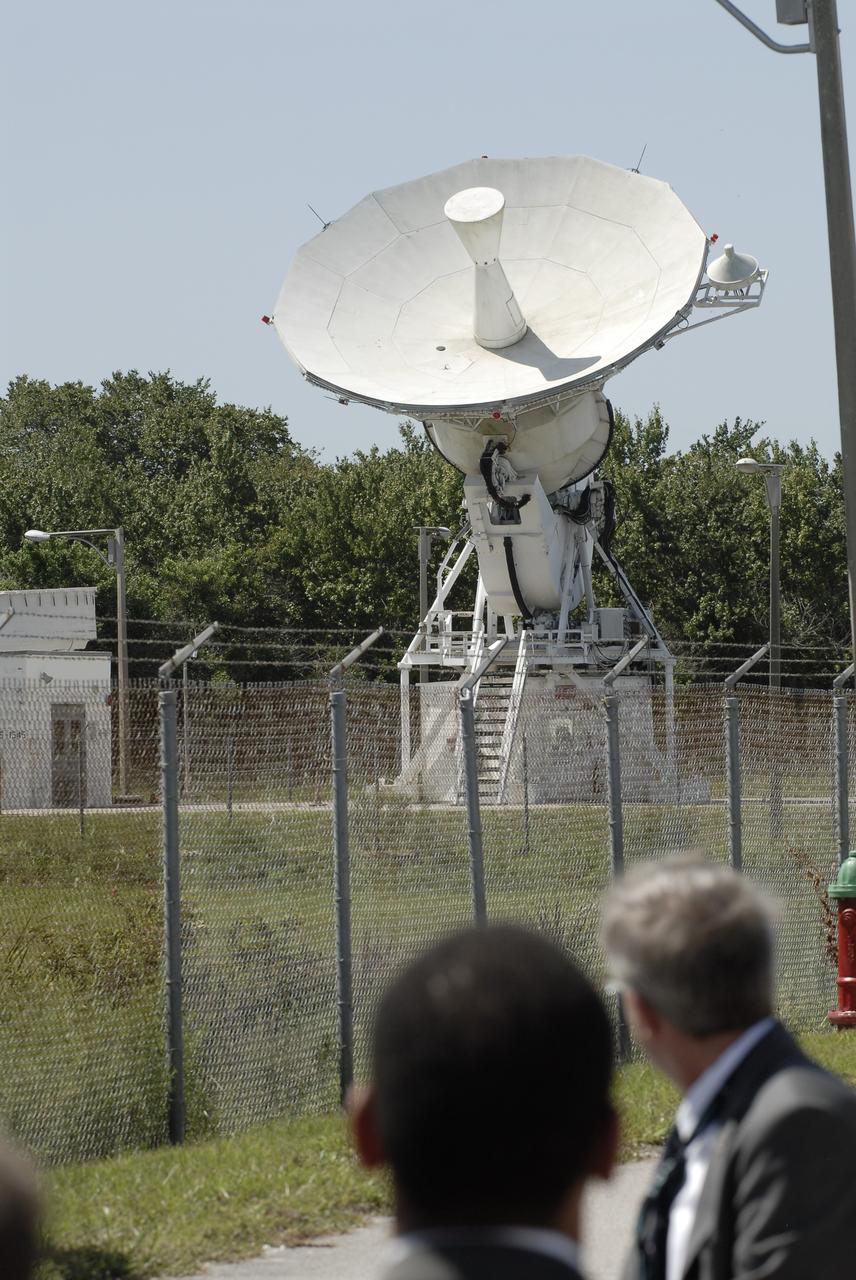
CAPE CANAVERAL, Fla. -- At the Merritt Island Launch Annex (MILA) Spaceflight Tracking and Data Network Station at NASA's Kennedy Space Center in Florida, one of two signature 30-foot steerable S-band antennas is slewed from the horizontal to the vertical position for the last time during a closing ceremony recognizing the station's 45 years of service. The antenna was pointed at Kennedy's Shuttle Landing Facility as it was for its last assignment, support of the landing of space shuttle Atlantis, concluding the STS-135 mission. STS-135 was the final mission of the Space Shuttle Program. The station was originally established by NASA's Goddard Space Flight Center as one of 17 Space Flight Tracking and Data Network stations around the world. Commissioned for the Apollo Program, the first launch it supported was the Apollo/Saturn 203 test flight from Launch Complex 37 on July 5, 1966. It also provided orbital support for low earth-orbiting scientific satellites. In recent history, the station has been used almost exclusively for space shuttle launch and landing support. Following the final launch and landing of the Space Shuttle Program in July 2011, the MILA station is officially decommissioned. For more information, visit http://www.nasa.gov/centers/kennedy/pdf/167424main_MILA-08C.pdf. Photo credit: NASA/Kim Shiflett
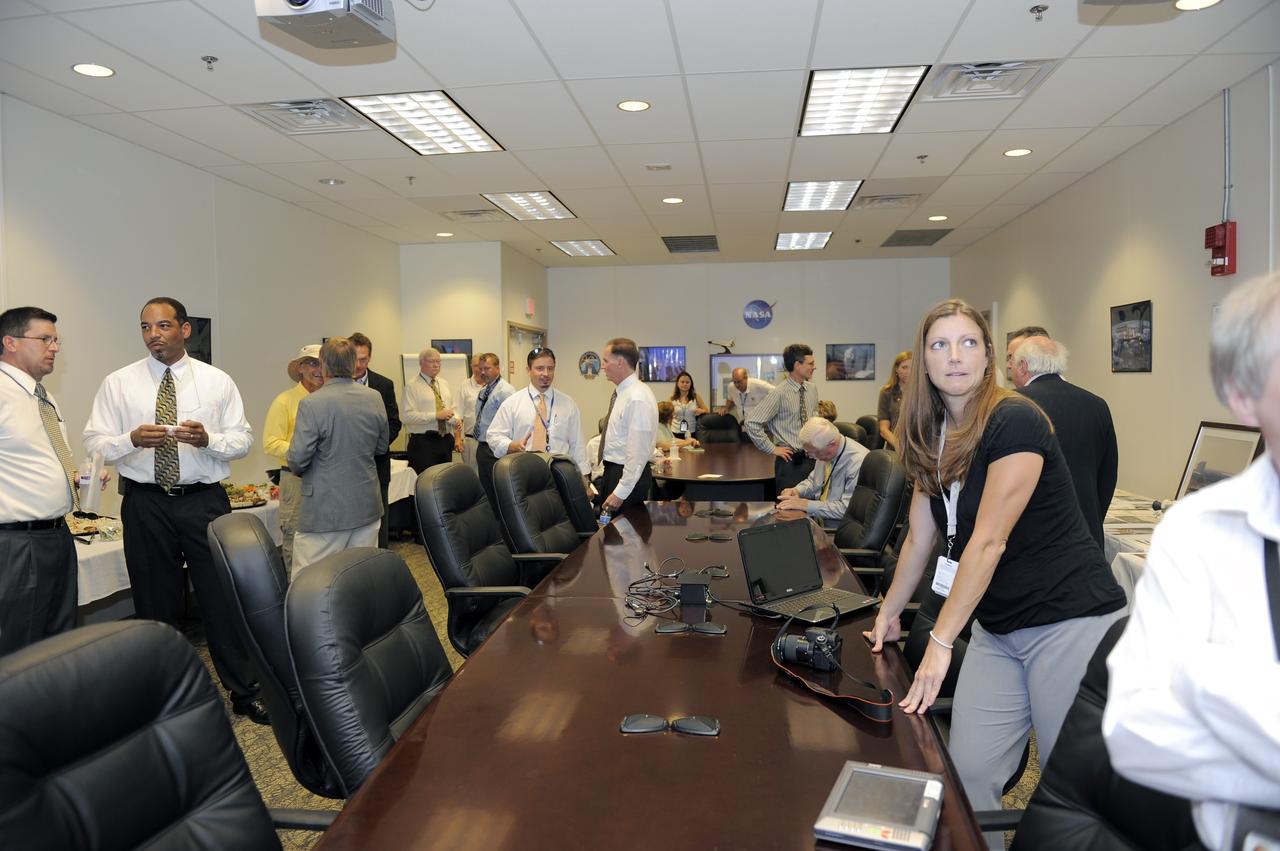
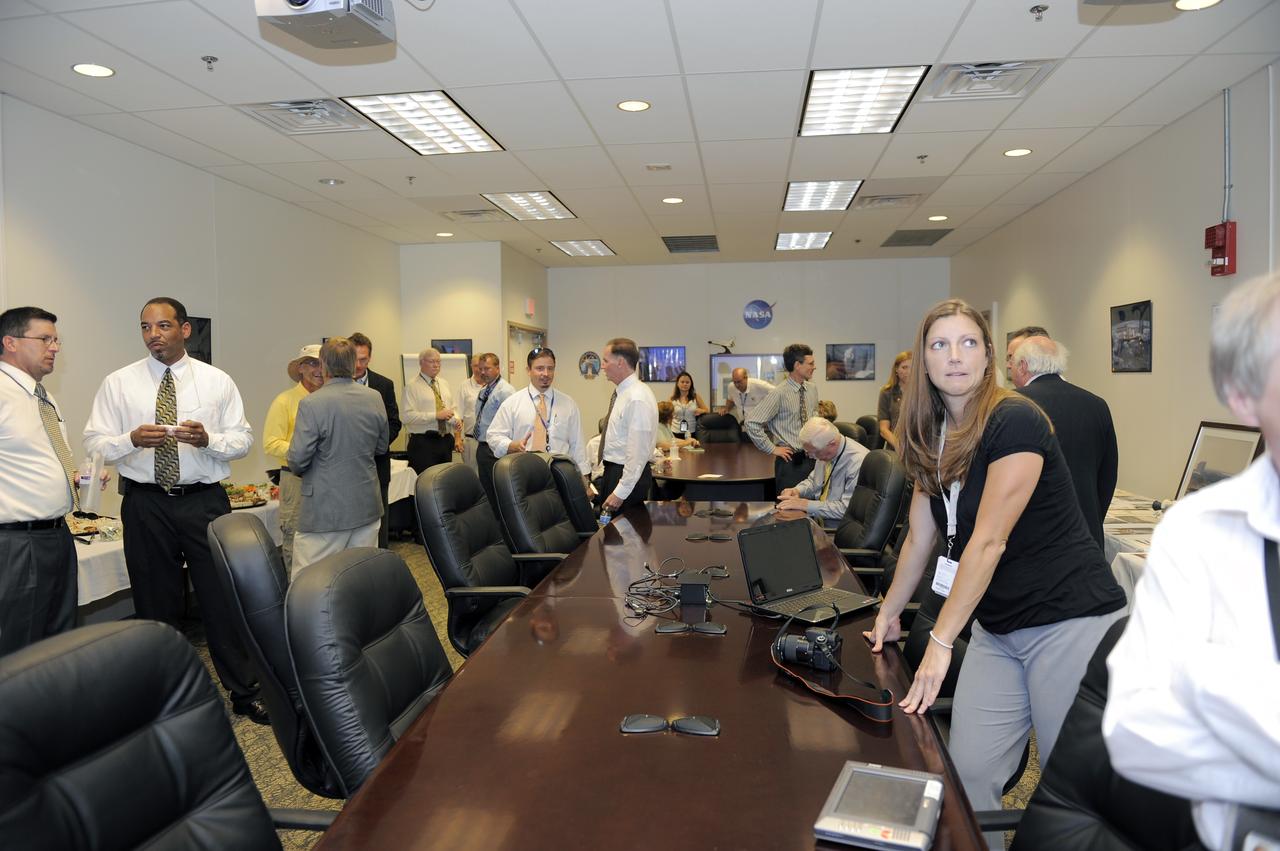
CAPE CANAVERAL, Fla. -- At the Merritt Island Launch Annex (MILA) Spaceflight Tracking and Data Network Station at NASA's Kennedy Space Center in Florida, former and current employees of the station mingle at a reception following a closing ceremony recognizing the station's 45 years of service. The station was originally established by NASA's Goddard Space Flight Center as one of 17 Space Flight Tracking and Data Network stations around the world. Commissioned for the Apollo Program, the first launch it supported was the Apollo/Saturn 203 test flight from Launch Complex 37 on July 5, 1966. It also provided orbital support for low earth-orbiting scientific satellites. In recent history, the station has been used almost exclusively for space shuttle launch and landing support. Following the final launch and landing of the Space Shuttle Program in July 2011, the MILA station is officially decommissioned. For more information, visit http://www.nasa.gov/centers/kennedy/pdf/167424main_MILA-08C.pdf. Photo credit: NASA/Kim Shiflett
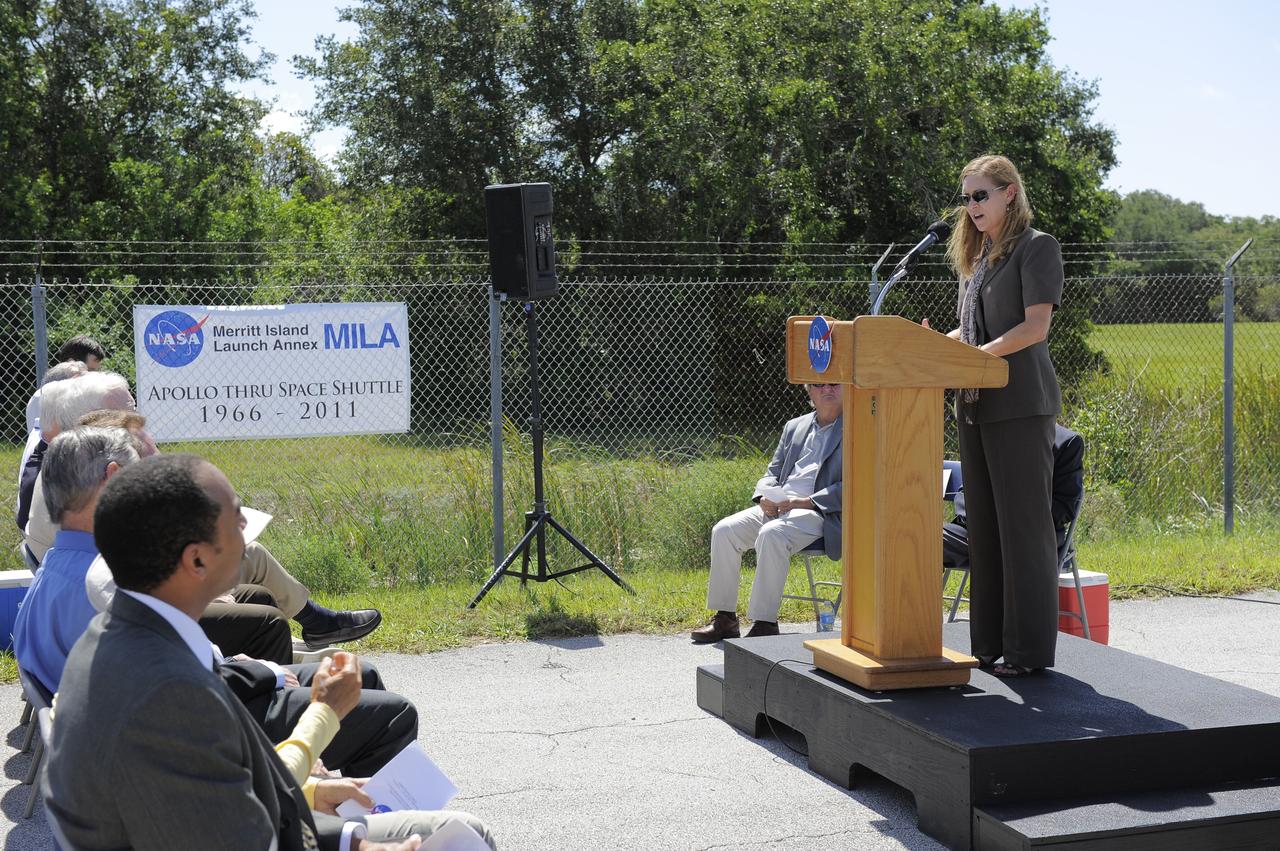
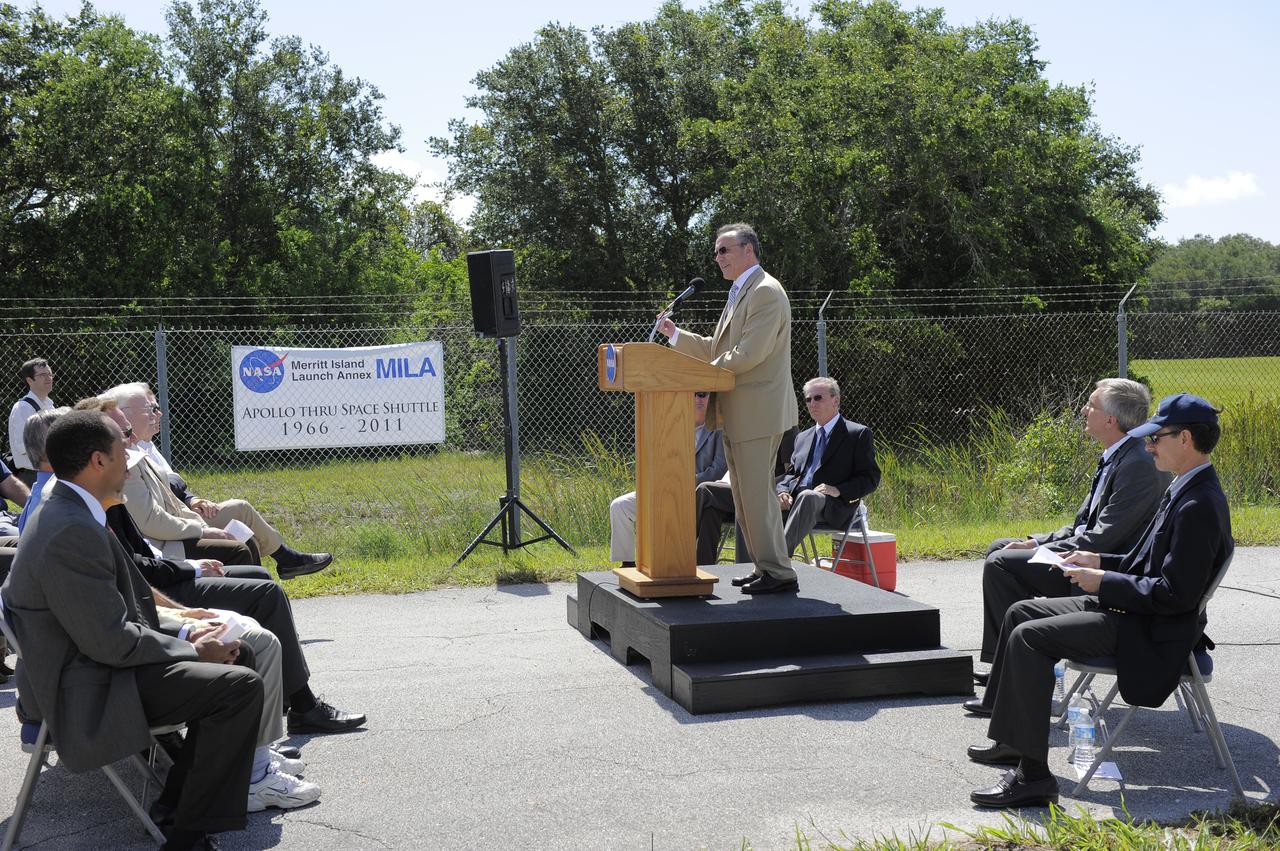
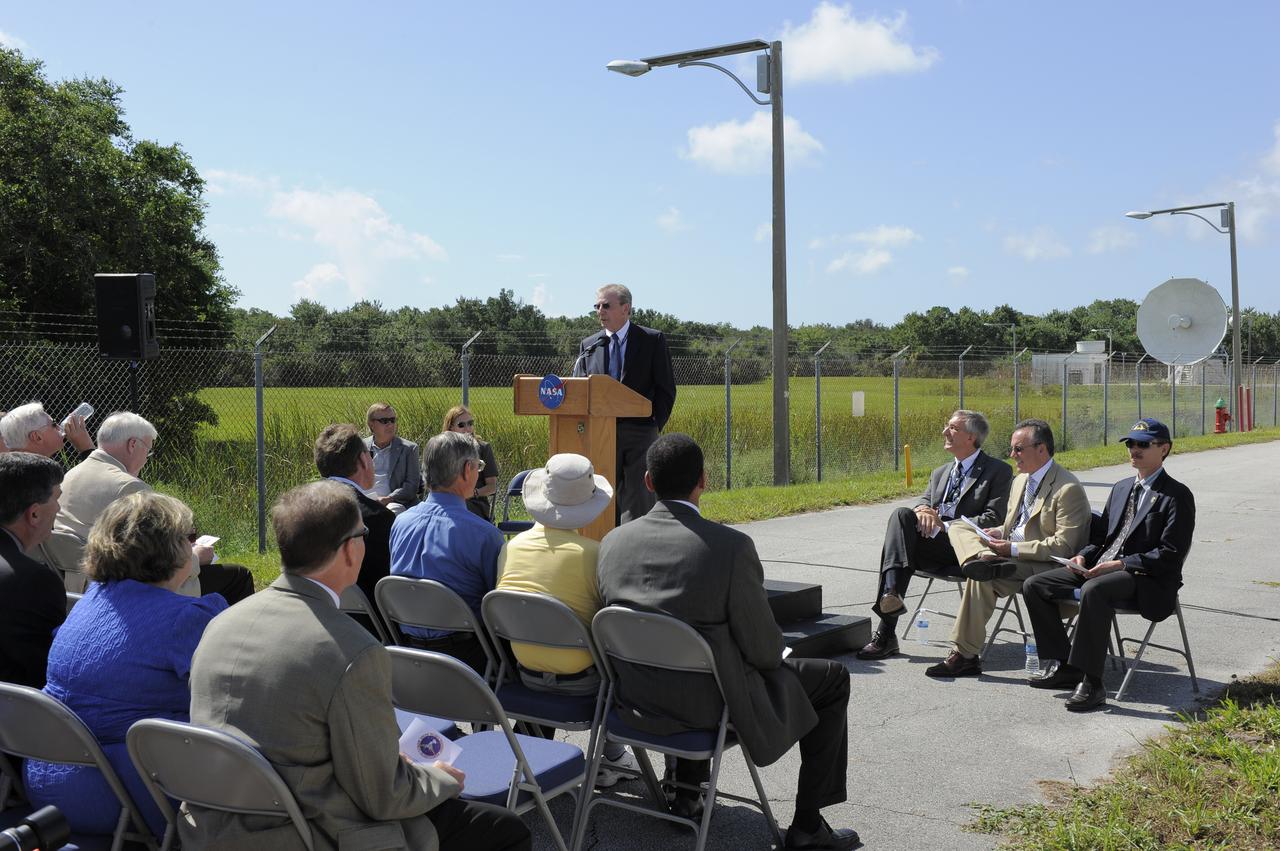
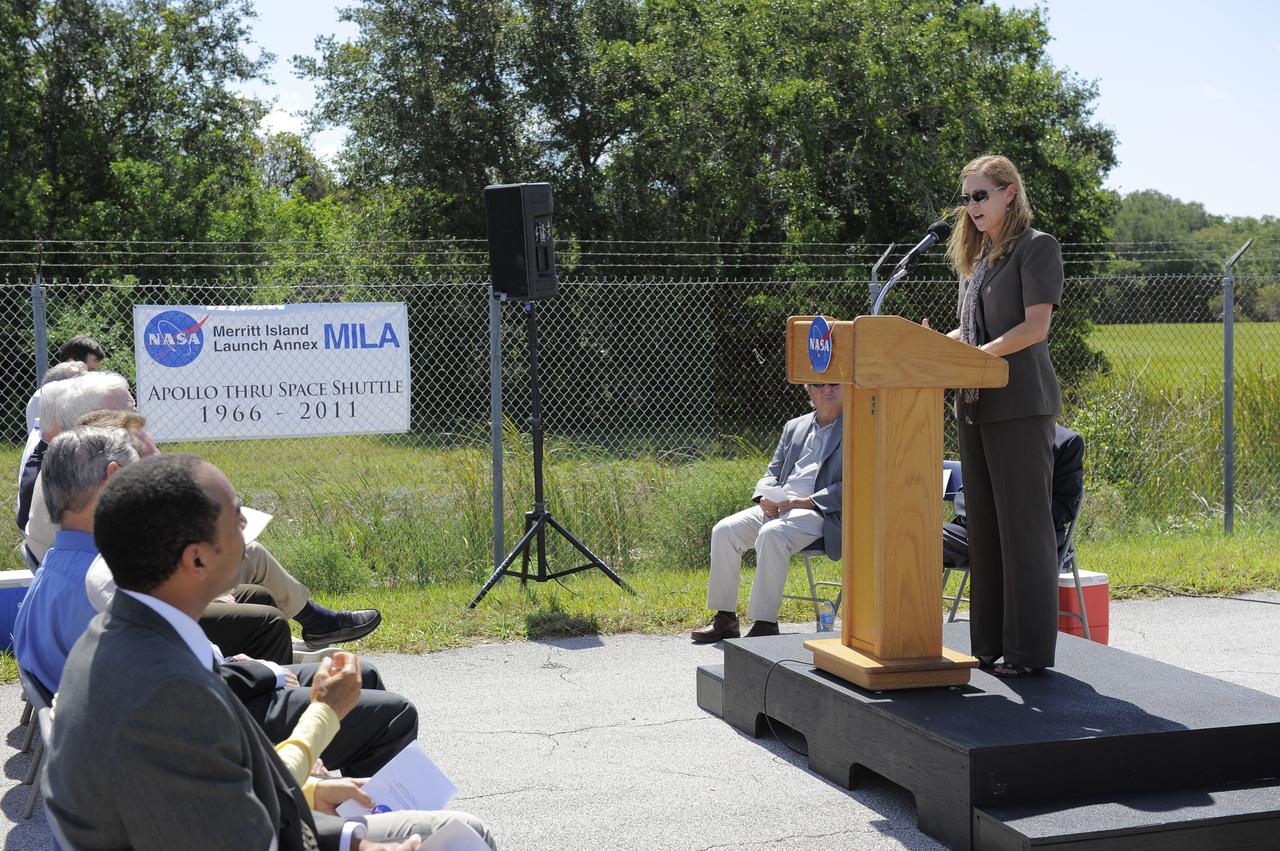
CAPE CANAVERAL, Fla. -- At the Merritt Island Launch Annex (MILA) Spaceflight Tracking and Data Network Station at NASA's Kennedy Space Center in Florida, Kennedy Deputy Director Janet Petro addresses those in attendance at a closing ceremony recognizing the station's 45 years of service. The station was originally established by NASA's Goddard Space Flight Center as one of 17 Space Flight Tracking and Data Network stations around the world. Commissioned for the Apollo Program, the first launch it supported was the Apollo/Saturn 203 test flight from Launch Complex 37 on July 5, 1966. It also provided orbital support for low earth-orbiting scientific satellites. In recent history, the station has been used almost exclusively for space shuttle launch and landing support. Following the final launch and landing of the Space Shuttle Program in July 2011, the MILA station is officially decommissioned. For more information, visit http://www.nasa.gov/centers/kennedy/pdf/167424main_MILA-08C.pdf. Photo credit: NASA/Kim Shiflett

CAPE CANAVERAL, Fla. -- At the Merritt Island Launch Annex (MILA) Spaceflight Tracking and Data Network Station at NASA's Kennedy Space Center in Florida, Shuttle Launch Director Michael Leinbach addresses those in attendance at a closing ceremony recognizing the station's 45 years of service. The station was originally established by NASA's Goddard Space Flight Center as one of 17 Space Flight Tracking and Data Network stations around the world. Commissioned for the Apollo Program, the first launch it supported was the Apollo/Saturn 203 test flight from Launch Complex 37 on July 5, 1966. It also provided orbital support for low earth-orbiting scientific satellites. In recent history, the station has been used almost exclusively for space shuttle launch and landing support. Following the final launch and landing of the Space Shuttle Program in July 2011, the MILA station is officially decommissioned. For more information, visit http://www.nasa.gov/centers/kennedy/pdf/167424main_MILA-08C.pdf. Photo credit: NASA/Kim Shiflett
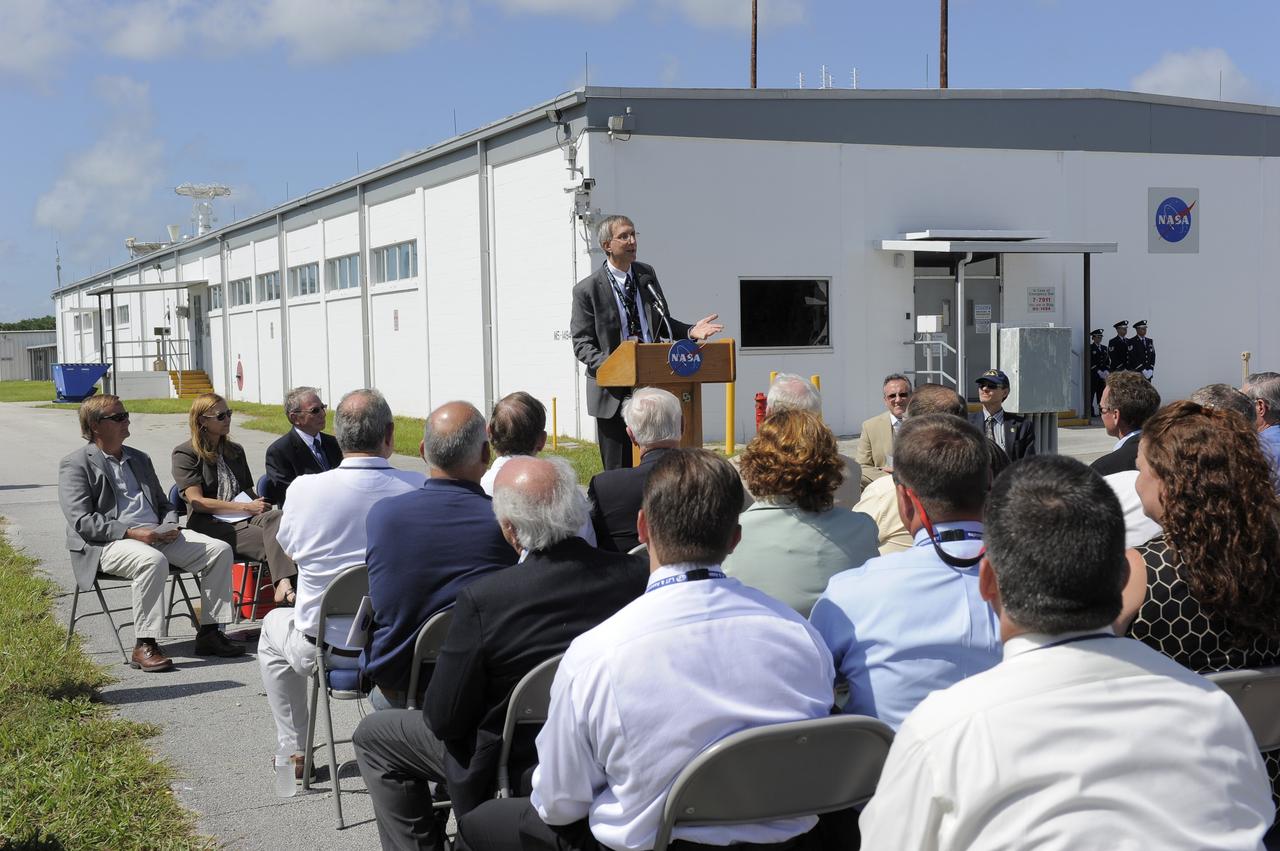
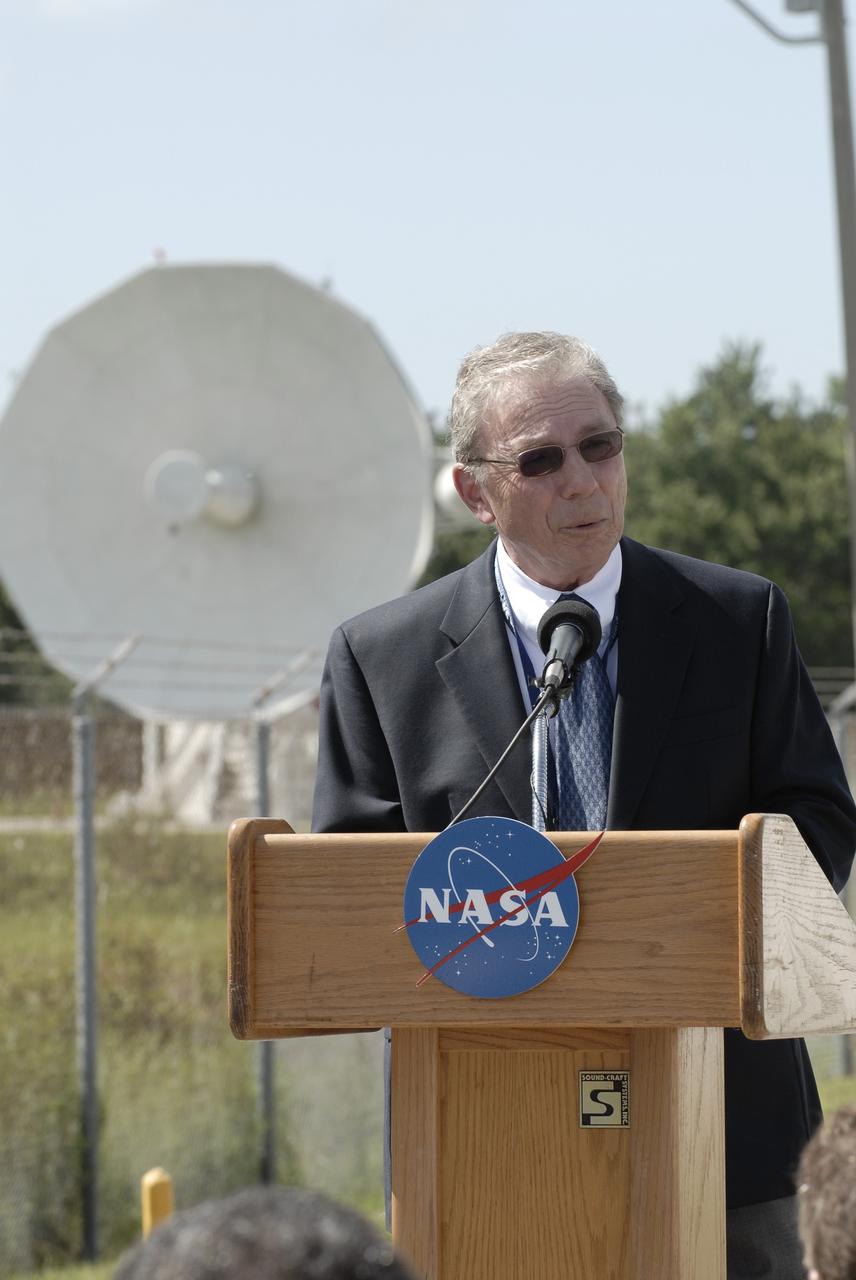
CAPE CANAVERAL, Fla. -- At the Merritt Island Launch Annex (MILA) Spaceflight Tracking and Data Network Station at NASA's Kennedy Space Center in Florida, Jeff Volosin, associate director, Exploration and Communications, NASA Goddard Space Flight Center, addresses those in attendance at a closing ceremony recognizing the station's 45 years of service. The station was originally established by NASA's Goddard Space Flight Center as one of 17 Space Flight Tracking and Data Network stations around the world. Commissioned for the Apollo Program, the first launch it supported was the Apollo/Saturn 203 test flight from Launch Complex 37 on July 5, 1966. It also provided orbital support for low earth-orbiting scientific satellites. In recent history, the station has been used almost exclusively for space shuttle launch and landing support. Following the final launch and landing of the Space Shuttle Program in July 2011, the MILA station is officially decommissioned. For more information, visit http://www.nasa.gov/centers/kennedy/pdf/167424main_MILA-08C.pdf. Photo credit: NASA/Kim Shiflett
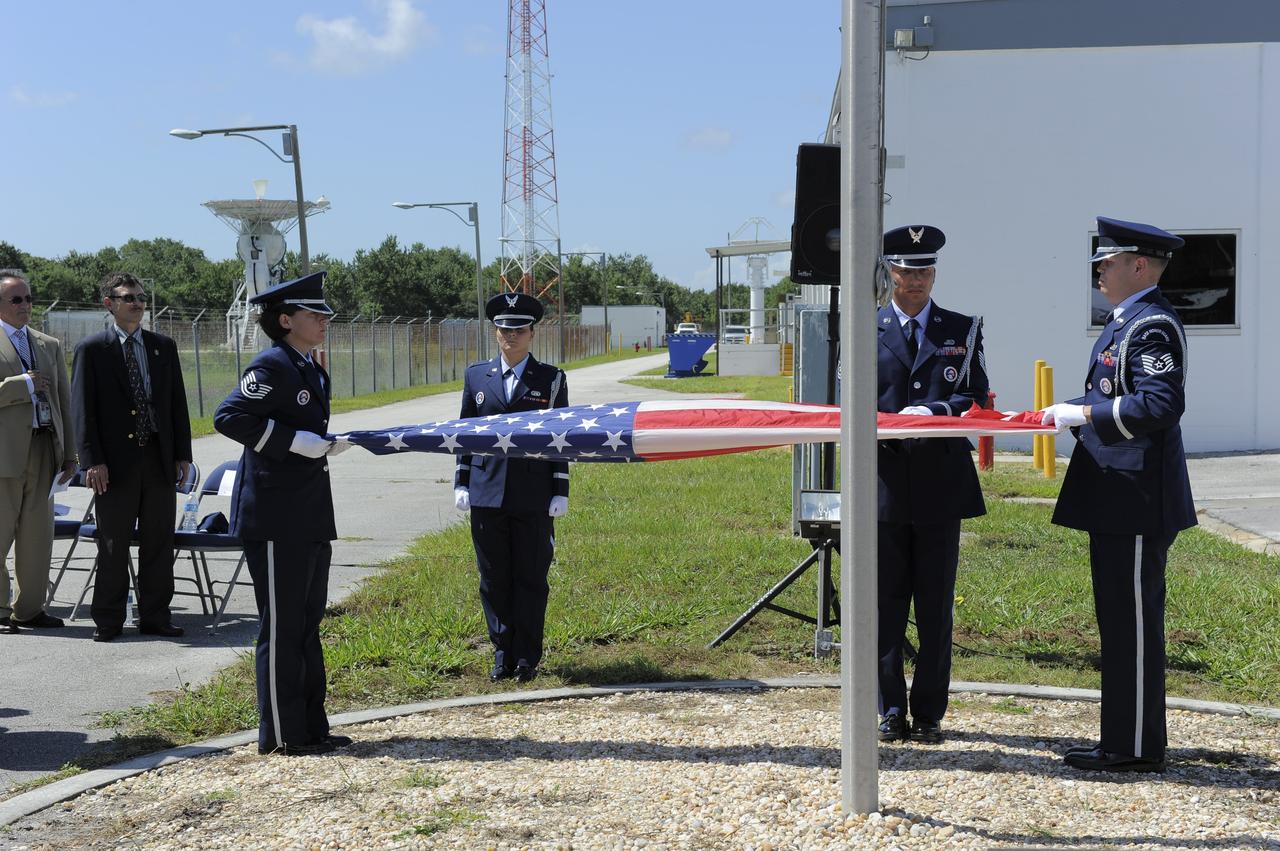
CAPE CANAVERAL, Fla. -- At the Merritt Island Launch Annex (MILA) Spaceflight Tracking and Data Network Station at NASA's Kennedy Space Center in Florida, the Patrick Air Force Base Color Guard folds the U.S. flag for the last time at a closing ceremony recognizing the station's 45 years of service. The station was originally established by NASA's Goddard Space Flight Center as one of 17 Space Flight Tracking and Data Network stations around the world. Commissioned for the Apollo Program, the first launch it supported was the Apollo/Saturn 203 test flight from Launch Complex 37 on July 5, 1966. It also provided orbital support for low earth-orbiting scientific satellites. In recent history, the station has been used almost exclusively for space shuttle launch and landing support. Following the final launch and landing of the Space Shuttle Program in July 2011, the MILA station is officially decommissioned. For more information, visit http://www.nasa.gov/centers/kennedy/pdf/167424main_MILA-08C.pdf. Photo credit: NASA/Kim Shiflett
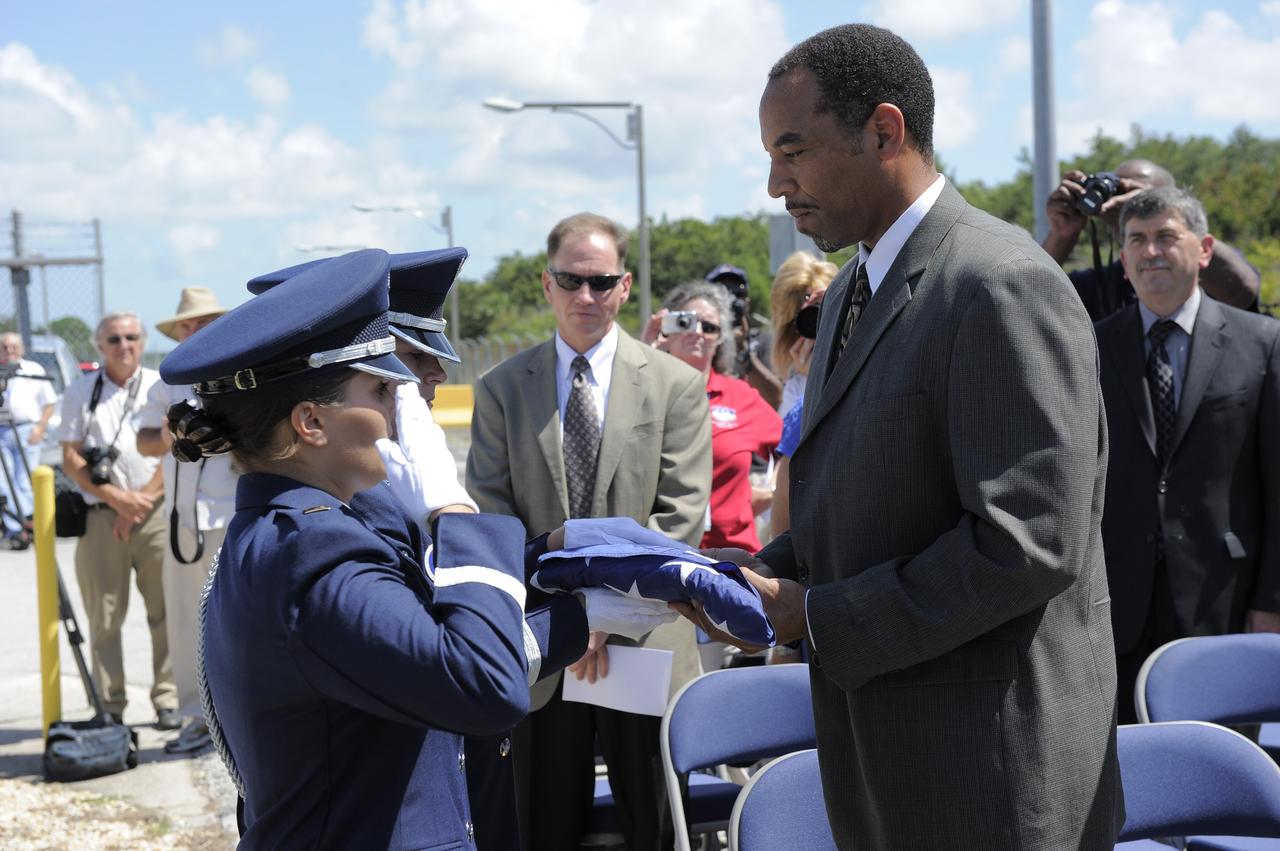
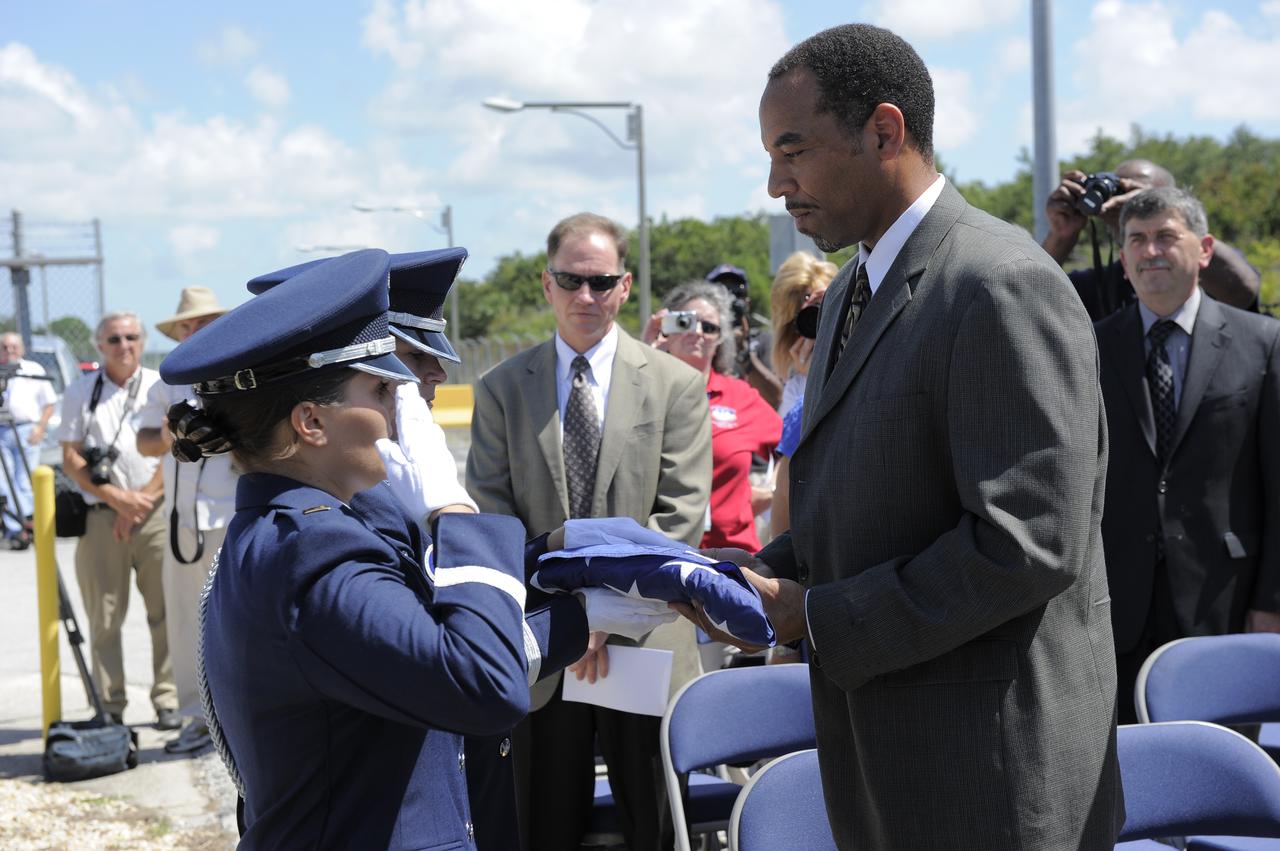
CAPE CANAVERAL, Fla. -- At the Merritt Island Launch Annex (MILA) Spaceflight Tracking and Data Network Station at NASA's Kennedy Space Center in Florida, the Patrick Air Force Base Color Guard presents the U.S. flag which flew over the station to David Carter, Near Earth Network project manager at Goddard Space Flight Center, during a closing ceremony recognizing the station's 45 years of service. The flag will be displayed in a Network Integration Center display cabinet at Goddard. The station was originally established by NASA's Goddard Space Flight Center as one of 17 Space Flight Tracking and Data Network stations around the world. Commissioned for the Apollo Program, the first launch it supported was the Apollo/Saturn 203 test flight from Launch Complex 37 on July 5, 1966. It also provided orbital support for low earth-orbiting scientific satellites. In recent history, the station has been used almost exclusively for space shuttle launch and landing support. Following the final launch and landing of the Space Shuttle Program in July 2011, the MILA station is officially decommissioned. For more information, visit http://www.nasa.gov/centers/kennedy/pdf/167424main_MILA-08C.pdf. Photo credit: NASA/Kim Shiflett
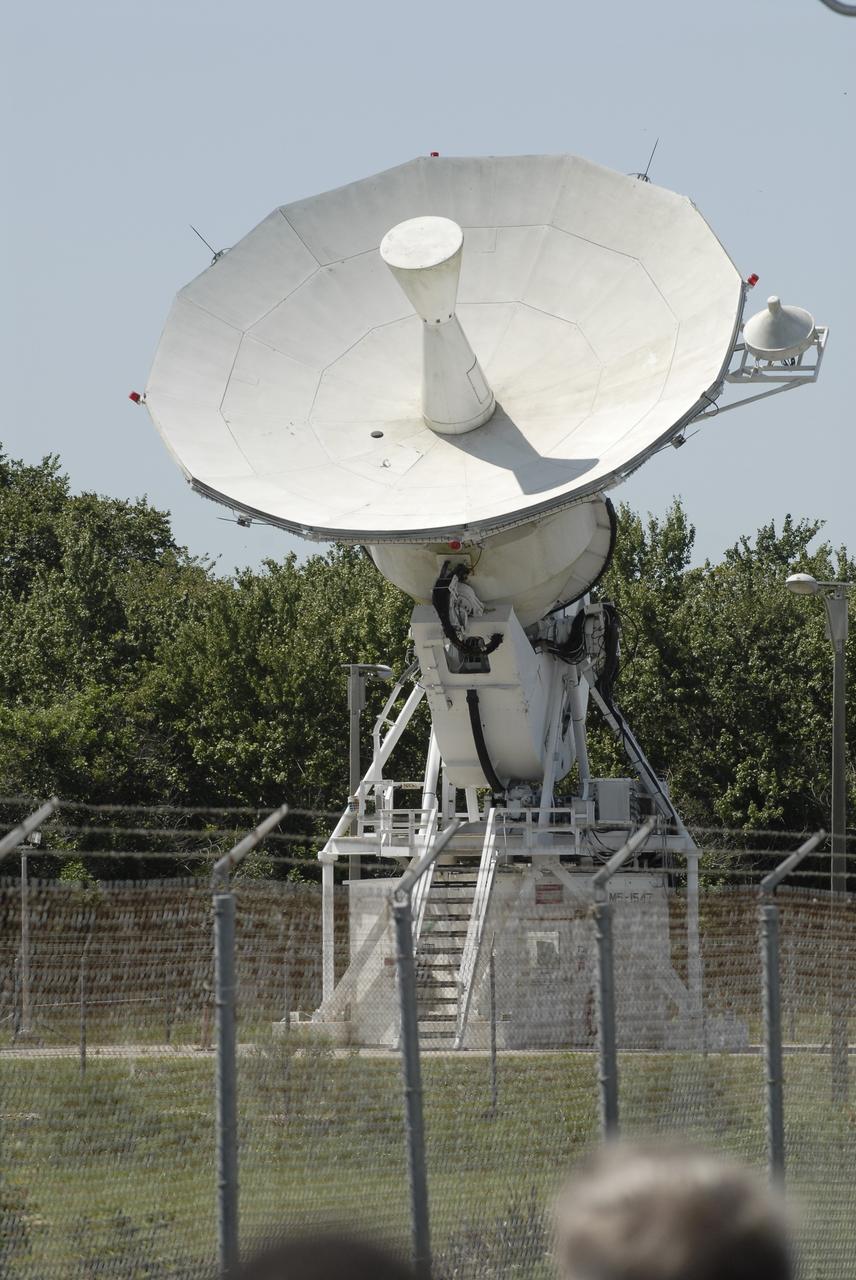
CAPE CANAVERAL, Fla. -- At the Merritt Island Launch Annex (MILA) Spaceflight Tracking and Data Network Station at NASA's Kennedy Space Center in Florida, one of two signature 30-foot steerable S-band antennas is slewed from the horizontal to the vertical position for the last time during a closing ceremony recognizing the station's 45 years of service. The antenna was pointed at Kennedy's Shuttle Landing Facility as it was for its last assignment, support of the landing of space shuttle Atlantis, concluding the STS-135 mission. STS-135 was the final mission of the Space Shuttle Program. The station was originally established by NASA's Goddard Space Flight Center as one of 17 Space Flight Tracking and Data Network stations around the world. Commissioned for the Apollo Program, the first launch it supported was the Apollo/Saturn 203 test flight from Launch Complex 37 on July 5, 1966. It also provided orbital support for low earth-orbiting scientific satellites. In recent history, the station has been used almost exclusively for space shuttle launch and landing support. Following the final launch and landing of the Space Shuttle Program in July 2011, the MILA station is officially decommissioned. For more information, visit http://www.nasa.gov/centers/kennedy/pdf/167424main_MILA-08C.pdf. Photo credit: NASA/Kim Shiflett
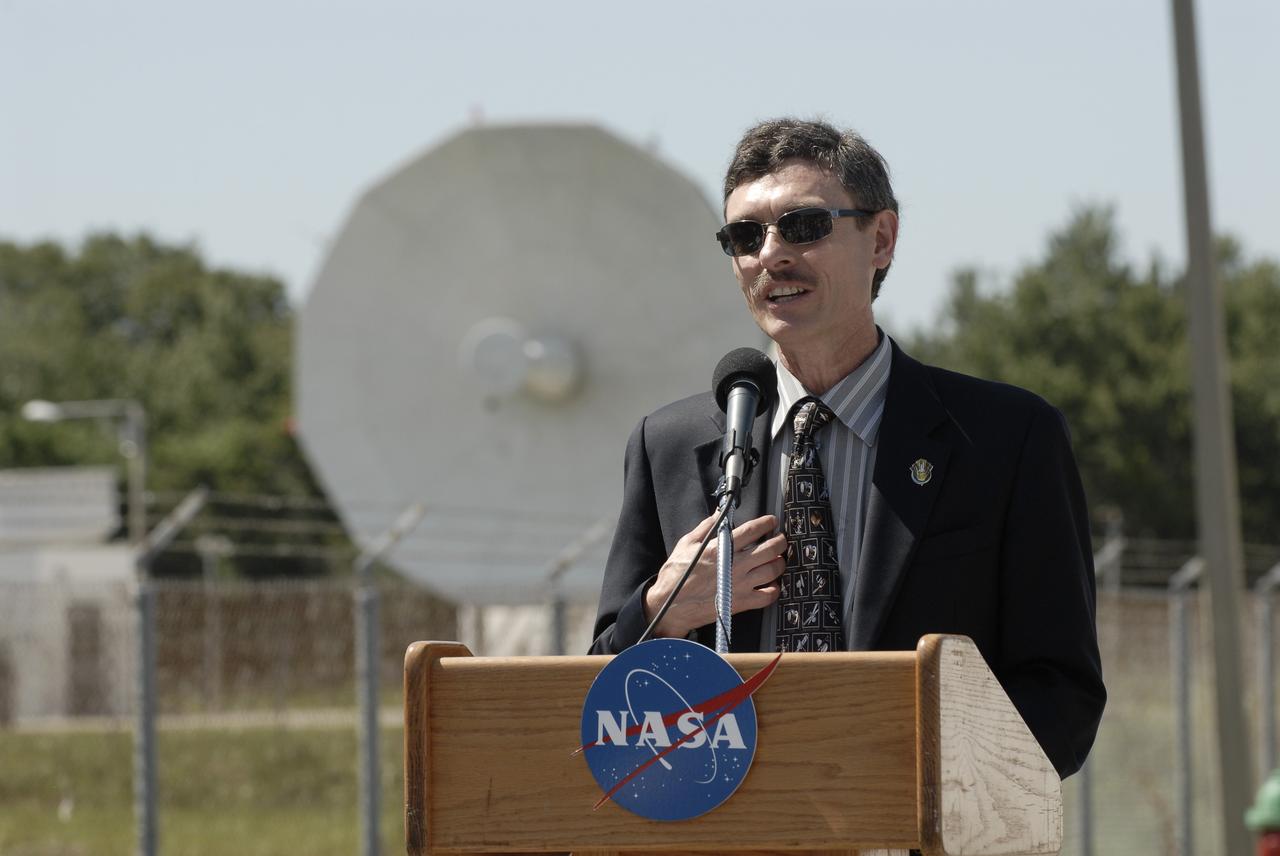
CAPE CANAVERAL, Fla. -- At the Merritt Island Launch Annex (MILA) Spaceflight Tracking and Data Network Station at NASA's Kennedy Space Center in Florida, Phil Liebrecht, deputy program manager, Space Communications and Navigation Network (SCaN), NASA Headquarters, addresses those in attendance at a closing ceremony recognizing the station's 45 years of service. The station was originally established by NASA's Goddard Space Flight Center as one of 17 Space Flight Tracking and Data Network stations around the world. Commissioned for the Apollo Program, the first launch it supported was the Apollo/Saturn 203 test flight from Launch Complex 37 on July 5, 1966. It also provided orbital support for low earth-orbiting scientific satellites. In recent history, the station has been used almost exclusively for space shuttle launch and landing support. Following the final launch and landing of the Space Shuttle Program in July 2011, the MILA station is officially decommissioned. For more information, visit http://www.nasa.gov/centers/kennedy/pdf/167424main_MILA-08C.pdf. Photo credit: NASA/Kim Shiflett
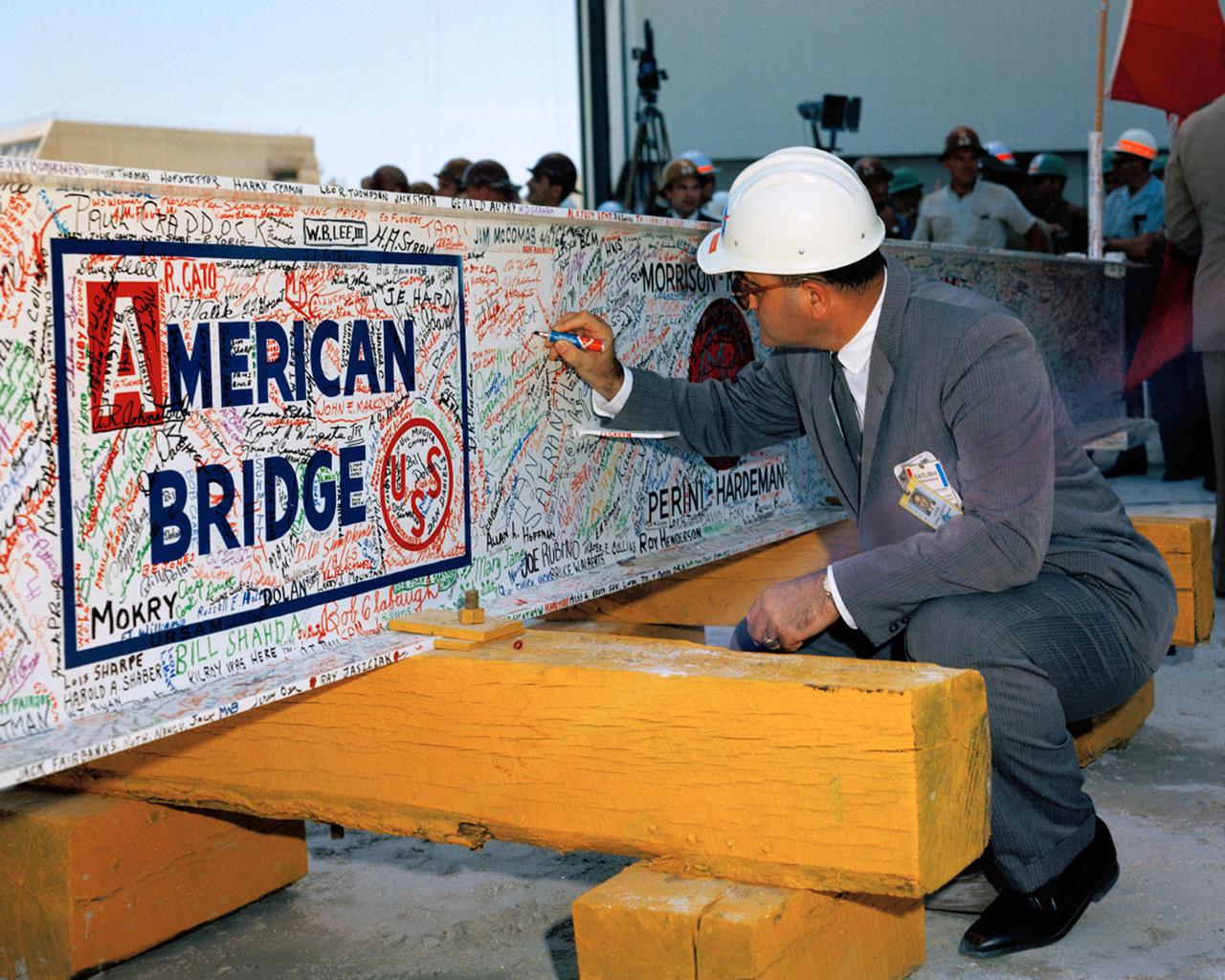
Colonel Rocco Patrone (Director, Plans, Programs and Resources Office NASA-KSC) signs the last major beam also autographed by construction workers, NASA, and Corps of Engineers employees to be installed during the VAB Topping-Off Ceremony. MILA.
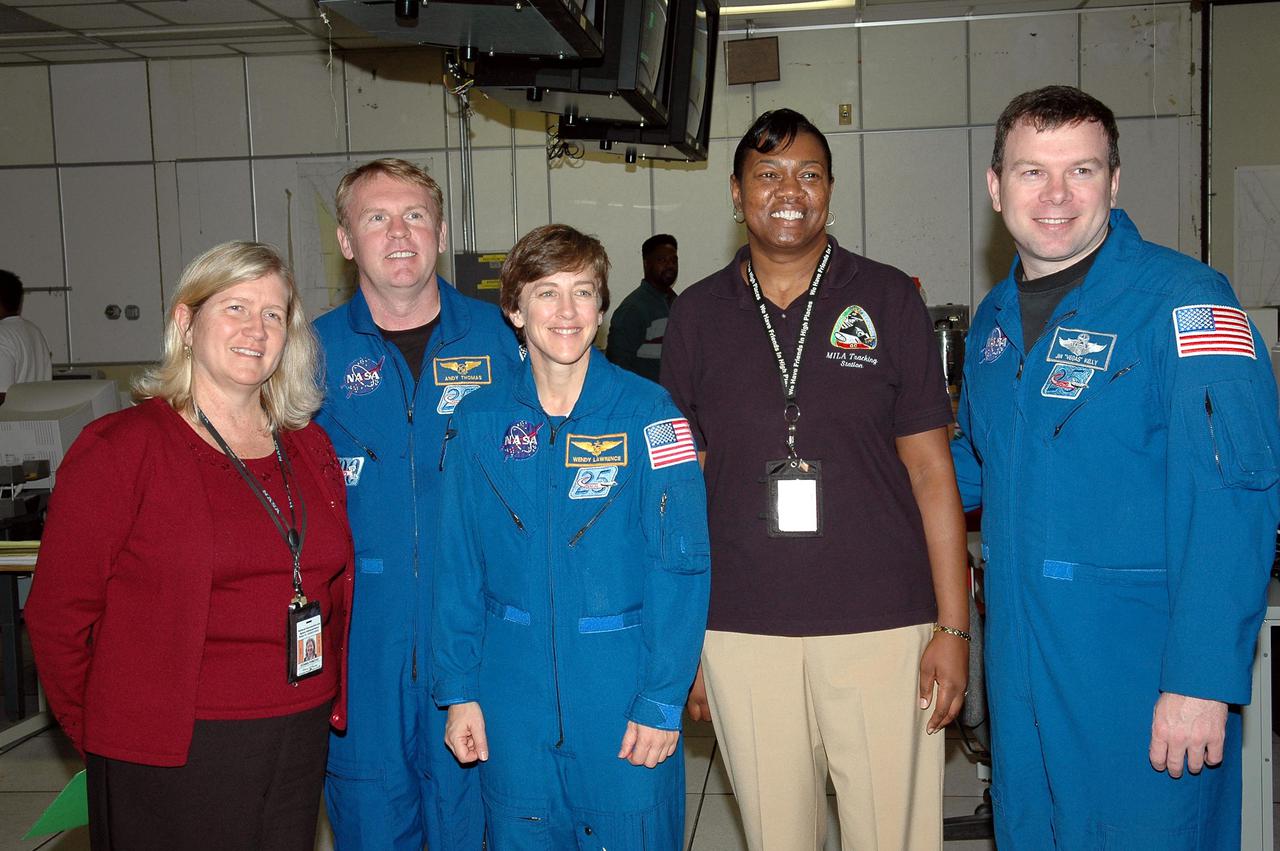
KENNEDY SPACE CENTER, FLA. - - While visiting Kennedy Space Center, members of the STS-114 crew stop to talk with workers in the MILA Spaceflight Tracking and Data Network Station. From left are Donna Pancho, MILA software engineer, Mission Specialists Andrew Thomas and Wendy Lawrence, Melissa Blizzard, MILA operations manager, and Pilot James Kelly. The tracking station serves as the primary voice, data and telemetry communications link between the Shuttle and the ground from launch until 7-1_2 minutes into the flight. Millions of clues about the performance of the Space Shuttle’s main engines and other components are communicated to launch managers, technicians and engineers on the ground, who must keep their fingers on the pulse of the Space Shuttle during the critical ascent period. In a typical year, MILA provides through KSC more than 10,000 hours of data between spacecraft and data users. MILA is also used during a Space Shuttle landing at KSC and provides communications beginning about 13 minutes before touchdown. Also, MILA can be called upon to provide data transfer support for NASA’s Expendable Launch Vehicle missions and orbiting scientific satellites.
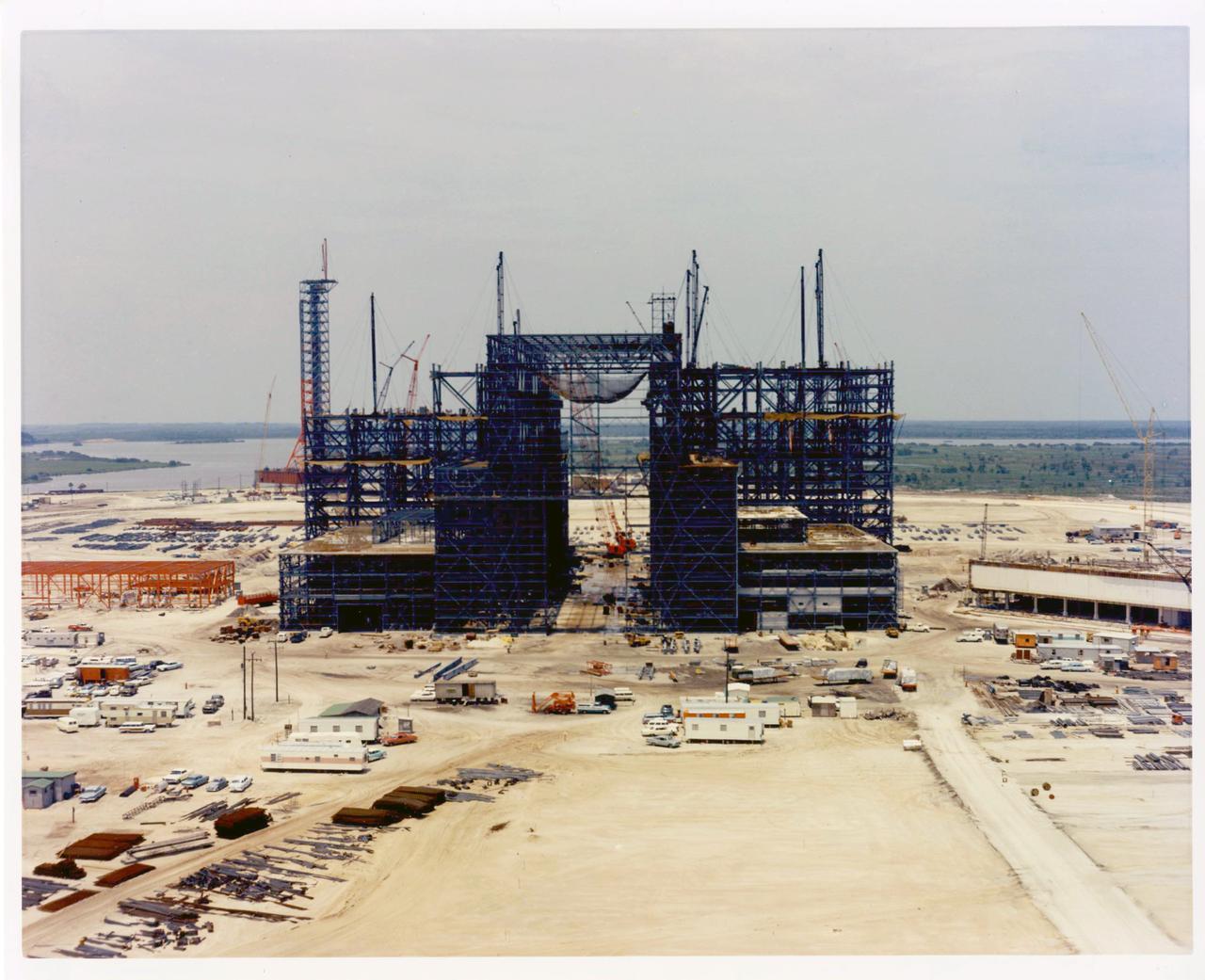
Aerial. Construction progress of the Vehicle Assembly Building (VAB), looking north. MILA.
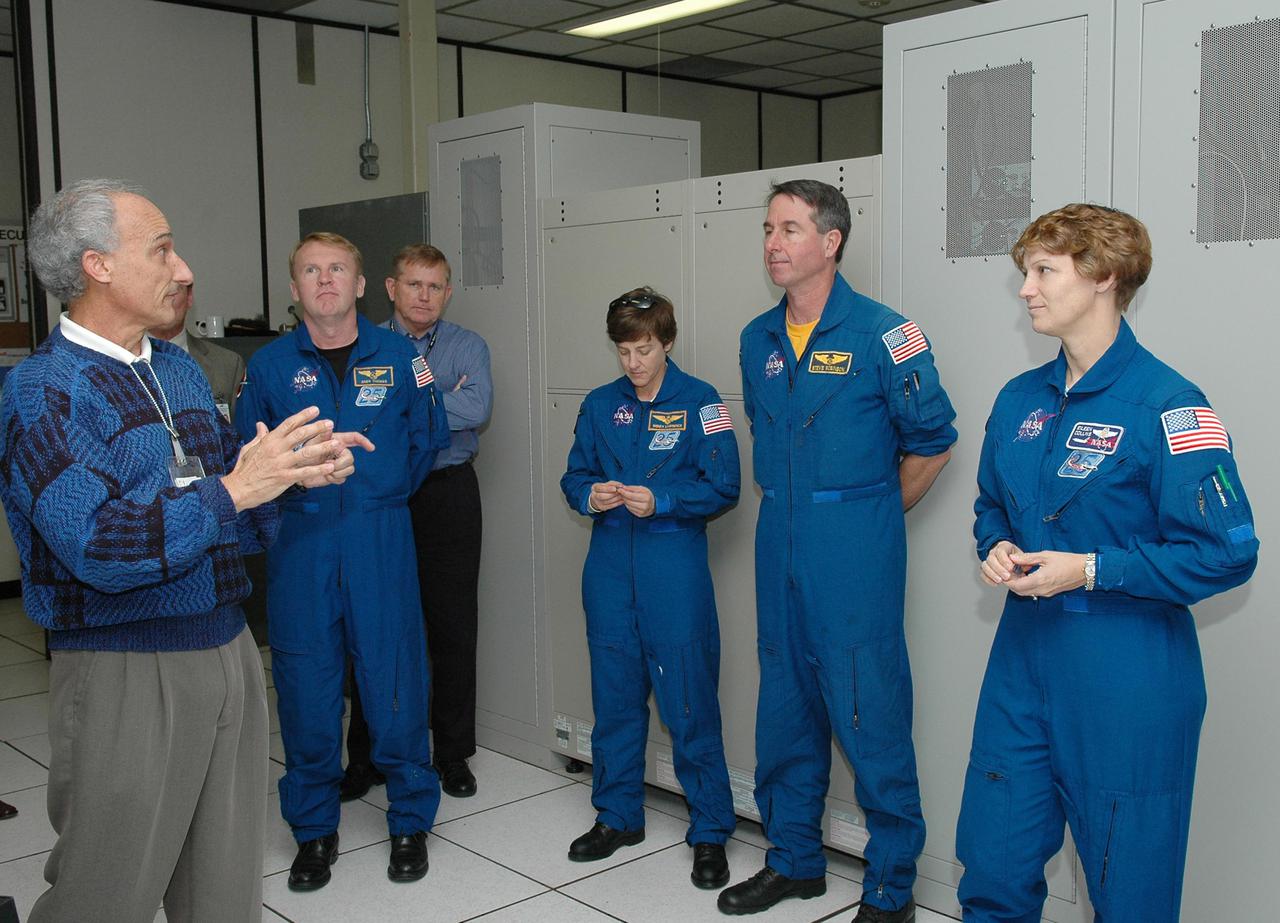
KENNEDY SPACE CENTER, FLA. - Inside the MILA Spaceflight Tracking and Data Network Station during a visit to Kennedy, members of the STS-114 crew listen to Gary Morse (left), incumbent MILA_PDL station director. (MILA refers to Merritt Island Launch Area; PDL designates the Ponce De Leon Inlet site.) The astronauts, from left, are Mission Specialists Andrew Thomas, Wendy Lawrence and Stephen Robinson, and Commander Eileen Collins. The tracking station serves as the primary voice, data and telemetry communications link between the Shuttle and the ground from launch until 7-1_2 minutes into the flight. Millions of clues about the performance of the Space Shuttle’s main engines and other components are communicated to launch managers, technicians and engineers on the ground, who must keep their fingers on the pulse of the Space Shuttle during the critical ascent period. In a typical year, MILA provides through KSC more than 10,000 hours of data between spacecraft and data users. MILA is also used during a Space Shuttle landing at KSC and provides communications beginning about 13 minutes before touchdown. Also, MILA can be called upon to provide data transfer support for NASA’s Expendable Launch Vehicle missions and orbiting scientific satellites.
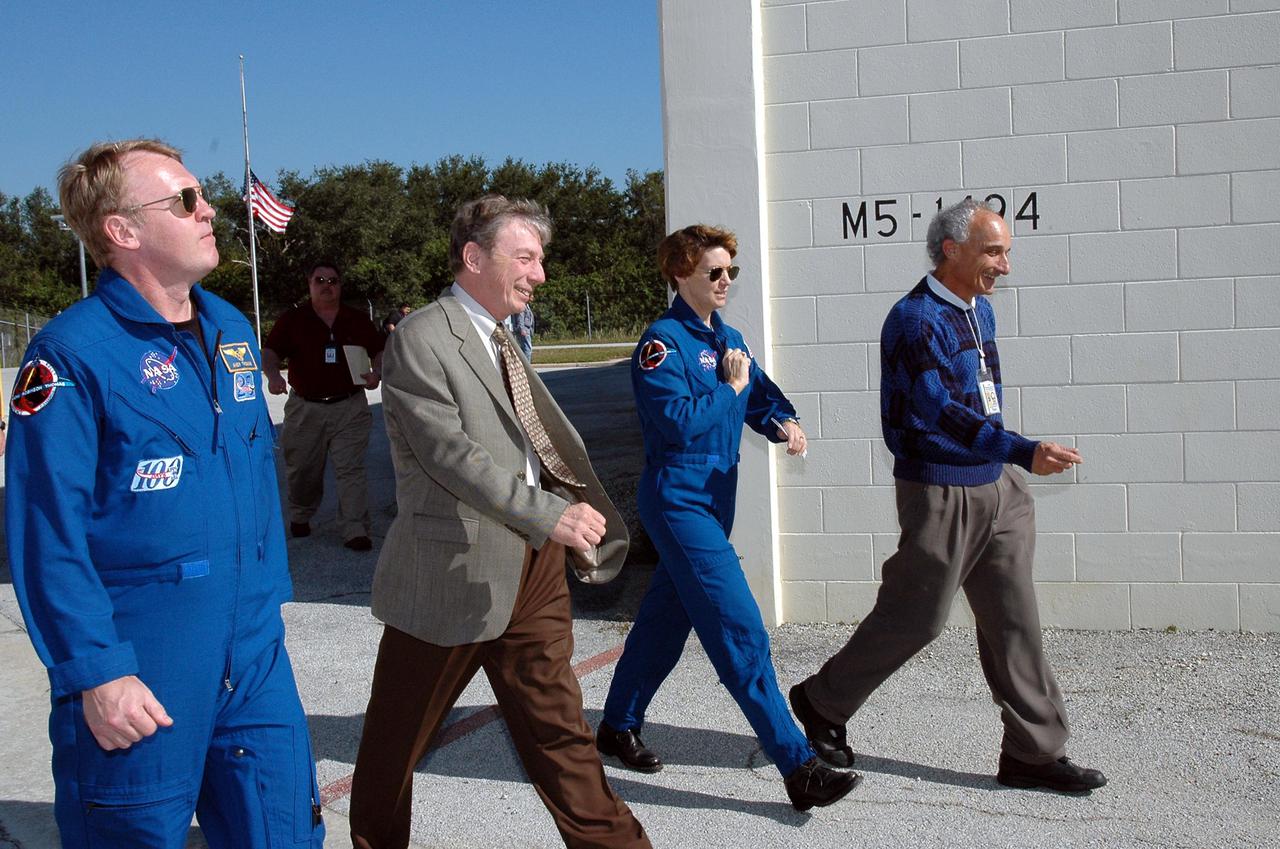
KENNEDY SPACE CENTER, FLA. - During a visit to Kennedy, members of the STS-114 crew visit the MILA Spaceflight Tracking and Data Network Station. From left are Mission Specialist Andrew Thomas; Anthony Ippolito, current director of MILA_PDL; Commander Eileen Collins; and Gary Morse, incumbent MILA_PDL station director. MILA refers to Merritt Island Launch Area; PDL designates the Ponce De Leon Inlet site. The tracking station serves as the primary voice, data and telemetry communications link between the Shuttle and the ground from launch until 7-1_2 minutes into the flight. Millions of clues about the performance of the Space Shuttle’s main engines and other components are communicated to launch managers, technicians and engineers on the ground, who must keep their fingers on the pulse of the Space Shuttle during the critical ascent period. In a typical year, MILA provides through KSC more than 10,000 hours of data between spacecraft and data users. MILA is also used during a Space Shuttle landing at KSC and provides communications beginning about 13 minutes before touchdown. Also, MILA can be called upon to provide data transfer support for NASA’s Expendable Launch Vehicle missions and orbiting scientific satellites.
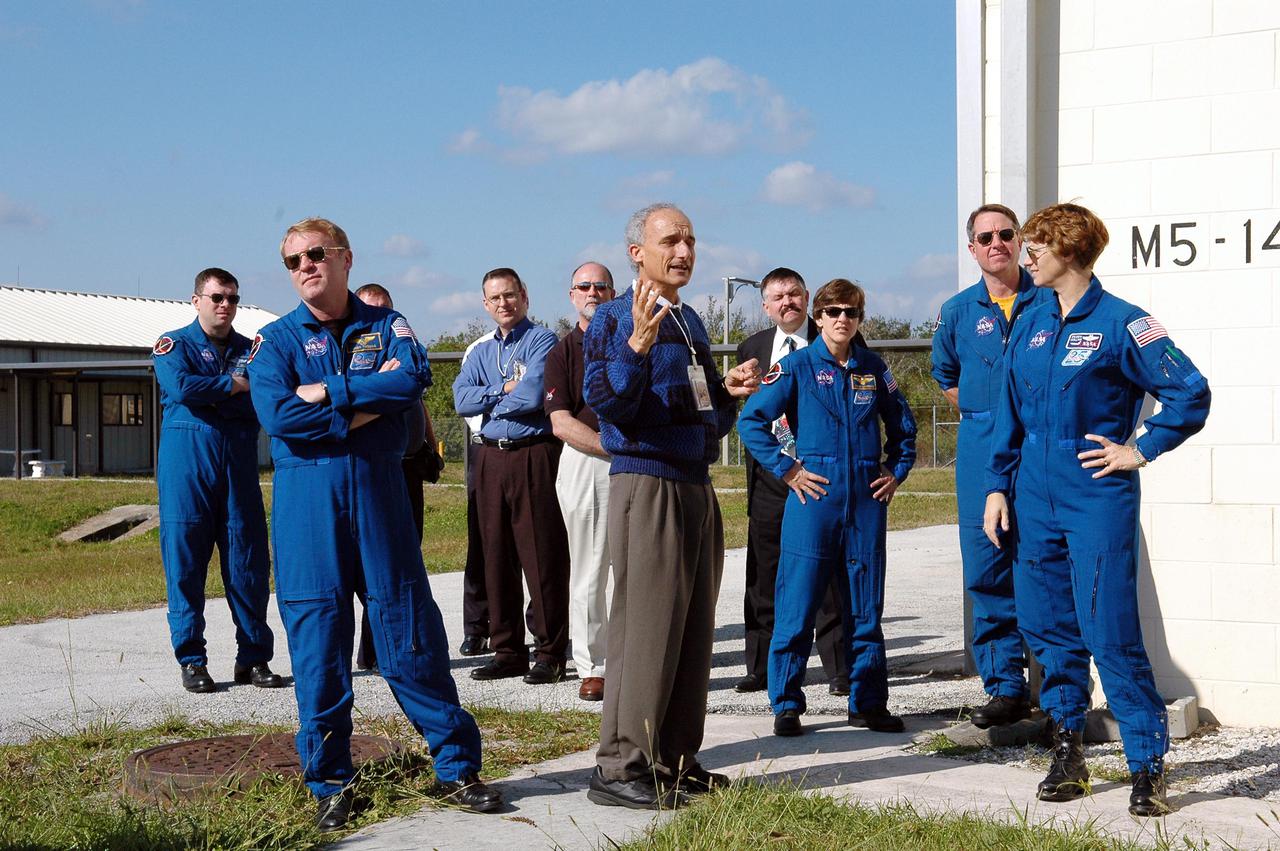
KENNEDY SPACE CENTER, FLA. - During a visit to Kennedy, at the MILA Spaceflight Tracking and Data Network Station, members of the STS-114 crew listen to Gary Morse (center), incumbent MILA_PDL station director. (MILA refers to Merritt Island Launch Area; PDL designates the Ponce De Leon Inlet site.) The astronauts, from left, are Pilot James Kelly, Mission Specialists Andrew Thomas, Wendy Lawrence and Stephen Robinson, and Commander Eileen Collins. The tracking station serves as the primary voice, data and telemetry communications link between the Shuttle and the ground from launch until 7-1_2 minutes into the flight. Millions of clues about the performance of the Space Shuttle’s main engines and other components are communicated to launch managers, technicians and engineers on the ground, who must keep their fingers on the pulse of the Space Shuttle during the critical ascent period. In a typical year, MILA provides through KSC more than 10,000 hours of data between spacecraft and data users. MILA is also used during a Space Shuttle landing at KSC and provides communications beginning about 13 minutes before touchdown. Also, MILA can be called upon to provide data transfer support for NASA’s Expendable Launch Vehicle missions and orbiting scientific satellites.
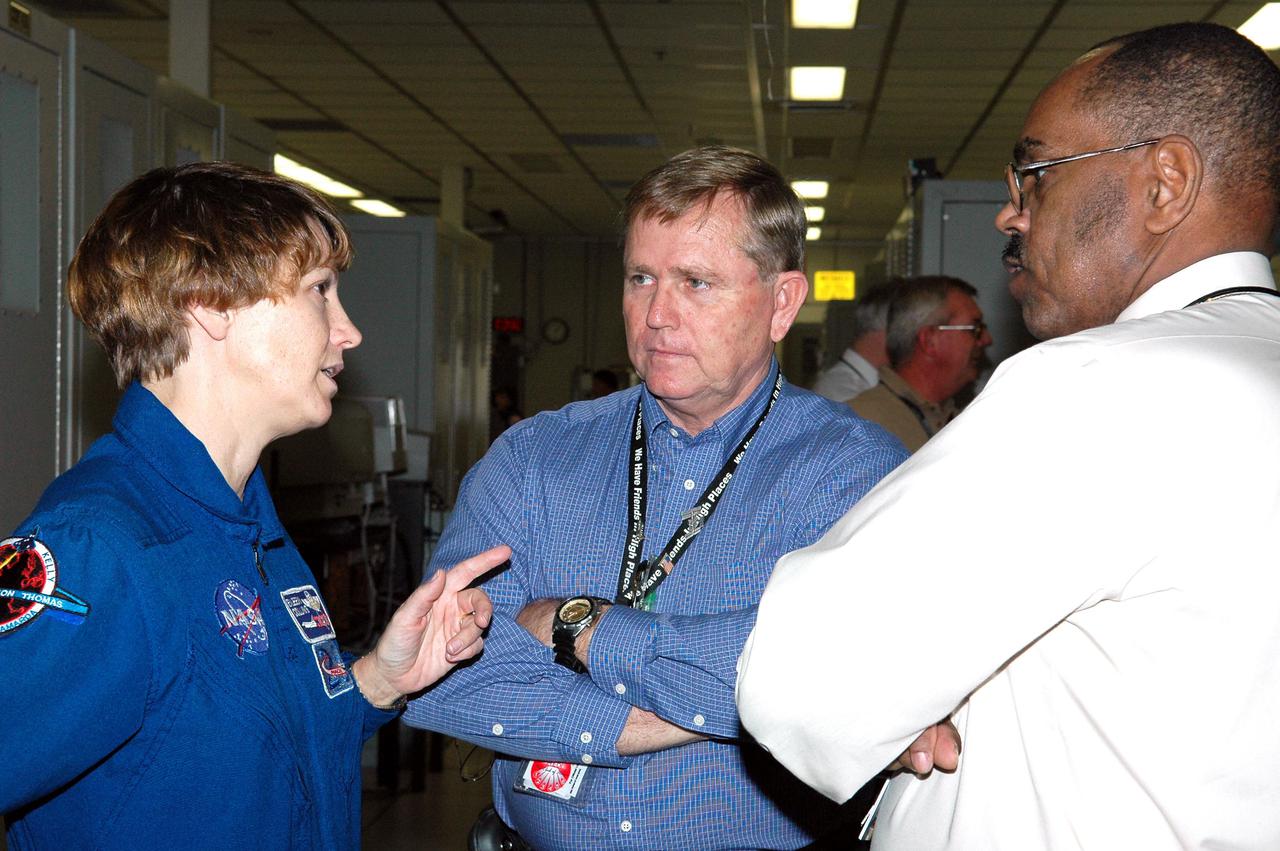
KENNEDY SPACE CENTER, FLA. - While visiting Kennedy Space Center, STS-114 Commander Eileen Collins (left) talks with John Bailey, MILA Support Services manager, and Harold Stinger, SGT president, in the MILA Spaceflight Tracking and Data Network Station. The tracking station serves as the primary voice, data and telemetry communications link between the Shuttle and the ground from launch until 7-1_2 minutes into the flight. Millions of clues about the performance of the Space Shuttle’s main engines and other components are communicated to launch managers, technicians and engineers on the ground, who must keep their fingers on the pulse of the Space Shuttle during the critical ascent period. In a typical year, MILA provides through KSC more than 10,000 hours of data between spacecraft and data users. MILA is also used during a Space Shuttle landing at KSC and provides communications beginning about 13 minutes before touchdown. Also, MILA can be called upon to provide data transfer support for NASA’s Expendable Launch Vehicle missions and orbiting scientific satellites.
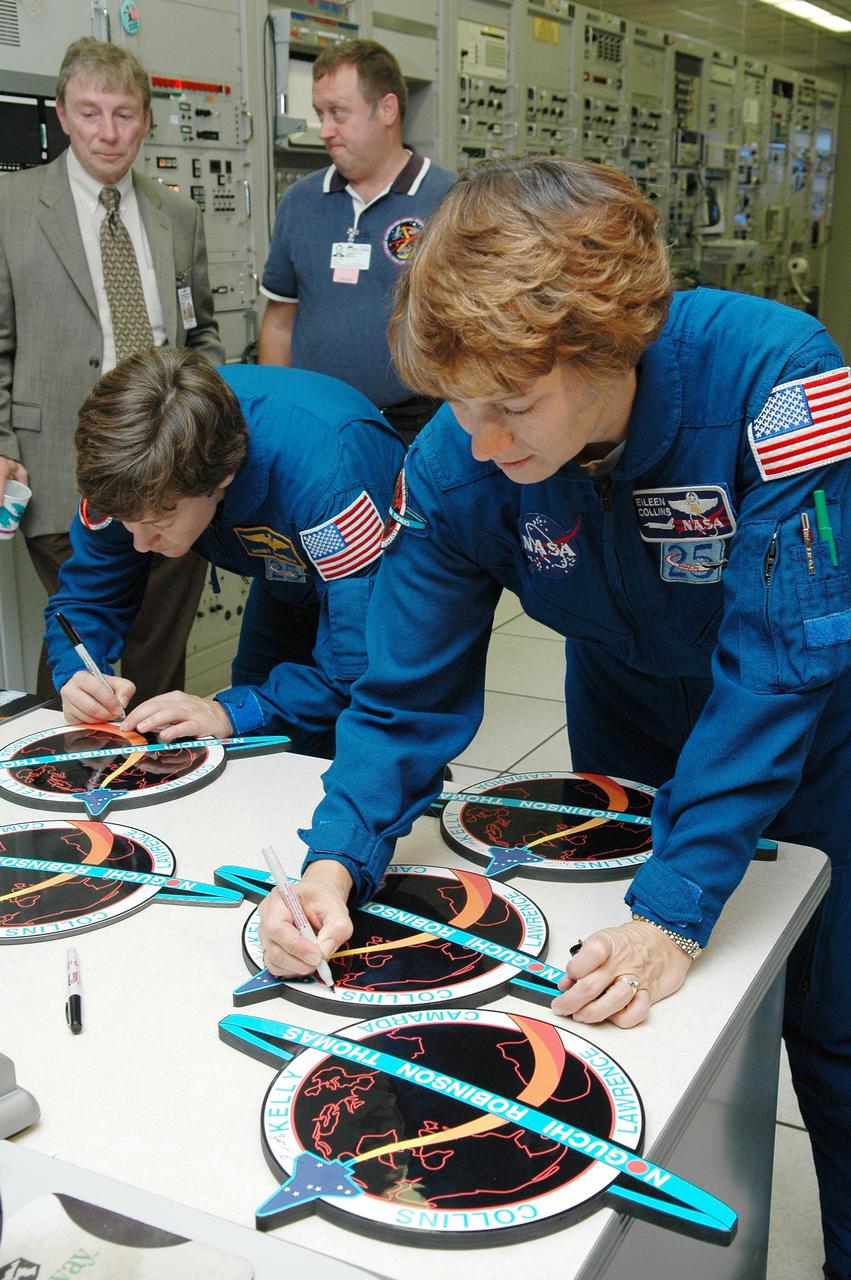
KENNEDY SPACE CENTER, FLA. - Inside the MILA Spaceflight Tracking and Data Network Station during a visit to Kennedy, STS-114 Mission Specialist Wendy Lawrence and Commander Eileen Collins sign crew photos and logos. Behind Lawrence is Anthony Ippolito, current director of MILA_PDL, and William Foster, Johnson Space Center ground controller. (MILA refers to Merritt Island Launch Area; PDL designates the Ponce De Leon Inlet site.) The tracking station serves as the primary voice, data and telemetry communications link between the Shuttle and the ground from launch until 7-1_2 minutes into the flight. Millions of clues about the performance of the Space Shuttle’s main engines and other components are communicated to launch managers, technicians and engineers on the ground, who must keep their fingers on the pulse of the Space Shuttle during the critical ascent period. In a typical year, MILA provides through KSC more than 10,000 hours of data between spacecraft and data users. MILA is also used during a Space Shuttle landing at KSC and provides communications beginning about 13 minutes before touchdown. Also, MILA can be called upon to provide data transfer support for NASA’s Expendable Launch Vehicle missions and orbiting scientific satellites.
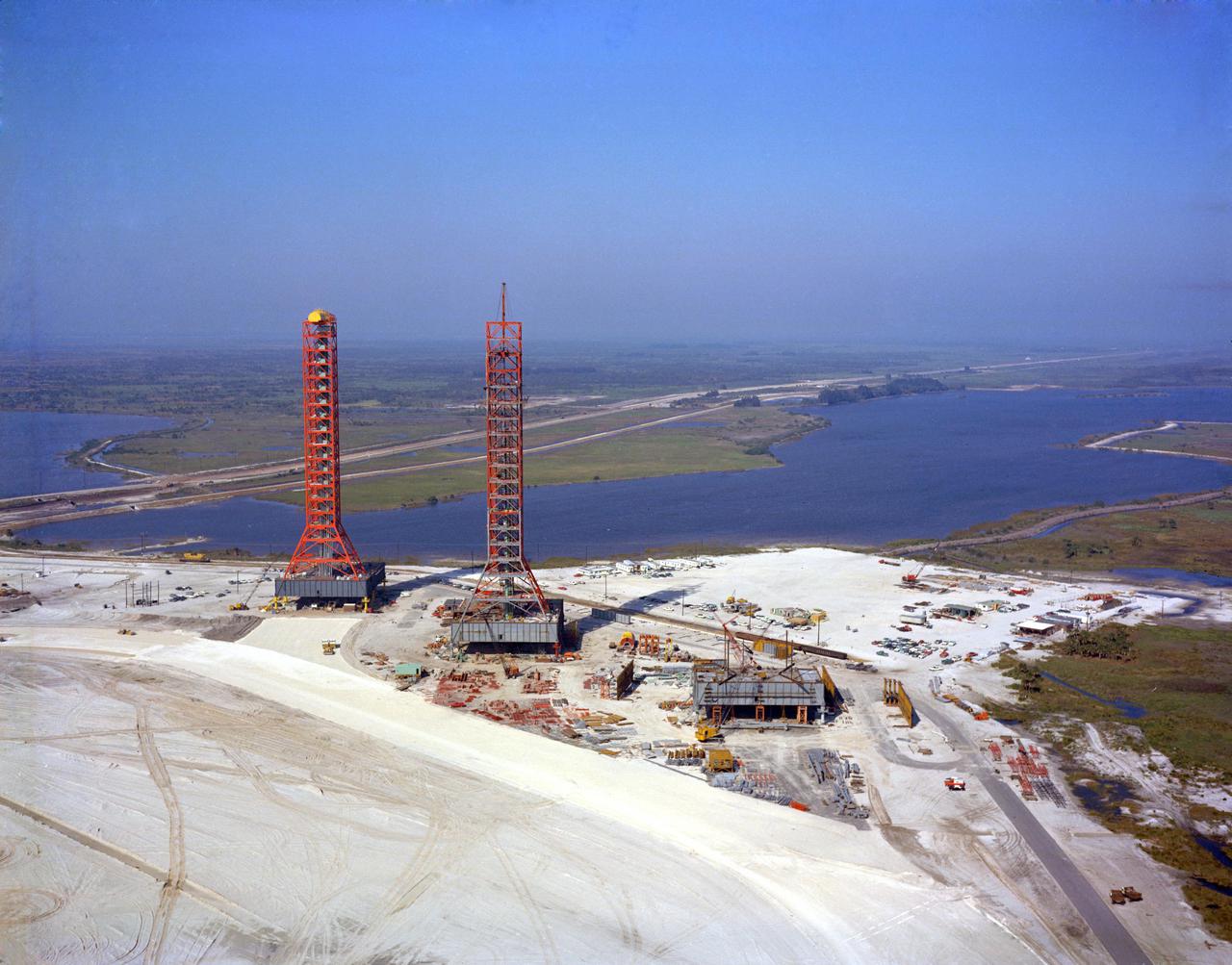
KENNEDY SPACE CENTER, FLA. -- Aerial view of Launcher Umbilical Towers, Merritt Island Launch Area (MILA).
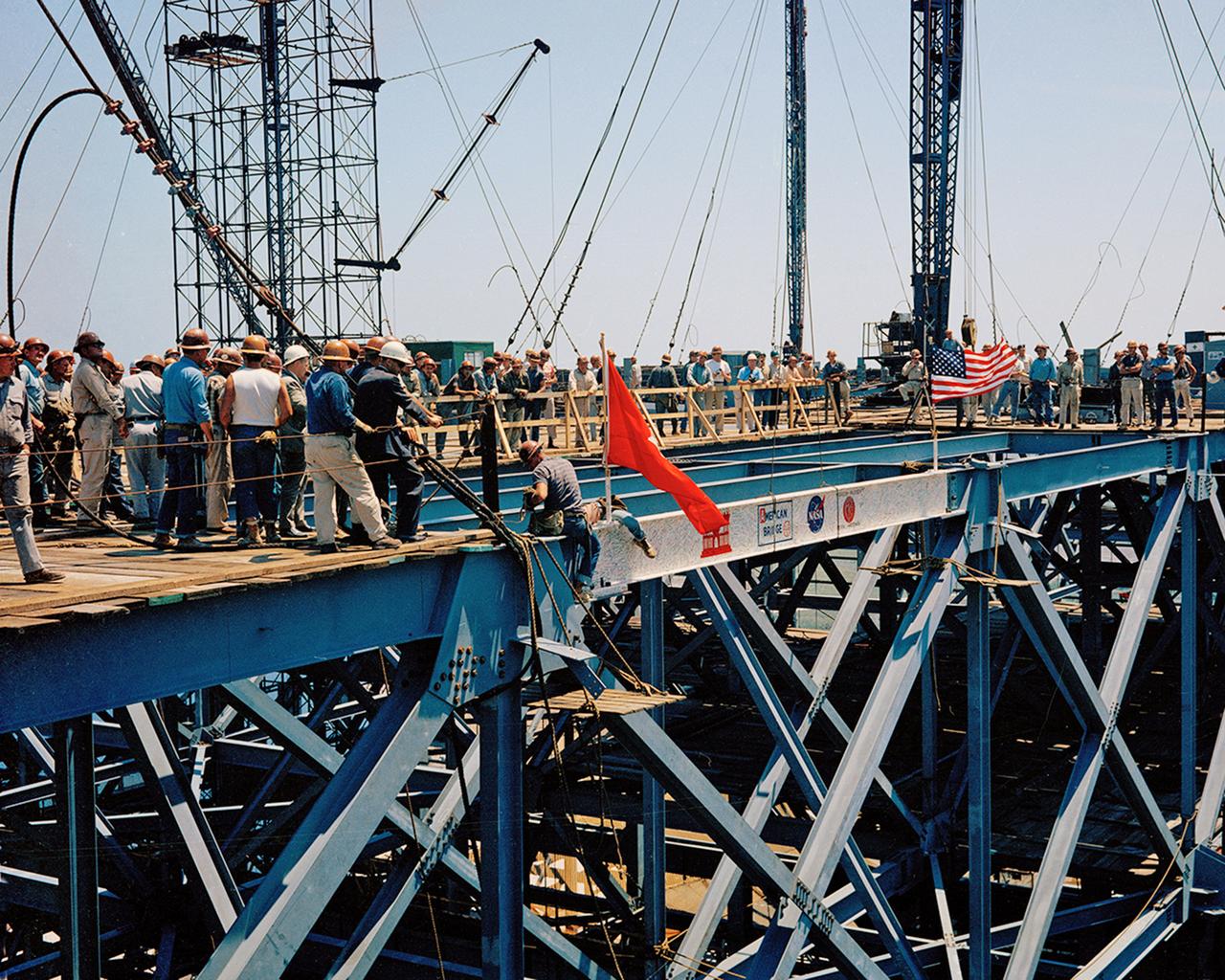
Installation of the Last Major Beam autographed by construction workers, NASA, and Corps of Engineers employees atop the Kennedy Space Center Vertical Assembly Building (VAB), MILA.
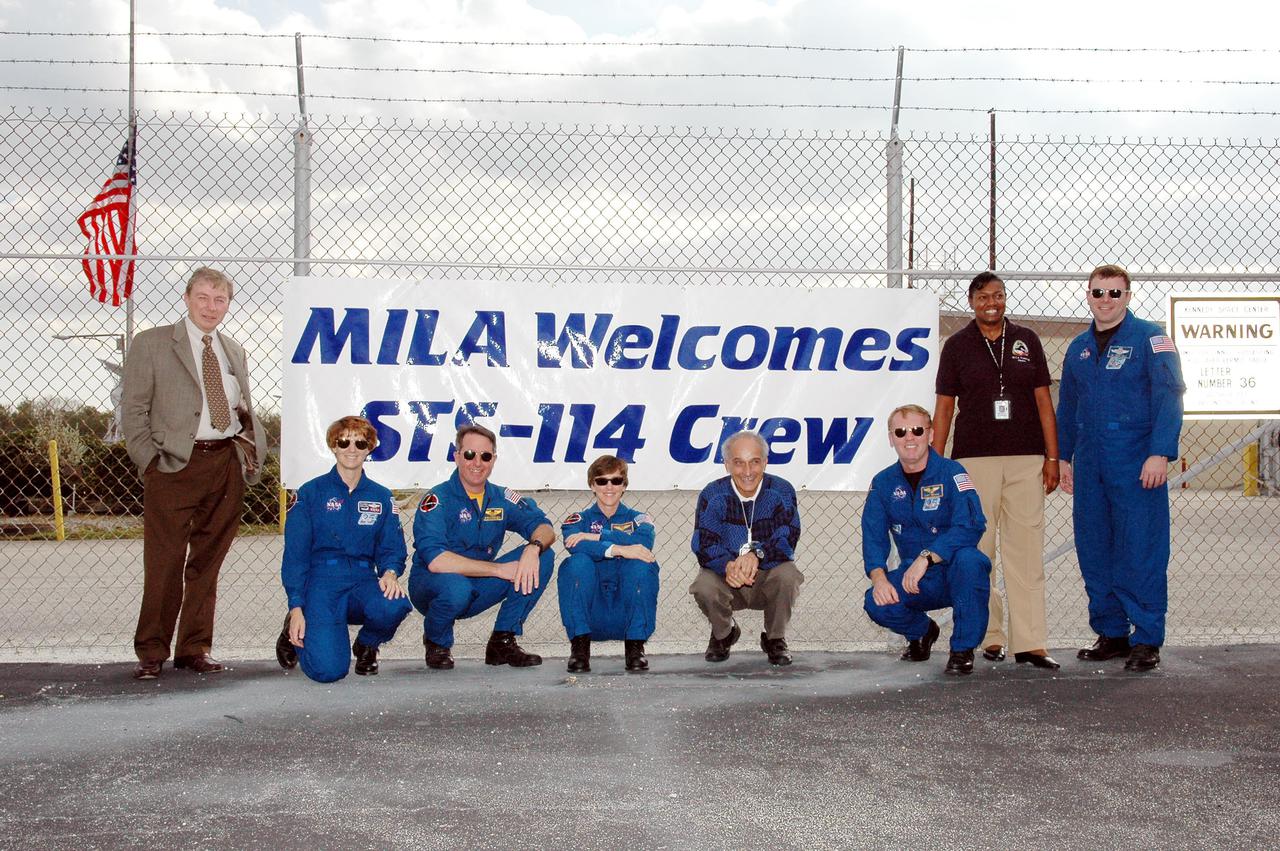
KENNEDY SPACE CENTER, FLA. - Outside the MILA Spaceflight Tracking and Data Network Station during a visit to Kennedy, members of the STS-114 crew pause for a photo with Anthony Ippolito (far left), current director of MILA_PDL. (MILA refers to Merritt Island Launch Area; PDL designates the Ponce De Leon Inlet site.). The crew members are (left to right) commander Eileen Collins, Mission Specialists Stephen Robinson, Wendy Lawrence and Andrew Thomas; and Pilot James Kelly. Between Lawrence and Thomas is Gary Morse (left), incumbent MILA_PDL station director. Between Thomas and Kelly is Melissa Blizzard, MILA operations manager. The tracking station serves as the primary voice, data and telemetry communications link between the Shuttle and the ground from launch until 7-1_2 minutes into the flight. Millions of clues about the performance of the Space Shuttle’s main engines and other components are communicated to launch managers, technicians and engineers on the ground, who must keep their fingers on the pulse of the Space Shuttle during the critical ascent period. In a typical year, MILA provides through KSC more than 10,000 hours of data between spacecraft and data users. MILA is also used during a Space Shuttle landing at KSC and provides communications beginning about 13 minutes before touchdown. Also, MILA can be called upon to provide data transfer support for NASA’s Expendable Launch Vehicle missions and orbiting scientific satellites.
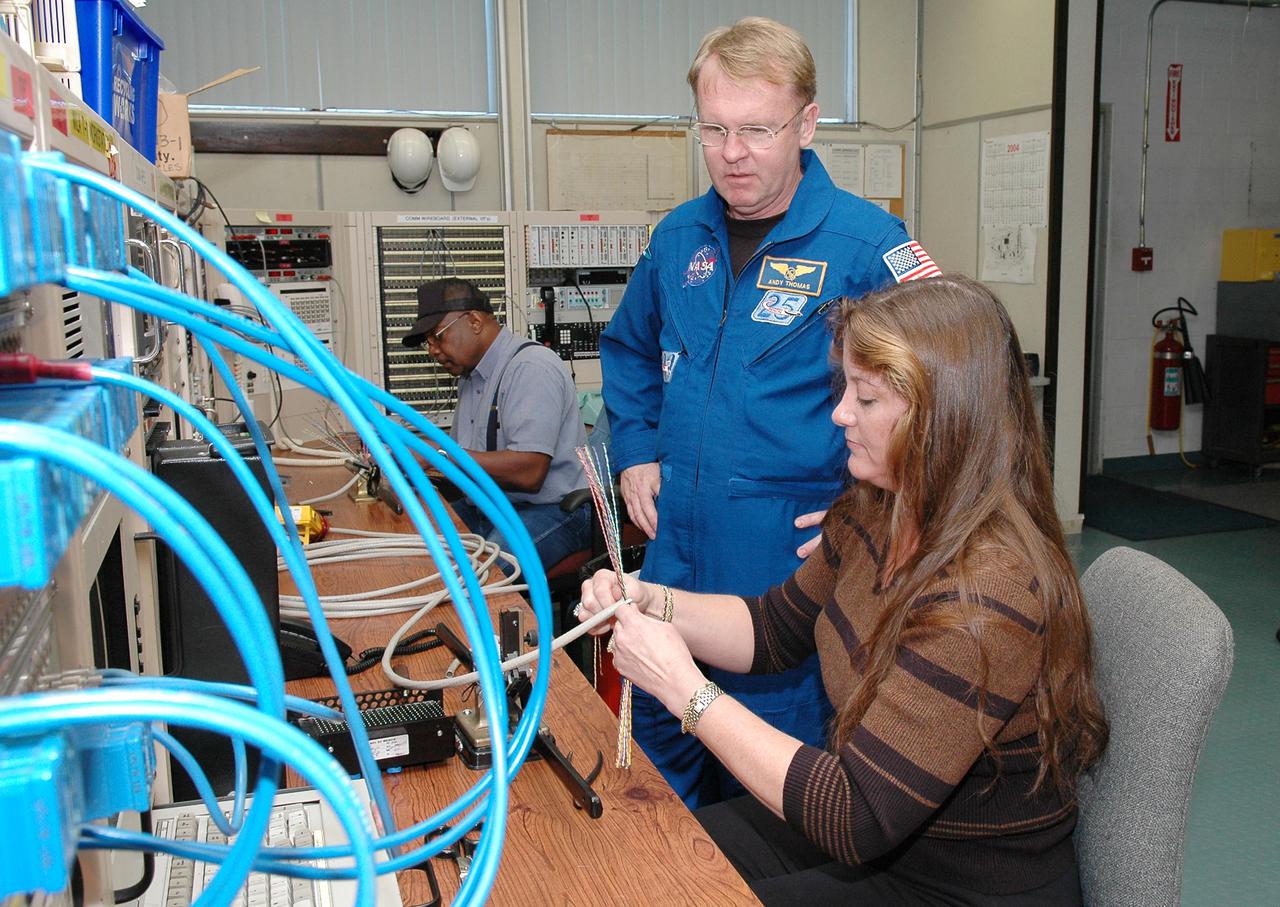
KENNEDY SPACE CENTER, FLA. - Inside the MILA Spaceflight Tracking and Data Network Station during a visit to Kennedy, mission STS-114 Mission Specialist Andrew Thomas watches Sonja Ashworth, with Honeywell, as she builds communication cables. The tracking station serves as the primary voice, data and telemetry communications link between the Shuttle and the ground from launch until 7-1_2 minutes into the flight. Millions of clues about the performance of the Space Shuttle’s main engines and other components are communicated to launch managers, technicians and engineers on the ground, who must keep their fingers on the pulse of the Space Shuttle during the critical ascent period. In a typical year, MILA provides through KSC more than 10,000 hours of data between spacecraft and data users. MILA is also used during a Space Shuttle landing at KSC and provides communications beginning about 13 minutes before touchdown. Also, MILA can be called upon to provide data transfer support for NASA’s Expendable Launch Vehicle missions and orbiting scientific satellites.
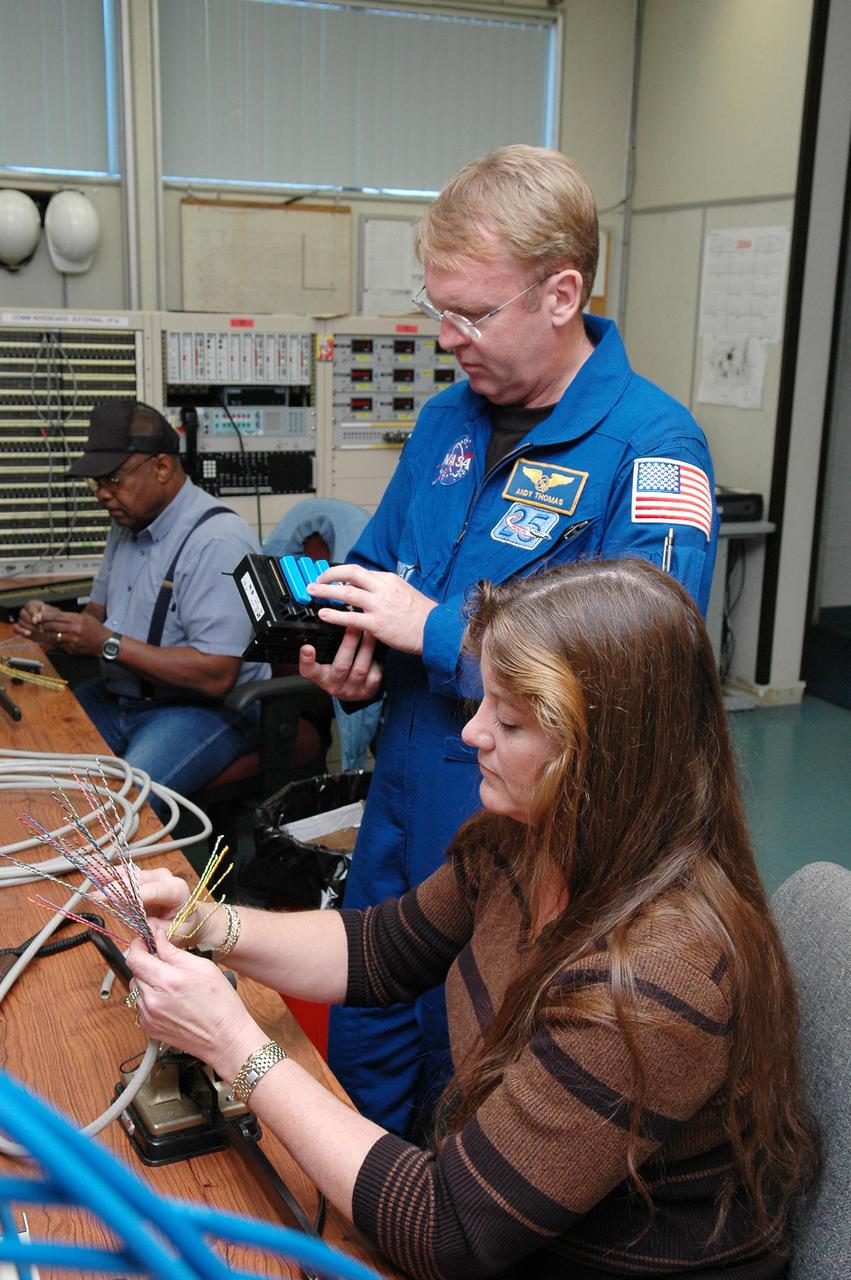
KENNEDY SPACE CENTER, FLA. - Inside the MILA Spaceflight Tracking and Data Network Station during a visit to Kennedy, mission STS-114 Mission Specialist Andrew Thomas (center) looks at equipment while Sonja Ashworth, with Honeywell, builds communication cables. The tracking station serves as the primary voice, data and telemetry communications link between the Shuttle and the ground from launch until 7-1_2 minutes into the flight. Millions of clues about the performance of the Space Shuttle’s main engines and other components are communicated to launch managers, technicians and engineers on the ground, who must keep their fingers on the pulse of the Space Shuttle during the critical ascent period. In a typical year, MILA provides through KSC more than 10,000 hours of data between spacecraft and data users. MILA is also used during a Space Shuttle landing at KSC and provides communications beginning about 13 minutes before touchdown. Also, MILA can be called upon to provide data transfer support for NASA’s Expendable Launch Vehicle missions and orbiting scientific satellites.
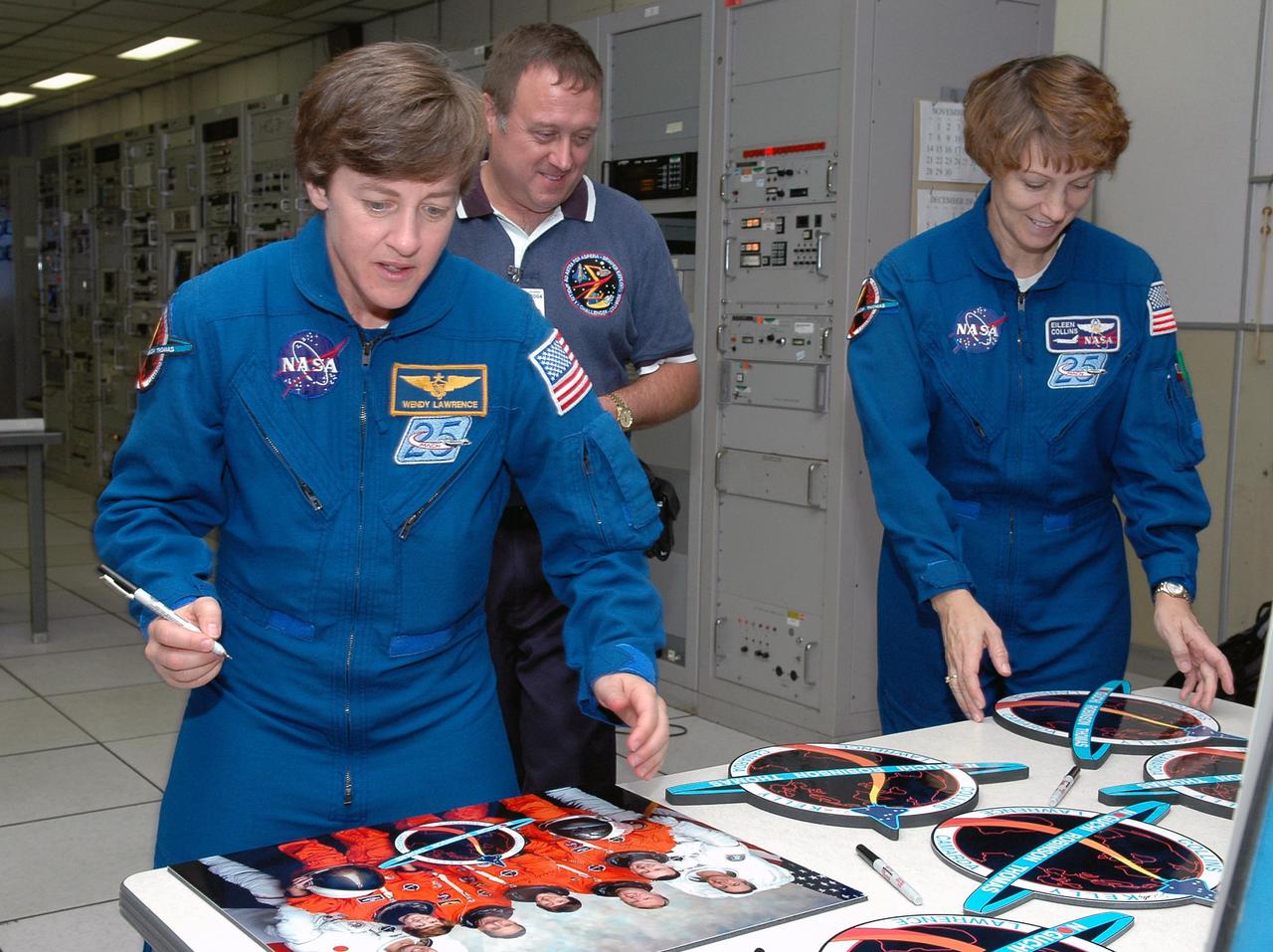
KENNEDY SPACE CENTER, FLA. - Inside the MILA Spaceflight Tracking and Data Network Station during a visit to Kennedy, STS-114 Mission Specialist Wendy Lawrence and Commander Eileen Collins sign crew photos and logos. William Foster, Johnson Space Center ground controller, looks on. The tracking station serves as the primary voice, data and telemetry communications link between the Shuttle and the ground from launch until 7-1_2 minutes into the flight. Millions of clues about the performance of the Space Shuttle’s main engines and other components are communicated to launch managers, technicians and engineers on the ground, who must keep their fingers on the pulse of the Space Shuttle during the critical ascent period. In a typical year, MILA provides through KSC more than 10,000 hours of data between spacecraft and data users. MILA is also used during a Space Shuttle landing at KSC and provides communications beginning about 13 minutes before touchdown. Also, MILA can be called upon to provide data transfer support for NASA’s Expendable Launch Vehicle missions and orbiting scientific satellites.
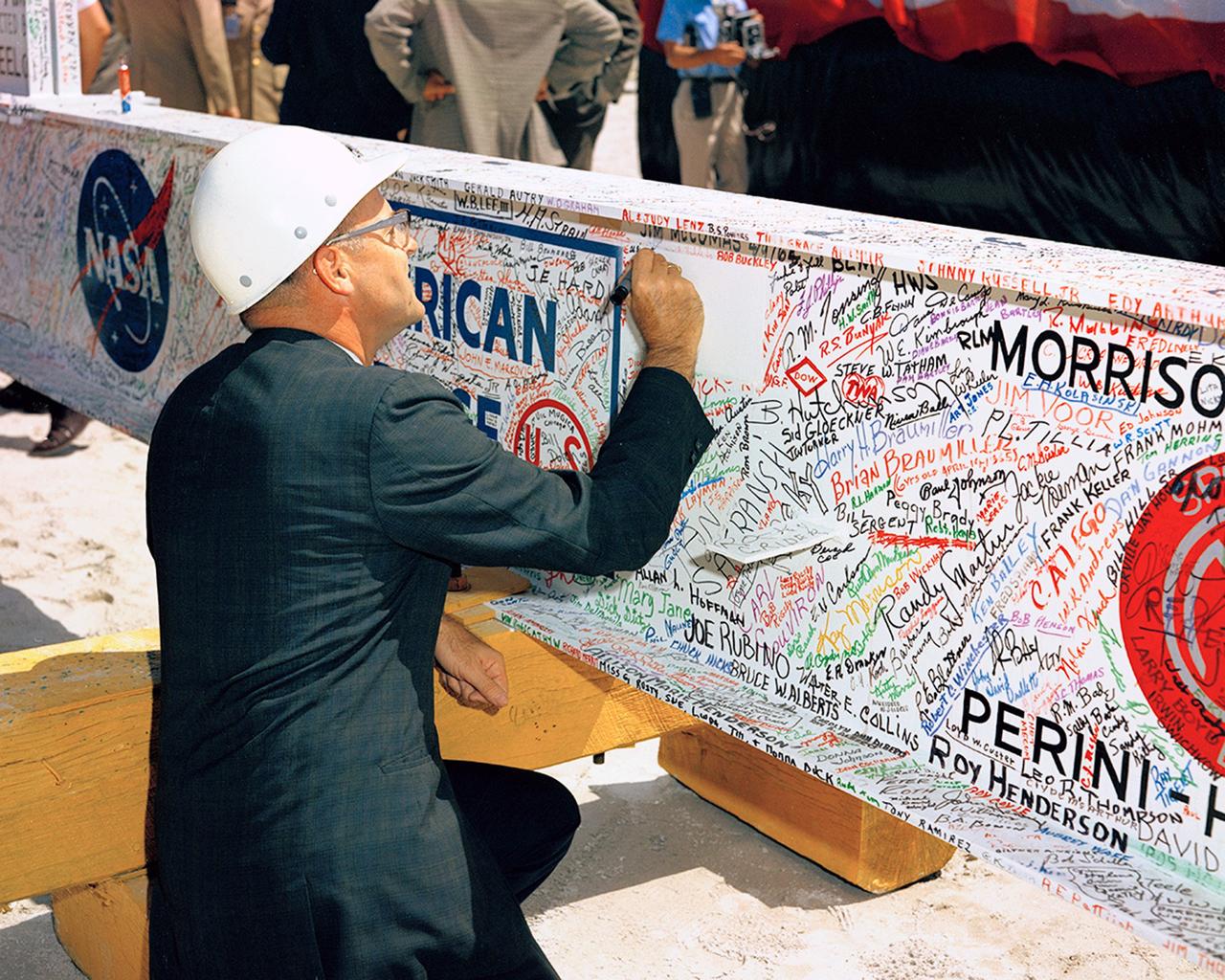
CAPE CANAVERAL, Fla. -- Mr. A. Siepert, assistant director, NASA-KSC, signs the last major beam autographed by construction workers, NASA, and Corps of Engineers employees to be installed during the VAB Topping-Off Ceremony. MILA. Photo credit: NASA
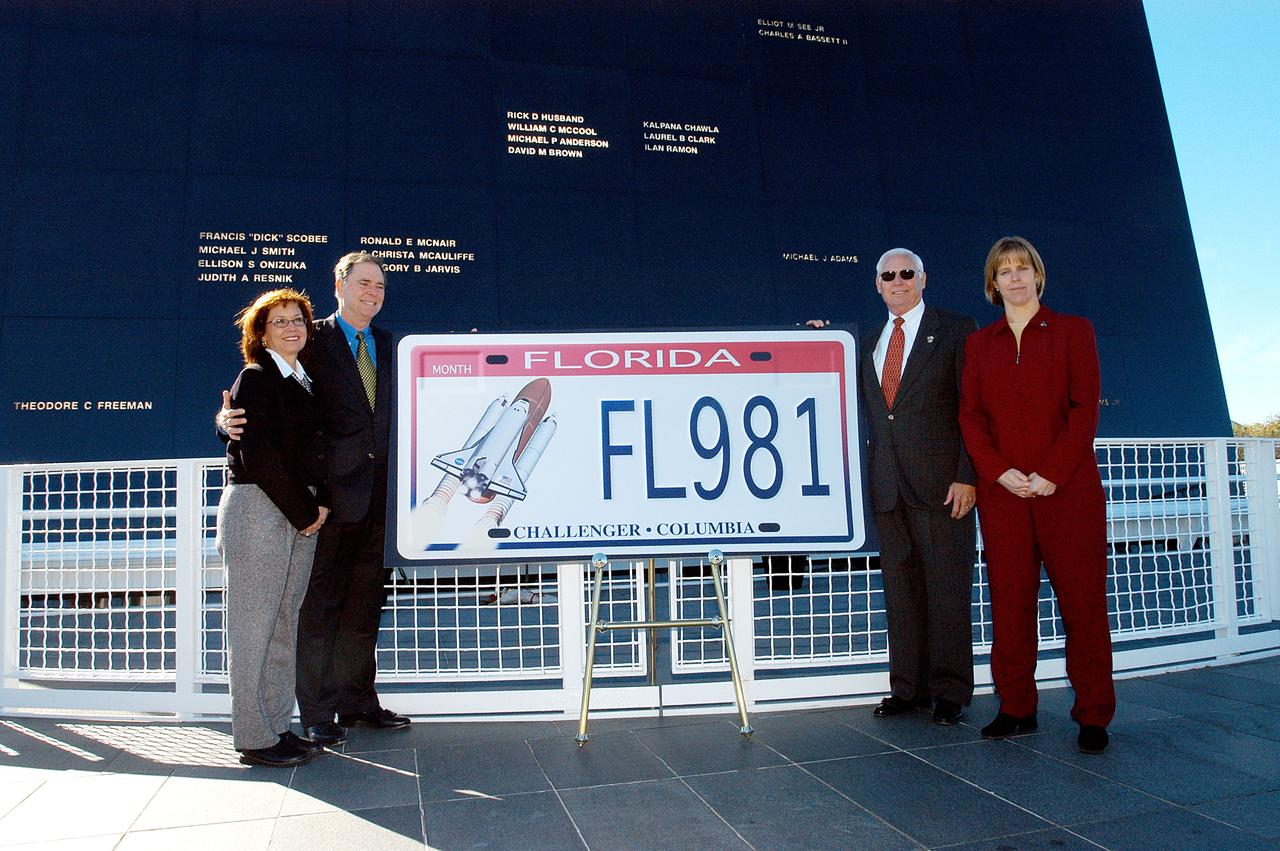
KENNEDY SPACE CENTER, FLA. - The new Florida license plate honoring the fallen astronauts of Challenger and Columbia is unveiled at the KSC Visitor Complex, in front of the Space Memorial Mirror. Participants in the dedication included (from left) Susan Berry, a teacher from Mila Elementary School in Brevard County; Sen. Bill Posey; Florida Rep. Ralph Poppell; and Kirstie McCool Chadwick, sister of William “Willie” J. McCool, who was the pilot on mission STS-107 that ended in disaster Feb. 1, 2003. The Space Mirror, 42-1/2 feet high by 50 feet wide, illuminates the names of the fallen astronauts cut through the monument’s black granite surface.
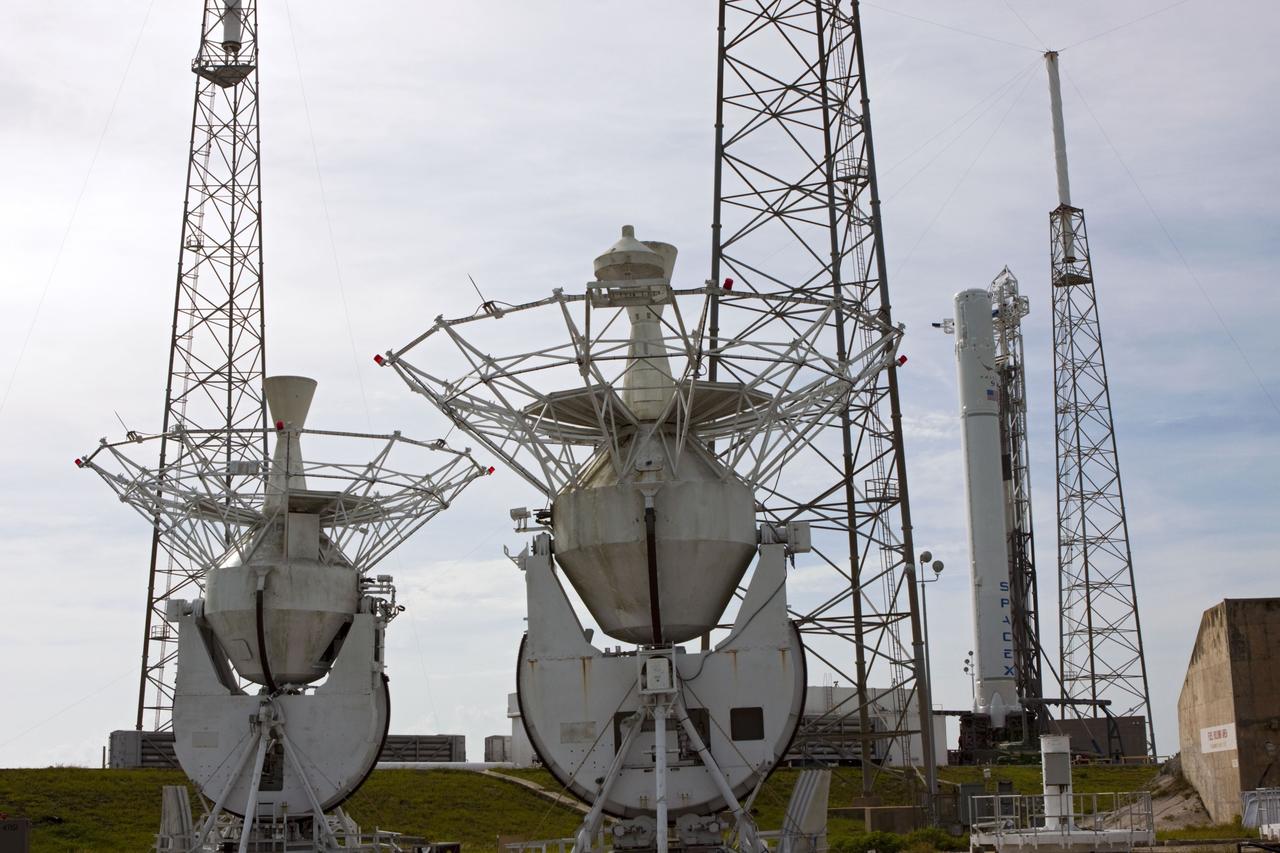
CAPE CANAVERAL, Fla. - Just prior to the wet dress rehearsal for the SpaceX Falcon 9 rocket, the frameworks of the former MILA tracking station S-band 9-meter tracking antennas are seen with the Falcon 9 rocket. These antennas were used by NASA during the Apollo and space shuttle programs. They are being re-purposed by SpaceX. The antennas will moved to another location, reassembled and refurbished for tracking during future SpaceX launches and missions. The SpaceX CRS contract with NASA provides for 12 cargo resupply missions to the station through 2015, the first of which is targeted to launch in October 2012.SpaceX became the first private company to berth a spacecraft with the space station in 2012 during its final demonstration flight under the Commercial Orbital Transportation Services, or COTS, program managed by NASA's Johnson Space Center in Houston. Photo credit: NASA/Jim Grossmann
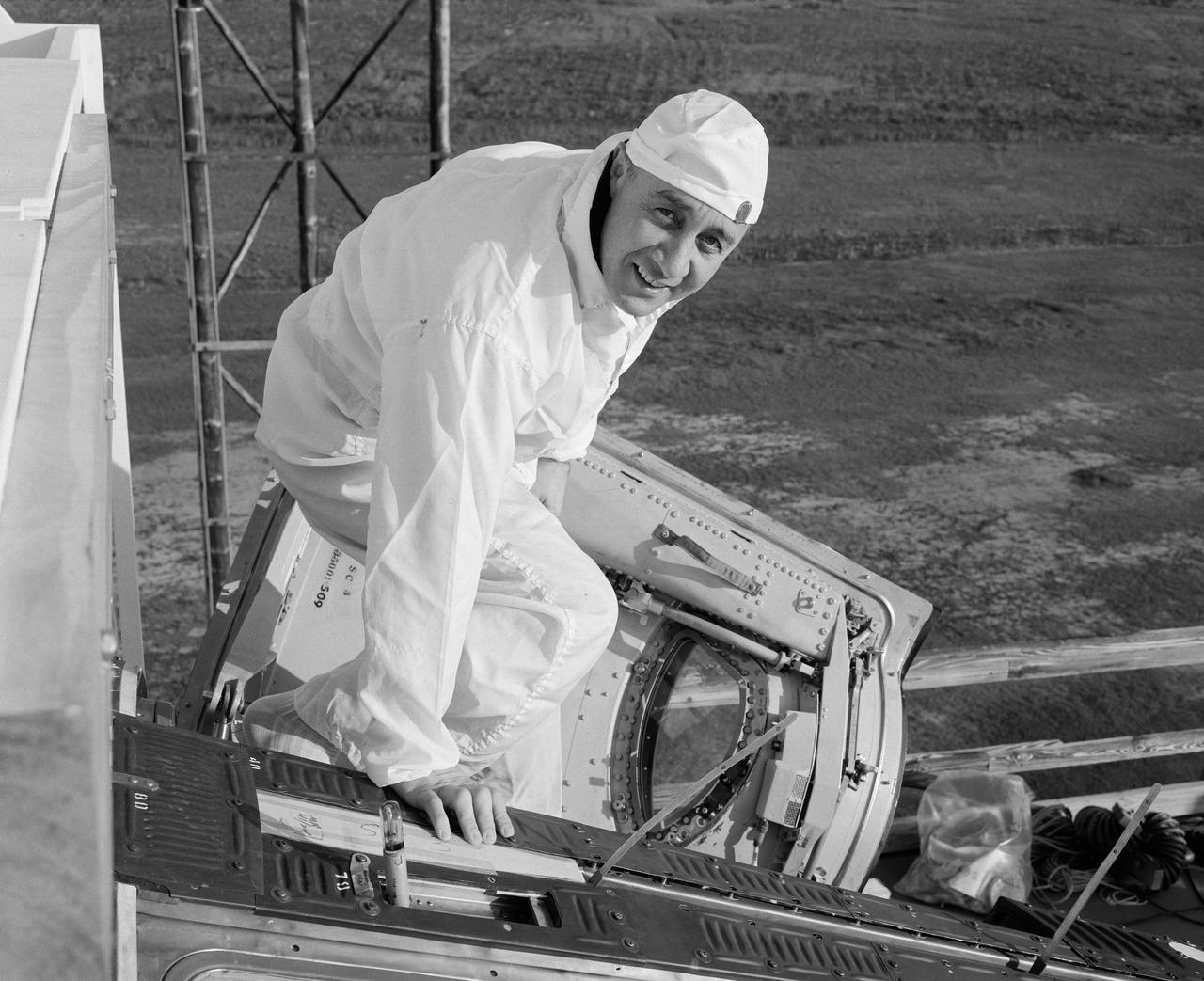
S65-13243 (6 Jan. 1965) --- Astronaut Virgil I. Grissom, Gemini-Titan 3 command pilot, is shown entering the Gemini-3 spacecraft for a communications test at the Merritt Island launch area.
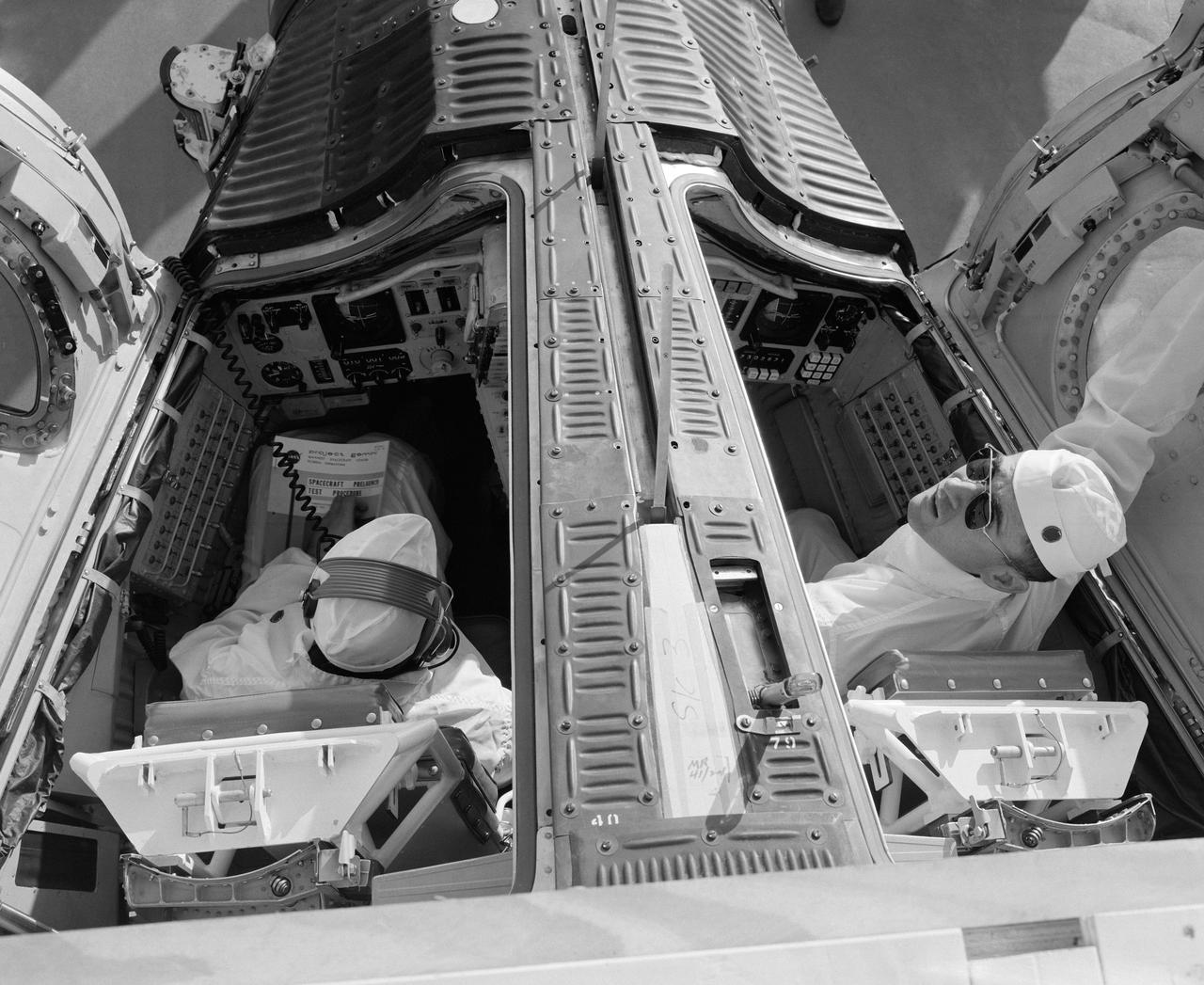
S65-13244 (6 Jan. 1965) --- The Gemini-Titan 3 prime crew, astronauts Virgil I. Grissom (left) and John W. Young, are shown in the Gemini-3 spacecraft during a communications test at the Merritt Island launch area.