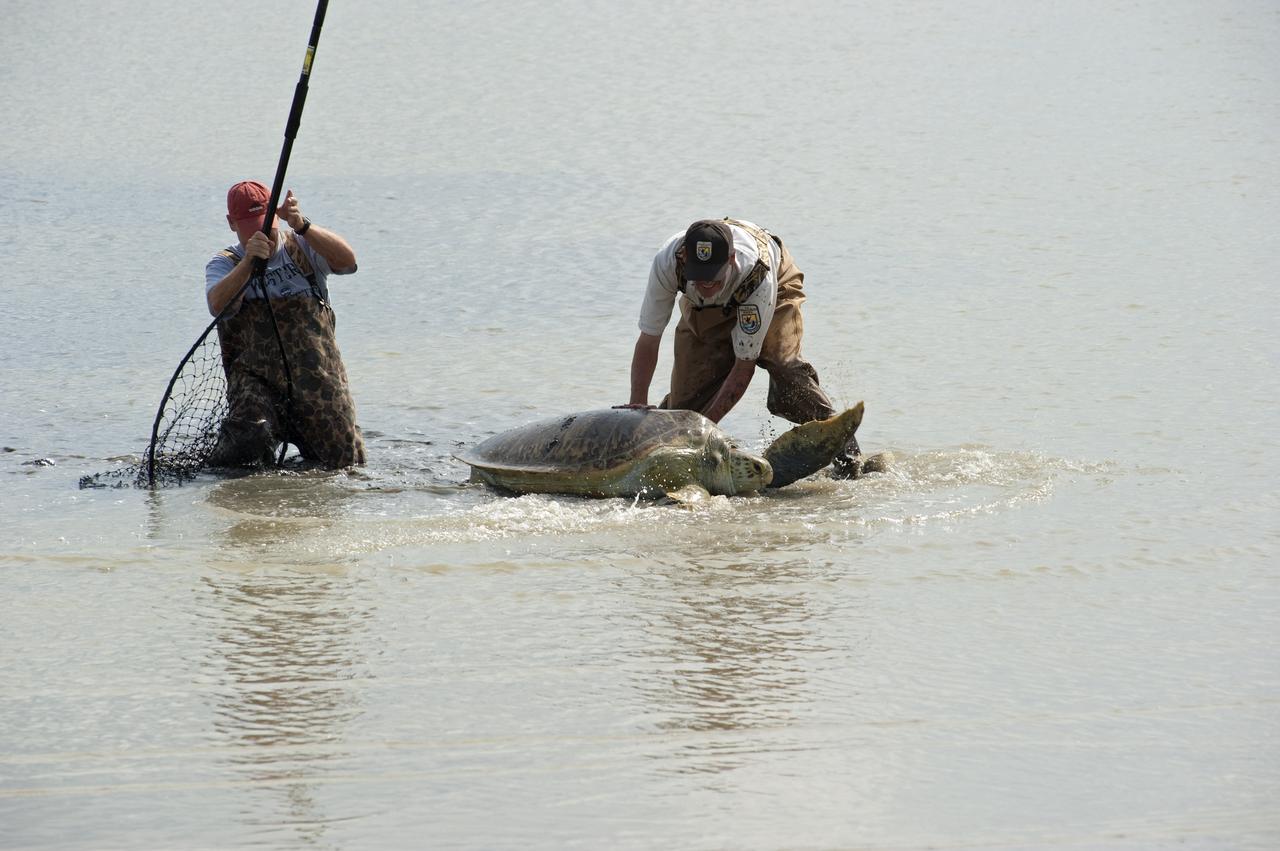
LOGGERHEAD SEA TURTLE RESCUE FOR RELEASE - MINWR
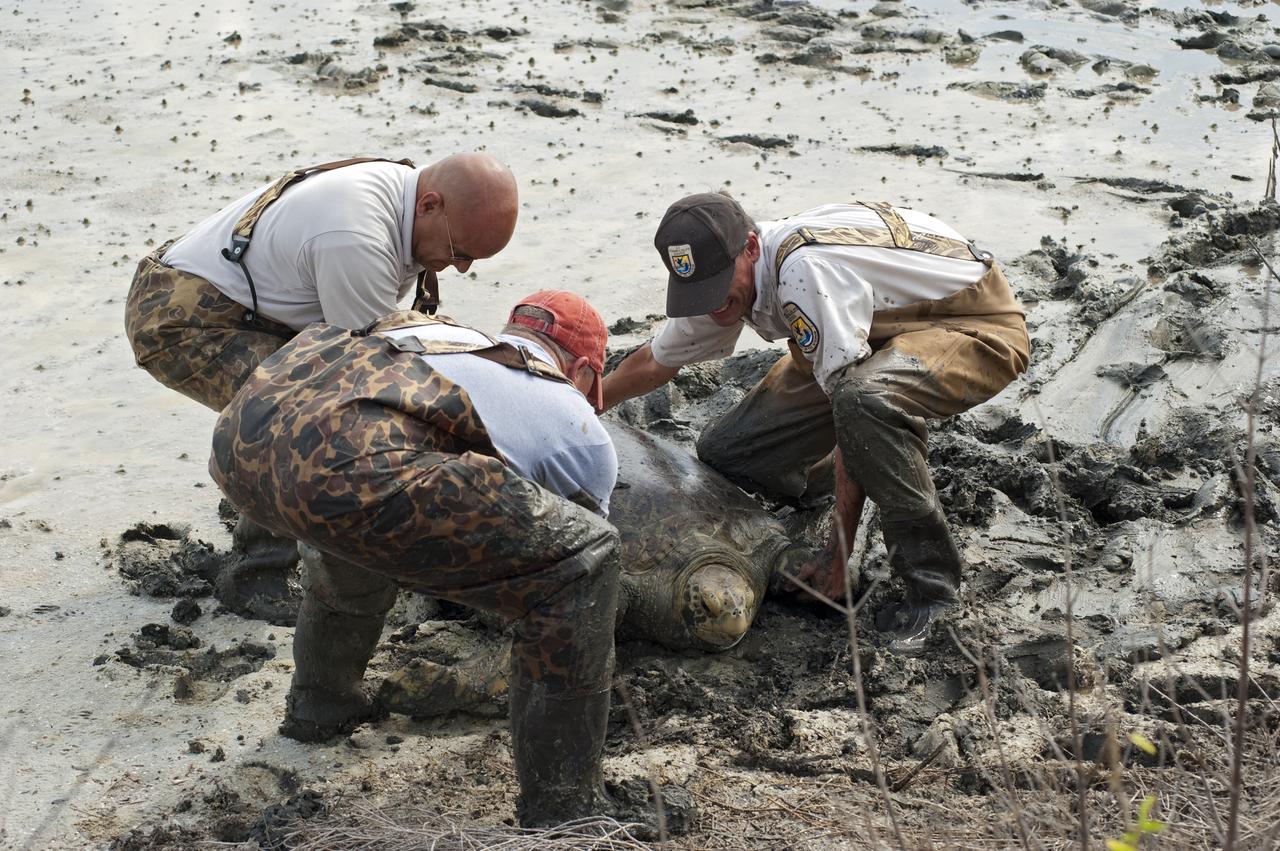
LOGGERHEAD SEA TURTLE RESCUE FOR RELEASE - MINWR
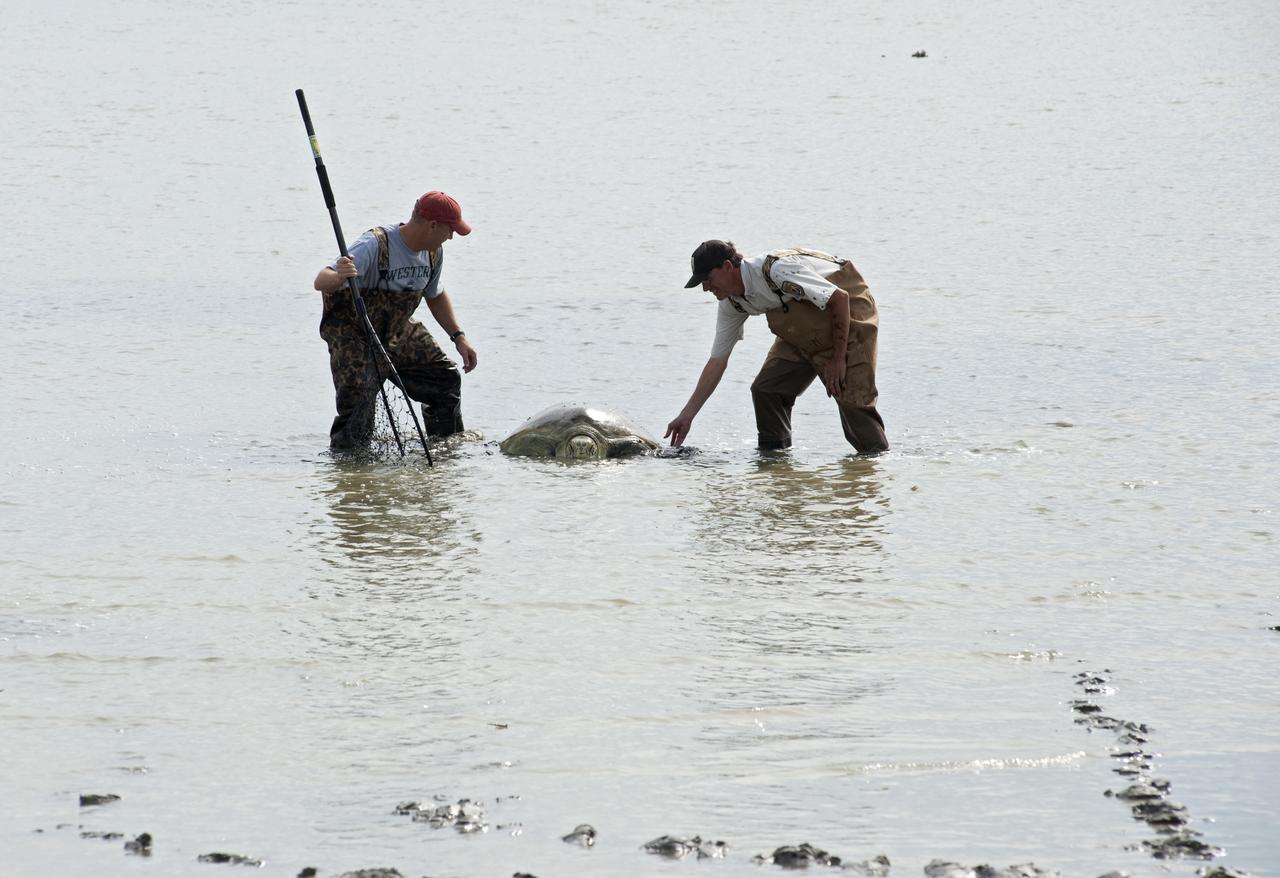
LOGGERHEAD SEA TURTLE RESCUE FOR RELEASE - MINWR
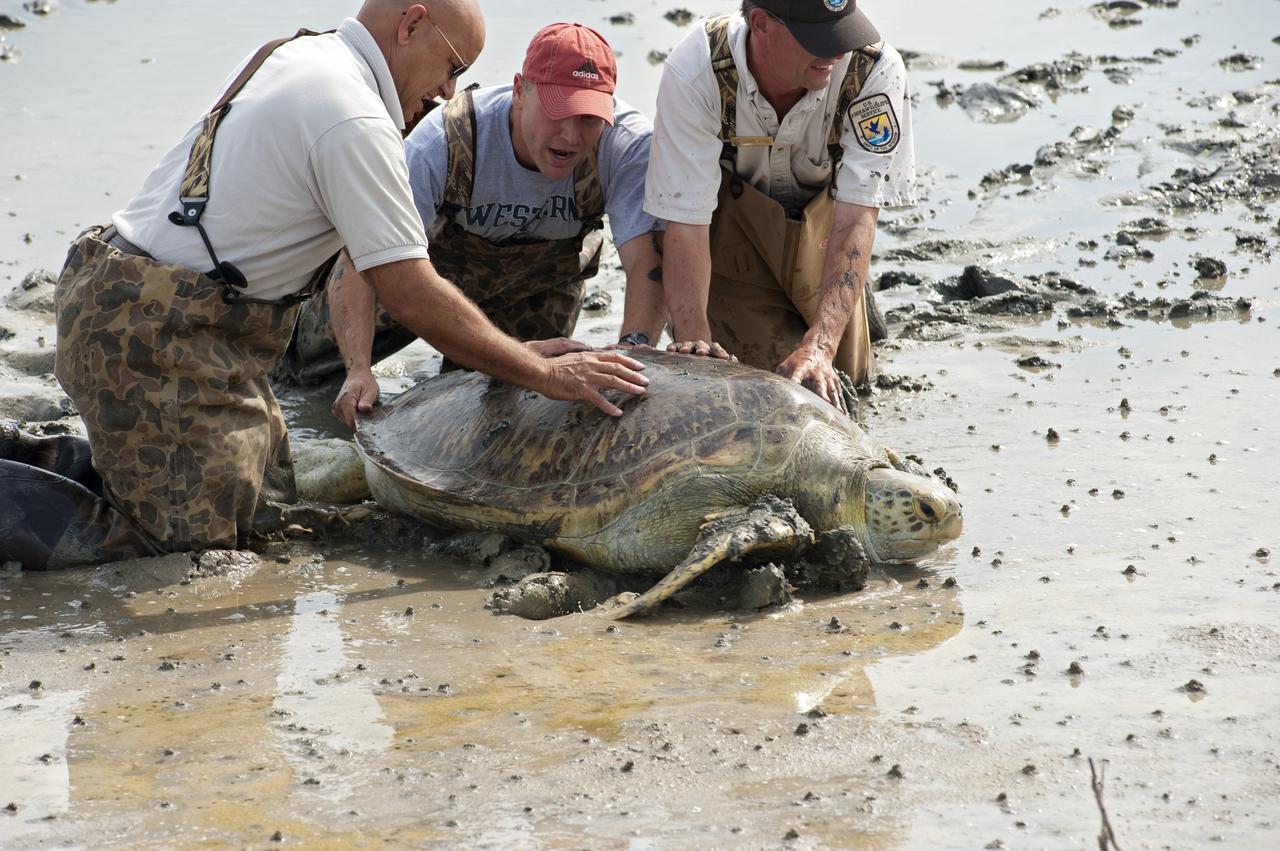
LOGGERHEAD SEA TURTLE RESCUE FOR RELEASE - MINWR
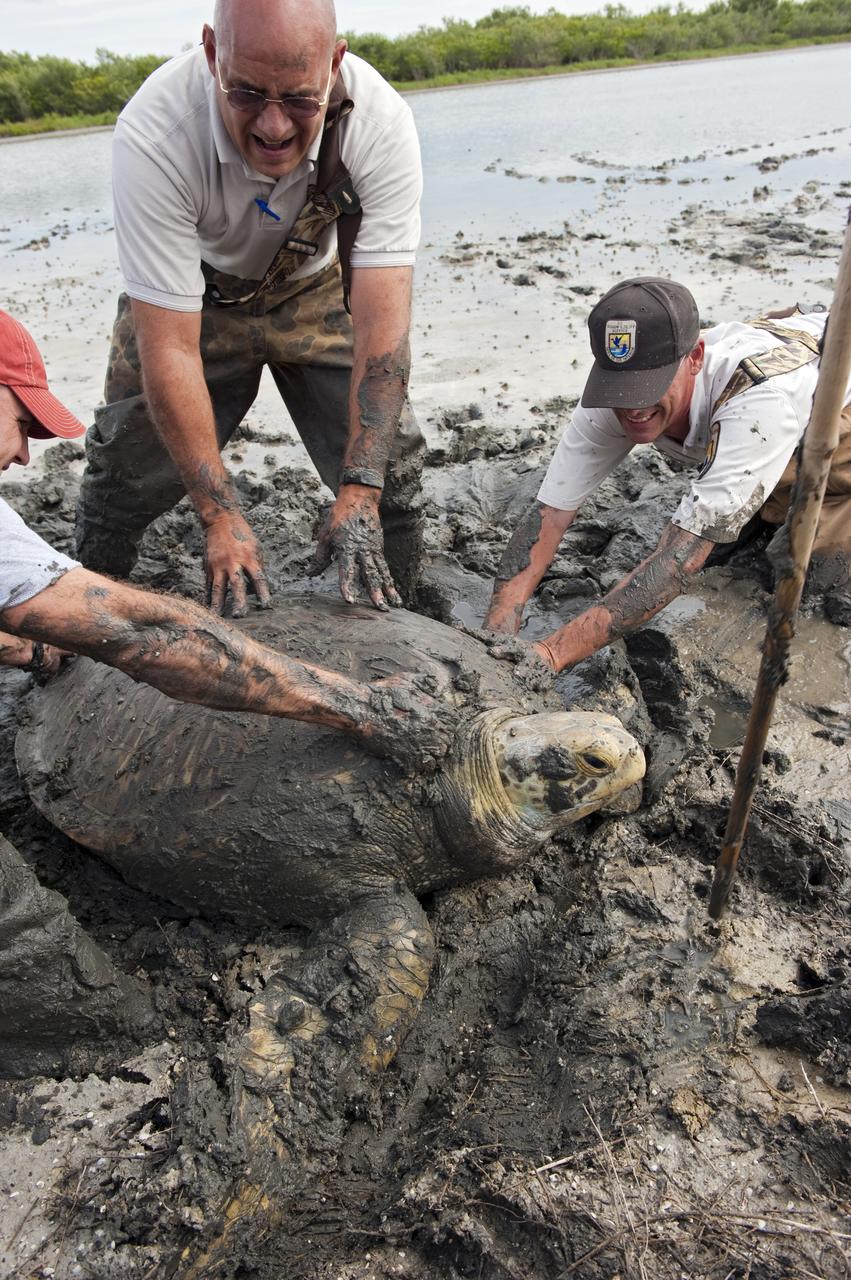
LOGGERHEAD SEA TURTLE RESCUE FOR RELEASE - MINWR
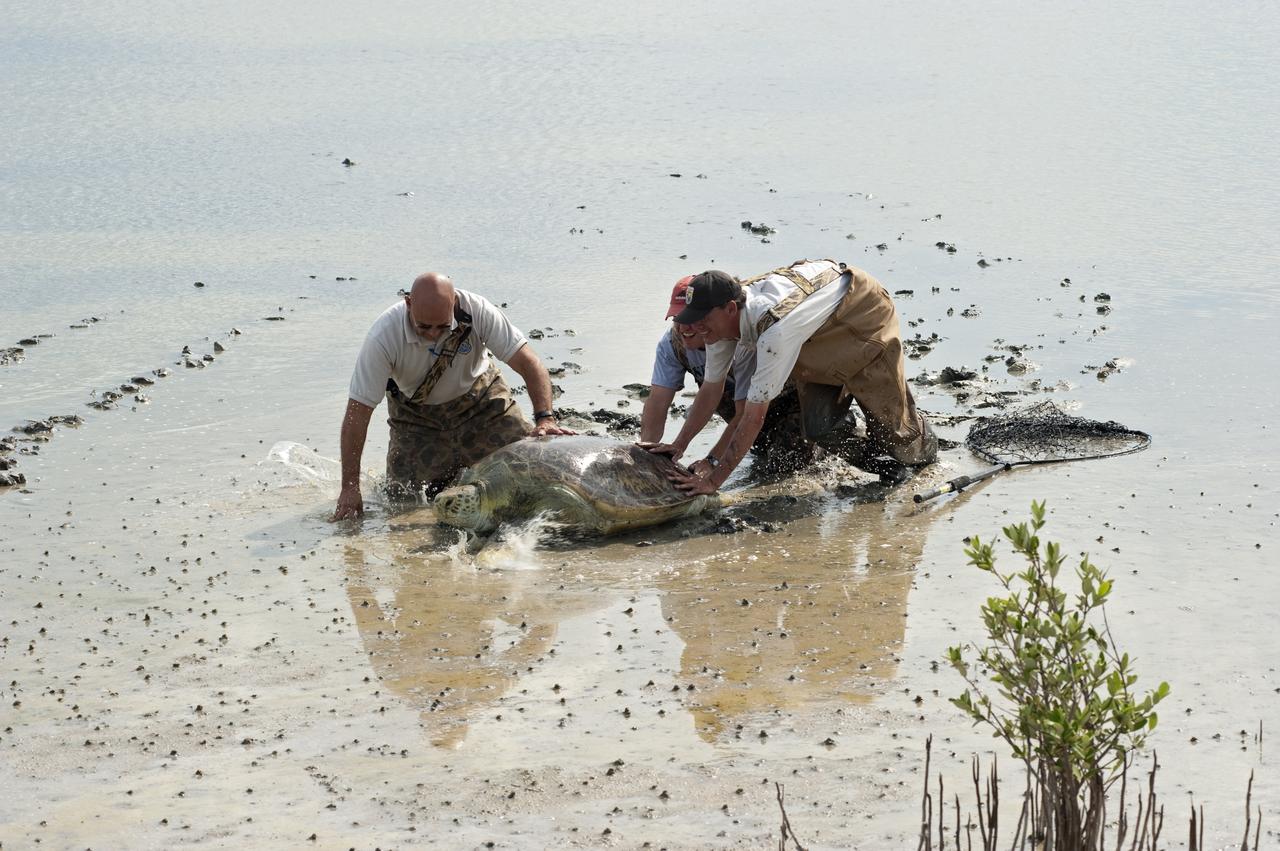
LOGGERHEAD SEA TURTLE RESCUE FOR RELEASE - MINWR
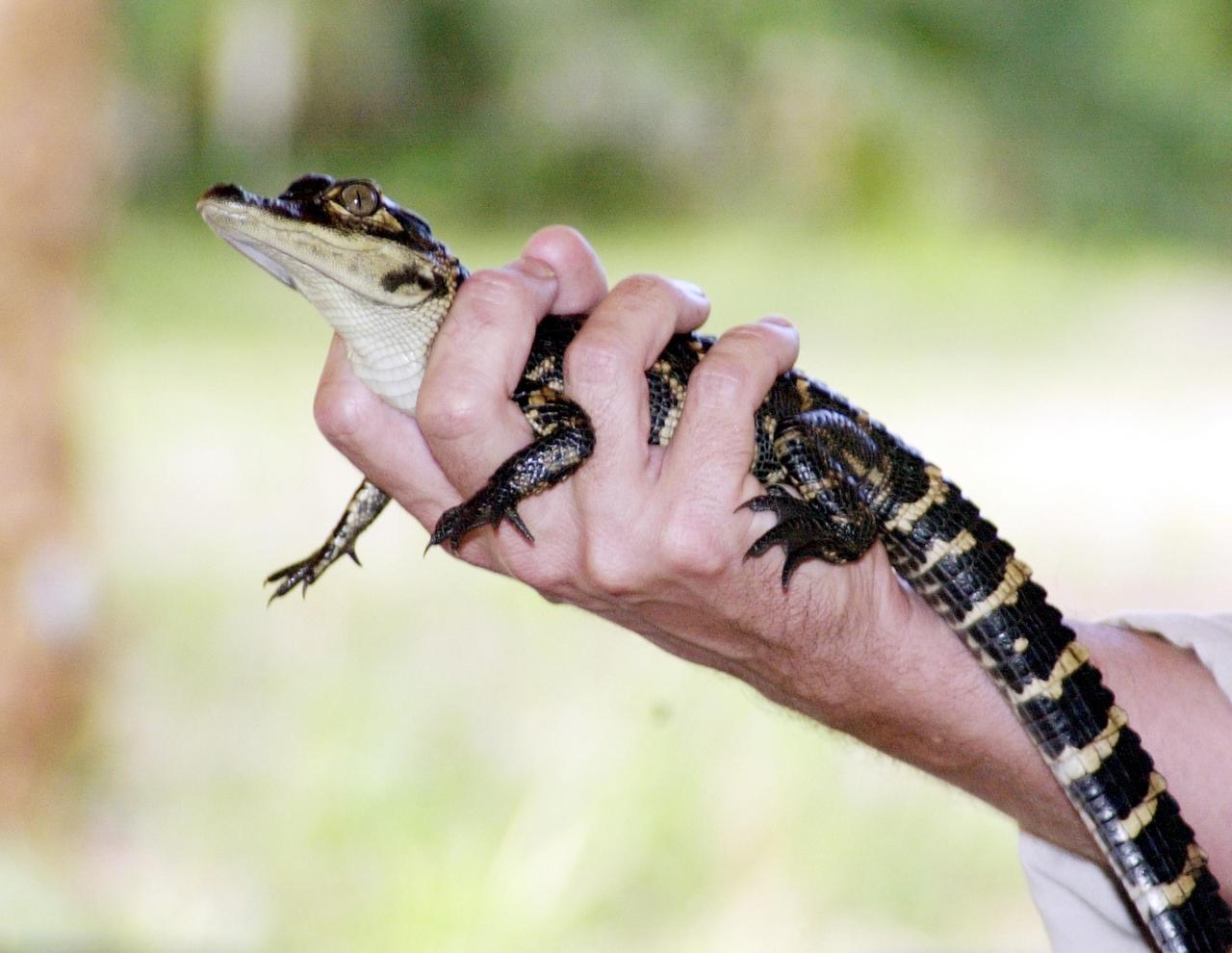
KENNEDY SPACE CENTER, FLA. - A baby alligator is displayed during the dedication of the Sendler Education Outpost, located at Dummit Cove on the Merritt Island National Wildlife Refuge (MINWR). The outpost is a resource for environmental educational students in the Central Florida area. It is named for Karl Sendler, a space pioneer and manager under Dr. Kurt Debus, KSC's first center director. Funding for the facility was provided by the Merritt Island Wildlife Association with assistance from MINWR and Kennedy Space Center.
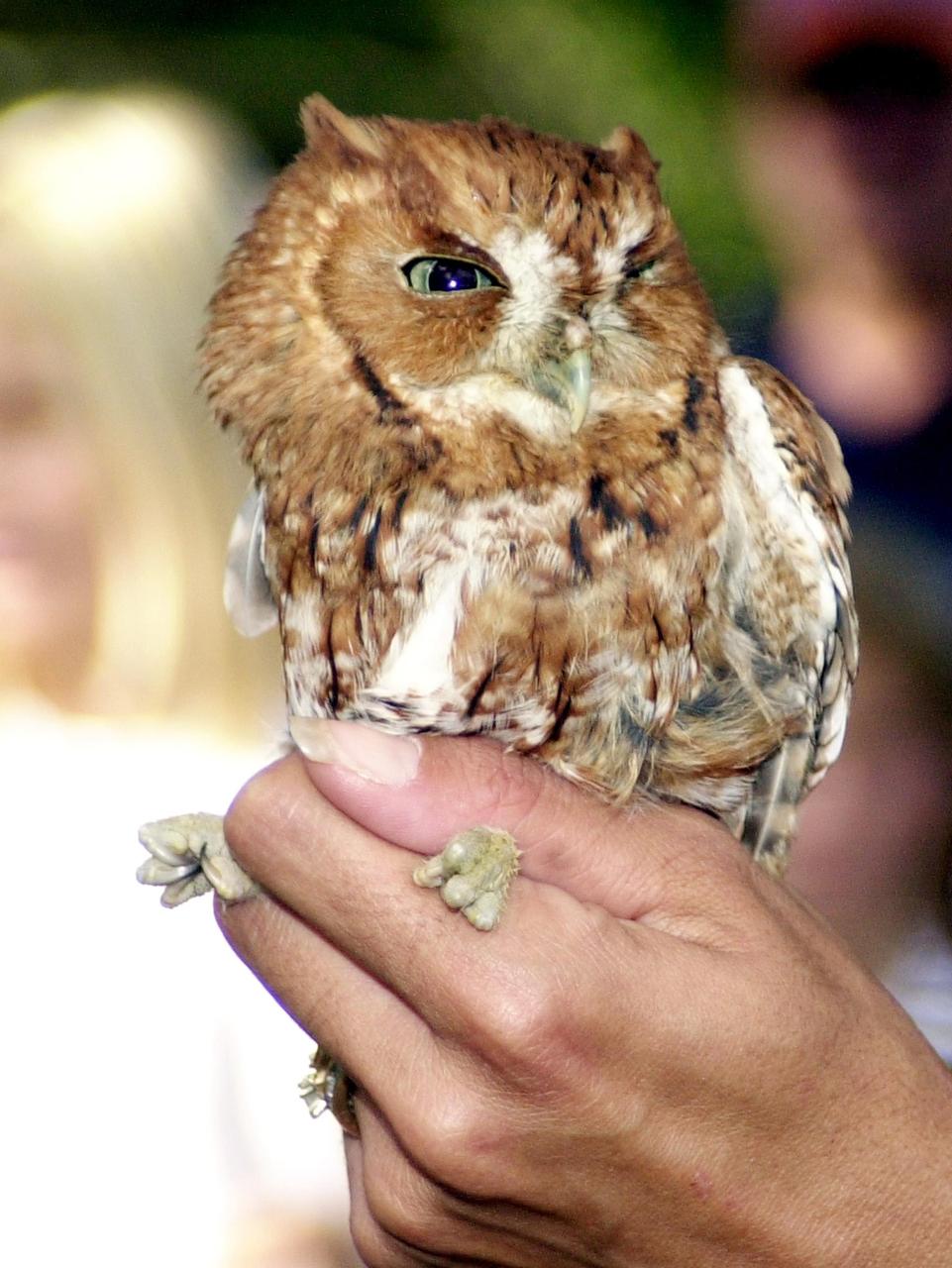
KENNEDY SPACE CENTER, FLA. -- An owl is held just before its release during the dedication of the Sendler Education Outpost, located at Dummit Cove on the Merritt Island National Wildlife Refuge (MINWR). The outpost is a resource for environmental educational students in the Central Florida area. It is named for Karl Sendler, a space pioneer and manager under Dr. Kurt Debus, KSC's first center director. Funding for the facility was provided by the Merritt Island Wildlife Association with assistance from MINWR and Kennedy Space Center.
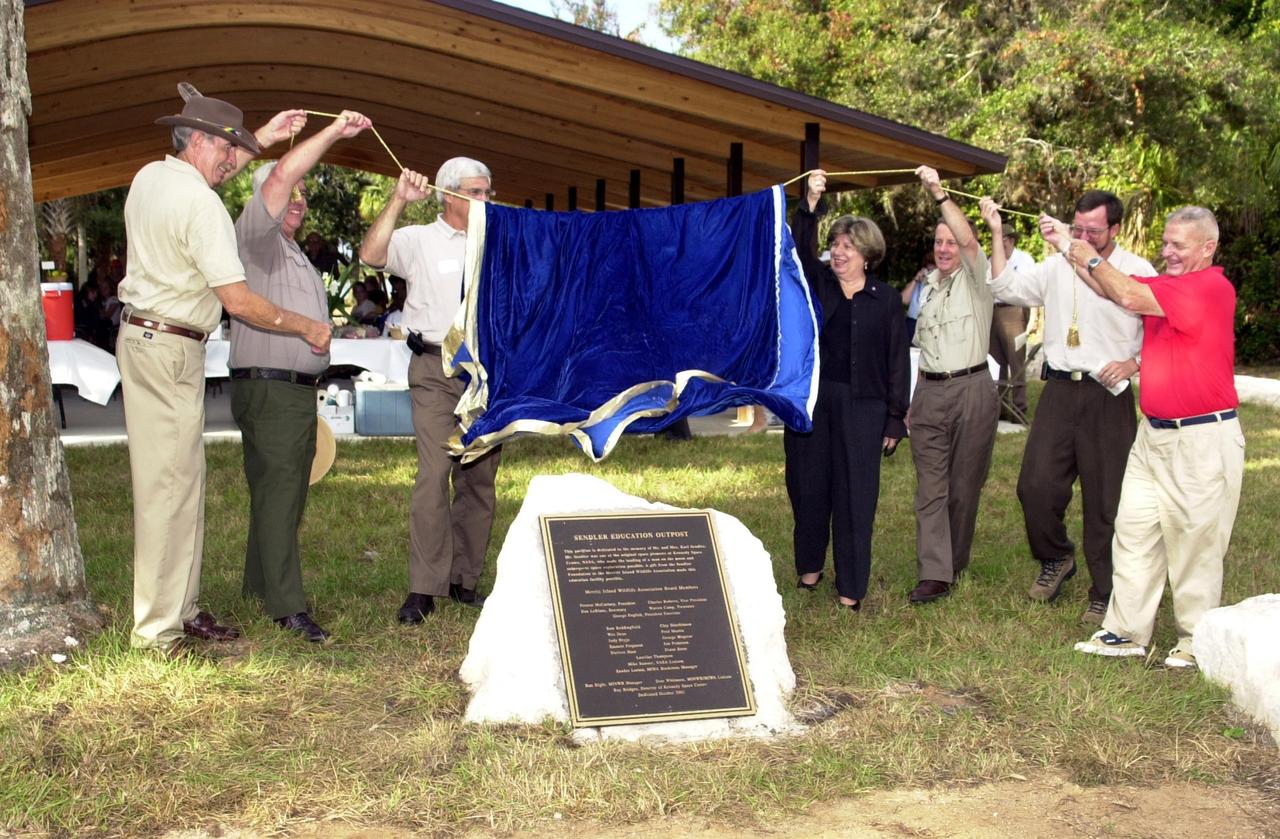
KENNEDY SPACE CENTER, FLA. - Representatives from the Merritt Island National Wildlife Refuge (MINWR) and KSC unveil a plaque dedicating the Sendler Education Outpost, located at Dummit Cove on the Refuge. Fourth from right is Acting Deputy Director JoAnn Morgan. The outpost is a resource for environmental educational students in the Central Florida area. It is named for Karl Sendler, a space pioneer and manager under Dr. Kurt Debus, KSC's first center director. Funding for the facility was provided by the Merritt Island Wildlife Association with assistance from MINWR and Kennedy Space Center.
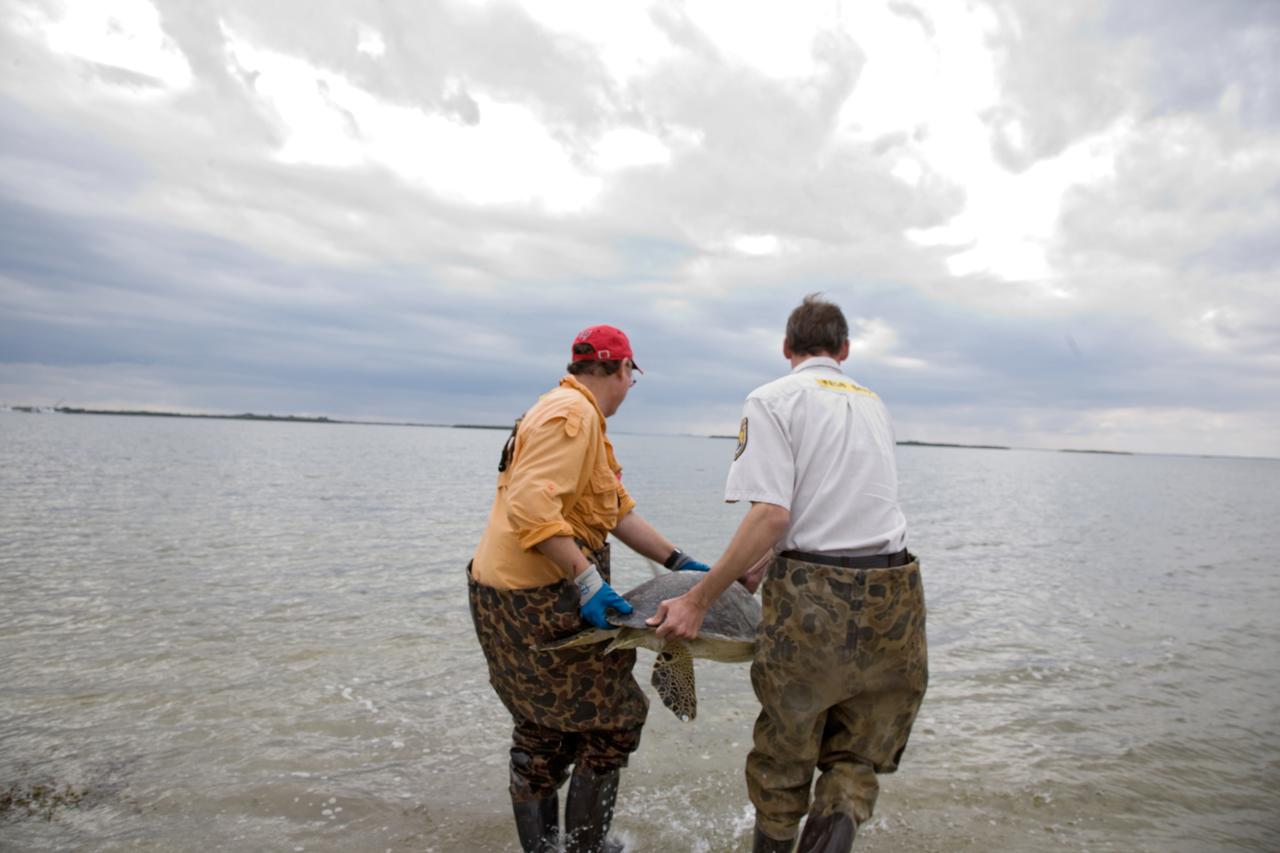
KSC WILDLIFE - SEA TURTLE RELEASE AFTER COLD WEATHER - NASA CSWY - SOUTH SIDE
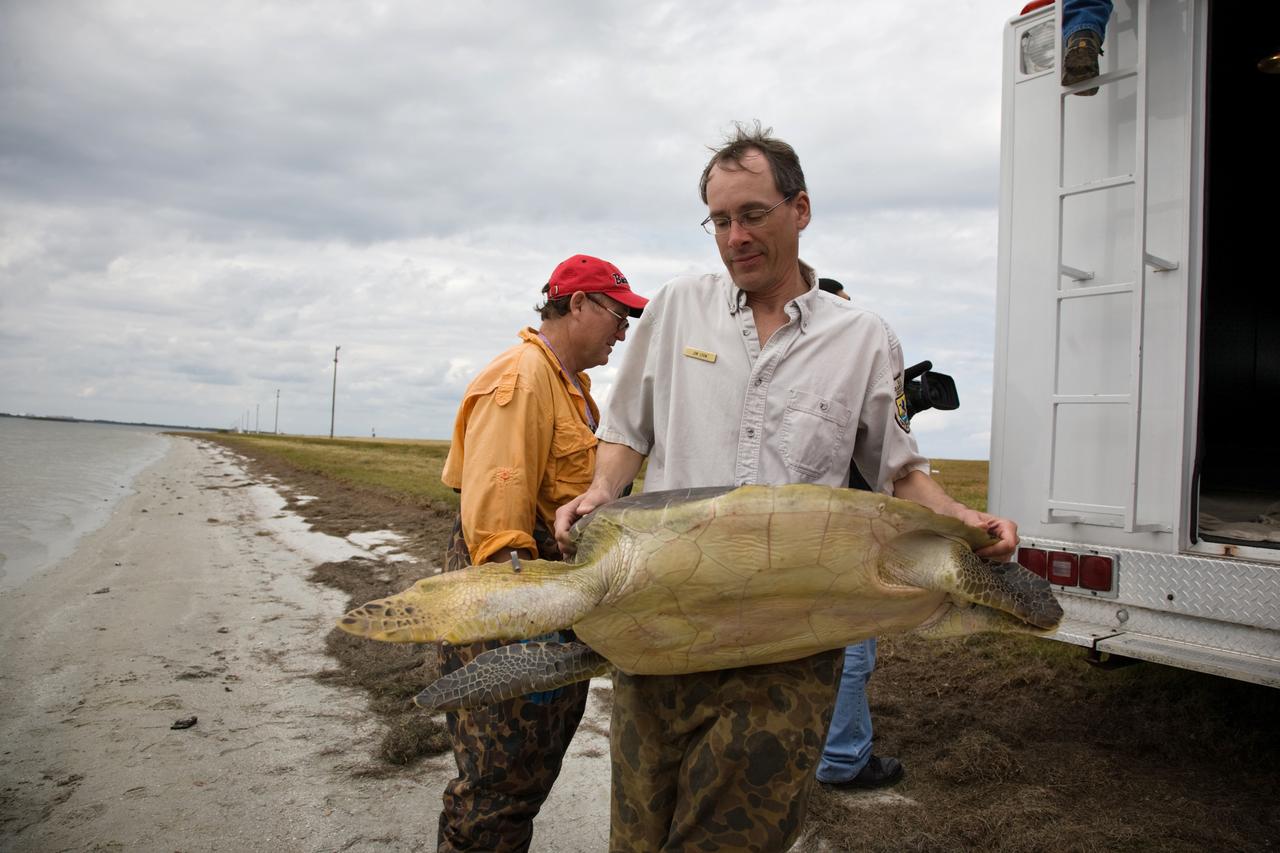
KSC WILDLIFE - SEA TURTLE RELEASE AFTER COLD WEATHER - NASA CSWY - SOUTH SIDE
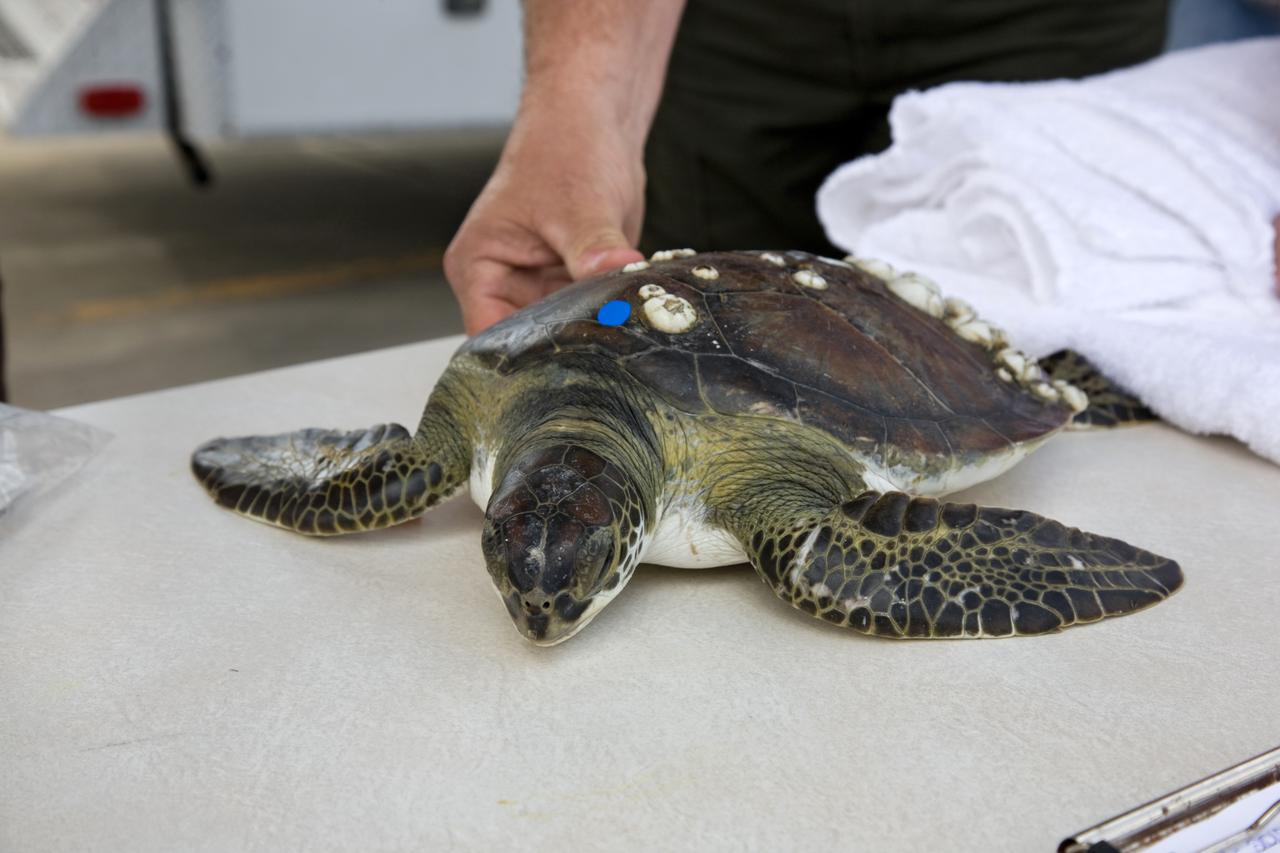
KSC WILDLIFE - SEA TURTLE RELEASE AFTER COLD WEATHER - NASA CSWY - SOUTH SIDE
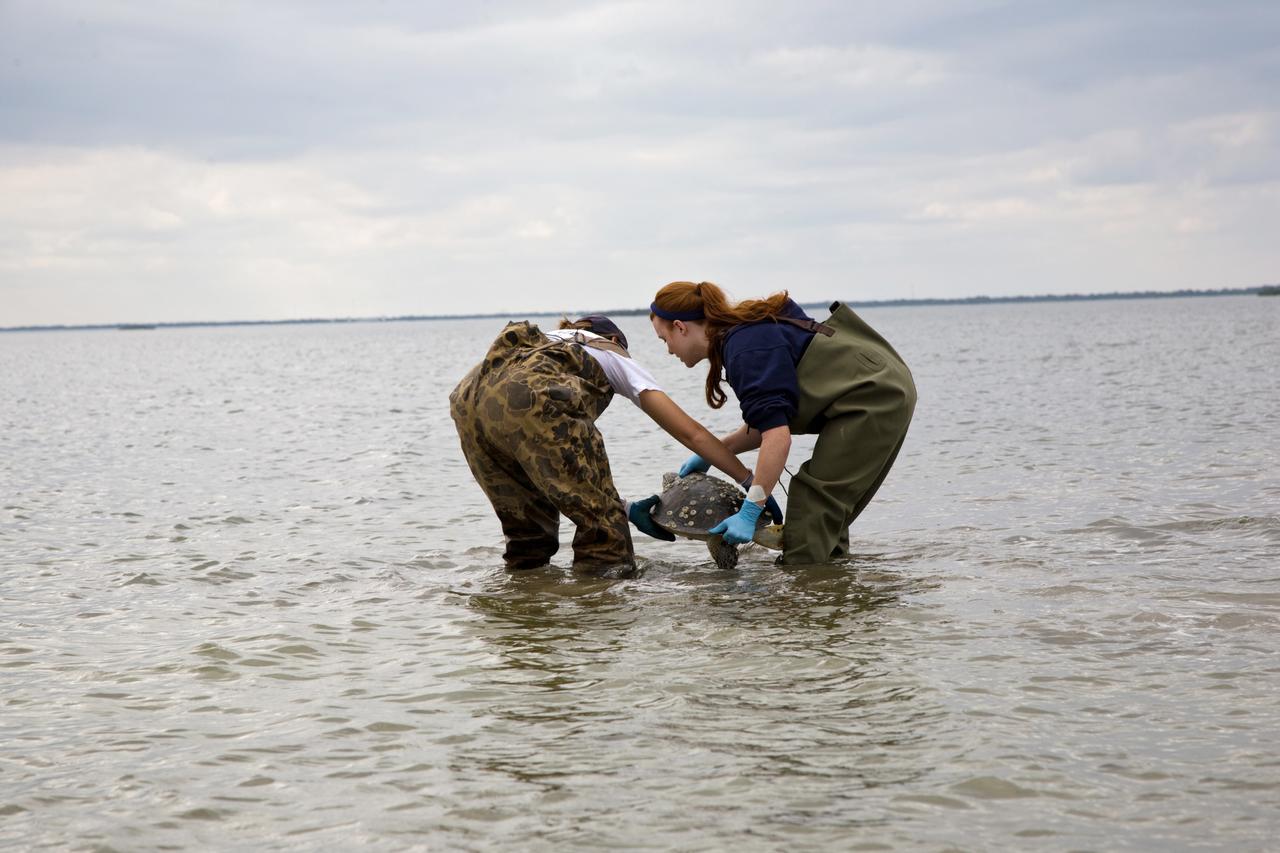
KSC WILDLIFE - SEA TURTLE RELEASE AFTER COLD WEATHER - NASA CSWY - SOUTH SIDE
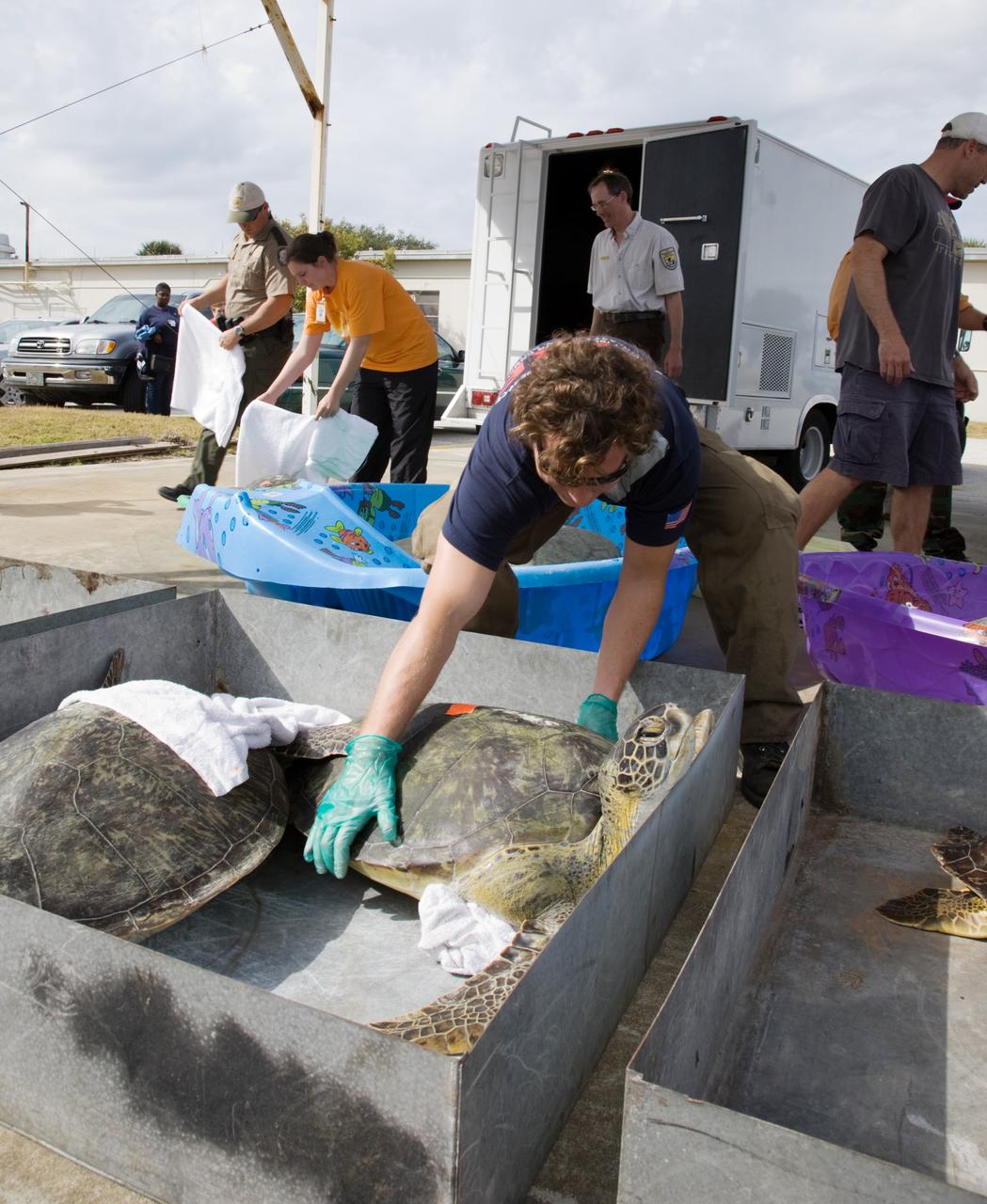
KSC WILDLIFE - SEA TURTLE RELEASE AFTER COLD WEATHER - NASA CSWY - SOUTH SIDE
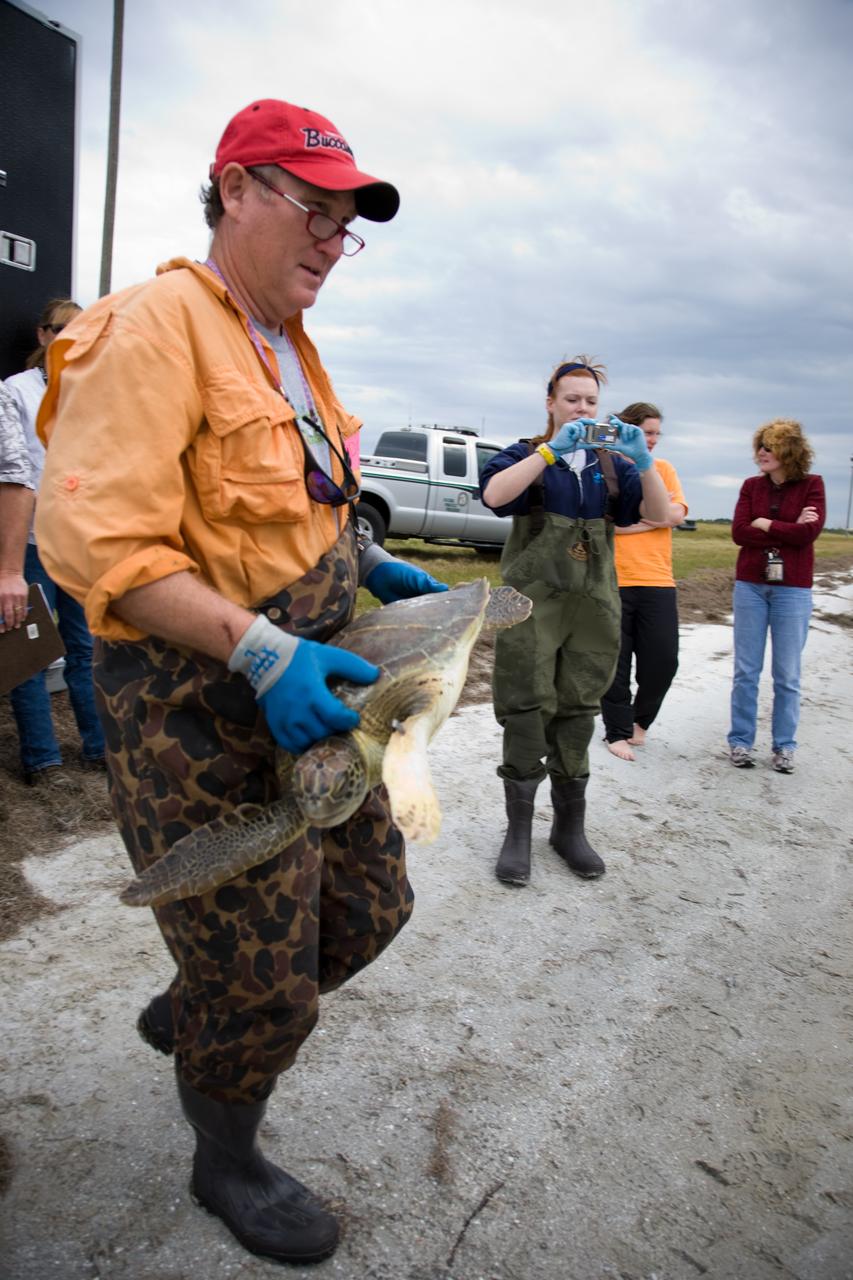
KSC WILDLIFE - SEA TURTLE RELEASE AFTER COLD WEATHER - NASA CSWY - SOUTH SIDE
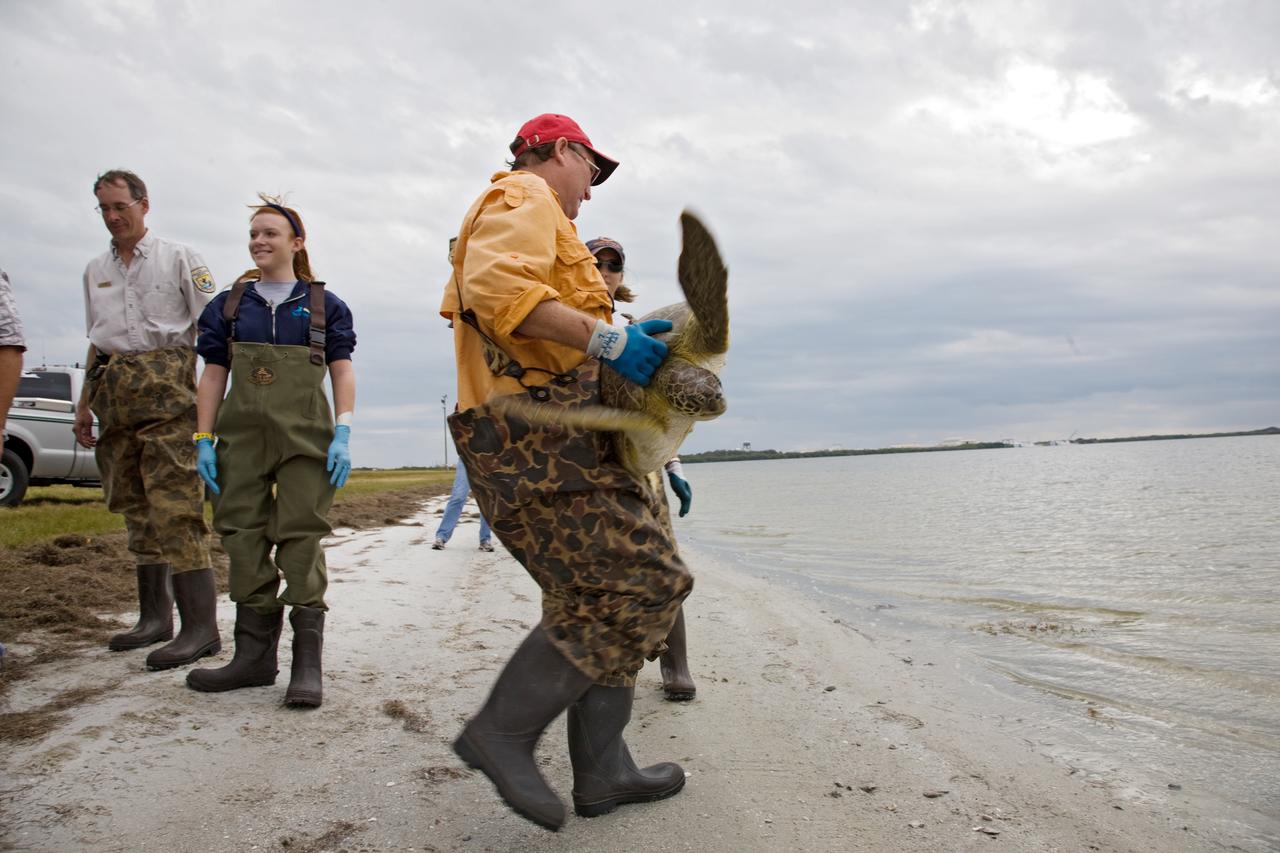
KSC WILDLIFE - SEA TURTLE RELEASE AFTER COLD WEATHER - NASA CSWY - SOUTH SIDE
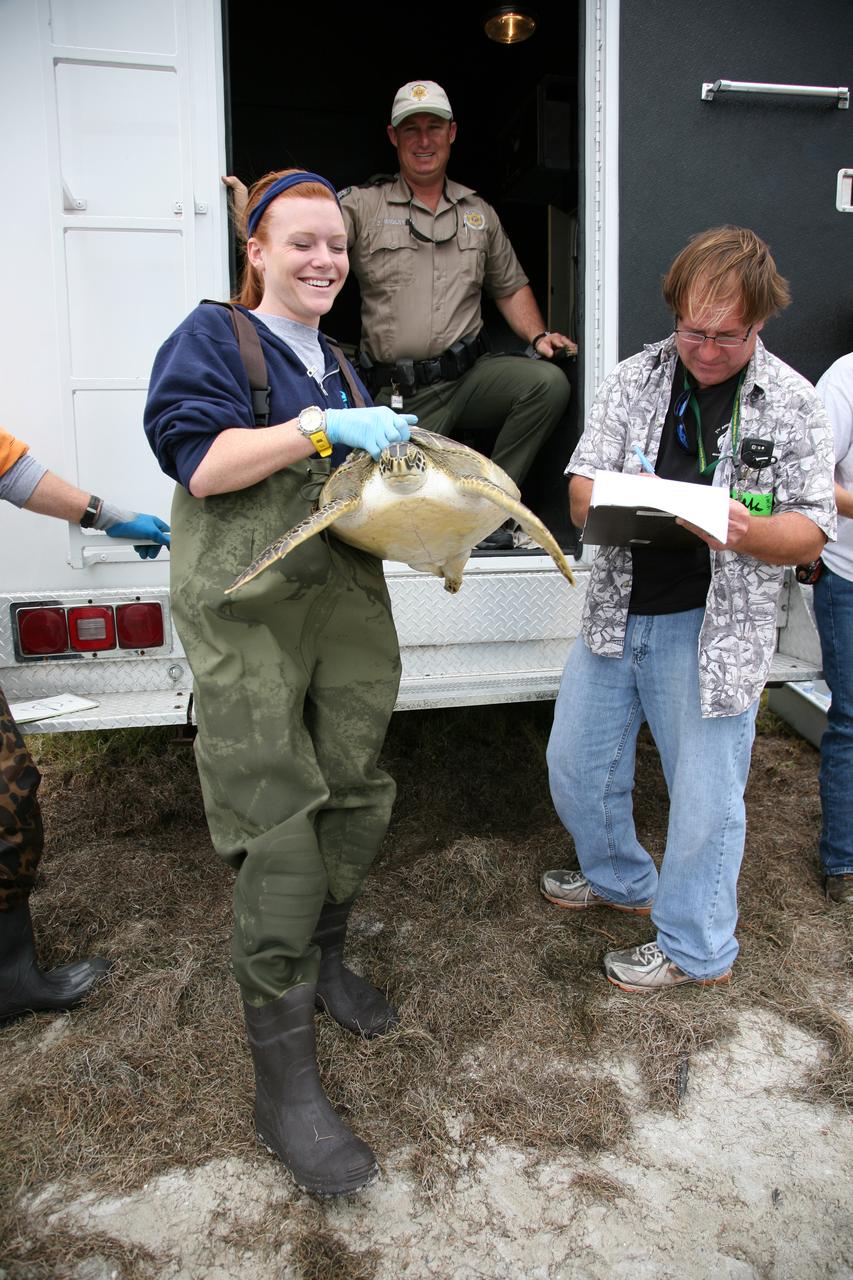
KSC WILDLIFE - SEA TURTLE RELEASE AFTER COLD WEATHER - NASA CSWY - SOUTH SIDE
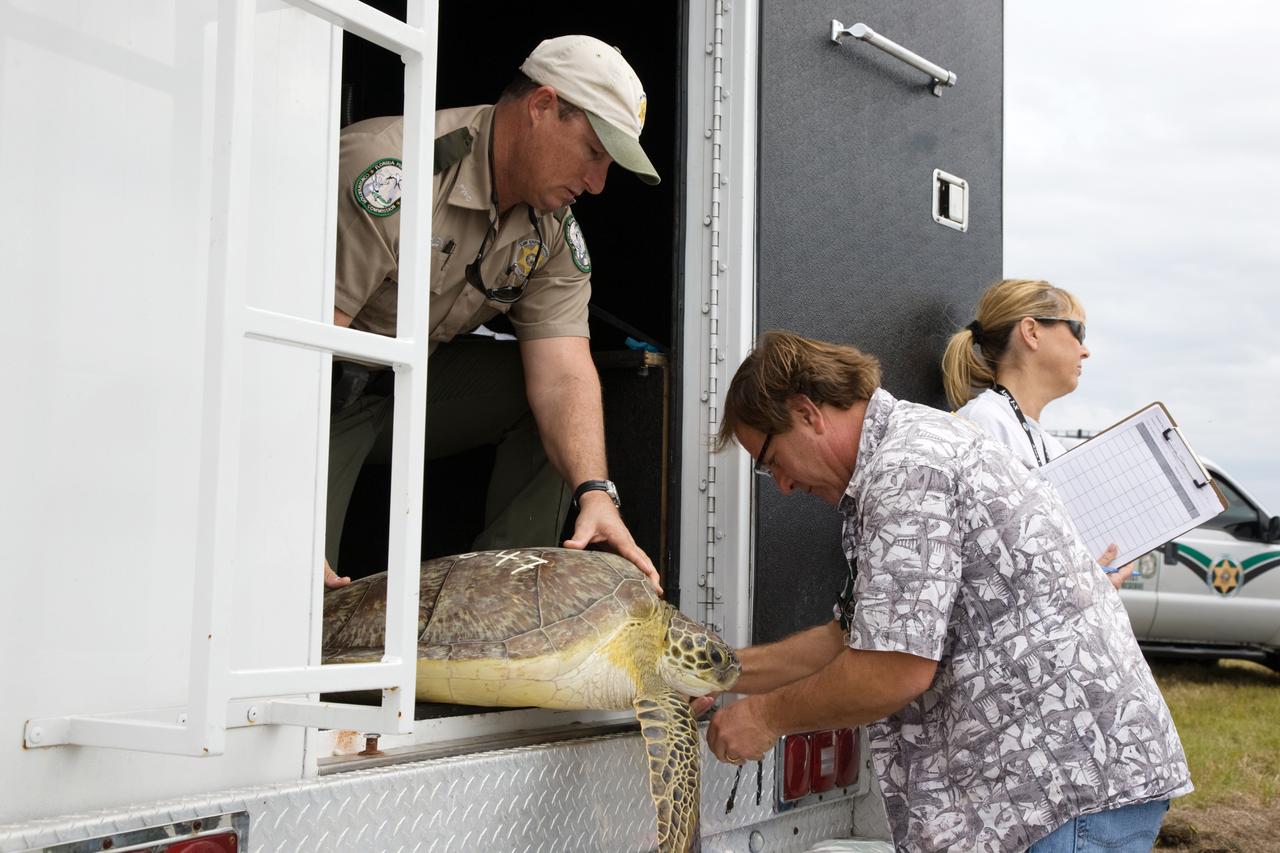
KSC WILDLIFE - SEA TURTLE RELEASE AFTER COLD WEATHER - NASA CSWY - SOUTH SIDE
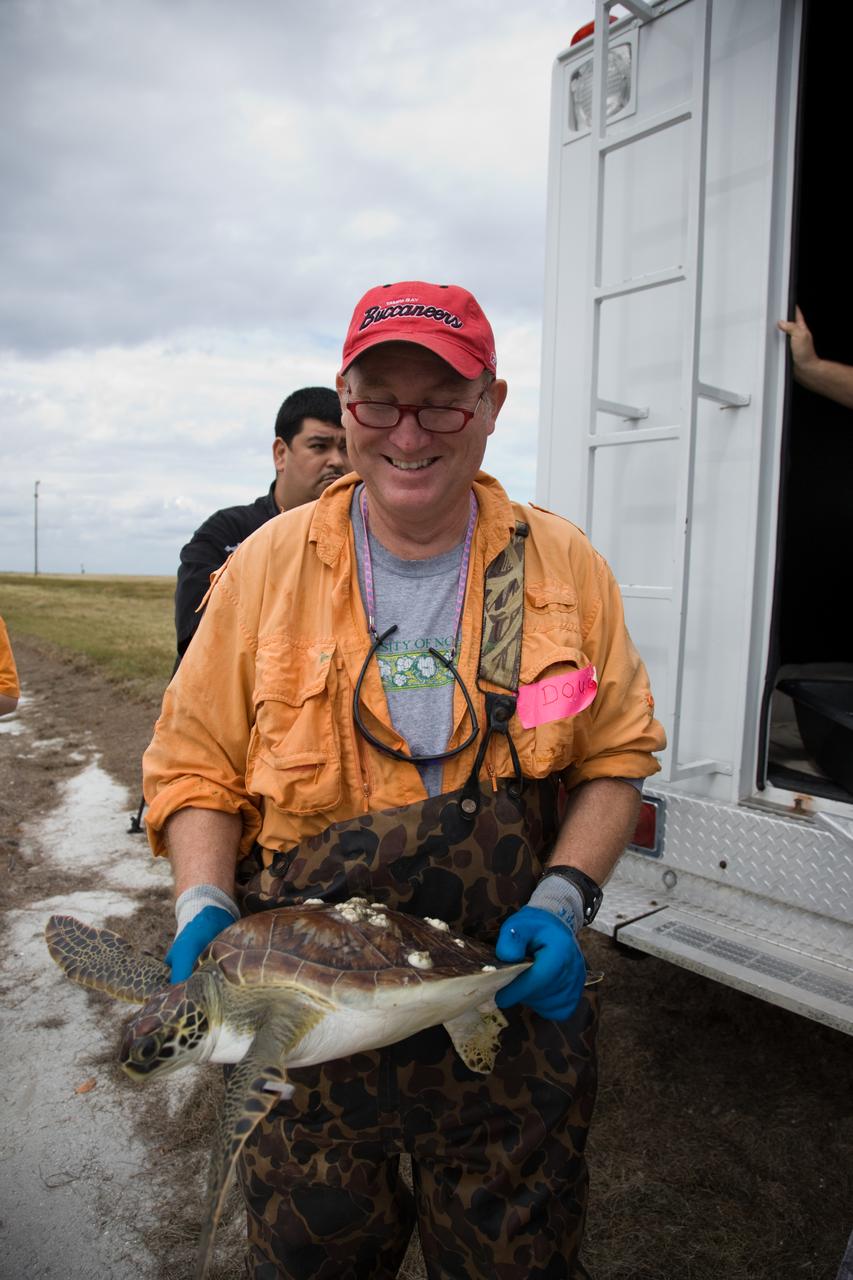
KSC WILDLIFE - SEA TURTLE RELEASE AFTER COLD WEATHER - NASA CSWY - SOUTH SIDE
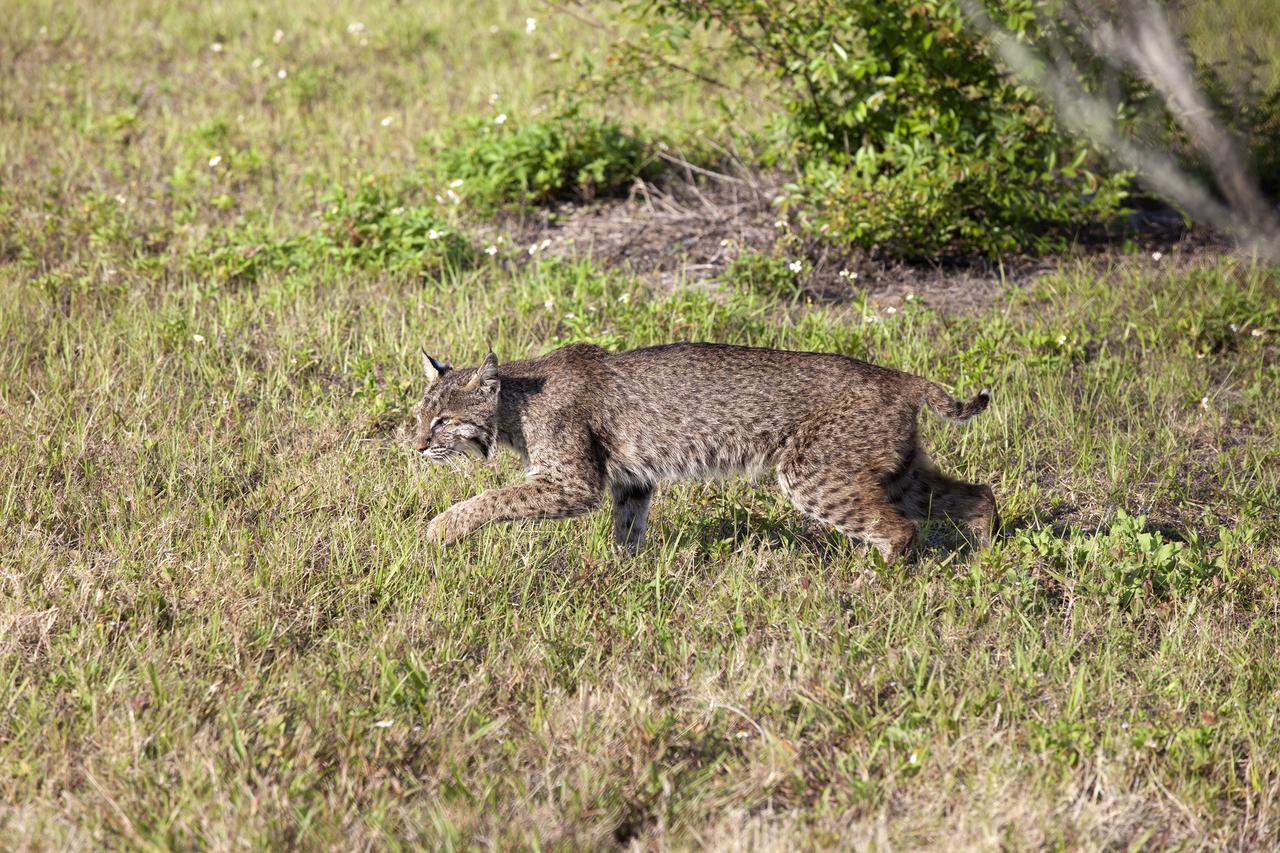
CAPE CANAVERAL, Fla. -- A bobcat retreats from the limelight near the Press Site at NASA's Kennedy Space Center in Florida. The center, the only launch site for crewed missions from U.S. soil, coexists with the Merritt Island National Wildlife Refuge, which encompasses 140,000 acres. The cat is the last large mammalian predator remaining on the center. The refuge provides a wide variety of habitats, including coastal dunes, saltwater estuaries and marshes, freshwater impoundments, scrub, pine flatwoods, and hardwood hammocks, and is a sanctuary for more than 1,500 species of plants and animals, including more than 330 species of birds, 31 mammals, 117 fishes, and 65 amphibians and reptiles. For additional information about the refuge, visit http://www.fws.gov/merrittisland. Photo credit: NASA/Kim Shiflett
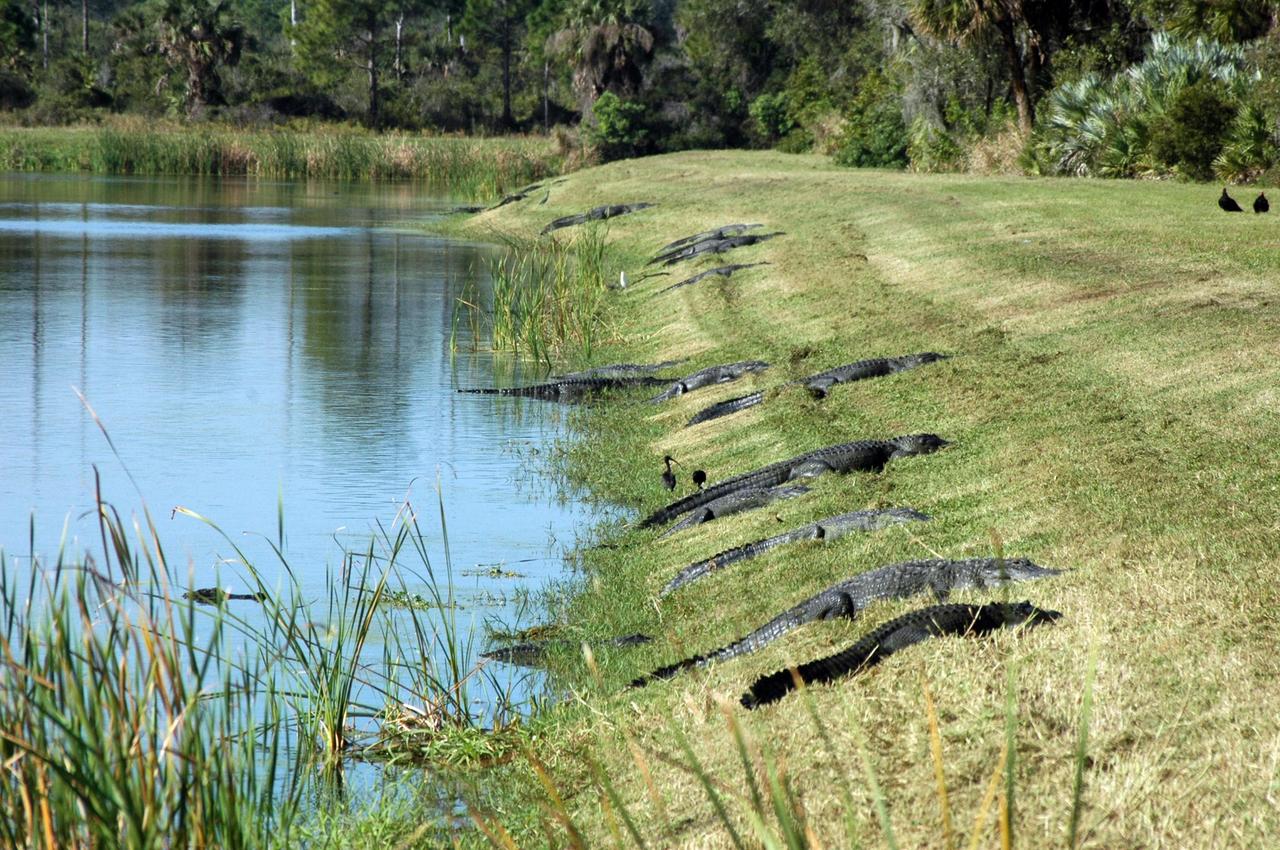
KENNEDY SPACE CENTER, FLA. -- On NASA's Kennedy Space Center, the bank of a pond provides the perfect spot for sunbathing alligators. American alligators feed and rest in the water, and lay their eggs in dens they dig into the banks. The young alligators spend their first several weeks in these dens. A protected species, alligators can be spotted in the drainage canals and other waters surrounding KSC. KSC shares a boundary with the Merritt Island Wildlife Nature Refuge. The refuge is a habitat for more than 310 species of birds, 25 mammals, 117 fishes and 65 amphibians and reptiles. In addition, the Refuge supports 19 endangered or threatened wildlife species on Federal or State lists, more than any other single refuge in the U.S. Photo credit: NASA/Ken Thornsley
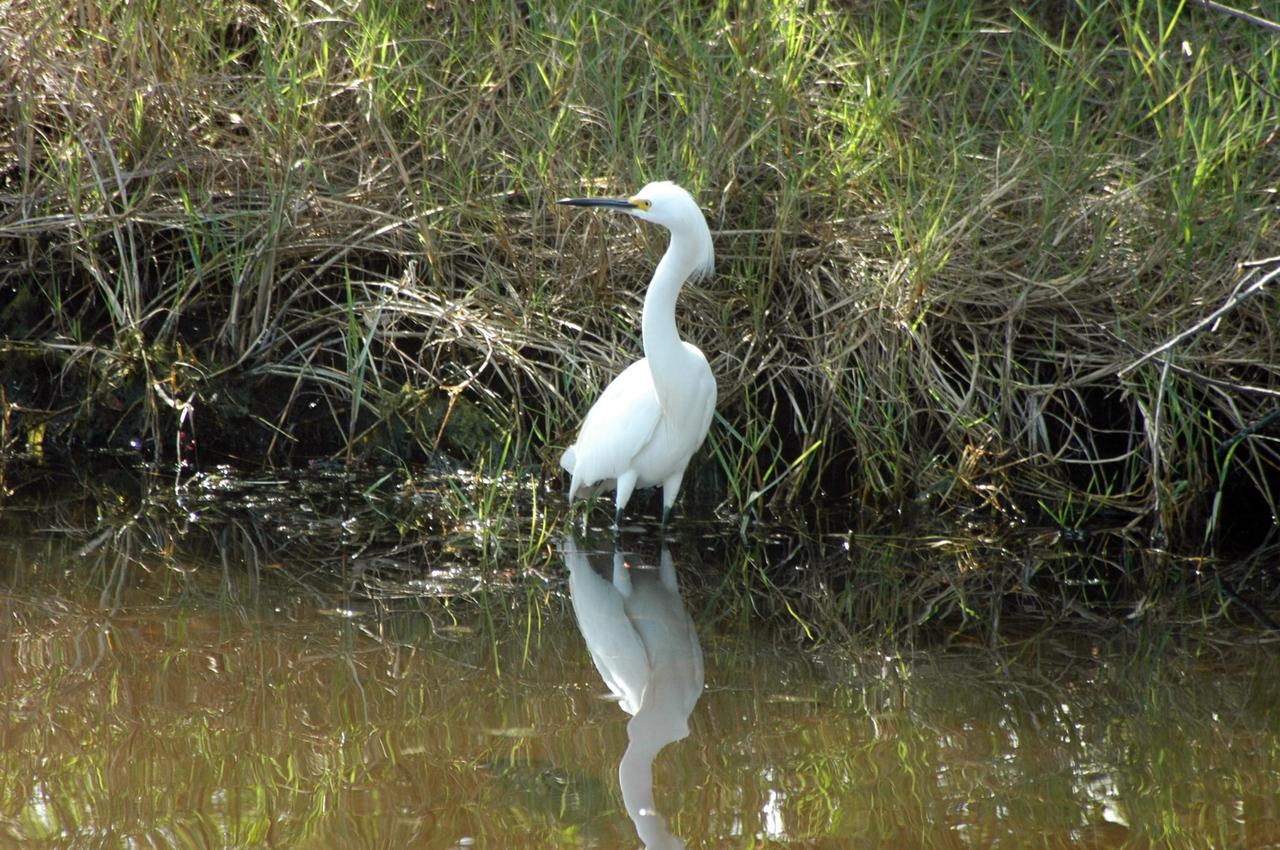
KENNEDY SPACE CENTER, FLA. -- A snowy egret is on the lookout for food in a pond on NASA's Kennedy Space Center. A type of heron, the snowy egret inhabits salt marshes, ponds, rice fields and shallow coastal bays ranging from Maine to southern South America on the east coast. It can also be found in California and Oklahoma to the Gulf of Mexico. KSC shares a boundary with the Merritt Island Wildlife Nature Refuge. The refuge is a habitat for more than 310 species of birds, 25 mammals, 117 fishes and 65 amphibians and reptiles. In addition, the Refuge supports 19 endangered or threatened wildlife species on Federal or State lists, more than any other single refuge in the U.S. Photo credit: NASA/Ken Thornsley
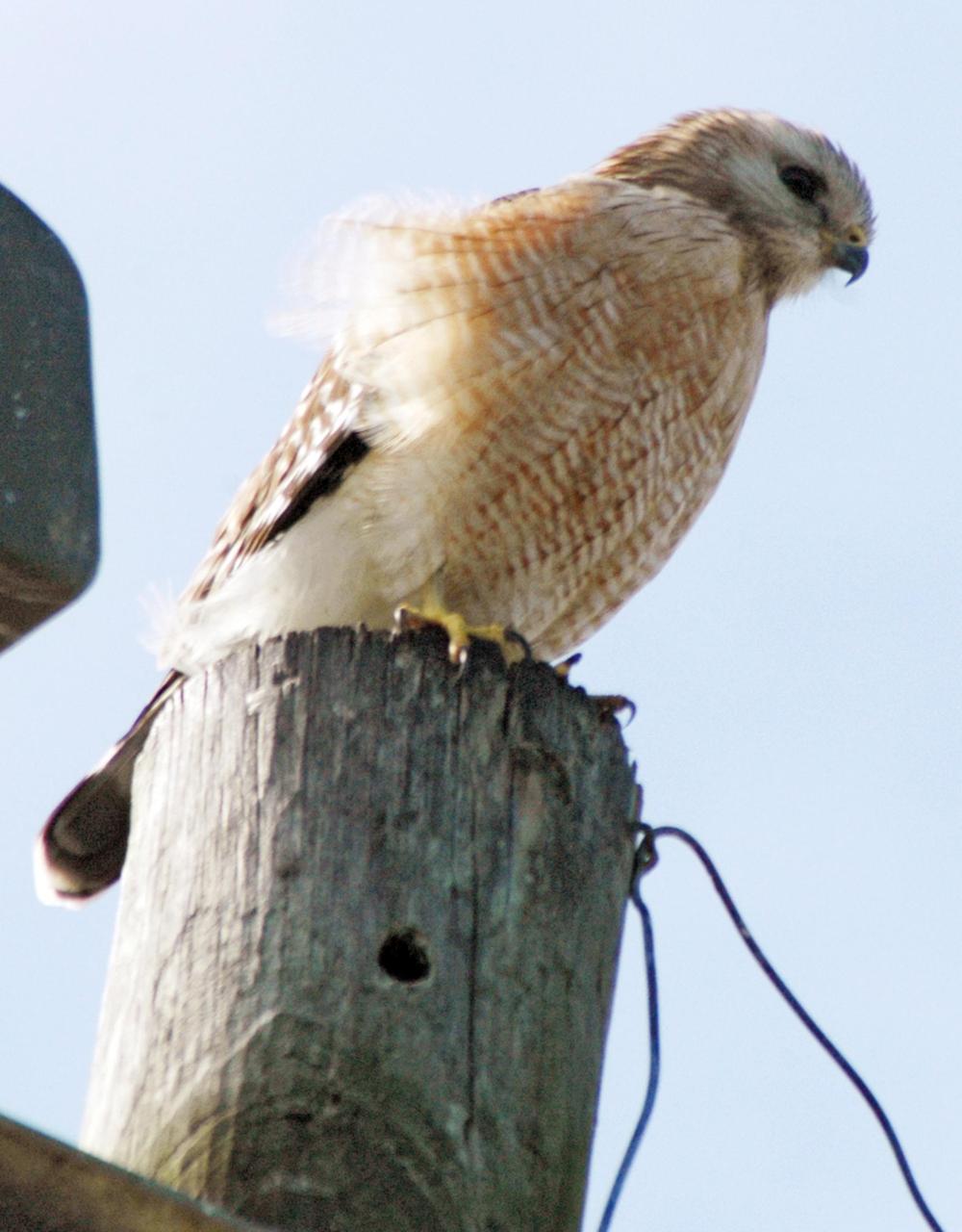
KENNEDY SPACE CENTER, FLA. -- This young red-shouldered hawk perches on a roadside pole inside NASA's Kennedy Space Center. The habitat of these hawks is deciduous woodlands, especially near standing water, frequently found in lowlands such as swampy woods and bogs. They range throughout the eastern half of the United States. KSC shares a boundary with the Merritt Island Wildlife Nature Refuge. The refuge is a habitat for more than 310 species of birds, 25 mammals, 117 fishes and 65 amphibians and reptiles. In addition, the Refuge supports 19 endangered or threatened wildlife species on Federal or State lists, more than any other single refuge in the U.S. Photo credit: NASA/Ken Thornsley
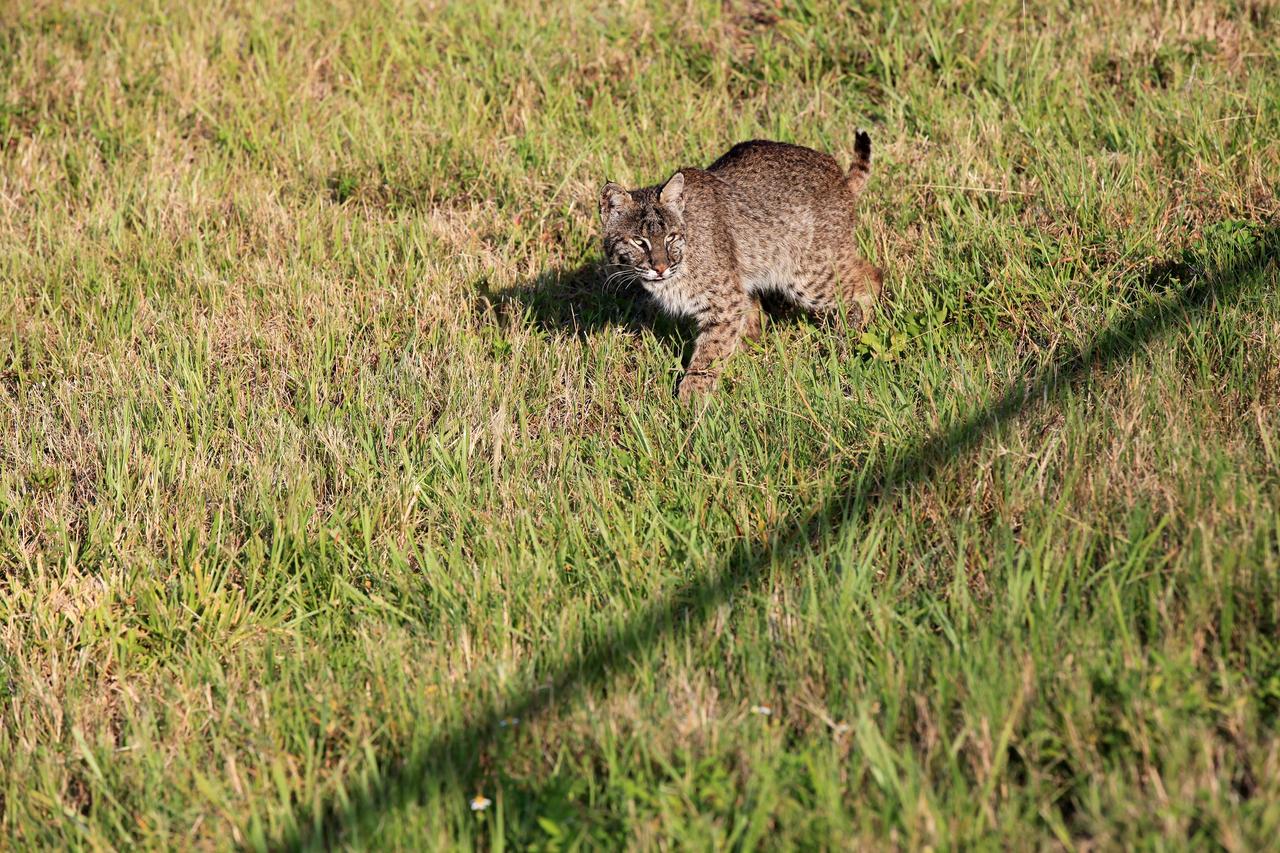
CAPE CANAVERAL, Fla. -- A bobcat is startled to be discovered near the Press Site at NASA's Kennedy Space Center in Florida. The center, the only launch site for crewed missions from U.S. soil, coexists with the Merritt Island National Wildlife Refuge, which encompasses 140,000 acres. The cat is the last large mammalian predator remaining on the center. The refuge provides a wide variety of habitats, including coastal dunes, saltwater estuaries and marshes, freshwater impoundments, scrub, pine flatwoods, and hardwood hammocks, and is a sanctuary for more than 1,500 species of plants and animals, including more than 330 species of birds, 31 mammals, 117 fishes, and 65 amphibians and reptiles. For additional information about the refuge, visit http://www.fws.gov/merrittisland. Photo credit: NASA/Kim Shiflett
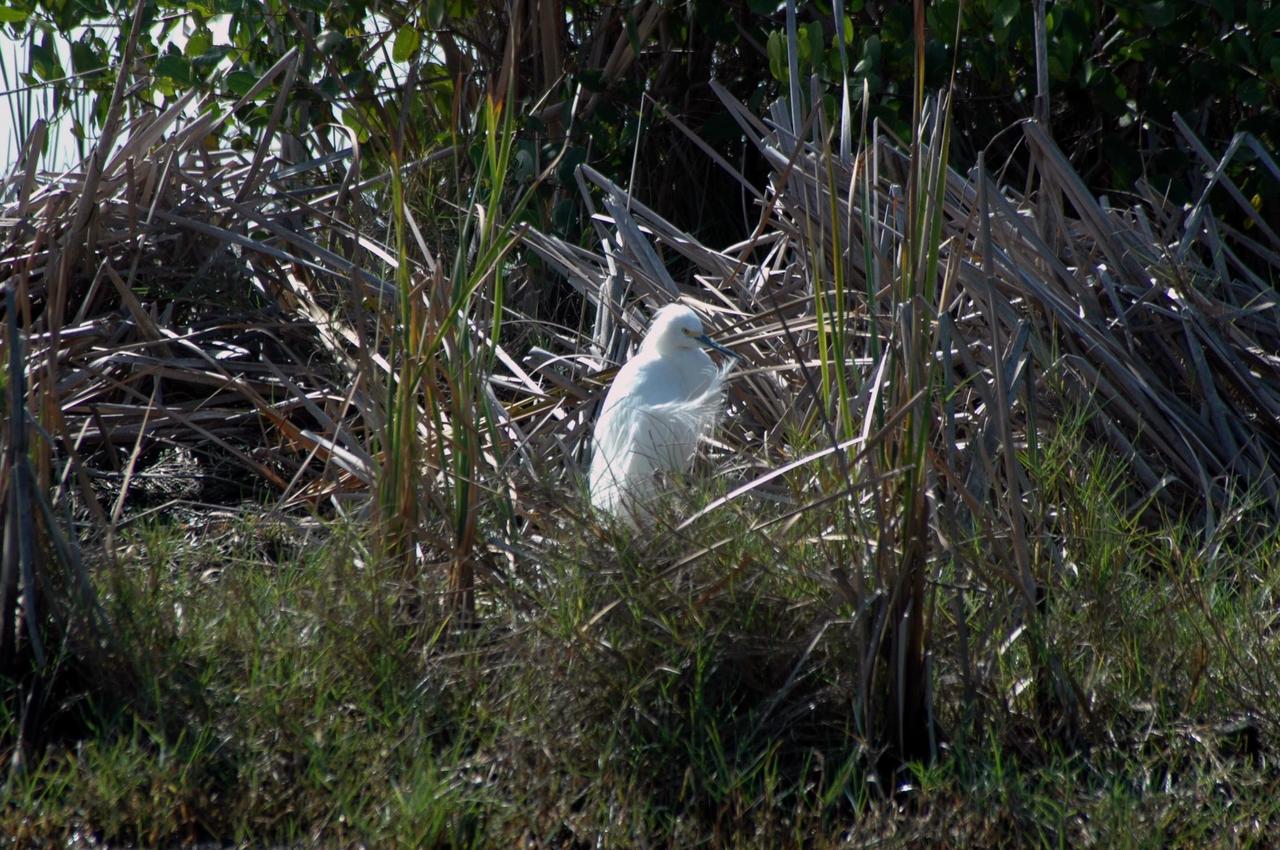
KENNEDY SPACE CENTER, FLA. -- A snowy egret is spotted in the midst of reeds near a pond on NASA's Kennedy Space Center. A type of heron, the snowy egret inhabits salt marshes, ponds, rice fields and shallow coastal bays ranging from Maine to southern South America on the east coast. It can also be found in California and Oklahoma to the Gulf of Mexico. KSC shares a boundary with the Merritt Island Wildlife Nature Refuge. The refuge is a habitat for more than 310 species of birds, 25 mammals, 117 fishes and 65 amphibians and reptiles. In addition, the Refuge supports 19 endangered or threatened wildlife species on Federal or State lists, more than any other single refuge in the U.S. Photo credit: NASA/Ken Thornsley
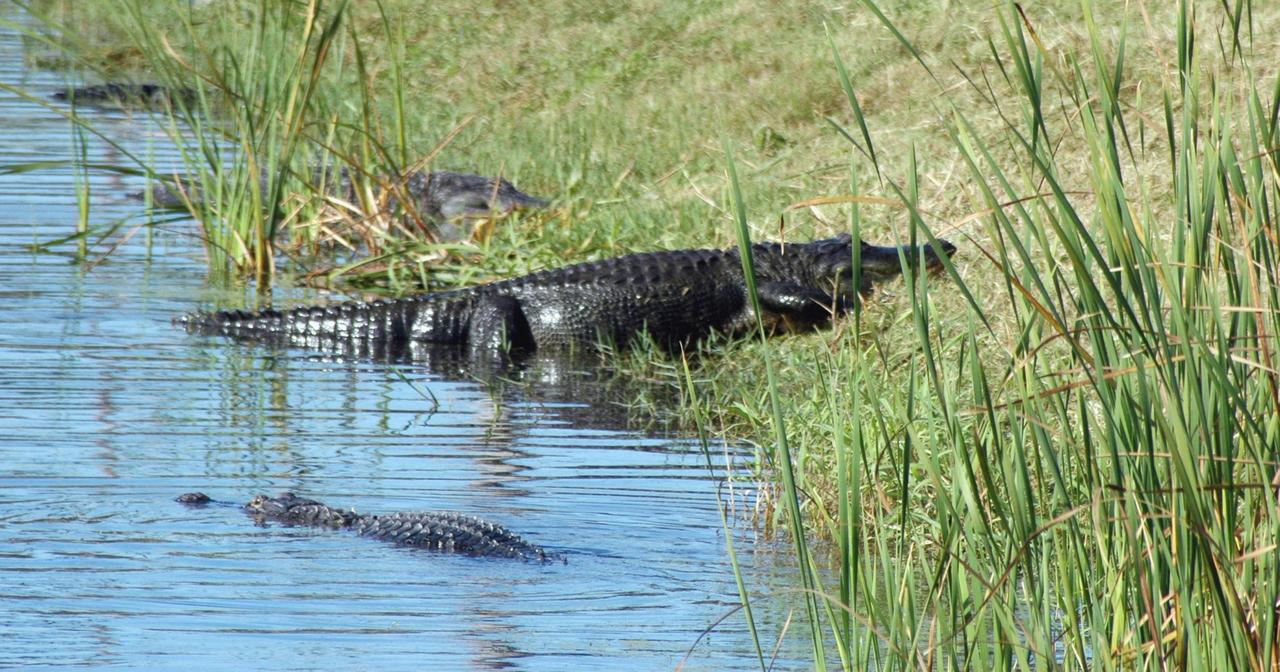
KENNEDY SPACE CENTER, FLA. -- On NASA's Kennedy Space Center, alligators begin climbing out of a pond to sunbathe on the bank. American alligators feed and rest in the water, and lay their eggs in dens they dig into the banks. The young alligators spend their first several weeks in these dens. A protected species, alligators can be spotted in the drainage canals and other waters surrounding KSC. KSC shares a boundary with the Merritt Island Wildlife Nature Refuge. The refuge is a habitat for more than 310 species of birds, 25 mammals, 117 fishes and 65 amphibians and reptiles. In addition, the Refuge supports 19 endangered or threatened wildlife species on Federal or State lists, more than any other single refuge in the U.S. Photo credit: NASA/Ken Thornsley
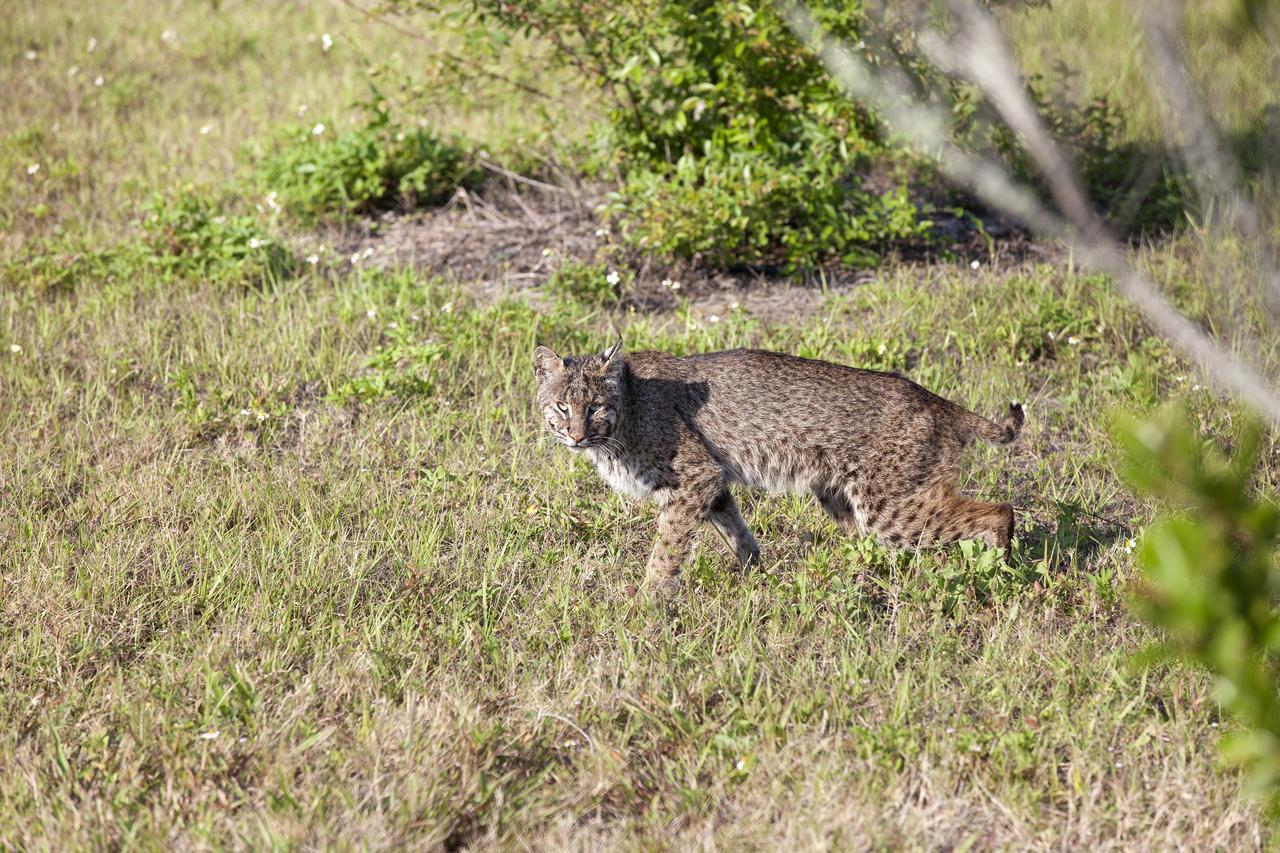
CAPE CANAVERAL, Fla. -- A bobcat prowls through the grass near the Press Site at NASA's Kennedy Space Center in Florida. The center, the only launch site for crewed missions from U.S. soil, coexists with the Merritt Island National Wildlife Refuge, which encompasses 140,000 acres. The cat is the last large mammalian predator remaining on the center. The refuge provides a wide variety of habitats, including coastal dunes, saltwater estuaries and marshes, freshwater impoundments, scrub, pine flatwoods, and hardwood hammocks, and is a sanctuary for more than 1,500 species of plants and animals, including more than 330 species of birds, 31 mammals, 117 fishes, and 65 amphibians and reptiles. For additional information about the refuge, visit http://www.fws.gov/merrittisland. Photo credit: NASA/Kim Shiflett
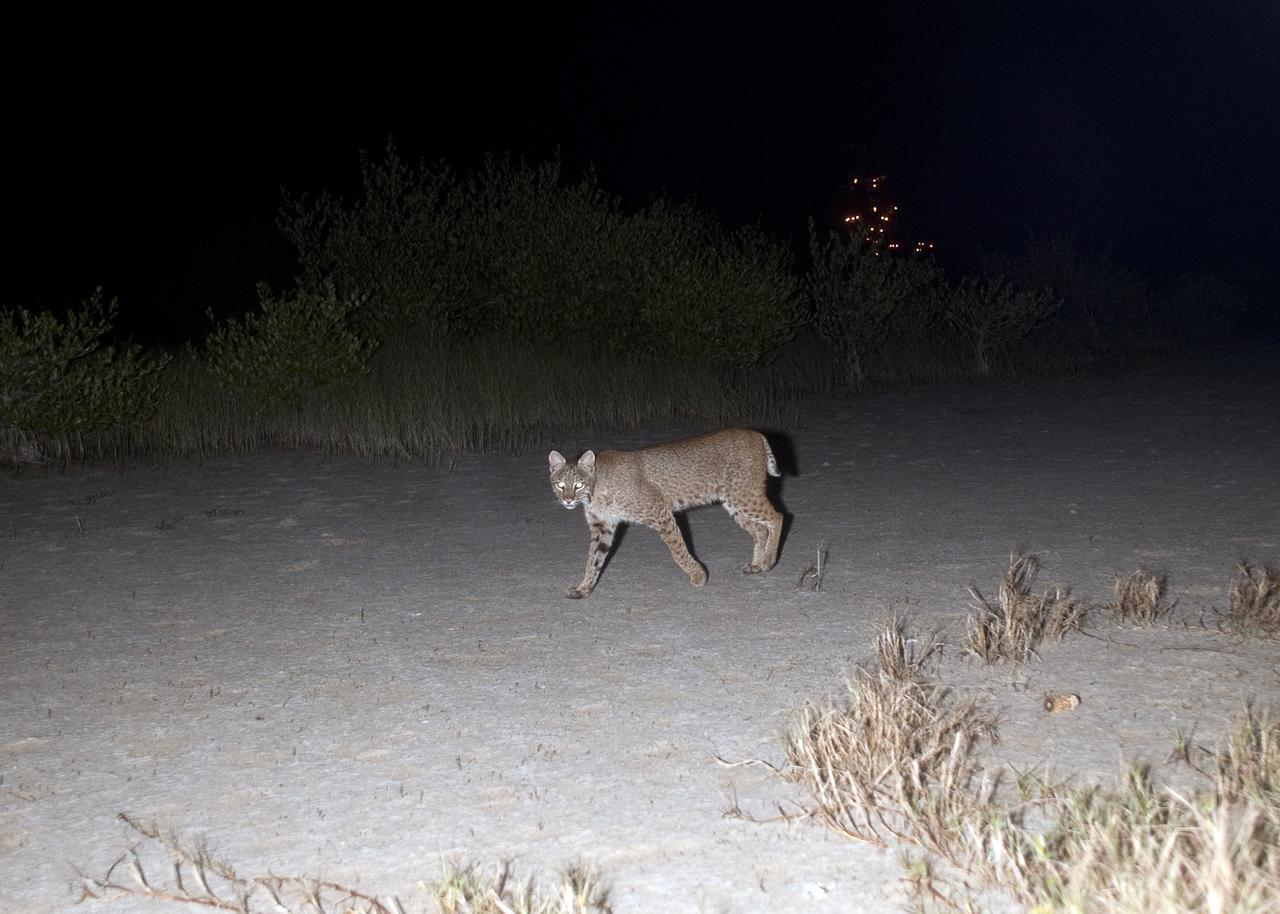
CAPE CANAVERAL, Fla. – Out on a nocturnal stroll, a bobcat triggers a motion-activated remote camera set up for this purpose at NASA’s Kennedy Space Center in Florida. The cat is seldom observed during the day unless scared from its daytime shelter. It is the last large mammalian predator remaining on the center. In the background are the lights on Launch Pad 39A. Kennedy and the Merritt Island National Wildlife Refuge mutually reside on 140,000 acres on central Florida’s east coast. The area’s coastal dunes, saltwater estuaries and marshes, freshwater impoundments, scrub, pine flatwoods, and hardwood hammocks provide habitats for more than 1,500 species of plants and animals, including about 331 species of birds. For more information, visit http://www.nasa.gov/kennedy. Photo credit: NASA/Tony Gray
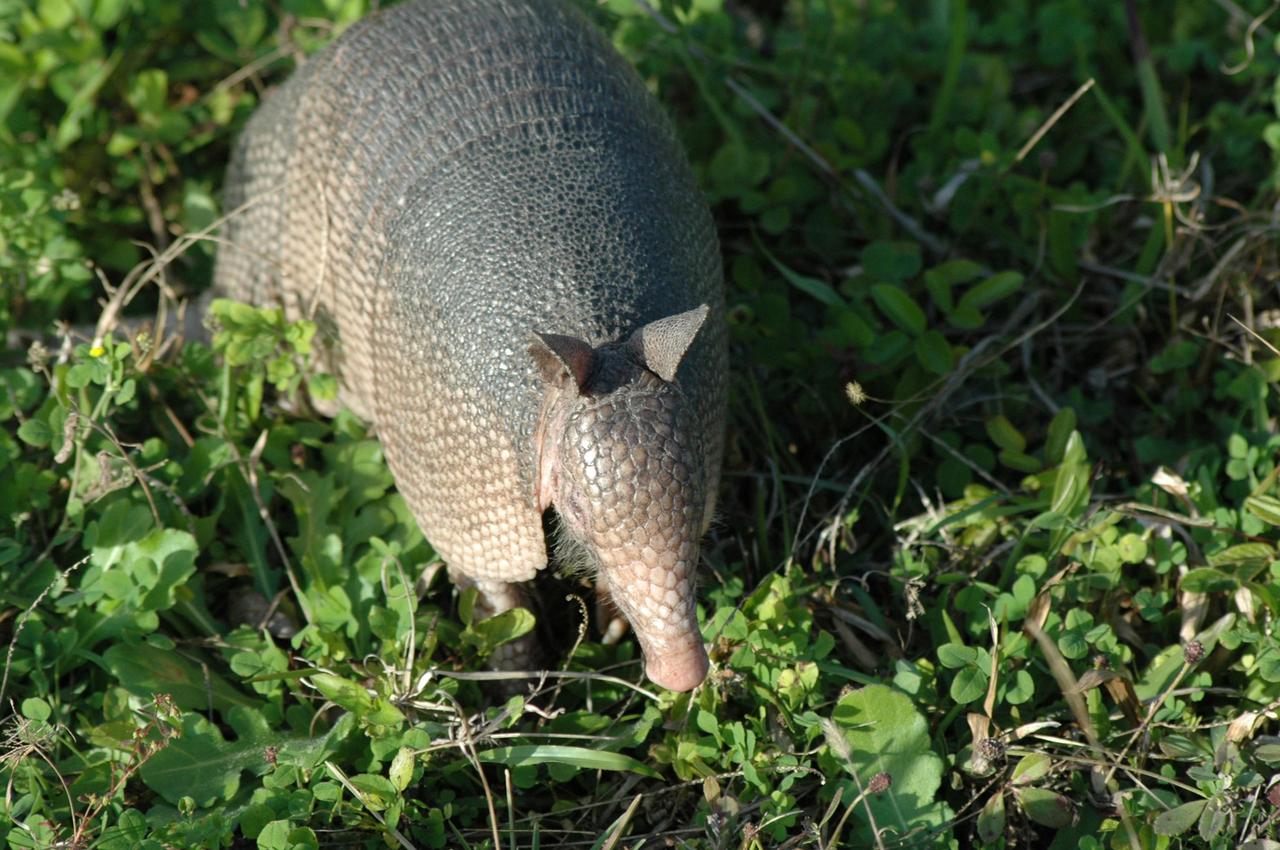
KENNEDY SPACE CENTER, FLA. -- Seen at NASA's Kennedy Space Center, this nine-banded armadillo may be looking for food. Introduced to Florida in the early 1900's, this species is found statewide in areas with dense ground cover and sandy soil. Nine bands of plates cover the body from shoulder to hip and 12 bands cover the long tail. It has a small, tapered head and snout and a long tongue. Its ears are long and hairless. It has sparse white hairs on its belly. Its diet is composed of insects, especially beetles, and other invertebrates plus some plant foods such as cedars and beautyberries. It is primarily nocturnal, sedentary, solitary and a burrower. It digs a series of dens. The multiple entrances are usually protected by stumps, palmettos, or trees. Many other animals also use armadillo dens. KSC shares a boundary with the Merritt Island Wildlife Nature Refuge. The refuge is a habitat for more than 310 species of birds, 25 mammals, 117 fishes and 65 amphibians and reptiles. In addition, the Refuge supports 19 endangered or threatened wildlife species on Federal or State lists, more than any other single refuge in the U.S. Photo credit: NASA/Ken Thornsley
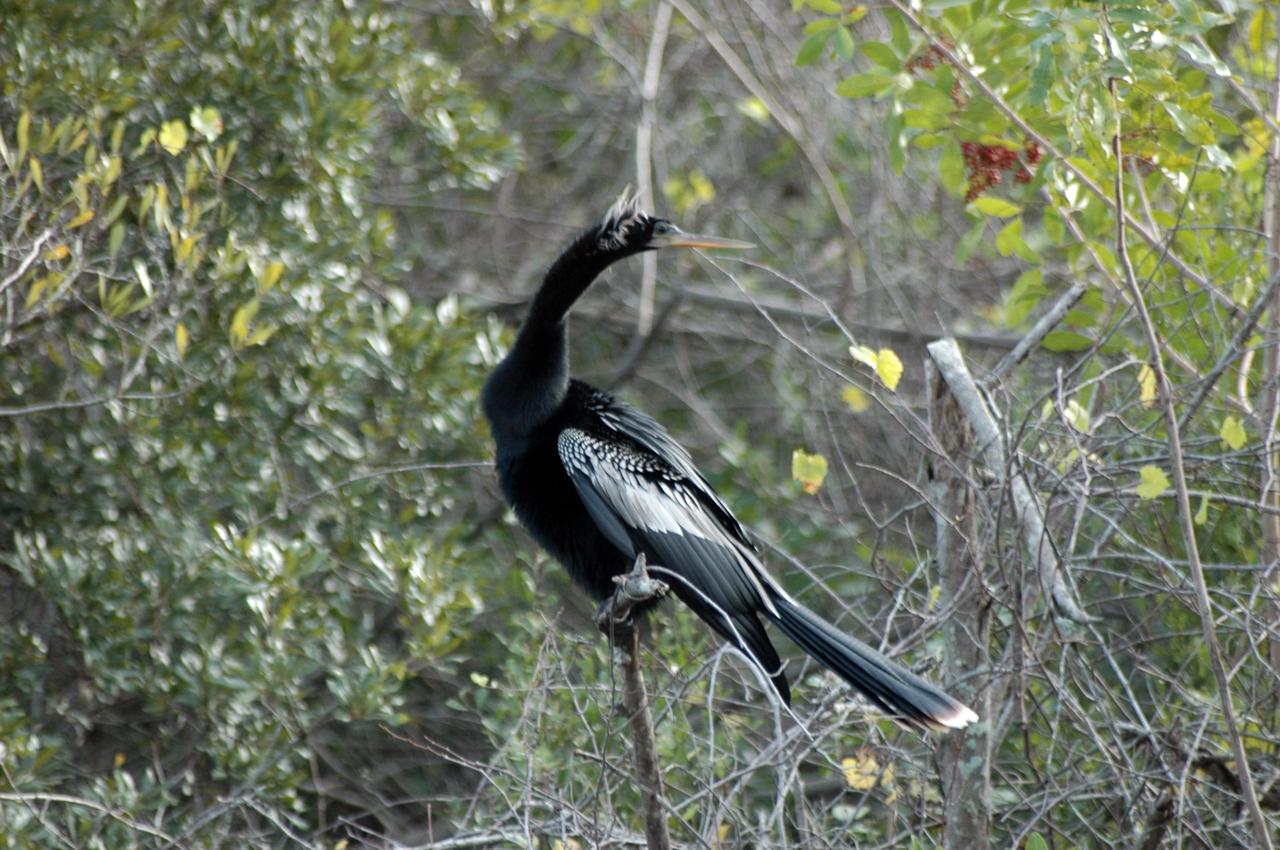
KENNEDY SPACE CENTER, FLA. -- This bird seen at NASA's Kennedy Space Center resembles the anhinga that inhabits southern freshwater ponds and swamps. Its long, dagger-shaped, serrated bill is ideally suited for catching fish, which it spears and then flips into the air and gulps down headfirst. It can frequently be seen perched with wings half-open to dry them in the sun since they lack oil glands with which to preen. KSC shares a boundary with the Merritt Island Wildlife Nature Refuge. The refuge is a habitat for more than 310 species of birds, 25 mammals, 117 fishes and 65 amphibians and reptiles. In addition, the Refuge supports 19 endangered or threatened wildlife species on Federal or State lists, more than any other single refuge in the U.S. Photo credit: NASA/Ken Thornsley
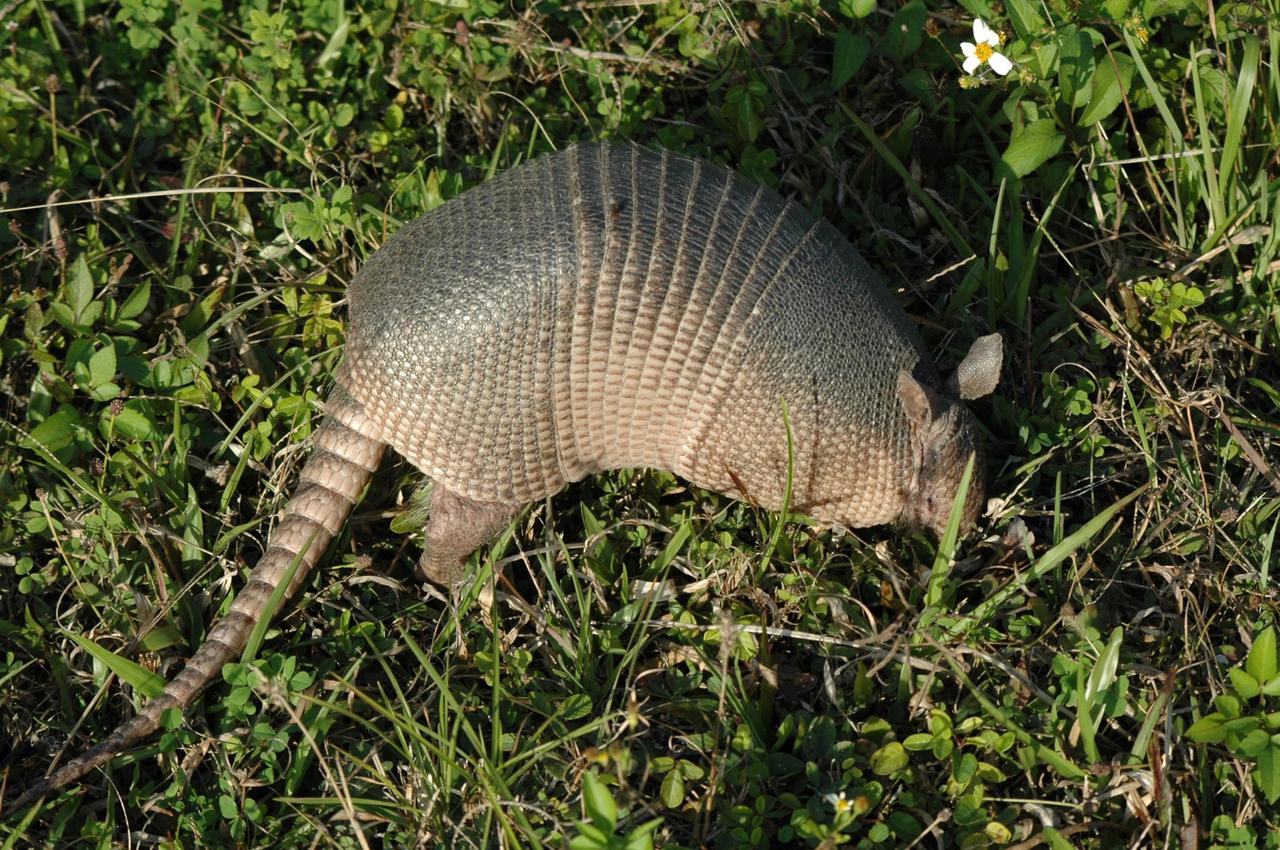
KENNEDY SPACE CENTER, FLA. -- Seen at NASA's Kennedy Space Center, this nine-banded armadillo may be looking for food. Introduced to Florida in the early 1900's, this species is found statewide in areas with dense ground cover and sandy soil. Nine bands of plates cover the body from shoulder to hip and 12 bands cover the long tail. It has a small, tapered head and snout and a long tongue. Its ears are long and hairless. It has sparse white hairs on its belly. Its diet is composed of insects, especially beetles, and other invertebrates plus some plant foods such as cedars and beautyberries. It is primarily nocturnal, sedentary, solitary and a burrower. It digs a series of dens. The multiple entrances are usually protected by stumps, palmettos, or trees. Many other animals also use armadillo dens. KSC shares a boundary with the Merritt Island Wildlife Nature Refuge. The refuge is a habitat for more than 310 species of birds, 25 mammals, 117 fishes and 65 amphibians and reptiles. In addition, the Refuge supports 19 endangered or threatened wildlife species on Federal or State lists, more than any other single refuge in the U.S. Photo credit: NASA/Ken Thornsley
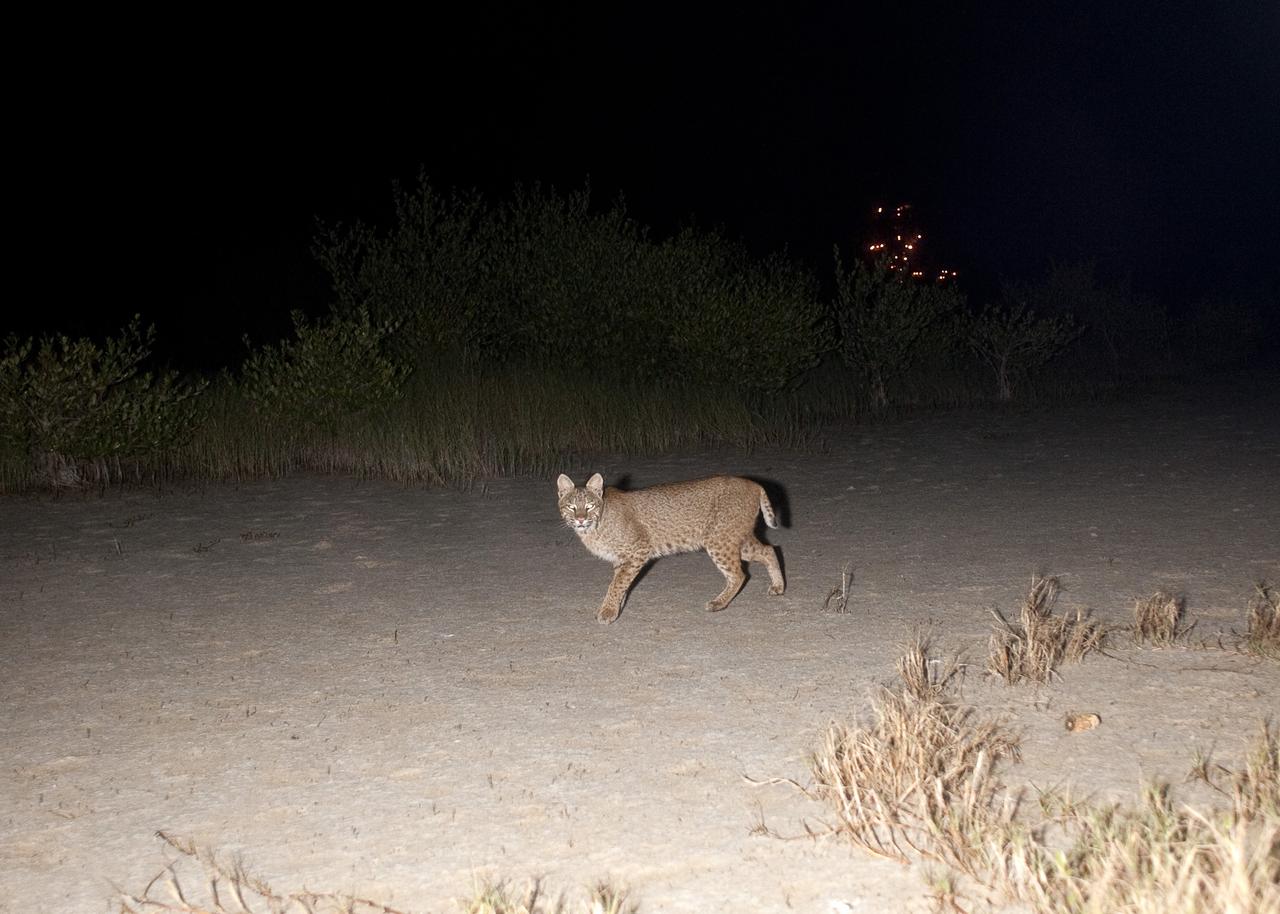
CAPE CANAVERAL, Fla. – Gotcha! A bobcat out on a nocturnal stroll triggers a motion-activated remote camera set up for this purpose at NASA’s Kennedy Space Center in Florida. The cat is seldom observed during the day unless scared from its daytime shelter. It is the last large mammalian predator remaining on the center. In the background are the lights on Launch Pad 39A. Kennedy and the Merritt Island National Wildlife Refuge mutually reside on 140,000 acres on central Florida’s east coast. The area’s coastal dunes, saltwater estuaries and marshes, freshwater impoundments, scrub, pine flatwoods, and hardwood hammocks provide habitats for more than 1,500 species of plants and animals, including about 331 species of birds. For more information, visit http://www.nasa.gov/kennedy. Photo credit: NASA/Tony Gray

KENNEDY SPACE CENTER, FLA. -- In a marshy area of NASA's Kennedy Space Center, this white ibis may be looking for sticks to build its nest in a nearby tree. White ibis range from coastal South Carolina to Florida and Texas, as well as South America. They inhabit marshy sloughs, mud flats, lagoons and swamp forests. KSC shares a boundary with the Merritt Island Wildlife Nature Refuge. The refuge is a habitat for more than 310 species of birds, 25 mammals, 117 fishes and 65 amphibians and reptiles. In addition, the Refuge supports 19 endangered or threatened wildlife species on Federal or State lists, more than any other single refuge in the U.S. Photo credit: NASA/Ken Thornsley
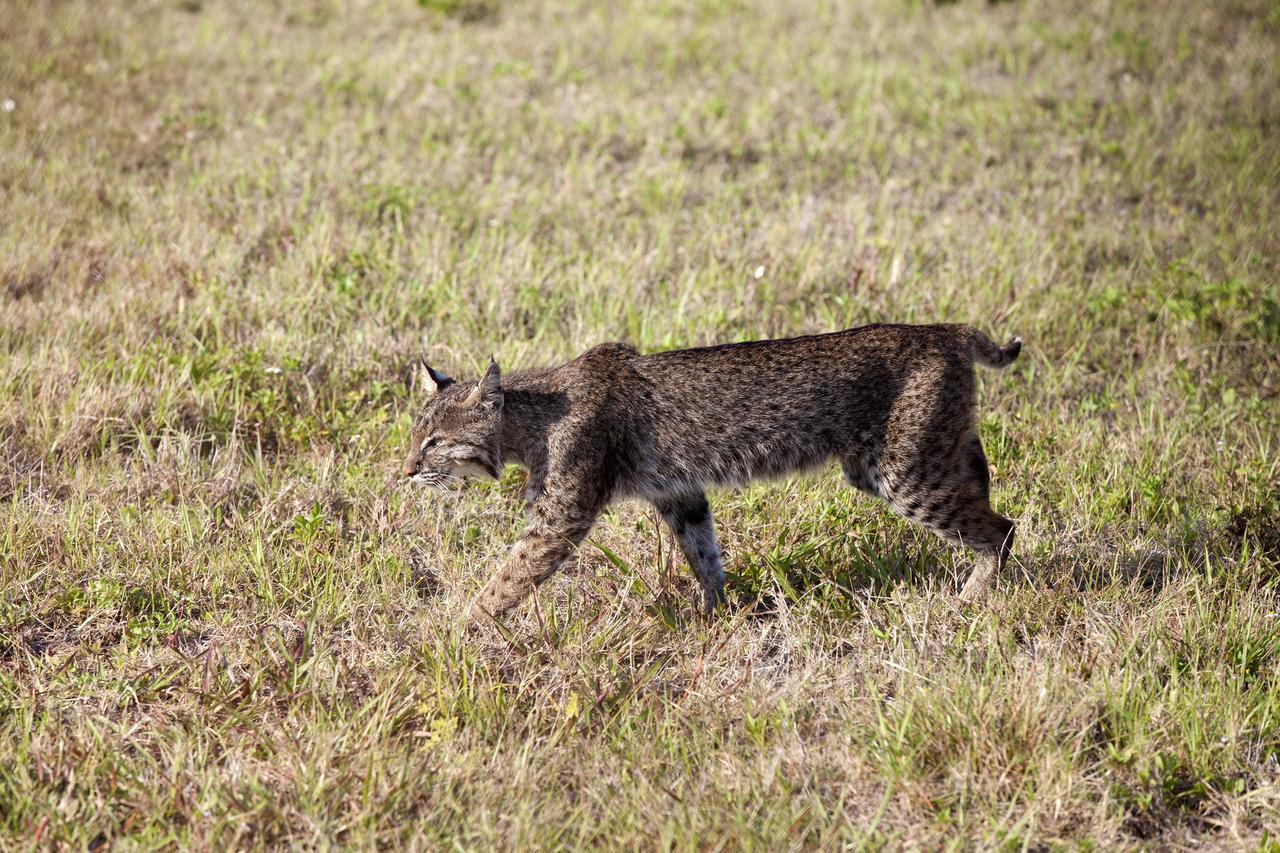
CAPE CANAVERAL, Fla. -- A bobcat continues on its way past the Press Site at NASA's Kennedy Space Center in Florida. The center, the only launch site for crewed missions from U.S. soil, coexists with the Merritt Island National Wildlife Refuge, which encompasses 140,000 acres. The cat is the last large mammalian predator remaining on the center. The refuge provides a wide variety of habitats, including coastal dunes, saltwater estuaries and marshes, freshwater impoundments, scrub, pine flatwoods, and hardwood hammocks, and is a sanctuary for more than 1,500 species of plants and animals, including more than 330 species of birds, 31 mammals, 117 fishes, and 65 amphibians and reptiles. For additional information about the refuge, visit http://www.fws.gov/merrittisland. Photo credit: NASA/Kim Shiflett
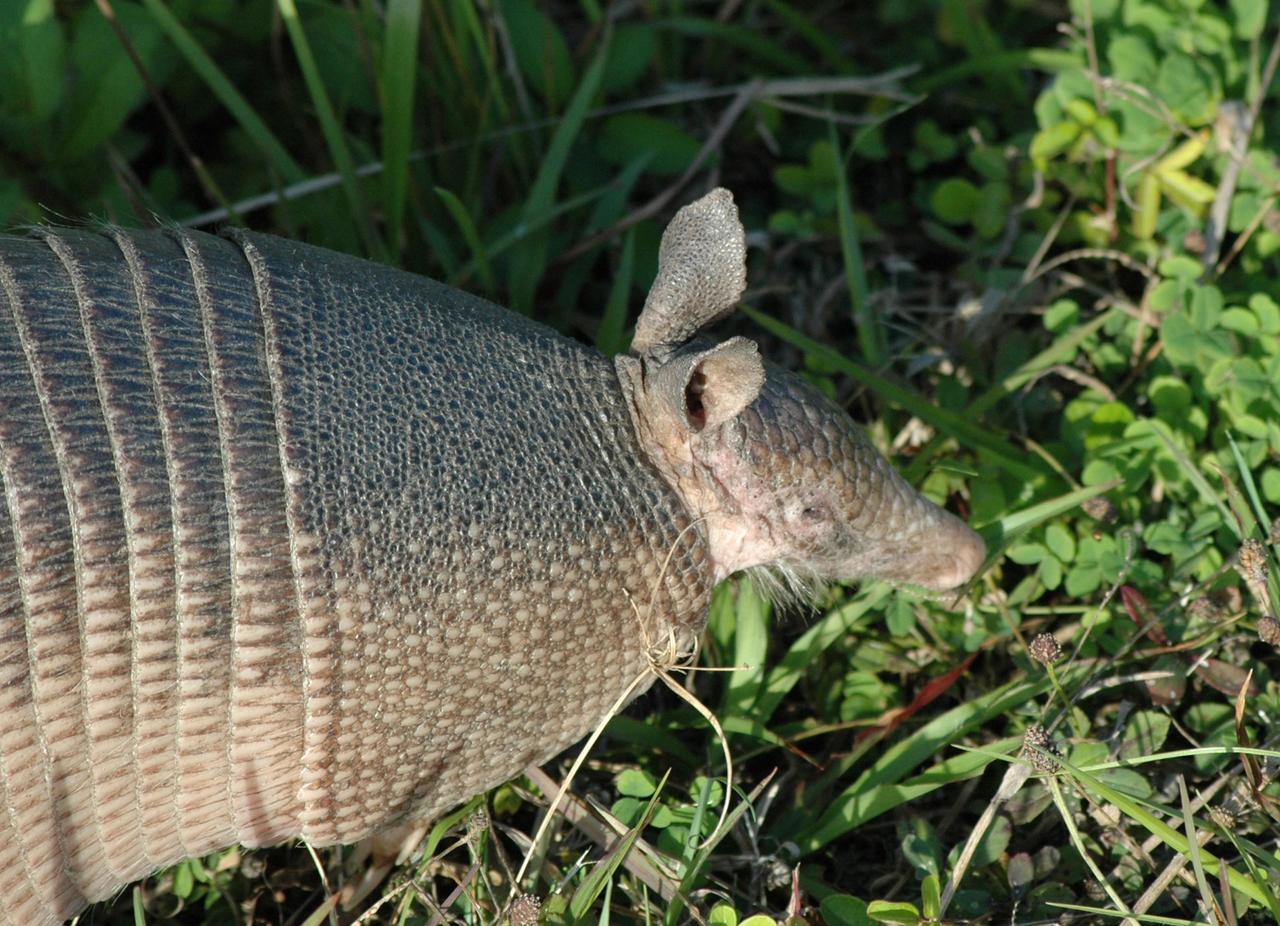
KENNEDY SPACE CENTER, FLA. -- Seen at NASA's Kennedy Space Center, this nine-banded armadillo may be looking for food. Introduced to Florida in the early 1900's, this species is found statewide in areas with dense ground cover and sandy soil. Nine bands of plates cover the body from shoulder to hip and 12 bands cover the long tail. It has a small, tapered head and snout and a long tongue. Its ears are long and hairless. It has sparse white hairs on its belly. Its diet is composed of insects, especially beetles, and other invertebrates plus some plant foods such as cedars and beautyberries. It is primarily nocturnal, sedentary, solitary and a burrower. It digs a series of dens. The multiple entrances are usually protected by stumps, palmettos, or trees. Many other animals also use armadillo dens. KSC shares a boundary with the Merritt Island Wildlife Nature Refuge. The refuge is a habitat for more than 310 species of birds, 25 mammals, 117 fishes and 65 amphibians and reptiles. In addition, the Refuge supports 19 endangered or threatened wildlife species on Federal or State lists, more than any other single refuge in the U.S. Photo credit: NASA/Ken Thornsley
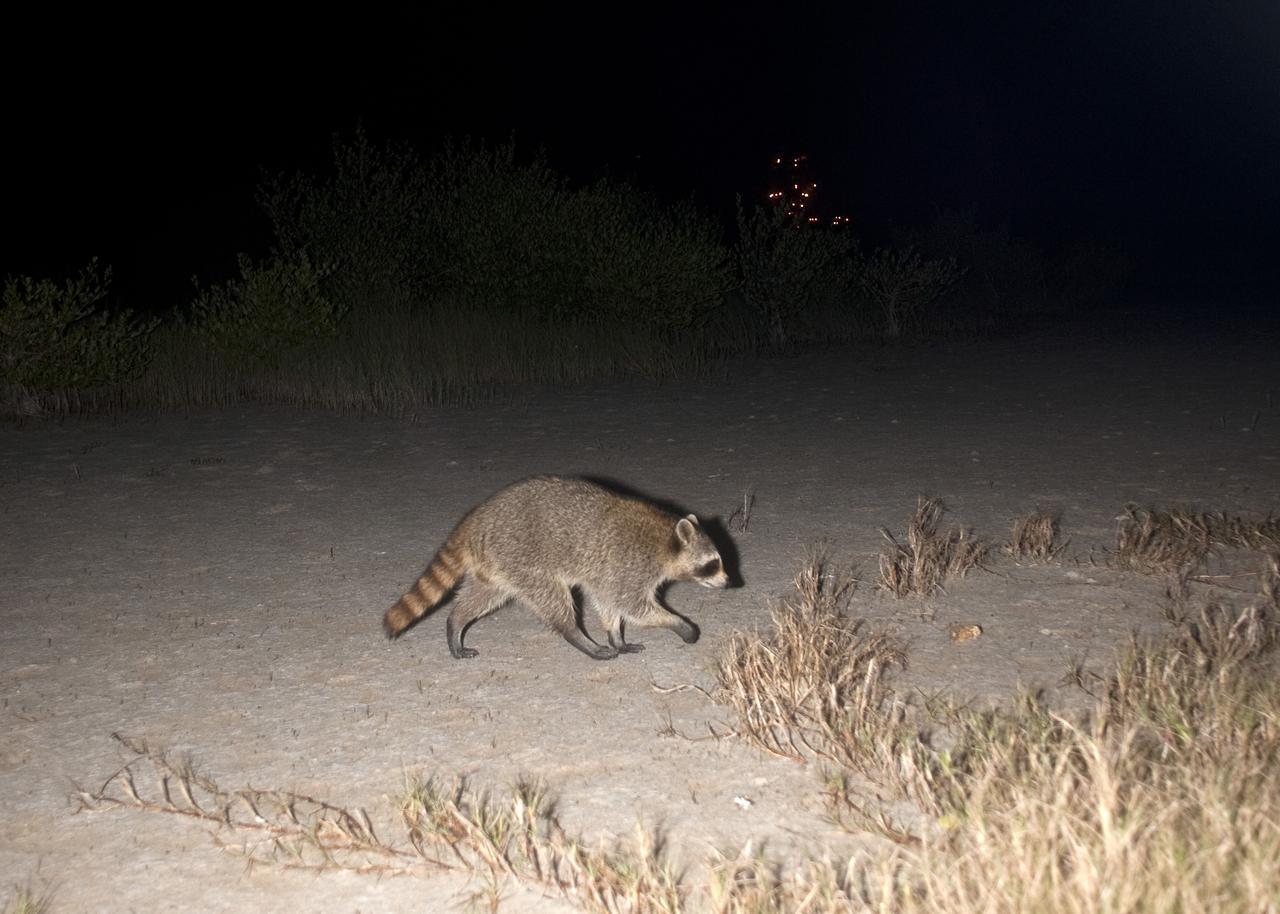
CAPE CANAVERAL, Fla. – Gotcha! A raccoon triggers a motion-activated remote camera set up for this purpose at NASA’s Kennedy Space Center in Florida. These nocturnal creatures are abundant in the area and usually do not venture out in the daytime except when breeding or caring for their young. In the background are the lights on Launch Pad 39A. Kennedy and the Merritt Island National Wildlife Refuge mutually reside on 140,000 acres on central Florida’s east coast. The area’s coastal dunes, saltwater estuaries and marshes, freshwater impoundments, scrub, pine flatwoods, and hardwood hammocks provide habitats for more than 1,500 species of plants and animals, including about 331 species of birds. For more information, visit http://www.nasa.gov/kennedy. Photo credit: NASA/Tony Gray
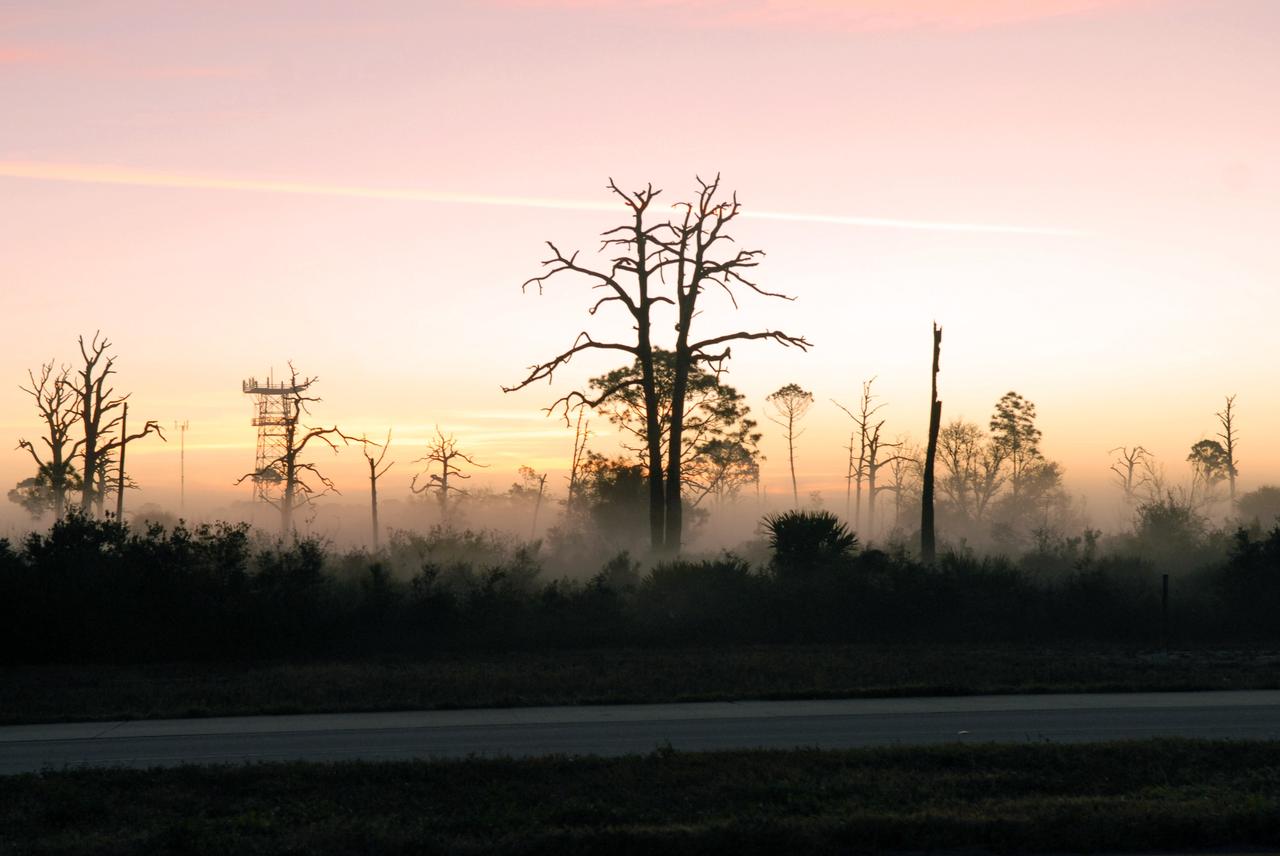
CAPE CANAVERAL, Fla. -- Fog blankets the woods near a road in the Merritt Island National Wildlife Refuge at NASA's Kennedy Space Center in Florida. The center shares a boundary with the refuge that includes salt-water estuaries, brackish marshes, hardwood hammocks and pine flatwoods. The diverse landscape provides habitat for more than 310 species of birds, 25 mammals, 117 fishes and 65 amphibians and reptiles. Photo credit: NASA/Jack Pfaller
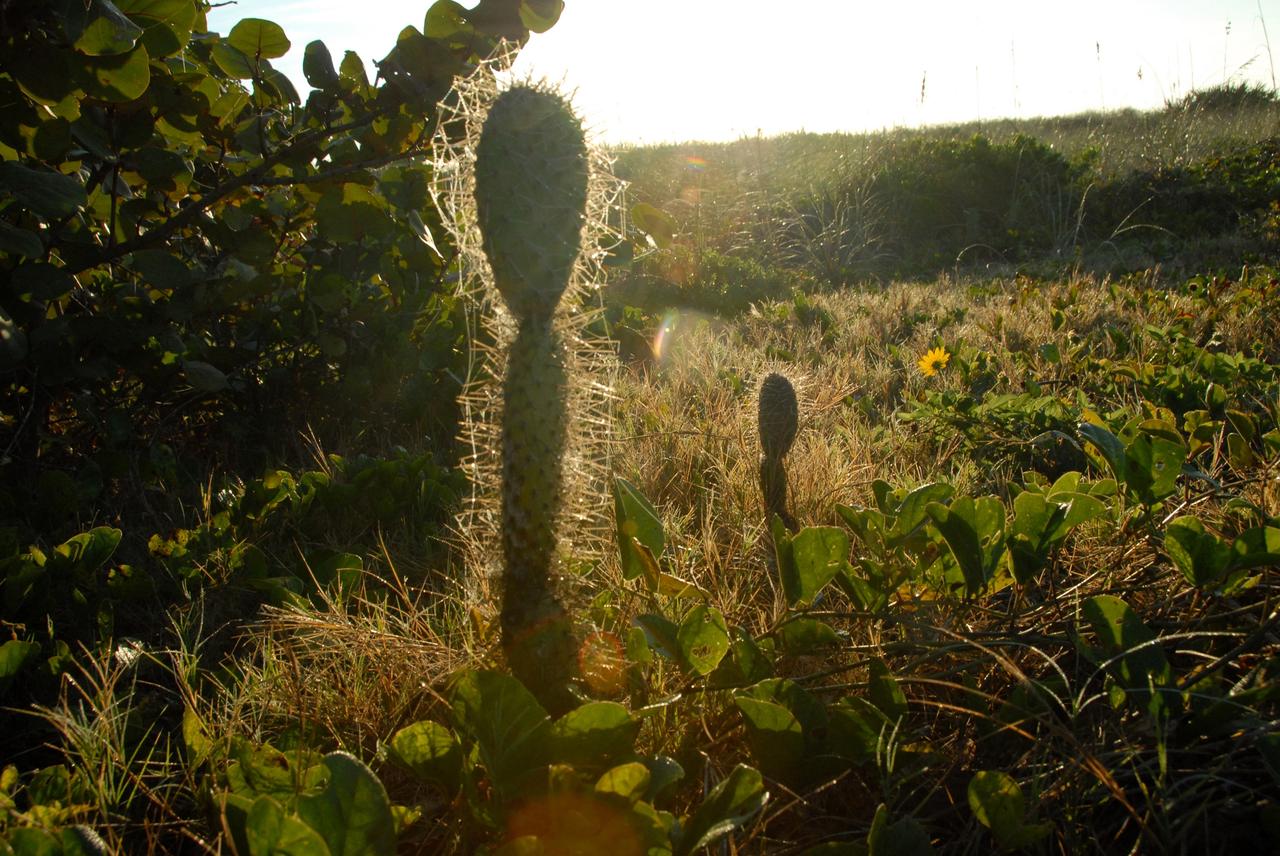
CAPE CANAVERAL, Fla. -- Morning light sculpts a cactus on the roadside at NASA's Kennedy Space Center in Florida. The center shares a boundary with the Merritt Island National Wildlife Refuge that includes salt-water estuaries, brackish marshes, hardwood hammocks and pine flatwoods. The diverse landscape provides habitat for more than 310 species of birds, 25 mammals, 117 fishes and 65 amphibians and reptiles. Photo credit: NASA/Jack Pfaller
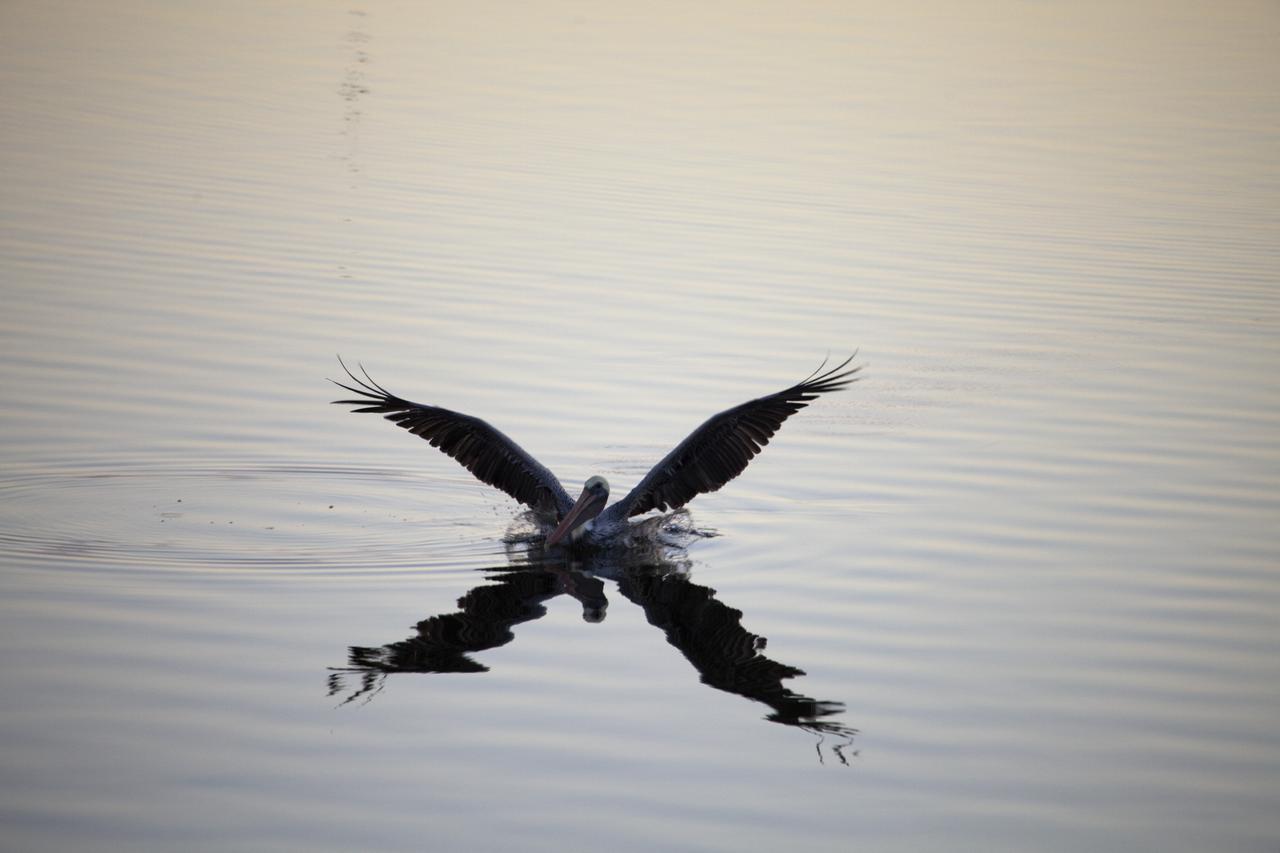
CAPE CANAVERAL, Fla. -- A brown pelican searches for fish in brackish water at NASA's Kennedy Space Center in Florida around dawn. Kennedy coexists with the Merritt Island National Wildlife Refuge, habitat to more than 310 species of birds, 25 mammals, 117 fish and 65 amphibians and reptiles. Photo credit: NASA/Frank Michaux
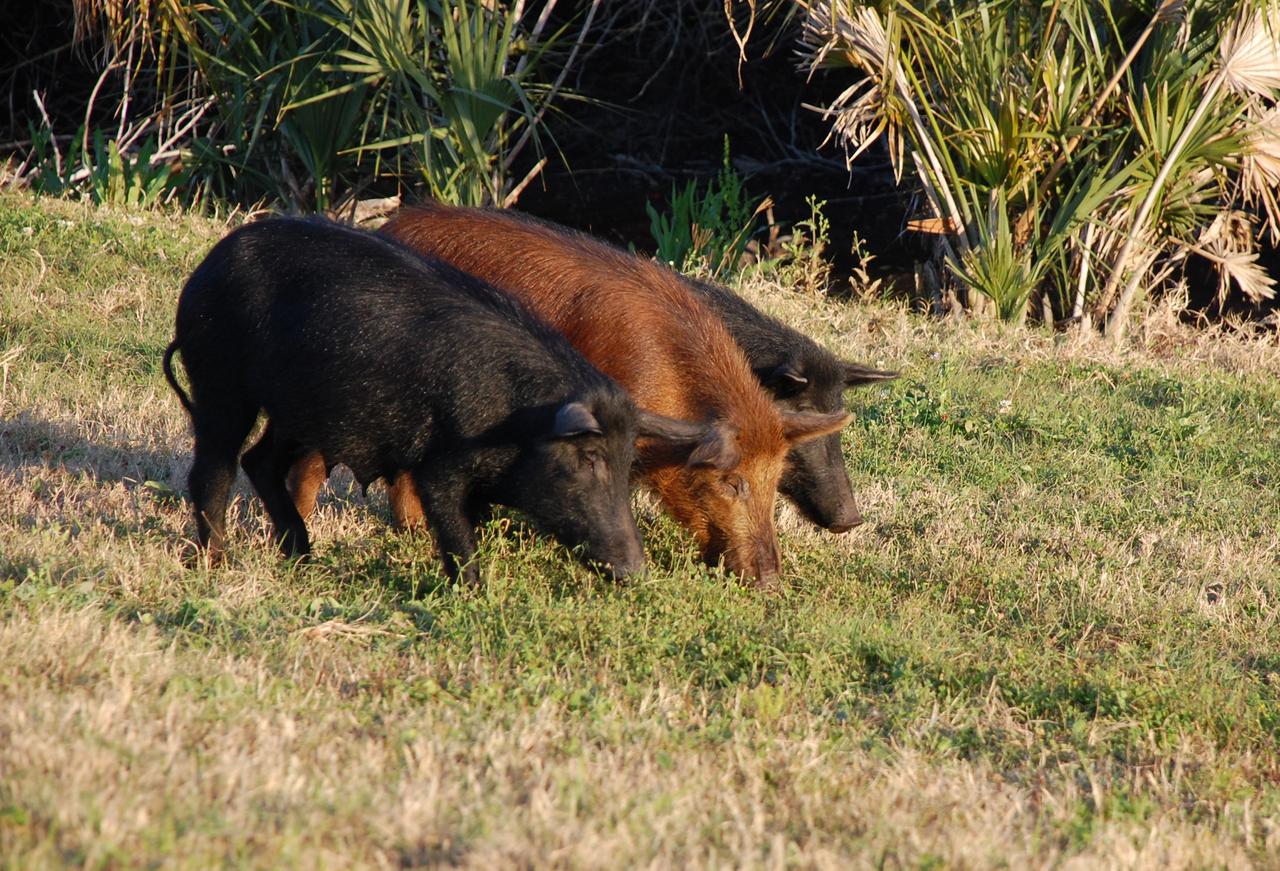
CAPE CANAVERAL, Fla. – – At NASA's Kennedy Space Center in Florida, adult wild pigs line up for their food hunt in the grassy field The wild pigs have flourished in the environs around Kennedy, which shares a border with the Merritt Island National Wildlife Refuge, without many predators other than panthers and humans. Pigs were introduced to Florida in the 1500s and are now found statewide in wooded areas close to water. Pigs are omnivores, foraging on the ground and rooting just beneath the surface, which damages the groundcover. Wild pigs eat almost anything that has nutritional value, including tubers, roots, shoots, acorns, fruits, berries, earthworms, amphibians, reptiles and rodents. Their appearance is similar to domestic hogs, but leaner, with a longer, narrower head and a coarser, denser coat. Females may have two litters per year. The piglets are weaned in a few weeks but remain with the mother for several months. Photo credit: NASA/Ben Smegelsky
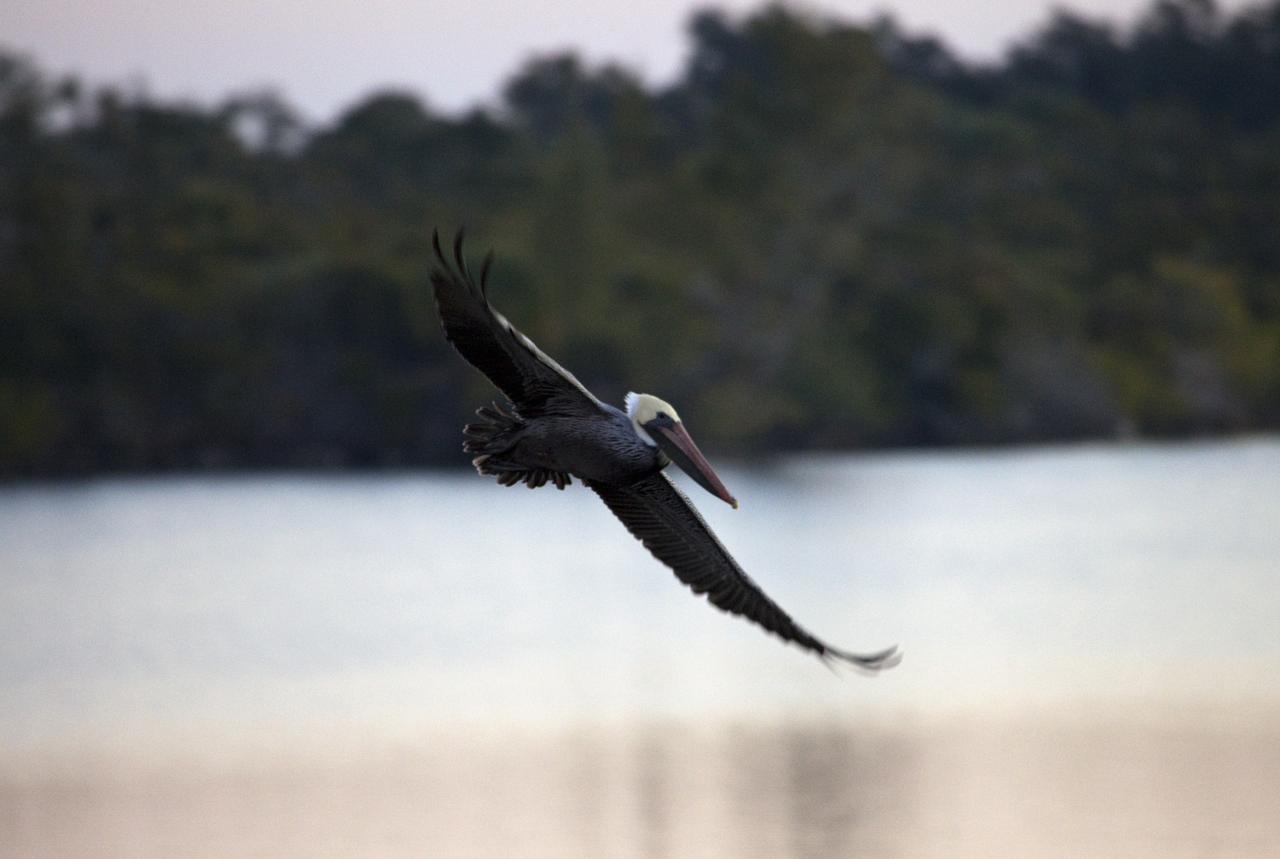
CAPE CANAVERAL, Fla. -- A brown pelican searches for fish in brackish water at NASA's Kennedy Space Center in Florida around dawn. Kennedy coexists with the Merritt Island National Wildlife Refuge, habitat to more than 310 species of birds, 25 mammals, 117 fish and 65 amphibians and reptiles. Photo credit: NASA/Frank Michaux

CAPE CANAVERAL, Fla. -- A wood stork eats breakfast while wading in brackish water at NASA's Kennedy Space Center in Florida around dawn. In 1984, the U.S. Fish and Wildlife Service declared the wood stork an endangered species. Kennedy coexists with the Merritt Island National Wildlife Refuge, habitat to more than 310 species of birds, 25 mammals, 117 fish and 65 amphibians and reptiles. Photo credit: NASA/Frank Michaux
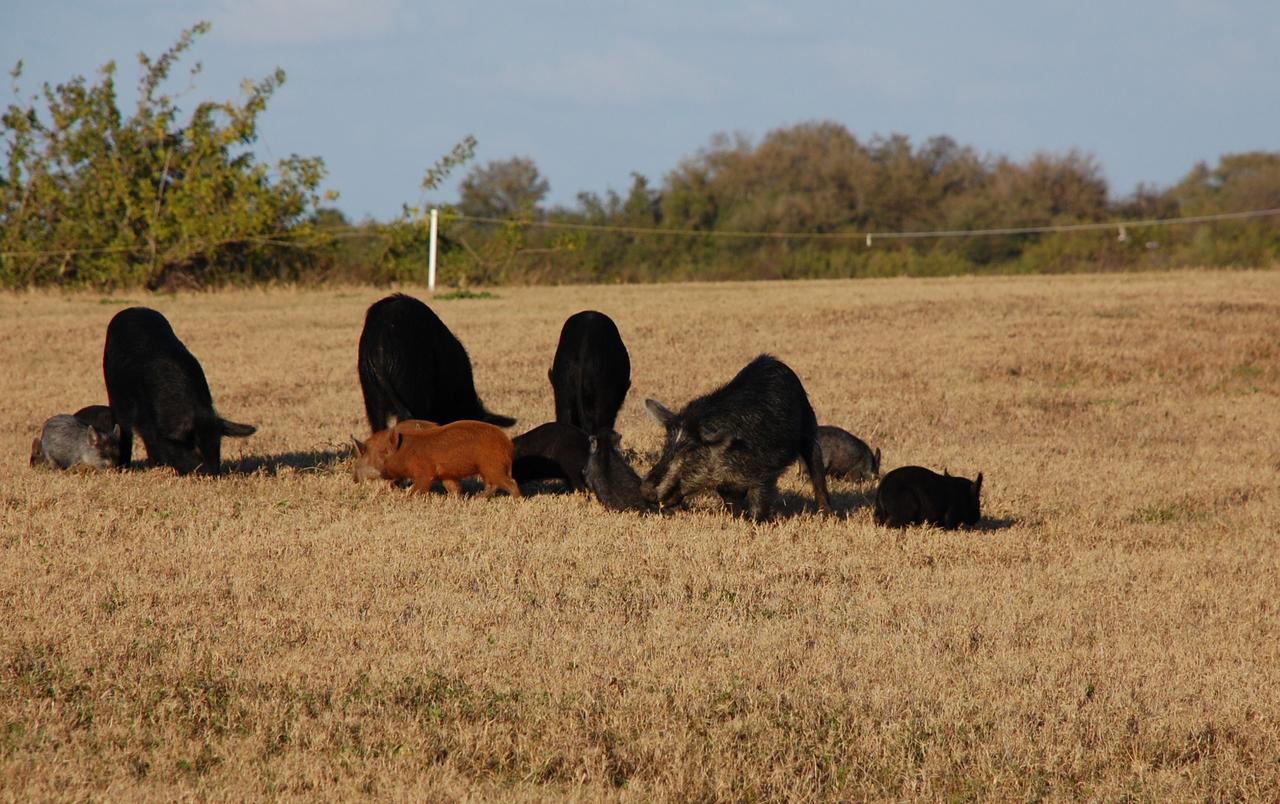
CAPE CANAVERAL, Fla. – At NASA's Kennedy Space Center in Florida, a family of wild pigs roots through the grass for food. The wild pigs have flourished in the environs around Kennedy, which shares a border with the Merritt Island National Wildlife Refuge, without many predators other than panthers and humans. Pigs were introduced to Florida in the 1500s and are now found statewide in wooded areas close to water. Pigs are omnivores, foraging on the ground and rooting just beneath the surface, which damages the groundcover. Wild pigs eat almost anything that has nutritional value, including tubers, roots, shoots, acorns, fruits, berries, earthworms, amphibians, reptiles and rodents. Their appearance is similar to domestic hogs, but leaner, with a longer, narrower head and a coarser, denser coat. Females may have two litters per year. The piglets are weaned in a few weeks but remain with the mother for several months. Photo credit: NASA/Ben Smegelsky
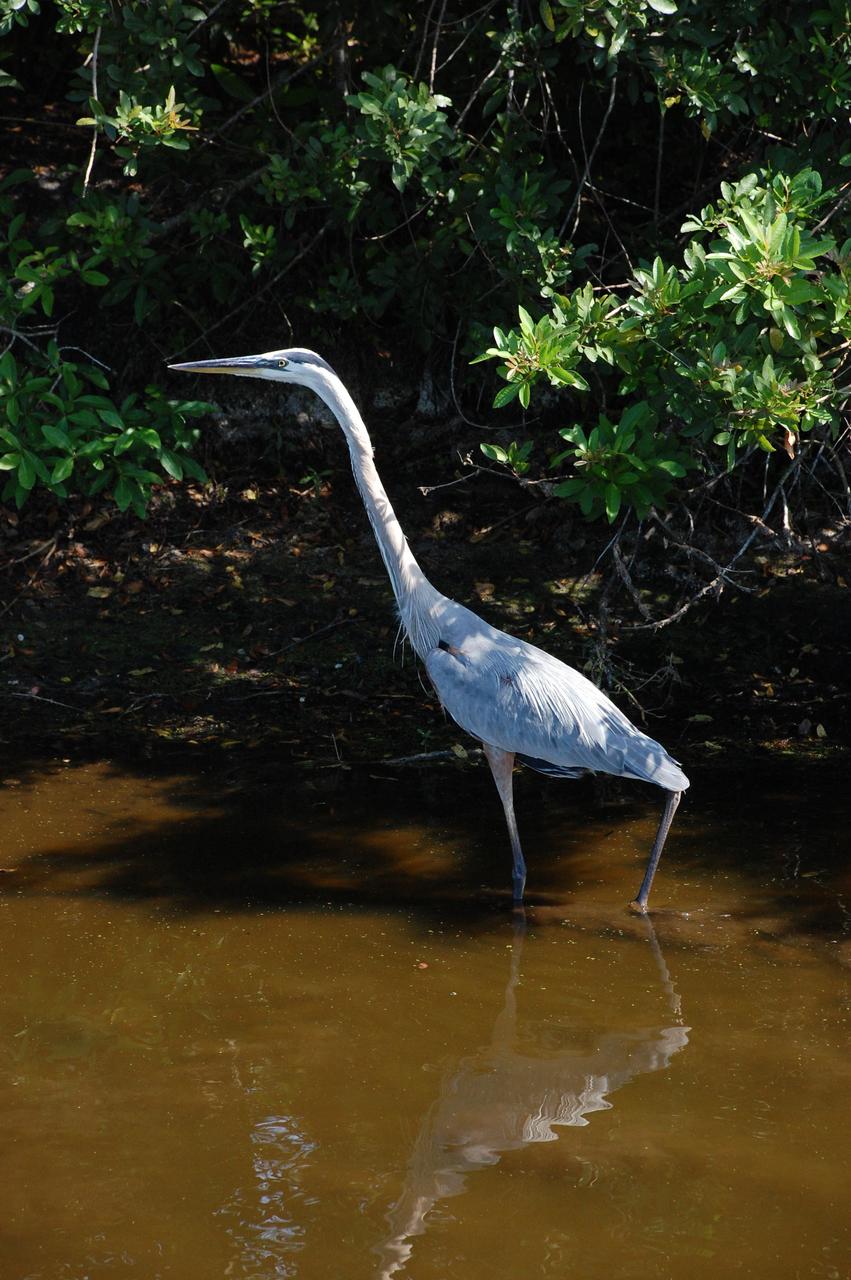
CAPE CANAVERAL, Fla. – A great blue heron stands tall in the water, perhaps looking for food, on grounds of NASA's Kennedy Space Center in Florida. More gray than blue, with a yellowish bill and black legs, it has a brownish-buff colored neck with a black border and white in front of its neck with a vertical black streak. The bird's head is white with a black stripe above its eye. They range throughout the U.S., inhabiting lakes, ponds, rivers and marshes. Their principal food is fish or frogs but may feed on small mammals, reptiles and occasionally birds. Kennedy shares a boundary with the Merritt Island National Wildlife Refuge, which is a habitat for more than 310 species of birds, 25 mammals, 117 fishes and 65 amphibians and reptiles. Photo credit: NASA/Ben Smegelsky
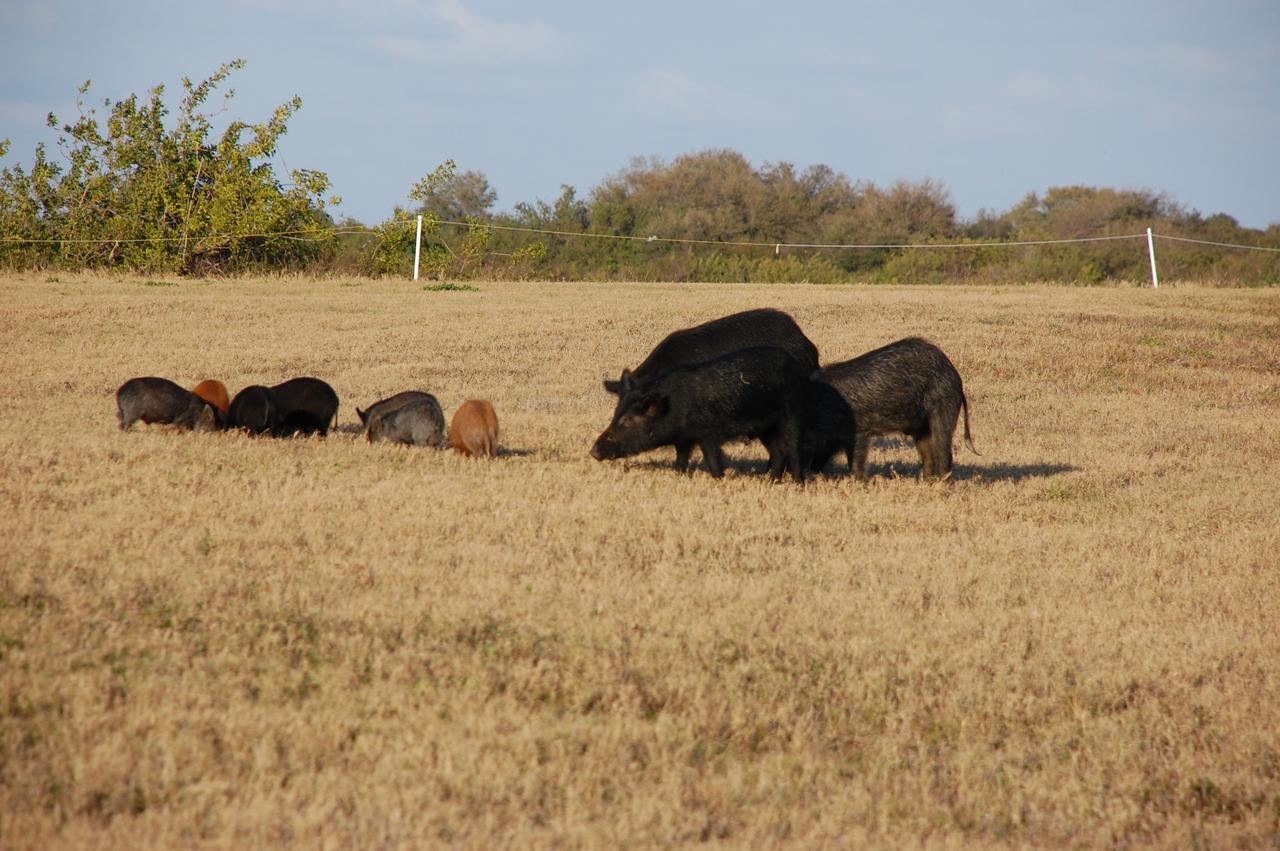
CAPE CANAVERAL, Fla. – At NASA's Kennedy Space Center in Florida, a family of wild pigs roots through the grass for food. The wild pigs have flourished in the environs around Kennedy, which shares a border with the Merritt Island National Wildlife Refuge, without many predators other than panthers and humans. Pigs were introduced to Florida in the 1500s and are now found statewide in wooded areas close to water. Pigs are omnivores, foraging on the ground and rooting just beneath the surface, which damages the groundcover. Wild pigs eat almost anything that has nutritional value, including tubers, roots, shoots, acorns, fruits, berries, earthworms, amphibians, reptiles and rodents. Their appearance is similar to domestic hogs, but leaner, with a longer, narrower head and a coarser, denser coat. Females may have two litters per year. The piglets are weaned in a few weeks but remain with the mother for several months. Photo credit: NASA/Ben Smegelsky
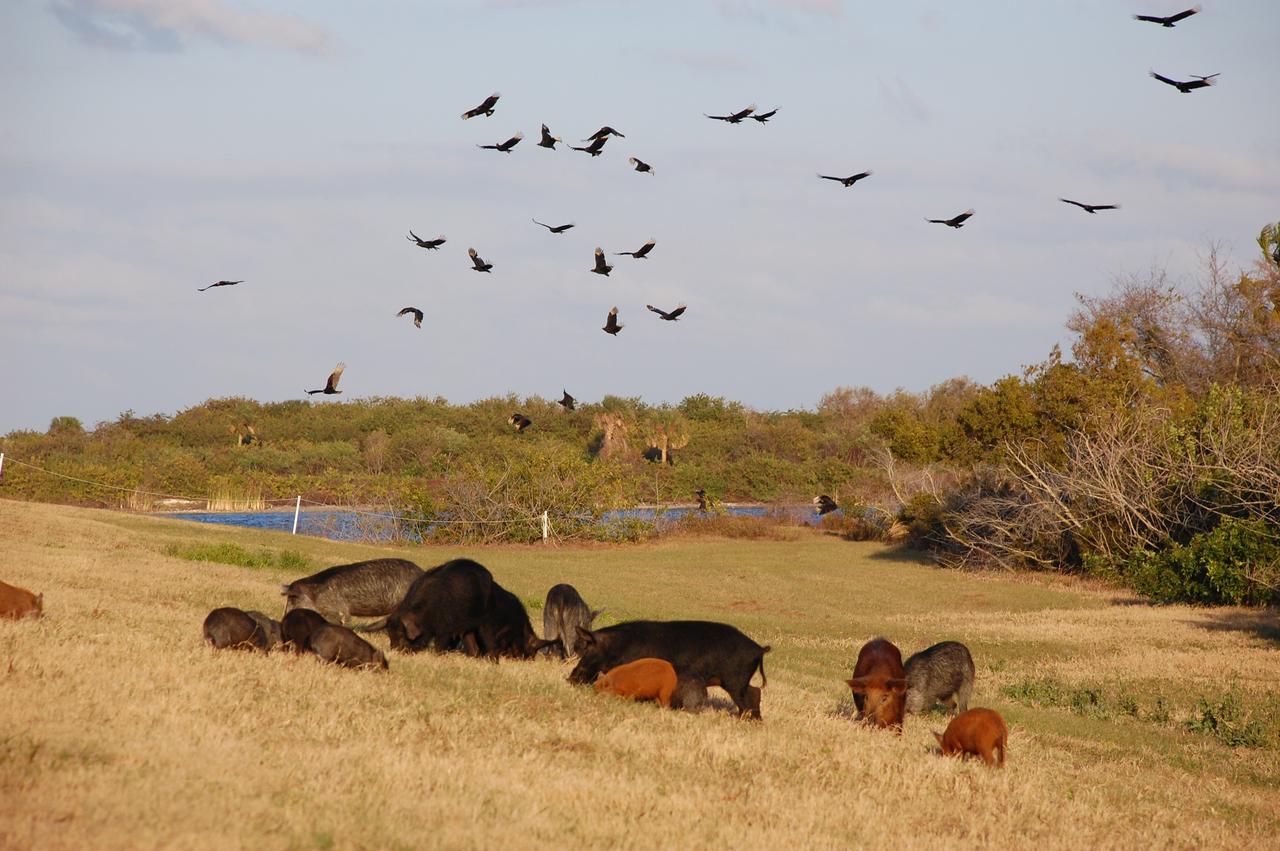
CAPE CANAVERAL, Fla. – At NASA's Kennedy Space Center in Florida, a family of wild pigs roots through the grass for food. Overhead, vultures circle, hunting for their share of food. The wild pigs have flourished in the environs around Kennedy, which shares a border with the Merritt Island National Wildlife Refuge, without many predators other than panthers and humans. Pigs were introduced to Florida in the 1500s and are now found statewide in wooded areas close to water. Pigs are omnivores, foraging on the ground and rooting just beneath the surface, which damages the groundcover. Wild pigs eat almost anything that has nutritional value, including tubers, roots, shoots, acorns, fruits, berries, earthworms, amphibians, reptiles and rodents. Their appearance is similar to domestic hogs, but leaner, with a longer, narrower head and a coarser, denser coat. Females may have two litters per year. The piglets are weaned in a few weeks but remain with the mother for several months. Photo credit: NASA/Ben Smegelsky

CAPE CANAVERAL, Fla. – At NASA's Kennedy Space Center in Florida, a wild pig stops hunting for food to eye the photographer. This pig is part of a larger family in the area. The wild pigs have flourished in the environs around Kennedy, which shares a border with the Merritt Island National Wildlife Refuge, without many predators other than panthers and humans. Pigs were introduced to Florida in the 1500s and are now found statewide in wooded areas close to water. Pigs are omnivores, foraging on the ground and rooting just beneath the surface, which damages the groundcover. Wild pigs eat almost anything that has nutritional value, including tubers, roots, shoots, acorns, fruits, berries, earthworms, amphibians, reptiles and rodents. Their appearance is similar to domestic hogs, but leaner, with a longer, narrower head and a coarser, denser coat. Females may have two litters per year. The piglets are weaned in a few weeks but remain with the mother for several months. Photo credit: NASA/Ben Smegelsky
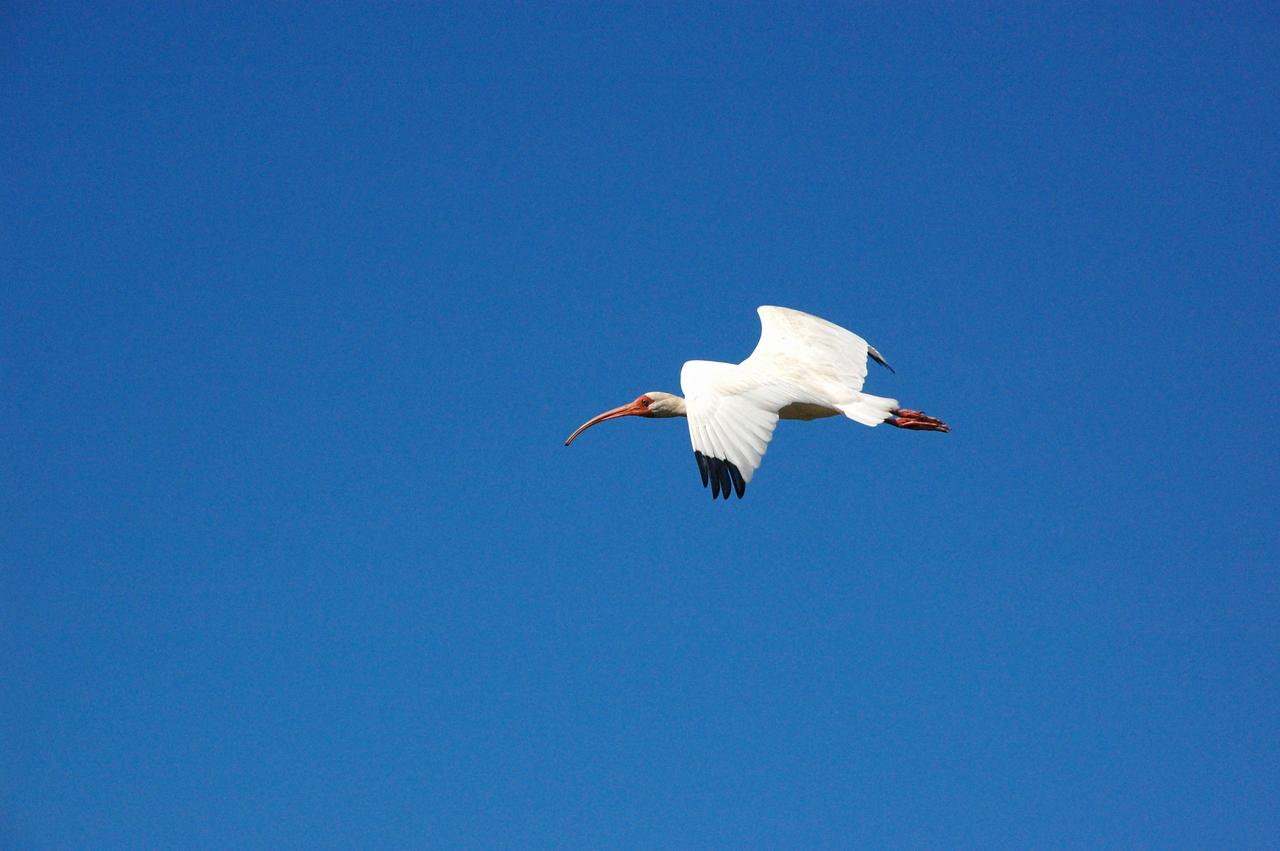
CAPE CANAVERAL, Fla. – The beauty of the wood stork in flight is captured against the intense blue Florida sky over NASA's Kennedy Space Center in Florida. This is a young stork, still showing its yellow beak. Wood storks are found primarily in Florida, wandering to South Carolina and Texas, preferring cypress and mangrove swamps. Kennedy shares a boundary with the Merritt Island National Wildlife Refuge, which is a habitat for more than 310 species of birds, 25 mammals, 117 fishes and 65 amphibians and reptiles. Photo credit: NASA/Ben Smegelsky

CAPE CANAVERAL, Fla. -- On a brisk morning at Kennedy Space Center in Florida, birds flock to warmer water in the Launch Complex 39 area. In the background is the Vehicle Assembly Building and NASA's new mobile launcher. Kennedy coexists with the Merritt Island National Wildlife Refuge, habitat to more than 310 species of birds, 25 mammals, 117 fish and 65 amphibians and reptiles. Photo credit: NASA/Tony Gray
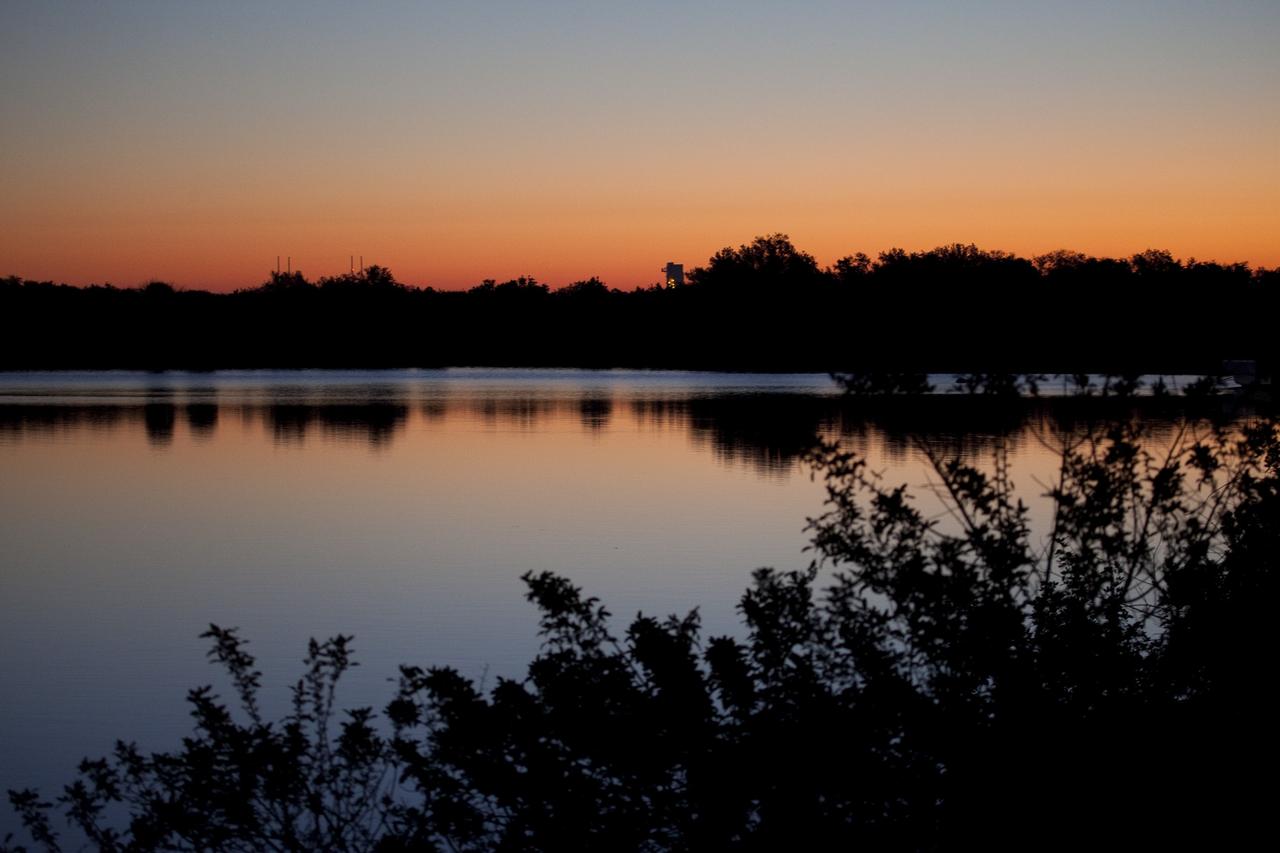
CAPE CANAVERAL, Fla. -- Launch Complex 39 is seen across brackish water as the sun rises at NASA's Kennedy Space Center in Florida. On the left is Launch Pad 39B, which is being restructured for future use. On the right is Launch Pad 39A, where space shuttle Discovery is being prepared for a tanking test. Kennedy coexists with the Merritt Island National Wildlife Refuge, habitat to more than 310 species of birds, 25 mammals, 117 fish and 65 amphibians and reptiles. Photo credit: NASA/Frank Michaux
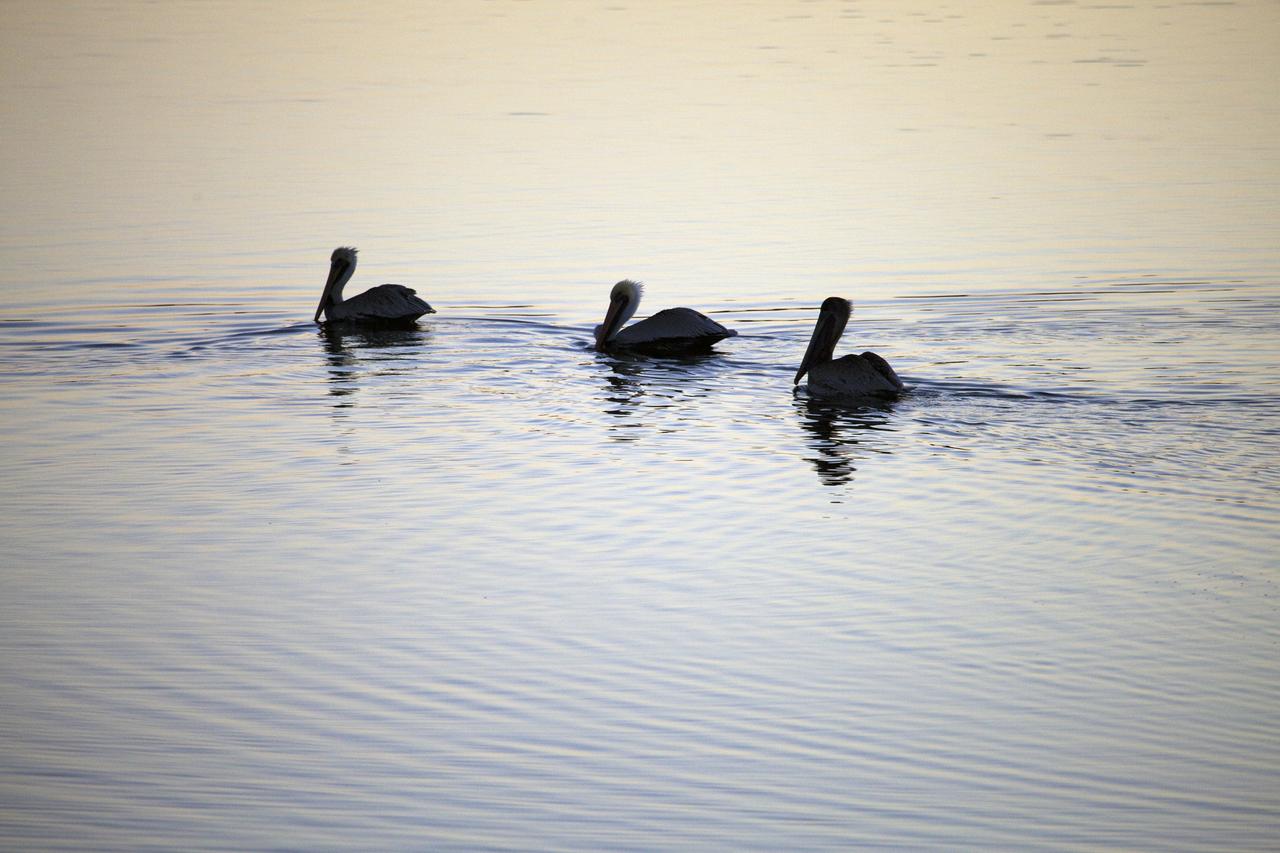
CAPE CANAVERAL, Fla. -- Brown pelicans take a dip in brackish water at NASA's Kennedy Space Center in Florida around dawn. Kennedy coexists with the Merritt Island National Wildlife Refuge, habitat to more than 310 species of birds, 25 mammals, 117 fish and 65 amphibians and reptiles. Photo credit: NASA/Frank Michaux
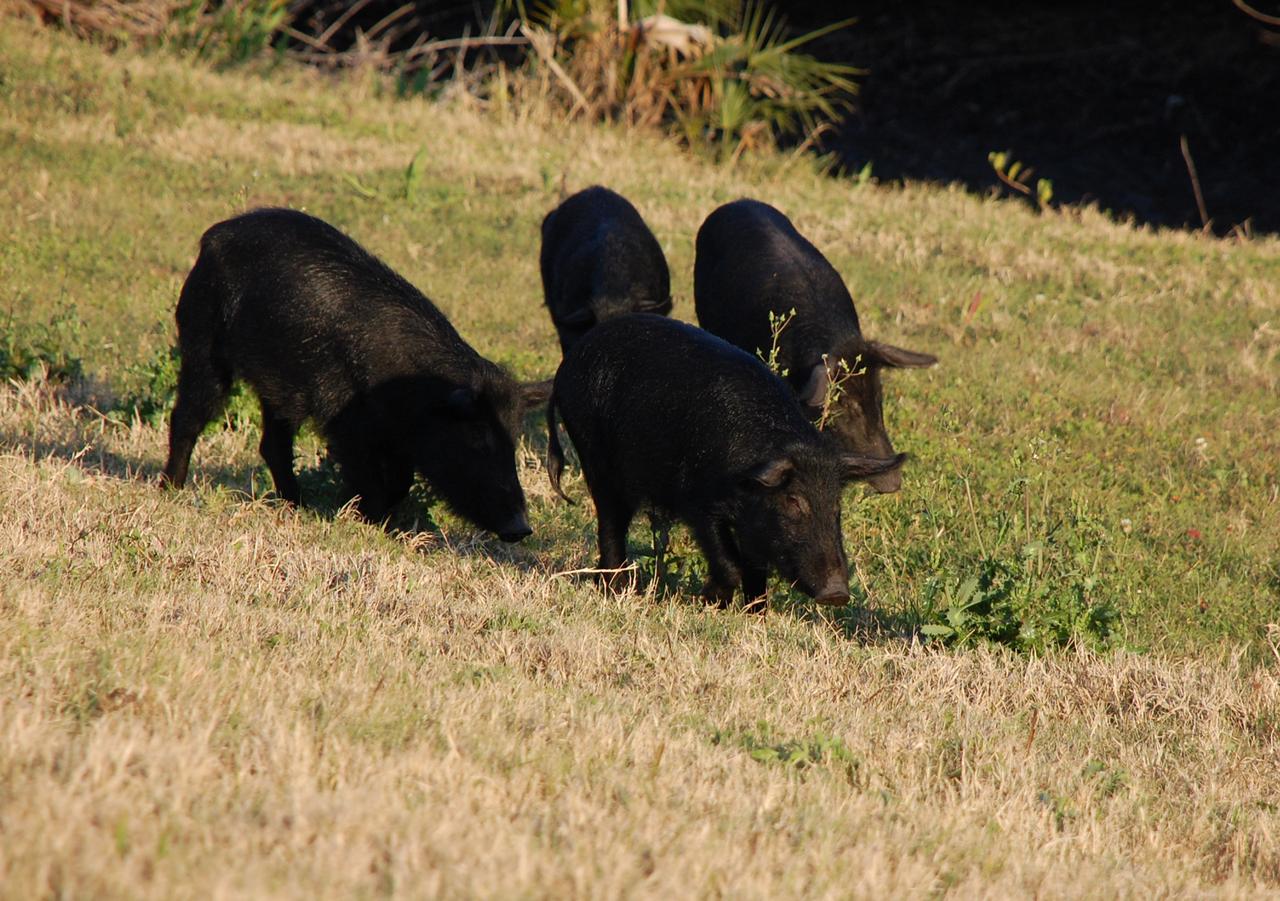
CAPE CANAVERAL, Fla. – At NASA's Kennedy Space Center in Florida, adult wild pigs hunt for food in the grassy field. The wild pigs have flourished in the environs around Kennedy, which shares a border with the Merritt Island National Wildlife Refuge, without many predators other than panthers and humans. Pigs were introduced to Florida in the 1500s and are now found statewide in wooded areas close to water. Pigs are omnivores, foraging on the ground and rooting just beneath the surface, which damages the groundcover. Wild pigs eat almost anything that has nutritional value, including tubers, roots, shoots, acorns, fruits, berries, earthworms, amphibians, reptiles and rodents. Their appearance is similar to domestic hogs, but leaner, with a longer, narrower head and a coarser, denser coat. Females may have two litters per year. The piglets are weaned in a few weeks but remain with the mother for several months. Photo credit: NASA/Ben Smegelsky
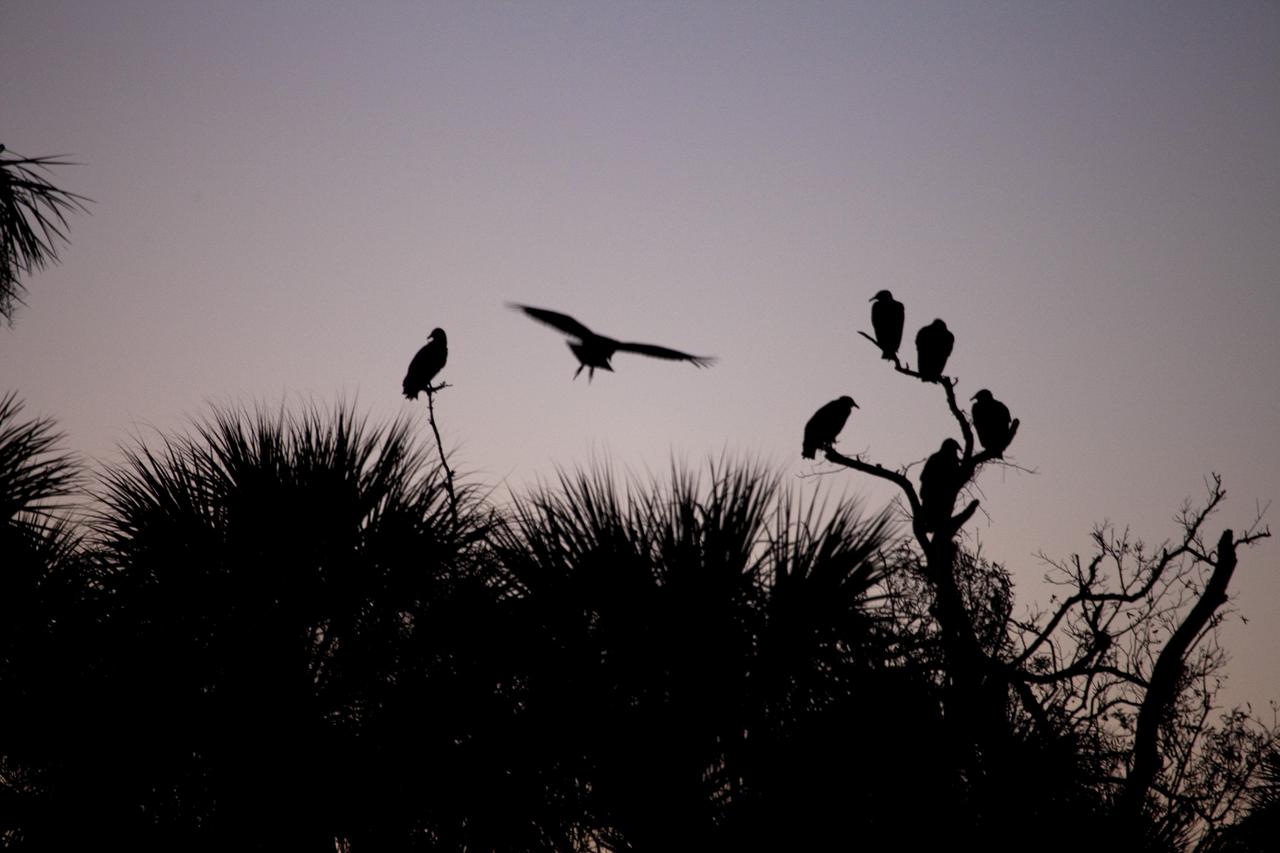
CAPE CANAVERAL, Fla. -- Black vultures gather at dawn at NASA's Kennedy Space Center in Florida. NASA's Environmental Management Branch monitors the movement and activity of about 250 black and turkey vultures using satellite trackers and radio transmitters. Kennedy coexists with the Merritt Island National Wildlife Refuge, habitat to more than 310 species of birds, 25 mammals, 117 fish and 65 amphibians and reptiles. Photo credit: NASA/Frank Michaux
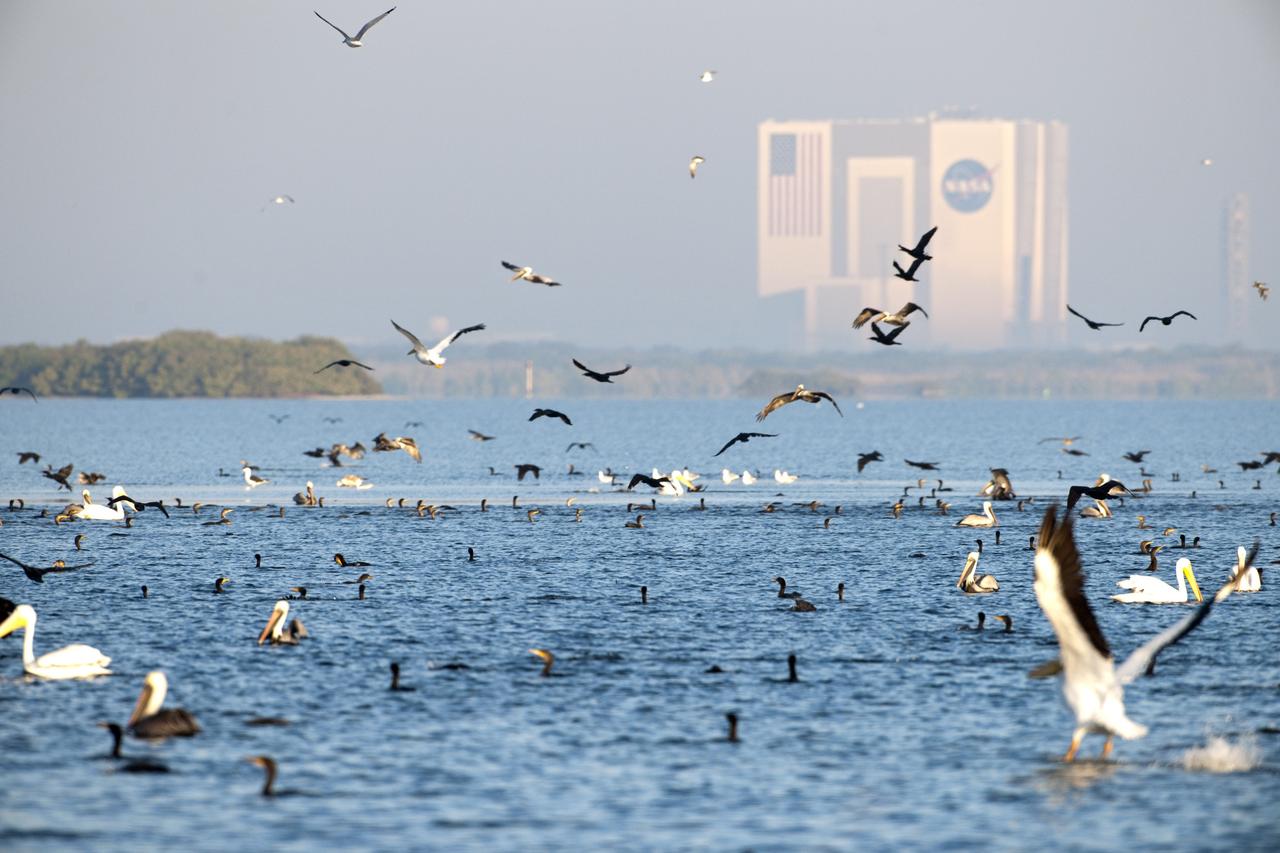
CAPE CANAVERAL, Fla. -- On a brisk morning at Kennedy Space Center in Florida, birds flock to warmer water in the Launch Complex 39 area. In the background is the Vehicle Assembly Building and NASA's new mobile launcher. Kennedy coexists with the Merritt Island National Wildlife Refuge, habitat to more than 310 species of birds, 25 mammals, 117 fish and 65 amphibians and reptiles. Photo credit: NASA/Tony Gray
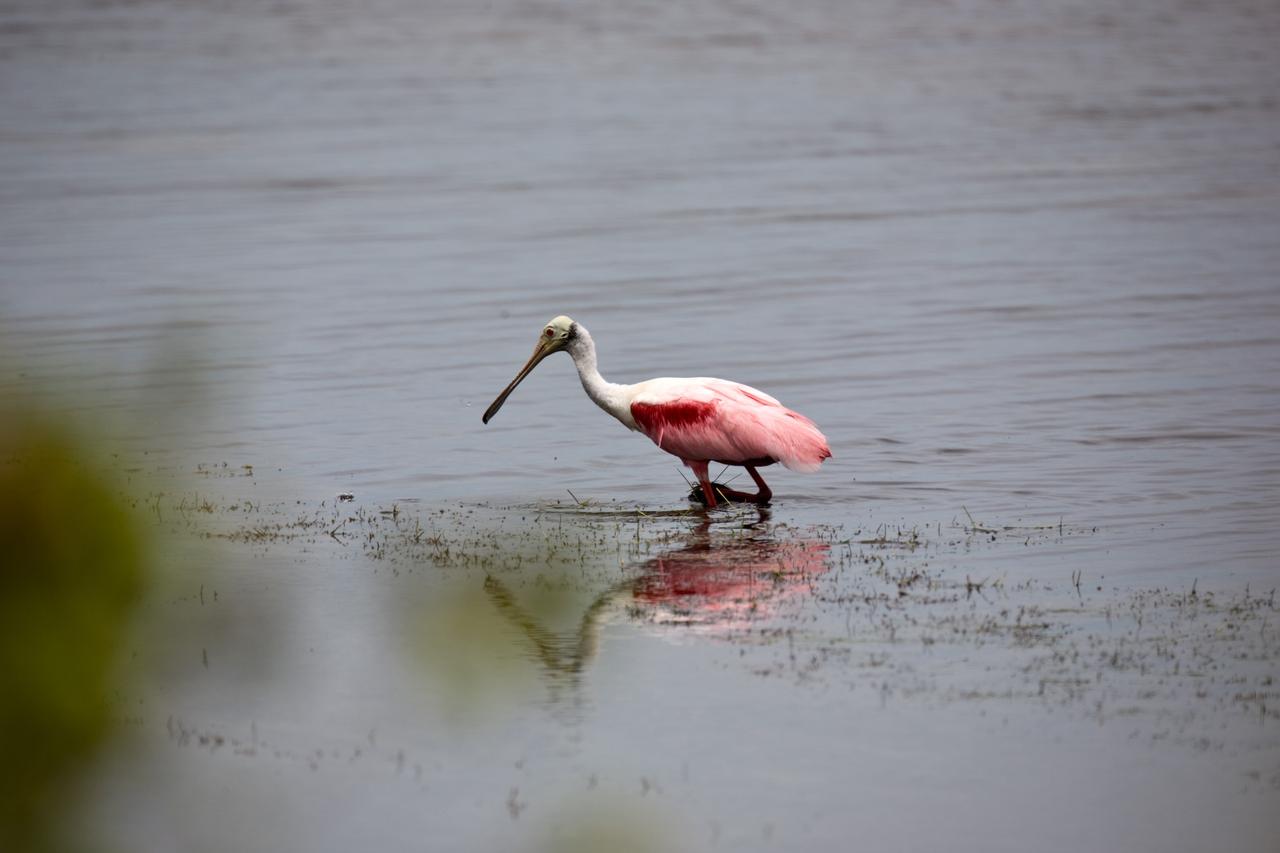
CAPE CANAVERAL, Fla. –– The scarlet-feathered roseate spoonbill wades through water on NASA's Kennedy Space Center in Florida. Spoonbills inhabit areas of mangrove such as on the coasts of southern Florida and Texas. These birds feed on shrimps and fish in the shallow water, sweeping their bills from side to side. This and other wildlife abound throughout Kennedy as the center shares a boundary with the Merritt Island National Wildlife Refuge. Photo credit: NASA/Dimitri Gerondidakis
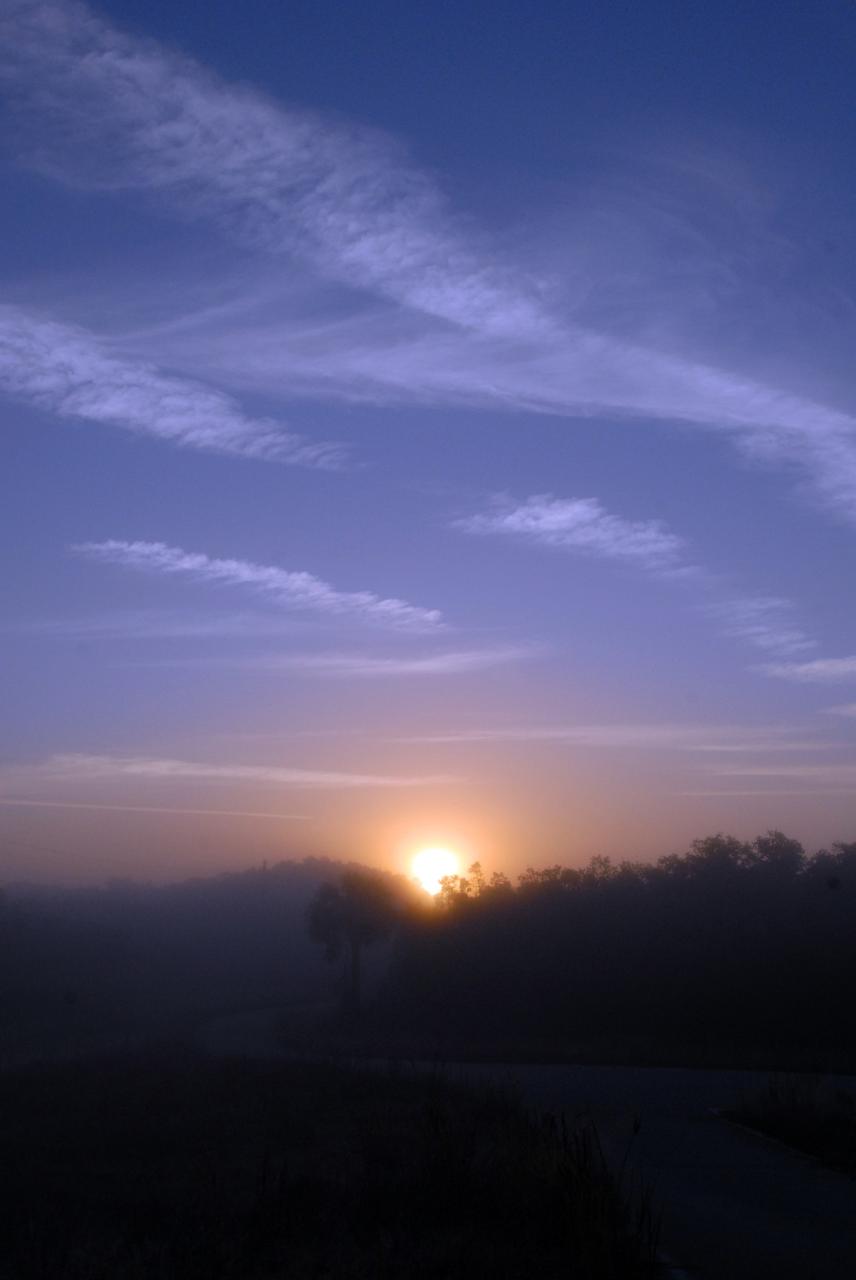
CAPE CANAVERAL, Fla. – Sunrise casts an orange glow over the wooded landscape surrounding NASA's Kennedy Space Center in Florida. The center shares a boundary with the Merritt Island National Wildlife Refuge that includes salt-water estuaries, brackish marshes, hardwood hammocks and pine flatwoods. The diverse landscape provides habitat for more than 310 species of birds, 25 mammals, 117 fishes and 65 amphibians and reptiles. Photo credit: NASA/Jack Pfaller
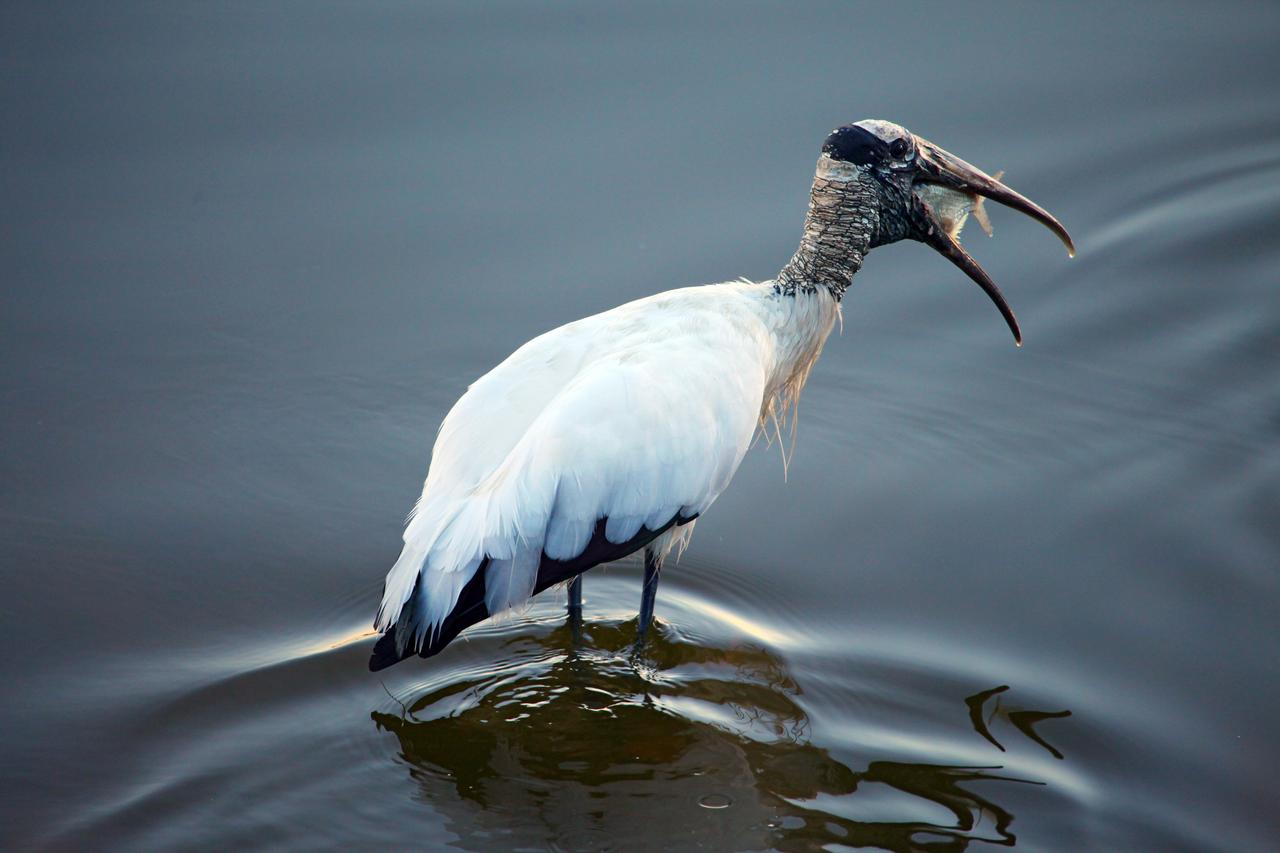
CAPE CANAVERAL, Fla. -- A wood stork eats breakfast while wading in brackish water at NASA's Kennedy Space Center in Florida around dawn. In 1984, the U.S. Fish and Wildlife Service declared the wood stork an endangered species. Kennedy coexists with the Merritt Island National Wildlife Refuge, habitat to more than 310 species of birds, 25 mammals, 117 fish and 65 amphibians and reptiles. Photo credit: NASA/Frank Michaux
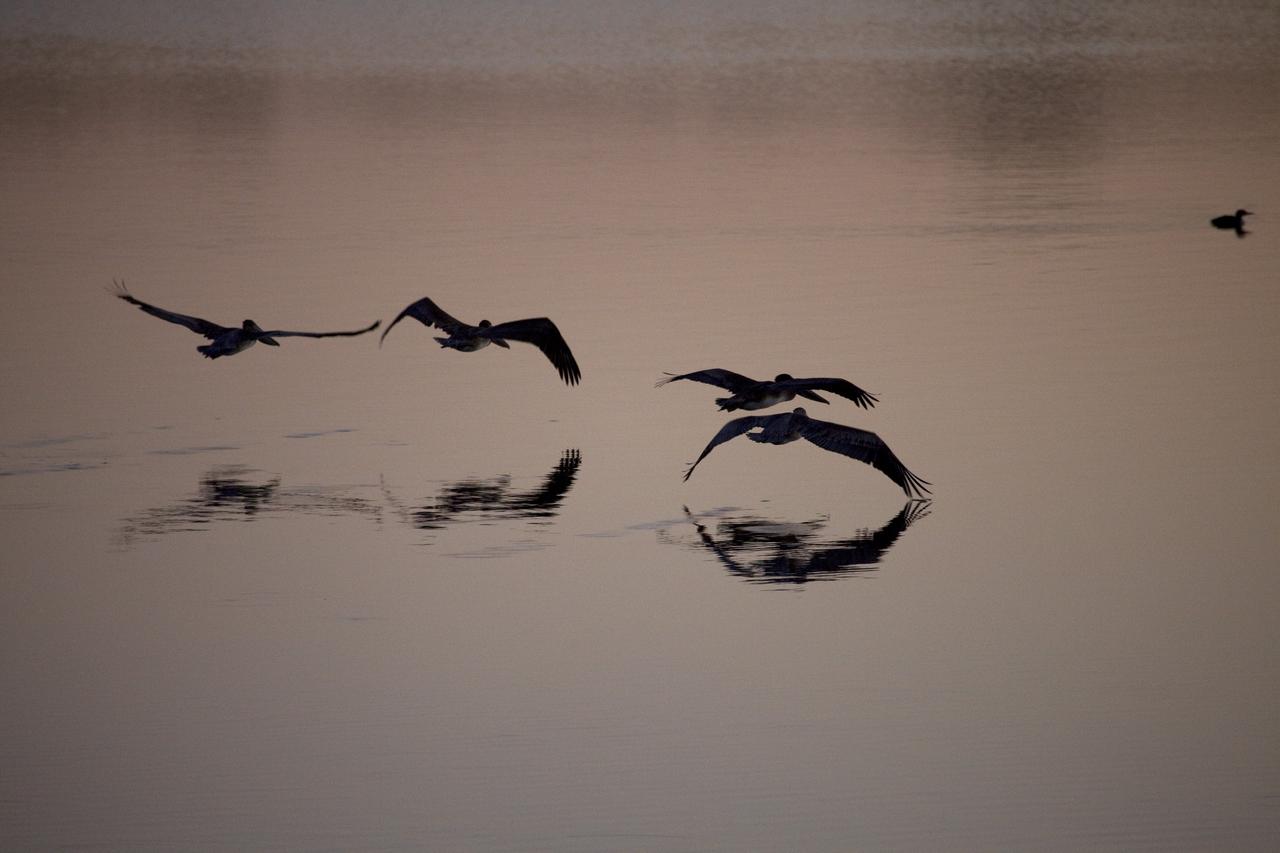
CAPE CANAVERAL, Fla. -- Brown pelicans search for fish in brackish water at NASA's Kennedy Space Center in Florida around dawn. Kennedy coexists with the Merritt Island National Wildlife Refuge, habitat to more than 310 species of birds, 25 mammals, 117 fish and 65 amphibians and reptiles. Photo credit: NASA/Frank Michaux
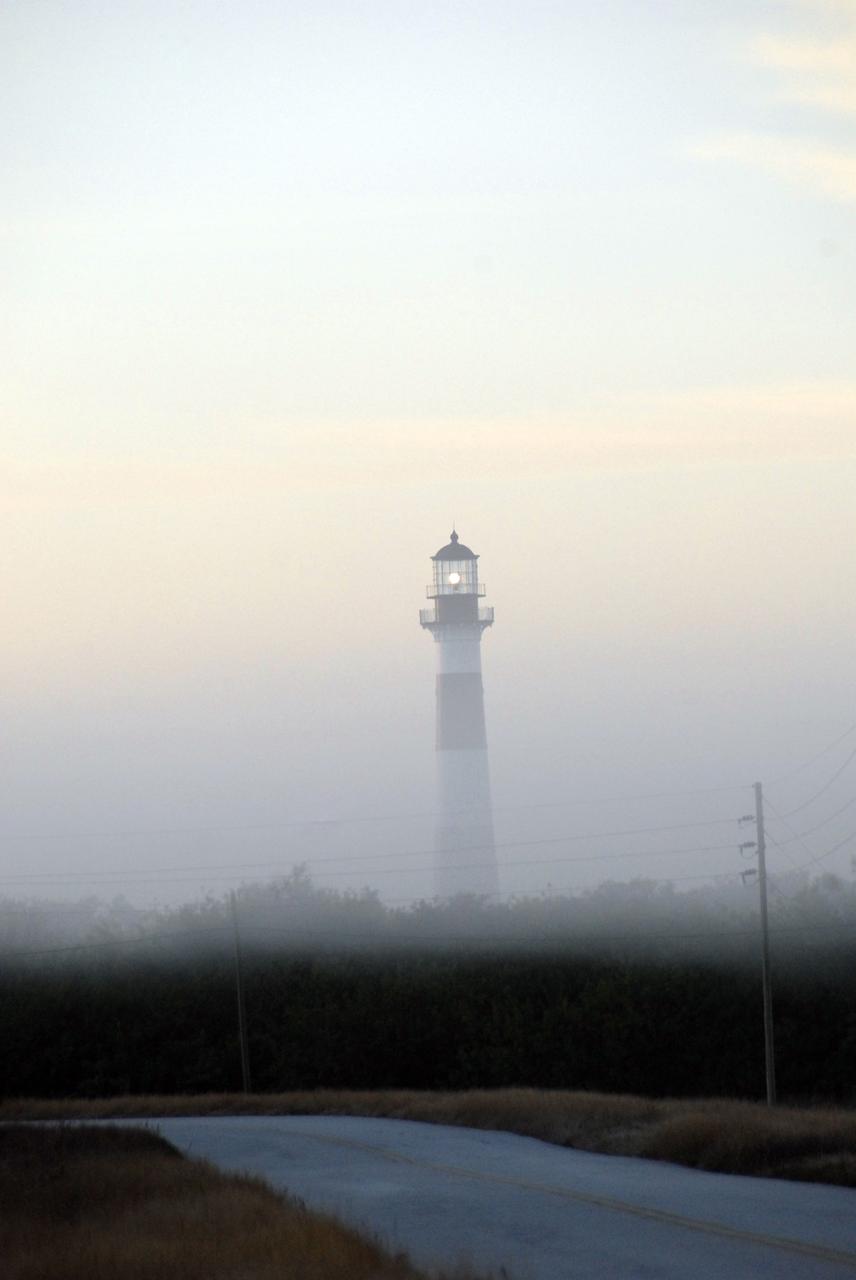
CAPE CANAVERAL, Fla. – Fog envelops the Cape Canaveral Lighthouse that has graced Cape Canaveral's shore for more than 100 years under the stewardship of the U.S. Air Force. The center shares a boundary with the refuge that includes salt-water estuaries, brackish marshes, hardwood hammocks and pine flatwoods. The diverse landscape provides habitat for more than 310 species of birds, 25 mammals, 117 fishes and 65 amphibians and reptiles. Photo credit: NASA/Jack Pfaller
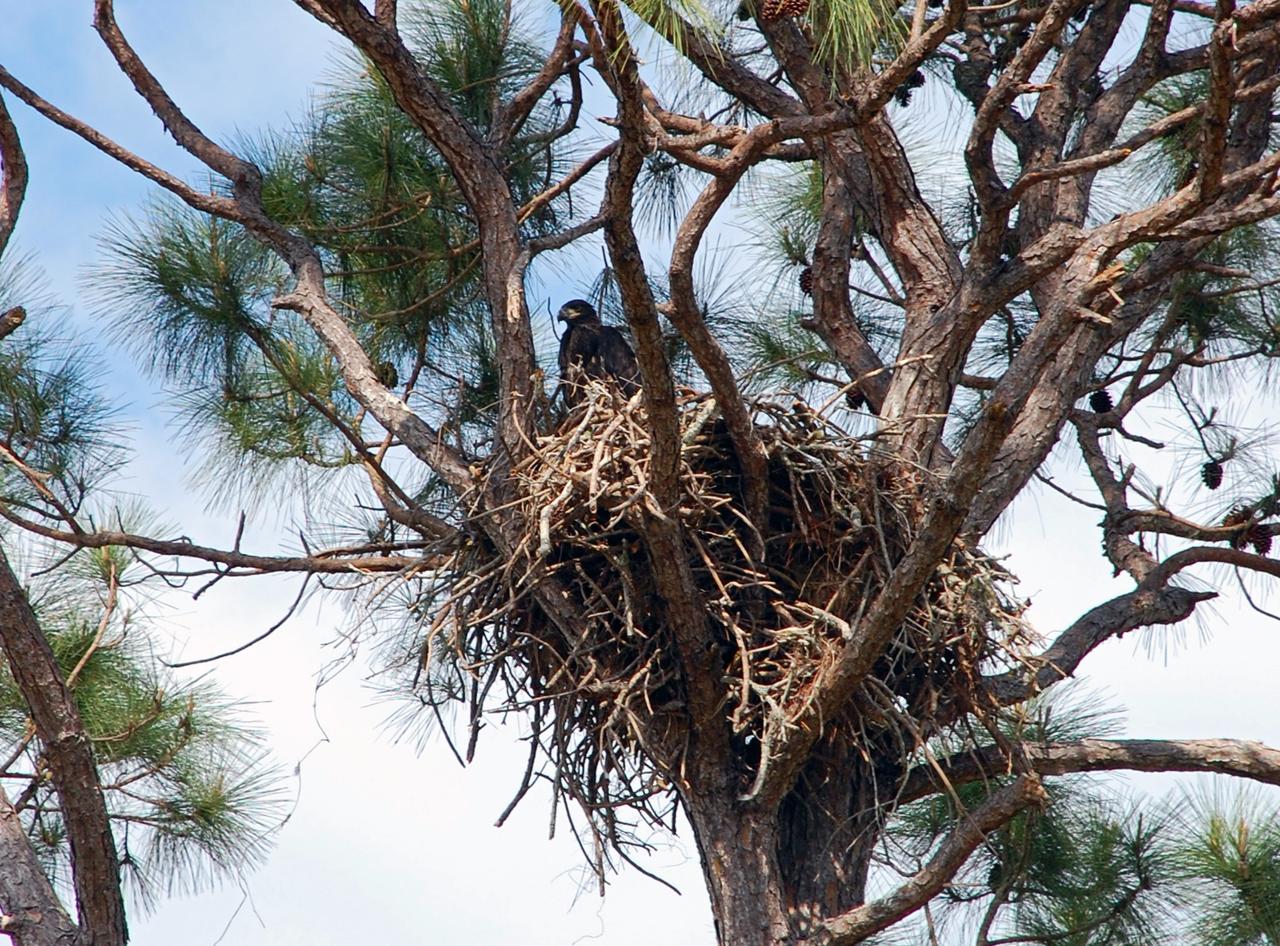
CAPE CANAVERAL, Fla. – At NASA's Kennedy Space Center in Florida, a young eagle shows itself in its nest in a pine tree on S.R. 3. There are a dozen eagle nests within Kennedy and in the surrounding Merritt Island National Wildlife Refuge. Bald eagles use a specific territory for nesting (they mate for life), winter feeding or a year-round residence. Its natural domain is from Alaska to Baja, California, and from Maine to Florida. The Merritt Island refuge also includes several wading bird rookeries, many osprey nests, up to 400 manatees during the spring, and approximately 2,500 Florida scrub jays. It also is a major wintering area for migratory birds. More than 500 species of wildlife inhabit the refuge, with 15 considered federally threatened or endangered. Photo credit: NASA/Ben Smegelsky
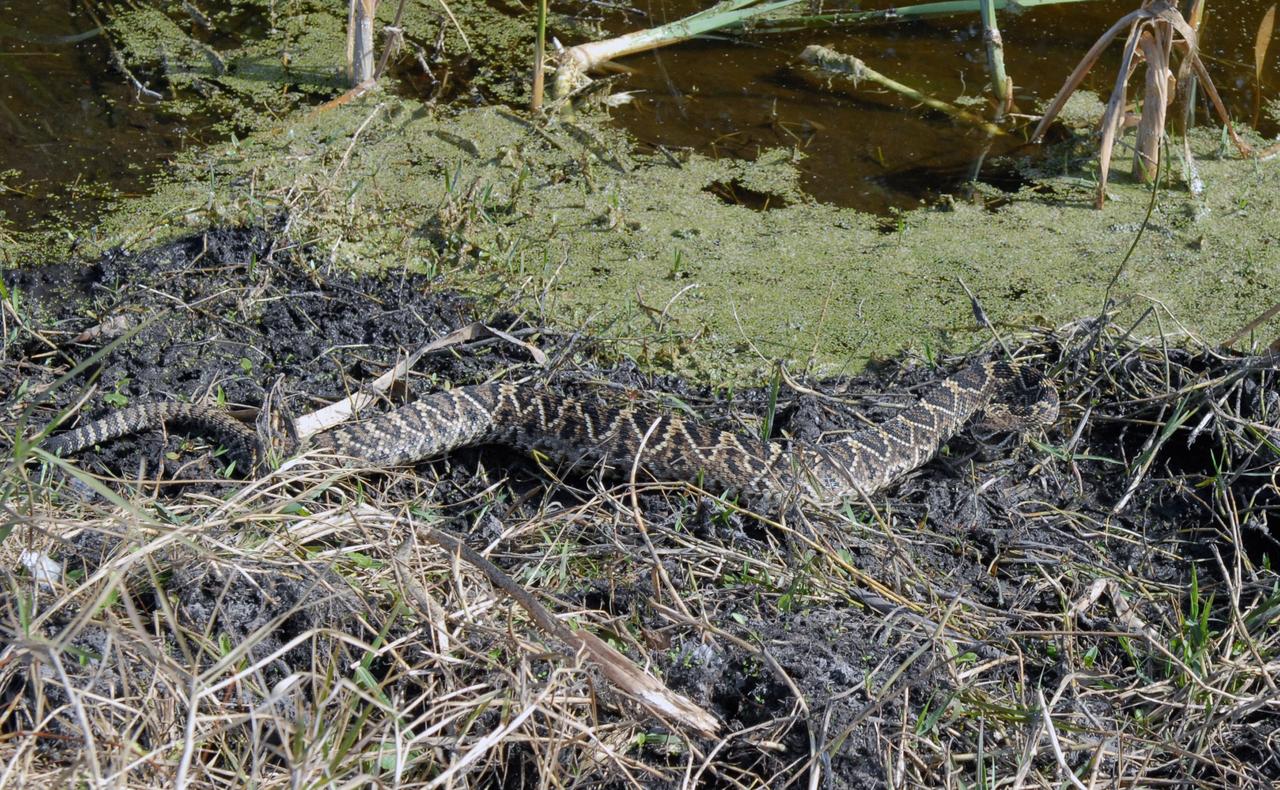
CAPE CANAVERAL, Fla. – An eastern diamondback rattlesnake returns to its natural environs farther from the NASA News Center at NASA's Kennedy Space Center in Florida. The diamondback is Florida's largest venomous snake and may exceed six feet in length. It occurs throughout Florida in a variety of dry habitats, such as pinelands, scrub and golf courses. Kennedy shares a boundary with the Merritt Island Wildlife Nature Refuge, which is a habitat for more than 310 species of birds, 25 mammals, 117 fishes and 65 amphibians and reptiles. Photo credit: NASA/Jack Pfaller
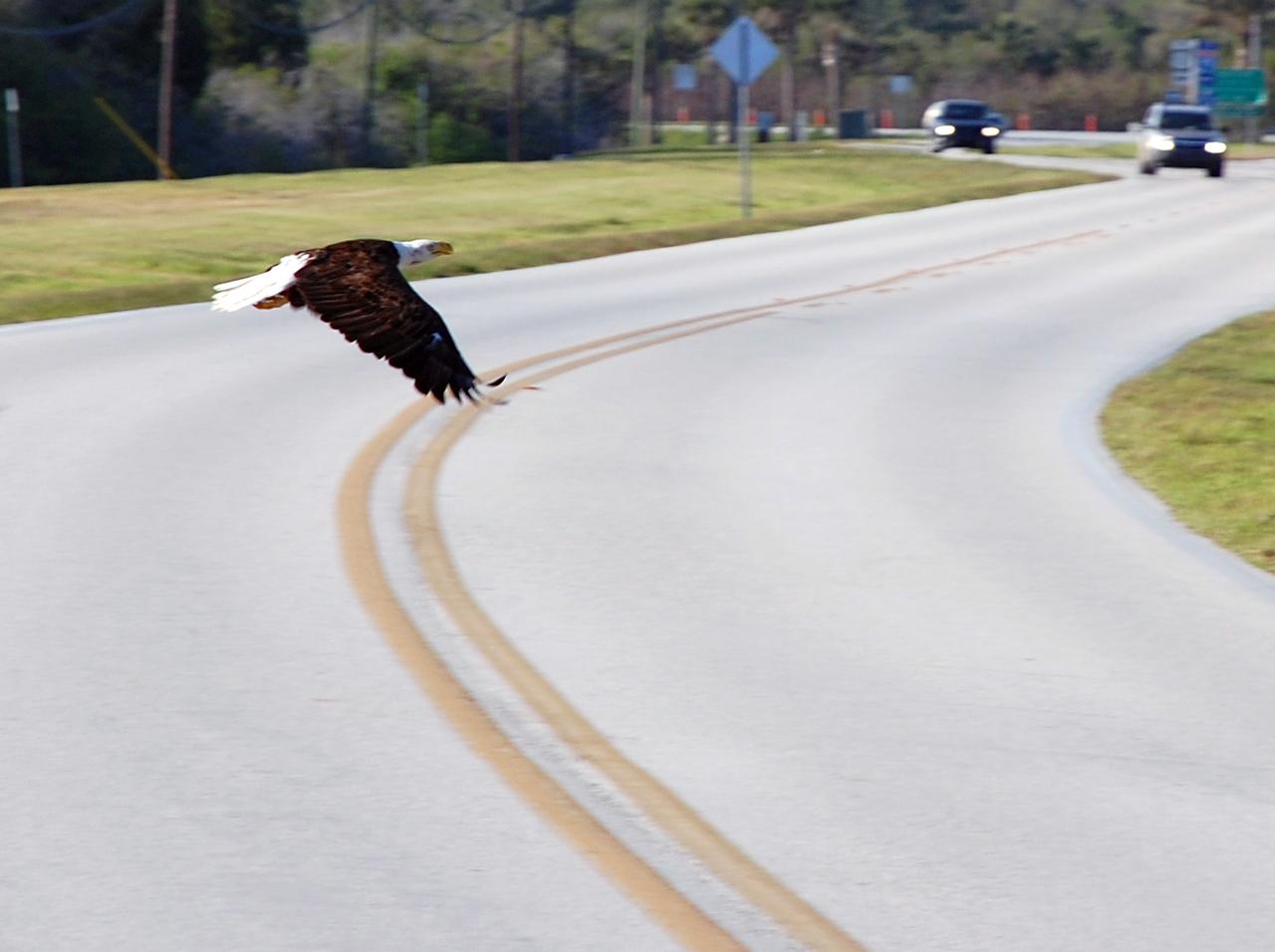
CAPE CANAVERAL, Fla. – At NASA's Kennedy Space Center in Florida, a bald eagle flies across the road in front of vehicles on the road. There are a dozen eagle nests within Kennedy and in the surrounding Merritt Island National Wildlife Refuge, some of them close to roads through the center. Bald eagles use a specific territory for nesting (they mate for life), winter feeding or a year-round residence. Eagles' natural domain is from Alaska to Baja, California, and from Maine to Florida. The Merritt Island refuge also includes several wading bird rookeries, many osprey nests, up to 400 manatees during the spring, and approximately 2,500 Florida scrub jays. It also is a major wintering area for migratory birds. More than 500 species of wildlife inhabit the refuge, with 15 considered federally threatened or endangered. Photo credit: NASA/Ben Smegelsky
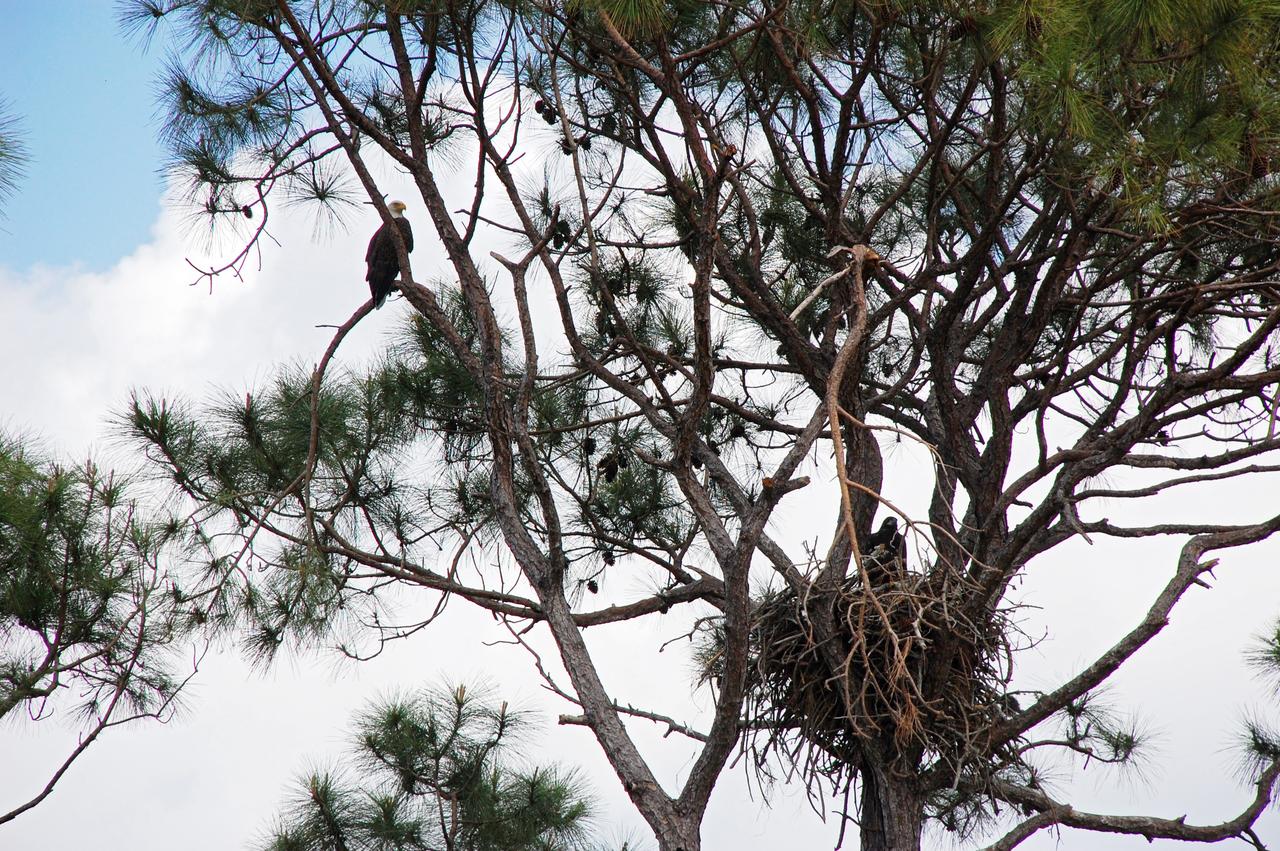
CAPE CANAVERAL, Fla. – On a road through NASA's Kennedy Space Center in Florida, an eagle's nest in a pine tree holds a young eagle while its parent watches on a nearby branch. There are a dozen eagle nests within Kennedy and in the surrounding Merritt Island National Wildlife Refuge. Bald eagles use a specific territory for nesting (they mate for life), winter feeding or a year-round residence. Its natural domain is from Alaska to Baja, California, and from Maine to Florida. The Merritt Island refuge also includes several wading bird rookeries, many osprey nests, up to 400 manatees during the spring, and approximately 2,500 Florida scrub jays. It also is a major wintering area for migratory birds. More than 500 species of wildlife inhabit the refuge, with 15 considered federally threatened or endangered. Photo credit: NASA/Ben Smegelsky
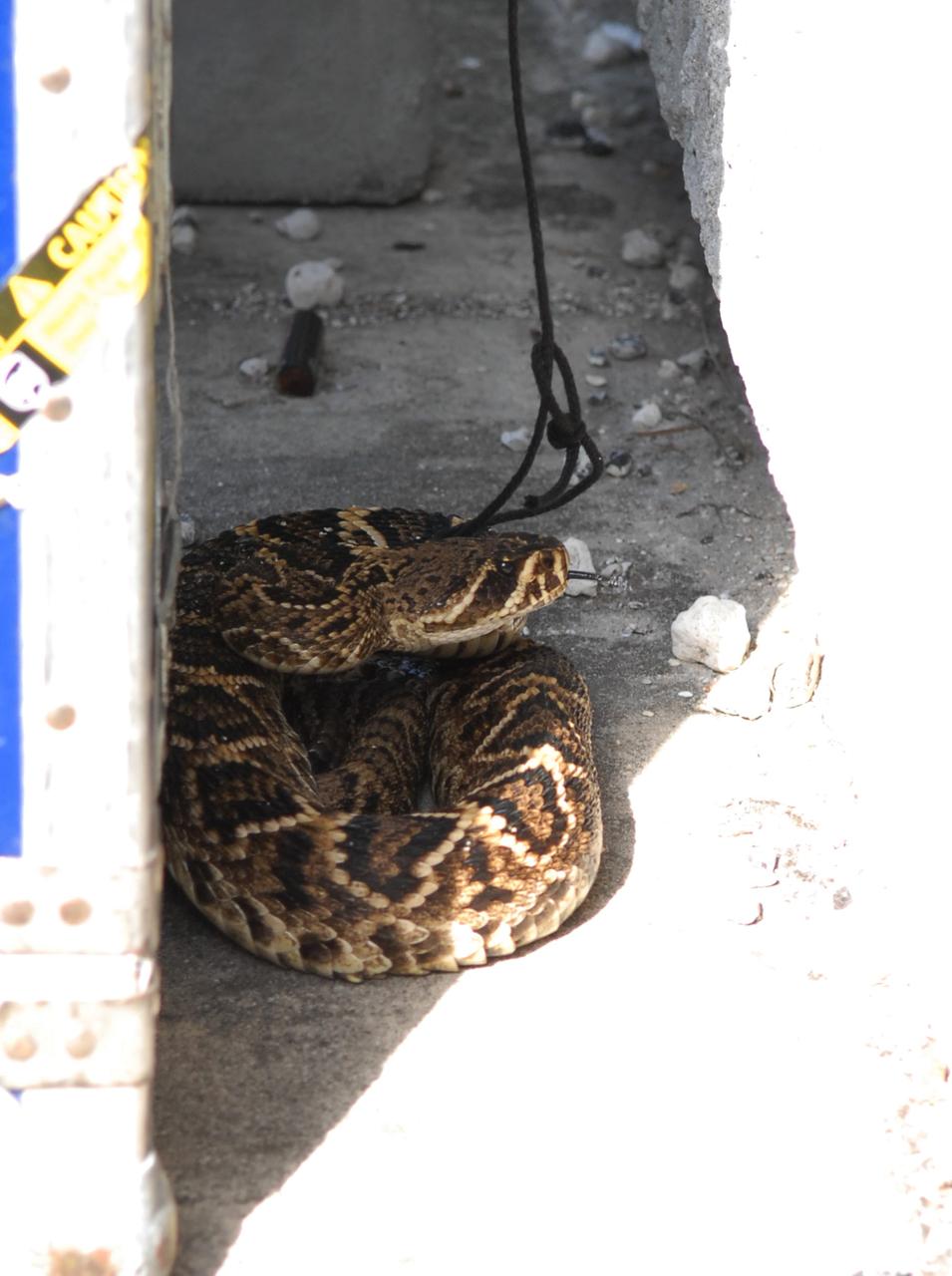
CAPE CANAVERAL, Fla. – An eastern diamondback rattlesnake is spotted next to a building at the NASA News Center at NASA's Kennedy Space Center in Florida. The diamondback is Florida's largest venomous snake and may exceed six feet in length. It occurs throughout Florida in a variety of dry habitats, such as pinelands, scrub and golf courses. Kennedy shares a boundary with the Merritt Island Wildlife Nature Refuge, which is a habitat for more than 310 species of birds, 25 mammals, 117 fishes and 65 amphibians and reptiles. Photo credit: NASA/Jack Pfaller
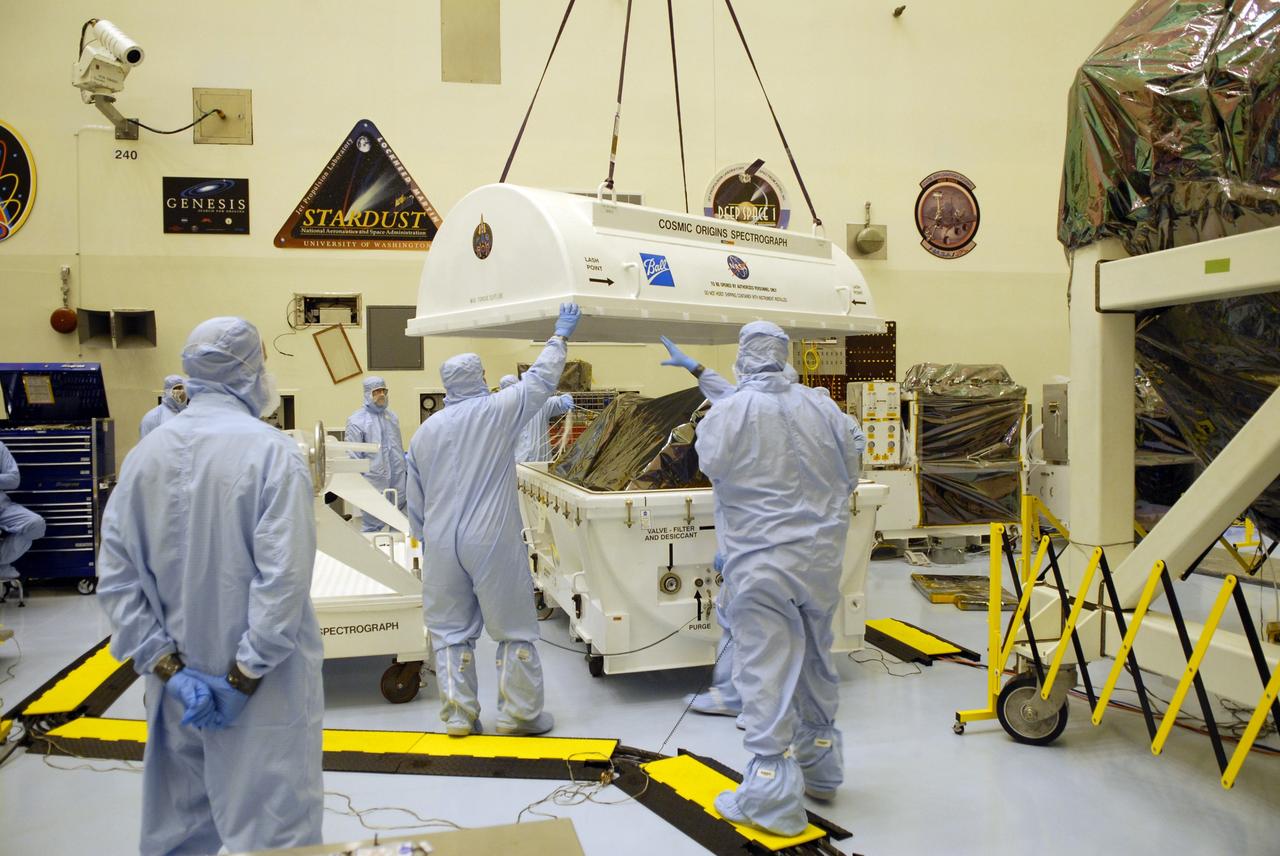
CAPE CANAVERAL, Fla. – In the Payload Hazardous Servicing Facility at NASA's Kennedy Space Center in Florida, the lid of the shipping container for the Cosmic Origins Spectrograph, or COS, is removed. The COS is part of the payload on space shuttle Atlantis for the Hubble servicing mission, targeted to launch in mid-May. Installing the COS during the mission will effectively restore spectroscopy to Hubble’s scientific arsenal, and at the same time provide the telescope with unique capabilities. COS is designed to study the large-scale structure of the universe and how galaxies, stars and planets formed and evolved. It will help determine how elements needed for life such as carbon and iron first formed and how their abundances have increased over the lifetime of the universe. Photo credit: NASA/Jack Pfaller
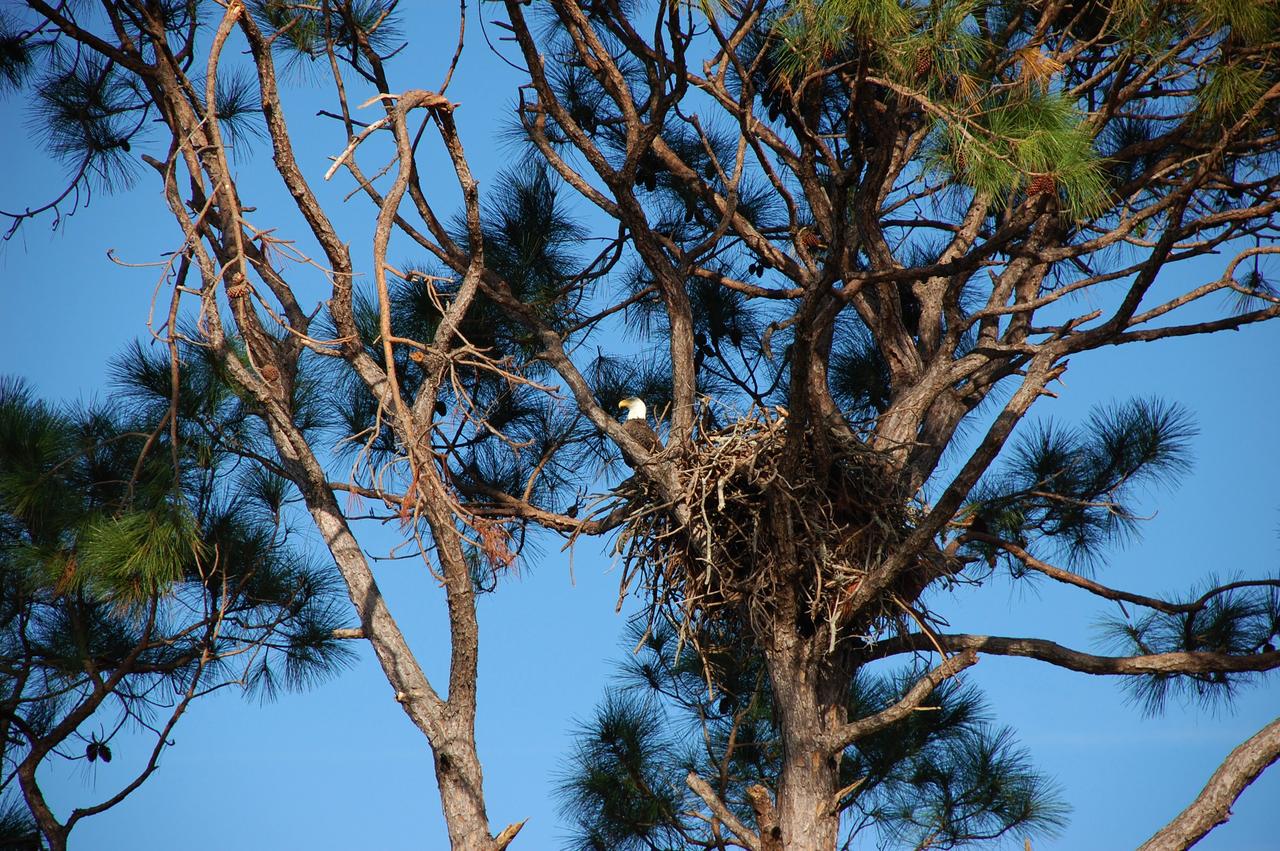
CAPE CANAVERAL, Fla. – A bald eagle appears to keep watch in its nest near the top of a pine tree near the Shuttle Landing Facility at NASA's Kennedy Space Center in Florida. There are a dozen eagle nests within Kennedy and in the surrounding Merritt Island National Wildlife Refuge. Bald eagles use a specific territory for nesting (they mate for life), winter feeding or a year-round residence. Its natural domain is from Alaska to Baja, California, and from Maine to Florida. The Merritt Island Refuge also includes several wading bird rookeries, many osprey nests, up to 400 manatees during the spring, and approximately 2,500 Florida scrub jays. It also is a major wintering area for migratory birds. More than 500 species of wildlife inhabit the refuge, with 15 considered federally threatened or endangered. Photo credit: NASA/Ben Smegelsky
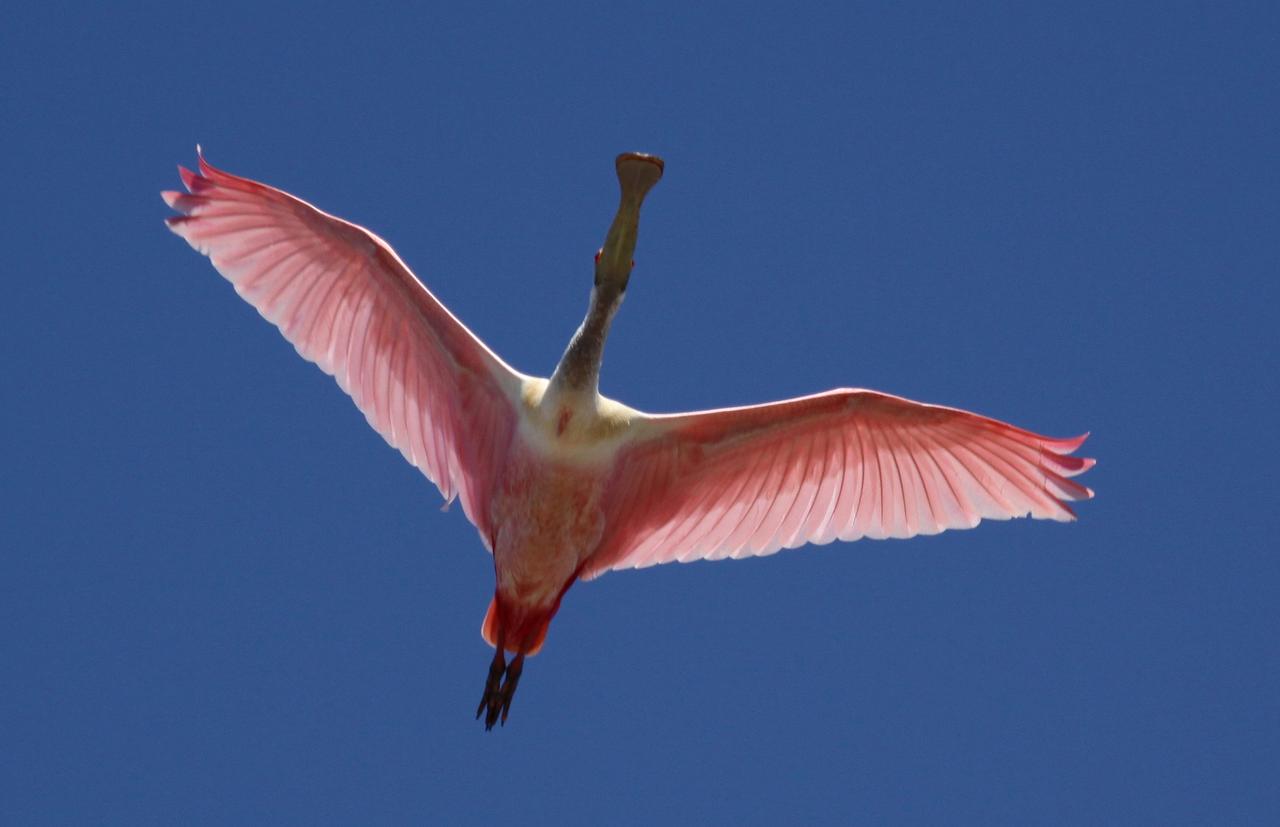
CAPE CANAVERAL, Fla. – A roseate spoonbill soars overhead against a deep blue sky covering NASA's Kennedy Space Center in Florida. Mature spoonbills feather the brilliant pink feathers with a white neck and beck and orange tails. Immature birds are white. The spoonbill is readily identified by the straight bill with a broad spatulate tip, which they use to obtain food by sweeping from side to side and scooping up whatever they encounter. They spend much of their time feeding on shrimps and fish in the shallow waters of the Florida Bay and Gulf of Mexico. Roseate spoonbills are a common sight throughout Kennedy, which shares a boundary with the Merritt Island National Wildlife Refuge. Photo credit: NASA/Kenny Allen
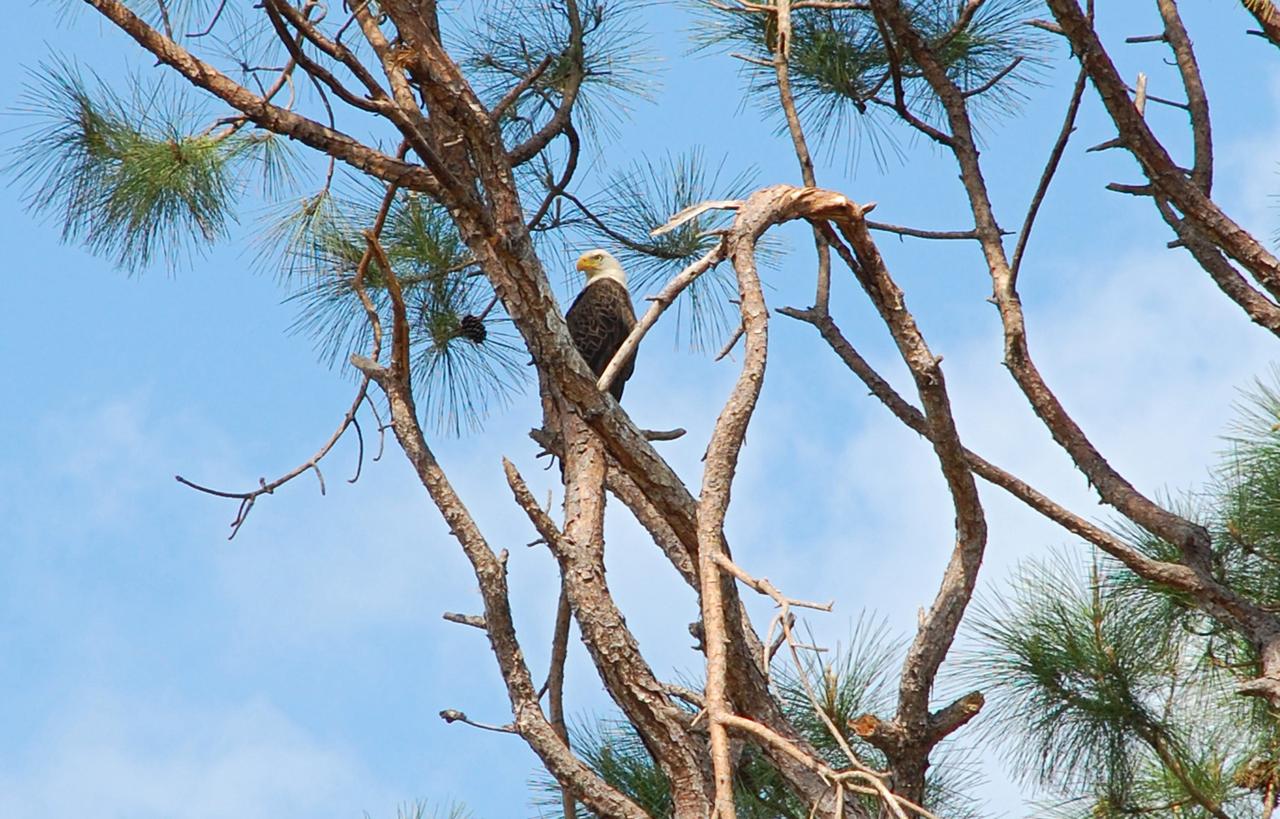
CAPE CANAVERAL, Fla. – A mature eagle stands watch near its nest, out of sight, which holds a young eagle. The nest is in a pine tree on S.R. 3 that runs through NASA's Kennedy Space Center in Florida. There are a dozen eagle nests within Kennedy and in the surrounding Merritt Island National Wildlife Refuge. Bald eagles use a specific territory for nesting (they mate for life), winter feeding or a year-round residence. Its natural domain is from Alaska to Baja, California, and from Maine to Florida. The Merritt Island refuge also includes several wading bird rookeries, many osprey nests, up to 400 manatees during the spring, and approximately 2,500 Florida scrub jays. It also is a major wintering area for migratory birds. More than 500 species of wildlife inhabit the refuge, with 15 considered federally threatened or endangered. Photo credit: NASA/Ben Smegelsky
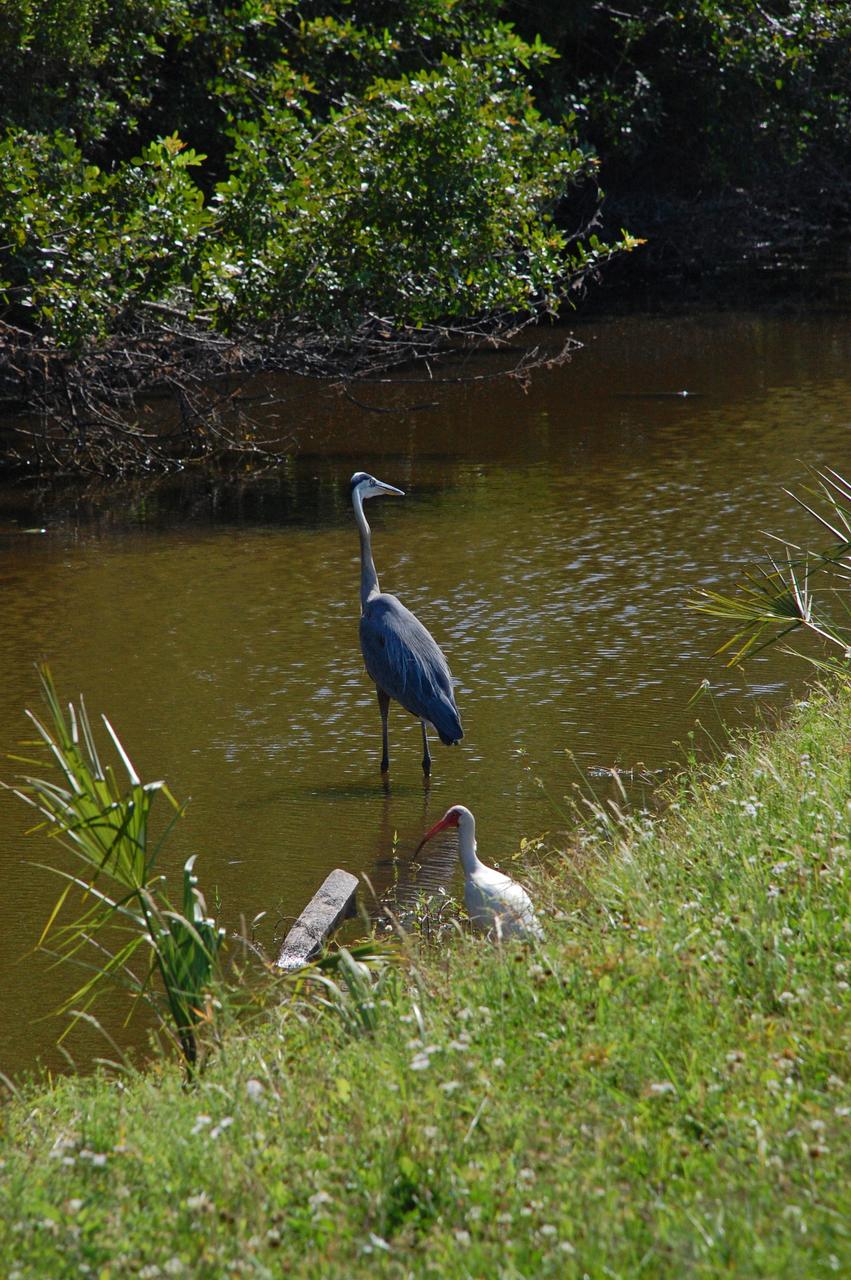
CAPE CANAVERAL, Fla. – A great blue heron stands tall in the water, perhaps looking for food, on grounds of NASA's Kennedy Space Center in Florida. More gray than blue, with a yellowish bill and black legs, it has a brownish-buff colored neck with a black border and white in front of its neck with a vertical black streak. The bird's head is white with a black stripe above its eye. They range throughout the U.S., inhabiting lakes, ponds, rivers and marshes. Their principal food is fish or frogs but may feed on small mammals, reptiles and occasionally birds. Kennedy shares a boundary with the Merritt Island National Wildlife Refuge, which is a habitat for more than 310 species of birds, 25 mammals, 117 fishes and 65 amphibians and reptiles. Photo credit: NASA/Ben Smegelsky
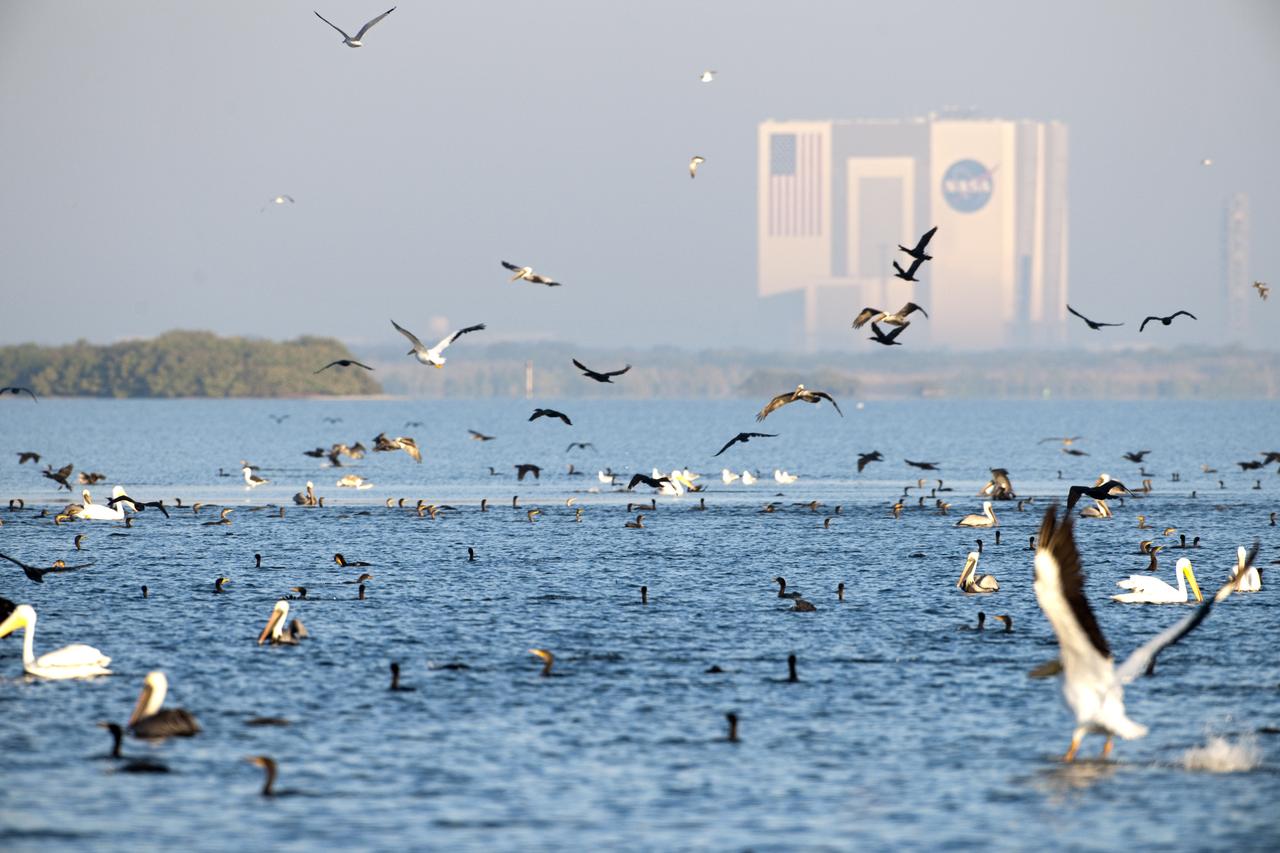
KSC Wildlife - Birds with VAB in Background - shot from NASA Causeway looking west
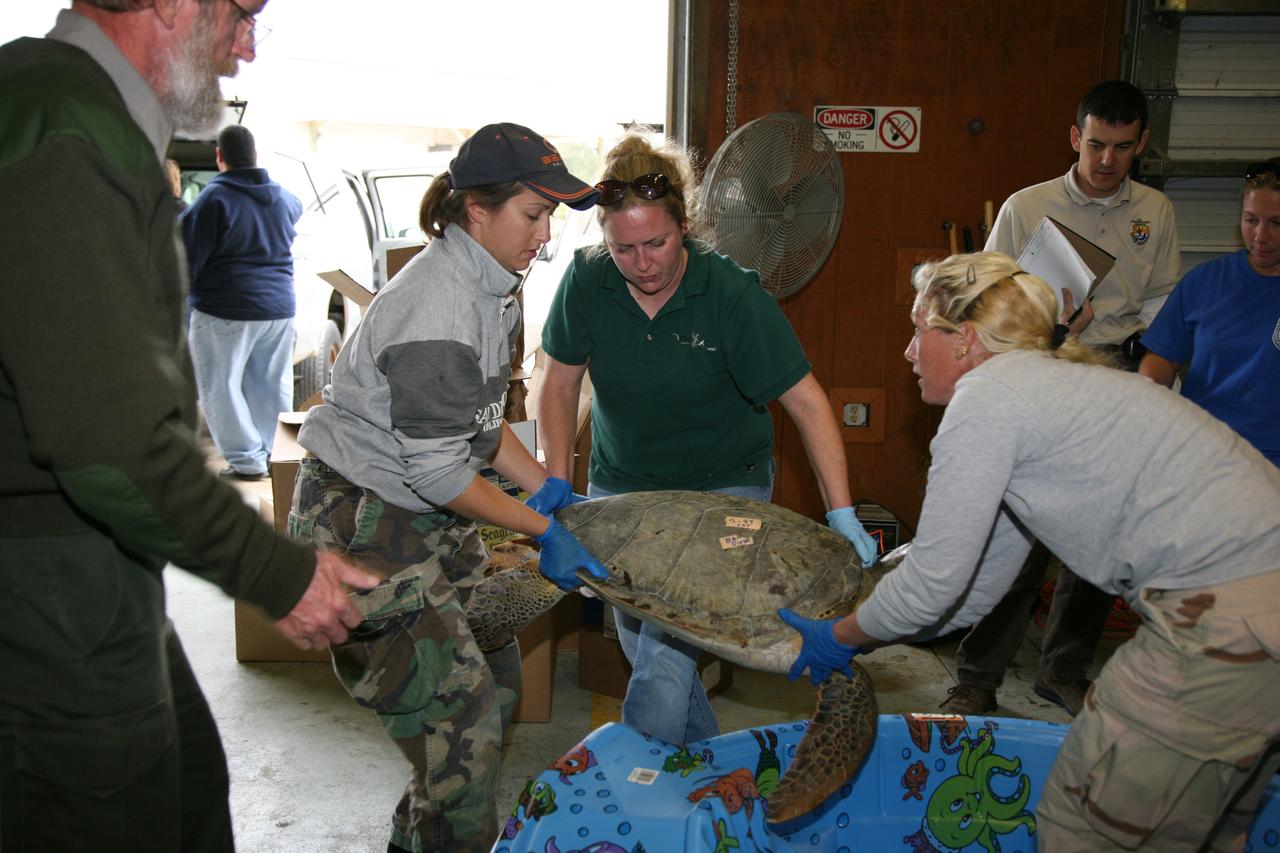
KSC WILDLIFE - SEA TURTLE RESCUE - COLD WEATHER
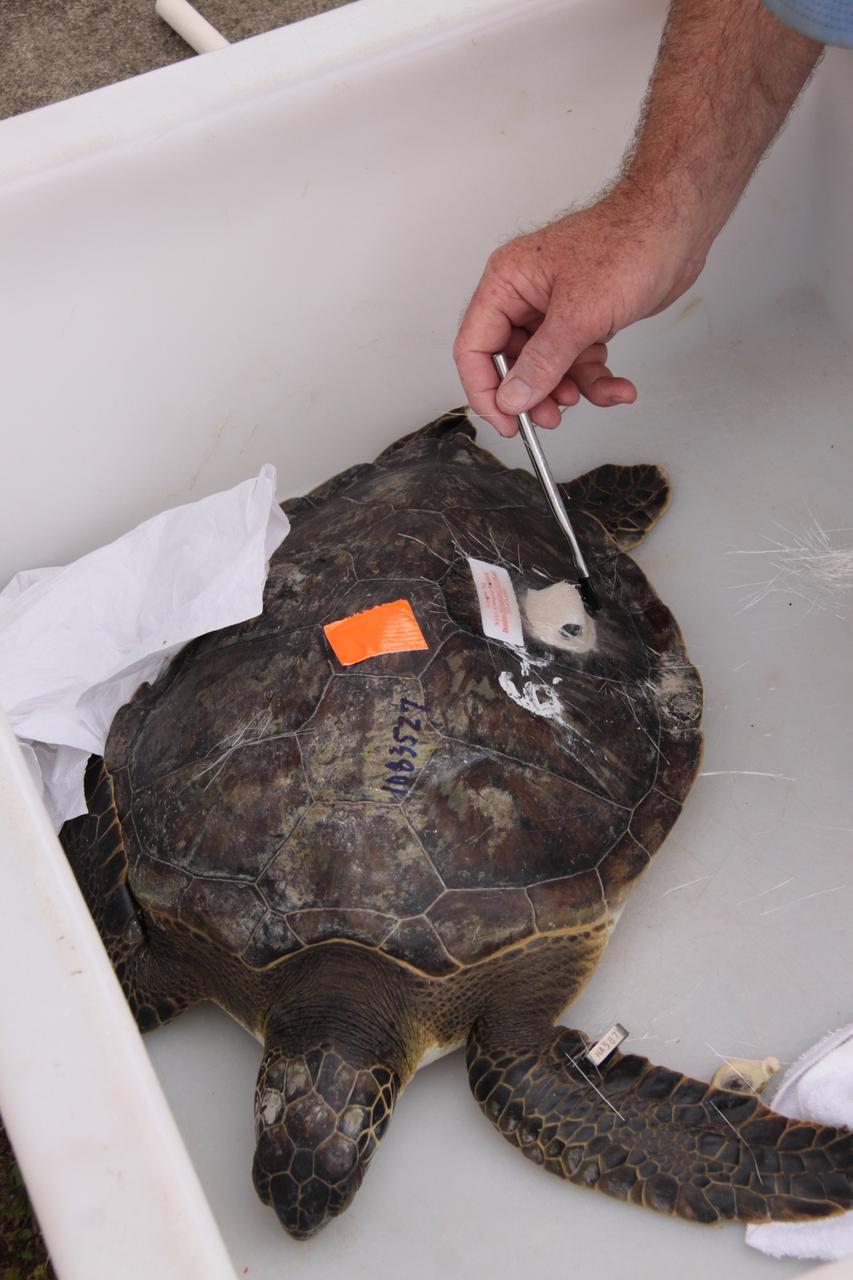
KSC WILDLIFE - TRACKING TRANSMITTERS BEING ATTACHED TO SEA TURTLES
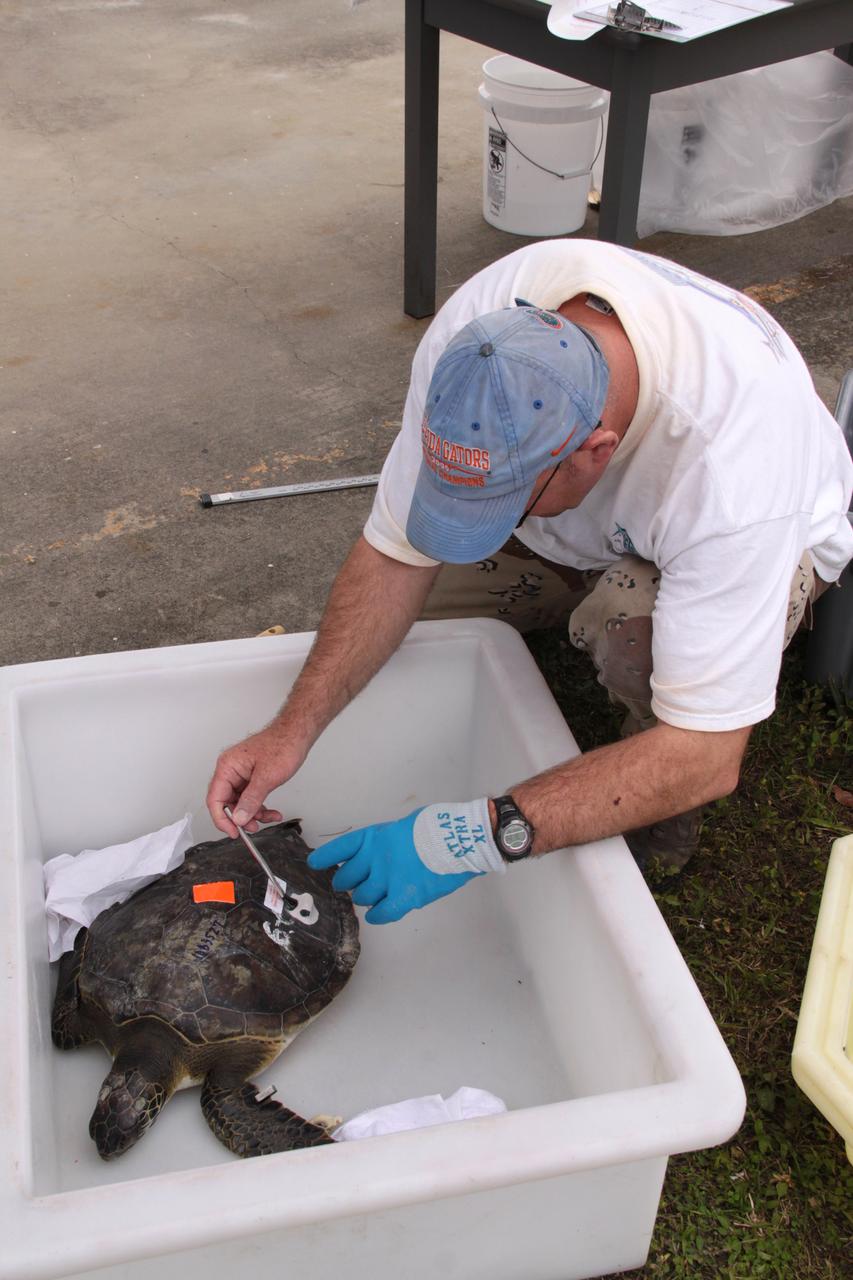
KSC WILDLIFE - TRACKING TRANSMITTERS BEING ATTACHED TO SEA TURTLES

KSC Wildlife - Birds with VAB in Background - shot from NASA Causeway looking west
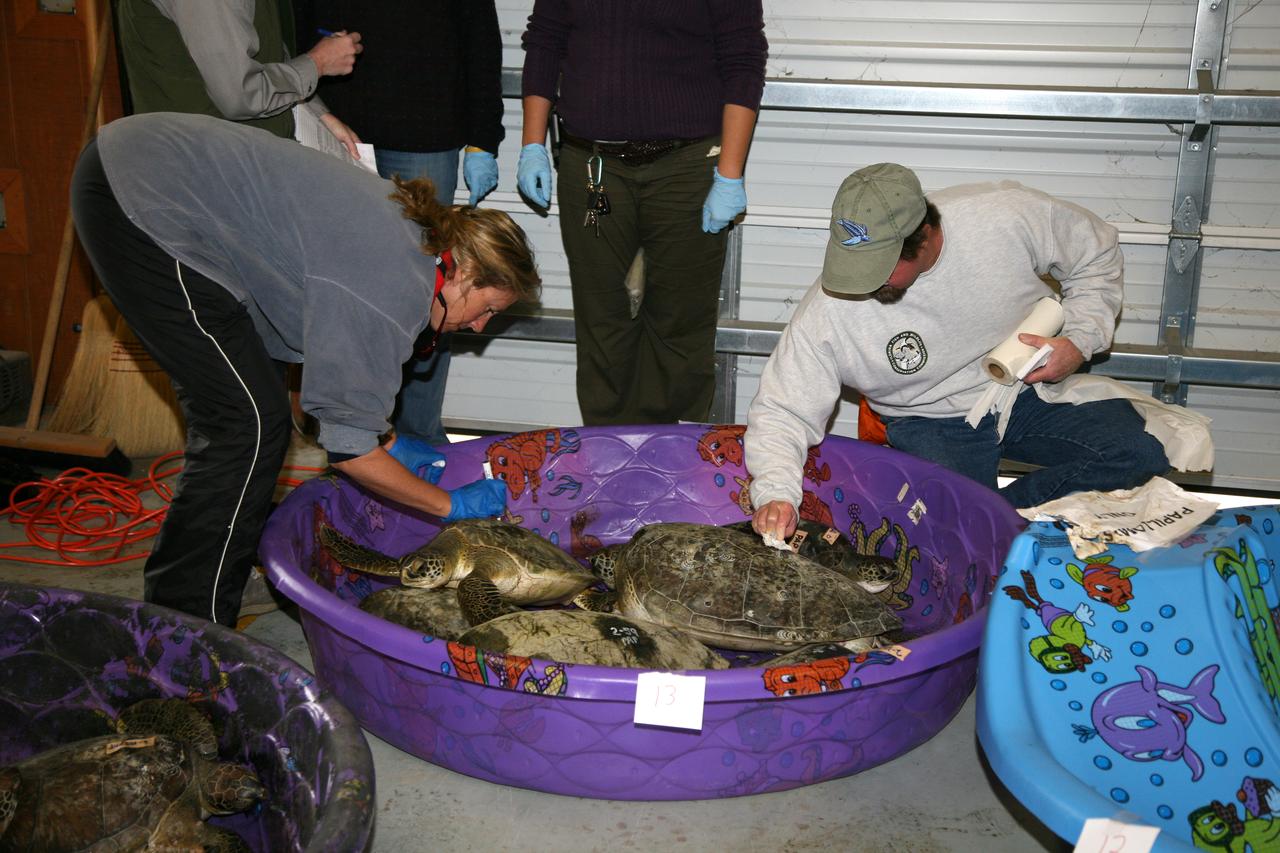
KSC WILDLIFE - SEA TURTLE RESCUE - COLD WEATHER

KSC WILDLIFE - SEA TURTLE RESCUE - COLD WEATHER
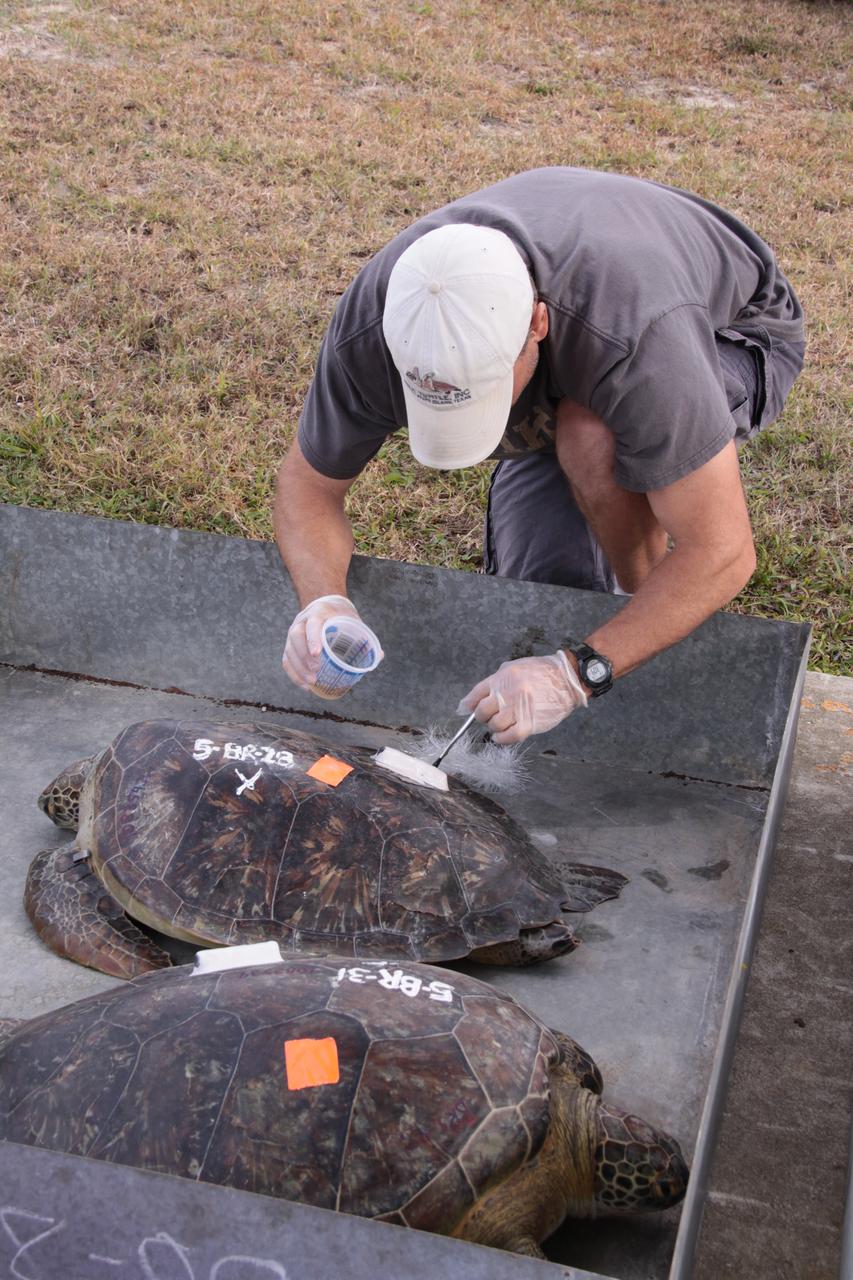
KSC WILDLIFE - TRACKING TRANSMITTERS BEING ATTACHED TO SEA TURTLES
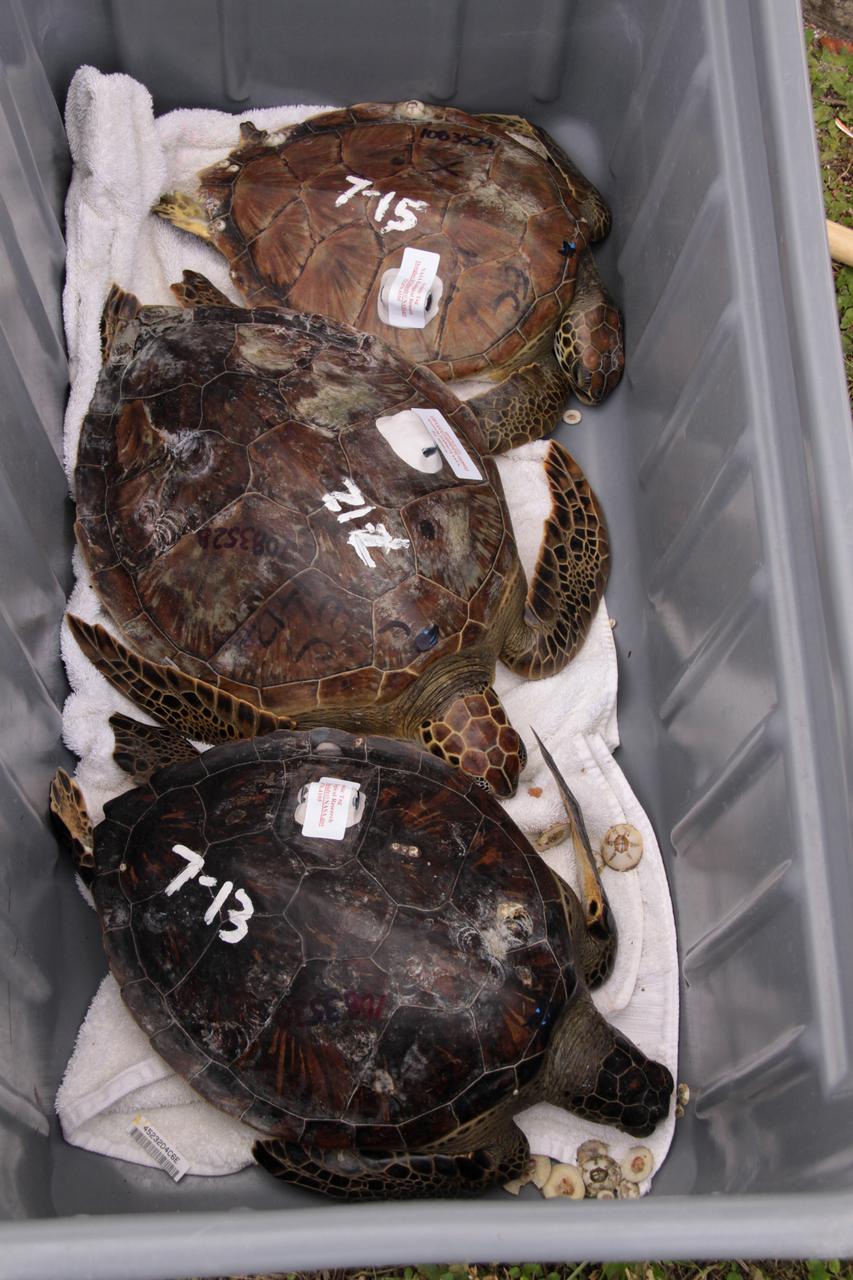
KSC WILDLIFE - TRACKING TRANSMITTERS BEING ATTACHED TO SEA TURTLES
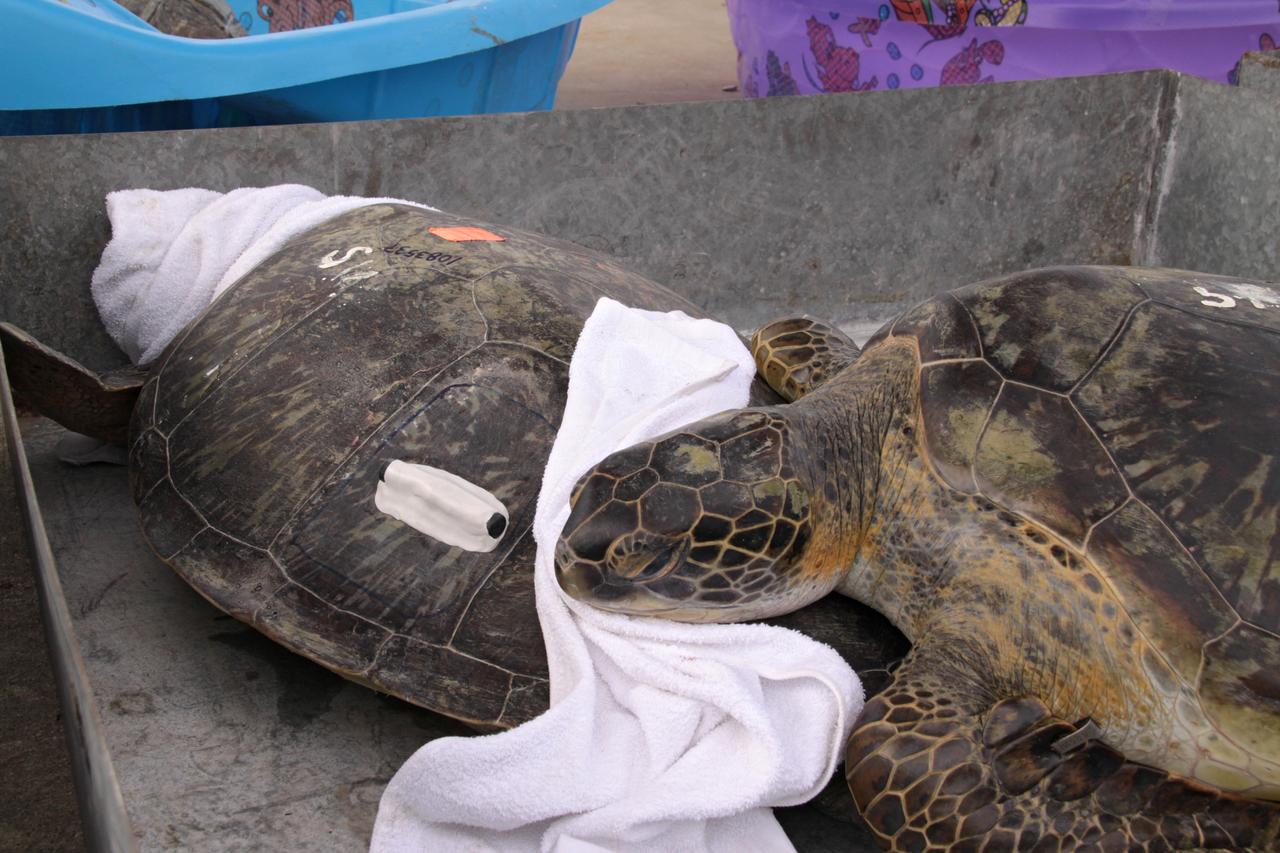
KSC WILDLIFE - TRACKING TRANSMITTERS BEING ATTACHED TO SEA TURTLES
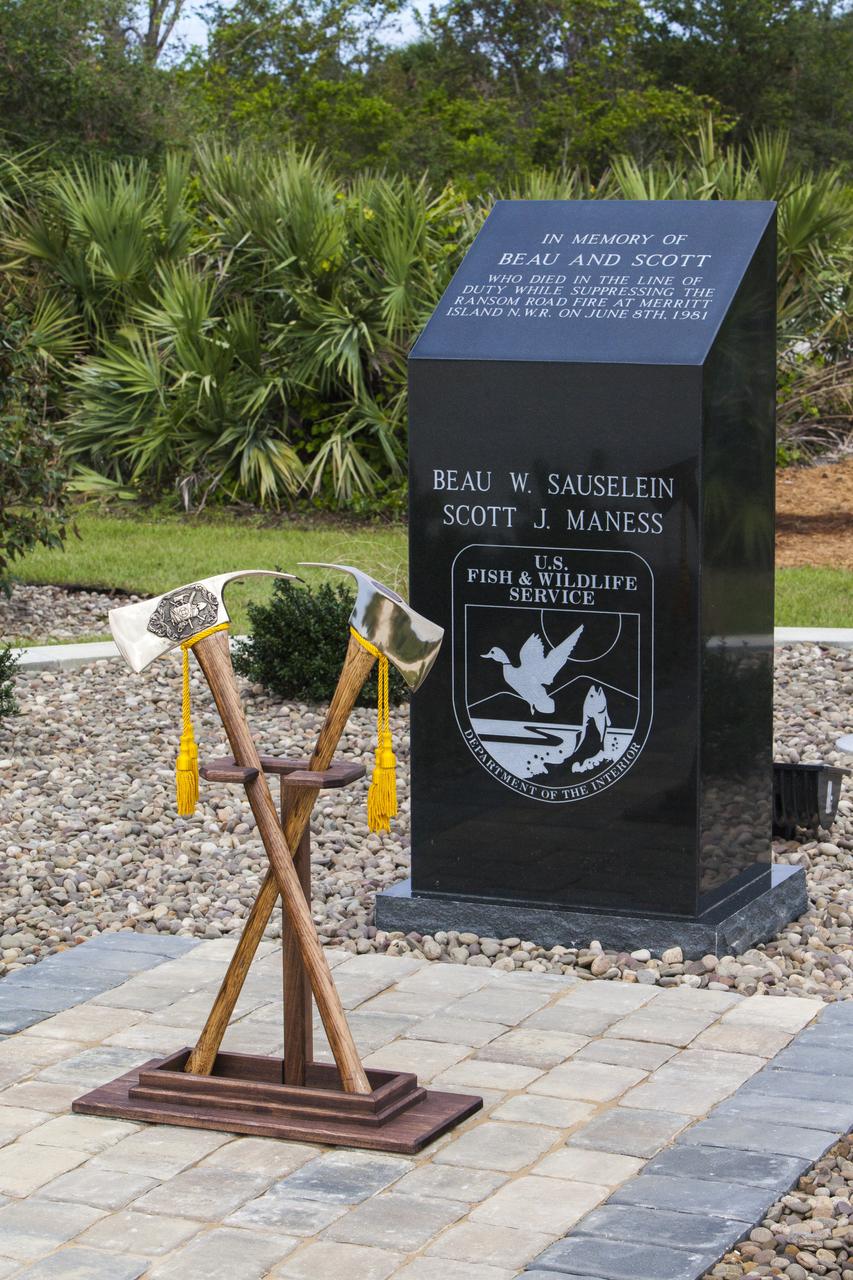
Ceremonial Pulaski tools are positioned in front of a new memorial marker Nov. 1 on the Merritt Island National Wildlife Refuge in Florida. During a joint ceremony, the Spaceport Integration Team and its partners were presented with the prestigious 2017 Pulaski Award and the new memorial marker was dedicated. The multi-agency team includes representatives from NASA's Kennedy Space Center, Cape Canaveral Air Force Station's 45th Space Wing, the Merritt Island National Wildlife Refuge, as well as the Florida Forest Service and Brevard County Fire Rescue. The memorial marker honors two fallen firefighters, Scott Maness and Beau Sauselein, who died fighting a wildfire on space center property in 1981. Held outdoors, the ceremony was attended by 140 guests.
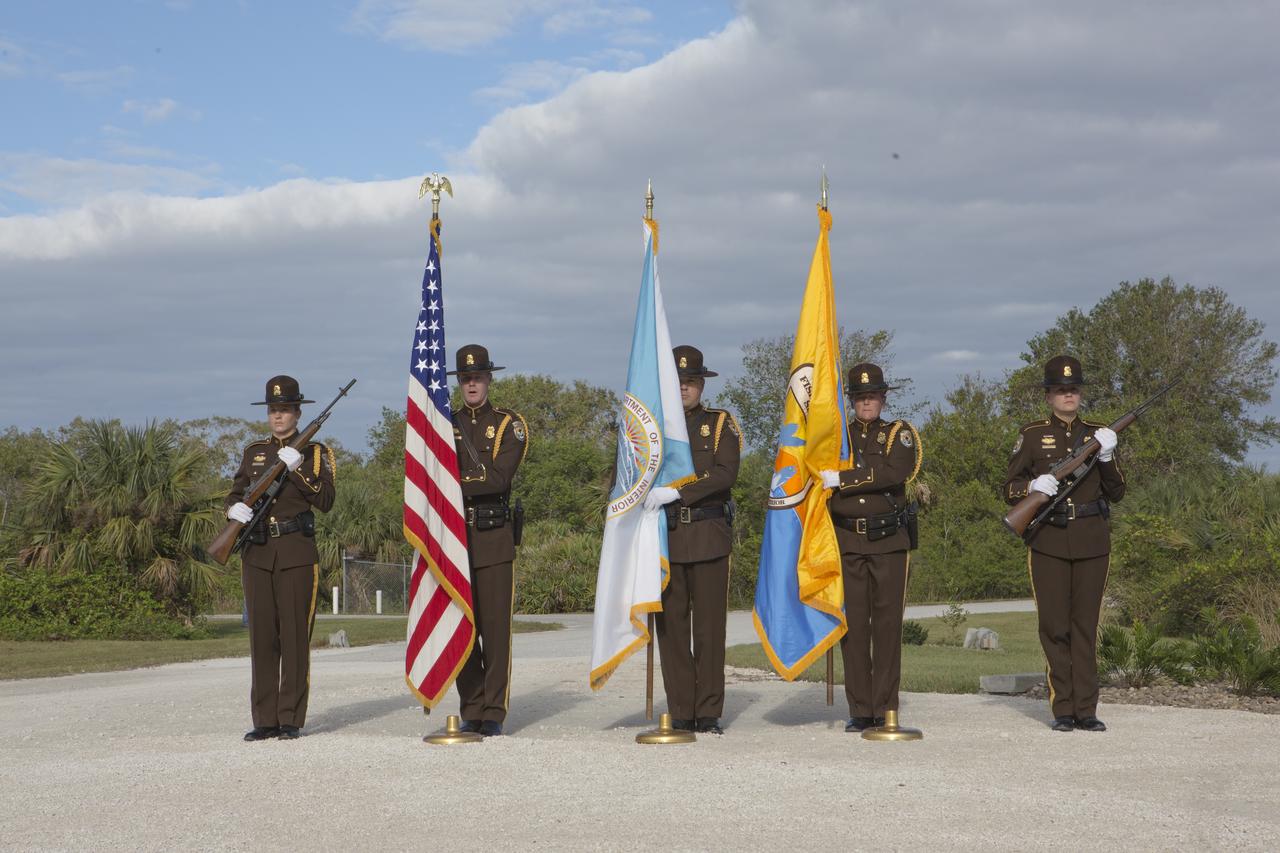
A presentation of colors by the U.S. Fish and Wildlife Service honor guard opened a ceremony Nov. 1 on the Merritt Island National Wildlife Refuge in Florida. During the joint ceremony, the Spaceport Integration Team and its partners were presented with the prestigious 2017 Pulaski Award and the new memorial marker was dedicated. The multi-agency team includes representatives from NASA's Kennedy Space Center, Cape Canaveral Air Force Station's 45th Space Wing, the Merritt Island National Wildlife Refuge, as well as the Florida Forest Service and Brevard County Fire Rescue. The memorial marker honors two fallen firefighters, Scott Maness and Beau Sauselein, who died fighting a wildfire on space center property in 1981. Held outdoors, the ceremony was attended by 140 guests.
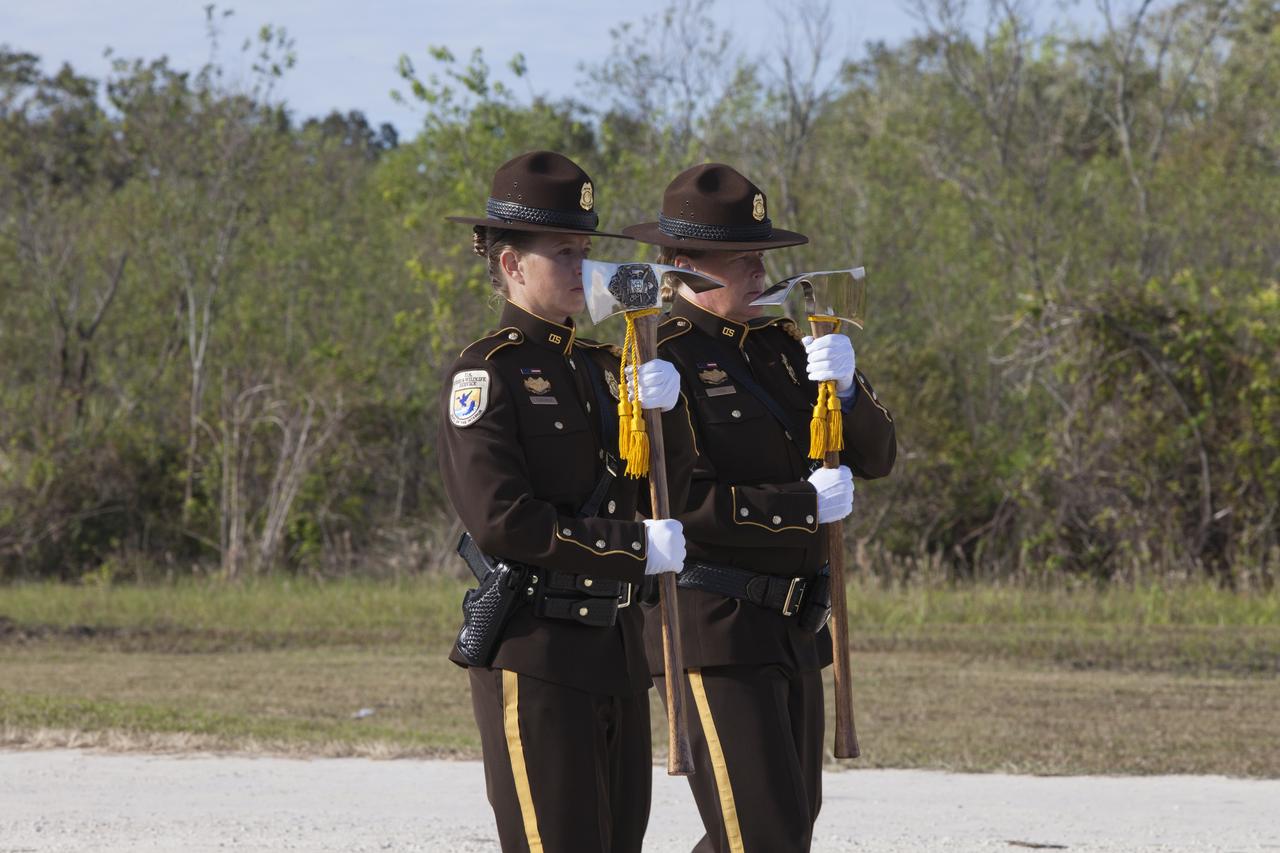
Firefighters prepare to place ceremonial Pulaski tools by a new memorial marker Nov. 1 on the Merritt Island National Wildlife Refuge in Florida. During a joint ceremony, the Spaceport Integration Team and its partners were presented with the prestigious 2017 Pulaski Award and the new memorial marker was dedicated. The multi-agency team includes representatives from NASA's Kennedy Space Center, Cape Canaveral Air Force Station's 45th Space Wing, the Merritt Island National Wildlife Refuge, as well as the Florida Forest Service and Brevard County Fire Rescue. The memorial marker honors two fallen firefighters, Scott Maness and Beau Sauselein, who died fighting a wildfire on space center property in 1981. Held outdoors, the ceremony was attended by 140 guests.
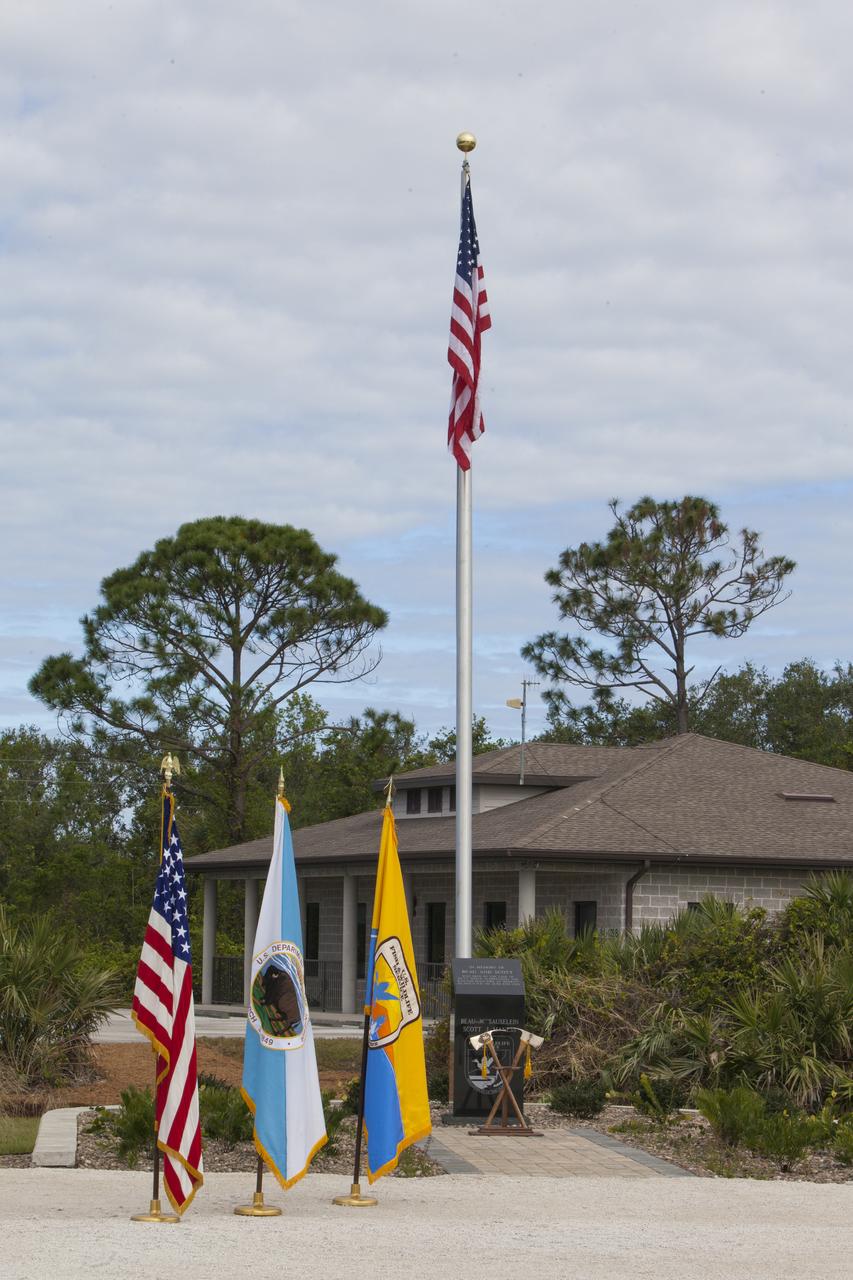
A presentation of colors opened a ceremony Nov. 1 on the Merritt Island National Wildlife Refuge in Florida. During the joint ceremony, the Spaceport Integration Team and its partners were presented with the prestigious 2017 Pulaski Award and a new memorial marker was dedicated. The multi-agency team includes representatives from NASA's Kennedy Space Center, Cape Canaveral Air Force Station's 45th Space Wing, the Merritt Island National Wildlife Refuge, as well as the Florida Forest Service and Brevard County Fire Rescue. The memorial marker honors two fallen firefighters, Scott Maness and Beau Sauselein, who died fighting a wildfire on space center property in 1981. Held outdoors, the ceremony was attended by 140 guests.
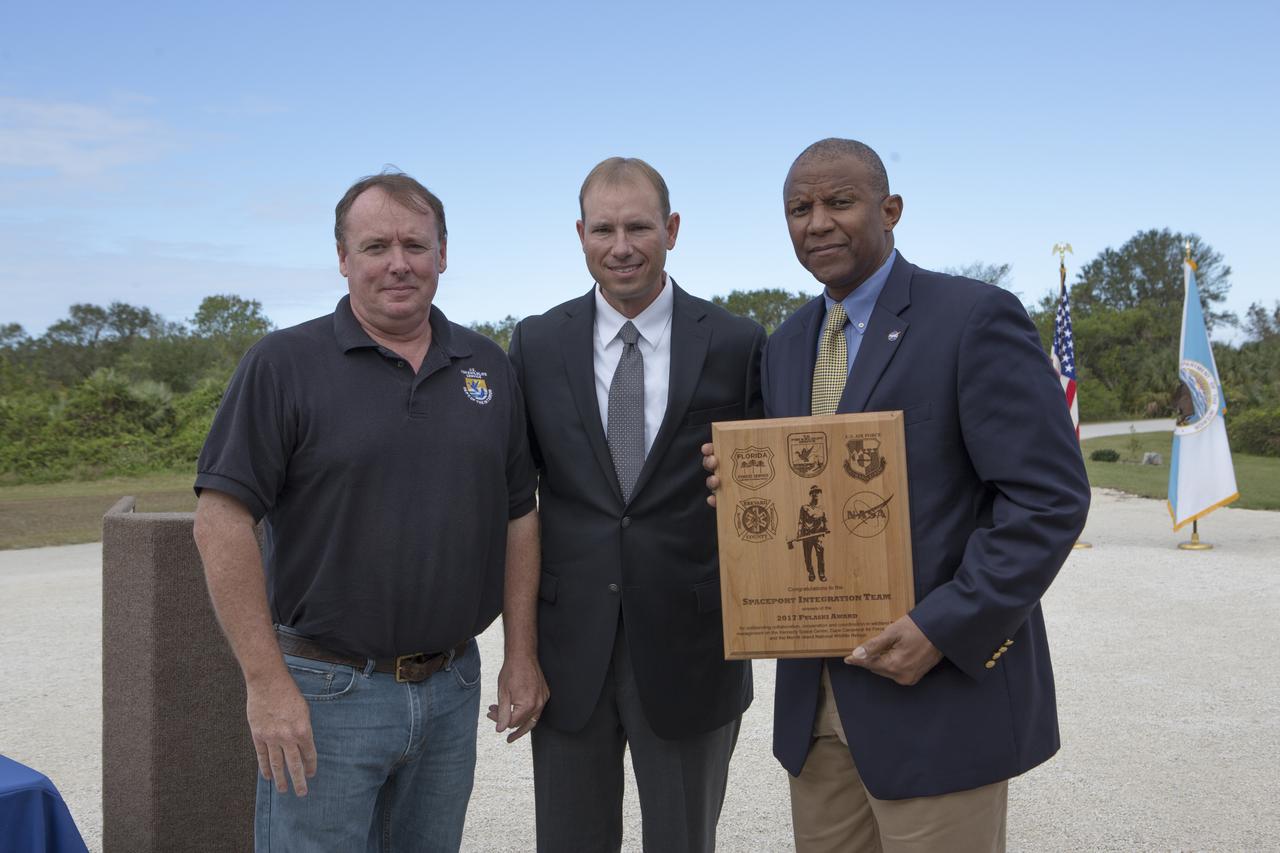
From left, Jon Wallace, deputy fire coordinator, U.S. Fish and Wildlife Service Southeast Region, Atlanta, Georgia; Chris Wilcox, U.S. Fish and Wildlife chief, Fire Management, National Interagency Fire Center, Boise, Idaho; and Kelvin Manning, associate director, NASA's Kennedy Space Center, pose for a portrait following a ceremony Nov. 1 on the Merritt Island National Wildlife Refuge in Florida. During the joint ceremony, the Spaceport Integration Team and its partners were presented with the prestigious 2017 Pulaski Award and a new memorial marker was dedicated. The multi-agency team includes representatives from NASA's Kennedy Space Center, Cape Canaveral Air Force Station's 45th Space Wing, the Merritt Island National Wildlife Refuge, as well as the Florida Forest Service and Brevard County Fire Rescue. The memorial marker honors two fallen firefighters, Scott Maness and Beau Sauselein, who died fighting a wildfire on space center property in 1981. Held outdoors, the ceremony was attended by 140 guests.
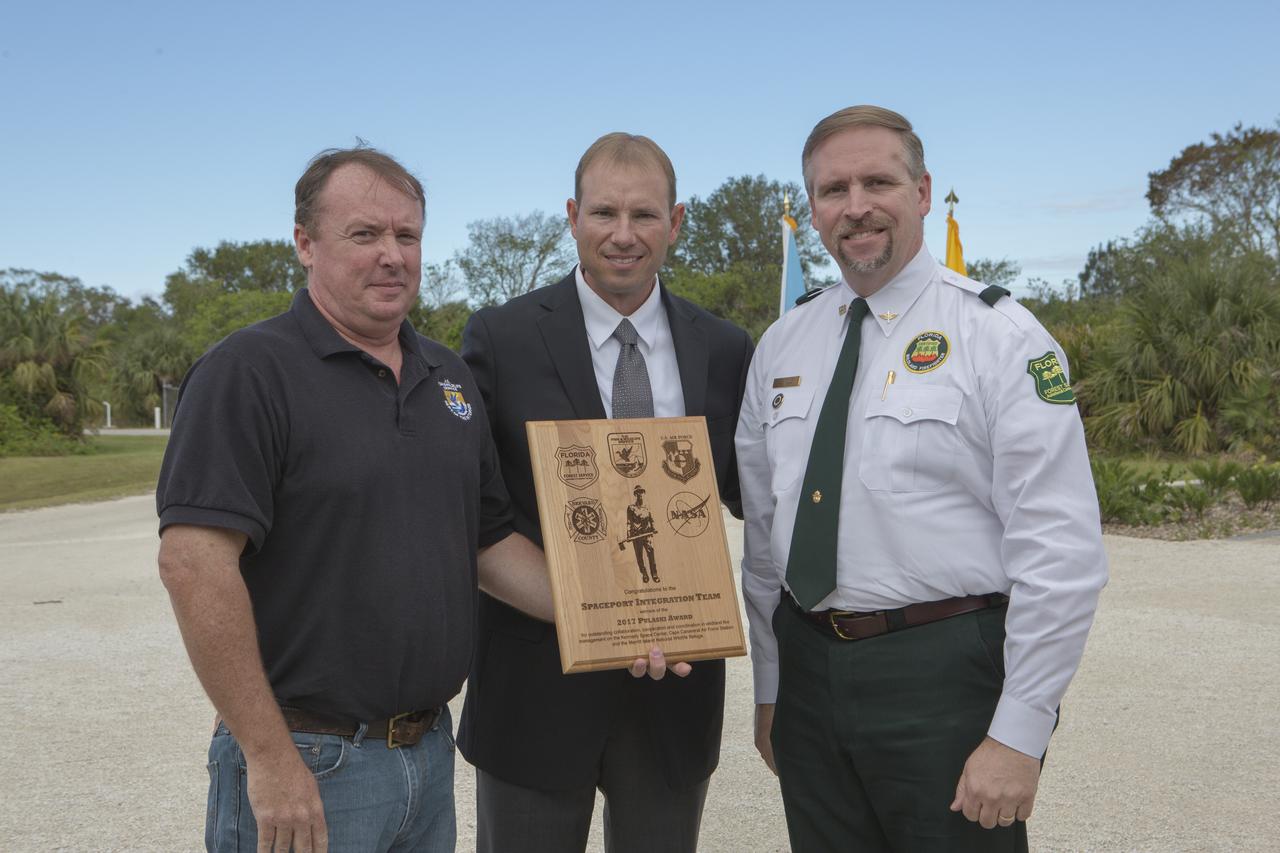
From left, Jon Wallace, deputy fire coordinator, U.S. Fish and Wildlife Service Southeast Region, Atlanta, Georgia; Chris Wilcox, U.S. Fish and Wildlife chief, Fire Management, National Interagency Fire Center, Boise, Idaho; and John Fish, chief, Florida Forest Service, pose for a portrait following a ceremony Nov. 1 on the Merritt Island National Wildlife Refuge in Florida. During the joint ceremony, the Spaceport Integration Team and its partners were presented with the prestigious 2017 Pulaski Award and a new memorial marker was dedicated. The multi-agency team includes representatives from NASA's Kennedy Space Center, Cape Canaveral Air Force Station's 45th Space Wing, the Merritt Island National Wildlife Refuge, as well as the Florida Forest Service and Brevard County Fire Rescue. The memorial marker honors two fallen firefighters, Scott Maness and Beau Sauselein, who died fighting a wildfire on space center property in 1981. Held outdoors, the ceremony was attended by 140 guests.
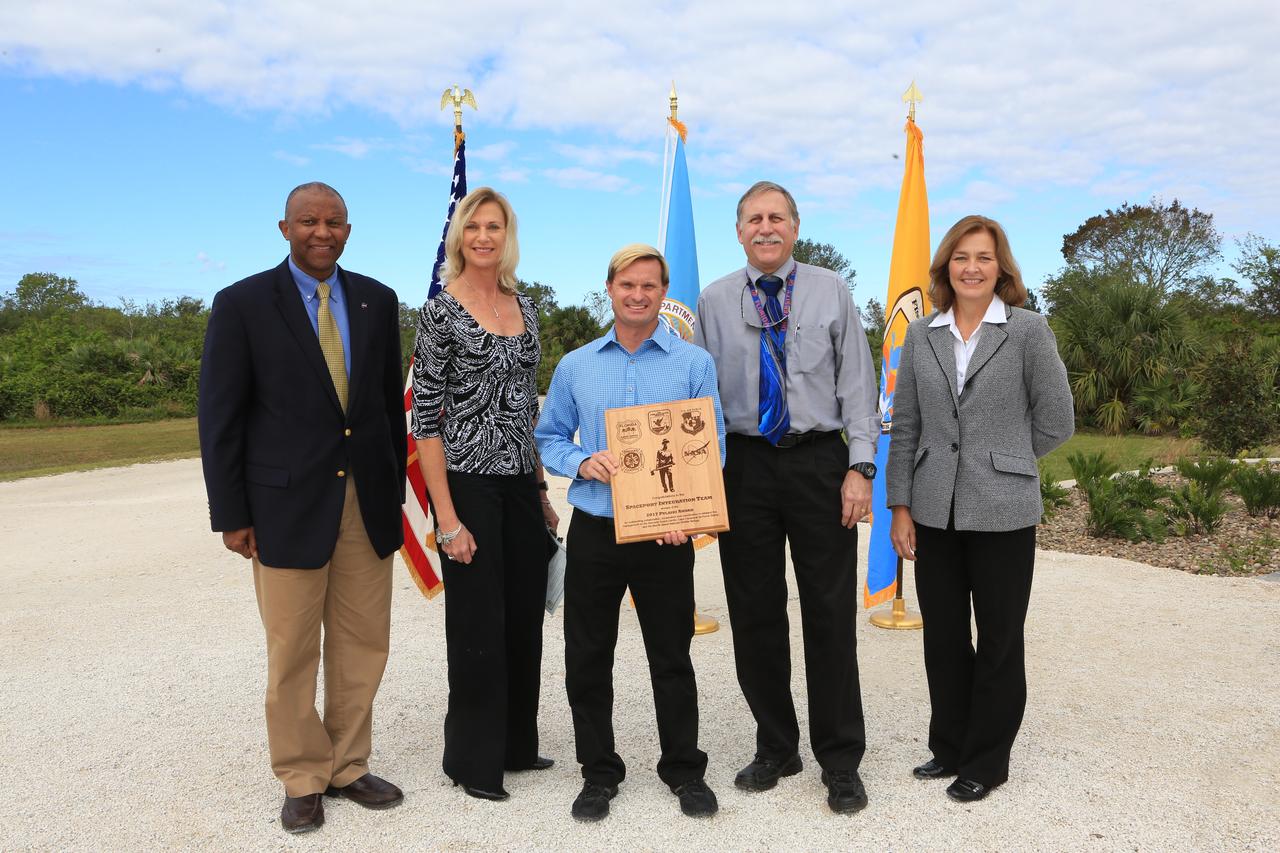
NASA's Kennedy Space Center Associate Director Kelvin Manning, left, and representatives from Kennedy's Spaceport Integration and Services pose for a portrait following a ceremony Nov. 1 on the Merritt Island National Wildlife Refuge in Florida. Next to Manning are, from left, Nancy Bray, director; William Heidtman, Spaceport Integrator; Dan Tweed, deputy director, Technical; and Jean Flowers, chief, Customer Services and Integration Branch. During the joint ceremony, the Spaceport Integration Team and its partners were presented with the prestigious 2017 Pulaski Award and a new memorial marker was dedicated. The multi-agency team includes representatives from NASA's Kennedy Space Center, Cape Canaveral Air Force Station's 45th Space Wing, the Merritt Island National Wildlife Refuge, as well as the Florida Forest Service and Brevard County Fire Rescue. The memorial marker honors two fallen firefighters, Scott Maness and Beau Sauselein, who died fighting a wildfire on space center property in 1981. Held outdoors, the ceremony was attended by 140 guests.
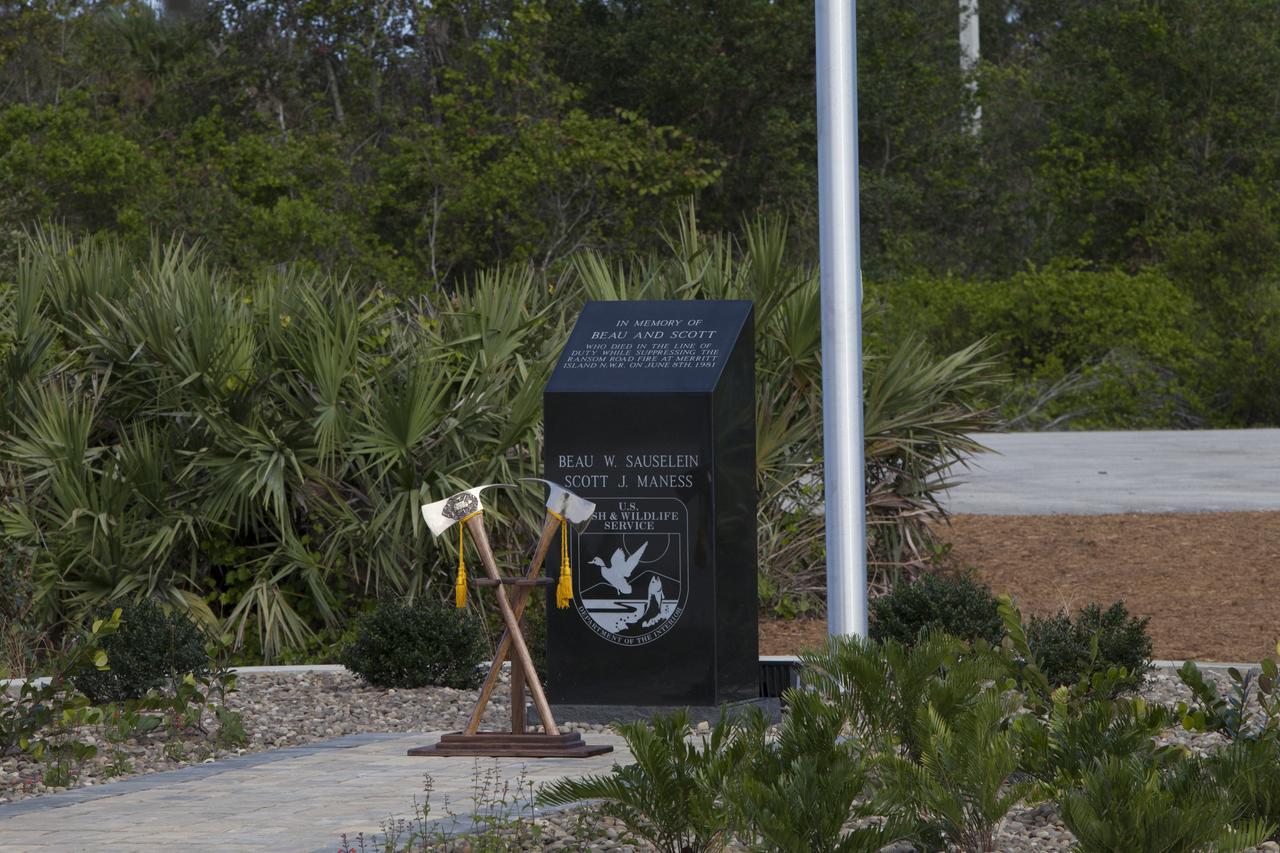
Ceremonial Pulaski tools are positioned in front of a new memorial marker Nov. 1 on the Merritt Island National Wildlife Refuge in Florida. During a joint ceremony, the Spaceport Integration Team and its partners were presented with the prestigious 2017 Pulaski Award and the new memorial marker was dedicated. The multi-agency team includes representatives from NASA's Kennedy Space Center, Cape Canaveral Air Force Station's 45th Space Wing, the Merritt Island National Wildlife Refuge, as well as the Florida Forest Service and Brevard County Fire Rescue. The memorial marker honors two fallen firefighters, Scott Maness and Beau Sauselein, who died fighting a wildfire on space center property in 1981. Held outdoors, the ceremony was attended by 140 guests.
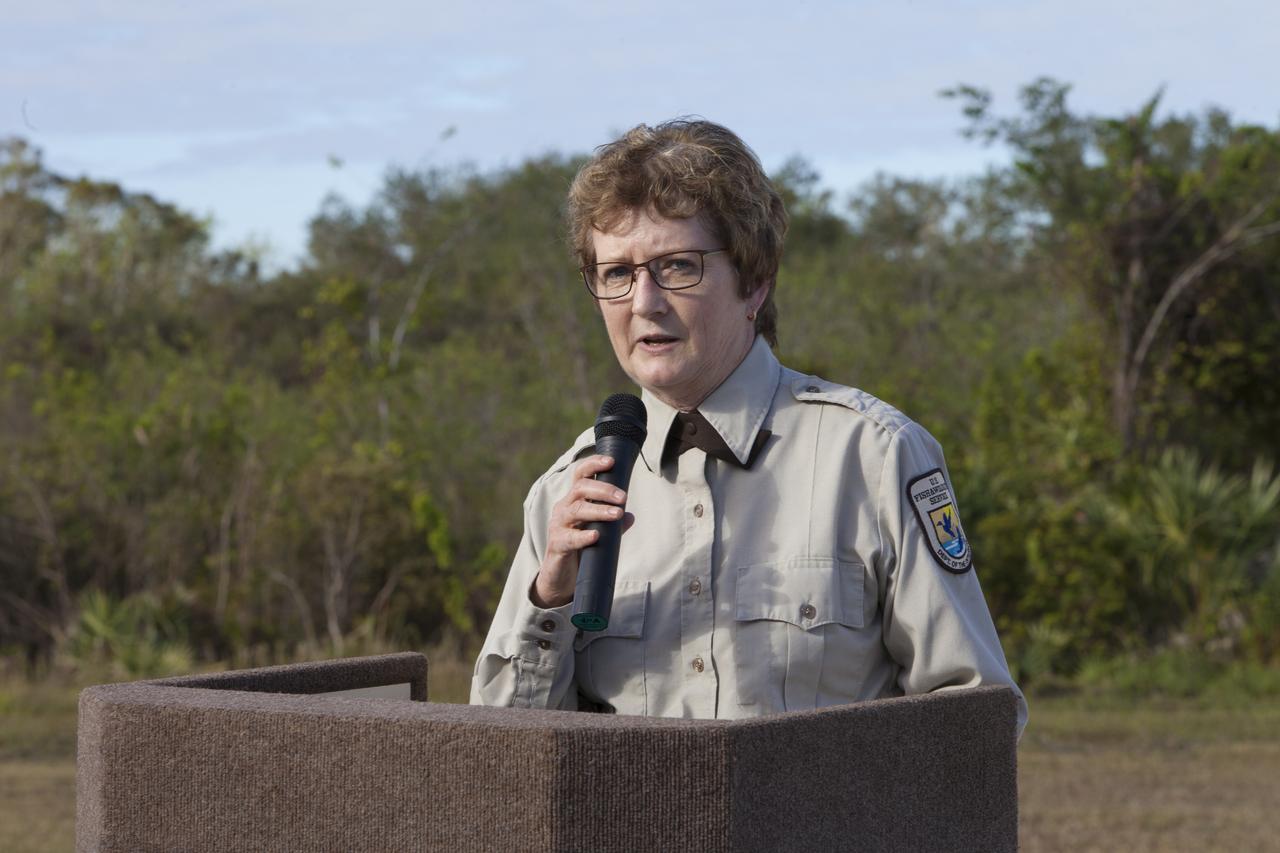
Layne Hamilton, manager of the Merritt Island National Wildlife Refuge, welcomes guests to a ceremony held Nov. 1 on the refuge in Florida. During the joint ceremony, the Spaceport Integration Team and its partners were presented with the prestigious 2017 Pulaski Award and a new memorial marker was dedicated. The multi-agency team includes representatives from NASA's Kennedy Space Center, Cape Canaveral Air Force Station's 45th Space Wing, the Merritt Island National Wildlife Refuge, as well as the Florida Forest Service and Brevard County Fire Rescue. The memorial marker honors two fallen firefighters, Scott Maness and Beau Sauselein, who died fighting a wildfire on space center property in 1981. Held outdoors, the ceremony was attended by 140 guests.
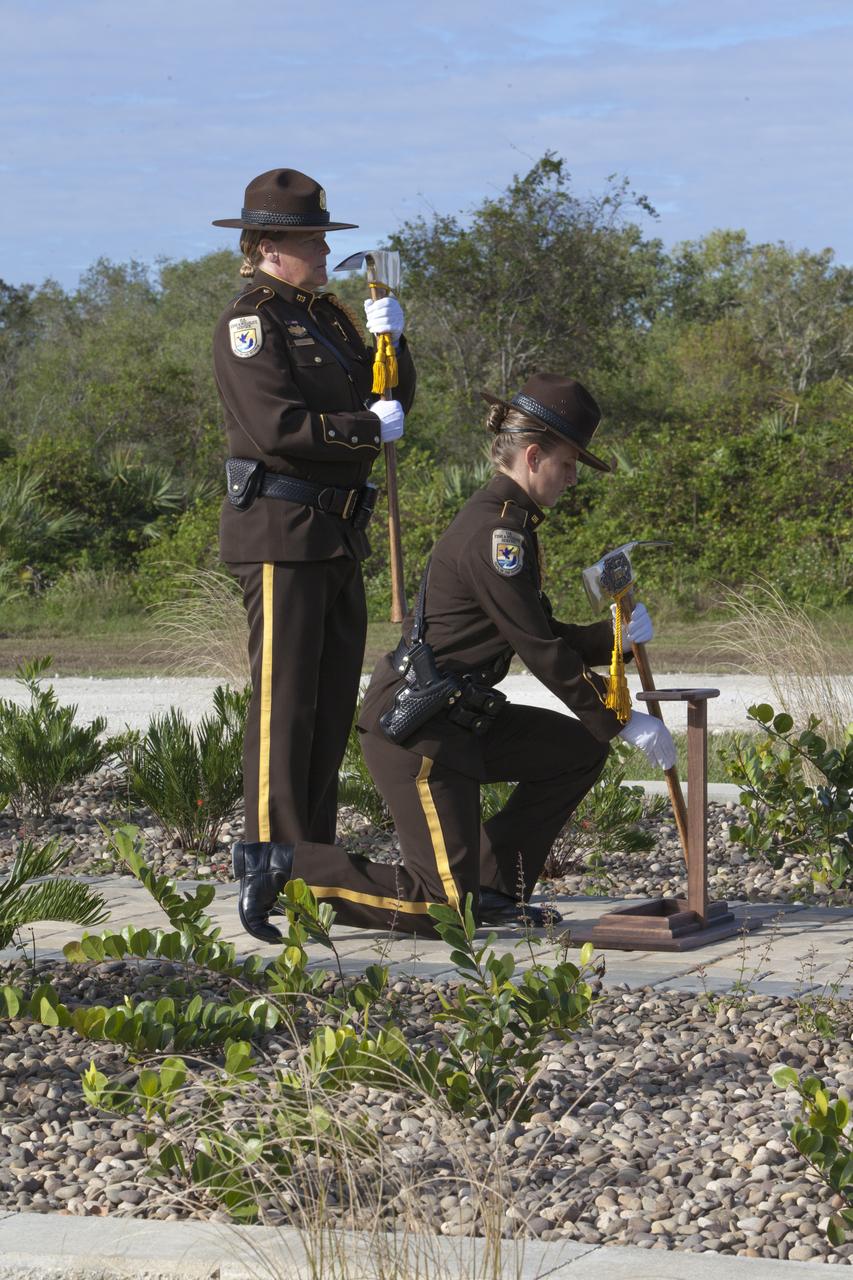
Firefighters place ceremonial Pulaski tools by a new memorial marker Nov. 1 on the Merritt Island National Wildlife Refuge in Florida. During a joint ceremony, the Spaceport Integration Team and its partners were presented with the prestigious 2017 Pulaski Award and the new memorial marker was dedicated. The multi-agency team includes representatives from NASA's Kennedy Space Center, Cape Canaveral Air Force Station's 45th Space Wing, the Merritt Island National Wildlife Refuge, as well as the Florida Forest Service and Brevard County Fire Rescue. The memorial marker honors two fallen firefighters, Scott Maness and Beau Sauselein, who died fighting a wildfire on space center property in 1981. Held outdoors, the ceremony was attended by 140 guests.
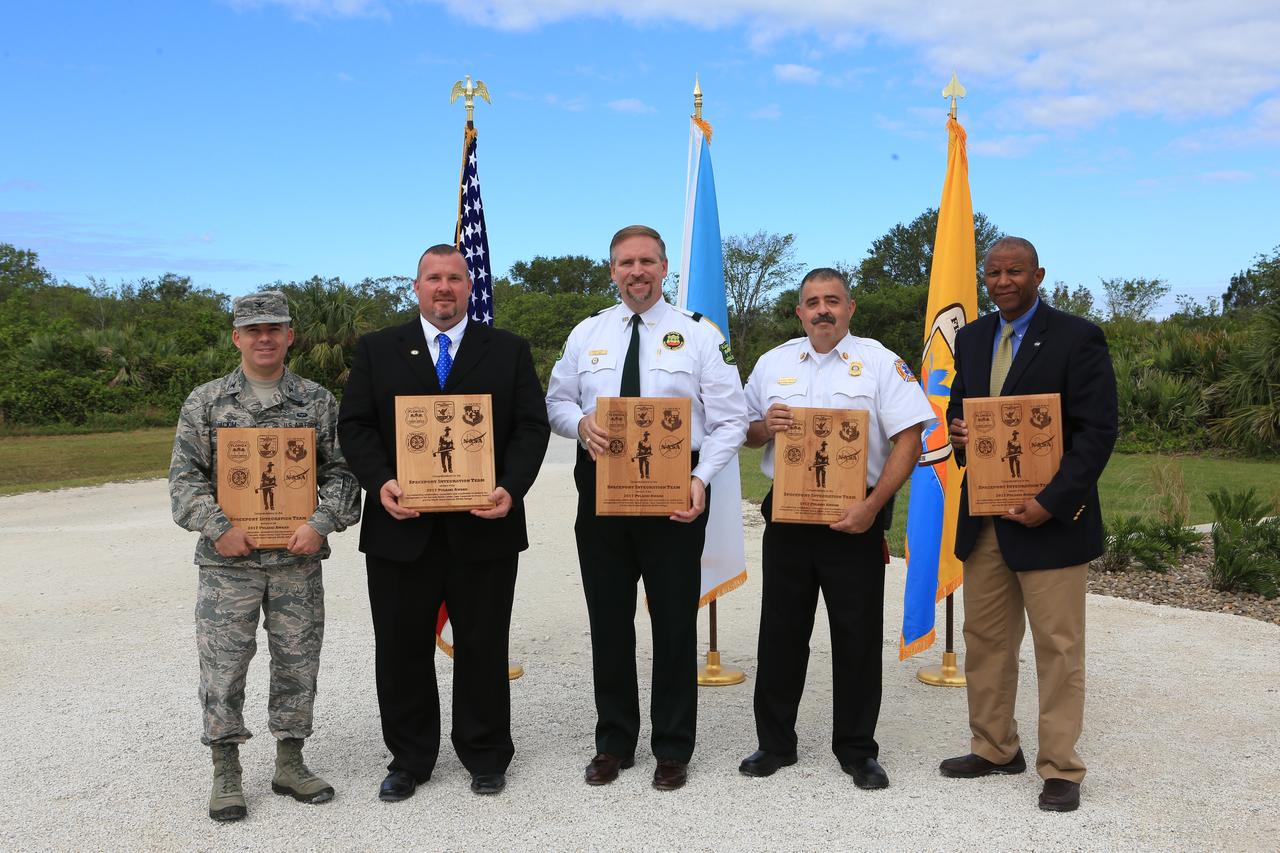
From left, Col. Z. Walter Jackim, vice commander, 45th Space Wing, Cape Canaveral Air Force Station; Michael Good, assistant fire management officer, Merritt Island National Wildlife Refuge; John Fish, chief, Florida Forest Service; Mark Schollmeyer, chief, Brevard County Fire Rescue; and Kelvin Manning, associate director, NASA's Kennedy Space Center, pose for a portrait following a ceremony Nov. 1 on the Merritt Island National Wildlife Refuge in Florida. During the joint ceremony, the Spaceport Integration Team and its partners were presented with the prestigious 2017 Pulaski Award and a new memorial marker was dedicated. The multi-agency team includes representatives from NASA's Kennedy Space Center, Cape Canaveral Air Force Station's 45th Space Wing, the Merritt Island National Wildlife Refuge, as well as the Florida Forest Service and Brevard County Fire Rescue. The memorial marker honors two fallen firefighters, Scott Maness and Beau Sauselein, who died fighting a wildfire on space center property in 1981. Held outdoors, the ceremony was attended by 140 guests.
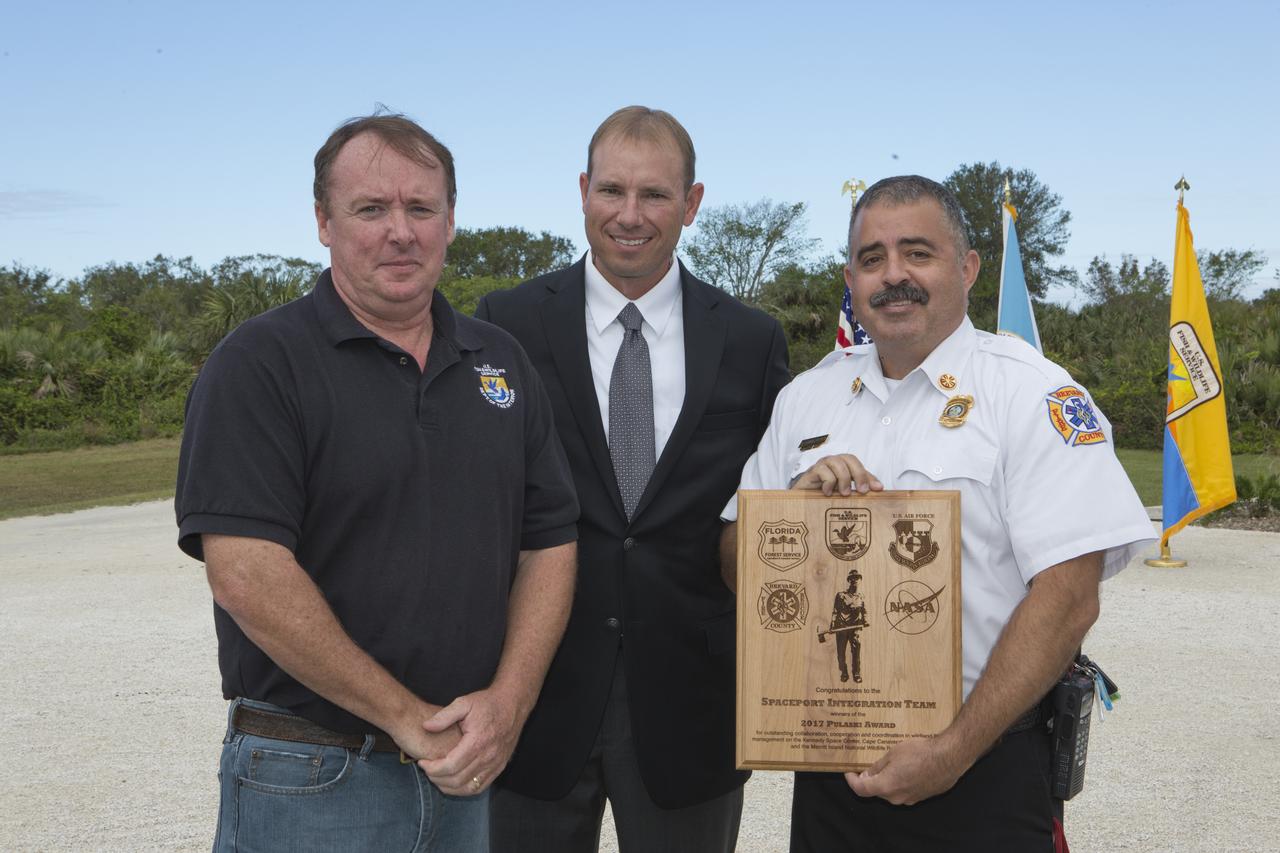
From left, Jon Wallace, deputy fire coordinator, U.S. Fish and Wildlife Service Southeast Region, Atlanta, Georgia; Chris Wilcox, U.S. Fish and Wildlife chief, Fire Management, National Interagency Fire Center, Boise, Idaho; and Mark Schollmeyer, chief, Brevard County Fire Rescue, pose for a portrait following a ceremony Nov. 1 on the Merritt Island National Wildlife Refuge in Florida. During the joint ceremony, the Spaceport Integration Team and its partners were presented with the prestigious 2017 Pulaski Award and a new memorial marker was dedicated. The multi-agency team includes representatives from NASA's Kennedy Space Center, Cape Canaveral Air Force Station's 45th Space Wing, the Merritt Island National Wildlife Refuge, as well as the Florida Forest Service and Brevard County Fire Rescue. The memorial marker honors two fallen firefighters, Scott Maness and Beau Sauselein, who died fighting a wildfire on space center property in 1981. Held outdoors, the ceremony was attended by 140 guests.
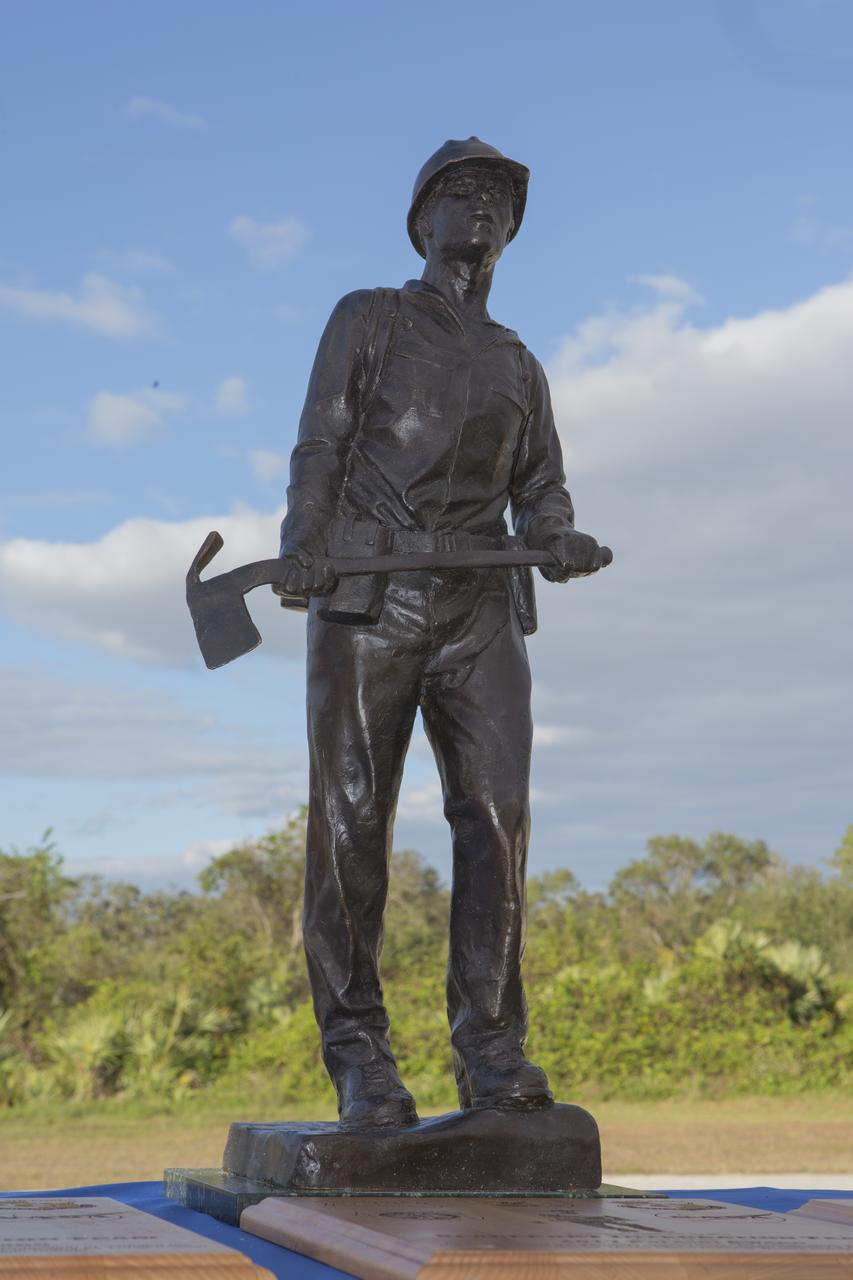
The prestigious 2017 Pulaski Award is on display near a new memorial marker on the Merritt Island National Wildlife Refuge in Florida. During a joint ceremony, the Spaceport Integration Team and its partners were presented with the award and a new memorial marker was dedicated. The multi-agency team includes representatives from NASA's Kennedy Space Center, Cape Canaveral Air Force Station's 45th Space Wing, the Merritt Island National Wildlife Refuge, as well as the Florida Forest Service and Brevard County Fire Rescue. The memorial marker honors two fallen firefighters, Scott Maness and Beau Sauselein, who died fighting a wildfire on space center property in 1981. Held outdoors, the ceremony was attended by 140 guests.
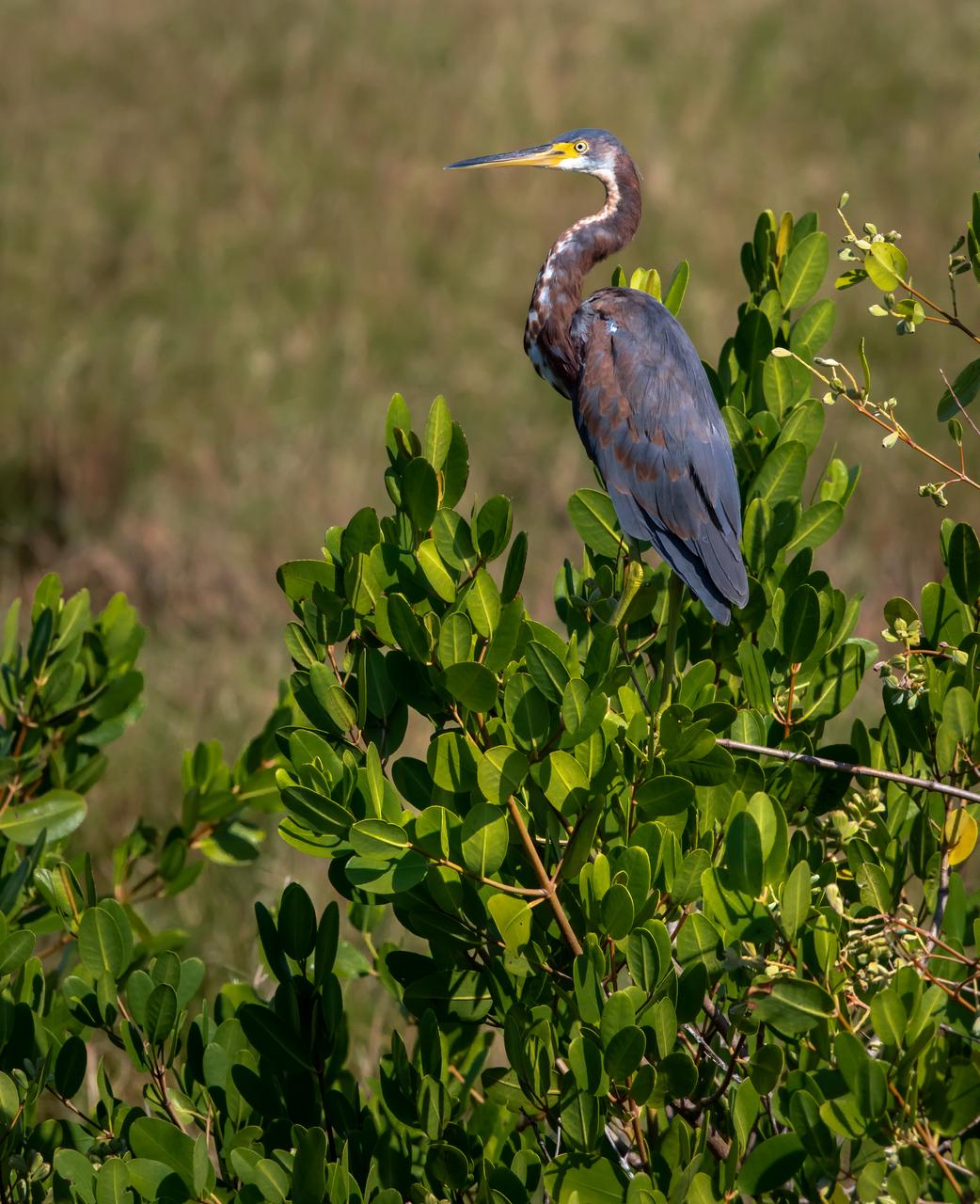
A Reddish Egret perches in a tree at NASA's Kennedy Space Center in Florida. The center shares a border with the Merritt Island National Wildlife Refuge. More than 330 native and migratory bird species, 25 mammal, 117 fish and 65 amphibian and reptile species call Kennedy and the wildlife refuge home.
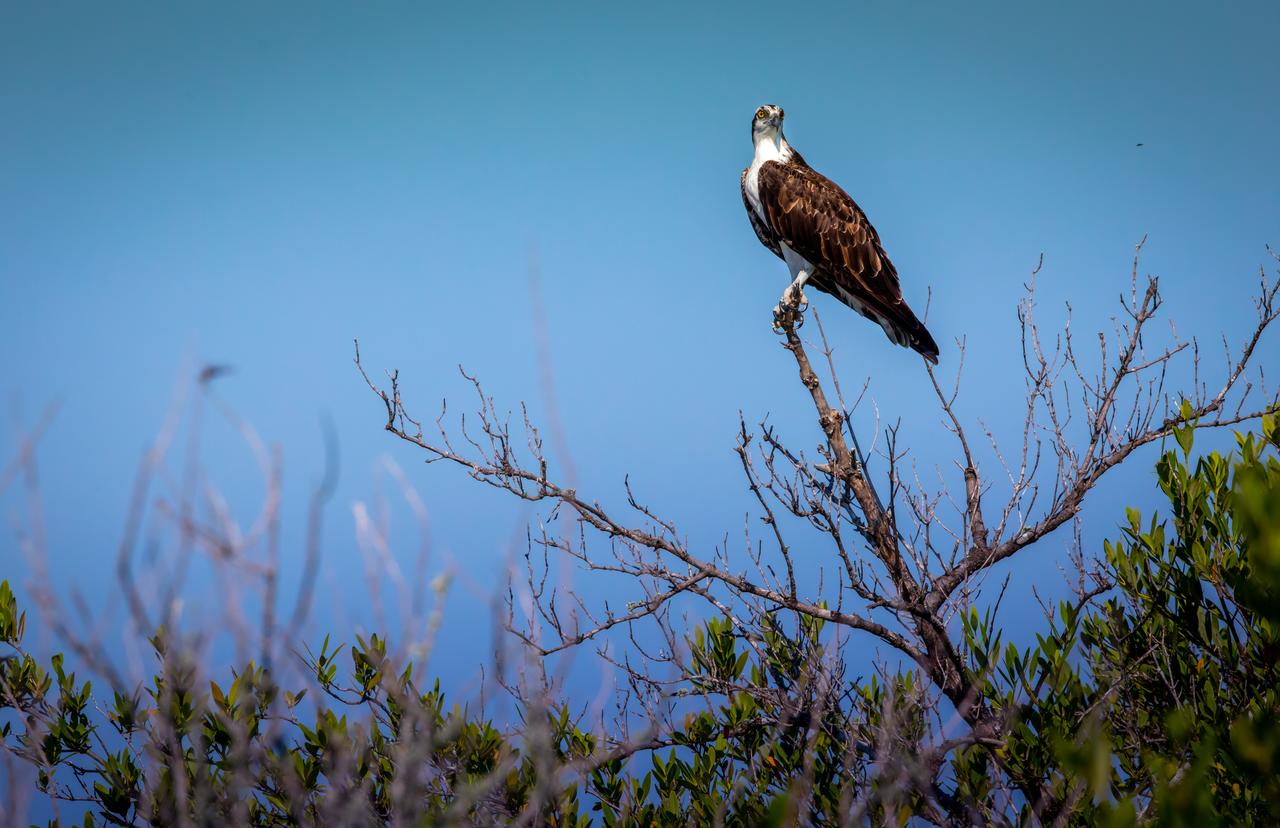
An osprey sits on a branch near a waterway at NASA's Kennedy Space Center in Florida. The center shares a border with the Merritt Island National Wildlife Refuge. More than 330 native and migratory bird species, 25 mammal, 117 fish and 65 amphibian and reptile species call Kennedy and the wildlife refuge home.
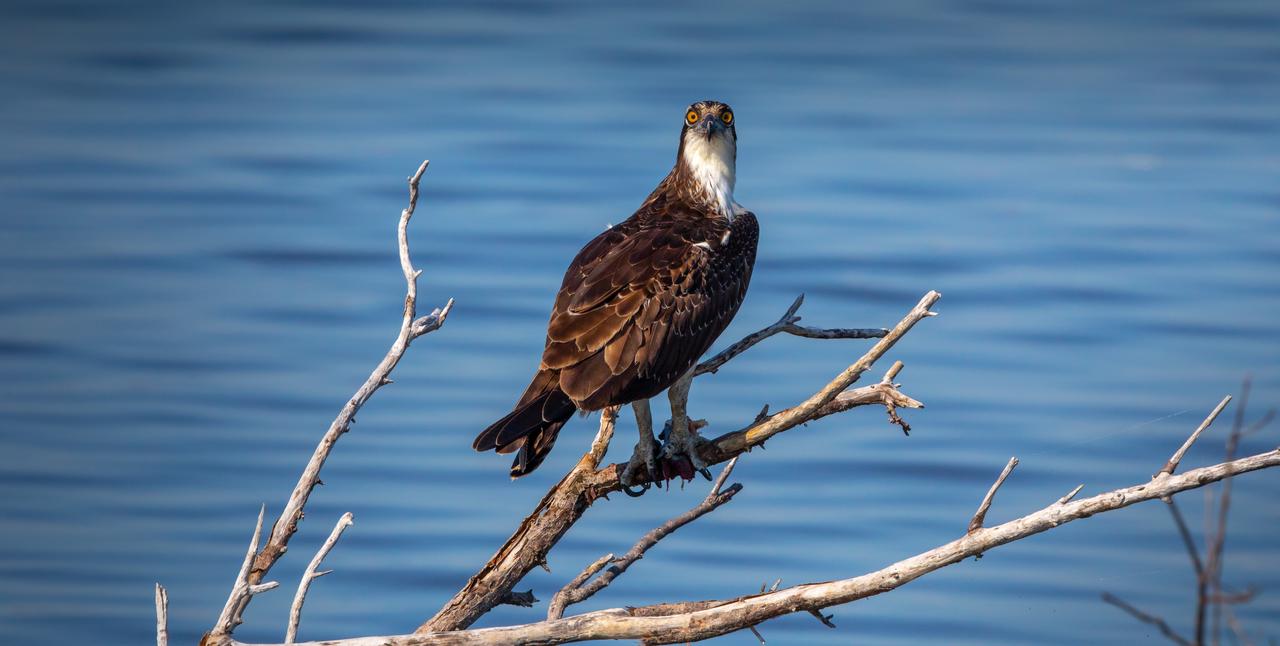
An osprey sits on a branch near a waterway at NASA's Kennedy Space Center in Florida. The center shares a border with the Merritt Island National Wildlife Refuge. More than 330 native and migratory bird species, 25 mammal, 117 fish and 65 amphibian and reptile species call Kennedy and the wildlife refuge home.
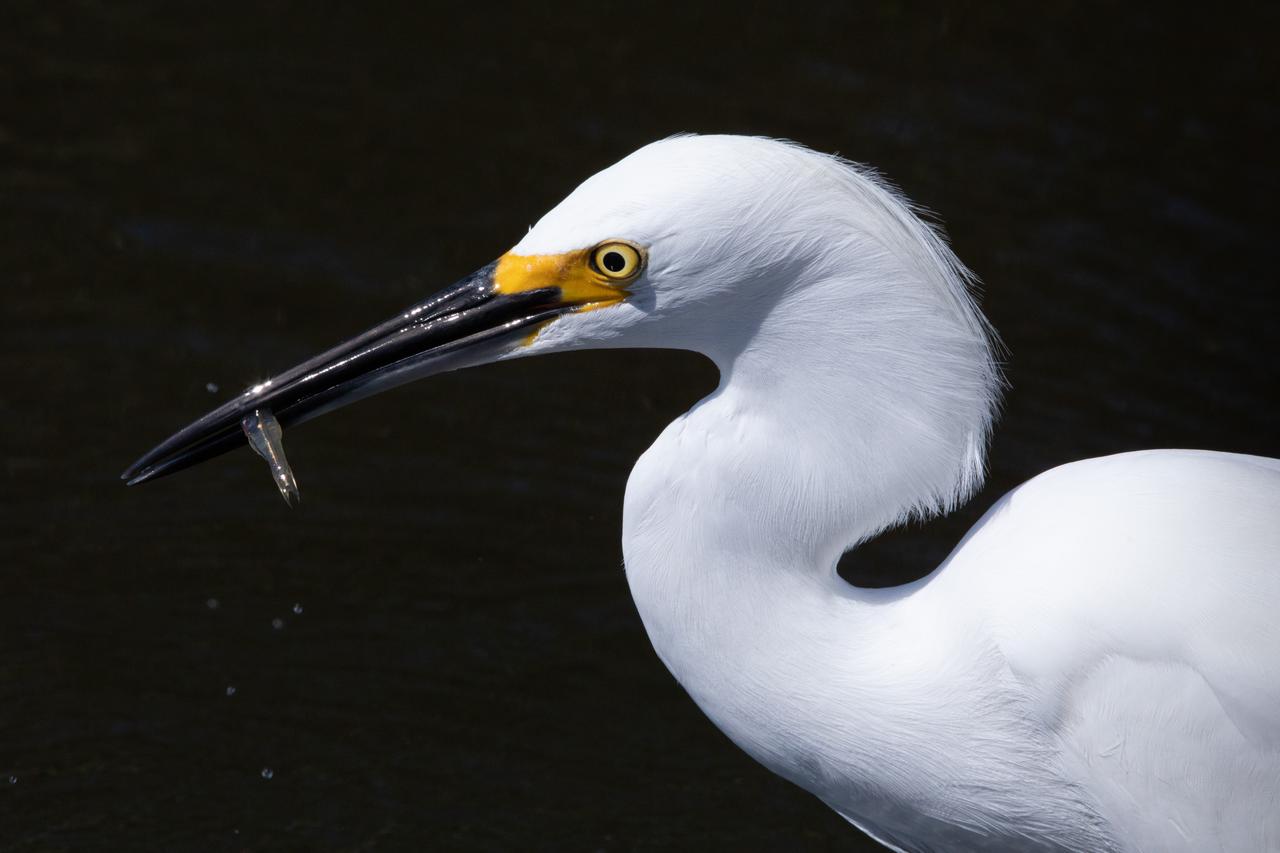
A Great Egret catches a small fish in a waterway at NASA's Kennedy Space Center in Florida. The center shares a border with the Merritt Island National Wildlife Refuge. More than 330 native and migratory bird species, 25 mammal, 117 fish and 65 amphibian and reptile species call Kennedy and the wildlife refuge home.
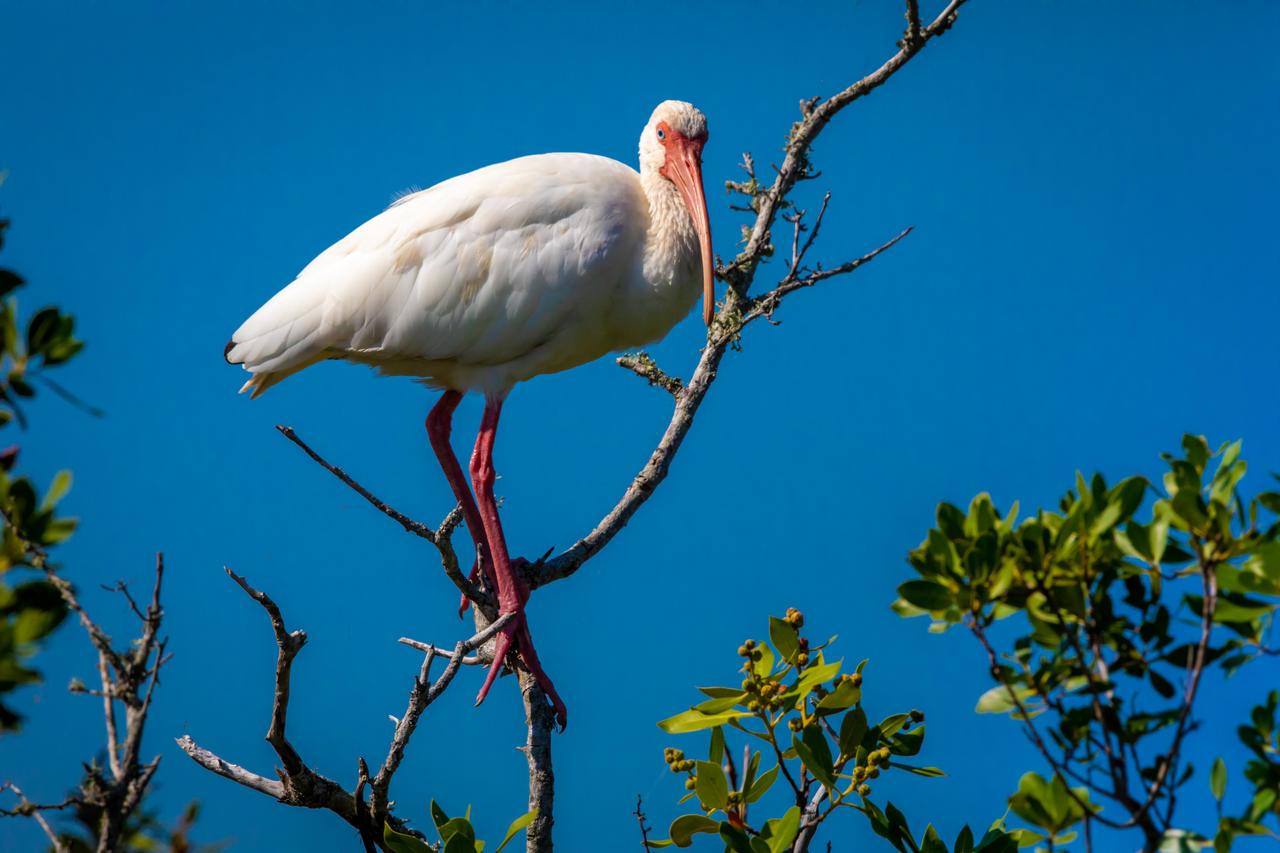
A White Ibis perches on the branch of a tree at NASA's Kennedy Space Center in Florida. The center shares a border with the Merritt Island National Wildlife Refuge. More than 330 native and migratory bird species, 25 mammal, 117 fish and 65 amphibian and reptile species call Kennedy and the wildlife refuge home.
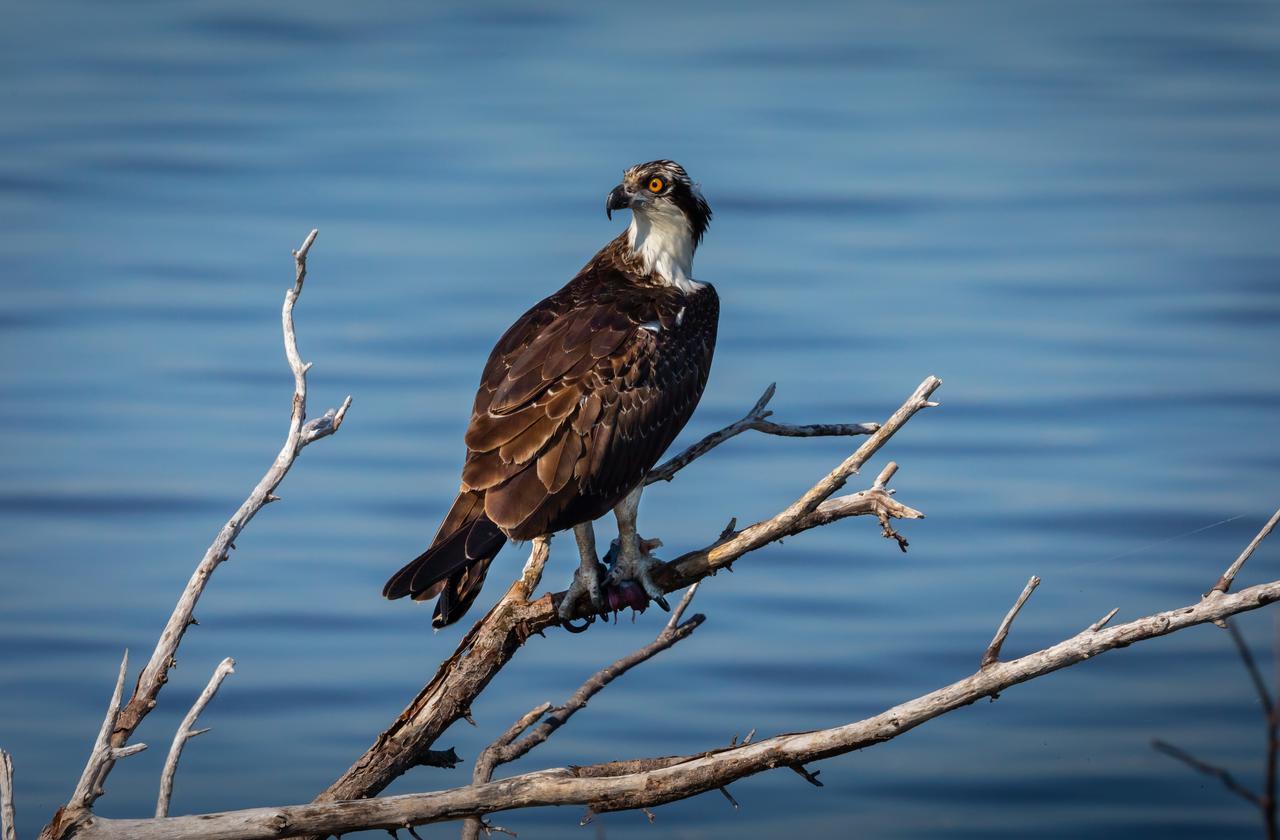
An osprey sits on a branch near a waterway at NASA's Kennedy Space Center in Florida. The center shares a border with the Merritt Island National Wildlife Refuge. More than 330 native and migratory bird species, 25 mammal, 117 fish and 65 amphibian and reptile species call Kennedy and the wildlife refuge home.
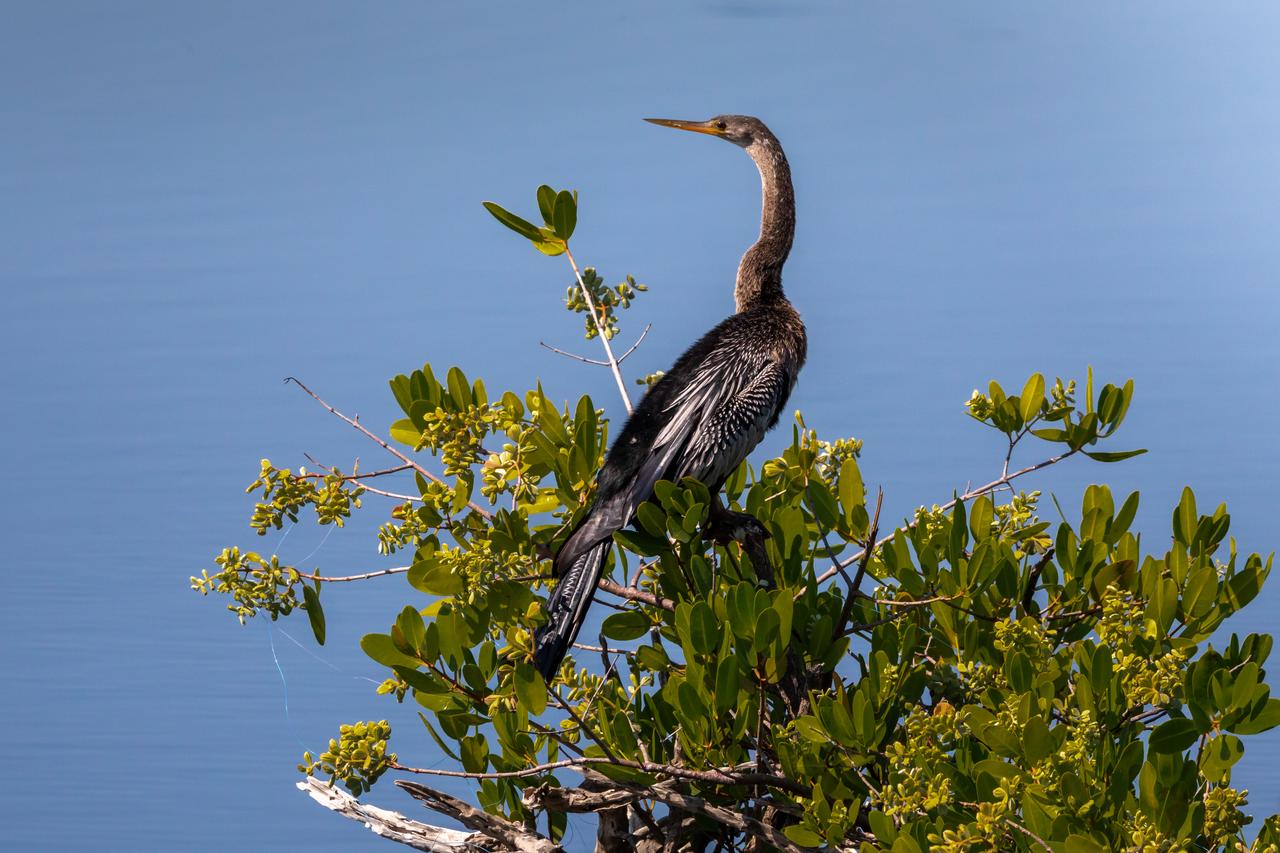
A Reddish Egret perches in a tree near a waterway at NASA's Kennedy Space Center in Florida. The center shares a border with the Merritt Island National Wildlife Refuge. More than 330 native and migratory bird species, 25 mammal, 117 fish and 65 amphibian and reptile species call Kennedy and the wildlife refuge home.
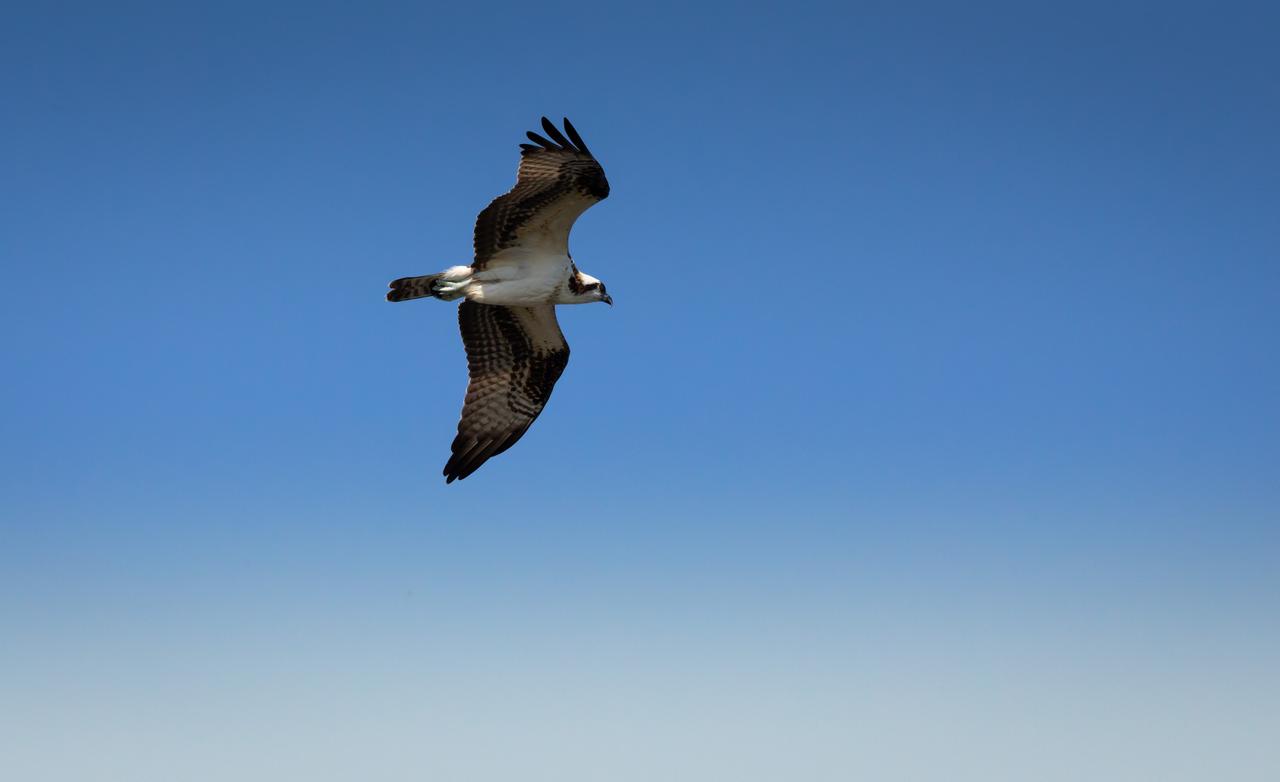
An osprey soars above NASA's Kennedy Space Center in Florida. The center shares a border with the Merritt Island National Wildlife Refuge. More than 330 native and migratory bird species, 25 mammal, 117 fish and 65 amphibian and reptile species call Kennedy and the wildlife refuge home.