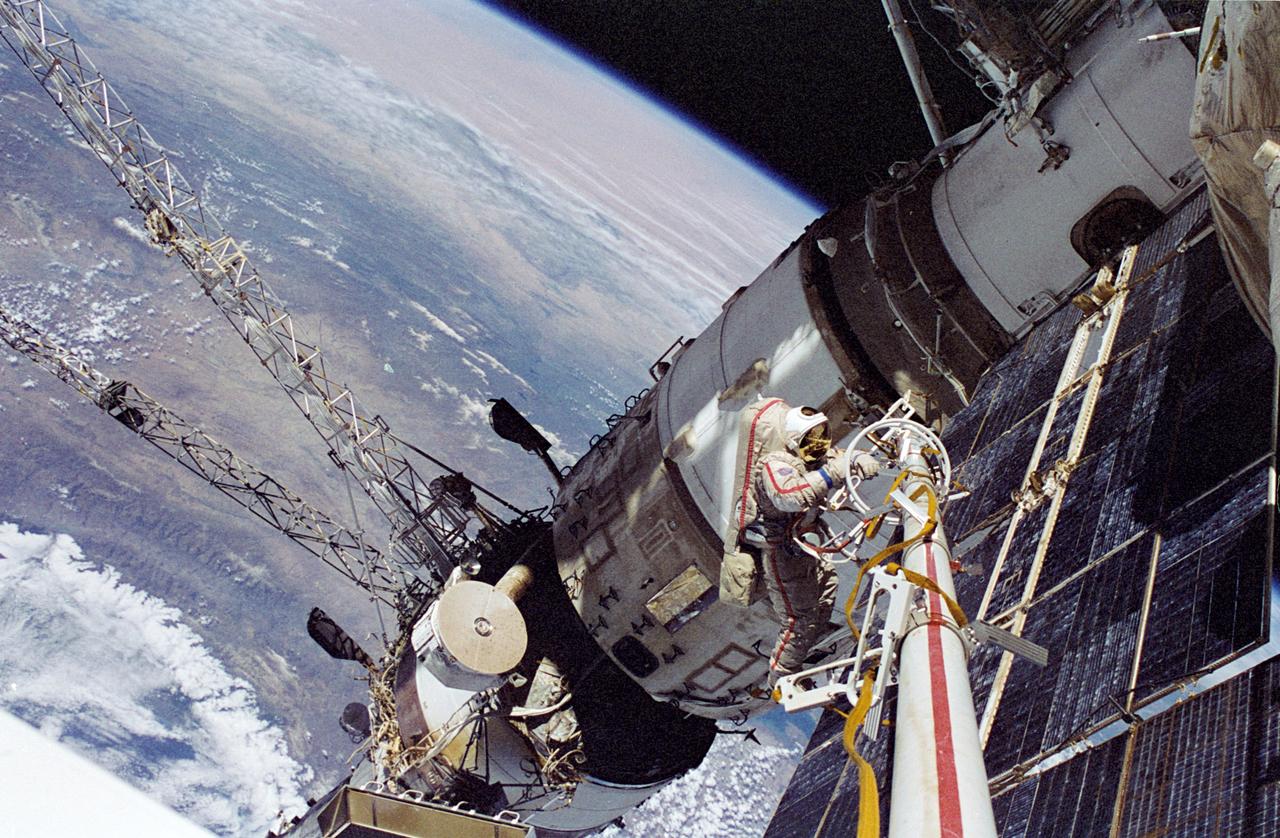
NM23-48-003 (29 April 1997) --- Cosmonaut Vasili V. Tsibliyev, Mir-23 commander, operates at the end of the Russian Mir Space Station’s STRELA boom during a space walk on April 29, 1997. He was joined by United States astronaut Jerry M. Linenger, cosmonaut guest researcher, in an effort to deploy scientific instruments and retrieve other science hardware. At the lower left of the picture is the Kvant-1 module. Hovering above it is the Sofora tower, which was once used for an experiment in attitude control of the Mir.
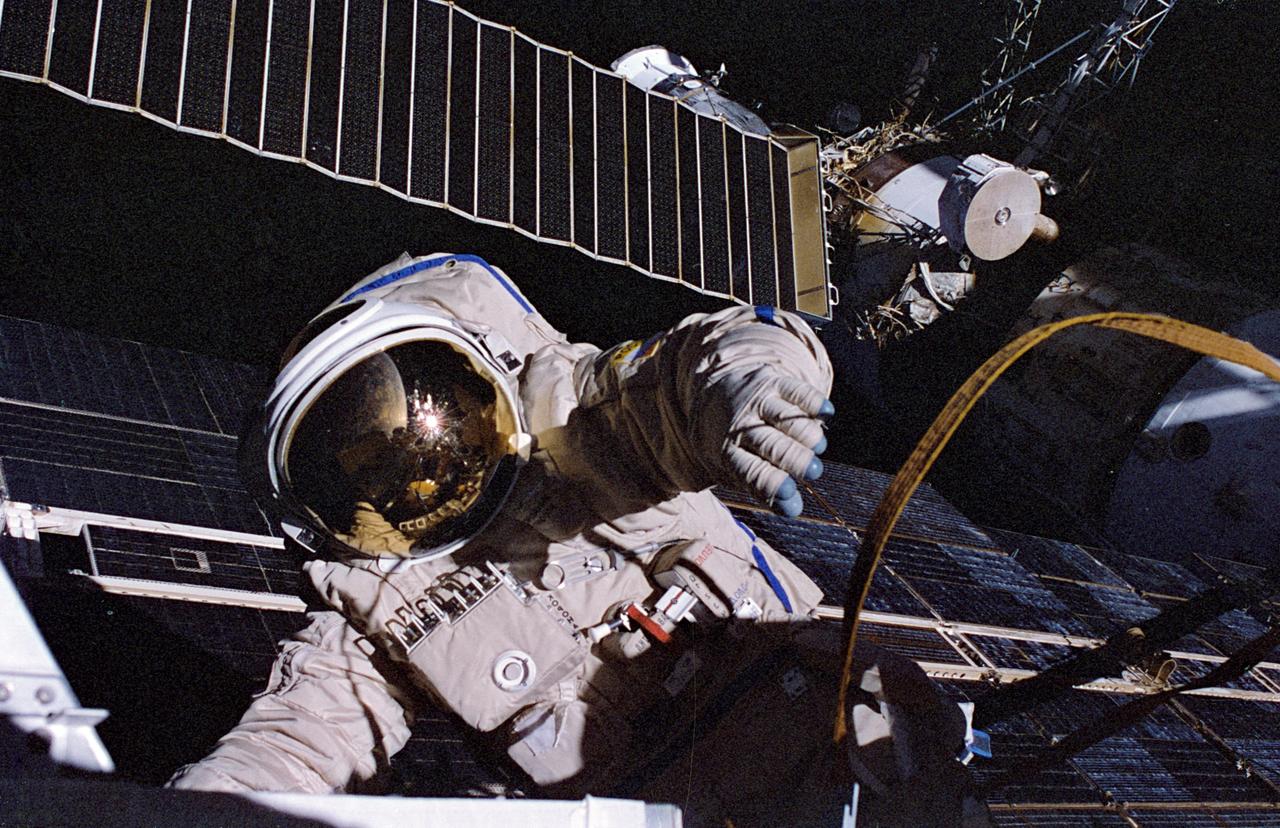
NM23-48-009 (29 April 1997) --- United States astronaut Jerry M. Linenger, cosmonaut guest researcher, works outside the Russian Mir Space Station during a joint United States-Russian space walk on April 29, 1997. He was joined by Mir-23 commander Vasili V. Tsibliyev (out of frame) for the five-hour Extravehicular Activity (EVA) designed to deploy scientific instruments and retrieve other science hardware. At the top of the frame is a Russian Progress re-supply capsule docked to the Mir’s Kvant-1 module.
NM23-48-009 (29 April 1997) --- United States astronaut Jerry M. Linenger, cosmonaut guest researcher, works outside the Russian Mir Space Station during a joint United States-Russian space walk on April 29, 1997. He was joined by Mir-23 commander Vasili V. Tsibliyev (out of frame) for the five-hour Extravehicular Activity (EVA) designed to deploy scientific instruments and retrieve other science hardware. At the top of the frame is a Russian Progress re-supply capsule docked to the Mir’s Kvant-1 module.
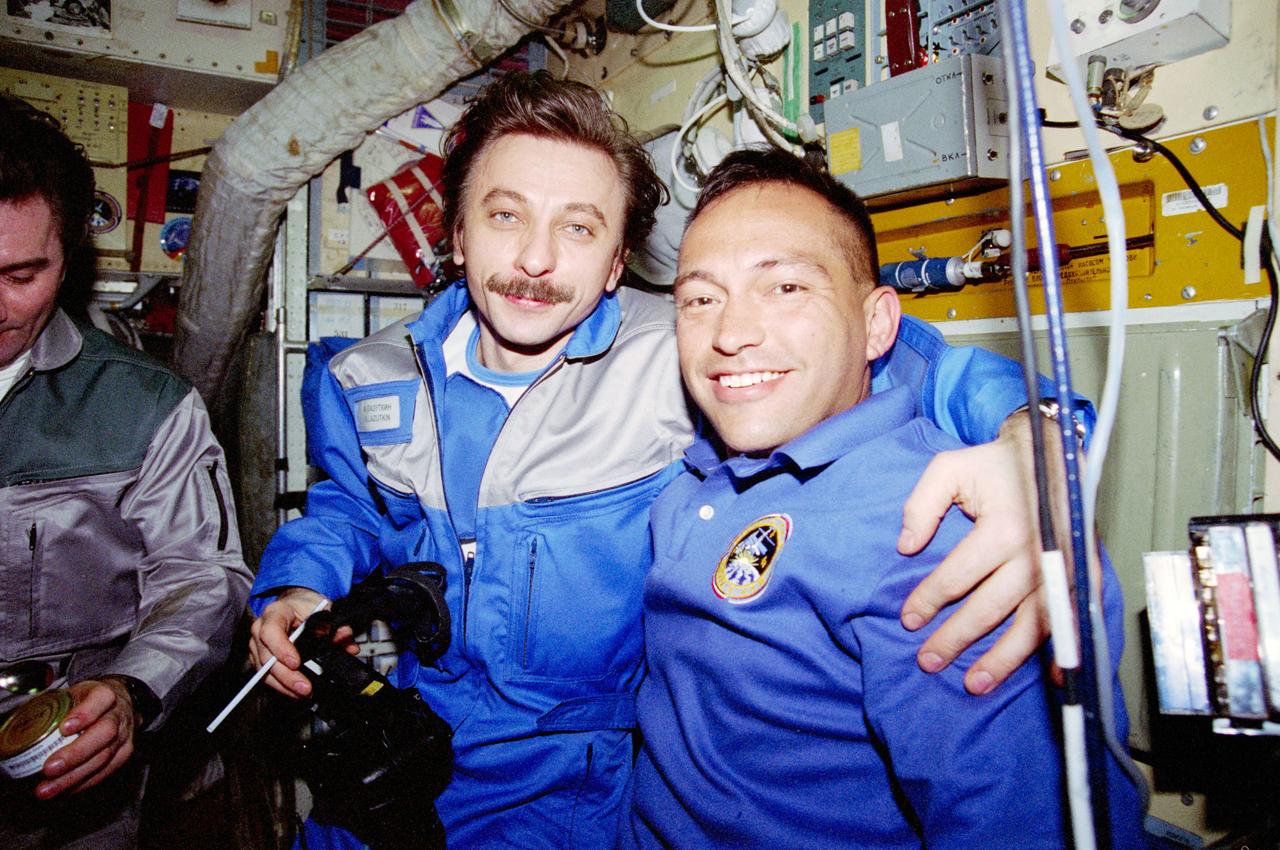
STS084-360-010 (15-24 May 1997) --- On Russia's Mir Space Station's Base Block, Mir-23 flight engineer Aleksandr I. Lazutkin greets his STS-84 counterpart, Carlos I. Noriega, soon after hatch opening. Partially visible at left is Vasili V. Tsibliyev, Mir-23 commander.
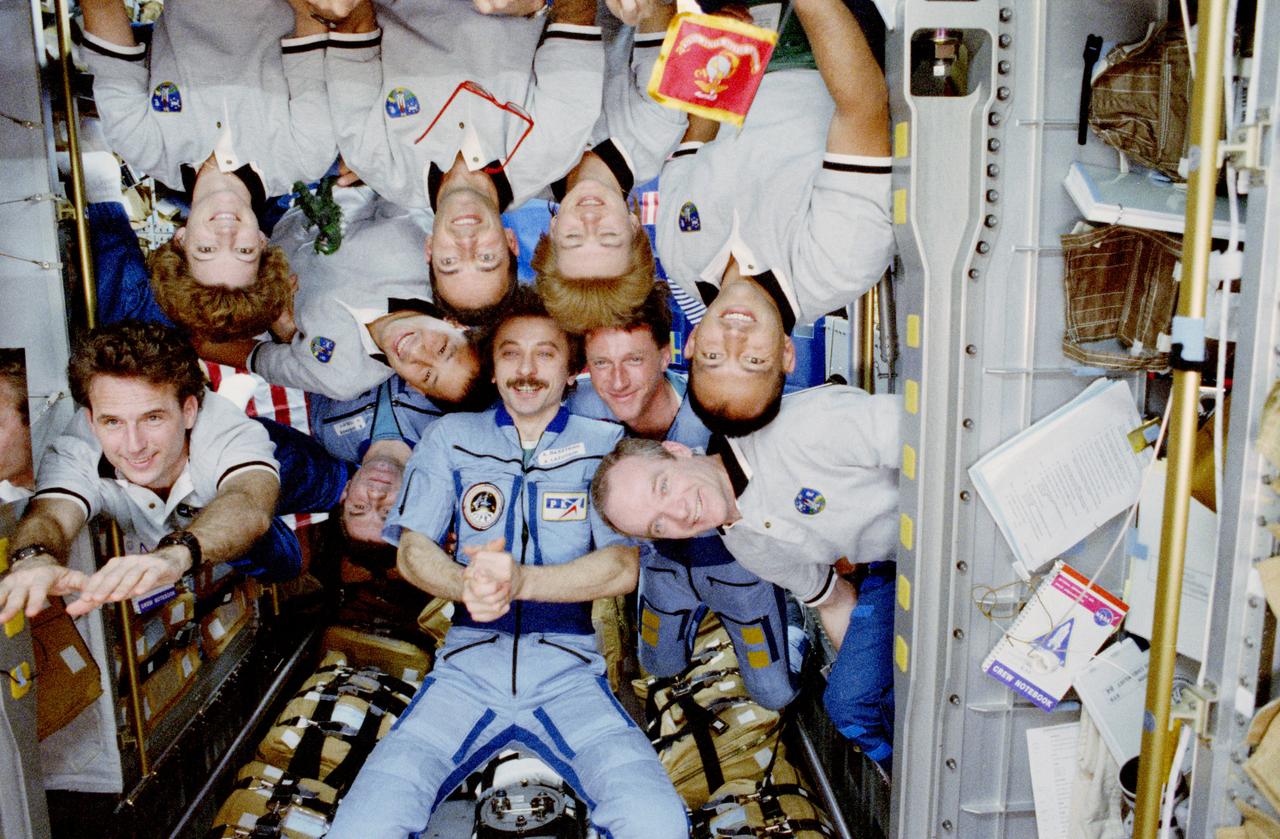
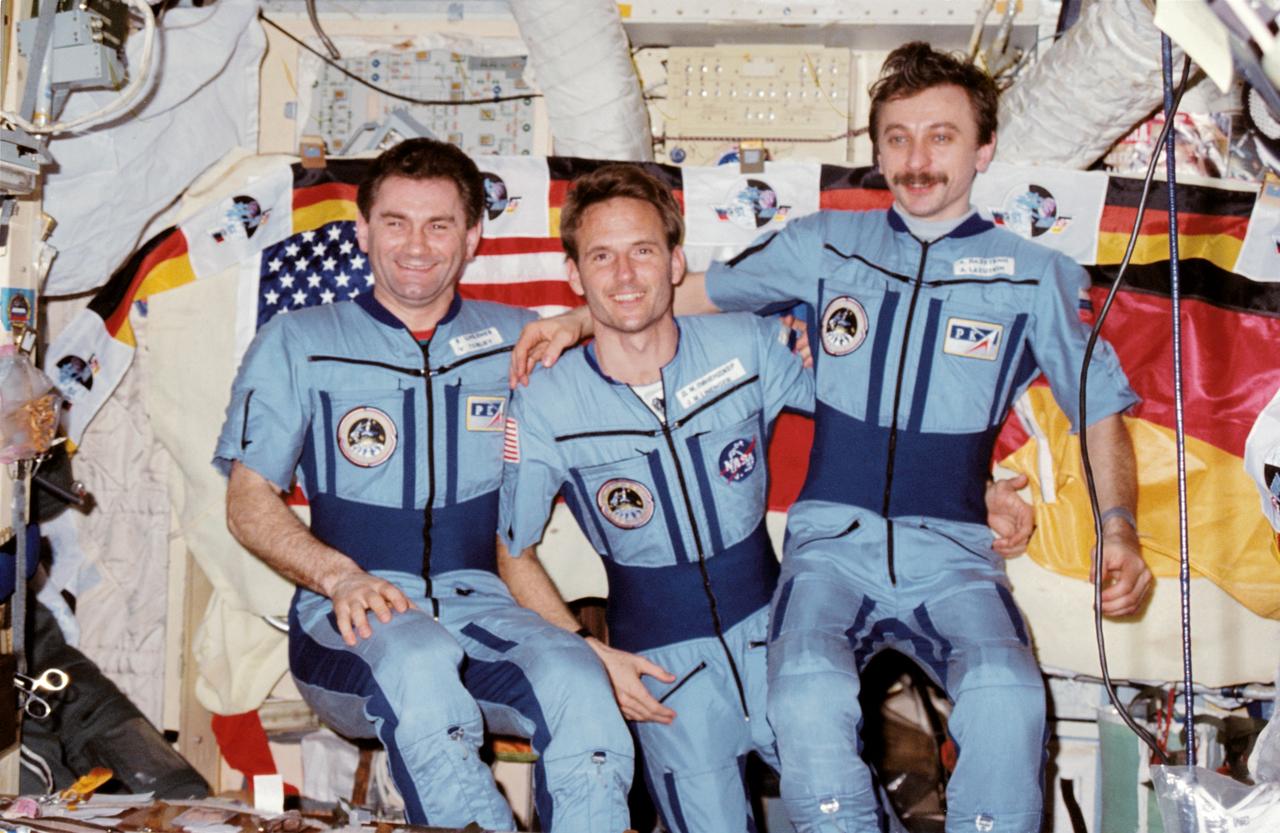
STS084-380-019 (15-24 May 1997) --- In the last minutes of joint activity between the STS-84 and Russian Space Agency (RSA) Mir-23 crews, ten astronauts and cosmonauts pose for an in-space portrait in the Space Shuttle Atlantis Spacehab Double Module (DM). For orientation purposes, photo should be held with clasped hands of Aleksandr I. Lazutkin (wearing Mir-23 suit) just below center. The flight engineer is flanked by similarly attired crew mates Vasili Tsibliyev, Mir-23 commander, on the left, and C. Michael Foale, cosmonaut guest researcher, on the right. The STS-84 crew members are, clockwise from the left, Jerry M. Linenger, mission specialist; Eileen M. Collins, pilot; Edward T. Lu, mission specialist; Jean-Fran?ois Clervoy, payload commander; Elena V. Kondakova and Carlos I. Noriega, both mission specialists, along with Charles J. Precourt, mission commander.
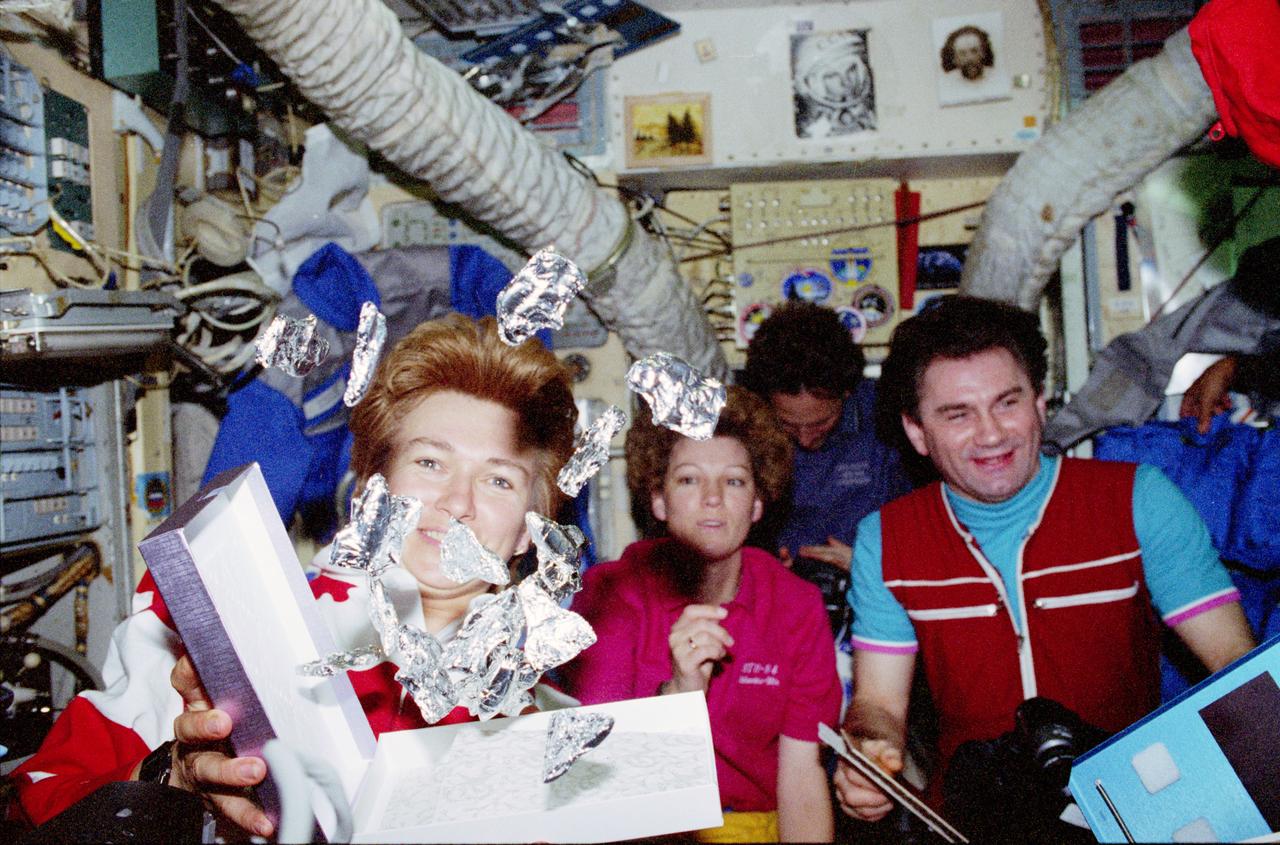
STS084-377-026 (15-24 May 1997) --- Cosmonaut Elena V. Kondakova opens a gift box and a number of tiny chocolate Space Shuttles free-float in Russia's Mir Space Station's Base Block. The STS-84 mission specialist and her crew mates had earlier presented the gift to the Mir-23 crew members, including Vasili Tsibliyev (right), mission commander. In the background are astronauts Eileen M. Collins, STS-84 pilot, and Jerry M. Linenger, mission specialist. Linenger was in his last days aboard Mir prior to returning to Earth with the STS-84 crew aboard the Space Shuttle Atlantis.
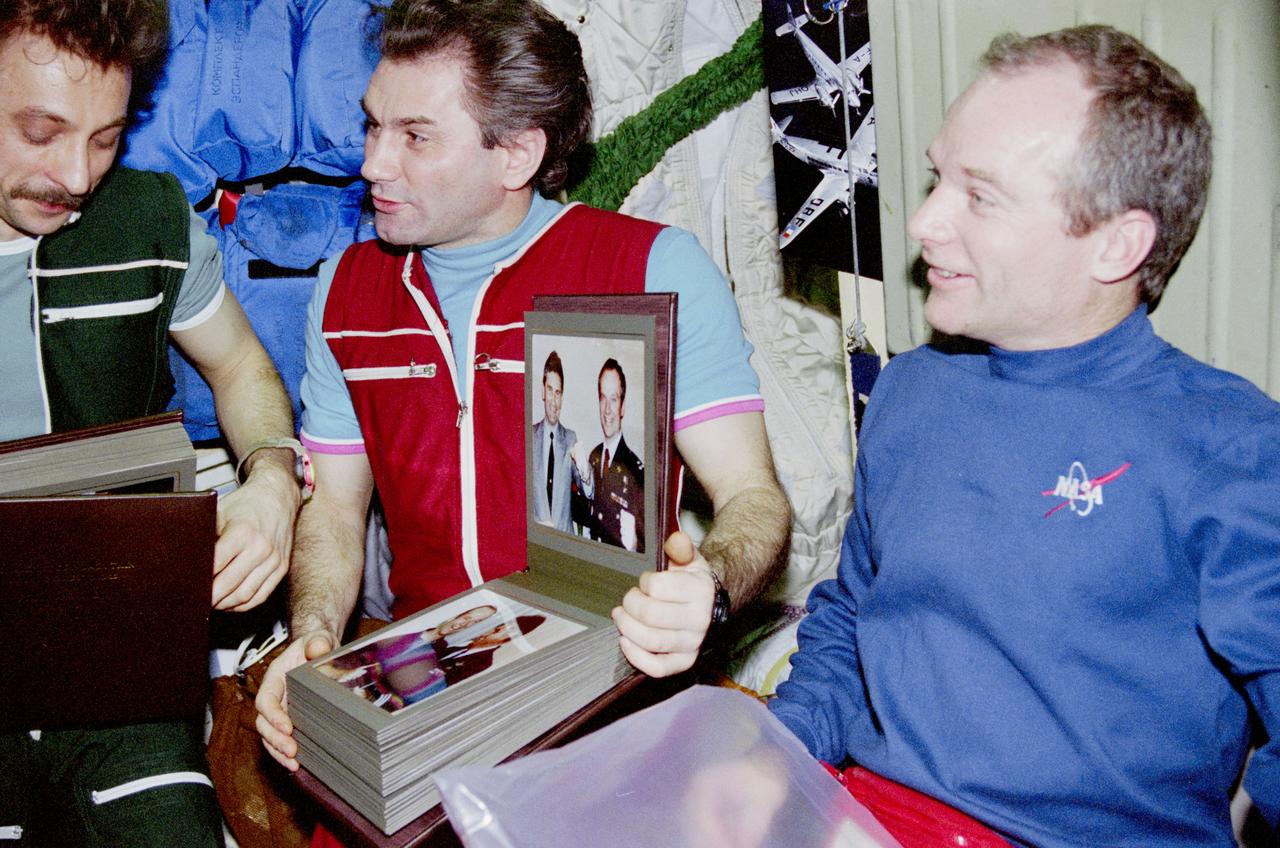
STS084-376-005 (15-24 May 1997) --- Onboard the Core Module of Russia's Mir Space Station, the American Space Shuttle commander exchanges gifts with the Mir-23 crew. Astronaut Charles J. Precourt has just handed two picture albums, documenting several months of interface between the Americans and Russians, to cosmonauts Aleksandr I. Lazutkin (left), flight engineer; and Vasili Tsibliyev, commander.
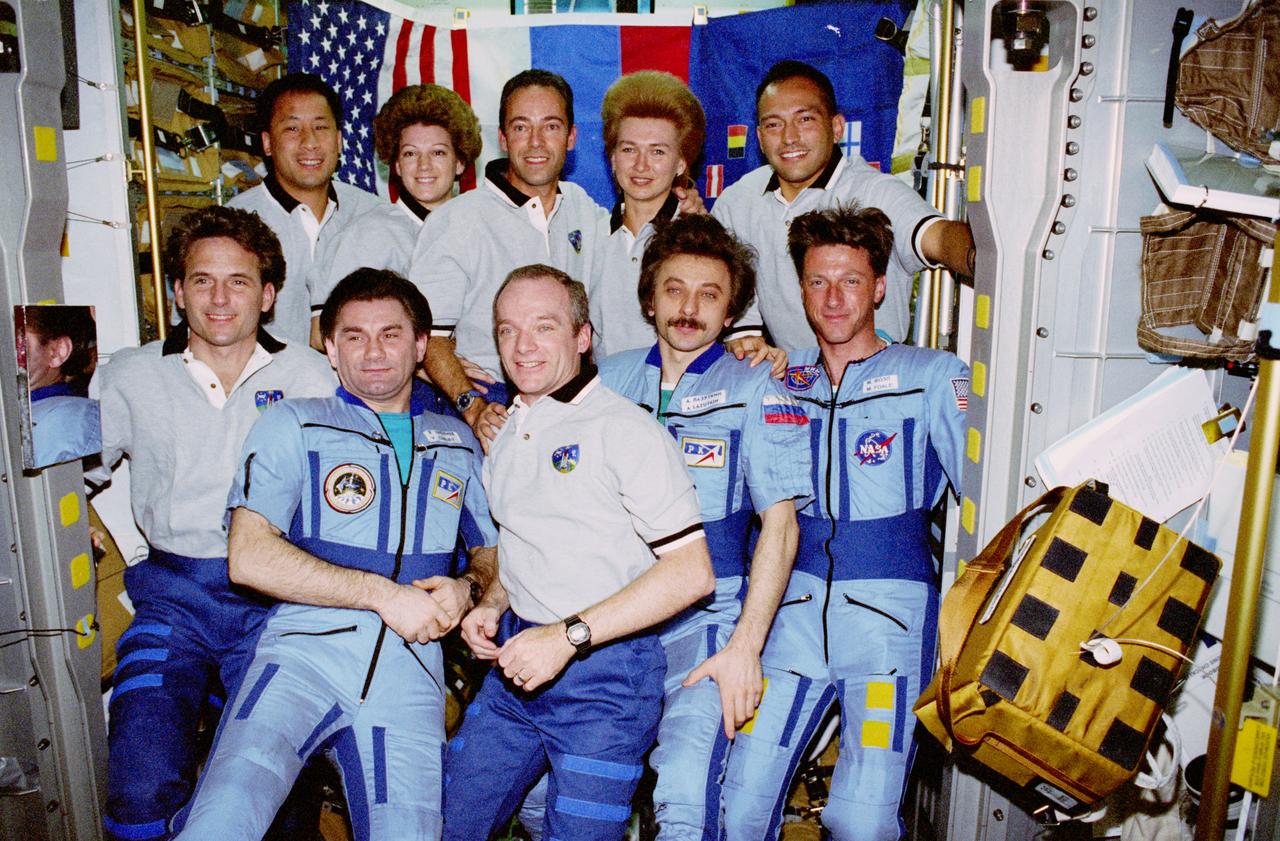
STS084-366-015 (15-24 May 1997) --- Crewmembers from Mir-23 and STS-84 assemble for a group portrait onboard the Spacehab Double Module, as they tie a record (ten) for number of persons aboard a single orbiting spacecraft at one time. They are (from the left, front) Jerry M. Linenger, Vasili V. Tsibliyev, Charles J. Precourt, Aleksandr I. Lazutkin and C. Michael Foale. On the back row, from the left, are Edward T. Lu, Eileen M. Collins, Jean-Francois Clervoy, Elena V. Kondakova and Carlos I. Noriega.
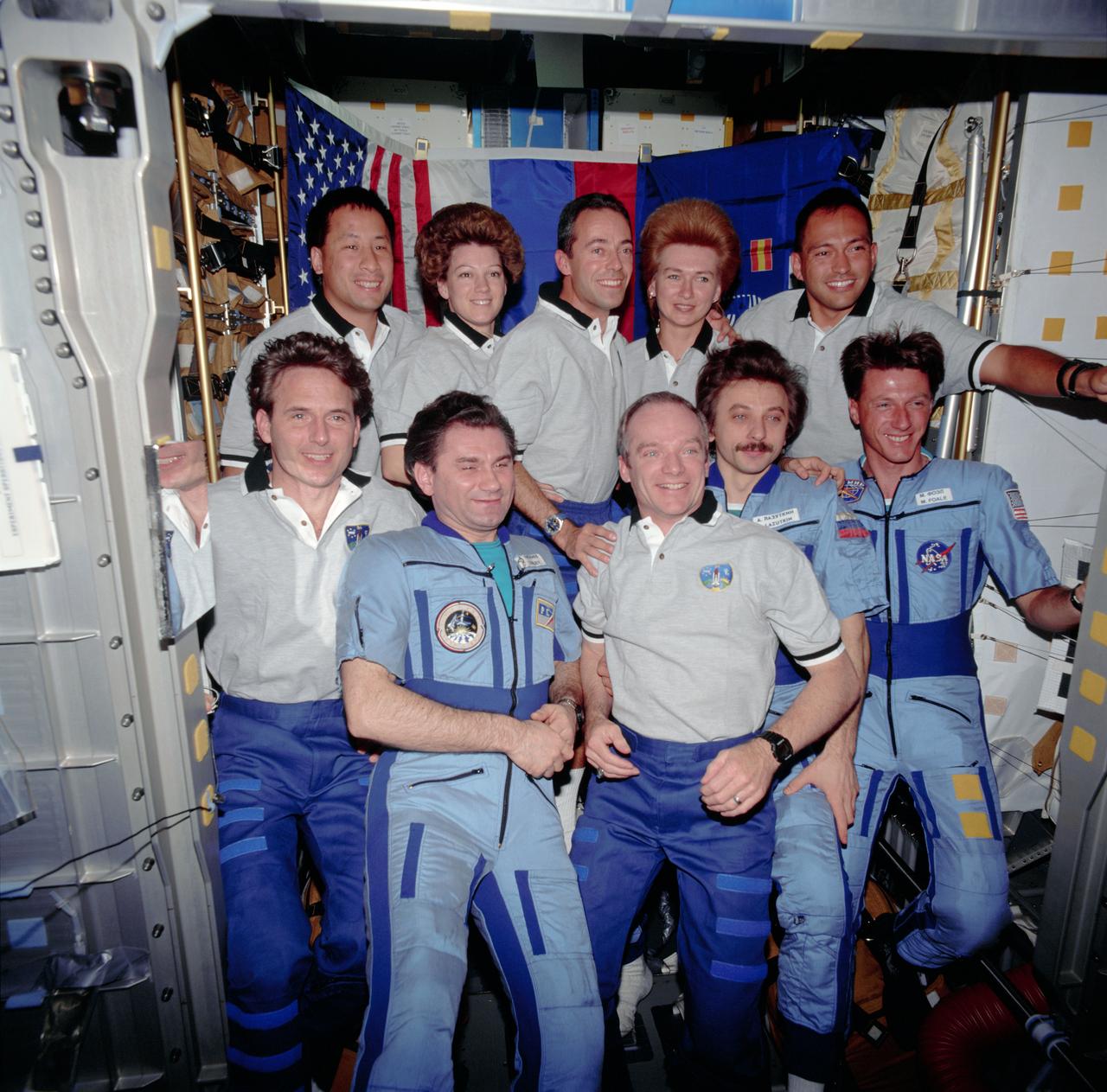
STS084-704-015 (15-24 May 1997) --- Crewmembers from Mir-23 and STS-84 assemble for a group portrait onboard the Spacehab Double Module, as they tie a record (ten) for number of persons aboard a single orbiting spacecraft at one time. They are (from the left, front) Jerry M. Linenger, Vasili V. Tsibliyev, Charles J. Precourt, Aleksandr I. Lazutkin and C. Michael Foale. On the back row, from the left, are Edward T. Lu, Eileen M. Collins, Jean-Francois Clervoy, Elena V. Kondakova and Carlos I. Noriega.
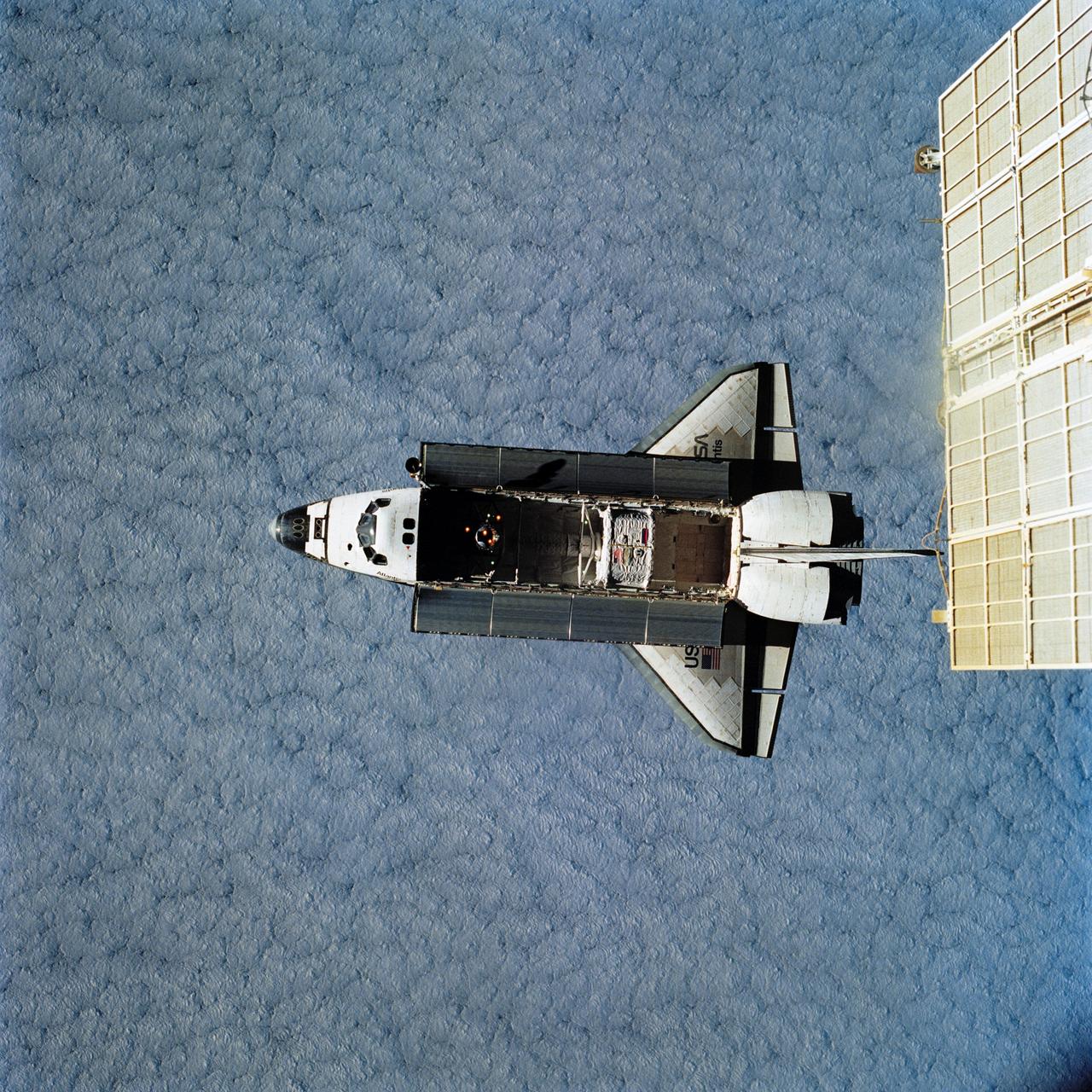
NM21-724-042 (23 March 1996) --- Backdropped against a "floor" of clouds, this view of the Space Shuttle Atlantis was taken by the two Mir-21 cosmonaut crew members onboard Russia's Mir Space Station, during rendezvous and docking operations on March 23, 1996. Part of a solar array panel connected to the Mir is seen in the foreground. The Orbiter Docking System (ODS), the connective tunnel and the Spacehab Module can be seen in Atlantis' cargo bay. With the subsequent delivery of astronaut Shannon W. Lucid to the Mir, the Mir-21 crew grew to three, as the mission specialist quickly becomes a cosmonaut guest researcher. She will spend approximately 140 days on Mir before returning to Earth.
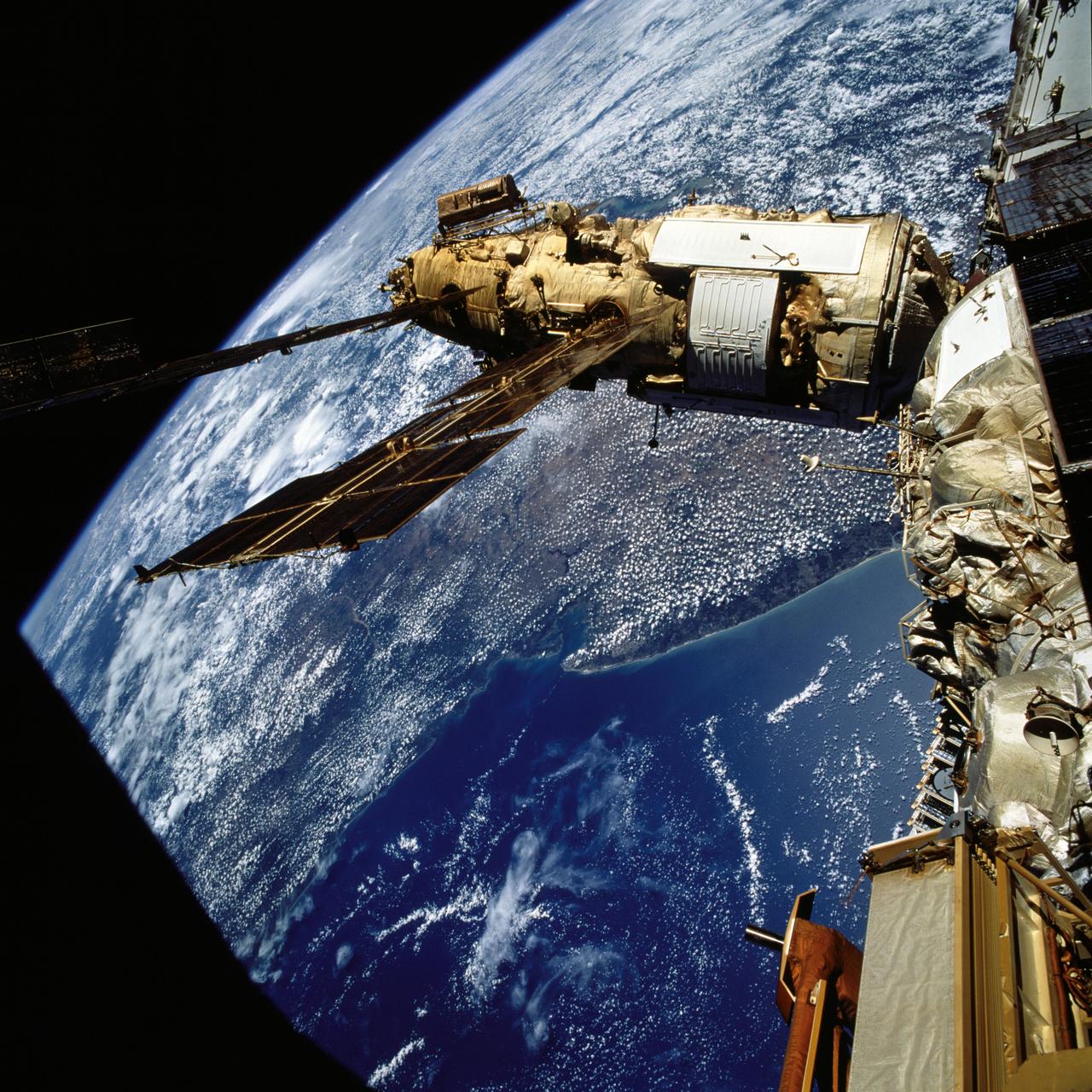
STS076-708-038 (22 - 31 March 1996) --- The crew took this 70mm picture of Russia's Mir Space Station over Australia. The crew docked the Space Shuttle Atlantis with the Mir Space Station on March 23, 1996, at which time astronaut Shannon W. Lucid joined the Mir-21 crew to begin the first leg of her 140-day stay aboard Mir, as a cosmonaut guest researcher. The Spacehab Module shared the cargo bay during part of the mission with the Docking Module (DM). The DM was connected to Mir, following a March 23, 1996, docking. The DM was delivered last year to Mir by the STS-74 crew.

NM21-396-024 (23 March 1996) --- Backdropped against the blackness of space the Space Shuttle Atlantis was taken by the two Mir-21 cosmonaut crew members onboard Russia’s Mir Space Station, during rendezvous and docking operations on March 23, 1996. The Orbiter Docking System (ODS), the connective tunnel and the Spacehab Module can be seen in Atlantis’ cargo bay. With the subsequent delivery of astronaut Shannon W. Lucid to the Mir, the Mir-21 crew grew to three, as the mission specialist quickly becomes a cosmonaut guest researcher. She will spend approximately 140 days on Mir before returning to Earth.

NM21-727-030 (23 March 1996) --- This view of the Space Shuttle Atlantis was taken by the two Mir-21 cosmonaut crew members onboard Russia's Mir Space Station, during rendezvous and docking operations on March 23, 1996. The Orbiter Docking System (ODS), the connective tunnel and the Spacehab Module can be seen in Atlantis' cargo bay. With the subsequent delivery of astronaut Shannon W. Lucid to the Mir, the Mir-21 crew grew to three, as the mission specialist quickly become a cosmonaut guest researcher. She will spend approximately 140 days on Mir before returning to Earth.
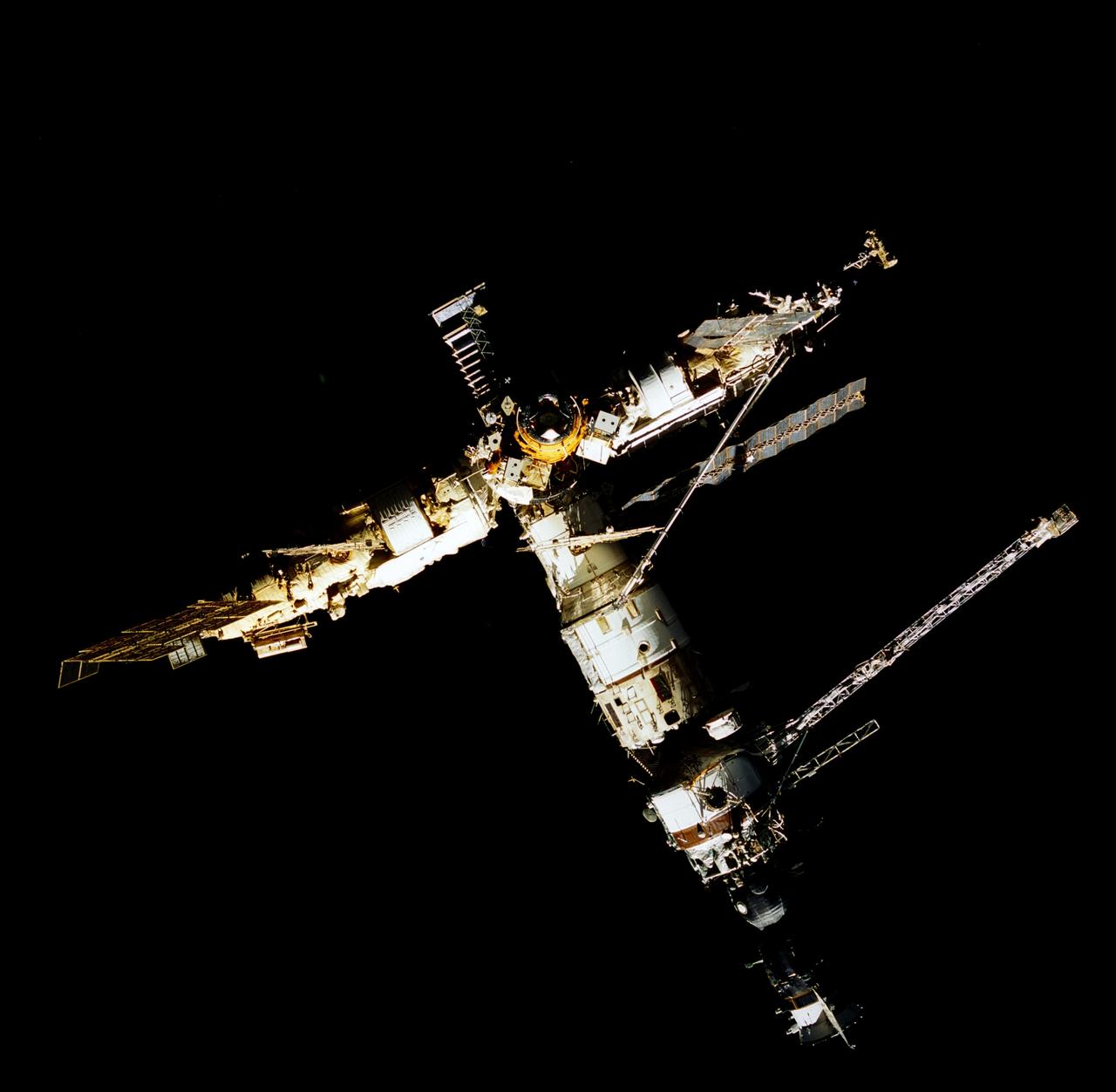
STS076-705-019 (23 March 1996) --- Backdropped against the darkness of space, Russia's Mir Space Station is seen from the aft flight deck window of the Space Shuttle Atlantis. The two spacecraft were about to make their third docking in Earth-orbit. With the subsequent delivery of astronaut Shannon W. Lucid to the Mir Space Station, the Mir-21 crew grew to three, as the mission specialist quickly becomes a cosmonaut guest researcher. She will spend approximately 140 days on Mir before returning to Earth.
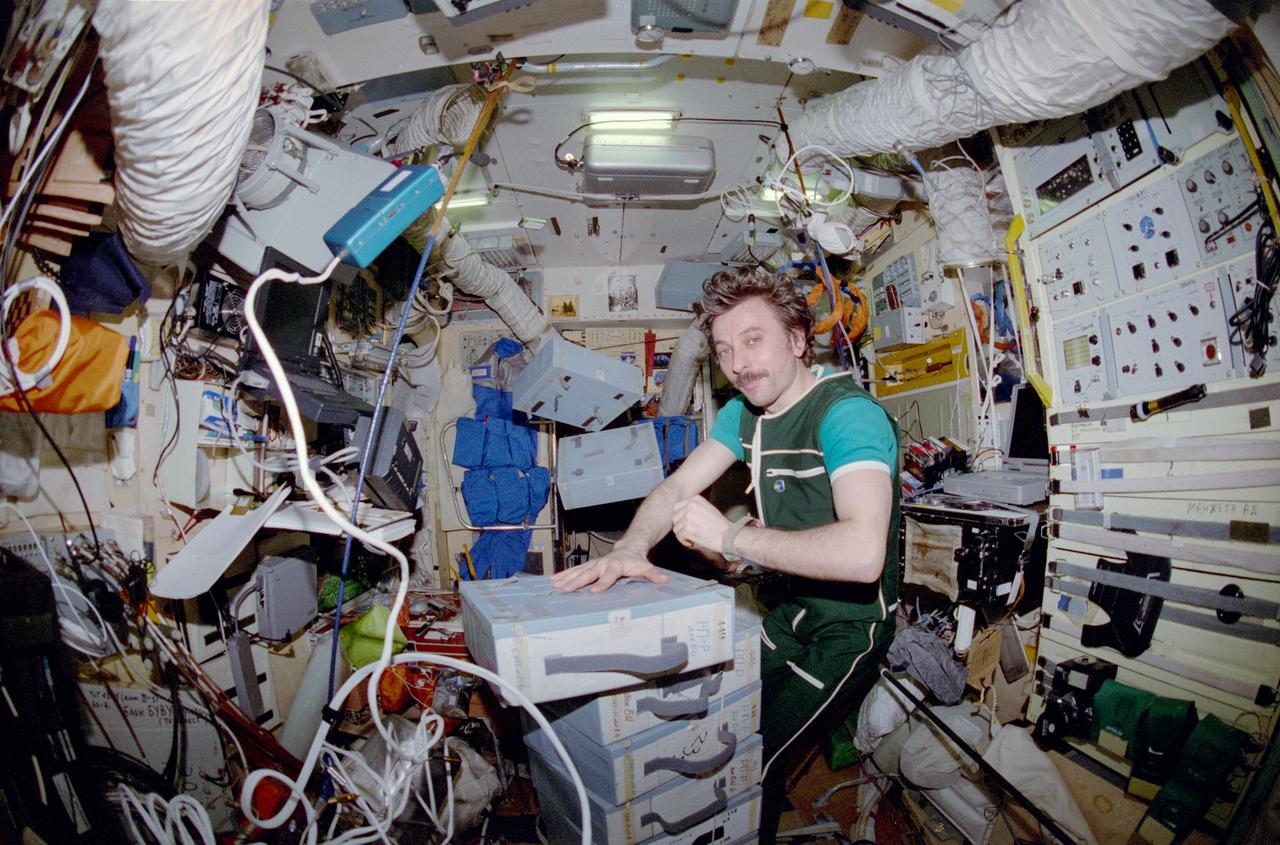
STS084-305-031 (15-24 May 1997) --- Onboard the Russia's Mir Space Station Base Block, cosmonaut Aleksandr I. Lazutkin, Mir-23 flight engineer, participates in the transfer of a small portion of the supplies which astronauts and cosmonauts are moving aboard Mir from the Space Shuttle Atlantis. A number of items were also moved from Mir onto the docked Shuttle craft during the several days of joint activities between the two crews.
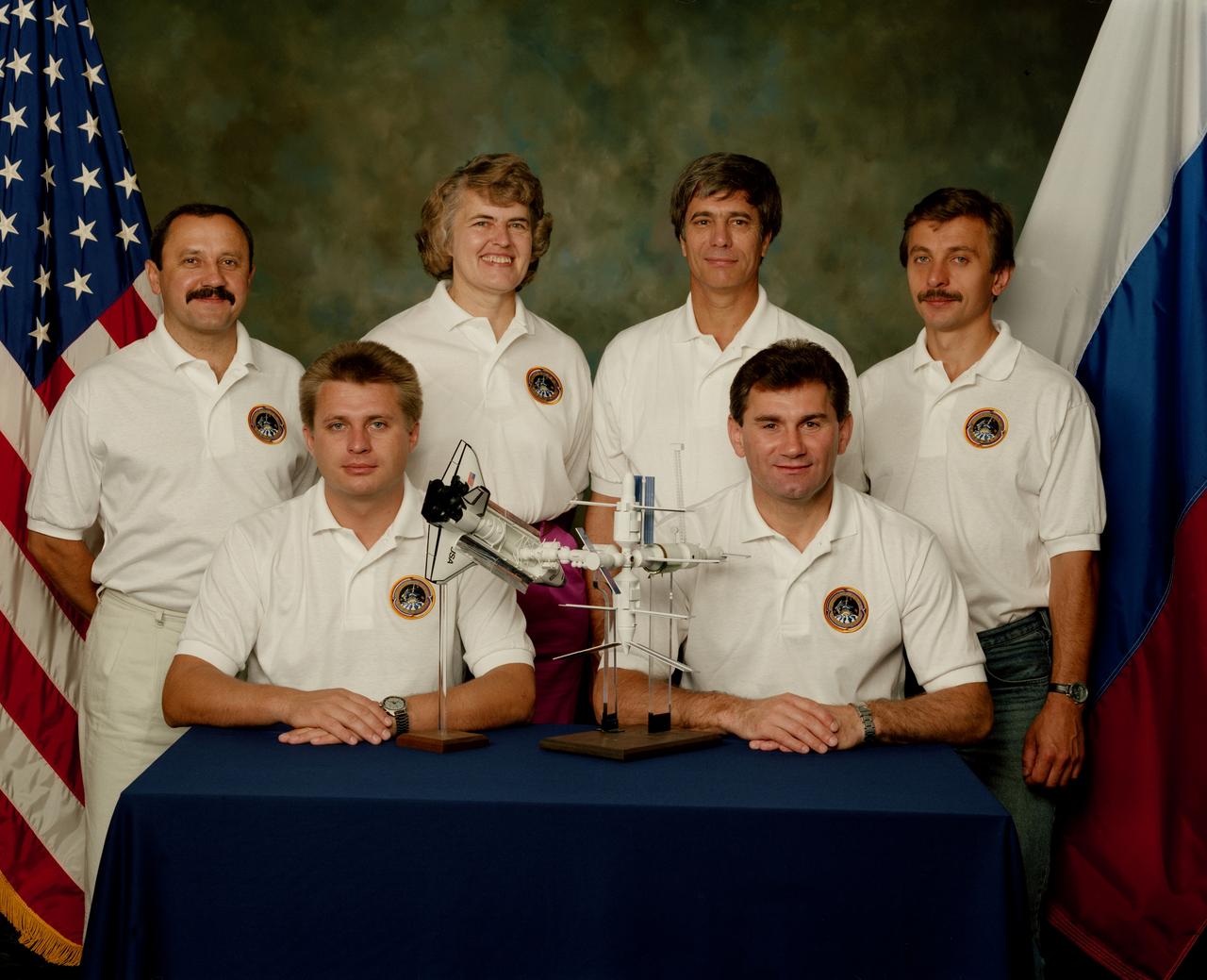
S95-16674 (14 July 1995) --- On the left is the Mir-21 crew consisting of cosmonaut Yuriy V. Usachov (standing), flight engineer; Yuriy I. Onufriyenko (seated), commander; and Shannon W. Lucid, cosmonaut guest researcher. On the right side is the Mir-23 crew consisting of John E. Blaha (standing), cosmonaut guest researcher; Vasili V. Tsibliyev (seated), commander; and Aleksandr I. Lazutkin, flight engineer. NASA astronauts Lucid and Blaha each will go into space to board Russia's Mir Space Station for lengthy research on their respective missions. Lucid will board the Mir during the STS-76 mission. Blaha will replace Lucid onboard the Mir during the STS-79 mission.
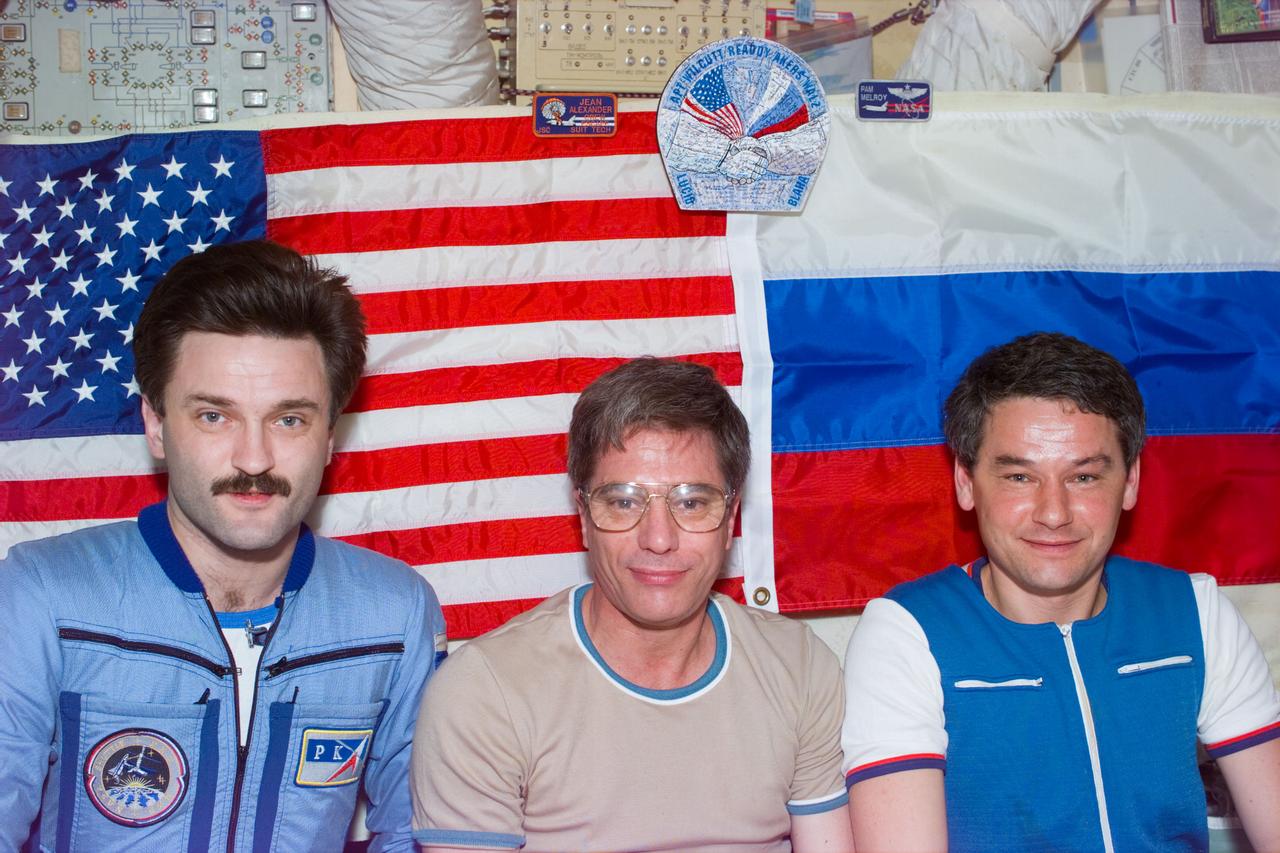
STS79-E-5294 (23 September 1996) --- Left to right, cosmonaut Aleksandr Y. Kaleri, Mir-22 flight engineer; astronaut John E. Blaha, cosmonaut guest researcher; and cosmonaut Valeri G. Korzun, Mir-22 commander, Mir-22 crew members in their final photo aboard Russia's Mir Space Station before bidding farewell to the STS-79 crew members, aboard the Space Shuttle Atlantis, during Flight Day 8. Soon after this Electronic Still Camera (ESC) view was recorded the STS-79 astronauts aboard Atlantis separated from the Mir.
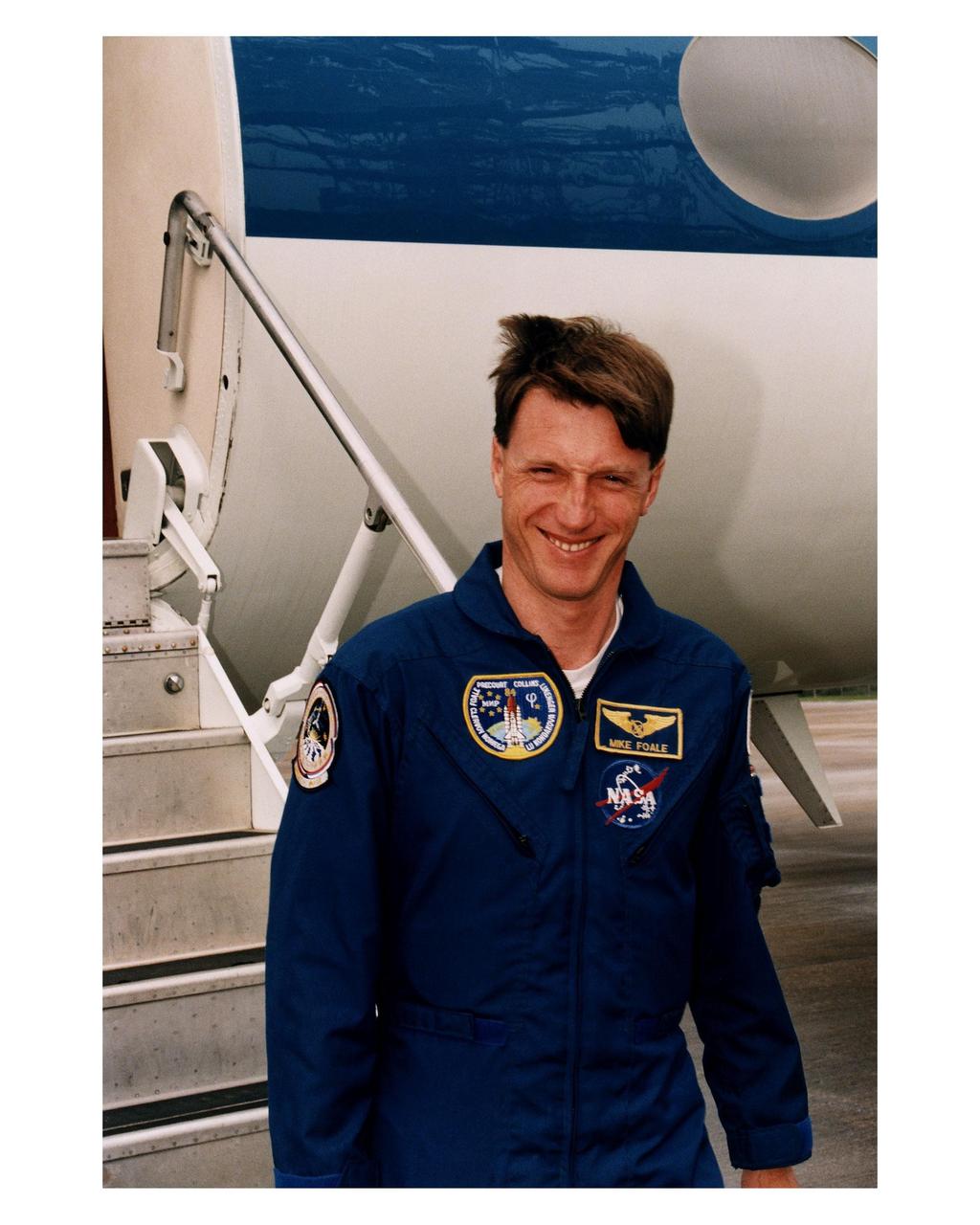
STS-84 Mission Specialist C. Michael Foale, who will become the fifth U.S. astronaut to live and work on the Russian Space Station Mir, arrives at KSC’s Shuttle Landing Facility for the STS-84 Terminal Countdown Demonstration Test (TCDT), a dress rehearsal for launch. Foale will be dropped off on Mir when the Space Shuttle Atlantis docks with Mir next month. He will become a member of the Mir 23 crew, replacing U.S. astronaut Jerry M. Linenger, who will return to Earth on Atlantis after about four months on the orbiting station. STS-84 will be the sixth Shuttle-Mir docking. Liftoff is targeted for May 15
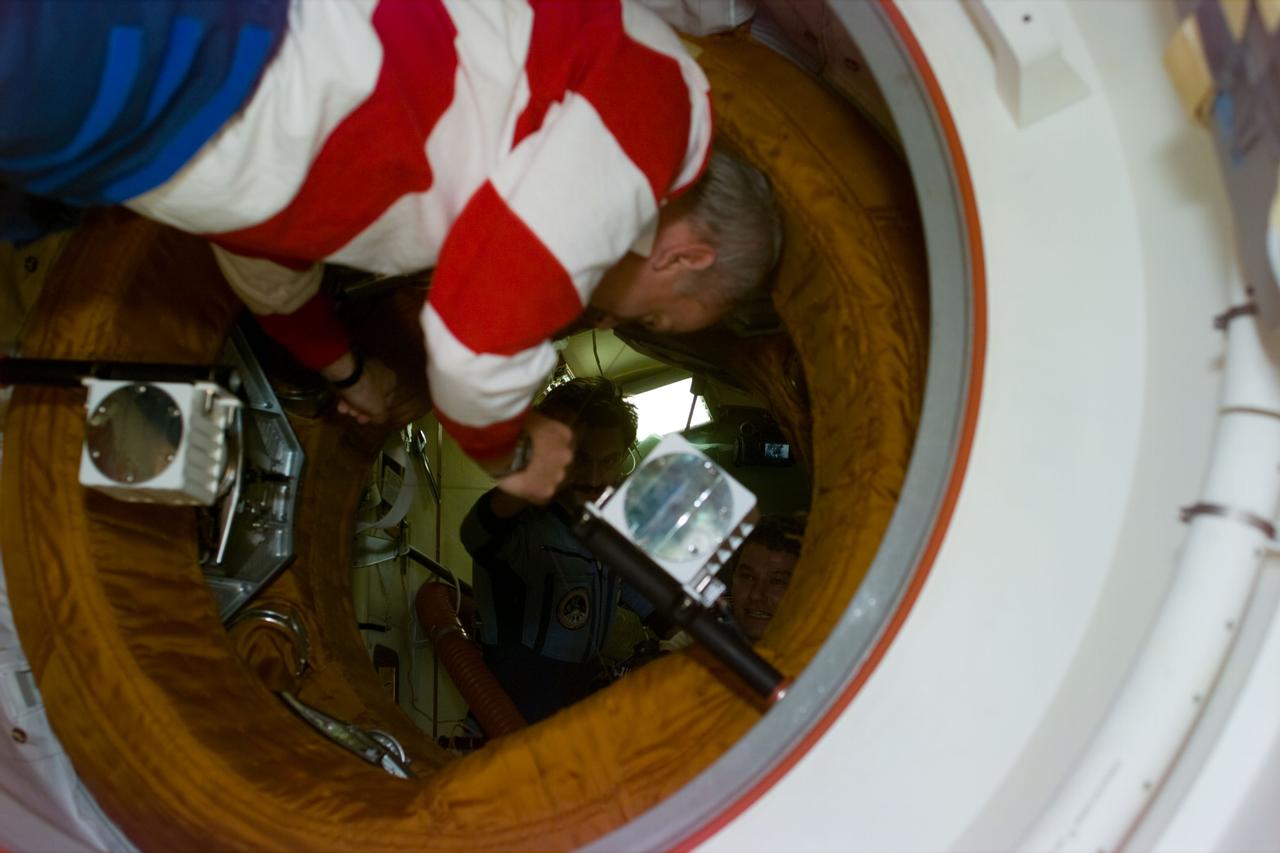
STS79-E-5300 (23 September 1996) --- Astronaut William F. Readdy (foreground), STS-79 commander, bids farewell to Russian cosmonauts Aleksandr Y. Kaleri (left in background), Mir-22 flight engineer, and Valeri G. Korzun, Mir-22 commander, just prior to hatch closing, during Flight Day 8. The Americans and Russians will undock the Space Shuttle Atlantis and the Russia's Mir Space Station later today.
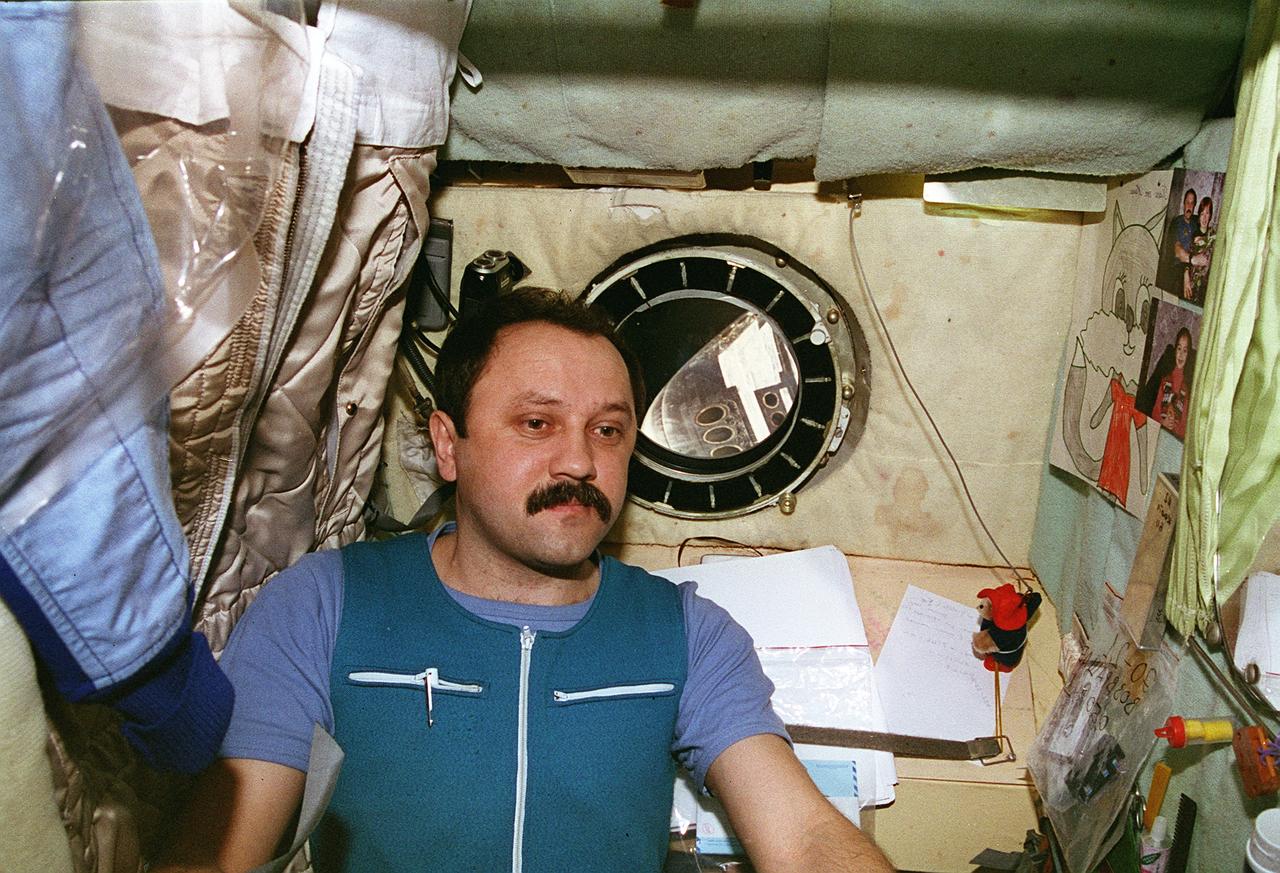
STS076-461-014 (22-31 March 1996) --- Cosmonaut Yury V. Usachev, Mir-21 flight engineer, reflects on his mission duties in his living quarters aboard Russia's Mir Space Station. His temporary out-the-window scenery is provided by the nose of the Space Shuttle Atlantis, which docked with Mir on March 23, 1996.
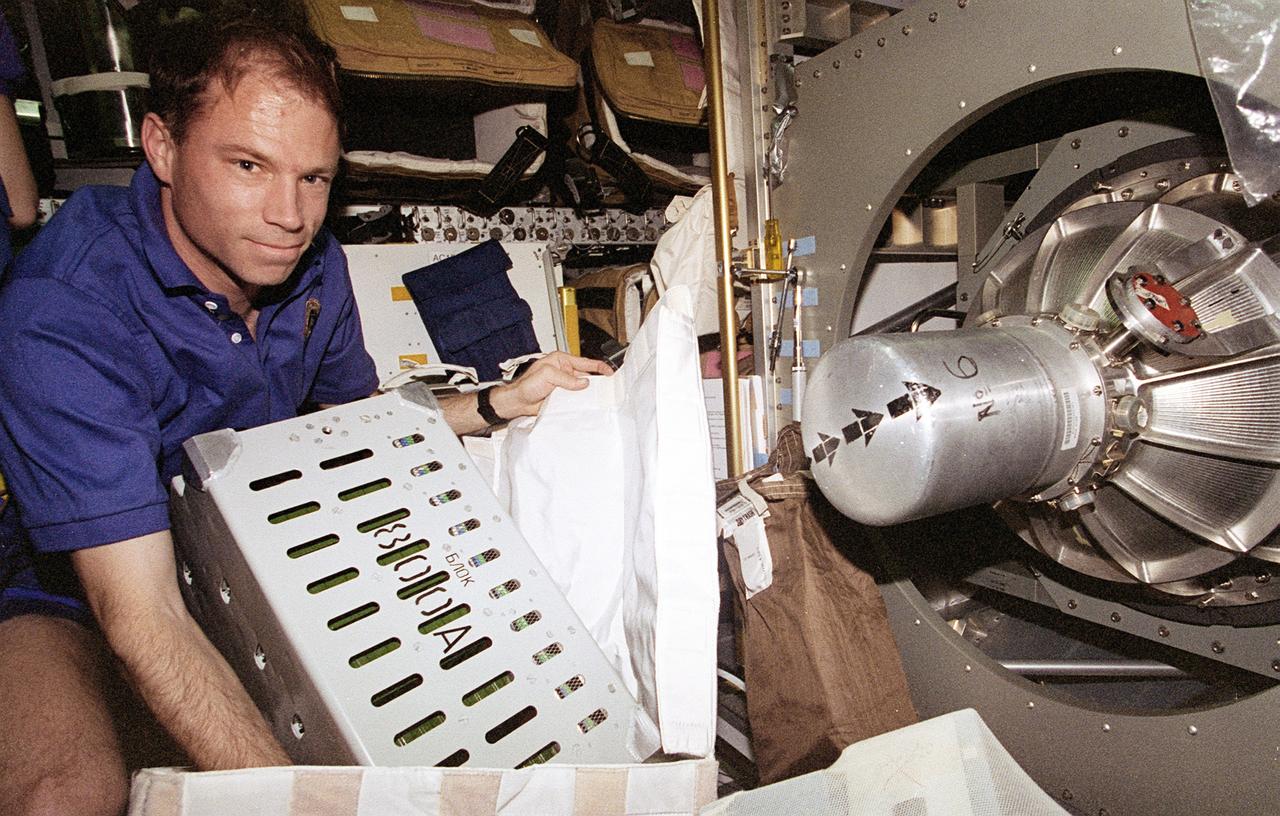
STS076-345-019 (22 - 31 March 1996) --- Onboard the Spacehab Module in the cargo bay of the Earth-orbiting Space Shuttle Atlantis, astronaut Richard A. Searfoss fetches a battery which is to be transferred to Russia's Mir Space Station. The pilot and his crew mates docked with Mir on March 23, 1996, and remained linked until March 28, 1996. At right is a stowed gyrodyne, which earlier had been replaced on Mir with a new one brought up from the ground by the STS-76 crew.
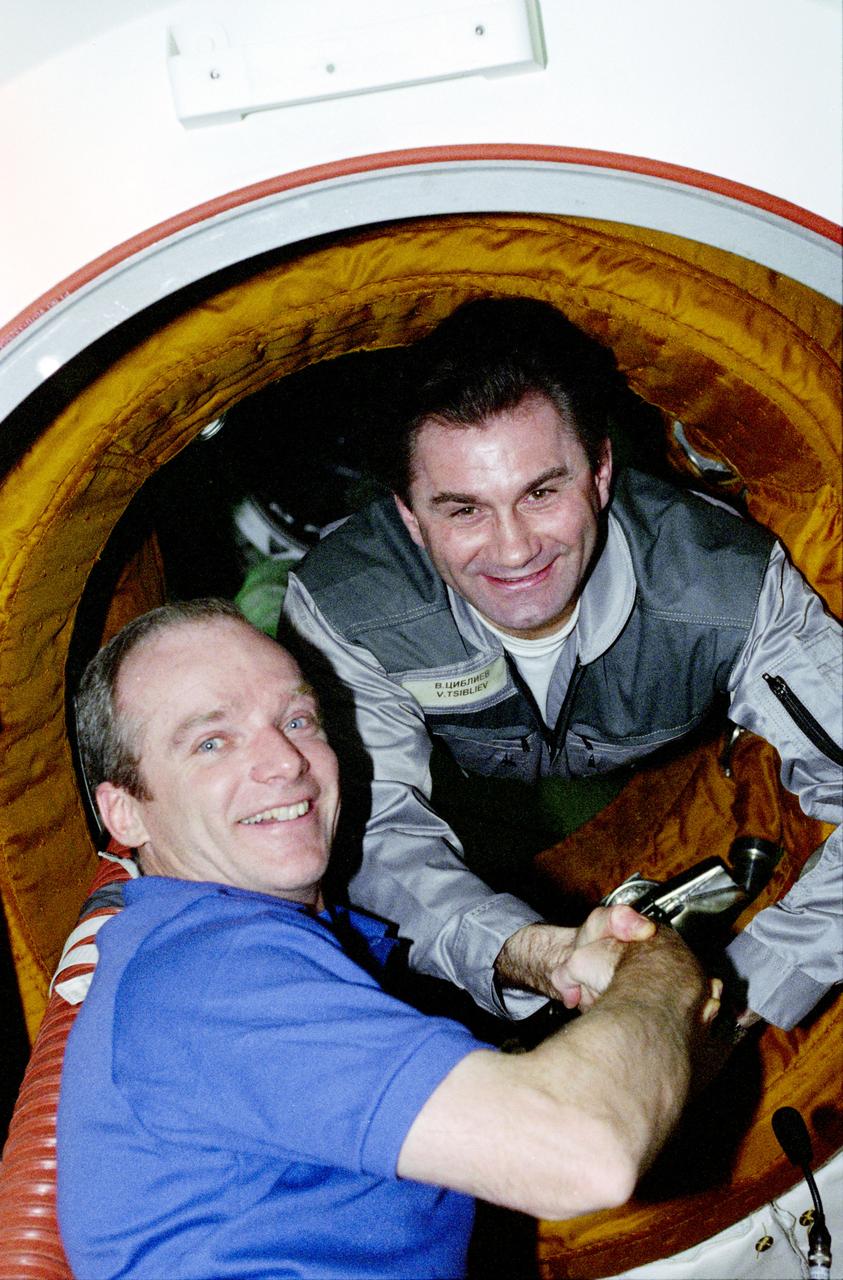
STS084-379-034 (15-24 May 1997) --- Two mission commanders greet and shake hands moments after hatch-opening on docking day, of the Space Shuttle Atlantis and Russia's Mir Space Station. Charles J. Precourt (left), STS-84 commander, and Vasili V. Tsibliyev, Mir-23 commander, along with their respective flight crews went on to spend several days sharing joint activities in Earth-orbit. This is the sixth Atlantis/Mir docking mission.

NASA5-301-029 (May 1997) --- The Space Shuttle Atlantis is seen from the point of view of Russia’s Mir Space Station in this 35mm frame exposed during separation operations. The astronauts of STS-84 and the cosmonauts of Mir-23 had spent several days in joint activities while the spacecraft were docked. The American crew also changed out cosmonaut guest researchers aboard the Mir, replacing Jerry M. Linenger with C. Michael Foale.
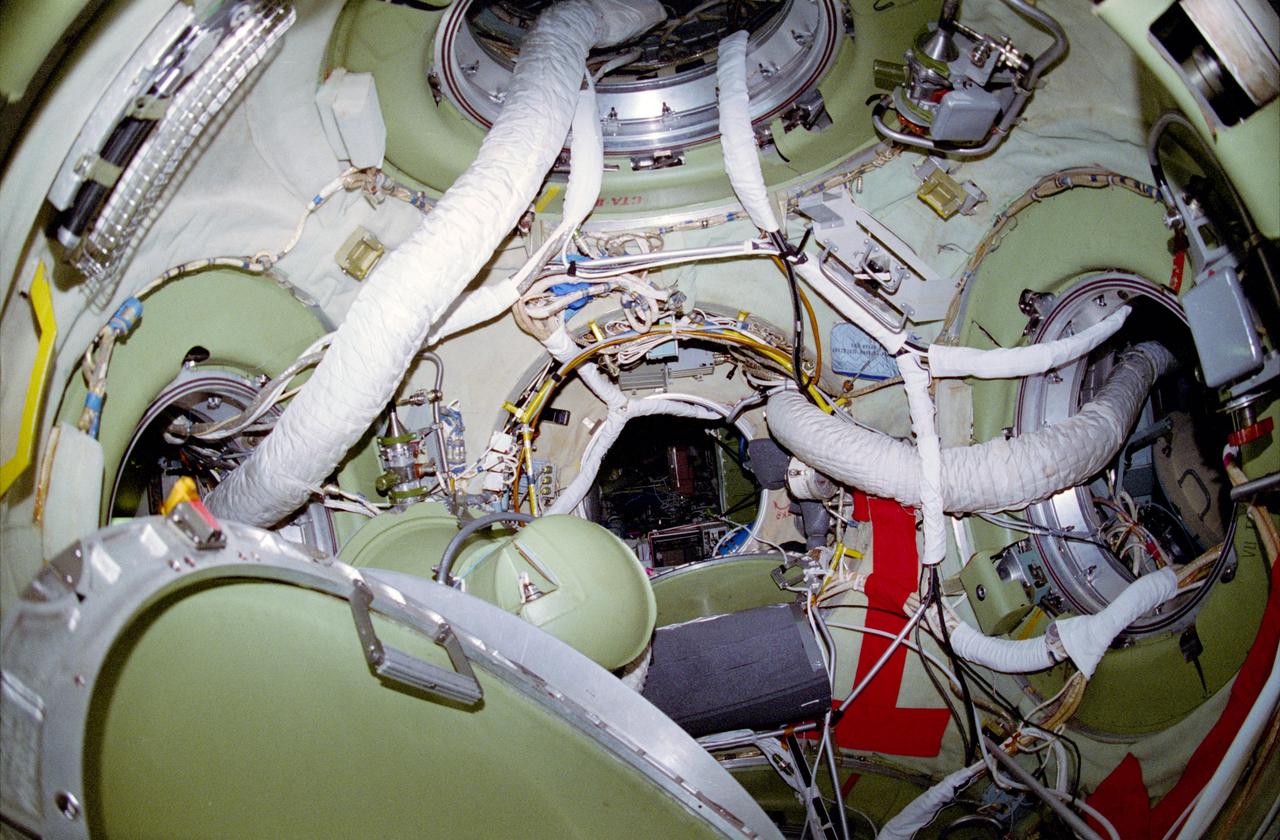
STS084-305-018 (15-24 May 1997) --- As seen from the docked Soyuz hatchway, this 35mm view shows the interior of a Russian Mir Space Station node connected to Kristall (bottom), Priroda (top), Mir Core Module (center), Kvant-2 (left) and Spektr (right). The Mir-23 and STS-84 crew members spent several days sharing joint activities in Earth-orbit as part of an ongoing cooperative program between the Russian Space Agency (RSA) and National Aeronautics and Space Administration (NASA).
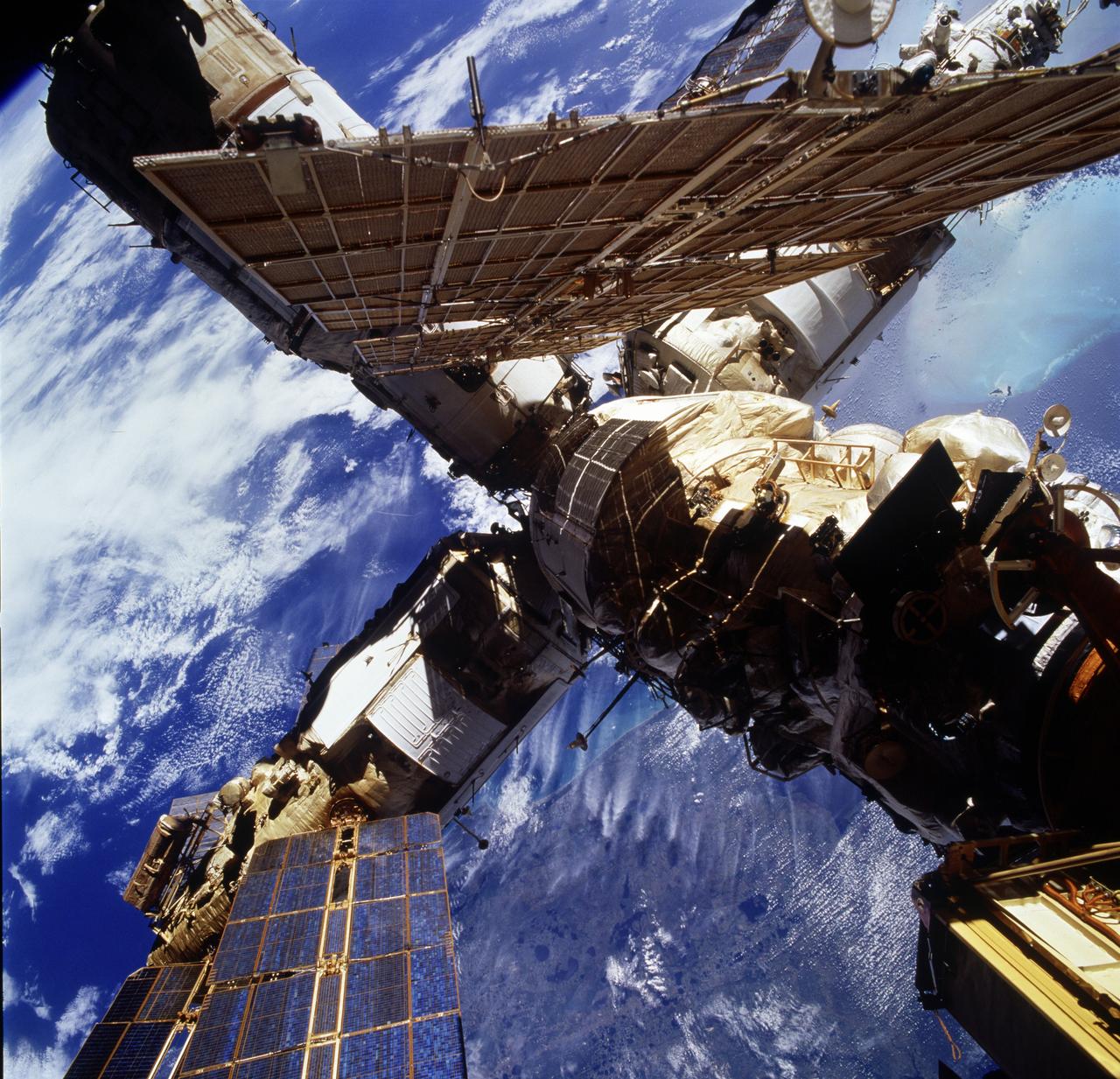
STS076-736-017 (22-31 March 1996) --- Southern Florida and the Atlantic coast form the backdrop for this picture showing most of the components of Russia's Mir Space Station. The photograph was taken from the aft flight deck of the Space Shuttle Atlantis. Mir and Atlantis docked on March 23, 1996, and separated on March 28, 1996. Cape Canaveral and the Kennedy Space Center (KSC) are below one of Mir's solar array panels in the upper left quadrant of the frame.
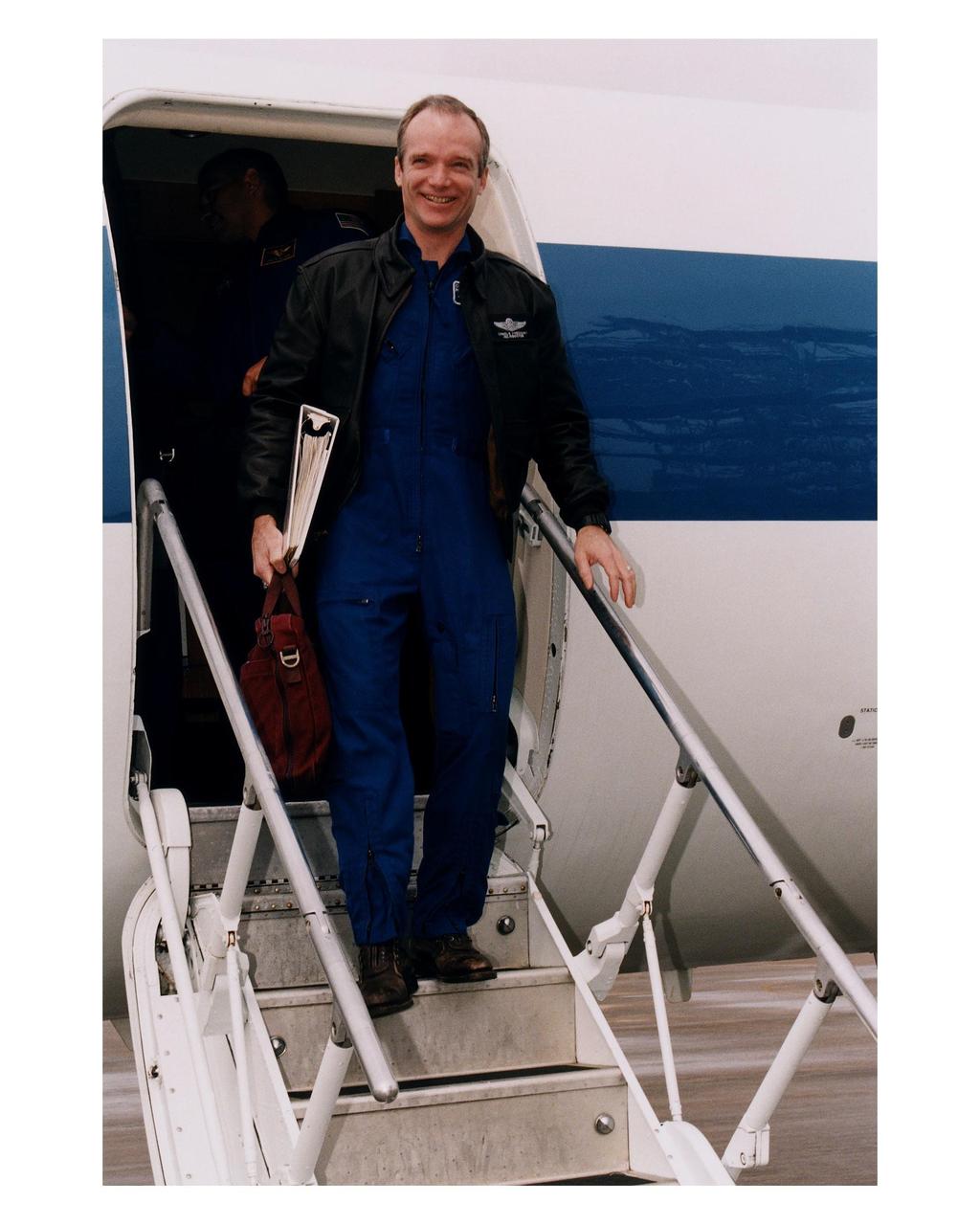
STS-84 Commander Charles J. Precourt arrives at KSC’s Shuttle Landing Facility for the Terminal Countdown Demonstration Test (TCDT), a dress rehearsal for launch. Precourt will lead the six other crew members when they travel to Mir next month aboard the Space Shuttle Atlantis. STS-84 Mission Specialist C. Michael Foale will be dropped off on Mir to become a member of the Mir 23 crew, replacing U.S. astronaut Jerry M. Linenger, who will return to Earth on Atlantis after about four months on the orbiting station. STS-84 will be the sixth Shuttle-Mir docking. Liftoff is targeted for May 15
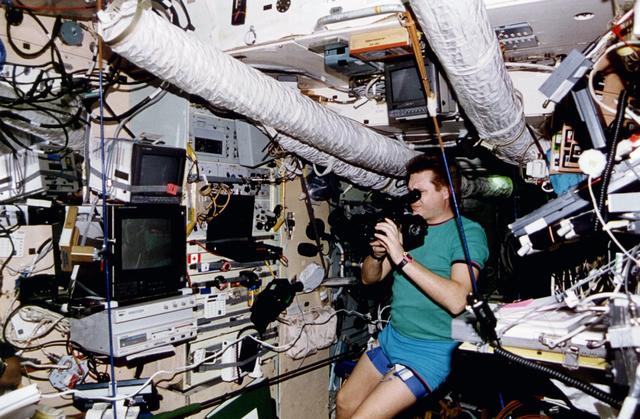
STS076-461-010 (22-31 March 1996) --- The STS-76 crew took this 70mm picture of Russia's Mir-21 mission commander Yury I. Onufrienko using a video camera on the Base Block Module of Russia's Mir Space Station. The STS-76 crew docked the Space Shuttle Atlantis with the Mir Space Station on March 23, 1996, at which time astronaut Shannon W. Lucid (out of frame) joined Onufrienko and the mission's flight engineer, Yury V. Usachev, to begin the first leg of a 140-day stay aboard Mir, as a cosmonaut guest researcher.
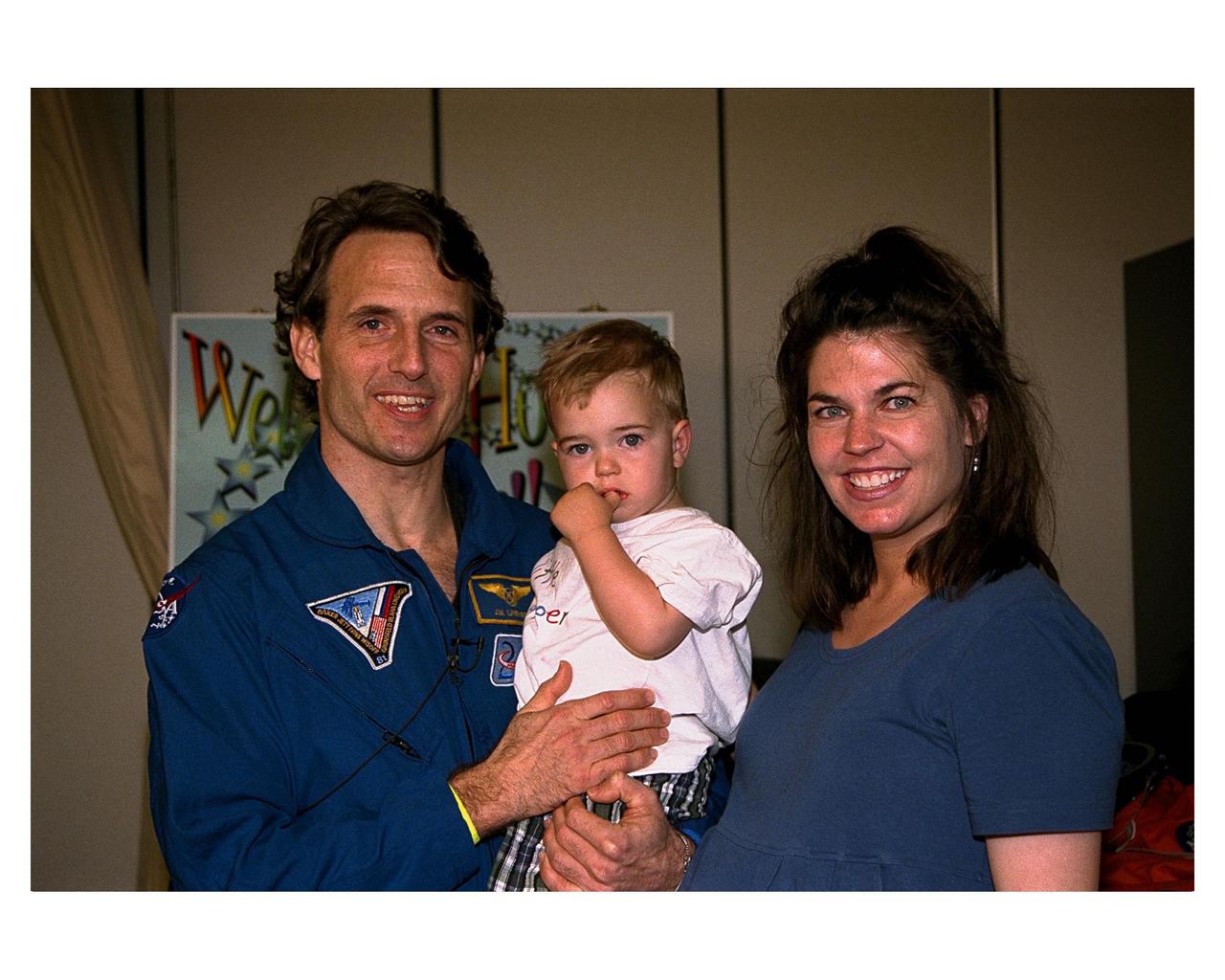
Astronaut and recent Mir 23 crew member Jerry M. Linenger poses for a photograph with his wife, Kathryn, and their 18-month-old son, John, during a family reunion in the Operations and Checkout Building. Kathryn Linenger is expecting their second child next month. Linenger just returned to Earth after a four-month stay on the Russian Space Station Mir. He flew back on Atlantis with six other members of the STS-84 crew, who conducted the sixth Space Shuttle docking with the Mir. STS-84 Mission Specialist C. Michael Foale replaced Linenger on the Mir
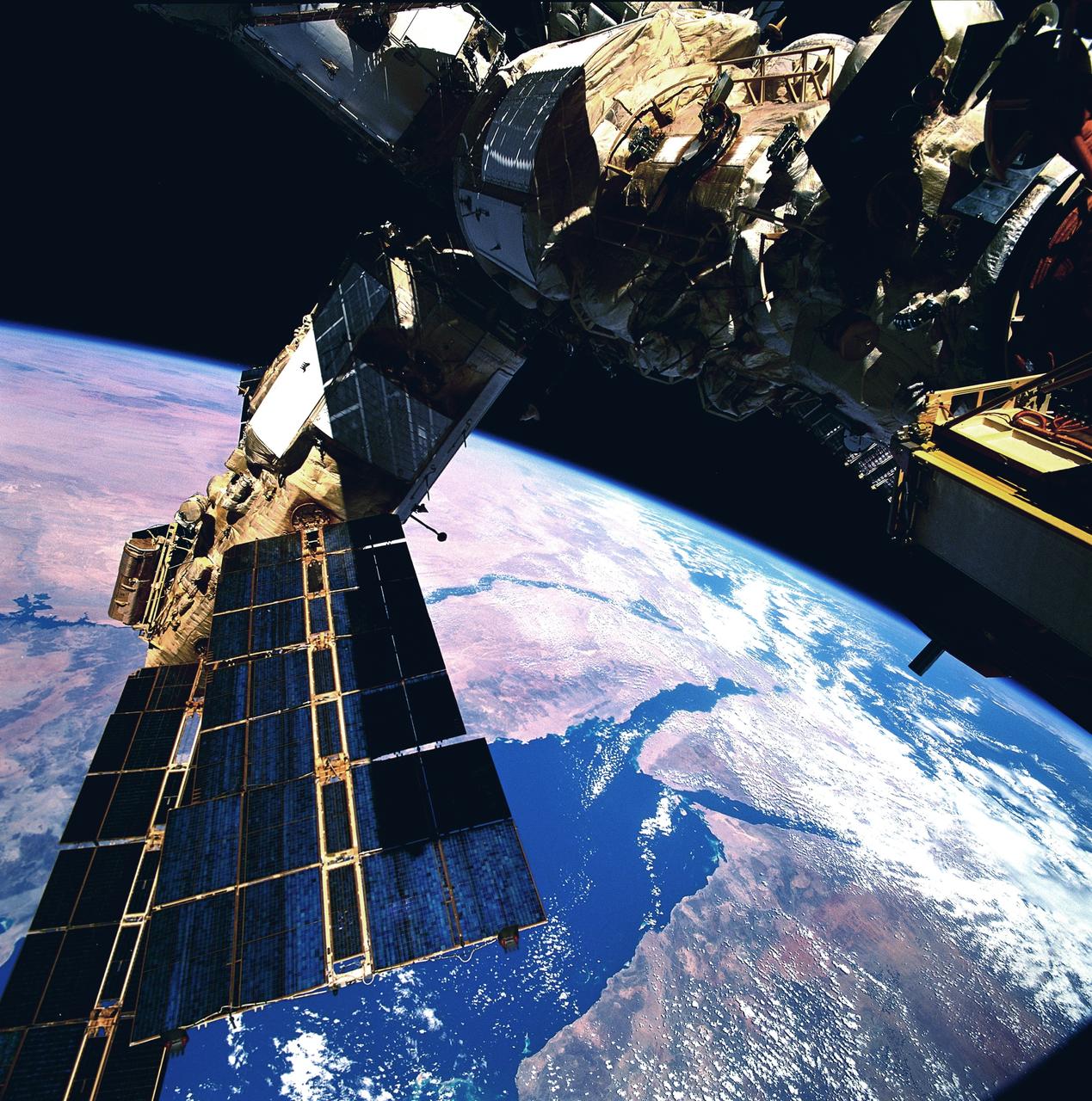
STS076-734-084 (22 - 31 March 1996) --- A clear scene of the Sinai Peninsula and the Nile River Delta forms the backdrop for this 70mm scene of Russia's Mir Space Station, as photographed from the aft flight deck of the Space Shuttle Atlantis. Atlantis docked with Mir on March 23, 1996, and remained linked until March 28, 1996. Astronaut Shannon W. Lucid transferred from the STS-76 crew to the Mir-21 crew, which grew from two to three. She will remain aboard Mir for approximately 140 days, as a cosmonaut guest researcher.
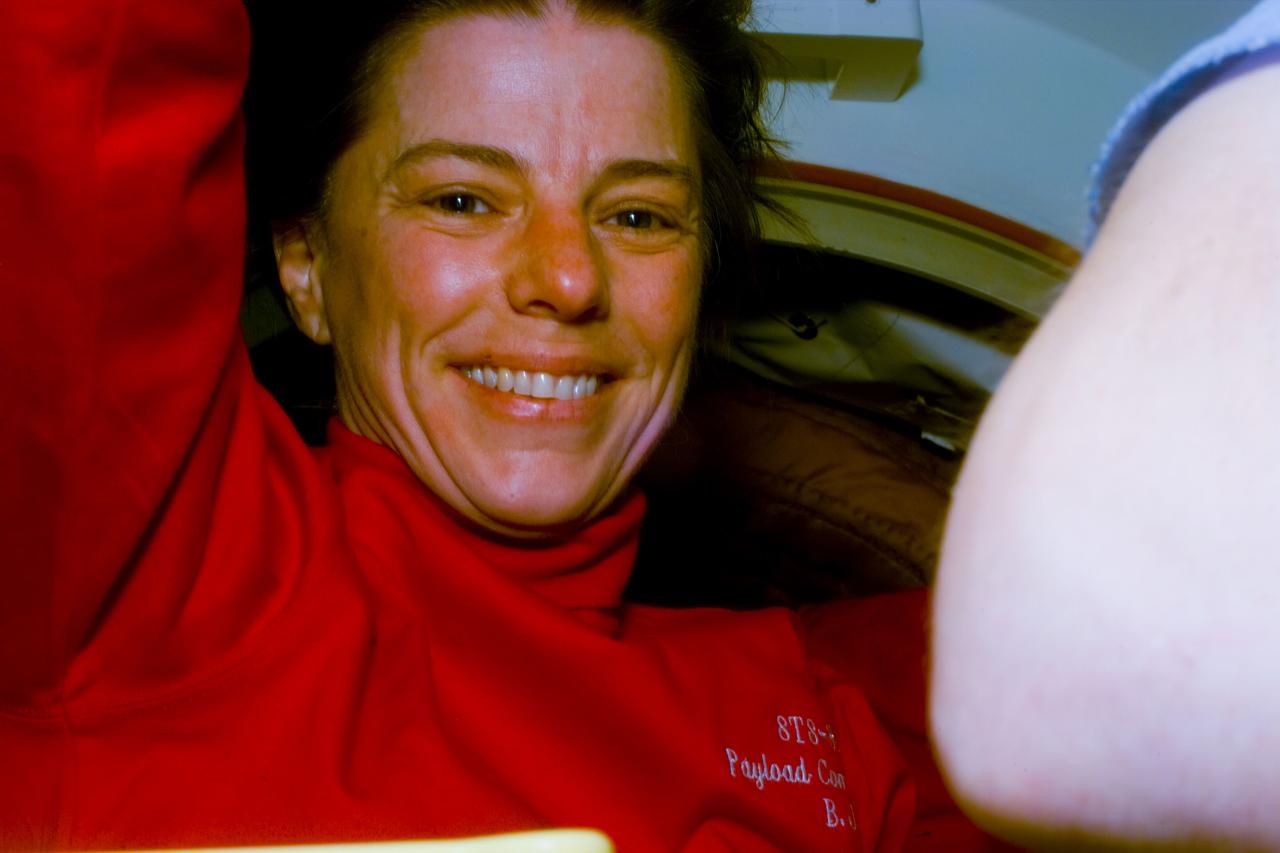
S89-E-5175 (24 Jan 1998) --- This Electronic Still Camera (ESC) image shows astronaut Bonnie J. Dunbar, payload commander, shortly after Shuttle/Mir docking activities began. "Deja-vu" may have come to the mind of Dunbar as she boarded Russia's Mir Space Station. Dunbar was a member of the STS-71 crew -- the first United States aggregation to visit Mir -- along with cosmonaut Anatoliy Y. Solovyev, Mir-24 commander. The ESC view was taken at 22:37:23 GMT, on January 24, 1998.
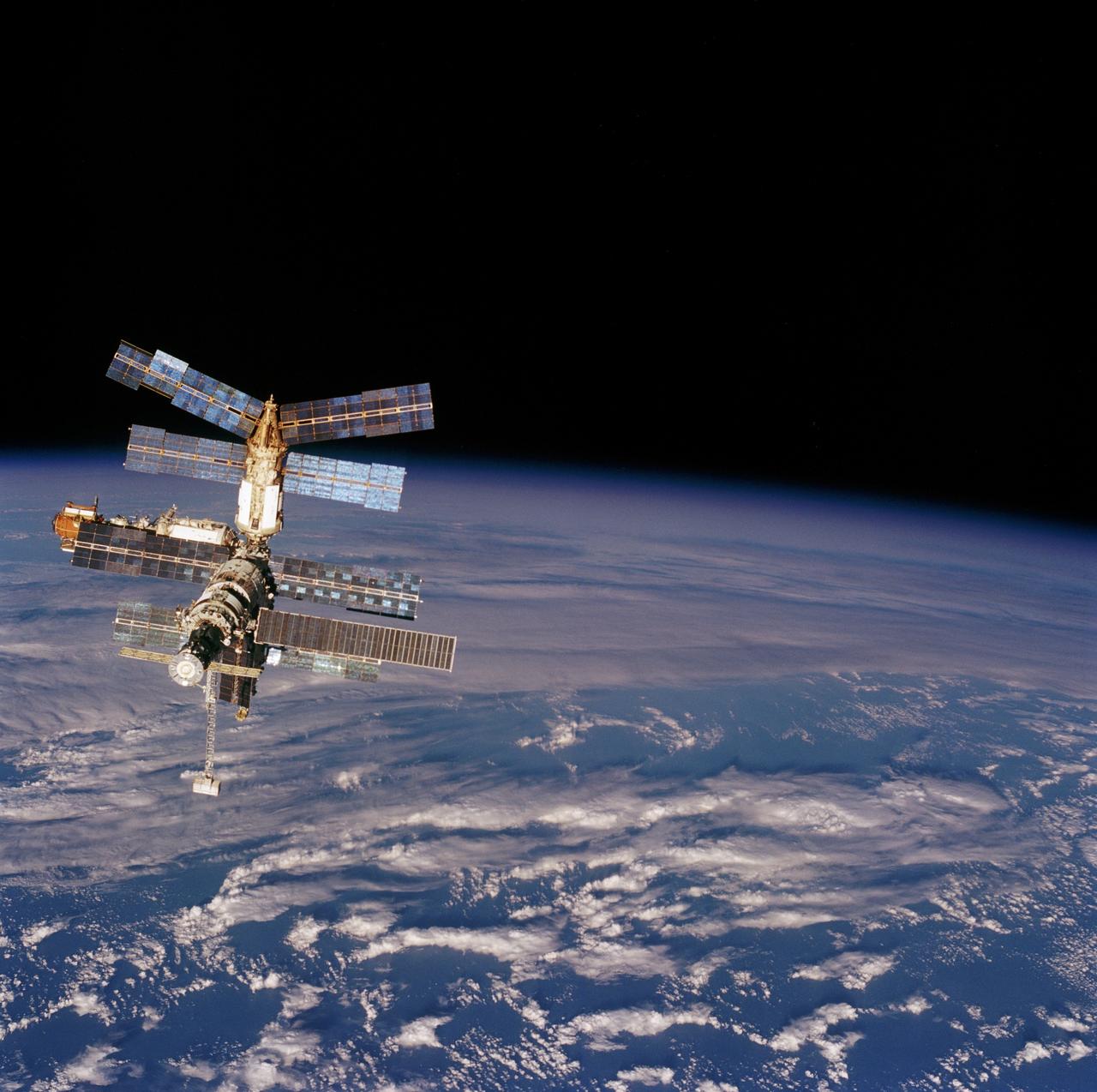
STS076-713-083 (23 March 1996) --- Backdropped against a massive array of clouds over the South Pacific Ocean and the Tasman Sea, Russia's Mir Space Station is seen from the aft flight deck of the Space Shuttle Atlantis. The two spacecraft were in the process of making their third docking in Earth-orbit. With the subsequent delivery of astronaut Shannon W. Lucid to the Mir, the Mir-21 crew grew to three, as the mission specialist quickly becomes a cosmonaut guest researcher. She will spend approximately 140 days on Mir before returning to Earth.
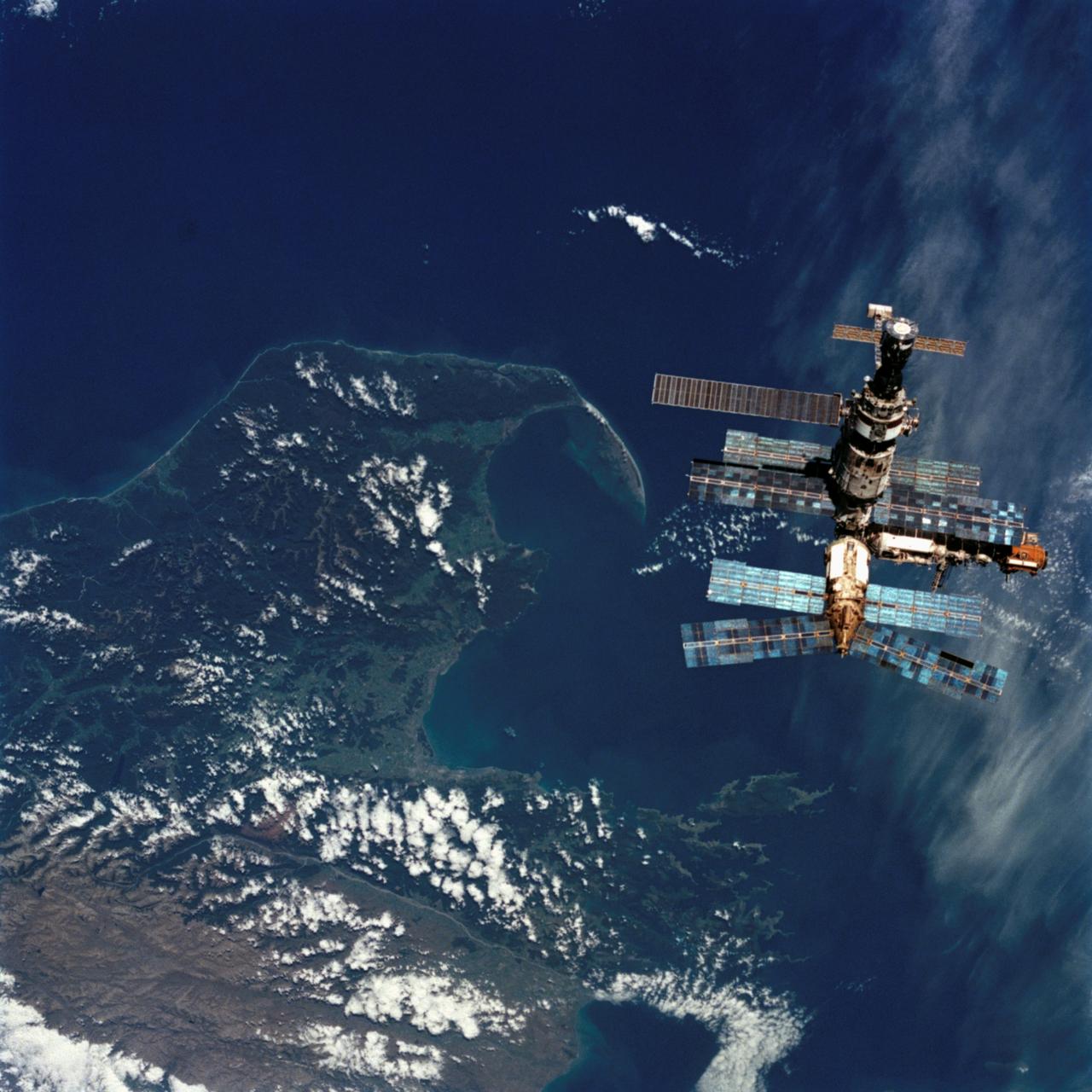
STS076-713-036 (23 March 1996) --- Backdropped against the waters of Cook Strait near New Zealand's South Island, Russia's Mir Space Station is seen from the aft flight deck window of the Space Shuttle Atlantis. The two spacecraft were in the process of making their third docking in Earth-orbit. With the subsequent delivery of astronaut Shannon W. Lucid to the Mir, the Mir-21 crew grew to three, as the mission specialist quickly becomes a cosmonaut guest researcher. She will spend approximately 140 days on Mir before returning to Earth.
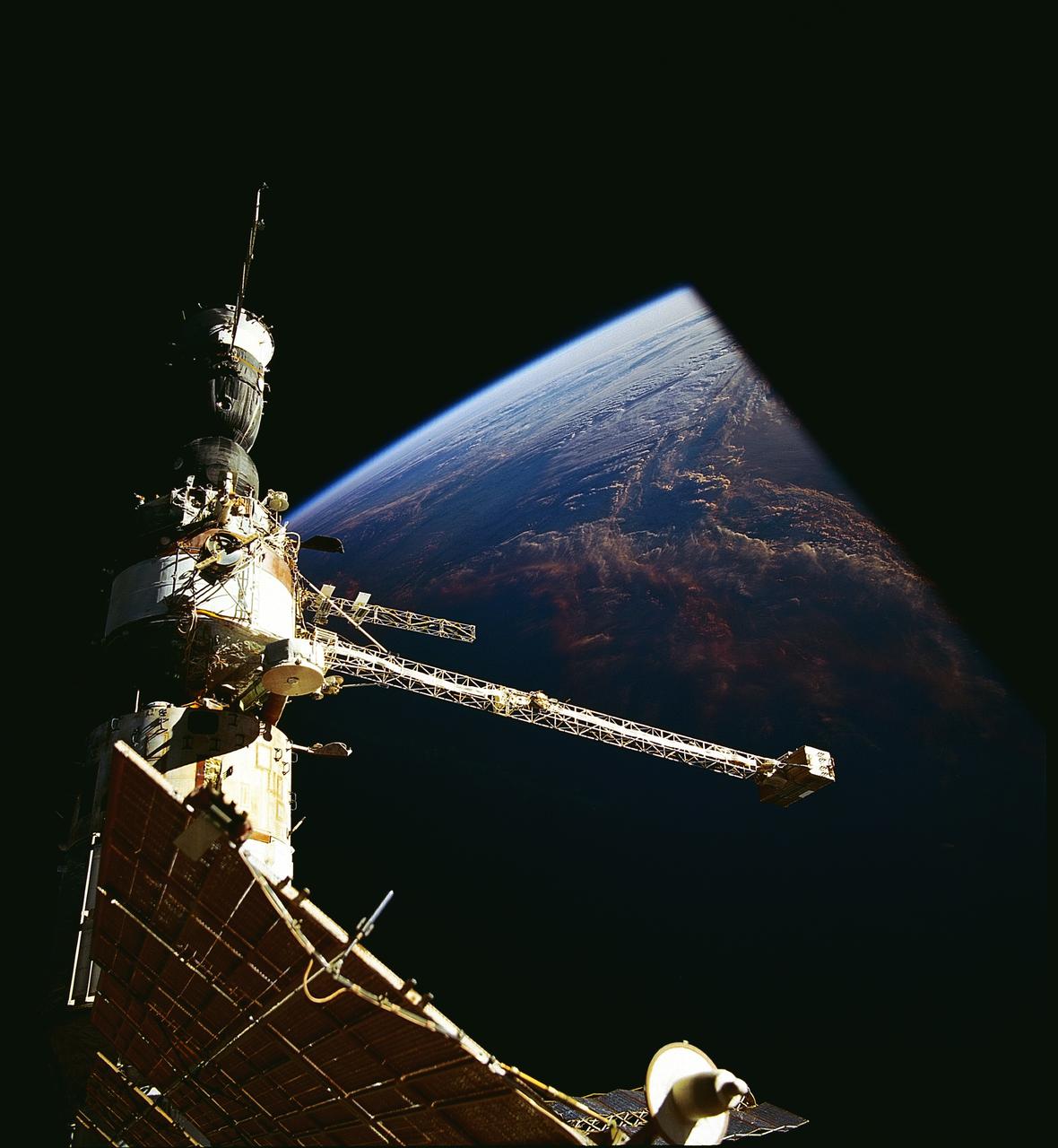
STS076-709-007 (22 - 31 March 1996) --- Earth's terminator forms the backdrop for this scene of Russia Mir Space Station's Soyuz and Kvant 2 Modules, as photographed from the aft flight deck of the Space Shuttle Atlantis. Atlantis docked with the Mir Space Station on March 23, 1996, and remained linked until March 28, 1996. Astronaut Shannon W. Lucid transferred from the STS-76 crew to the Mir-21 crew, which grew from two to three. Lucid will remain aboard Mir for approximately 140 days.
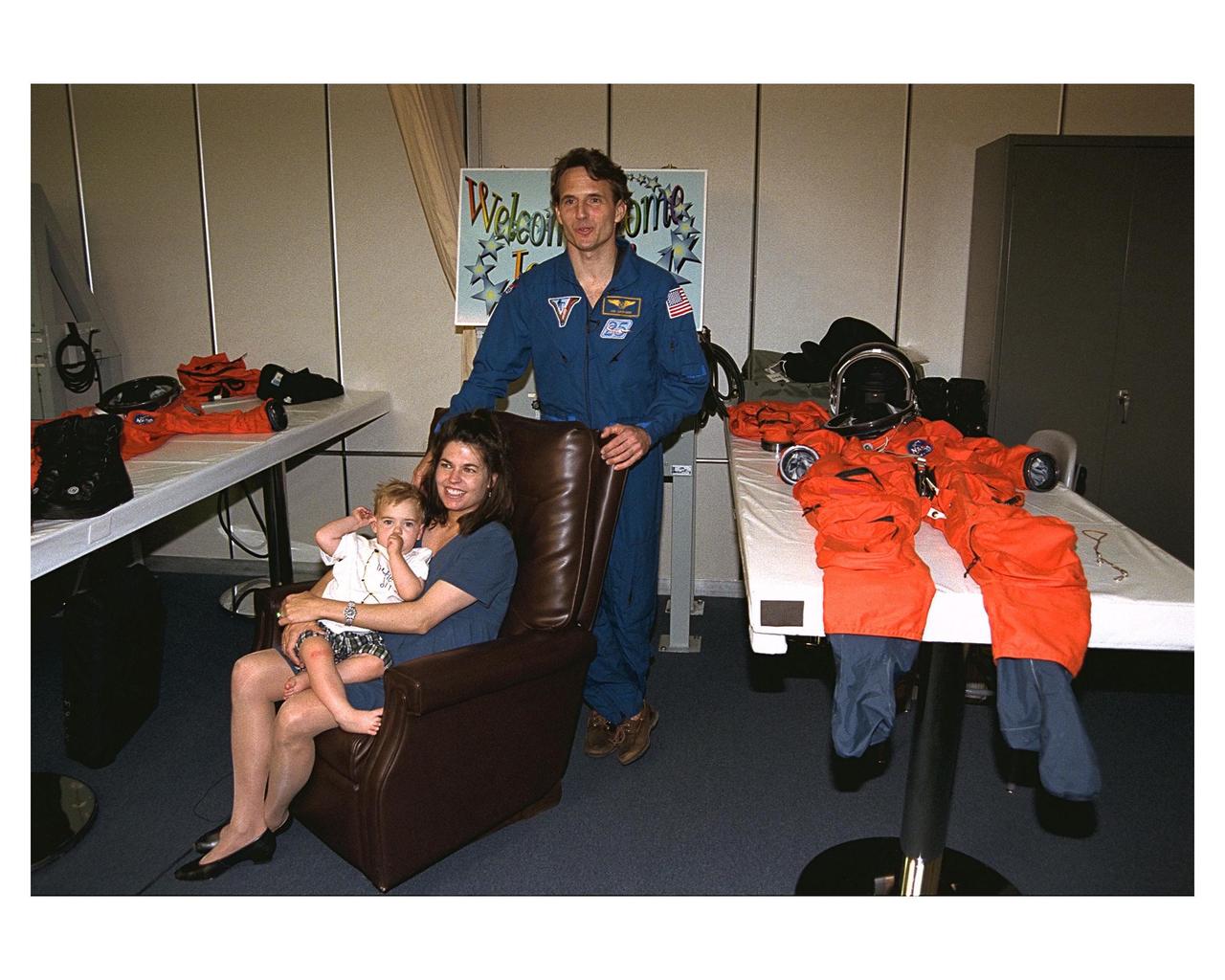
Astronaut and recent Mir 23 crew member Jerry M. Linenger, standing, reunites with his wife, Kathryn, and their 18-month-old son, John, in the astronaut suit-up room in the Operations and Checkout Building. Kathryn Linenger is expecting their second child next month. Linenger just returned to Earth after a four-month stay on the Russian Space Station Mir. He flew back on Atlantis with six other members of the STS-84 crew, who conducted the sixth Space Shuttle docking with the Mir. STS-84 Mission Specialist C. Michael Foale replaced Linenger on the Mir
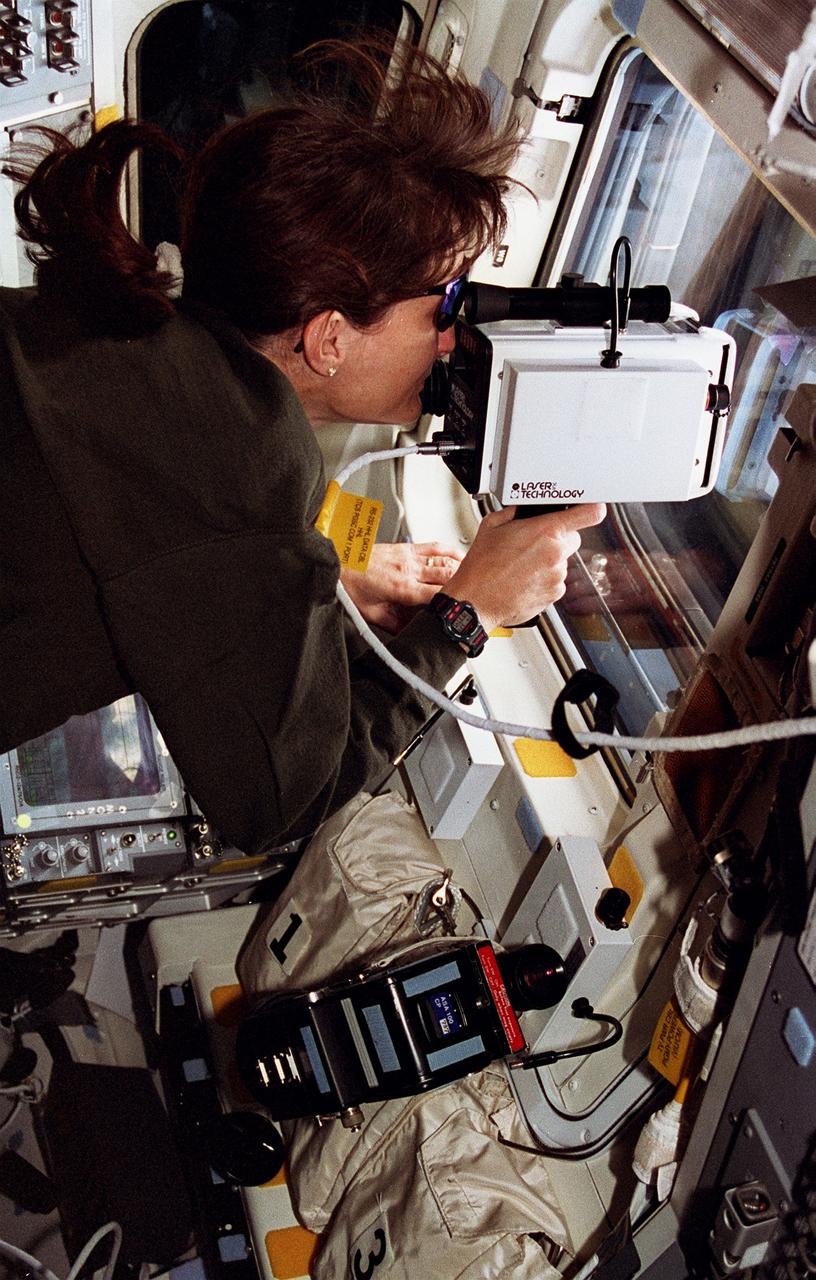
STS076-316-008 (23 March 1996) --- On the aft flight deck of the Space Shuttle Atlantis, astronaut Linda M. Godwin uses a hand-held laser instrument to check the range of Russia's Mir Space Station during docking operations. The two spacecraft were in the process of making their third docking in Earth-orbit. With the subsequent delivery of astronaut Shannon W. Lucid to the Mir, the Mir-21 crew grew from two to three, as the mission specialist quickly becomes a cosmonaut guest researcher. Lucid will spend approximately 140 days on Mir before returning to Earth.
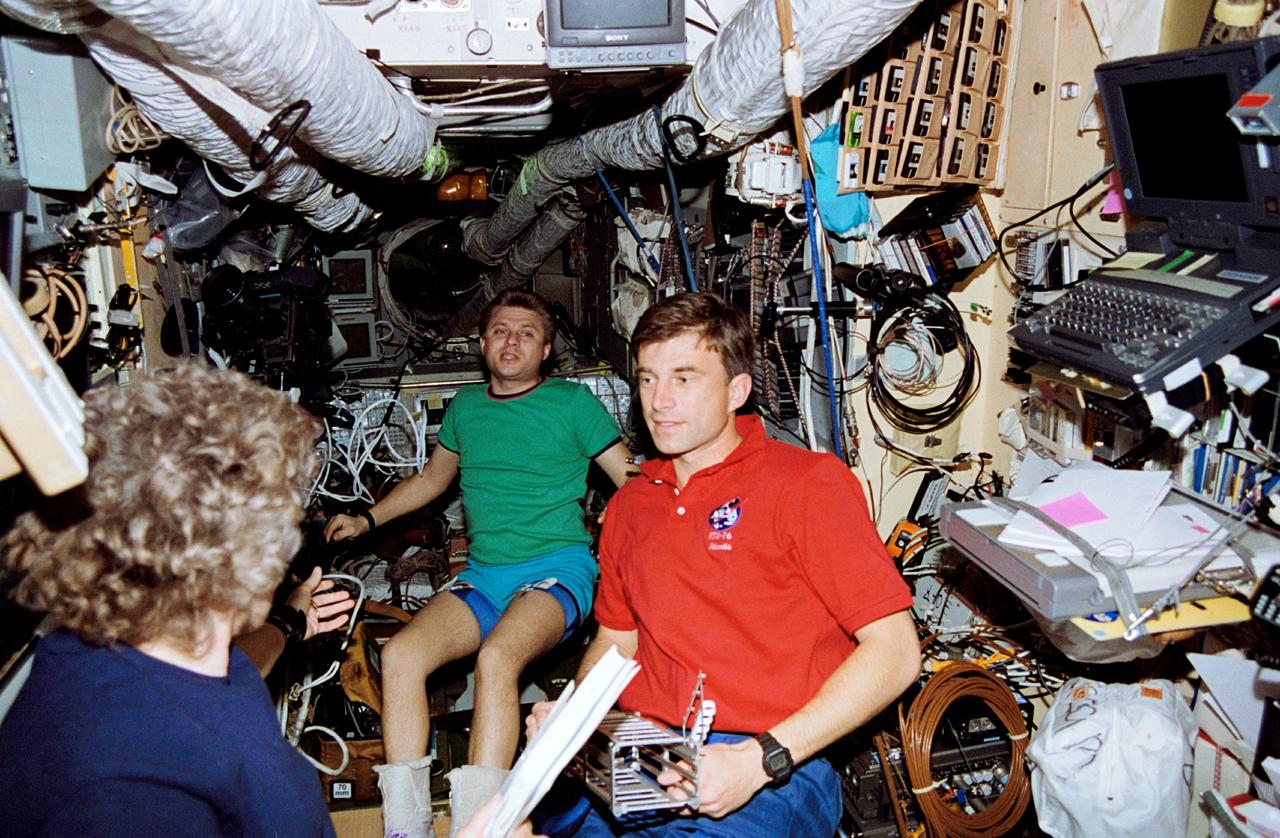
STS076-461-004 (22-31 March 1996) --- Onboard the Base Block Module of Russia's Mir Space Station, astronauts Shannon W. Lucid and Ronald M. Sega, payload commander, discuss final activities between the STS-76 and Mir-21 crews as cosmonaut Yury I. Onufrienko (center) listens. Yury V. Usachev (out of frame) is Mir-21 flight engineer. The Space Shuttle Atlantis docked with Mir on March 23, 1996, and remained linked until March 28, 1996. Lucid was in the process of transferring from STS-76 to the Mir-21 crew, which thereby grew from two to three members. She will remain aboard Mir for approximately 140 days.
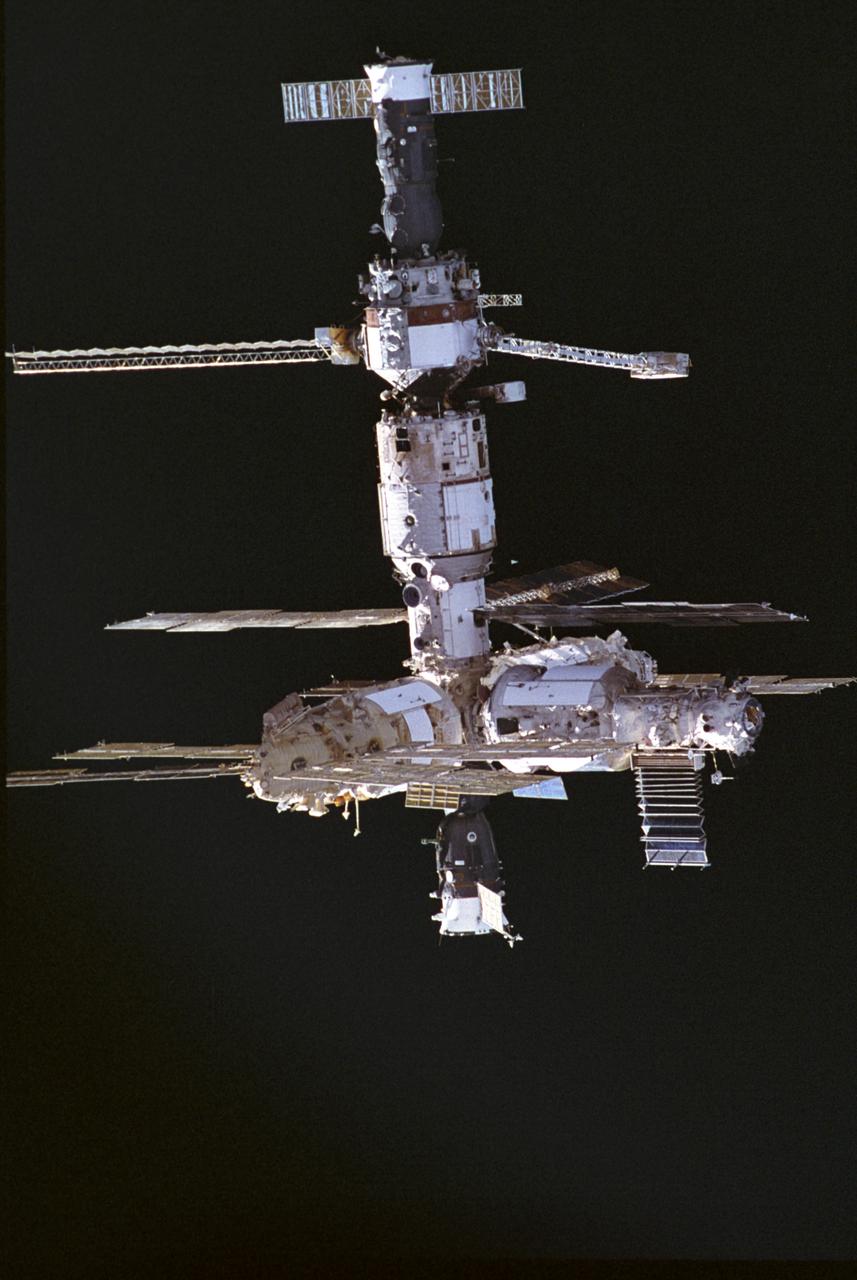
This image of the Russian Mir Space Station was photographed by a crewmember of the STS-74 mission when the Orbiter Atlantis was approaching the Mir Space Station. STS-74 was the second Space Shuttle/Mir docking mission. The Docking Module was delivered and installed, making it possible for the Space Shuttle to dock easily with Mir. The Orbiter Atlantis delivered water, supplies, and equipment, including two new solar arrays to upgrade the Mir, and returned to Earth with experiment samples, equipment for repair and analysis, and products manufactured on the Station. Mir was constructed in orbit by cornecting different modules, seperately launched from 1986 to 1996, providing a large and livable scientific laboratory in space. The 100-ton Mir was as big as six school buses and commonly housed three crewmembers. Mir was continuously occupied, except for two short periods, and hosted international scientists and American astronauts until August 1999. The journey of the 15-year-old Russian Mir Space Station ended March 23, 2001, as Mir re-entered the Earth's atmosphere and fell into the south Pacific ocean . STS-74 was launched on November 12, 1995, and landed at the Kennedy Space Center on November 20, 1995.
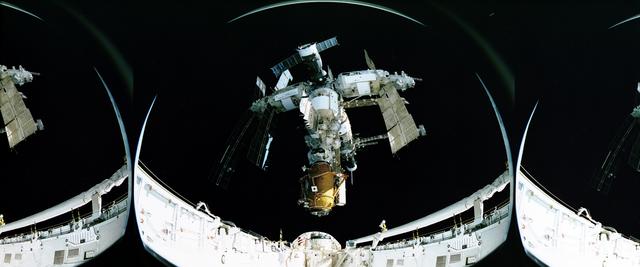
This fish-eye view of the Russian Mir Space Station was photographed by a crewmember of the STS-74 mission after the separation. The image shows the installed Docking Module at bottom. The Docking Module was delivered and installed, making it possible for the Space Shuttle to dock easily with Mir. The Orbiter Atlantis delivered water, supplies, and equipment, including two new solar arrays to upgrade the Mir; and returned to Earth with experiment samples, equipment for repair and analysis, and products manufactured on the Station. Mir was constructed in orbit by cornecting different modules, each launched separately from 1986 to 1996, providing a large and livable scientific laboratory in space. The 100-ton Mir was as big as six school buses and commonly housed three crewmembers. Mir was continuously occupied, except for two short periods, and hosted international scientists and American astronauts until August 1999. The journey of the 15-year-old Russian Mir Space Station ended March 23, 2001, as Mir re-entered the Earth's atmosphere and fell into the south Pacific ocean. STS-74 was the second Space Shuttle/Mir docking mission launched on November 12, 1995, and landed at the Kennedy Space Center on November 20, 1995.
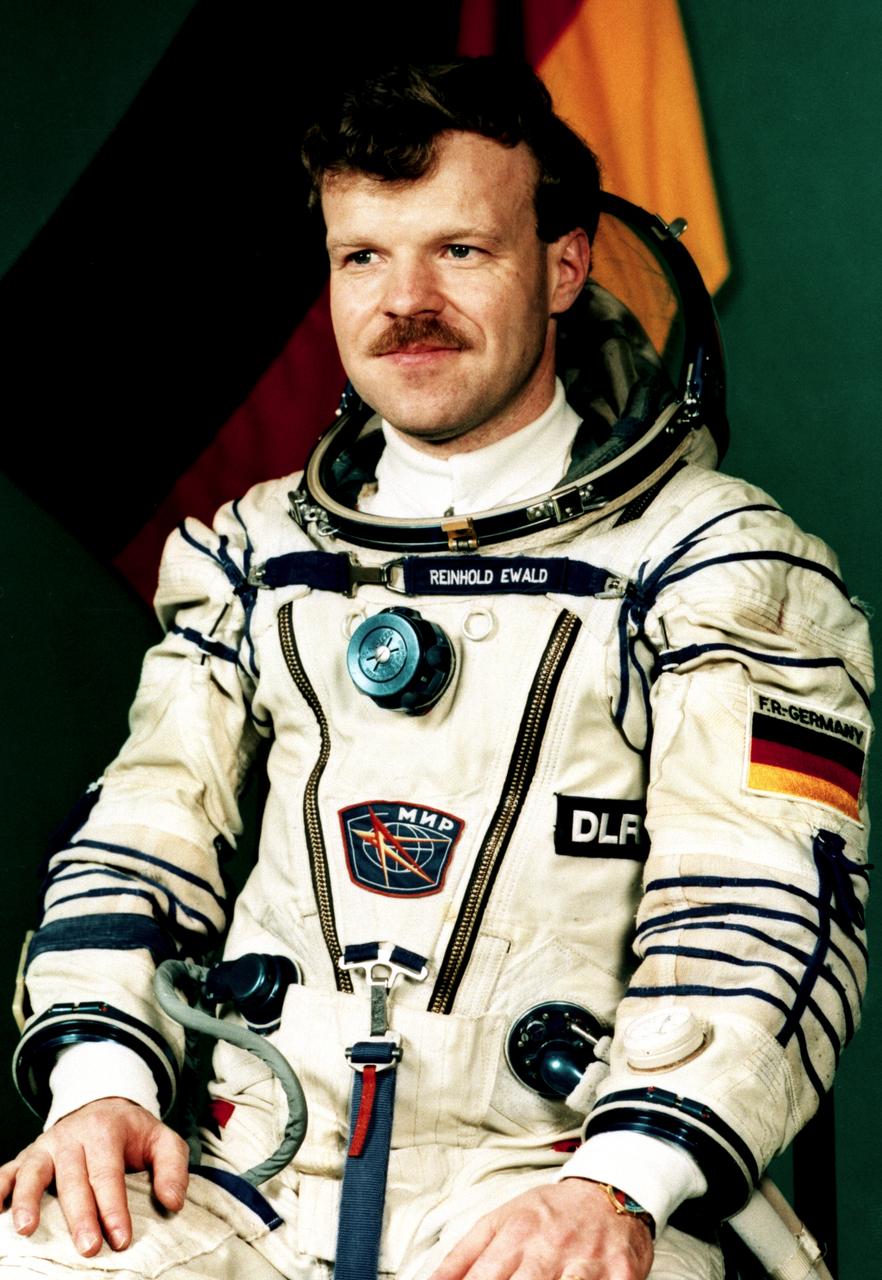
S97-01442 (August 1996) --- Dr. Reinhold Ewald, German Space Agency (DLR), cosmonaut researcher
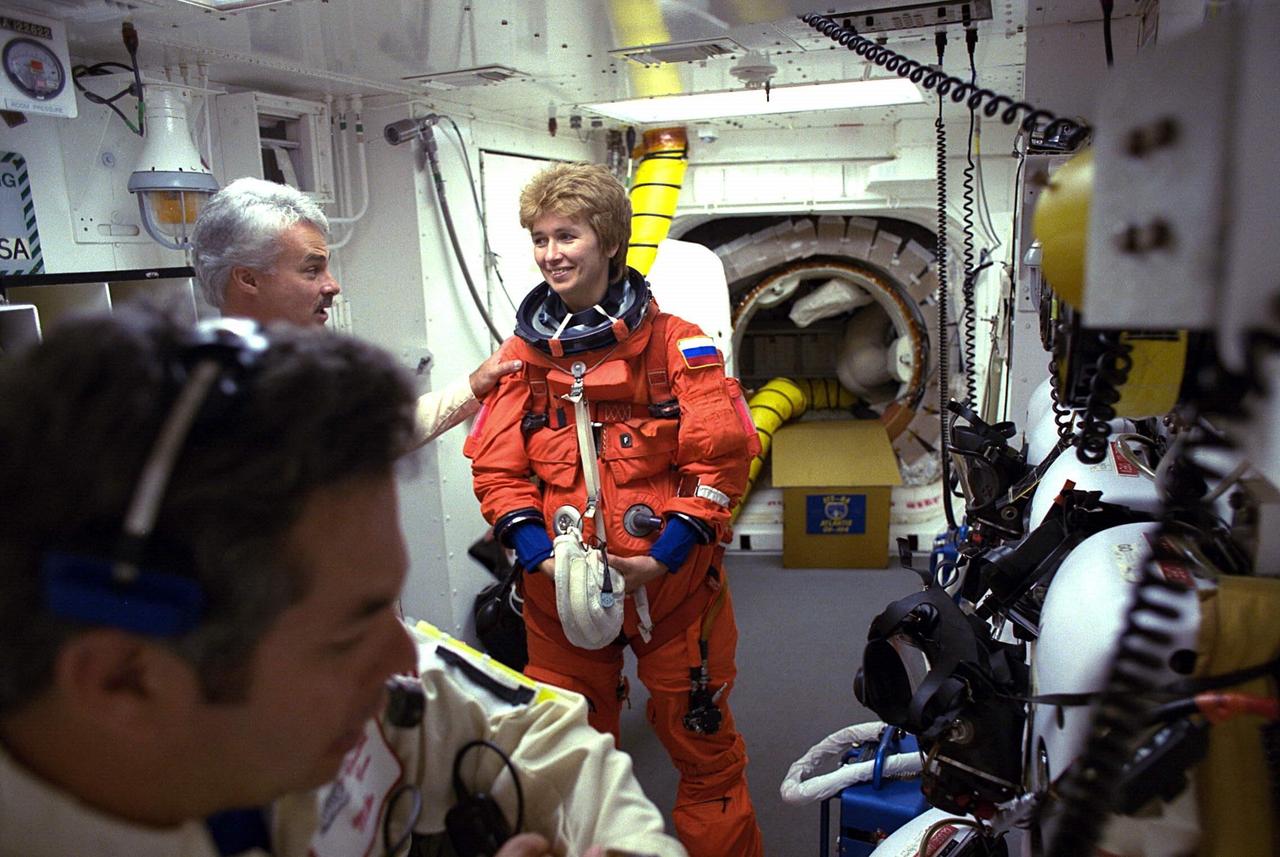
STS-84 Mission Specialist Elena V. Kondakova prepares to enter the Space Shuttle Atlantis at Launch Pad 39A with help from white room closeout crew members. The fourth Shuttle mission of 1997 will be the sixth docking of the Space Shuttle with the Russian Space Station Mir. The commander is Charles J. Precourt. The pilot is Eileen Marie Collins. The five mission specialists are C. Michael Foale, Carlos I. Noriega, Edward Tsang Lu, Jean-Francois Clervoy of the European Space Agency and Elena V. Kondakova of the Russian Space Agency. The planned nine-day mission will include the exchange of Foale for U.S. astronaut and Mir 23 crew member Jerry M. Linenger, who has been on Mir since Jan. 15. Linenger transferred to Mir during the last docking mission, STS-81; he will return to Earth on Atlantis. Foale is slated to remain on Mir for about four months until he is replaced in September by STS-86 Mission Specialist Wendy B. Lawrence. During the five days Atlantis is scheduled to be docked with the Mir, the STS-84 crew and the Mir 23 crew, including two Russian cosmonauts, Commander Vasily Tsibliev and Flight Engineer Alexander Lazutkin, will participate in joint experiments. The STS-84 mission also will involve the transfer of more than 7,300 pounds of water, logistics and science equipment to and from the Mir. Atlantis is carrying a nearly 300-pound oxygen generator to replace one of two Mir units which have experienced malfunctions. The oxygen it generates is used for breathing by the Mir crew
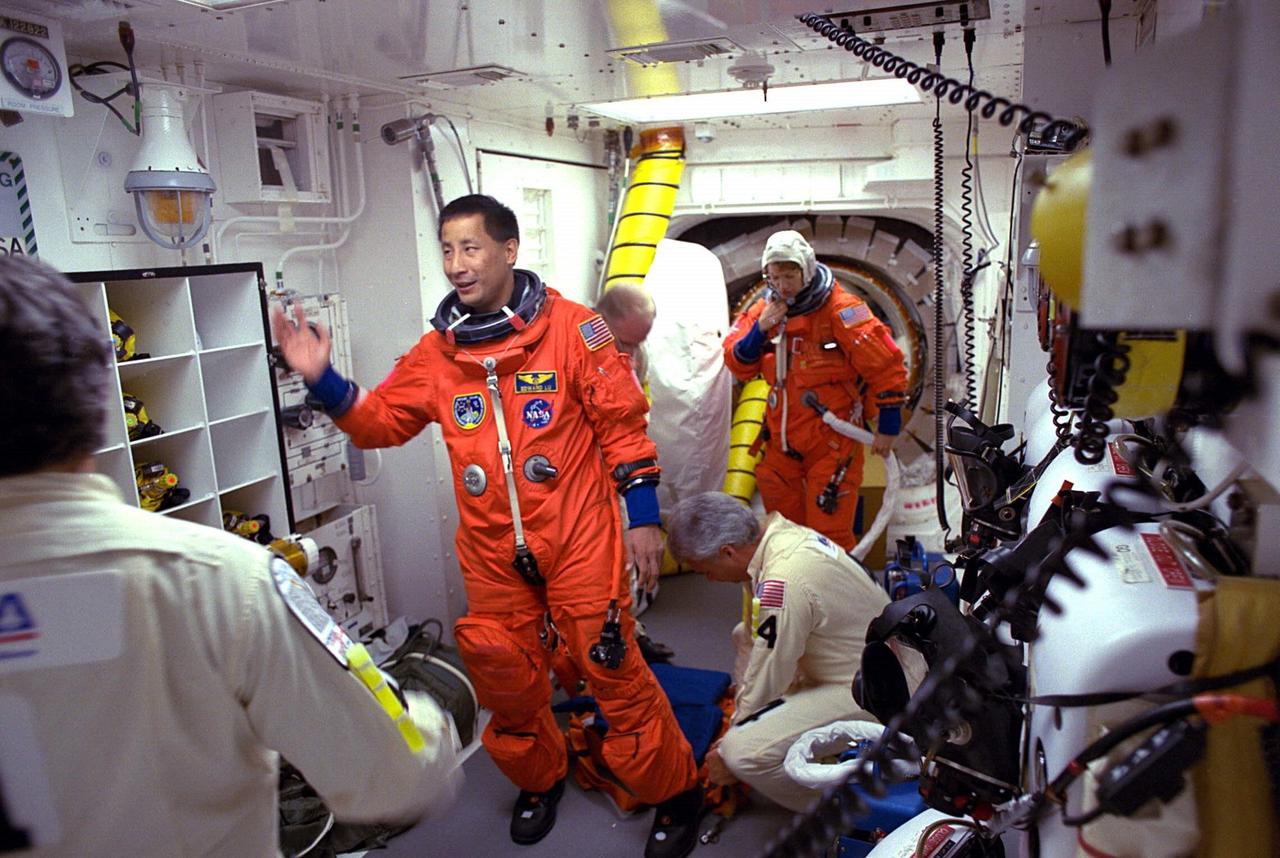
STS-84 Mission Specialist Edward T. Lu prepares to enter the Space Shuttle Atlantis at Launch Pad 39A with help from white room closeout crew members. The fourth Shuttle mission of 1997 will be the sixth docking of the Space Shuttle with the Russian Space Station Mir. The commander is Charles J. Precourt. The pilot is Eileen Marie Collins. The five mission specialists are C. Michael Foale, Carlos I. Noriega, Edward Tsang Lu, Jean-Francois Clervoy of the European Space Agency and Elena V. Kondakova of the Russian Space Agency. The planned nine-day mission will include the exchange of Foale for U.S. astronaut and Mir 23 crew member Jerry M. Linenger, who has been on Mir since Jan. 15. Linenger transferred to Mir during the last docking mission, STS-81; he will return to Earth on Atlantis. Foale is slated to remain on Mir for about four months until he is replaced in September by STS-86 Mission Specialist Wendy B. Lawrence. During the five days Atlantis is scheduled to be docked with the Mir, the STS-84 crew and the Mir 23 crew, including two Russian cosmonauts, Commander Vasily Tsibliev and Flight Engineer Alexander Lazutkin, will participate in joint experiments. The STS-84 mission also will involve the transfer of more than 7,300 pounds of water, logistics and science equipment to and from the Mir. Atlantis is carrying a nearly 300-pound oxygen generator to replace one of two Mir units which have experienced malfunctions. The oxygen it generates is used for breathing by the Mir crew
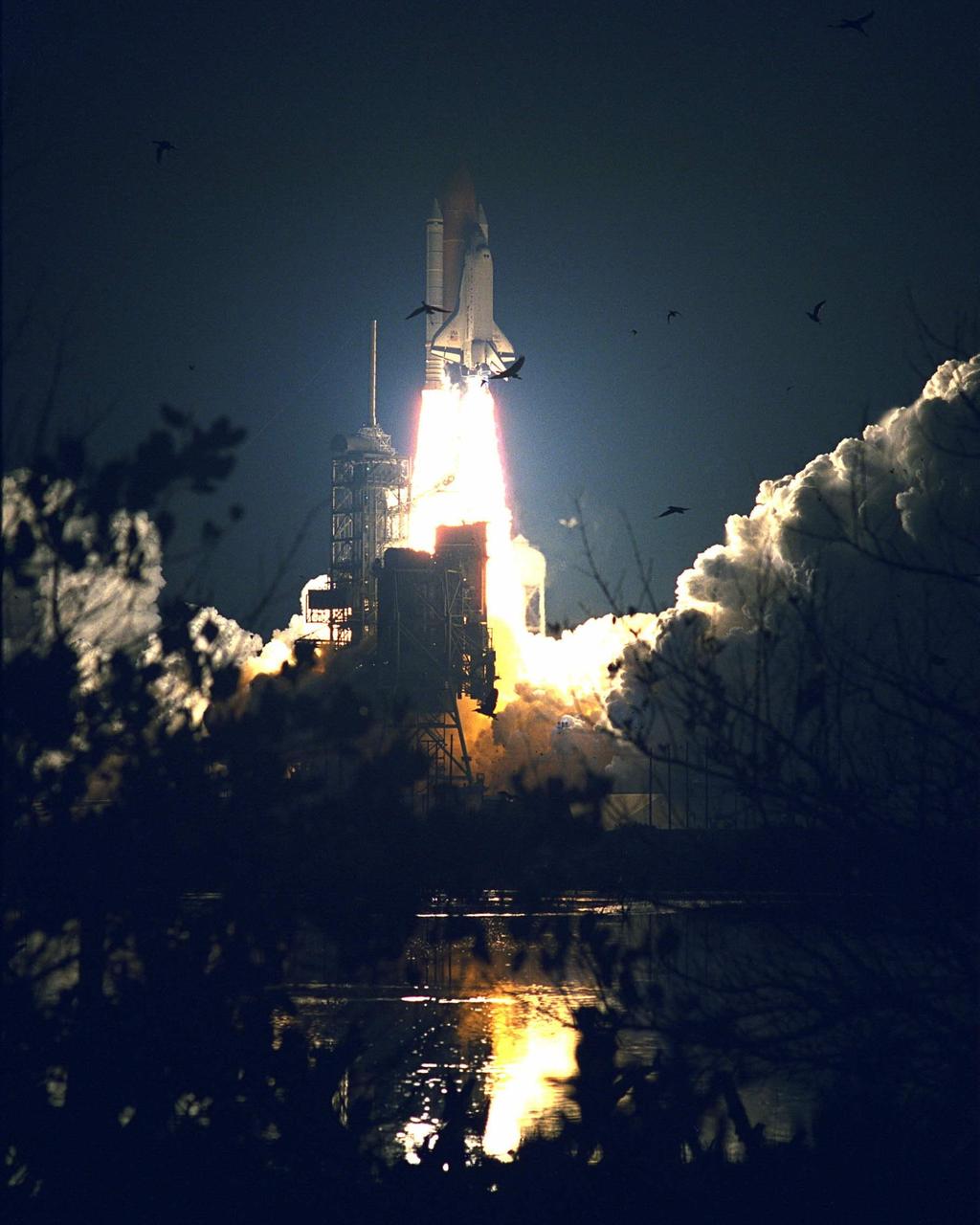
The Space Shuttle Atlantis turns night into day for a few moments as it lifts off on May 15 at 4:07:48 a.m. EDT from Launch Pad 39A on the STS-84 mission. The fourth Shuttle mission of 1997 will be the sixth docking of the Space Shuttle with the Russian Space Station Mir. The commander is Charles J. Precourt. The pilot is Eileen Marie Collins. The five mission specialists are C. Michael Foale, Carlos I. Noriega, Edward Tsang Lu, Jean-Francois Clervoy of the European Space Agency and Elena V. Kondakova of the Russian Space Agency. The planned nine-day mission will include the exchange of Foale for U.S. astronaut and Mir 23 crew member Jerry M. Linenger, who has been on Mir since Jan. 15. Linenger transferred to Mir during the last docking mission, STS-81; he will return to Earth on Atlantis. Foale is slated to remain on Mir for about four months until he is replaced in September by STS-86 Mission Specialist Wendy B. Lawrence. During the five days Atlantis is scheduled to be docked with the Mir, the STS-84 crew and the Mir 23 crew, including two Russian cosmonauts, Commander Vasily Tsibliev and Flight Engineer Alexander Lazutkin, will participate in joint experiments. The STS-84 mission also will involve the transfer of more than 7,300 pounds of water, logistics and science equipment to and from the Mir. Atlantis is carrying a nearly 300-pound oxygen generator to replace one of two Mir units which have experienced malfunctions. The oxygen it generates is used for breathing by the Mir crew
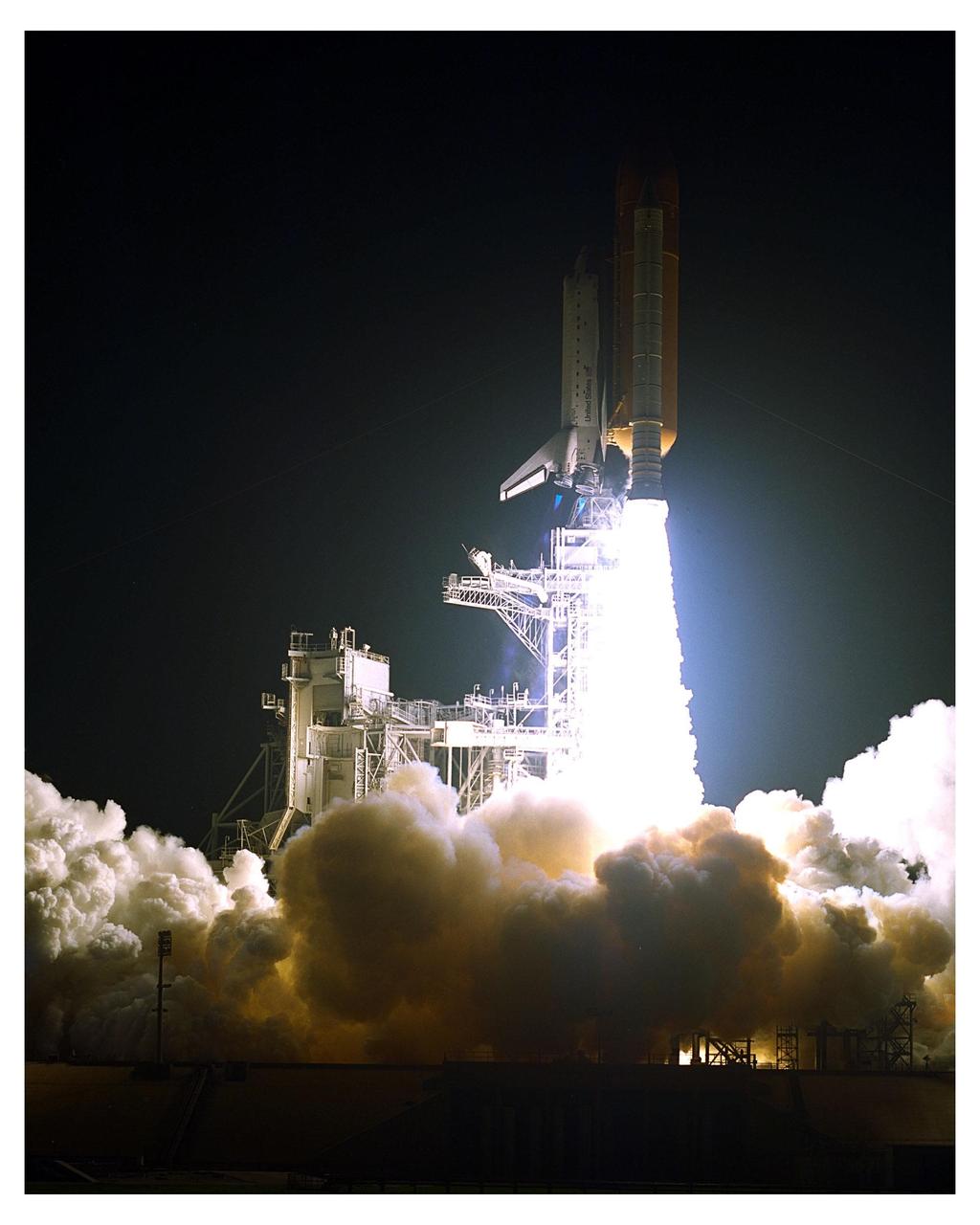
The Space Shuttle Atlantis turns night into day for a few moments as it lifts off on May 15 at 4:07:48 a.m. EDT from Launch Pad 39A on the STS-84 mission. The fourth Shuttle mission of 1997 will be the sixth docking of the Space Shuttle with the Russian Space Station Mir. The commander is Charles J. Precourt. The pilot is Eileen Marie Collins. The five mission specialists are C. Michael Foale, Carlos I. Noriega, Edward Tsang Lu, Jean-Francois Clervoy of the European Space Agency and Elena V. Kondakova of the Russian Space Agency. The planned nine-day mission will include the exchange of Foale for U.S. astronaut and Mir 23 crew member Jerry M. Linenger, who has been on Mir since Jan. 15. Linenger transferred to Mir during the last docking mission, STS-81; he will return to Earth on Atlantis. Foale is slated to remain on Mir for about four months until he is replaced in September by STS-86 Mission Specialist Wendy B. Lawrence. During the five days Atlantis is scheduled to be docked with the Mir, the STS-84 crew and the Mir 23 crew, including two Russian cosmonauts, Commander Vasily Tsibliev and Flight Engineer Alexander Lazutkin, will participate in joint experiments. The STS-84 mission also will involve the transfer of more than 7,300 pounds of water, logistics and science equipment to and from the Mir. Atlantis is carrying a nearly 300-pound oxygen generator to replace one of two Mir units which have experienced malfunctions. The oxygen it generates is used for breathing by the Mir crew
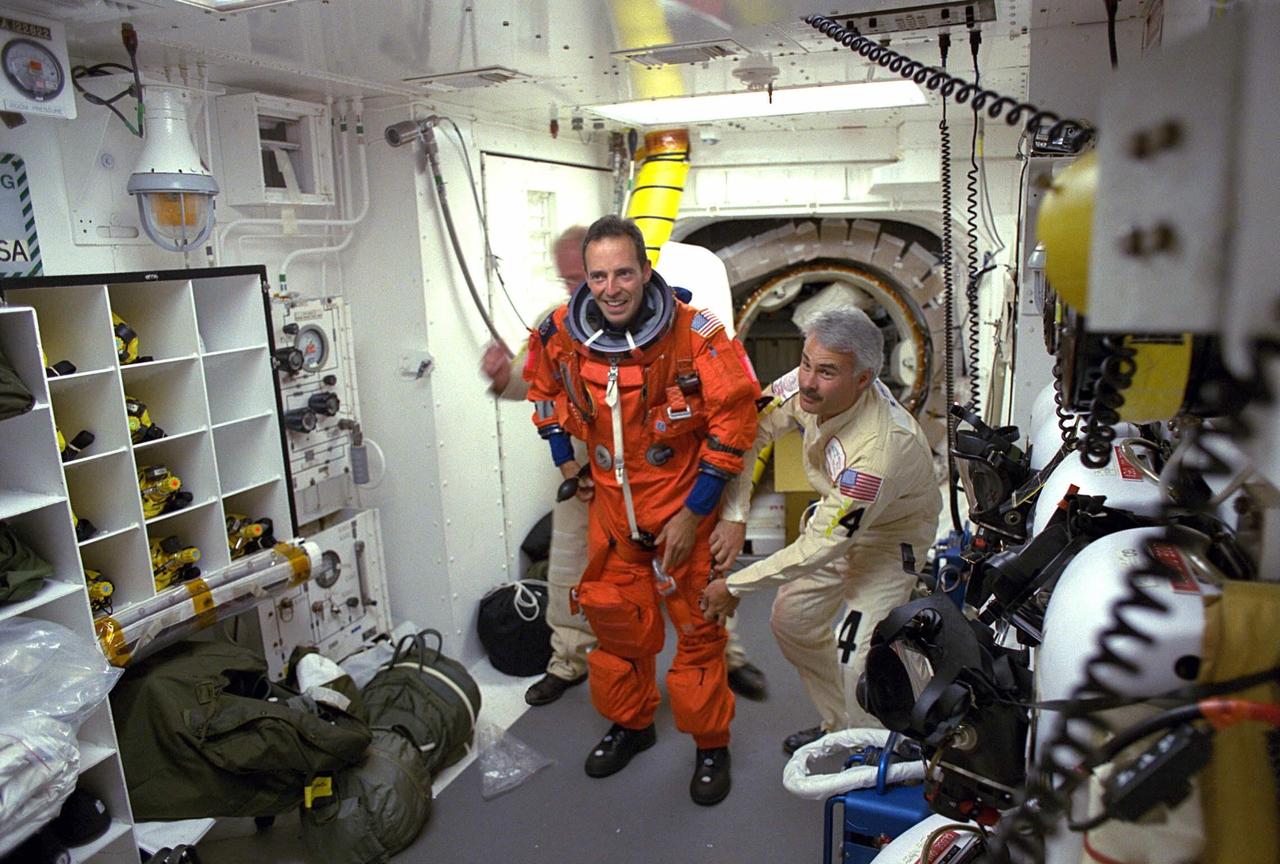
STS-84 Mission Specialist Jean-Francois Clervoy prepares to enter the Space Shuttle Atlantis at Launch Pad 39A with help from white room closeout crew members. The fourth Shuttle mission of 1997 will be the sixth docking of the Space Shuttle with the Russian Space Station Mir. The commander is Charles J. Precourt. The pilot is Eileen Marie Collins. The five mission specialists are C. Michael Foale, Carlos I. Noriega, Edward Tsang Lu, Jean-Francois Clervoy of the European Space Agency and Elena V. Kondakova of the Russian Space Agency. The planned nine-day mission will include the exchange of Foale for U.S. astronaut and Mir 23 crew member Jerry M. Linenger, who has been on Mir since Jan. 15. Linenger transferred to Mir during the last docking mission, STS-81; he will return to Earth on Atlantis. Foale is slated to remain on Mir for about four months until he is replaced in September by STS-86 Mission Specialist Wendy B. Lawrence. During the five days Atlantis is scheduled to be docked with the Mir, the STS-84 crew and the Mir 23 crew, including two Russian cosmonauts, Commander Vasily Tsibliev and Flight Engineer Alexander Lazutkin, will participate in joint experiments. The STS-84 mission also will involve the transfer of more than 7,300 pounds of water, logistics and science equipment to and from the Mir. Atlantis is carrying a nearly 300-pound oxygen generator to replace one of two Mir units which have experienced malfunctions. The oxygen it generates is used for breathing by the Mir crew
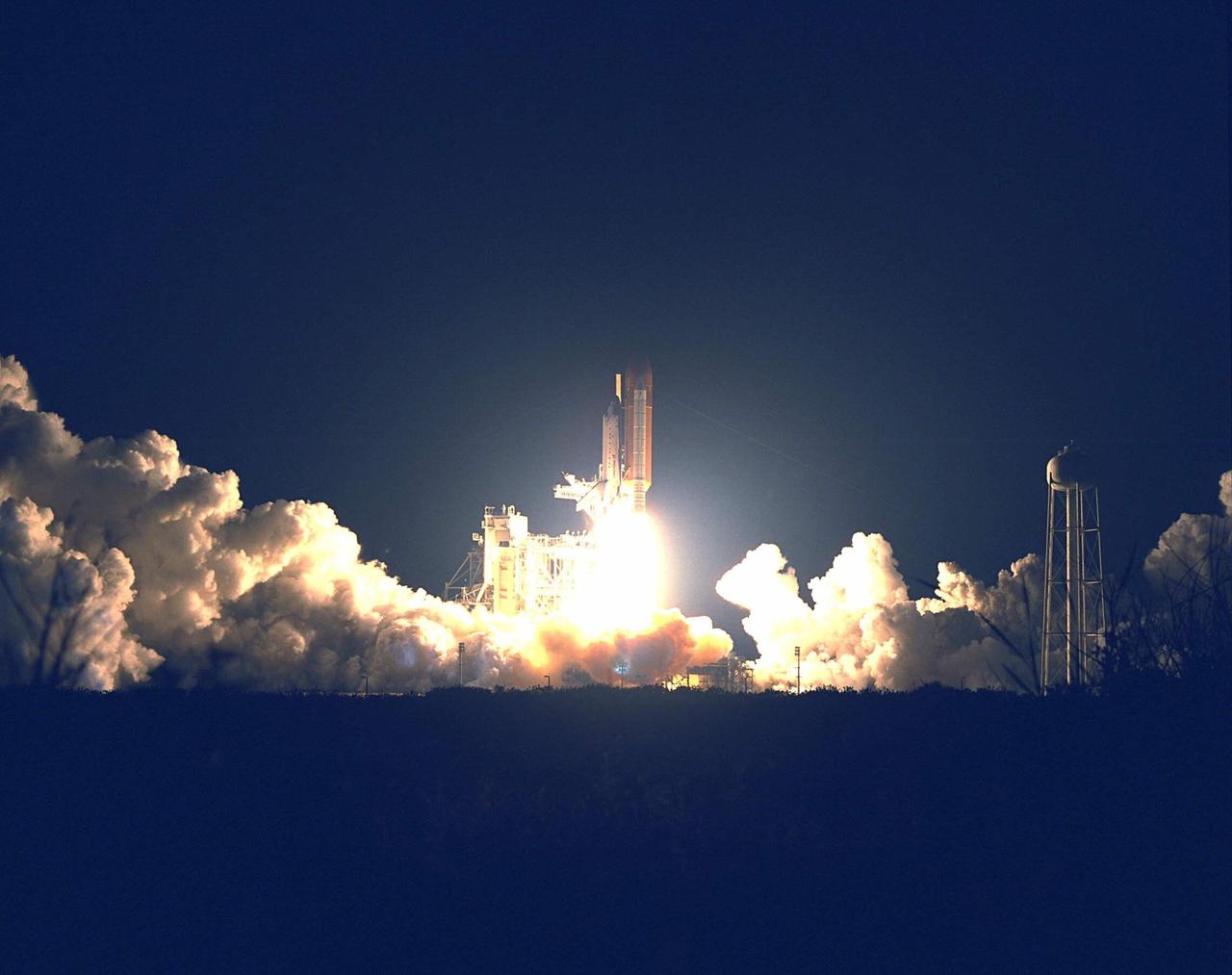
The Space Shuttle Atlantis turns night into day for a few moments as it lifts off on May 15 at 4:07:48 a.m. EDT from Launch Pad 39A on the STS-84 mission. The fourth Shuttle mission of 1997 will be the sixth docking of the Space Shuttle with the Russian Space Station Mir. The commander is Charles J. Precourt. The pilot is Eileen Marie Collins. The five mission specialists are C. Michael Foale, Carlos I. Noriega, Edward Tsang Lu, Jean-Francois Clervoy of the European Space Agency and Elena V. Kondakova of the Russian Space Agency. The planned nine-day mission will include the exchange of Foale for U.S. astronaut and Mir 23 crew member Jerry M. Linenger, who has been on Mir since Jan. 15. Linenger transferred to Mir during the last docking mission, STS-81; he will return to Earth on Atlantis. Foale is slated to remain on Mir for about four months until he is replaced in September by STS-86 Mission Specialist Wendy B. Lawrence. During the five days Atlantis is scheduled to be docked with the Mir, the STS-84 crew and the Mir 23 crew, including two Russian cosmonauts, Commander Vasily Tsibliev and Flight Engineer Alexander Lazutkin, will participate in joint experiments. The STS-84 mission also will involve the transfer of more than 7,300 pounds of water, logistics and science equipment to and from the Mir. Atlantis is carrying a nearly 300-pound oxygen generator to replace one of two Mir units which have experienced malfunctions. The oxygen it generates is used for breathing by the Mir crew
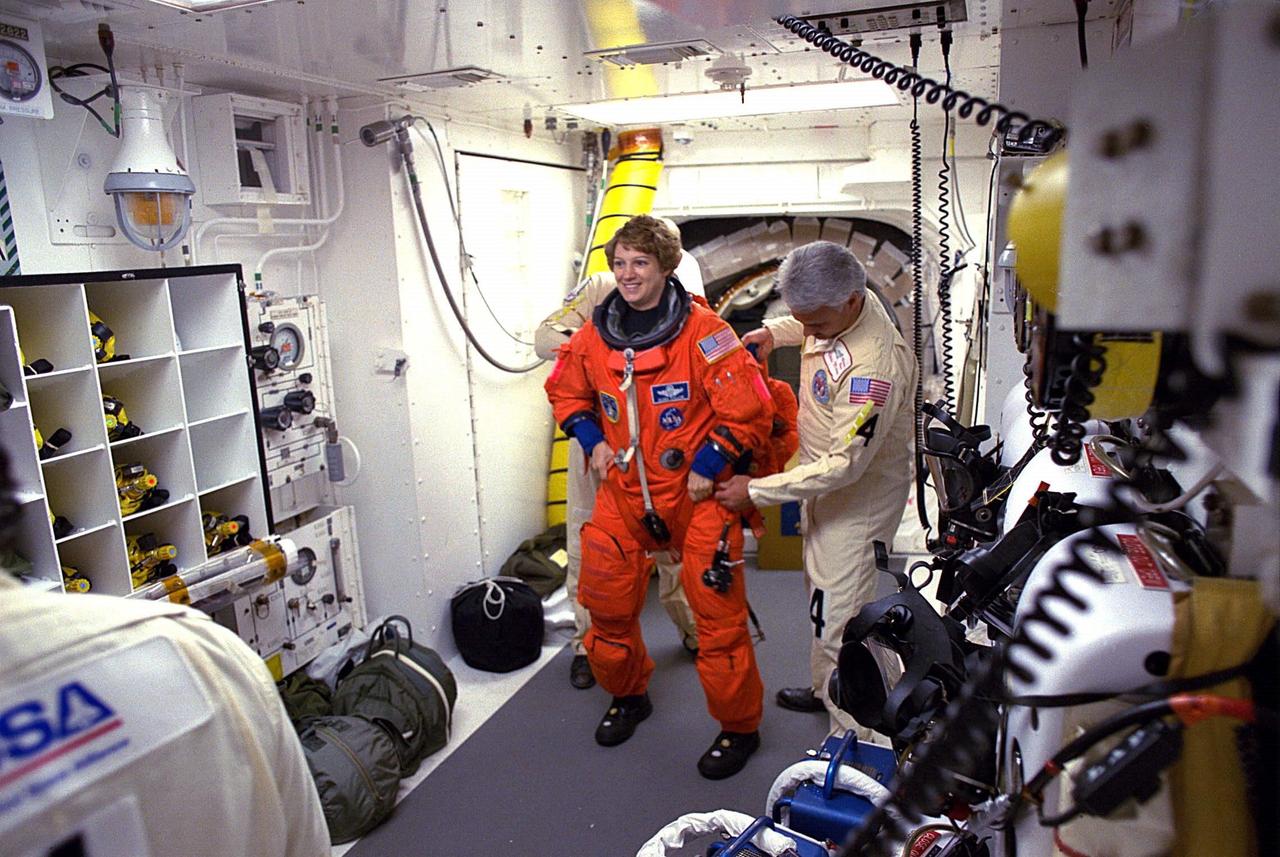
STS-84 Pilot Eileen M. Collins prepares to enter the Space Shuttle Atlantis at Launch Pad 39A with help from white room closeout crew members. The fourth Shuttle mission of 1997 will be the sixth docking of the Space Shuttle with the Russian Space Station Mir. The commander is Charles J. Precourt. The pilot is Eileen Marie Collins. The five mission specialists are C. Michael Foale, Carlos I. Noriega, Edward Tsang Lu, Jean-Francois Clervoy of the European Space Agency and Elena V. Kondakova of the Russian Space Agency. The planned nine-day mission will include the exchange of Foale for U.S. astronaut and Mir 23 crew member Jerry M. Linenger, who has been on Mir since Jan. 15. Linenger transferred to Mir during the last docking mission, STS-81; he will return to Earth on Atlantis. Foale is slated to remain on Mir for about four months until he is replaced in September by STS-86 Mission Specialist Wendy B. Lawrence. During the five days Atlantis is scheduled to be docked with the Mir, the STS-84 crew and the Mir 23 crew, including two Russian cosmonauts, Commander Vasily Tsibliev and Flight Engineer Alexander Lazutkin, will participate in joint experiments. The STS-84 mission also will involve the transfer of more than 7,300 pounds of water, logistics and science equipment to and from the Mir. Atlantis is carrying a nearly 300-pound oxygen generator to replace one of two Mir units which have experienced malfunctions. The oxygen it generates is used for breathing by the Mir crew
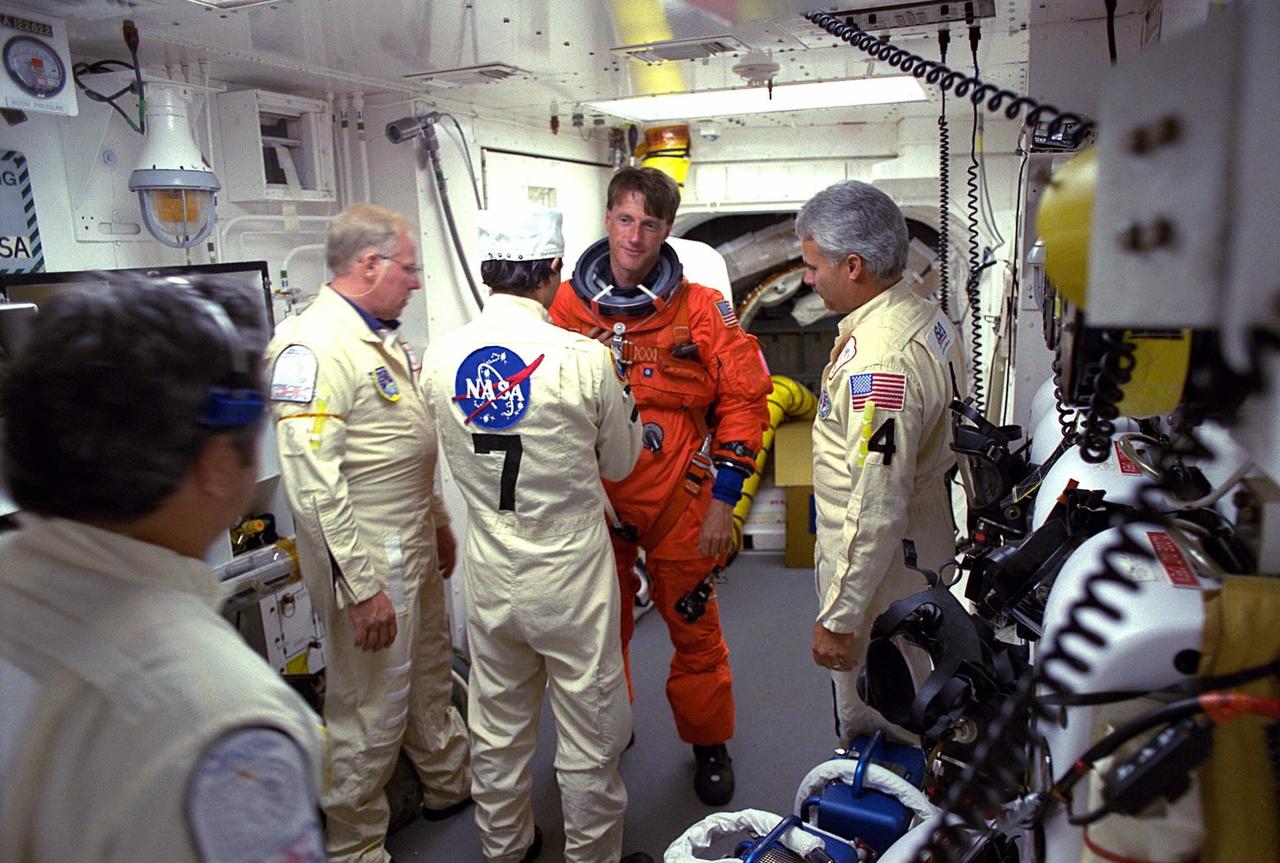
STS-84 Mission Specialist C. Michael Foale prepares to enter the Space Shuttle Atlantis at Launch Pad 39A with help from white room closeout crew members. The fourth Shuttle mission of 1997 will be the sixth docking of the Space Shuttle with the Russian Space Station Mir. The commander is Charles J. Precourt. The pilot is Eileen Marie Collins. The five mission specialists are C. Michael Foale, Carlos I. Noriega, Edward Tsang Lu, Jean-Francois Clervoy of the European Space Agency and Elena V. Kondakova of the Russian Space Agency. The planned nine-day mission will include the exchange of Foale for U.S. astronaut and Mir 23 crew member Jerry M. Linenger, who has been on Mir since Jan. 15. Linenger transferred to Mir during the last docking mission, STS-81; he will return to Earth on Atlantis. Foale is slated to remain on Mir for about four months until he is replaced in September by STS-86 Mission Specialist Wendy B. Lawrence. During the five days Atlantis is scheduled to be docked with the Mir, the STS-84 crew and the Mir 23 crew, including two Russian cosmonauts, Commander Vasily Tsibliev and Flight Engineer Alexander Lazutkin, will participate in joint experiments. The STS-84 mission also will involve the transfer of more than 7,300 pounds of water, logistics and science equipment to and from the Mir. Atlantis is carrying a nearly 300-pound oxygen generator to replace one of two Mir units which have experienced malfunctions. The oxygen it generates is used for breathing by the Mir crew
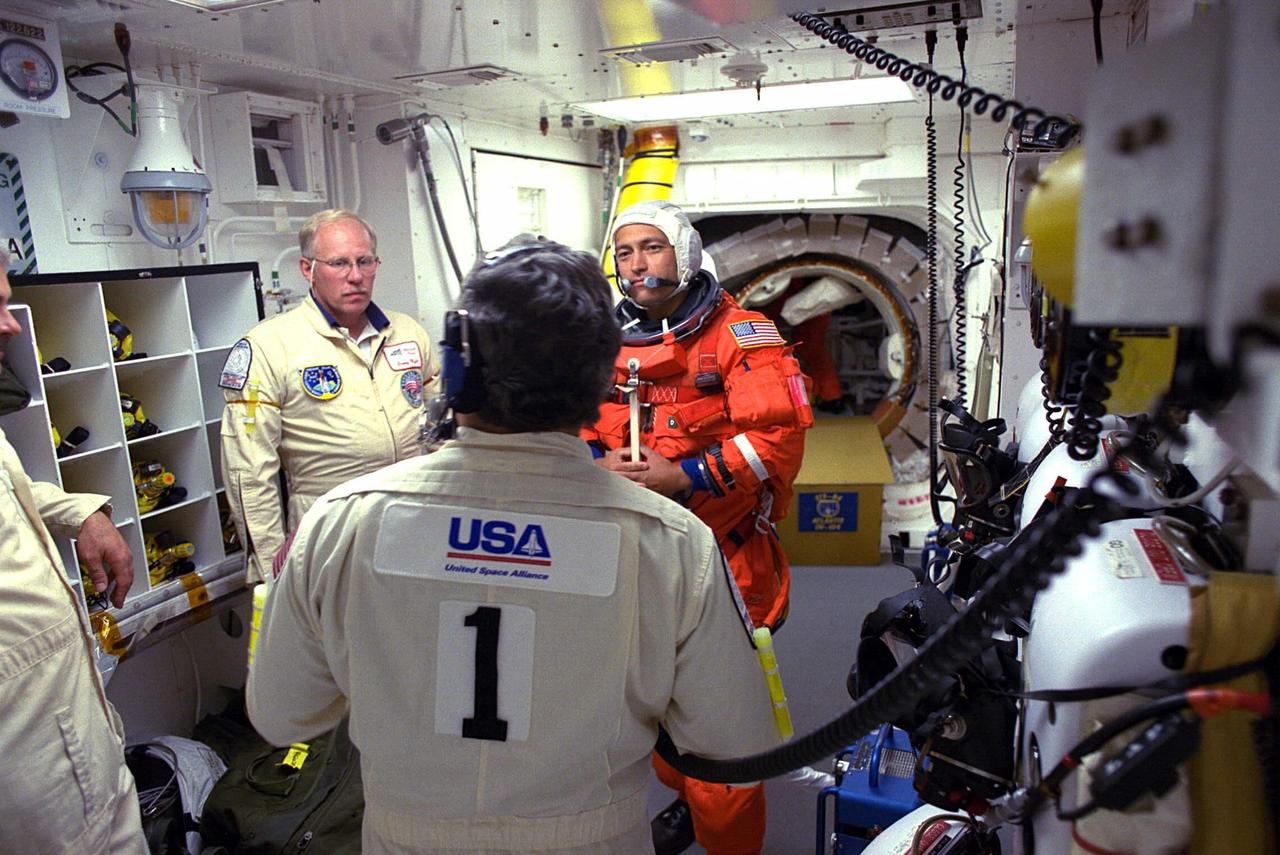
STS-84 Mission Specialist Carlos I. Noriega prepares to enter the Space Shuttle Atlantis at Launch Pad 39A with help from white room closeout crew members. The fourth Shuttle mission of 1997 will be the sixth docking of the Space Shuttle with the Russian Space Station Mir. The commander is Charles J. Precourt. The pilot is Eileen Marie Collins. The five mission specialists are C. Michael Foale, Carlos I. Noriega, Edward Tsang Lu, Jean-Francois Clervoy of the European Space Agency and Elena V. Kondakova of the Russian Space Agency. The planned nine-day mission will include the exchange of Foale for U.S. astronaut and Mir 23 crew member Jerry M. Linenger, who has been on Mir since Jan. 15. Linenger transferred to Mir during the last docking mission, STS-81; he will return to Earth on Atlantis. Foale is slated to remain on Mir for about four months until he is replaced in September by STS-86 Mission Specialist Wendy B. Lawrence. During the five days Atlantis is scheduled to be docked with the Mir, the STS-84 crew and the Mir 23 crew, including two Russian cosmonauts, Commander Vasily Tsibliev and Flight Engineer Alexander Lazutkin, will participate in joint experiments. The STS-84 mission also will involve the transfer of more than 7,300 pounds of water, logistics and science equipment to and from the Mir. Atlantis is carrying a nearly 300-pound oxygen generator to replace one of two Mir units which have experienced malfunctions. The oxygen it generates is used for breathing by the Mir crew
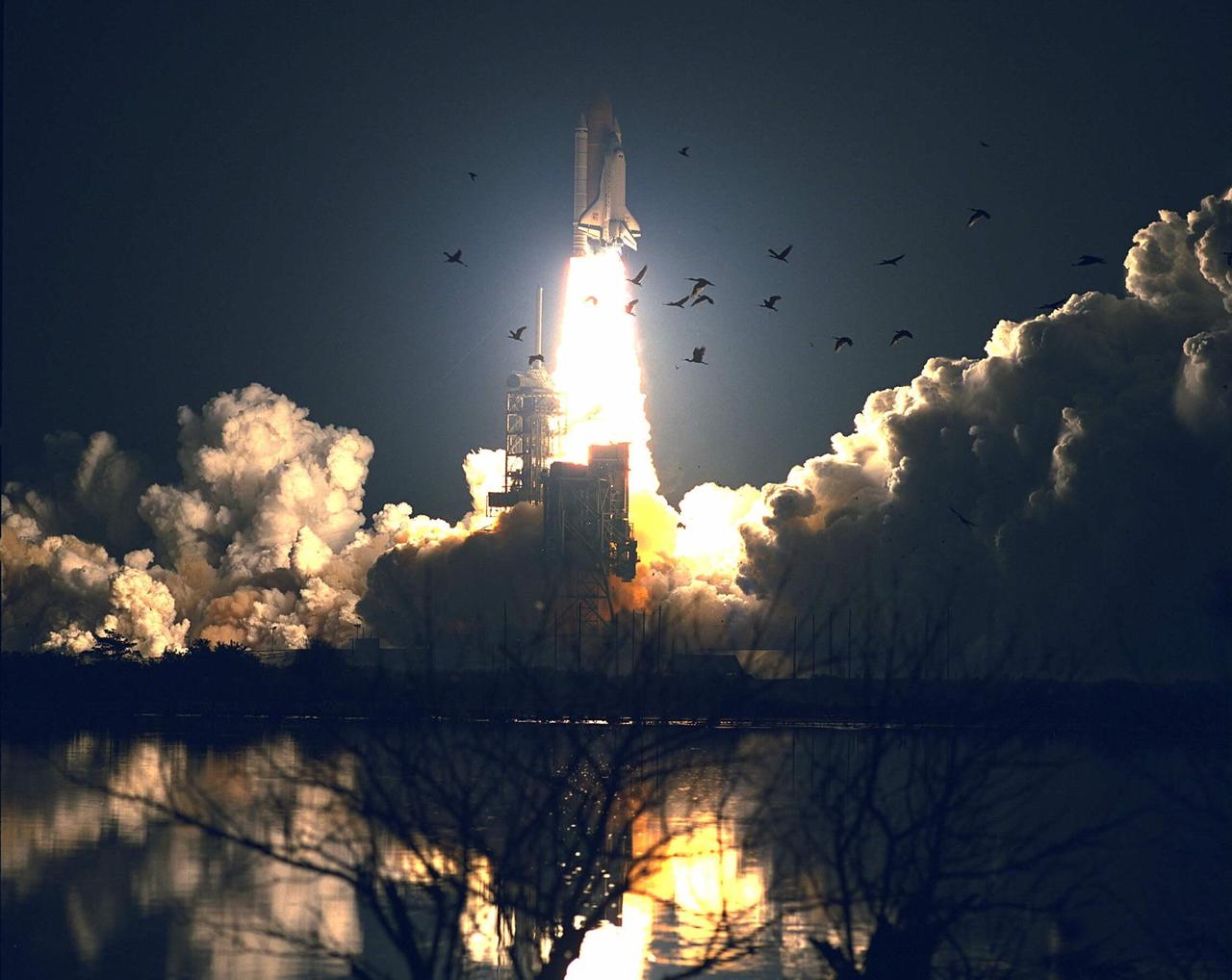
The Space Shuttle Atlantis turns night into day for a few moments as it lifts off on May 15 at 4:07:48 a.m. EDT from Launch Pad 39A on the STS-84 mission. The fourth Shuttle mission of 1997 will be the sixth docking of the Space Shuttle with the Russian Space Station Mir. The commander is Charles J. Precourt. The pilot is Eileen Marie Collins. The five mission specialists are C. Michael Foale, Carlos I. Noriega, Edward Tsang Lu, Jean-Francois Clervoy of the European Space Agency and Elena V. Kondakova of the Russian Space Agency. The planned nine-day mission will include the exchange of Foale for U.S. astronaut and Mir 23 crew member Jerry M. Linenger, who has been on Mir since Jan. 15. Linenger transferred to Mir during the last docking mission, STS-81; he will return to Earth on Atlantis. Foale is slated to remain on Mir for about four months until he is replaced in September by STS-86 Mission Specialist Wendy B. Lawrence. During the five days Atlantis is scheduled to be docked with the Mir, the STS-84 crew and the Mir 23 crew, including two Russian cosmonauts, Commander Vasily Tsibliev and Flight Engineer Alexander Lazutkin, will participate in joint experiments. The STS-84 mission also will involve the transfer of more than 7,300 pounds of water, logistics and science equipment to and from the Mir. Atlantis is carrying a nearly 300-pound oxygen generator to replace one of two Mir units which have experienced malfunctions. The oxygen it generates is used for breathing by the Mir crew
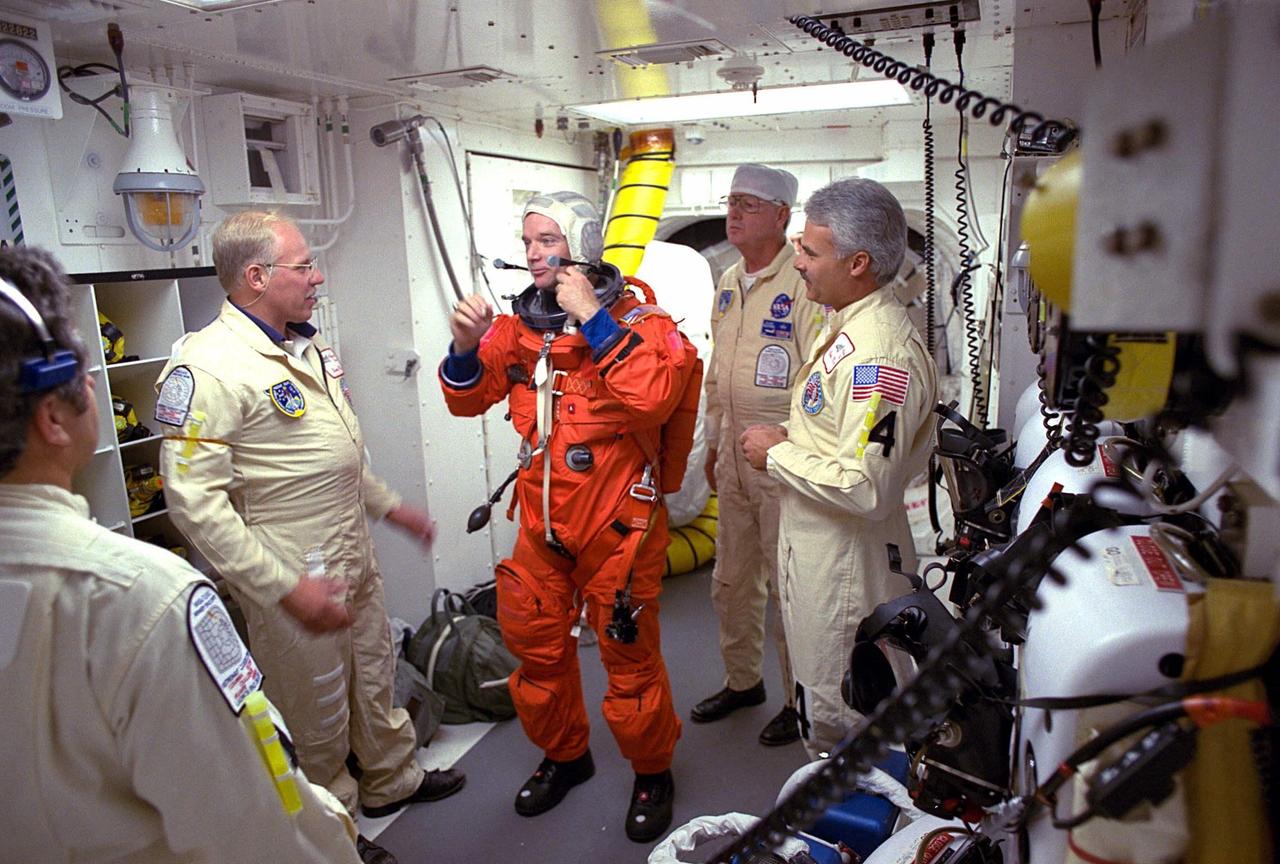
STS-84 Commander Charles J. Precourt prepares to enter the Space Shuttle Atlantis at Launch Pad 39A with help from white room closeout crew members. The fourth Shuttle mission of 1997 will be the sixth docking of the Space Shuttle with the Russian Space Station Mir. The commander is Charles J. Precourt. The pilot is Eileen Marie Collins. The five mission specialists are C. Michael Foale, Carlos I. Noriega, Edward Tsang Lu, Jean-Francois Clervoy of the European Space Agency and Elena V. Kondakova of the Russian Space Agency. The planned nine-day mission will include the exchange of Foale for U.S. astronaut and Mir 23 crew member Jerry M. Linenger, who has been on Mir since Jan. 15. Linenger transferred to Mir during the last docking mission, STS-81; he will return to Earth on Atlantis. Foale is slated to remain on Mir for about four months until he is replaced in September by STS-86 Mission Specialist Wendy B. Lawrence. During the five days Atlantis is scheduled to be docked with the Mir, the STS-84 crew and the Mir 23 crew, including two Russian cosmonauts, Commander Vasily Tsibliev and Flight Engineer Alexander Lazutkin, will participate in joint experiments. The STS-84 mission also will involve the transfer of more than 7,300 pounds of water, logistics and science equipment to and from the Mir. Atlantis is carrying a nearly 300-pound oxygen generator to replace one of two Mir units which have experienced malfunctions. The oxygen it generates is used for breathing by the Mir crew
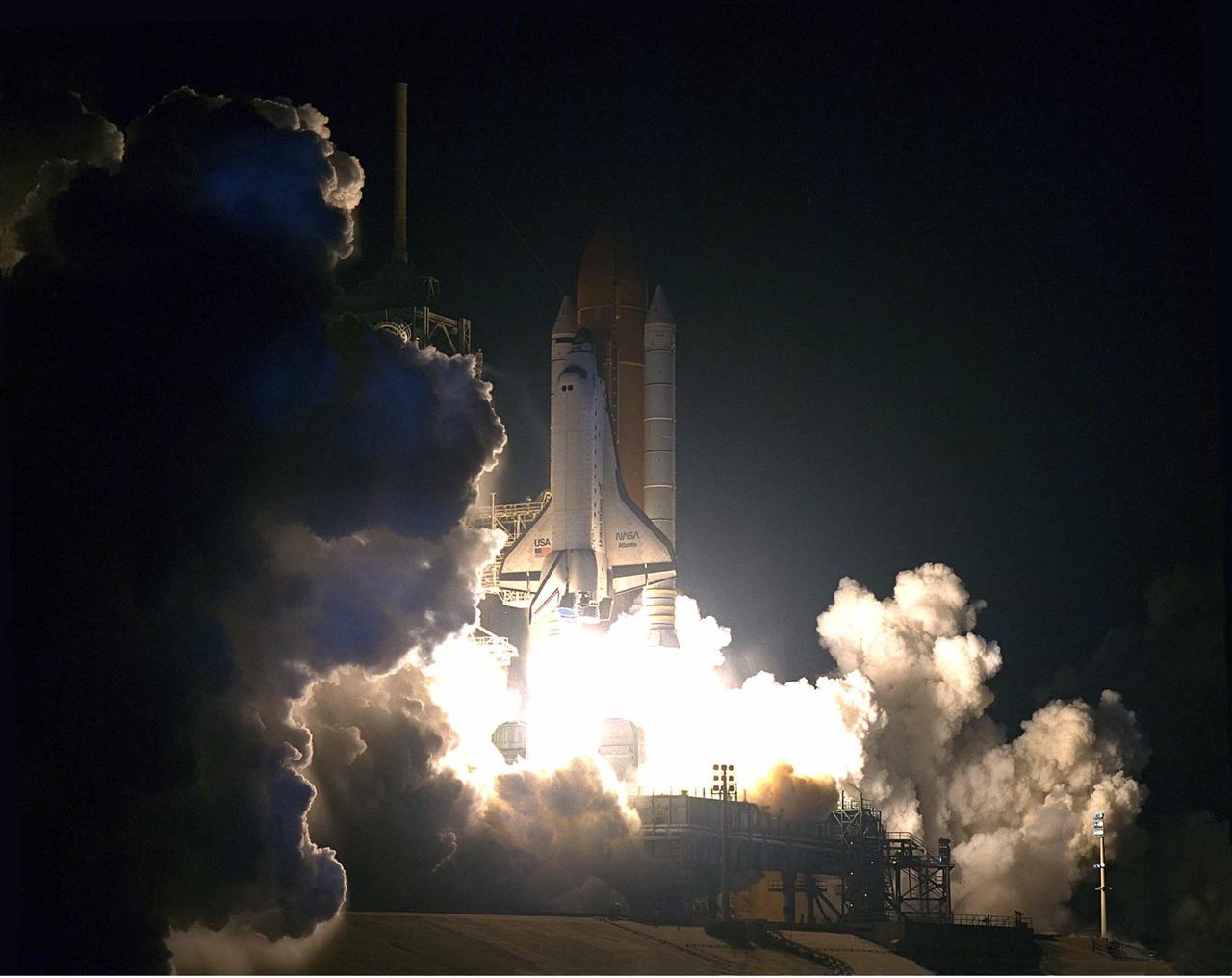
The Space Shuttle Atlantis turns night into day for a few moments as it lifts off on May 15 at 4:07:48 a.m. EDT from Launch Pad 39A on the STS-84 mission. The fourth Shuttle mission of 1997 will be the sixth docking of the Space Shuttle with the Russian Space Station Mir. The commander is Charles J. Precourt. The pilot is Eileen Marie Collins. The five mission specialists are C. Michael Foale, Carlos I. Noriega, Edward Tsang Lu, Jean-Francois Clervoy of the European Space Agency and Elena V. Kondakova of the Russian Space Agency. The planned nine-day mission will include the exchange of Foale for U.S. astronaut and Mir 23 crew member Jerry M. Linenger, who has been on Mir since Jan. 15. Linenger transferred to Mir during the last docking mission, STS-81; he will return to Earth on Atlantis. Foale is slated to remain on Mir for about four months until he is replaced in September by STS-86 Mission Specialist Wendy B. Lawrence. During the five days Atlantis is scheduled to be docked with the Mir, the STS-84 crew and the Mir 23 crew, including two Russian cosmonauts, Commander Vasily Tsibliev and Flight Engineer Alexander Lazutkin, will participate in joint experiments. The STS-84 mission also will involve the transfer of more than 7,300 pounds of water, logistics and science equipment to and from the Mir. Atlantis is carrying a nearly 300-pound oxygen generator to replace one of two Mir units which have experienced malfunctions. The oxygen it generates is used for breathing by the Mir crew
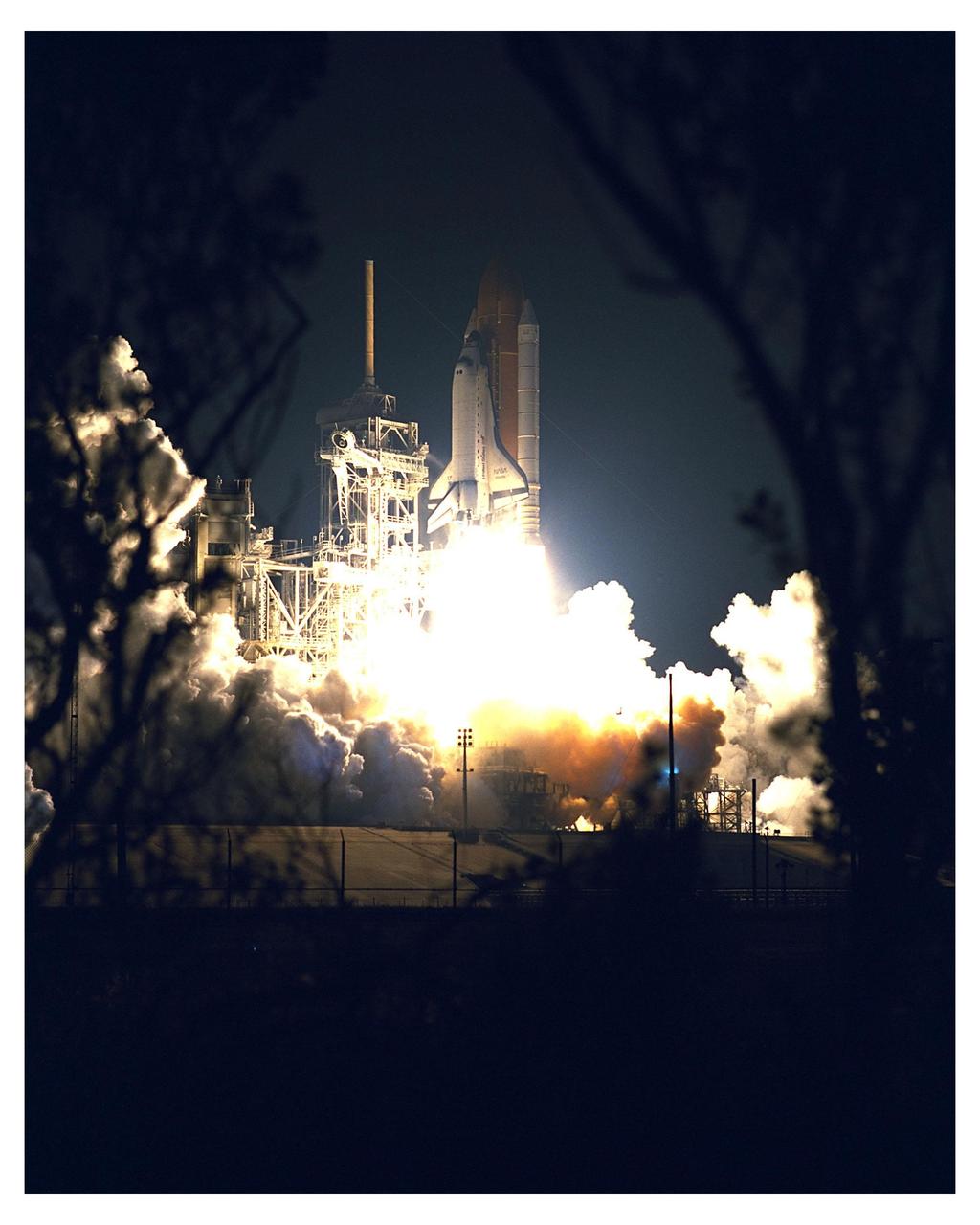
The Space Shuttle Atlantis turns night into day for a few moments as it lifts off on May 15 at 4:07:48 a.m. EDT from Launch Pad 39A on the STS-84 mission. The fourth Shuttle mission of 1997 will be the sixth docking of the Space Shuttle with the Russian Space Station Mir. The commander is Charles J. Precourt. The pilot is Eileen Marie Collins. The five mission specialists are C. Michael Foale, Carlos I. Noriega, Edward Tsang Lu, Jean-Francois Clervoy of the European Space Agency and Elena V. Kondakova of the Russian Space Agency. The planned nine-day mission will include the exchange of Foale for U.S. astronaut and Mir 23 crew member Jerry M. Linenger, who has been on Mir since Jan. 15. Linenger transferred to Mir during the last docking mission, STS-81; he will return to Earth on Atlantis. Foale is slated to remain on Mir for about four months until he is replaced in September by STS-86 Mission Specialist Wendy B. Lawrence. During the five days Atlantis is scheduled to be docked with the Mir, the STS-84 crew and the Mir 23 crew, including two Russian cosmonauts, Commander Vasily Tsibliev and Flight Engineer Alexander Lazutkin, will participate in joint experiments. The STS-84 mission also will involve the transfer of more than 7,300 pounds of water, logistics and science equipment to and from the Mir. Atlantis is carrying a nearly 300-pound oxygen generator to replace one of two Mir units which have experienced malfunctions. The oxygen it generates is used for breathing by the Mir crew
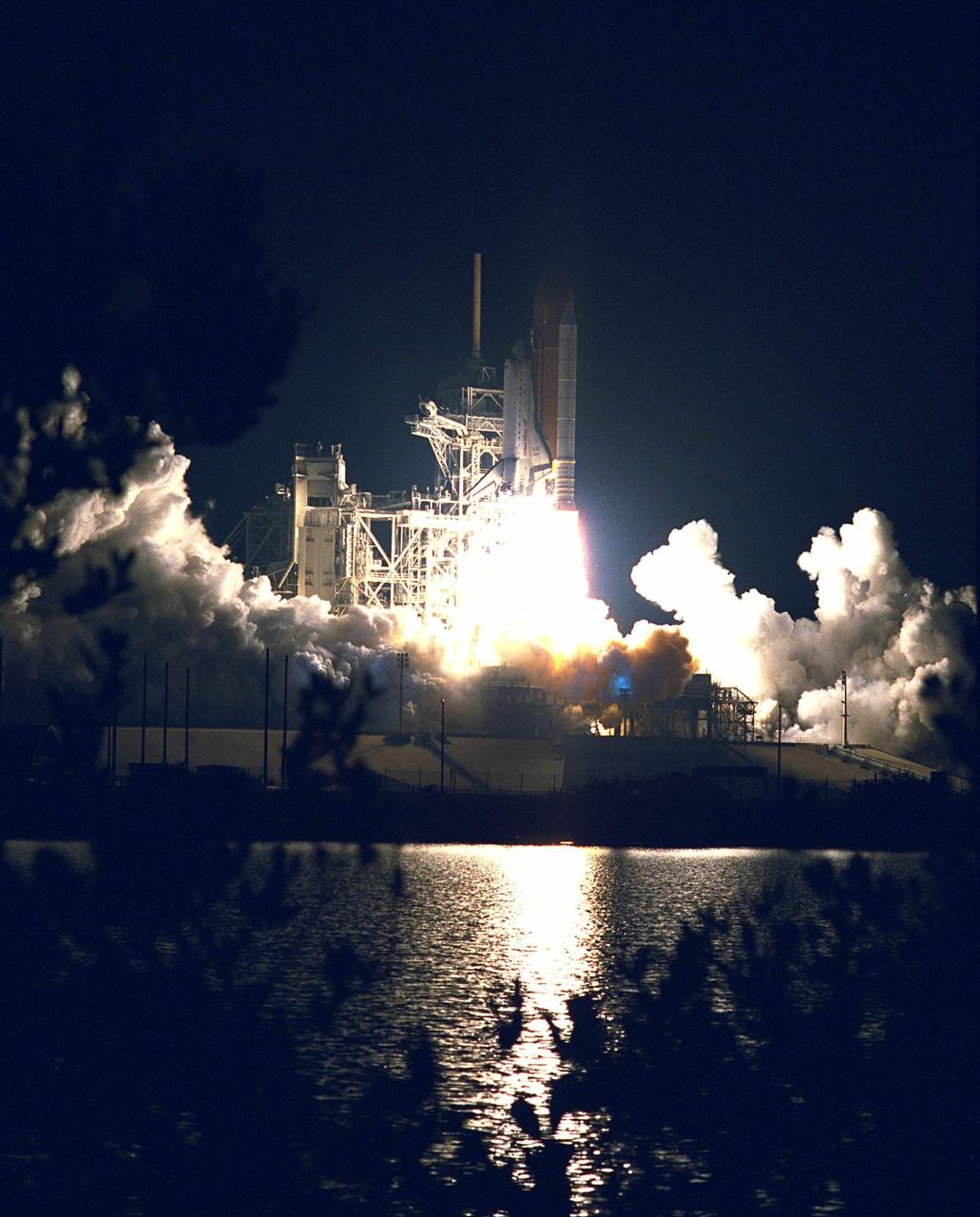
The Space Shuttle Atlantis turns night into day for a few moments as it lifts off on May 15 at 4:07:48 a.m. EDT from Launch Pad 39A on the STS-84 mission. The fourth Shuttle mission of 1997 will be the sixth docking of the Space Shuttle with the Russian Space Station Mir. The commander is Charles J. Precourt. The pilot is Eileen Marie Collins. The five mission specialists are C. Michael Foale, Carlos I. Noriega, Edward Tsang Lu, Jean-Francois Clervoy of the European Space Agency and Elena V. Kondakova of the Russian Space Agency. The planned nine-day mission will include the exchange of Foale for U.S. astronaut and Mir 23 crew member Jerry M. Linenger, who has been on Mir since Jan. 15. Linenger transferred to Mir during the last docking mission, STS-81; he will return to Earth on Atlantis. Foale is slated to remain on Mir for about four months until he is replaced in September by STS-86 Mission Specialist Wendy B. Lawrence. During the five days Atlantis is scheduled to be docked with the Mir, the STS-84 crew and the Mir 23 crew, including two Russian cosmonauts, Commander Vasily Tsibliev and Flight Engineer Alexander Lazutkin, will participate in joint experiments. The STS-84 mission also will involve the transfer of more than 7,300 pounds of water, logistics and science equipment to and from the Mir. Atlantis is carrying a nearly 300-pound oxygen generator to replace one of two Mir units which have experienced malfunctions. The oxygen it generates is used for breathing by the Mir crew
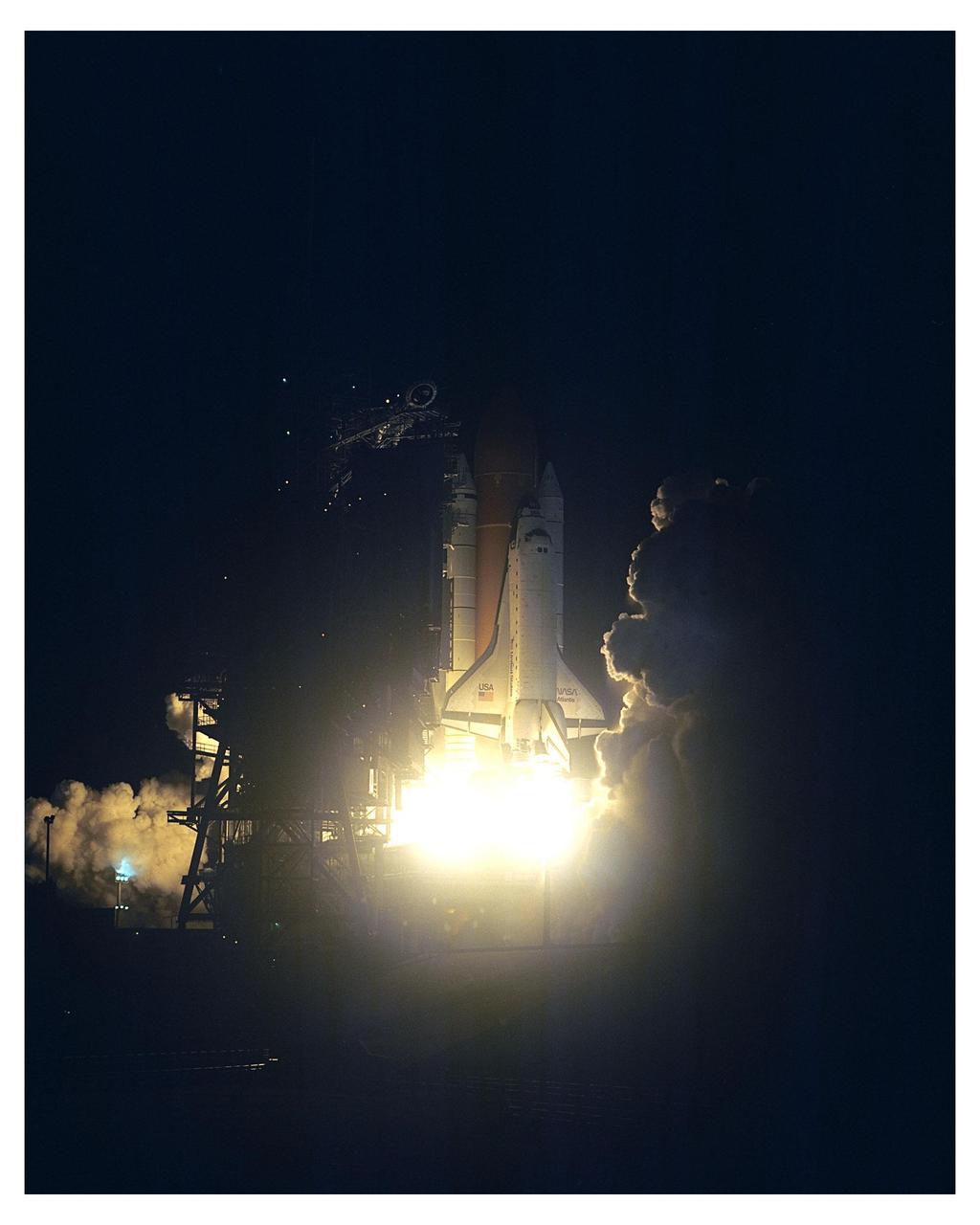
The Space Shuttle Atlantis turns night into day for a few moments as it lifts off on May 15 at 4:07:48 a.m. EDT from Launch Pad 39A on the STS-84 mission. The fourth Shuttle mission of 1997 will be the sixth docking of the Space Shuttle with the Russian Space Station Mir. The commander is Charles J. Precourt. The pilot is Eileen Marie Collins. The five mission specialists are C. Michael Foale, Carlos I. Noriega, Edward Tsang Lu, Jean-Francois Clervoy of the European Space Agency and Elena V. Kondakova of the Russian Space Agency. The planned nine-day mission will include the exchange of Foale for U.S. astronaut and Mir 23 crew member Jerry M. Linenger, who has been on Mir since Jan. 15. Linenger transferred to Mir during the last docking mission, STS-81; he will return to Earth on Atlantis. Foale is slated to remain on Mir for about four months until he is replaced in September by STS-86 Mission Specialist Wendy B. Lawrence. During the five days Atlantis is scheduled to be docked with the Mir, the STS-84 crew and the Mir 23 crew, including two Russian cosmonauts, Commander Vasily Tsibliev and Flight Engineer Alexander Lazutkin, will participate in joint experiments. The STS-84 mission also will involve the transfer of more than 7,300 pounds of water, logistics and science equipment to and from the Mir. Atlantis is carrying a nearly 300-pound oxygen generator to replace one of two Mir units which have experienced malfunctions. The oxygen it generates is used for breathing by the Mir crew
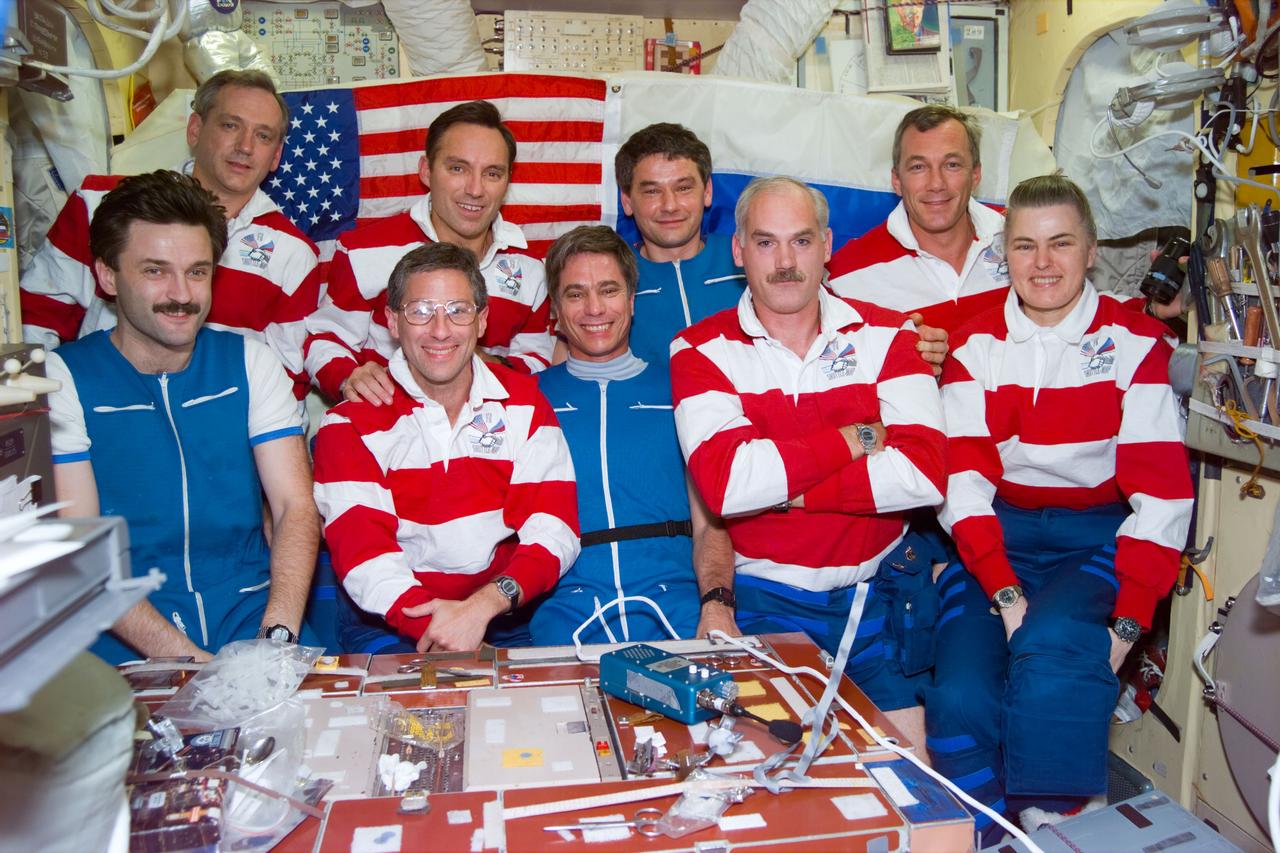
STS79-E-5289 (23 September 1996) --- Crew members of STS-79 and Mir-22 pose for final group portrait aboard Russia's Mir Space Station's Core Module before going separate ways in Earth-orbit, during Flight Day 8. Front row, left to right, are Aleksandr Y. Kaleri, Jerome (Jay) Apt, William F. Readdy and Shannon W. Lucid. On the back row are, left to right, Thomas D. Akers, Carl E. Walz, Valeri G. Korzun and Terrence W. Wilcutt. Note Blaha, the new cosmonaut researcher for Mir-22, is now wearing the uniform of that crew and Lucid's garment is uniform with the STS-79 astronauts.
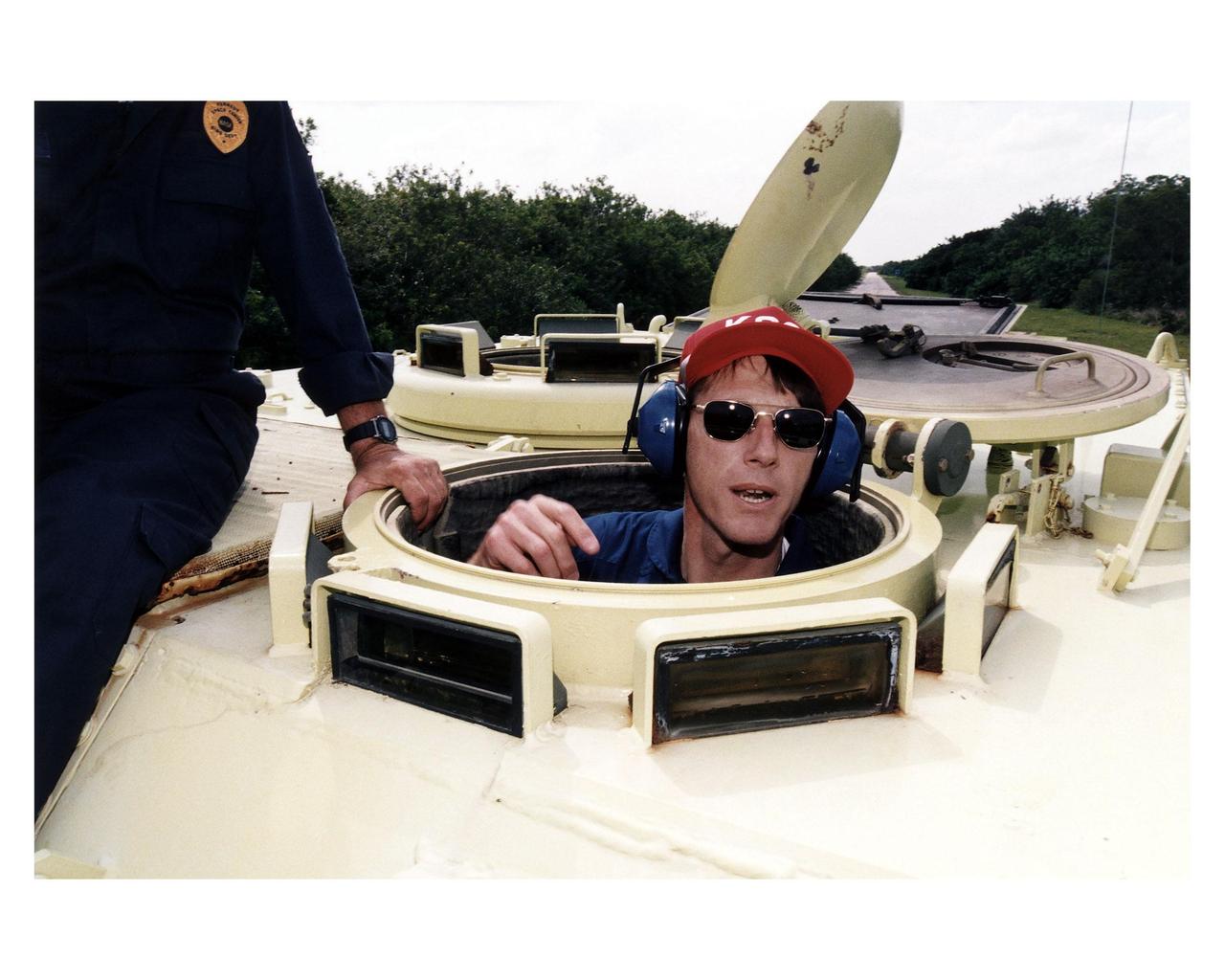
STS-84 Mission Specialist C. Michael Foale rides in an M-113 armored personnel carrier as part of the Terminal Countdown Demonstration Test (TCDT) activities. STS-84 aboard the Space Shuttle Atlantis will be the sixth docking of the Space Shuttle with the Russian Space Station Mir. After docking, Foale will transfer to the space station and become a member of the Mir 23 crew, replacing U.S. astronaut Jerry M. Linenger, who will return to Earth aboard Atlantis. Foale will live and work on Mir until mid-September when his replacement is expected to arrive on the STS-86 mission. STS-84 is targeted for a May 15 liftoff
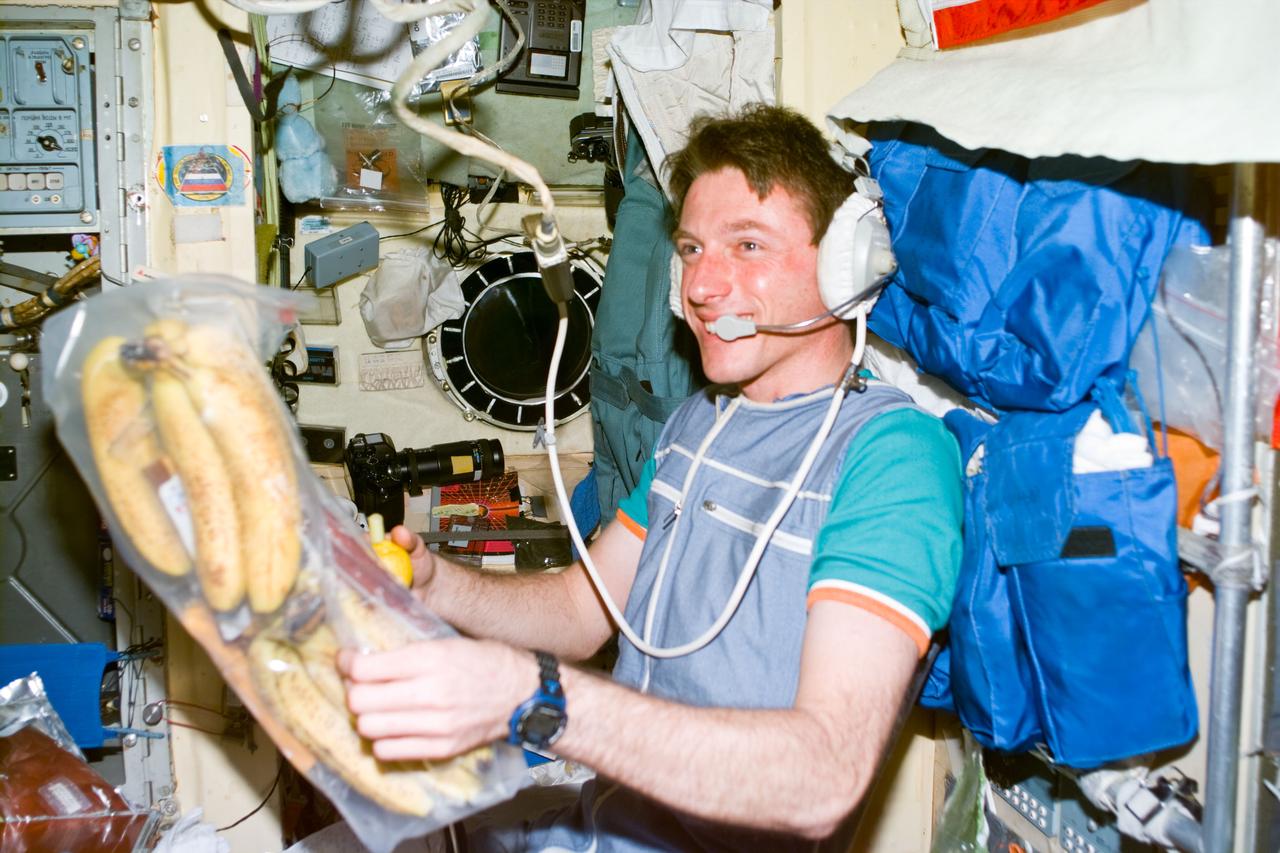
S86-E-5299 (27 Sept. 1997) --- Astronaut C. Michael Foale, cosmonaut guest researcher, shows his pleasure over a package of fresh fruit brought aboard Russia?s Mir Space Station by the STS-86 crew aboard the space shuttle Atlantis. This photograph captures Foale in his last hours as a cosmonaut guest researcher aboard Mir. Astronaut David A. Wolf, mission specialist, will replace Foale onboard the Mir, as cosmonaut guest researcher. This photograph was taken with the Electronic Still Camera (ESC) at 23:11:26 GMT on Sept. 27, 1997. Photo credit: NASA
STS-84 Mission Specialist C. Michael Foale participates in Terminal Countdown Demonstration Test (TCDT) activities at Launch Pad 39A. STS-84 will be the sixth docking of the Space Shuttle with the Russian Space Station Mir. Foale, a veteran of three space flights, will transfer to the space station and become a member of the Mir 23 crew, replacing U.S. astronaut Jerry M. Linenger, who will return to Earth aboard Atlantis. Foale will live and work on Mir until mid-September when his replacement is expected to arrive on the STS-86 mission. STS-84 is targeted for a May 15 liftoff
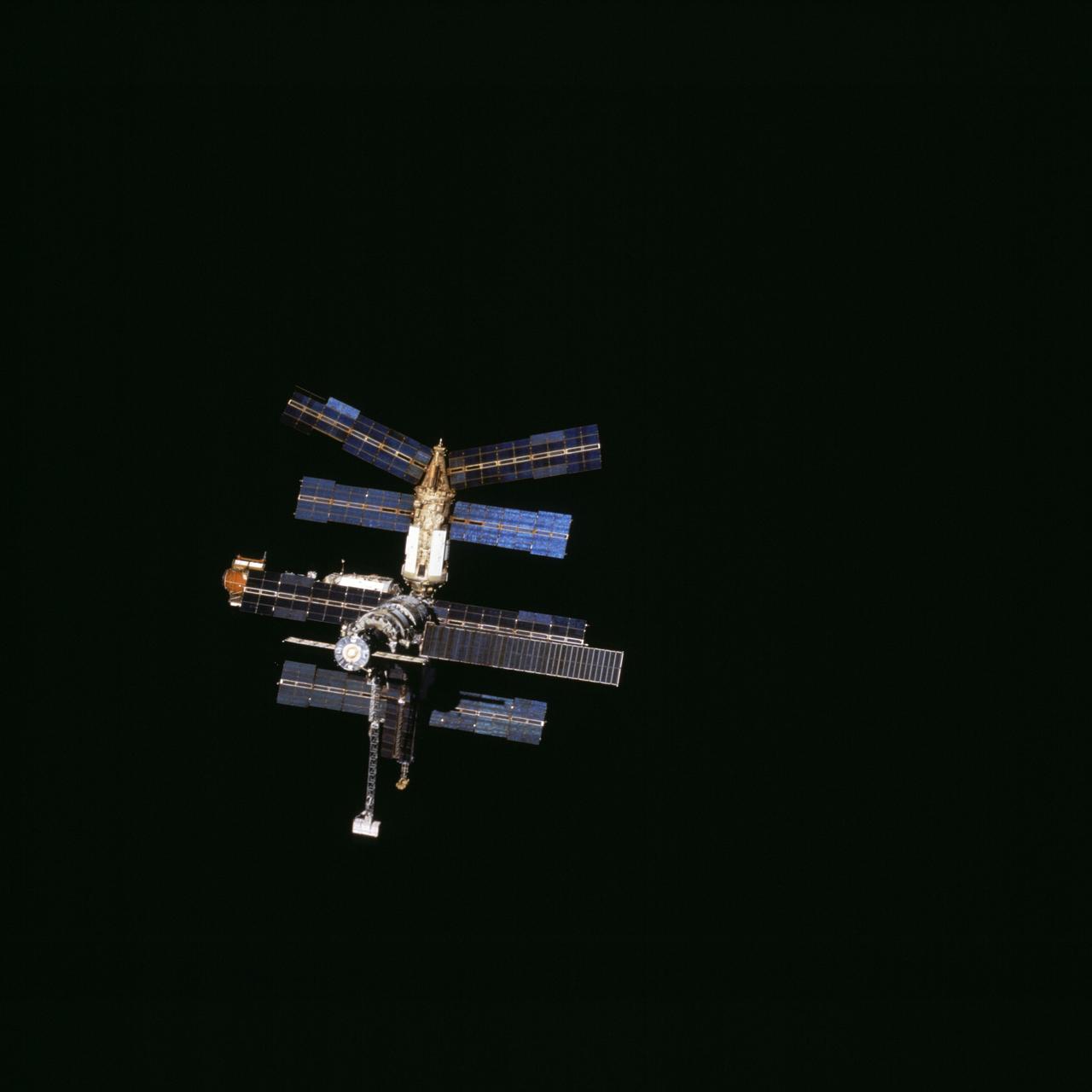
STS076-713-092 (28 March 1996) --- The crew took this 70mm picture of Russia's Mir Space Station during a final "fly-around" following separation of the two spacecraft on March 28, 1996. The two spacecraft had docked on March 23, 1996, at which time Shannon W. Lucid joined two cosmonauts onboard for the first leg of a 140-day stay onboard Mir, as a cosmonaut guest researcher. Photo credit: NASA or National Aeronautics and Space Administration
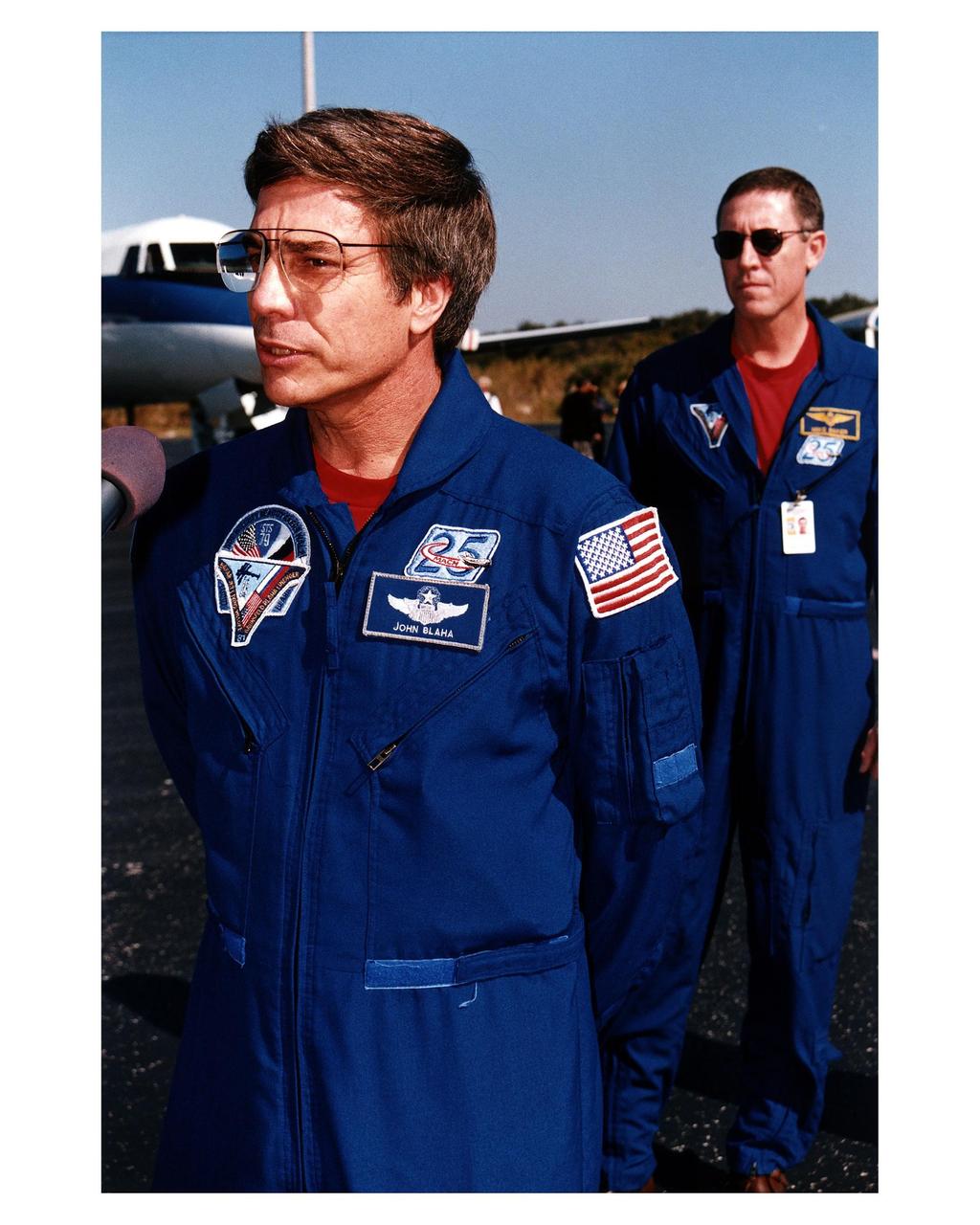
Returning NASA astronaut and former Mir 22 crew member John E. Blaha (left), addresses the news media at the Skid Strip at Cape Canaveral Air Station as he and fellow STS-81 crew members prepare to depart for Johnson Space Center Jan. 23. The crew arrived at KSC aboard the Space Shuttle Atlantis Jan. 22 to conclude the fifth Shuttle-Mir docking mission and return Blaha to Earth after four months in space. Behind Blaha is Mission Commander Michael A. Baker
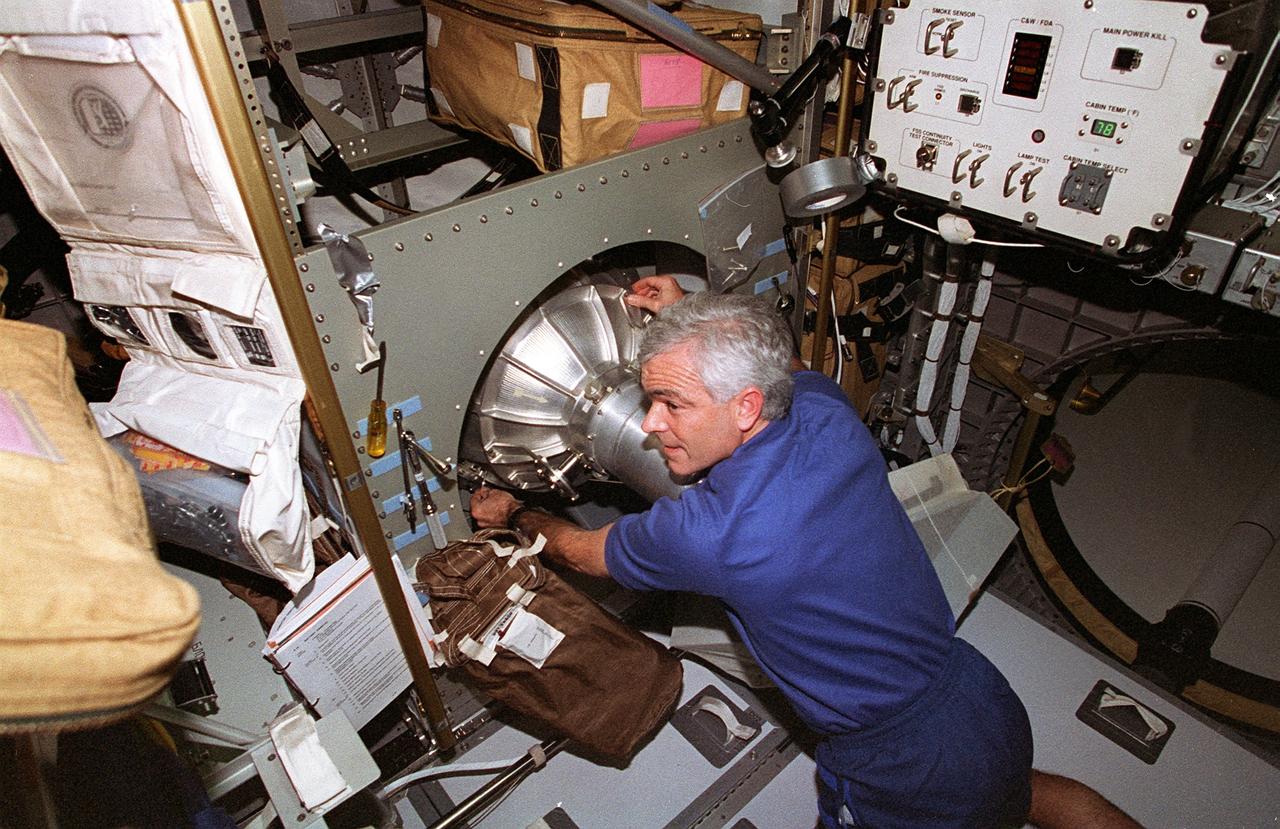
STS076-345-017 (22 - 31 March 1996) --- Onboard the Spacehab module in the cargo bay of the Earth-orbiting Space Shuttle Atlantis, astronaut Michael R. (Rich) Clifford secures a stowed gyrodyne. The stabilizing instrument earlier had been replaced on Russia's Mir Space Station with a new one brought up from the ground by the crew. The mission specialist and his crew mates docked with Mir on March 23, 1996 and remained linked until March 28, 1996.
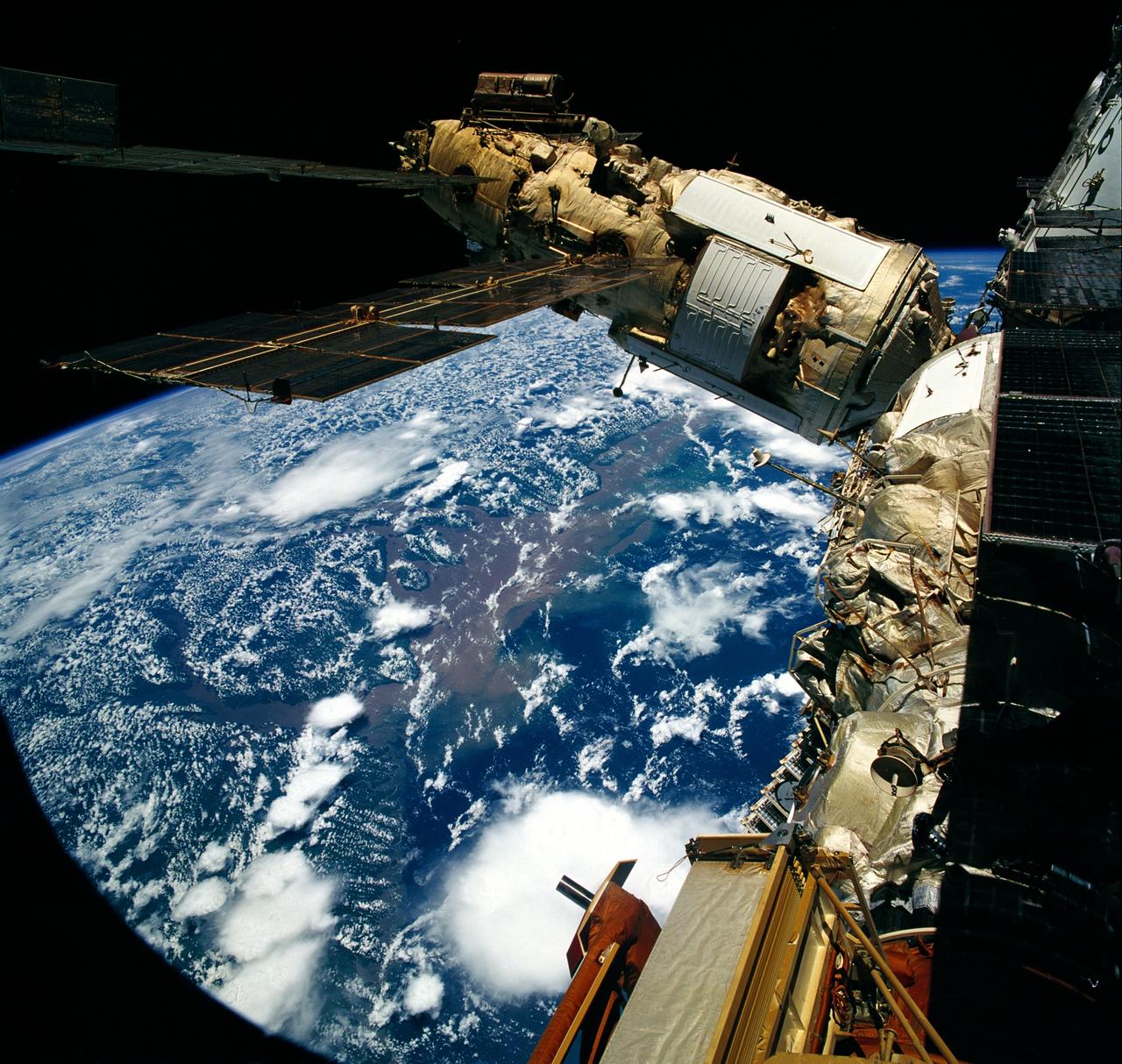
STS076-708-031 (22 - 31 March 1996) --- Clouds over Brazil form the backdrop for this 70mm image showing the Spektr Module and other components of Russia's Mir Space Station. The photograph was taken after Space Shuttle Atlantis docked with the Mir Space Station on March 23, 1996. The delta of the giant Amazon River is at frame center.
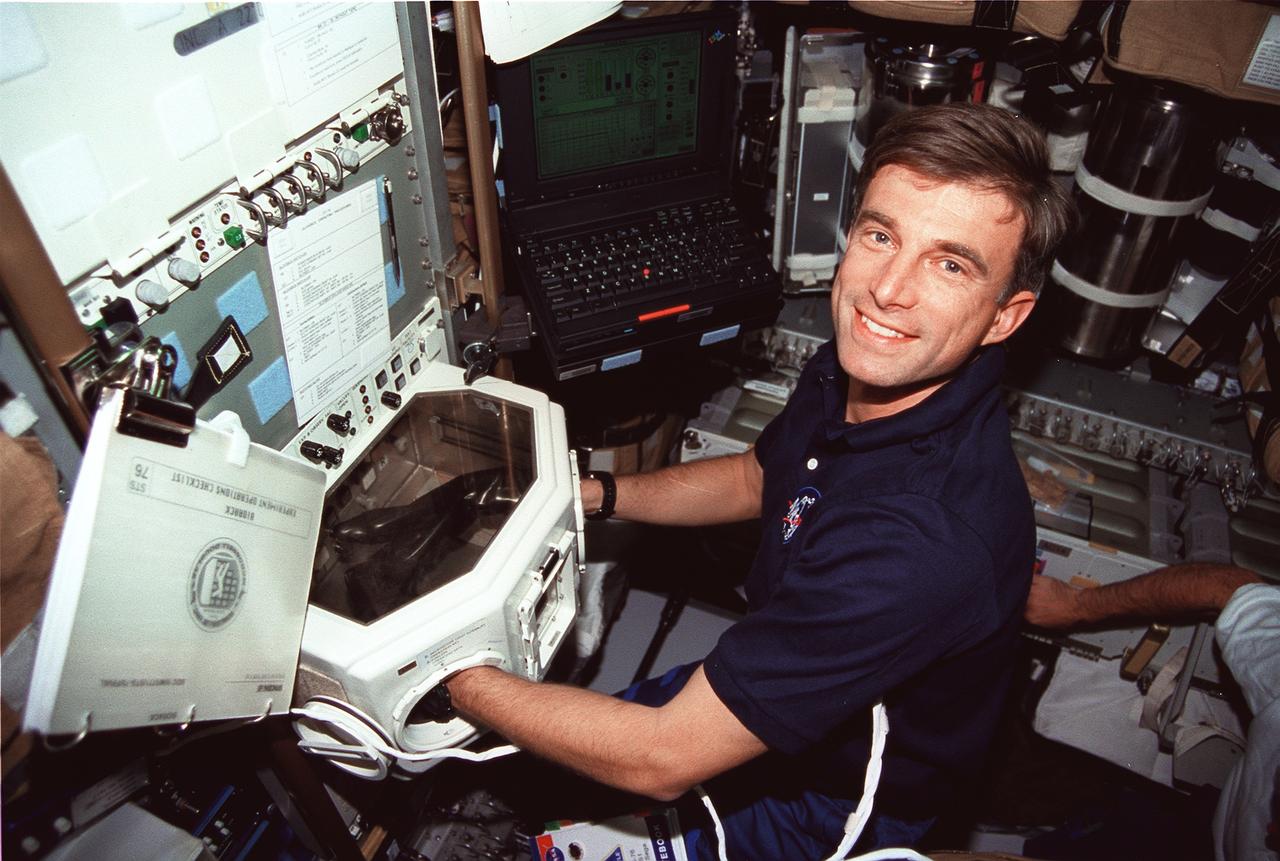
STS076-312-022 (22 - 31 March 1996) --- Astronaut Ronald M. Sega, payload commander, works in the glovebox facility in the Spacehab laboratory aboard the Earth-orbiting Space Shuttle Atlantis. The Spacehab facility was one of the busier research areas on Atlantis during the STS-76 mission. Also, some of the gear for transfer to Russia's Mir Space Station was stowed there prior to the March 23, 1996 docking of Atlantis and Mir.

STS79-E-5277 (23 September 1996) --- Astronaut Shannon W. Lucid, former cosmonaut guest researcher, checks on wheat plants aboard Russia's Mir Space Station, during Flight Day 8. Lucid, along with the rest of the STS-79 crew except for John E. Blaha, current cosmonaut guest researcher, is leaving Mir today.
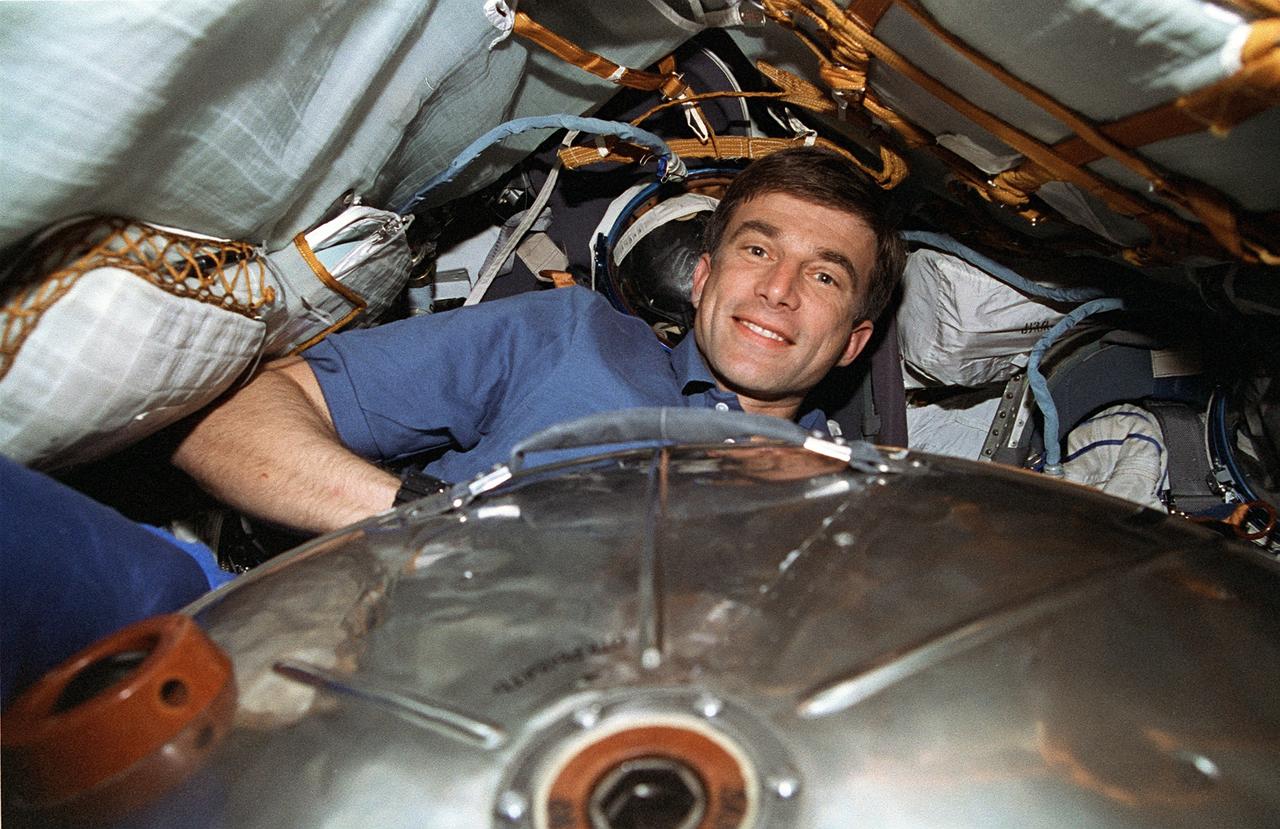
STS076-356-019 (22 - 31 March 1996) --- Astronaut Ronald M. Sega, payload commander, has removed a hatch and enters the Soyuz spacecraft, which is docked with Russia's Mir Space Station. The point of view is from the Kvant Module. The Space Shuttle Atlantis had docked, for the third time, with the Mir Space Station on March 23, 1996.
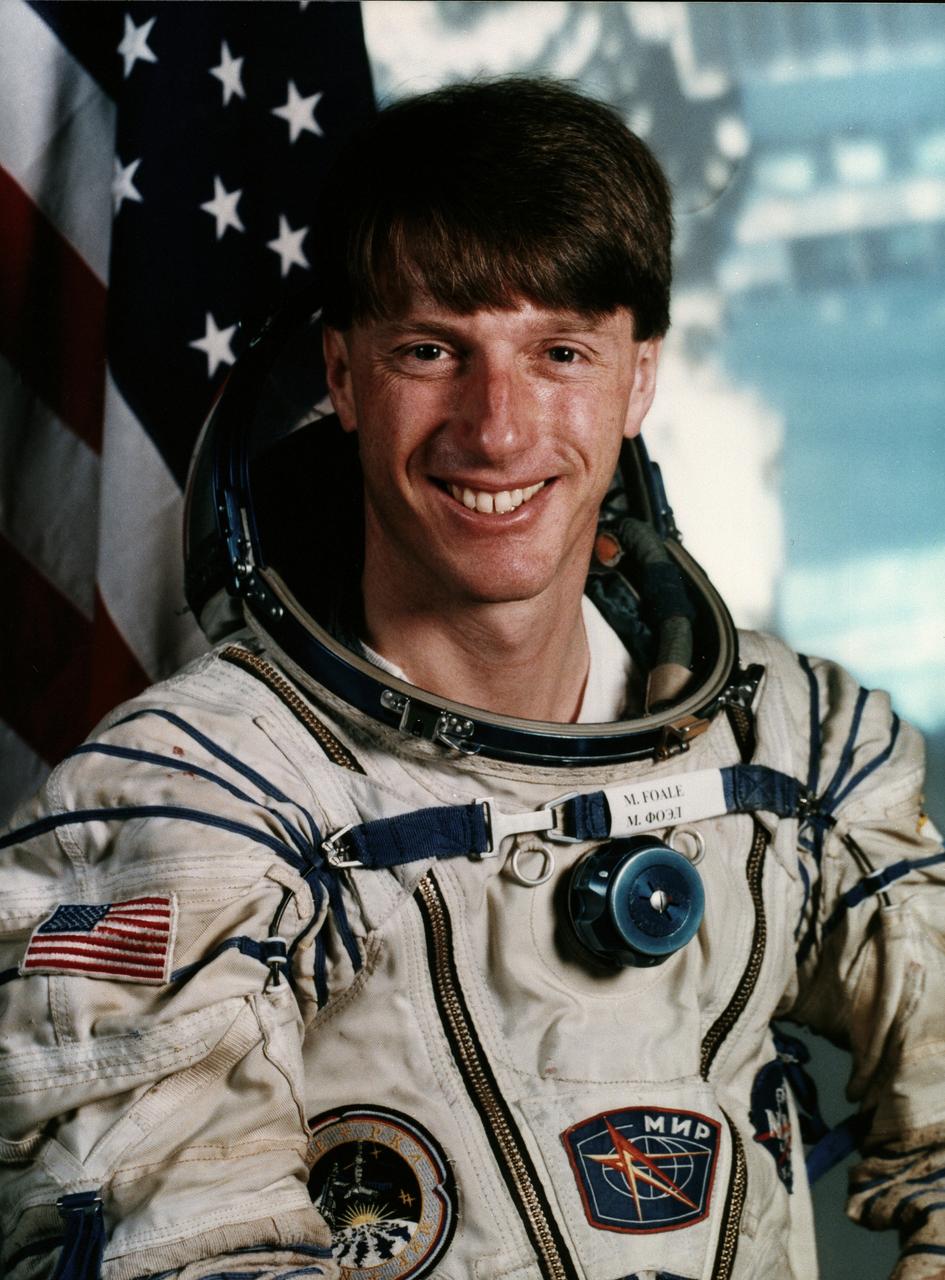
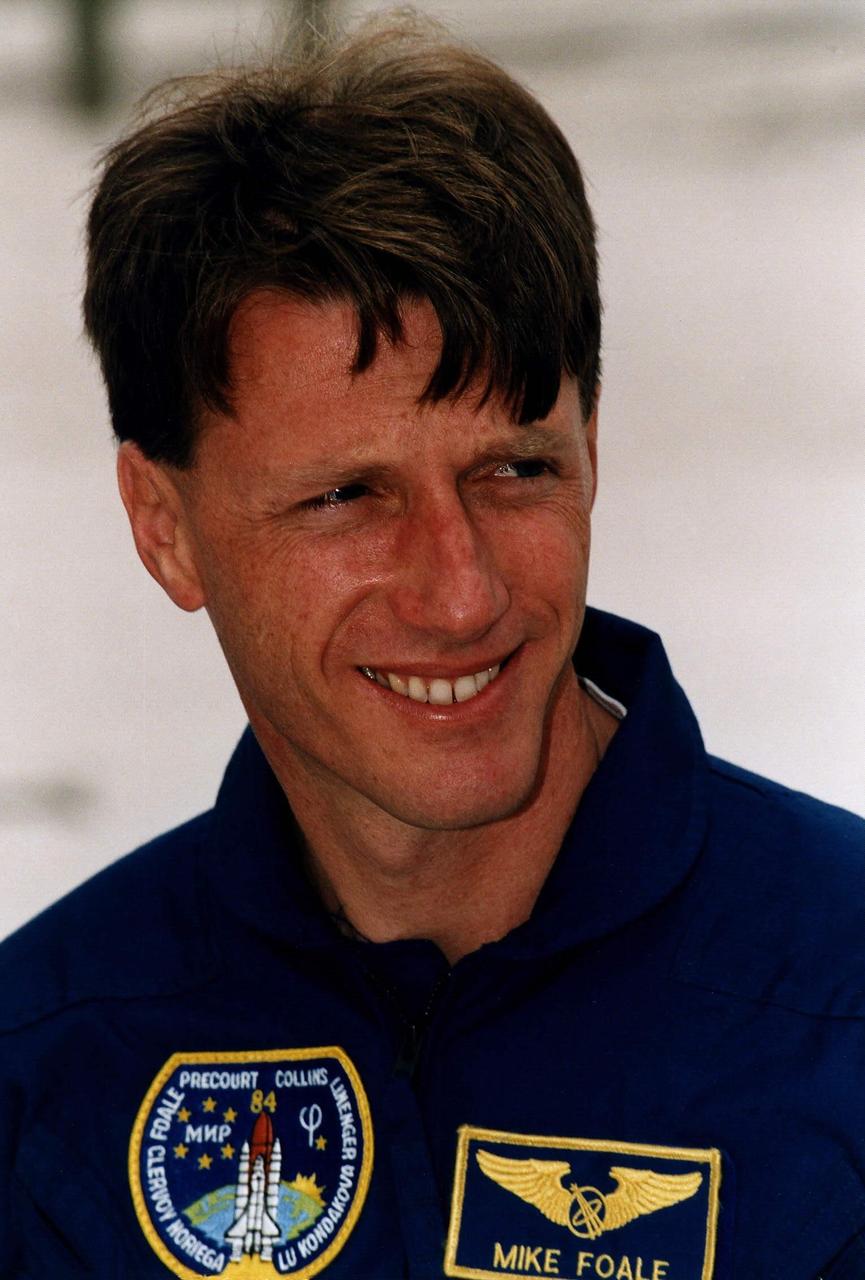
S97-06565 (1997) --- Astronaut C. Michael Foale, mission specialist/cosmonaut guest researcher Mir 23/24 flight engineer. EDITOR?S NOTE: Astronaut Foale will launch aboard the Space Shuttle Atlantis, STS-84 mission, to board the Russia?s Mir Space Station. After a long duration of cosmonaut guest researcher duties, he will return to Earth aboard the Space Shuttle Atlantis STS-86 mission.
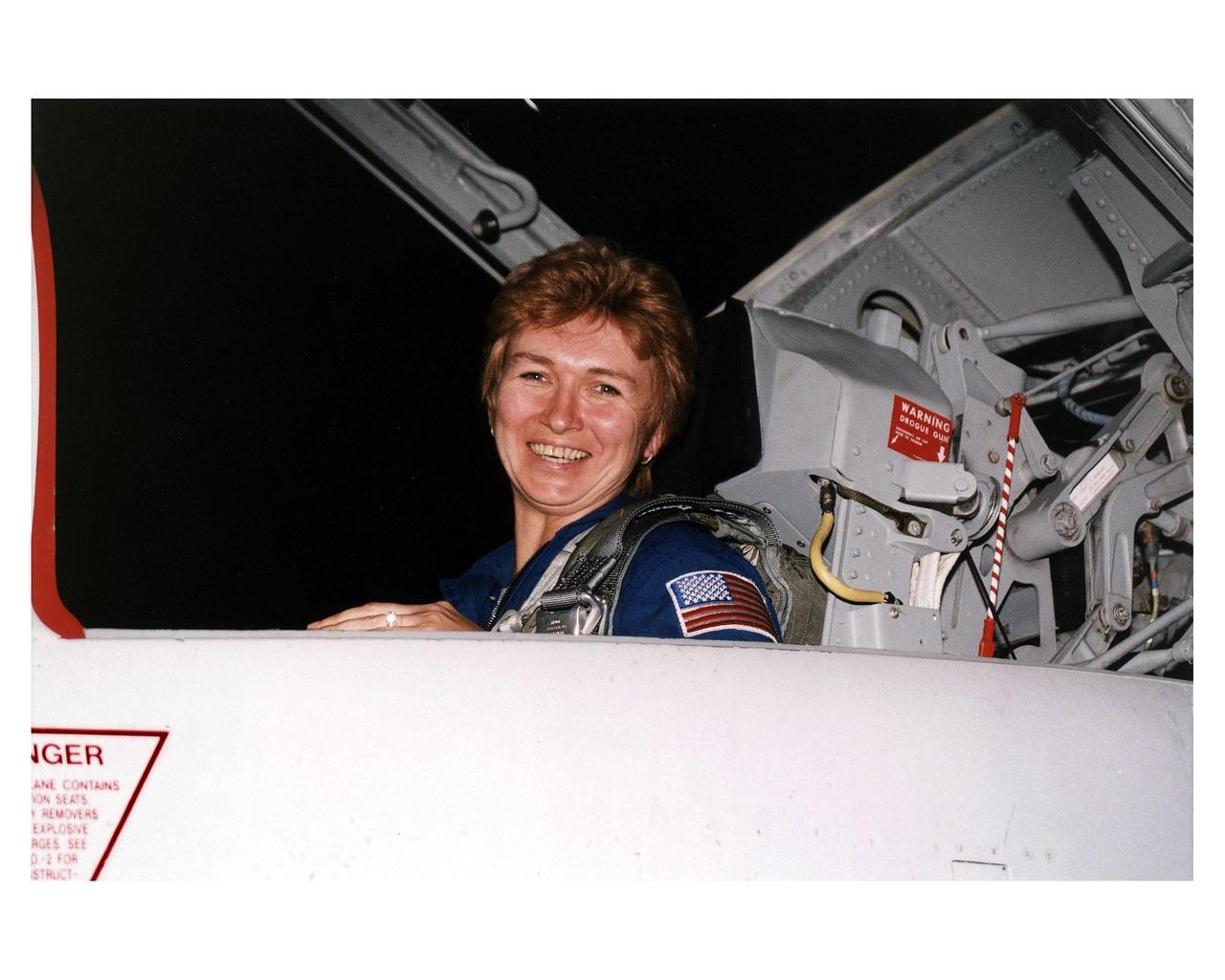
STS-84 Mission Specialist Elena V. Kondakova, a cosmonaut with the Russian Space Agency, arrives at KSC’s Shuttle Landing Facility. This will be Kondakova’s first flight on a U.S. Space Shuttle, but her second trip into space. She spent 169 days in space as flight engineer of the 17th main mission on the Russian Space Station Mir from October 1994 to March 1995. STS-84 will be the sixth docking of the Space Shuttle with the Mir. During the STS-84 docking, Mission Specialist C. Michael Foale will transfer to the Russian space station to become a member of the Mir 23 crew, replacing U.S. astronaut Jerry M. Linenger, who will return to Earth on Atlantis. Foale is scheduled to remain on Mir about four months until his replacement arrives on STS-86 in September
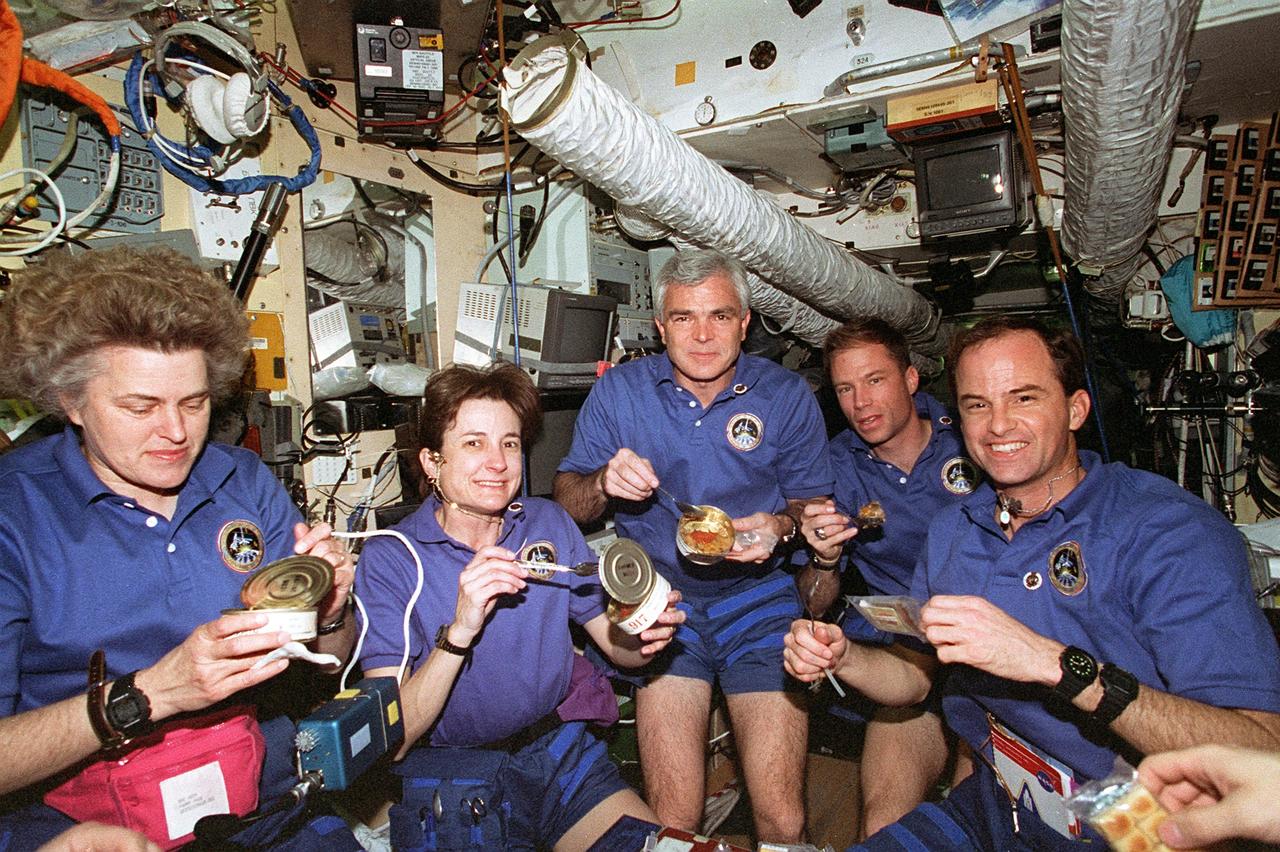
STS076-345-028 (22 - 31 March 1996) --- Onboard the Base Block Module of Russia's Mir Space Station the visiting STS-76 crew members enjoy Russian food. At right is astronaut Kevin P. Chilton, mission commander, who along with his crew mates docked with Mir on March 23, 1996, and remained linked until March 28, 1996. Left to right are astronauts Shannon W. Lucid, Linda M. Godwin and Michael R. (Rich) Clifford, all mission specialists, along with Richard A. Searfoss, pilot. The right hand of payload commander Ronald M. Sega is at right edge. Lucid was in the process of transferring from STS-76 to the Mir-21 crew, which thereby grew from two to three members. Lucid will remain aboard Mir for approximately 140 days, as a cosmonaut guest researcher.
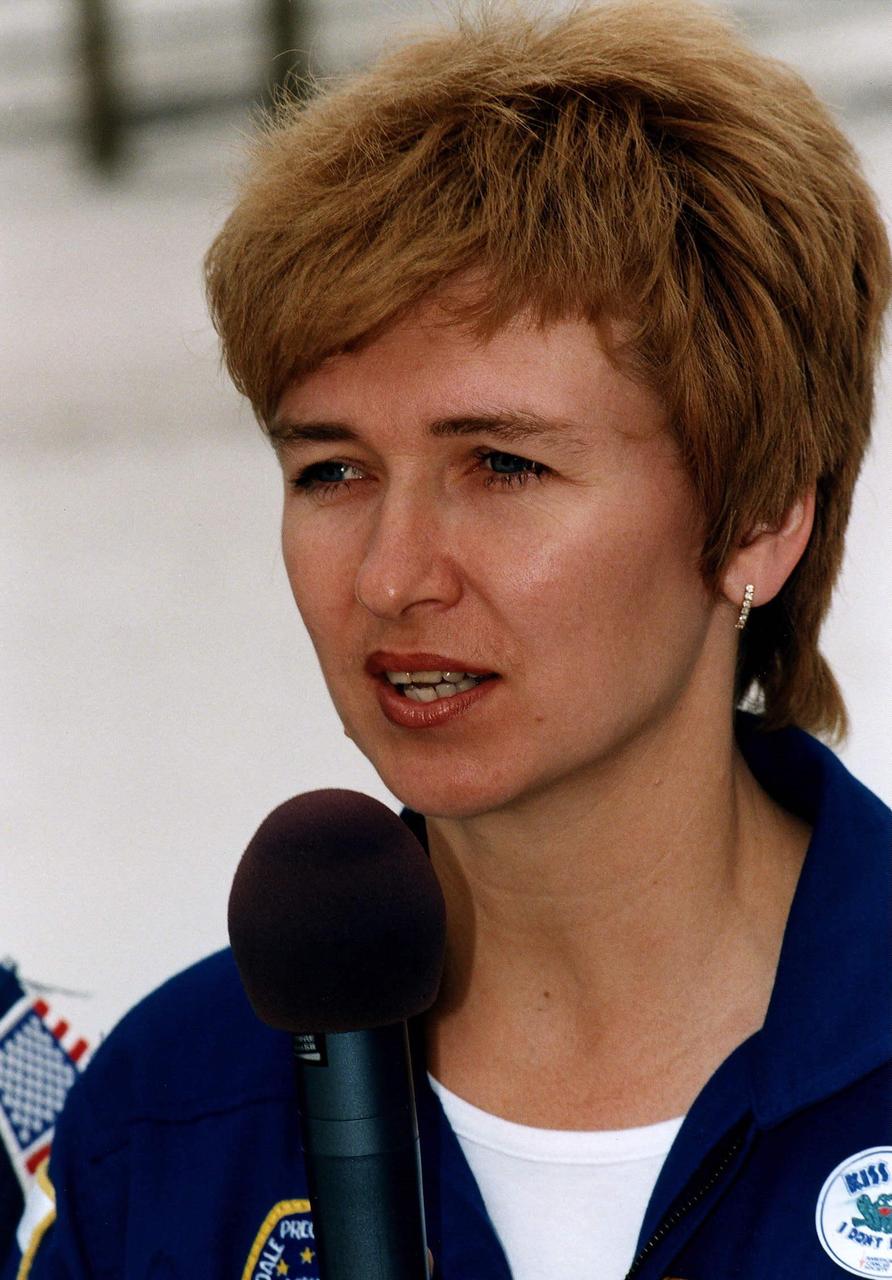
STS-84 Mission Specialist Elena V. Kondakova, a cosmonaut with the Russian Space Agency, talks to news media representatives and other onlookers during Terminal Countdown Demonstration Test (TCDT) activities at Launch Pad 39A. Kondakova will be one of seven crew members on the sixth docking of the Space Shuttle with the Russian Space Station Mir. Another of the crew members, C. Michael Foale, will transfer to the space station and become a member of the Mir 23 crew, replacing U.S. astronaut Jerry M. Linenger, who will return to Earth aboard Atlantis. Foale will live and work on Mir until mid-September when his replacement is expected to arrive on the STS-86 mission. Kondakova previously lived on the Russian space station as the flight engineer of the 17th main mission on Mir from Oct. 4, 1994, to March 9, 1995. STS-84 is targeted for a May 15 liftoff
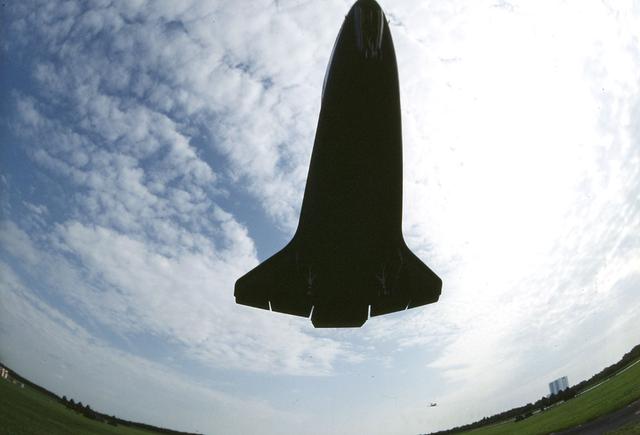
This unusual view of the underside of the Space Shuttle Orbiter Atlantis was taken by a fish-eye camera lens from Kennedy Space Center (KSC) Shuttle Landing Facility shortly before landing on May 24, 1997. Atlantis was wrapping up its nine-day mission, which was the sixth docking with the Mir space station. STS-84 Mission Specialist C. Michael Foale replaced astronaut and Mir 23 crew member Jerry M. Linenger, who had been on the Russian space station since January 15. Foale was scheduled to remain on Mir for approximately four months, until replaced by STS-86 crew member Wendy B. Lawrence in September 1997. Besides docking and crew exchange, this mission included the transfer of more than 7,300 pounds of water, logistics and science experiments, and hardware to and from Mir.
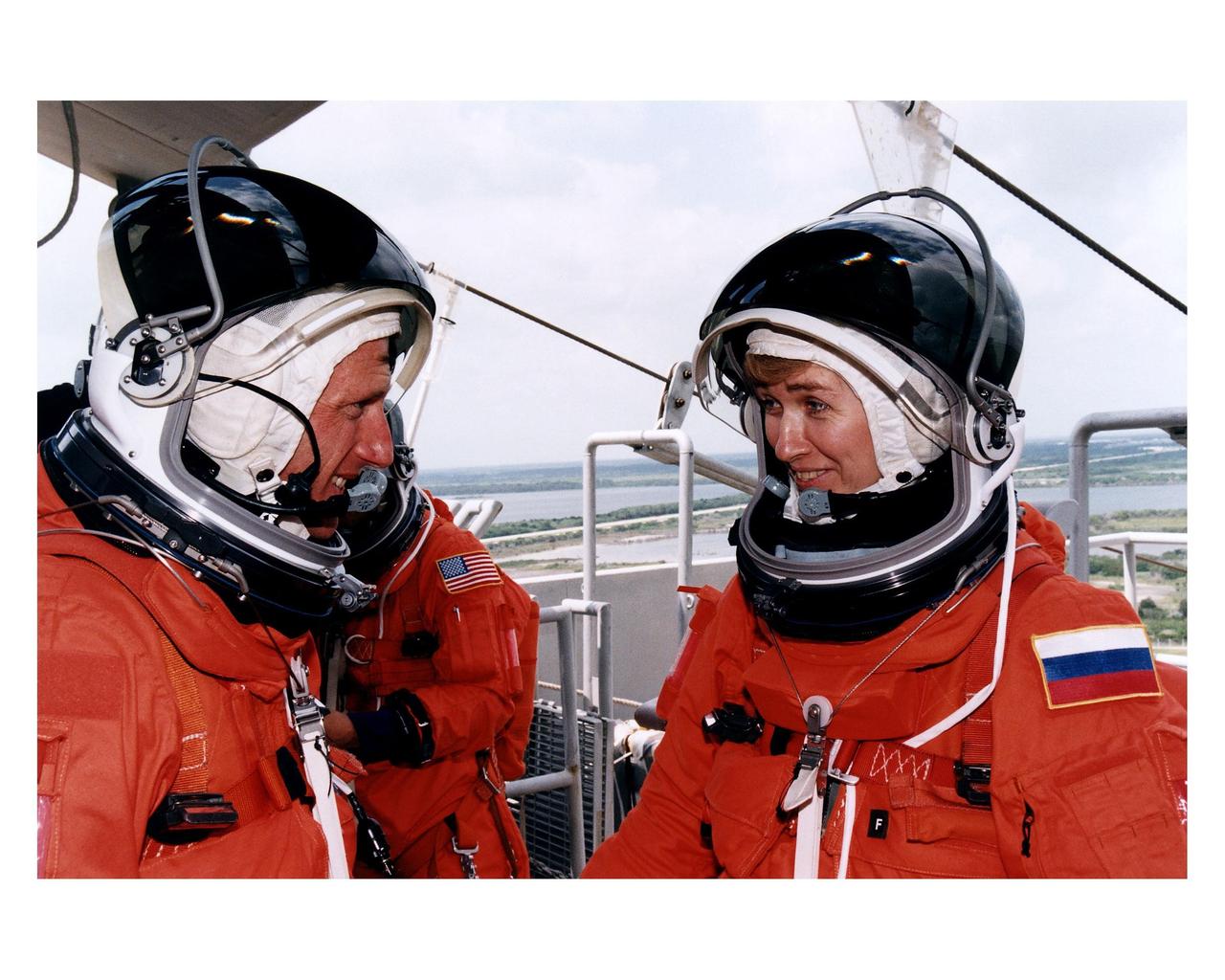
STS-84 Mission Specialists C. Michael Foale, at left, and Elena V. Kondakova, of the Russian Space Agency, find a moment to communicate one-on-one, perhaps about upcoming and past experiences living on the Russian Space Station Mir, during a busy training session at Launch Pad 39A. They and the other five crew members are participating in the Terminal Countdown Demonstration Test (TCDT), a dress rehearsal for launch. STS-84 aboard Atlantis will be the sixth docking of the Space Shuttle with the Mir. Kondakova spent 169 days in space as the cosmonaut flight engineer of the 17th main mission to Mir from Oct. 4, 1994, to March 9, 1995. After Atlantis docks with Mir on STS-84, Foale will transfer to the space station and become a member of the Mir 23 crew, replacing U.S. astronaut Jerry M. Linenger, who will return to Earth aboard Atlantis. Foale will live and work on Mir until mid-September when his replacement is expected to arrive on the STS-86 mission. STS-84 is targeted for a May 15 liftoff.
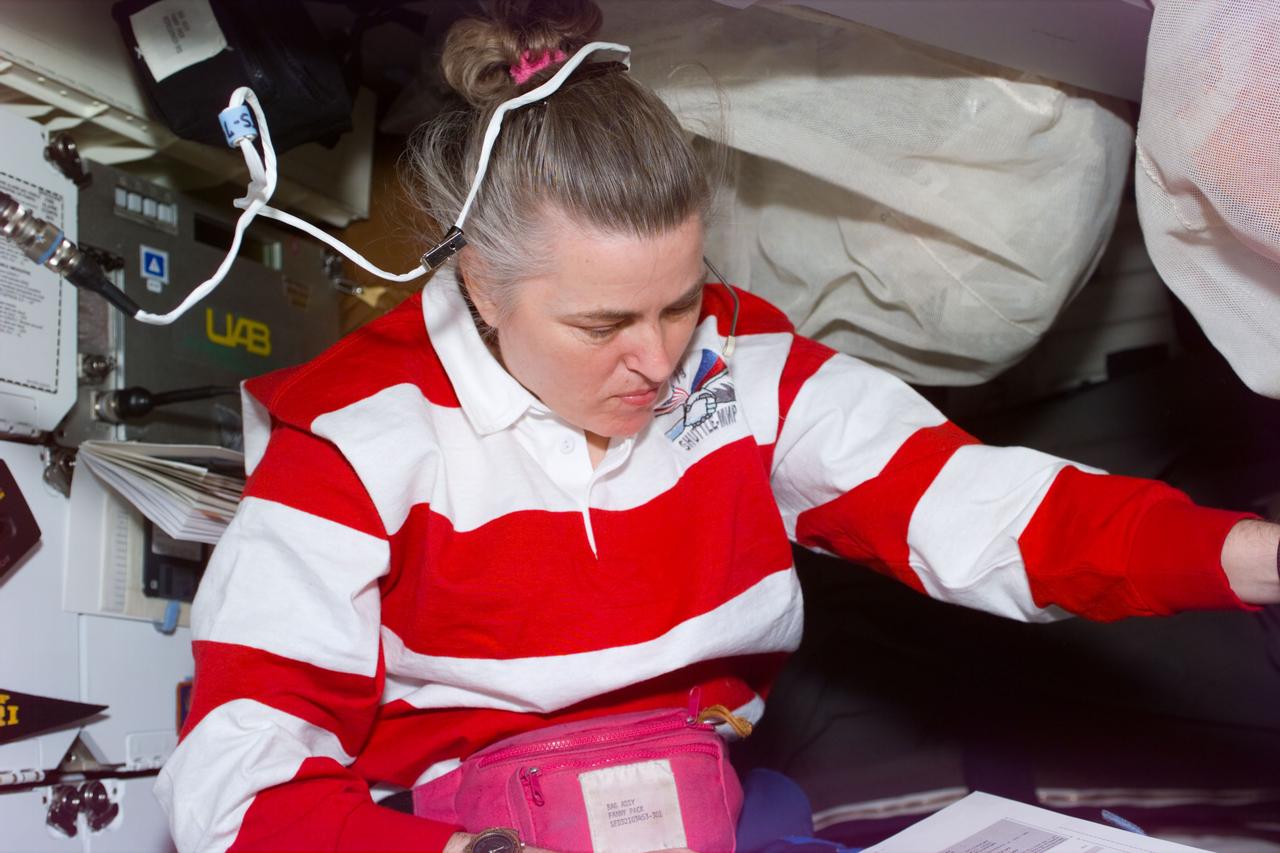
STS79-E-5309 (23 September 1996) --- Astronaut Shannon W. Lucid, former cosmonaut guest researcher, is captured in her first photograph aboard the Space Shuttle Atlantis since leaving Russia's Mir Space Station for the final time, during Flight Day 8.
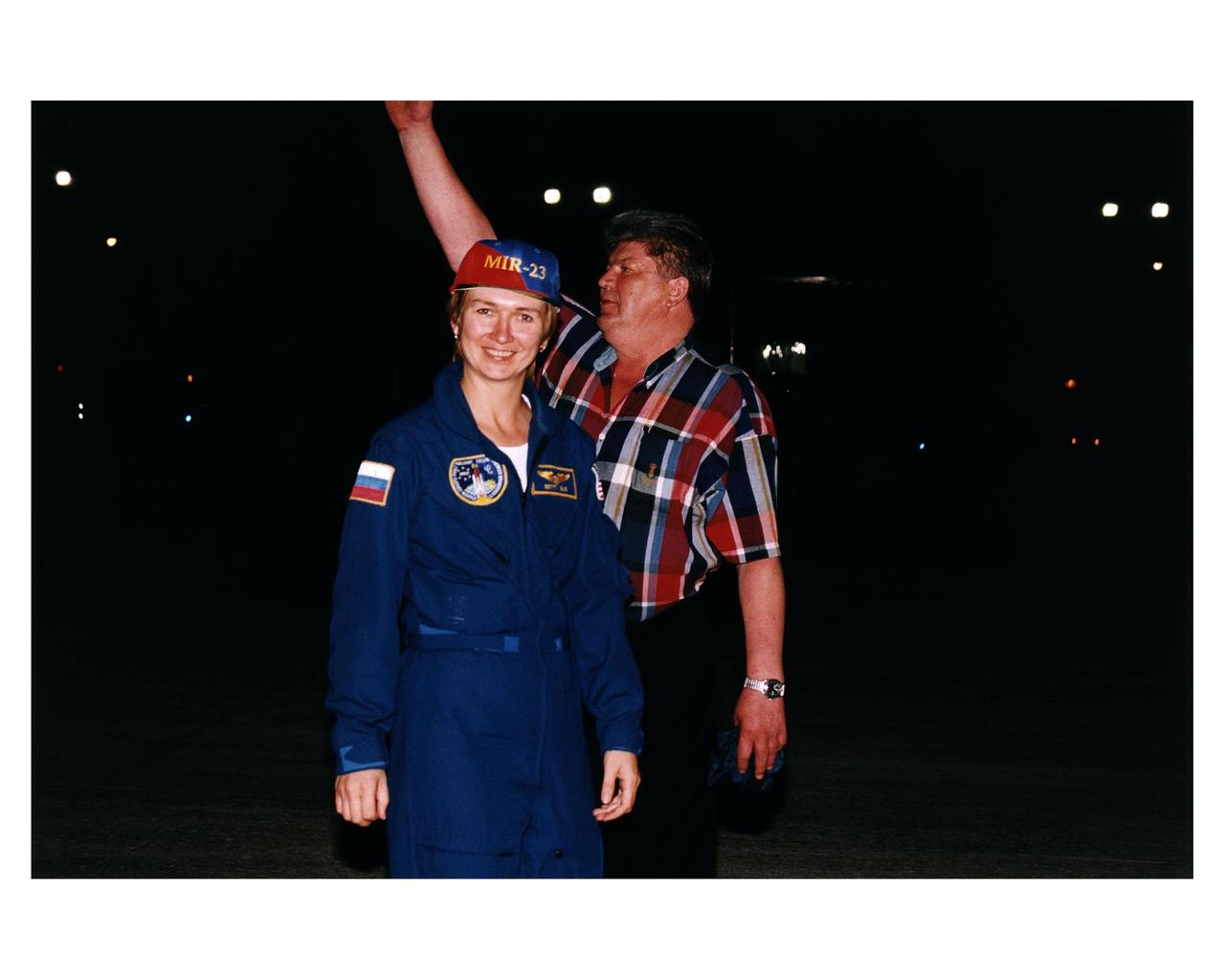
STS-84 Mission Specialist Elena V. Kondakova, a cosmonaut with the Russian Space Agency, and her husband, Valery Ryumin, greet press represenatives and other well wishers after her arrival at KSC’s Shuttle Landing Facility. Ryumin is director of the Mir-Shuttle program for RSC Energia in Russia. This will be Kondakova’s first flight on a U.S. Space Shuttle, but her second trip into space. She spent 169 days in space as flight engineer of the 17th main mission on Mir from October 1994 to March 1995. STS-84 will be the sixth docking of the Space Shuttle with the Russian Space Station Mir. During the docking, STS-84 Mission Specialist C. Michael Foale will transfer to the Russian space station to become a member of the Mir 23 crew, replacing U.S. astronaut Jerry M. Linenger, who will return to Earth on Atlantis. Foale is scheduled to remain on Mir about four months until his replacement arrives on STS-86 in September
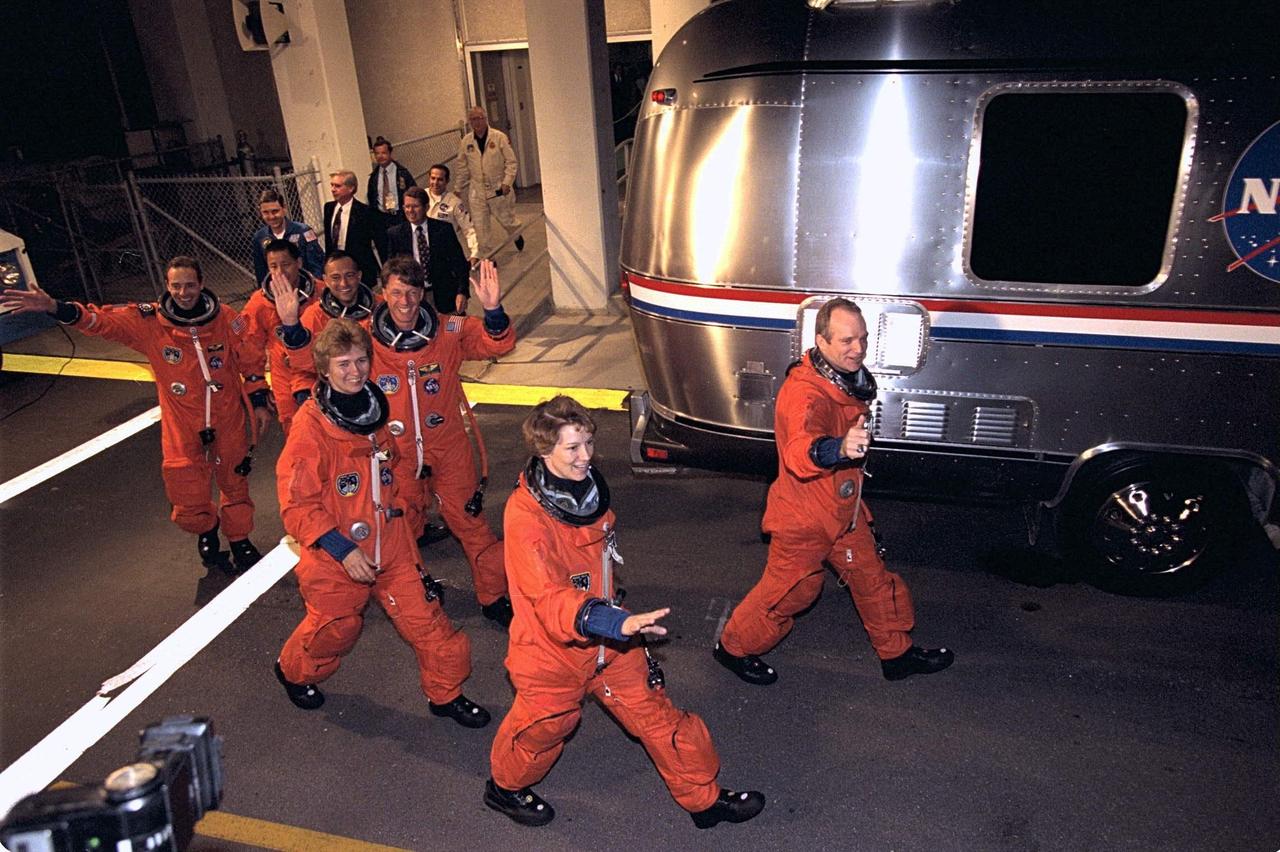
The crew of Mission STS-84 departs from the Operations and Checkout Building en route to Launch Pad 39A, where the Space Shuttle Atlantis awaits liftoff on the sixth docking of the Space Shuttle with the Russian Space Station Mir. Leading the way, from left, are Pilot Eileen Marie Collins and Commander Charles J. Precourt. Mission Specialist Elena V. Kondakova, a cosmonaut with the Russian Space Agency, walks behind Collins, and is followed by Mission Specialist C. Michael Foale, with hands upraised. At rear, from left, are Mission Specialist Jean-Francois Clervoy of the European Space Agency, Mission Specialist Edward Tsang Lu and Mission Specialist Carlos I. Noriega. The Space Shuttle Atlantis and its crew of seven are scheduled to lift off during an approximate 7-minute launch window which opens about 4:08 a.m. The exact liftoff time will be determined about 90 minutes prior to launch, based on Mir’s current location. The planned nine-day mission also will include the exchange of Foale for U.S. astronaut and Mir 23 crew member Jerry M. Linenger, who has been on Mir since Jan. 15. Linenger will return to Earth on Atlantis, and Foale will remain on Mir for about four months
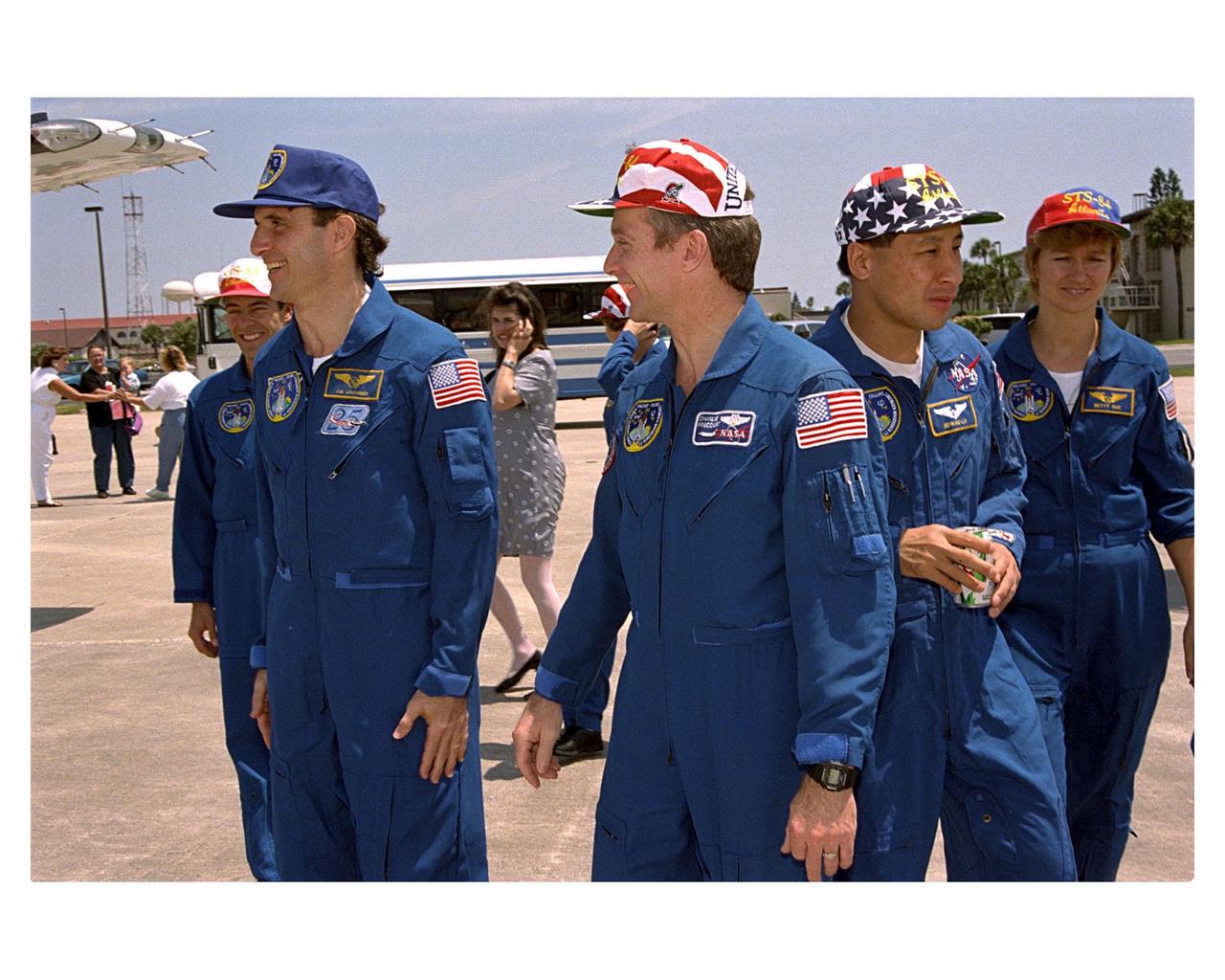
KENNEDY SPACE CENTER, FLA. - Members of the STS-84 crew pause at Patrick Air force Base just prior to their departure for Johnson Space Center in Houston, Texas. They are (from left) Mission Specialist Jean-Francois Clervoy; returning astronaut and Mir 23 crew member Jerry M. Linenger; Mission Commander Charles J. Precourt; Mission Specialist Edward Tsang Lu; and Mission Specialist Elena V. Kondakova. The seven-member crew returned aboard the Space Shuttle Orbiter Atlantis May 24 on KSC's Runway 33 after the completion of a successful nine-day mission. STS-84 was the sixth docking of the Space Shuttle with the Russian Space Station MIr. Atlantis was docked with the Mir for five days. STS-84 Mission Specialist C. Michael Foale replaced Linenger, who had been on the Russian space station since Jan. 15. Besides the docking and crew exchange, STS-84 included the transfer of more than 7,300 pounds of water, logistics and science experiments and hardware to and from the Mir. Scientific experiments conducted during the STS-84 mission, and scheduled for Foale's stay on the Mir, are in the fields of advanced technology, Earth sciences, fundamental biology, human life sciences, International Space Station risk mitigation, microgravity sciences and space sciences.
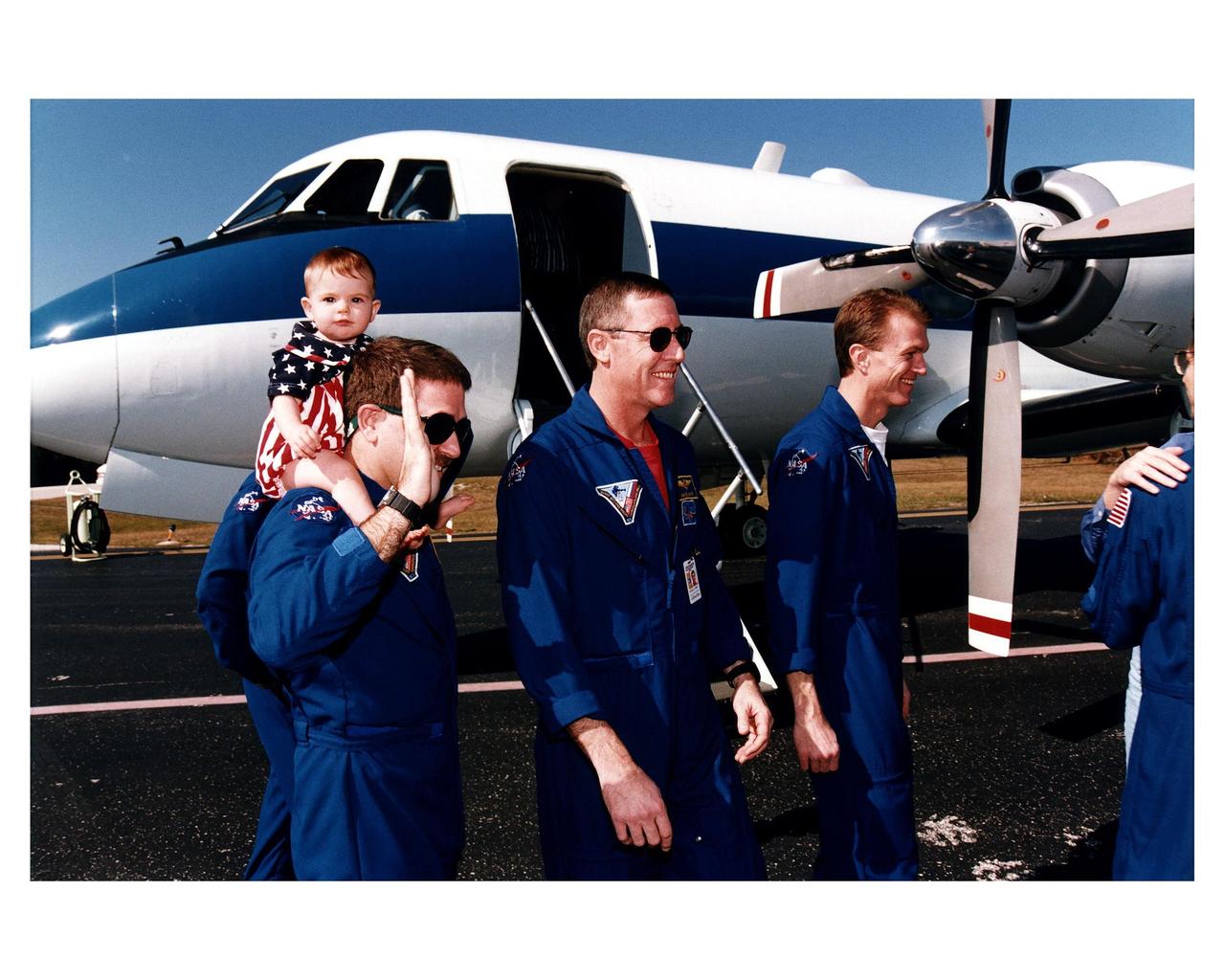
Members of the STS-81 crew prepare to depart for Johnson Space Center Jan. 23 from the Skid Strip at Cape Canaveral Air Station. The crew arrived at KSC aboard the Space Shuttle Atlantis Jan. 22 to conclude the fifth Shuttle-Mir docking mission and return U. S. astronaut John E. Blaha to Earth after four months in space as member of the Mir 22 crew. On the left is Mission Specialist John M. Grunsfeld, with his daughter, Sarah, on his back. Also pictured are Mission Commander Michael A. Baker (center); Pilot Brent W. Jett (second from right); and Blaha
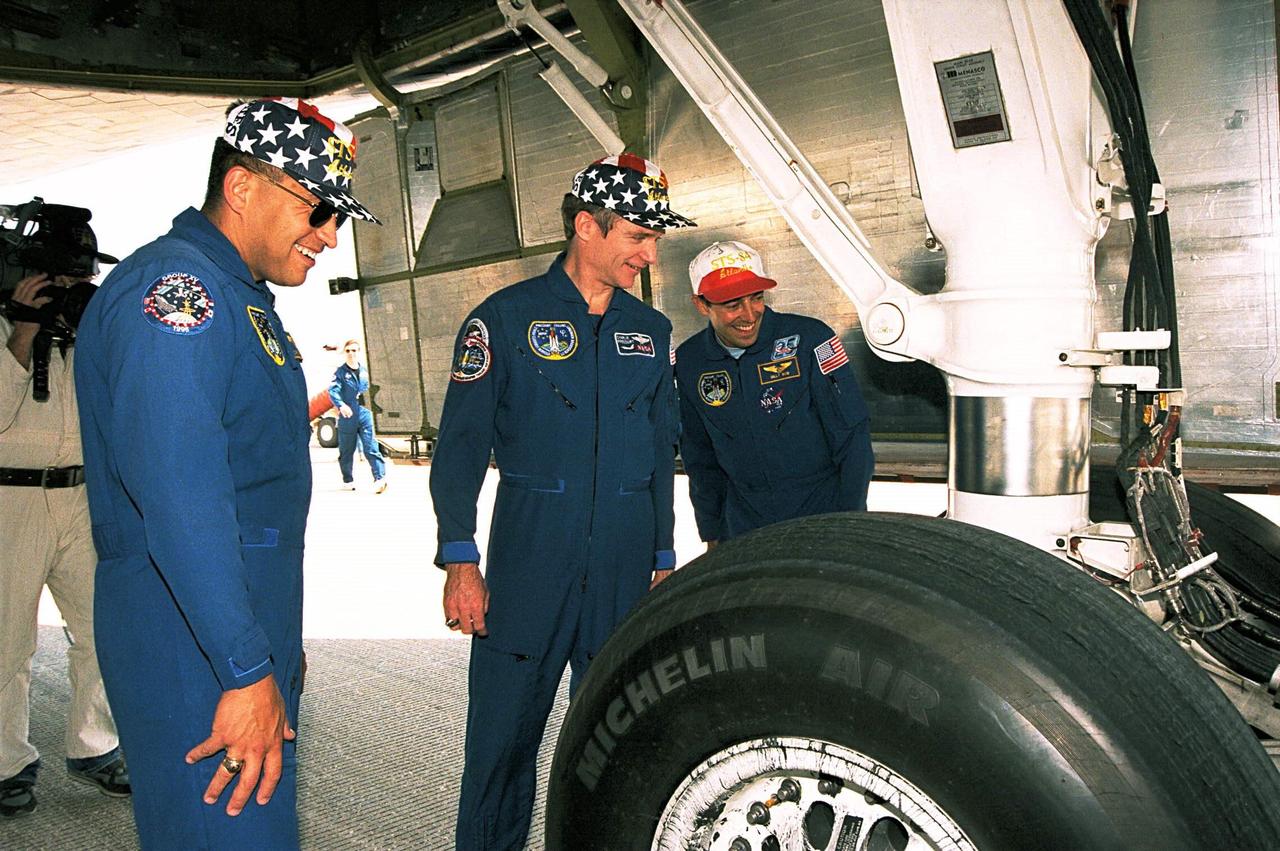
STS-84 crew members, from left, Mission Specialist Carlos I. Noriega, Commander Charles J. Precourt and Mission Specialist Jean-Francois Clervoy examine the tires of the Space Shuttle Atlantis after landing. Atlantis traveled about 3.6 million miles during the nine-day mission, which was the sixth of nine planned dockings of the Space Shuttle with the Russian Space Station Mir. The mission also included the exchange of STS-84 Mission Specialist C. Michael Foale for astronaut and Mir 23 crew member, Jerry M. Linenger, who spent the last four months on the Russian space station

STS-84 Commander Charles J. Precourt, in right foreground, talks to fellow crew members, Mission Specialist Elena V. Kondakova, in left foreground, of the Russian Space Agency, and Pilot Eileen Marie Collins during Terminal Countdown Demonstration Test (TCDT) activities at Launch Pad 39A. In the background are NASA suit technician Al Rochford, at left, and astronaut Mario Runco Jr., who is assisting the STS-84 crew. STS-84 will be the sixth docking of the Space Shuttle with the Russian Space Station Mir. After docking, STS-84 Mission Specialist Michael C. Foale will transfer to the space station and become a member of the Mir 23 crew, replacing U.S. astronaut Jerry M. Linenger, who will return to Earth aboard Atlantis. Foale will live and work on Mir until mid-September when his replacement is expected to arrive on the STS-86 mission. STS-84 is targeted for a May 15 liftoff
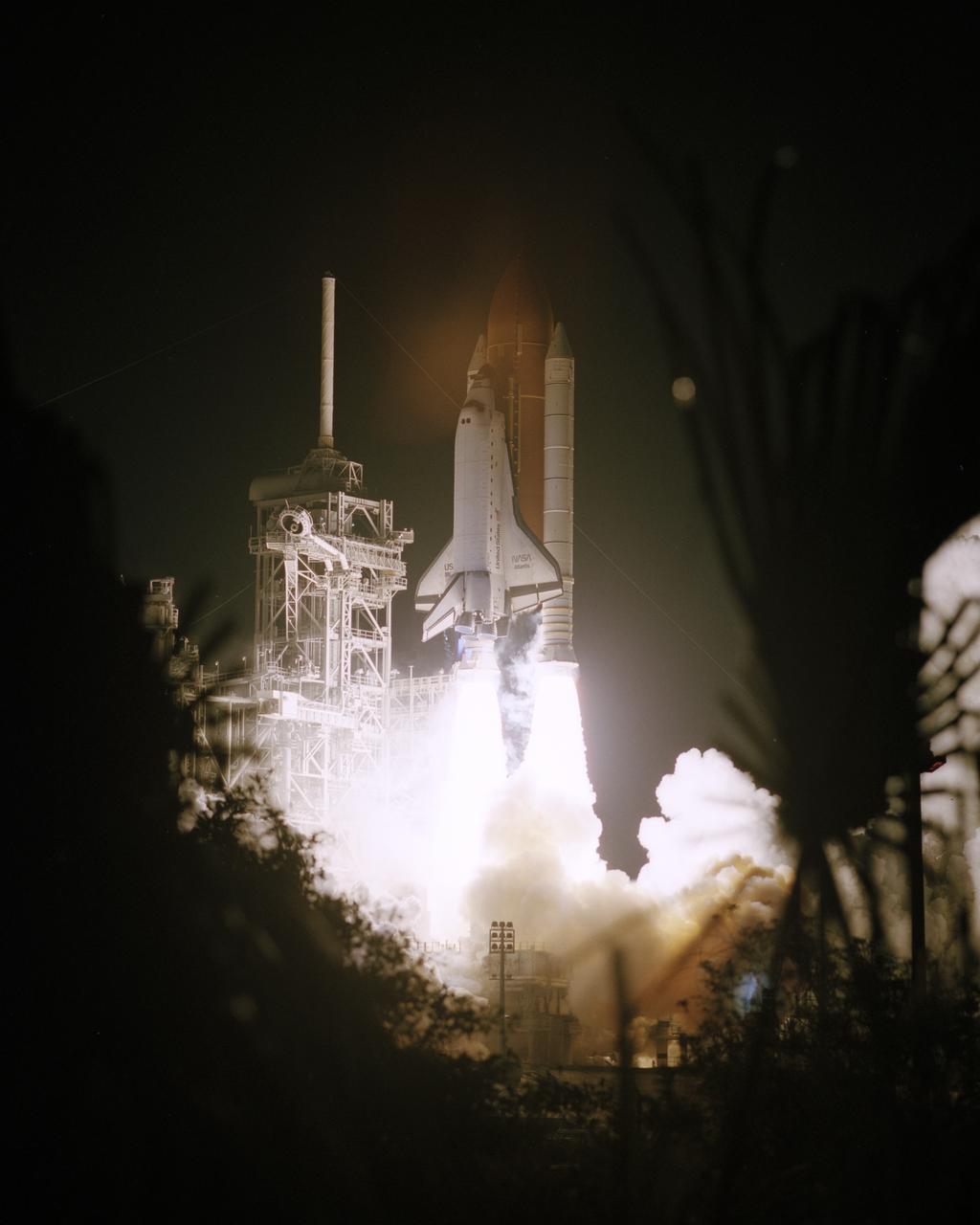
STS081-S-007 (12 Jan. 1997) --- Framed by a silhouette of Florida foliage, the Space Shuttle Atlantis lifts off from Pad 39B at 4:27:23 a.m. (EST) Jan. 12, 1997 on its way for a docking mission with Russia's Mir Space Station. Onboard are six astronauts and a SPACEHAB Double Module (DM), along with a large supply of food, water, hardware and other materials for Mir. Astronaut Jerry M. Linenger, now onboard Atlantis, will trade places with John E. Blaha, cosmonaut guest researcher, onboard Mir since mid September 1996. Along with Linenger, other crewmembers now aboard Atlantis are astronauts Michael A. Baker, commander; Brent W. Jett, Jr., pilot; and mission specialists John M. Grunsfeld, Marsha S. Ivins and Peter J. K. (Jeff) Wisoff.
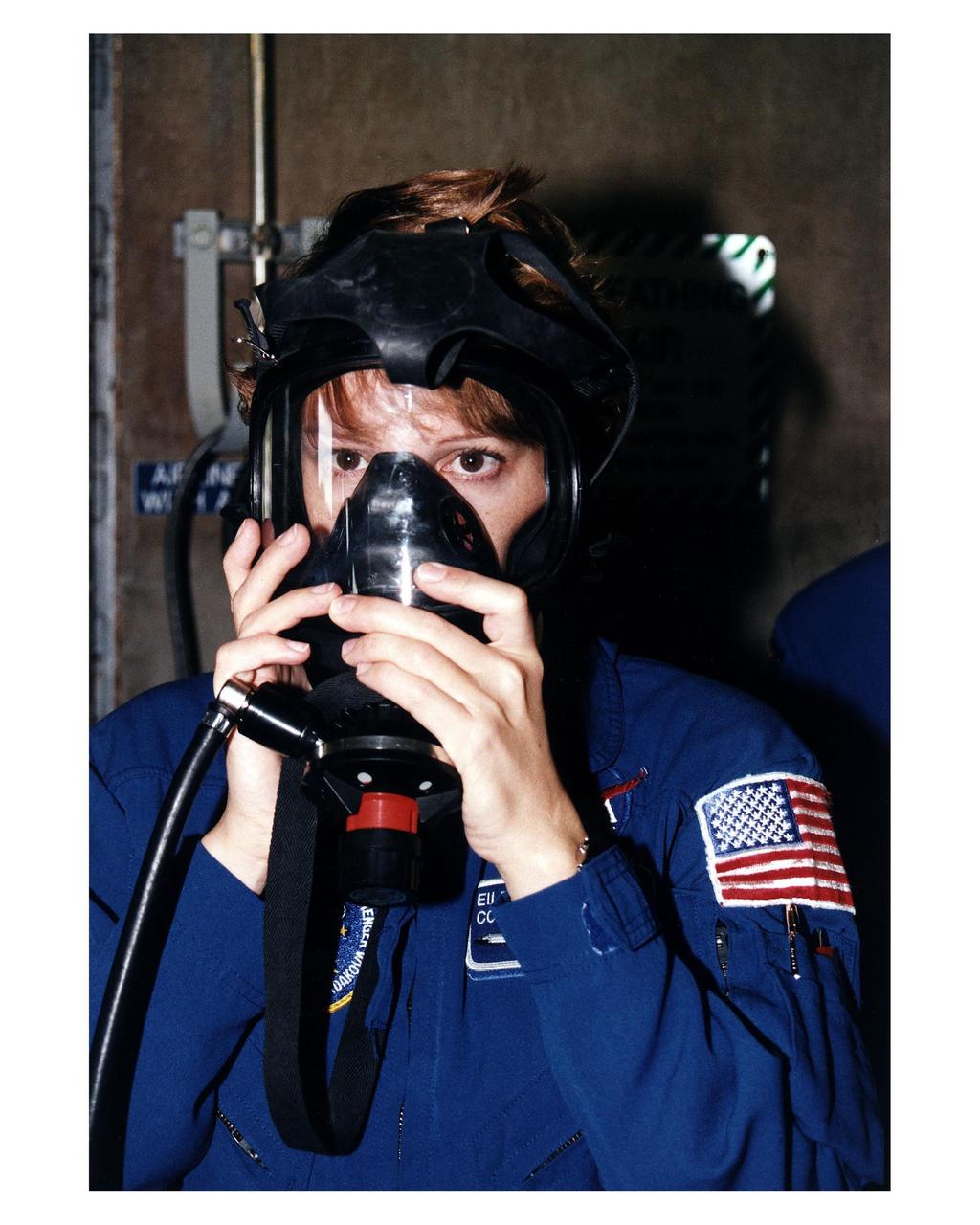
STS-84 Pilot Eileen Marie Collins practices using a gas mask during Terminal Countdown Demonstration Test (TCDT) activities at Launch Pad 39A. STS-84 will be the sixth docking of the Space Shuttle with the Russian Space Station Mir. It will be second space flight for Collins, who was the first woman Shuttle pilot on her initial mission, STS-63 in 1995. After docking, STS-84 Mission Specialist C. Michael Foale will transfer to the space station and become a member of the Mir 23 crew, replacing U.S. astronaut Jerry M. Linenger, who will return to Earth aboard Atlantis. Foale will live and work on Mir until mid-September when his replacement is expected to arrive on the STS-86 mission. STS-84 is targeted for a May 15 liftoff
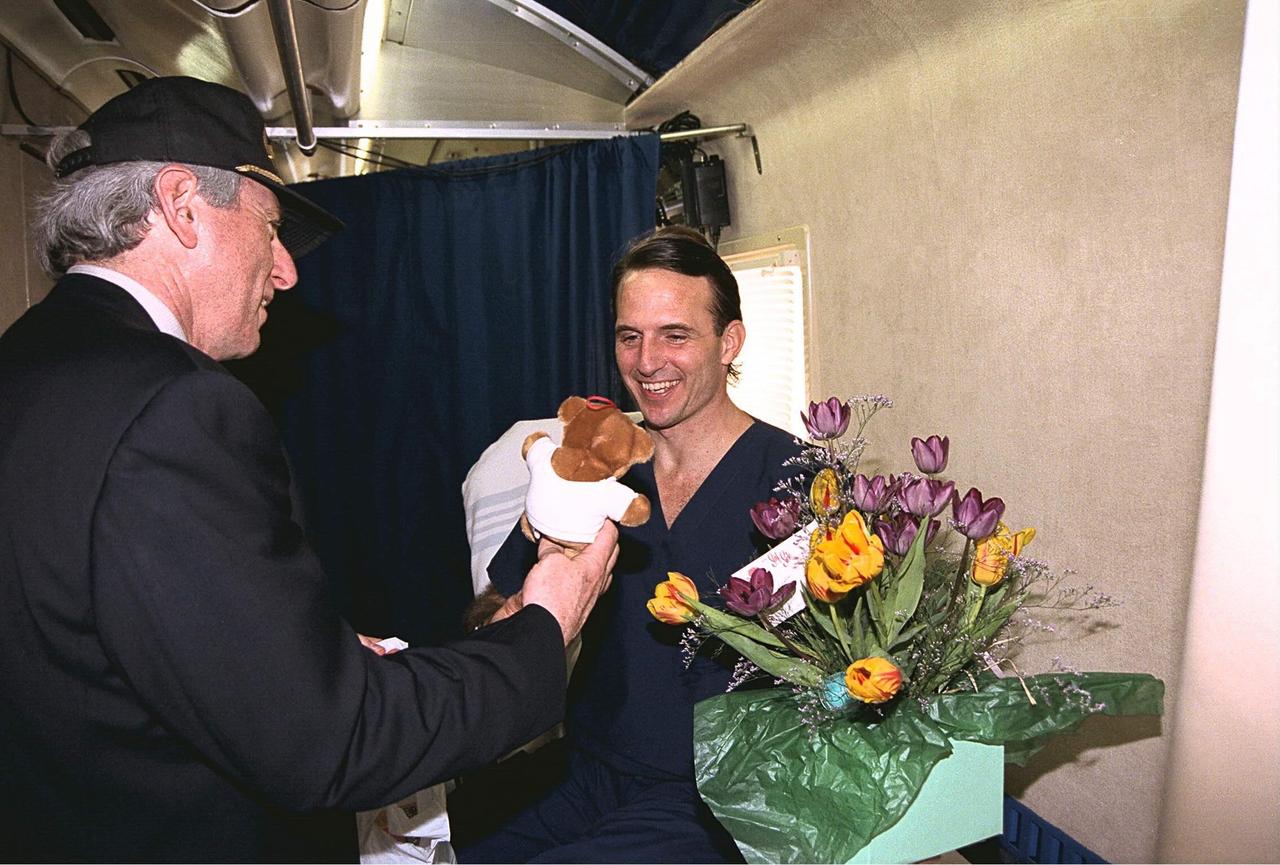
NASA Administrator Daniel Goldin presents some gifts to returning astronaut Jerry M. Linenger, who spent the last four months on the Russian Space Station Mir. Goldin met with Linenger in the Crew Transport Vehicle shortly after the Space Shuttle orbiter Atlantis landed on Runway 33 of KSC’s Shuttle Landing Facility at the conclusion of the nine-day STS-84 mission. Goldin gave the astronaut flowers for Linenger’s wife, Kathryn; a stuffed bear for their 18-month-old son, John; and a rattle for their unborn child who is due next month. STS-84 was the sixth of nine planned dockings of the Space Shuttle with the Mir. Mir 23 crew member Linenger was replaced on the Russian space station by STS-84 Mission Specialist C. Michael Foale
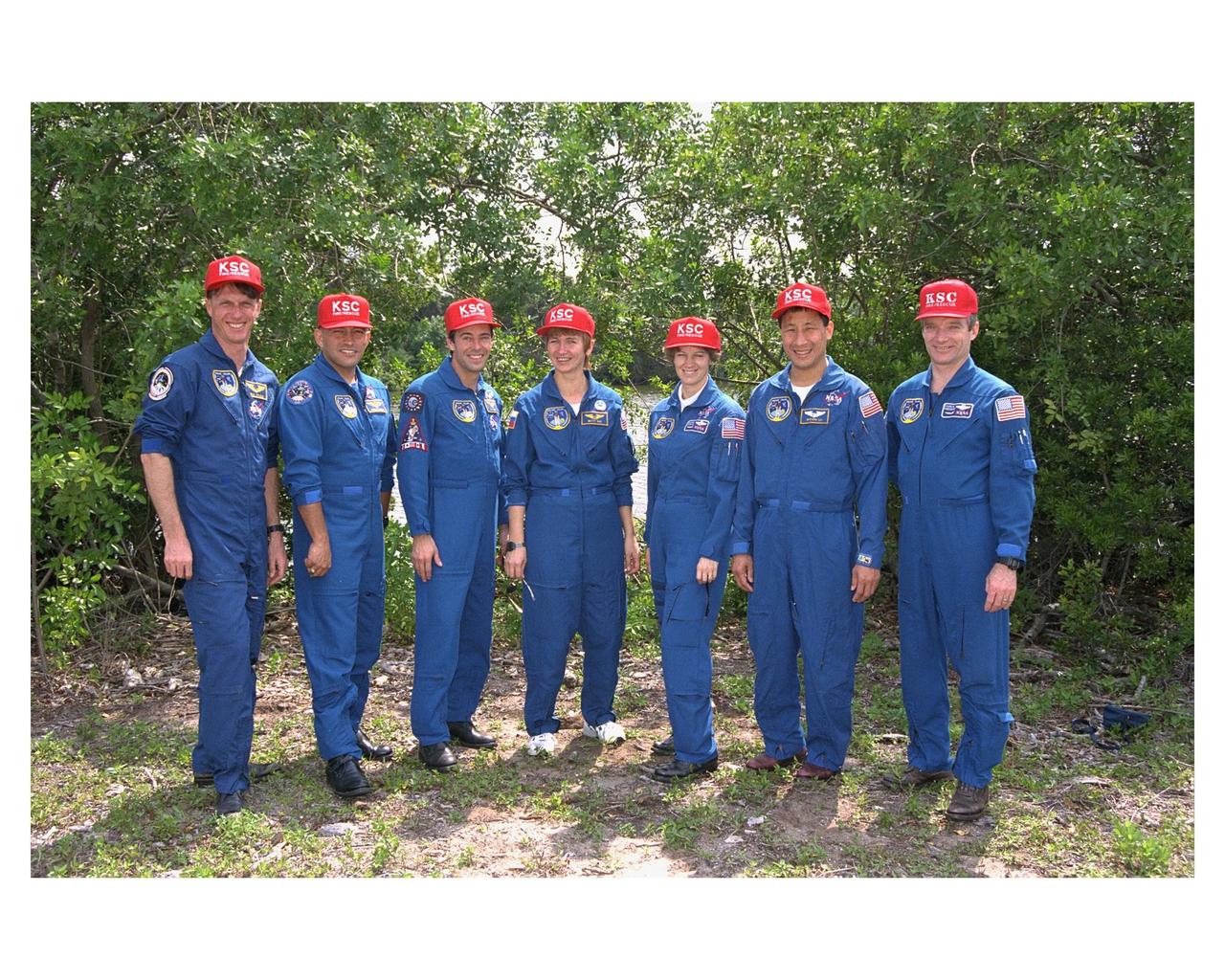
Proudly wearing red KSC Fire/Rescue hats, members of the STS-84 crew pause for a moment for a group photograph while participating in Terminal Countdown Demonstration Test (TCDT) activities. From left, are Mission Specialists C. Michael Foale, Carlos I. Noriega, Jean-Francois Clervoy of the European Space Agency and Elena V. Kondakova of the Russian Space Agency; and Pilot Eileen Marie Collins, Mission Specialist Edward Tsang Lu and Commander Charles J. Precourt. STS-84 aboard Atlantis will be the sixth docking of the Space Shuttle with the Russian Space Station Mir. After docking, Foale will transfer to the space station and become a member of the Mir 23 crew, replacing U.S. astronaut Jerry M. Linenger, who will return to Earth aboard Atlantis. Foale will live and work on Mir until mid-September when his replacement is expected to arrive on the STS-86 mission. STS-84 is targeted for a May 15 liftoff
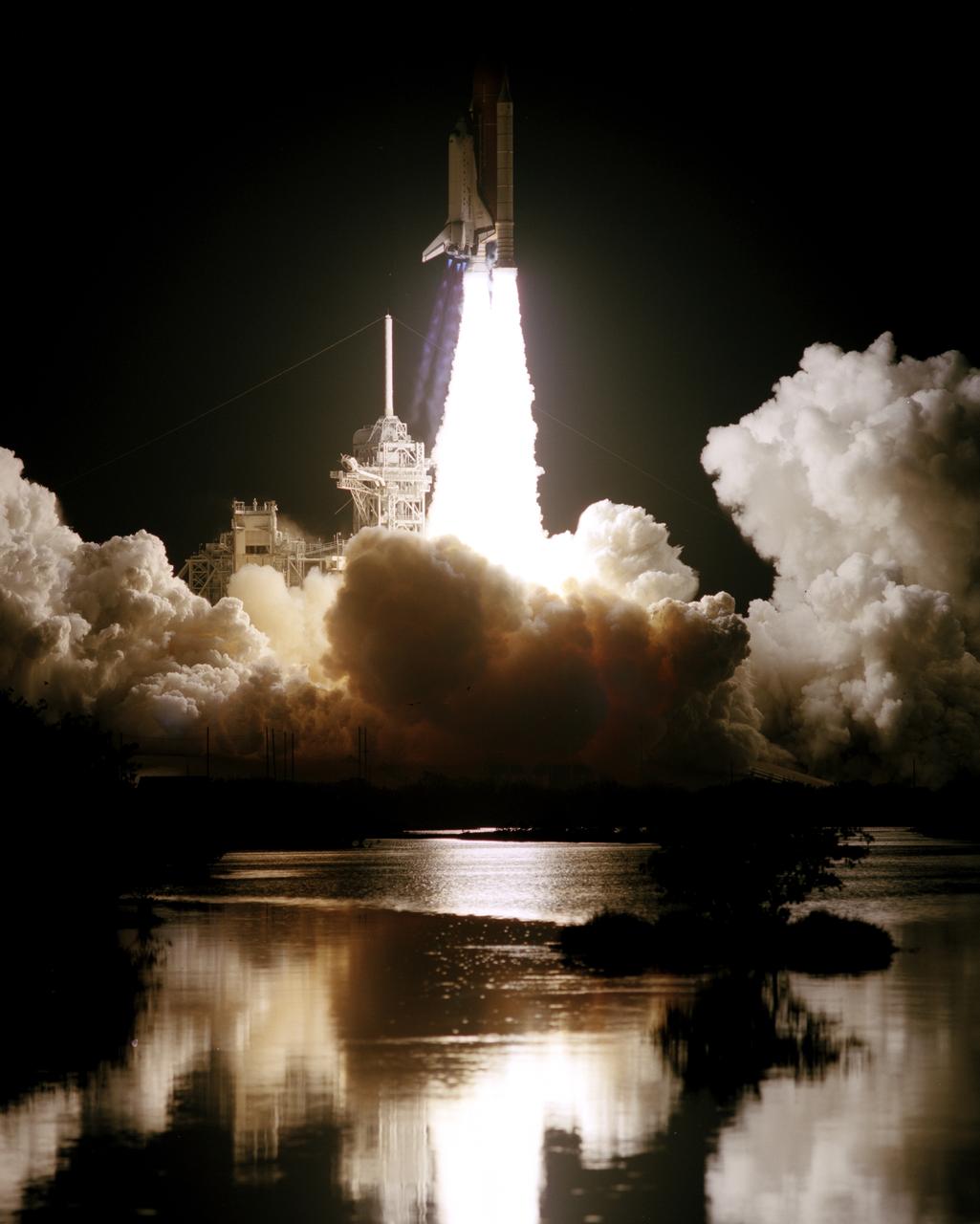
STS081-S-005 (12 Jan. 1997) --- Lighting up an early morning sky, the Space Shuttle Atlantis lifts off from Pad 39B to begin the new year of space missions for NASA's shuttle fleet. Launch occurred at 4:27:23 a.m. (EST), Jan. 12, 1997. Now on their way for a docking mission with Russia's Mir Space Station are a crew of six astronauts and a SPACEHAB Double Module (DM), along with a large supply of food, water, hardware and other materials for Mir. Astronaut Jerry M. Linenger, now onboard Atlantis, will trade places with John E. Blaha, cosmonaut guest researcher, onboard Mir since mid September 1996. Along with Linenger, other crewmembers now aboard Atlantis are astronauts Michael A. Baker, commander; Brent W. Jett, Jr., pilot; and mission specialists John M. Grunsfeld, Marsha S. Ivins and Peter J. K. (Jeff) Wisoff.
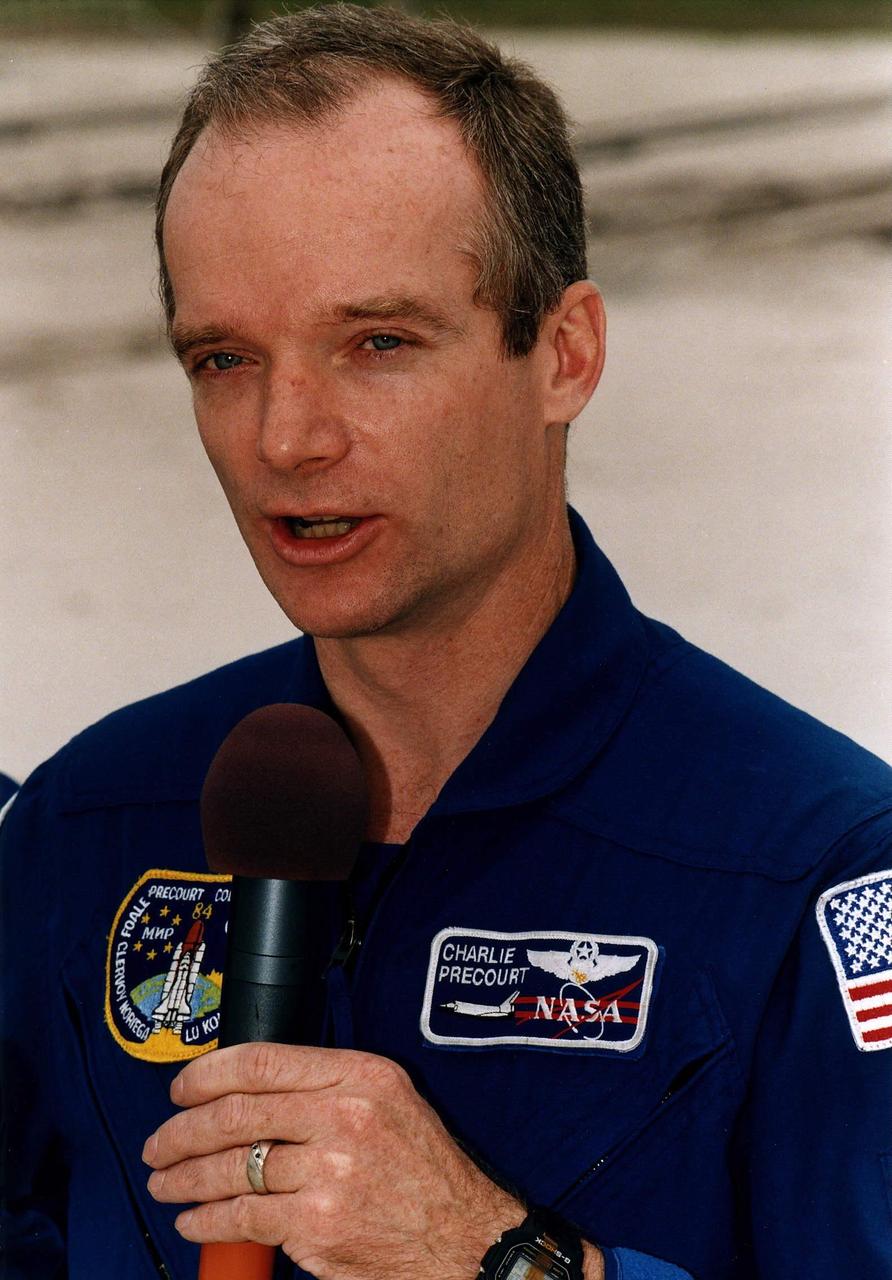
STS-84 Commander Charles J. Precourt talks to news media representatives and other onlookers during Terminal Countdown Demonstration Test (TCDT) activities at Launch Pad 39A. Two-time space flyer Precourt will lead the other six STS-84 crew members on the sixth docking of the Space Shuttle with the Russian Space Station Mir. One of the crew members, C. Michael Foale, will transfer to the space station and become a member of the Mir 23 crew, replacing U.S. astronaut Jerry M. Linenger, who will return to Earth aboard Atlantis. Foale will live and work on Mir until mid-September when his replacement is expected to arrive on the STS-86 mission. STS-84 is targeted for a May 15 liftoff
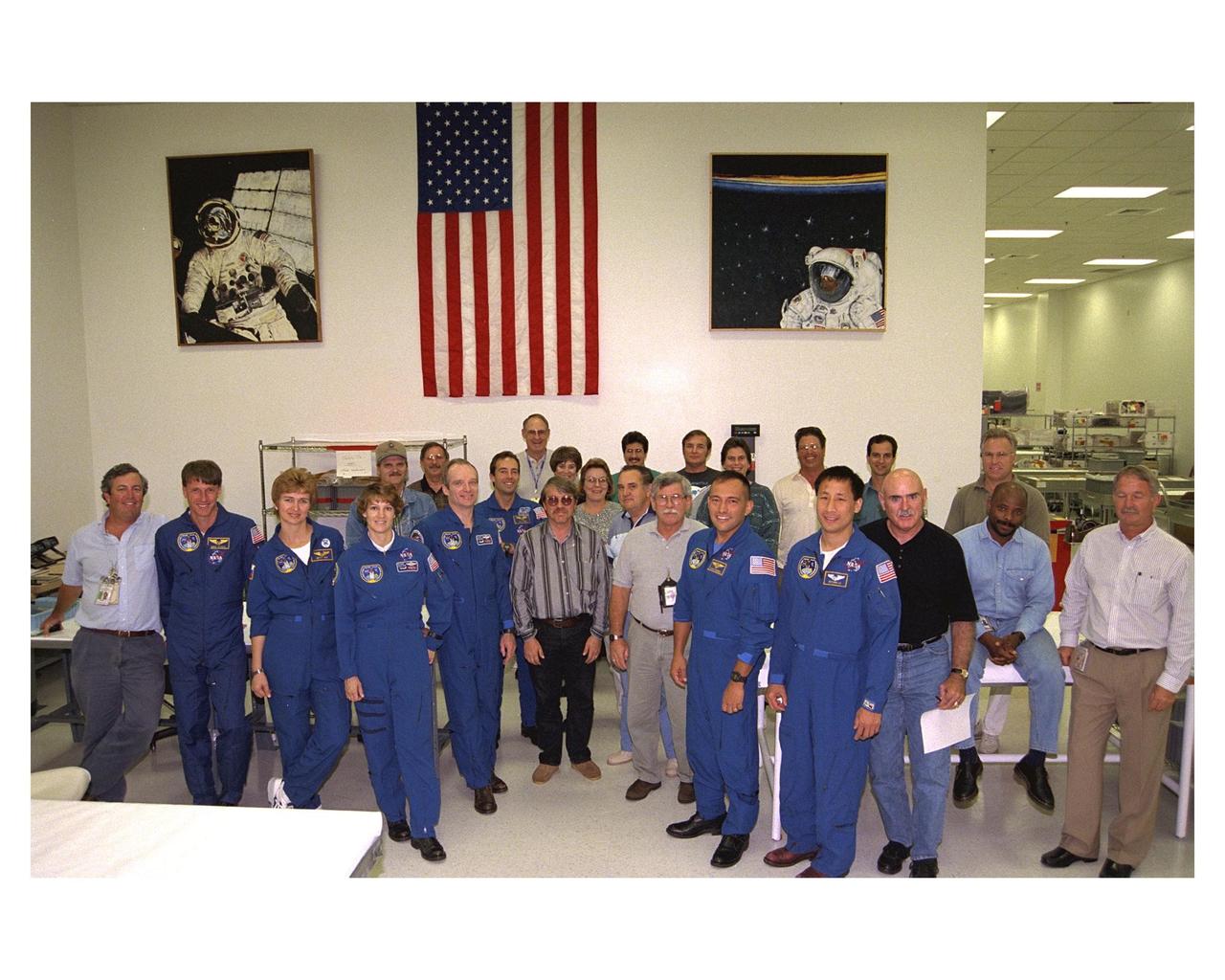
The STS-84 crew pose for a photograph with members of the mission payload team in the Space Station Processing Facility. Dressed in their blue flight suits, from left, are Mission Specialist C. Michael Foale, Elena V. Kondakova of the Russian Space Agency, Pilot Eileen Marie Collins, Commander Charles J. Precourt, Mission Specialist Jean-Francois Clervoy of the European Space Agency, Mission Specialist Carlos I. Noriega and Mission Specialist Edward Tsang Lu. STS-84 aboard the Space Shuttle Atlantis will be the sixth docking of the Space Shuttle with the Russian Space Station Mir. After docking, Foale will transfer to the space station and become a member of the Mir 23 crew, replacing U.S. astronaut Jerry M. Linenger, who will return to Earth aboard Atlantis. Foale will live and work on Mir until mid-September when his replacement is expected to arrive on the STS-86 mission. STS-84 is targeted for a May 15 liftoff
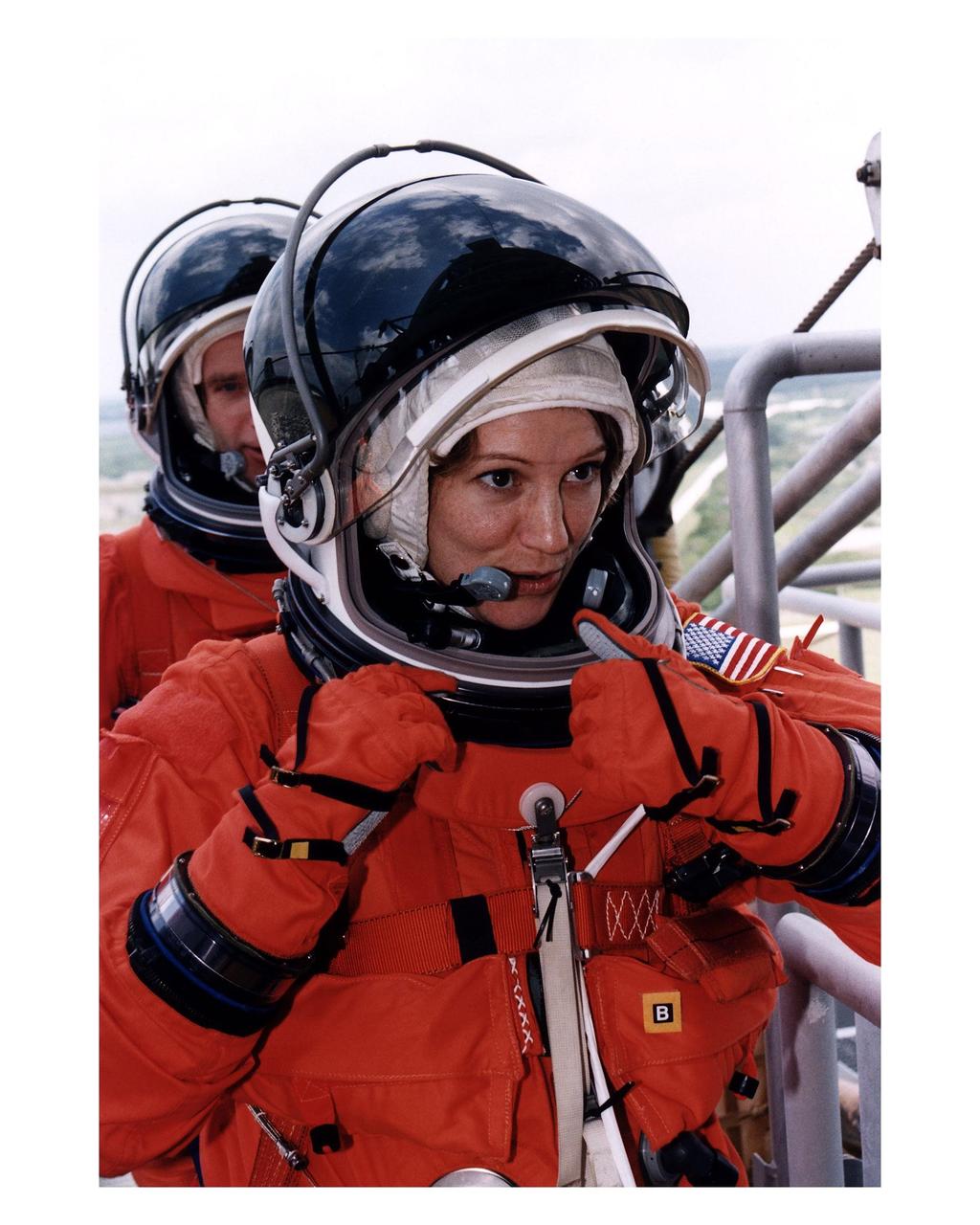
STS-84 Pilot Eileen Marie Collins participates in Terminal Countdown Demonstration Test (TCDT) activities at Launch Pad 39A. Behind her is Commander Charles J. Precourt. TCDT is a dress rehearsal for the launch, which is scheduled May 15. STS-84 aboard Atlantis will be the sixth docking of the Space Shuttle with the Russian Space Station Mir. After docking, STS-84 Mission Specialist C. Michael Foale will transfer to the space station and become a member of the Mir 23 crew, replacing U.S. astronaut Jerry M. Linenger, who will return to Earth aboard Atlantis. Foale will live and work on Mir until mid-September when his replacement is expected to arrive on the STS-86 mission
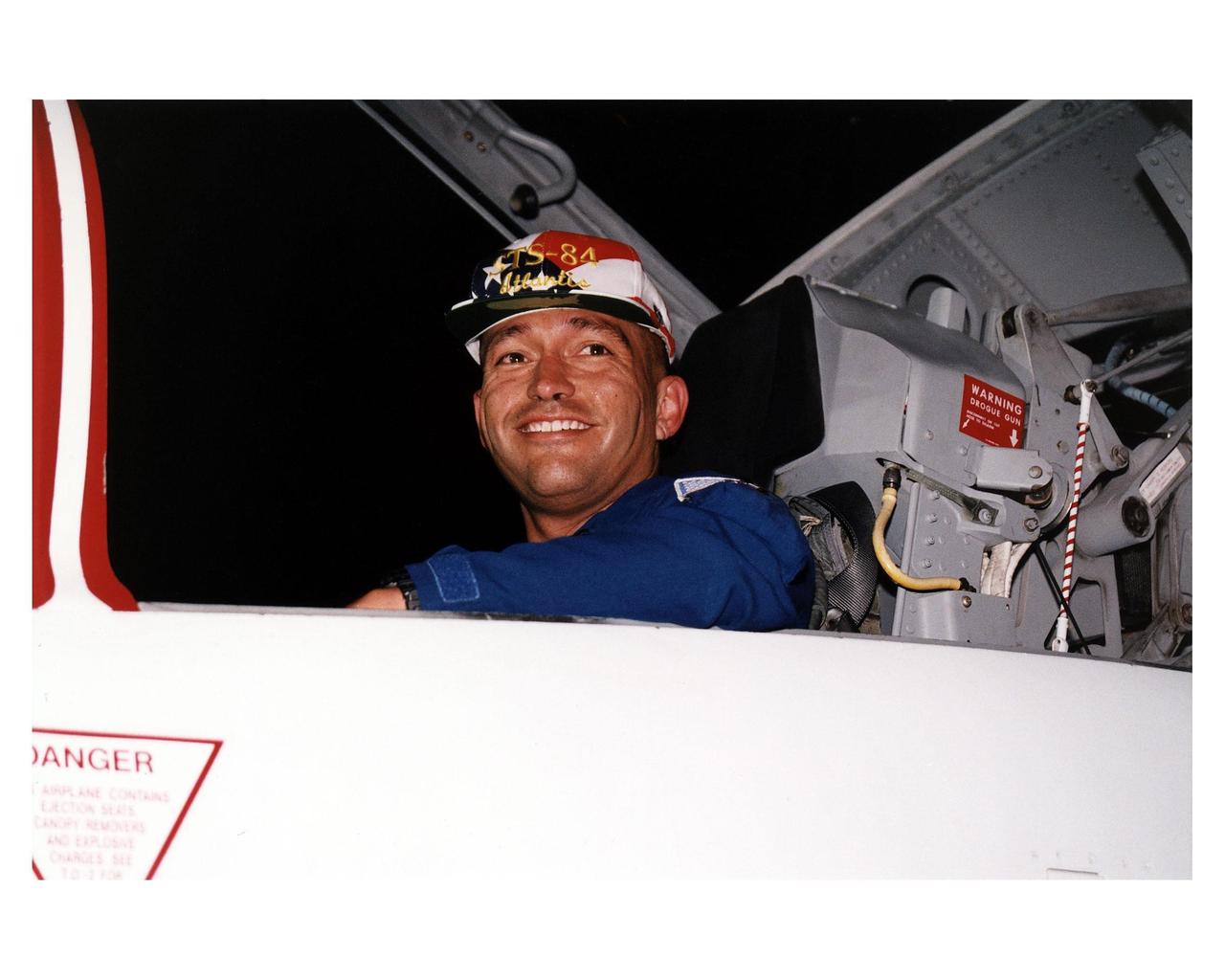
STS-84 Mission Specialist Carlos I. Noriega arrives in a T-38 jet at KSC’s Shuttle Landing Facility. The pilot of the plane is astronaut Frank Culbertson, who is the NASA director of the Phase One Program of the International Space Station. STS-84 will be Noriega’s first space flight. The nine-day mission will be the sixth docking of the Space Shuttle with the Russian Space Station Mir. During the docking, STS-84 Mission Specialist C. Michael Foale will transfer to the Russian space station to become a member of the Mir 23 crew, replacing U.S. astronaut Jerry M. Linenger, who will return to Earth on Atlantis. Foale is scheduled to remain on Mir about four months until his replacement arrives on STS-86 in September
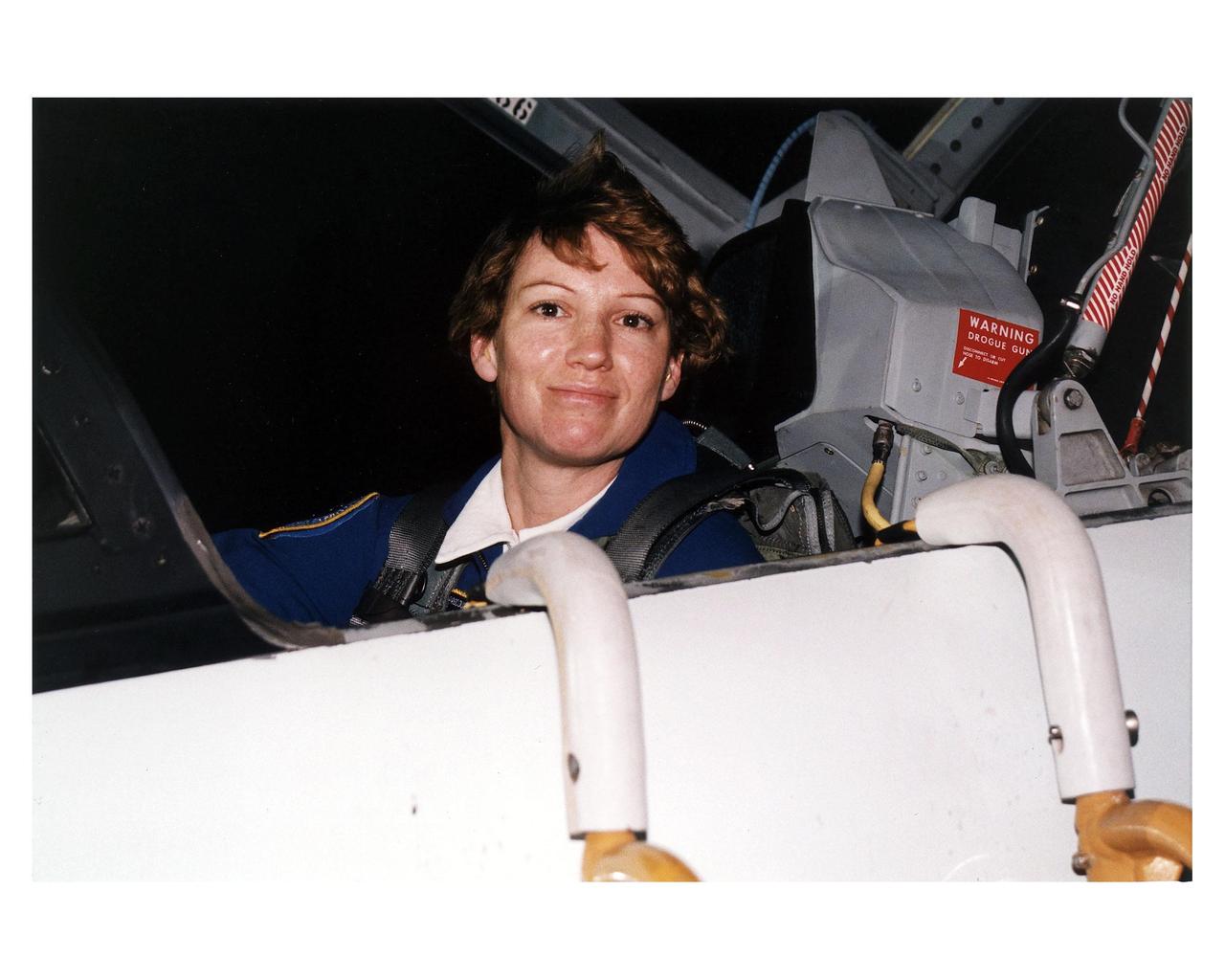
STS-84 Pilot Eileen Marie Collins arrives in a T-38 jet at KSC’s Shuttle Landing Facility. Collins will make her second space flight on STS-84. Her initial flight was as the first woman Shuttle pilot on STS-63 in 1995. STS-84 will be the sixth docking of the Space Shuttle with the Russian Space Station Mir. During the docking, STS-84 Mission Specialist C. Michael Foale will transfer to the Russian space station to become a member of the Mir 23 crew, replacing U.S. astronaut Jerry M. Linenger, who will return to Earth on Atlantis. Foale is scheduled to remain on Mir about four months until his replacement arrives on STS-86 in September
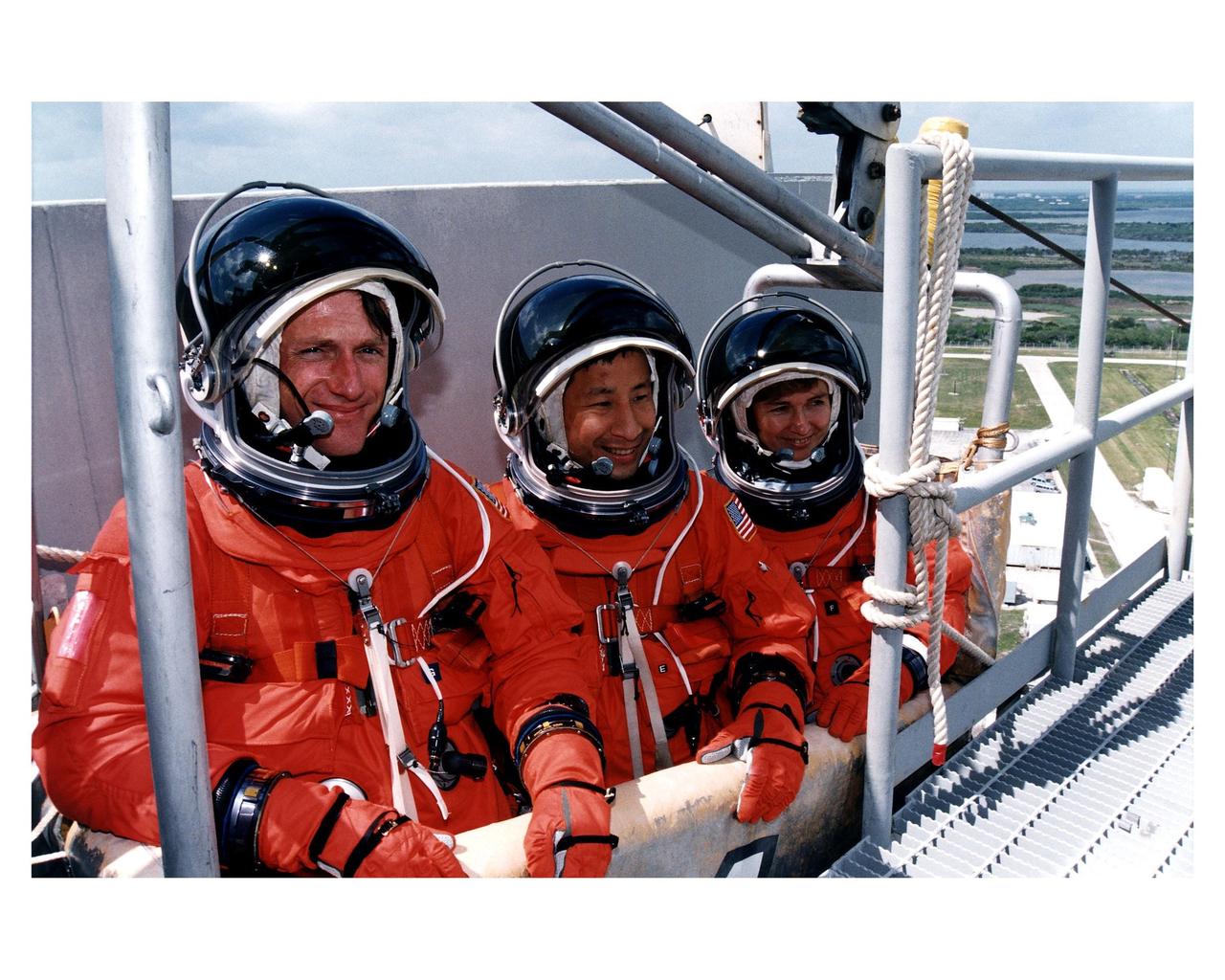
STS-84 Mission Specialists, from left, C. Michael Foale, Edward Tsang Lu and Elena V. Kondakova practice emergency egress procedures in a slidewire basket at Launch Pad 39A. They and the other four members of the STS-84 crew are participating in the Terminal Countdown Demonstration Test (TCDT), a dress rehearsal for launch. STS-84 aboard Atlantis will be the sixth docking of the Space Shuttle with the Russian Space Station Mir. After docking, Foale will transfer to the space station and become a member of the Mir 23 crew, replacing U.S. astronaut Jerry M. Linenger, who will return to Earth aboard Atlantis. Foale will live and work on Mir until mid-September when his replacement is expected to arrive on the STS-86 mission. STS-84 is targeted for a May 15 liftoff
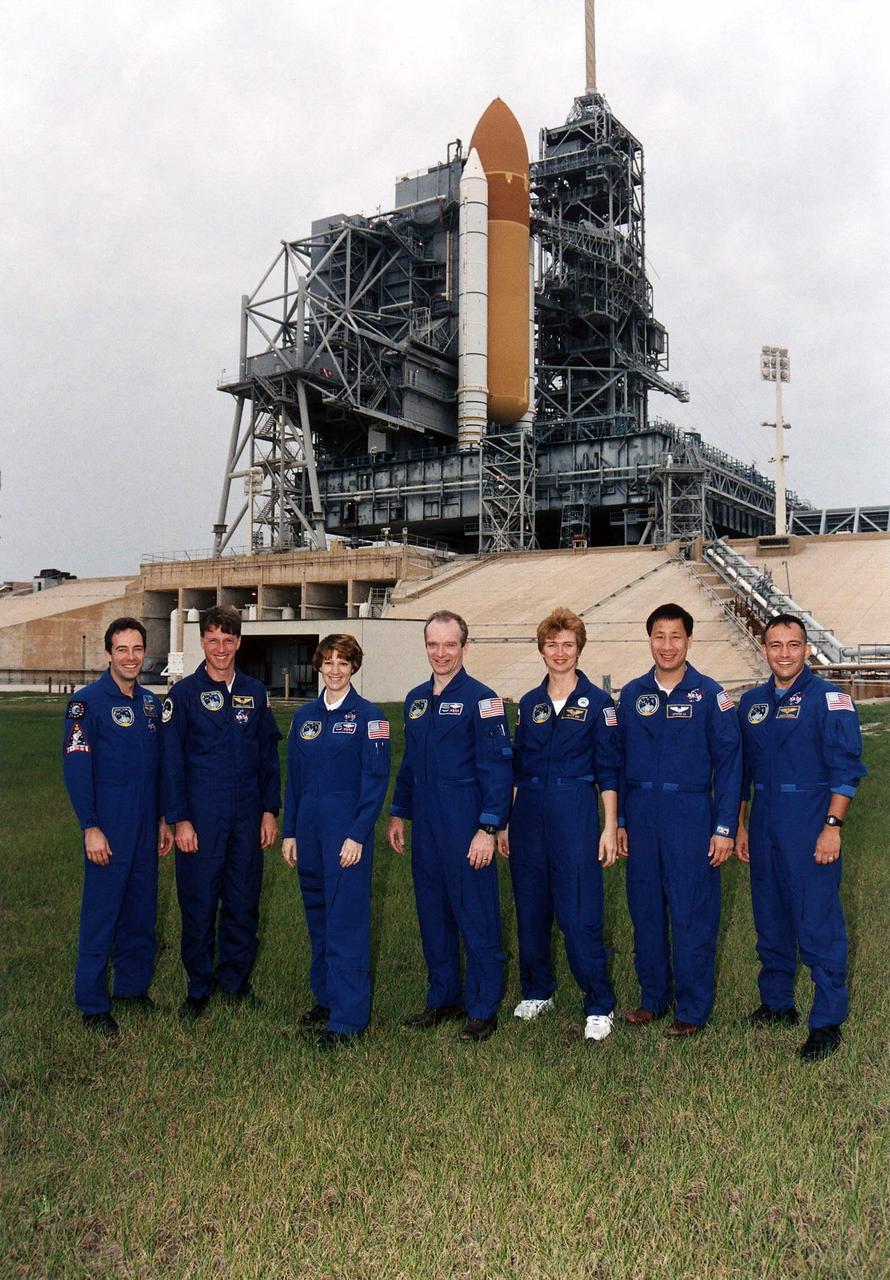
STS-84 crew members pose for a group photograph at Launch Pad 39A, where the Space Shuttle Atlantis is poised for liftoff on the sixth Shuttle-Mir docking mission. From left, are Mission Specialist Jean-Francois Clervoy of the European Space Agency, Mission Specialist C. Michael Foale, Pilot Eileen Marie Collins, Commander Charles J. Precourt, Mission Specialist Elena V. Kondakova of the Russian Space Agency, and Mission Specialists Edward Tsang Lu and Carlos I. Noriega. They are at KSC to participate in the Terminal Countdown Demonstration Test (TCDT), a dress rehearsal for launch. After the docking, Foale will transfer to the Russian Space Station Mir, becoming a member of the Mir 23 crew. He will replace Jerry M. Linenger, who will return to Earth on Atlantis. Liftoff of STS-84 is targeted for May 15
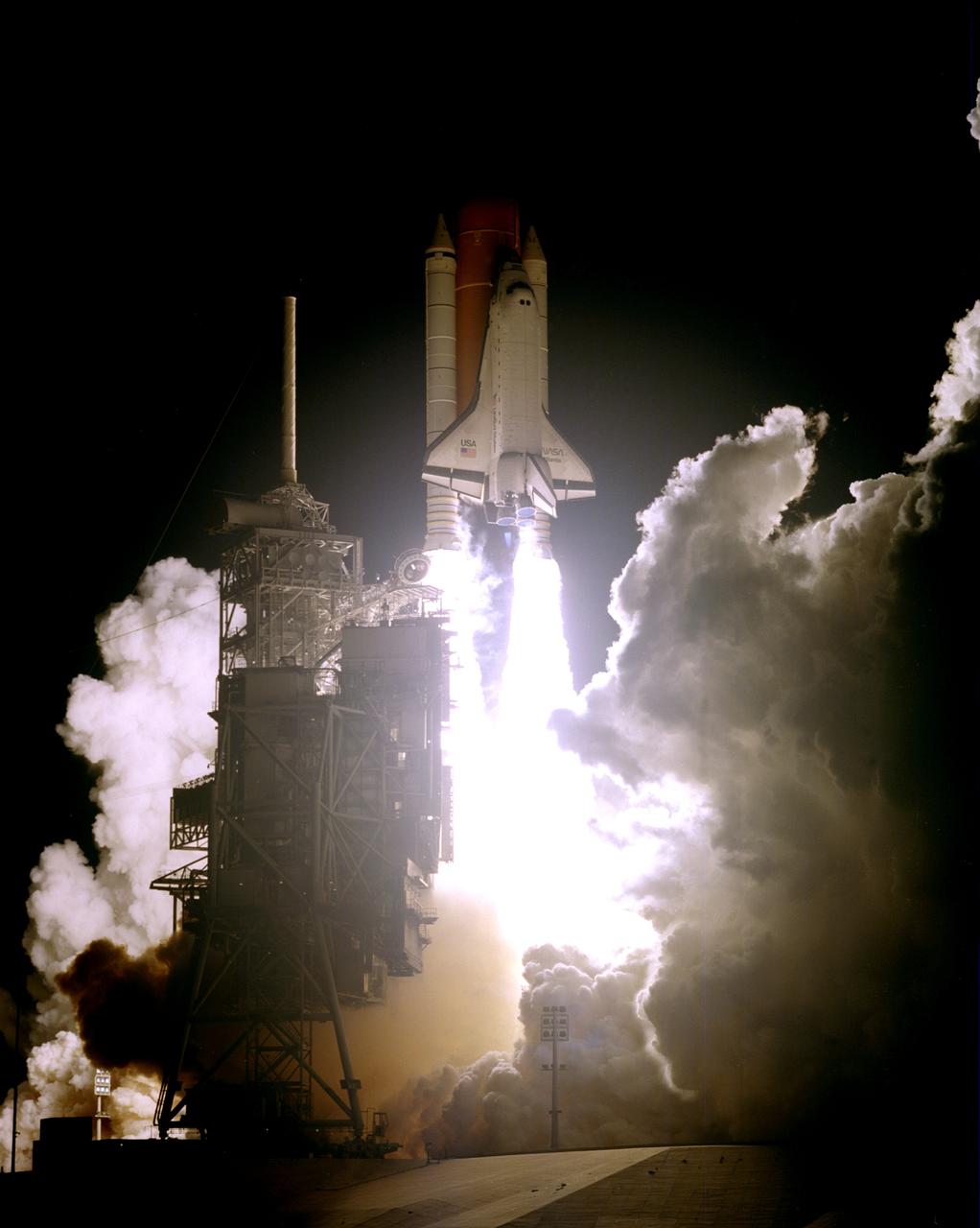
STS081-S-006 (12 Jan. 1997) --- The Space Shuttle Atlantis lifts off from Pad 39B at 4:27:23 a.m. (EST) Jan. 12, 1997 on its way for a docking mission with Russia's Mir Space Station. Onboard are six astronauts and a SPACEHAB Double Module (DM), along with a large supply of food, water, hardware and other materials for Mir. Astronaut Jerry M. Linenger, now onboard Atlantis, will trade places with John E. Blaha, cosmonaut guest researcher, onboard Mir since mid September 1996. Along with Linenger, other crewmembers now aboard Atlantis are astronauts Michael A. Baker, commander; Brent W. Jett, Jr., pilot; and mission specialists John M. Grunsfeld, Marsha S. Ivins and Peter J. K. (Jeff) Wisoff.
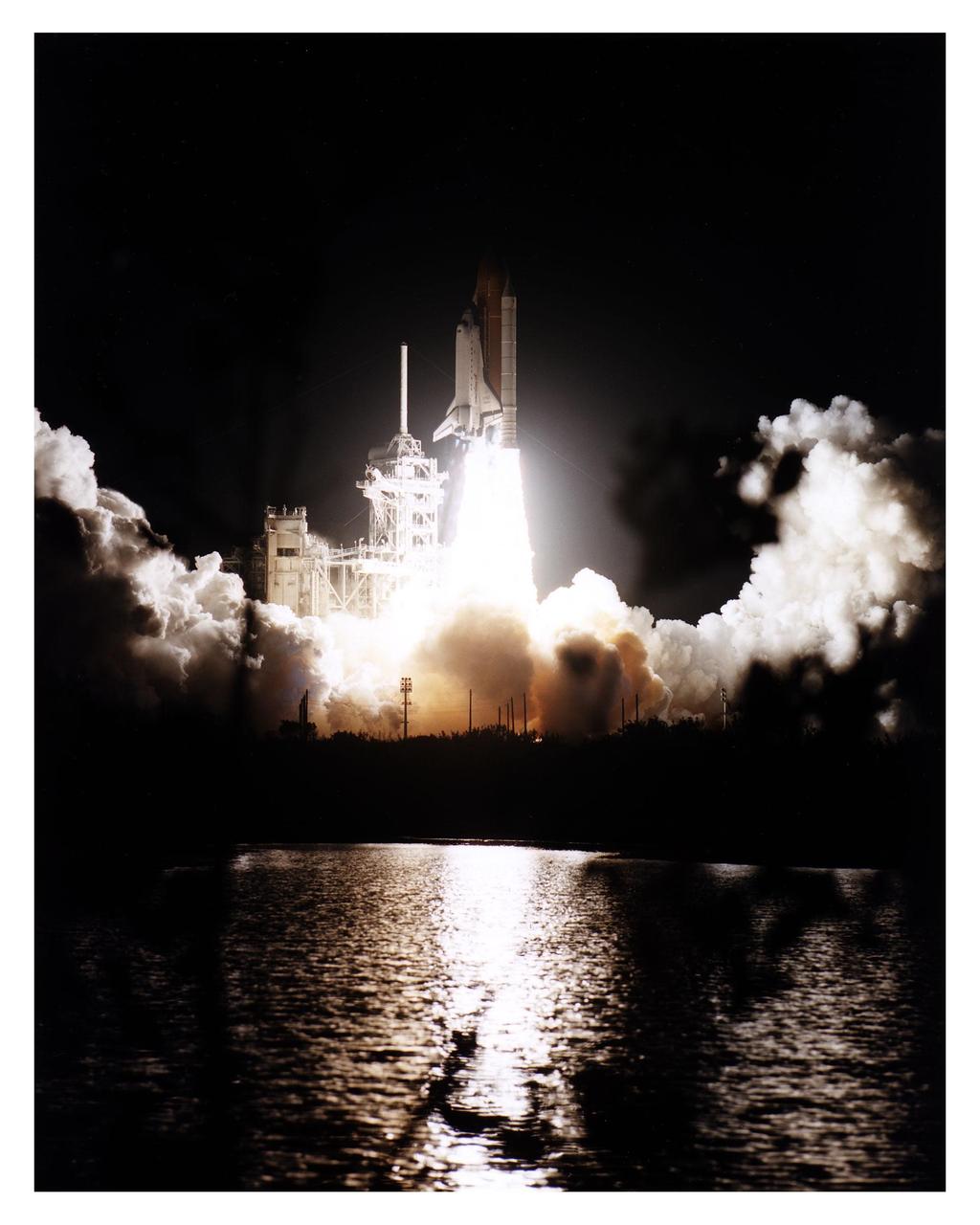
KENNEDY SPACE CENTER, FLA. -- The Space Shuttle Atlantis transforms the early morning at KSC into near-daylight as its more than 7 million pounds of rocket thrust propels it from Launch Pad 39B at 4:27:23 a.m. EST Jan. 12 on its way to dock with the Mir space station for the fifth time.The 10-day mission will feature the transfer of Mission Specialist Jerry Linenger to Mir to replace astronaut John Blaha, who has been on the orbital laboratory since Sept. 19, 1996. The other STS-81 crew members include Mission Commander Michael A. Baker; Pilot Brent W. Jett, Jr.; and Mission Specialists John M. Grunsfeld, Peter J. K. "Jeff" Wisoff and Marsha S. Ivins. During the five-day docking operations, the Shuttle and Mir crews will conduct risk mitigation, human life science, microgravity and materials processing experiments that will provide data for the design, development and operation of the International Space Station. The primary payload is the SPACEHAB-DM double module that will provide space for more than 2,000 pounds of hardware, food and water that will be transferred into the Russian space station. The SPACEHAB will also be used to return experiment samples from the Mir to Earth for analysis and for microgravity experiments during the mission
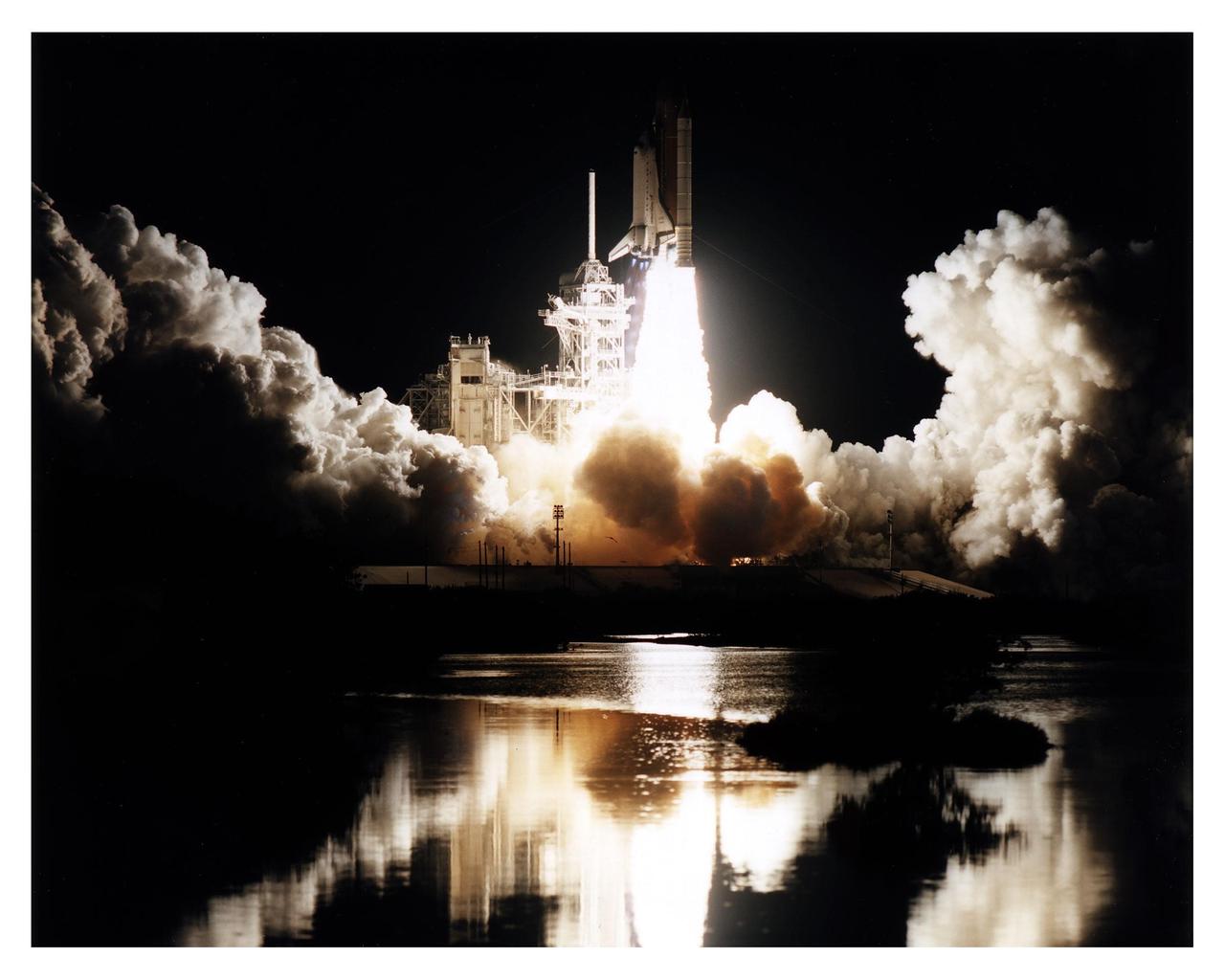
Like a rising sun lighting up the night, the Space Shuttle Atlantis soars from Launch Pad 39B at 4:27:23 a.m. EST Jan. 12 on its way to dock with the Mir space station for the fifth time. The 10-day mission will feature the transfer of Mission Specialist Jerry Linenger to Mir to replace astronaut John Blaha, who has been on the orbital laboratory since Sept. 19, 1996. The other STS-81 crew members include Mission Commander Michael A. Baker; Pilot Brent W. Jett, Jr.; and Mission Specialists John M. Grunsfeld, Peter J. K. "Jeff" Wisoff and Marsha S. Ivins. During the five-day docking operations, the Shuttle and Mir crews will conduct risk mitigation, human life science, microgravity and materials processing experiments that will provide data for the design, development and operation of the International Space Station. The primary payload is the SPACEHAB-DM double module that will provide space for more than 2,000 pounds of hardware, food and water that will be transferred into the Russian space station.The SPACEHAB will also be used to return experiment samples from the Mir to Earth for analysis and for microgravity experiments during the mission
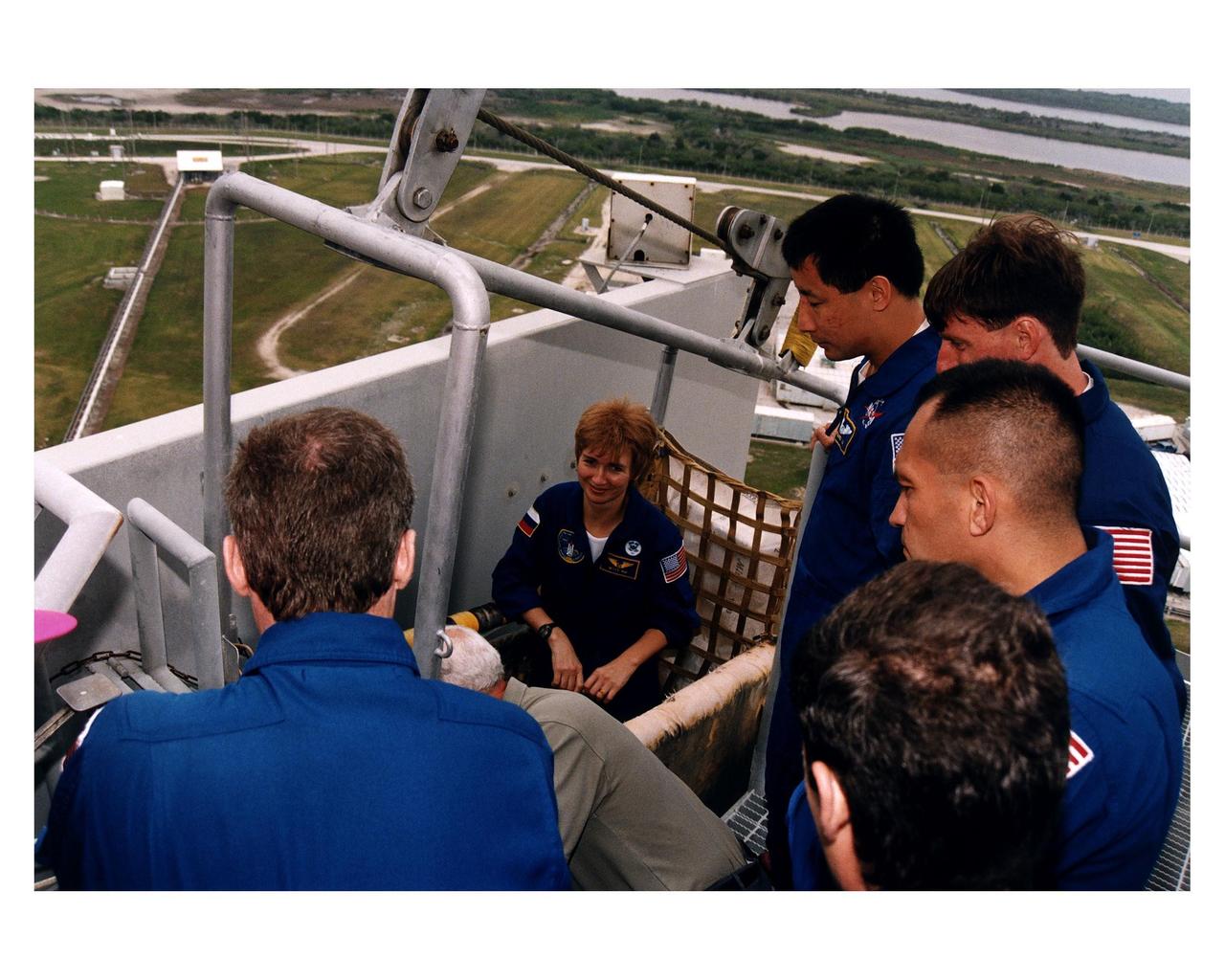
With several of her fellow crew members watching, STS-84 Mission Specialist Elena V. Kondakova, seated at center, gets instructions on using the slidewire baskets, part of the emergency egress system at Launch Pad 39A. Familiarization with pad procedures and systems is part of the Terminal Countdown Demonstration Test (TCDT) activities for the crew. Kondakova, a cosmonaut with the Russian space agency, is one of the seven STS-84 crew members for the sixth docking of the Space Shuttle with the Russian Space Station Mir. Another member, C. Michael Foale, will transfer to the space station and become a member of the Mir 23 crew, replacing U.S. astronaut Jerry M. Linenger, who will return to Earth aboard Atlantis. Foale will live and work on Mir until mid-September when his replacement is expected to arrive on the STS-86 mission. Kondakova previously lived on the Russian space station as the flight engineer of the 17th main mission on Mir from Oct. 4, 1994, to March 9, 1995. STS-84 is targeted for a May 15 liftoff
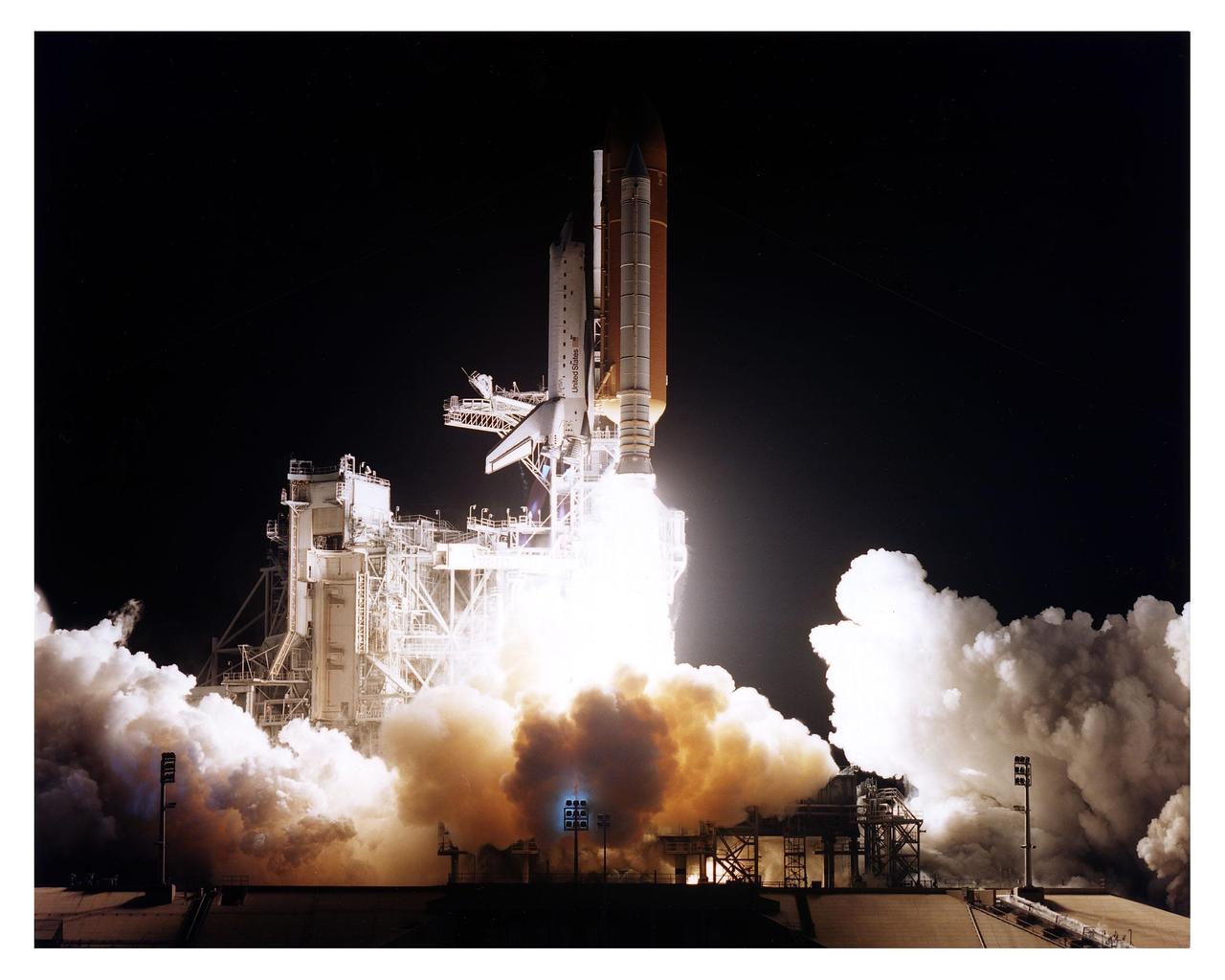
The Space Shuttle Atlantis transforms the early morning at KSC into near-daylight as its more than 7 million pounds of rocket thrust propels it from Launch Pad 39B at 4:27:23 a.m. EST Jan. 12 on its way to dock with the Mir space station for the fifth time.The 10-day mission will feature the transfer of Mission Specialist Jerry Linenger to Mir to replace astronaut John Blaha, who has been on the orbital laboratory since Sept. 19, 1996. The other STS-81 crew members include Mission Commander Michael A. Baker; Pilot Brent W. Jett, Jr.; and Mission Specialists John M. Grunsfeld, Peter J. K. "Jeff" Wisoff and Marsha S. Ivins. During the five-day docking operations, the Shuttle and Mir crews will conduct risk mitigation, human life science, microgravity and materials processing experiments that will provide data for the design, development and operation of the International Space Station. The primary payload is the SPACEHAB-DM double module that will provide space for more than 2,000 pounds of hardware, food and water that will be transferred into the Russian space station. The SPACEHAB will also be used to return experiment samples from the Mir to Earth for analysis and for microgravity experiments during the mission
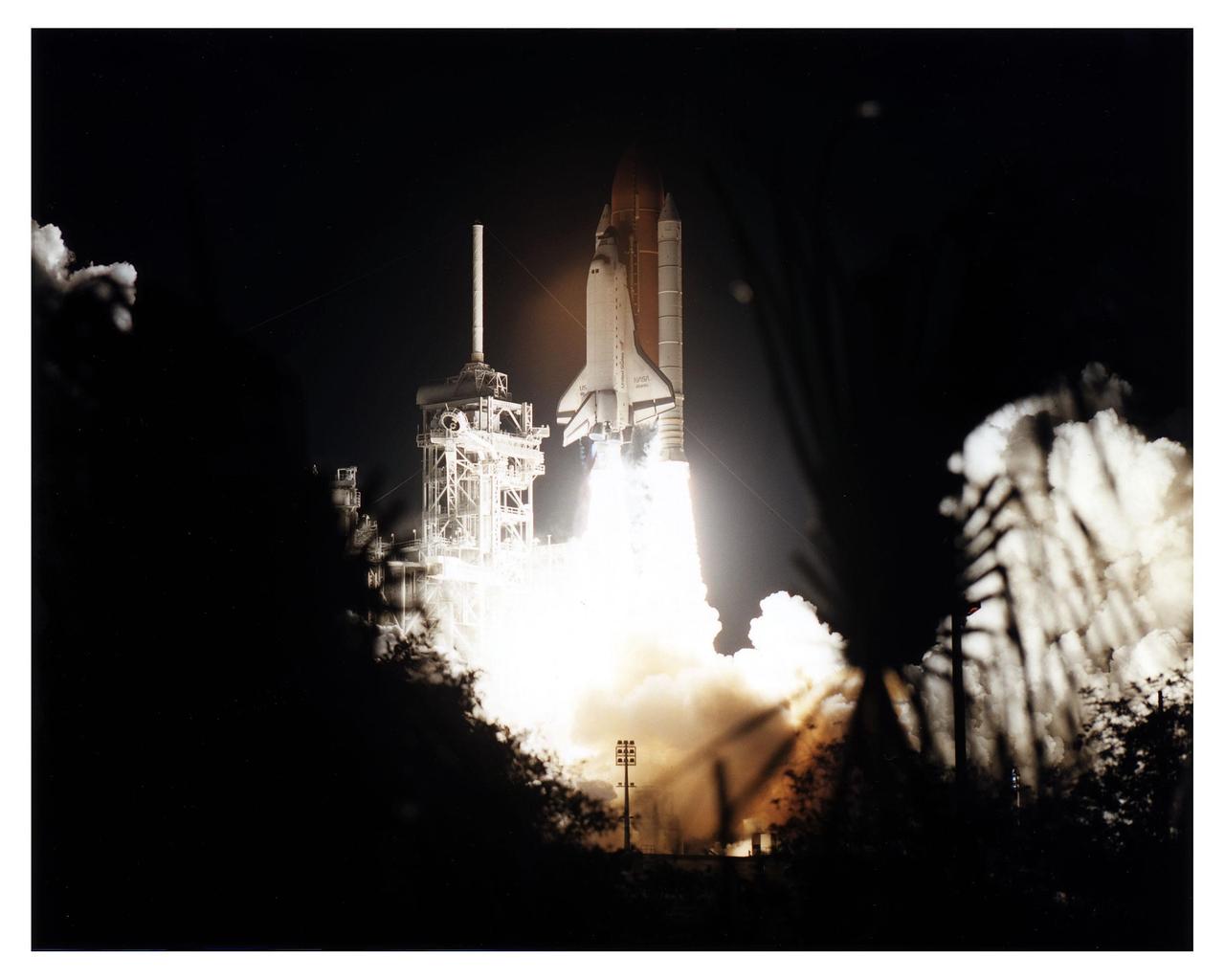
KENNEDY SPACE CENTER, FLA. -- Like a rising sun lighting up the night, the Space Shuttle Atlantis soars from Launch Pad 39B at 4:27:23 a.m. EST Jan. 12 on its way to dock with the Mir space station for the fifth time. The 10-day mission will feature the transfer of Mission Specialist Jerry Linenger to Mir to replace astronaut John Blaha, who has been on the orbital laboratory since Sept. 19, 1996. The other STS-81 crew members include Mission Commander Michael A. Baker; Pilot Brent W. Jett, Jr.; and Mission Specialists John M. Grunsfeld, Peter J. K. "Jeff" Wisoff and Marsha S. Ivins. During the five-day docking operations, the Shuttle and Mir crews will conduct risk mitigation, human life science, microgravity and materials processing experiments that will provide data for the design, development and operation of the International Space Station. The primary payload is the SPACEHAB-DM double module that will provide space for more than 2,000 pounds of hardware, food and water that will be transferred into the Russian space station.The SPACEHAB will also be used to return experiment samples from the Mir to Earth for analysis and for microgravity experiments during the mission
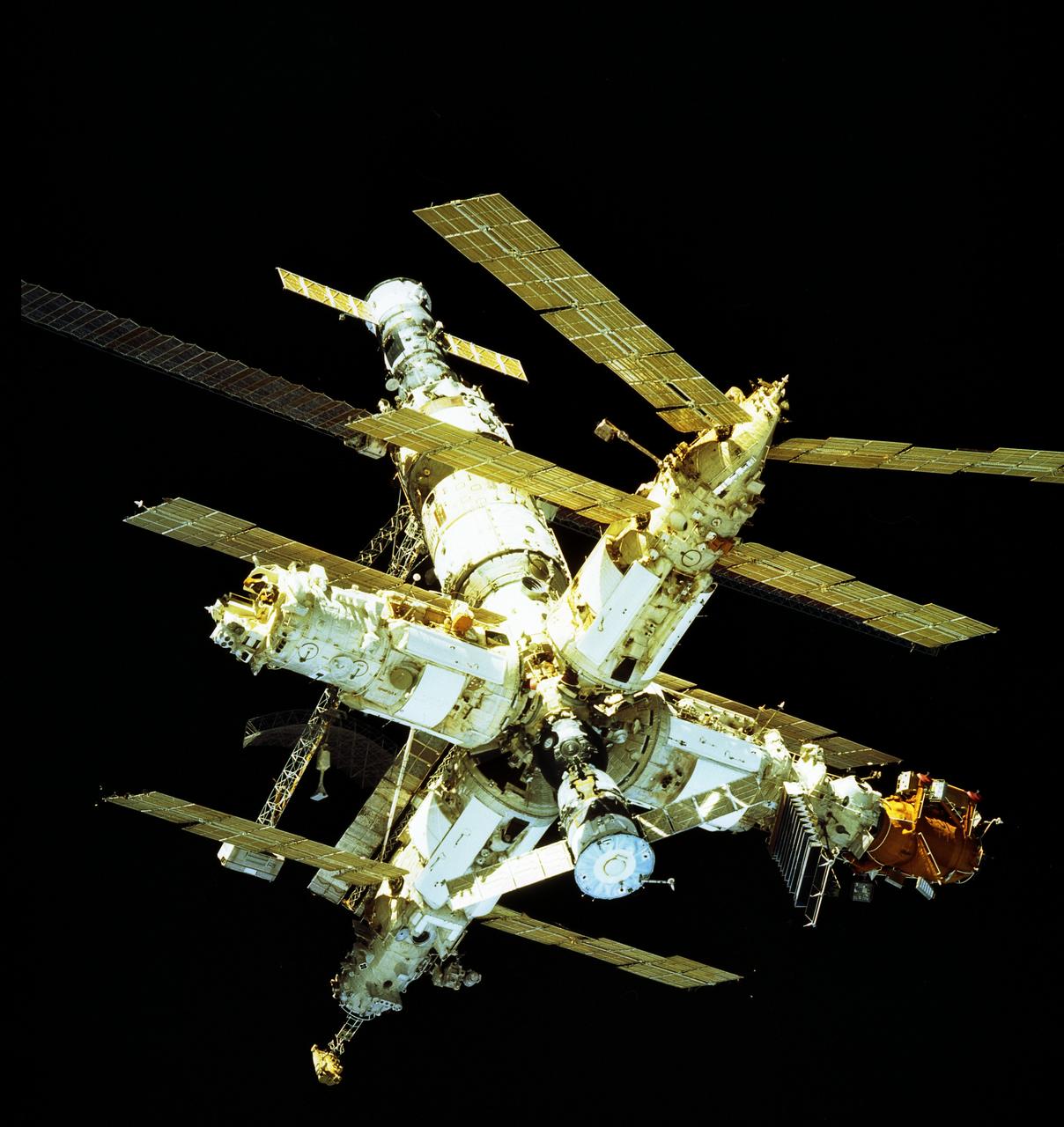
This is a view of the Russian Mir Space Station photographed by a crewmember of the fifth Shuttle/Mir docking mission, STS-81. The image shows: upper center - Progress supply vehicle, Kvant-1 module, and Core module; center left - Priroda module; center right - Spektr module; bottom left - Kvant-2 module; bottom center - Soyuz; and bottom right - Kristall module and Docking module. The Progress was an unmarned, automated version of the Soyuz crew transfer vehicle, designed to resupply the Mir. The Kvant-1 provided research in the physics of galaxies, quasars, and neutron stars, by measuring electromagnetic spectra and x-ray emissions. The Core module served as the heart of the space station and contained the primary living and working areas, life support, and power, as well as the main computer, communications, and control equipment. Priroda's main purpose was Earth remote sensing. The Spektr module provided Earth observation. It also supported research into biotechnology, life sciences, materials science, and space technologies. American astronauts used the Spektr as their living quarters. Kvant-2 was a scientific and airlock module, providing biological research, Earth observations, and EVA (extravehicular activity) capability. The Soyuz typically ferried three crewmembers to and from the Mir. A main purpose of the Kristall module was to develop biological and materials production technologies in the space environment. The Docking module made it possible for the Space Shuttle to dock easily with the Mir. The journey of the 15-year-old Russian Mir Space Station ended March 23, 2001, as the Mir re-entered the Earth's atmosphere and fell into the south Pacific Ocean.
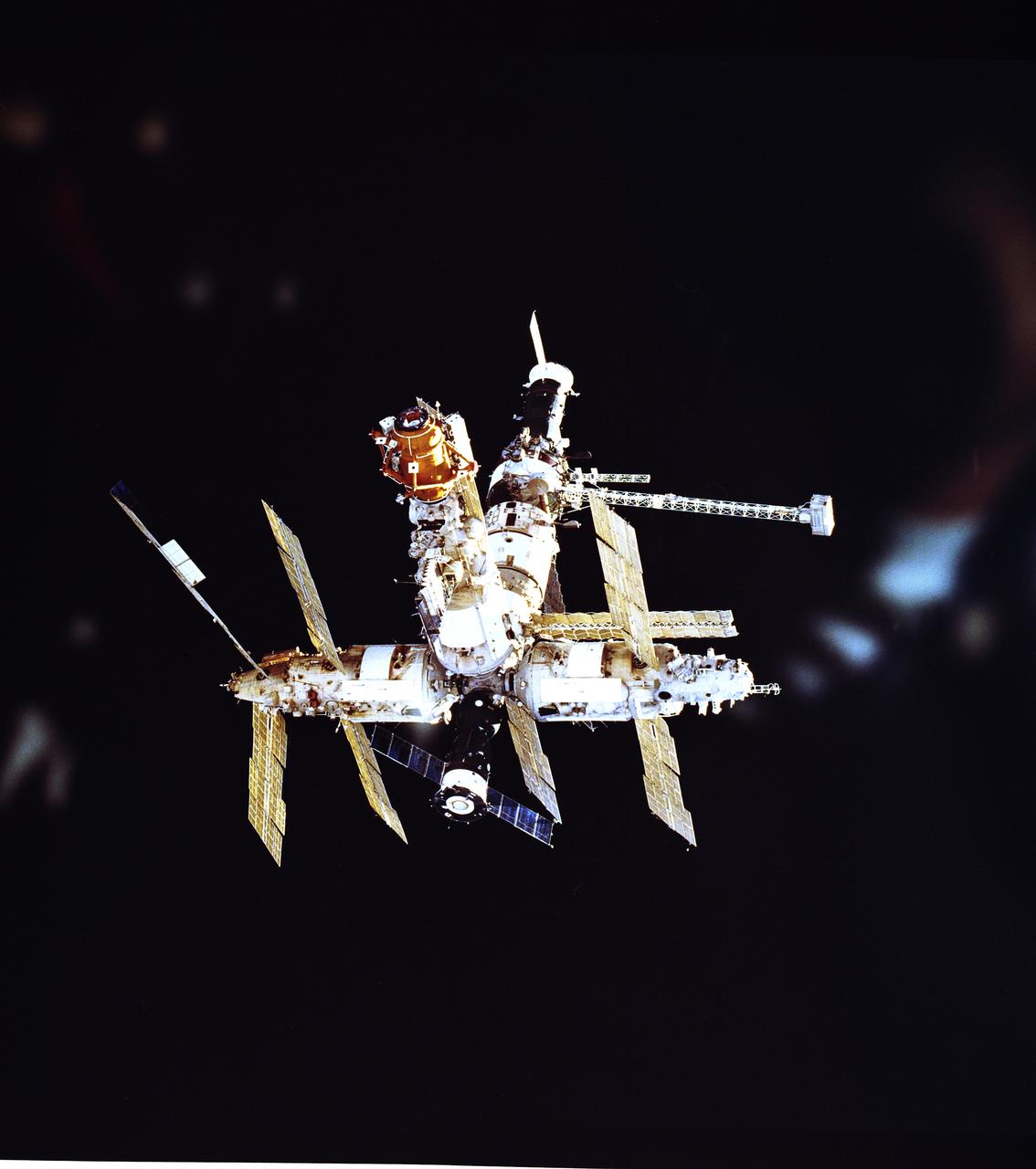
This is a view of the Russian Mir Space Station photographed by a crewmember of the second Shuttle/Mir docking mission, STS-74. The image shows: top - Progress supply vehicle, Kvant-1 module, and the Core module; middle left - Spektr module; middle center - Kristall module and Docking module; middle right - Kvant-2 module; and bottom - Soyuz. The Progress was an unmarned, automated version of the Soyuz crew transfer vehicle, designed to resupply the Mir. The Kvant-1 provided research in the physics of galaxies, quasars, and neutron stars by measuring electromagnetic spectra and x-ray emissions. The Core module served as the heart of the space station and contained the primary living and working areas, life support, and power, as well as the main computer, communications, and control equipment. The Spektr module provided Earth observation. It also supported research into biotechnology, life sciences, materials science, and space technologies. American astronauts used the Spektr as their living quarters. A main purpose of the Kristall module was to develop biological and materials production technologies in the space environment. The Docking module made it possible for the Space Shuttle to dock easily with the Mir. Kvant-2 was a scientific and airlock module, providing biological research, Earth observations, and EVA (extravehicular activity) capability. The Soyuz typically ferried three crewmembers to and from the Mir. The journey of the 15-year-old Russian Mir Space Station ended March 23, 2001, as the Mir re-entered the Earth's atmosphere and fell into the south Pacific Ocean.
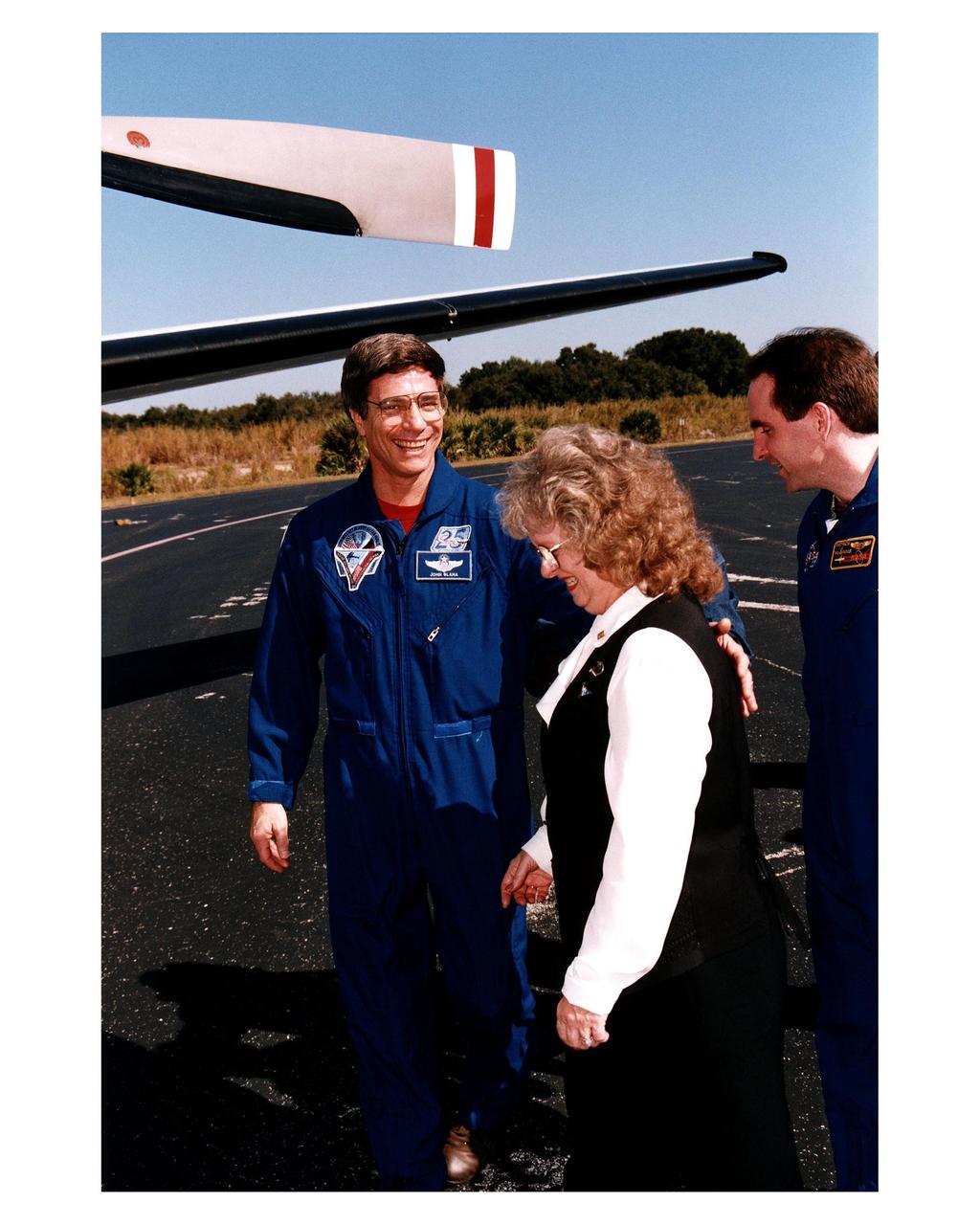
Returning NASA astronaut and former Mir 22 crew member John E. Blaha (left), puts his arm around his wife, Brenda, as they prepare to depart with the STS-81 crew for Johnson Space Center Jan. 23 from the Skid Strip at Cape Canaveral Air Station. NASA’s Patrick McGinnis is on the right. The STS-81 crew arrived at KSC aboard the Space Shuttle Atlantis Jan. 22 to conclude the fifth ShuttleMir docking mission and return Blaha to Earth after four months in space
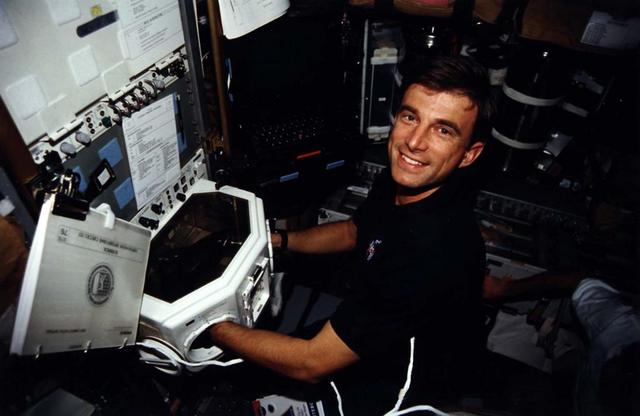
Astronaut Ronald M. Sega, payload commander, works in the glovebox facility in the Spacehab laboratory aboard the Earth-orbiting Space Shuttle Atlantis. The Spacehab facility was one f the busier research areas on Atlantis during the STS-76 mission. Also, some of the gear for transfer to Russia's Mir Space Station was stowed there prior to the March 23, 1996 docking of Atlantis.