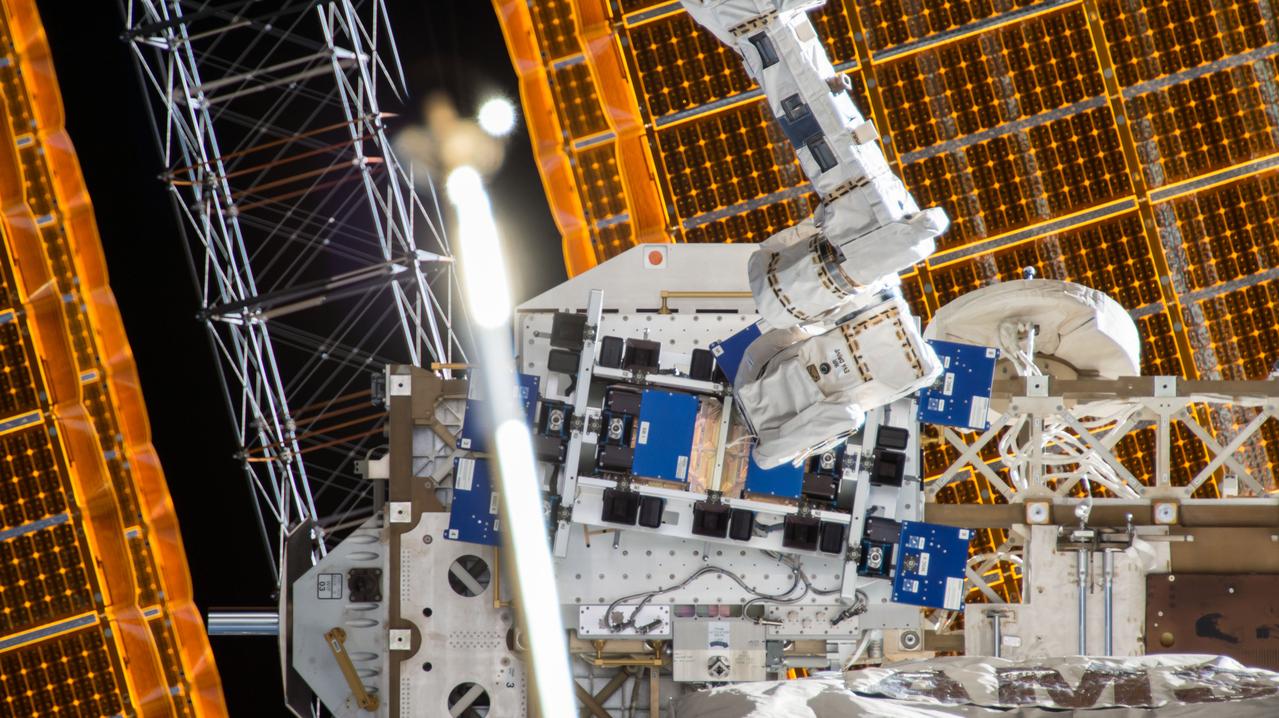
iss055e026913 (4/19/2018) --- View of the Materials ISS Experiment Flight Facility (MISSE-FF) taken by the External High Definition Camera (EHDC1). The MISSE-FF platform provides the ability to test materials, coatings, and components or other larger experiments in the harsh environment of space, which is virtually impossible to do collectively on Earth.
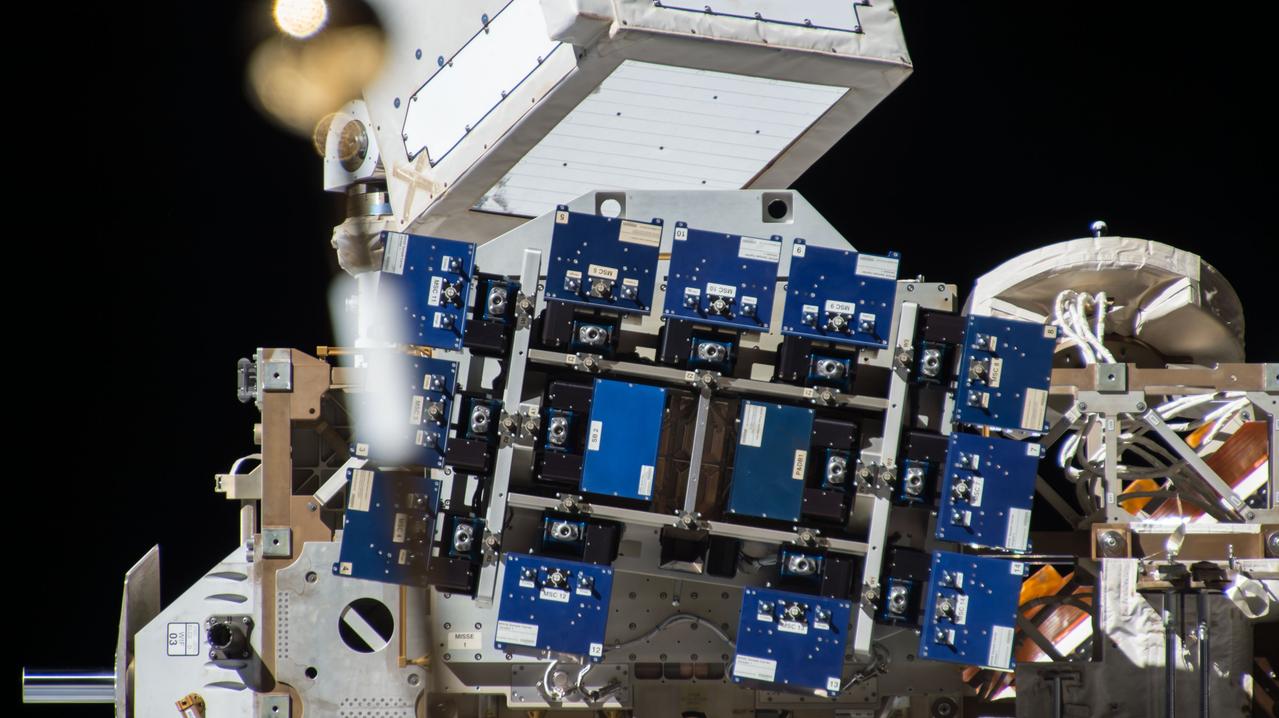
iss058e003972 (1/26/2019) --- Photo documentation of the Materials ISS Experiment Flight Facility (MISSE-FF) platform aboard the International Space Station (ISS).
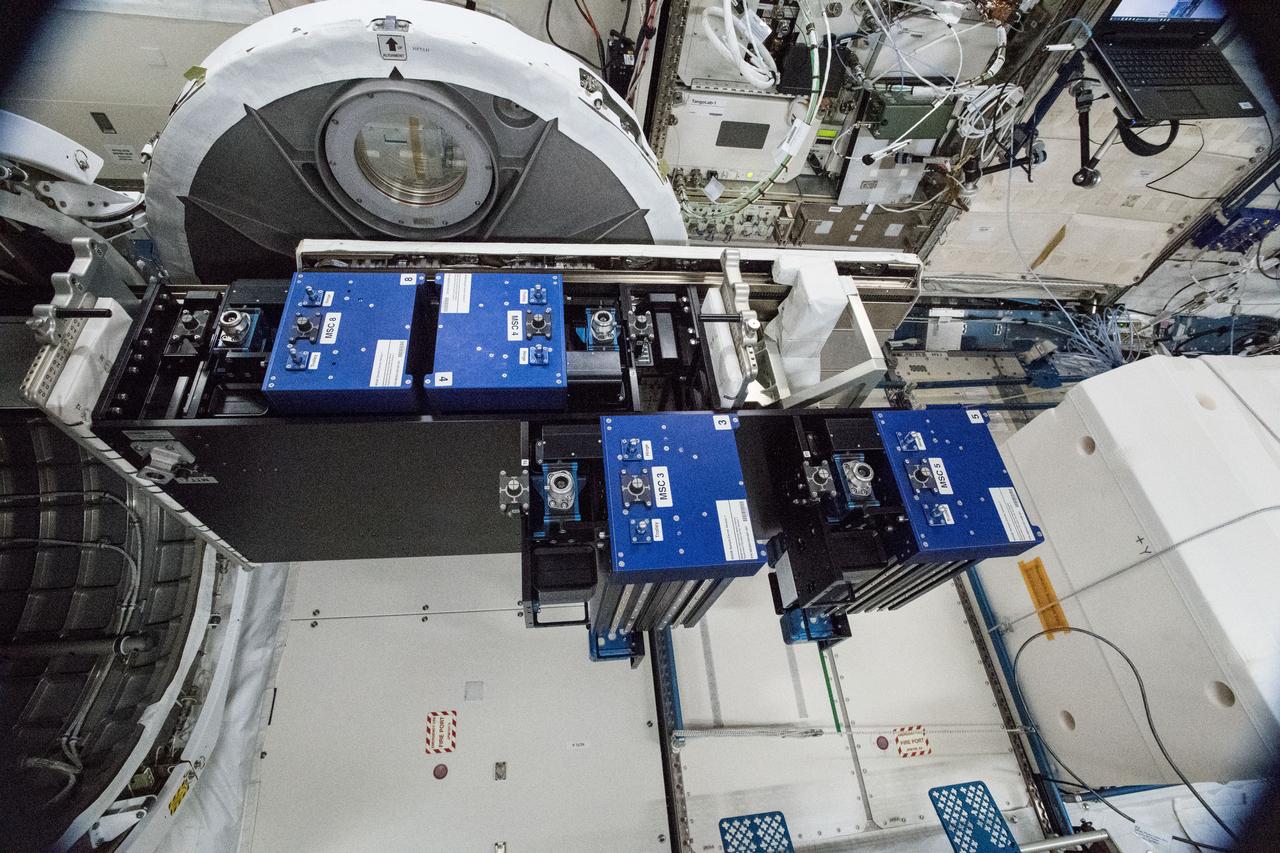
iss055e020137 (4/13/2018) --- Photographic documentation taken in the Japanese Experiment Module (JEM) during preparations for the install of the Materials ISS Experiment - Flight Facility (MISSEE-FF). The MISSE-FF platform provides the ability to test materials, coatings, and components or other larger experiments in the harsh environment of space, which is virtually impossible to do collectively on Earth.
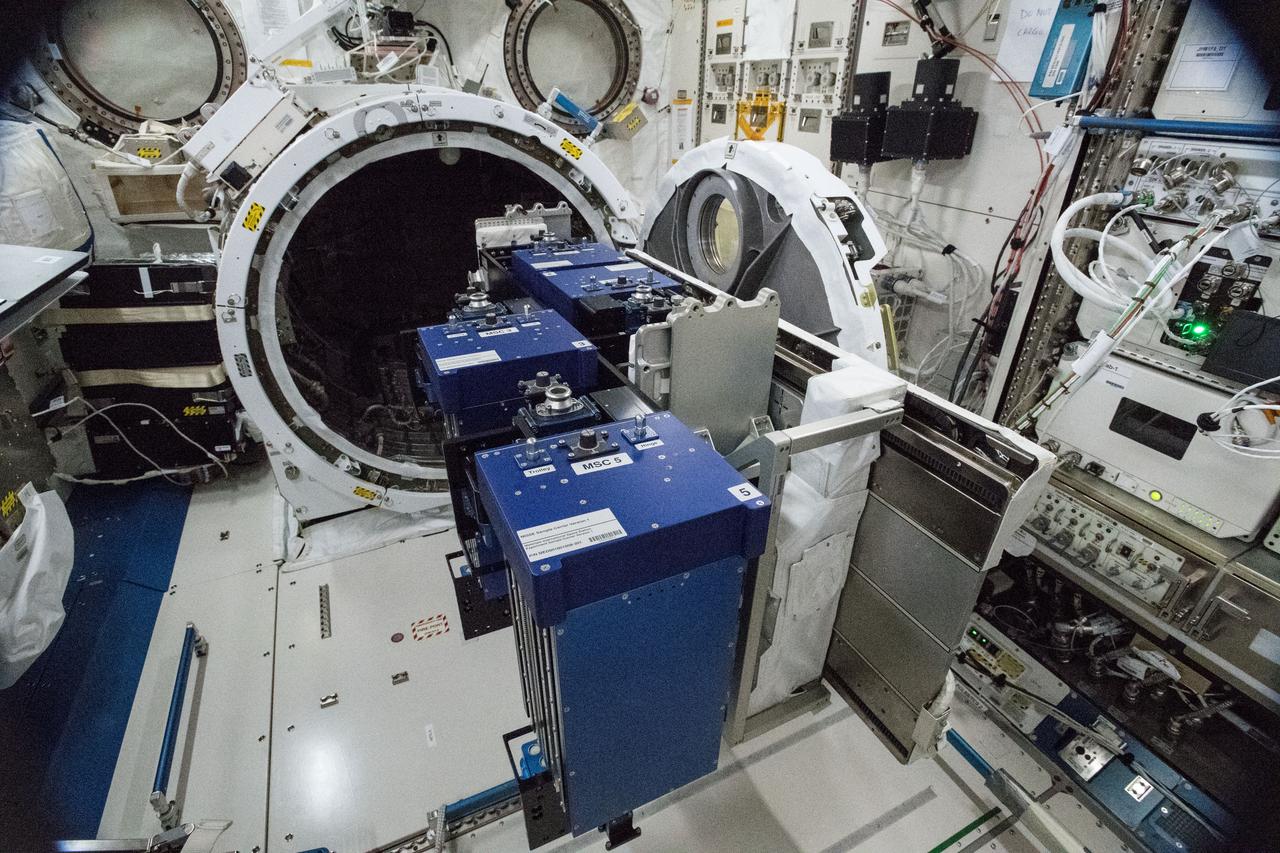
iss055e020134 (4/13/2018) --- Photographic documentation taken in the Japanese Experiment Module (JEM) during preparations for the install of the Materials ISS Experiment - Flight Facility (MISSEE-FF). The MISSE-FF platform provides the ability to test materials, coatings, and components or other larger experiments in the harsh environment of space, which is virtually impossible to do collectively on Earth.
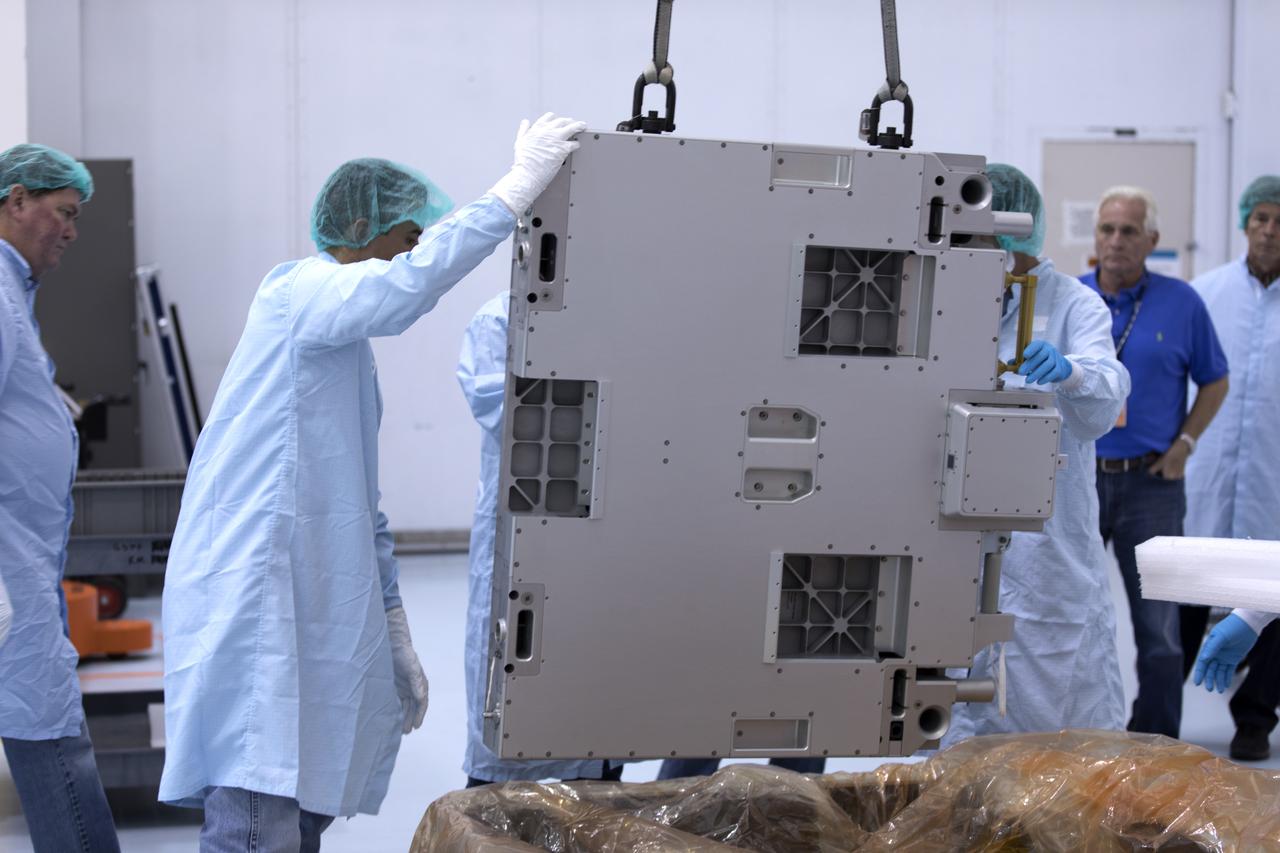
The Materials International Space Station Experiment-Flight Facility, or MISSE-FF, hardware arrived at the Space Station Processing Facility low bay at NASA's Kennedy Space Center in Florida. Technicians assist as a crane is used to lift MISSE out of its shipping container. MISSE will be used to test various materials and computing elements on the exterior of the space station. They will be exposed to the harsh environment of low-Earth orbit, including to a vacuum, atomic oxygen, ultraviolet radiation, direct sunlight and extreme heat and cold. The experiment will provide a better understanding of material durability, from coatings to electronic sensors, which could be applied to future spacecraft designs. MISSE will be delivered to the space station on a future commercial resupply mission.
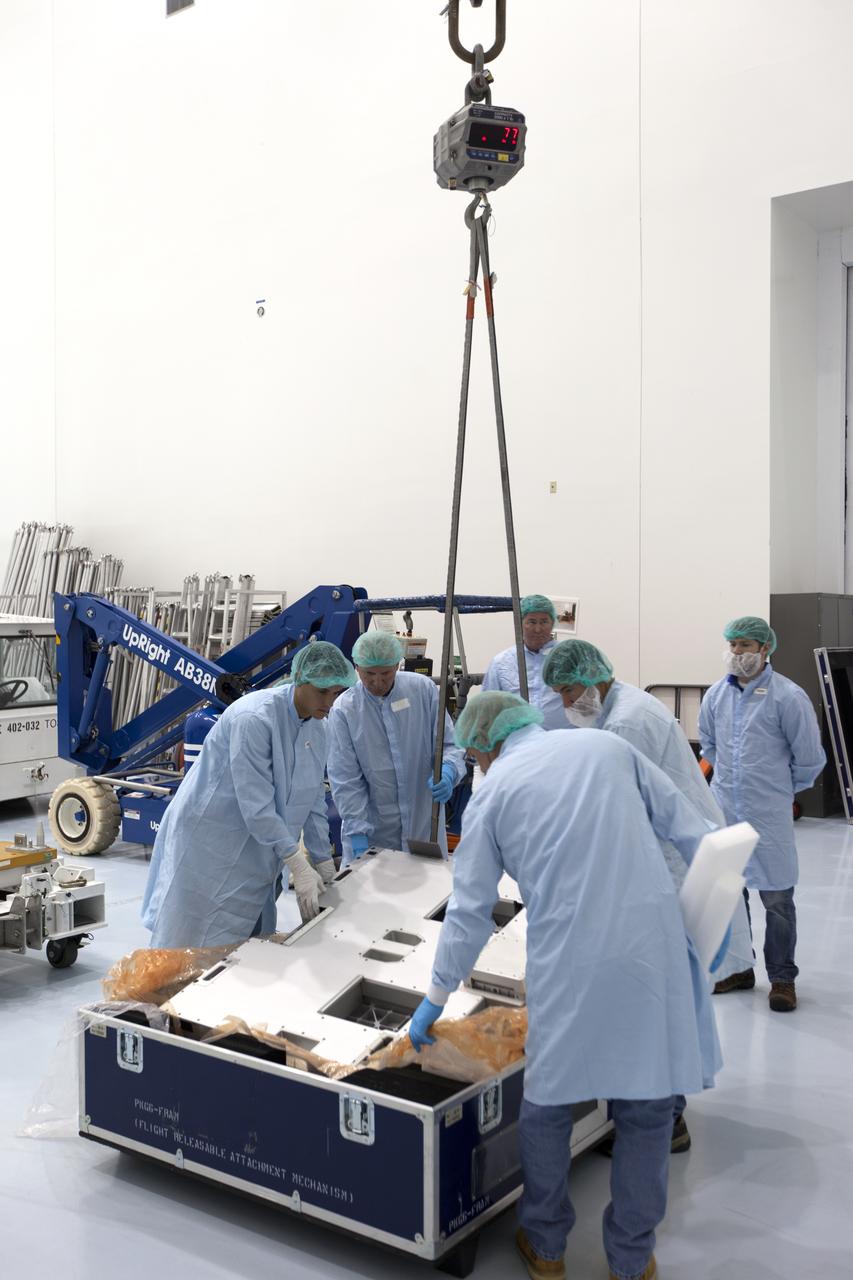
The Materials International Space Station Experiment-Flight Facility, or MISSE-FF, hardware arrived at the Space Station Processing Facility low bay at NASA's Kennedy Space Center in Florida. Technicians attach a crane to MISSE for lifting out of its shipping container. MISSE will be used to test various materials and computing elements on the exterior of the space station. They will be exposed to the harsh environment of low-Earth orbit, including to a vacuum, atomic oxygen, ultraviolet radiation, direct sunlight and extreme heat and cold. The experiment will provide a better understanding of material durability, from coatings to electronic sensors, which could be applied to future spacecraft designs. MISSE will be delivered to the space station on a future commercial resupply mission.
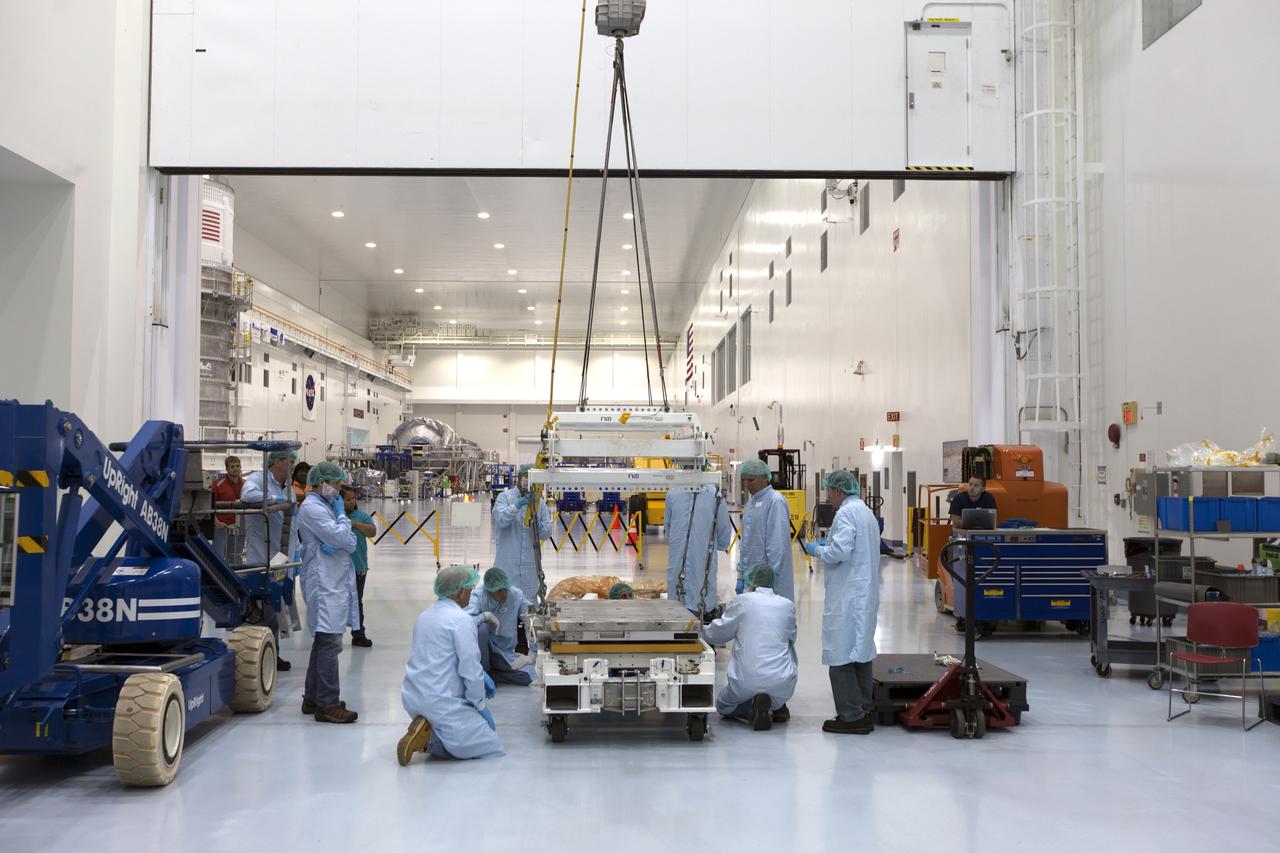
The Materials International Space Station Experiment-Flight Facility, or MISSE-FF, hardware arrived at the Space Station Processing Facility low bay at NASA's Kennedy Space Center in Florida. Technicians assist as one of the components is lowered onto another MISSE component. MISSE will be used to test various materials and computing elements on the exterior of the space station. They will be exposed to the harsh environment of low-Earth orbit, including to a vacuum, atomic oxygen, ultraviolet radiation, direct sunlight and extreme heat and cold. The experiment will provide a better understanding of material durability, from coatings to electronic sensors, which could be applied to future spacecraft designs. MISSE will be delivered to the space station on a future commercial resupply mission.
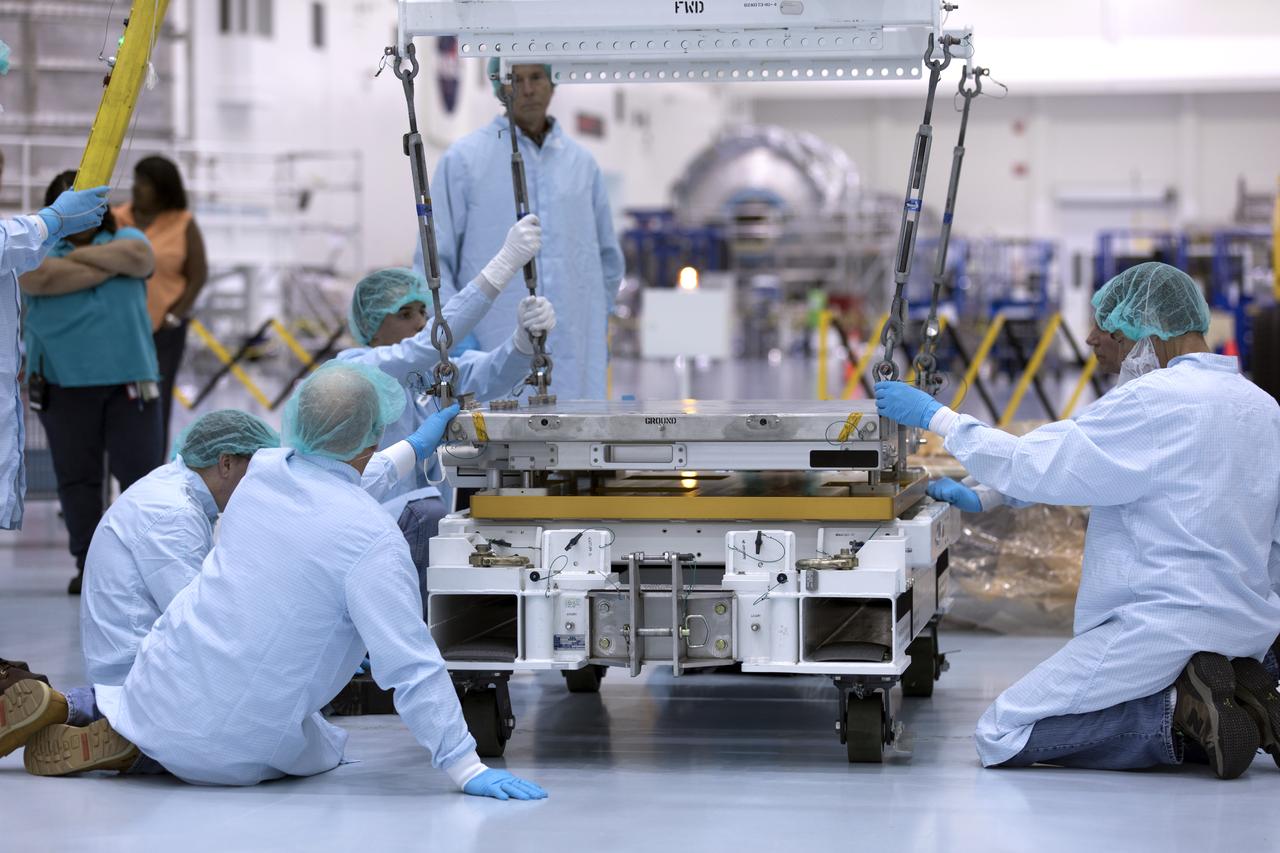
The Materials International Space Station Experiment-Flight Facility, or MISSE-FF, hardware arrived at the Space Station Processing Facility low bay at NASA's Kennedy Space Center in Florida. Technicians assist as one of the components is lowered and secured onto another MISSE component. MISSE will be used to test various materials and computing elements on the exterior of the space station. They will be exposed to the harsh environment of low-Earth orbit, including to a vacuum, atomic oxygen, ultraviolet radiation, direct sunlight and extreme heat and cold. The experiment will provide a better understanding of material durability, from coatings to electronic sensors, which could be applied to future spacecraft designs. MISSE will be delivered to the space station on a future commercial resupply mission.
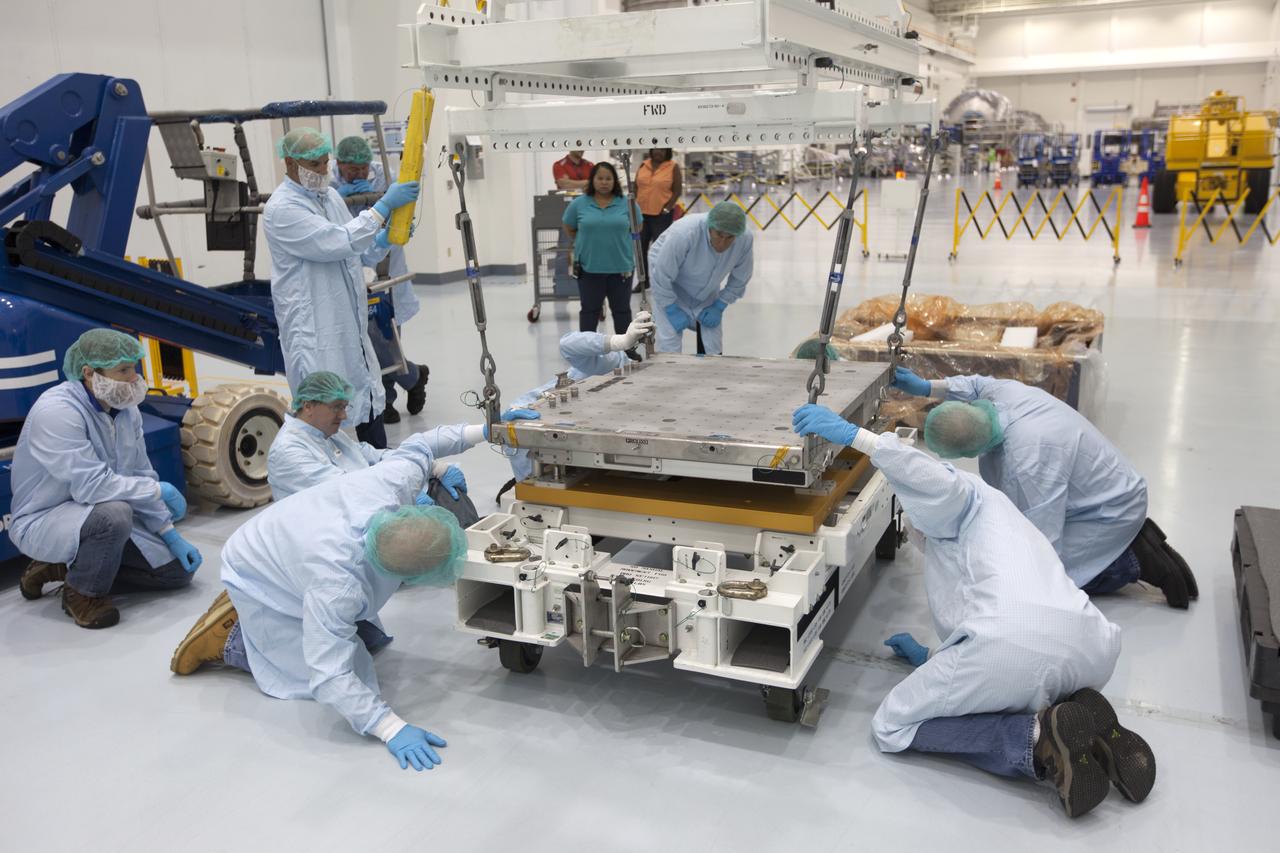
The Materials International Space Station Experiment-Flight Facility, or MISSE-FF, hardware arrived at the Space Station Processing Facility low bay at NASA's Kennedy Space Center in Florida. Technicians assist as one of the components is lowered onto another MISSE component. MISSE will be used to test various materials and computing elements on the exterior of the space station. They will be exposed to the harsh environment of low-Earth orbit, including to a vacuum, atomic oxygen, ultraviolet radiation, direct sunlight and extreme heat and cold. The experiment will provide a better understanding of material durability, from coatings to electronic sensors, which could be applied to future spacecraft designs. MISSE will be delivered to the space station on a future commercial resupply mission.
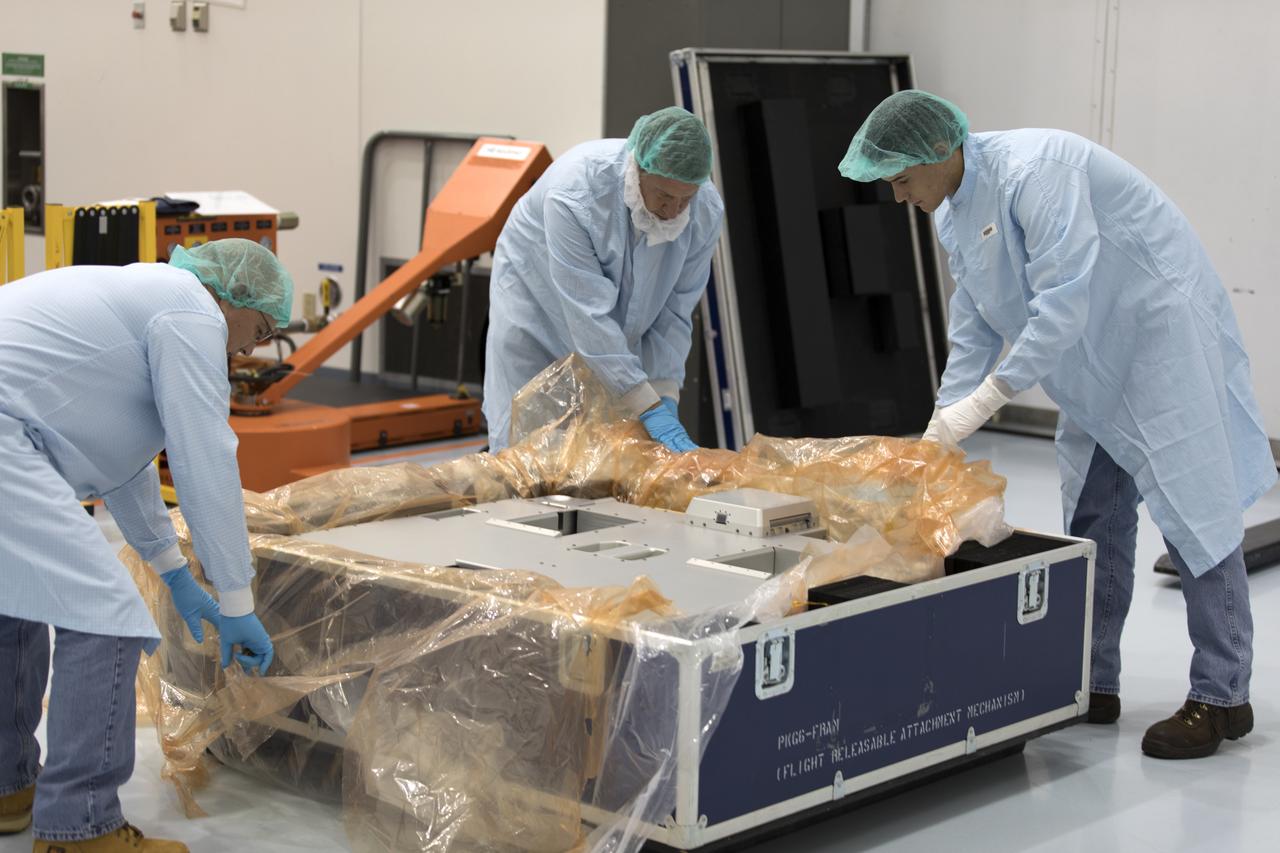
The Materials International Space Station Experiment-Flight Facility, or MISSE-FF, hardware arrived at the Space Station Processing Facility low bay at NASA's Kennedy Space Center in Florida. MISSE will be unpacked for integration and processing. MISSE will be used to test various materials and computing elements on the exterior of the space station. They will be exposed to the harsh environment of low-Earth orbit, including to a vacuum, atomic oxygen, ultraviolet radiation, direct sunlight and extreme heat and cold. The experiment will provide a better understanding of material durability, from coatings to electronic sensors, which could be applied to future spacecraft designs. MISSE will be delivered to the space station on a future commercial resupply mission.
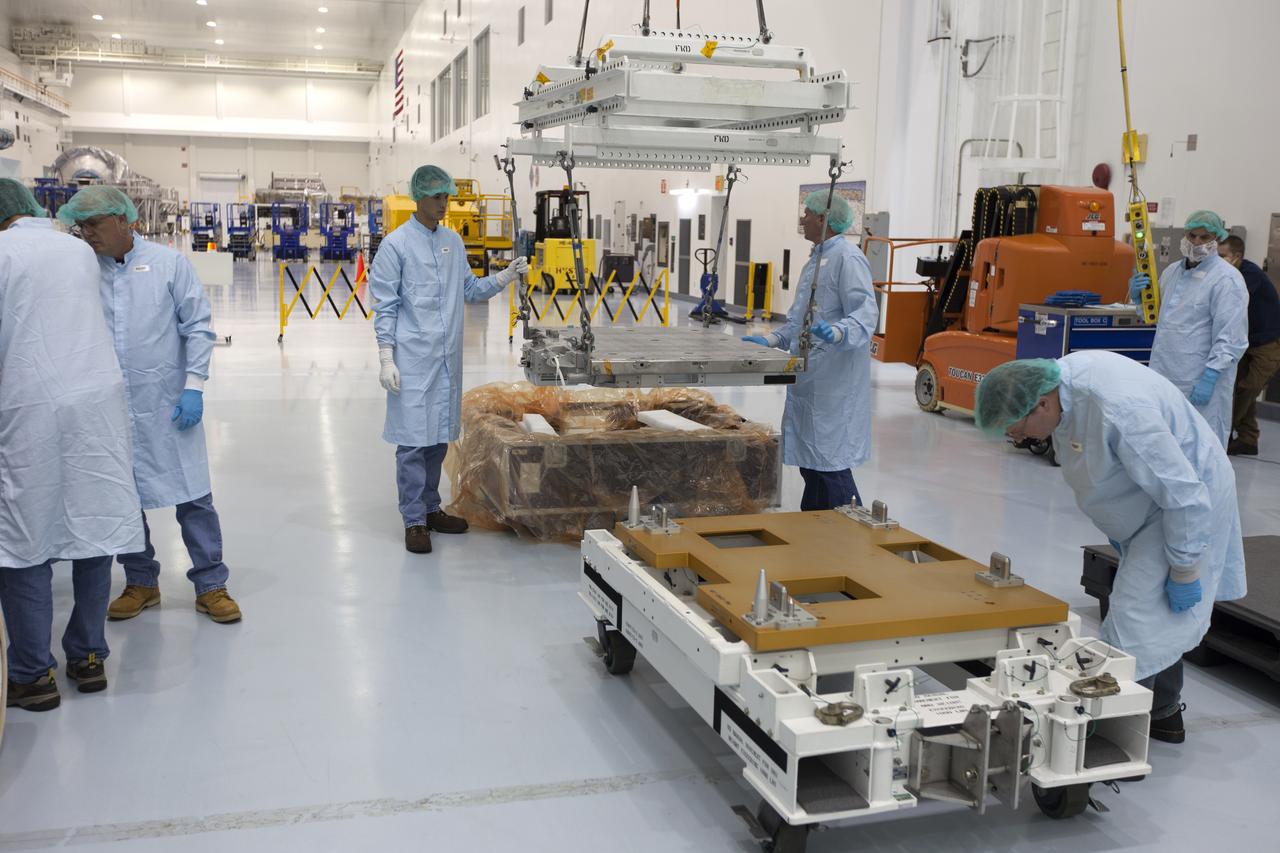
The Materials International Space Station Experiment-Flight Facility, or MISSE-FF, hardware arrived at the Space Station Processing Facility low bay at NASA's Kennedy Space Center in Florida. Technicians assist as MISSE is lifted by crane from its shipping container. MISSE will be used to test various materials and computing elements on the exterior of the space station. They will be exposed to the harsh environment of low-Earth orbit, including to a vacuum, atomic oxygen, ultraviolet radiation, direct sunlight and extreme heat and cold. The experiment will provide a better understanding of material durability, from coatings to electronic sensors, which could be applied to future spacecraft designs. MISSE will be delivered to the space station on a future commercial resupply mission.
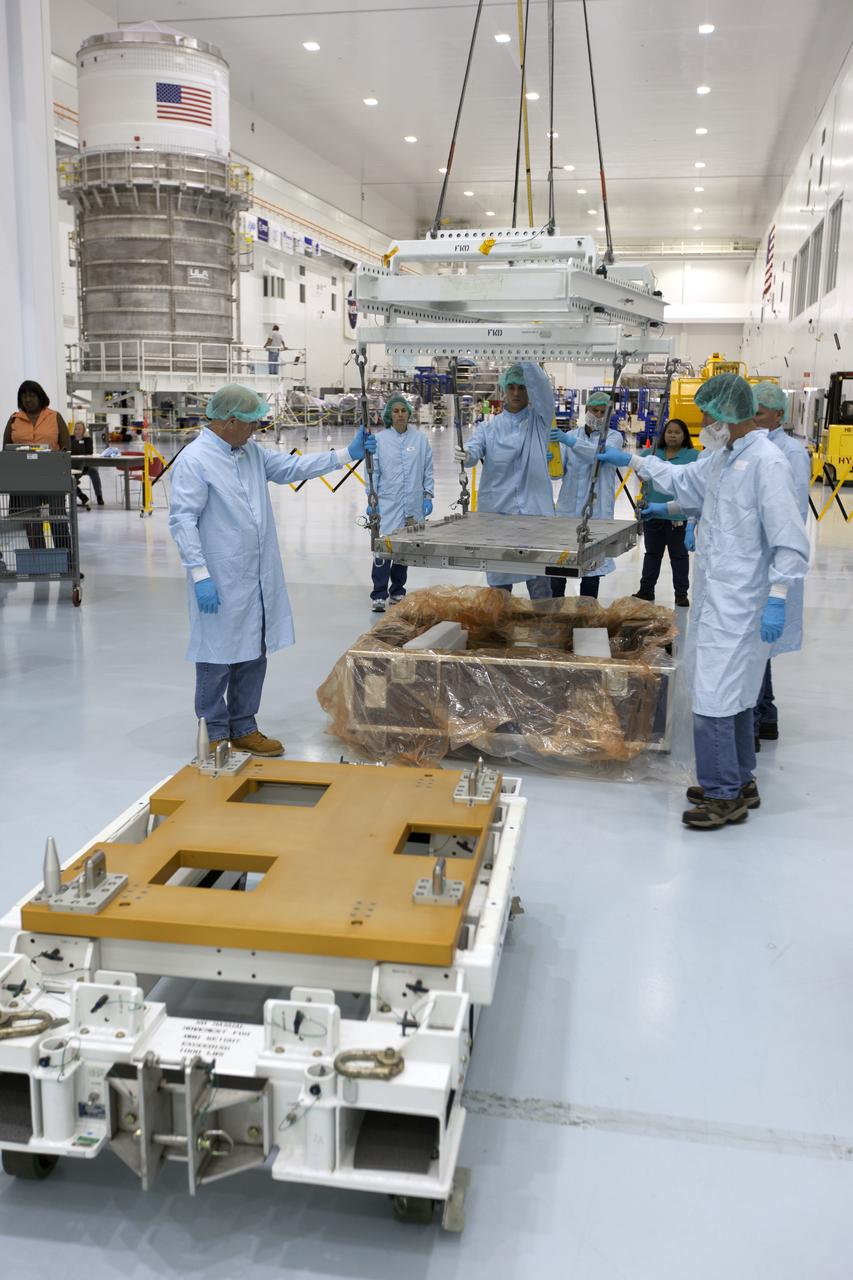
The Materials International Space Station Experiment-Flight Facility, or MISSE-FF, hardware arrived at the Space Station Processing Facility low bay at NASA's Kennedy Space Center in Florida. Technicians assist as MISSE is lifted by crane from its shipping container. MISSE will be used to test various materials and computing elements on the exterior of the space station. They will be exposed to the harsh environment of low-Earth orbit, including to a vacuum, atomic oxygen, ultraviolet radiation, direct sunlight and extreme heat and cold. The experiment will provide a better understanding of material durability, from coatings to electronic sensors, which could be applied to future spacecraft designs. MISSE will be delivered to the space station on a future commercial resupply mission.
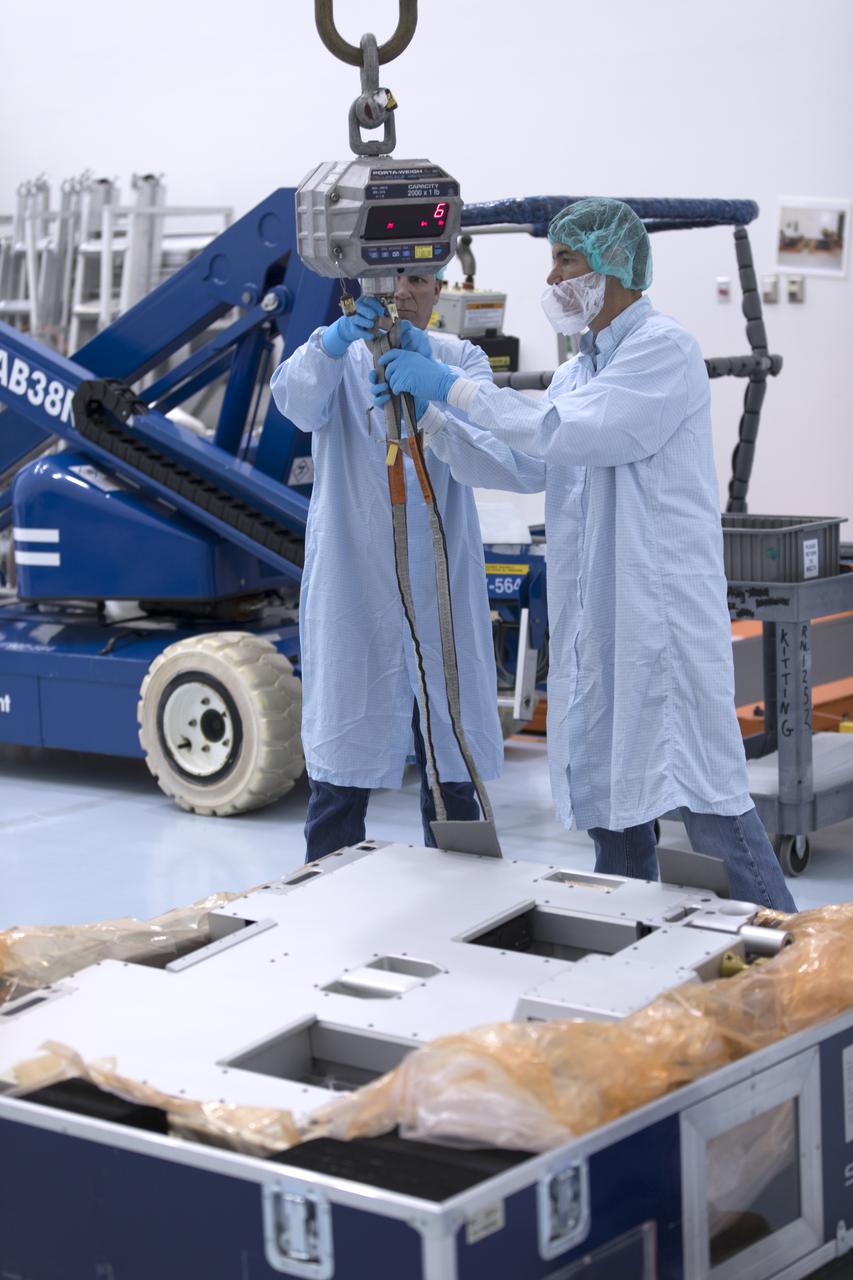
The Materials International Space Station Experiment-Flight Facility, or MISSE-FF, hardware arrived at the Space Station Processing Facility low bay at NASA's Kennedy Space Center in Florida. Technicians work to attach a crane to MISSE for lifting out of its shipping container. MISSE will be used to test various materials and computing elements on the exterior of the space station. They will be exposed to the harsh environment of low-Earth orbit, including to a vacuum, atomic oxygen, ultraviolet radiation, direct sunlight and extreme heat and cold. The experiment will provide a better understanding of material durability, from coatings to electronic sensors, which could be applied to future spacecraft designs. MISSE will be delivered to the space station on a future commercial resupply mission.
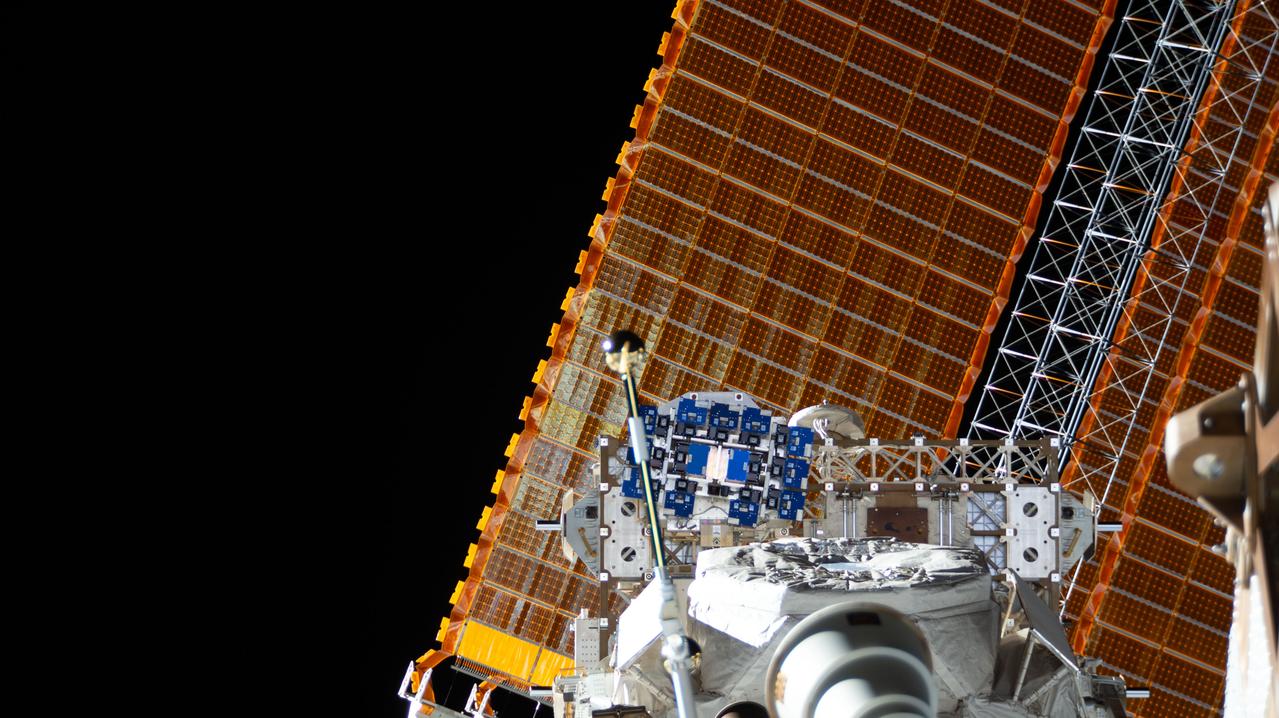
iss059e036747 (4/26/2019) --- --- Photo documentation of the Materials ISS Experiment Flight Facility (MISSE-FF) platform aboard the International Space Station (ISS).
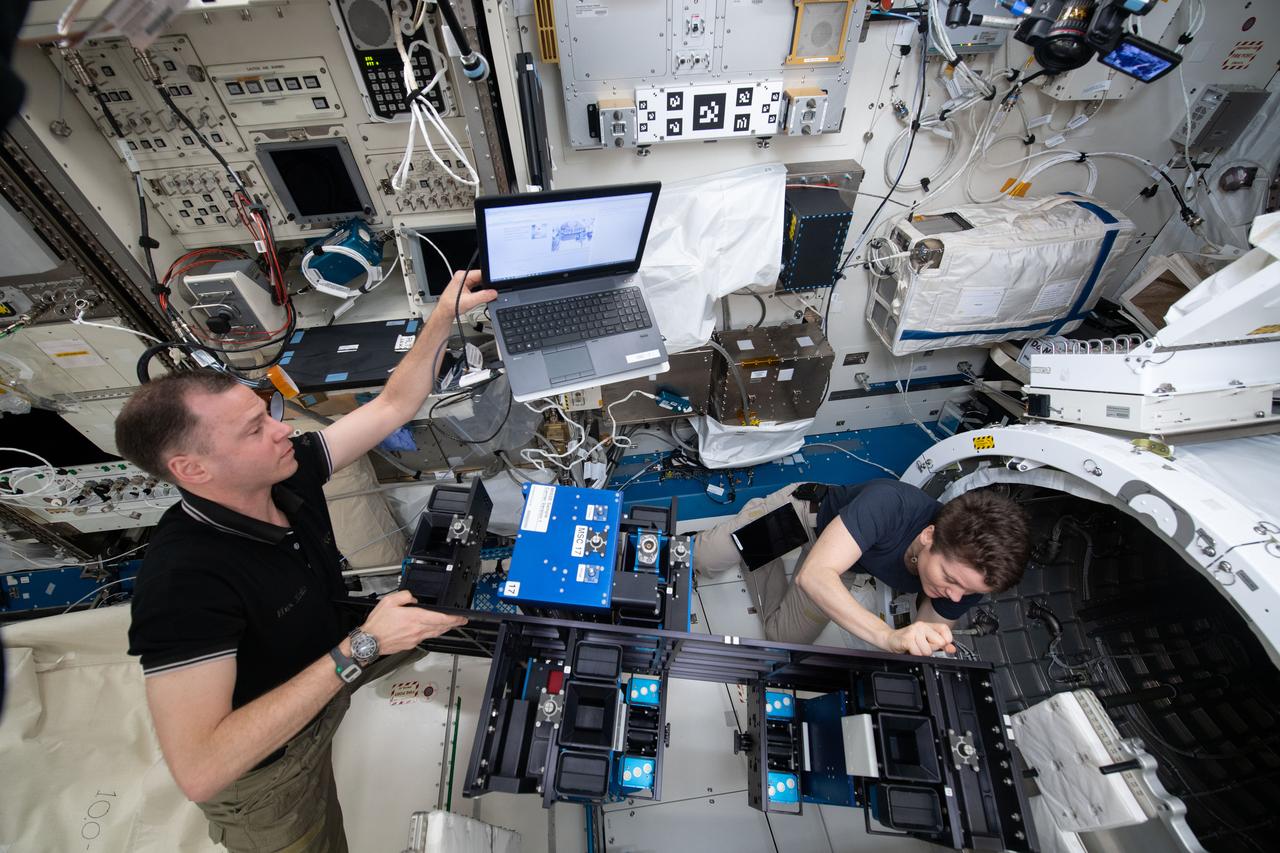
iss059e034507 (April 23, 2019) --- NASA astronauts Nick Hague and Anne McClain install the Materials ISS Experiment-Flight Facility (MISSE-FF) gear inside the Japanese Kibo laboratory module’s airlock before depressurizing the unit. MISSE-FF contains new materials exposure experiments ready for deployment outside Kibo. The study will help scientists understand how radiation, the vacuum of space and micrometeoroids affect a variety of materials.
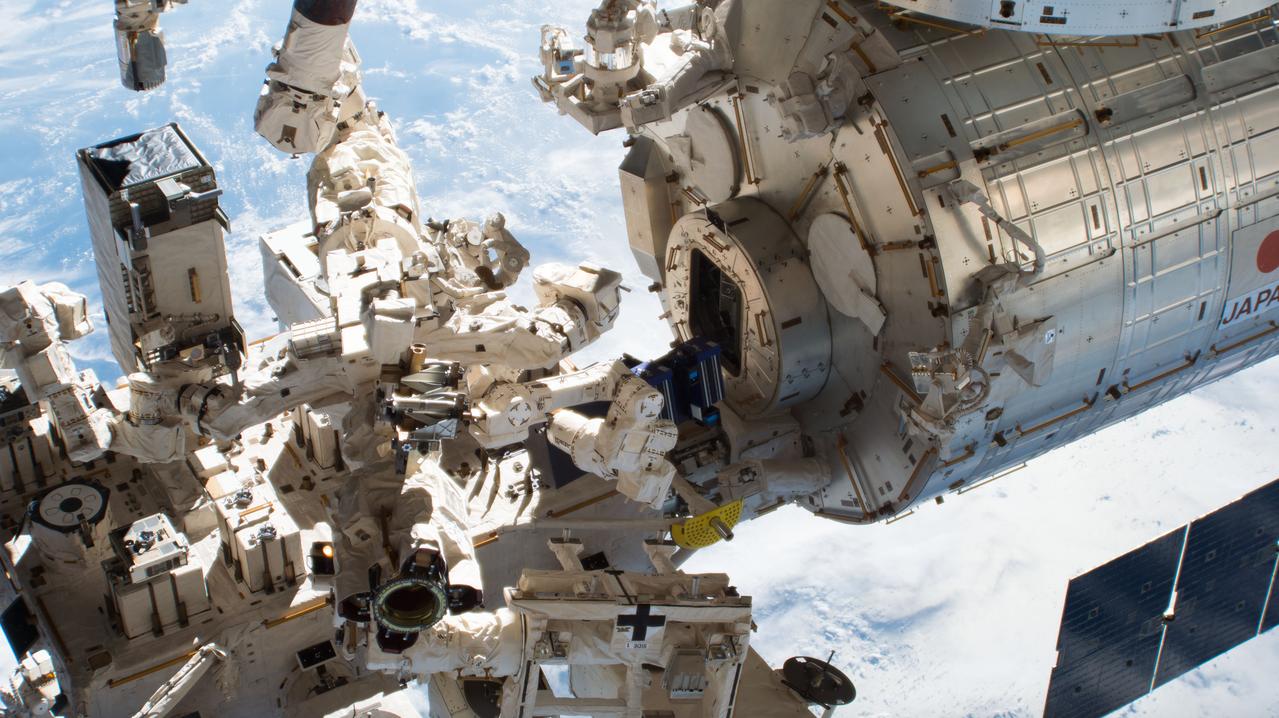
iss055e024241 (4/16/2018) --- View of the Japanese Experiment Module (JEM) Exposed Facility (EF) and the Materials ISS Experiment Flight Facility (MISSE-FF) as it exits the JEM airlock. The MISSE-FF platform provides the ability to test materials, coatings, and components or other larger experiments in the harsh environment of space, which is virtually impossible to do collectively on Earth.
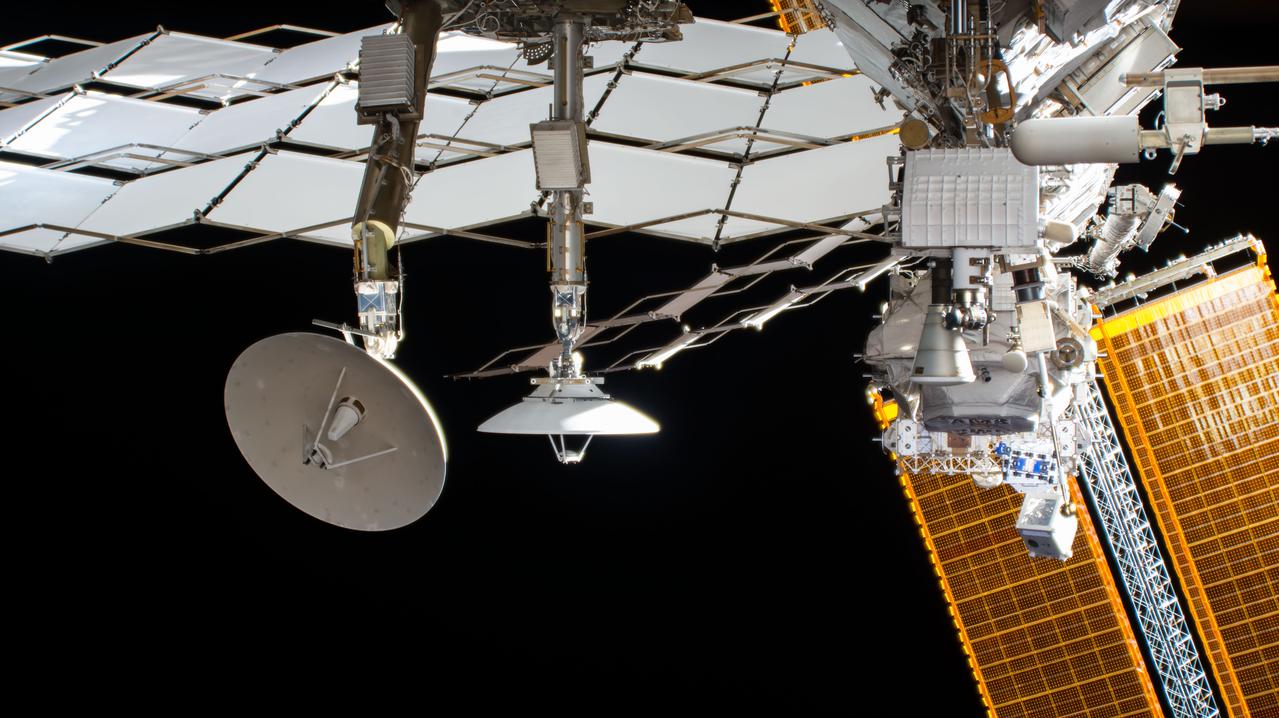
iss055e024025 (4/15/2018) - View of a radiator pane, solar array and the Alpha Magnetic Spectrometer - 02 (AMS-02) as seen by the External High Definition Camera (EHDC1). Also visible are Neutron Star Interior Composition Explorer (NICER) and Materials ISS Experiment Flight Facility (MISSE-FF).