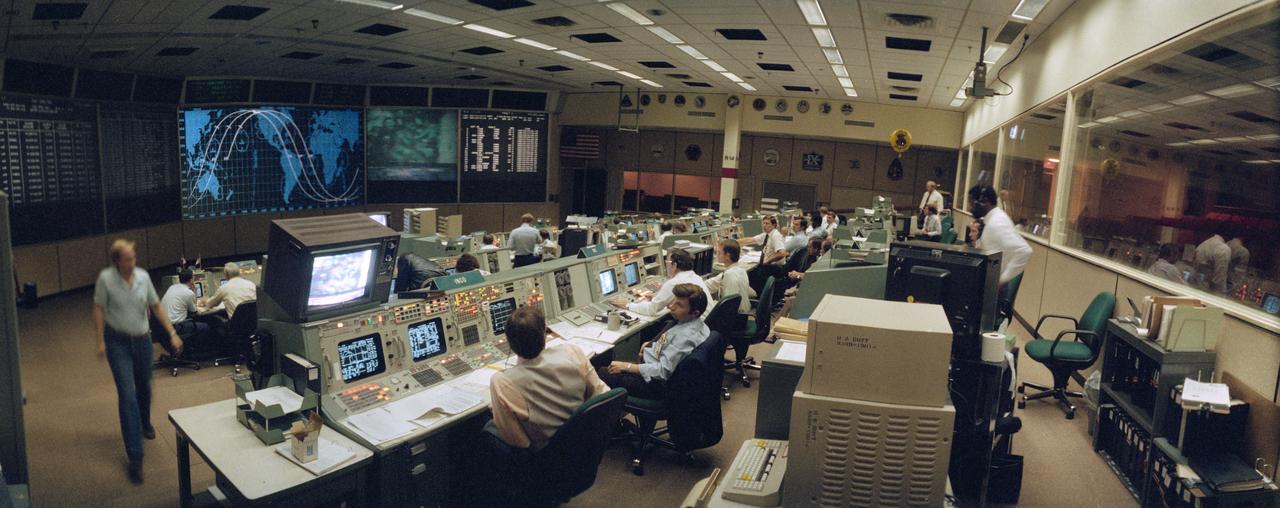
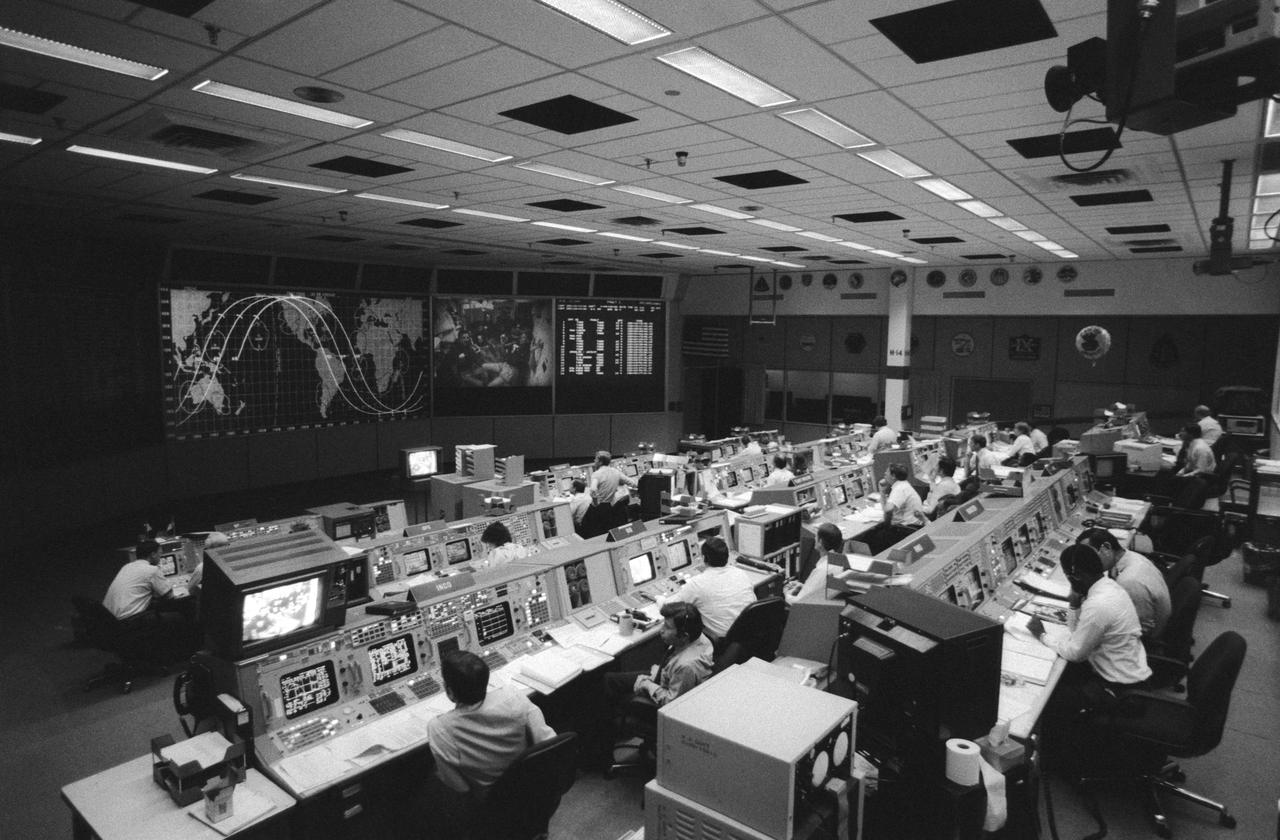
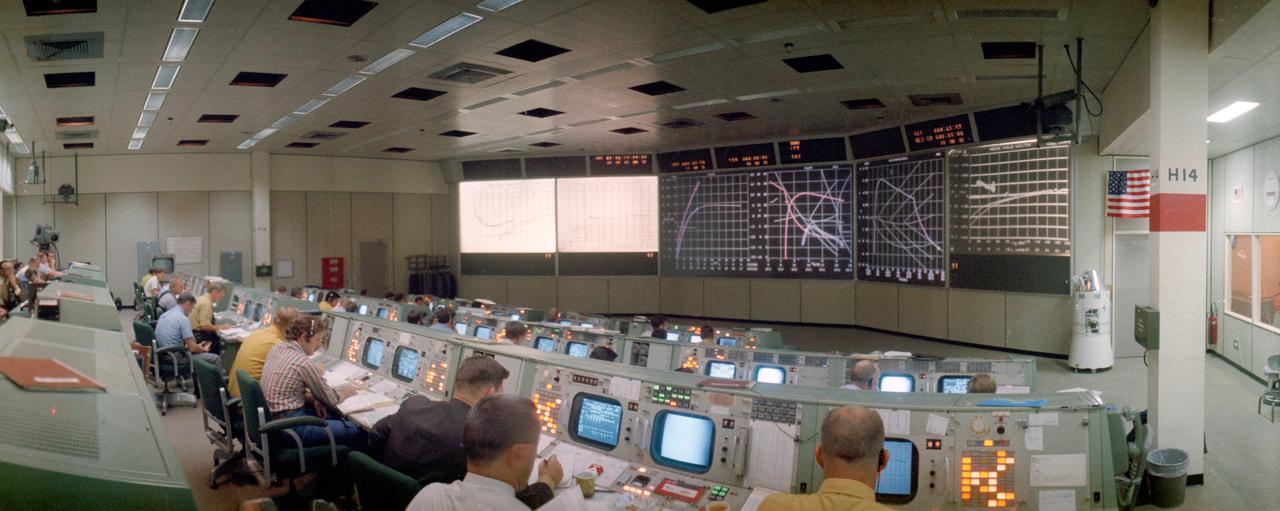
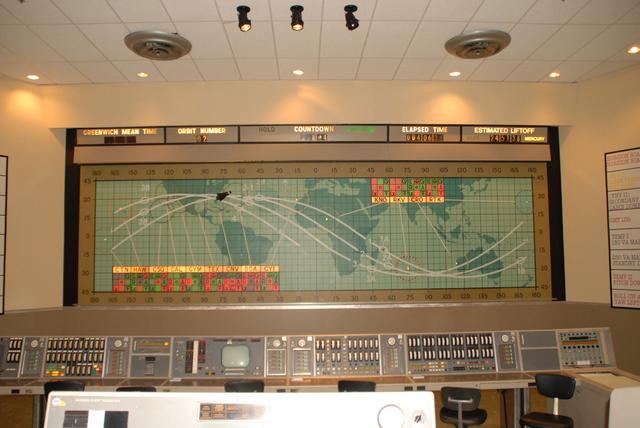
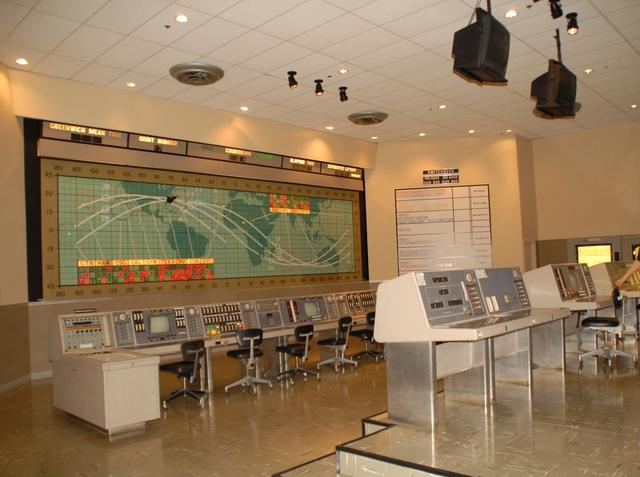
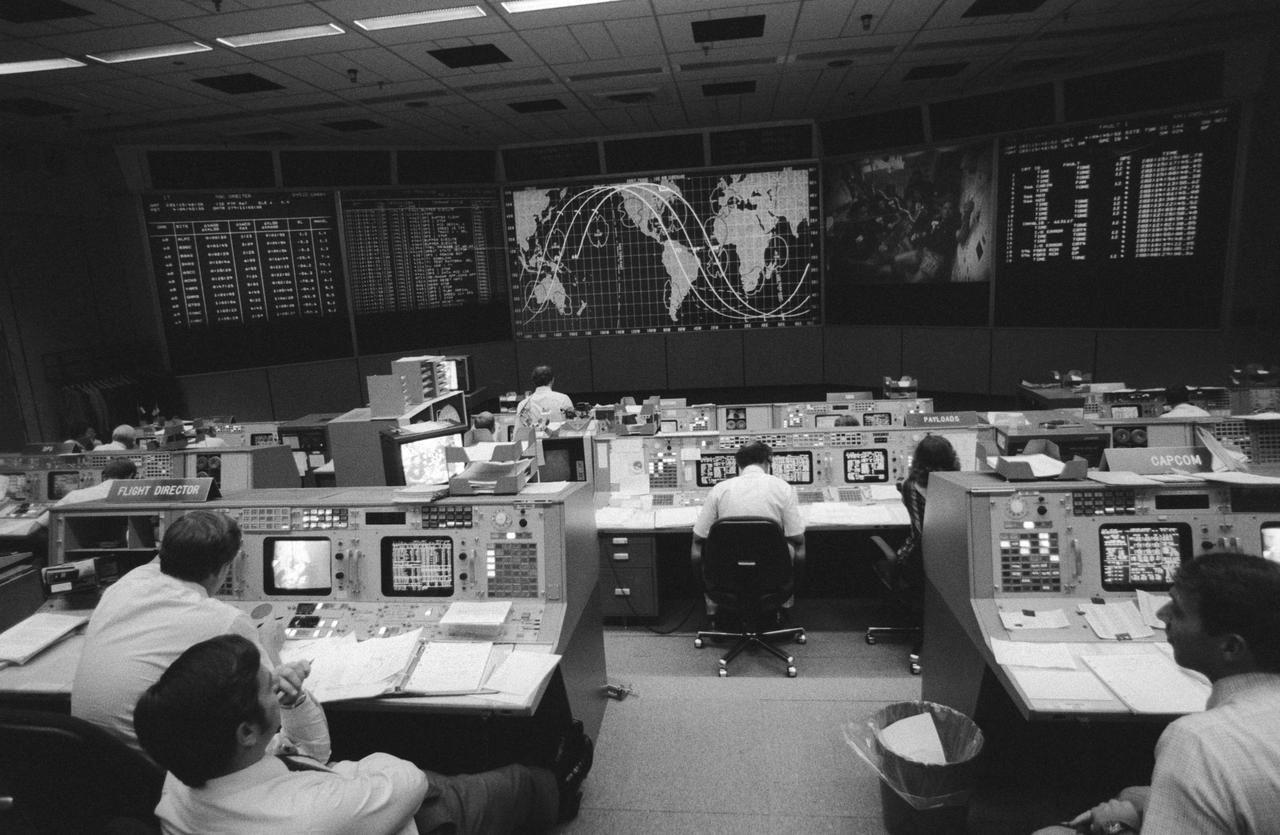
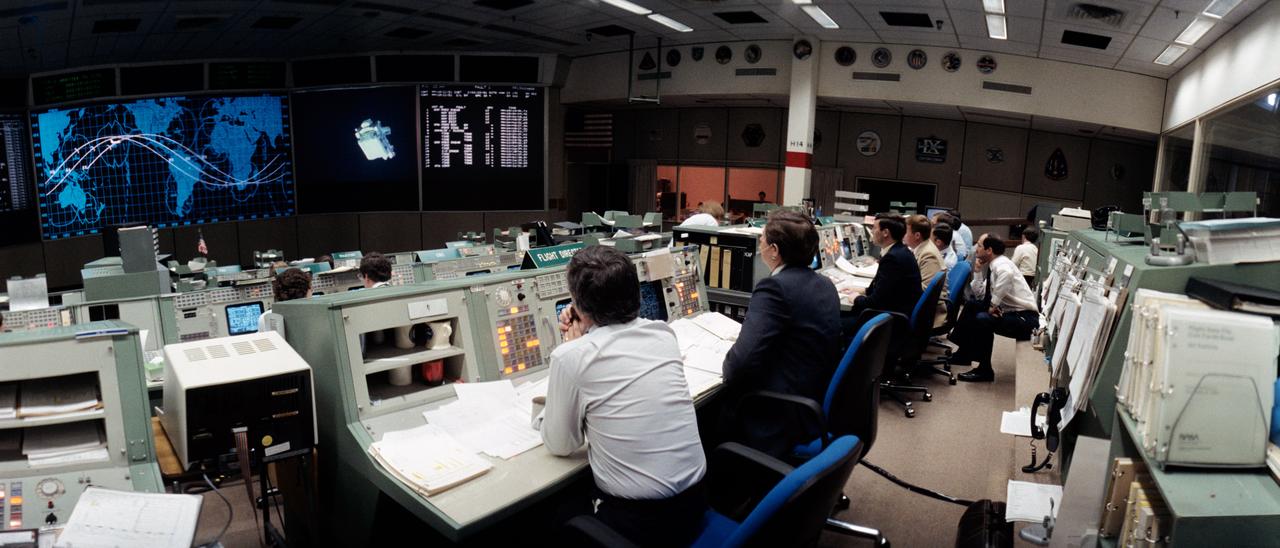
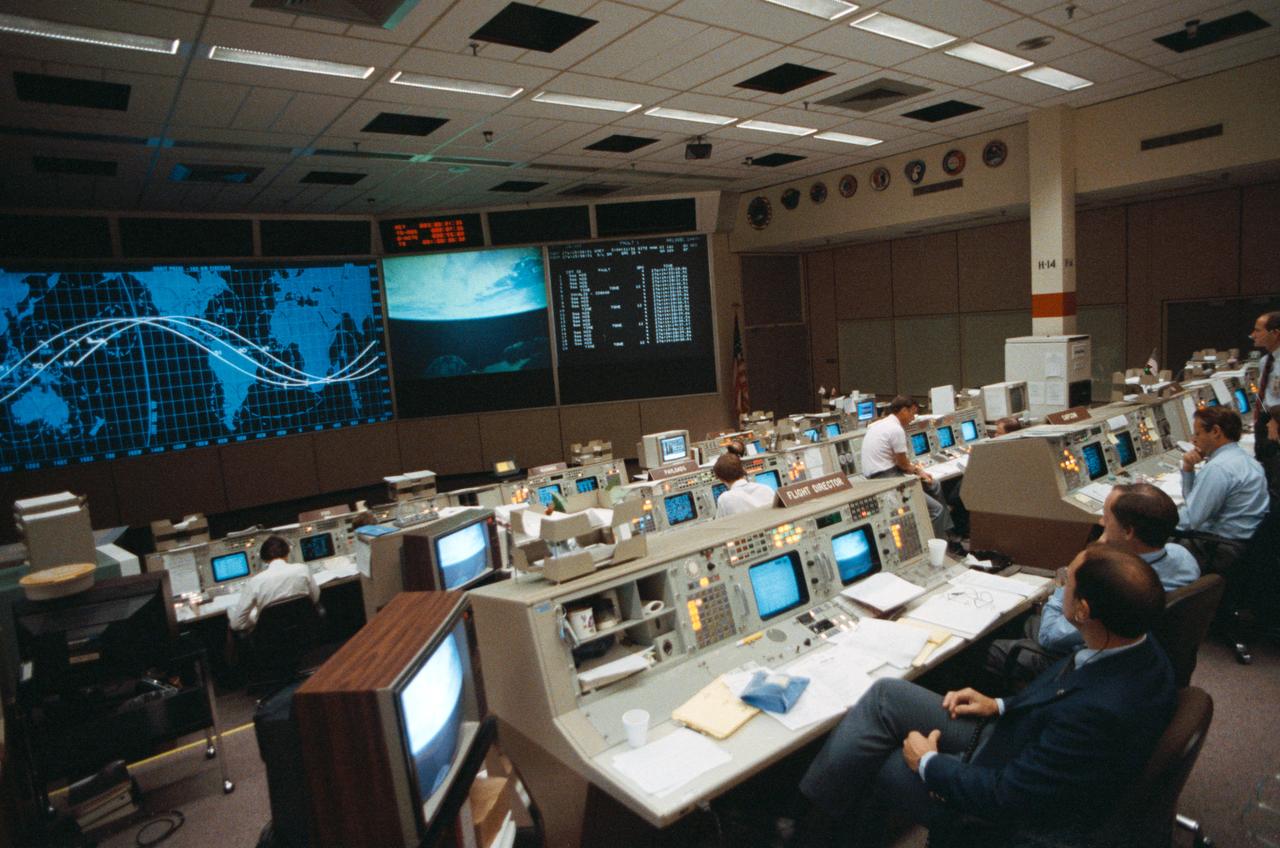
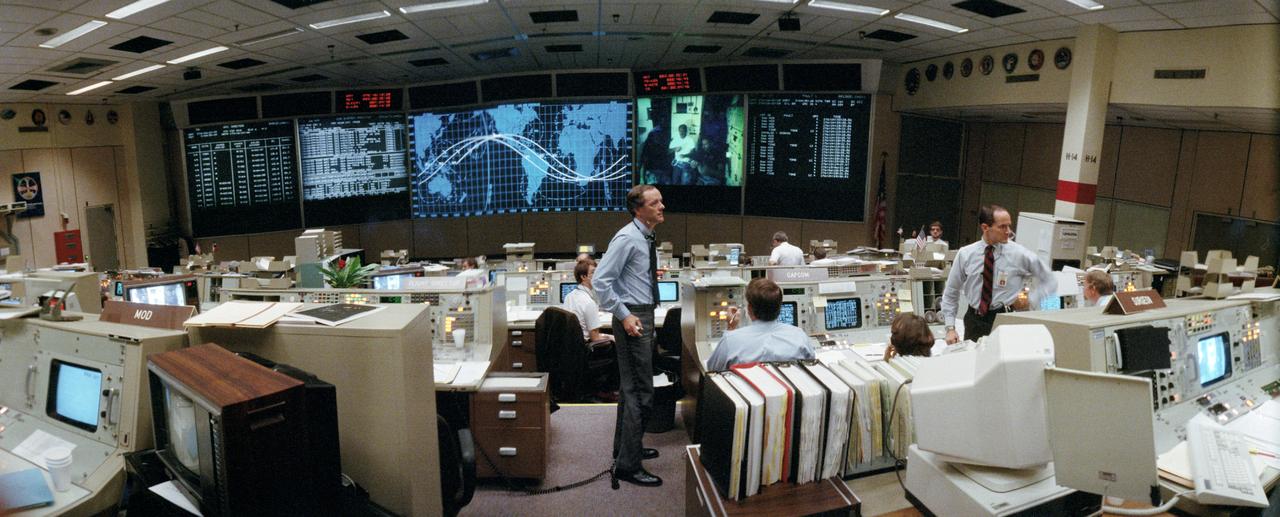
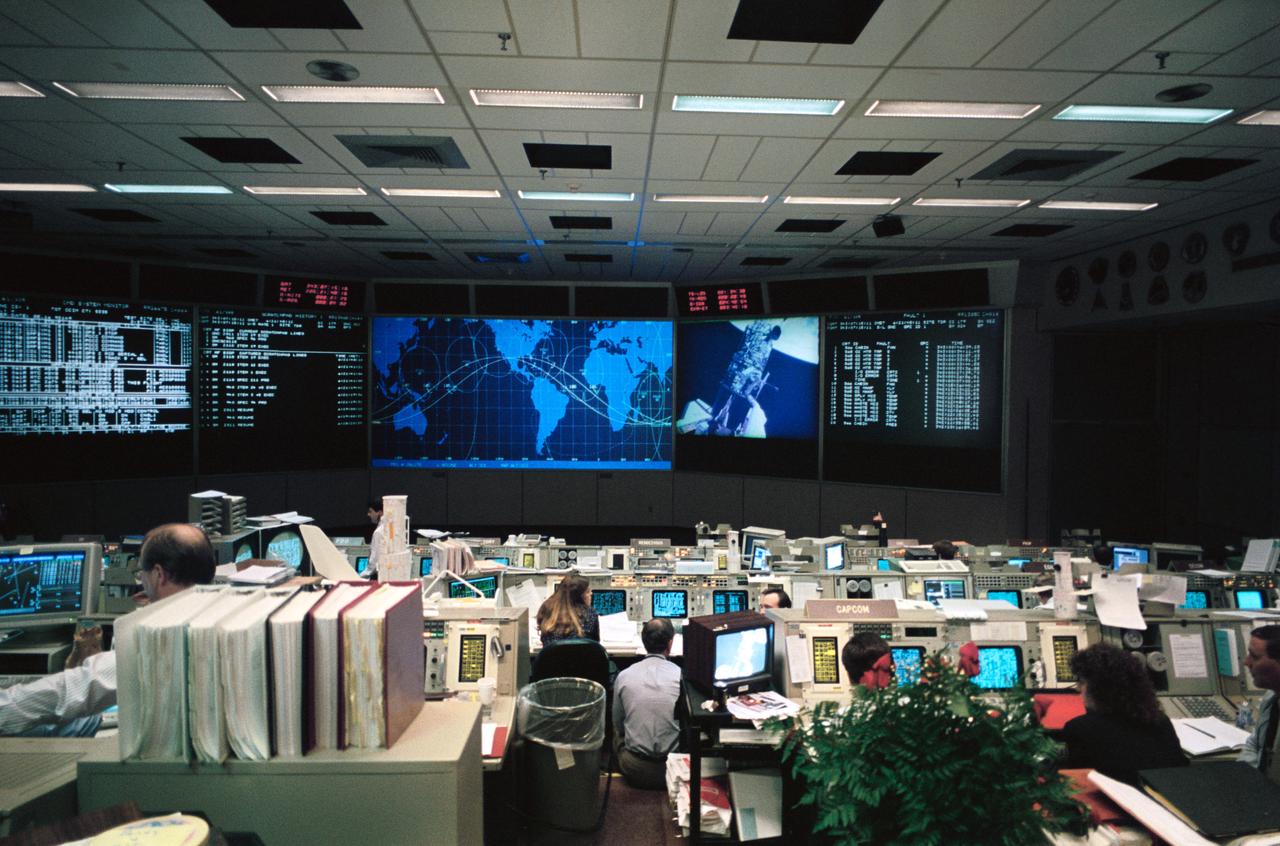
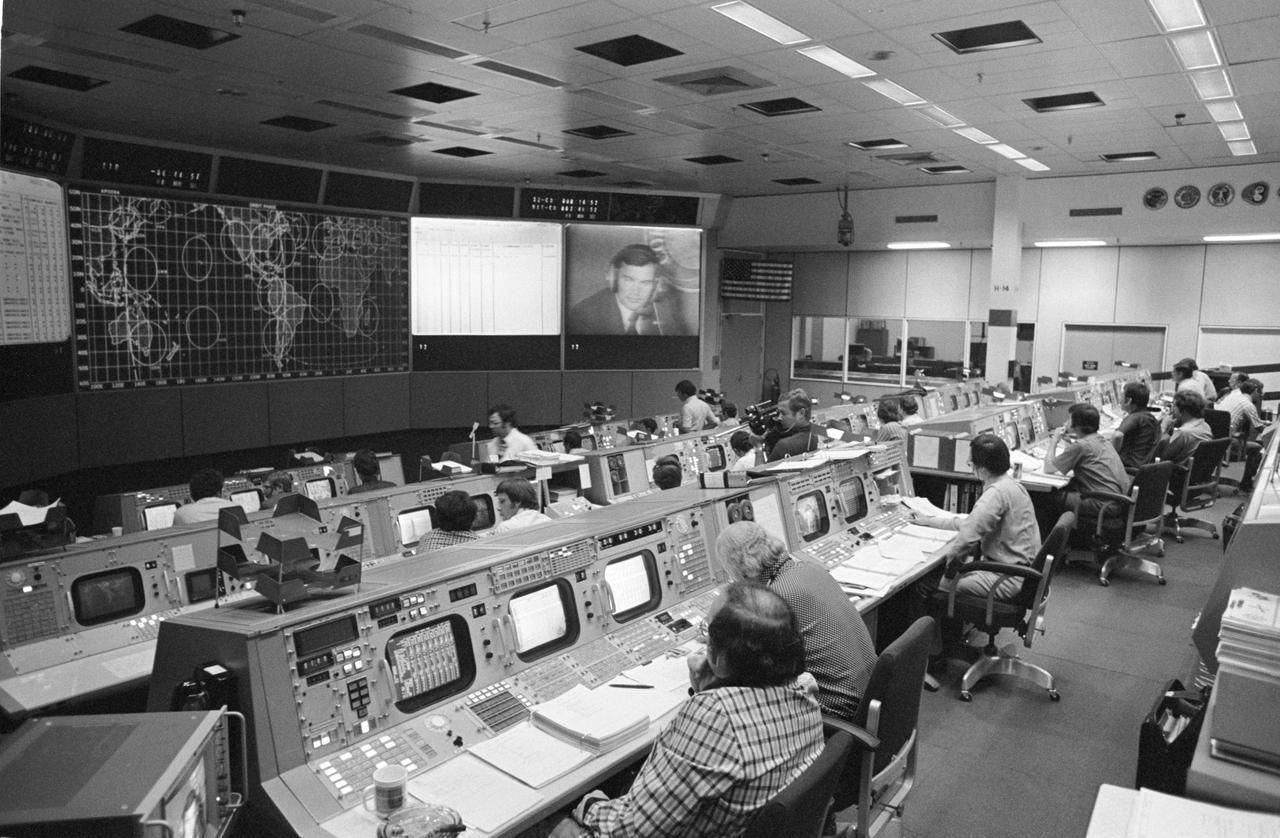
Wide angle view of the flight control room (FCR) of the Mission Control Center (MCC). Some of the STS 41-G crew can be seen on a large screen at the front of the MCC along with a map tracking the progress of the orbiter.
Wide angle view of the Flight control room of Mission control center
Wide angle view of the flight control room (FCR) of the Mission Control Center (MCC). Some of the STS 41-G crew can be seen on a large screen at the front of the MCC along with a map tracking the progress of the orbiter.
Wide angle view of the Flight control room of Mission control center
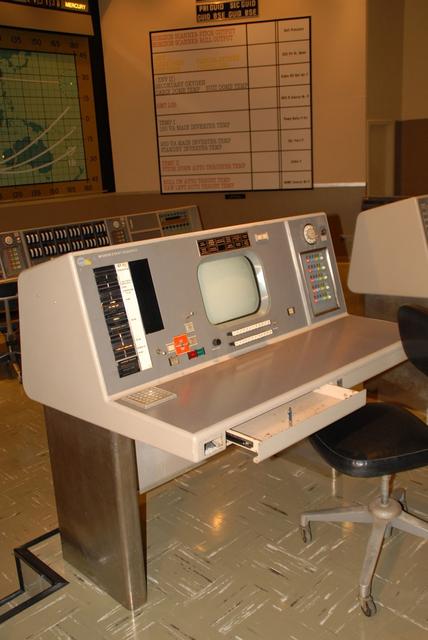
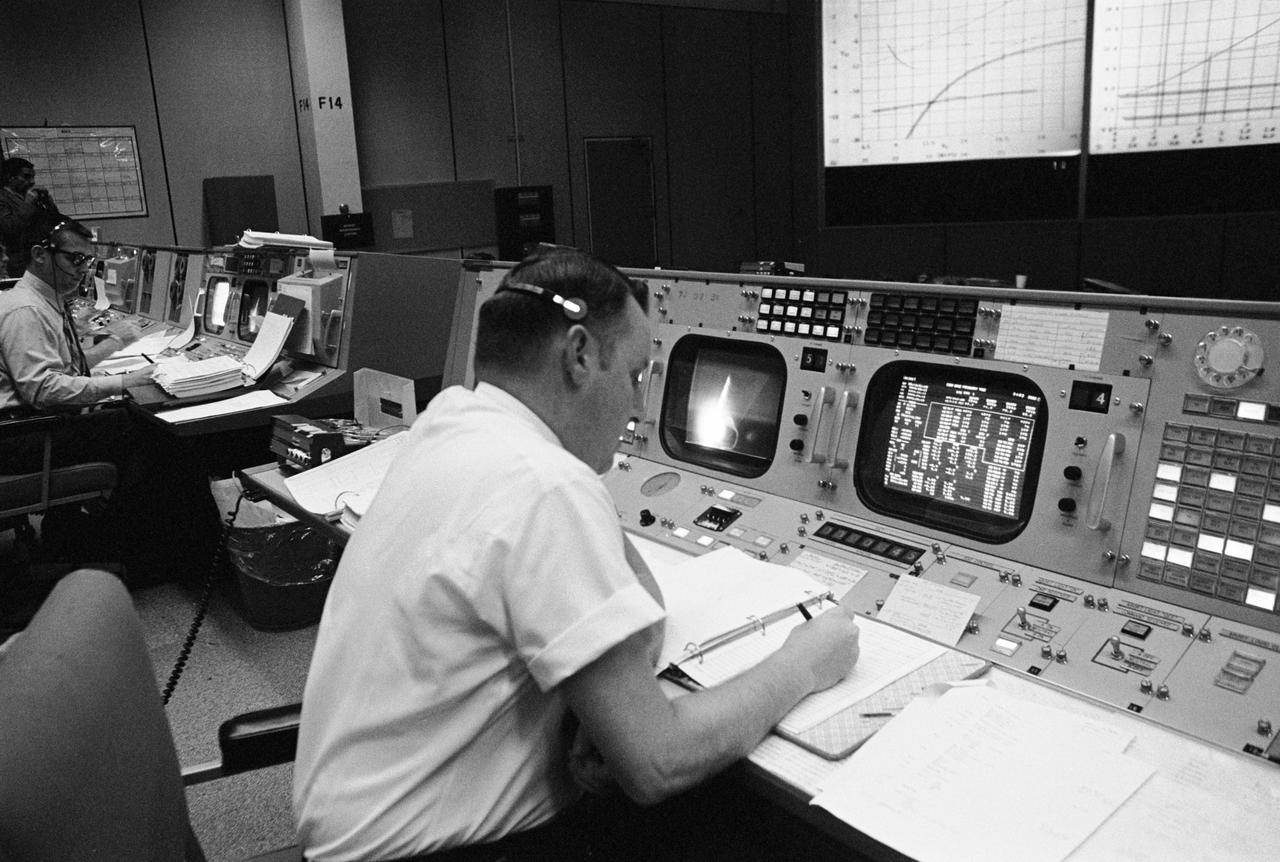
Christopher Kraft, flight director during Project Mercury, works at his console inside the Flight Control area at Mercury Mission Control.
Christopher Kraft, flight director during Project Mercury
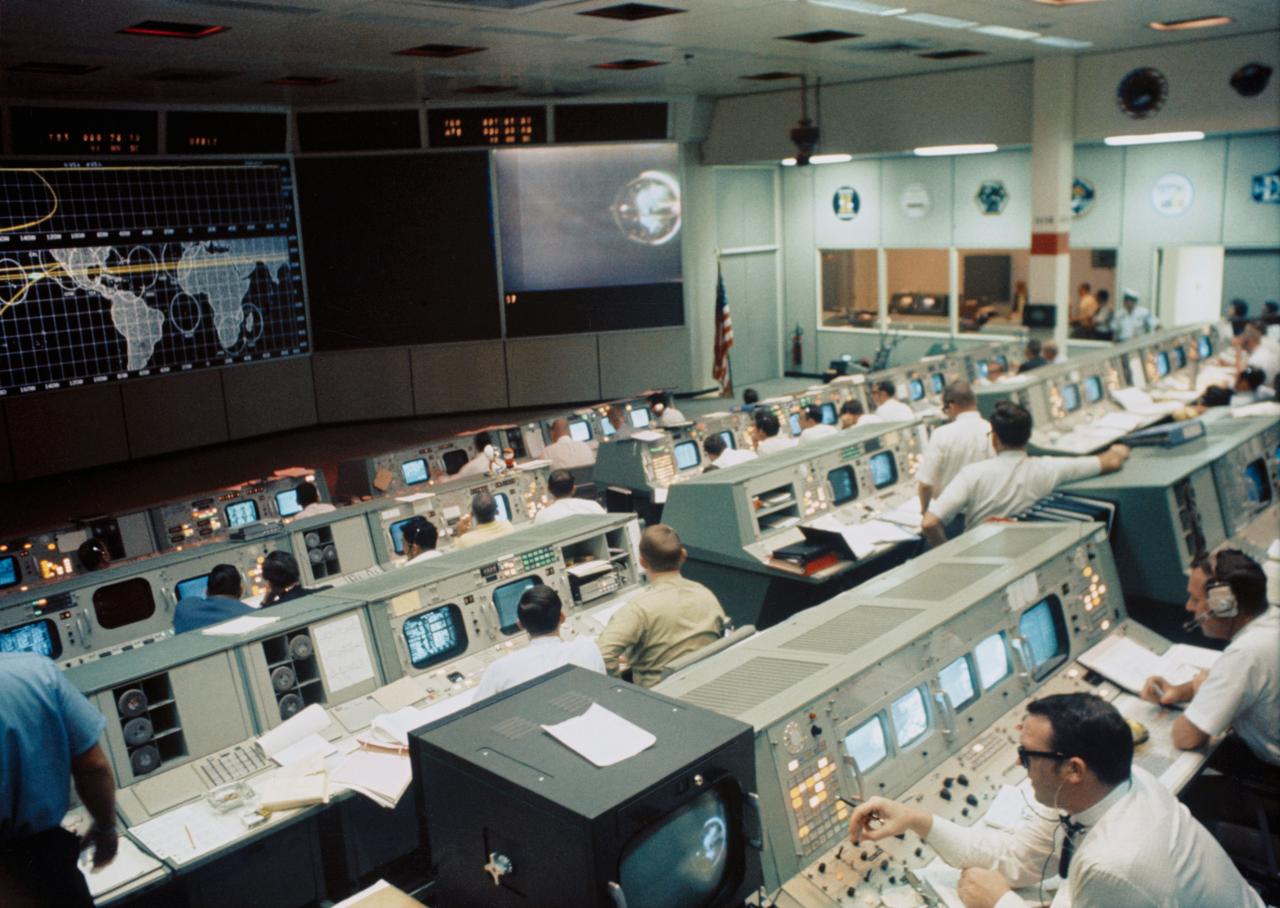
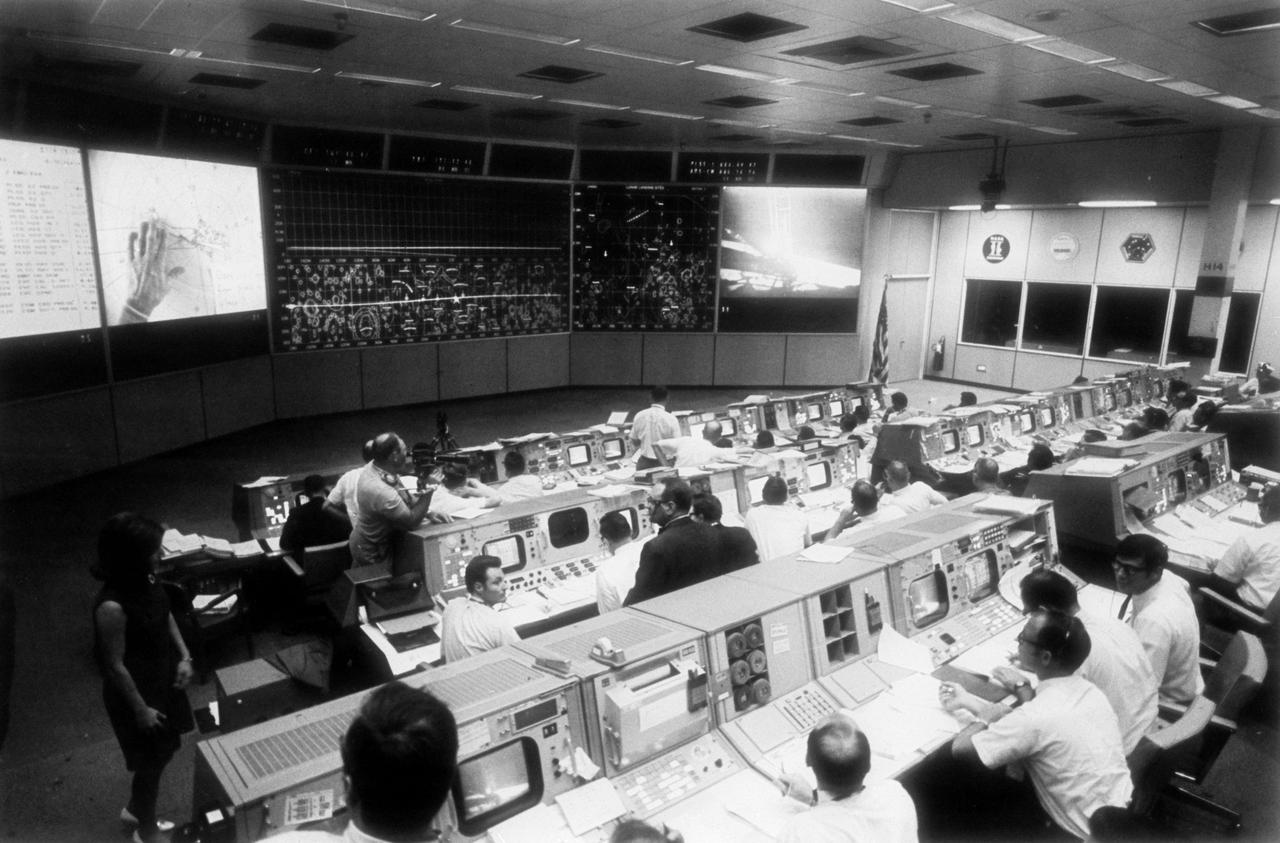
S69-34316 (18 May 1969) --- Overall view of the Mission Operations Control Room in the Mission Control Center, Building 30, on the first day of the Apollo 10 lunar orbit mission. A color television transmission was being received from Apollo 10. This picture was made following Command and Service Module/Lunar Module/Saturn IVB (CSM/LM-S-IVB) separation and prior to LM extraction from the S-IVB. The CSM were making the docking approach to the LM/S-IVB.
Overall view of Mission Operations Control in Mission Control Center
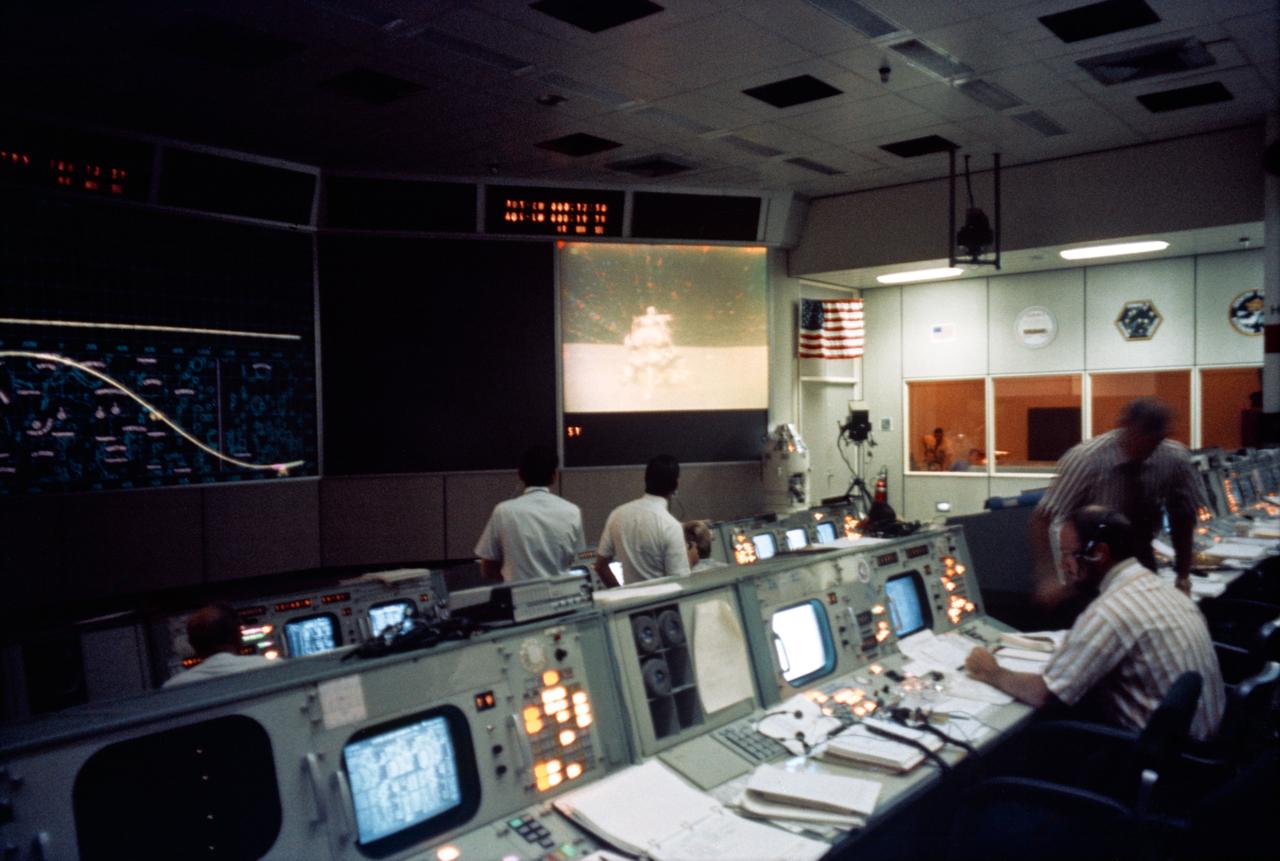
S71-41357 (26 July 1971) --- An overall, wide-angle lens view of activity in the Mission Operations Control Room in the Mission Control Center minutes after the launch of the Apollo 15 lunar landing mission. Ground elapsed time was 45 minutes and 42 seconds when this photograph was taken.
Mission Control Center (MCC) - Apollo 15 Launch - MSC
Astronauts Roy D. Bridges (left) and RIchard O. Covey serve as spacecraft communicators (CAPCOM) for STS-6. They are seated at the CAPCOM console in the mission operations control room (MOCR) of JSC's mission control center (30119); Flight Director Jay H. Greene communicates with a nearby flight controller in the MOCR just after launch of the Challenger (30120).
Mission Operations Control Room (MOCR) activities during STS-6 mission
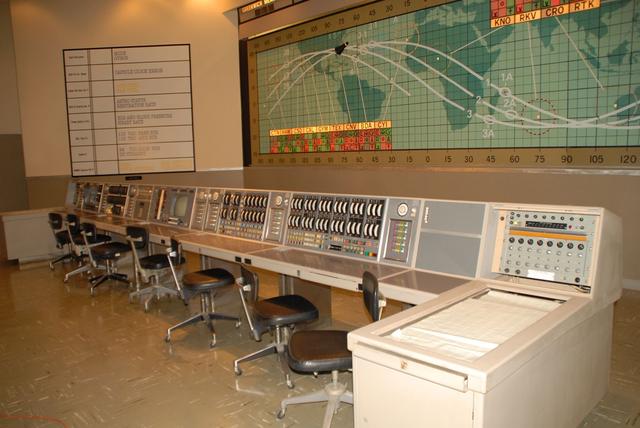
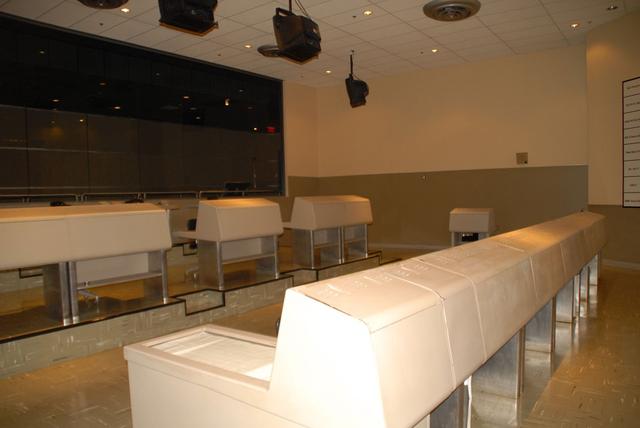
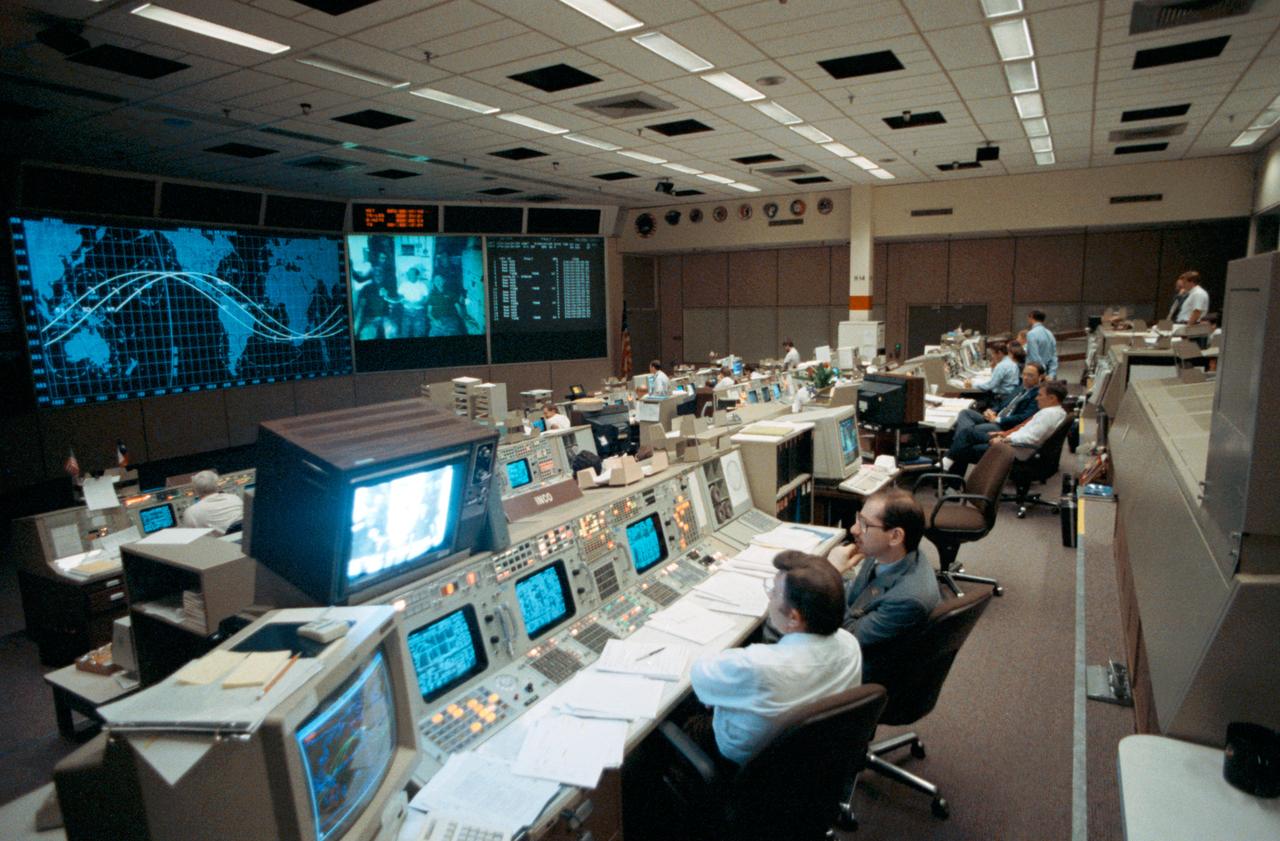
View from the back of the Mission Control Center (MCC). Visible are the Flight Directors console (left front), the CAPCOM console (right front) and the Payloads console. Some of the STS 41-G crew can be seen on a large screen at the front of the MCC along with a map tracking the progress of the orbiter.
View from the back of the Flight control room of Mission control center
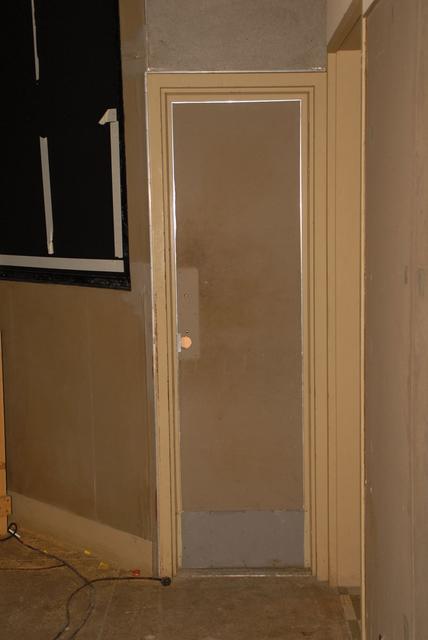
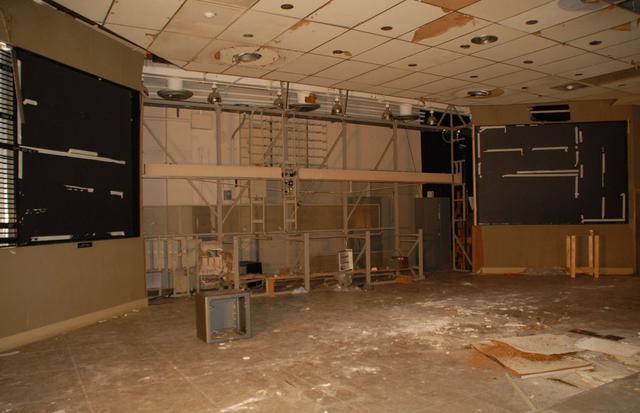
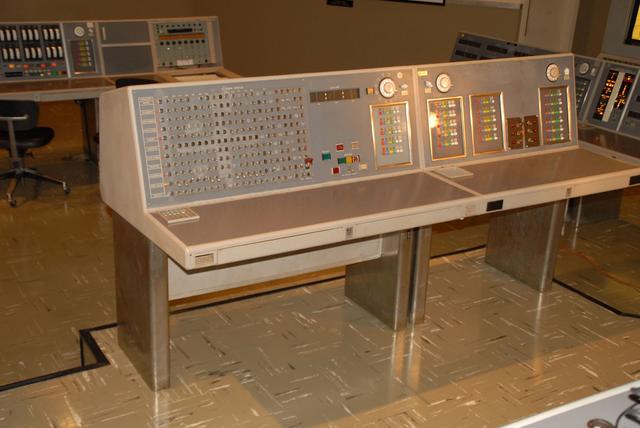
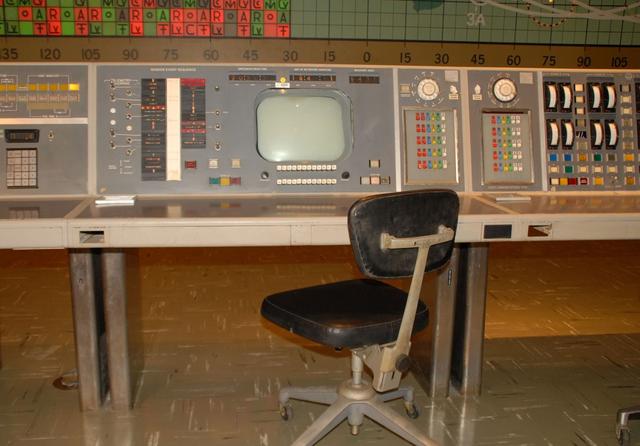
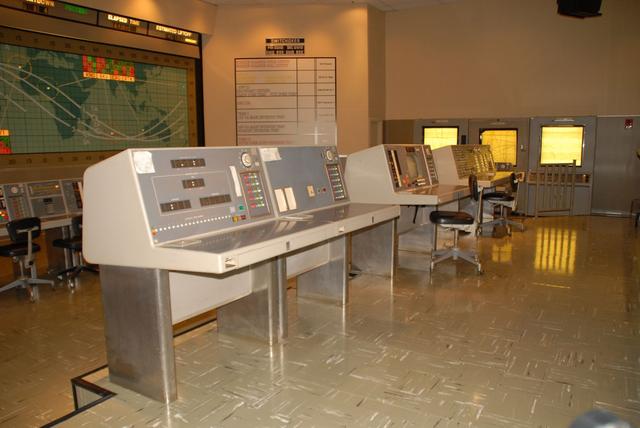
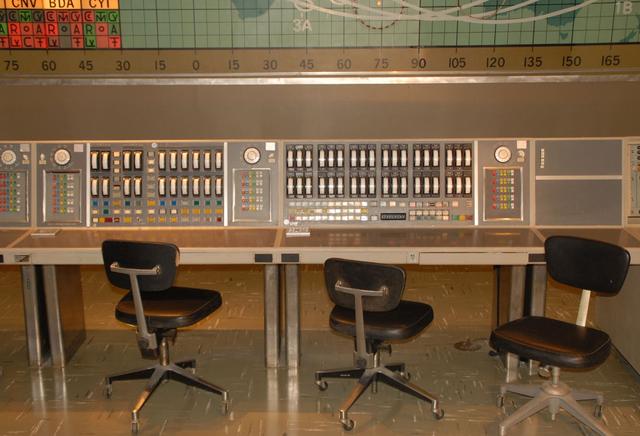
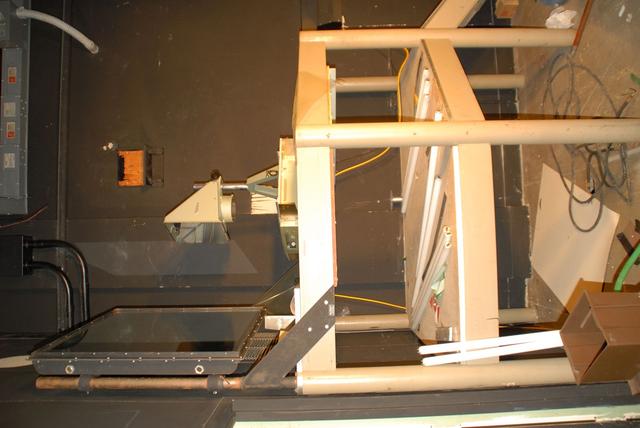
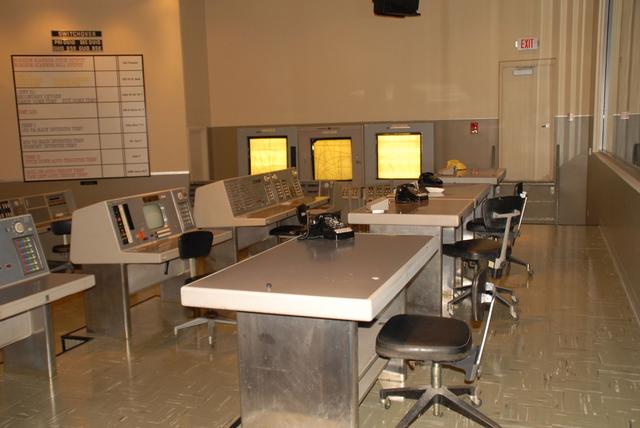
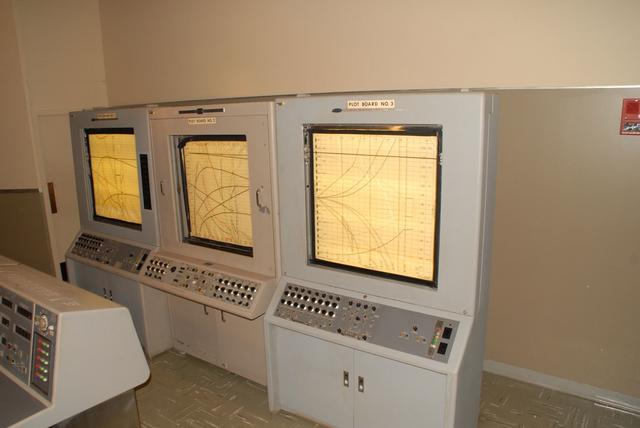
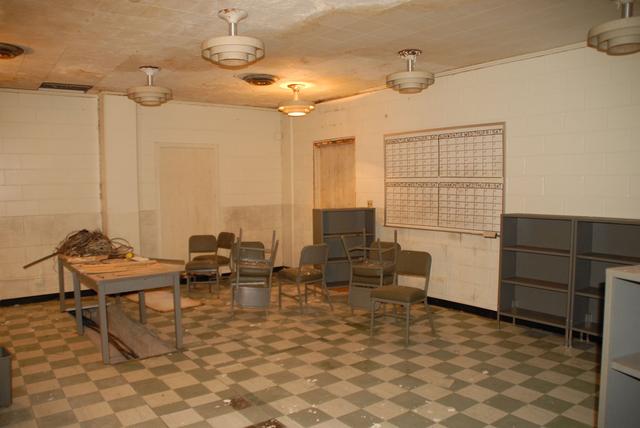
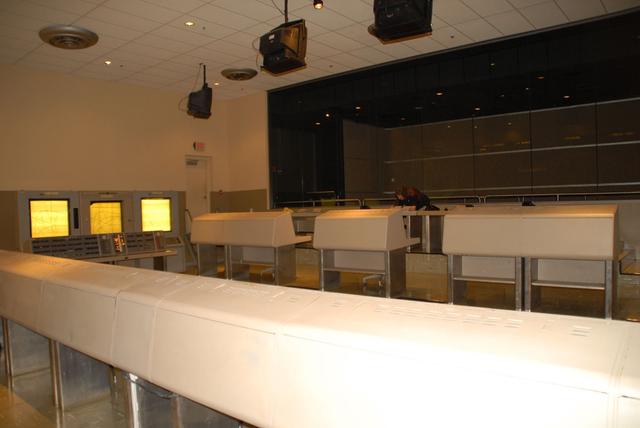
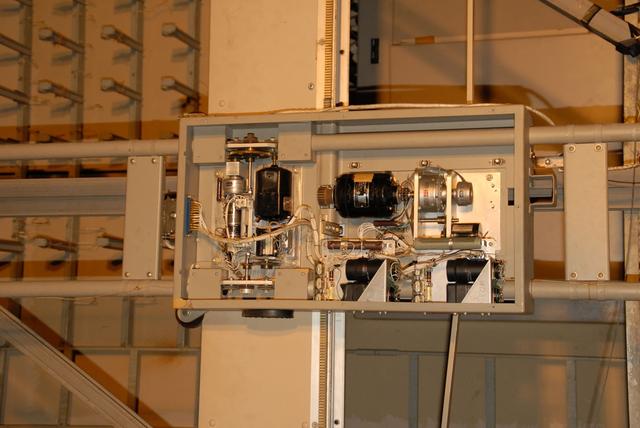
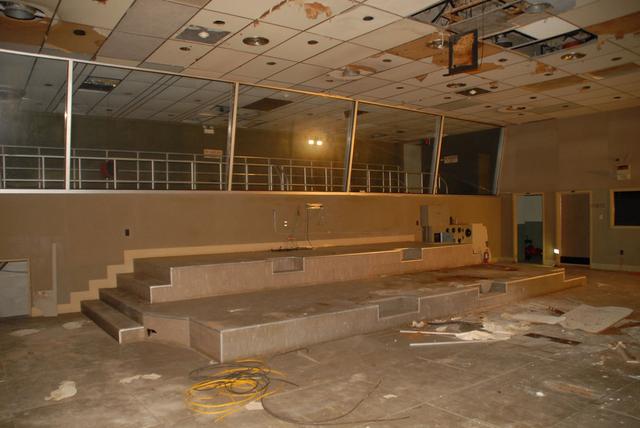
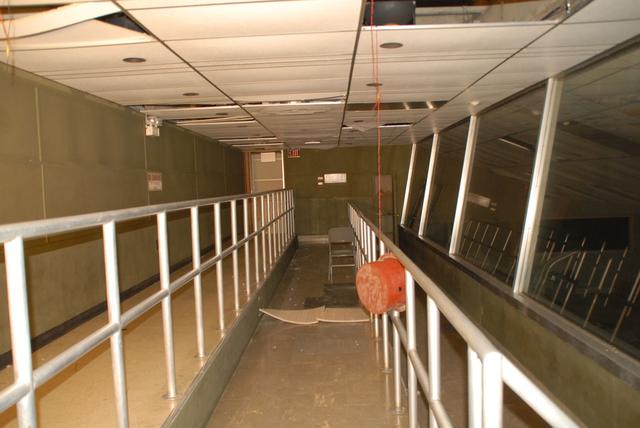
Interior view of the Mission Control Center
KSC-20100730-PH-PR_MCC-40
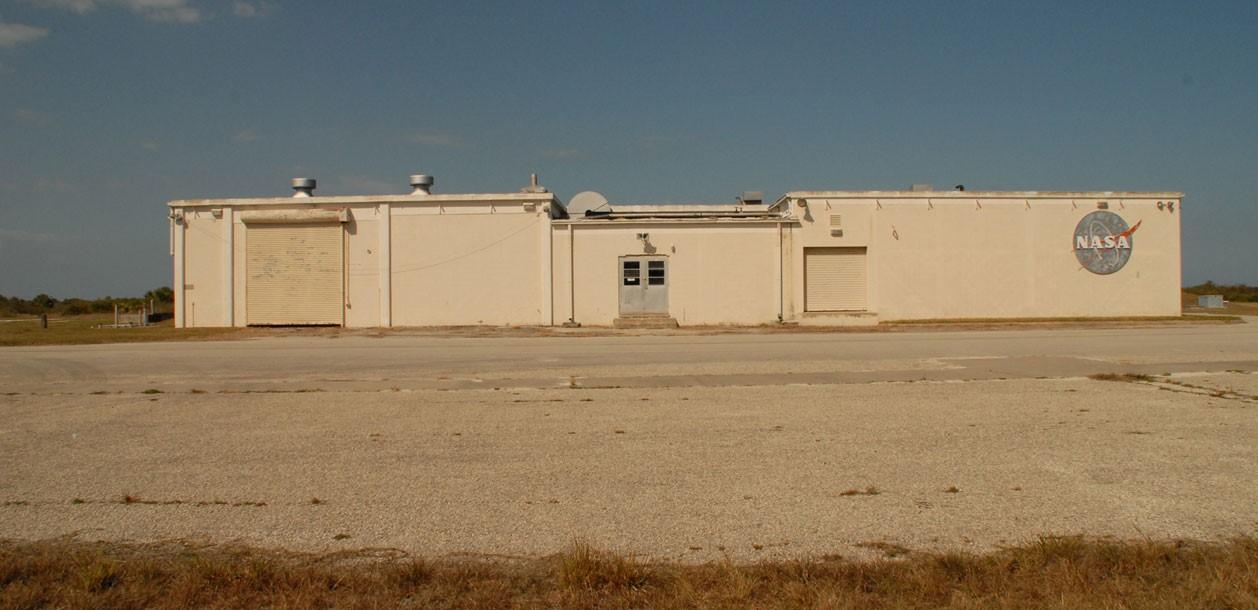
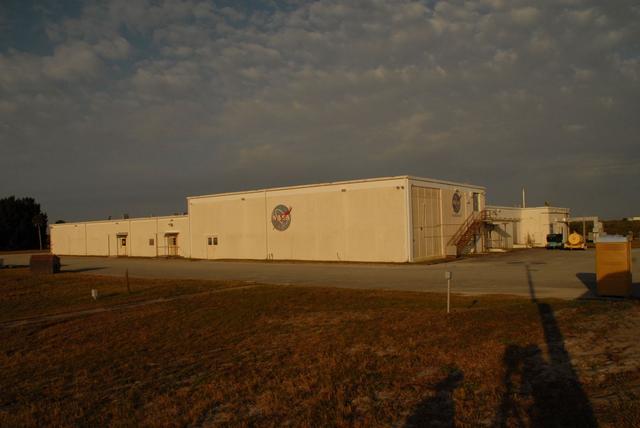
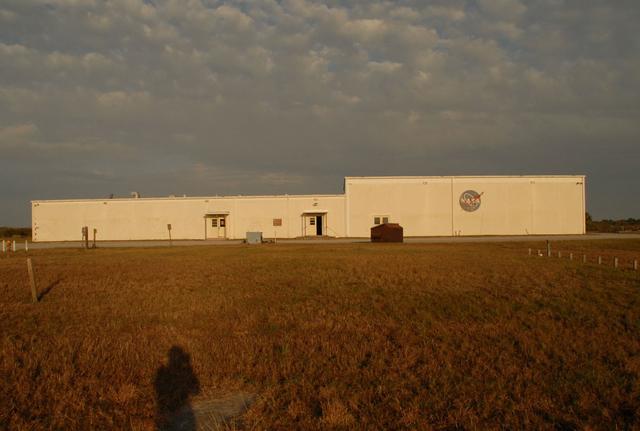
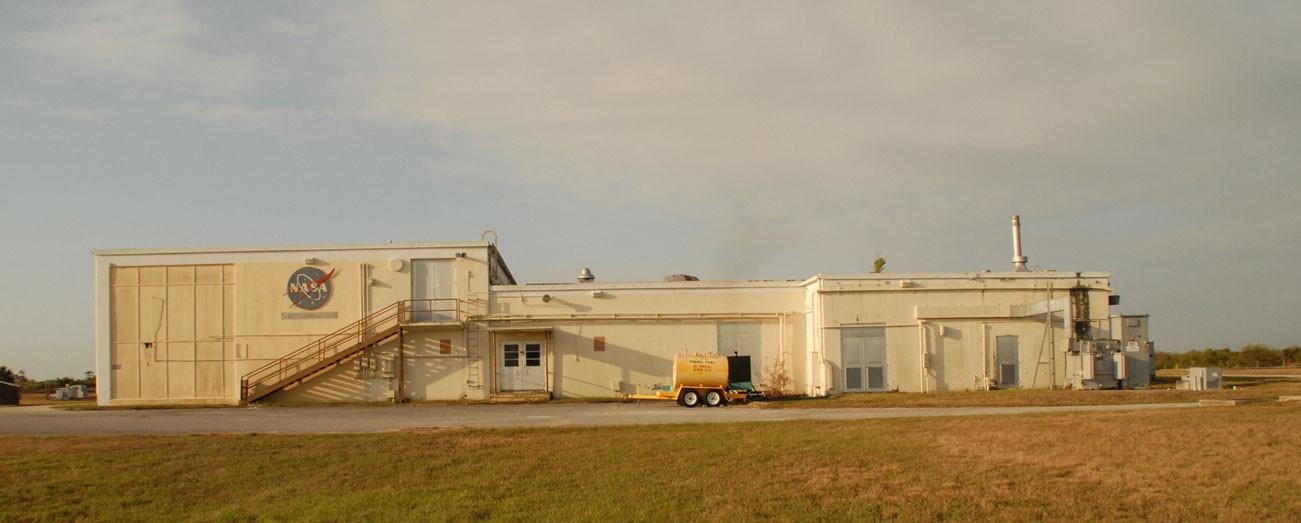
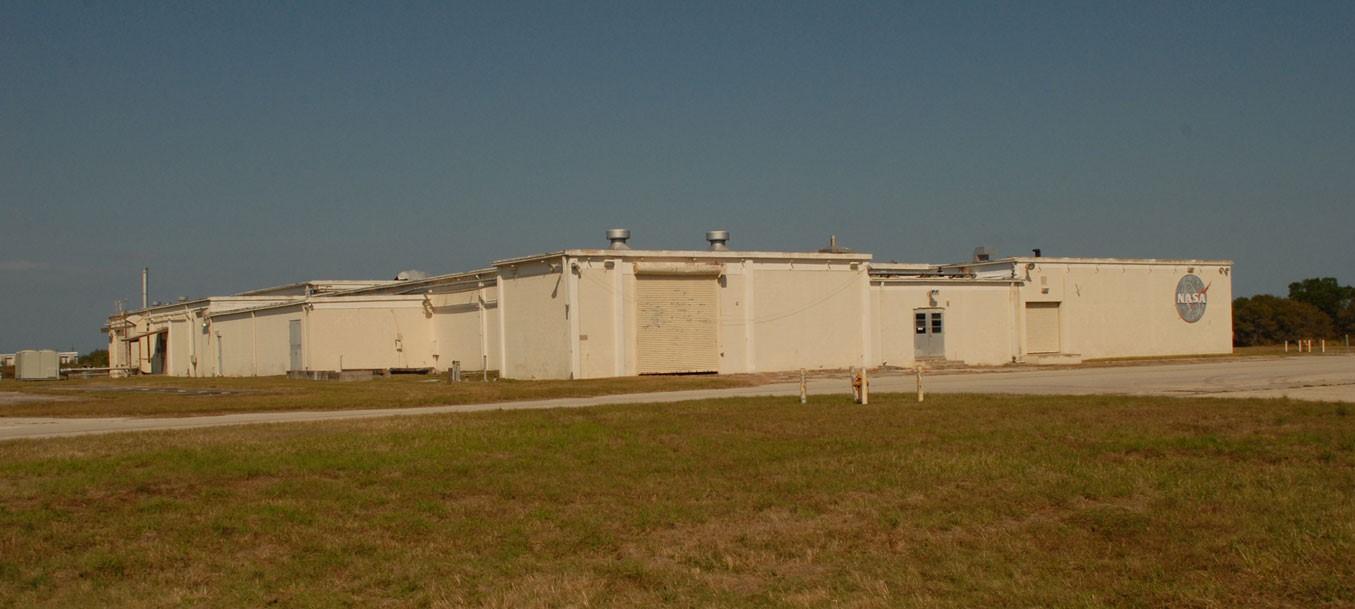
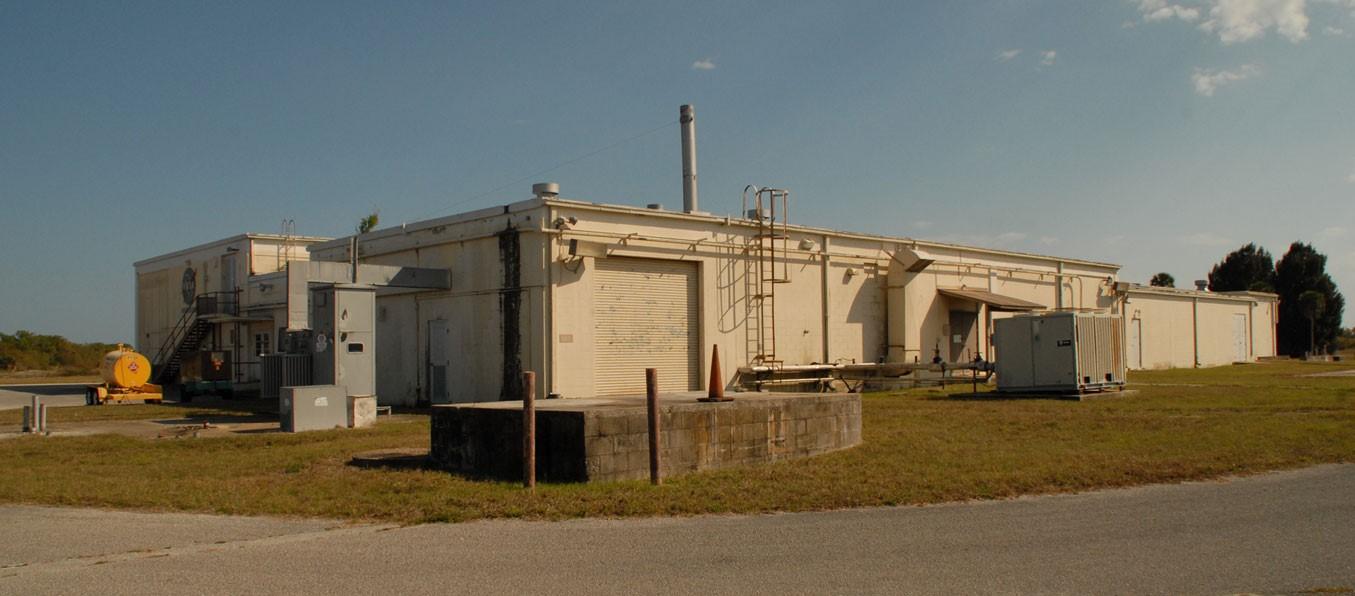
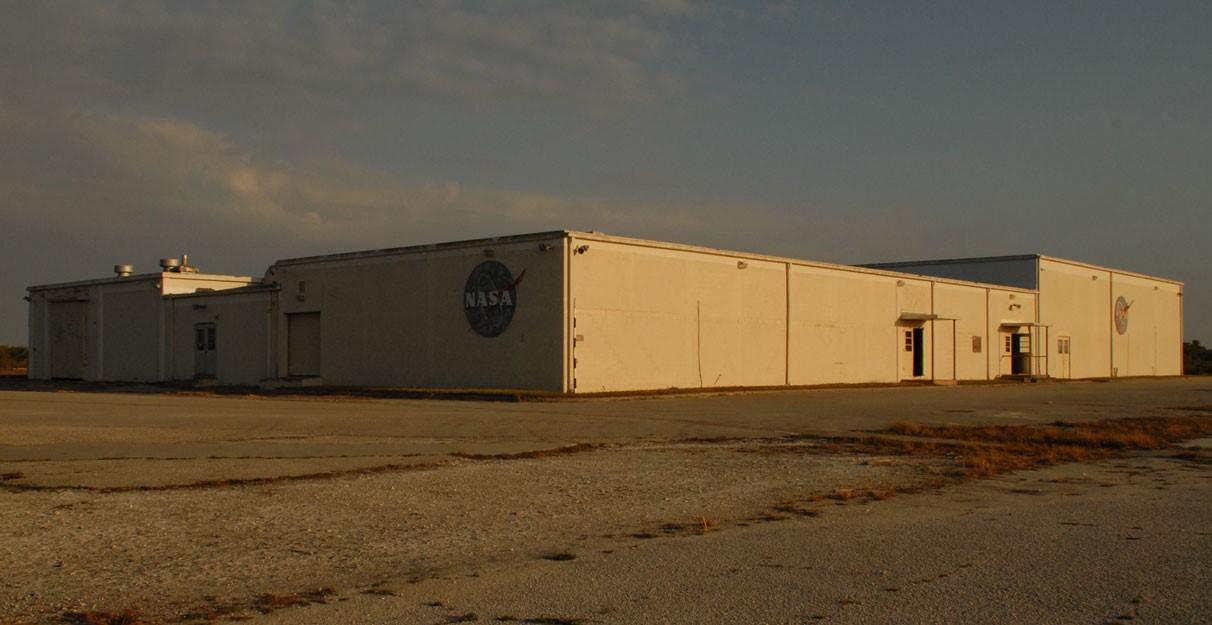
Exterior view of the Mission Control Center
KSC-20100730-PH-PR_MCC-1
Interior view of the Mission Control Center
KSC-20100730-PH-PR_MCC-36
Interior view of the Mission Control Center
KSC-20100730-PH-PR_MCC-13
Interior view of the Mission Control Center
KSC-20100730-PH-PR_MCC-35
Interior view of the Mission Control Center
KSC-20100730-PH-PR_MCC-44
Interior view of the Mission Control Center
KSC-20100730-PH-PR_MCC-34
Interior view of the Mission Control Center
KSC-20100730-PH-PR_MCC-47
Interior view of the Mission Control Center
KSC-20100730-PH-PR_MCC-16
Interior view of the Mission Control Center
KSC-20100730-PH-PR_MCC-42
Interior view of the Mission Control Center
KSC-20100730-PH-PR_MCC-30
Interior view of the Mission Control Center
KSC-20100730-PH-PR_MCC-39
Interior view of the Mission Control Center
KSC-20100730-PH-PR_MCC-38
Interior view of the Mission Control Center
KSC-20100730-PH-PR_MCC-46
Interior view of the Mission Control Center
KSC-20100730-PH-PR_MCC-17
Interior view of the Mission Control Center
KSC-20100730-PH-PR_MCC-10
Interior view of the Mission Control Center
KSC-20100730-PH-PR_MCC-48
Exterior view of the Mission Control Center
KSC-20100730-PH-PR_MCC-4
Interior view of the Mission Control Center
KSC-20100730-PH-PR_MCC-18
Interior view of the Mission Control Center
KSC-20100730-PH-PR_MCC-43
Interior view of the Mission Control Center
KSC-20100730-PH-PR_MCC-50
Interior view of the Mission Control Center
KSC-20100730-PH-PR_MCC-33
Interior view of the Mission Control Center
KSC-20100730-PH-PR_MCC-20
Interior view of the Mission Control Center
KSC-20100730-PH-PR_MCC-54
Interior view of the Mission Control Center
KSC-20100730-PH-PR_MCC-15
Interior view of the Mission Control Center
KSC-20100730-PH-PR_MCC-49
Interior view of the Mission Control Center
KSC-20100730-PH-PR_MCC-29
Interior view of the Mission Control Center
KSC-20100730-PH-PR_MCC-37
Interior view of the Mission Control Center
KSC-20100730-PH-PR_MCC-41
Interior view of the Mission Control Center
KSC-20100730-PH-PR_MCC-12
Interior view of the Mission Control Center
KSC-20100730-PH-PR_MCC-32
Interior view of the Mission Control Center
KSC-20100730-PH-PR_MCC-11
Exterior view of the Mission Control Center
KSC-20100730-PH-PR_MCC-6
Interior view of the Mission Control Center
KSC-20100730-PH-PR_MCC-28
Exterior view of the Mission Control Center
KSC-20100730-PH-PR_MCC-8
Interior view of the Mission Control Center
KSC-20100730-PH-PR_MCC-31
Interior view of the Mission Control Center
KSC-20100730-PH-PR_MCC-45
Interior view of the Mission Control Center
KSC-20100730-PH-PR_MCC-25
Exterior view of the Mission Control Center
KSC-20100730-PH-PR_MCC-5
Interior view of the Mission Control Center
KSC-20100730-PH-PR_MCC-51
Interior view of the Mission Control Center
KSC-20100730-PH-PR_MCC-53
Interior view of the Mission Control Center
KSC-20100730-PH-PR_MCC-24
Interior view of the Mission Control Center
KSC-20100730-PH-PR_MCC-14
Interior view of the Mission Control Center
KSC-20100730-PH-PR_MCC-27
Exterior view of the Mission Control Center
KSC-20100730-PH-PR_MCC-9
Interior view of the Mission Control Center
KSC-20100730-PH-PR_MCC-52
Exterior view of the Mission Control Center
KSC-20100730-PH-PR_MCC-2
Interior view of the Mission Control Center
KSC-20100730-PH-PR_MCC-19
Exterior view of the Mission Control Center
KSC-20100730-PH-PR_MCC-3
Interior view of the Mission Control Center
KSC-20100730-PH-PR_MCC-22
Interior view of the Mission Control Center
KSC-20100730-PH-PR_MCC-23
Interior view of the Mission Control Center
KSC-20100730-PH-PR_MCC-26
Interior view of the Mission Control Center
KSC-20100730-PH-PR_MCC-21
Exterior view of the Mission Control Center
KSC-20100730-PH-PR_MCC-7
S71-41759 (2 Aug. 1971) --- A partial view of activity in the Mission Operations Control Room in the Mission Control Center during the liftoff of the Apollo 15 Lunar Module "Falcon" ascent stage from the lunar surface. An RCA color television camera mounted on the Lunar Roving Vehicle made it possible for people on Earth to watch the LM's spectacular launch from the moon. The LM liftoff was at 171:37 ground elapsed time. The LRV was parked about 300 feet east of the LM. The TV camera was remotely controlled from a console in the MOCR. Seated in the right foreground is astronaut Edgar D. Mitchell, a spacecraft communicator. Mitchell was lunar module pilot of the Apollo 14 lunar landing mission. Note liftoff on the television monitor in the center background.
Mission Control Center (MCC): Apollo XV - MSC
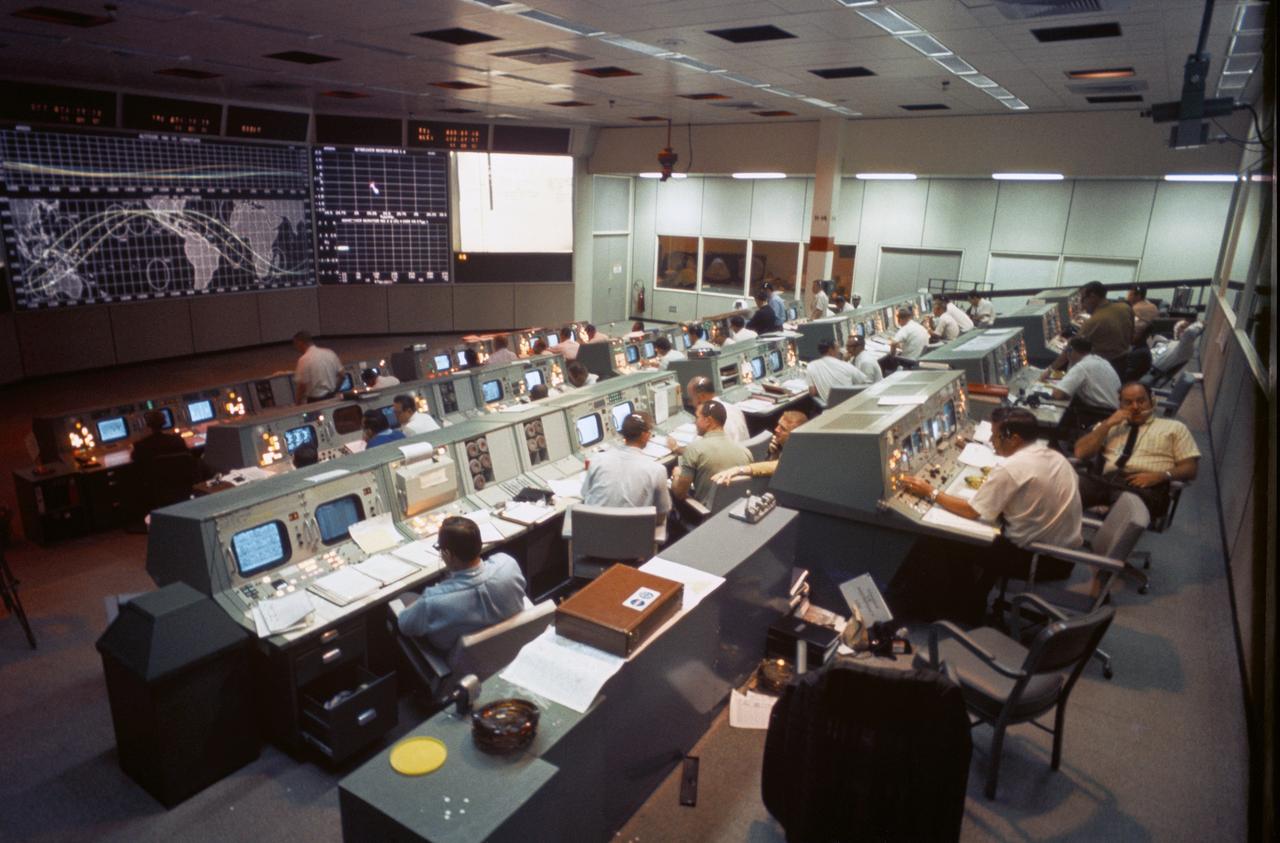
Overall view of activity in the Mission Operations Control Room in the Mission Control Center, Bldg 30, on the first day of the Apollo 7 space mission.
Overall view of Mission Control on first day of Apollo 7 space mission
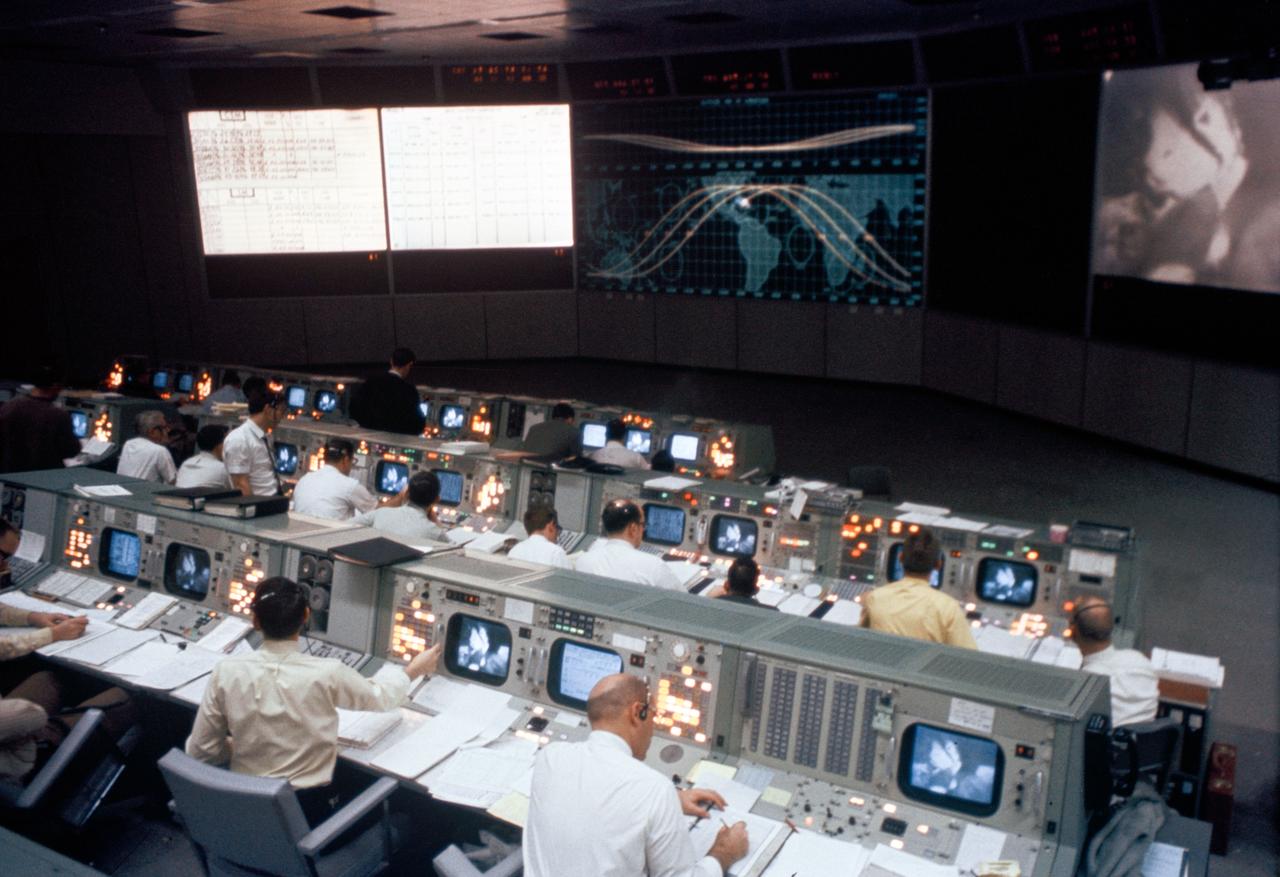
S69-26301 (March 1969) --- Overall view of the Mission Operations Control Room in the Mission Control Center, Building 30, during the Apollo 9 Earth-orbital mission. When this photograph was taken a live television transmission was being received from Apollo 9 as it orbited Earth.
View of Mission Control during Apollo 9 earth orbital mission
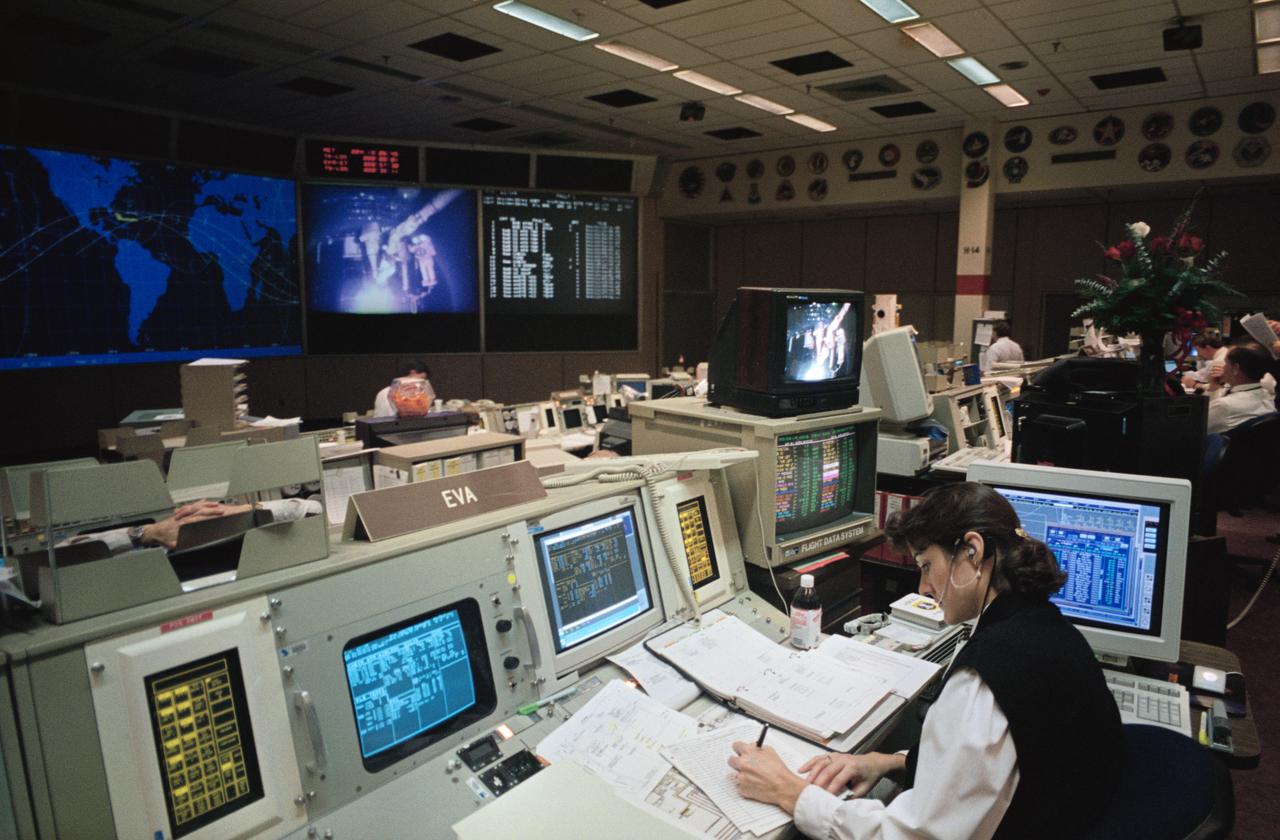
Flight controller Susan P. Rainwater observes as two astronauts work through a lengthy period of extravehicular activity (EVA) in the cargo bay of the Earth-looking Space Shuttle Endeavour. Rainwater's EVA console was one of Mission Control's busiest during this eleven-day Hubble Space Telescope (HST) servicing mission in Earth orbit.
Mission control activity during STS-61 EVA
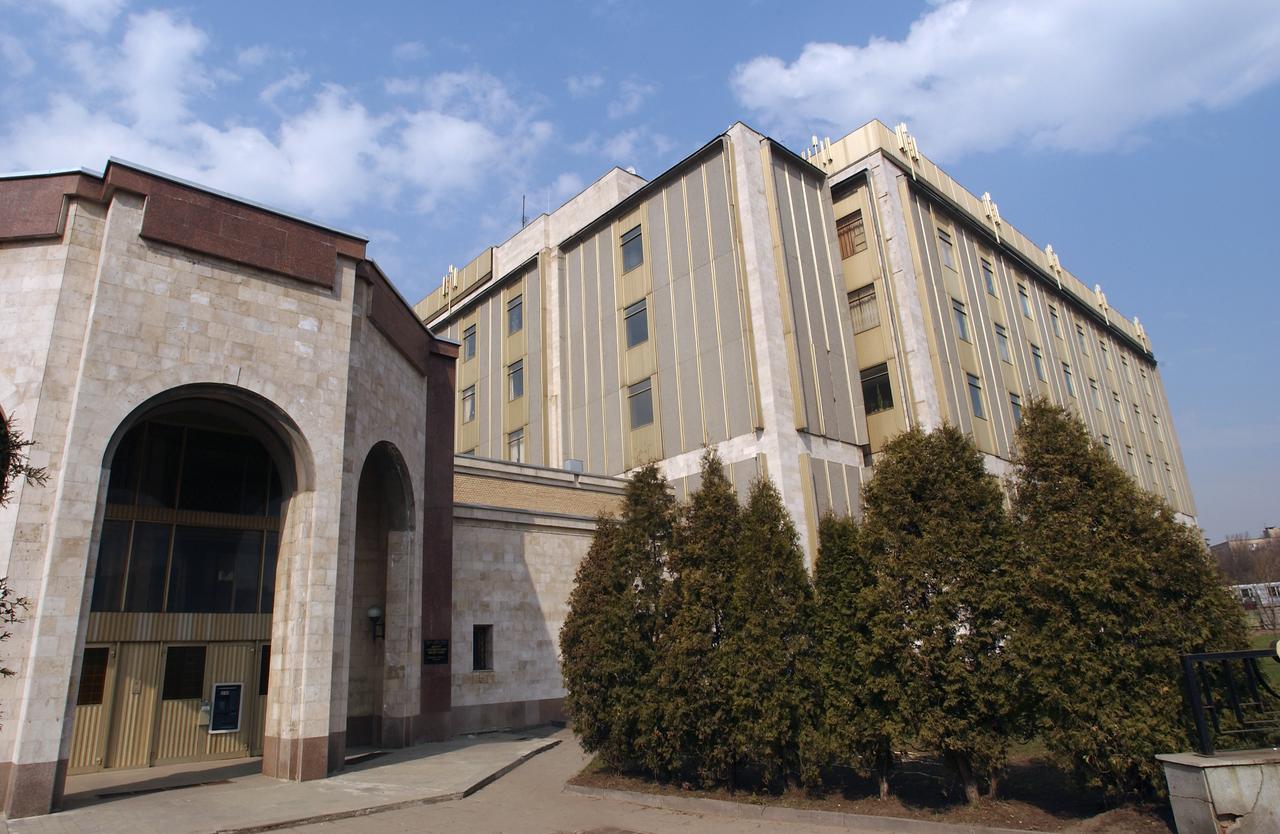
A view of the outside of the Russian Mission Control Center in Korolev, Russia, located on the outskirts of Moscow, Wednesday, April 21, 2004.  Photo Credit: (NASA/Bill Ingalls)
Russian Mission Control Center
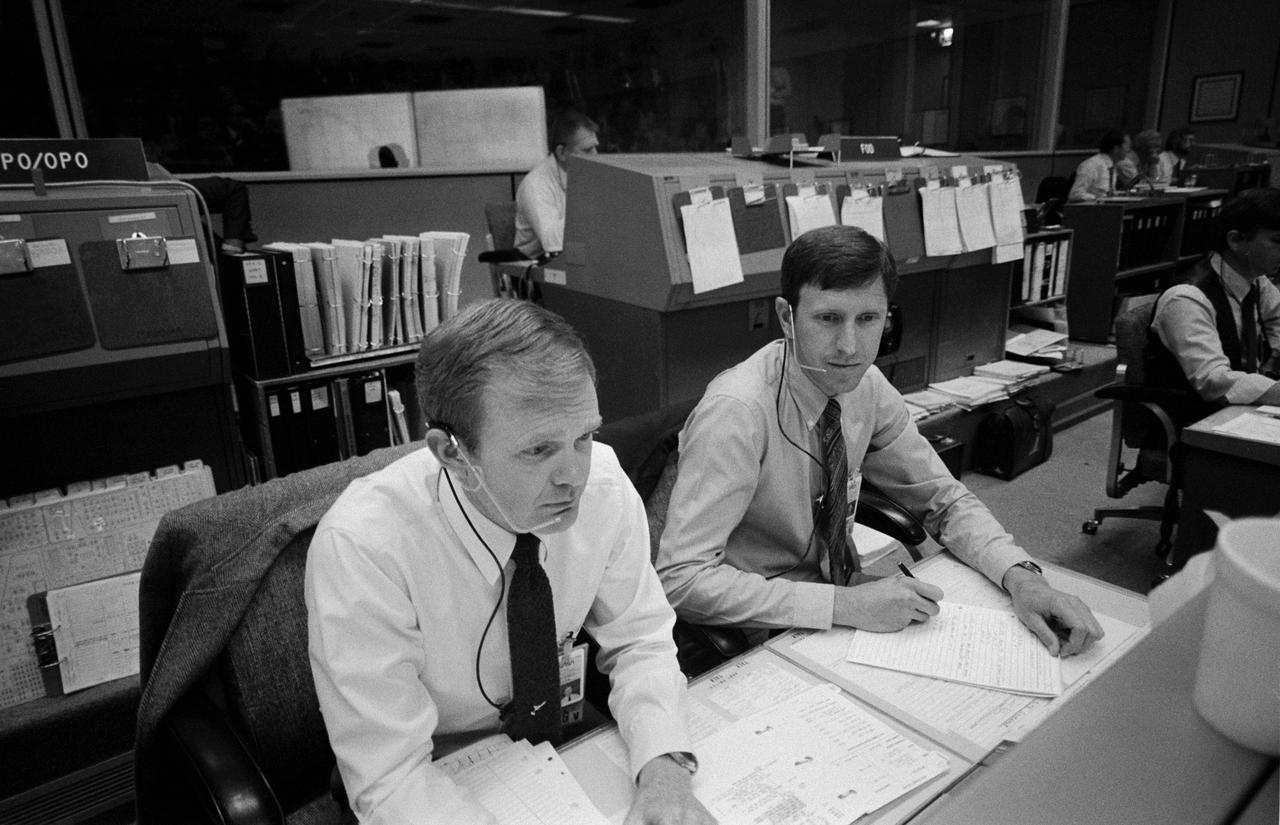
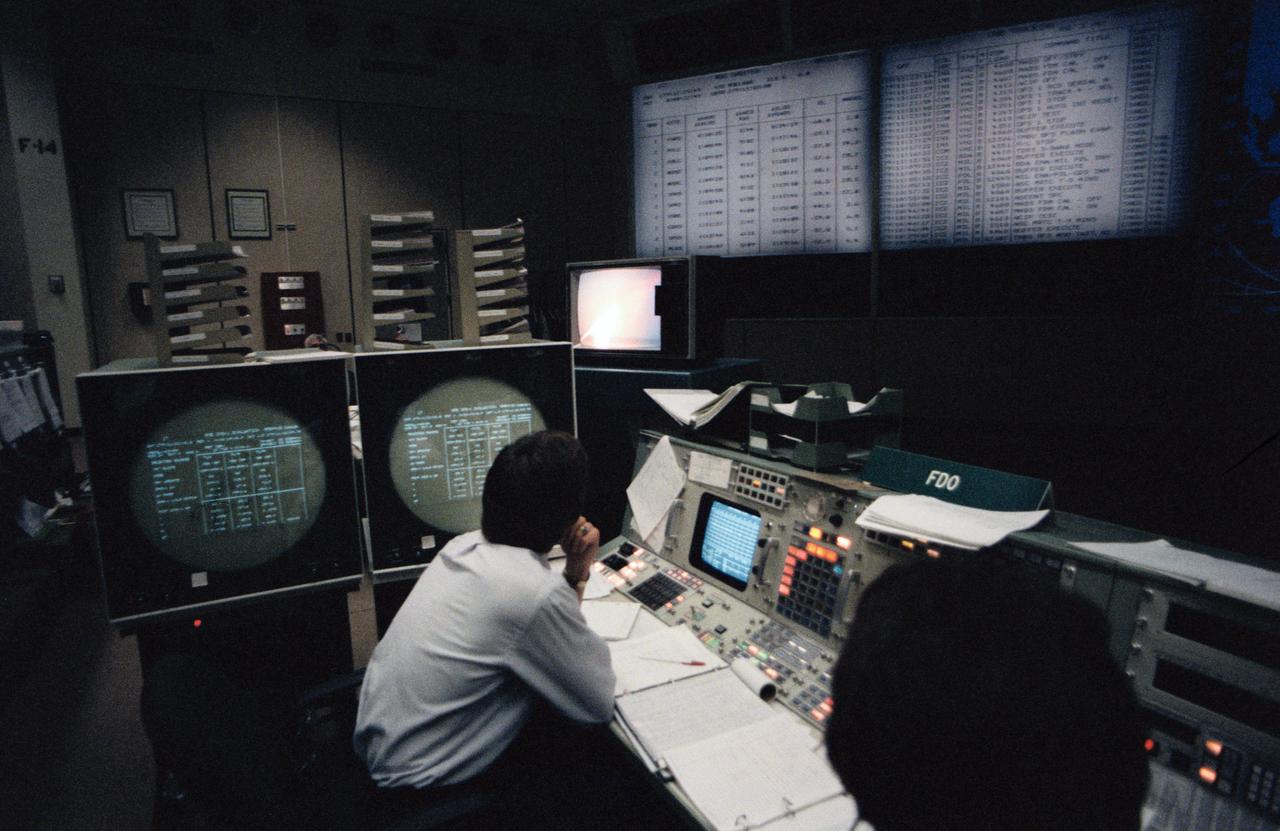
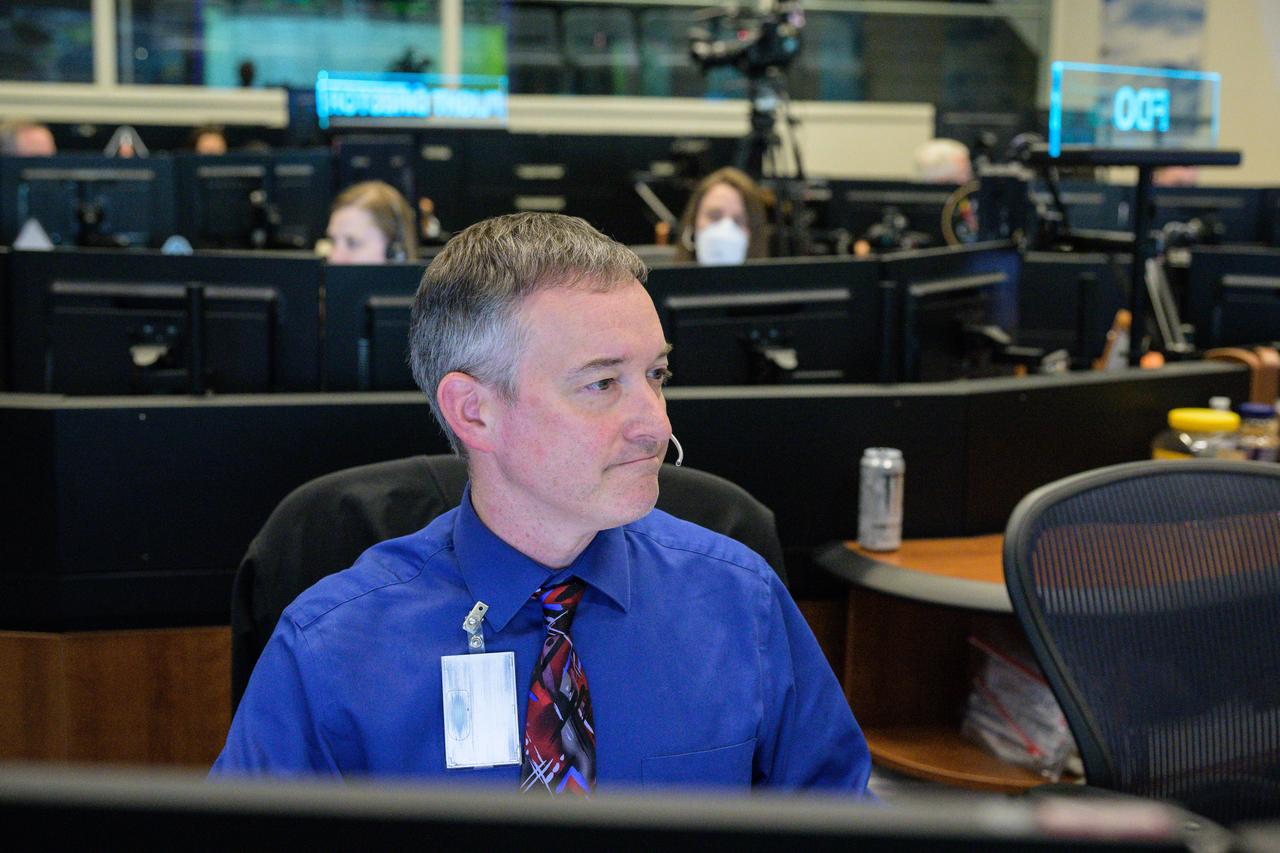
View of the Flight Dynamics Officer (FDO) console in the Mission Control Center (MCC) during the flight of STS41-G. The officer at the FDO console appears to be examining the large screens in front of him which are displaying lists of data.
View of the Flight Dynamics Officer (FDO) console in Mission Control
Jay H. Greene, right, ascent flight director for STS 51-A, monitors pre-launch activity at the Kennedy Space Center (KSC) via a screen at the spacecraft communicators console in the second floor flight control room (FCR) of JSC's mission control center. Astronauts David C. Hilmers, left, and Richard N. Richards are the on-duty spacecraft communicators.
View of the Mission Control Center Activity during STS 51-A
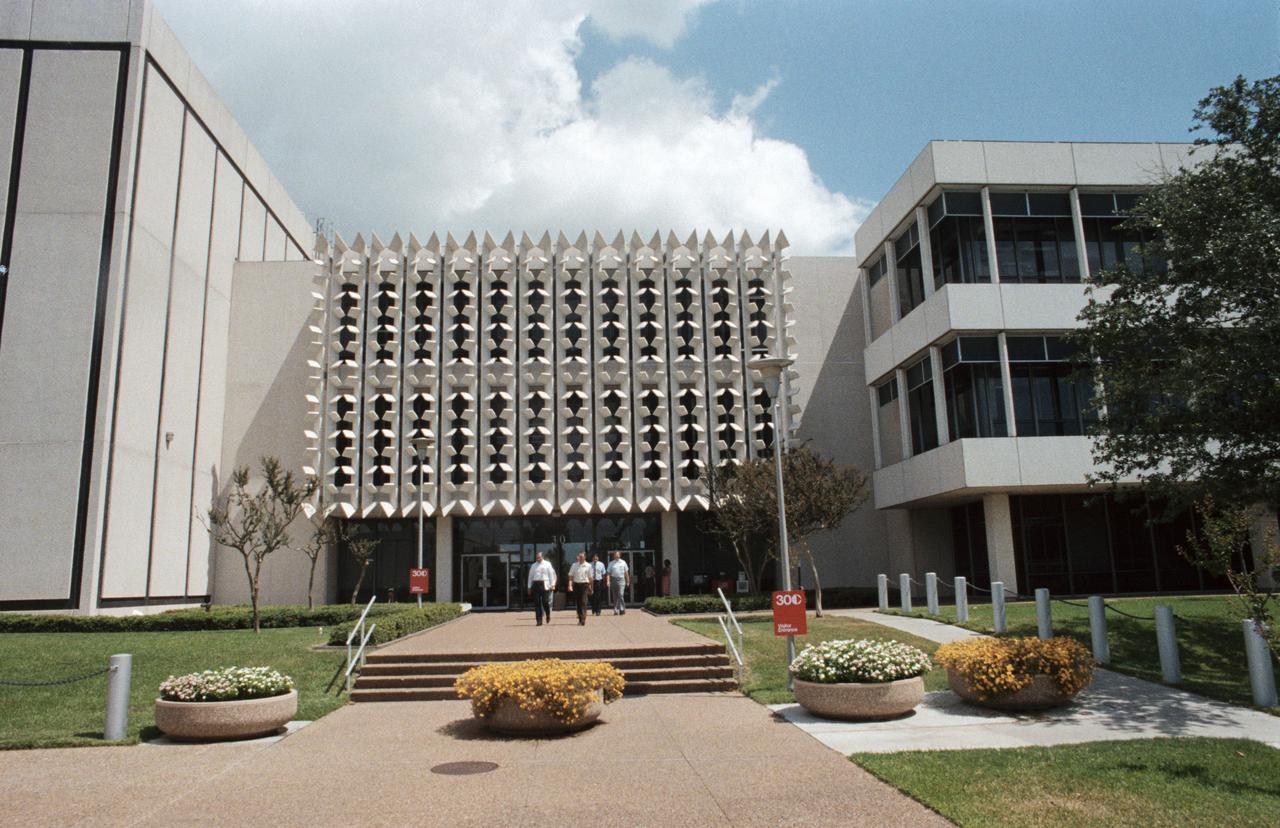
41D-3072 (30 Aug 1984) --- A 41-D shift change   is taking place in the Johnson Space Center's   Building 30.  In its twenty years of operation, the mission control center has been the scene of many such changes.  The windowless wing at left houses three floors, including rooms supporting flight control rooms 1 & 2 (formerly called mission operations control rooms 1 & 2).
Front view of bldg 30 which houses mission control
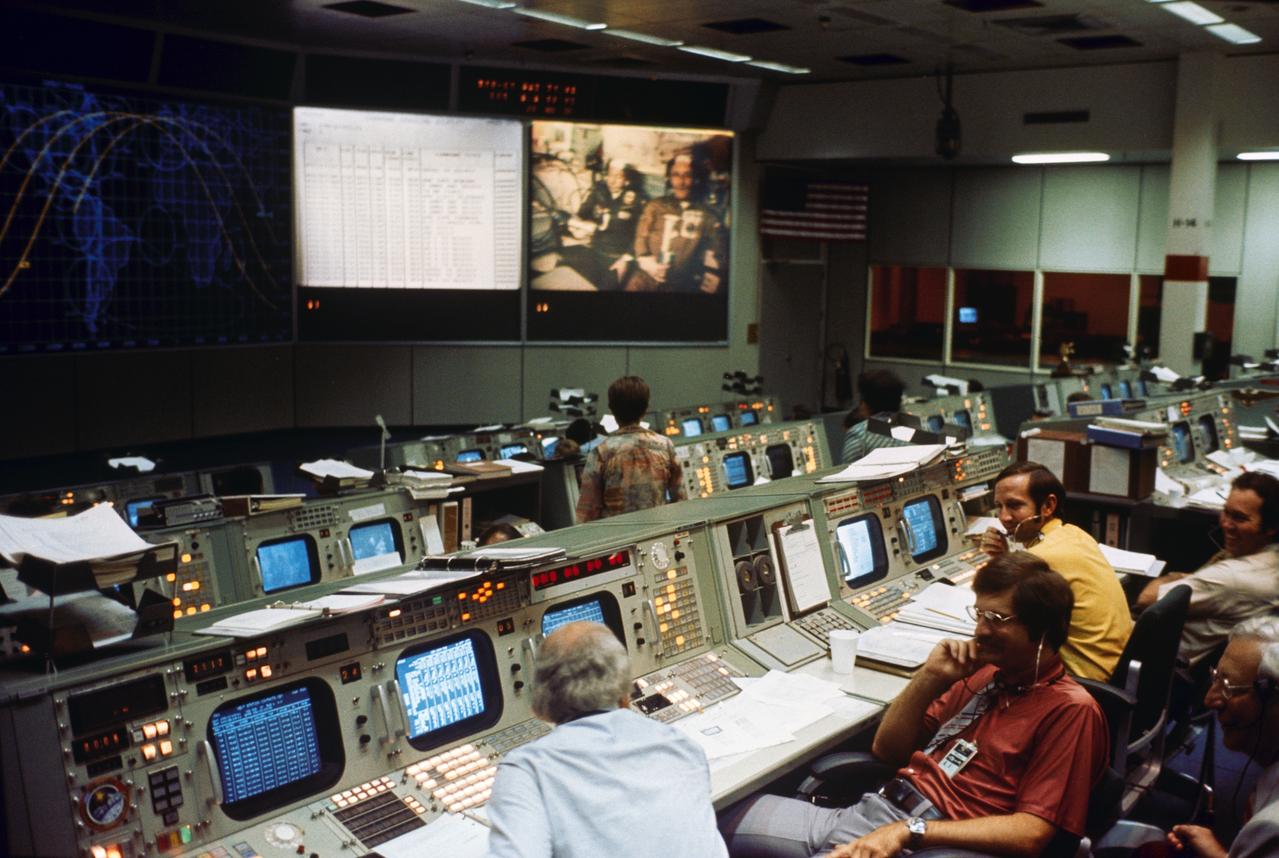
S75-28685 (17 July 1975) --- An overall view of activity in the Mission Operations Control Room in the Mission Control Center during joint U.S.-USSR Apollo Soyuz Test Project (ASTP) docking mission in Earth orbit. The large television monitor shows an interior view of the Soyuz Orbital Module with astronaut Thomas P. Stafford (in front) visiting with cosmonaut Aleksey A. Leonov. Neil B. Hutchinson (right hand to chin) is the flight director for this shift.
View of Mission Control during joint U.S.-USSR ASTP mission
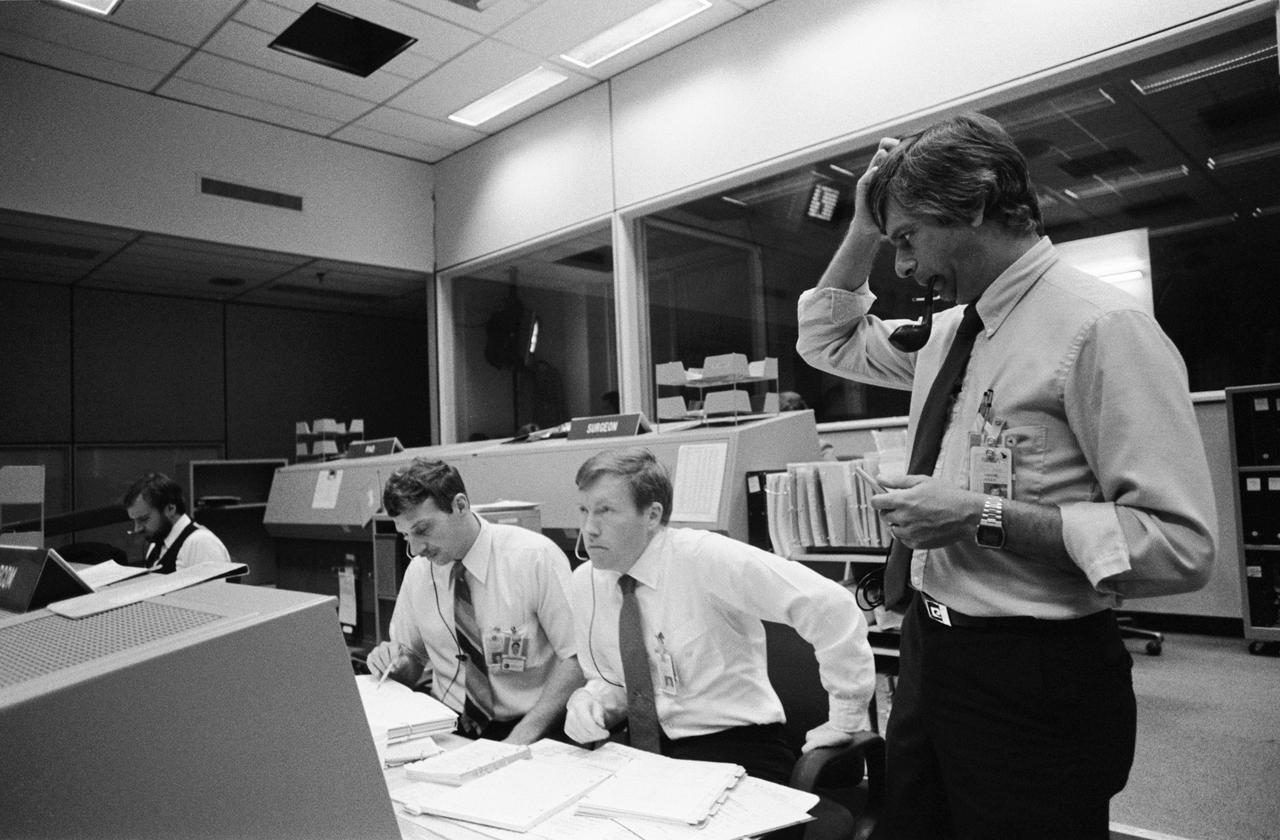
Astronaut George D. Nelson (see monitor at front of room) is viewed by flight controllers in the Mission Operations Control Room (MOCR) of JSC's Mission Control Center during 41-C extravehicular activity (EVA). In the foreground are Flight Directors Jay H. Greene and John T. Cox. Astronauts Jerry L. Ross and Richard H. Richards are seated at the CAPCOM or spacecraft communicators console at right background. Astronaut Guy S. Gardner is perched just behind them.
Activities in the Mission Control Center during STS 41-C
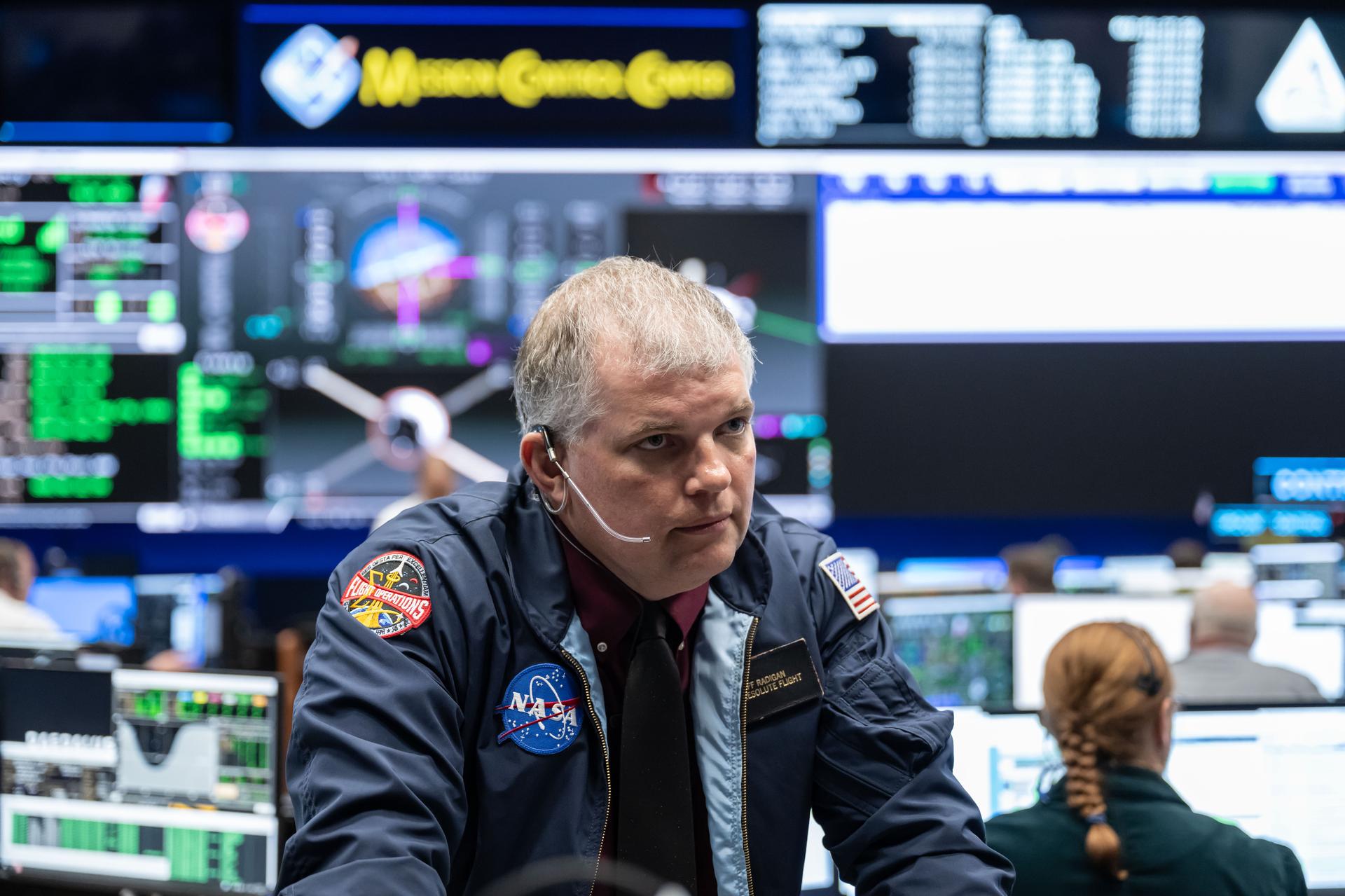
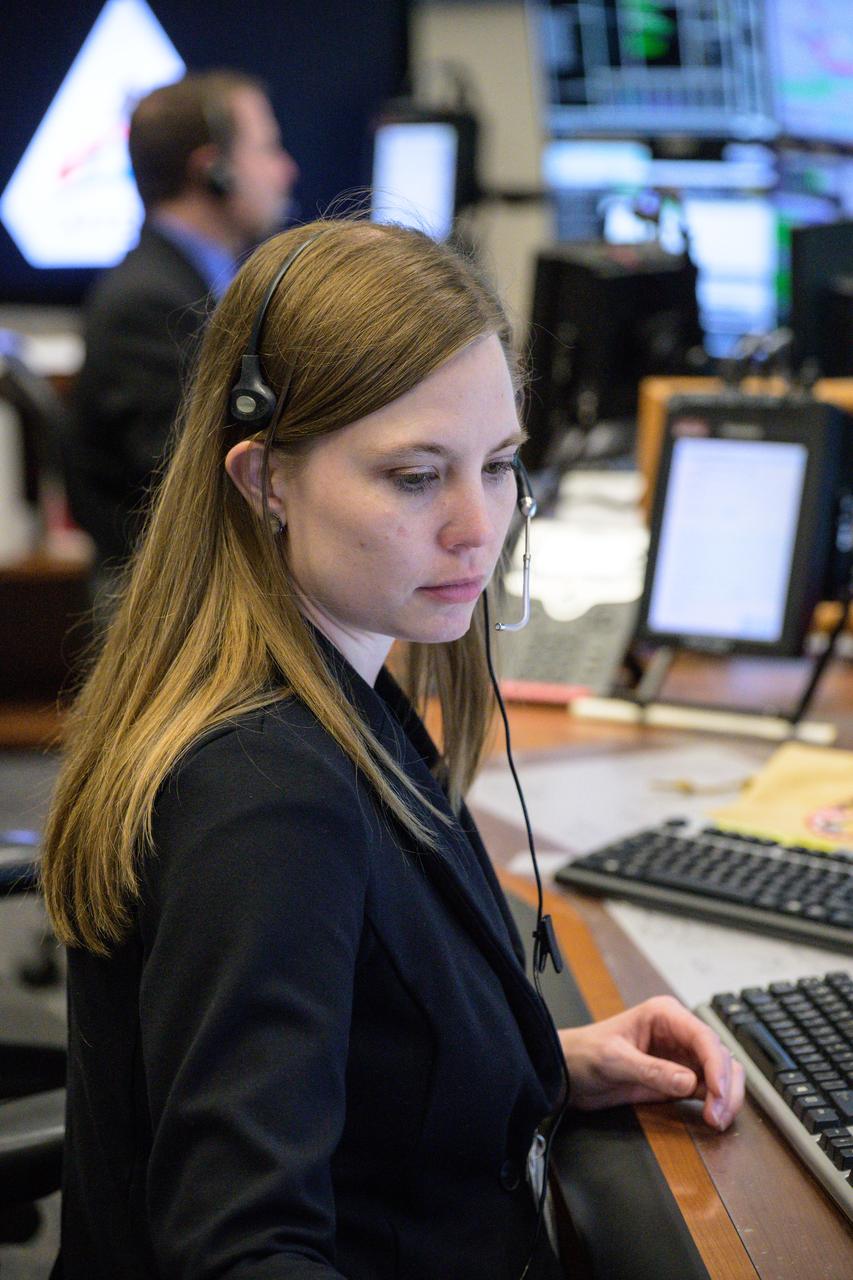
jsc2022e090753 (Dec. 1, 2022): Flight controller Julie Reed at the flight dynamics officer console in Houston’s Mission Control Center observes the Orion spacecraft under the direction of Flight Director Rick LaBrode. The spacecraft departed its distant retrograde orbit on flight day 16 of the Artemis I mission – one of the steps needed to bring the spacecraft home from the Moon. Credit: NASA/Robert Markowitz
Flight Day 16: Mission Control during Distant Retrograde Departure
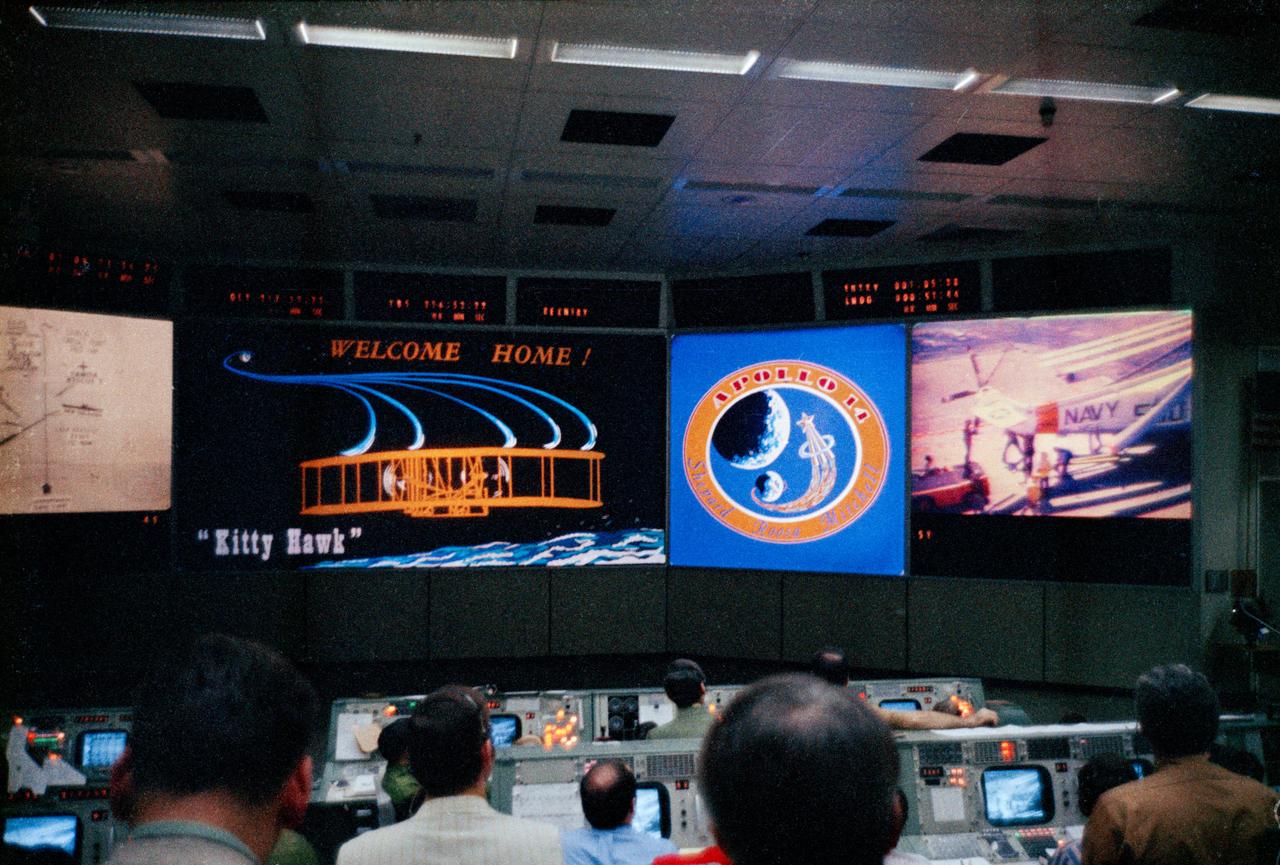
S71-18400 (9 Feb. 1971) --- Flight controllers in the Mission Operations Control Room (MOCR) of the Mission Control Center (MCC) view a colorful display which signals the successful splashdown and recovery of the crew of the Apollo 14 lunar landing mission. The MOCR's large screen at right shows a television shot aboard the USS New Orleans, Apollo 14 prime recovery ship.
Flight Controllers in Mission Control Center during splashdown of Apollo 14
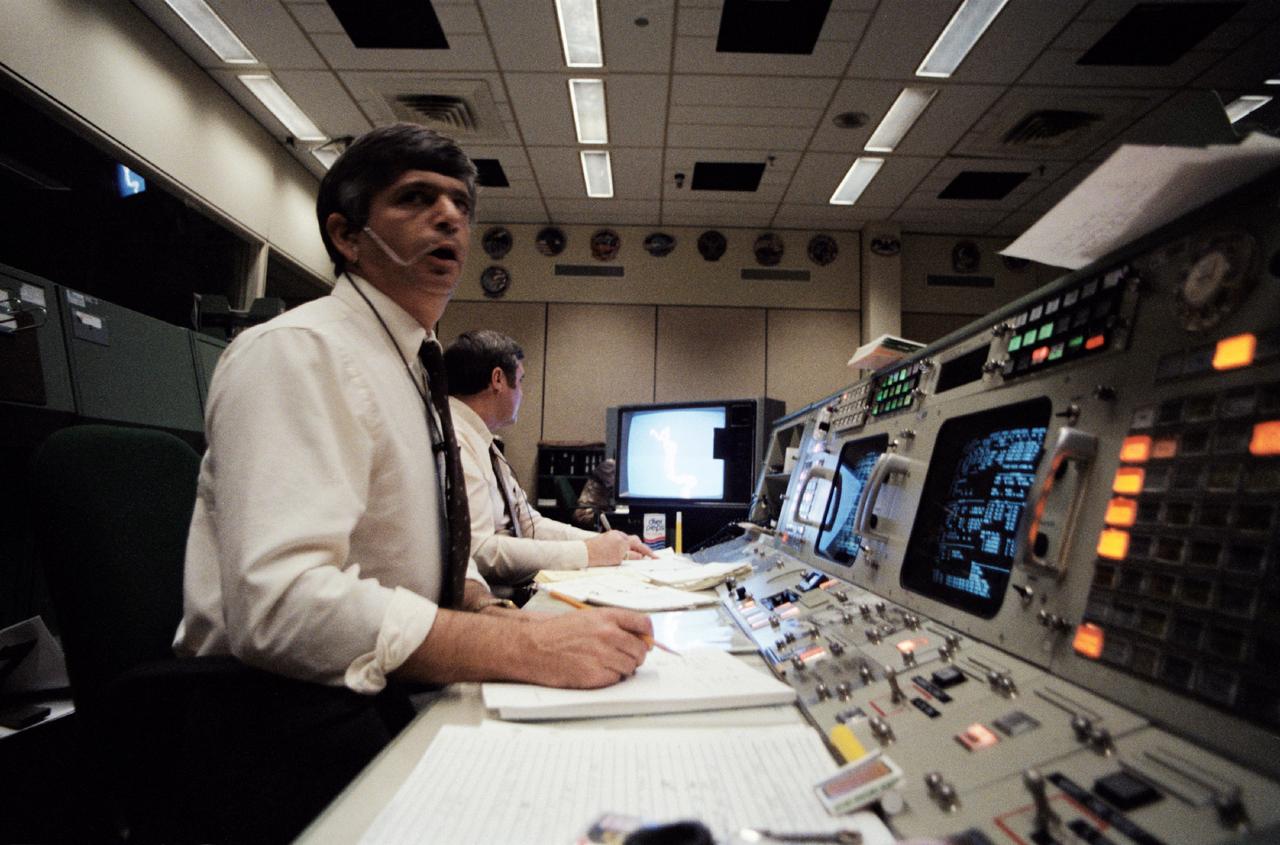
51L-S-002 (28 Jan. 1986) --- Flight directors Jay H. Greene (foreground) and Alan L. (Lee) Briscoe study data on monitors at their consoles in the flight control room (FCR) of the Johnson Space Center's Mission Control Center. The photo was made just moments after the announcement came that Challenger's launch phase was not nominal. Photo credit: NASA
Views of Mission Control during launch of STS-51L
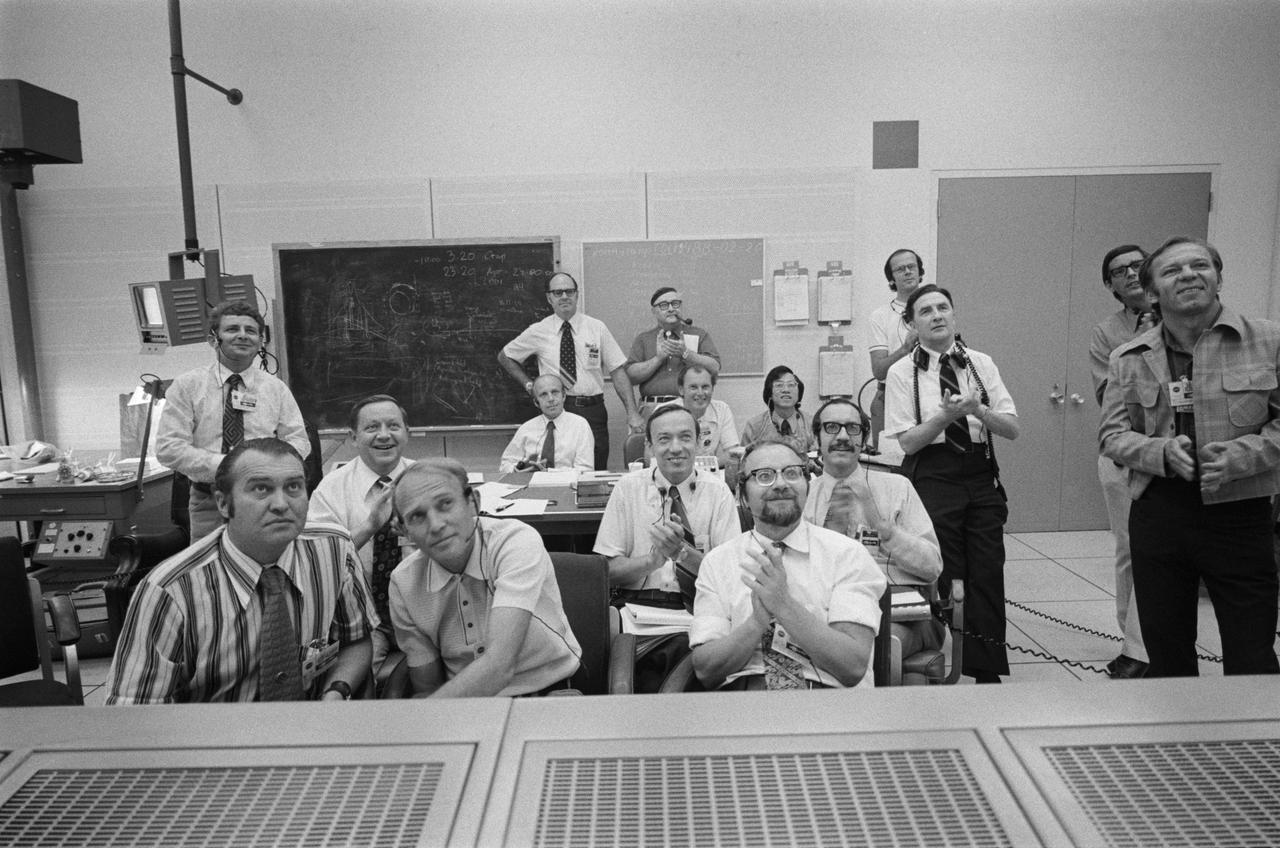
S75-28659 (21 July 1975) --- An overall view of the group of Soviet Union flight controllers who served at the Mission Control Center during the joint U.S.-USSR Apollo-Soyuz Test Project docking mission in Earth orbit.  They are applauding the successful touchdown of the Soyuz spacecraft in Central Asia.  The television monitor had just shown the land landing of the Soyuz descent vehicle.
View of USSR flight controllers in Mission Control during touchdown
S68-55742 (21 Dec. 1968) --- Clifford E. Charlesworth, Apollo 8 "Green Team" flight director, is seated at his console in the Mission Operations Control Room in the Mission Control Center, Building 30, during the launch of the Apollo 8 (Spacecraft 103/Saturn 503) manned lunar orbit space mission.
Clifford Charlesworth seated at his console in Mission Control Room
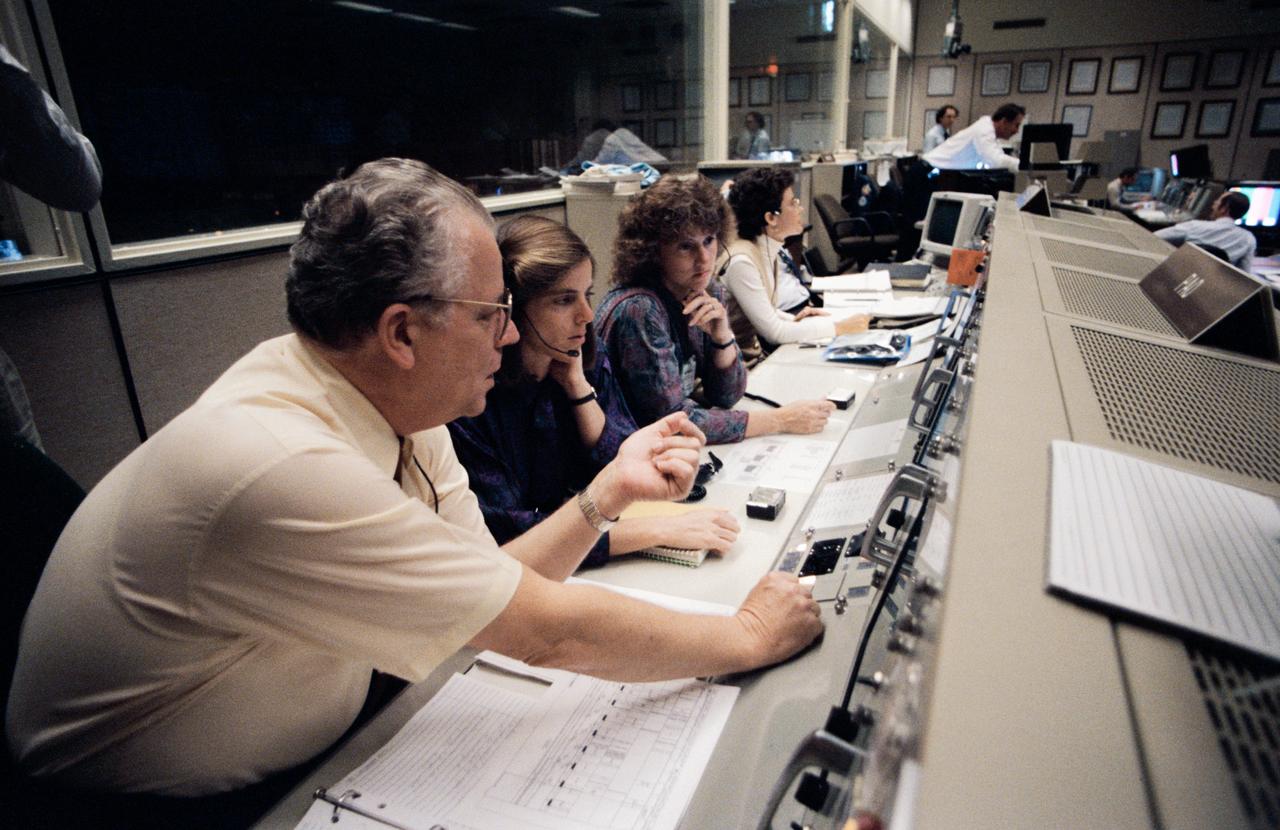
Flight controllers in JSC's Mission Control Center (MCC) Bldg 30 flight control room (FCR) listen to a presentation by STS-26 crewmembers on the fourth day of Discovery's, Orbiter Vehicle (OV) 103's, orbital mission. Instrumentation and Communications Officers (INCOs) Harold Black (left foreground) and John F. Muratore and other controllers view a television (TV) transmission of the crew on a screen in front of the FCR as each member relates some inner feelings while paying tribute to the 51L Challenger crew.
STS-26 Mission Control Center (MCC) activity at JSC
STS026-S-101 (2 Oct 1988) --- Flight controllers in the Johnson Space Center?s mission control center listen to a presentation by the five members of the STS 26 crew on the fourth day of Discovery?s orbital mission.  Flight Directors Charles W. Shaw and James M. (Milt) Heflin (in the foreground) and other controllers view a television image of Earth on a screen in the front of the flight control room while each member relates some inner feelings while paying tribute to the Challenger crew.
STS-26 Mission Control Center (MCC) activity at JSC
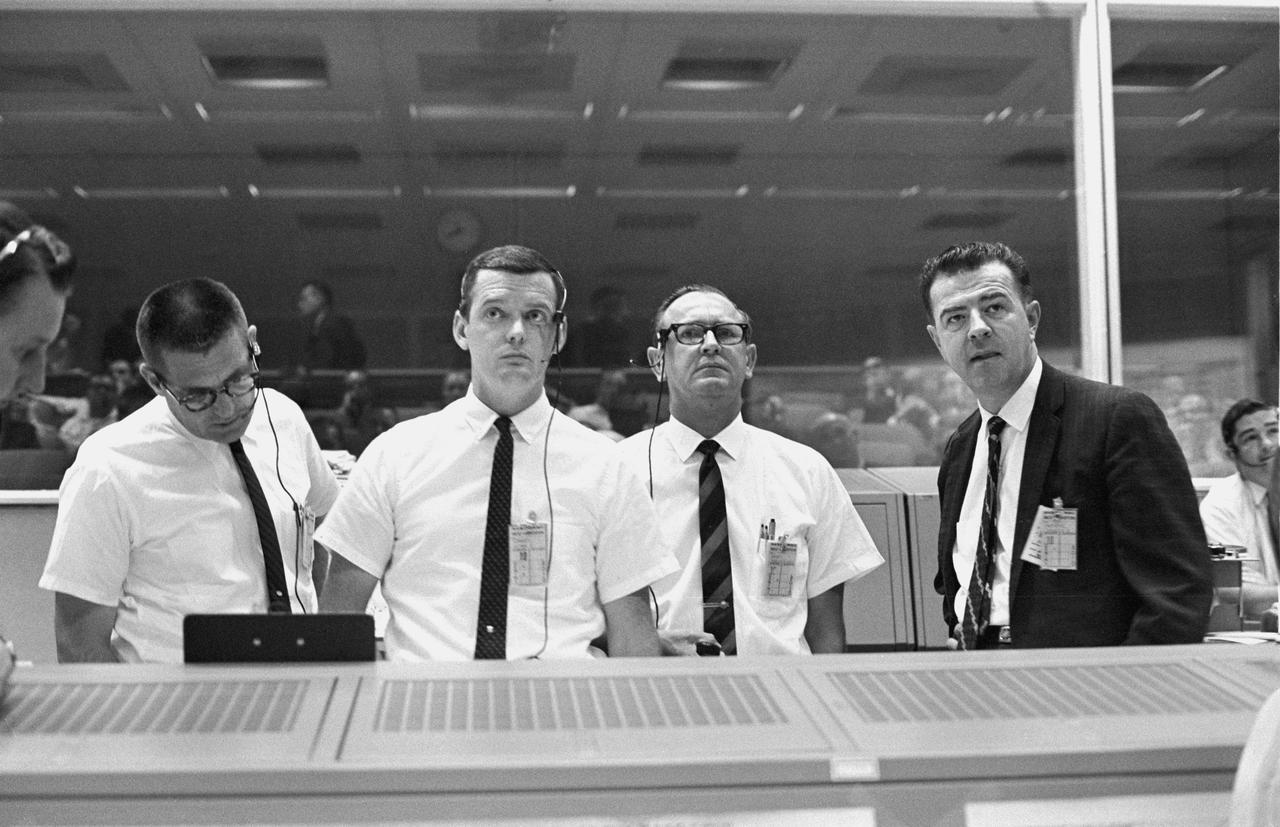
S66-43377 (18 July 1966) --- Standing at the flight director's console, viewing the Gemini-10 flight display in the Mission Control Center, are (left to right) William C. Schneider, Mission Director; Glynn Lunney, Prime Flight Director; Christopher C. Kraft Jr., MSC Director of Flight Operations; and Charles W. Mathews, Manager, Gemini Program Office. Photo credit: NASA
Personnel - Gemini-Titan (GT)-10 - Mission Control Center (MCC) - MSC
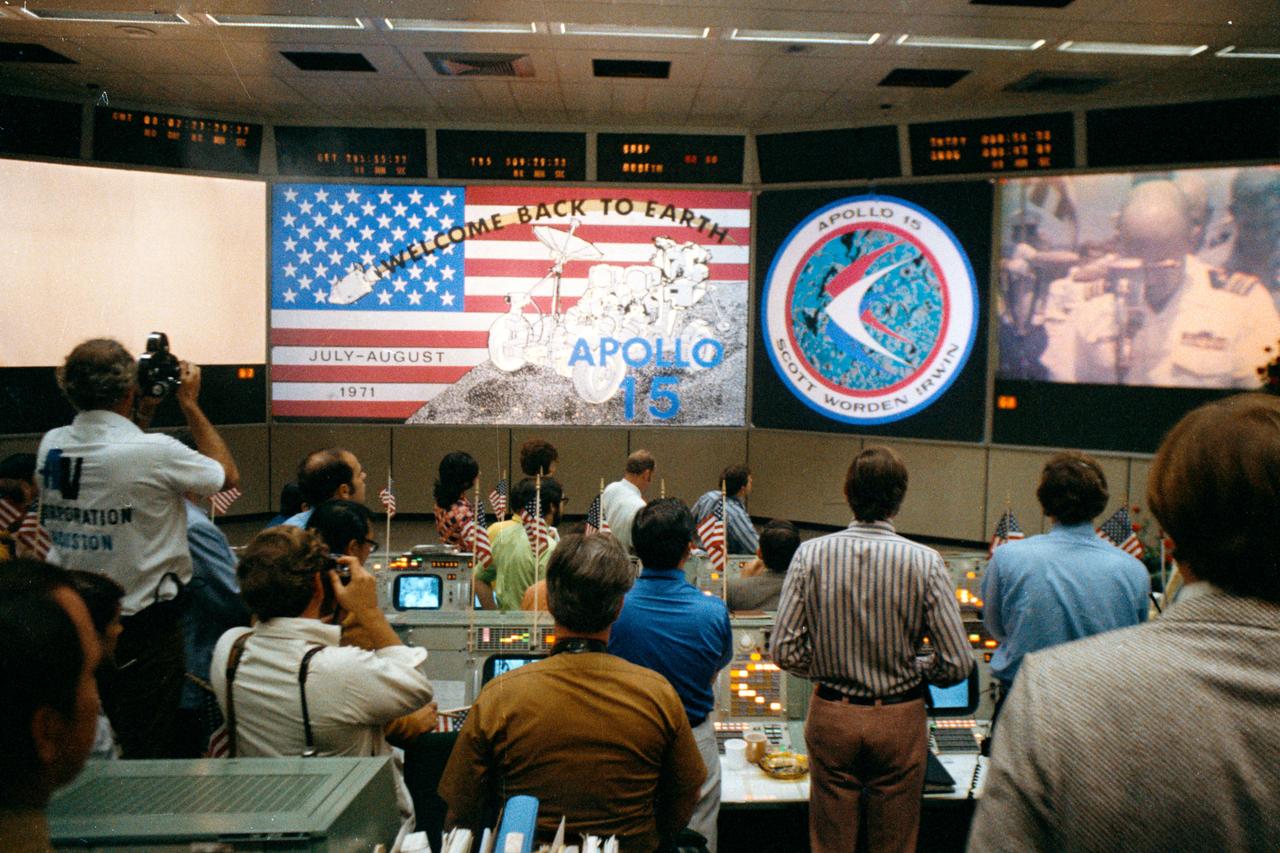
An overall view of activity in the Mission Operations Control Room in the Mission Control Center at the conclusion of the Apollo 15 lunar landing mission. The television monitor in the right background shows the welcome ceremonies aboard the prime recovery ship, U.S.S. Okinawa, in the mid-Pacific Ocean.
Mission Control Center at conclusion of Apollo 15 lunar landing mission
jsc2022e090764 (Dec. 1, 2022): Flight controller Jason Helms at the guidance, navigation and control console in Houston’s Mission Control Center observes the Orion spacecraft under the direction of Flight Director Rick LaBrode. The spacecraft departed its distant retrograde orbit on flight day 16 of the Artemis I mission – one of the steps needed to bring the spacecraft home from the Moon. Credit: NASA/Robert Markowitz
Flight Day 16: Mission Control during Distant Retrograde Departure
STS26-S-103 (2 October 1988) --- A wide-angle view of flight controllers in the Johnson Space Center's mission control center as they listen to a presentation by the five  members of the STS-26 crew on the fourth day of Discovery's orbital mission.  Flight Director James M. (Milt) Heflin (standing at center), astronaut G. David Low (standing at right), a spacecraft communicator, and other controllers view a television image of the crew  on a screen in the front of the flight control room as each member relates some inner feelings while paying tribute to the Challenger crew.
STS-26 Mission Control Center (MCC) activity at JSC
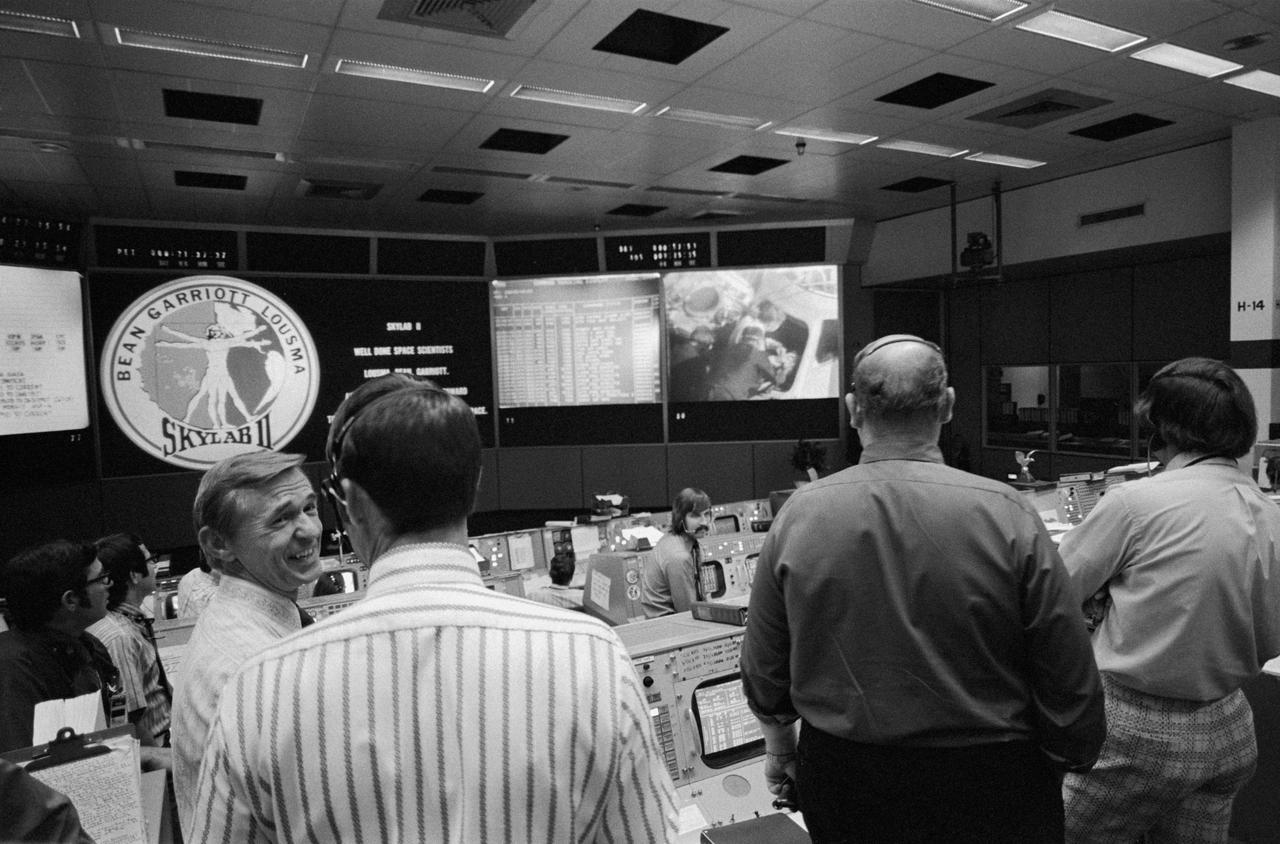
S73-34553 (25 Sept. 1973) --- Skylab flight directors (foreground) and flight controllers (background) view the large screen in the Mission Operations Control Room (MOCR) in the Mission Control Center (MCC) at JSC during recovery operations of the second manned Skylab mission. From left to right in the foreground are flight directors Charles R. Lewis, Donald R. Puffy, Phillip Shaffer and Neil B. Hutchinson. The Skylab 3 crewmen were preparing to egress the spacecraft aboard the USS New Orleans. Television cameras aboard the New Orleans recorded post-recovery activity. Photo credit: NASA
Mission Control Center (MCC) View - Skylab (SL)-3 Recovery - JSC
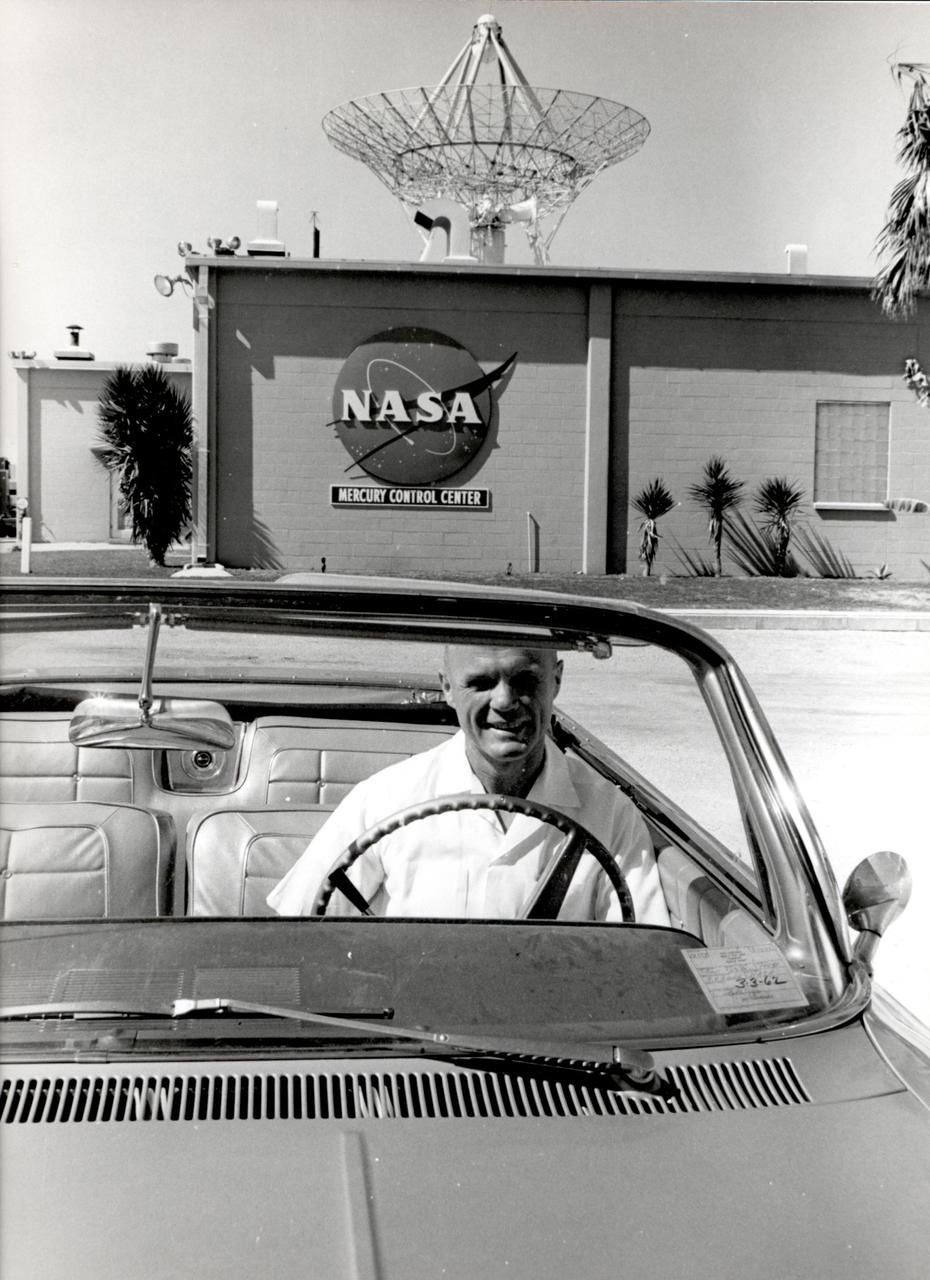
Astronaut John H. Glenn sits in a car in front of the east side of the Mercury Mission Control building. Glenn was the pilot for the Mercury-Atlas 6 mission aboard Friendship 7, which launched Feb. 20, 1962.
Astronut John H. Glenn
S70-35471 (17 April 1970) --- Two flight controllers man consoles in the Missions Operations Control Room (MOCR) of the Mission Control Center (MCC) at the Manned Spacecraft Center (MSC), Houston, Texas, just before splashdown occurred in the south Pacific Ocean.  Though the MOCR does not appear to be crowded in this photo, there was a very large crowd of persons on hand for the splashdown and recovery operations coverage.  Most of the group crowded around in the rear of the room.  Apollo 13 splashdown occurred at 12:07:44 p.m. (CST), April 17, 1970.
View of Mission Control Center during Apollo 13 splashdown
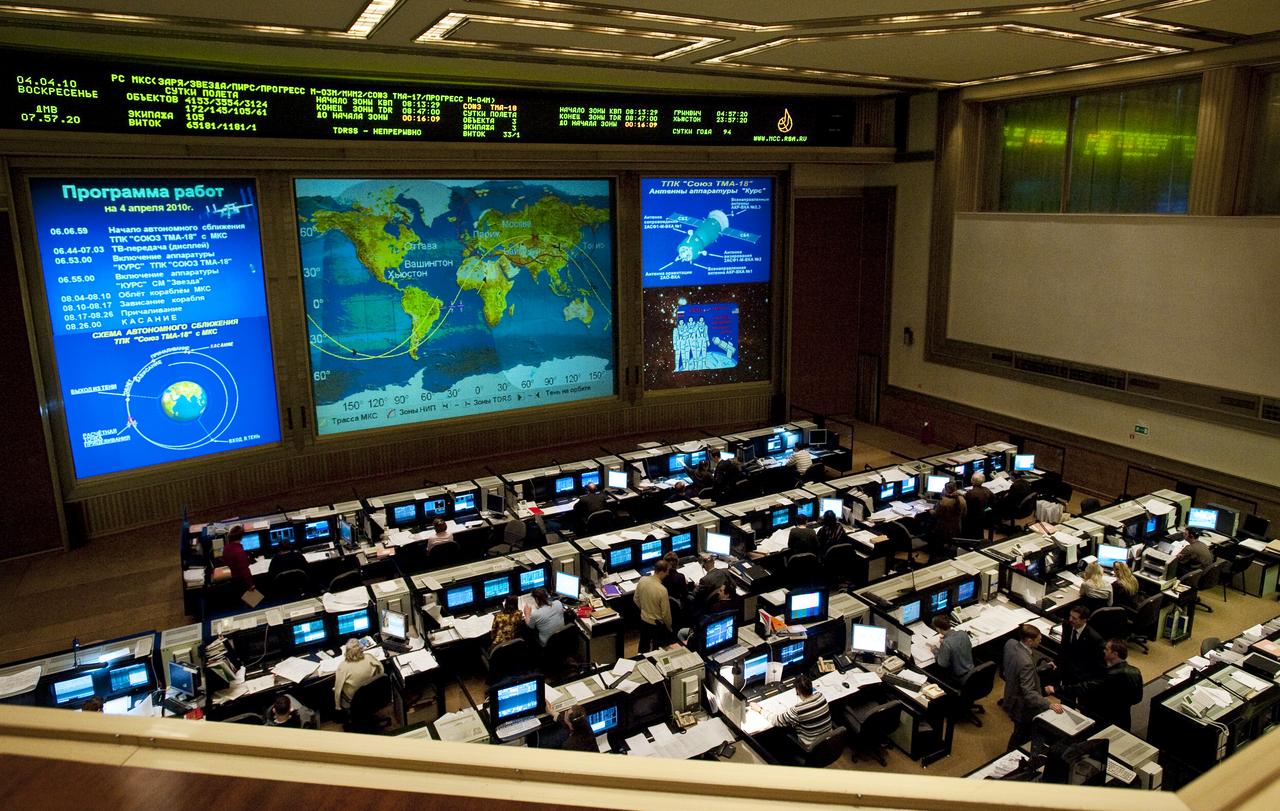
View of Russian Mission Control Center in Korolev, Russia moments before the Soyuz TMA-18 docks to the International Space Station on Sunday, April 4, 2010.  Photo Credit: (NASA/Carla Cioffi)
Expedition 23 Docking
STS061-S-104 (2-13 DEC 1993) --- An overall view in the Johnson Space Center's (JSC) Mission Control Center (MCC) during one of the five space walks performed to service the Hubble Space Telescope (HST) temporarily berthed in the Space Shuttle Endeavour's cargo bay.  STS-61 lead flight director Milt Heflin is at right edge of frame.
Mission control activity during STS-61 EVA
Overall view of the Mission Operations Control Room in the Mission Control Center, bldg 30, during the lunar surface extravehicular activity (EVA) of Apollo 11 Astronauts Neil A. Armstrong and Edwin E. Aldrin Jr.
View of Mission Control during lunar surface Apollo 11 EVA
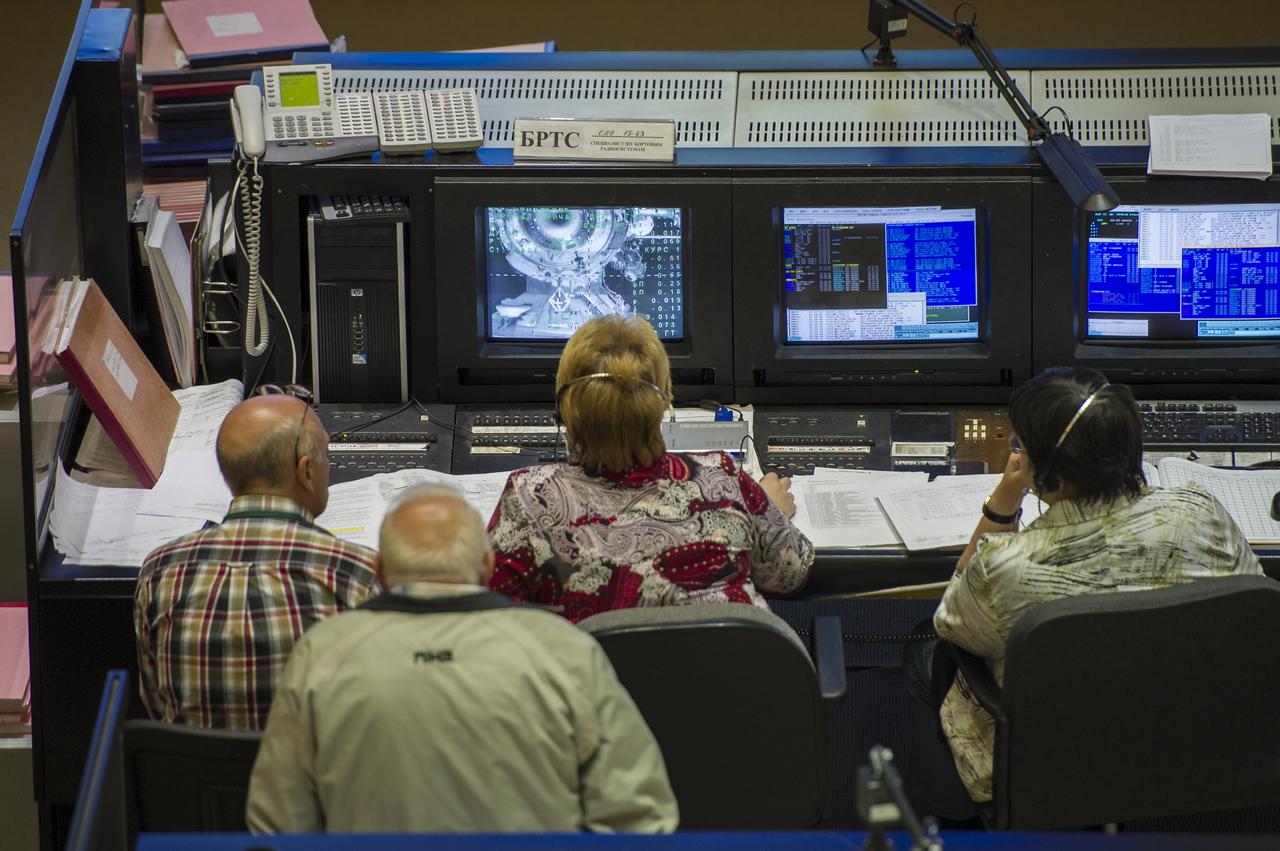
Russian flight controllers at the Russian Mission Control Center in Korolev, Russia monitor the Soyuz TMA-04M as it docks to the International Space Station on Thursday, May 17, 2012. Onboard the soyuz spacecraft are Expedition 31 Soyuz Commander Gennady Padalka, Flight Engineer Sergei Revin, and NASA Flight Engineer Joe Acaba.  The crew of three launched at 9:01 a.m. Kazakhstan time on Tuesday, May 15 from the Baikonur Cosmodrome in Kazakhstan.  Photo Credit (NASA/Bill Ingalls)
Expedition 31 Soyuz TMA-04M Docking to ISS
61A-S-135 (5 Nov 1985) --- Two school teachers in training at the Johnson Space Center got their first ?real time? exposure to a Space Shuttle mission as they monitor activity aboard the Spacelab D-1 science module from the mission control center.  Sharon Christa McAuliffe (frame center) and Barbara R. Morgan are briefed by Terry White at the Public Affairs console during a television downlink from the Earth-orbiting Space Shuttle Challenger.  McAuliffe is scheduled to fly as teacher/citizen observer on the STS 51-L mission early next year; and Morgan is in training as her backup.
School teachers McAulliffe and Morgan in mission control for STS 61-A
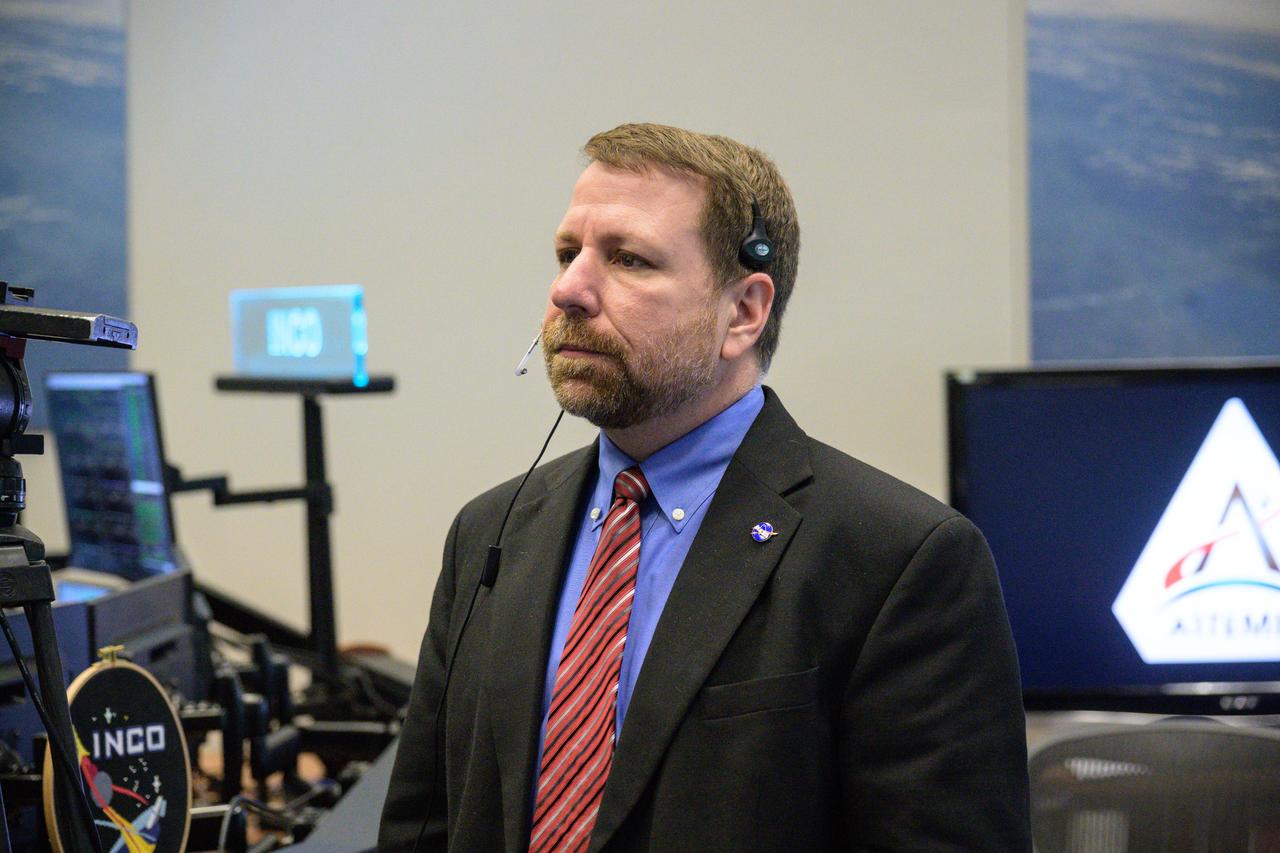
jsc2022e090759 (Dec. 1, 2022): Flight controllers Steve Sides and Brian Crisp at the instrumentation and communications officer console in Houston’s Mission Control Center observe the Orion spacecraft under the direction of Flight Director Rick LaBrode. The spacecraft departed its distant retrograde orbit on flight day 16 of the Artemis I mission – one of the steps needed to bring the spacecraft home from the Moon. Credit: NASA/Robert Markowitz
Flight Day 16: Mission Control during Distant Retrograde Departure
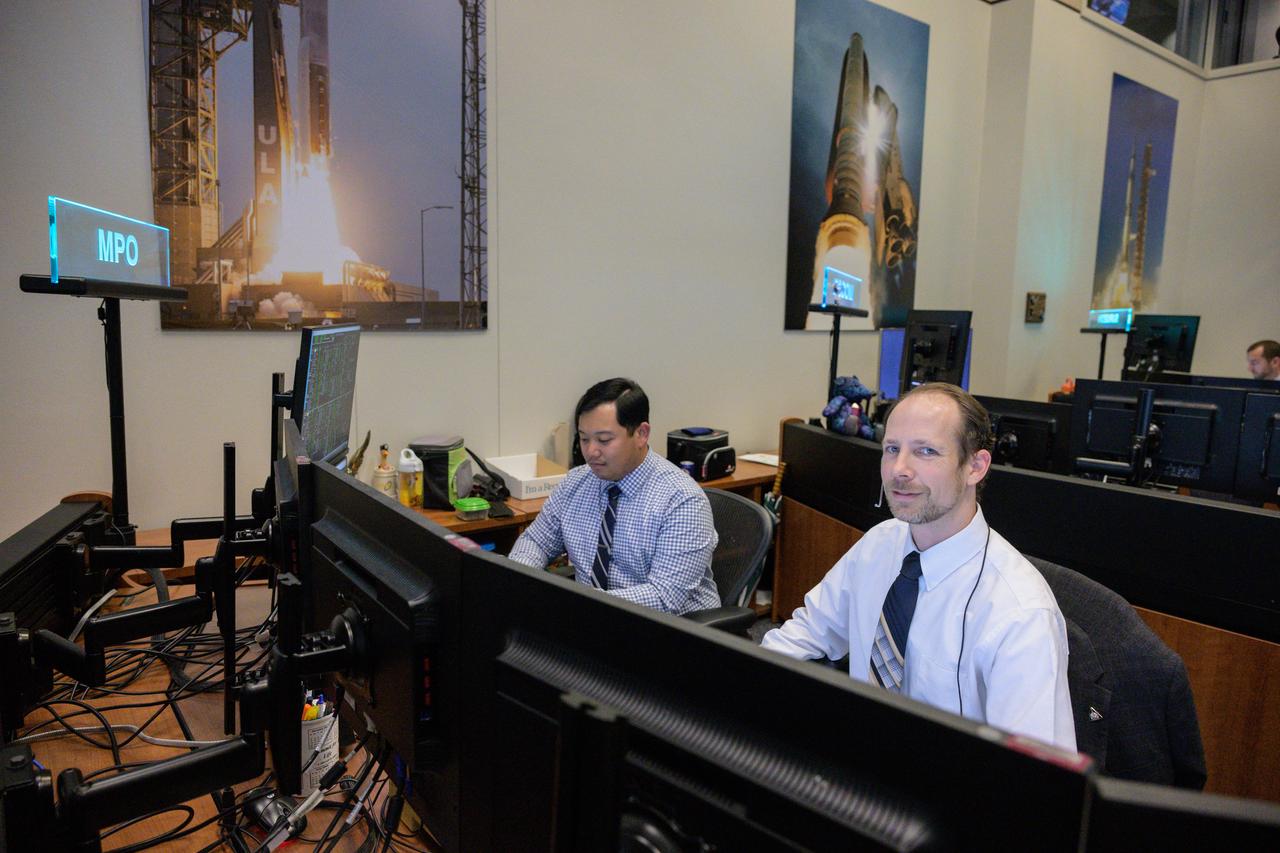
jsc2022e090757 (Dec. 1, 2022): Flight controller Joel Appel (right) at the propulsion console in Houston’s Mission Control Center observes the Orion spacecraft under the direction of Flight Director Rick LaBrode. The spacecraft departed its distant retrograde orbit on flight day 16 of the Artemis I mission – one of the steps needed to bring the spacecraft home from the Moon. Credit: NASA/Robert Markowitz
Flight Day 16: Mission Control during Distant Retrograde Departure
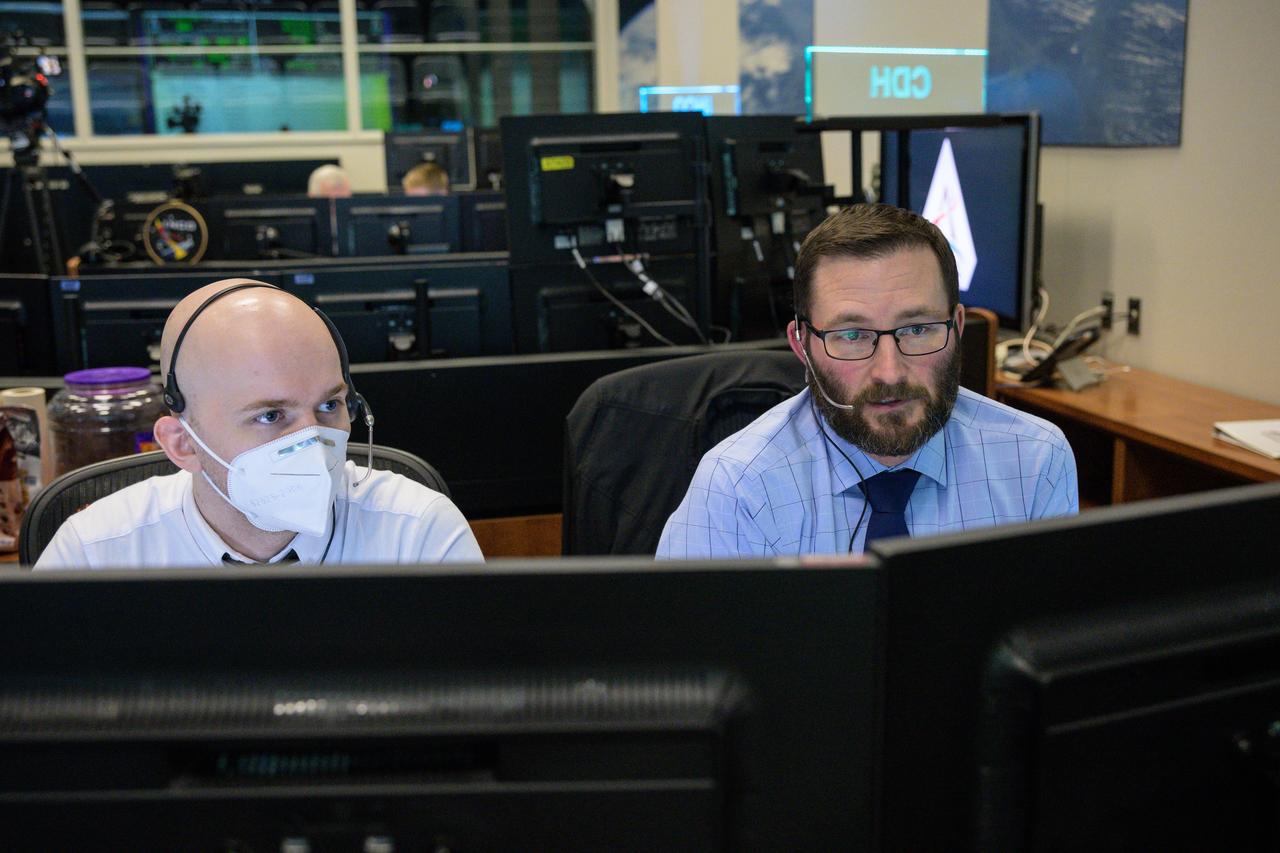
jsc2022e090746 (Dec. 1, 2022): Flight controller Todd Quasny at the command and data handling console in Houston’s Mission Control Center observes the Orion spacecraft under the direction of Flight Director Rick LaBrode. The spacecraft departed its distant retrograde orbit on flight day 16 of the Artemis I mission – one of the steps needed to bring the spacecraft home from the Moon. Credit: NASA/Robert Markowitz
Flight Day 16: Mission Control during Distant Retrograde Departure
jsc2022e090747 (Dec. 1, 2022): Flight controllers Doug Haskovec and Amar Ollero at the mechanical and power officer console in Houston’s Mission Control Center observe the Orion spacecraft under the direction of Flight Director Rick LaBrode. The spacecraft departed its distant retrograde orbit on flight day 16 of the Artemis I mission – one of the steps needed to bring the spacecraft home from the Moon. Credit: NASA/Robert Markowitz
Flight Day 16: Mission Control during Distant Retrograde Departure
S75-28483 (15 July 1975) --- An overall view of the Mission Operations Control Room in the Mission Control Center on the first day of the Apollo-Soyuz Test Project docking mission in Earth orbit. The American ASTP flight controllers at NASA's Johnson Space Center were monitoring the progress of the Soviet ASTP launch when this photograph was taken.  The television monitor shows cosmonaut Yuri V. Romanenko at his spacecraft communicator?s console in the ASTP mission control center in the Soviet Union. The American ASTP liftoff followed the Soviet ASTP launch by seven and one-half hours.
VIew of Mission Control on first day of ASTP docking in Earth orbit
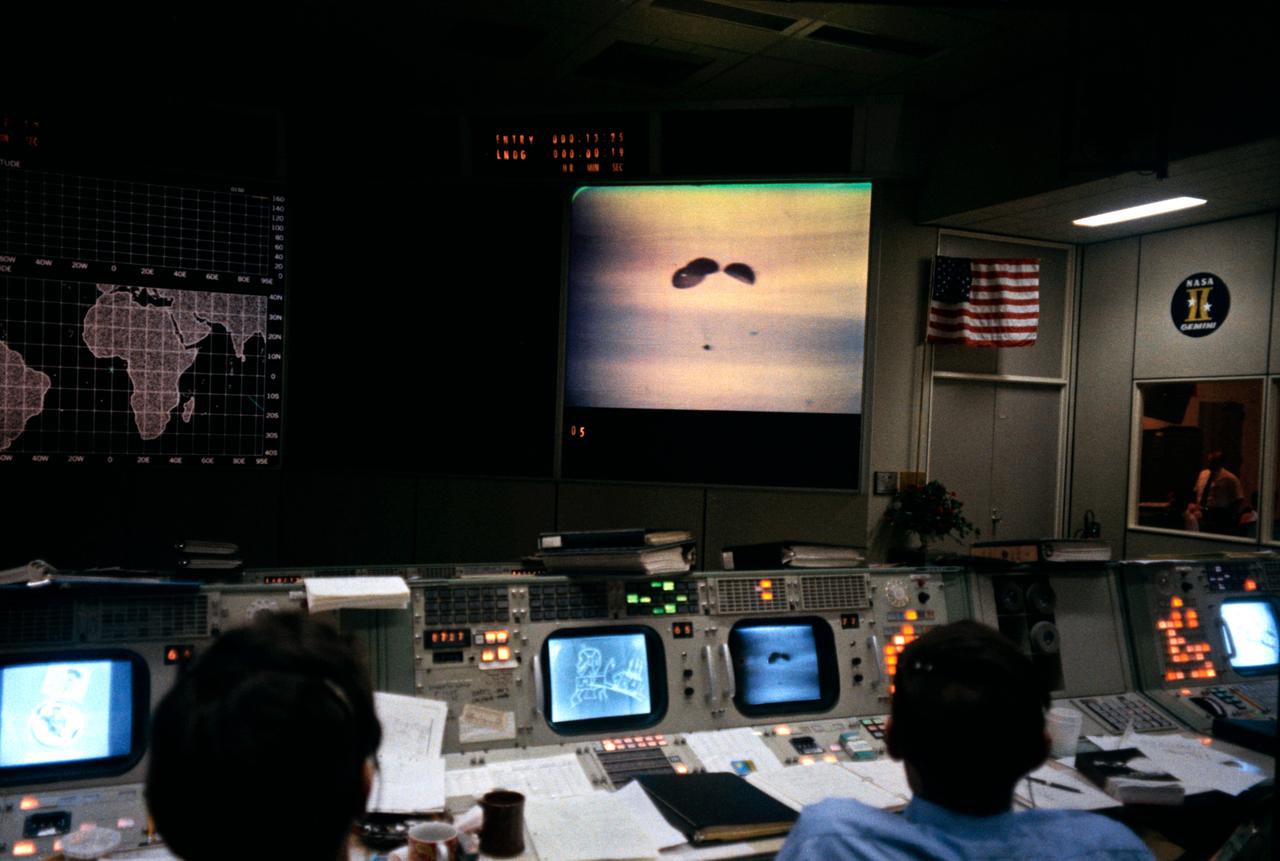
S65-45280 (21-29 Aug. 1965) --- Overall view of the Mission Control Center (MCC), Houston, Texas, during the Gemini-5 flight. Note the screen at the front of the MCC which is used to track the progress of the Gemini spacecraft.
Overall view of Mission Control Center, Houston, Tx during Gemini 5
S70-35368 (16 April 1970) --- Overall view showing some of the feverish activity in the Mission Operations Control Room (MOCR) of the Mission Control Center (MCC) during the final 24 hours of the problem-plagued Apollo 13 mission.  Here, flight controllers and several NASA/MSC officials confer at the flight director's console.  When this picture was made, the Apollo 13 lunar landing had already been canceled, and the Apollo 13 crewmembers were in trans-Earth trajectory attempting to bring their crippled spacecraft back home.
View of Mission Control Center during the Apollo 13 emergency return
jsc2022e090743 (Dec. 1, 2022): Public Affairs Officer Shaneequa Vereen speaks on camera in Houston’s Mission Control Center as the Orion spacecraft departs its distant retrograde orbit on flight day 16 of the Artemis I mission – one of the steps needed to bring the spacecraft home from the Moon. Credit: NASA/Robert Markowitz
Flight Day 16: Mission Control during Distant Retrograde Departure
jsc2022e090747 (Dec. 1, 2022): Chief Flight Director Emily Nelson in Houston’s Mission Control Center observes the Orion spacecraft as it departs its distant retrograde orbit on flight day 16 of the Artemis I mission – one of the steps needed to bring the spacecraft home from the Moon. Credit: NASA/Robert Markowitz
Flight Day 16: Mission Control during Distant Retrograde Departure
Overall  wide-angle view of the MOCR in the Mission Control Center (MCC) during the touchdown of the Apollo XV LM at the Hadley-Apennine Moon site.      MSC, Houston, TX
Mission Operations Control Room (MOCR) Views - Touchdown - Apollo XV Lunar Module (LM) - Moon