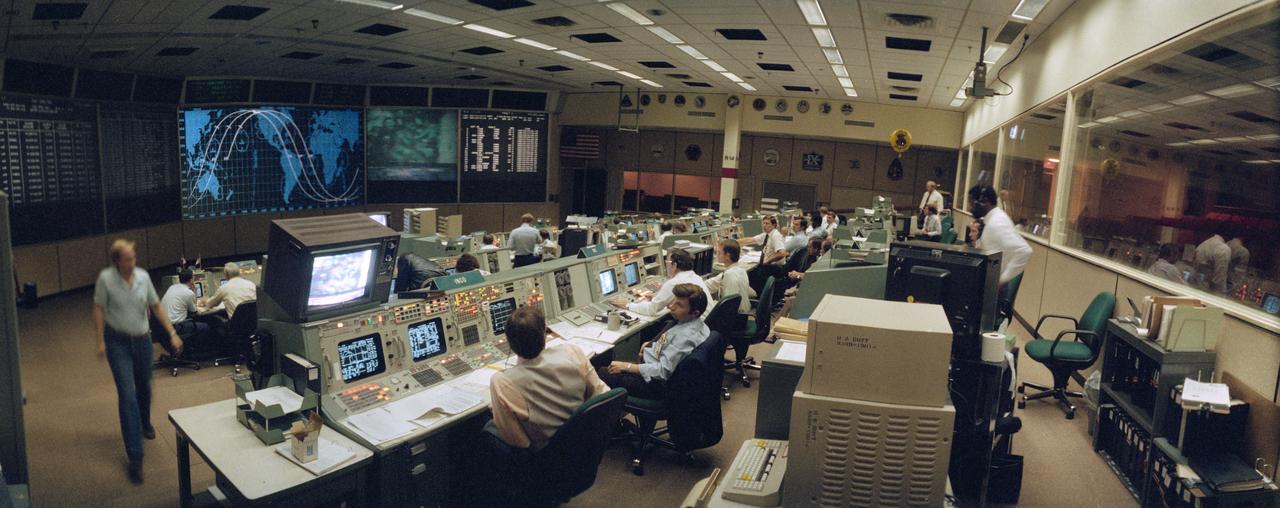
Wide angle view of the flight control room (FCR) of the Mission Control Center (MCC). Some of the STS 41-G crew can be seen on a large screen at the front of the MCC along with a map tracking the progress of the orbiter.
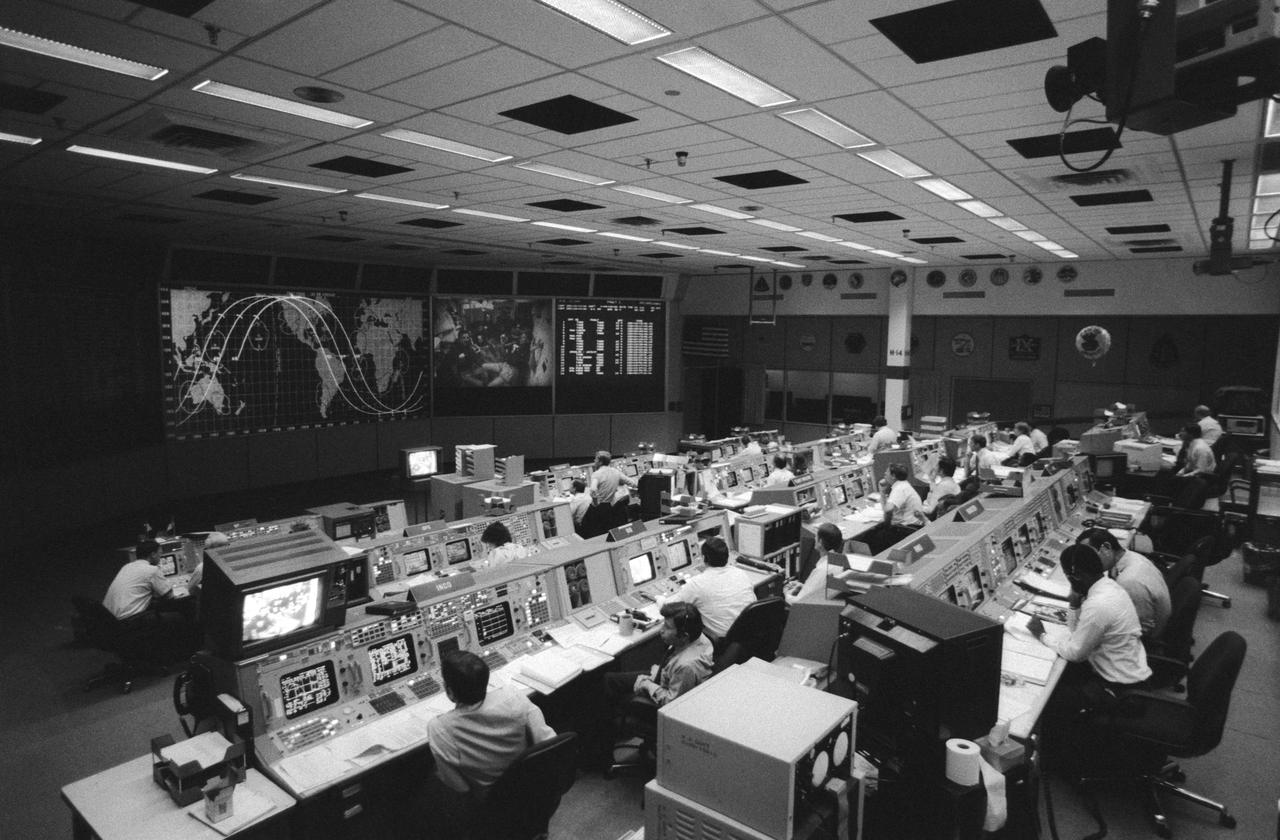
Wide angle view of the flight control room (FCR) of the Mission Control Center (MCC). Some of the STS 41-G crew can be seen on a large screen at the front of the MCC along with a map tracking the progress of the orbiter.
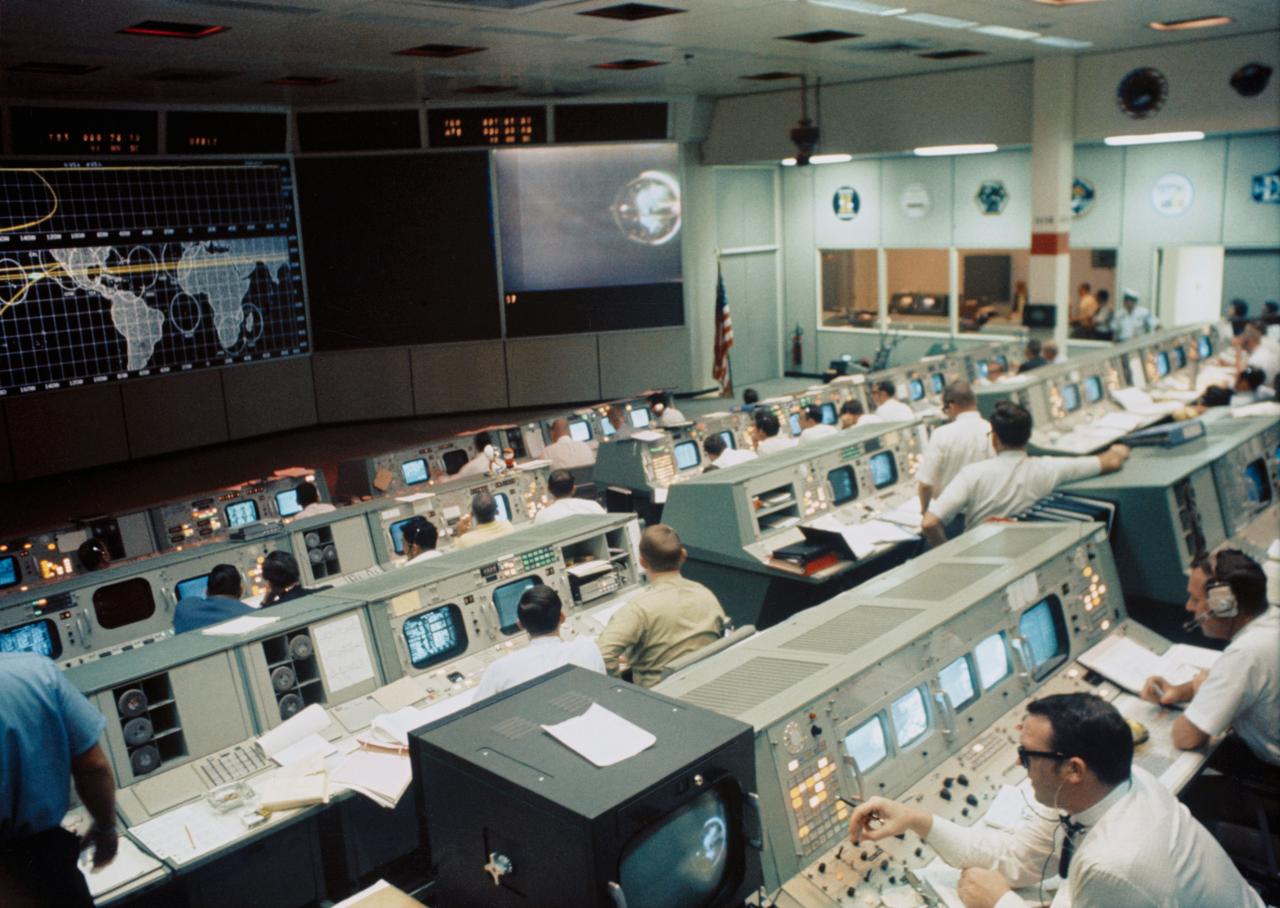
S69-34316 (18 May 1969) --- Overall view of the Mission Operations Control Room in the Mission Control Center, Building 30, on the first day of the Apollo 10 lunar orbit mission. A color television transmission was being received from Apollo 10. This picture was made following Command and Service Module/Lunar Module/Saturn IVB (CSM/LM-S-IVB) separation and prior to LM extraction from the S-IVB. The CSM were making the docking approach to the LM/S-IVB.
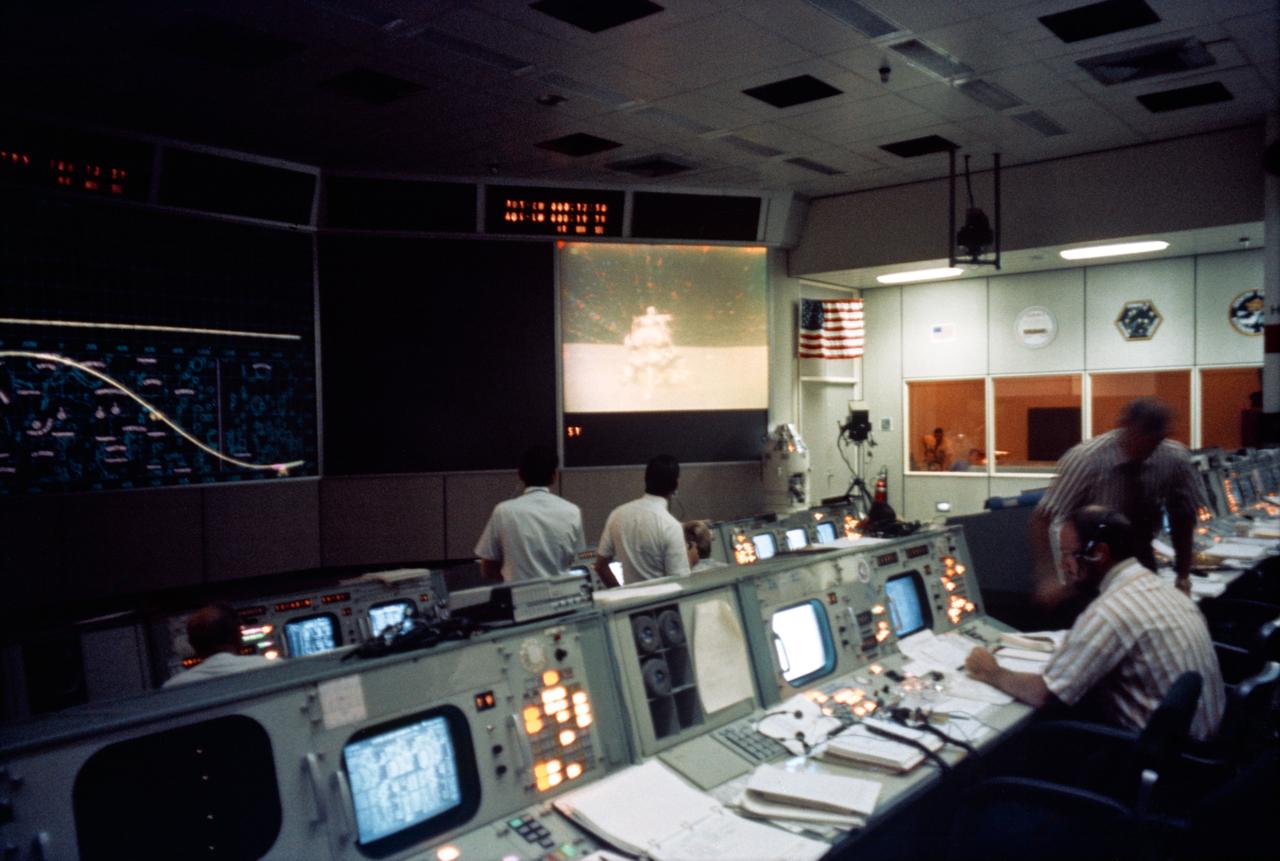
S71-41759 (2 Aug. 1971) --- A partial view of activity in the Mission Operations Control Room in the Mission Control Center during the liftoff of the Apollo 15 Lunar Module "Falcon" ascent stage from the lunar surface. An RCA color television camera mounted on the Lunar Roving Vehicle made it possible for people on Earth to watch the LM's spectacular launch from the moon. The LM liftoff was at 171:37 ground elapsed time. The LRV was parked about 300 feet east of the LM. The TV camera was remotely controlled from a console in the MOCR. Seated in the right foreground is astronaut Edgar D. Mitchell, a spacecraft communicator. Mitchell was lunar module pilot of the Apollo 14 lunar landing mission. Note liftoff on the television monitor in the center background.
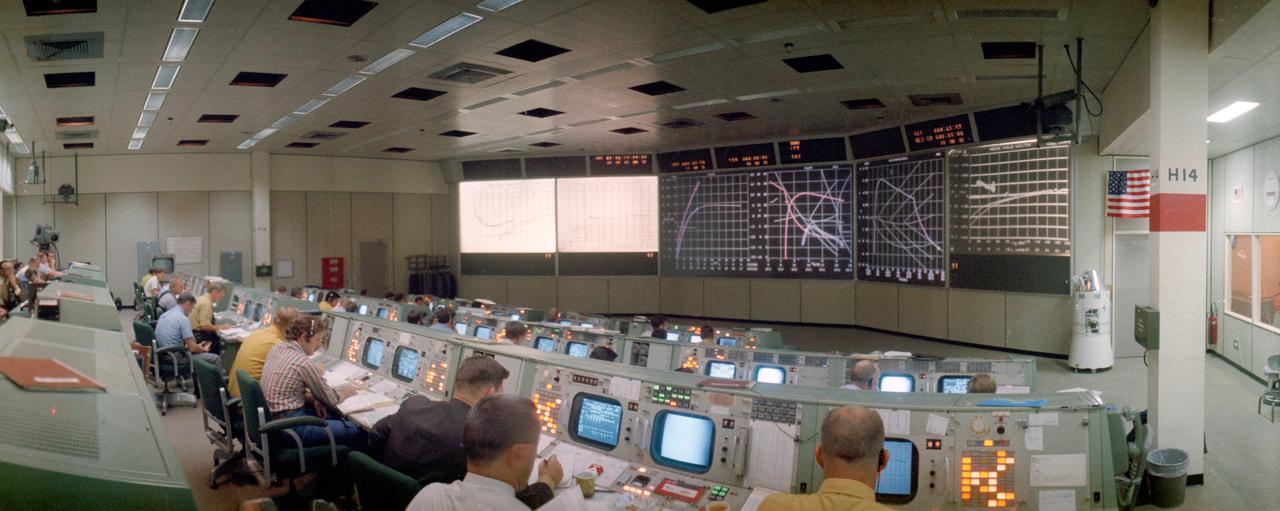
S71-41357 (26 July 1971) --- An overall, wide-angle lens view of activity in the Mission Operations Control Room in the Mission Control Center minutes after the launch of the Apollo 15 lunar landing mission. Ground elapsed time was 45 minutes and 42 seconds when this photograph was taken.
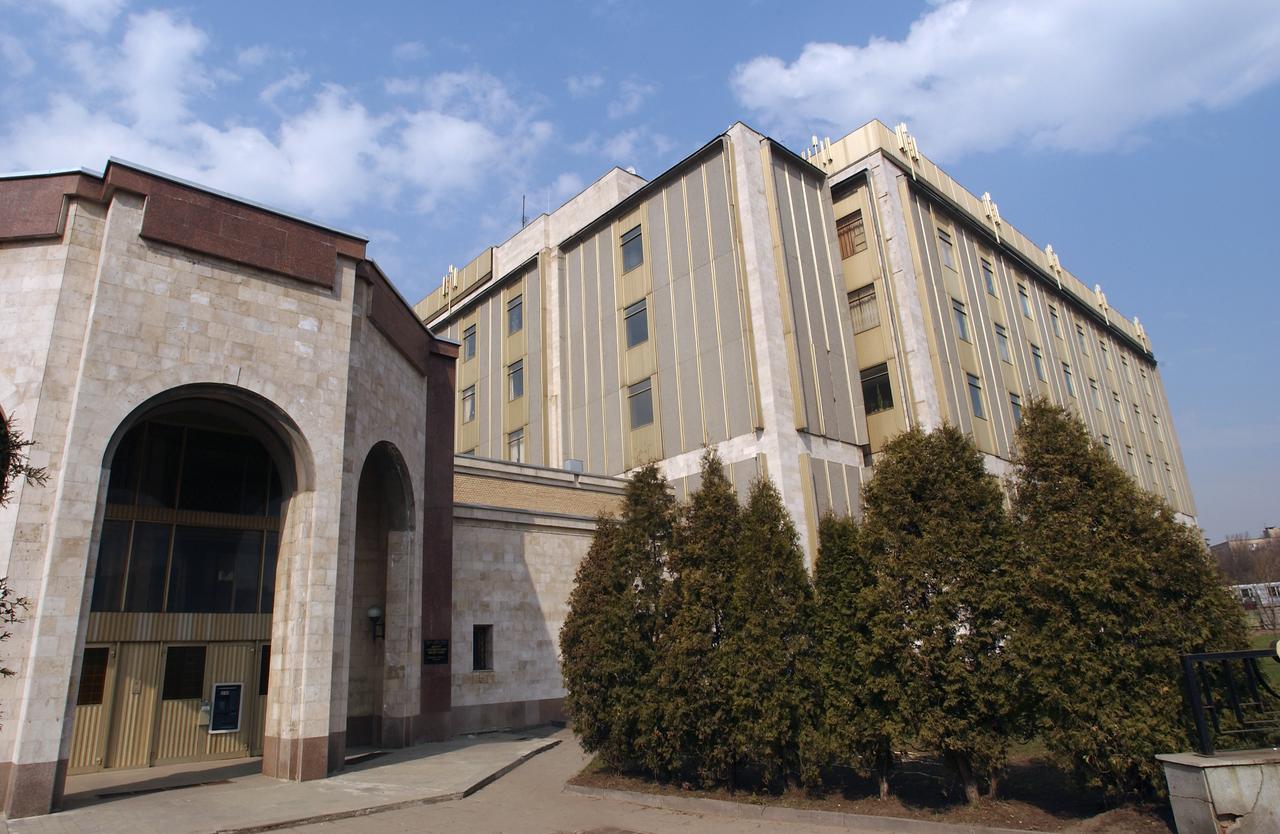
A view of the outside of the Russian Mission Control Center in Korolev, Russia, located on the outskirts of Moscow, Wednesday, April 21, 2004. Photo Credit: (NASA/Bill Ingalls)
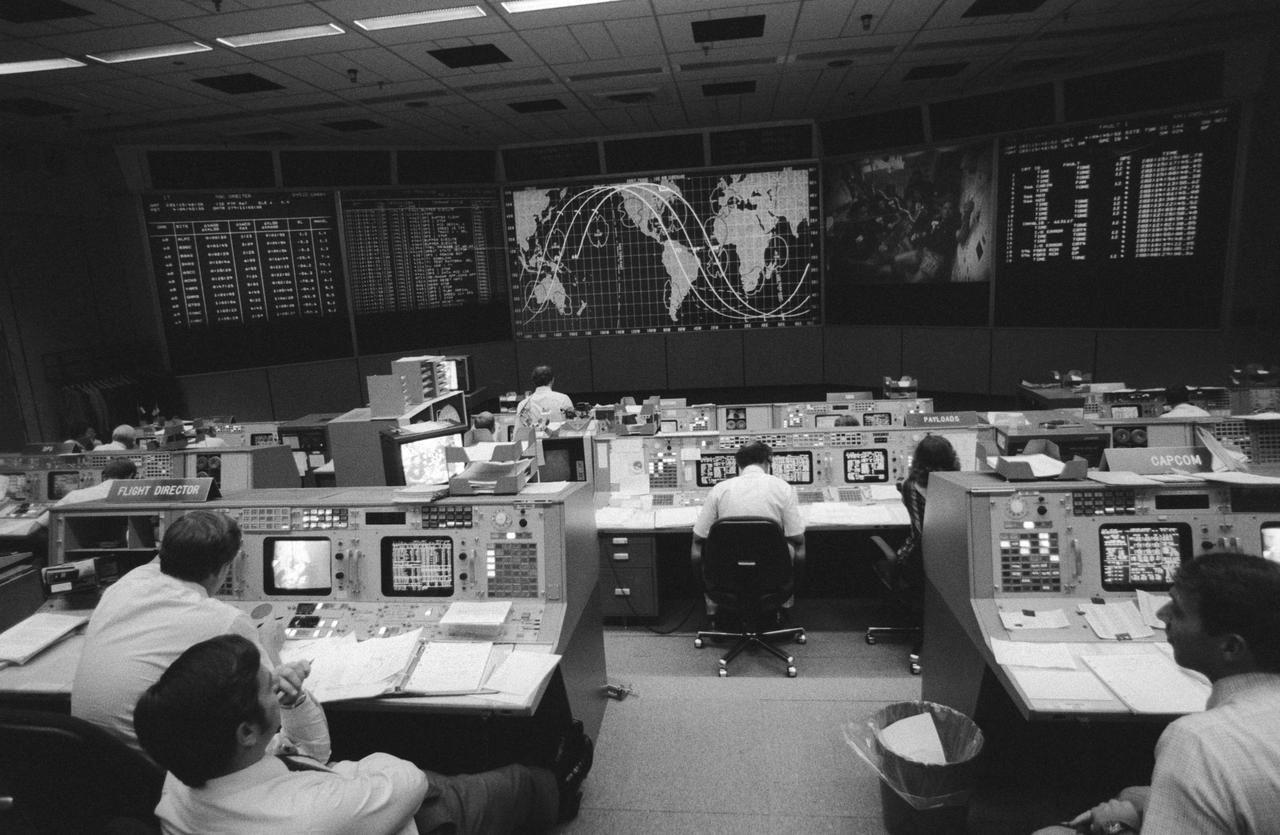
View from the back of the Mission Control Center (MCC). Visible are the Flight Directors console (left front), the CAPCOM console (right front) and the Payloads console. Some of the STS 41-G crew can be seen on a large screen at the front of the MCC along with a map tracking the progress of the orbiter.
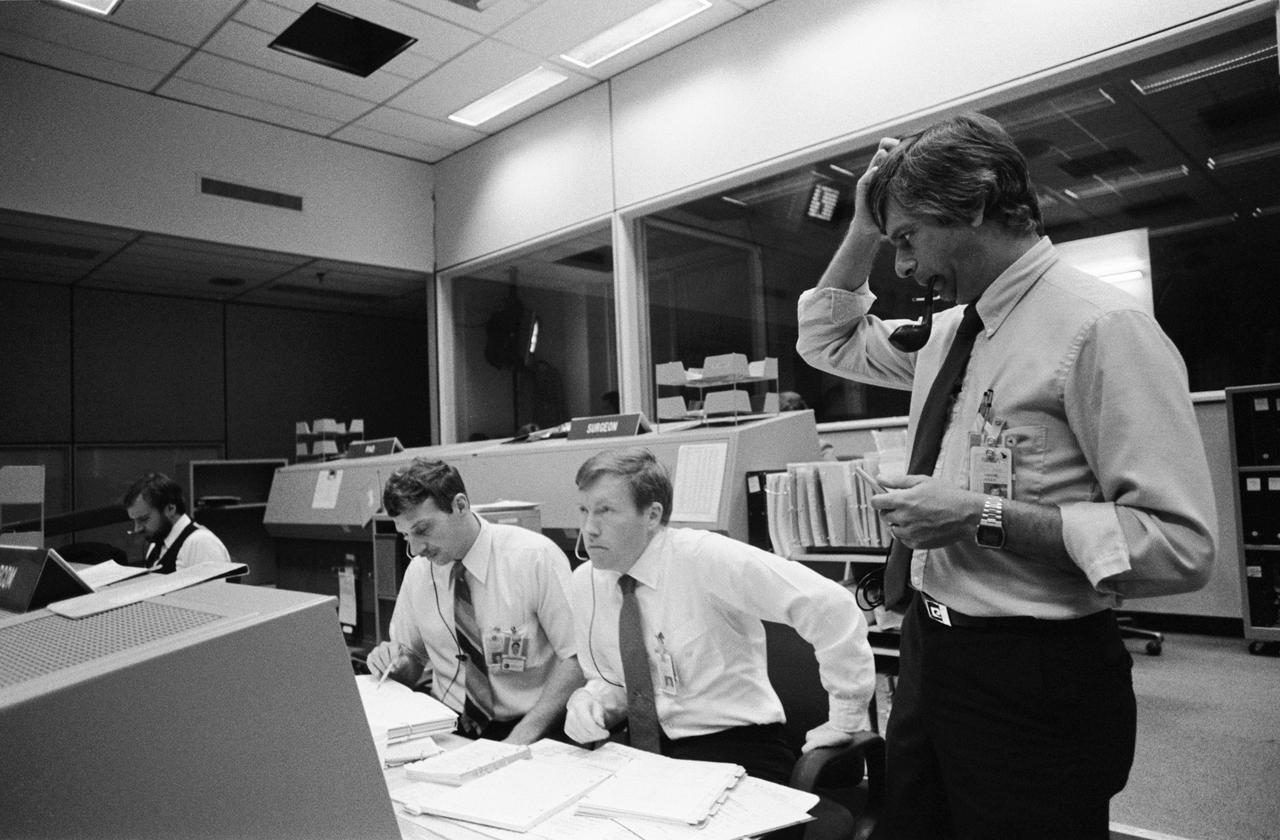
Jay H. Greene, right, ascent flight director for STS 51-A, monitors pre-launch activity at the Kennedy Space Center (KSC) via a screen at the spacecraft communicators console in the second floor flight control room (FCR) of JSC's mission control center. Astronauts David C. Hilmers, left, and Richard N. Richards are the on-duty spacecraft communicators.
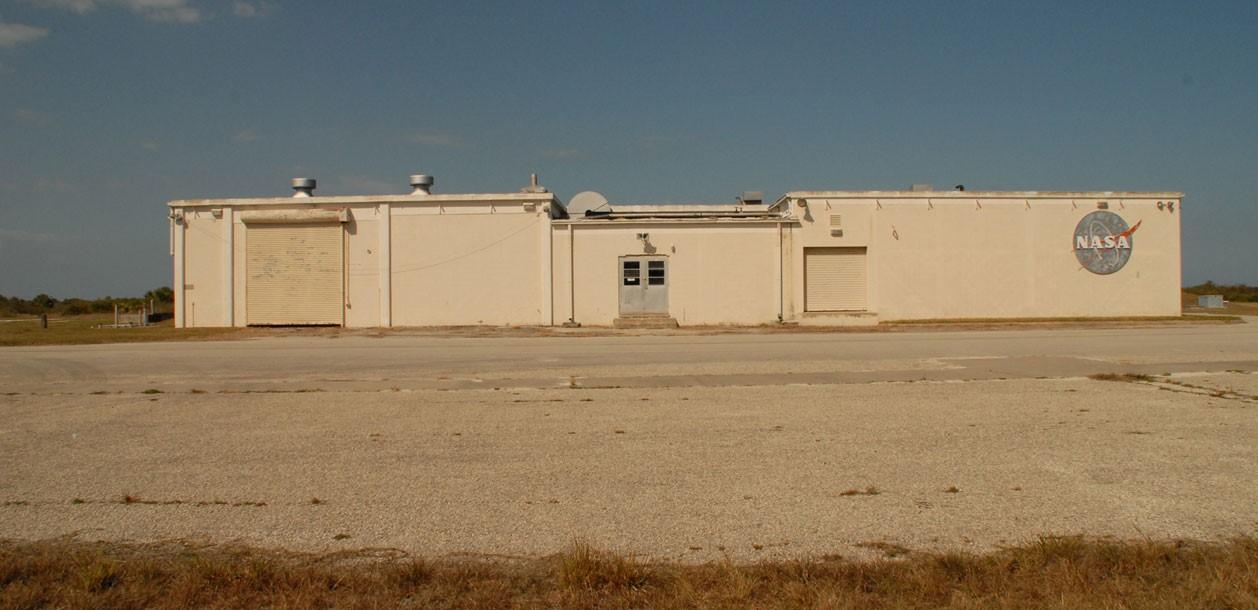
Exterior view of the Mission Control Center
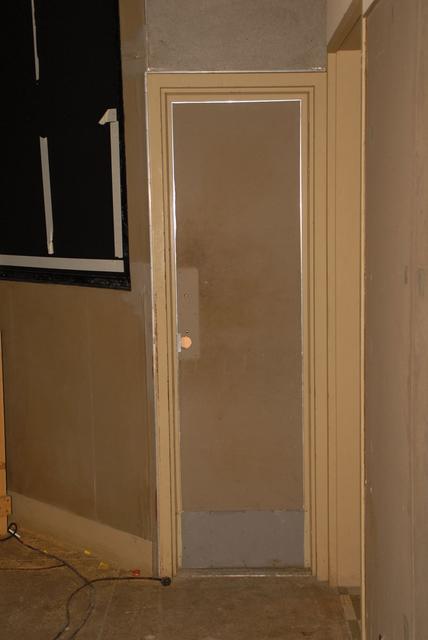
Interior view of the Mission Control Center
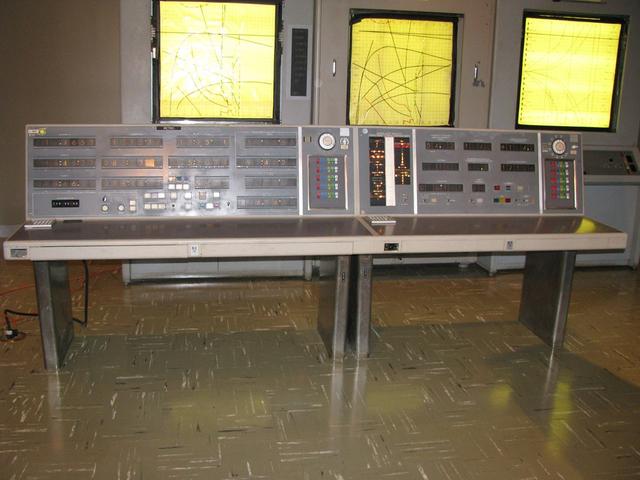
Interior view of the Mission Control Center
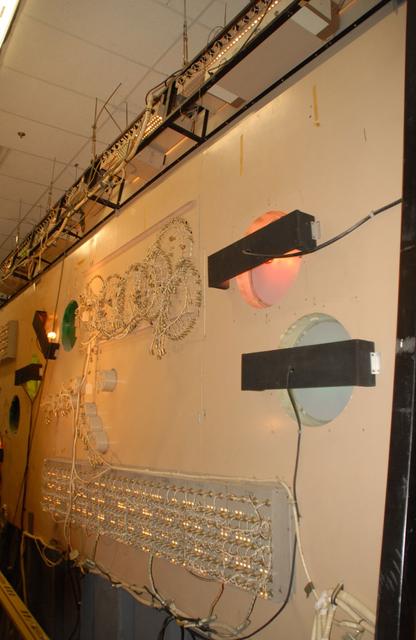
Interior view of the Mission Control Center
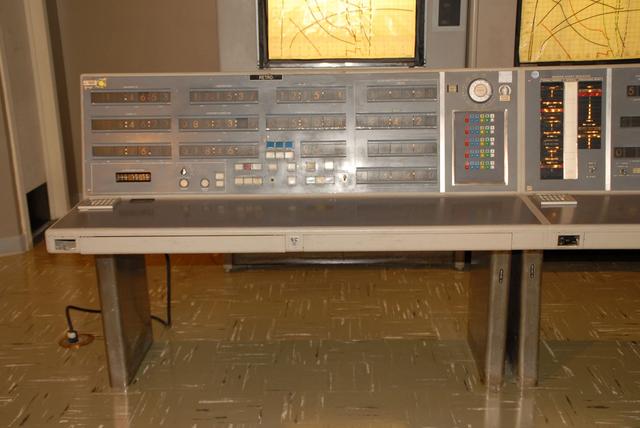
Interior view of the Mission Control Center
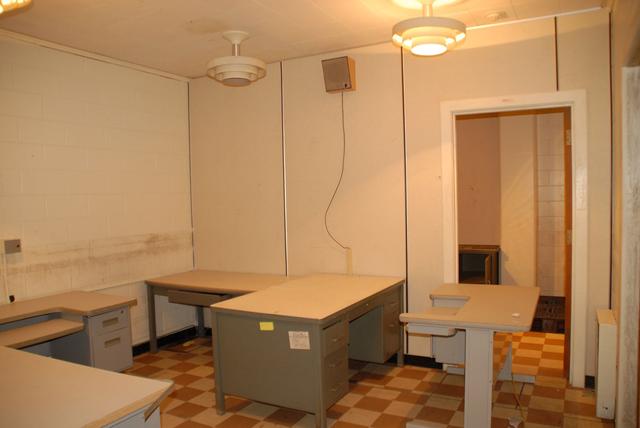
Interior view of the Mission Control Center
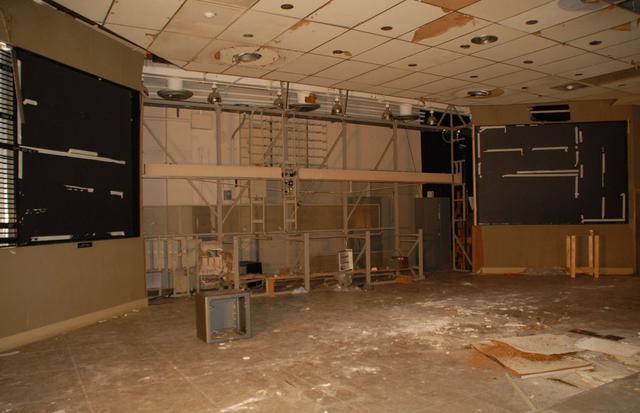
Interior view of the Mission Control Center
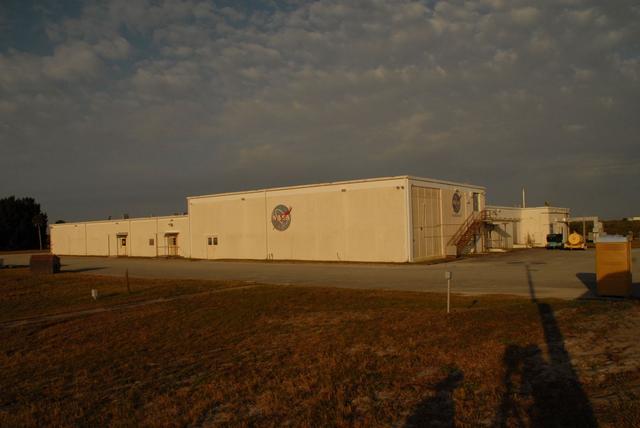
Exterior view of the Mission Control Center
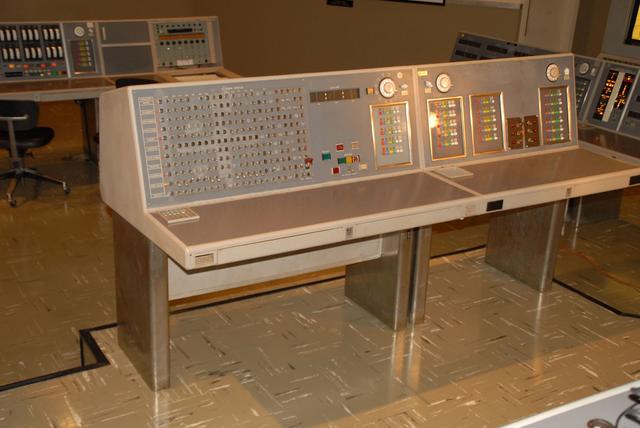
Interior view of the Mission Control Center
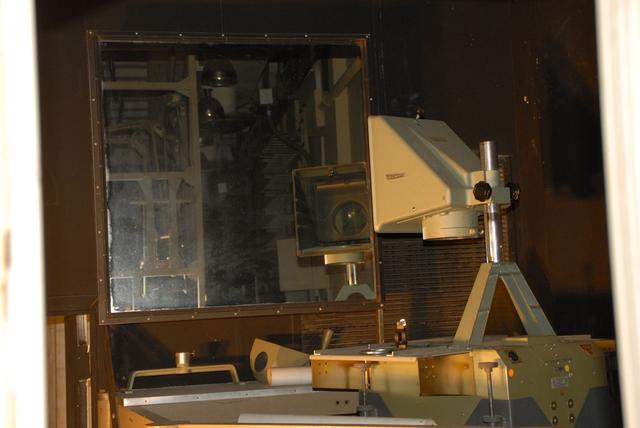
Interior view of the Mission Control Center
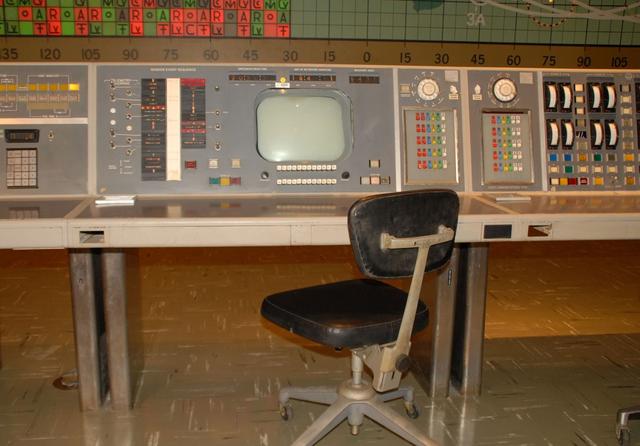
Interior view of the Mission Control Center

Interior view of the Mission Control Center
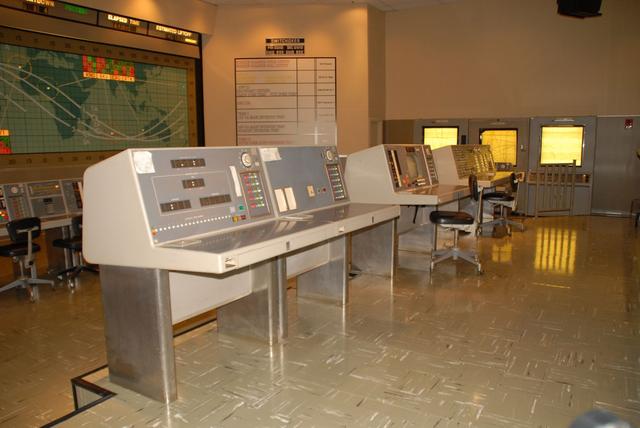
Interior view of the Mission Control Center
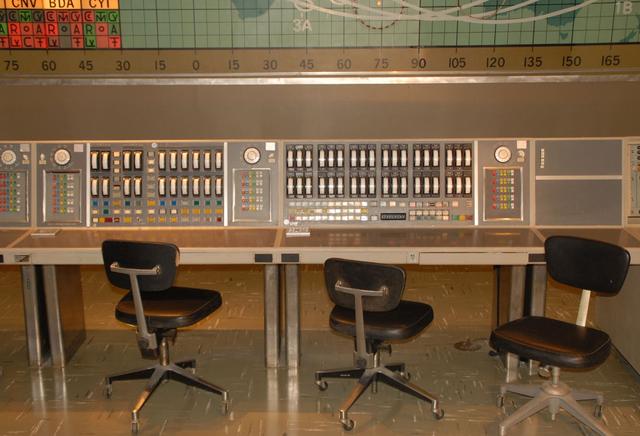
Interior view of the Mission Control Center
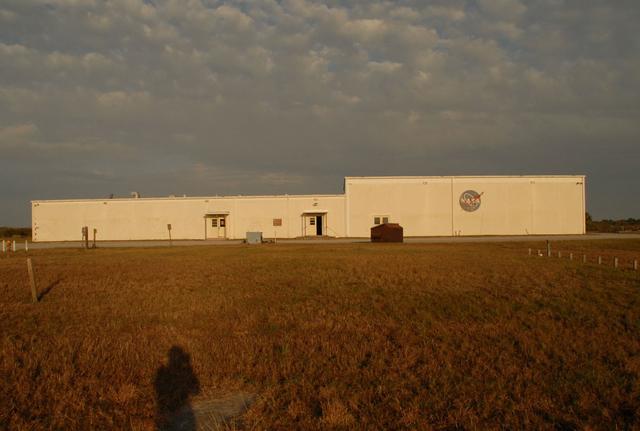
Exterior view of the Mission Control Center
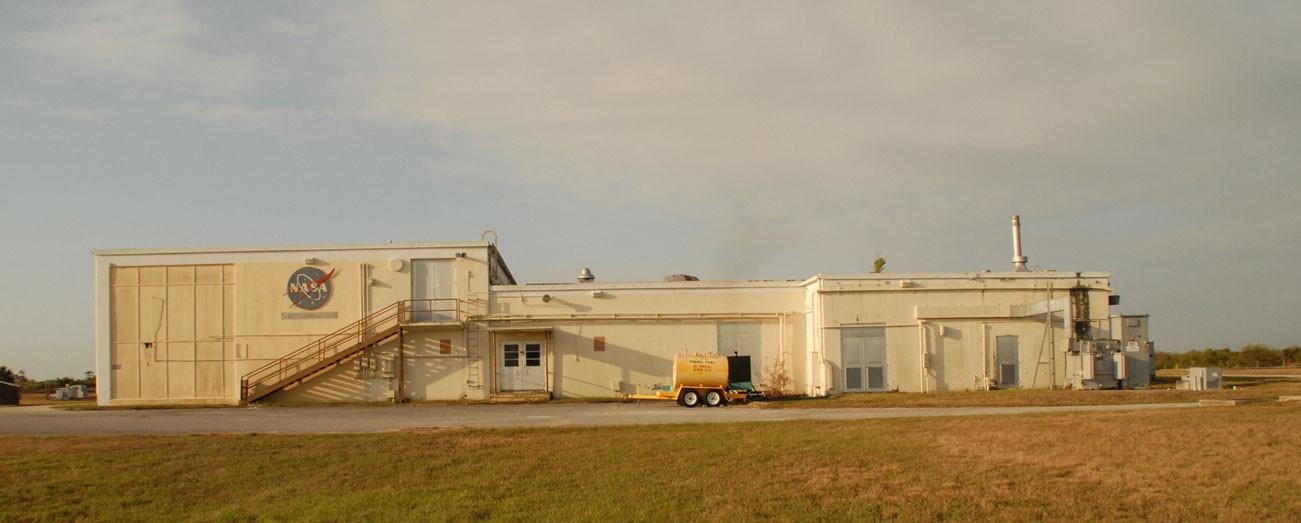
Exterior view of the Mission Control Center
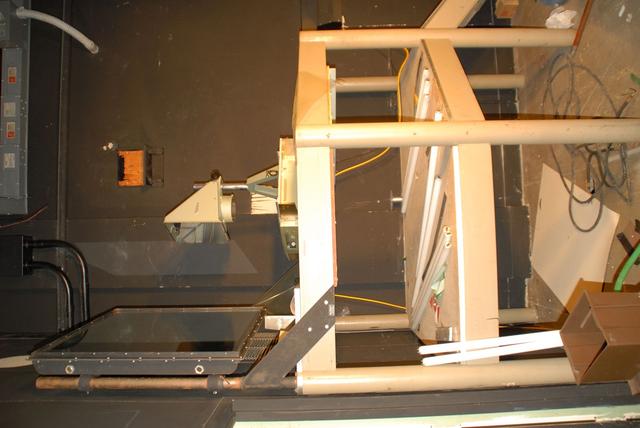
Interior view of the Mission Control Center
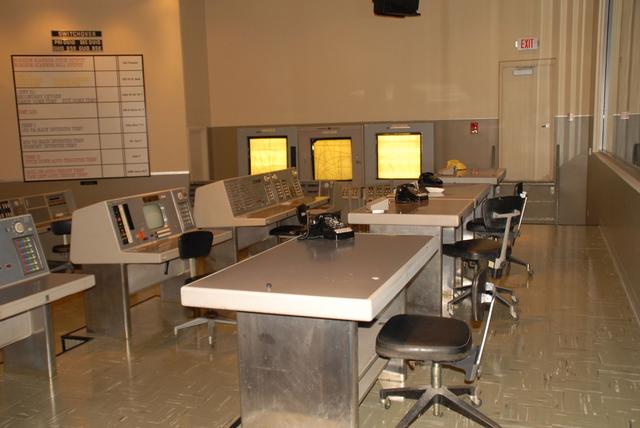
Interior view of the Mission Control Center
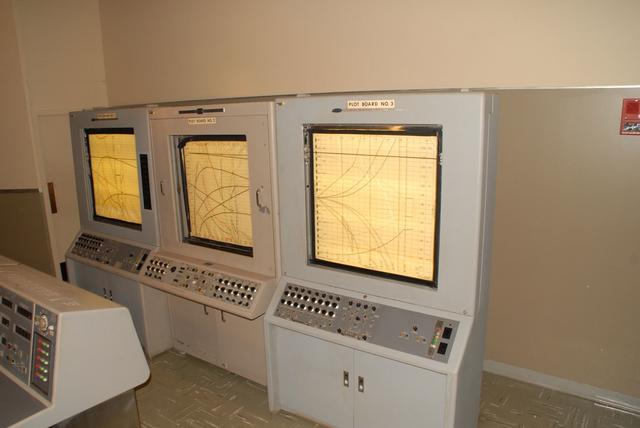
Interior view of the Mission Control Center

Interior view of the Mission Control Center
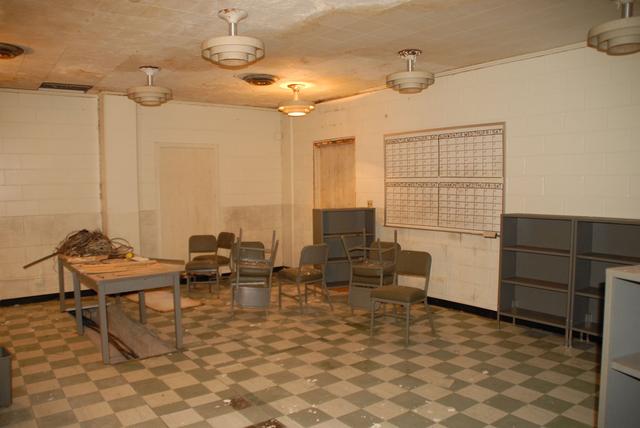
Interior view of the Mission Control Center
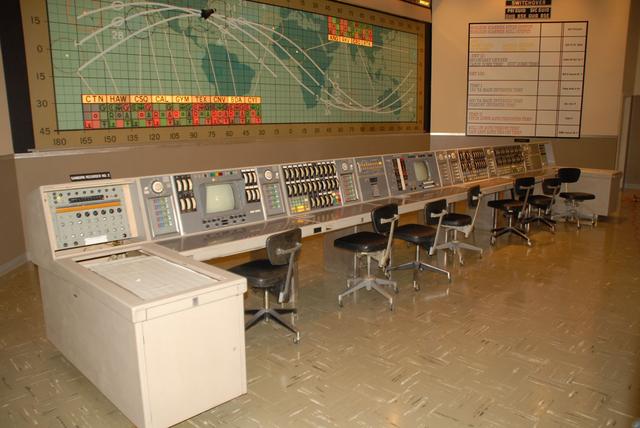
Interior view of the Mission Control Center

Interior view of the Mission Control Center
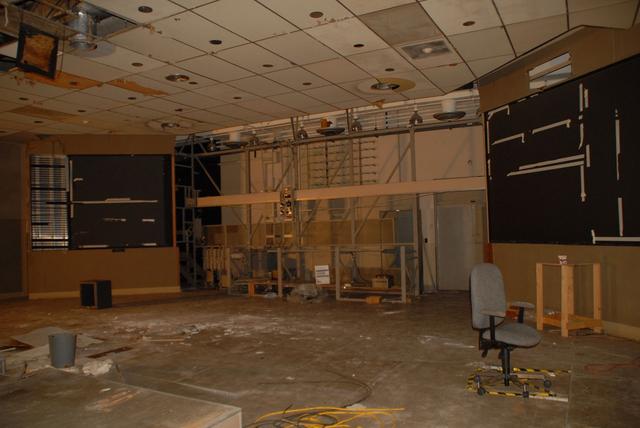
Interior view of the Mission Control Center
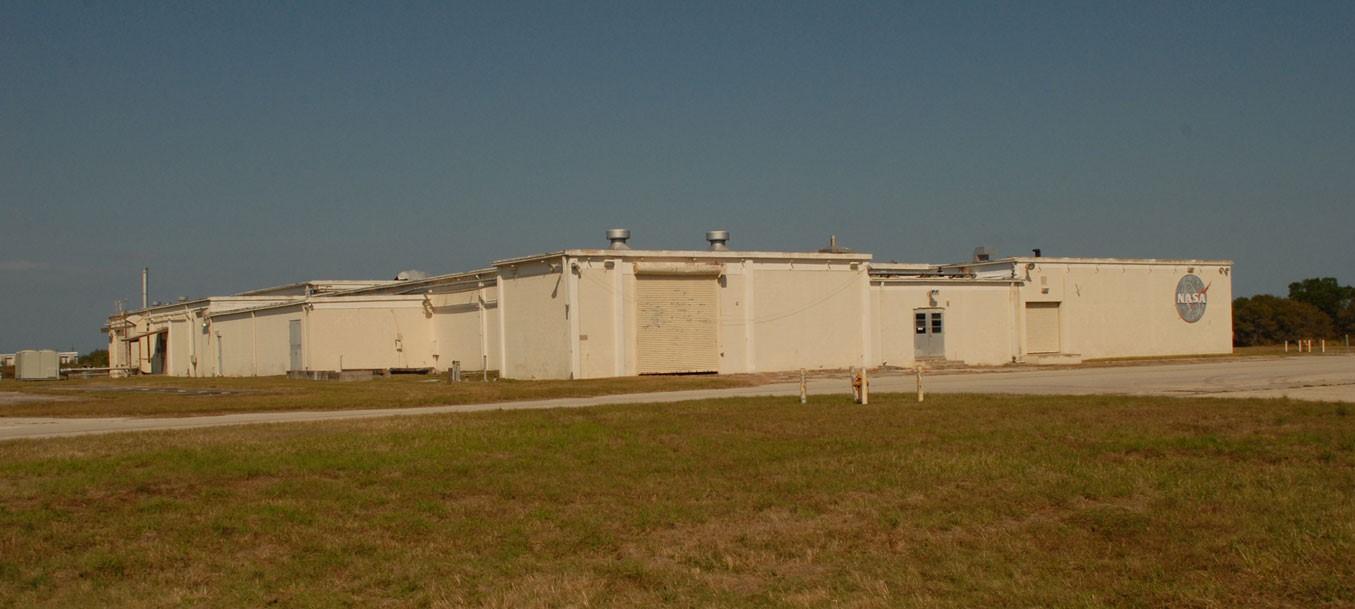
Exterior view of the Mission Control Center
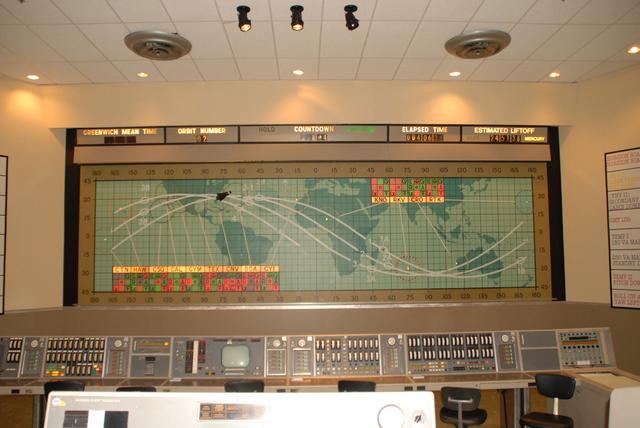
Interior view of the Mission Control Center

Interior view of the Mission Control Center
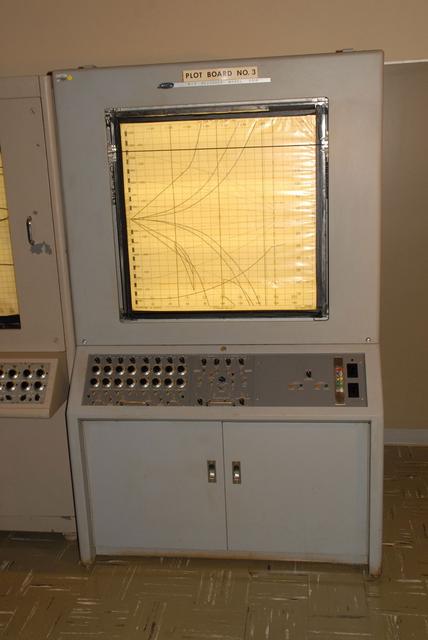
Interior view of the Mission Control Center
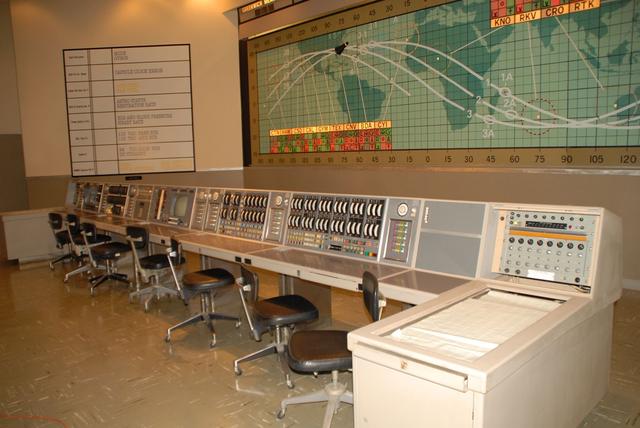
Interior view of the Mission Control Center
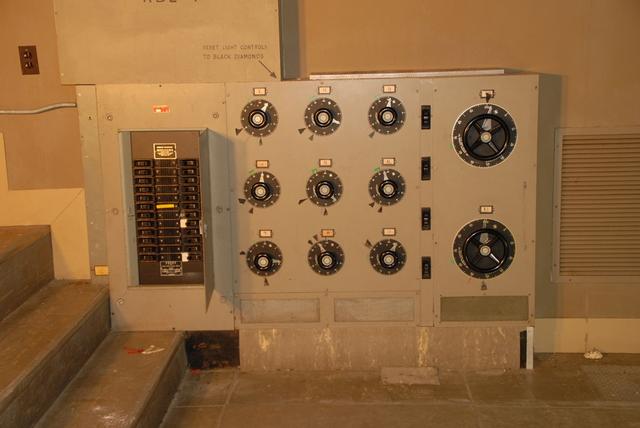
Interior view of the Mission Control Center
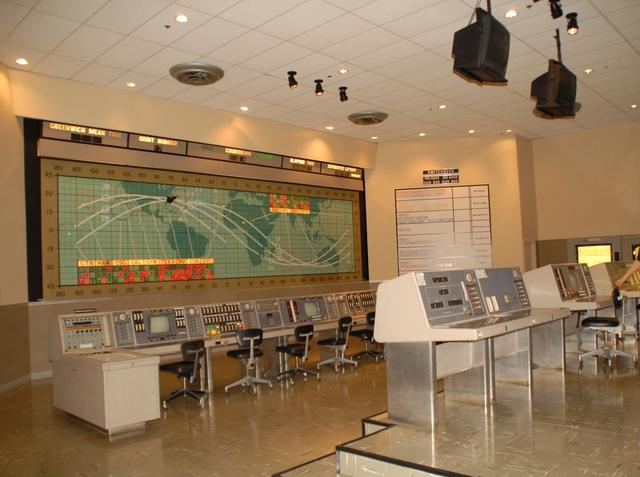
Interior view of the Mission Control Center
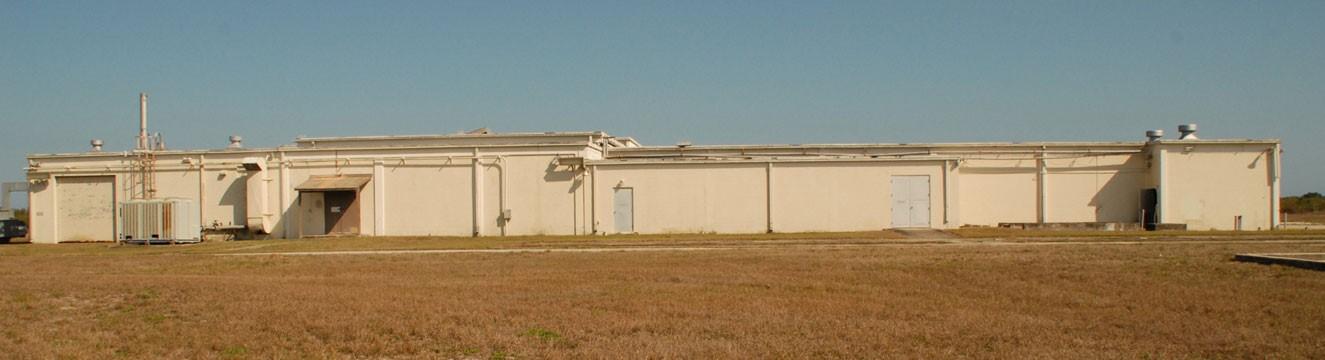
Exterior view of the Mission Control Center
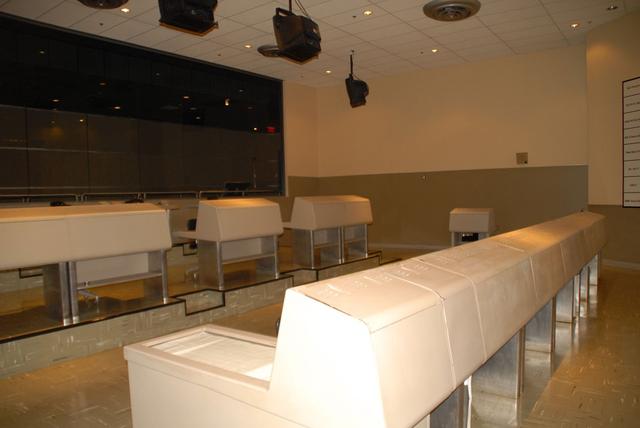
Interior view of the Mission Control Center

Interior view of the Mission Control Center

Interior view of the Mission Control Center
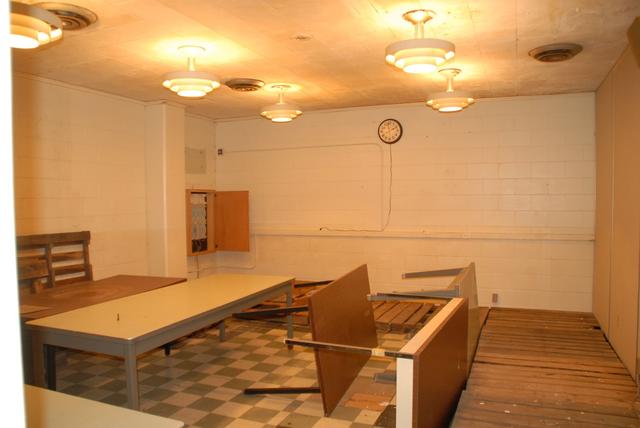
Interior view of the Mission Control Center
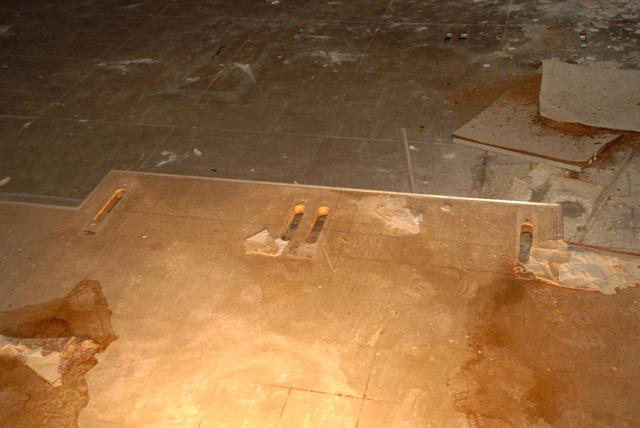
Interior view of the Mission Control Center
Exterior view of the Mission Control Center
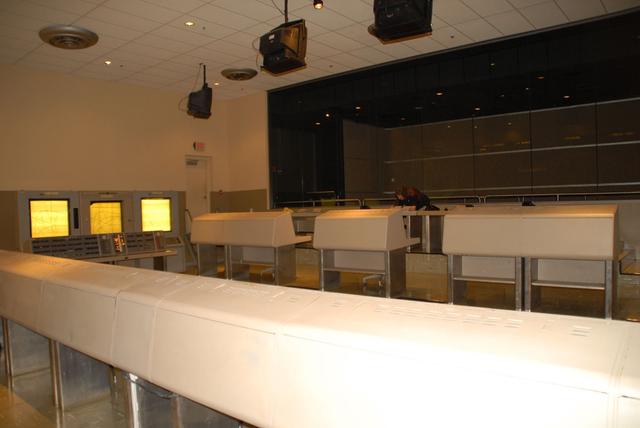
Interior view of the Mission Control Center
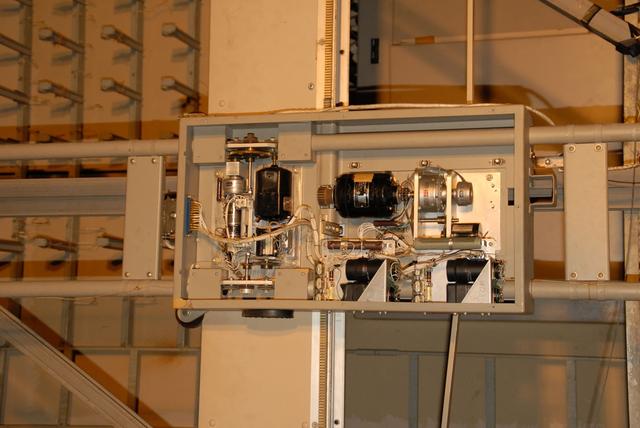
Interior view of the Mission Control Center
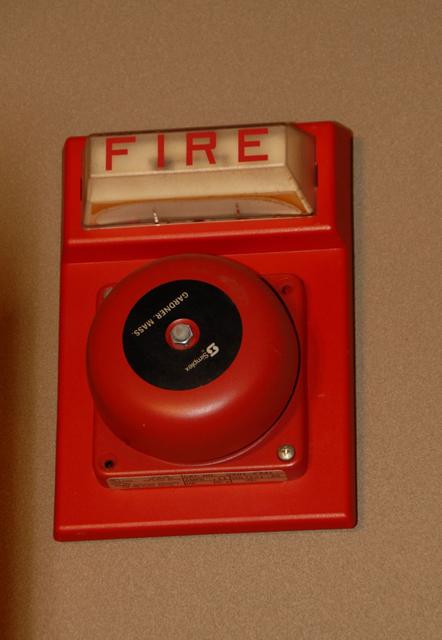
Interior view of the Mission Control Center
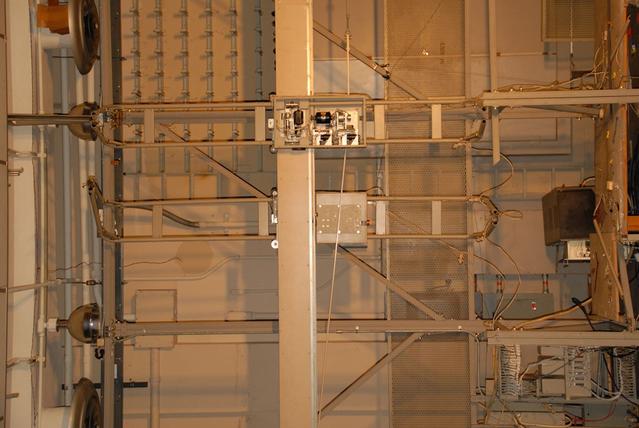
Interior view of the Mission Control Center
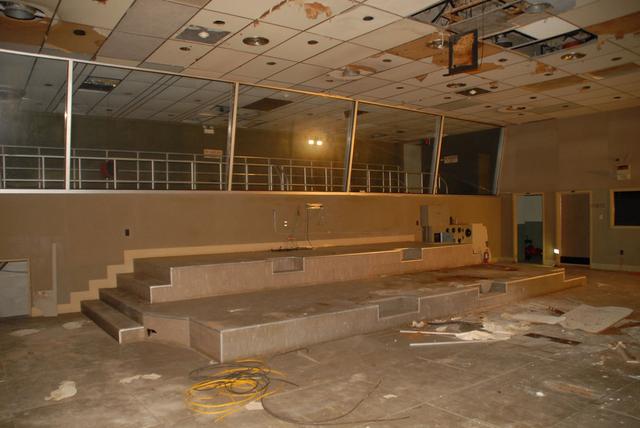
Interior view of the Mission Control Center
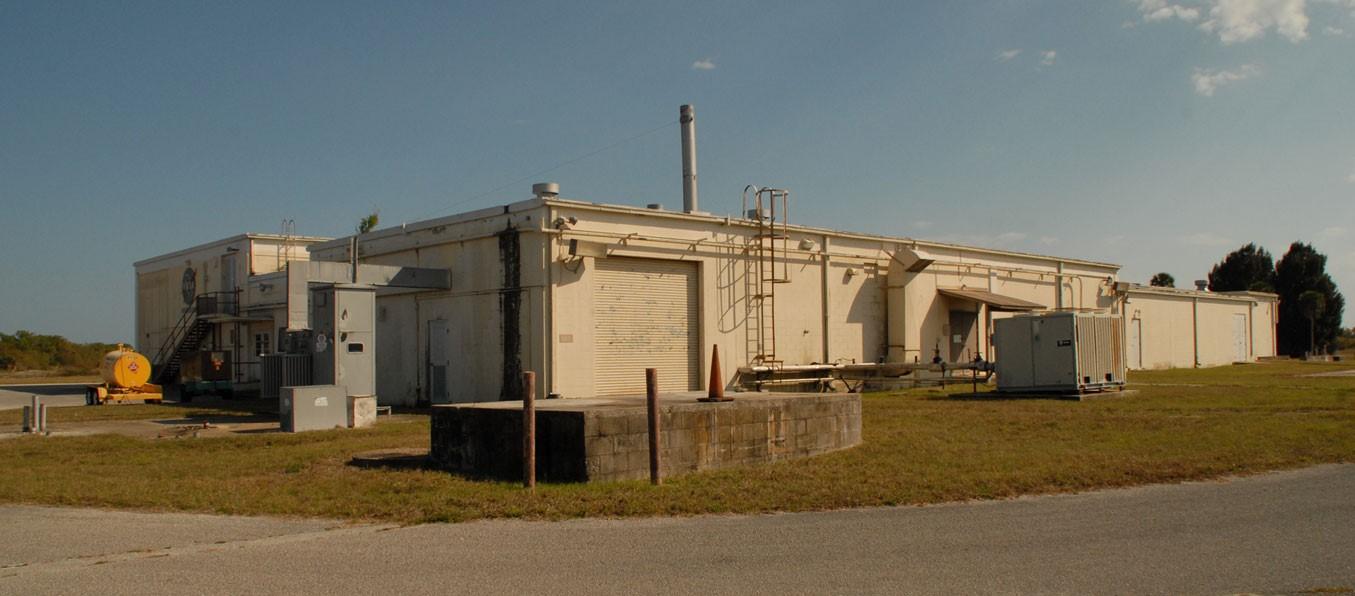
Exterior view of the Mission Control Center

Interior view of the Mission Control Center
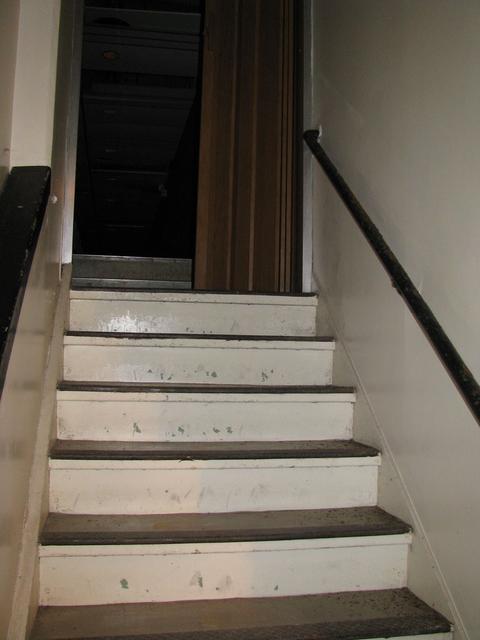
Interior view of the Mission Control Center
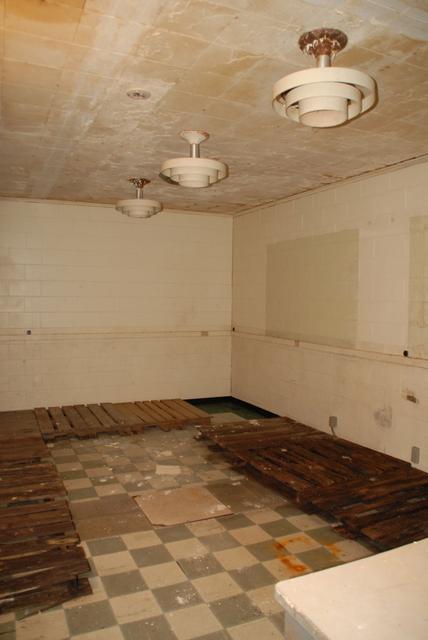
Interior view of the Mission Control Center

Interior view of the Mission Control Center
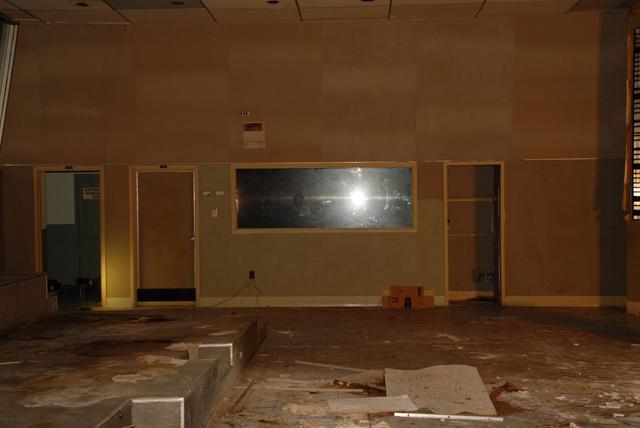
Interior view of the Mission Control Center
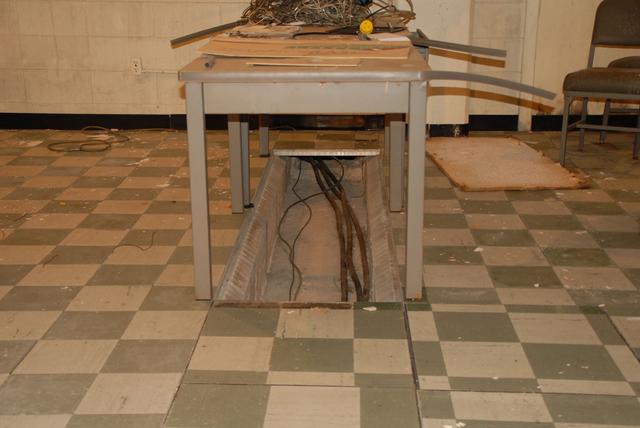
Interior view of the Mission Control Center

Interior view of the Mission Control Center
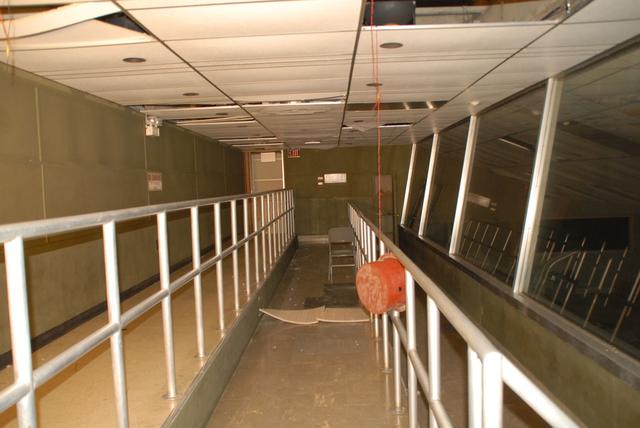
Interior view of the Mission Control Center
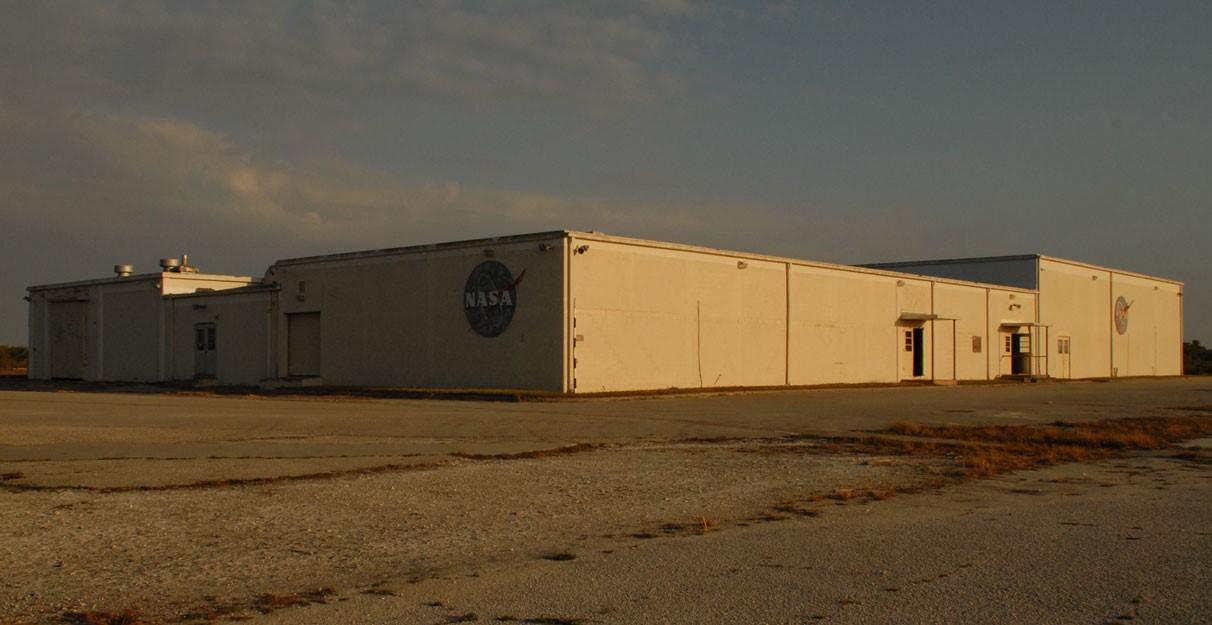
Exterior view of the Mission Control Center
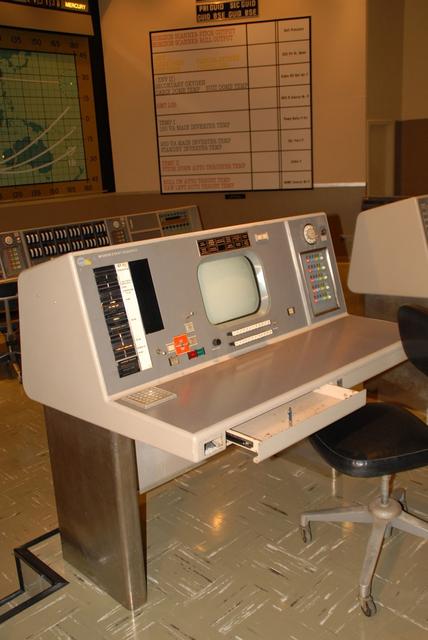
Interior view of the Mission Control Center
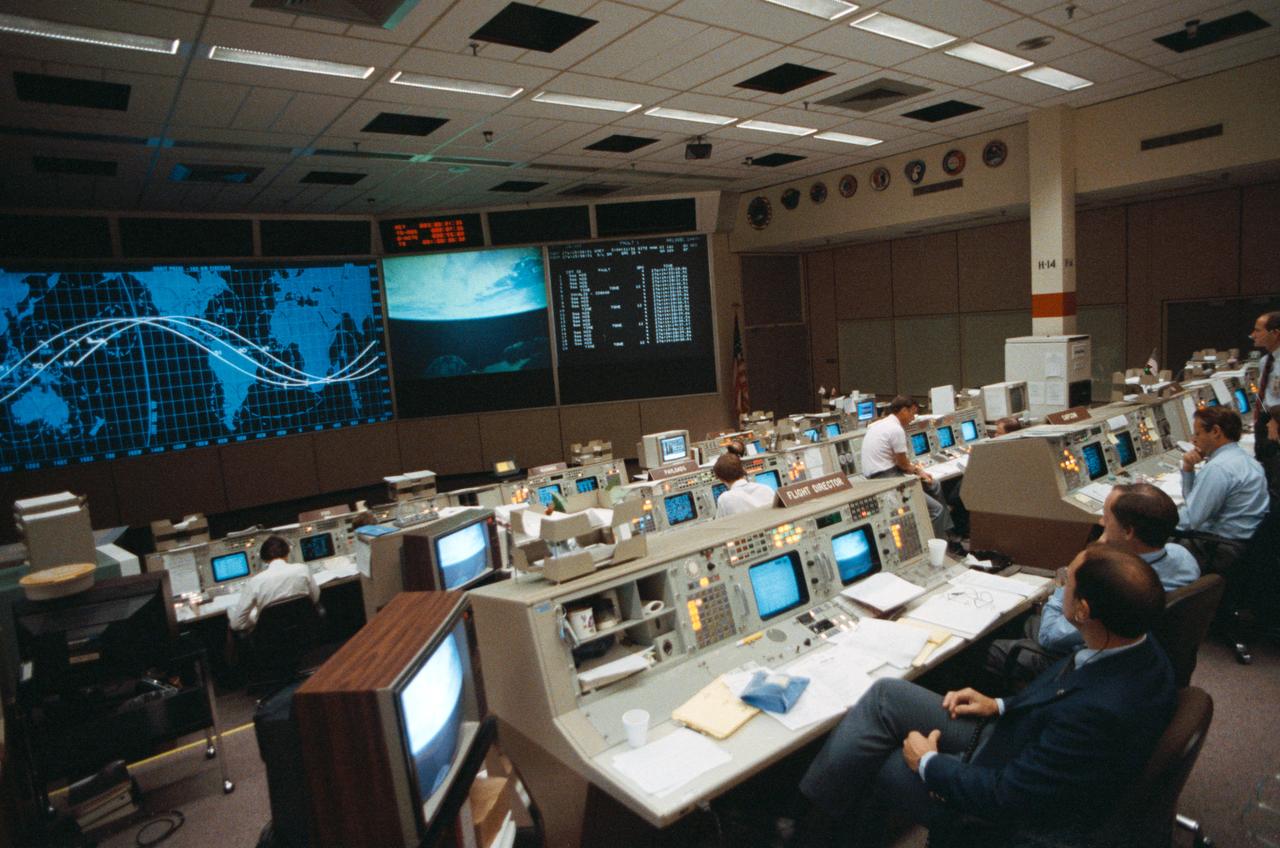
STS026-S-101 (2 Oct 1988) --- Flight controllers in the Johnson Space Center?s mission control center listen to a presentation by the five members of the STS 26 crew on the fourth day of Discovery?s orbital mission. Flight Directors Charles W. Shaw and James M. (Milt) Heflin (in the foreground) and other controllers view a television image of Earth on a screen in the front of the flight control room while each member relates some inner feelings while paying tribute to the Challenger crew.
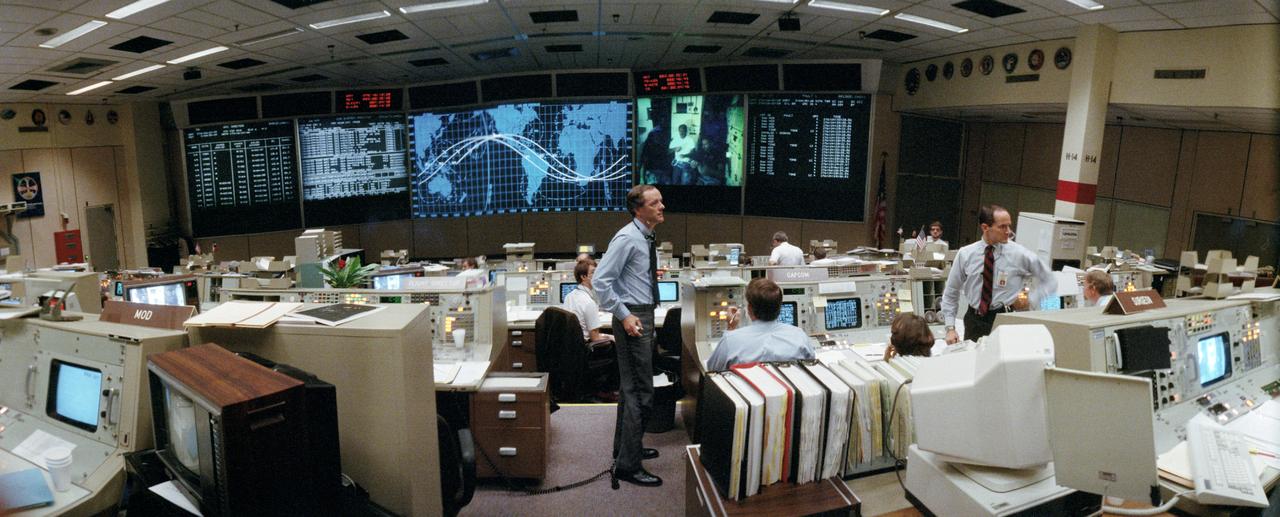
STS26-S-103 (2 October 1988) --- A wide-angle view of flight controllers in the Johnson Space Center's mission control center as they listen to a presentation by the five members of the STS-26 crew on the fourth day of Discovery's orbital mission. Flight Director James M. (Milt) Heflin (standing at center), astronaut G. David Low (standing at right), a spacecraft communicator, and other controllers view a television image of the crew on a screen in the front of the flight control room as each member relates some inner feelings while paying tribute to the Challenger crew.
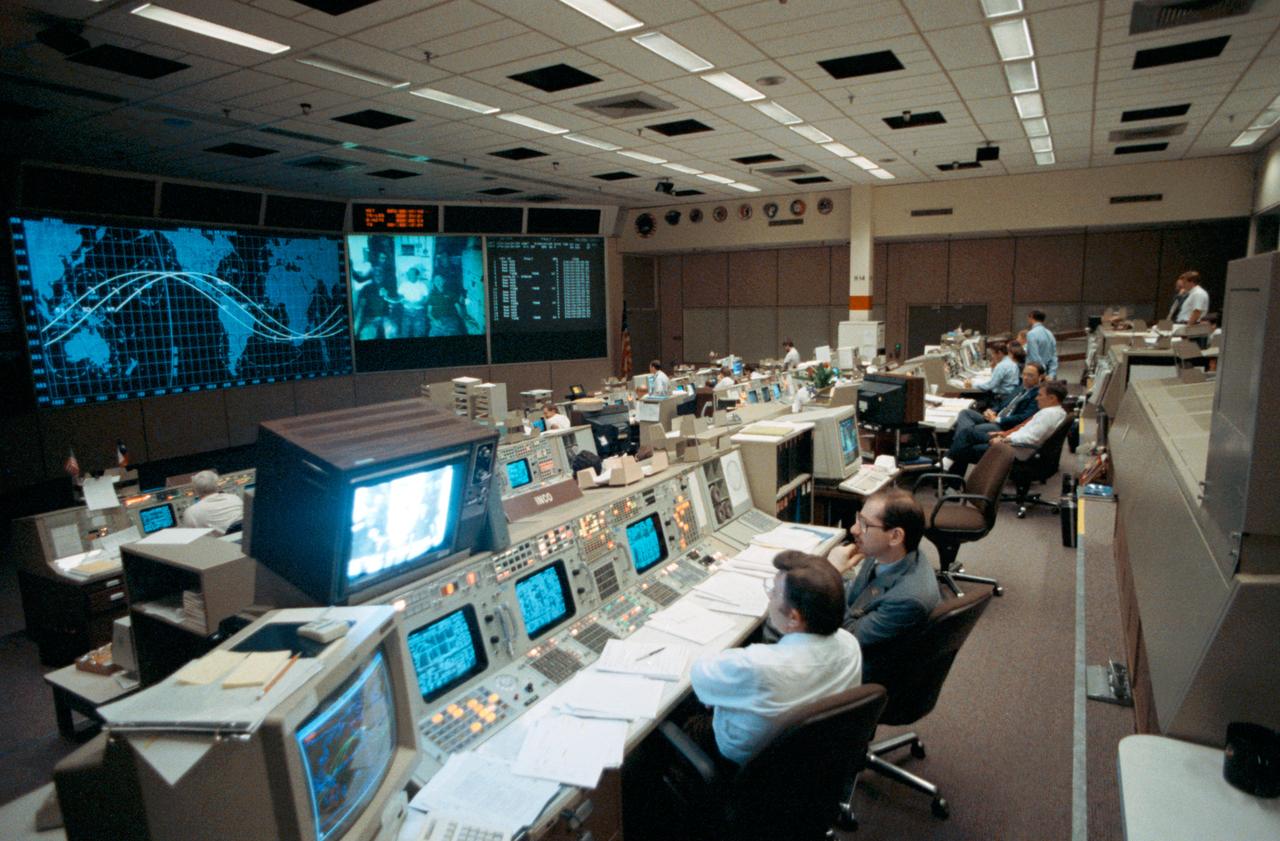
Flight controllers in JSC's Mission Control Center (MCC) Bldg 30 flight control room (FCR) listen to a presentation by STS-26 crewmembers on the fourth day of Discovery's, Orbiter Vehicle (OV) 103's, orbital mission. Instrumentation and Communications Officers (INCOs) Harold Black (left foreground) and John F. Muratore and other controllers view a television (TV) transmission of the crew on a screen in front of the FCR as each member relates some inner feelings while paying tribute to the 51L Challenger crew.
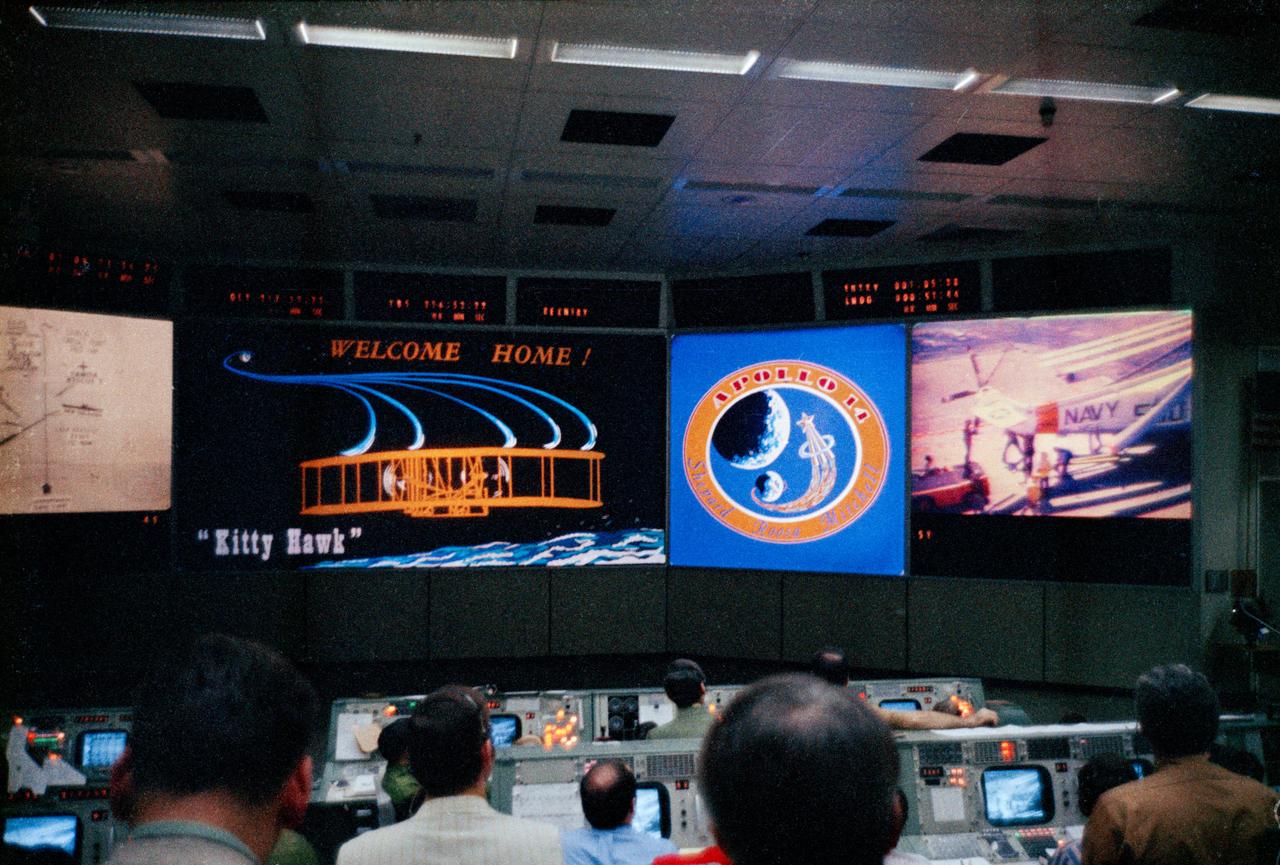
S71-18400 (9 Feb. 1971) --- Flight controllers in the Mission Operations Control Room (MOCR) of the Mission Control Center (MCC) view a colorful display which signals the successful splashdown and recovery of the crew of the Apollo 14 lunar landing mission. The MOCR's large screen at right shows a television shot aboard the USS New Orleans, Apollo 14 prime recovery ship.
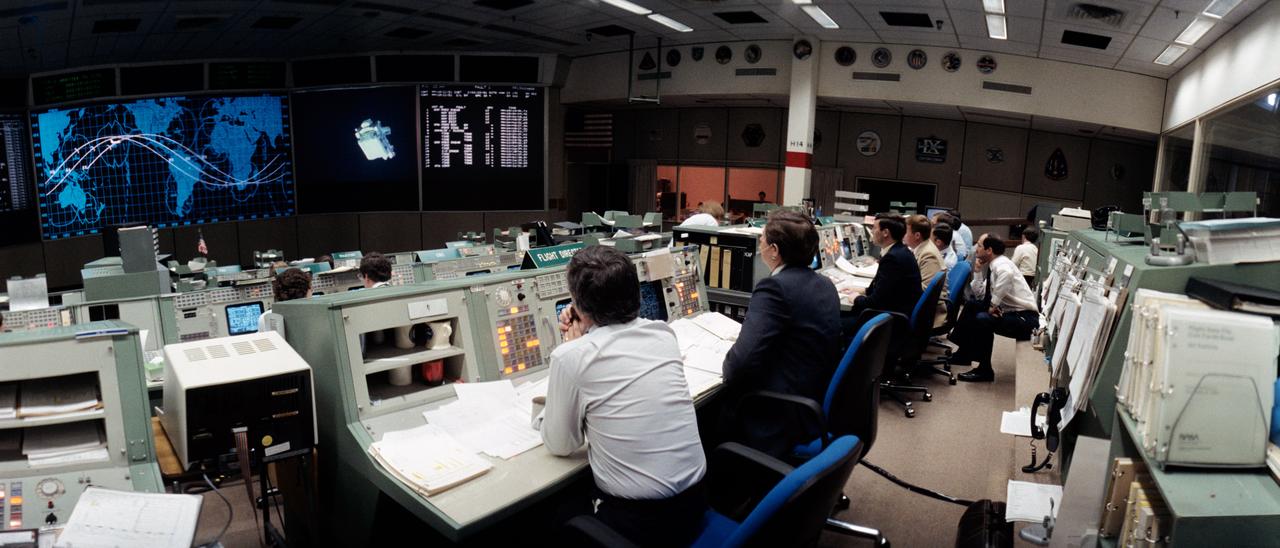
Astronaut George D. Nelson (see monitor at front of room) is viewed by flight controllers in the Mission Operations Control Room (MOCR) of JSC's Mission Control Center during 41-C extravehicular activity (EVA). In the foreground are Flight Directors Jay H. Greene and John T. Cox. Astronauts Jerry L. Ross and Richard H. Richards are seated at the CAPCOM or spacecraft communicators console at right background. Astronaut Guy S. Gardner is perched just behind them.
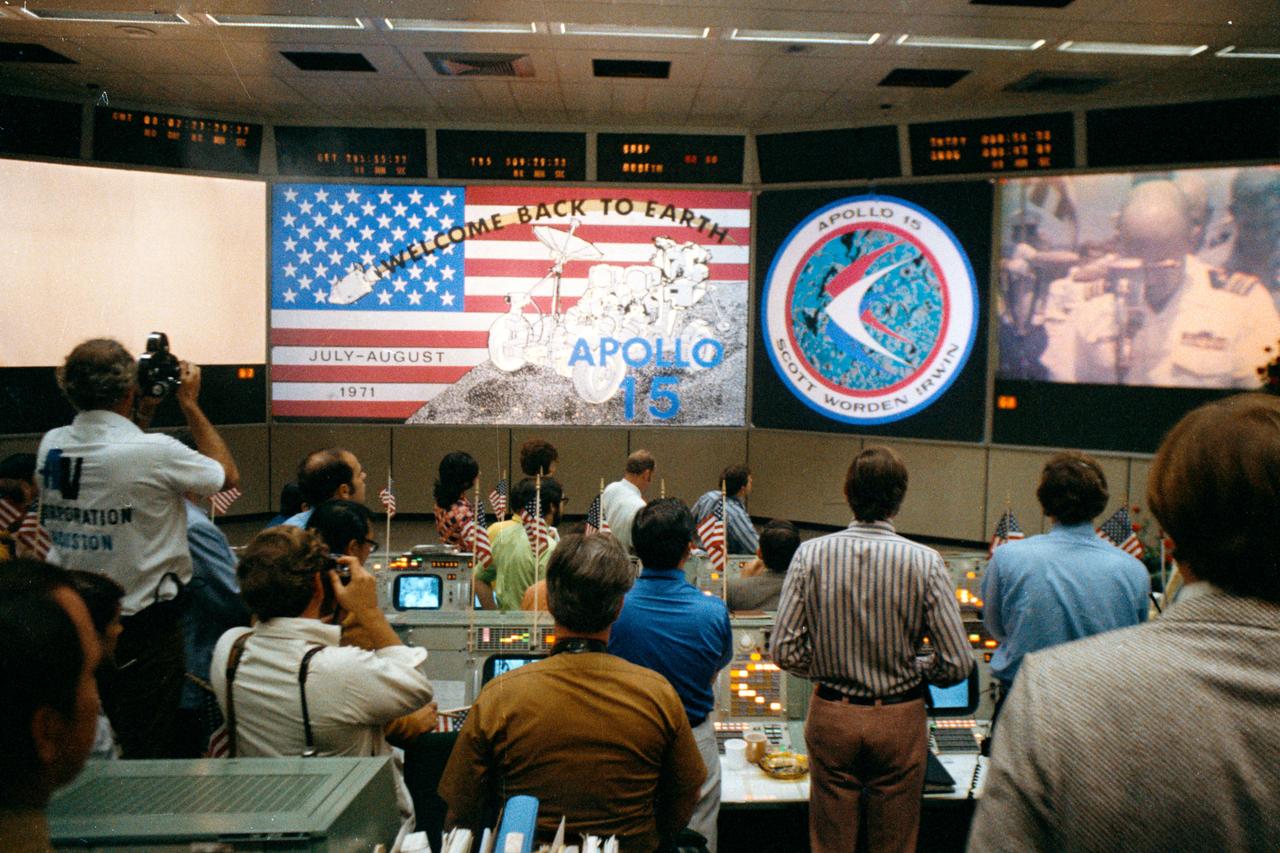
An overall view of activity in the Mission Operations Control Room in the Mission Control Center at the conclusion of the Apollo 15 lunar landing mission. The television monitor in the right background shows the welcome ceremonies aboard the prime recovery ship, U.S.S. Okinawa, in the mid-Pacific Ocean.
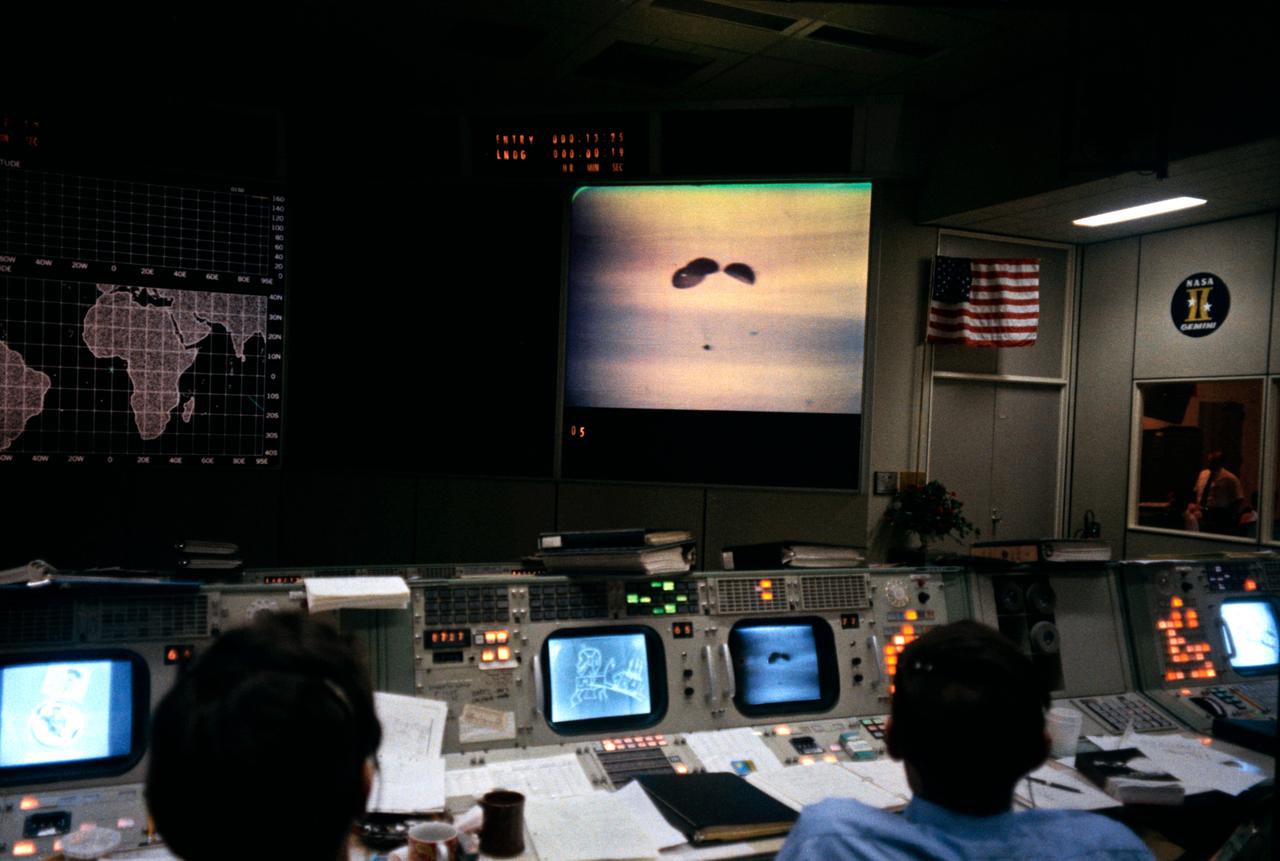
S70-35471 (17 April 1970) --- Two flight controllers man consoles in the Missions Operations Control Room (MOCR) of the Mission Control Center (MCC) at the Manned Spacecraft Center (MSC), Houston, Texas, just before splashdown occurred in the south Pacific Ocean. Though the MOCR does not appear to be crowded in this photo, there was a very large crowd of persons on hand for the splashdown and recovery operations coverage. Most of the group crowded around in the rear of the room. Apollo 13 splashdown occurred at 12:07:44 p.m. (CST), April 17, 1970.
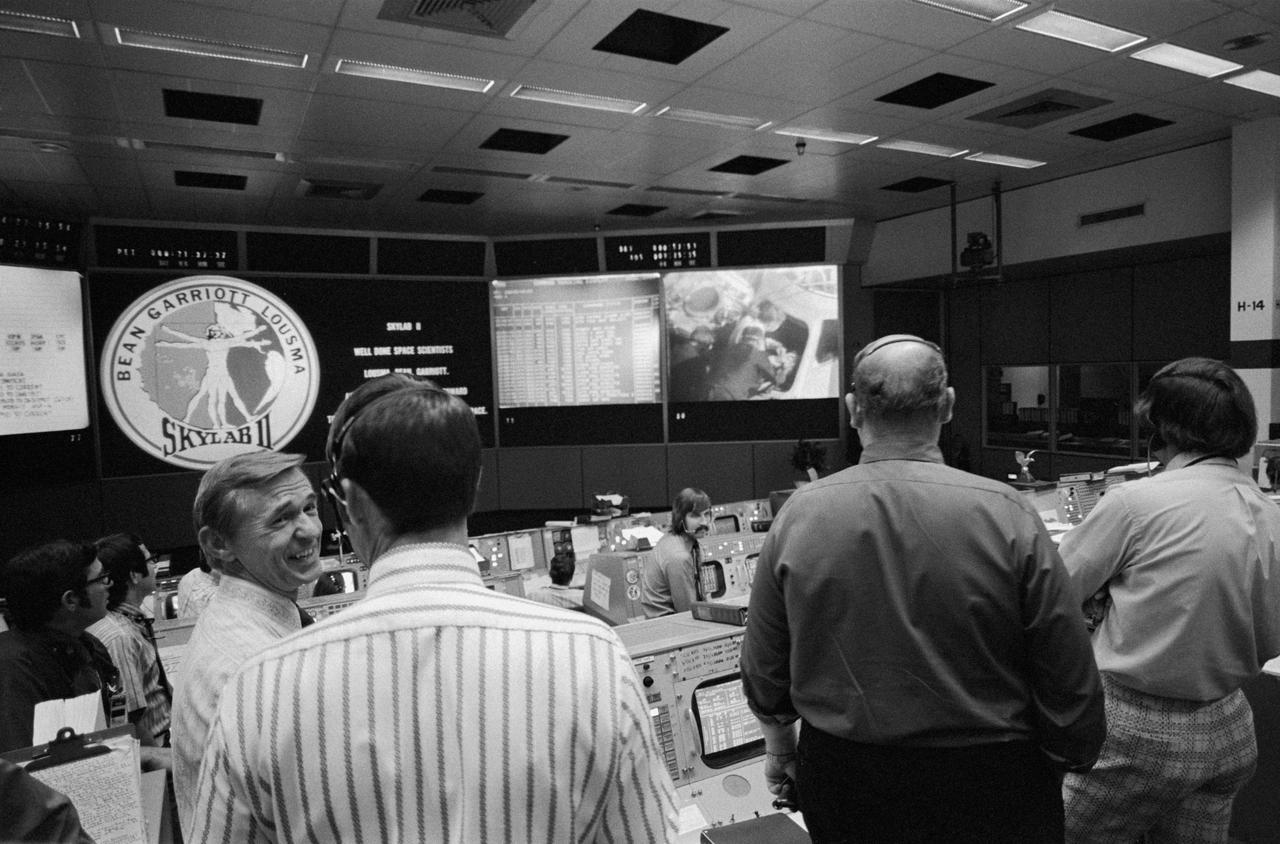
S73-34553 (25 Sept. 1973) --- Skylab flight directors (foreground) and flight controllers (background) view the large screen in the Mission Operations Control Room (MOCR) in the Mission Control Center (MCC) at JSC during recovery operations of the second manned Skylab mission. From left to right in the foreground are flight directors Charles R. Lewis, Donald R. Puffy, Phillip Shaffer and Neil B. Hutchinson. The Skylab 3 crewmen were preparing to egress the spacecraft aboard the USS New Orleans. Television cameras aboard the New Orleans recorded post-recovery activity. Photo credit: NASA

S70-35368 (16 April 1970) --- Overall view showing some of the feverish activity in the Mission Operations Control Room (MOCR) of the Mission Control Center (MCC) during the final 24 hours of the problem-plagued Apollo 13 mission. Here, flight controllers and several NASA/MSC officials confer at the flight director's console. When this picture was made, the Apollo 13 lunar landing had already been canceled, and the Apollo 13 crewmembers were in trans-Earth trajectory attempting to bring their crippled spacecraft back home.
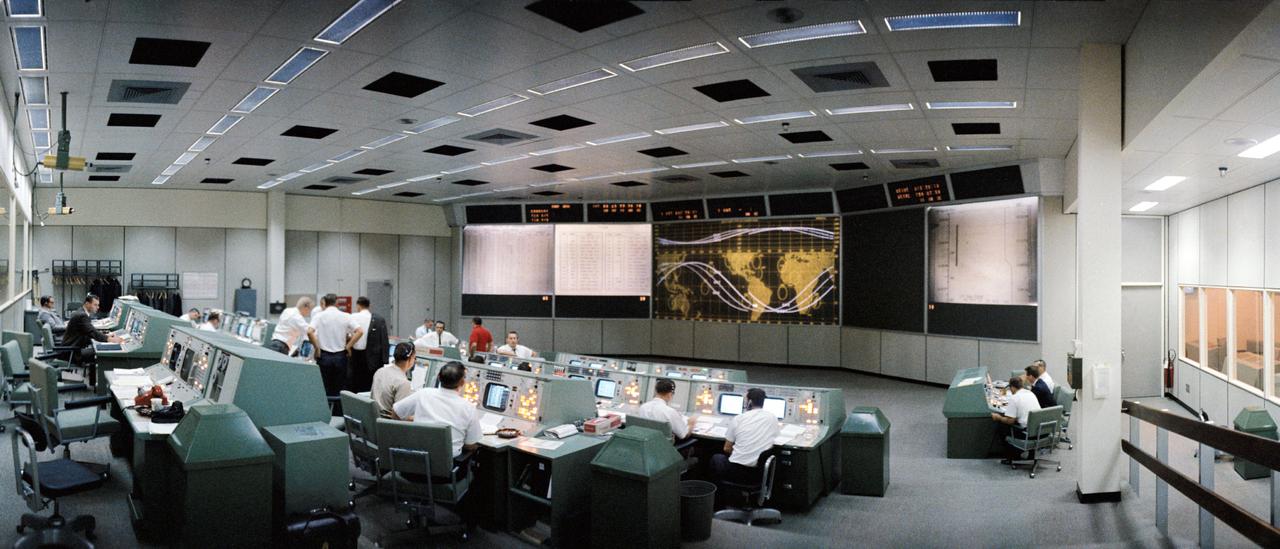
S65-45280 (21-29 Aug. 1965) --- Overall view of the Mission Control Center (MCC), Houston, Texas, during the Gemini-5 flight. Note the screen at the front of the MCC which is used to track the progress of the Gemini spacecraft.
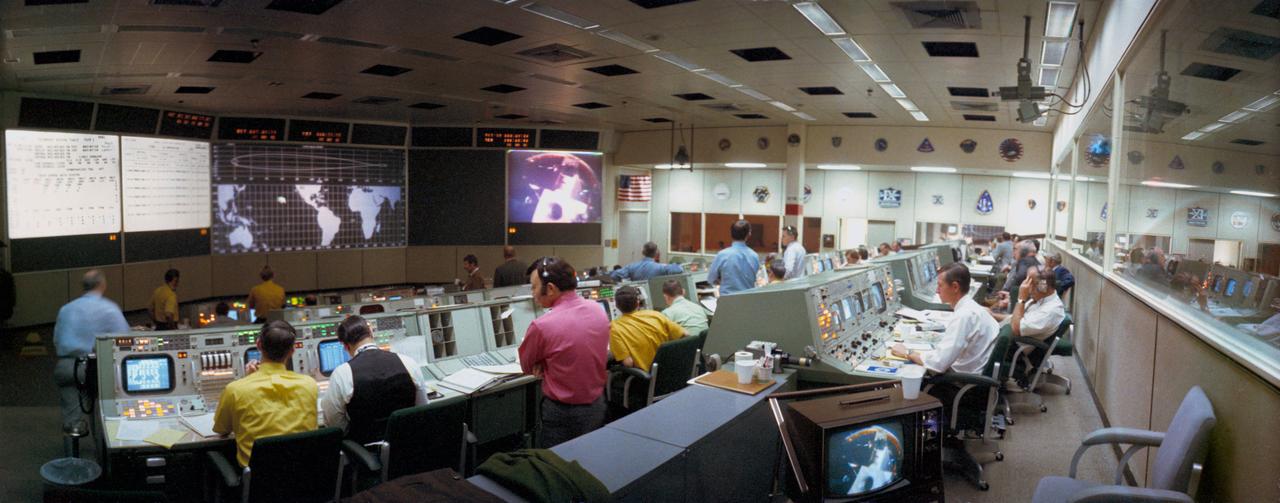
S71-17122 (31 Jan. 1971) --- A wide angle overall view of the Mission Operations Control Room (MOCR) in the Mission Control Center at the Manned spacecraft Center. This view was photographed during the first color television transmission from the Apollo 14 Command Module. Projected on the large screen at the right front of the MOCR is a view of the Apollo 14 Lunar Module, still attached to the Saturn IVB stage. The Command and Service Modules were approaching the LM/S-IVB during transposition and docking maneuvers.
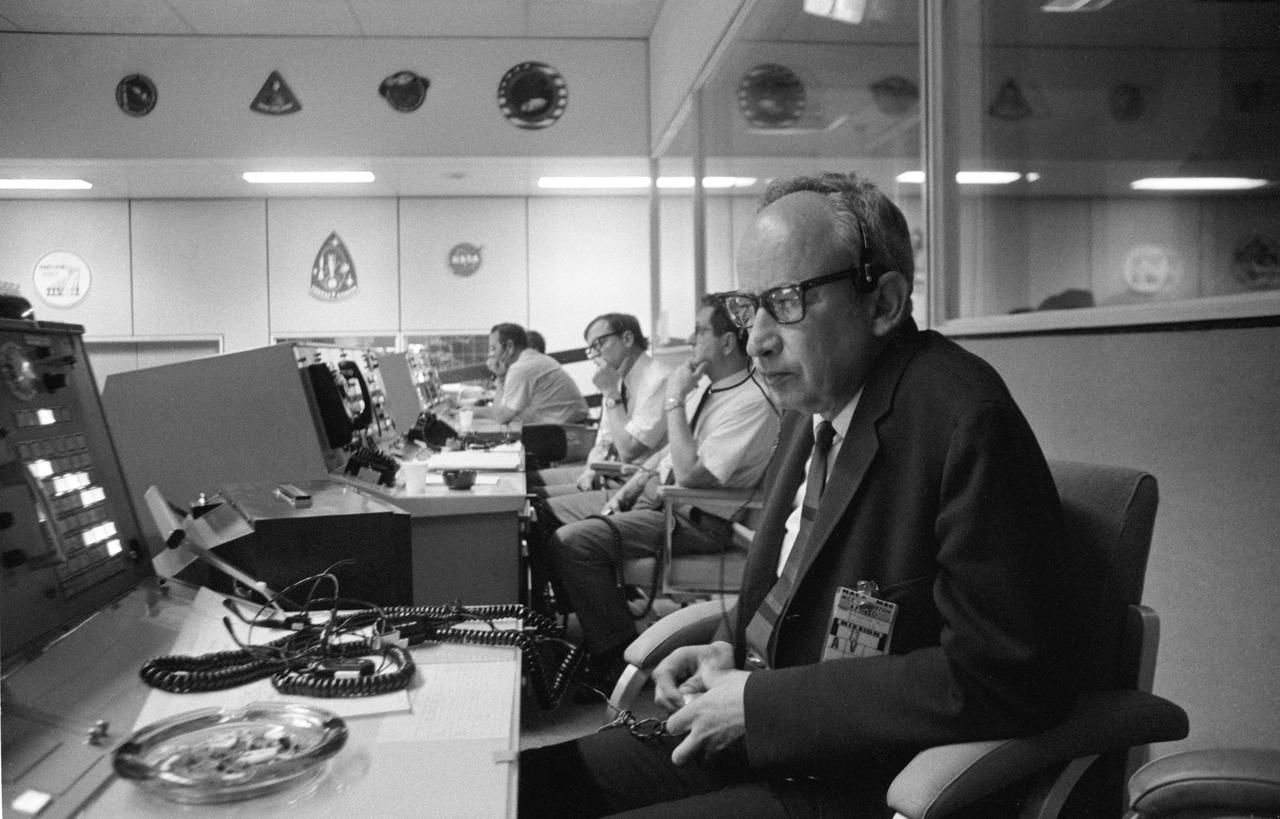
S70-34627 (11 April 1970) --- Sigurd A. Sjoberg, director of flight operations, at the Manned Spacecraft Center (MSC), views the Apollo 13 liftoff from a console in the MSC Mission Control Center (MCC), Building 30. Apollo 13 lifted off at 1:13 p.m. (CST) April 11, 1970. Photo credit: NASA
Helen Conijn, fiancée of European Space Agency astronaut Andre Kuipers of the Netherlands, far right, joins Renita Fincke, second from right, wife of Expedition 9 Flight Engineer and NASA International Space Station Science Officer Michael Fincke, along with family members at the Russian Mission Control Center outside Moscow, Wednesday, April 21, 2004 to view the docking of the Soyuz capsule to the International Space Station that brought Kuipers, Fincke and Expedition 9 Commander Gennady Padalka to the complex following their launch Monday from Kazakhstan. Photo Credit: (NASA/Bill Ingalls)
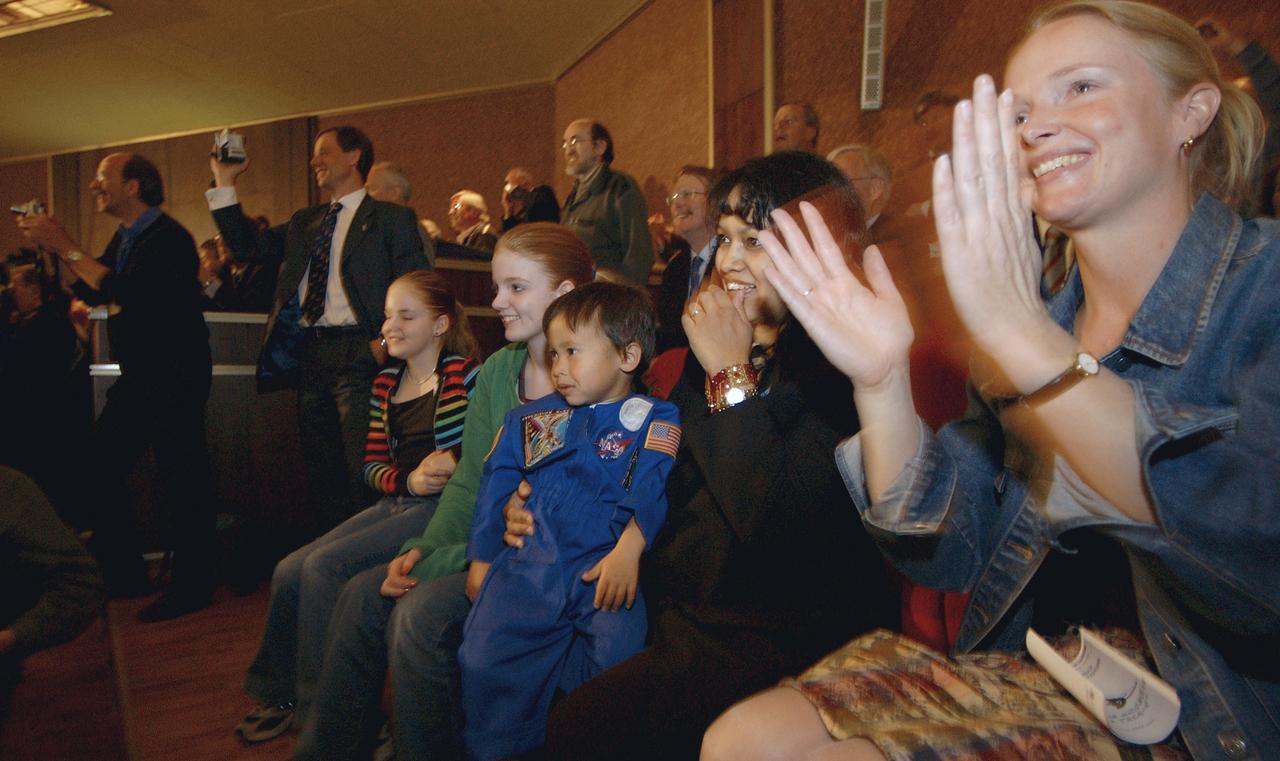
Helen Conijn, fiancée of European Space Agency astronaut Andre Kuipers of the Netherlands, far right, joins Renita Fincke, second from right, wife of Expedition 9 Flight Engineer and NASA International Space Station Science Officer Michael Fincke, along with family members at the Russian Mission Control Center outside Moscow, Wednesday, April 21, 2004 to view the docking of the Soyuz capsule to the International Space Station that brought Kuipers, Fincke and Expedition 9 Commander Gennady Padalka to the complex following their launch Monday from Kazakhstan. Photo Credit: (NASA/Bill Ingalls)
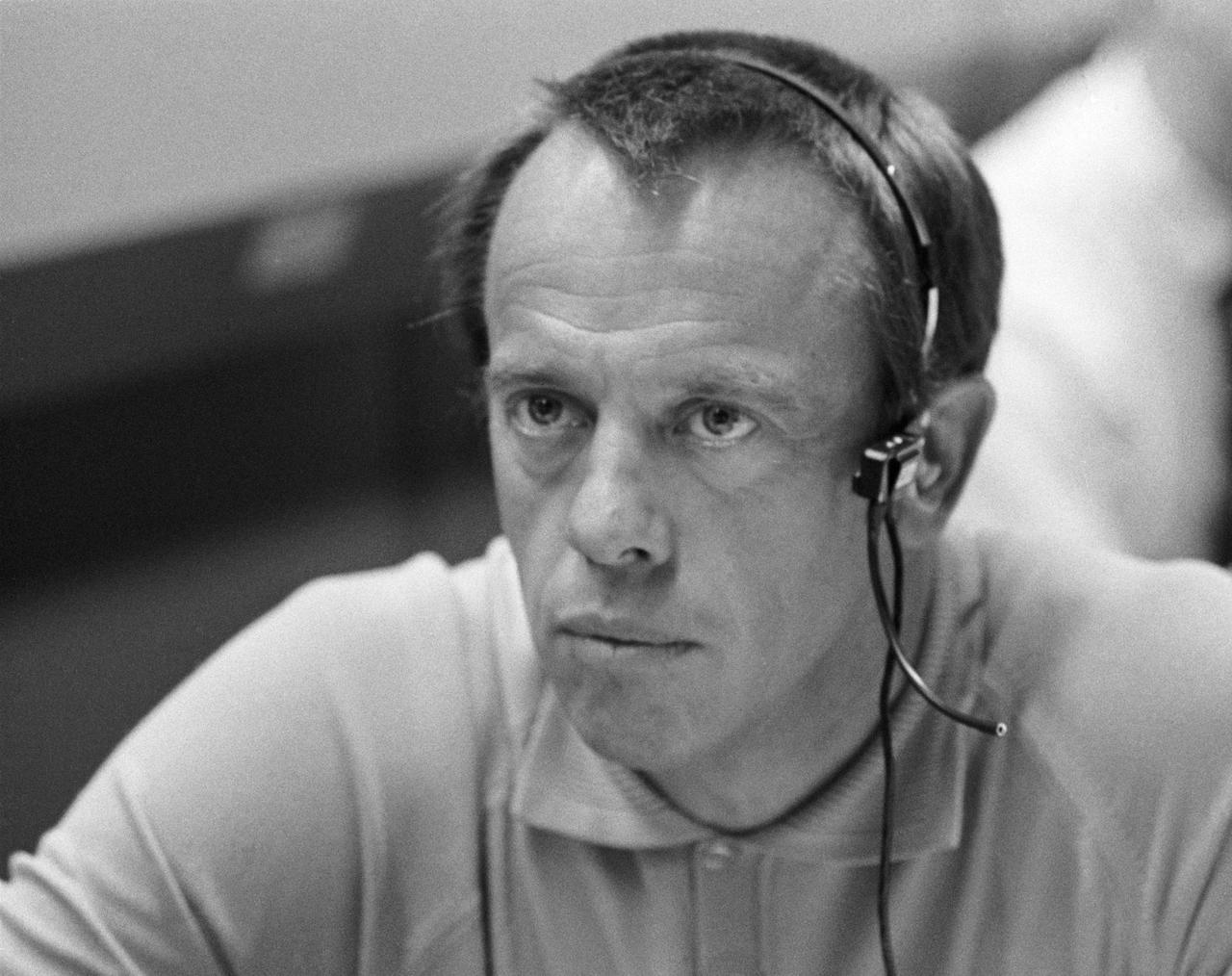
S70-34904 (14 April 1970) --- Astronaut Alan B. Shepard Jr., prime crew commander of the Apollo 14 mission, monitors communications between the Apollo 13 spacecraft and Mission Control Center. He is seated at a console in the Mission Operations Control Room of the MCC, Manned Spacecraft Center. The main concern of the moment was action taken by the three Apollo 13 crewmen - astronauts James A. Lovell Jr., John L. Swigert Jr. and Fred W. Haise Jr. - to make corrections inside the spacecraft following discovery of an oxygen cell failure several hours earlier.
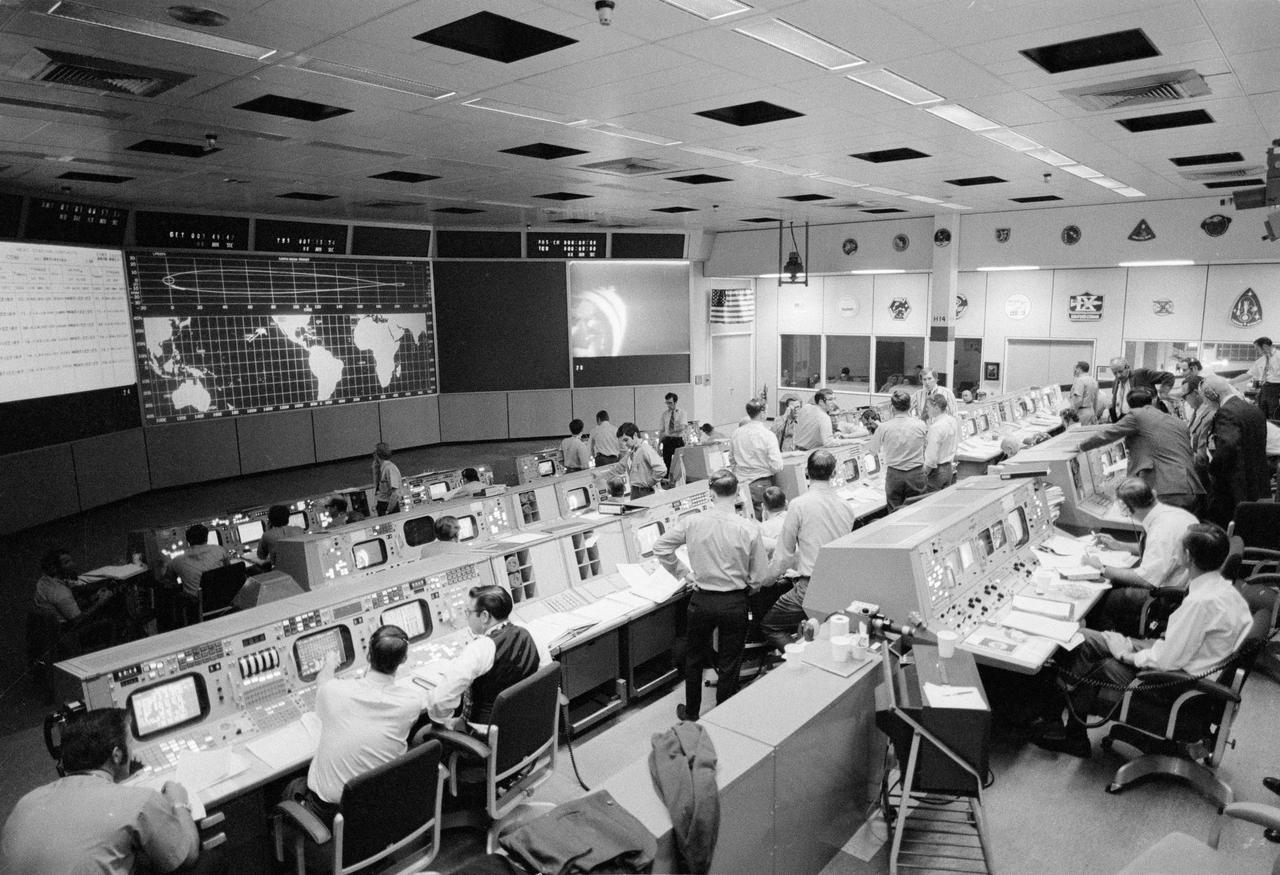
S71-16879 (31 Jan. 1971) --- Overall view of activity in the Mission Operations Control Room in the Mission Control Center during the Apollo 14 transposition and docking maneuvers. The Apollo 14 Lunar Module, still attached to the Saturn IVB stage, can be seen on the large television monitor. Due to difficulty with the docking mechanism six attempts were made before a successful "hard dock" of the Command Module with the Lunar Module was accomplished. Aboard the Command Module were astronauts Alan B. Shepard Jr., Stuart A. Roosa, and Edgar D. Mitchell.
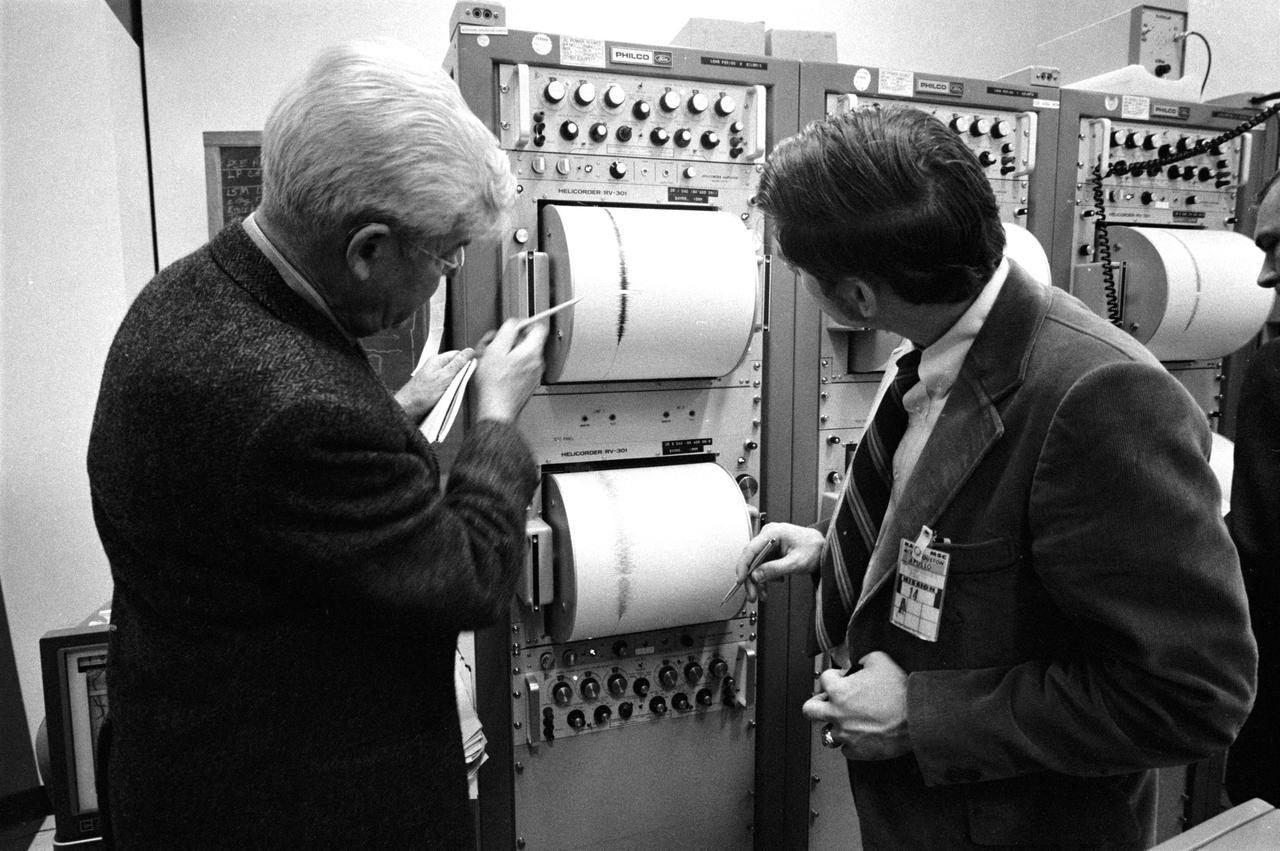
S71-17609 (4 Feb. 1971) --- These two individuals are examining a seismic reading in the Mission Control Center's ALSEP Room during the Apollo 14 S-IVB impact on the moon. Dr. Maurice Ewing (left) is the director of the Lamont-Doherty Geological Observatory at Columbia University. David Lammlein, a Columbia graduate student, is on the right. The Apollo 14 Saturn IVB stage impacted on the lunar surface at 1:40:54 a.m. (CST), Feb. 4, 1971, about 90 nautical miles south-southwest of the Apollo 12 passive seismometer. The energy release was comparable to 11 tons of TNT. Dr. Gary Latham of the Lamont-Doherty Geological Observatory is the principal investigator for the Passive Seismic Experiment, a component of the Apollo Lunar Surface Experiments Package.
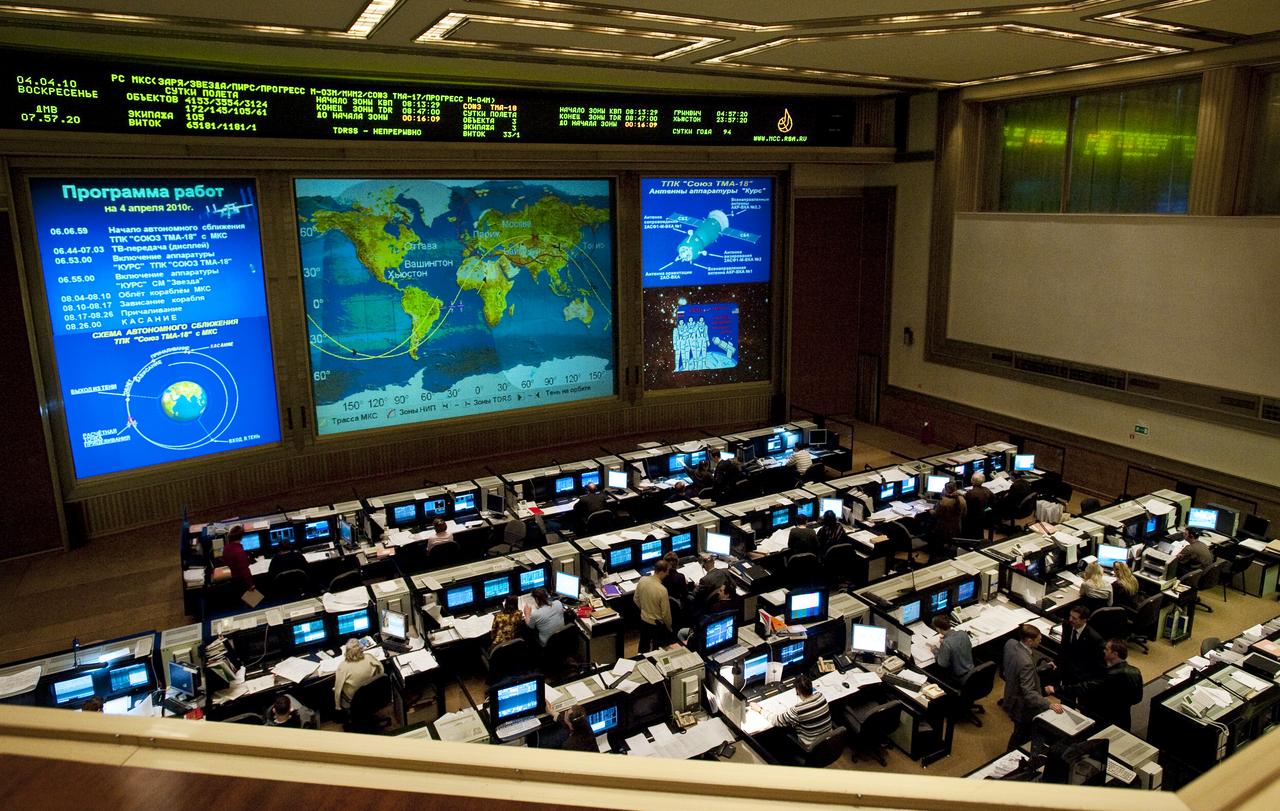
View of Russian Mission Control Center in Korolev, Russia moments before the Soyuz TMA-18 docks to the International Space Station on Sunday, April 4, 2010. Photo Credit: (NASA/Carla Cioffi)
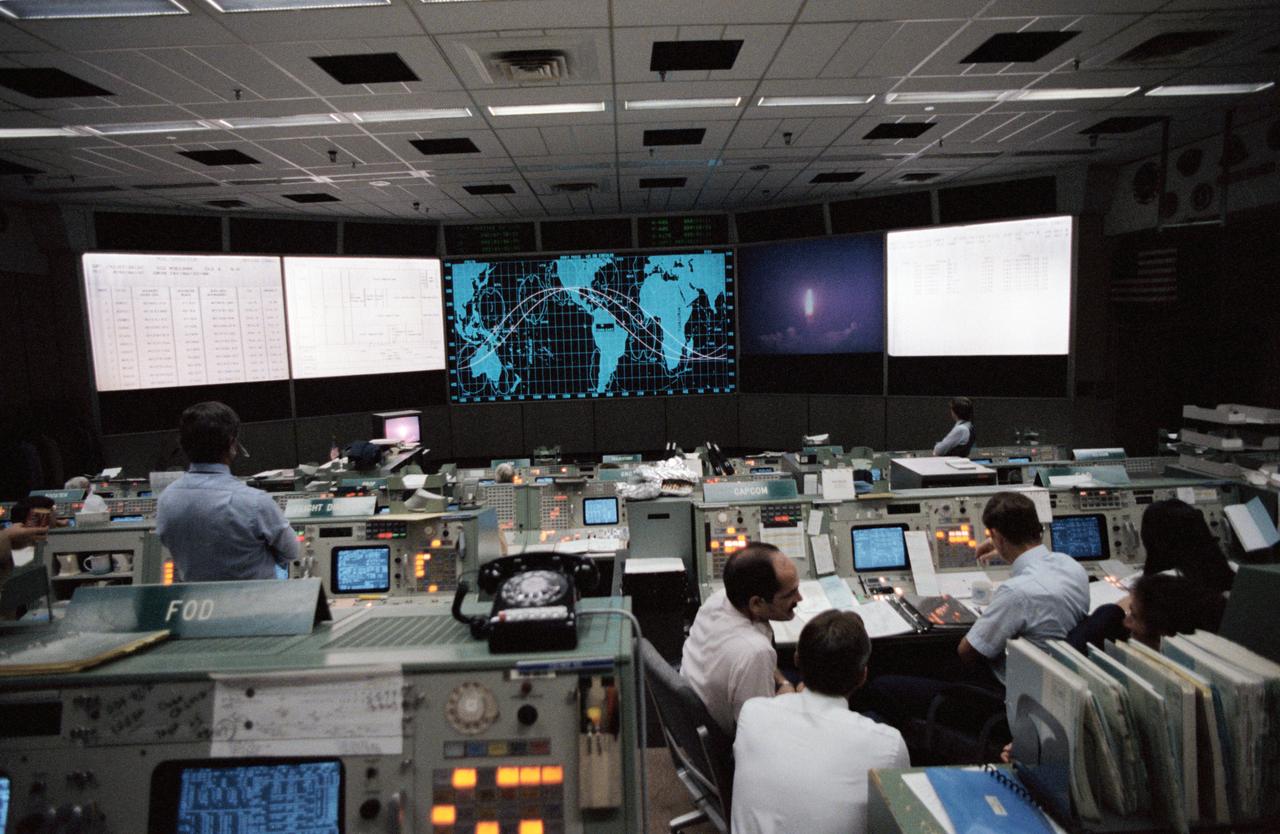
Serving as spacecraft communicators (CAPCOM) are Astronauts Guy S. Gardner (left), William F. Fisher (center), Bryan D. O'Connor (seated facing console), and Jeffrey A. Hoffman. Cheevon B. Lau is seated at the flight activities officer (FAO) console to the right of the CAPCOM console. The scene on the large screen in the mission operations control room (MOCR) is a replay of the launch of the Challenger (39264); Flight Director Jay H. Greene, left, watches a replay of the STS-8 launch on the large screen in the MOCR. He is joined by O'Connor, Jeffrey A. Hoffman, Gardner and Fisher. Lau works at the FAO console near the CAPCOM console (39265); Harold Black, integrated communications officer (INCO) for STS-8 mans the INCO console during the first TV downlink from the Challengers flight. The payload bay can be seen on the screen in the front of the MOCR (39266).
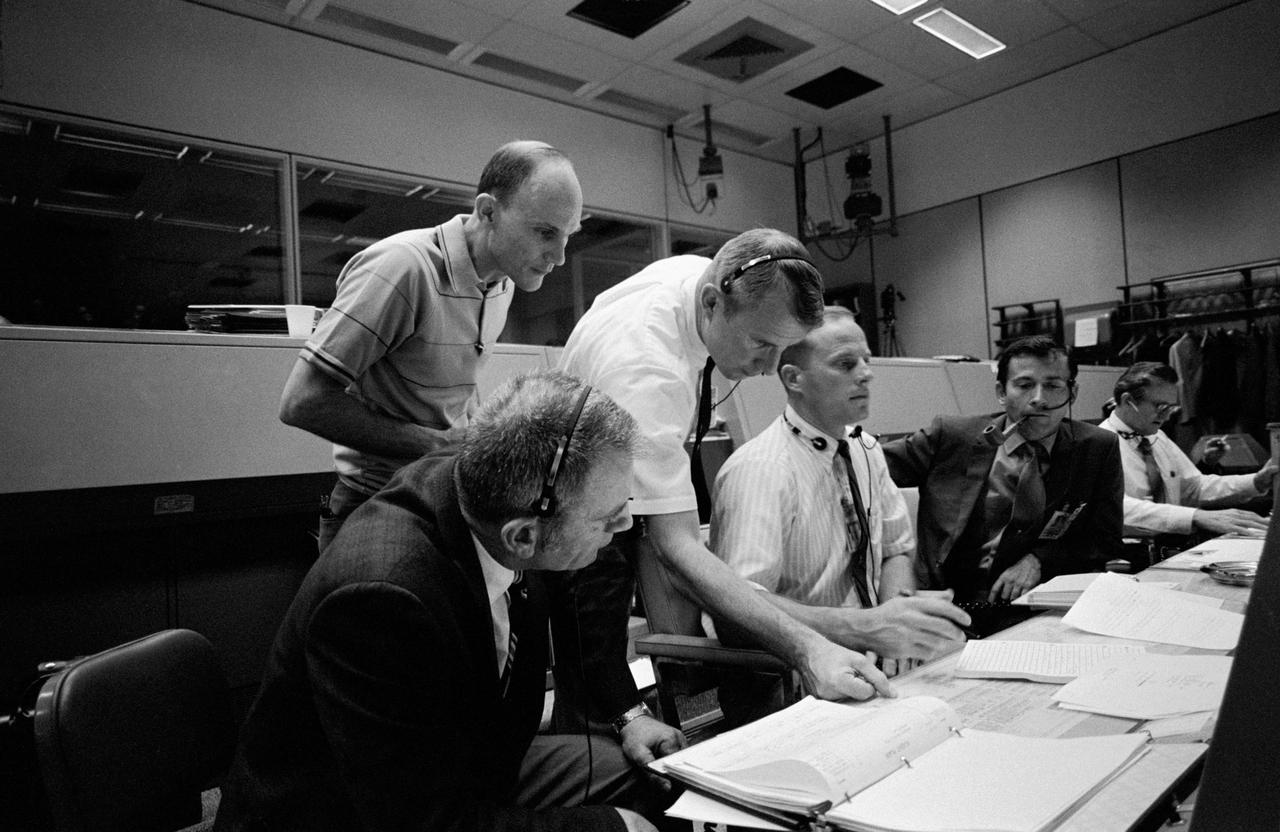
S70-34902 (14 April 1970) --- Several persons important to the Apollo 13 mission, at consoles in the Mission Operations Control Room (MOCR) of the Mission Control Center (MCC). Seated at consoles, from left to right, are astronauts Donald K. Slayton, director of flight crew operations; astronaut Jack R. Lousma, Shift 3 spacecraft communicator; and astronaut John W. Young, commander of the Apollo 13 backup crew. Standing, left to right, are astronaut Tom K. Mattingly II, who was replaced as Apollo 13 command module pilot after it was learned he may come down with measles, and astronaut Vance D. Brand, Shift 2 spacecraft communicator. Several hours earlier, in the late evening hours of April 13, crew members of the Apollo 13 mission reported to MCC that trouble had developed with an oxygen cell on their spacecraft.
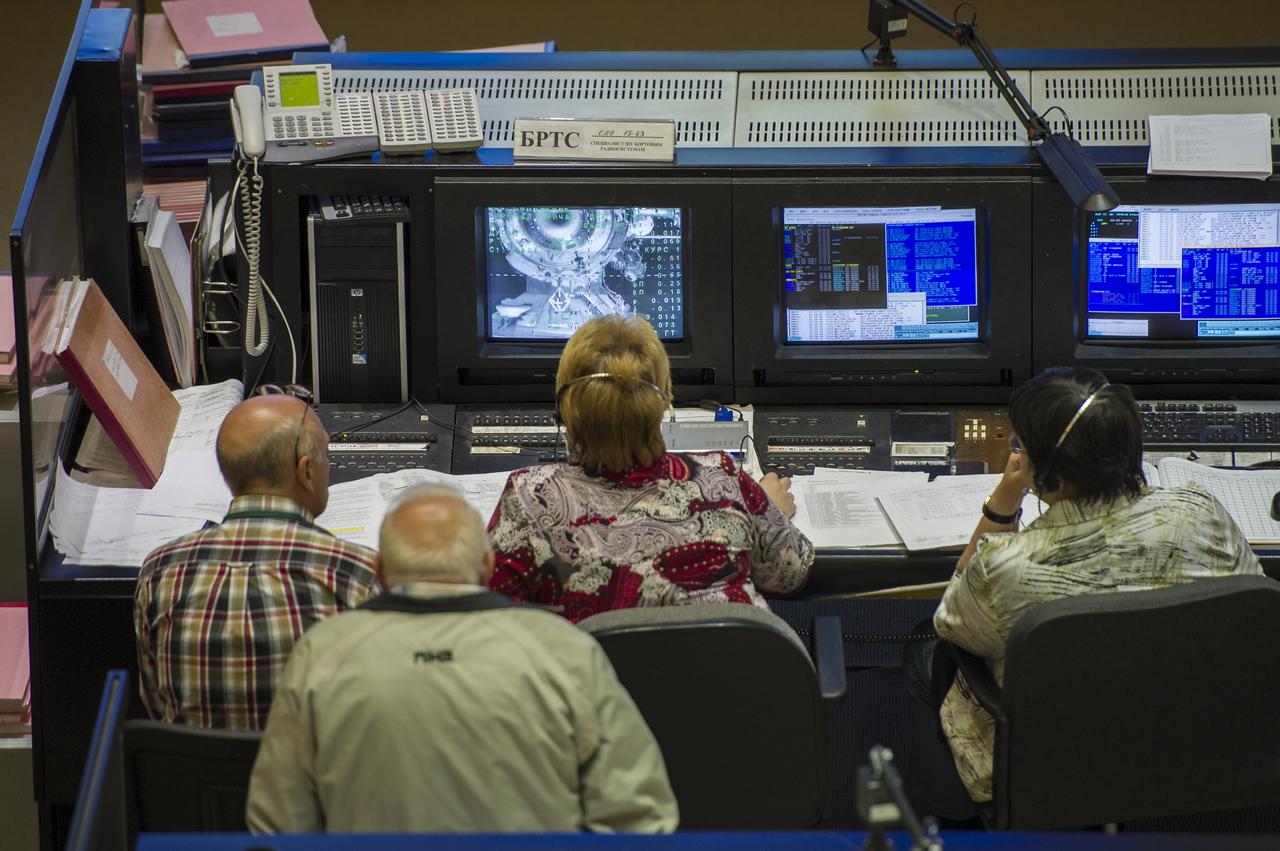
Russian flight controllers at the Russian Mission Control Center in Korolev, Russia monitor the Soyuz TMA-04M as it docks to the International Space Station on Thursday, May 17, 2012. Onboard the soyuz spacecraft are Expedition 31 Soyuz Commander Gennady Padalka, Flight Engineer Sergei Revin, and NASA Flight Engineer Joe Acaba. The crew of three launched at 9:01 a.m. Kazakhstan time on Tuesday, May 15 from the Baikonur Cosmodrome in Kazakhstan. Photo Credit (NASA/Bill Ingalls)
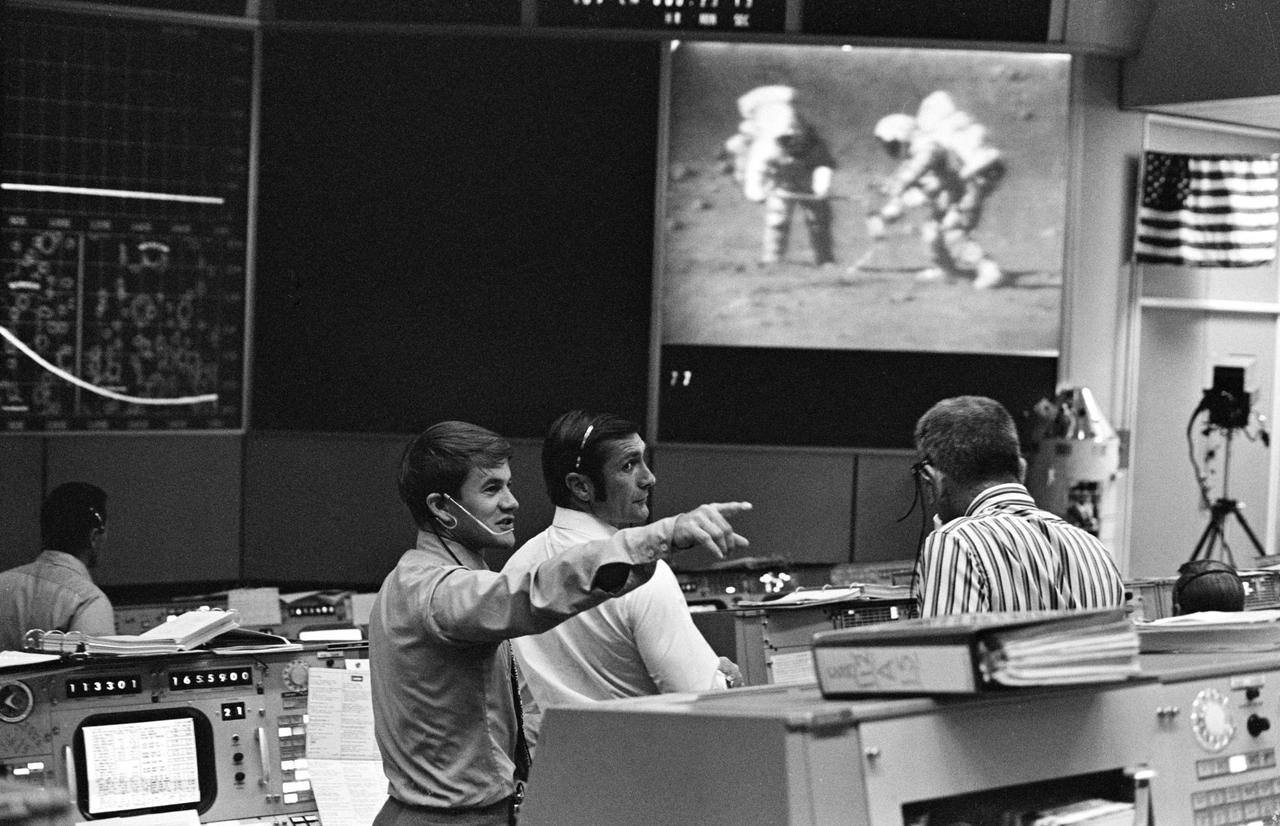
S71-41836 (2 Aug. 1971) --- Scientist-astronaut Joseph P. Allen, left, directs the attention of astronaut Richard F. Gordon Jr., to an occurrence out of view at right in the Mission Control Center's (MCC) Mission Operations Control Room (MOCR), while Dr. Donald K. (Deke) Slayton, on right with back to camera, views activity of Apollo 15 on a large screen at the front of the MOCR. Astronauts David R. Scott and James B. Irwin are seen on the screen performing tasks of the mission's third extravehicular activity (EVA), on Aug. 2, 1971. Dr. Slayton is director of Flight Crew Operations, NASA-MSC; Gordon is Apollo 15 backup commander; and Dr. Allen is an Apollo 15 spacecraft communicator.

NASA Armstrong’s Mission Control Center, or MCC, is where culmination of all data-gathering occurs. Engineers, flight controllers and researchers monitor flights and missions as they are carried out. Data and video run through the MCC and are recorded, displayed and archived. Data is then processed and prepared for post-flight analysis.
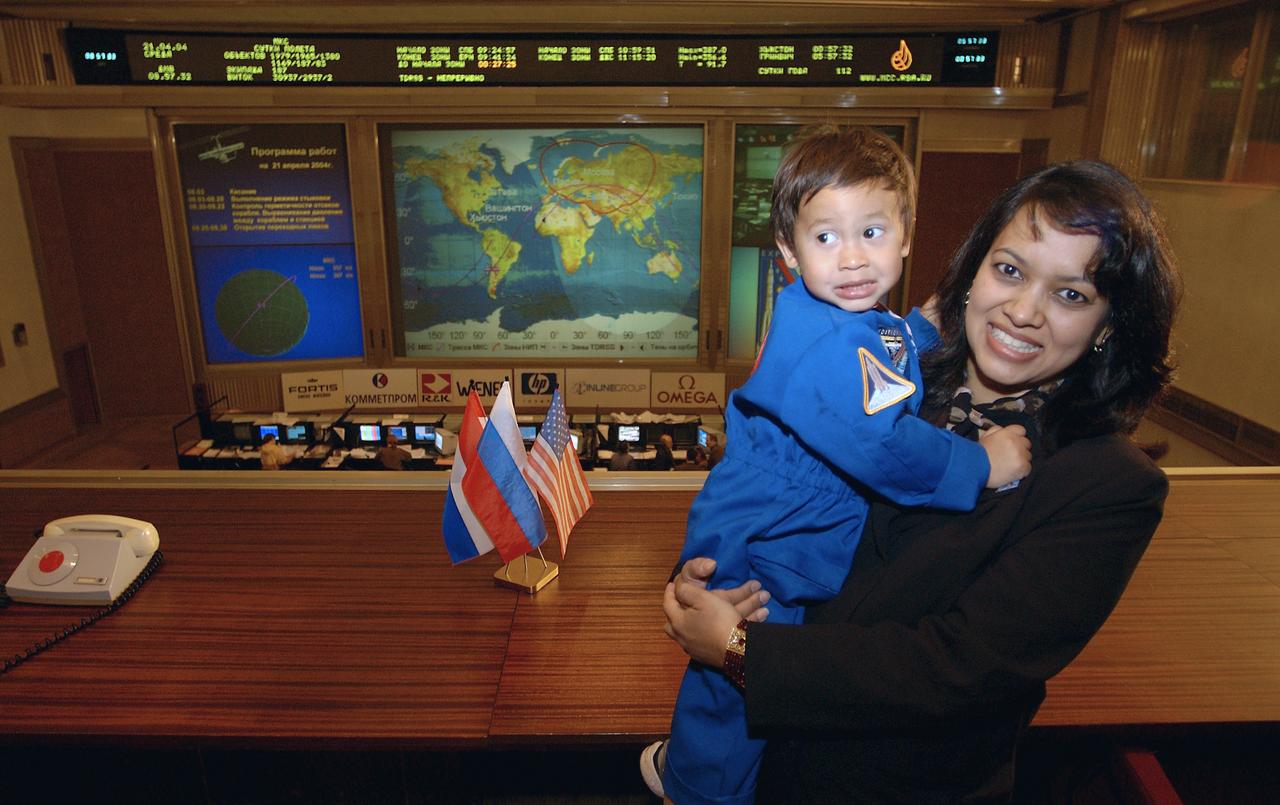
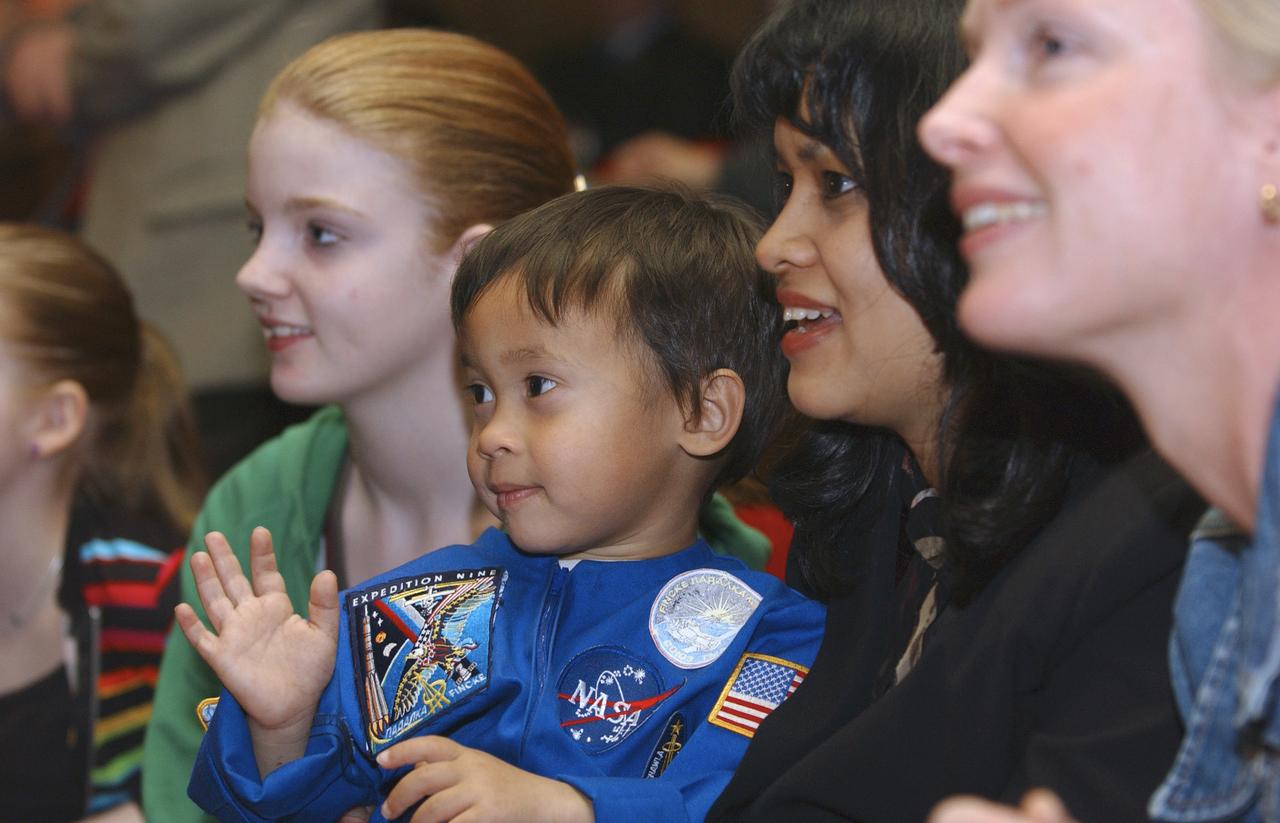
Renita Fincke, wife of Expedition 9 Flight Engineer and NASA International Space Station Science Officer Michael Fincke, smiles with their two-year old son Chandra at the Russian Mission Control Center outside Moscow, Wednesday, April 21, 2004, following the successful docking of the Russian Soyuz capsule carrying Fincke, Expedition 9 Commander Gennady Padalka and European Space Agency astronaut Andre Kuipers of the Netherlands to the International Space Station. Photo Credit: (NASA/Bill Ingalls)
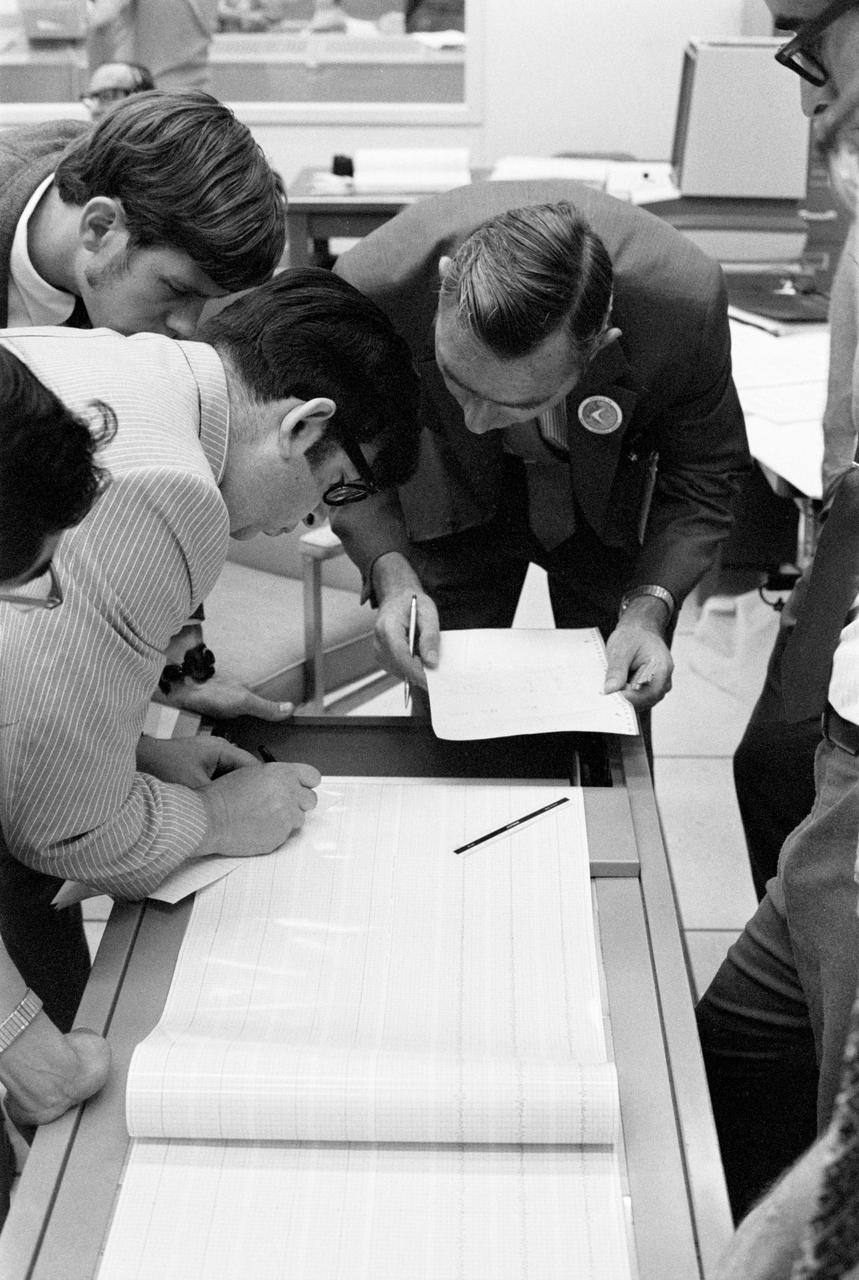
The seismometer reading from the impact made by the Apollo 15 Saturn S-IVB stage when it struck the lunar surface is studied by scientists in the Mission Control Center. Dr. Gary Latham (dark suit, wearing lapel button) of Columbia University is responsible for the design and experiment data analysis of the Passive Seismic Experiment of the Apollo Lunar Surface Experiment Package (ALSEP). The man on the left, writing, is Nafi Toksos of the Massachusetts Institute of Technology. Looking on at upper left is Dave Lamneline, also with Columbia.
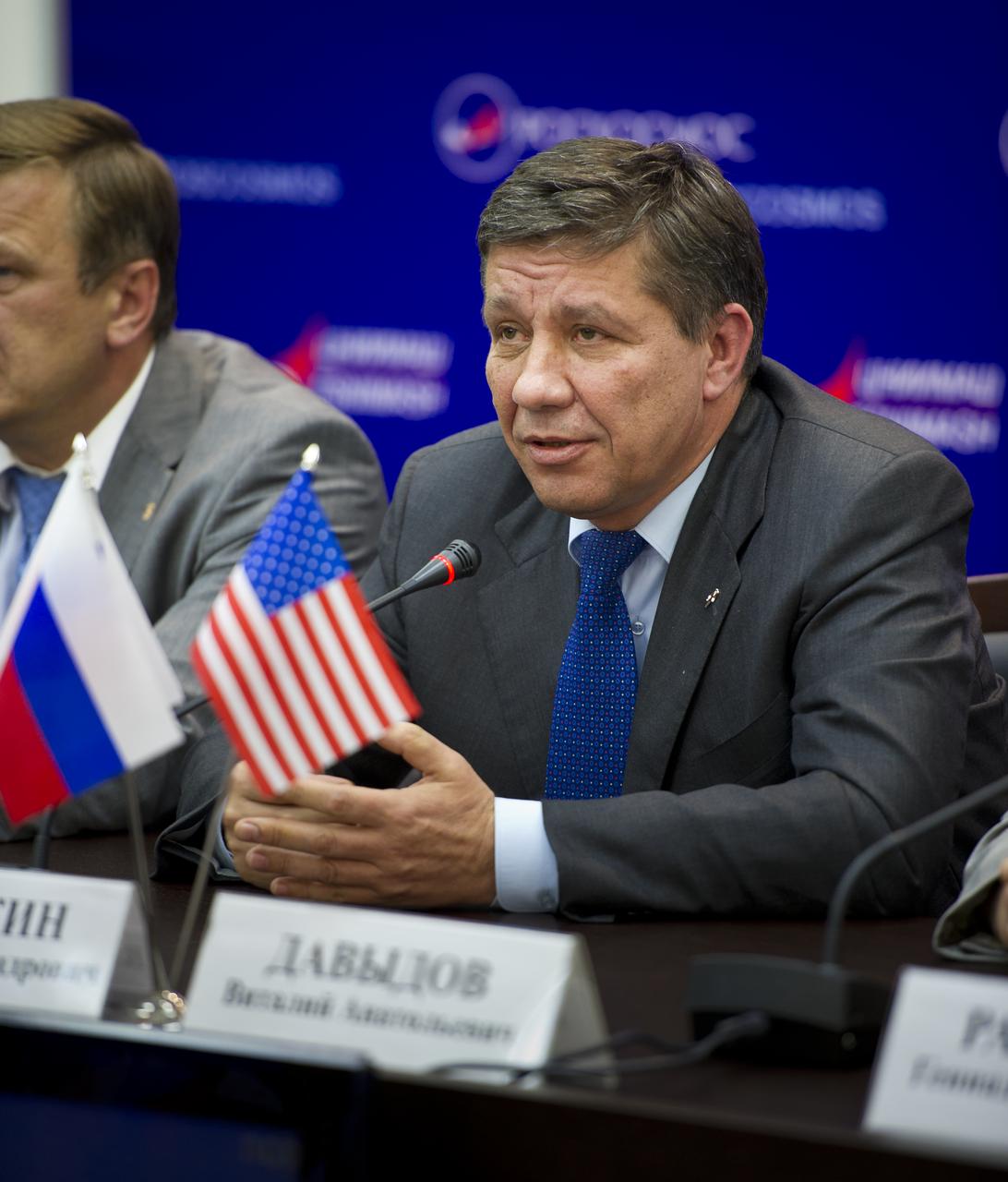
Vladimir Popovkin, Head of the Russian Federal Space Agency (ROSCOSMOS) answers a reporter’s question during a Soyuz post-docking press conference at the Russian Mission Control Center in Korolev, Russia on Friday, June 10, 2011. The Soyuz TMA-02M docked to the International Space Station carrying Expedition 28 Soyuz Commander Sergei Volkov, NASA Flight Engineer Mike Fossum and JAXA (Japanase Aerospace Exploration Agency) Flight Engineer Satoshi Furukawa. Photo Credit: (NASA/Carla Cioffi)
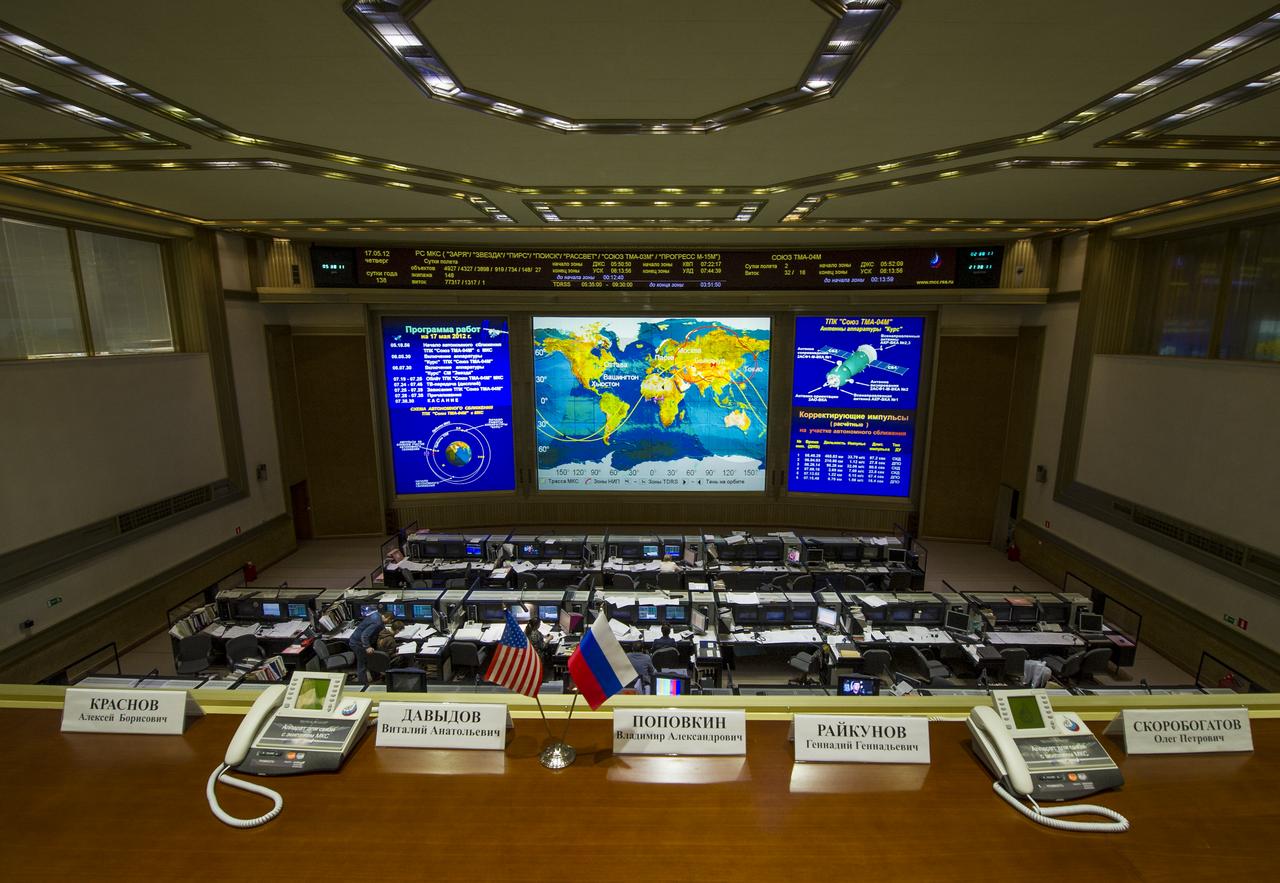
View from the balcony of the Russian Mission Control Center in Korolev, Russia a little more than an hour before the planned docking of the Soyuz TMA-04M to the International Space Station on Thursday, May 17, 2012. Onboard the soyuz spacecraft are Expedition 31 Soyuz Commander Gennady Padalka, Flight Engineer Sergei Revin, and NASA Flight Engineer Joe Acaba. The crew of three launched at 9:01 a.m. Kazakhstan time on Tuesday, May 15 from the Baikonur Cosmodrome in Kazakhstan. Photo Credit (NASA/Bill Ingalls)
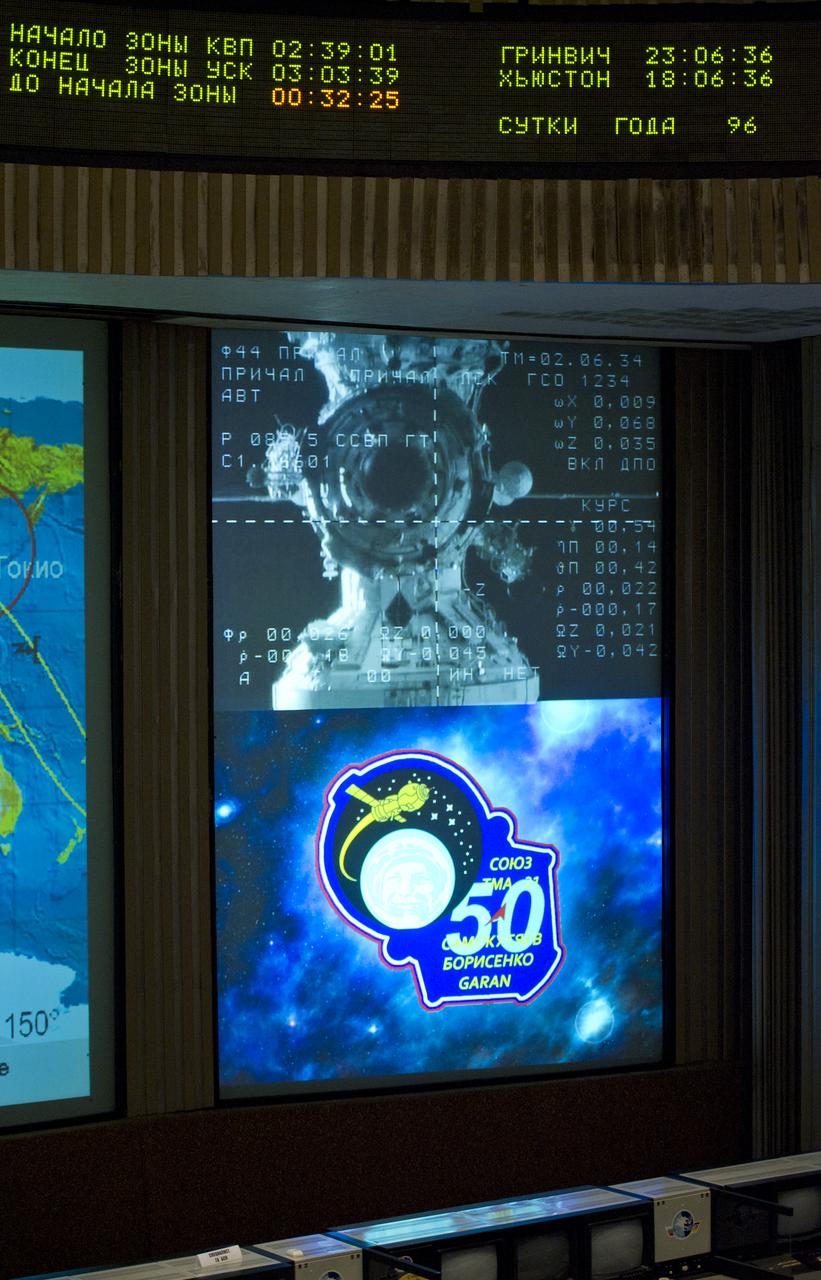
The Soyuz TMA-21 is seen as it approaches the International Space Station on a large screen TV at the Russian Mission Control Center in Korolev, Russia on Thursday, April 7, 2011. The Soyuz TMA-21 docked to the International Space Station carrying Expedition 27 Soyuz Commander Alexander Samokutyaev, NASA Flight Engineer Ron Garan and Russian Flight Engineer Andrey Borisenko. Photo Credit: (NASA/Carla Cioffi)
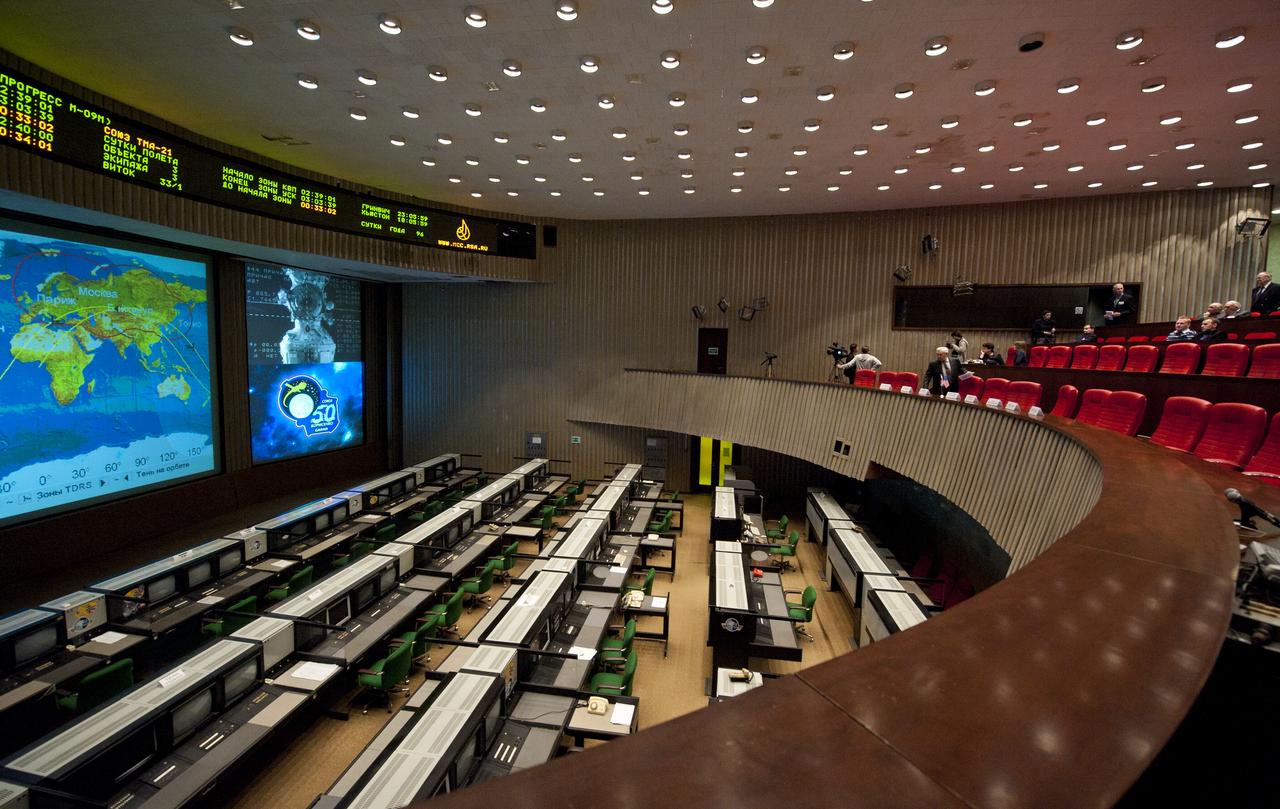
View from the balcony of the Russian Mission Control Center in Korolev, Russia as the Soyuz TMA-21 nears the International Space Station on Thursday, April 7, 2011. The Soyuz TMA-21 docked to the International Space Station carrying Expedition 27 Soyuz Commander Alexander Samokutyaev, NASA Flight Engineer Ron Garan and Russian Flight Engineer Andrey Borisenko. Photo Credit: (NASA/Carla Cioffi)
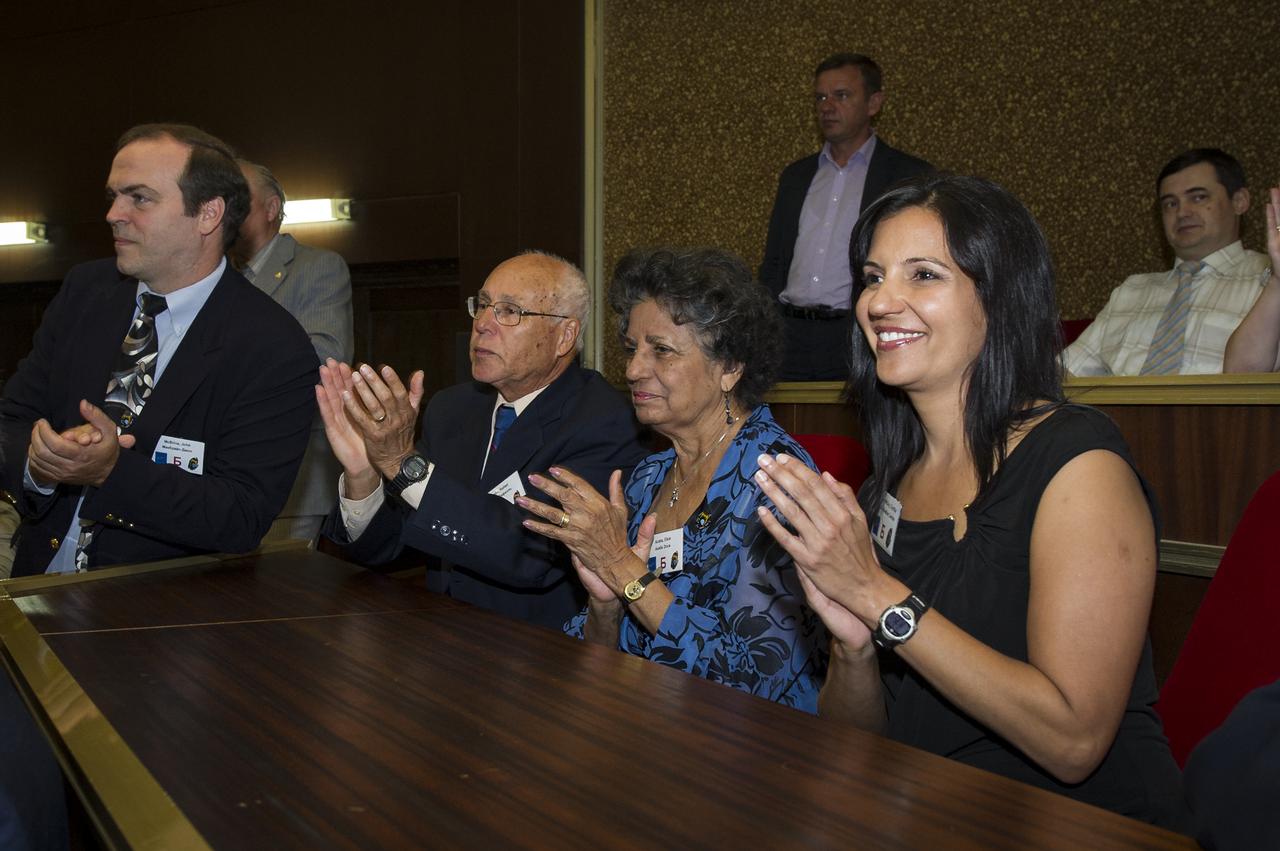
The family of Expedition 31 Flight Engineer Joe Acaba applauds as they watch the docking of the Soyuz TMA-04M spacecraft on the TV screen at the Russian Mission Control Center in Korolev, Russia, Thursday, May 17, 2012. The Soyuz docked to the International Space Station with Acaba and fellow crew members, Soyuz Commander Gennady Padalka, and Flight Engineer Sergei Revin two days after they launched from the Baikonur Cosmodrome in Kazakhstan. Photo Credit: (NASA/Bill Ingalls)
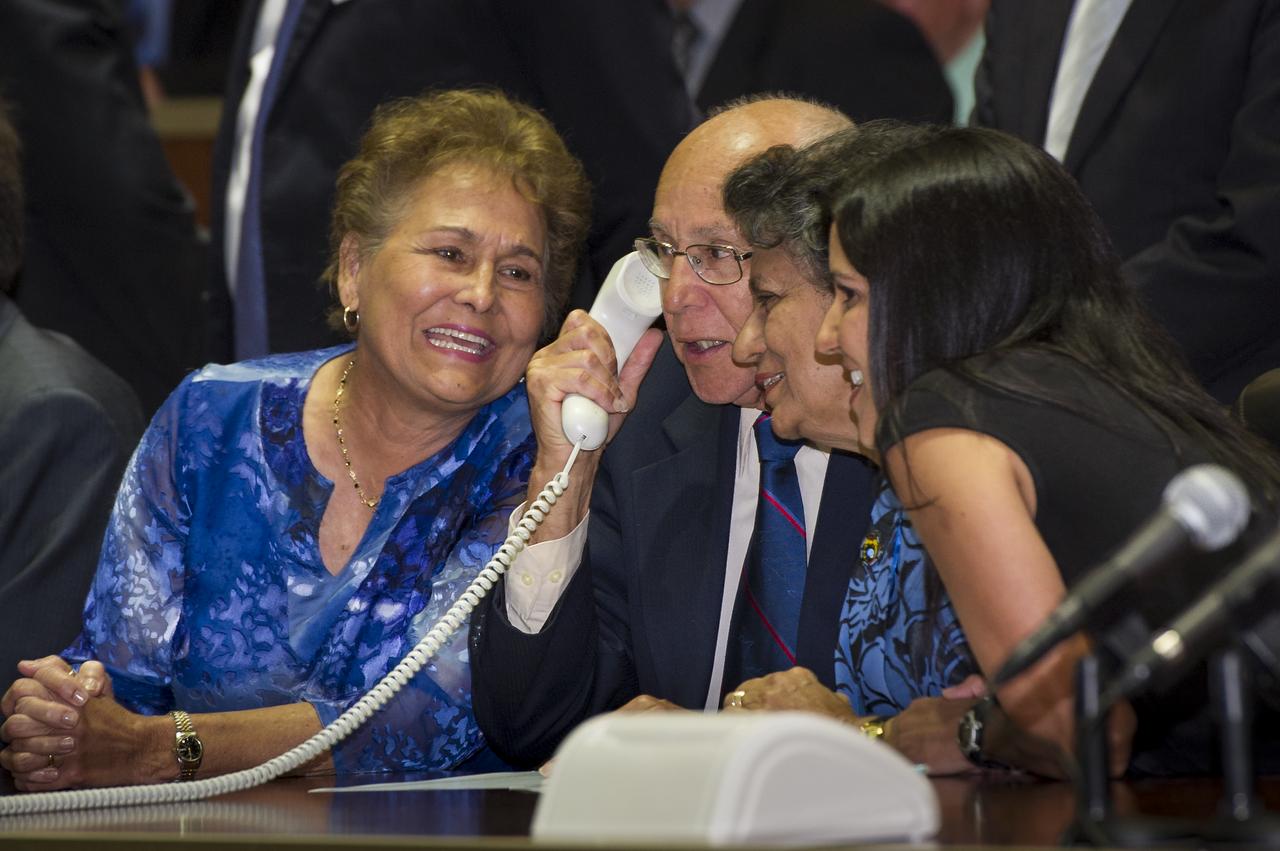
The family of Expedition 31 Flight Engineer Joe Acaba sings happy birthday to him from the Russian Mission Control Center in Korolev, Russia, Thursday, May 17, 2012. Acaba, Expedition 31 Soyuz Commander Gennady Padalka, and Flight Engineer Sergei Revin, docked their Soyuz TMA-04M spacecraft to the space station at 8:36 a.m. Moscow time, two days after they launched from the Baikonur Cosmodrome in Kazakhstan. Photo Credit: (NASA/Bill Ingalls)
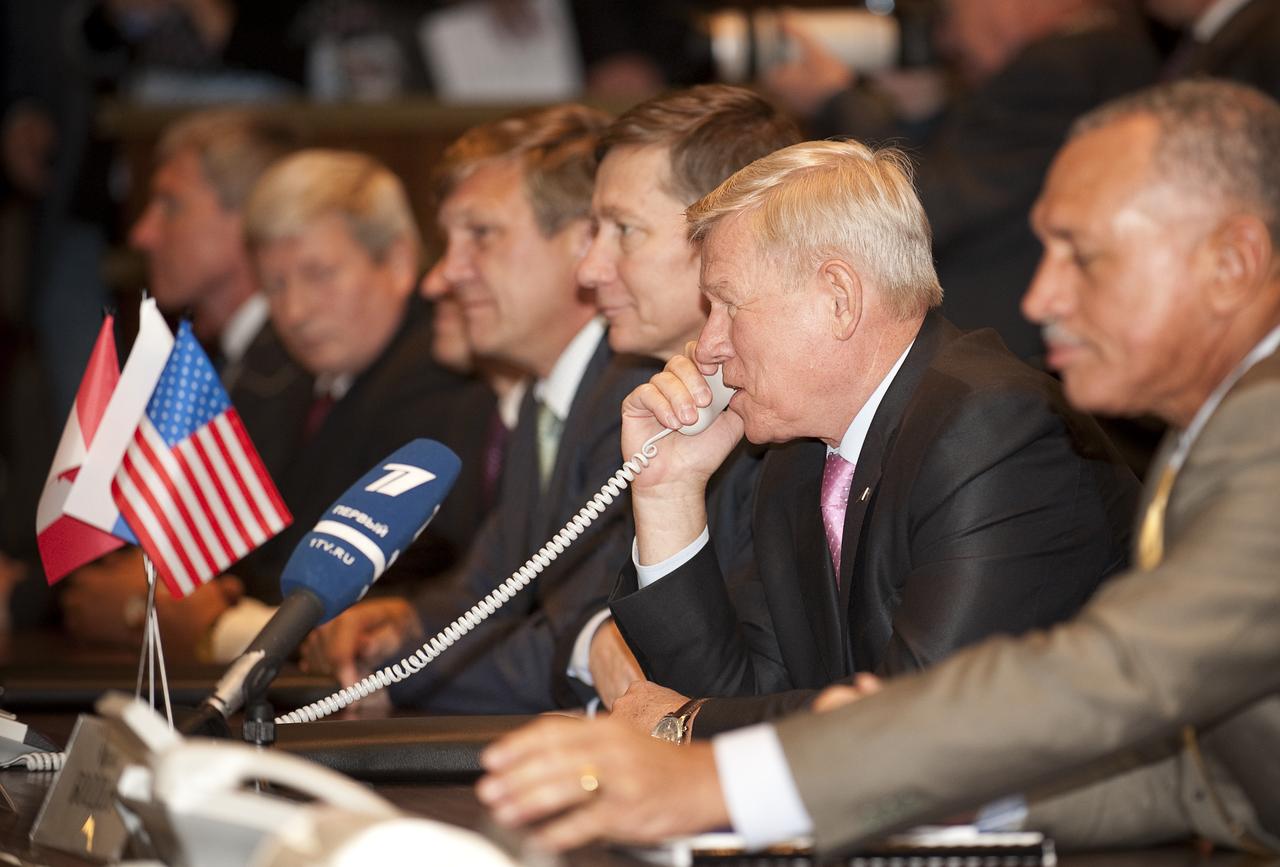
Head of the Russian Federal Space Agency, Anatoly Perminov, talks to the crew of the International Space Station (ISS) from the Mission Control Center Moscow in Korolev, Russia shortly after the successful docking of the Soyuz TMA-16 spacecraft with the International Space Station marking the start of Expedition 21 with Flight Engineer Jeffrey N. Williams, Expedition 21 Flight Engineer Maxim Suraev, and Spaceflight Participant Guy Laliberté, Friday, Oct. 2, 2009. Photo Credit: (NASA/Bill Ingalls)
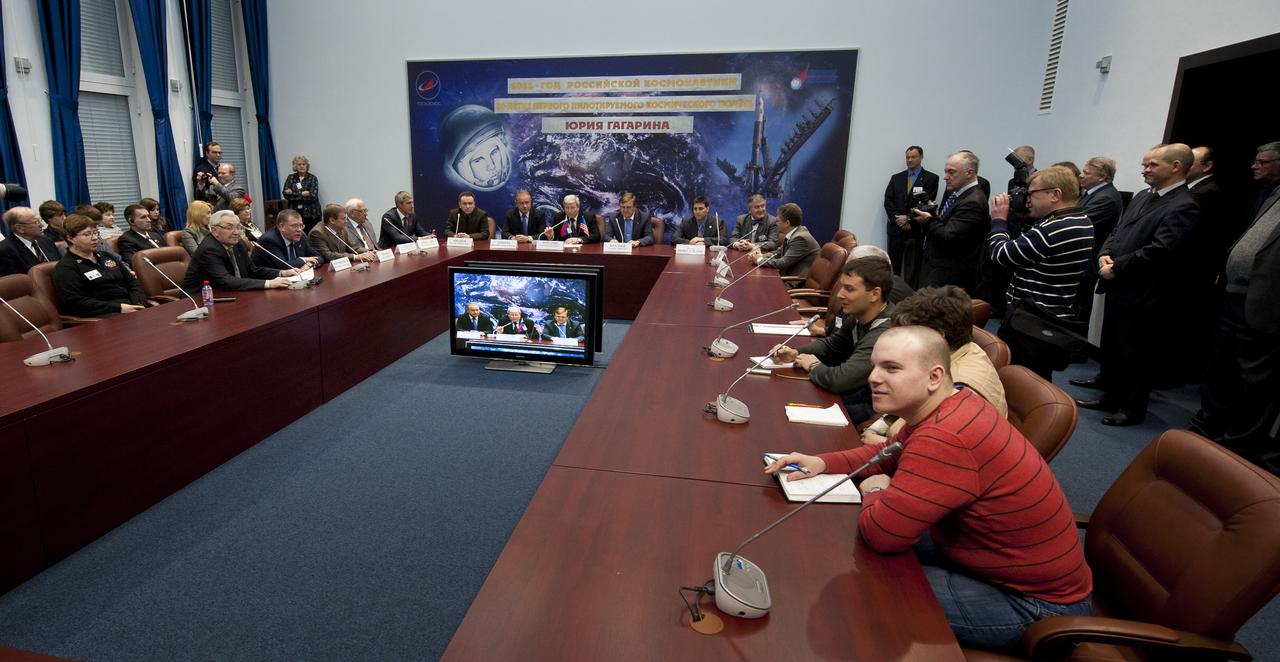
Top officials from the Russian Federal Space Agency and NASA hold a Soyuz post-docking press conference at the Russian Mission Control Center in Korolev, Russia on Thursday, April 7, 2011. The Soyuz TMA-21 docked to the International Space Station carrying Expedition 27 Soyuz Commander Alexander Samokutyaev, NASA Flight Engineer Ron Garan and Russian Flight Engineer Andrey Borisenko. Photo Credit: (NASA/Carla Cioffi)

View from the balcony of the Russian Mission Control Center in Korolev, Russia a little more than an hour before the planned docking of the Soyuz TMA-04M to the International Space Station on Thursday, May 17, 2012. Onboard the soyuz spacecraft are Expedition 31 Soyuz Commander Gennady Padalka, Flight Engineer Sergei Revin, and NASA Flight Engineer Joe Acaba. The crew of three launched at 9:01 a.m. Kazakhstan time on Tuesday, May 15 from the Baikonur Cosmodrome in Kazakhstan. Photo Credit (NASA/Bill Ingalls)
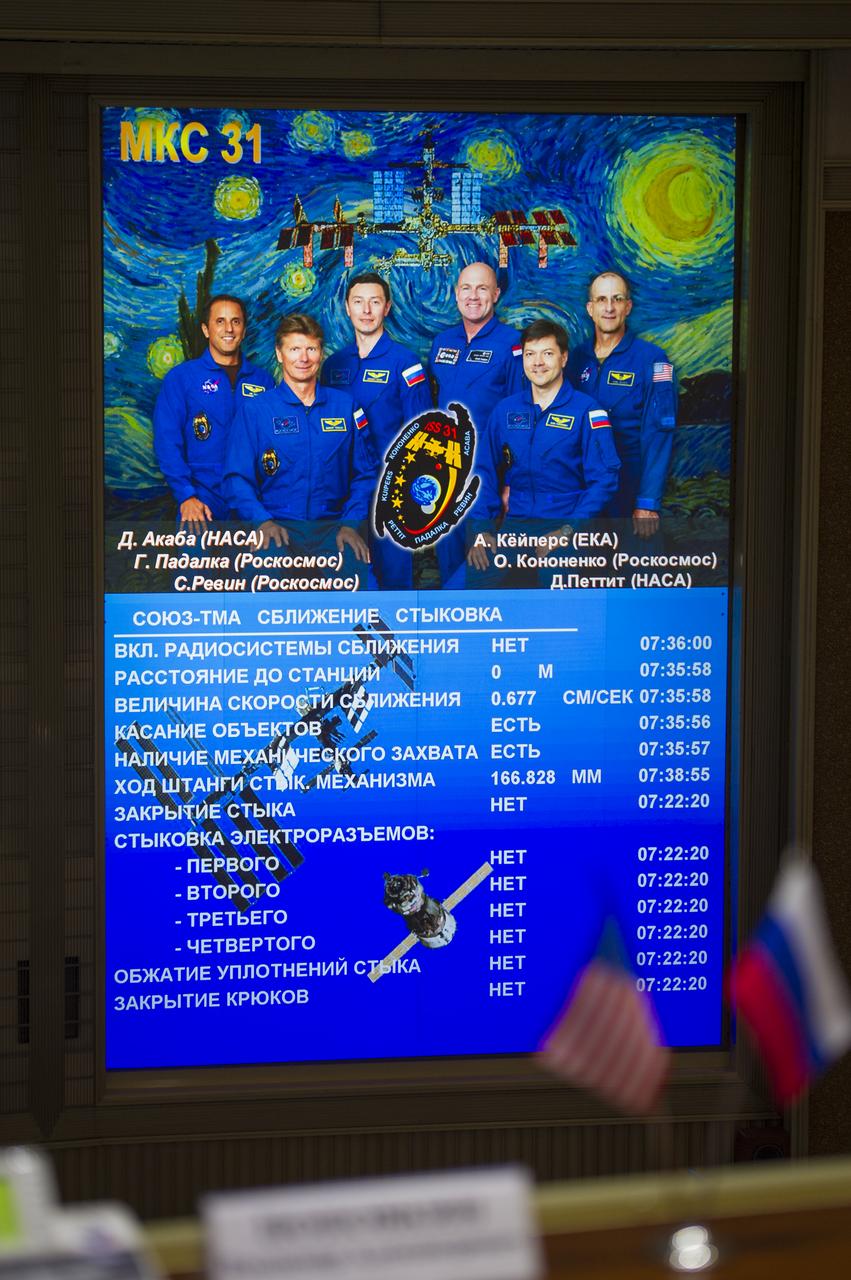
View from the balcony of the Russian Mission Control Center shows the Expedition 31 crew portrait along with a timeline of Soyuz TMA-04M docking events on Thursday, May 17, 2012, in Korolev, Russia. The Soyuz docked to the International Space Station at 8:36 a.m. Moscow time with Expedition 31 Soyuz Commander Gennady Padalka, Flight Engineer Sergei Revin, and NASA Flight Engineer Joe Acaba two days after they launched from the Baikonur Cosmodrome in Kazakhstan. Photo Credit (NASA/Bill Ingalls)
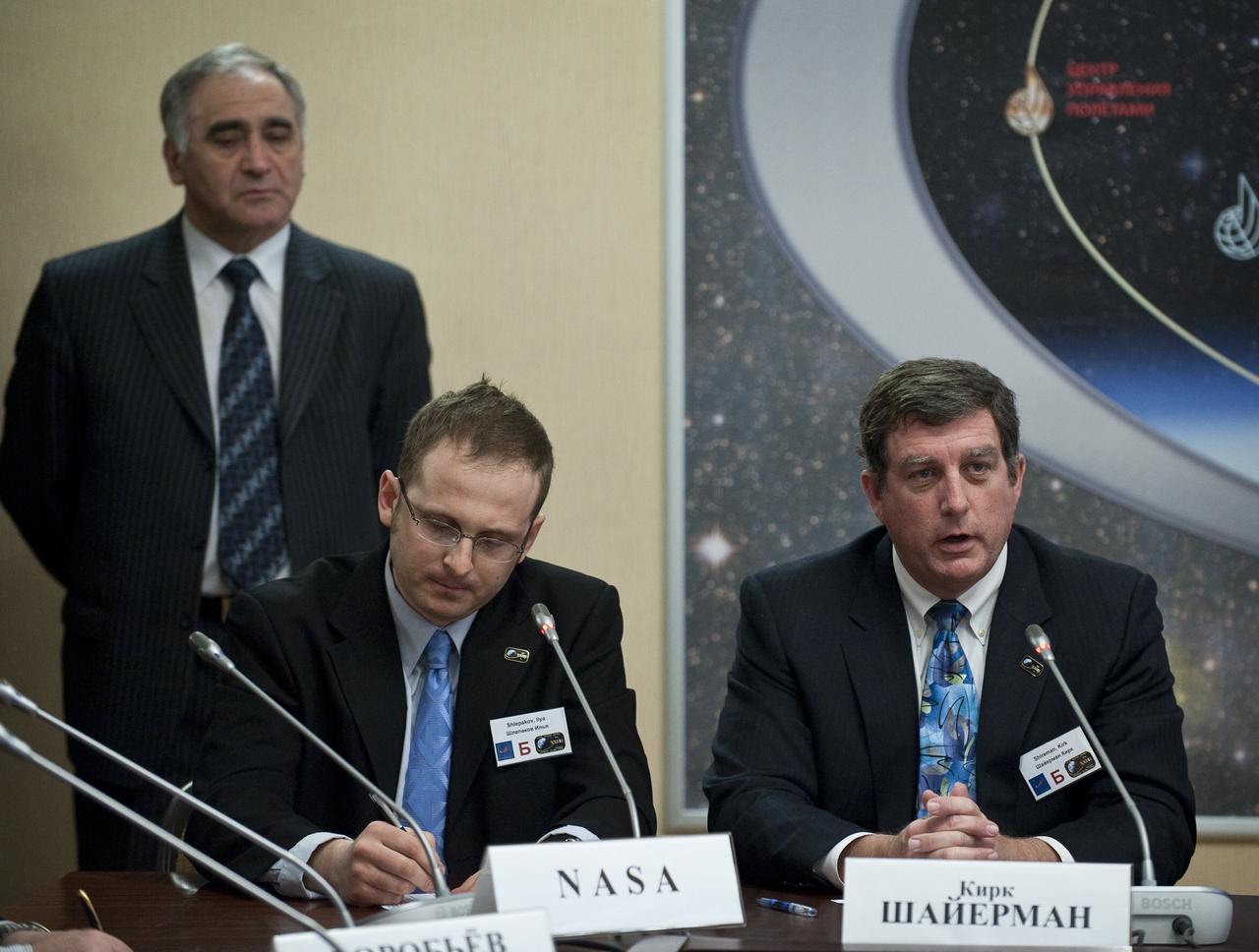
Kirk Shireman, right, NASA's deputy ISS program manager, answers reporter’s questions during a Soyuz post-docking press conference at the Russian Mission Control Center in Korolev, Russia on Sunday, April 4, 2010. The Soyuz TMA-18 docked to the International Space Station carrying Expedition 23 Soyuz Commander Alexander Skvortsov, Flight Engineer Mikhail Kornienko and NASA Flight Engineer Tracy Caldwell Dyson. Photo Credit: (NASA/Carla Cioffi)
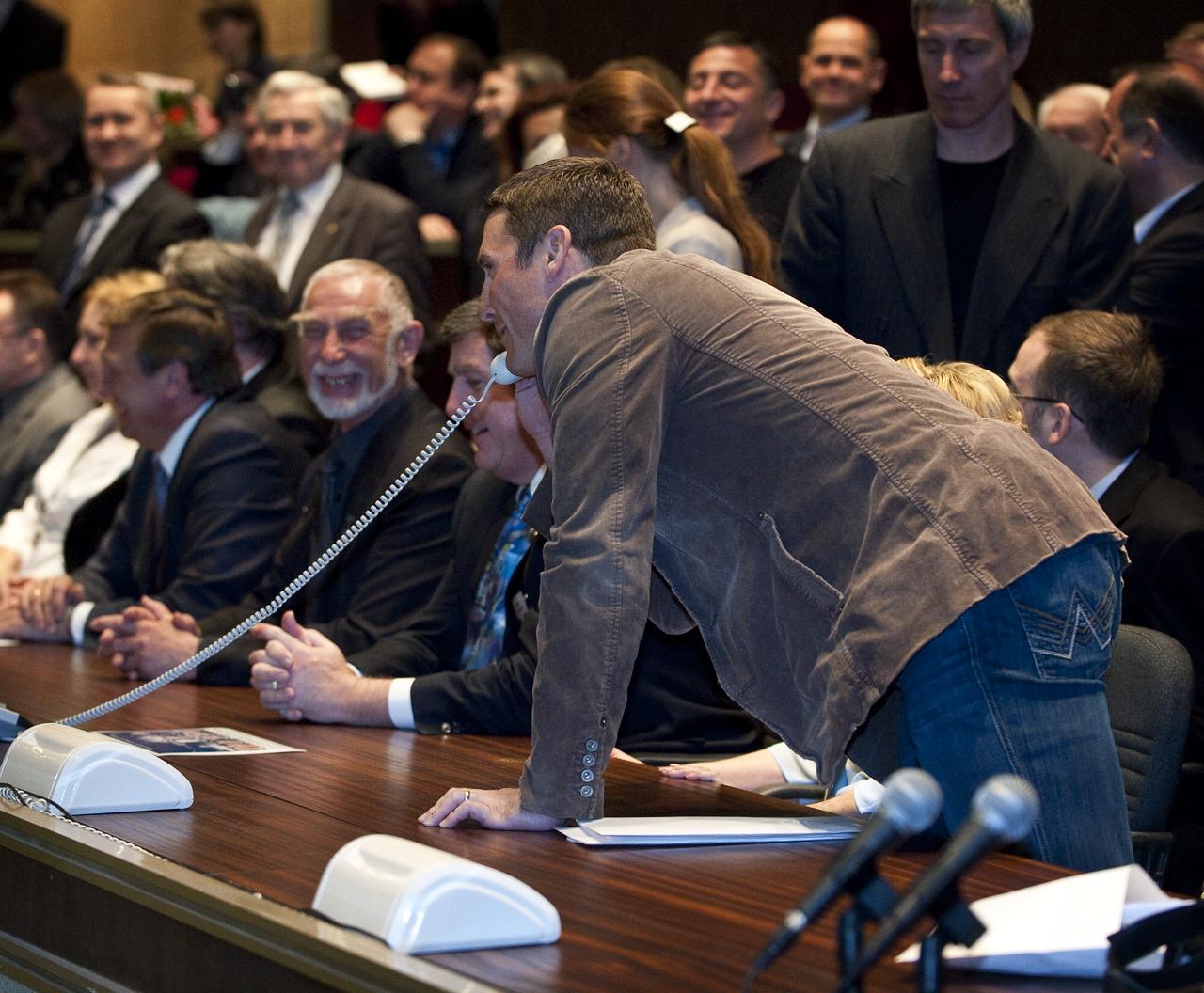
George Dyson, right, speaks to his wife NASA Flight Engineer Tracy Caldwell Dyson onboard the International Space Station from the Russian Mission Control Center, Korolev, Russia, Sunday, April 4, 2010. The Soyuz TMA-18 docked to the International Space Station carrying Expedition 23 Soyuz Commander Alexander Skvortsov, Flight Engineer Mikhail Kornienko and NASA Flight Engineer Tracy Caldwell Dyson. Photo Credit: (NASA/Carla Cioffi)
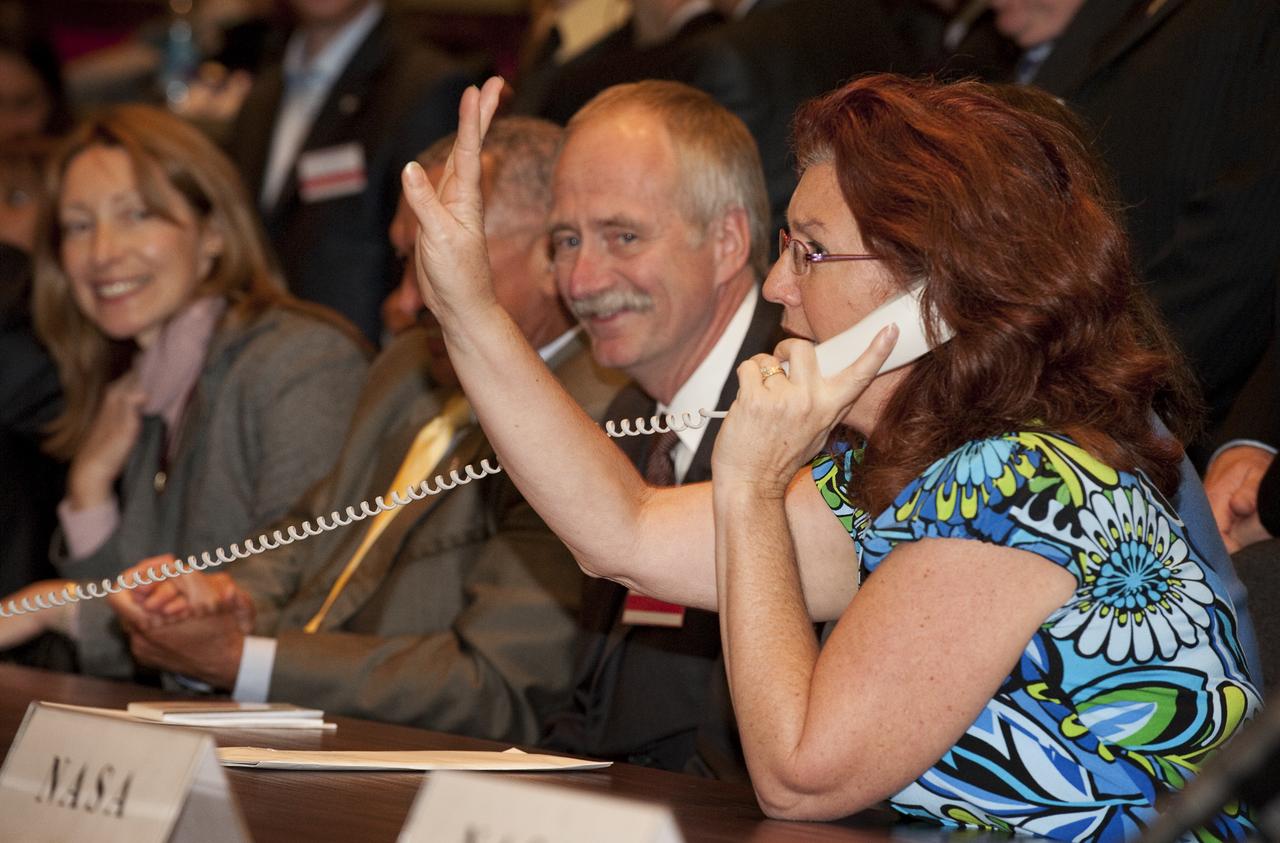
Anna-Marie Williams talks on the phone to her husband Expedition 21 with Flight Engineer Jeffrey N. Williams who is onboard the International Space Station (ISS) from the Mission Control Center Moscow in Korolev, Russia shortly after the successful docking of the Soyuz TMA-16 spacecraft with the International Space Station marking the start of Expedition 21 with Williams, Expedition 21 Flight Engineer Maxim Suraev, and Spaceflight Participant Guy Laliberté, Friday, Oct. 2, 2009. Photo Credit: (NASA/Bill Ingalls)