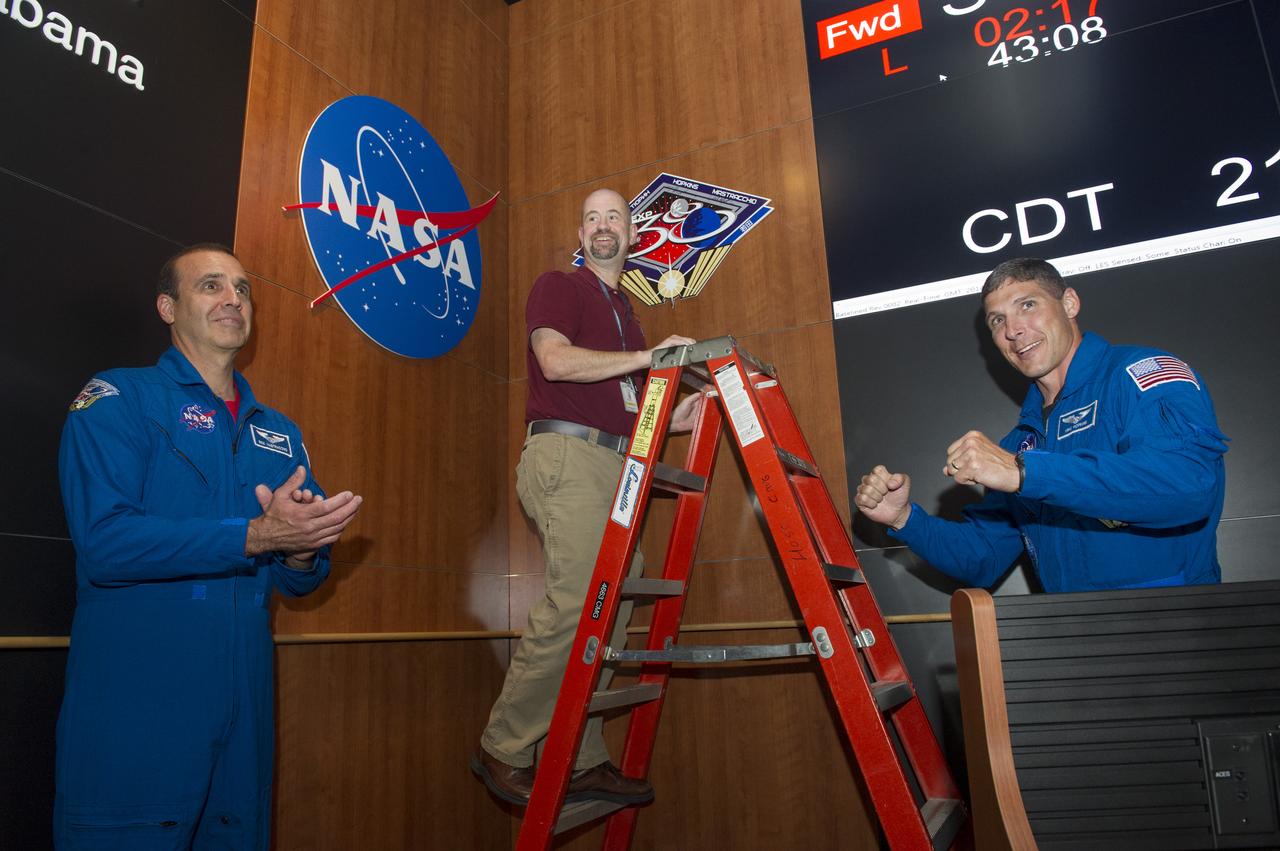
NASA ASTRONAUTS RICHARD MASTRACCHIO, LEFT, AND MICHAEL HOPKINS FLANK ED LITKENHOUS, A PAYLOAD ACTIVITY REQUIREMENTS COORDINATOR IN THE PAYLOAD OPERATIONS AND INTEGRATION CENTER (POIC), AS HE HANGS THE ASTRONAUTS' MISSION PLAQUE ON THE WALL OF THE POIC IN THE MARSHALL CENTER'S BUILDING 4663. THE PLAQUE JOINED THE LOGOS FROM PREVIOUS MISSIONS HANGING AROUND THE ROOM, RECOGNIZING THE COLLABORATION BETWEEN THE ORBITING ASTRONAUTS AND THE HUNTSVILLE-BASED TEAM
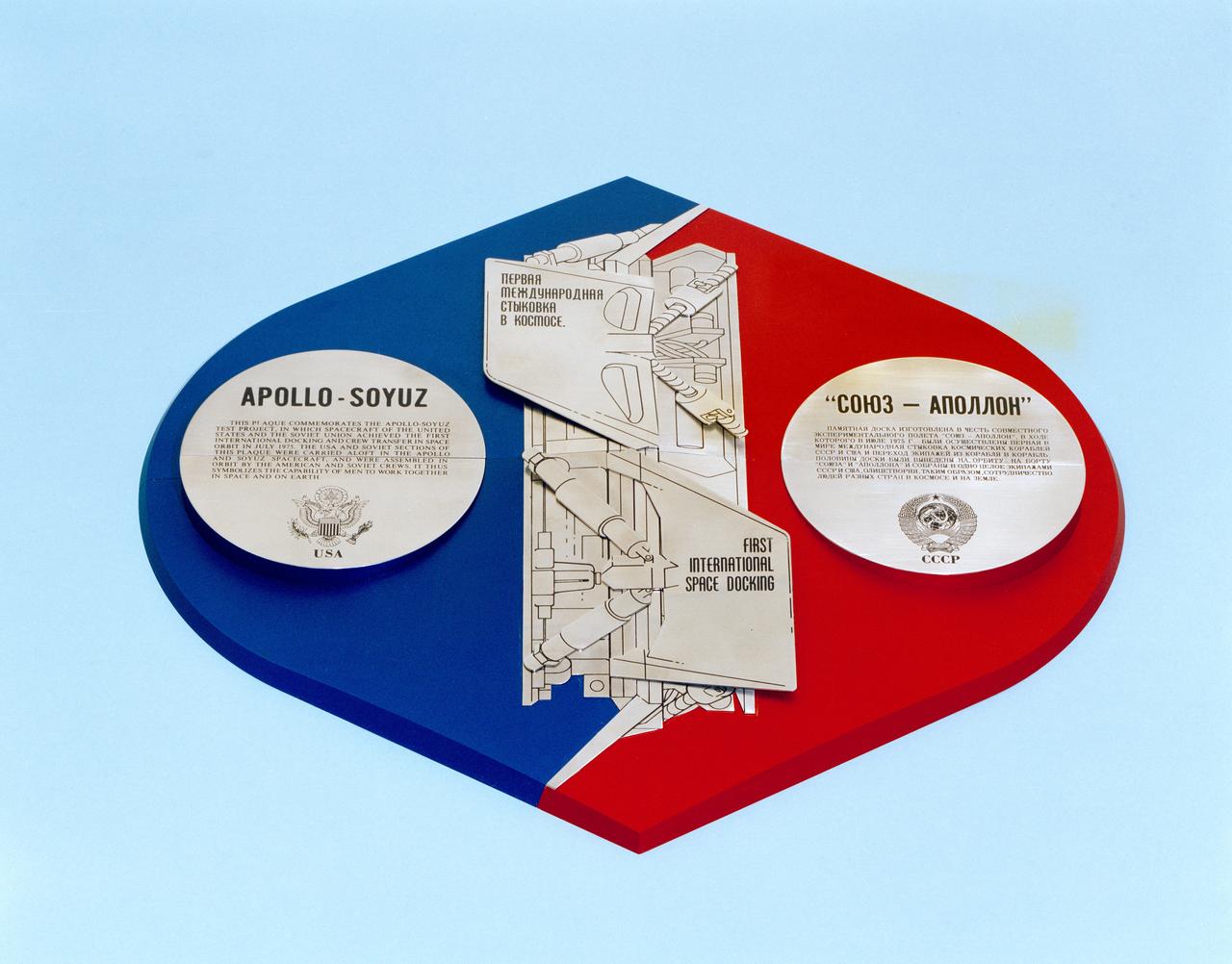
S75-26927 (July 1975) --- A close-up view of the Commemorative Plaque for the Apollo-Soyuz Test Project. Two plaques divided into four quarters each will be flown on the ASTP mission. A four-part plaque is completely assembled here. The American ASTP crew will carry the four U.S. quarter pieces aboard Apollo; and the Soviet ASTP crew will carry the four USSR quarter sections aboard Soyuz. The eight quarter pieces will be joined together to form two complete commemorative plaques after the two spacecraft rendezvous and dock in Earth orbit. One complete plaque then will be returned to Earth by the astronauts; and the other complete plaque will be brought back by the cosmonauts. The plaque is written in both English and Russian.
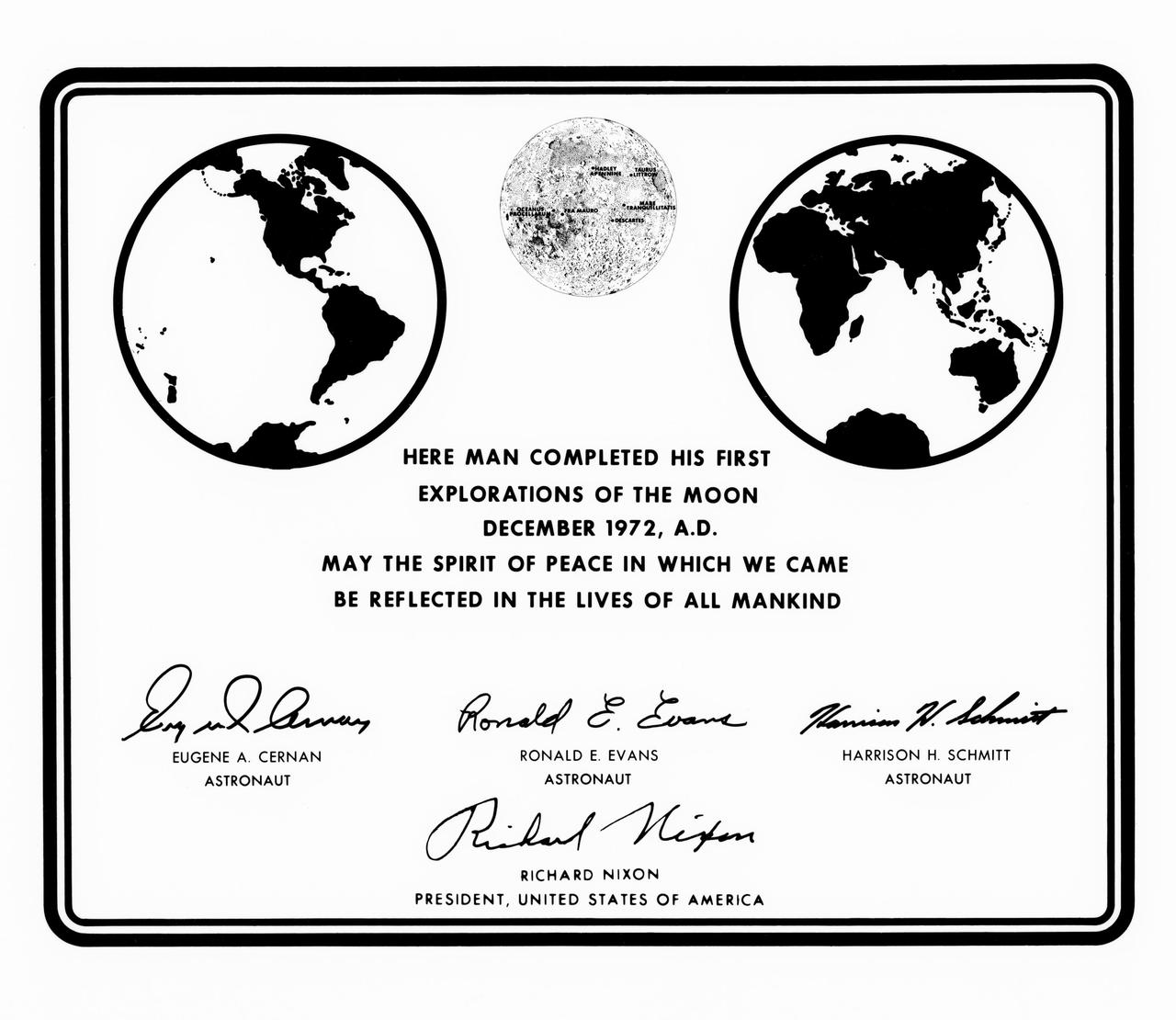
S72-55169 (14 Dec. 1972) --- A photographic replica of the plaque which the Apollo 17 astronauts left behind at the Taurus-Littrow landing site. Apollo 17 is the final lunar landing mission in NASA's Apollo program. The commemorative plaque was unveiled at the close of the third extravehicular activity (EVA). The plaque is made of stainless steel measuring nine by seven and five-eighths inches, and one-sixteenth inch thick. It is attached to the ladder on the landing gear strut on the descent stage of Apollo 17 Lunar Module (LM) "Challenger".

AST-05-263 (17-18 July 1975) --- The Apollo-Soyuz Test Project (ASTP) Commemorative Plaque is assembled in the Soviet Soyuz Orbital Module during the joint U.S.-USSR Apollo-Soyuz Test Project docking mission in Earth orbit. The plaque is written both in English and Russian.
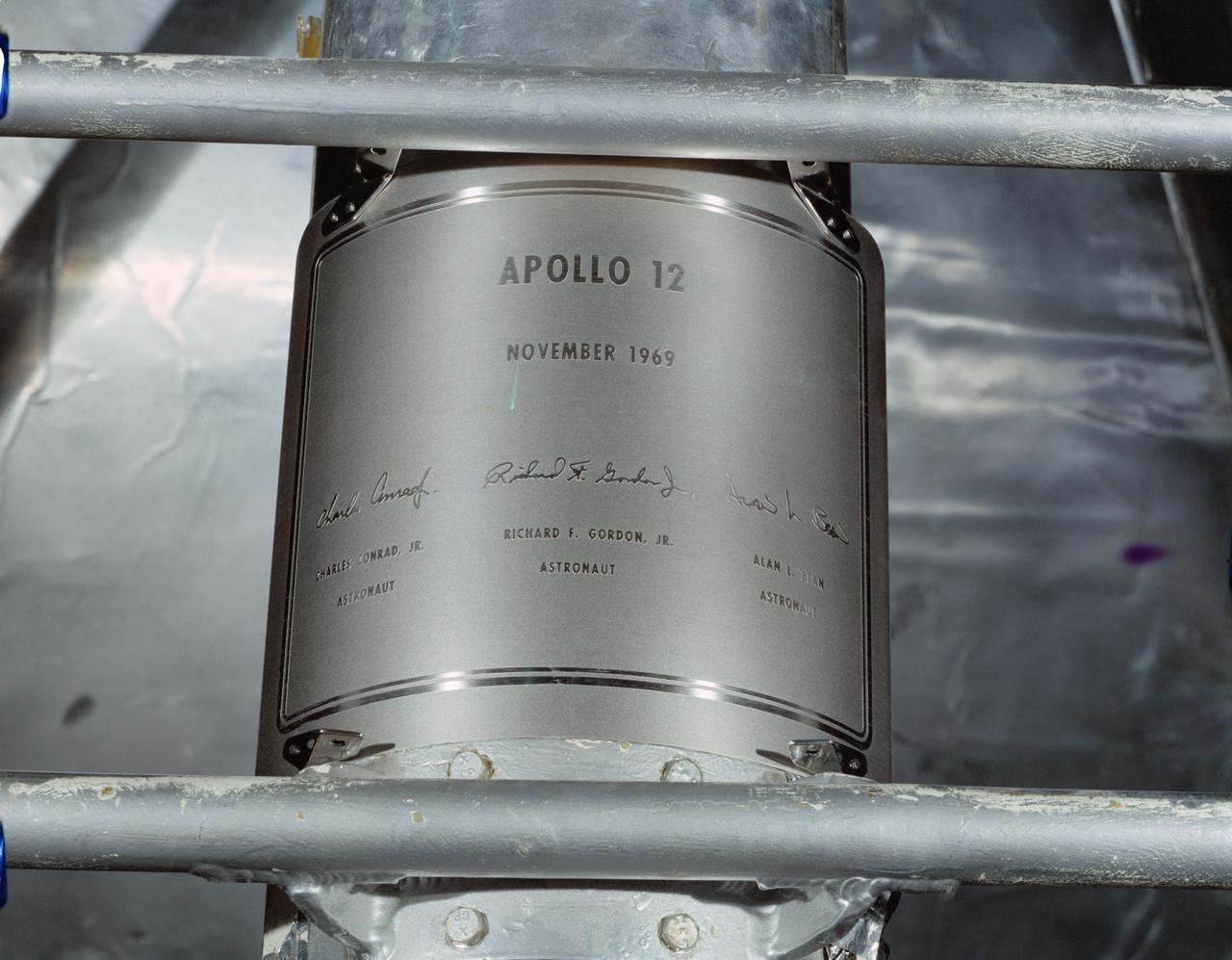
S69-53326 (November 1969) --- Close-up view of a replica of the plaque which the Apollo 12 astronauts will leave on the moon in commemoration of their flight. The plaque will be attached to the ladder on the landing gear strut on the descent stage of the Apollo 12 Lunar Module (LM). Apollo 12 will be the United States' second lunar landing mission.

PIONEER F (PIONEER-10) SPACECRAFT AT CAPE KENNEDY BEING READIED FOR MISSION (SHOWS THE POSITION OF THE PIONEER INTERSTALLER PLAQUE)
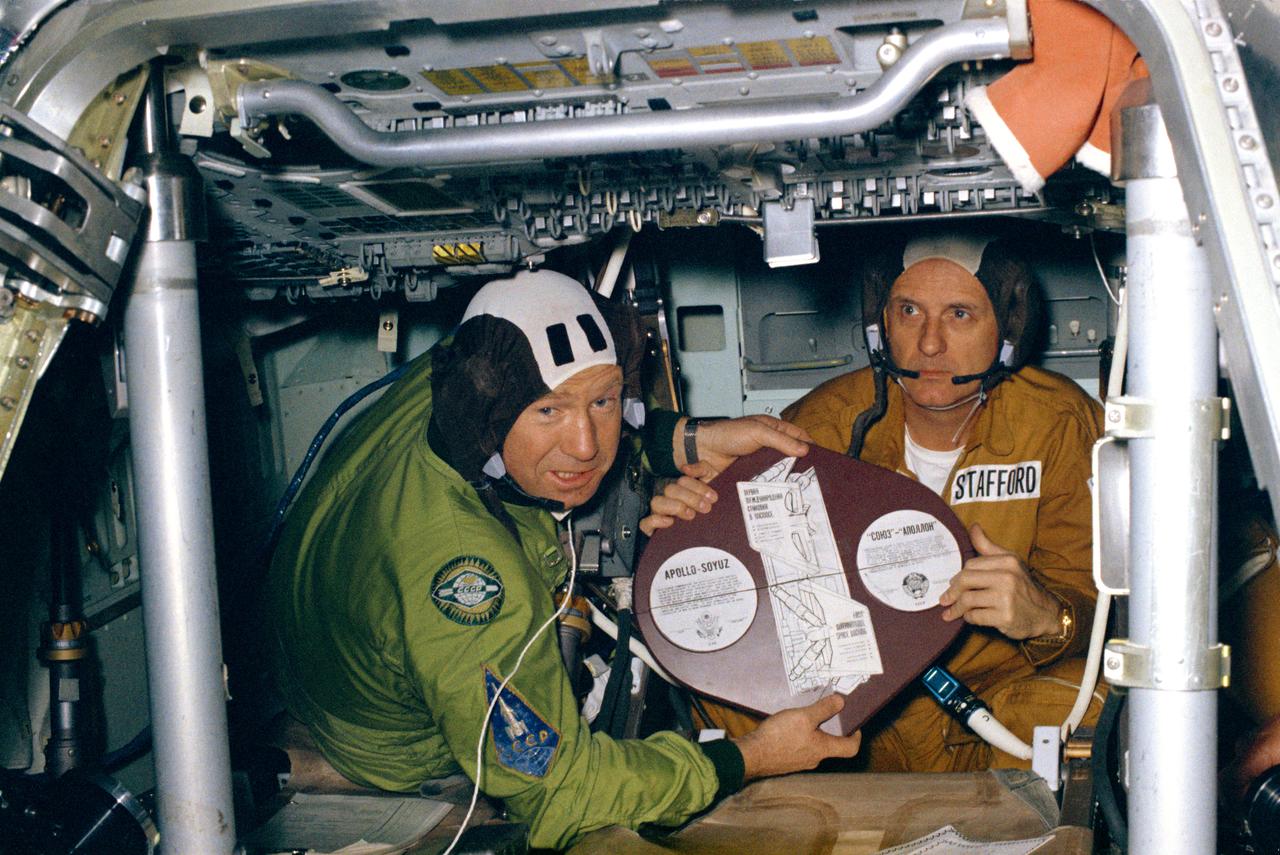
S75-25823 (February 1975) --- Cosmonaut Aleksei A. Leonov (left) and astronaut Thomas P. Stafford display the Apollo Soyuz Test Project (ASTP) commemorative plaque. The two commanders, of their respective crews, are in the Apollo Command Module (CM) trainer at Building 35 at NASA's Johnson Space Center (JSC). Two plaques divided into four quarters each will be flown on the ASTP mission. The American ASTP Apollo crew will carry the four United States quarter pieces aboard Apollo; and the Soviet ASTP Soyuz 19 crew will carry the four USSR quarter sections aboard Soyuz. The eight quarter pieces will be joined together to form two complete commemorative plaques after the two spacecraft rendezvous and dock in Earth orbit. One complete plaque then will be returned to Earth by the astronauts; and the other complete plaque will be brought back by the cosmonauts. The plaque is written in both English and Russian. The Apollo crew will consist of astronauts Thomas P. Stafford, commander; Donald K. "Deke" Slayton, docking module pilot; Vance D. Brand, command module pilot. The Soyuz 19 crew will consist of cosmonauts Aleksei A. Leonov, command pilot; and Valeri N. Kubasov, flight engineer.
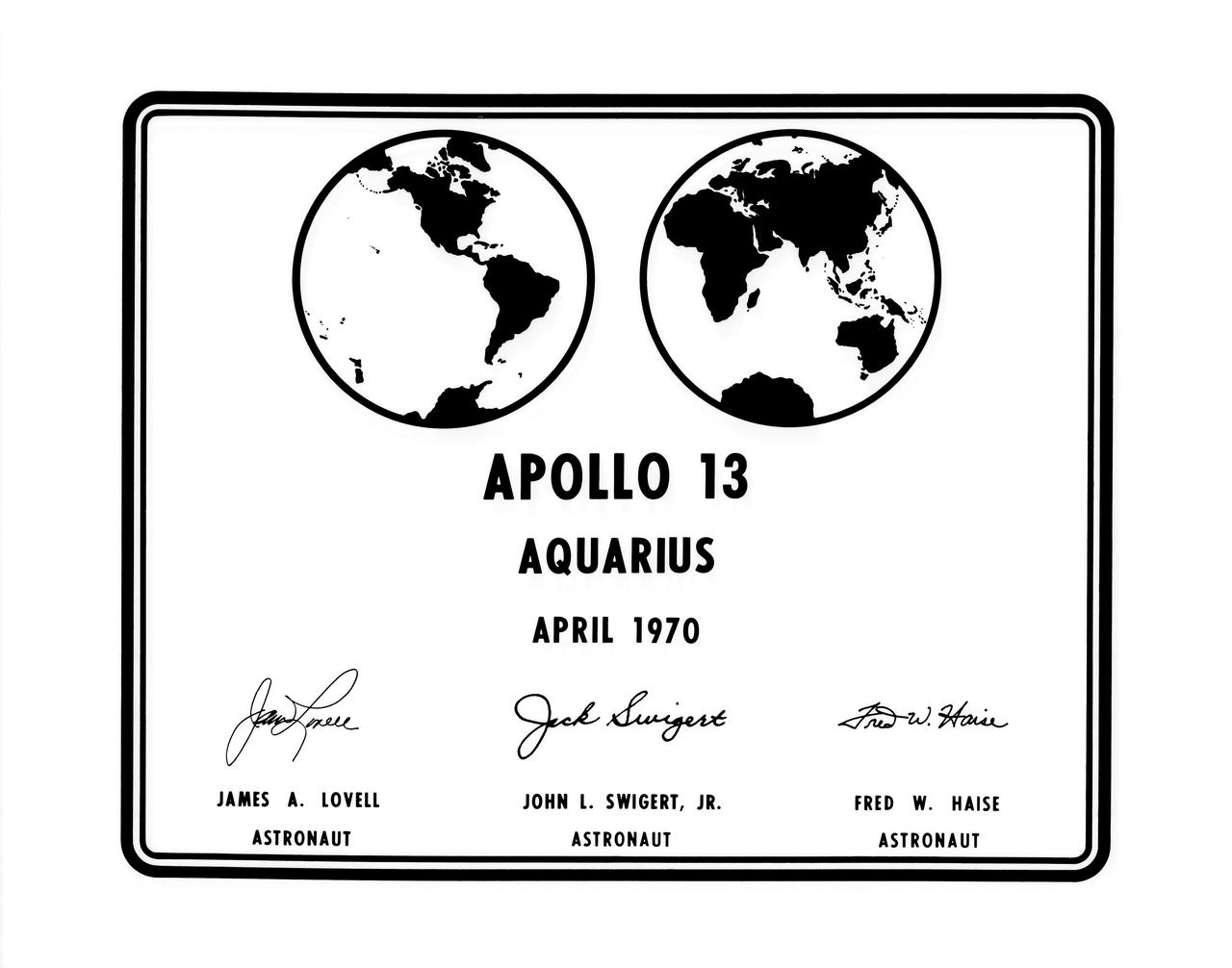
S70-34685 (April 1970) --- A photographic replica of the plaque which the Apollo 13 astronauts will leave behind on the moon during their lunar landing mission. Astronauts James A. Lovell Jr., commander; and Fred W. Haise Jr., lunar module pilot, will descend to the lunar surface in the Lunar Module (LM) "Aquarius". Astronaut John L. Swigert Jr., command module pilot, will remain with the Command and Service Modules (CSM) in lunar orbit. The plaque will be attached to the ladder of the landing gear strut on the LM?s descent stage. Commemorative plaques were also left on the moon by the Apollo 11 and Apollo 12 astronauts.
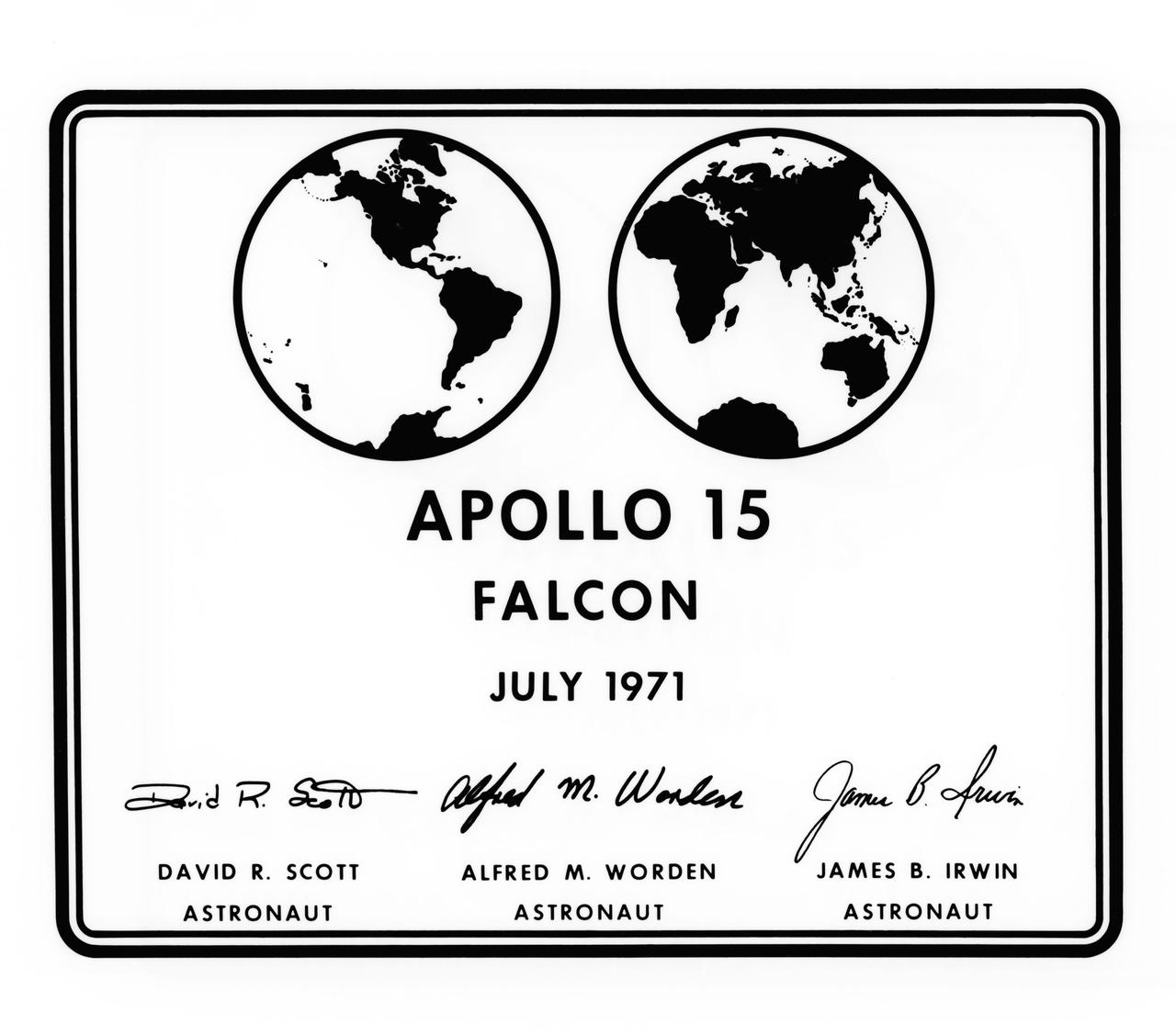
S71-39357 (July 1971) --- A photographic replica of the plaque which the Apollo 15 astronauts will leave behind on the moon during their lunar landing mission. Astronauts David R. Scott, commander; and James B. Irwin, lunar module pilot; will descend to the lunar surface in the Lunar Module (LM) "Falcon". Astronaut Alfred M. Worden, command module pilot, will remain with the Command and Service Modules (CSM) in lunar orbit. The seven by nine inch stainless steel plaque will be attached to the ladder on the landing gear strut on the LM's descent stage. Commemorative plaques were also left on the moon by the Apollo 11, Apollo 12 and Apollo 14 astronauts.
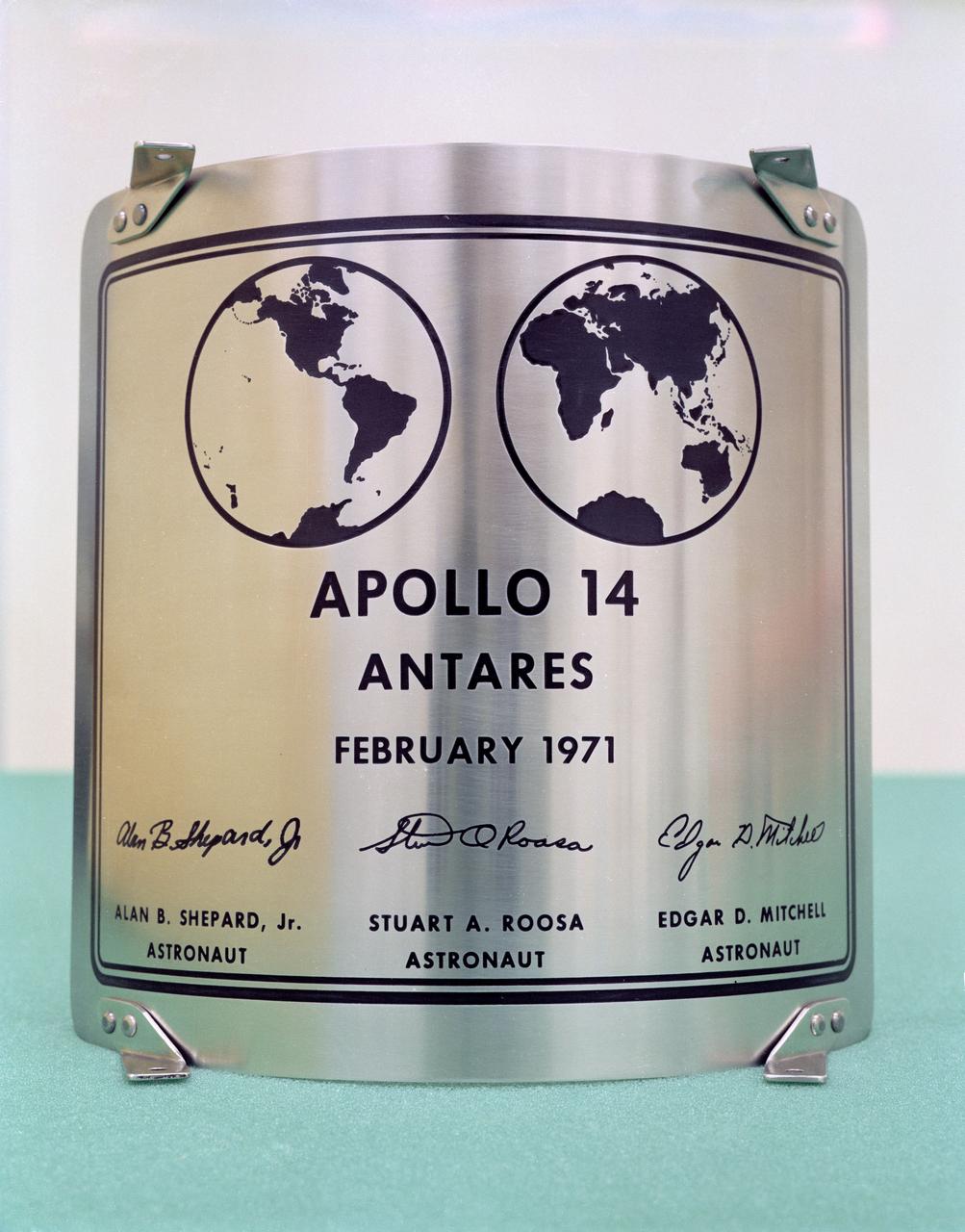
S71-16637 (January 1971) --- A close-up view of the plaque which the Apollo 14 astronauts will leave behind on the moon during their lunar landing mission. Astronauts Alan B. Shepard Jr., commander, and Edgar D. Mitchell, lunar module pilot, will descend to the lunar surface in the Lunar Module (LM) "Antares". Astronaut Stuart A. Roosa, command module pilot, will remain with the Command and Service Modules (CSM) in lunar orbit. The seven by nine inch stainless steel plaque will be attached to the ladder on the landing gear strut on the LM's descent stage. Commemorative plaques were also left on the moon by the Apollo 11 and Apollo 12 astronauts.
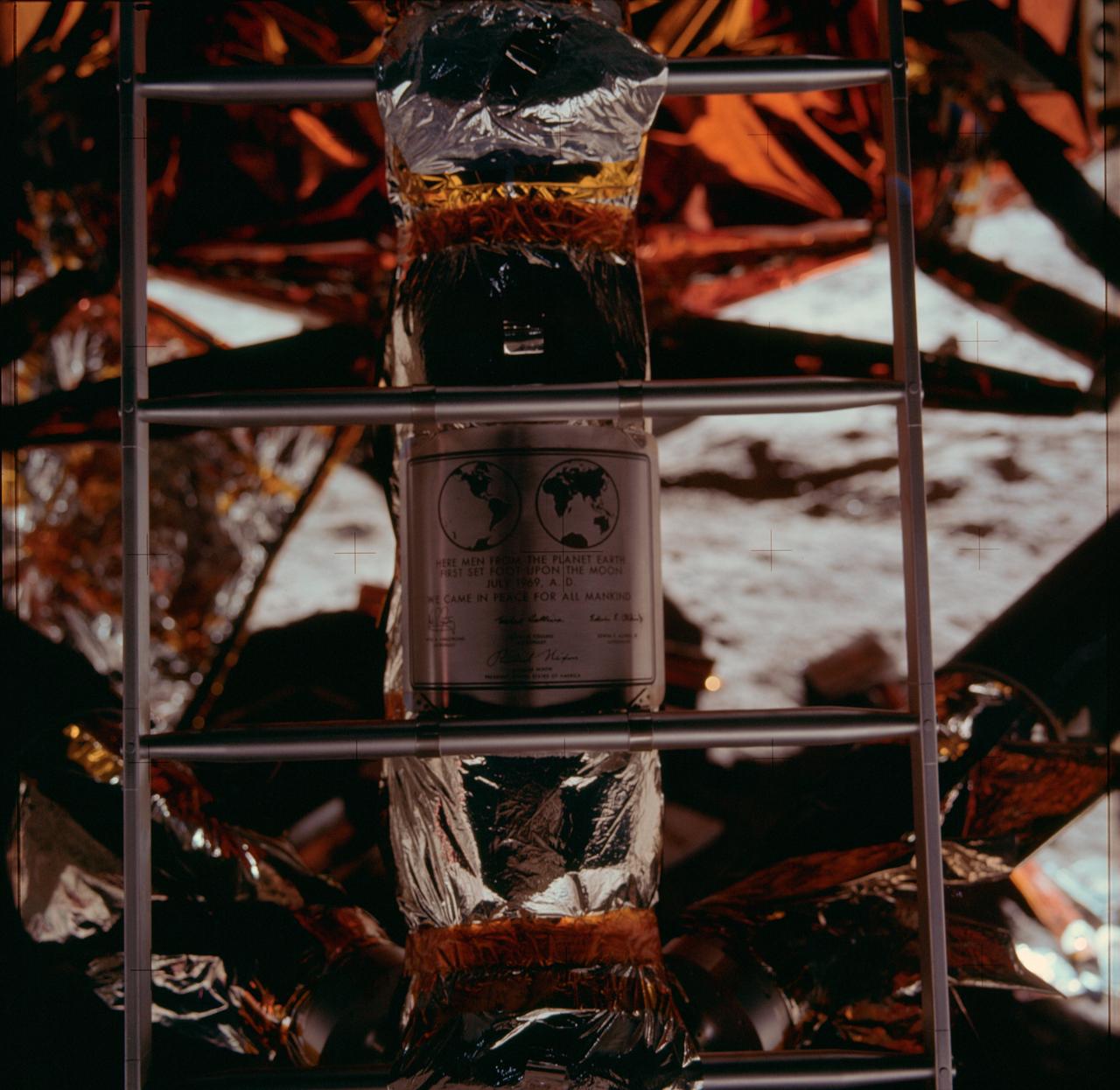
AS11-40-5899 (20 July 1969) --- Close-up view of the plaque which the Apollo 11 astronauts left on the moon in commemoration of the historic lunar landing mission. The plaque was attached to the ladder on the landing gear strut on the descent stage of the Apollo 11 Lunar Module (LM). The plaque was covered with a thin sheet of stainless steel during flight. Astronaut Michael Collins, command module pilot, remained with the Command and Service Modules (CSM) in lunar orbit while astronauts Neil A. Armstrong, commander, and Edwin E. Aldrin Jr., lunar module pilot, explored the moon.
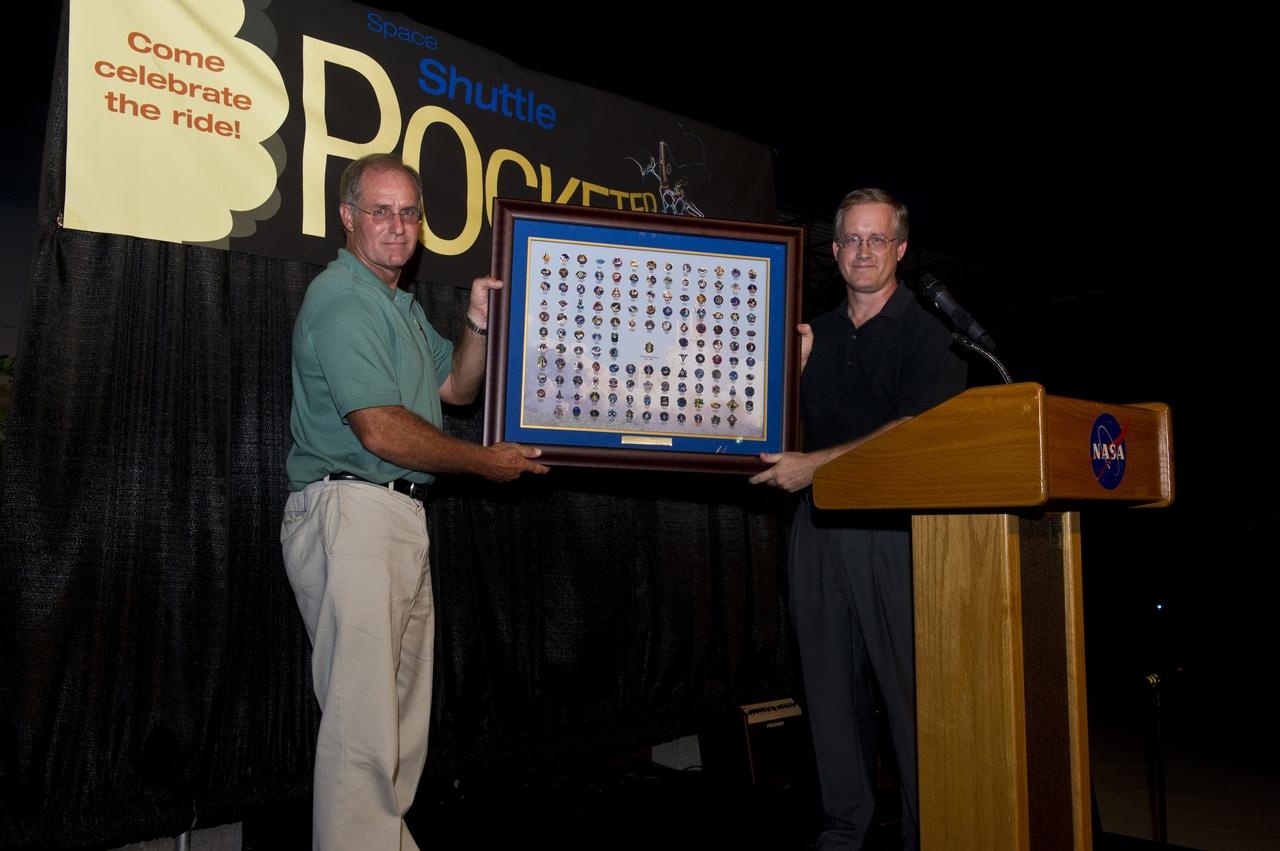
MARSHALL SHUTTLE PROPULSION OFFICE MANAGER STEVE CASH PRESENTS A MISSION PIN PLAQUE TO JOHN SHANNON, MANAGER OF THE SPACE SHUTTLE PROGRAM.
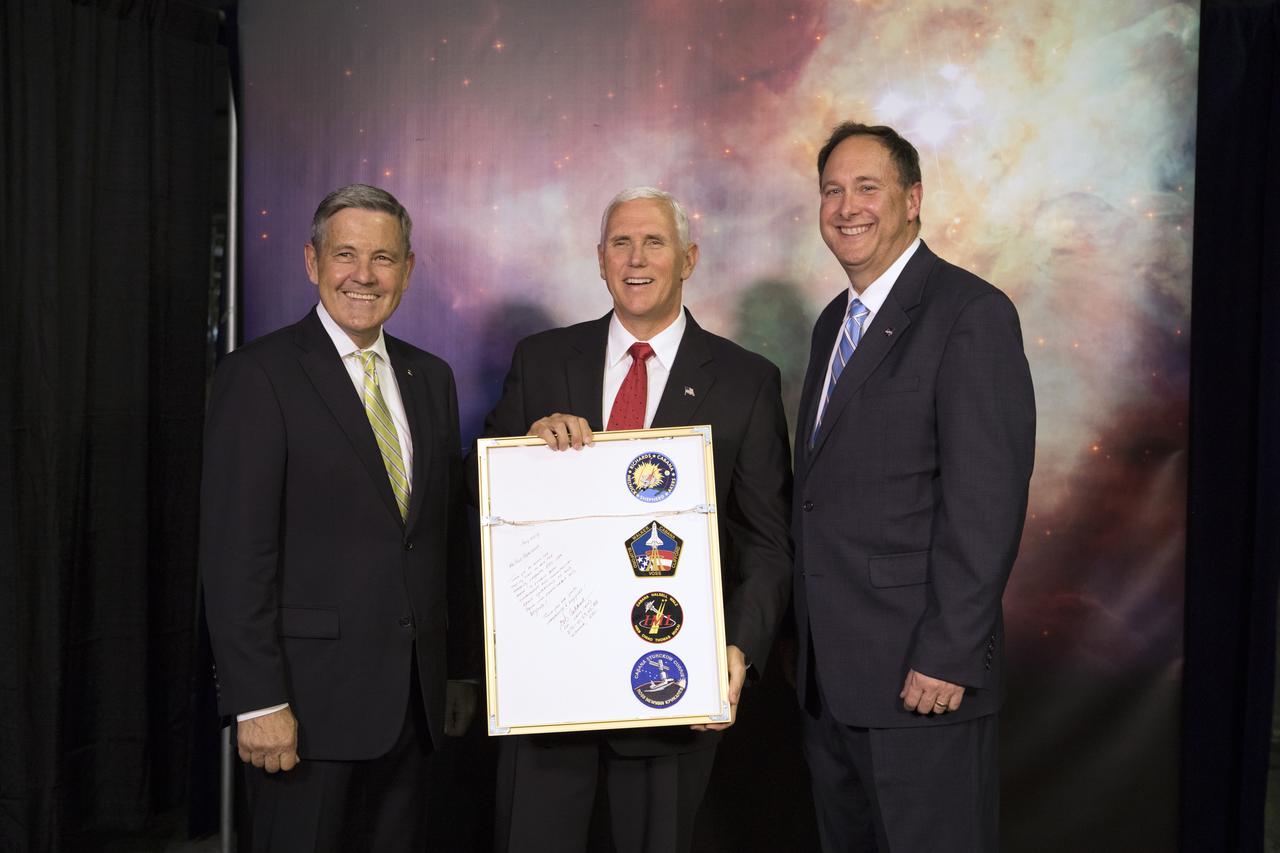
Kennedy Space Center Bob Cabana, left, and NASA's Acting Administrator Robert Lightfoot, right present Vice President Mike Pence with a framed plaque. On the back of the plaque are patches from each of Cabana's four space shuttle mission, STS-88, STS-53, STS-65, STS-41, and an inscription thanking the Vice President for his support of NASA. During his visit to Kennedy, the Vice President spoke inside the iconic Vehicle Assembly Building, where he thanked employees for advancing American leadership in space.
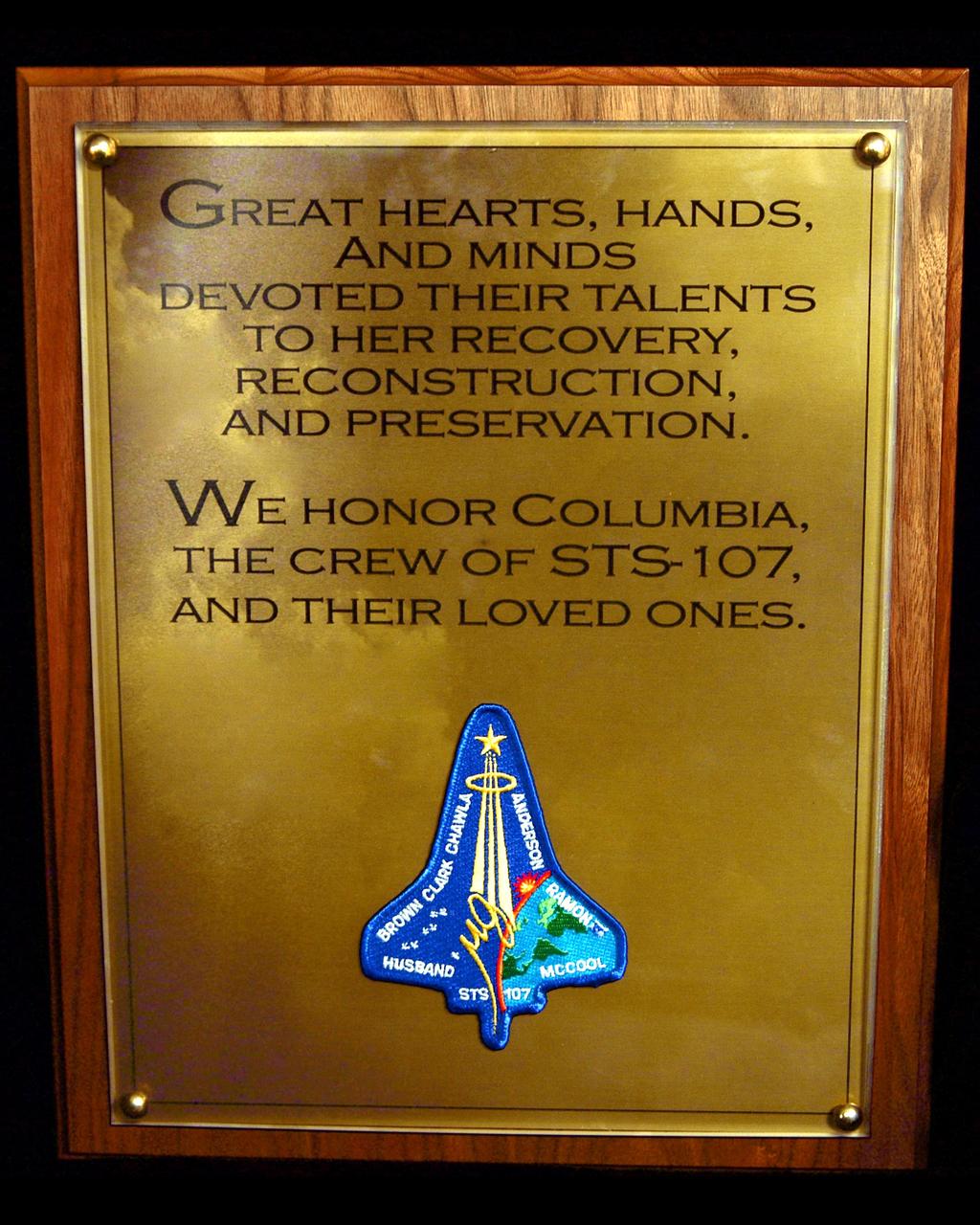
KENNEDY SPACE CENTER, FLA. - This closeup shows the words of the plaque unveiled Jan. 29, 2004, that was dedicated in memory of the orbiter Columbia and her seven-member crew who were lost in the tragic accident Feb. 1, 2003, as they returned to Earth from mission STS-107. The dedication of the plaque was made in front of the 40-member preservation team in the “Columbia room,” a permanent repository in the Vehicle Assembly Building of the debris collected in the aftermath of the accident.
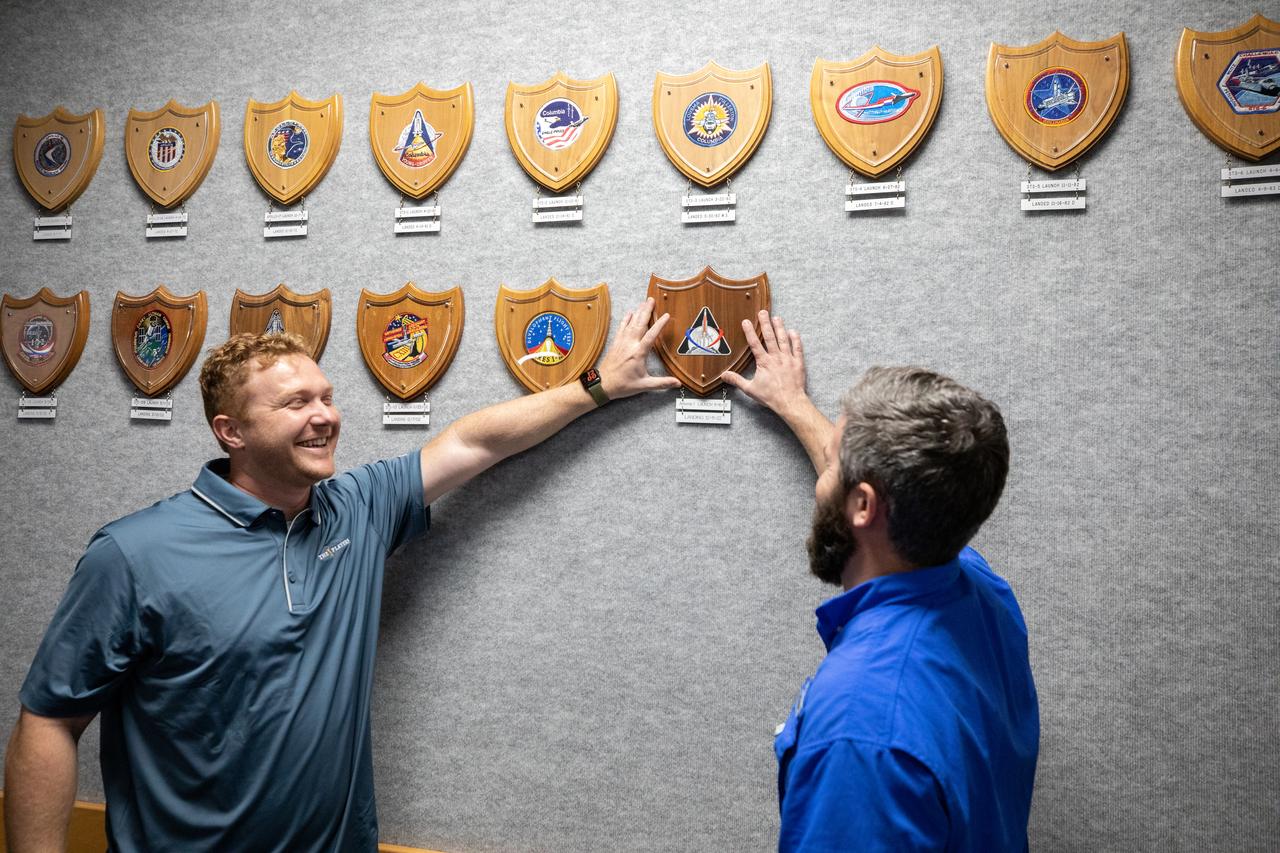
The Artemis plaque is attached to the wall in Firing Room 1 of the Launch Control Center at NASA’s Kennedy Space Center in Florida during a ceremony on March 24, 2023. Hanging the plaque on the wall are Elliot Payne (left) and Devin Aikman (right), members of the Arms and Umbilicals engineering team. The first in a series of increasingly complex missions, Artemis I launched successfully from Kennedy’s Launch Pad 39B at 1:47 a.m. EST on Nov. 16, 2022.
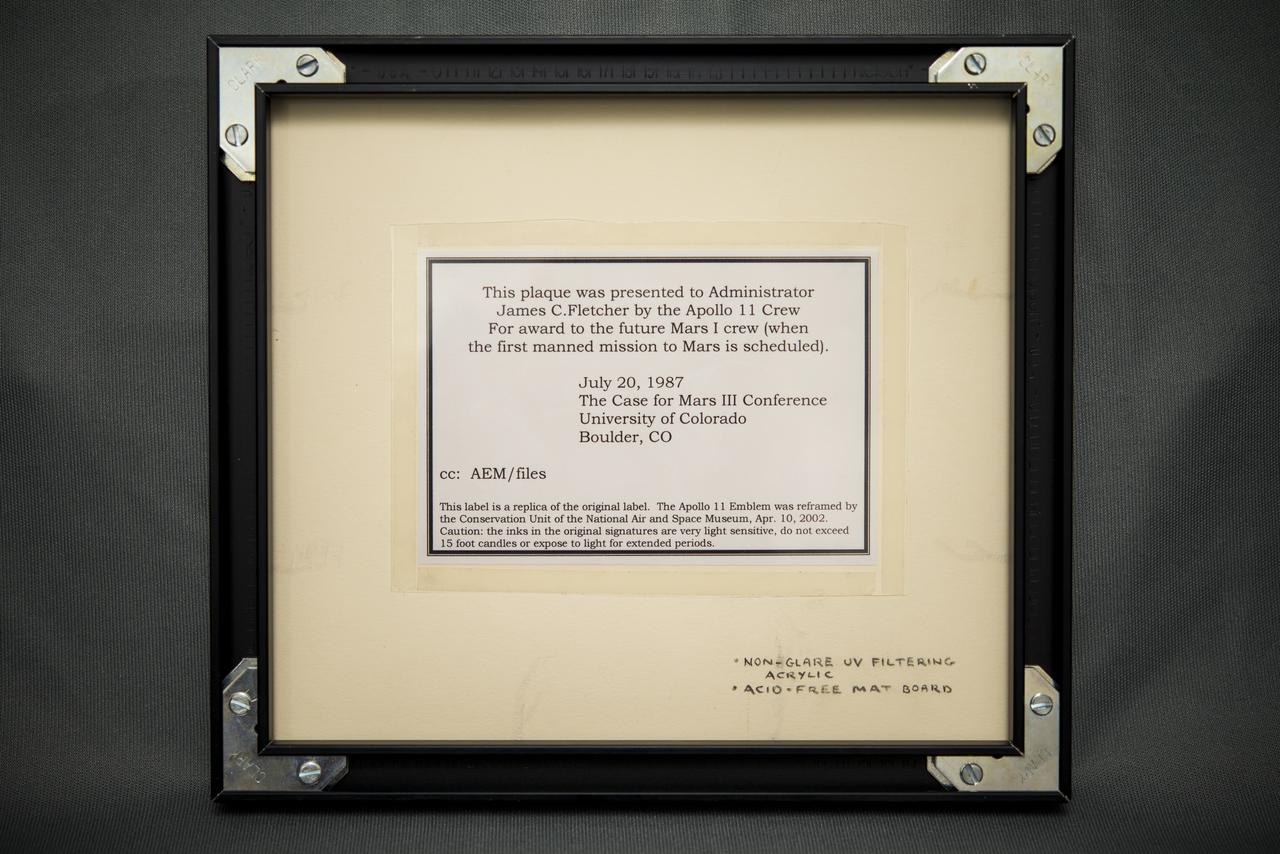
The description on the back of the plaque reads: "This plaque was presented to Administrator James C. Fletcher by the Apollo 11 Crew for award to the future Mars I crew (when the first manned mission to Mars is scheduled), July 20, 1987 at The Case for Mars III Conference at the University of Colorado in Boulder, Colorado." Photographed on Friday, July 11, 2014 in Washington, DC. Photo Credit: (NASA/Joel Kowsky)
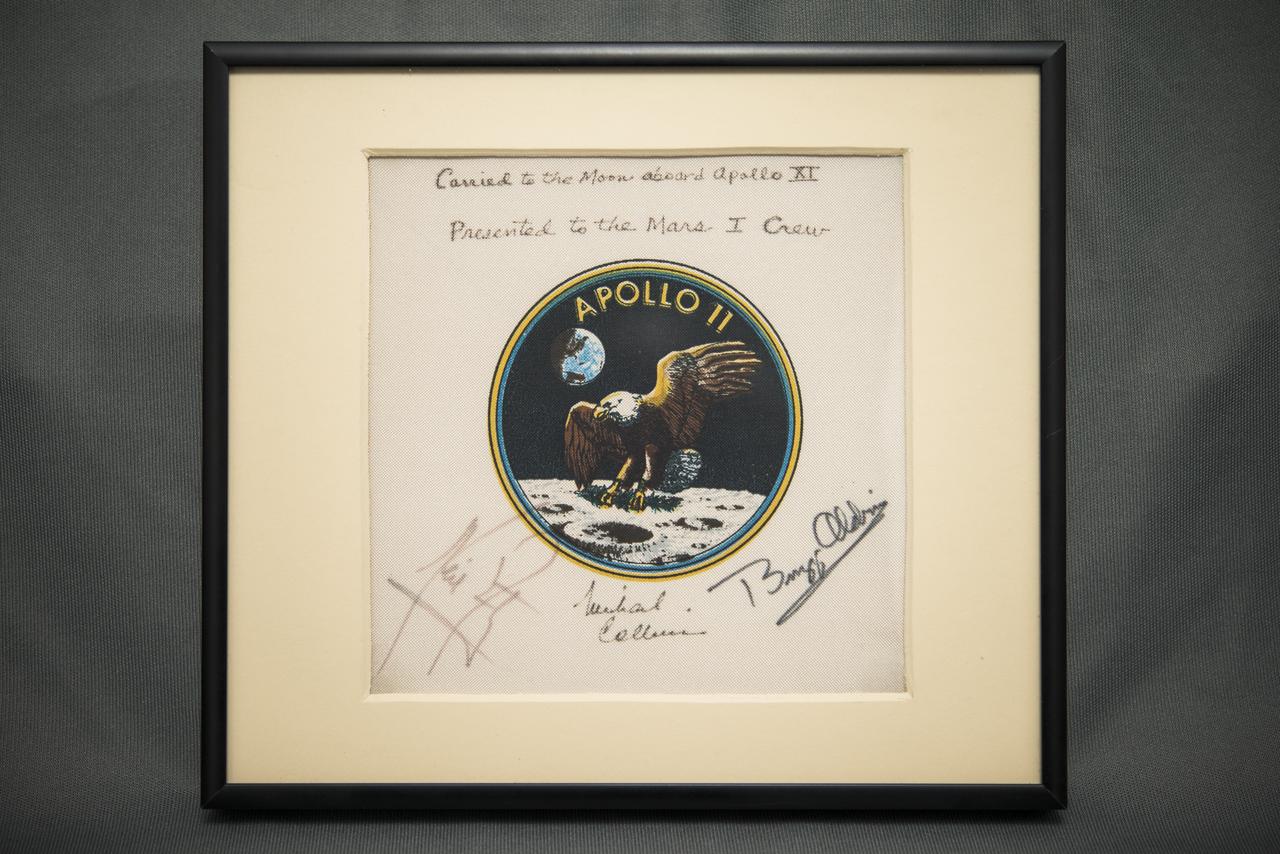
The description on the back of the plaque reads: "This plaque was presented to Administrator James C. Fletcher by the Apollo 11 Crew for award to the future Mars I crew (when the first manned mission to Mars is scheduled), July 20, 1987 at The Case for Mars III Conference at the University of Colorado in Boulder, Colorado." Photographed on Friday, July 11, 2014 in Washington, DC. Photo Credit: (NASA/Joel Kowsky)
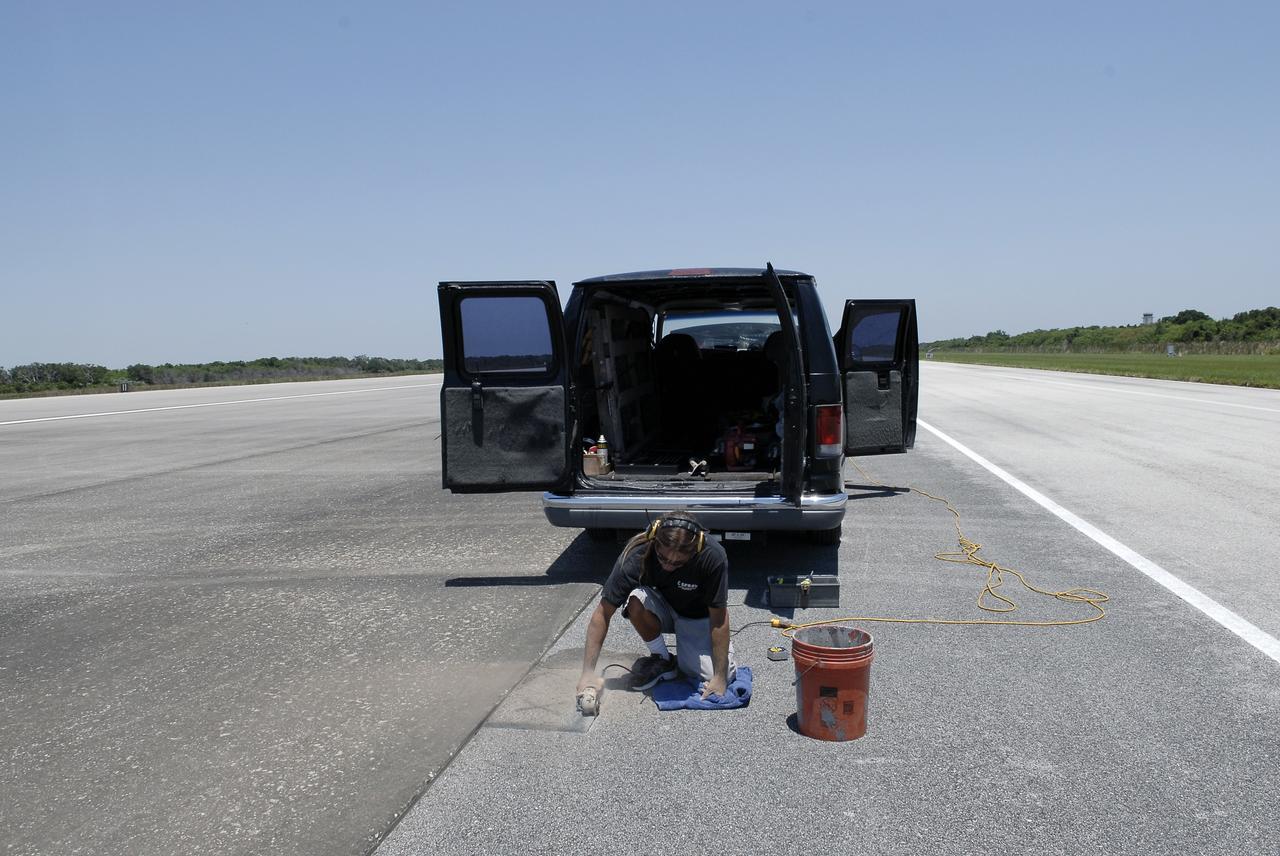
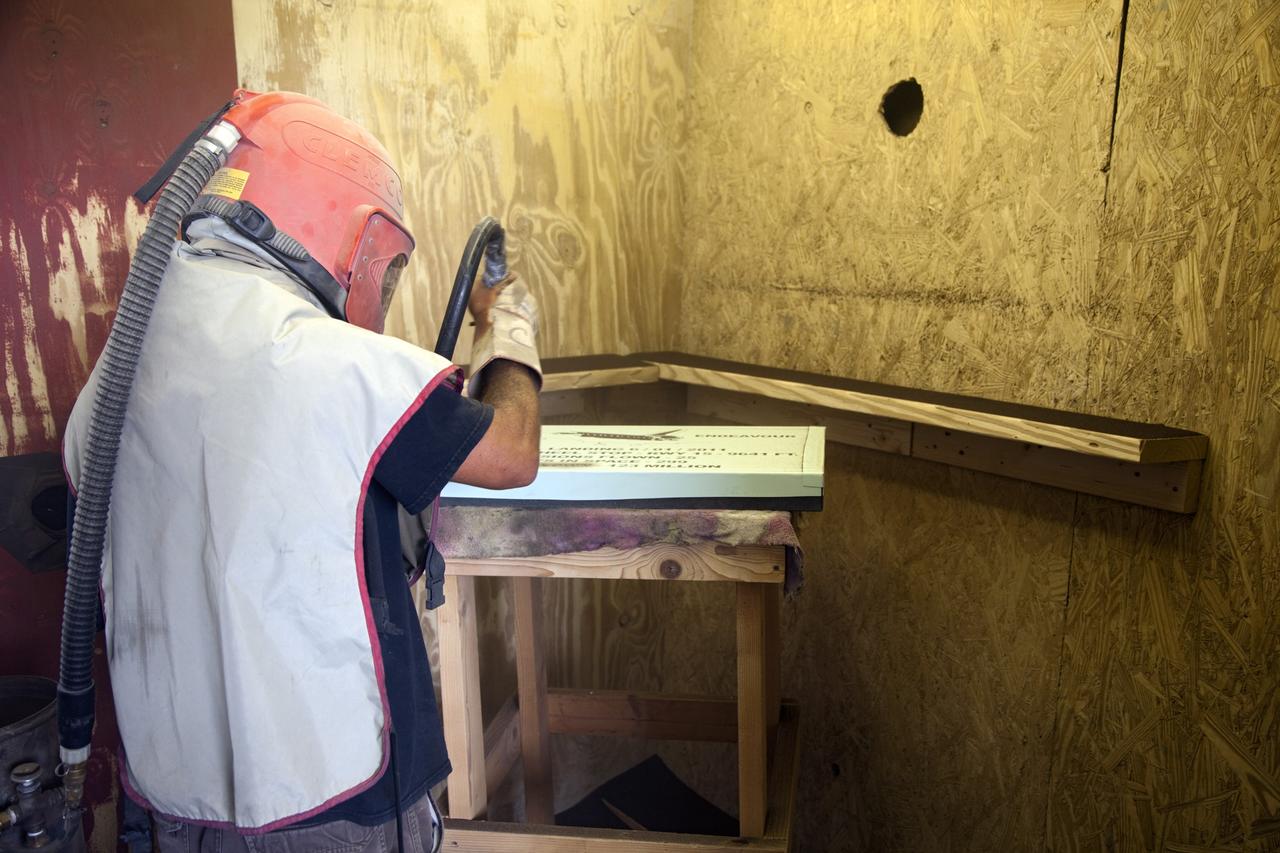
CAPE CANAVERAL, Fla. - At the Shuttle Landing Facility SLF at NASA’s Kennedy Space Center in Florida, Chad Stout with C Spray Glass Blasting in Cocoa, Fla., prepares to install a special plaque to mark the nose gear wheel stop of space shuttle Atlantis. Stout is cutting the 15,000 by 1,000-foot-long concrete runway to accommodate the black granite plaque, which is 16 by 28 inches. It is the third plaque permanently mounted to commemorate the final landing of each of the three orbiters. Atlantis completed the STS-135 mission by landing at the SLF on July 21, 2011, at 5:57 a.m. Atlantis flew 33 missions, completed 4,848 orbits of the Earth, traveled nearly 126 million miles and spent 307 days in space. Atlantis carried 207 astronauts to space. Photo credit: NASA/Charisse Nahser
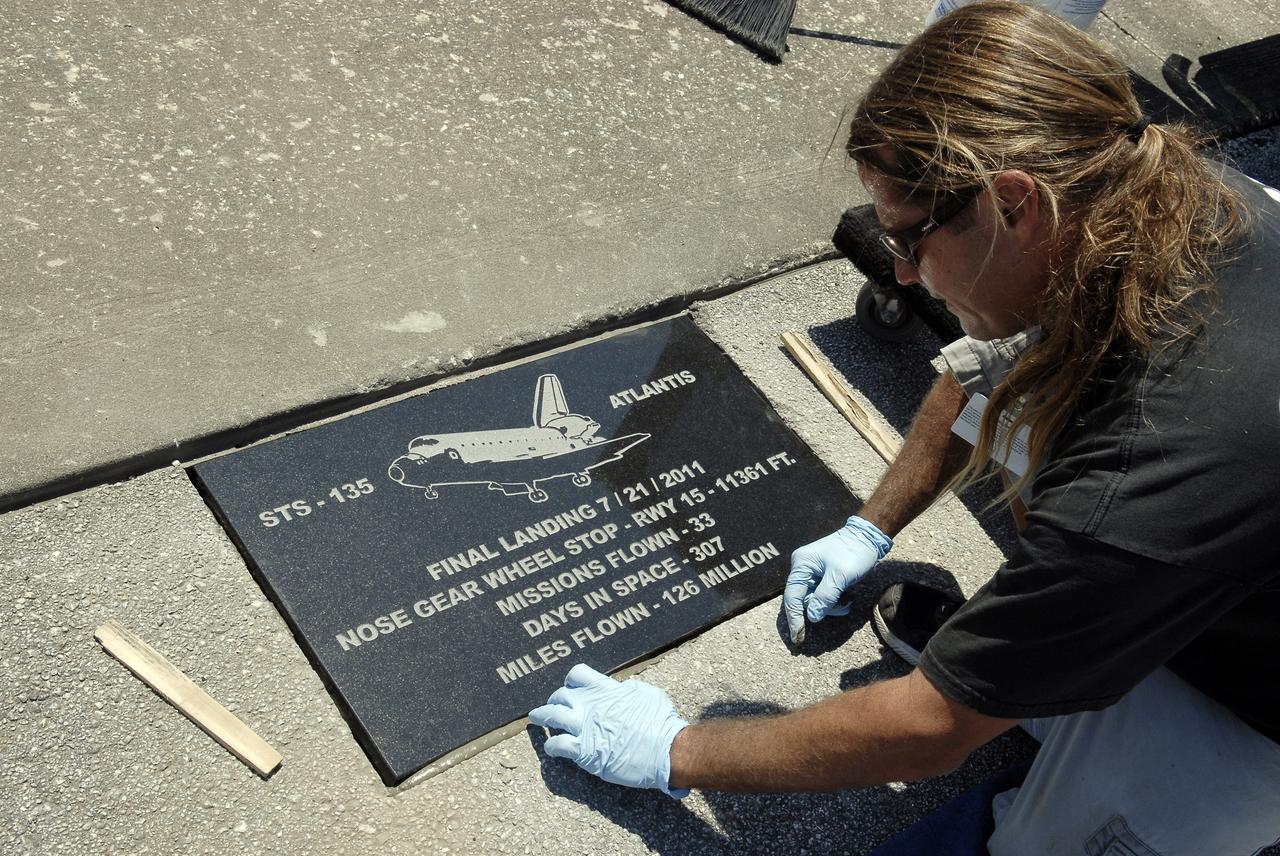
CAPE CANAVERAL, Fla. - At the Shuttle Landing Facility SLF at NASA’s Kennedy Space Center in Florida, Chad Stout with C Spray Glass Blasting in Cocoa, Fla., installs a special plaque to mark the nose gear wheel stop of space shuttle Atlantis. The plaque, which is 16 by 28 inches, is the third black granite plaque permanently mounted to commemorate the final landing of each of the three orbiters. Atlantis completed the STS-135 mission by landing at the SLF on July 21, 2011, at 5:57 a.m. Atlantis flew 33 missions, completed 4,848 orbits of the Earth, traveled nearly 126 million miles and spent 307 days in space. Atlantis carried 207 astronauts to space. Photo credit: NASA/Charisse Nahser
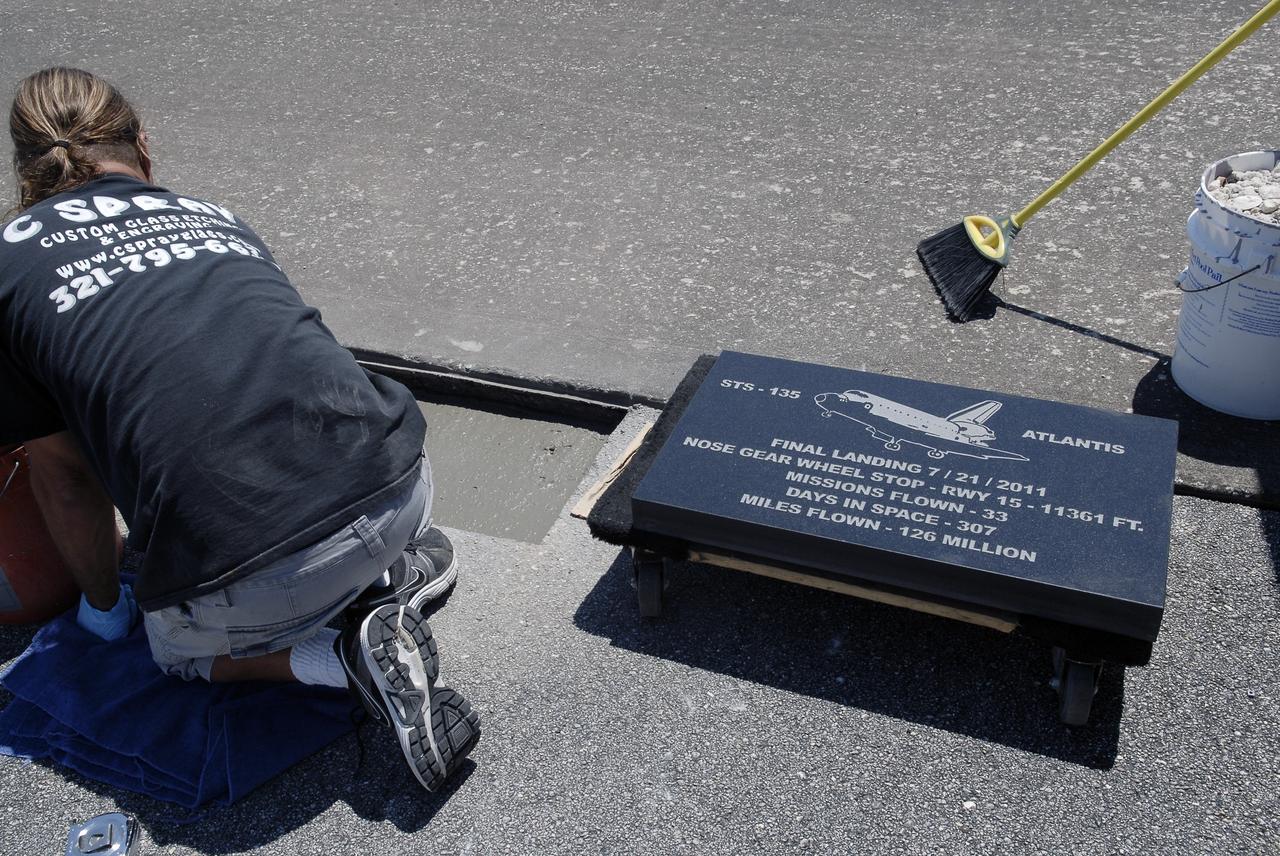
CAPE CANAVERAL, Fla. - At the Shuttle Landing Facility SLF at NASA’s Kennedy Space Center in Florida, Chad Stout with C Spray Glass Blasting in Cocoa, Fla., prepares to install a special plaque to mark the nose gear wheel stop of space shuttle Atlantis. The black granite plaque, which is 16 by 28 inches, is the third plaque permanently mounted to commemorate the final landing of each of the three orbiters. Atlantis completed the STS-135 mission by landing at the SLF on July 21, 2011, at 5:57 a.m. Atlantis flew 33 missions, completed 4,848 orbits of the Earth, traveled nearly 126 million miles and spent 307 days in space. Atlantis carried 207 astronauts to space. Photo credit: NASA/Charisse Nahser
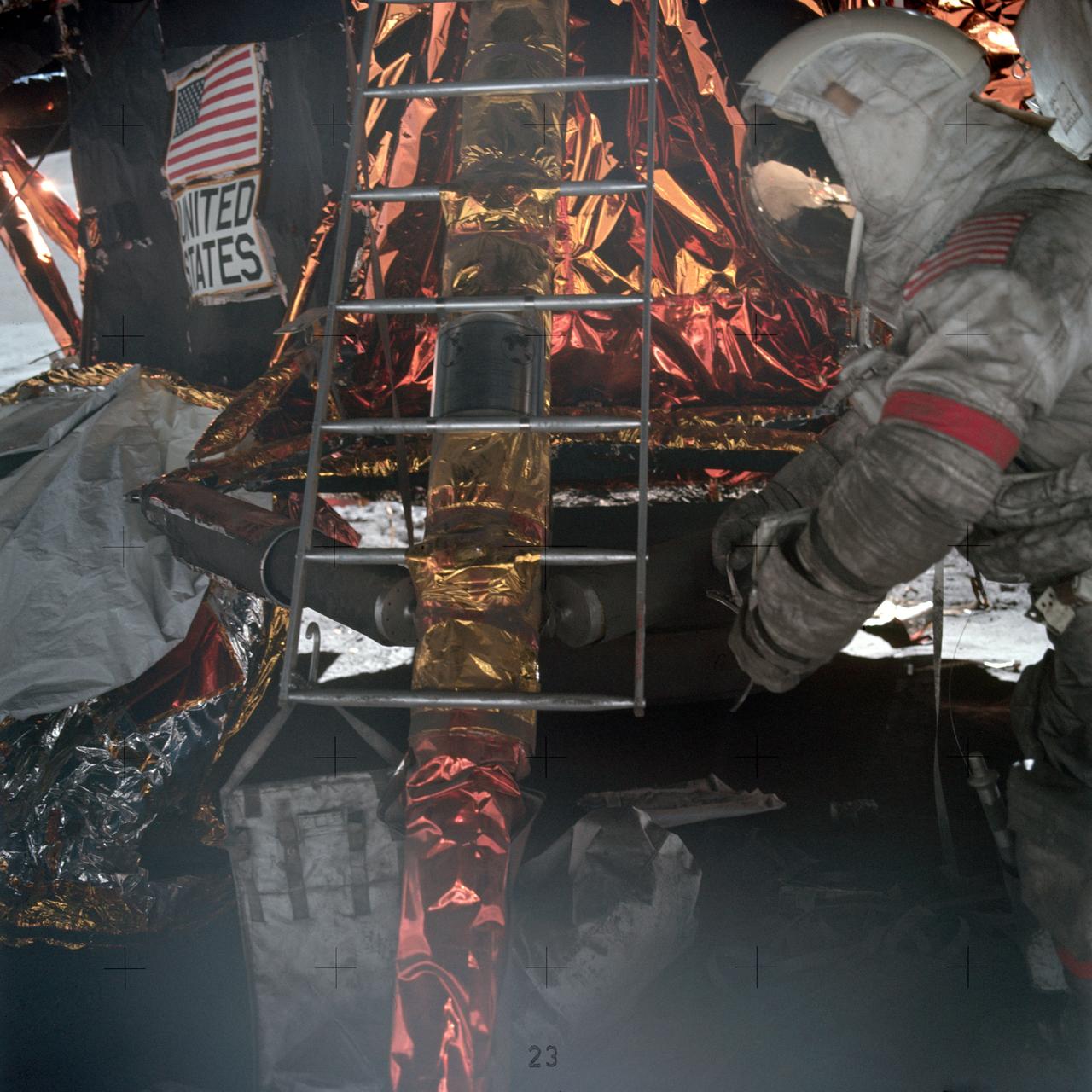
Astronaut Eugene A. Cernan, Apollo 17 commander, prepares to mount ladder to lunar module ascent stage. Note the plaque attached to the ladder which will be left with the descent stage when the mission lifts off from the lunar surface.
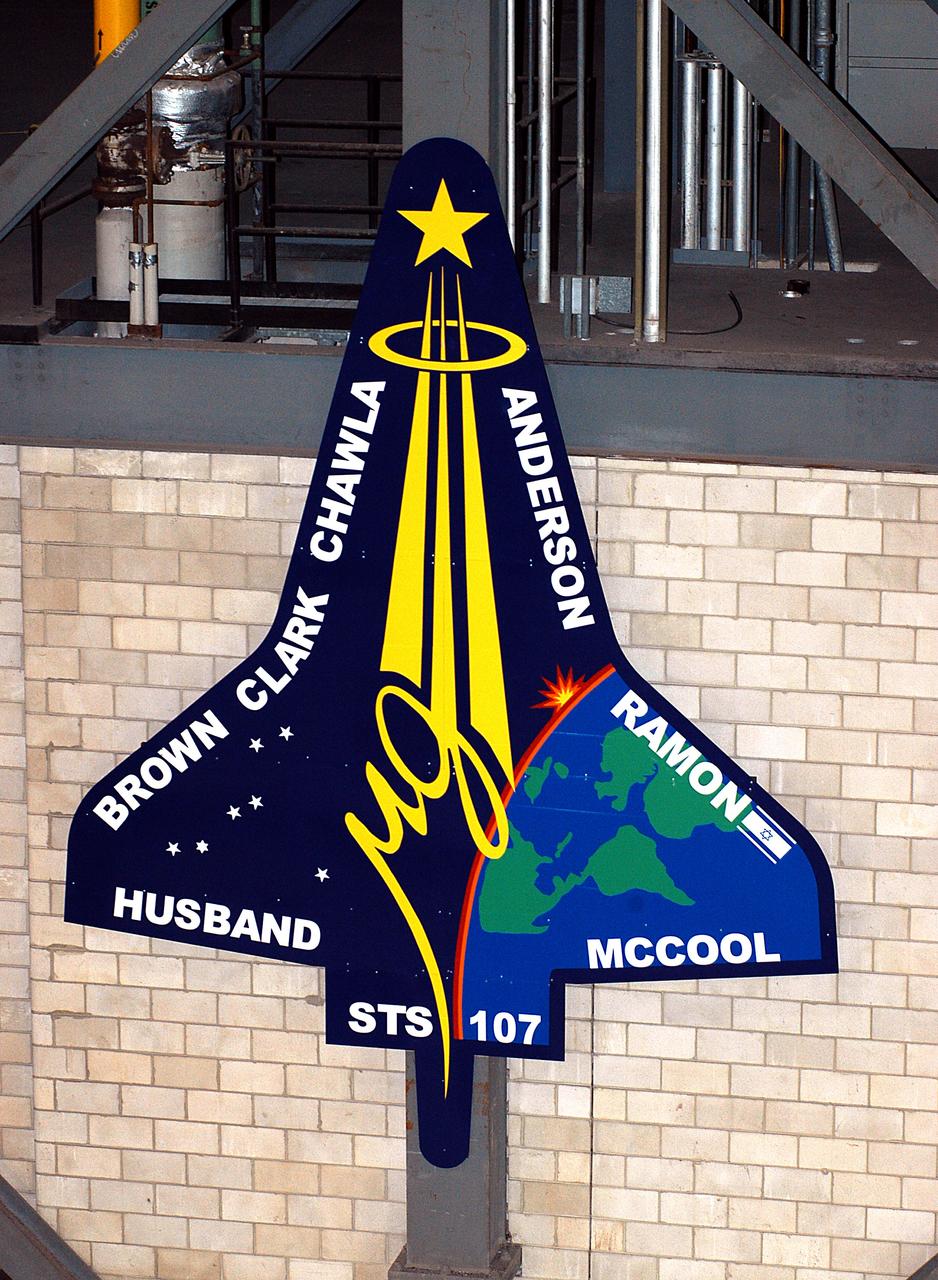
KENNEDY SPACE CENTER, FLA. - A 20-foot by 15-foot replica of the STS-107 logo has been installed above the “A” on the A tower in the transfer aisle of the Vehicle Assembly Building. The debris from the orbiter Columbia, lost in a tragic accident on its return to Earth from the STS-107 mission, is permanently stored in the tower. A dedication ceremony Jan. 29, 2004, unveiled a plaque being installed in the storage area in honor of “Columbia, the crew of STS-107, and their loved ones.”
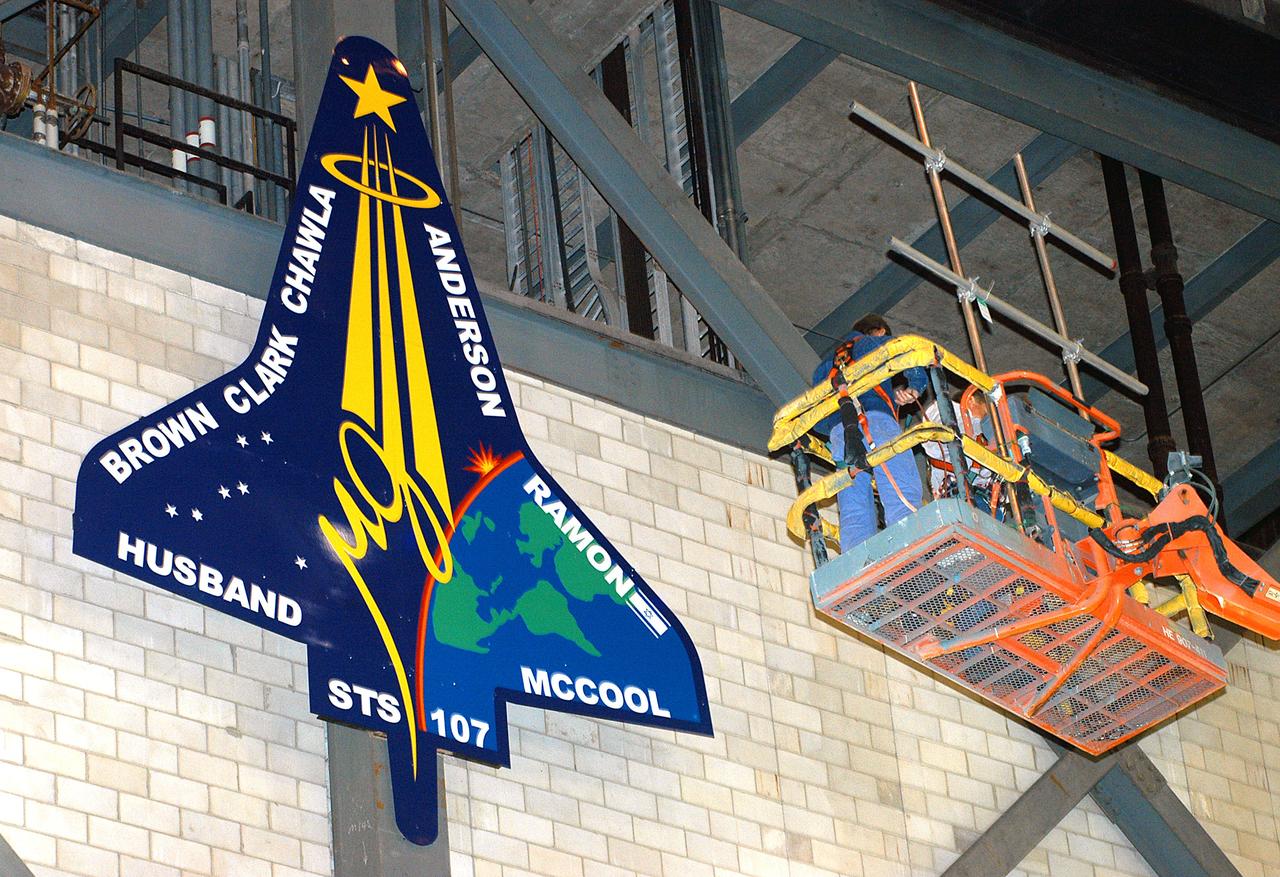
KENNEDY SPACE CENTER, FLA. - Workers install a 20-foot by 15-foot replica of the STS-107 logo above the “A” on the A tower in the transfer aisle of the Vehicle Assembly Building. The debris from the orbiter Columbia, lost in a tragic accident on its return to Earth from the STS-107 mission, is permanently stored in the tower. A dedication ceremony Jan. 29, 2004, revealed a plaque being installed in the storage area in honor of “Columbia, the crew of STS-107, and their loved ones.”
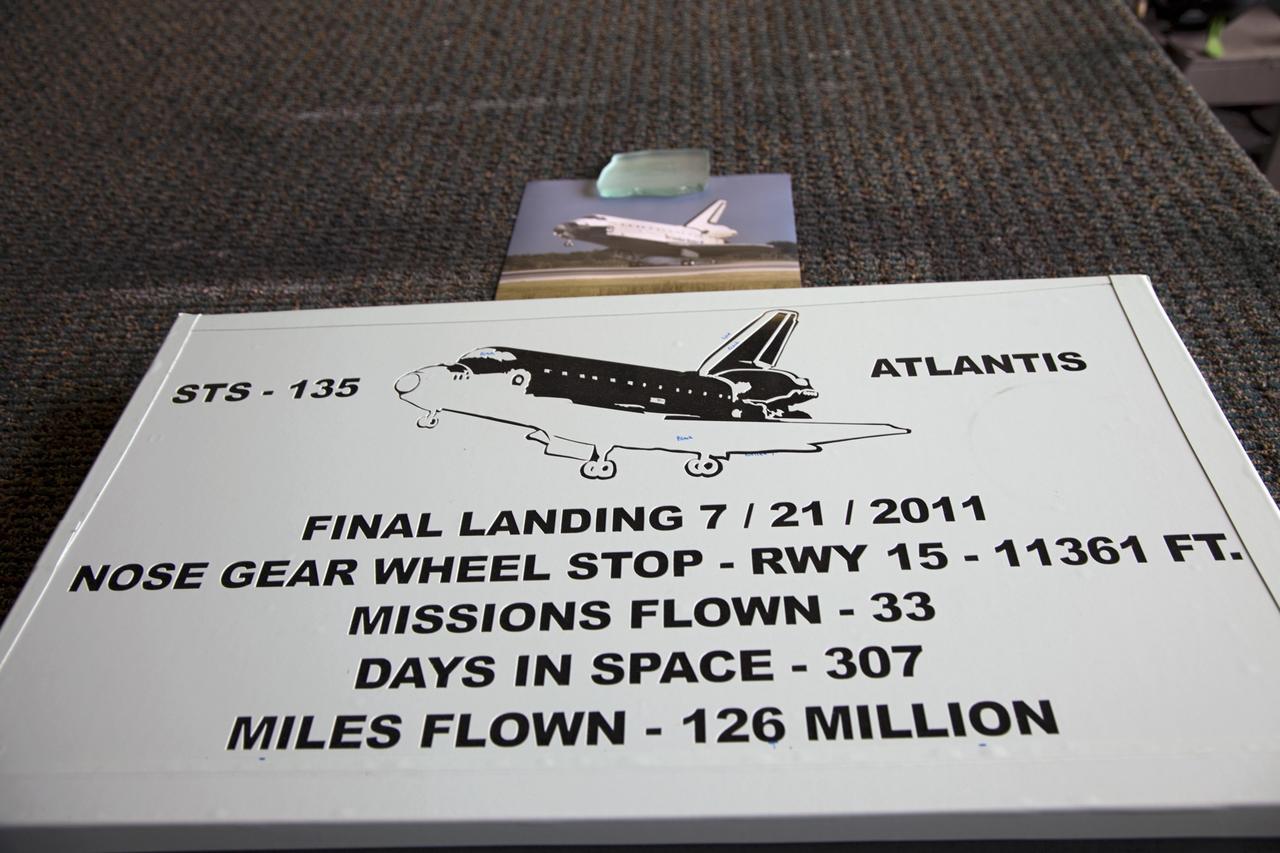
CAPE CANAVERAL, Fla. – At C Spray Glass Blasting of Cocoa Beach, Fla., the commemorative plaque to mark space shuttle Atlantis’ wheel stop location has been completed. The special plaque will be permanently mounted at the Shuttle Landing Facility, or SLF, runway edge at NASA’s Kennedy Space Center in Florida to commemorate the final space shuttle landing. Atlantis completed the STS-135 mission by landing at the SLF on July 21, 2011, at 5:57 a.m. EDT. Atlantis flew 33 missions, completed 4,848 orbits of the Earth, traveled nearly 126 million miles and spent 307 days in space. Atlantis carried 207 astronauts to space. Photo credit: NASA/Lorne Mathre
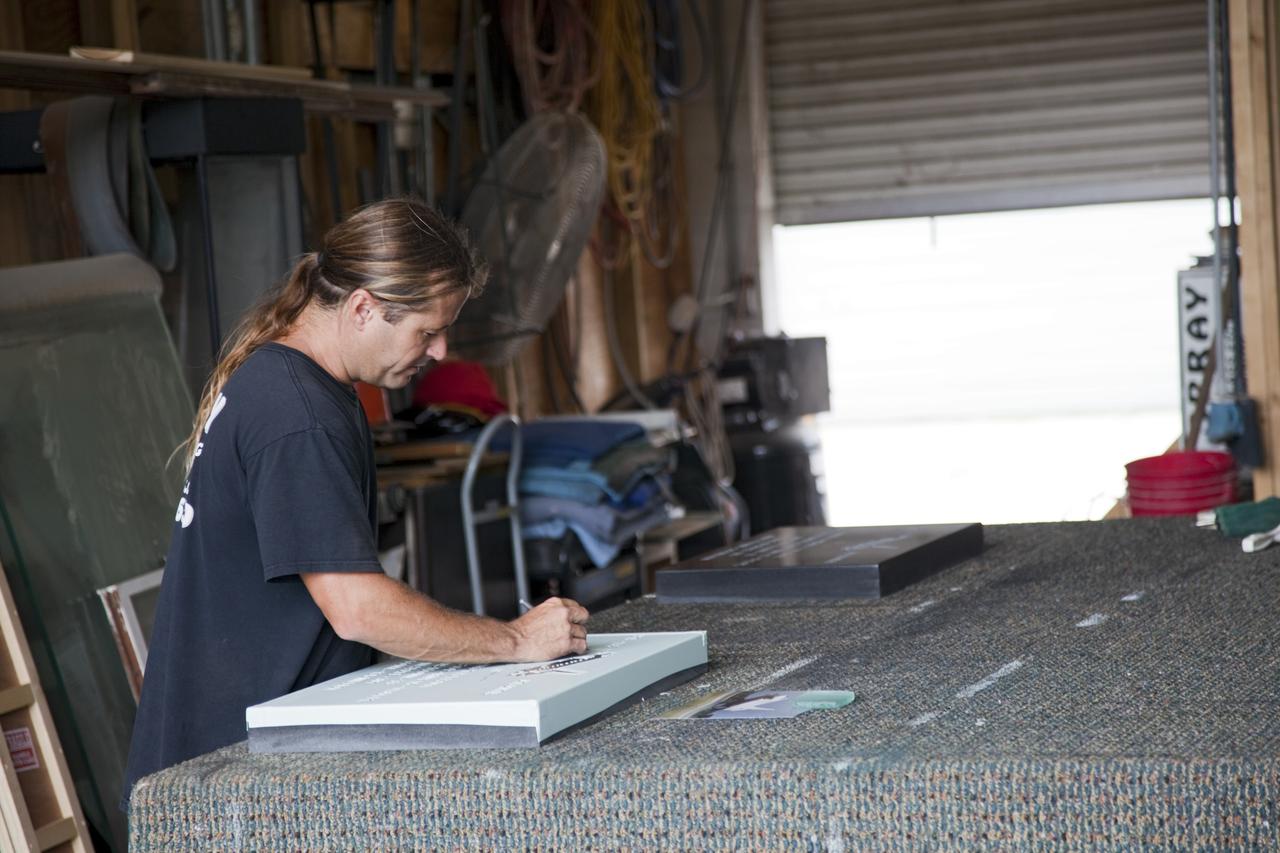
CAPE CANAVERAL, Fla. – At C Spray Glass Blasting of Cocoa Beach, Fla., a worker completes the commemorative plaque to mark space shuttle Atlantis’ wheel stop location. The special plaque will be permanently mounted at the Shuttle Landing Facility, or SLF, runway edge at NASA’s Kennedy Space Center in Florida to commemorate the final space shuttle landing. Atlantis completed the STS-135 mission by landing at the SLF on July 21, 2011, at 5:57 a.m. EDT. Atlantis flew 33 missions, completed 4,848 orbits of the Earth, traveled nearly 126 million miles and spent 307 days in space. Atlantis carried 207 astronauts to space. Photo credit: NASA/Lorne Mathre
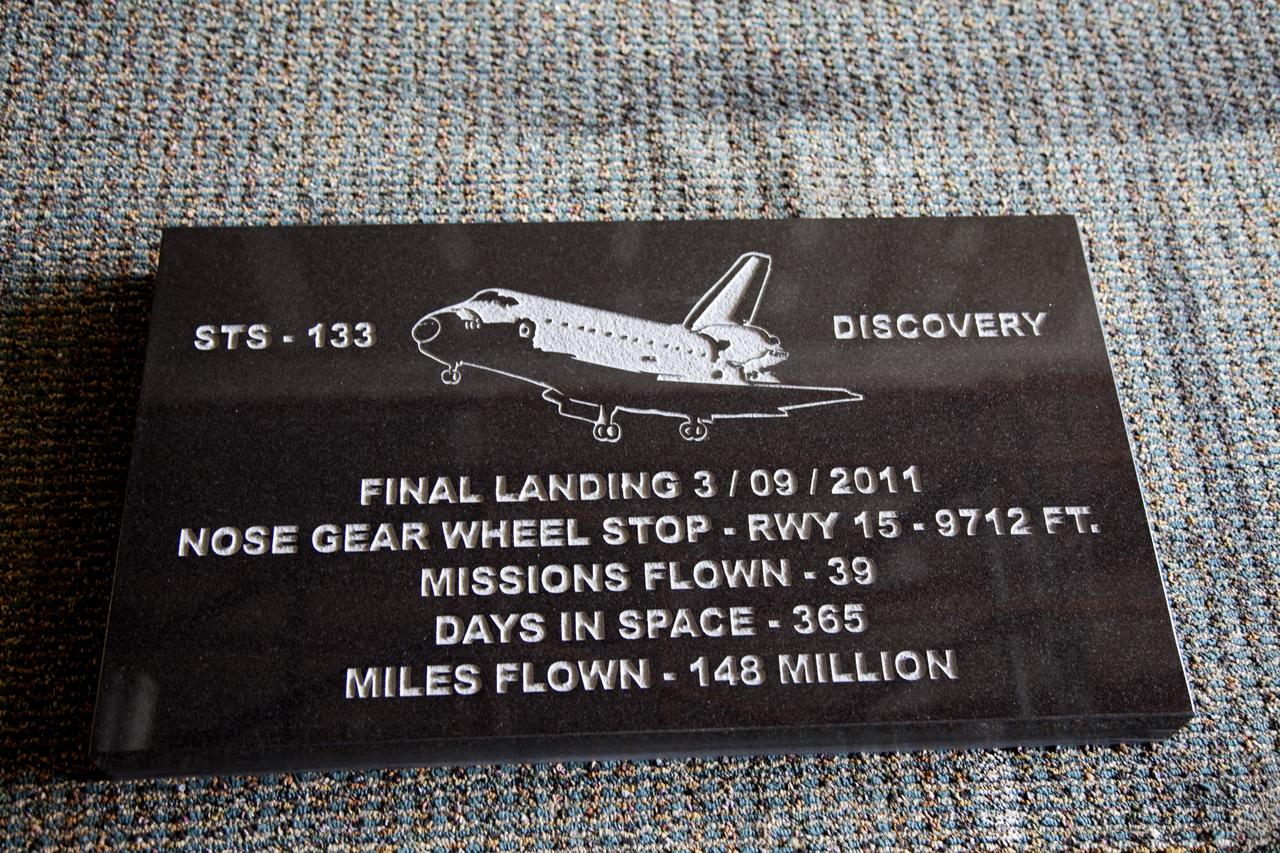
CAPE CANAVERAL, Fla. – At C Spray Glass Blasting of Cocoa Beach, Fla., the commemorative plaque to mark space shuttle Discovery’s wheel stop location has been completed. The special plaque will be permanently mounted at the Shuttle Landing Facility, or SLF, runway edge at NASA’s Kennedy Space Center in Florida to commemorate Discovery’s final landing. Discovery completed the STS-133 mission by landing at the SLF on March 9, 2011, at 11:57 a.m. EST. Discovery flew 39 missions, completed 5,830 orbits of the Earth, traveled 148 million miles and spent 365 days in space. Atlantis carried 252 astronauts to space. Photo credit: NASA/Lorne Mathre
CAPE CANAVERAL, Fla. – At C Spray Glass Blasting of Cocoa Beach, Fla., a worker completes the commemorative plaque to mark space shuttle Atlantis’ wheel stop location. The special plaque will be permanently mounted at the Shuttle Landing Facility, or SLF, runway edge at NASA’s Kennedy Space Center in Florida to commemorate the final space shuttle landing. Atlantis completed the STS-135 mission by landing at the SLF on July 21, 2011, at 5:57 a.m. EDT. Atlantis flew 33 missions, completed 4,848 orbits of the Earth, traveled nearly 126 million miles and spent 307 days in space. Atlantis carried 207 astronauts to space. Photo credit: NASA/Lorne Mathre
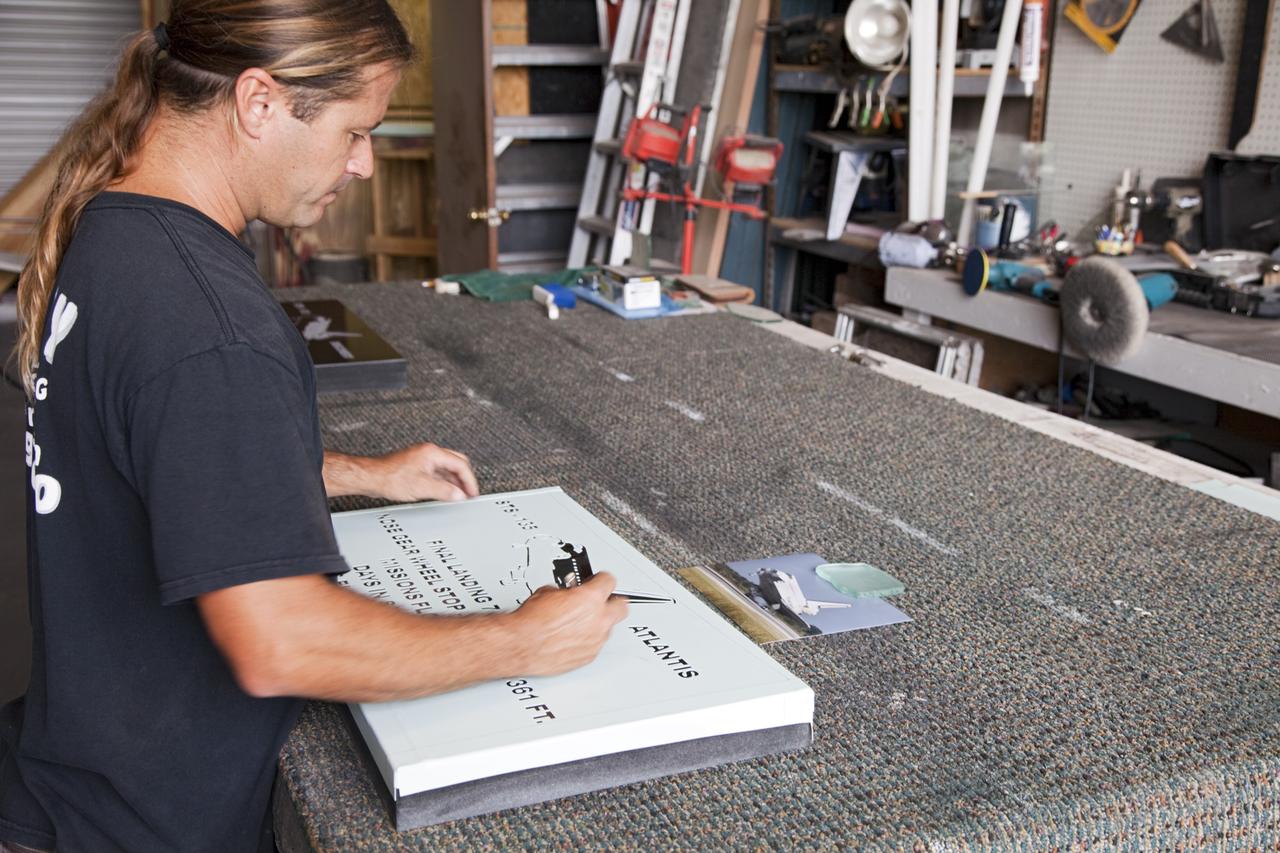
CAPE CANAVERAL, Fla. – At C Spray Glass Blasting of Cocoa Beach, Fla., a worker completes the commemorative plaque to mark space shuttle Atlantis’ wheel stop location. The special plaque will be permanently mounted at the Shuttle Landing Facility, or SLF, runway edge at NASA’s Kennedy Space Center in Florida to commemorate the final space shuttle landing. Atlantis completed the STS-135 mission by landing at the SLF on July 21, 2011, at 5:57 a.m. EDT. Atlantis flew 33 missions, completed 4,848 orbits of the Earth, traveled nearly 126 million miles and spent 307 days in space. Atlantis carried 207 astronauts to space. Photo credit: NASA/Lorne Mathre
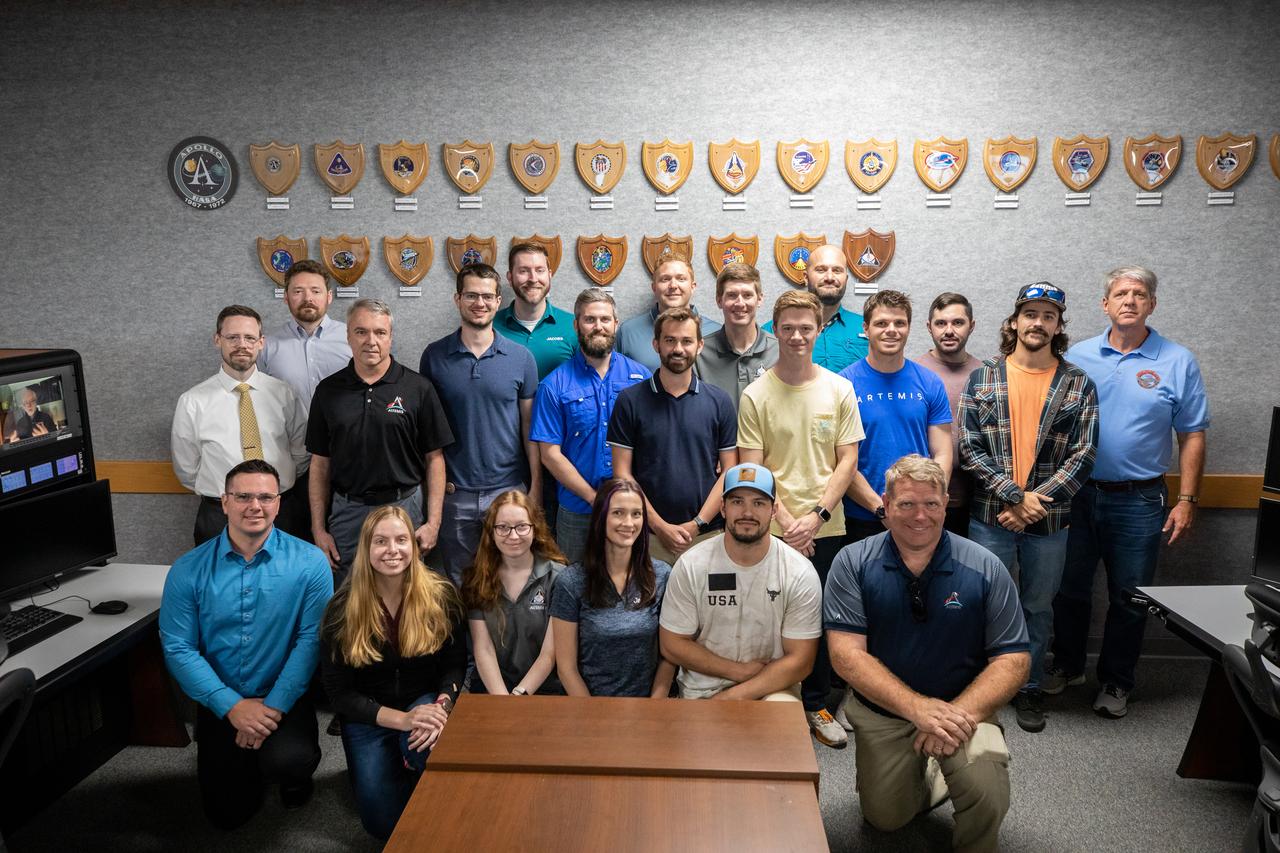
The Arms and Umbilicals (AUS) engineering team gather for a photograph during the Artemis launch director awards and plaque ceremony inside Firing Room 1 of the Launch Control Center at NASA’s Kennedy Space Center in Florida on March 24, 2023. Following tradition from the Apollo and Space Shuttle Programs, the AUS teams hung the Artemis I mission plaque to the wall behind them. The first in a series of increasingly complex missions, Artemis I launched successfully from Kennedy’s Launch Pad 39B at 1:47 a.m. EST on Nov. 16, 2022.
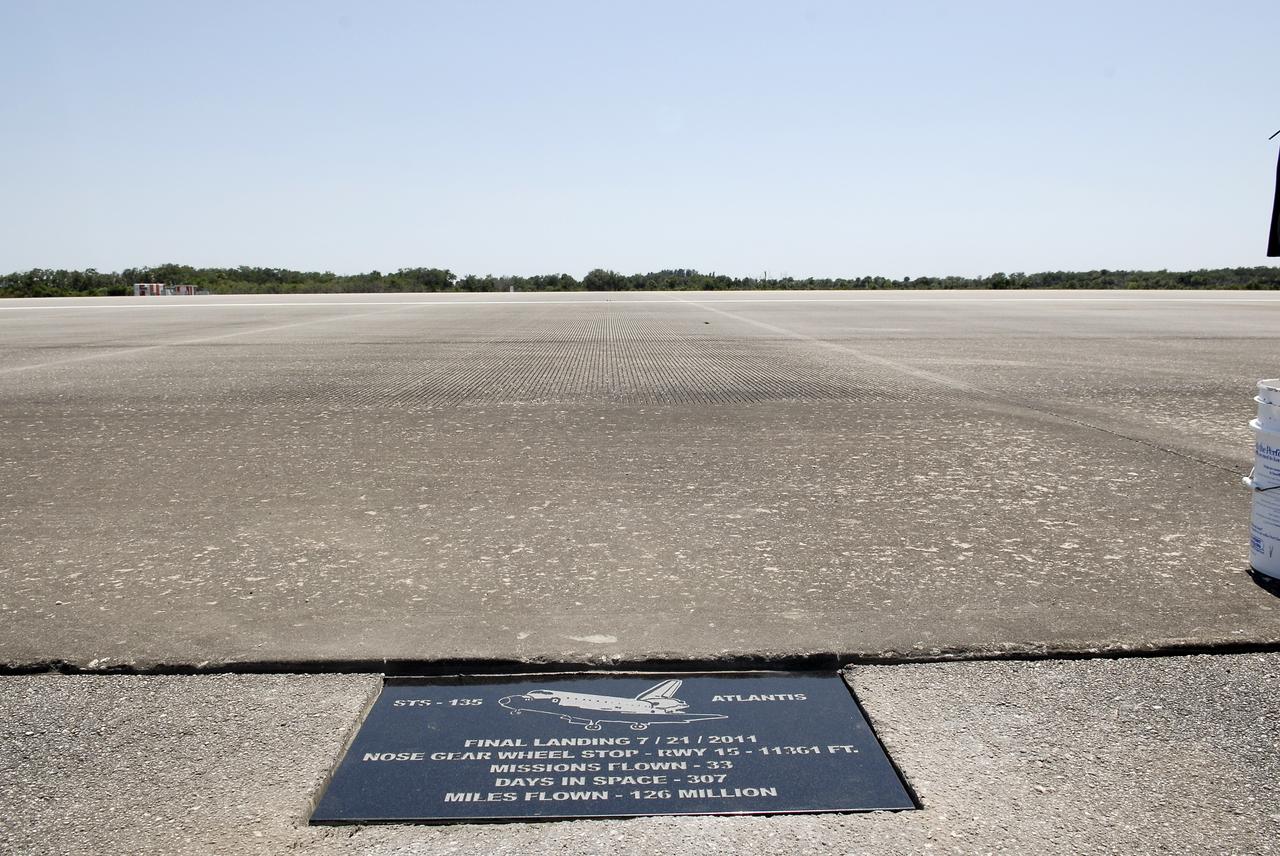
CAPE CANAVERAL, Fla. - At the Shuttle Landing Facility SLF at NASA’s Kennedy Space Center in Florida, a special plaque marks the nose gear wheel stop of space shuttle Atlantis. The 16-by-28-inch black granite plaque is the third to be permanently mounted, commemorating the final landings of each of the three orbiters. Atlantis completed the STS-135 mission by landing at the SLF on July 21, 2011, at 5:57 a.m. Atlantis flew 33 missions, completed 4,848 orbits of the Earth, traveled nearly 126 million miles and spent 307 days in space. Atlantis carried 207 astronauts to space. Photo credit: NASA/Charisse Nahser

Artemis Launch Director Charlie Blackwell-Thompson, at left, holds the Artemis I plaque inside the lobby of the Launch Control Center at NASA’s Kennedy Space Center in Florida on March 24, 2023. Joining her from left are Shawn Quinn, manager, Exploration Ground Systems; and Kelvin Manning, Kennedy deputy director. Following tradition from the Apollo and Space Shuttle Programs, the plaque will be added to the wall behind them. The first in a series of increasingly complex missions, Artemis I launched successfully from Kennedy’s Launch Pad 39B at 1:47 a.m. EST on Nov. 16, 2022.
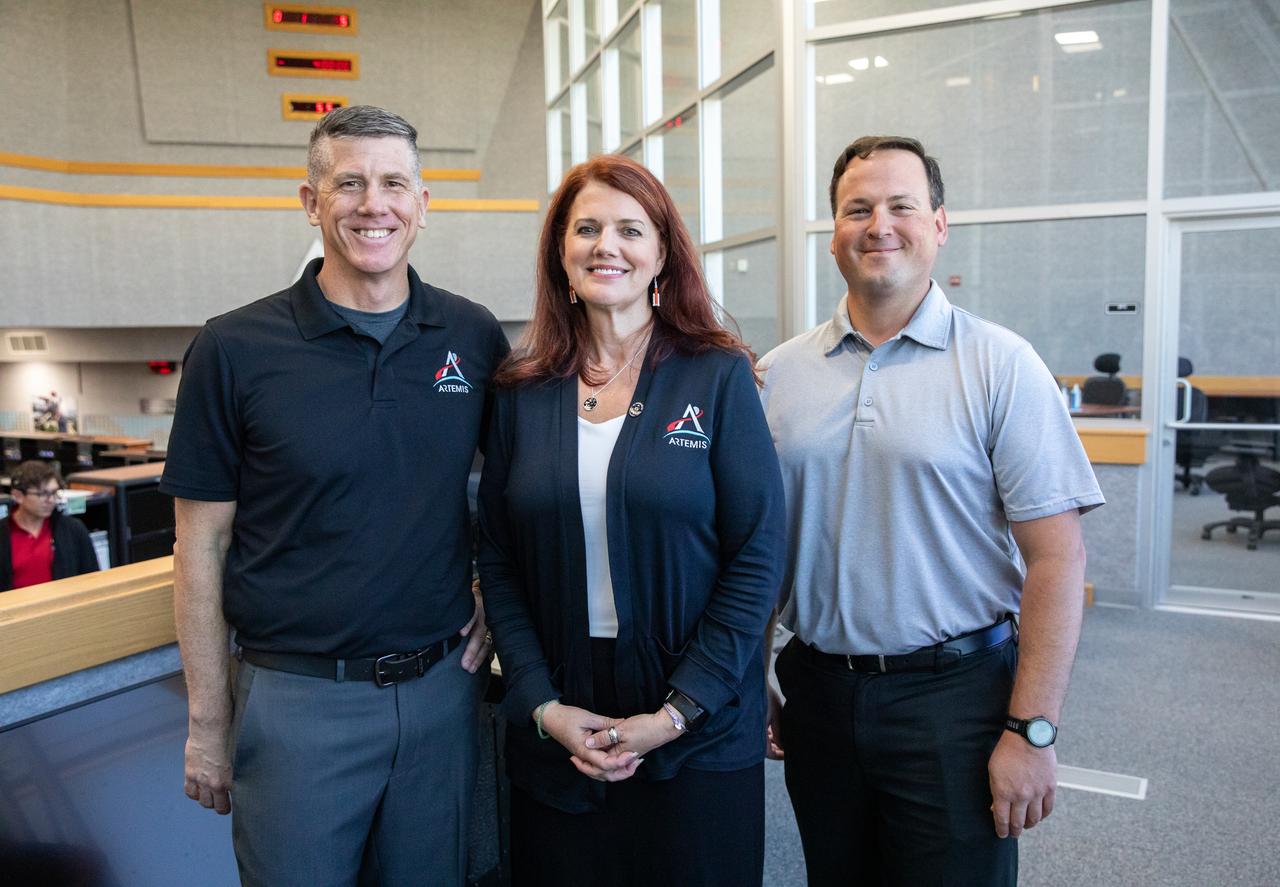
Artemis Launch Director Charlie Blackwell-Thompson, center, is inside Firing Room 1 of the Launch Control Center at NASA’s Kennedy Space Center in Florida during the inaugural Artemis I launch director awards and plaque ceremony on March 24, 2023. At left is Jeremy Graeber, Artemis assistant launch director. At right is Wes Mosedale, technical assistant to the launch director. Following tradition from the Apollo and Space Shuttle Programs, the Artemis I plaque was added to the wall in Firing Room 1 by Blackwell-Thompson. The first in a series of increasingly complex missions, Artemis I launched successfully from Kennedy’s Launch Pad 39B at 1:47 a.m. EST on Nov. 16, 2022.
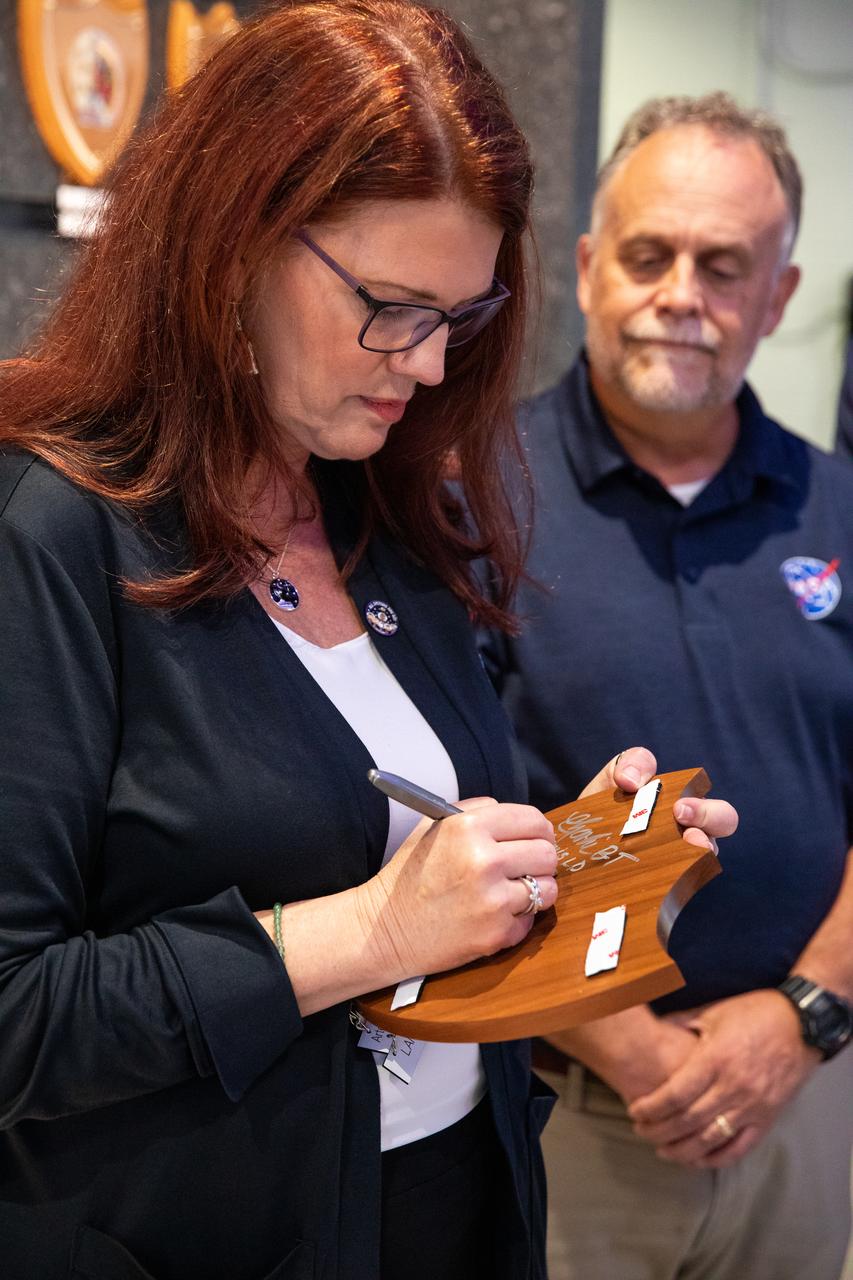
Artemis Launch Director Charlie Blackwell-Thompson, at left, signs the back of the Artemis I plaque inside the lobby of the Launch Control Center at NASA’s Kennedy Space Center in Florida on March 24, 2023. Joining her is Shawn Quinn, manager, Exploration Ground Systems. Following tradition from the Apollo and Space Shuttle Programs, the plaque will be added to the wall behind them. The first in a series of increasingly complex missions, Artemis I launched successfully from Kennedy’s Launch Pad 39B at 1:47 a.m. EST on Nov. 16, 2022.
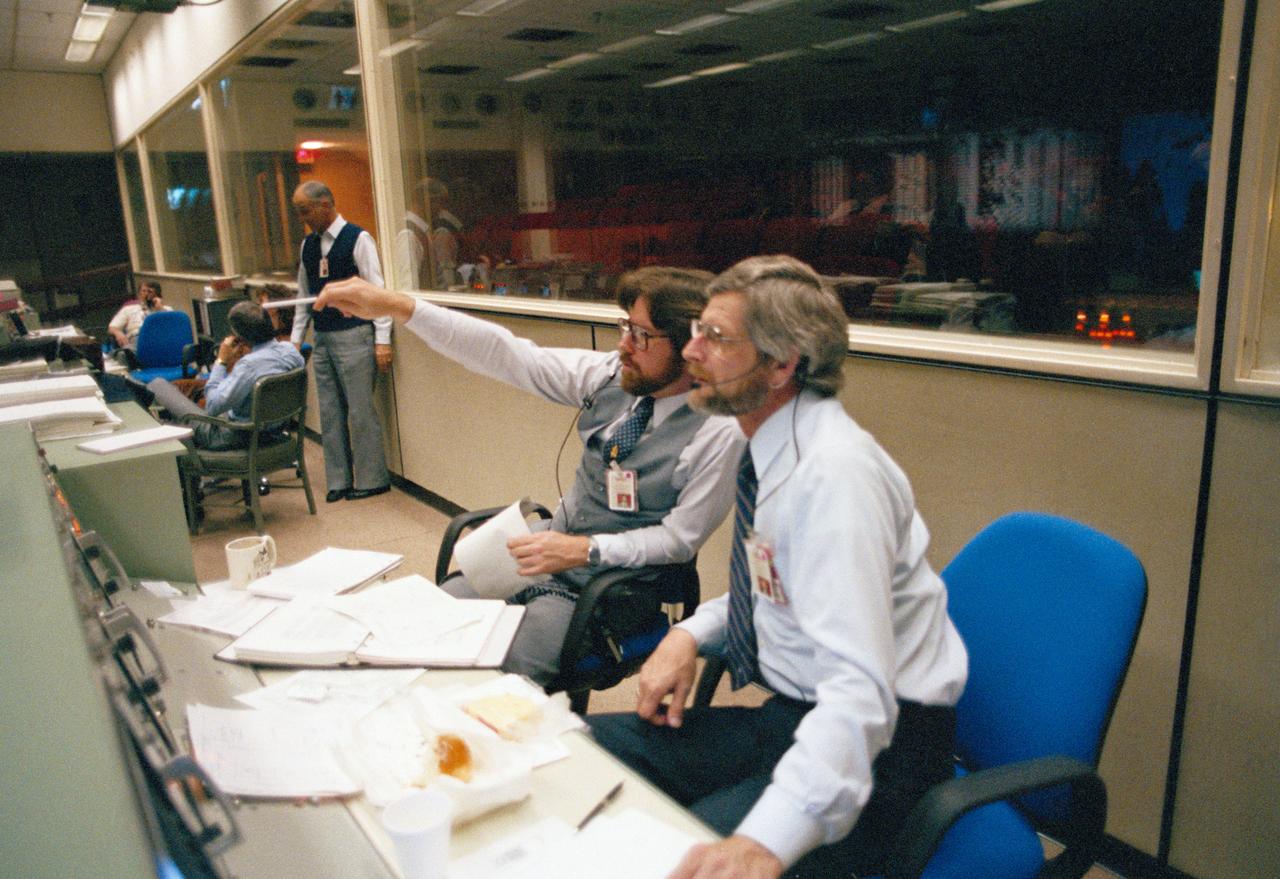
s83-46015 Views of the Mission Control Center activity of Eidophor with STS-9 Landing Data; PAO Console ith Steve Nesbitt and Harold S. Stall; FD Console with Charles Lewis and Ralph Hoodless, Lewis and M.P. "Pete" Frank; and the hanging of the STS-9 Plaque
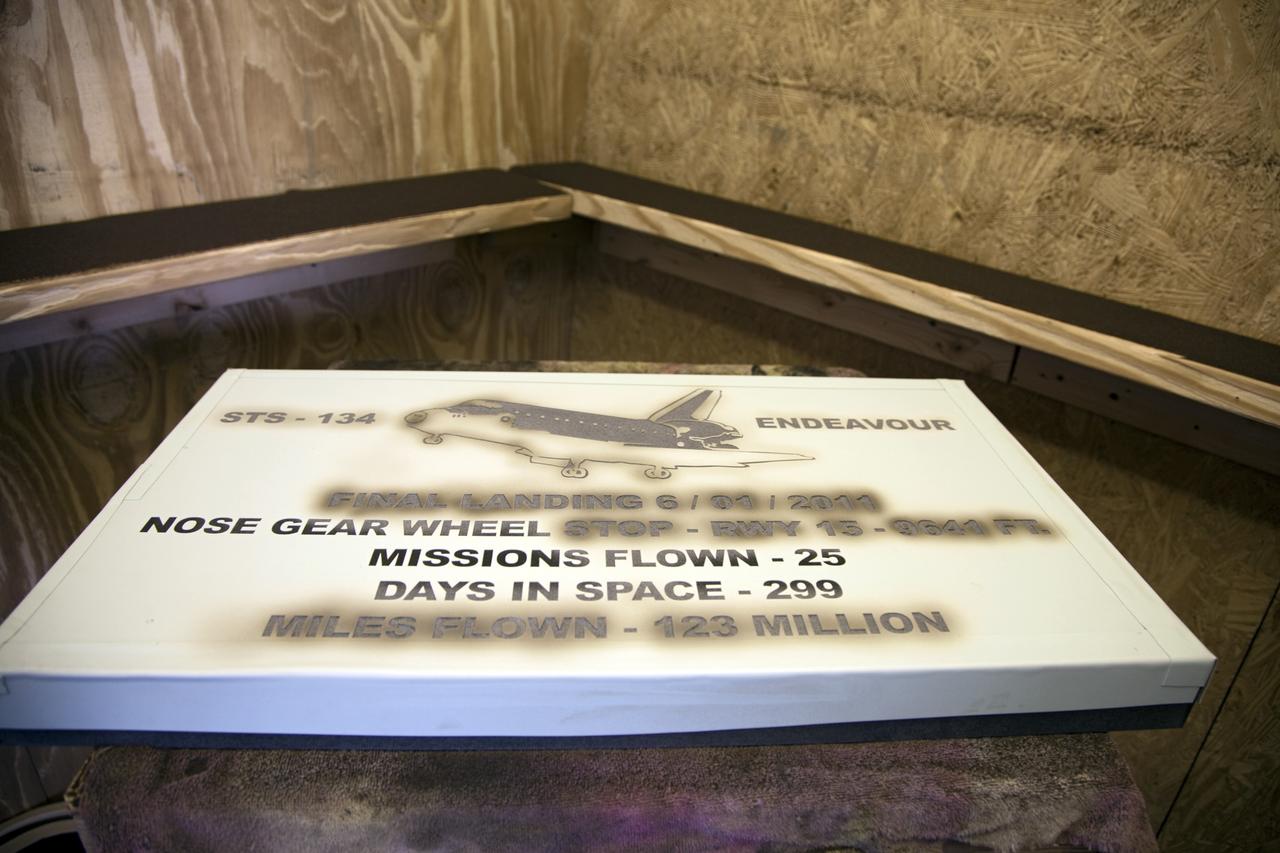
CAPE CANAVERAL, Fla. – At C Spray Glass Blasting of Cocoa Beach, Fla., a worker completes the commemorative plaque to mark space shuttle Endeavour’s wheel stop location. The special plaque will be permanently mounted at the Shuttle Landing Facility, or SLF, runway edge at NASA’s Kennedy Space Center in Florida to commemorate Endeavour’s final space shuttle landing. Endeavour completed the STS-134 mission by landing at the SLF on June 1, 2011, at 2:35 a.m. EDT. Endeavour flew 25 missions, completed 4,671 orbits of the Earth, traveled more than 122 million miles and spent 299 days in space. Endeavour carried 173 astronauts to space. Photo credit: NASA/Lorne Mathre
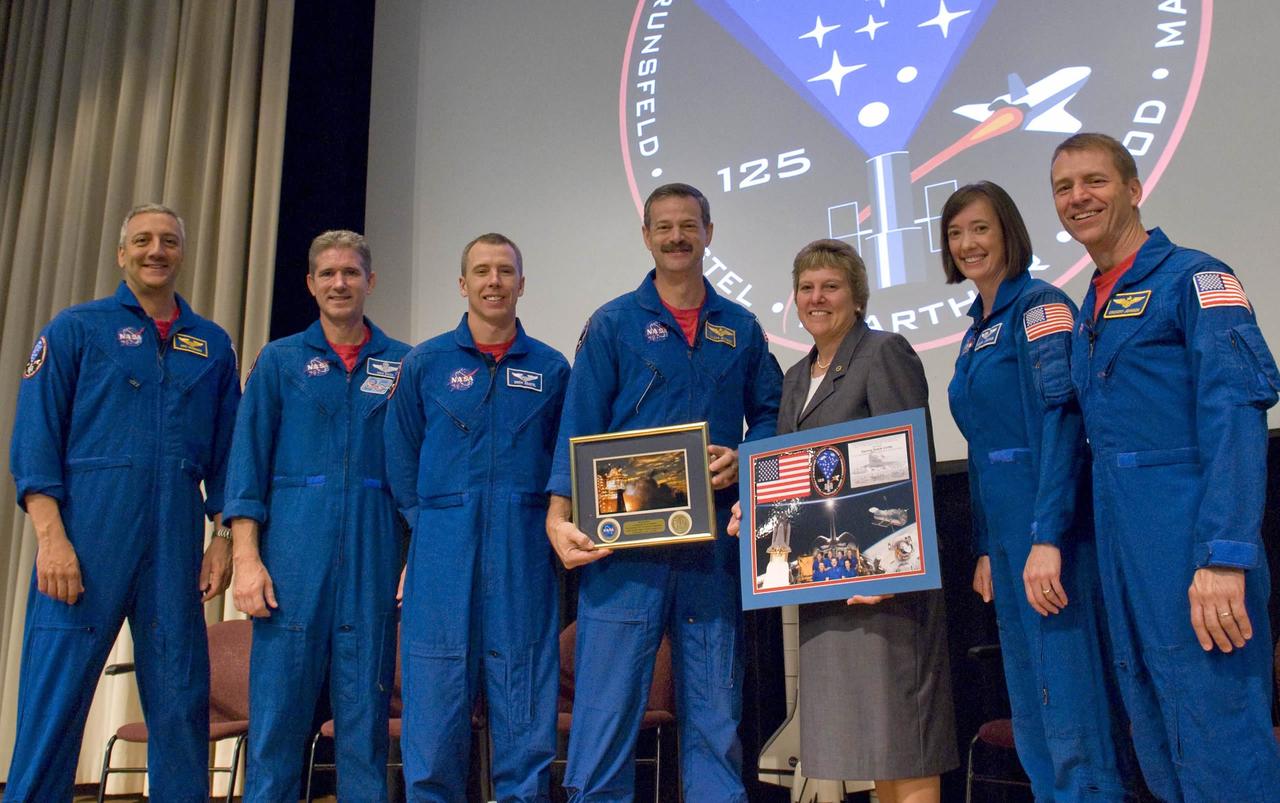
Astronauts from the STS-125 mission to repair the Hubble Space Telescope shared accounts of their mission today at StenniSphere. The crewmembers-Commander Scott Altman, Pilot Greg Johnson and Mission Specialists Megan McArthur, Michael Good, Drew Feustel and Mike Massimino-thanked Stennis employees for their contributions to the success of the mission and presented a plaque to Marina Benigno, director of center operations. Pictured are (l to r) Massimino, Good, Feustel, Altman, McArthur and Johnson.

On June 4, 1974, 5 years after the successful Apollo 11 lunar landing mission, commander Neil Armstrong (right) presented a plaque to U.S. President Richard Milhous Nixon (left) on behalf of all people who had taken part in the space program. In making the presentation, Armstrong said “Mr. President, you have proclaimed this week to be United States Space week in conjunction with the fifth anniversary of our first successful landing on the Moon. It is my privilege to represent my colleagues, the crewmen of projects Mercury, Gemini, Apollo, and Skylab, and the men and women of NASA, and the hundreds of thousands of Americans from across the land who contributed so mightily to the success of our efforts in space in presenting this plaque which bears the names of each individual who has had the privilege of representing this country” in a space flight. The presentation was made at the California white house in San Clemente.

JSC2011-E-068747 (24 June 2011) --- This picture was taken during a fit test on June 24, 2011 in the shuttle's Fixed Base Trainer in the Jake Garn Mission Simulation and Training Facility at the Johnson Space Center. When the mission was complete, the STS-135 crew left the plaque in the cockpit of Atlantis as a tribute to all of the people who have worked on the Space Shuttle Program. Photo credit: NASA
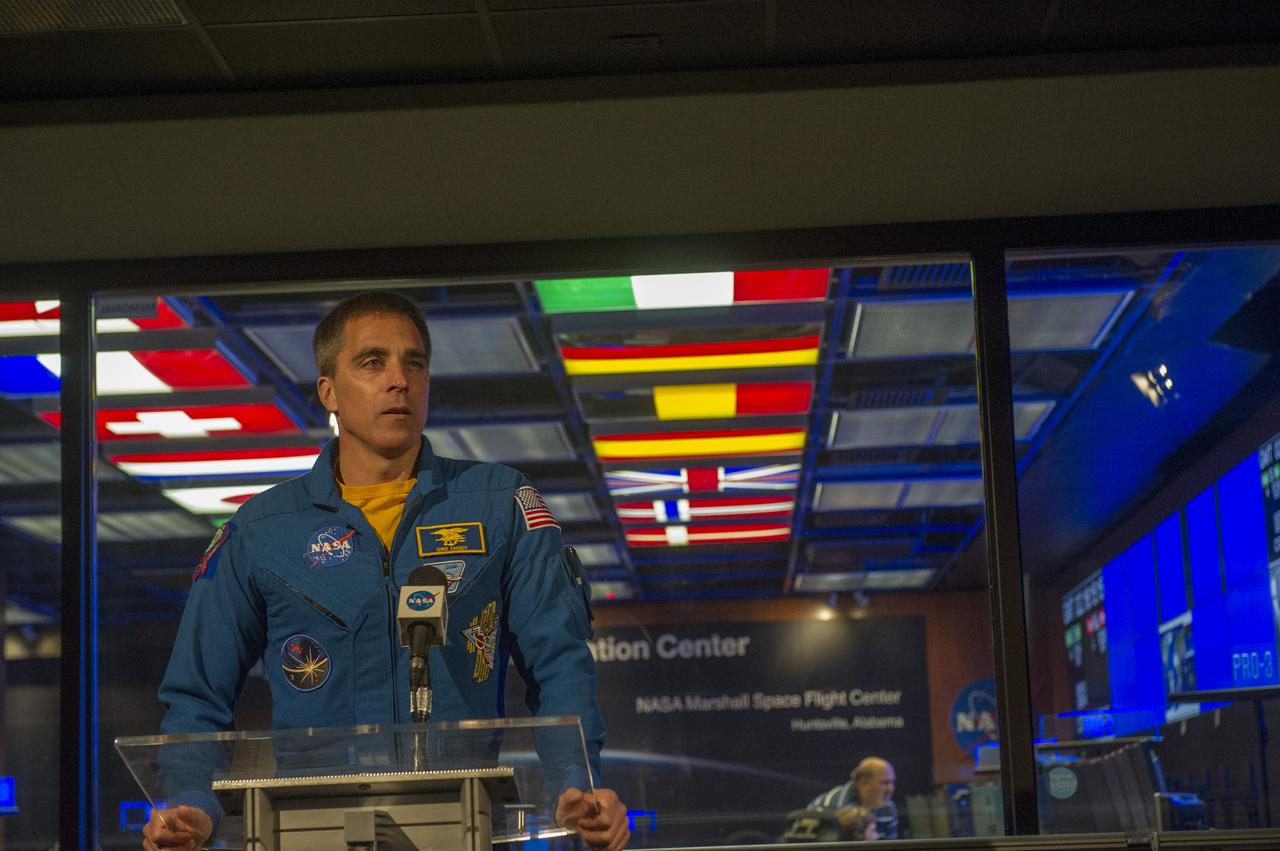
NASA ASTRONAUT CHRIS CASSIDY, A FLIGHT ENGINEER FOR INTERNATIONAL SPACE STATION EXPEDITION 36, VISITED THE MARSHALL SPACE FLIGHT CENTER JAN. 22 TO THANK MARSHALL TEAM MEMBERS FOR THEIR SUPPORT OF NASA’S ONGOING MISSION IN SPACE; TO HANG A MISSION PLAQUE IN THE PAYLOAD OPERATIONS INTEGRATION CENTER; AND TO GREET WORKERS, SIGN AUTOGRAPHS AND TALK ABOUT HIS EXPERIENCES DURING HIS FIVE AND A HALF MONTHS ON ORBIT.

CAPE CANAVERAL, Fla. - In the Training Auditorium at NASA's Kennedy Space Center in Florida, STS-130 Commander George Zamka presents a plaque commemorating the STS-130 mission to Kennedy Center Director Bob Cabana. From left are Cabana; Zamka; Mission Specialists Stephen Robinson (holding plaque), Robert Behnken, Nicholas Patrick, and Kathryn Hire; and Pilot Terry Virts. The presentation followed a program for Kennedy employees in which the crew talked about their experiences on the mission. Endeavour launched Feb. 8, 2010, and landed Feb. 21. During Endeavour's STS-130 mission, the crew installed the Tranquility node, a module that provides additional room for crew members and many of the station's life support and environmental control systems. Attached to Tranquility is a cupola with seven windows that provide a panoramic view of Earth, celestial objects and visiting spacecraft. STS-130 was the 24th flight for Endeavour, the 32nd shuttle mission devoted to ISS assembly and maintenance, and the 130th shuttle mission. For information on the STS-130 mission and crew, visit http:__www.nasa.gov_mission_pages_shuttle_shuttlemissions_sts130_index.html. Photo credit: NASA_Jim Grossmann
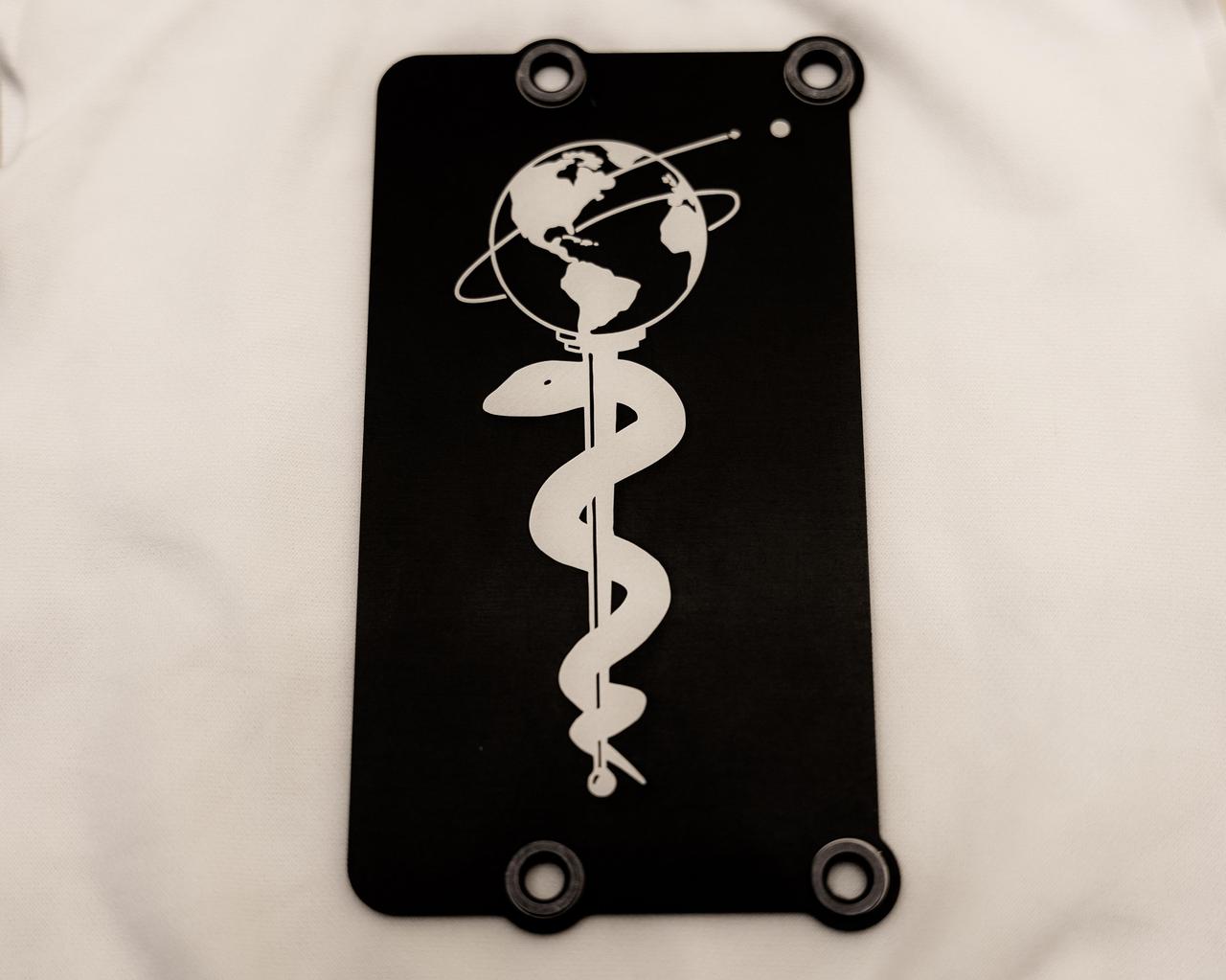
Members of NASA's Mars 2020 Perseverance rover mission installed a plate on the left side of the rover chassis, commemorating the impact of the COVID-19 pandemic and paying tribute to the perseverance of healthcare workers around the world. Made of aluminum, the 3-by-5-inch (8-by-13-centimeter) plaque was attached to the rover in May 2020 during final assembly at Kennedy Space Center in Florida. https://photojournal.jpl.nasa.gov/catalog/PIA23921
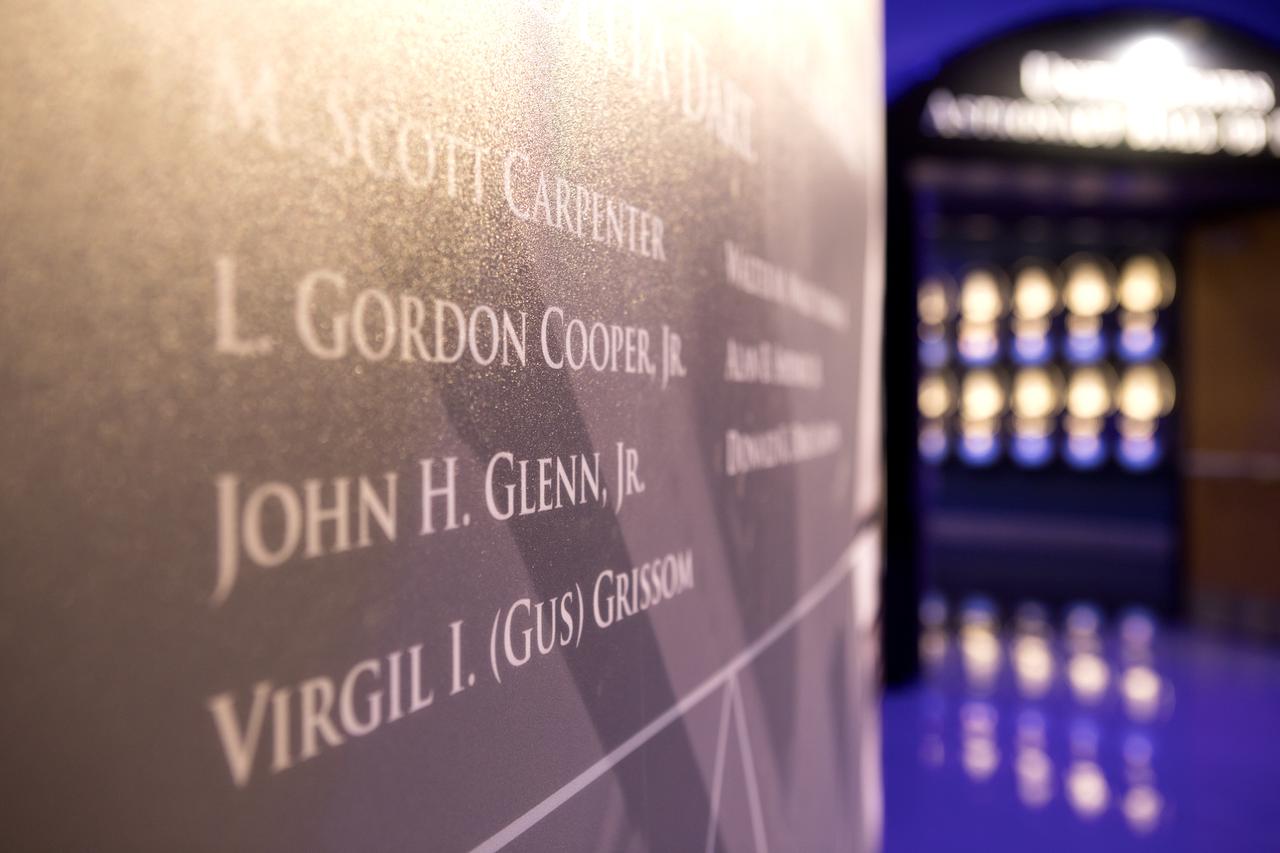
A plaque inside the Heroes and Legends exhibit hall at the Kennedy Space Center Visitor Complex shows the name of astronaut Sen. John Glenn. Glenn, who passed away Dec. 8, 2016 at age 95, was the last surviving member of NASA's original astronaut class. He gained worldwide acclaim during his Mercury mission that made him the first American to orbit the Earth. He flew again in 1998 aboard space shuttle Discovery at age 77.
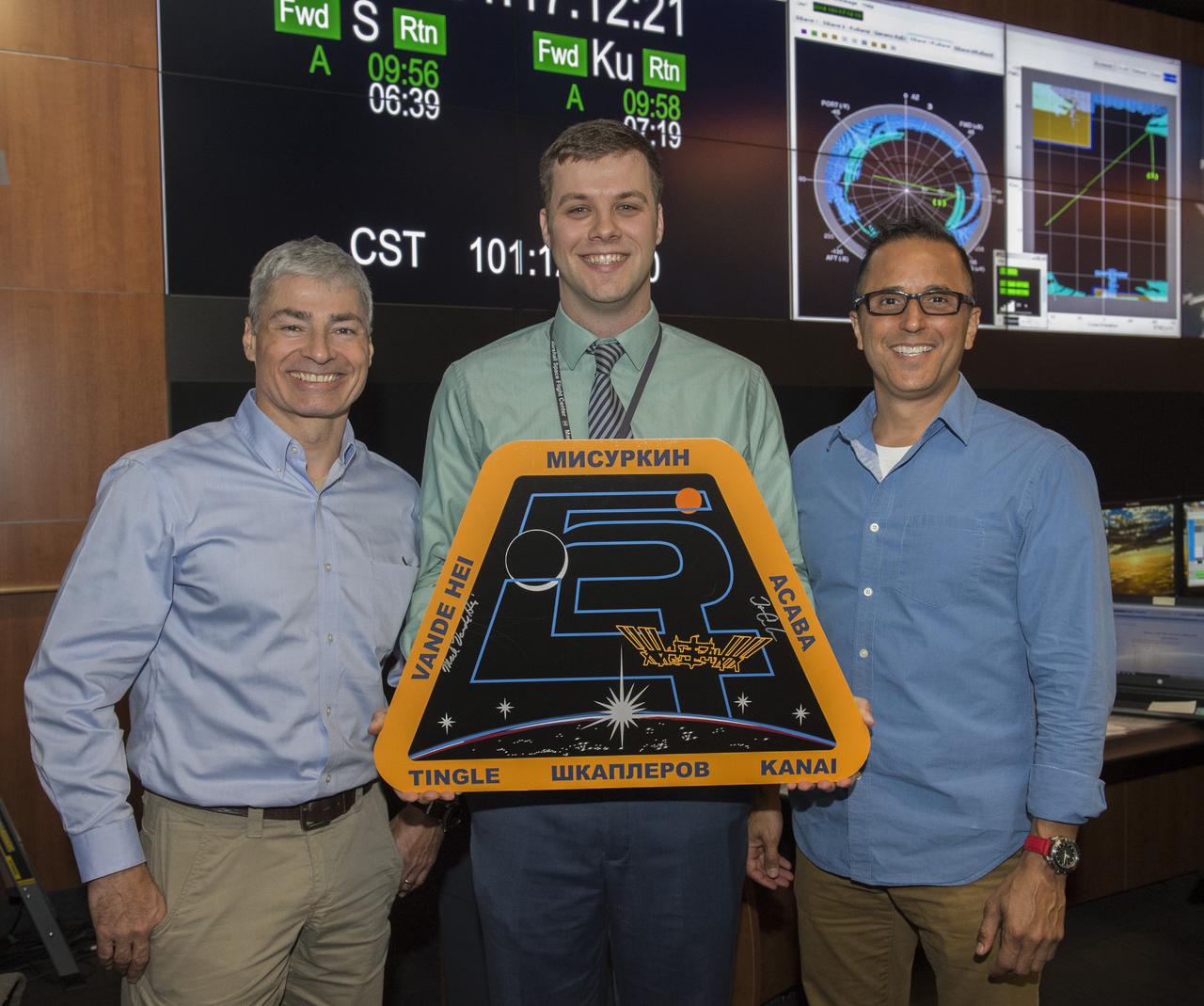
NASA astronauts Joe Acaba and Mark Vande Hei Acaba visited Marshall April 11 for their honorary Expedition 54 plaque hanging ceremony and to provide valuable feedback of their on-orbit science investigations with the Payload Operations and Integration Center team. Chris Buckley is awarded privilege of hanging Mission 54 placque, shown here with Astronaut Mark Vande Hei (L) and Astronaut Joe Acaba
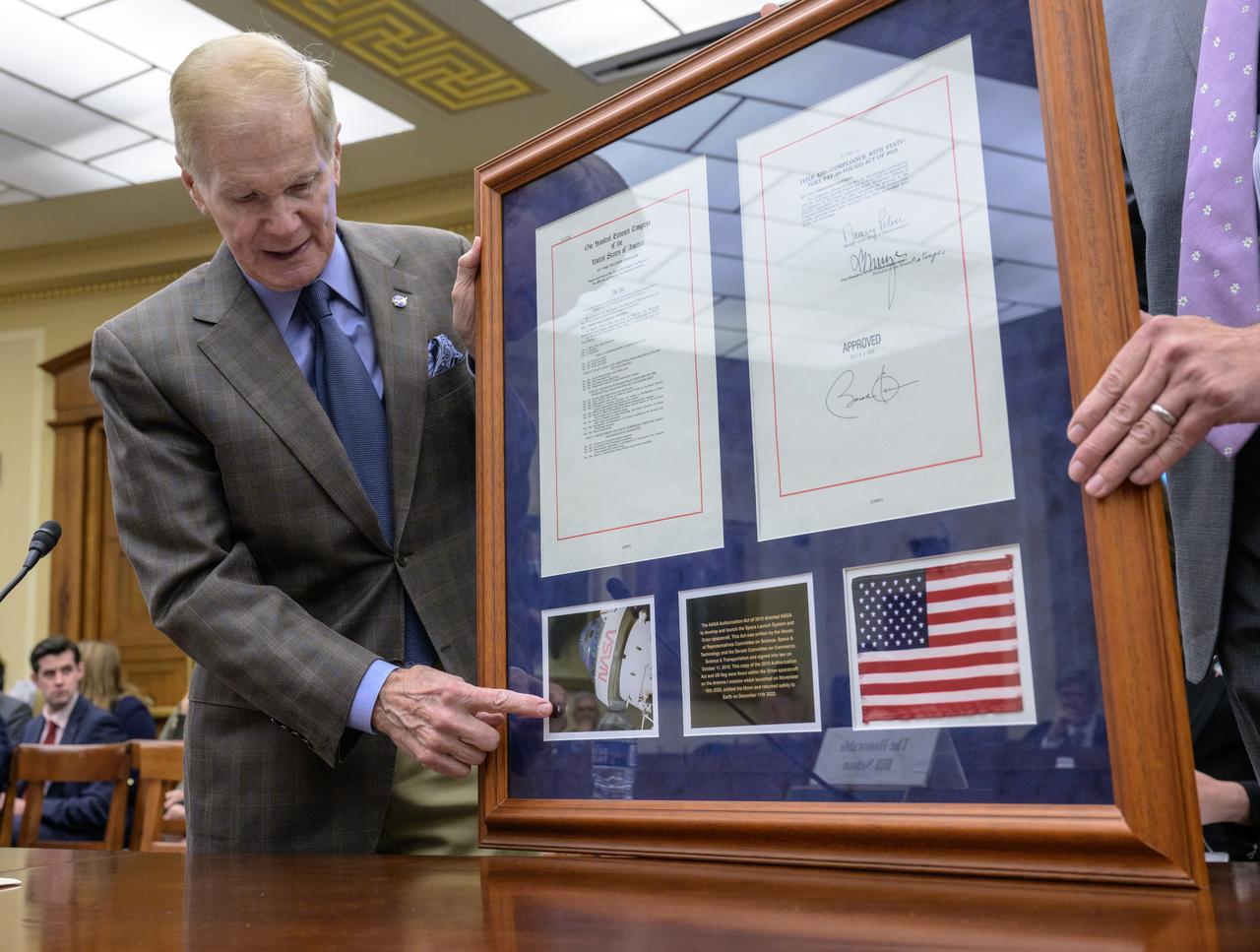
NASA Administrator Bill Nelson presents to the House Science, Space and Technology Committee, a plaque containing a copy of the NASA authorization Act of 2010 and a US flag that were flown within the Orion Spacecraft on the Artemis I mission and orbited the Moon, during a hearing on “An Overview of the Fiscal Year 2024 Proposed Budget Request for NASA,” Thursday, April 27, 2023 at the Rayburn House Office Building in Washington. Photo Credit: (NASA/Bill Ingalls)
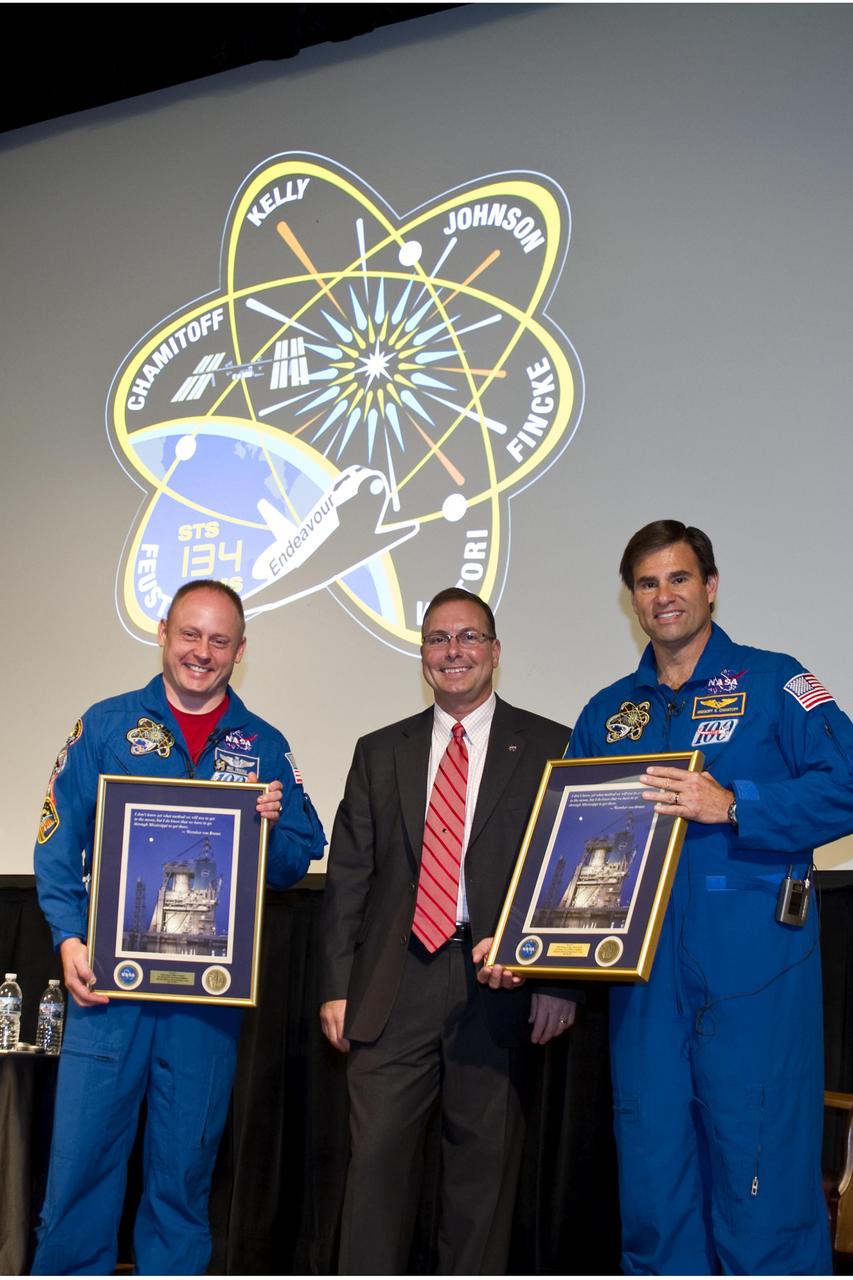
Stennis Space Center Deputy Director Richard Gilbrech (center) presents commemorative plaques to STS-134 crew members Michael Fincke (l) and Gregory Chamitoff during their July 20 visit to the south Mississippi facility. During the visit, Fincke and Chamitoff spoke to Stennis employees about their STS-134 mission aboard shuttle Endeavour, the final flight to space for the NASA orbiter.
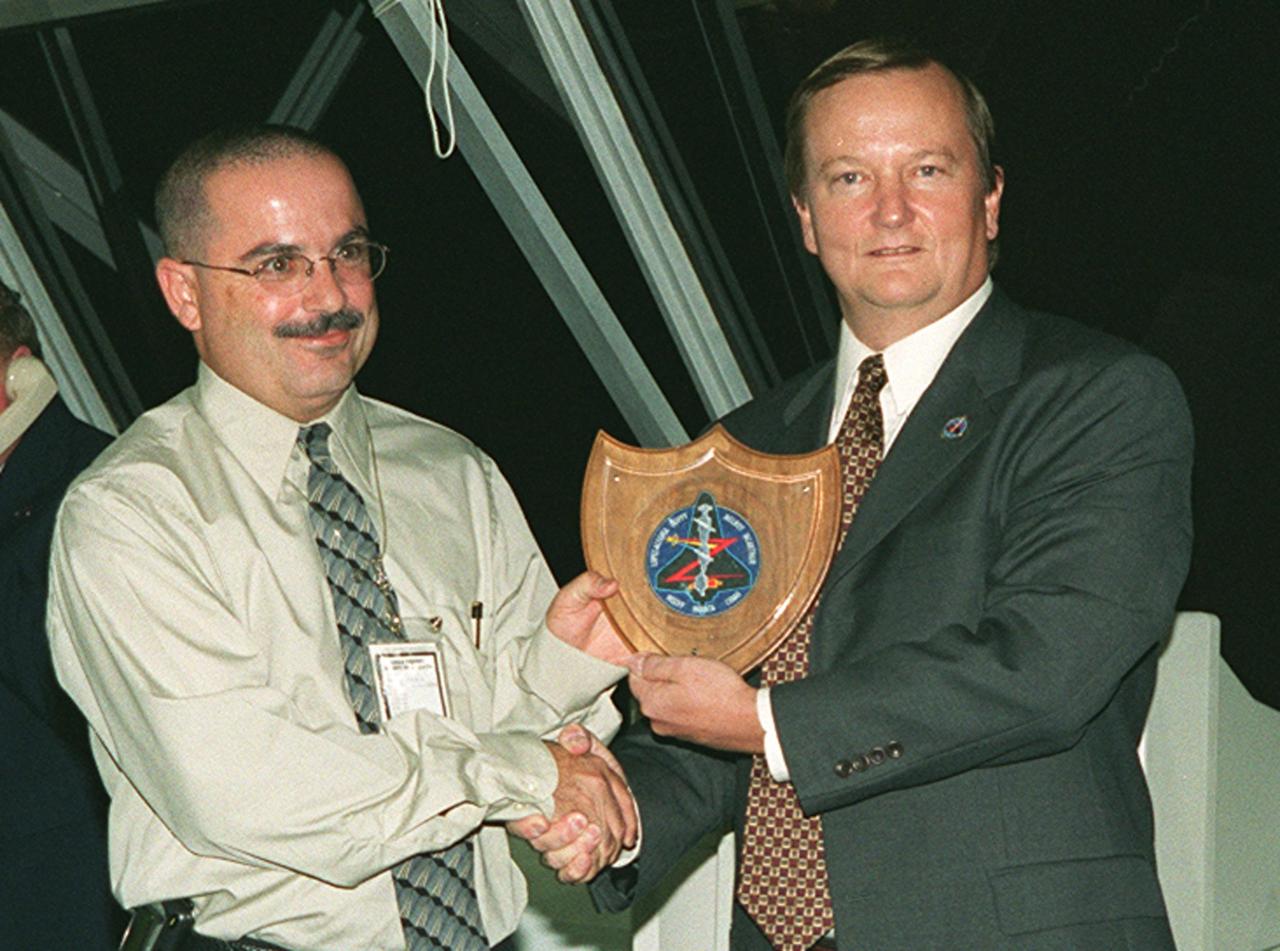
Jorge Rivera (center) receives a plaque and congratulations for his observatory powers from Shuttle Launch Director Mike Leinbach (right). A NASA external tank mechanical engineer, Rivera is the one who spotted the misplaced lock pin on Shuttle Discovery Oct. 10, shortly before the intended launch of mission STS-92, causing a scrub for safety reasons
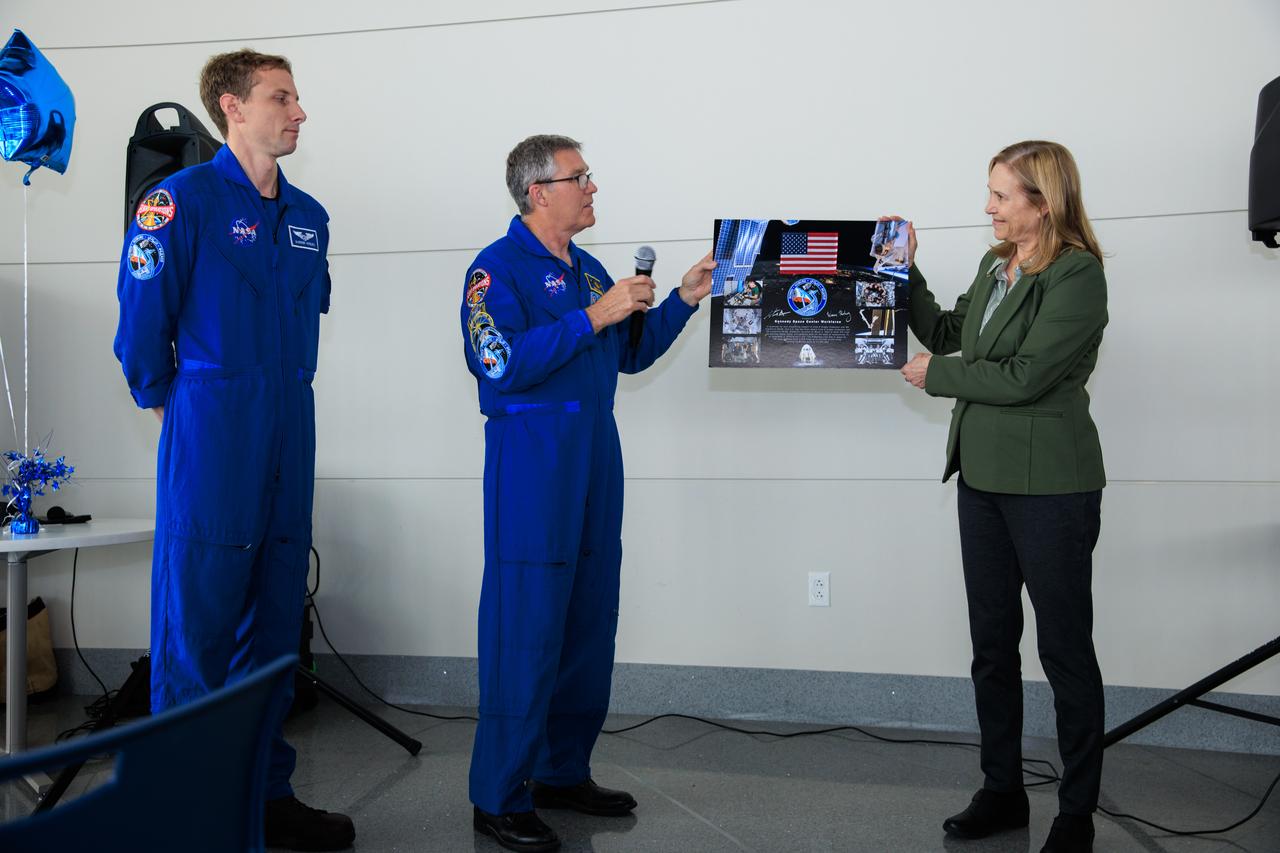
NASA’s SpaceX Crew-6 astronauts Warren “Woody” Hoburg and Stephen Bowen speak with Kennedy Space Center director Janet Petro during a meet-and-greet at the agency’s Central Campus Headquarters cafeteria at Kennedy Space Center in Florida on Wednesday, March 27, 2024. The astronauts present a plaque to Petro commemorating the agency’s sixth rotational crew mission to the to the International Space Station in partnership with SpaceX.
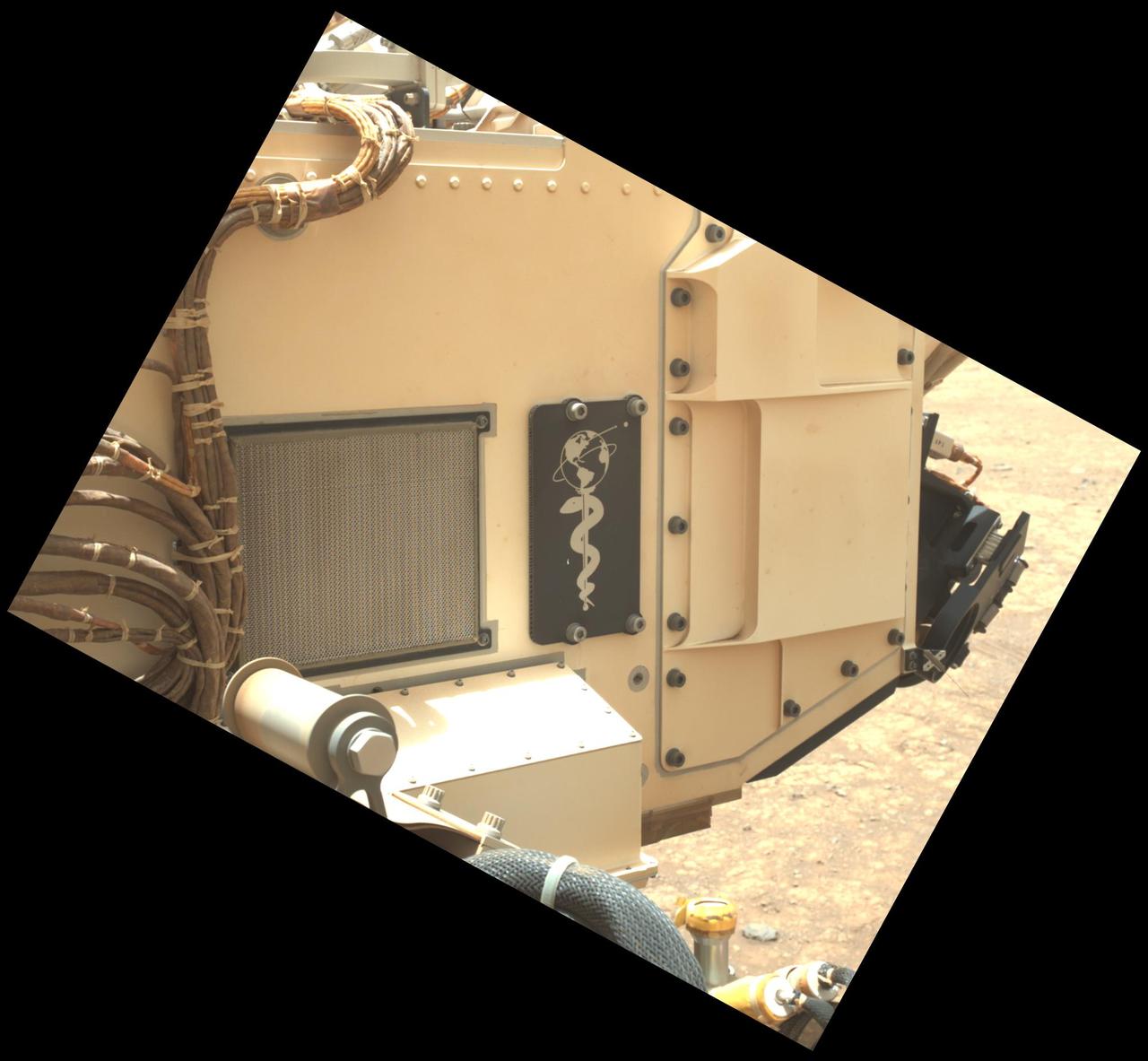
This close-up view of a plate on NASA's Perseverance rover commemorating the impact of the COVID-19 pandemic and paying tribute to the perseverance of health care workers around the world was acquired on June 28, 2025 (the 1,548th day, or sol, of its mission to Mars). Located on the left side of the rover chassis, the 3-by-5-inch (8-by-13-centimeter) aluminum plaque was attached in May 2020 during final assembly at NASA's Kennedy Space Center in Florida. https://photojournal.jpl.nasa.gov/catalog/PIA26641
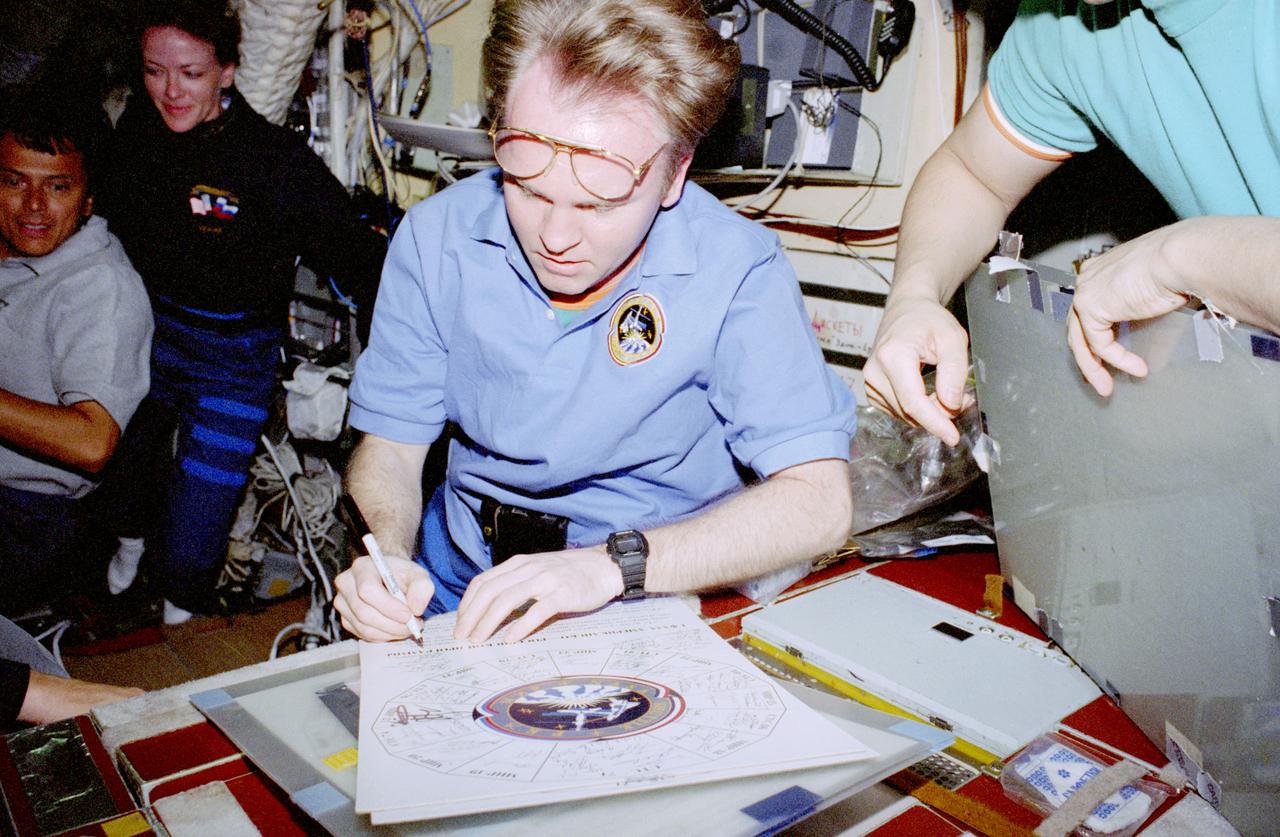
STS091-361-034 (2-12 June 1998) --- Andrew S.W. Thomas signs a plaque containing the names of all the visitors to Russia's Mir space station. Thomas is the final of seven NASA astronauts to serve as a guest cosmonaut researcher aboard Mir as part of International Space Station (ISS) Phase I. Looking on in the background are astronauts Franklin R. Chang-Diaz, payload commander; and Janet L. Kavandi, mission specialist.
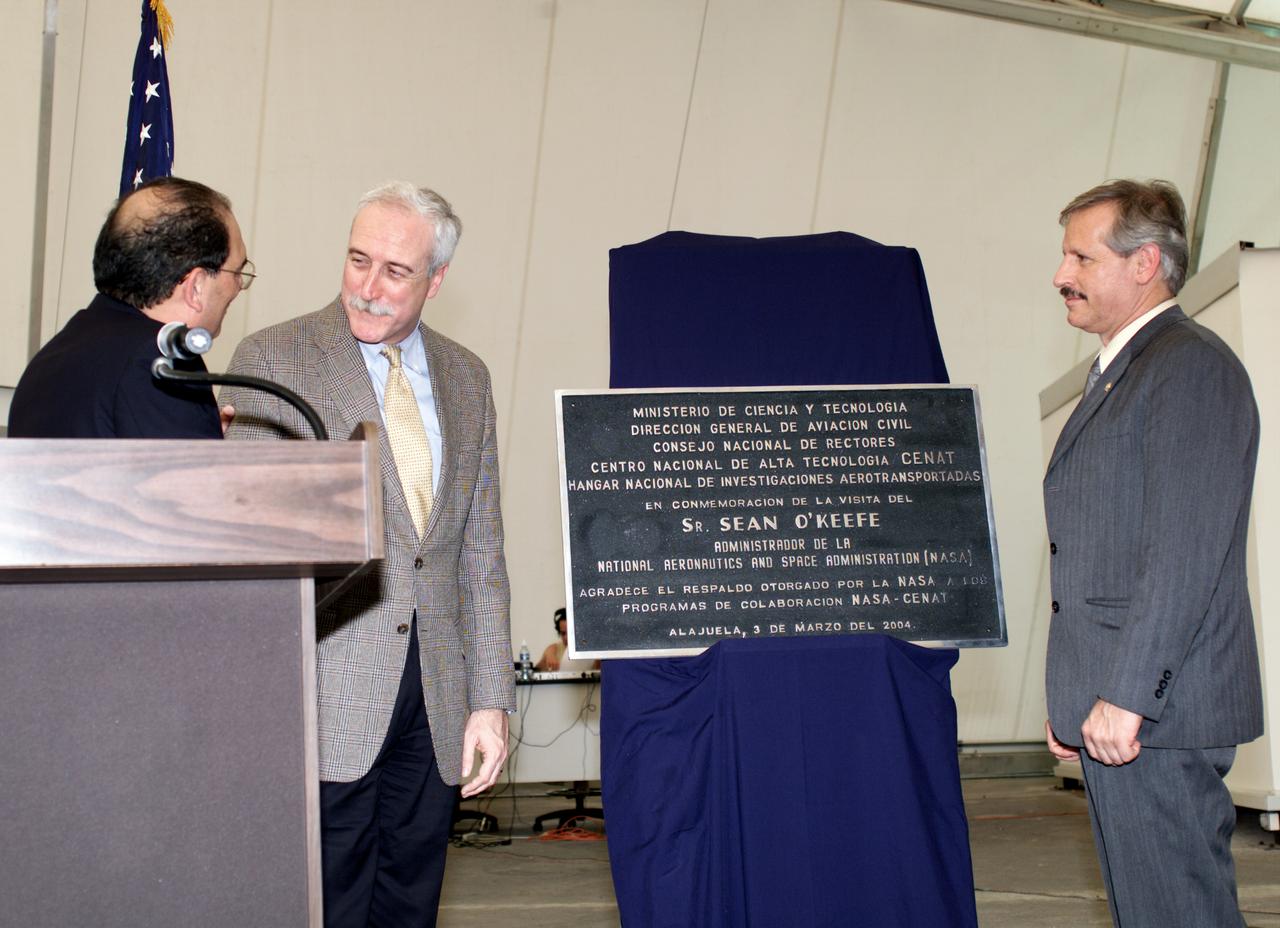
AirSAR 2004 Mesoamerica plaque unveiling by NASA Administrator Sean O'Keefe and Fernando Gutierrez, Costa Rican Minister of Science and Technology(MICIT). AirSAR 2004 Mesoamerica is a three-week expedition by an international team of scientists that will use an all-weather imaging tool, called the Airborne Synthetic Aperture Radar (AirSAR), in a mission ranging from the tropical rain forests of Central America to frigid Antarctica.
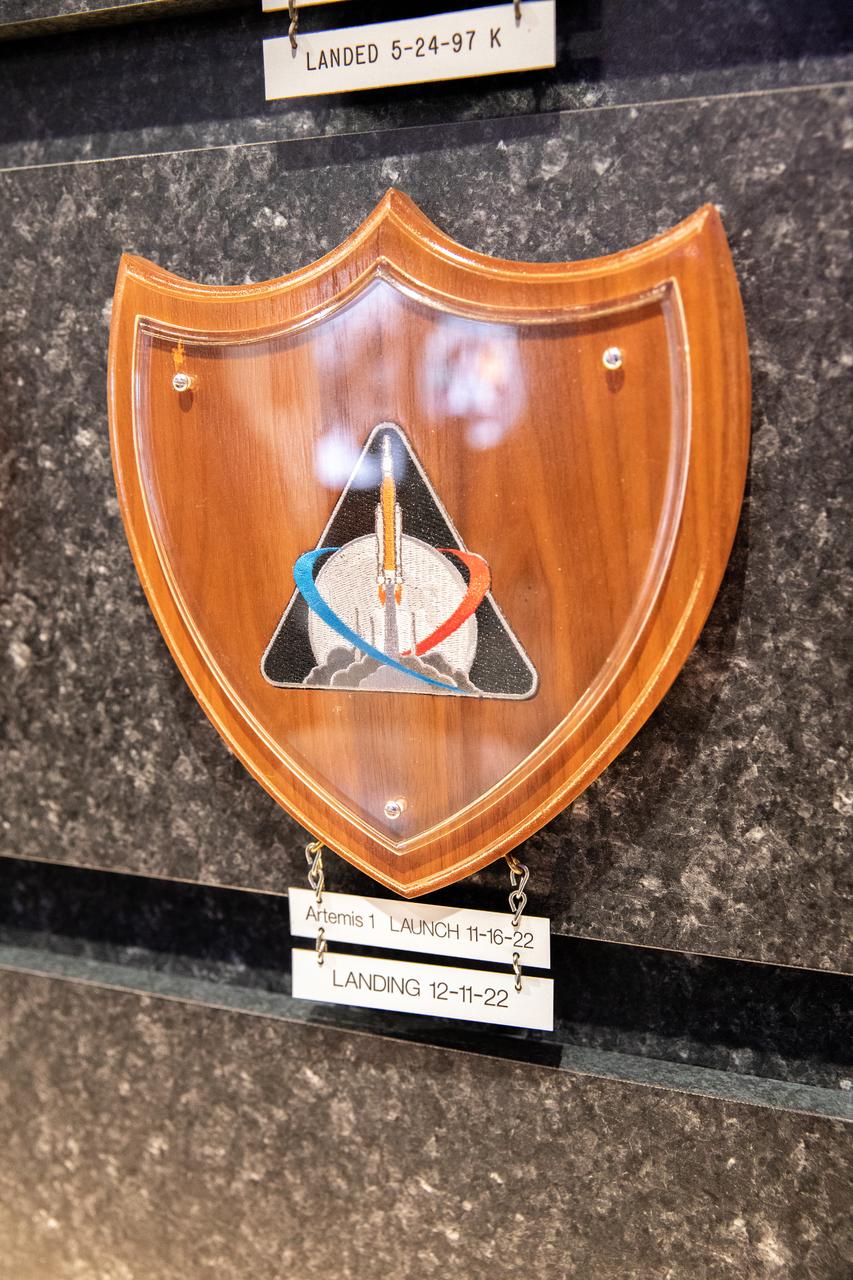
The Artemis I plaque is attached to the wall inside the lobby of the Launch Control Center at NASA’s Kennedy Space Center in Florida during a ceremony on March 24, 2023. The first in a series of increasingly complex missions, Artemis I launched successfully from Kennedy’s Launch Pad 39B at 1:47 a.m. EST on Nov. 16, 2022.
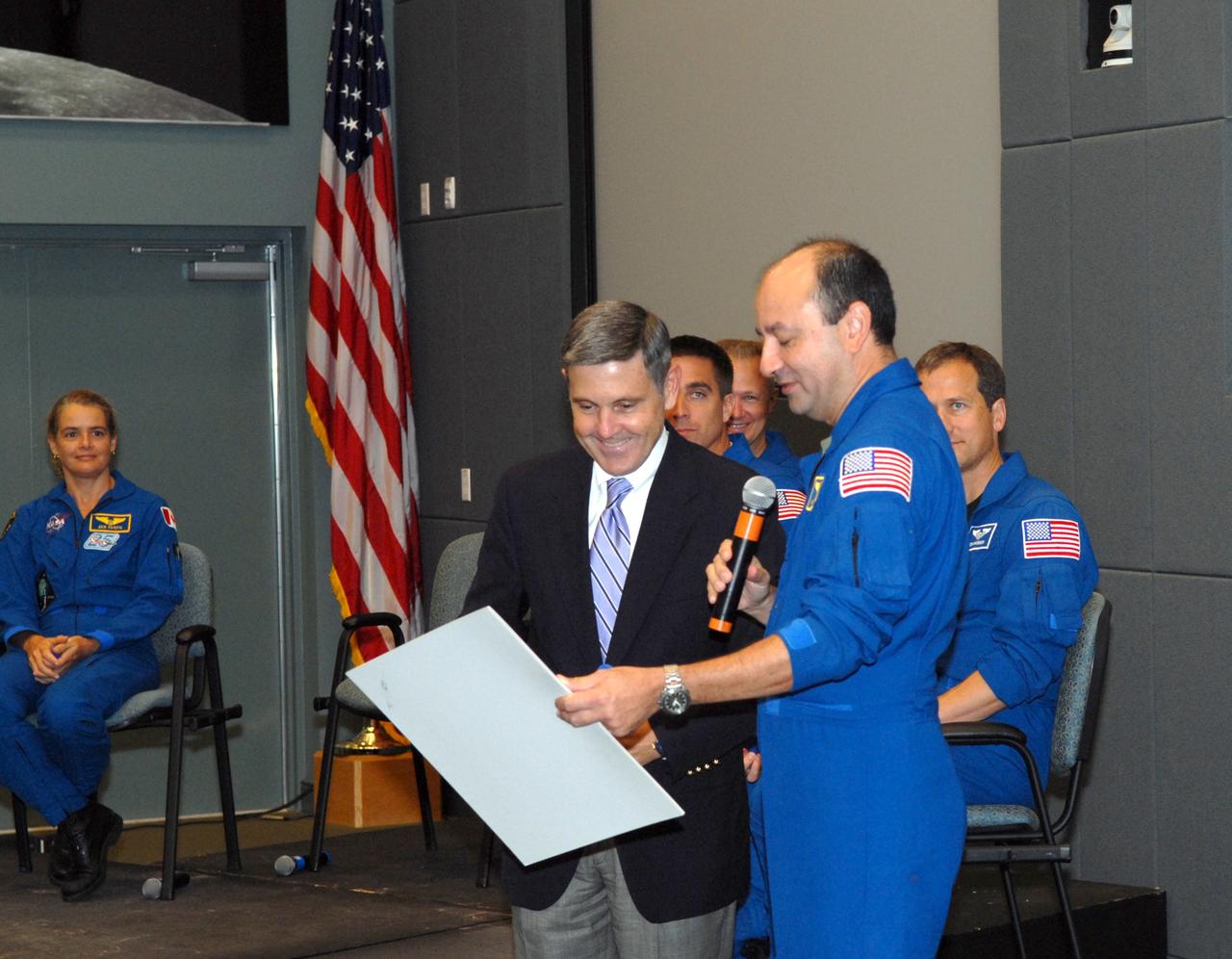
CAPE CANAVERAL, Fla. – Following a presentation by the STS-127 crew members about their experiences on the mission, Commander Mark Polansky (right) presents a plaque commemorating the mission to Kennedy Space Center Director Bob Cabana. At far left is Mission Specialist Julie Payette. Behind Cabana are Mission Specialist Christopher Cassidy and Pilot Doug Hurley. Behind Polansky is Mission Specialist Tom Marshburn. The STS-127 mission was the final of three flights dedicated to the assembly of the Japanese Kibo laboratory complex on the International Space Station. The crew launched on space shuttle Endeavour on July 15 and returned July 31. Photo credit: NASA/Jim Grossmann
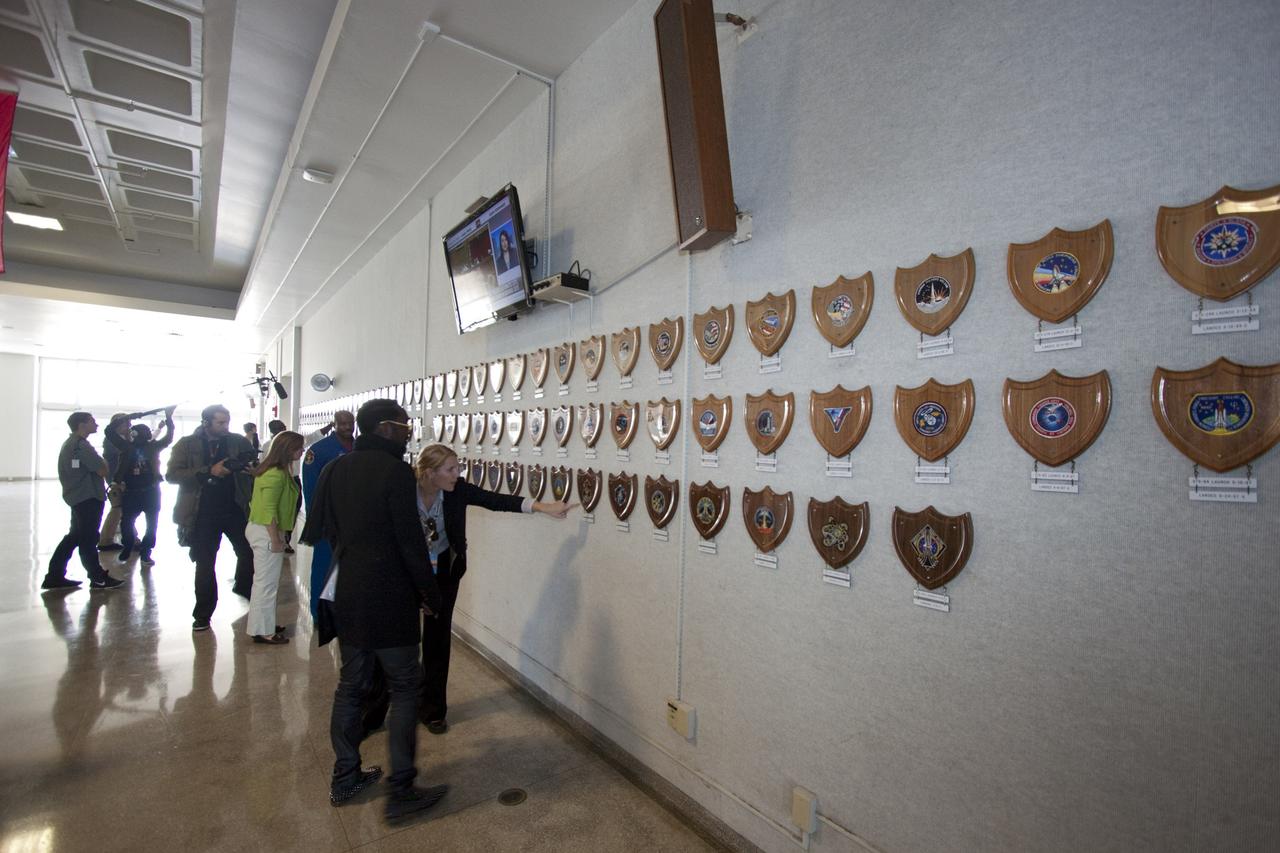
CAPE CANAVERAL, Fla. – At NASA Kennedy Space Center in Florida, Will.i.am, entertainer and member of The Black Eyed Peas, hears about the space shuttle mission plaques lining the lobby of the Launch Control Center (LCC) from NASA's Charlie Blackwell Thompson. Also viewing the plaques in the background are NASA Deputy Administrator Lori Garver and former astronaut Leland Melvin, NASA associate administrator for Education. The visit to the LCC followed their participation in a NASA Tweetup. The Tweetup is part of prelaunch activities for the agency’s Mars Science Laboratory (MSL) launch and provides the opportunity for tweeters will share their experiences with followers through the social networking site Twitter. The MSL mission will pioneer precision landing technology and a sky-crane touchdown to place a car-sized rover, Curiosity, near the foot of a mountain inside Gale Crater on Aug. 6, 2012. During a nearly two-year prime mission after landing, the rover will investigate whether the region has ever offered conditions favorable for microbial life, including the chemical ingredients for life. Liftoff of MSL aboard a United Launch Alliance Atlas V rocket from Space Launch Complex-41 on Cape Canaveral Air Force Station was at 10:02 a.m. EST on Nov. 26. For more information, visit http://www.nasa.gov/msl. Photo credit: NASA/Jim Grossmann

A special event honoring the crew of space shuttle mission STS-118 was held at Walt Disney World. Here, visitors enjoy the NASA display at Epcot's Innoventions Center. The event also honored teacher-turned-astronaut Barbara R. Morgan, who dedicated a plaque outside the Mission: Space attraction. Other activities included meeting with the media and students and a parade down Main Street. Mission STS-118 was the 119th shuttle program flight and the 22nd flight to the International Space Station. Space shuttle Endeavour launched from NASA's Kennedy Space Center on Aug. 8 and landed Aug. 21. The mission delivered the S5 truss, continuing the assembly of the space station.
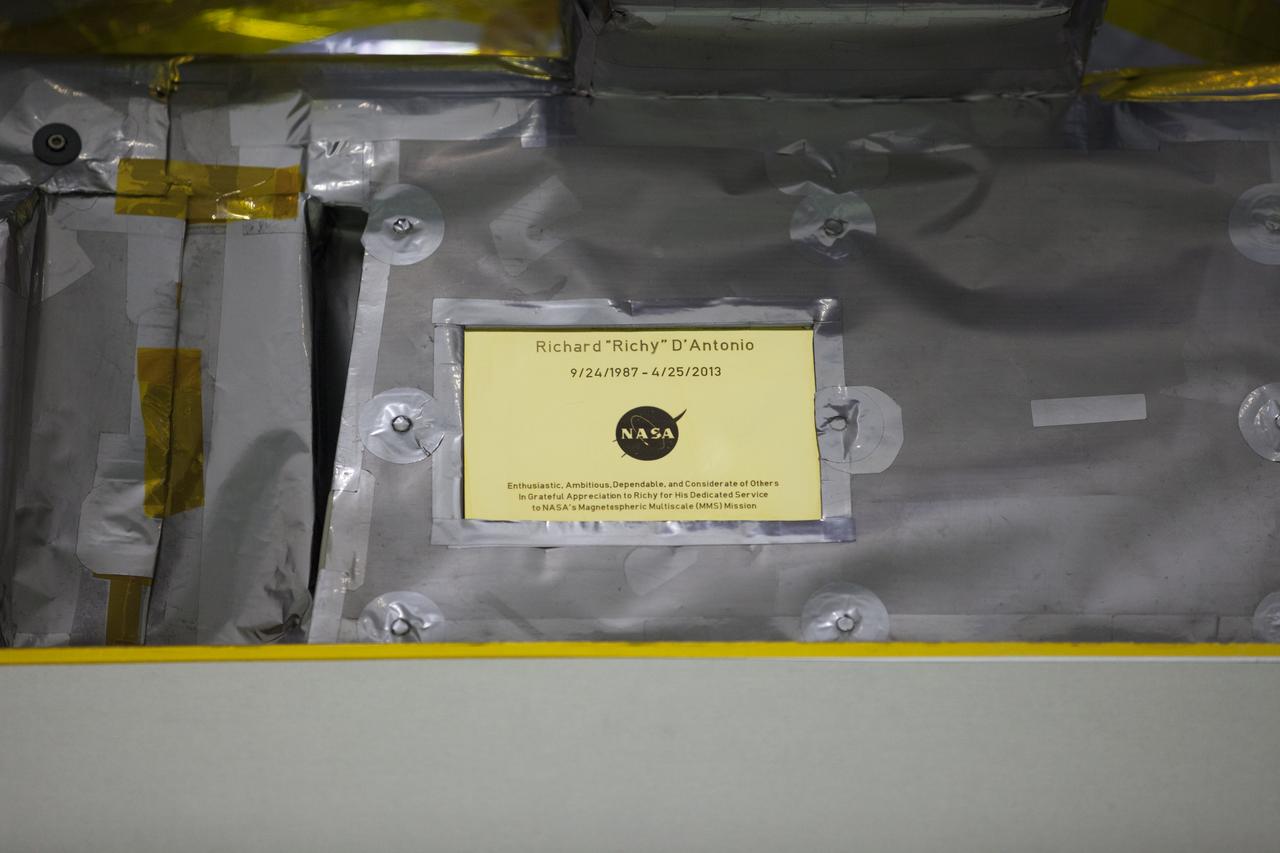
A plaque affixed to the side of a Magnetospheric Multiscale, or MMS, observatory dedicates the mission to Richard “Richy” D’Antonio, now deceased, in grateful appreciation for his dedicated service to NASA’s MMS mission. MMS, led by a team from NASA's Goddard Space Flight Center, is a Solar Terrestrial Probes mission consisting of four identically instrumented spacecraft that will use Earth’s magnetosphere as a laboratory to study the microphysics of three fundamental plasma processes: magnetic reconnection, energetic particle acceleration and turbulence. Launch aboard a United Launch Alliance Atlas V rocket from Space Launch Complex 41 on Cape Canaveral Air Force Station is targeted for March 12, 2015.
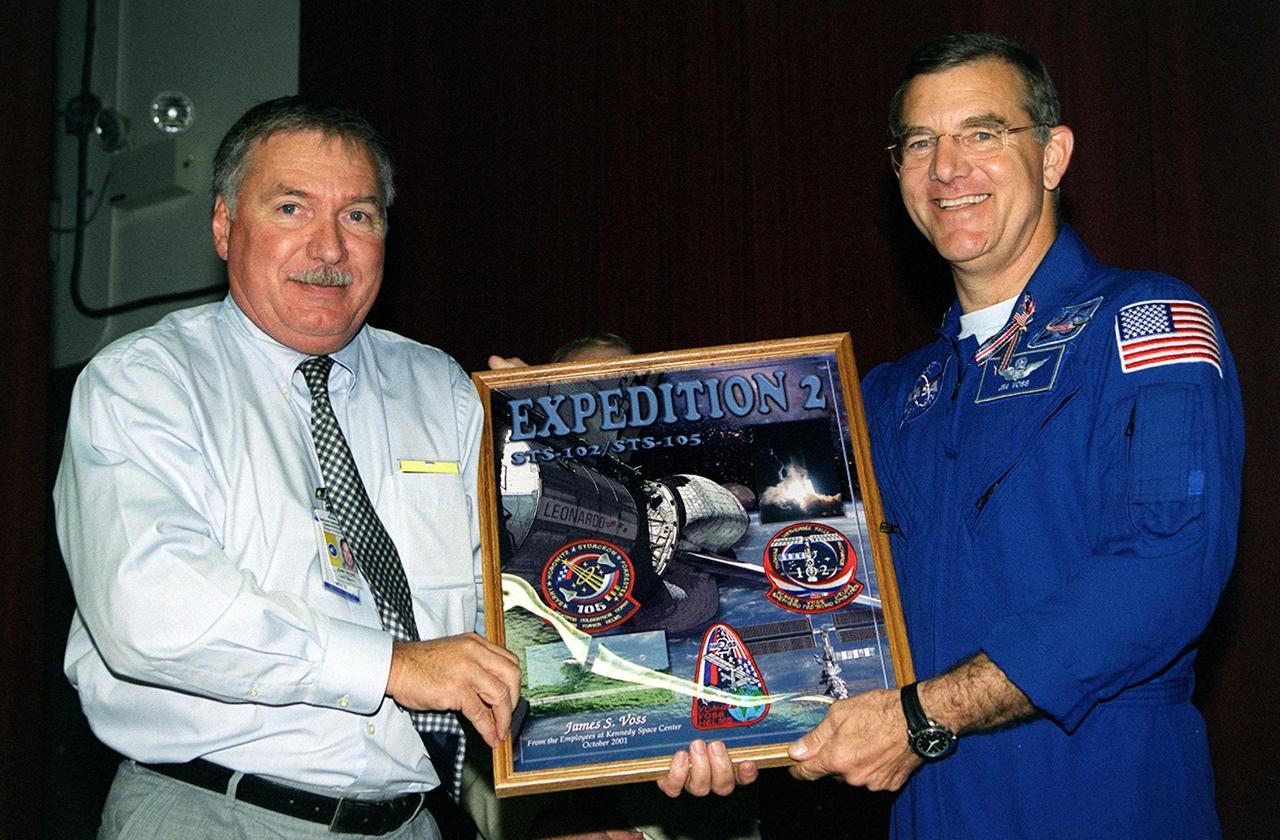
KENNEDY SPACE CENTER, Fla. -- J.J. "Tip" Talone Jr., director of KSC's International Space Station/Payload Processing, presents Expedition 2 crew member Jim Voss with a photo plaque from employees commemorating his stay aboard the Space Station. The Expedition 2 crew, which included astronaut Susan Helms and cosmonaut Yury Usachev , made the space voyage to the Station on mission STS-102 in March 2001. After five months on the Station, they returned to Earth, at the KSC Shuttle Landing Facility, on mission STS-105 in August 2001
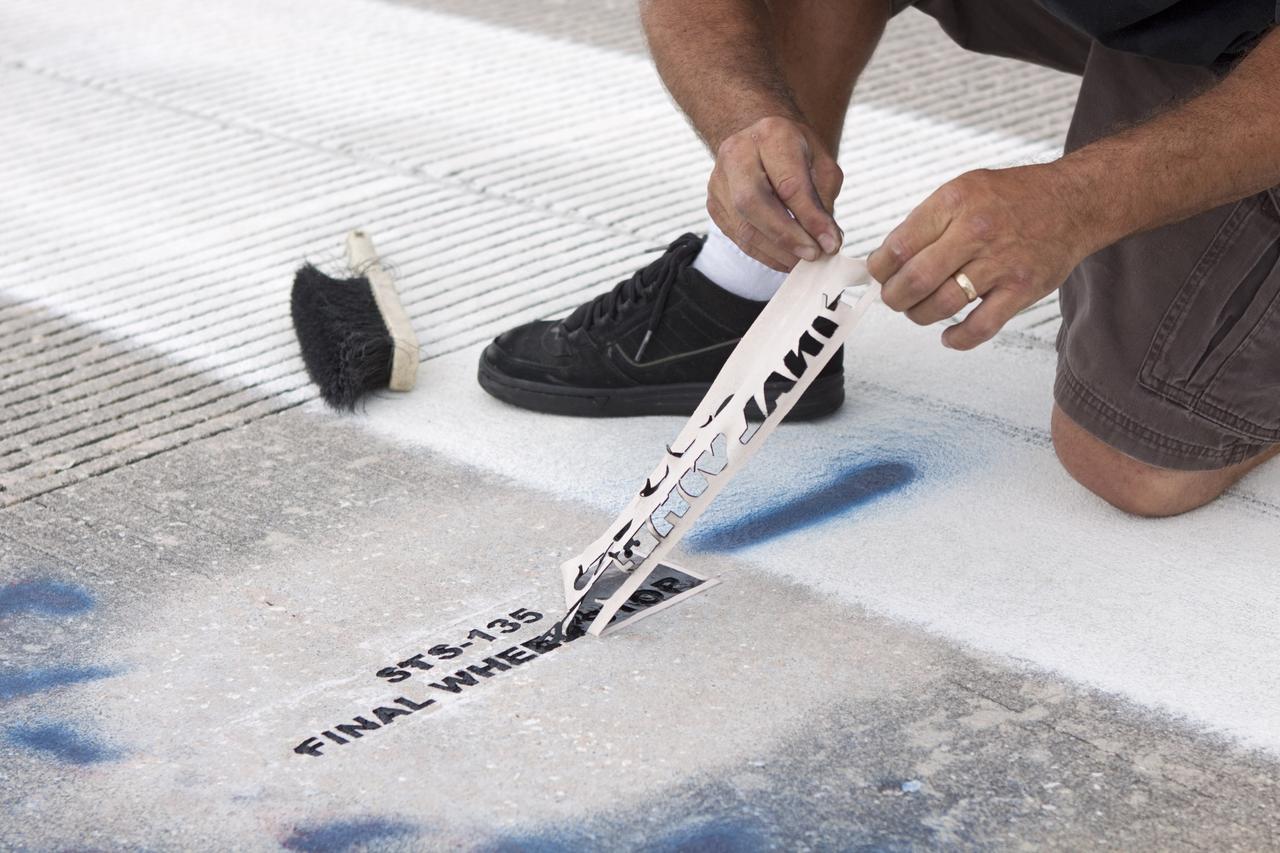
CAPE CANAVERAL, Fla. - At the Shuttle Landing Facility SLF at NASA’s Kennedy Space Center in Florida, a United Space Alliance technician marks the final front and rear wheel stop locations of an orbiter. Space shuttle Atlantis completed the STS-135 mission by landing at the SLF on July 21, 2011, at 5:57 a.m. A special plaque will be permanently mounted at the runway’s edge to commemorate the final shuttle landing. Atlantis flew 33 missions, completed 4,848 orbits of the Earth, traveled nearly 126 million miles and spent 307 days in space. Atlantis carried 207 astronauts to space. Photo credit: NASA/Jim Grossmann
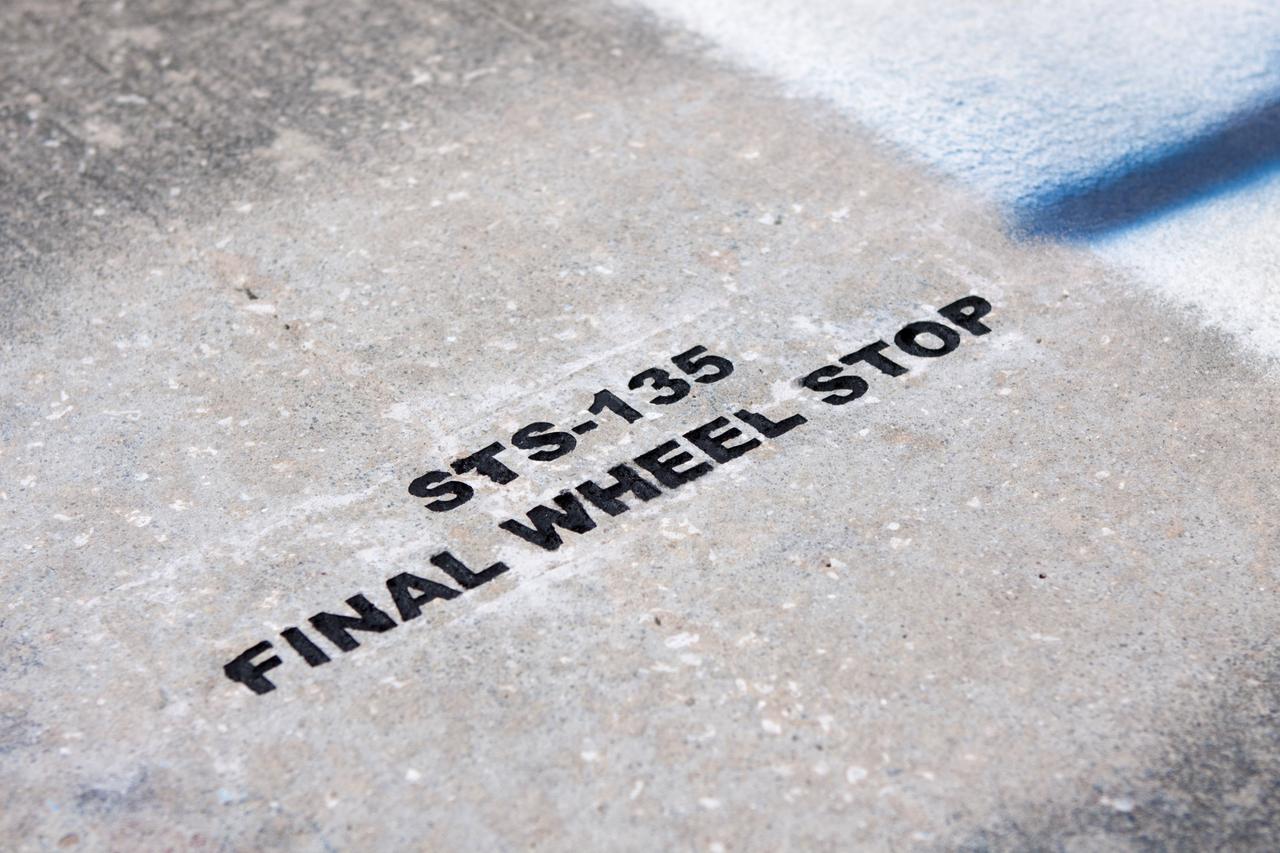
CAPE CANAVERAL, Fla. - At the Shuttle Landing Facility SLF at NASA’s Kennedy Space Center in Florida, the final wheel stop of an orbiter is marked. Space shuttle Atlantis completed the STS-135 mission by landing at the SLF on July 21, 2011, at 5:57 a.m. A special plaque will be permanently mounted at the runway’s edge to commemorate the final shuttle landing. Atlantis flew 33 missions, completed 4,848 orbits of the Earth, traveled nearly 126 million miles and spent 307 days in space. Atlantis carried 207 astronauts to space. Photo credit: NASA/Jim Grossmann
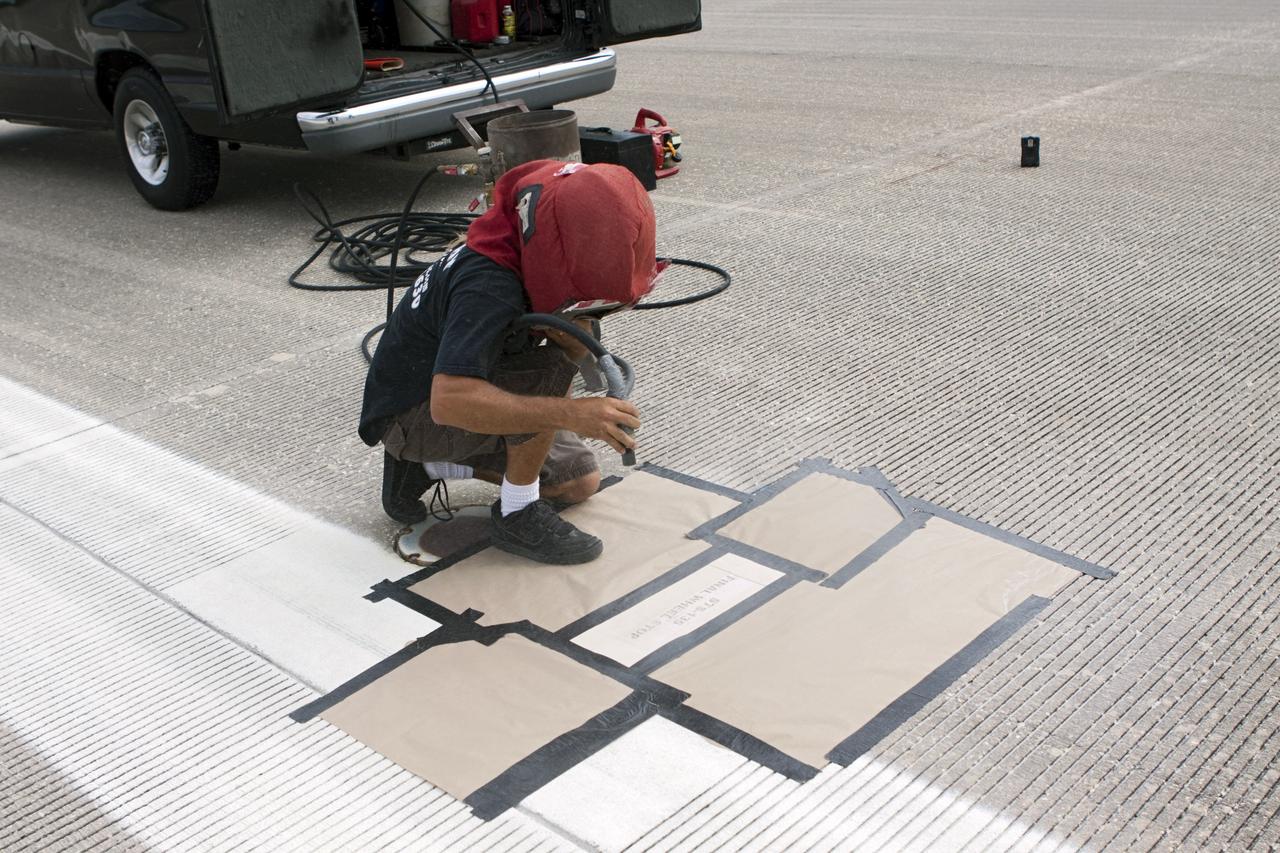
CAPE CANAVERAL, Fla. - At the Shuttle Landing Facility SLF at NASA’s Kennedy Space Center in Florida, a United Space Alliance technician marks the final front and rear wheel stop locations of an orbiter. Space shuttle Atlantis completed the STS-135 mission by landing at the SLF on July 21, 2011, at 5:57 a.m. A special plaque will be permanently mounted at the runway’s edge to commemorate the final shuttle landing. Atlantis flew 33 missions, completed 4,848 orbits of the Earth, traveled nearly 126 million miles and spent 307 days in space. Atlantis carried 207 astronauts to space. Photo credit: NASA/Jim Grossmann
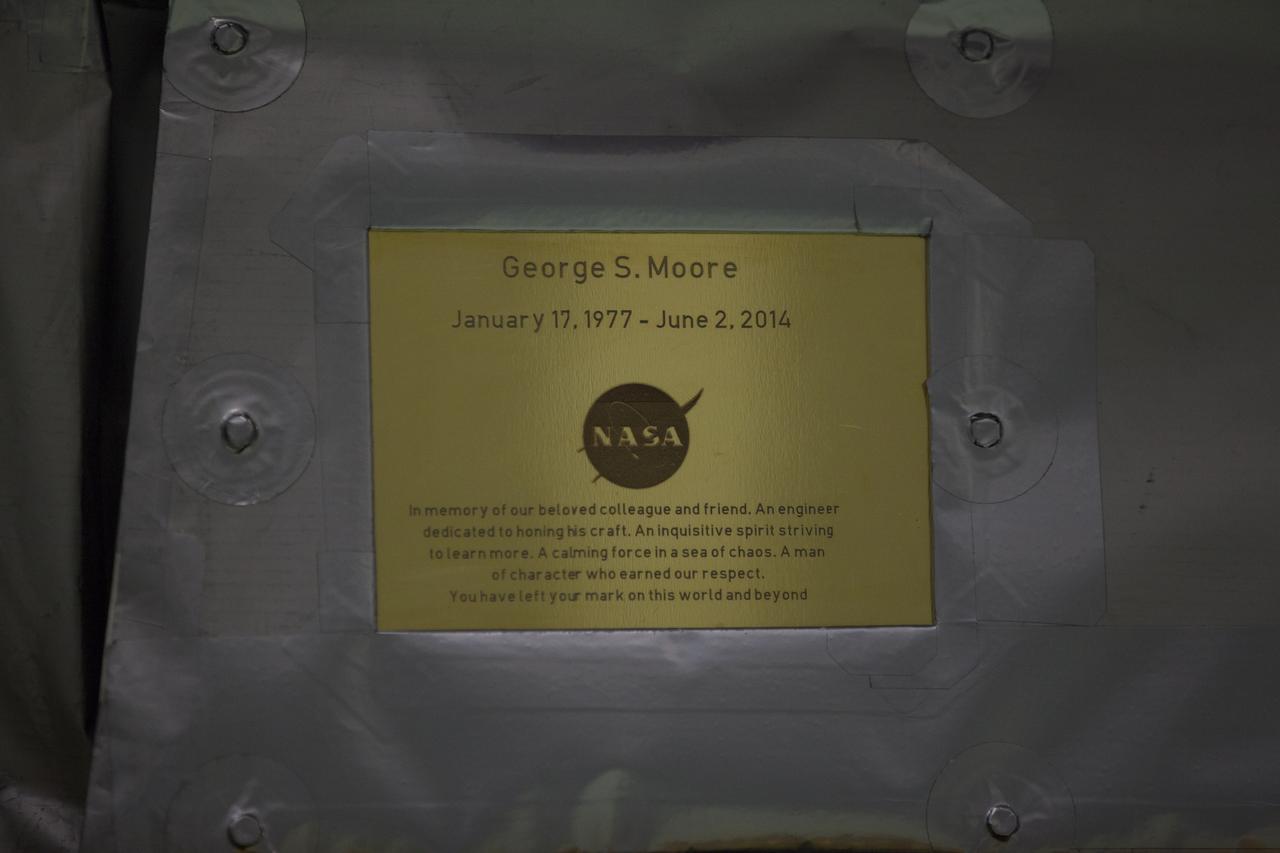
A plaque affixed to the side of a Magnetospheric Multiscale, or MMS, observatory dedicates the mission to George S. Moore, now deceased, an engineer who was a beloved colleague and friend to the MMS team. MMS, led by a team from NASA's Goddard Space Flight Center, is a Solar Terrestrial Probes mission consisting of four identically instrumented spacecraft that will use Earth’s magnetosphere as a laboratory to study the microphysics of three fundamental plasma processes: magnetic reconnection, energetic particle acceleration and turbulence. Launch aboard a United Launch Alliance Atlas V rocket from Space Launch Complex 41 on Cape Canaveral Air Force Station is targeted for March 12, 2015.

KENNEDY SPACE CENTER, Fla. - J.J. "Tip" Talone Jr., director of KSC's International Space Station/Payload Processing, presents Expedition 2 crew member Susan Helms with a photo plaque from employees commemorating her stay aboard the Space Station. The Expedition 2 crew, which included astronaut Jim Voss and cosmonaut Yury Usachev, made the space voyage to the Station on mission STS-102 in March 2001. After five months on the Station, they returned to Earth, at the KSC Shuttle Landing Facility, on mission STS-105 in August 2001
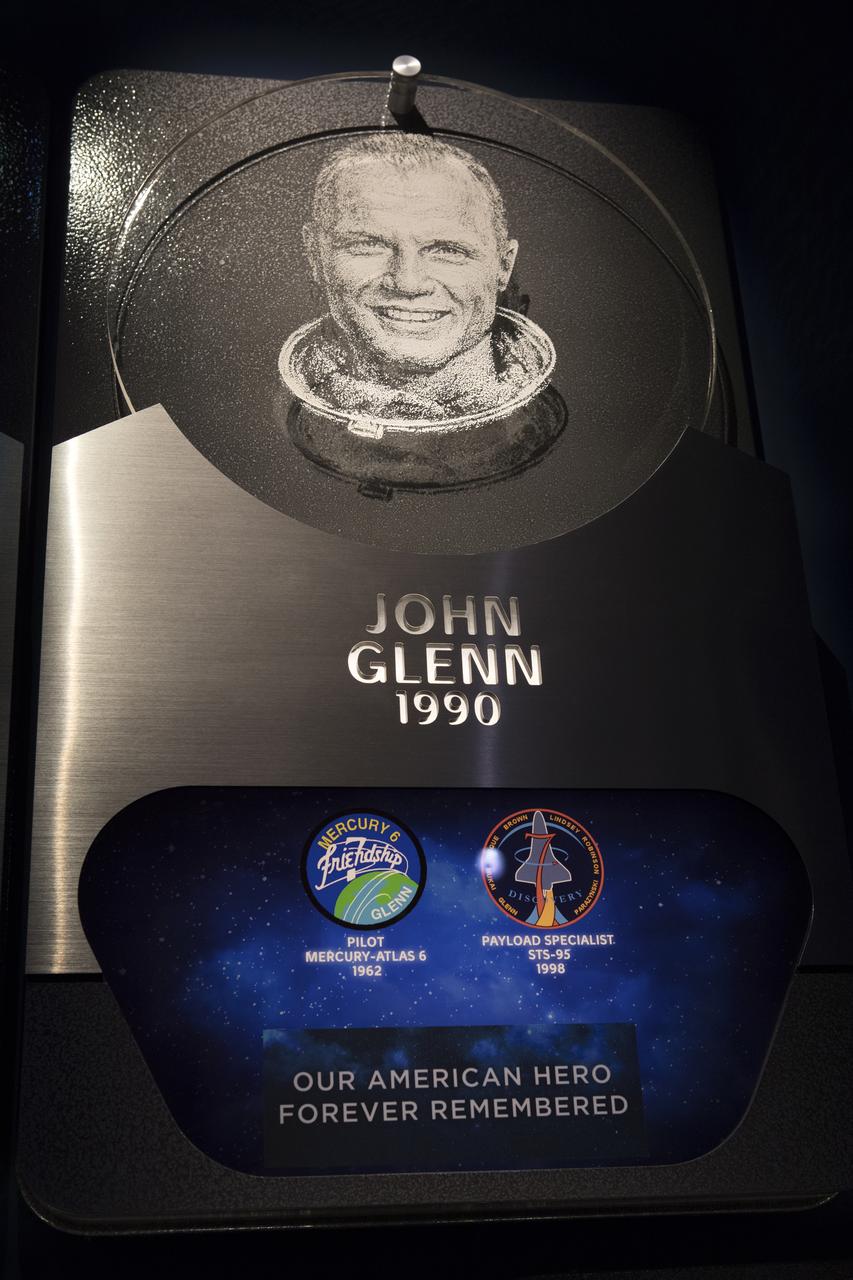
A plaque inside the Heroes and Legends exhibit hall at the Kennedy Space Center Visitor Complex shows astronaut Sen. John Glenn, along with his mission insignias for Friendship 7 and STS-95, the two flights he made into space. Glenn, who passed away Dec. 8, 2016 at age 95, was the last surviving member of NASA's original astronaut class. He gained worldwide acclaim during his Mercury mission that made him the first American to orbit the Earth. He flew again in 1998 aboard space shuttle Discovery at age 77.
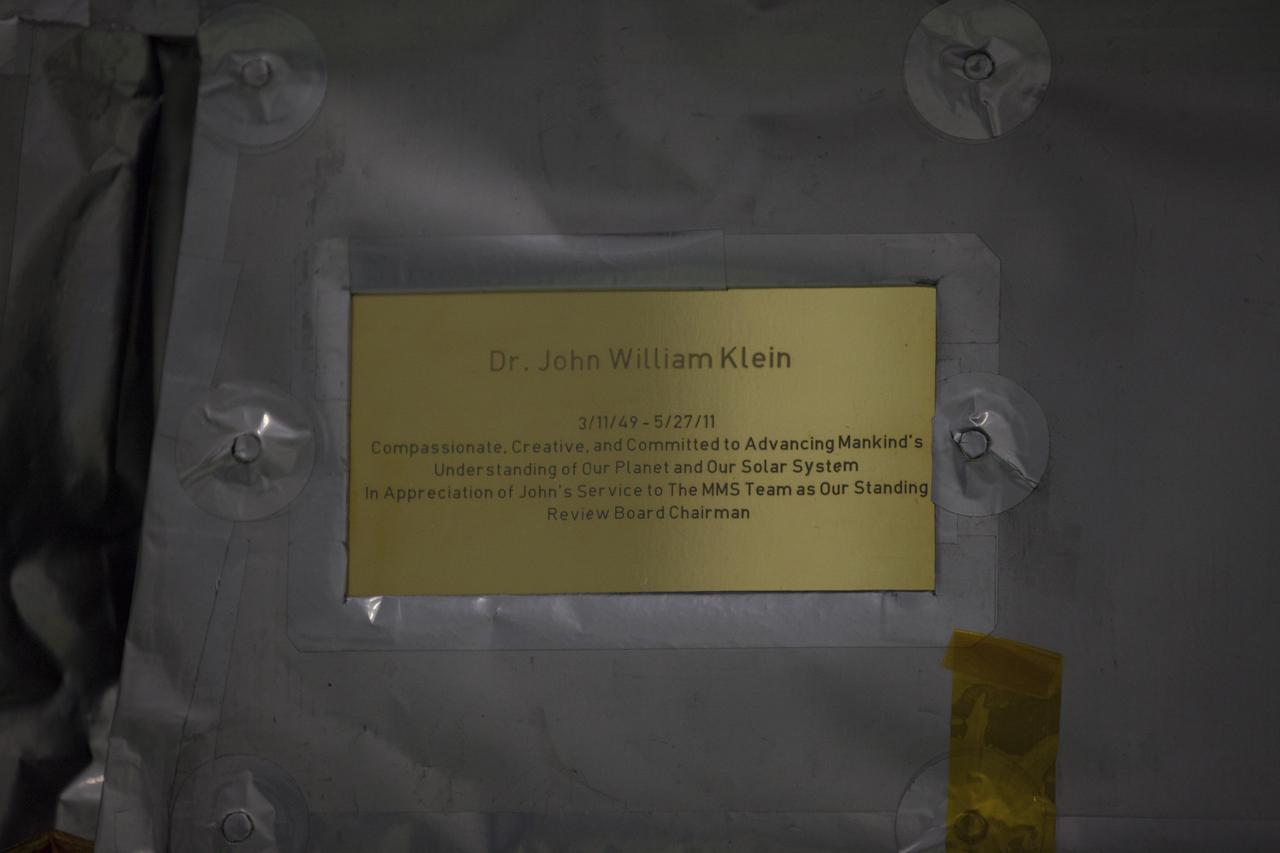
A plaque affixed to the side of a Magnetospheric Multiscale, or MMS, observatory dedicates the mission to Dr. John William Klein, now deceased, who served the MMS team as the standing review board chairman. MMS, led by a team from NASA's Goddard Space Flight Center, is a Solar Terrestrial Probes mission consisting of four identically instrumented spacecraft that will use Earth’s magnetosphere as a laboratory to study the microphysics of three fundamental plasma processes: magnetic reconnection, energetic particle acceleration and turbulence. Launch aboard a United Launch Alliance Atlas V rocket from Space Launch Complex 41 on Cape Canaveral Air Force Station is targeted for March 12, 2015.
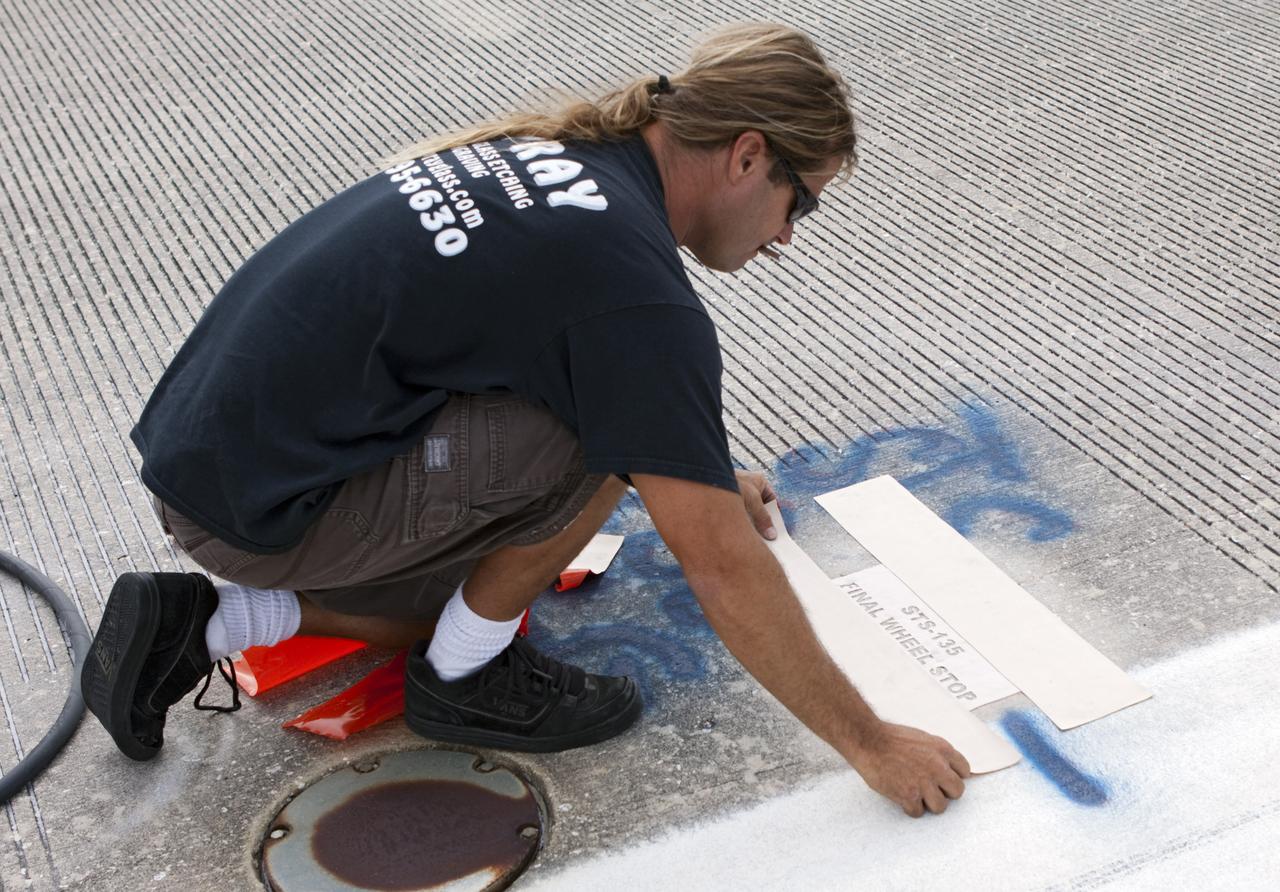
CAPE CANAVERAL, Fla. - At the Shuttle Landing Facility SLF at NASA’s Kennedy Space Center in Florida, a United Space Alliance technician marks the final front and rear wheel stop locations of an orbiter. Space shuttle Atlantis completed the STS-135 mission by landing at the SLF on July 21, 2011, at 5:57 a.m. A special plaque will be permanently mounted at the runway’s edge to commemorate the final shuttle landing. Atlantis flew 33 missions, completed 4,848 orbits of the Earth, traveled nearly 126 million miles and spent 307 days in space. Atlantis carried 207 astronauts to space. Photo credit: NASA/Jim Grossmann
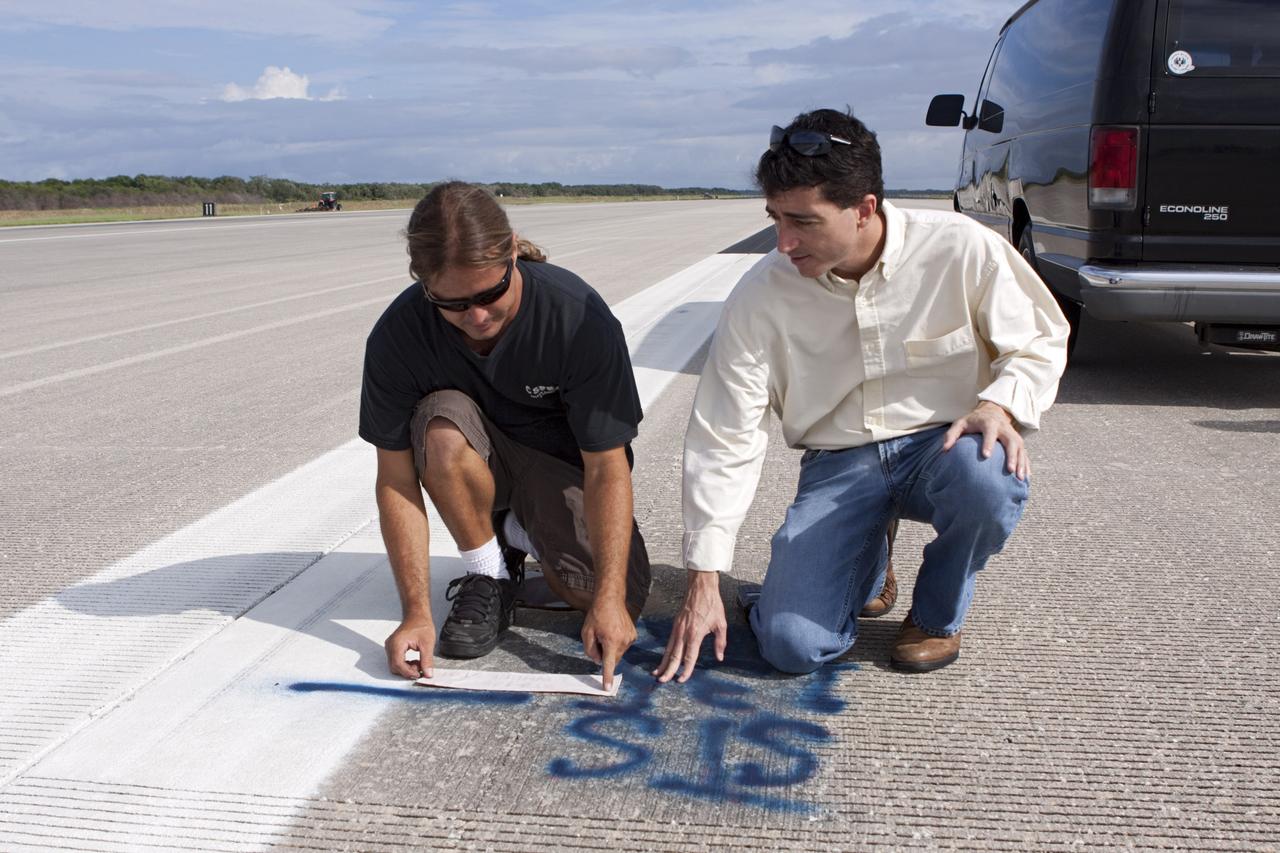
CAPE CANAVERAL, Fla. - At the Shuttle Landing Facility SLF at NASA’s Kennedy Space Center in Florida, United Space Alliance technicians make preparations to mark the final front and rear wheel stop locations of an orbiter. Space shuttle Atlantis completed the STS-135 mission by landing at the SLF on July 21, 2011, at 5:57 a.m. A special plaque will be permanently mounted at the runway’s edge to commemorate the final shuttle landing. Atlantis flew 33 missions, completed 4,848 orbits of the Earth, traveled nearly 126 million miles and spent 307 days in space. Atlantis carried 207 astronauts to space. Photo credit: NASA/Jim Grossmann
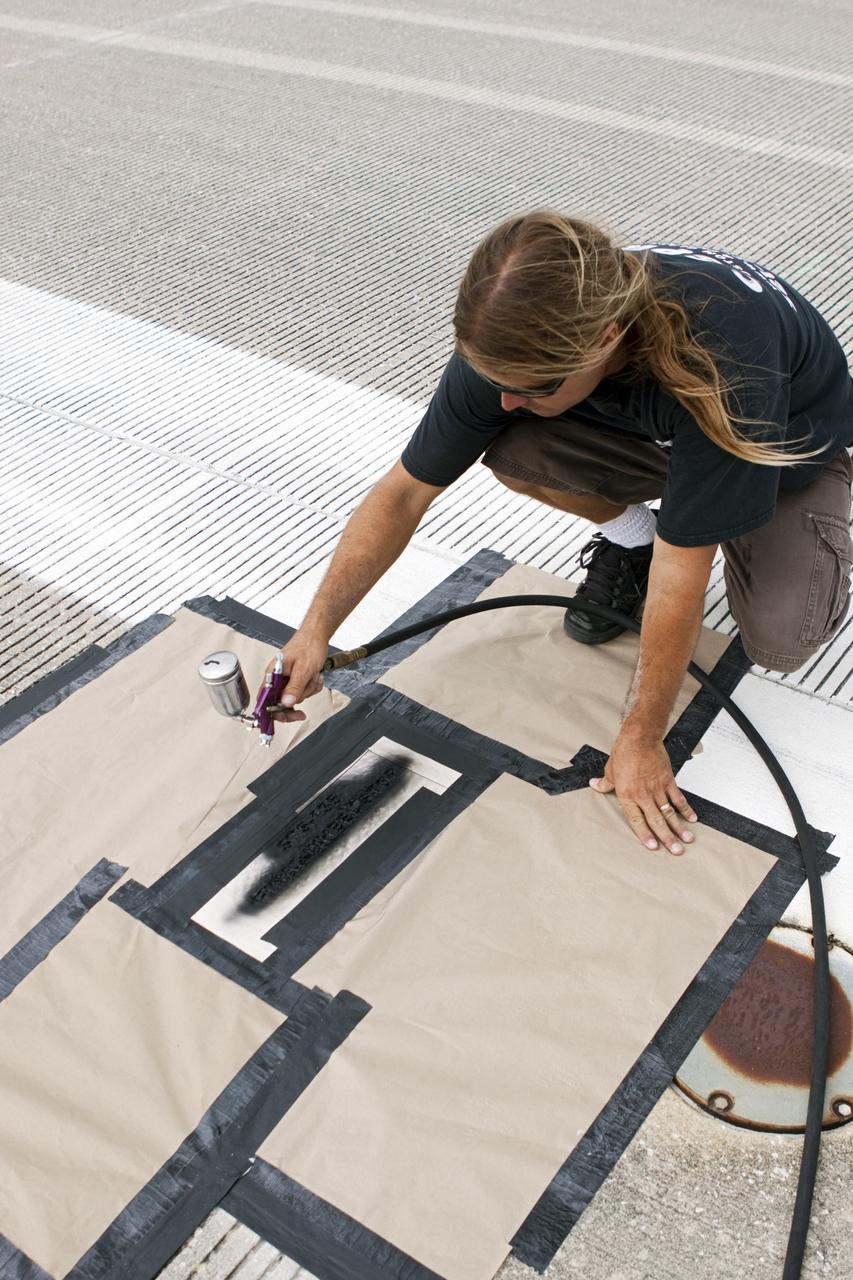
CAPE CANAVERAL, Fla. - At the Shuttle Landing Facility SLF at NASA’s Kennedy Space Center in Florida, a United Space Alliance technician marks the final front and rear wheel stop locations of an orbiter. Space shuttle Atlantis completed the STS-135 mission by landing at the SLF on July 21, 2011, at 5:57 a.m. A special plaque will be permanently mounted at the runway’s edge to commemorate the final shuttle landing. Atlantis flew 33 missions, completed 4,848 orbits of the Earth, traveled nearly 126 million miles and spent 307 days in space. Atlantis carried 207 astronauts to space. Photo credit: NASA/Jim Grossmann
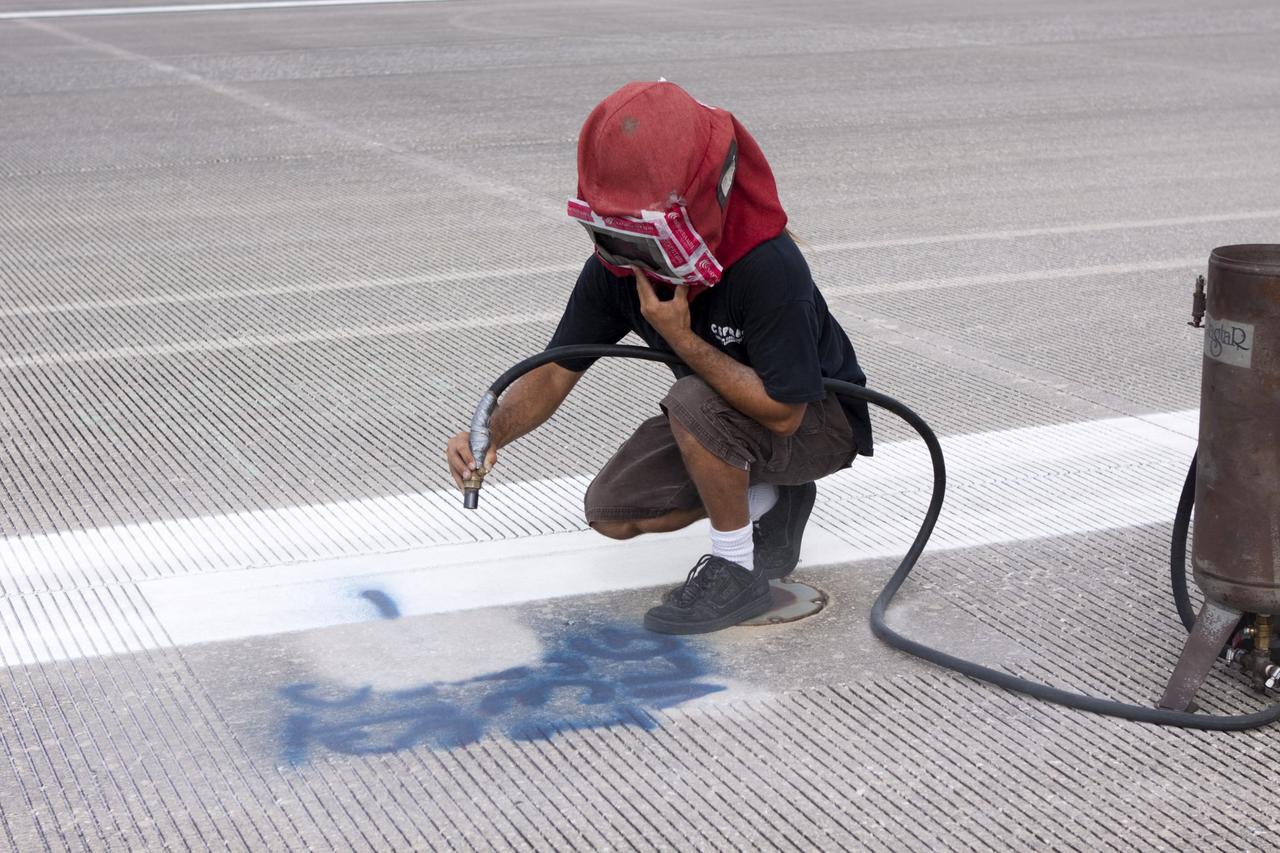
CAPE CANAVERAL, Fla. - At the Shuttle Landing Facility SLF at NASA’s Kennedy Space Center in Florida, United Space Alliance technicians make preparations to mark the final front and rear wheel stop locations of an orbiter. Space shuttle Atlantis completed the STS-135 mission by landing at the SLF on July 21, 2011, at 5:57 a.m. A special plaque will be permanently mounted at the runway’s edge to commemorate the final shuttle landing. Atlantis flew 33 missions, completed 4,848 orbits of the Earth, traveled nearly 126 million miles and spent 307 days in space. Atlantis carried 207 astronauts to space. Photo credit: NASA/Jim Grossmann
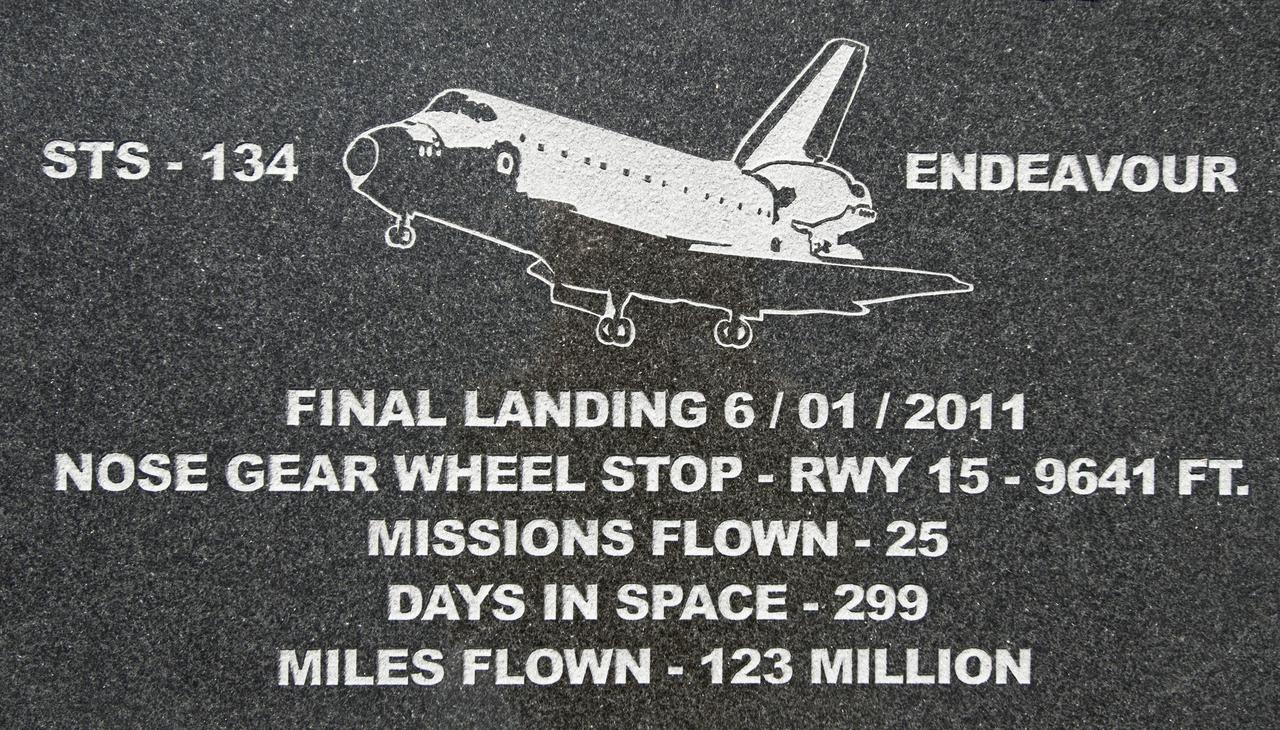
CAPE CANAVERAL, Fla. – At Kennedy Space Center's Shuttle Landing Facility, a granite plaque marks the spot where space shuttle Endeavour's nose gear came to a stop at the conclusion of STS-134, the final flight of the Space Shuttle Program. Permanent reminders indicate where on the runway the orbiters Discovery, Endeavour and Atlantis stopped rolling as each finished its last mission in 2011. In addition to the granite markers, which are installed alongside the runway, there are etchings in the grooved concrete along the runway's centerline to mark each wheelstop. The etchings and markers were created and installed by local artist Chad Stout of C Spray Glass Blasting in Cocoa, Fla. Photo credit: NASA/Tim Jacobs
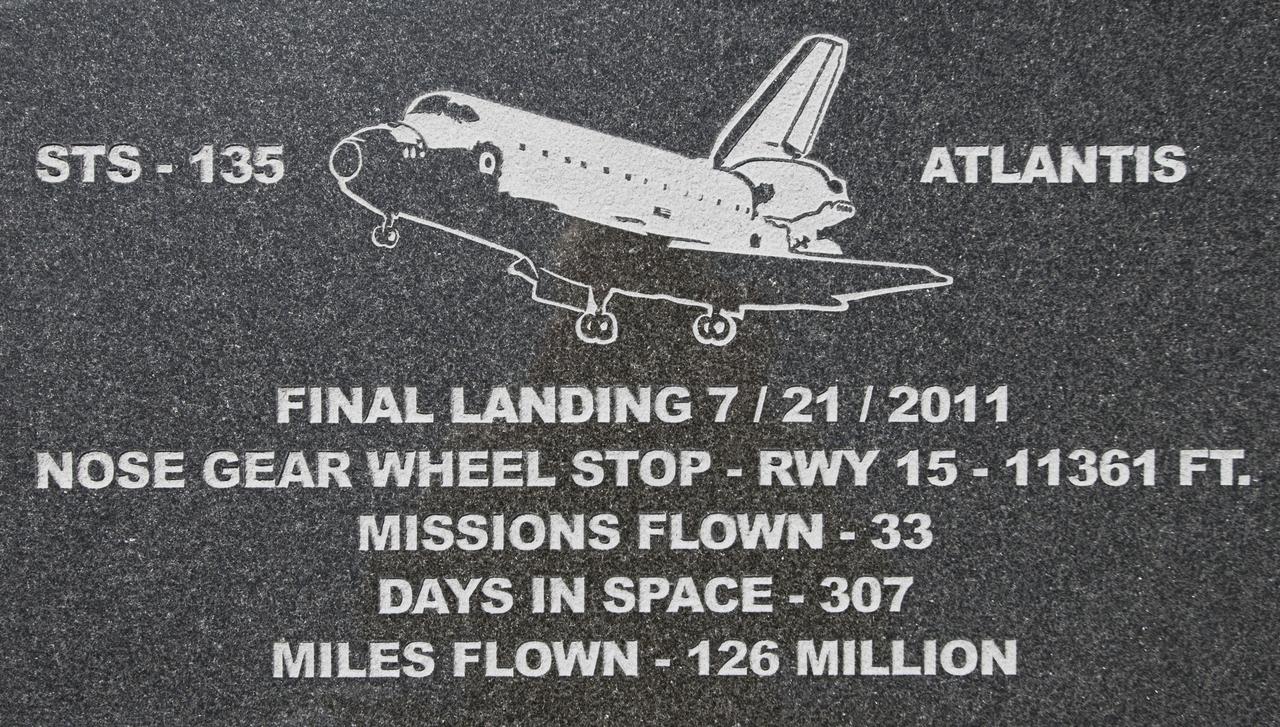
CAPE CANAVERAL, Fla. – At Kennedy Space Center's Shuttle Landing Facility, a granite plaque marks the spot where space shuttle Atlantis' nose gear came to a stop at the conclusion of STS-135, the final flight of the Space Shuttle Program. Permanent reminders indicate where on the runway the orbiters Discovery, Endeavour and Atlantis stopped rolling as each finished its last mission in 2011. In addition to the granite markers, which are installed alongside the runway, there are etchings in the grooved concrete along the runway's centerline to mark each wheelstop. The etchings and markers were created and installed by local artist Chad Stout of C Spray Glass Blasting in Cocoa, Fla. Photo credit: NASA/Tim Jacobs
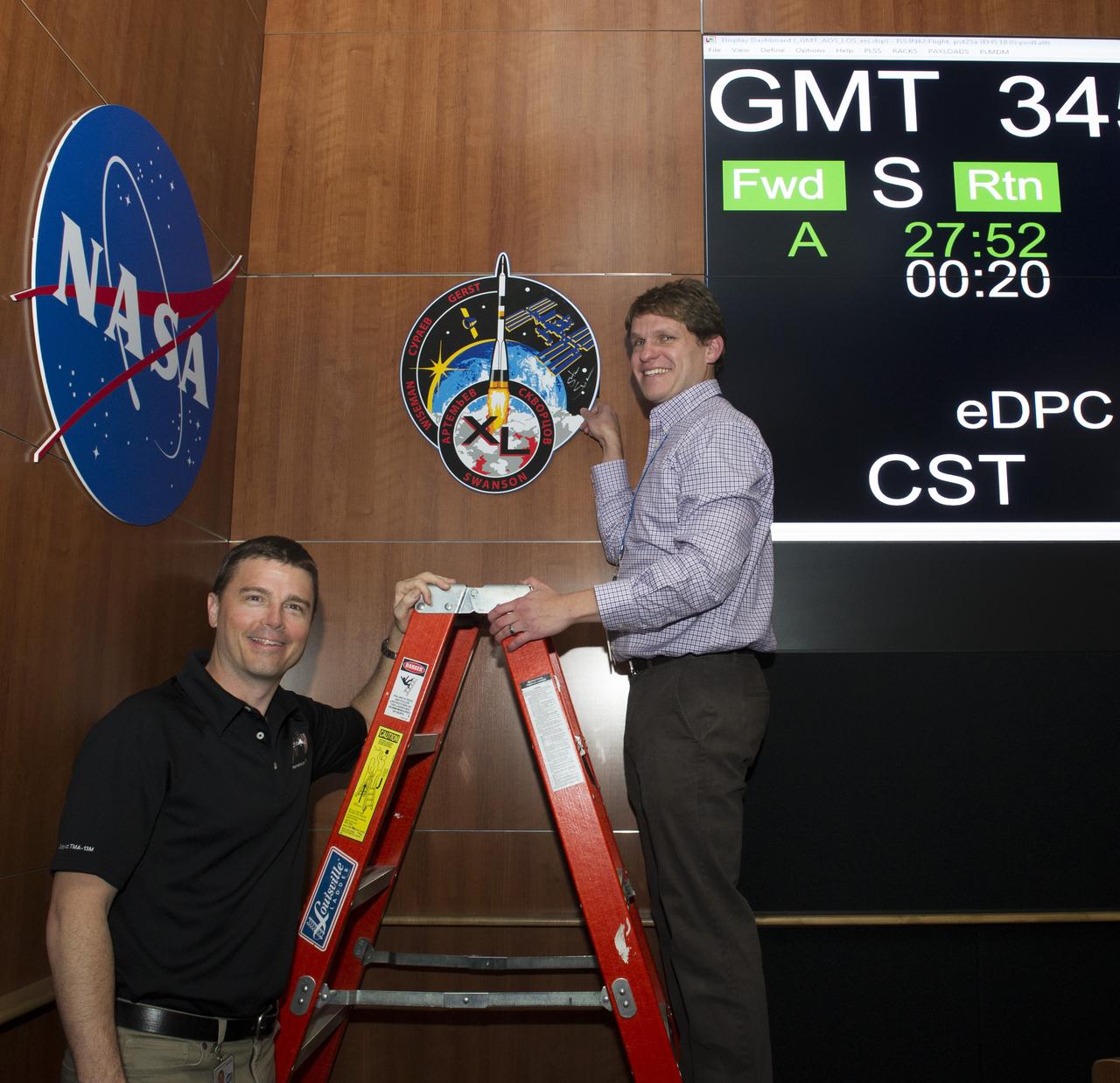
RYAN MILLER, RIGHT, LEAD PAYLOAD PLANNING MANAGER FOR EXPEDITION 39/40 WITH THE PAYLOAD OPERATIONS INTEGRATION CENTER AT THE MARSHALL SPACE FLIGHT CENTER, HELPS NASA ASTRONAUT REID WISEMAN PREPARE TO AUTOGRAPH THE INTERNATIONAL SPACE STATION EXPEDITION 40 MISSION PLAQUE HANGING IN THE POIC. WISEMAN VISITED THE MARSHALL CENTER DEC. 11 FOR A MEETING WITH THE MARSHALL-BASED PAYLOAD OPERATIONS TEAM HE WORKED WITH DURING HIS SIX MONTHS ON THE ORBITING LABORATORY, DISCUSSING THE FINER POINTS OF THE INVESTIGATIONS PERFORMED ON THE SPACE STATION FROM JUNE THROUGH NOVEMBER 2014.

From left, Center Director Roy Bridges and NASA Administrator Daniel S. Goldin applaud as Jay Holliman, with the help of his mother, Mrs. Dianne Holliman, unveils a plaque honoring his father, the late John Holliman. At right is Tom Johnson, news group chairman of CNN. The occasion was the dedication of the KSC Press Site auditorium as the John Holliman Auditorium to honor the CNN national correspondent for his enthusiastic, dedicated coverage of America's space program. The auditorium was built in 1980 and has been the focal point for new coverage of Space Shuttle launches. The ceremony followed the 94th launch of a Space Shuttle, on mission STS-96, earlier this morning
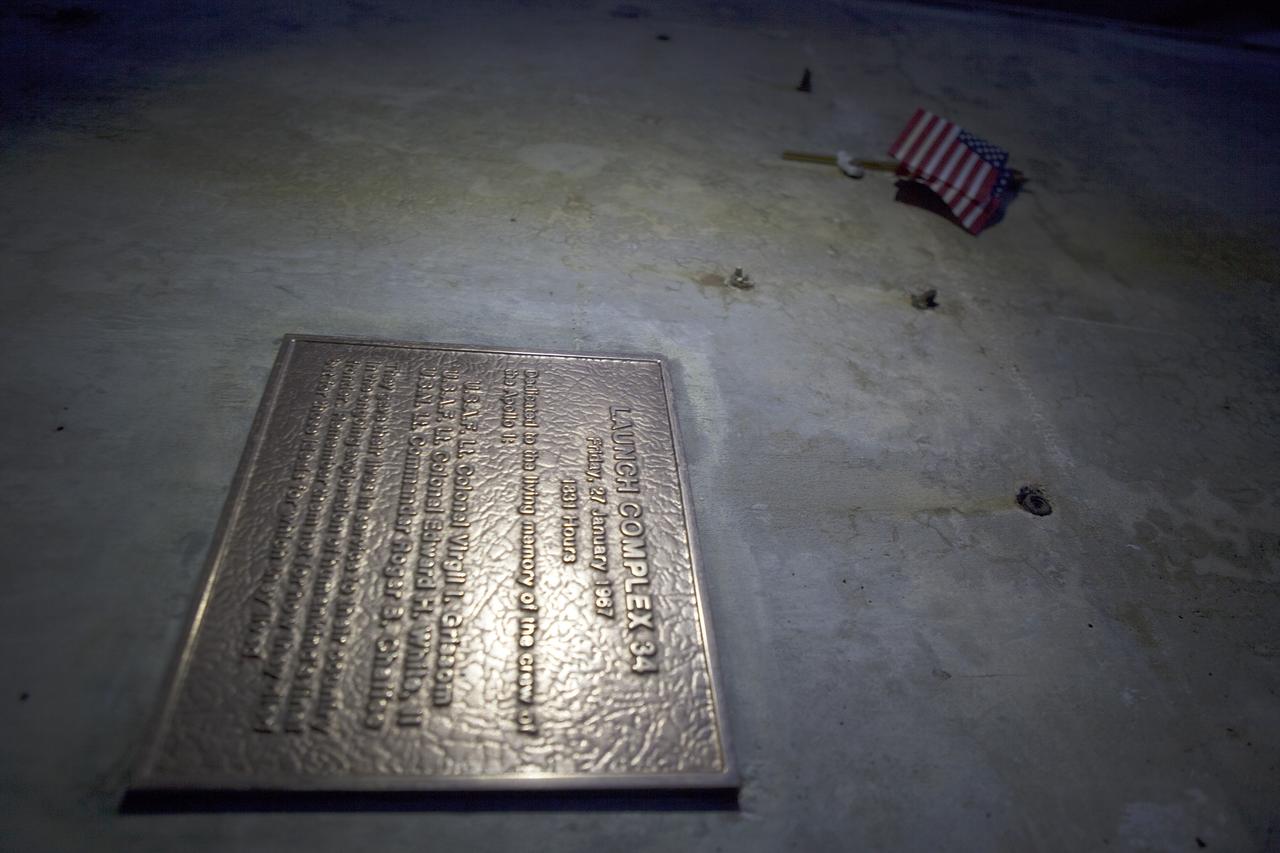
CAPE CANAVERAL, Fla. – A plaque affixed to what remains of the historic gantry on Launch Pad 34 on Cape Canaveral Air Force Station in Florida pays tribute to those who died there in the pursuit of exploration and discovery. On this day in 1967, a fire erupted on the pad during a preflight test, taking the lives of the Apollo 1 crew, NASA astronauts Virgil Grissom, Edward White and Roger Chaffee. To learn more about Apollo 1 and the crew, visit http://www.nasa.gov/mission_pages/apollo/missions/apollo1.html. Photo credit: NASA/Ben Smegelsky
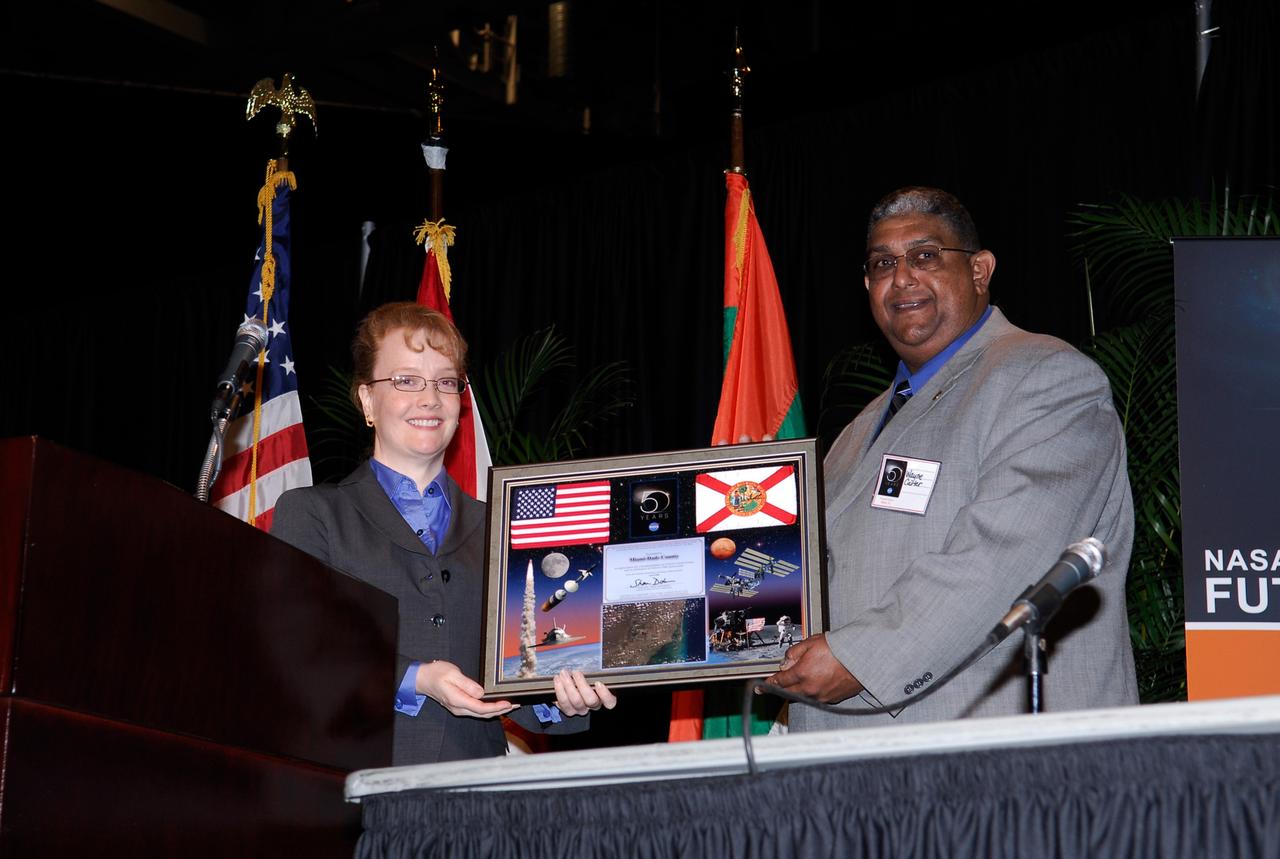
CAPE CANAVERAL, Fla. -- NASA Deputy Administrator Shana Dale (left) presents a 50th anniversary commemorative plaque to Wayne Carter during a Future Forum in Miami that focused on how space exploration benefits Florida's economy. Carter is assistant director for constituent services for the Miami-Dade County Mayor, Carlos Alveraz. The event, which included presentations and panels, was held at the University of Miami's BankUnited Center. Among those participating were NASA Deputy Administrator Shana Dale, astronaut Carl Walz, director of the Advanced Capabilities Division in NASA's Exploration Systems Mission Directorate, and Russell Romanella, director, International Space Station and Spacecraft Processing. Photo credit: NASA/Kim Shiflett
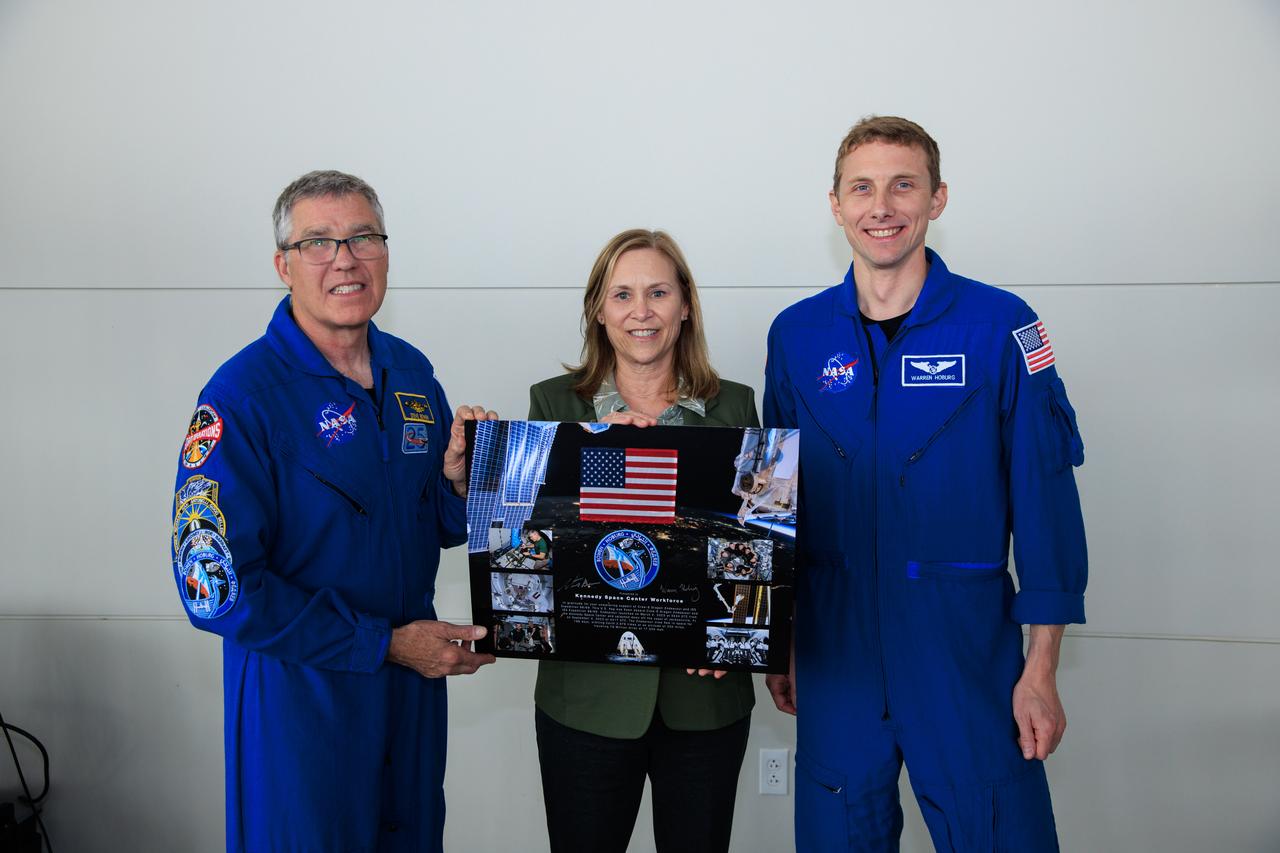
NASA’s SpaceX Crew-6 astronauts Stephen Bowen and Warren “Woody” Hoburg present a plaque commemorating the agency’s Crew-6 mission to the International Space Station to Kennedy Space Center director Janet Petro during a meet-and-greet at the agency’s Central Campus Headquarters cafeteria at Kennedy Space Center in Florida on Wednesday, March 27, 2024. Employees and other personnel got the chance to meet with the Crew-6 astronauts and celebrate the recent retirement of Bob Cabana, who was Kennedy’s Center Director for 13 years before retiring in December 2023.
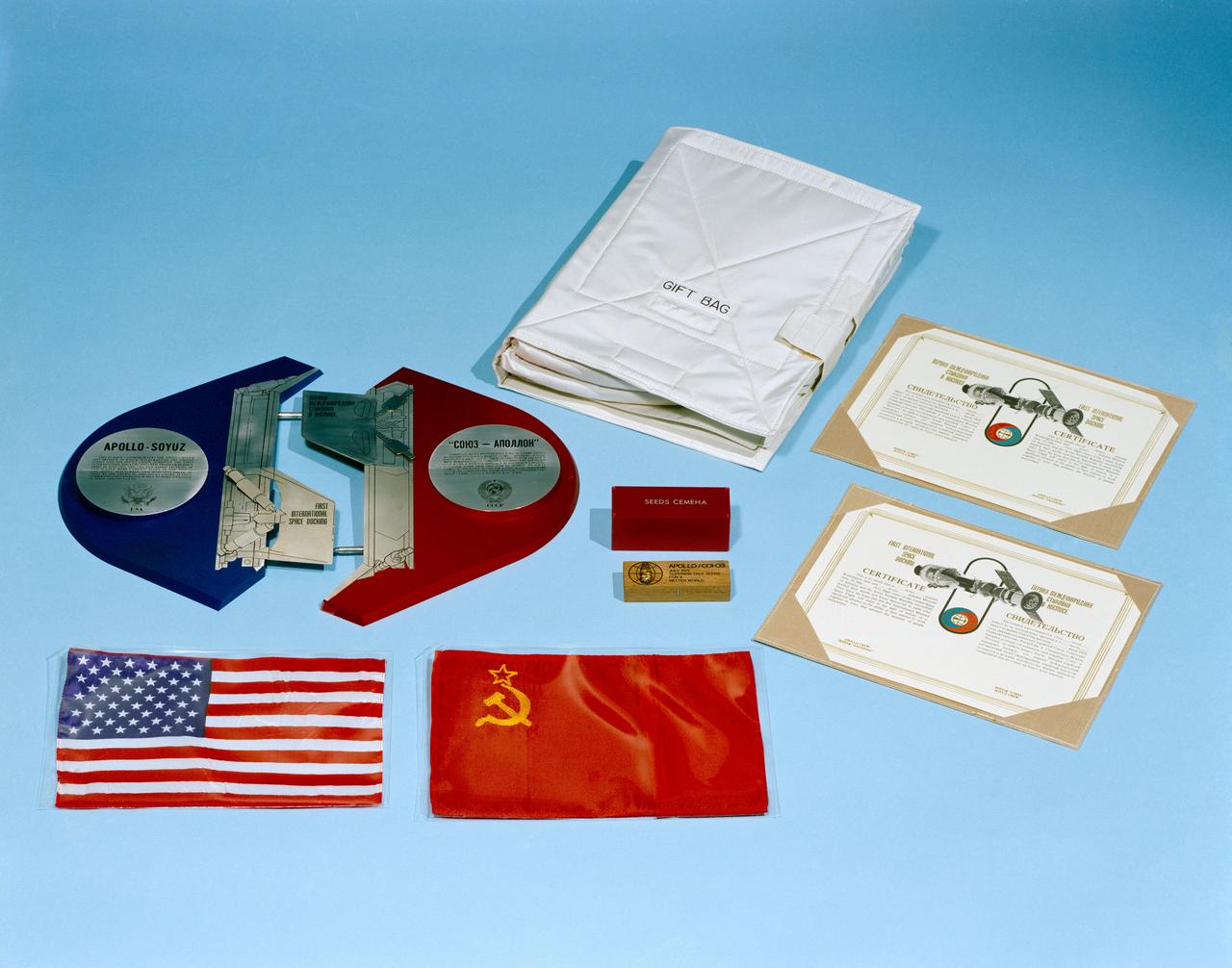
S75-27952 (July 1975) --- A close-up view of the special ?gift bag? in which several exchange/gift items will be carried aboard the Apollo Command Module during the joint U.S.-USSR Apollo-Soyuz Test Project mission. Some of these items are seen here alongside the bag. They are the sectionized ASTP Commemorative Plaque, ten 8x12 inch American flags, ten 8.07x16.14 inch (205mm x 410mm) Soviet Union flags, a special box of white spruce tree seeds, and the ASTP Certification to authorize the ASTP docking. The gifts will be presented and the exchange made while the Apollo and Soyuz spacecraft are docked in Earth orbit.
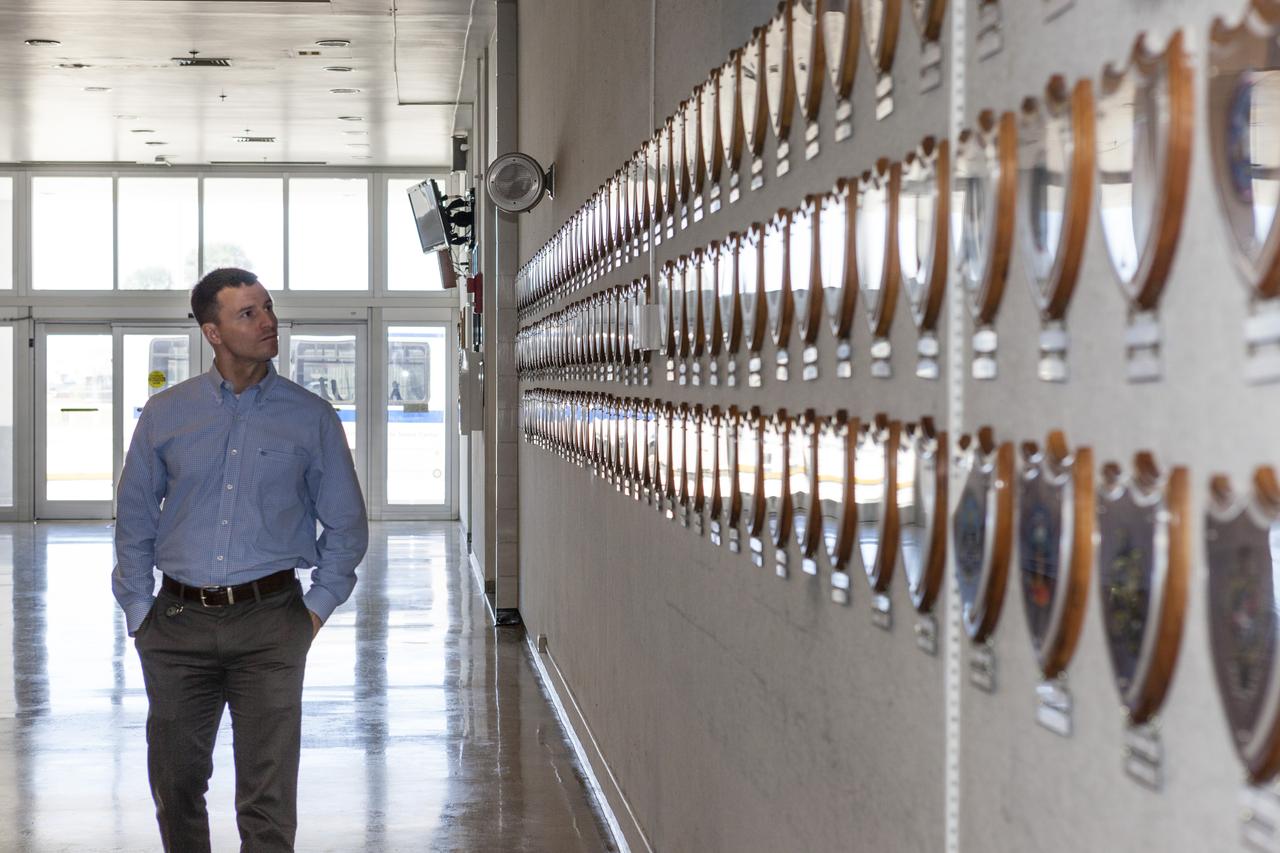
CAPE CANAVERAL, Fla. – NASA astronaut candidate Andrew Morgan surveys the mission plaques on the wall of the Launch Control Center at Kennedy Space Center in Florida during a daylong set of briefings and tours of different facilities at NASA's primary launch center. The astronaut class of 2013 was selected by NASA after an extensive year-and-a-half search. The new group will help the agency push the boundaries of exploration and travel to new destinations in the solar system. To learn more about the astronaut class of 2013, visit: http://www.nasa.gov/astronauts/2013astroclass.html Photo credit: NASA/Kim Shiflett
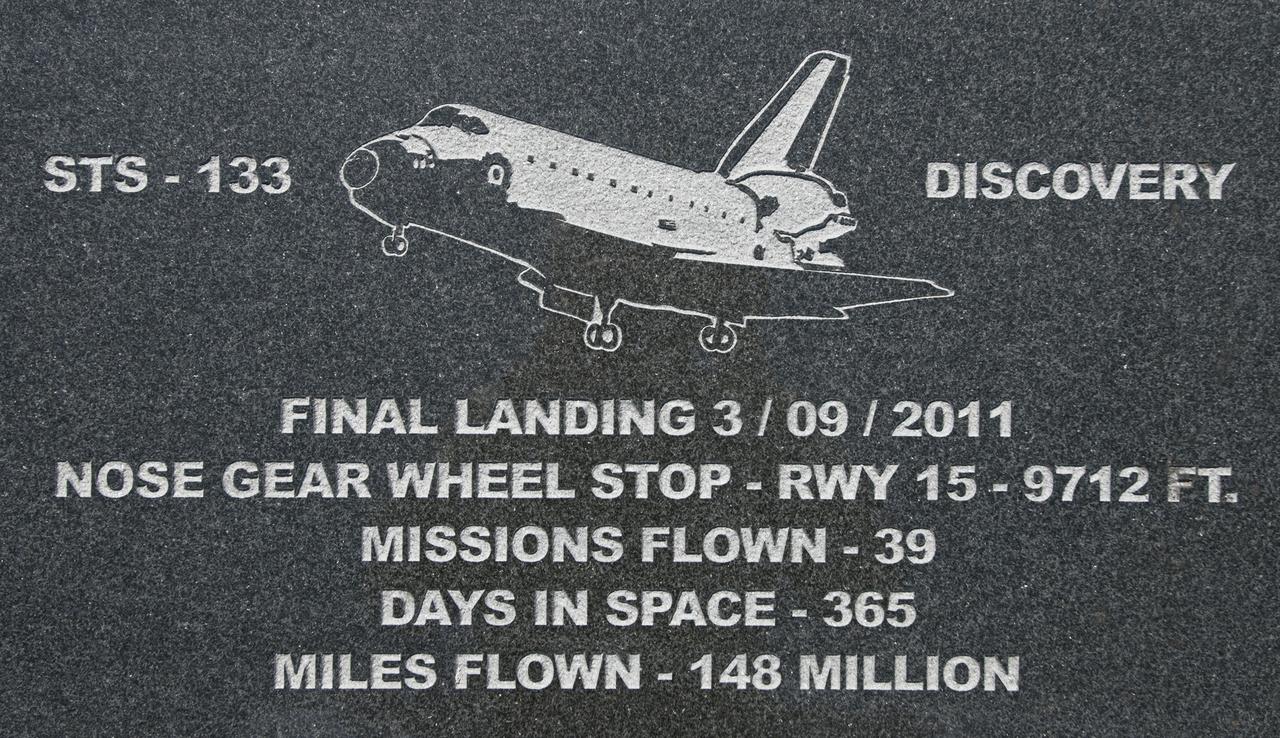
CAPE CANAVERAL, Fla. – At Kennedy Space Center's Shuttle Landing Facility, a granite plaque marks the spot where space shuttle Discovery's nose gear came to a stop at the conclusion of STS-133, the final flight of the Space Shuttle Program. Permanent reminders indicate where on the runway the orbiters Discovery, Endeavour and Atlantis stopped rolling as each finished its last mission in 2011. In addition to the granite markers, which are installed alongside the runway, there are etchings in the grooved concrete along the runway's centerline to mark each wheelstop. The etchings and markers were created and installed by local artist Chad Stout of C Spray Glass Blasting in Cocoa, Fla. Photo credit: NASA/Tim Jacobs
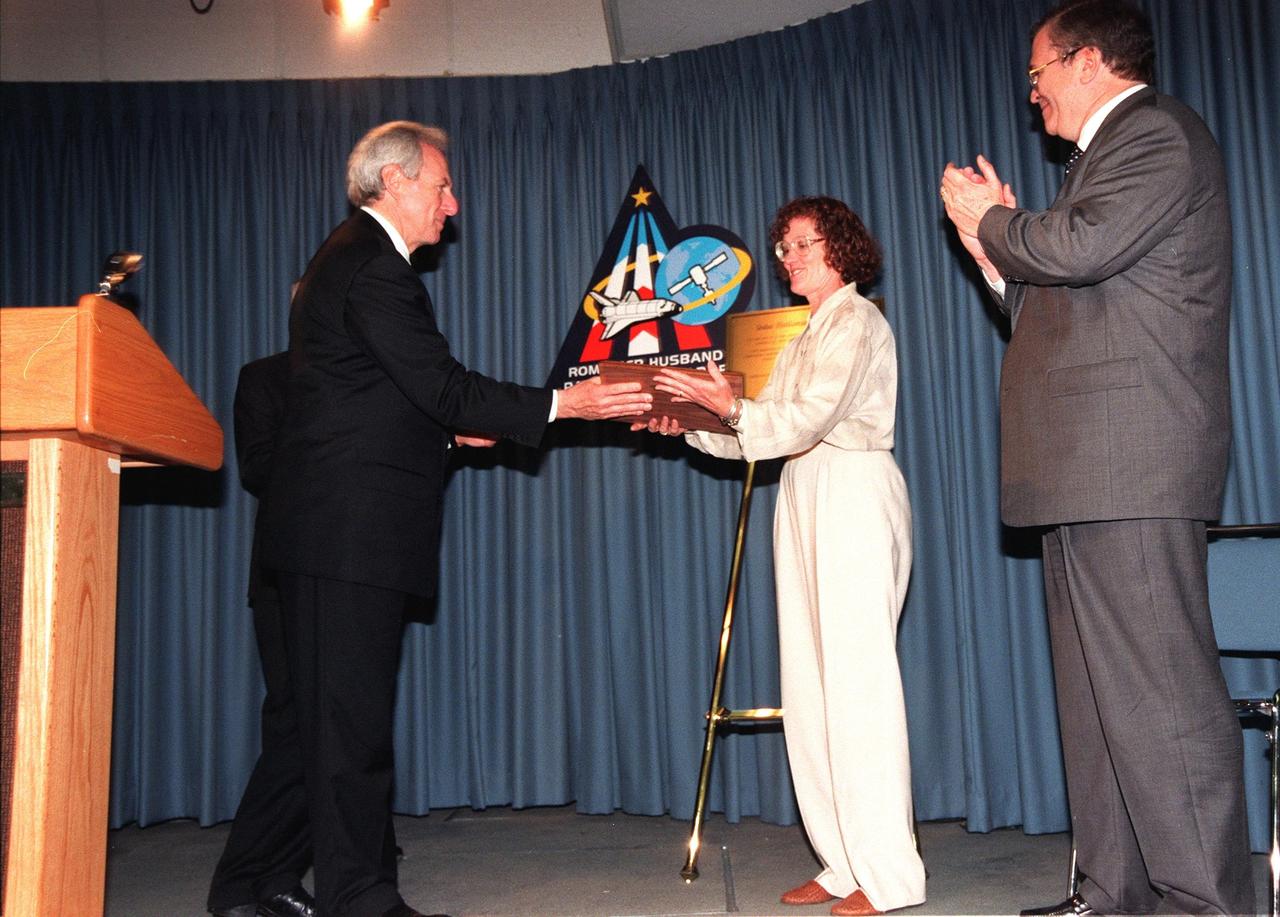
NASA Administrator Daniel S. Goldin hands Mrs. Dianne Holliman a plaque honoring her late husband, John Holliman, a CNN national correspondent. Standing behind Goldin is Center Director Roy Bridges. At right is Tom Johnson, news group chairman of CNN. A ceremony dedicated the KSC Press Site auditorium as the John Holliman Auditorium to honor the correspondent for his enthusiastic, dedicated coverage of America's space program. The auditorium was built in 1980 and has been the focal point for new coverage of Space Shuttle launches. The ceremony followed the 94th launch of a Space Shuttle, on mission STS-96, earlier this morning
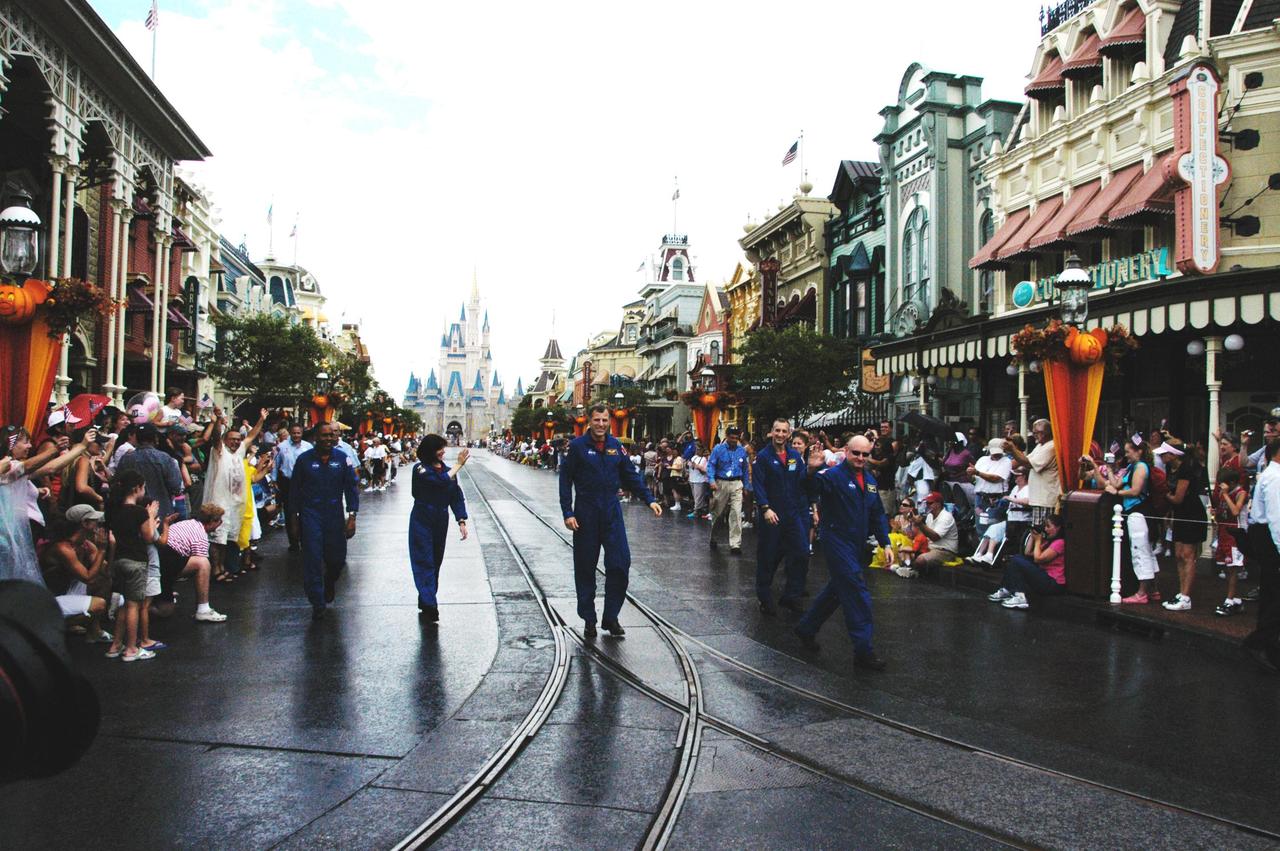
KENNEDY SPACE CENTER, FLA. -- Members of the space shuttle mission STS-118 crew march down Main Street at Walt Disney World in Orlando. From left are Mission Specialists Alvin Drew, Barbara R. Morgan and Dave Williams, Pilot Charlie Hobaugh, Mission Specialist Tracy Caldwell and Commander Scott Kelly. Not pictured but present is Mission Specialist Rick Mastracchio. The event also honored teacher-turned-astronaut Morgan, who dedicated a plaque outside the Mission: Space attraction. Other activities included meeting with the media and students. Mission STS-118 was the 119th shuttle program flight and the 22nd flight to the International Space Station. Space shuttle Endeavour launched from NASA's Kennedy Space Center on Aug. 8 and landed Aug. 21. The mission delivered the S5 truss, continuing the assembly of the space station. Photo credit: NASA/George Shelton

Members of the space shuttle mission STS-118 crew march down Main Street at Walt Disney World in Orlando. From left are Mission Specialists Alvin Drew, Barbara R. Morgan and Dave Williams, Pilot Charlie Hobaugh, Mission Specialist Tracy Caldwell and Commander Scott Kelly. Not pictured but present is Mission Specialist Rick Mastracchio. The event also honored teacher-turned-astronaut Morgan, who dedicated a plaque outside the Mission: Space attraction. Other activities included meeting with the media and students. Mission STS-118 was the 119th shuttle program flight and the 22nd flight to the International Space Station. Space shuttle Endeavour launched from NASA's Kennedy Space Center on Aug. 8 and landed Aug. 21. The mission delivered the S5 truss, continuing the assembly of the space station.
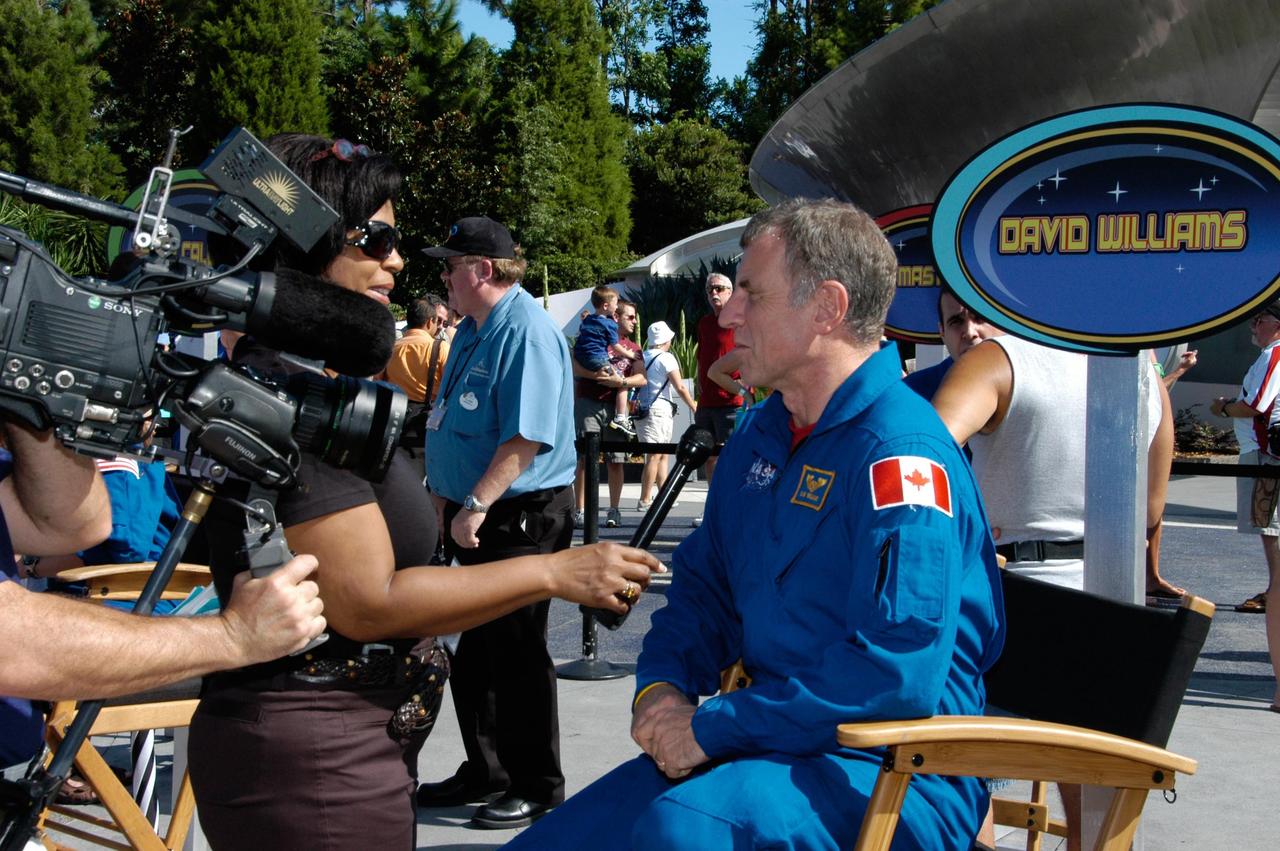
KENNEDY SPACE CENTER, FLA. -- A reporter interviews STS-118 Mission Specialist Dave Williams during a special event at Walt Disney World in Orlando . The day's events honoring the STS-118 space shuttle crew recognized the inspirational achievement of teacher-turned-astronaut Barbara R. Morgan who helped dedicate a plaque outside the Mission: Space attraction, and included meeting with students and the media and parading down Main Street to the delight of the crowds. The other crew members attending were Commander Scott Kelly, Pilot Charlie Hobaugh and Mission Specialists Tracy Caldwell, Rick Mastracchio and Alvin Drew. Mission STS-118 was the 119th shuttle program flight and the 22nd flight to the International Space Station. Space shuttle Endeavour launched from NASA's Kennedy Space Center on Aug. 8 and landed Aug. 21. The mission delivered the S5 truss, continuing the assembly of the space station. Photo credit: NASA/George Shelton

NASA's Kennedy Space Center Education Specialists Linda Scauzillo and Christopher Blair take part in a special education session with local students at Epcot's Base21 Siemens VIP Center. The event was part of the day's activities honoring the space shuttle Endeavour crew of mission STS-118. The crew met with the media and paraded down Main Street. The event also honored teacher-turned-astronaut Barbara R. Morgan, who dedicated a plaque outside the Mission: Space attraction. The other crew members attending were Commander Scott Kelly, Pilot Charlie Hobaugh and Mission Specialists Tracy Caldwell, Dave Williams, Rick Mastracchio and Alvin Drew. Mission STS-118 was the 119th shuttle program flight and the 22nd flight to the International Space Station. Space shuttle Endeavour launched from NASA's Kennedy Space Center on Aug. 8 and landed Aug. 21. The mission delivered the S5 truss, continuing the assembly of the space station.
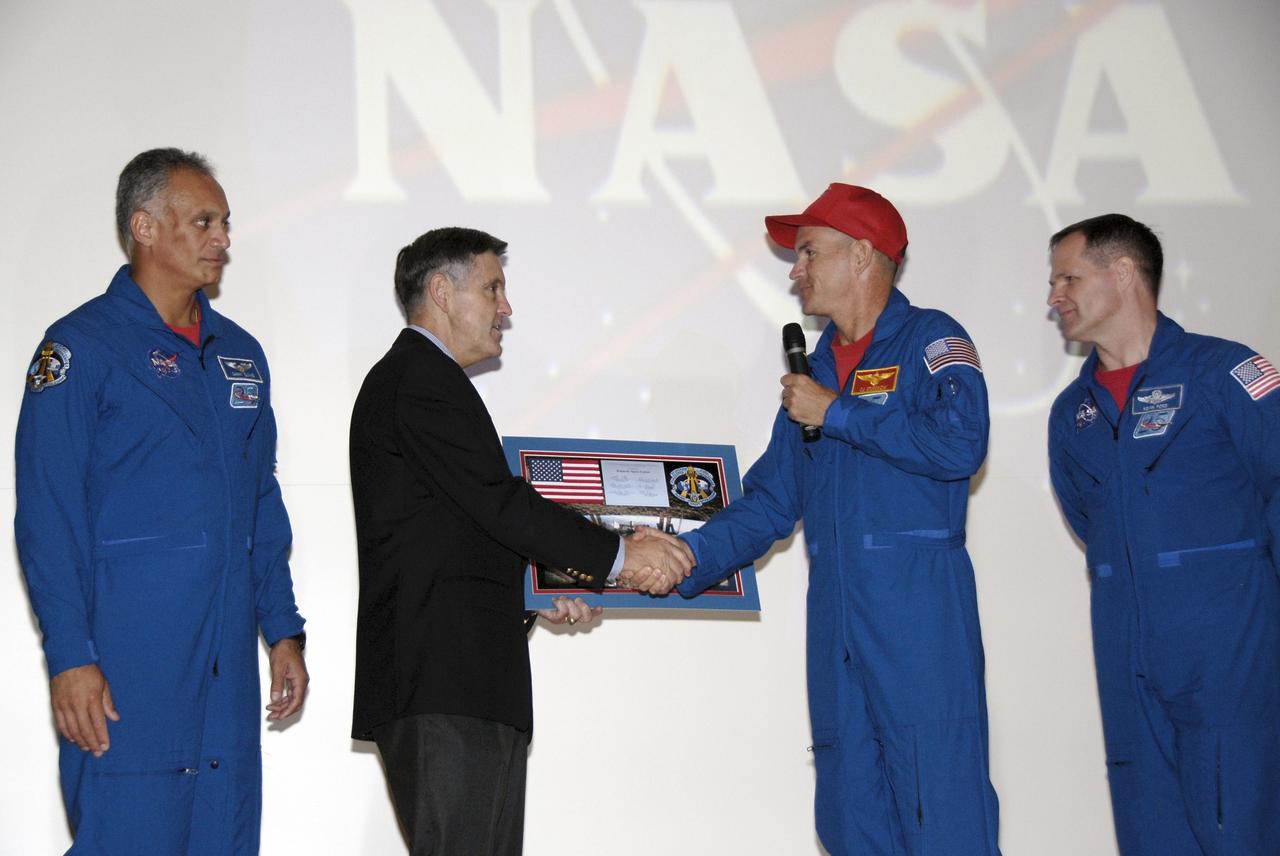
CAPE CANAVERAL, Fla. – In the Training Auditorium at NASA's Kennedy Space Center in Florida, STS-128 Commander Rick Sturckow, with the microphone, presents a plaque commemorating the mission to Center Director Bob Cabana. The presentation followed a program for Kennedy employees in which the crew talked about their experiences on the mission. At left is Mission Specialist John "Danny" Olivas; at right is Pilot Kevin Ford. More than 7 tons of supplies, science racks and equipment, as well as additional environmental hardware to sustain six crew members on the International Space Station were delivered to the International Space Station on the STS-128 mission. The equipment included a freezer to store research samples, a new sleeping compartment and the COLBERT treadmill. The mission was the 128th in the Space Shuttle Program, the 37th flight of Discovery and the 30th station assembly flight. Launch was Aug. 28, 2009. Photo credit: NASA/Kim Shiflett

A reporter interviews STS-118 Mission Specialist Dave Williams during a special event at Walt Disney World in Orlando . The day's events honoring the STS-118 space shuttle crew recognized the inspirational achievement of teacher-turned-astronaut Barbara R. Morgan who helped dedicate a plaque outside the Mission: Space attraction, and included meeting with students and the media and parading down Main Street to the delight of the crowds. The other crew members attending were Commander Scott Kelly, Pilot Charlie Hobaugh and Mission Specialists Tracy Caldwell, Rick Mastracchio and Alvin Drew. Mission STS-118 was the 119th shuttle program flight and the 22nd flight to the International Space Station. Space shuttle Endeavour launched from NASA's Kennedy Space Center on Aug. 8 and landed Aug. 21. The mission delivered the S5 truss, continuing the assembly of the space station
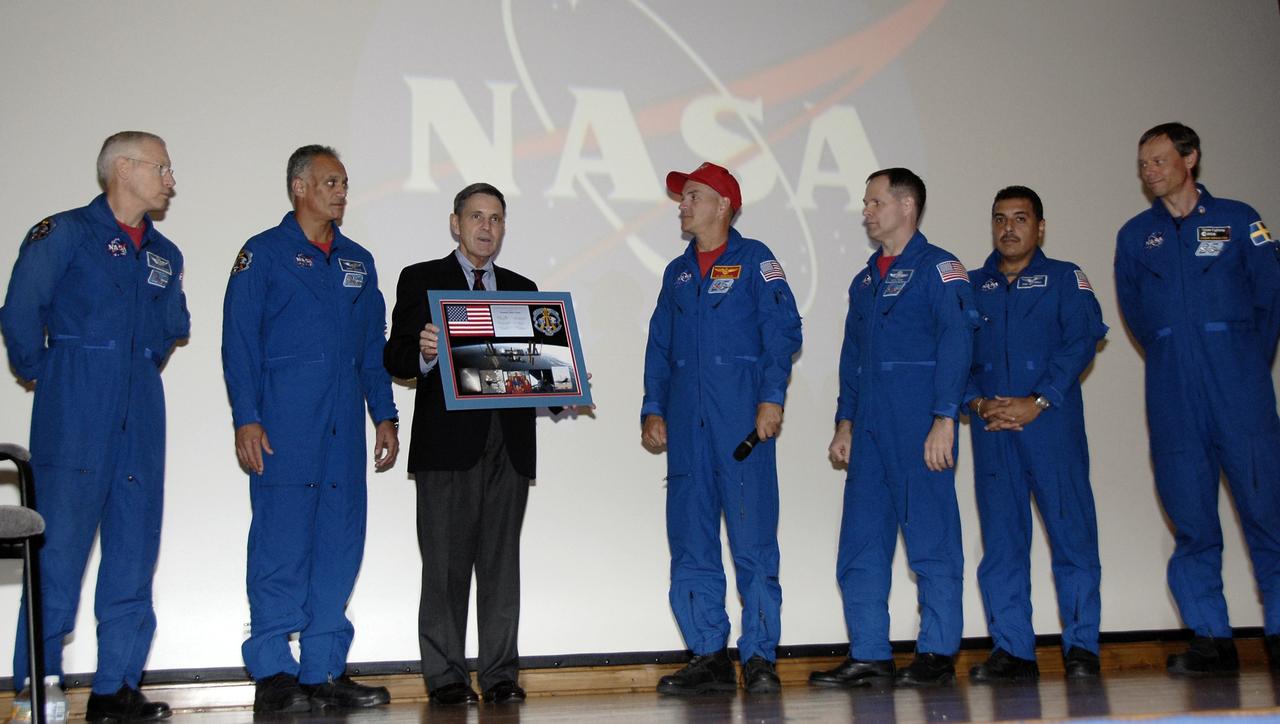
CAPE CANAVERAL, Fla. – CAPE CANAVERAL, Fla. – In the Training Auditorium at NASA's Kennedy Space Center in Florida, Center Director Bob Cabana accepts a plaque commemorating the STS-128 space shuttle mission for the STS-128 crew. From left are Mission Specialists Patrick Forrester and John "Danny" Olivas; Cabana; Commander Rick Sturckow; Pilot Kevin Ford; and Mission Specialists Jose Hernandez and Christer Fuglesang. More than 7 tons of supplies, science racks and equipment, as well as additional environmental hardware to sustain six crew members on the International Space Station were delivered to the International Space Station on the STS-128 mission. The equipment included a freezer to store research samples, a new sleeping compartment and the COLBERT treadmill. The mission was the 128th in the Space Shuttle Program, the 37th flight of Discovery and the 30th station assembly flight. Launch was Aug. 28, 2009. Photo credit: NASA/Kim Shiflett
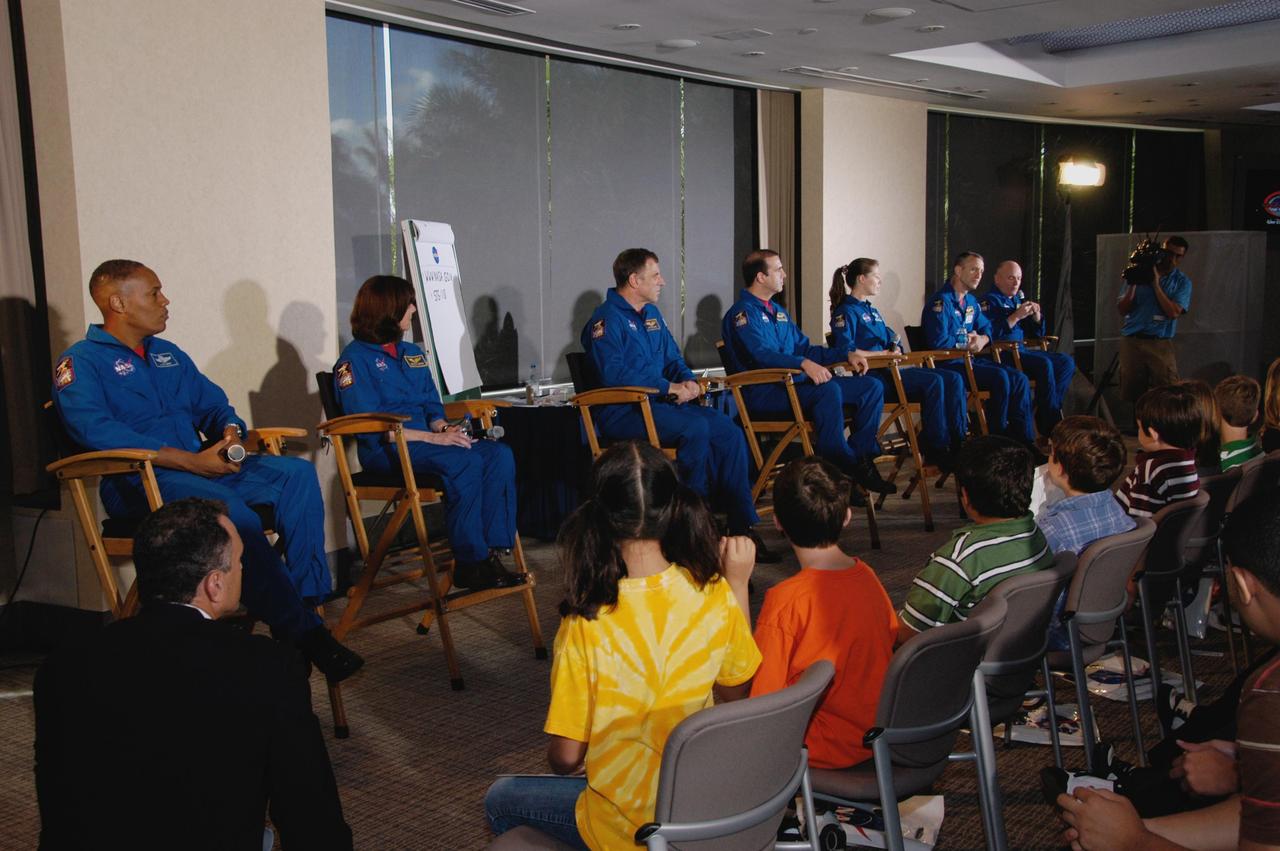
KENNEDY SPACE CENTER, FLA. -- At Walt Disney World in Orlando, the crew members of space shuttle mission STS-118 answer questions from the student audience during a special event to honor the Endeavour crew. Seated from left are Mission Specialists Alvin Drew, Barbara R. Morgan, Dave Williams, Rick Mastracchio and Tracy Caldwell; Pilot Charlie Hobaugh; and Commander Scott Kelly. The event also honored teacher-turned-astronaut Morgan, who dedicated a plaque outside the Mission: Space attraction. Other activities included meeting with the media and a parade down Main Street. Mission STS-118 was the 119th shuttle program flight and the 22nd flight to the International Space Station. Space shuttle Endeavour launched from NASA's Kennedy Space Center on Aug. 8 and landed Aug. 21. The mission delivered the S5 truss, continuing the assembly of the space station. Photo credit: NASA/George Shelton

At Walt Disney World in Orlando, the crew members of space shuttle mission STS-118 answer questions from the student audience during a special event to honor the Endeavour crew. Seated from left are Mission Specialists Alvin Drew, Barbara R. Morgan, Dave Williams, Rick Mastracchio and Tracy Caldwell; Pilot Charlie Hobaugh; and Commander Scott Kelly. The event also honored teacher-turned-astronaut Morgan, who dedicated a plaque outside the Mission: Space attraction. Other activities included meeting with the media and a parade down Main Street. Mission STS-118 was the 119th shuttle program flight and the 22nd flight to the International Space Station. Space shuttle Endeavour launched from NASA's Kennedy Space Center on Aug. 8 and landed Aug. 21. The mission delivered the S5 truss, continuing the assembly of the space station.
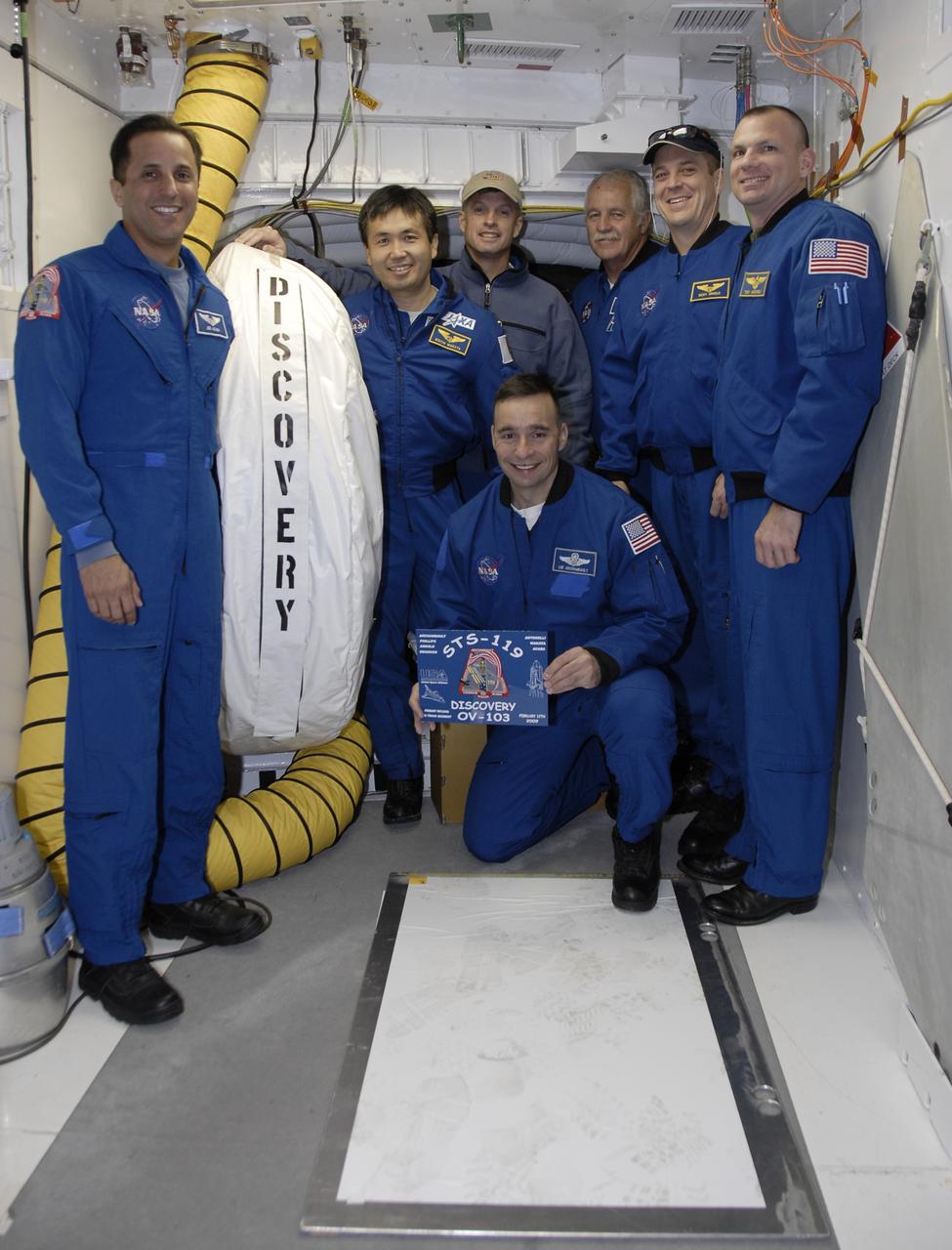
CAPE CANAVERAL, Fla. – The STS-119 crew members gather in front of the hatch into space shuttle Discovery to place the mission plaque. Standing from left are Mission Specialists Joseph Acaba, Koichi Wakata, Steve Swanson, John Phillips and Richard Arnold and Pilot Tony Antonelli. Kneeling in front is Commander Lee Archambault. The astronauts are at Kennedy to prepare for launch as part of the Terminal Countdown Demonstration Test activities. The TCDT includes equipment familiarization and a simulated launch countdown. The crew of space shuttle Discovery is targeted to launch on the STS-119 mission Feb. 12. During Discovery's 14-day mission, the crew will install the S6 truss segment and solar arrays to the starboard side of the International Space Station, completing the station's truss, or backbone. Photo credit: NASA/Kim Shiflett

KENNEDY SPACE CENTER, FLA. -- A special event honoring the crew of space shuttle mission STS-118 was held at Walt Disney World. Here, visitors enjoy the NASA display at Epcot's Innoventions Center. The event also honored teacher-turned-astronaut Barbara R. Morgan, who dedicated a plaque outside the Mission: Space attraction. Other activities included meeting with the media and students and a parade down Main Street. Mission STS-118 was the 119th shuttle program flight and the 22nd flight to the International Space Station. Space shuttle Endeavour launched from NASA's Kennedy Space Center on Aug. 8 and landed Aug. 21. The mission delivered the S5 truss, continuing the assembly of the space station. Photo credit: NASA/George Shelton
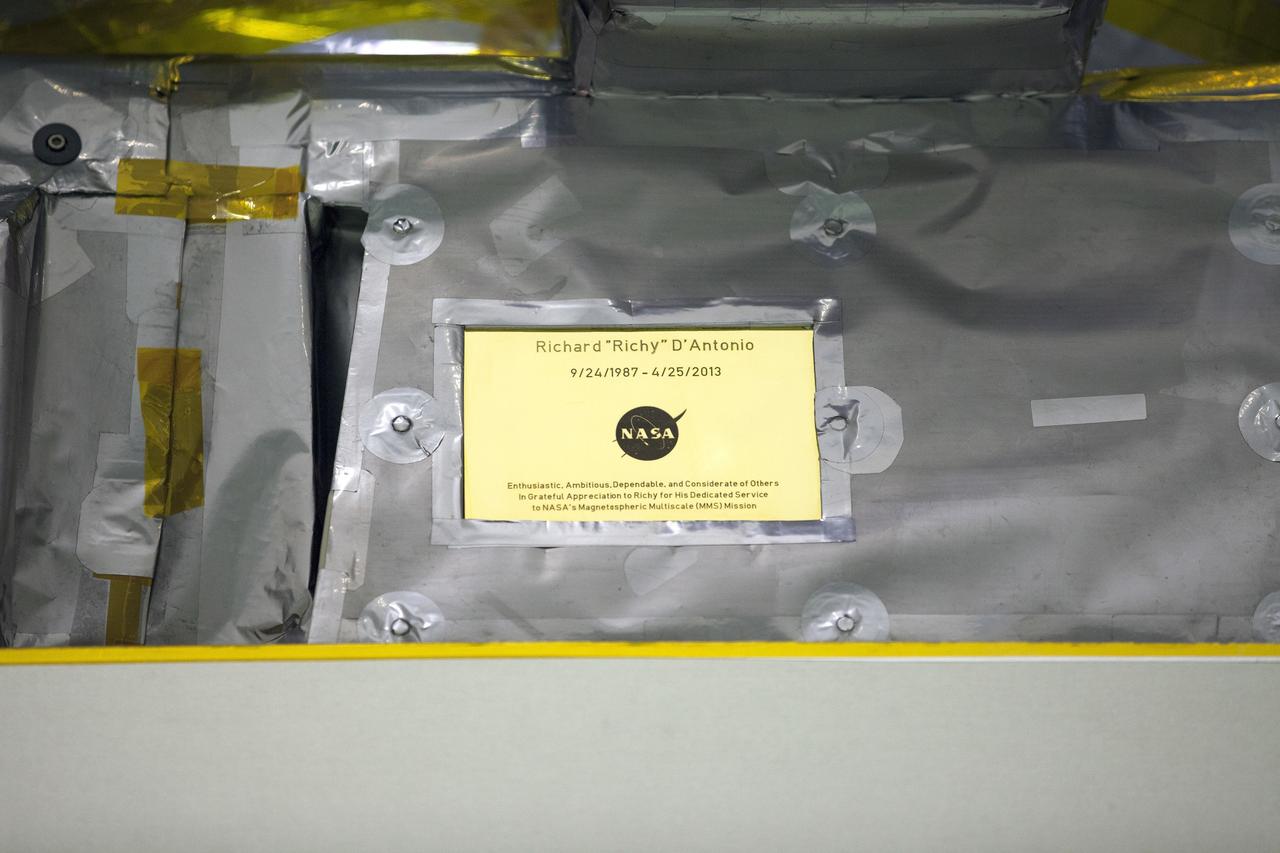
CAPE CANAVERAL, Fla. – A plaque affixed to the side of a Magnetospheric Multiscale, or MMS, observatory dedicates the mission to Richard “Richy” D’Antonio, now deceased, in grateful appreciation for his dedicated service to NASA’s MMS mission. MMS, led by a team from NASA's Goddard Space Flight Center, is a Solar Terrestrial Probes mission consisting of four identically instrumented spacecraft that will use Earth’s magnetosphere as a laboratory to study the microphysics of three fundamental plasma processes: magnetic reconnection, energetic particle acceleration and turbulence. Launch aboard a United Launch Alliance Atlas V rocket from Space Launch Complex 41 on Cape Canaveral Air Force Station is targeted for March 12, 2015. To learn more about MMS, visit http://mms.gsfc.nasa.gov. Photo credit: NASA/Kim Shiflett
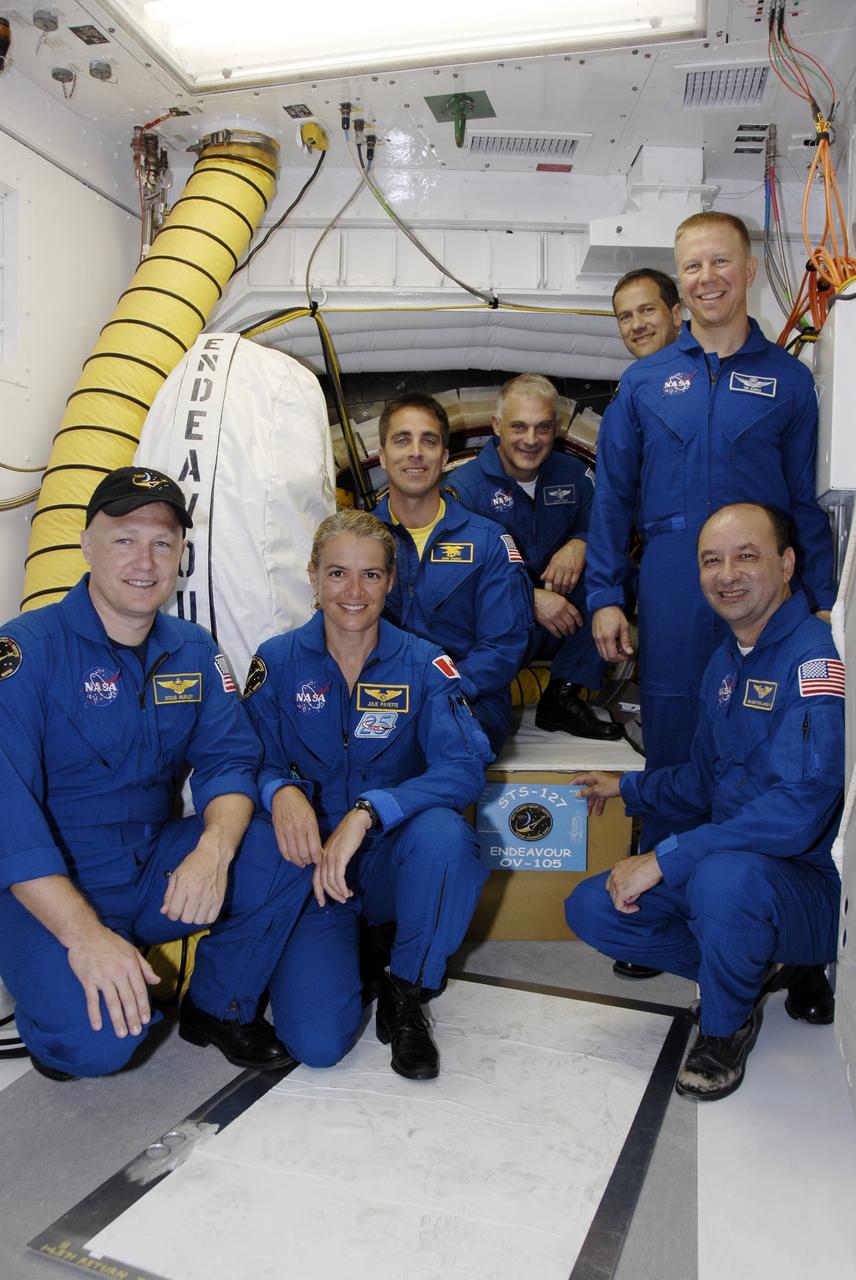
CAPE CANAVERAL, Fla. – On Launch Pad 39A at NASA's Kennedy Space Center in Florida, STS-127 crew members gather near space shuttle Endeavour's hatch to place the mission plaque before launch. Clockwise from left are Pilot Doug Hurley, Mission Specialists Julie Payette, Christopher Cassidy, Dave Wolf, Tom Marshburn and Tim Kopra and Commander Mark Polansky. Payette represents the Canadian Space Agency. The crew is at Kennedy for a launch dress rehearsal called the terminal countdown demonstration test, or TCDT, which includes emergency exit training and equipment familiarization. Endeavour's STS-127 mission is the final of three flights dedicated to the assembly of the Japanese Kibo laboratory complex on the International Space Station. Endeavour's launch is targeted for June 13. Photo credit: NASA/Kim Shiflett
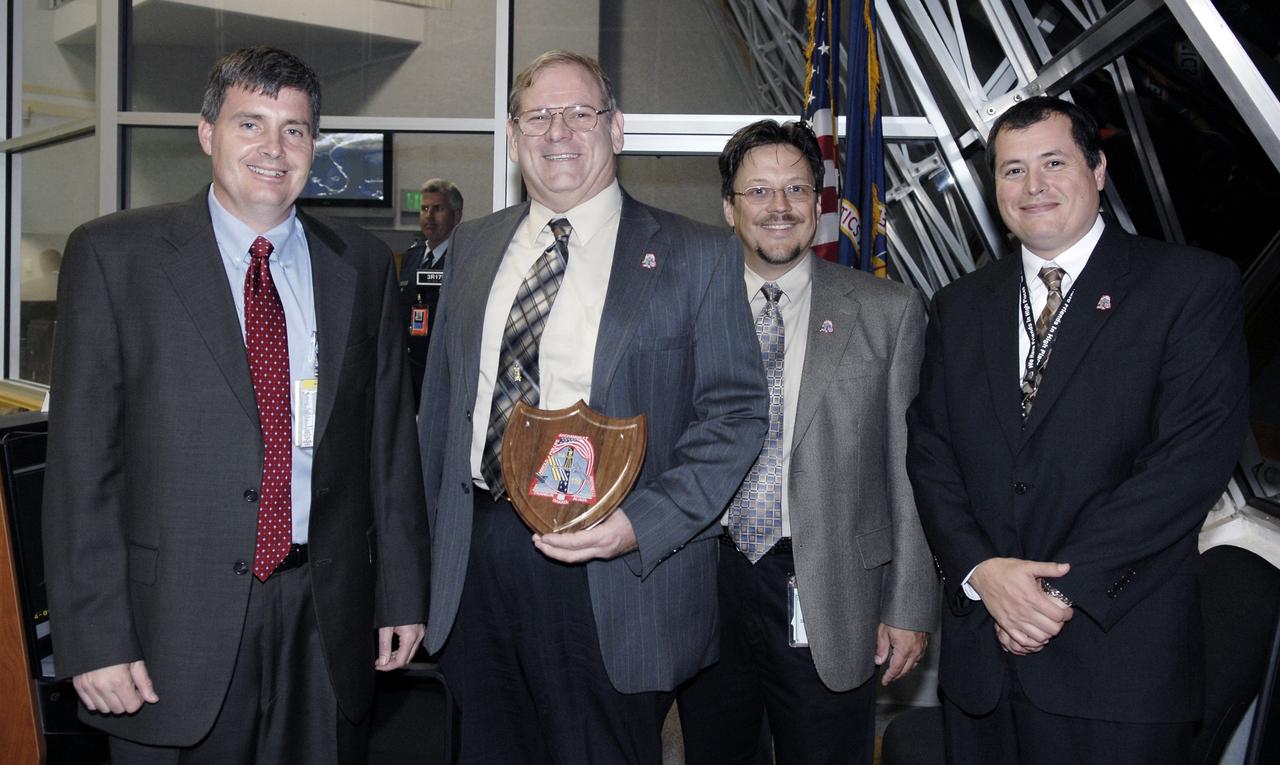
CAPE CANAVERAL, Fla. – In Firing Room 4 of the Launch Control Center at NASA's Kennedy Space Center in Florida, from left, Steve Stich, manager of the Kennedy Orbiter Project Office; John Fraser, with Boeing Co. at the Marshall Space Flight Center; Rick Russell, with the NASA Orbiter Sustaining Engineering Office; and Rene Ortega with Marshall Space Flight Center's Shuttle Propulsion Office, are presented with a plaque for their work on the fuel control valve problem on space shuttle Discovery. The award was presented after the successful launch of Discovery on the STS-119 mission. Liftoff was on time at 7:43 p. m. EDT. The STS-119 mission is the 28th to the space station and Discovery's 36th flight. Discovery will deliver the final pair of power-generating solar array wings and the S6 truss segment. Installation of S6 will signal the station's readiness to house a six-member crew for conducting increased science. Photo credit: NASA/Kim Shiflett
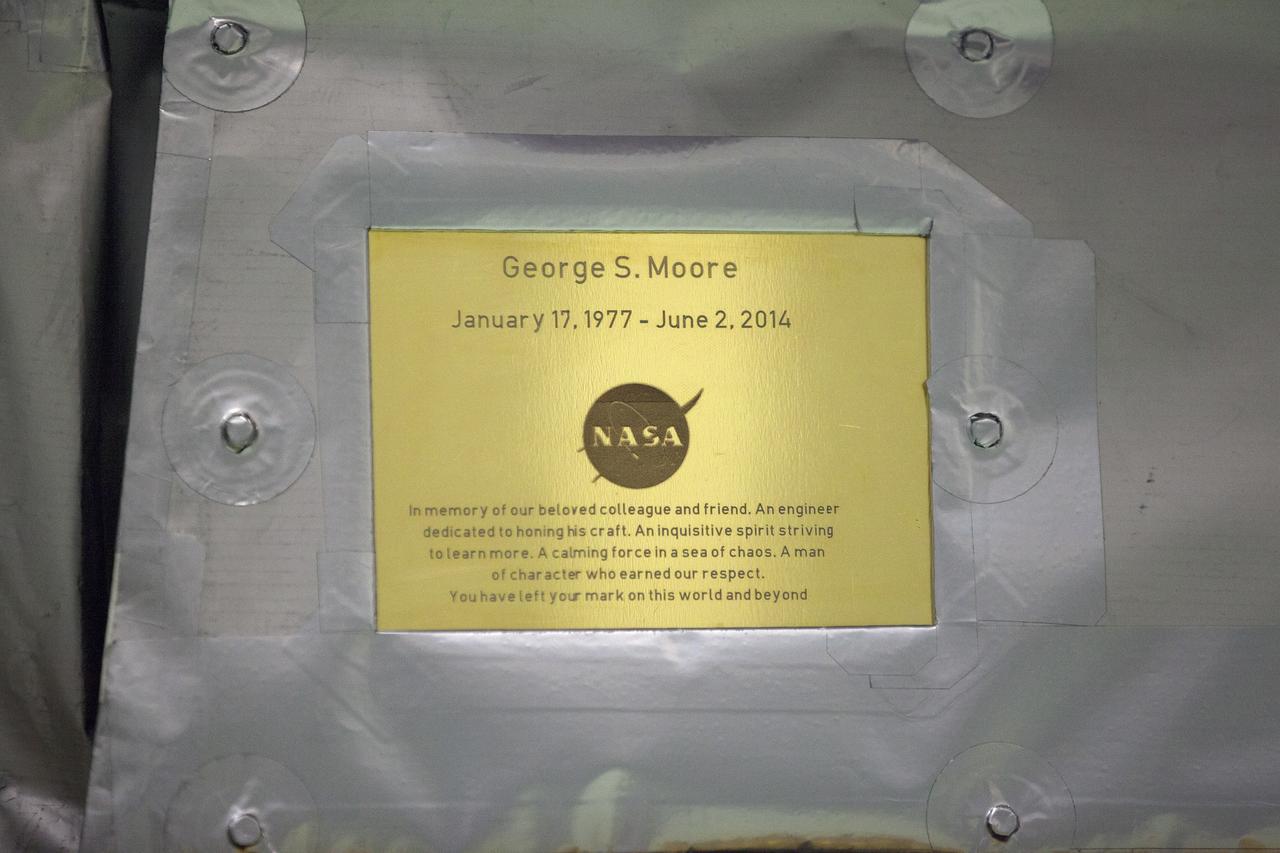
CAPE CANAVERAL, Fla. – A plaque affixed to the side of a Magnetospheric Multiscale, or MMS, observatory dedicates the mission to George S. Moore, now deceased, an engineer who was a beloved colleague and friend to the MMS team. MMS, led by a team from NASA's Goddard Space Flight Center, is a Solar Terrestrial Probes mission consisting of four identically instrumented spacecraft that will use Earth’s magnetosphere as a laboratory to study the microphysics of three fundamental plasma processes: magnetic reconnection, energetic particle acceleration and turbulence. Launch aboard a United Launch Alliance Atlas V rocket from Space Launch Complex 41 on Cape Canaveral Air Force Station is targeted for March 12, 2015. To learn more about MMS, visit http://mms.gsfc.nasa.gov. Photo credit: NASA/Kim Shiflett
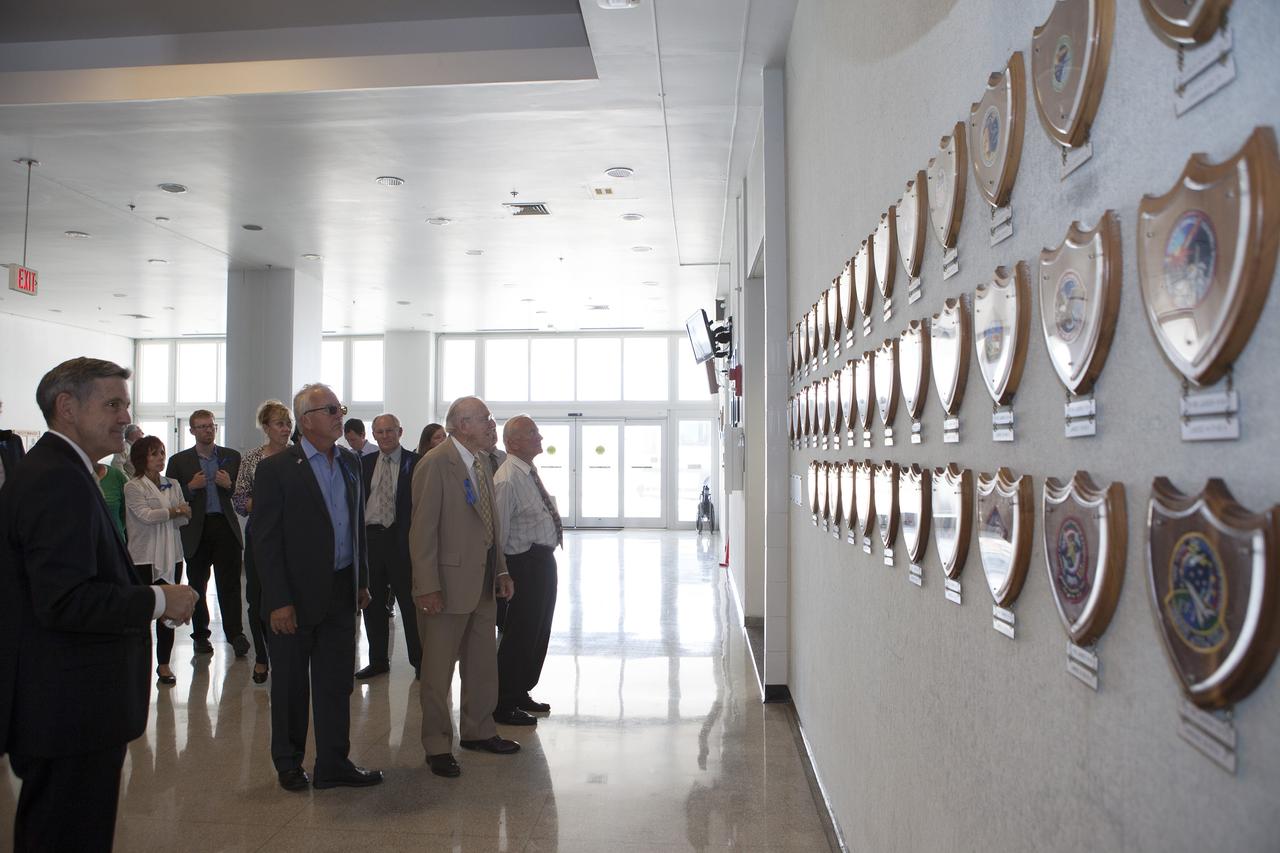
CAPE CANAVERAL, Fla. -- Apollo astronauts and their families examine the mission plaques mounted on the wall in the lobby of the Launch Control Center at NASA's Kennedy Space Center in Florida. The facility houses the firing rooms from which the Apollo countdowns were conducted. Kennedy Director Robert Cabana, at left, led the tour which followed a ceremony renaming the refurbished Operations and Checkout Building for Apollo 11 astronaut Neil Armstrong, the first person to set foot on the moon. The ceremony was part of NASA's 45th anniversary celebration of the Apollo 11 moon landing. As the world watched, Neil Armstrong and Buzz Aldrin landed in the moon's Sea of Tranquility on July 20, 1969, aboard the lunar module Eagle. Meanwhile, crewmate Michael Collins orbited above in the command module Columbia. For more, visit http://www.nasa.gov/press/2014/july/nasa-honors-historic-first-moon-landing-eyes-first-mars-mission. Photo credit: NASA/Kim Shiflett
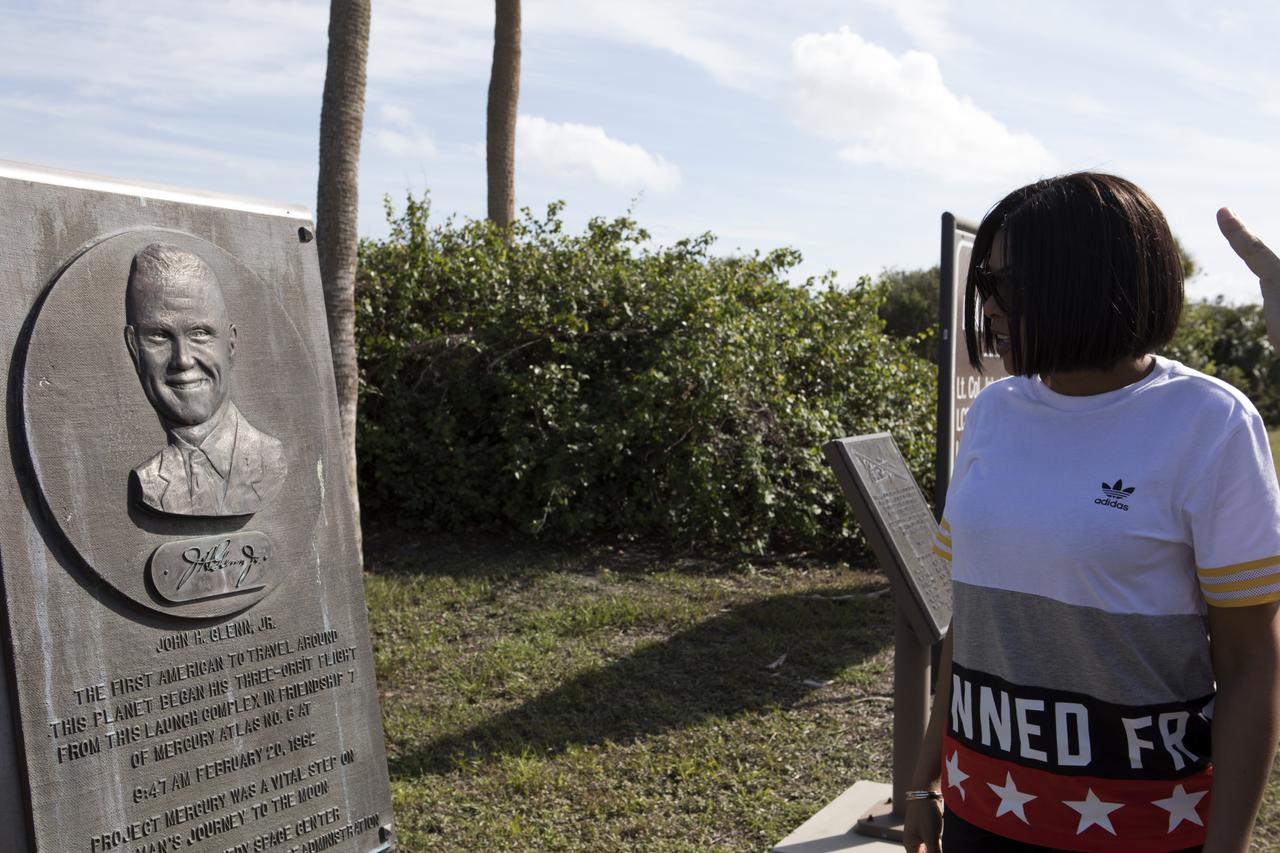
Taraji P. Henson, who portrays Katherine Johnson in the upcoming motion picture "Hidden Figures," reads the inscription on a plaque honoring NASA astronaut John Glenn. It is located at the entrance to Launch Pad 14 at Cape Canaveral Air Force Station. It was the location of the launch of Glenn and three other astronauts who flew orbital missions during Project Mercury. The movie is based on the book of the same title, by Margot Lee Shetterly. It chronicles the lives of Katherine Johnson, Dorothy Vaughan and Mary Jackson, three African-American women who worked for NASA as human "computers.” Their mathematical calculations were crucial to the success of Project Mercury missions including Glenn’s orbital flight aboard Friendship 7 in 1962. The film is due in theaters in January 2017.
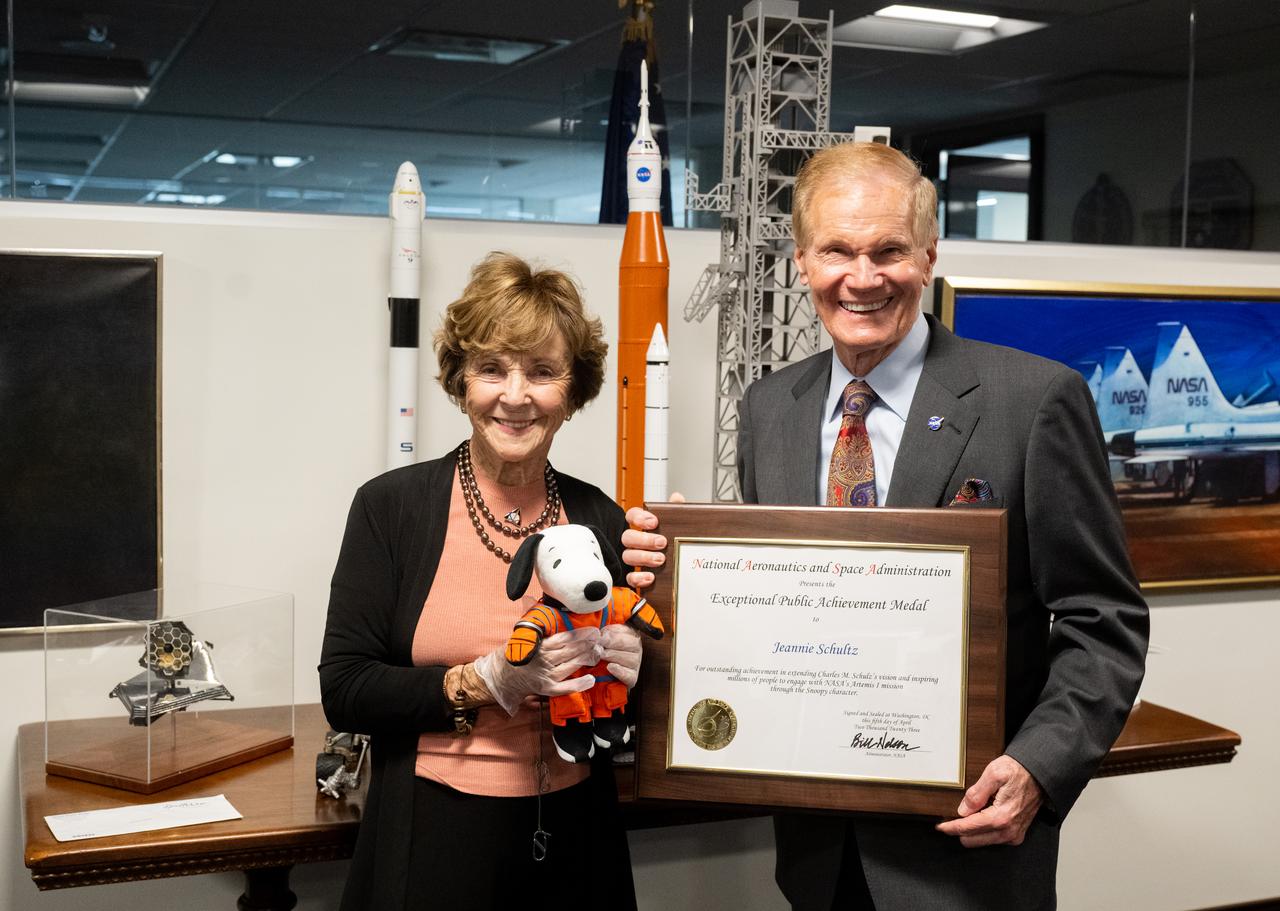
NASA Administrator Bill Nelson, right, and Jeannie Schulz, widow of Peanuts gang creator Charles M. Schulz, holding the Artemis I Snoopy zero gravity indicator, left, pose for a picture with the NASA Exceptional Achievement Medal plaque, Wednesday, April 5, 2023, at the Mary W. Jackson NASA Headquarters building in Washington. Schulz was awarded a NASA Exceptional Achievement Medal by Administrator Nelson at an “Our Blue Planet” concert at the John F. Kennedy Center for the Performing Arts. Snoopy rode along as the zero gravity indicator on NASA’s Artemis I mission as part of a partnership with the agency and continues to help NASA inspire kids of all ages to follow along with Artemis missions. As part of the visit, Schulz showed the flown Artemis I Snoopy zero gravity indicator before it goes to its final home for display at the Schulz Museum in Santa Rosa, California. Photo Credit: (NASA/Joel Kowsky)
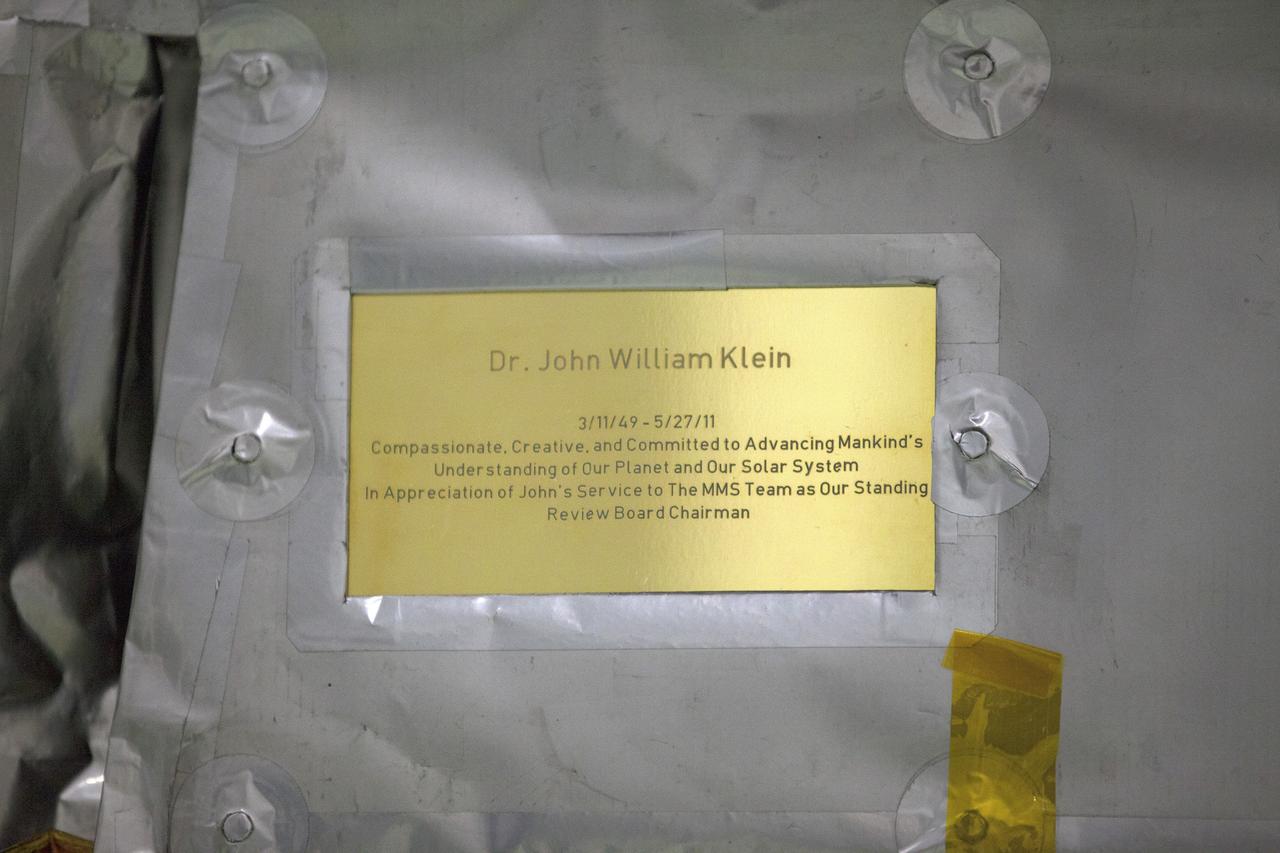
CAPE CANAVERAL, Fla. – A plaque affixed to the side of a Magnetospheric Multiscale, or MMS, observatory dedicates the mission to Dr. John William Klein, now deceased, who served the MMS team as the standing review board chairman. MMS, led by a team from NASA's Goddard Space Flight Center, is a Solar Terrestrial Probes mission consisting of four identically instrumented spacecraft that will use Earth’s magnetosphere as a laboratory to study the microphysics of three fundamental plasma processes: magnetic reconnection, energetic particle acceleration and turbulence. Launch aboard a United Launch Alliance Atlas V rocket from Space Launch Complex 41 on Cape Canaveral Air Force Station is targeted for March 12, 2015. To learn more about MMS, visit http://mms.gsfc.nasa.gov. Photo credit: NASA/Kim Shiflett
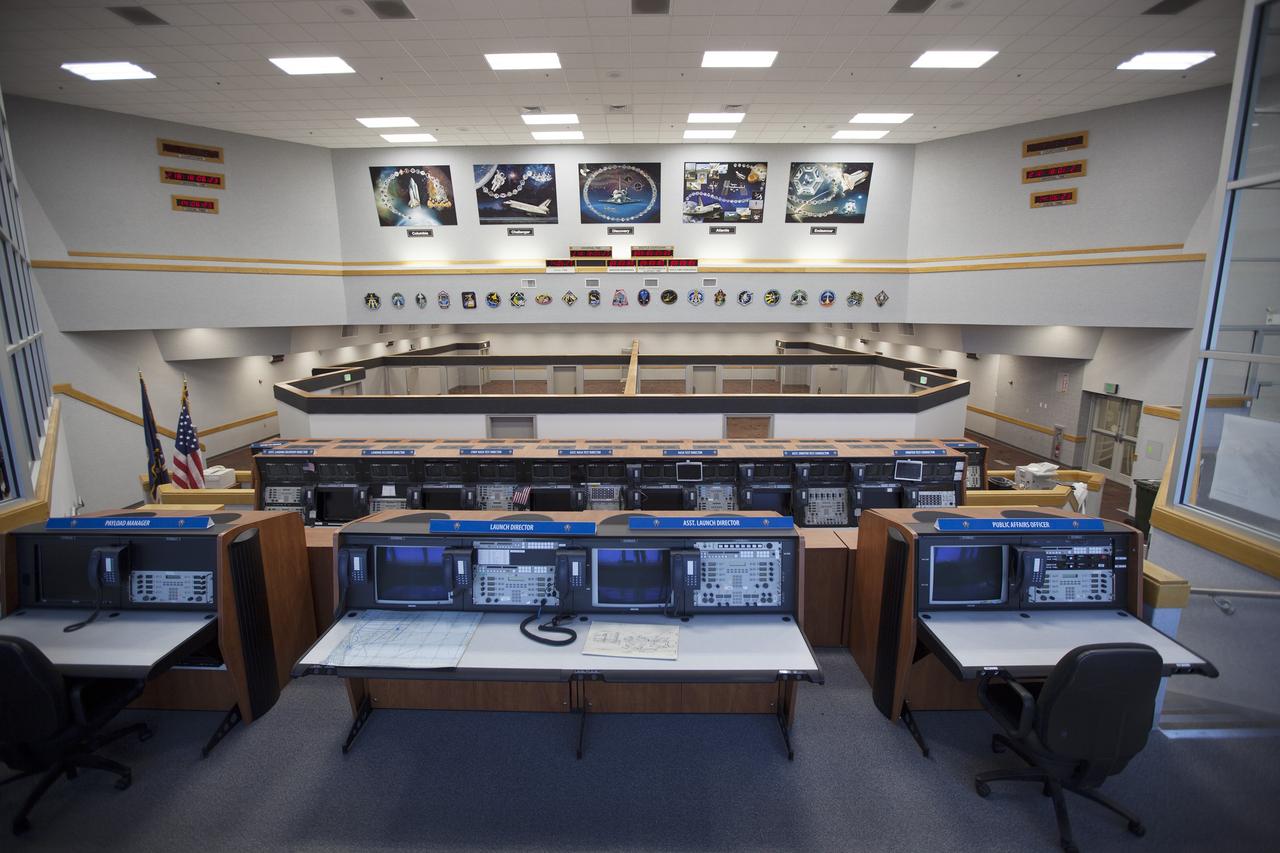
CAPE CANAVERAL, Fla. – Inside Firing Room 4 in the Launch Control Center at NASA's Kennedy Space Center in Florida, the outer walls, inner walls, windows and doors for the four separate firing rooms on the main floor have been completed. Three rows of upper level management consoles remain and could be used as a fifth firing room. The Ground Systems Development and Operations Program is overseeing the efforts to create a new firing room based on a multi-user concept. The space shuttle mission plaques and posters remain on the wall above the firing rooms. The design of Firing Room 4 incorporates five control room areas that can be flexible to meet current and future NASA and commercial user requirements. The equipment and most of the consoles from Firing Room 4 were moved to Firing Room 2 for possible future reuse. Photo credit: NASA/Dimitri Gerondidakis
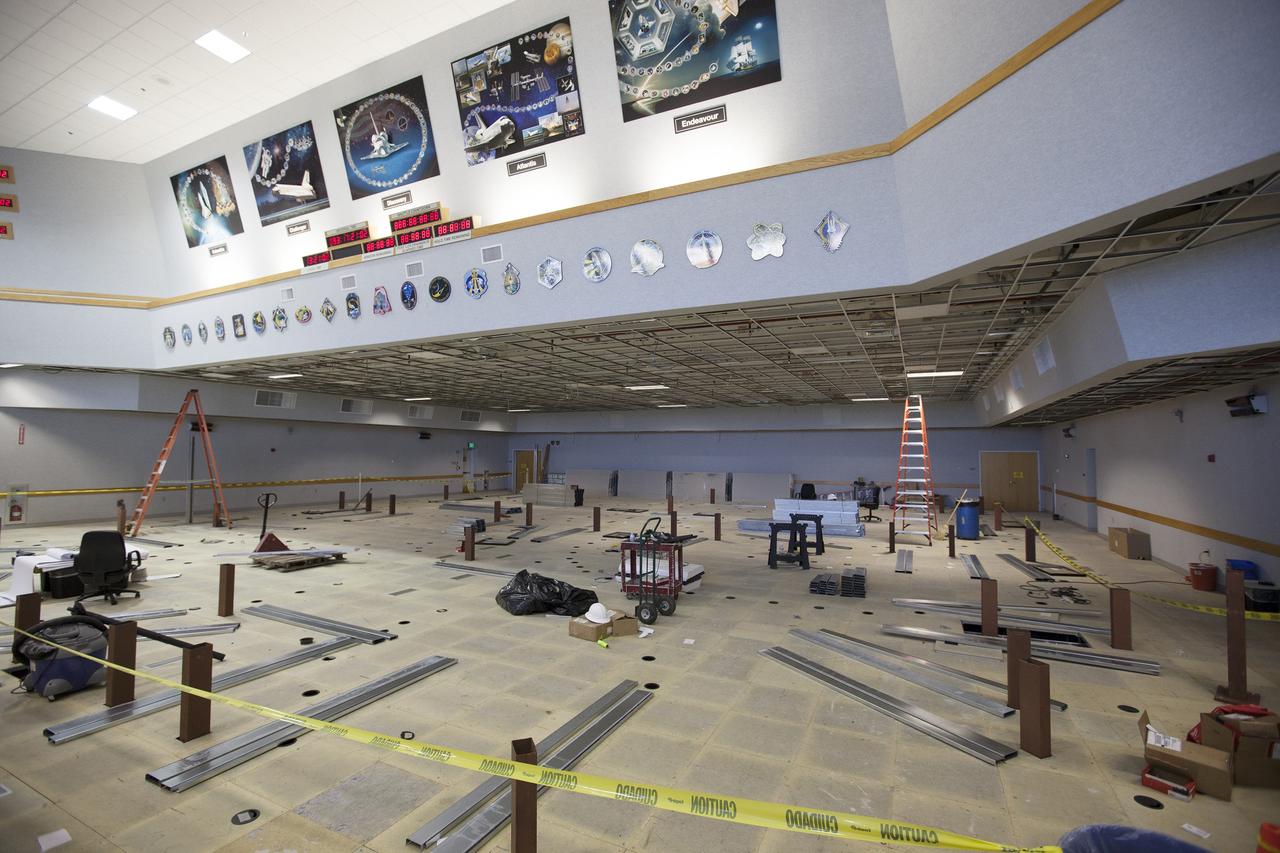
CAPE CANAVERAL, Fla. – The Ground Systems Development and Operations Program is overseeing efforts to create a new multi-user firing room in Firing Room 4 in the Launch Control Center at NASA's Kennedy Space Center in Florida. The main floor consoles, cabling and wires below the floor and ceiling tiles above have been removed. Sub-flooring has been installed and the room is marked off to create four separate rooms on the main floor. In view along the soffit are space shuttle launch plaques for 21 missions launched from Firing Room 4. The design of Firing Room 4 will incorporate five control room areas that are flexible to meet current and future NASA and commercial user requirements. The equipment and most of the consoles from Firing Room 4 were moved to Firing Room 2 for possible future reuse. Photo credit: NASA/Ben Smegelsky
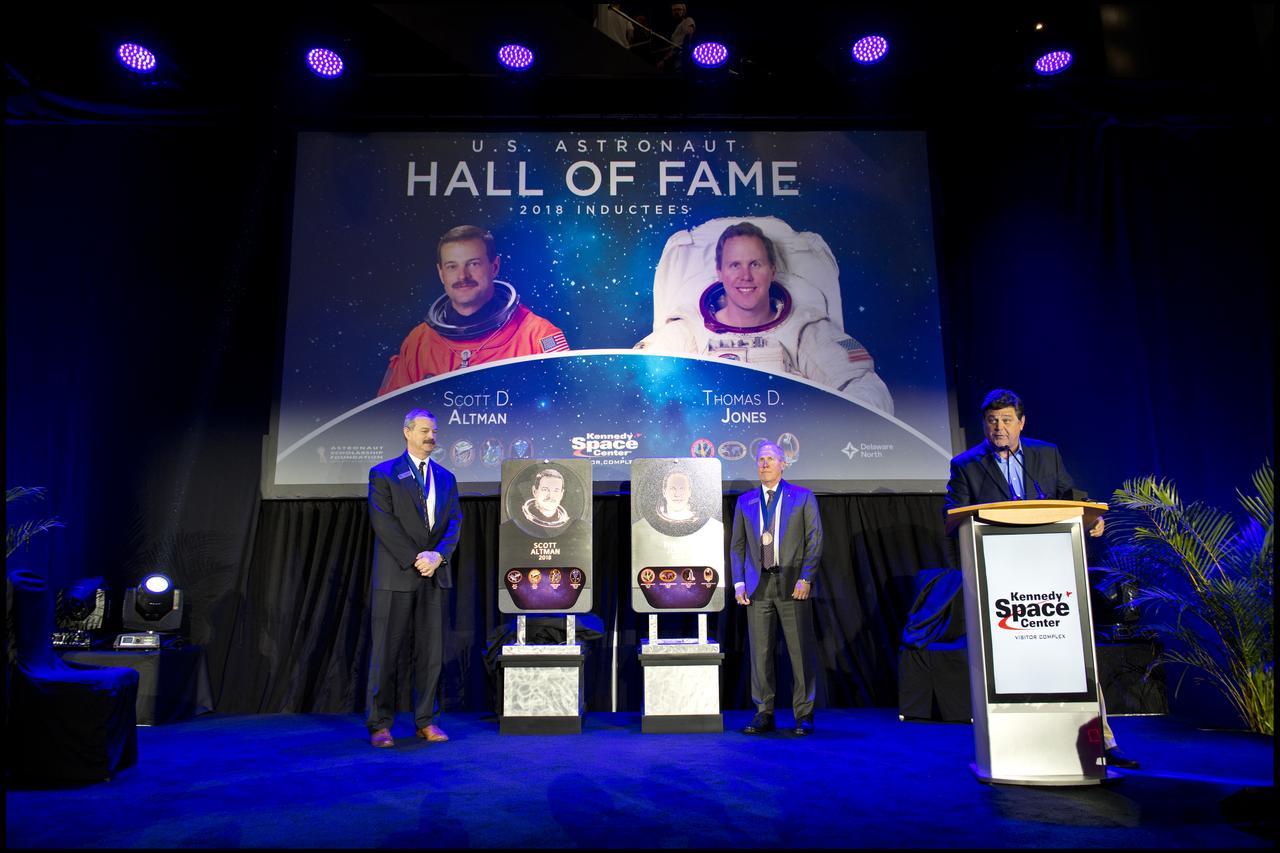
Former astronauts and space explorers Scott D. Altman, at left, and Thomas D. Jones, Ph.D., are inducted into the U.S. Astronaut Hall of Fame Class of 2018 during a ceremony inside the Space Shuttle Atlantis attraction at NASA’s Kennedy Space Center Visitor Complex in Florida. They unveiled their plaques, which will be placed in Hall of Fame at the visitor complex. At far right is Master of Ceremonies, John Zarella, former CNN space correspondent. Inductees into the Hall of Fame are selected by a committee of Hall of Fame astronauts, former NASA officials, flight directors, historians and journalists. The process is administered by the Astronaut Scholarship Foundation. To be eligible, an astronaut must have made his or her first flight at least 17 years before the induction. Candidates must be a U.S. citizen and a NASA-trained commander, pilot or mission specialist who has orbited the earth at least once. Including Altman and Jones, 97 astronauts have been inducted into the AHOF.