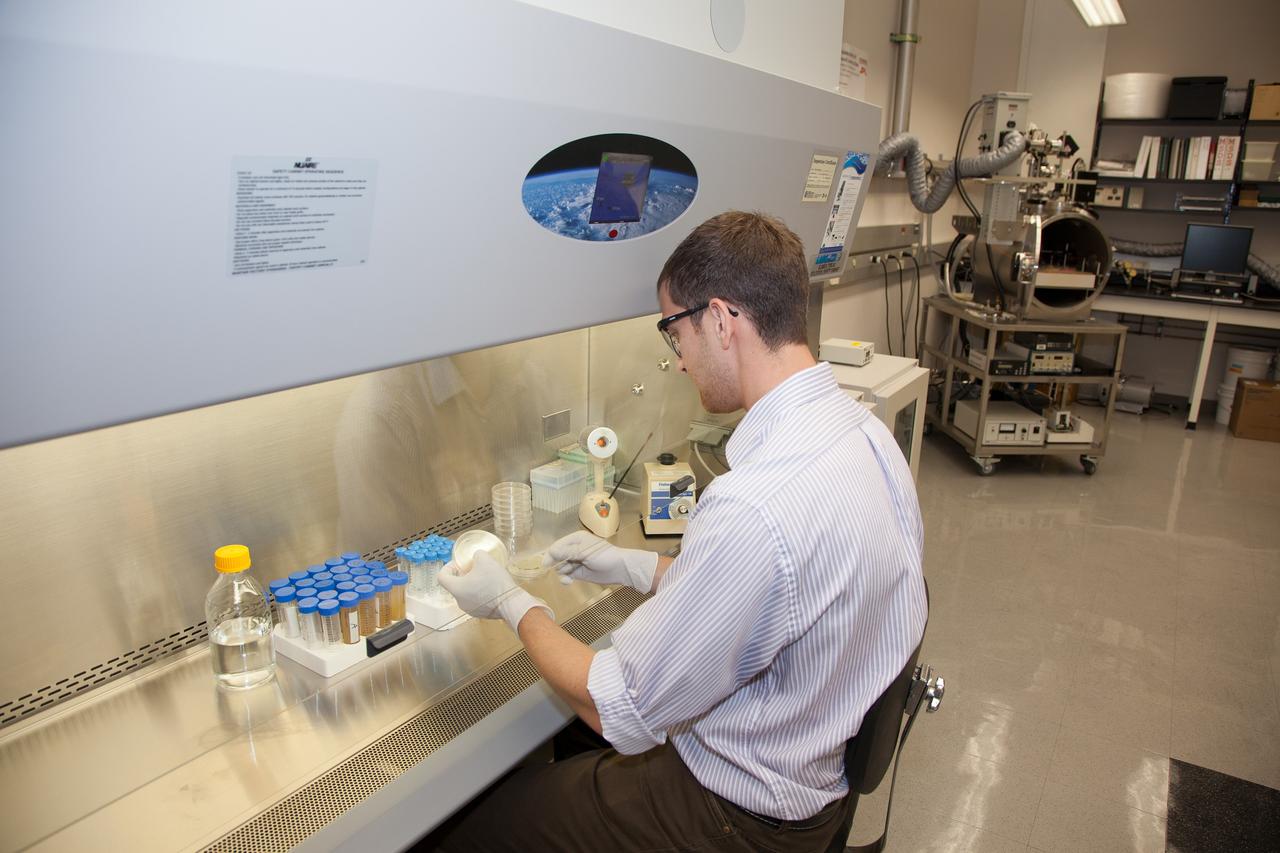
CAPE CANAVERAL, Fla. -- Inside the Space Life Sciences Laboratory near NASA’s Kennedy Space Center in Florida, Dr. David J. Smith, a microbiologist in the Surface Systems Office, prepares microbes that will be deployed for the Microorganisms in the Stratosphere, or MIST, mission. High altitudes exert a unique combination of stresses on microbes, outside the range of conditions normally encountered on the Earth's surface. Results from MIST may improve our understanding of the physical limits and habitable environments for life. The MIST mission will fly a small biological payload aboard a blimp in July to measure the microbial survival and cellular responses to exposure in the upper atmosphere. Later in the year, the MIST mission will deploy samples at even higher altitudes in the stratosphere using scientific balloons. Photo credit: NASA/Daniel Casper
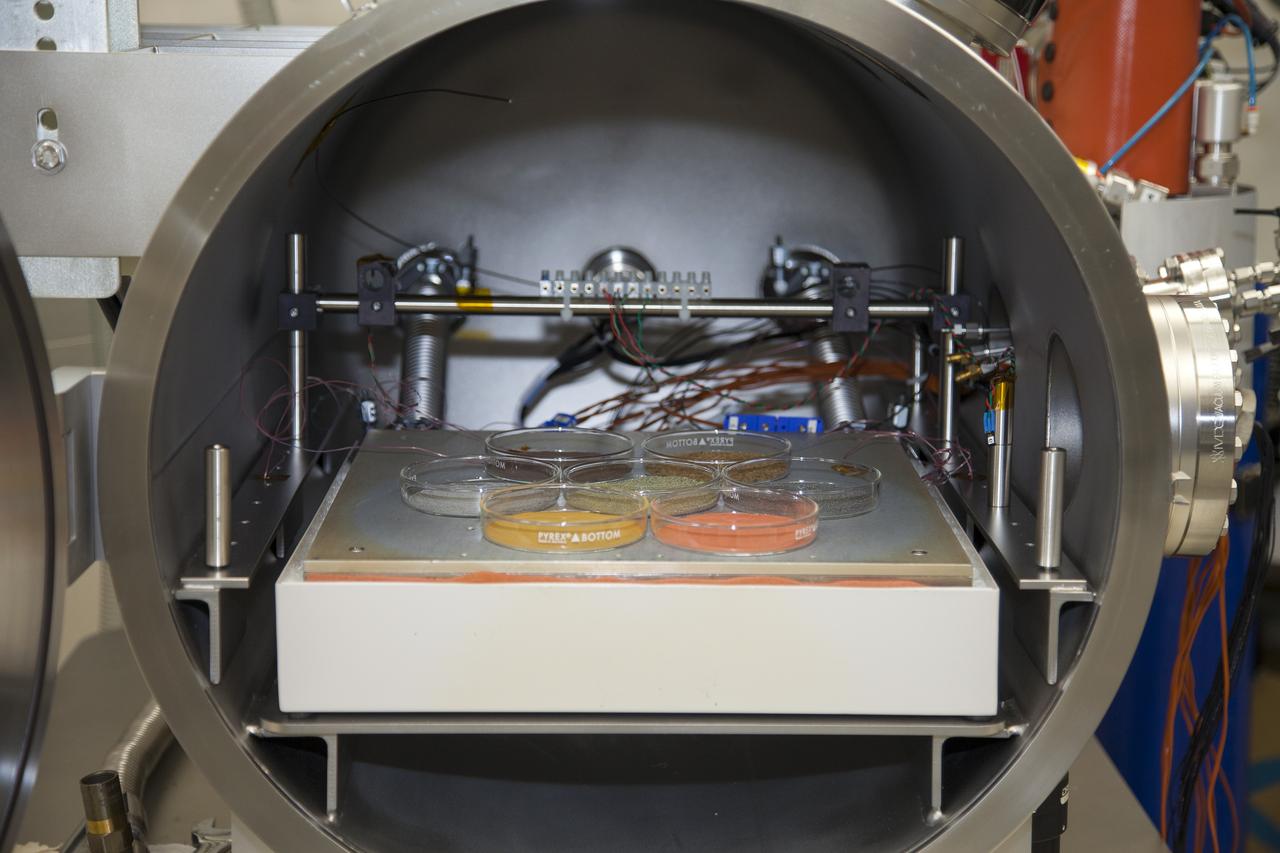
CAPE CANAVERAL, Fla. -- Inside the Space Life Sciences Laboratory near NASA’s Kennedy Space Center in Florida, the Mars Simulation Chamber is being prepared for the Microorganisms in the Stratosphere, or MIST, mission support. The chamber allows MIST scientists and engineers to simulate the stratosphere prior to high altitude flight experiments. The MIST mission will fly a small biological payload aboard a blimp in July to measure microbial survival and cellular responses to exposure in the upper atmosphere. Later in the year, the MIST mission will deploy samples at even higher altitudes in the stratosphere using scientific balloons. Photo credit: NASA/Daniel Casper
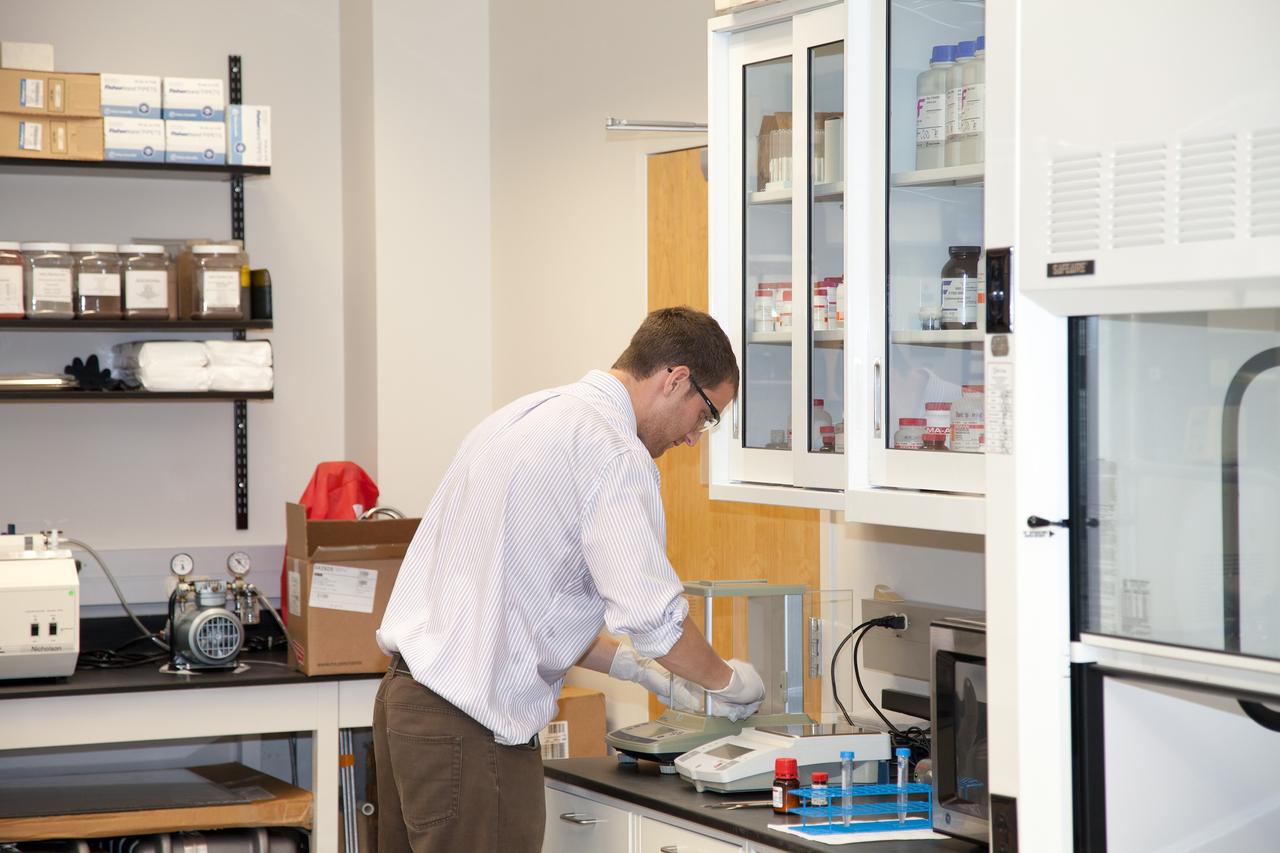
CAPE CANAVERAL, Fla. -- Inside the Space Life Sciences Laboratory near NASA’s Kennedy Space Center in Florida, Dr. David J. Smith, a microbiologist in the Surface Systems Office, prepares microbes that will be deployed for the Microorganisms in the Stratosphere, or MIST, mission. High altitudes exert a unique combination of stresses on microbes, outside the range of conditions normally encountered on the Earth's surface. Results from MIST may improve our understanding of the physical limits and habitable environments for life. The MIST mission will fly a small biological payload aboard a blimp in July to measure microbial survival and cellular responses to exposure in the upper atmoshere. Later in the year, the MIST mission will deploy samples at even higher altitudes in the stratosphere using scientific balloons. Photo credit: NASA/Daniel Casper

CAPE CANAVERAL, Fla. -- Inside the Space Life Sciences Laboratory near NASA’s Kennedy Space Center in Florida, the Mars Simulation Chamber is being prepared for the Microorganisms in the Stratosphere, or MIST, mission support. The chamber allows MIST scientists and engineers to simulate the stratosphere prior to high altitude flight experiments. The MIST mission will fly a small biological payload in low altitudes aboard a blimp in July to measure microbial survival and cellular responses to exposure in the upper atmosphere. Later in the year, the MIST mission will deploy samples at even high altitudes in the stratosphere using scientific balloons. Photo credit: NASA/Daniel Casper
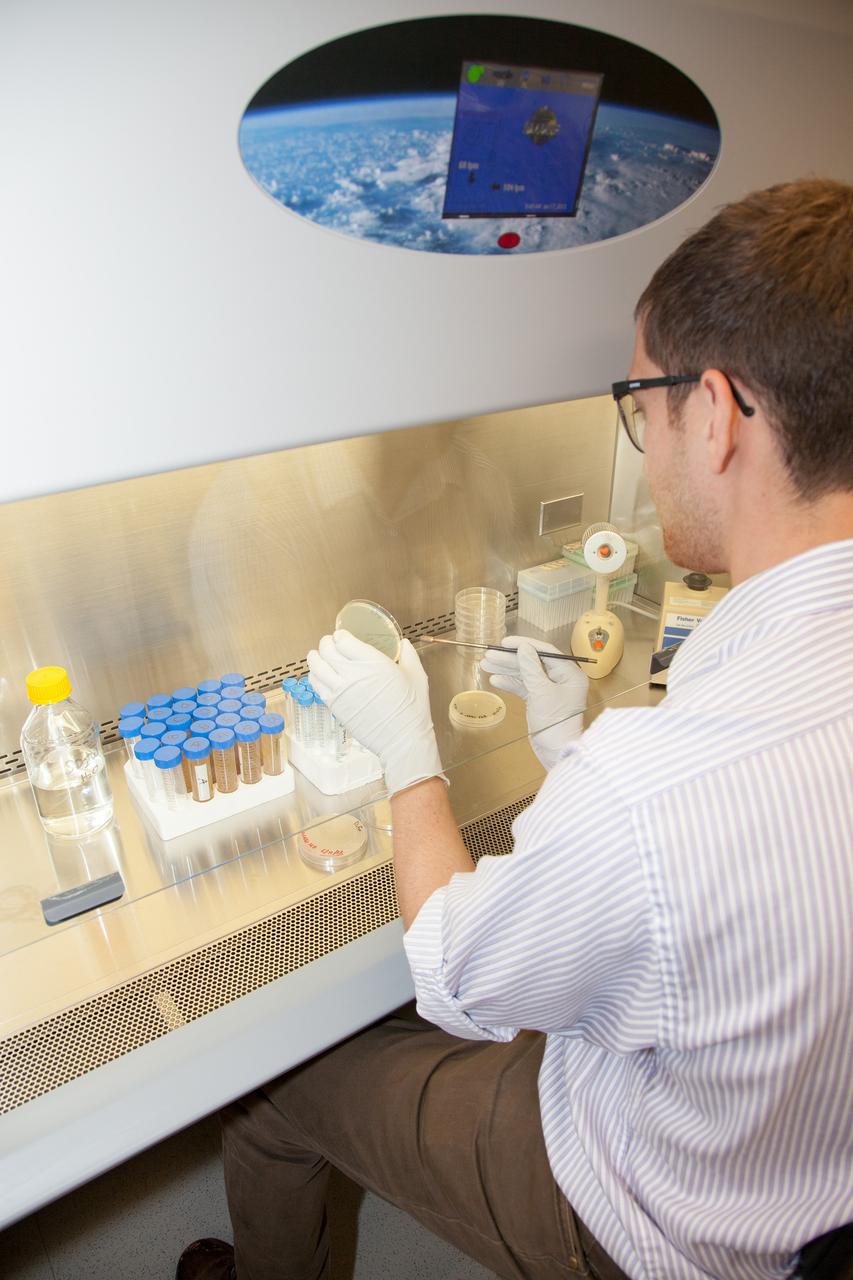
CAPE CANAVERAL, Fla. -- Inside the Space Life Sciences Laboratory near NASA’s Kennedy Space Center in Florida, Dr. David J. Smith, a microbiologist in the Surface Systems Office, prepares microbes that will be deployed for the Microorganisms in the Stratosphere, or MIST, mission. High altitudes exert a unique combination of stresses on microbes, outside the range of conditions normally encountered on the Earth's surface. Results from MIST may improve our understanding of physical limits and habitable environments for life. The MIST mission will fly a small biological payload aboard a blimp in July to measure microbial survival and cellular responses to exposure in the upper atmosphere. Later in the year, the MIST mission will deploy samples at even higher altitudes in the stratosphere using scientific balloons. Photo credit: NASA/Daniel Casper