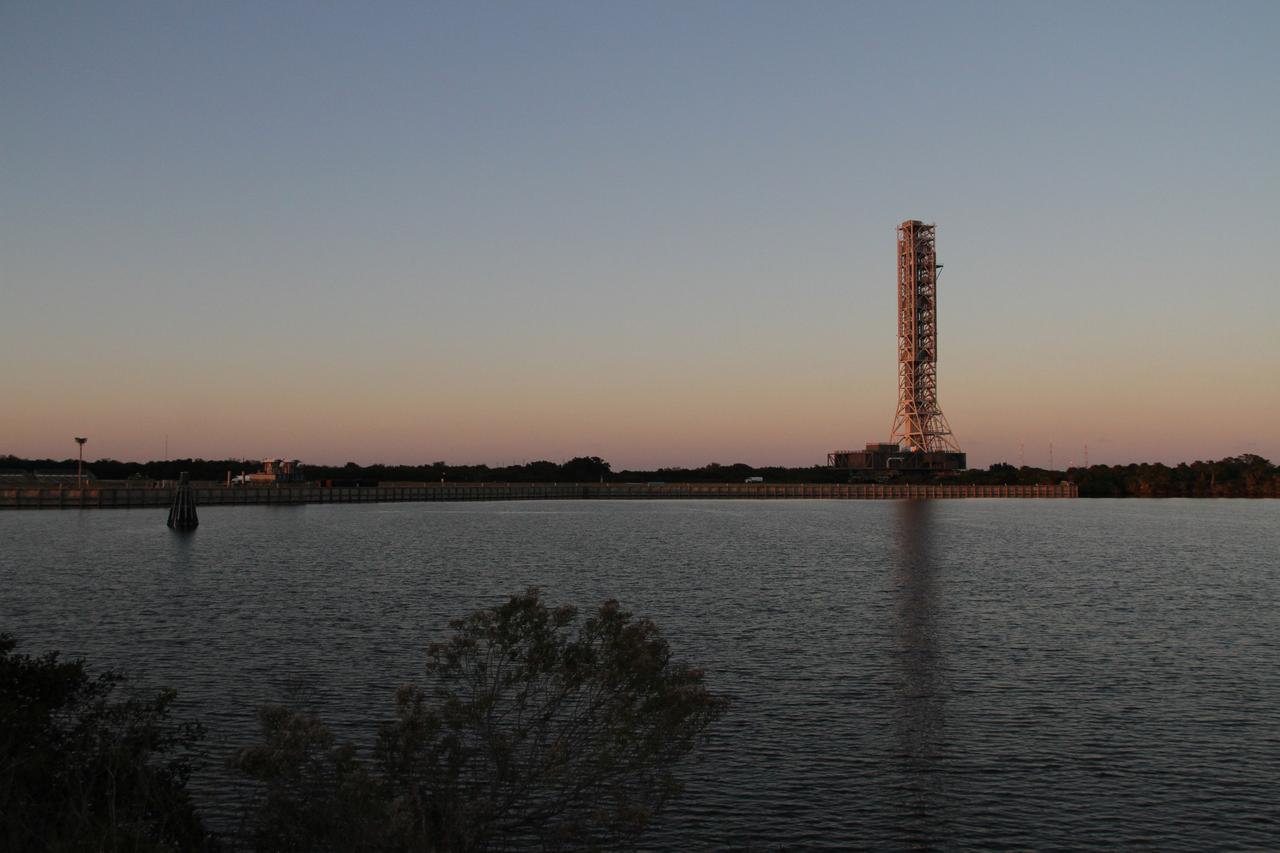
CAPE CANAVERAL, Fla. – The mobile launcher, or ML, makes its way past the turn basin as dusk descends on NASA's Kennedy Space Center in Florida. The ML is nearing the end of its 4.2-mile trek from Launch Pad 39B to the park site near the Vehicle Assembly Building. Data on the ML collected from structural and functional engineering tests during its two-week stay on the pad will be used in the next phases of construction. The 355-foot-tall ML structure, which took about two years to construct, will be modified by NASA’s 21st Century Ground Systems Program to support NASA’s Space Launch System, the heavy-lift rocket that will launch astronauts into deep space on future exploration missions. For more information, visit http://www.nasa.gov/exploration/systems/sls. Photo credit: NASA/Cory Huston
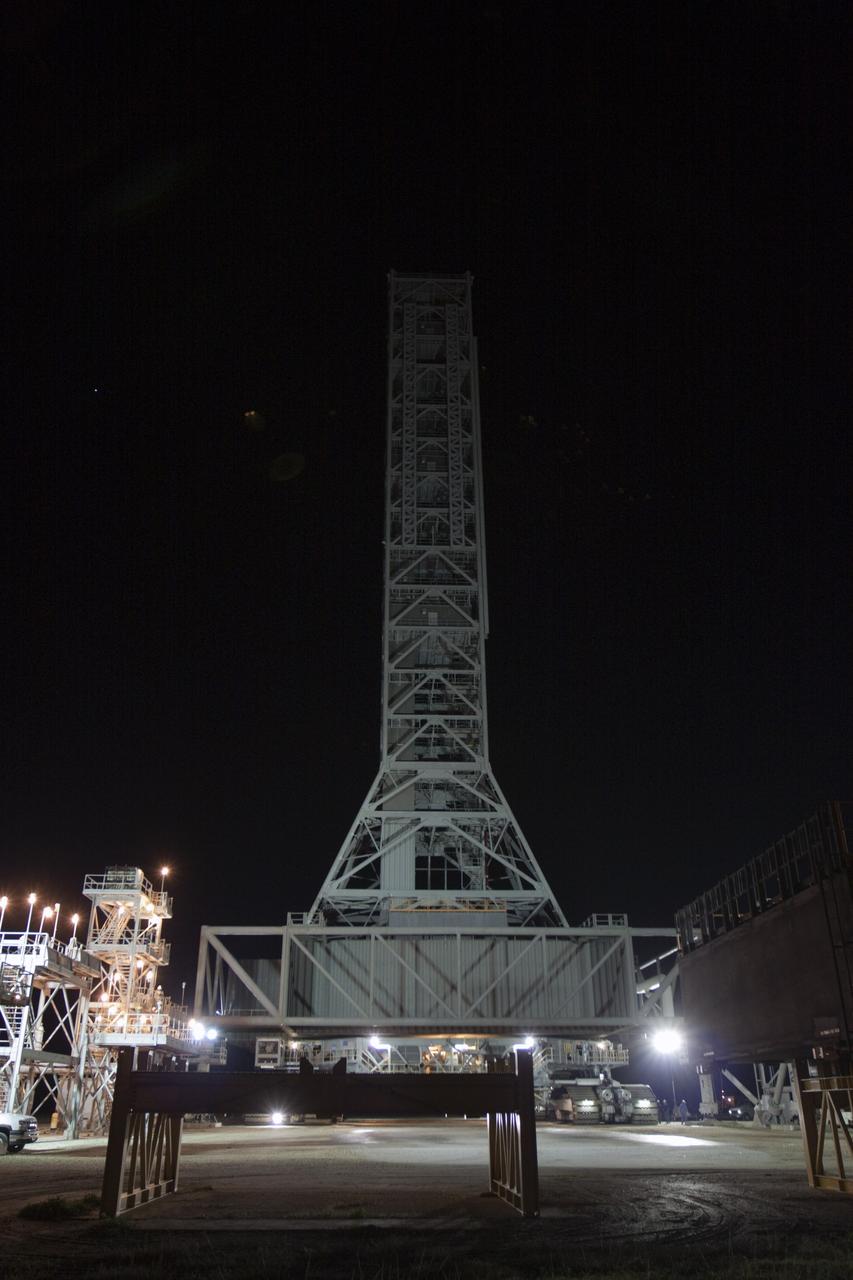
CAPE CANAVERAL, Fla. – The mobile launcher, or ML, arrives at the park site outside the Vehicle Assembly Building at NASA's Kennedy Space Center in Florida. The ML completed its 4.2-mile, day-long trek from Launch Pad 39B in darkness. Data on the ML collected from structural and functional engineering tests during its two-week stay on the pad will be used in the next phases of construction. The 355-foot-tall ML structure, which took about two years to construct, will be modified by NASA’s 21st Century Ground Systems Program to support NASA’s Space Launch System, the heavy-lift rocket that will launch astronauts into deep space on future exploration missions. For more information, visit http://www.nasa.gov/exploration/systems/sls. Photo credit: NASA/Kim Shiflett
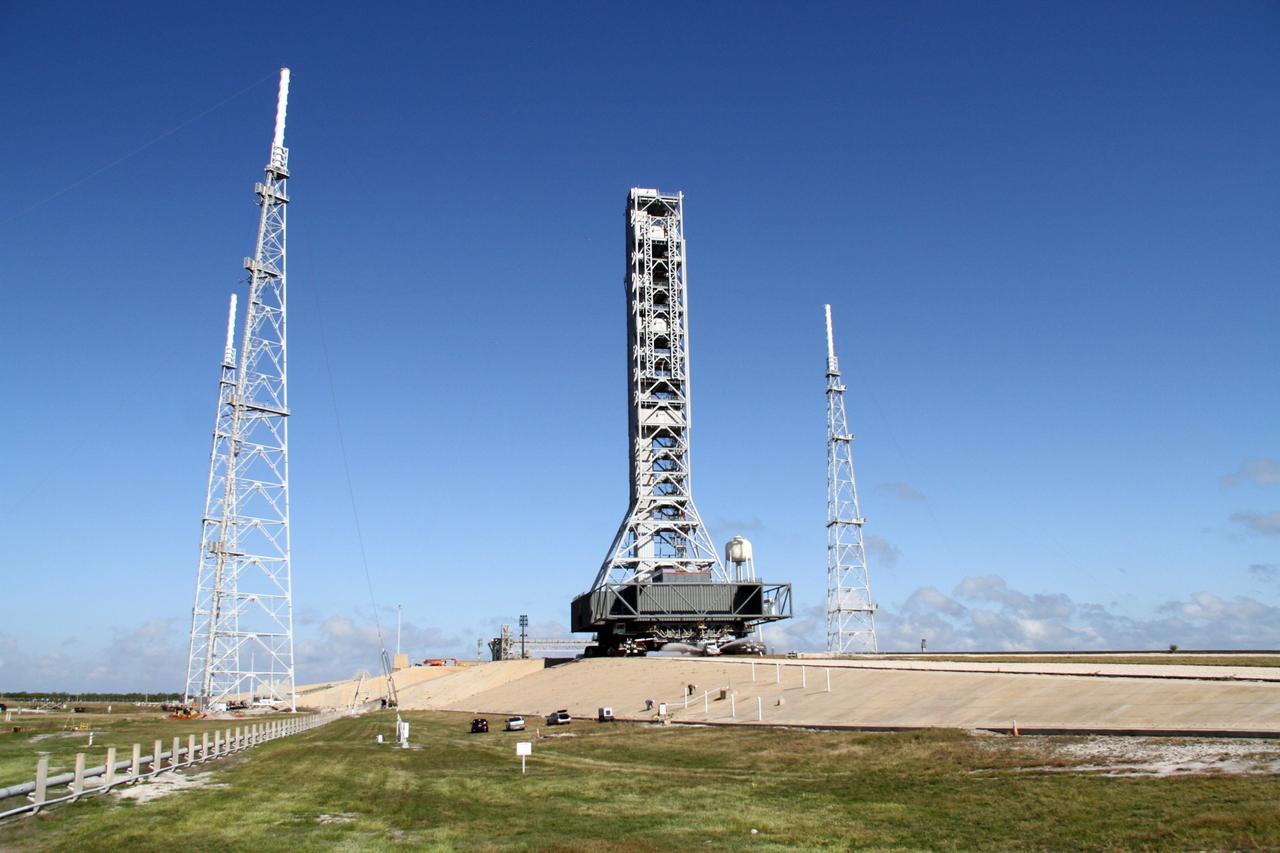
CAPE CANAVERAL, Fla. – The mobile launcher, or ML, rolls down the five percent grade to the base of Launch Pad 39B at NASA's Kennedy Space Center in Florida. The ML is making the 4.2-mile trek back to the park site near the Vehicle Assembly Building. Data on the ML collected from structural and functional engineering tests during its two-week stay on the pad will be used in the next phases of construction. The 355-foot-tall ML structure, which took about two years to construct, will be modified by NASA’s 21st Century Ground Systems Program to support NASA’s Space Launch System, the heavy-lift rocket that will launch astronauts into deep space on future exploration missions. For more information, visit http://www.nasa.gov/exploration/systems/sls. Photo credit: NASA/Cory Huston
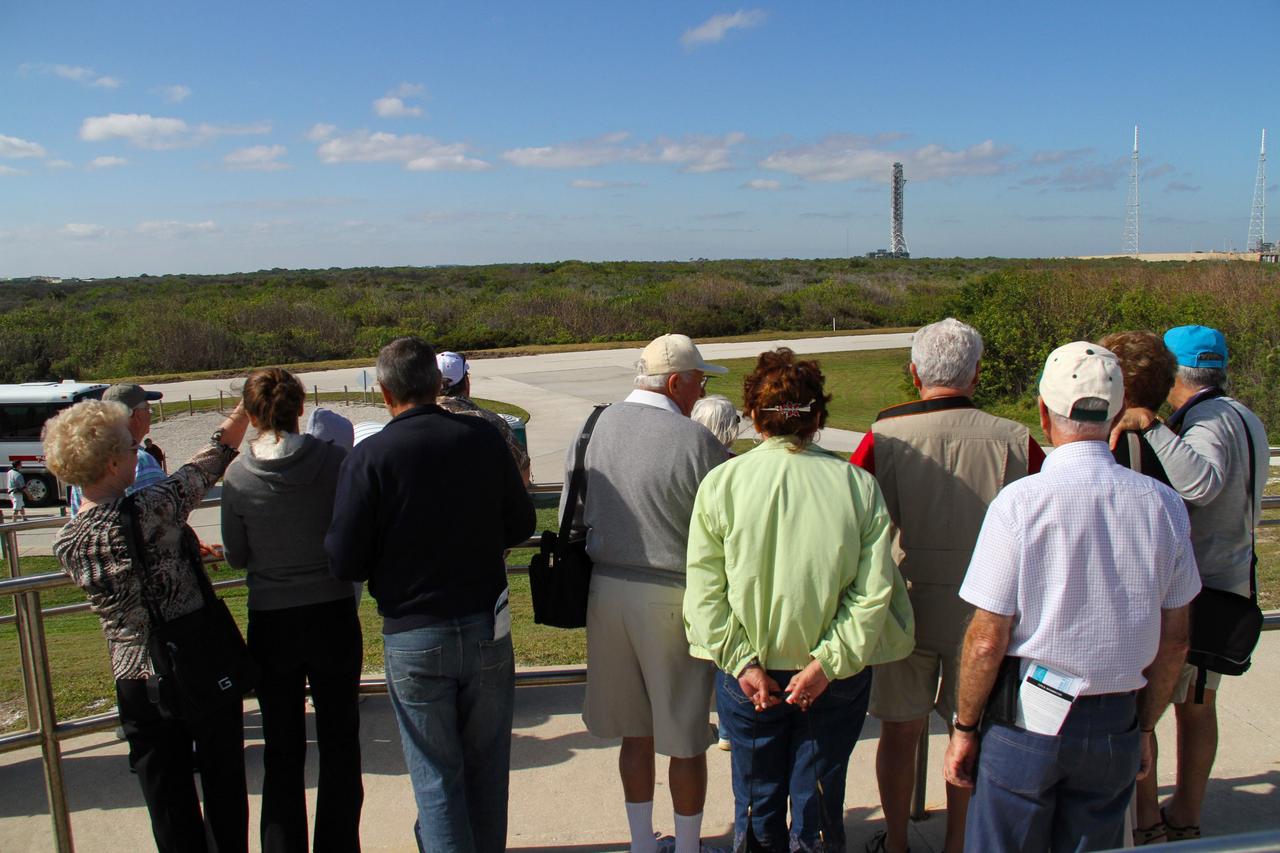
CAPE CANAVERAL, Fla. – Visitors on the Launch Complex 39 Observation Gantry at NASA's Kennedy Space Center in Florida experience a rare site -- the mobile launcher, or ML, rolling along the crawlerway from Launch Pad 39B to the park site near the Vehicle Assembly Building. Data on the ML collected from structural and functional engineering tests during its two-week stay on the pad will be used in the next phases of construction. The 355-foot-tall ML structure, which took about two years to construct, will be modified by NASA’s 21st Century Ground Systems Program to support NASA’s Space Launch System, the heavy-lift rocket that will launch astronauts into deep space on future exploration missions. For more information, visit http://www.nasa.gov/exploration/systems/sls. Photo credit: NASA/Cory Huston
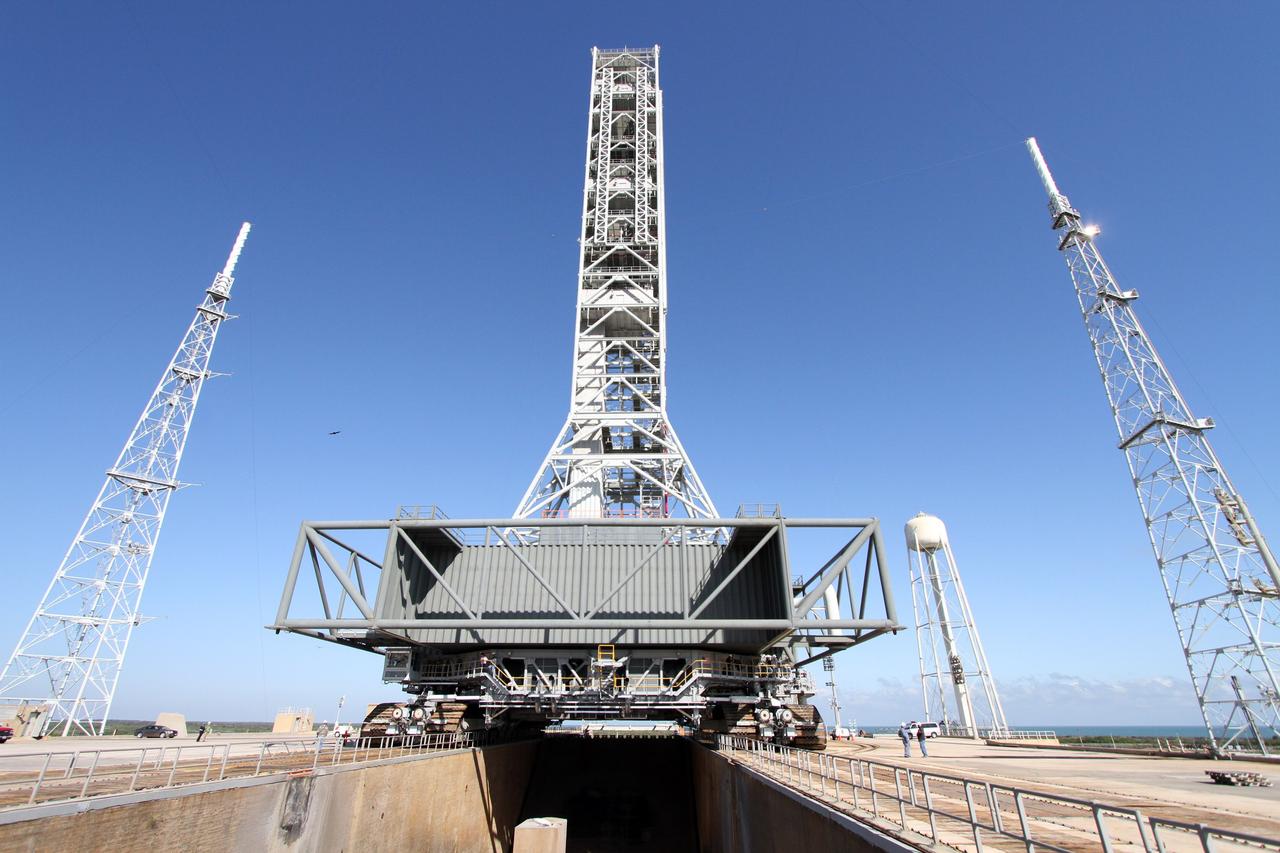
CAPE CANAVERAL, Fla. – A crawler-transporter straddles the flame trench on Launch Pad 39B at NASA's Kennedy Space Center in Florida. The crawler is returning the mobile launcher, or ML, back to the park site near the Vehicle Assembly Building. Data on the ML collected from structural and functional engineering tests during its two-week stay on the pad will be used in the next phases of construction. The 355-foot-tall ML structure, which took about two years to construct, will be modified by NASA’s 21st Century Ground Systems Program to support NASA’s Space Launch System, the heavy-lift rocket that will launch astronauts into deep space on future exploration missions. For more information, visit http://www.nasa.gov/exploration/systems/sls. Photo credit: NASA/Cory Huston
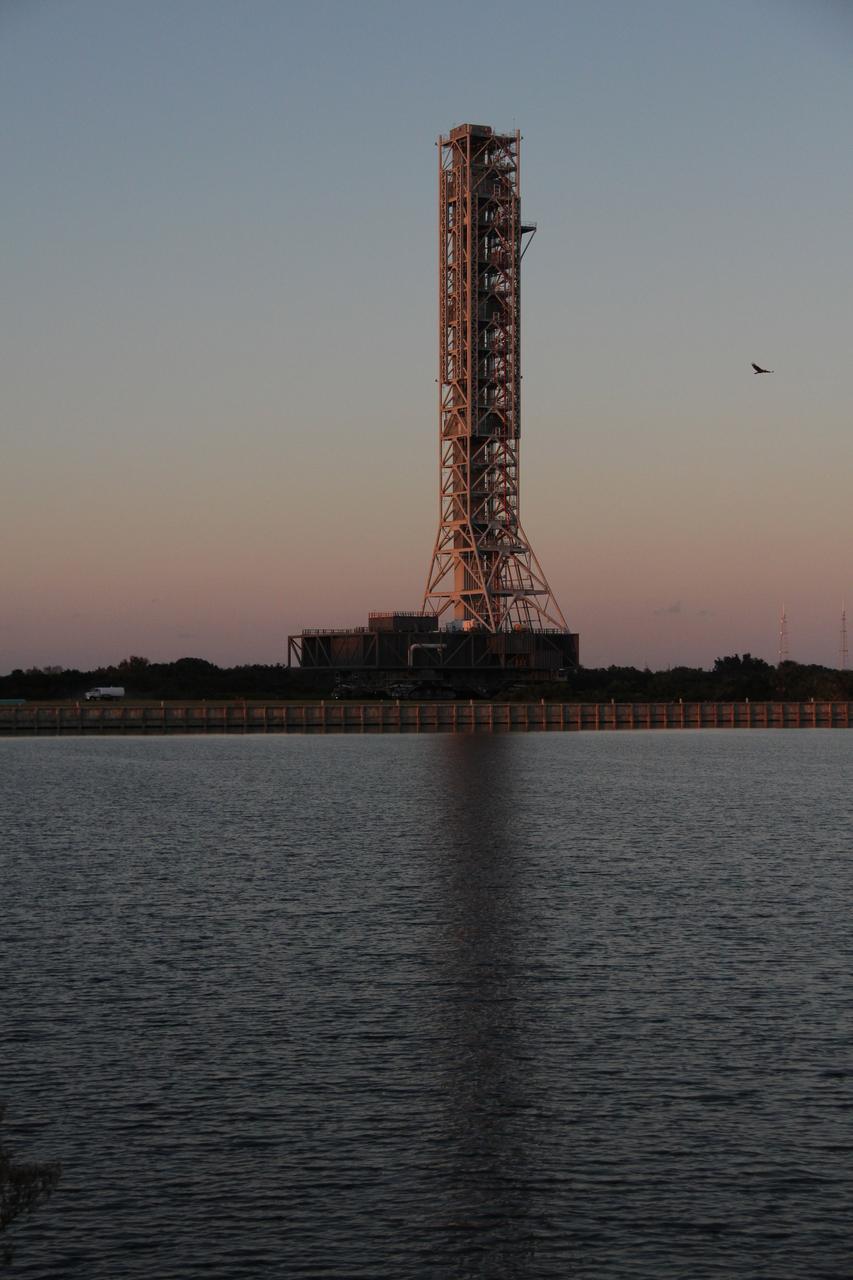
CAPE CANAVERAL, Fla. – The sun sets behind the mobile launcher, or ML, as it makes its way past the turn basin at NASA's Kennedy Space Center in Florida. The ML is nearing the end of its 4.2-mile trek from Launch Pad 39B to the park site near the Vehicle Assembly Building. Data on the ML collected from structural and functional engineering tests during its two-week stay on the pad will be used in the next phases of construction. The 355-foot-tall ML structure, which took about two years to construct, will be modified by NASA’s 21st Century Ground Systems Program to support NASA’s Space Launch System, the heavy-lift rocket that will launch astronauts into deep space on future exploration missions. For more information, visit http://www.nasa.gov/exploration/systems/sls. Photo credit: NASA/Cory Huston
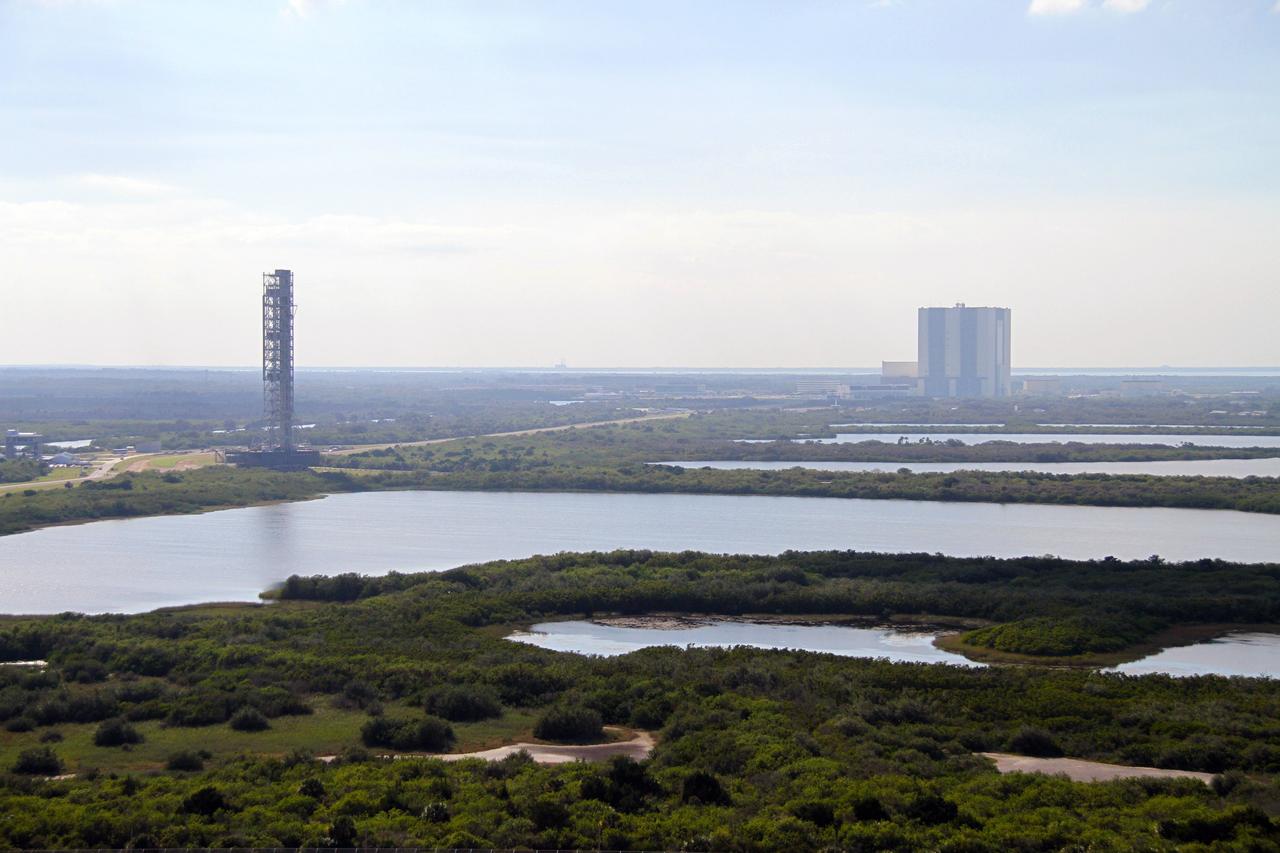
CAPE CANAVERAL, Fla. – The mobile launcher, or ML, negotiates the 4.2-mile stretch of crawlerway between Launch Pad 39B and the Vehicle Assembly Building at NASA's Kennedy Space Center in Florida. Data on the ML collected from structural and functional engineering tests during its two-week stay on the pad will be used in the next phases of construction. The 355-foot-tall ML structure, which took about two years to construct, will be modified by NASA’s 21st Century Ground Systems Program to support NASA’s Space Launch System, the heavy-lift rocket that will launch astronauts into deep space on future exploration missions. For more information, visit http://www.nasa.gov/exploration/systems/sls. Photo credit: NASA/Cory Huston
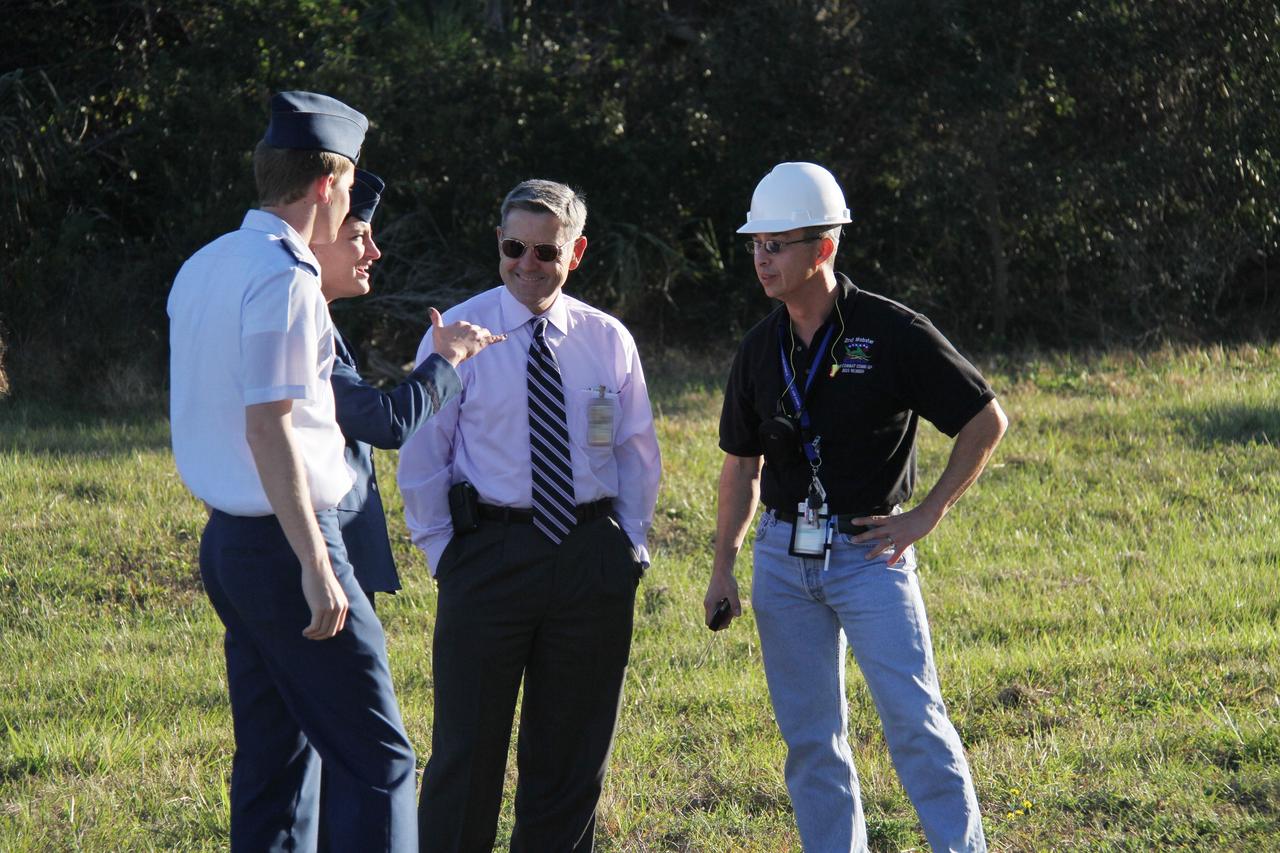
CAPE CANAVERAL, Fla. – Kennedy Space Center Director Robert Cabana (second from right) is on hand for the move of the mobile launcher, or ML, from Launch Pad 39B to the park site near the Vehicle Assembly Building at NASA's Kennedy Space Center in Florida. Data on the ML collected from structural and functional engineering tests during its two-week stay on the pad will be used in the next phases of construction. The 355-foot-tall ML structure, which took about two years to construct, will be modified by NASA’s 21st Century Ground Systems Program to support NASA’s Space Launch System, the heavy-lift rocket that will launch astronauts into deep space on future exploration missions. For more information, visit http://www.nasa.gov/exploration/systems/sls. Photo credit: NASA/Cory Huston
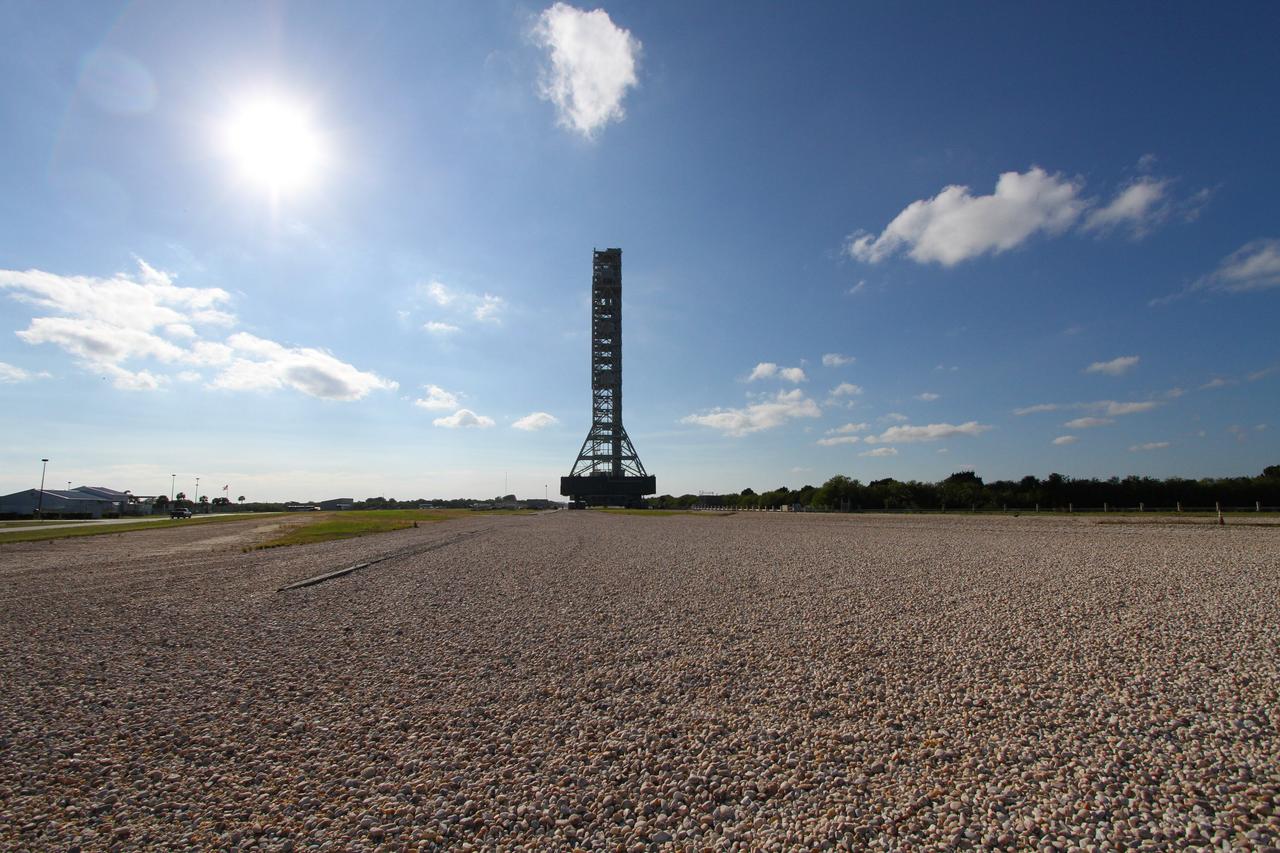
CAPE CANAVERAL, Fla. – The mobile launcher, or ML, towers above the crawlerway between Launch Pad 39B and the Vehicle Assembly Building at NASA's Kennedy Space Center in Florida. Data on the ML collected from structural and functional engineering tests during its two-week stay on the pad will be used in the next phases of construction. The 355-foot-tall ML structure, which took about two years to construct, will be modified by NASA’s 21st Century Ground Systems Program to support NASA’s Space Launch System, the heavy-lift rocket that will launch astronauts into deep space on future exploration missions. For more information, visit http://www.nasa.gov/exploration/systems/sls. Photo credit: NASA/Cory Huston
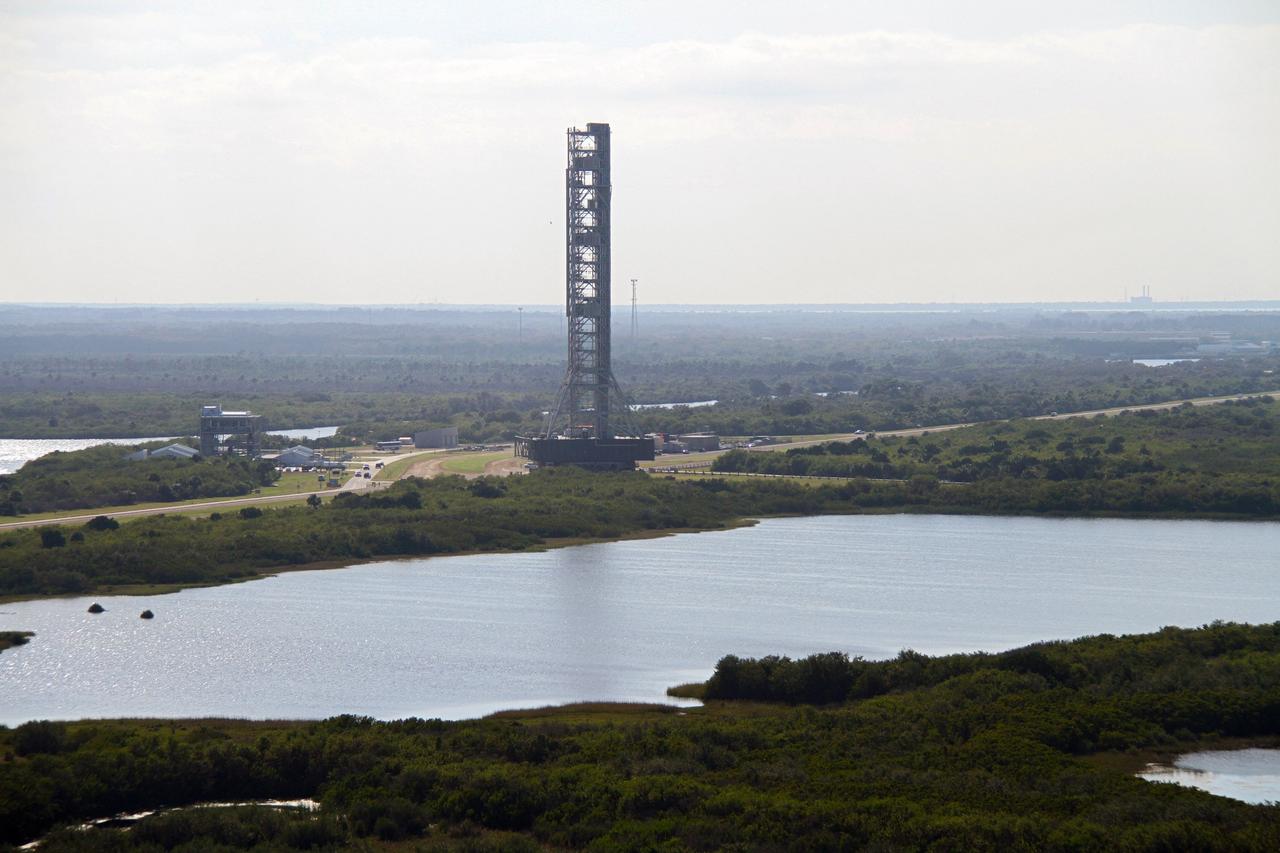
CAPE CANAVERAL, Fla. – The mobile launcher, or ML, passes by the Launch Complex 39 Observation Gantry at NASA's Kennedy Space Center in Florida as it makes the 4.2-mile trek from Launch Pad 39B to the park site near the Vehicle Assembly Building. Data on the ML collected from structural and functional engineering tests during its two-week stay on the pad will be used in the next phases of construction. The 355-foot-tall ML structure, which took about two years to construct, will be modified by NASA’s 21st Century Ground Systems Program to support NASA’s Space Launch System, the heavy-lift rocket that will launch astronauts into deep space on future exploration missions. For more information, visit http://www.nasa.gov/exploration/systems/sls. Photo credit: NASA/Cory Huston
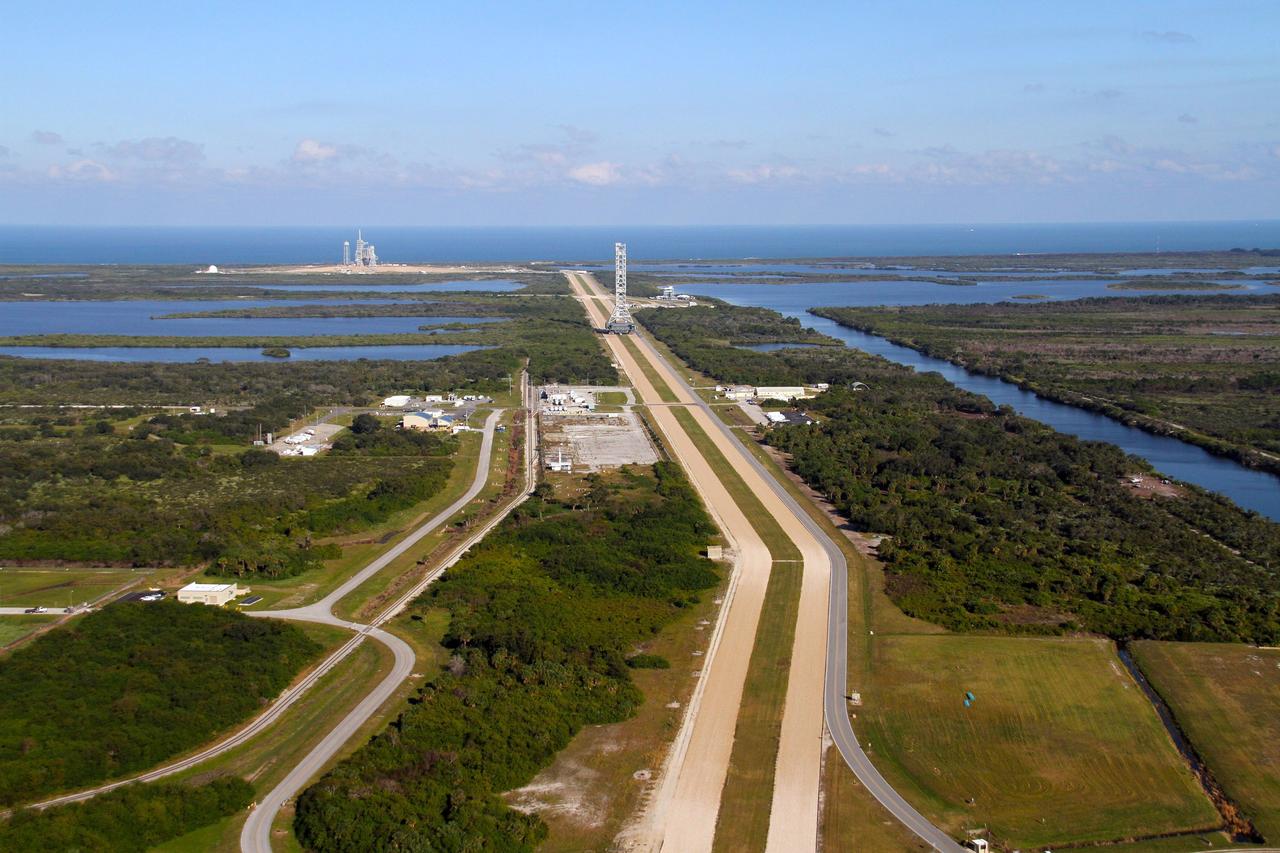
CAPE CANAVERAL, Fla. – The mobile launcher, or ML, makes steady progress on its 4.2-mile trek from Launch Pad 39B to the park site near the Vehicle Assembly Building at NASA's Kennedy Space Center in Florida. The Atlantic Ocean spans the view, in the background, behind Launch Pad 39A. Data on the ML collected from structural and functional engineering tests during its two-week stay on the pad will be used in the next phases of construction. The 355-foot-tall ML structure, which took about two years to construct, will be modified by NASA’s 21st Century Ground Systems Program to support NASA’s Space Launch System, the heavy-lift rocket that will launch astronauts into deep space on future exploration missions. For more information, visit http://www.nasa.gov/exploration/systems/sls. Photo credit: NASA/Cory Huston

CAPE CANAVERAL, Fla. – The mobile launcher, or ML, appears to glide over the vegetation at NASA's Kennedy Space Center in Florida as it makes its way from Launch Pad 39B back to the park site near the Vehicle Assembly Building. Data on the ML collected from structural and functional engineering tests during its two-week stay on the pad will be used in the next phases of construction. The 355-foot-tall ML structure, which took about two years to construct, will be modified by NASA’s 21st Century Ground Systems Program to support NASA’s Space Launch System, the heavy-lift rocket that will launch astronauts into deep space on future exploration missions. For more information, visit http://www.nasa.gov/exploration/systems/sls. Photo credit: NASA/Cory Huston
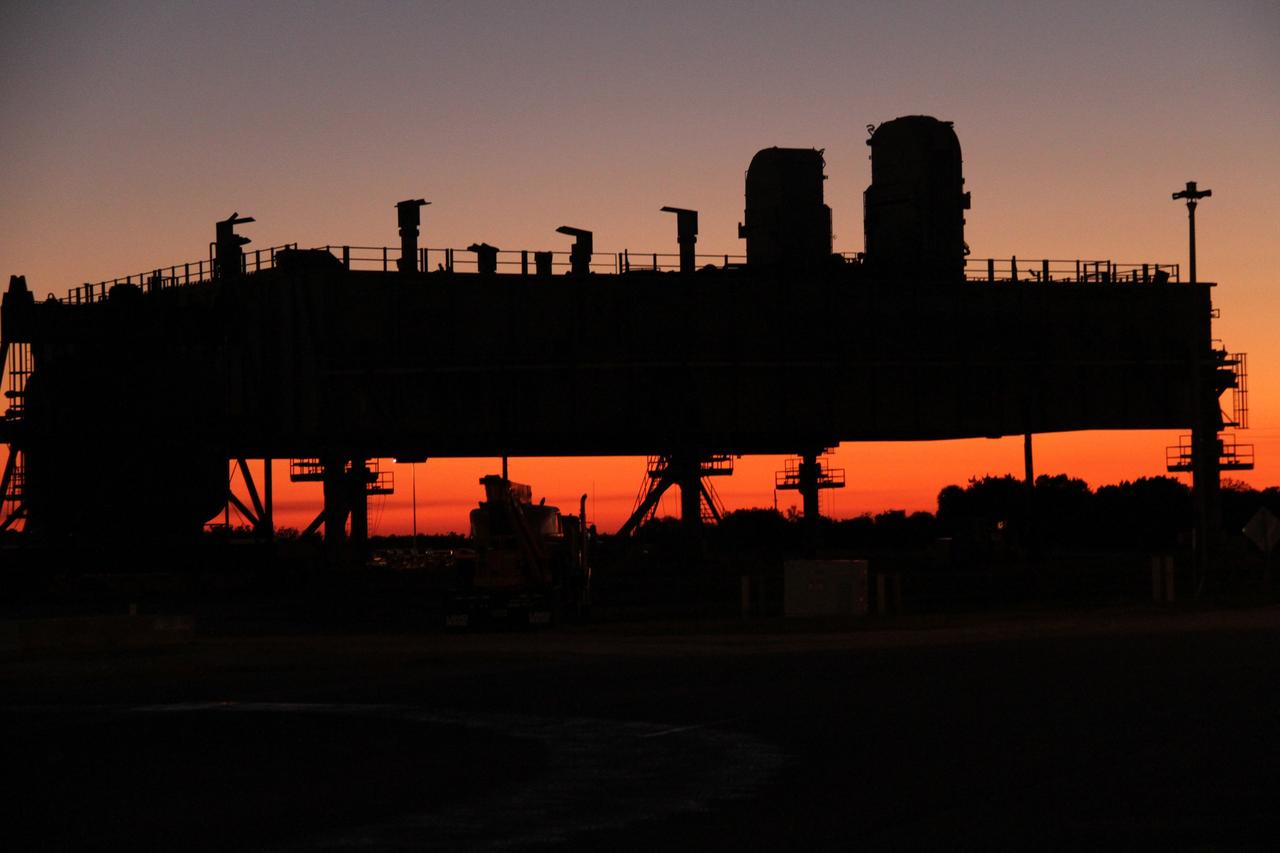
CAPE CANAVERAL, Fla. – A mobile launcher platform at the park site outside the Vehicle Assembly Building (VAB) at NASA's Kennedy Space Center in Florida awaits the arrival of the mobile launcher, or ML, as night falls. The ML is nearing the end of its 4.2-mile trek from Launch Pad 39B to the park site. Data on the ML collected from structural and functional engineering tests during its two-week stay on the pad will be used in the next phases of construction. The 355-foot-tall ML structure, which took about two years to construct, will be modified by NASA’s 21st Century Ground Systems Program to support NASA’s Space Launch System, the heavy-lift rocket that will launch astronauts into deep space on future exploration missions. For more information, visit http://www.nasa.gov/exploration/systems/sls. Photo credit: NASA/Cory Huston
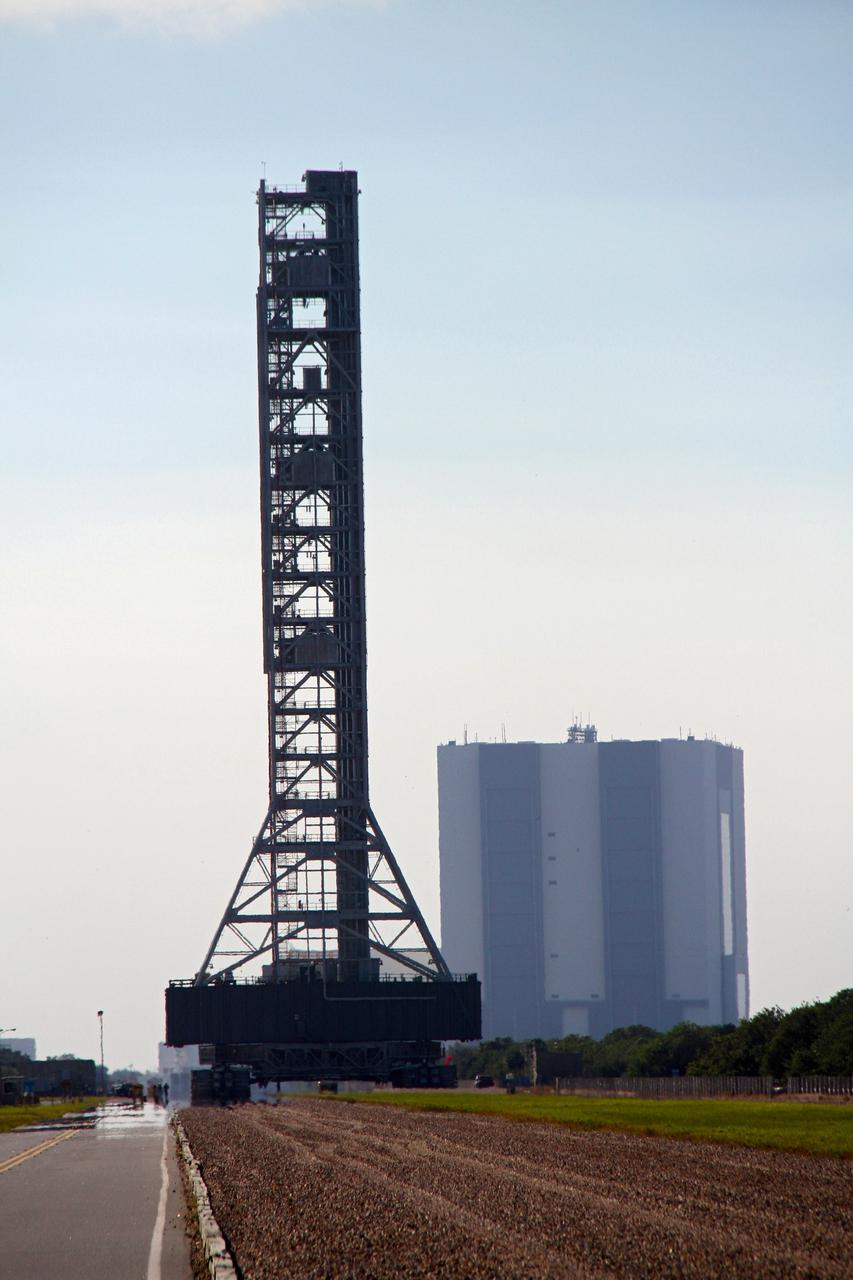
CAPE CANAVERAL, Fla. – The mobile launcher, or ML, nears the Vehicle Assembly Building at NASA's Kennedy Space Center in Florida. The ML's 4.2-mile trek started at Launch Pad 39B. Data on the ML collected from structural and functional engineering tests during its two-week stay on the pad will be used in the next phases of construction. The 355-foot-tall ML structure, which took about two years to construct, will be modified by NASA’s 21st Century Ground Systems Program to support NASA’s Space Launch System, the heavy-lift rocket that will launch astronauts into deep space on future exploration missions. For more information, visit http://www.nasa.gov/exploration/systems/sls. Photo credit: NASA/Cory Huston
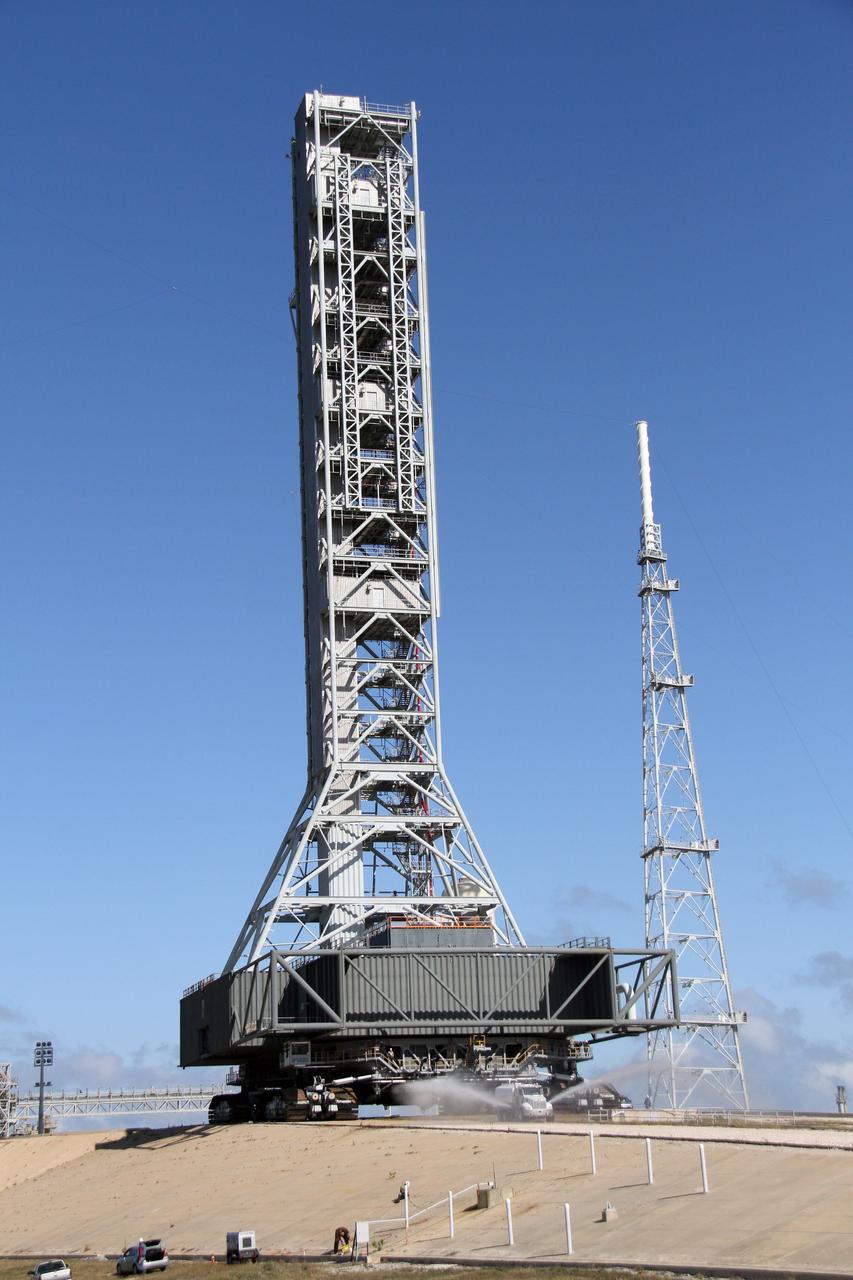
CAPE CANAVERAL, Fla. – The crawlerway at Launch Pad 39B at NASA's Kennedy Space Center in Florida is sprayed with water to reduce the dust that will fly as the crawler-transporter rolls along. The crawler is returning the mobile launcher, or ML, back to the park site near the Vehicle Assembly Building. Data on the ML collected from structural and functional engineering tests during its two-week stay on the pad will be used in the next phases of construction. The 355-foot-tall ML structure, which took about two years to construct, will be modified by NASA’s 21st Century Ground Systems Program to support NASA’s Space Launch System, the heavy-lift rocket that will launch astronauts into deep space on future exploration missions. For more information, visit http://www.nasa.gov/exploration/systems/sls. Photo credit: NASA/Cory Huston
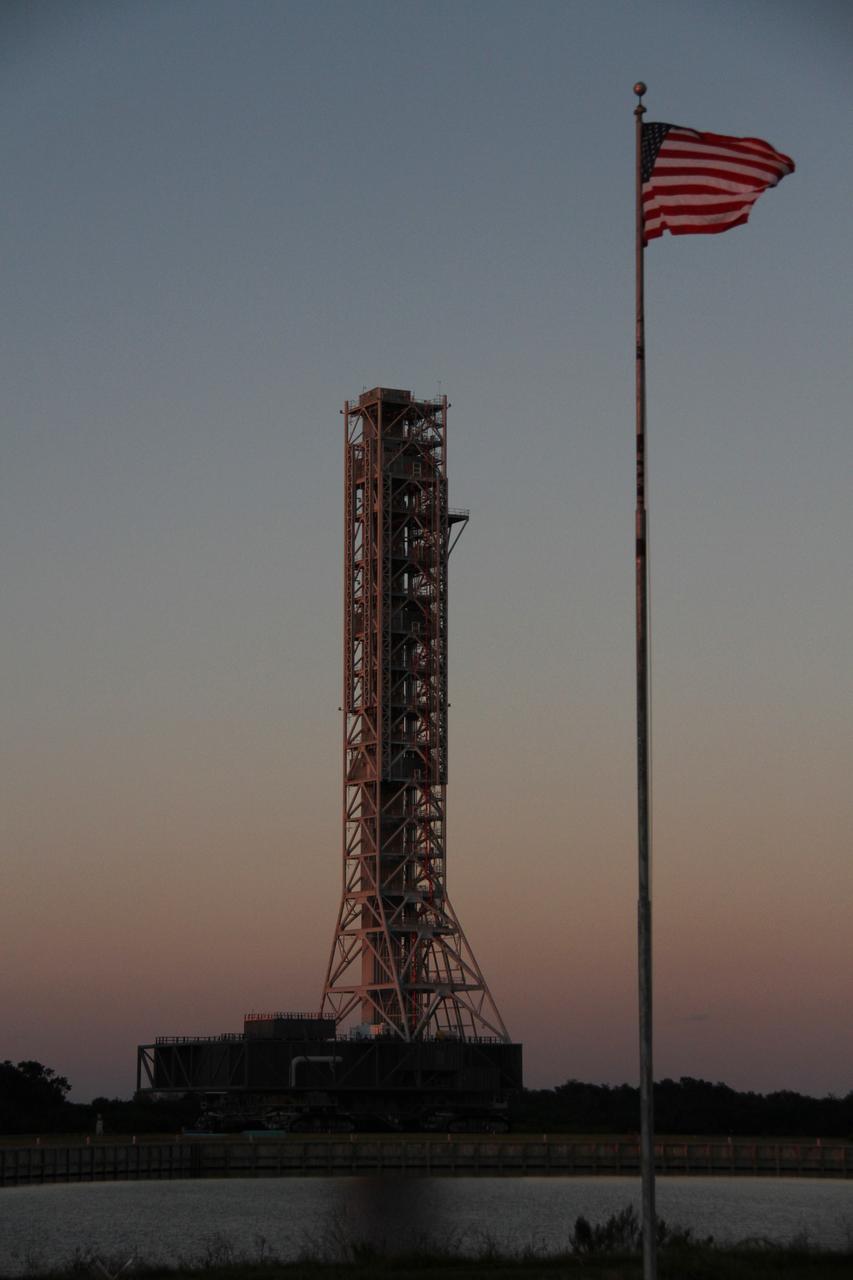
CAPE CANAVERAL, Fla. – The flag at NASA's Press Site is on guard as the mobile launcher, or ML, passes by the turn basin at NASA's Kennedy Space Center in Florida. The ML is nearing the end of its 4.2-mile trek from Launch Pad 39B to the park site near the Vehicle Assembly Building as the sun sets. Data on the ML collected from structural and functional engineering tests during its two-week stay on the pad will be used in the next phases of construction. The 355-foot-tall ML structure, which took about two years to construct, will be modified by NASA’s 21st Century Ground Systems Program to support NASA’s Space Launch System, the heavy-lift rocket that will launch astronauts into deep space on future exploration missions. For more information, visit http://www.nasa.gov/exploration/systems/sls. Photo credit: NASA/Cory Huston

CAPE CANAVERAL, Fla. – The mobile launcher, or ML, completes its 4.2-mile, day-long trek from Launch Pad 39B to the park site near the Vehicle Assembly Building at NASA's Kennedy Space Center in Florida in darkness. Data on the ML collected from structural and functional engineering tests during its two-week stay on the pad will be used in the next phases of construction. The 355-foot-tall ML structure, which took about two years to construct, will be modified by NASA’s 21st Century Ground Systems Program to support NASA’s Space Launch System, the heavy-lift rocket that will launch astronauts into deep space on future exploration missions. For more information, visit http://www.nasa.gov/exploration/systems/sls. Photo credit: NASA/Kim Shiflett
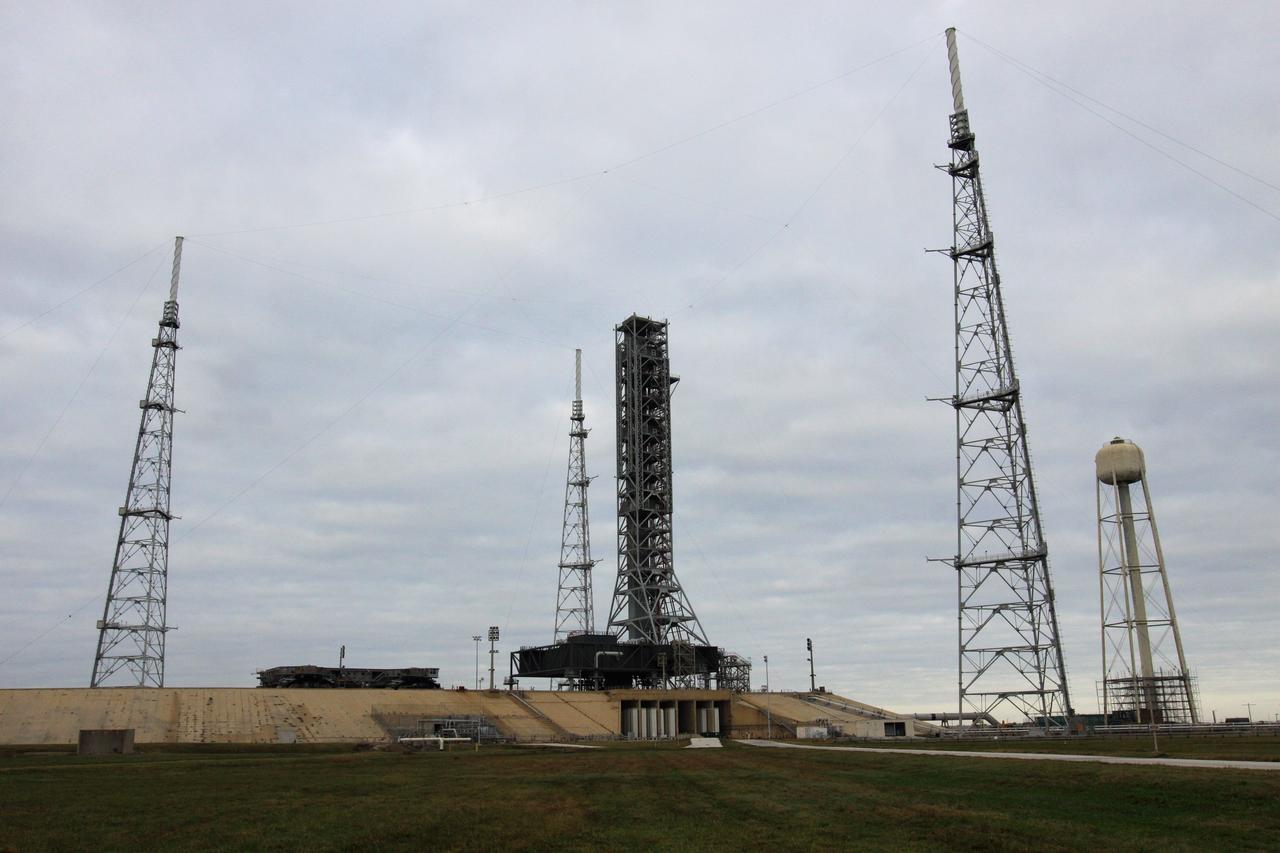
CAPE CANAVERAL, Fla. – At Launch Pad 39B at NASA's Kennedy Space Center in Florida, the crawler-transporter rolling toward the mobile launcher, or ML, will provide the ML a lift back to the park site near the Vehicle Assembly Building. Data on the ML collected from structural and functional engineering tests during its two-week stay on the pad will be used in the next phases of construction. The 355-foot-tall ML structure, which took about two years to construct, will be modified by NASA’s 21st Century Ground Systems Program to support NASA’s Space Launch System, the heavy-lift rocket that will launch astronauts into deep space on future exploration missions. For more information, visit http://www.nasa.gov/exploration/systems/sls. Photo credit: NASA/Kim Shiflett
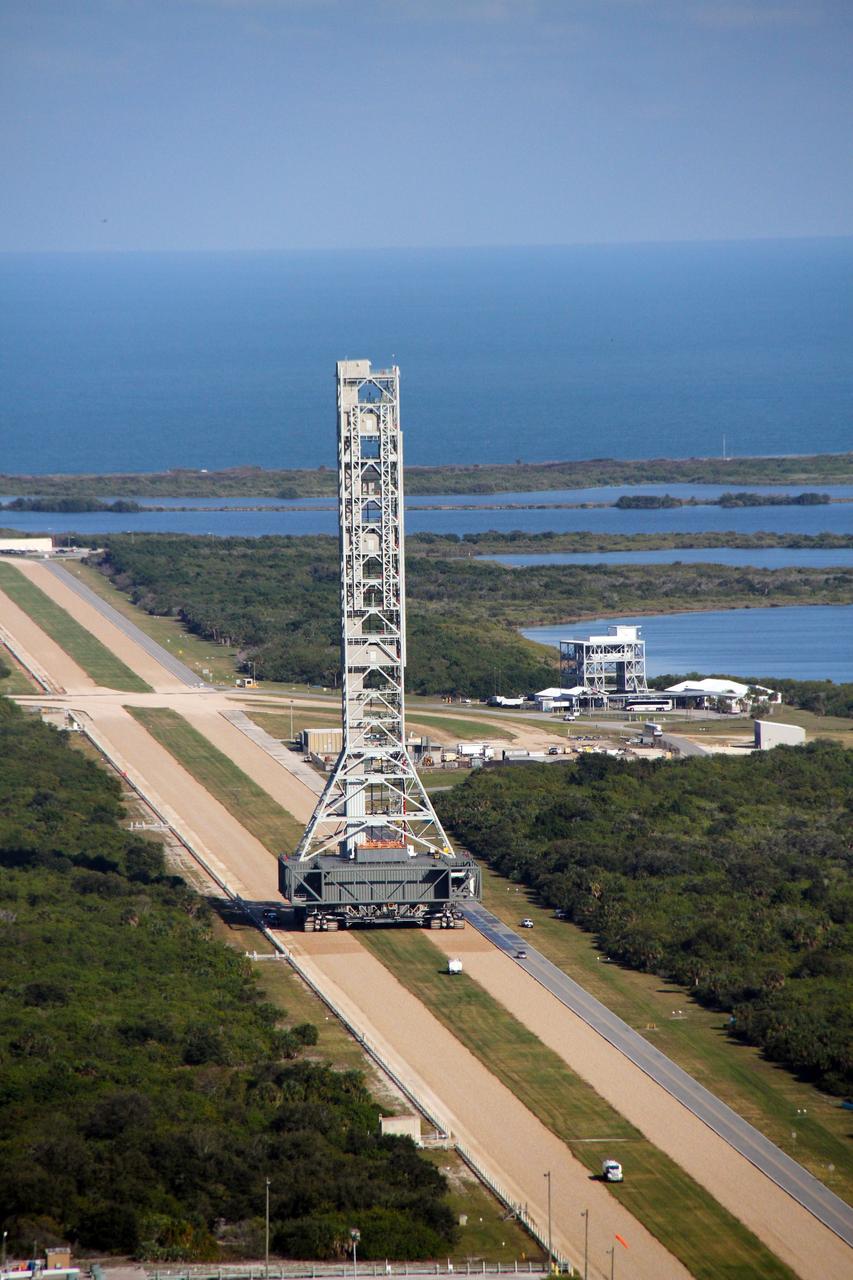
CAPE CANAVERAL, Fla. – The mobile launcher, or ML, passes by the Launch Complex 39 Observation Gantry at NASA's Kennedy Space Center in Florida as it makes the 4.2-mile trek from Launch Pad 39B to the park site near the Vehicle Assembly Building. In the background is the Atlantic Ocean. Data on the ML collected from structural and functional engineering tests during its two-week stay on the pad will be used in the next phases of construction. The 355-foot-tall ML structure, which took about two years to construct, will be modified by NASA’s 21st Century Ground Systems Program to support NASA’s Space Launch System, the heavy-lift rocket that will launch astronauts into deep space on future exploration missions. For more information, visit http://www.nasa.gov/exploration/systems/sls. Photo credit: NASA/Cory Huston
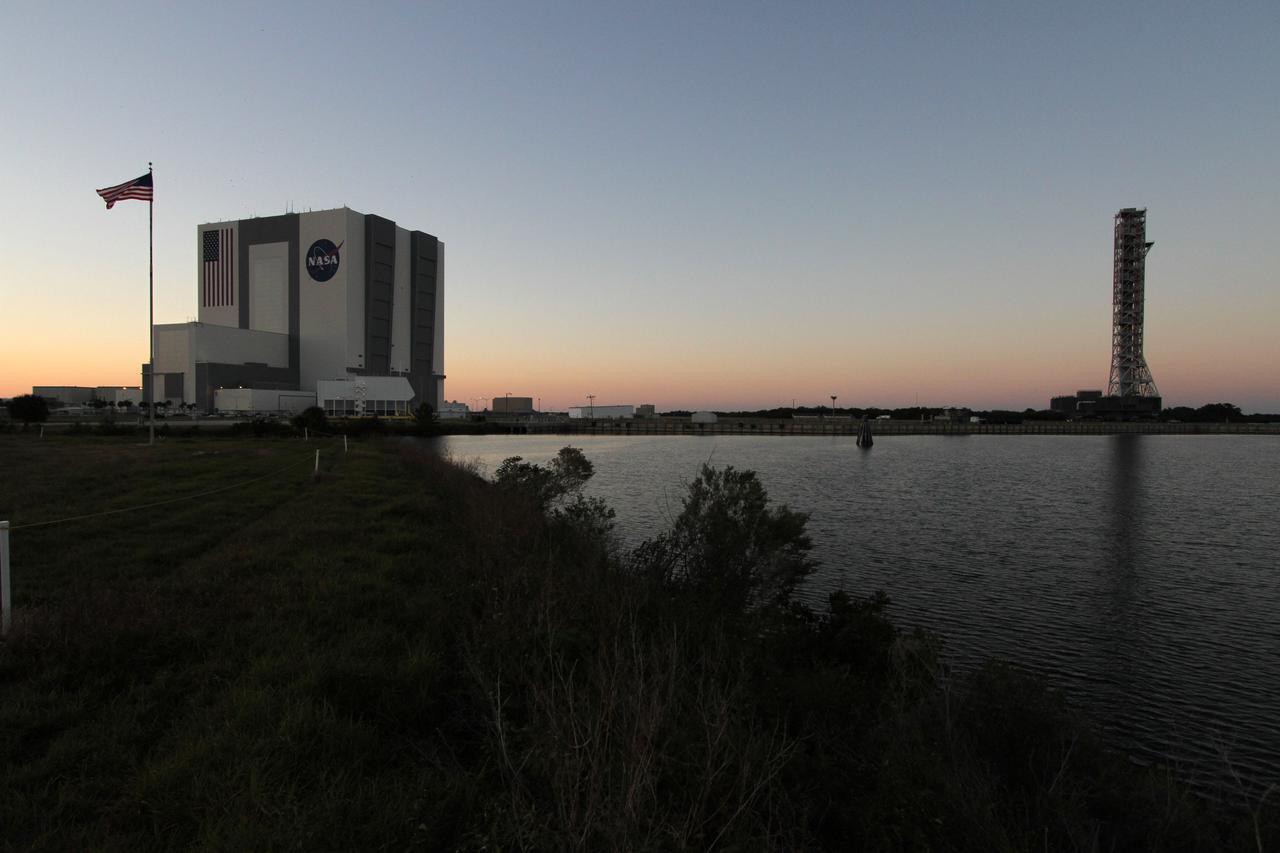
CAPE CANAVERAL, Fla. – The mobile launcher, or ML, makes its way past the turn basin as night descends on NASA's Kennedy Space Center in Florida. The ML is nearing the end of its 4.2-mile trek from Launch Pad 39B to the park site near the Vehicle Assembly Building. Data on the ML collected from structural and functional engineering tests during its two-week stay on the pad will be used in the next phases of construction. The 355-foot-tall ML structure, which took about two years to construct, will be modified by NASA’s 21st Century Ground Systems Program to support NASA’s Space Launch System, the heavy-lift rocket that will launch astronauts into deep space on future exploration missions. For more information, visit http://www.nasa.gov/exploration/systems/sls. Photo credit: NASA/Cory Huston
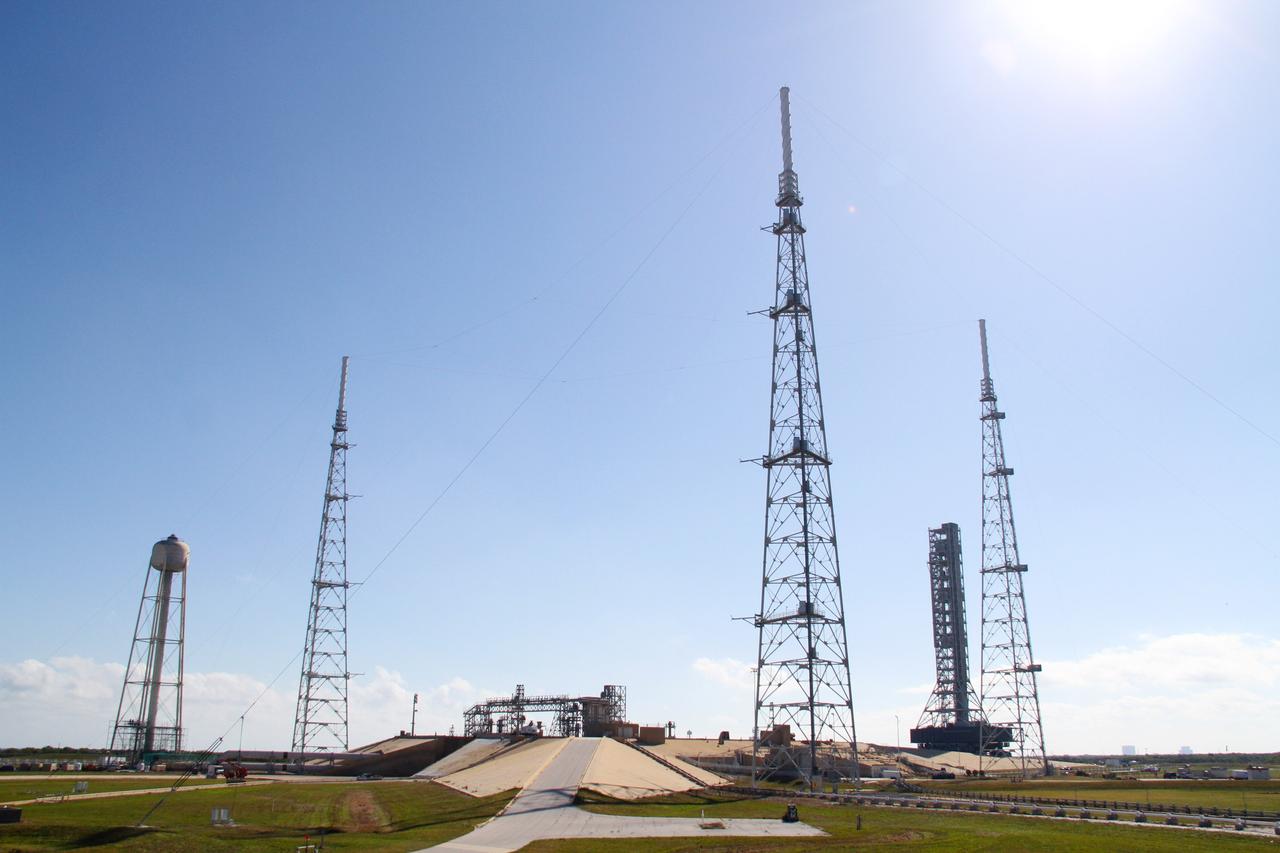
CAPE CANAVERAL, Fla. – The mobile launcher, or ML, nears the base of Launch Pad 39B at NASA's Kennedy Space Center in Florida, away from the protection of the pad's three 600-foot-tall lightning masts. The ML is making the 4.2-mile trek back to the park site near the Vehicle Assembly Building. Data on the ML collected from structural and functional engineering tests during its two-week stay on the pad will be used in the next phases of construction. The 355-foot-tall ML structure, which took about two years to construct, will be modified by NASA’s 21st Century Ground Systems Program to support NASA’s Space Launch System, the heavy-lift rocket that will launch astronauts into deep space on future exploration missions. For more information, visit http://www.nasa.gov/exploration/systems/sls. Photo credit: NASA/Cory Huston
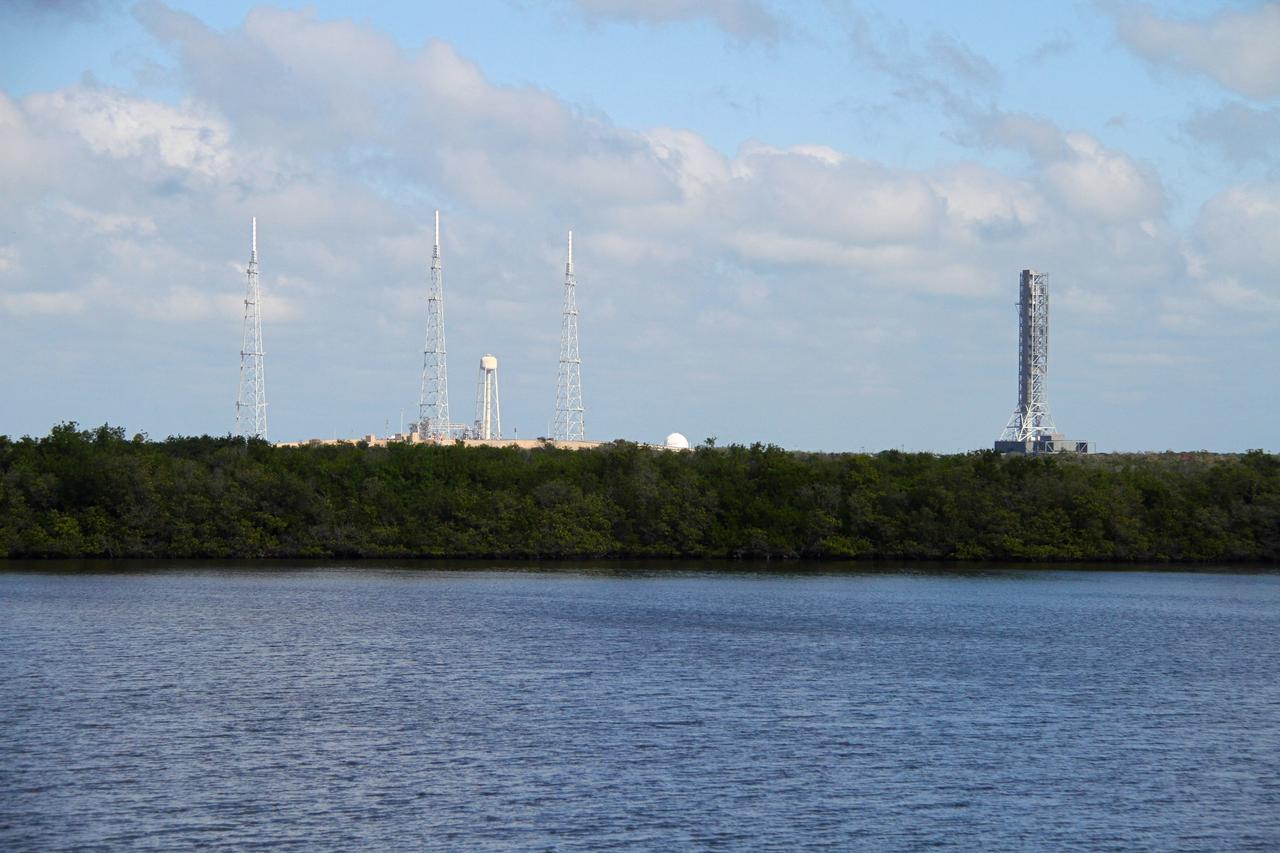
CAPE CANAVERAL, Fla. – The mobile launcher, or ML, is seen across the water near Launch Pad 39B at NASA's Kennedy Space Center in Florida, making the 4.2-mile trek back to the park site near the Vehicle Assembly Building. Data on the ML collected from structural and functional engineering tests during its two-week stay on the pad will be used in the next phases of construction. The 355-foot-tall ML structure, which took about two years to construct, will be modified by NASA’s 21st Century Ground Systems Program to support NASA’s Space Launch System, the heavy-lift rocket that will launch astronauts into deep space on future exploration missions. For more information, visit http://www.nasa.gov/exploration/systems/sls. Photo credit: NASA/Cory Huston
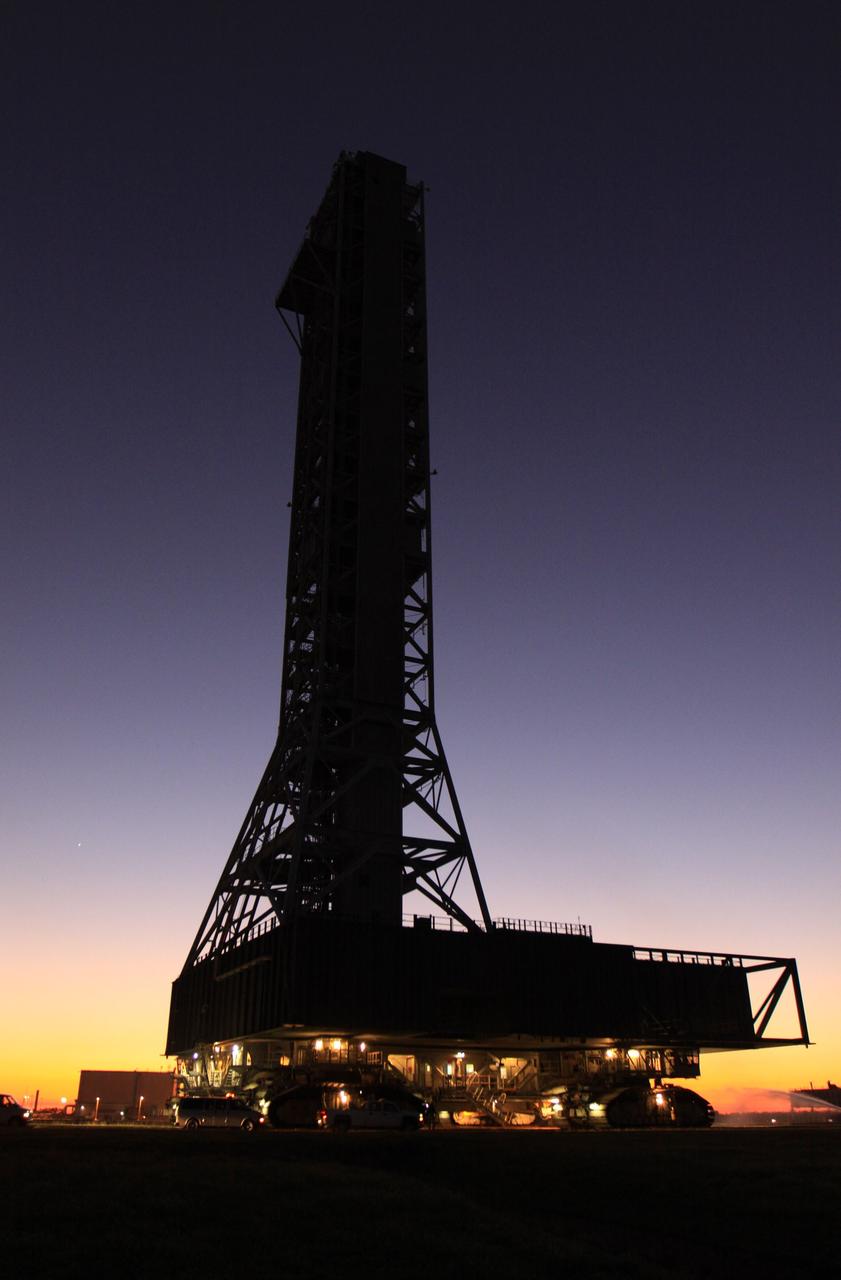
CAPE CANAVERAL, Fla. – As night falls at NASA's Kennedy Space Center in Florida, the mobile launcher, or ML, nears the park site outside the Vehicle Assembly Building. The ML is coming to the end of its 4.2-mile, day-long trek from Launch Pad 39B. Data on the ML collected from structural and functional engineering tests during its two-week stay on the pad will be used in the next phases of construction. The 355-foot-tall ML structure, which took about two years to construct, will be modified by NASA’s 21st Century Ground Systems Program to support NASA’s Space Launch System, the heavy-lift rocket that will launch astronauts into deep space on future exploration missions. For more information, visit http://www.nasa.gov/exploration/systems/sls. Photo credit: NASA/Kim Shiflett
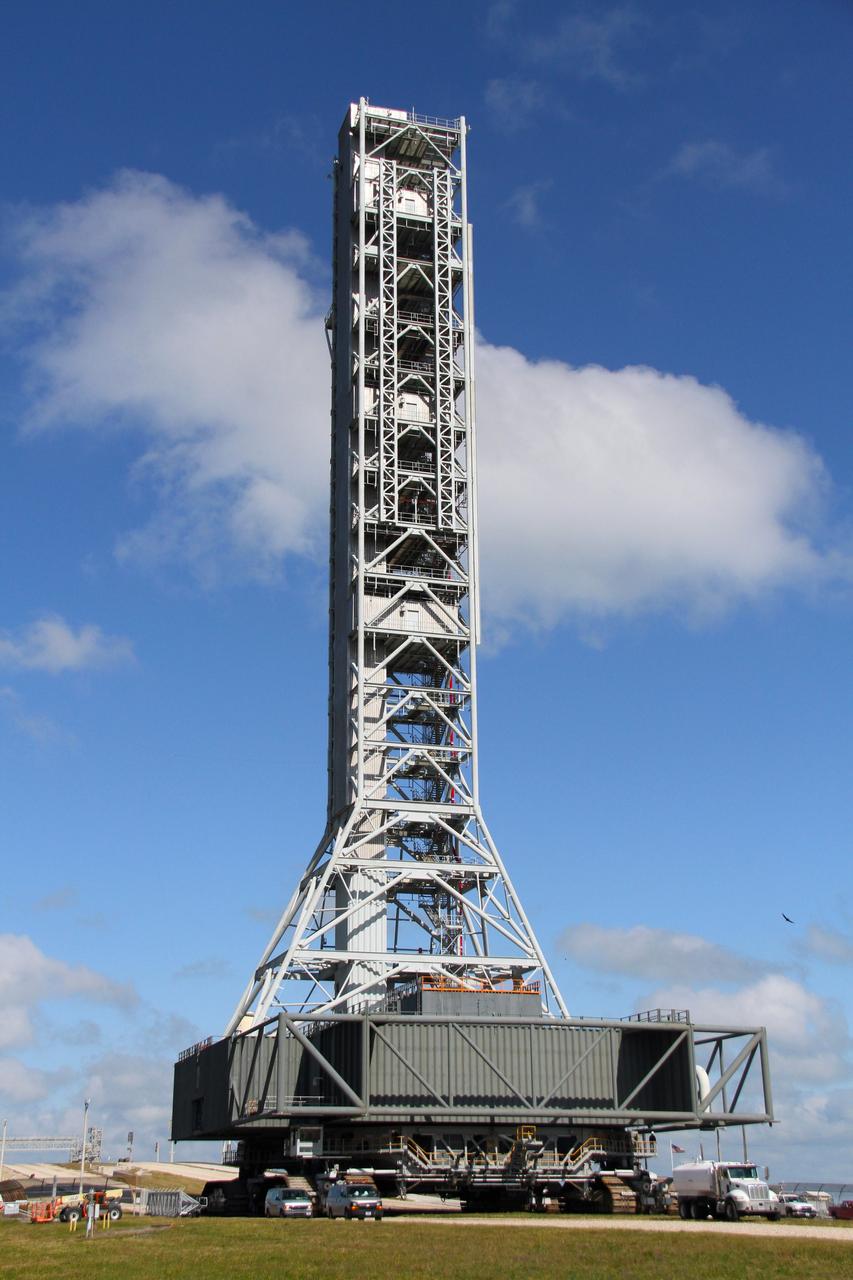
CAPE CANAVERAL, Fla. – The mobile launcher, or ML, reaches the base of Launch Pad 39B at NASA's Kennedy Space Center in Florida, on its 4.2-mile trek back to the park site near the Vehicle Assembly Building. Data on the ML collected from structural and functional engineering tests during its two-week stay on the pad will be used in the next phases of construction. The 355-foot-tall ML structure, which took about two years to construct, will be modified by NASA’s 21st Century Ground Systems Program to support NASA’s Space Launch System, the heavy-lift rocket that will launch astronauts into deep space on future exploration missions. For more information, visit http://www.nasa.gov/exploration/systems/sls. Photo credit: NASA/Cory Huston
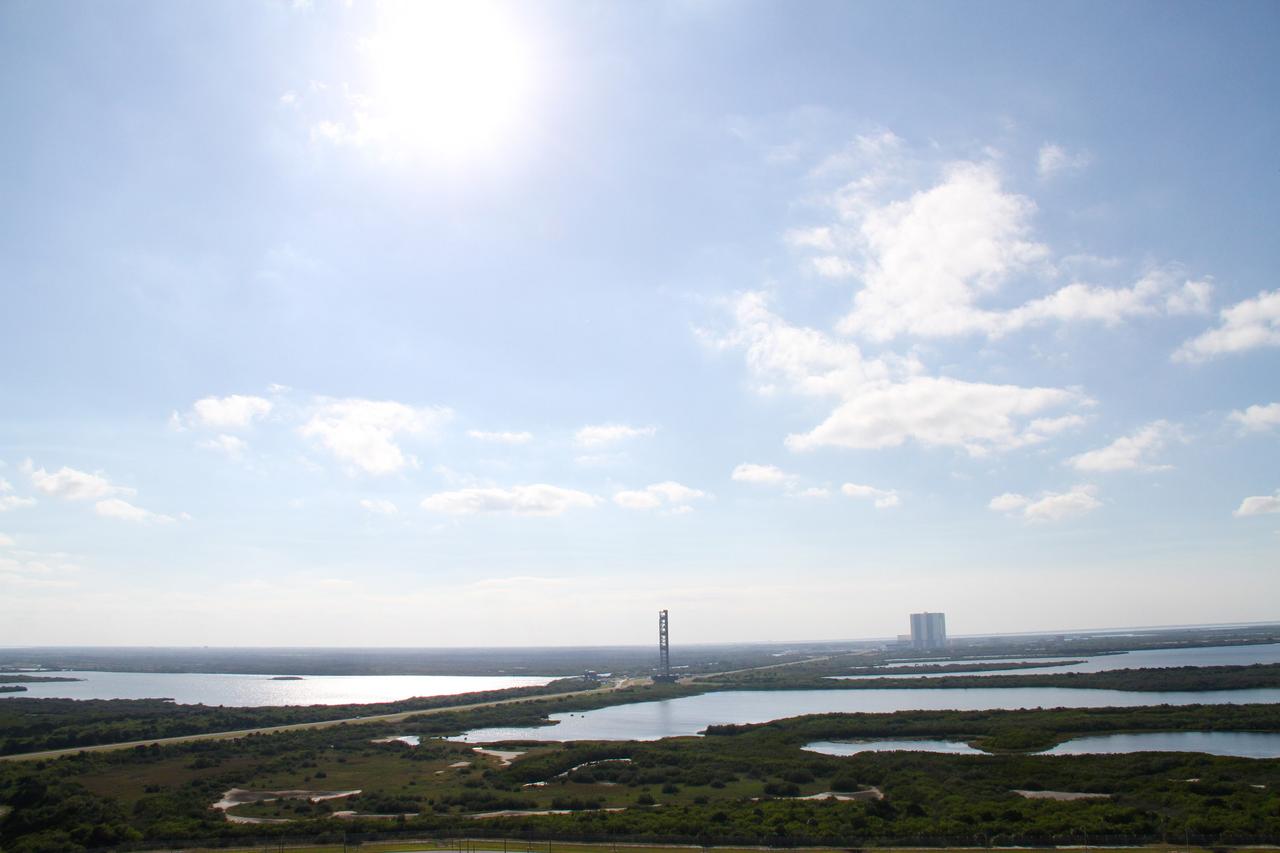
CAPE CANAVERAL, Fla. – The mobile launcher, or ML, traveling at about 1 mph atop a crawler-transporter, creeps from Launch Pad 39B to the park site near the Vehicle Assembly Building at NASA's Kennedy Space Center in Florida. Data on the ML collected from structural and functional engineering tests during its two-week stay on the pad will be used in the next phases of construction. The 355-foot-tall ML structure, which took about two years to construct, will be modified by NASA’s 21st Century Ground Systems Program to support NASA’s Space Launch System, the heavy-lift rocket that will launch astronauts into deep space on future exploration missions. For more information, visit http://www.nasa.gov/exploration/systems/sls. Photo credit: NASA/Cory Huston
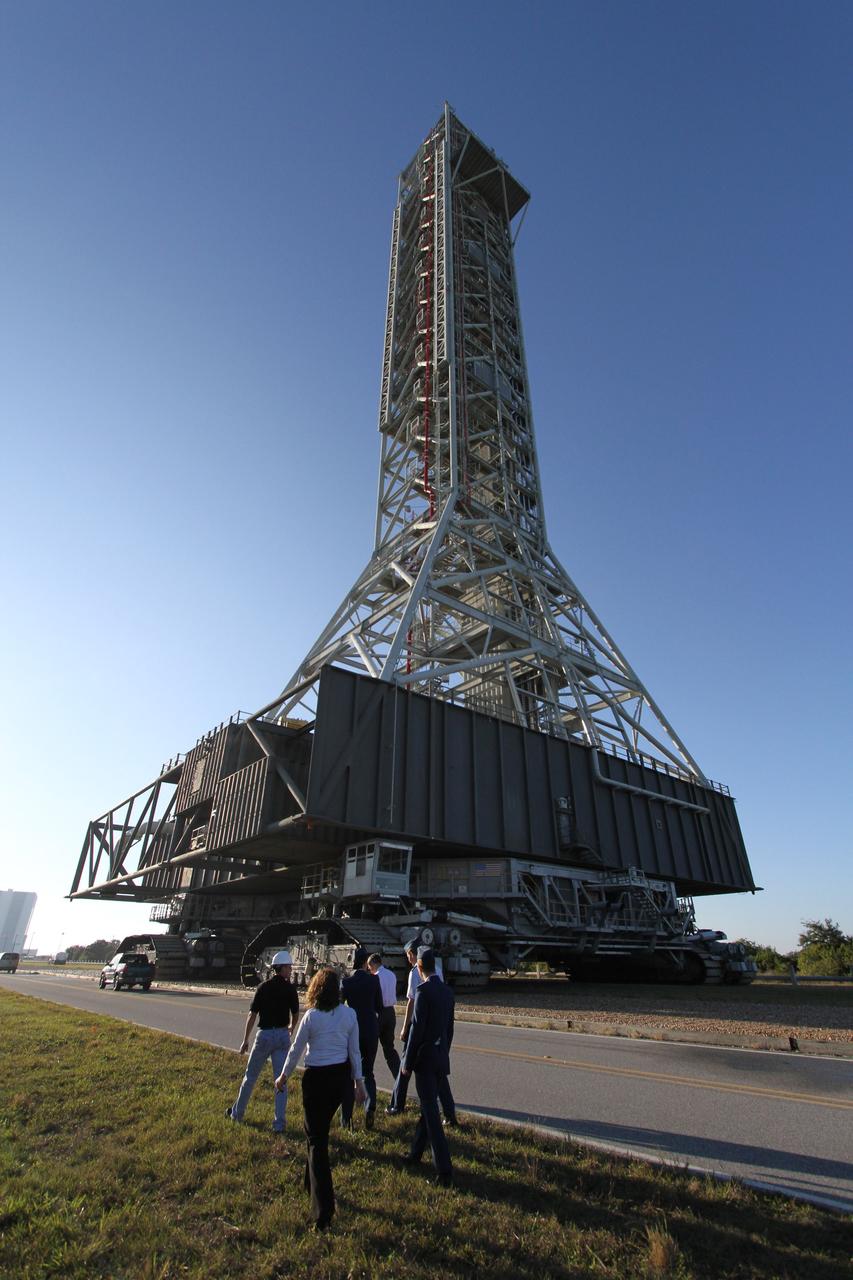
CAPE CANAVERAL, Fla. – Kennedy Space Center Director Robert Cabana (white shirt in front of group) and other support personnel accompany the mobile launcher, or ML, as it rolls from Launch Pad 39B to the park site near the Vehicle Assembly Building at NASA's Kennedy Space Center in Florida. Data on the ML collected from structural and functional engineering tests during its two-week stay on the pad will be used in the next phases of construction. The 355-foot-tall ML structure, which took about two years to construct, will be modified by NASA’s 21st Century Ground Systems Program to support NASA’s Space Launch System, the heavy-lift rocket that will launch astronauts into deep space on future exploration missions. For more information, visit http://www.nasa.gov/exploration/systems/sls. Photo credit: NASA/Cory Huston
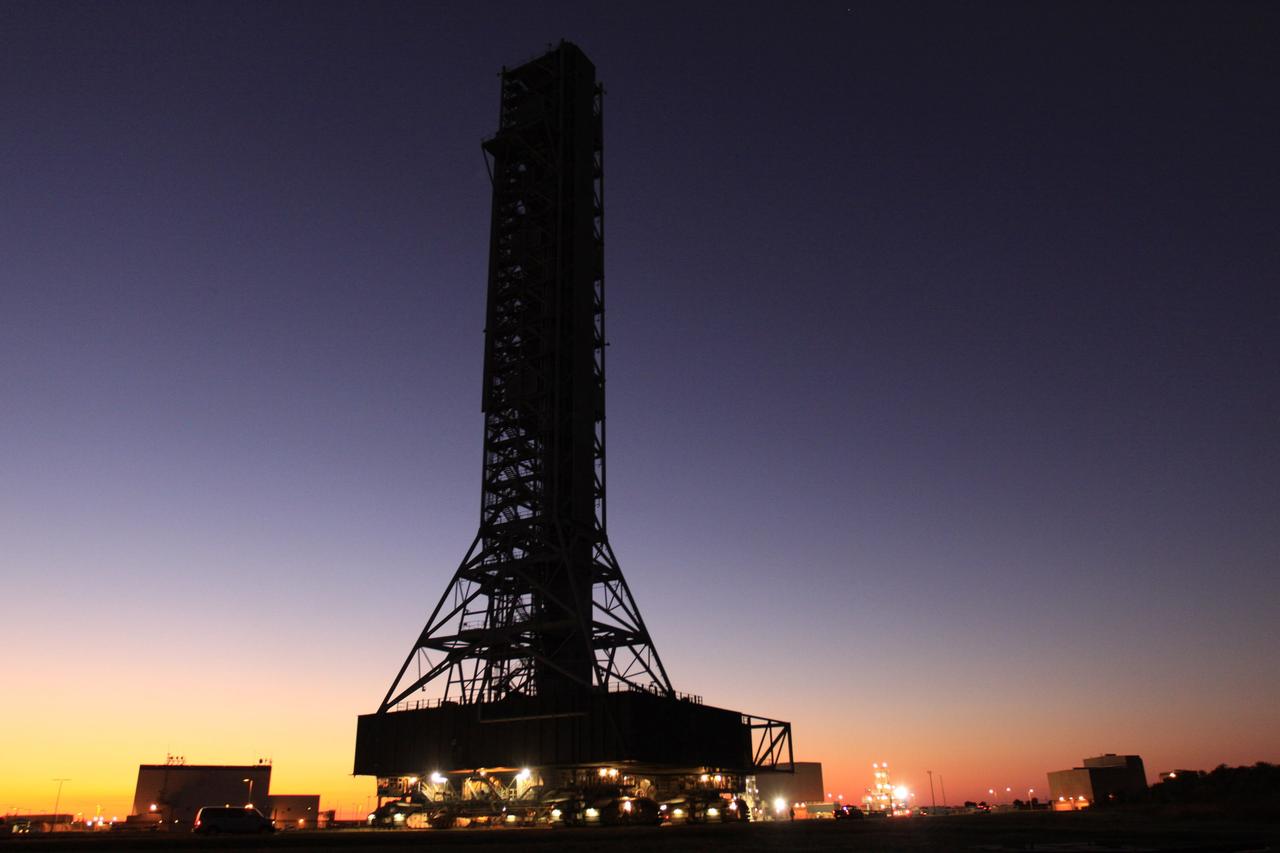
CAPE CANAVERAL, Fla. – Lights appear in the crawler-transporter under the mobile launcher, or ML, as its 4.2-mile, day-long trek from Launch Pad 39B to the park site near the Vehicle Assembly Building at NASA's Kennedy Space Center in Florida ends in darkness. Data on the ML collected from structural and functional engineering tests during its two-week stay on the pad will be used in the next phases of construction. The 355-foot-tall ML structure, which took about two years to construct, will be modified by NASA’s 21st Century Ground Systems Program to support NASA’s Space Launch System, the heavy-lift rocket that will launch astronauts into deep space on future exploration missions. For more information, visit http://www.nasa.gov/exploration/systems/sls. Photo credit: NASA/Kim Shiflett
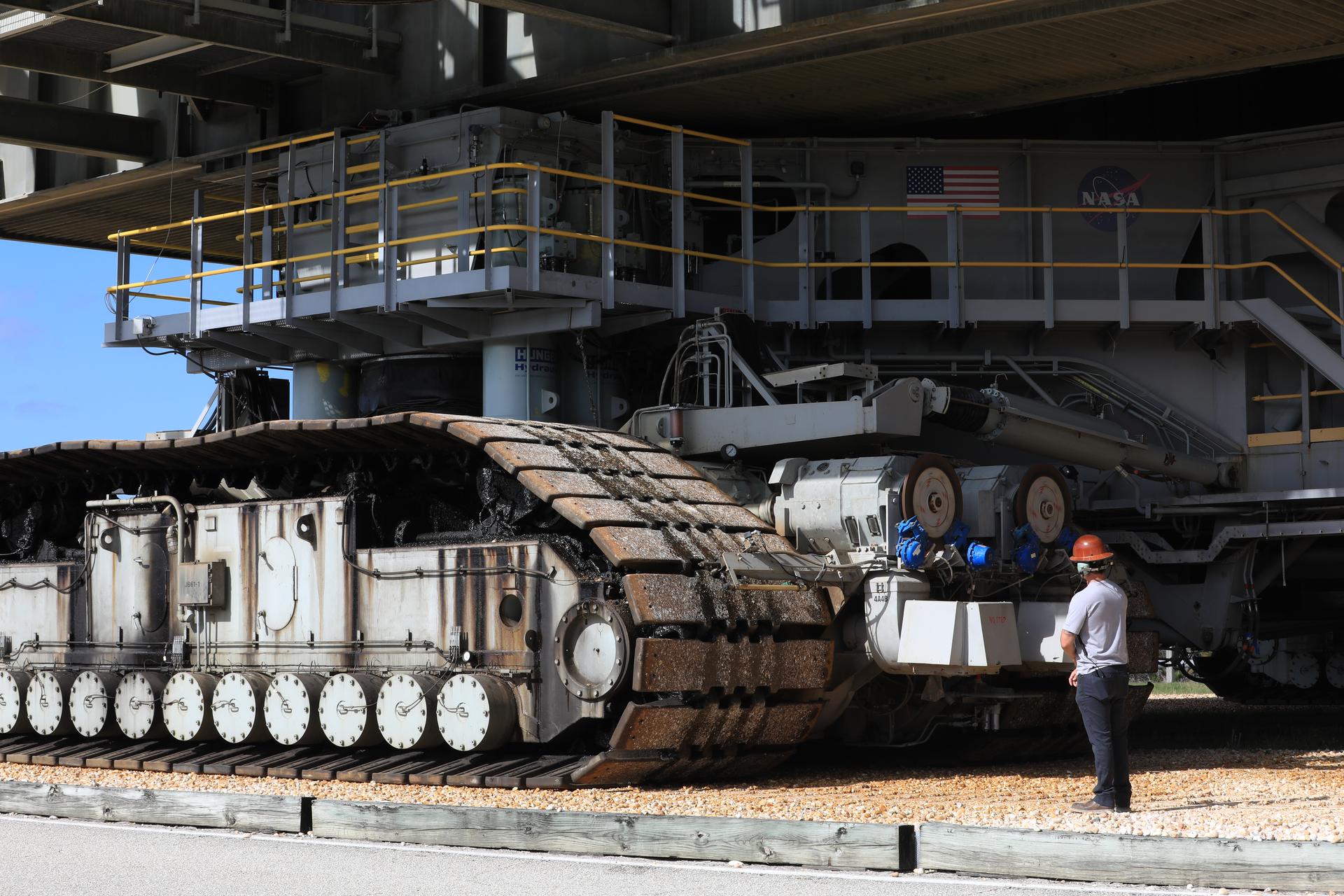
Technicians with NASA’s Exploration Gound Systems Program monitor crawler-transporter 2 as it transports the agency’s mobile launcher 1 slowly from Launch Complex 39B to the Vehicle Assembly Building at NASA’s Kennedy Space Center in Florida on Thursday, April 16, 2026, in preparation for Artemis III stacking operations. Teams will perform checkouts, inspections, and data analysis, and make repairs to the tower that saw damage during liftoff of the Artemis II test flight.
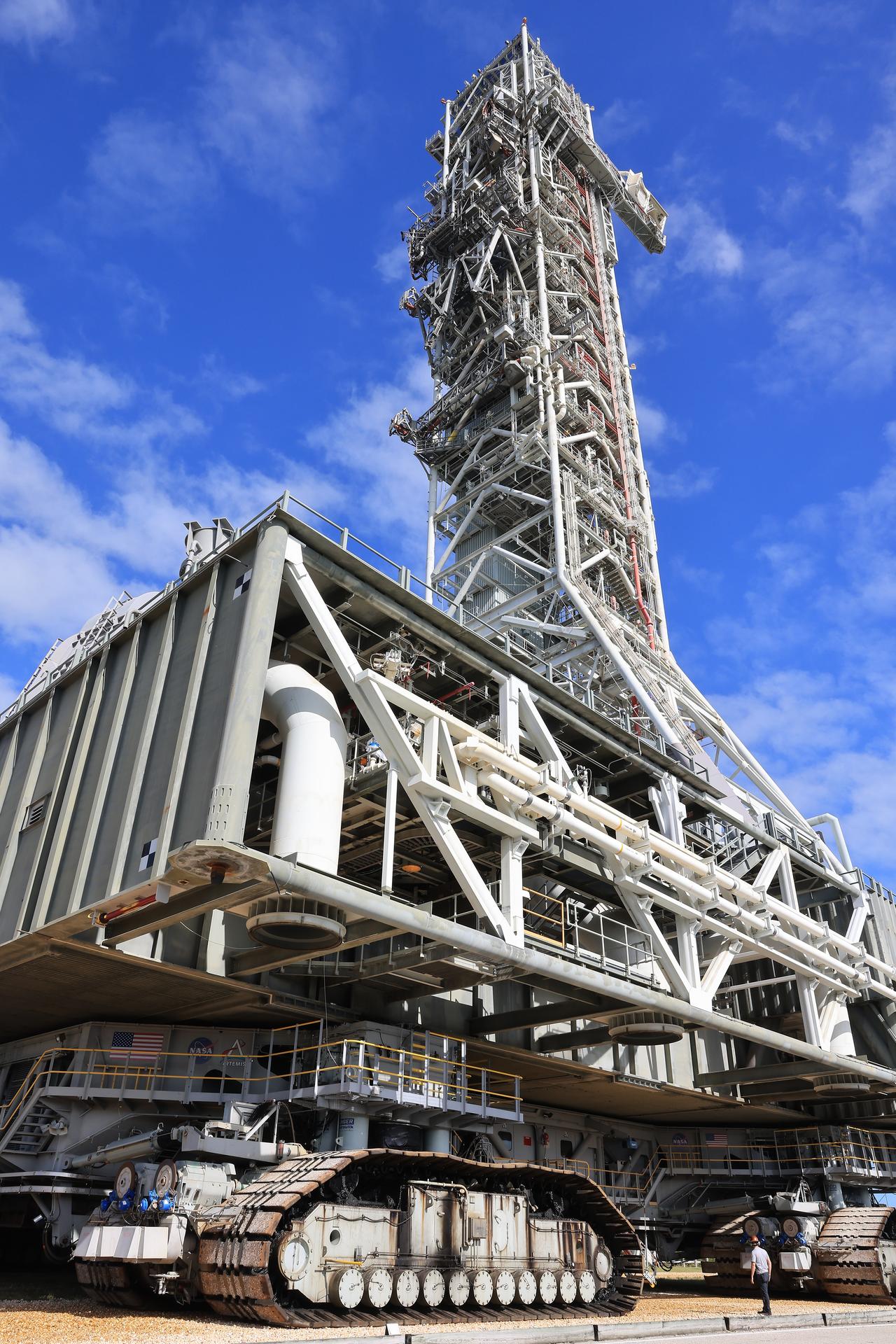
NASA’s mobile launcher 1 begins its approximately 4-mile trek from Launch Complex 39B to the Vehicle Assembly Building at the agency’s Kennedy Space Center in Florida on Thursday, April 16, 2026, in preparation for Artemis III stacking operations. Teams will perform checkouts, inspections, and data analysis, and make repairs to the tower that saw damage during liftoff of the Artemis II test flight.
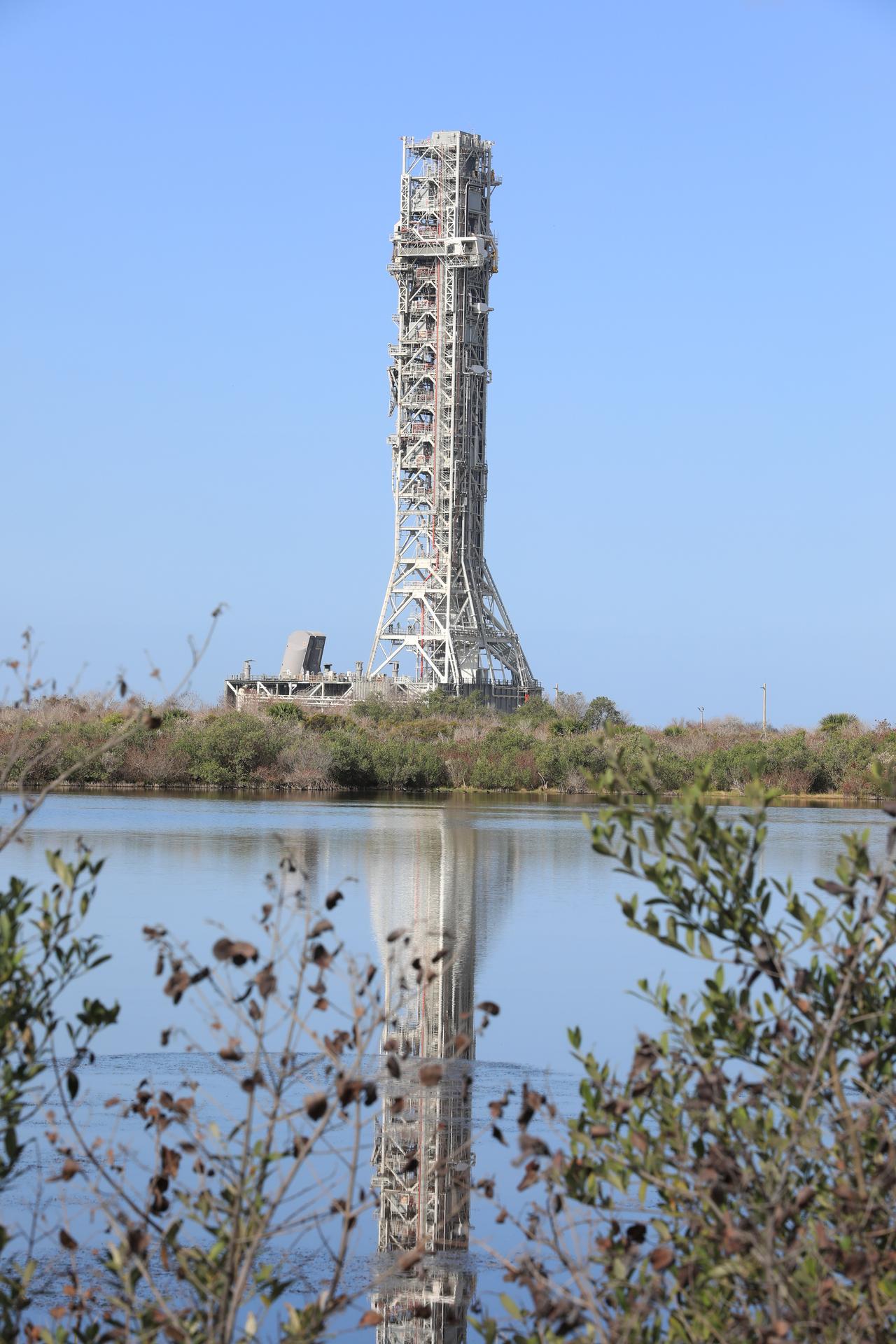
NASA’s mobile launcher 1 begins its approximately 4-mile trek from Launch Complex 39B to the Vehicle Assembly Building at the agency’s Kennedy Space Center in Florida on Thursday, April 16, 2026, in preparation for Artemis III stacking operations. Teams will perform checkouts, inspections, and data analysis, and make repairs to the tower that saw damage during liftoff of the Artemis II test flight.
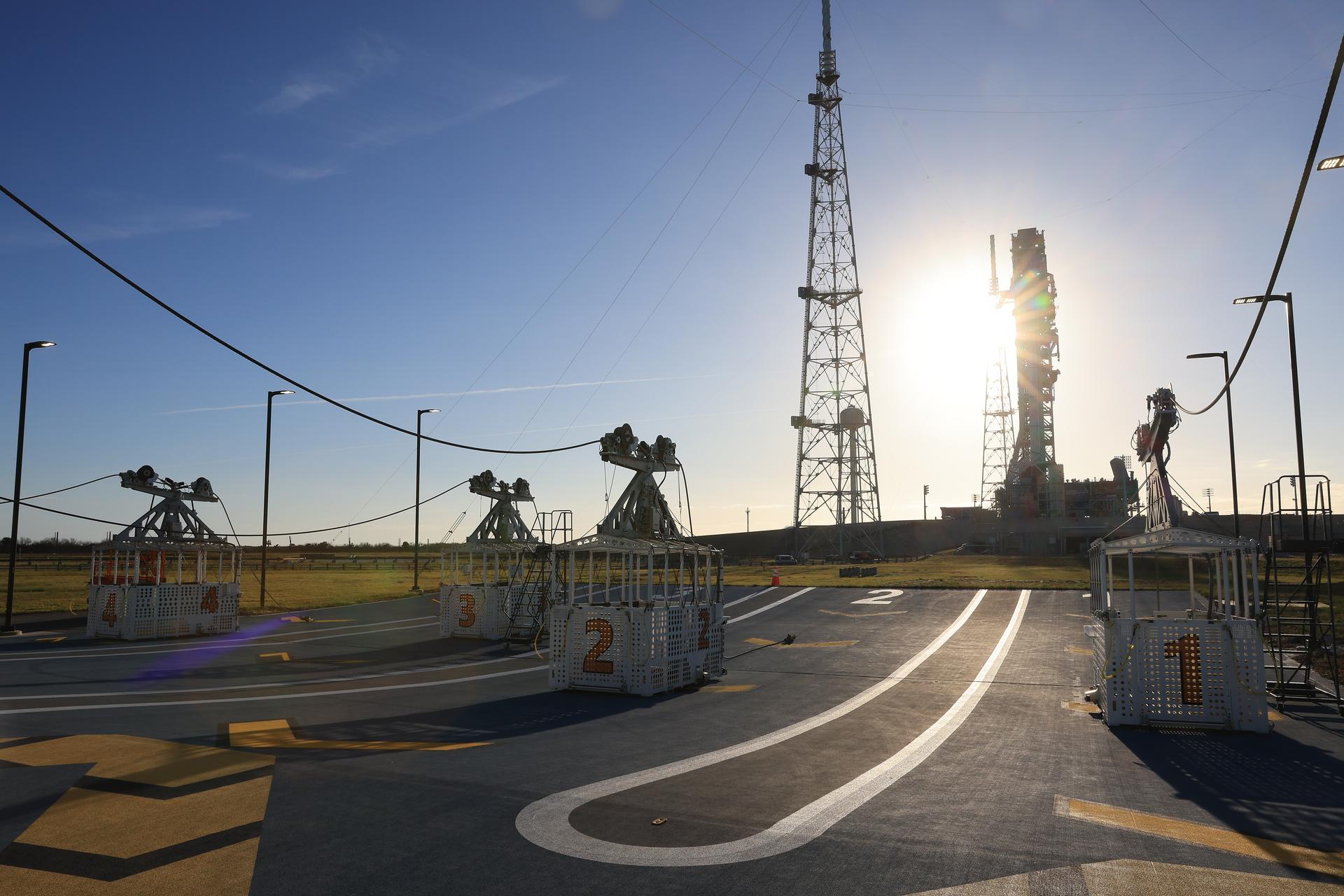
NASA’s mobile launcher 1 begins its approximately 4-mile trek from Launch Complex 39B to the Vehicle Assembly Building (VAB) at the agency’s Kennedy Space Center in Florida on Thursday, April 16, 2026, in preparation for Artemis III stacking operations. Nearby is the emergency egress system, an abort system for personnel to climb into four baskets at the top of the mobile launcher and rush to the base of the pad in the unlikely event of an emergency during launch. Once at the VAB, teams will perform checkouts, inspections, and data analysis, and make repairs to the tower that saw damage during liftoff of the Artemis II test flight.
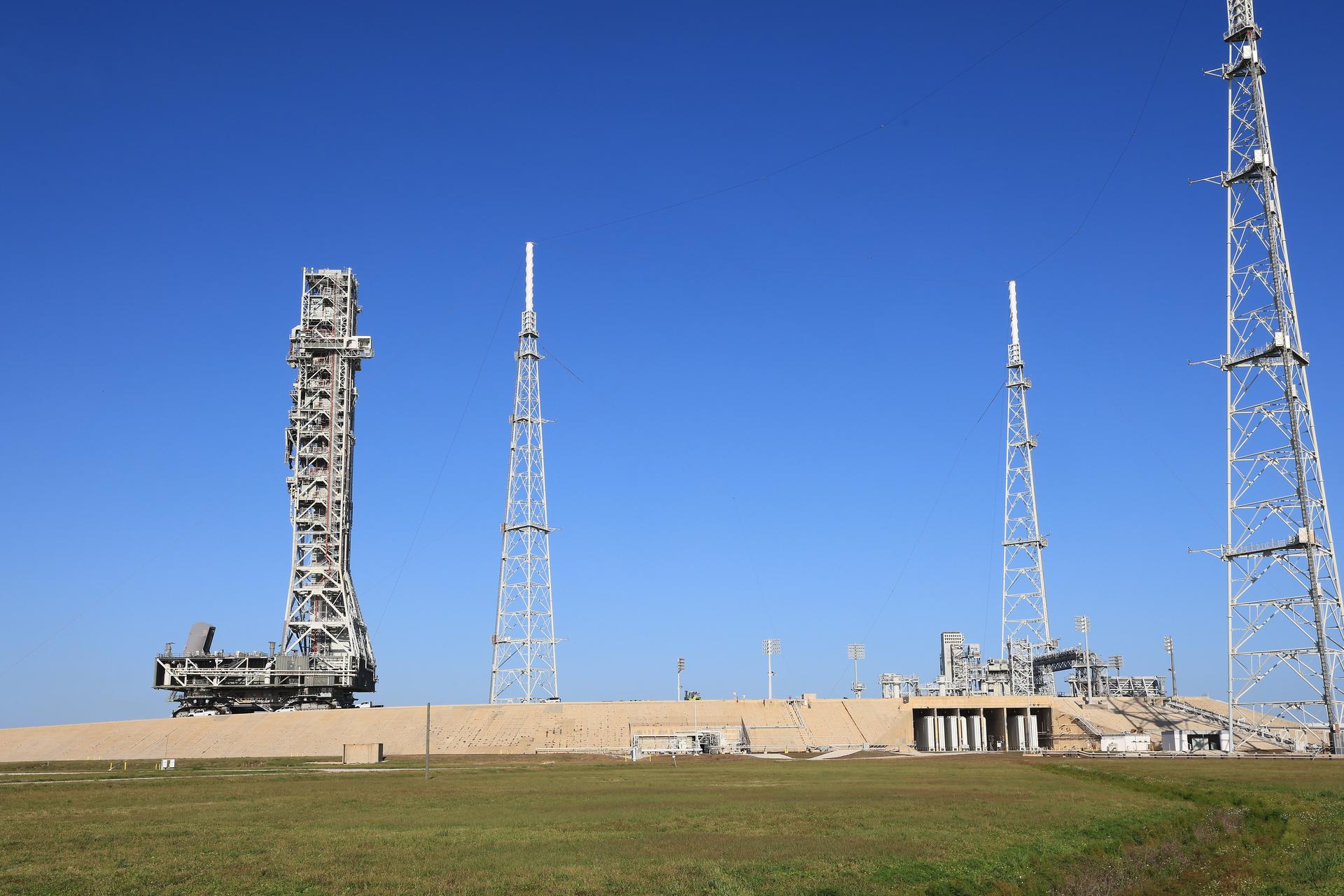
NASA’s mobile launcher 1 begins its approximately 4-mile trek from Launch Complex 39B to the Vehicle Assembly Building at the agency’s Kennedy Space Center in Florida on Thursday, April 16, 2026, in preparation for Artemis III stacking operations. Teams will perform checkouts, inspections, and data analysis, and make repairs to the tower that saw damage during liftoff of the Artemis II test flight.
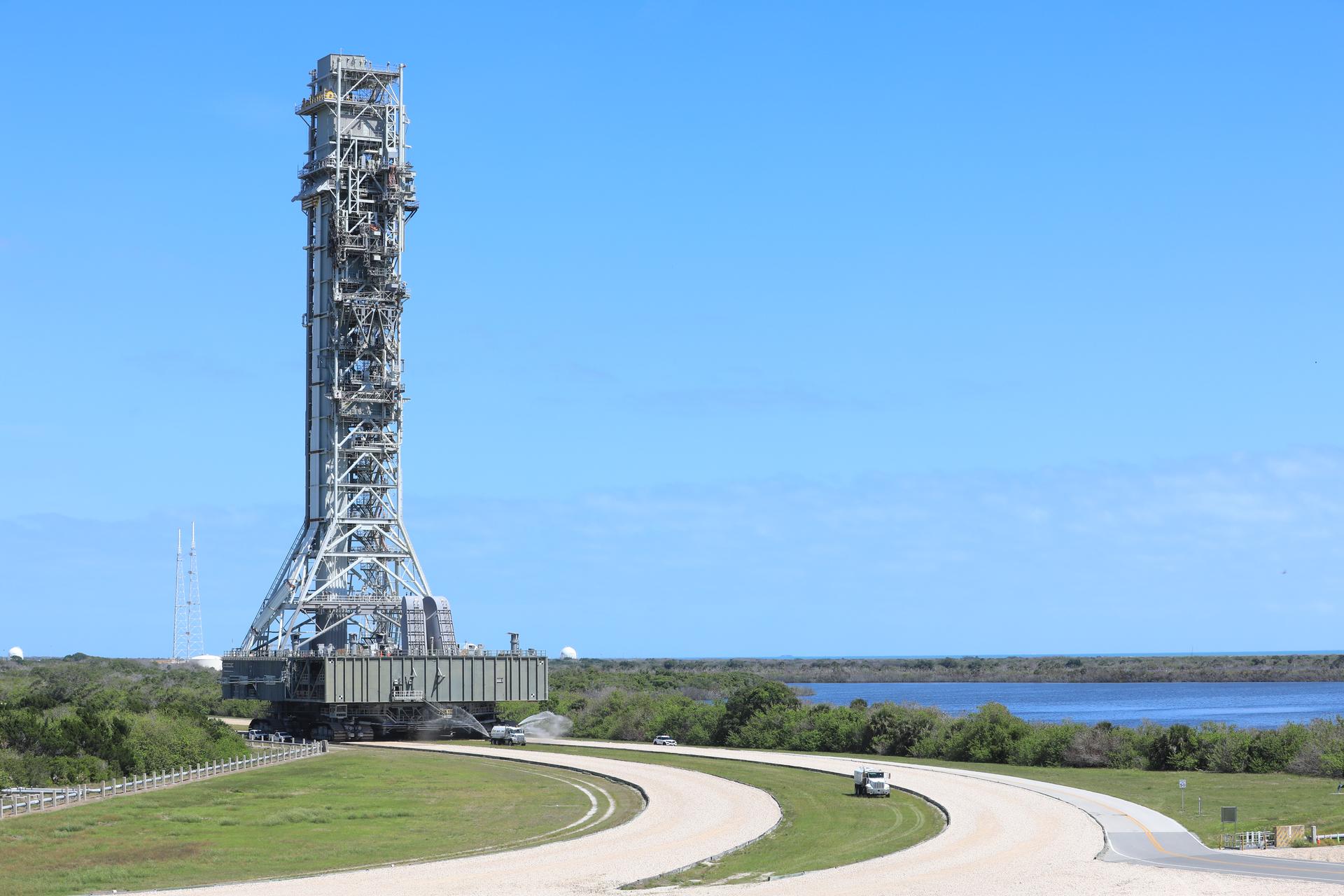
NASA’s mobile launcher 1 begins its approximately 4-mile trek from Launch Complex 39B to the Vehicle Assembly Building at the agency’s Kennedy Space Center in Florida on Thursday, April 16, 2026, in preparation for Artemis III stacking operations. Teams will perform checkouts, inspections, and data analysis, and make repairs to the tower that saw damage during liftoff of the Artemis II test flight.
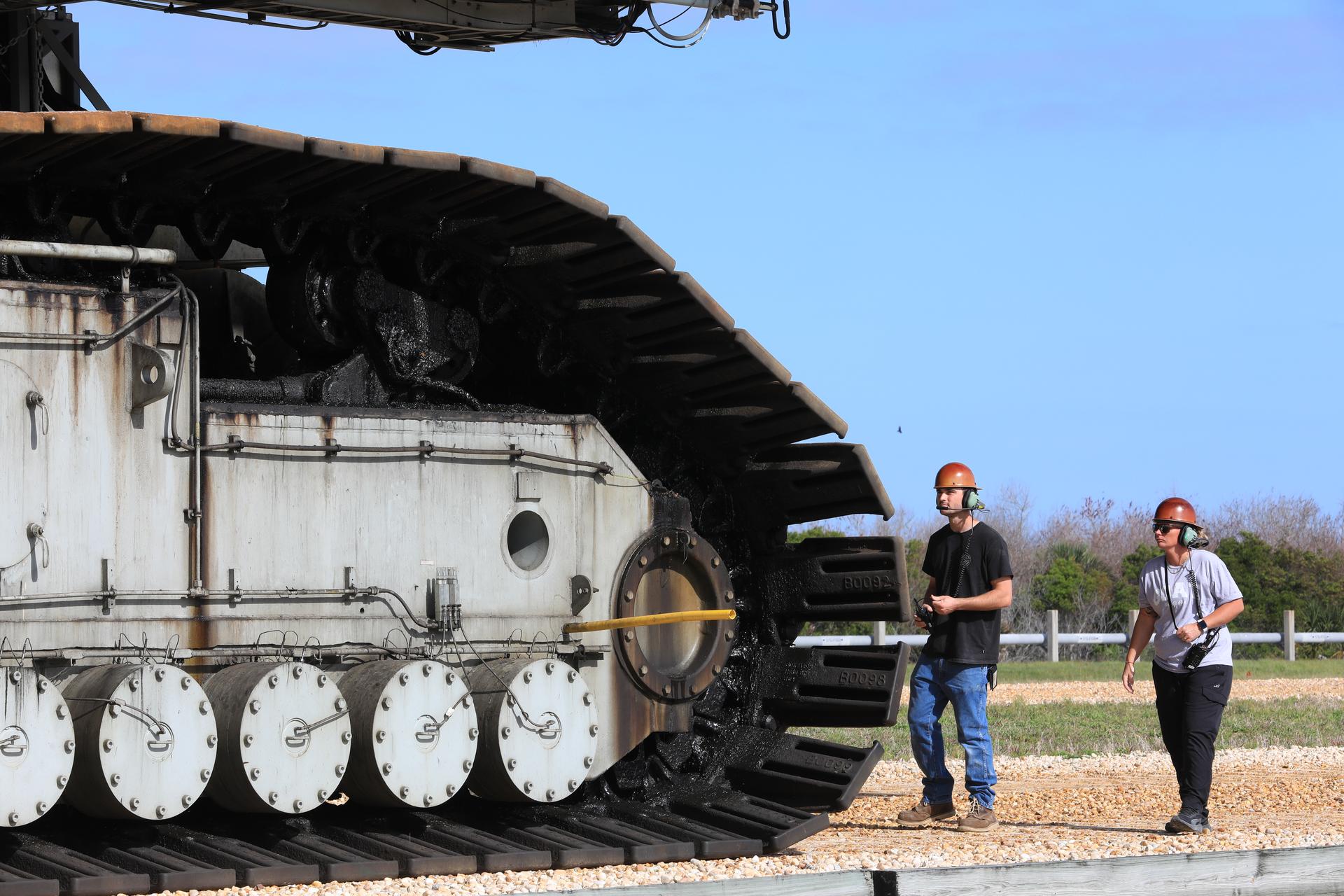
Technicians with NASA’s Exploration Gound Systems Program monitor crawler-transporter 2 as it transports the agency’s mobile launcher 1 slowly from Launch Complex 39B to the Vehicle Assembly Building at NASA’s Kennedy Space Center in Florida on Thursday, April 16, 2026, in preparation for Artemis III stacking operations. Teams will perform checkouts, inspections, and data analysis, and make repairs to the tower that saw damage during liftoff of the Artemis II test flight.
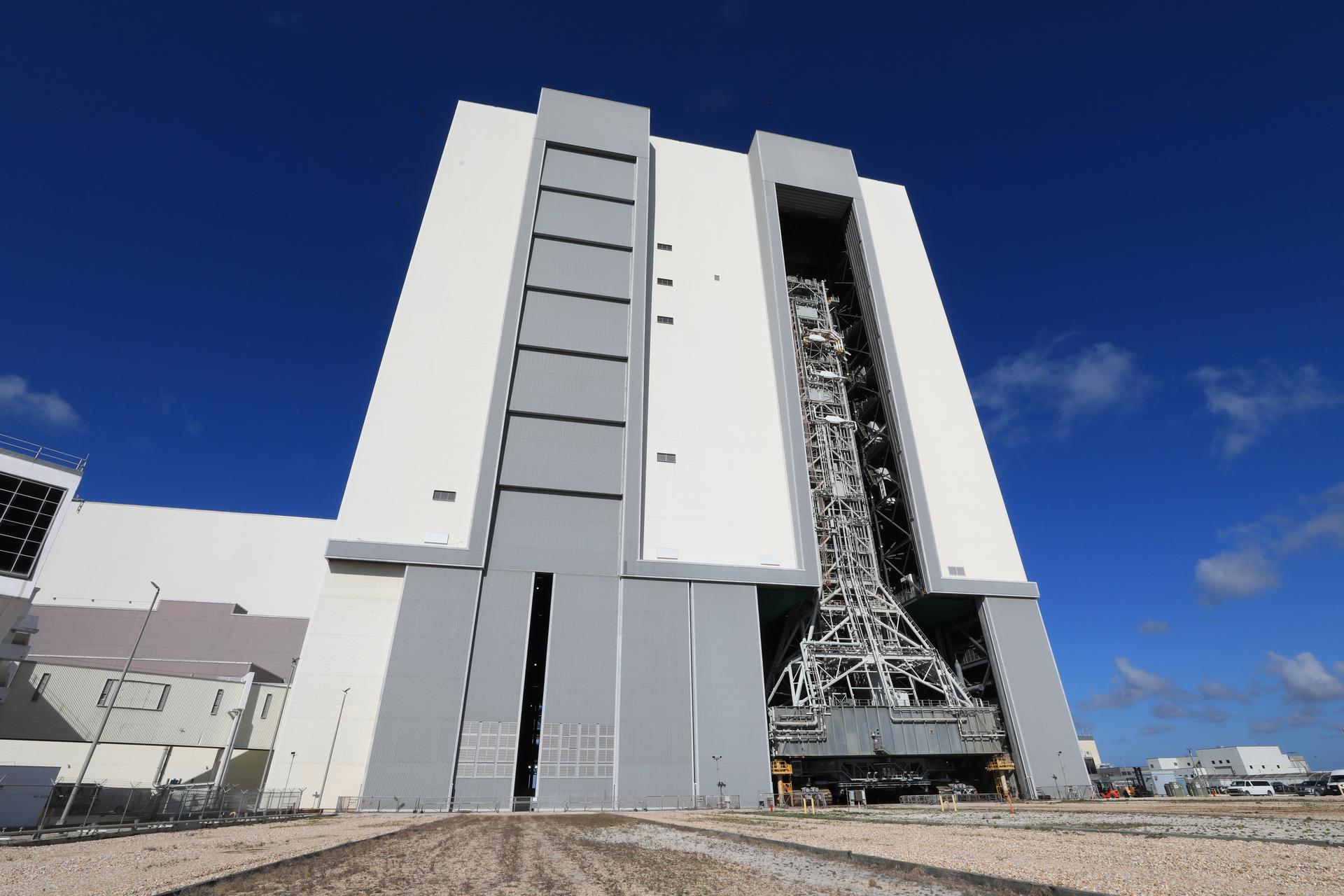
NASA’s mobile launcher enters the Vehicle Assembly Building following its approximately 4-mile trek from Launch Complex 39B at the agency’s Kennedy Space Center in Florida on Friday, April 17, 2026, in preparation for Artemis III stacking operations. Teams will perform checkouts, inspections, and data analysis, and make repairs to the tower that saw damage during launch of NASA’s Artemis II test flight on April 1, 2026.
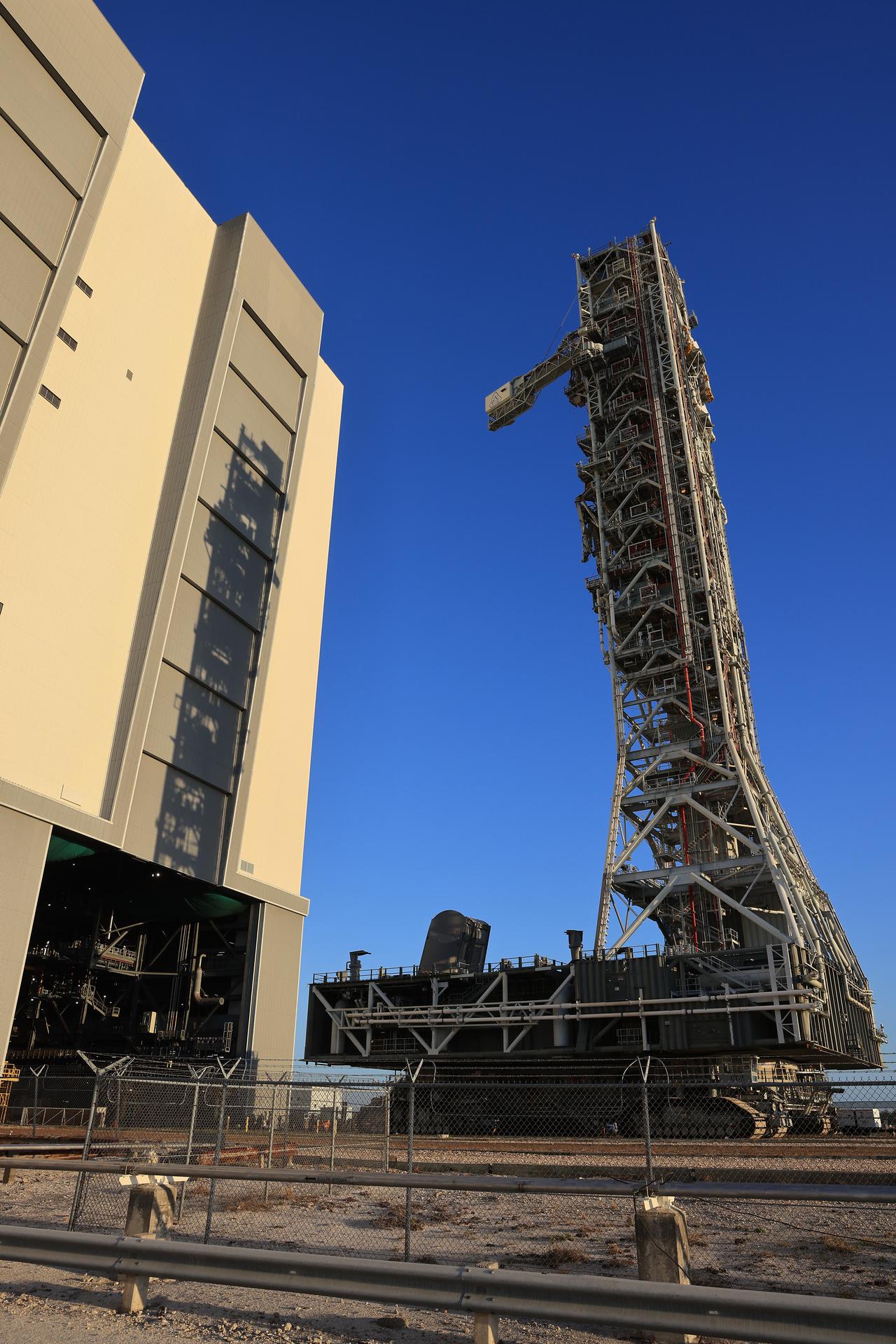
NASA’s mobile launcher approaches the Vehicle Assembly Building following its approximately 4-mile trek from Launch Complex 39B at the agency’s Kennedy Space Center in Florida on Friday, April 17, 2026, in preparation for Artemis III stacking operations. Teams will perform checkouts, inspections, and data analysis, and make repairs to the tower that saw damage during launch of NASA’s Artemis II test flight on April 1, 2026.
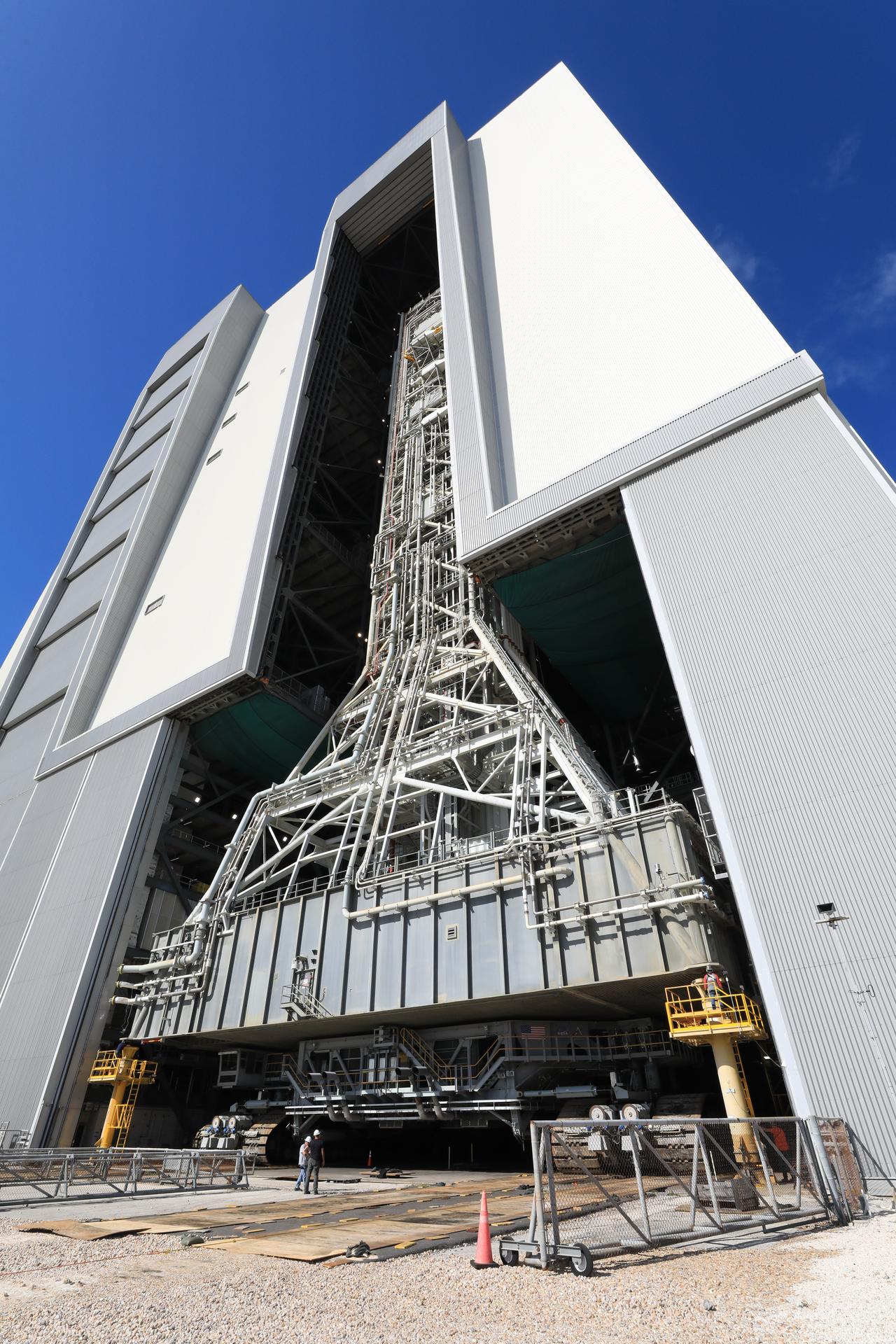
NASA’s mobile launcher enters the Vehicle Assembly Building following its approximately 4-mile trek from Launch Complex 39B at the agency’s Kennedy Space Center in Florida on Friday, April 17, 2026, in preparation for Artemis III stacking operations. Teams will perform checkouts, inspections, and data analysis, and make repairs to the tower that saw damage during launch of NASA’s Artemis II test flight on April 1, 2026.
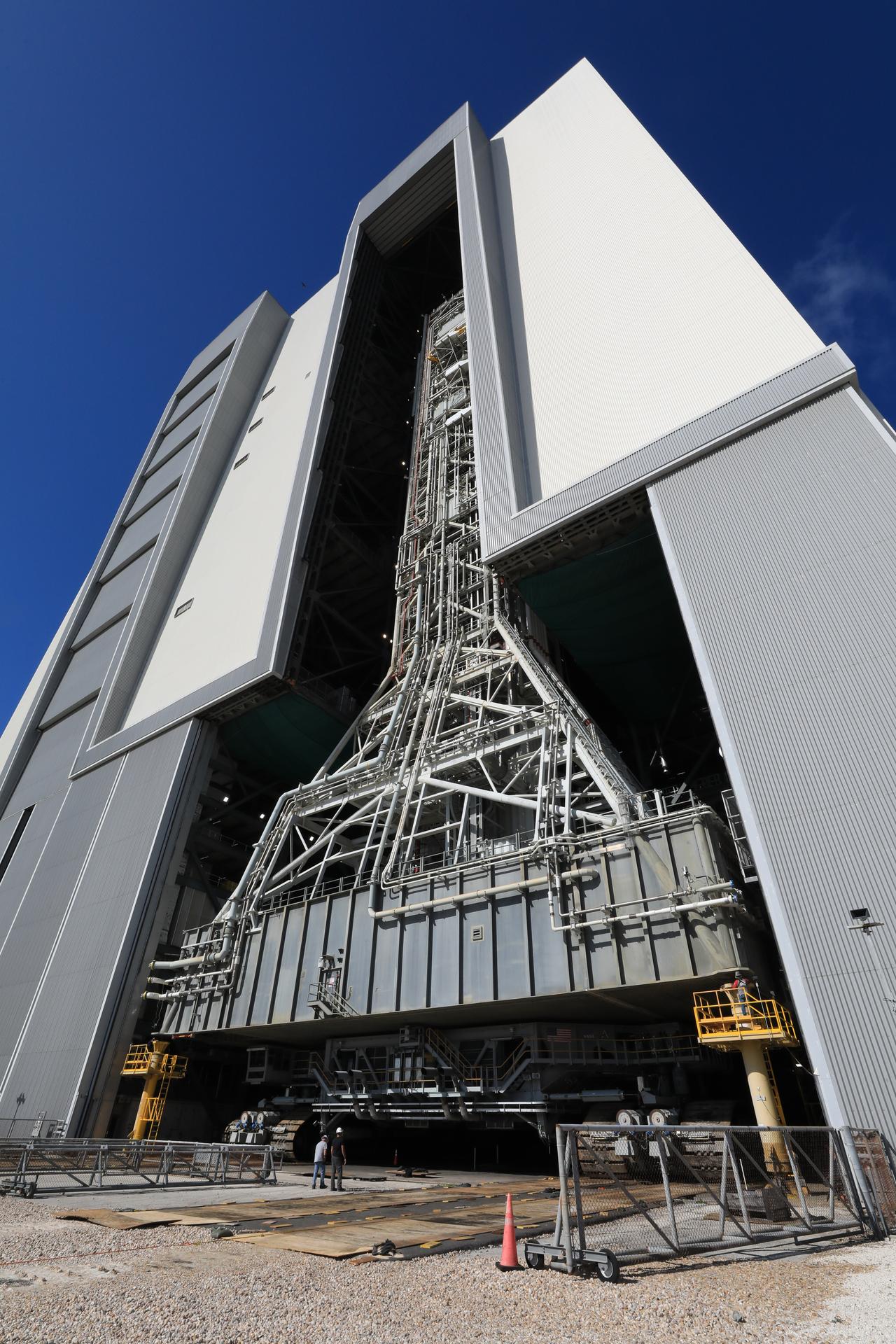
NASA’s mobile launcher enters the Vehicle Assembly Building following its approximately 4-mile trek from Launch Complex 39B at the agency’s Kennedy Space Center in Florida on Friday, April 17, 2026, in preparation for Artemis III stacking operations. Teams will perform checkouts, inspections, and data analysis, and make repairs to the tower that saw damage during launch of NASA’s Artemis II test flight on April 1, 2026.
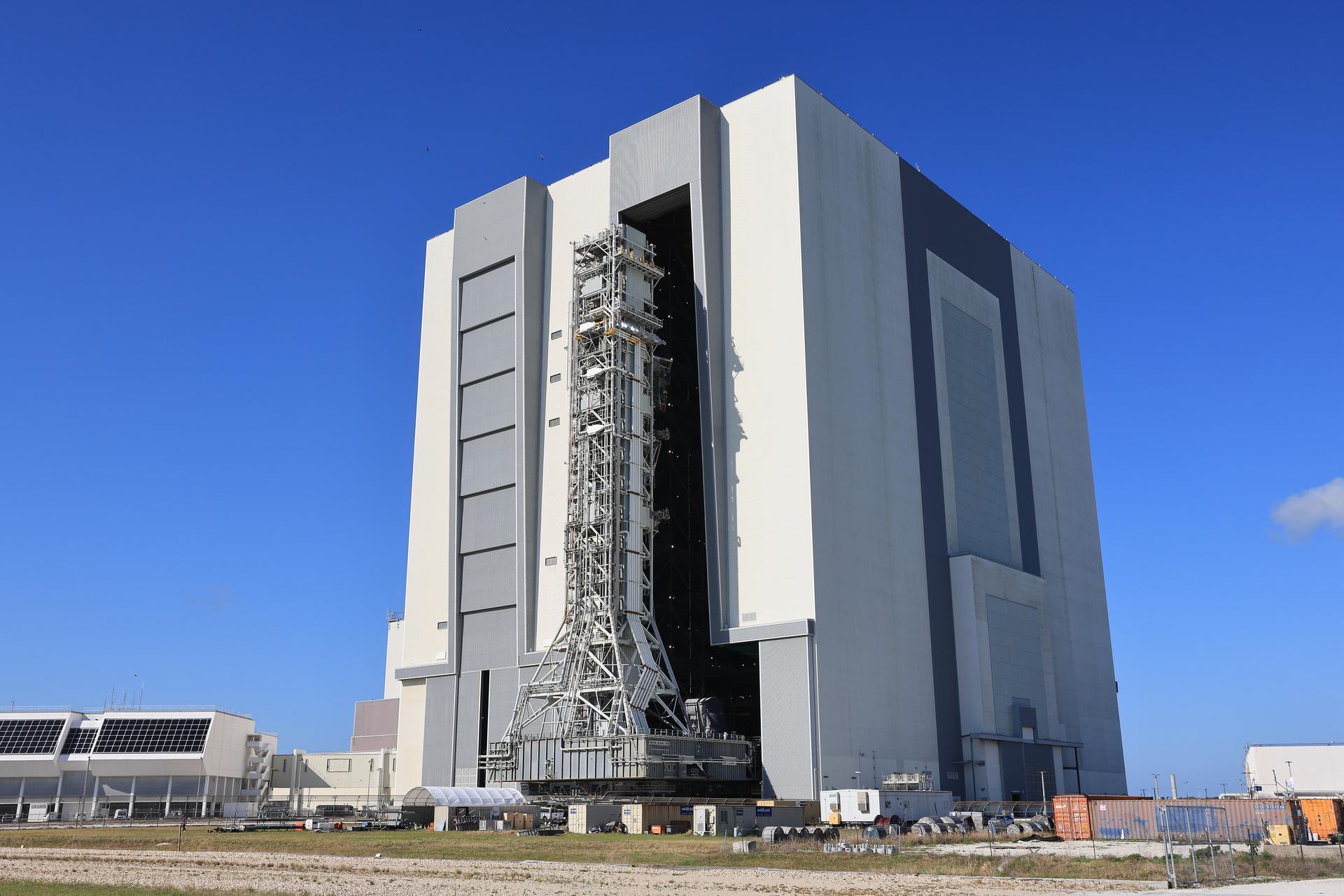
NASA’s mobile launcher approaches the Vehicle Assembly Building following its approximately 4-mile trek from Launch Complex 39B at the agency’s Kennedy Space Center in Florida on Friday, April 17, 2026, in preparation for Artemis III stacking operations. Teams will perform checkouts, inspections, and data analysis, and make repairs to the tower that saw damage during launch of NASA’s Artemis II test flight on April 1, 2026.
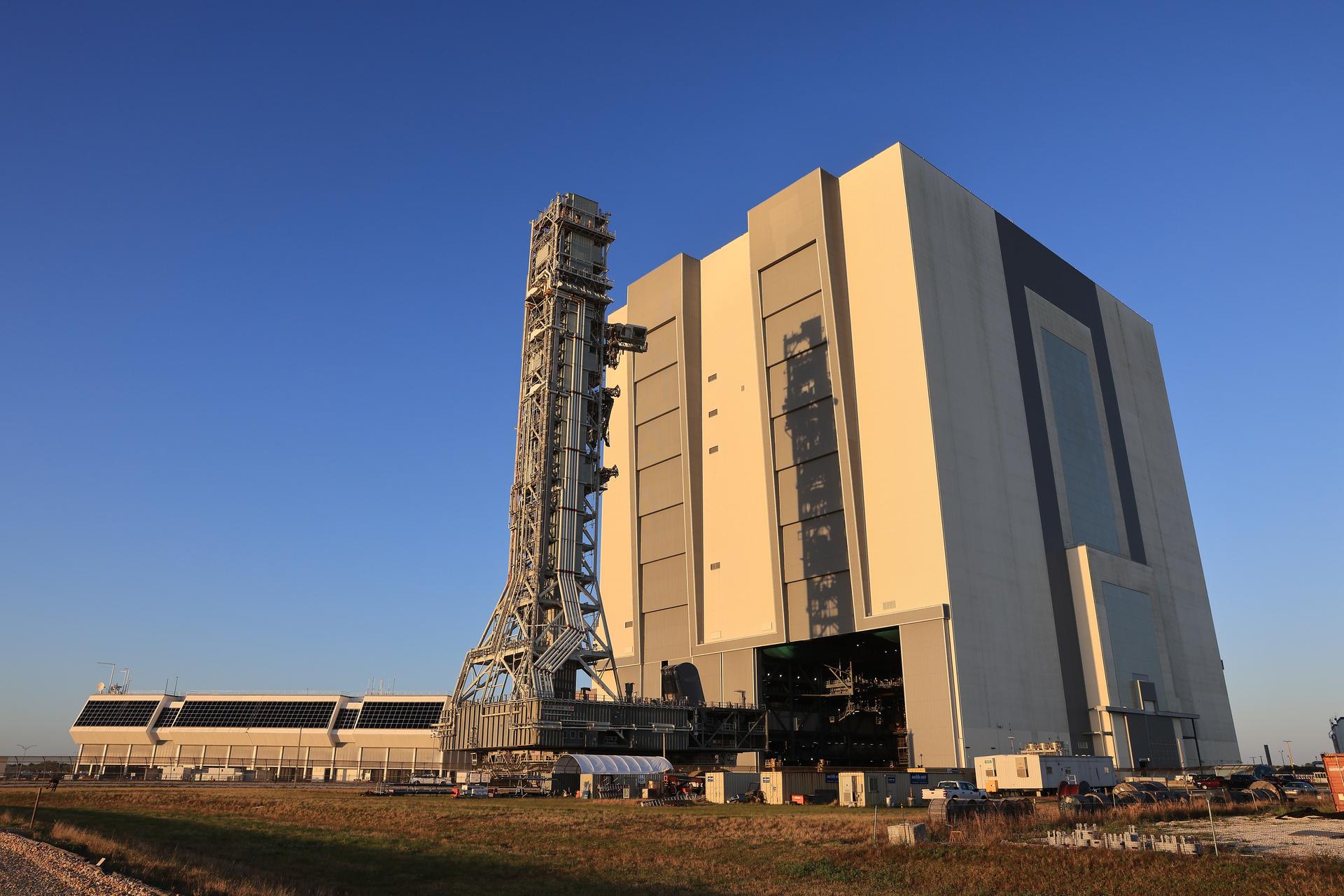
NASA’s mobile launcher approaches the Vehicle Assembly Building following its approximately 4-mile trek from Launch Complex 39B at the agency’s Kennedy Space Center in Florida on Friday, April 17, 2026, in preparation for Artemis III stacking operations. Teams will perform checkouts, inspections, and data analysis, and make repairs to the tower that saw damage during launch of NASA’s Artemis II test flight on April 1, 2026.
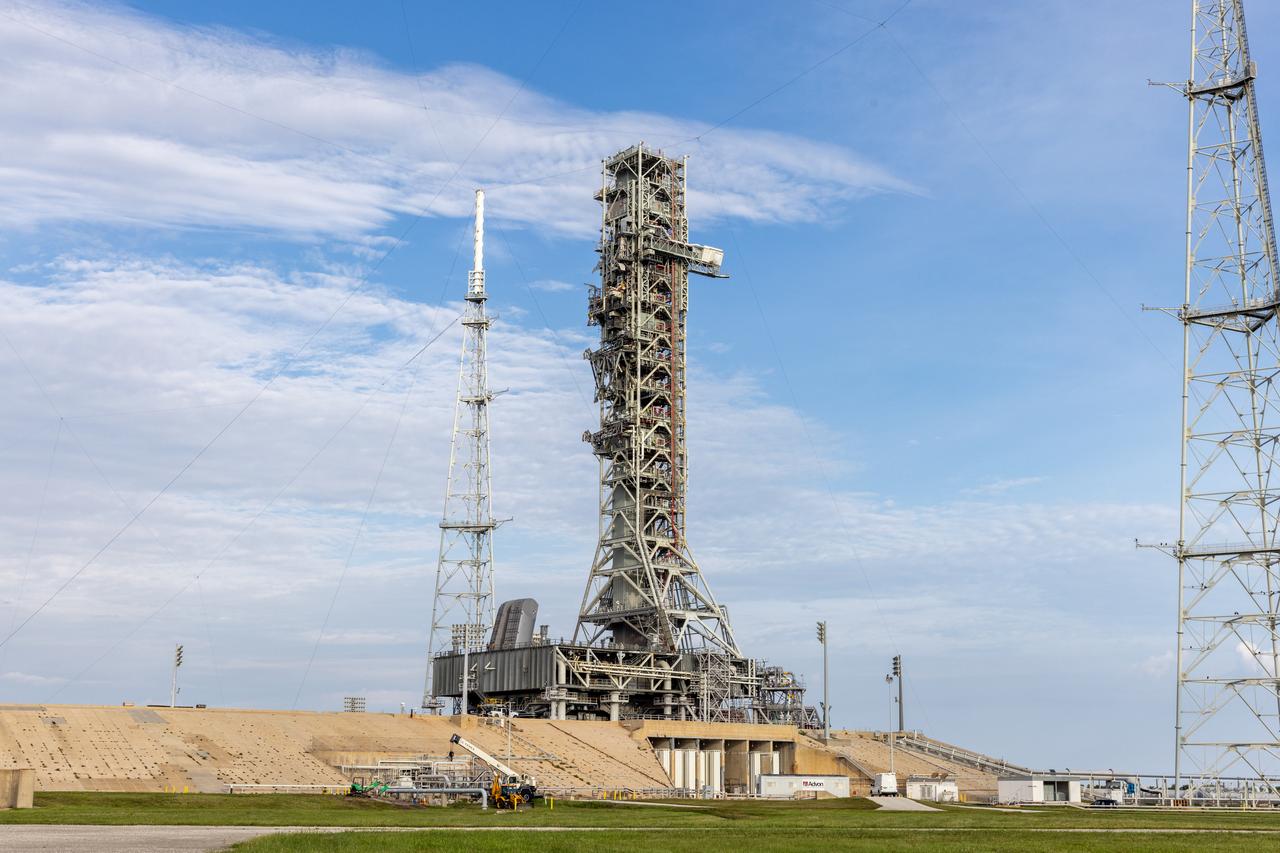
Teams with NASA’s Exploration Ground Systems Program at the agency’s Kennedy Space Center in Florida prepare to move mobile launcher 1 atop the agency’s crawler-transporter 2 from Launch Complex 39B to the Vehicle Assembly Building on Tuesday, Oct. 1, 2024. The crawler recently reached 2,500 miles traveling to the launch pad since its construction in 1965. The mobile launcher has been at the launch pad since August 2023 undergoing upgrades and tests in preparation for NASA’s Artemis II mission. The mobile launcher will be used to assemble, process, and launch NASA’s SLS (Space Launch Systems) and Orion spacecraft to the Moon and beyond.
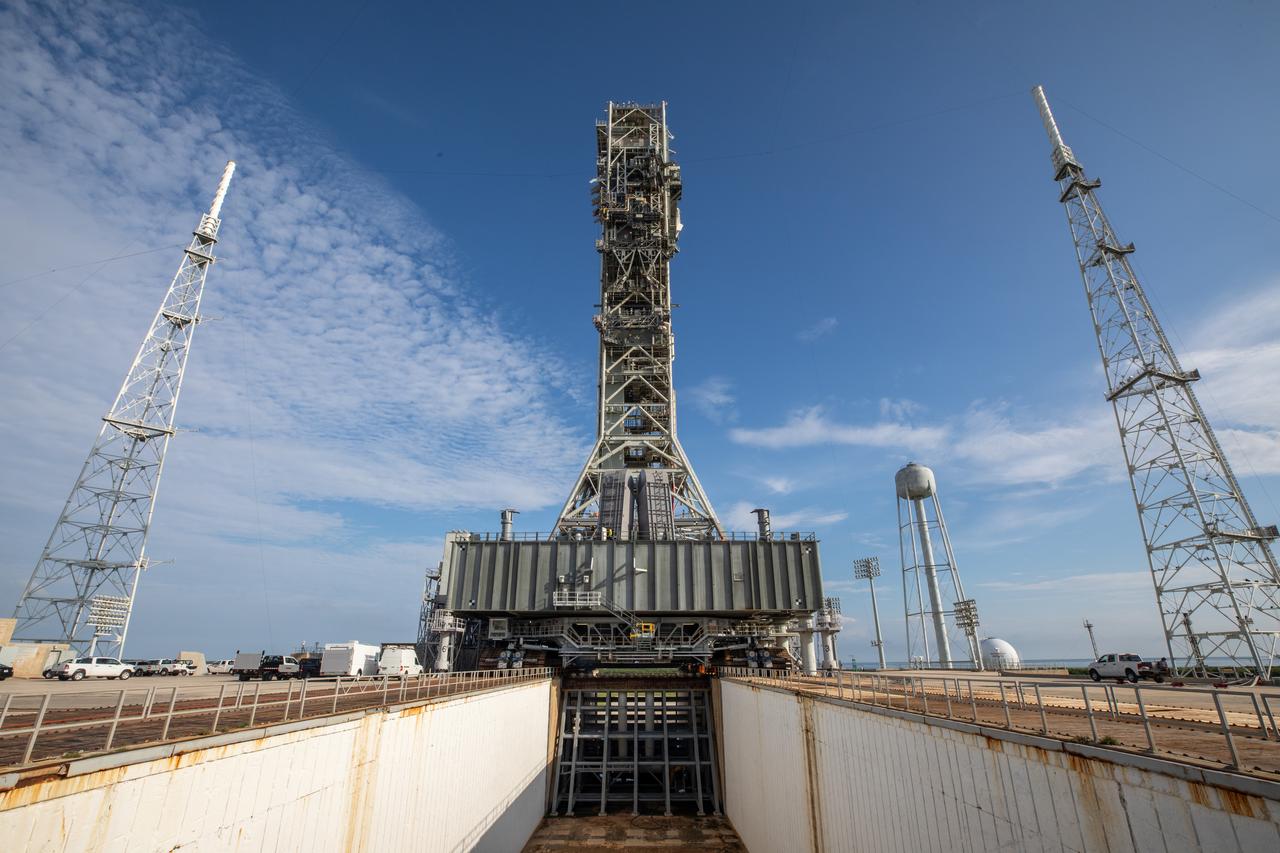
Teams with NASA’s Exploration Ground Systems Program at the agency’s Kennedy Space Center in Florida prepare to move mobile launcher 1 atop the agency’s crawler-transporter 2 from Launch Complex 39B to the Vehicle Assembly Building on Tuesday, Oct. 1, 2024. The crawler recently reached 2,500 miles traveling to the launch pad since its construction in 1965. The mobile launcher has been at the launch pad since August 2023 undergoing upgrades and tests in preparation for NASA’s Artemis II mission. The mobile launcher will be used to assemble, process, and launch NASA’s SLS (Space Launch System) and Orion spacecraft to the Moon and beyond.
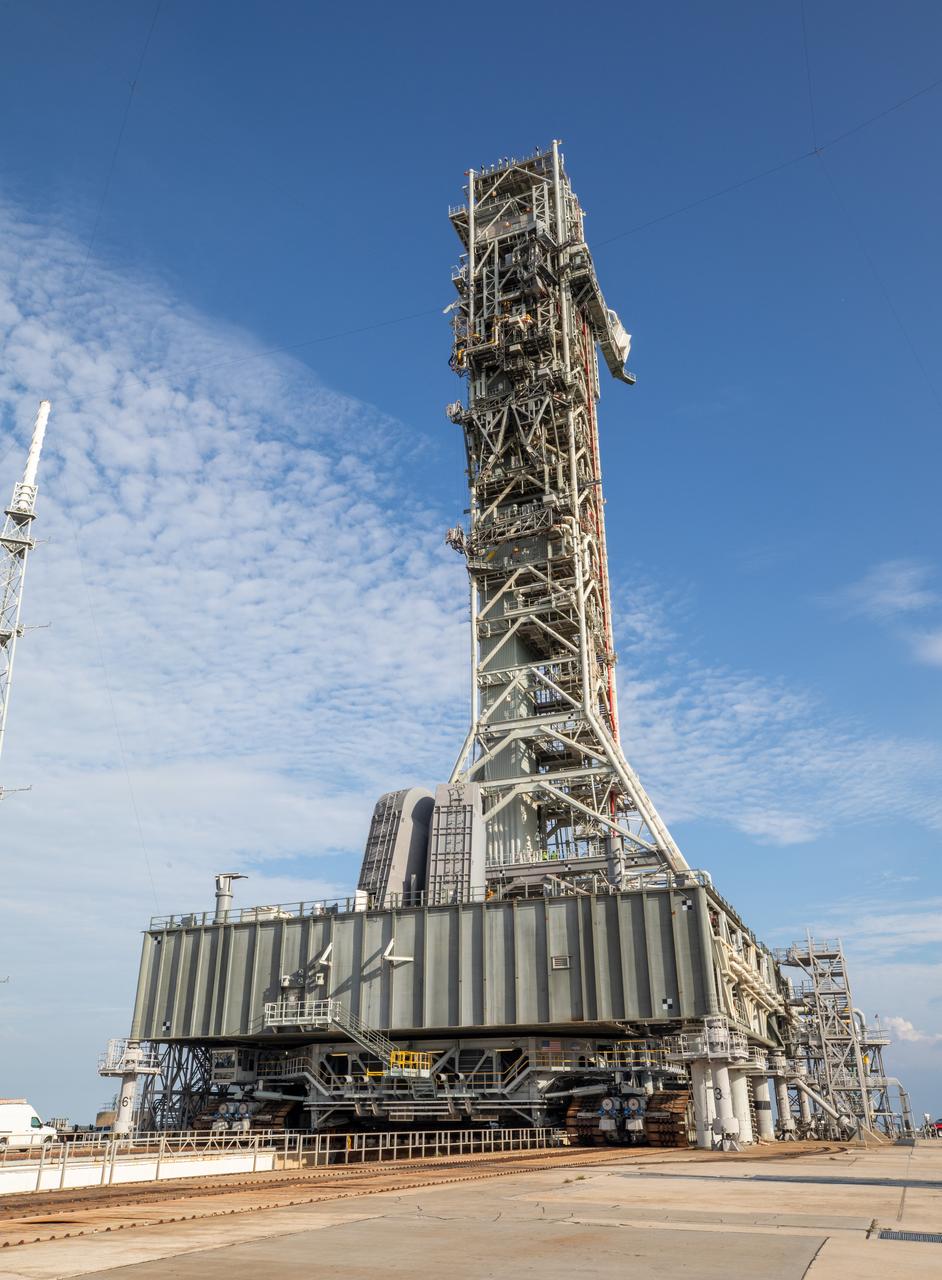
Teams with NASA’s Exploration Ground Systems Program at the agency’s Kennedy Space Center in Florida prepare to move mobile launcher 1 atop the agency’s crawler-transporter 2 from Launch Complex 39B to the Vehicle Assembly Building on Tuesday, Oct. 1, 2024. The crawler recently reached 2,500 miles traveling to the launch pad since its construction in 1965. The mobile launcher has been at the launch pad since August 2023 undergoing upgrades and tests in preparation for NASA’s Artemis II mission. The mobile launcher will be used to assemble, process, and launch NASA’s SLS (Space Launch System) and Orion spacecraft to the Moon and beyond.
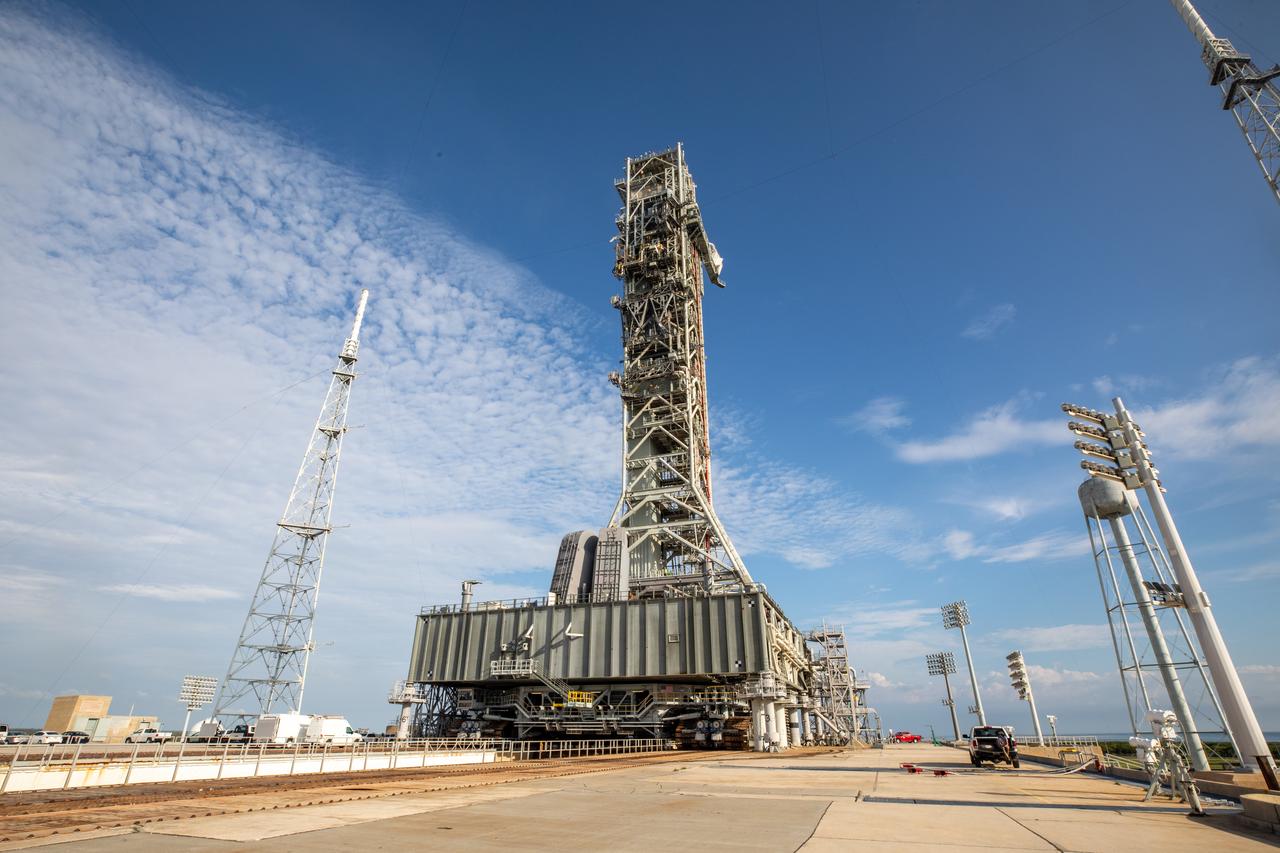
Teams with NASA’s Exploration Ground Systems Program at the agency’s Kennedy Space Center in Florida prepare to move mobile launcher 1 atop the agency’s crawler-transporter 2 from Launch Complex 39B to the Vehicle Assembly Building on Tuesday, Oct. 1, 2024. The crawler recently reached 2,500 miles traveling to the launch pad since its construction in 1965. The mobile launcher has been at the launch pad since August 2023 undergoing upgrades and tests in preparation for NASA’s Artemis II mission. The mobile launcher will be used to assemble, process, and launch NASA’s SLS (Space Launch System) and Orion spacecraft to the Moon and beyond.
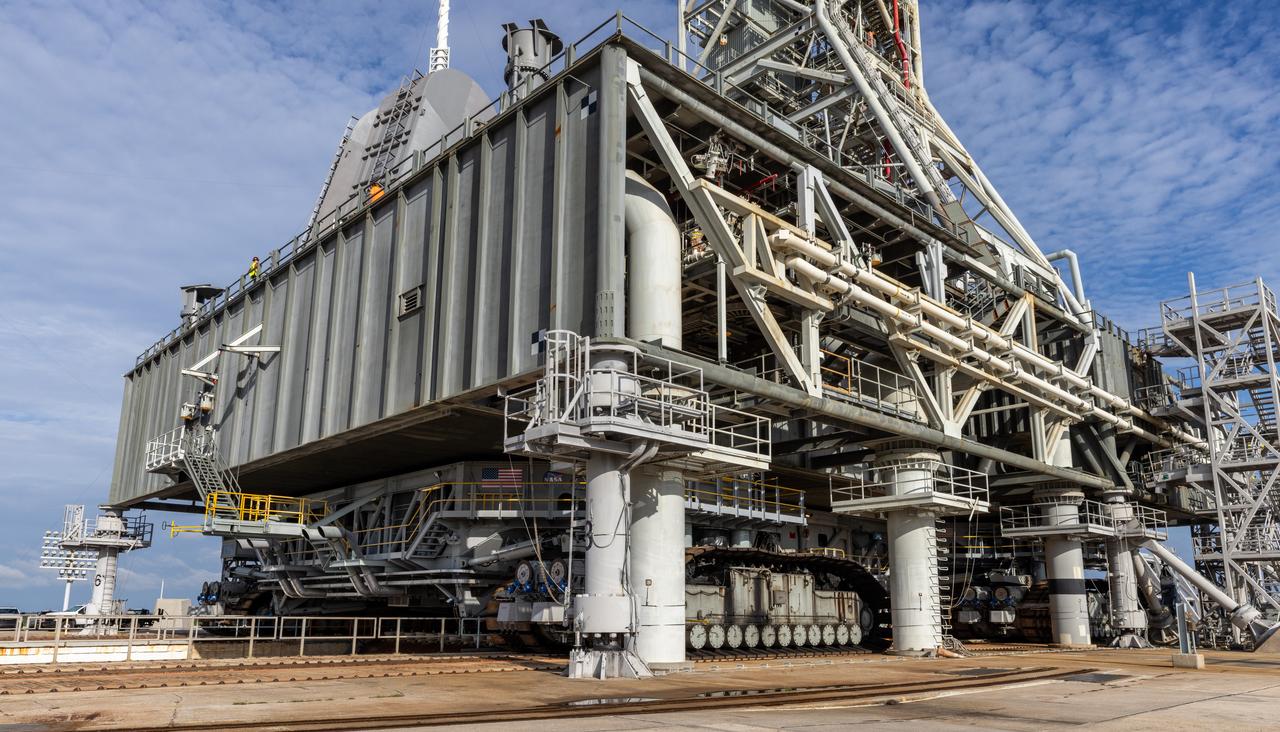
Teams with NASA’s Exploration Ground Systems Program at the agency’s Kennedy Space Center in Florida prepare to move mobile launcher 1 atop the agency’s crawler-transporter 2 from Launch Complex 39B to the Vehicle Assembly Building on Tuesday, Oct. 1, 2024. The crawler recently reached 2,500 miles traveling to the launch pad since its construction in 1965. The mobile launcher has been at the launch pad since August 2023 undergoing upgrades and tests in preparation for NASA’s Artemis II mission. The mobile launcher will be used to assemble, process, and launch NASA’s SLS (Space Launch System) and Orion spacecraft to the Moon and beyond.
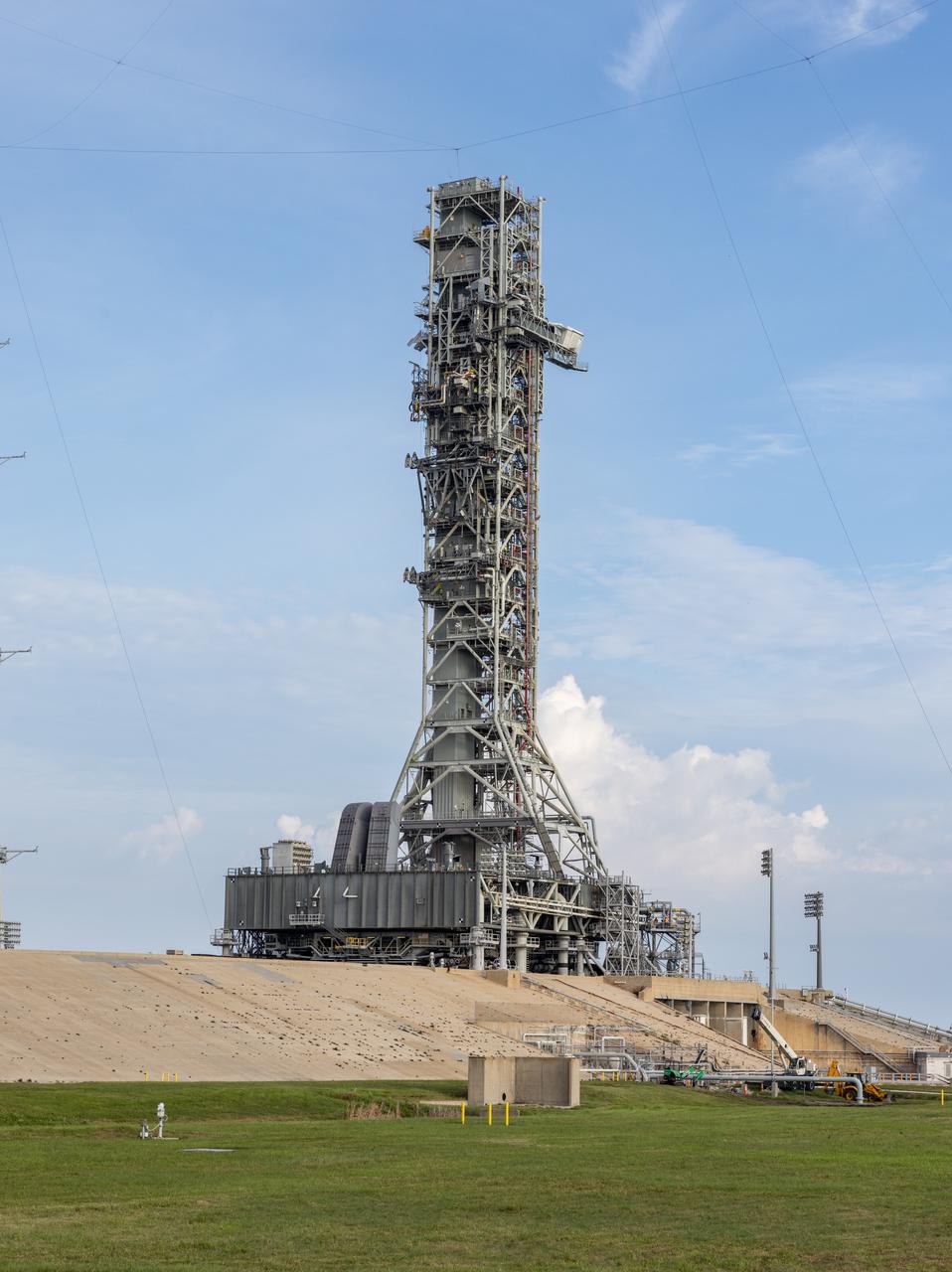
Teams with NASA’s Exploration Ground Systems Program at the agency’s Kennedy Space Center in Florida prepare to move mobile launcher 1 atop the agency’s crawler-transporter 2 from Launch Complex 39B to the Vehicle Assembly Building on Tuesday, Oct. 1, 2024. The crawler recently reached 2,500 miles traveling to the launch pad since its construction in 1965. The mobile launcher has been at the launch pad since August 2023 undergoing upgrades and tests in preparation for NASA’s Artemis II mission. The mobile launcher will be used to assemble, process, and launch NASA’s SLS (Space Launch System) and Orion spacecraft to the Moon and beyond.
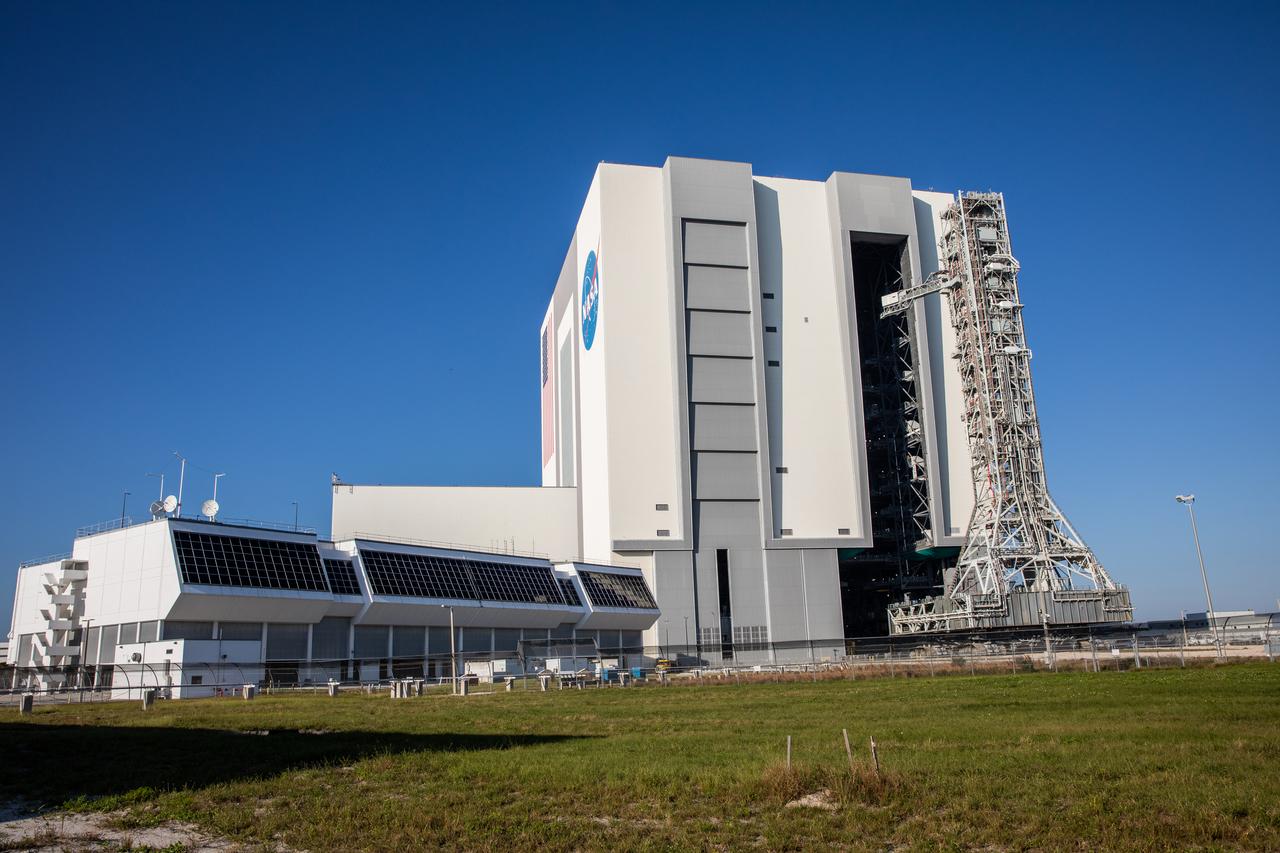
NASA’s mobile launcher, carried atop the crawler-transporter 2, arrives at the entrance to the Vehicle Assembly Building (VAB) at NASA’s Kennedy Space Center in Florida. The mobile launcher left launch pad 39B on Dec. 8, 2022, following the successful launch of the agency’s Space Launch System (SLS) rocket and Orion spacecraft on the Artemis I flight test on Nov. 16, 2022 and returned to the VAB on Dec. 9, 2022. The mobile launcher stay inside the VAB as teams get it ready for the Artemis II crewed mission. Following its stay in the VAB, it will go to the mobile launcher park site location at Kennedy where it will undergo emergency egress modifications and testing to support future Artemis missions.
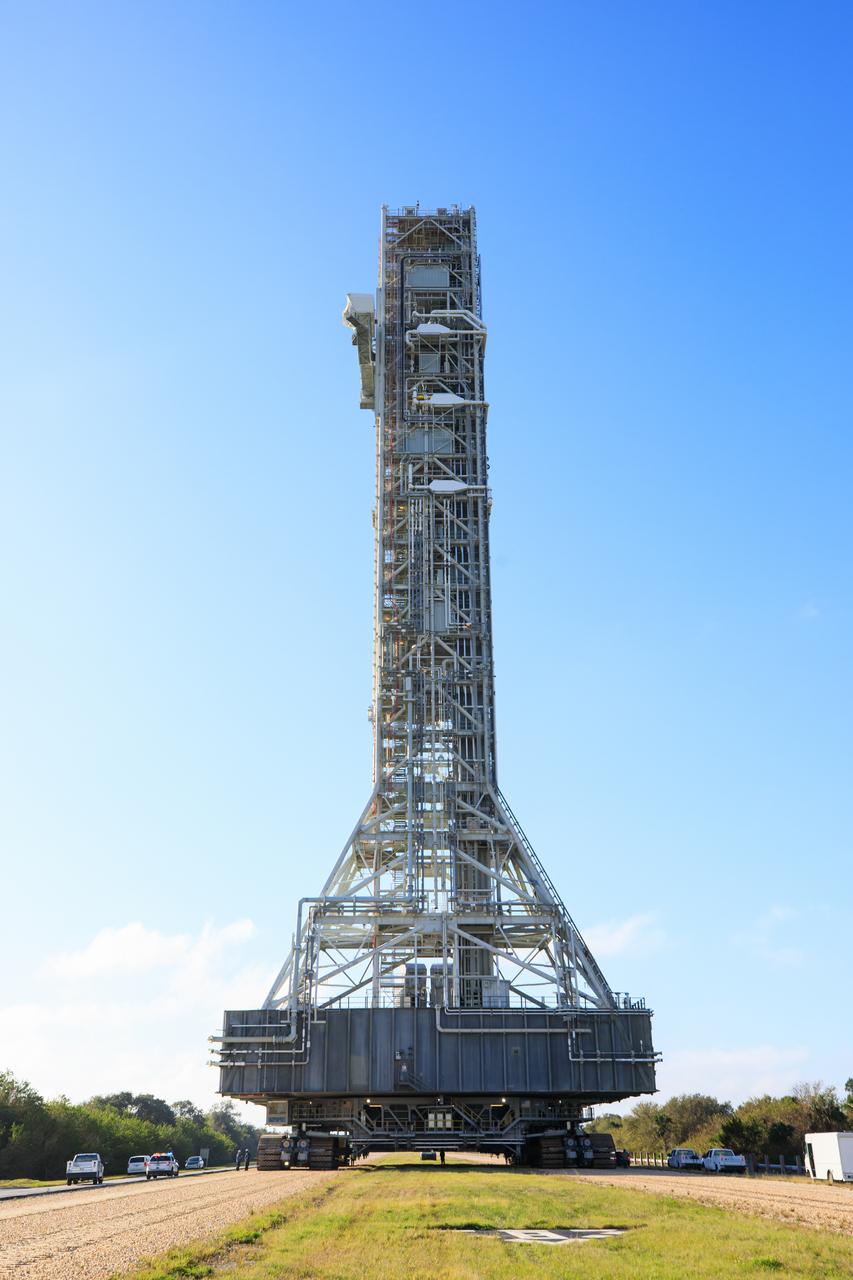
NASA’s mobile launcher, carried atop the crawler-transporter 2, left launch pad 39B at NASA’s Kennedy Space Center in Florida on Dec. 8, 2022, following the successful launch of the agency’s Space Launch System (SLS) rocket and Orion spacecraft on the Artemis I flight test on Nov. 16, 2022. The mobile launcher is scheduled to return to the Vehicle Assembly Building (VAB) on Dec. 9, 2022, and it will remain inside the VAB for several weeks as teams get it ready for the Artemis II crewed mission. Following its stay in the VAB, it will go to the mobile launcher park site location at Kennedy where it will undergo emergency egress modifications and testing to support future Artemis missions.
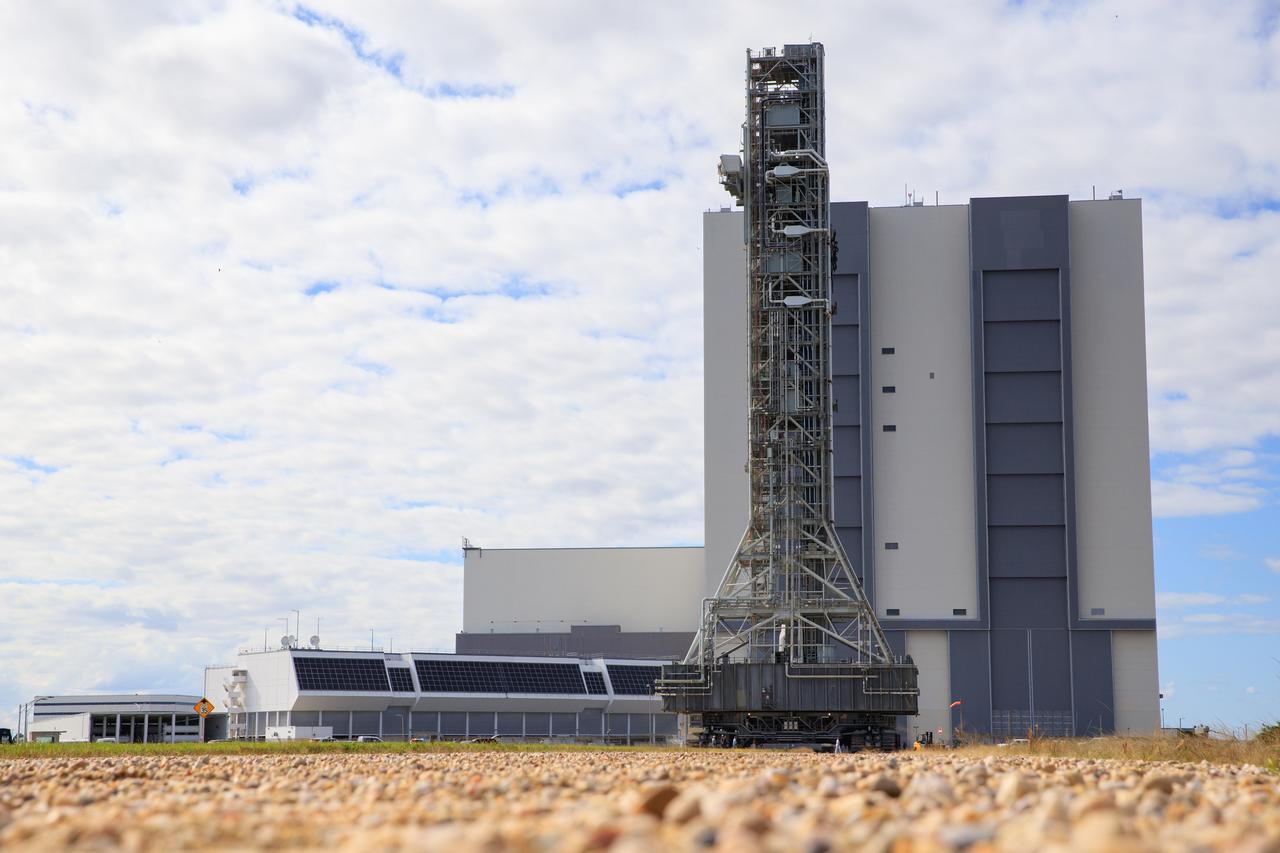
NASA’s mobile launcher, carried atop the crawler-transporter 2, left launch pad 39B at NASA’s Kennedy Space Center in Florida on Dec. 8, 2022, following the successful launch of the agency’s Space Launch System (SLS) rocket and Orion spacecraft on the Artemis I flight test on Nov. 16, 2022. The mobile launcher is scheduled to return to the Vehicle Assembly Building (VAB) on Dec. 9, 2022, and it will remain inside the VAB for several weeks as teams get it ready for the Artemis II crewed mission. Following its stay in the VAB, it will go to the mobile launcher park site location at Kennedy where it will undergo emergency egress modifications and testing to support future Artemis missions.
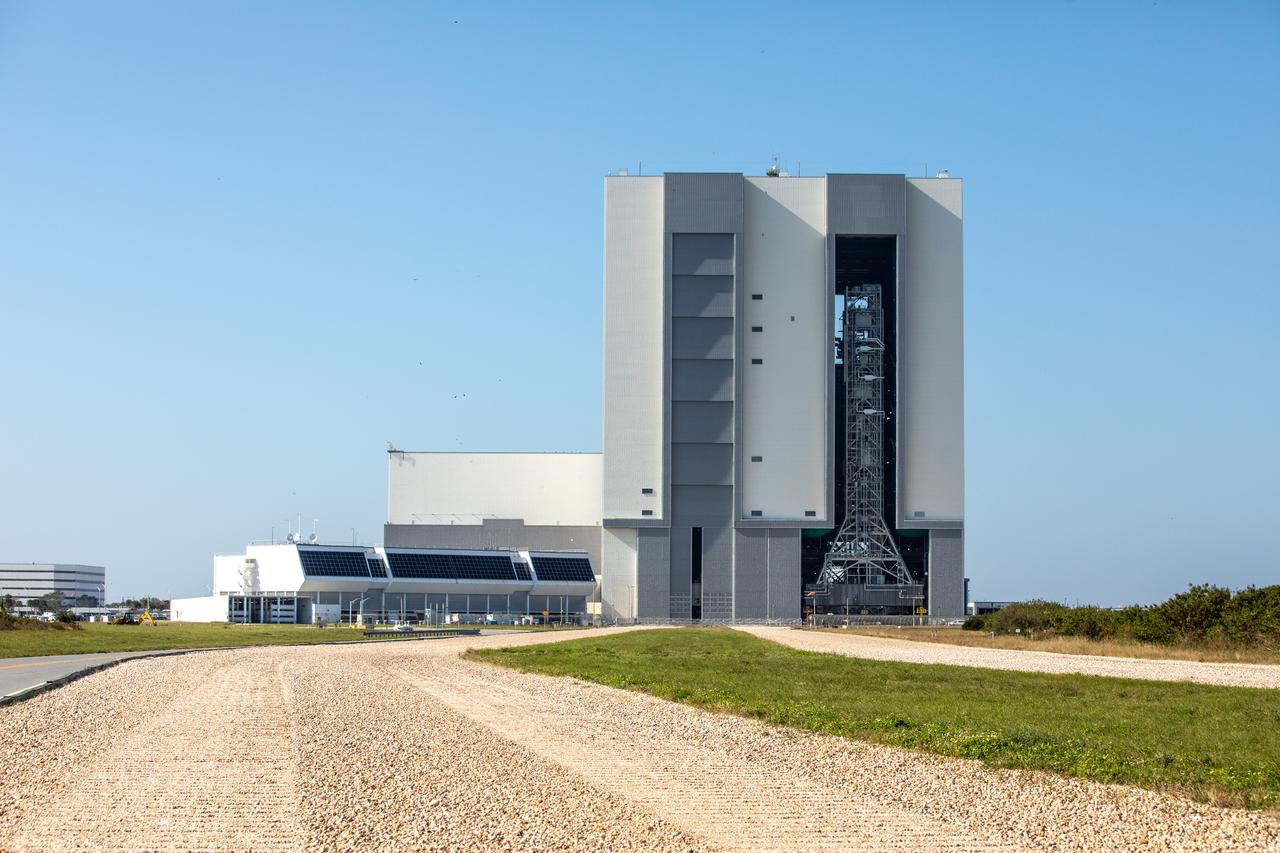
NASA’s mobile launcher, carried atop the crawler-transporter 2, moves inside the Vehicle Assembly Building (VAB) at NASA’s Kennedy Space Center in Florida on Dec. 9, 2022, following the successful launch of the agency’s Space Launch System (SLS) rocket and Orion spacecraft on the Artemis I flight test on Nov. 16, 2022. The mobile launcher will remain inside the VAB for several weeks as teams get it ready for the Artemis II crewed mission. Following its stay in the VAB, it will go to the mobile launcher park site location at Kennedy where it will undergo emergency egress modifications and testing to support future Artemis missions.
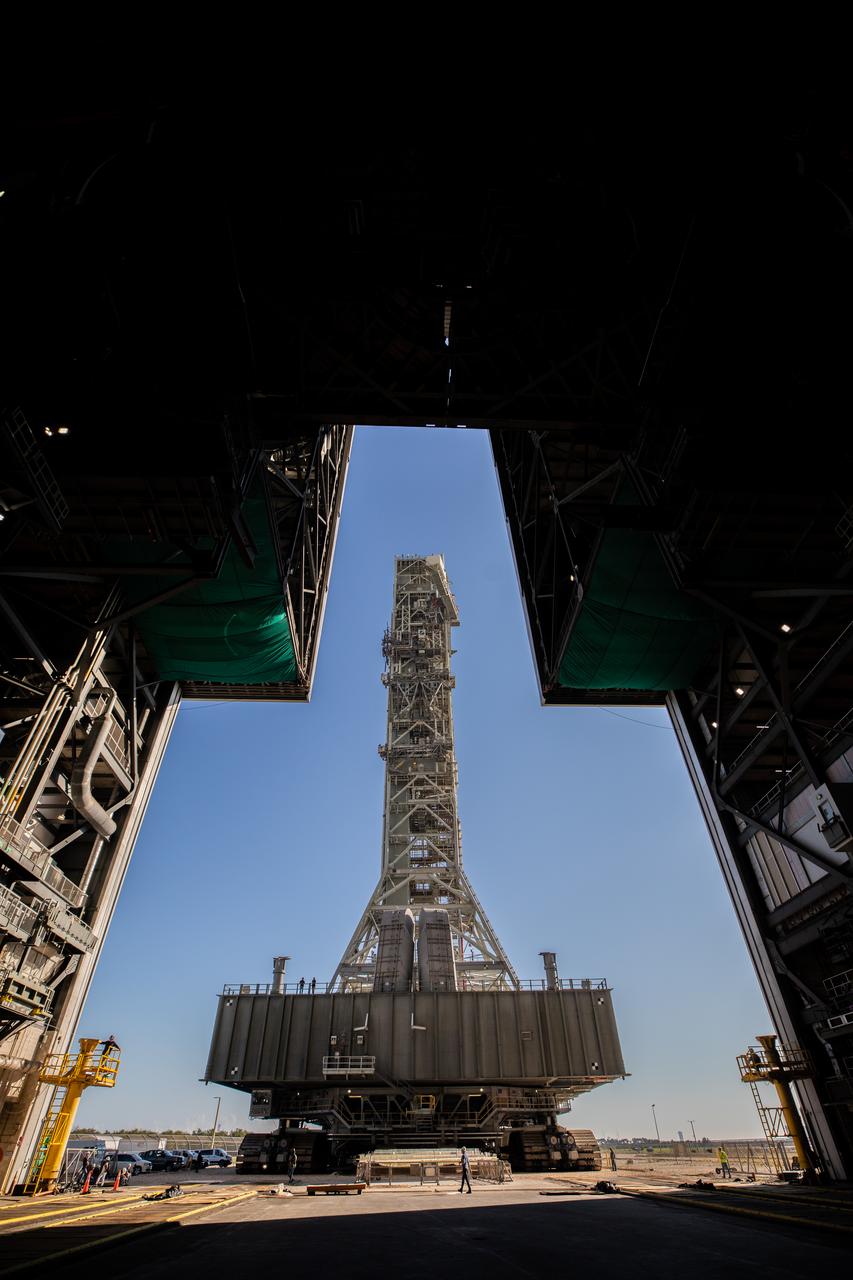
A view from inside the Vehicle Assembly Building (VAB) at NASA’s Kennedy Space Center in Florida on Dec. 9, 2022, as the mobile launcher, carried atop the crawler-transporter 2, arrives at the entrance to the transfer aisle, following the successful launch of the agency’s Space Launch System (SLS) rocket and Orion spacecraft on the Artemis I flight test on Nov. 16, 2022. The mobile launcher will stay inside the VAB and remain there for several weeks as teams get it ready for the Artemis II crewed mission. Following its stay in the VAB, it will go to the mobile launcher park site location at Kennedy where it will undergo emergency egress modifications and testing to support future Artemis missions.
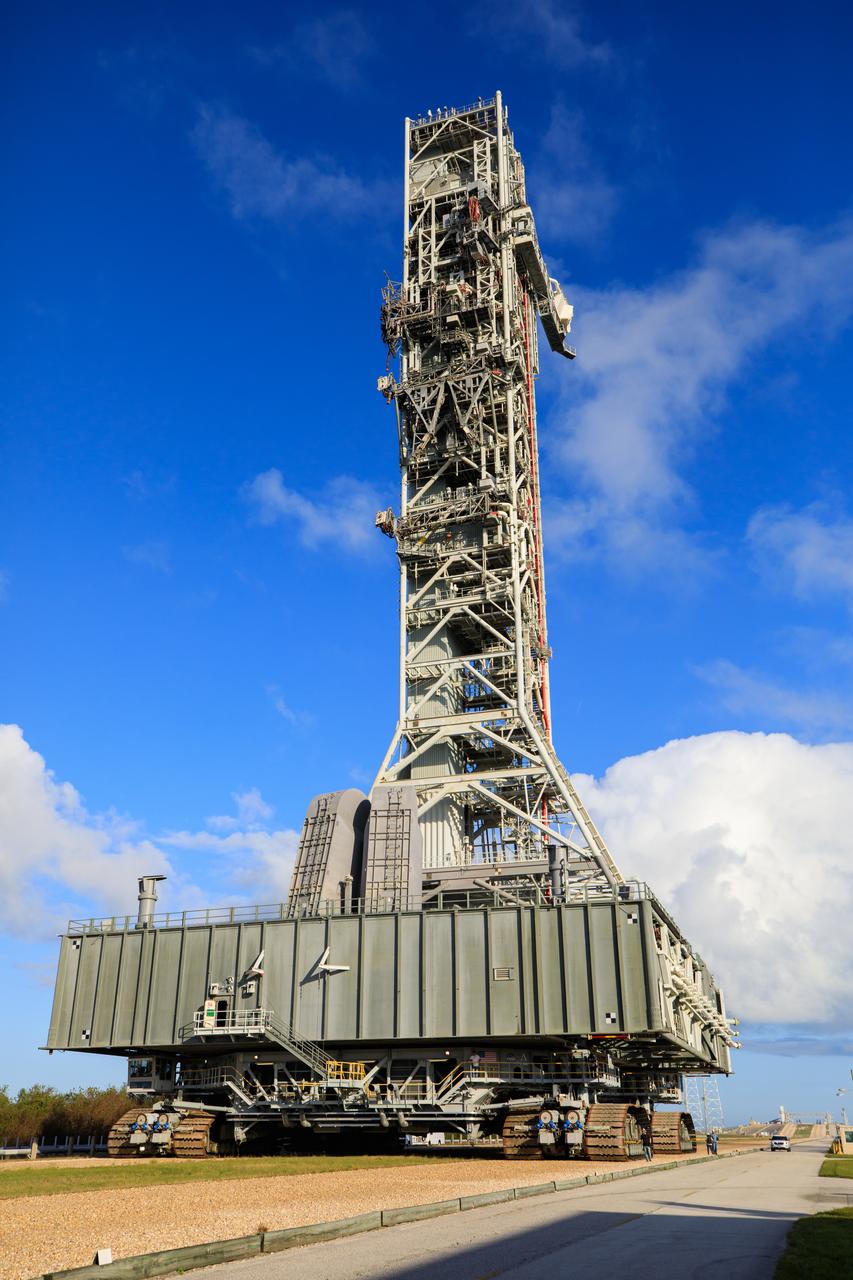
NASA’s mobile launcher, carried atop the crawler-transporter 2, left launch pad 39B at NASA’s Kennedy Space Center in Florida on Dec. 8, 2022, following the successful launch of the agency’s Space Launch System (SLS) rocket and Orion spacecraft on the Artemis I flight test on Nov. 16, 2022. The mobile launcher is scheduled to return to the Vehicle Assembly Building (VAB) on Dec. 9, 2022, and it will remain inside the VAB for several weeks as teams get it ready for the Artemis II crewed mission. Following its stay in the VAB, it will go to the mobile launcher park site location at Kennedy where it will undergo emergency egress modifications and testing to support future Artemis missions.
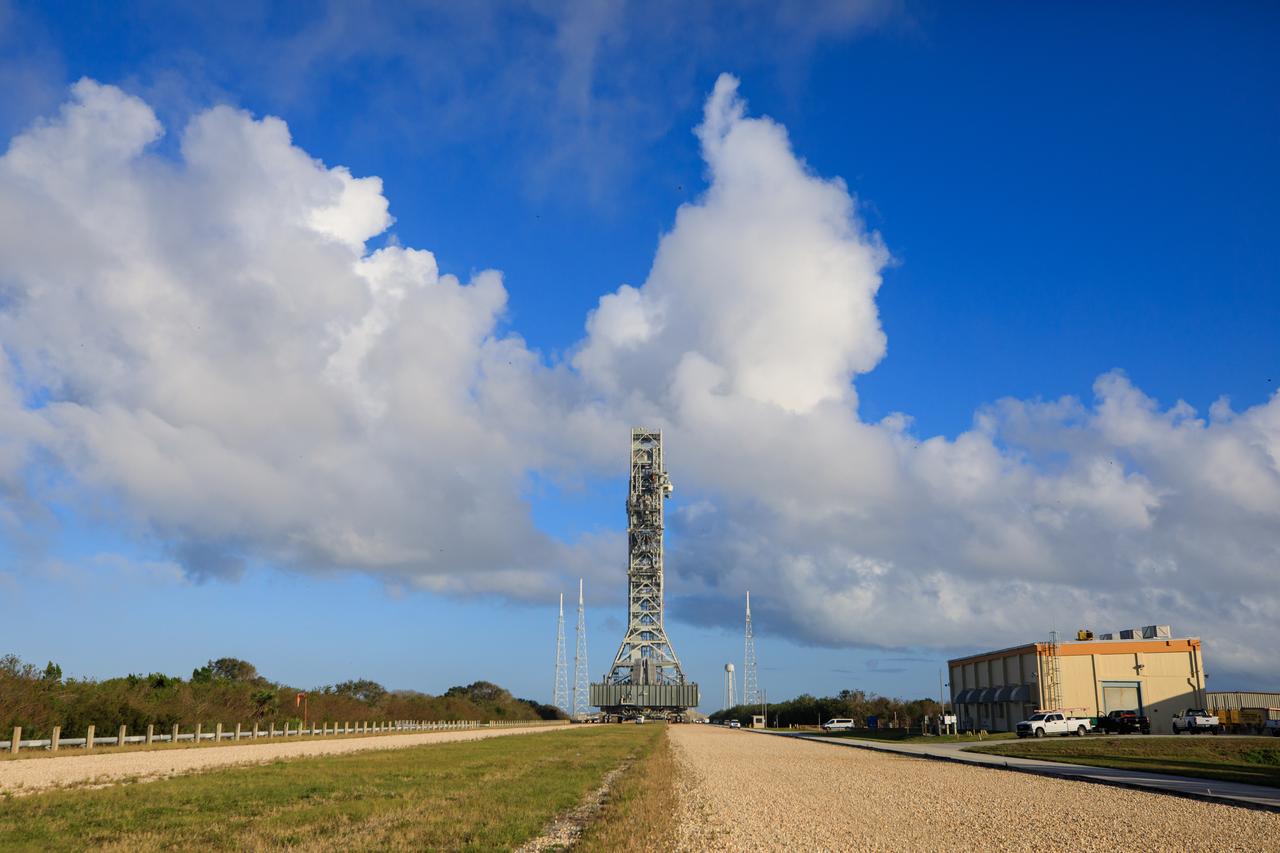
NASA’s mobile launcher, carried atop the crawler-transporter 2, left launch pad 39B at NASA’s Kennedy Space Center in Florida on Dec. 8, 2022, following the successful launch of the agency’s Space Launch System (SLS) rocket and Orion spacecraft on the Artemis I flight test on Nov. 16, 2022. The mobile launcher is scheduled to return to the Vehicle Assembly Building (VAB) on Dec. 9, 2022, and it will remain inside the VAB for several weeks as teams get it ready for the Artemis II crewed mission. Following its stay in the VAB, it will go to the mobile launcher park site location at Kennedy where it will undergo emergency egress modifications and testing to support future Artemis missions.
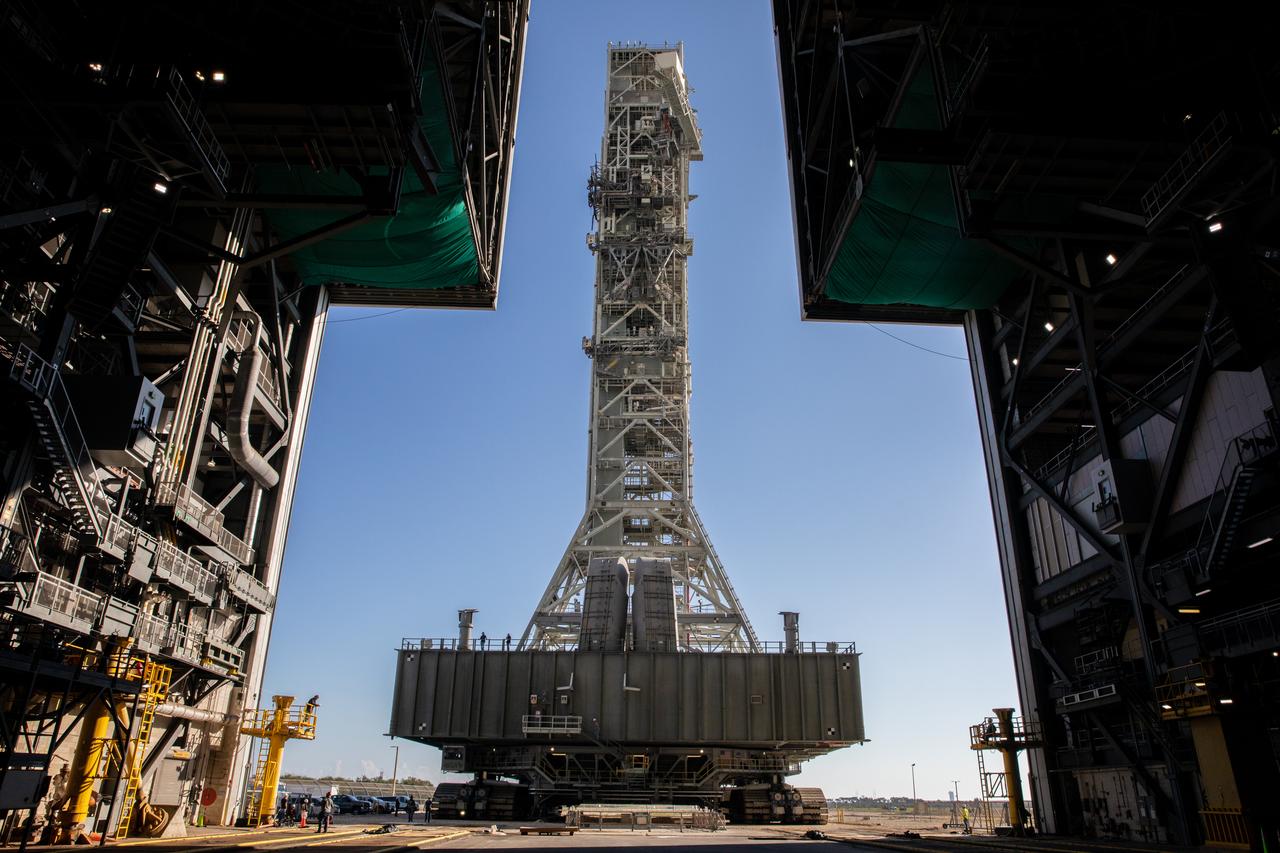
A view from inside the Vehicle Assembly Building (VAB) at NASA’s Kennedy Space Center in Florida on Dec. 9, 2022, as the mobile launcher, carried atop the crawler-transporter 2, arrives at the entrance to the transfer aisle, following the successful launch of the agency’s Space Launch System (SLS) rocket and Orion spacecraft on the Artemis I flight test on Nov. 16, 2022. The mobile launcher will stay inside the VAB and remain there for several weeks as teams get it ready for the Artemis II crewed mission. Following its stay in the VAB, it will go to the mobile launcher park site location at Kennedy where it will undergo emergency egress modifications and testing to support future Artemis missions.
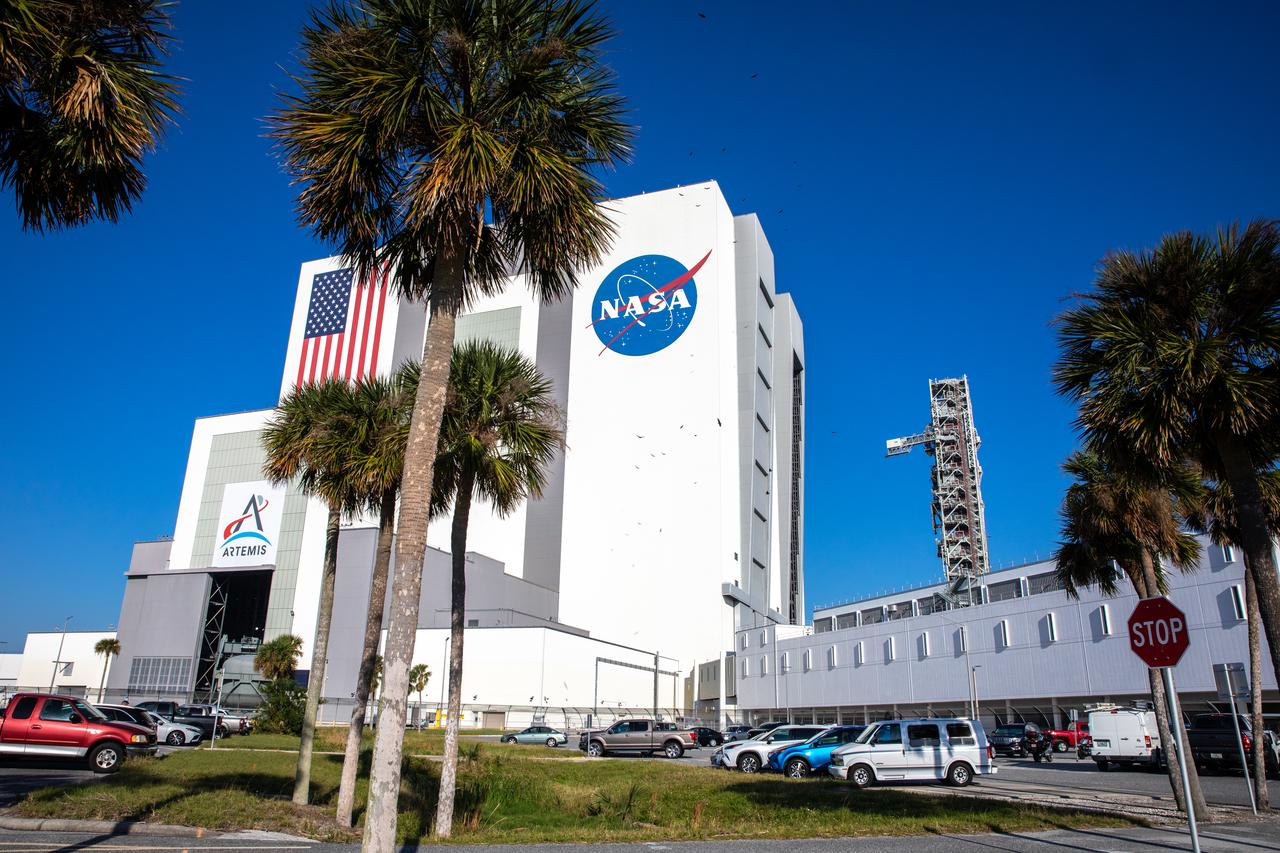
NASA’s mobile launcher, carried atop the crawler-transporter 2, arrives at the entrance to the Vehicle Assembly Building (VAB) at NASA’s Kennedy Space Center in Florida. The mobile launcher left launch pad 39B on Dec. 8, 2022, following the successful launch of the agency’s Space Launch System (SLS) rocket and Orion spacecraft on the Artemis I flight test on Nov. 16, 2022 and returned to the VAB on Dec. 9, 2022. The mobile launcher stay inside the VAB as teams get it ready for the Artemis II crewed mission. Following its stay in the VAB, it will go to the mobile launcher park site location at Kennedy where it will undergo emergency egress modifications and testing to support future Artemis missions.
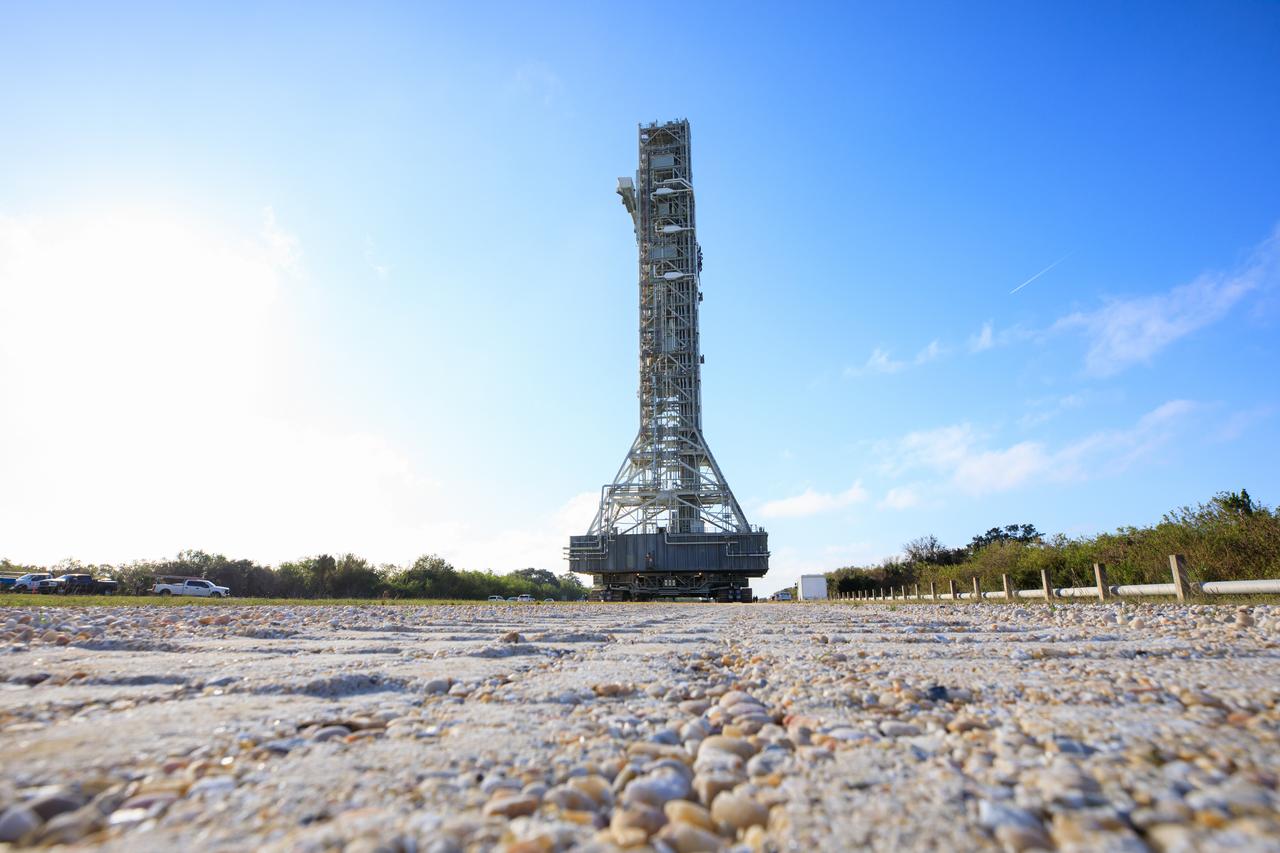
NASA’s mobile launcher, carried atop the crawler-transporter 2, left launch pad 39B at NASA’s Kennedy Space Center in Florida on Dec. 8, 2022, following the successful launch of the agency’s Space Launch System (SLS) rocket and Orion spacecraft on the Artemis I flight test on Nov. 16, 2022. The mobile launcher is scheduled to return to the Vehicle Assembly Building (VAB) on Dec. 9, 2022, and it will remain inside the VAB for several weeks as teams get it ready for the Artemis II crewed mission. Following its stay in the VAB, it will go to the mobile launcher park site location at Kennedy where it will undergo emergency egress modifications and testing to support future Artemis missions.
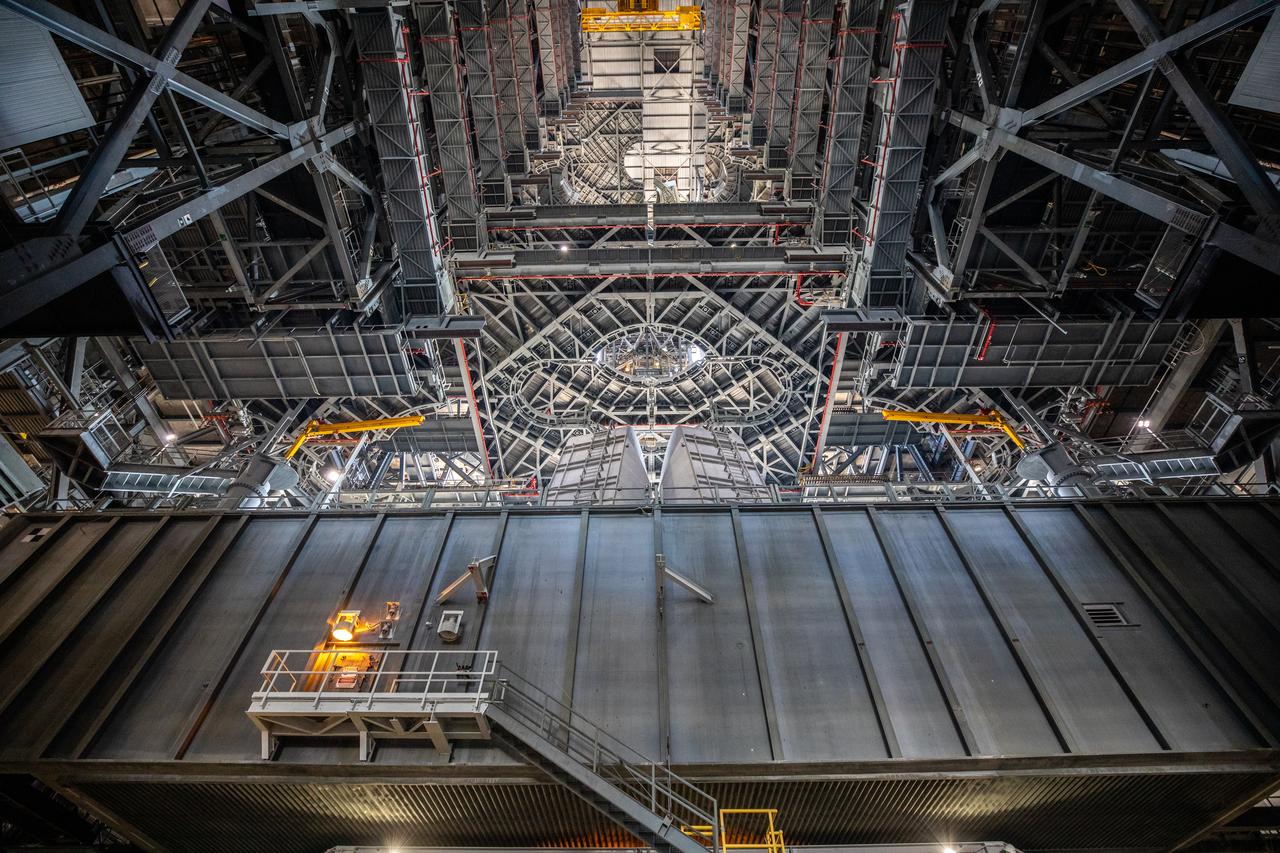
NASA’s mobile launcher, carried atop the crawler-transporter 2, is moved inside High Bay 3 of the Vehicle Assembly Building (VAB) at NASA’s Kennedy Space Center in Florida on Dec. 9, 2022, following the successful launch of the agency’s Space Launch System (SLS) rocket and Orion spacecraft on the Artemis I flight test on Nov. 16, 2022. The mobile launcher will remain inside the VAB for several weeks as teams get it ready for the Artemis II crewed mission. Following its stay in the VAB, it will go to the mobile launcher park site location at Kennedy where it will undergo emergency egress modifications and testing to support future Artemis missions.
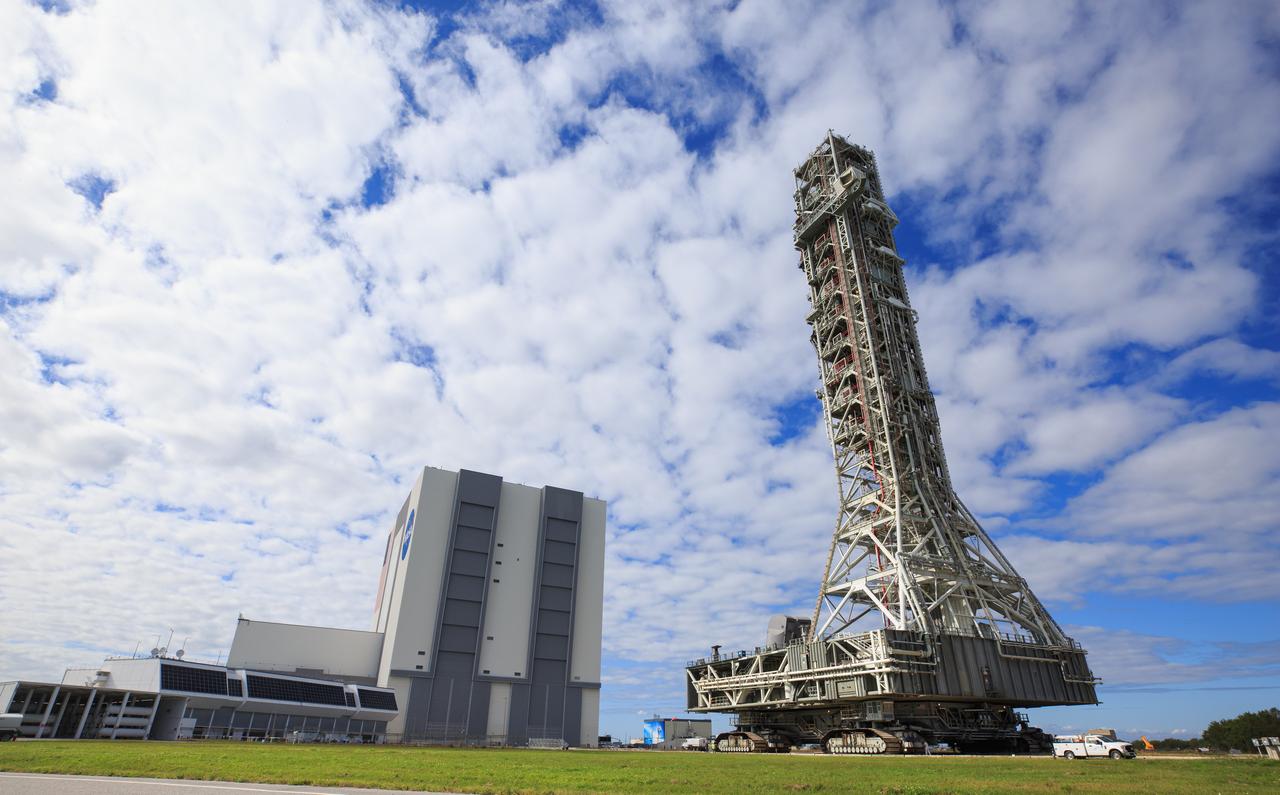
NASA’s mobile launcher, carried atop the crawler-transporter 2, left launch pad 39B at NASA’s Kennedy Space Center in Florida on Dec. 8, 2022, following the successful launch of the agency’s Space Launch System (SLS) rocket and Orion spacecraft on the Artemis I flight test on Nov. 16, 2022. The mobile launcher is scheduled to return to the Vehicle Assembly Building (VAB) on Dec. 9, 2022, and it will remain inside the VAB for several weeks as teams get it ready for the Artemis II crewed mission. Following its stay in the VAB, it will go to the mobile launcher park site location at Kennedy where it will undergo emergency egress modifications and testing to support future Artemis missions.
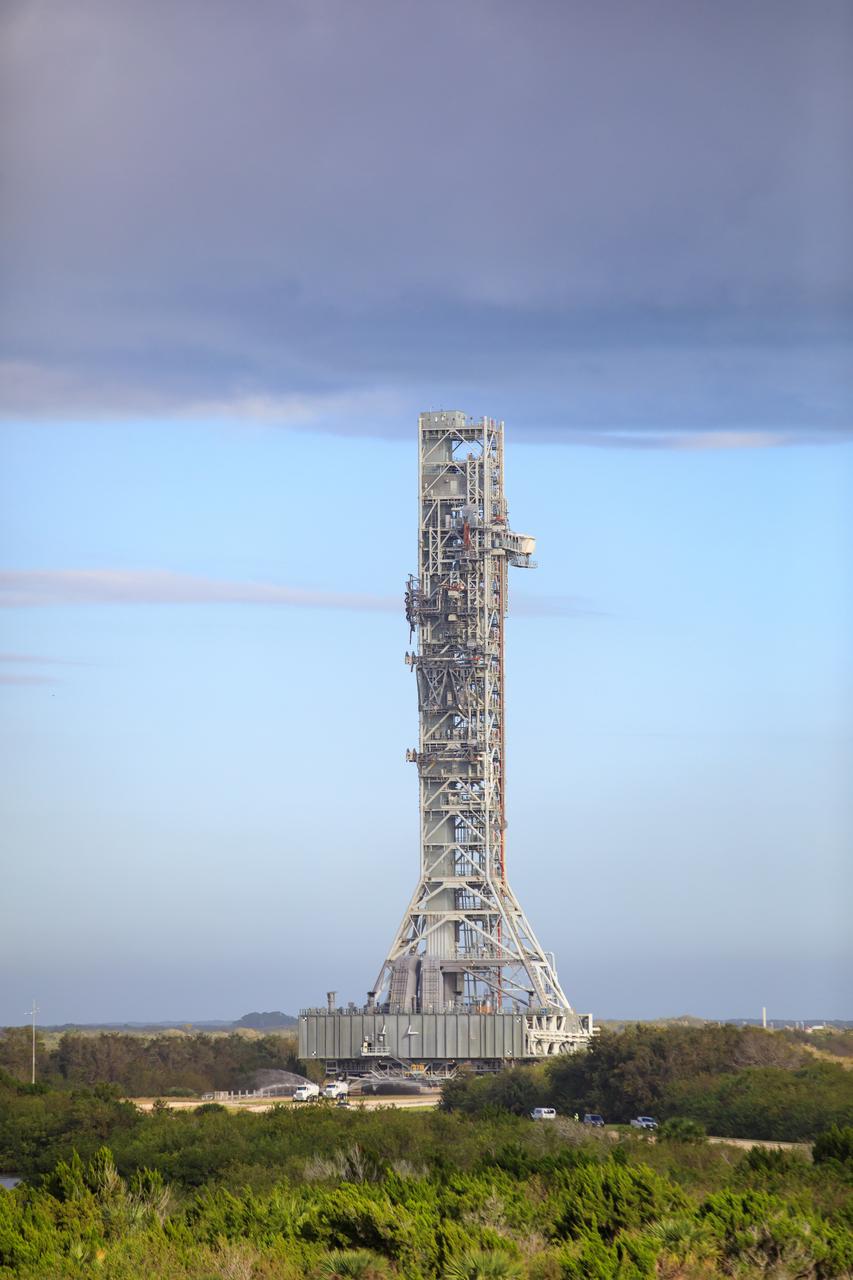
NASA’s mobile launcher, carried atop the crawler-transporter 2, left launch pad 39B at NASA’s Kennedy Space Center in Florida on Dec. 8, 2022, following the successful launch of the agency’s Space Launch System (SLS) rocket and Orion spacecraft on the Artemis I flight test on Nov. 16, 2022. The mobile launcher is scheduled to return to the Vehicle Assembly Building (VAB) on Dec. 9, 2022, and it will remain inside the VAB for several weeks as teams get it ready for the Artemis II crewed mission. Following its stay in the VAB, it will go to the mobile launcher park site location at Kennedy where it will undergo emergency egress modifications and testing to support future Artemis missions.
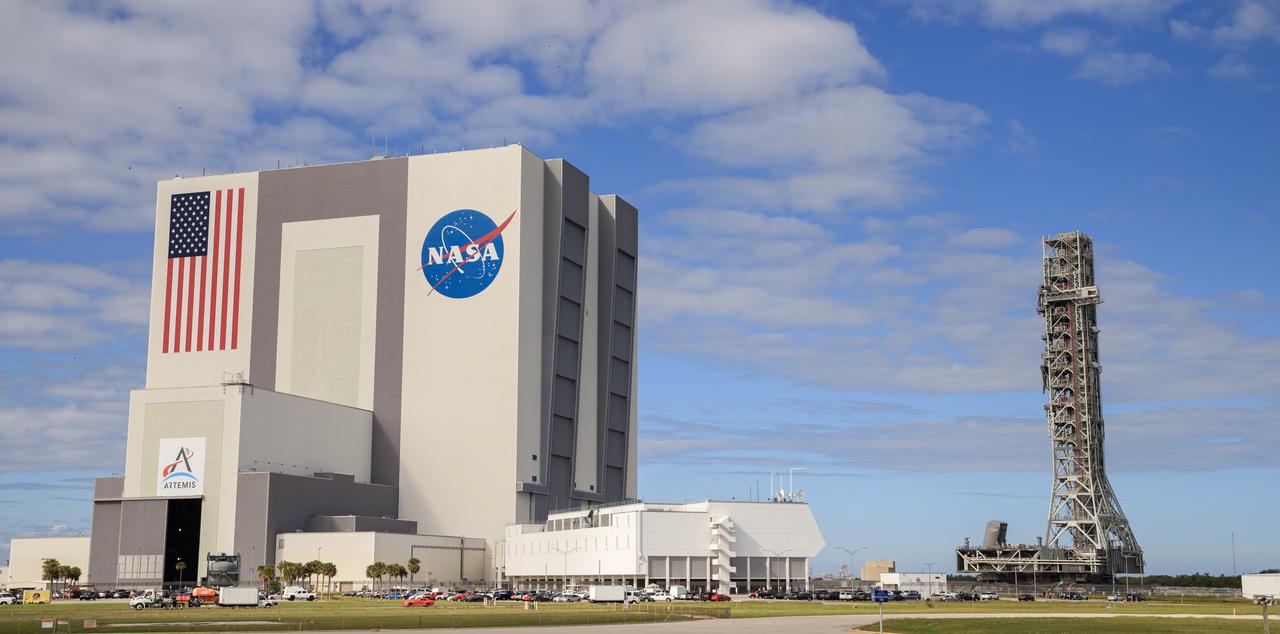
NASA’s mobile launcher, carried atop the crawler-transporter 2, left launch pad 39B at NASA’s Kennedy Space Center in Florida on Dec. 8, 2022, following the successful launch of the agency’s Space Launch System (SLS) rocket and Orion spacecraft on the Artemis I flight test on Nov. 16, 2022. The mobile launcher is scheduled to return to the Vehicle Assembly Building (VAB) on Dec. 9, 2022, and it will remain inside the VAB for several weeks as teams get it ready for the Artemis II crewed mission. Following its stay in the VAB, it will go to the mobile launcher park site location at Kennedy where it will undergo emergency egress modifications and testing to support future Artemis missions.
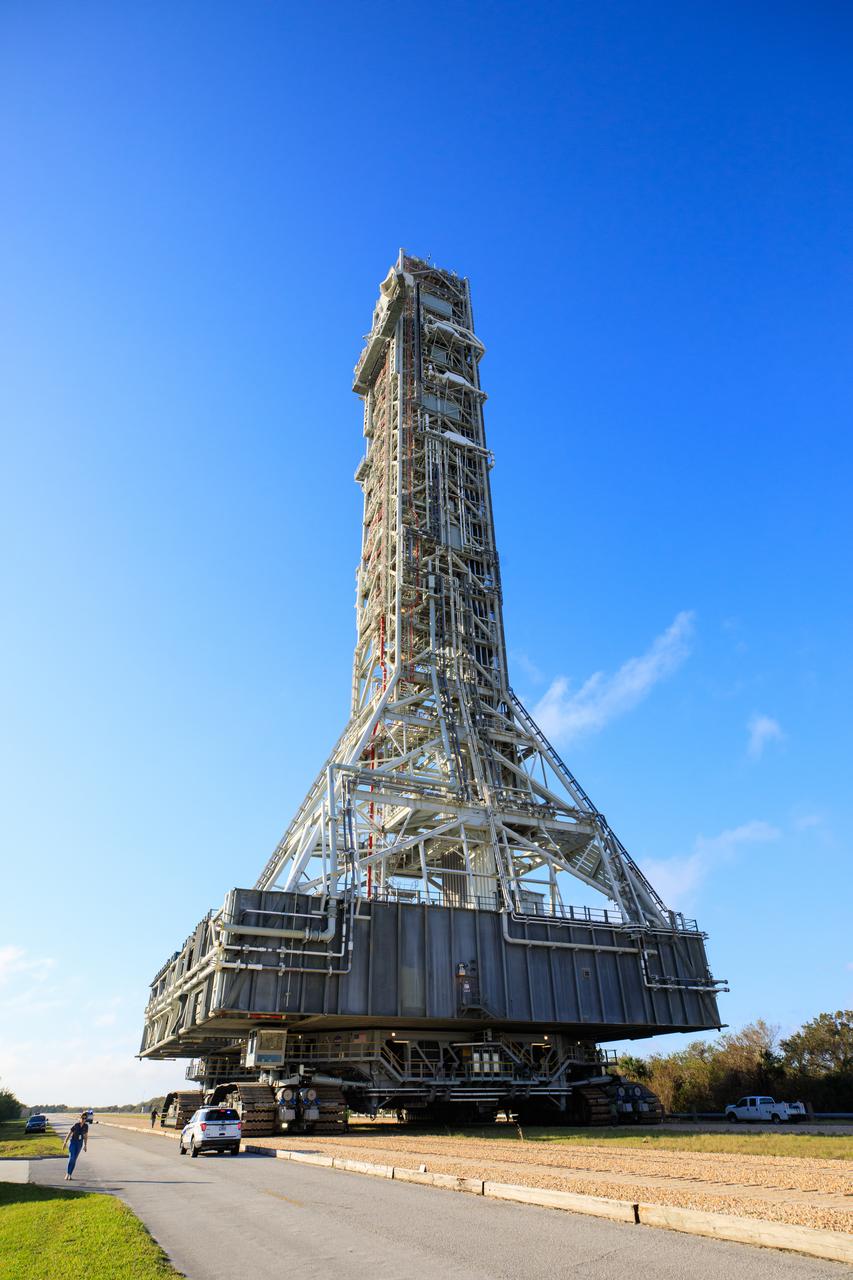
NASA’s mobile launcher, carried atop the crawler-transporter 2, left launch pad 39B at NASA’s Kennedy Space Center in Florida on Dec. 8, 2022, following the successful launch of the agency’s Space Launch System (SLS) rocket and Orion spacecraft on the Artemis I flight test on Nov. 16, 2022. The mobile launcher is scheduled to return to the Vehicle Assembly Building (VAB) on Dec. 9, 2022, and it will remain inside the VAB for several weeks as teams get it ready for the Artemis II crewed mission. Following its stay in the VAB, it will go to the mobile launcher park site location at Kennedy where it will undergo emergency egress modifications and testing to support future Artemis missions.