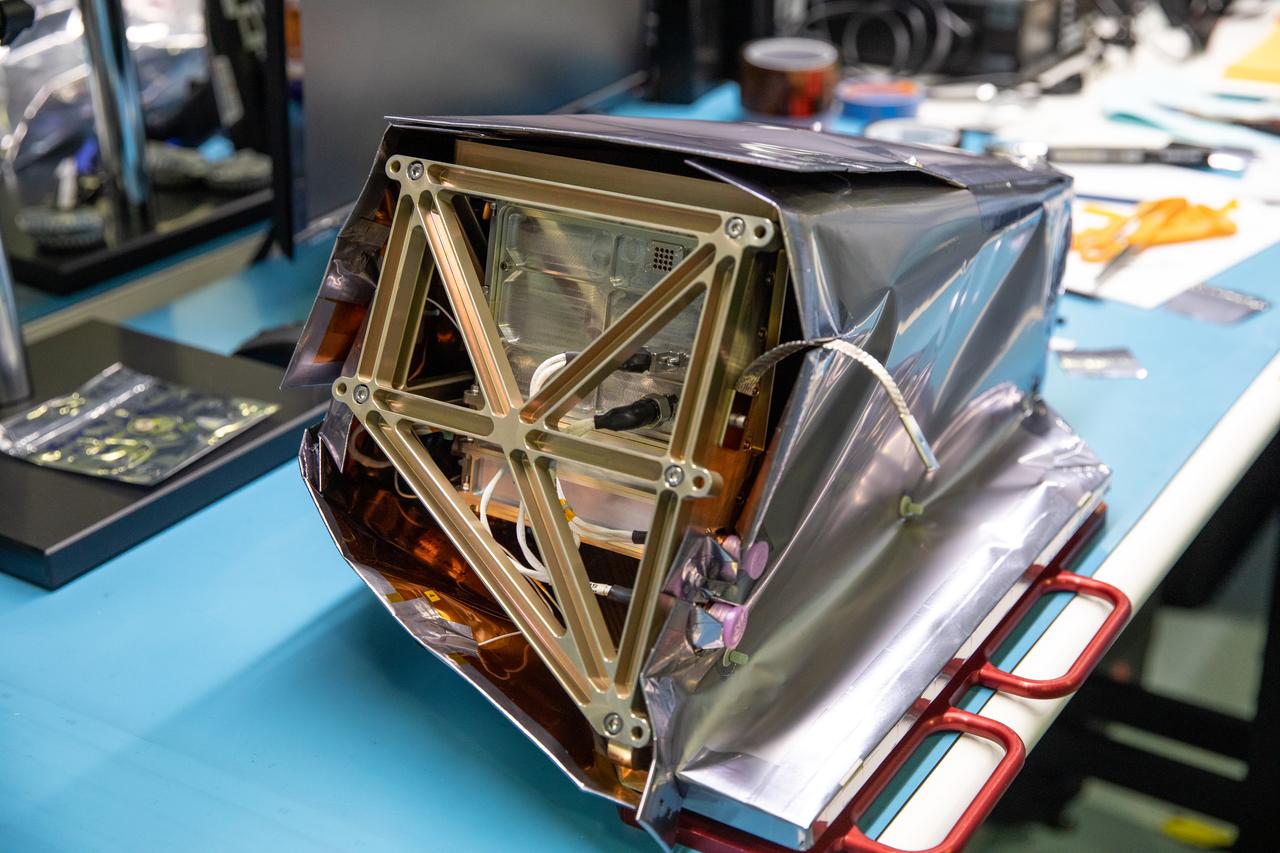
Engineers install multilayer insulation (MLI) on the Mass Spectrometer Observing Lunar Operations (MSolo) instrument inside Kennedy Space Center’s Space Station Processing Facility on Oct. 20, 2022. The activity is in preparation for the Polar Resources Ice Mining Experiment-1 (PRIME-1) mission, which will be the first in-situ resource utilization demonstration on the Moon. MLI protects the instrument from thermal temperature extremes, helping to insulate at cold temperatures and to cool at higher temperatures when solar lighting conditions or lunar infrared reflects onto the instrument. Researchers and engineers are preparing MSolo instruments to launch on four robotic missions as part of NASA’s Commercial Lunar Payload Services – commercial deliveries beginning in 2023 that will perform science experiments, test technologies, and demonstrate capabilities to help NASA explore the Moon and prepare for crewed missions to the lunar surface.

Engineers install multilayer insulation (MLI) on the Mass Spectrometer Observing Lunar Operations (MSolo) instrument inside Kennedy Space Center’s Space Station Processing Facility on Oct. 20, 2022. The activity is in preparation for the Polar Resources Ice Mining Experiment-1 (PRIME-1) mission, which will be the first in-situ resource utilization demonstration on the Moon. MLI protects the instrument from thermal temperature extremes, helping to insulate at cold temperatures and to cool at higher temperatures when solar lighting conditions or lunar infrared reflects onto the instrument. Researchers and engineers are preparing MSolo instruments to launch on four robotic missions as part of NASA’s Commercial Lunar Payload Services – commercial deliveries beginning in 2023 that will perform science experiments, test technologies, and demonstrate capabilities to help NASA explore the Moon and prepare for crewed missions to the lunar surface.
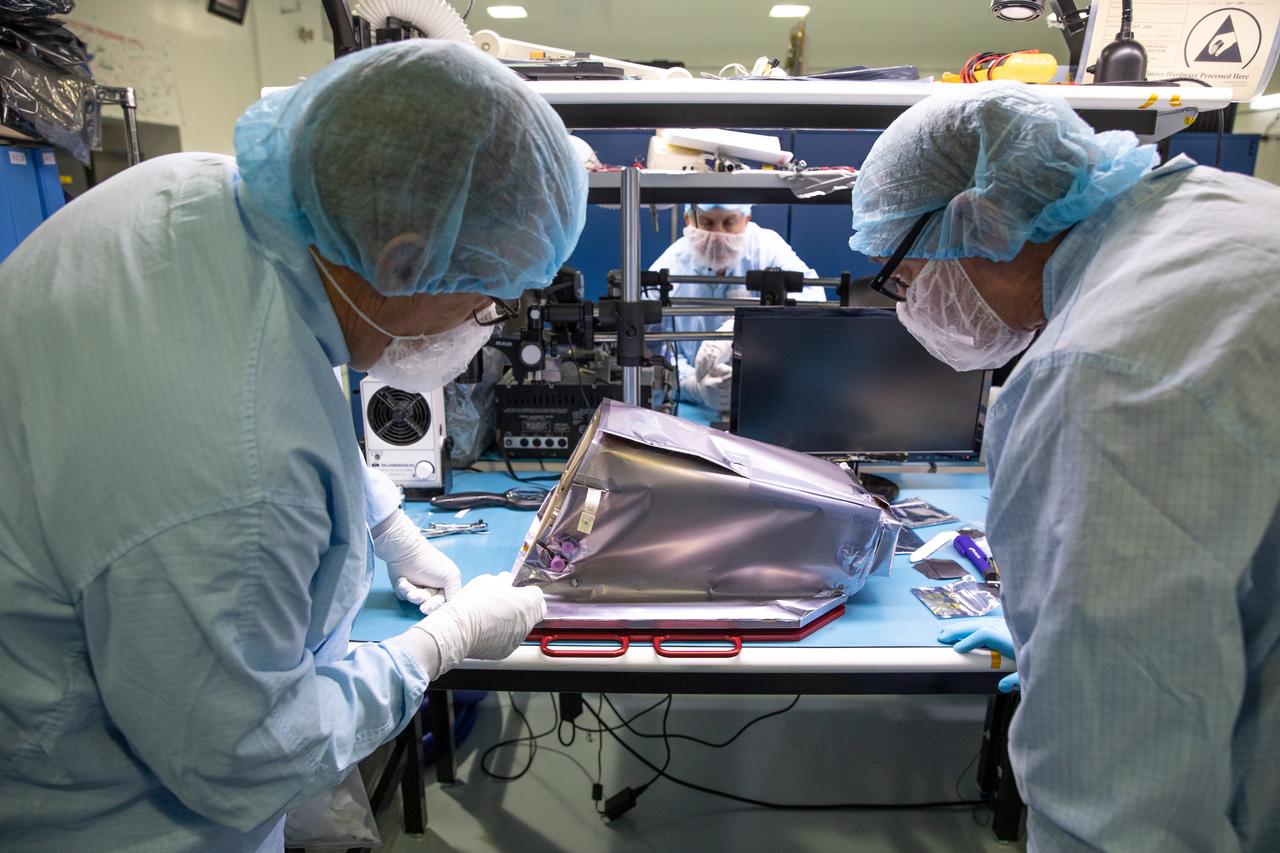
Engineers install multilayer insulation (MLI) on the Mass Spectrometer Observing Lunar Operations (MSolo) instrument inside Kennedy Space Center’s Space Station Processing Facility on Oct. 20, 2022. The activity is in preparation for the Polar Resources Ice Mining Experiment-1 (PRIME-1) mission, which will be the first in-situ resource utilization demonstration on the Moon. MLI protects the instrument from thermal temperature extremes, helping to insulate at cold temperatures and to cool at higher temperatures when solar lighting conditions or lunar infrared reflects onto the instrument. Researchers and engineers are preparing MSolo instruments to launch on four robotic missions as part of NASA’s Commercial Lunar Payload Services – commercial deliveries beginning in 2023 that will perform science experiments, test technologies, and demonstrate capabilities to help NASA explore the Moon and prepare for crewed missions to the lunar surface.
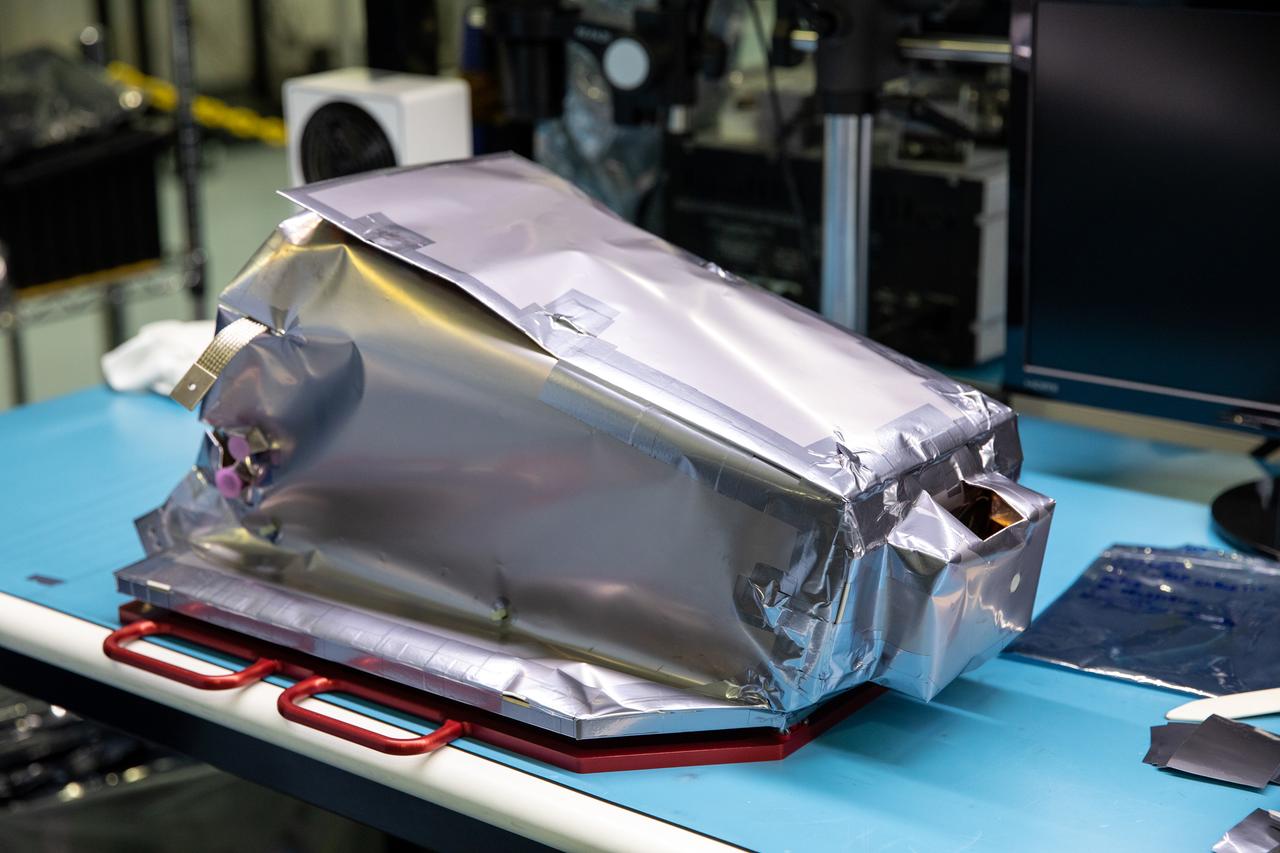
Engineers install multilayer insulation (MLI) on the Mass Spectrometer Observing Lunar Operations (MSolo) instrument inside Kennedy Space Center’s Space Station Processing Facility on Oct. 20, 2022. The activity is in preparation for the Polar Resources Ice Mining Experiment-1 (PRIME-1) mission, which will be the first in-situ resource utilization demonstration on the Moon. MLI protects the instrument from thermal temperature extremes, helping to insulate at cold temperatures and to cool at higher temperatures when solar lighting conditions or lunar infrared reflects onto the instrument. Researchers and engineers are preparing MSolo instruments to launch on four robotic missions as part of NASA’s Commercial Lunar Payload Services – commercial deliveries beginning in 2023 that will perform science experiments, test technologies, and demonstrate capabilities to help NASA explore the Moon and prepare for crewed missions to the lunar surface.
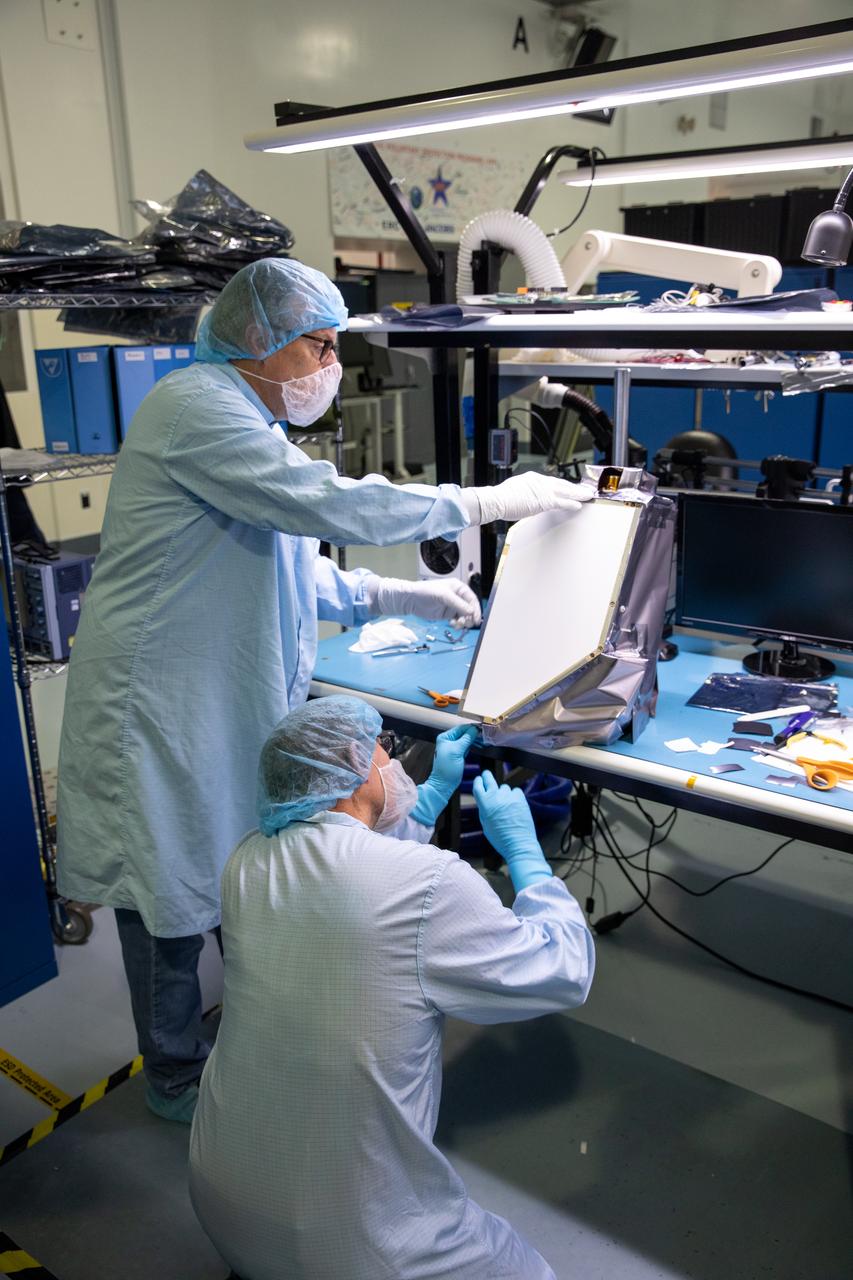
Engineers install multilayer insulation (MLI) on the Mass Spectrometer Observing Lunar Operations (MSolo) instrument inside Kennedy Space Center’s Space Station Processing Facility on Oct. 20, 2022. The activity is in preparation for the Polar Resources Ice Mining Experiment-1 (PRIME-1) mission, which will be the first in-situ resource utilization demonstration on the Moon. MLI protects the instrument from thermal temperature extremes, helping to insulate at cold temperatures and to cool at higher temperatures when solar lighting conditions or lunar infrared reflects onto the instrument. Researchers and engineers are preparing MSolo instruments to launch on four robotic missions as part of NASA’s Commercial Lunar Payload Services – commercial deliveries beginning in 2023 that will perform science experiments, test technologies, and demonstrate capabilities to help NASA explore the Moon and prepare for crewed missions to the lunar surface.

STS082-350-021 (11-21 Feb. 1997) --- On Discovery's middeck, astronaut Scott J. Horowitz, STS-82 pilot, works on one of the multi-layer insulation (MLI) patches to be used by two crew mates on an upcoming space walk to repair worn insulation on the Hubble Space Telescope (HST).
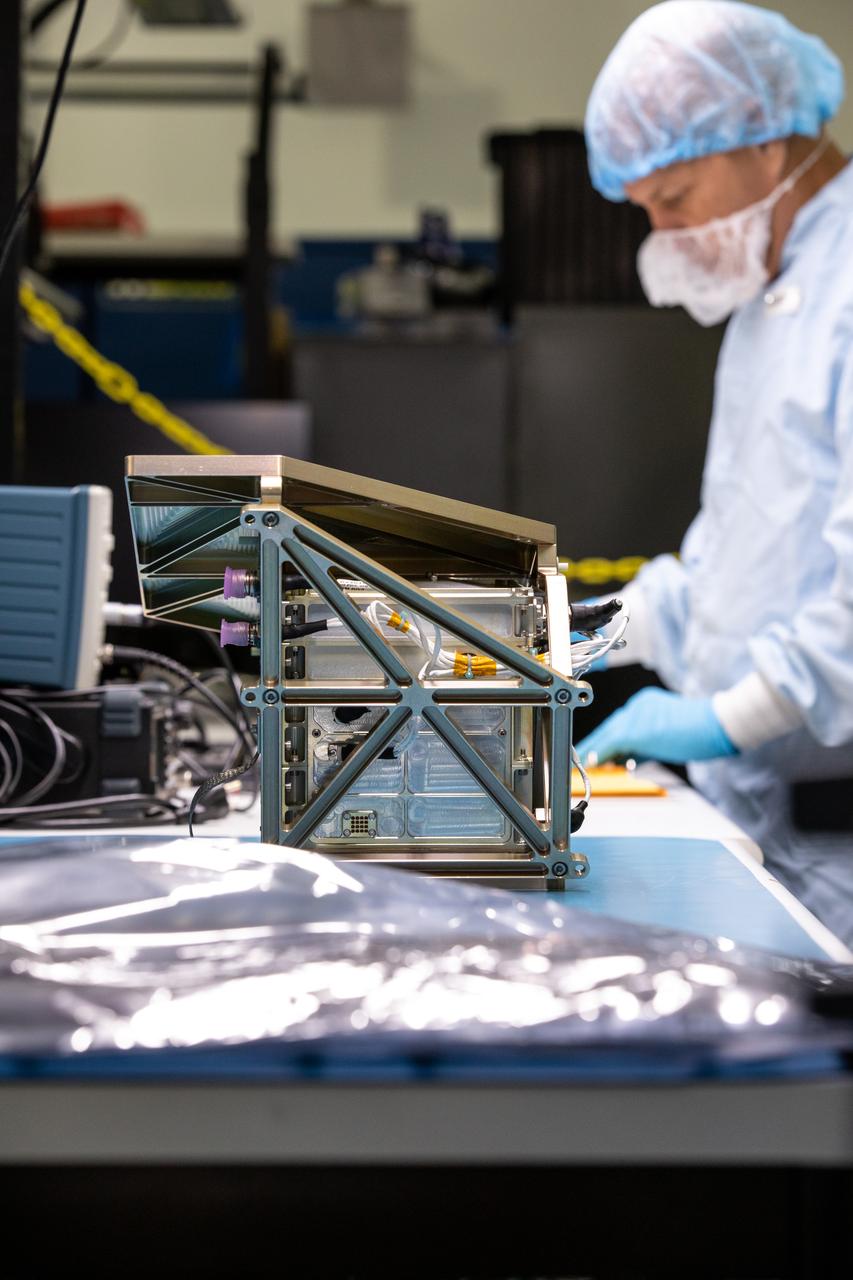
Engineers prepare the Mass Spectrometer Observing Lunar Operations (MSolo) instrument for the multilayer insulation installation inside Kennedy Space Center’s Space Station Processing Facility on Oct. 19, 2022. The activity is in preparation for the Polar Resources Ice Mining Experiment-1 (PRIME-1) mission, which will be the first in-situ resource utilization demonstration on the Moon. MSolo is a commercial off-the-shelf mass spectrometer modified to work in space and will help analyze the chemical makeup of landing sites on the Moon, as well as study water on the lunar surface. Researchers and engineers are preparing MSolo instruments to launch on four robotic missions as part of NASA’s Commercial Lunar Payload Services – commercial deliveries beginning in 2023 that will perform science experiments, test technologies, and demonstrate capabilities to help NASA explore the Moon and prepare for crewed missions to the lunar surface.
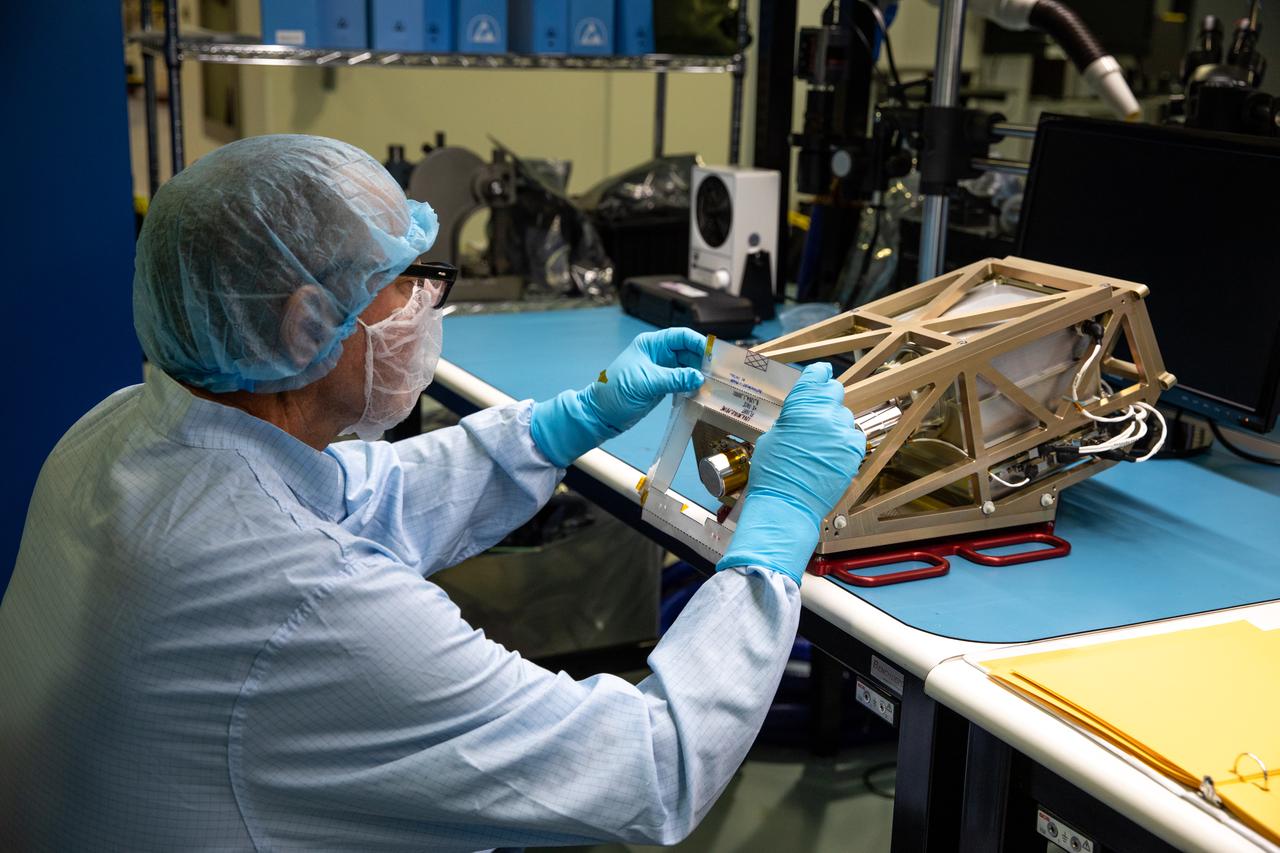
Engineers prepare the Mass Spectrometer Observing Lunar Operations (MSolo) instrument for the multilayer insulation installation inside Kennedy Space Center’s Space Station Processing Facility on Oct. 19, 2022. The activity is in preparation for the Polar Resources Ice Mining Experiment-1 (PRIME-1) mission, which will be the first in-situ resource utilization demonstration on the Moon. MSolo is a commercial off-the-shelf mass spectrometer modified to work in space and will help analyze the chemical makeup of landing sites on the Moon, as well as study water on the lunar surface. Researchers and engineers are preparing MSolo instruments to launch on four robotic missions as part of NASA’s Commercial Lunar Payload Services – commercial deliveries beginning in 2023 that will perform science experiments, test technologies, and demonstrate capabilities to help NASA explore the Moon and prepare for crewed missions to the lunar surface.
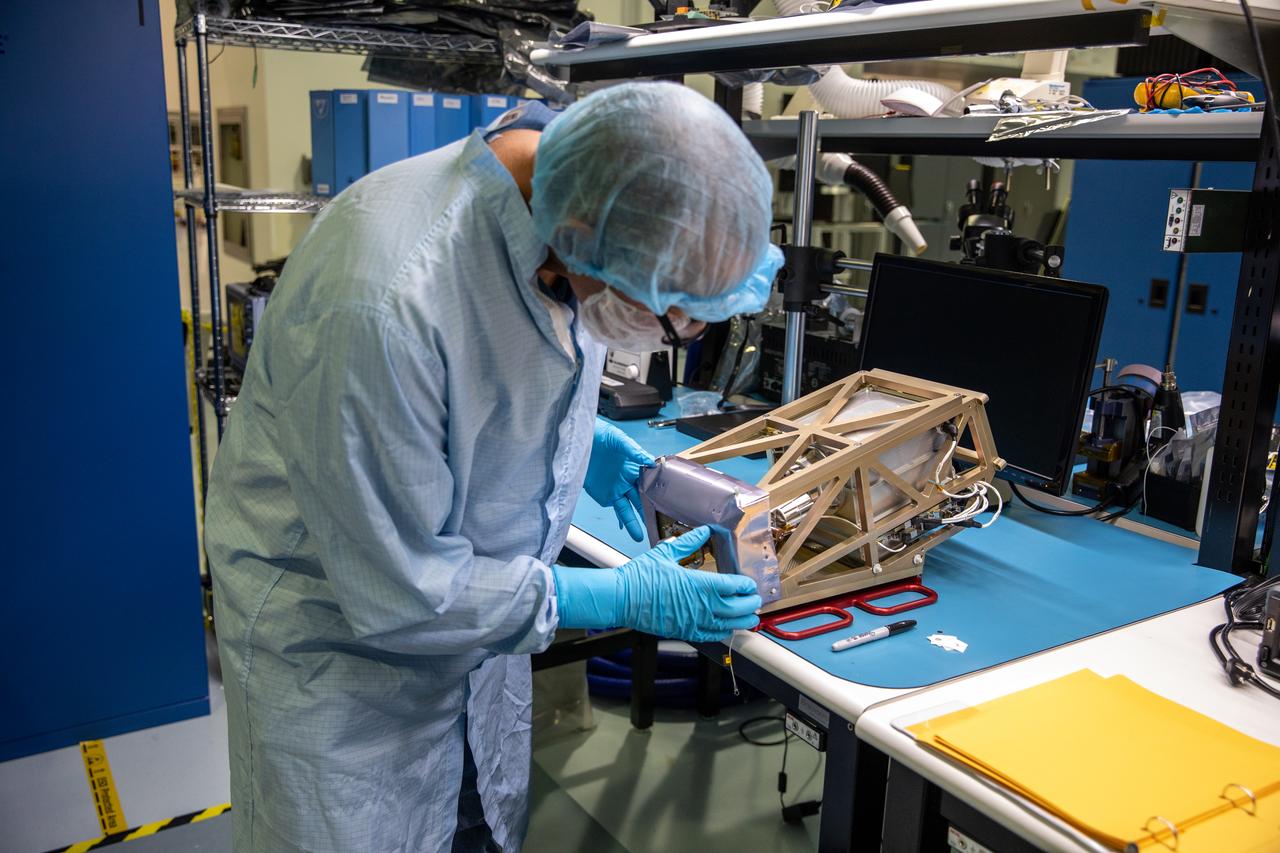
Engineers prepare the Mass Spectrometer Observing Lunar Operations (MSolo) instrument for the multilayer insulation installation inside Kennedy Space Center’s Space Station Processing Facility on Oct. 19, 2022. The activity is in preparation for the Polar Resources Ice Mining Experiment-1 (PRIME-1) mission, which will be the first in-situ resource utilization demonstration on the Moon. MSolo is a commercial off-the-shelf mass spectrometer modified to work in space and will help analyze the chemical makeup of landing sites on the Moon, as well as study water on the lunar surface. Researchers and engineers are preparing MSolo instruments to launch on four robotic missions as part of NASA’s Commercial Lunar Payload Services – commercial deliveries beginning in 2023 that will perform science experiments, test technologies, and demonstrate capabilities to help NASA explore the Moon and prepare for crewed missions to the lunar surface.
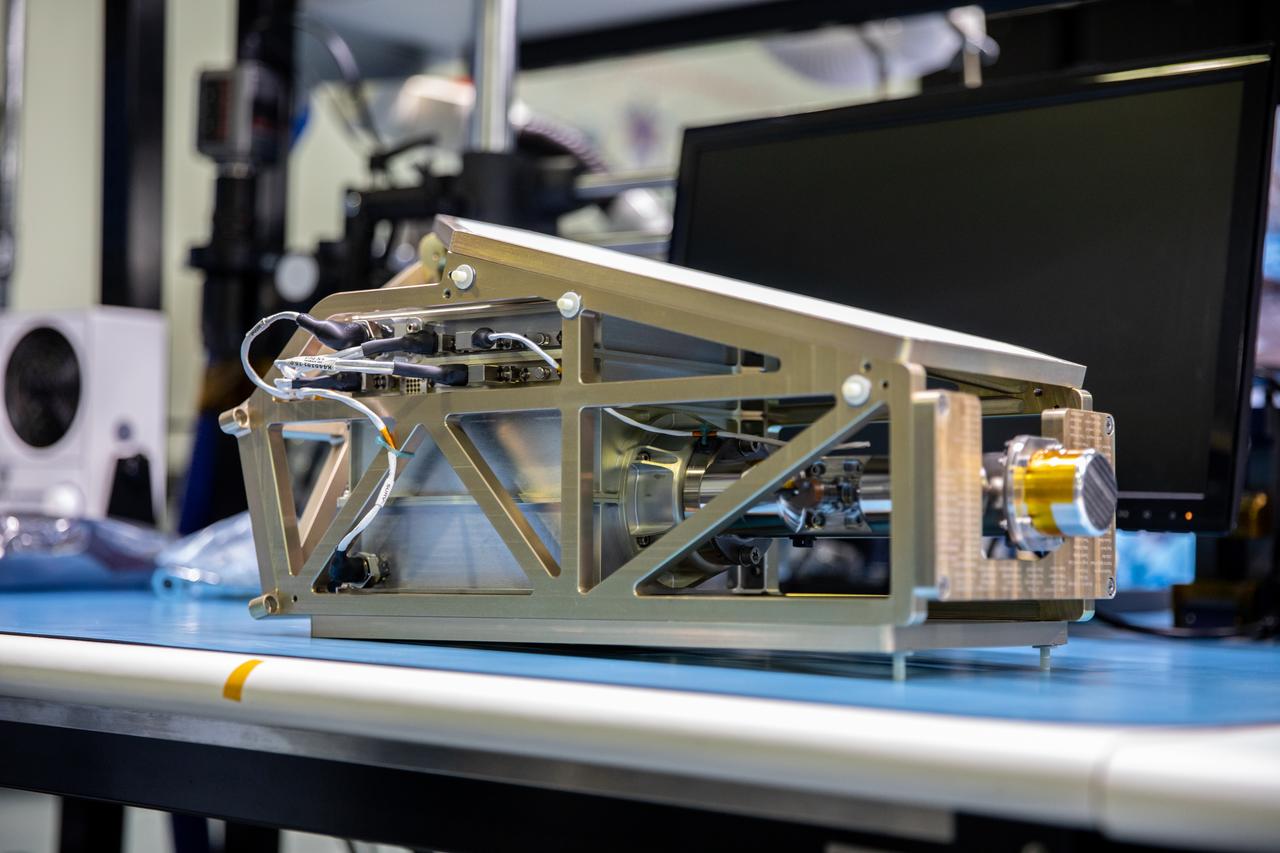
Engineers prepare the Mass Spectrometer Observing Lunar Operations (MSolo) instrument for the multilayer insulation installation inside Kennedy Space Center’s Space Station Processing Facility on Oct. 19, 2022. The activity is in preparation for the Polar Resources Ice Mining Experiment-1 (PRIME-1) mission, which will be the first in-situ resource utilization demonstration on the Moon. MSolo is a commercial off-the-shelf mass spectrometer modified to work in space and will help analyze the chemical makeup of landing sites on the Moon, as well as study water on the lunar surface. Researchers and engineers are preparing MSolo instruments to launch on four robotic missions as part of NASA’s Commercial Lunar Payload Services – commercial deliveries beginning in 2023 that will perform science experiments, test technologies, and demonstrate capabilities to help NASA explore the Moon and prepare for crewed missions to the lunar surface.
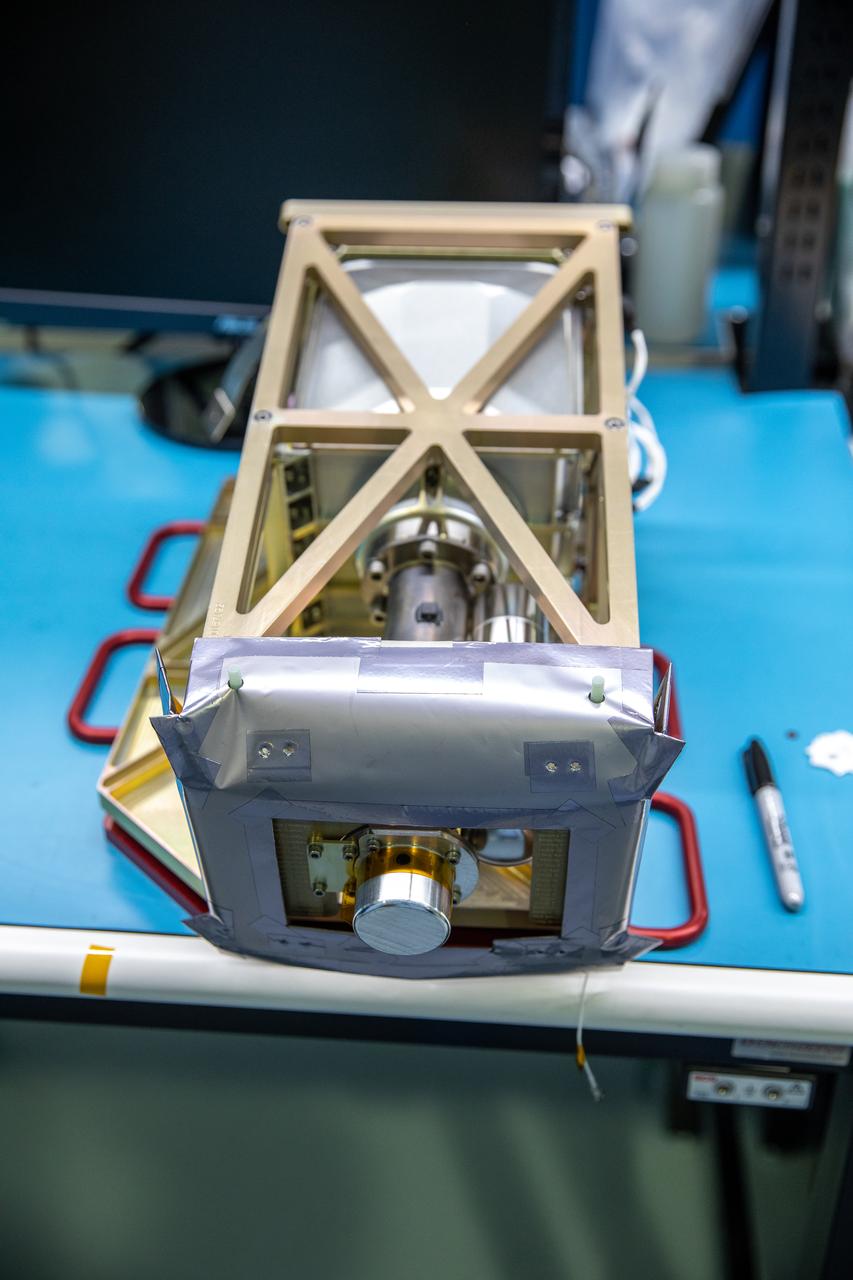
Engineers prepare the Mass Spectrometer Observing Lunar Operations (MSolo) instrument for the multilayer insulation installation inside Kennedy Space Center’s Space Station Processing Facility on Oct. 19, 2022. The activity is in preparation for the Polar Resources Ice Mining Experiment-1 (PRIME-1) mission, which will be the first in-situ resource utilization demonstration on the Moon. MSolo is a commercial off-the-shelf mass spectrometer modified to work in space and will help analyze the chemical makeup of landing sites on the Moon, as well as study water on the lunar surface. Researchers and engineers are preparing MSolo instruments to launch on four robotic missions as part of NASA’s Commercial Lunar Payload Services – commercial deliveries beginning in 2023 that will perform science experiments, test technologies, and demonstrate capabilities to help NASA explore the Moon and prepare for crewed missions to the lunar surface.
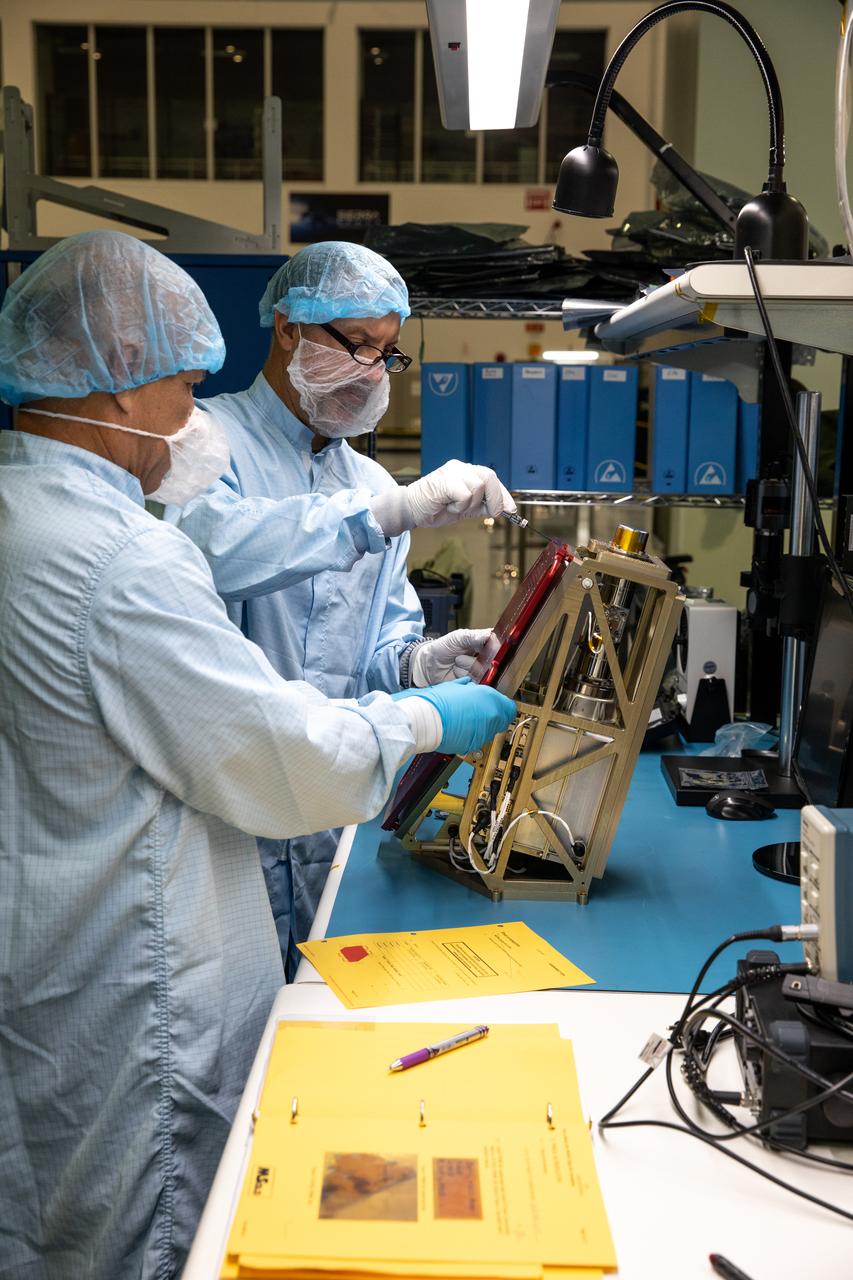
Engineers prepare the Mass Spectrometer Observing Lunar Operations (MSolo) instrument for the multilayer insulation installation inside Kennedy Space Center’s Space Station Processing Facility on Oct. 19, 2022. The activity is in preparation for the Polar Resources Ice Mining Experiment-1 (PRIME-1) mission, which will be the first in-situ resource utilization demonstration on the Moon. MSolo is a commercial off-the-shelf mass spectrometer modified to work in space and will help analyze the chemical makeup of landing sites on the Moon, as well as study water on the lunar surface. Researchers and engineers are preparing MSolo instruments to launch on four robotic missions as part of NASA’s Commercial Lunar Payload Services – commercial deliveries beginning in 2023 that will perform science experiments, test technologies, and demonstrate capabilities to help NASA explore the Moon and prepare for crewed missions to the lunar surface.
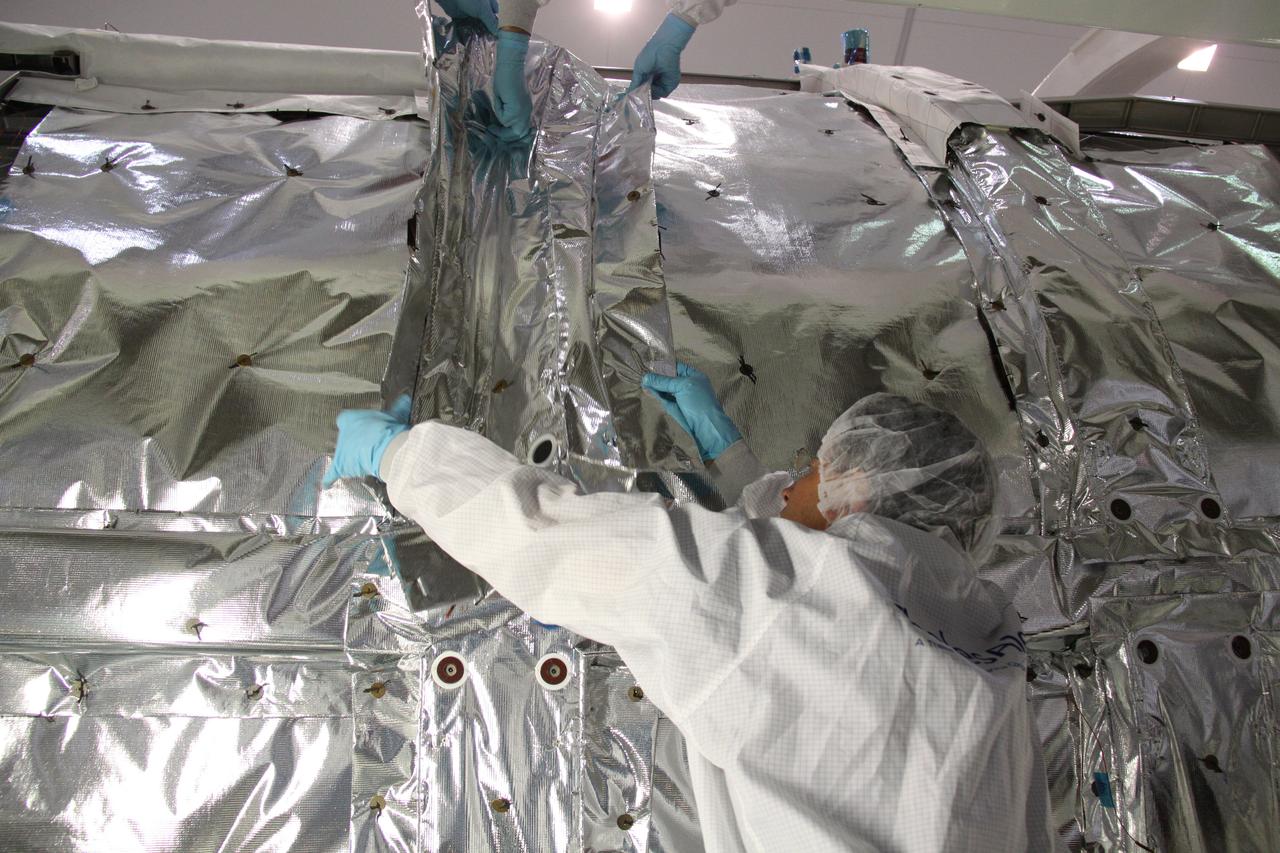
STS-133 MLI and MDPS Installation on PPM
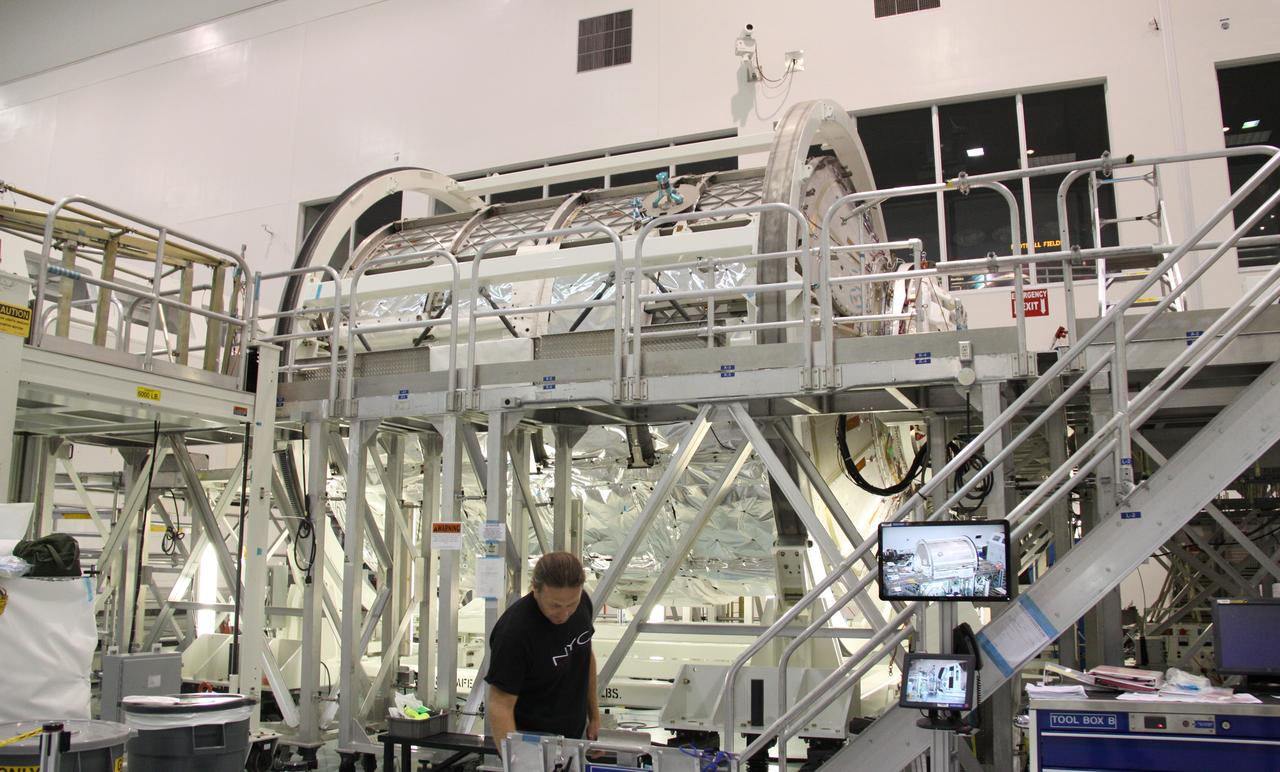
STS-133 MLI and MDPS Installation on PPM
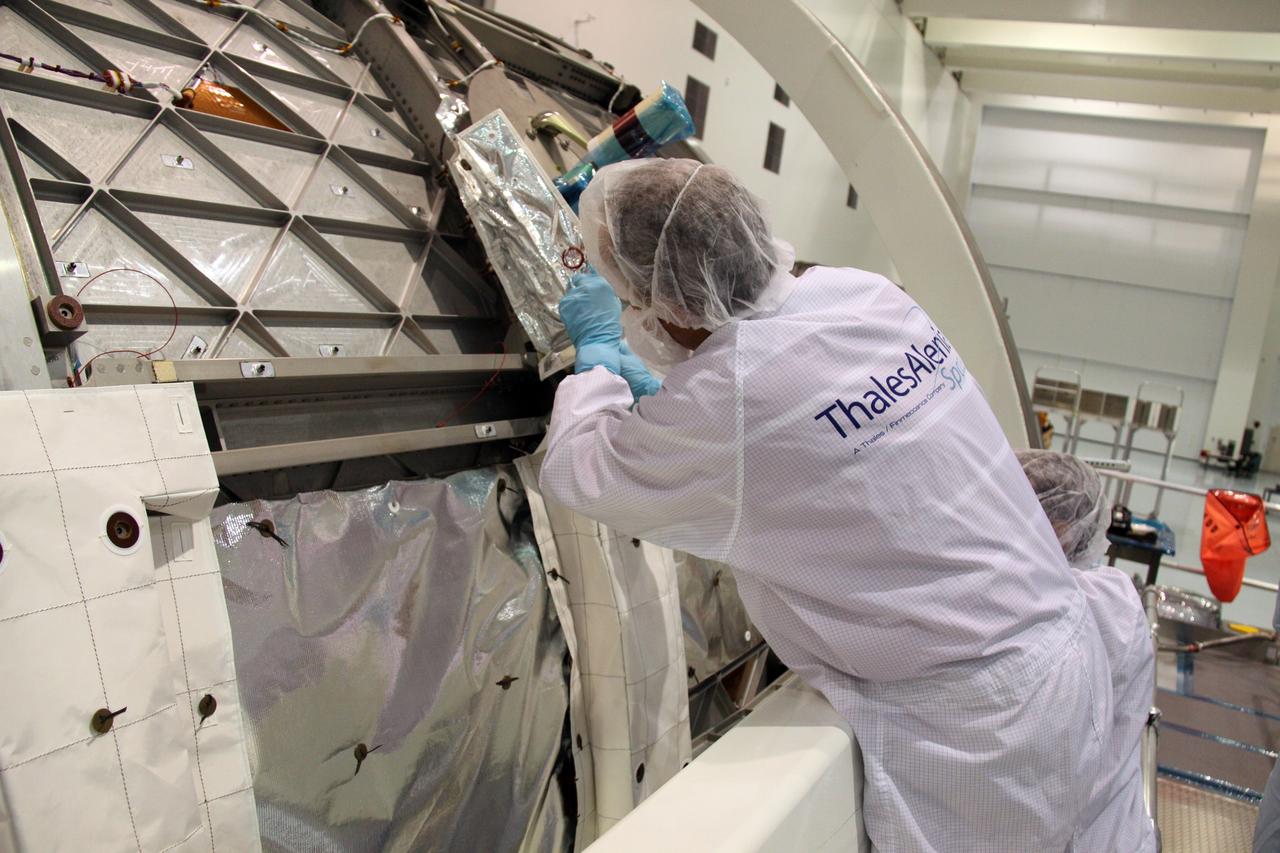
STS-133 MLI and MDPS Installation on PPM
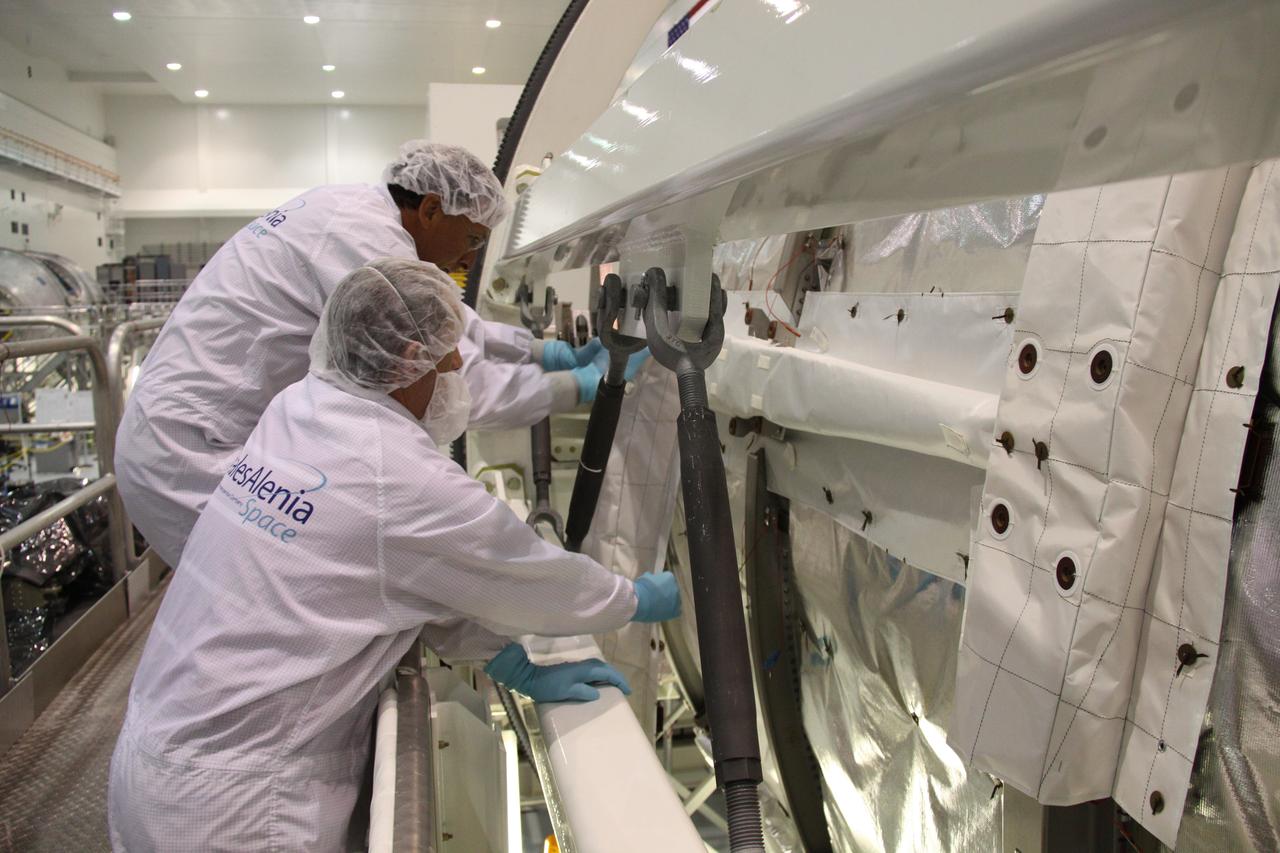
STS-133 MLI and MDPS Installation on PPM
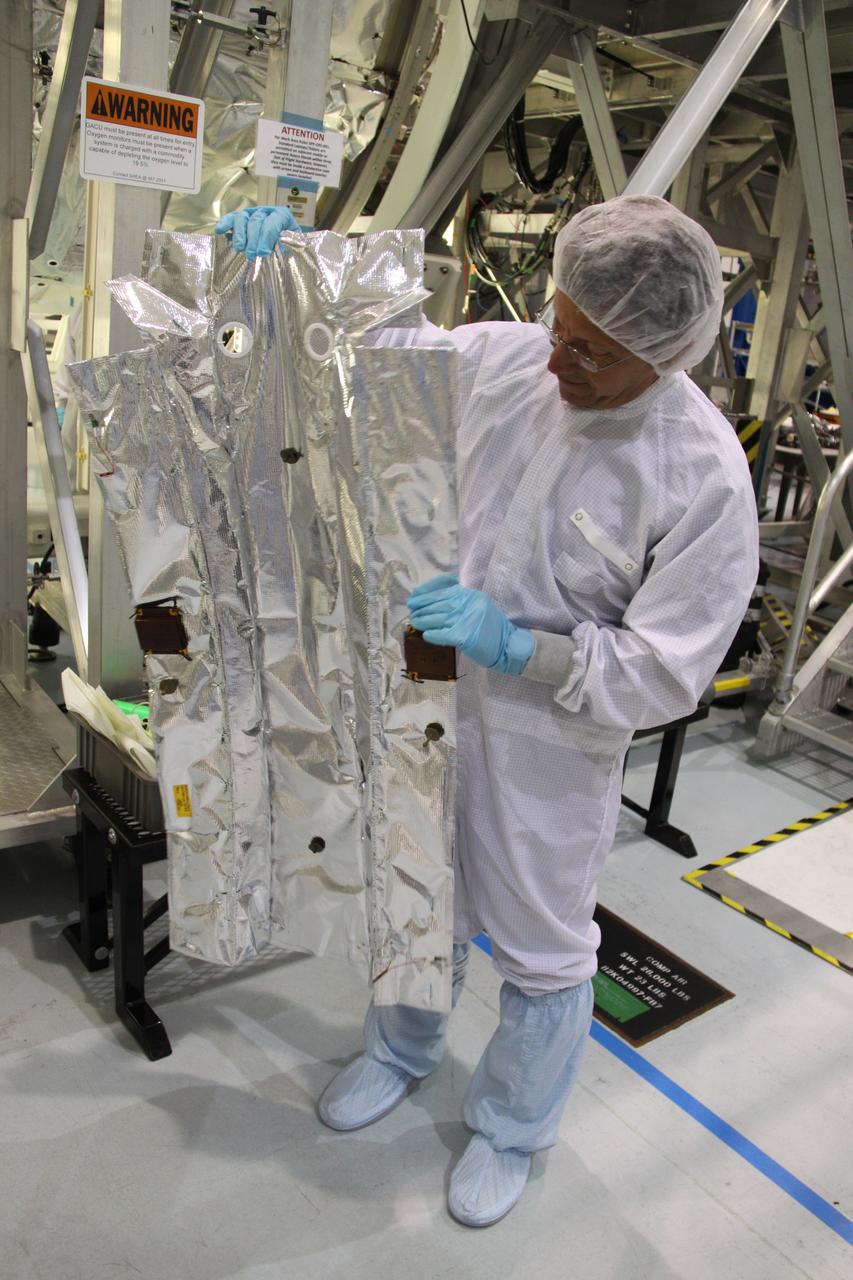
STS-133 MLI and MDPS Installation on PPM
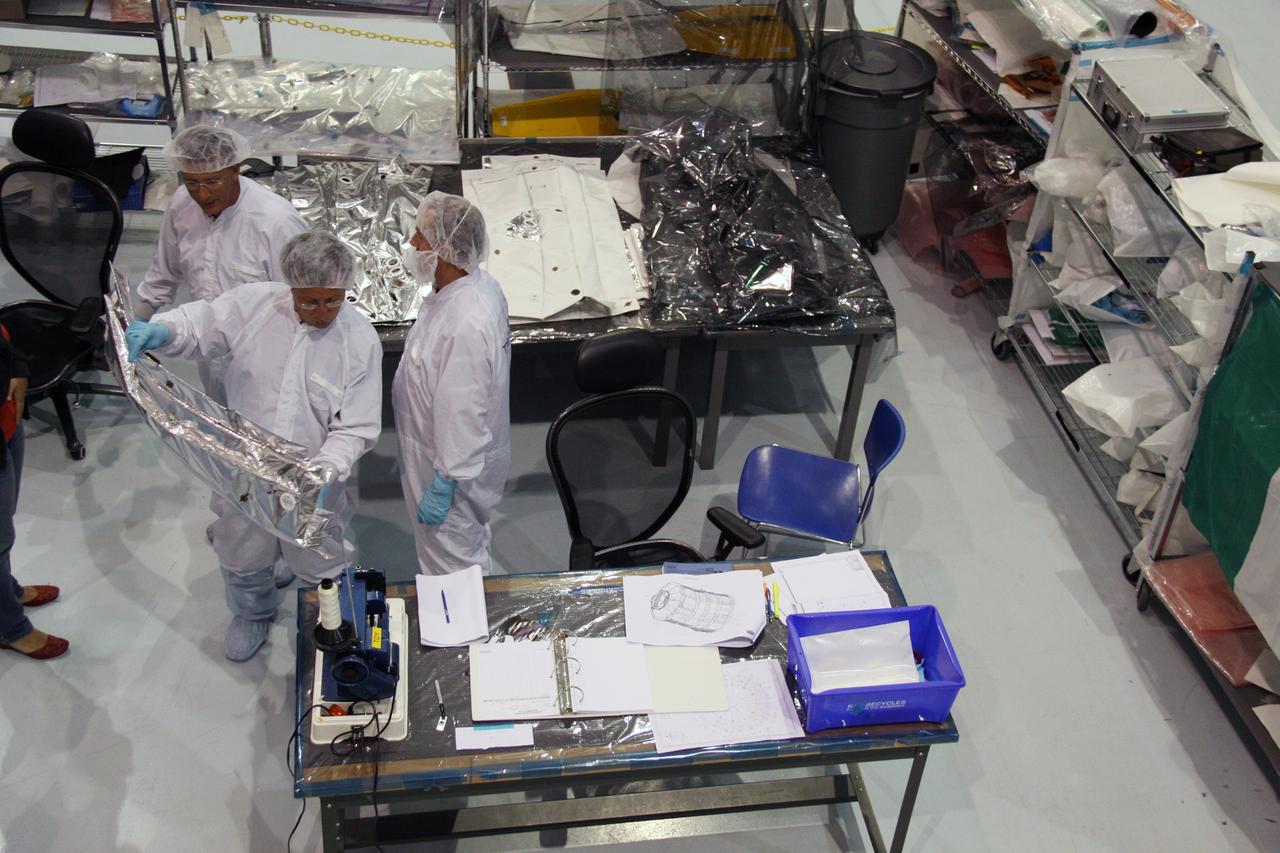
STS-133 MLI and MDPS Installation on PPM
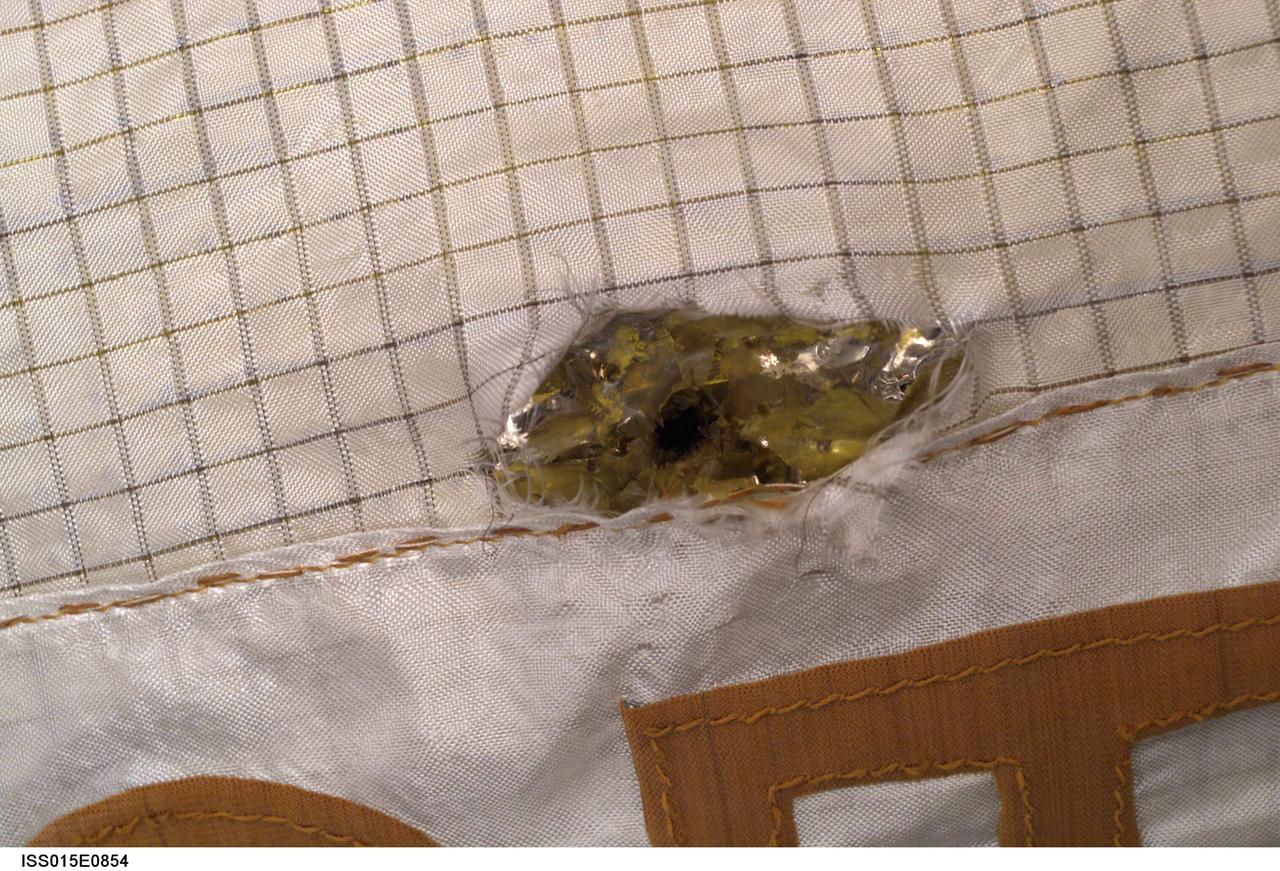
ISS015-E-10854 (6 June 2007) --- During the Russian spacewalk conducted by cosmonauts Fyodor Yurchikhin, Expedition 15 commander, and Oleg Kotov, flight engineer, on June 6, 2007, Yurchikhin commented on damage to a multi-layer insulation (MLI) protective blanket on the Zarya module. The damage, he noted, was apparently from a micrometeoroid impact. The date the damage occurred is unknown but has had no impact to vehicle operations.
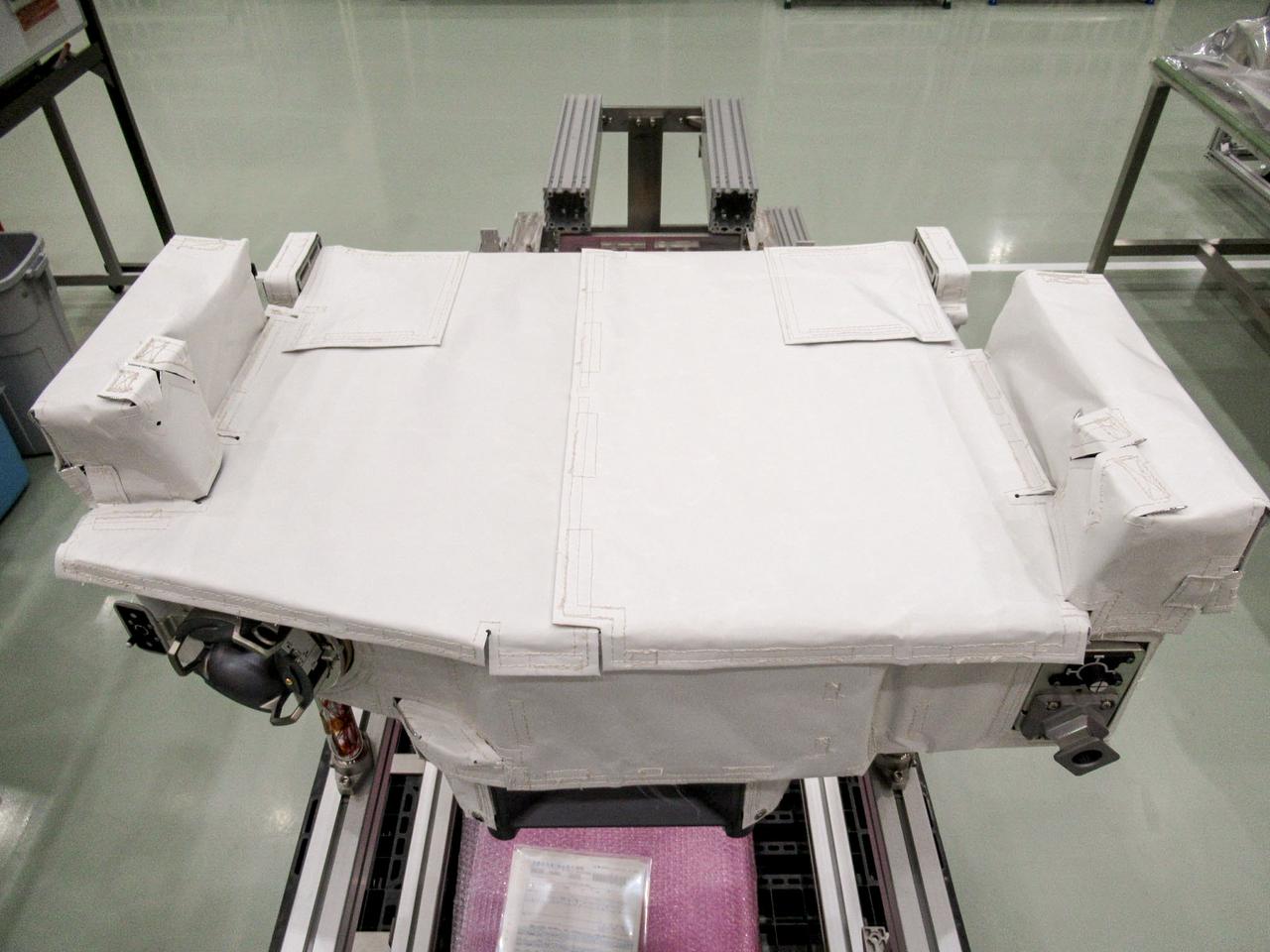
jsc2023e031749 (2/4/2022) --- Preflight image of IVA-replaceable Small Exposed Experiment Platform 3B (i-SEEP3B)—payload attached plate with Multi Layer Insulation (MLI). Image courtesy of JAXA and IHI-Aerospace.
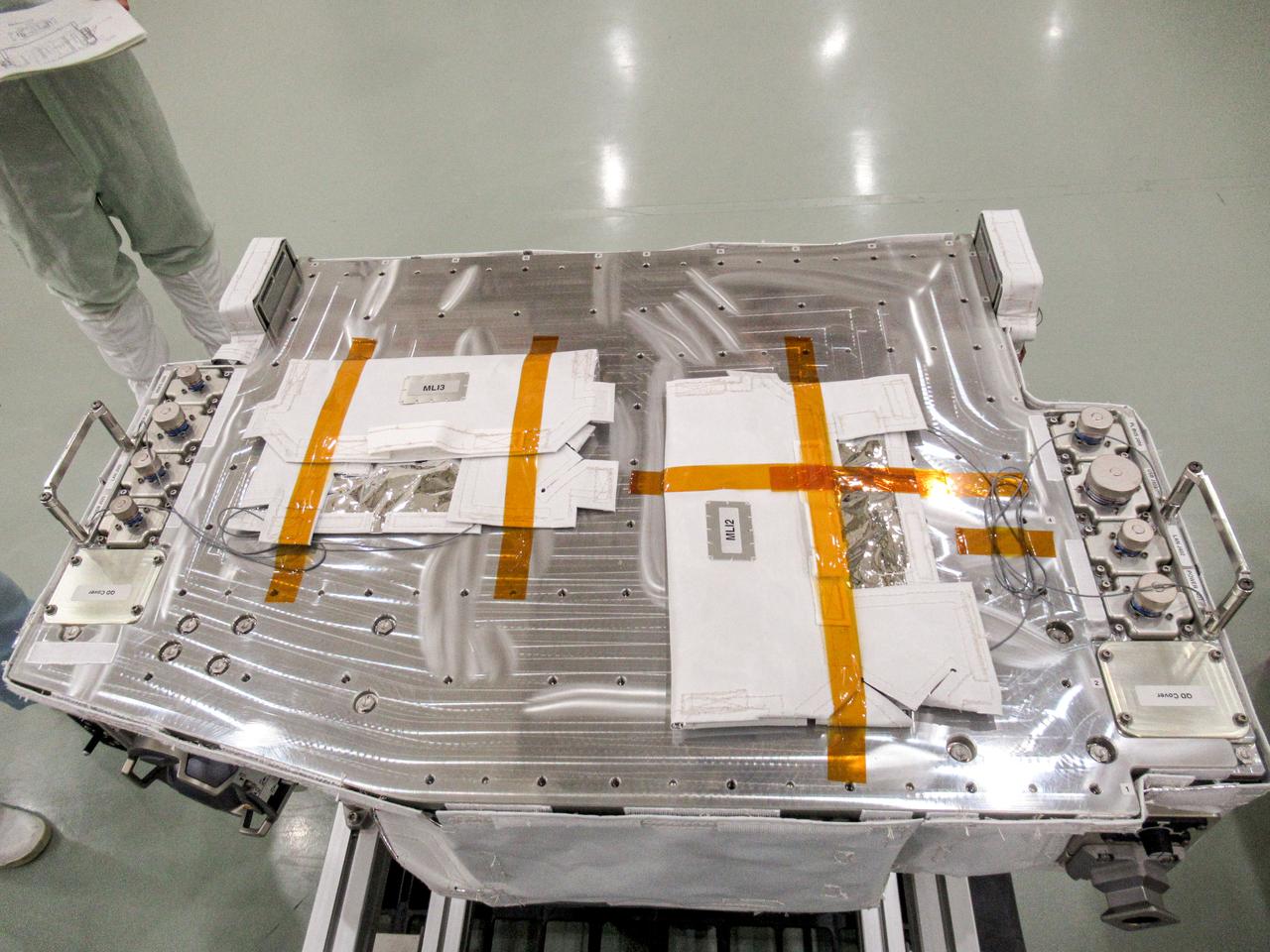
jsc2023e031748 (8/11/2023) --- Preflight image of IVA-replaceable Small Exposed Experiment Platform 3B (i-SEEP3B) with Multi Layer Insulation (MLI) removed. Image courtesy of JAXA and IHI-Aerospace.
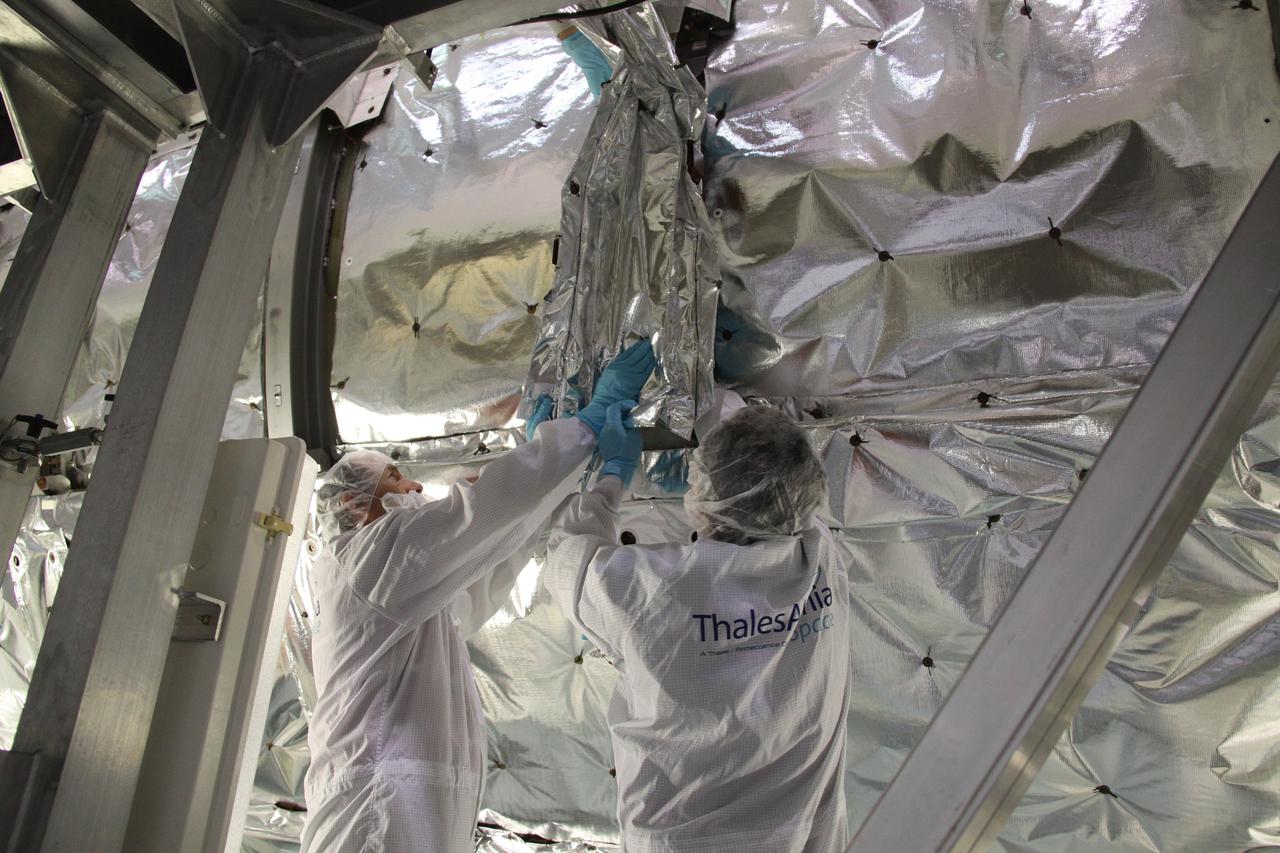
CAPE CANAVERAL, Fla. – In the Space Station Processing Facility at NASA's Kennedy Space Center in Florida, technicians install multi-layer insulation on the Meteoroids and Debris Protective Shield of the Permanent Multipurpose Module, or PMM. The reflective silver mesh is Mylar, which is aluminized to protect hardware aboard the International Space Station from solar thermal radiation. The Leonardo multi-purpose logistics module, or MPLM, is being modified to become the PMM that will carry supplies and critical spare parts to the station aboard space shuttle Discovery’s STS-133 mission. Discovery, targeted to launch Nov. 1, will leave the module behind so it can be used for microgravity experiments in fluid physics, materials science, biology and biotechnology. Photo credit: NASA_Troy Cryder
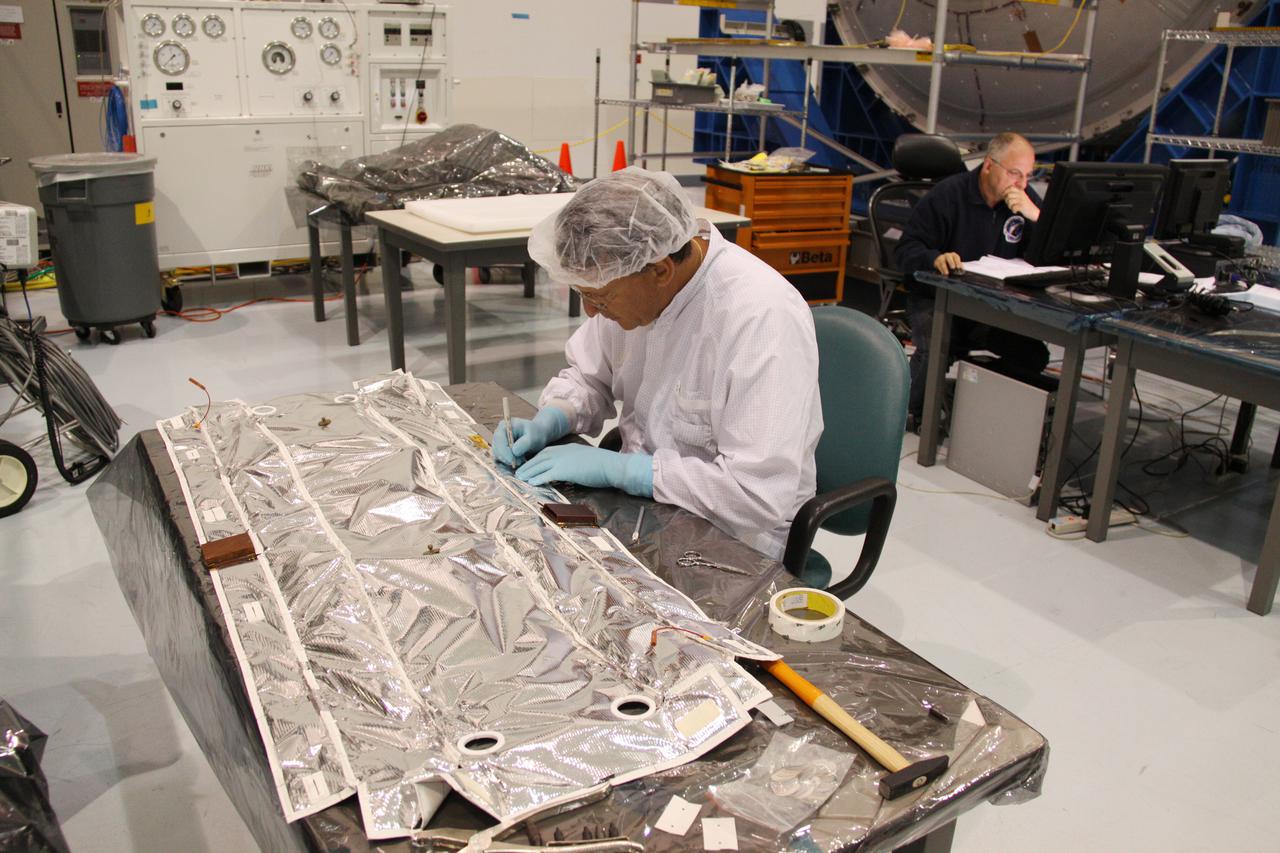
CAPE CANAVERAL, Fla. – In the Space Station Processing Facility at NASA's Kennedy Space Center in Florida, a technician inspects multi-layer insulation before it is installed on the Meteoroids and Debris Protective Shield of the Permanent Multipurpose Module, or PMM. The reflective silver mesh is Mylar, which is aluminized to protect hardware aboard the International Space Station from solar thermal radiation. The Leonardo multi-purpose logistics module, or MPLM, is being modified to become the PMM that will carry supplies and critical spare parts to the station aboard space shuttle Discovery’s STS-133 mission. Discovery, targeted to launch Nov. 1, will leave the module behind so it can be used for microgravity experiments in fluid physics, materials science, biology and biotechnology. Photo credit: NASA_Troy Cryder
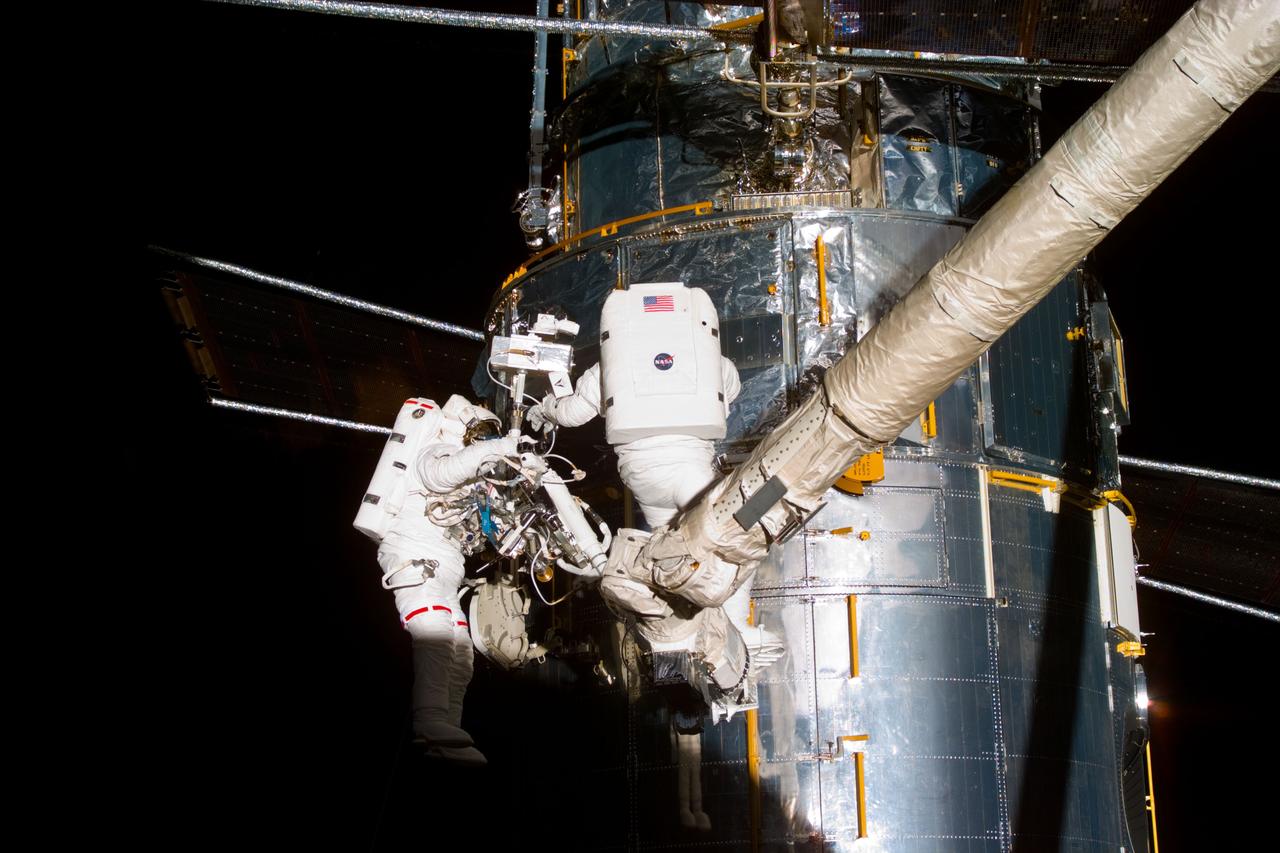
S82-E-5429 (15 Feb. 1997) --- Astronauts Gregory J. Harbaugh (left) and Joseph R. Tanner (right) during Multi Layer Insulation (MLI) inspection in Bay 10. This view was taken with an Electronic Still Camera (ESC).
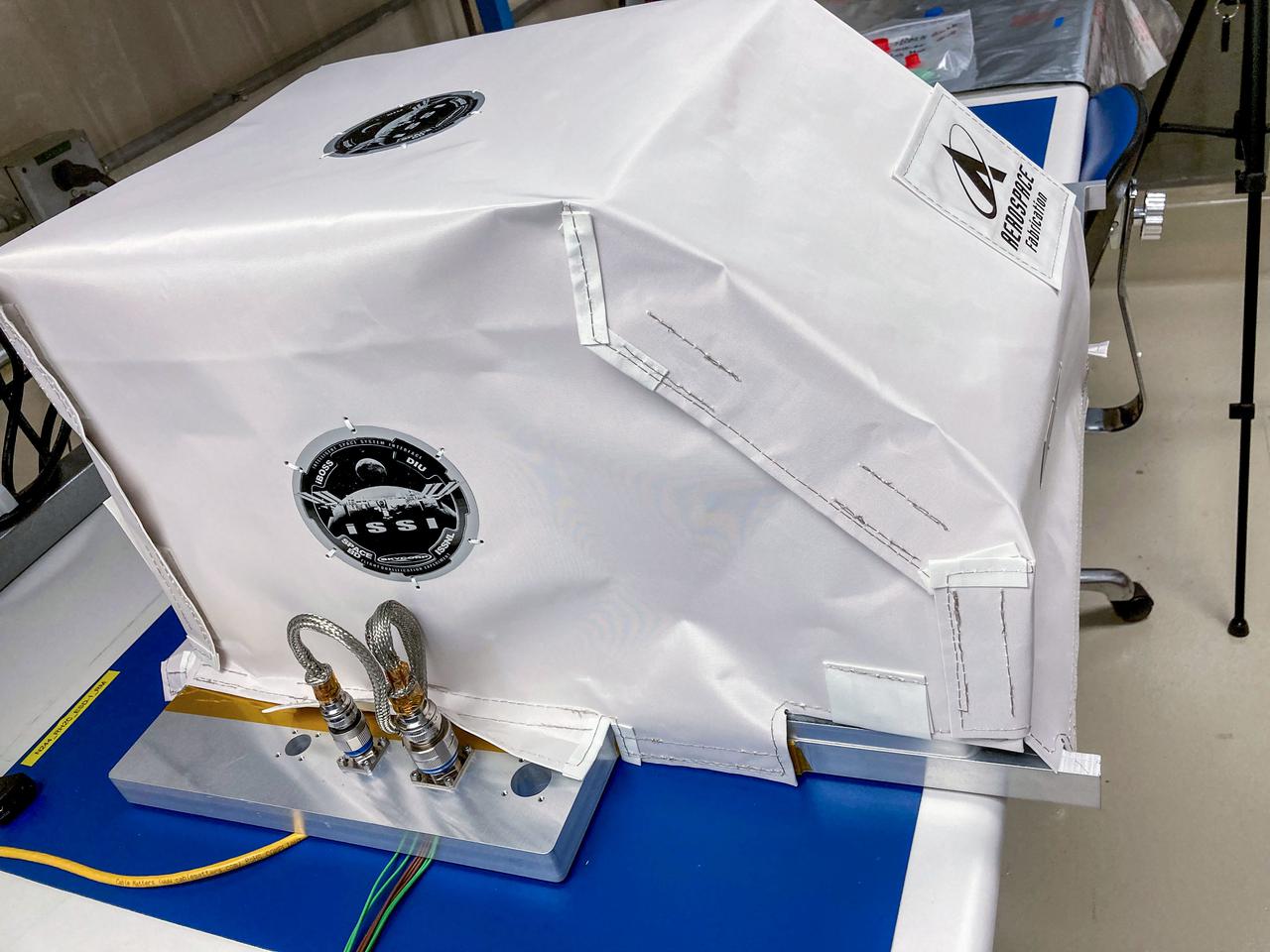
jsc2021e048046 (9/30/2021) --- Preflight imagery of the Intelligent Space System Interface Flight Qualification Experiment (iSSFIQE) with the Multi-layer Insulation (MLI) cover fully interfaced with the IVA-replaceable Small Exposed Experiment Platform (i-SEEP) ground model. Image courtesy of Skycorp Inc.
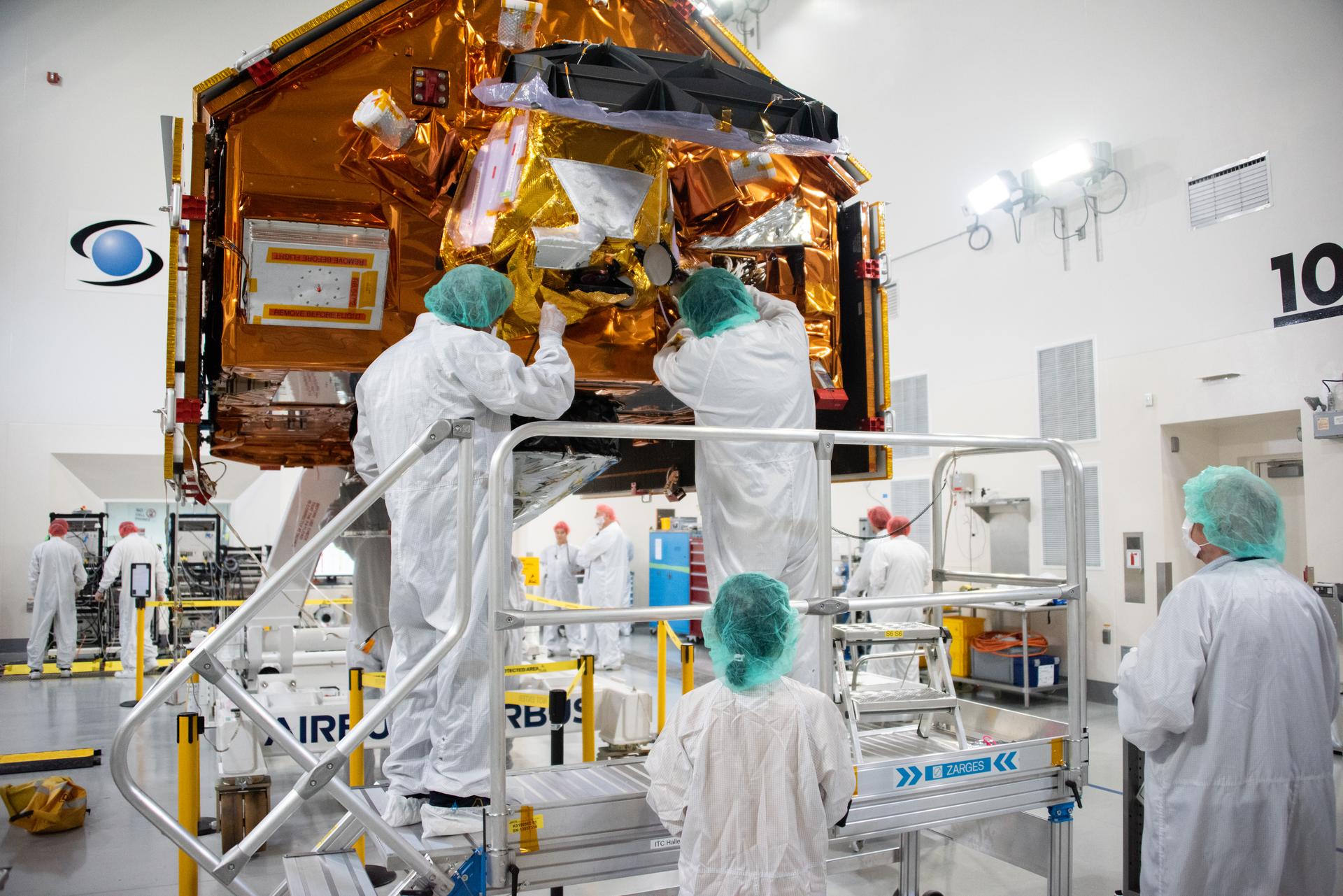
Technicians install multi-layer insulation on the Sentinel-6B spacecraft on a work stand inside the Astrotech Space Operations payload processing facility at Vandenberg Space Force Base in California on Thursday, Oct. 23, 2025. Critical for protecting spacecraft from extreme temperatures and environmental conditions in space, the thin, reflective multi-layer insulation will create a barrier to help reduce heat transfer through radiation while Sentinel-6B is in orbit. A collaboration between NASA, ESA (European Space Agency), EUMETSAT (European Organisation for the Exploitation of Meteorological Satellites), and the National Oceanic and Atmospheric Administration (NOAA), Sentinel-6B is designed to measure sea levels down to roughly an inch for about 90% of the world’s oceans. NASA is targeting launch no earlier than Sunday, Nov. 16, 2025, on a SpaceX Falcon 9 rocket from Space Launch Complex 4 East at Vandenberg.
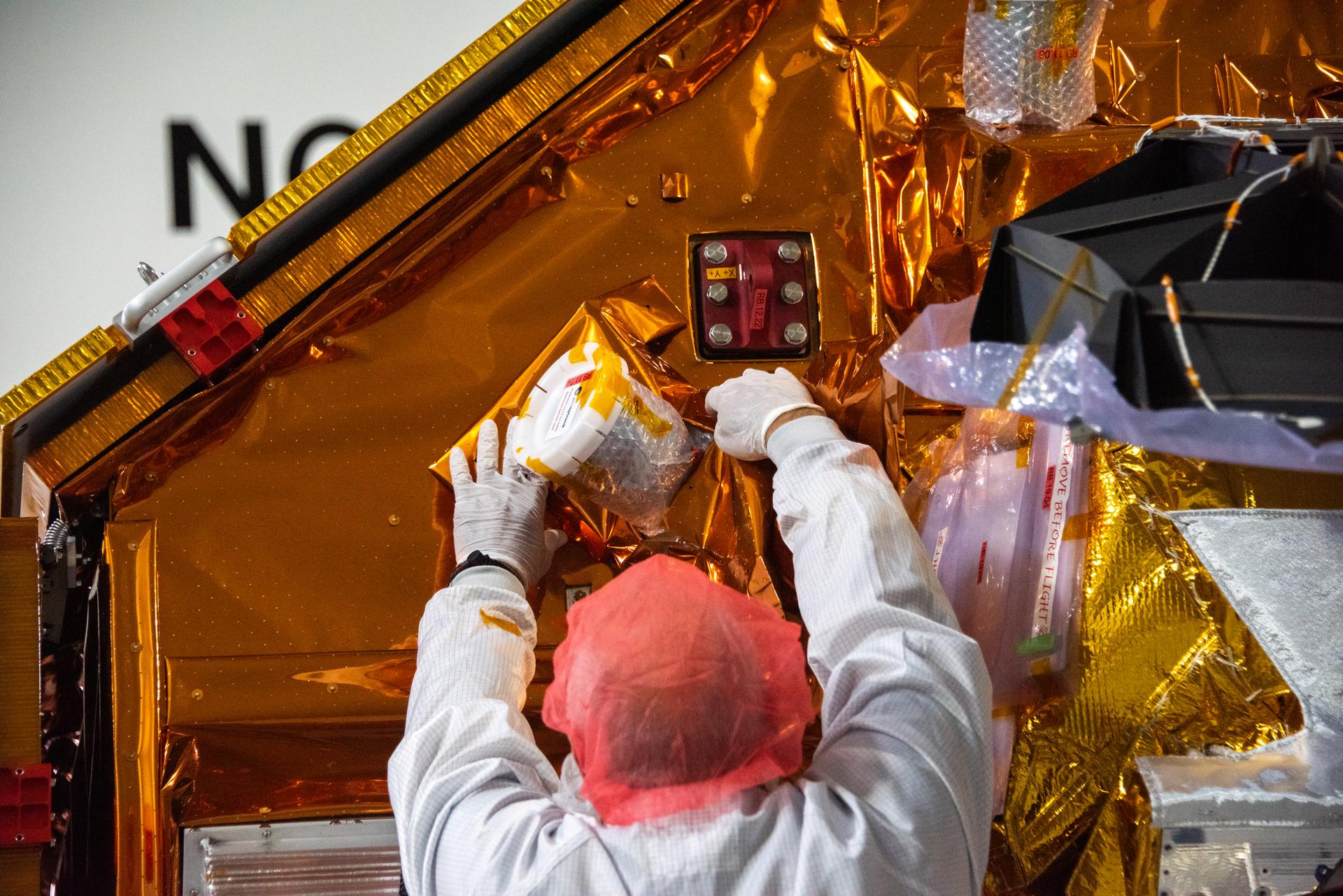
Technicians install multi-layer insulation on the Sentinel-6B spacecraft on a work stand inside the Astrotech Space Operations payload processing facility at Vandenberg Space Force Base in California on Thursday, Oct. 23, 2025. Critical for protecting spacecraft from extreme temperatures and environmental conditions in space, the thin, reflective multi-layer insulation will create a barrier to help reduce heat transfer through radiation while Sentinel-6B is in orbit. A collaboration between NASA, ESA (European Space Agency), EUMETSAT (European Organisation for the Exploitation of Meteorological Satellites), and the National Oceanic and Atmospheric Administration (NOAA), Sentinel-6B is designed to measure sea levels down to roughly an inch for about 90% of the world’s oceans. NASA is targeting launch no earlier than Sunday, Nov. 16, 2025, on a SpaceX Falcon 9 rocket from Space Launch Complex 4 East at Vandenberg.
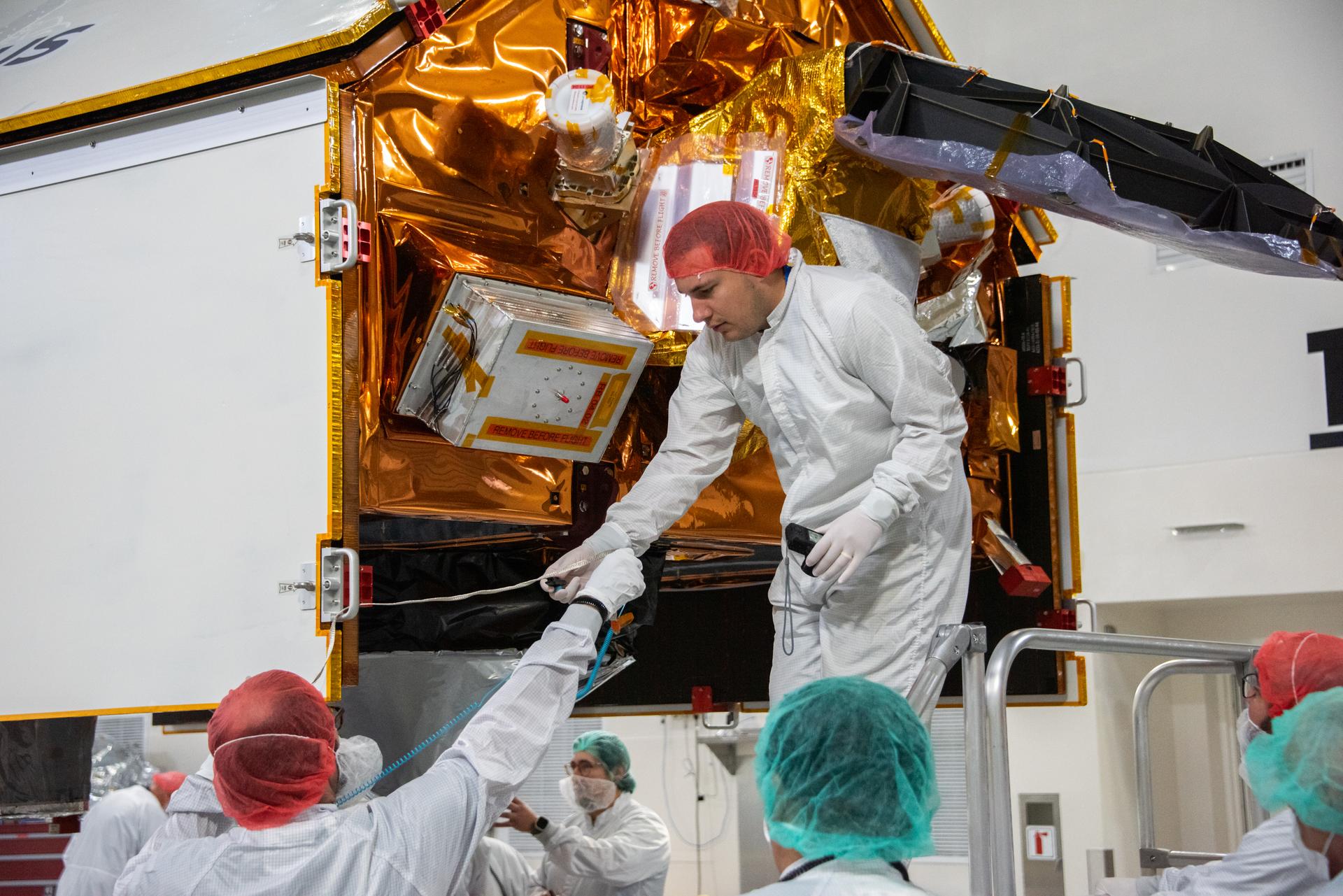
Technicians install multi-layer insulation on the Sentinel-6B spacecraft on a work stand inside the Astrotech Space Operations payload processing facility at Vandenberg Space Force Base in California on Thursday, Oct. 23, 2025. Critical for protecting spacecraft from extreme temperatures and environmental conditions in space, the thin, reflective multi-layer insulation will create a barrier to help reduce heat transfer through radiation while Sentinel-6B is in orbit. A collaboration between NASA, ESA (European Space Agency), EUMETSAT (European Organisation for the Exploitation of Meteorological Satellites), and the National Oceanic and Atmospheric Administration (NOAA), Sentinel-6B is designed to measure sea levels down to roughly an inch for about 90% of the world’s oceans. NASA is targeting launch no earlier than Sunday, Nov. 16, 2025, on a SpaceX Falcon 9 rocket from Space Launch Complex 4 East at Vandenberg.

Technicians install multi-layer insulation on the Sentinel-6B spacecraft on a work stand inside the Astrotech Space Operations payload processing facility at Vandenberg Space Force Base in California on Thursday, Oct. 23, 2025. Critical for protecting spacecraft from extreme temperatures and environmental conditions in space, the thin, reflective multi-layer insulation will create a barrier to help reduce heat transfer through radiation while Sentinel-6B is in orbit. A collaboration between NASA, ESA (European Space Agency), EUMETSAT (European Organisation for the Exploitation of Meteorological Satellites), and the National Oceanic and Atmospheric Administration (NOAA), Sentinel-6B is designed to measure sea levels down to roughly an inch for about 90% of the world’s oceans. NASA is targeting launch no earlier than Sunday, Nov. 16, 2025, on a SpaceX Falcon 9 rocket from Space Launch Complex 4 East at Vandenberg.
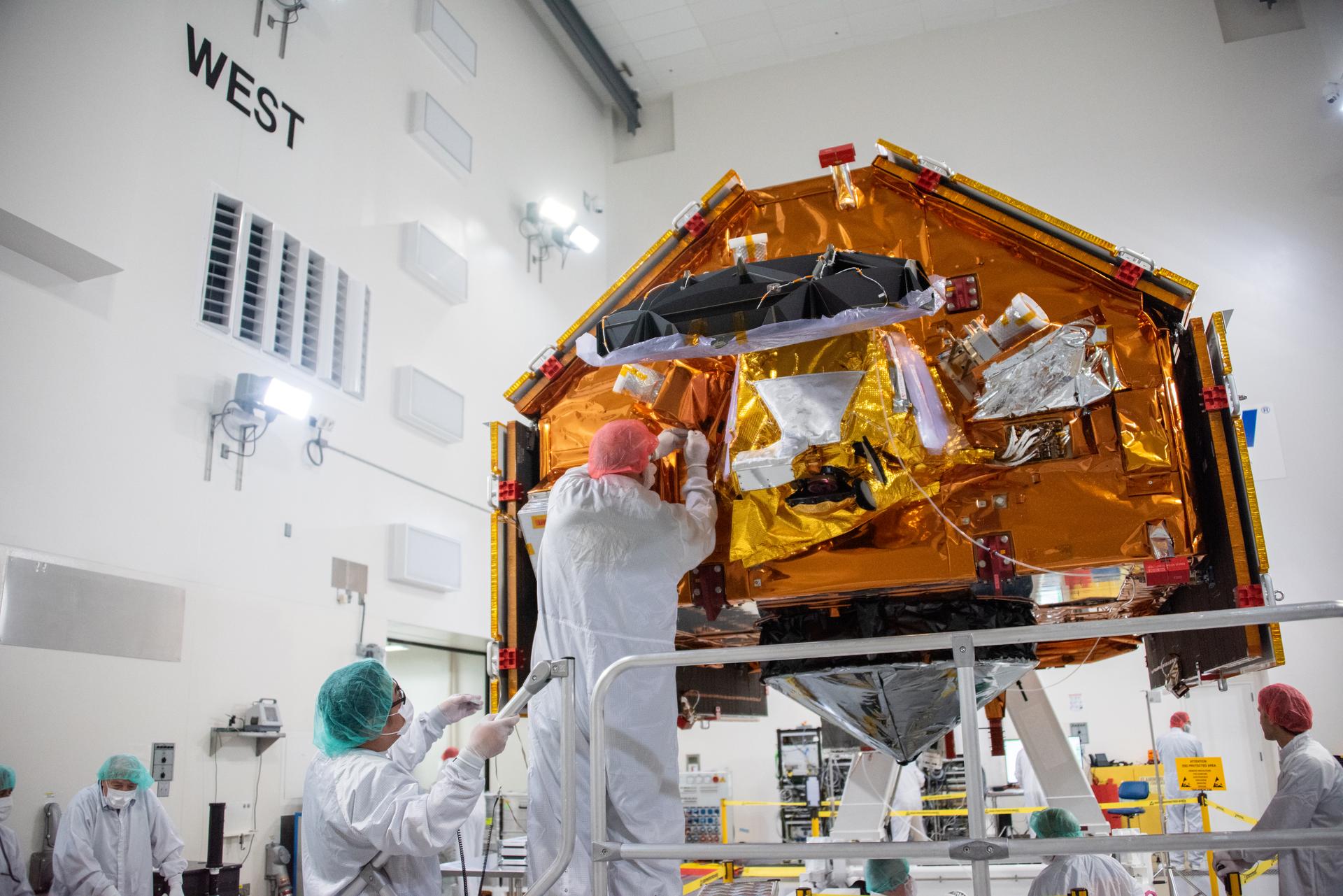
Technicians install multi-layer insulation on the Sentinel-6B spacecraft on a work stand inside the Astrotech Space Operations payload processing facility at Vandenberg Space Force Base in California on Thursday, Oct. 23, 2025. Critical for protecting spacecraft from extreme temperatures and environmental conditions in space, the thin, reflective multi-layer insulation will create a barrier to help reduce heat transfer through radiation while Sentinel-6B is in orbit. A collaboration between NASA, ESA (European Space Agency), EUMETSAT (European Organisation for the Exploitation of Meteorological Satellites), and the National Oceanic and Atmospheric Administration (NOAA), Sentinel-6B is designed to measure sea levels down to roughly an inch for about 90% of the world’s oceans. NASA is targeting launch no earlier than Sunday, Nov. 16, 2025, on a SpaceX Falcon 9 rocket from Space Launch Complex 4 East at Vandenberg.
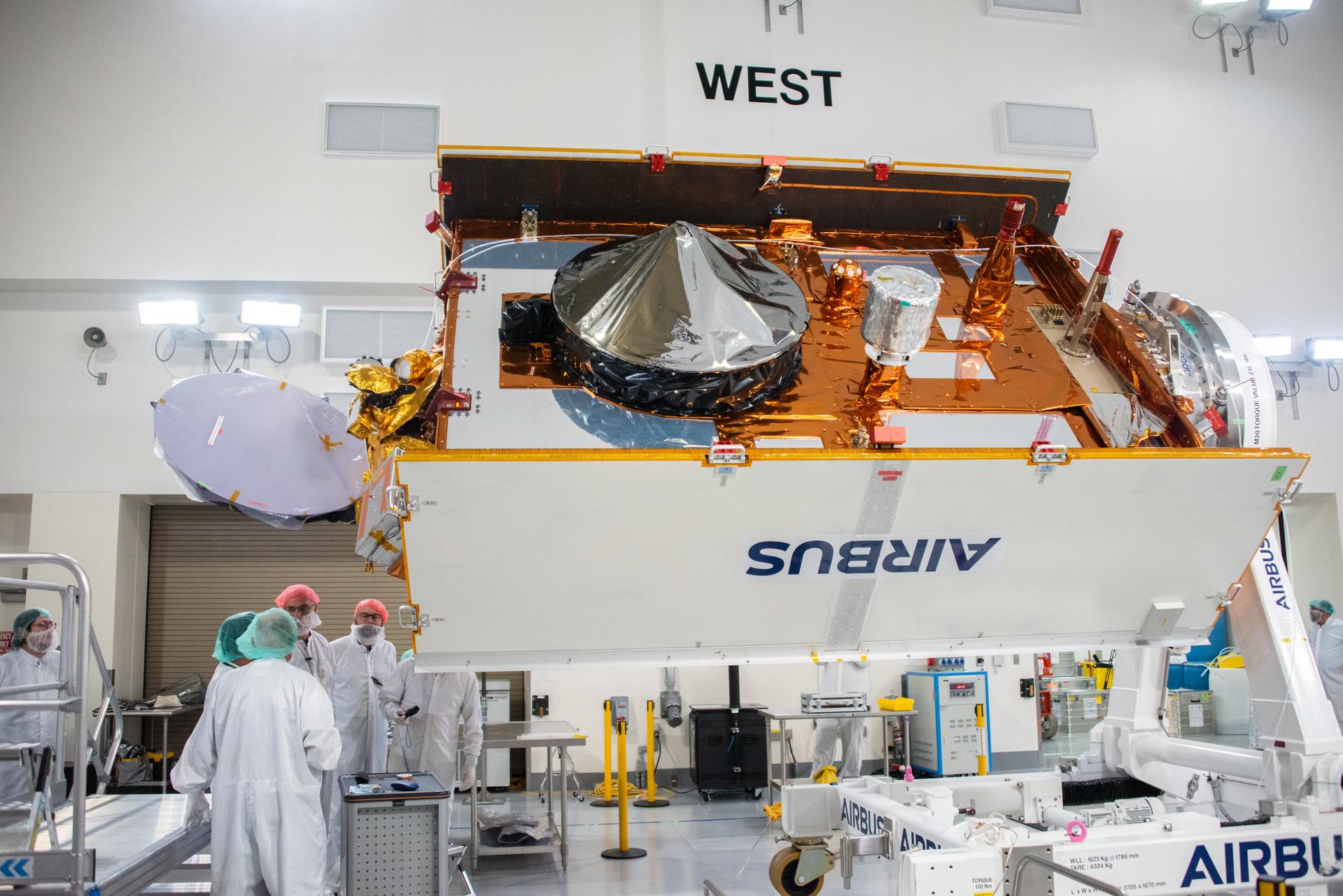
Technicians install multi-layer insulation on the Sentinel-6B spacecraft on a work stand inside the Astrotech Space Operations payload processing facility at Vandenberg Space Force Base in California on Thursday, Oct. 23, 2025. Critical for protecting spacecraft from extreme temperatures and environmental conditions in space, the thin, reflective multi-layer insulation will create a barrier to help reduce heat transfer through radiation while Sentinel-6B is in orbit. A collaboration between NASA, ESA (European Space Agency), EUMETSAT (European Organisation for the Exploitation of Meteorological Satellites), and the National Oceanic and Atmospheric Administration (NOAA), Sentinel-6B is designed to measure sea levels down to roughly an inch for about 90% of the world’s oceans. NASA is targeting launch no earlier than Sunday, Nov. 16, 2025, on a SpaceX Falcon 9 rocket from Space Launch Complex 4 East at Vandenberg.
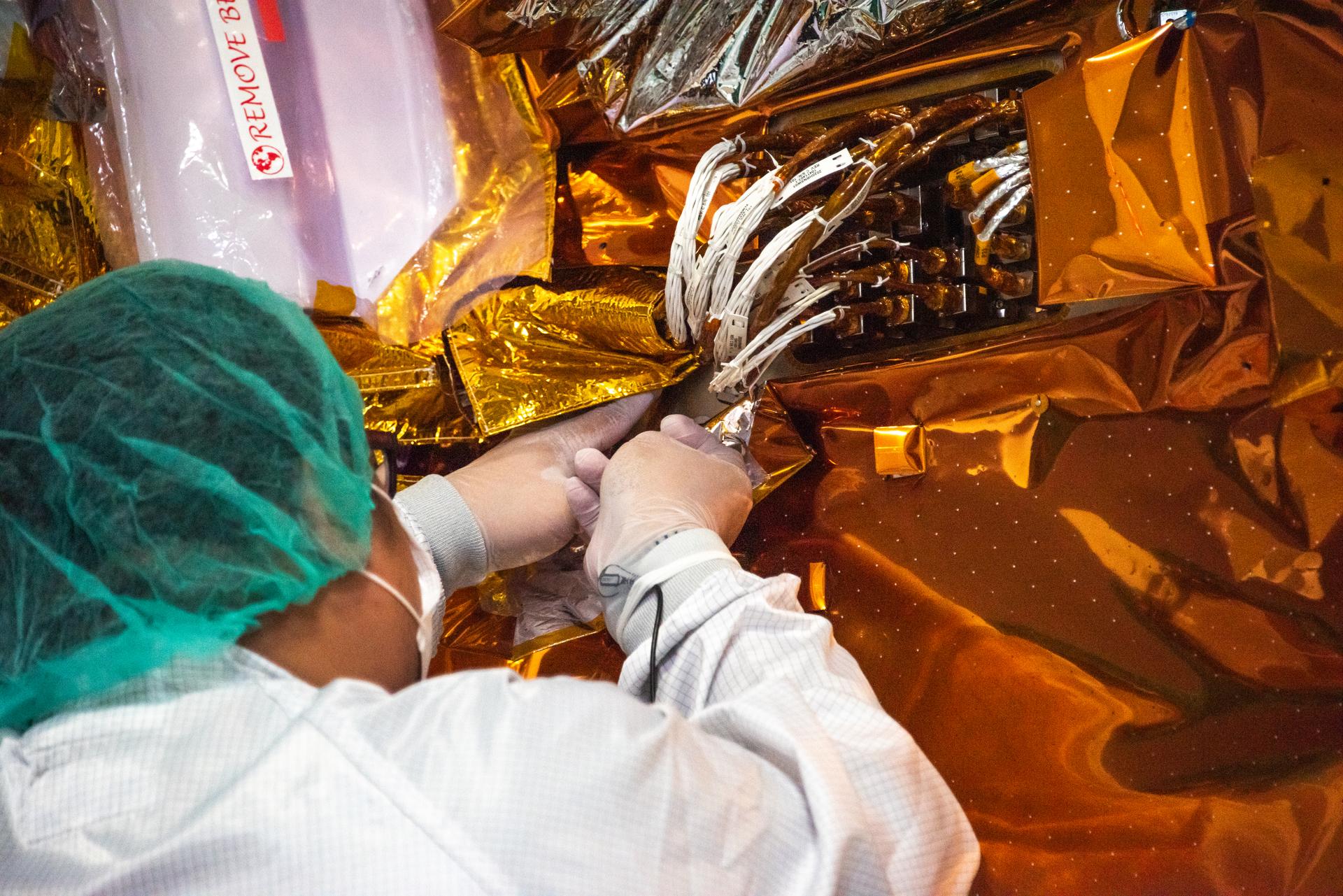
Technicians install multi-layer insulation on the Sentinel-6B spacecraft on a work stand inside the Astrotech Space Operations payload processing facility at Vandenberg Space Force Base in California on Thursday, Oct. 23, 2025. Critical for protecting spacecraft from extreme temperatures and environmental conditions in space, the thin, reflective multi-layer insulation will create a barrier to help reduce heat transfer through radiation while Sentinel-6B is in orbit. A collaboration between NASA, ESA (European Space Agency), EUMETSAT (European Organisation for the Exploitation of Meteorological Satellites), and the National Oceanic and Atmospheric Administration (NOAA), Sentinel-6B is designed to measure sea levels down to roughly an inch for about 90% of the world’s oceans. NASA is targeting launch no earlier than Sunday, Nov. 16, 2025, on a SpaceX Falcon 9 rocket from Space Launch Complex 4 East at Vandenberg.
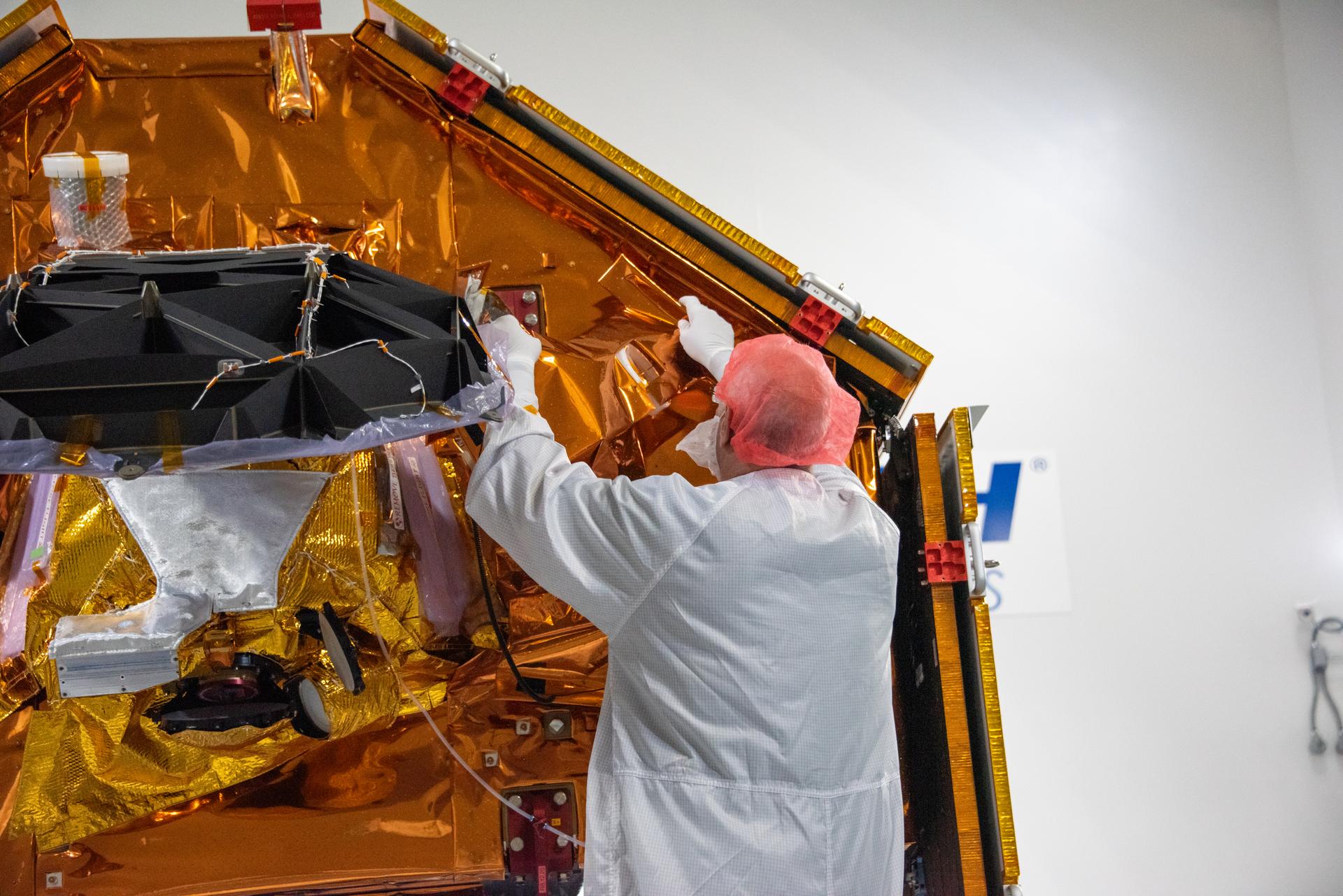
Technicians install multi-layer insulation on the Sentinel-6B spacecraft on a work stand inside the Astrotech Space Operations payload processing facility at Vandenberg Space Force Base in California on Thursday, Oct. 23, 2025. Critical for protecting spacecraft from extreme temperatures and environmental conditions in space, the thin, reflective multi-layer insulation will create a barrier to help reduce heat transfer through radiation while Sentinel-6B is in orbit. A collaboration between NASA, ESA (European Space Agency), EUMETSAT (European Organisation for the Exploitation of Meteorological Satellites), and the National Oceanic and Atmospheric Administration (NOAA), Sentinel-6B is designed to measure sea levels down to roughly an inch for about 90% of the world’s oceans. NASA is targeting launch no earlier than Sunday, Nov. 16, 2025, on a SpaceX Falcon 9 rocket from Space Launch Complex 4 East at Vandenberg.
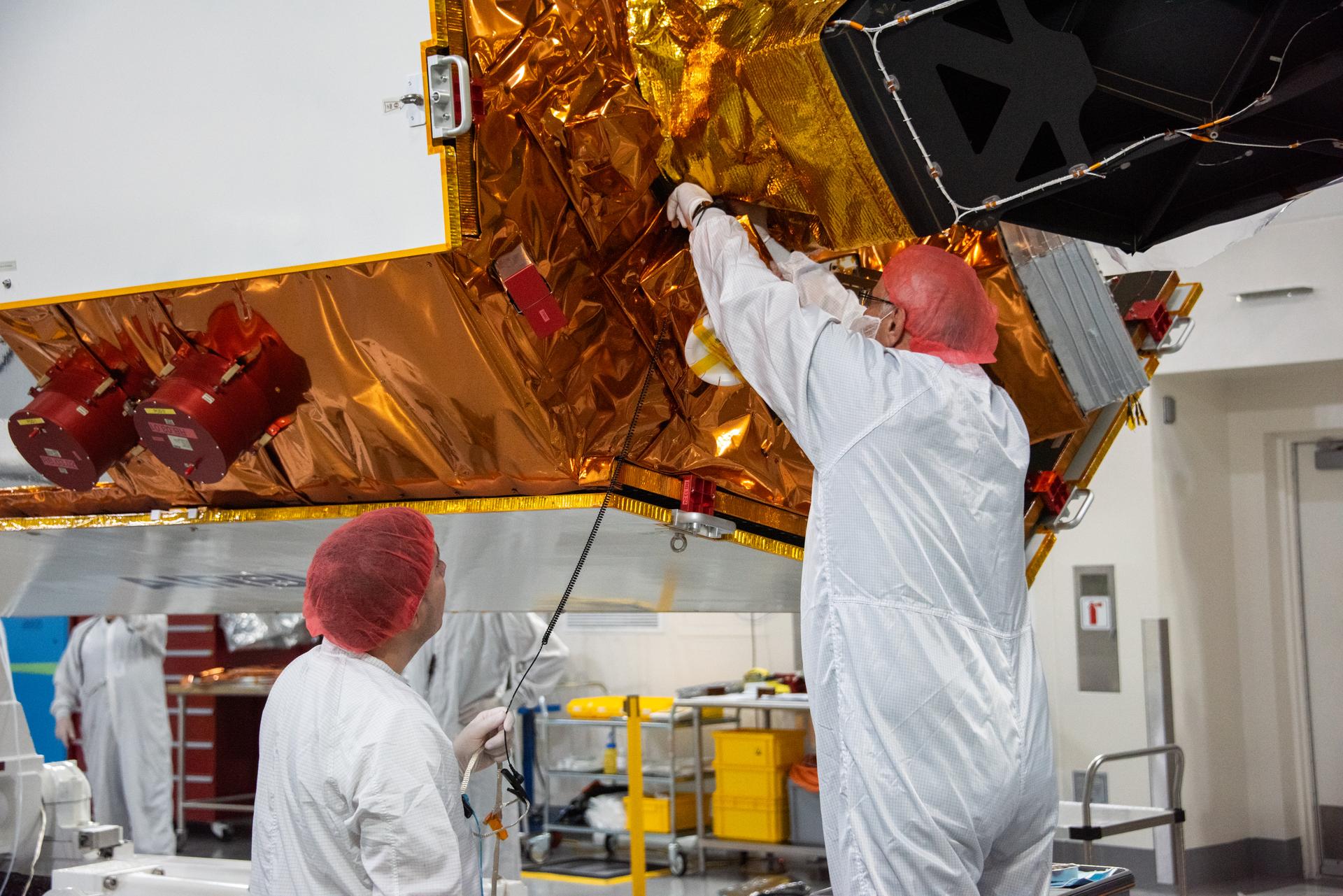
Technicians install multi-layer insulation on the Sentinel-6B spacecraft on a work stand inside the Astrotech Space Operations payload processing facility at Vandenberg Space Force Base in California on Thursday, Oct. 23, 2025. Critical for protecting spacecraft from extreme temperatures and environmental conditions in space, the thin, reflective multi-layer insulation will create a barrier to help reduce heat transfer through radiation while Sentinel-6B is in orbit. A collaboration between NASA, ESA (European Space Agency), EUMETSAT (European Organisation for the Exploitation of Meteorological Satellites), and the National Oceanic and Atmospheric Administration (NOAA), Sentinel-6B is designed to measure sea levels down to roughly an inch for about 90% of the world’s oceans. NASA is targeting launch no earlier than Sunday, Nov. 16, 2025, on a SpaceX Falcon 9 rocket from Space Launch Complex 4 East at Vandenberg.
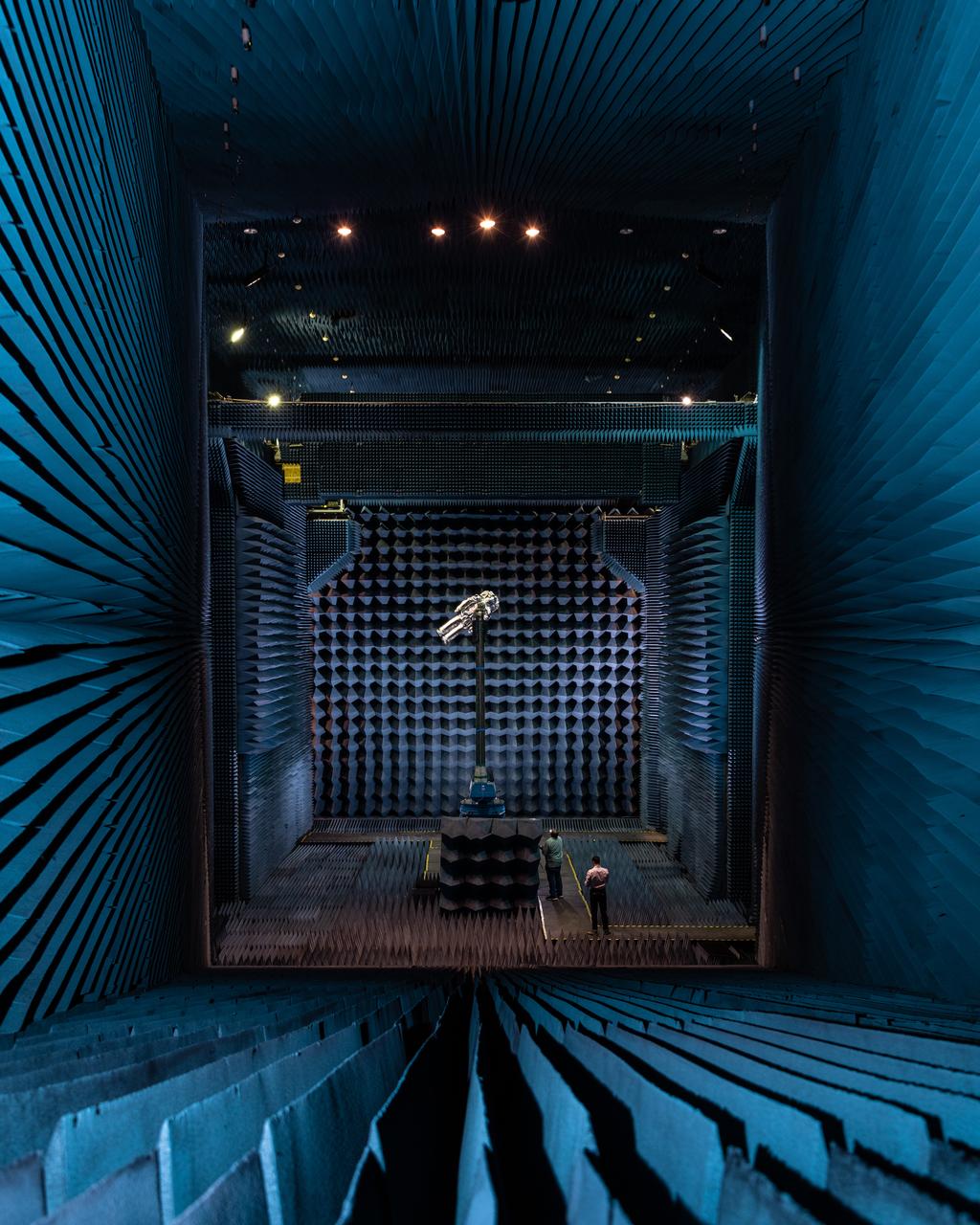
xEMU Antenna testing being performed in the B14 Anechoic Chamber to inspect MLI keep out zones for the antennas. The xEMU Test article is named xGUS, the successor to the EMU Test Article also named GUS (named after Gus Grissom and his iconic silver spacesuit). Image taken from where "horn" is located that sends out radio frequency signals for test. Photographer: Norah Moran – Johnson Space Center
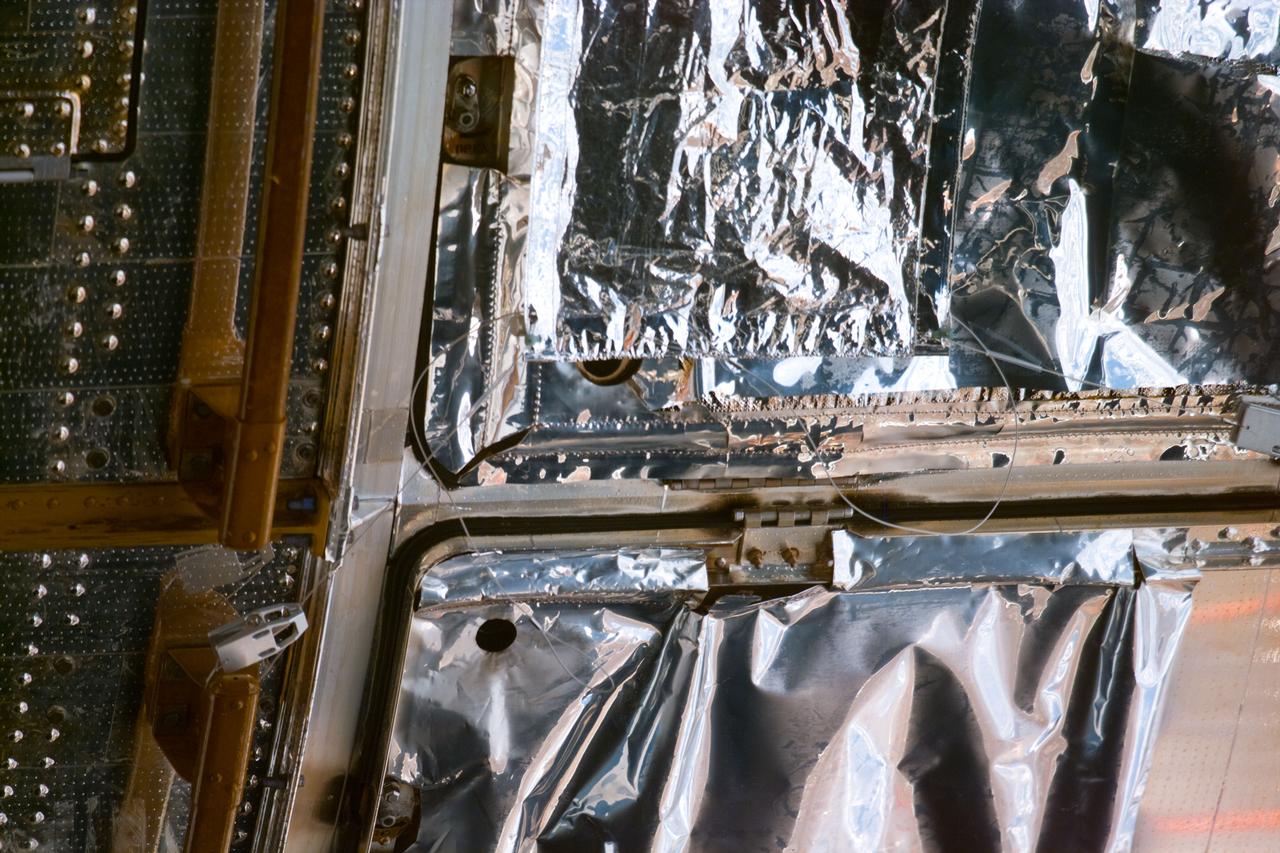
S82-E-5746 (18 Feb. 1997) --- Patch work for Bay #8 is visible at top (hold picture horizontally). This view was taken with an Electronic Still Camera (ESC).

S82-E-5734 (18 Feb. 1997) --- Tear is visible (lower right if picture is oriented horizontally) at base of Bay #8, later repaired by Smith and Lee. One bit of patchwork is visible on left. This view was taken with an Electronic Still Camera (ESC).
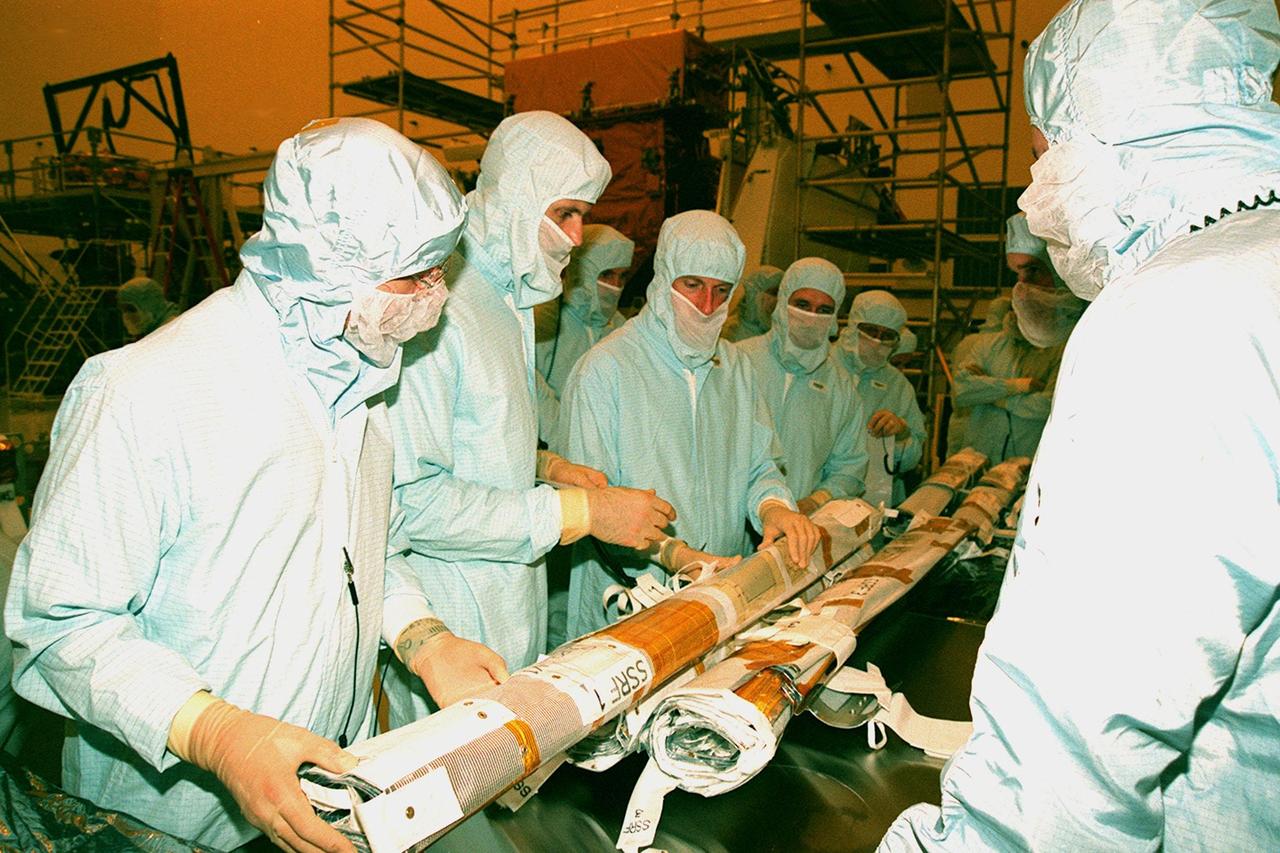
During a Crew Equipment Interface Test, members of the STS-103 crew check out new Multi-Layer Insulation (MLI) for the Hubble Space Telescope. The payload hardware is in the Payload Hazardous Servicing Facility. From left are Mission Specialists Claude Nicollier of Switzerland, Steven L. Smith, C. Michael Foale (Ph.D.), and John M. Grunsfeld (Ph.D.). Other members of the crew are Commander Curtis L. Brown Jr., Pilot Scott J. Kelly, and Mission Specialist Jean-François Clervoy of France. Nicollier and Clervoy are with the European Space Agency. Mission STS-103 is a "call-up" due to the need to replace portions of the pointing system, the gyros, which have begun to fail on the Hubble Space Telescope. Although Hubble is operating normally and conducting its scientific observations, only three of its six gyroscopes are working properly. The gyroscopes allow the telescope to point at stars, galaxies and planets. The STS-103 crew will not only replace gyroscopes, it will also replace a Fine Guidance Sensor and an older computer with a new enhanced model, an older data tape recorder with a solid state digital recorder, a failed spare transmitter with a new one, and degraded insulation on the telescope with the MLI. The crew will also install a Battery Voltage/Temperature Improvement Kit to protect the spacecraft batteries from overcharging and overheating when the telescope goes into a safe mode. The scheduled launch date in October is under review
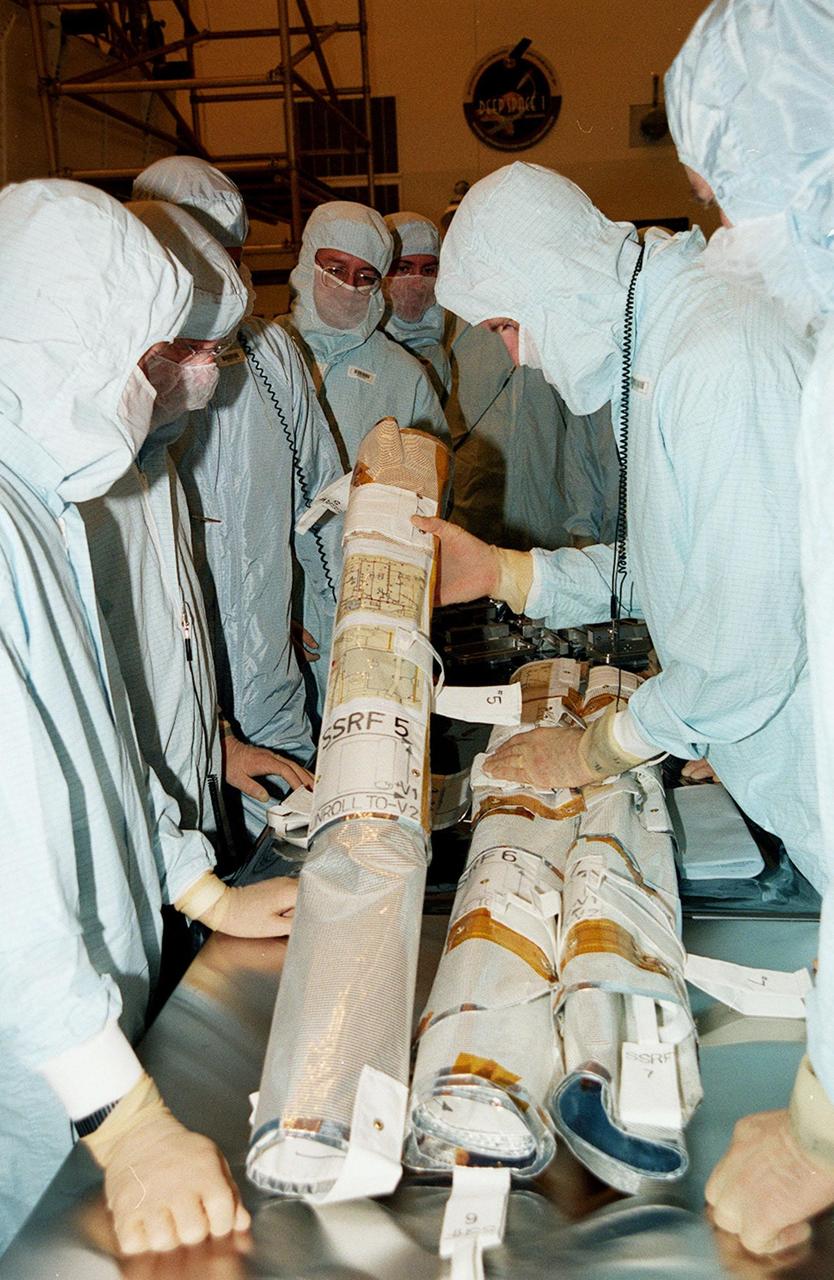
In the Payload Hazardous Servicing Facility, STS-103 Mission Specialist Steven L. Smith (right) and other members of the crew look over new Multi-Layer Insulation (MLI) intended for the Hubble Space Telescope. The seven-member crew, taking part in a Crew Equipment Interface Test, are Commander Curtis L. Brown Jr., Pilot Scott J. Kelly, and Mission Specialists Smith, C. Michael Foale (Ph.D.), John M. Grunsfeld (Ph.D.), Claude Nicollier of Switzerland, and Jean-François Clervoy of France. Nicollier and Clervoy are with the European Space Agency. Mission STS-103 is a "call-up" due to the need to replace portions of the pointing system, the gyros, which have begun to fail on the Hubble Space Telescope. Although Hubble is operating normally and conducting its scientific observations, only three of its six gyroscopes are working properly. The gyroscopes allow the telescope to point at stars, galaxies and planets. The STS-103 crew will not only replace gyroscopes, it will also replace a Fine Guidance Sensor and an older computer with a new enhanced model, an older data tape recorder with a solid state digital recorder, a failed spare transmitter with a new one, and degraded insulation on the telescope with the MLI. The crew will also install a Battery Voltage/Temperature Improvement Kit to protect the spacecraft batteries from overcharging and overheating when the telescope goes into a safe mode. The scheduled launch date in October is under review
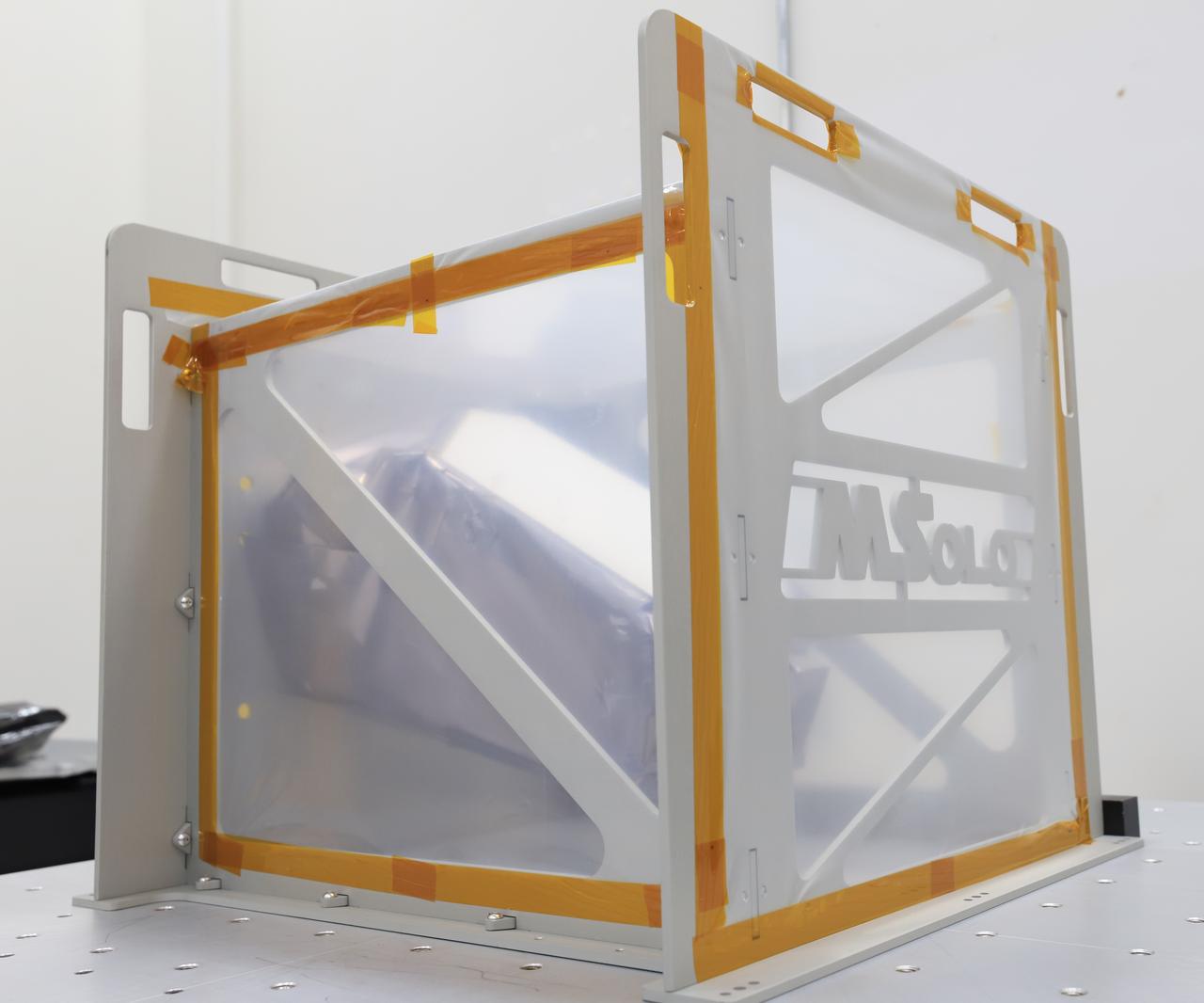
Engineers conduct a mass properties test on the Mass Spectrometer Observing Lunar Operations (MSolo) instrument inside Kennedy Space Center’s Space Station Processing Facility in Florida on Nov. 22, 2022. Mass properties determines the mass and center of gravity of the flight unit. The lander uses this information, from all payloads, to improve stability and performance of the lander – and to a lesser degree, the stability and performance of the rocket. This marks the end of testing at Kennedy for the Polar Resources Ice Mining Experiment-1 (PRIME-1) MSolo instrument. It will soon be shipped to Intuitive Machines in Houston for integration on the NOVA-C landing platform. Launching in 2023, the PRIME-1 mission will be the first in-situ resource utilization demonstration on the Moon.

Engineers conduct a mass properties test on the Mass Spectrometer Observing Lunar Operations (MSolo) instrument inside Kennedy Space Center’s Space Station Processing Facility in Florida on Nov. 22, 2022. Mass properties determines the mass and center of gravity of the flight unit. The lander uses this information, from all payloads, to improve stability and performance of the lander – and to a lesser degree, the stability and performance of the rocket. This marks the end of testing at Kennedy for the Polar Resources Ice Mining Experiment-1 (PRIME-1) MSolo instrument. It will soon be shipped to Intuitive Machines in Houston for integration on the NOVA-C landing platform. Launching in 2023, the PRIME-1 mission will be the first in-situ resource utilization demonstration on the Moon.
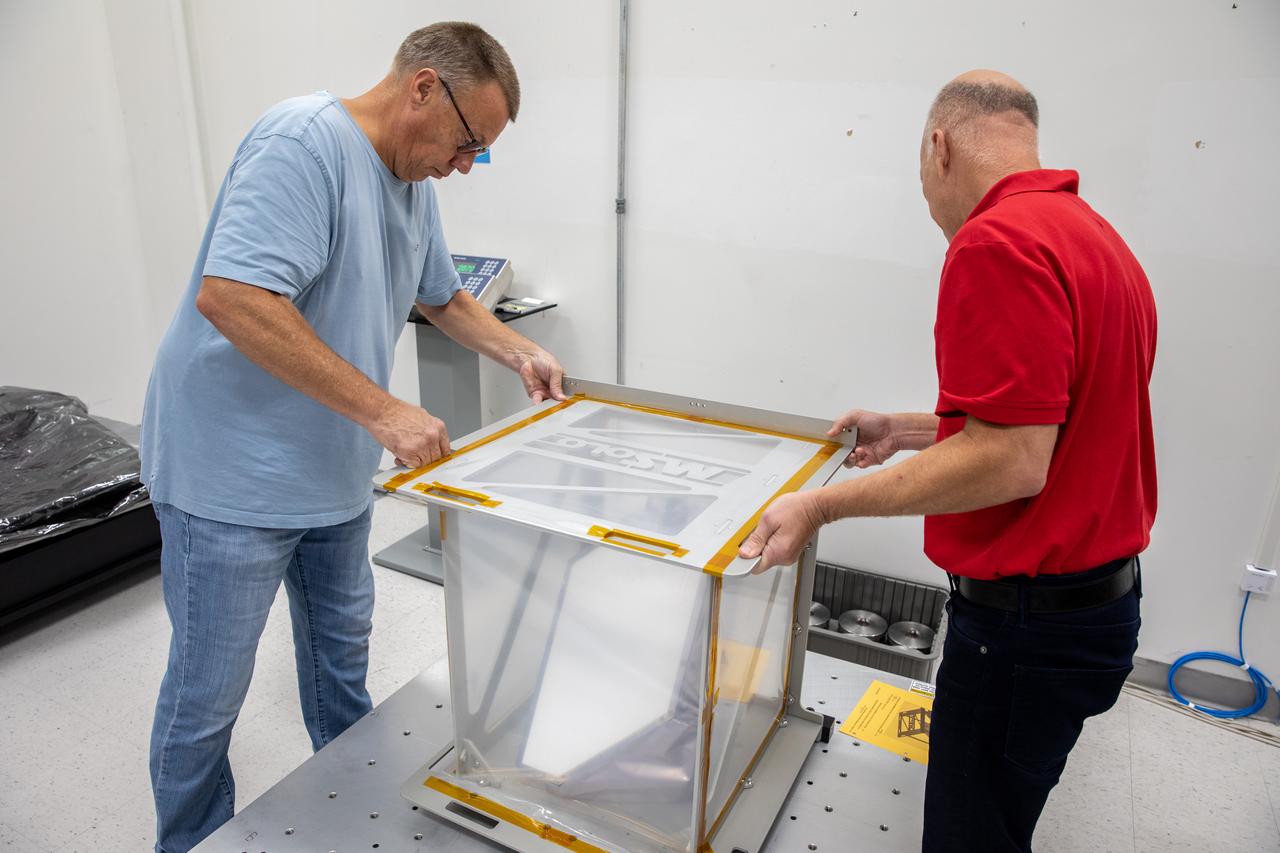
Engineers conduct a mass properties test on the Mass Spectrometer Observing Lunar Operations (MSolo) instrument inside Kennedy Space Center’s Space Station Processing Facility in Florida on Nov. 22, 2022. Mass properties determines the mass and center of gravity of the flight unit. The lander uses this information, from all payloads, to improve stability and performance of the lander – and to a lesser degree, the stability and performance of the rocket. This marks the end of testing at Kennedy for the Polar Resources Ice Mining Experiment-1 (PRIME-1) MSolo instrument. It will soon be shipped to Intuitive Machines in Houston for integration on the NOVA-C landing platform. Launching in 2023, the PRIME-1 mission will be the first in-situ resource utilization demonstration on the Moon.
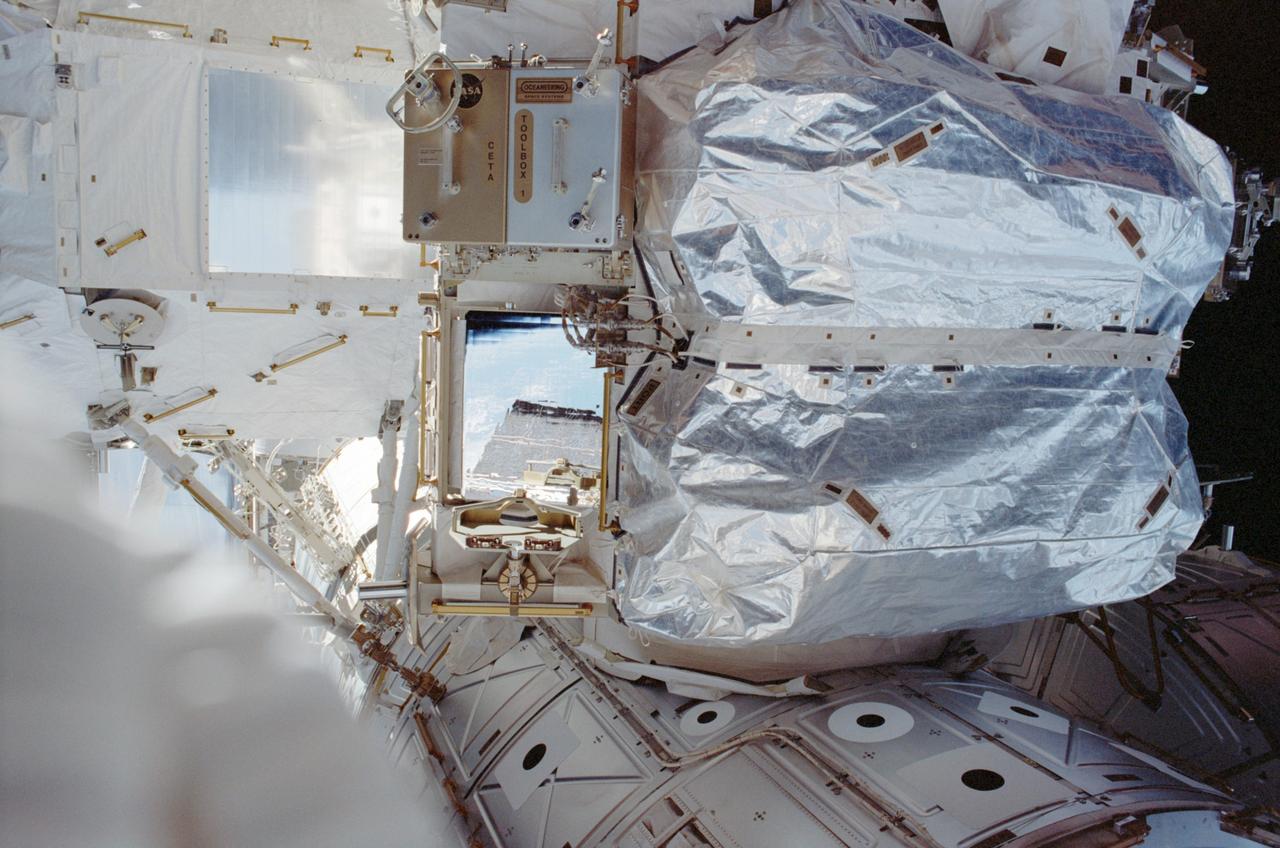
STS111-310-022 (9 June 2002) --- Medium shot of Z Truss Control Moment Gyroscope (CMG) on the International Space Station as photographed during STS-111 spacewalk.

A team of engineers participates in simulation training for the Polar Resources Ice Mining Experiment-1 (PRIME-1) on Thursday, Nov. 2, 2023, inside the Neil Armstrong Operations and Checkout Building at NASA’s Kennedy Space Center in Florida. The purpose of the training is to get the integrated PRIME-1 team – engineers with PRIME-1’s MSOLO (Mass Spectrometer Observing Lunar Operations) and Honeybee Robotics’ TRIDENT (The Regolith and Ice Drill for Exploring New Terrain) drill – prepared to operate the instrument on the lunar surface. The team commanded the PRIME-1 hardware, located at Intuitive Machines in Houston, to operate MSOLO and TRIDENT. PRIME-1 is scheduled to launch through NASA’s CLPS (Commercial Lunar Payload Delivery Service) initiative and will be the first in-situ resource utilization demonstration on the Moon, with MSOLO and TRIDENT making up its two primary components. Through Artemis missions, CLPS deliveries will be used to perform science experiments, test technologies, and demonstrate capabilities to help NASA explore the Moon and prepare for human deep space exploration missions.
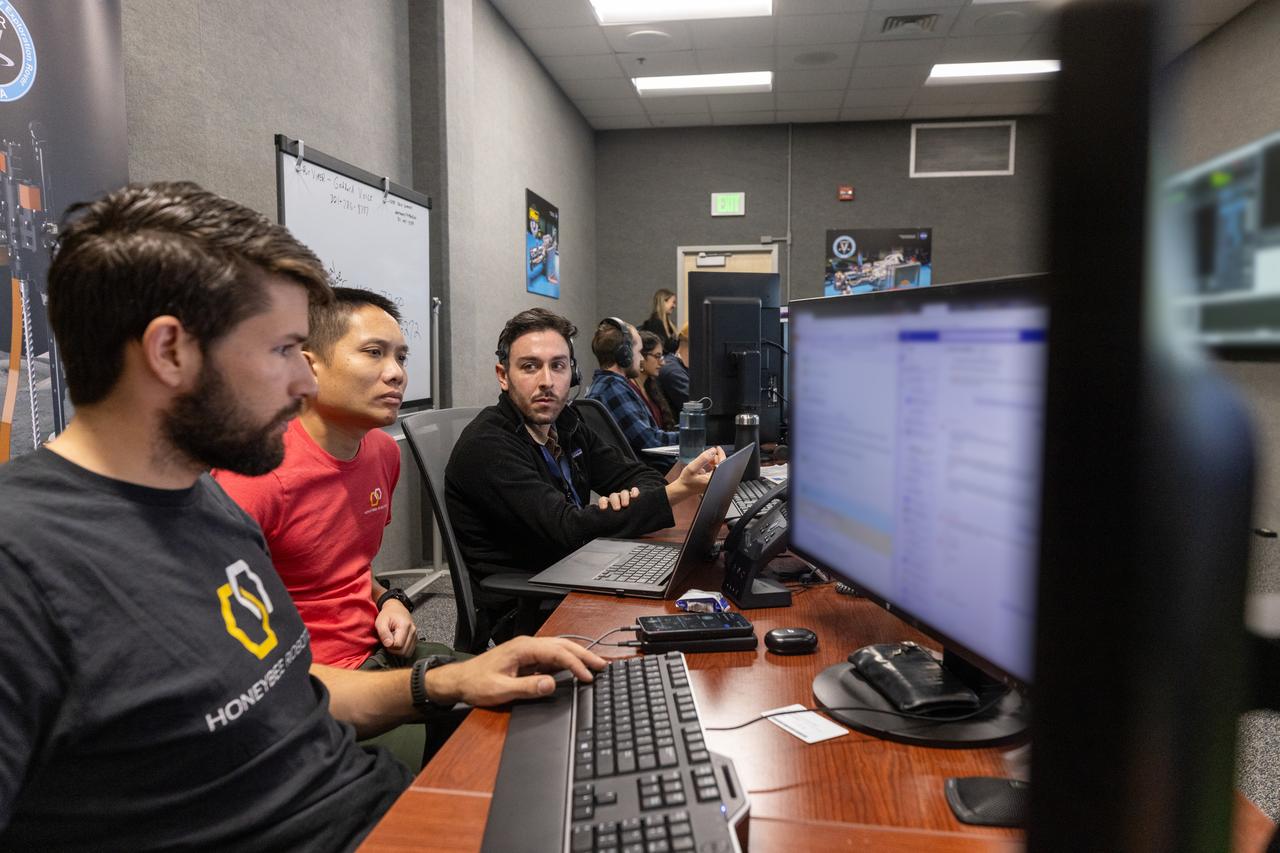
A team from Honeybee Robotics in Altadena, California participates in simulation training for the Polar Resources Ice Mining Experiment-1 (PRIME-1) on Thursday, Nov. 2, 2023, inside the Neil Armstrong Operations and Checkout Building at NASA’s Kennedy Space Center in Florida. The purpose of the training is to get the integrated PRIME-1 team – engineers with PRIME-1’s MSOLO (Mass Spectrometer Observing Lunar Operations) and Honeybee Robotics’ TRIDENT (The Regolith and Ice Drill for Exploring New Terrain) drill – prepared to operate the instrument on the lunar surface. The team commanded the PRIME-1 hardware, located at Intuitive Machines in Houston, to operate MSOLO and TRIDENT. PRIME-1 is scheduled to launch through NASA’s CLPS (Commercial Lunar Payload Delivery Service) initiative and will be the first in-situ resource utilization demonstration on the Moon, with MSOLO and TRIDENT making up its two primary components. Through Artemis missions, CLPS deliveries will be used to perform science experiments, test technologies, and demonstrate capabilities to help NASA explore the Moon and prepare for human deep space exploration missions.

A team of engineers participates in simulation training for the Polar Resources Ice Mining Experiment-1 (PRIME-1) on Thursday, Nov. 2, 2023, inside the Neil Armstrong Operations and Checkout Building at NASA’s Kennedy Space Center in Florida. The purpose of the training is to get the integrated PRIME-1 team – engineers with PRIME-1’s MSOLO (Mass Spectrometer Observing Lunar Operations) and Honeybee Robotics’ TRIDENT (The Regolith and Ice Drill for Exploring New Terrain) drill – prepared to operate the instrument on the lunar surface. The team commanded the PRIME-1 hardware, located at Intuitive Machines in Houston, to operate MSOLO and TRIDENT. PRIME-1 is scheduled to launch through NASA’s CLPS (Commercial Lunar Payload Delivery Service) initiative and will be the first in-situ resource utilization demonstration on the Moon, with MSOLO and TRIDENT making up its two primary components. Through Artemis missions, CLPS deliveries will be used to perform science experiments, test technologies, and demonstrate capabilities to help NASA explore the Moon and prepare for human deep space exploration missions.
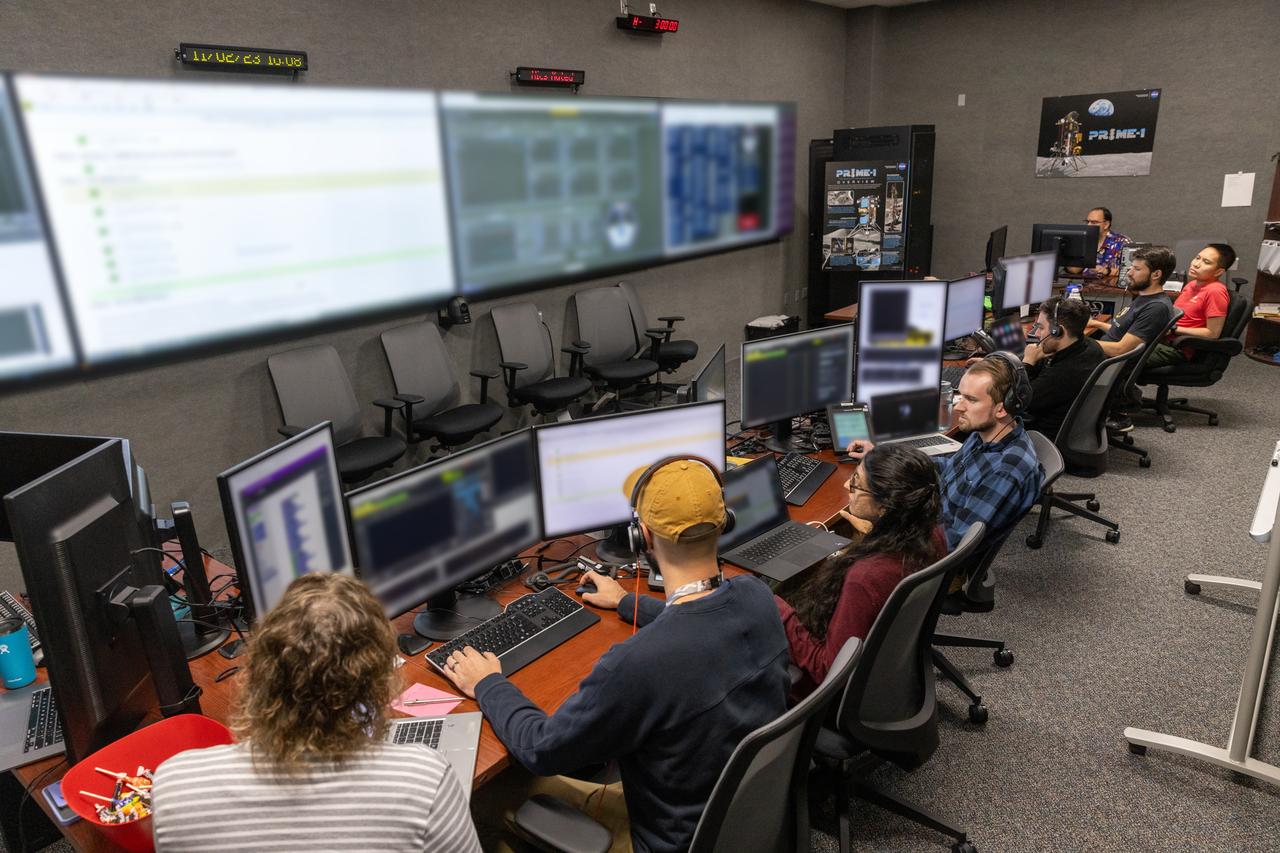
A team of engineers participates in simulation training for the Polar Resources Ice Mining Experiment-1 (PRIME-1) on Thursday, Nov. 2, 2023, inside the Neil Armstrong Operations and Checkout Building at NASA’s Kennedy Space Center in Florida. The purpose of the training is to get the integrated PRIME-1 team – engineers with PRIME-1’s MSOLO (Mass Spectrometer Observing Lunar Operations) and Honeybee Robotics’ TRIDENT (The Regolith and Ice Drill for Exploring New Terrain) drill – prepared to operate the instrument on the lunar surface. The team commanded the PRIME-1 hardware, located at Intuitive Machines in Houston, to operate MSOLO and TRIDENT. PRIME-1 is scheduled to launch through NASA’s CLPS (Commercial Lunar Payload Delivery Service) initiative and will be the first in-situ resource utilization demonstration on the Moon, with MSOLO and TRIDENT making up its two primary components. Through Artemis missions, CLPS deliveries will be used to perform science experiments, test technologies, and demonstrate capabilities to help NASA explore the Moon and prepare for human deep space exploration missions.
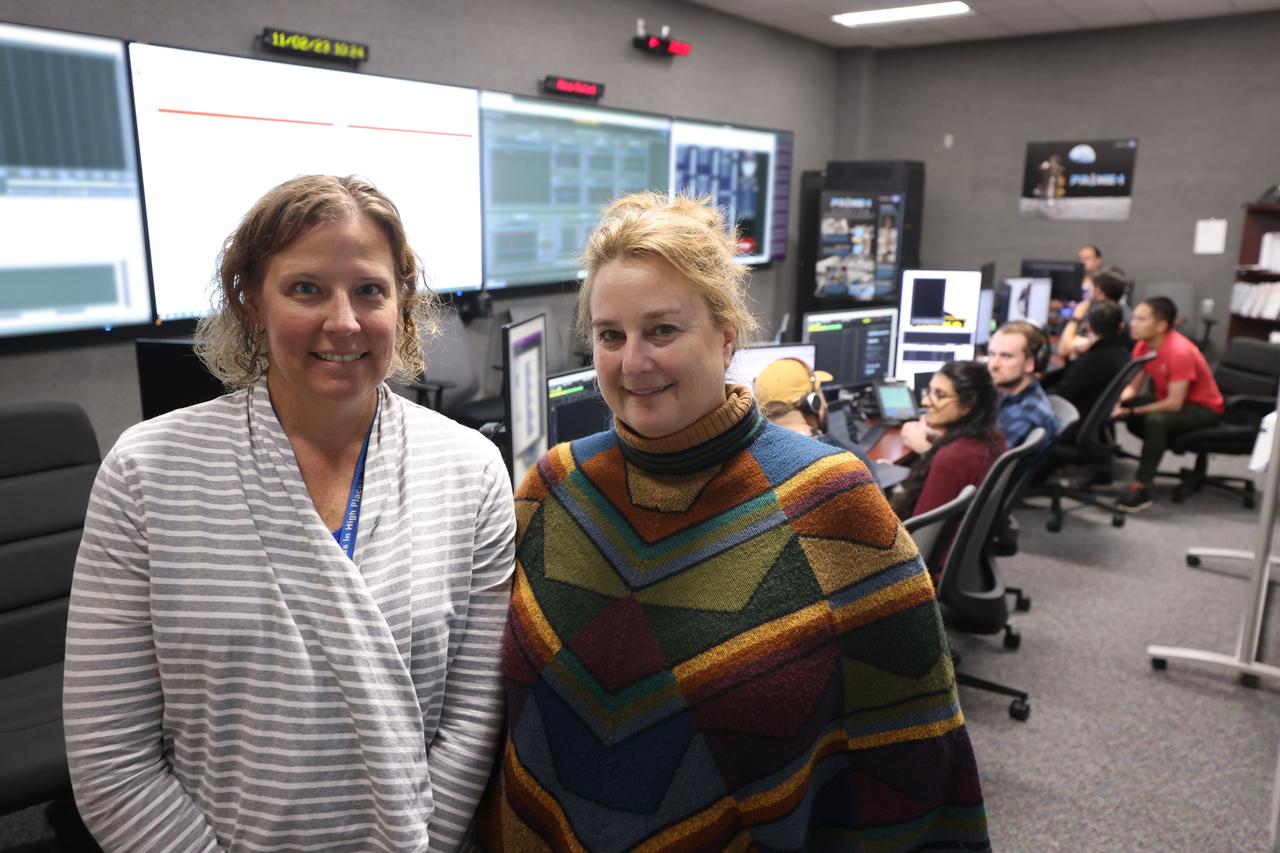
Janine Captain, left, and Jackie Quinn participate in simulation training for the Polar Resources Ice Mining Experiment-1 (PRIME-1) on Thursday, Nov. 2, 2023, inside the Neil Armstrong Operations and Checkout Building at NASA’s Kennedy Space Center in Florida. The purpose of the training is to get the integrated PRIME-1 team – engineers with PRIME-1’s MSOLO (Mass Spectrometer Observing Lunar Operations) and Honeybee Robotics’ TRIDENT (Regolith and Ice Drill for Exploring New Terrain) drill – prepared to operate the instrument on the lunar surface. The team commanded the PRIME-1 hardware, located at Intuitive Machines in Houston, to operate MSOLO and TRIDENT. PRIME-1 is scheduled to launch through NASA’s CLPS (Commercial Lunar Payload Delivery Service) initiative and will be the first in-situ resource utilization demonstration on the Moon, with MSOLO and TRIDENT making up its two primary components. Through Artemis missions, CLPS deliveries will be used to perform science experiments, test technologies, and demonstrate capabilities to help NASA explore the Moon and prepare for human deep space exploration missions.
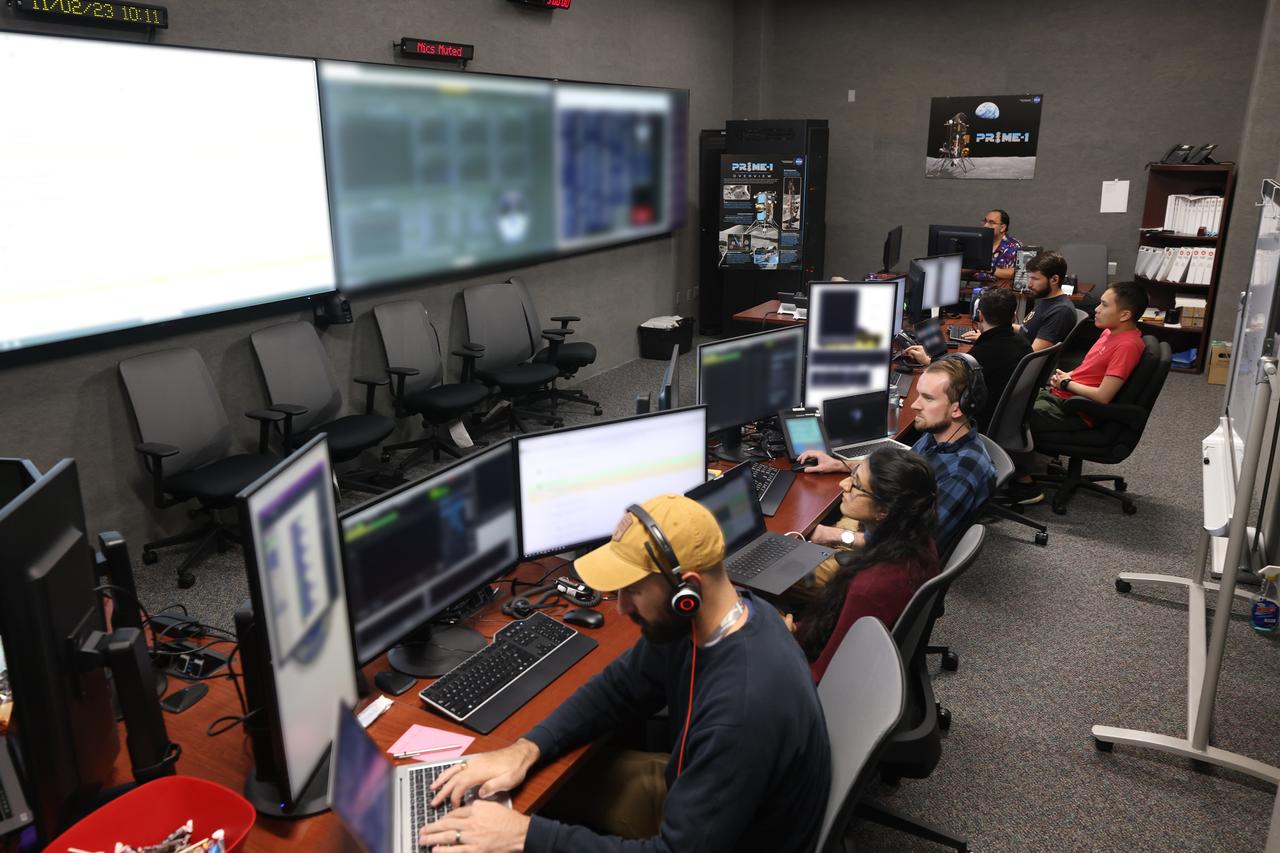
A team of engineers participates in simulation training for the Polar Resources Ice Mining Experiment-1 (PRIME-1) on Thursday, Nov. 2, 2023, inside the Neil Armstrong Operations and Checkout Building at NASA’s Kennedy Space Center in Florida. The purpose of the training is to get the integrated PRIME-1 team – engineers with PRIME-1’s MSOLO (Mass Spectrometer Observing Lunar Operations) and Honeybee Robotics’ TRIDENT (The Regolith and Ice Drill for Exploring New Terrain) drill – prepared to operate the instrument on the lunar surface. The team commanded the PRIME-1 hardware, located at Intuitive Machines in Houston, to operate MSOLO and TRIDENT. PRIME-1 is scheduled to launch through NASA’s CLPS (Commercial Lunar Payload Delivery Service) initiative and will be the first in-situ resource utilization demonstration on the Moon, with MSOLO and TRIDENT making up its two primary components. Through Artemis missions, CLPS deliveries will be used to perform science experiments, test technologies, and demonstrate capabilities to help NASA explore the Moon and prepare for human deep space exploration missions.