
CAPE CANAVERAL, Fla. - Members of space shuttle Atlantis' STS-129 crew pose for a group portrait in the White Room at Launch Pad 39A at NASA's Kennedy Space Center in Florida. Kneeling from left are Mission Specialist Randy Bresnik and Commander Charles O. Hobaugh; standing from left are Mission Specialists Mike Foreman, Leland Melvin and Robert L. Satcher Jr.; and Pilot Barry E. Wilmore. The crew members of space shuttle Atlantis' STS-129 mission are at Kennedy for training related to their launch dress rehearsal, the Terminal Countdown Demonstration Test. Launch of Atlantis on its STS-129 mission to the International Space Station is targeted for Nov. 16. For information on the STS-129 mission objectives and crew, visit http://www.nasa.gov/mission_pages/shuttle/shuttlemissions/sts129/index.html. Photo credit: NASA/Jim Grossmann
CAPE CANAVERAL, Fla. – As the sun rises over NASA's Kennedy Space Center in Florida, workers hitch a ride on the mobile launcher platform with the 327-foot-tall Ares I-X rocket, on its way to Launch Pad 39B. The test rocket left the Vehicle Assembly Building at 1:39 a.m. EDT on its 4.2-mile trek to the pad and was "hard down" on the pad’s pedestals at 9:17 a.m. The transfer of the pad from the Space Shuttle Program to the Constellation Program took place May 31. Modifications made to the pad include the removal of shuttle unique subsystems, such as the orbiter access arm and a section of the gaseous oxygen vent arm, along with the installation of three 600-foot lightning towers, access platforms, environmental control systems and a vehicle stabilization system. Part of the Constellation Program, the Ares I-X is the test vehicle for the Ares I. The Ares I-X flight test is targeted for Oct. 27. For information on the Ares I-X vehicle and flight test, visit http://www.nasa.gov/aresIX. Photo credit: NASA/Kim Shiflett
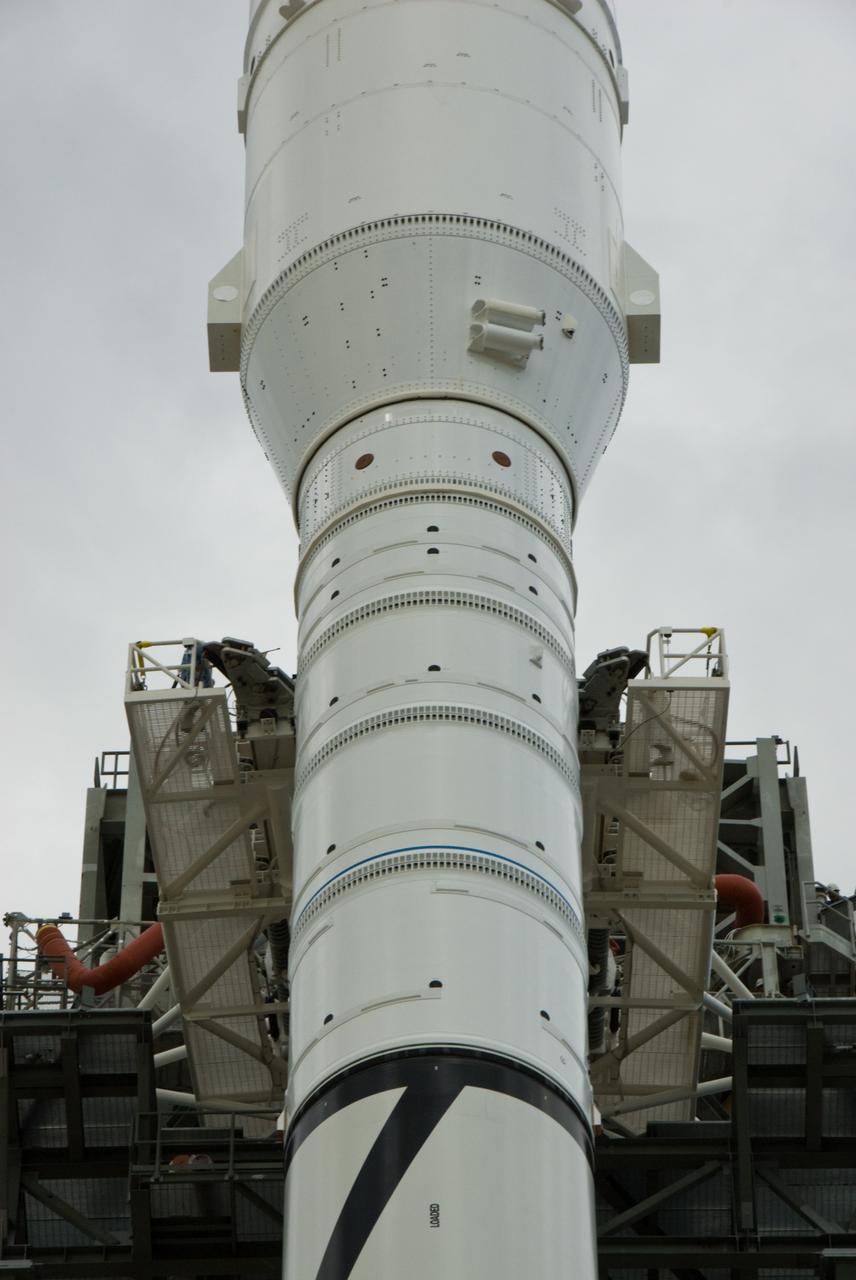
CAPE CANAVERAL, Fla. – The arms of the vehicle stabilization system are closed around the towering 327-foot-tall Ares I-X rocket, newly arrived on Launch Pad 39B at NASA's Kennedy Space Center in Florida. The test rocket left the Vehicle Assembly Building at 1:39 a.m. EDT on its 4.2-mile trek to the pad and was "hard down" on the pad’s pedestals at 9:17 a.m. The transfer of the pad from the Space Shuttle Program to the Constellation Program took place May 31. Modifications made to the pad include the removal of shuttle unique subsystems, such as the orbiter access arm and a section of the gaseous oxygen vent arm, along with the installation of three 600-foot lightning towers, access platforms, environmental control systems and a vehicle stabilization system. Part of the Constellation Program, the Ares I-X is the test vehicle for the Ares I. The Ares I-X flight test is targeted for Oct. 27. For information on the Ares I-X vehicle and flight test, visit http://www.nasa.gov/aresIX. Photo credit: NASA/Kim Shiflett
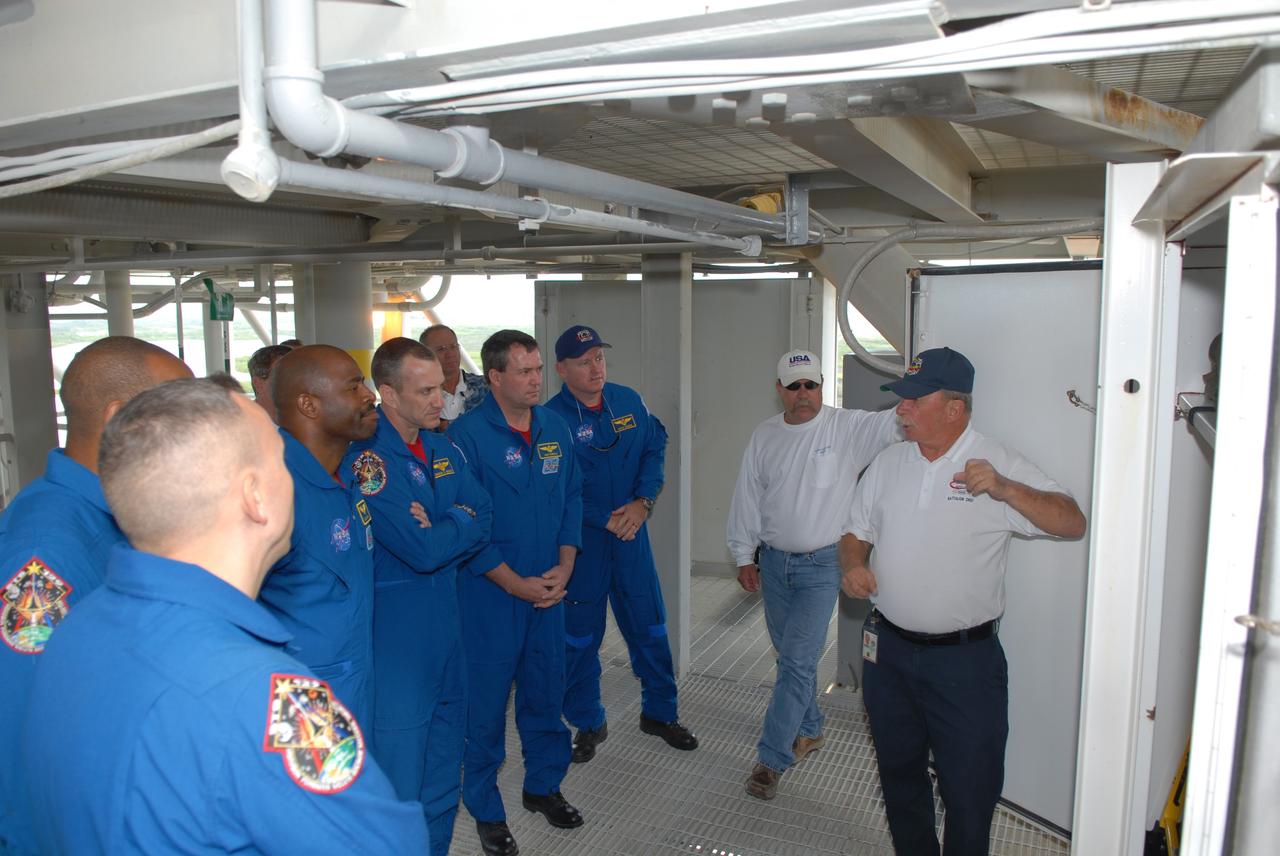
CAPE CANAVERAL, Fla. - Battalion Chief George Hoggard instructs members of space shuttle Atlantis' STS-129 crew on safety procedures at Launch Pad 39A at NASA's Kennedy Space Center in Florida. From left are Mission Specialists Randy Bresnik, Robert L. Satcher Jr., and Leland Melvin; Commander Charles O. Hobaugh; Mission Specialist Mike Foreman; and Pilot Barry E. Wilmore. The crew members of space shuttle Atlantis' STS-129 mission are at Kennedy for training related to their launch dress rehearsal, the Terminal Countdown Demonstration Test. Launch of Atlantis on its STS-129 mission to the International Space Station is targeted for Nov. 16. For information on the STS-129 mission objectives and crew, visit http://www.nasa.gov/mission_pages/shuttle/shuttlemissions/sts129/index.html. Photo credit: NASA/Jim Grossmann
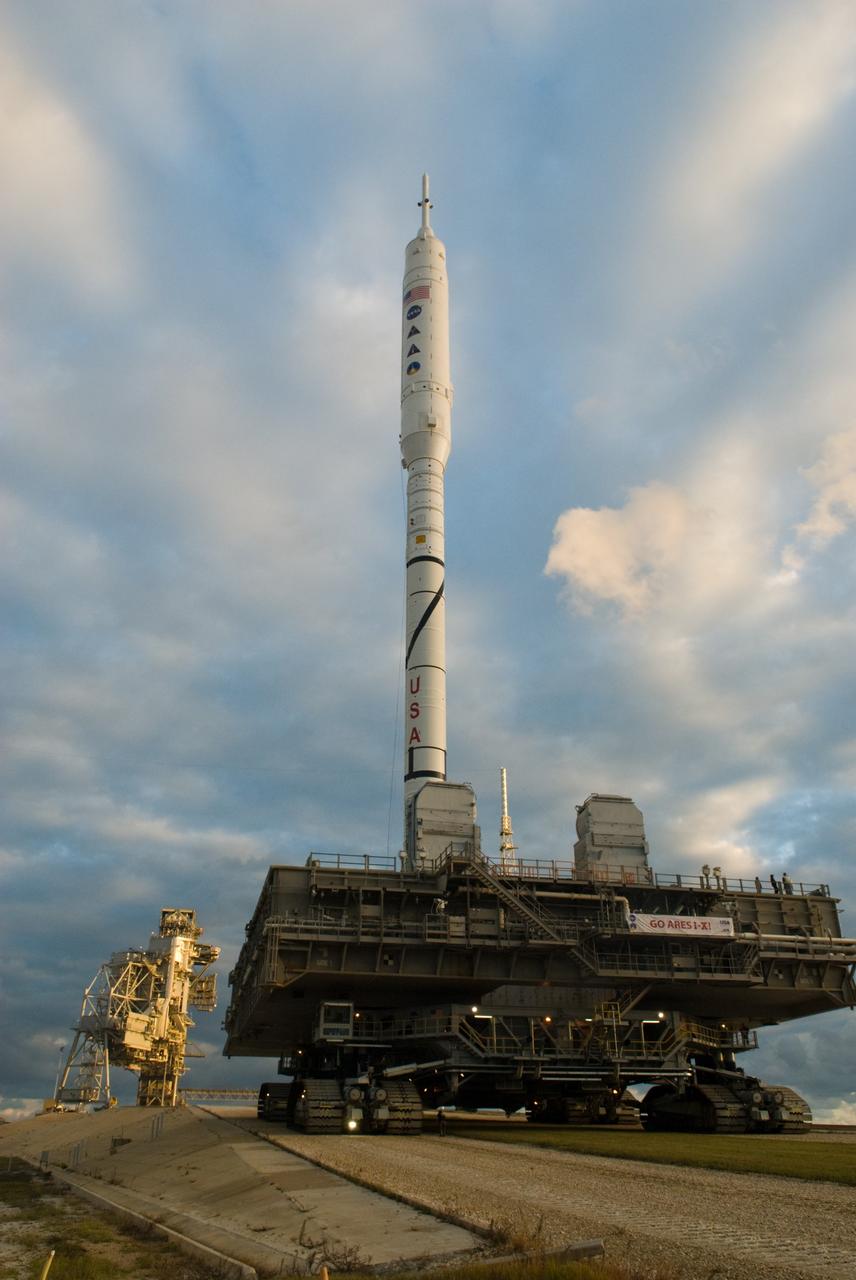
CAPE CANAVERAL, Fla. – The towering 327-foot-tall Ares I-X rocket slowly approaches the fixed service structure on Launch Pad 39B at NASA's Kennedy Space Center in Florida, a 4.2-mile trip that began seven hours earlier. The test rocket left the Vehicle Assembly Building at 1:39 a.m. EDT on its 4.2-mile trek to the pad and was "hard down" on the pad’s pedestals at 9:17 a.m. The transfer of the pad from the Space Shuttle Program to the Constellation Program took place May 31. Modifications made to the pad include the removal of shuttle unique subsystems, such as the orbiter access arm and a section of the gaseous oxygen vent arm, along with the installation of three 600-foot lightning towers, access platforms, environmental control systems and a vehicle stabilization system. Part of the Constellation Program, the Ares I-X is the test vehicle for the Ares I. The Ares I-X flight test is targeted for Oct. 27. For information on the Ares I-X vehicle and flight test, visit http://www.nasa.gov/aresIX. Photo credit: NASA/Kim Shiflett
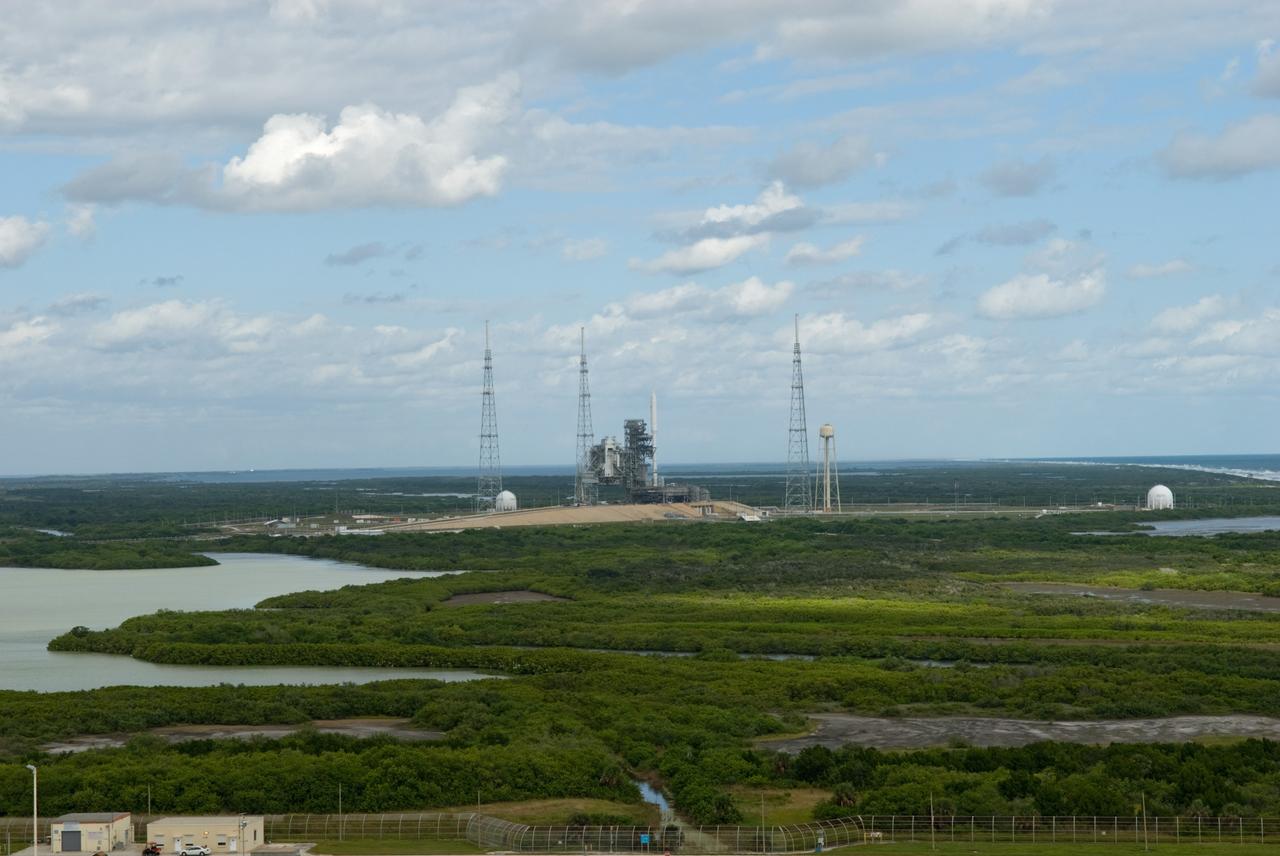
CAPE CANAVERAL, Fla. - This view from Launch Pad 39A at NASA's Kennedy Space Center in Florida shows the Ares I-X rocket on Pad 39B, ready for final processing for its upcoming flight test. The test rocket left the Vehicle Assembly Building at 1:39 a.m. EDT on its 4.2-mile trek to the pad and was "hard down" on the pad’s pedestals at 9:17 a.m. The transfer of the pad from the Space Shuttle Program to the Constellation Program took place May 31. Modifications made to the pad include the removal of shuttle unique subsystems, such as the orbiter access arm and a section of the gaseous oxygen vent arm, along with the installation of three 600-foot lightning towers, access platforms, environmental control systems and a vehicle stabilization system. Part of the Constellation Program, the Ares I-X is the test vehicle for the Ares I. The Ares I-X flight test is targeted for Oct. 27. For information on the Ares I-X vehicle and flight test, visit http://www.nasa.gov/aresIX. Photo credit: NASA/Jim Grossmann
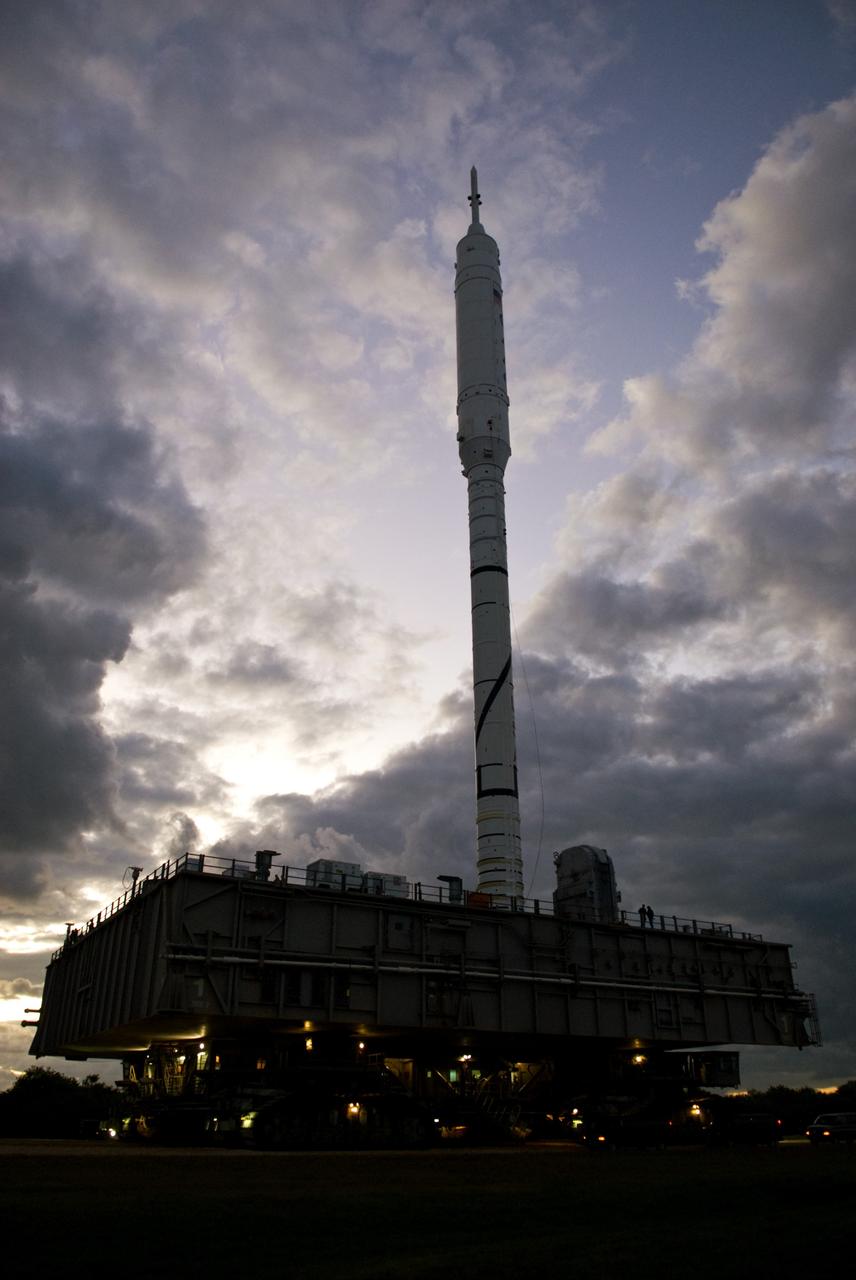
CAPE CANAVERAL, Fla. – The towering 327-foot-tall Ares I-X rocket, moved by the power of a crawler-transporter, is revealed on its 4.2-mile trip to Launch Pad 39B by the sun rising over NASA's Kennedy Space Center in Florida. The test rocket left the Vehicle Assembly Building at 1:39 a.m. EDT on its 4.2-mile trek to the pad and was "hard down" on the pad’s pedestals at 9:17 a.m. The transfer of the pad from the Space Shuttle Program to the Constellation Program took place May 31. Modifications made to the pad include the removal of shuttle unique subsystems, such as the orbiter access arm and a section of the gaseous oxygen vent arm, along with the installation of three 600-foot lightning towers, access platforms, environmental control systems and a vehicle stabilization system. Part of the Constellation Program, the Ares I-X is the test vehicle for the Ares I. The Ares I-X flight test is targeted for Oct. 27. For information on the Ares I-X vehicle and flight test, visit http://www.nasa.gov/aresIX. Photo credit: NASA/Kim Shiflett
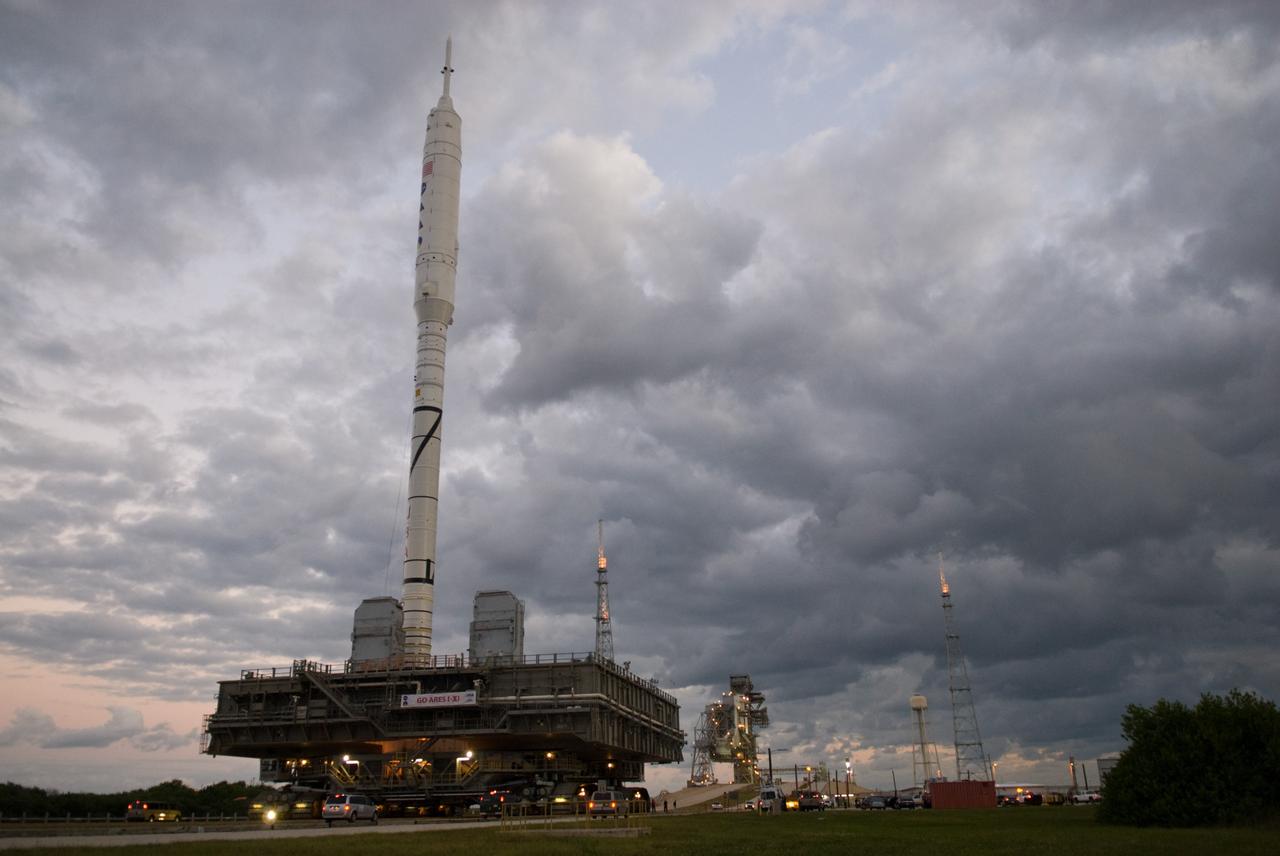
CAPE CANAVERAL, Fla. – As the sun rises over Launch Pad 39B at NASA's Kennedy Space Center in Florida, the 327-foot-tall Ares I-X rocket, secured to a mobile launcher platform, prepares to climb the five percent grade of the crawlerway to the top of the pad. The test rocket left the Vehicle Assembly Building at 1:39 a.m. EDT on its 4.2-mile trek to the pad and was "hard down" on the pad’s pedestals at 9:17 a.m. The transfer of the pad from the Space Shuttle Program to the Constellation Program took place May 31. Modifications made to the pad include the removal of shuttle unique subsystems, such as the orbiter access arm and a section of the gaseous oxygen vent arm, along with the installation of three 600-foot lightning towers, access platforms, environmental control systems and a vehicle stabilization system. Part of the Constellation Program, the Ares I-X is the test vehicle for the Ares I. The Ares I-X flight test is targeted for Oct. 27. For information on the Ares I-X vehicle and flight test, visit http://www.nasa.gov/aresIX. Photo credit: NASA/Kim Shiflett
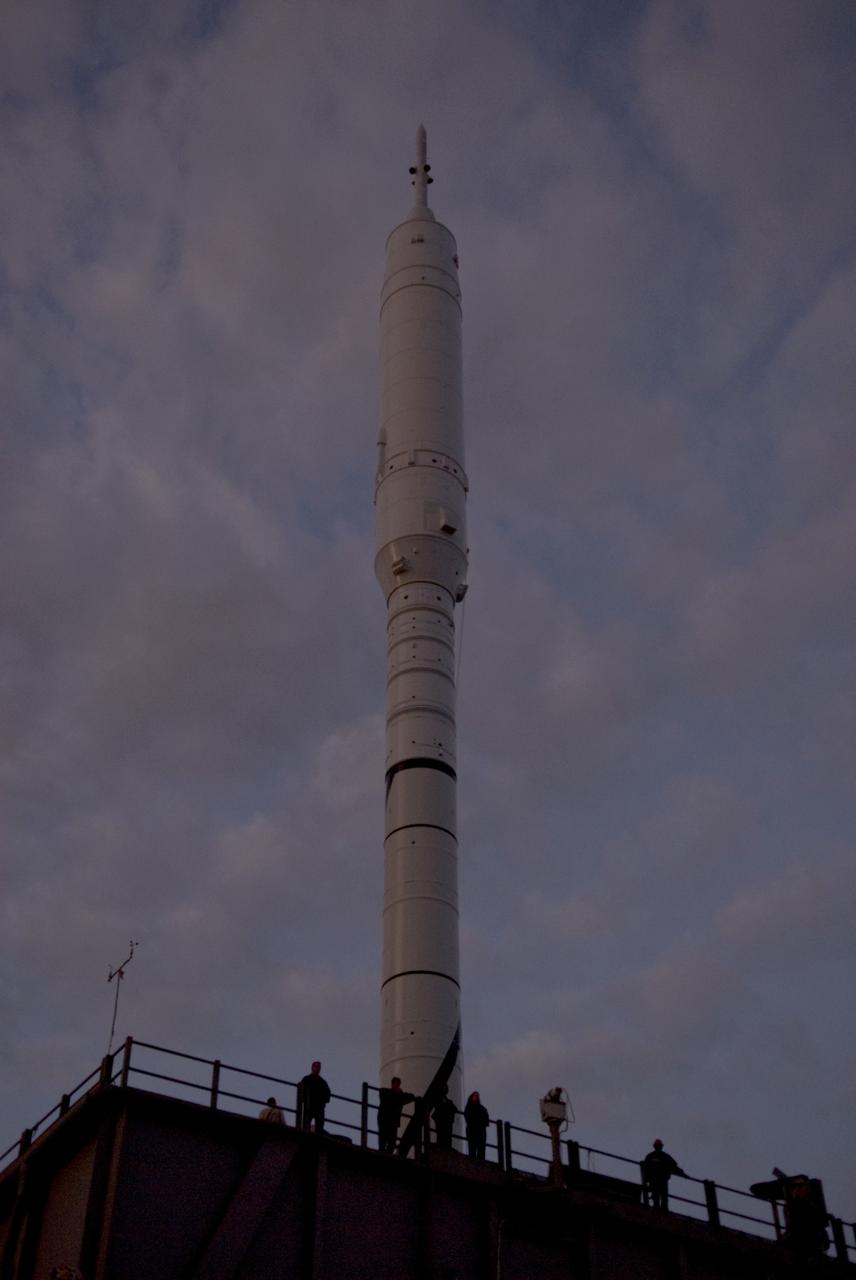
CAPE CANAVERAL, Fla. – As the sun rises over NASA's Kennedy Space Center in Florida, workers ride on the mobile launcher platform to Launch Pad 39B with the 327-foot-tall Ares I-X rocket. The test rocket left the Vehicle Assembly Building at 1:39 a.m. EDT on its 4.2-mile trek to the pad and was "hard down" on the pad’s pedestals at 9:17 a.m. The transfer of the pad from the Space Shuttle Program to the Constellation Program took place May 31. Modifications made to the pad include the removal of shuttle unique subsystems, such as the orbiter access arm and a section of the gaseous oxygen vent arm, along with the installation of three 600-foot lightning towers, access platforms, environmental control systems and a vehicle stabilization system. Part of the Constellation Program, the Ares I-X is the test vehicle for the Ares I. The Ares I-X flight test is targeted for Oct. 27. For information on the Ares I-X vehicle and flight test, visit http://www.nasa.gov/aresIX. Photo credit: NASA/Kim Shiflett
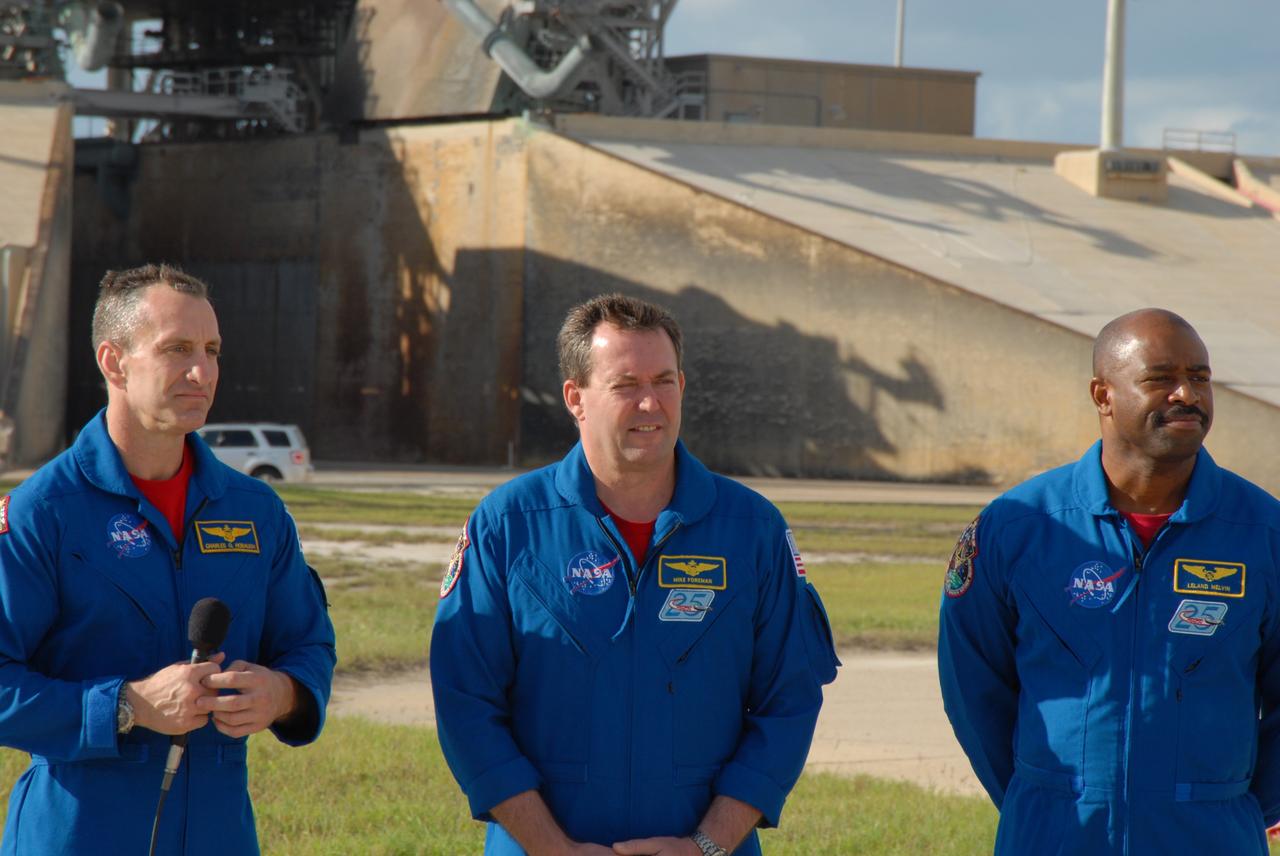
CAPE CANAVERAL, Fla. - At Launch Pad 39A at NASA's Kennedy Space Center in Florida, members of space shuttle Atlantis' STS-129 crew take questions from the media. From left are Commander Charles O. Hobaugh and Mission Specialists Mike Foreman and Leland Melvin. The crew members of space shuttle Atlantis' STS-129 mission are at Kennedy for training related to their launch dress rehearsal, the Terminal Countdown Demonstration Test. Launch of Atlantis on its STS-129 mission to the International Space Station is targeted for Nov. 16. For information on the STS-129 mission objectives and crew, visit http://www.nasa.gov/mission_pages/shuttle/shuttlemissions/sts129/index.html. Photo credit: NASA/Kim Shiflett

CAPE CANAVERAL, Fla. – Workers prepare to close the arms of the vehicle stabilization system around the towering 327-foot-tall Ares I-X rocket, newly arrived on Launch Pad 39B at NASA's Kennedy Space Center in Florida. The test rocket left the Vehicle Assembly Building at 1:39 a.m. EDT on its 4.2-mile trek to the pad and was "hard down" on the pad’s pedestals at 9:17 a.m. The transfer of the pad from the Space Shuttle Program to the Constellation Program took place May 31. Modifications made to the pad include the removal of shuttle unique subsystems, such as the orbiter access arm and a section of the gaseous oxygen vent arm, along with the installation of three 600-foot lightning towers, access platforms, environmental control systems and a vehicle stabilization system. Part of the Constellation Program, the Ares I-X is the test vehicle for the Ares I. The Ares I-X flight test is targeted for Oct. 27. For information on the Ares I-X vehicle and flight test, visit http://www.nasa.gov/aresIX. Photo credit: NASA/Kim Shiflett
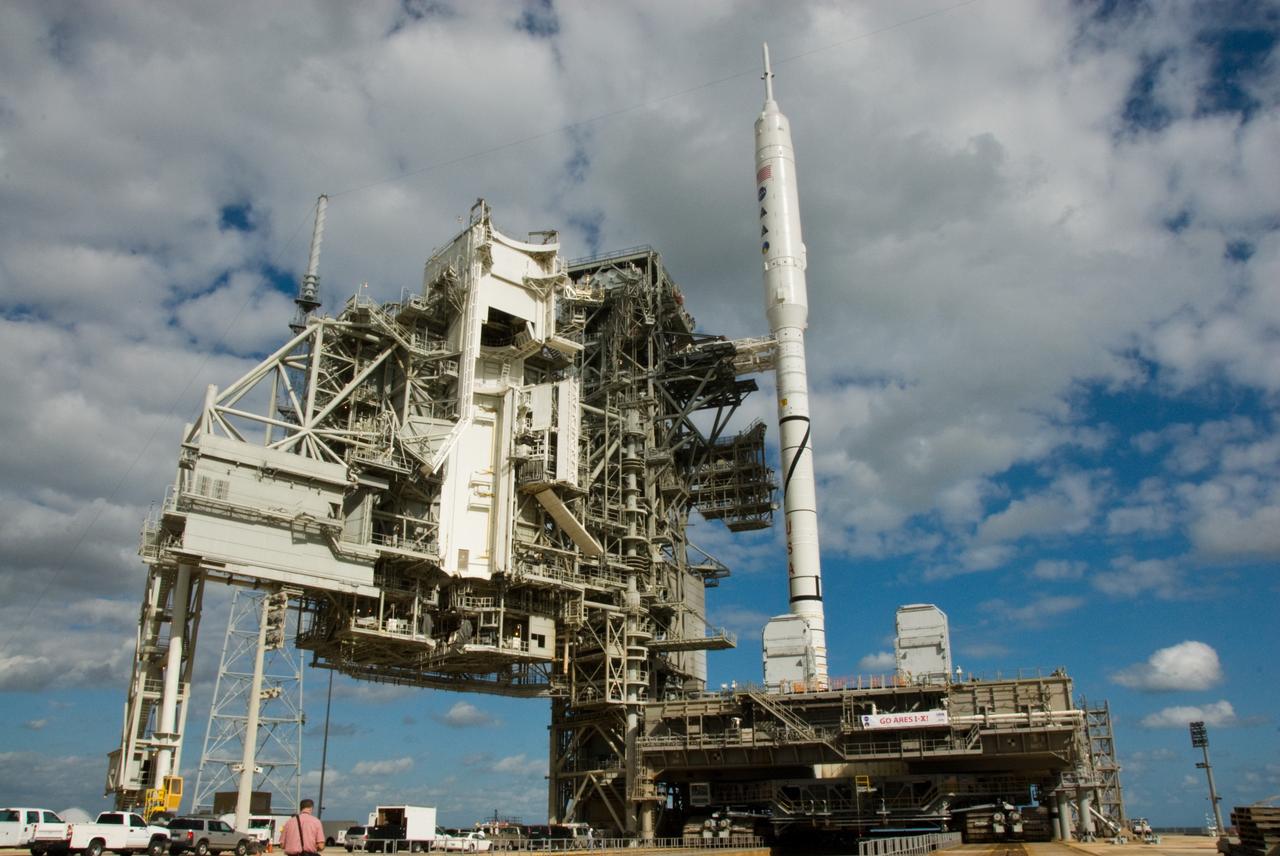
CAPE CANAVERAL, Fla. – The towering 327-foot-tall Ares I-X rocket, newly arrived on Launch Pad 39B at NASA's Kennedy Space Center in Florida, confidently greats the day following its seven-hour early-morning trek. The test rocket left the Vehicle Assembly Building at 1:39 a.m. EDT on its 4.2-mile trek to the pad and was "hard down" on the pad’s pedestals at 9:17 a.m. The transfer of the pad from the Space Shuttle Program to the Constellation Program took place May 31. Modifications made to the pad include the removal of shuttle unique subsystems, such as the orbiter access arm and a section of the gaseous oxygen vent arm, along with the installation of three 600-foot lightning towers, access platforms, environmental control systems and a vehicle stabilization system. Part of the Constellation Program, the Ares I-X is the test vehicle for the Ares I. The Ares I-X flight test is targeted for Oct. 27. For information on the Ares I-X vehicle and flight test, visit http://www.nasa.gov/aresIX. Photo credit: NASA/Kim Shiflett
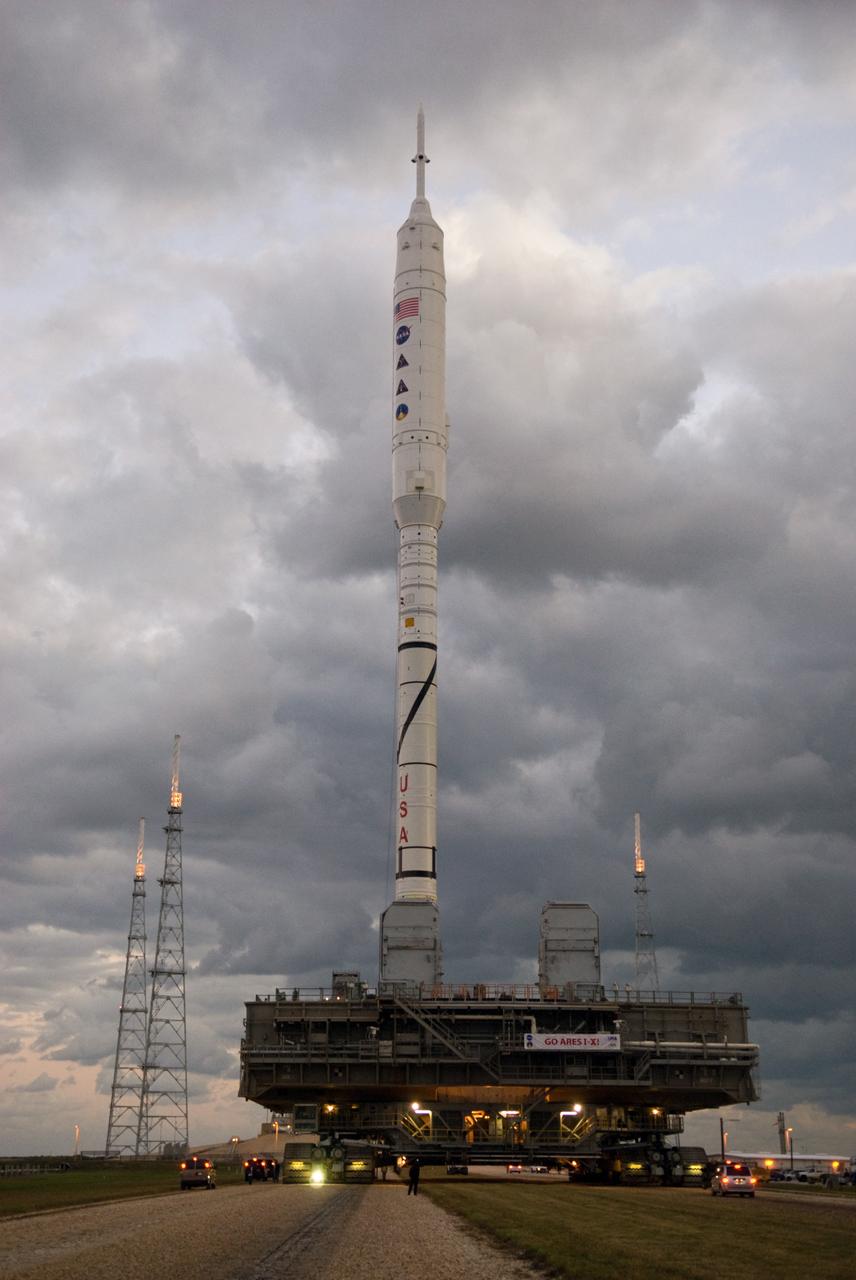
CAPE CANAVERAL, Fla. – As the sun rises over Launch Pad 39B at NASA's Kennedy Space Center in Florida, the 327-foot-tall Ares I-X rocket, secured to a mobile launcher platform, approaches the pad's perimeter fence. The test rocket left the Vehicle Assembly Building at 1:39 a.m. EDT on its 4.2-mile trek to the pad and was "hard down" on the pad’s pedestals at 9:17 a.m. The transfer of the pad from the Space Shuttle Program to the Constellation Program took place May 31. Modifications made to the pad include the removal of shuttle unique subsystems, such as the orbiter access arm and a section of the gaseous oxygen vent arm, along with the installation of three 600-foot lightning towers, access platforms, environmental control systems and a vehicle stabilization system. Part of the Constellation Program, the Ares I-X is the test vehicle for the Ares I. The Ares I-X flight test is targeted for Oct. 27. For information on the Ares I-X vehicle and flight test, visit http://www.nasa.gov/aresIX. Photo credit: NASA/Kim Shiflett
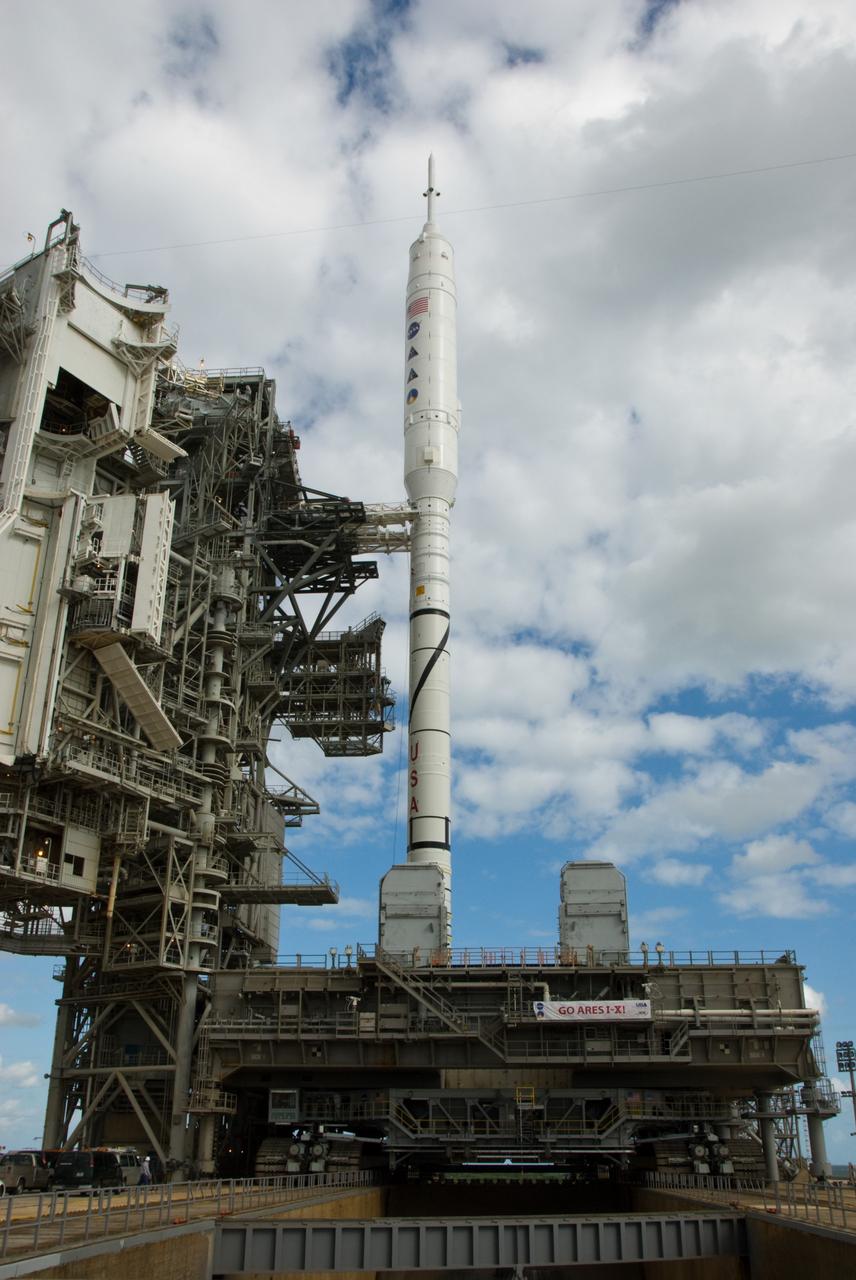
CAPE CANAVERAL, Fla. – The towering 327-foot-tall Ares I-X rocket, newly arrived on Launch Pad 39B at NASA's Kennedy Space Center in Florida, rests securely on its mobile launcher platform following its seven-hour early-morning trek. The test rocket left the Vehicle Assembly Building at 1:39 a.m. EDT on its 4.2-mile trek to the pad and was "hard down" on the pad’s pedestals at 9:17 a.m. The transfer of the pad from the Space Shuttle Program to the Constellation Program took place May 31. Modifications made to the pad include the removal of shuttle unique subsystems, such as the orbiter access arm and a section of the gaseous oxygen vent arm, along with the installation of three 600-foot lightning towers, access platforms, environmental control systems and a vehicle stabilization system. Part of the Constellation Program, the Ares I-X is the test vehicle for the Ares I. The Ares I-X flight test is targeted for Oct. 27. For information on the Ares I-X vehicle and flight test, visit http://www.nasa.gov/aresIX. Photo credit: NASA/Kim Shiflett
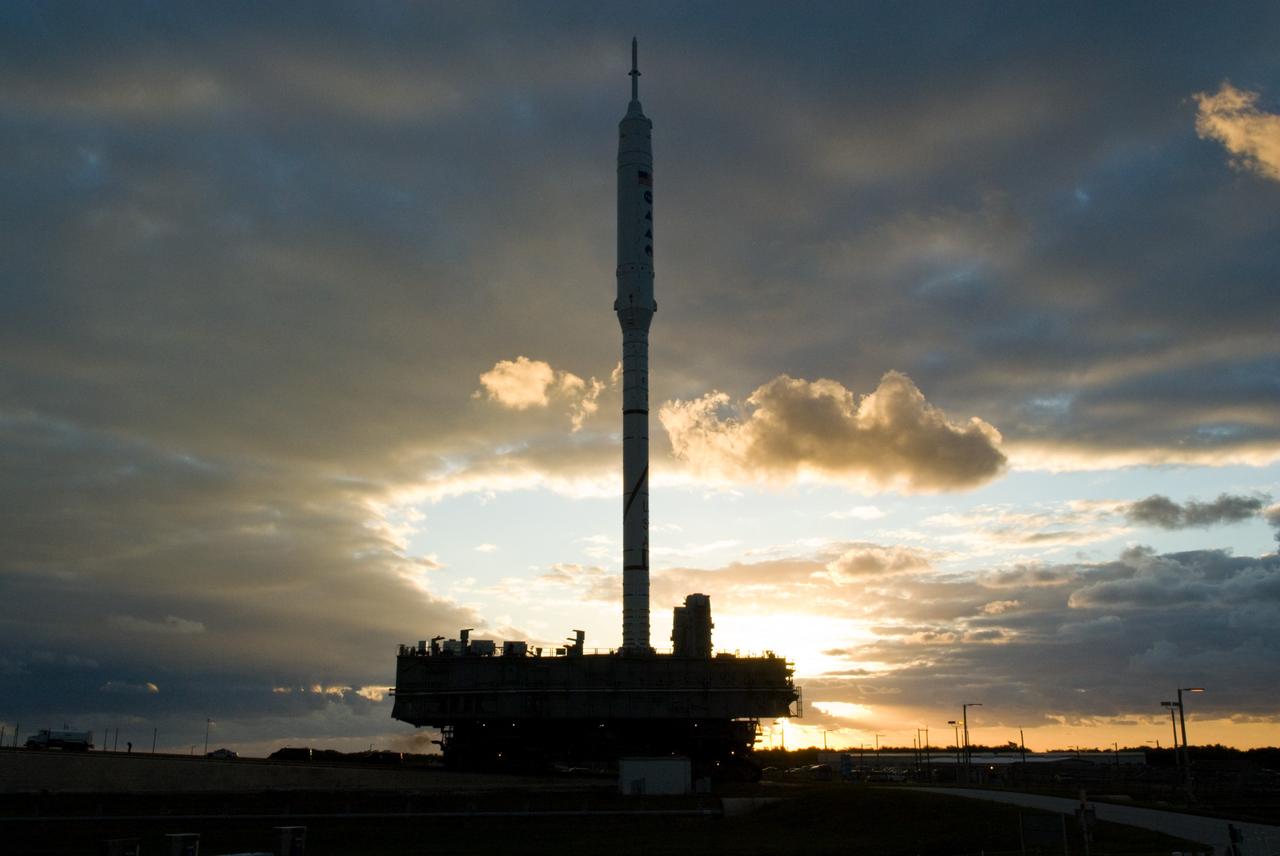
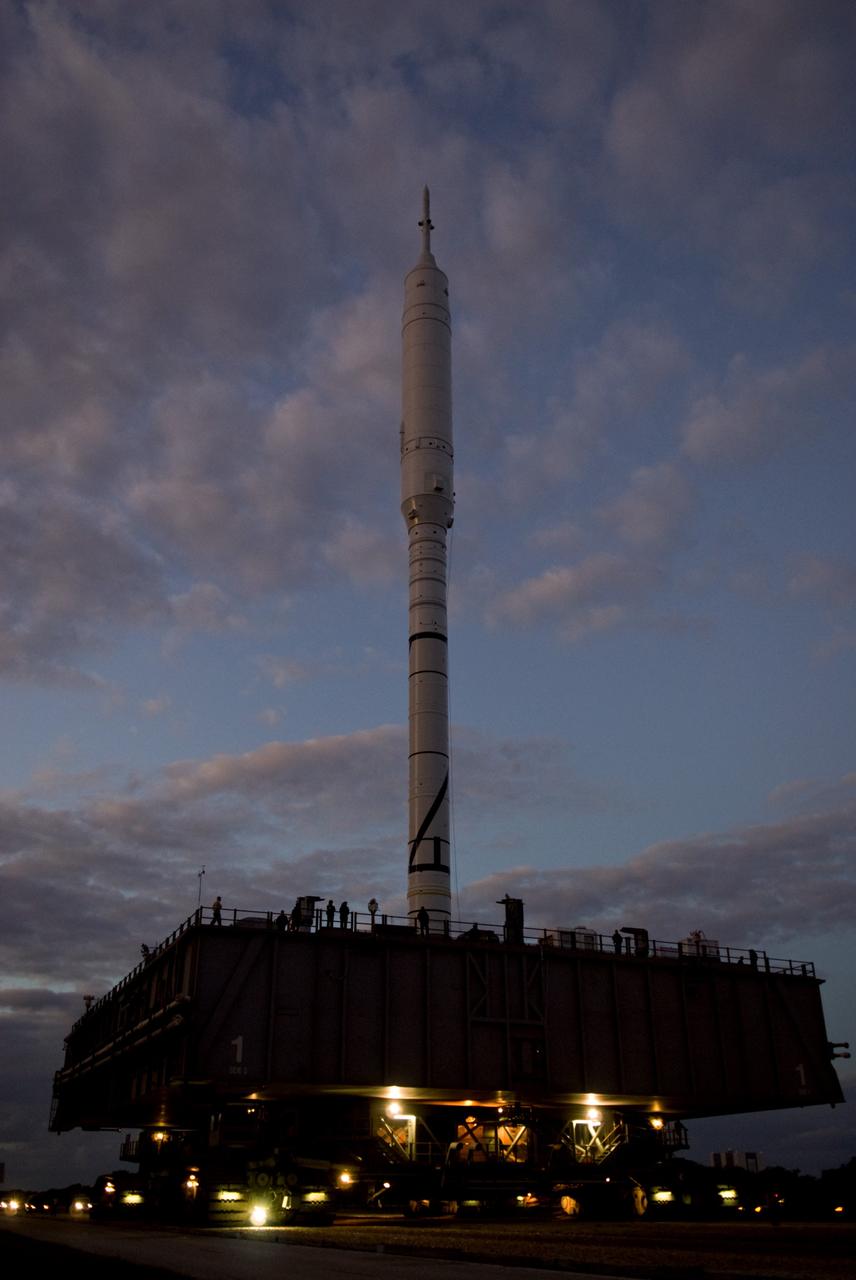
CAPE CANAVERAL, Fla. – The towering 327-foot-tall Ares I-X rocket is silhouetted again the early morning sky as it lumbers along the 4.2-mile route to Launch Pad 39B at NASA's Kennedy Space Center in Florida. The test rocket left the Vehicle Assembly Building at 1:39 a.m. EDT on its 4.2-mile trek to the pad and was "hard down" on the pad’s pedestals at 9:17 a.m. The transfer of the pad from the Space Shuttle Program to the Constellation Program took place May 31. Modifications made to the pad include the removal of shuttle unique subsystems, such as the orbiter access arm and a section of the gaseous oxygen vent arm, along with the installation of three 600-foot lightning towers, access platforms, environmental control systems and a vehicle stabilization system. Part of the Constellation Program, the Ares I-X is the test vehicle for the Ares I. The Ares I-X flight test is targeted for Oct. 27. For information on the Ares I-X vehicle and flight test, visit http://www.nasa.gov/aresIX. Photo credit: NASA/Kim Shiflett
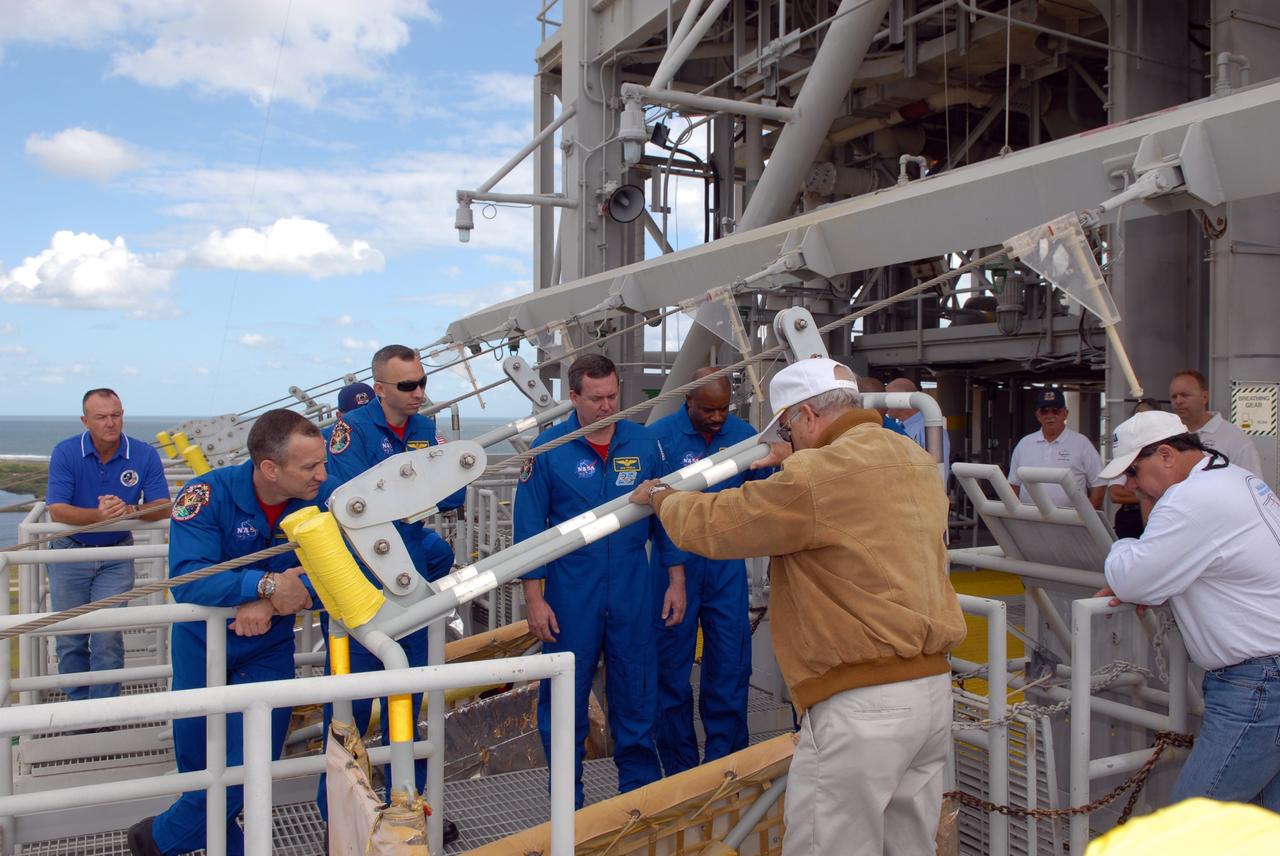
CAPE CANAVERAL, Fla. - Battalion Chief George Hoggard, back to camera, instructs members of space shuttle Atlantis' STS-129 crew on the operation of the slidewire baskets at Launch Pad 39A at NASA's Kennedy Space Center in Florida. From left are Commander Charles O. Hobaugh and Mission Specialists Randy Bresnik, Mike Foreman and Leland Melvin. The crew members of space shuttle Atlantis' STS-129 mission are at Kennedy for training related to their launch dress rehearsal, the Terminal Countdown Demonstration Test. Launch of Atlantis on its STS-129 mission to the International Space Station is targeted for Nov. 16. For information on the STS-129 mission objectives and crew, visit http://www.nasa.gov/mission_pages/shuttle/shuttlemissions/sts129/index.html. Photo credit: NASA/Jim Grossmann

CAPE CANAVERAL, Fla. – Early morning finds a crawler-transporter moving the towering 327-foot-tall Ares I-X rocket slowly and steadily along the 4.2-mile route to Launch Pad 39B at NASA's Kennedy Space Center in Florida. The test rocket left the Vehicle Assembly Building at 1:39 a.m. EDT on its 4.2-mile trek to the pad and was "hard down" on the pad’s pedestals at 9:17 a.m. The transfer of the pad from the Space Shuttle Program to the Constellation Program took place May 31. Modifications made to the pad include the removal of shuttle unique subsystems, such as the orbiter access arm and a section of the gaseous oxygen vent arm, along with the installation of three 600-foot lightning towers, access platforms, environmental control systems and a vehicle stabilization system. Part of the Constellation Program, the Ares I-X is the test vehicle for the Ares I. The Ares I-X flight test is targeted for Oct. 27. For information on the Ares I-X vehicle and flight test, visit http://www.nasa.gov/aresIX. Photo credit: NASA/Kim Shiflett
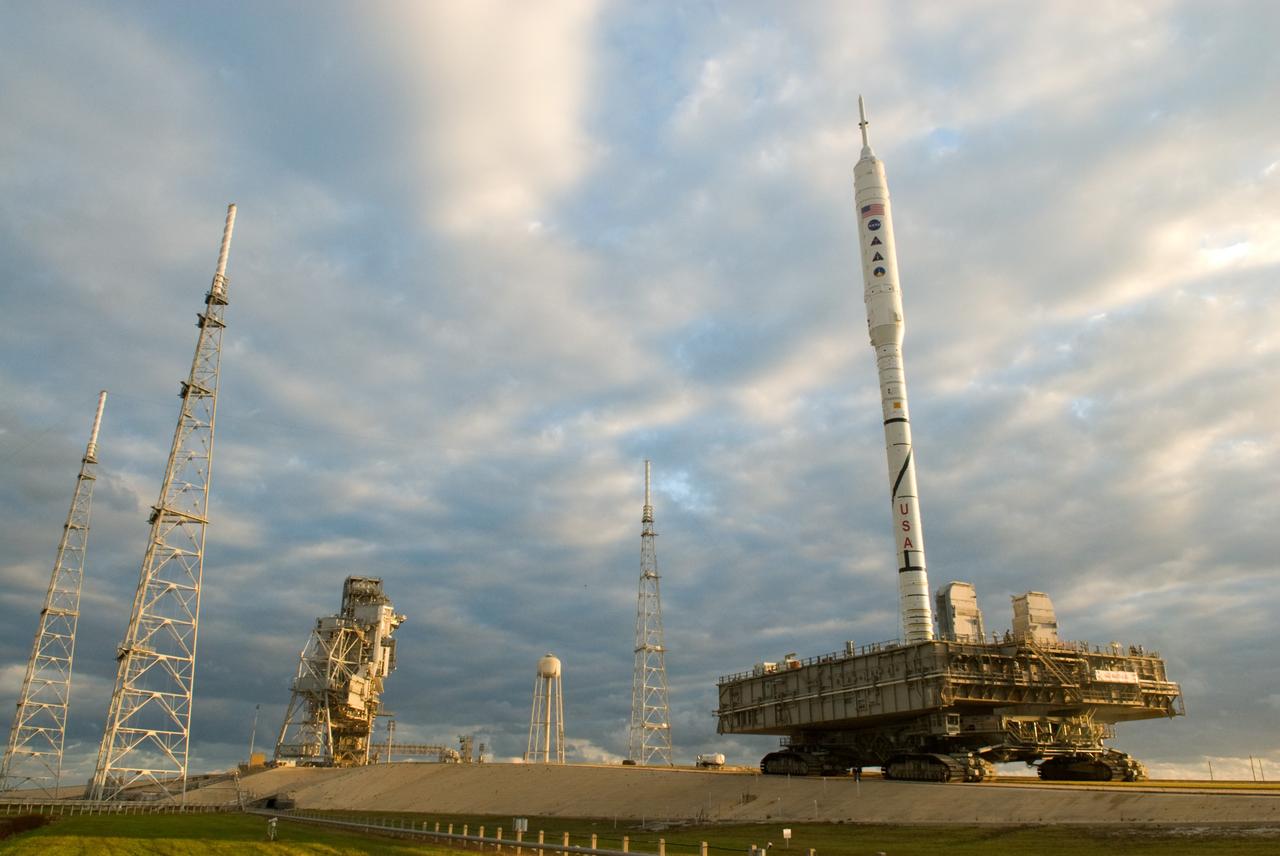
CAPE CANAVERAL, Fla. – Daybreak finds the towering 327-foot-tall Ares I-X rocket slowly making its way up the five percent grade of the crawlerway on Launch Pad 39B at NASA's Kennedy Space Center in Florida, a 4.2-mile trip that began seven hours earlier. The test rocket left the Vehicle Assembly Building at 1:39 a.m. EDT on its 4.2-mile trek to the pad and was "hard down" on the pad’s pedestals at 9:17 a.m. The transfer of the pad from the Space Shuttle Program to the Constellation Program took place May 31. Modifications made to the pad include the removal of shuttle unique subsystems, such as the orbiter access arm and a section of the gaseous oxygen vent arm, along with the installation of three 600-foot lightning towers, access platforms, environmental control systems and a vehicle stabilization system. Part of the Constellation Program, the Ares I-X is the test vehicle for the Ares I. The Ares I-X flight test is targeted for Oct. 27. For information on the Ares I-X vehicle and flight test, visit http://www.nasa.gov/aresIX. Photo credit: NASA/Kim Shiflett
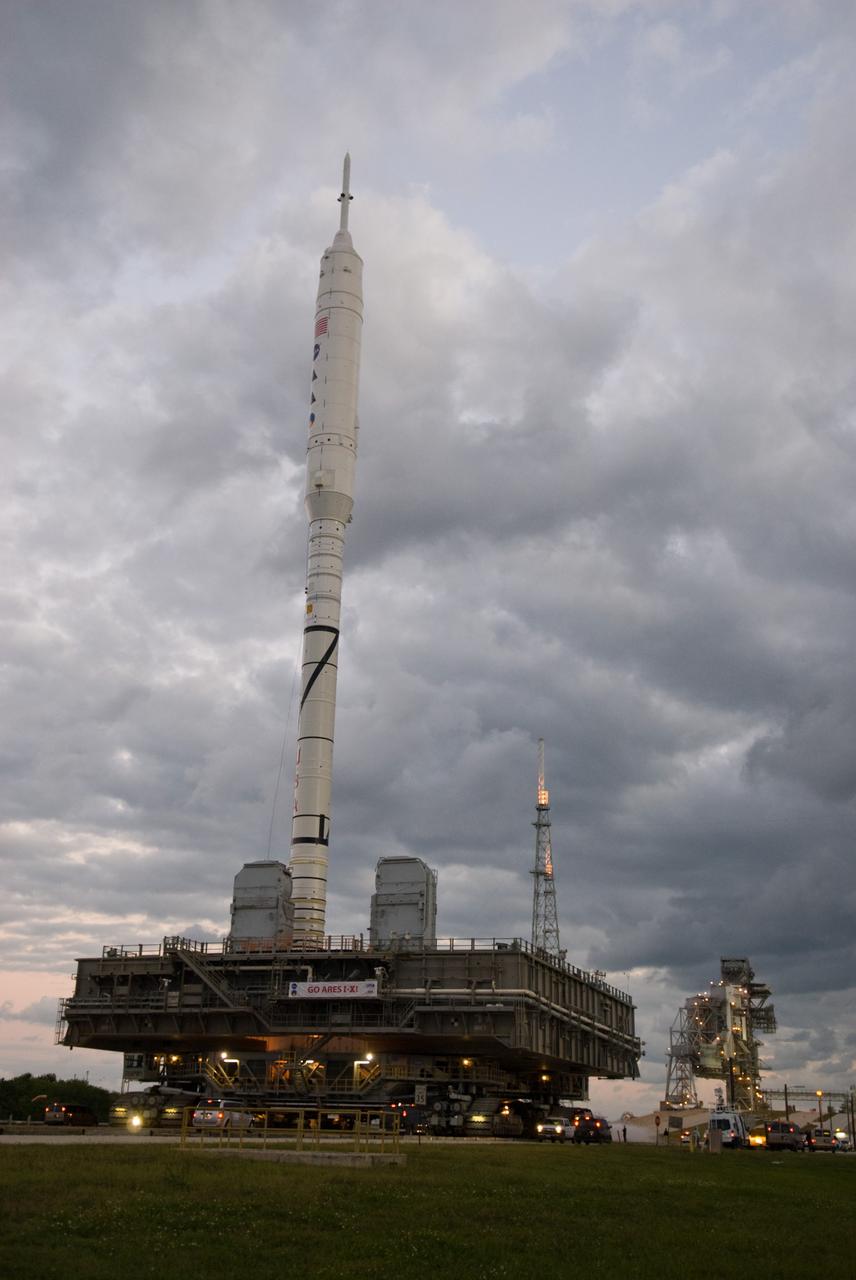
CAPE CANAVERAL, Fla. – As the sun rises over Launch Pad 39B at NASA's Kennedy Space Center in Florida, the 327-foot-tall Ares I-X rocket, secured to a mobile launcher platform, nears its destination beside the pad's fixed service structure. The test rocket left the Vehicle Assembly Building at 1:39 a.m. EDT on its 4.2-mile trek to the pad and was "hard down" on the pad’s pedestals at 9:17 a.m. The transfer of the pad from the Space Shuttle Program to the Constellation Program took place May 31. Modifications made to the pad include the removal of shuttle unique subsystems, such as the orbiter access arm and a section of the gaseous oxygen vent arm, along with the installation of three 600-foot lightning towers, access platforms, environmental control systems and a vehicle stabilization system. Part of the Constellation Program, the Ares I-X is the test vehicle for the Ares I. The Ares I-X flight test is targeted for Oct. 27. For information on the Ares I-X vehicle and flight test, visit http://www.nasa.gov/aresIX. Photo credit: NASA/Kim Shiflett
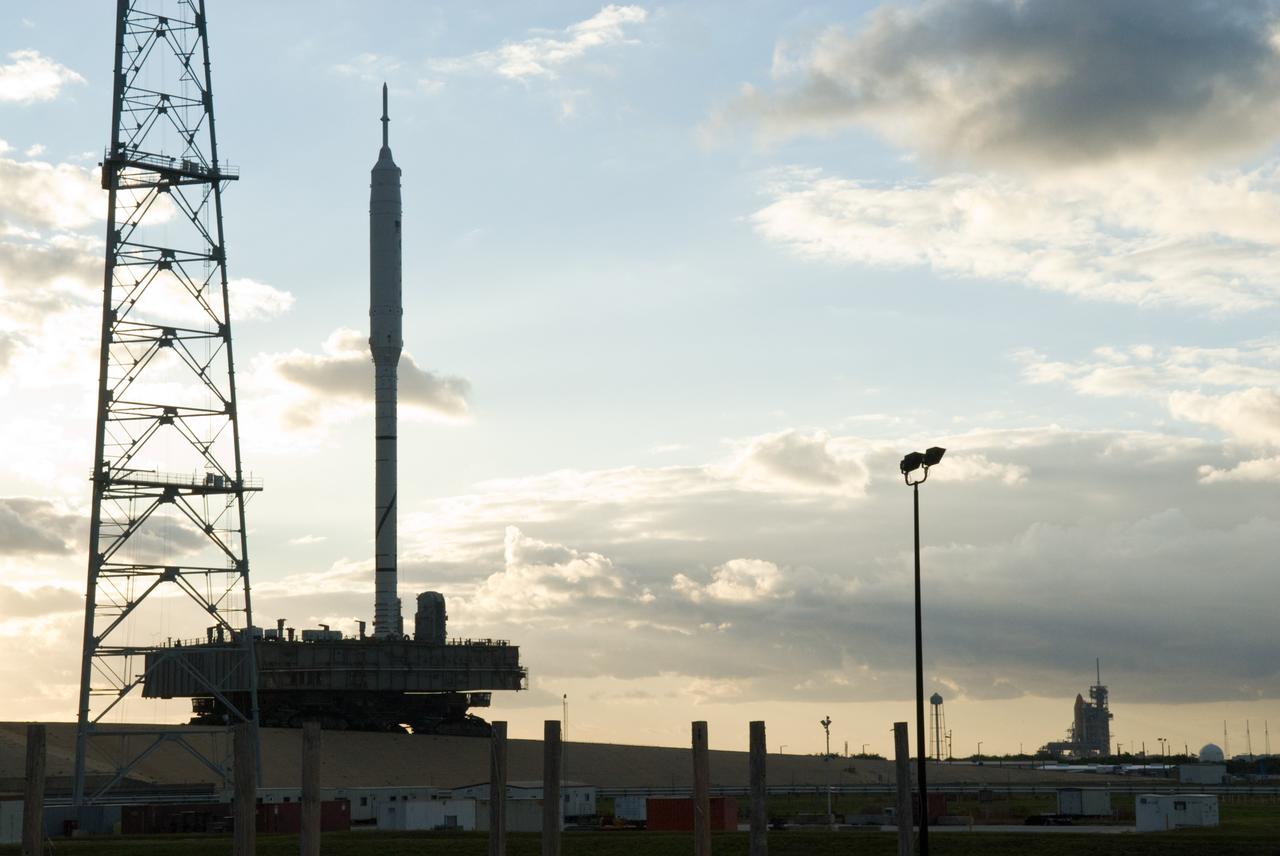
CAPE CANAVERAL, Fla. – It's a full house at NASA's Kennedy Space Center in Florida with launch vehicles on both of the center's pads. The towering 327-foot-tall Ares I-X rocket is newly arrived on Launch Pad 39B, at left, with space shuttle Atlantis filling Launch Pad 39A in the distance. The test rocket left the Vehicle Assembly Building at 1:39 a.m. EDT on its 4.2-mile trek to the pad and was "hard down" on the pad’s pedestals at 9:17 a.m. The transfer of the pad from the Space Shuttle Program to the Constellation Program took place May 31. Modifications made to the pad include the removal of shuttle unique subsystems, such as the orbiter access arm and a section of the gaseous oxygen vent arm, along with the installation of three 600-foot lightning towers, access platforms, environmental control systems and a vehicle stabilization system. Part of the Constellation Program, the Ares I-X is the test vehicle for the Ares I. The Ares I-X flight test is targeted for Oct. 27. For information on the Ares I-X vehicle and flight test, visit http://www.nasa.gov/aresIX. Photo credit: NASA/Kim Shiflett
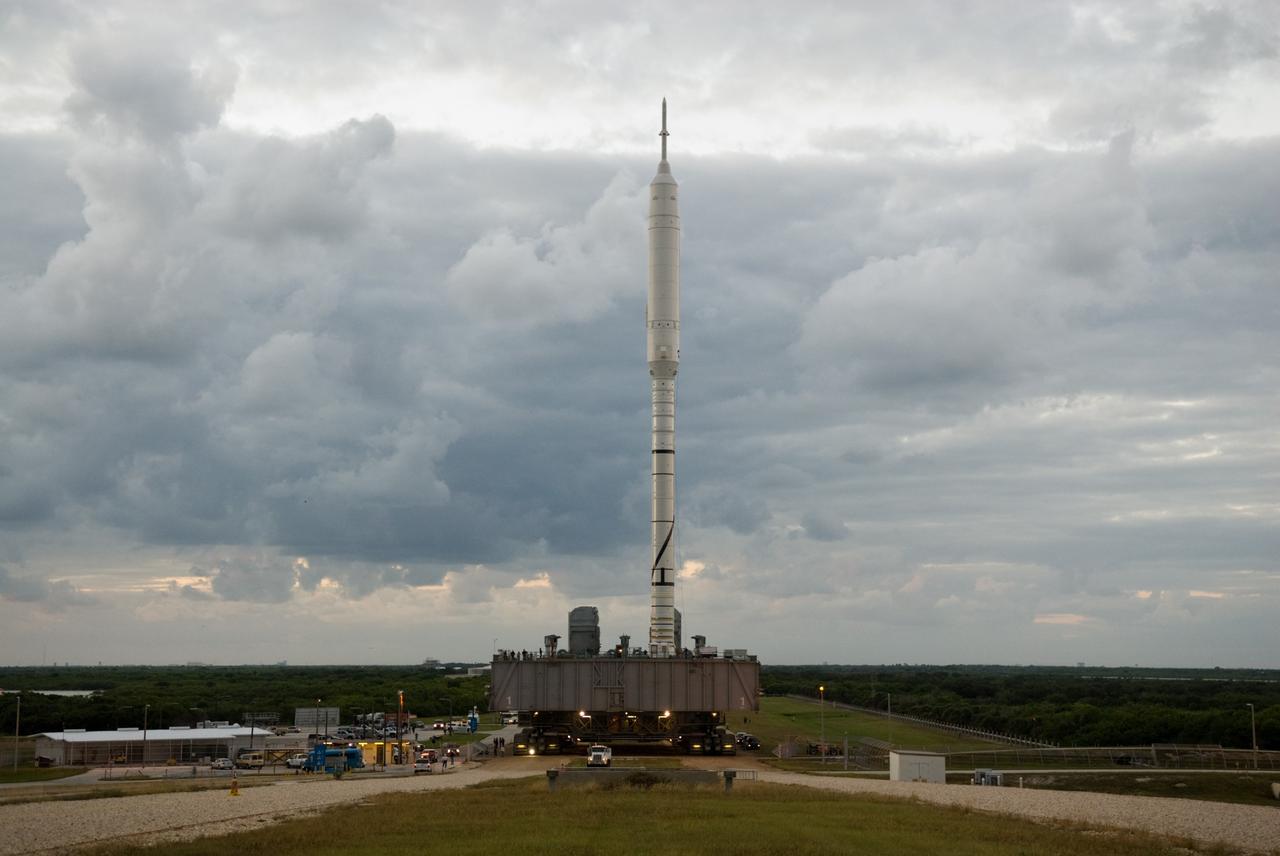
CAPE CANAVERAL, Fla. – As the sun rises over at NASA's Kennedy Space Center in Florida, the 327-foot-tall Ares I-X rocket, secured to a mobile launcher platform, makes steady progress toward the top of Launch Pad 39B. The test rocket left the Vehicle Assembly Building at 1:39 a.m. EDT on its 4.2-mile trek to the pad and was "hard down" on the pad’s pedestals at 9:17 a.m. The transfer of the pad from the Space Shuttle Program to the Constellation Program took place May 31. Modifications made to the pad include the removal of shuttle unique subsystems, such as the orbiter access arm and a section of the gaseous oxygen vent arm, along with the installation of three 600-foot lightning towers, access platforms, environmental control systems and a vehicle stabilization system. Part of the Constellation Program, the Ares I-X is the test vehicle for the Ares I. The Ares I-X flight test is targeted for Oct. 27. For information on the Ares I-X vehicle and flight test, visit http://www.nasa.gov/aresIX. Photo credit: NASA/Kim Shiflett
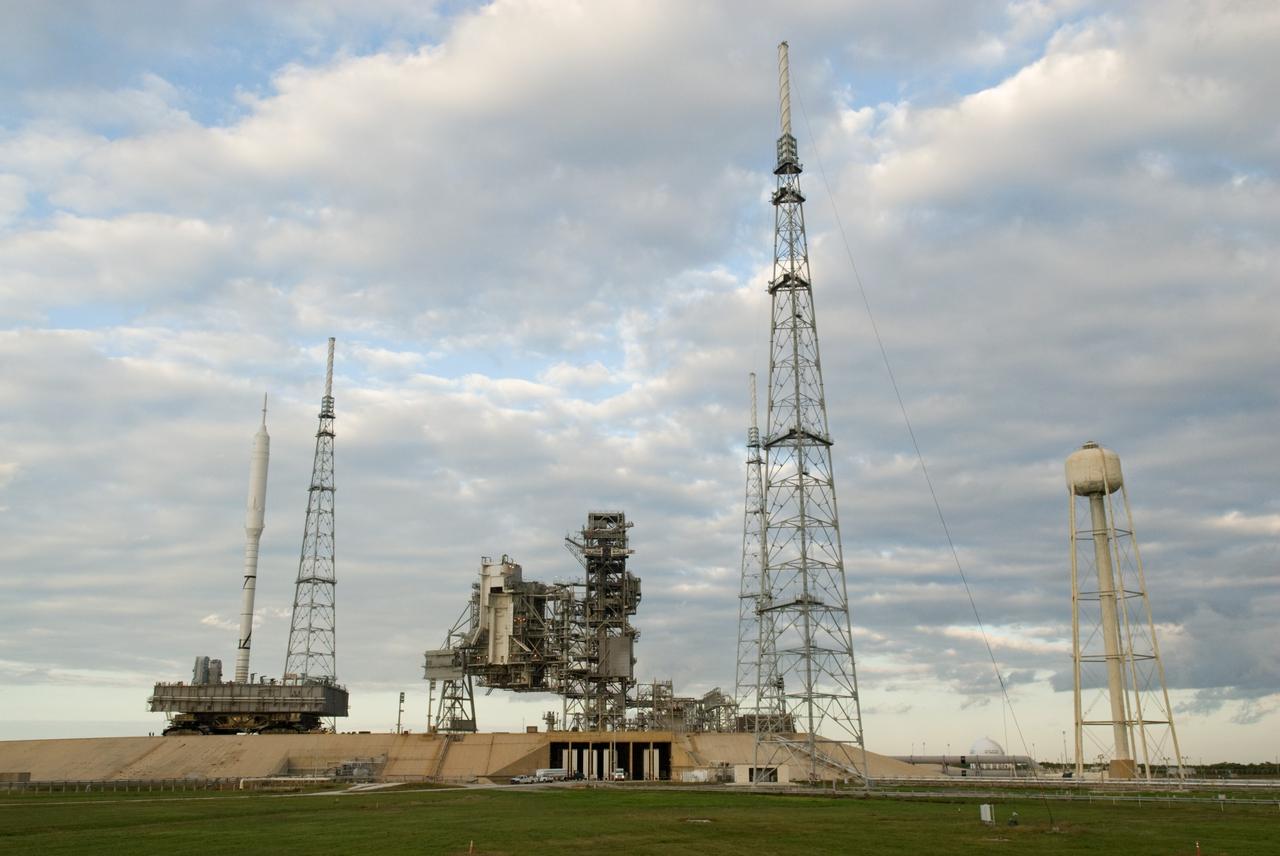
CAPE CANAVERAL, Fla. – The towering 327-foot-tall Ares I-X rocket, secured to a mobile launcher platform, nears its place beside the fixed service structure on Launch Pad 39B at NASA's Kennedy Space Center in Florida. The test rocket left the Vehicle Assembly Building at 1:39 a.m. EDT on its 4.2-mile trek to the pad and was "hard down" on the pad’s pedestals at 9:17 a.m. The transfer of the pad from the Space Shuttle Program to the Constellation Program took place May 31. Modifications made to the pad include the removal of shuttle unique subsystems, such as the orbiter access arm and a section of the gaseous oxygen vent arm, along with the installation of three 600-foot lightning towers, access platforms, environmental control systems and a vehicle stabilization system. Part of the Constellation Program, the Ares I-X is the test vehicle for the Ares I. The Ares I-X flight test is targeted for Oct. 27. For information on the Ares I-X vehicle and flight test, visit http://www.nasa.gov/aresIX. Photo credit: NASA/Kim Shiflett
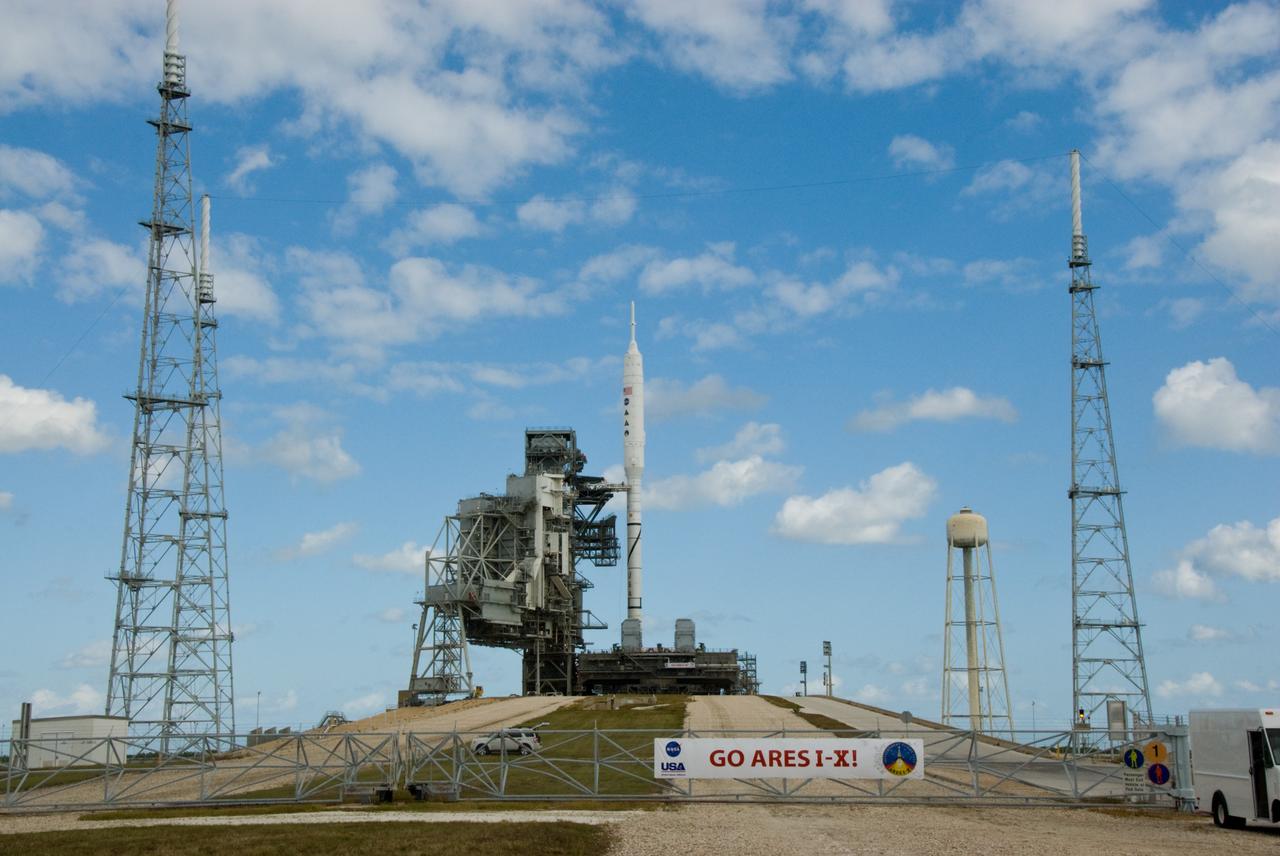
CAPE CANAVERAL, Fla. – The perimeter fence on Launch Pad 39B at NASA's Kennedy Space Center in Florida, is closed following the arrival of the towering 327-foot-tall Ares I-X rocket following its seven-hour early-morning trek. The test rocket left the Vehicle Assembly Building at 1:39 a.m. EDT on its 4.2-mile trek to the pad and was "hard down" on the pad’s pedestals at 9:17 a.m. The transfer of the pad from the Space Shuttle Program to the Constellation Program took place May 31. Modifications made to the pad include the removal of shuttle unique subsystems, such as the orbiter access arm and a section of the gaseous oxygen vent arm, along with the installation of three 600-foot lightning towers, access platforms, environmental control systems and a vehicle stabilization system. Part of the Constellation Program, the Ares I-X is the test vehicle for the Ares I. The Ares I-X flight test is targeted for Oct. 27. For information on the Ares I-X vehicle and flight test, visit http://www.nasa.gov/aresIX. Photo credit: NASA/Kim Shiflett