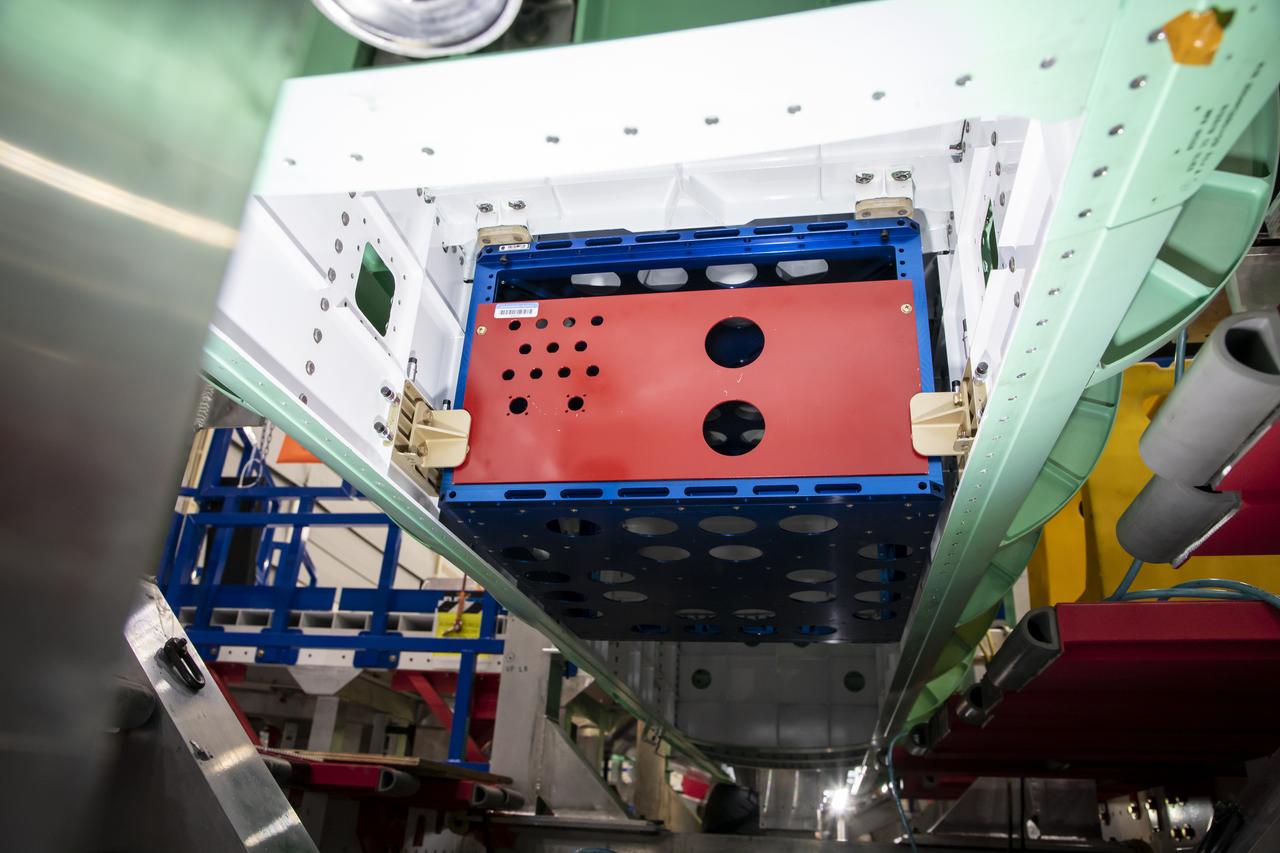
Lockheed Martin Photography By Garry Tice 1011 Lockheed Way, Palmdale, Ca. 93599 Event: NASA Payload Pallet XVS Mock-Up Date: 7/01/2020 Additional Info:
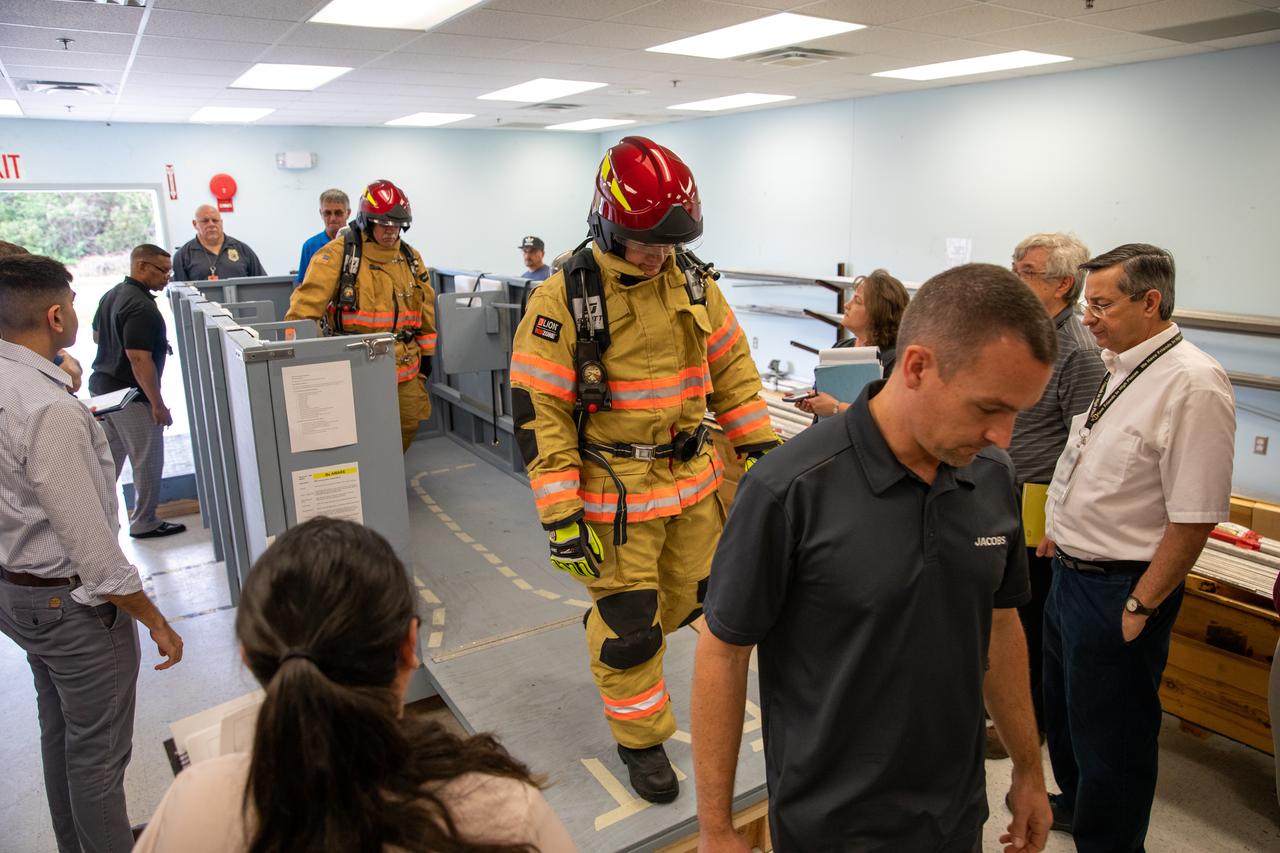
Members of NASA Kennedy Space Center’s Fire Rescue team walk through a mock-up of a launch pad escape basket on Feb. 19, 2020. Kennedy’s prime contractor Reynolds, Smith and Hill presented the mock-up to NASA, fire rescue personnel and other stakeholders at the Florida spaceport. The basket would be utilized at Launch Pad 39B in the unlikely event of an emergency at the pad requiring evacuation during crewed missions under the Artemis Program. The actual egress basket will be designed larger than ones used during the shuttle era in order to accommodate fire rescue crew, astronauts and closeout crew. During the presentation, a fire rescue team conducted a series of trial scenarios and addressed items such as basket release location, seat depth to accommodate firefighters in full gear, sequence of loading and more.
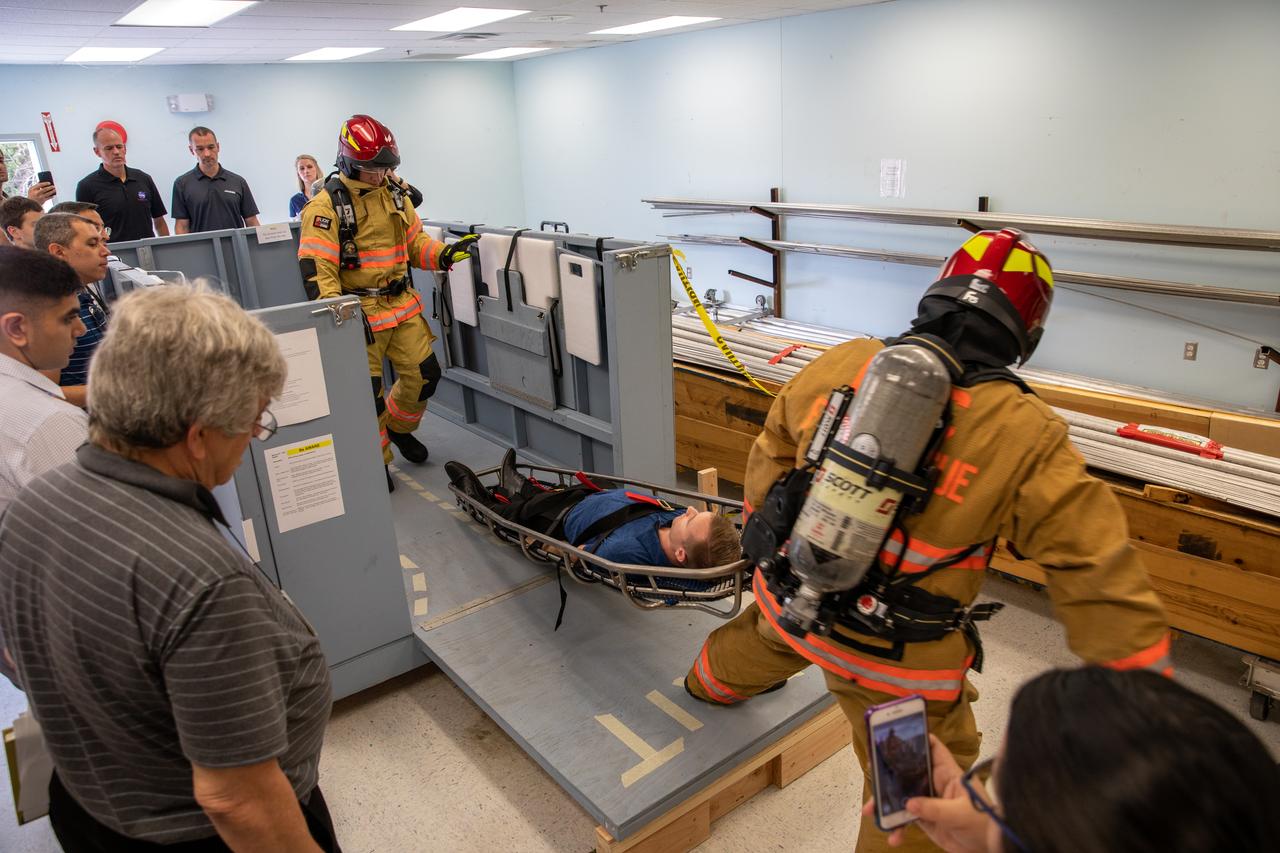
Members of NASA Kennedy Space Center’s Fire Rescue team conduct a series of trial scenarios in a mock-up of a launch pad escape basket on Feb. 19, 2020. Kennedy’s prime contractor Reynolds, Smith and Hill presented the mock-up to NASA, Kennedy Fire Rescue personnel and other stakeholders at the Florida spaceport. The basket would be utilized at Launch Pad 39B in the unlikely event of an emergency at the pad requiring evacuation during crewed missions under the Artemis Program. The actual egress basket will be designed larger than ones used during the shuttle era in order to accommodate fire rescue crew, astronauts and closeout crew. During the presentation, items such as basket release location, seat depth to accommodate firefighters in full gear, sequence of loading and more were addressed. Engineers will take what they learned during this presentation and discussion to advance the design of the pad egress system.
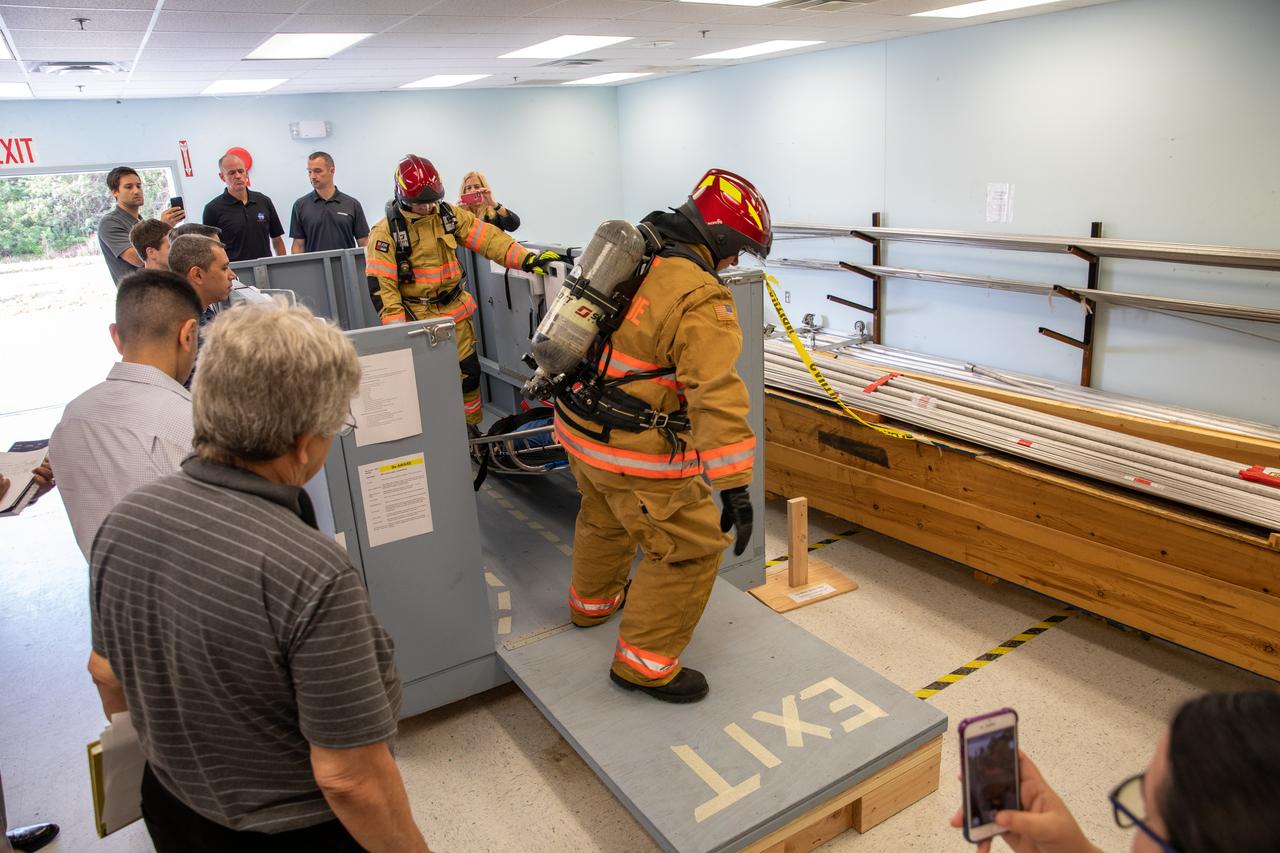
Members of NASA Kennedy Space Center’s Fire Rescue team conduct a series of trial scenarios in a mock-up of a launch pad escape basket on Feb. 19, 2020. Kennedy’s prime contractor Reynolds, Smith and Hill presented the mock-up to NASA, Kennedy Fire Rescue personnel and other stakeholders at the Florida spaceport. The basket would be utilized at Launch Pad 39B in the unlikely event of an emergency at the pad requiring evacuation during crewed missions under the Artemis Program. The actual egress basket will be designed larger than ones used during the shuttle era in order to accommodate fire rescue crew, astronauts and closeout crew. During the presentation, items such as basket release location, seat depth to accommodate firefighters in full gear, sequence of loading and more were addressed. Engineers will take what they learned during this presentation and discussion to advance the design of the pad egress system.
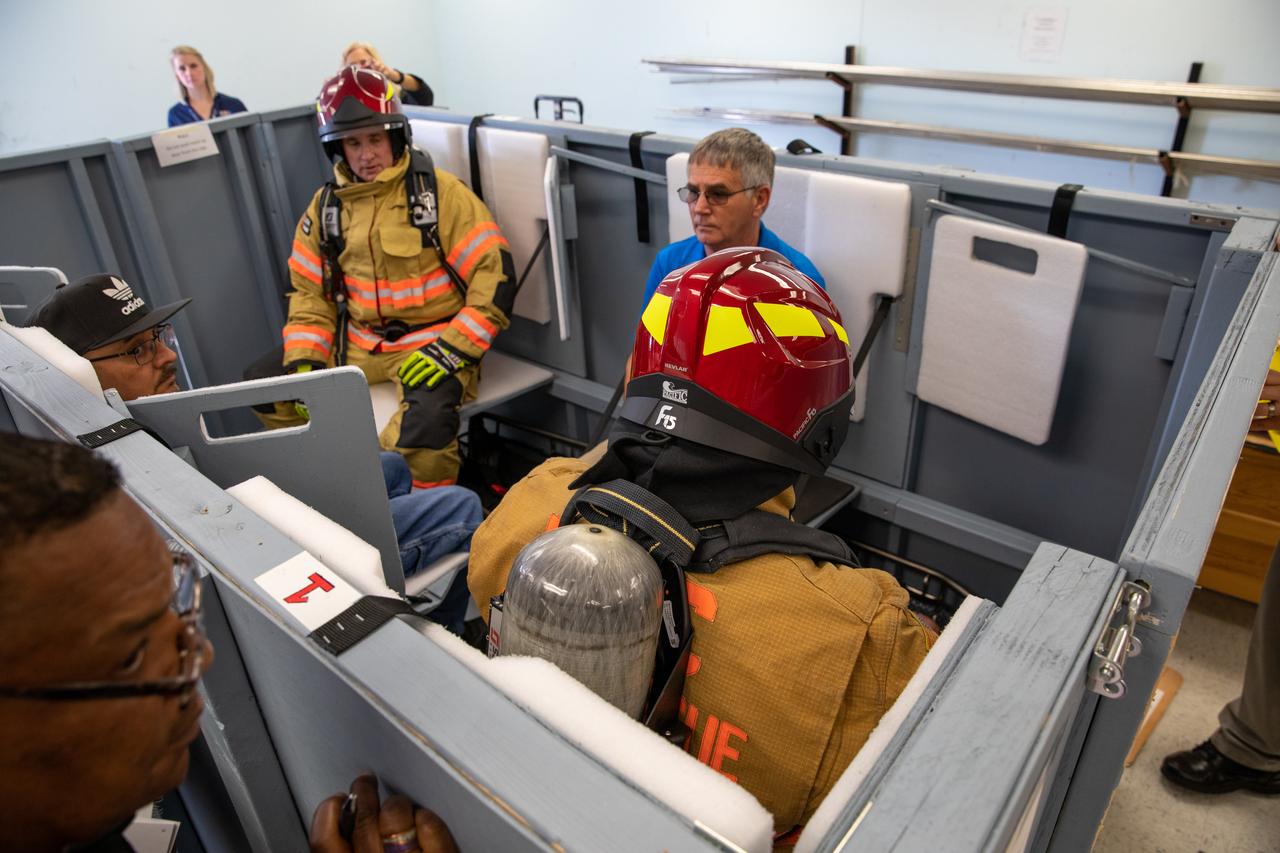
Members of NASA Kennedy Space Center’s Fire Rescue team conduct a series of trial scenarios in a mock-up of a launch pad escape basket on Feb. 19, 2020. Kennedy’s prime contractor Reynolds, Smith and Hill presented the mock-up to NASA, Kennedy Fire Rescue personnel and other stakeholders at the Florida spaceport. The basket would be utilized at Launch Pad 39B in the unlikely event of an emergency at the pad requiring evacuation during crewed missions under the Artemis Program. The actual egress basket will be designed larger than ones used during the shuttle era in order to accommodate fire rescue crew, astronauts and closeout crew. During the presentation, items such as basket release location, seat depth to accommodate firefighters in full gear, sequence of loading and more were addressed. Engineers will take what they learned during this presentation and discussion to advance the design of the pad egress system.
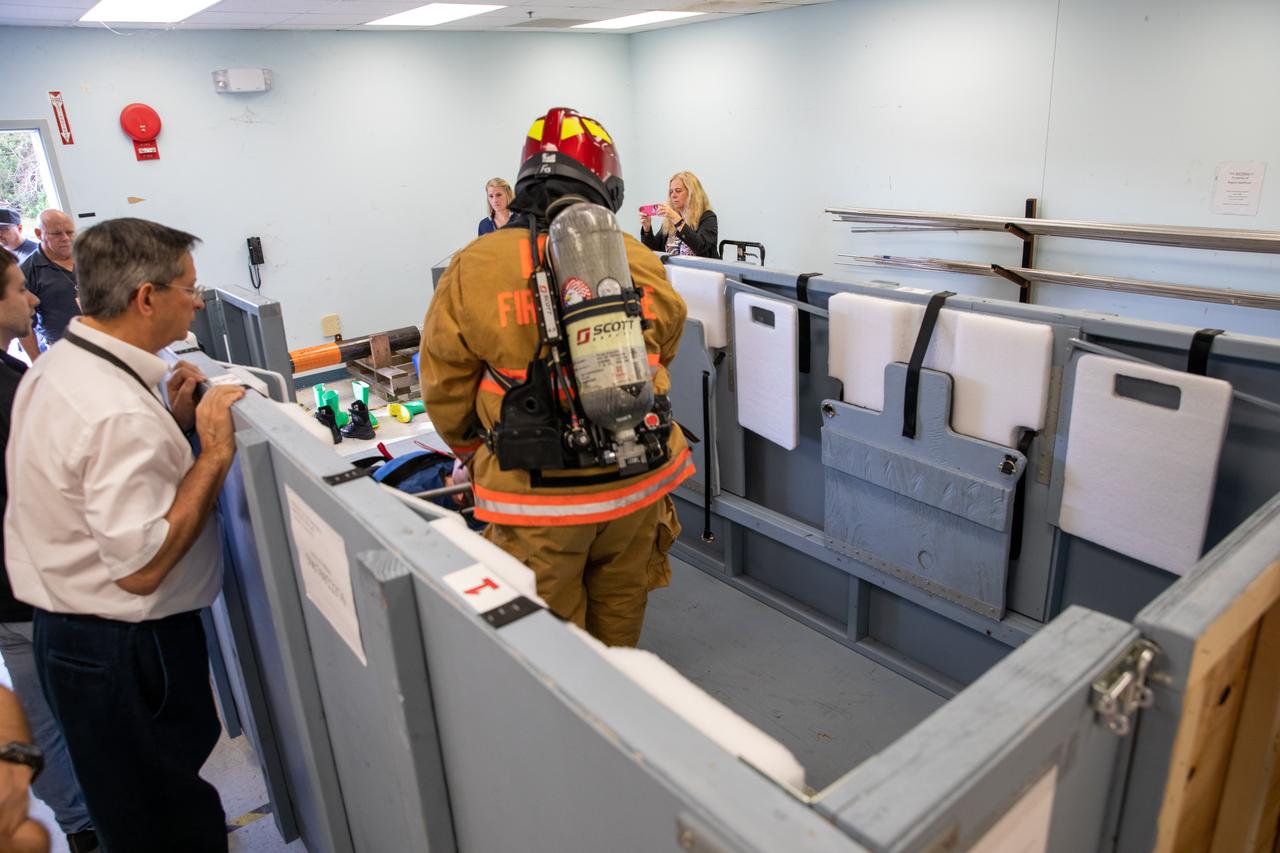
Members of NASA Kennedy Space Center’s Fire Rescue team conduct a series of trial scenarios in a mock-up of a launch pad escape basket on Feb. 19, 2020. Kennedy’s prime contractor Reynolds, Smith and Hill presented the mock-up to NASA, Kennedy Fire Rescue personnel and other stakeholders at the Florida spaceport. The basket would be utilized at Launch Pad 39B in the unlikely event of an emergency at the pad requiring evacuation during crewed missions under the Artemis Program. The actual egress basket will be designed larger than ones used during the shuttle era in order to accommodate fire rescue crew, astronauts and closeout crew. During the presentation, items such as basket release location, seat depth to accommodate firefighters in full gear, sequence of loading and more were addressed. Engineers will take what they learned during this presentation and discussion to advance the design of the pad egress system.
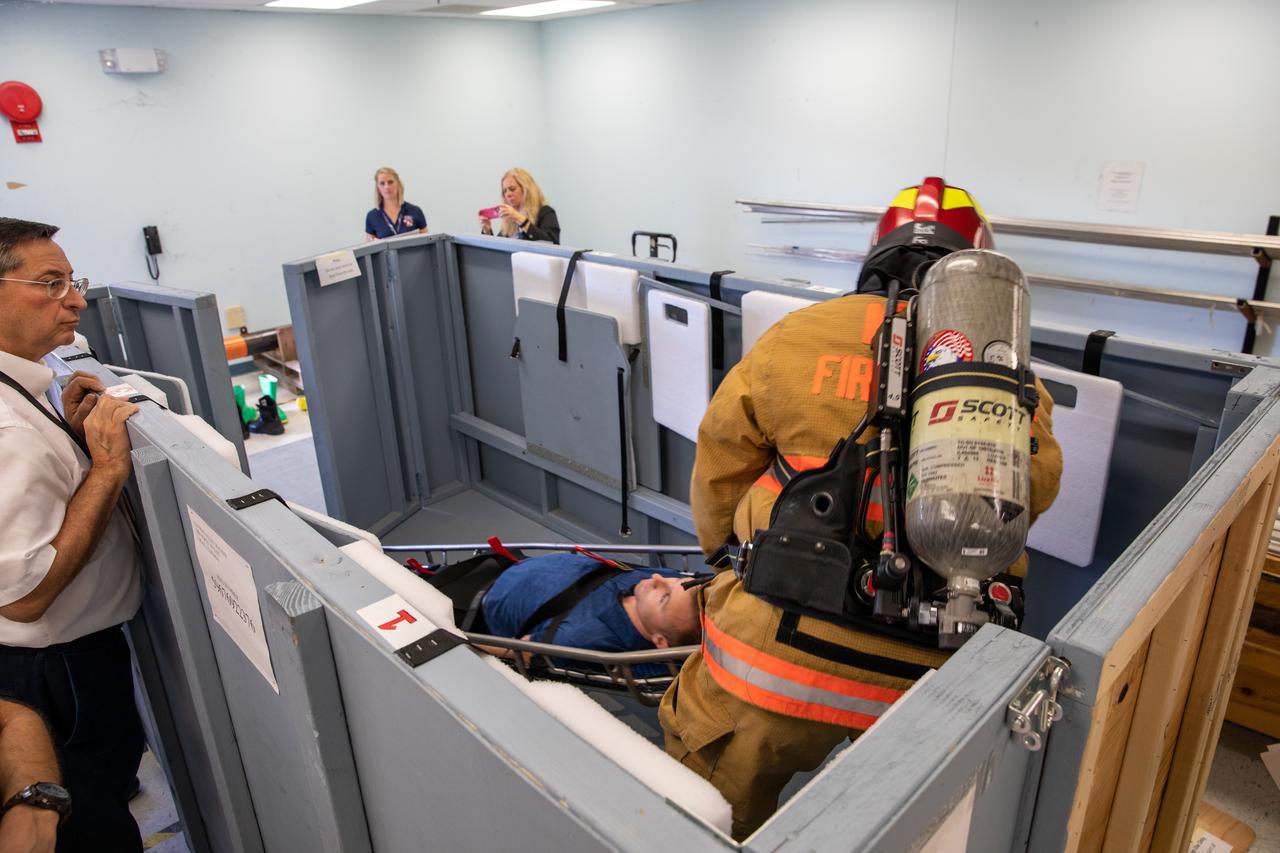
Members of NASA Kennedy Space Center’s Fire Rescue team participate in a series of trial scenarios in a mock-up of a launch pad escape basket on Feb. 19, 2020. Kennedy’s prime contractor Reynolds, Smith and Hill presented the mock-up to NASA, Kennedy Fire Rescue personnel and other stakeholders at the Florida spaceport. The basket would be utilized at Launch Pad 39B in the unlikely event of an emergency at the pad requiring evacuation during crewed missions under the Artemis Program. The actual egress basket will be designed larger than ones used during the shuttle era in order to accommodate fire rescue crew, astronauts and closeout crew. During the presentation, items such as basket release location, seat depth to accommodate firefighters in full gear, sequence of loading and more were addressed. Engineers will take what they learned during this presentation and discussion to advance the design of the pad egress system.
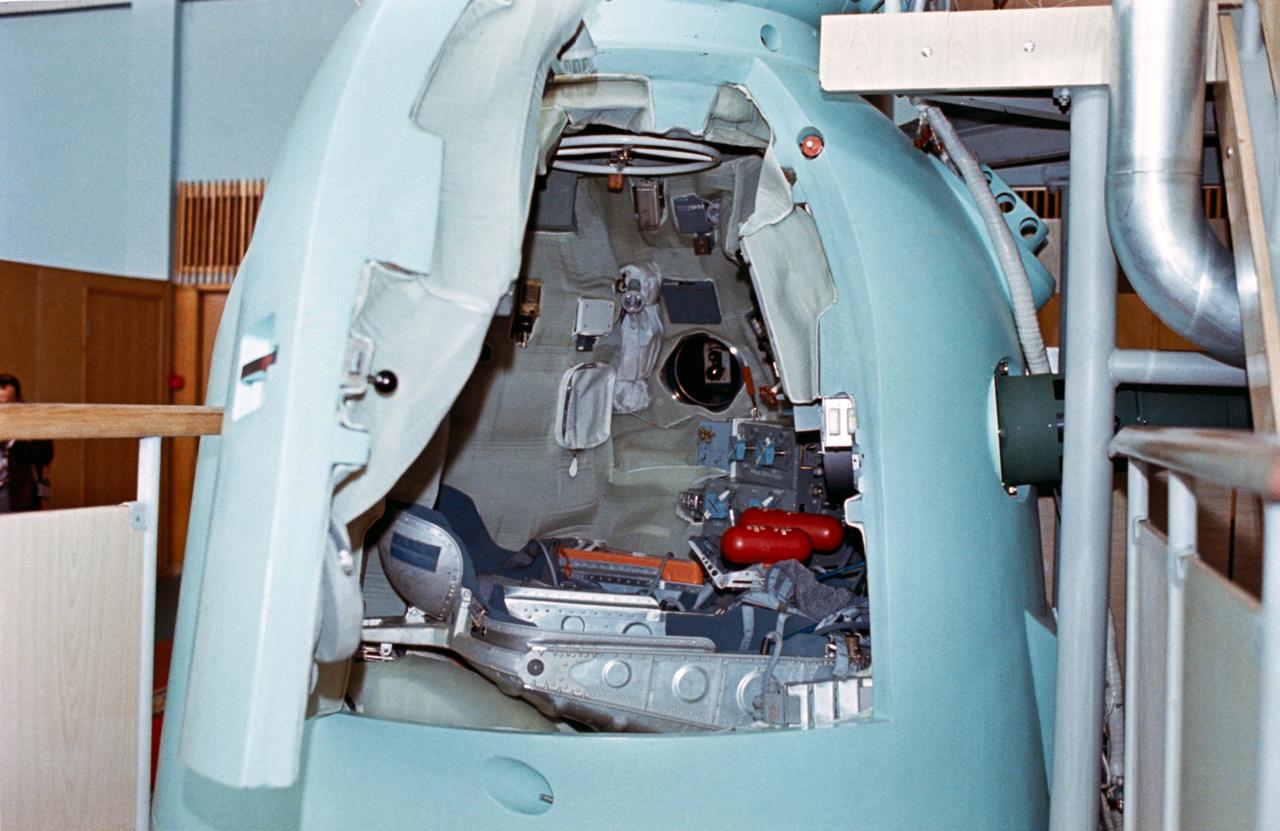
S74-24677 (June 1974) --- A close-up view of the descent vehicle of the Soyuz spacecraft training mock-up on display at the Cosmonuat Training Center (Star City) near Moscow. The open hatch reveals the interior arrangement of the middle section of the Soviet spacecraft. The first (fore) section of the Soyuz is called the orbital module; and the third (aft) section is the instrument-assembly module. The joint U.S.-USSR Apollo-Soyuz docking mission in Earth orbit is scheduled for the summer of 1975.
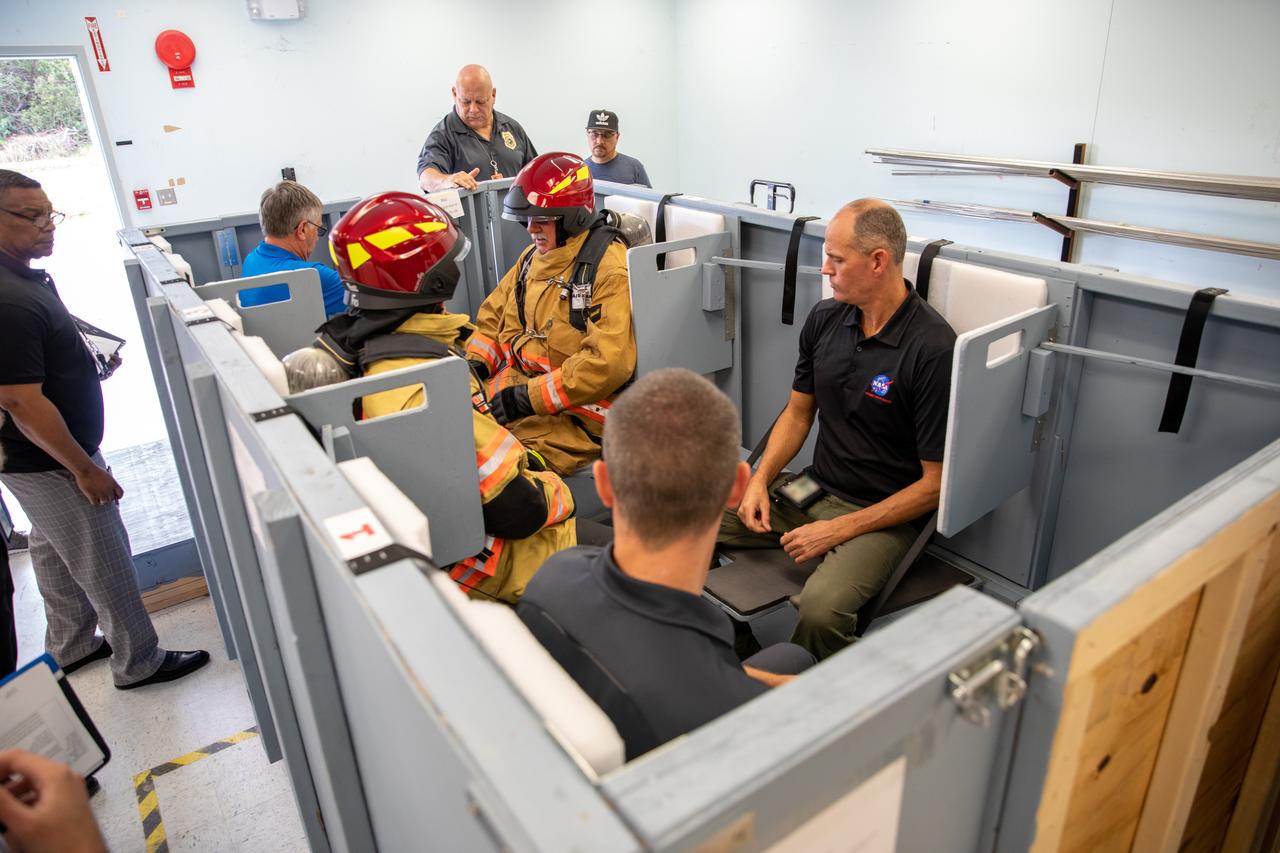
On Feb. 19, 2020, at NASA’s Kennedy Space Center in Florida, prime contractor Reynolds, Smith and Hill presents a mock-up of a launch pad escape basket to NASA, Kennedy Fire Rescue personnel and other stakeholders. The basket would be utilized at Launch Pad 39B in the unlikely event of an emergency at the pad requiring evacuation during crewed missions under the Artemis Program. The actual egress basket will be designed larger than ones used during the shuttle era in order to accommodate fire rescue crew, astronauts and closeout crew. During the presentation, a fire rescue team walked through a series of trial scenarios and addressed items such as basket release location, seat depth to accommodate firefighters in full gear, sequence of loading and more.
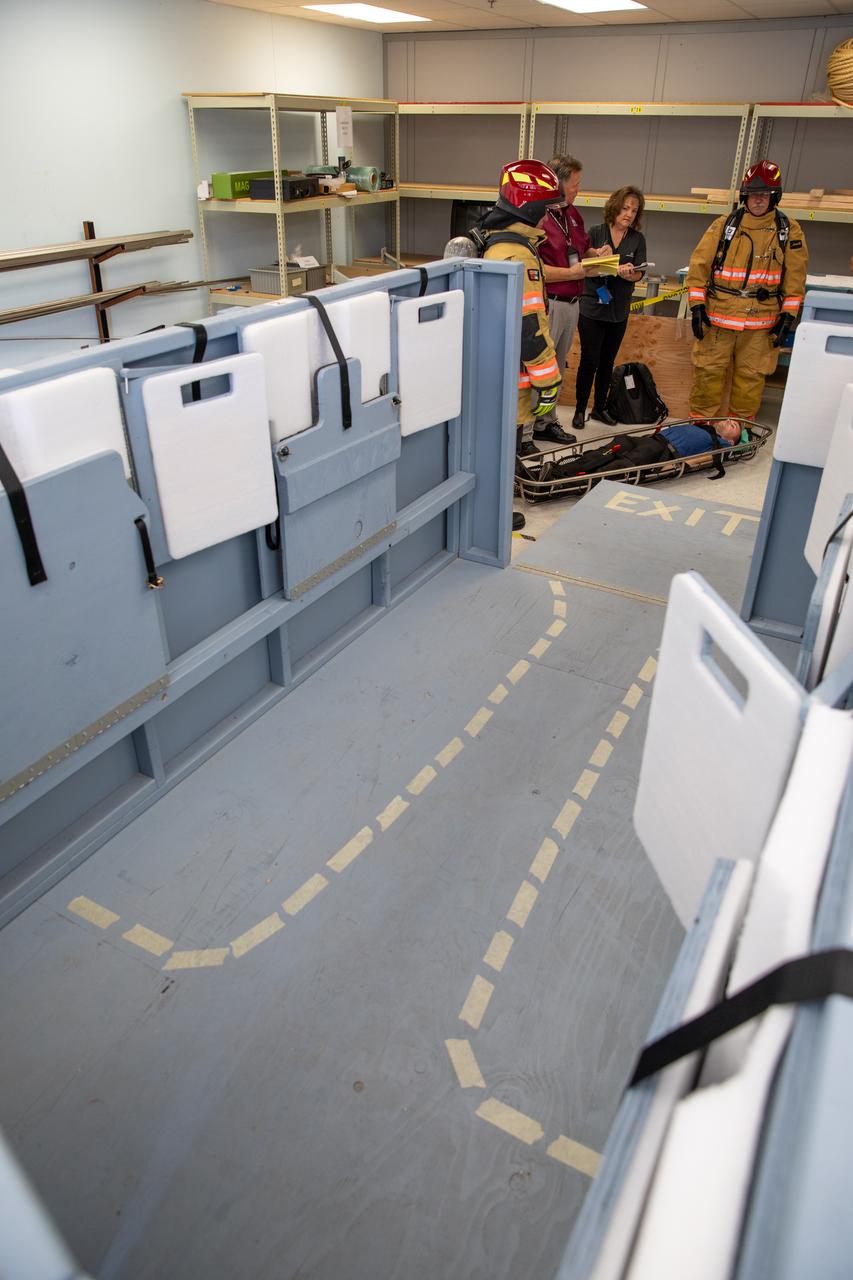
NASA Kennedy Space Center’s prime contractor Reynolds, Smith and Hill presents a mock-up of a launch pad escape basket to NASA, Kennedy Fire Rescue personnel and other stakeholders on Feb. 19, 2020. The basket would be utilized at the Florida spaceport’s Launch Pad 39B in the unlikely event of an emergency at the pad requiring evacuation during crewed missions under the Artemis Program. The actual egress basket will be designed larger than ones used during the shuttle era in order to accommodate fire rescue crew, astronauts and closeout crew. During the presentation, a fire rescue team walked through a series of trial scenarios and addressed items such as basket release location, seat depth to accommodate firefighters in full gear, sequence of loading and more.
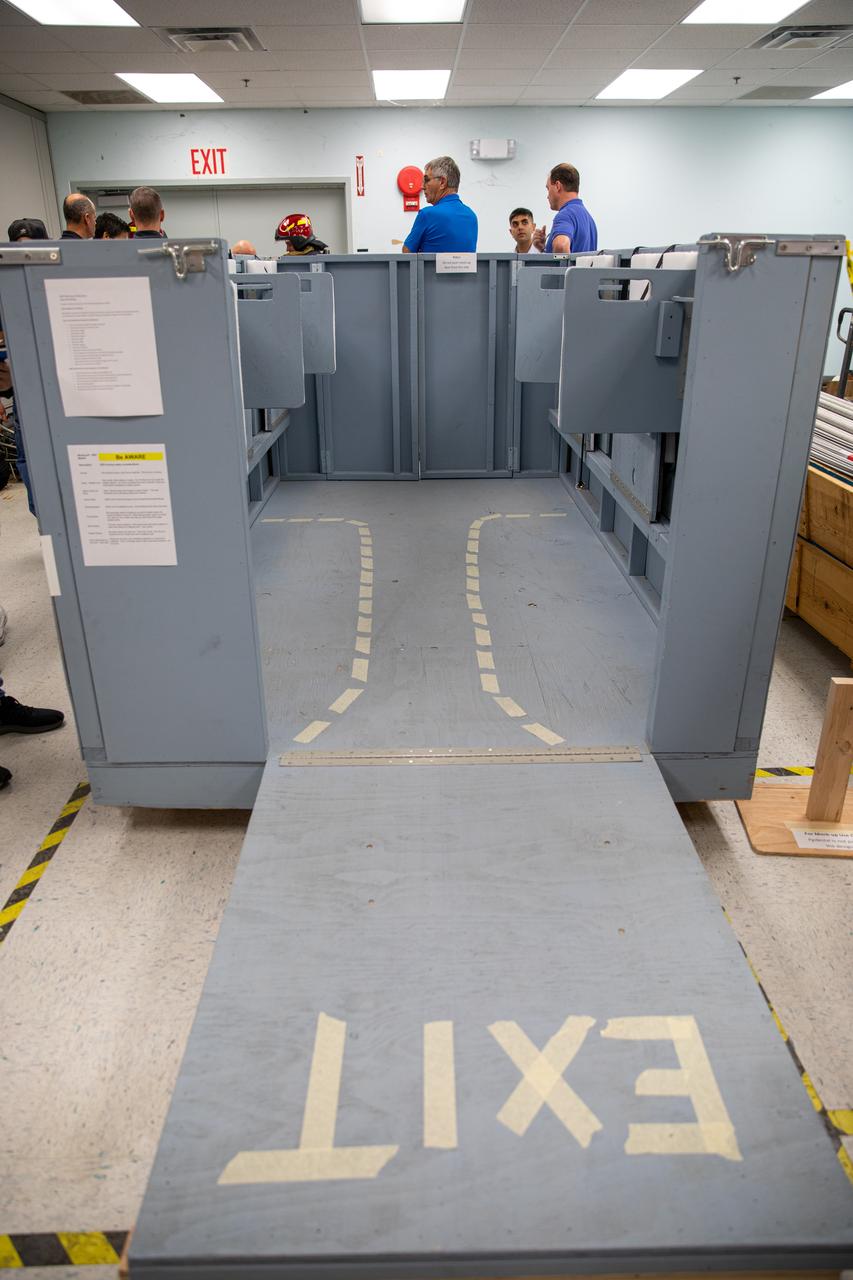
NASA Kennedy Space Center’s prime contractor Reynolds, Smith and Hill presents a mock-up of a launch pad escape basket to NASA, Kennedy Fire Rescue personnel and other stakeholders on Feb. 19, 2020. The basket would be utilized at the Florida spaceport’s Launch Pad 39B in the unlikely event of an emergency at the pad requiring evacuation during crewed missions under the Artemis Program. The actual egress basket will be designed larger than ones used during the shuttle era in order to accommodate fire rescue crew, astronauts and closeout crew. During the presentation, a fire rescue team walked through a series of trial scenarios and addressed items such as basket release location, seat depth to accommodate firefighters in full gear, sequence of loading and more.
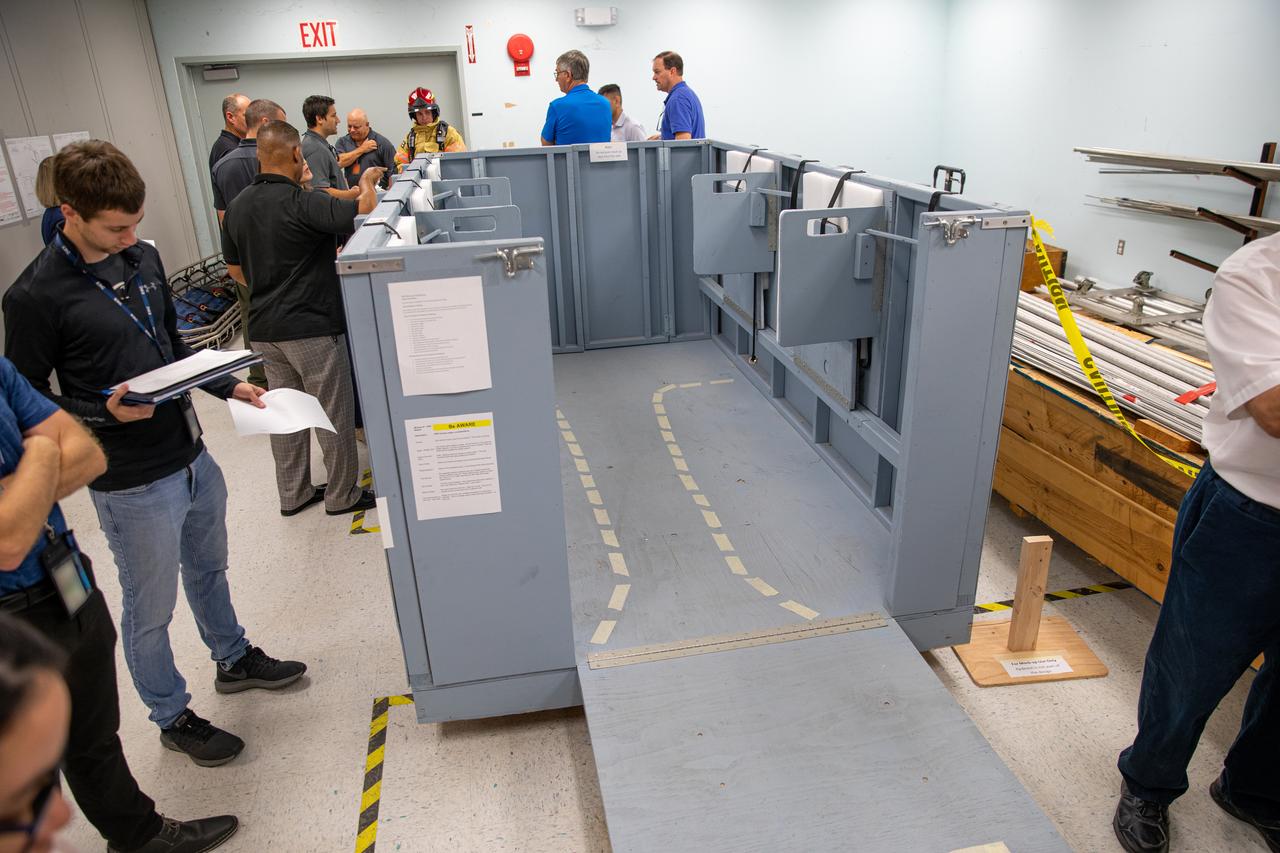
NASA Kennedy Space Center’s prime contractor Reynolds, Smith and Hill presents a mock-up of a launch pad escape basket to NASA, Kennedy Fire Rescue personnel and other stakeholders on Feb. 19, 2020. The basket would be utilized at the Florida spaceport’s Launch Pad 39B in the unlikely event of an emergency at the pad requiring evacuation during crewed missions under the Artemis Program. The actual egress basket will be designed larger than ones used during the shuttle era in order to accommodate fire rescue crew, astronauts and closeout crew. During the presentation, a fire rescue team walked through a series of trial scenarios and addressed items such as basket release location, seat depth to accommodate firefighters in full gear, sequence of loading and more.
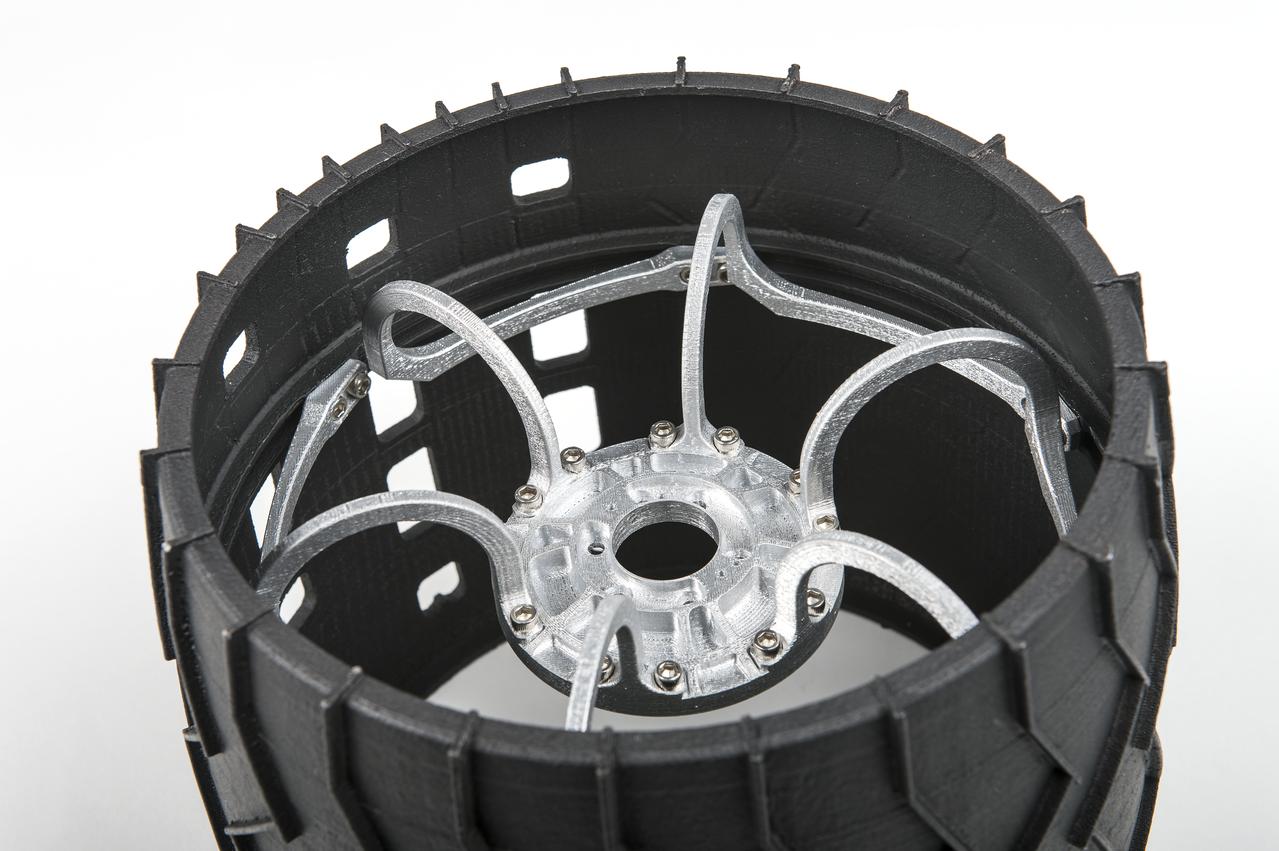
Mars Curiosity Wheel Mock-up
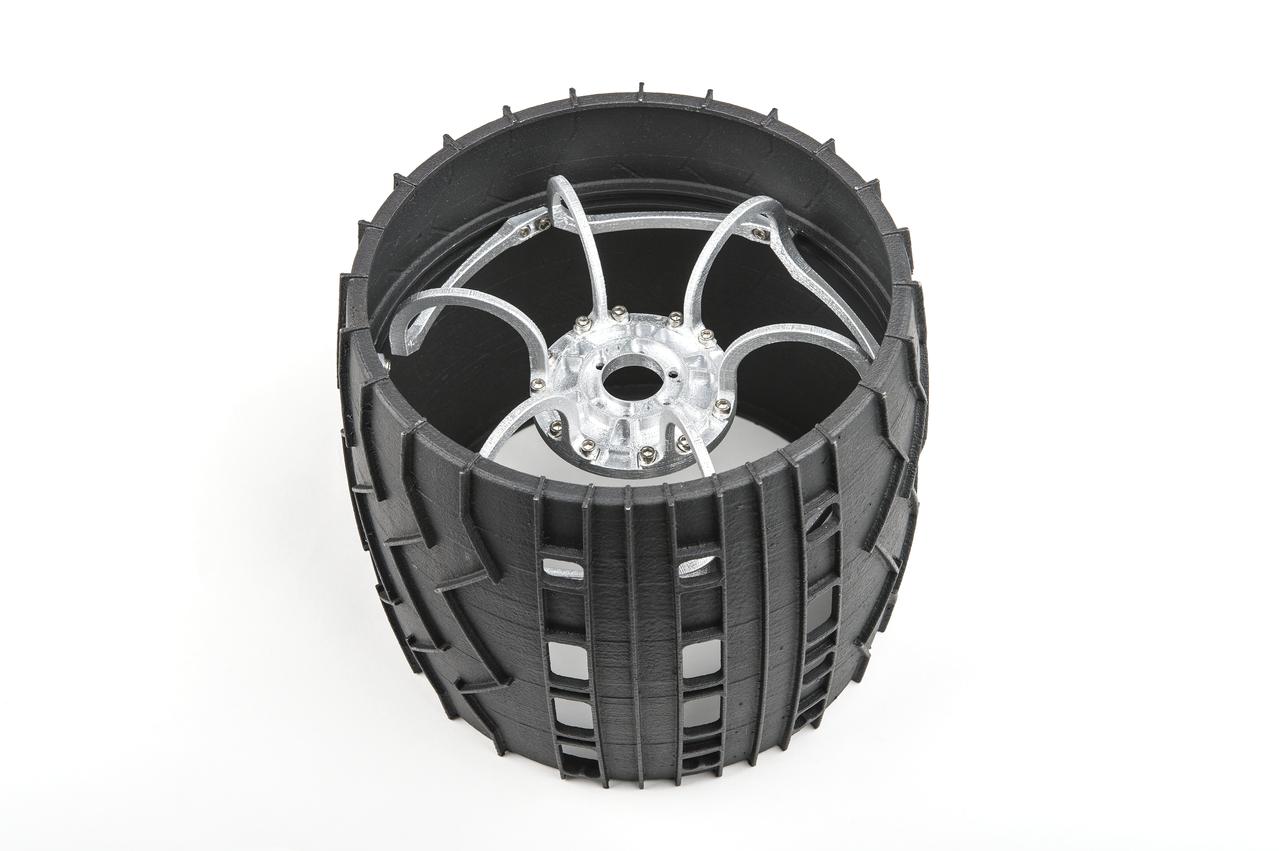
Mars Curiosity Wheel Mock-up
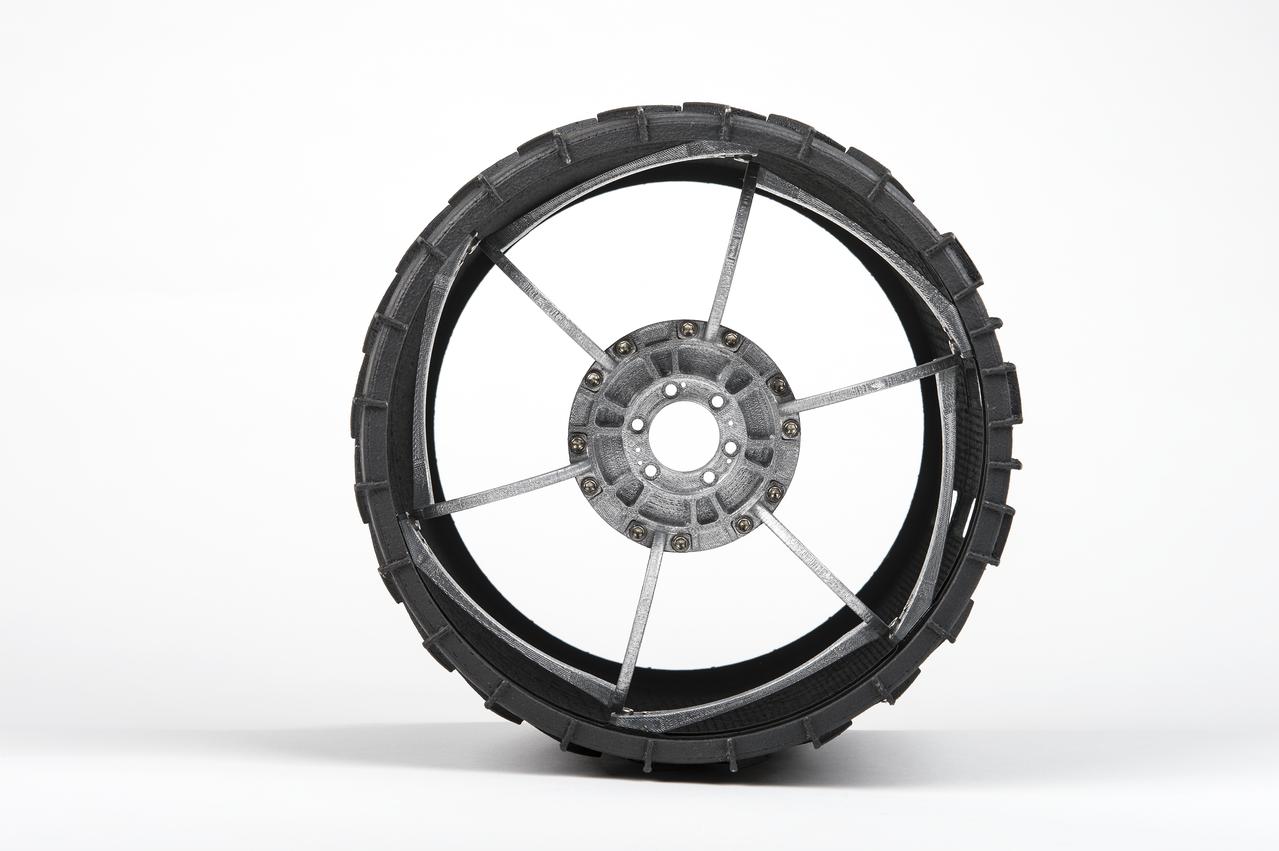
Mars Curiosity Wheel Mock-up
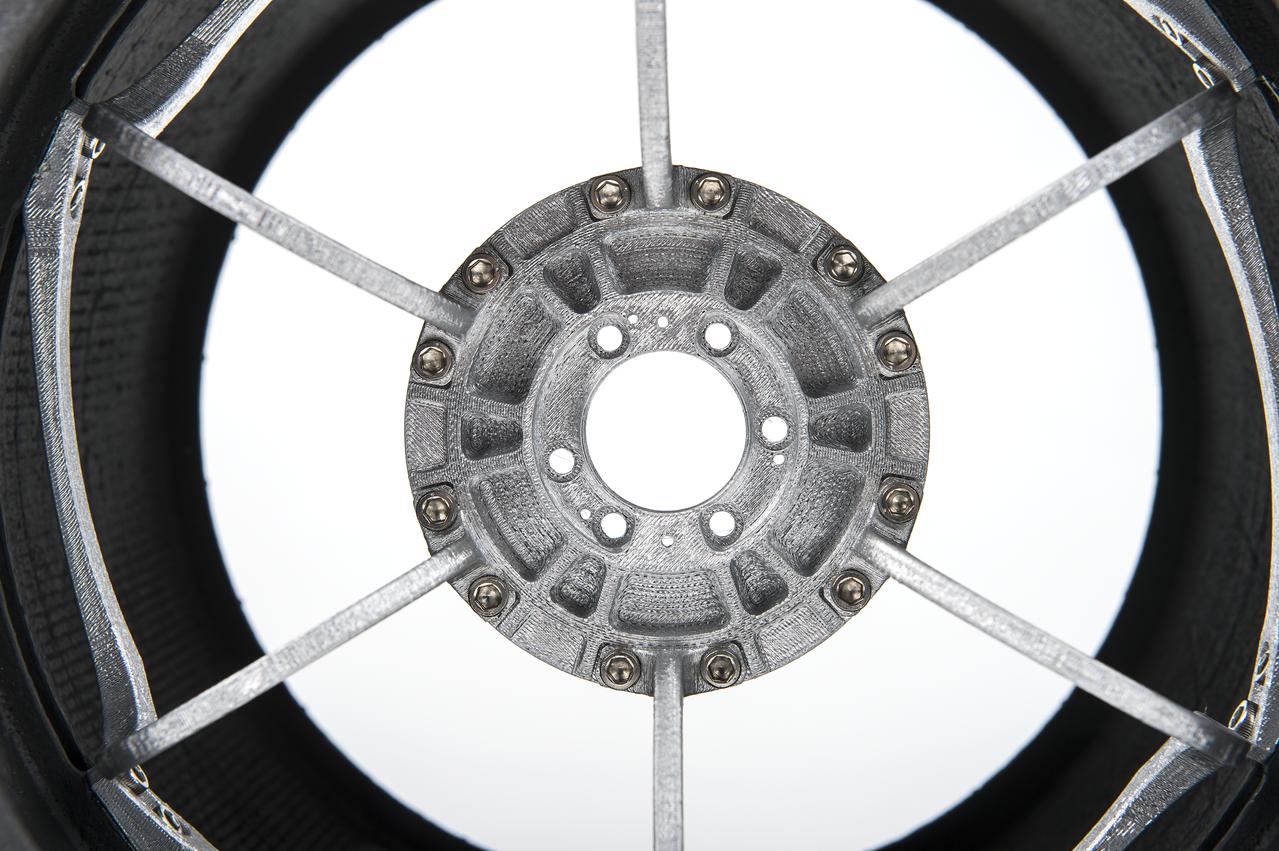
Mars Curiosity Wheel Mock-up
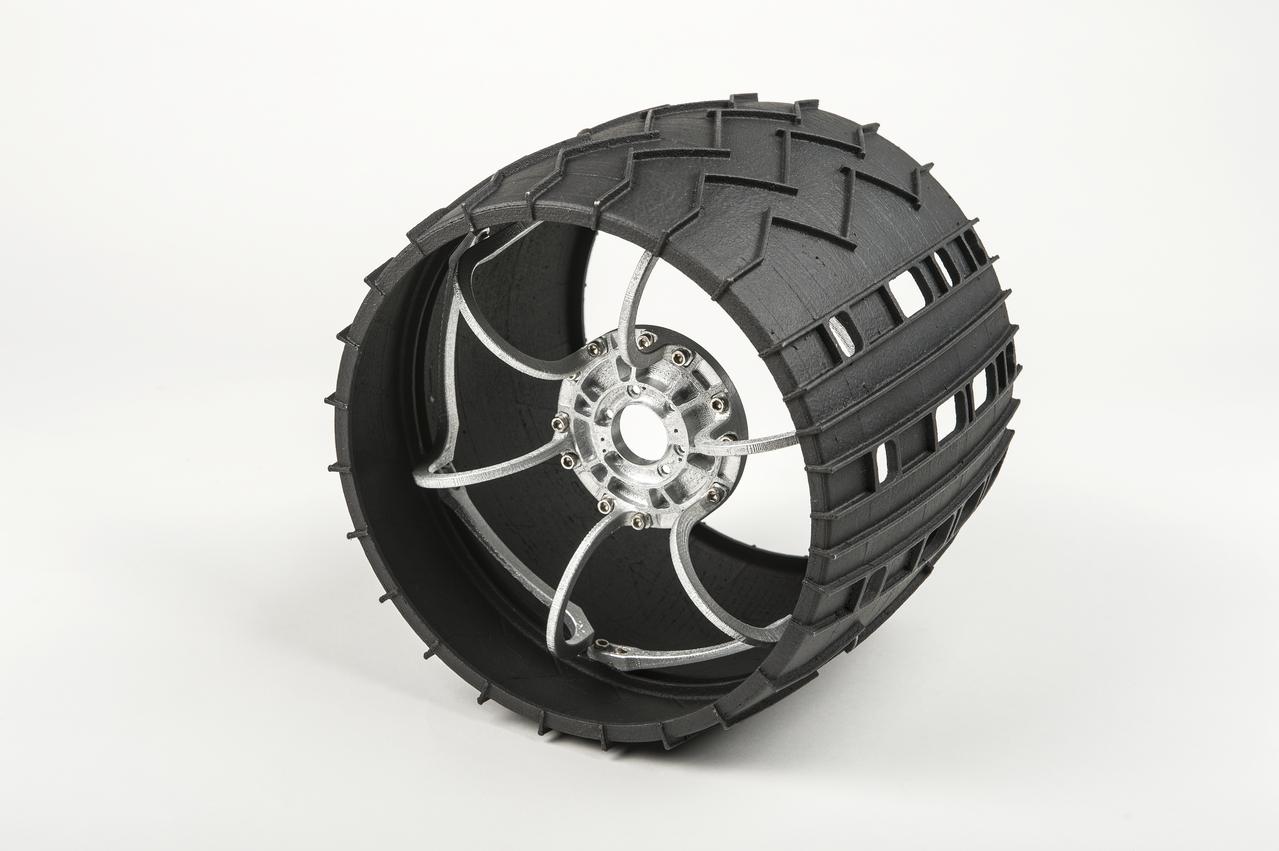
Mars Curiosity Wheel Mock-up
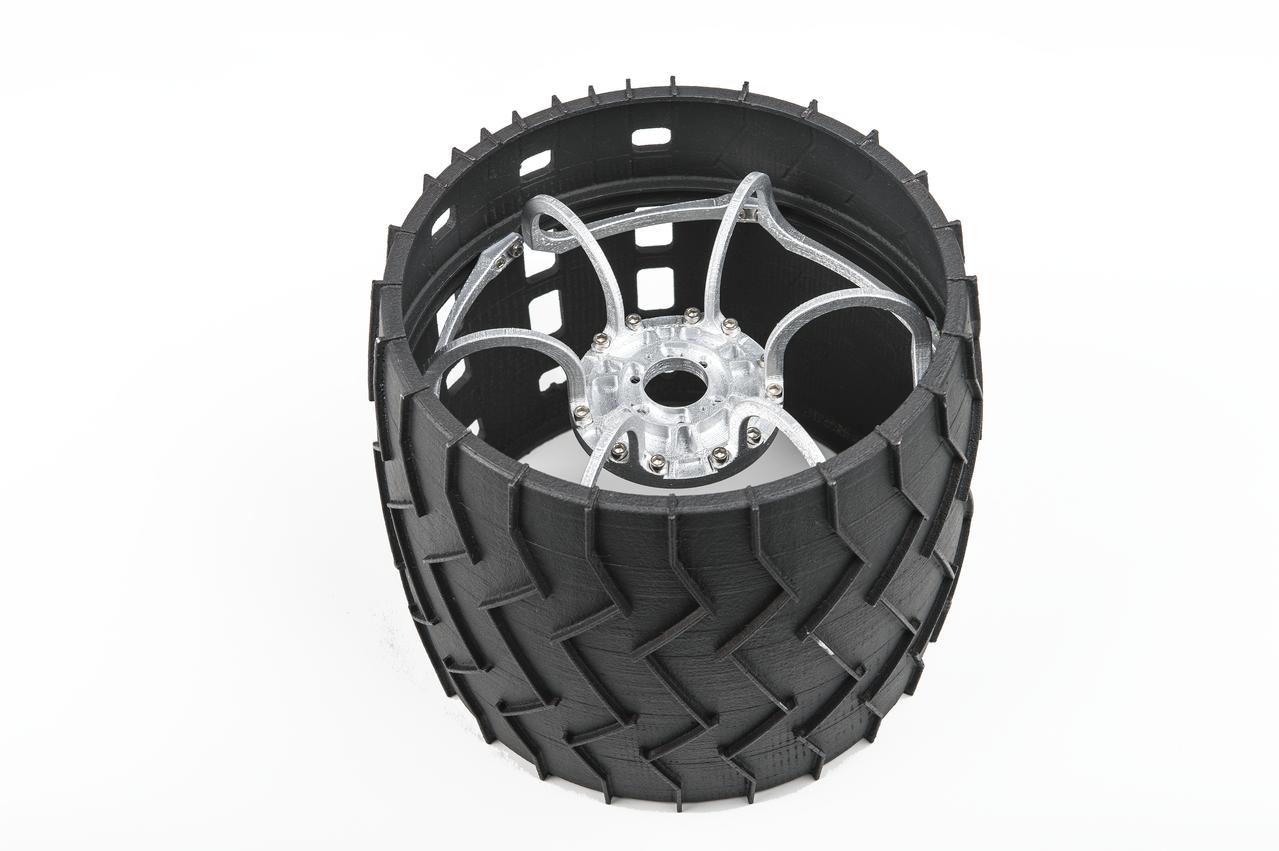
Mars Curiosity Wheel Mock-up
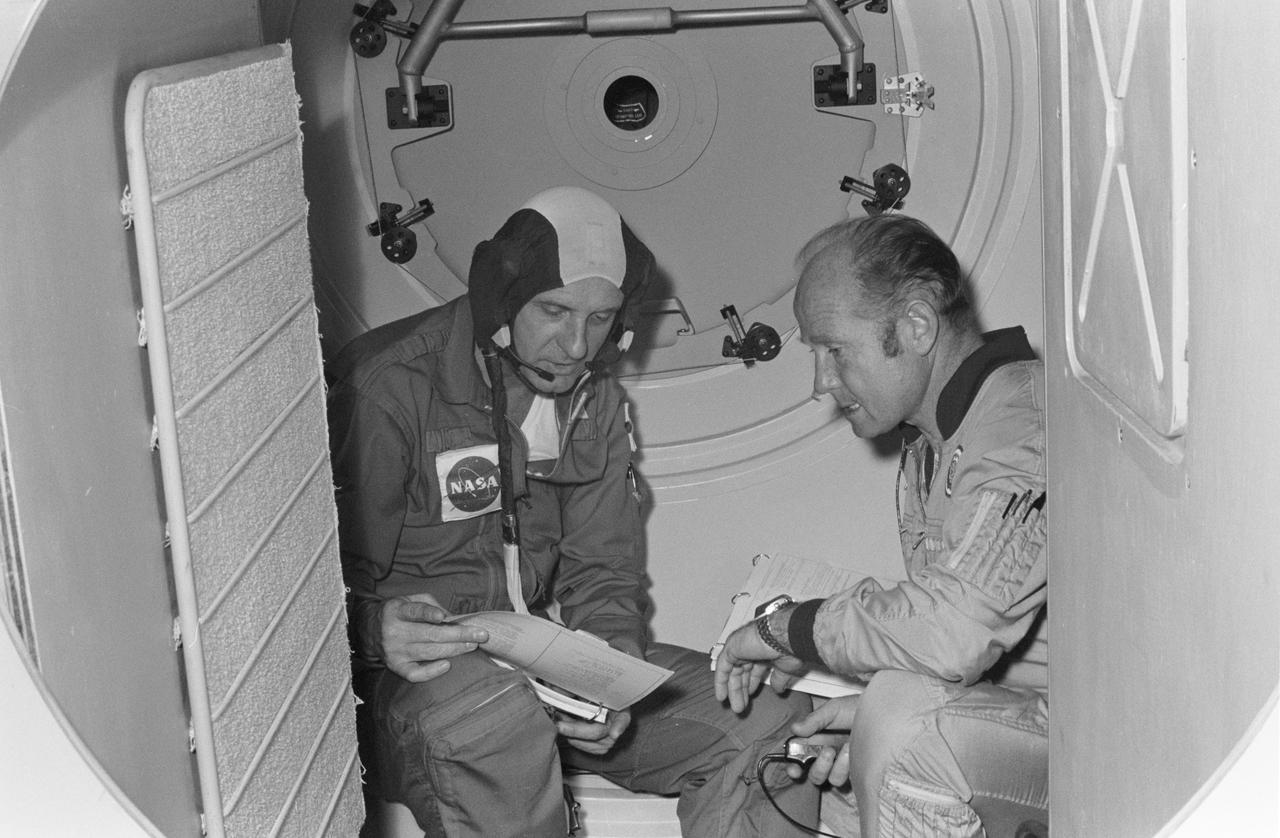
S74-29041 (September 1974) --- The commanders of the American astronaut and Soviet cosmonaut crews for the joint U.S.?USSR Apollo-Soyuz Test Project mission compare notes in a Soyuz spacecraft?s orbital module mock-up in Building 35 at the Johnson Space Center during a training and simulation exercise. They are Aleksey A. Leonov, right, and Thomas P. Stafford. The hatchway in the background leads to the Docking Module. The prime crewmen, along with backup crewmen, are training in both the U.S. and USSR for the joint mission scheduled for the summer of 1975.
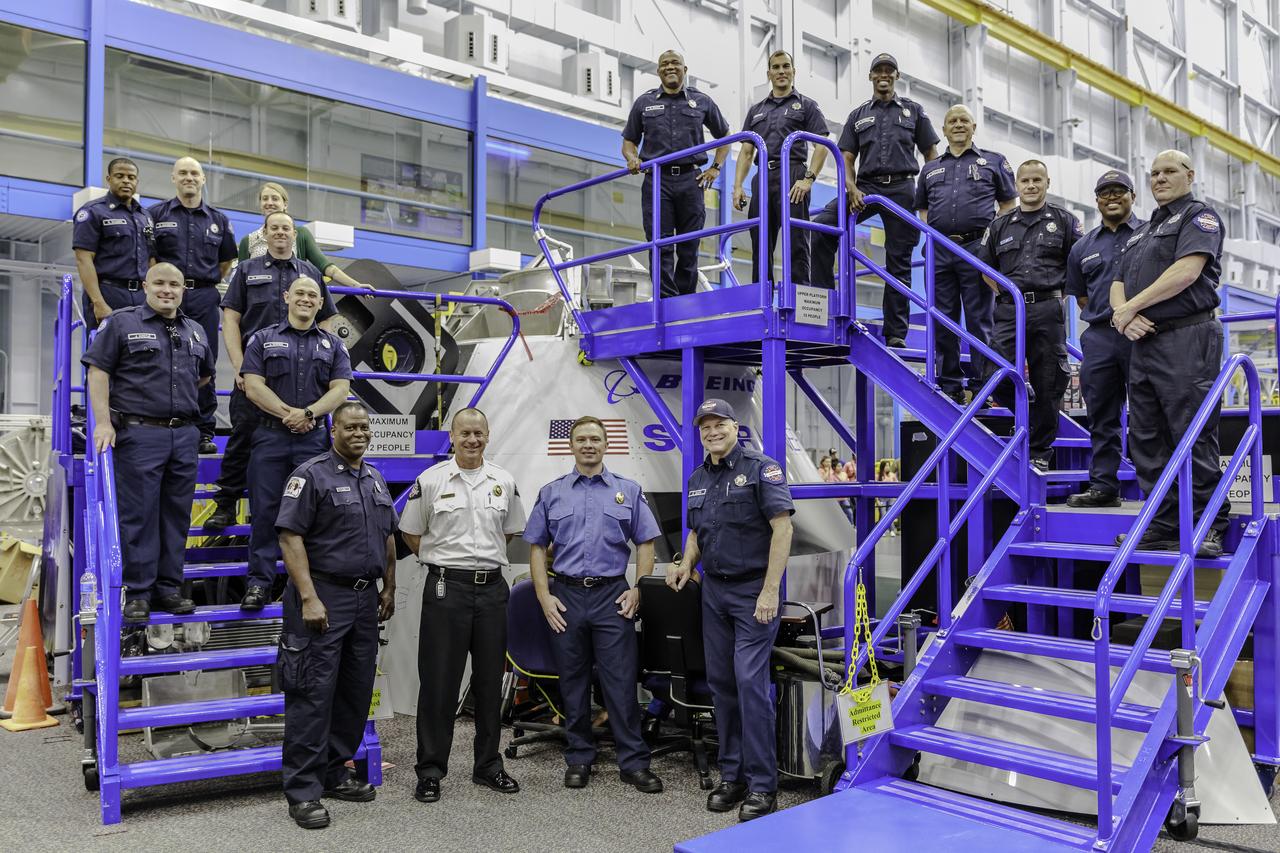
The Boeing extrication team train on the Boeing Mock-up Trainer from May 25 through May 28, 2018, at NASA's Johnson Space Center in Houston. The extrication team is comprised of firefighters from various U.S. Boeing sites. Each member of the team brings an expertise in Aerospace Confined Space Rescue, are Emergency Medical Technicians and have years of rescue experience. The team is highly motivated to getting the crew out quickly, safely and efficiently. The training at Johnson included suit training, side hatch egress, and Intravehicular Activity (IVA) rigging and egress. The week included a run for record on IVA egress for a testing requirement. Participants also included NASA Medical, the 45th Operations Group's Detachment 3, based at Patrick Air Force Base, and U.S. Air Force pararescue representation.
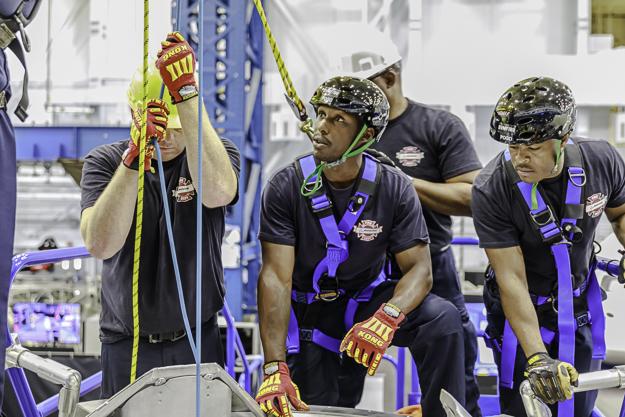
The Boeing extrication team train on the Boeing Mock-up Trainer from May 25 through May 28, 2018, at NASA's Johnson Space Center in Houston. The extrication team is comprised of firefighters from various U.S. Boeing sites. Each member of the team brings an expertise in Aerospace Confined Space Rescue, are Emergency Medical Technicians and have years of rescue experience. The team is highly motivated to getting the crew out quickly, safely and efficiently. The training at Johnson included suit training, side hatch egress, and Intravehicular Activity (IVA) rigging and egress. The week included a run for record on IVA egress for a testing requirement. Participants also included NASA Medical, the 45th Operations Group's Detachment 3, based at Patrick Air Force Base, and U.S. Air Force pararescue representation.
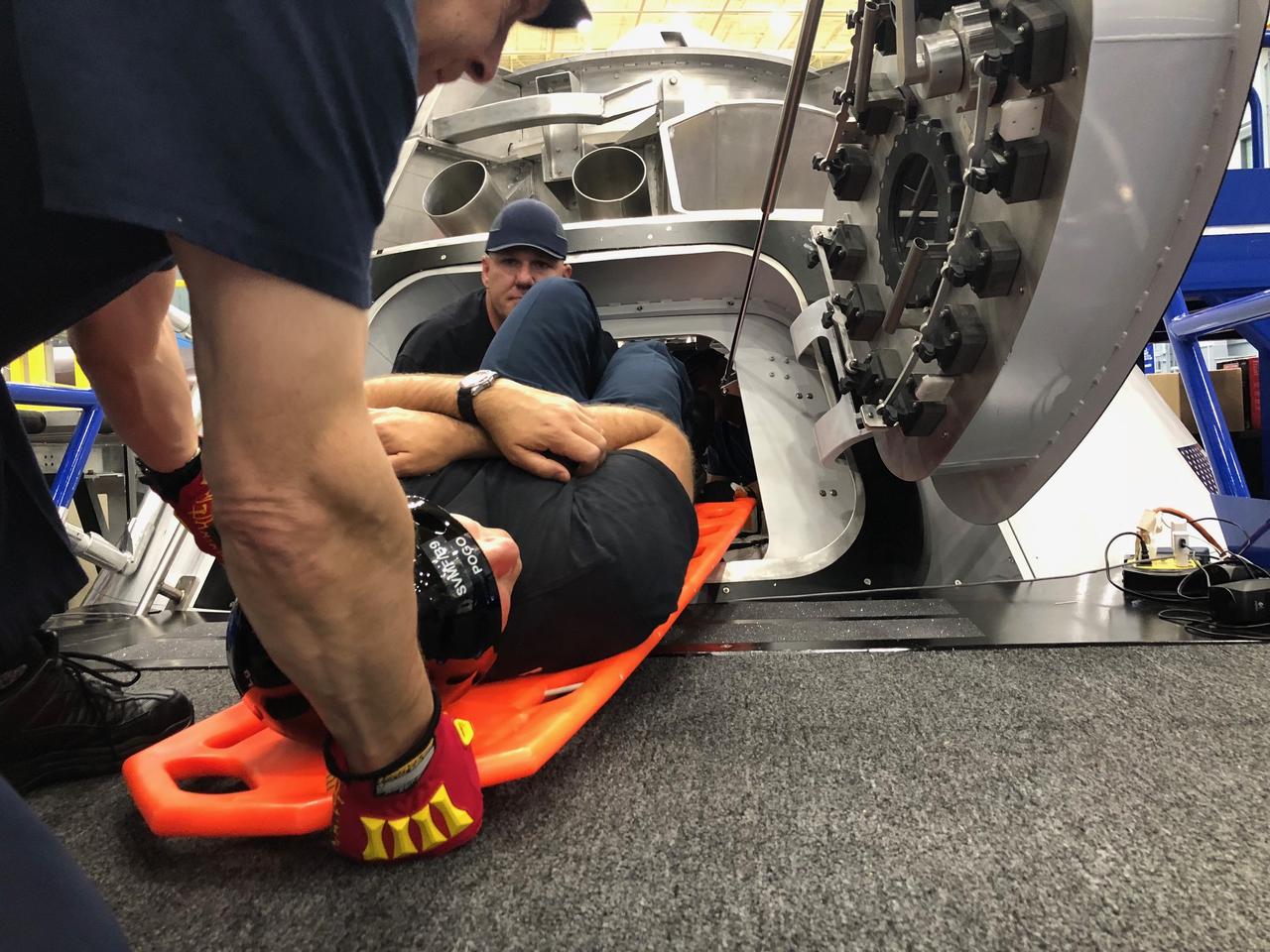
The Boeing extrication team train on the Boeing Mock-up Trainer from May 25 through May 28, 2018, at NASA's Johnson Space Center in Houston. The extrication team is comprised of firefighters from various U.S. Boeing sites. Each member of the team brings an expertise in Aerospace Confined Space Rescue, are Emergency Medical Technicians and have years of rescue experience. The team is highly motivated to getting the crew out quickly, safely and efficiently. The training at Johnson included suit training, side hatch egress, and Intravehicular Activity (IVA) rigging and egress. The week included a run for record on IVA egress for a testing requirement. Participants also included NASA Medical, the 45th Operations Group's Detachment 3, based at Patrick Air Force Base, and U.S. Air Force pararescue representation.
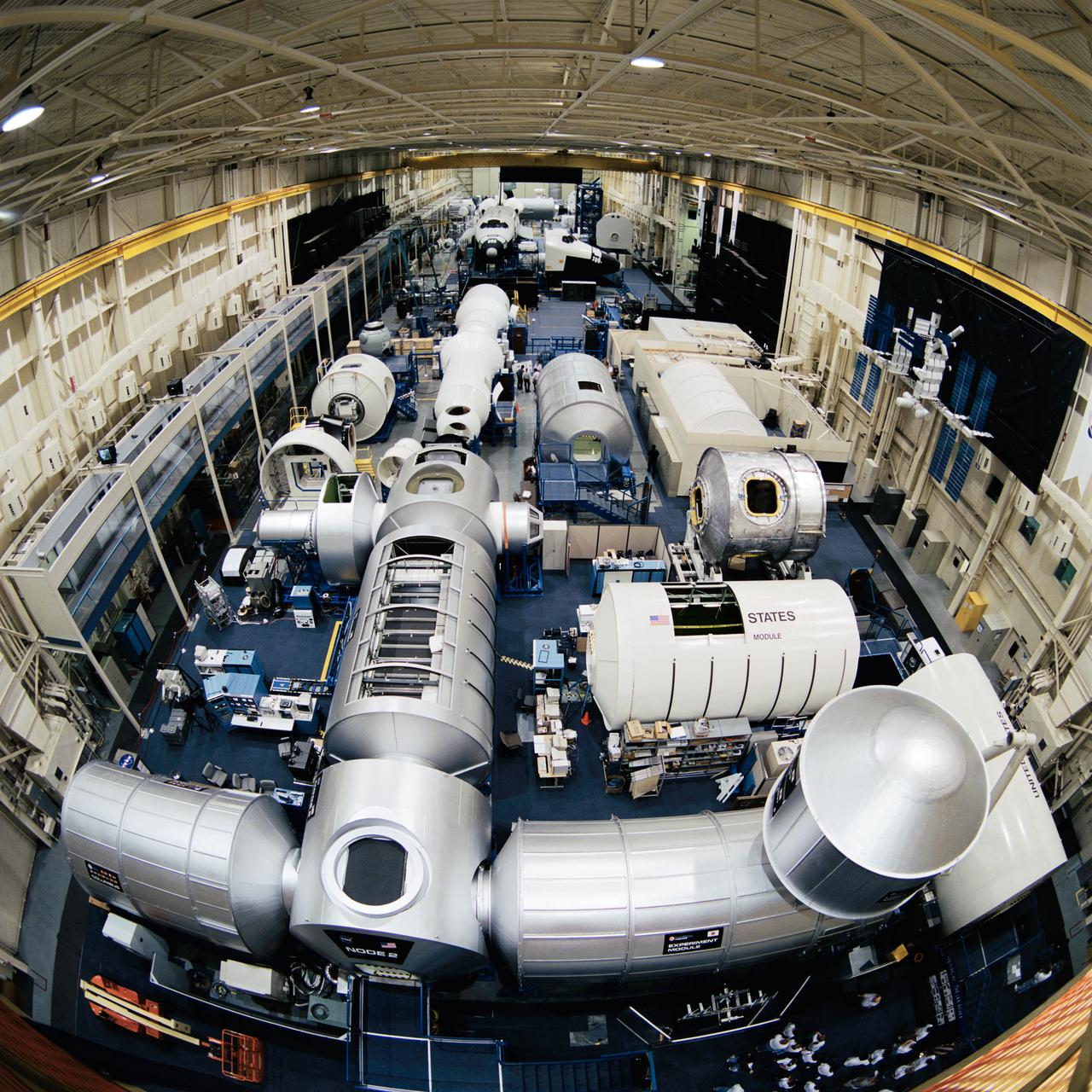
Photographic documentation showing the bldg. 9 ISS module mock-ups and trainers. Views include: various overall views of the configuration of the ISS module trainers on the floor of bldg. 9 (08445-46, 08449-51, 08458-61, 08464-65, 08469, 08471, 08476); various portions of the mock-ups (08447-48, 08470); views of the Node 2, Experiment Module and Logistics Module (08452); Node 2 (08453, 08466); Destiny and Node 2 (08454); Destiny, Unity and Airlock (08455); Zarya, Service Module and shuttle mock-ups (08456); Logistics Module and Experiment Module (08457, 08468); various views of Columbia, Node 2 and Destiny (08462-63); Columbus, Node 2, Experiment Module and Logistics Module (08467); U.S. Laboratory module (08472); Logistics Module (08473); module layout (08474); Logistics Module and Experiment Module (08475).
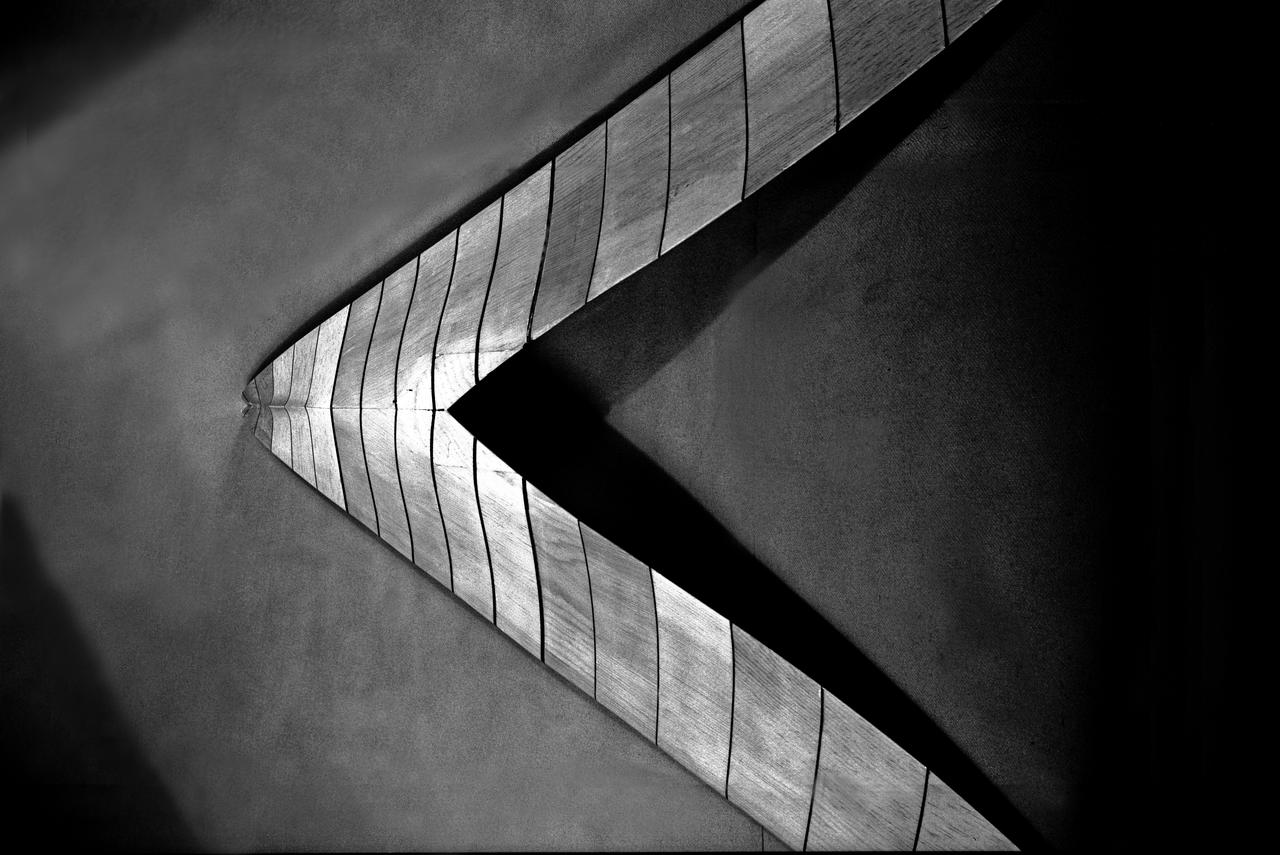
Wood Mock-up of Arrow- Wing Bomber to Show Wing Contours
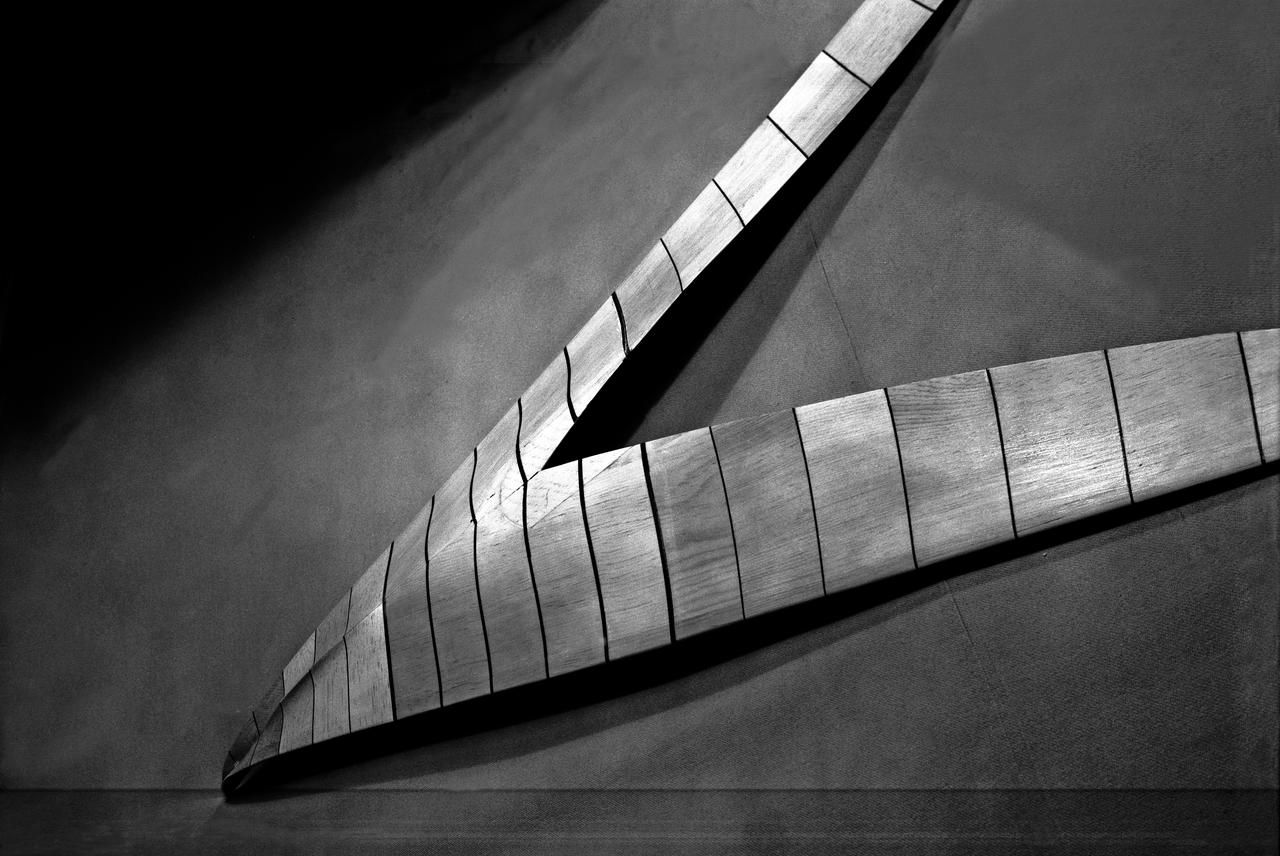
Wood Mock-up of Arrow- Wing Bomber to Show Wing Contours
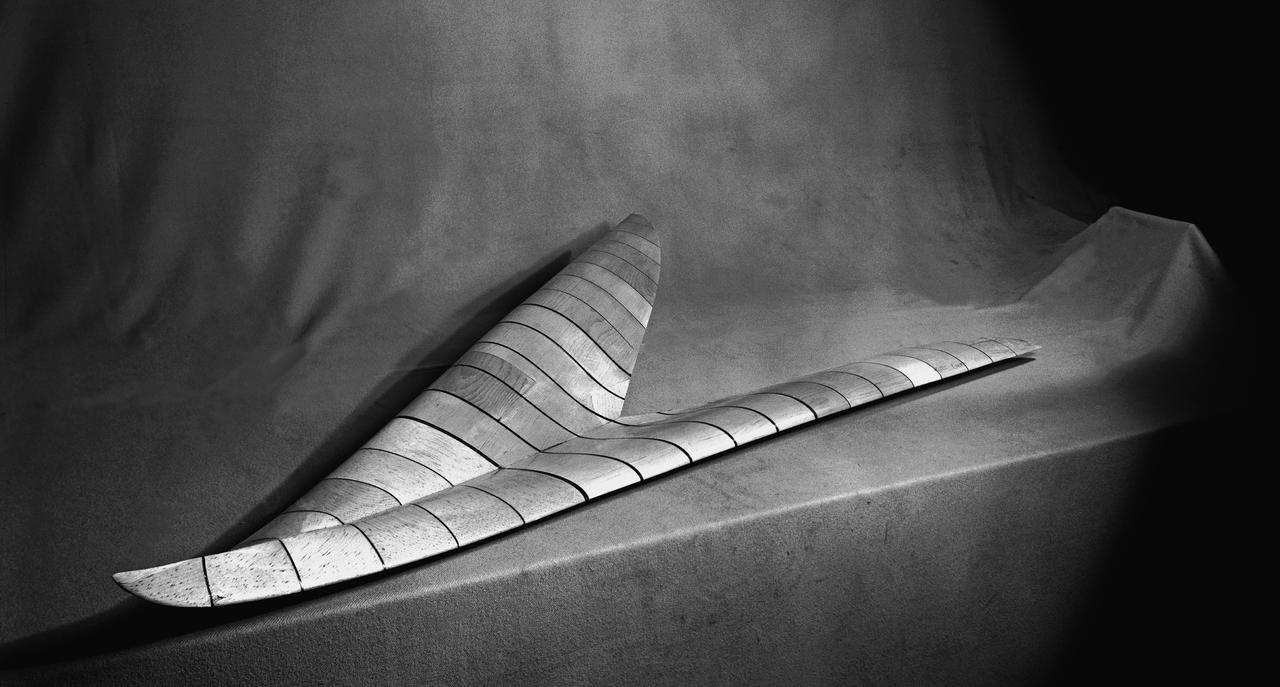
Wood Mock-up of Arrow Wing Bomber to Show Wing Contours
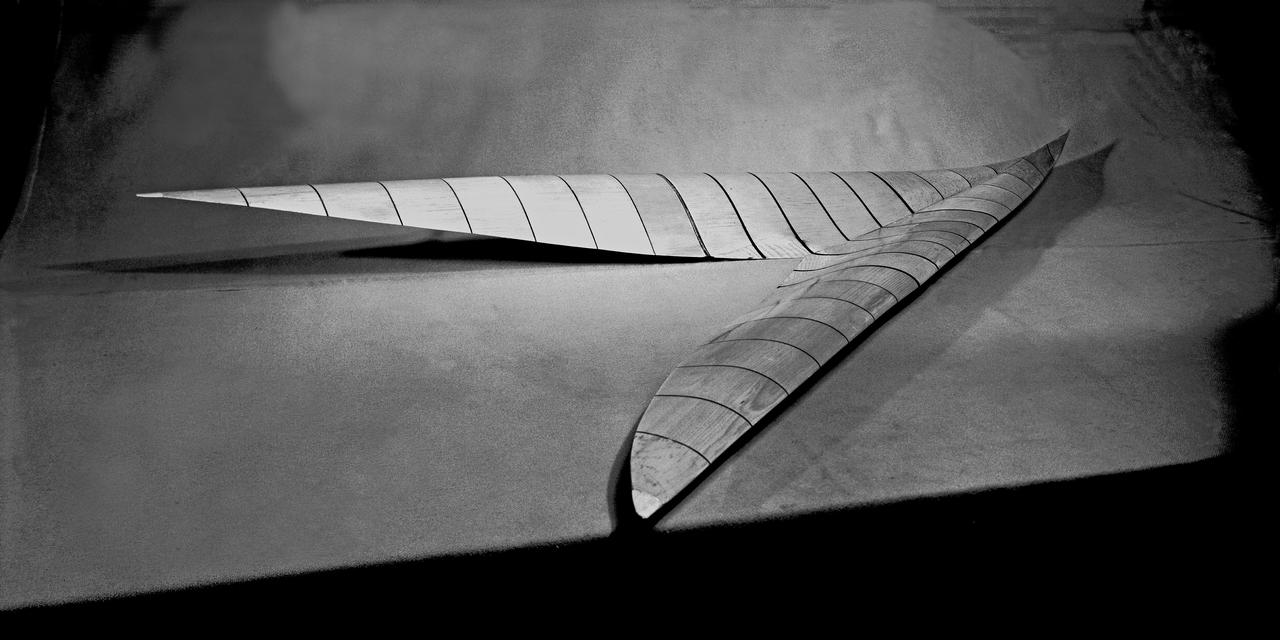
Wood Mock-up of Arrow- Wing Bomber to Show Wing Contours
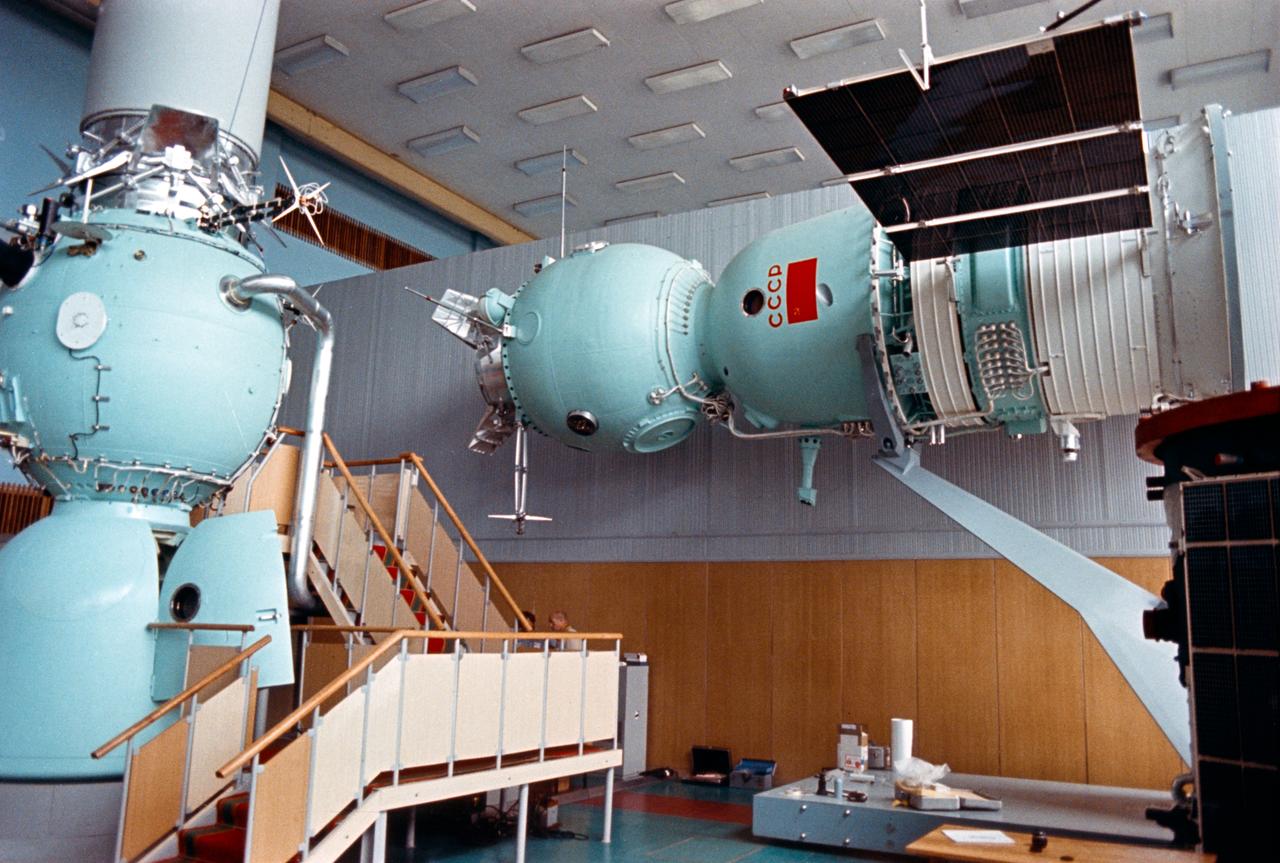
S74-24675 (June 1974) --- Two mock-ups of the USSR Soyuz spacecraft which are on display at the Cosmonaut Training Center (Star City) near Moscow. The Soyuz spacecraft mounted vertically on the left is a training mock-up. The Soyuz mounted horizontally on the right was exhibited at the Paris air show in May-June 1973 in a docked configuration with an Apollo spacecraft. The spherical-shaped section of the Soyuz is called the orbital module. The middle section with the lettering ?CCCP? (USSR) on it called the descent vehicle. Two solar panels extend out from the instrument-assembly module. The joint U.S.-USSR Apollo-Soyuz docking mission in Earth orbit is scheduled for the summer of 1975. A docking module mock-up is atop the Soyuz training mock-up on the left.
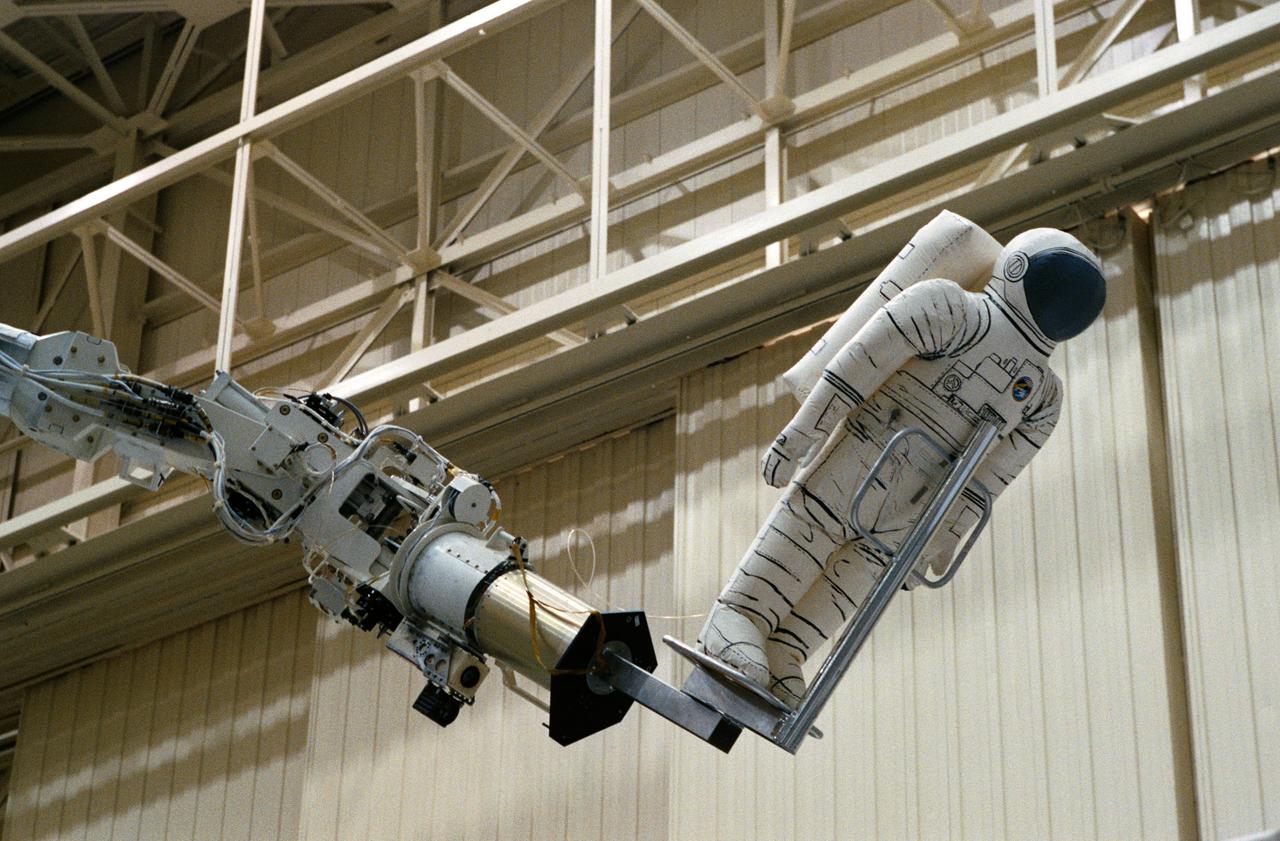
The Remote Manipulator System (RMS) eases a mannequin representing an astronaut into position for an STS-61 Hubble Space Telescope (HST) servicing task in the Space Shuttle mockup and integration laboratory at JSC (35699, 35703); Wide-angle view of the RMS easing a mannequin into position for work on the HST mock-up in bldg 9N (35700-1); Swiss scientist Claude Nicollier, mission specialist, works the control of the RMS during a training session in the manipulator development facility (MDF) in JSC's Shuttle mock-up and integration laboratory. Astronaut Kenneth D. Bowersox (left), pilot, is among the other crewmembers in training for the STS-61 HST servicing mission (35702).
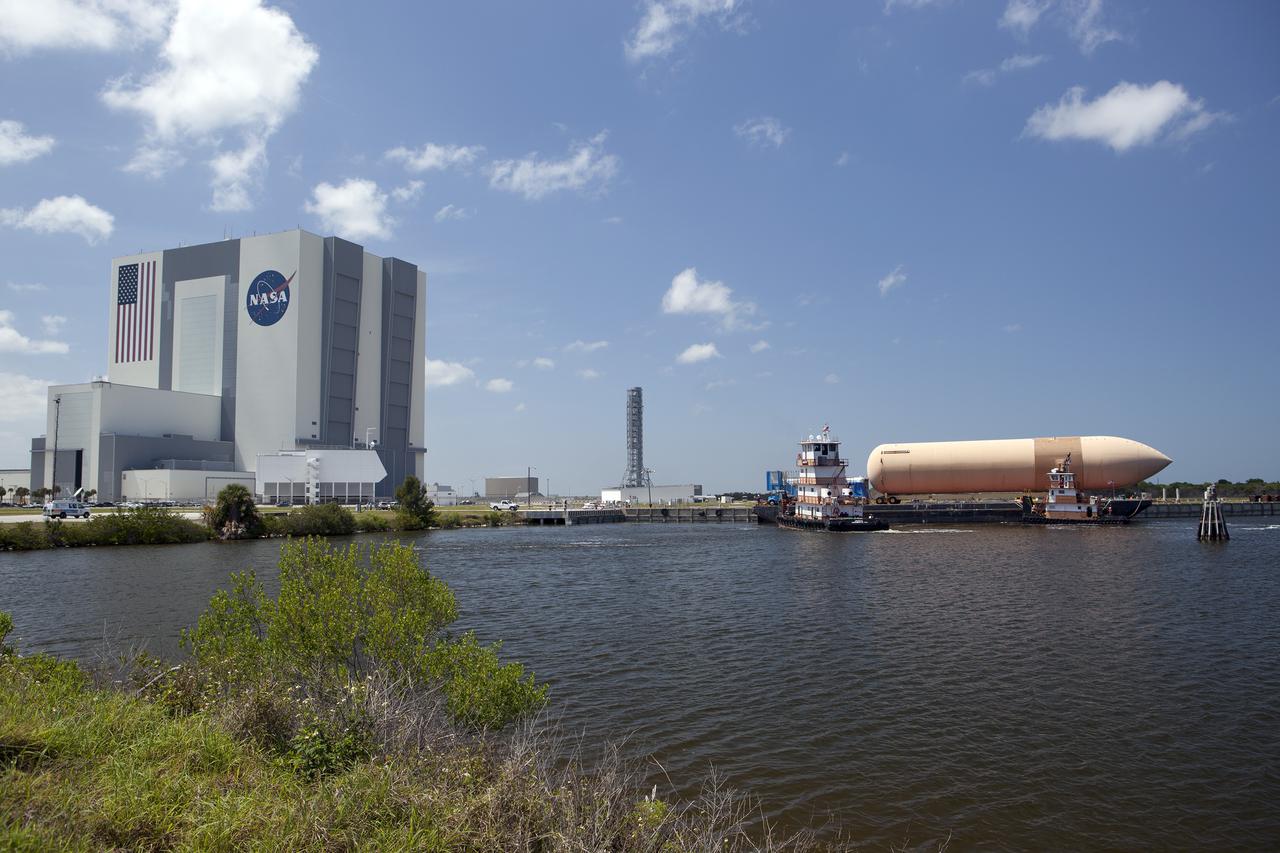
CAPE CANAVERAL, Fla. -- A space shuttle orange flight test article external fuel tank, or ET, an ET transporter, crew hatch access vehicle, crew transport vehicle, solid rocket booster, or SRB, aft skirt and SRB frustum are loaded onto a barge and beginning the first leg of their journey from NASA's Kennedy Space Center in Florida to the Wings of Dreams Aviation Museum located at Keystone Heights Airport in North Central Florida. Thousands of unique space shuttle era artifacts are being allocated to facilities across the country for their new missions to educate and inspire America's next generation of explorers. Photo credit: NASA_Dimitri Gerondidakis
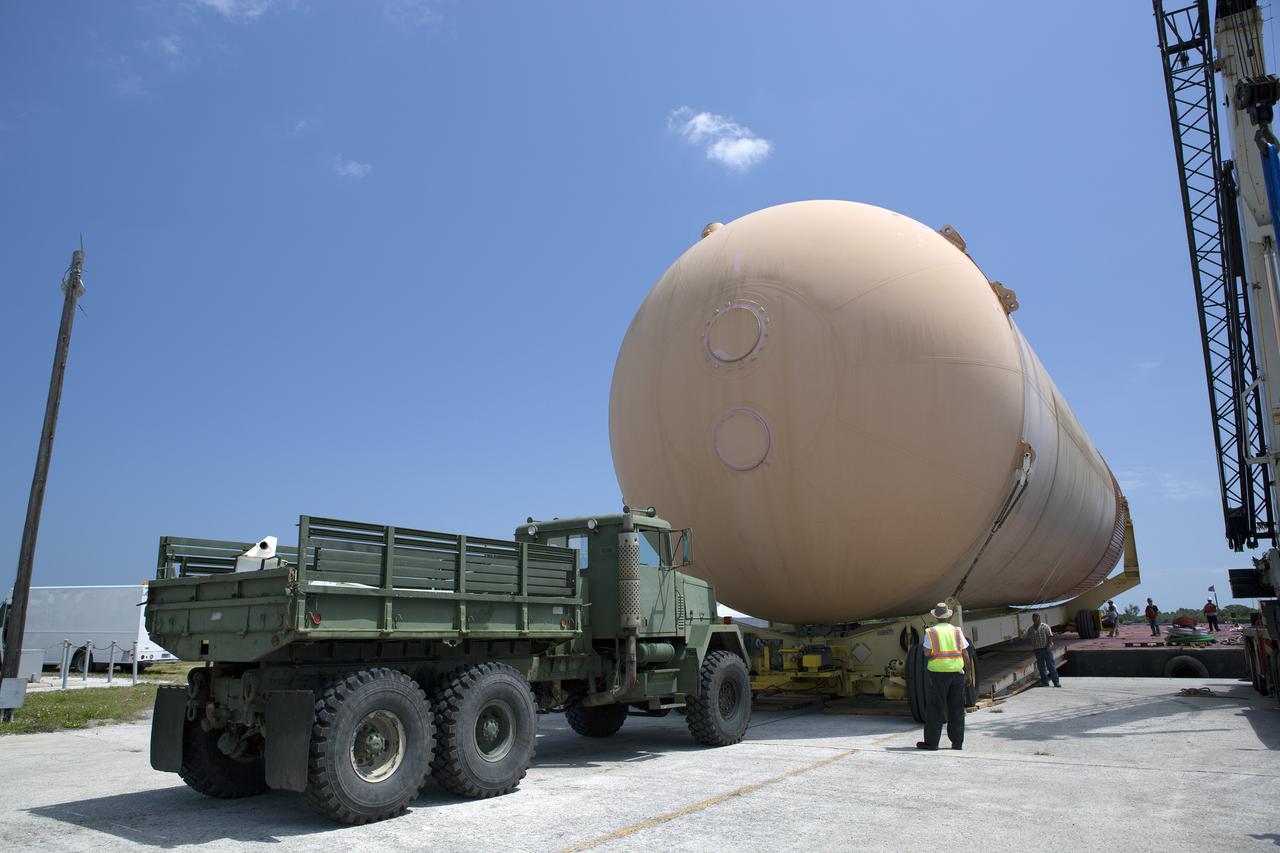
CAPE CANAVERAL, Fla. – An orange flight test article space shuttle external fuel tank, or ET, is loaded onto a barge for the first leg of its journey from NASA's Kennedy Space Center in Florida to the Wings of Dreams Aviation Museum located at Keystone Heights Airport in North Central Florida. Weighing in at 58,000 pounds unfueled and standing more than 15-stories tall, the ET was referred to as the 'backbone' of the space shuttle. Its job was to hold about 535,000 gallons of super-cold liquid hydrogen and liquid oxygen. It also absorbed the thrust loads produced at launch by the orbiter and the solid rocket boosters, or SRBs. Also joining the ET at Wings of Dreams is an ET transporter, the crew transport vehicle, crew hatch access vehicle, SRB aft skirt and SRB frustum. Thousands of unique space shuttle era artifacts are being allocated to facilities across the country for their new missions to educate and inspire America's next generation of explorers. Photo credit: NASA_Dimitri Gerondidakis
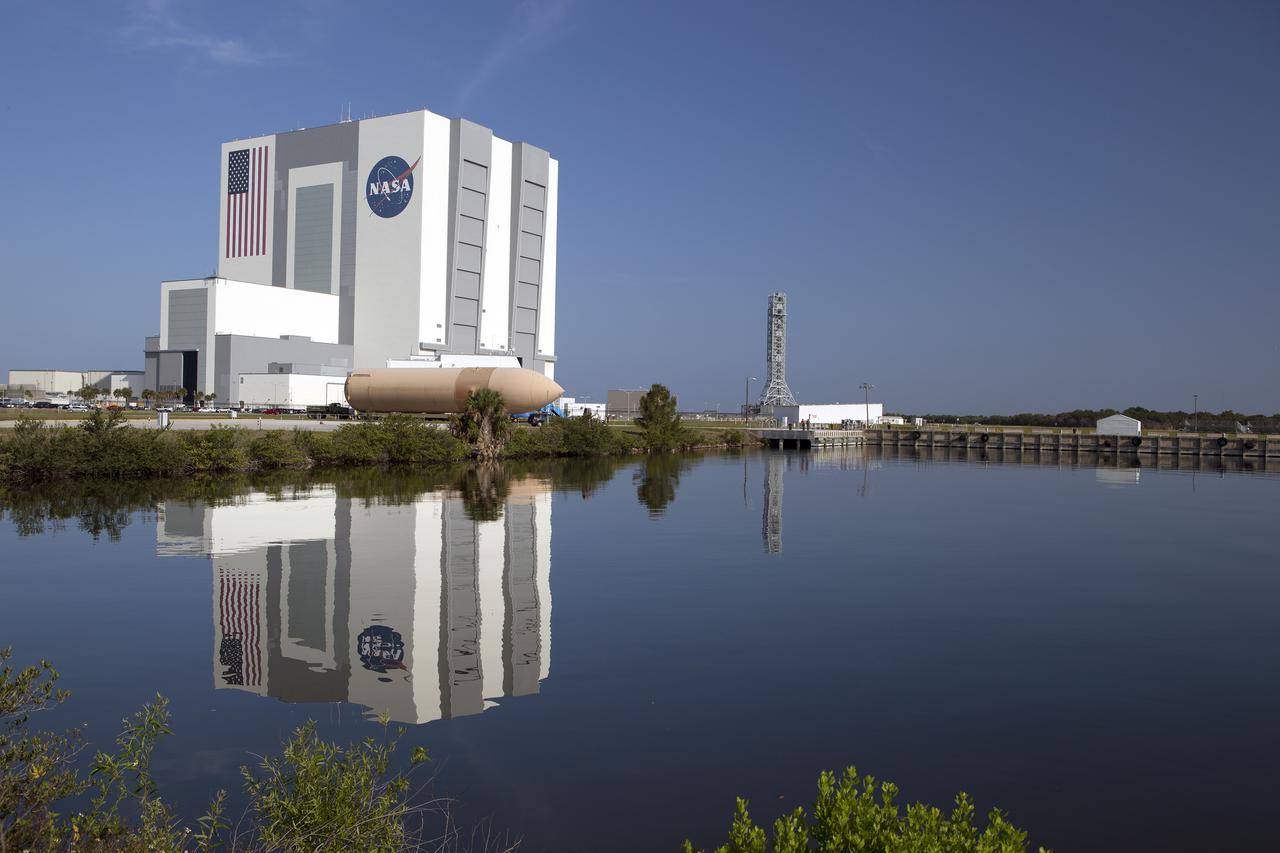
CAPE CANAVERAL, Fla. – An orange flight test article space shuttle external fuel tank, or ET, awaits transport from NASA's Kennedy Space Center in Florida to the Wings of Dreams Aviation Museum located at Keystone Heights Airport in North Central Florida. Weighing in at 58,000 pounds unfueled and standing more than 15-stories tall, the ET was referred to as the 'backbone' of the space shuttle. Its job was to hold about 535,000 gallons of super-cold liquid hydrogen and liquid oxygen. It also absorbed the thrust loads produced at launch by the orbiter and the solid rocket boosters, or SRBs. Also joining the ET at Wings of Dreams is an ET transporter, the crew transport vehicle, crew hatch access vehicle, SRB aft skirt and SRB frustum. Thousands of unique space shuttle era artifacts are being allocated to facilities across the country for their new missions to educate and inspire America's next generation of explorers. Photo credit: NASA_Dimitri Gerondidakis
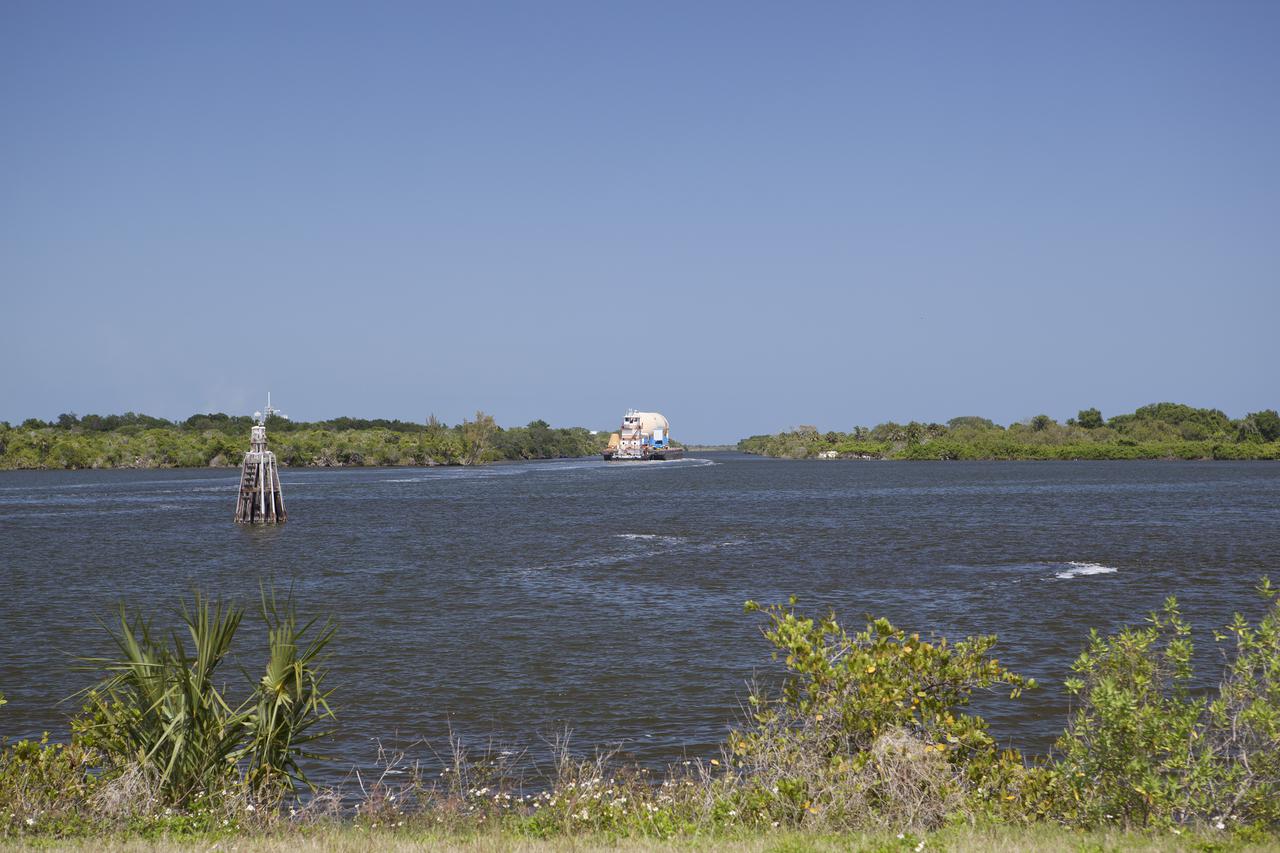
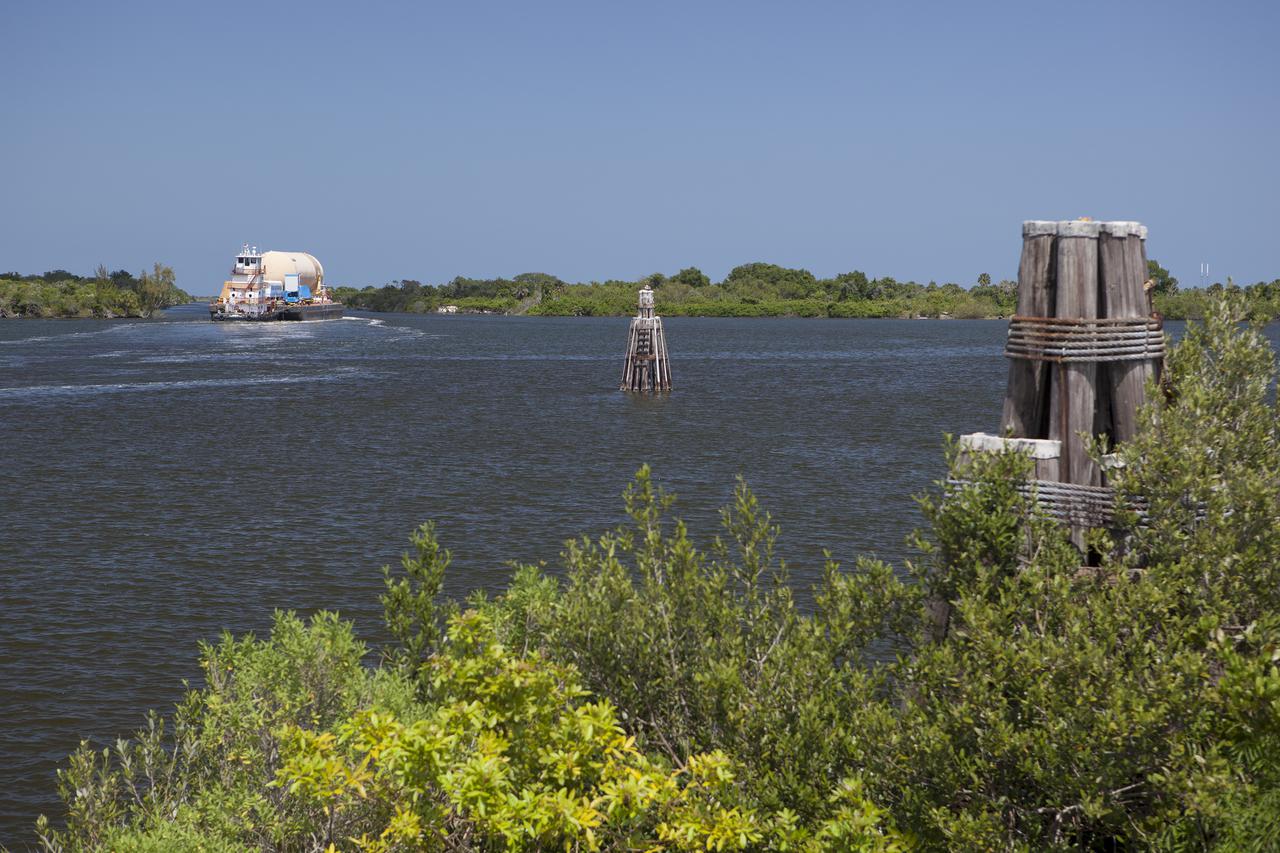
CAPE CANAVERAL, Fla. – A space shuttle orange flight test article external fuel tank, or ET, an ET transporter, crew hatch access vehicle, crew transport vehicle, solid rocket booster, or SRB, aft skirt and SRB frustum are loaded onto a barge and beginning the first leg of their journey down the Banana River from NASA's Kennedy Space Center in Florida to the Wings of Dreams Aviation Museum located at Keystone Heights Airport in North Central Florida. Thousands of unique space shuttle era artifacts are being allocated to facilities across the country for their new missions to educate and inspire America's next generation of explorers. Photo credit: NASA_Dimitri Gerondidakis
CAPE CANAVERAL, Fla. -- A space shuttle orange flight test article external fuel tank, or ET, an ET transporter, crew hatch access vehicle, crew transport vehicle, solid rocket booster, or SRB, aft skirt and SRB frustum are loaded onto a barge and beginning the first leg of their journey down the Banana River from NASA's Kennedy Space Center in Florida to the Wings of Dreams Aviation Museum located at Keystone Heights Airport in North Central Florida. Thousands of unique space shuttle era artifacts are being allocated to facilities across the country for their new missions to educate and inspire America's next generation of explorers. Photo credit: NASA_Dimitri Gerondidakis
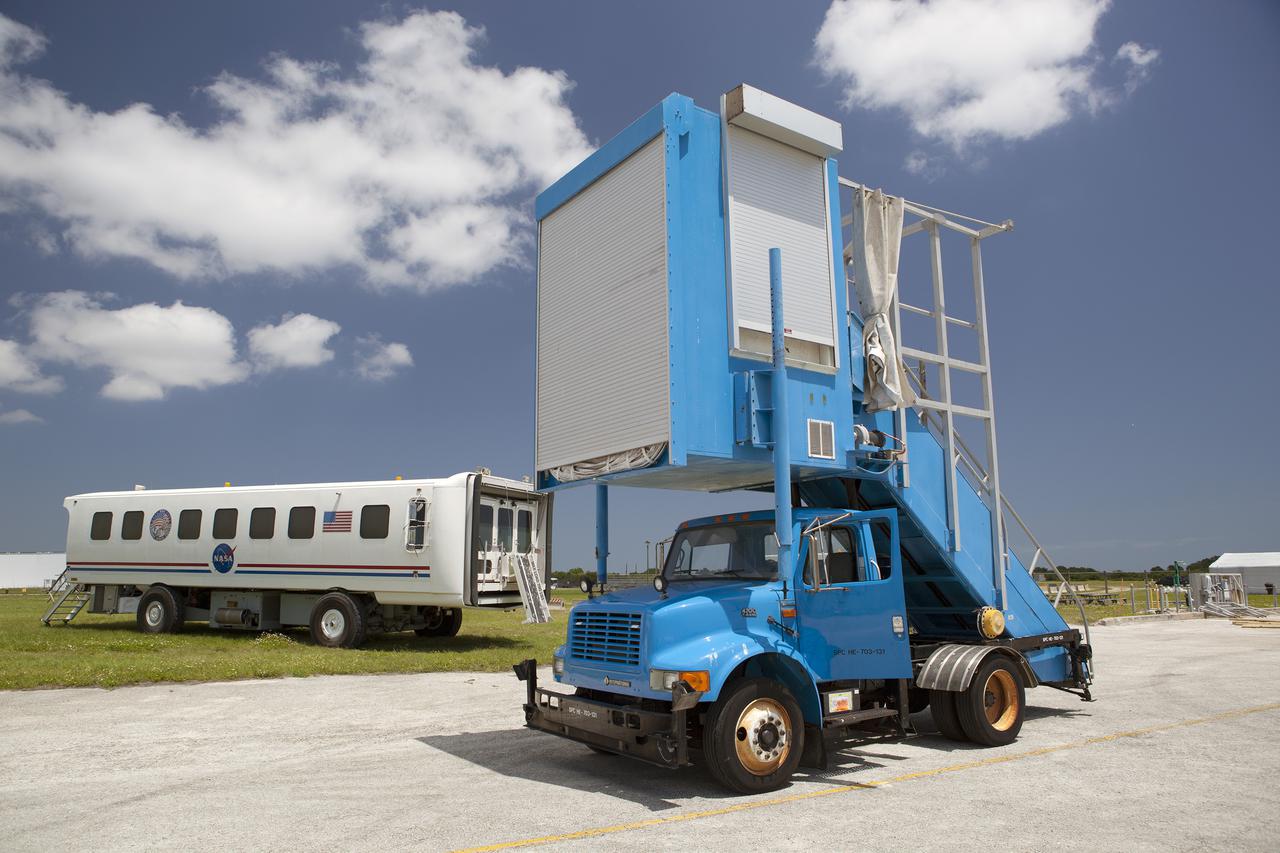
CAPE CANAVERAL, Fla. – The space shuttle crew hatch access vehicle is loaded onto a barge for the first leg of its journey from NASA's Kennedy Space Center in Florida to the Wings of Dreams Aviation Museum located at Keystone Heights Airport in North Central Florida. Also joining the vehicle at Wings of Dreams is an orange flight test article external fuel tank, or ET, an ET transporter, the crew transport vehicle, solid rocket booster, or SRB, aft skirt and SRB frustum. Thousands of unique space shuttle era artifacts are being allocated to facilities across the country for their new missions to educate and inspire America's next generation of explorers. Photo credit: NASA_Dimitri Gerondidakis
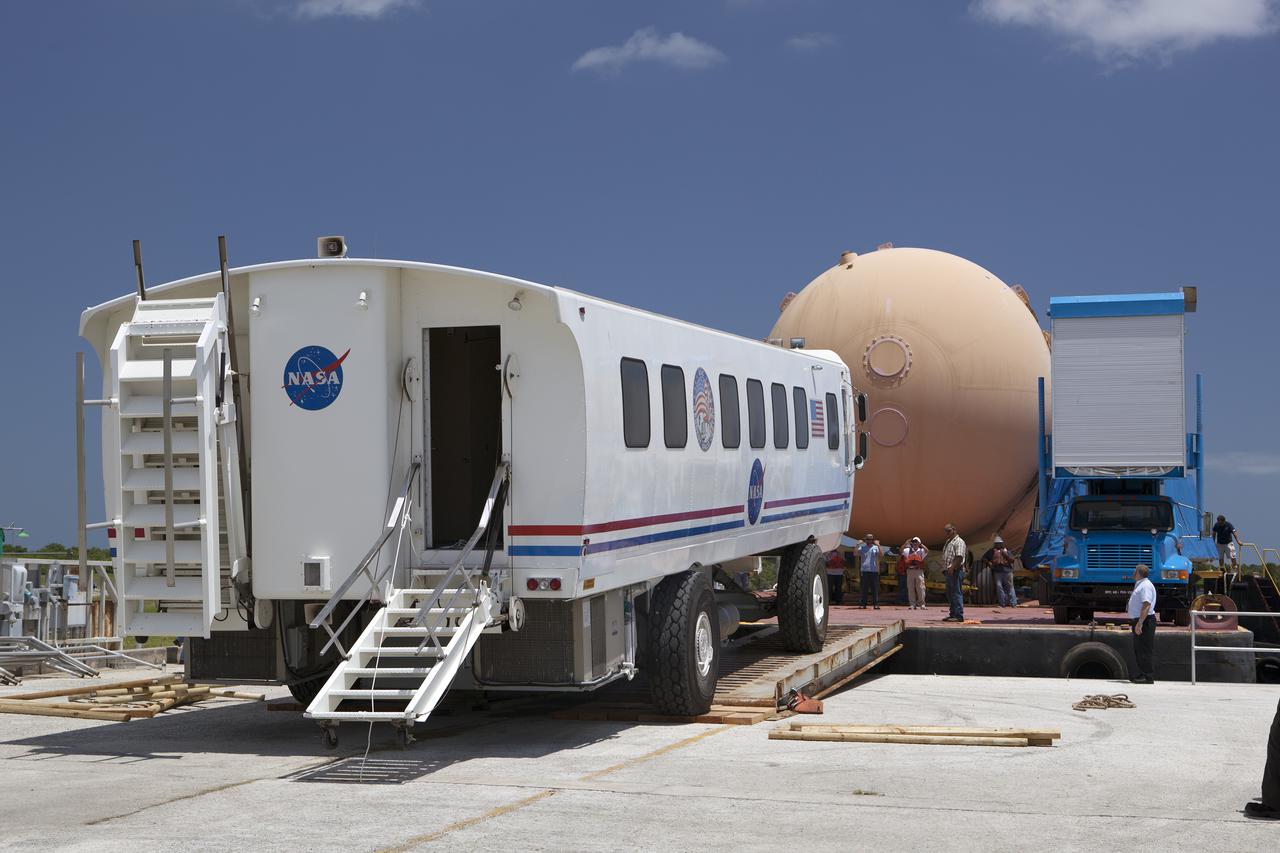
CAPE CANAVERAL, Fla. – The space shuttle crew transport vehicle is loaded onto a barge for the first leg of its journey from NASA's Kennedy Space Center in Florida to the Wings of Dreams Aviation Museum located at Keystone Heights Airport in North Central Florida. Also joining the vehicle at Wings of Dreams is an orange flight test article external fuel tank, or ET, an ET transporter, crew hatch access vehicle, solid rocket booster, or SRB, aft skirt and SRB frustum. Thousands of unique space shuttle era artifacts are being allocated to facilities across the country for their new missions to educate and inspire America's next generation of explorers. Photo credit: NASA_Dimitri Gerondidakis
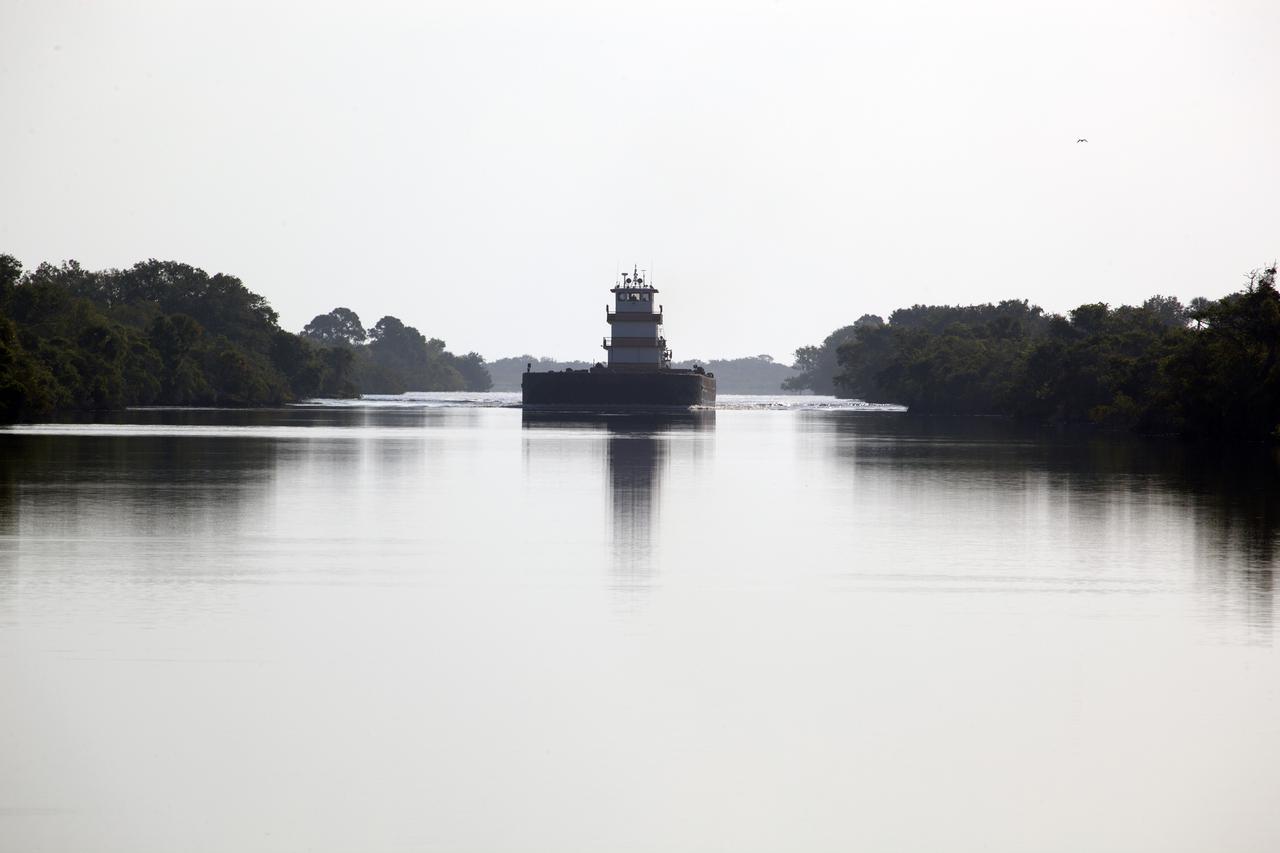
CAPE CANAVERAL, Fla. – A barge arrives at the Kennedy Space Center Turn Basin to pick up an orange flight test article space shuttle external fuel tank, or ET, an ET transporter, the crew transport vehicle, crew hatch access vehicle, solid rocket booster, or SRB, aft skirt and SRB frustum for the first leg of their journey from NASA's Kennedy Space Center in Florida to the Wings of Dreams Aviation Museum located at Keystone Heights Airport in North Central Florida. Thousands of unique space shuttle era artifacts are being allocated to facilities across the country for their new missions to educate and inspire America's next generation of explorers. Photo credit: NASA_Dimitri Gerondidakis
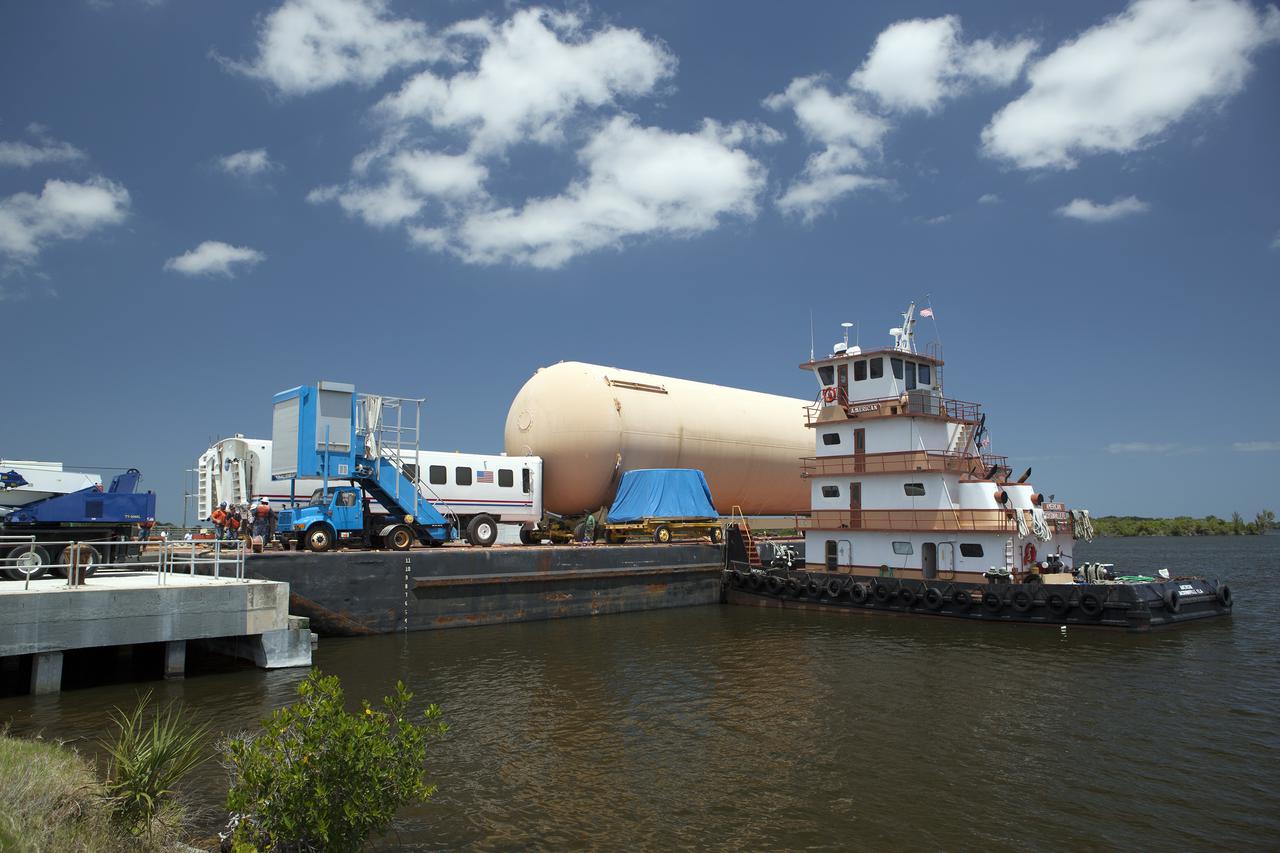
CAPE CANAVERAL, Fla. -- A space shuttle orange flight test article external fuel tank, or ET, an ET transporter, crew hatch access vehicle, crew transport vehicle, solid rocket booster, or SRB, aft skirt and SRB frustum are loaded onto a barge for the first leg of their journey from NASA's Kennedy Space Center in Florida to the Wings of Dreams Aviation Museum located at Keystone Heights Airport in North Central Florida. Thousands of unique space shuttle era artifacts are being allocated to facilities across the country for their new missions to educate and inspire America's next generation of explorers. Photo credit: NASA_Dimitri Gerondidakis
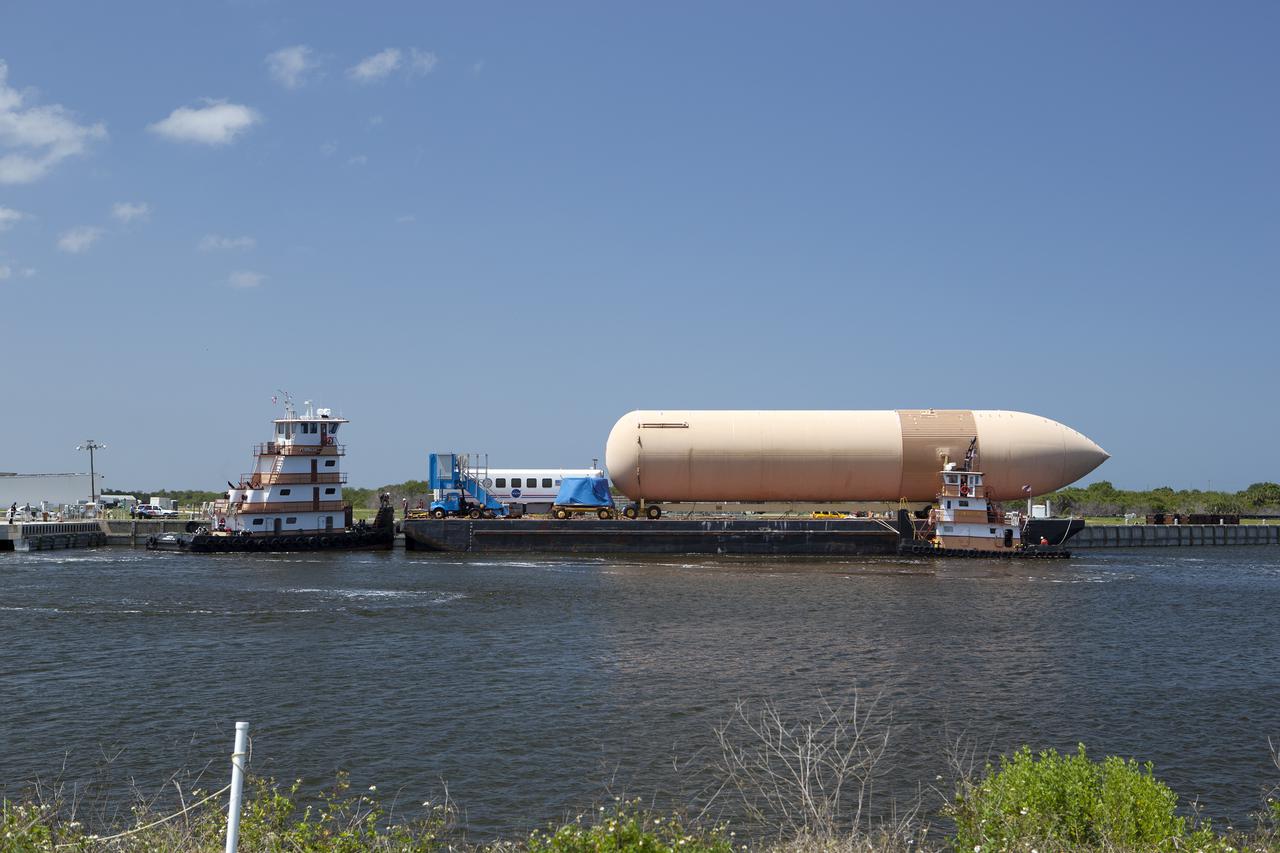
CAPE CANAVERAL, Fla. – A space shuttle orange flight test article external fuel tank, or ET, an ET transporter, crew hatch access vehicle, crew transport vehicle, solid rocket booster, or SRB, aft skirt and SRB frustum are loaded onto a barge and beginning the first leg of their journey from NASA's Kennedy Space Center in Florida to the Wings of Dreams Aviation Museum located at Keystone Heights Airport in North Central Florida. Thousands of unique space shuttle era artifacts are being allocated to facilities across the country for their new missions to educate and inspire America's next generation of explorers. Photo credit: NASA_Dimitri Gerondidakis
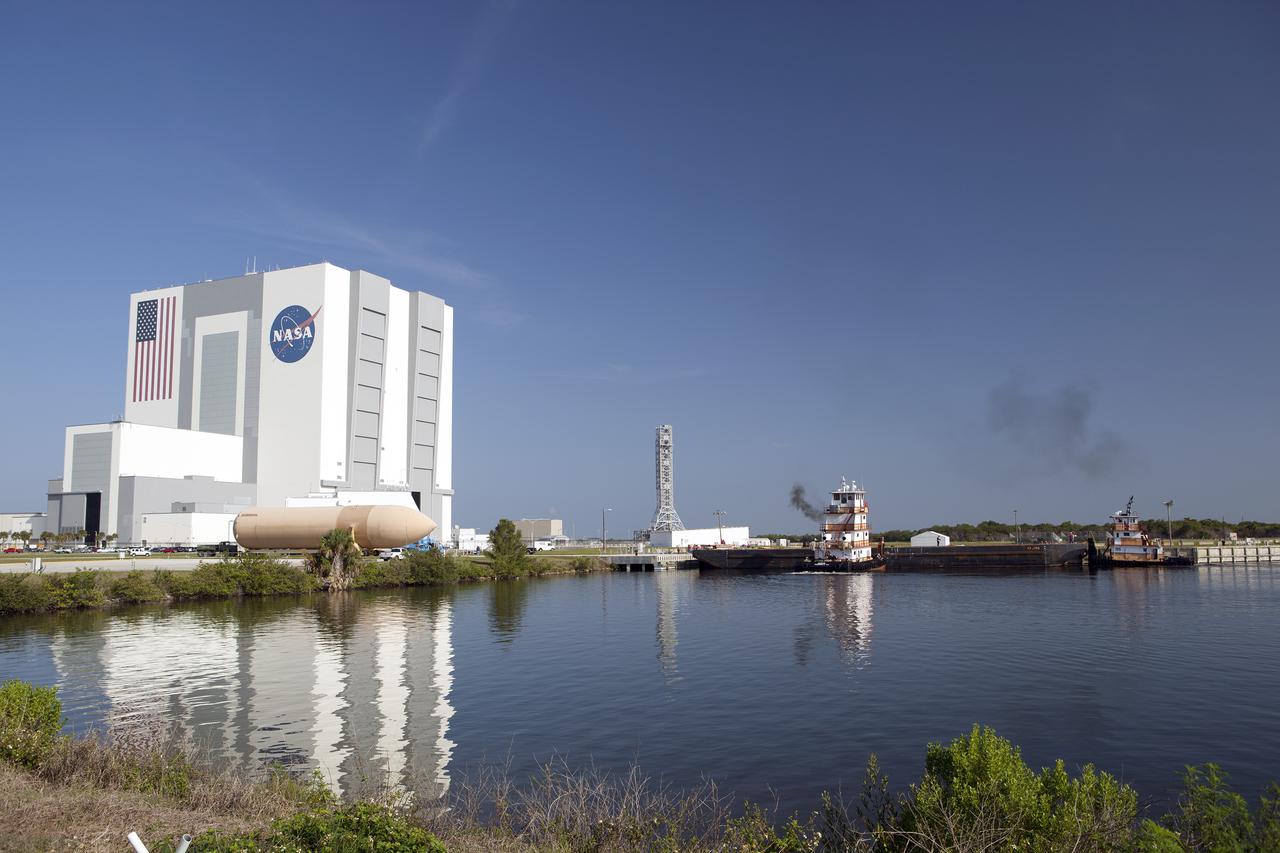
CAPE CANAVERAL, Fla. – An orange flight test article space shuttle external fuel tank, or ET, and the crew transport vehicle await transport from NASA's Kennedy Space Center in Florida to the Wings of Dreams Aviation Museum located at Keystone Heights Airport in North Central Florida. Also joining the two artifacts at Wings of Dreams is an ET transporter, crew hatch access vehicle, solid rocket booster, or SRB, aft skirt and SRB frustum. Thousands of unique space shuttle era artifacts are being allocated to facilities across the country for their new missions to educate and inspire America's next generation of explorers. Photo credit: NASA_Dimitri Gerondidakis
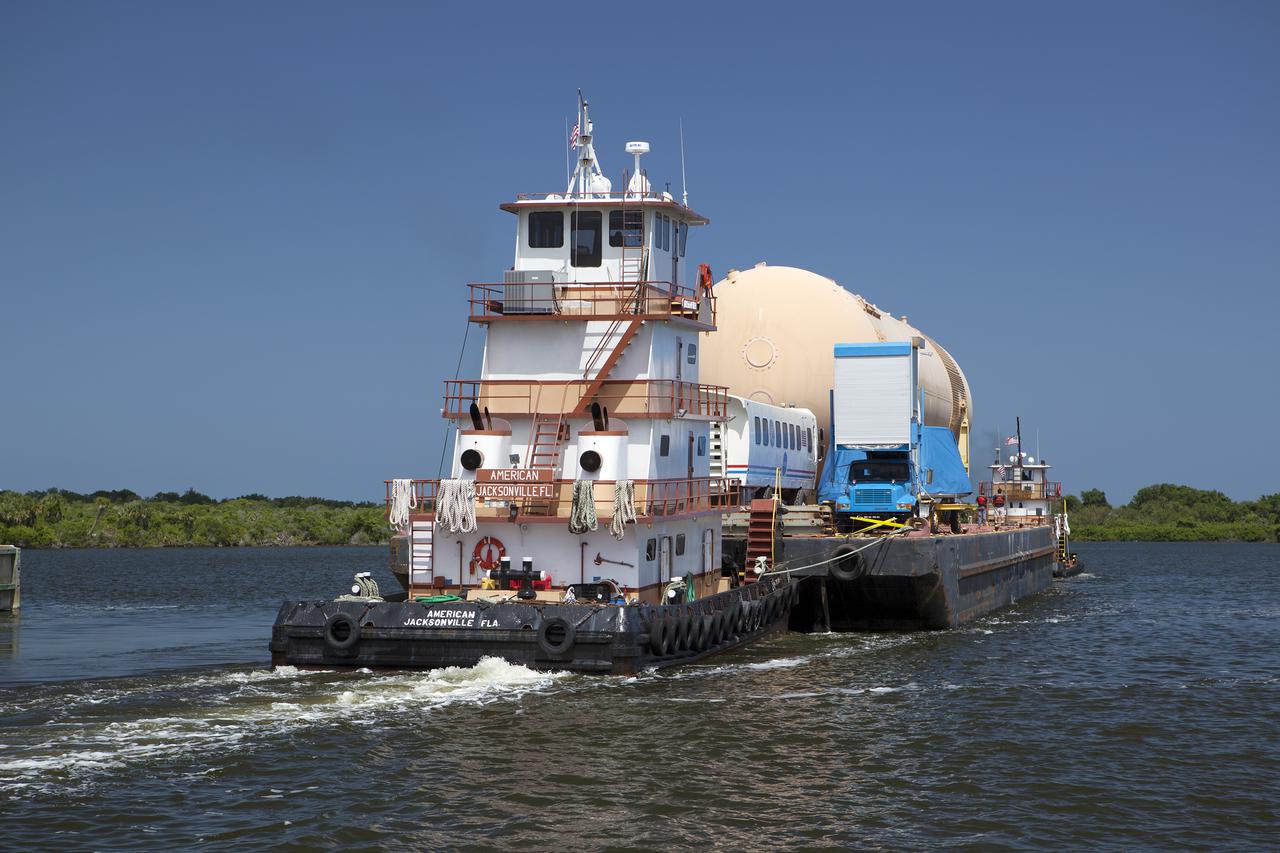
CAPE CANAVERAL, Fla. -- A space shuttle orange flight test article external fuel tank, or ET, an ET transporter, crew hatch access vehicle, crew transport vehicle, solid rocket booster, or SRB, aft skirt and SRB frustum are loaded onto a barge and beginning the first leg of their journey down the Banana River from NASA's Kennedy Space Center in Florida to the Wings of Dreams Aviation Museum located at Keystone Heights Airport in North Central Florida. Thousands of unique space shuttle era artifacts are being allocated to facilities across the country for their new missions to educate and inspire America's next generation of explorers. Photo credit: NASA_Dimitri Gerondidakis
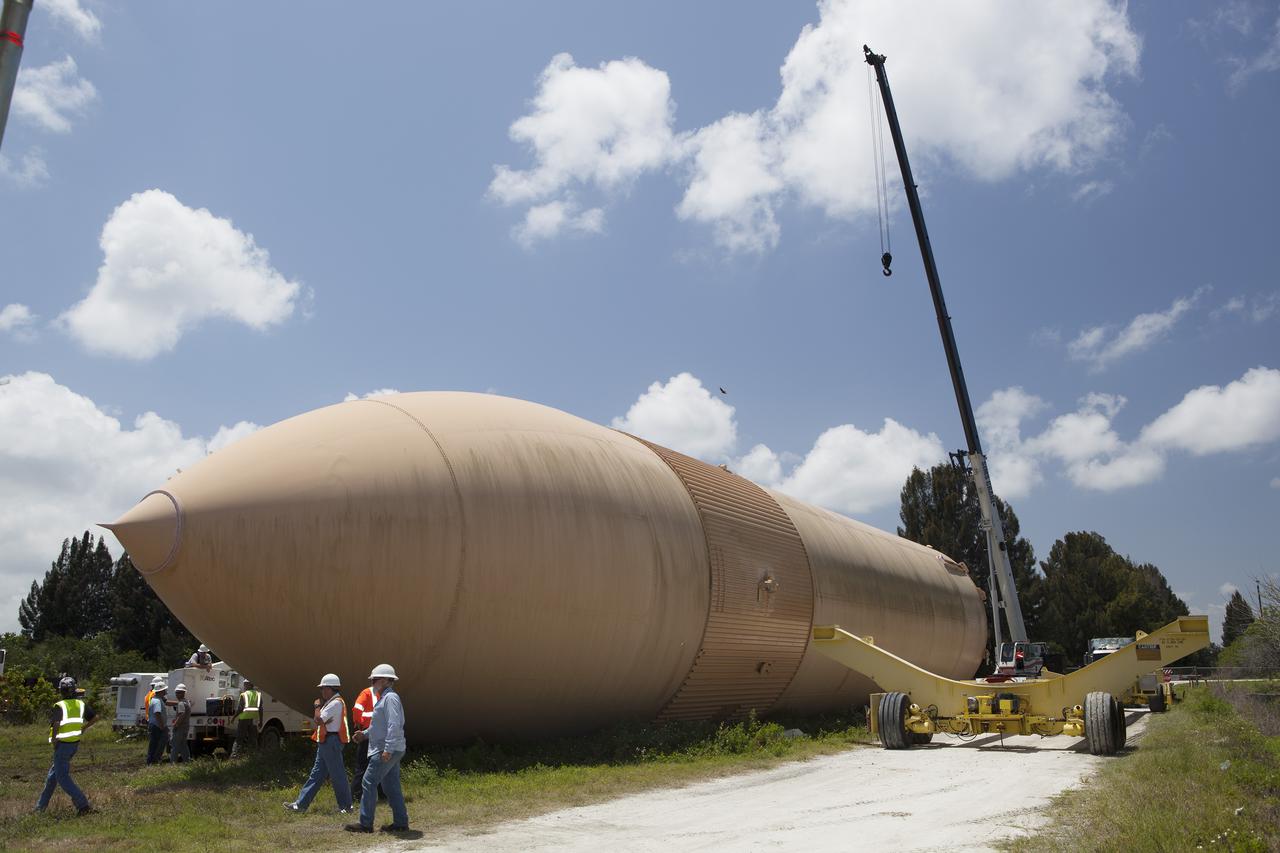
CAPE CANAVERAL, Fla. – Volunteers prepare an orange flight test article space shuttle external fuel tank, or ET, for transport from NASA's Kennedy Space Center in Florida to the Wings of Dreams Aviation Museum located at Keystone Heights Airport in North Central Florida. Weighing in at 58,000 pounds unfueled and standing more than 15-stories tall, the ET was referred to as the 'backbone' of the space shuttle. Its job was to hold about 535,000 gallons of super-cold liquid hydrogen and liquid oxygen. It also absorbed the thrust loads produced at launch by the orbiter and the solid rocket boosters, or SRBs. Also joining the ET at Wings of Dreams is an ET transporter, the crew transport vehicle, crew hatch access vehicle, SRB aft skirt and SRB frustum. Thousands of unique space shuttle era artifacts are being allocated to facilities across the country for their new missions to educate and inspire America's next generation of explorers. Photo credit: NASA_Dimitri Gerondidakis
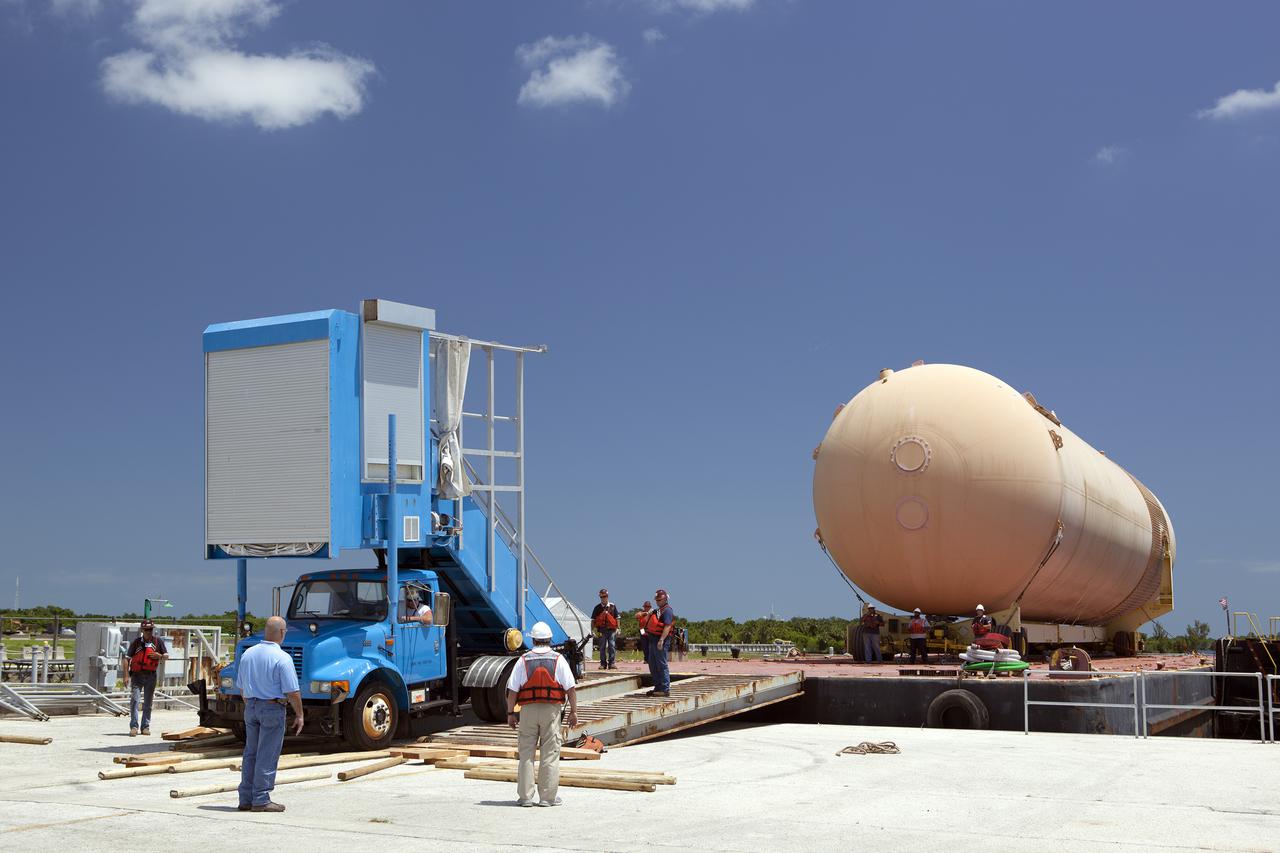
CAPE CANAVERAL, Fla. – The space shuttle crew hatch access vehicle is loaded onto a barge for the first leg of its journey from NASA's Kennedy Space Center in Florida to the Wings of Dreams Aviation Museum located at Keystone Heights Airport in North Central Florida. Also joining the vehicle at Wings of Dreams is an orange flight test article external fuel tank, or ET, an ET transporter, the crew transport vehicle, solid rocket booster, or SRB, aft skirt and SRB frustum. Thousands of unique space shuttle era artifacts are being allocated to facilities across the country for their new missions to educate and inspire America's next generation of explorers. Photo credit: NASA_Dimitri Gerondidakis
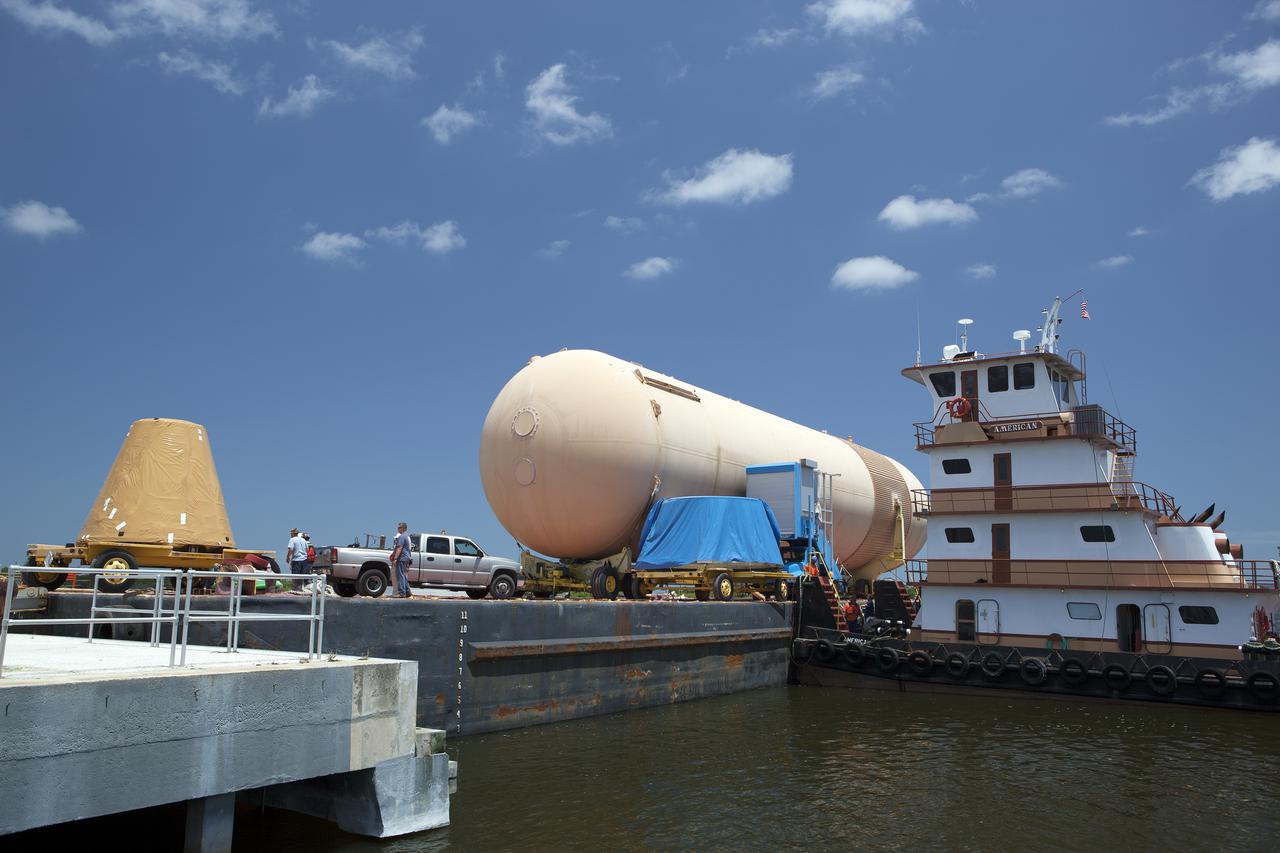
CAPE CANAVERAL, Fla. – A space shuttle solid rocket booster, or SRB, frustum is loaded onto a barge for the first leg of its journey from NASA's Kennedy Space Center in Florida to the Wings of Dreams Aviation Museum located at Keystone Heights Airport in North Central Florida. Also joining the booster segment at Wings of Dreams is an orange flight test article external fuel tank, or ET, an ET transporter, the crew transport vehicle, crew hatch access vehicle and SRB aft skirt. Thousands of unique space shuttle era artifacts are being allocated to facilities across the country for their new missions to educate and inspire America's next generation of explorers. Photo credit: NASA_Dimitri Gerondidakis
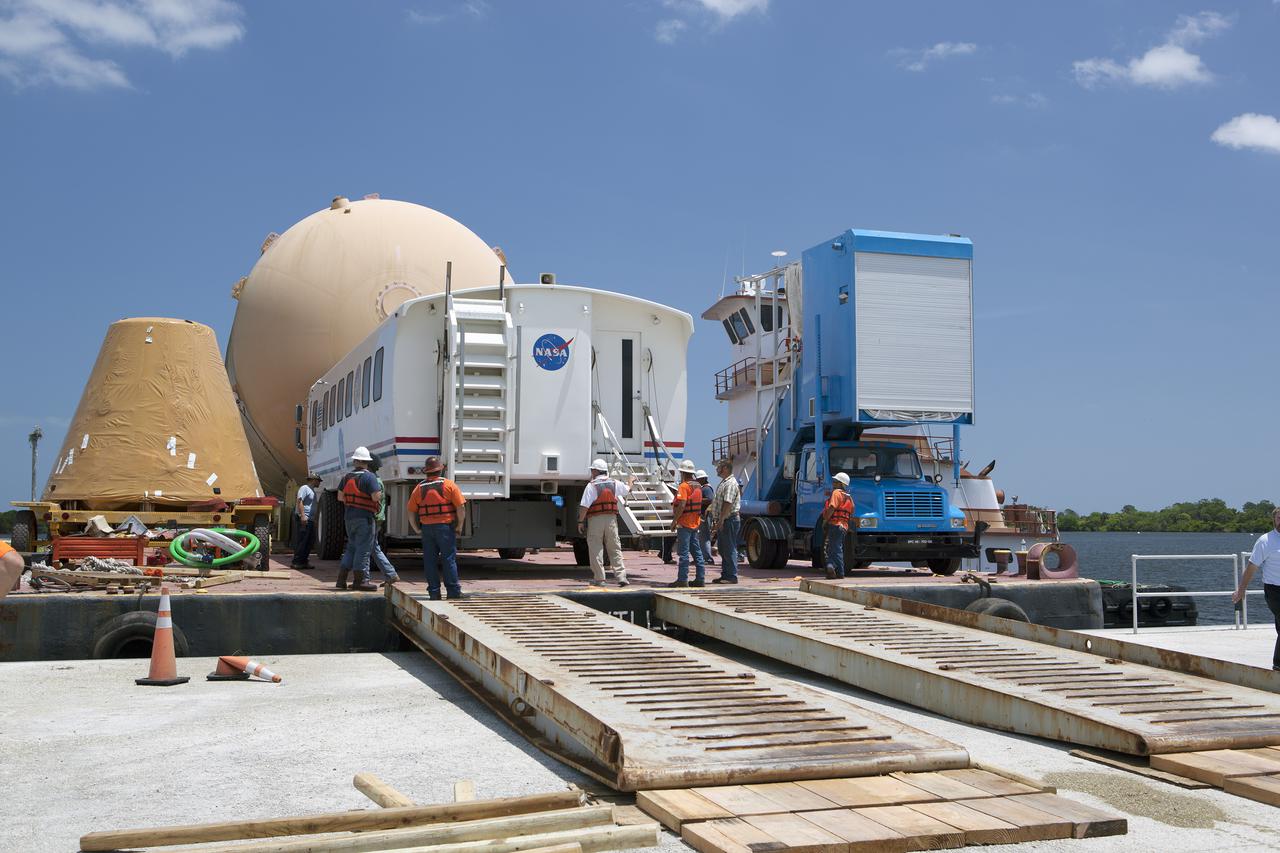
CAPE CANAVERAL, Fla. – A space shuttle orange flight test article external fuel tank, or ET, an ET transporter, crew hatch access vehicle, crew transport vehicle, solid rocket booster, or SRB, aft skirt and SRB frustum are loaded onto a barge for the first leg of their journey from NASA's Kennedy Space Center in Florida to the Wings of Dreams Aviation Museum located at Keystone Heights Airport in North Central Florida. Thousands of unique space shuttle era artifacts are being allocated to facilities across the country for their new missions to educate and inspire America's next generation of explorers. Photo credit: NASA_Dimitri Gerondidakis
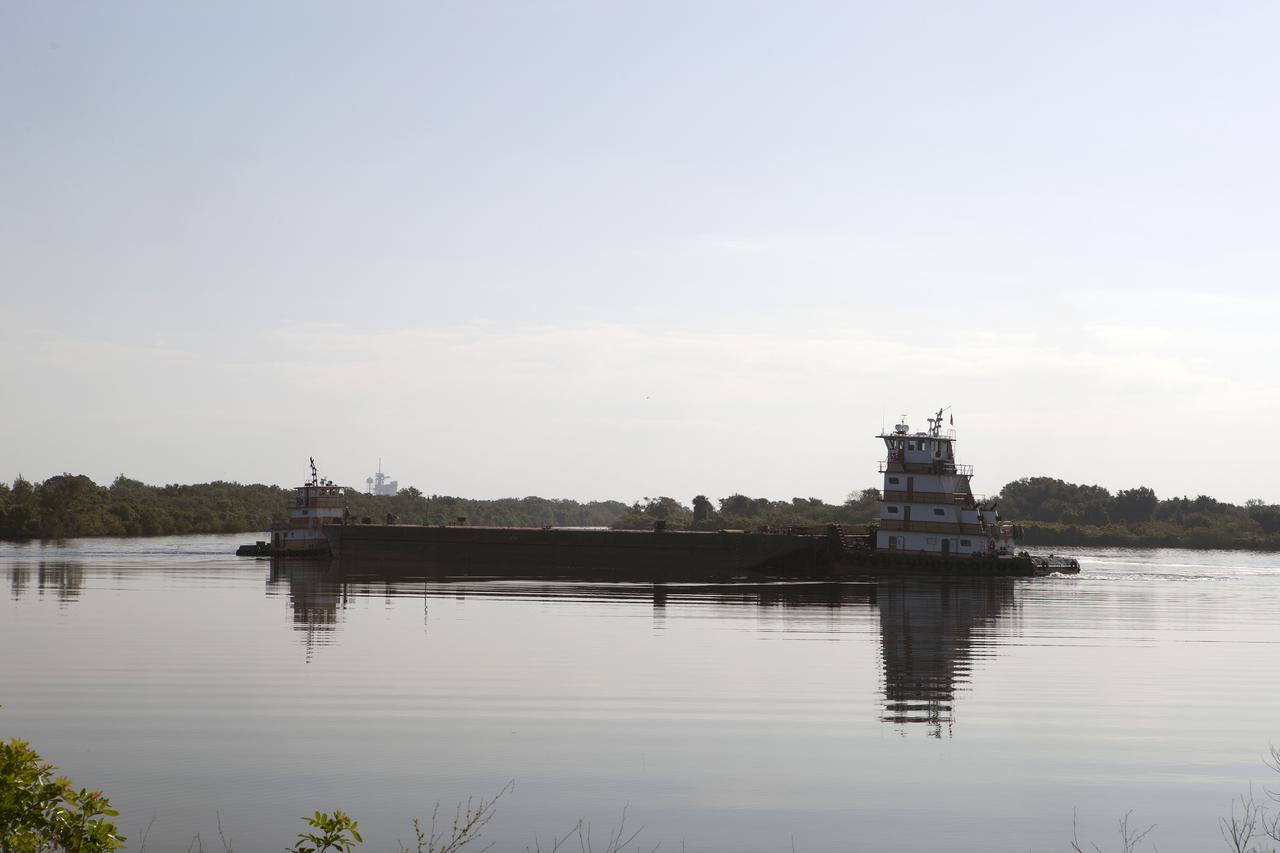
CAPE CANAVERAL, Fla. – A barge arrives at the Kennedy Space Center Turn Basin to pick up an orange flight test article space shuttle external fuel tank, or ET, an ET transporter, the crew transport vehicle, crew hatch access vehicle, solid rocket booster, or SRB, aft skirt and SRB frustum for the first leg of their journey from NASA's Kennedy Space Center in Florida to the Wings of Dreams Aviation Museum located at Keystone Heights Airport in North Central Florida. Thousands of unique space shuttle era artifacts are being allocated to facilities across the country for their new missions to educate and inspire America's next generation of explorers. Photo credit: NASA_Dimitri Gerondidakis
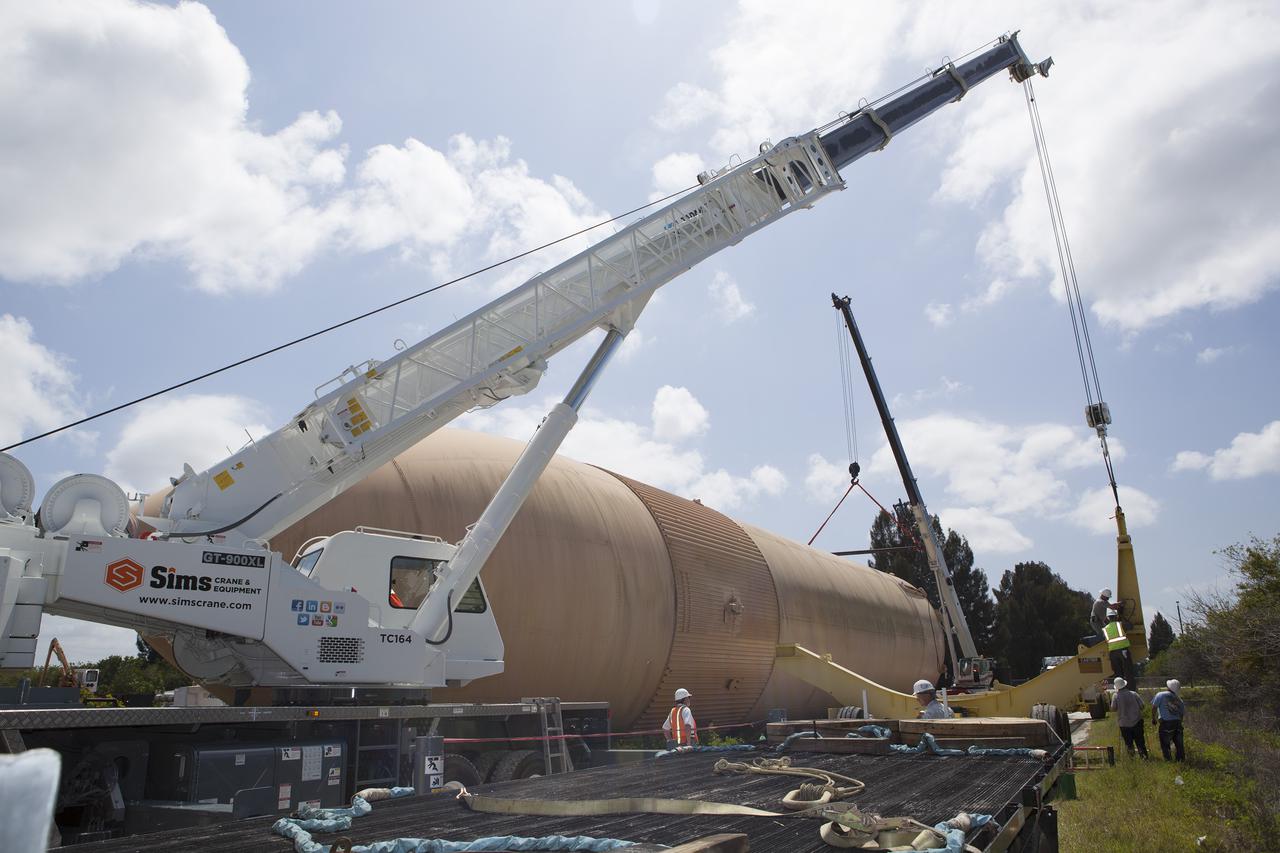
CAPE CANAVERAL, Fla. – Volunteers prepare an orange flight test article shuttle external fuel tank, or ET, for transport from NASA's Kennedy Space Center in Florida to the Wings of Dreams Aviation Museum located at Keystone Heights Airport in North Central Florida. Weighing in at 58,000 pounds unfueled and standing more than 15-stories tall, the ET was referred to as the 'backbone' of the space shuttle. Its job was to hold about 535,000 gallons of super-cold liquid hydrogen and liquid oxygen. It also absorbed the thrust loads produced at launch by the orbiter and the solid rocket boosters, or SRBs. Also joining the ET at Wings of Dreams is an ET transporter, the crew transport vehicle, crew hatch access vehicle, SRB aft skirt and SRB frustum. Thousands of unique space shuttle era artifacts are being allocated to facilities across the country for their new missions to educate and inspire America's next generation of explorers. Photo credit: NASA_Dimitri Gerondidakis
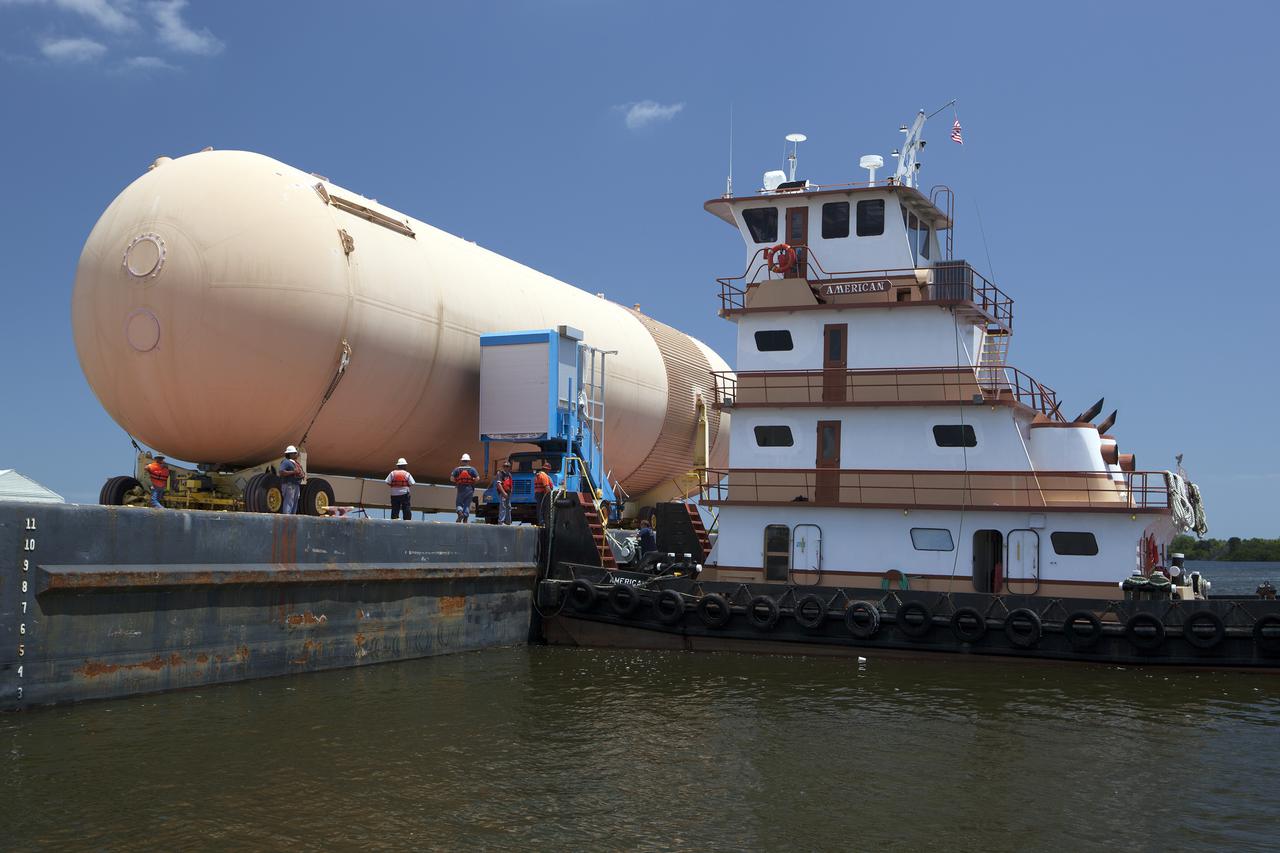
CAPE CANAVERAL, Fla. – An orange flight test article space shuttle external fuel tank, or ET, is loaded onto a barge for the first leg of its journey from NASA's Kennedy Space Center in Florida to the Wings of Dreams Aviation Museum located at Keystone Heights Airport in North Central Florida. Weighing in at 58,000 pounds unfueled and standing more than 15-stories tall, the ET was referred to as the 'backbone' of the space shuttle. Its job was to hold about 535,000 gallons of super-cold liquid hydrogen and liquid oxygen. It also absorbed the thrust loads produced at launch by the orbiter and the solid rocket boosters, or SRBs. Also joining the ET at Wings of Dreams is an ET transporter, the crew transport vehicle, crew hatch access vehicle, SRB aft skirt and SRB frustum. Thousands of unique space shuttle era artifacts are being allocated to facilities across the country for their new missions to educate and inspire America's next generation of explorers. Photo credit: NASA_Dimitri Gerondidakis
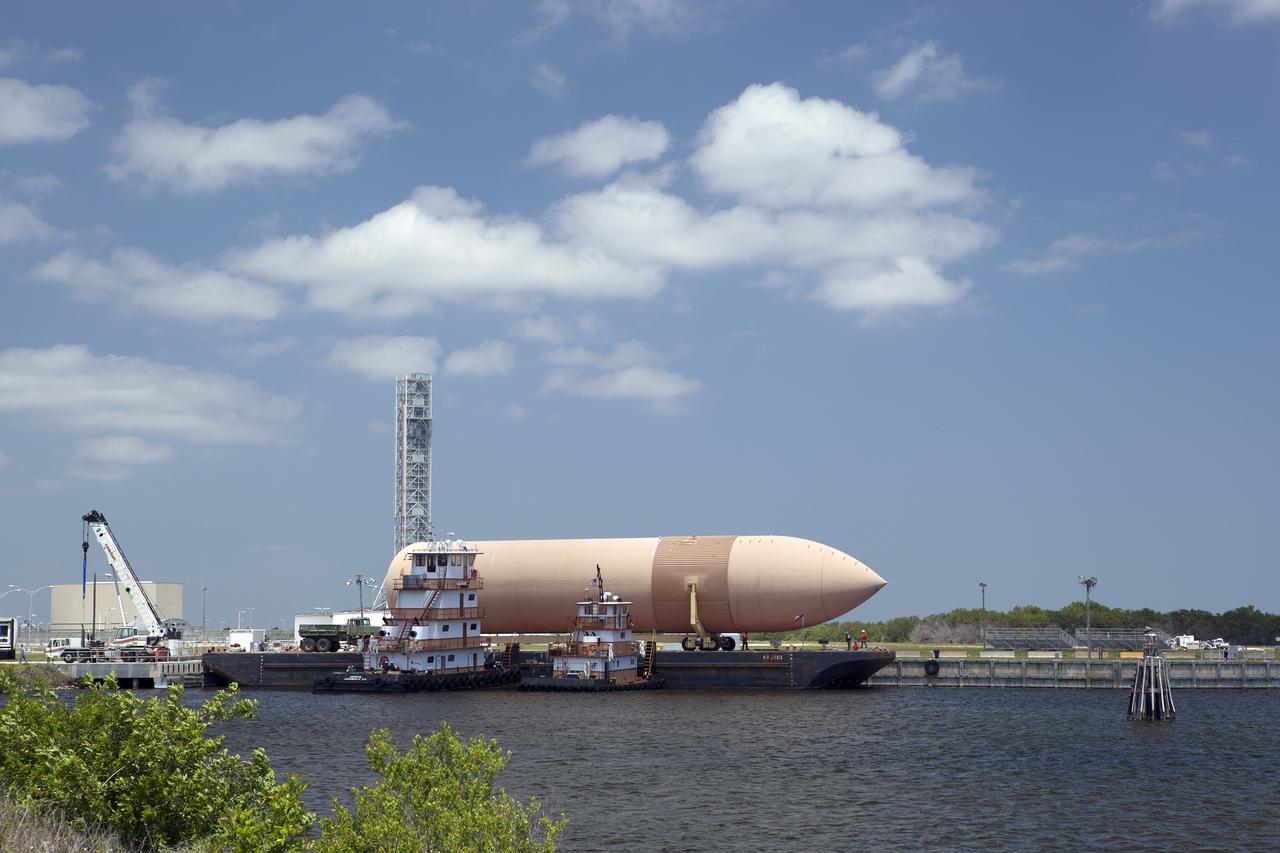
CAPE CANAVERAL, Fla. --The space shuttle crew transport vehicle and crew hatch access vehicle await transport from NASA's Kennedy Space Center in Florida to the Wings of Dreams Aviation Museum located at Keystone Heights Airport in North Central Florida. Also joining the vehicles at Wings of Dreams is an orange flight test article external fuel tank, or ET, an ET transporter, solid rocket booster, or SRB, aft skirt and SRB frustum. Thousands of unique space shuttle era artifacts are being allocated to facilities across the country for their new missions to educate and inspire America's next generation of explorers. Photo credit: NASA_Dimitri Gerondidakis
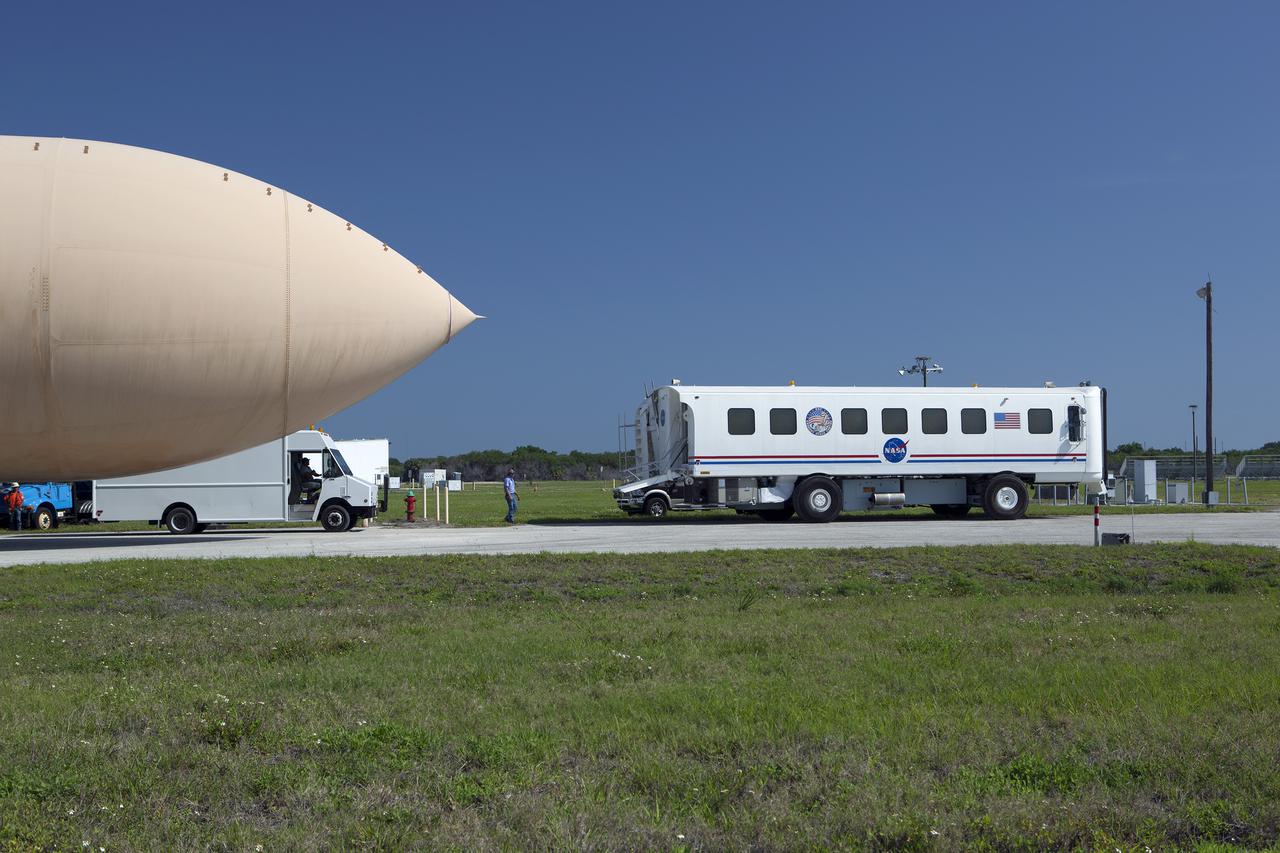
CAPE CANAVERAL, Fla. – An orange flight test article space shuttle external fuel tank, or ET, is prepared to be loaded onto a barge for the first leg of its journey from NASA's Kennedy Space Center in Florida to the Wings of Dreams Aviation Museum located at Keystone Heights Airport in North Central Florida. Weighing in at 58,000 pounds unfueled and standing more than 15-stories tall, the ET was referred to as the 'backbone' of the space shuttle. Its job was to hold about 535,000 gallons of super-cold liquid hydrogen and liquid oxygen. It also absorbed the thrust loads produced at launch by the orbiter and the solid rocket boosters, or SRBs. Also joining the ET at Wings of Dreams is an ET transporter, the crew transport vehicle, crew hatch access vehicle, SRB aft skirt and SRB frustum. Thousands of unique space shuttle era artifacts are being allocated to facilities across the country for their new missions to educate and inspire America's next generation of explorers. Photo credit: NASA_Dimitri Gerondidakis
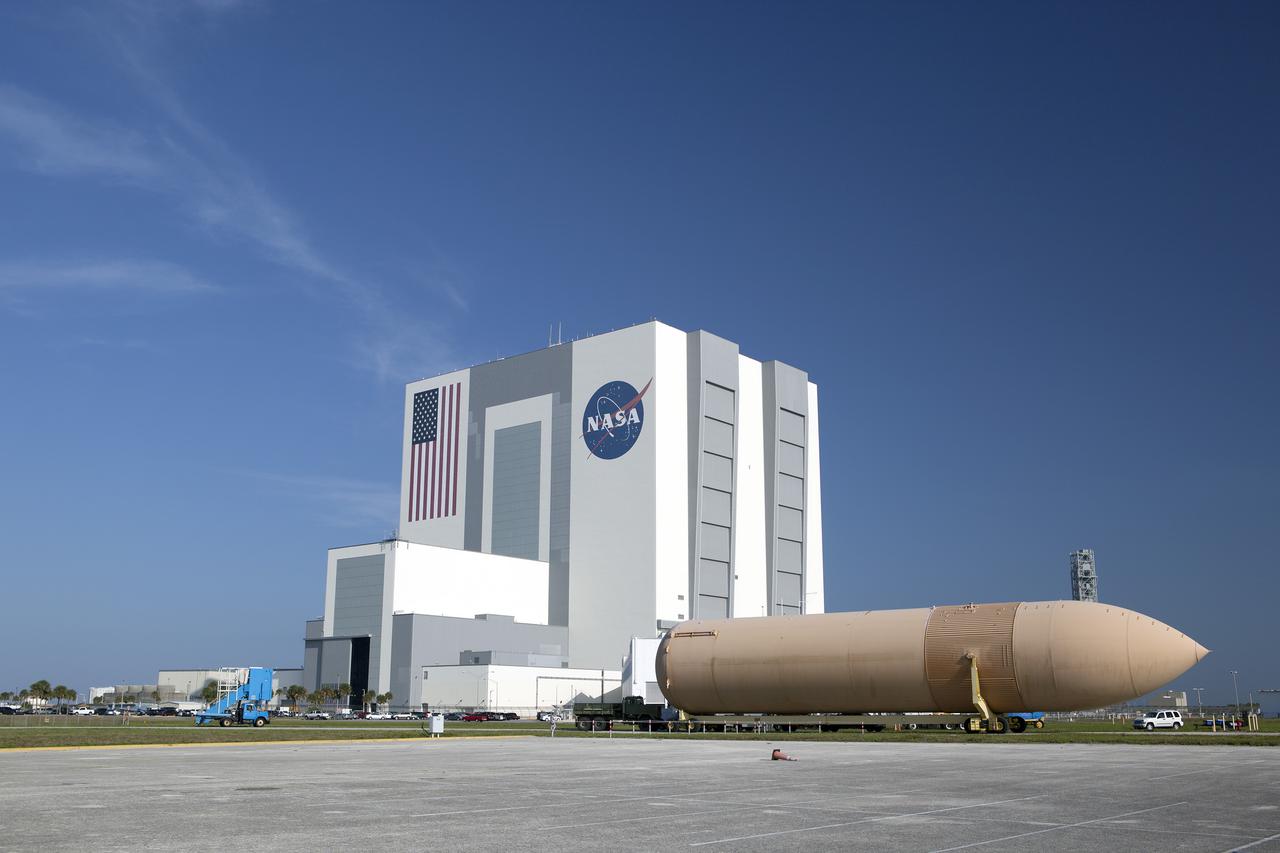
CAPE CANAVERAL, Fla. -- An orange flight test article space shuttle external fuel tank, or ET, awaits transport from NASA's Kennedy Space Center in Florida to the Wings of Dreams Aviation Museum located at Keystone Heights Airport in North Central Florida. Weighing in at 58,000 pounds unfueled and standing more than 15-stories tall, the ET was referred to as the 'backbone' of the space shuttle. Its job was to hold about 535,000 gallons of super-cold liquid hydrogen and liquid oxygen. It also absorbed the thrust loads produced at launch by the orbiter and the solid rocket boosters, or SRBs. Also joining the ET at Wings of Dreams is an ET transporter, the crew transport vehicle, crew hatch access vehicle, SRB aft skirt and SRB frustum. Thousands of unique space shuttle era artifacts are being allocated to facilities across the country for their new missions to educate and inspire America's next generation of explorers. Photo credit: NASA_Dimitri Gerondidakis
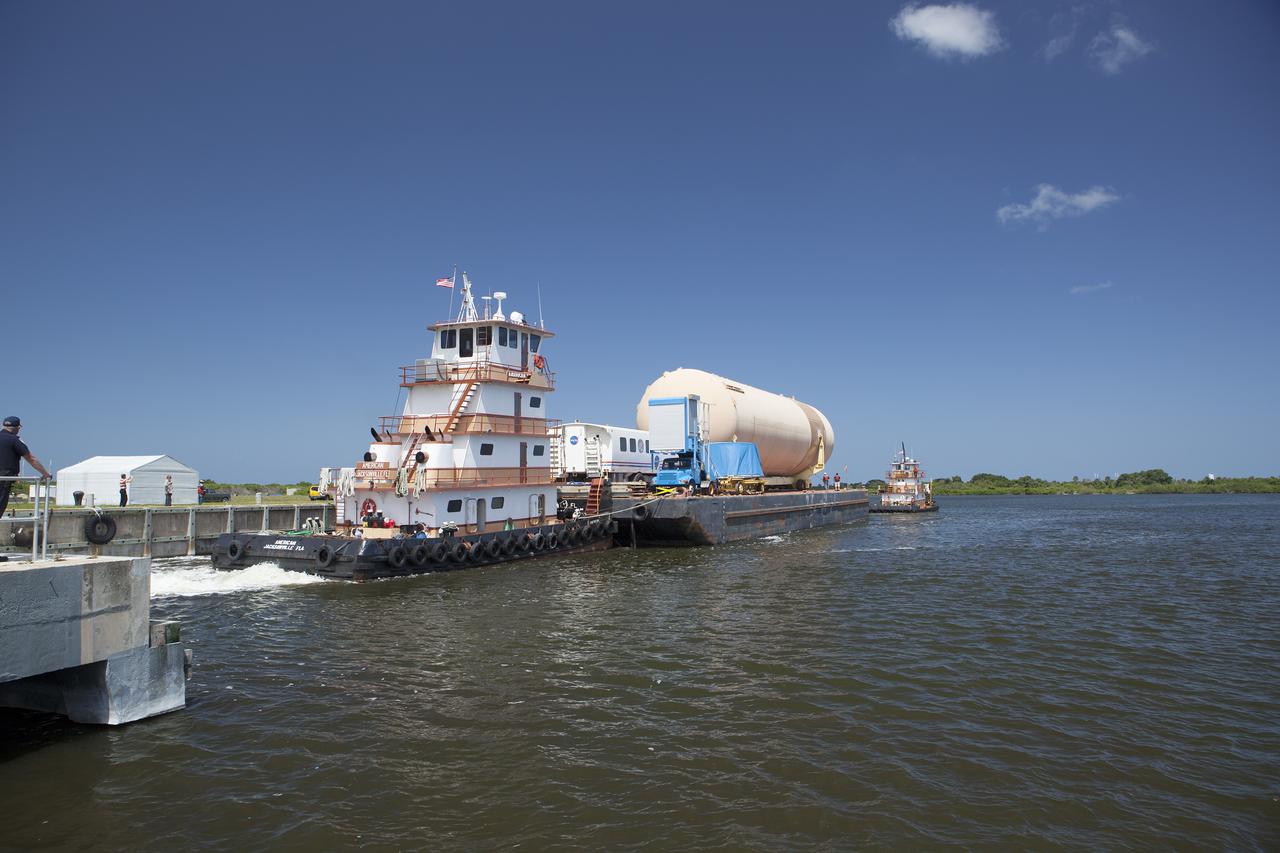
CAPE CANAVERAL, Fla. – A space shuttle orange flight test article external fuel tank, or ET, an ET transporter, crew hatch access vehicle, crew transport vehicle, solid rocket booster, or SRB, aft skirt and SRB frustum are loaded onto a barge and beginning the first leg of their journey down the Banana River from NASA's Kennedy Space Center in Florida to the Wings of Dreams Aviation Museum located at Keystone Heights Airport in North Central Florida. Thousands of unique space shuttle era artifacts are being allocated to facilities across the country for their new missions to educate and inspire America's next generation of explorers. Photo credit: NASA_Dimitri Gerondidakis
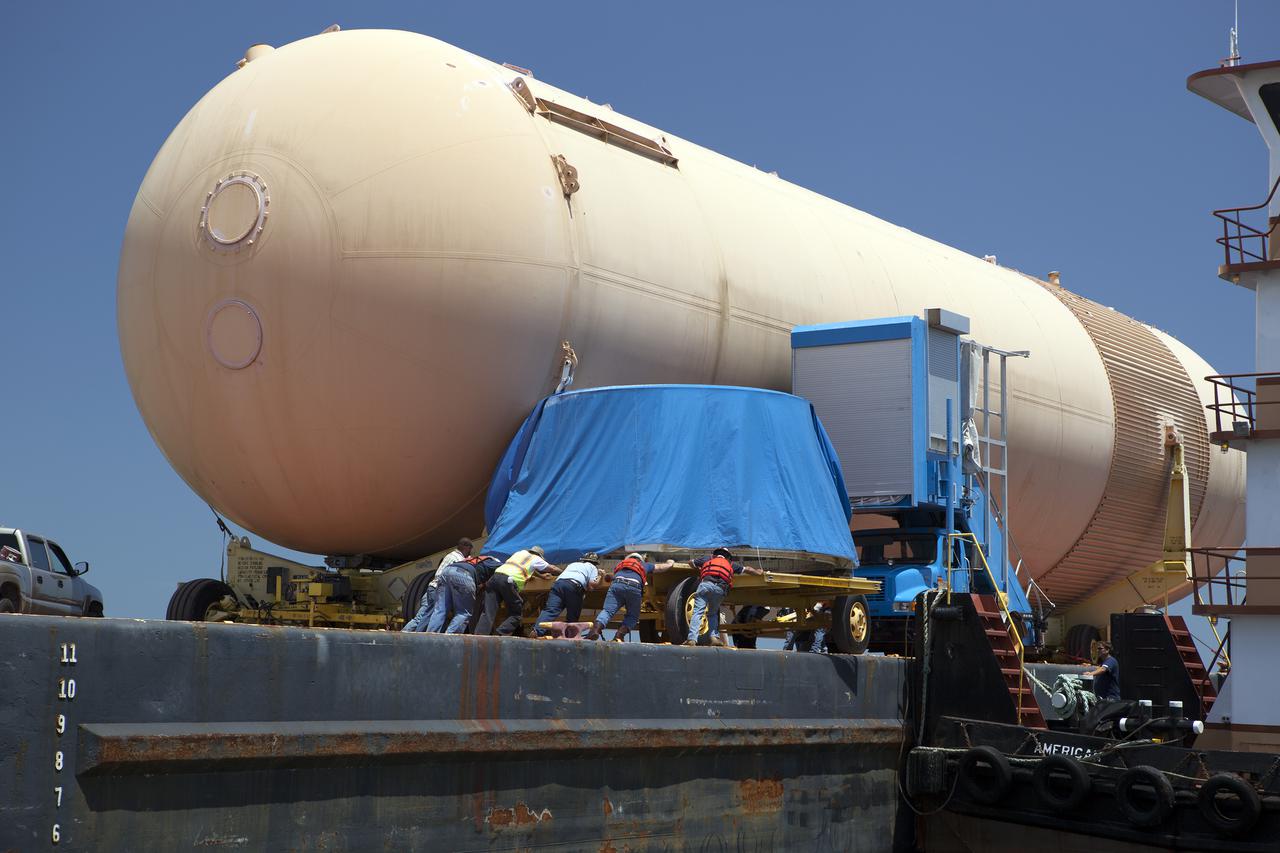
CAPE CANAVERAL, Fla. – A space shuttle solid rocket booster, or SRB, aft skirt is loaded onto a barge for the first leg of its journey from NASA's Kennedy Space Center in Florida to the Wings of Dreams Aviation Museum located at Keystone Heights Airport in North Central Florida. Also joining the booster segment at Wings of Dreams is an orange flight test article external fuel tank, or ET, an ET transporter, the crew transport vehicle, crew hatch access vehicle and SRB frustum. Thousands of unique space shuttle era artifacts are being allocated to facilities across the country for their new missions to educate and inspire America's next generation of explorers. Photo credit: NASA_Dimitri Gerondidakis
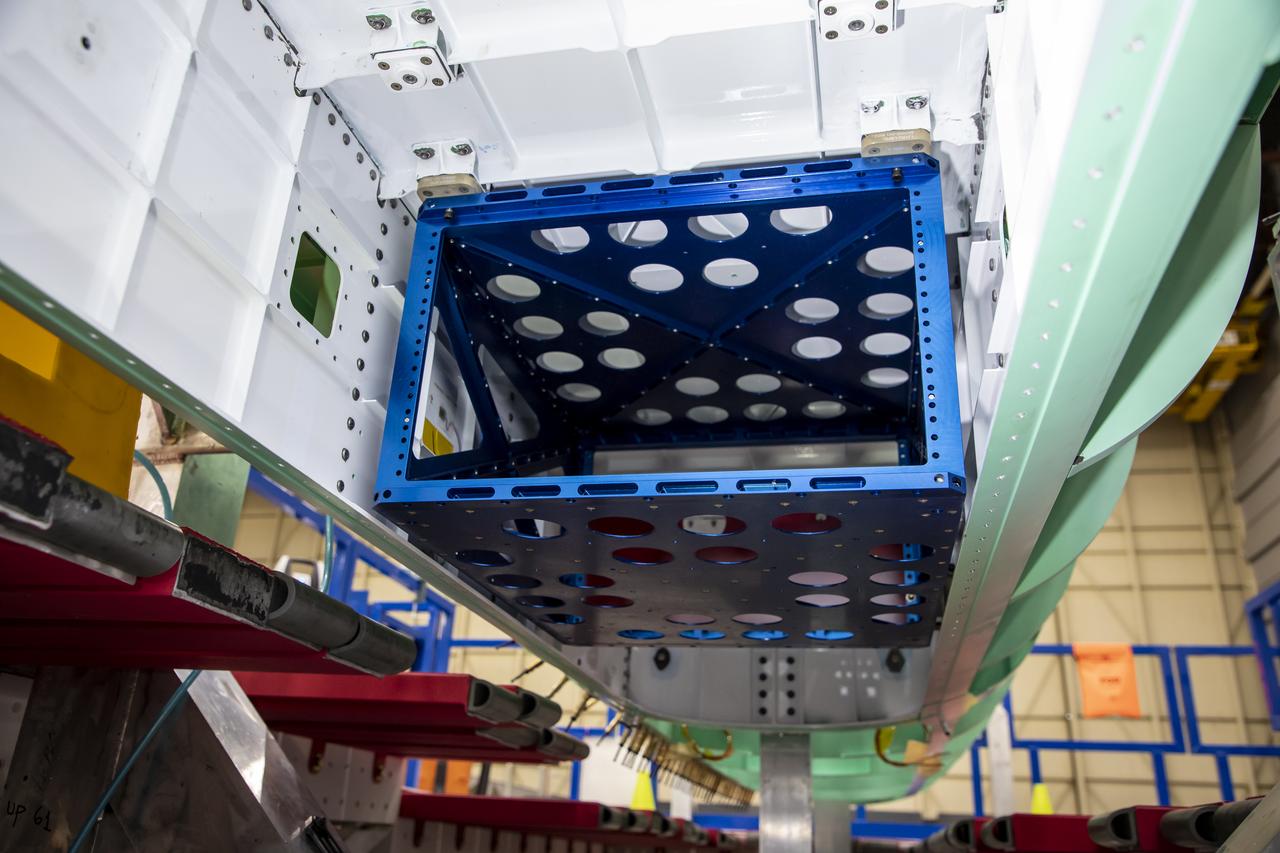
Following the successful installation of mounting brackets, technicians successfully installed the pallet for the eXternal Visibility System, or XVS, onto the X-59 Quiet SuperSonic Technology X-plane, also known as X-59 QueSST. The pallet installation marks an assembly milestone as the first NASA flight systems hardware to be installed onto the vehicle. X-59 will fly to demonstrate the ability to produce quiet thumps at supersonic speeds, instead of the typical, loud sonic booms associated with supersonic flight.
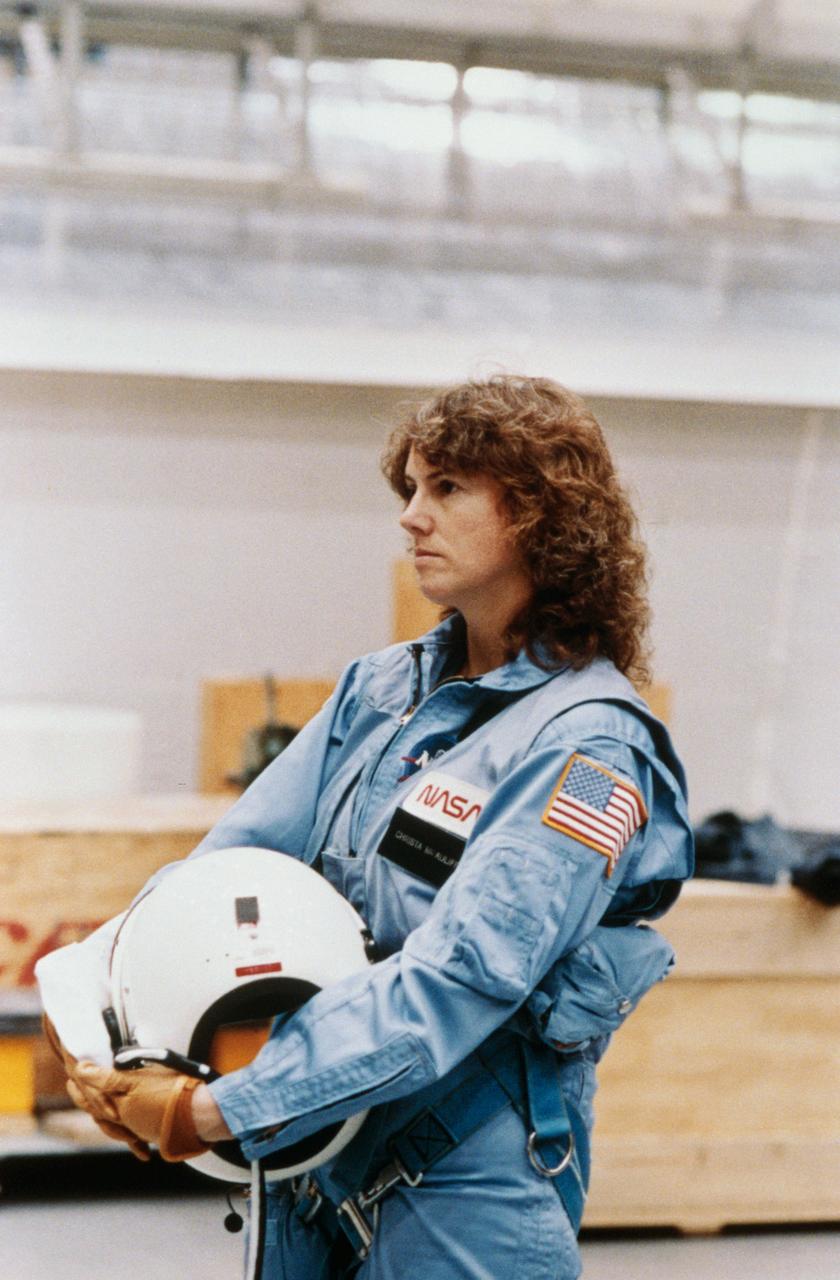
S86-25251 (January 1986) --- Sharon Christa McAuliffe, payload specialist for STS-51L, takes a breather following a busy day?s training in the Johnson Space Center?s Shuttle Mock-up and Integration Laboratory. McAuliffe, a New Hampshire school teacher, was chosen from among ten finalists in the Teacher-in-Space Project to serve as citizen observer aboard the Challenger. This photo was taken by Keith Meyers of the New York Times. Photo credit: NASA
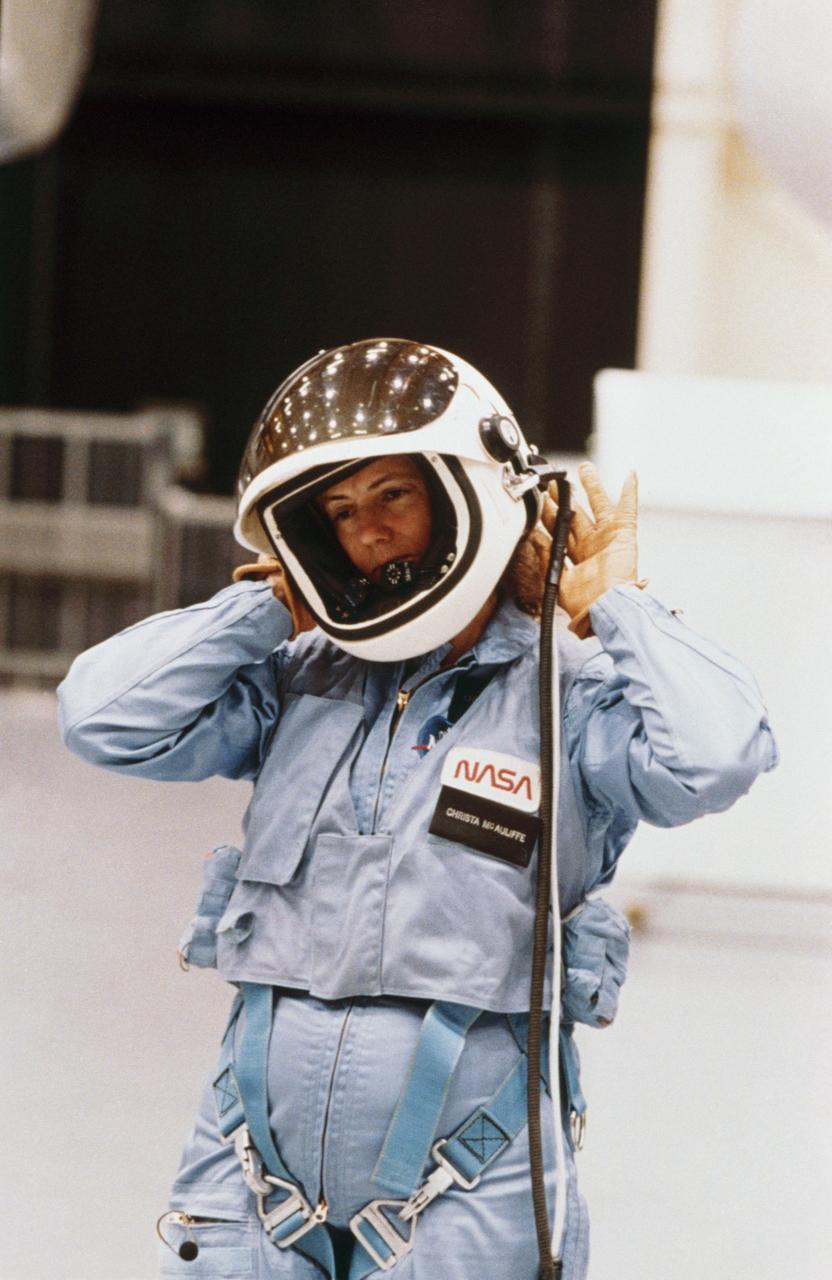
S86-25182 (for release January 1986) --- Sharon Christa McAuliffe, STS-51L citizen observer/payload specialist, prepares to remove her helmet after participating in emergency egress training in the shuttle mock-up and integration lab at the Johnson Space Center. McAuliffe will represent the Teacher-in-Space Project aboard the Challenger when it launches in late January. The photo was taken by Keith Meyers of the New York Times. Photo credit: NASA
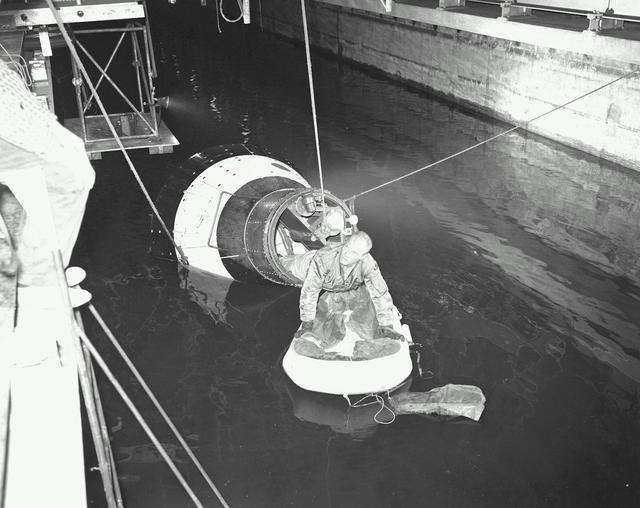
B60-00285 (1960) --- Astronaut John H. Glenn Jr., pilot of the Mercury Atlas 6 spaceflight, emerges from an egress trainer during training activity at the Langley Research Center. He is attempting to transfer onto a life raft from the mock-up of the Mercury capsule. Photo credit: NASA
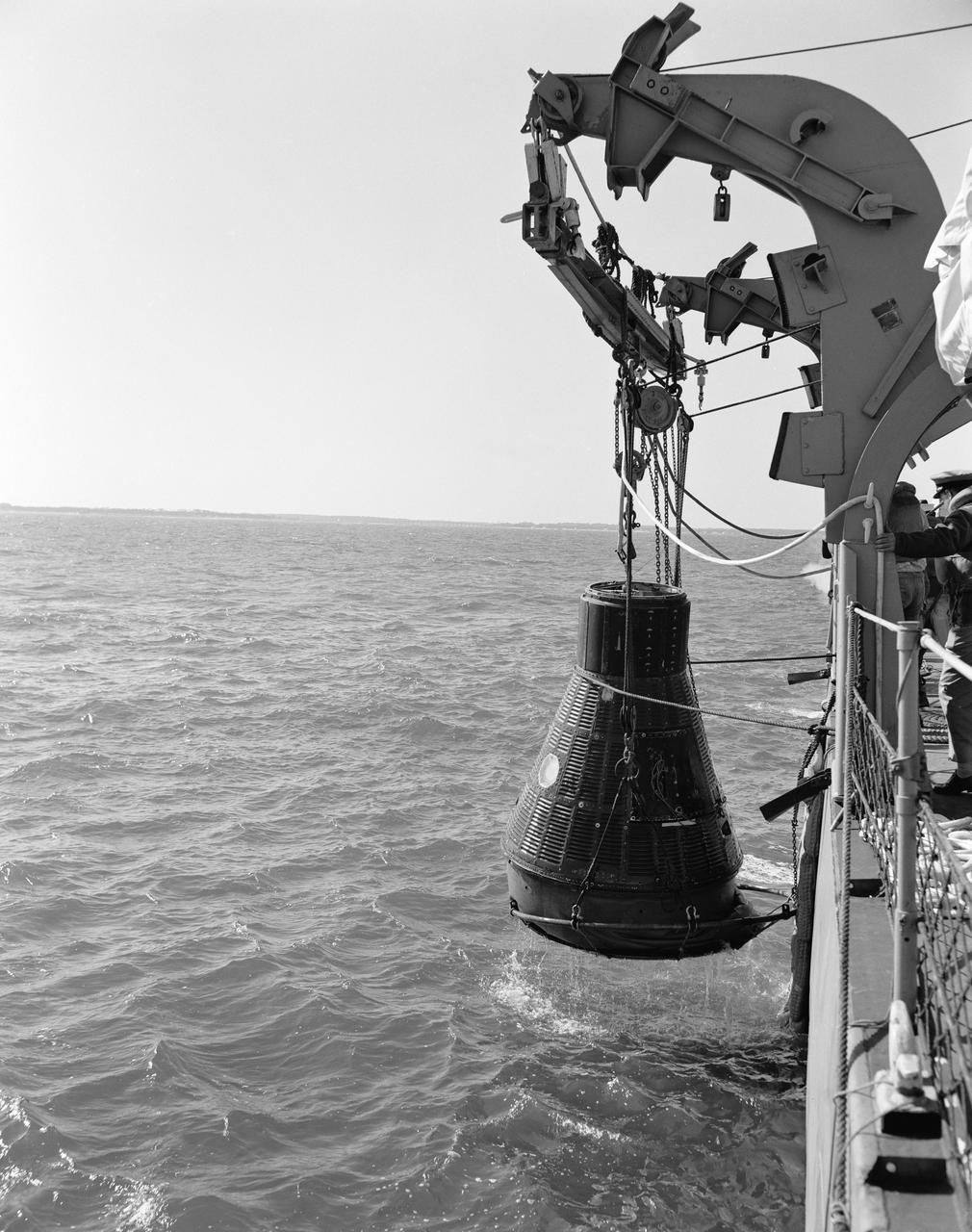
S61-03941 (26 April 1961) --- A mock-up of the Mercury space capsule is held suspended above the water aboard the ship that is taking astronauts Grissom and Glenn to their emergency water egress training. Photo credit: NASA
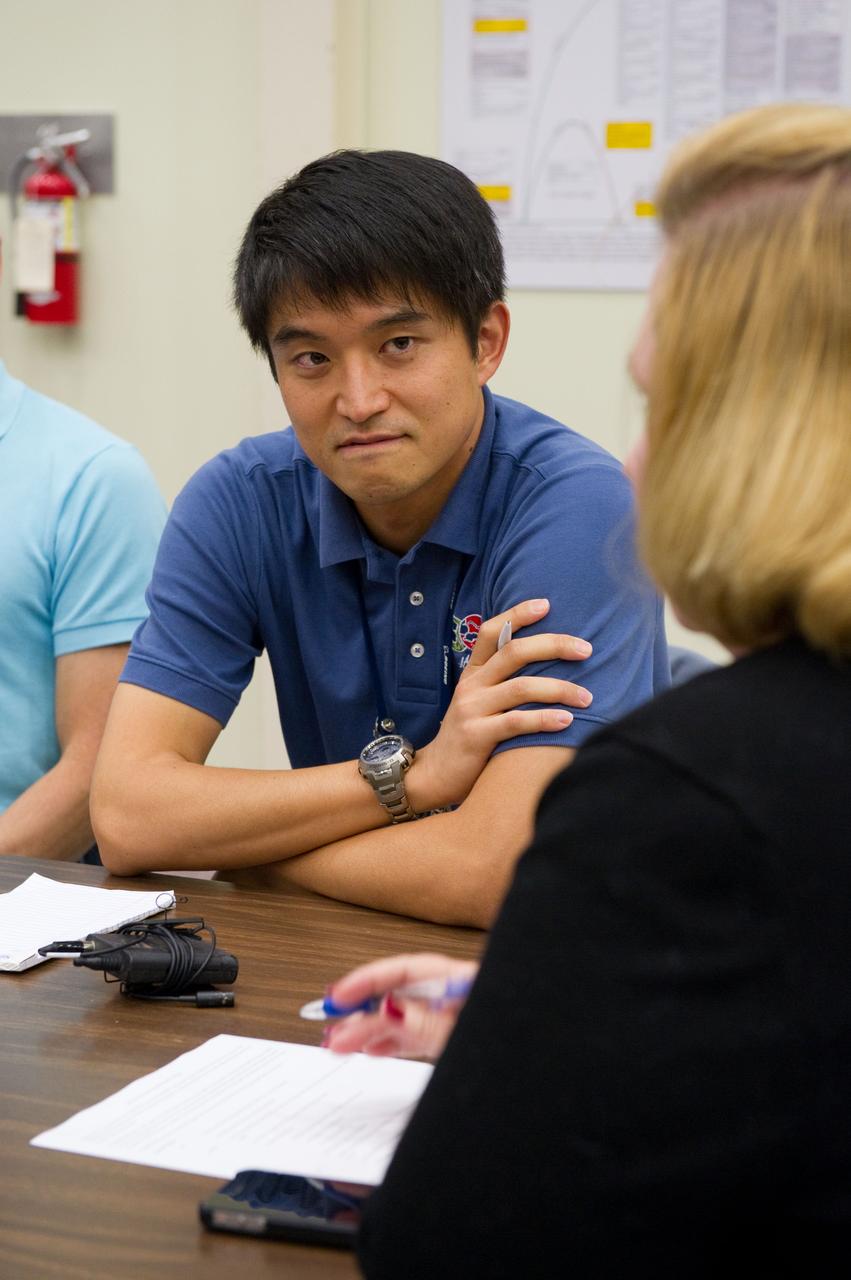
JSC2011-E-215259 (5 Dec. 2011) --- Japan Aerospace Exploration Agency astronaut Takuya Onishi participates in an emergency scenario training session in the Space Vehicle Mock-up Facility at NASA's Johnson Space Center along with Expedition 34/35 crew members (out of frame). Photo credit: NASA
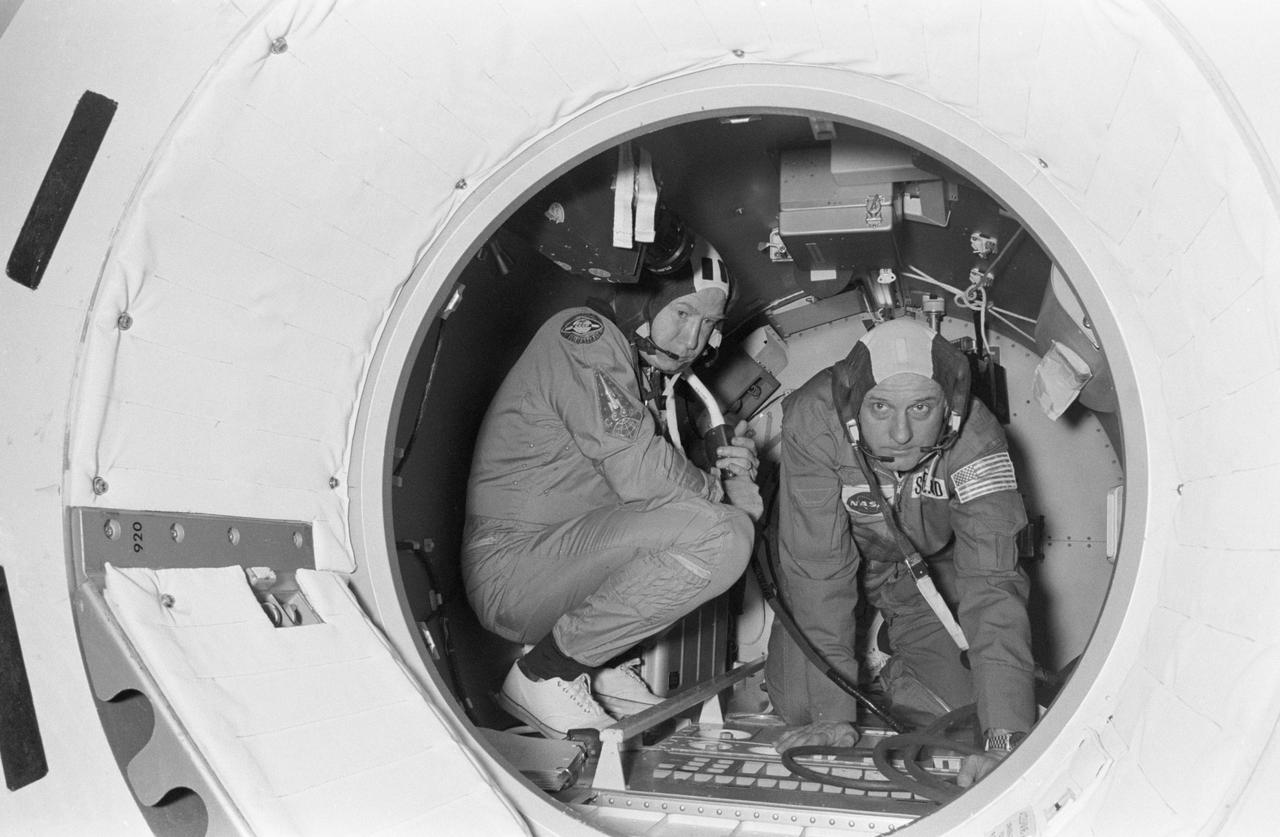
S75-21945 (24 Feb. 1975) --- Cosmonaut Aleksey A. Leonov (left) and astronaut Thomas P. Stafford take part in Apollo-Soyuz Test Project joint crew training in Building 35 at NASA's Johnson Space Center. They are commanders of their respective prime crews. The training session simulated the activities of the second day in Earth orbit. Stafford and Leonov are in the Docking Module mock-up.
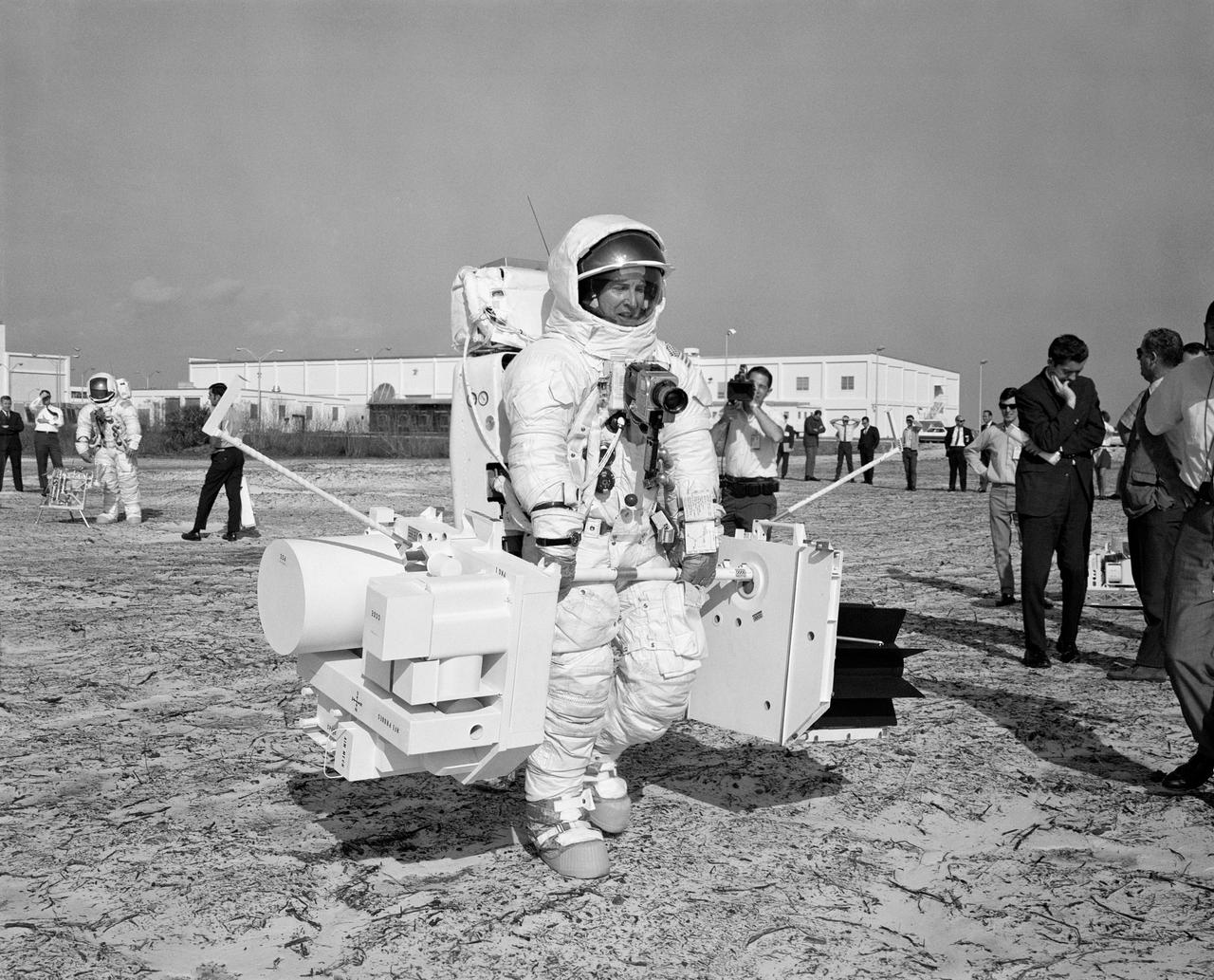
S70-29672 (28 Jan. 1970) --- Astronaut James A. Lovell Jr., commander of the Apollo 13 lunar landing mission, participates in a walk-through of the extravehicular activity timeline at the Kennedy Space Center. Here, Lovell, using mock-ups, traverses with the two subpackages of the Apollo Lunar Surface Experiments Package (ALSEP). Astronaut Fred W. Haise Jr., lunar module pilot, is standing in the left background.
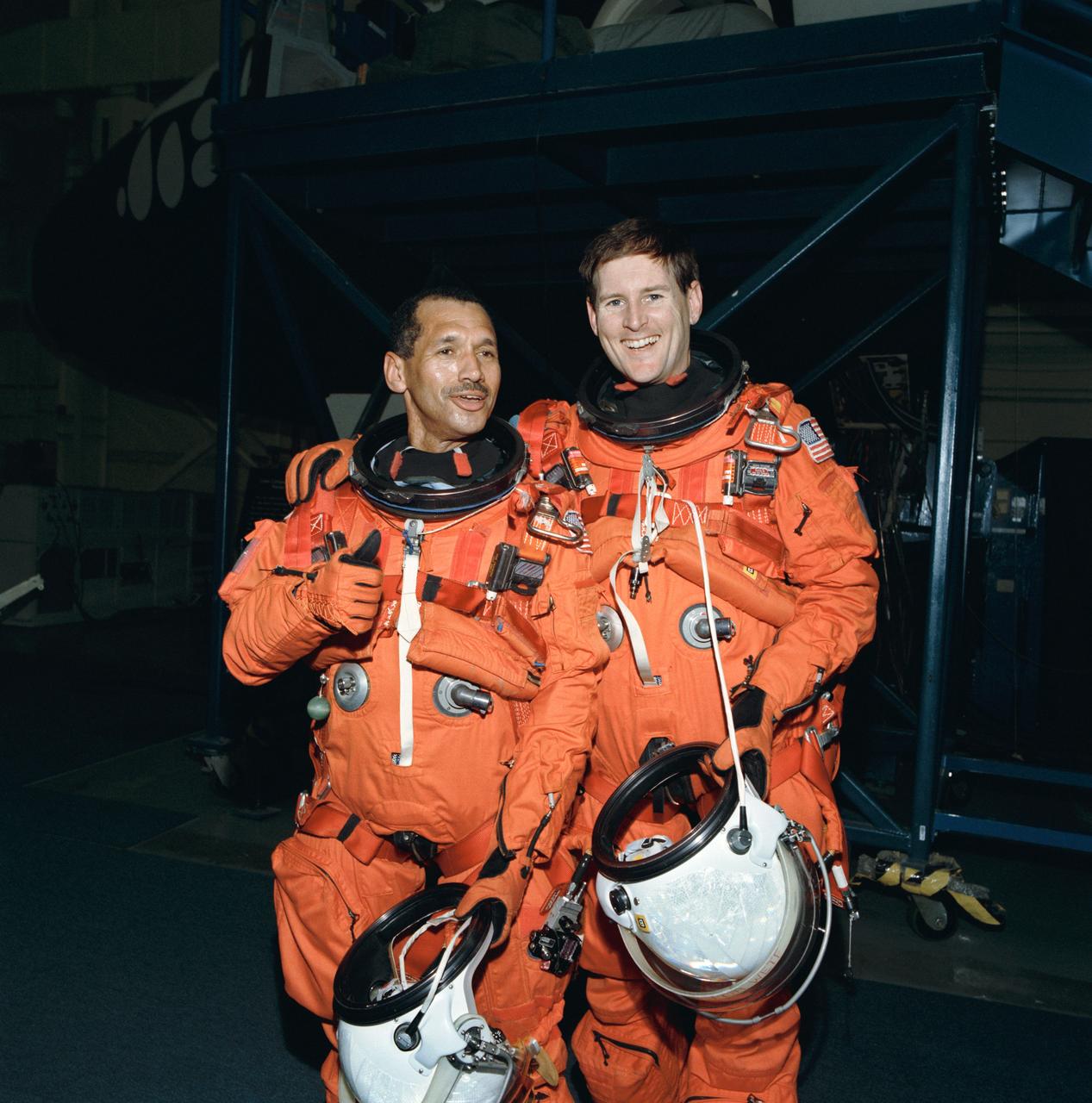
Astronauts Charles F. Bolden Jr. (left) and Kenneth S. Reightler, commander and pilot, respectively, for the STS-60 mission, take a break during rehearsal for some of their flight duties near the crew compartment trainer in JSC's Shuttle mock-up and integration laboratory (50648); Cosmonaut Sergei Krikalev, mission specialist for STS-60, gets assistance with his launch and entry suit from Lockheed's Max Kandloer during a training session. Others pictured, left to right, are Astronauts Franklin R. Chang-Diaz, Ronald M. Sega and N. Jan Davis (50649); Astronaut Kenneth S. Reightler, pilot for STS-60, gets assistance with his launch and entry suit (LES) from Boeing's William Todd during a training session (50650).

Assembly began April 1, 2010, for NASA Juno spacecraft in the high-bay cleanroom at Lockheed Martin in Denver, Colo. Workers are moving the radiation vault above a mock-up of the upper part of the spacecraft main body.
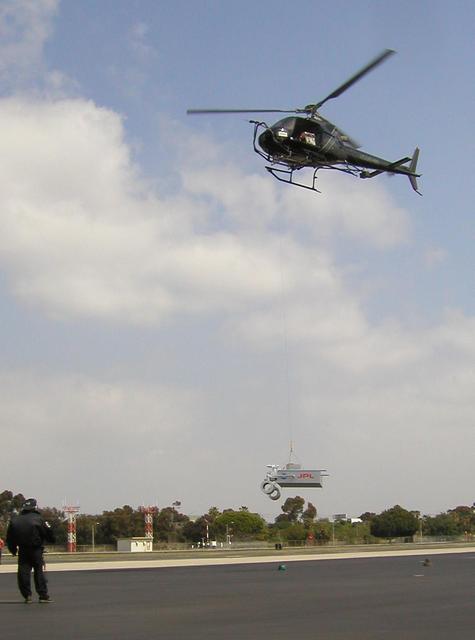
This image taken March 25, 2010 shows preparations for radar testing for NASA Mars Science Laboratory. This day work evaluated a setup for suspending a rover mock-up beneath a helicopter at Hawthorne Municipal Airport, Hawthorne, Calif.
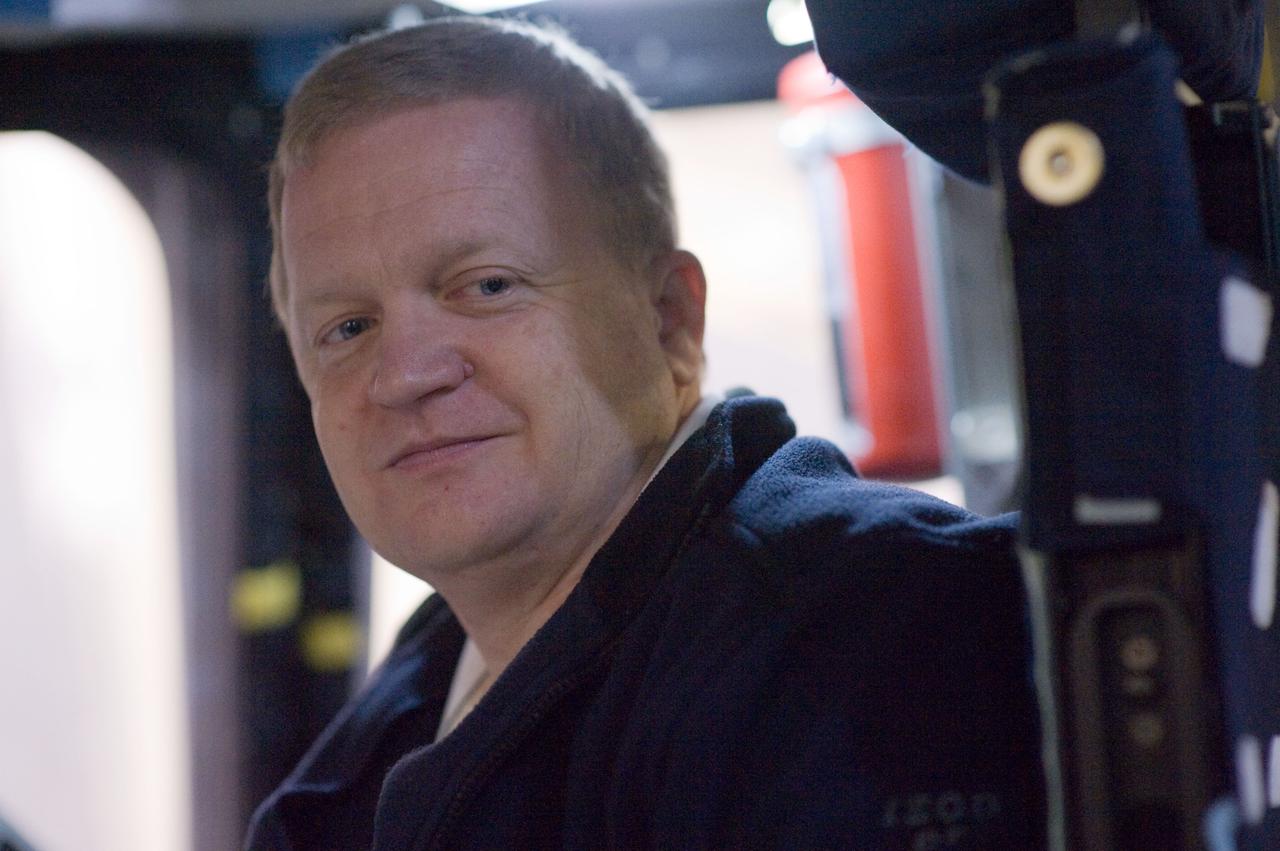
JSC2010-E-023640 (4 Feb. 2010) --- NASA astronaut Eric Boe, STS-133 pilot, participates in training session in a shuttle mock-up in the Space Vehicle Mock-up Facility at NASA's Johnson Space Center.

JSC2010-E-023639 (4 Feb. 2010) --- NASA astronaut Steve Lindsey, STS-133 commander, participates in training session in a shuttle mock-up in the Space Vehicle Mock-up Facility at NASA's Johnson Space Center.
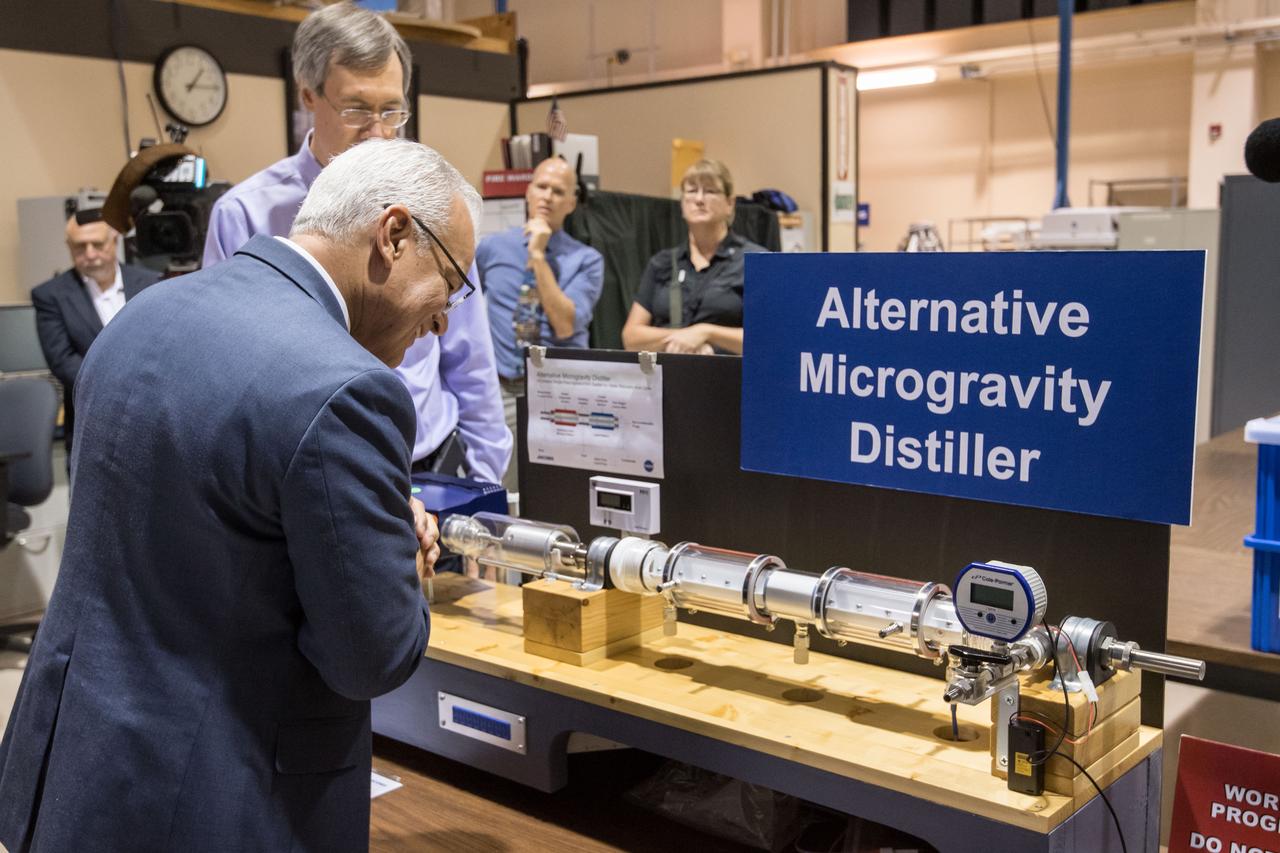
NASA Chief Technologist Douglas Terrier inspects Jacobs’ mockup of the on-orbit Alpha Magnetic Spectrometer hardware. Astronauts use the mockup hardware to train on the ground to prepare to perform operations on the International Space Station. Jacobs provides advanced technologies used aboard the International Space Station and for deep space exploration. Date: 08-10-2017 Location: B1 & Jacobs Engineering Subject: NASA Acting Chief Technology Officer Douglas Terrier Tours JSC and Jacobs Photographer: David DeHoyos
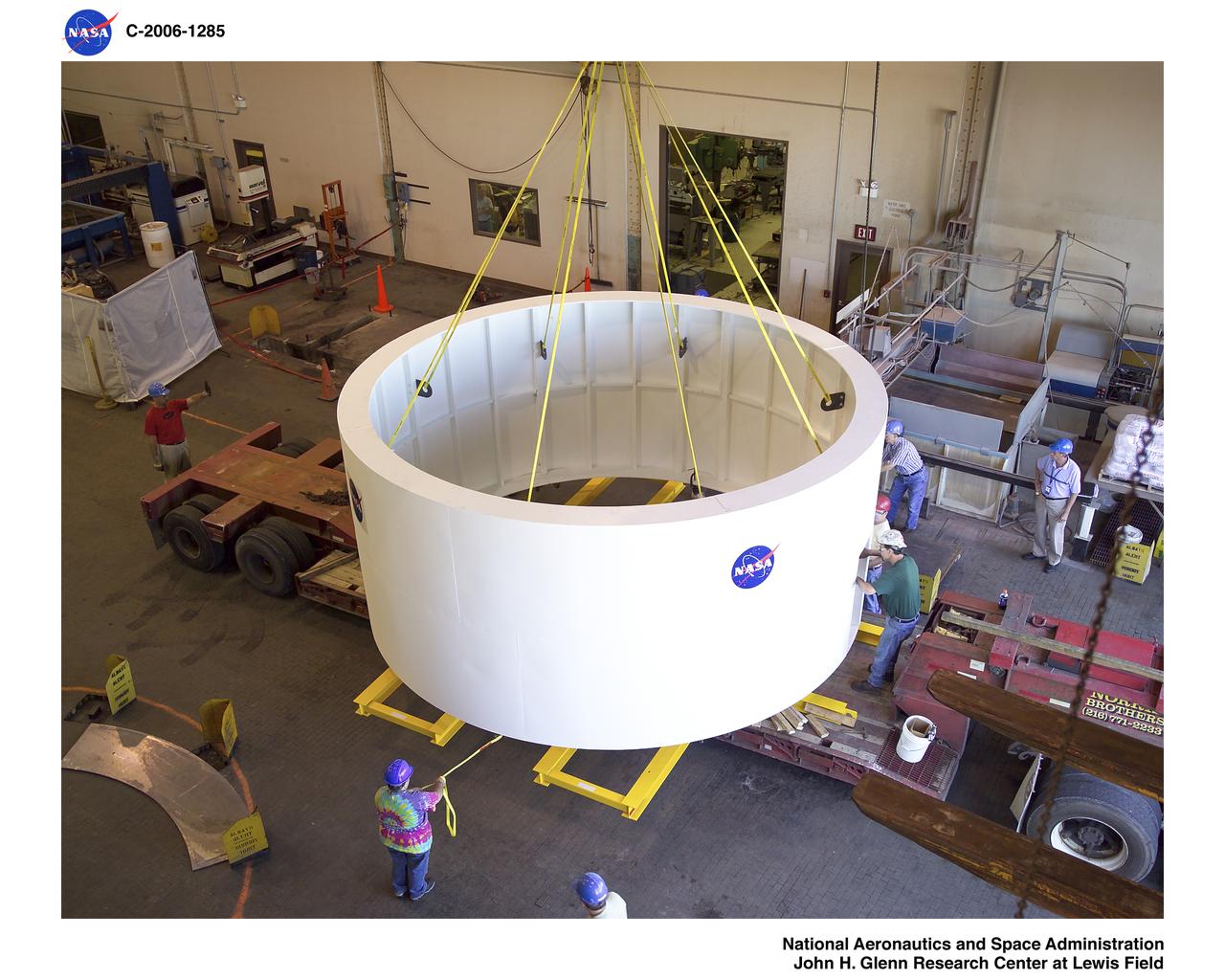
Transfer of Ares 1 Mock-Up
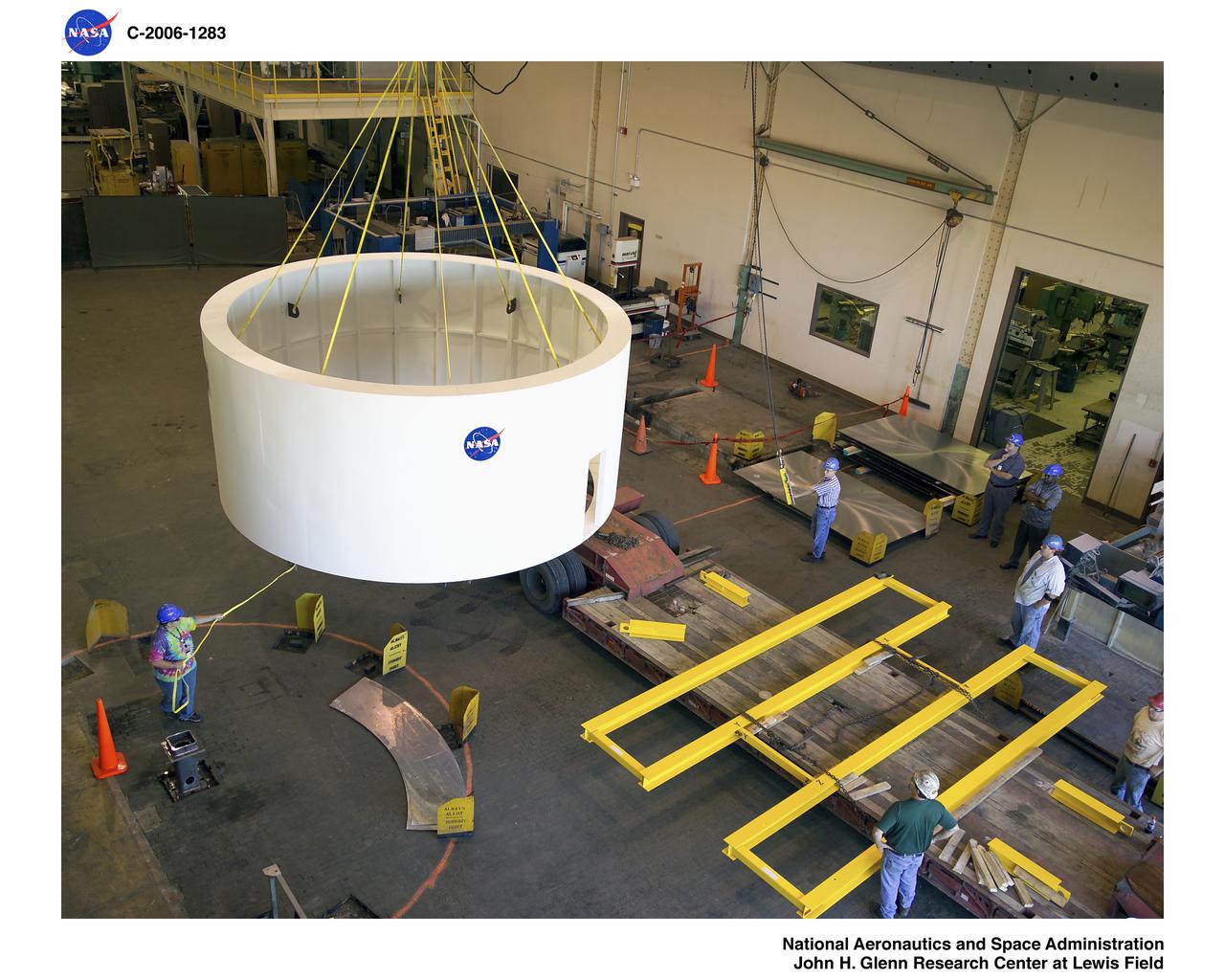
Transfer of Ares 1 Mock-Up
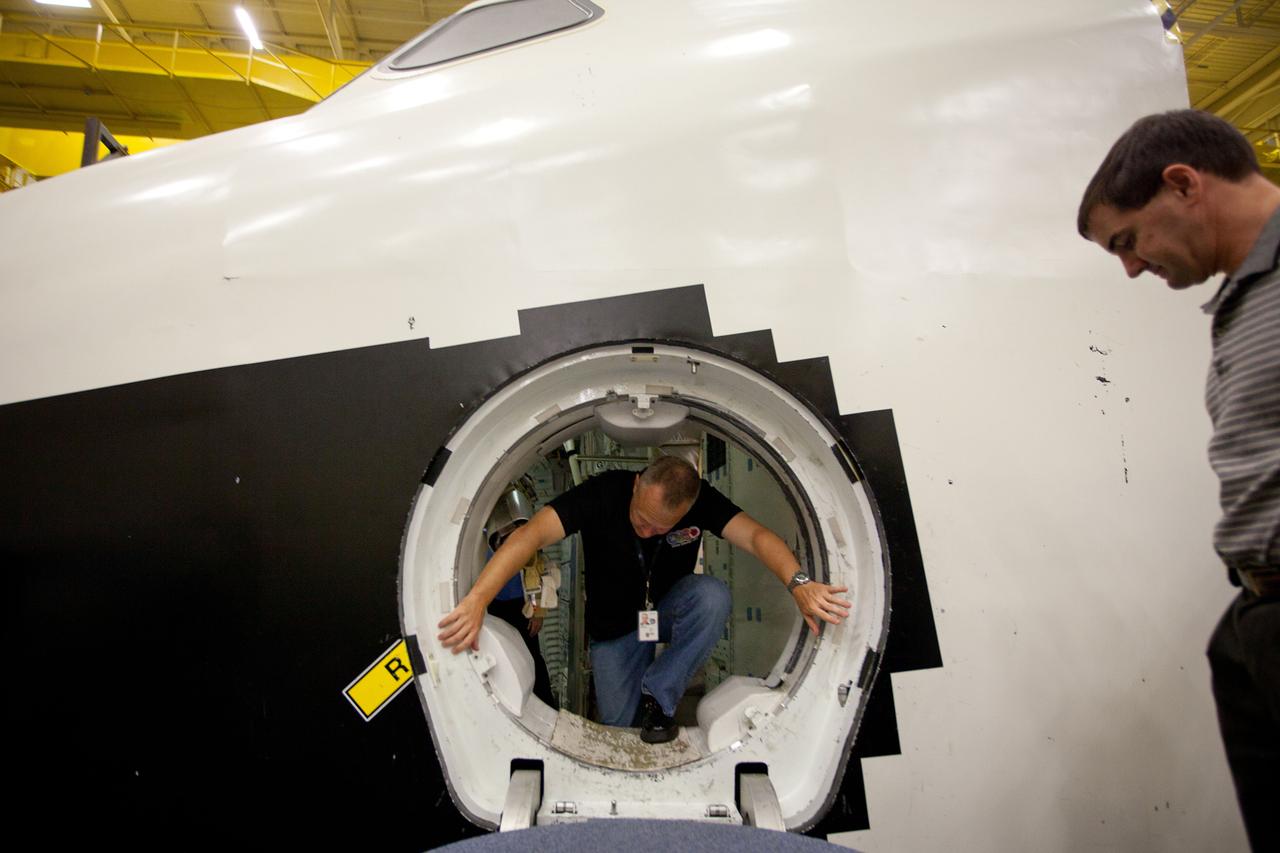
JSC2011-E-060132 (29 June 2011) --- NASA astronaut Doug Hurley crawls out of the Crew Compartment Trainer (CCT-2) mock-up while Rex Walheim waits as the crew of STS-135 trains in the Space Vehicle Mock-up Facility (SVMF) at NASA?s Johnson Space Center June 29, 2011. The training marked the crew's final scheduled session in JSC's Shuttle Vehicle Mock-up Facility. Photo credit: NASA Photo/Houston Chronicle, Smiley N. Pool
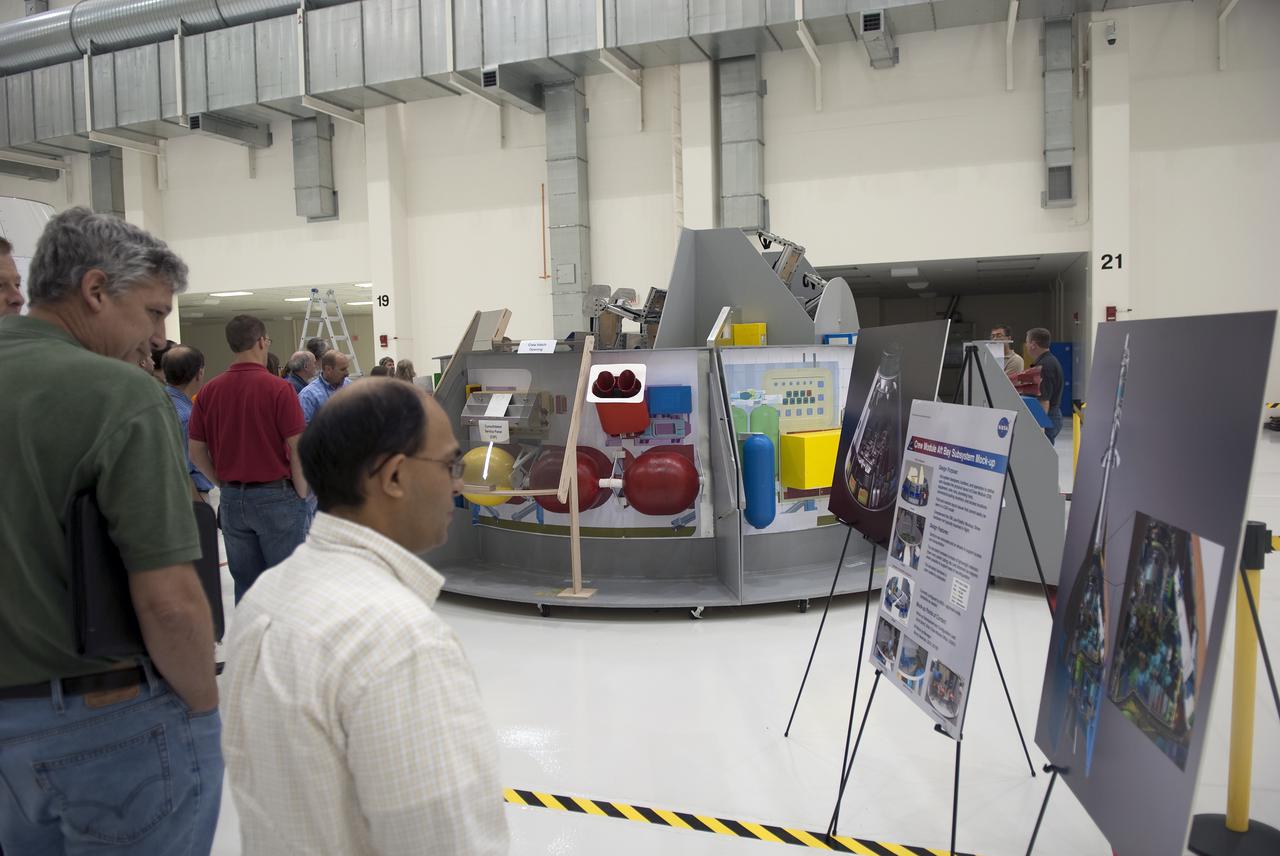
CAPE CANAVERAL, Fla. – In the Operations and Checkout Building at NASA's Kennedy Space Center in Florida, employees peruse exhibits surrounding a mock-up of the Orion crew exploration vehicle. The mock-up details the interior components of the vehicle including seat layout and the subsystem components on the outside of the pressure vessel. Orion mock-ups also have been used to verify accessibility of the servicing locations at the launch pad and in the Vehicle Assembly Building. For information on the development of the Orion capsule, visit www.nasa.gov_orion. Photo credit: NASA_Jim Grossmann
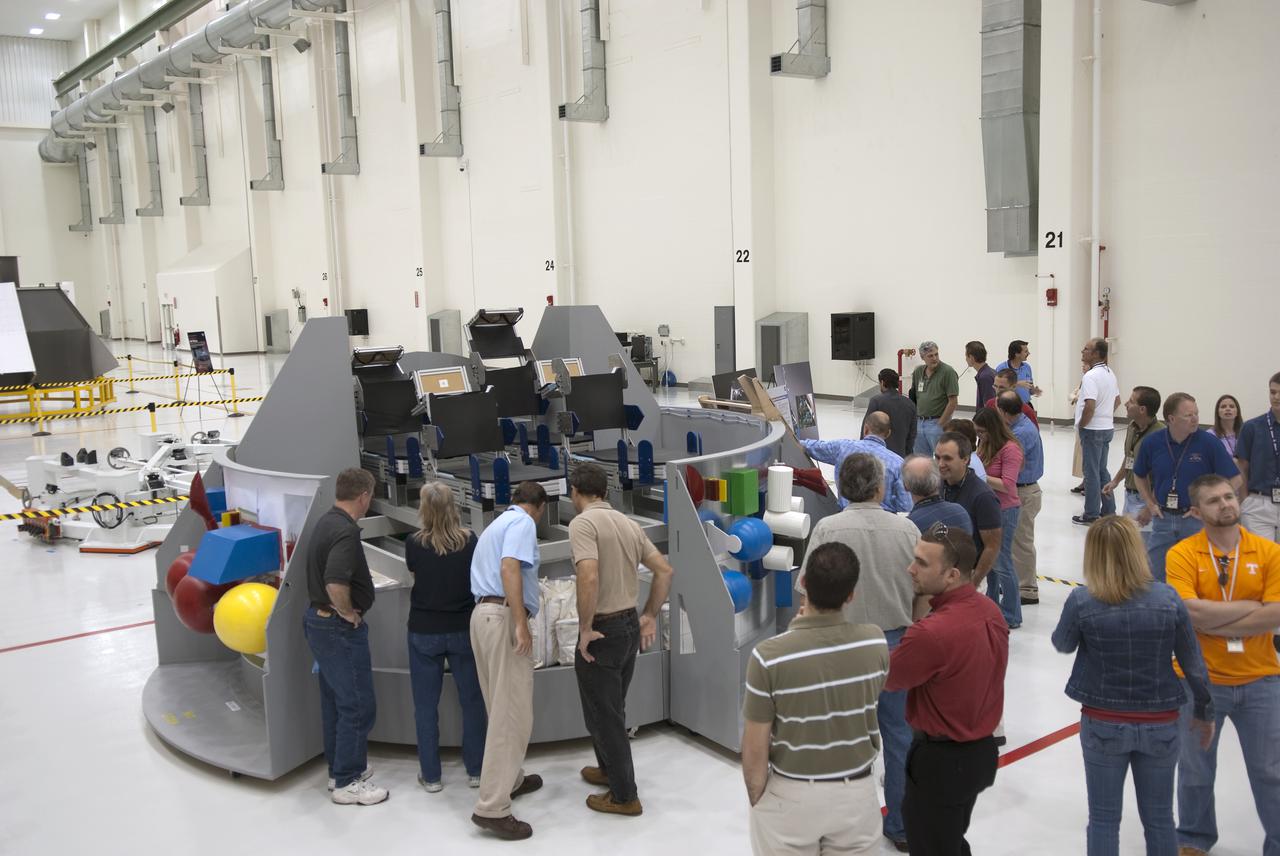
CAPE CANAVERAL, Fla. – In the Operations and Checkout Building at NASA's Kennedy Space Center in Florida, a mock-up of the Orion crew exploration vehicle is on display. The mock-up details the interior components of the vehicle including seat layout and the subsystem components on the outside of the pressure vessel. Orion mock-ups also have been used to verify accessibility of the servicing locations at the launch pad and in the Vehicle Assembly Building. For information on the development of the Orion capsule, visit www.nasa.gov_orion. Photo credit: NASA_Jim Grossmann
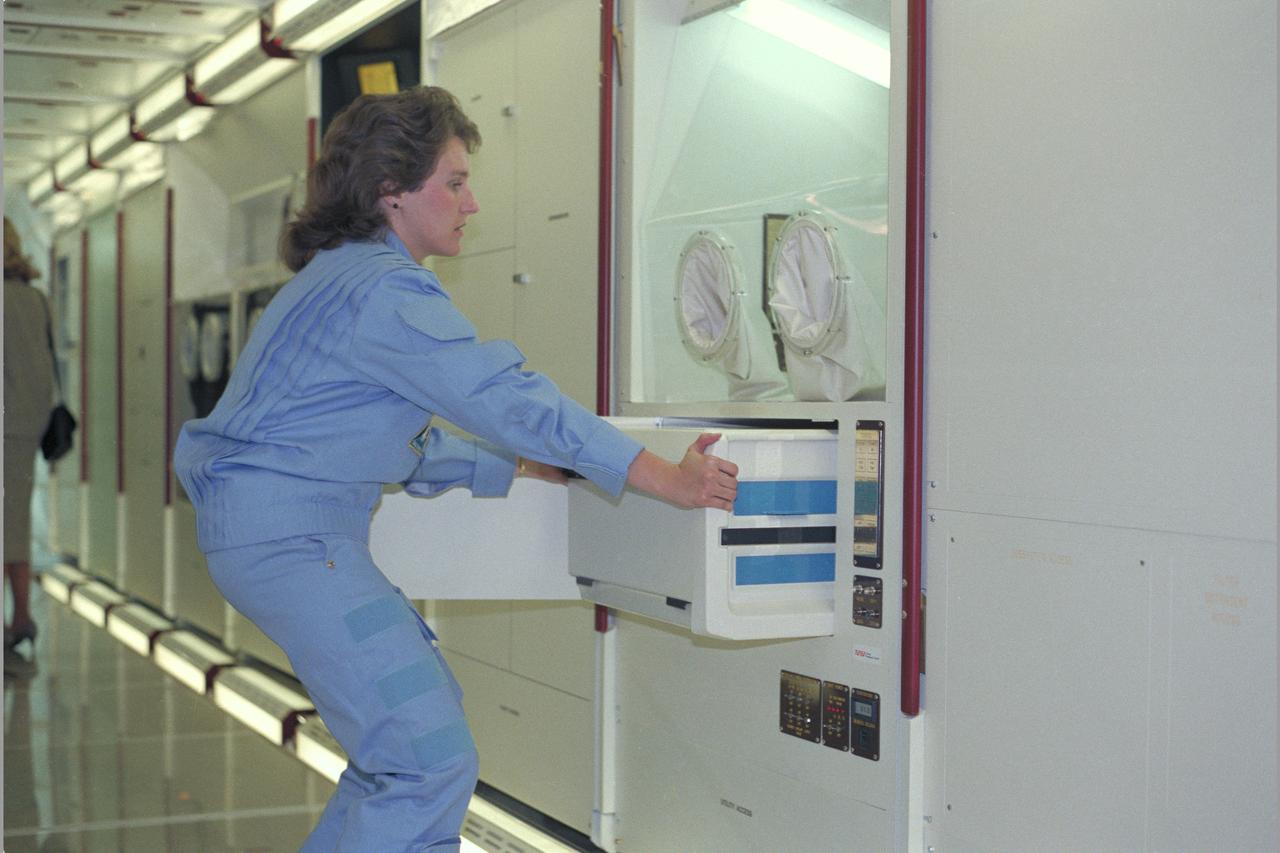
ISF Space Station Mock up @ MAFC (McGowen)
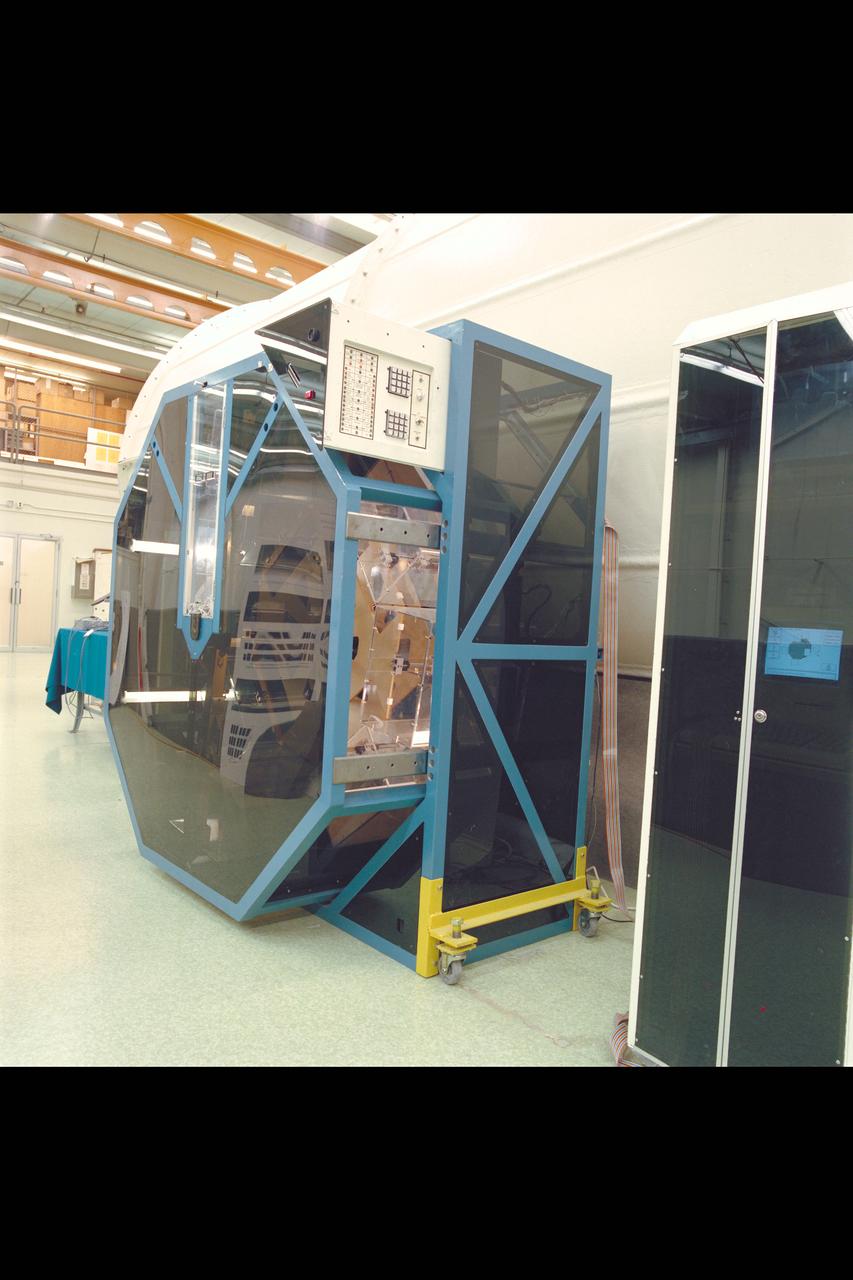
N-244 2.5M Centrifuge Facility mock-up
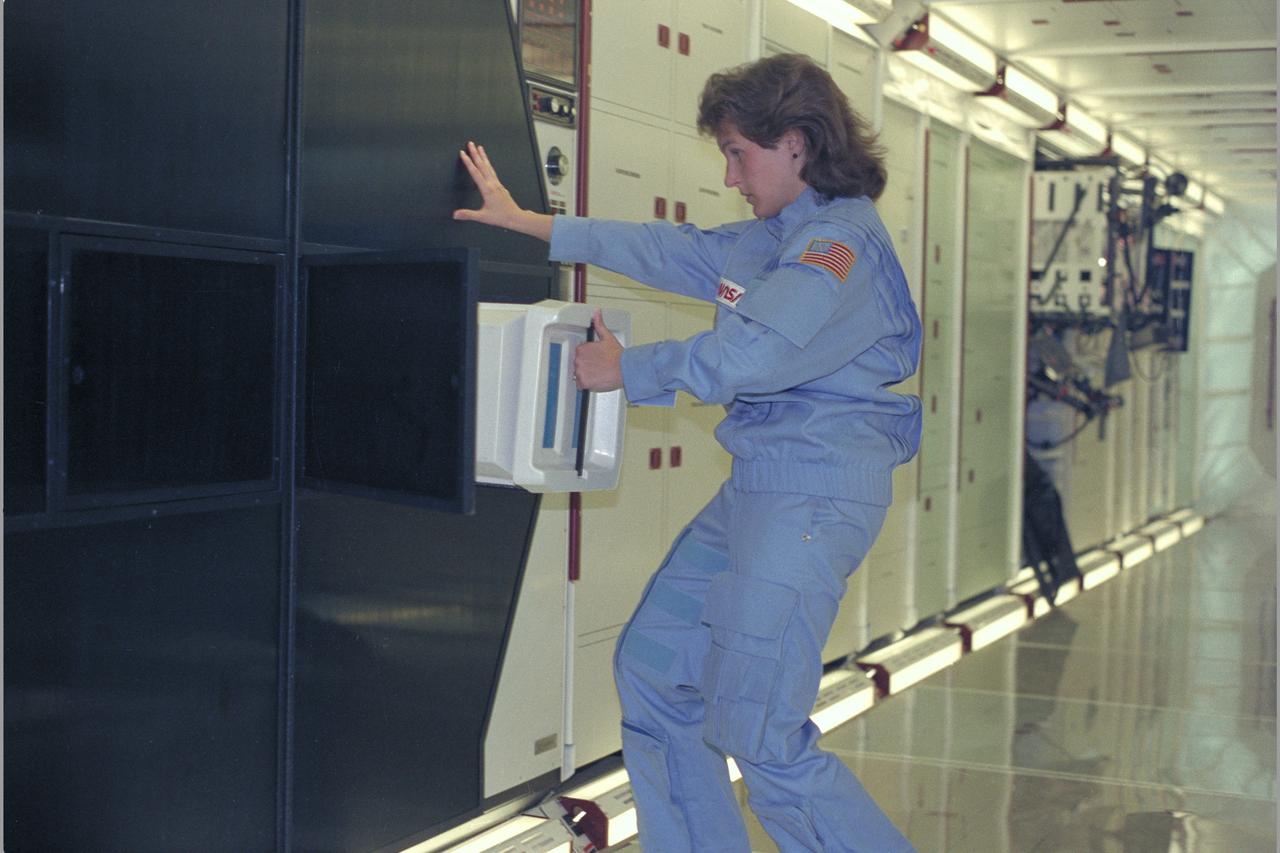
ISF Space Station Mock up @ MAFC (McGowen)
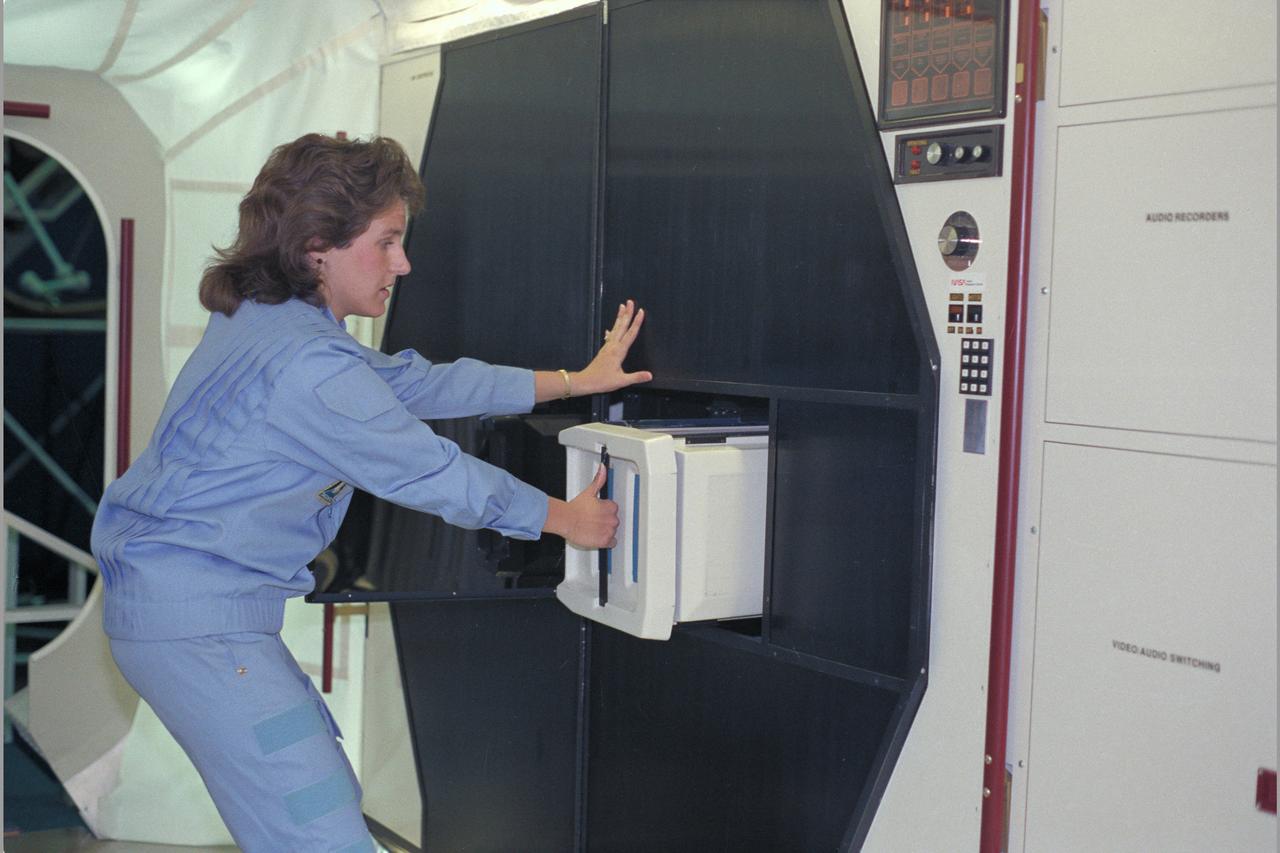
ISF Space Station Mock up @ MAFC (McGowen)
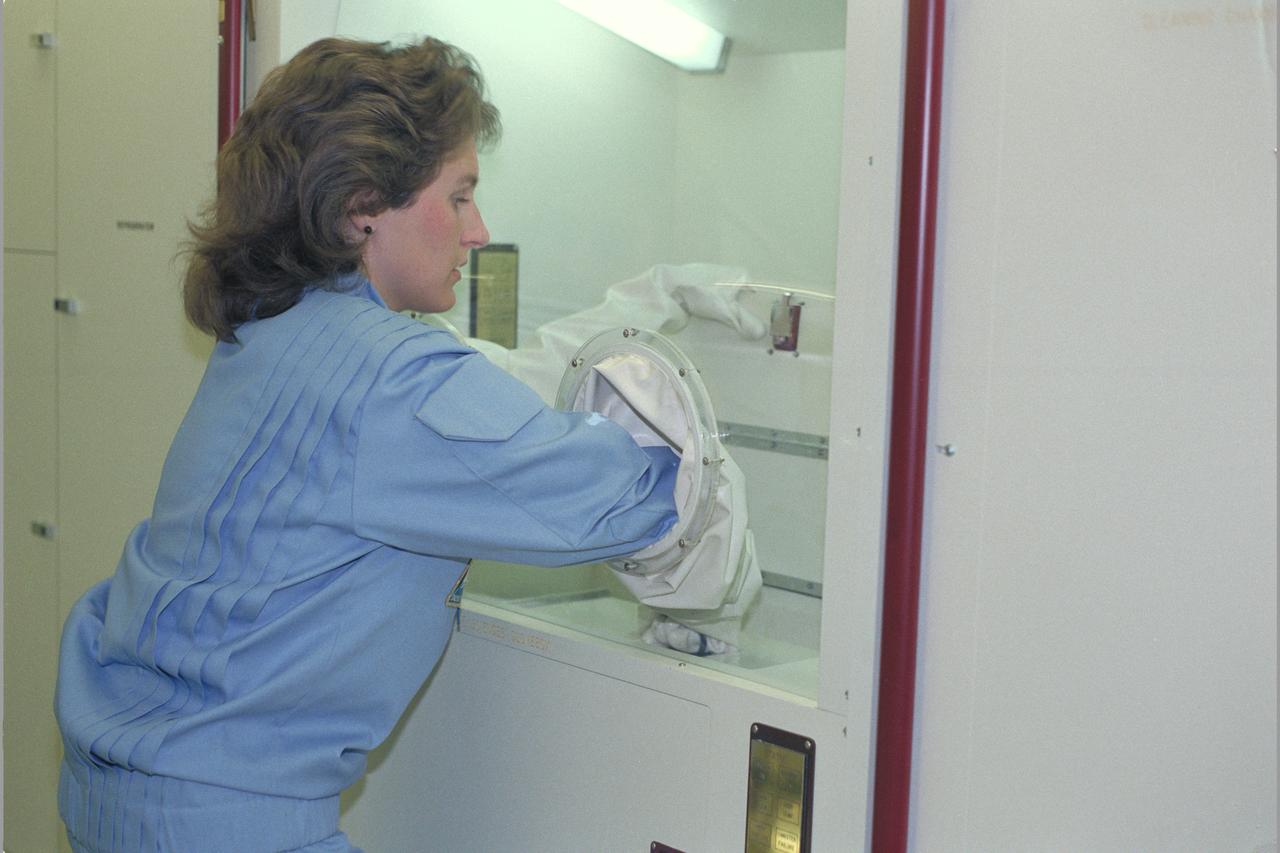
ISF Space Station Mock up @ MAFC (McGowen)
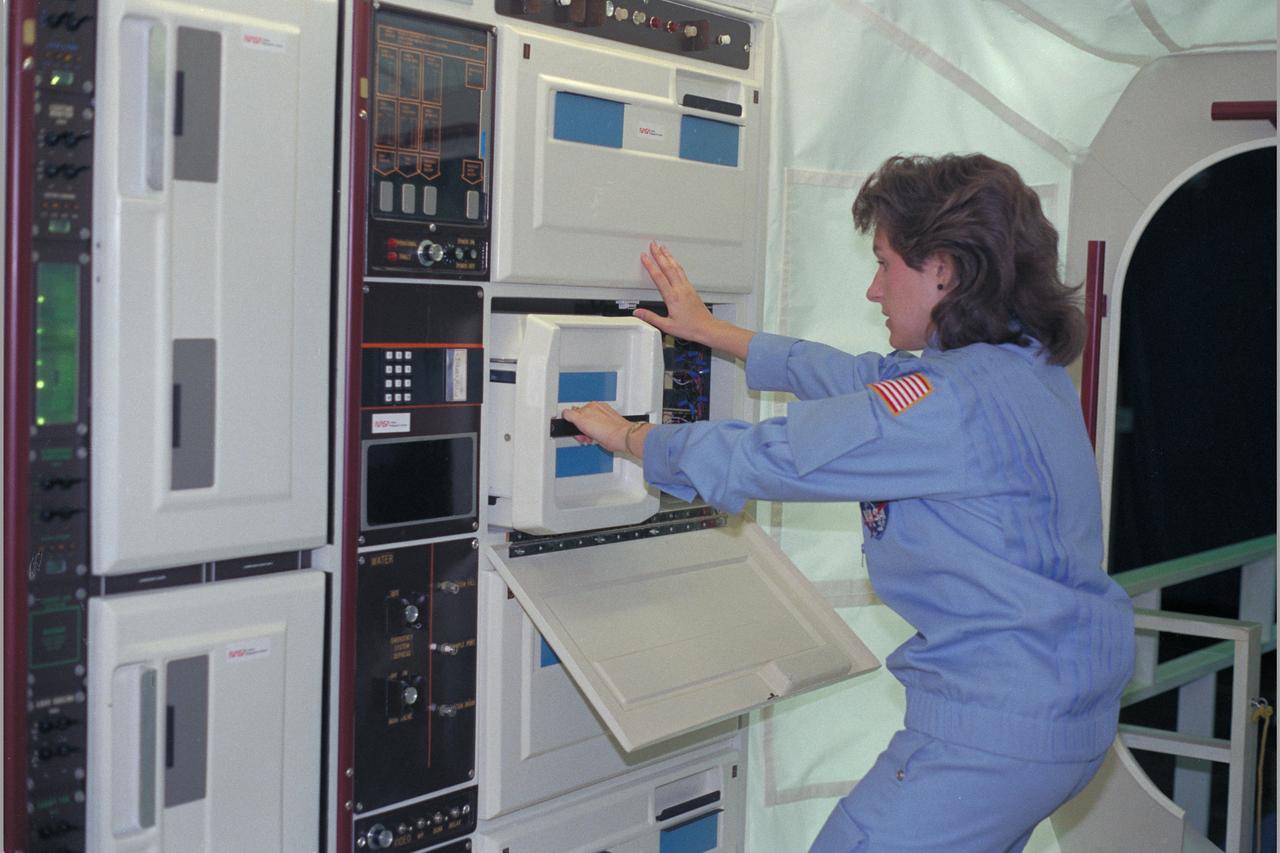
ISF Space Station Mock up @ MAFC (McGowen)
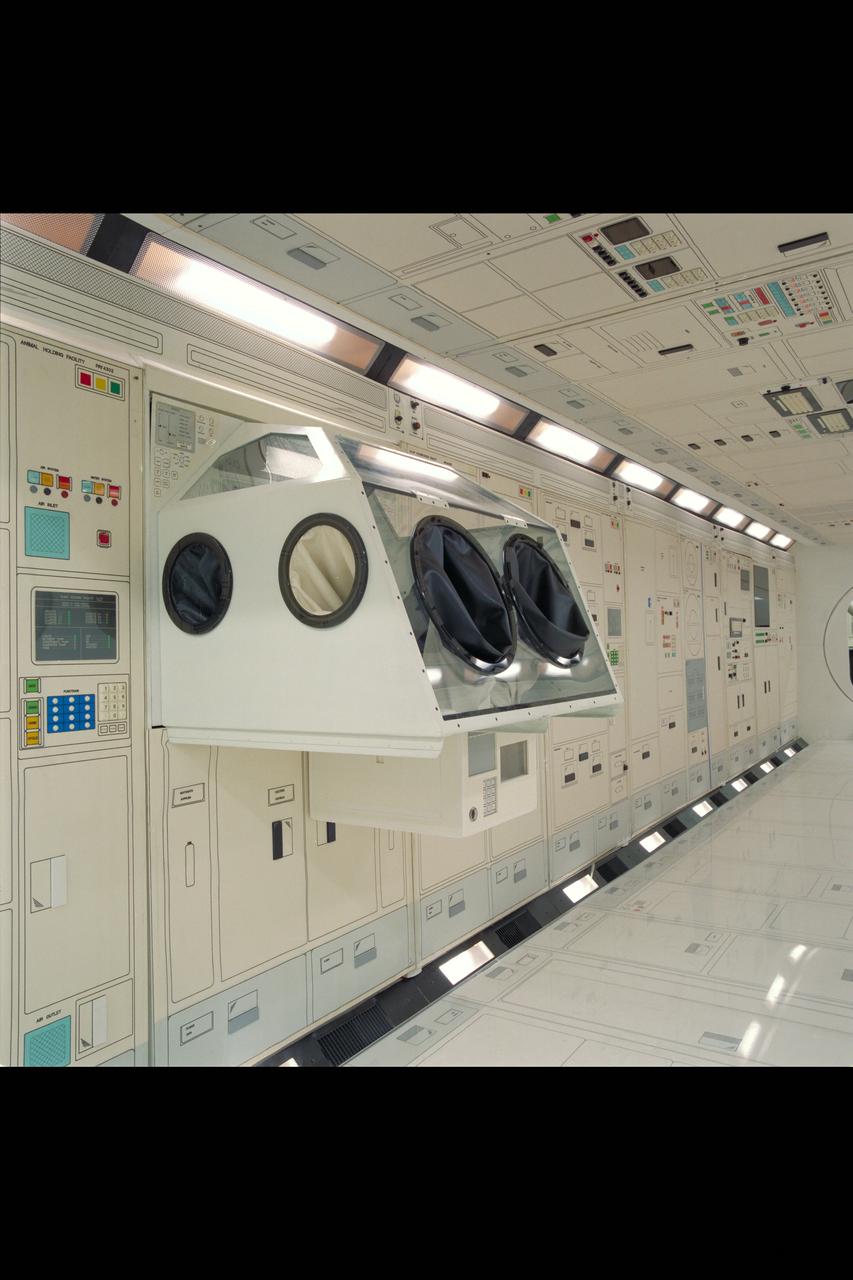
N-244 2.5M Centrifuge Facility mock-up
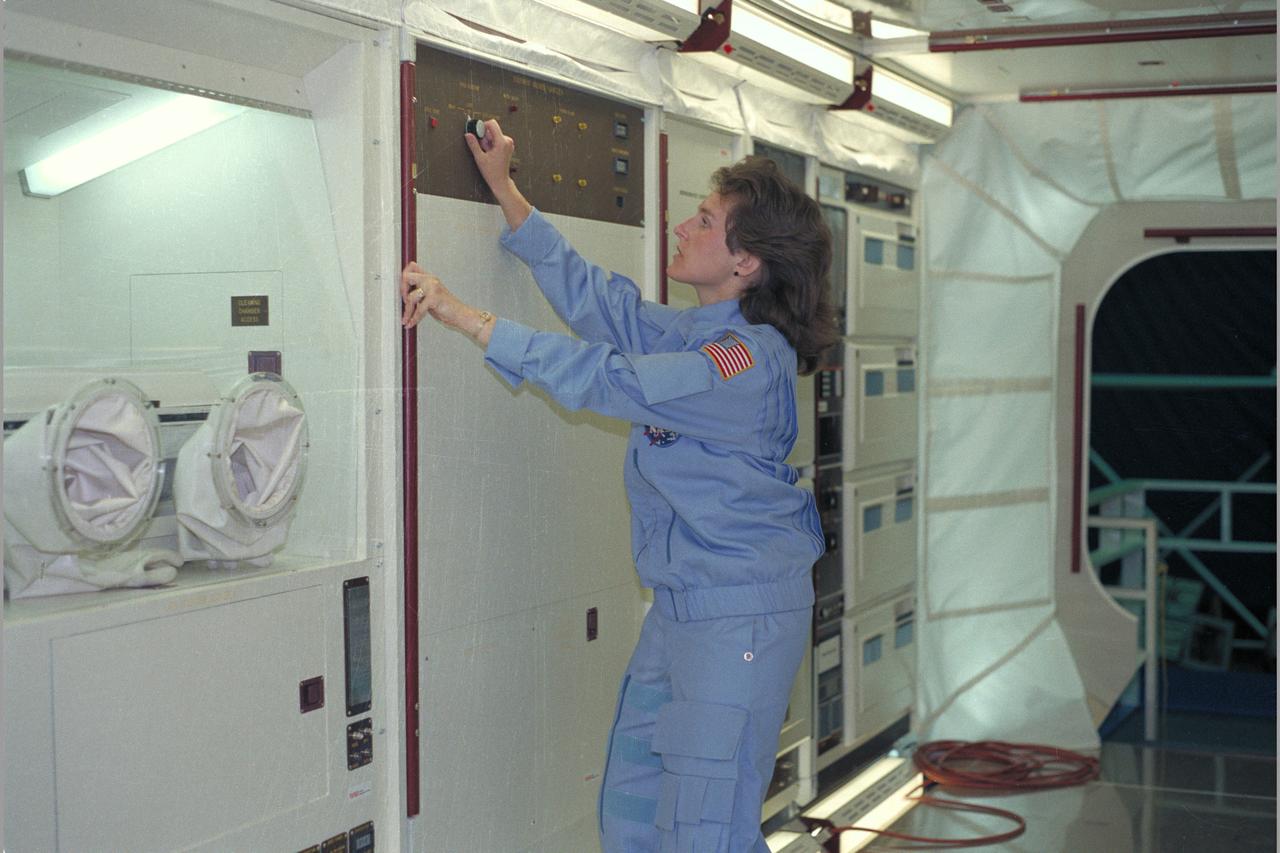
ISF Space Station Mock up @ MAFC (McGowen)
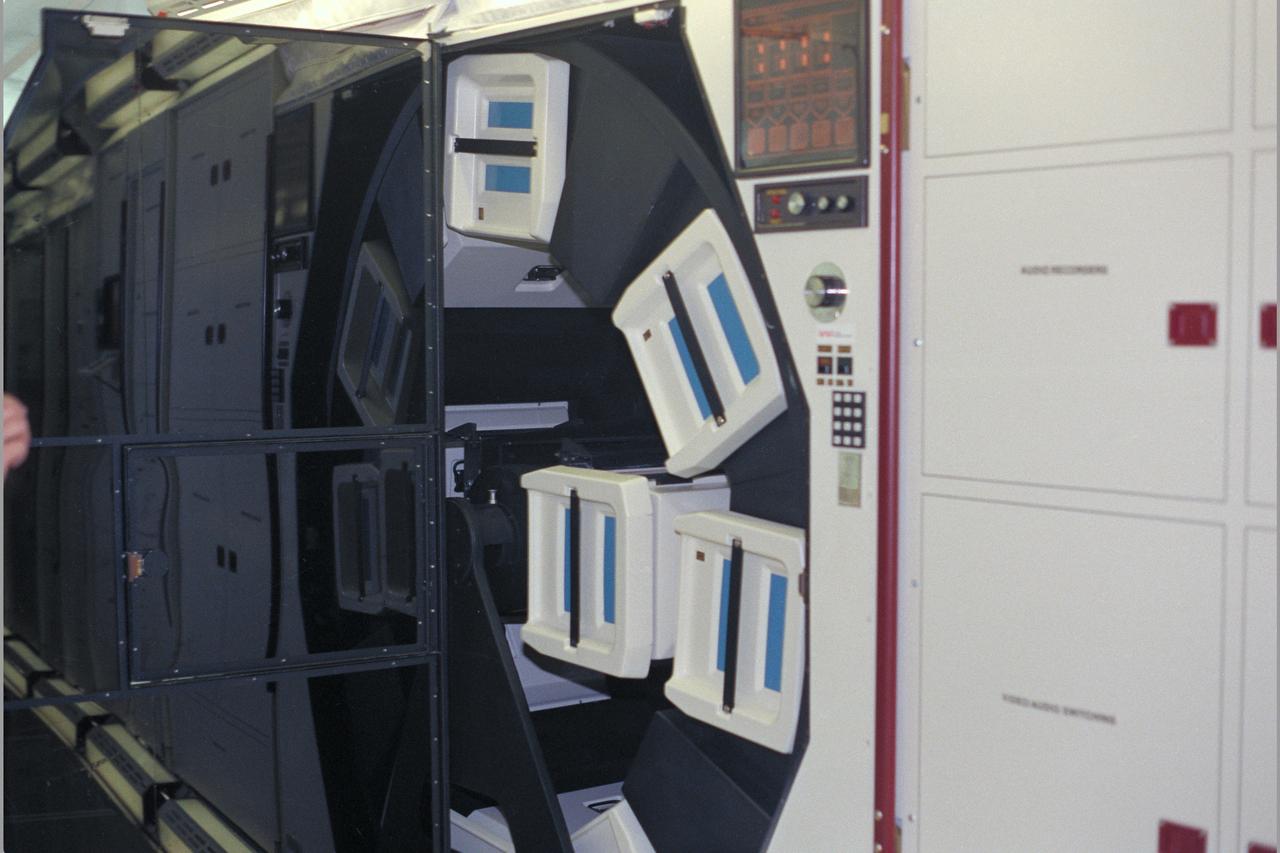
ISF Space Station Mock up @ MAFC (McGowen)
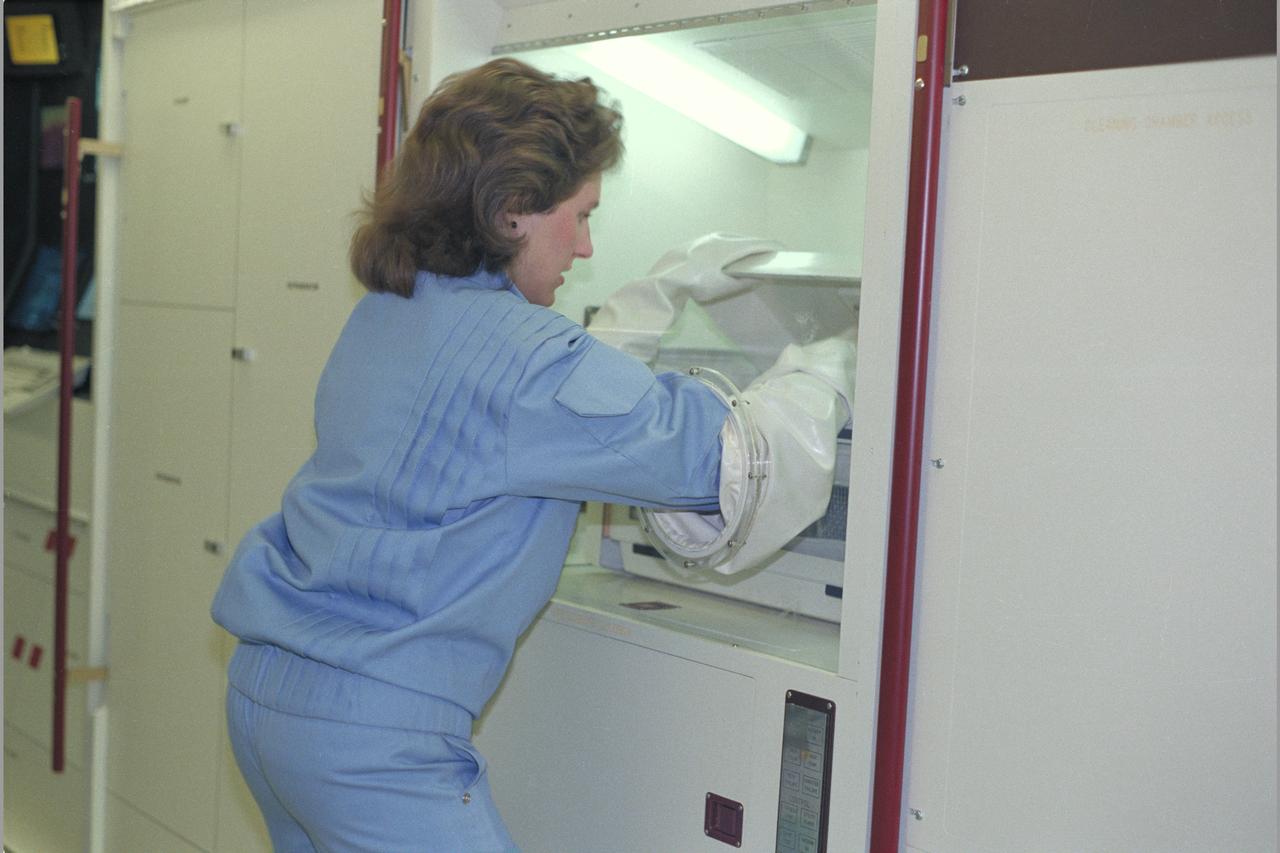
ISF Space Station Mock up @ MAFC (McGowen)
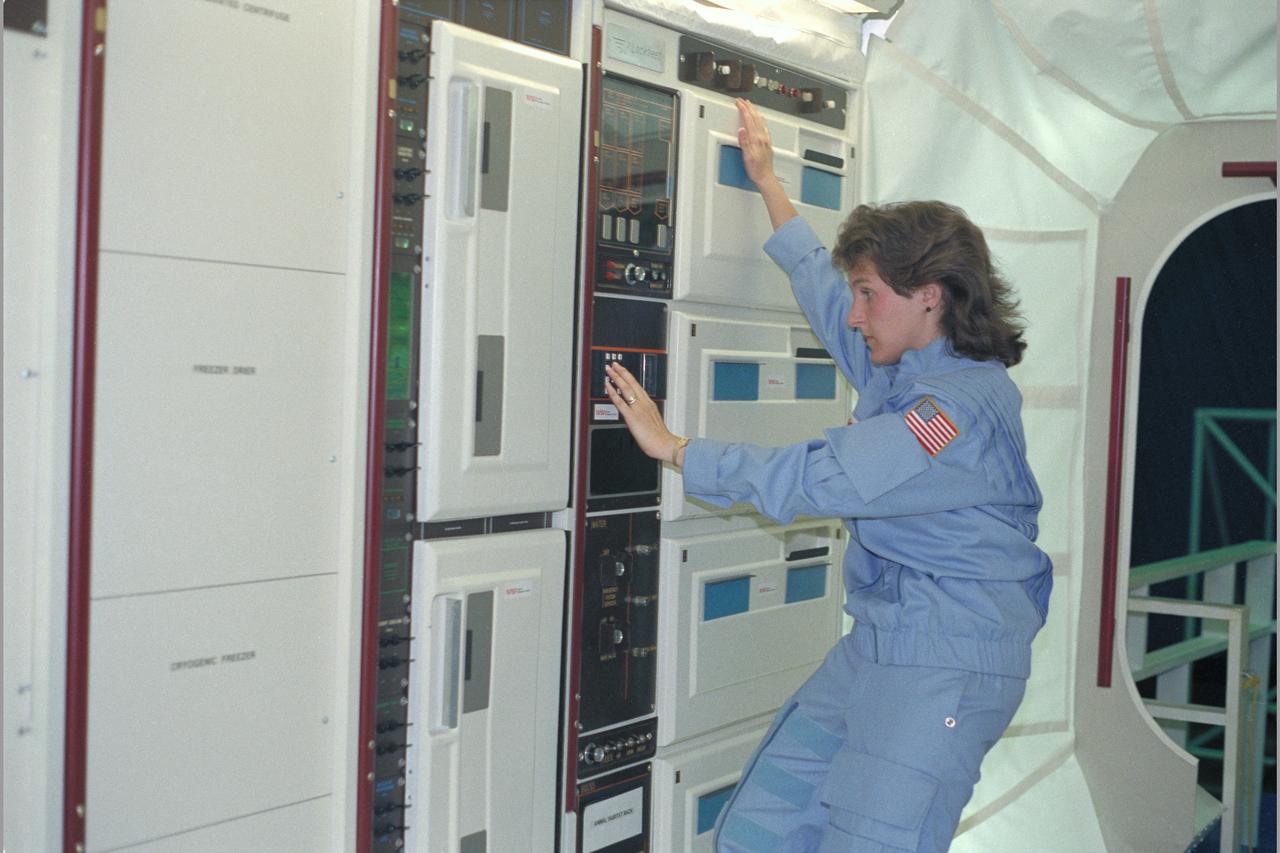
ISF Space Station Mock up @ MAFC (McGowen)
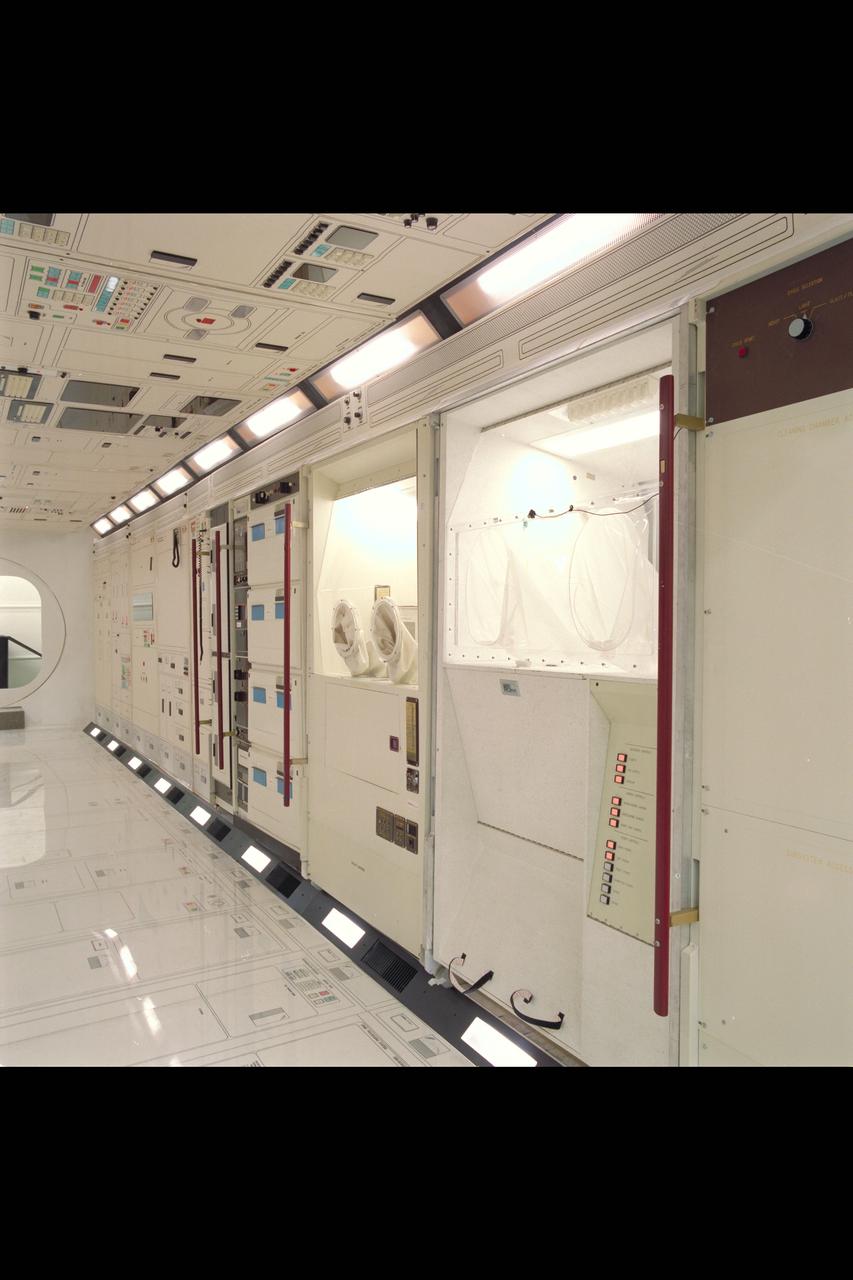
N-244 2.5M Centrifuge Facility mock-up
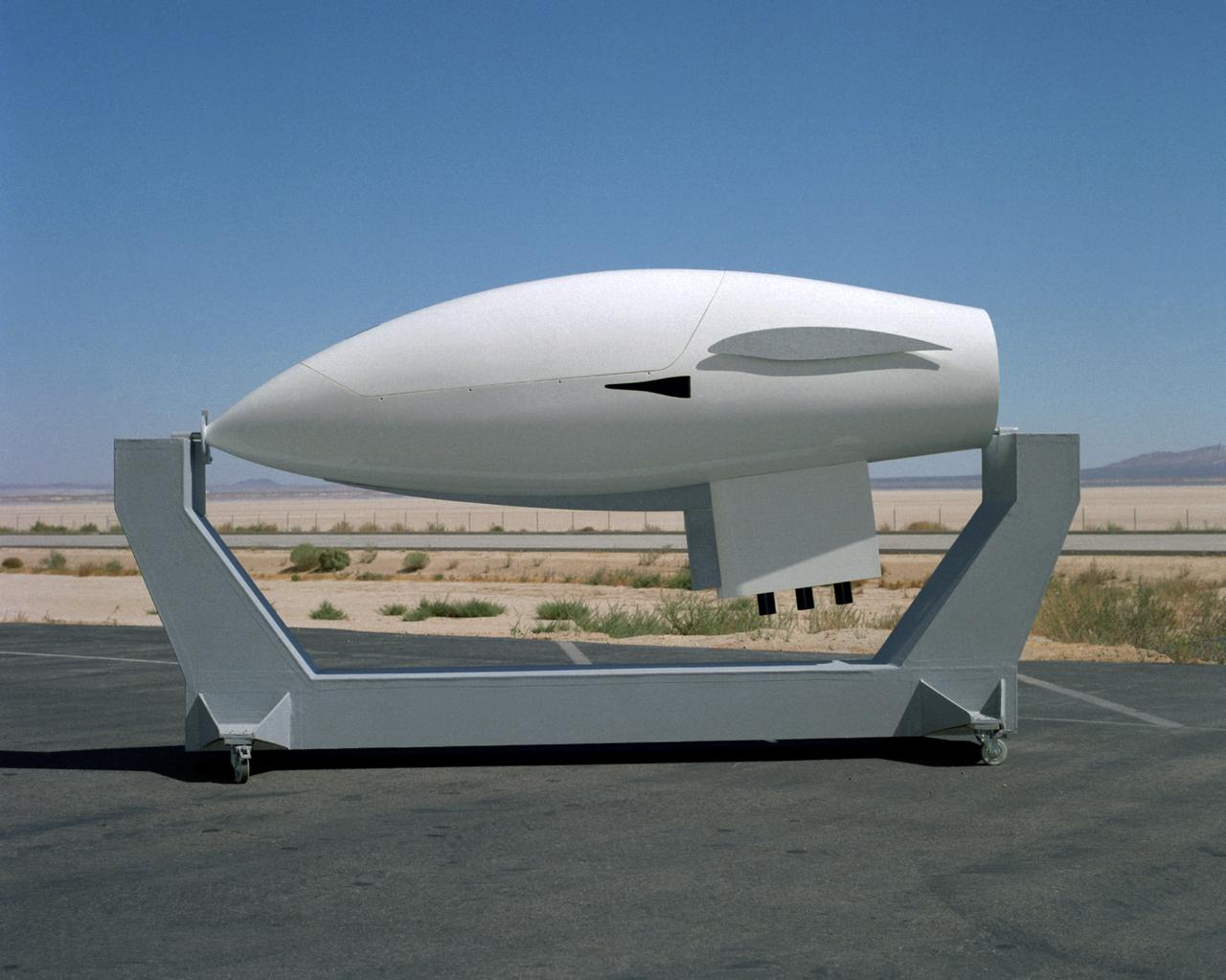
Apex high-altitude research sailplane mock-up
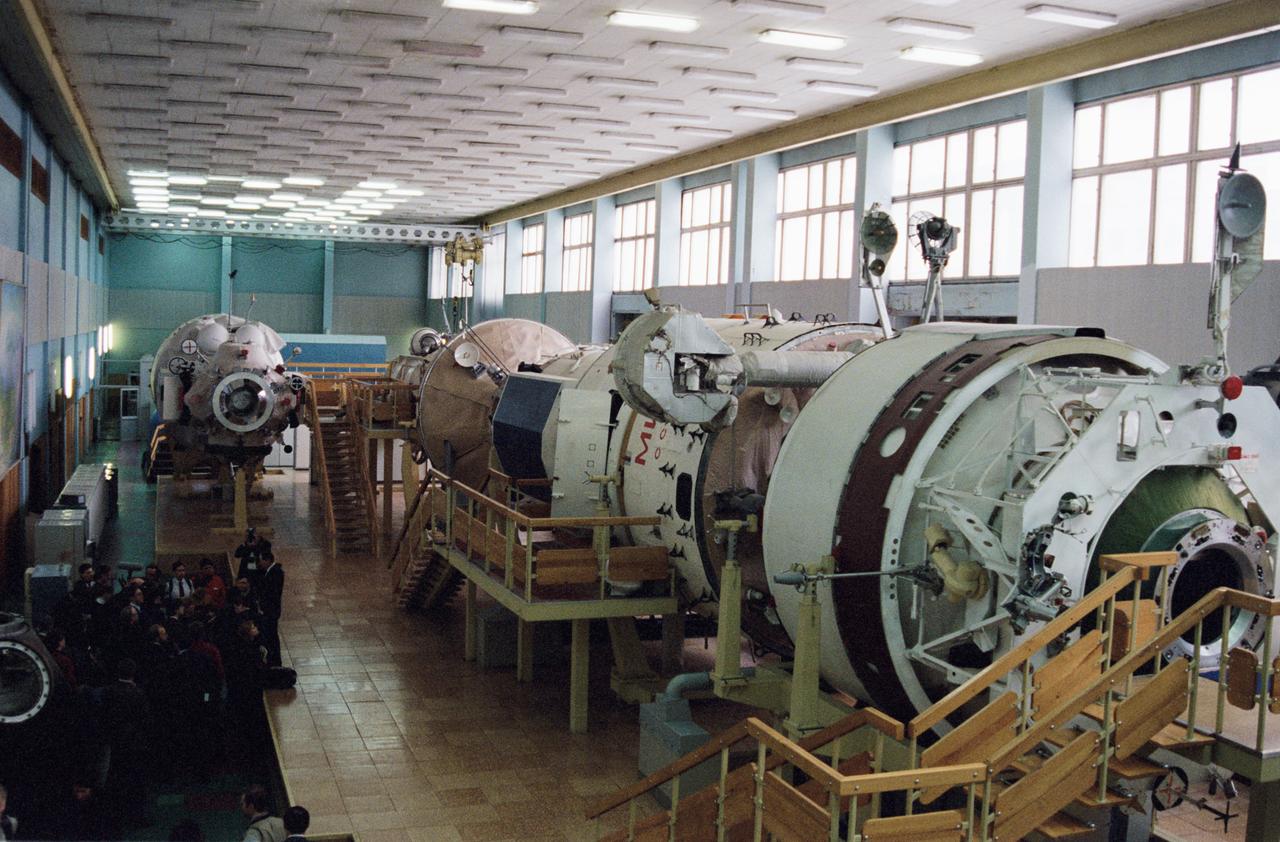
S95-04320 (22 Feb 1995) --- A full-scale mockup of Russia's Space Station with the core module called Mir in the center. Other modules connected to the core include Kvant, Kvant II and Kristall. The mockup at the Gagarin Cosmonaut Training Center in Star City, Russia is used for cosmonaut training prior to flights aboard the orbiting laboratory. At the time this photo was taken, NASA astronauts Norman E. Thagard and Bonnie J. Dunbar were in Russia for training.
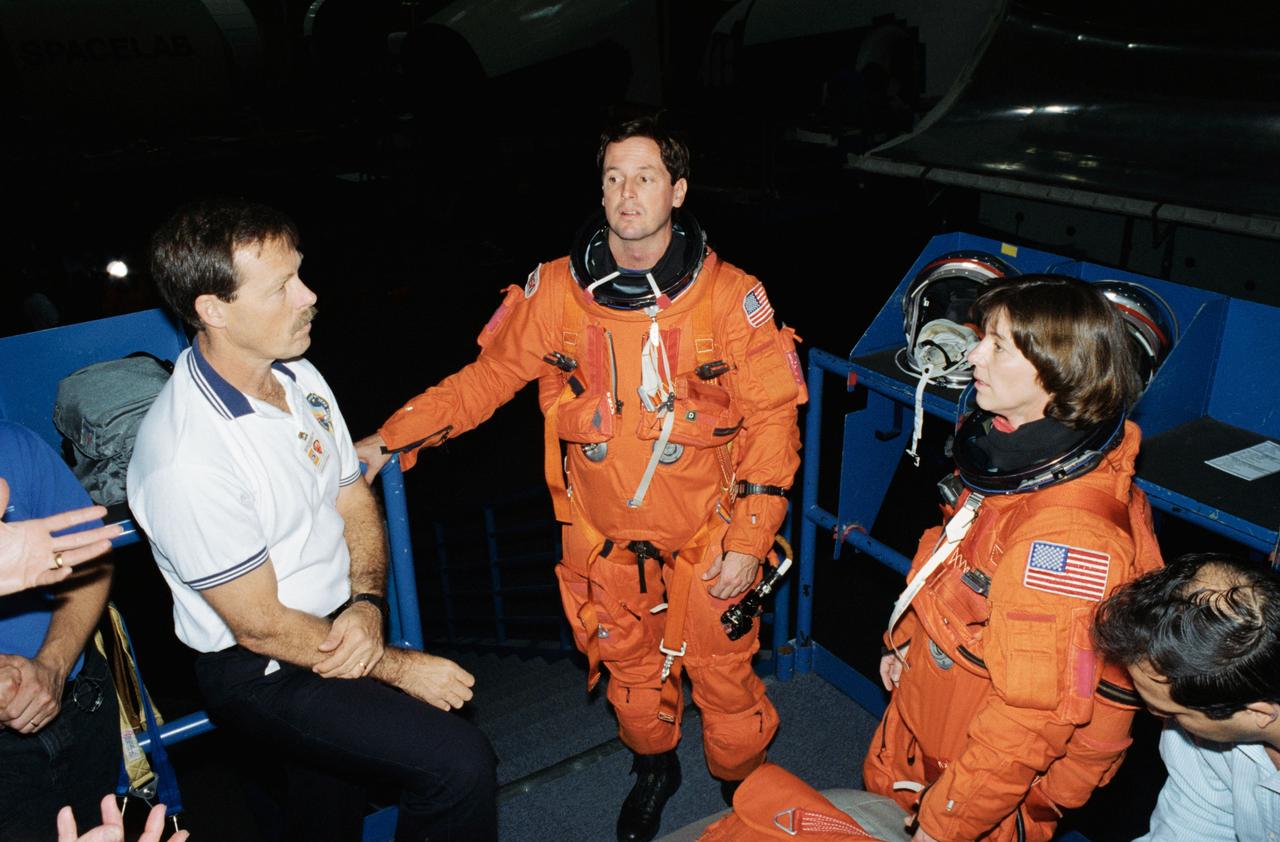
S94-47065 (18 Oct 1994) --- Astronaut Robert L. Gibson (left), STS-71 mission commander, converses with two crew mates prior to emergency egress training in the Systems Integration Facility at the Johnson Space Center (JSC). Astronauts Bonnie J. Dunbar and Gregory J. Harbaugh are attired in training versions of the partial pressure launch and entry space suits.
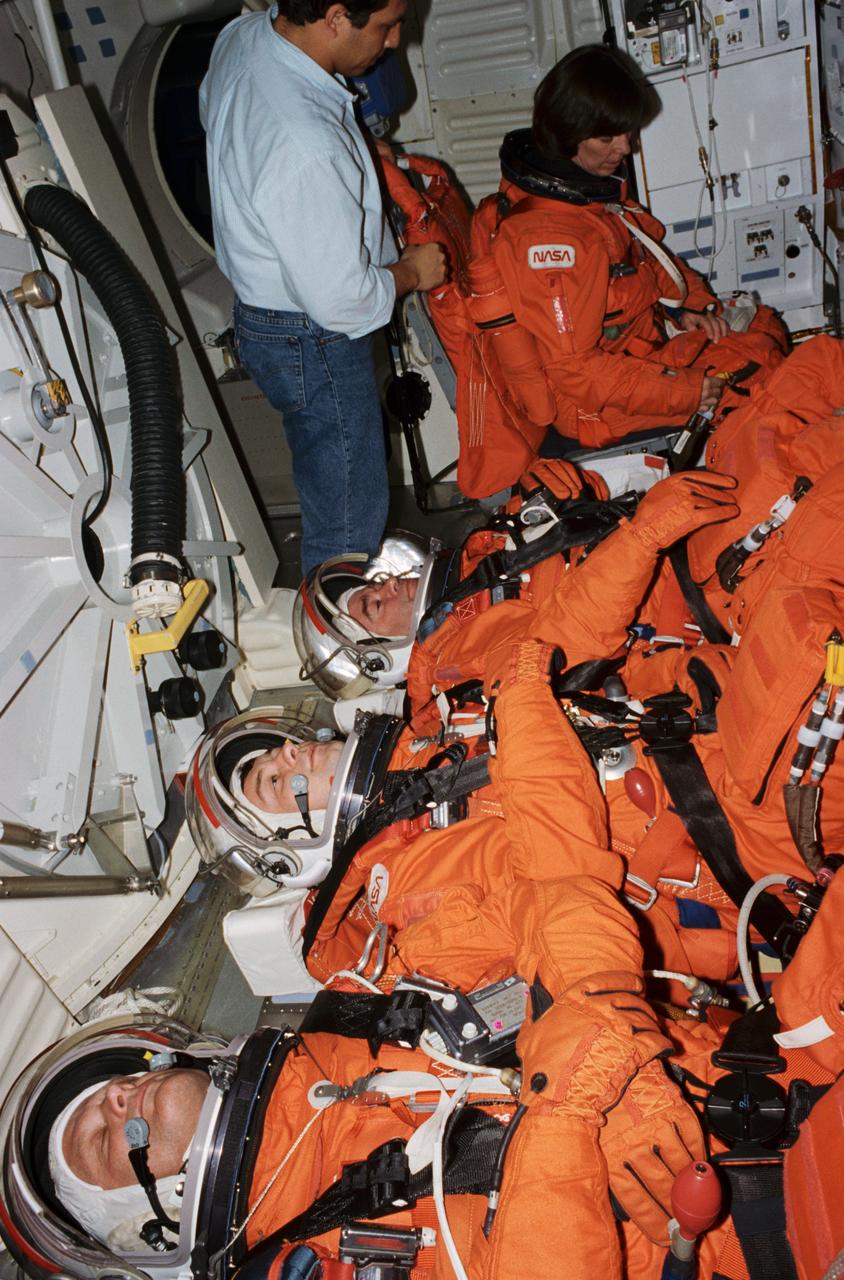
S94-47075 (Nov. 1994) --- In a Shuttle mockup trainer at the Johnson Space Center (JSC), a NASA astronaut and two Russian cosmonauts assigned to Russia's Mir 18 mission check out hardware like that to be flown onboard NASA's Space Shuttle Atlantis, the spacecraft that will retrieve the three from their orbital home for three months. Astronaut Norman E. Thagard (left), cosmonaut Vladimir N. Dezhurov, mission commander; and Gennadiy M. Strekalov, flight engineer; practice using the Recumbent Seating System (RSS). Astronaut Bonnie J. Dunbar, Thagard's backup on Mir 18 and mission specialist for STS-71, sits in a conventional middeck launch and entry station in the background. RSS has been manifest to be carried on the Space Shuttle Atlantis for the STS-71 mission. When the Space Shuttle Atlantis docks with Russia's Mir Space Station in 1995, Thagard and the two Russian cosmonauts, who will have been onboard Mir for a long duration stay, will join the STS-71 crew for the return to Earth.
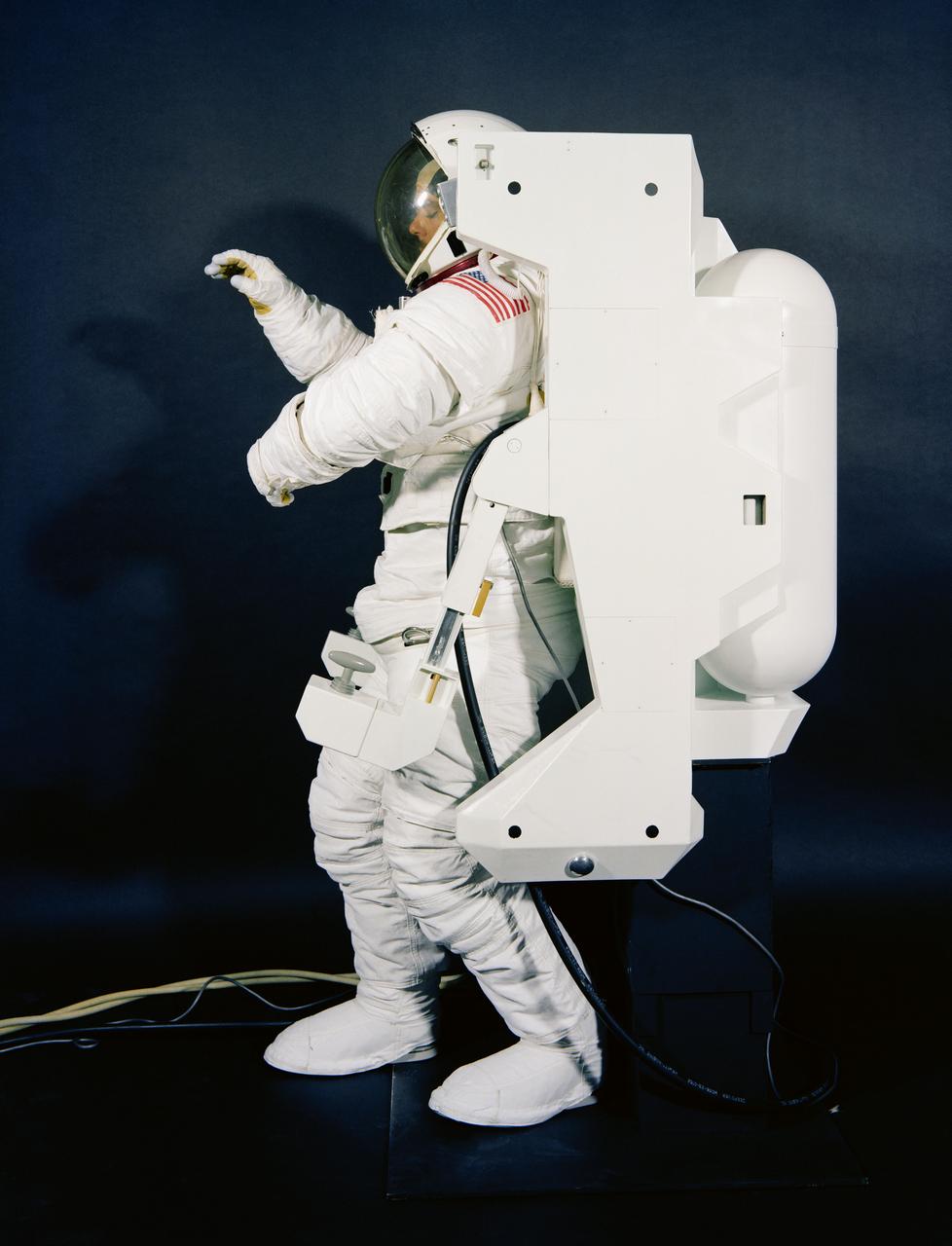
Side close-up view of crewman in high-fidelity Extravehicular Mobility Unit (EMU) / Manned Maneuvering Unit (MMU) mockup.
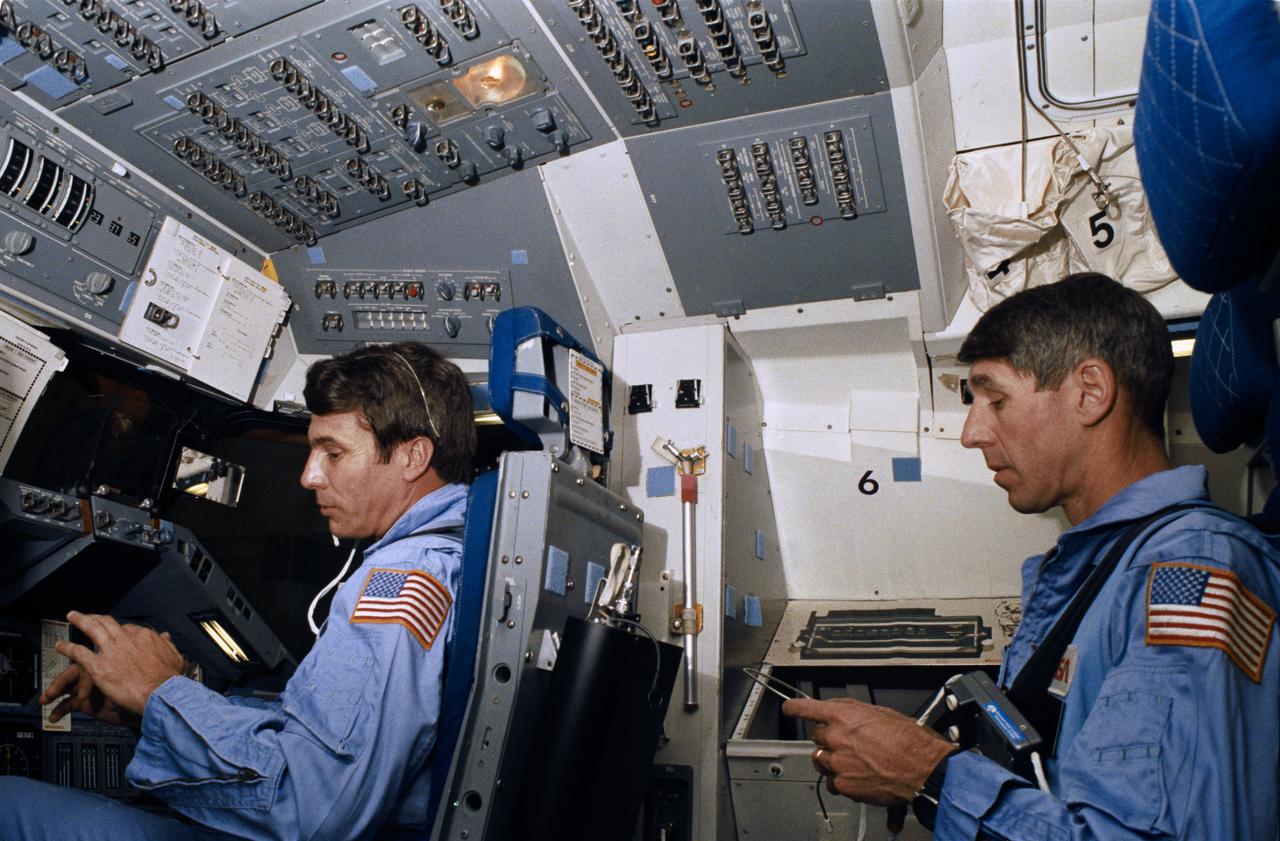
S86-29122 (March 1986) --- Astronauts John E. Blaha, left, and Robert C. Springer participate in a rehearsal for their assigned flight in the crew compartment trainer at the Johnson Space Center (JSC). Blaha is pilot and Springer, one of three mission specialists for the mission. The two will mark their first spaceflights on the next mission.
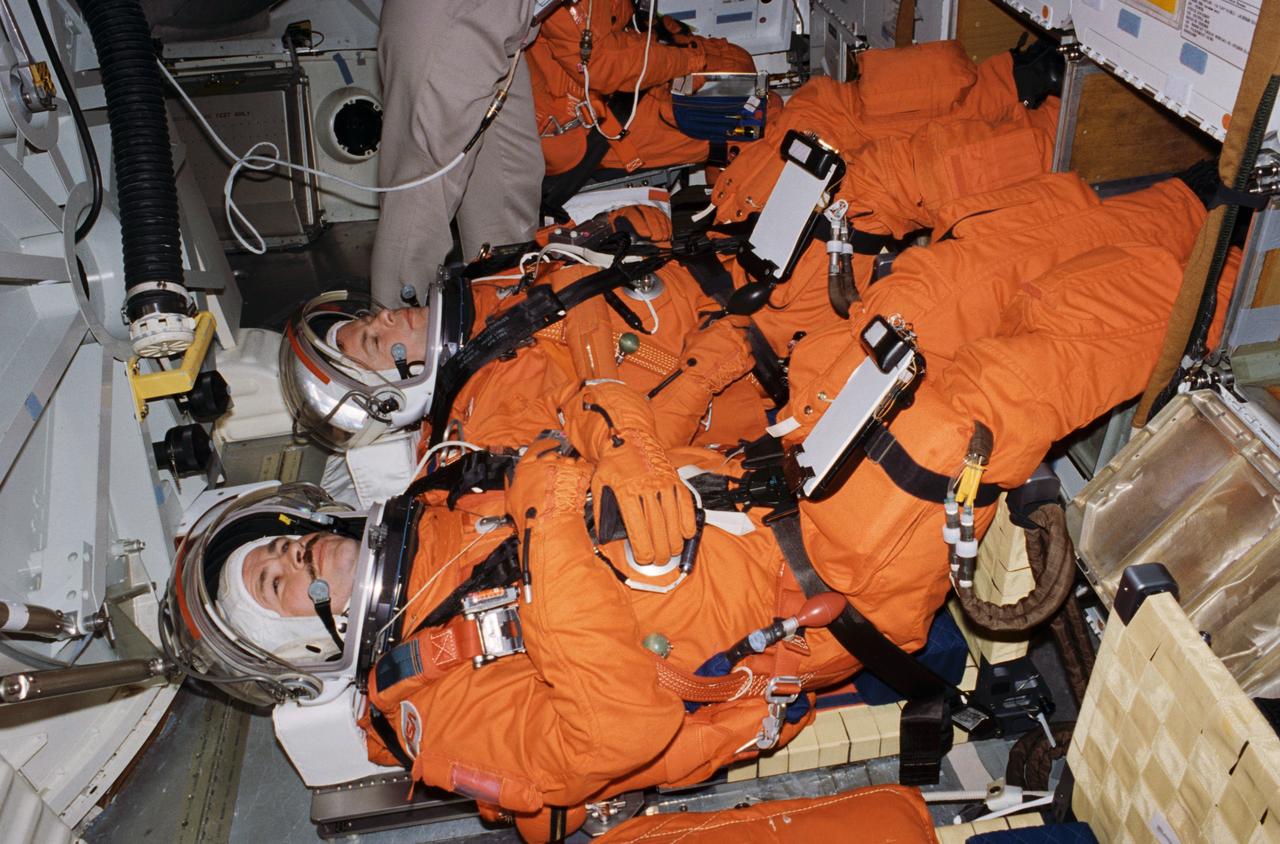
S94-47071 (Nov. 1994) --- In a Shuttle mockup trainer at the Johnson Space Center (JSC), two Russian cosmonauts assigned to Russia's Mir 19 mission check out hardware like that to be flown onboard NASA's Space Shuttle Atlantis, the spacecraft that will take the pair to their orbital destination. Anatoly Y. Solovyev, mission commander; and Nikolai M. Budarin (nearest camera), flight engineer, practice using the Recumbent Seating System (RSS). RSS has been manifest to be carried on the Space Shuttle Atlantis for the STS-71 mission. When Atlantis docks with the Mir space station in 1995, a NASA astronaut and two other Russian cosmonauts, who will have been onboard Mir for a long duration stay, will join the STS-71 crew for the return to Earth. Solovyev and Budarin will remain aboard Mir, to return to Earth later in one of Russia's Soyuz spacecraft.
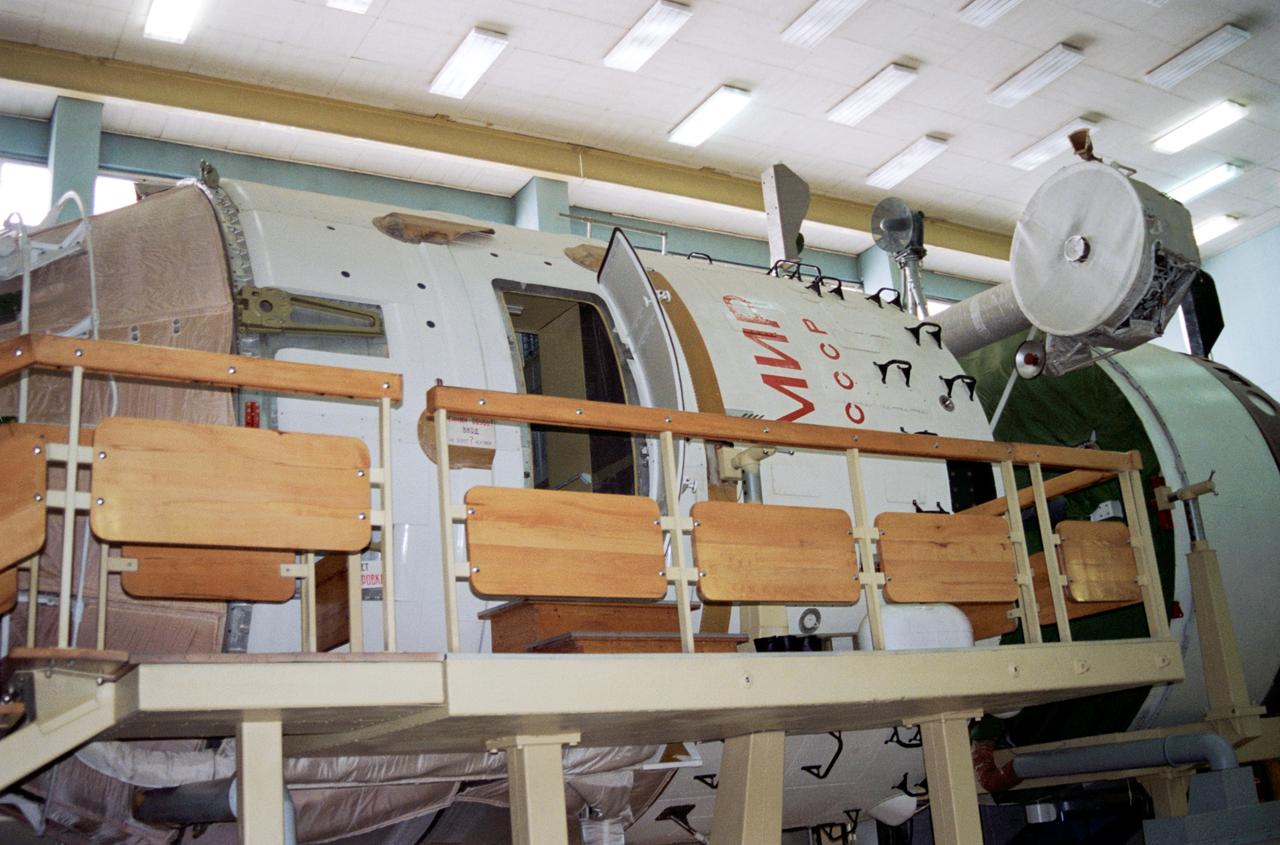
A full-scale mockup of Russia's Space Station serves as one of the several training aids for cosmonaut flights aboard the orbiting laboratory. The core module - called Mir, for world of space - was launched in February 1986 and now serves as the main living quarters for crews. The mockup is located at the Gagarin Cosmonaut Training Center in Star City, Russia. At the time this photo was taken, NASA astronauts Norman E. Thagard and Bonnie J. Dunbar were in Russia for training.
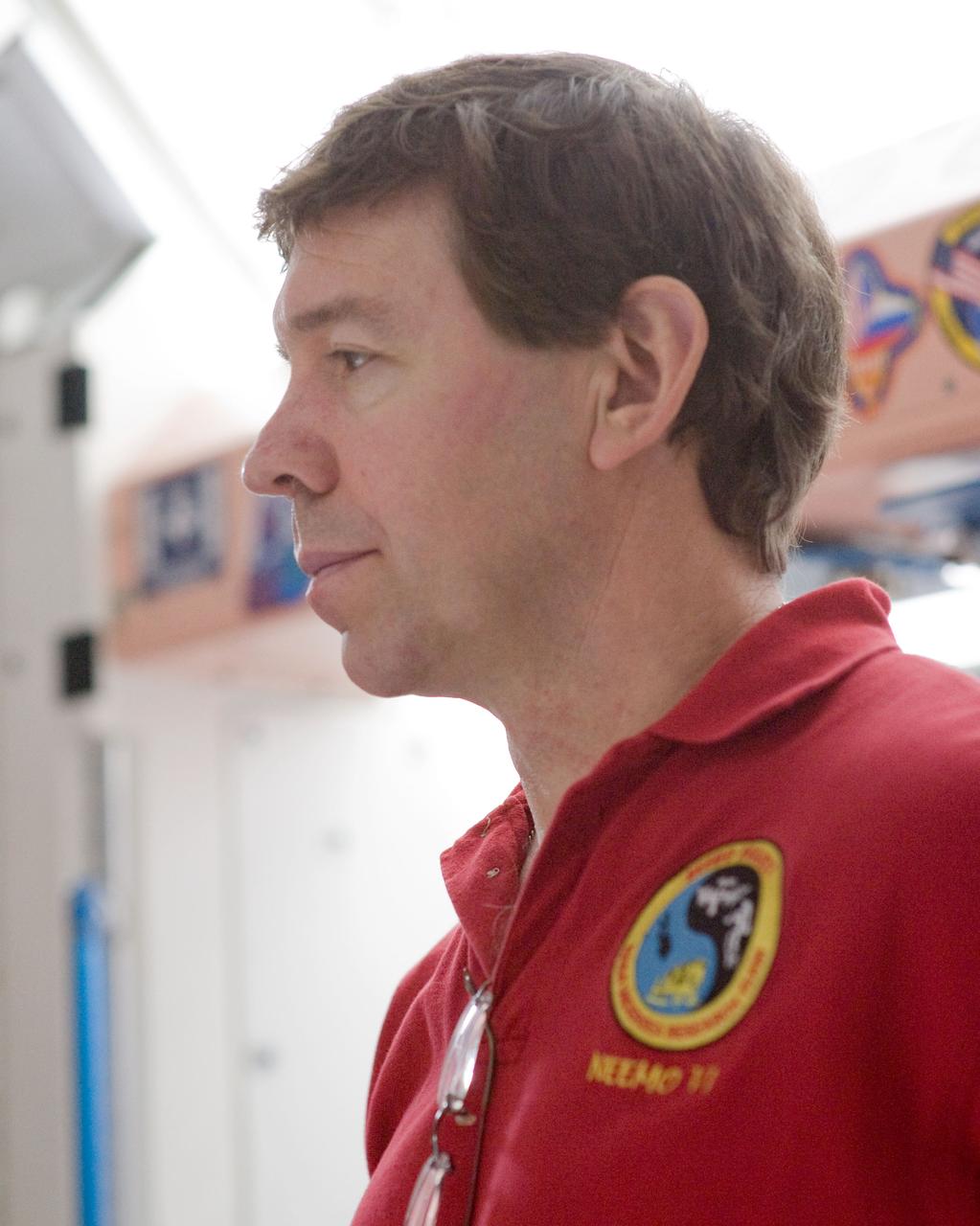
JSC2010-E-017949 (2 Feb. 2010) --- NASA astronaut Michael Barratt, STS-133 mission specialist, is pictured during a training session in an International Space Station mock-up/trainer in the Space Vehicle Mock-up Facility at NASA's Johnson Space Center.
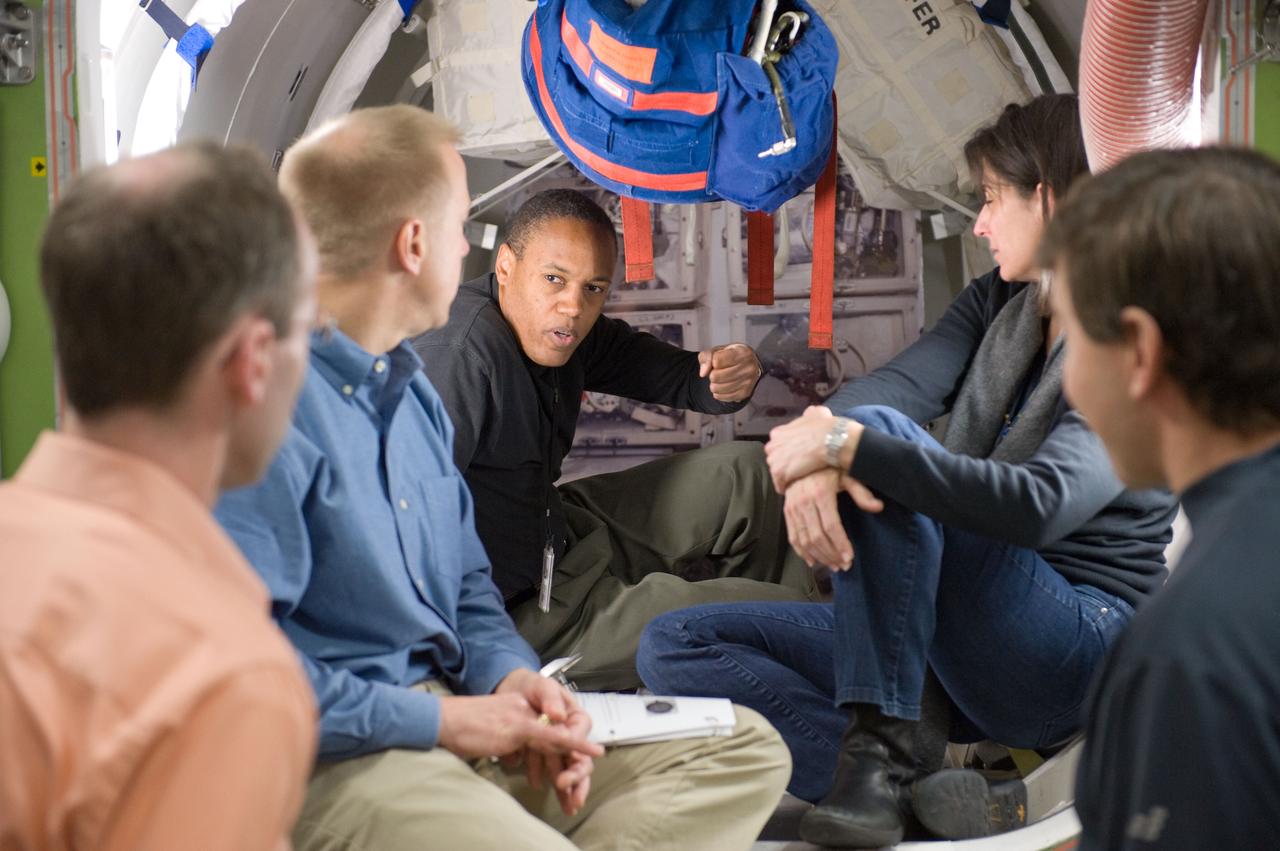
JSC2010-E-020714 (10 Feb. 2010) --- NASA astronauts Tim Kopra (second left), Alvin Drew and Nicole Stott, all STS-133 mission specialists, participate in a training session in an International Space Station mock-up/trainer in the Space Vehicle Mock-up Facility at NASA's Johnson Space Center.
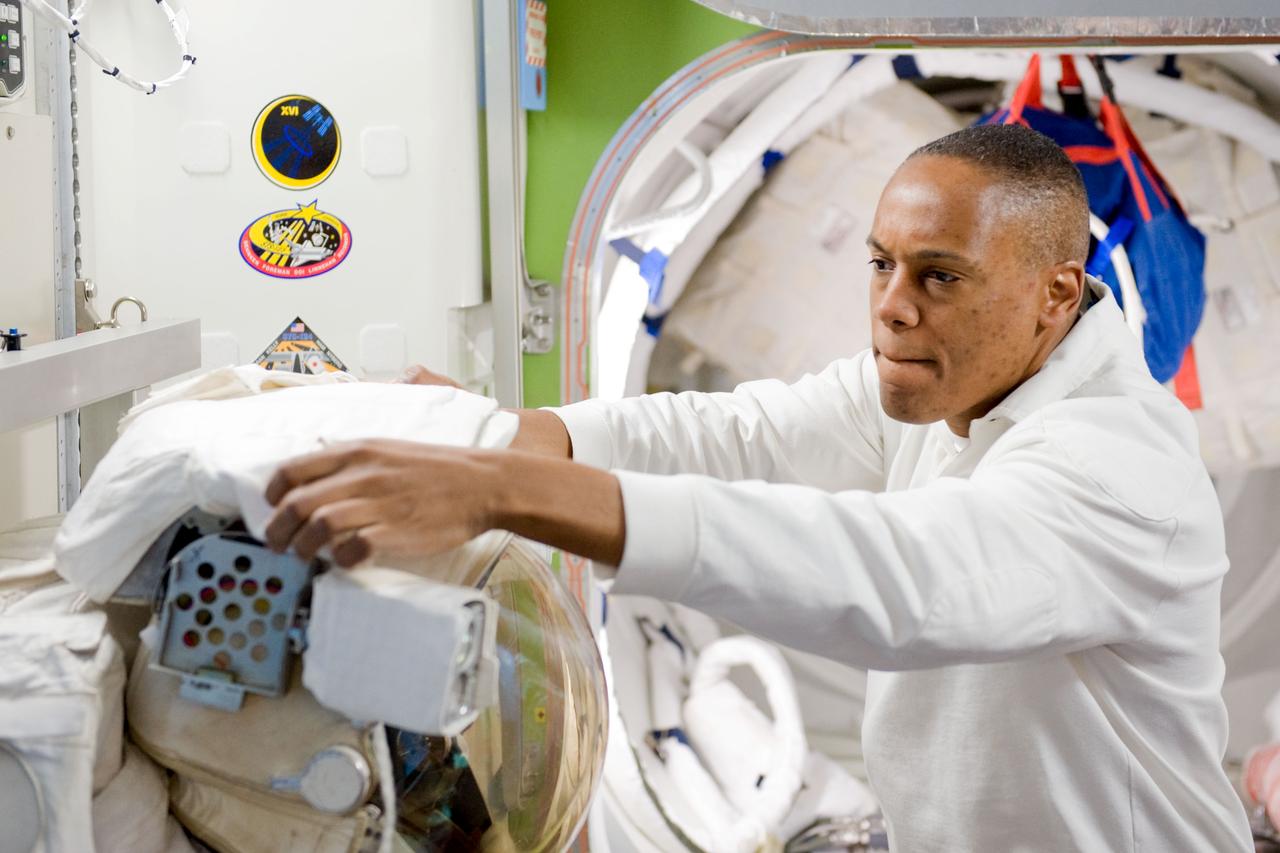
JSC2010-E-044343 (29 March 2010) --- NASA astronaut Alvin Drew, STS-133 mission specialist, participates in a training session in an International Space Station mock-up/trainer in the Space Vehicle Mock-up Facility at NASA's Johnson Space Center.
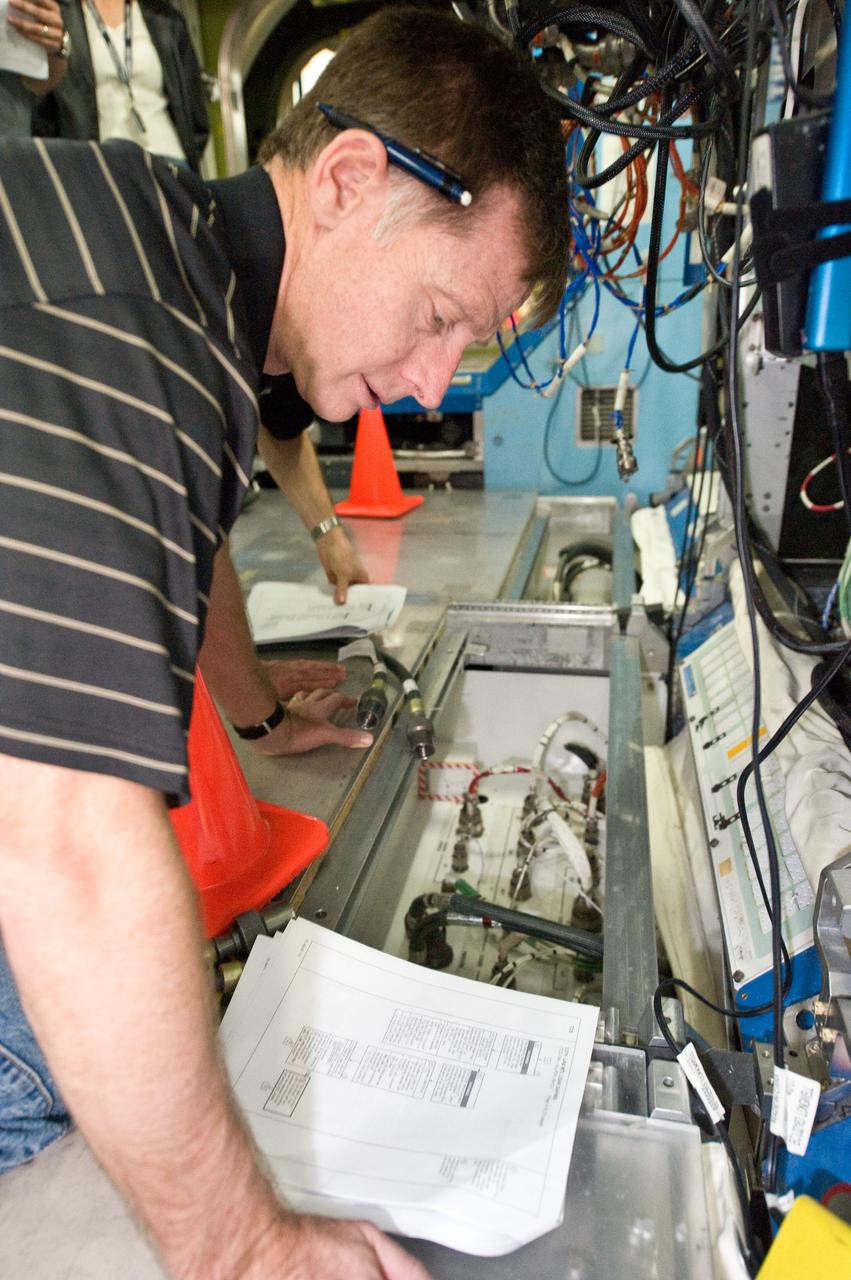
JSC2011-E-021726 (25 Feb. 2011) --- NASA astronaut Chris Ferguson, STS-135 commander, participates in a training session in a space station mock-up in the Space Vehicle Mock-up Facility at NASA's Johnson Space Center. Photo credit: NASA or National Aeronautics and Space Administration
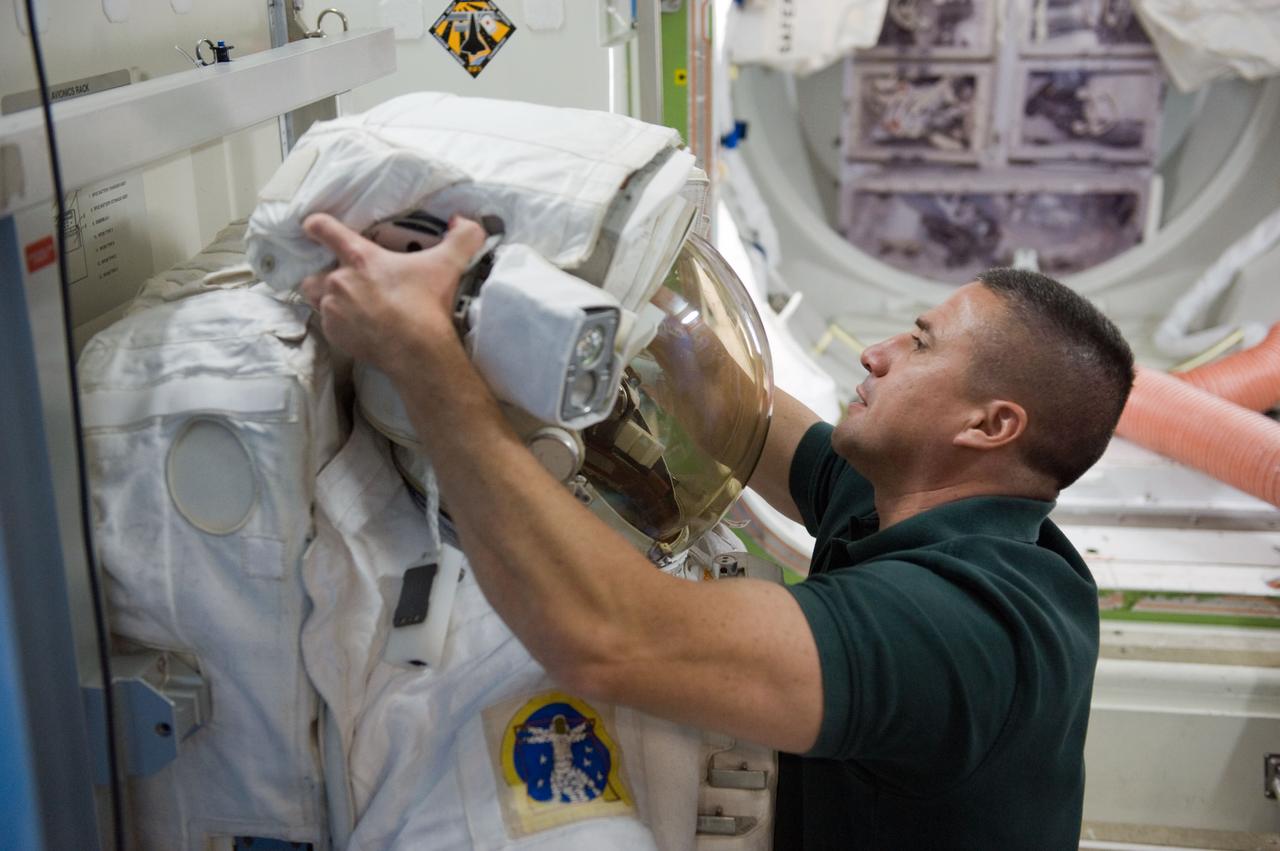
JSC2009-E-244237 (23 Nov. 2009) --- Astronaut George Zamka, STS-130 commander, works with an Extravehicular Mobility Unit (EMU) spacesuit during a training session in an International Space Station mock-up/trainer in the Space Vehicle Mock-up Facility at NASA's Johnson Space Center.
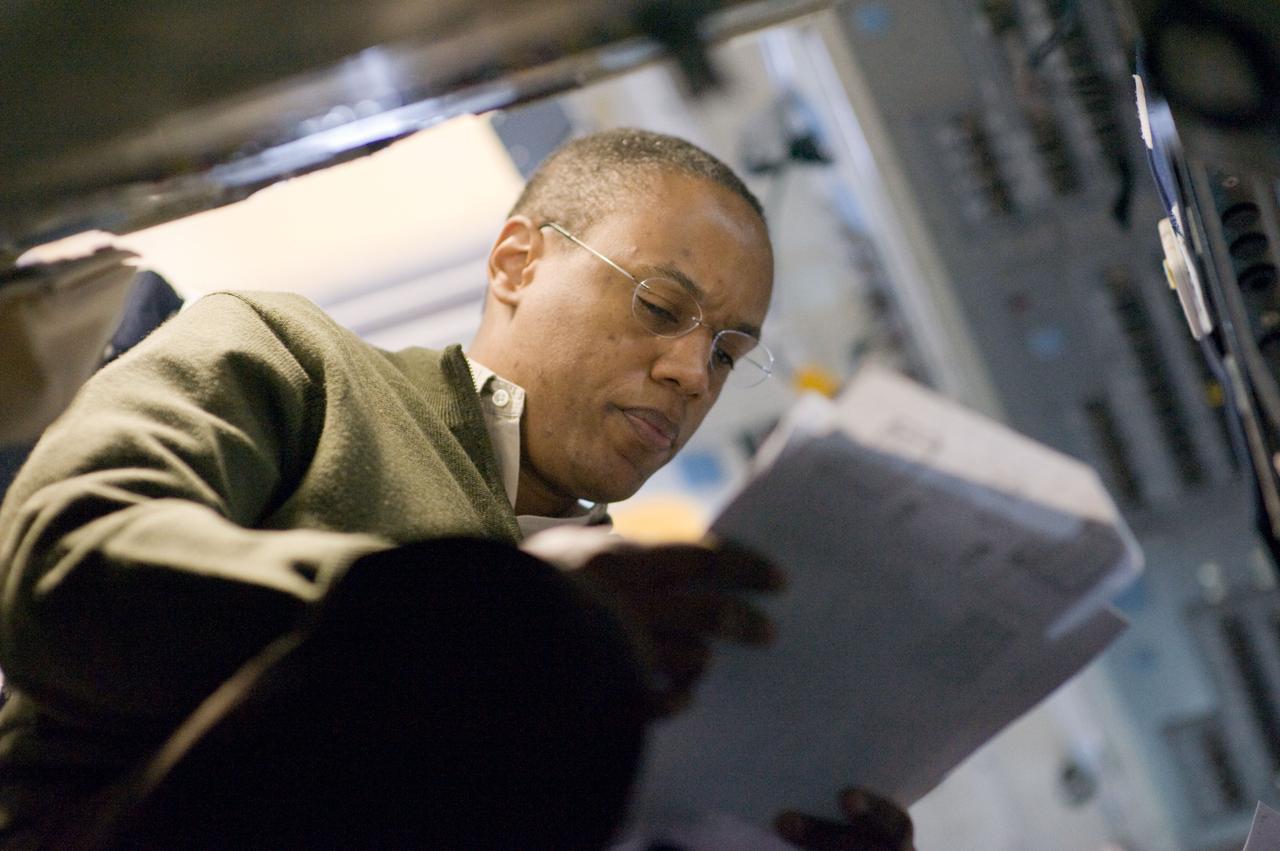
JSC2010-E-023637 (4 Feb. 2010) --- NASA astronaut Alvin Drew, STS-133 mission specialist, participates in training session in a shuttle mock-up in the Space Vehicle Mock-up Facility at NASA's Johnson Space Center.
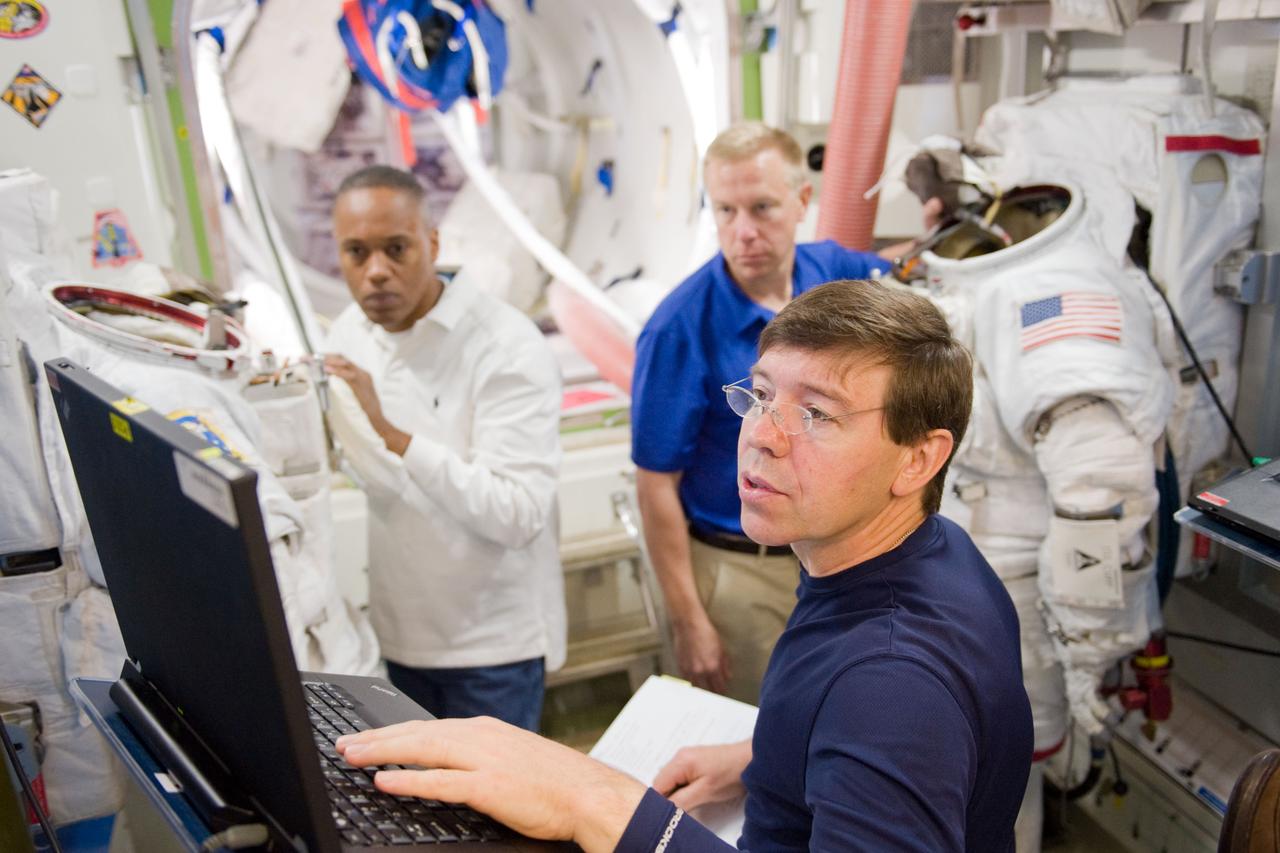
JSC2010-E-044349 (29 March 2010) --- NASA astronauts Michael Barratt (foreground), Alvin Drew (left background) and Tim Kopra, all STS-133 mission specialists, participate in a training session in an International Space Station mock-up/trainer in the Space Vehicle Mock-up Facility at NASA's Johnson Space Center.
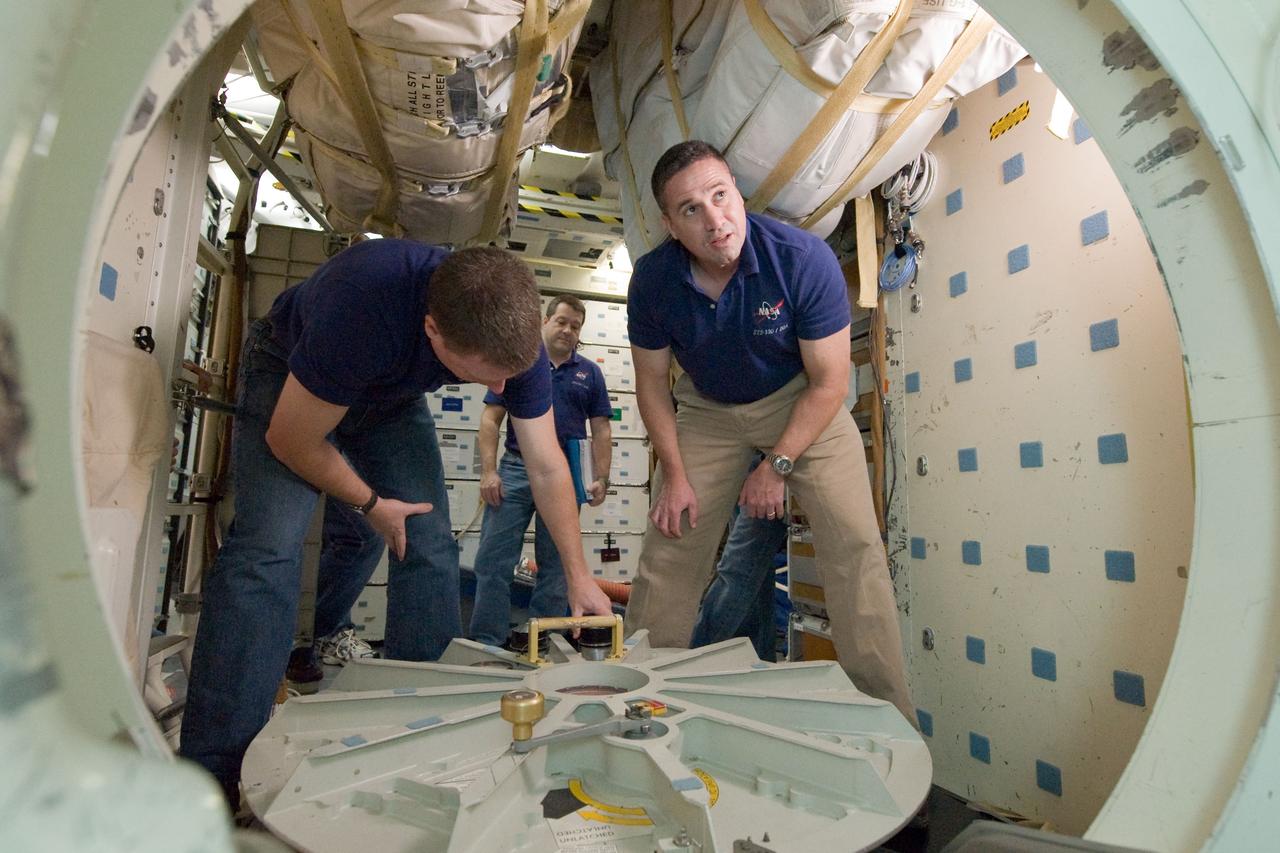
JSC2009-E-286958 (22 Dec. 2009) --- Astronauts George Zamka (right), STS-130 commander; Terry Virts, pilot; and Nicholas Patrick (background), mission specialist, participate in an ingress/egress timeline training session in a shuttle mock-up in the Space Vehicle Mock-up Facility at NASA's Johnson Space Center.