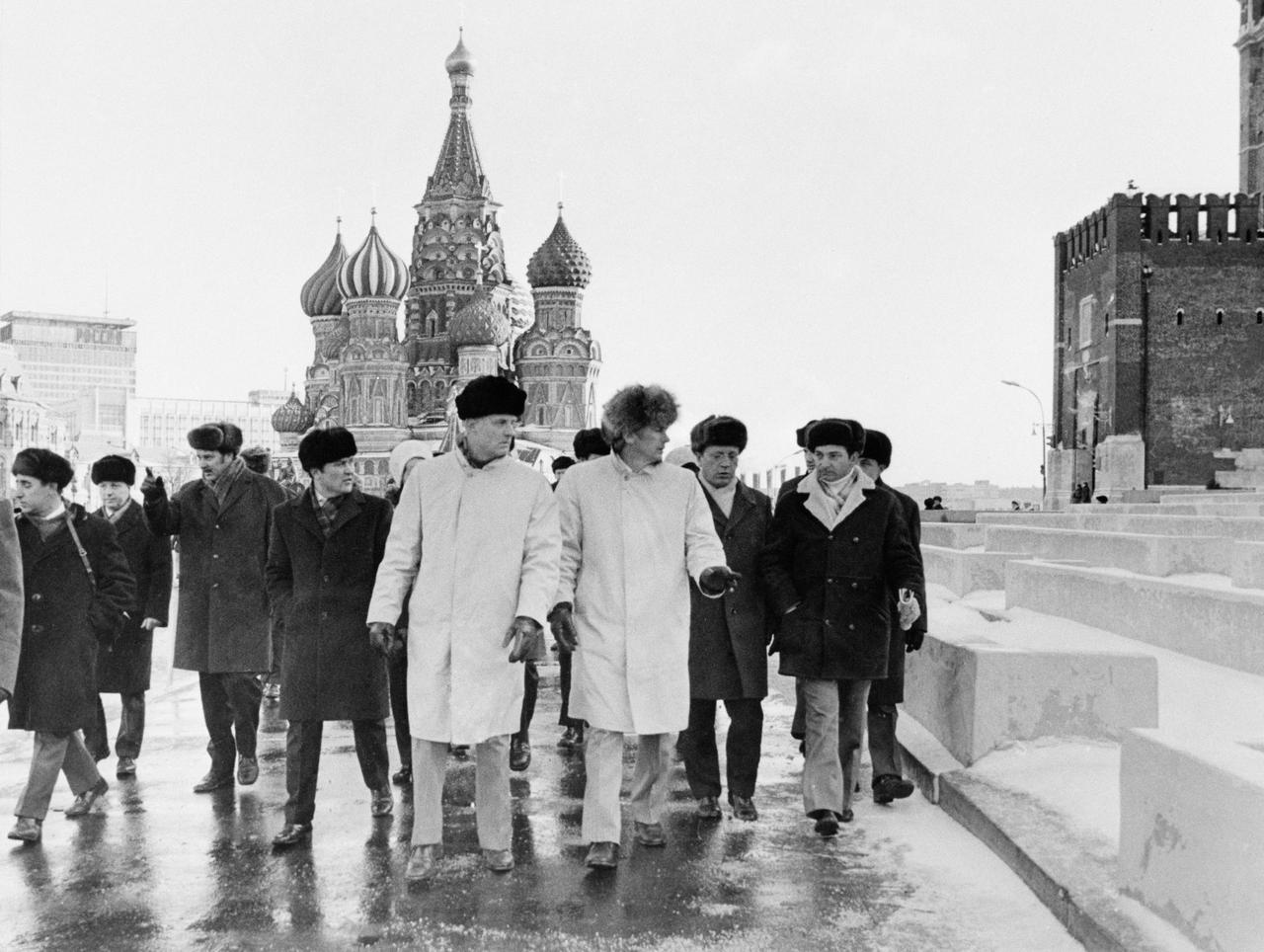
S74-20831 (November 1973) --- A group of astronauts and their cosmonaut hosts are photographed sightseeing on Red Square in the heart of Moscow during a tour of the Soviet capital. The Americans were in the USSR to participate in Apollo-Soyuz Test Project familiarization training on the Soyuz systems at the Cosmonaut Training Center (Star City) near Moscow. Astronaut Thomas P. Stafford (light coat, black cap), commander of the American ASTP crew, was head of the U.S. delegation to Star City. Astronaut Eugene A. Cernan (on Stafford?s left, light coat) is the Special Assistant to the American Technical Director of ASTP. The sightseeing group is walking in the direction of Lenin?s Mausoleum. The structure in the background is the Cathedral of the Intercession (St. Basil?s) Museum. The historic Kremlin complex is to the right. PHOTO COURTESY: USSR ACADEMY OF SCIENCES
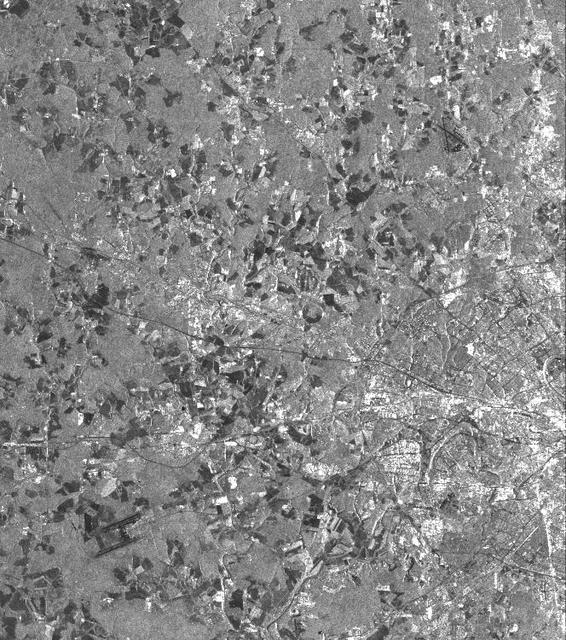
This is a vertically polarized L-band image of the southern half of Moscow, an area which has been inhabited for 2,000 years. The image covers a diameter of approximately 50 kilometers (31 miles) and was taken on September 30, 1994 by the Spaceborne Imaging Radar-C/X-band Synthetic Aperture Radar aboard the space shuttle Endeavour. The city of Moscow was founded about 750 years ago and today is home to about 8 million residents. The southern half of the circular highway (a road that looks like a ring) can easily be identified as well as the roads and railways radiating out from the center of the city. The city was named after the Moskwa River and replaced Russia's former capital, St. Petersburg, after the Russian Revolution in 1917. The river winding through Moscow shows up in various gray shades. The circular structure of many city roads can easily be identified, although subway connections covering several hundred kilometers are not visible in this image. The white areas within the ring road and outside of it are buildings of the city itself and it suburban towns. Two of many airports are located in the west and southeast of Moscow, near the corners of the image. The Kremlin is located north just outside of the imaged city center. It was actually built in the 16th century, when Ivan III was czar, and is famous for its various churches. In the surrounding area, light gray indicates forests, while the dark patches are agricultural areas. The various shades from middle gray to dark gray indicate different stages of harvesting, ploughing and grassland. http://photojournal.jpl.nasa.gov/catalog/PIA01752
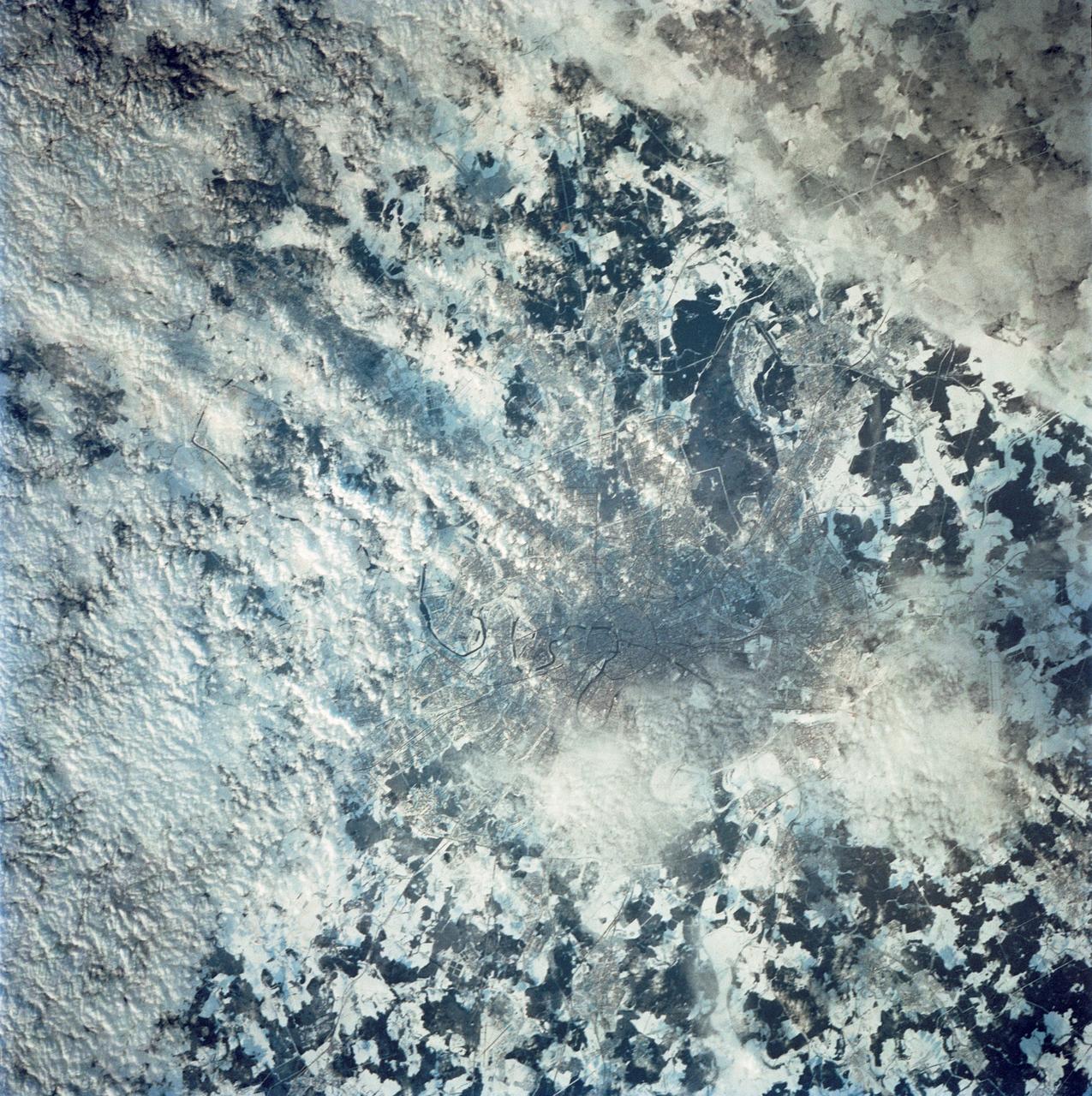
STS042-80-000AV (22-30 Jan. 1992) --- Moscow is arranged as a series of concentric transportation routes crossed by straight spokes which lead away from the Kremlin at the city center. One of the inner rings, the Garden Ring, follows the line of the Sixteenth Century city wall and moat. Both this and the outer ring of the Moscow Circular Motorway can be seen. The Kremlin, established in the Twelfth Century, lies on the north bank of the winding Moskva River. Very large high-rise buildings were erected after World War II. Clusters of these produce a coarser pattern and can be detected at two points within the outer ring road. Of the five airports surrounding the city, Vnukovo Airport to the south is easily distinguished, and Sheremetyevo to the west can also be delineated. The once-secret Ramenskoye Airport, with the longest runways in the world, lies under clouds to the northeast.
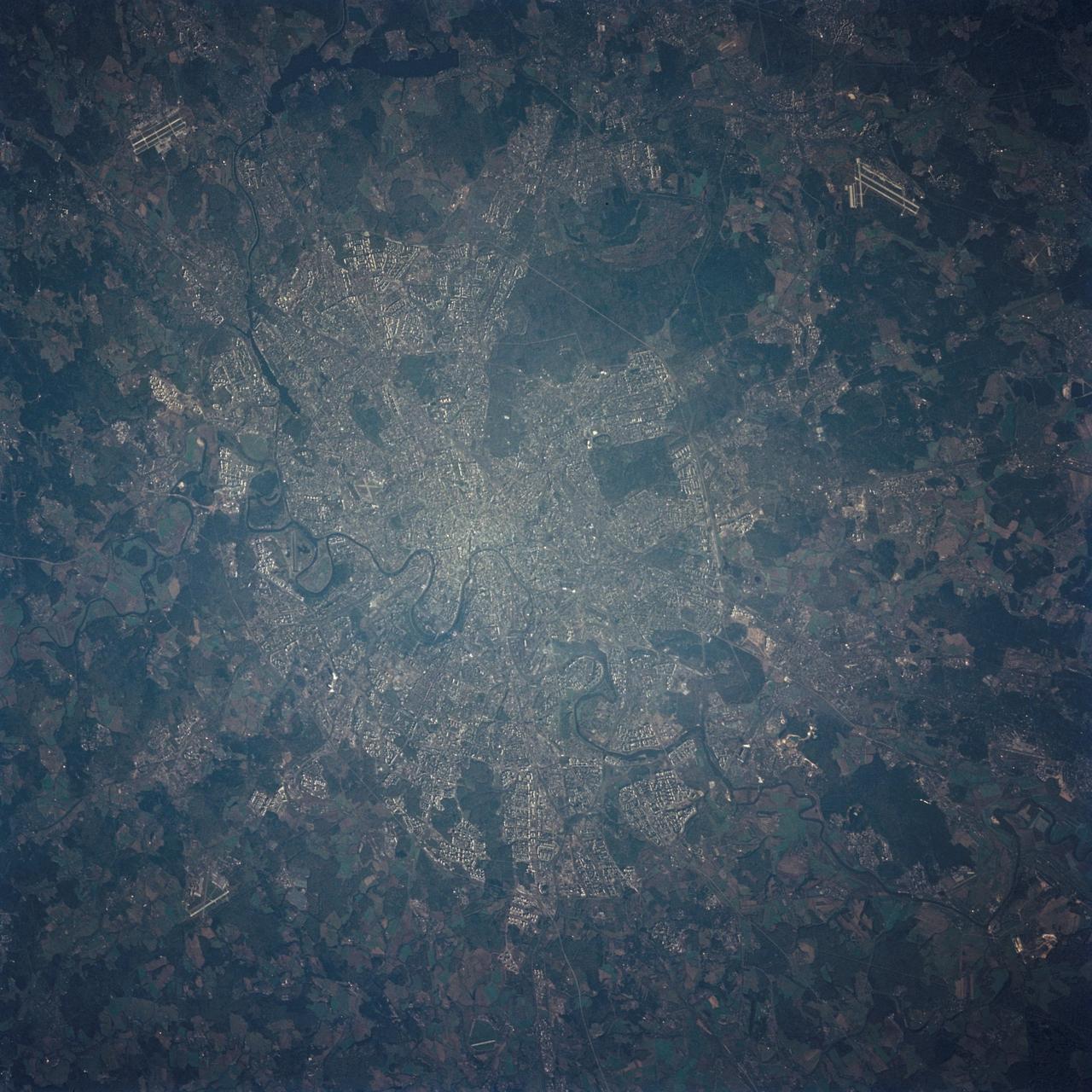
STS068-236-027 (30 September-11 October 1994) --- The STS-68 crewmembers used a 70mm camera to photograph this early morning nadir view of wheel-shaped Moscow. Star City, Russia facility, north of the city, is among the detail seen in the view, photographed from 115 nautical miles above Earth. Six NASA astronauts spent a week and a half aboard the Space Shuttle Endeavour in support of the Space Radar Laboratory 2 (SRL-2) mission.
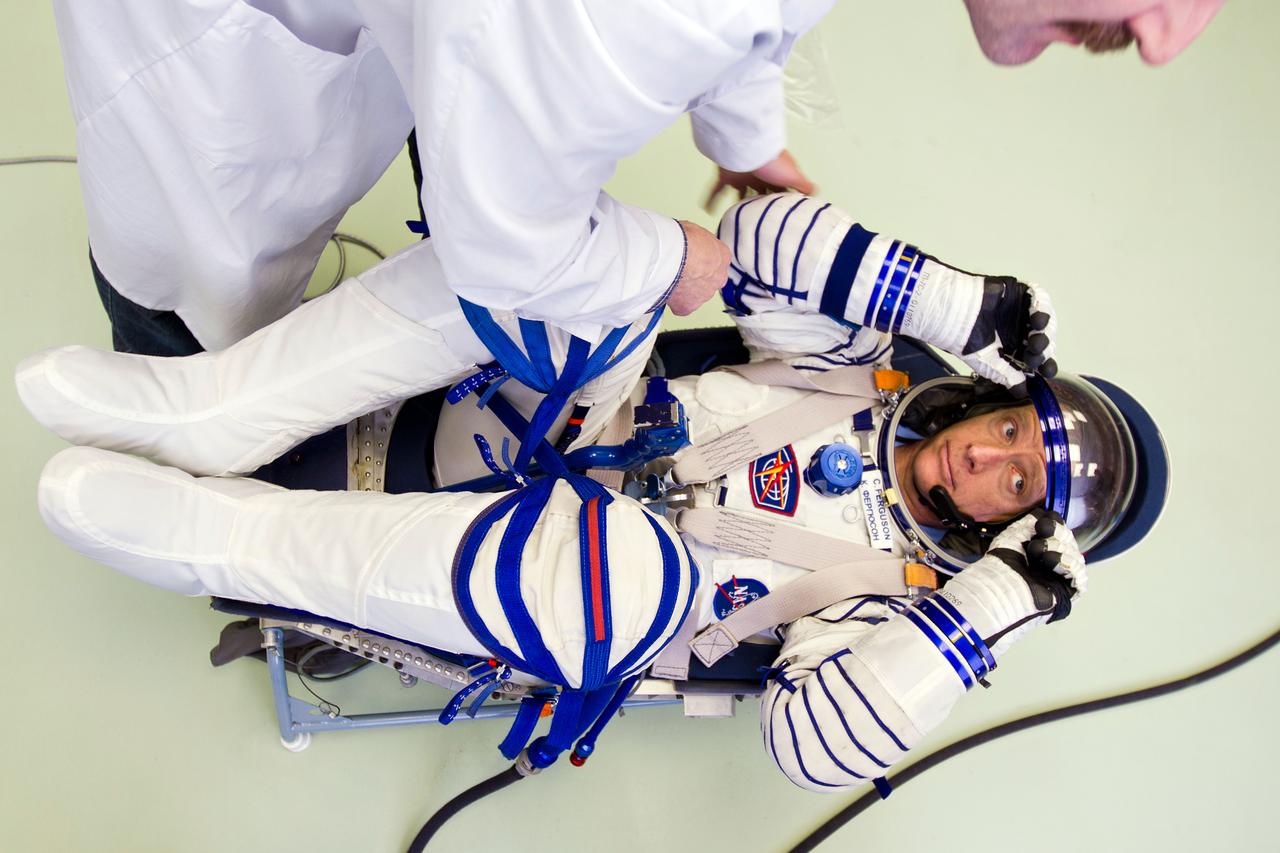
NASA astronaut Chris Ferguson undergoes a fit check of his Sokol space suit at the Zvezda facility on Tuesday, March 29, 2011, in Moscow. The crew of the final shuttle mission traveled to Moscow for a suit fit check of their Russian Soyuz suits that will be required in the event of an emergency. ( NASA Photo / Houston Chronicle, Smiley N. Pool )
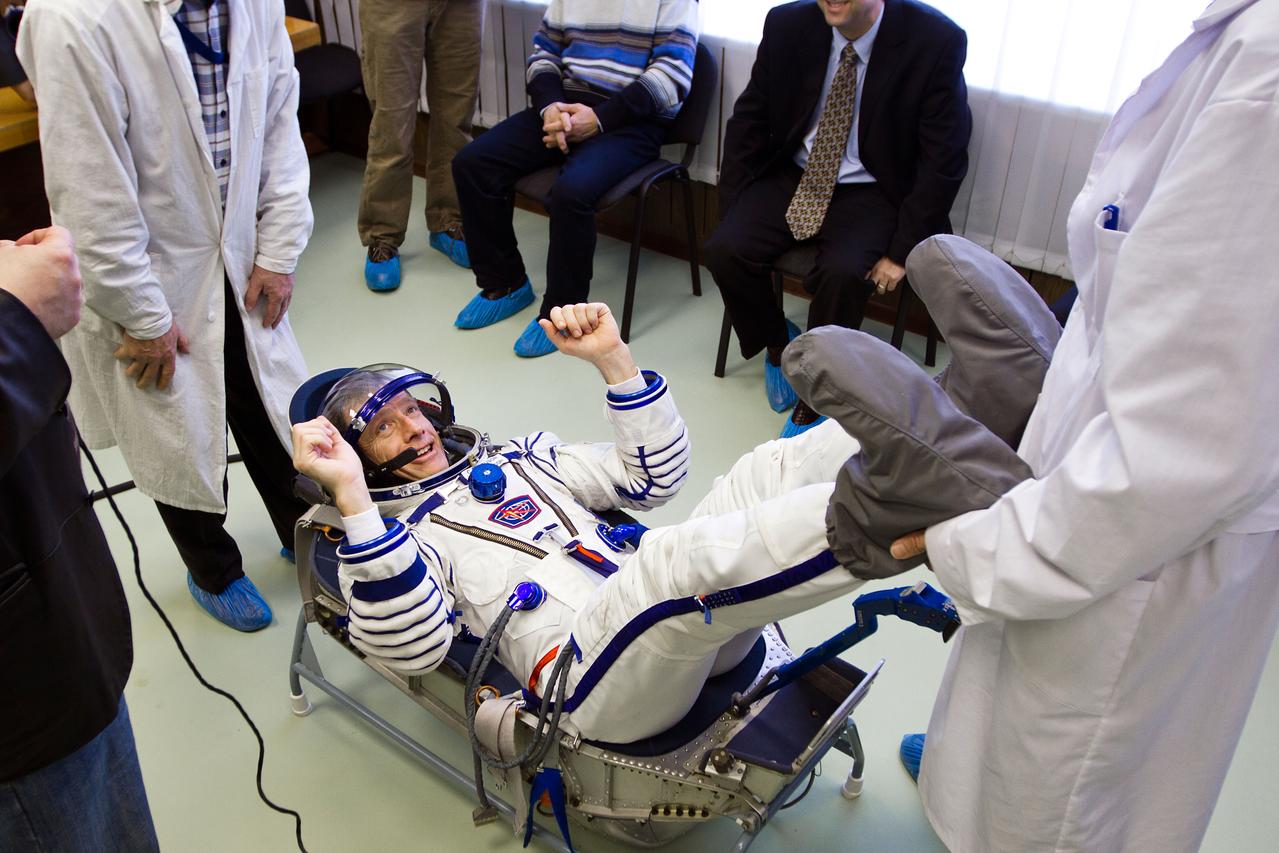
NASA astronaut Chris Ferguson undergoes a fit check of his Sokol space suit at the Zvezda facility on Tuesday, March 29, 2011, in Moscow. The crew of the final shuttle mission traveled to Moscow for a suit fit check of their Russian Soyuz suits that will be required in the event of an emergency. ( NASA Photo / Houston Chronicle, Smiley N. Pool )
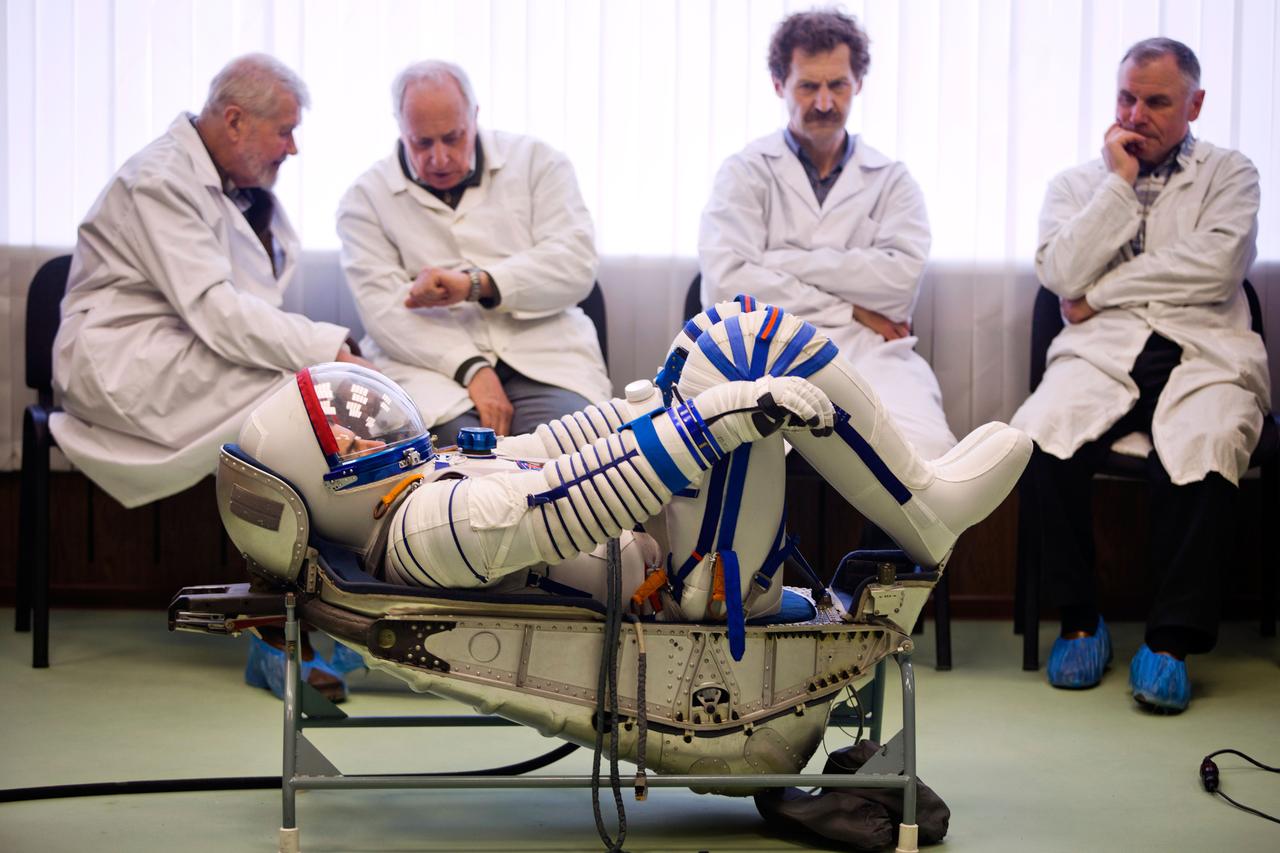
NASA astronaut Rex Walheim undergoes a fit check of his Sokol space suit at the Zvezda facility on Monday, March 28, 2011, in Moscow. The crew of the final shuttle mission traveled to Moscow for a suit fit check of their Russian Soyuz suits that will be required in the event of an emergency. ( NASA Photo / Houston Chronicle, Smiley N. Pool )
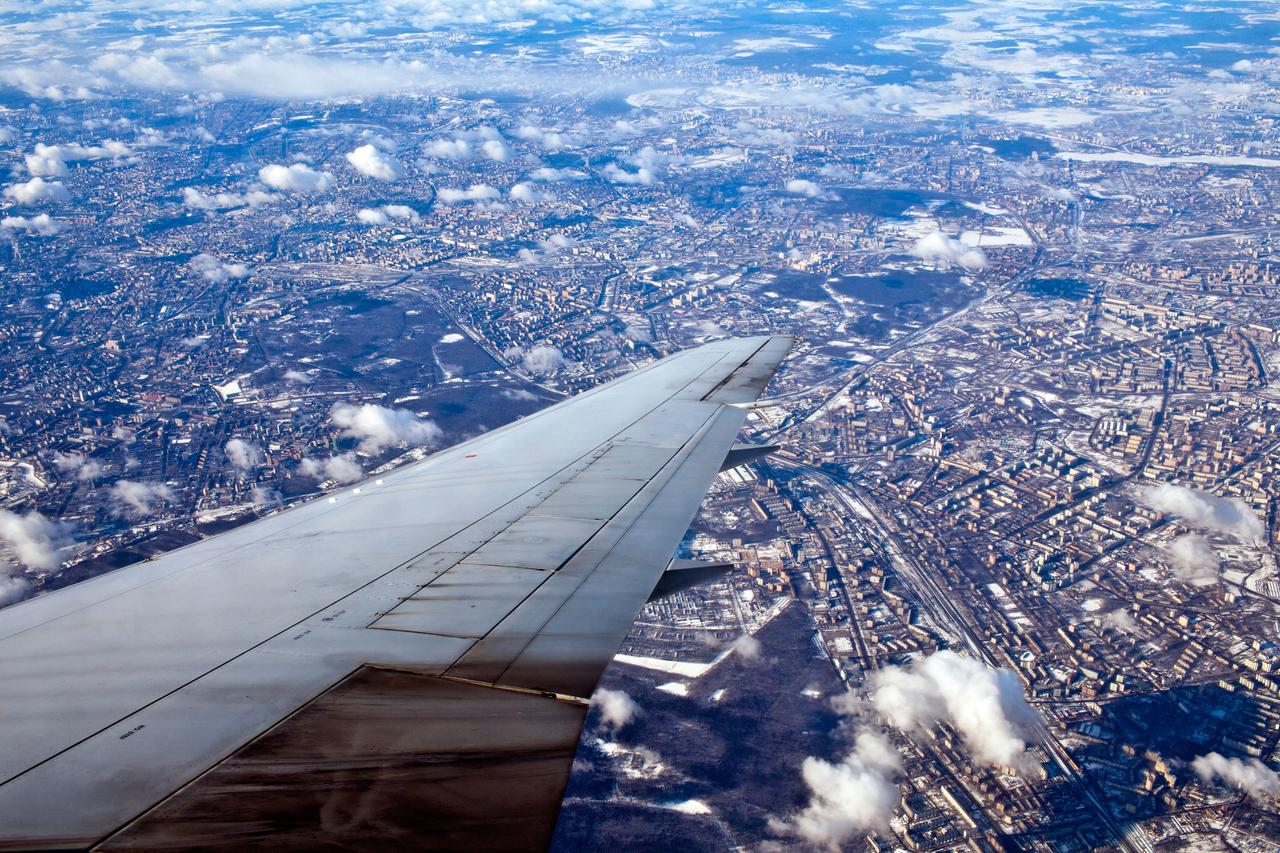
JSC2011-E-040290 (27 March 2011) --- Moscow stretches out in all directions as seen from a commercial flight carrying NASA astronauts Doug Hurley, STS-135 pilot, and Rex Walheim, mission specialist, to Moscow, Russia on March 27, 2011. The crew of the final shuttle mission traveled to Moscow to be fitted for Russian Sokol spacesuits which would be required in the event of an emergency. If the shuttle is unable to return to Earth, the crew will remain on the International Space Station and return on a staggered basis in the course of a year on scheduled Soyuz flights to the station. Photo credit: NASA Photo/Houston Chronicle, Smiley N. Pool
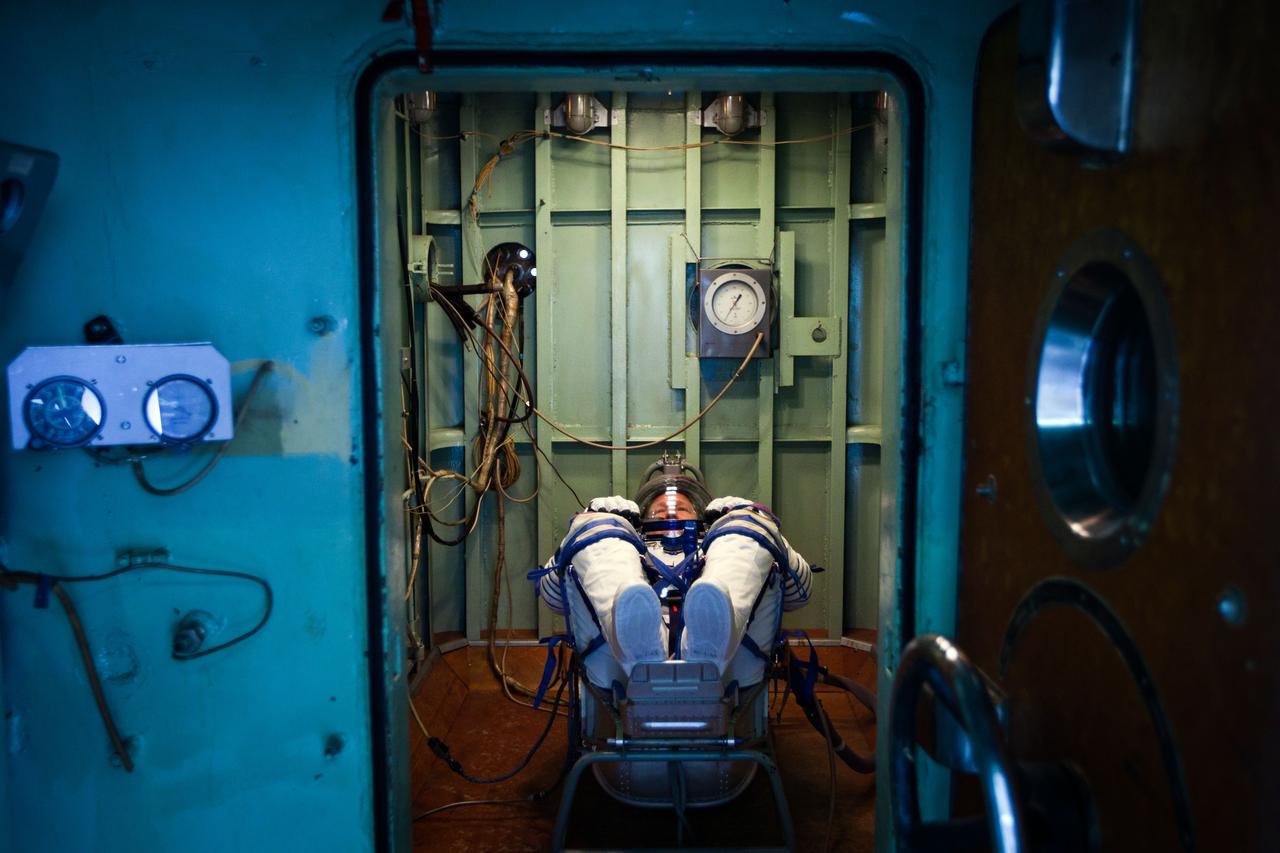
JSC2011-E-040324 (30 March 2011) --- NASA astronaut Doug Hurley, STS-135 pilot, waits in a pressure chamber before a test of his Russian Sokol spacesuit at the Zvezda facility in Moscow on March 30, 2011. The crew of the final shuttle mission traveled to Moscow for a suit fit check of their Russian Sokol suits which would be required in the event of an emergency. Photo credit: NASA Photo/Houston Chronicle, Smiley N. Pool
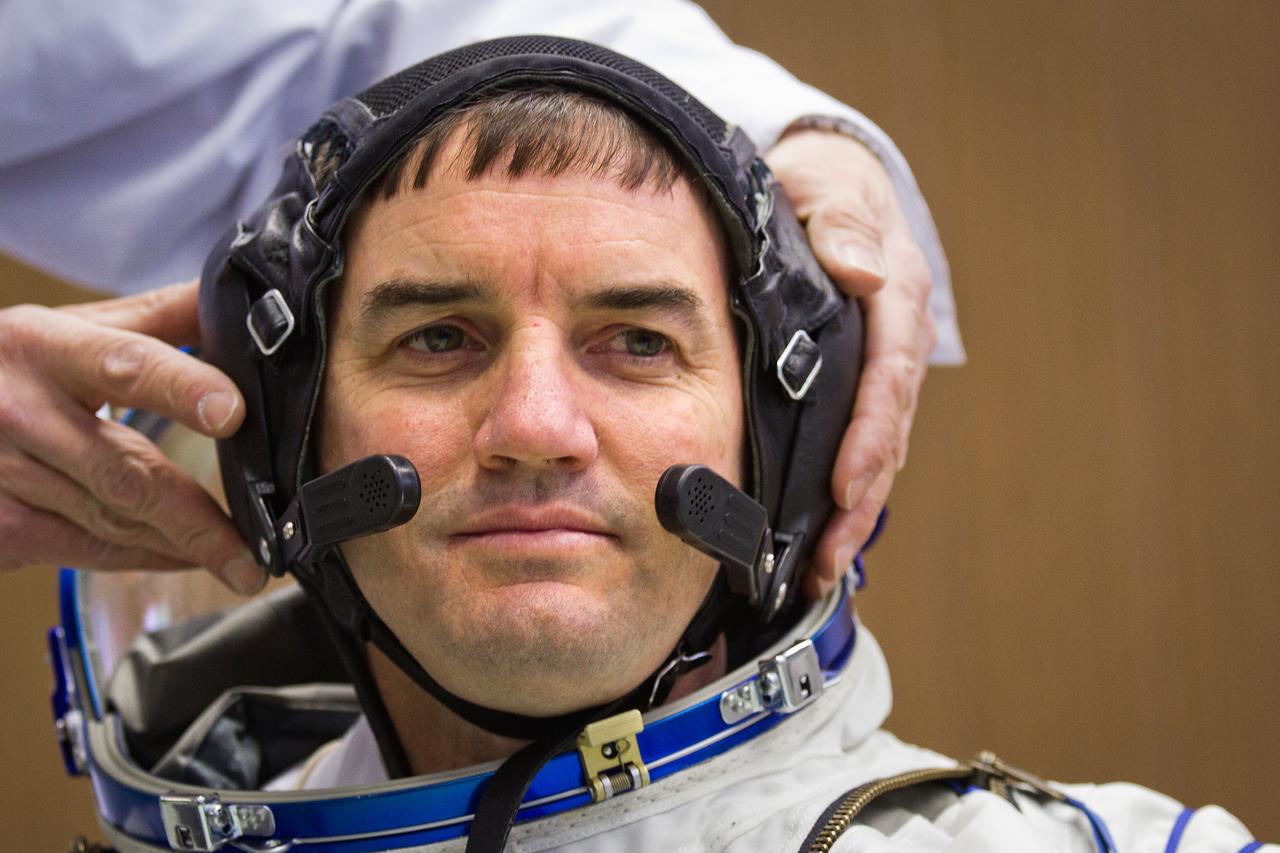
JSC2011-E-040298 (28 March 2011) --- NASA astronaut Rex Walheim, STS-135 mission specialist, undergoes a fit check of his Sokol spacesuit at the Zvezda facility in Moscow on March 28, 2011. The crew of the final shuttle mission traveled to Moscow for a suit fit check of their Russian suits would be required in the event of an emergency. Photo credit: NASA Photo/Houston Chronicle, Smiley N. Pool
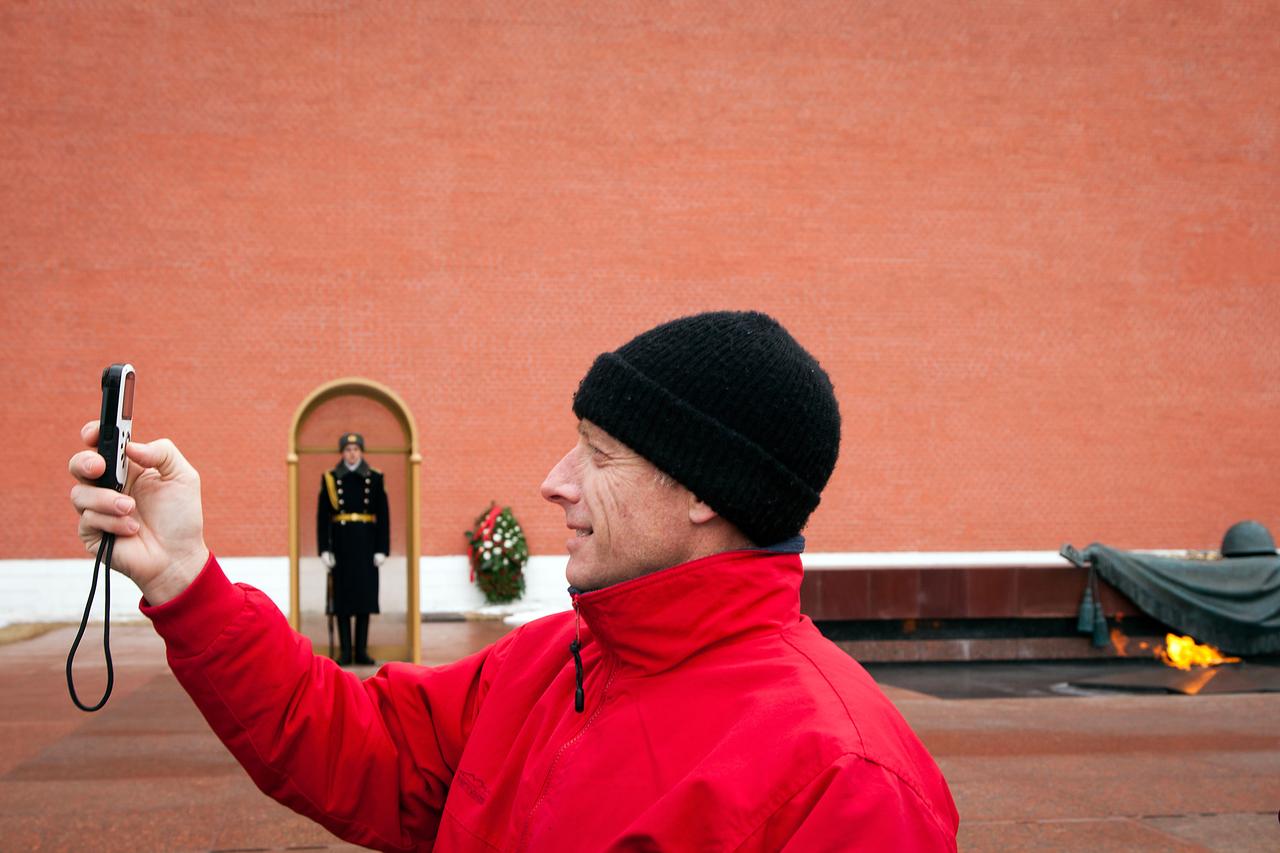
JSC2011-E-040330 (30 March 2011) --- NASA astronaut Chris Ferguson (foreground), STS-135 commander, visits Red Square in Moscow on March 30, 2011. The crew of the final shuttle mission traveled to Moscow for a suit fit check of their Russian Sokol suits which would be required in the event of an emergency. Photo credit: NASA Photo/Houston Chronicle, Smiley N. Pool
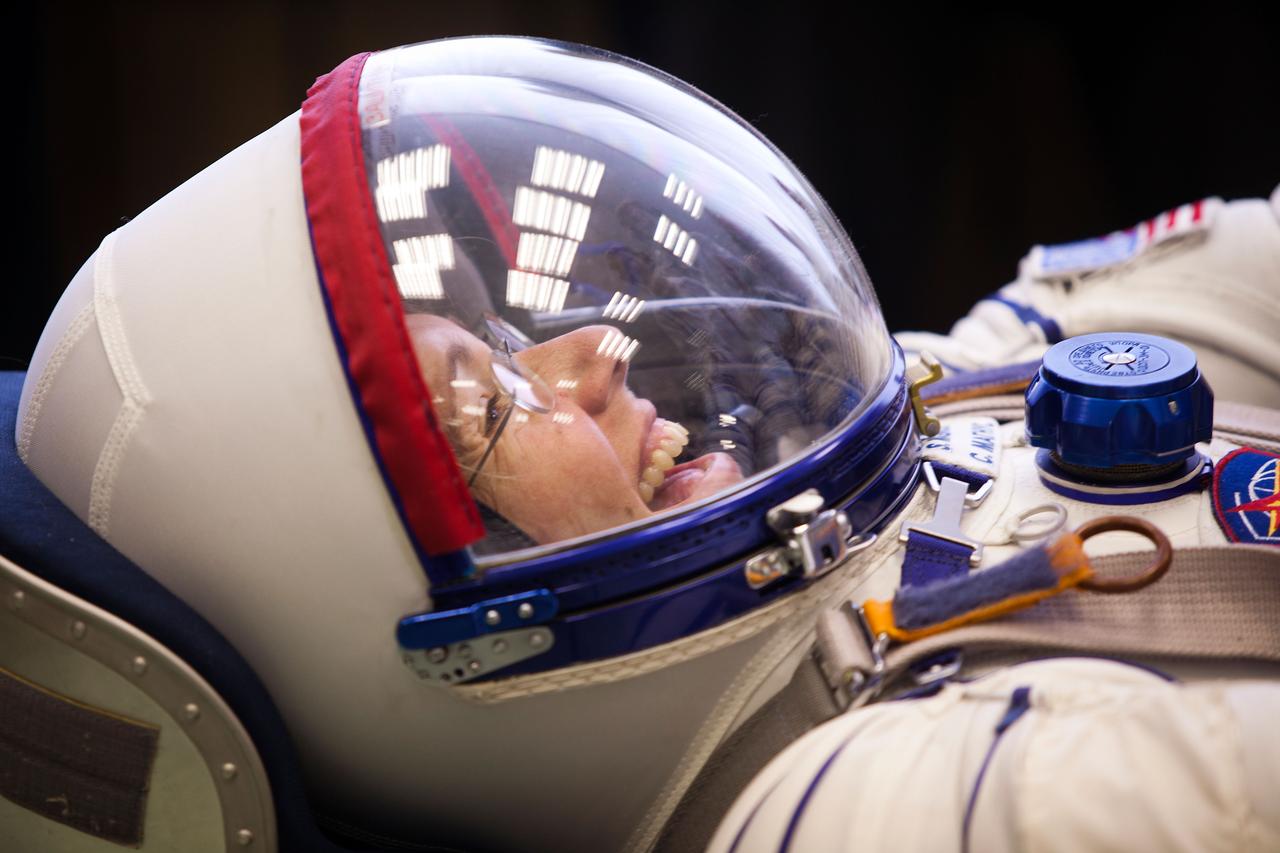
JSC2011-E-040322 (29 March 2011) --- NASA astronaut Sandy Magnus, STS-135 mission specialist, undergoes a fit check of her Sokol spacesuit March 29, 2011, at the Zvezda facility in Moscow. The crew of the final shuttle mission traveled to Moscow for a suit fit check of their Russian Soyuz suits that will be required in the event of an emergency. Photo credit: NASA Photo / Houston Chronicle, Smiley N. Pool
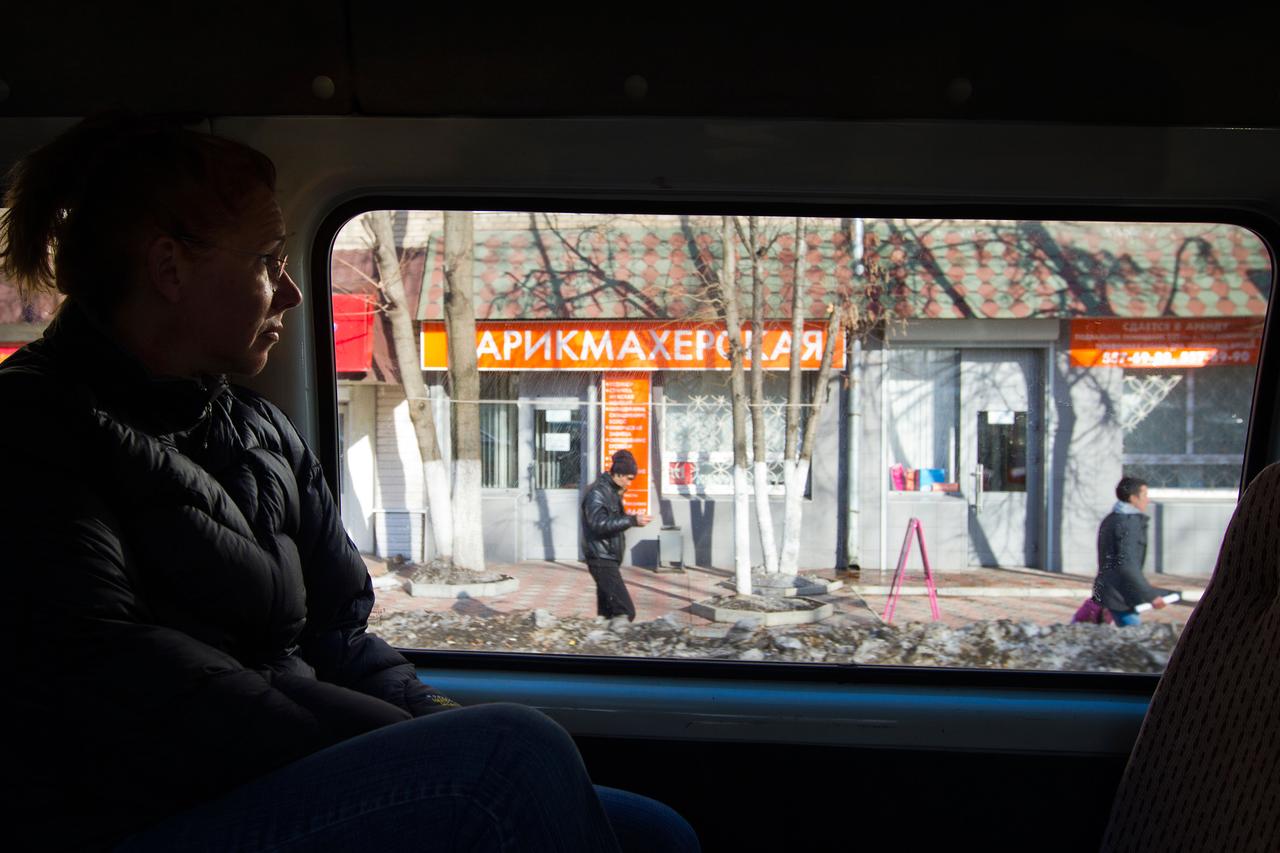
JSC2011-E-040323 (29 March 2011) --- NASA astronaut Sandy Magnus, STS-135 mission specialist, looks at a snow-covered neighborhood out the window of a van carrying her back to Star City following a fit check of her Sokol spacesuit at the Zvezda facility in Moscow March 29, 2011. The crew of the final shuttle mission traveled to Moscow for a suit fit check of their Russian spacesuits which would be required in the event of an emergency. Photo credit: NASA Photo/Houston Chronicle, Smiley N. Pool
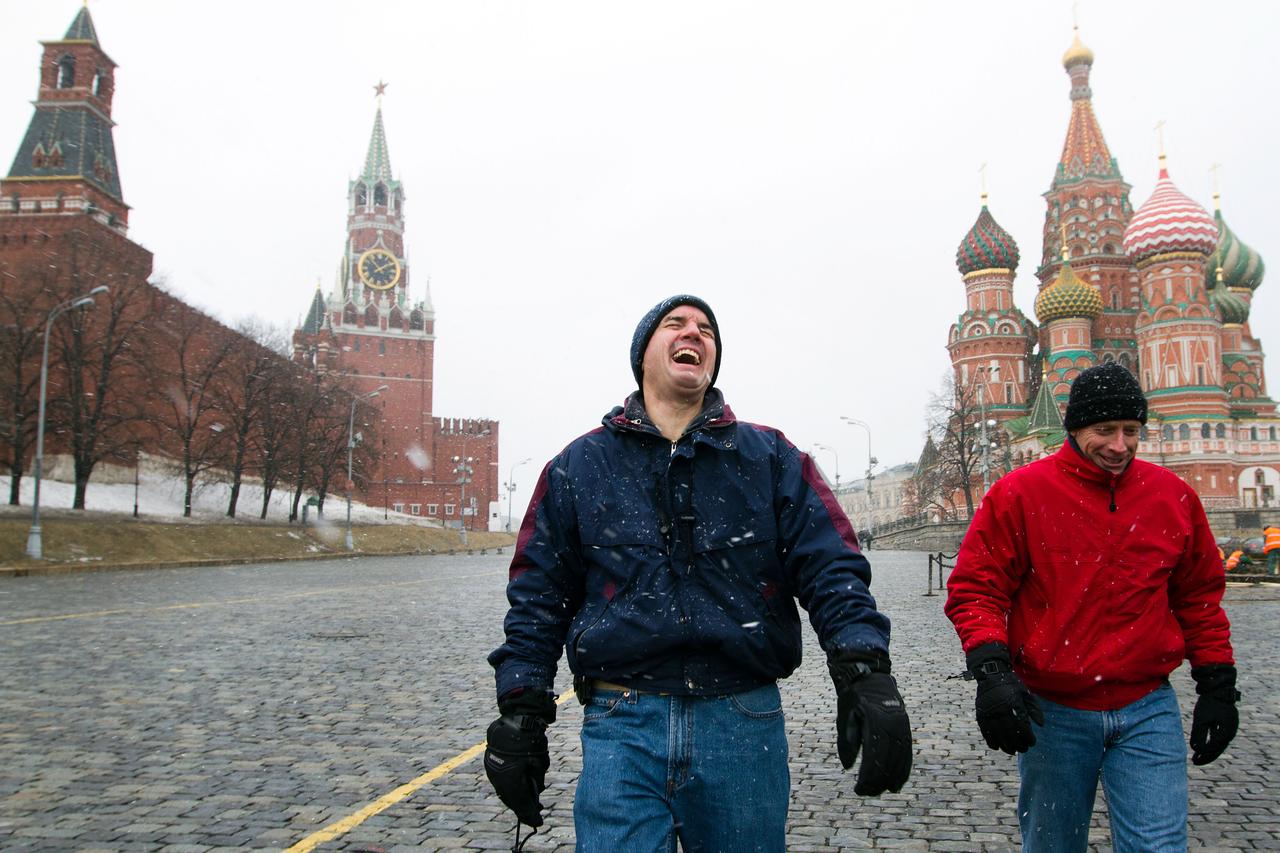
JSC2011-E-040332 (30 March 2011) --- NASA astronauts Rex Walheim and Chris Ferguson visit Red Square in Moscow on March 30, 2011. The crew of the final shuttle mission traveled to Moscow for a suit fit check of their Russian Soyuz suits which would be required in the event of an emergency. Photo credit: NASA Photo/Houston Chronicle, Smiley N. Pool
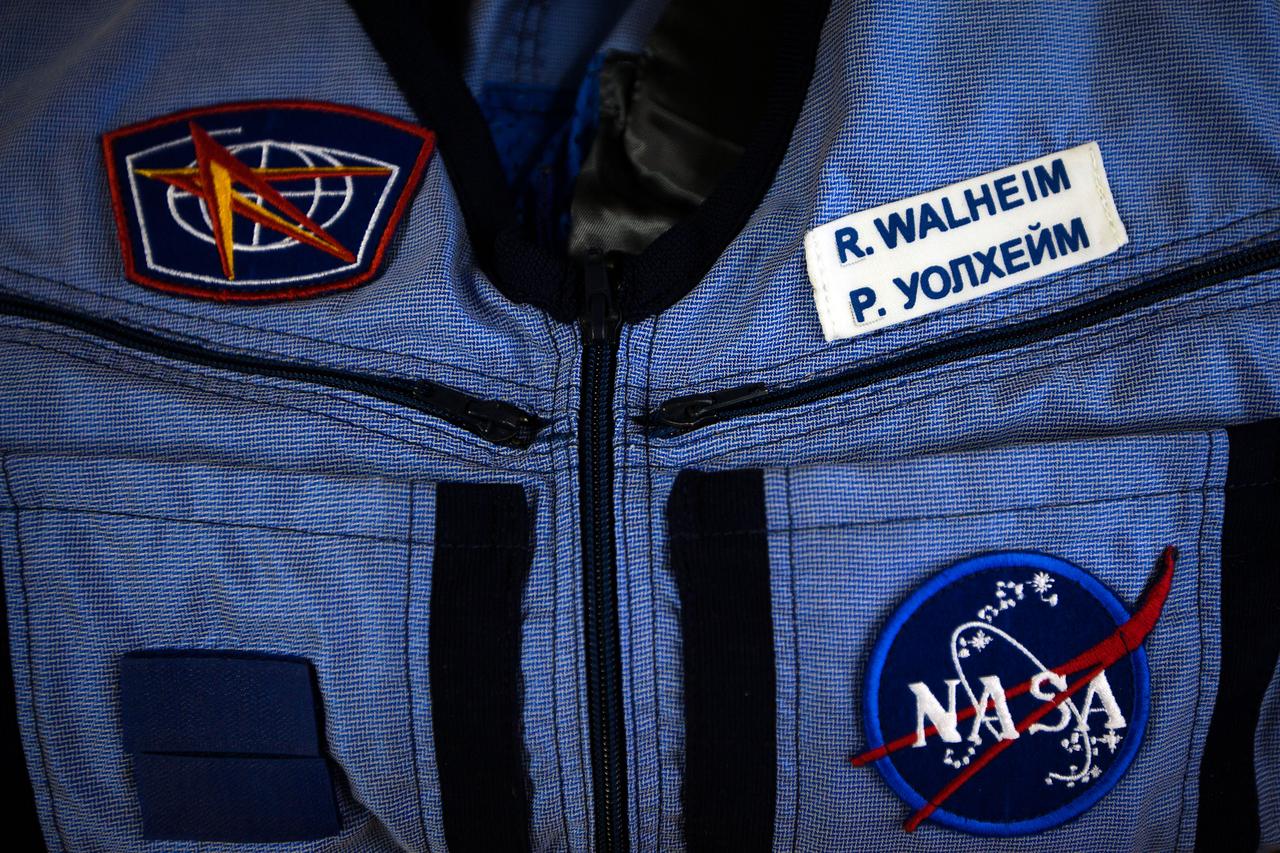
JSC2011-E-040302 (28 March 2011) --- NASA astronaut Rex Walheim's name is seen in both English and Russian on a "Penguin" suit during a suit fit check at the Zvezda facility in Moscow on March 28, 2011. The crew of the final shuttle mission traveled to Moscow for a suit fit check of their Russian Sokol suits which would be required in the event of an emergency. Photo credit: NASA Photo/Houston Chronicle, Smiley N. Pool
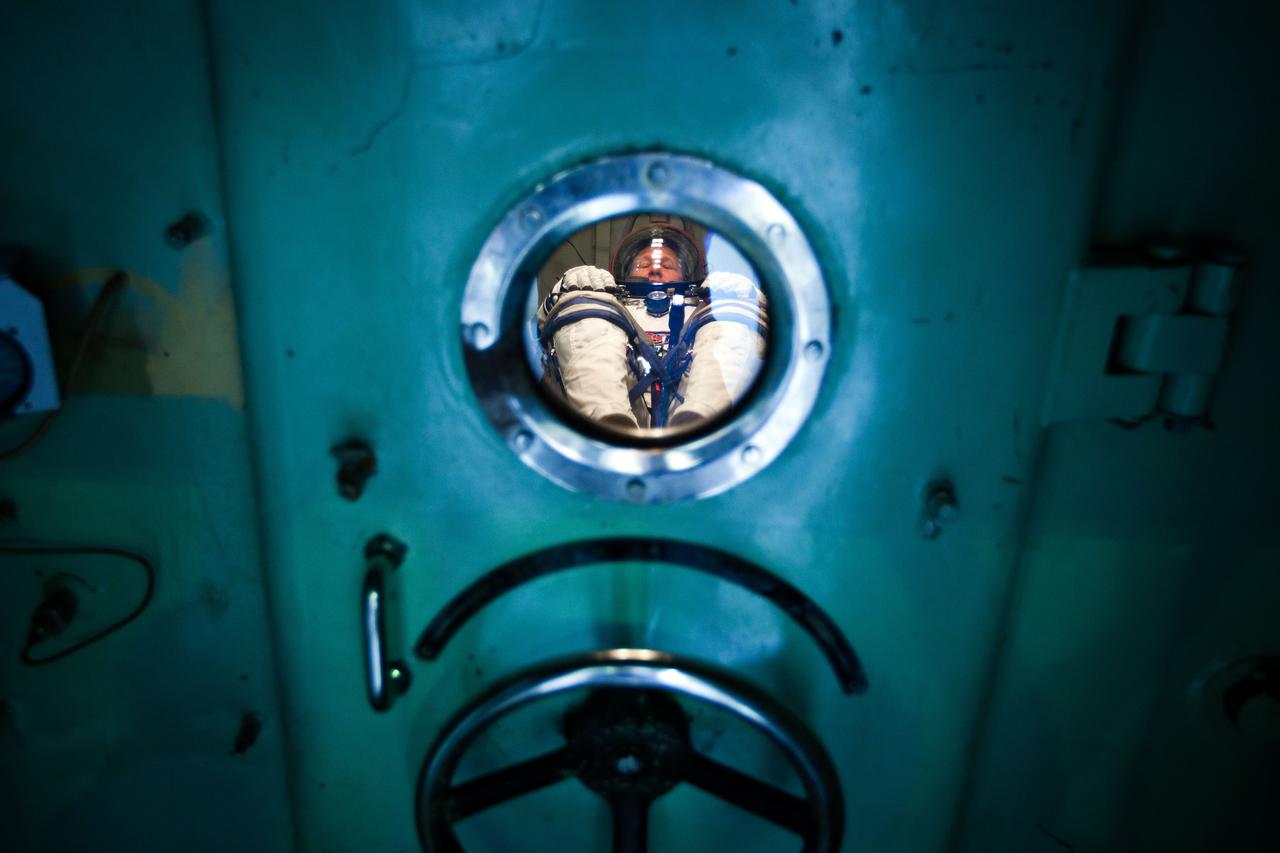
JSC2011-E-040325 (30 March 2011) --- NASA astronaut Doug Hurley, STS-135 pilot, waits in a pressure chamber before a test of his Sokol spacesuit at the Zvezda facility in Moscow March 30, 2011. The crew of the final shuttle mission traveled to Moscow for a suit fit check of their Russian spacesuits which would be required in the event of an emergency. Photo credit: NASA Photo/Houston Chronicle, Smiley N. Pool
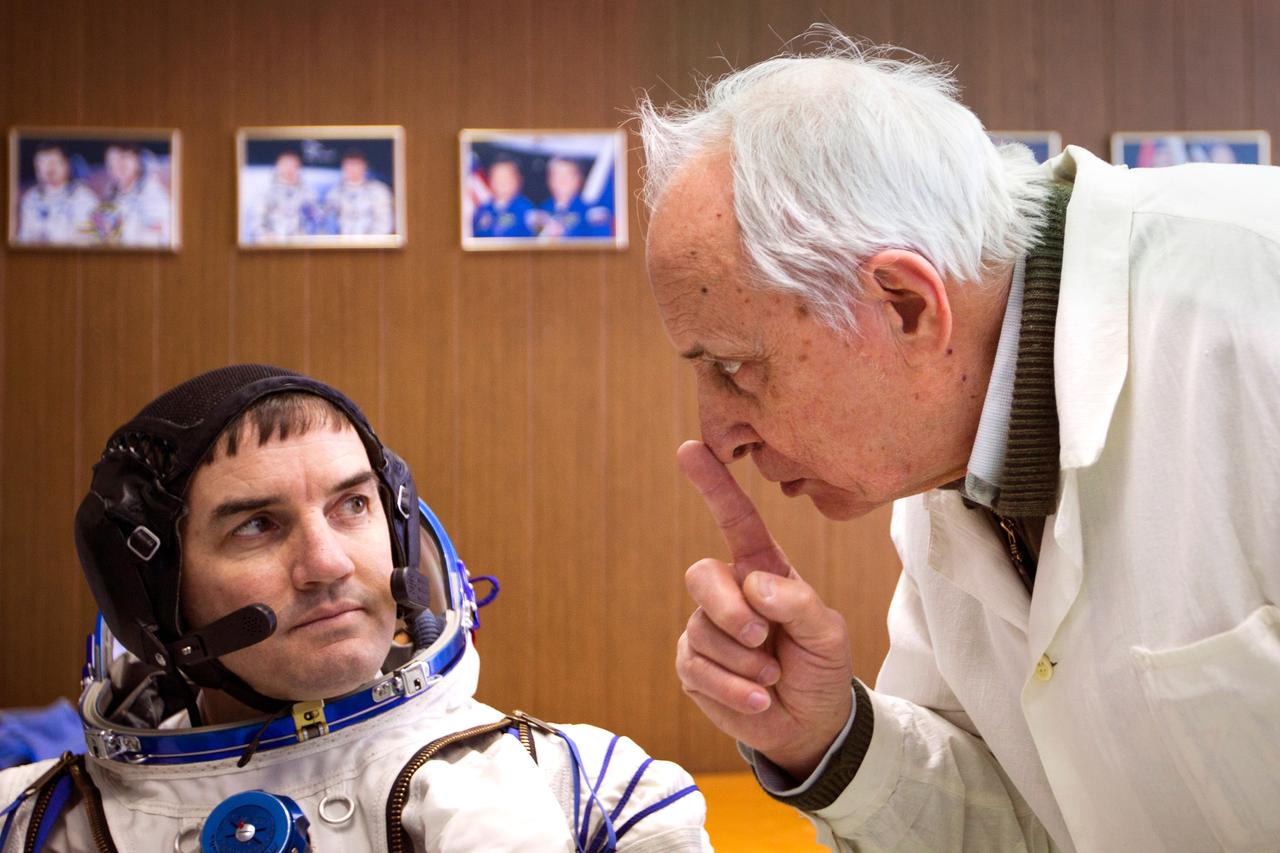
Space suit designer Oleg Gerasimenko shares some tips on the Sokol suit with NASA astronaut Rex Walheim during a fit check at the Zvezda facility on Monday, March 28, 2011, in Moscow. The crew of the final shuttle mission traveled to Moscow for a suit fit check of their Russian Soyuz suits that will be required in the event of an emergency. ( NASA Photo / Houston Chronicle, Smiley N. Pool )
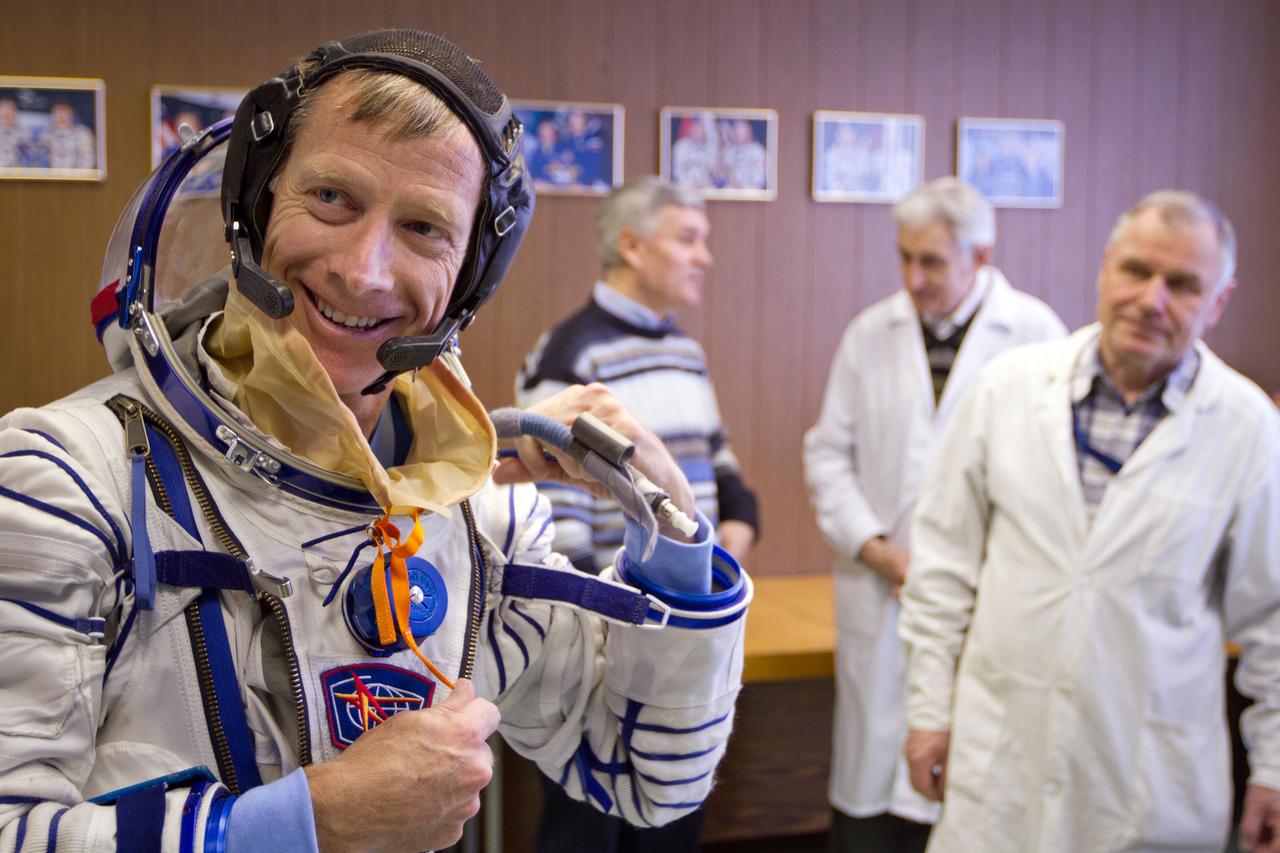
JSC2011-E-040319 (29 March 2011) --- NASA astronaut Chris Ferguson, STS-135 commander, undergoes a fit check of his Sokol spacesuit at the Zvezda facility in Moscow, Russia on March 29, 2011. The crew of the final shuttle mission traveled to Moscow for a suit fit check of their Russian Sokol suits which would be required in the event of an emergency. Photo credit: NASA Photo/Houston Chronicle, Smiley N. Pool
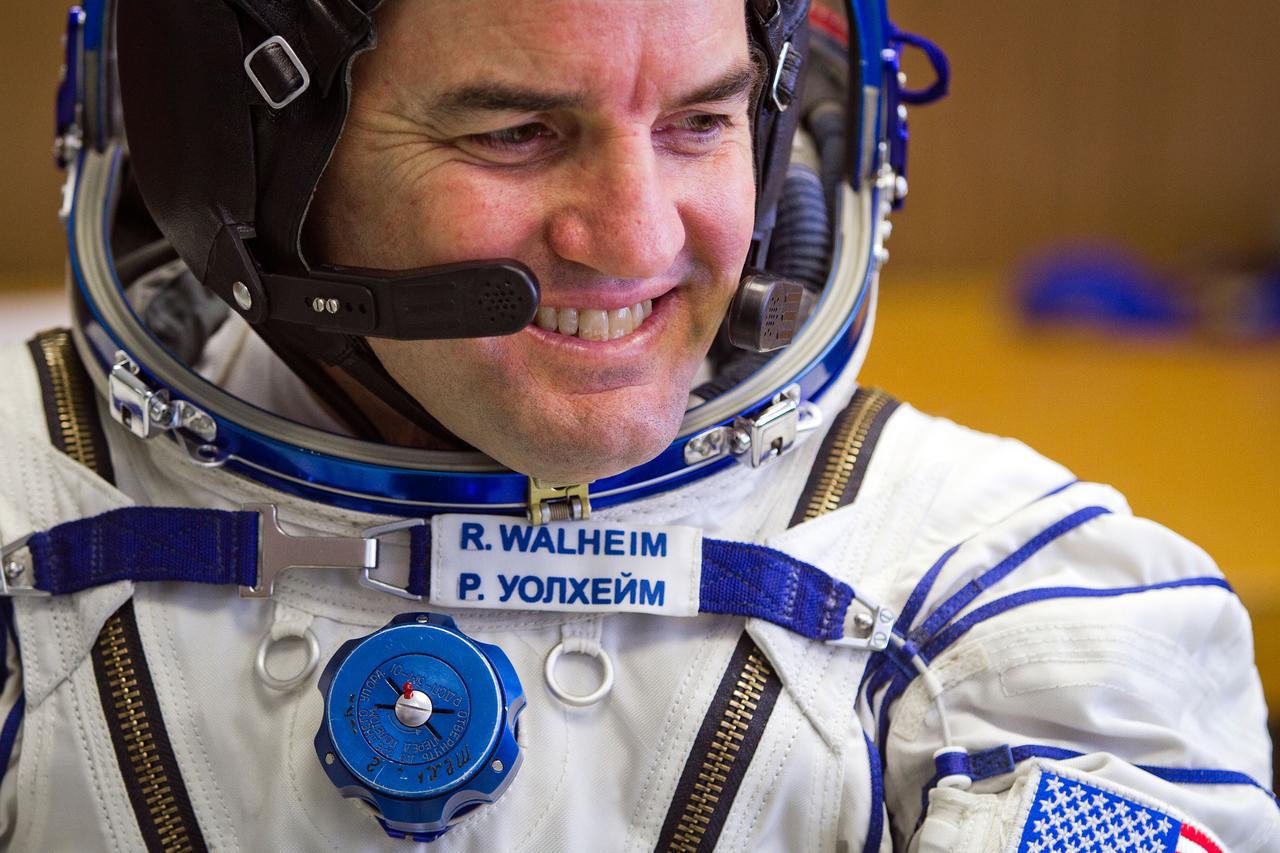
JSC2011-E-040299 (28 March 2011) --- NASA astronaut Rex Walheim, STS-135 mission specialist, undergoes a fit check of his Sokol suit at the Zvezda facility in Moscow on March 28, 2011. The crew of the final shuttle mission traveled to Moscow for a suit fit check of their Russian Sokol spacesuits which would be required in the event of an emergency. Walheim's name appears first in English and then in Russian on his suit. The order is reversed on the suits of Russian cosmonauts. Photo credit: NASA Photo/Houston Chronicle, Smiley N. Pool
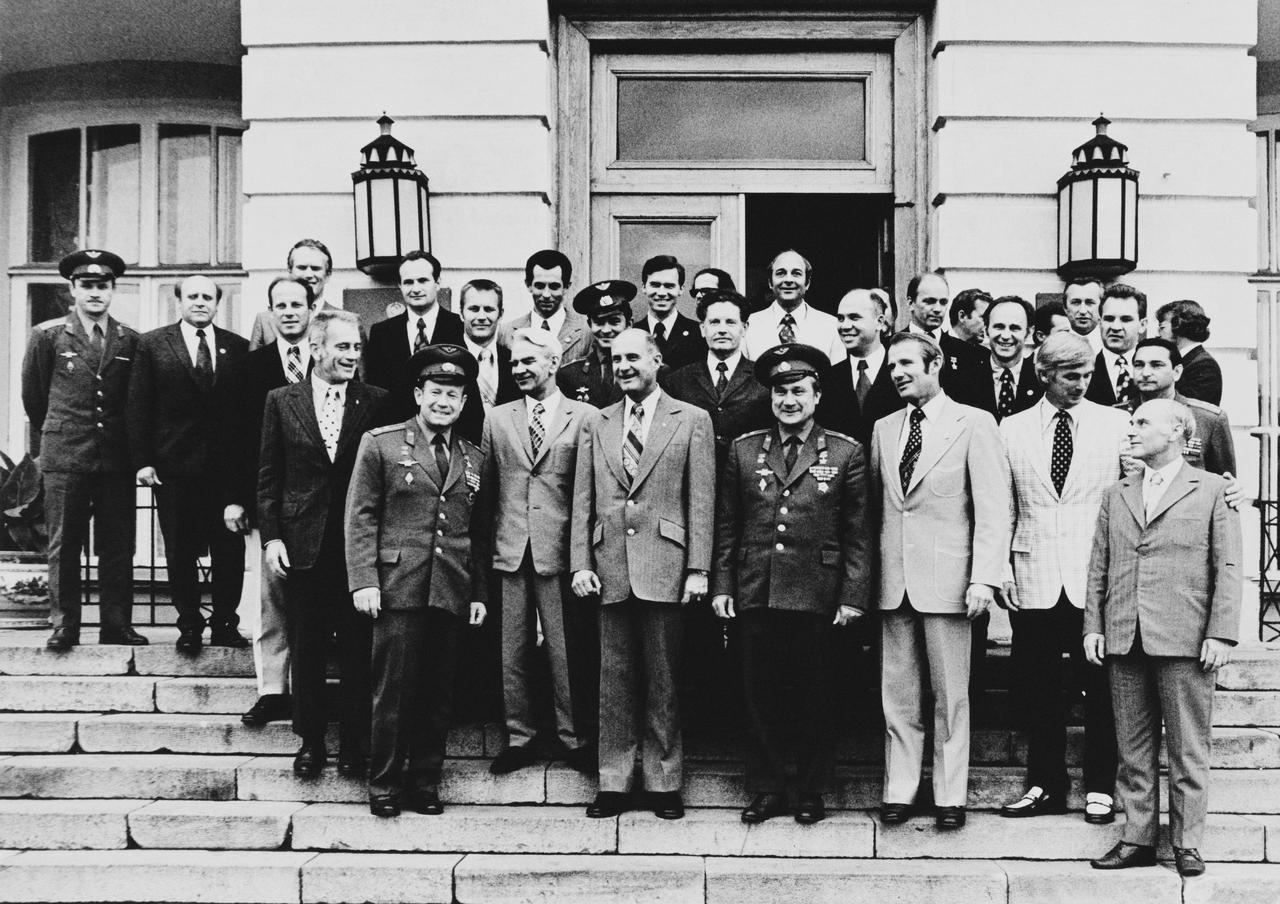
S74-24948 (4 July 1974) --- A group of astronauts from the Apollo-Soyuz Test Project office at the Johnson Space Center are photographed with their Soviet hosts after attending a reception at the USSR Academy of Sciences in Moscow. They are standing on the front steps of the scientific institution. The Americans were in the Soviet Union to take part in ASTP familiarization training at the Cosmonaut Training Center near Moscow. PHOTO COURTESY: USSR ACADEMY OF SCIENCES
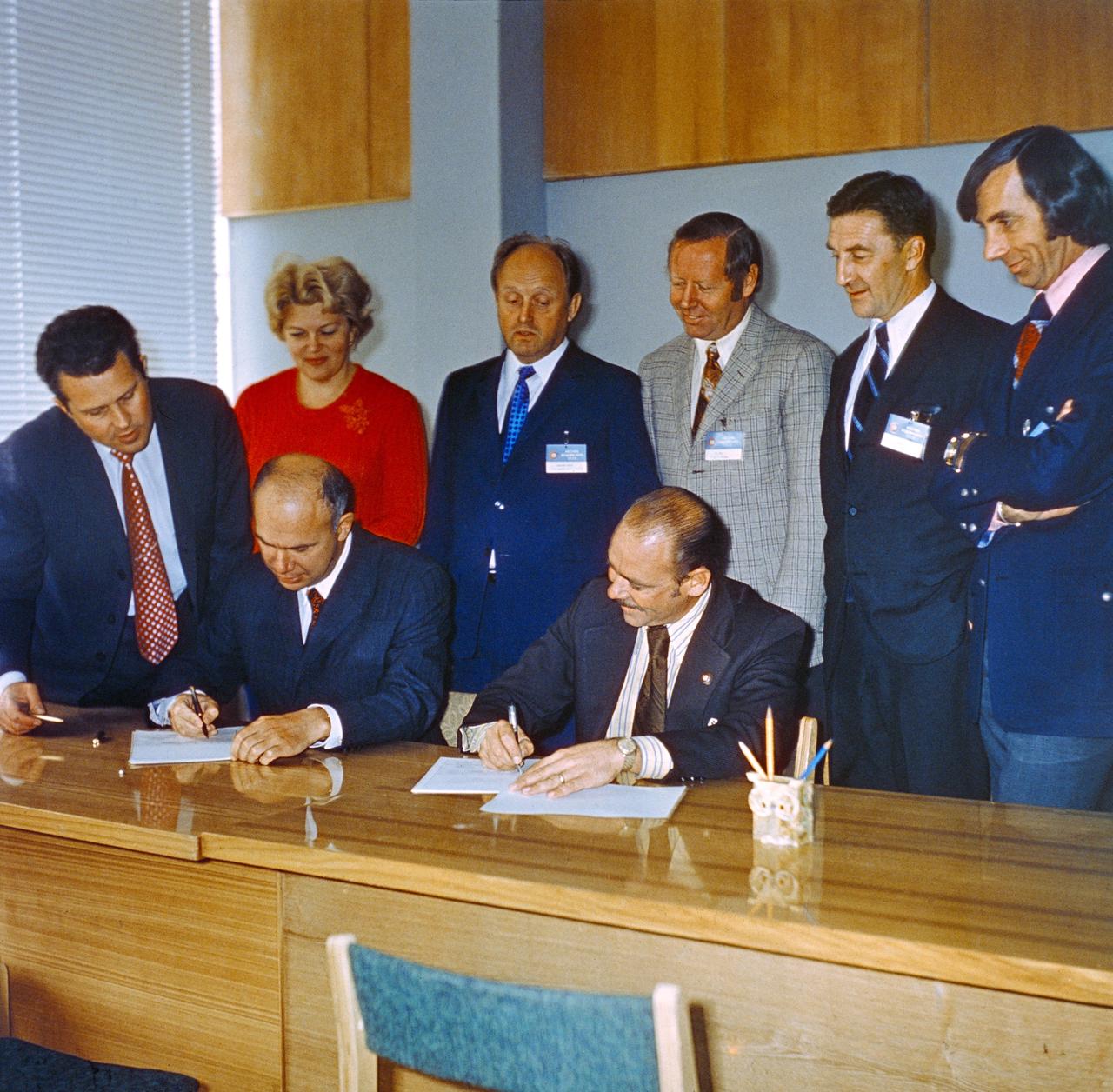
S74-29896 (September 1974) --- John P. Donnelly (seated right), NASA Assistant Administrator for Public Affairs, and Vladen S. Vereshchetin (seated left), Vice Chairman of Intercosmos, USSR Academy of Sciences, initial an agreement on information policy for the joint U.S.-USSR Apollo-Soyuz Test Project mission during ceremonies in Moscow in September 1974. Other members of the joint public affairs delegation looking on are, standing left to right, Vladimir A. Denissenko, Tatyana Klotchkovsaya, Igor P. Rumyantsev, John W. King, Nicholas Timacheff, and Robert Shafer. King is the Public Affairs Officer at the Johnson Space Center. Timacheff is the language officer with the JSC ASTP office. Shafer is NASA Deputy Assistant Administrator for Public Affairs (Television).
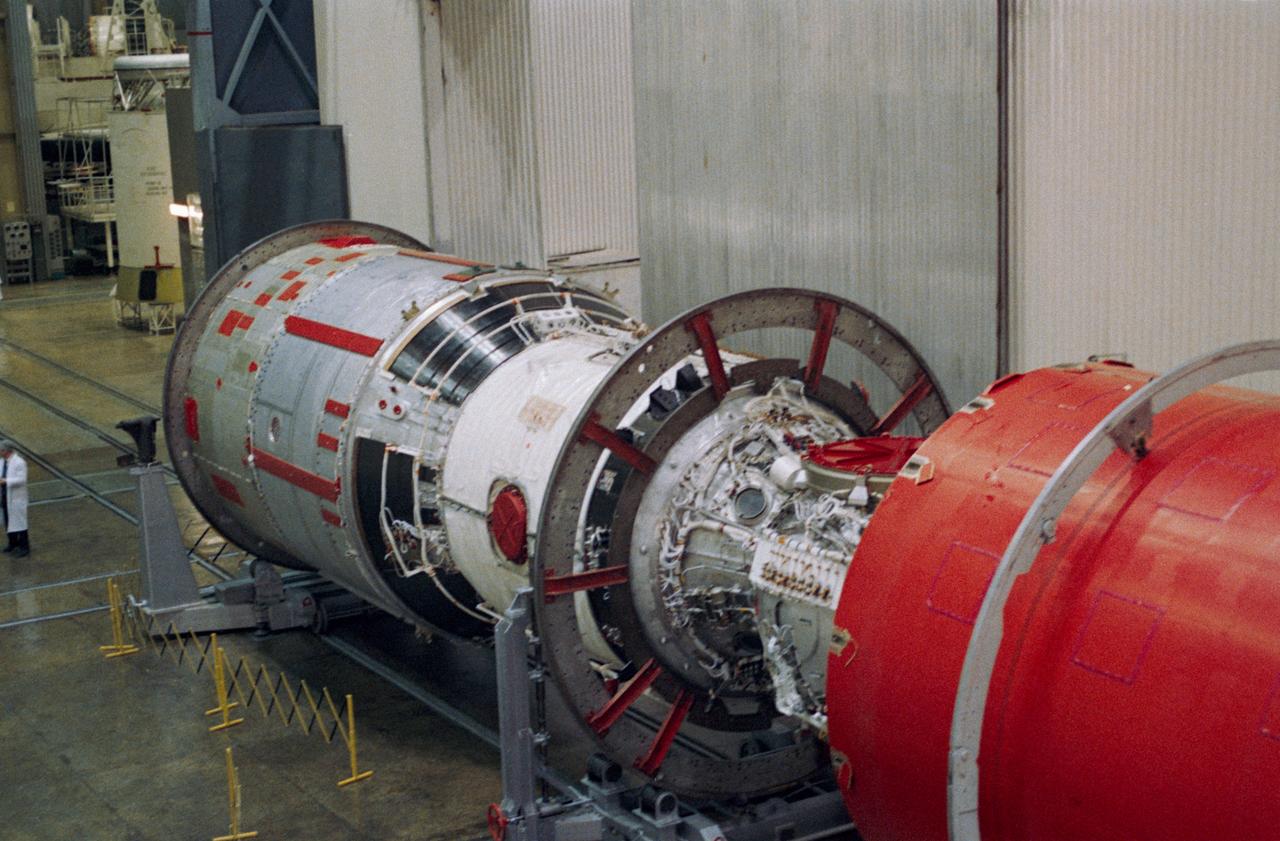
S99-05653 (April 1999) --- ISS service module roll-out. --- A three-quarter, forward view of the International Space Station (ISS) Service Module (SM) during roll-out at RSC-Energia in Moscow, Russia.
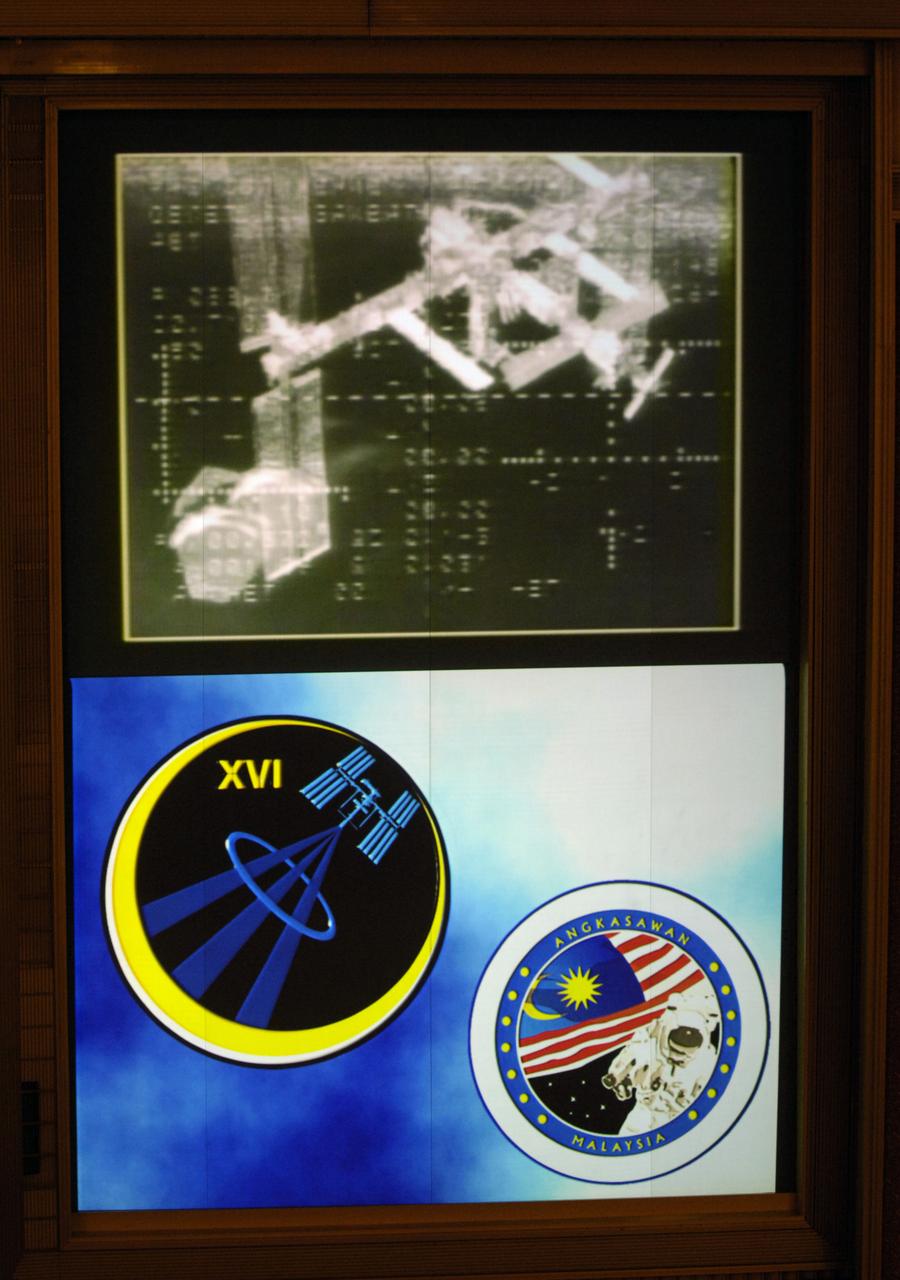
Live video from the Soyuz TMA-11 spacecraft of the International Space Station is shown on the screen in the Russian Mission Control Center in Korolev, outside Moscow. Expedition 16 Commander Peggy Whitson, Soyuz Commander and Flight Engineer Yuri Malenchenko and Malaysian Spaceflight Participant Sheikh Muszaphar Shukor docked their Soyuz TMA-11 spacecraft to the station at 10:50 a.m. EDT. Oct. 12, 2007. The crew launched on Wednesday from the Baikonur Cosmodrome in Kazakhstan. Photo Credit: "NASA/Bill Ingalls"
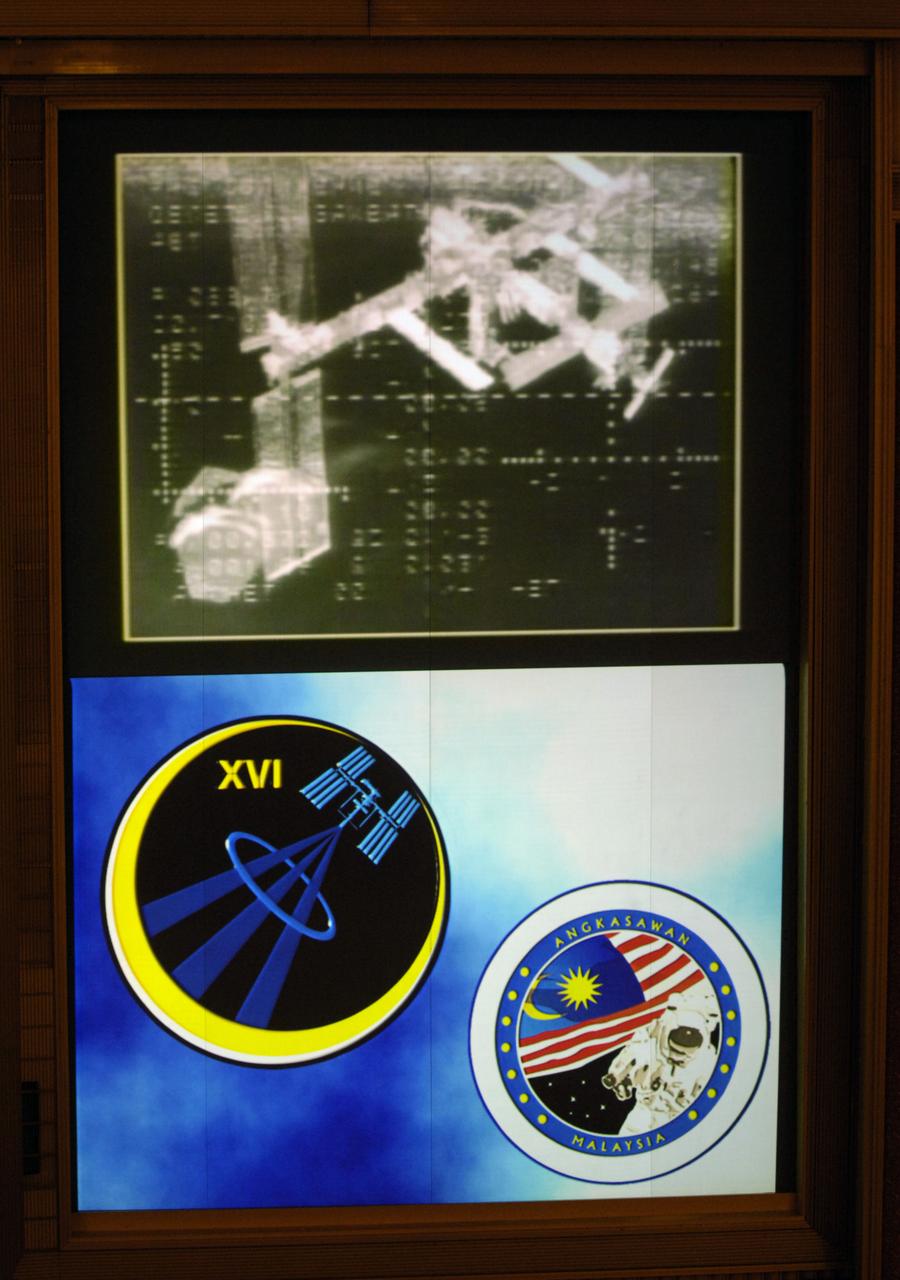
Live video from the Soyuz TMA-11 spacecraft of the International Space Station is shown on the screen in the Russian Mission Control Center in Korolev, outside Moscow, Friday, Oct. 12, 2007. Expedition 16 Commander Peggy Whitson, Soyuz Commander and Flight Engineer Yuri Malenchenko and Malaysian spaceflight participant Sheikh Muszaphar Shukor docked their Soyuz TMA-11 spacecraft to the ISS at 10:50 a.m. EDT, October 12. The crew launched on Wednesday from the Baikonur Cosmodrome in Kazakhstan. Photo Credit: (NASA/Bill Ingalls)
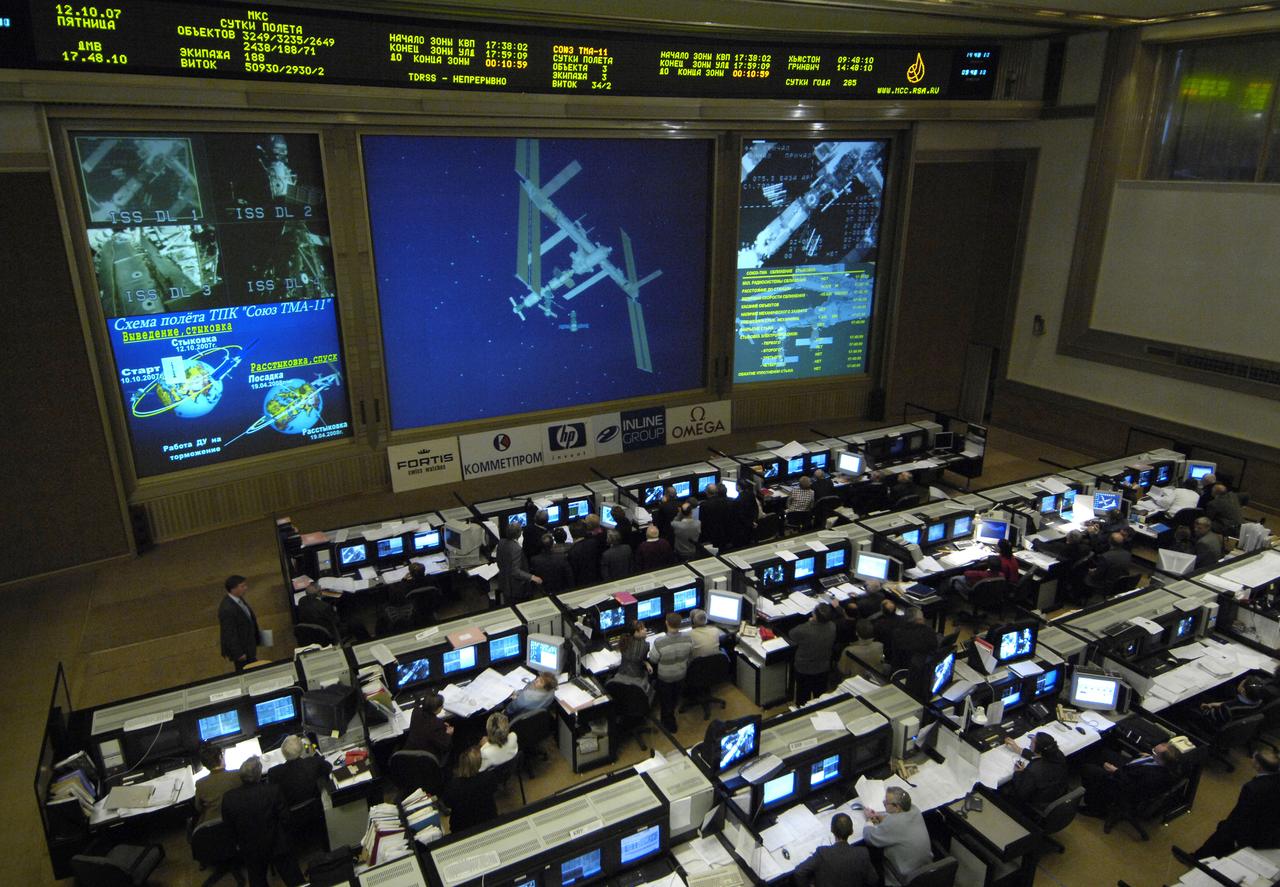
Live video from the Soyuz TMA-11 spacecraft of the International Space Station is shown on the screen, upper right, in the Russian Mission Control Center in Korolev, outside Moscow. Expedition 16 Commander Peggy Whitson, Soyuz Commander and Flight Engineer Yuri Malenchenko and Malaysian Spaceflight Participant Sheikh Muszaphar Shukor docked their Soyuz TMA-11 spacecraft to the station at 10:50 a.m. EDT. Oct. 12, 2007. The crew launched on Wednesday from the Baikonur Cosmodrome in Kazakhstan. Photo Credit: "NASA/Bill Ingalls"
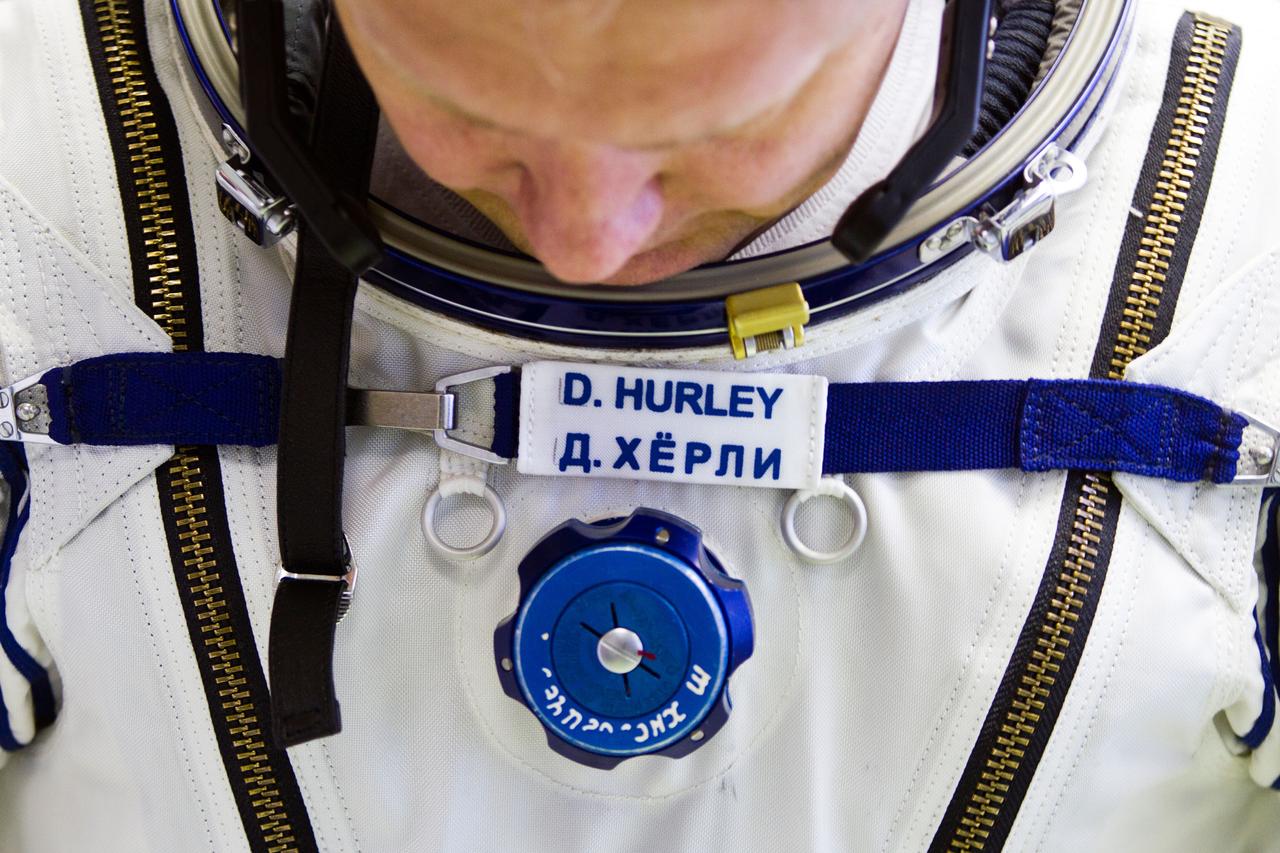
JSC2011-E-040291 (28 March 2011) --- NASA astronaut Doug Hurley, STS-135 pilot, dons a Sokol spacesuit March 28, 2011, at the Zvezda facility in Moscow. Hurley's name appears first in English and then in Russian on his suit. The order is reversed on the suits of Russian cosmonauts. Photo credit: NASA Photo/Houston Chronicle, Smiley N. Pool
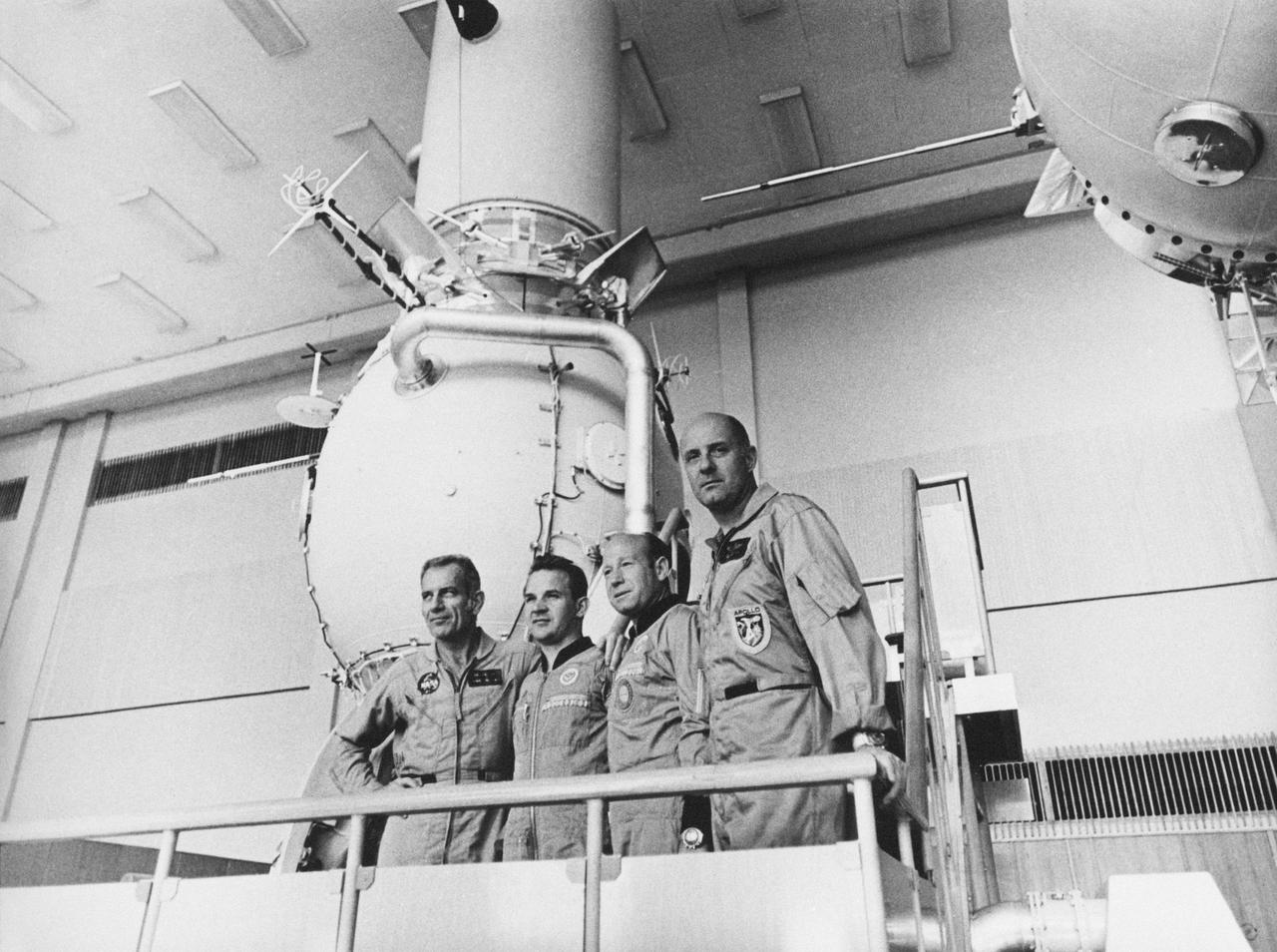
S74-25259 (June 1974) --- Four crewmen of the joint U.S.-USSR Apollo-Soyuz Test Project mission are photographed beside a Soyuz spacecraft trainer during ASTP crew training activity at the Cosmonaut Training Center (Star City) near Moscow. They are, left to right, astronaut Donald K. Slayton, docking module pilot of the American ASTP prime crew; cosmonaut Valeriy N. Kubasov, engineer of the Soviet ASTP first (prime) crew; cosmonaut Aleksey A. Leonov, commander of the Soviet ASTP first (prime) crew; and astronaut Thomas P. Stafford, commander of the American ASTP prime crew.
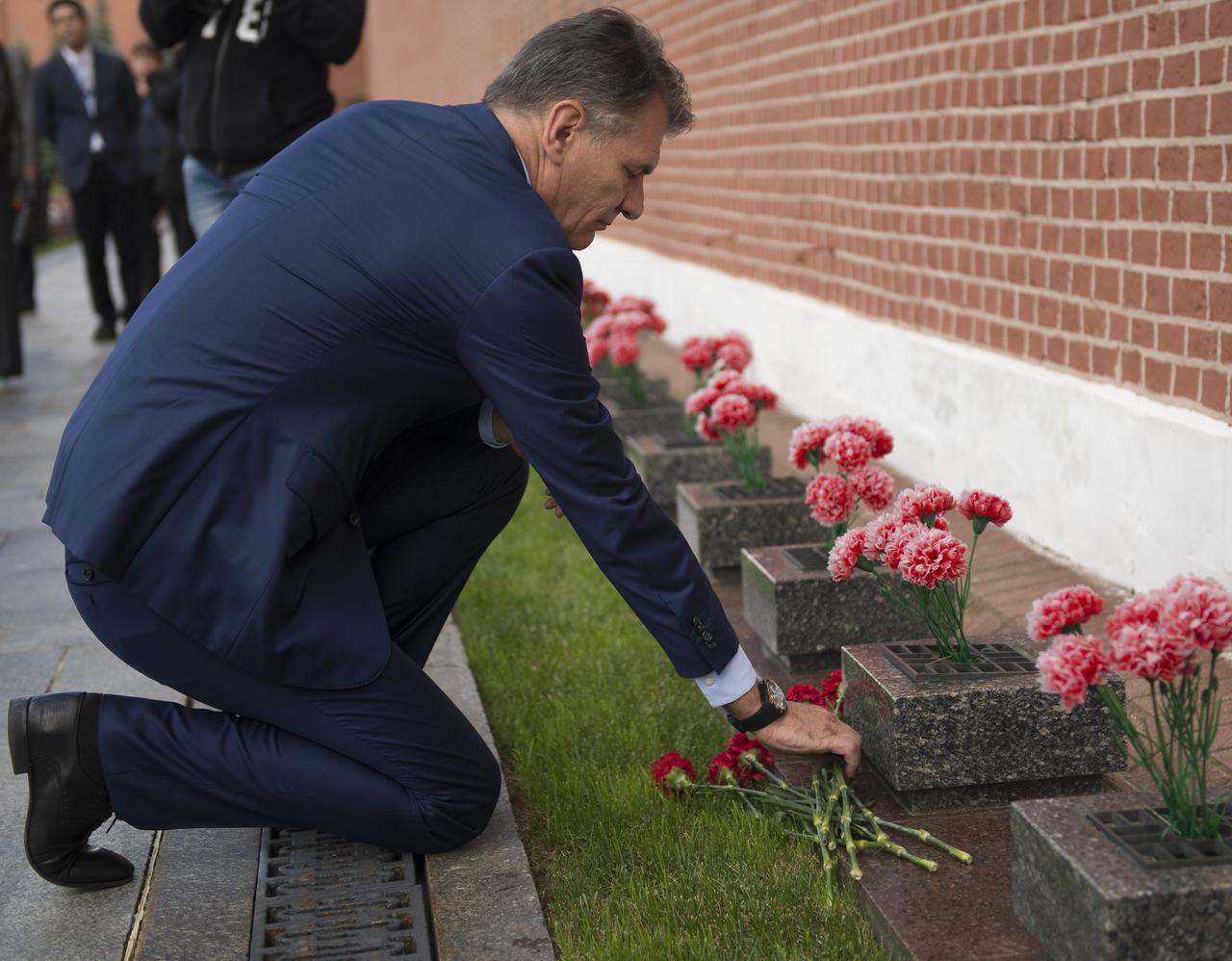
Expedition 52 flight engineer Paolo Nespoli of ESA lays roses at the site where Russian space icons are interred as part of traditional pre-launch ceremonies, Monday, July 10, 2017 in Moscow. Photo Credit: (NASA/Bill Ingalls)
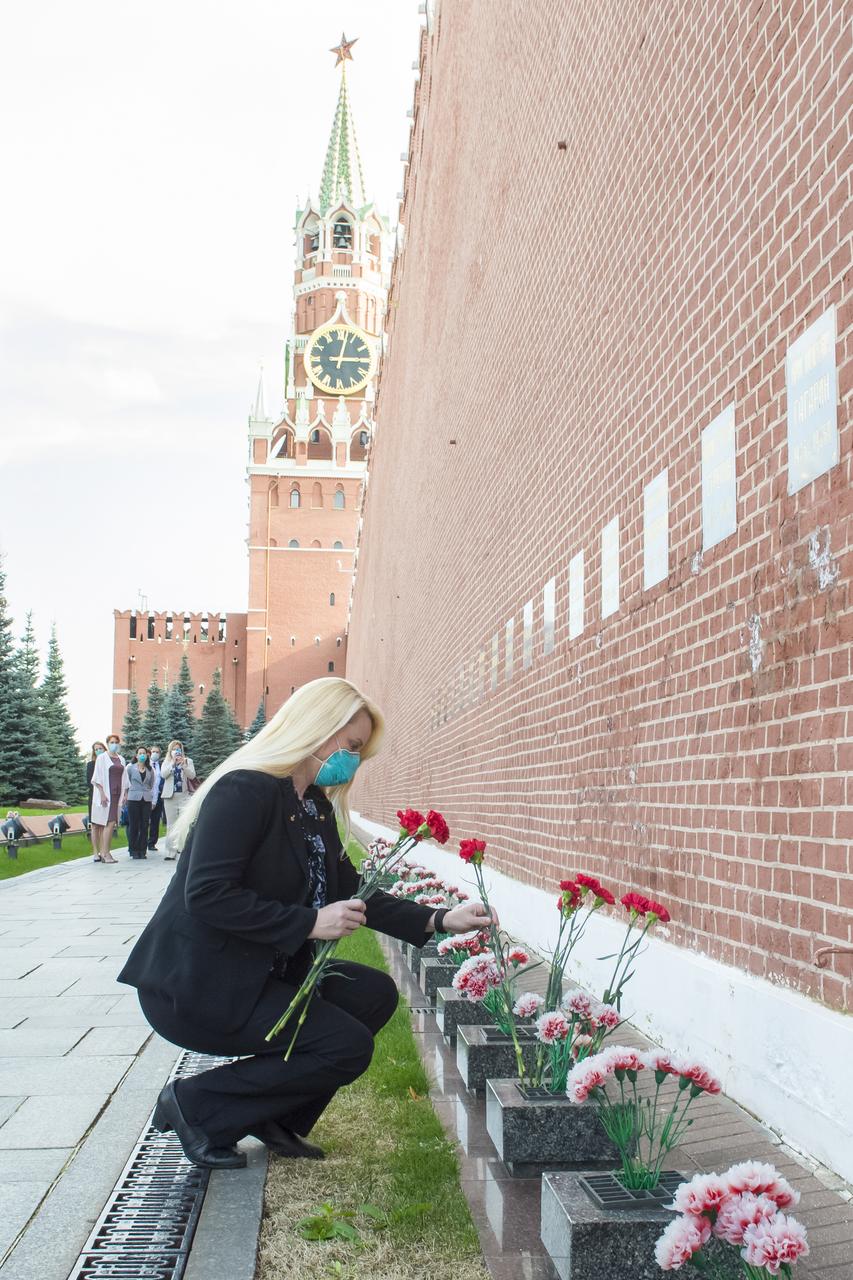
Expedition 64 prime crew member, Kate Rubins of NASA lays flowers at the site where Russian space icons are interred as part of traditional pre-launch ceremonies, Thursday, Sept. 24, 2020 at Red Square in Moscow. Photo Credit: (NASA/GCTC/Irina Spector)
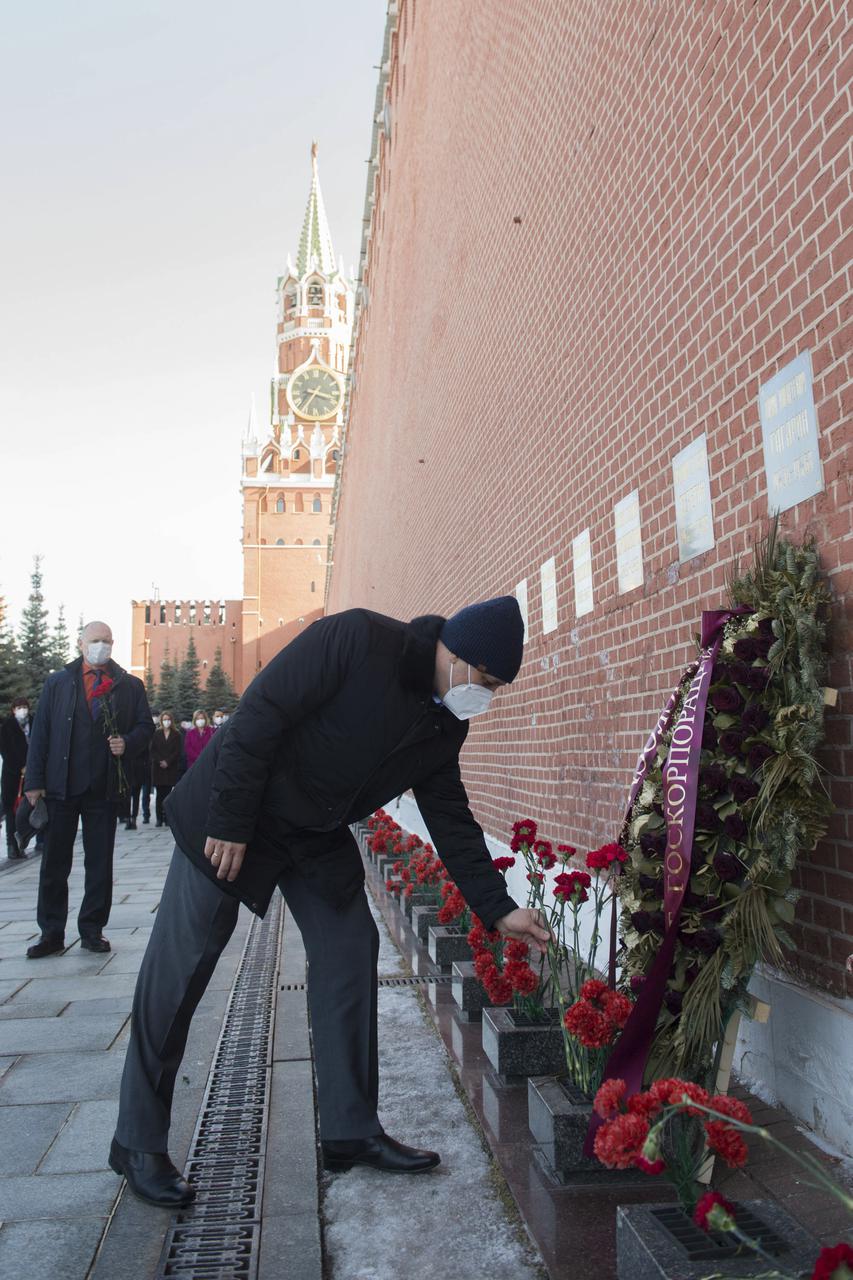
Expedition 65 backup crew member Russian cosmonaut Anton Shkaplerov of Roscosmos lays flowers at the site where Russian space icons are interred as part of traditional pre-launch ceremonies, Wednesday, March 24, 2021, at Red Square in Moscow. Photo Credit: (NASA/GCTC/Andrey Shelepin)
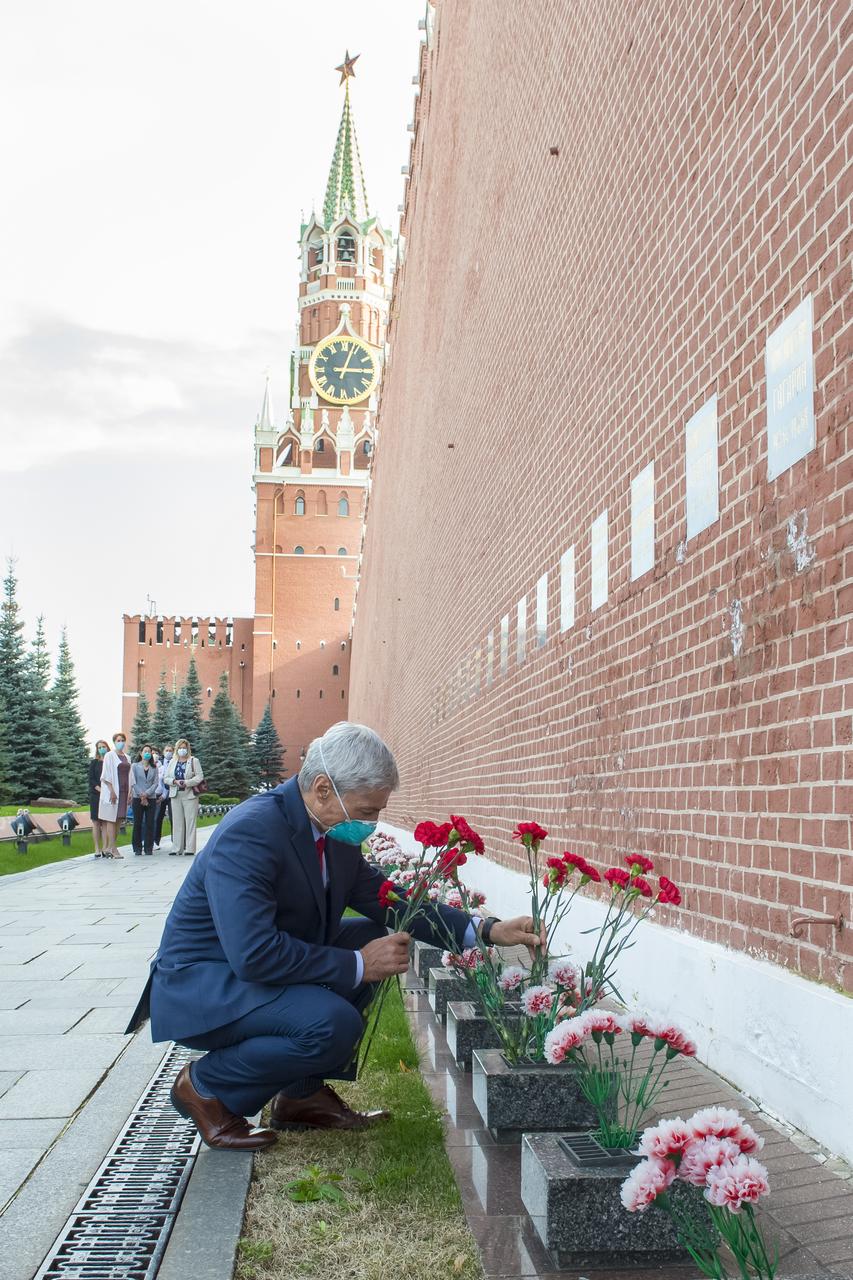
Expedition 64 backup crew member, Mark Vande Hei of NASA lays flowers at the site where Russian space icons are interred as part of traditional pre-launch ceremonies, Thursday, Sept. 24, 2020 at Red Square in Moscow. Photo Credit: (NASA/GCTC/Irina Spector)
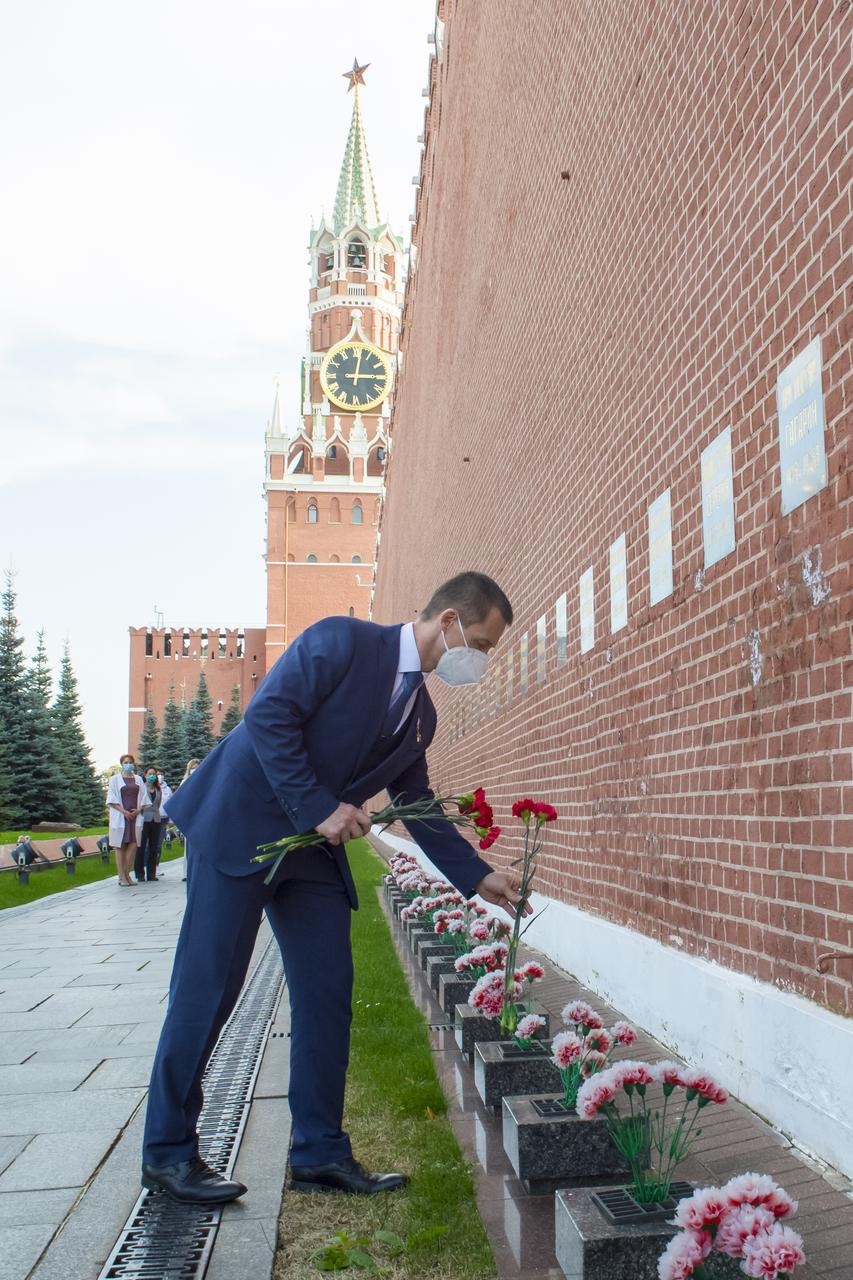
Expedition 64 prime crew member Sergey Ryzhikov of Roscosmos lays flowers at the site where Russian space icons are interred as part of traditional pre-launch ceremonies, Thursday, Sept. 24, 2020 in Moscow. Photo Credit: (NASA/GCTC/Irina Spector)
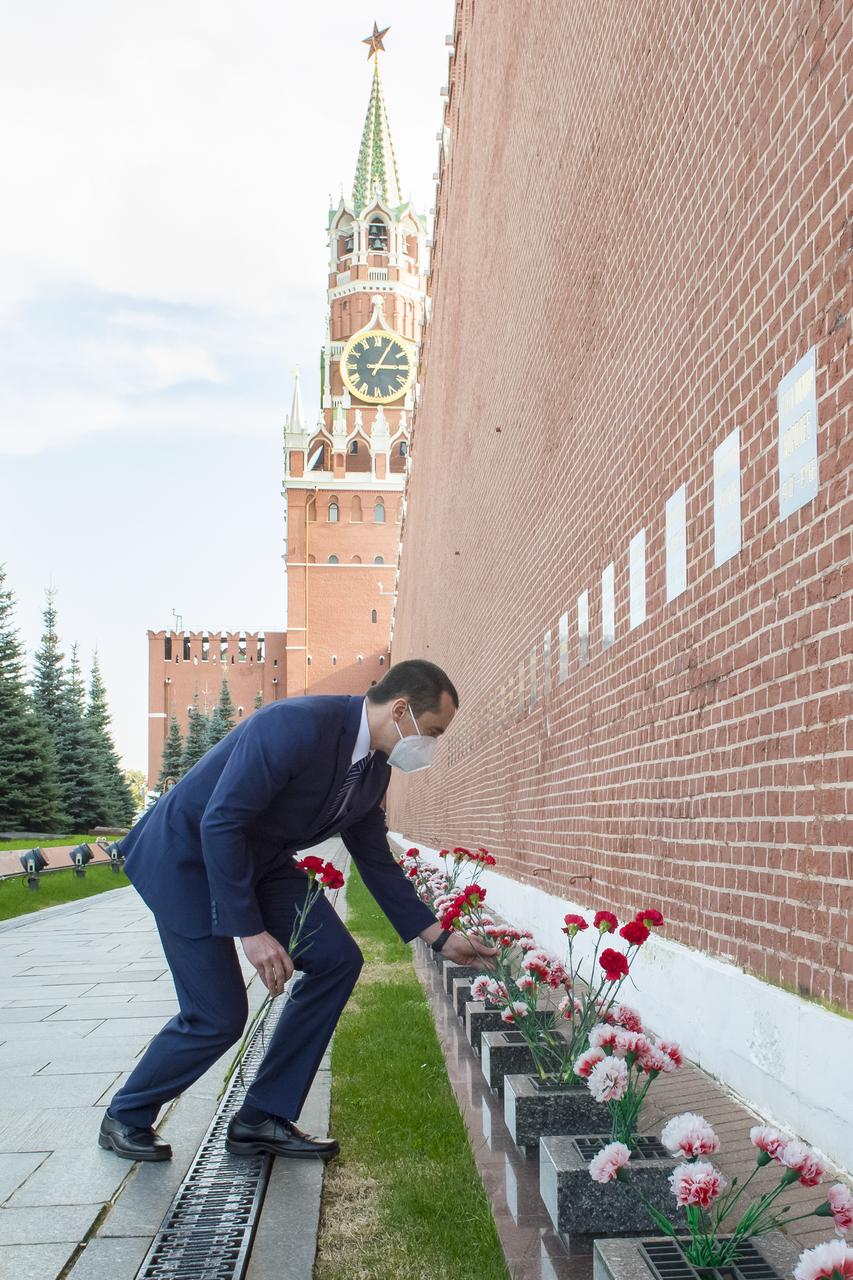
Expedition 64 backup crew member, Petr Dubrov of Roscosmos lays flowers at the site where Russian space icons are interred as part of traditional pre-launch ceremonies, Thursday, Sept. 24, 2020 at Red Square in Moscow. Photo Credit: (NASA/GCTC/Irina Spector)
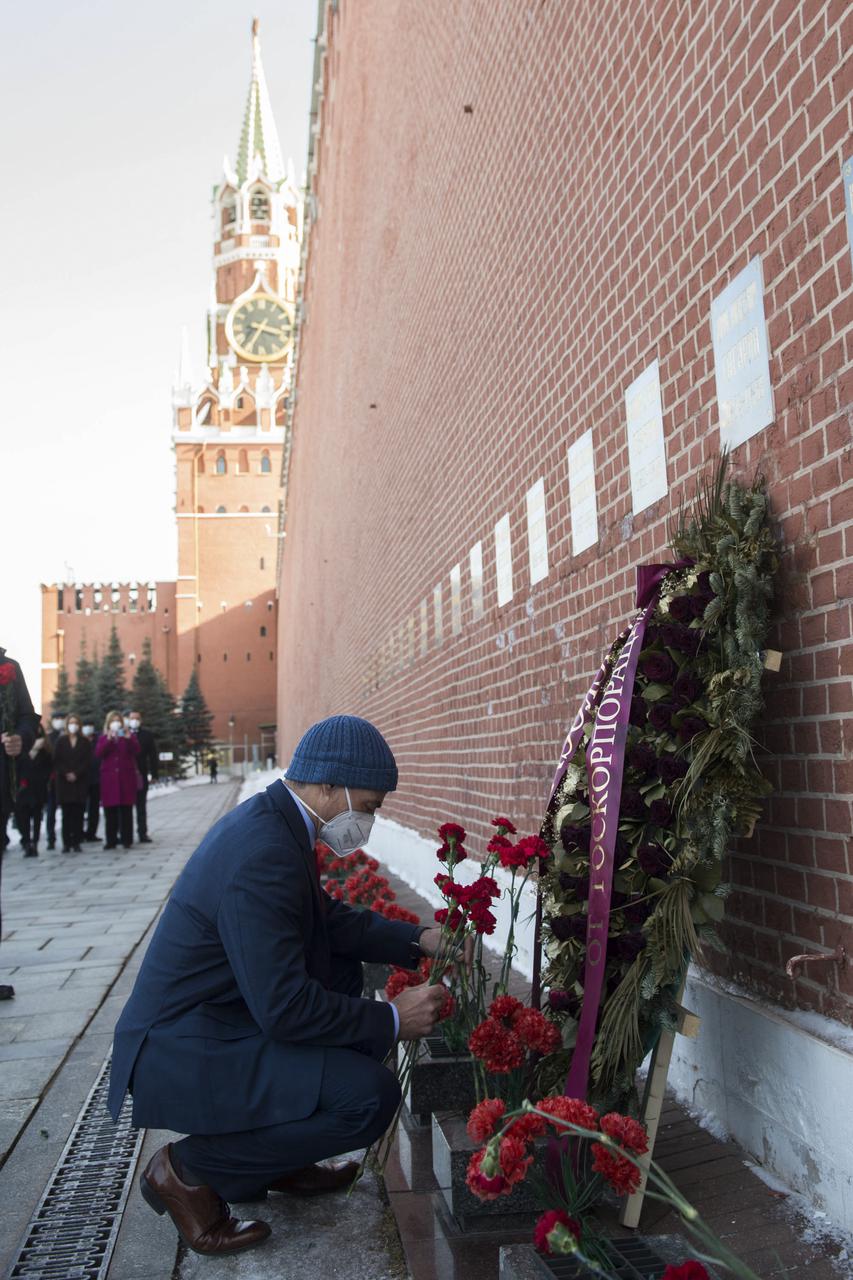
Expedition 65 prime crew member NASA astronaut Mark Vande Hei lays flowers at the site where Russian space icons are interred as part of traditional pre-launch ceremonies, Wednesday, March 24, 2021, at Red Square in Moscow. Photo Credit: (NASA/GCTC/Andrey Shelepin)
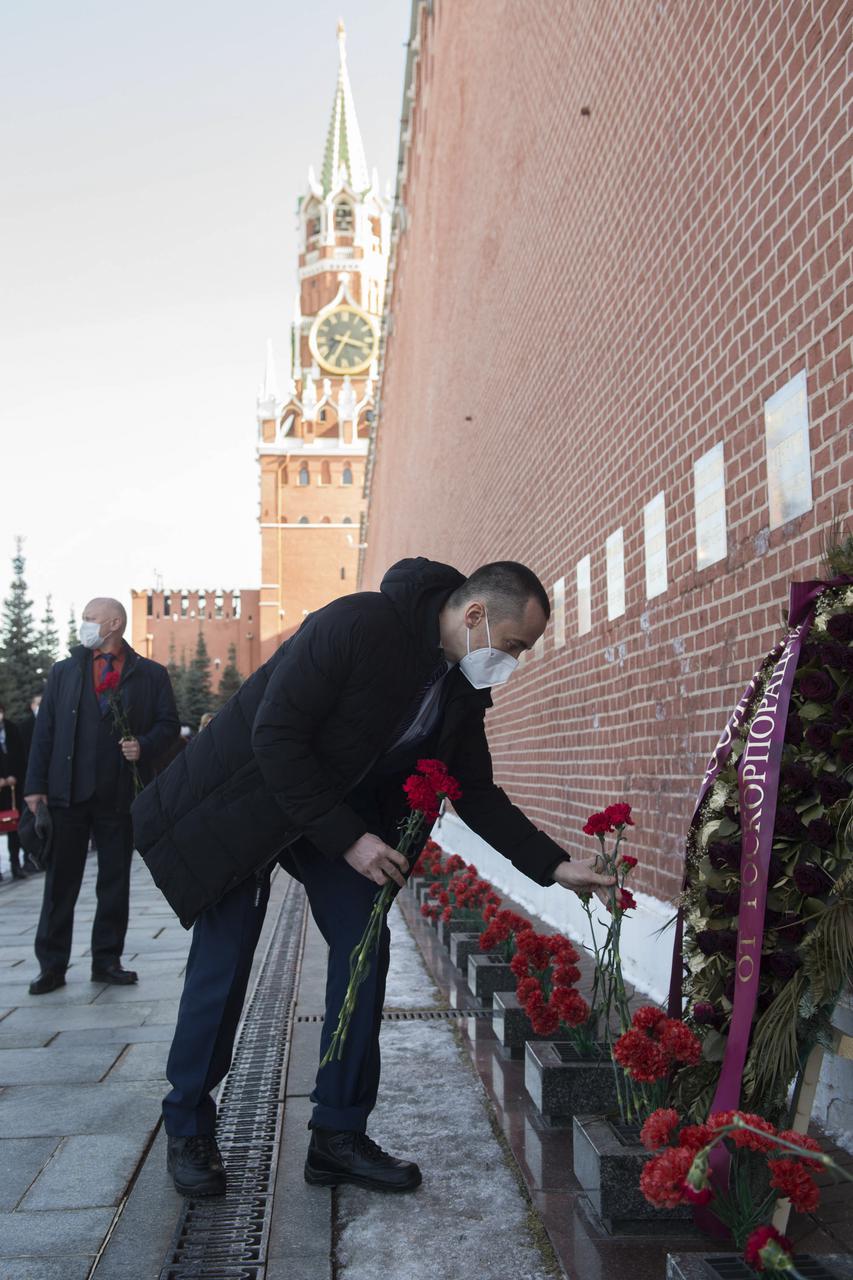
Expedition 65 prime crew member Russian cosmonaut Pyotr Dubrov of Roscosmos lays flowers at the site where Russian space icons are interred as part of traditional pre-launch ceremonies, Wednesday, March 24, 2021, at Red Square in Moscow. Photo Credit: (NASA/GCTC/Andrey Shelepin)
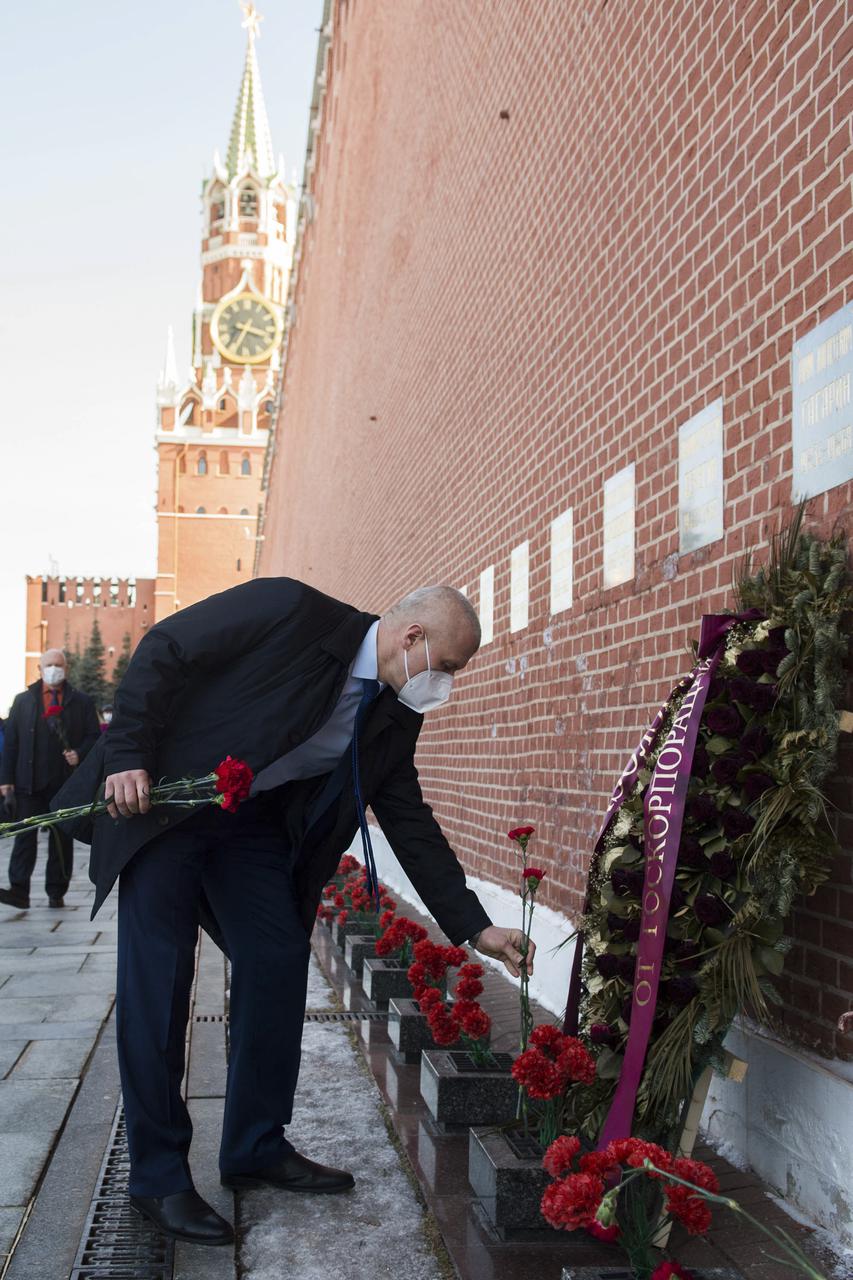
Expedition 65 prime crew member Russian cosmonaut Oleg Novitskiy of Roscosmos lays flowers at the site where Russian space icons are interred as part of traditional pre-launch ceremonies, Wednesday, March 24, 2021, at Red Square in Moscow. Photo Credit: (NASA/GCTC/Andrey Shelepin)
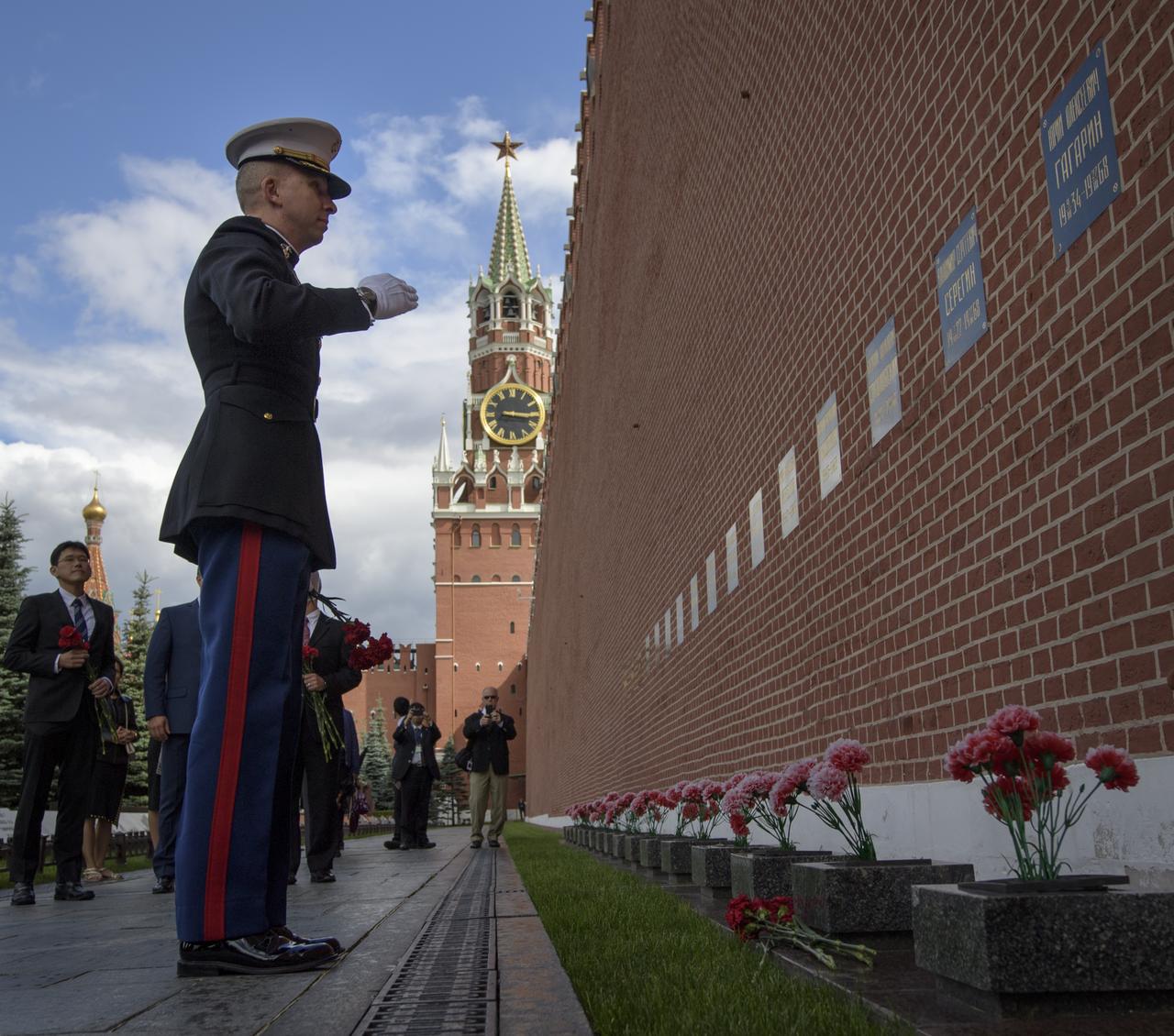
Expedition 52 flight engineer Randy Bresnik of NASA salutes after laying roses at the site where Russian space icons are interred as part of traditional pre-launch ceremonies, Monday, July 10, 2017 in Moscow. Photo Credit: (NASA/Bill Ingalls)
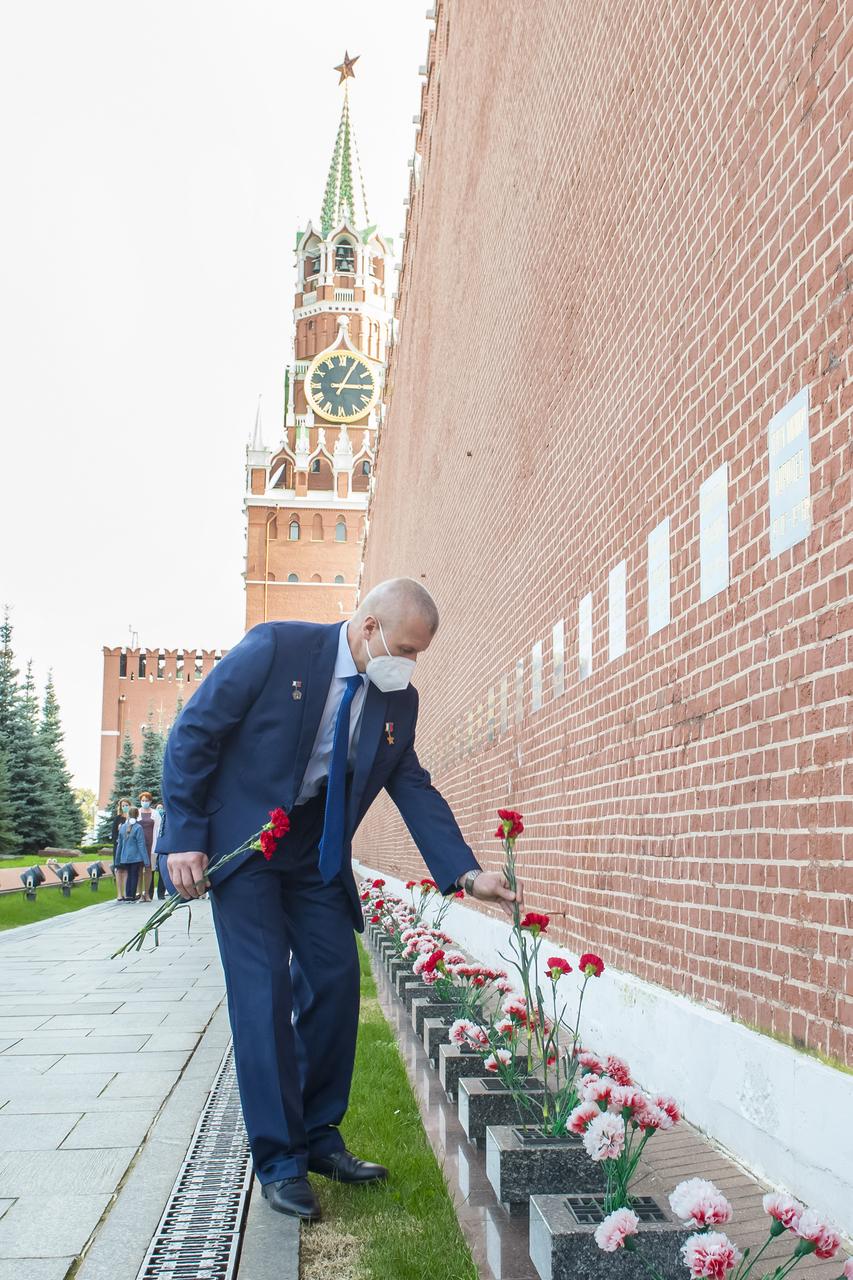
Expedition 64 backup crew member, Oleg Novitskiy of Roscosmos lays flowers at the site where Russian space icons are interred as part of traditional pre-launch ceremonies, Thursday, Sept. 24, 2020 at Red Square in Moscow. Photo Credit: (NASA/GCTC/Irina Spector)
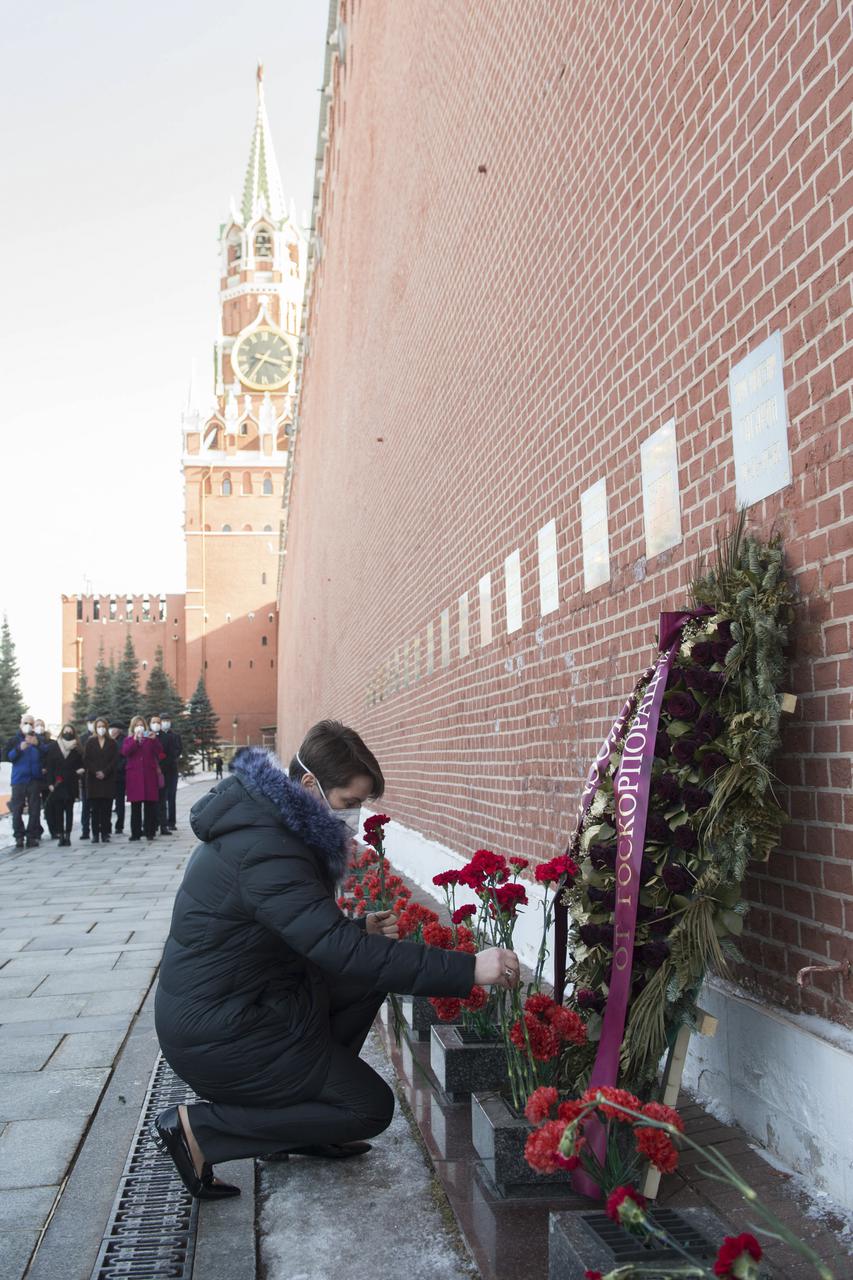
Expedition 65 backup crew member NASA astronaut Anne McClain lays flowers at the site where Russian space icons are interred as part of traditional pre-launch ceremonies, Wednesday, March 24, 2021, at Red Square in Moscow. Photo Credit: (NASA/GCTC/Andrey Shelepin)
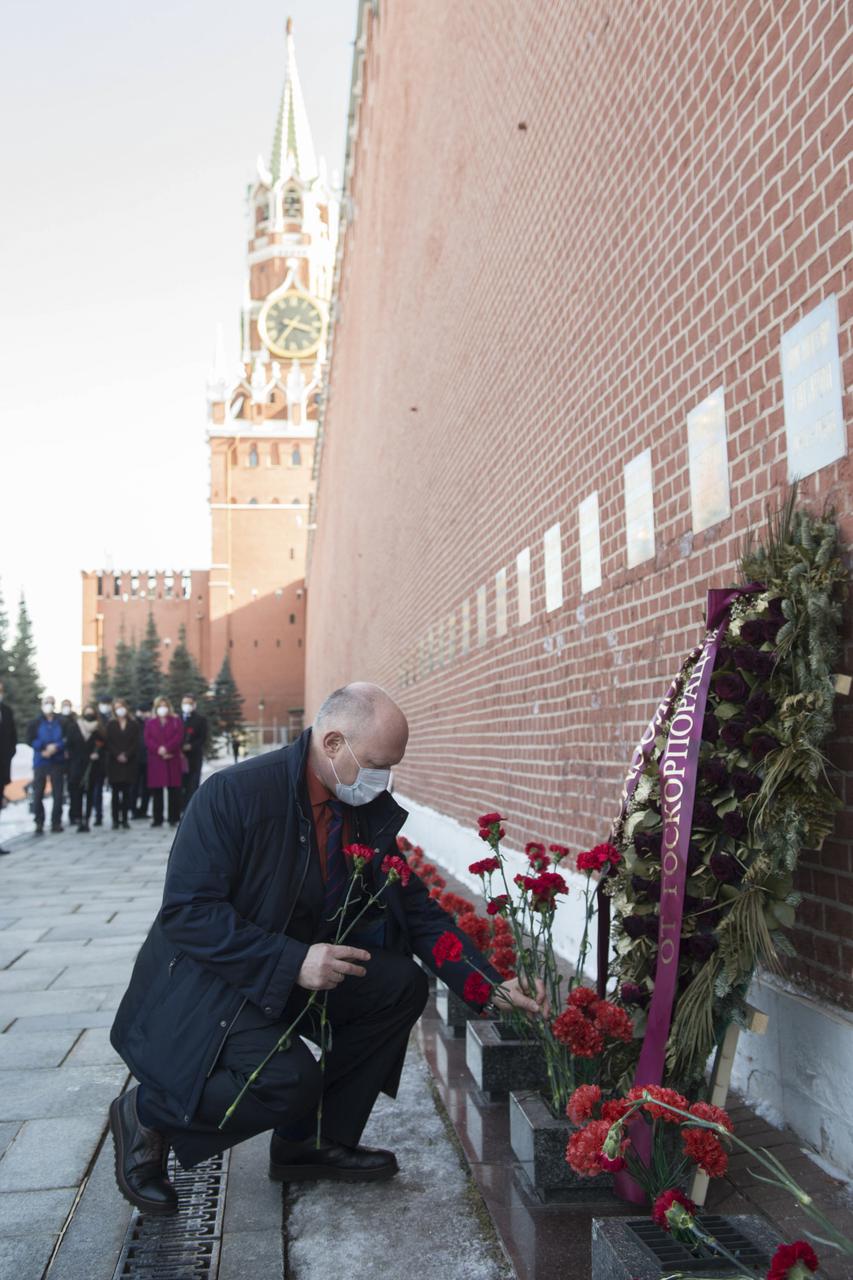
Expedition 65 backup crew member Russian cosmonaut Oleg Artemyev of Roscosmos lays flowers at the site where Russian space icons are interred as part of traditional pre-launch ceremonies, Wednesday, March 24, 2021, at Red Square in Moscow. Photo Credit: (NASA/GCTC/Andrey Shelepin)
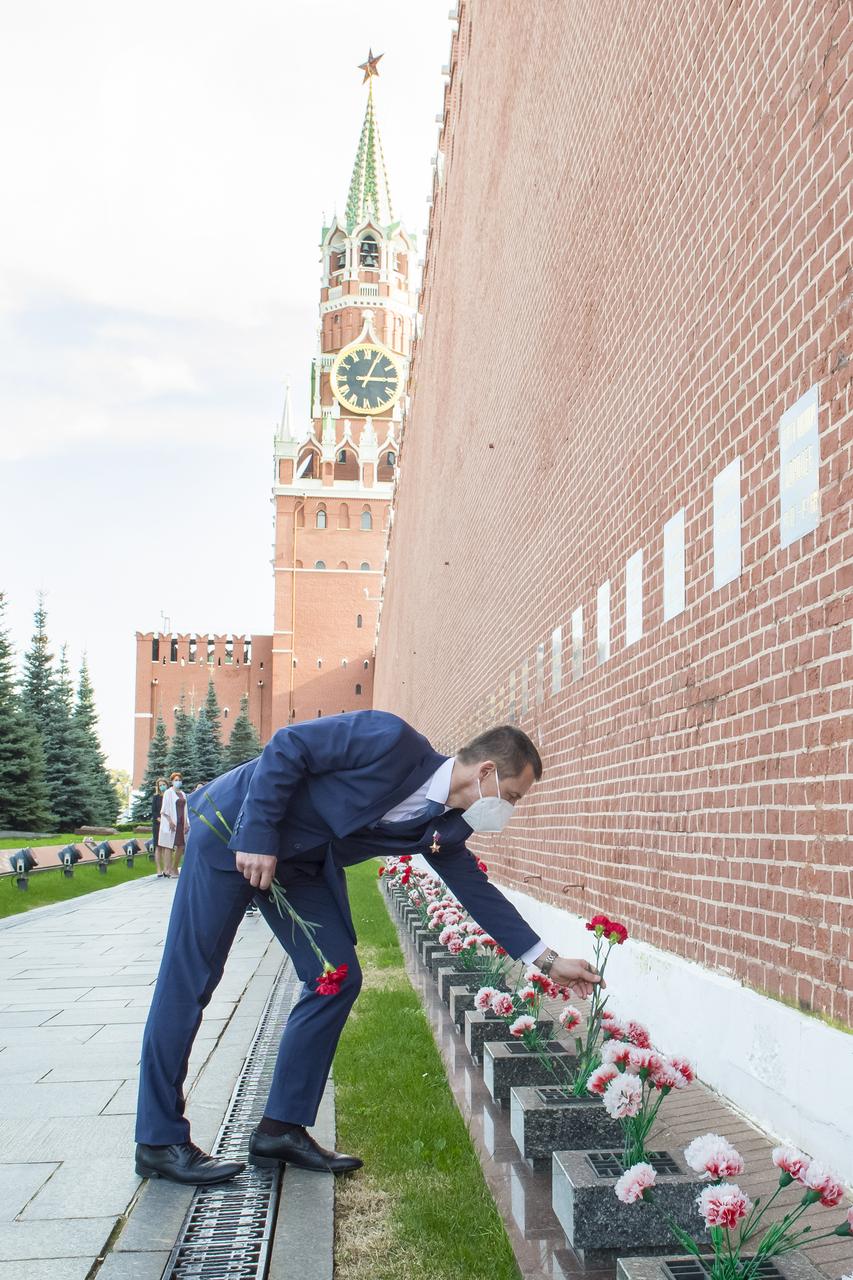
Expedition 64 prime crew member Sergey Ryzhikov of Roscosmos lays flowers at the site where Russian space icons are interred as part of traditional pre-launch ceremonies, Thursday, Sept. 24, 2020 at Red Square in Moscow. Photo Credit: (NASA/GCTC/Irina Spector)
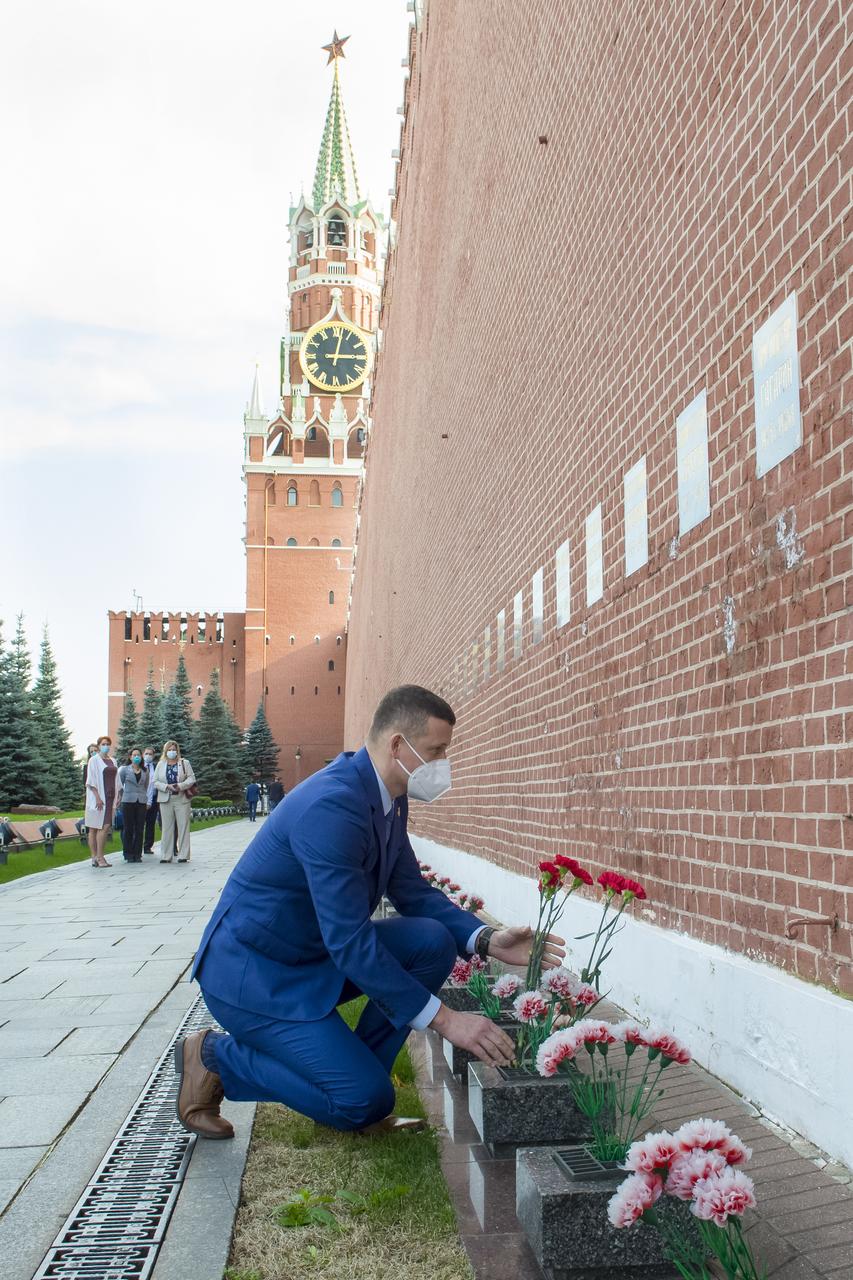
Expedition 64 prime crew member Sergey Kud-Sverchkov of Roscosmos lays flowers at the site where Russian space icons are interred as part of traditional pre-launch ceremonies, Thursday, Sept. 24, 2020 at Red Square in Moscow. Photo Credit: (NASA/GCTC/Irina Spector)
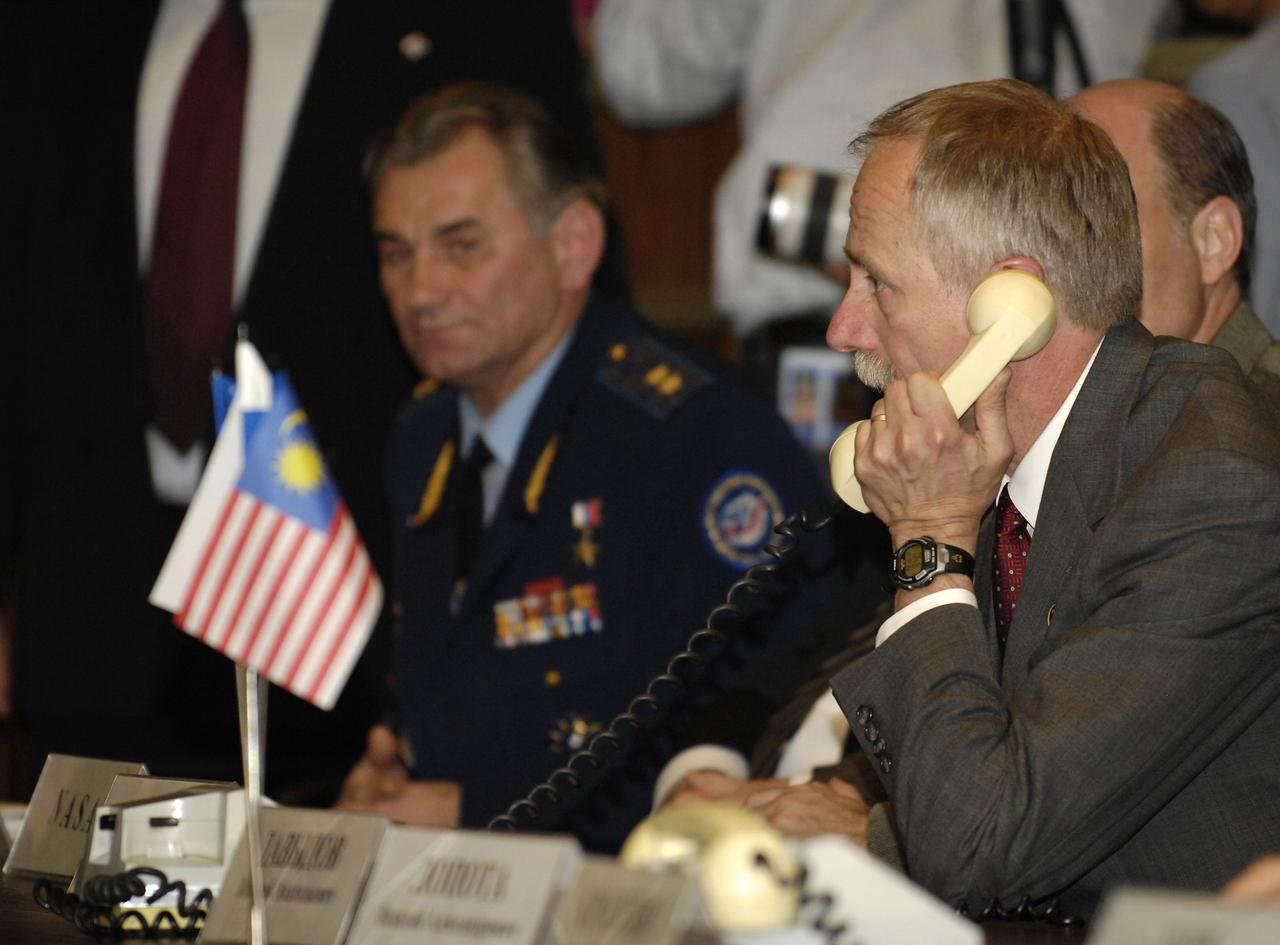
William Gerstenmaier, NASA Associate Administrator for Space Operations speaks on the phone to the crews of the International Space Station, October 12, 2007 from the Russian Mission Control Center in Korolev, outside of Moscow. Expedition 16 Commander Peggy Whitson, Soyuz Commander and Flight Engineer Yuri Malenchenko and Malaysian Spaceflight Participant Sheikh Muszaphar Shukor docked their Soyuz TMA-11 spacecraft to the station at 10:50 a.m. EDT. Oct. 12, 2007. The crew launched on Wednesday from the Baikonur Cosmodrome in Kazakhstan. Photo Credit: "NASA/Bill Ingalls"
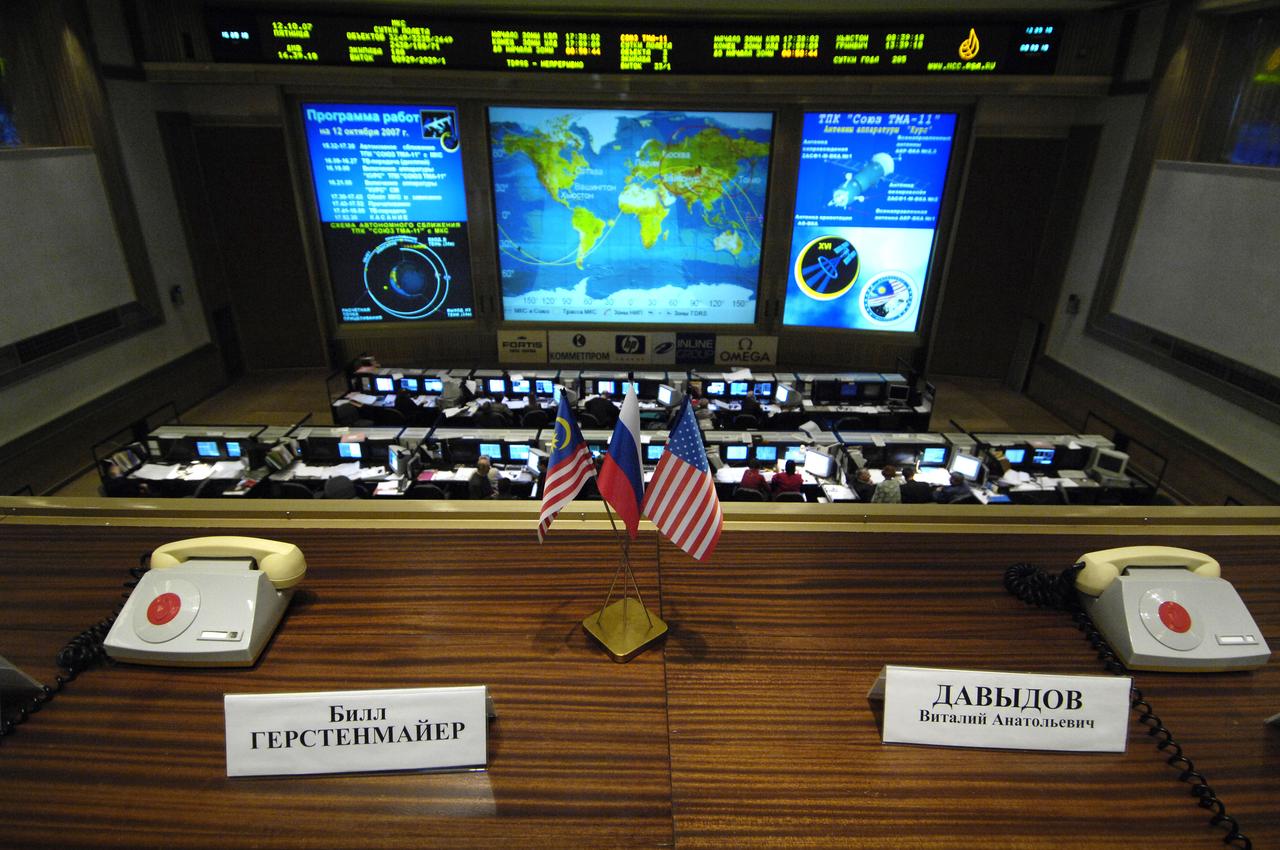
The flags of Malaysia, Russia and the United States sit between the phones used by officials to speak with the crew of the International Space Station (ISS) in the Russian Mission Control Center in Korolev, outside Moscow, Friday, Oct. 12, 2007. Expedition 16 Commander Peggy Whitson, Soyuz Commander and Flight Engineer Yuri Malenchenko and Malaysian spaceflight participant Sheikh Muszaphar Shukor docked their Soyuz TMA-11 spacecraft to the ISS at 10:50 a.m. EDT, October 12. The crew launched on Wednesday from the Baikonur Cosmodrome in Kazakhstan. Photo Credit: (NASA/Bill Ingalls)
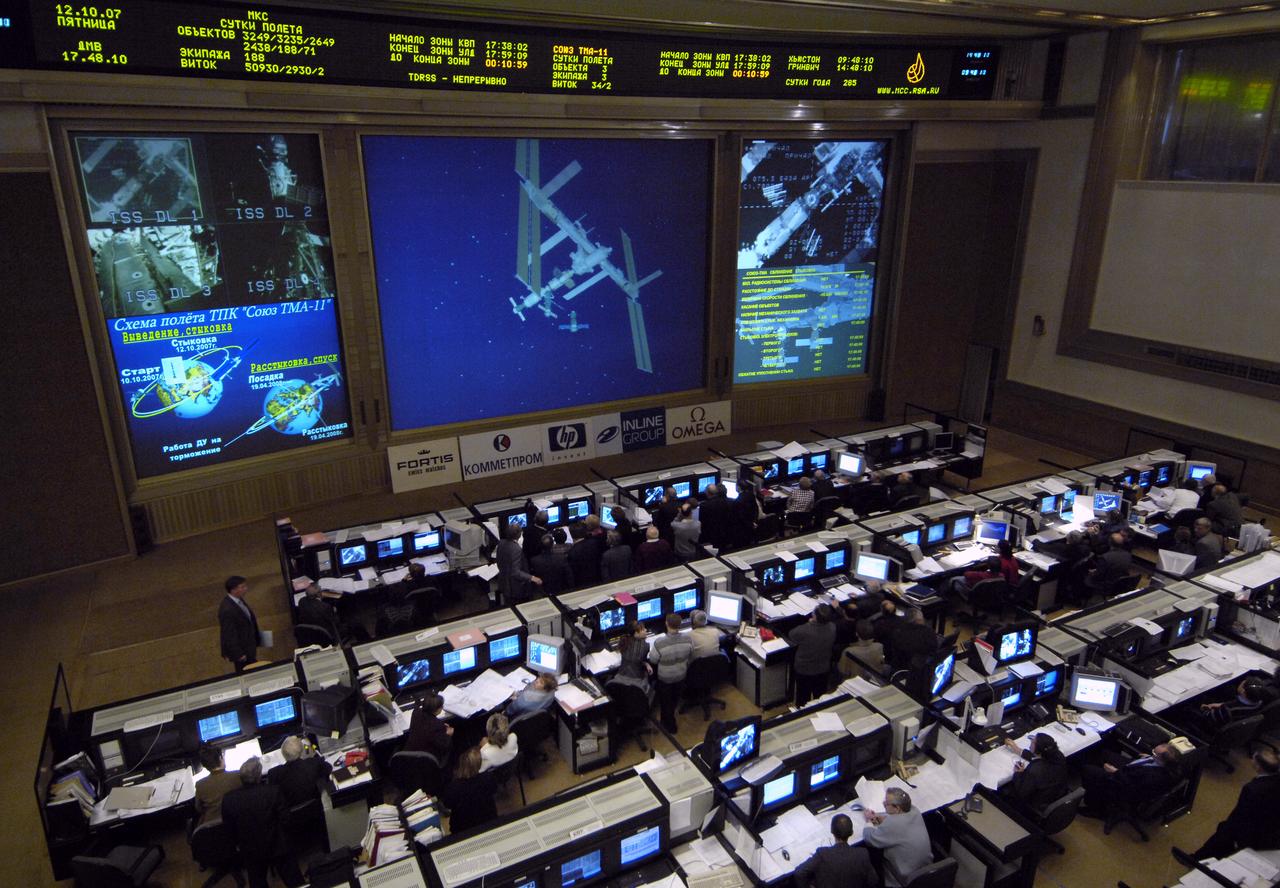
Live video from the Soyuz TMA-11 spacecraft of the International Space Station is shown on the screen in the upper right in the Russian Mission Control Center in Korolev, outside Moscow, Friday, Oct. 12, 2007. Expedition 16 Commander Peggy Whitson, Soyuz Commander and Flight Engineer Yuri Malenchenko and Malaysian spaceflight participant Sheikh Muszaphar Shukor docked their Soyuz TMA-11 spacecraft to the ISS at 10:50 a.m. EDT, October 12. The crew launched on Wednesday from the Baikonur Cosmodrome in Kazakhstan. Photo Credit: (NASA/Bill Ingalls)
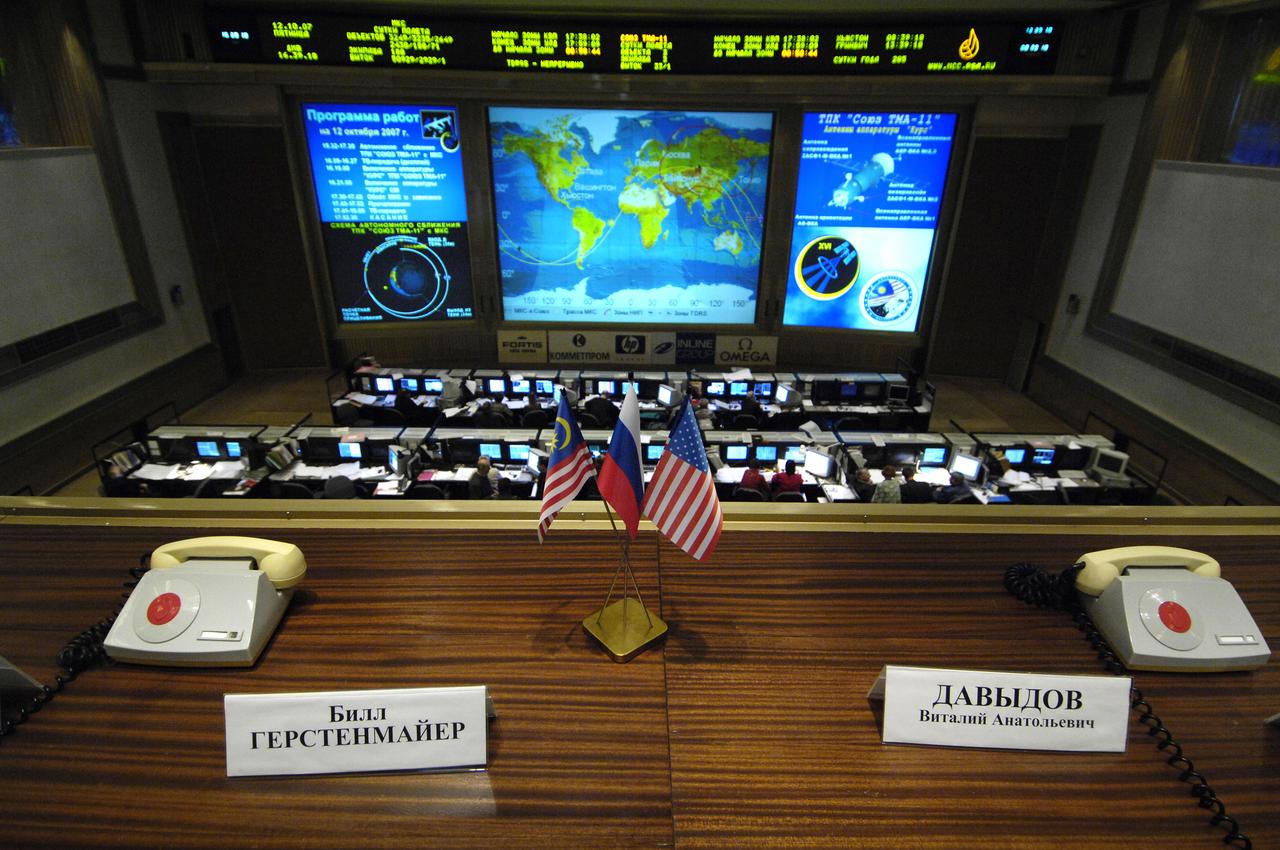
The flags of Malaysia, Russia and the United States sit between the phones used by officials to talk to the crew of the International Space Station (ISS) in the Russian Mission Control Center in Korolev, outside Moscow. Expedition 16 Commander Peggy Whitson, Soyuz Commander and Flight Engineer Yuri Malenchenko and Malaysian Spaceflight Participant Sheikh Muszaphar Shukor docked their Soyuz TMA-11 spacecraft to the station at 10:50 a.m. EDT. Oct. 12, 2007. The crew launched on Wednesday from the Baikonur Cosmodrome in Kazakhstan. Photo Credit: "NASA/Bill Ingalls"
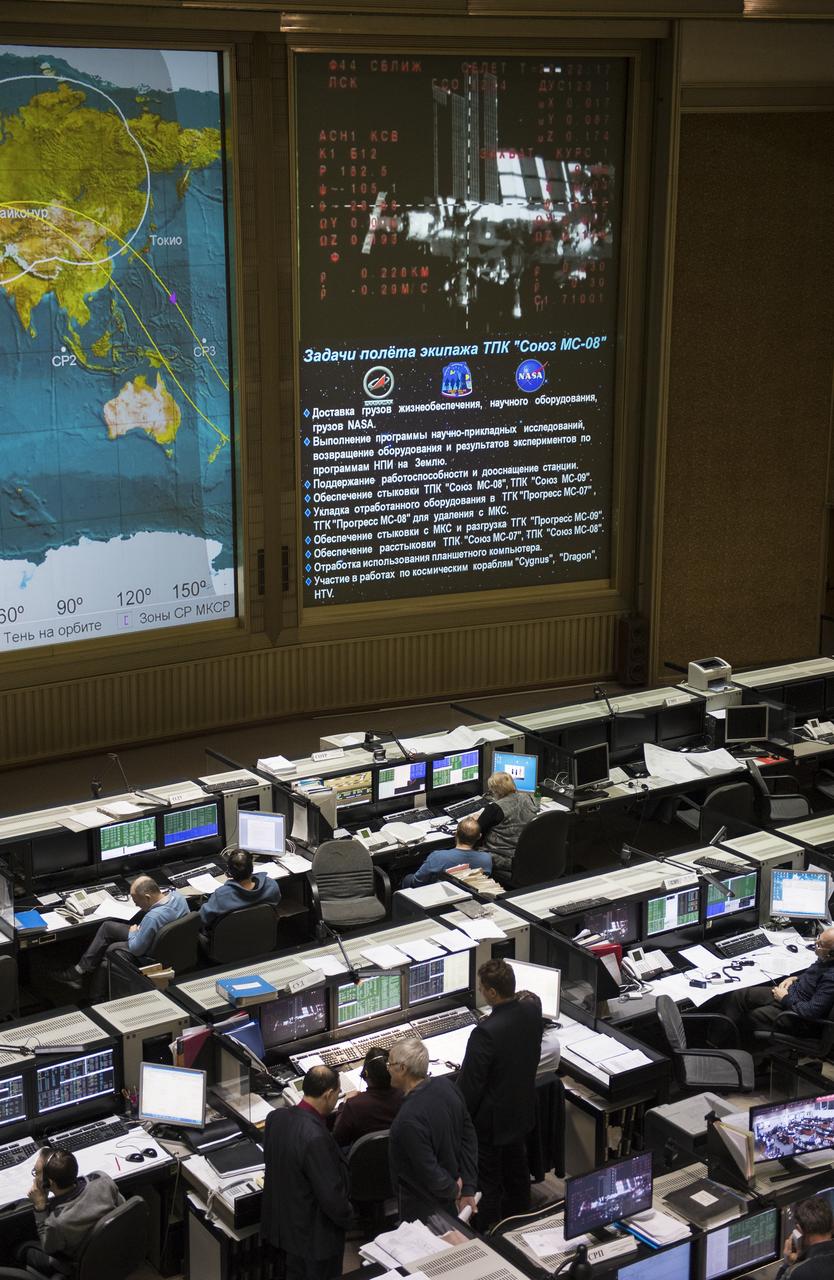
A live view of the International Space Station, as seen by cameras onboard the Soyuz MS-08 spacecraft with Expedition 55-56 crewmembers Oleg Artemyev of Roscosmos and Ricky Arnold and Drew Feustel of NASA, is seen on screens at the Moscow Mission Control Center as the spacecraft approaches for docking, Friday, March 23, 2018 in Korolev, Russia. The Soyuz MS-08 spacecraft carrying Artemyev, Feustel, and Arnold docked at 3:40 p.m. Eastern time (10:40 p.m. Moscow time) and joined Expedition 55 Commander Anton Shkaplerov of Roscosmos, Scott Tingle of NASA, and Norishige Kanai of the Japan Aerospace Exploration Agency (JAXA). Photo Credit: (NASA/Joel Kowsky)
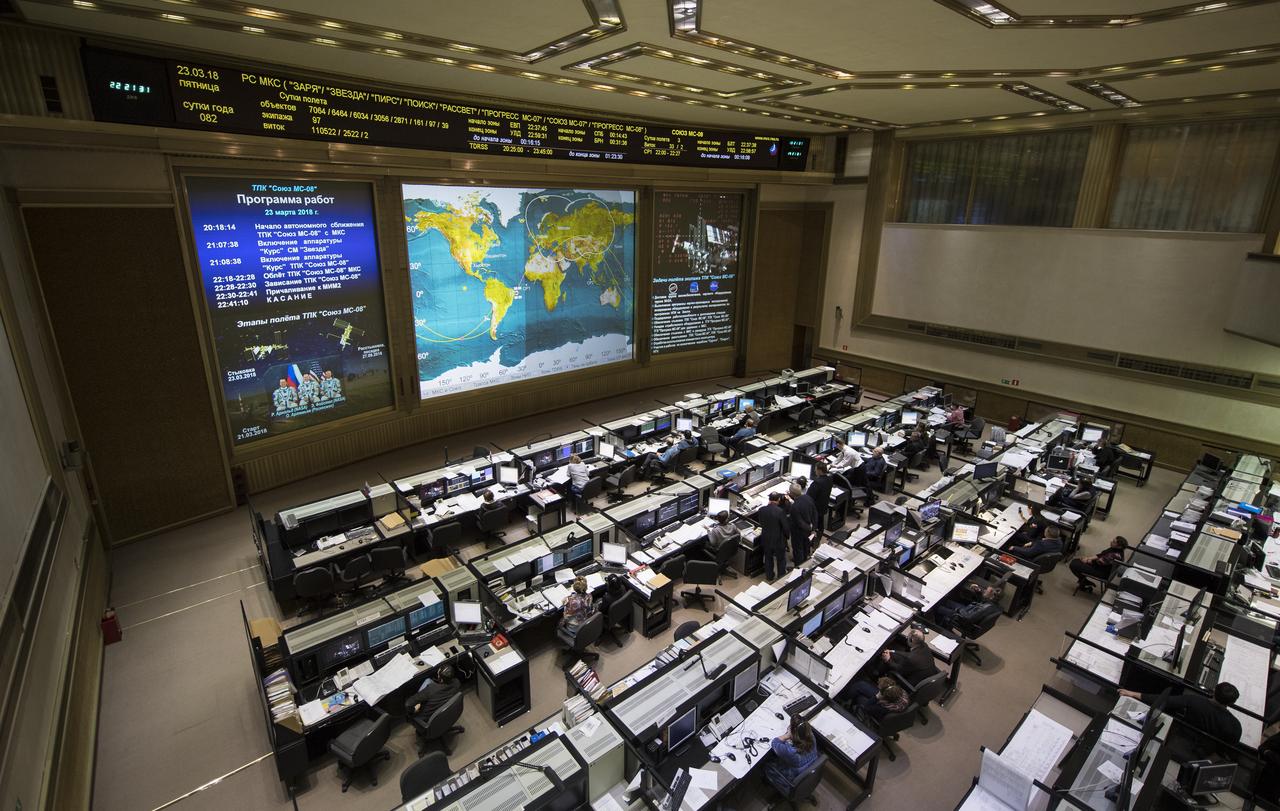
A live view of the International Space Station, as seen by cameras onboard the Soyuz MS-08 spacecraft with Expedition 55-56 crewmembers Oleg Artemyev of Roscosmos and Ricky Arnold and Drew Feustel of NASA, is seen on screens at the Moscow Mission Control Center as the spacecraft approaches for docking, Friday, March 23, 2018 in Korolev, Russia. The Soyuz MS-08 spacecraft carrying Artemyev, Feustel, and Arnold docked at 3:40 p.m. Eastern time (10:40 p.m. Moscow time) and joined Expedition 55 Commander Anton Shkaplerov of Roscosmos, Scott Tingle of NASA, and Norishige Kanai of the Japan Aerospace Exploration Agency (JAXA). Photo Credit: (NASA/Joel Kowsky)
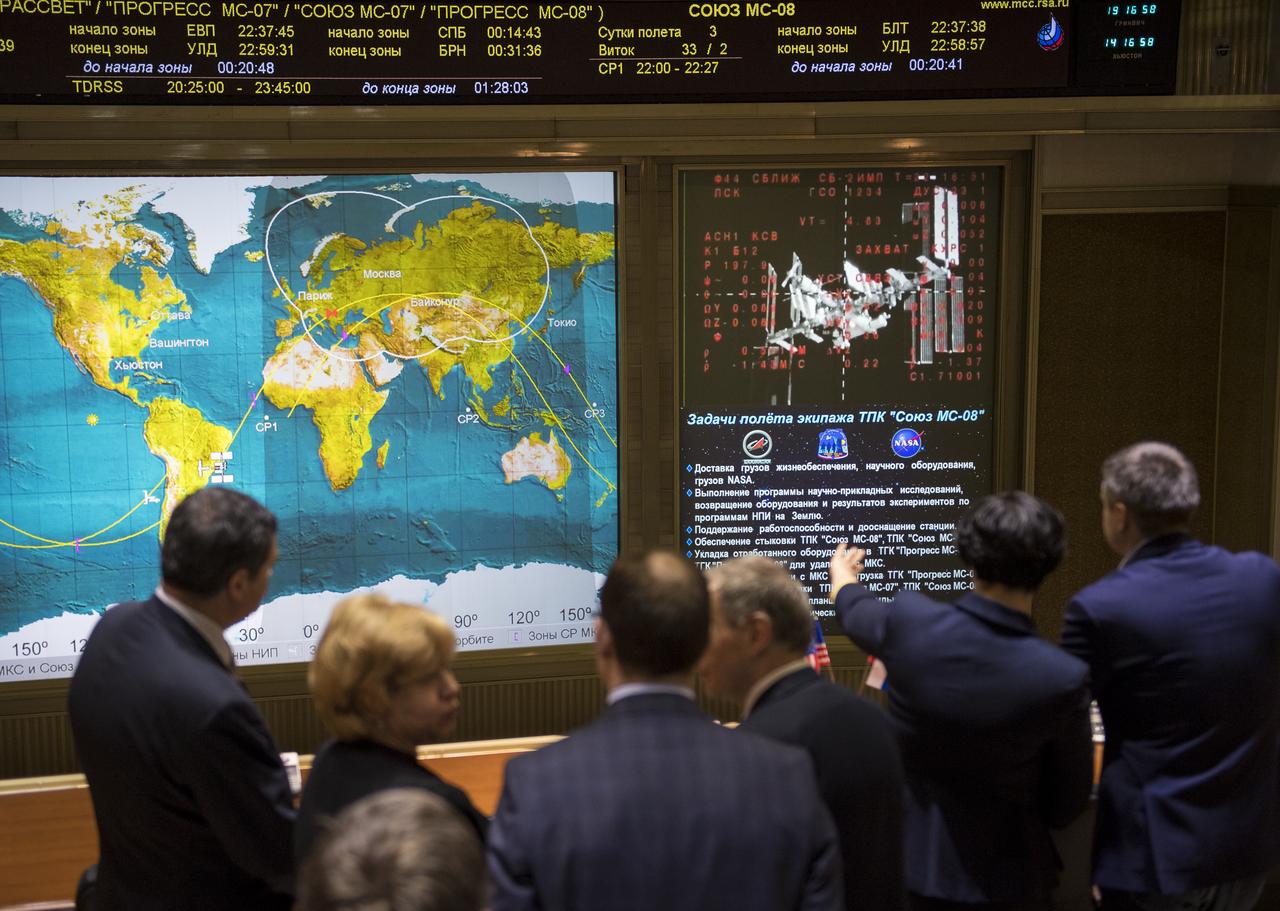
Guests watch a live view of the International Space Station, as seen by cameras onboard the Soyuz MS-08 spacecraft with Expedition 55-56 crewmembers Oleg Artemyev of Roscosmos and Ricky Arnold and Drew Feustel of NASA, on screens at the Moscow Mission Control Center as the spacecraft approaches for docking, Friday, March 23, 2018 in Korolev, Russia. The Soyuz MS-08 spacecraft carrying Artemyev, Feustel, and Arnold docked at 3:40 p.m. Eastern time (10:40 p.m. Moscow time) and joined Expedition 55 Commander Anton Shkaplerov of Roscosmos, Scott Tingle of NASA, and Norishige Kanai of the Japan Aerospace Exploration Agency (JAXA). Photo Credit: (NASA/Joel Kowsky)
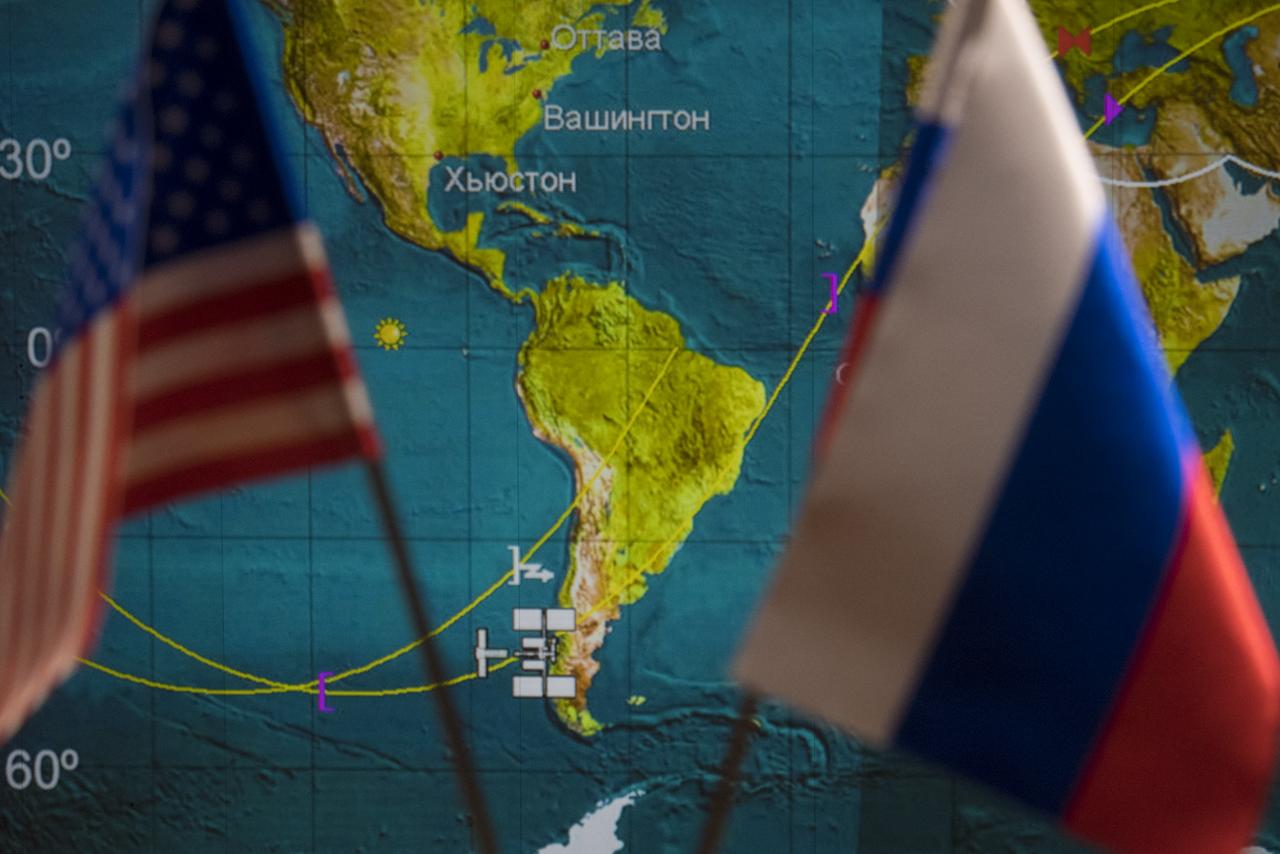
Icons for the International Space Station and Soyuz MS-08 spacecraft are seen on a tracking map on a screen in the Moscow Mission Control Center as the spacecraft approaches for docking, Friday, March 23, 2018 in Korolev, Russia. The Soyuz MS-08 spacecraft carrying Expedition 55-56 crewmembers Oleg Artemyev of Roscosmos and Ricky Arnold and Drew Feustel of NASA docked at 3:40 p.m. Eastern time (10:40 p.m. Moscow time) on March 23 and joined Expedition 55 Commander Anton Shkaplerov of Roscosmos, Scott Tingle of NASA, and Norishige Kanai of the Japan Aerospace Exploration Agency (JAXA). Photo Credit: (NASA/Joel Kowsky)
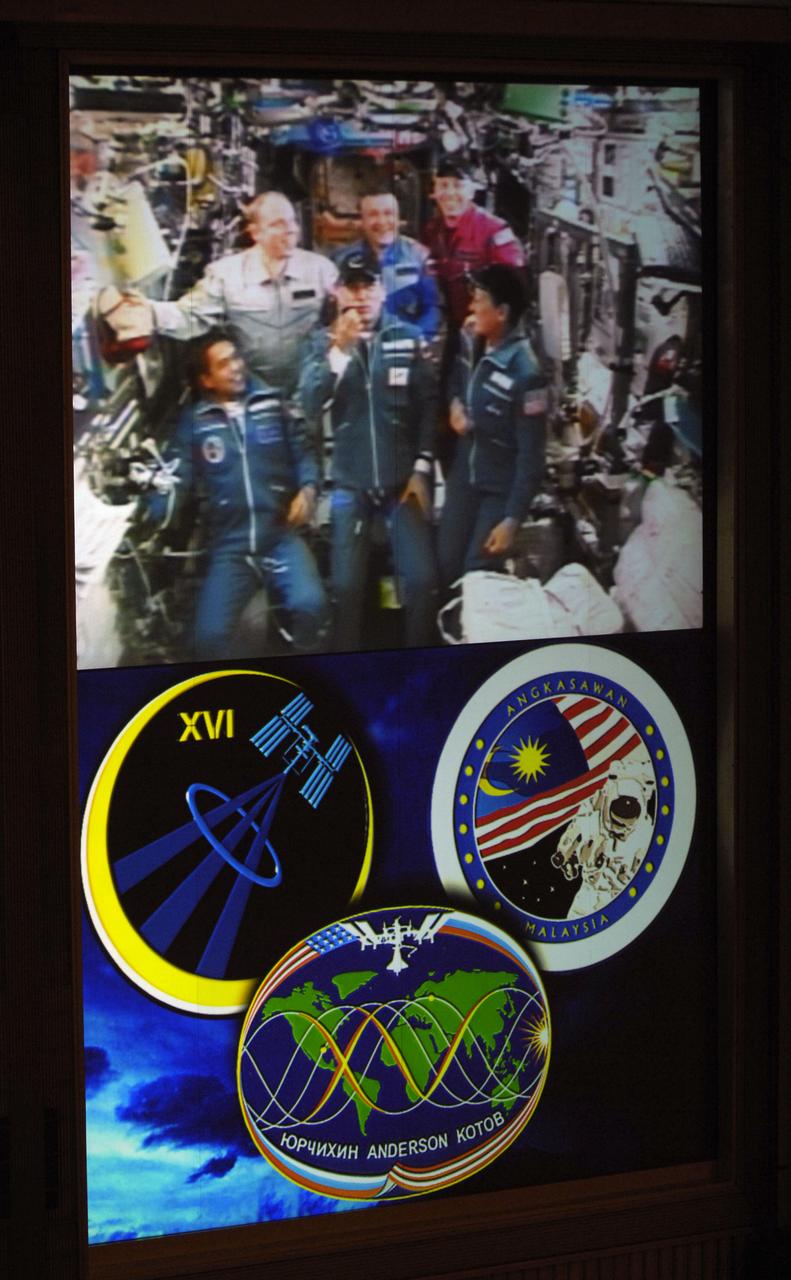
Live video from the International Space Station is shown on the screen in the Russian Mission Control Center in Korolev, outside Moscow, Friday, Oct. 12, 2007. Expedition 16 Commander Peggy Whitson, bottom right, Soyuz Commander and Flight Engineer Yuri Malenchenko, bottom center, and Malaysian spaceflight participant Sheikh Muszaphar Shukor docked their Soyuz TMA-11 spacecraft to the station at 10:50 a.m. EDT. October 12. Expedition 15 Commander Fyodor Yurchikhin, top left, and Flight Engineers Oleg Kotov and Clay Anderson, top right, welcomed the new crew aboard the ISS when the hatches were opened at 12:22 p.m. EDT. Both crews will work together for about nine days before Yurchikhin, Kotov and Shukor depart for Earth in their Soyuz TMA-10 spacecraft. Photo Credit: (NASA/Bill Ingalls)
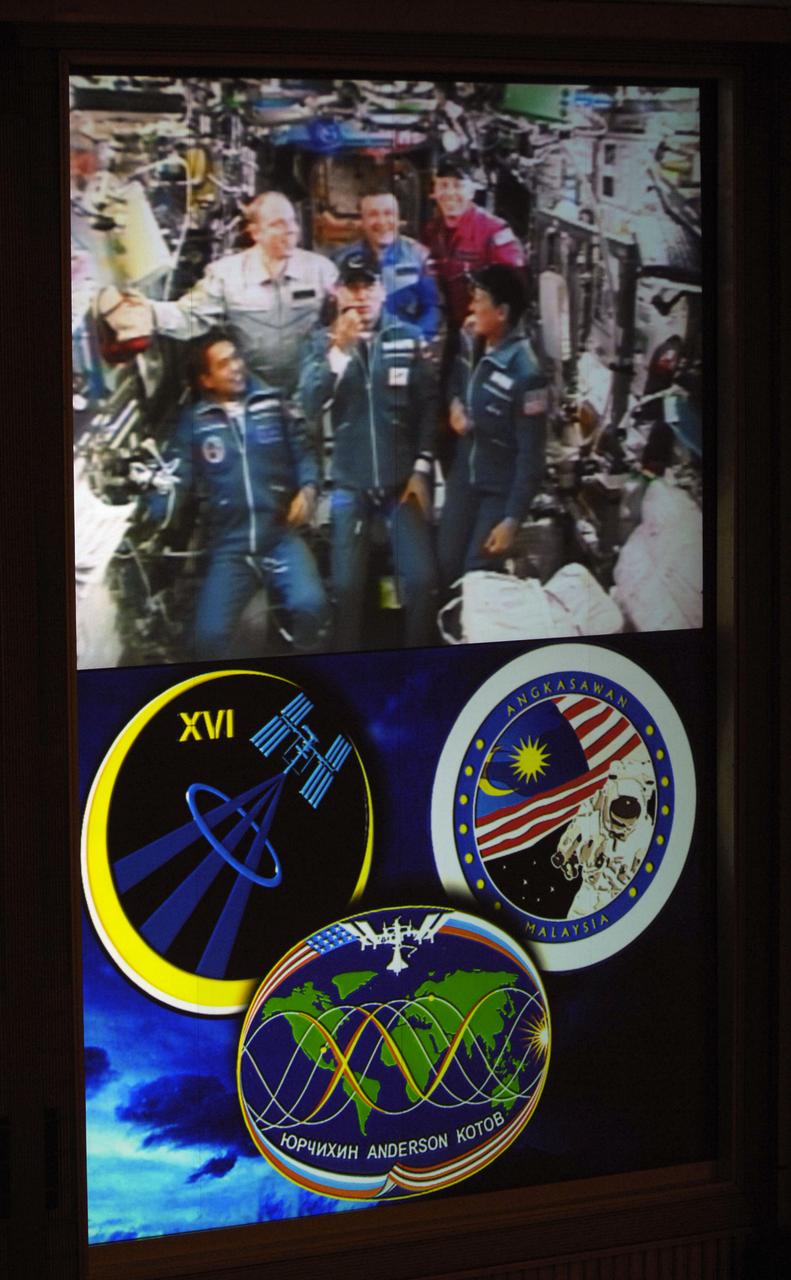
Live video from the International Space Station is shown on the screen in the Russian Mission Control Center in Korolev, outside Moscow, October 12, 2007. Expedition 16 Commander Peggy Whitson (bottom right), Soyuz Commander and Flight Engineer Yuri Malenchenko (bottom center) and Malaysian Spaceflight Participant Sheikh Muszaphar Shukor (bottom left) docked their Soyuz TMA-11 spacecraft to the station at 10:50 a.m. EDT. Oct. 12, 2007. (top left to right) Expedition 15 Commander Fyodor Yurchikhin and Flight Engineers Oleg Kotov and Clay Anderson welcomed the new crew aboard the station when the hatches were opened at 12:22p.m. EDT. Both crews will work together for about nine days before Yurchikhin, Kotov and Shukor depart in their Soyuz TMA-10 spacecraft. Photo Credit: "NASA/Bill Ingalls"
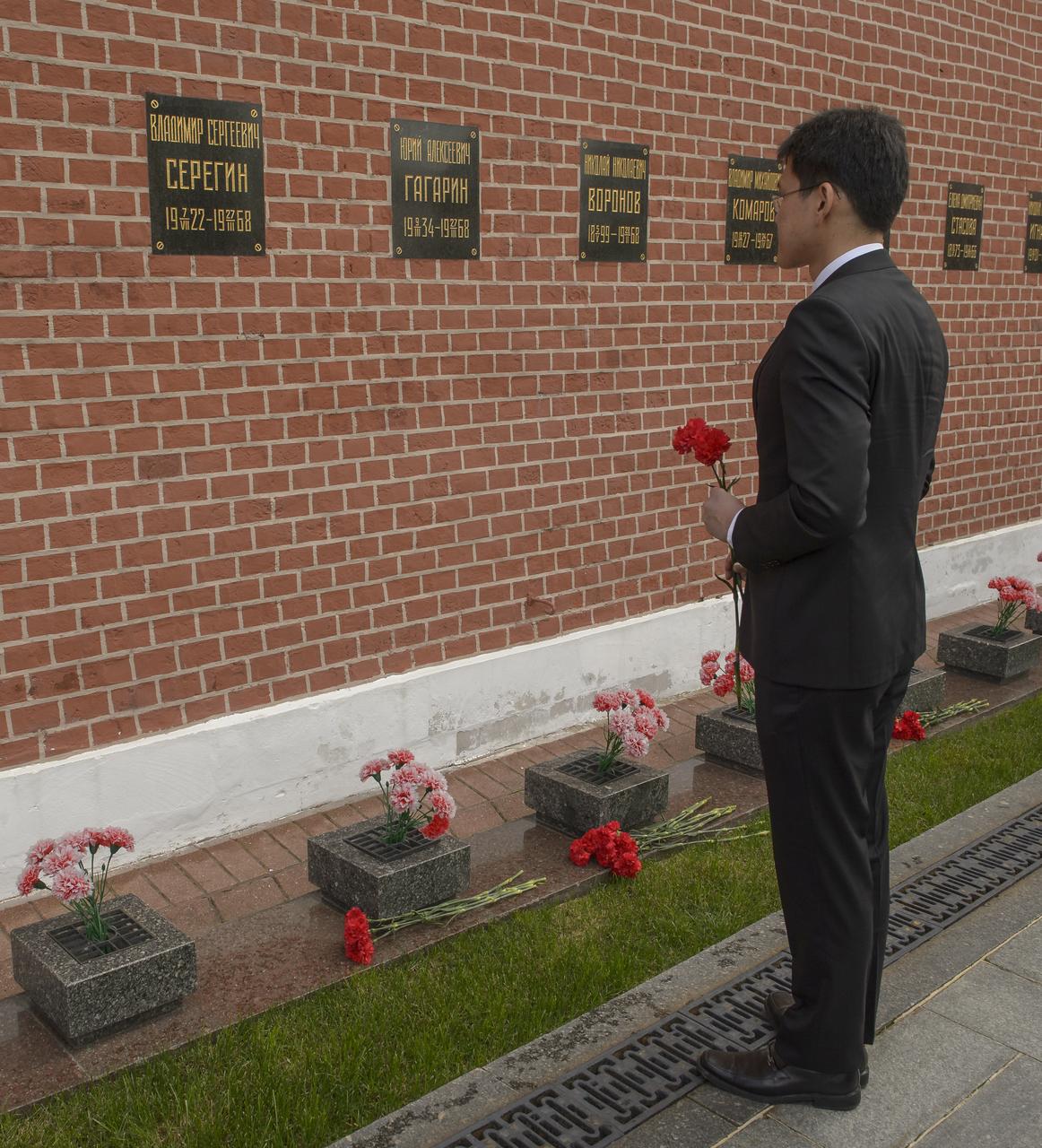
Expedition 52 backup crew member Norishige Kanai of the Japan Aerospace Exploration Agency (JAXA) lays roses at the site where Russian space icons are interred as part of traditional pre-launch ceremonies, Monday, July 10, 2017 in Moscow. Photo Credit: (NASA/Bill Ingalls)
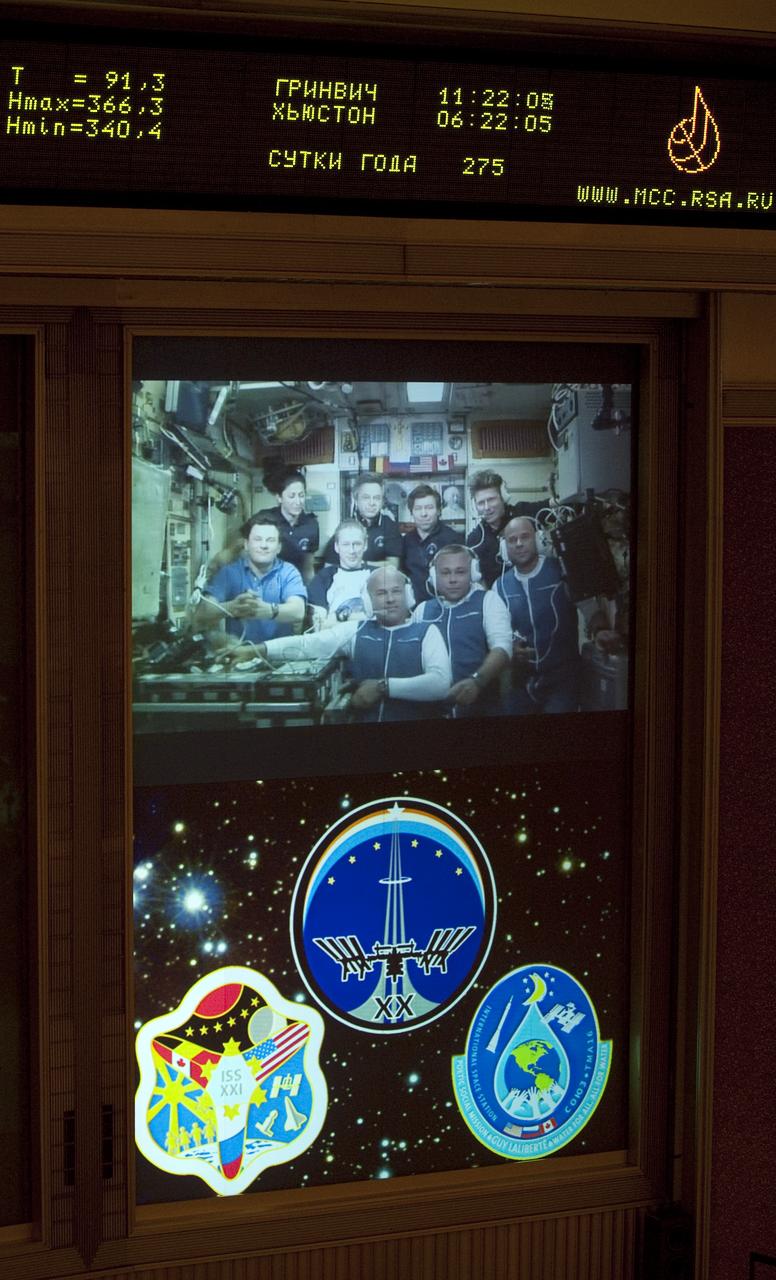
The entire crew onboard the International Space Station (ISS) can be seen on a screen of the Mission Control Center Moscow in Korolev, Russia shortly after the successful docking of the Soyuz TMA-16 spacecraft with the International Space Station marking the start of Expedition 21 with Flight Engineer Jeffrey N. Williams, Expedition 21 Flight Engineer Maxim Suraev, and Spaceflight Participant Guy Laliberté, Friday, Oct. 2, 2009. Photo Credit: (NASA/Bill Ingalls)
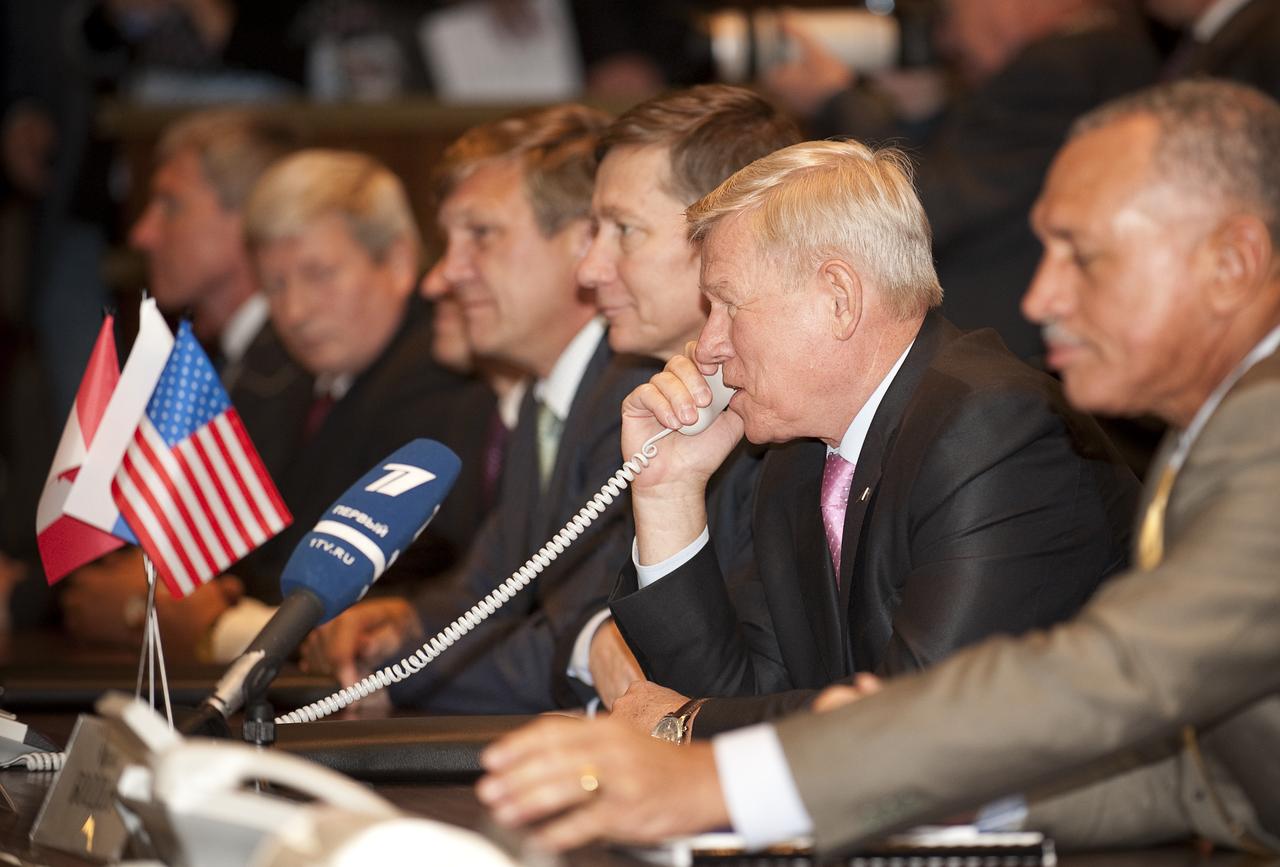
Head of the Russian Federal Space Agency, Anatoly Perminov, talks to the crew of the International Space Station (ISS) from the Mission Control Center Moscow in Korolev, Russia shortly after the successful docking of the Soyuz TMA-16 spacecraft with the International Space Station marking the start of Expedition 21 with Flight Engineer Jeffrey N. Williams, Expedition 21 Flight Engineer Maxim Suraev, and Spaceflight Participant Guy Laliberté, Friday, Oct. 2, 2009. Photo Credit: (NASA/Bill Ingalls)
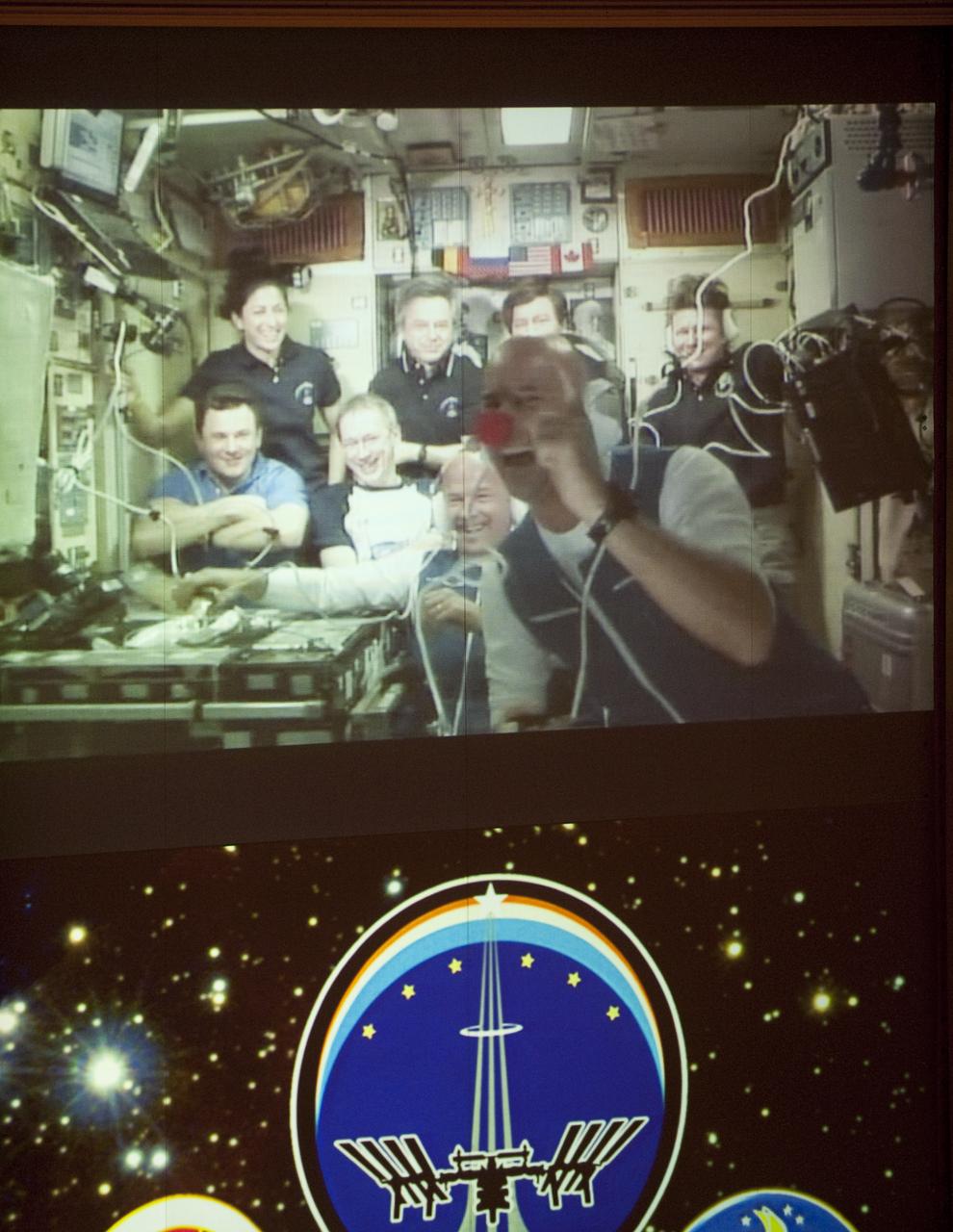
Spaceflight Participant Guy Laliberté is in the foreground as the entire crew onboard the International Space Station (ISS) is seen on a screen in the Mission Control Center Moscow in Korolev, Russia shortly after the successful docking of the Soyuz TMA-16 spacecraft with the International Space Station marking the start of Expedition 21 with Flight Engineer Jeffrey N. Williams, Expedition 21 Flight Engineer Maxim Suraev, and Spaceflight Participant Guy Laliberté, Friday, Oct. 2, 2009. Photo Credit: (NASA/Bill Ingalls)
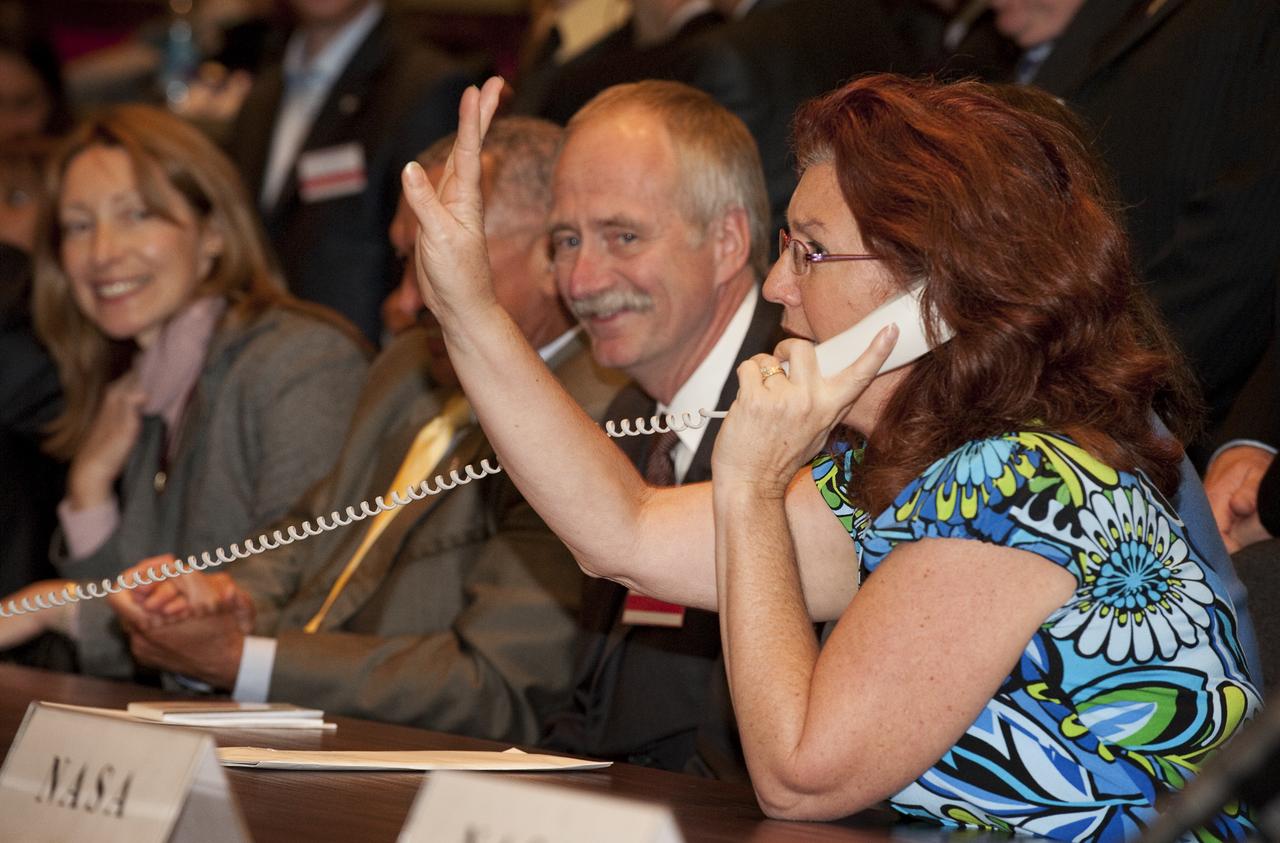
Anna-Marie Williams talks on the phone to her husband Expedition 21 with Flight Engineer Jeffrey N. Williams who is onboard the International Space Station (ISS) from the Mission Control Center Moscow in Korolev, Russia shortly after the successful docking of the Soyuz TMA-16 spacecraft with the International Space Station marking the start of Expedition 21 with Williams, Expedition 21 Flight Engineer Maxim Suraev, and Spaceflight Participant Guy Laliberté, Friday, Oct. 2, 2009. Photo Credit: (NASA/Bill Ingalls)
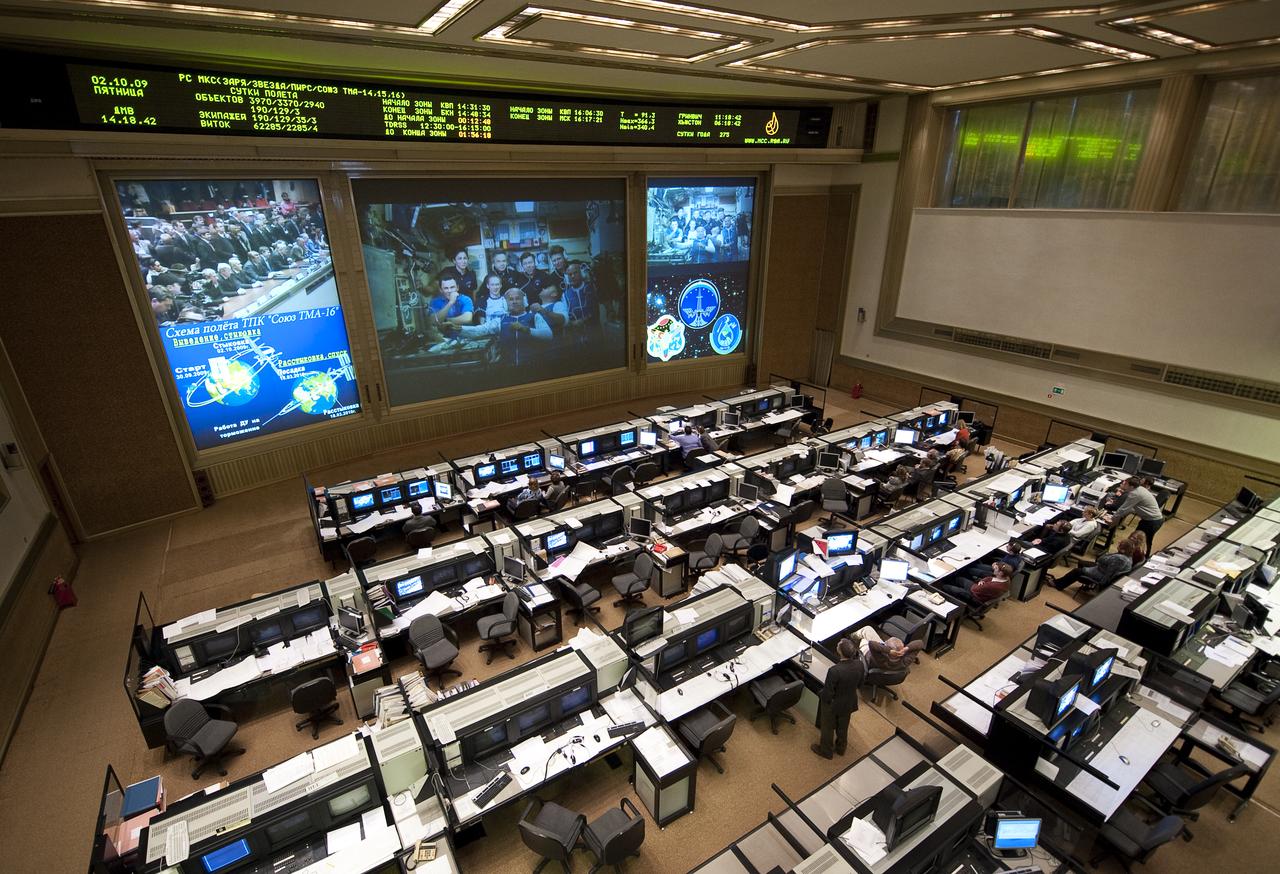
The entire crew onboard the International Space Station (ISS) can be seen on the center screen of the Mission Control Center Moscow in Korolev, Russia shortly after the successful docking of the Soyuz TMA-16 spacecraft with the International Space Station marking the start of Expedition 21 with Flight Engineer Jeffrey N. Williams, Expedition 21 Flight Engineer Maxim Suraev, and Spaceflight Participant Guy Laliberté, Friday, Oct. 2, 2009. Photo Credit: (NASA/Bill Ingalls)
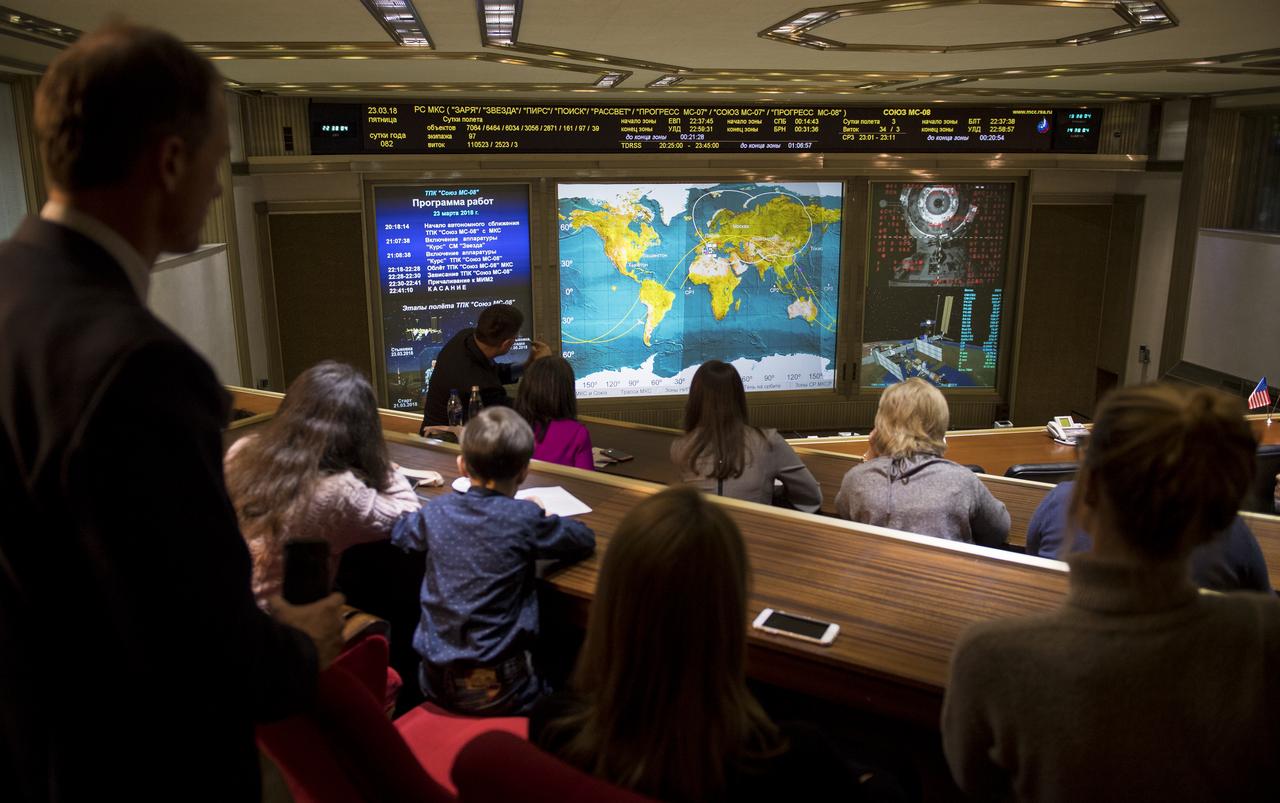
Friends and family members of the Soyuz MS-08 crew watch a live view of the International Space Station, as seen by cameras onboard the spacecraft with Expedition 55-56 crewmembers Oleg Artemyev of Roscosmos and Ricky Arnold and Drew Feustel of NASA, on screens at the Moscow Mission Control Center as the spacecraft approaches for docking, Friday, March 23, 2018 in Korolev, Russia. The Soyuz MS-08 spacecraft carrying Artemyev, Feustel, and Arnold docked at 3:40 p.m. Eastern time (10:40 p.m. Moscow time) and joined Expedition 55 Commander Anton Shkaplerov of Roscosmos, Scott Tingle of NASA, and Norishige Kanai of the Japan Aerospace Exploration Agency (JAXA). Photo Credit: (NASA/Joel Kowsky)
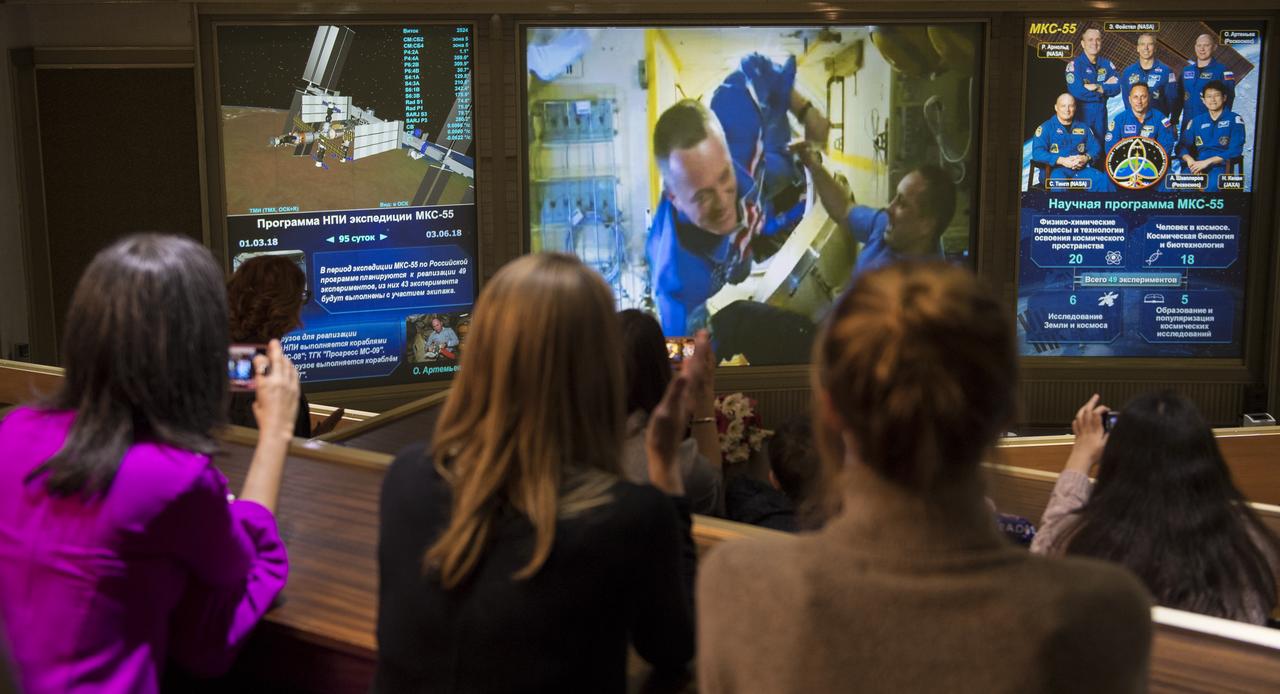
Expedition 55 flight engineer Ricky Arnold of NASA is seen after the hatches were opened between the Soyuz MS-08 spacecraft and the International Space Station on screens at the Moscow Mission Control Center in Korolev, Russia, Saturday, March 24, 2018, a few hours after the Soyuz MS-08 docked to the International Space Station. Hatches were opened at 5:48 p.m. Eastern time on March 23 (12:48 a.m. Moscow time on March 24) and Arnold, Oleg Artemyev of Roscosmos, and Drew Feustel of NASA joined Expedition 55 Commander Anton Shkaplerov of Roscosmos, Scott Tingle of NASA, and Norishige Kanai of the Japan Aerospace Exploration Agency (JAXA) onboard the orbiting laboratory. Photo Credit: (NASA/Joel Kowsky)
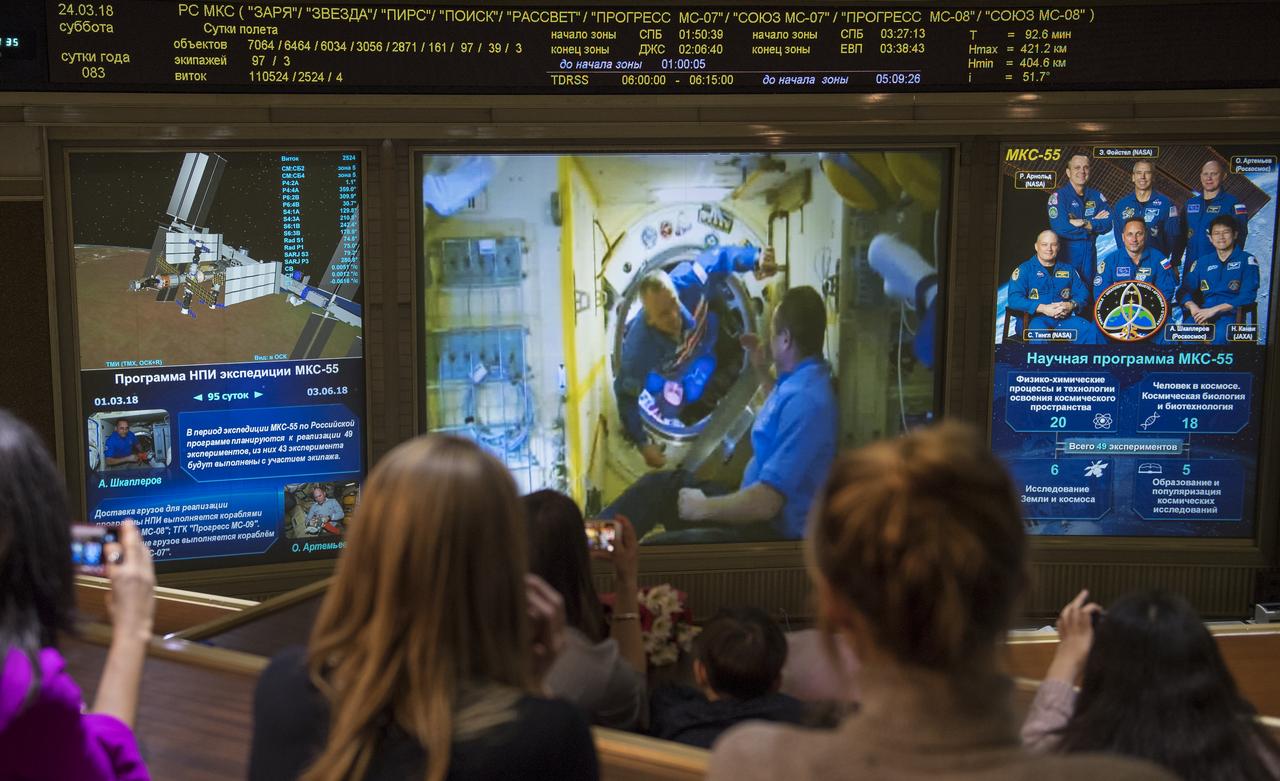
Expedition 55 flight engineer Drew Feustel of NASA is seen after the hatches were opened between the Soyuz MS-08 spacecraft and the International Space Station on screens at the Moscow Mission Control Center in Korolev, Russia, Saturday, March 24, 2018, a few hours after the Soyuz MS-08 docked to the International Space Station. Hatches were opened at 5:48 p.m. Eastern time on March 23 (12:48 a.m. Moscow time on March 24) and Feustel, Oleg Artemyev of Roscosmos, and Ricky Arnold of NASA joined Expedition 55 Commander Anton Shkaplerov of Roscosmos, Scott Tingle of NASA, and Norishige Kanai of the Japan Aerospace Exploration Agency (JAXA) onboard the orbiting laboratory. Photo Credit: (NASA/Joel Kowsky)
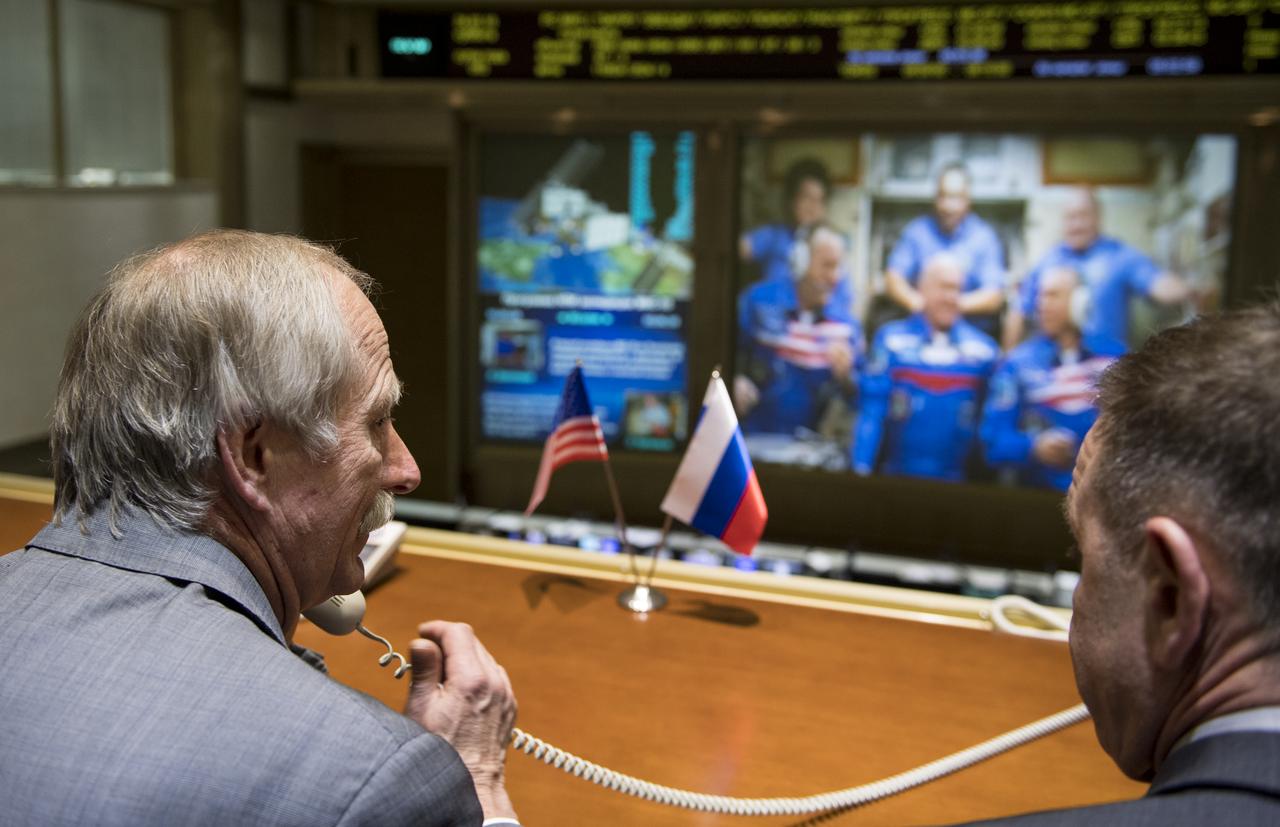
NASA Associate Administrator for the Human Exploration and Operations Mission Directorate Bill Gerstenmaier speaks with the Soyuz MS-08 crew from the Moscow Mission Control Center in Korolev, Russia a few hours after the Soyuz MS-08 docked to the International Space Station on Saturday, March 24, 2018. Hatches were opened at 5:48 p.m. Eastern time on March 23 (12:48 a.m. Moscow time on March 24) and Oleg Artemyev of Roscosmos, Ricky Arnold of NASA and Drew Feustel of NASA joined Expedition 55 Commander Anton Shkaplerov of Roscosmos, Scott Tingle of NASA, and Norishige Kanai of the Japan Aerospace Exploration Agency (JAXA) onboard the orbiting laboratory. Photo Credit: (NASA/Joel Kowsky)
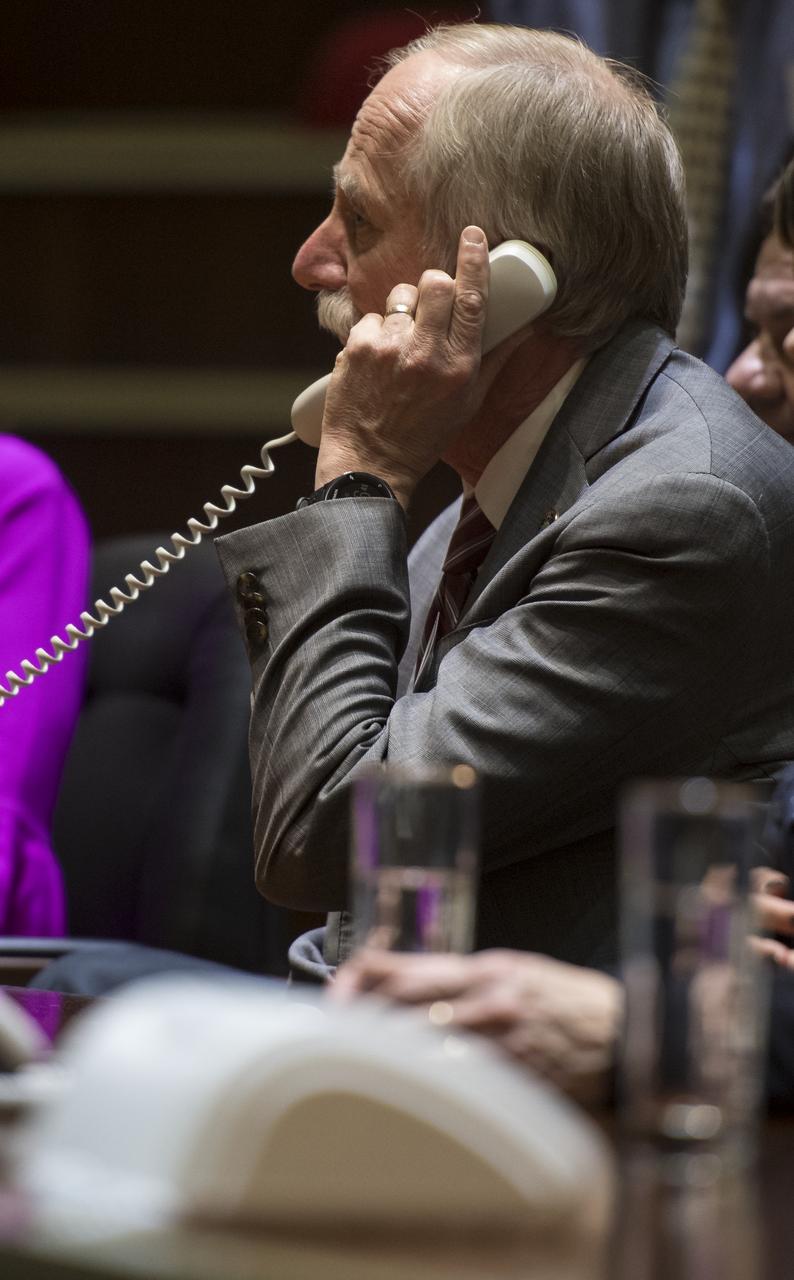
NASA Associate Administrator for the Human Exploration and Operations Mission Directorate Bill Gerstenmaier speaks with the Soyuz MS-08 crew from the Moscow Mission Control Center in Korolev, Russia a few hours after the Soyuz MS-08 docked to the International Space Station on Saturday, March 24, 2018. Hatches were opened at 5:48 p.m. Eastern time on March 23 (12:48 a.m. Moscow time on March 24) and Oleg Artemyev of Roscosmos, Ricky Arnold of NASA and Drew Feustel of NASA joined Expedition 55 Commander Anton Shkaplerov of Roscosmos, Scott Tingle of NASA, and Norishige Kanai of the Japan Aerospace Exploration Agency (JAXA) onboard the orbiting laboratory. Photo Credit: (NASA/Joel Kowsky)
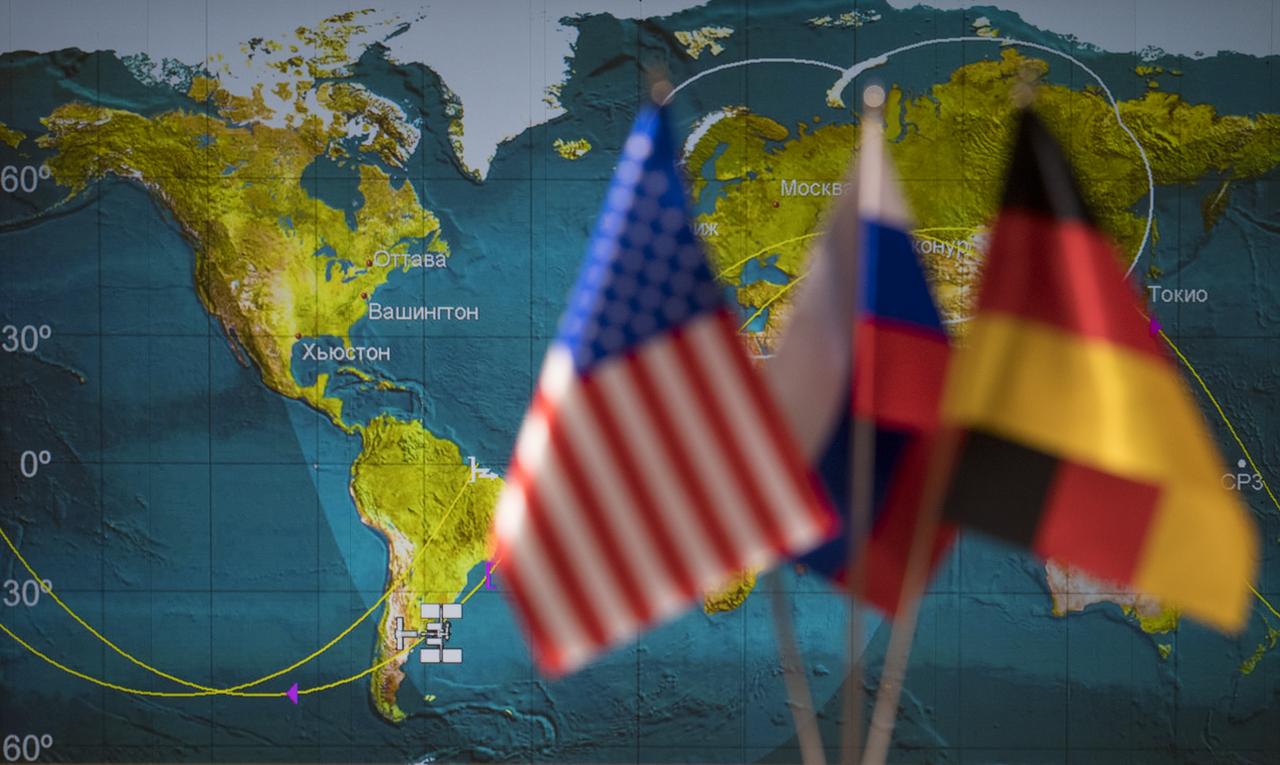
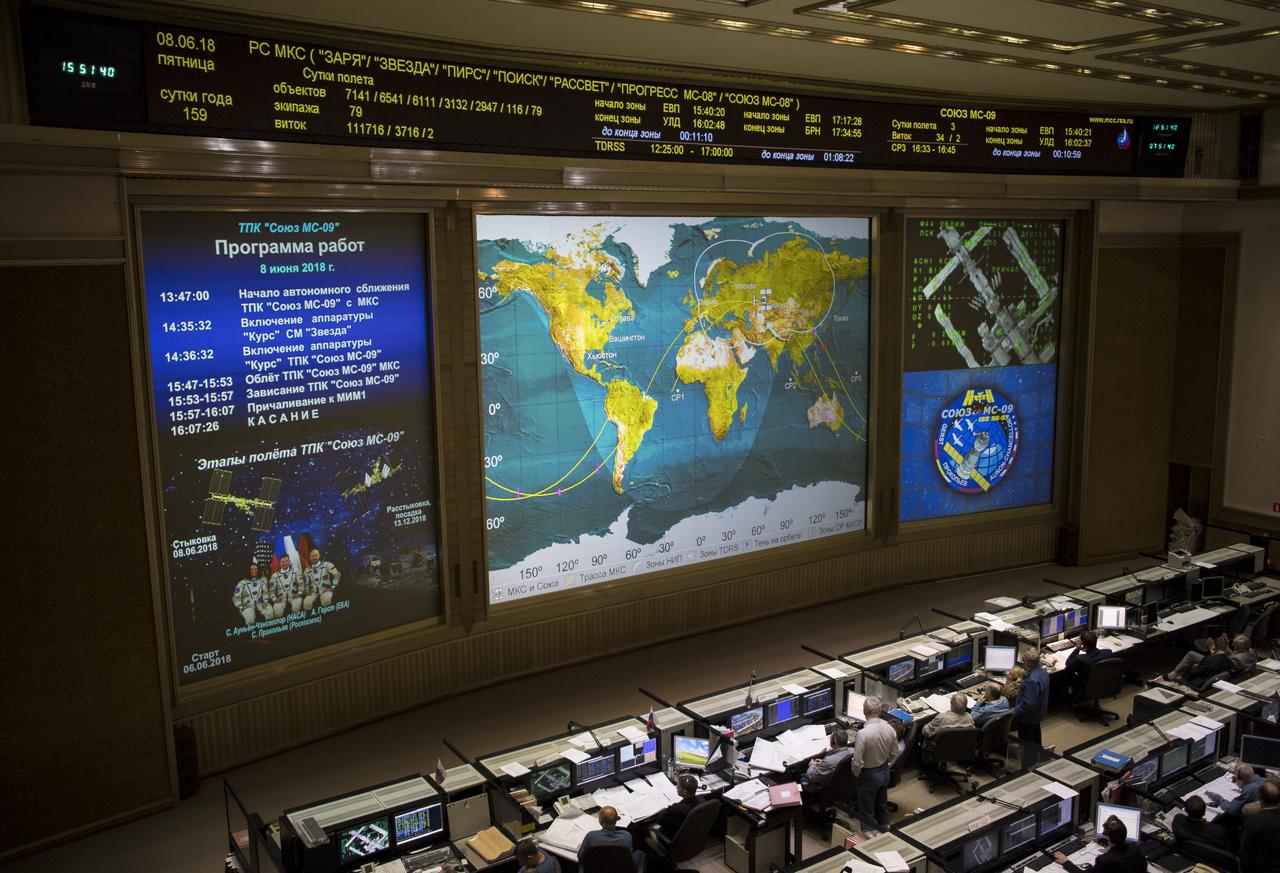
Icons for the International Space Station and Soyuz MS-09 spacecraft are seen on a tracking map on a screen in the Moscow Mission Control Center as the spacecraft approaches for docking, Friday, June 8, 2018 in Korolev, Russia. The Soyuz MS-09 spacecraft carrying Serena Auñón-Chancellor of NASA, Sergey Prokopyev of Roscosmos, and Alexander Gerst of ESA (European Space Agency) docked at 9:01am EDT (4:01pm Moscow time) to the Rassvet module of the International Space Station to join Expedition 56 Commander Drew Feustel of NASA and flight engineers Ricky Arnold of NASA and Oleg Artemyev of Roscosmos. Photo Credit: (NASA/Joel Kowsky)
A live view of the International Space Station, as seen by cameras onboard the spacecraft with Expedition 56-57 crewmembers Serena Auñón-Chancellor of NASA, Sergey Prokopyev of Roscosmos, and Alexander Gerst of ESA (European Space Agency) is seen on screens at the Moscow Mission Control Center as the spacecraft approaches for docking, Friday, June 8, 2018 in Korolev, Russia. The Soyuz MS-09 spacecraft carrying Auñón-Chancellor, Prokopyev, and Gerst docked at 9:01am EDT (4:01pm Moscow time) to the Rassvet module of the International Space Station to join Expedition 56 Commander Drew Feustel of NASA and flight engineers Ricky Arnold of NASA and Oleg Artemyev of Roscosmos. Photo Credit: (NASA/Joel Kowsky)
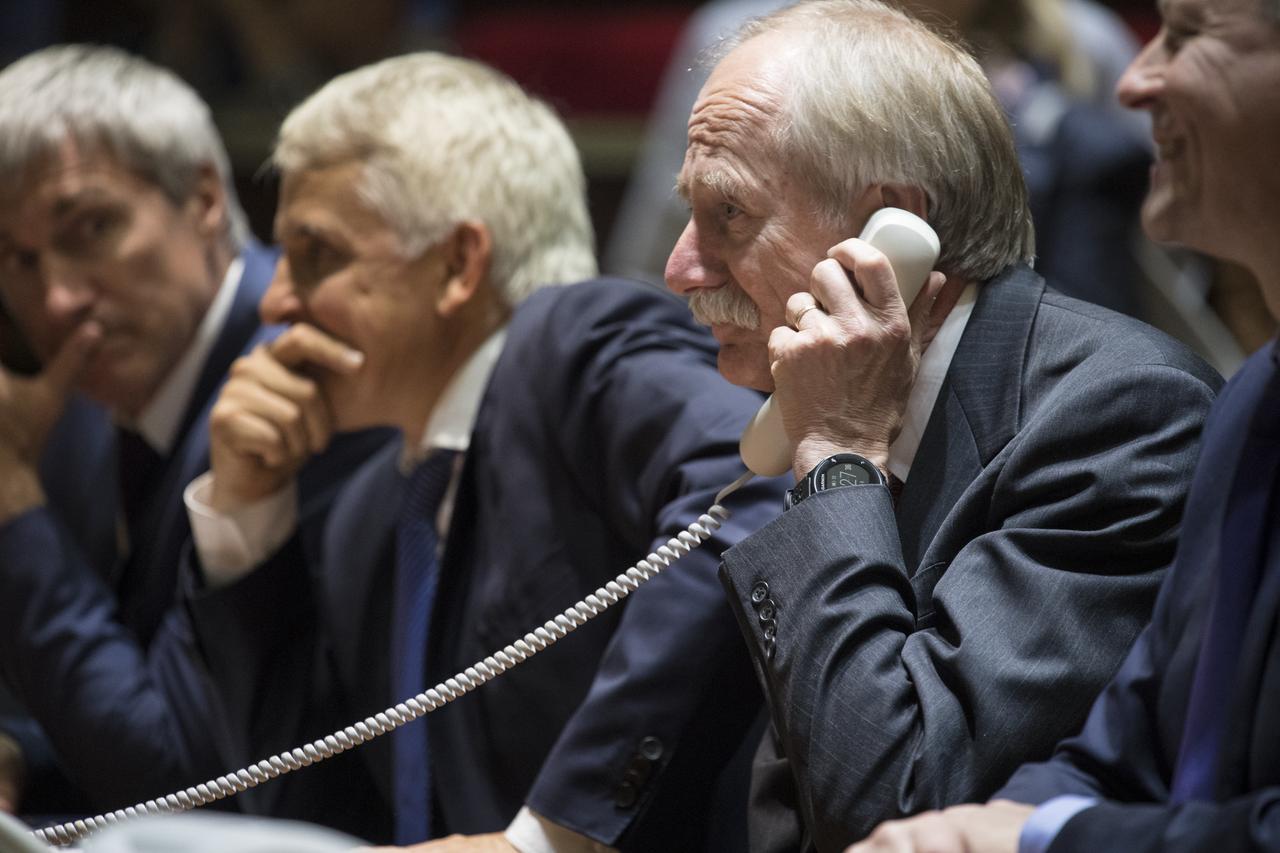
NASA Associate Administrator for the Human Exploration and Operations Mission Directorate William Gerstenmaier speaks with the Soyuz MS-09 crew from the Moscow Mission Control Center in Korolev, Russia a few hours after the Soyuz MS-09 docked to the International Space Station on Friday, June 8, 2018. Hatches were opened at 11:17am EDT (6:17pm Moscow time) and Sergey Prokopyev of Roscosmos, Serena Auñón-Chancellor of NASA, and Alexander Gerst of ESA (European Space Agency) joined Expedition 56 Commander Drew Feustel of NASA, Ricky Arnold of NASA, and Oleg Artemyev of Roscosmos onboard the orbiting laboratory. Photo Credit: (NASA/Joel Kowsky)
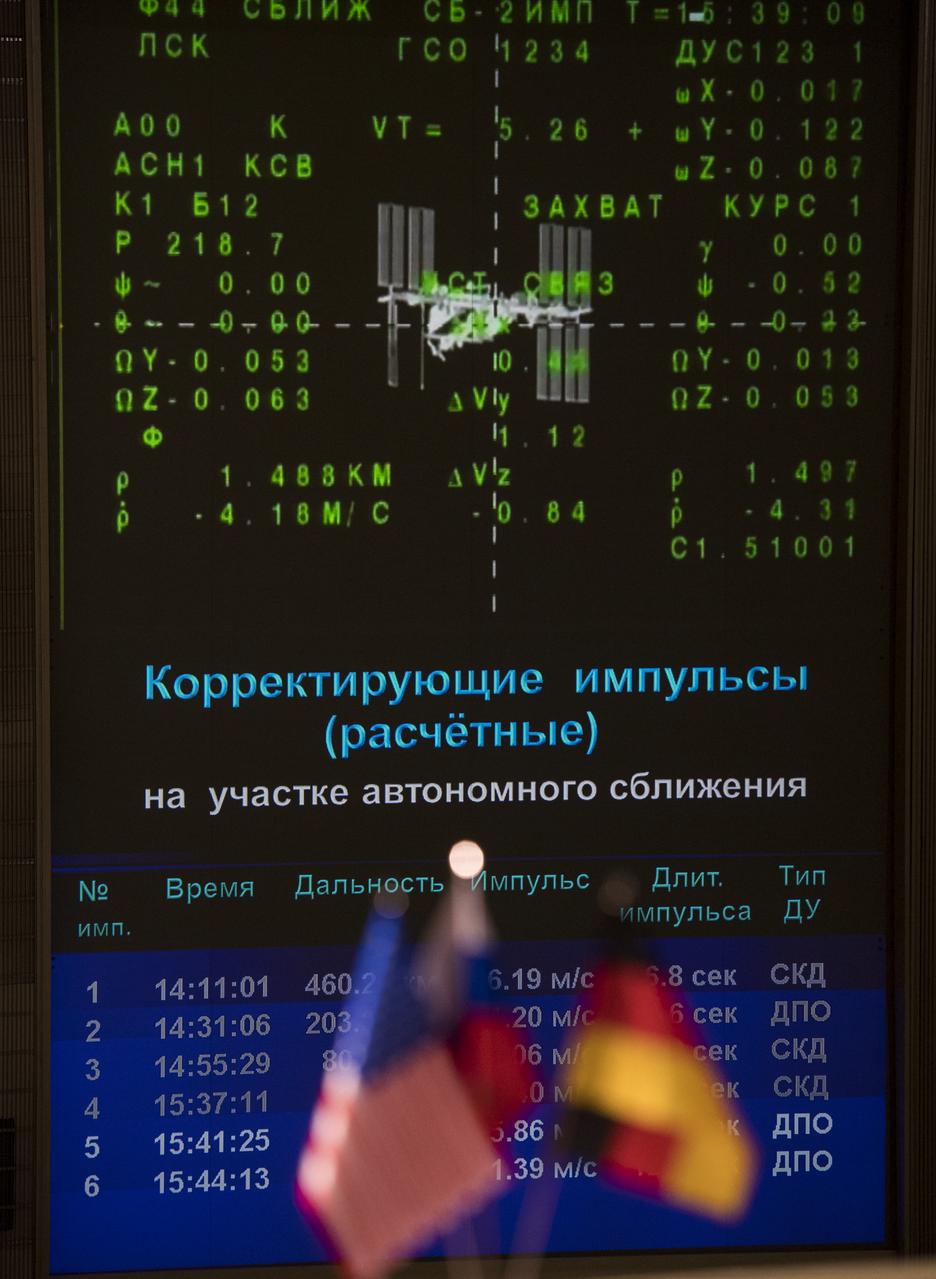
A live view of the International Space Station, as seen by cameras onboard the spacecraft with Expedition 56-57 crewmembers Serena Auñón-Chancellor of NASA, Sergey Prokopyev of Roscosmos, and Alexander Gerst of ESA (European Space Agency) is seen on screens at the Moscow Mission Control Center as the spacecraft approaches for docking, Friday, June 8, 2018 in Korolev, Russia. The Soyuz MS-09 spacecraft carrying Auñón-Chancellor, Prokopyev, and Gerst docked at 9:01am EDT (4:01pm Moscow time) to the Rassvet module of the International Space Station to join Expedition 56 Commander Drew Feustel of NASA and flight engineers Ricky Arnold of NASA and Oleg Artemyev of Roscosmos. Photo Credit: (NASA/Joel Kowsky)
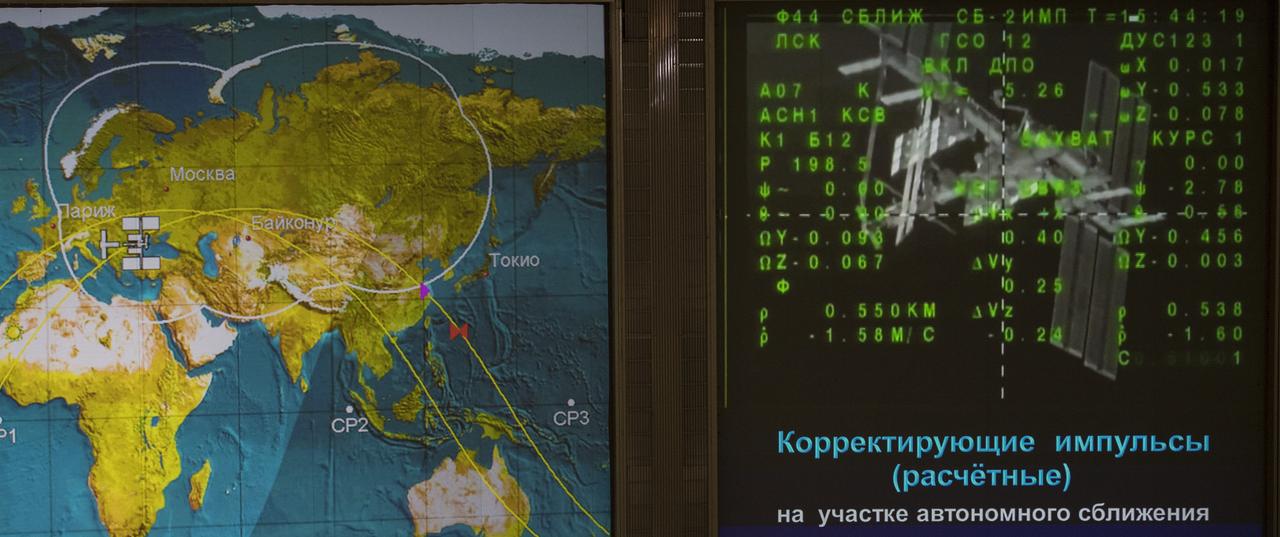
A live view of the International Space Station, as seen by cameras onboard the spacecraft with Expedition 56-57 crewmembers Serena Auñón-Chancellor of NASA, Sergey Prokopyev of Roscosmos, and Alexander Gerst of ESA (European Space Agency) is seen on screens at the Moscow Mission Control Center as the spacecraft approaches for docking, Friday, June 8, 2018 in Korolev, Russia. The Soyuz MS-09 spacecraft carrying Auñón-Chancellor, Prokopyev, and Gerst docked at 9:01am EDT (4:01pm Moscow time) to the Rassvet module of the International Space Station to join Expedition 56 Commander Drew Feustel of NASA and flight engineers Ricky Arnold of NASA and Oleg Artemyev of Roscosmos. Photo Credit: (NASA/Joel Kowsky)
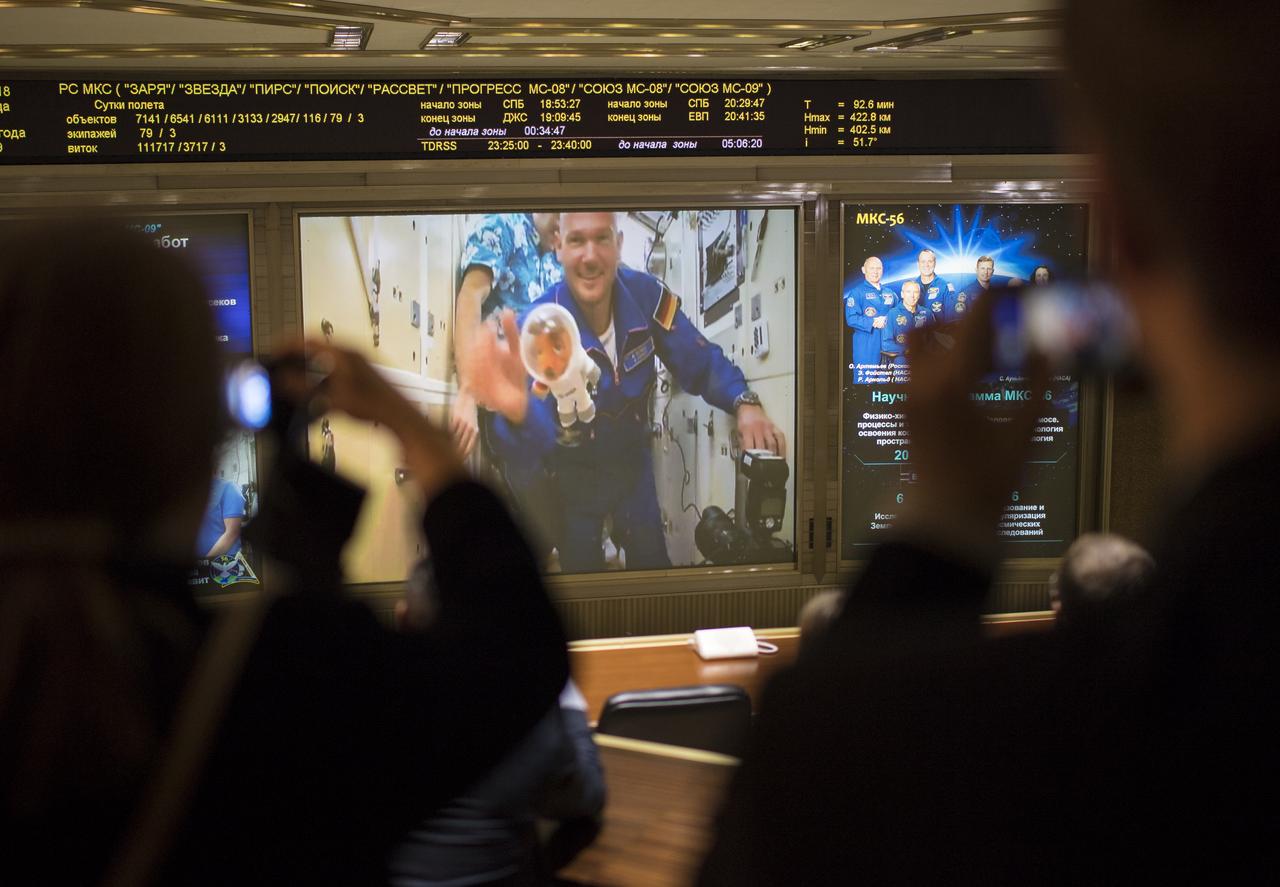
Expedition 56 flight engineer Alexander Gerst of ESA (European Space Agency) is seen after the hatches were opened between the Soyuz MS-09 spacecraft and the International Space Station on screens at the Moscow Mission Control Center in Korolev, Russia a few hours after the Soyuz MS-09 docked to the International Space Station on Friday, June 8, 2018. Hatches were opened at 11:17am EDT (6:17pm Moscow time) and Gerst, Serena Auñón-Chancellor of NASA, and Sergey Prokopyev of Roscosmos joined Expedition 56 Commander Drew Feustel of NASA, Ricky Arnold of NASA, and Oleg Artemyev of Roscosmos onboard the orbiting laboratory. Photo Credit: (NASA/Joel Kowsky)
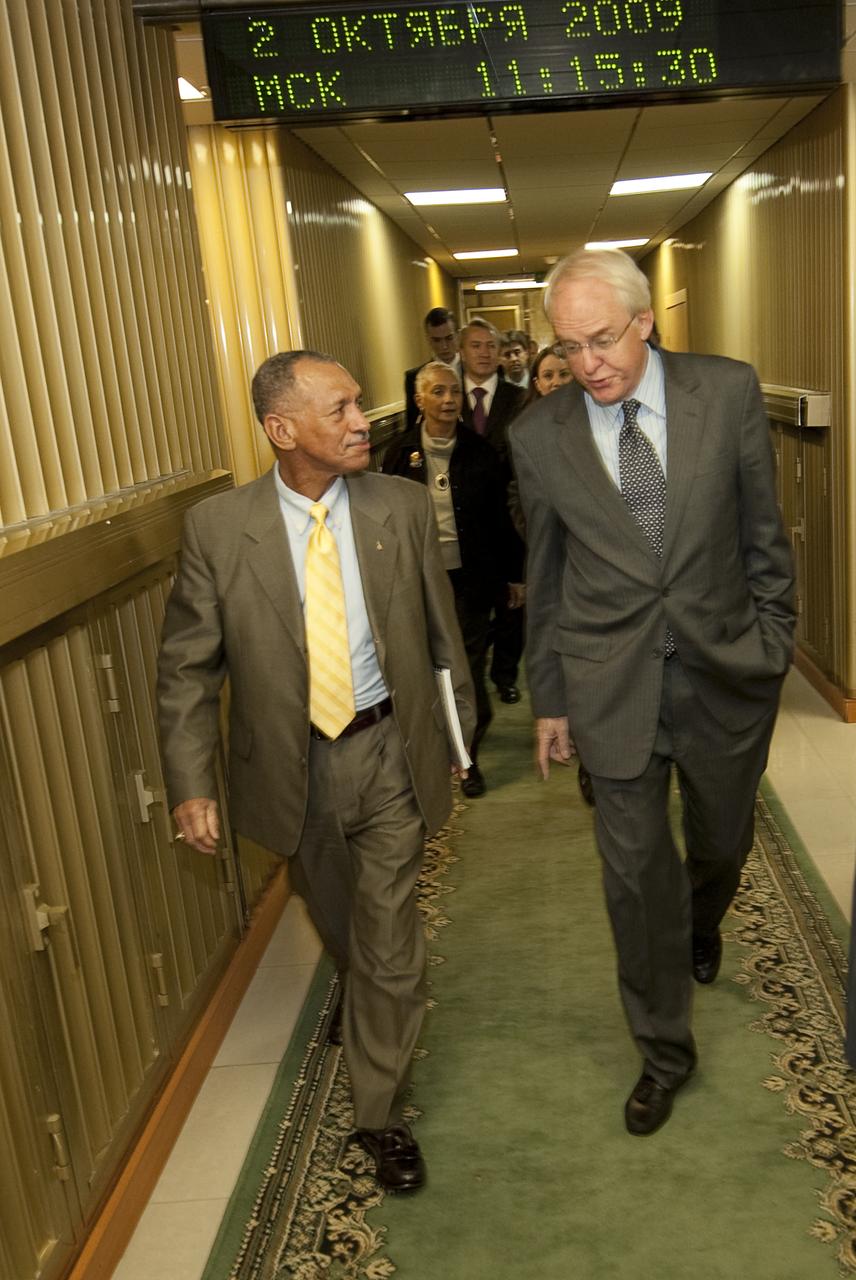
NASA Administrator Charles Bolden, Left, and Ambassador of the United States of America to the Russian Federation, John Beyrle arrive at the Mission Control Center Moscow in Korolev, Russia to watch the docking of the Soyuz TMA-16 spacecraft with the International Space Station (ISS) marking the start of Expedition 21 with Flight Engineer Jeffrey N. Williams, Expedition 21 Flight Engineer Maxim Suraev, and Spaceflight Participant Guy Laliberté, Friday, Oct. 2, 2009. Laliberté will return to Earth with the Expedition 20 crew on October 11, 2009. Photo Credit: (NASA/Bill Ingalls)
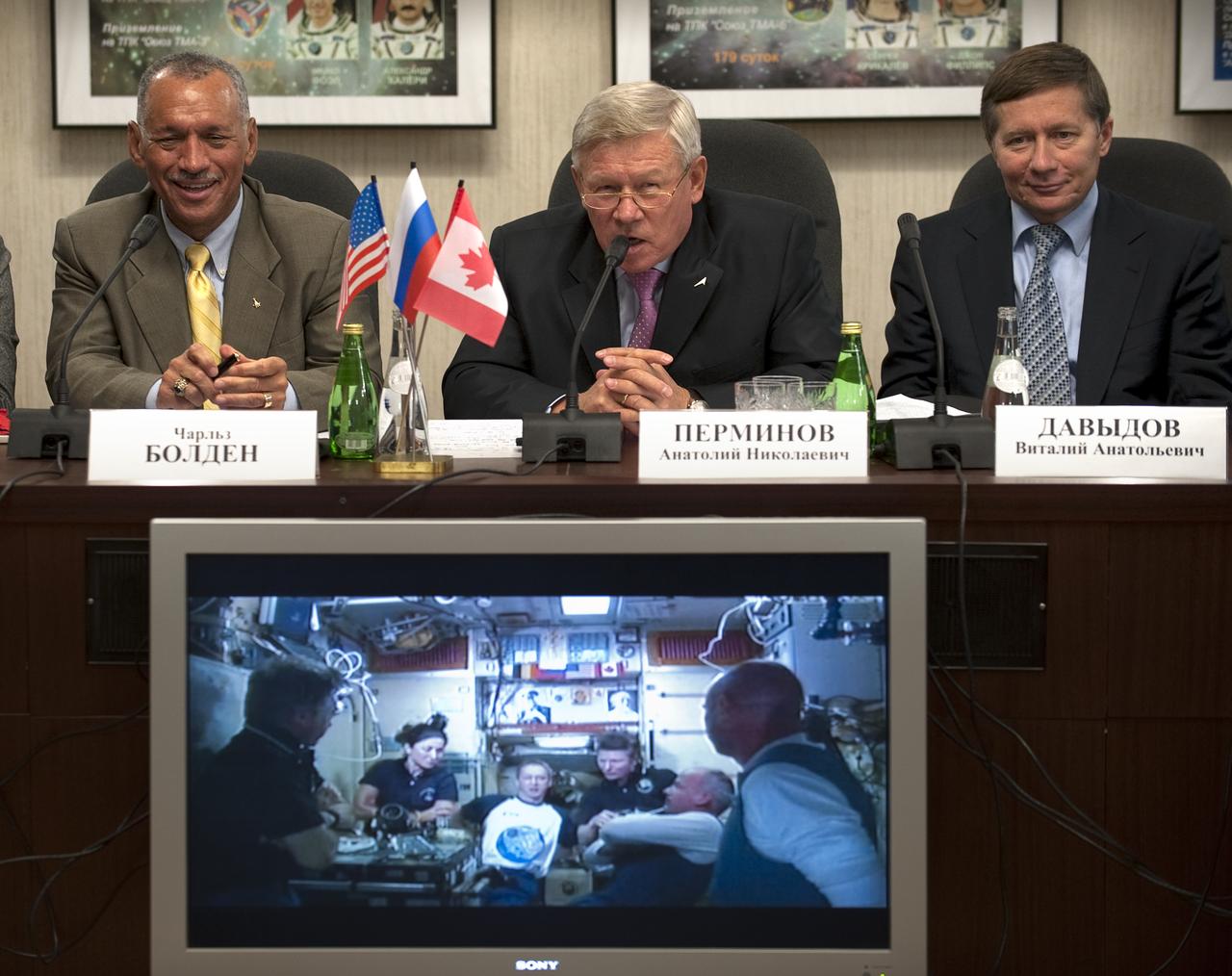
NASA Administrator Charles Bolden, left, Head of the Russian Federal Space Agency, Anatoly Perminov, center, and Deputy Head of the Russian Federal Space Agency, Vitaly A. Davyidov listen to reporters questions during a press conference at Mission Control Center Moscow in Korolev, Russia shortly after the successful docking of the Soyuz TMA-16 spacecraft with the International Space Station (ISS) marking the start of Expedition 21 with Flight Engineer Jeffrey N. Williams, Expedition 21 Flight Engineer Maxim Suraev, and Spaceflight Participant Guy Laliberté, Friday, Oct. 2, 2009. The entire crew onboard the ISS can be seen in the monitor below. Photo Credit: (NASA/Bill Ingalls)
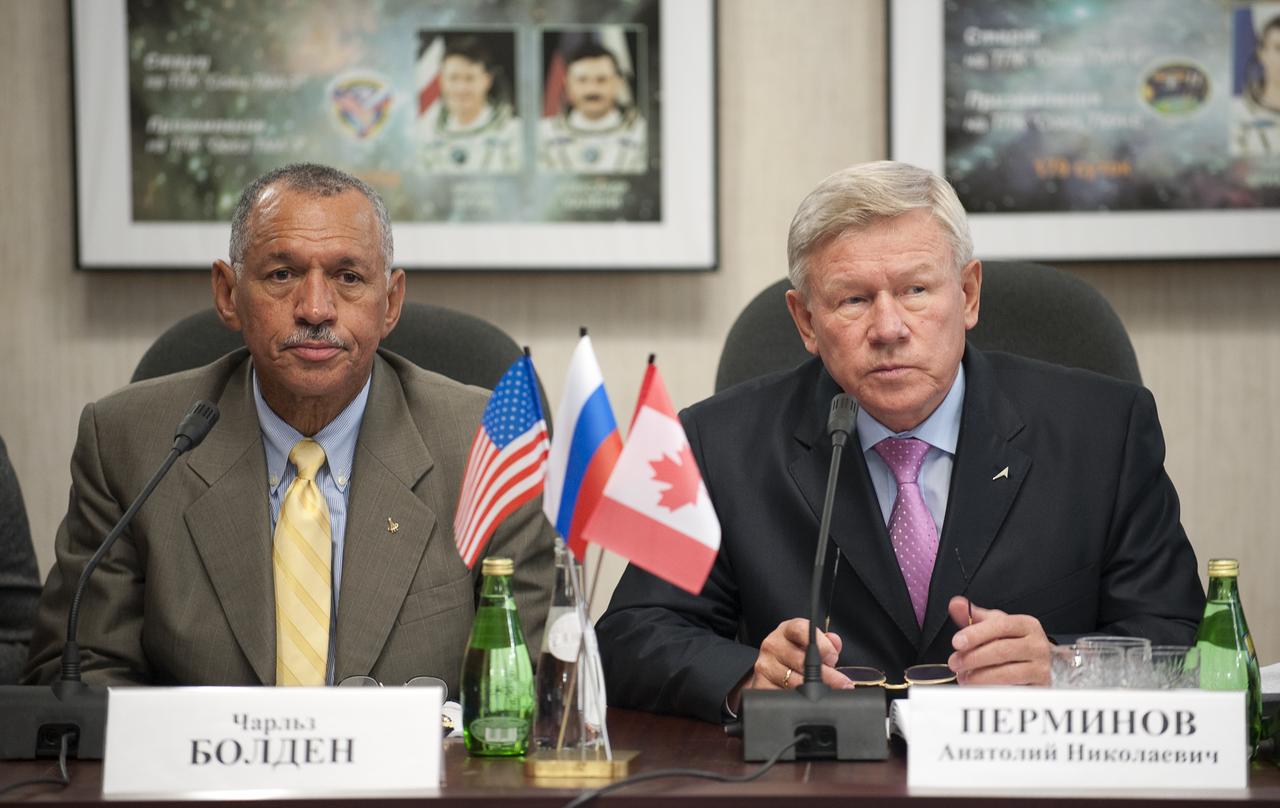
NASA Administrator Charles Bolden, Left, and Head of the Russian Federal Space Agency, Anatoly Perminov listen to reporter's questions during a press conference at Mission Control Center Moscow in Korolev, Russia shortly after the successful docking of the Soyuz TMA-16 spacecraft with the International Space Station (ISS) marking the start of Expedition 21 with Flight Engineer Jeffrey N. Williams, Expedition 21 Flight Engineer Maxim Suraev, and Spaceflight Participant Guy Laliberté, Friday, Oct. 2, 2009. Laliberté will return to Earth with the Expedition 20 crew on October 11, 2009. Photo Credit: (NASA/Bill Ingalls)
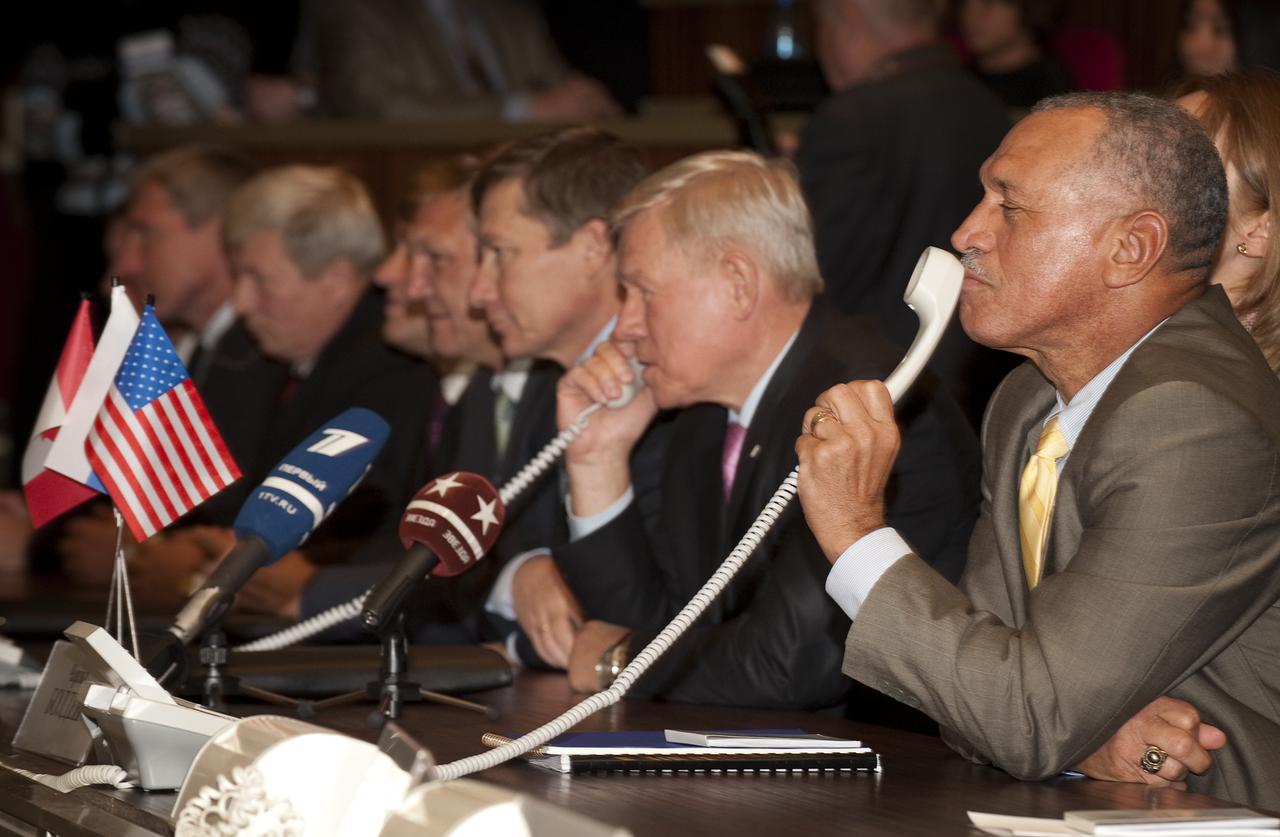
NASA Administrator Charles Bolden, right, holds the phone while Head of the Russian Federal Space Agency, Anatoly Perminov, talks to the crew of the International Spacer Station (ISS) from the Mission Control Center Moscow in Korolev, Russia shortly after the successful docking of the Soyuz TMA-16 spacecraft with the International Space Station marking the start of Expedition 21 with Flight Engineer Jeffrey N. Williams, Expedition 21 Flight Engineer Maxim Suraev, and Spaceflight Participant Guy Laliberté, Friday, Oct. 2, 2009. Photo Credit: (NASA/Bill Ingalls)
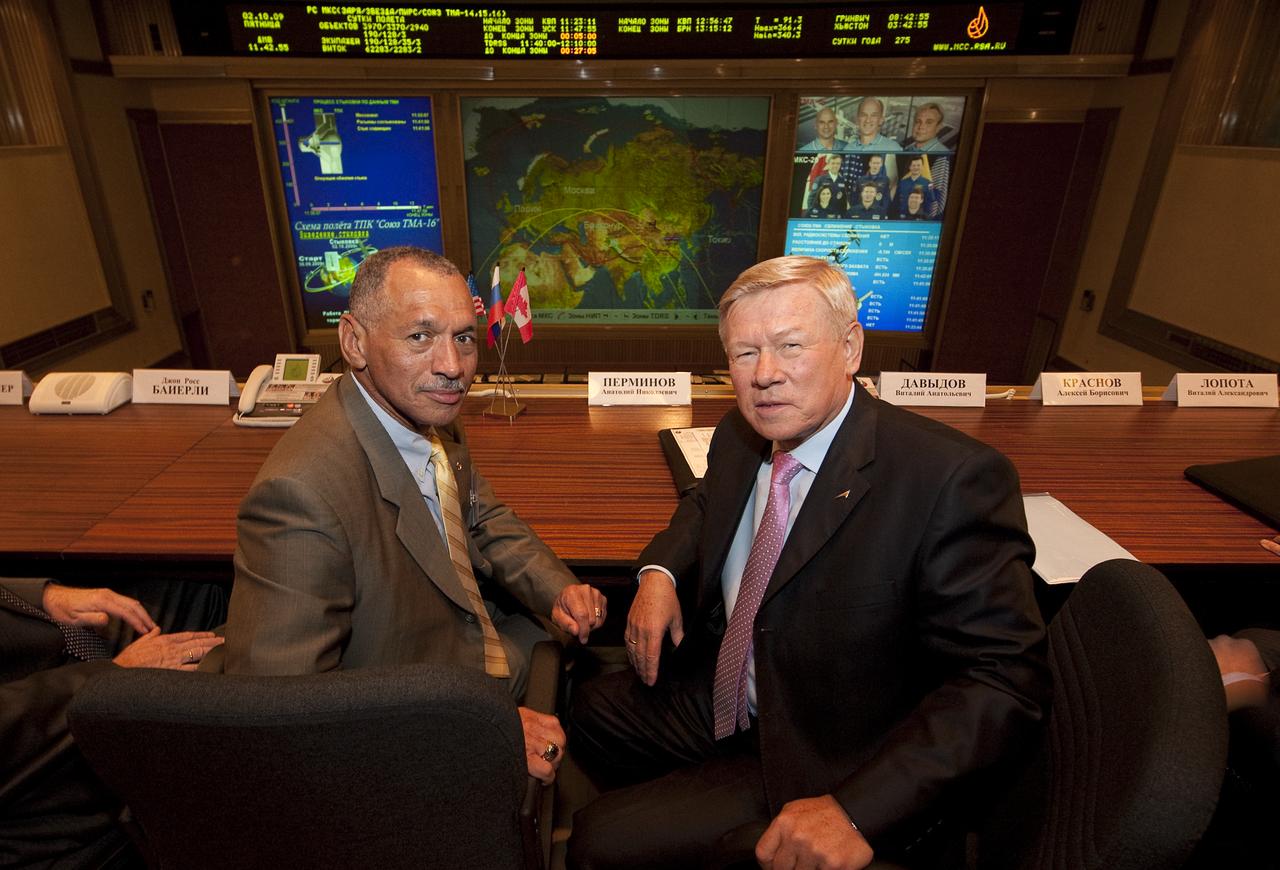
NASA Administrator Charles Bolden, Left, and Head of the Russian Federal Space Agency, Anatoly Perminov turn to pose for a photograph at Mission Control Center Moscow in Korolev, Russia shortly after the successful docking of the Soyuz TMA-16 spacecraft with the International Space Station (ISS) marking the start of Expedition 21 with Flight Engineer Jeffrey N. Williams, Expedition 21 Flight Engineer Maxim Suraev, and Spaceflight Participant Guy Laliberté, Friday, Oct. 2, 2009. Lalibreté will return to Earth with the Expedition 20 crew on October 11, 2009. Photo Credit: (NASA/Bill Ingalls)
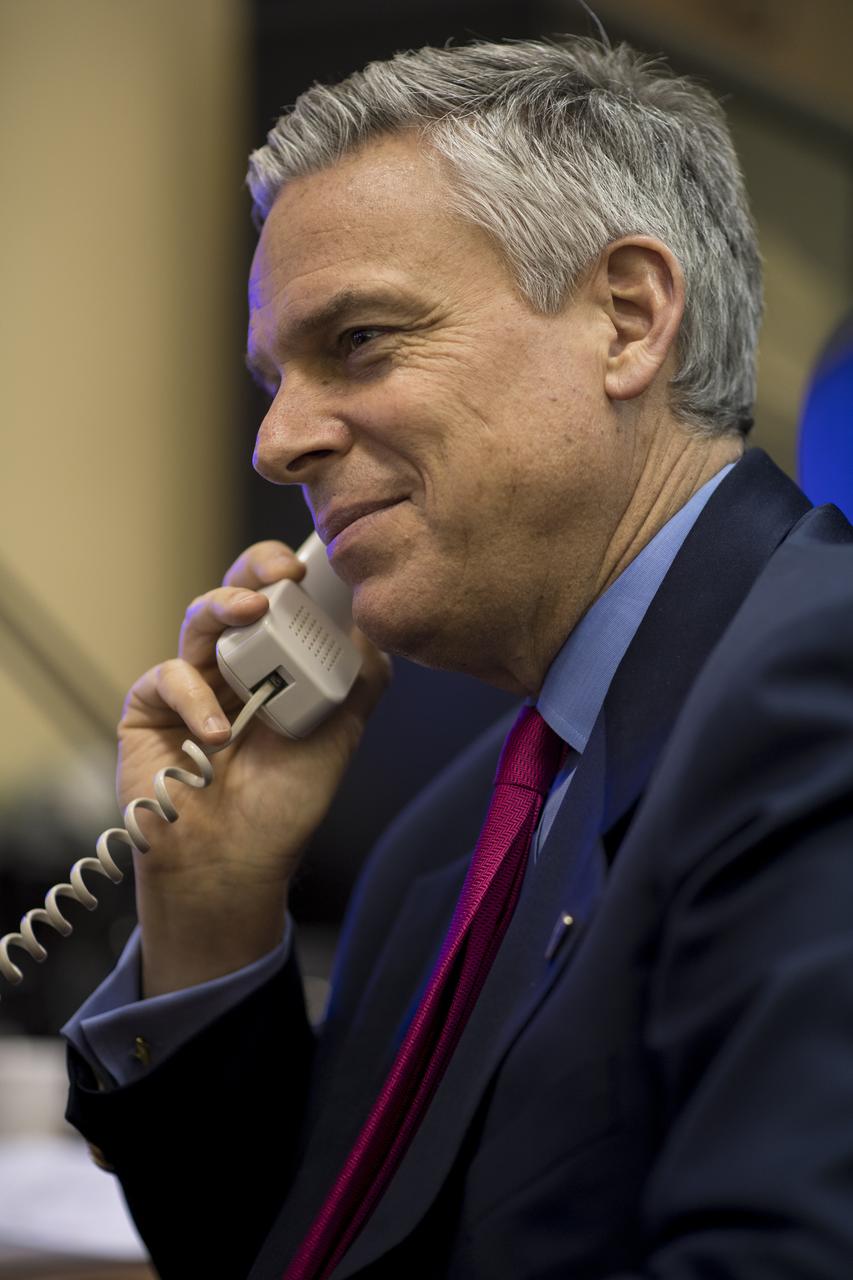
U.S. Ambassador to Russia Jon Huntsman Jr. is seen during an interview with NASA Public Affairs Office Rob Navias in the Moscow Mission Control Center in Korolev, Russia after the Soyuz MS-07 spacecraft docked with the International Space Station, Tuesday, Dec. 19, 2017. Photo Credit: (NASA/Joel Kowsky)
/nhq201610260004)~medium.jpg)
Expedition 50 NASA astronaut Peggy Whitson, left, Russian cosmonaut Oleg Novitskiy of Roscosmos, center, and ESA astronaut Thomas Pesquet visit Red Square to lay roses at the site where Russian space icons are interred as part of traditional pre-launch ceremonies, Wednesday, Oct. 26, 2016, in Moscow. Photo Credit: (NASA/Bill Ingalls)
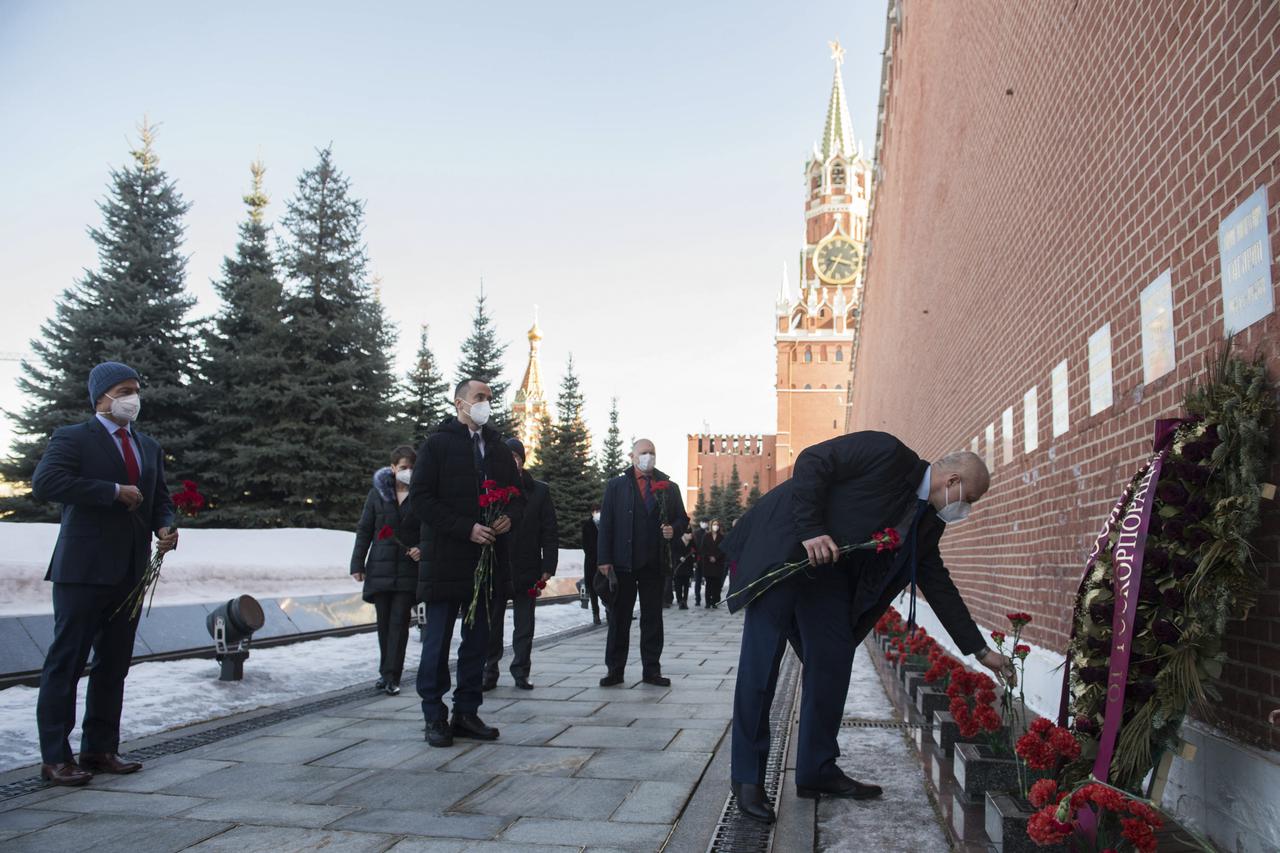
Expedition 65 prime crew members NASA astronaut Mark Vande Hei, left, and Russian cosmonaut Pyotr Dubrov of Roscosmos, center, watch as Russian cosmonaut Oleg Novitskiy of Roscosmos lays flowers at the site where Russian space icons are interred as part of traditional pre-launch ceremonies, Wednesday, March 24, 2021, at Red Square in Moscow. Photo Credit: (NASA/GCTC/Andrey Shelepin)

Expedition 50 NASA astronaut Peggy Whitson, left, Russian cosmonaut Oleg Novitskiy of Roscosmos, center, and ESA astronaut Thomas Pesquet visit Red Square to lay roses at the site where Russian space icons are interred as part of traditional pre-launch ceremonies, Wednesday, Oct. 26, 2016, in Moscow. Photo Credit: (NASA/Bill Ingalls)
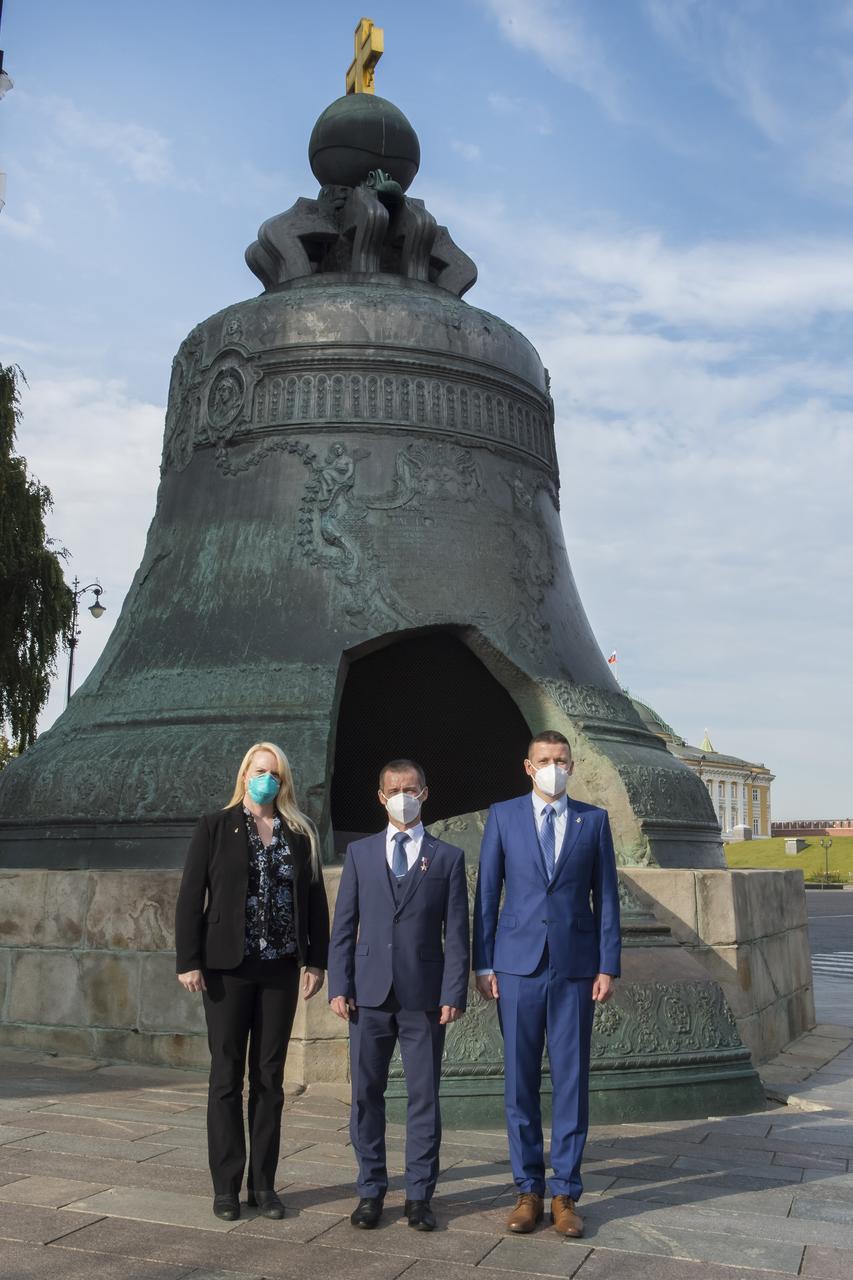
Expedition 64 prime crew members, NASA astronaut Kate Rubins, left, Russian cosmonaut Sergey Ryzhikov of Roscosmos, center, and Russian cosmonaut Sergey Kud-Sverchkov of Roscosmos pose for a photo in front of the Tsar Bell in Red Square after laying flowers at the site where Russian space icons are interred as part of traditional pre-launch ceremonies, Thursday, Sept. 24, 2020 in Moscow. Photo Credit: (NASA/GCTC/Irina Spector)
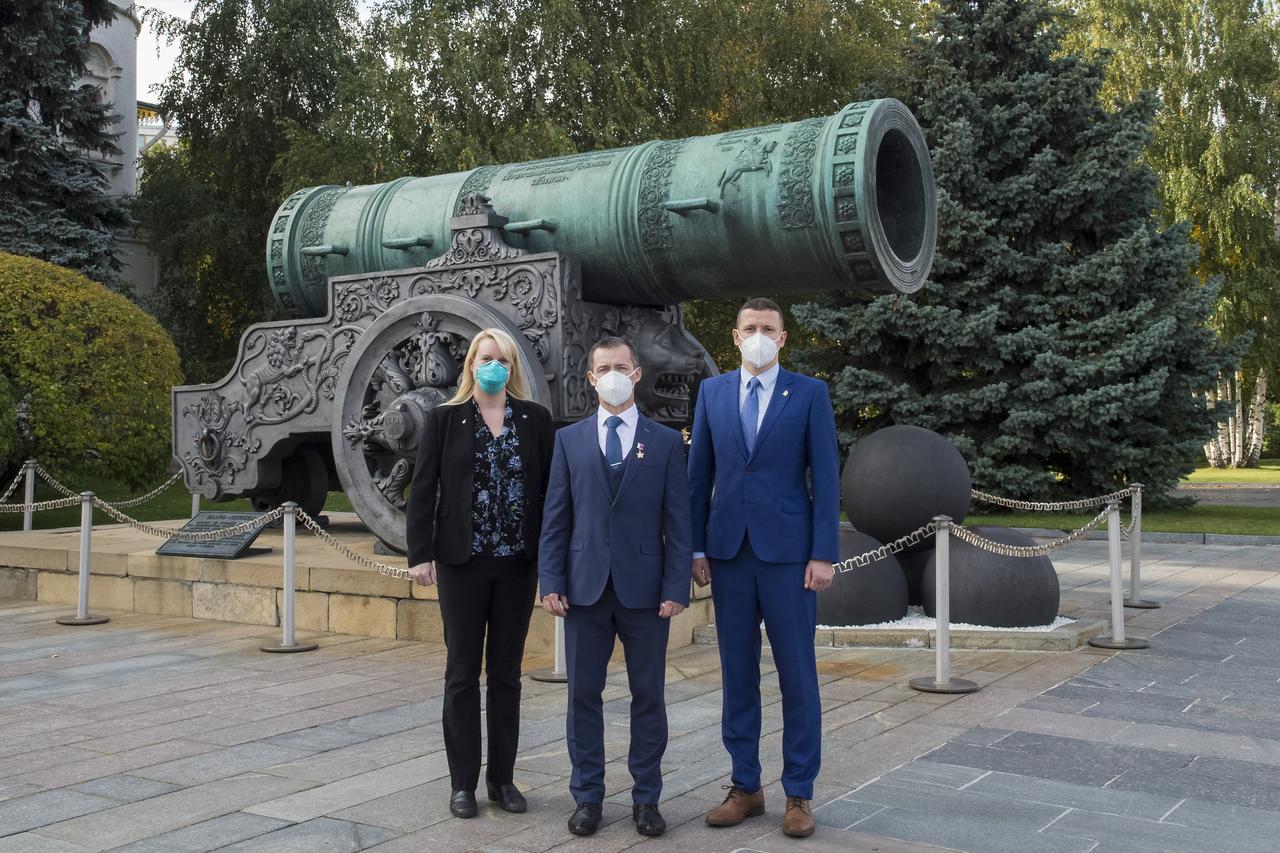
Expedition 64 prime crew members, NASA astronaut Kate Rubins, left, Russian cosmonaut Sergey Ryzhikov of Roscosmos, center, and Russian cosmonaut Sergey Kud-Sverchkov of Roscosmos pose for a photo in front of the Tsar Cannon in Red Square after laying flowers at the site where Russian space icons are interred as part of traditional pre-launch ceremonies, Thursday, Sept. 24, 2020 in Moscow. Photo Credit: (NASA/GCTC/Irina Spector)
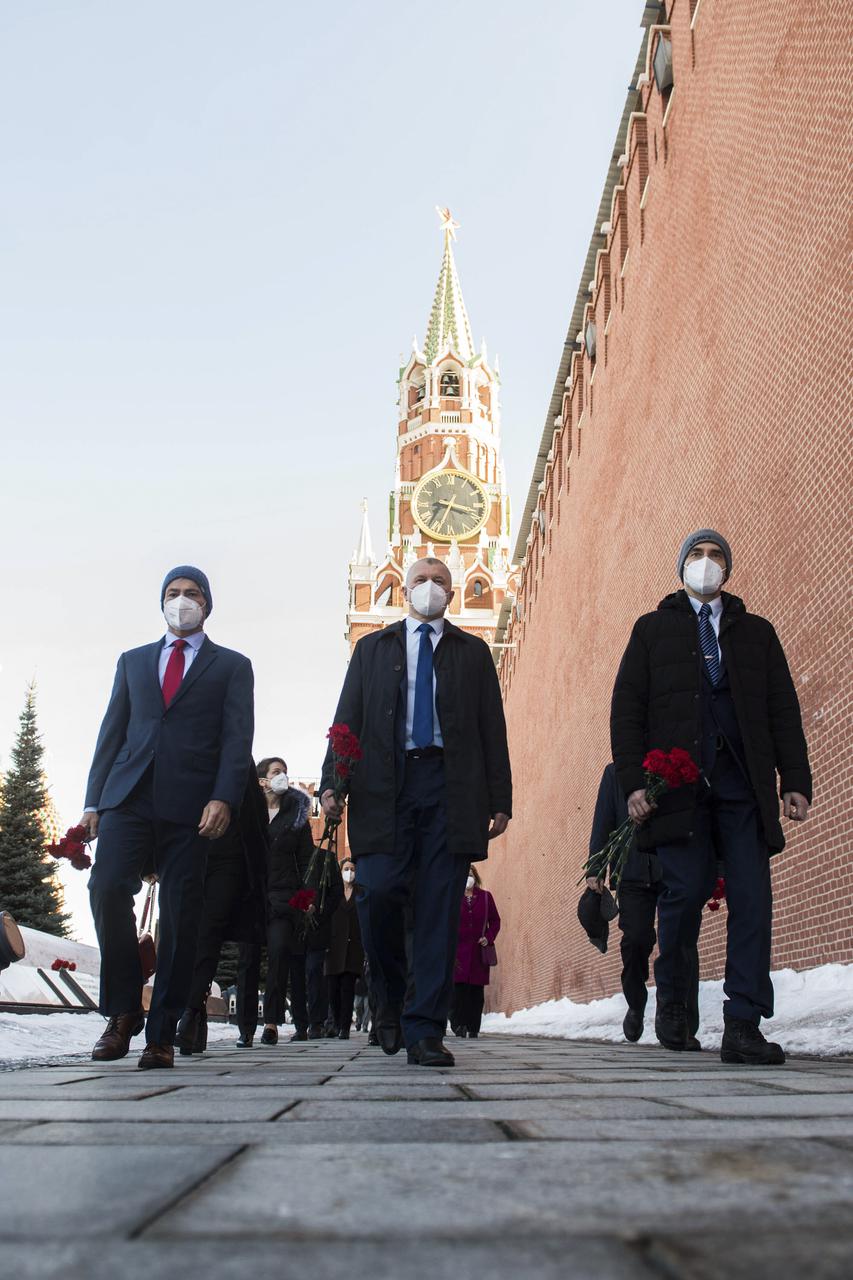
Expedition 65 prime crew members, NASA astronaut Mark Vande Hei, left, Russian cosmonaut Oleg Novitskiy of Roscosmos, center, and Russian cosmonaut Pyotr Dubrov of Roscosmos visit Red Square to lay flowers at the site where Russian space icons are interred as part of traditional pre-launch ceremonies, Wednesday, March 24, 2021 in Moscow. Photo Credit: (NASA/GCTC/Andrey Shelepin)
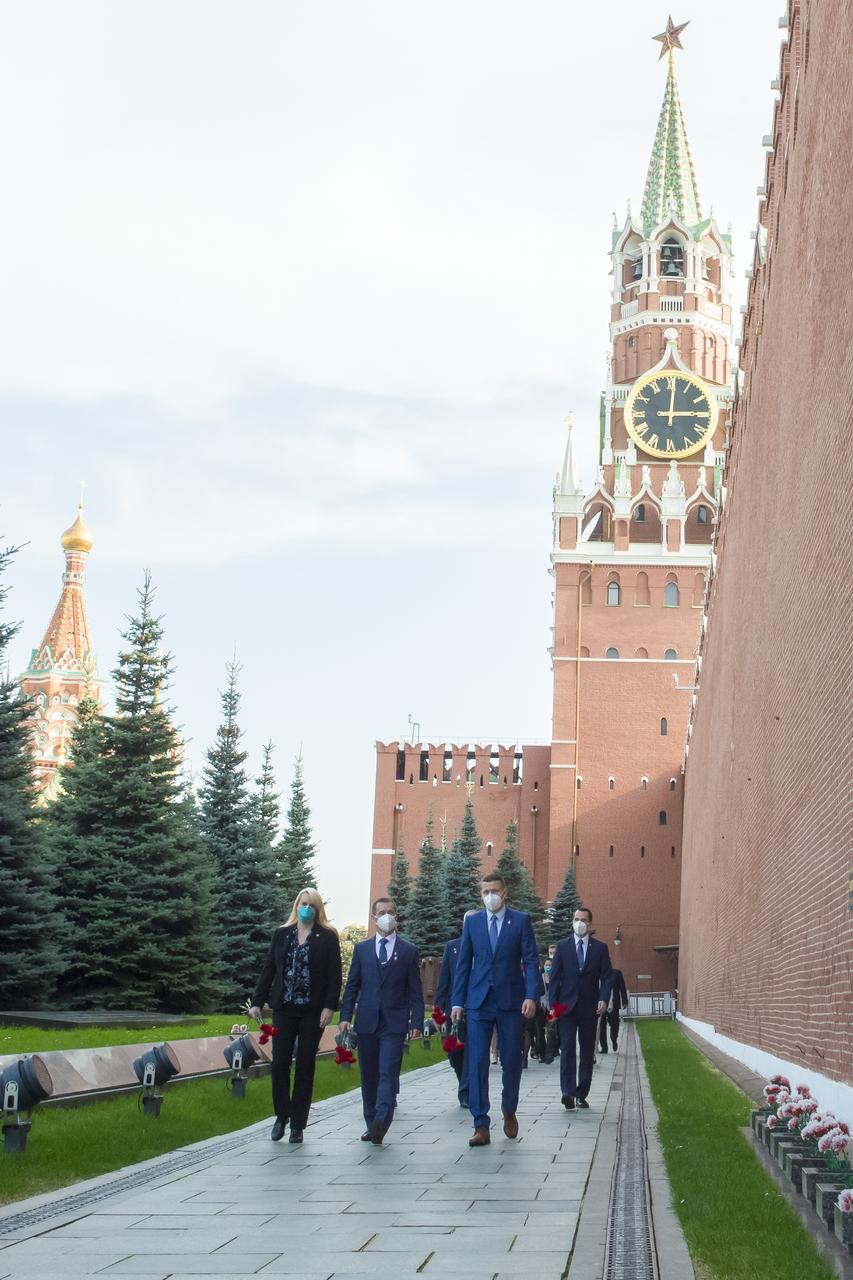
Expedition 64 prime crew members, NASA astronaut Kate Rubins, left, Russian cosmonaut Sergey Ryzhikov of Roscosmos, center, and Russian cosmonaut Sergey Kud-Sverchkov of Roscosmos visit Red Square to lay flowers at the site where Russian space icons are interred as part of traditional pre-launch ceremonies, Thursday, Sept. 24, 2020 in Moscow. Photo Credit: (NASA/GCTC/Irina Spector)
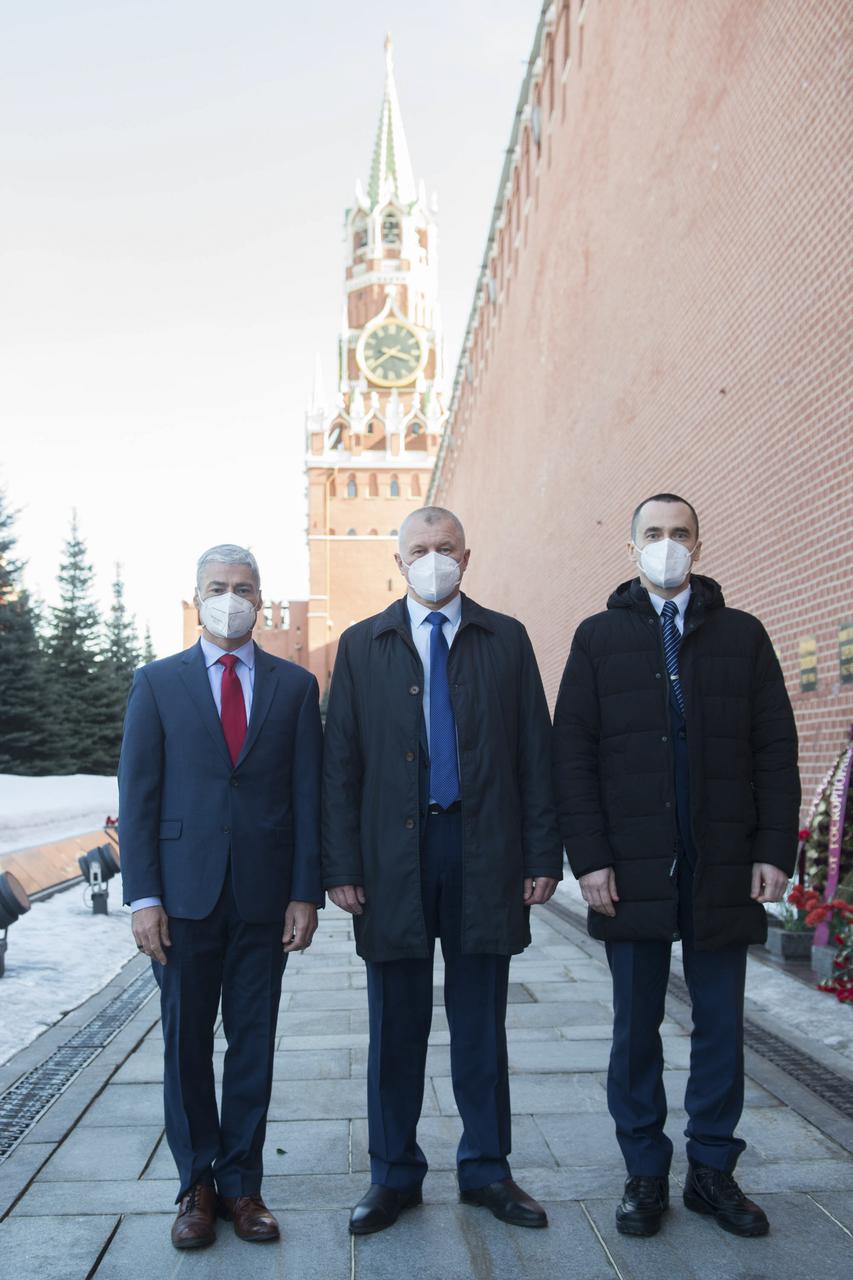
Expedition 65 prime crew members, NASA astronaut Mark Vande Hei, left, Russian cosmonaut Oleg Novitskiy of Roscosmos, center, and Russian cosmonaut Pyotr Dubrov of Roscosmos, right, pose for a photo in Red Square after laying flowers at the site where Russian space icons are interred as part of traditional pre-launch ceremonies, Wednesday, March 24, 2021 in Moscow. Photo Credit: (NASA/GCTC/Andrey Shelepin)
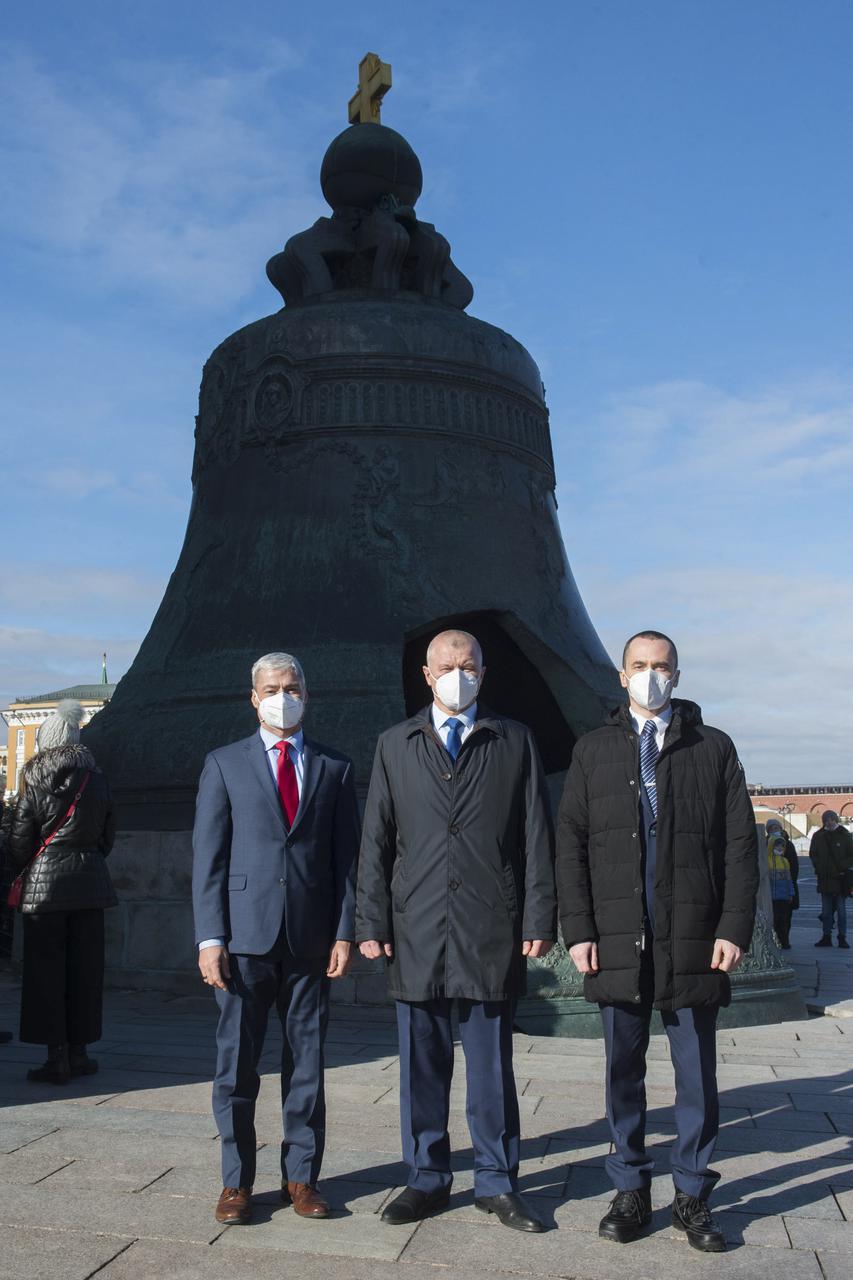
Expedition 65 prime crew members, NASA astronaut Mark Vande Hei, left, Russian cosmonaut Oleg Novitskiy of Roscosmos, center, and Russian cosmonaut Pyotr Dubrov of Roscosmos, right, pose for a photo in front of the Tsar Bell in Red Square after laying flowers at the site where Russian space icons are interred as part of traditional pre-launch ceremonies, Wednesday, March 24, 2021 in Moscow. Photo Credit: (NASA/GCTC/Andrey Shelepin)
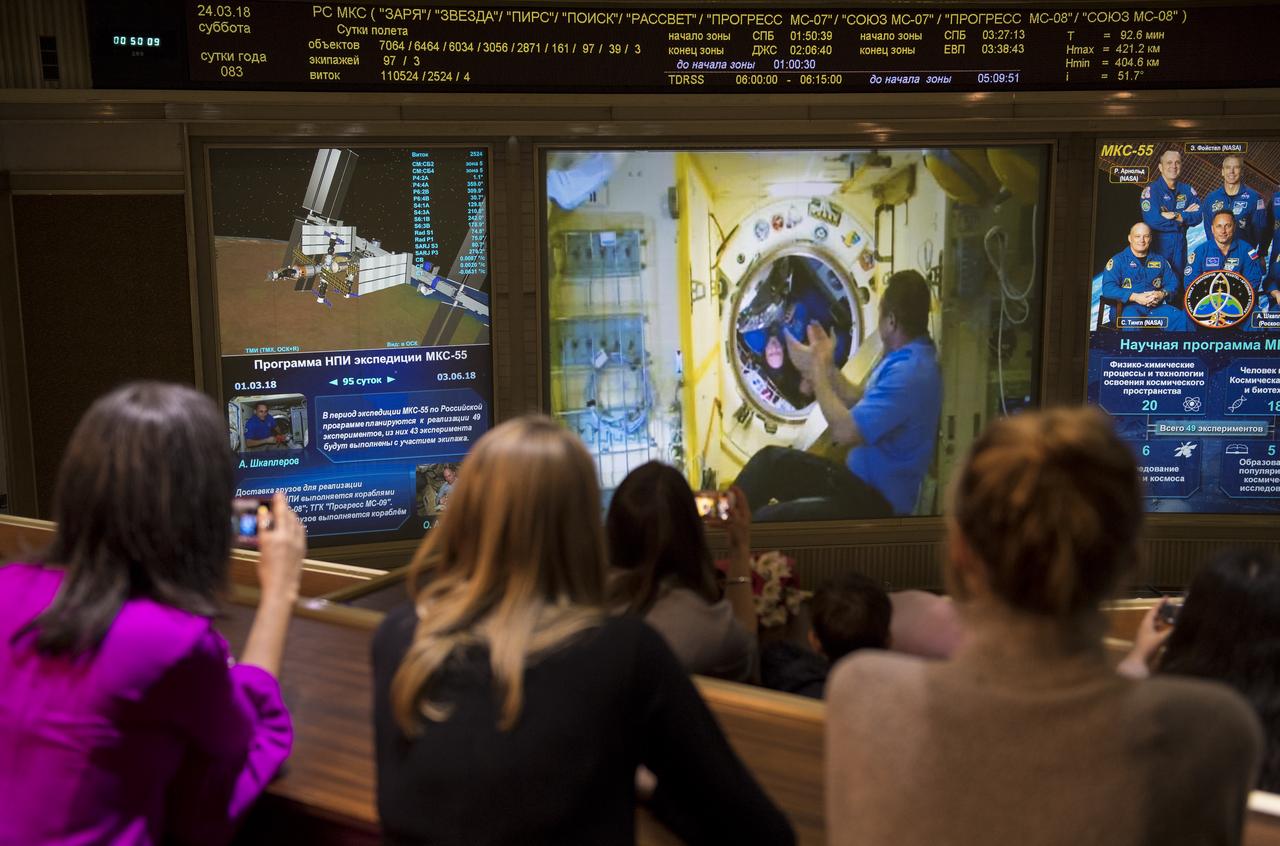
Expedition 55 Commander Anton Shkaplerov of Roscosmos is seen on screen greeting Oleg Artemyev of Roscosmos the hatches were opened between the Soyuz MS-08 spacecraft and the International Space Station at the Moscow Mission Control Center in Korolev, Russia, Saturday, March 24, 2018, a few hours after the Soyuz MS-08 docked to the International Space Station. Hatches were opened at 5:48 p.m. Eastern time on March 23 (12:48 a.m. Moscow time on March 24) and Artemyev, Ricky Arnold of NASA, and Drew Feustel of NASA joined Expedition 55 Commander Anton Shkaplerov of Roscosmos, Scott Tingle of NASA, and Norishige Kanai of the Japan Aerospace Exploration Agency (JAXA) onboard the orbiting laboratory. Photo Credit: (NASA/Joel Kowsky)
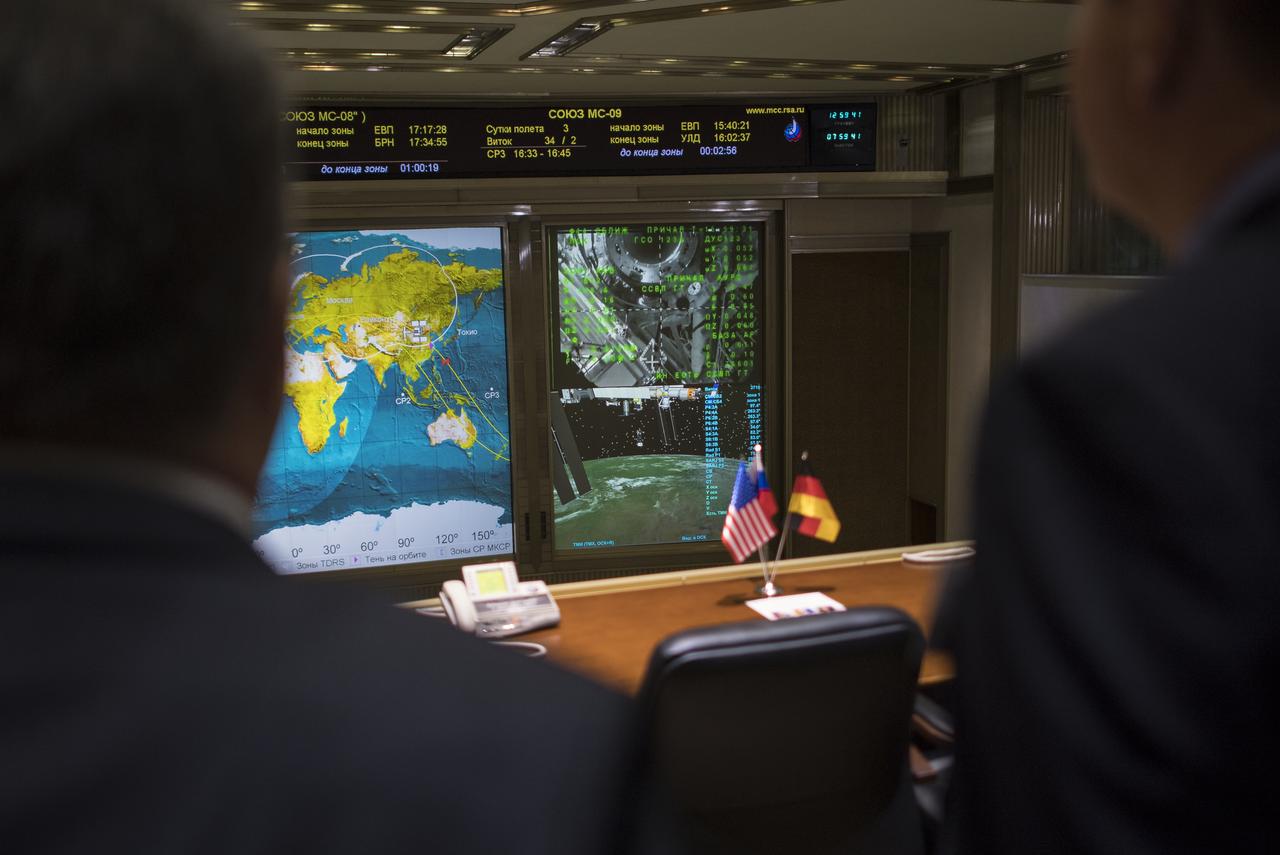
Guests watch a live view of the International Space Station, as seen by cameras onboard the spacecraft with Expedition 56-57 crewmembers Serena Auñón-Chancellor of NASA, Sergey Prokopyev of Roscosmos, and Alexander Gerst of ESA (European Space Agency), on screens at the Moscow Mission Control Center as the spacecraft approaches for docking, Friday, June 8, 2018 in Korolev, Russia. The Soyuz MS-09 spacecraft carrying Auñón-Chancellor, Prokopyev, and Gerst docked at 9:01am EDT (4:01pm Moscow time) to the Rassvet module of the International Space Station to join Expedition 56 Commander Drew Feustel of NASA and flight engineers Ricky Arnold of NASA and Oleg Artemyev of Roscosmos. Photo Credit: (NASA/Joel Kowsky)
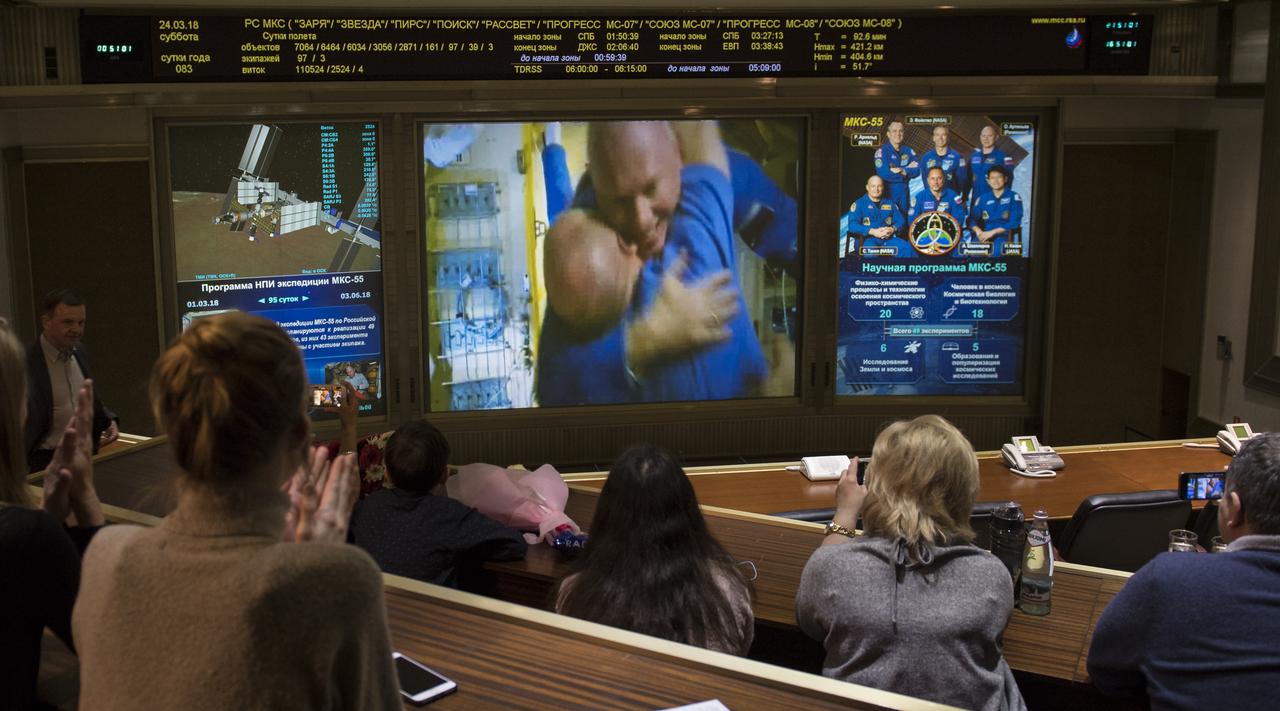
Expedition 55 flight engineer Oleg Artemyev of Roscosmos is seen embracing Scott Tingle of NASA after the hatches were opened between the Soyuz MS-08 spacecraft and the International Space Station on screens at the Moscow Mission Control Center in Korolev, Russia, Saturday, March 24, 2018, a few hours after the Soyuz MS-08 docked to the International Space Station. Hatches were opened at 5:48 p.m. Eastern time on March 23 (12:48 a.m. Moscow time on March 24) and Artemyev, Ricky Arnold of NASA and Drew Feustel of NASA joined Expedition 55 Commander Anton Shkaplerov of Roscosmos, Scott Tingle of NASA, and Norishige Kanai of the Japan Aerospace Exploration Agency (JAXA) onboard the orbiting laboratory. Photo Credit: (NASA/Joel Kowsky)
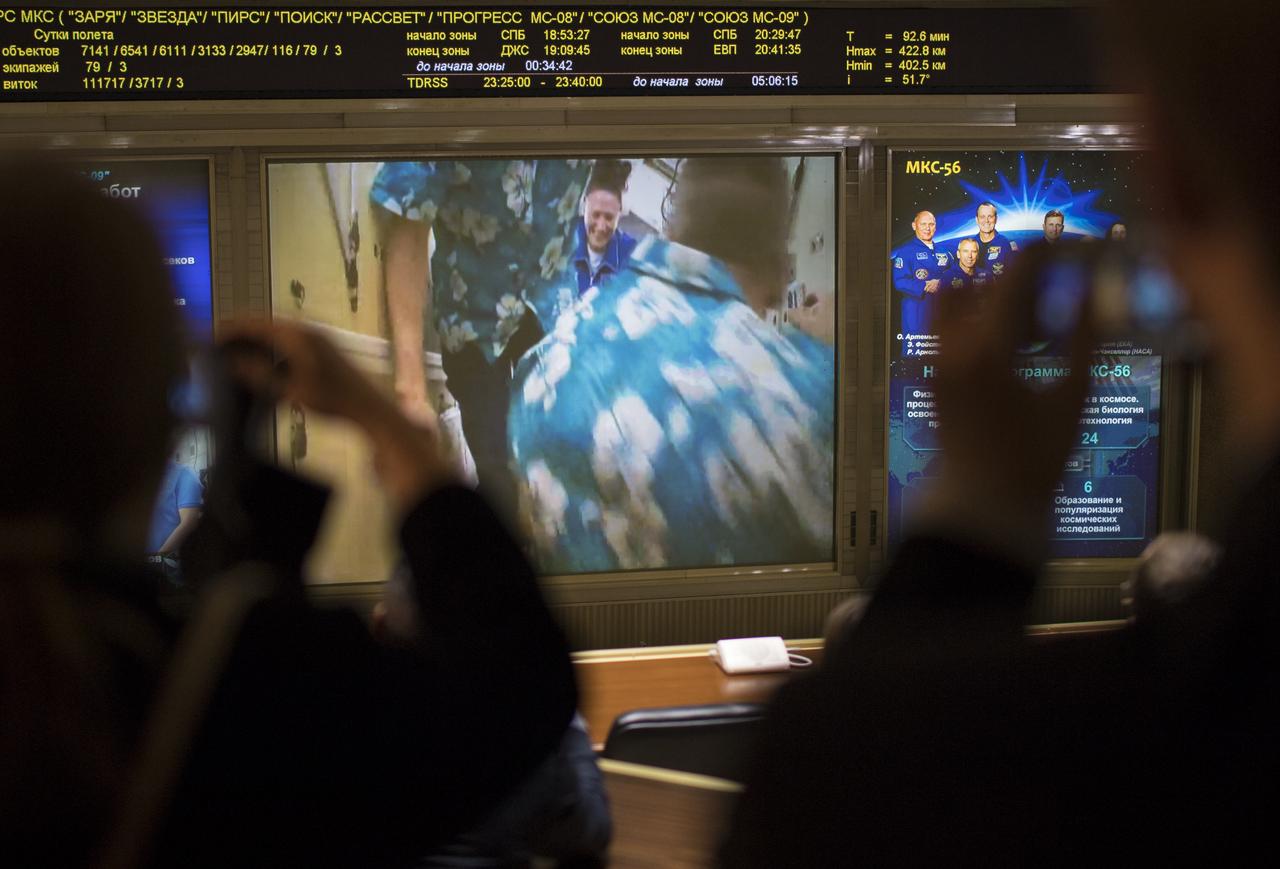
Expedition 56 flight engineer Serena Auñón-Chancellor of NASA is seen after the hatches were opened between the Soyuz MS-09 spacecraft and the International Space Station on screens at the Moscow Mission Control Center in Korolev, Russia a few hours after the Soyuz MS-09 docked to the International Space Station on Friday, June 8, 2018. Hatches were opened at 11:17am EDT (6:17pm Moscow time) and Auñón-Chancellor, Alexander Gerst of ESA (European Space Agency), and Sergey Prokopyev of Roscosmos joined Expedition 56 Commander Drew Feustel of NASA, Ricky Arnold of NASA, and Oleg Artemyev of Roscosmos onboard the orbiting laboratory. Photo Credit: (NASA/Joel Kowsky)
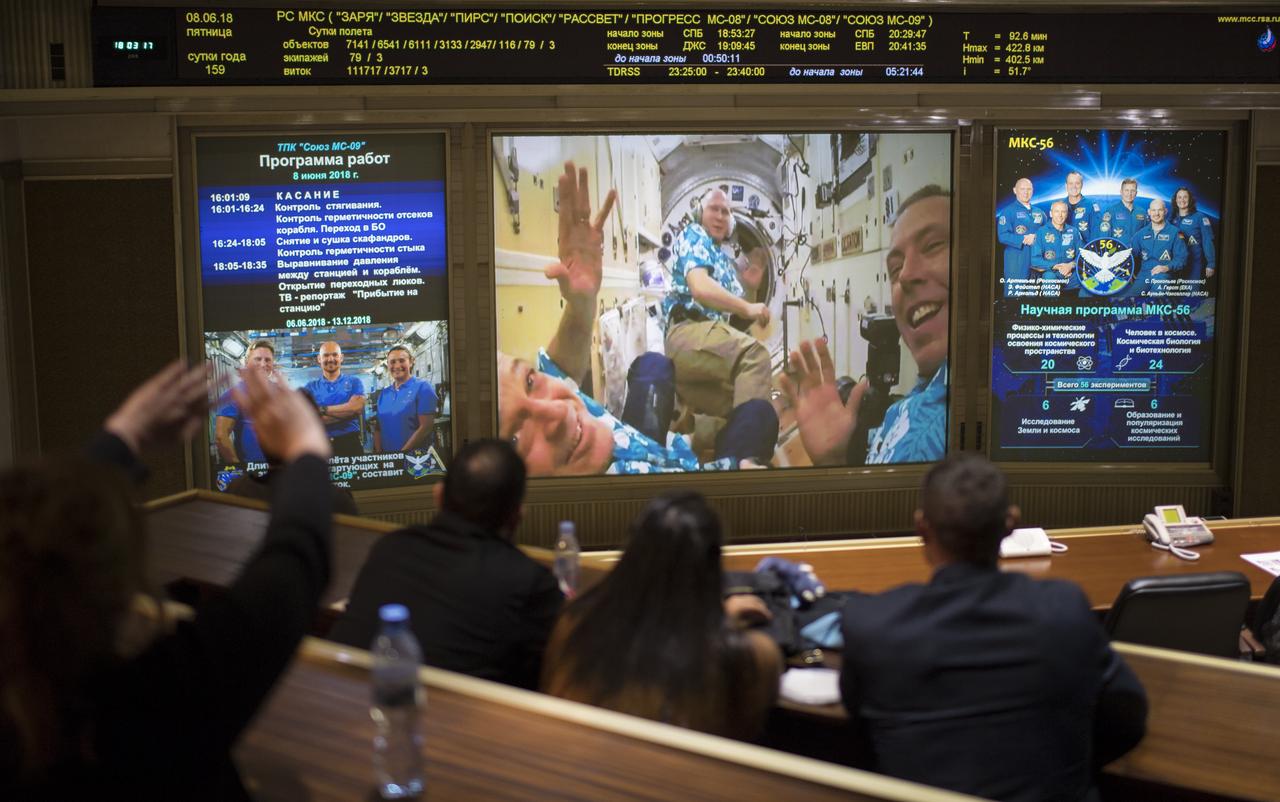
Expedition 56 flight engineers Ricky Arnold of NASA, left, Oleg Artemyev of Roscosmos, center, and Commander Drew Feustel are seen waving as they wait for the Soyuz hatch to open on a screen in the Moscow Mission Control Center in Korolev, Russia a few hours after the Soyuz MS-09 docked to the International Space Station on Friday, June 8, 2018. Hatches were opened at 11:17am EDT (6:17pm Moscow time) and Serena Auñón-Chancellor of NASA, Sergey Prokopyev of Roscosmos, and Alexander Gerst of ESA (European Space Agency) joined Expedition 56 Commander Drew Feustel of NASA, Ricky Arnold of NASA, and Oleg Artemyev of Roscosmos onboard the orbiting laboratory. Photo Credit: (NASA/Joel Kowsky)
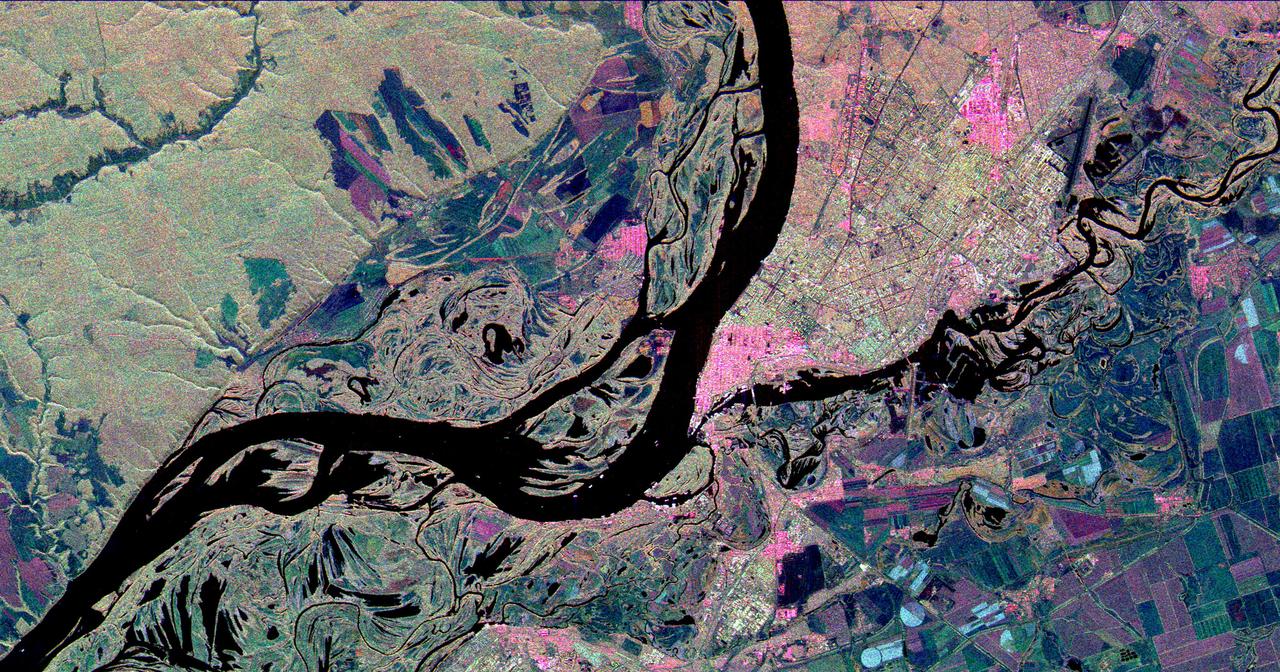
This three-frequency space radar image shows the city of Samara, Russia in pink and light green right of center. Samara is at the junction of the Volga and Samara Rivers approximately 800 kilometers 500 miles southeast of Moscow.
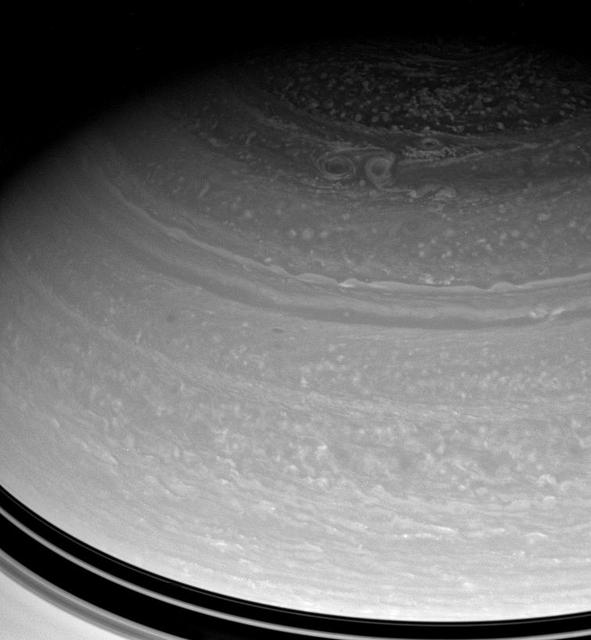
A trio of large storms embraces in Saturn high north. The three prominent vortices seen here are each wide enough to span the distance from New York City to Denver, or from London to Moscow
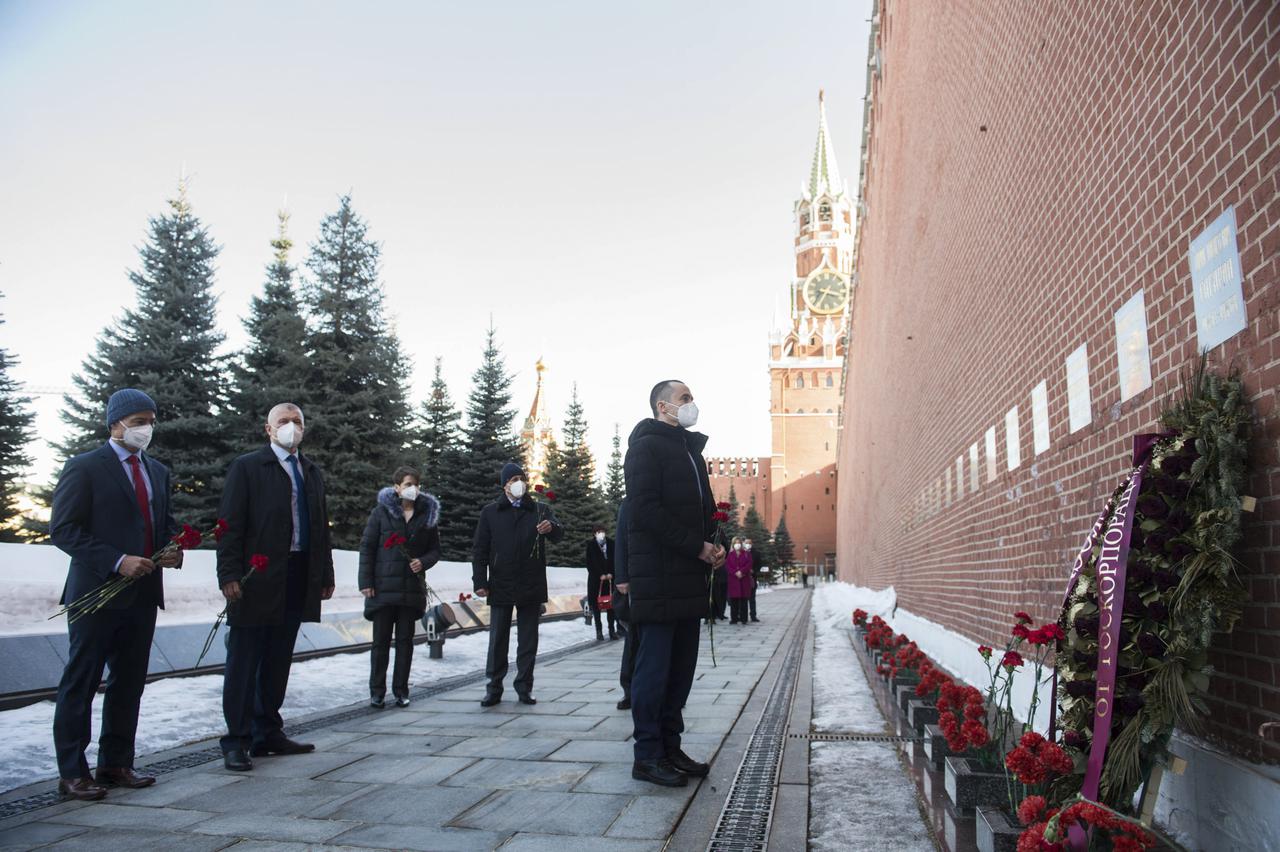
Expedition 65 prime crew members NASA astronaut Mark Vande Hei, left, and Russian cosmonaut Oleg Novitskiy of Roscosmos, second from left, and backup crew members NASA astronaut Anne McClain, third from left, and Russian cosmonaut Anton Shkaplerov of Roscosmos, second from right watch as prime crew member Russian cosmonaut Pyotr Dubrov of Roscosmos, right, lays flowers at the site where Russian space icons are interred as part of traditional pre-launch ceremonies, Wednesday, March 24, 2021, at Red Square in Moscow. Photo Credit: (NASA/GCTC/Andrey Shelepin)
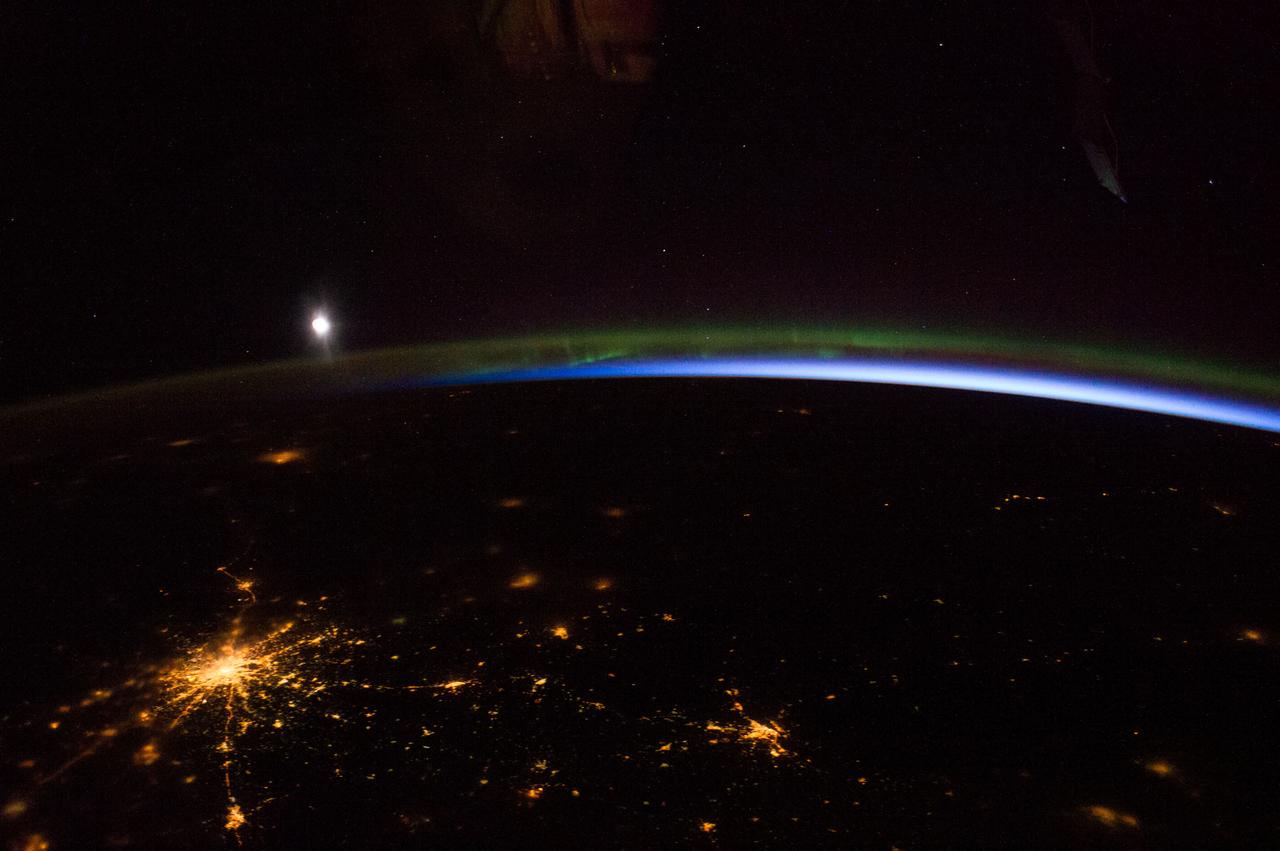
ISS039-E-009160 (2 April 2014) --- This nighttime view featuring the aurora borealis, the moon and Moscow was photographed by an Expedition 39 crew member on the International Space Station. A thin green line of the aurora borealis crosses the top of this image. The moon appears as a white disc just above the aurora. Airglow appears as a blue-white cusp on Earth's limb. Russia's capital city Moscow makes a splash of yellow (lower left), with its easily recognized radial pattern of highways. Other cities are Nizhni Novgorod (lower center) 400 kilometers from Moscow, St. Petersburg (left) 625 kilometers from Moscow, and Finland?s capital city Helsinki.
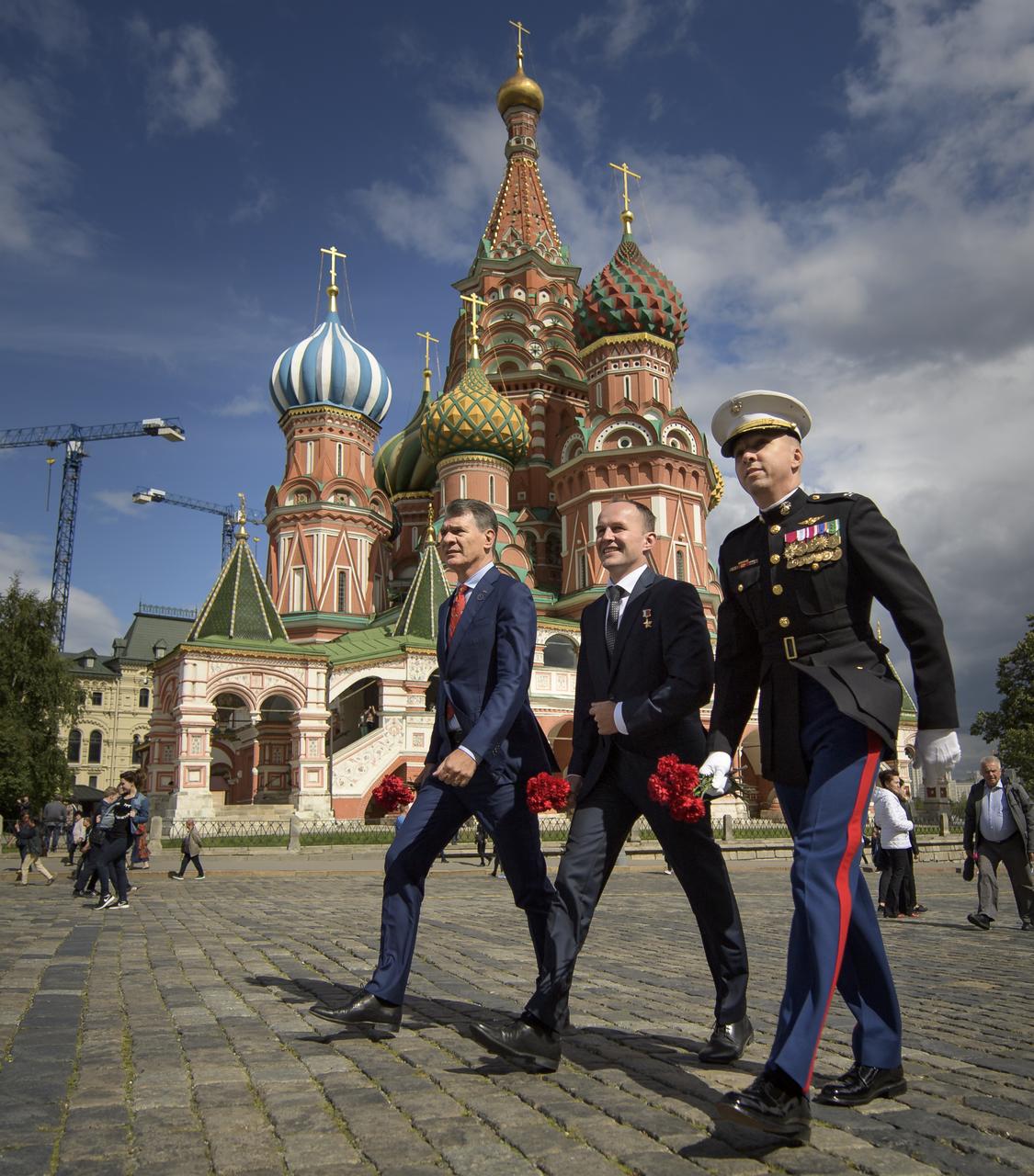
Expedition 52 flight engineers Paolo Nespoli of ESA, left, Sergey Ryazanskiy of Roscosmos, center, and Randy Bresnik of NASA visit Red Square to lay roses at the site where Russian space icons are interred as part of traditional pre-launch ceremonies, Monday, July 10, 2017 in Moscow. Photo Credit: (NASA/Bill Ingalls)
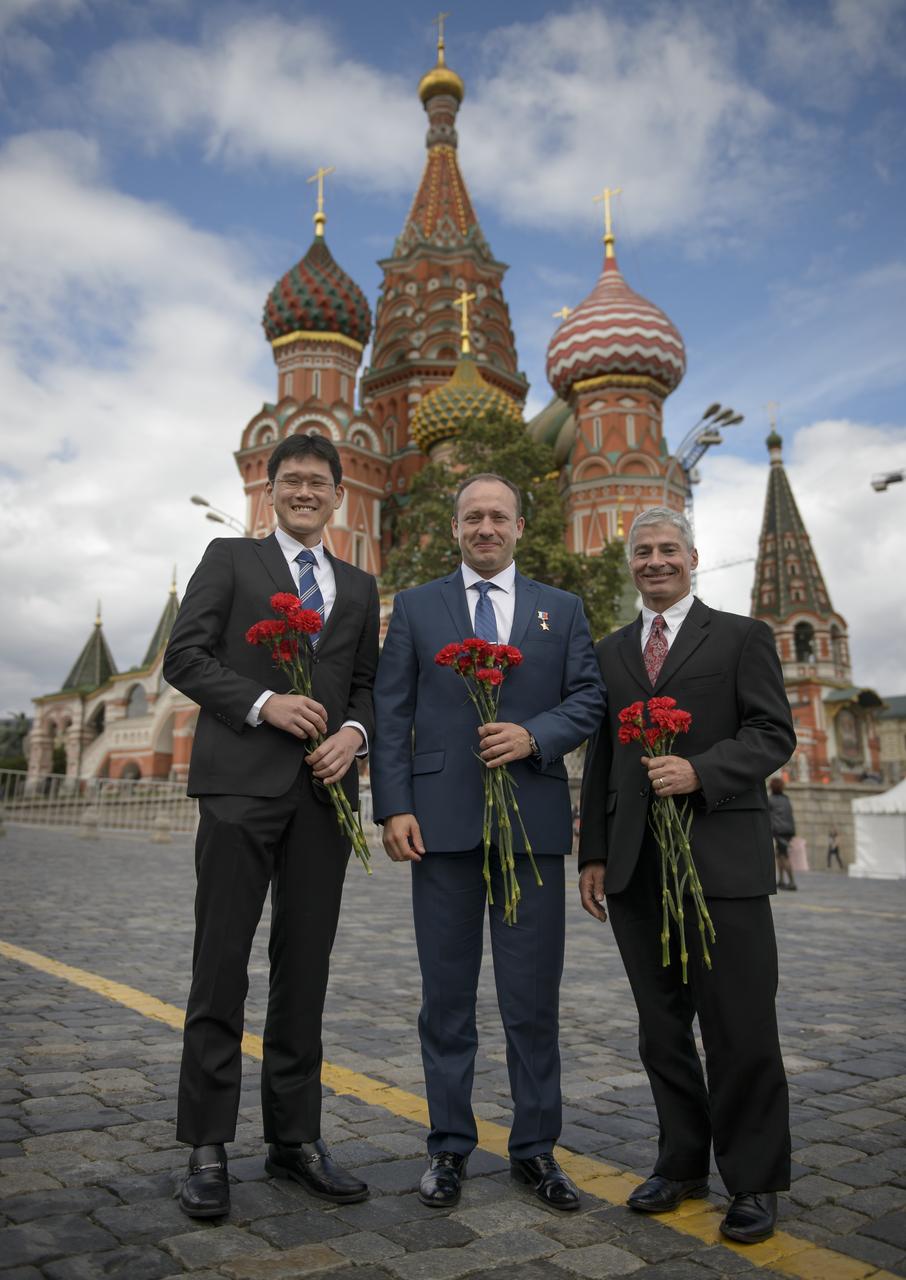
Expedition 52 backup crew members Norishige Kanai of the Japan Aerospace Exploration Agency (JAXA), left, Alexander Misurkin of Roscosmos, center, and Mark Vande Hei of NASA pose for a photograph in front of Saint Basil's Cathedral as they visited Red Square to lay roses at the site where Russian space icons are interred as part of traditional pre-launch ceremonies, Monday, July 10, 2017 in Moscow. Photo Credit: (NASA/Bill Ingalls)
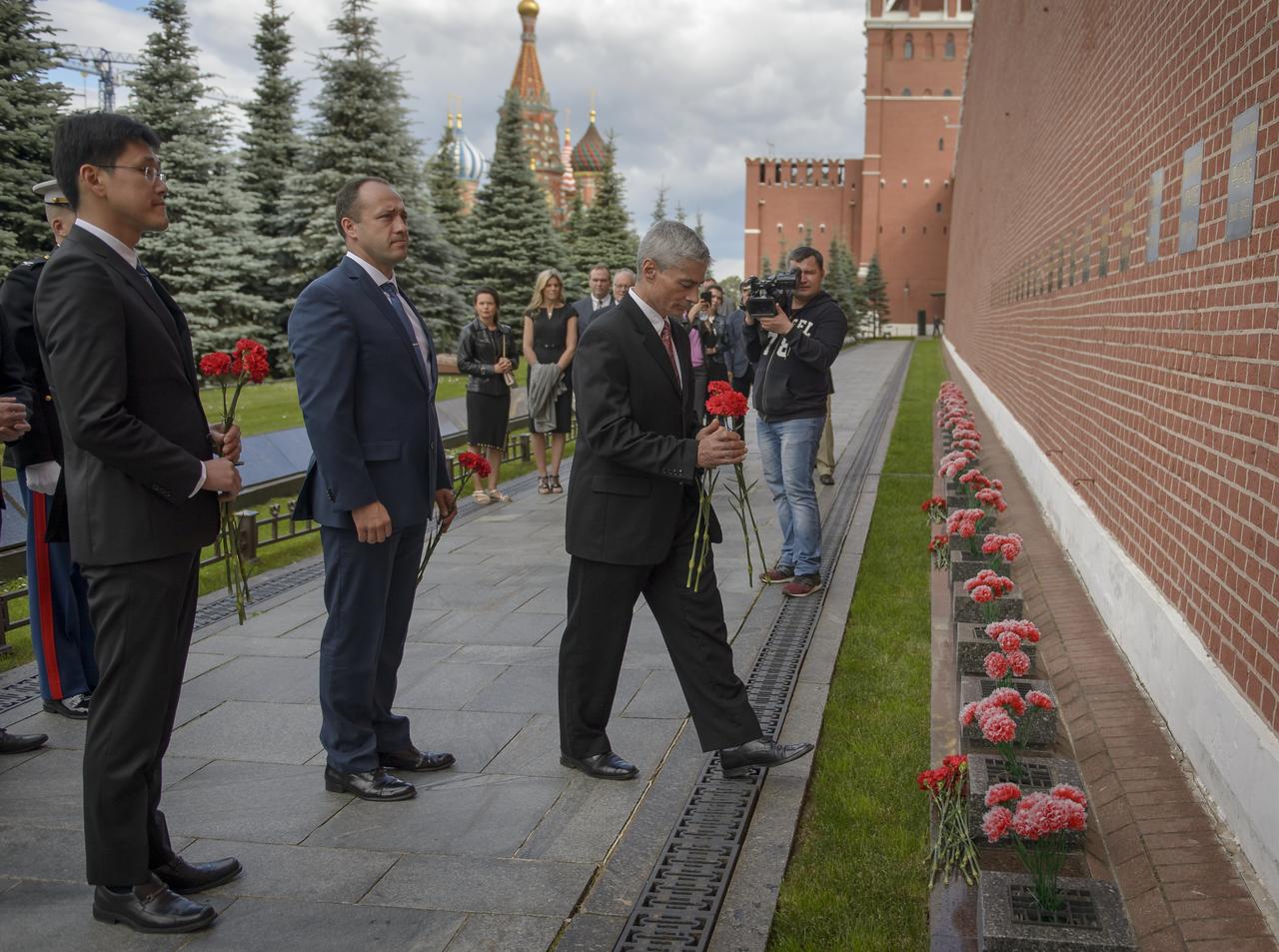
Expedition 52 backup crew members Norishige Kanai of the Japan Aerospace Exploration Agency (JAXA), left, Alexander Misurkin of Roscosmos, center, and Mark Vande Hei of NASA lay roses at the site where Russian space icons are interred as part of traditional pre-launch ceremonies, Monday, July 10, 2017 in Moscow. Photo Credit: (NASA/Bill Ingalls)

Expedition 55 flight engineers Ricky Arnold of NASA, bottom left, Oleg Artemyev of Roscosmos, bottom center, and Drew Feustel of NASA, bottom right are seen with flight enginner Norishige Kanai of the Japan Aerospace Exploration Agency (JAXA), top left, Commander Anton Shkaplerov of Roscosmos, top center, and flight engineer Scott Tingle of NASA, top right, on a video monitor as they talk to family and friends at the Moscow Mission Control Center in Korolev, Russia a few hours after the Soyuz MS-08 docked to the International Space Station on Saturday, March 24, 2018. Hatches were opened at 5:48 p.m. Eastern time on March 23, 12:48 a.m. Moscow time on March 24. Photo Credit: (NASA/Joel Kowsky)
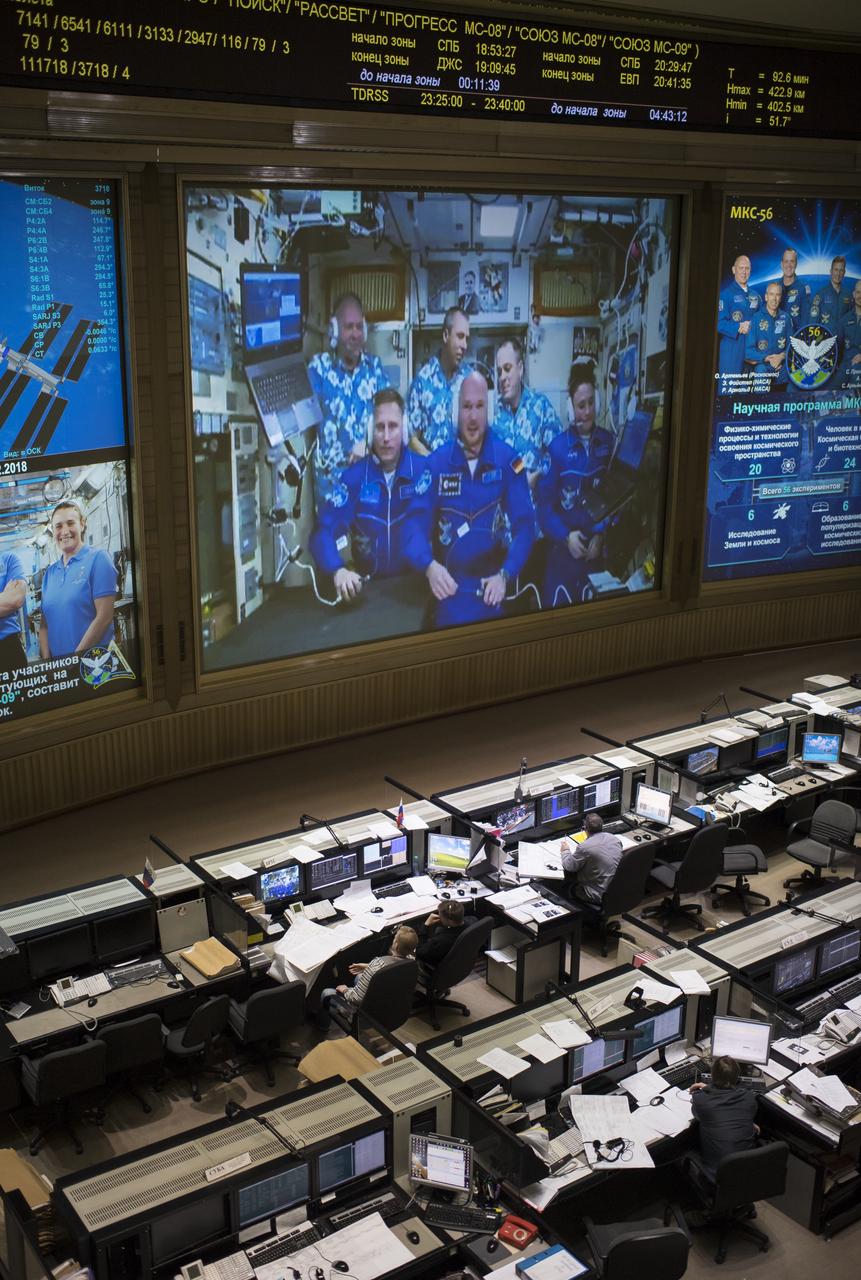
Expedition 56 flight engineers Sergey Prokopyev of Roscosmos, bottom left, Alexander Gerst of ESA (European Space Agency), bottom center, and Serena Auñón-Chancellor of NASA, bottom right, are seen with flight engineer Oleg Artemyev of Roscosmos, top left, Commander Drew Feustel of NASA, top center, and flight engineer Ricky Arnold of NASA, top right, are seen on a video monitor as they talk to family and friends at the Moscow Mission Control Center in Korolev, Russia a few hours after the Soyuz MS-09 docked to the International Space Station on Friday, June 8, 2018. Hatches were opened at 11:17am EDT (6:17pm Moscow time). Photo Credit: (NASA/Joel Kowsky)
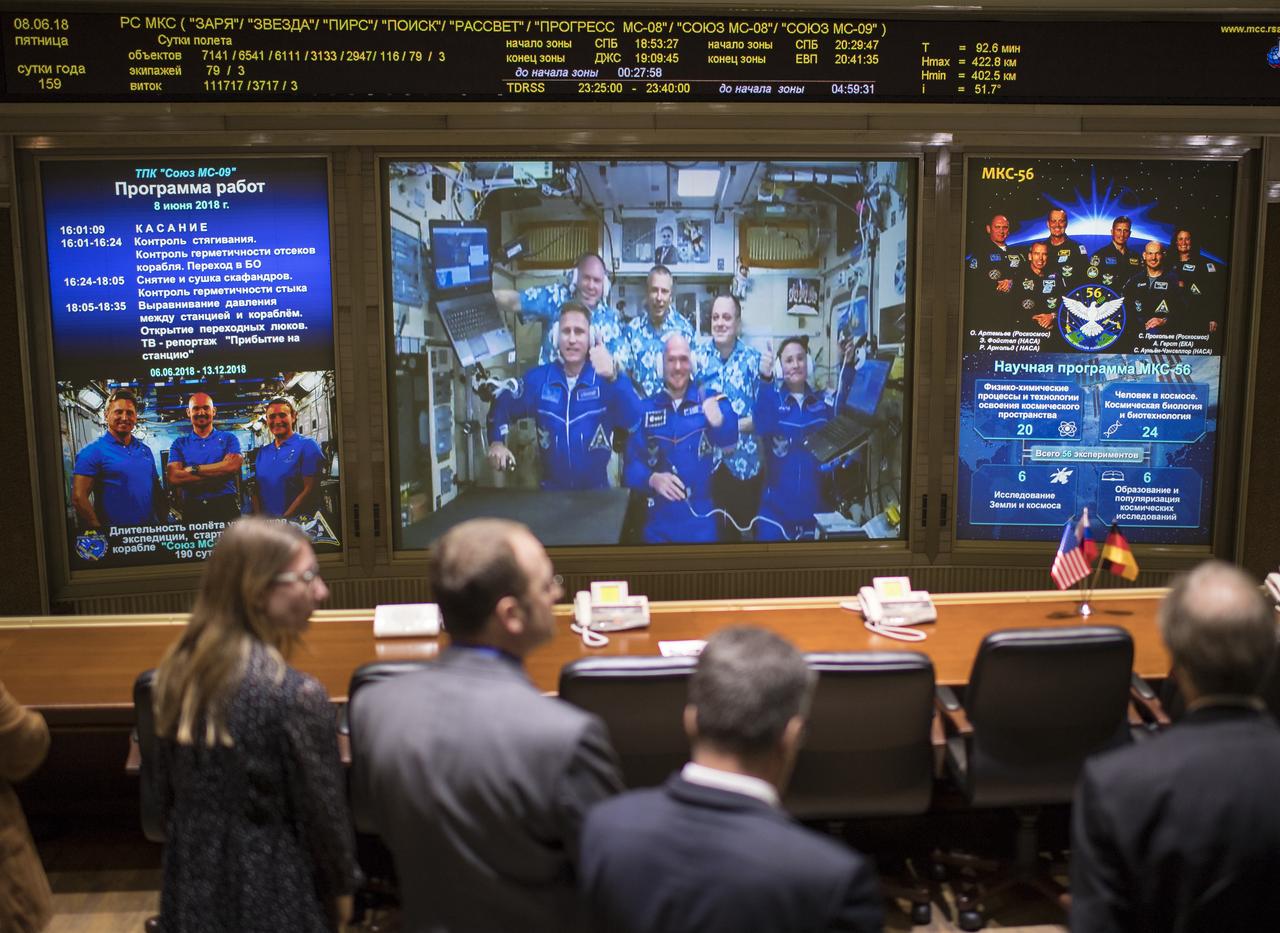
Expedition 56 flight engineers Sergey Prokopyev of Roscosmos, bottom left, Alexander Gerst of ESA (European Space Agency), bottom center, and Serena Auñón-Chancellor of NASA, bottom right, are seen with flight engineer Oleg Artemyev of Roscosmos, top left, Commander Drew Feustel of NASA, top center, and flight engineer Ricky Arnold of NASA, top right, are seen on a video monitor as they talk to family and friends at the Moscow Mission Control Center in Korolev, Russia a few hours after the Soyuz MS-09 docked to the International Space Station on Friday, June 8, 2018. Hatches were opened at 11:17am EDT (6:17pm Moscow time). Photo Credit: (NASA/Joel Kowsky)
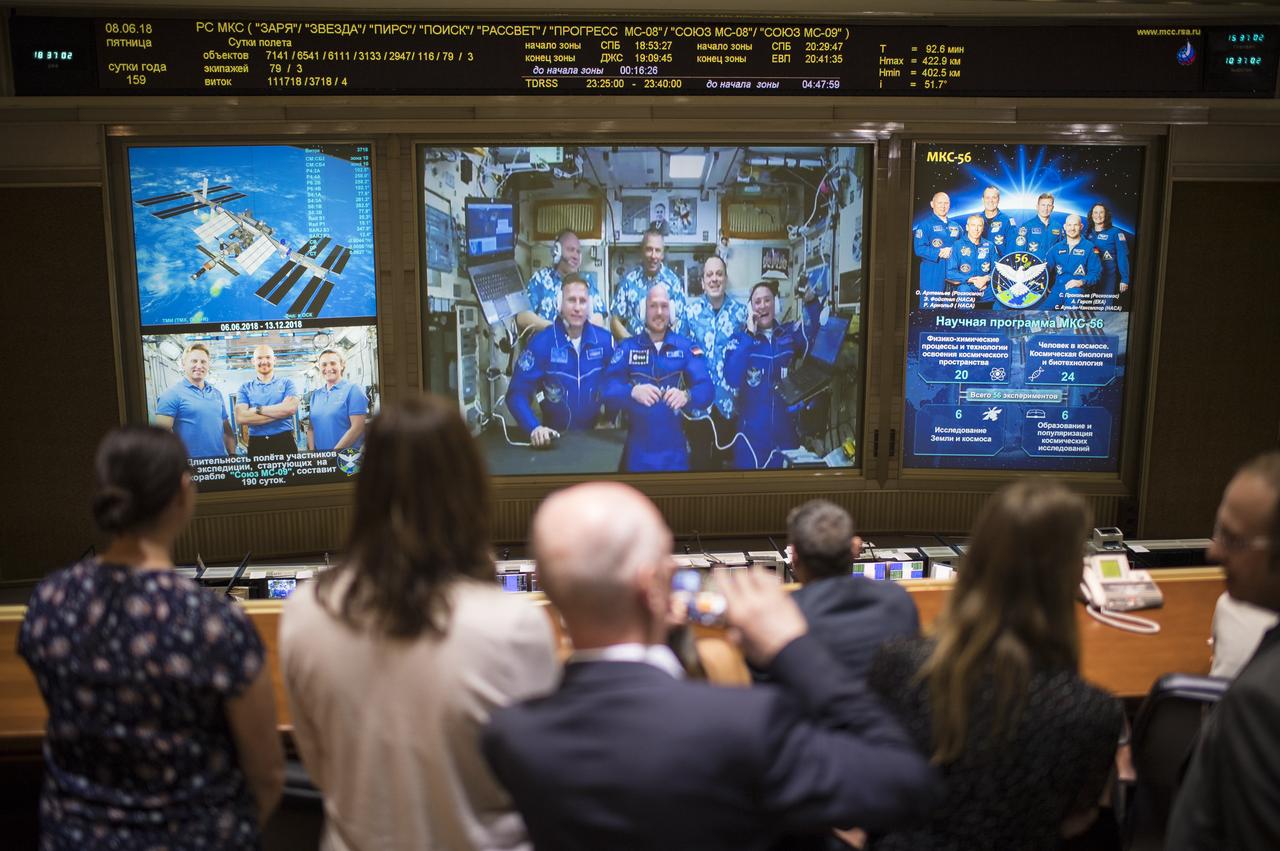
Expedition 56 flight engineers Sergey Prokopyev of Roscosmos, bottom left, Alexander Gerst of ESA (European Space Agency), bottom center, and Serena Auñón-Chancellor of NASA, bottom right, are seen with flight engineer Oleg Artemyev of Roscosmos, top left, Commander Drew Feustel of NASA, top center, and flight engineer Ricky Arnold of NASA, top right, are seen on a video monitor as they talk to family and friends at the Moscow Mission Control Center in Korolev, Russia a few hours after the Soyuz MS-09 docked to the International Space Station on Friday, June 8, 2018. Hatches were opened at 11:17am EDT (6:17pm Moscow time). Photo Credit: (NASA/Joel Kowsky)