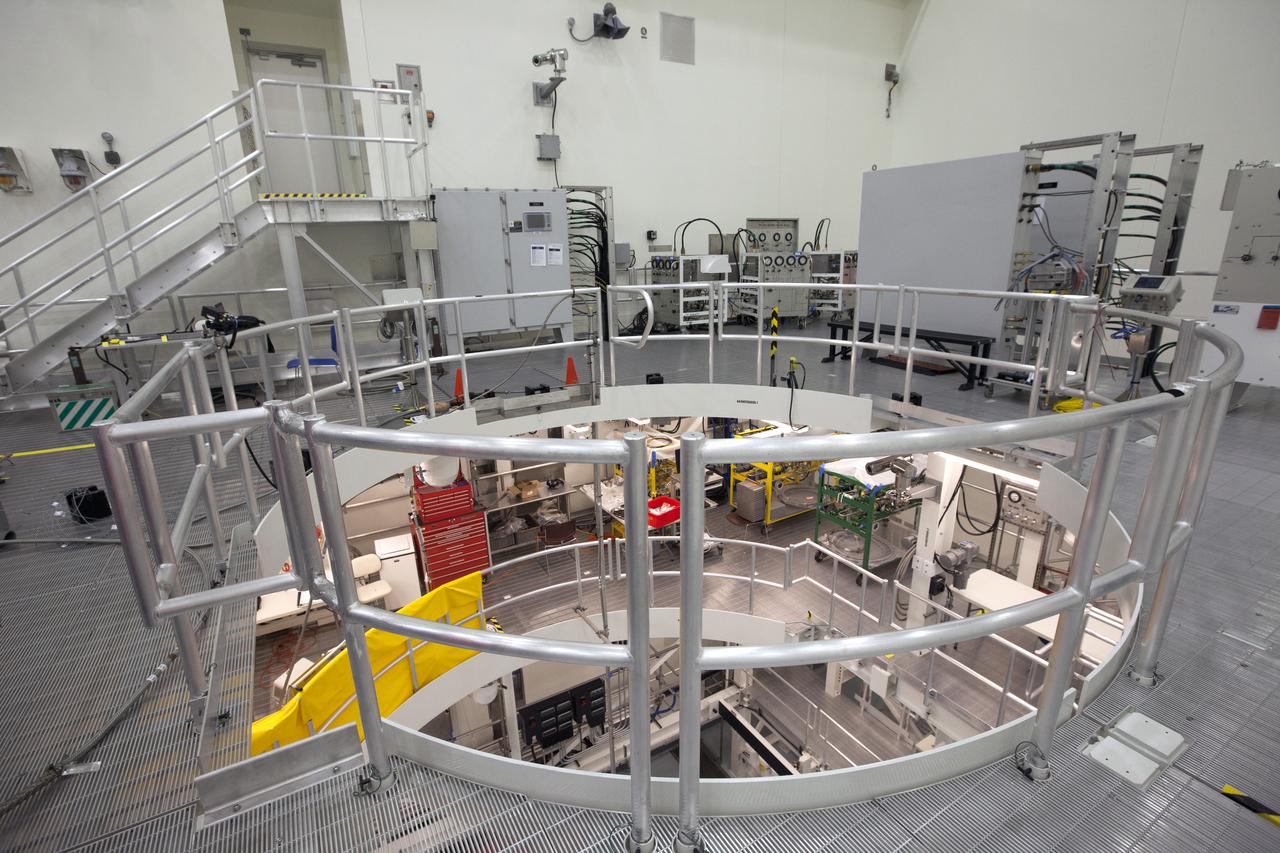
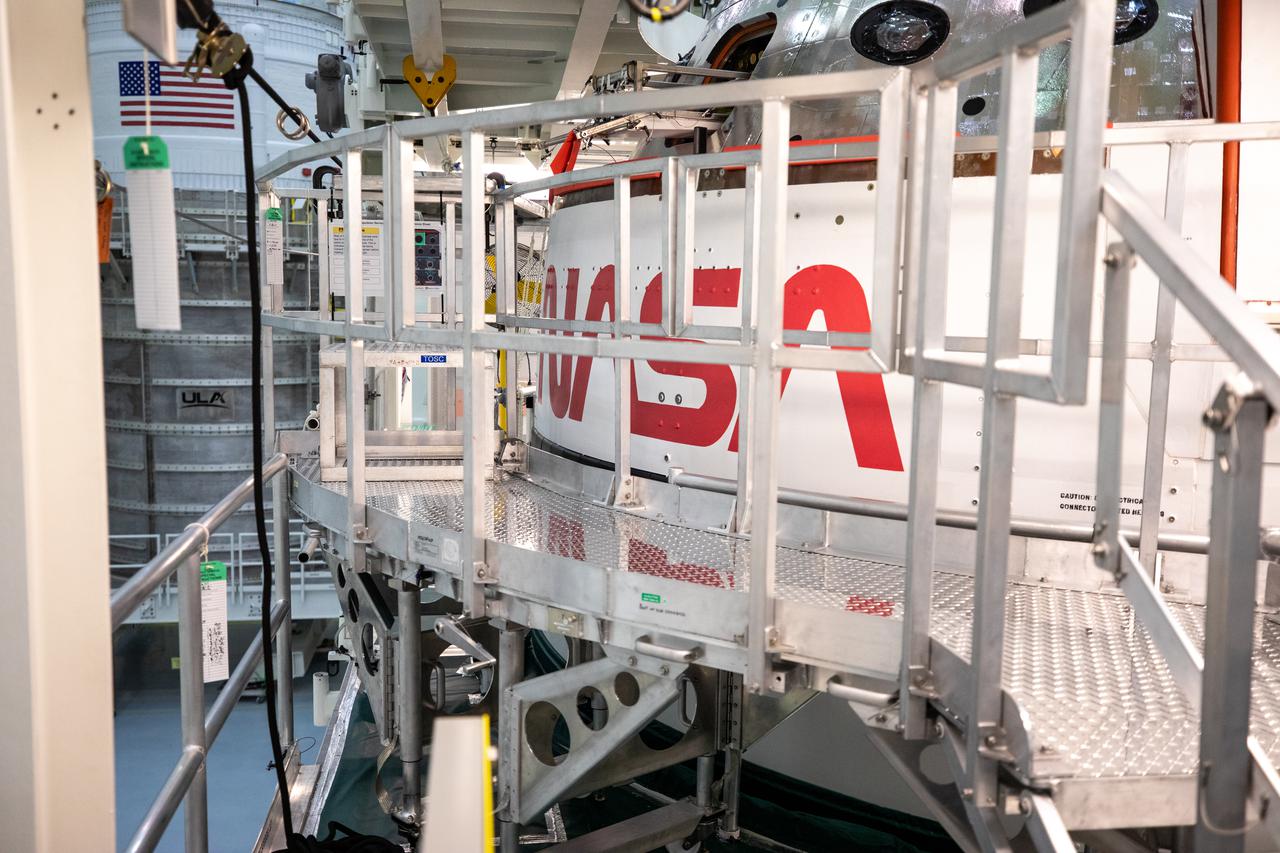
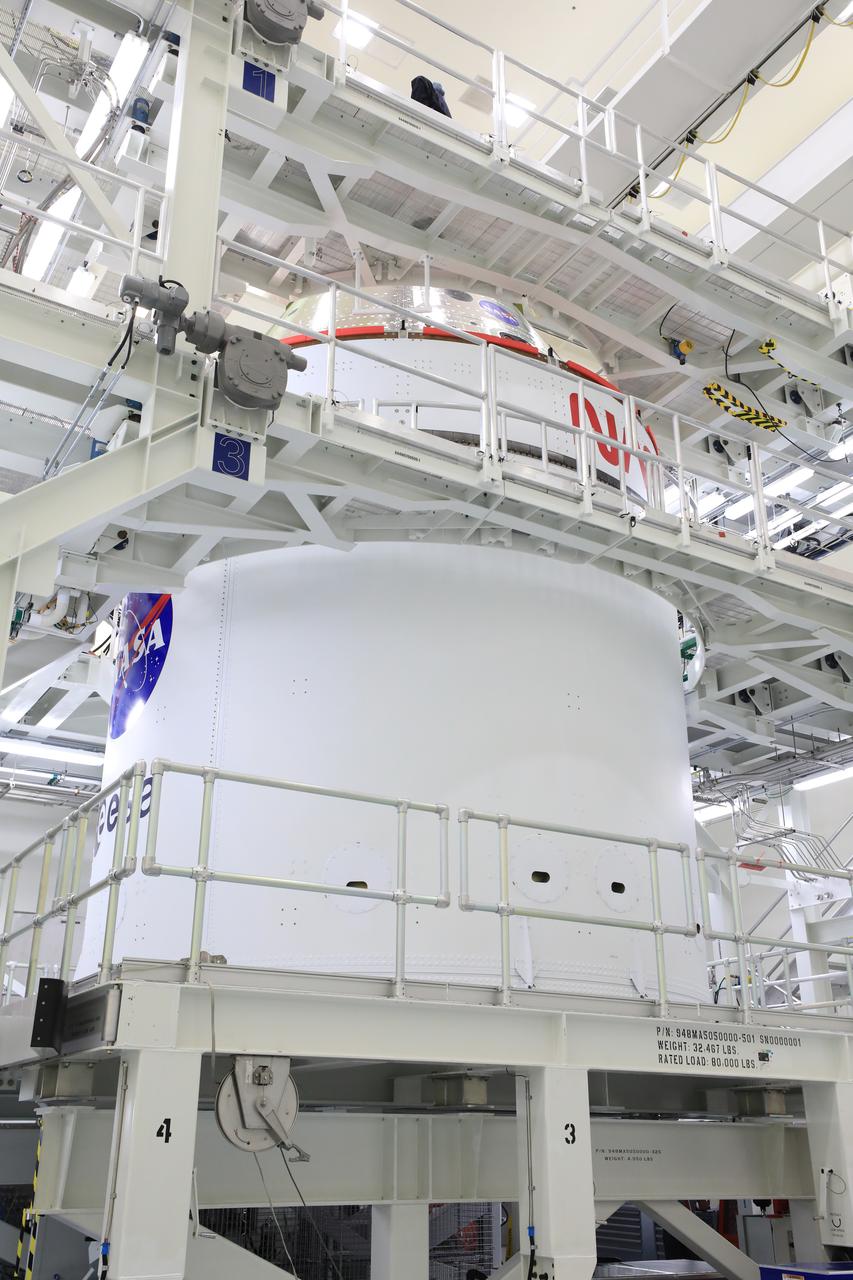
Engineers and technicians completed verification and validation testing of several pneumatic systems inside and outside the Multi-Payload Processing Facility (MPPF) at NASA's Kennedy Space Center in Florida. In view is the top level of the service platform for Orion spacecraft processing. The MPPF will be used for offline processing and fueling of the Orion spacecraft and service module stack before launch. Orion also will be de-serviced in the MPPF after a mission. The Ground Systems Development and Operations Program (GSDO) is overseeing upgrades to the facility. The Engineering Directorate led the recent pneumatic tests.
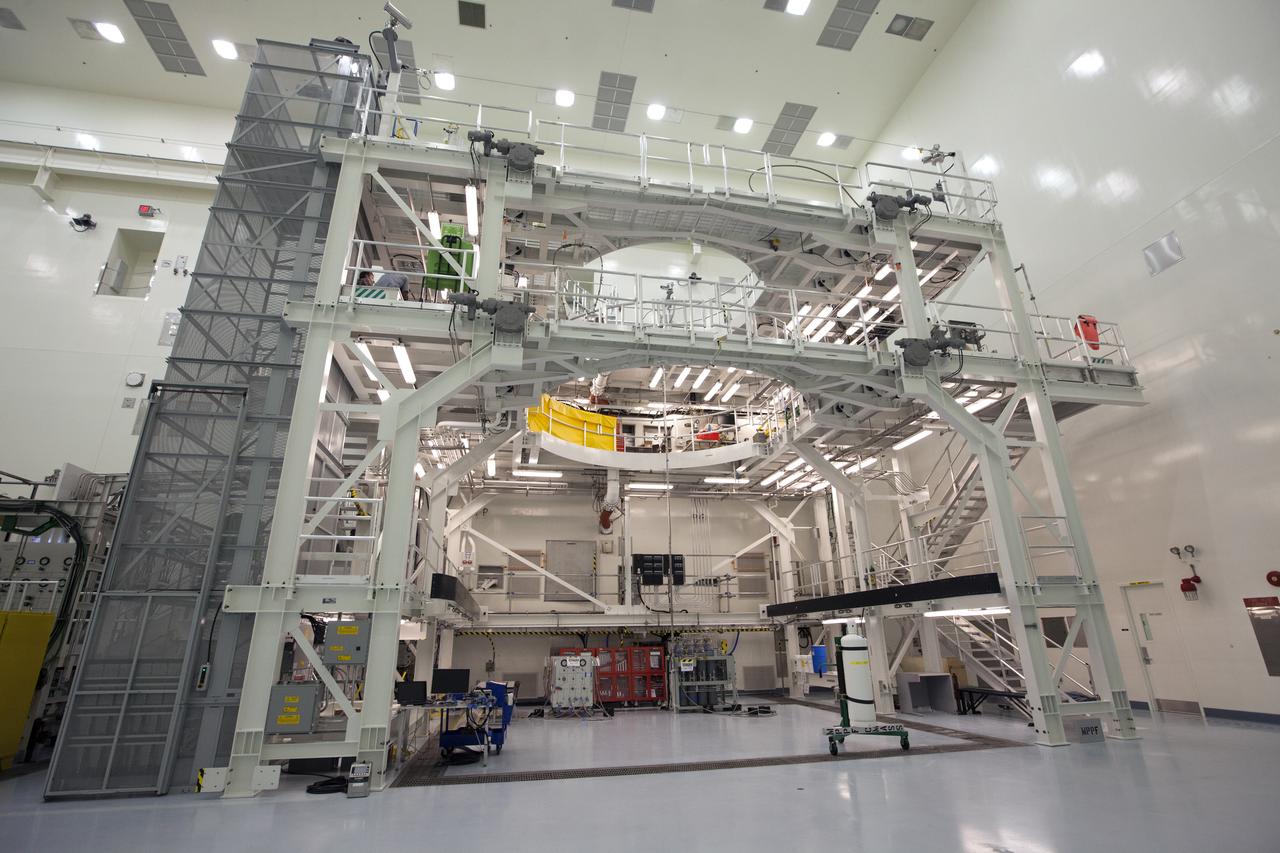
Engineers and technicians completed verification and validation testing of several pneumatic systems inside and outside the Multi-Payload Processing Facility (MPPF) at NASA's Kennedy Space Center in Florida. In view is the service platform for Orion spacecraft processing. The MPPF will be used for offline processing and fueling of the Orion spacecraft and service module stack before launch. Orion also will be de-serviced in the MPPF after a mission. The Ground Systems Development and Operations Program (GSDO) is overseeing upgrades to the facility. The Engineering Directorate led the recent pneumatic tests.
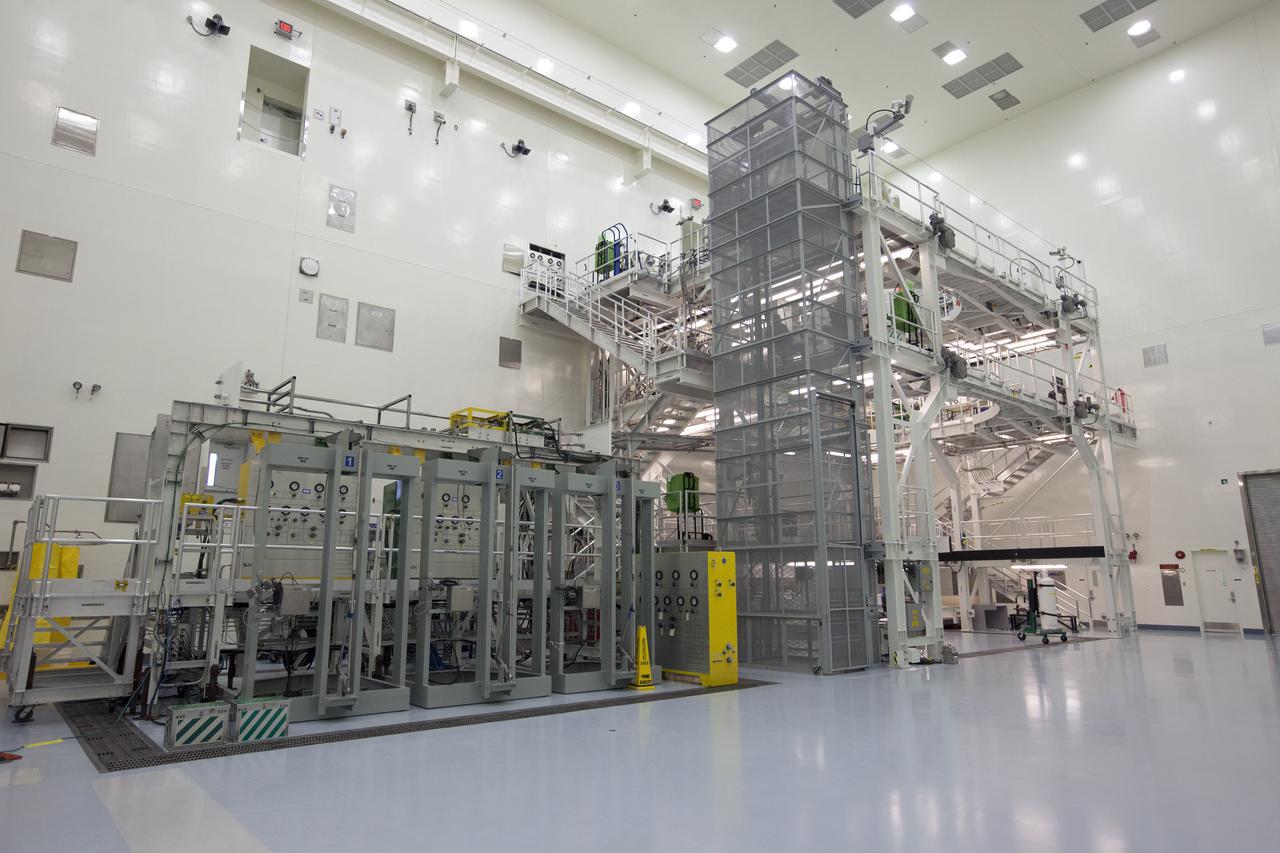
Engineers and technicians completed verification and validation testing of several pneumatic systems inside and outside the Multi-Payload Processing Facility (MPPF) at NASA's Kennedy Space Center in Florida. In view is the service platform for Orion spacecraft processing. To the left are several pneumatic panels. The MPPF will be used for offline processing and fueling of the Orion spacecraft and service module stack before launch. Orion also will be de-serviced in the MPPF after a mission. The Ground Systems Development and Operations Program (GSDO) is overseeing upgrades to the facility. The Engineering Directorate led the recent pneumatic tests.
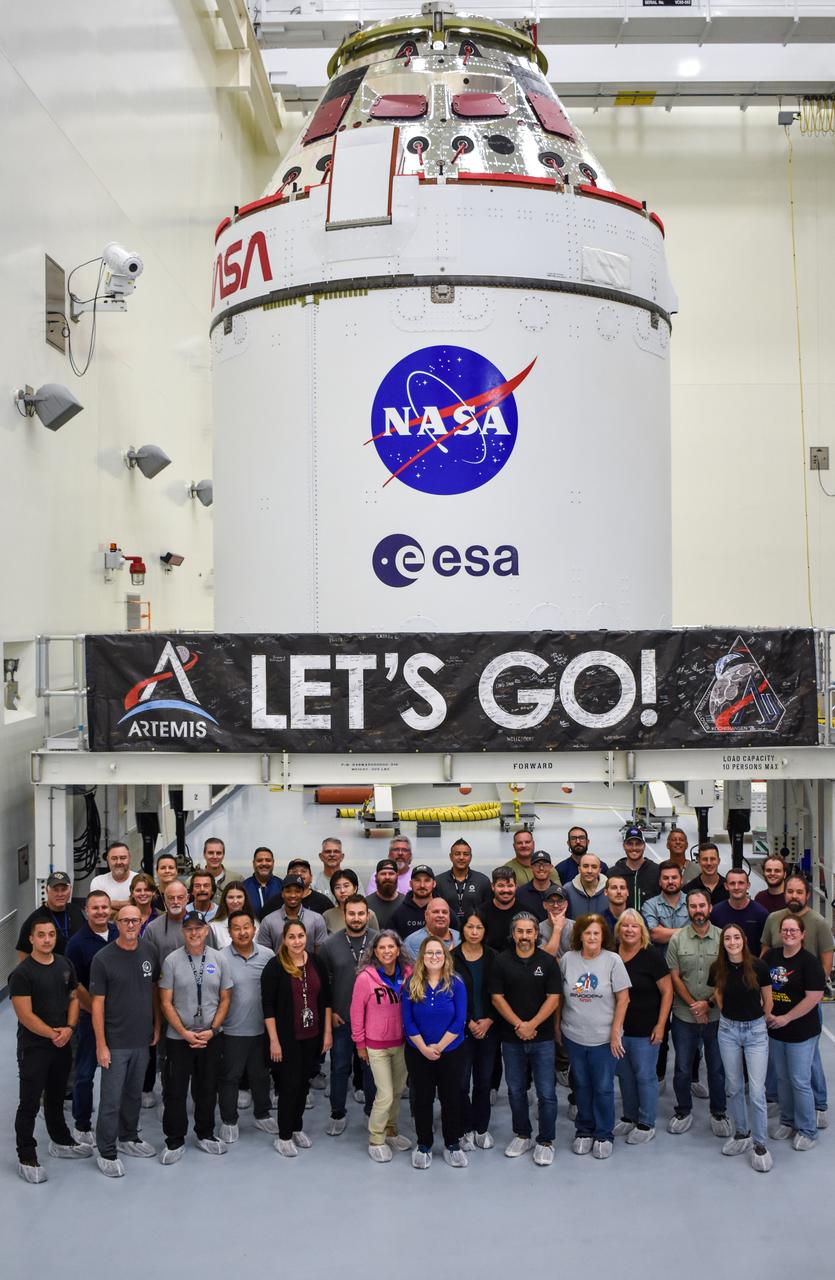
NASA engineers and technicians pose for a photograph in front of the agency’s Artemis II Orion spacecraft on Thursday, Aug. 7, 2025, inside the Multi-Payload Processing Facility (MPPF) at NASA’s Kennedy Space Center in Florida. Orion arrived at the MPPF in early May for fueling and processing and will next head to the spaceport’s Launch Abort System Facility to be integrated with its 44-foot-tall launch abort system. Once integration is complete, the stack will be transported to High Bay 3 inside NASA Kennedy’s Vehicle Assembly Building and integrated with the SLS (Space Launch System) rocket that will launch NASA’s Artemis II astronauts Reid Wiseman, Victor Glover, and Christina Koch, and CSA (Canadian Space Agency) astronaut Jeremy Hansen around the Moon and back.
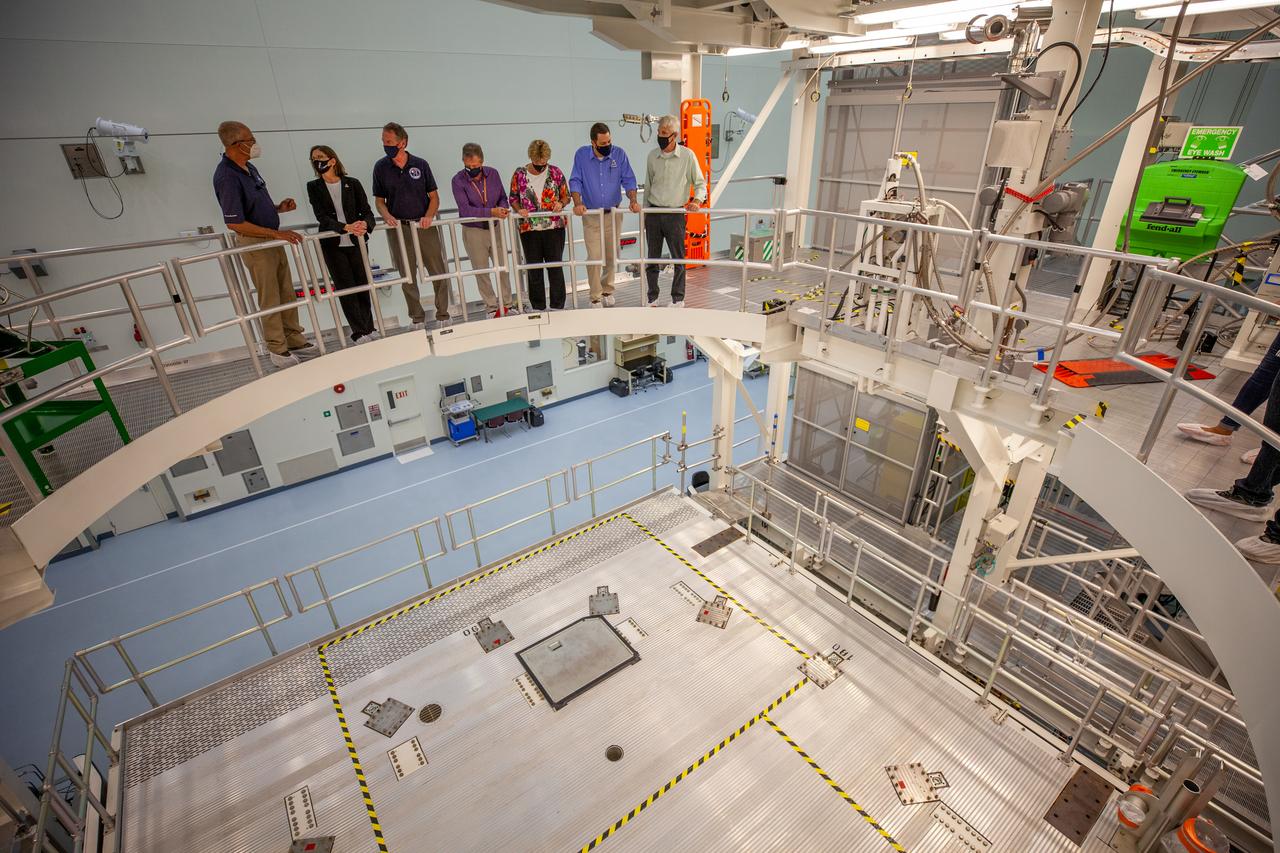
Catherine Koerner, second from left, NASA Orion Program manager, along with senior managers from Orion, Exploration Ground Systems (EGS) and TOSC, tours the Multi-Payload Processing Facility (MPPF) at NASA’s Kennedy Space Center in Florida on Oct. 5, 2020. Accompanying her, from left are Skip Williams, operations manager for the MPPF spacecraft offline element integration team; Mike Bolger, EGS manager; Nicolas Kindred, TOSC flow manager; Annette Hasbrook, Orion Program assistant manager; Jeremy Parsons, EGS deputy manager; and Scott Wilson, Orion Production Operations manager. Koerner viewed spacecraft hardware and processing facilities for the Artemis I and II missions. The first in a series of increasingly complex missions, Artemis I will test the Orion spacecraft and Space Launch System as an integrated system ahead of crewed flights to the Moon. Under the Artemis program, NASA will land the first woman and the next man on the Moon in 2024.

Catherine Koerner, in front, NASA Orion Program manager, along with senior managers from Orion, Exploration Ground Systems (EGS) and TOSC, tours the Multi-Payload Processing Facility (MPPF) at NASA’s Kennedy Space Center in Florida on Oct. 5, 2020. Accompanying her, from left are Nicolas Kindred, (partically hidden), TOSC flow manager; Jeremy Parsons, EGS deputy manager; Scott Wilson, Orion Production Operations manager; Mike Bolger, (partially hidden), EGS manager; and Skip Williams, operations manager for the MPPF spacecraft offline element integration team. Koerner viewed spacecraft hardware and processing facilities for the Artemis I and II missions. The first in a series of increasingly complex missions, Artemis I will test the Orion spacecraft and Space Launch System as an integrated system ahead of crewed flights to the Moon. Under the Artemis program, NASA will land the first woman and the next man on the Moon in 2024.
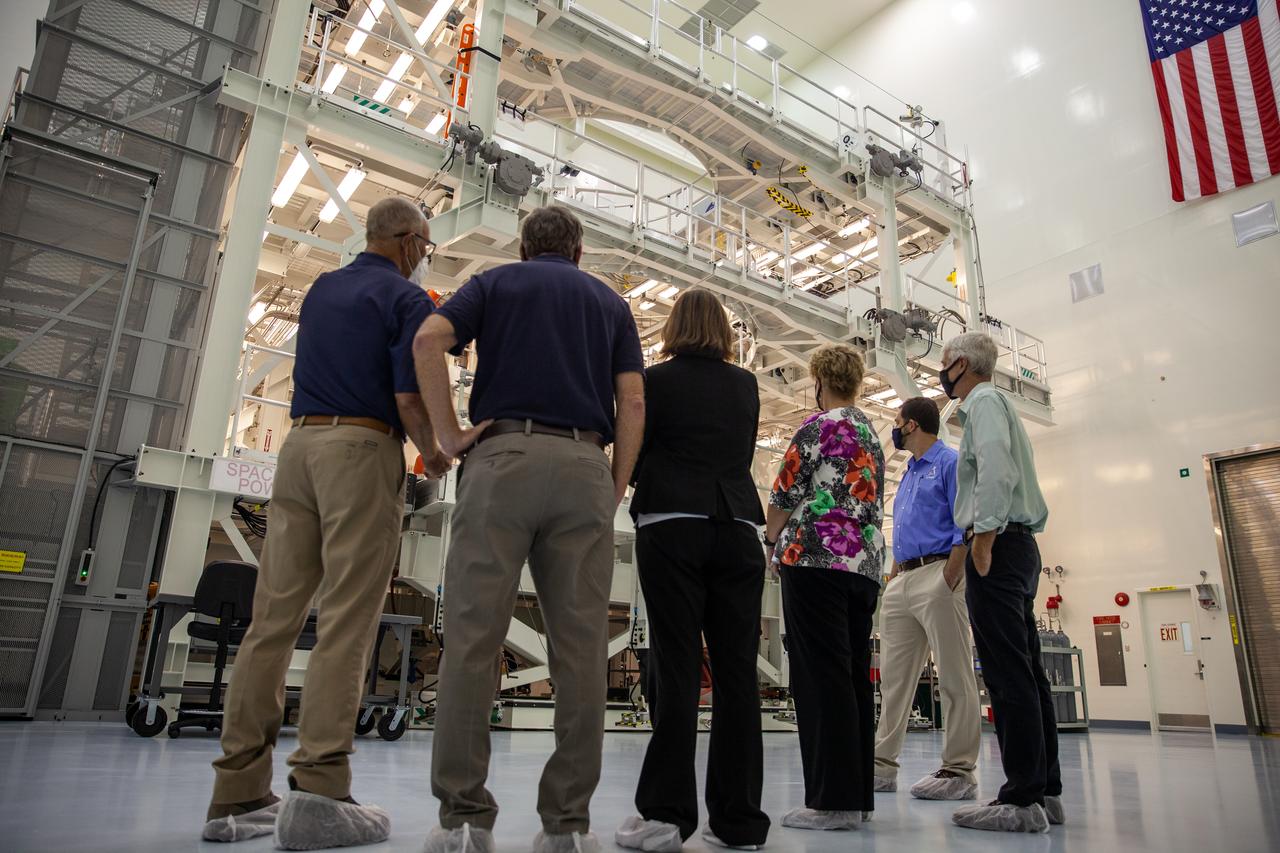
Catherine Koerner, third from left, NASA Orion Program manager, along with senior managers from Orion, and Exploration Ground Systems (EGS), visits the Multi-Payload Processing Facility (MPPF) at NASA’s Kennedy Space Center in Florida on Oct. 5, 2020. Accompanying her, from left are Skip Williams, operations manager for the MPPF spacecraft offline element integration team; Mike Bolger, EGS manager; Annette Hasbrook, Orion Program assistant manager; Scott Wilson, Orion Production Operations manager; and Jeremy Parsons, EGS deputy manager. Koerner viewed spacecraft hardware and processing facilities for the Artemis I and II missions. The first in a series of increasingly complex missions, Artemis I will test the Orion spacecraft and Space Launch System as an integrated system ahead of crewed flights to the Moon. Under the Artemis program, NASA will land the first woman and the next man on the Moon in 2024.
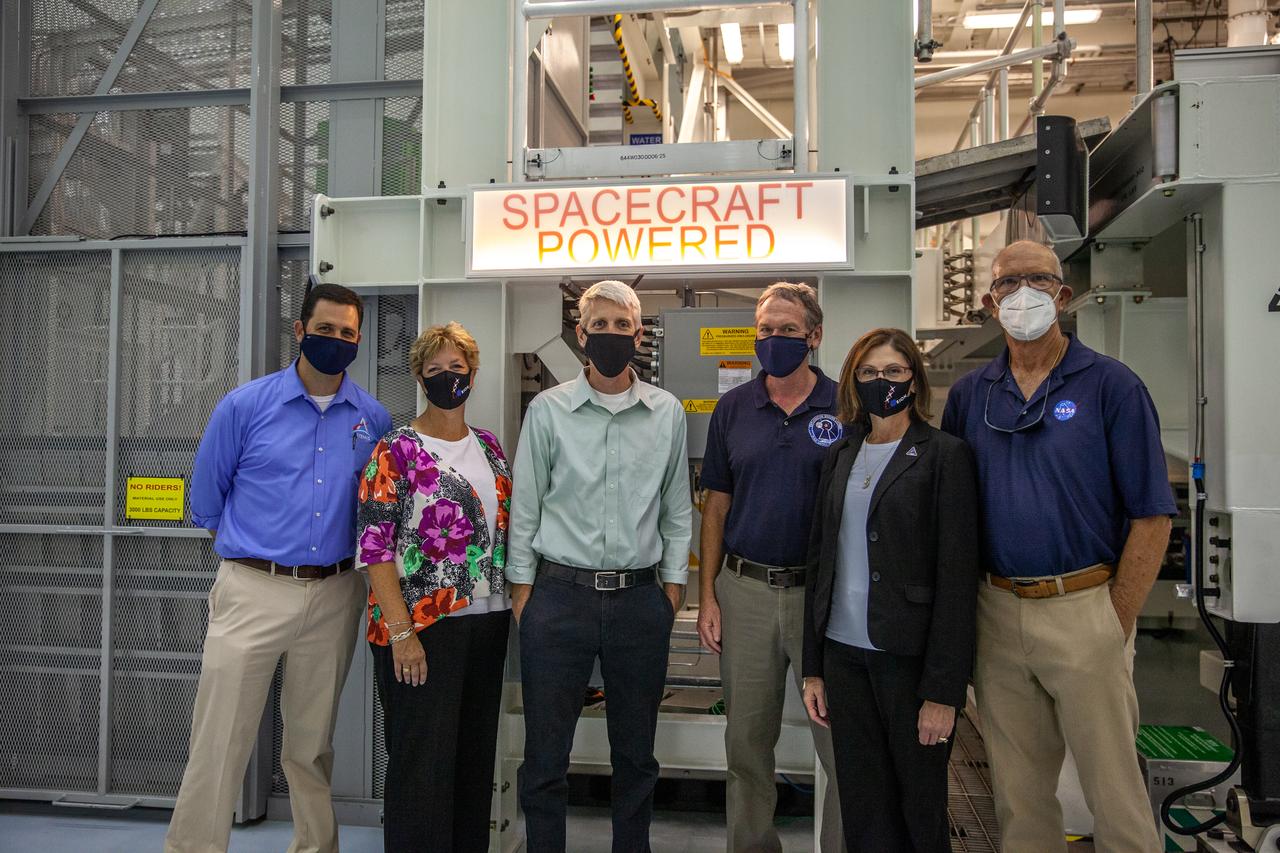
Catherine Koerner, second from right, NASA Orion Program manager, along with senior managers from Orion, and Exploration Ground Systems (EGS), tours the Multi-Payload Processing Facility (MPPF) at NASA’s Kennedy Space Center in Florida on Oct. 5, 2020. Accompanying her, from left are Jeremy Parsons, EGS deputy manager; Annette Hasbrook, Orion Program assistant manager; Scott Wilson, Orion Production Operations manager; and Mike Bolger, EGS manager. At far right is Skip Williams, operations manager for the MPPF spacecraft offline element integration team. Koerner viewed spacecraft hardware and processing facilities for the Artemis I and II missions. The first in a series of increasingly complex missions, Artemis I will test the Orion spacecraft and Space Launch System as an integrated system ahead of crewed flights to the Moon. Under the Artemis program, NASA will land the first woman and the next man on the Moon in 2024.
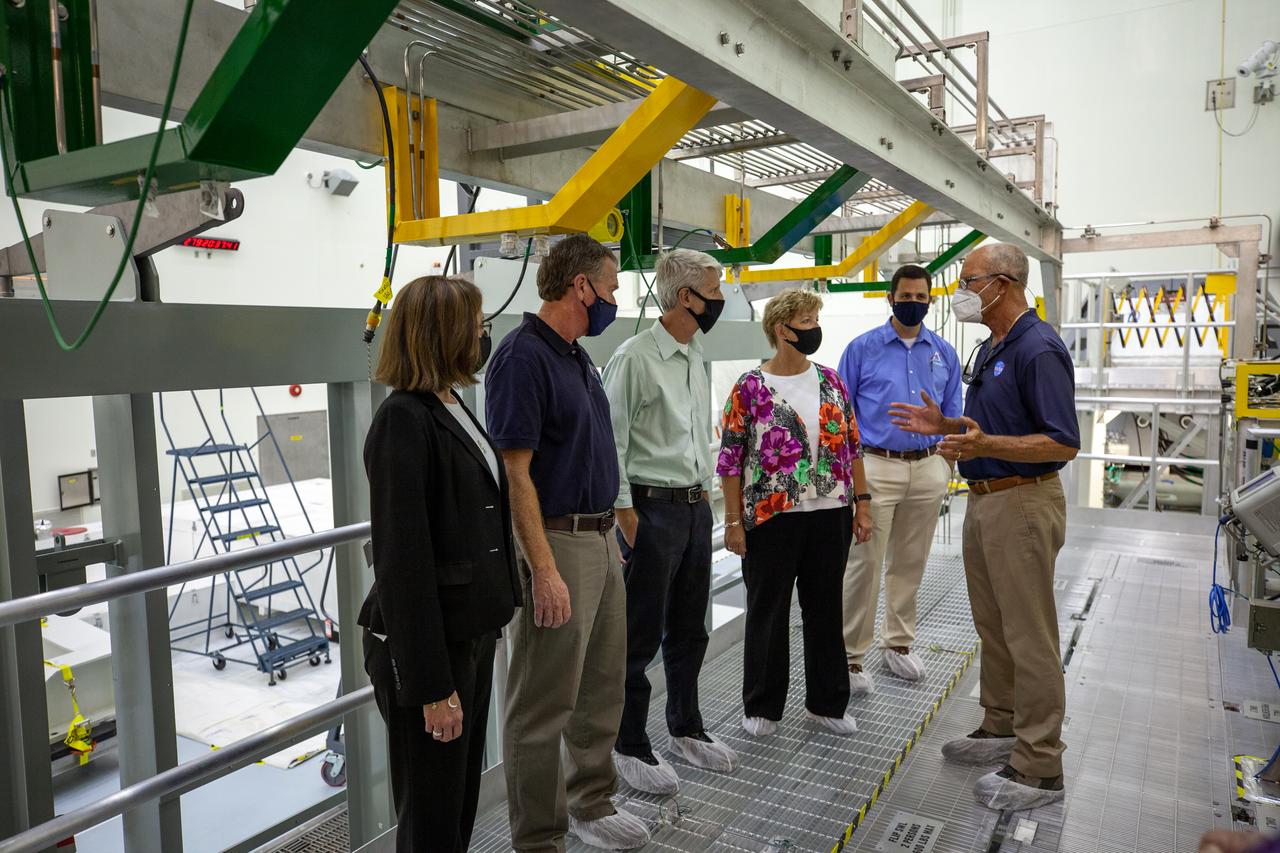
Catherine Koerner, far left, NASA Orion Program manager, along with senior managers from Orion, and Exploration Ground Systems (EGS), tours the Multi-Payload Processing Facility (MPPF) at NASA’s Kennedy Space Center in Florida on Oct. 5, 2020. Accompanying her, from left are Mike Bolger, EGS manager; Scott Wilson, Orion Production Operations manager; Annette Hasbrook, Orion Program assistant manager; and Jeremy Parsons, EGS deputy manager. Speaking to the group is Skip Williams, operations manager for the MPPF spacecraft offline element integration team. Koerner viewed spacecraft hardware and processing facilities for the Artemis I and II missions. The first in a series of increasingly complex missions, Artemis I will test the Orion spacecraft and Space Launch System as an integrated system ahead of crewed flights to the Moon. Under the Artemis program, NASA will land the first woman and the next man on the Moon in 2024.
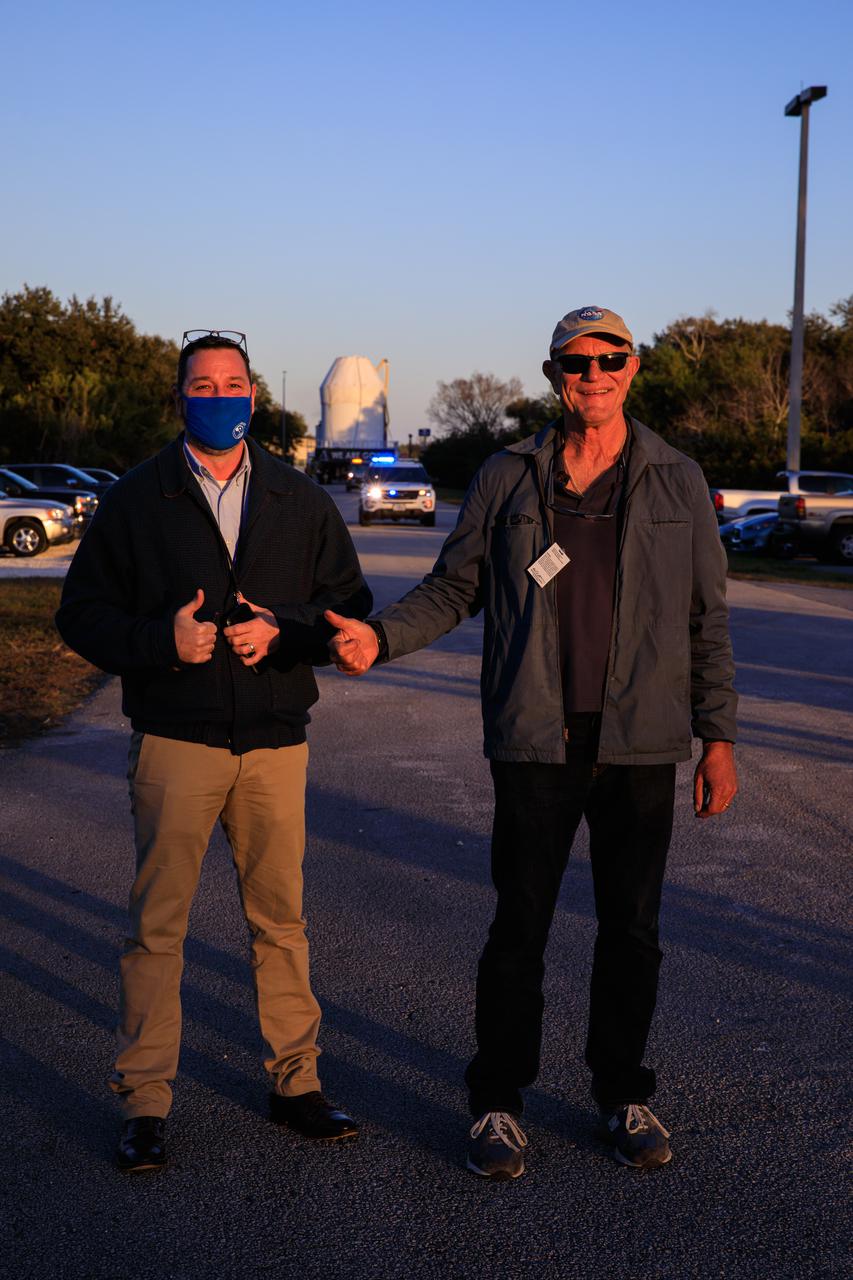
Secured atop a transport vehicle, Orion moves along the route to the Multi-Payload Processing Facility (MPPF) on Jan. 16, 2021, after departing from the Neil Armstrong Operations and Checkout Building at NASA’s Kennedy Space Center in Florida. Watching Orion move, from left are Mike Collins, NASA Operations manager for Spacecraft Offline Operations at Kennedy, and Skip Williams, operations manager for the MPPF spacecraft offline element integration team. In the MPPF, Orion will undergo processing with the Exploration Ground Systems team taking over ground processing ahead of the Artemis I launch.

Catherine Koerner, second from right, NASA Orion Program manager, along with senior managers from Orion, Exploration Ground Systems (EGS) and TOSC, tours the Multi-Payload Processing Facility (MPPF) at NASA’s Kennedy Space Center in Florida on Oct. 5, 2020. Accompanying her, from left are Scott Wilson, Orion Production Operations manager; Mike Bolger, EGS manager; and Nicolas Kindred, TOSC flow manager. At right is Jeremy Parsons, EGS deputy manager. Koerner viewed spacecraft hardware and processing facilities for the Artemis I and II missions. The first in a series of increasingly complex missions, Artemis I will test the Orion spacecraft and Space Launch System as an integrated system ahead of crewed flights to the Moon. Under the Artemis program, NASA will land the first woman and the next man on the Moon in 2024.
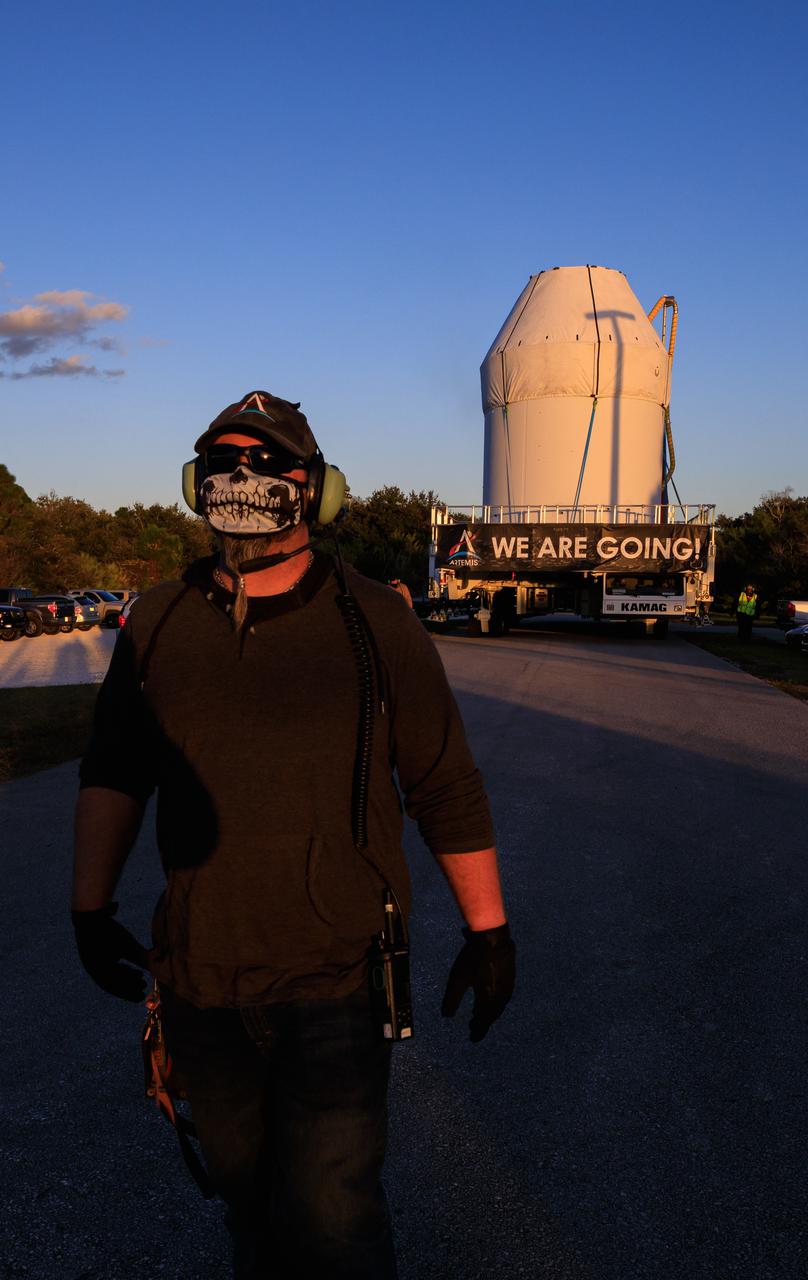
Secured atop a transport vehicle, Orion moves along the route to the Multi-Payload Processing Facility (MPPF) on Jan. 16, 2021, after departing from the Neil Armstrong Operations and Checkout Building at NASA’s Kennedy Space Center in Florida. Jason Parrish, a mechanical technician, Crawler Transporter Systems, with Jacobs, is one of the workers assisting with the move. Inside the MPPF, Orion will undergo processing with the Exploration Ground Systems team taking over ground processing ahead of the Artemis I launch.

Secured atop a transport vehicle, Orion moves along the route to the Multi-Payload Processing Facility (MPPF) on Jan. 16, 2021, after departing from the Neil Armstrong Operations and Checkout Building at NASA’s Kennedy Space Center in Florida. In the MPPF, Orion will undergo processing with the the Exploration Ground Systems team taking over ground processing ahead of the Artemis I launch.
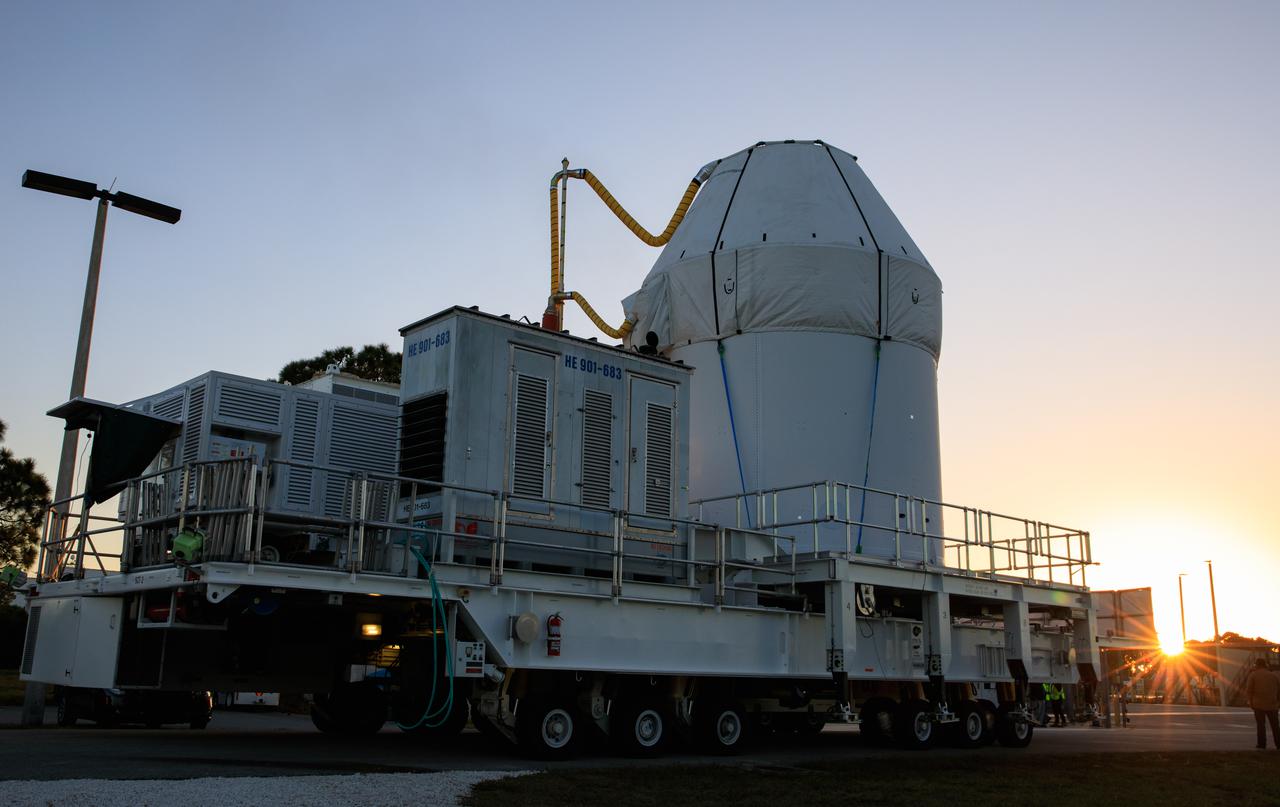
Secured atop a transport vehicle, Orion moves along the route to the Multi-Payload Processing Facility (MPPF) on Jan. 16, 2021, after departing from the Neil Armstrong Operations and Checkout Building at NASA’s Kennedy Space Center in Florida. In the MPPF, Orion will undergo processing with the the Exploration Ground Systems team taking over ground processing ahead of the Artemis I launch.
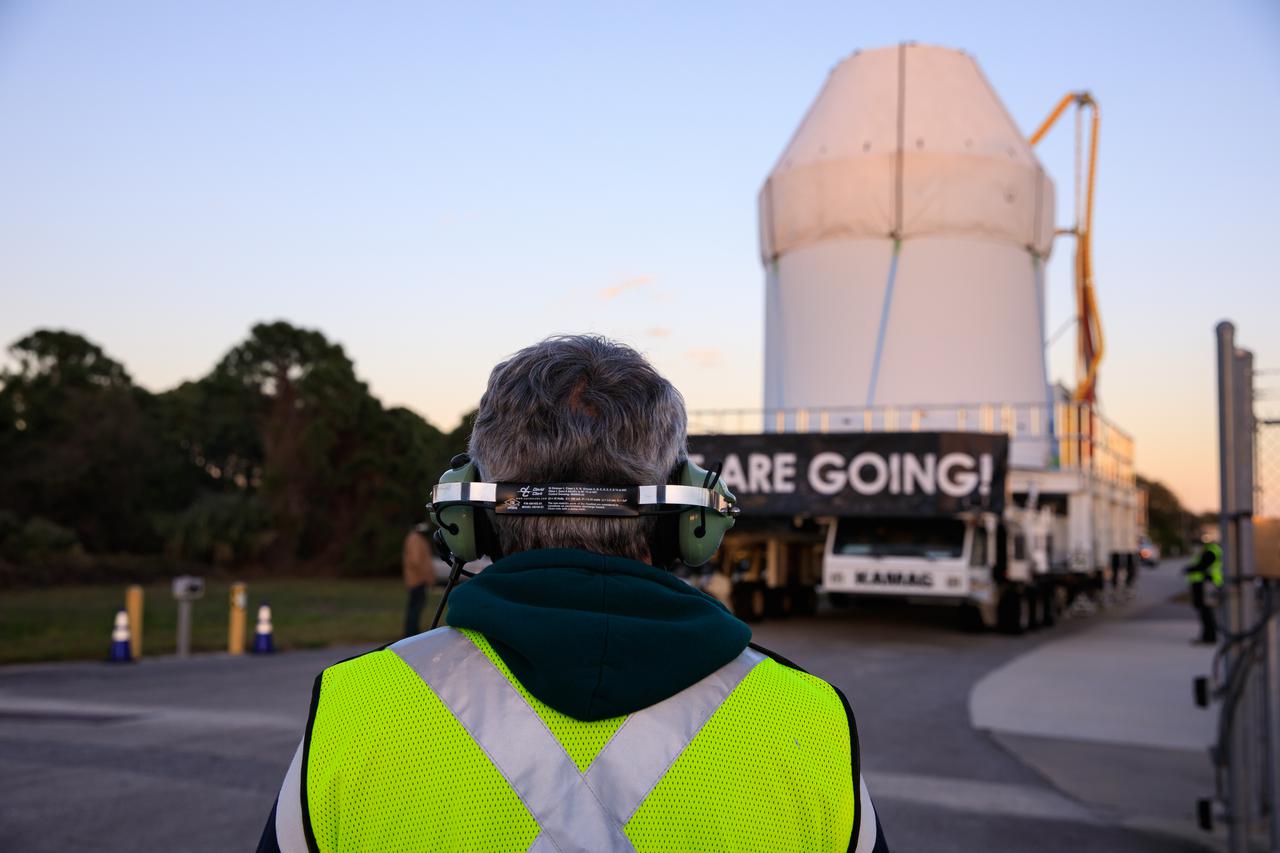
Secured atop a transport vehicle, Orion moves along the route to the Multi-Payload Processing Facility (MPPF) on Jan. 16, 2021, after departing from the Neil Armstrong Operations and Checkout Building at NASA’s Kennedy Space Center in Florida. In the MPPF, Orion will undergo processing with the Exploration Ground Systems team taking over ground processing ahead of the Artemis I launch.
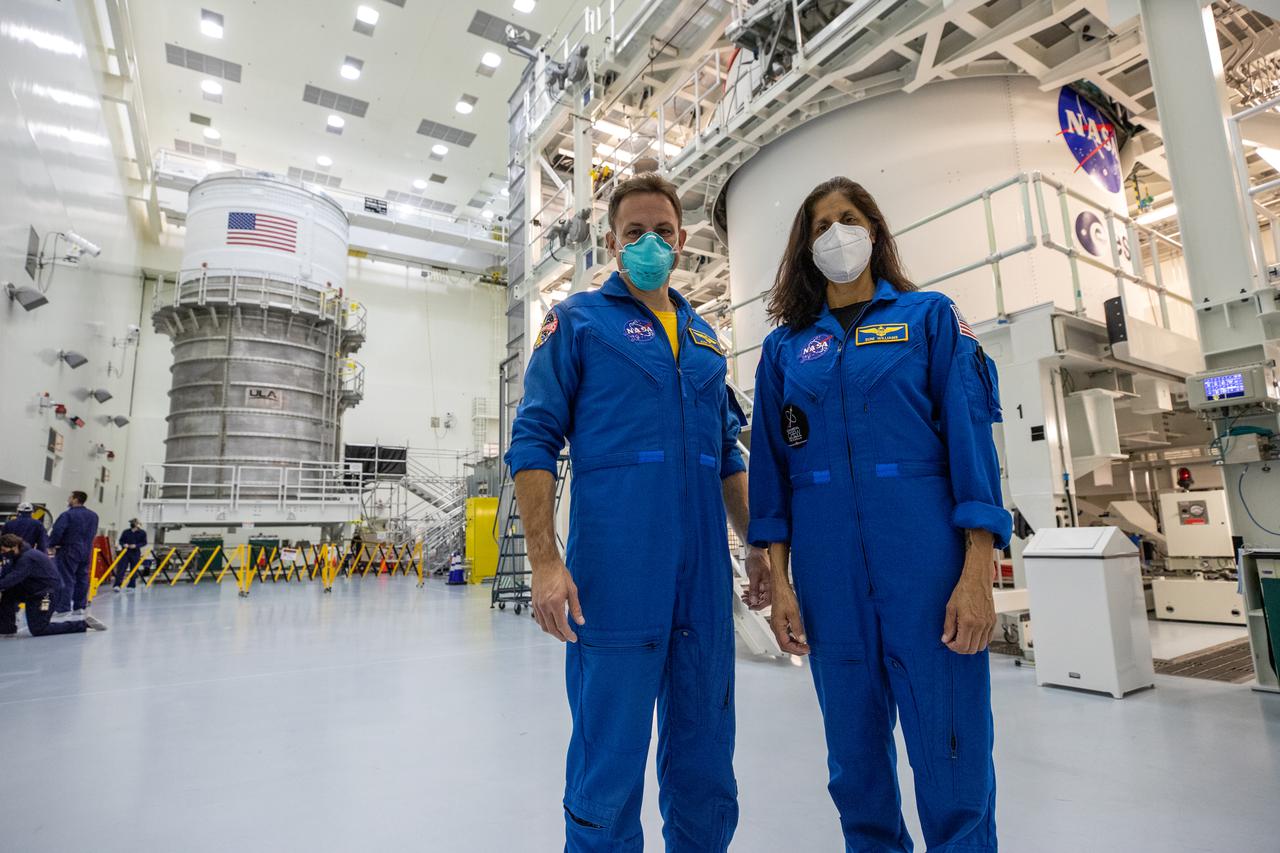
NASA astronauts Josh Cassada, left, and Sunita “Suni” Williams pause for a photo during a tour of the Multi-Payload Processing Facility (MPPF) at NASA’s Kennedy Space Center in Florida on April 6, 2021. In the background to the left is the Interim Cryogenic Propulsion Stage for the Space Launch System (SLS) rocket, and to the right is the European-built service module, topped with the crew module. During their time at Kennedy, Cassada and Williams also had the opportunity to view the Orion spacecraft – this also being serviced inside the MPPF ahead of the Artemis I launch. The first in a series of increasingly complex missions, Artemis I will test Orion and SLS as an integrated system prior to crewed flights to the Moon.
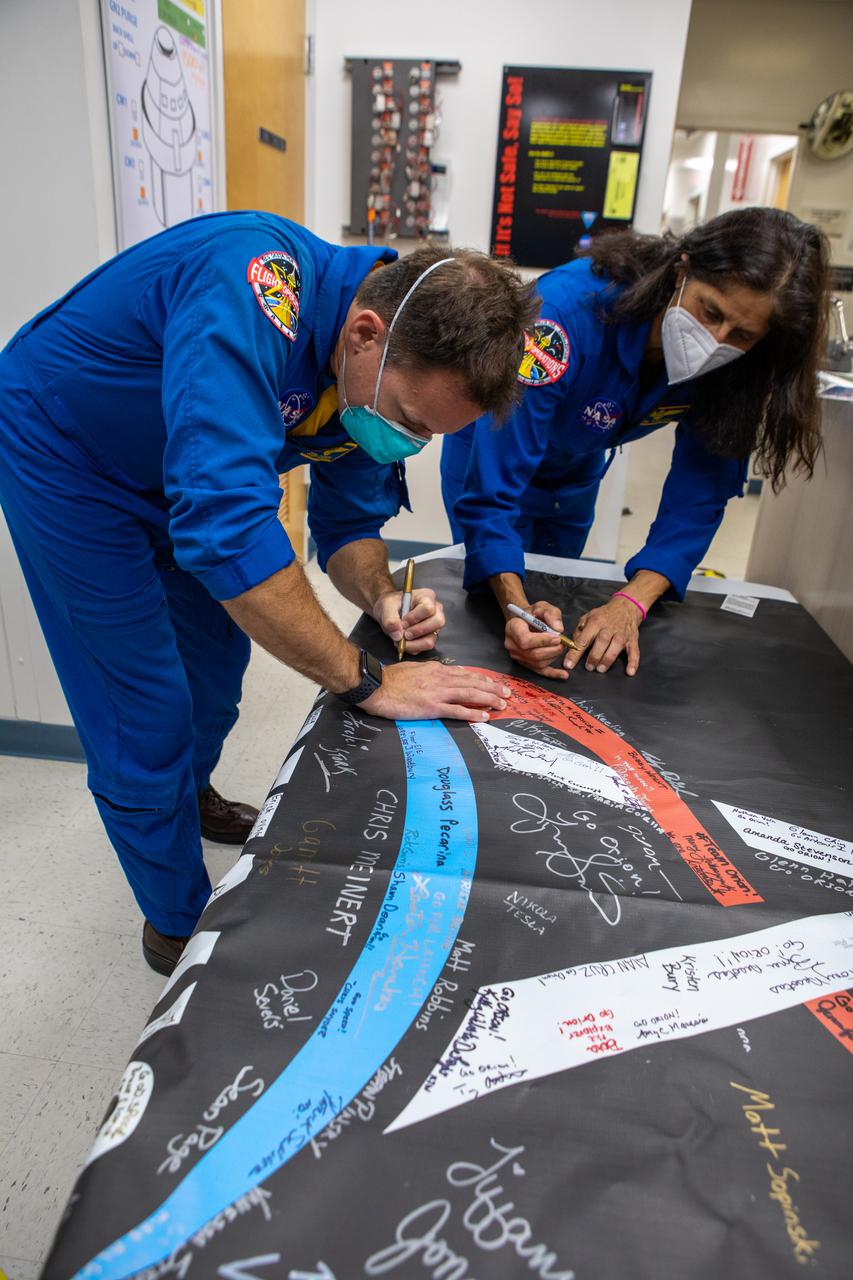
NASA astronauts Josh Cassada, left, and Sunita “Suni” Williams add their signatures to an Artemis “We Are Going” banner inside the Multi-Payload Processing Facility (MPPF) during a visit to NASA’s Kennedy Space Center in Florida on April 6, 2021. During their time at Kennedy, they also had the opportunity to view the Orion spacecraft and Space Launch System’s (SLS) Interim Cryogenic Propulsion Stage – both being serviced inside the MPPF ahead of the Artemis I launch. The first in a series of increasingly complex missions, Artemis I will test Orion and SLS as an integrated system prior to crewed flights to the Moon.
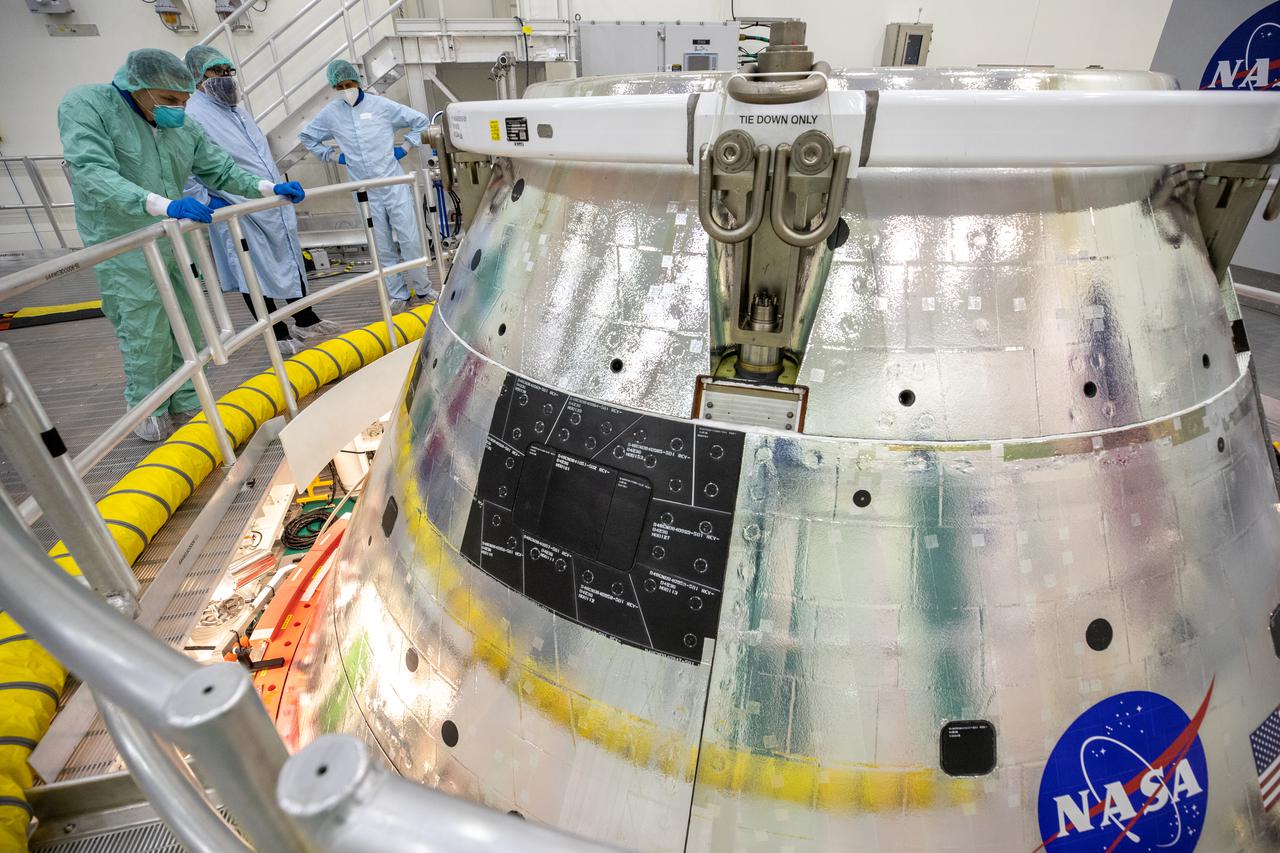
NASA astronauts Josh Cassada, left, and Sunita “Suni” Williams, far right, view the Orion spacecraft with Adam Leppek, Spacecraft Offline deputy element operations manager with ARES Corporation (KLXSIII), inside the Multi-Payload Processing Facility (MPPF) during a visit to NASA’s Kennedy Space Center in Florida on April 6, 2021. During their time at Kennedy, Cassada and Williams also had the opportunity to view the Interim Cryogenic Propulsion Stage for the Space Launch System (SLS) rocket – this and Orion being serviced inside the MPPF ahead of the Artemis I launch. The first in a series of increasingly complex missions, Artemis I will test Orion and SLS as an integrated system prior to crewed flights to the Moon.
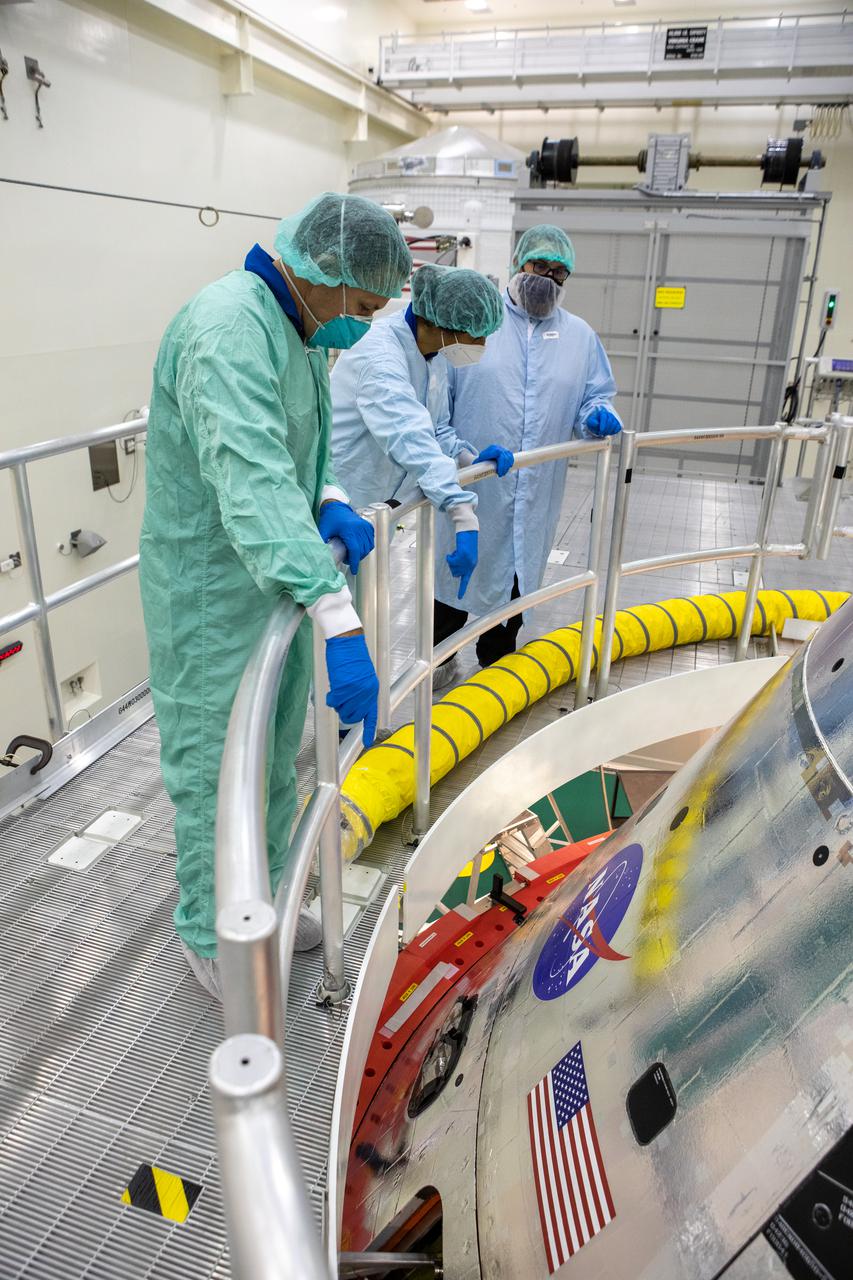
NASA astronauts Josh Cassada, left, and Sunita “Suni” Williams, center, view the Orion spacecraft with Adam Leppek, Spacecraft Offline deputy element operations manager with ARES Corporation (KLXSIII), inside the Multi-Payload Processing Facility (MPPF) during a visit to NASA’s Kennedy Space Center in Florida on April 6, 2021. During their time at Kennedy, Cassada and Williams also had the opportunity to view the Interim Cryogenic Propulsion Stage for the Space Launch System (SLS) rocket – this and Orion being serviced inside the MPPF ahead of the Artemis I launch. The first in a series of increasingly complex missions, Artemis I will test Orion and SLS as an integrated system prior to crewed flights to the Moon.
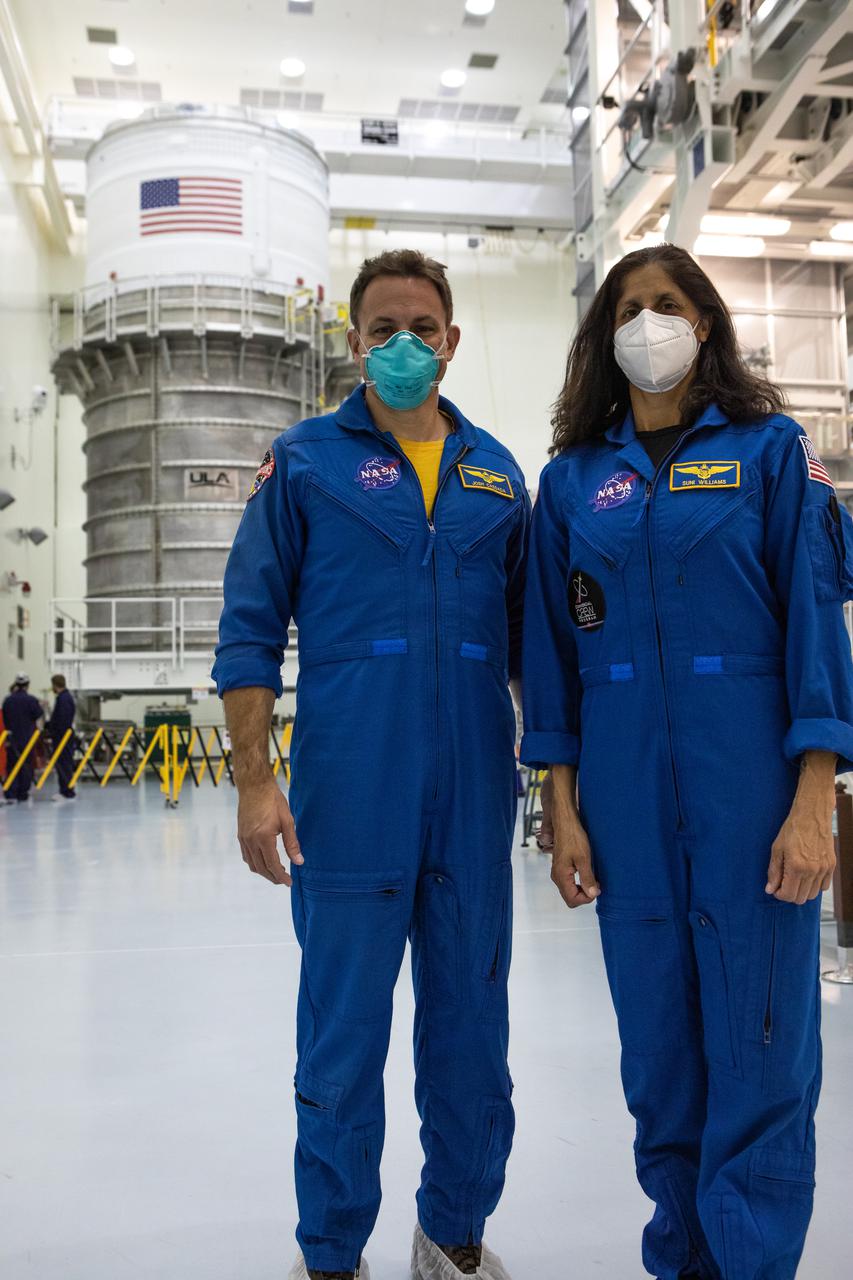
NASA astronauts Josh Cassada, left, and Sunita “Suni” Williams pause for a photo during a tour of the Multi-Payload Processing Facility (MPPF) at NASA’s Kennedy Space Center in Florida on April 6, 2021. In the background is the Interim Cryogenic Propulsion Stage for the Space Launch System (SLS) rocket. During their time at Kennedy, Cassada and Williams also had the opportunity to view the Orion spacecraft – this also being serviced inside the MPPF ahead of the Artemis I launch. The first in a series of increasingly complex missions, Artemis I will test Orion and SLS as an integrated system prior to crewed flights to the Moon.
Charlie Duke and Nicole Stott visit the Multi-Payload Processing Facility (MPPF) and Vehicle Assembly Building (VAB) at NASA's Kennedy Space Center.
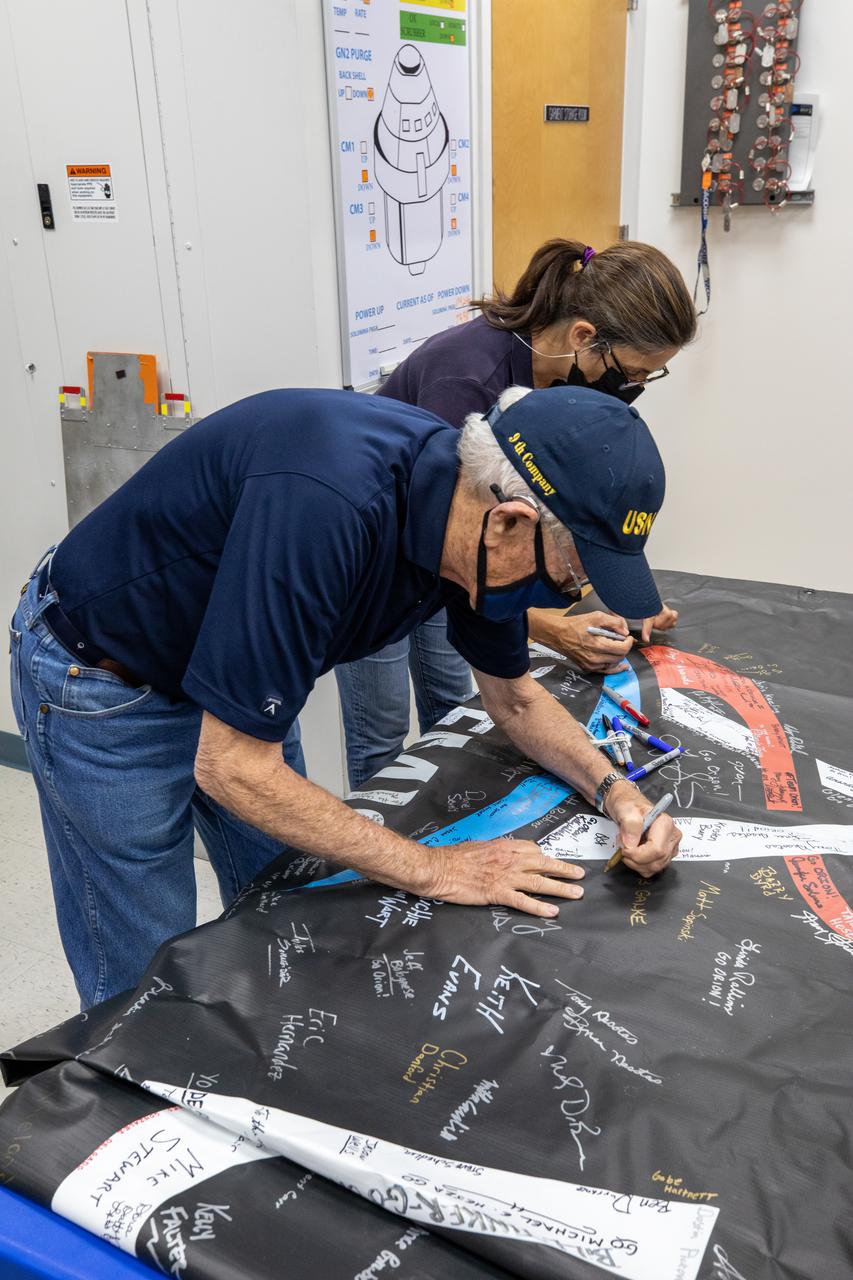
Charlie Duke, NASA Astronaut (former), and Nicole Stott, NASA Astronaut (former), add their signatures to the Artemis “We Are Going” banner inside the Multi-Payload Processing Facility (MPPF) during a visit to NASA’s Kennedy Space Center in Florida on May 10, 2021. During their time at Kennedy, they also had the opportunity to view the Orion spacecraft and Interim Cryogenic Propulsion Stage currently being serviced inside the MPPF ahead of the Artemis I launch. The first in a series of increasingly complex missions, Artemis I will test Orion and the Space Launch System rocket as an integrated system prior to crewed flights to the Moon.
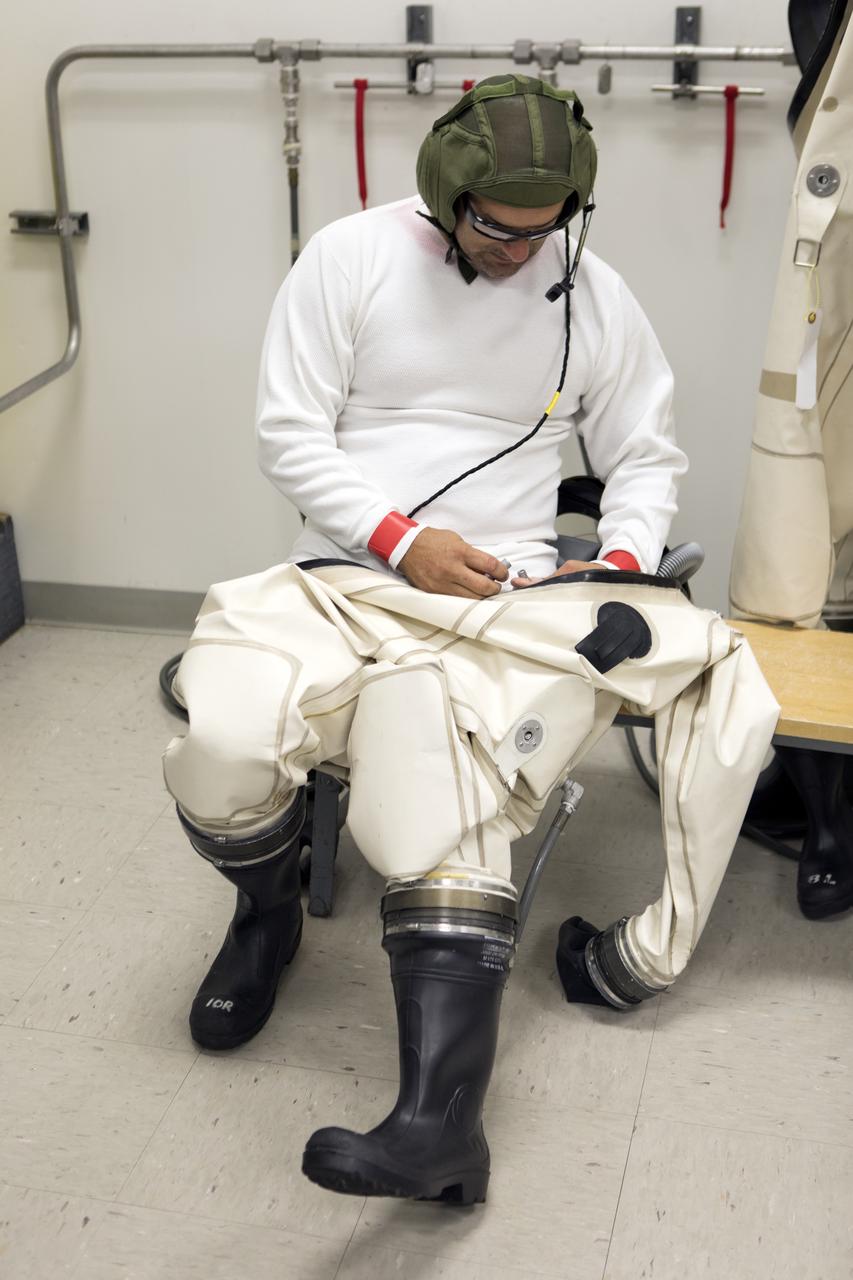
An operator dons a Self-Contained Atmospheric Protective Ensemble (SCAPE) suit inside a room in the Multi-Payload Processing Facility (MPPF) at NASA's Kennedy Space Center in Florida on Oct. 31, 2018. SCAPE operators, wearing the suits, will participate in a hypergolic systems hot flow test at the MPPF. The test will serve as operational validation of the hypergol subsystem and demonstrate that the hypergols subsystem can service the Orion spacecraft, flow fuel at the required rates, drain and de-service the system, and meet the intended timeline. SCAPE suite are used in operations involving toxic propellants and are supplied with air either through a hardline or through a self-contained environmental control unit.
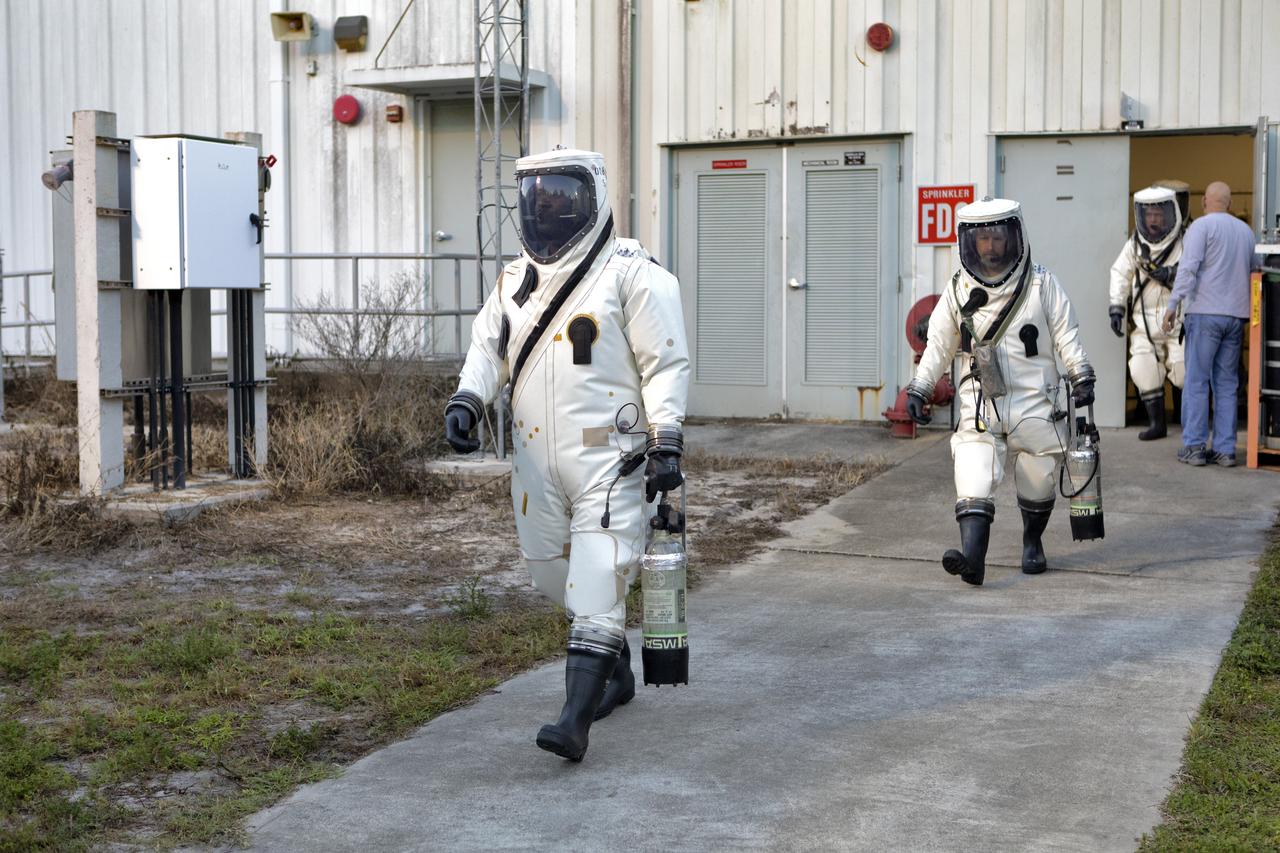
Operators wearing Self-Contained Atmospheric Protective Ensemble (SCAPE) suits depart the suit-up room at the Multi-Payload Processing Facility (MPPF) at NASA's Kennedy Space Center in Florida on Oct. 31, 2018. SCAPE operators are preparing to participate in a hypergolic systems hot flow test at the MPPF. The test will serve as operational validation of the hypergol subsystem and demonstrate that the hypergols subsystem can service the Orion spacecraft, flow fuel at the required rates, drain and de-service the system, and meet the intended timeline. SCAPE suite are used in operations involving toxic propellants and are supplied with air either through a hardline or through a self-contained environmental control unit.
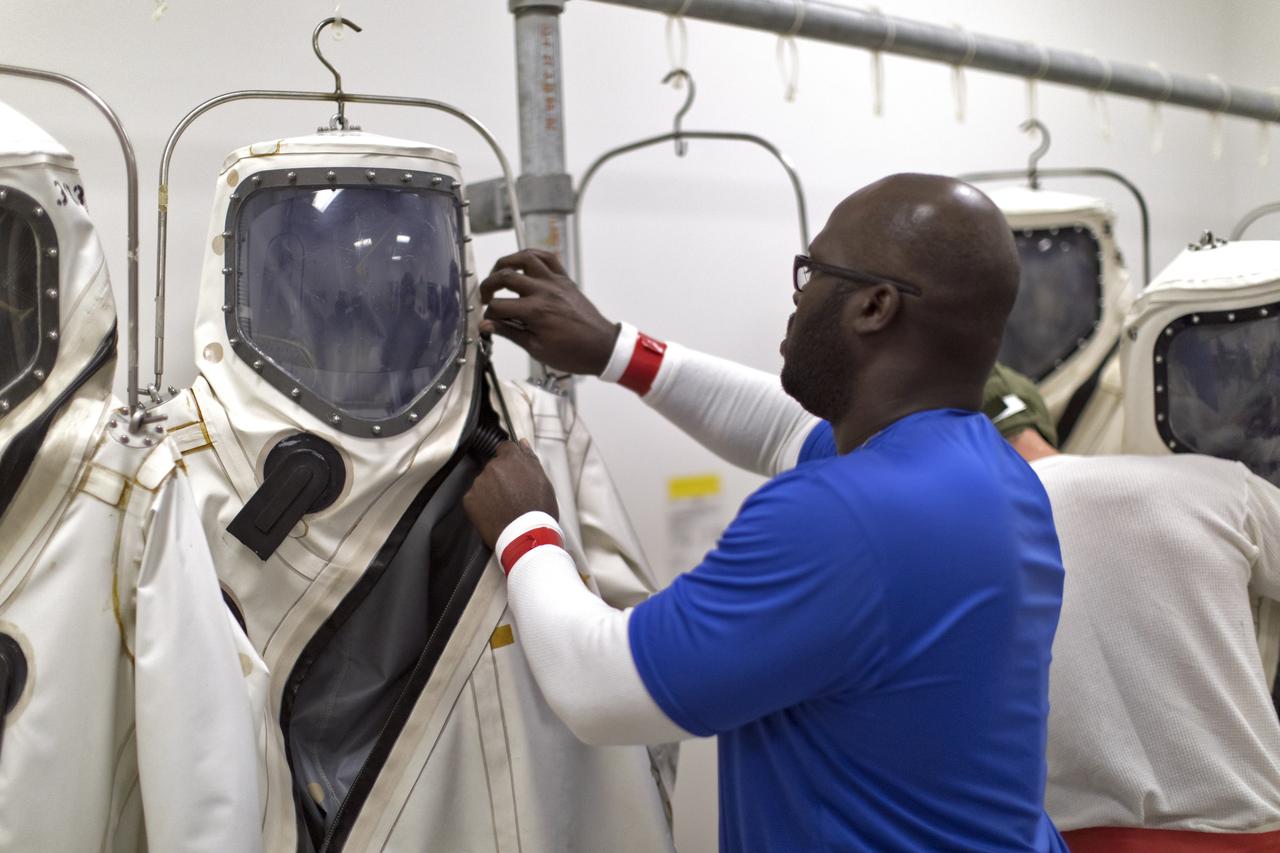
An operator prepares to don a Self-Contained Atmospheric Protective Ensemble (SCAPE) suit inside a room in the Multi-Payload Processing Facility (MPPF) at NASA's Kennedy Space Center in Florida on Oct. 31, 2018. SCAPE operators, wearing the suits, will participate in a hypergolic systems hot flow test at the MPPF. The test will serve as operational validation of the hypergol subsystem and demonstrate that the hypergols subsystem can service the Orion spacecraft, flow fuel at the required rates, drain and de-service the system, and meet the intended timeline. SCAPE suite are used in operations involving toxic propellants and are supplied with air either through a hardline or through a self-contained environmental control unit.
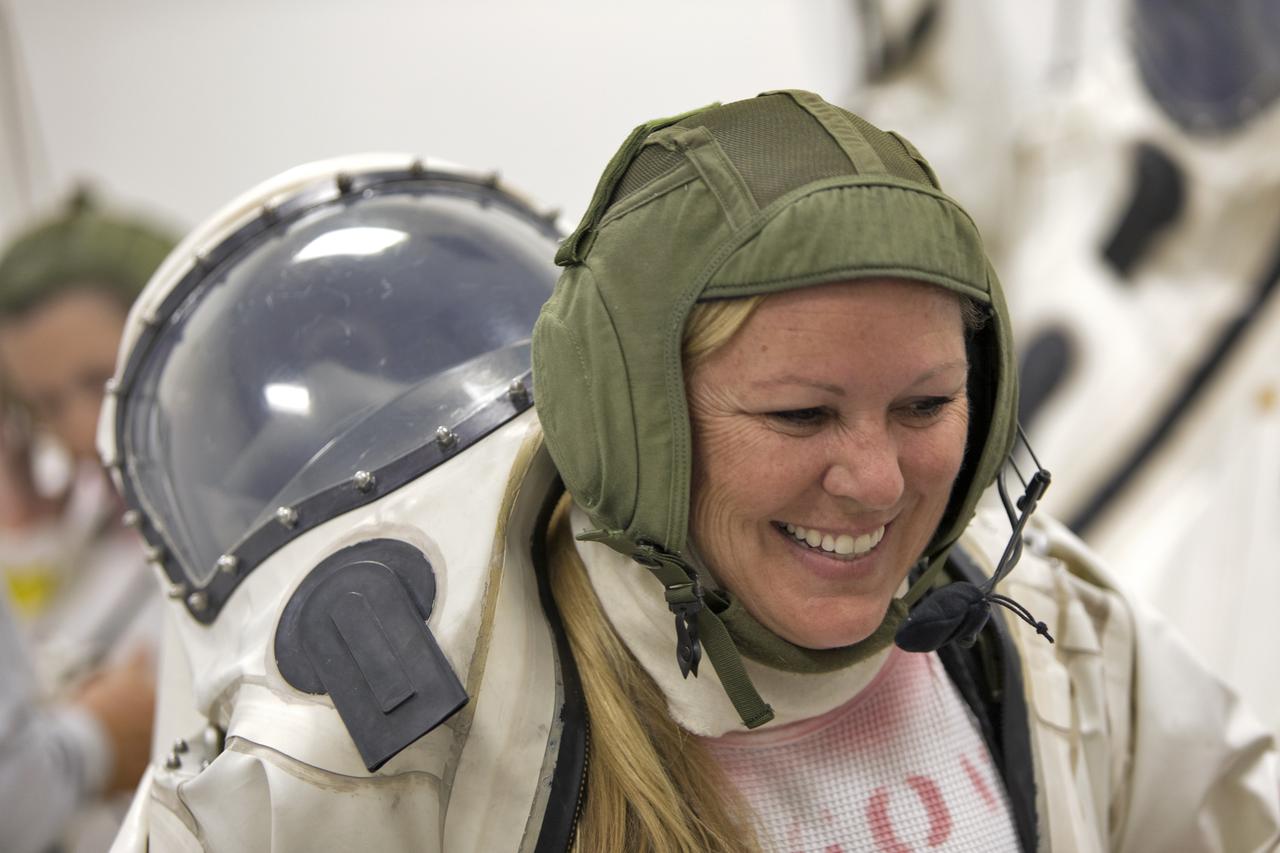
An operator dons a Self-Contained Atmospheric Protective Ensemble (SCAPE) suit inside a room in the Multi-Payload Processing Facility (MPPF) at NASA's Kennedy Space Center in Florida on Oct. 31, 2018. SCAPE operators, wearing the suits, will participate in a hypergolic systems hot flow test at the MPPF. The test will serve as operational validation of the hypergol subsystem and demonstrate that the hypergols subsystem can service the Orion spacecraft, flow fuel at the required rates, drain and de-service the system, and meet the intended timeline. SCAPE suite are used in operations involving toxic propellants and are supplied with air either through a hardline or through a self-contained environmental control unit.
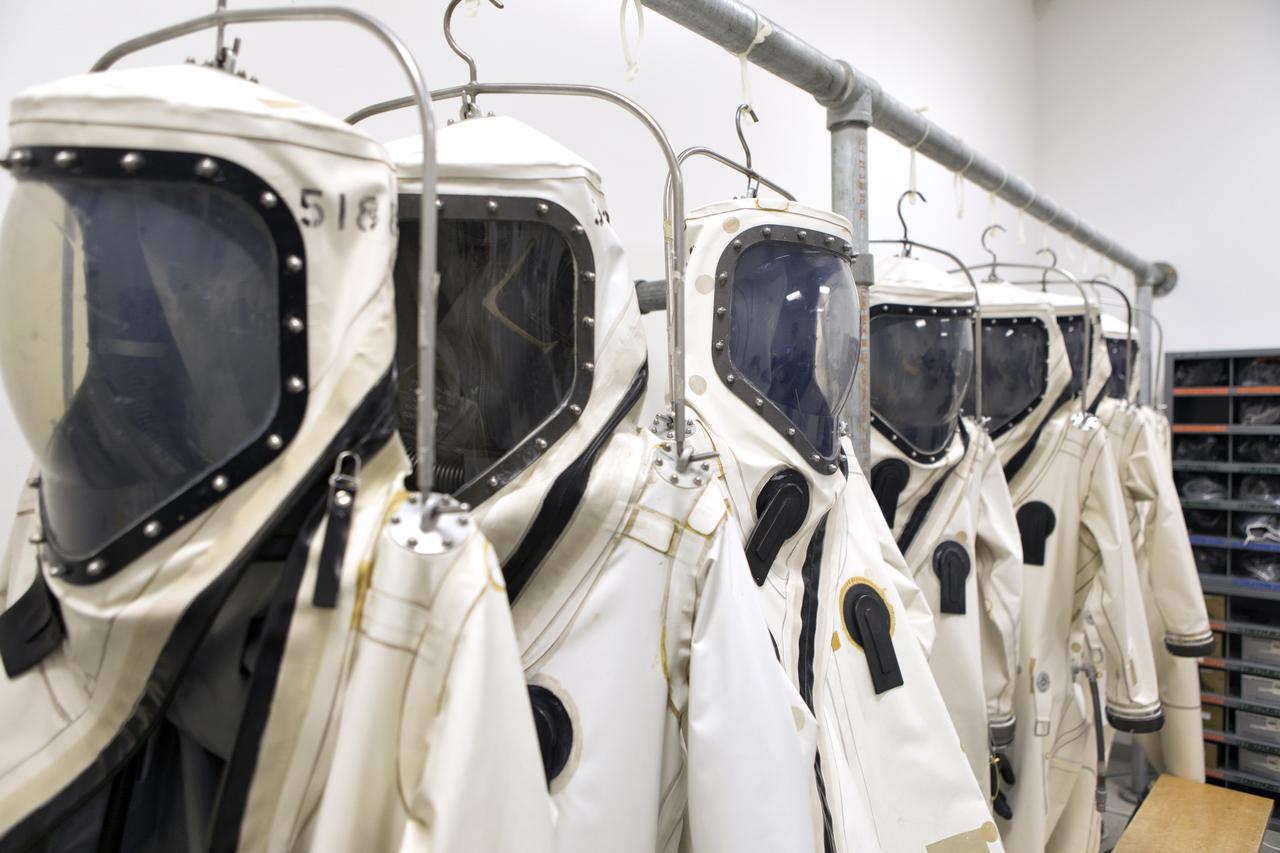
Self-Contained Atmospheric Protective Ensemble (SCAPE) suits are hanging in a row inside the Multi-Payload Processing Facility (MPPF) at NASA's Kennedy Space Center in Florida on Oct. 31, 2018. SCAPE operators will don the suits and then participate in a hypergolic systems hot flow test at the MPPF. The test will serve as operational validation of the hypergol subsystem and demonstrate that the hypergols subsystem can service the Orion spacecraft, flow fuel at the required rates, drain and de-service the system, and meet the intended timeline. SCAPE suite are used in operations involving toxic propellants and are supplied with air either through a hardline or through a self-contained environmental control unit.
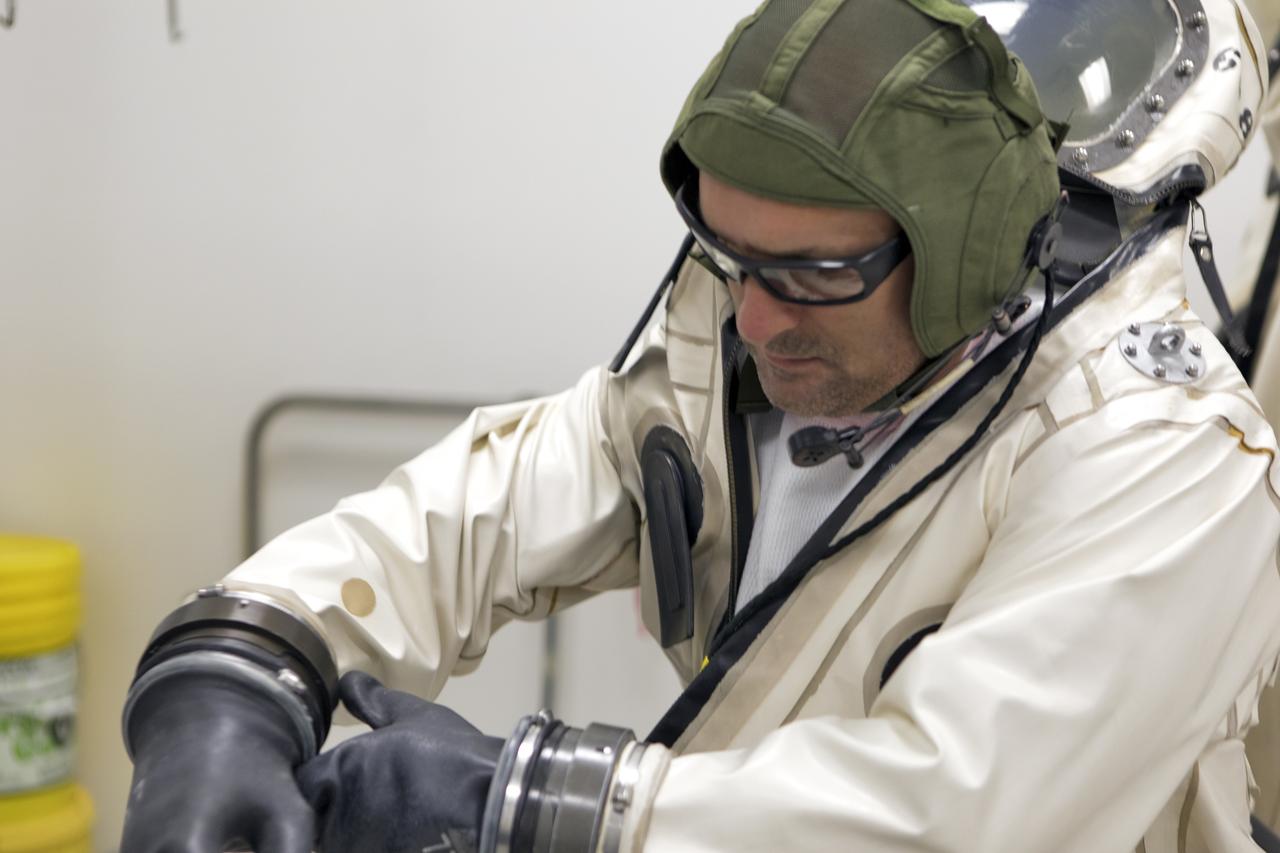
An operator dons a Self-Contained Atmospheric Protective Ensemble (SCAPE) suit inside a room in the Multi-Payload Processing Facility (MPPF) at NASA's Kennedy Space Center in Florida on Oct. 31, 2018. SCAPE operators, wearing the suits, will participate in a hypergolic systems hot flow test at the MPPF. The test will serve as operational validation of the hypergol subsystem and demonstrate that the hypergols subsystem can service the Orion spacecraft, flow fuel at the required rates, drain and de-service the system, and meet the intended timeline. SCAPE suite are used in operations involving toxic propellants and are supplied with air either through a hardline or through a self-contained environmental control unit.
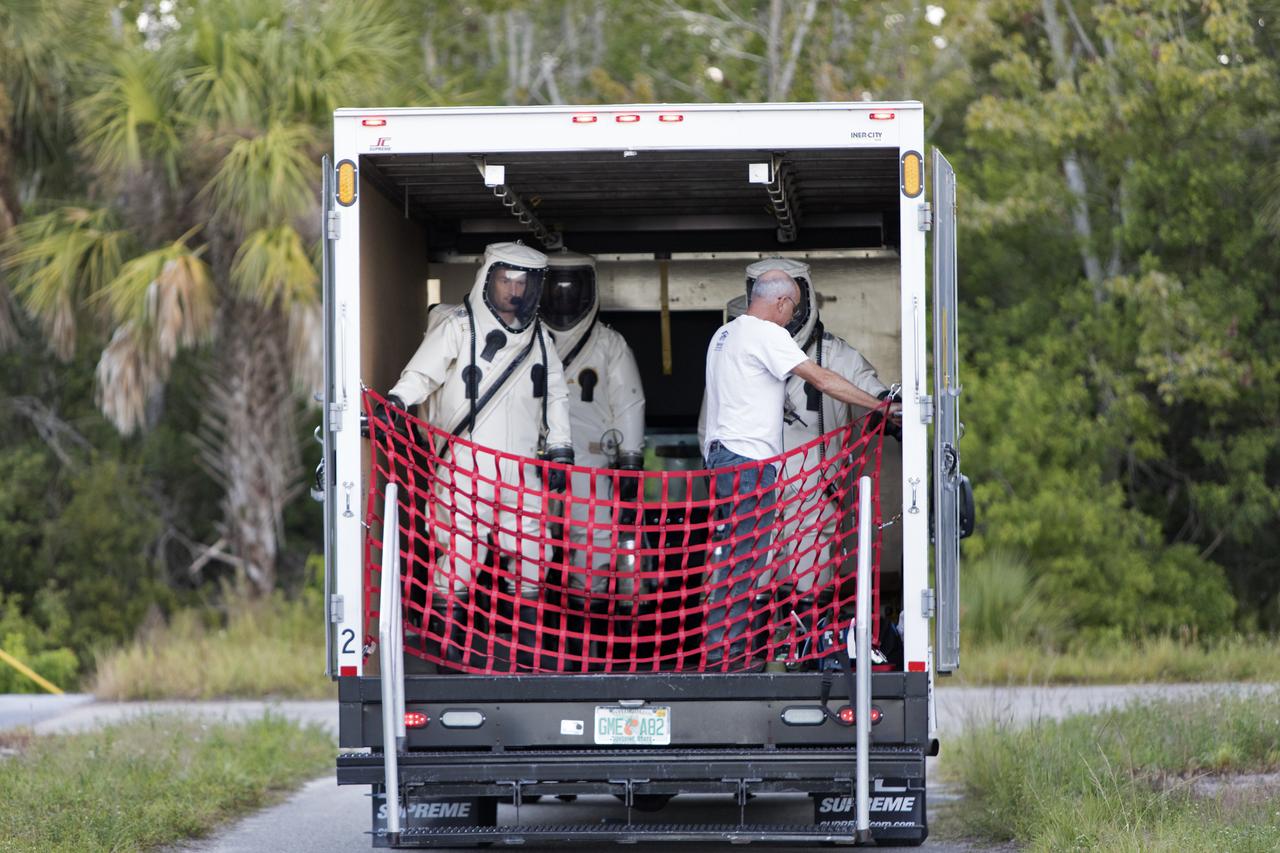
Operators wearing Self-Contained Atmospheric Protective Ensemble (SCAPE) suits are inside a transport vehicle near the Multi-Payload Processing Facility (MPPF) at NASA's Kennedy Space Center in Florida on Oct. 31, 2018. SCAPE operators, wearing the suits, will participate in a hypergolic systems hot flow test at the MPPF. The test will serve as operational validation of the hypergol subsystem and demonstrate that the hypergols subsystem can service the Orion spacecraft, flow fuel at the required rates, drain and de-service the system, and meet the intended timeline. SCAPE suite are used in operations involving toxic propellants and are supplied with air either through a hardline or through a self-contained environmental control unit.
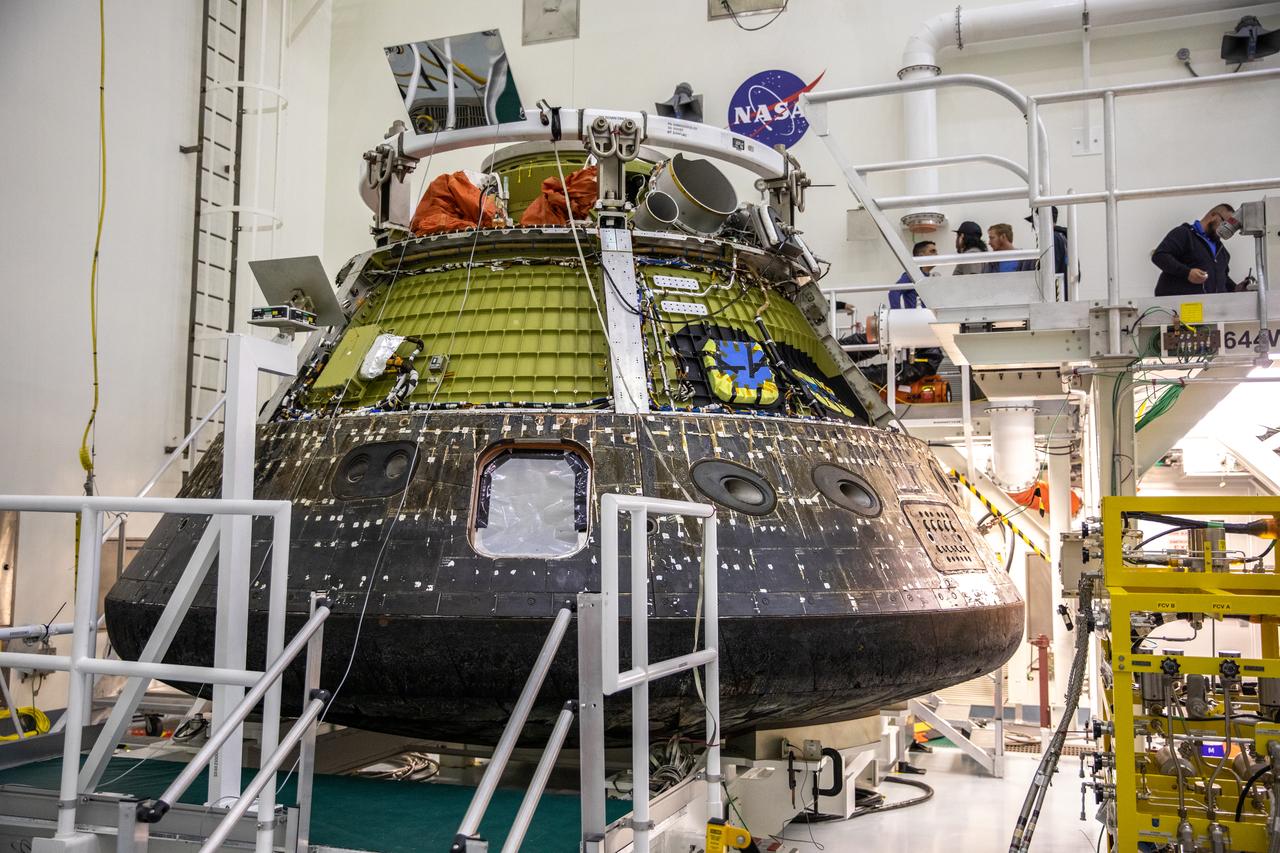
NASA’s Artemis I Orion capsule is secured on a platform inside the Multi-Payload Processing Facility (MPPF) at Kennedy Space Center in Florida on Jan. 6, 2023. Orion splashed down in the Pacific Ocean at 12:40 p.m. EST on Dec. 11, 2022. The spacecraft was secured inside the well deck of the USS Portland for the voyage to U.S. Naval Base Sand Diego, arriving on Dec. 13, 2022. Orion was offloaded and transported back to Kennedy for deservicing inside the MPPF. Orion launched atop the Space Launch System rocket on Nov. 16, 2022 at 1:47 a.m. EST from Kennedy’s Launch Complex 39B for a 25-day trip beyond the Moon and back. During the flight, Orion flew farther than any human-rated spacecraft has ever flown, paving the way for human deep space exploration and demonstrating NASA’s commitment and capability to extend human presence to the Moon and beyond.
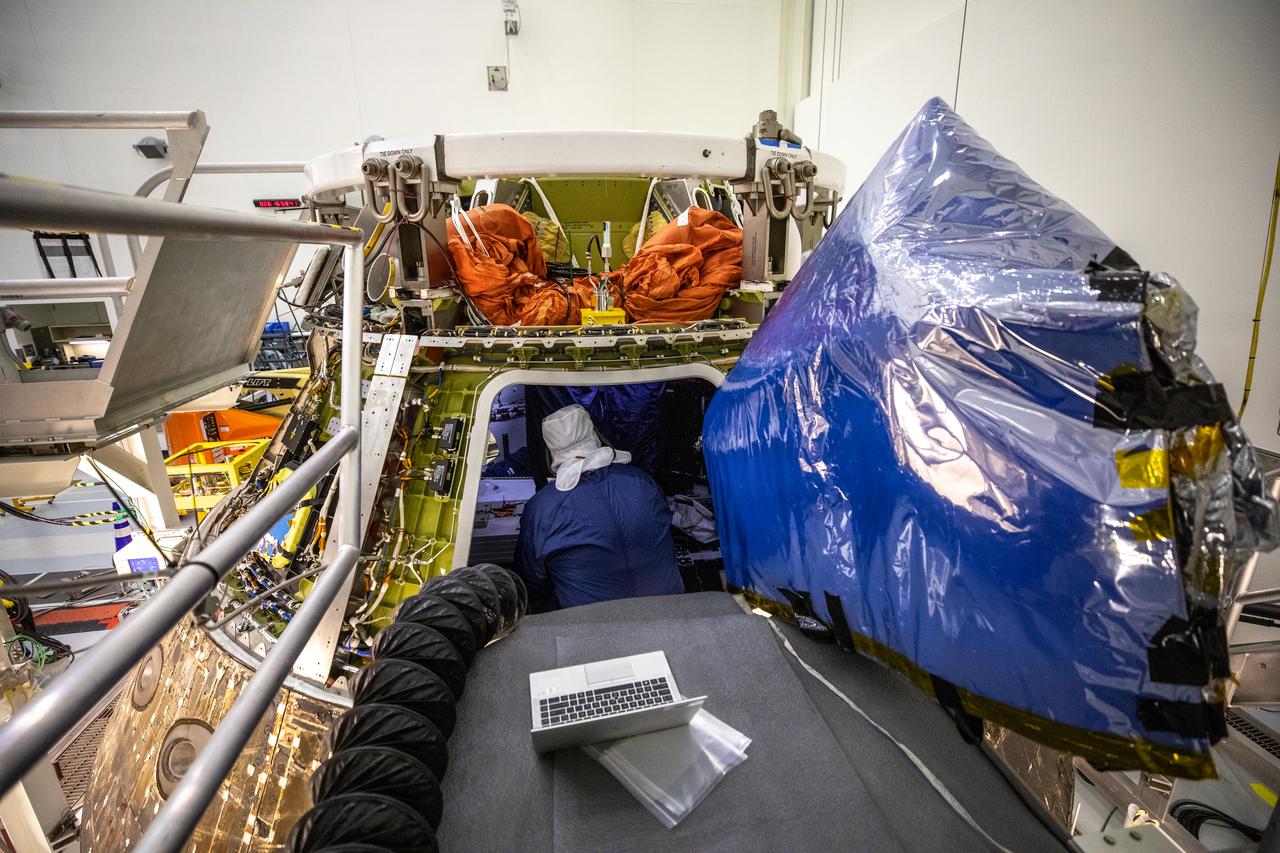
A technician unpacks NASA’s Artemis I Orion capsule inside the Multi-Payload Processing Facility (MPPF) at Kennedy Space Center in Florida on Jan. 6, 2023. Orion splashed down in the Pacific Ocean at 12:40 p.m. EST on Dec. 11, 2022. The spacecraft was secured inside the well deck of the USS Portland for the voyage to U.S. Naval Base Sand Diego, arriving on Dec. 13, 2022. Orion was offloaded and transported back to Kennedy for deservicing inside the MPPF. Orion launched atop the Space Launch System rocket on Nov. 16, 2022 at 1:47 a.m. EST from Kennedy’s Launch Complex 39B for a 25-day trip beyond the Moon and back. During the flight, Orion flew farther than any human-rated spacecraft has ever flown, paving the way for human deep space exploration and demonstrating NASA’s commitment and capability to extend human presence to the Moon and beyond.
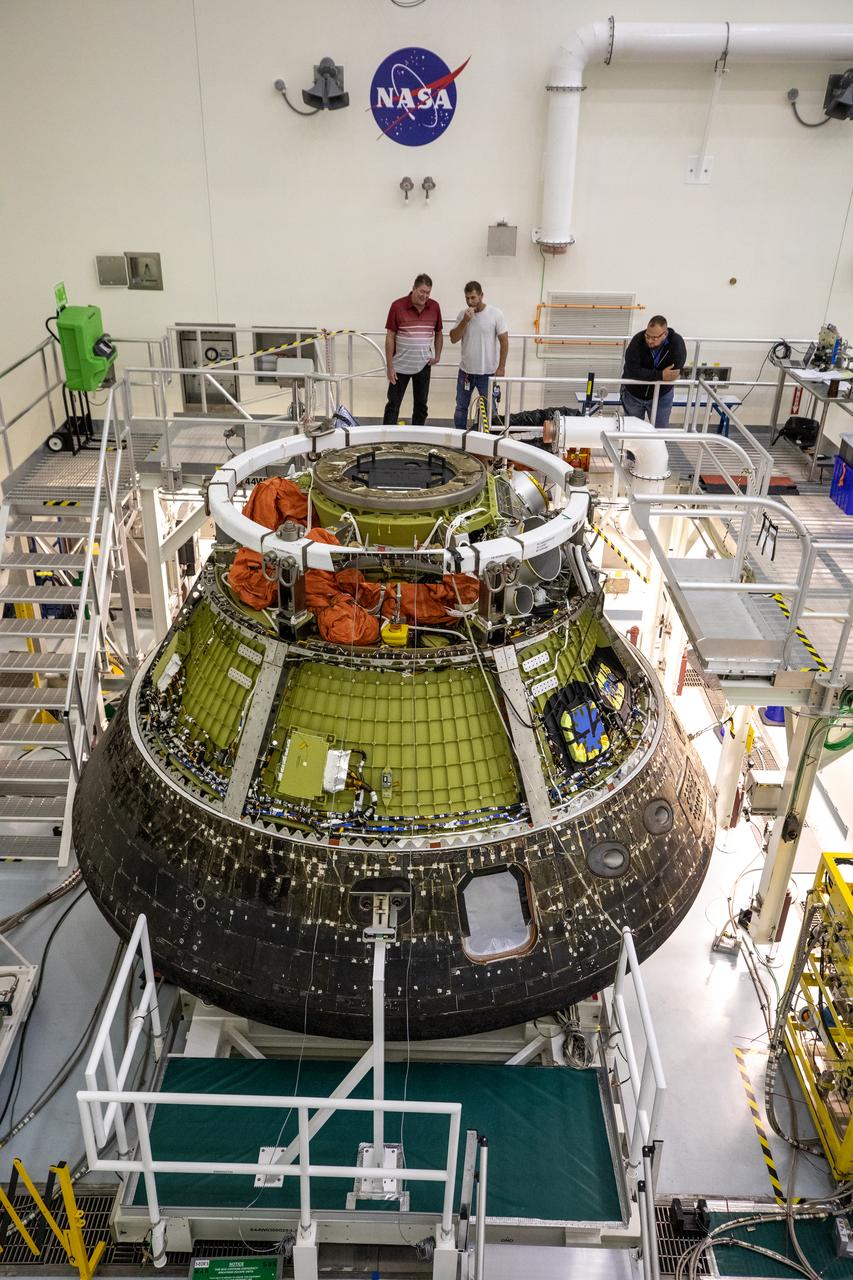
NASA’s Artemis I Orion capsule is secured on a platform inside the Multi-Payload Processing Facility (MPPF) at Kennedy Space Center in Florida on Jan. 6, 2023. Orion splashed down in the Pacific Ocean at 12:40 p.m. EST on Dec. 11, 2022. The spacecraft was secured inside the well deck of the USS Portland for the voyage to U.S. Naval Base Sand Diego, arriving on Dec. 13, 2022. Orion was offloaded and transported back to Kennedy for deservicing inside the MPPF. Orion launched atop the Space Launch System rocket on Nov. 16, 2022 at 1:47 a.m. EST from Kennedy’s Launch Complex 39B for a 25-day trip beyond the Moon and back. During the flight, Orion flew farther than any human-rated spacecraft has ever flown, paving the way for human deep space exploration and demonstrating NASA’s commitment and capability to extend human presence to the Moon and beyond.
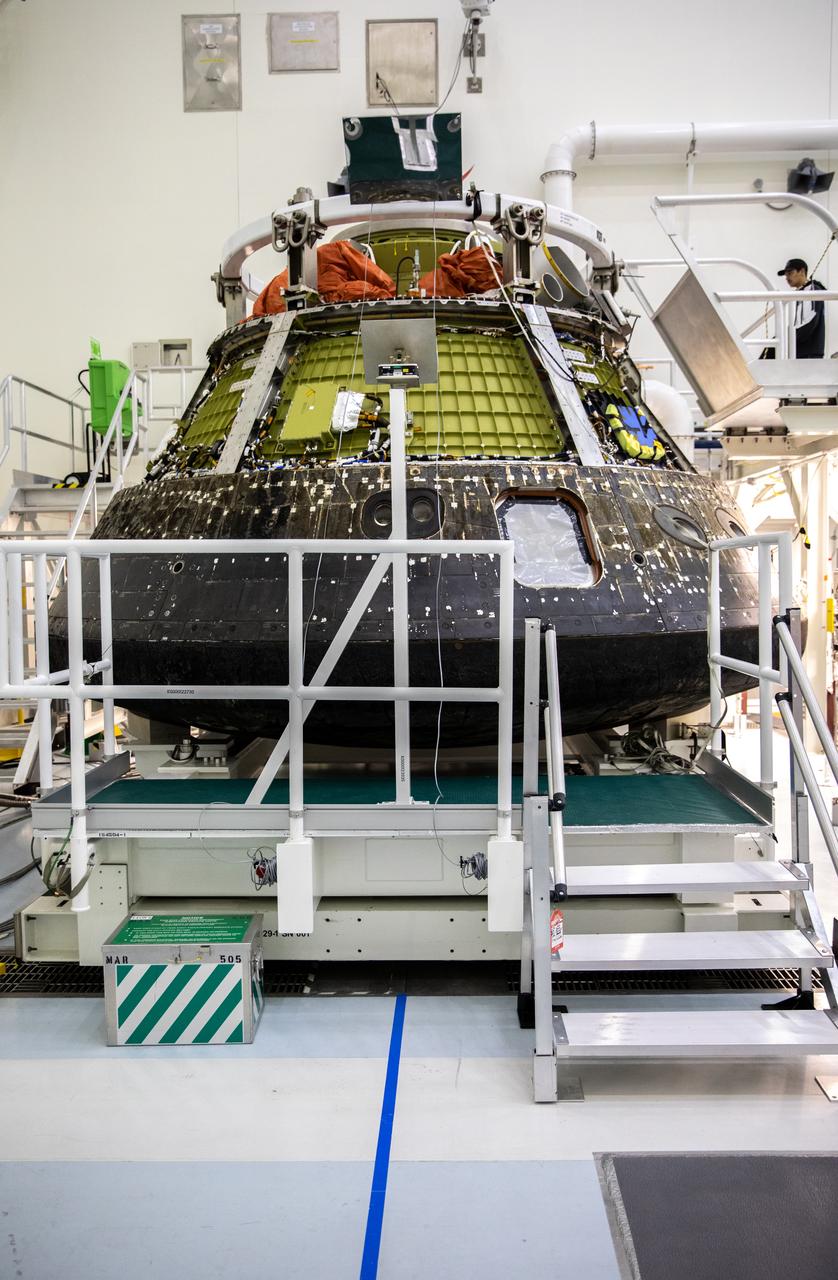
NASA’s Artemis I Orion capsule is secured on a platform inside the Multi-Payload Processing Facility (MPPF) at Kennedy Space Center in Florida on Jan. 6, 2023. Orion splashed down in the Pacific Ocean at 12:40 p.m. EST on Dec. 11, 2022. The spacecraft was secured inside the well deck of the USS Portland for the voyage to U.S. Naval Base Sand Diego, arriving on Dec. 13, 2022. Orion was offloaded and transported back to Kennedy for deservicing inside the MPPF. Orion launched atop the Space Launch System rocket on Nov. 16, 2022 at 1:47 a.m. EST from Kennedy’s Launch Complex 39B for a 25-day trip beyond the Moon and back. During the flight, Orion flew farther than any human-rated spacecraft has ever flown, paving the way for human deep space exploration and demonstrating NASA’s commitment and capability to extend human presence to the Moon and beyond.

NASA’s Artemis I Orion capsule is secured on a platform inside the Multi-Payload Processing Facility (MPPF) at Kennedy Space Center in Florida on Jan. 6, 2023. Orion splashed down in the Pacific Ocean at 12:40 p.m. EST on Dec. 11, 2022. The spacecraftwas secured inside the well deck of the USS Portland for the voyage to U.S. Naval Base Sand Diego, arriving on Dec. 13, 2022. Orion was offloaded and transported back to Kennedy for deservicing inside the MPPF. Orion launched atop the Space Launch System rocket on Nov. 16, 2022 at 1:47 a.m. EST from Kennedy’s Launch Complex 39B for a 25-day trip beyond the Moon and back. During the flight, Orion flew farther than any human-rated spacecraft has ever flown, paving the way for human deep space exploration and demonstrating NASA’s commitment and capability to extend human presence to the Moon and beyond.
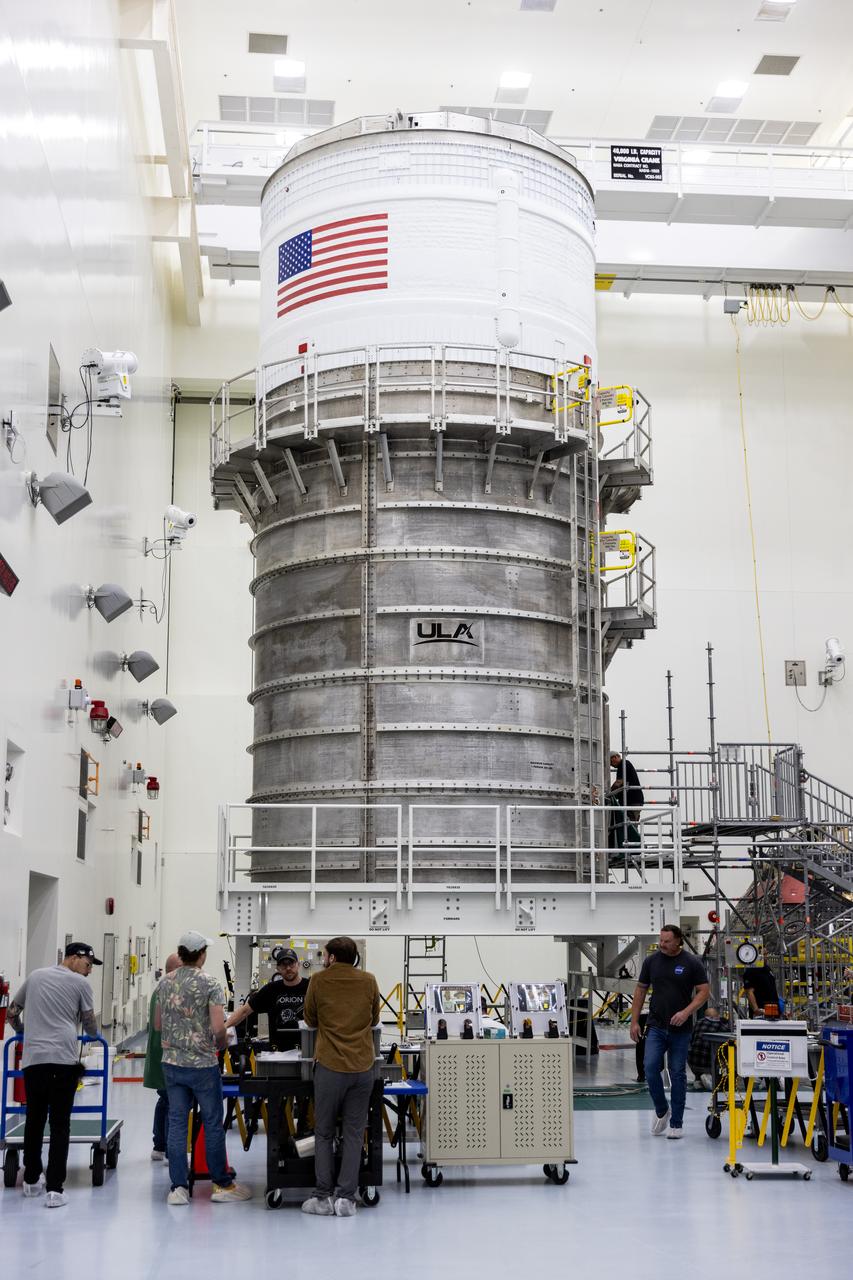
The upper stage for NASA’s SLS (Space Launch System) Moon rocket that will power the agency’s Artemis II mission and send astronauts around the Moon is shown inside the Multi-Payload Processing Facility at NASA’s Kennedy Space Center in Florida on Monday, March 10, 2025, after being transported from United Launch Alliance’s Delta Operations Center at nearby Cape Canaveral Space Force Station. The interim cryogenic propulsion stage is a liquid oxygen and liquid hydrogen-based system that will fire its RL10 engine to give the Orion spacecraft the big in-space push needed to fly around the Moon and back.
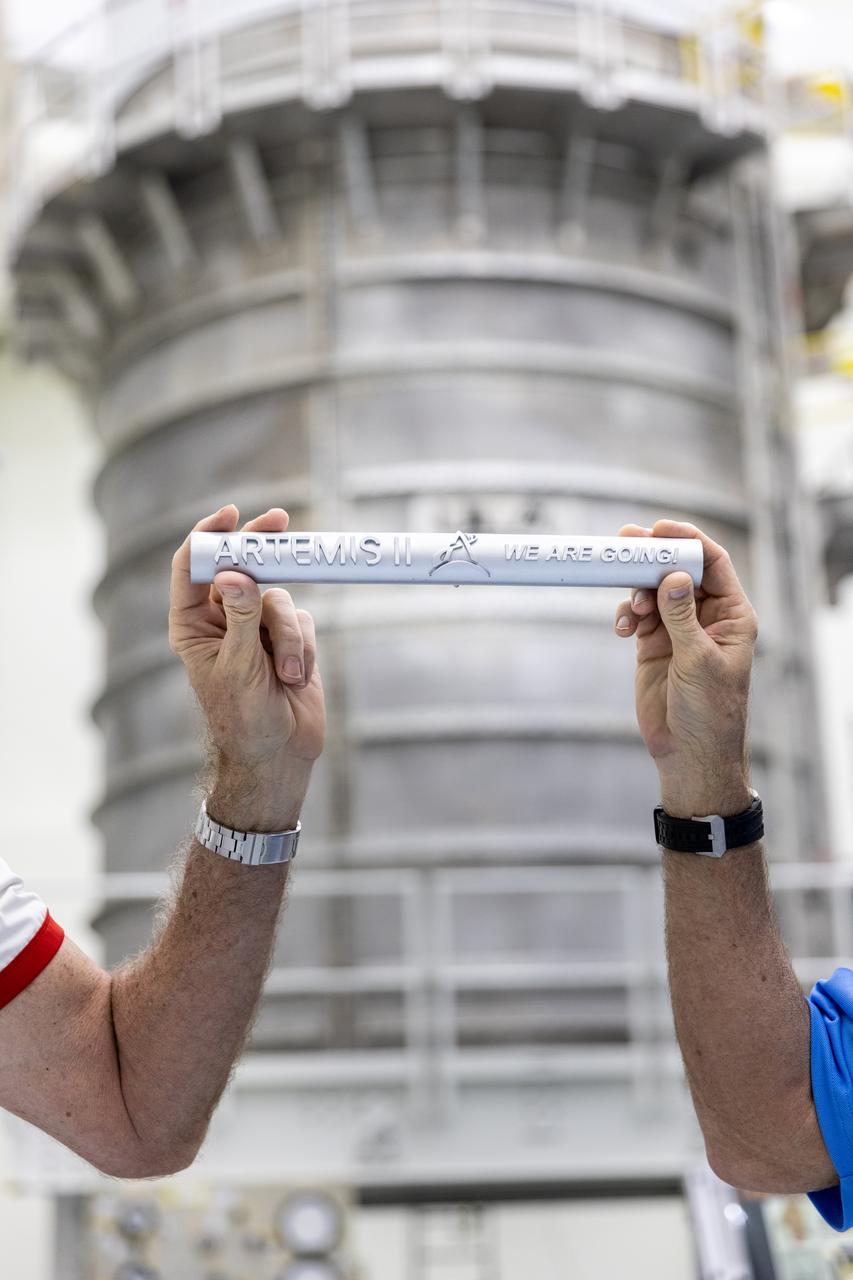
Managers from NASA’s Exploration Ground Systems (EGS) and SLS (Space Launch System) Programs hold a baton signifying the hand off of the SLS interim cryogenic propulsion stage to Kennedy’s EGS Program inside the Multi-Payload Processing Facility at NASA’s Kennedy Space Center in Florida on Monday, March 10, 2025, after being transported from United Launch Alliance’s Delta Operations Center at nearby Cape Canaveral Space Force Station. Teams with EGS will begin fueling the upper stage inside the facility ahead of the agency’s Artemis II mission. The interim cryogenic propulsion stage is a liquid oxygen and liquid hydrogen-based system that will fire its RL10 engine to give the Orion spacecraft the big in-space push needed to fly around the Moon and back.
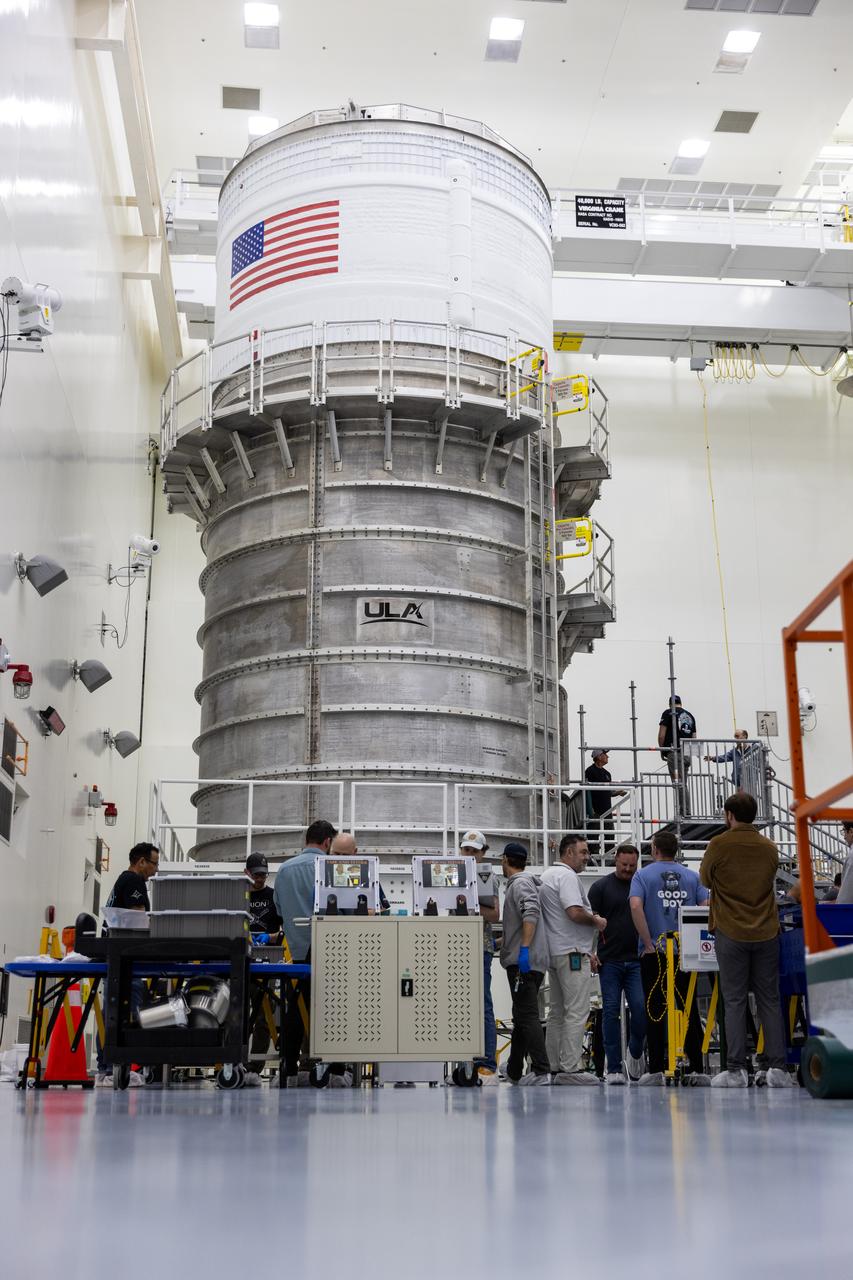
The upper stage for NASA’s SLS (Space Launch System) Moon rocket that will power the agency’s Artemis II mission and send astronauts around the Moon is shown inside the Multi-Payload Processing Facility at NASA’s Kennedy Space Center in Florida on Monday, March 10, 2025, after being transported from United Launch Alliance’s Delta Operations Center at nearby Cape Canaveral Space Force Station. The interim cryogenic propulsion stage is a liquid oxygen and liquid hydrogen-based system that will fire its RL10 engine to give the Orion spacecraft the big in-space push needed to fly around the Moon and back.
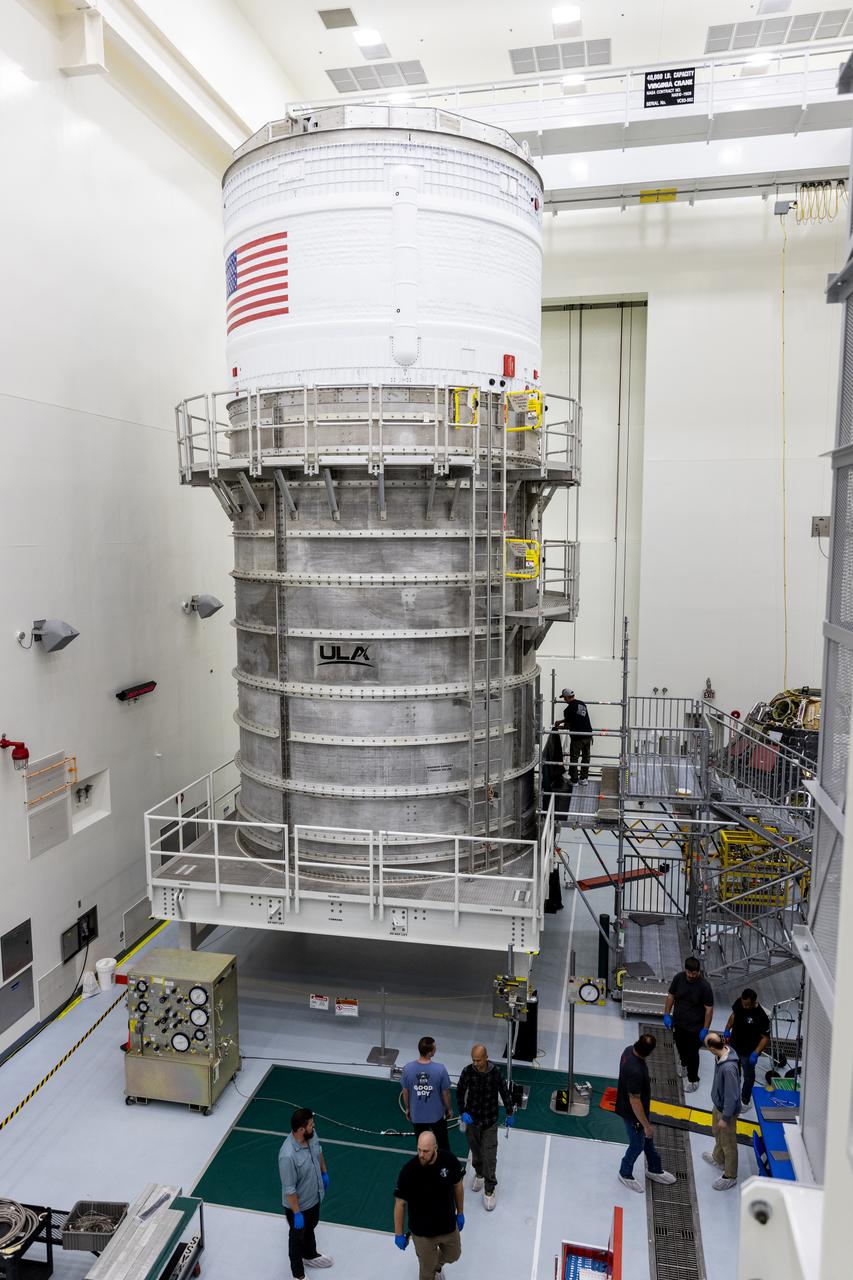
The upper stage for NASA’s SLS (Space Launch System) Moon rocket that will power the agency’s Artemis II mission and send astronauts around the Moon is shown inside the Multi-Payload Processing Facility at NASA’s Kennedy Space Center in Florida on Monday, March 10, 2025, after being transported from United Launch Alliance’s Delta Operations Center at nearby Cape Canaveral Space Force Station. The interim cryogenic propulsion stage is a liquid oxygen and liquid hydrogen-based system that will fire its RL10 engine to give the Orion spacecraft the big in-space push needed to fly around the Moon and back.
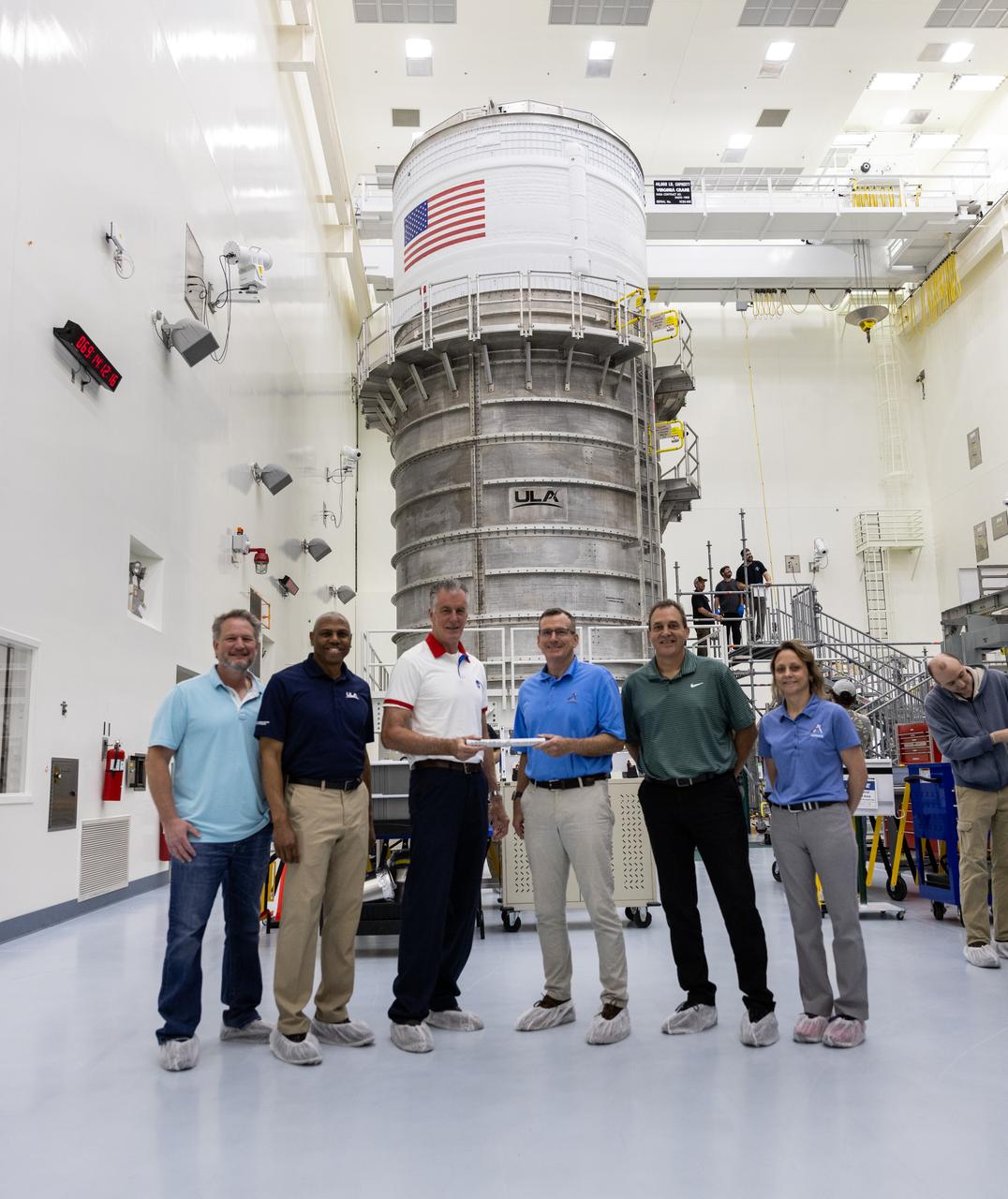
Managers from NASA and industry partners for NASA’s SLS (Space Launch System) rocket upper stage hand off the baton to managers from the agency’s Exploration Ground Systems (EGS) are shown with the SLS interim cryogenic propulsion stage inside the Multi-Payload Processing Facility at NASA’s Kennedy Space Center in Florida on Monday, March 10, 2025, after being transported from United Launch Alliance’s (ULA) Delta Operations Center at nearby Cape Canaveral Space Force Station. From left to right are Jim Bonato, ICPS Mission Manager, ULA; Ron Fortson, Director and General Manager, ULA; Chris Calfee, Spacecraft/Payload Integration and Evolution element manager, SLS; Cliff Lanham, senior vehicle operations manager, EGS; Todd Lamond, Strategic Planning and Integration, Amentum; and Natasha Wiest, Interim Director, Boeing Core Stage Integrated Product Team; The interim cryogenic propulsion stage is a liquid oxygen and liquid hydrogen-based system that will fire its RL10 engine to give the Orion spacecraft the big in-space push needed to fly around the Moon and back.
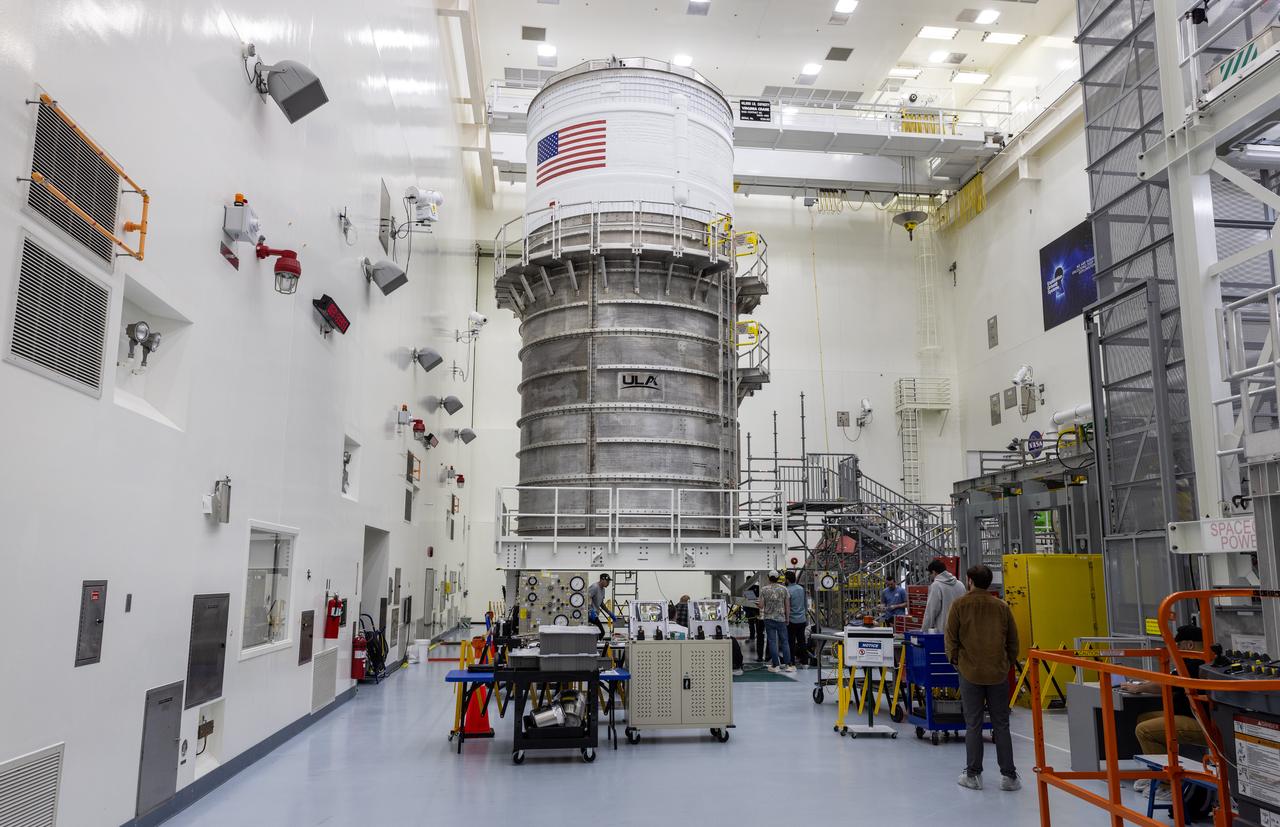
The upper stage for NASA’s SLS (Space Launch System) Moon rocket that will power the agency’s Artemis II mission and send astronauts around the Moon is shown inside the Multi-Payload Processing Facility at NASA’s Kennedy Space Center in Florida on Monday, March 10, 2025, after being transported from United Launch Alliance’s Delta Operations Center at nearby Cape Canaveral Space Force Station. The interim cryogenic propulsion stage is a liquid oxygen and liquid hydrogen-based system that will fire its RL10 engine to give the Orion spacecraft the big in-space push needed to fly around the Moon and back.
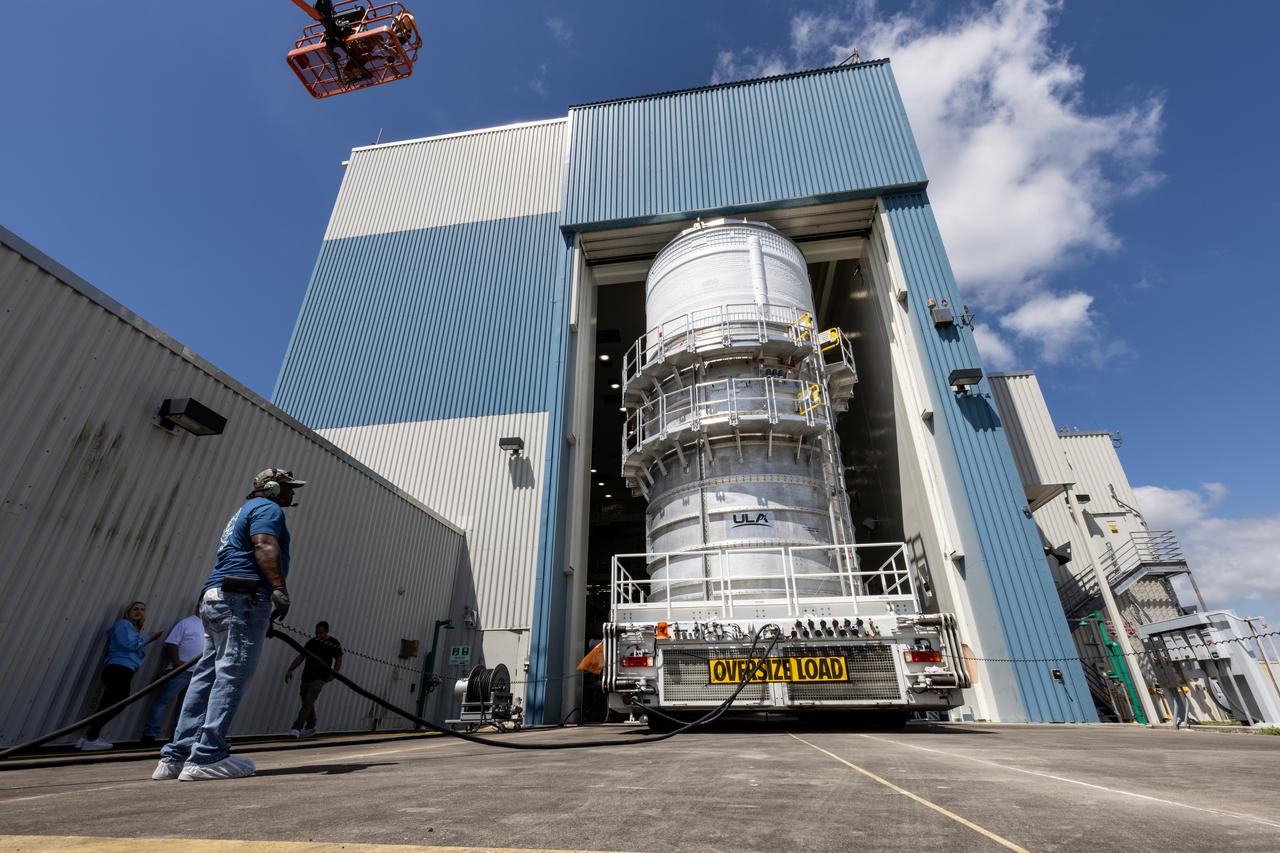
Teams with NASA’s Exploration Ground Systems Program transport the upper stage for the agency’s Artemis II SLS (Space Launch System) rocket from the Multi-Payload Processing Facility (MPPF) at NASA’s Kennedy Space Center in Florida to the spaceport’s Vehicle Assembly Building on Wednesday, April 16, 2025. Technicians fueled the SLS upper stage, known as the interim cryogenic propulsion stage, with hydrazine for its reaction control system at the MPPF and will now integrate the four-story propulsion system with SLS rocket elements atop mobile launcher 1.
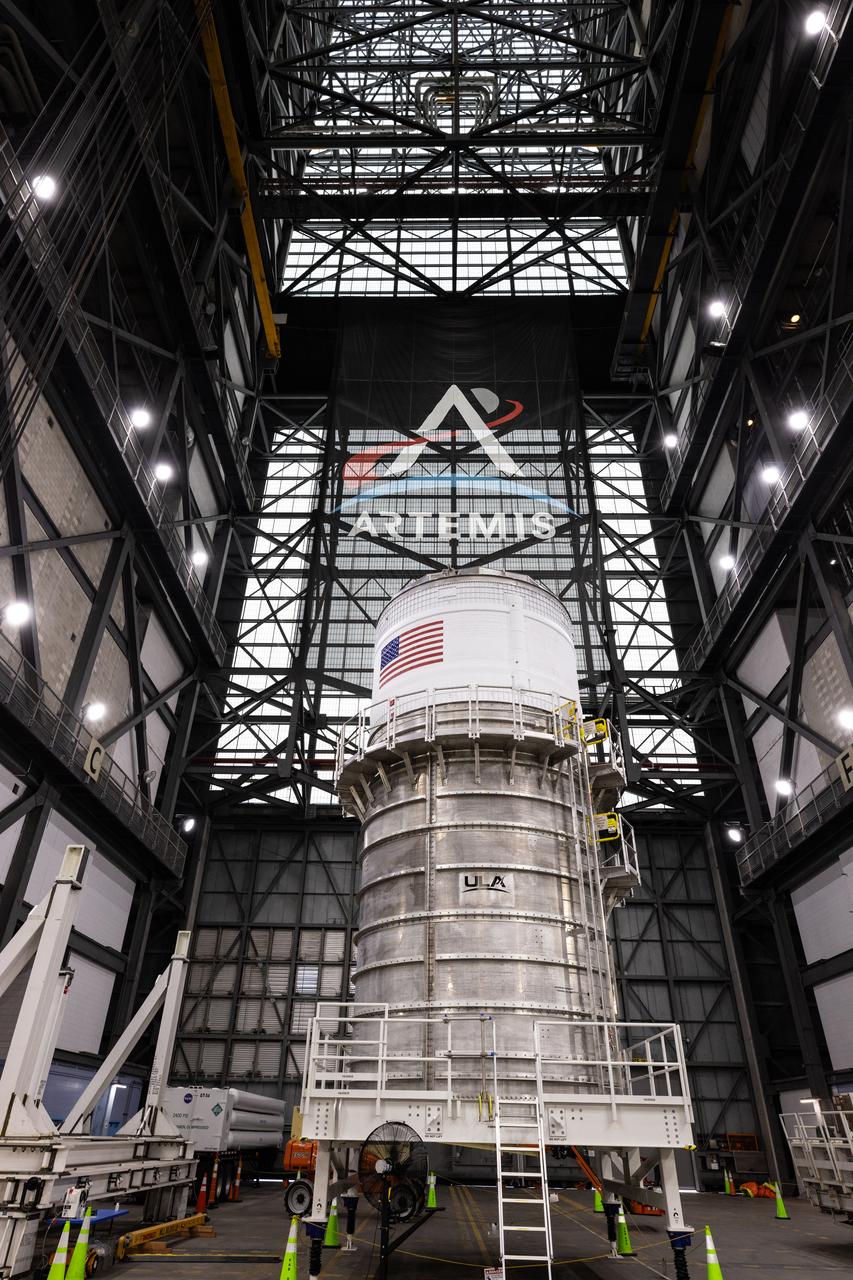
The upper stage for NASA’s Artemis II SLS (Space Launch System) rocket sits in the transfer aisle of the Vehicle Assembly Building at NASA’s Kennedy Space Center in Florida on Wednesday, April 16, 2025, after teams with the agency’s Exploration Ground Systems Program transported the four-story propulsion system from the spaceport’s Multi-Payload Processing Facility (MPPF). Technicians fueled the SLS upper stage, known as the interim cryogenic propulsion stage, with hydrazine for its reaction control system at the MPPF and will now integrate the four-story propulsion system with SLS rocket elements atop mobile launcher 1.
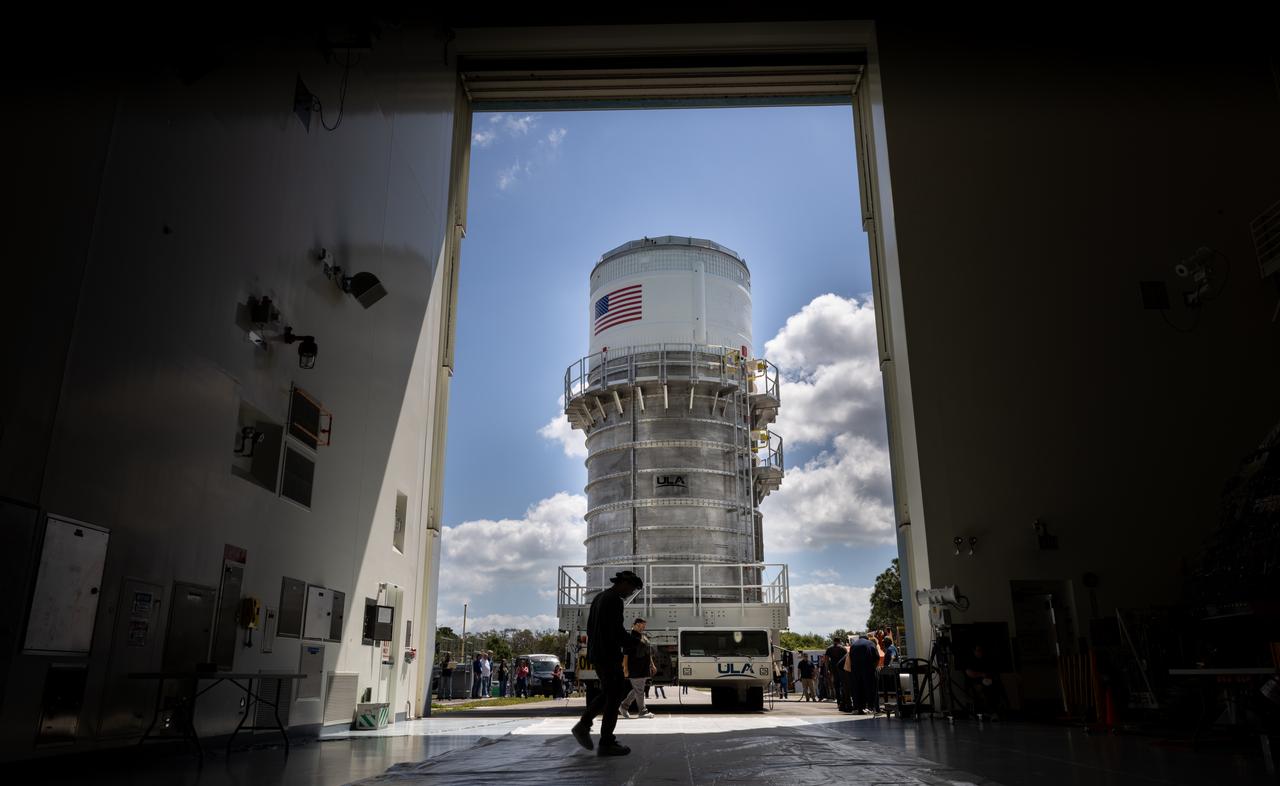
Teams with NASA’s Exploration Ground Systems Program transport the upper stage for the agency’s Artemis II SLS (Space Launch System) rocket from the Multi-Payload Processing Facility (MPPF) at NASA’s Kennedy Space Center in Florida to the spaceport’s Vehicle Assembly Building on Wednesday, April 16, 2025. Technicians fueled the SLS upper stage, known as the interim cryogenic propulsion stage, with hydrazine for its reaction control system at the MPPF and will now integrate the four-story propulsion system with SLS rocket elements atop mobile launcher 1.
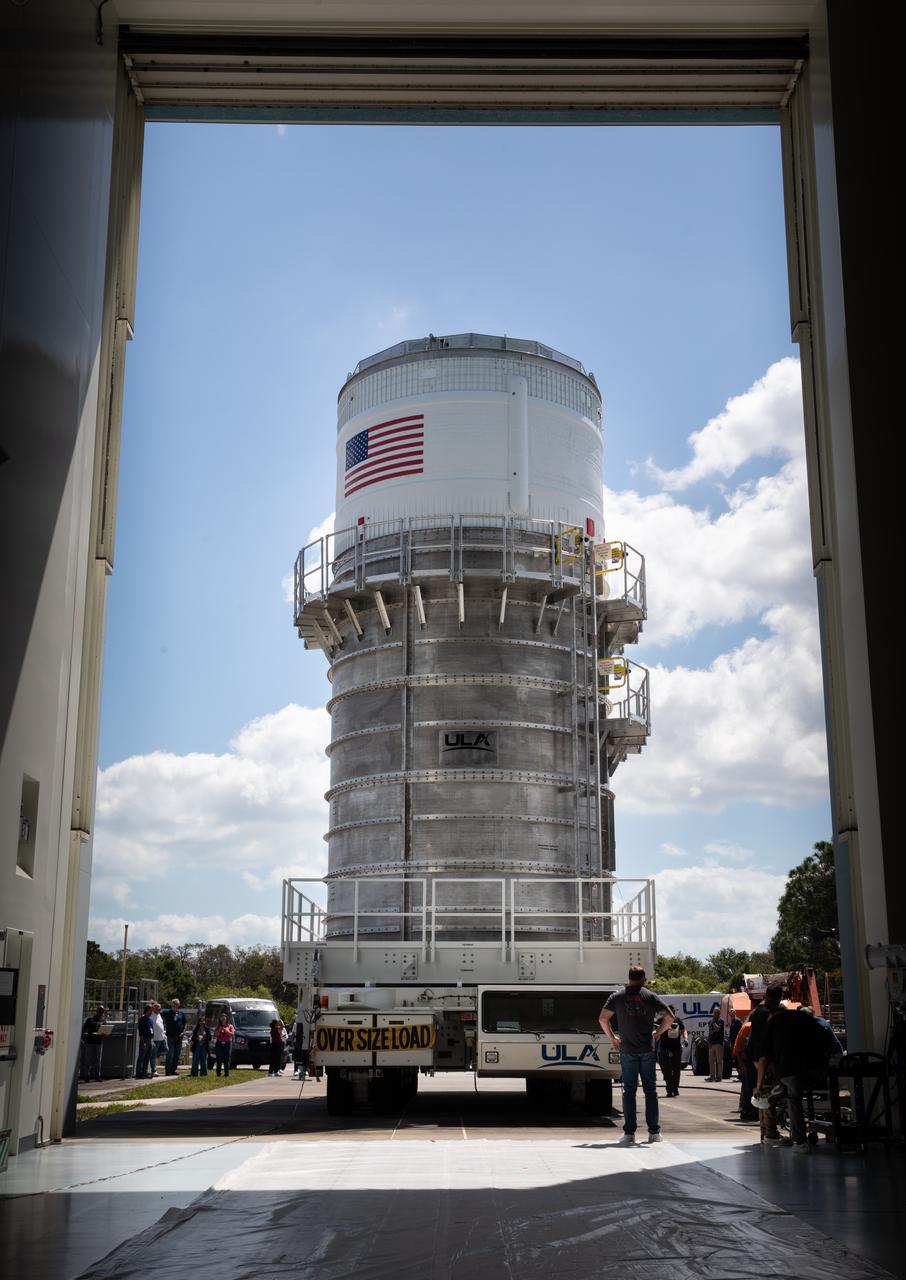
Teams with NASA’s Exploration Ground Systems Program transport the upper stage for the agency’s Artemis II SLS (Space Launch System) rocket from the Multi-Payload Processing Facility (MPPF) at NASA’s Kennedy Space Center in Florida to the spaceport’s Vehicle Assembly Building on Wednesday, April 16, 2025. Technicians fueled the SLS upper stage, known as the interim cryogenic propulsion stage, with hydrazine for its reaction control system at the MPPF and will now integrate the four-story propulsion system with SLS rocket elements atop mobile launcher 1.
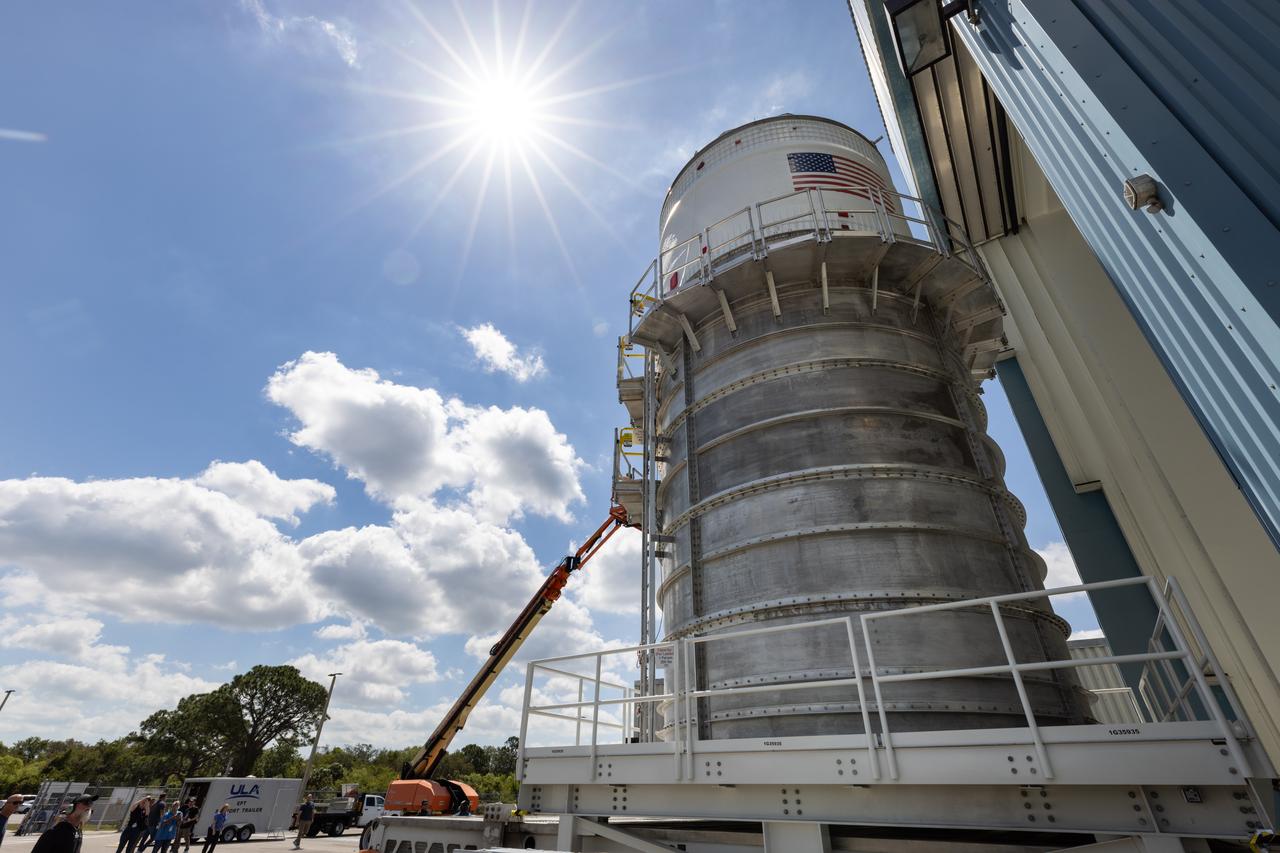
Teams with NASA’s Exploration Ground Systems Program transport the upper stage for the agency’s Artemis II SLS (Space Launch System) rocket from the Multi-Payload Processing Facility (MPPF) at NASA’s Kennedy Space Center in Florida to the spaceport’s Vehicle Assembly Building on Wednesday, April 16, 2025. Technicians fueled the SLS upper stage, known as the interim cryogenic propulsion stage, with hydrazine for its reaction control system at the MPPF and will now integrate the four-story propulsion system with SLS rocket elements atop mobile launcher 1.
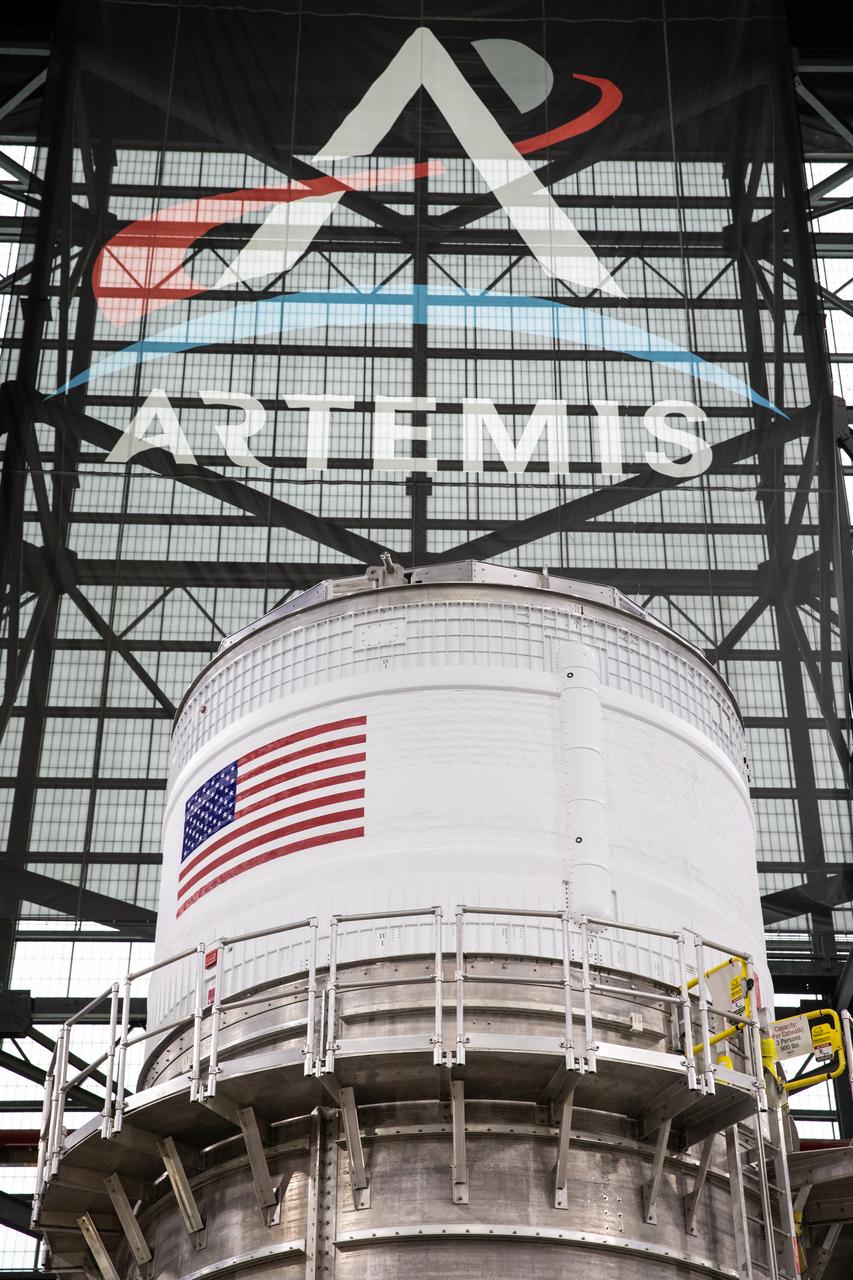
The upper stage for NASA’s Artemis II SLS (Space Launch System) rocket sits in the transfer aisle of the Vehicle Assembly Building at NASA’s Kennedy Space Center in Florida on Wednesday, April 16, 2025, after teams with the agency’s Exploration Ground Systems Program transported the four-story propulsion system from the spaceport’s Multi-Payload Processing Facility (MPPF). Technicians fueled the SLS upper stage, known as the interim cryogenic propulsion stage, with hydrazine for its reaction control system at the MPPF and will now integrate the four-story propulsion system with SLS rocket elements atop mobile launcher 1.
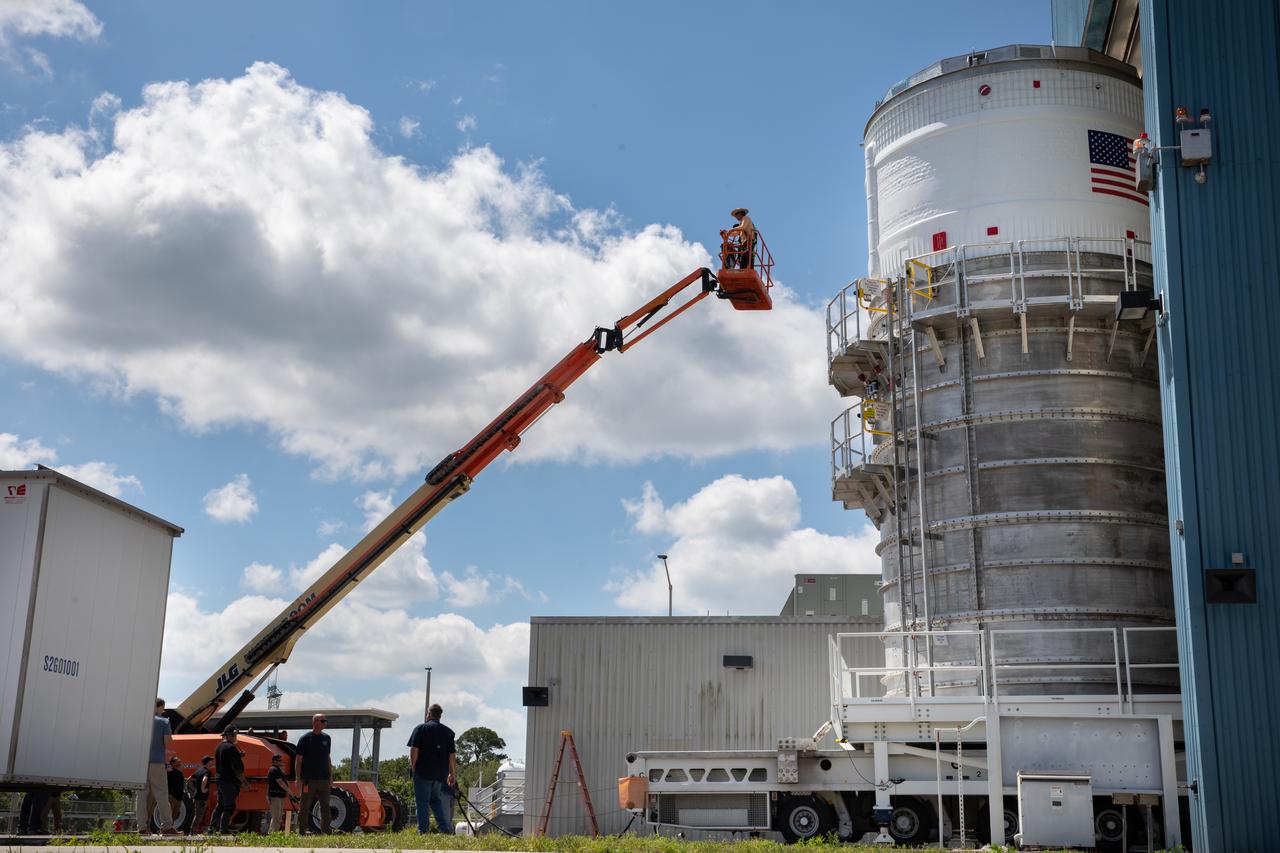
Teams with NASA’s Exploration Ground Systems Program transport the upper stage for the agency’s Artemis II SLS (Space Launch System) rocket from the Multi-Payload Processing Facility (MPPF) at NASA’s Kennedy Space Center in Florida to the spaceport’s Vehicle Assembly Building on Wednesday, April 16, 2025. Technicians fueled the SLS upper stage, known as the interim cryogenic propulsion stage, with hydrazine for its reaction control system at the MPPF and will now integrate the four-story propulsion system with SLS rocket elements atop mobile launcher 1.
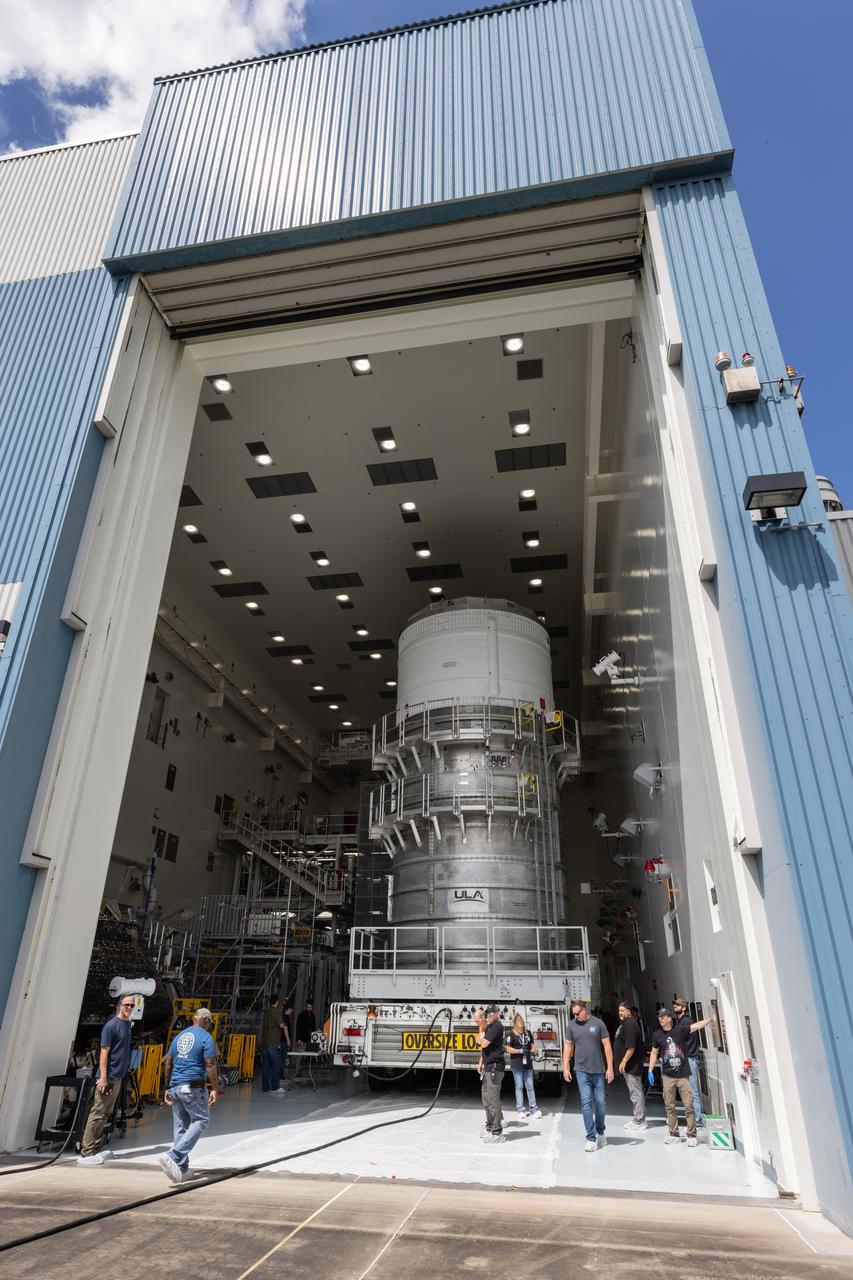
Teams with NASA’s Exploration Ground Systems Program transport the upper stage for the agency’s Artemis II SLS (Space Launch System) rocket from the Multi-Payload Processing Facility (MPPF) at NASA’s Kennedy Space Center in Florida to the spaceport’s Vehicle Assembly Building on Wednesday, April 16, 2025. Technicians fueled the SLS upper stage, known as the interim cryogenic propulsion stage, with hydrazine for its reaction control system at the MPPF and will now integrate the four-story propulsion system with SLS rocket elements atop mobile launcher 1.
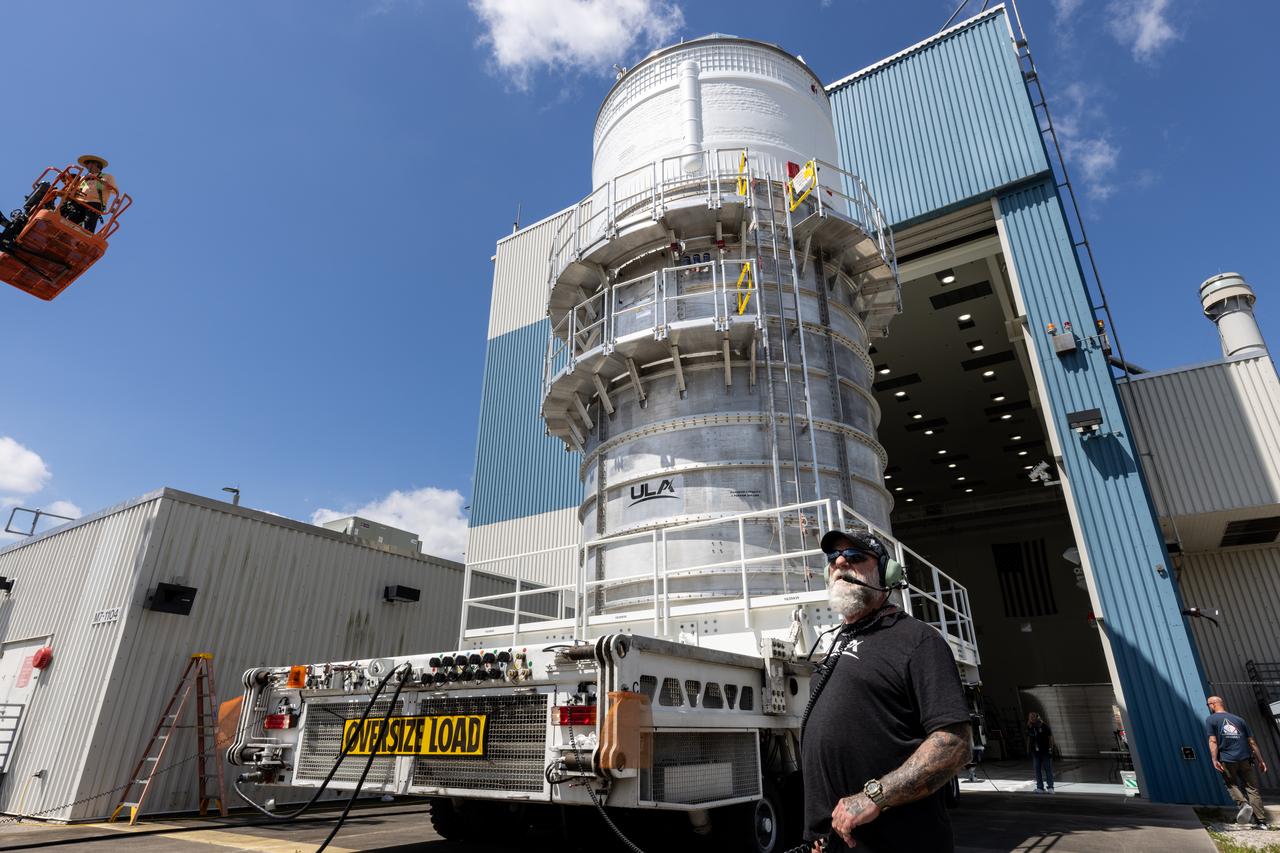
Teams with NASA’s Exploration Ground Systems Program transport the upper stage for the agency’s Artemis II SLS (Space Launch System) rocket from the Multi-Payload Processing Facility (MPPF) at NASA’s Kennedy Space Center in Florida to the spaceport’s Vehicle Assembly Building on Wednesday, April 16, 2025. Technicians fueled the SLS upper stage, known as the interim cryogenic propulsion stage, with hydrazine for its reaction control system at the MPPF and will now integrate the four-story propulsion system with SLS rocket elements atop mobile launcher 1.
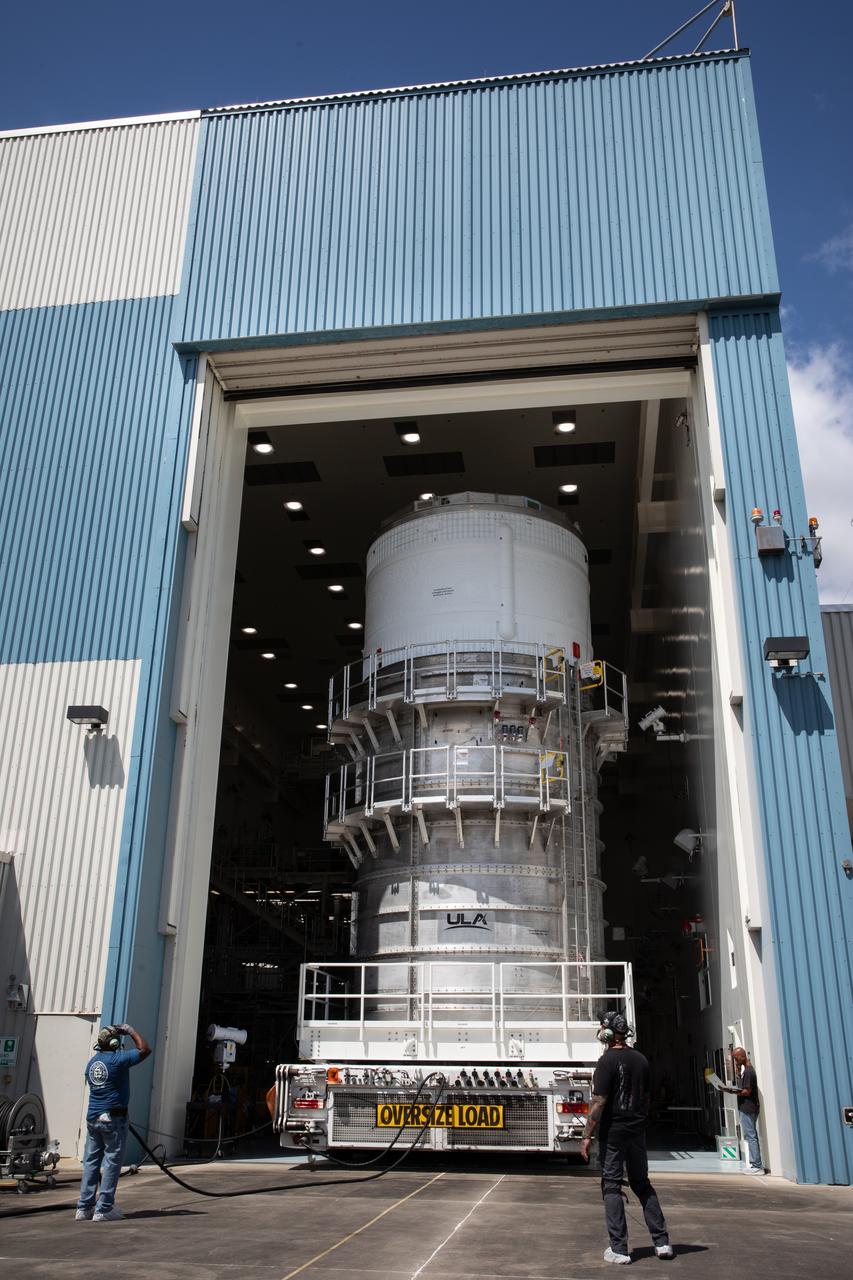
Teams with NASA’s Exploration Ground Systems Program transport the upper stage for the agency’s Artemis II SLS (Space Launch System) rocket from the Multi-Payload Processing Facility (MPPF) at NASA’s Kennedy Space Center in Florida to the spaceport’s Vehicle Assembly Building on Wednesday, April 16, 2025. Technicians fueled the SLS upper stage, known as the interim cryogenic propulsion stage, with hydrazine for its reaction control system at the MPPF and will now integrate the four-story propulsion system with SLS rocket elements atop mobile launcher 1.
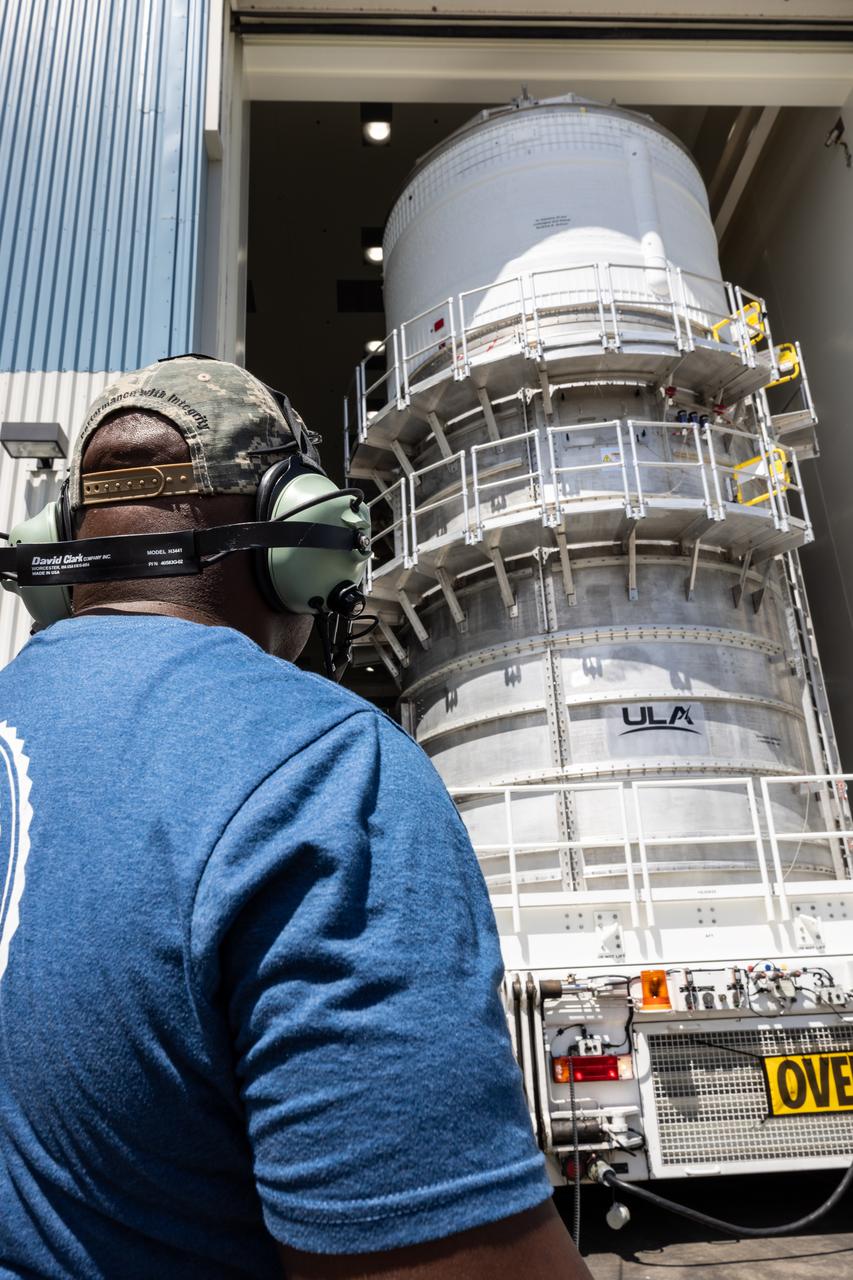
Teams with NASA’s Exploration Ground Systems Program transport the upper stage for the agency’s Artemis II SLS (Space Launch System) rocket from the Multi-Payload Processing Facility (MPPF) at NASA’s Kennedy Space Center in Florida to the spaceport’s Vehicle Assembly Building on Wednesday, April 16, 2025. Technicians fueled the SLS upper stage, known as the interim cryogenic propulsion stage, with hydrazine for its reaction control system at the MPPF and will now integrate the four-story propulsion system with SLS rocket elements atop mobile launcher 1.
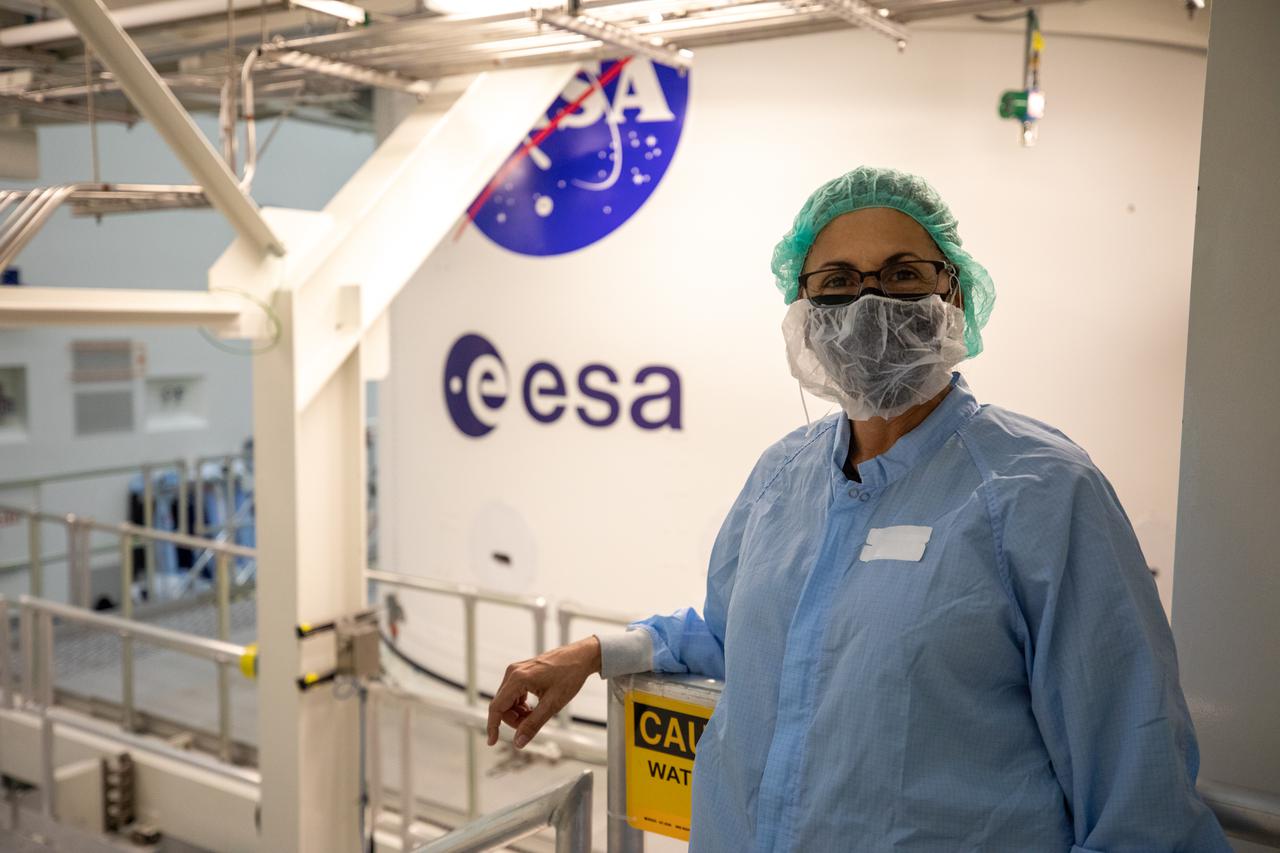
Nicole Stott, NASA Astronaut (former), shown next to the NASA “meatball” and European Space Agency insignias on the European-built service module for the Orion spacecraft, inside the Multi-Payload Processing Facility (MPPF) during a visit to NASA’s Kennedy Space Center in Florida on May 10, 2021. The first in a series of increasingly complex missions, Artemis I will test Orion and the Space Launch System rocket as an integrated system prior to crewed flights to the Moon.
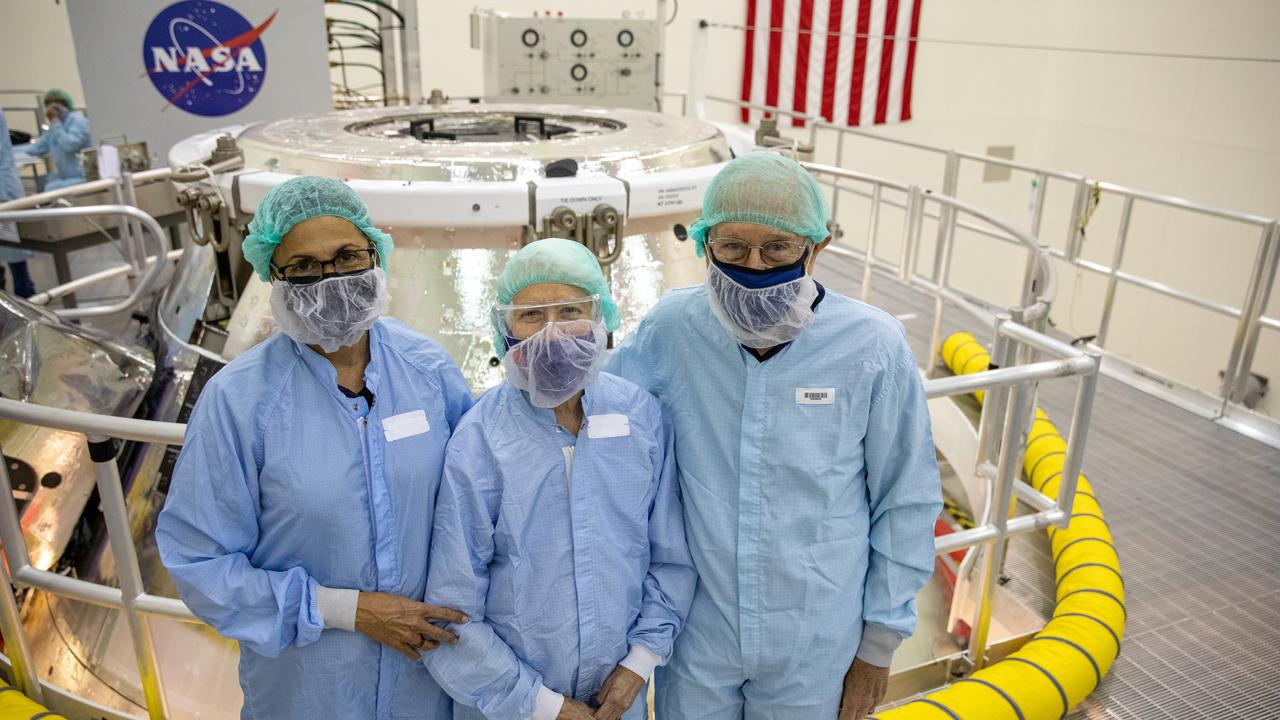
From left to right, Nicole Stott, NASA Astronaut (former); Dottie Duke, wife of Charlie Duke; and Charlie Duke, NASA Astronaut (former), shown in front of the Orion spacecraft for the Artemis I mission, inside the Multi-Payload Processing Facility (MPPF) during a visit to NASA’s Kennedy Space Center in Florida on May 10, 2021. The first in a series of increasingly complex missions, Artemis I will test Orion and the Space Launch System rocket as an integrated system prior to crewed flights to the Moon.
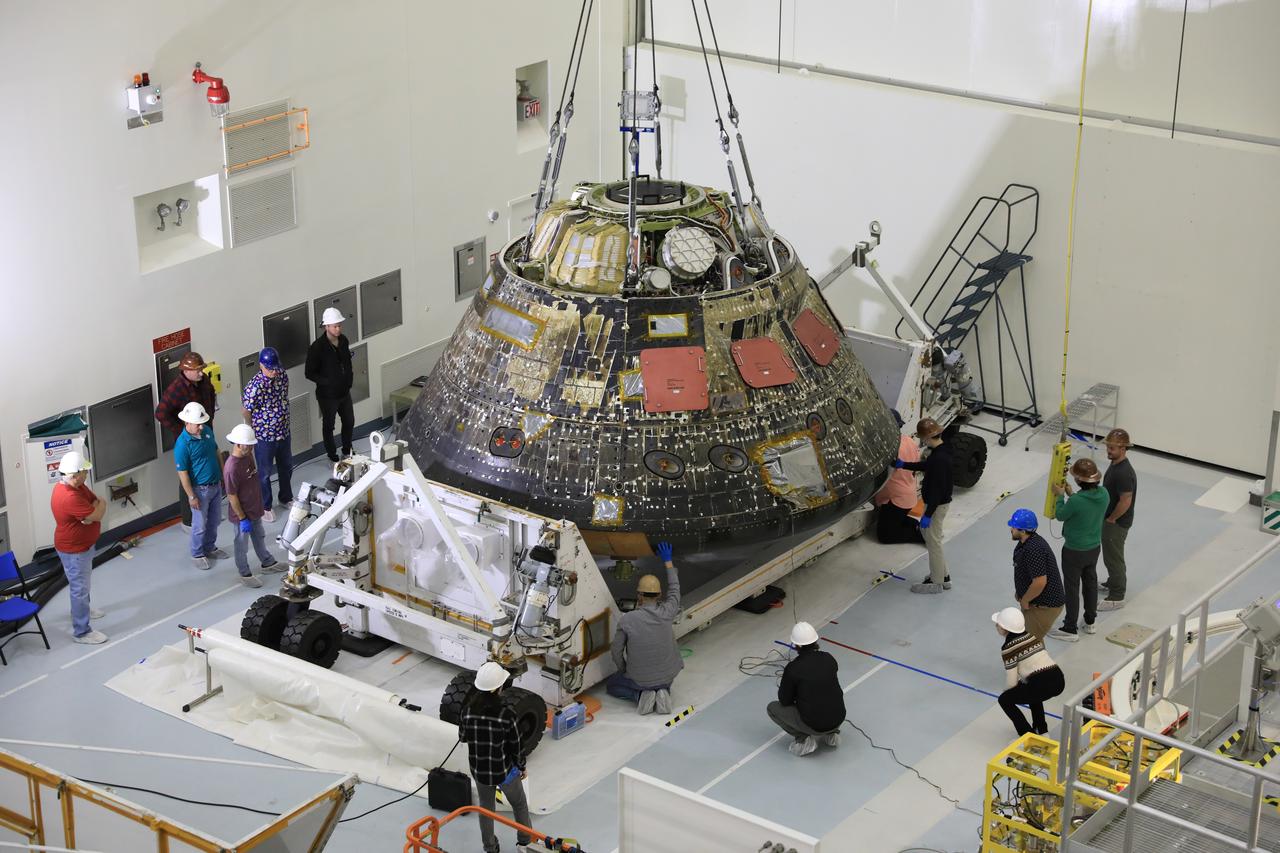
Technicians inside NASA’s Kennedy Space Centers Multi-Payload Processing Facility (MPPF) in Florida use a crane to load the Artemis I spacecraft - now called an environmental test article – into the crew module transportation fixture in preparation for its departure to NASA’s Neil Armstrong Test Facility in Sandusky, Ohio
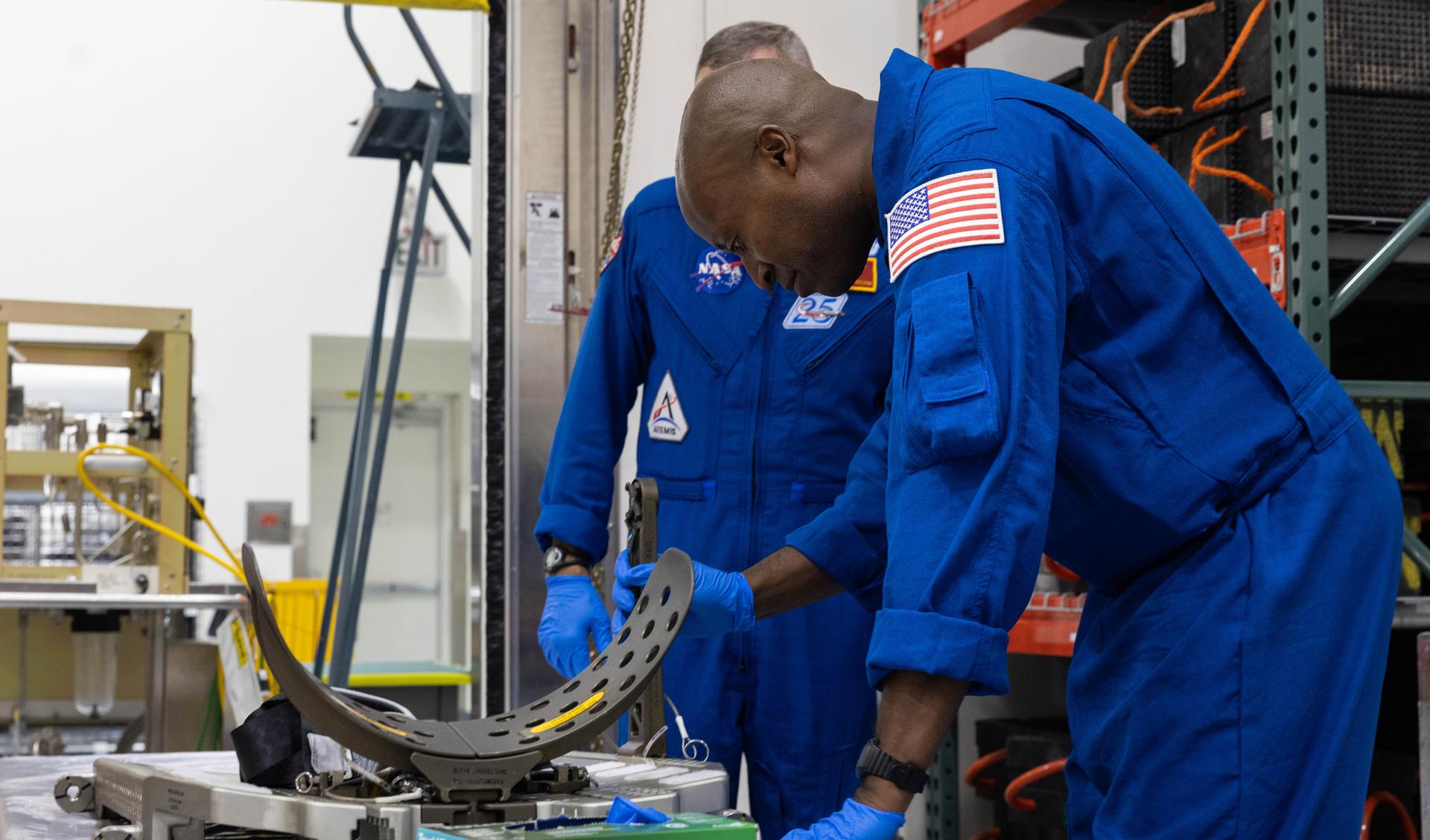
Artemis III crew members, NASA astronauts Andre Douglas and Randy Bresnick (obscured) and get a close look Orion spacecraft hardware inside the Multi-Payload Processing Facility at NASA’s Kennedy Space Center in Florida on Friday, July 10, 2026. Bresnick, Douglas, NASA astronaut Frank Rubio, and ESA (European Space Agency) astronaut Luca Parmitano will launch aboard Orion on the Artemis III mission to conduct critical rendezvous and docking tests with lunar lander systems in low Earth orbit, advancing the capabilities needed before astronauts return to the lunar surface on Artemis IV.
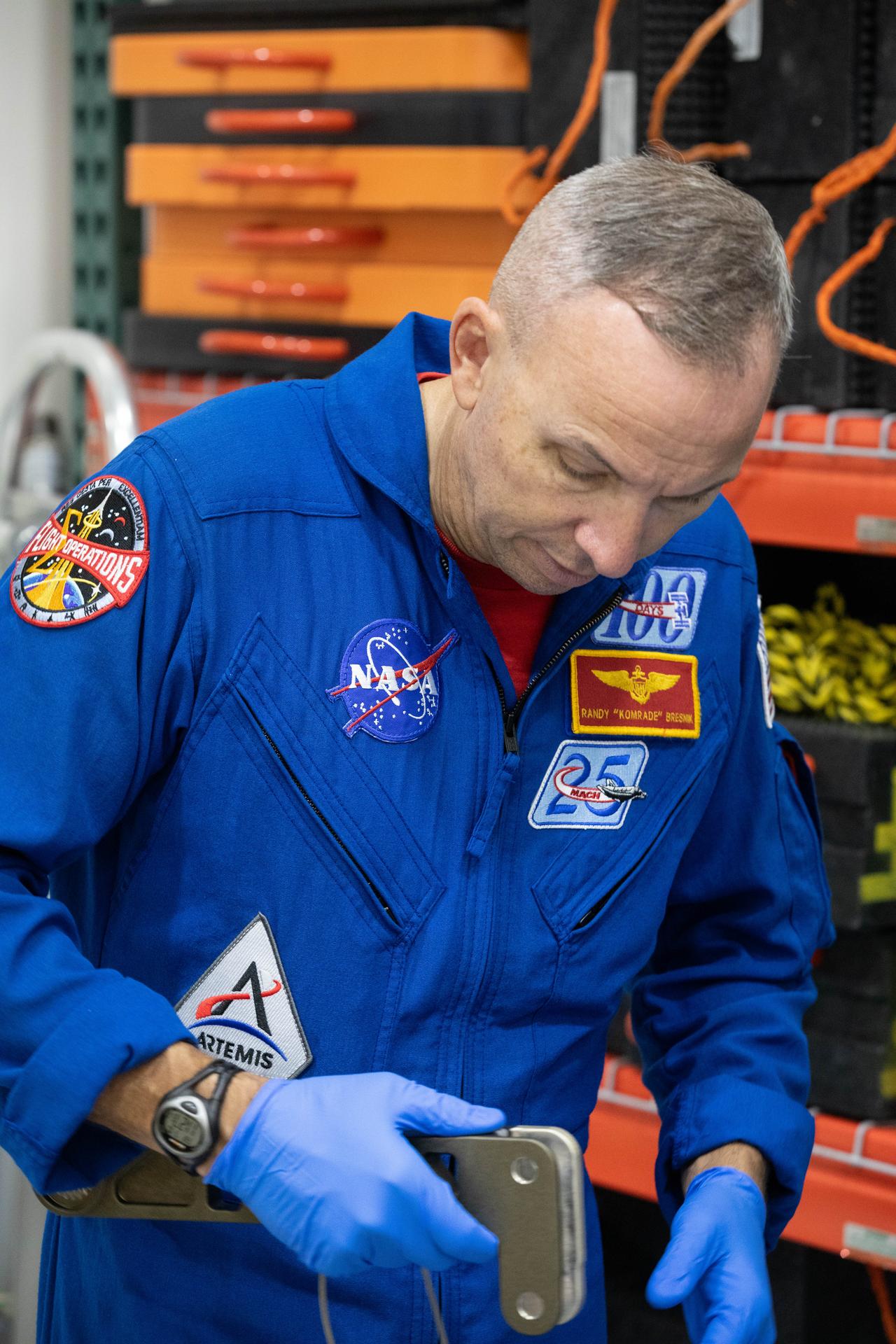
Artemis III crew members, NASA astronaut Randy Bresnick gets a close look at Orion spacecraft hardware inside the Multi-Payload Processing Facility at NASA’s Kennedy Space Center in Florida on Friday, July 10, 2026. Bresnick, along with fellow crewmate NASA astronaut Andre Douglas visited NASA Kennedy as part of preparations for their upcoming mission. Bresnick, Douglas, NASA astronaut Frank Rubio, and ESA (European Space Agency) astronaut Luca Parmitano will launch aboard Orion on the Artemis III mission to conduct critical rendezvous and docking tests with lunar lander systems in low Earth orbit, advancing the capabilities needed before astronauts return to the lunar surface on Artemis IV.
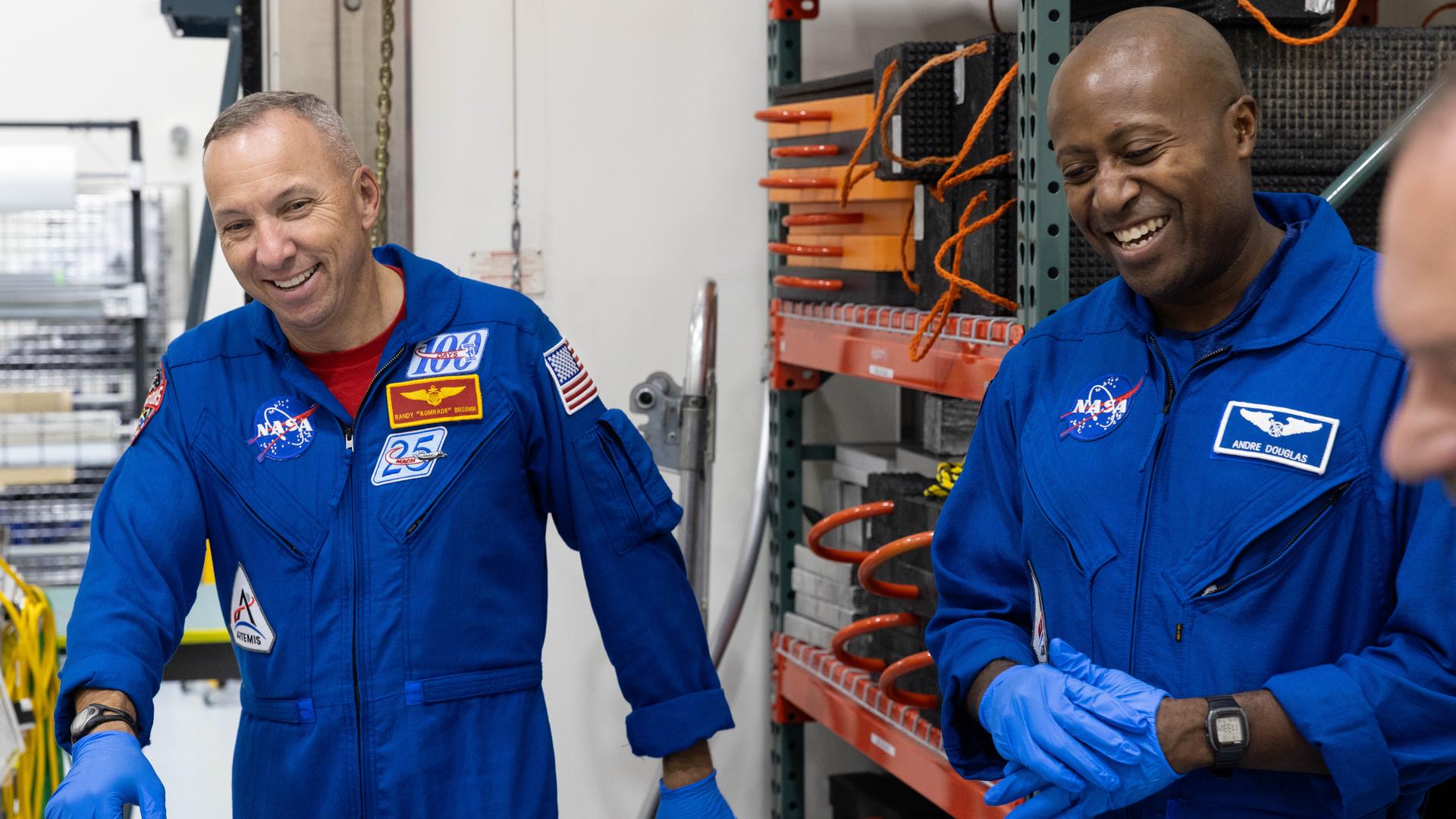
Artemis III crew members, NASA astronauts Randy Bresnick (left) and Andre Douglas get a close look Orion spacecraft hardware inside the Multi-Payload Processing Facility at NASA’s Kennedy Space Center in Florida on Friday, July 10, 2026. Bresnick, Douglas, NASA astronaut Frank Rubio, and ESA (European Space Agency) astronaut Luca Parmitano will launch aboard Orion on the Artemis III mission to conduct critical rendezvous and docking tests with lunar lander systems in low Earth orbit, advancing the capabilities needed before astronauts return to the lunar surface on Artemis IV.
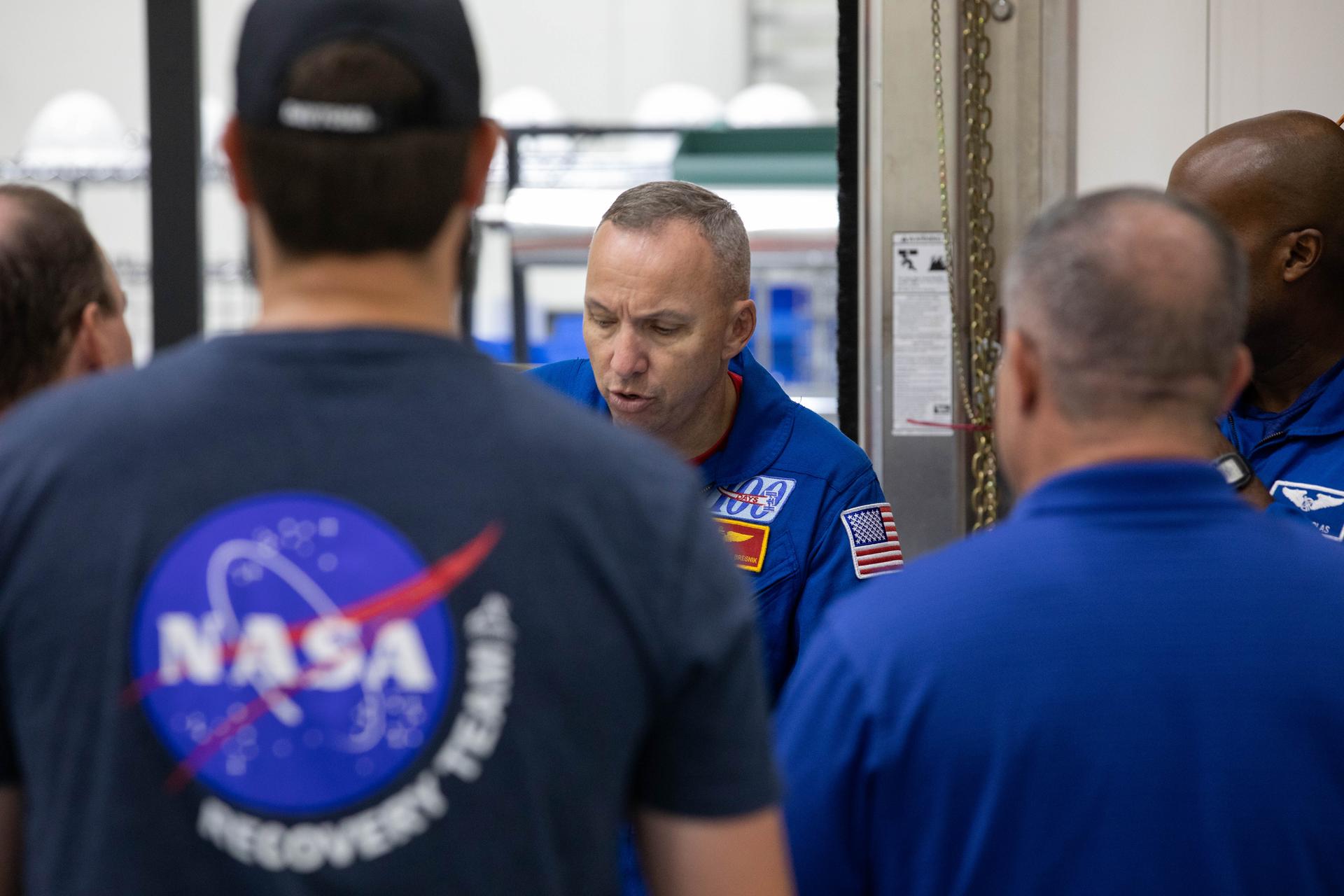
Artemis III crew members, NASA astronauts Randy Bresnick (center) and Andre Douglas (obscured) get a close look Orion spacecraft hardware inside the Multi-Payload Processing Facility at NASA’s Kennedy Space Center in Florida on Friday, July 10, 2026. Bresnick, Douglas, NASA astronaut Frank Rubio, and ESA (European Space Agency) astronaut Luca Parmitano will launch aboard Orion on the Artemis III mission to conduct critical rendezvous and docking tests with lunar lander systems in low Earth orbit, advancing the capabilities needed before astronauts return to the lunar surface on Artemis IV.
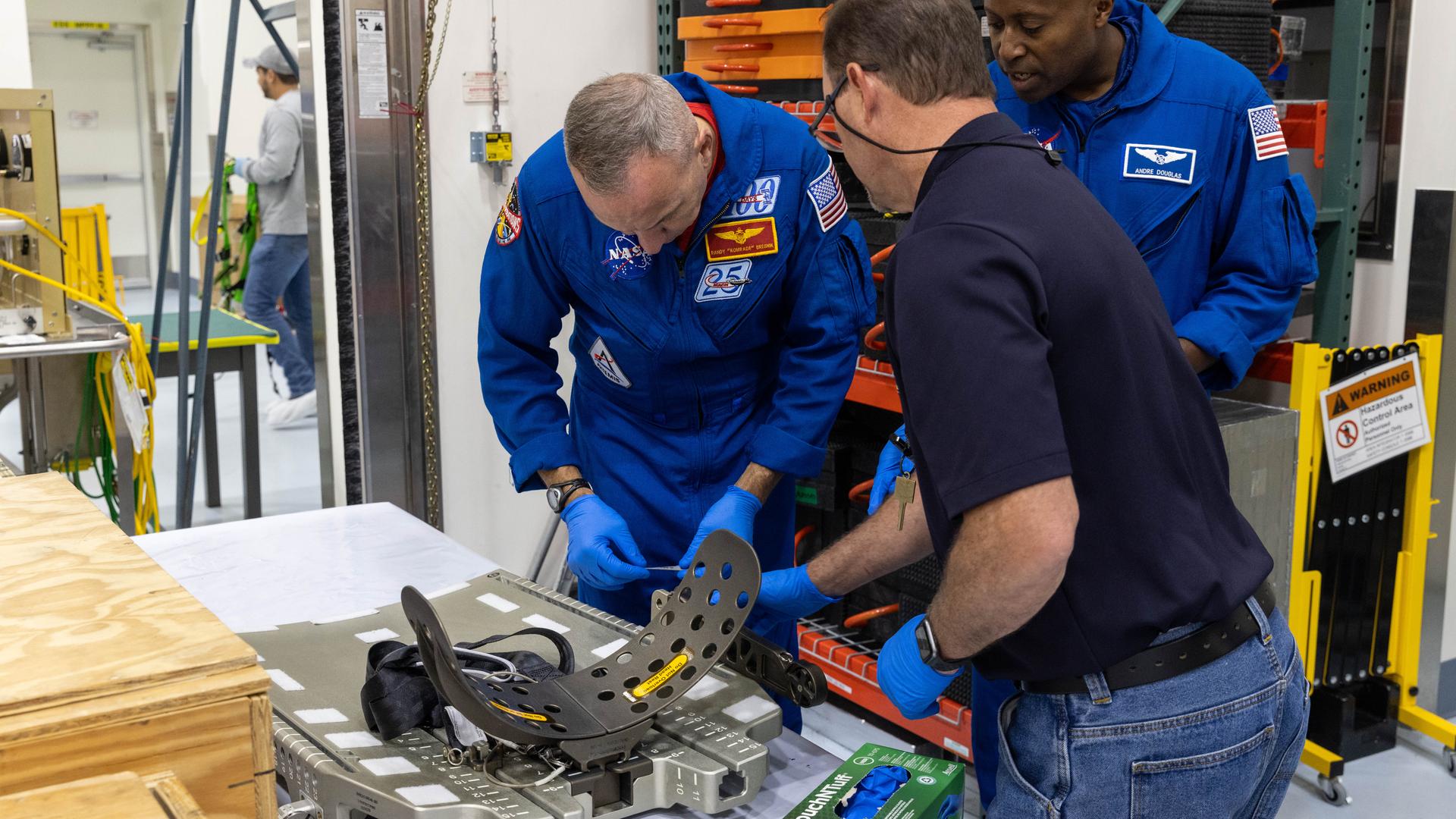
Artemis III crew members, NASA astronauts Randy Bresnick (left) and Andre Douglas get a close look Orion spacecraft hardware inside the Multi-Payload Processing Facility at NASA’s Kennedy Space Center in Florida on Friday, July 10, 2026. Bresnick, Douglas, NASA astronaut Frank Rubio, and ESA (European Space Agency) astronaut Luca Parmitano will launch aboard Orion on the Artemis III mission to conduct critical rendezvous and docking tests with lunar lander systems in low Earth orbit, advancing the capabilities needed before astronauts return to the lunar surface on Artemis IV.
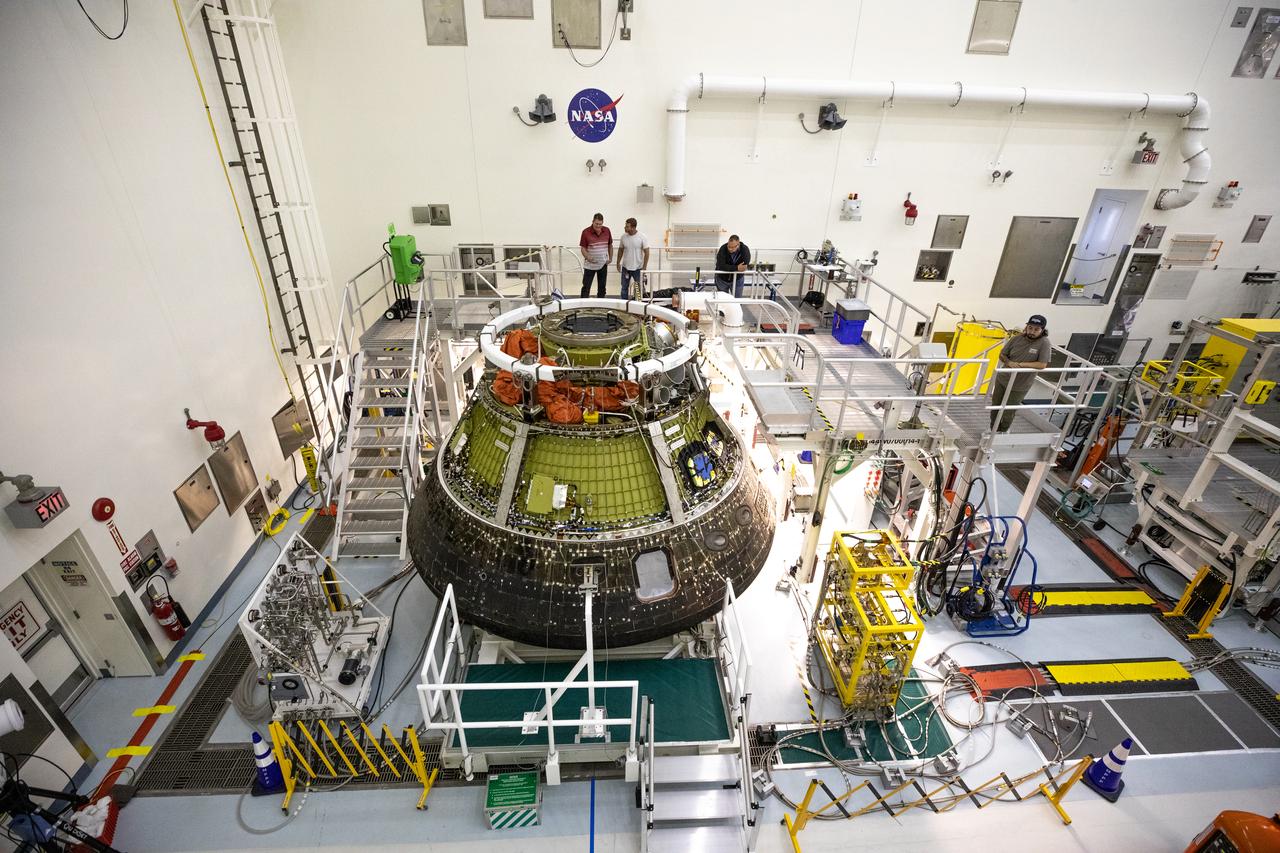
A view from above shows NASA’s Artemis I Orion capsule secured on a platform inside the Multi-Payload Processing Facility (MPPF) at Kennedy Space Center in Florida on Jan. 6, 2023. Orion splashed down in the Pacific Ocean at 12:40 p.m. EST on Dec. 11, 2022. The spacecraft was secured inside the well deck of the USS Portland for the voyage to U.S. Naval Base Sand Diego, arriving on Dec. 13, 2022. Orion was offloaded and transported back to Kennedy for deservicing inside the MPPF. Orion launched atop the Space Launch System rocket on Nov. 16, 2022 at 1:47 a.m. EST from Kennedy’s Launch Complex 39B for a 25-day trip beyond the Moon and back. During the flight, Orion flew farther than any human-rated spacecraft has ever flown, paving the way for human deep space exploration and demonstrating NASA’s commitment and capability to extend human presence to the Moon and beyond.
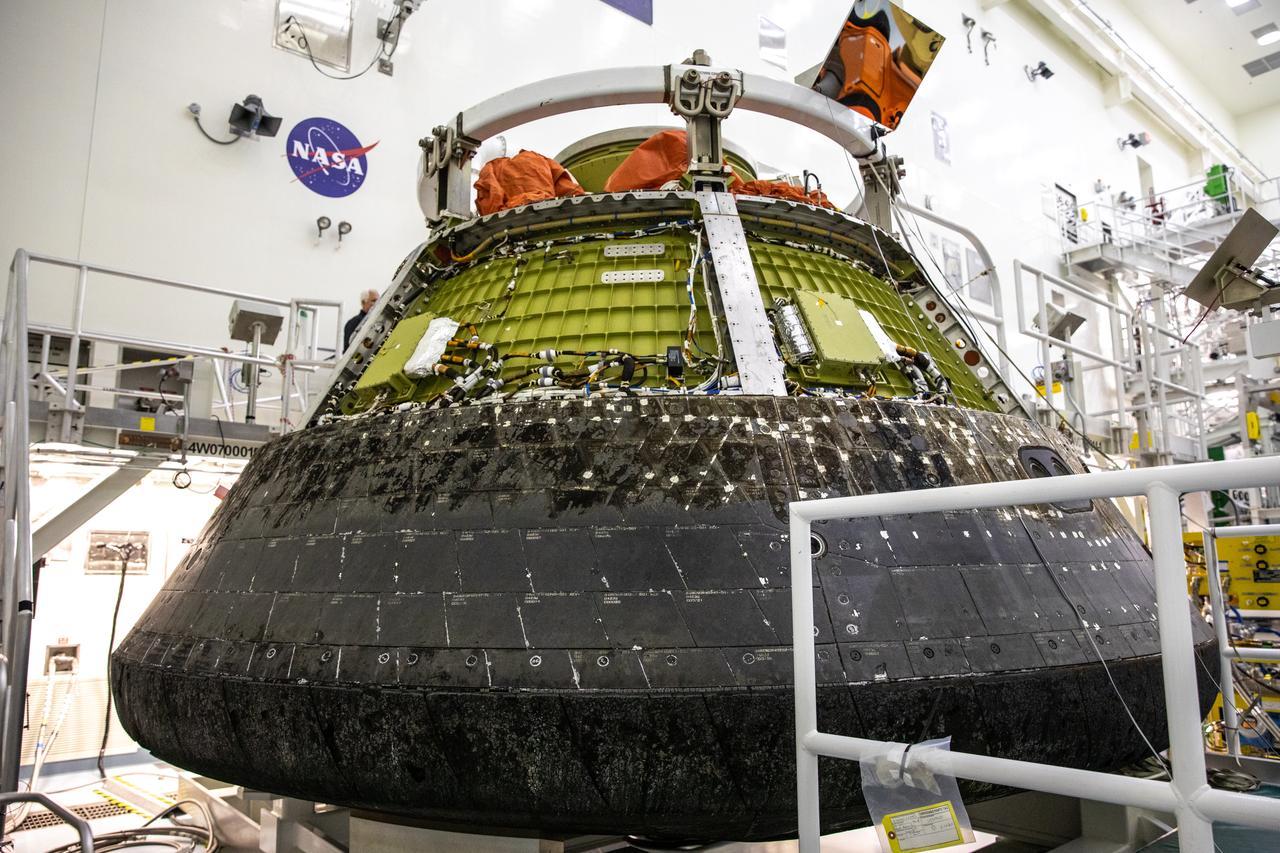
A close-up view shows NASA’s Artemis I Orion capsule secured on a platform inside the Multi-Payload Processsing Facility (MPPF) at Kennedy Space Center in Florida on Jan. 6, 2023. Orion splashed down in the Pacific Ocean at 12:40 p.m. EST on Dec. 11, 2022. The spacecraft was secured inside the well deck of the USS Portland for the voyage to U.S. Naval Base Sand Diego, arriving on Dec. 13, 2022. Orion was offloaded and transported back to Kennedy for deservicing inside the MPPF. Orion launched atop the Space Launch System rocket on Nov. 16, 2022 at 1:47 a.m. EST from Kennedy’s Launch Complex 39B for a 25-day trip beyond the Moon and back. During the flight, Orion flew farther than any human-rated spacecraft has ever flown, paving the way for human deep space exploration and demonstrating NASA’s commitment and capability to extend human presence to the Moon and beyond.
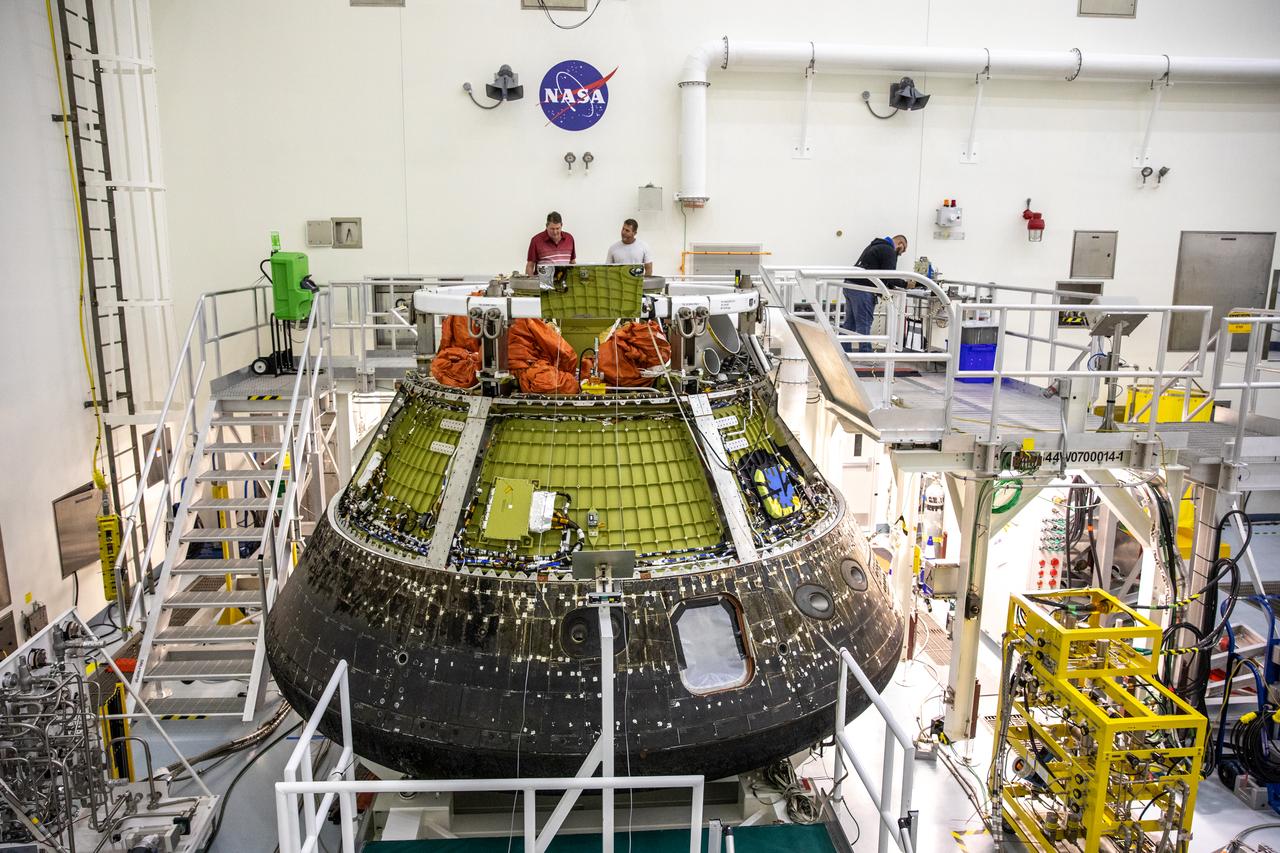
A close-up view shows NASA’s Artemis I Orion capsule secured on a platform inside the Multi-Payload Processsing Facility (MPPF) at Kennedy Space Center in Florida on Jan. 6, 2023. Orion splashed down in the Pacific Ocean at 12:40 p.m. EST on Dec. 11, 2022. The spacecraft was secured inside the well deck of the USS Portland for the voyage to U.S. Naval Base Sand Diego, arriving on Dec. 13, 2022. Orion was offloaded and transported back to Kennedy for deservicing inside the MPPF. Orion launched atop the Space Launch System rocket on Nov. 16, 2022 at 1:47 a.m. EST from Kennedy’s Launch Complex 39B for a 25-day trip beyond the Moon and back. During the flight, Orion flew farther than any human-rated spacecraft has ever flown, paving the way for human deep space exploration and demonstrating NASA’s commitment and capability to extend human presence to the Moon and beyond.
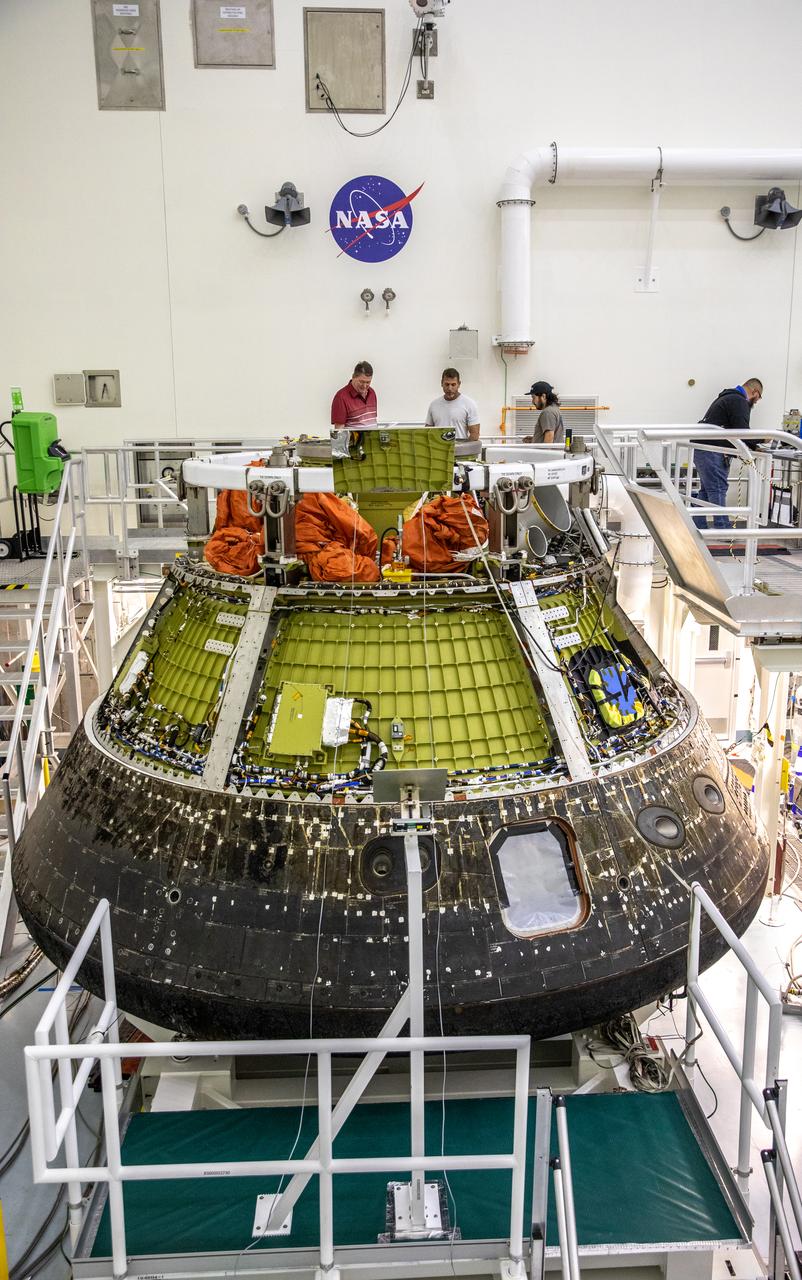
A close-up view shows NASA’s Artemis I Orion capsule secured on a platform inside the Multi-Payload Processsing Facility (MPPF) at Kennedy Space Center in Florida on Jan. 6, 2023. Orion splashed down in the Pacific Ocean at 12:40 p.m. EST on Dec. 11, 2022. The spacecraft was secured inside the well deck of the USS Portland for the voyage to U.S. Naval Base Sand Diego, arriving on Dec. 13, 2022. Orion was offloaded and transported back to Kennedy for deservicing inside the MPPF. Orion launched atop the Space Launch System rocket on Nov. 16, 2022 at 1:47 a.m. EST from Kennedy’s Launch Complex 39B for a 25-day trip beyond the Moon and back. During the flight, Orion flew farther than any human-rated spacecraft has ever flown, paving the way for human deep space exploration and demonstrating NASA’s commitment and capability to extend human presence to the Moon and beyond.
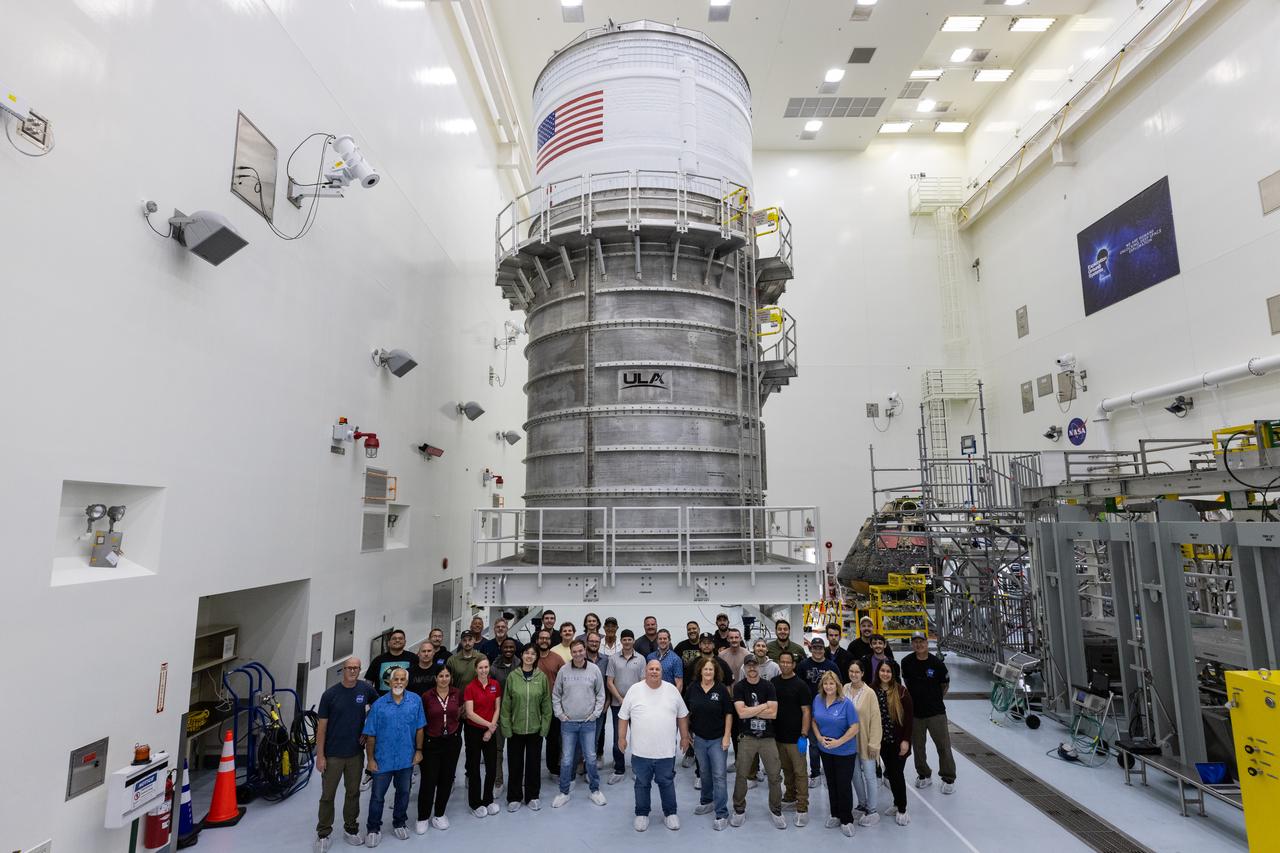
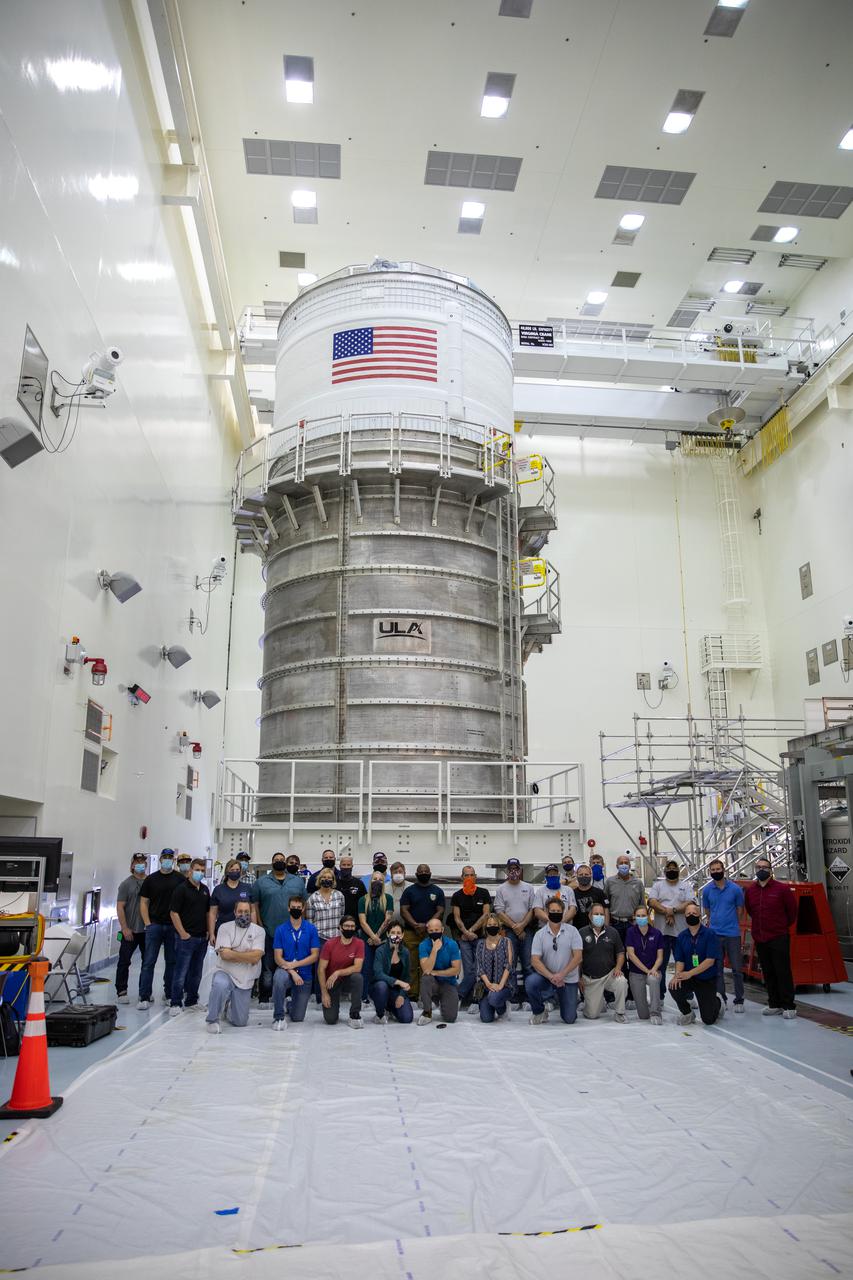
Teams with NASA’s Exploration Ground Systems Program pose for a photo in front of the upper stage for the agency’s Artemis II SLS (Space Launch System) rocket inside the Multi-Payload Processing Facility (MPPF) at NASA’s Kennedy Space Center in Florida on Wednesday, April 16, 2025. Visible in the background is also the Artemis I Orion crew module, now known as the Orion Environmental Test Article (ETA). Technicians fueled the SLS upper stage, known as the interim cryogenic propulsion stage, with hydrazine for its reaction control system at the MPPF before its transportation to the spaceport’s Vehicle Assembly Building and will now integrate the four-story propulsion system with SLS rocket elements atop mobile launcher 1.
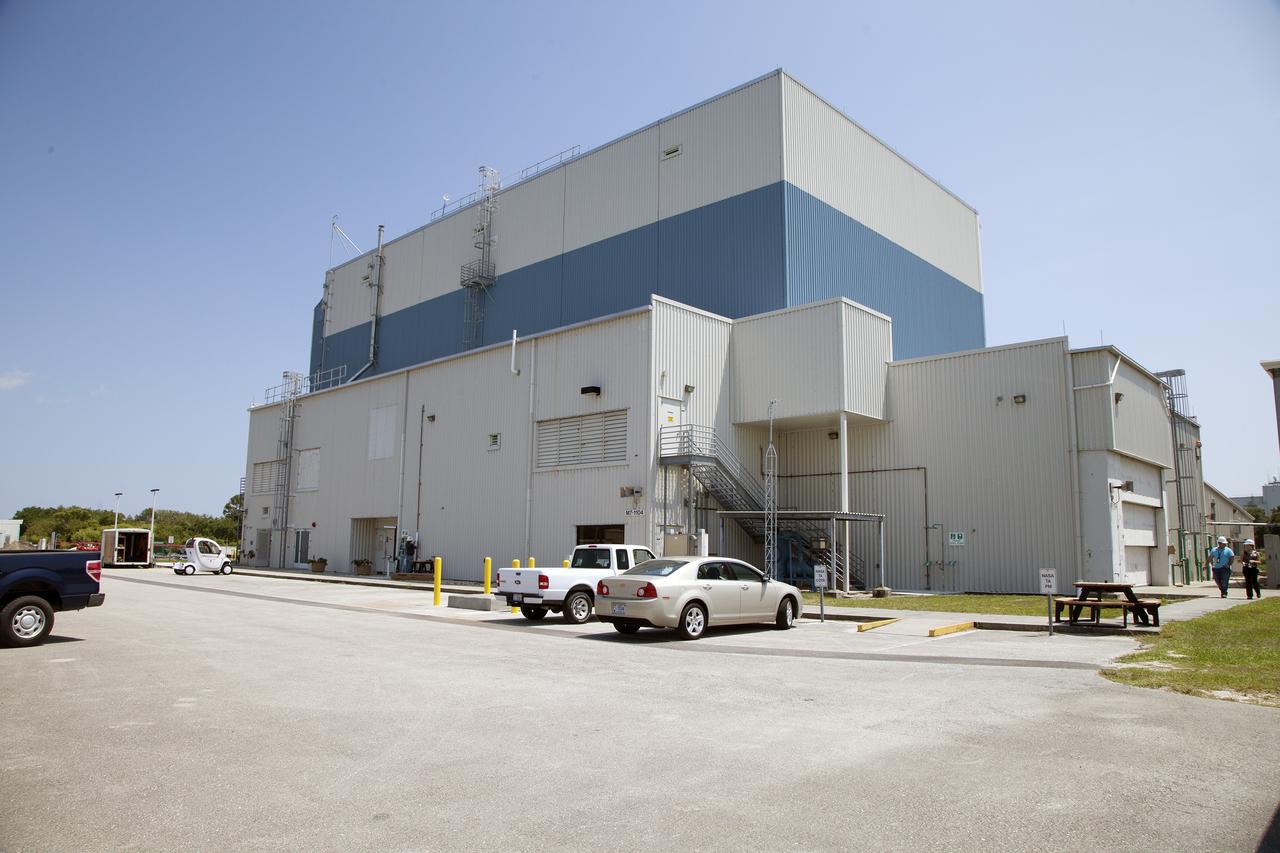
CAPE CANAVERAL, Fla. – Modifications continue on the Multi-Payload Processing Facility, or MPPF, at NASA's Kennedy Space Center in Florida. A view looking northwest, shows the exterior of the MPPF. Kennedy's Center Operations Directorate is overseeing upgrades to the MPPF for the Ground Systems Development and Operations Program. The extensive upgrades and modernizations will support processing of Orion spacecraft for NASA's exploration missions. The 19,647-square-foot building, originally constructed in 1995, primarily will be used for Orion hypergolic fueling, ammonia servicing and high-pressure gas servicing and checkout before being transported to the Vehicle Assembly Building for integration with the Space Launch System. Photo credit: NASA/Daniel Casper
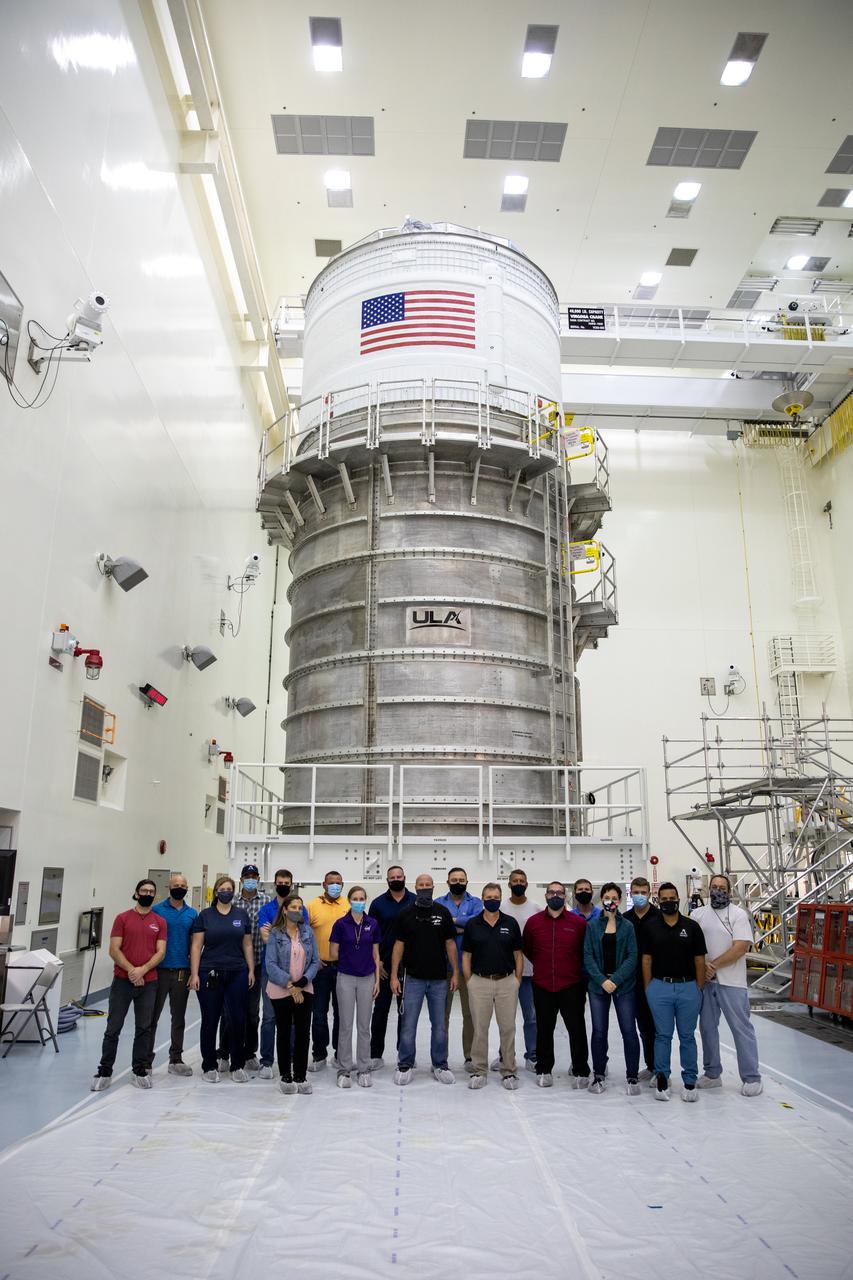
The Space Launch System (SLS) rocket’s interim cryogenic propulsion stage (ICPS) moved into the Multi-Payload Processing Facility February 18, 2021, at NASA’s Kennedy Space Center in Florida for the Artemis I mission. It will undergo fueling and servicing in the facility ahead of launch by teams from NASA’s Exploration Ground Systems and their primary contractor, Jacobs Technology. Artemis I will be an integrated flight test of the SLS rocket and Orion spacecraft ahead of the crewed flights to the Moon. Under the Artemis program, NASA will land the first woman and the next man on the lunar surface and establish a sustainable presence at the Moon to prepare for human missions to Mars.
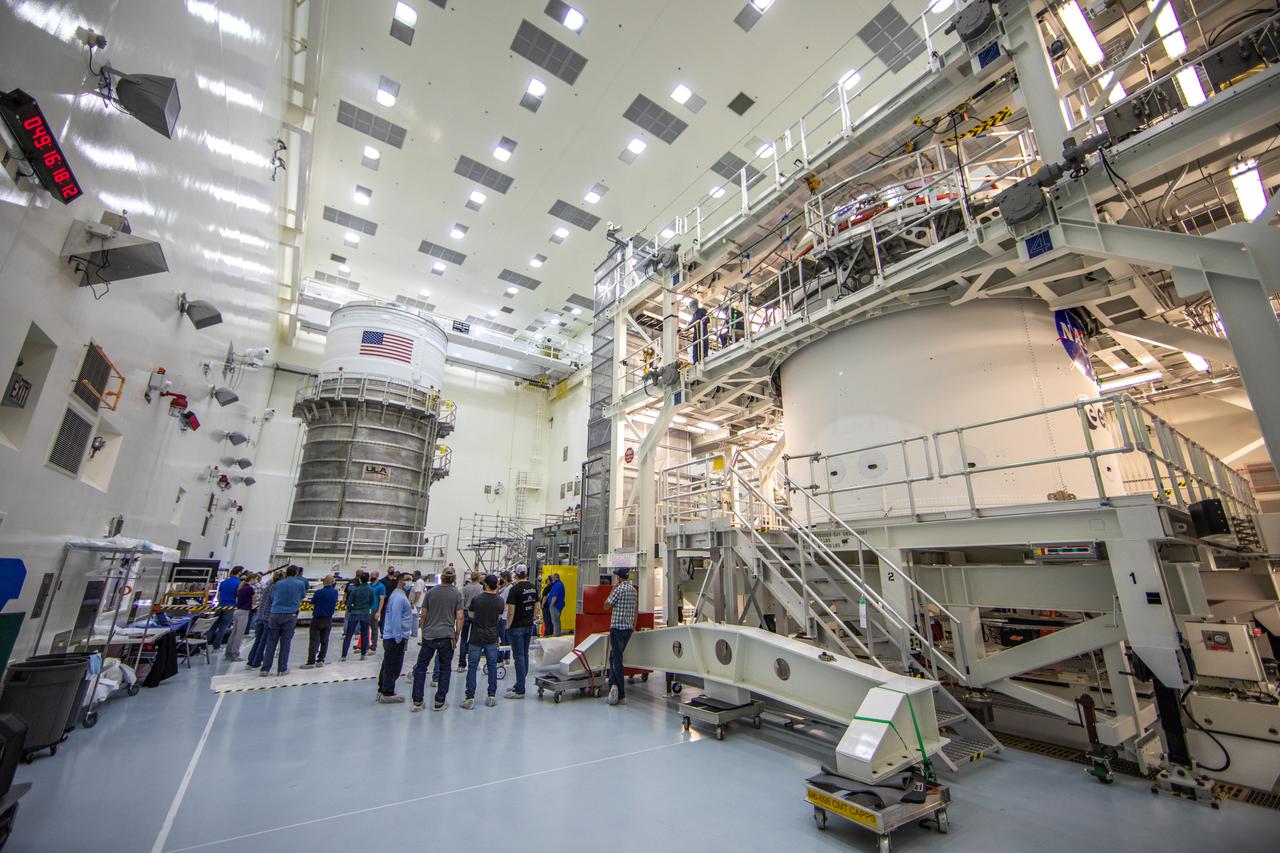
The Space Launch System (SLS) rocket’s interim cryogenic propulsion stage (ICPS) moved into the Multi-Payload Processing Facility February 18, 2021, at NASA’s Kennedy Space Center in Florida for the Artemis I mission. It will undergo fueling and servicing in the facility ahead of launch by teams from NASA’s Exploration Ground Systems and their primary contractor, Jacobs Technology. Artemis I will be an integrated flight test of the SLS rocket and Orion spacecraft ahead of the crewed flights to the Moon. Under the Artemis program, NASA will land the first woman and the next man on the lunar surface and establish a sustainable presence at the Moon to prepare for human missions to Mars.
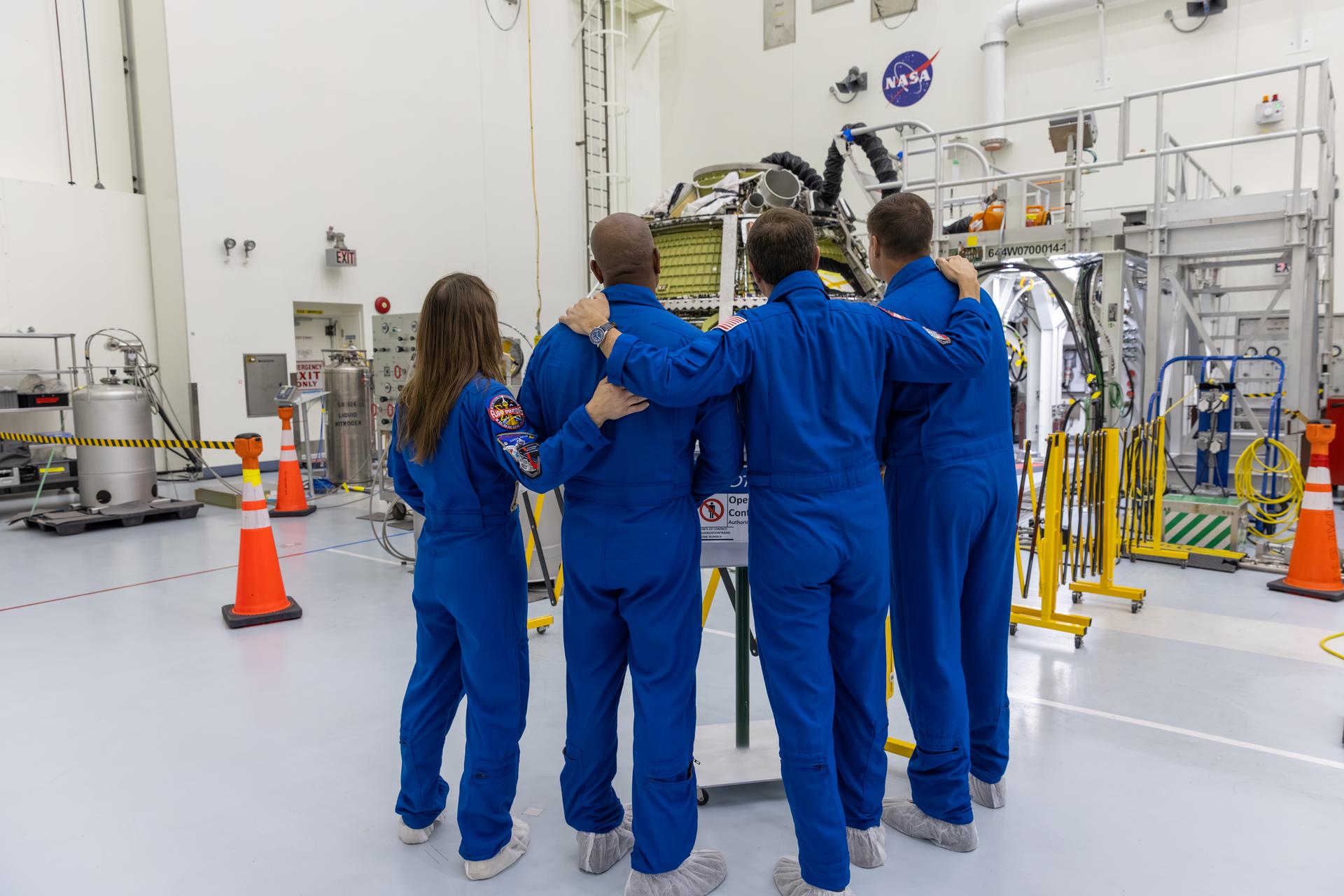
From left, Artemis II NASA astronauts Christina Koch, Victor Glover, and Reid Wiseman, along with CSA (Canadian Space Agency) astronaut Jeremy Hansen view the Artemis II Orion spacecraft inside the Multi-Payload Processing Facility at NASA’s Kennedy Space Center in Florida on Wednesday, July 8, 2026. The crew returned to NASA Kennedy for their first official visit since launch of Artemis II on Wednesday, April 1, 2026, to visit with the center’s workforce and tour facilities to view progress on Artemis III prelaunch processing.
Technicians with NASA’s Exploration Ground Systems Program offload the agency’s Orion spacecraft from the KAMAG transporter to the servicing stand inside the Multi-Payload Processing Facility at Kennedy Space Center in Florida on Sunday, May 4, 2025, to undergo fueling and processing operations for prelaunch operations. The Artemis II test flight is the first crewed flight under NASA’s Artemis campaign and is another step toward missions on the lunar surface and helping the agency prepare for future human missions to Mars.
The Space Launch System (SLS) rocket’s interim cryogenic propulsion stage (ICPS) moved into the Multi-Payload Processing Facility February 18, 2021, at NASA’s Kennedy Space Center in Florida for the Artemis I mission. It will undergo fueling and servicing in the facility ahead of launch by teams from NASA’s Exploration Ground Systems and their primary contractor, Jacobs Technology. Artemis I will be an integrated flight test of the SLS rocket and Orion spacecraft ahead of the crewed flights to the Moon. Under the Artemis program, NASA will land the first woman and the next man on the lunar surface and establish a sustainable presence at the Moon to prepare for human missions to Mars.
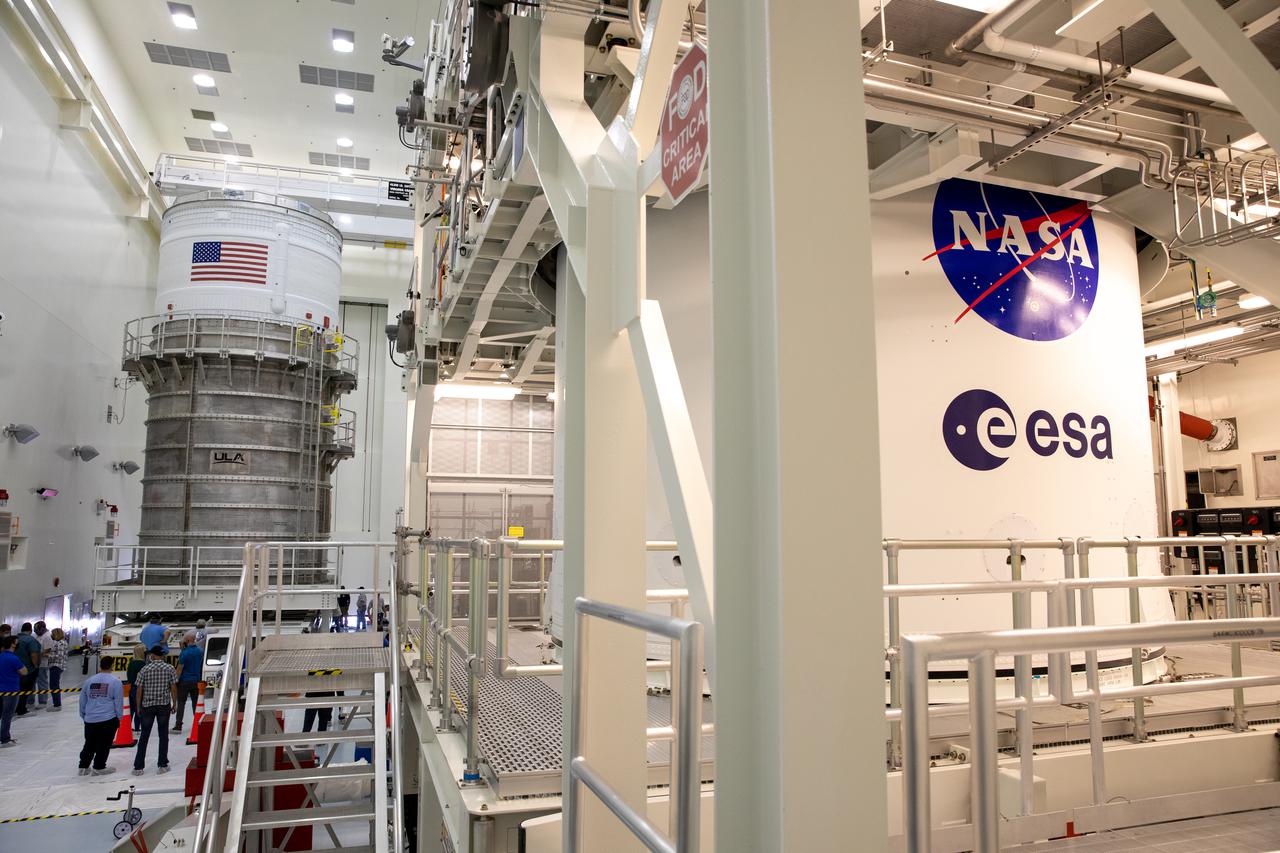
The Space Launch System (SLS) rocket’s interim cryogenic propulsion stage (ICPS) moved into the Multi-Payload Processing Facility February 18, 2021, at NASA’s Kennedy Space Center in Florida alongside one of its flight partners for the Artemis I mission, the Orion spacecraft. Both pieces of hardware will undergo fueling and servicing in the facility ahead of launch by teams from NASA’s Exploration Ground Systems and their primary contractor, Jacobs Technology. In view, at right, are the NASA insignia and ESA (European Space Agency) logos on the European-built service module. Artemis I will be an integrated flight test of the SLS rocket and Orion spacecraft ahead of the crewed flights to the Moon. Under the Artemis program, NASA will land the first woman and the next man on the lunar surface and establish a sustainable presence at the Moon to prepare for human missions to Mars.
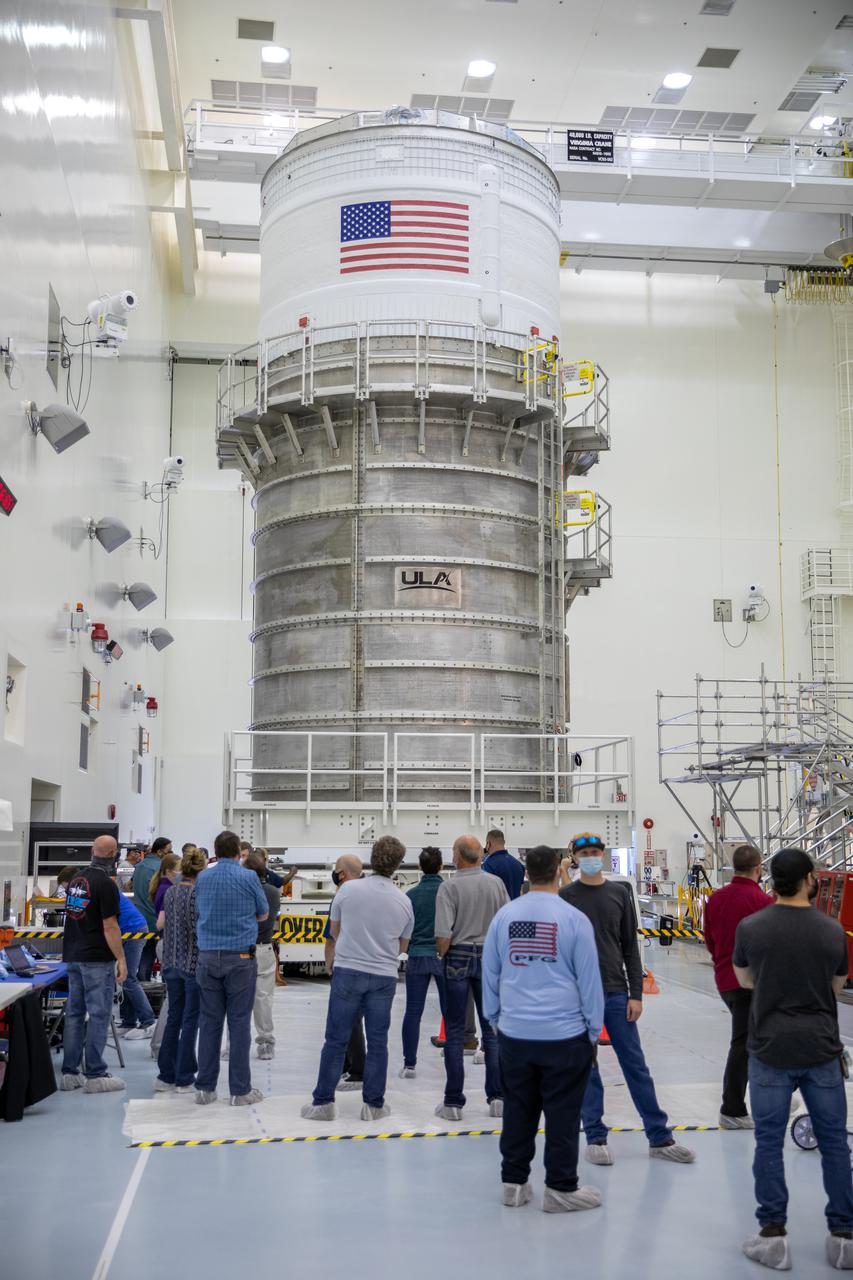
The Space Launch System (SLS) rocket’s interim cryogenic propulsion stage (ICPS) moved into the Multi-Payload Processing Facility February 18, 2021, at NASA’s Kennedy Space Center in Florida for the Artemis I mission. It will undergo fueling and servicing in the facility ahead of launch by teams from NASA’s Exploration Ground Systems and their primary contractor, Jacobs Technology. Artemis I will be an integrated flight test of the SLS rocket and Orion spacecraft ahead of the crewed flights to the Moon. Under the Artemis program, NASA will land the first woman and the next man on the lunar surface and establish a sustainable presence at the Moon to prepare for human missions to Mars.
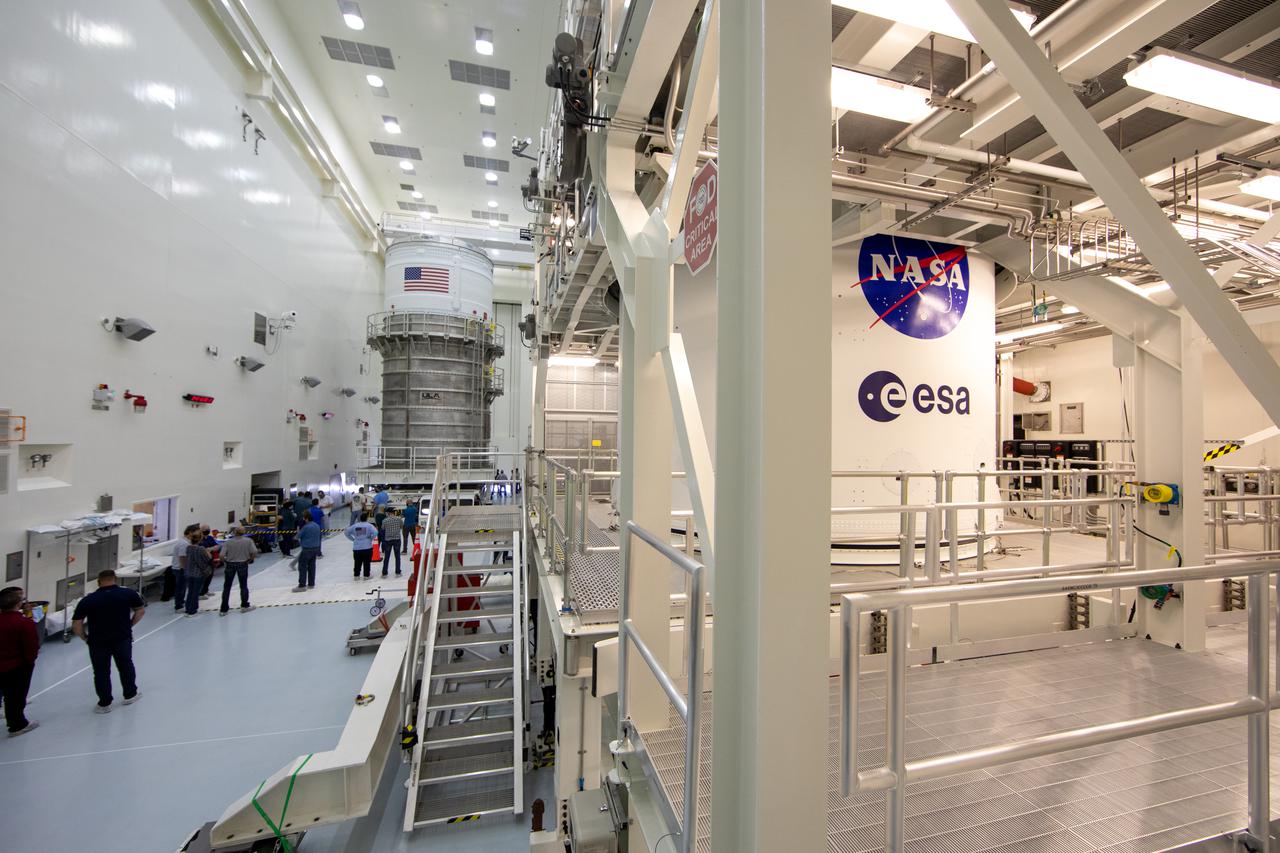
The Space Launch System (SLS) rocket’s interim cryogenic propulsion stage (ICPS) moved into the Multi-Payload Processing Facility February 18, 2021, at NASA’s Kennedy Space Center in Florida alongside one of its flight partners for the Artemis I mission, the Orion spacecraft. Both pieces of hardware will undergo fueling and servicing in the facility ahead of launch by teams from NASA’s Exploration Ground Systems and their primary contractor, Jacobs Technology. In view, at right, are the NASA insignia and ESA (European Space Agency) logos on the European-built service module. Artemis I will be an integrated flight test of the SLS rocket and Orion spacecraft ahead of the crewed flights to the Moon. Under the Artemis program, NASA will land the first woman and the next man on the lunar surface and establish a sustainable presence at the Moon to prepare for human missions to Mars.

Technicians with NASA’s Exploration Ground Systems Program offload the agency’s Orion spacecraft from the KAMAG transporter to the servicing stand inside the Multi-Payload Processing Facility at Kennedy Space Center in Florida on Sunday, May 4, 2025, to undergo fueling and processing operations for prelaunch operations. The Artemis II test flight is the first crewed flight under NASA’s Artemis campaign and is another step toward missions on the lunar surface and helping the agency prepare for future human missions to Mars.
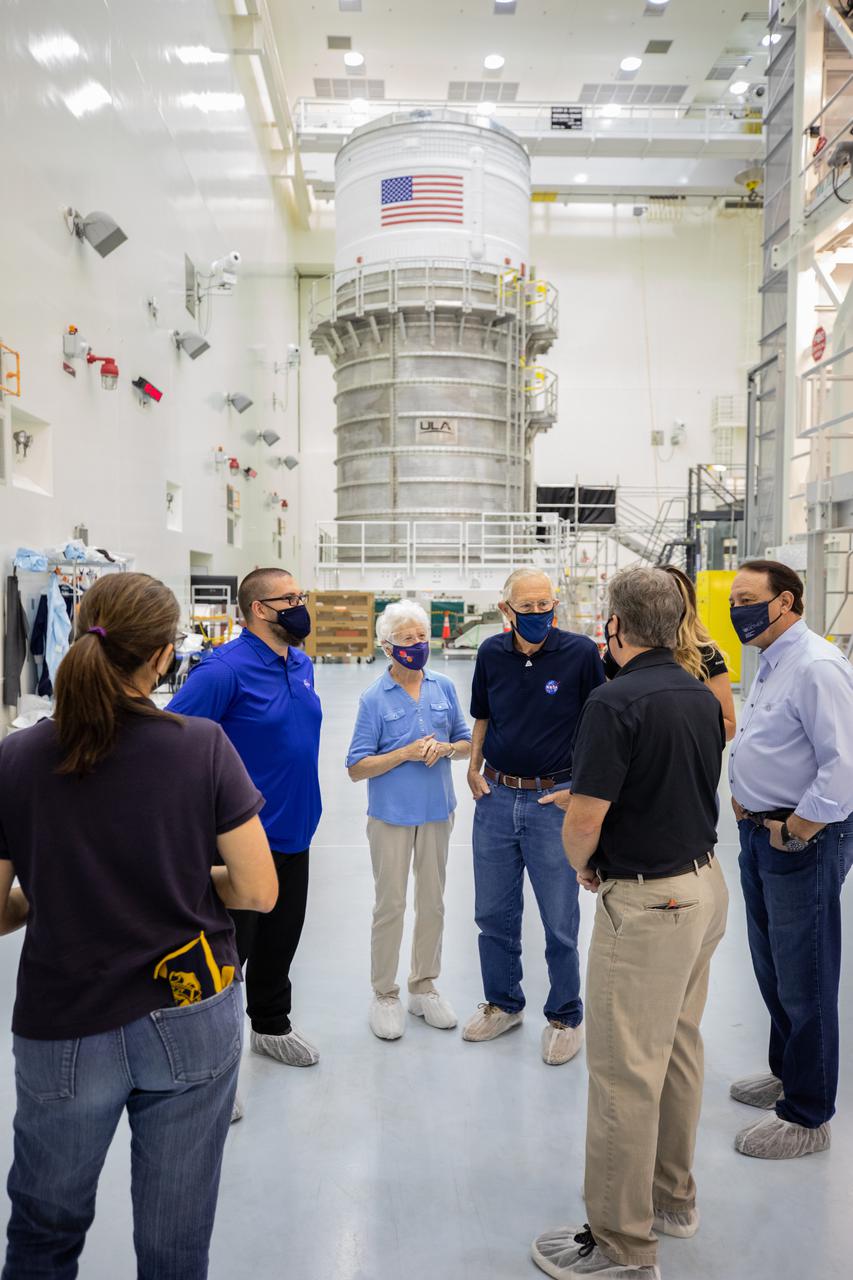
From left to right, Nicole Stott (black shirt back facing camera), NASA Astronaut (former); Adam Leppek, ARES Corporation (KLXSIII), Deputy Element Operations Manager; Dottie Duke, wife of Charlie Duke; Charlie Duke, NASA Astronaut (former); Nick Kindred, Jacobs Technology, Flow Manager; and Jim Keys, Pilot, tour the inside of the Multi-Payload Processing Facility (MPPF) during a visit to NASA’s Kennedy Space Center in Florida on May 10, 2021. Shown in the background is the Interim Cryogenic Propulsion Stage for the Artemis I mission. The first in a series of increasingly complex missions, Artemis I will test Orion and the Space Launch System rocket as an integrated system prior to crewed flights to the Moon.
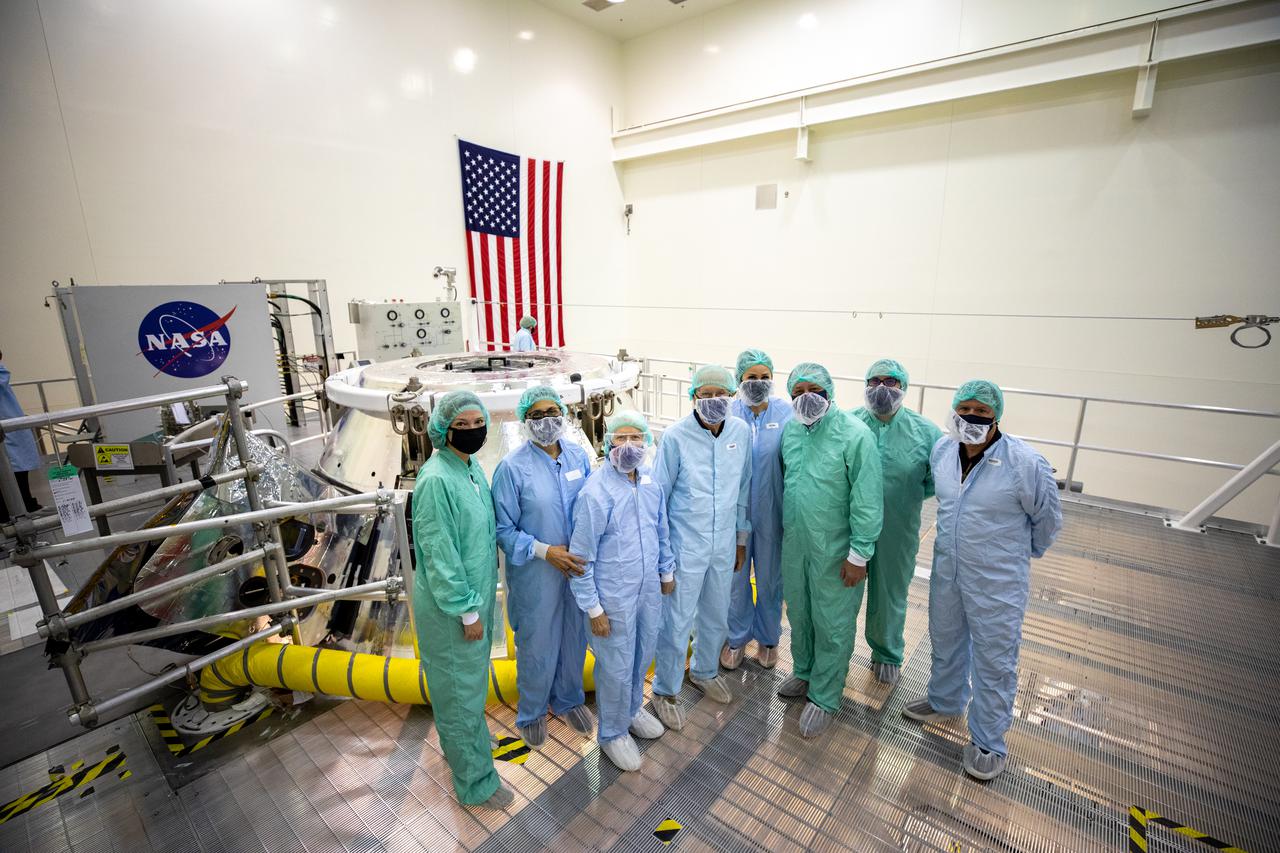
From left to right, Tiffany Nail, KSC Protocol Officer; Nicole Stott, NASA Astronaut (former); Dottie Duke, wife of Charlie Duke; Charlie Duke, NASA Astronaut (former); Christina Korp, Assistant to Charlie Duke; Jim Keys, Pilot; Adam Leppek, ARES Corporation (KLXSIII), Deputy Element Operations Manager; and Nick Kindred, Jacobs Technology, Flow Manager, shown in front of the Orion spacecraft for the Artemis I mission, inside the Multi-Payload Processing Facility (MPPF) during a visit to NASA’s Kennedy Space Center in Florida on May 10, 2021. The first in a series of increasingly complex missions, Artemis I will test Orion and the Space Launch System rocket as an integrated system prior to crewed flights to the Moon.
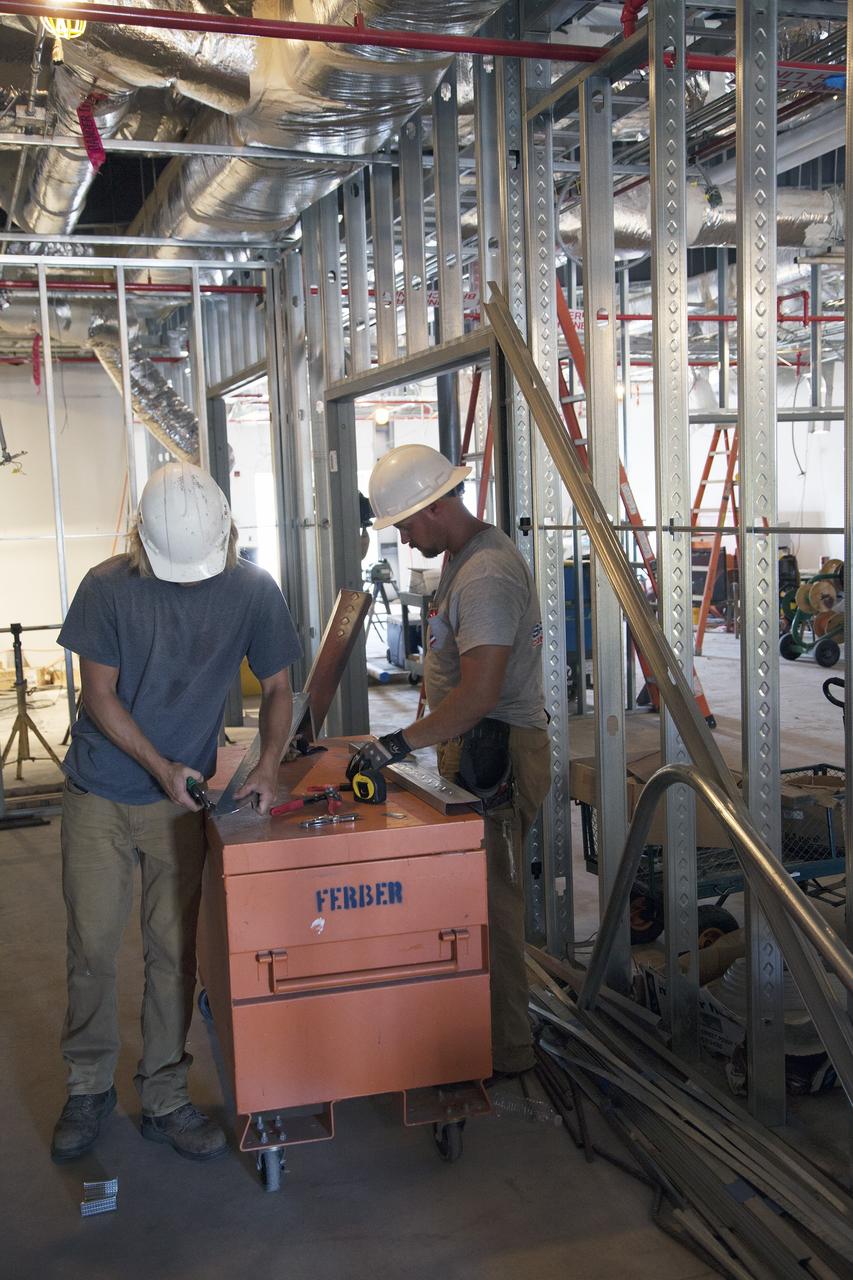
CAPE CANAVERAL, Fla. – Modifications continue on the Multi-Payload Processing Facility, or MPPF, at NASA's Kennedy Space Center in Florida. Inside the MPPF annex building, construction workers are converting the building to a ground support equipment storage area and work area. The pipes overhead are part of the Environmental Control System. Kennedy's Center Operations Directorate is overseeing upgrades to the MPPF for the Ground Systems Development and Operations Program. The extensive upgrades and modernizations will support processing of Orion spacecraft for NASA's exploration missions. The 19,647-square-foot building, originally constructed in 1995, primarily will be used for Orion hypergolic fueling, ammonia servicing and high-pressure gas servicing and checkout before being transported to the Vehicle Assembly Building for integration with the Space Launch System. Photo credit: NASA/Daniel Casper
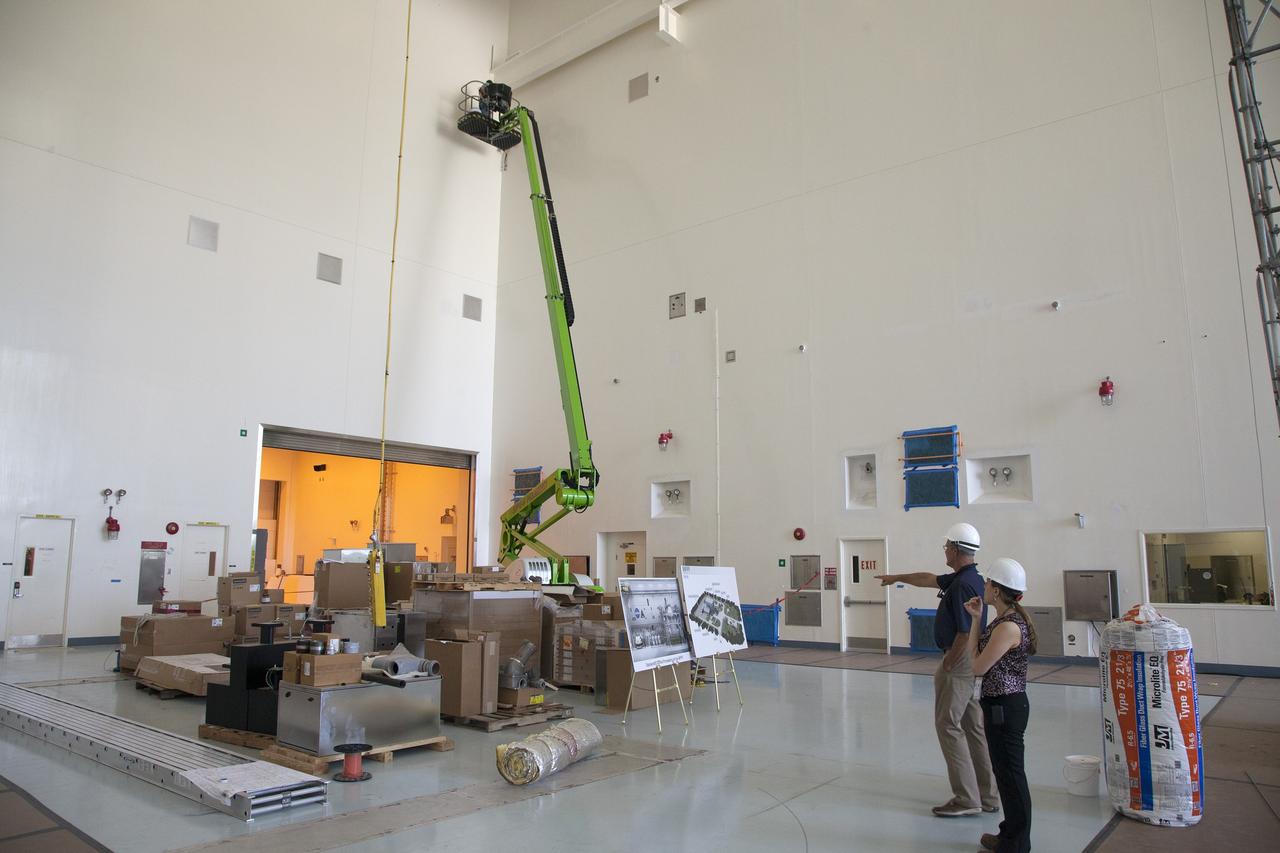
CAPE CANAVERAL, Fla. – Modifications continue on the Multi-Payload Processing Facility, or MPPF, at NASA's Kennedy Space Center in Florida. Inside the high bay, Skip Williams, Ground Systems Development and Operations, or GSDO, deputy project manager for the spacecraft offline element integration team, points out artist illustrations of how the MPPF's interior and exterior will look after modifications and upgrades have been completed. Kennedy's Center Operations Directorate is overseeing upgrades to the MPPF for GSDO Program. The extensive upgrades and modernizations will support processing of Orion spacecraft for NASA's exploration missions. The 19,647-square-foot building, originally constructed in 1995, primarily will be used for Orion hypergolic fueling, ammonia servicing and high-pressure gas servicing and checkout before being transported to the Vehicle Assembly Building for integration with the Space Launch System. Photo credit: NASA/Daniel Casper
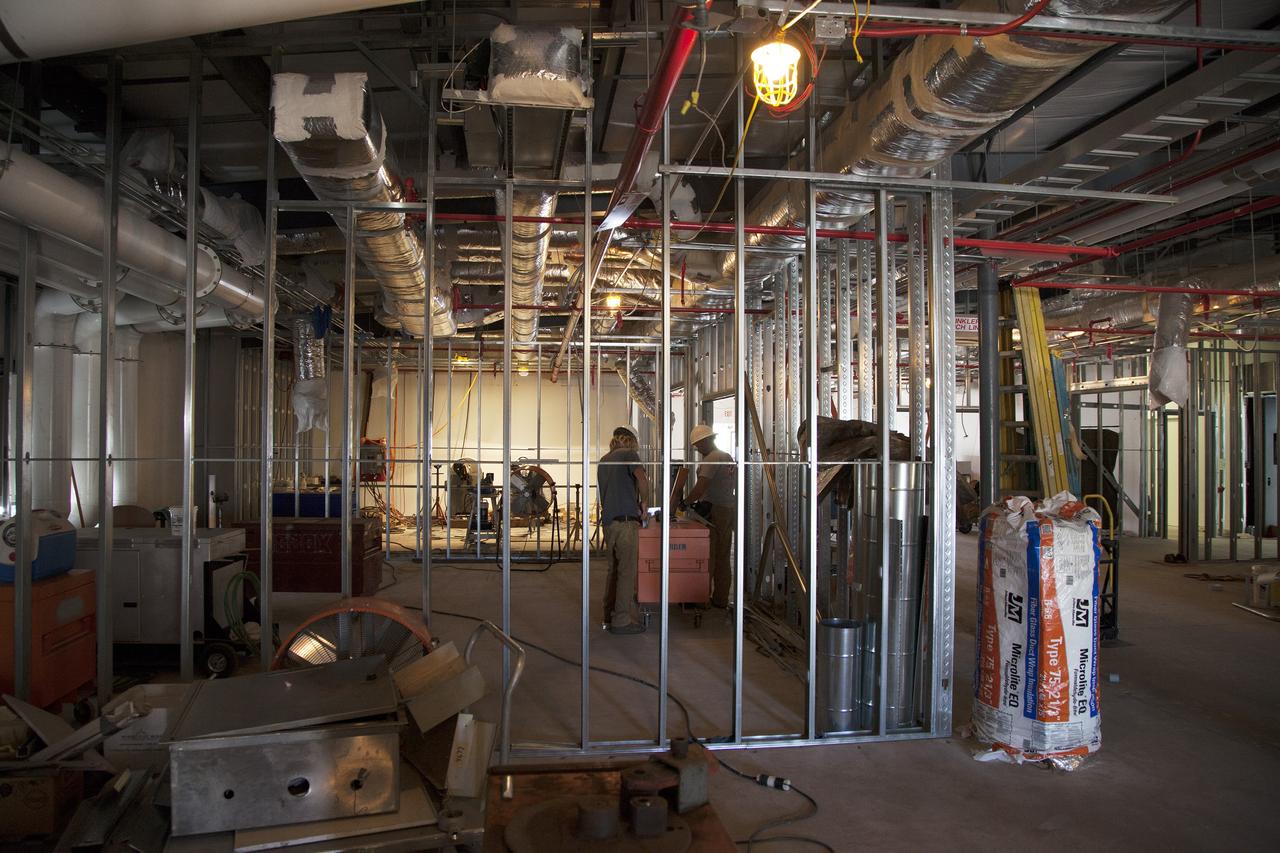
CAPE CANAVERAL, Fla. – Modifications continue on the Multi-Payload Processing Facility, or MPPF, at NASA's Kennedy Space Center in Florida. Inside the MPPF annex building, construction workers are converting the building to a ground support equipment storage area and work area. The pipes overhead are part of the Environmental Control System. Kennedy's Center Operations Directorate is overseeing upgrades to the MPPF for the Ground Systems Development and Operations Program. The extensive upgrades and modernizations will support processing of Orion spacecraft for NASA's exploration missions. The 19,647-square-foot building, originally constructed in 1995, primarily will be used for Orion hypergolic fueling, ammonia servicing and high-pressure gas servicing and checkout before being transported to the Vehicle Assembly Building for integration with the Space Launch System. Photo credit: NASA/Daniel Casper
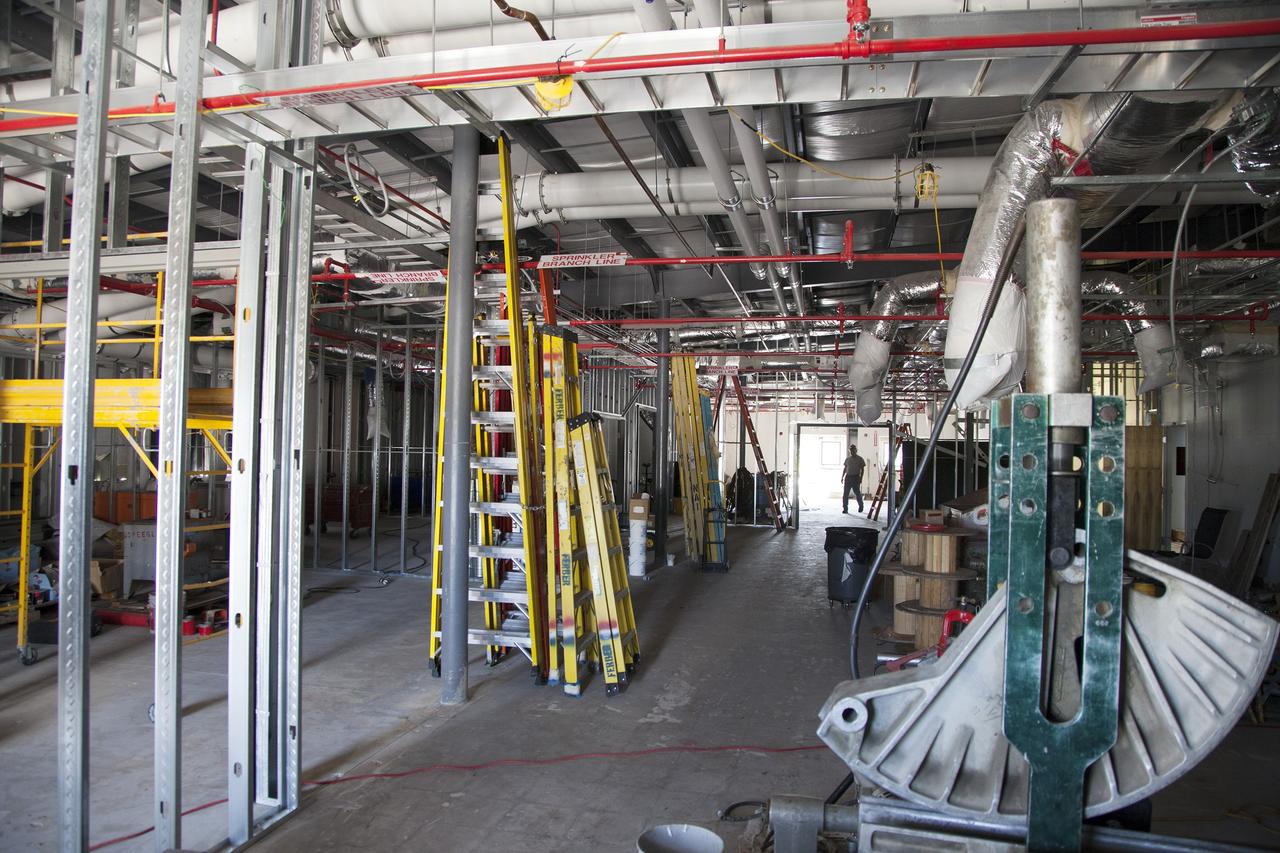
CAPE CANAVERAL, Fla. – Modifications continue on the Multi-Payload Processing Facility, or MPPF, at NASA's Kennedy Space Center in Florida. Inside the MPPF annex building, construction workers are converting the building to a ground support equipment storage area and work area. The pipes overhead are part of the Environmental Control System. Kennedy's Center Operations Directorate is overseeing upgrades to the MPPF for the Ground Systems Development and Operations Program. The extensive upgrades and modernizations will support processing of Orion spacecraft for NASA's exploration missions. The 19,647-square-foot building, originally constructed in 1995, primarily will be used for Orion hypergolic fueling, ammonia servicing and high-pressure gas servicing and checkout before being transported to the Vehicle Assembly Building for integration with the Space Launch System. Photo credit: NASA/Daniel Casper

NASA’s Artemis II Orion spacecraft arrives at the Multi-Payload Processing Facility at Kennedy Space Center in Florida on Saturday, May 3, 2025, to undergo fueling and processing operations for prelaunch operations. The Artemis II test flight is the first crewed flight under NASA’s Artemis campaign and is another step toward missions on the lunar surface and helping the agency prepare for future human missions to Mars.
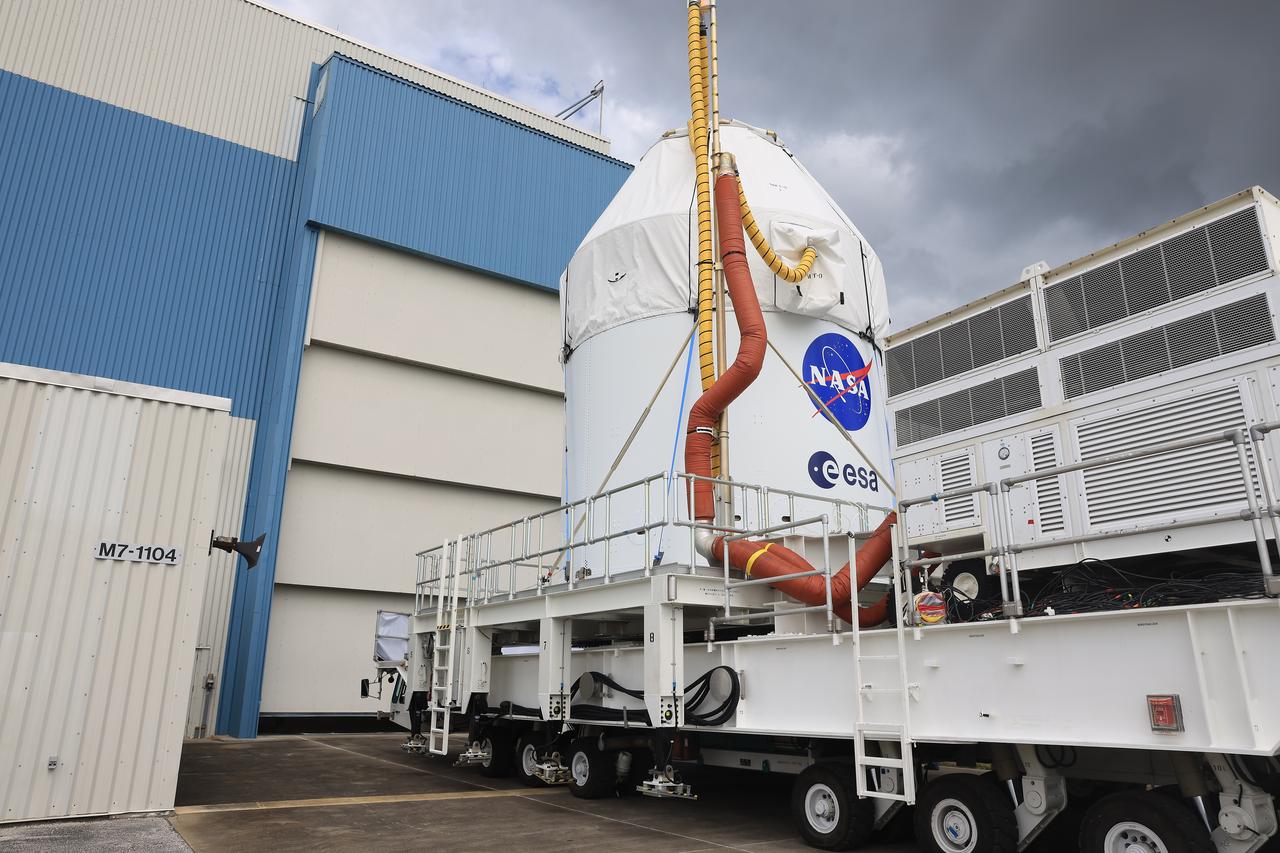
NASA’s Artemis II Orion spacecraft arrives at the Multi-Payload Processing Facility at Kennedy Space Center in Florida on Saturday, May 3, 2025, to undergo fueling and processing operations for prelaunch operations. The Artemis II test flight is the first crewed flight under NASA’s Artemis campaign and is another step toward missions on the lunar surface and helping the agency prepare for future human missions to Mars.
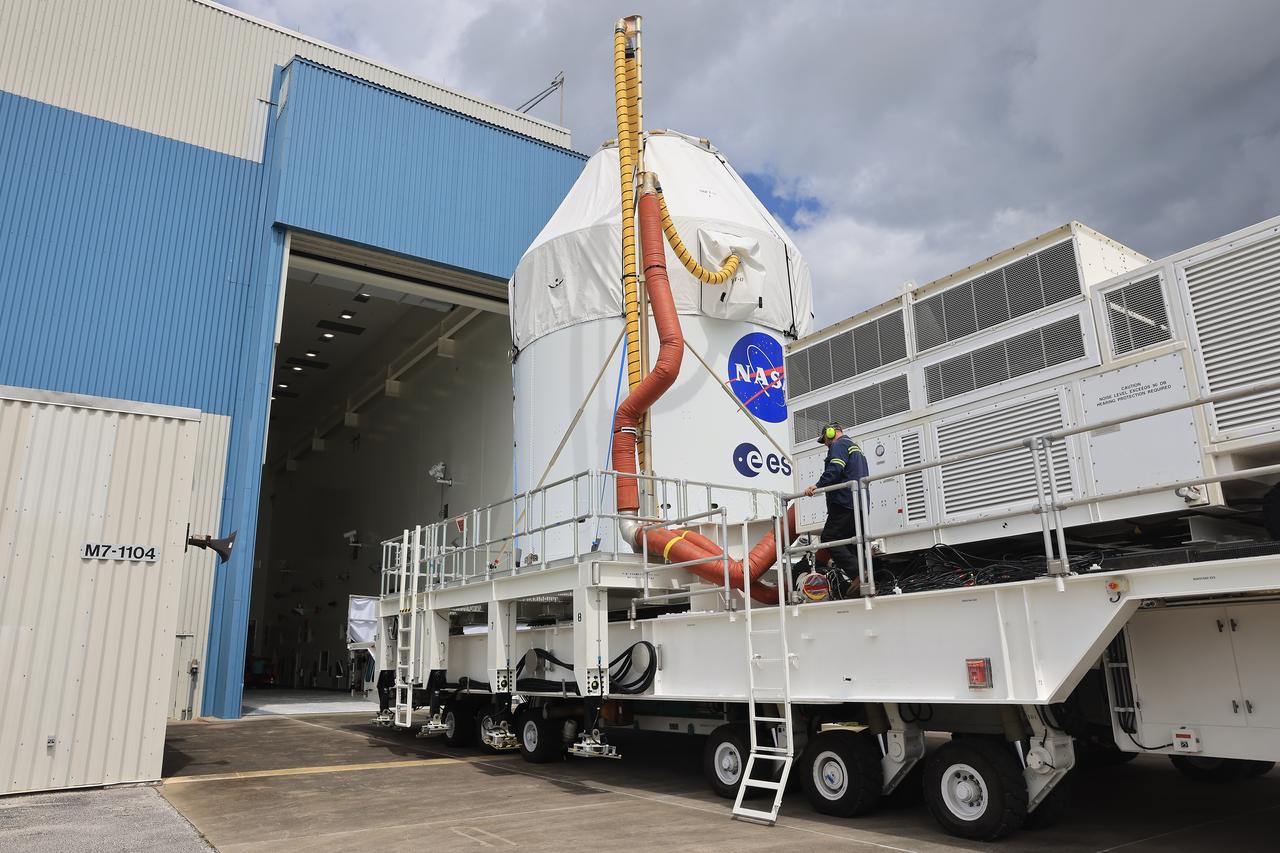
NASA’s Artemis II Orion spacecraft arrives at the Multi-Payload Processing Facility at Kennedy Space Center in Florida on Saturday, May 3, 2025, to undergo fueling and processing operations for prelaunch operations. The Artemis II test flight is the first crewed flight under NASA’s Artemis campaign and is another step toward missions on the lunar surface and helping the agency prepare for future human missions to Mars.
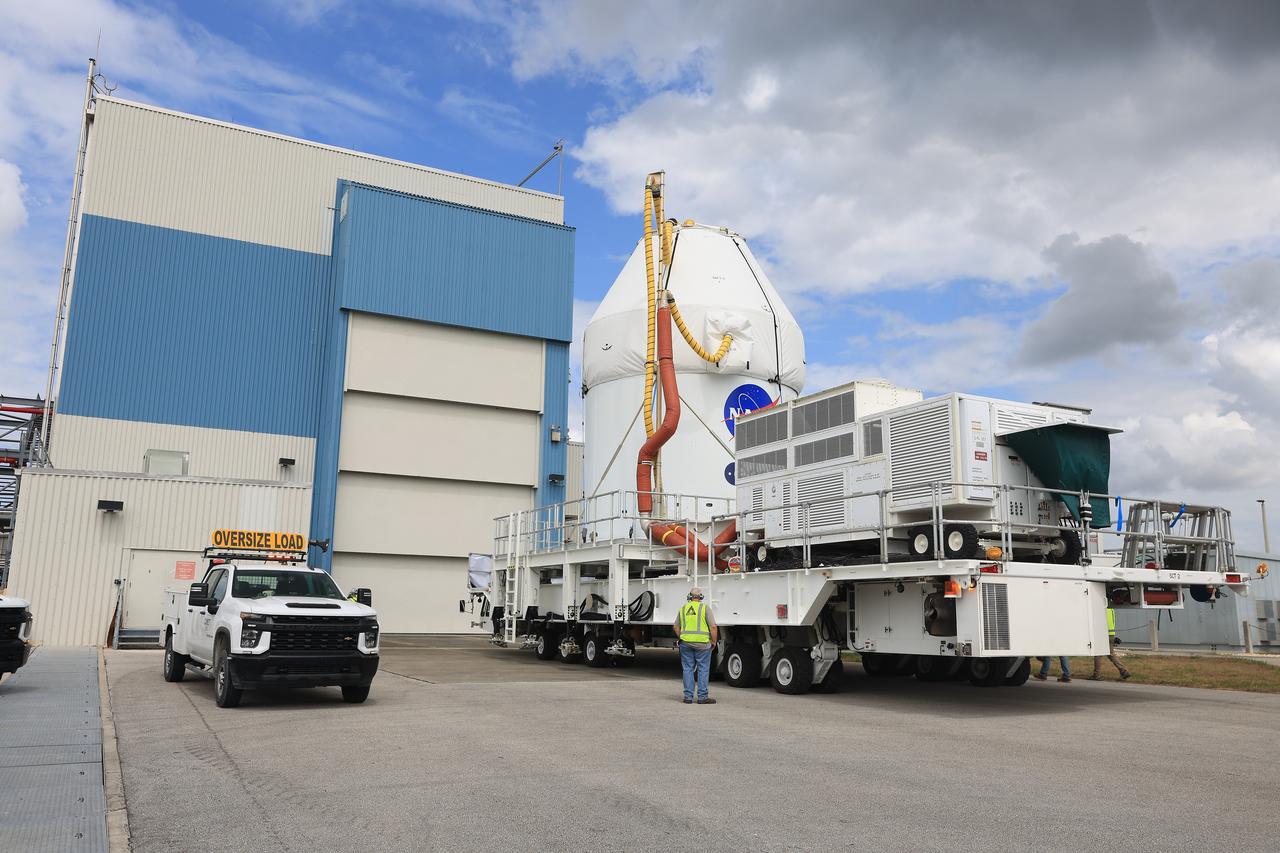
NASA’s Artemis II Orion spacecraft arrives at the Multi-Payload Processing Facility at Kennedy Space Center in Florida on Saturday, May 3, 2025, to undergo fueling and processing operations for prelaunch operations. The Artemis II test flight is the first crewed flight under NASA’s Artemis campaign and is another step toward missions on the lunar surface and helping the agency prepare for future human missions to Mars.
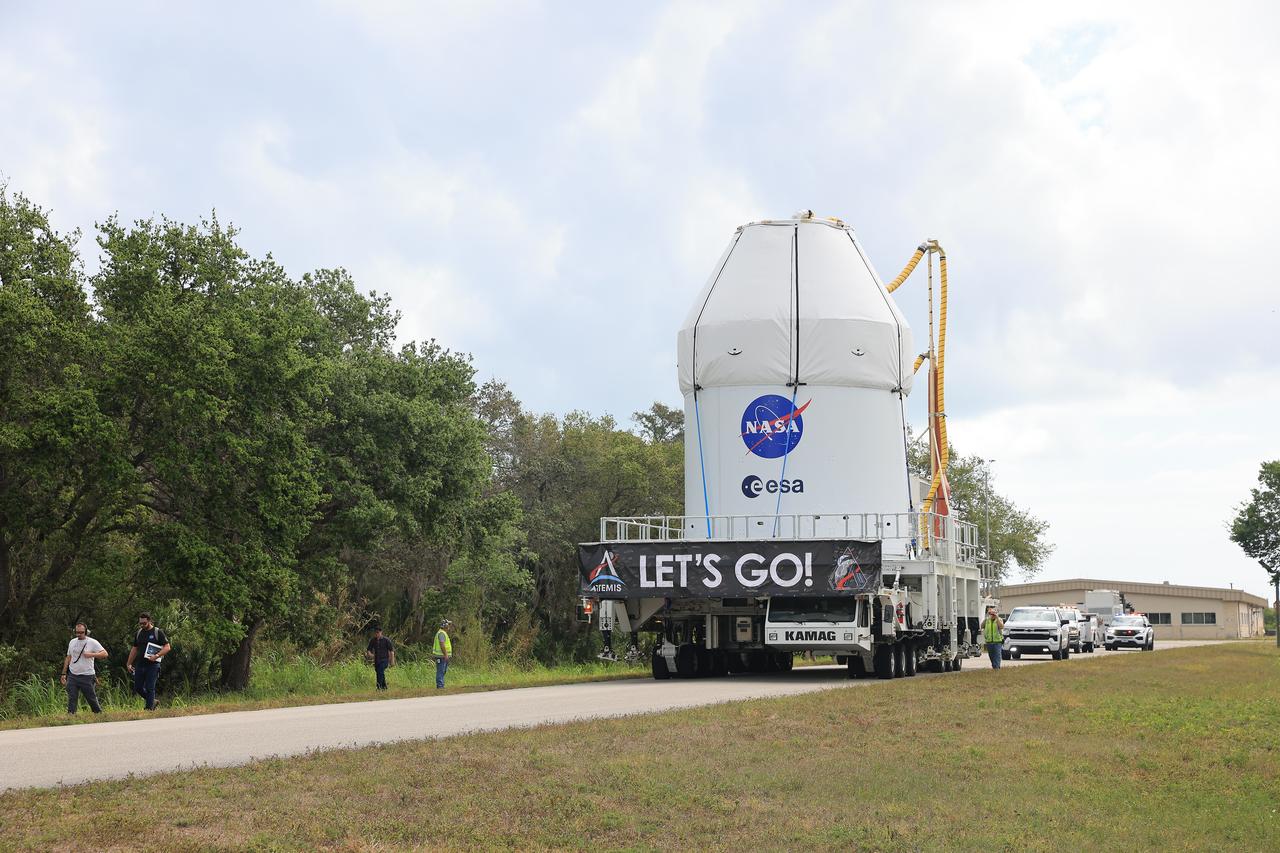
NASA’s Artemis II Orion spacecraft arrives at the Multi-Payload Processing Facility at Kennedy Space Center in Florida on Saturday, May 3, 2025, to undergo fueling and processing operations for prelaunch operations. The Artemis II test flight is the first crewed flight under NASA’s Artemis campaign and is another step toward missions on the lunar surface and helping the agency prepare for future human missions to Mars.

CAPE CANAVERAL, Fla. – Modifications continue on the Multi-Payload Processing Facility, or MPPF, at NASA's Kennedy Space Center in Florida. Inside the high bay, a new fire suppression system and piping are being installed in the ceiling. Kennedy's Center Operations Directorate is overseeing upgrades to the MPPF for the Ground Systems Development and Operations Program. The extensive upgrades and modernizations will support processing of Orion spacecraft for NASA's exploration missions. The 19,647-square-foot building, originally constructed in 1995, primarily will be used for Orion hypergolic fueling, ammonia servicing and high-pressure gas servicing and checkout before being transported to the Vehicle Assembly Building for integration with the Space Launch System. Photo credit: NASA/Daniel Casper
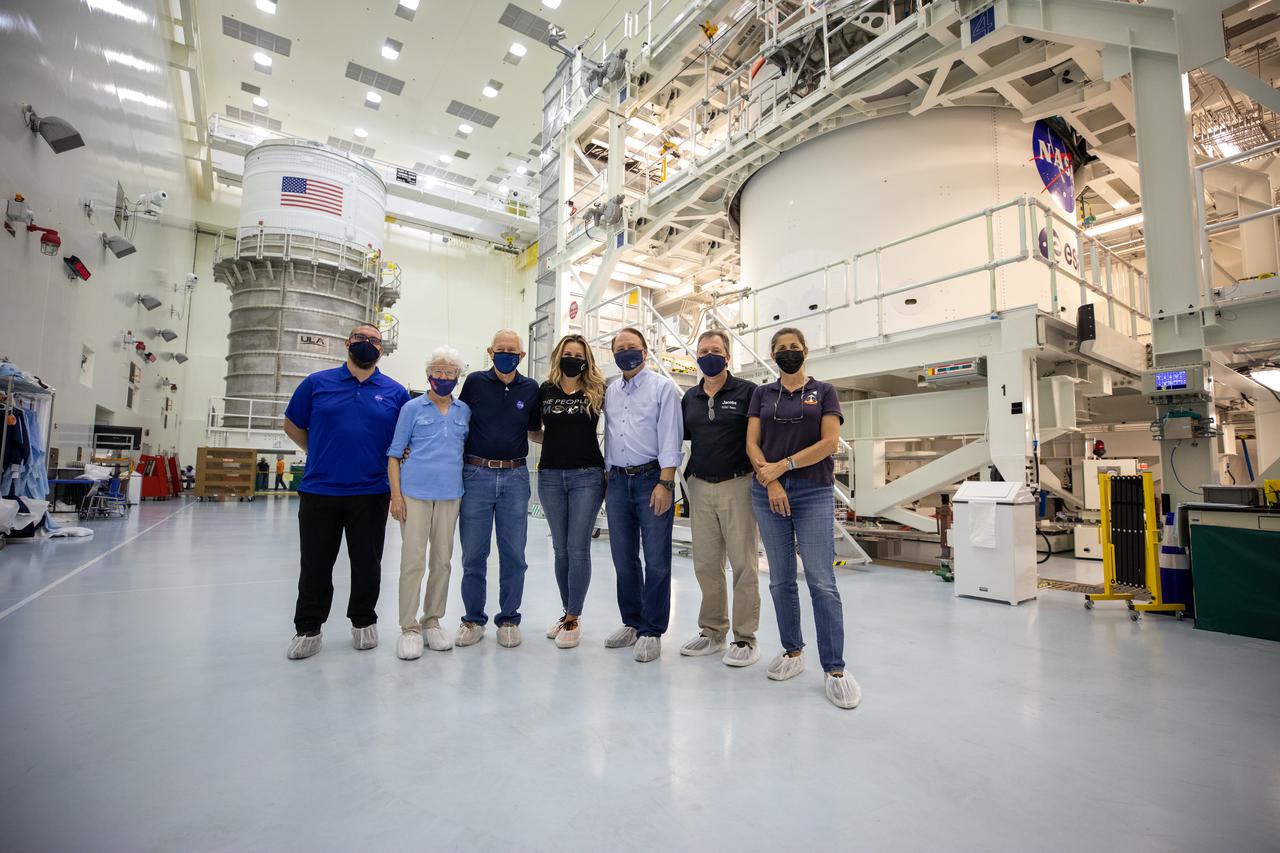
From left to right, Adam Leppek, ARES Corporation (KLXSIII), Deputy Element Operations Manager; Dottie Duke, wife of Charlie Duke; Charlie Duke, NASA Astronaut (former); Christina Korp, Assistant to Charlie Duke; Jim Keys, Pilot; Nick Kindred, Jacobs Technology, Flow Manager; and Nicole Stott, NASA Astronaut (former), shown in the Multi-Payload Processing Facility (MPPF) at NASA's Kennedy Space Center in Florida on May 10, 2021. In the background, on the left, is the Interim Cryogenic Propulsion Stage for the Space Launch System (SLS) rocket. On the right, the NASA “meatball” insignia and ESA (European Space Agency) logos on the European-built service module are visible. Both pieces of hardware will undergo fueling and servicing in the facility ahead of the Artemis I launch by teams from NASA’s Exploration Ground Systems and their primary contractor, Jacobs Technology. The first in a series of increasingly complex missions, Artemis I will test Orion and the Space Launch System rocket as an integrated system prior to crewed flights to the Moon.
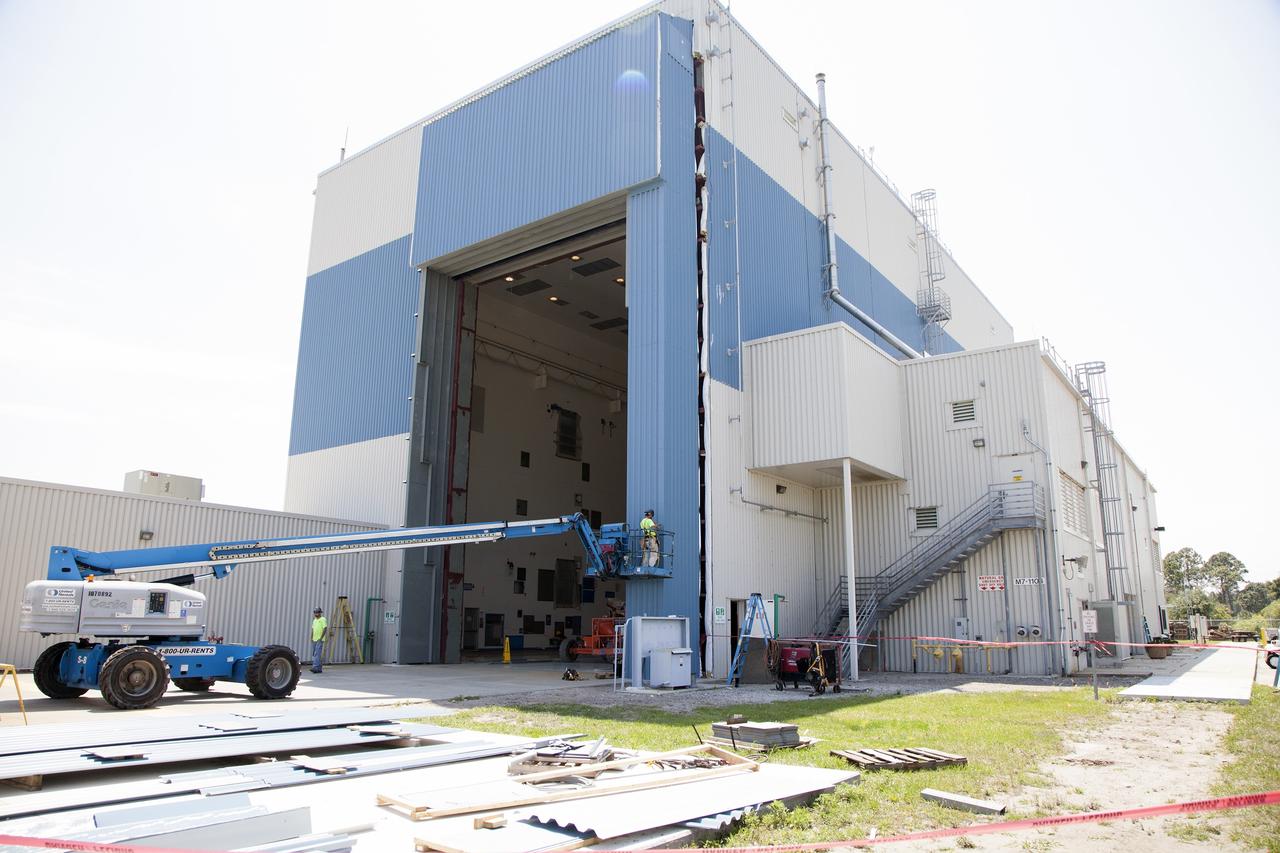
CAPE CANAVERAL, Fla. – Modifications continue on the Multi-Payload Processing Facility, or MPPF, at NASA's Kennedy Space Center in Florida. The high bay entrance was recently enlarged and a new door installed. Construction workers are installing new siding around the entrance. Kennedy's Center Operations Directorate is overseeing upgrades to the MPPF for the Ground Systems Development and Operations Program. The extensive upgrades and modernizations will support processing of Orion spacecraft for NASA's exploration missions. The 19,647-square-foot building, originally constructed in 1995, primarily will be used for Orion hypergolic fueling, ammonia servicing and high-pressure gas servicing and checkout before being transported to the Vehicle Assembly Building for integration with the Space Launch System. Photo credit: NASA/Daniel Casper
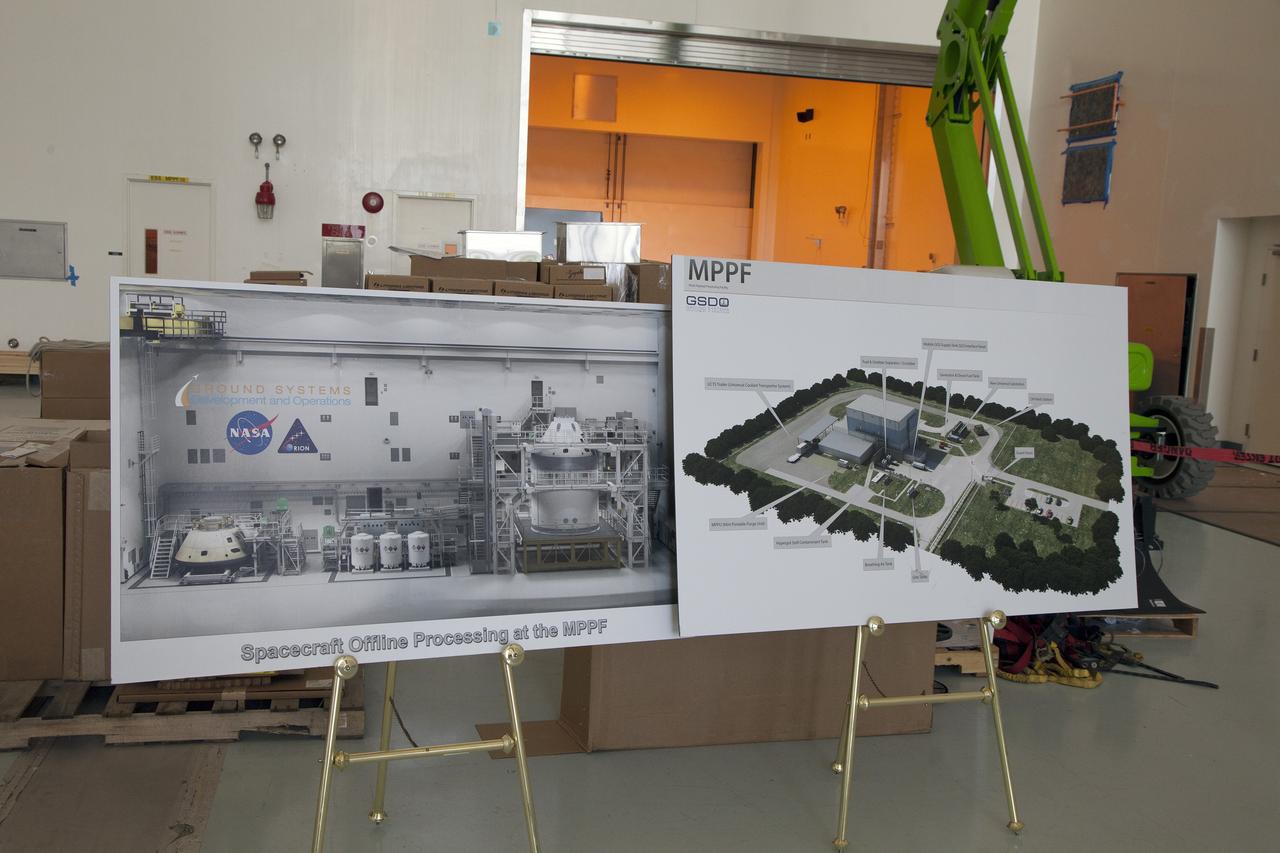
CAPE CANAVERAL, Fla. – Modifications continue on the Multi-Payload Processing Facility, or MPPF, at NASA's Kennedy Space Center in Florida. Artist illustrations on display inside the high bay show how the interior and exterior will look after the modifications and upgrades have been completed. Kennedy's Center Operations Directorate is overseeing upgrades to the MPPF for the Ground Systems Development and Operations Program. The extensive upgrades and modernizations will support processing of Orion spacecraft for NASA's exploration missions. The 19,647-square-foot building, originally constructed in 1995, primarily will be used for Orion hypergolic fueling, ammonia servicing and high-pressure gas servicing and checkout before being transported to the Vehicle Assembly Building for integration with the Space Launch System. Photo credit: NASA/Daniel Casper
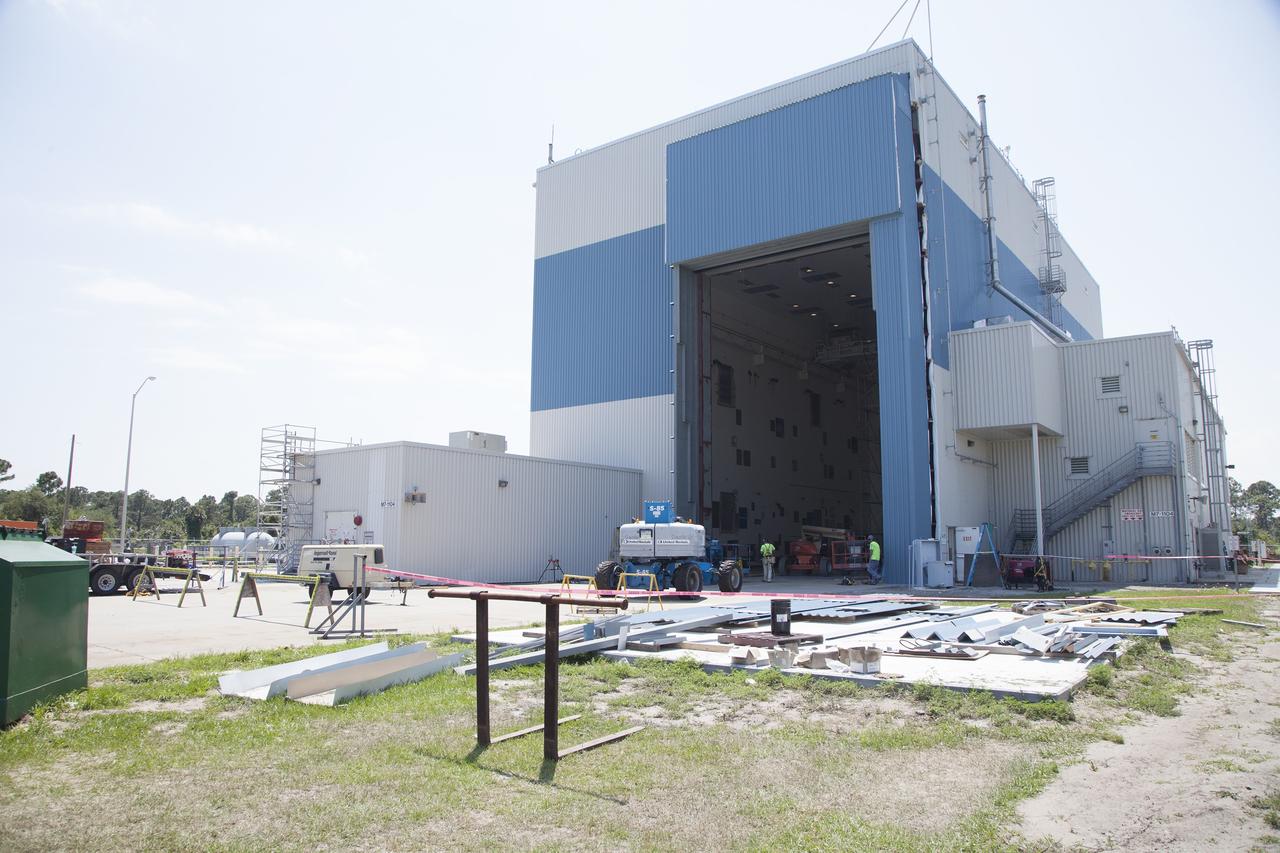
CAPE CANAVERAL, Fla. – Modifications continue on the Multi-Payload Processing Facility, or MPPF, at NASA's Kennedy Space Center in Florida. The high bay entrance was recently enlarged and a new door installed. New siding is being installed around the entrance. Kennedy's Center Operations Directorate is overseeing upgrades to the MPPF for the Ground Systems Development and Operations Program. The extensive upgrades and modernizations will support processing of Orion spacecraft for NASA's exploration missions. The 19,647-square-foot building, originally constructed in 1995, primarily will be used for Orion hypergolic fueling, ammonia servicing and high-pressure gas servicing and checkout before being transported to the Vehicle Assembly Building for integration with the Space Launch System. Photo credit: NASA/Daniel Casper
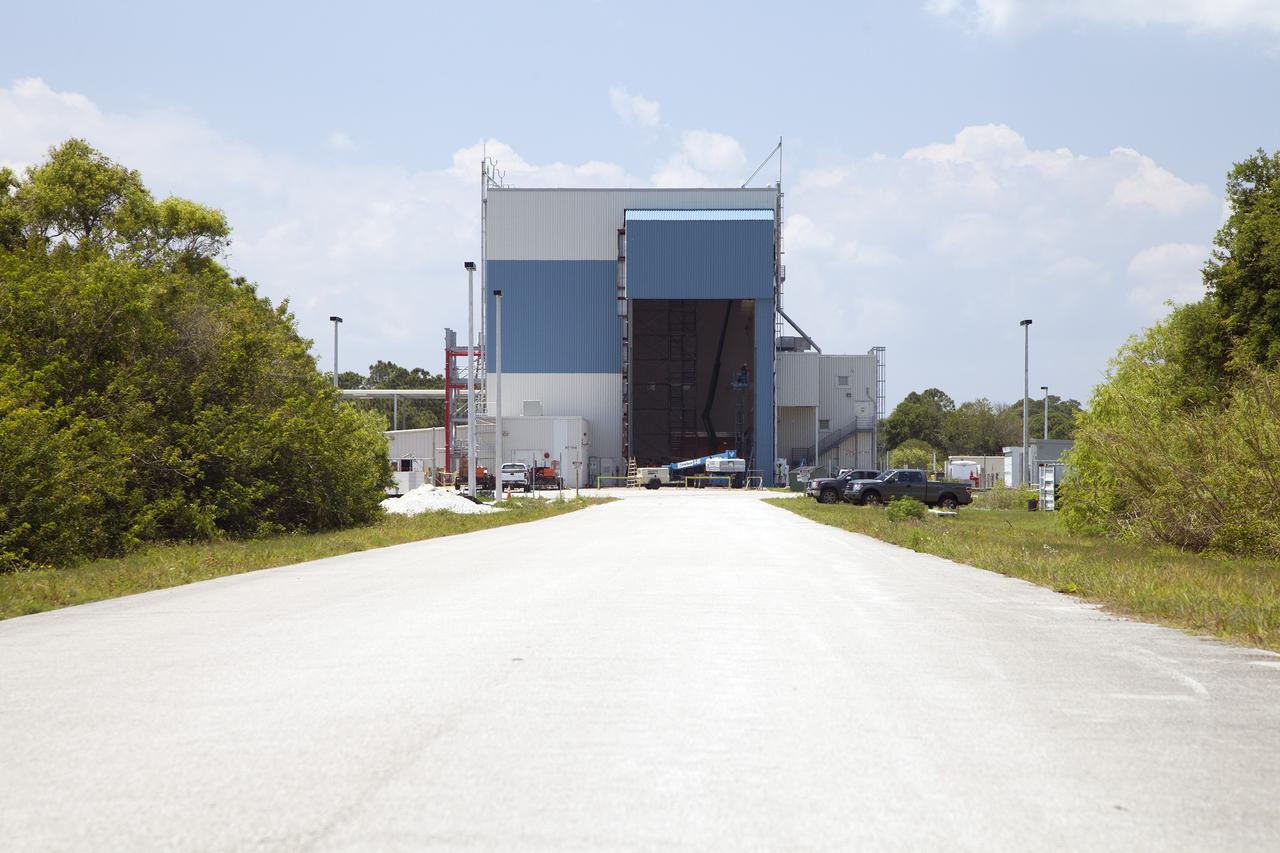
CAPE CANAVERAL, Fla. – Modifications continue on the Multi-Payload Processing Facility, or MPPF, at NASA's Kennedy Space Center in Florida. The high bay entrance was recently enlarged and a new door installed. New siding is being installed around the entrance. Kennedy's Center Operations Directorate is overseeing upgrades to the MPPF for the Ground Systems Development and Operations Program. The extensive upgrades and modernizations will support processing of Orion spacecraft for NASA's exploration missions. The 19,647-square-foot building, originally constructed in 1995, primarily will be used for Orion hypergolic fueling, ammonia servicing and high-pressure gas servicing and checkout before being transported to the Vehicle Assembly Building for integration with the Space Launch System. Photo credit: NASA/Daniel Casper
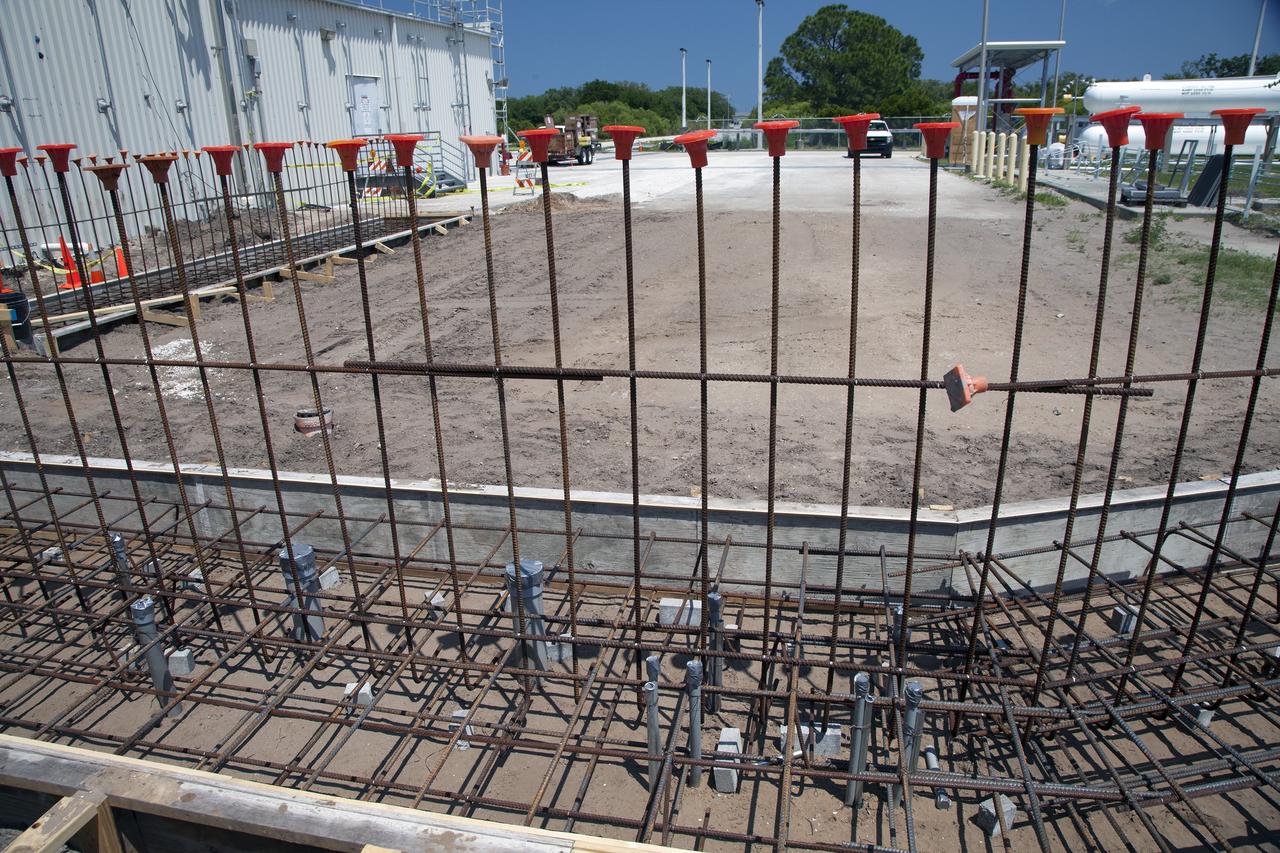
CAPE CANAVERAL, Fla. – Modifications continue on the Multi-Payload Processing Facility, or MPPF, at NASA's Kennedy Space Center in Florida. Construction workers have laid rebar and conduits have been placed for the hypergol scrubber containment wall. Kennedy's Center Operations Directorate is overseeing upgrades to the MPPF for the Ground Systems Development and Operations Program. The extensive upgrades and modernizations will support processing of Orion spacecraft for NASA's exploration missions. The 19,647-square-foot building, originally constructed in 1995, primarily will be used for Orion hypergolic fueling, ammonia servicing and high-pressure gas servicing and checkout before being transported to the Vehicle Assembly Building for integration with the Space Launch System. Photo credit: NASA/Daniel Casper
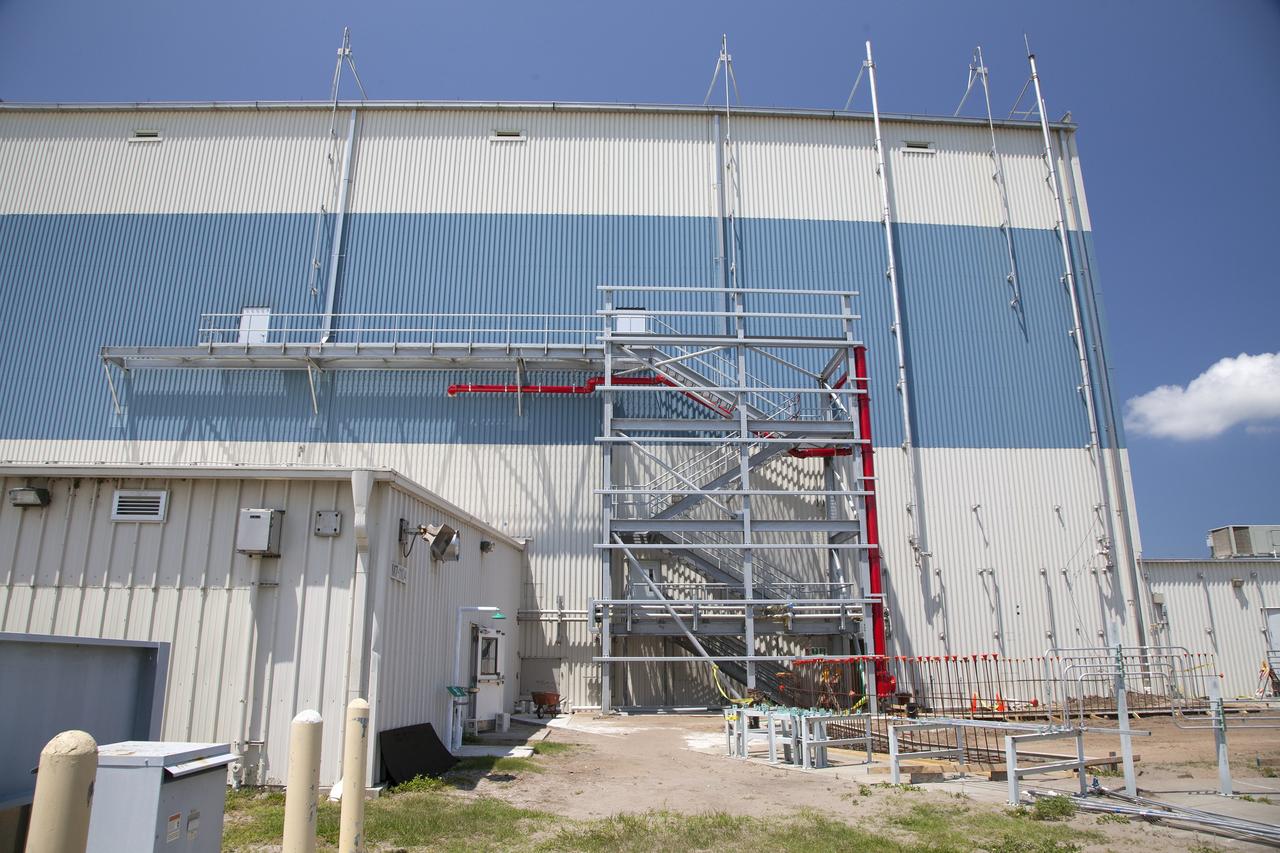
CAPE CANAVERAL, Fla. – Modifications continue on the Multi-Payload Processing Facility, or MPPF, at NASA's Kennedy Space Center in Florida. A new emergency egress stairway has been constructed and a steel structure has been built around it so that walls can be added. The red pipes are the recently-installed fire deluge system. The gray pipes are the hazardous gas venting system. Kennedy's Center Operations Directorate is overseeing upgrades to the MPPF for the Ground Systems Development and Operations Program. The extensive upgrades and modernizations will support processing of Orion spacecraft for NASA's exploration missions. The 19,647-square-foot building, originally constructed in 1995, primarily will be used for Orion hypergolic fueling, ammonia servicing and high-pressure gas servicing and checkout before being transported to the Vehicle Assembly Building for integration with the Space Launch System. Photo credit: NASA/Daniel Casper
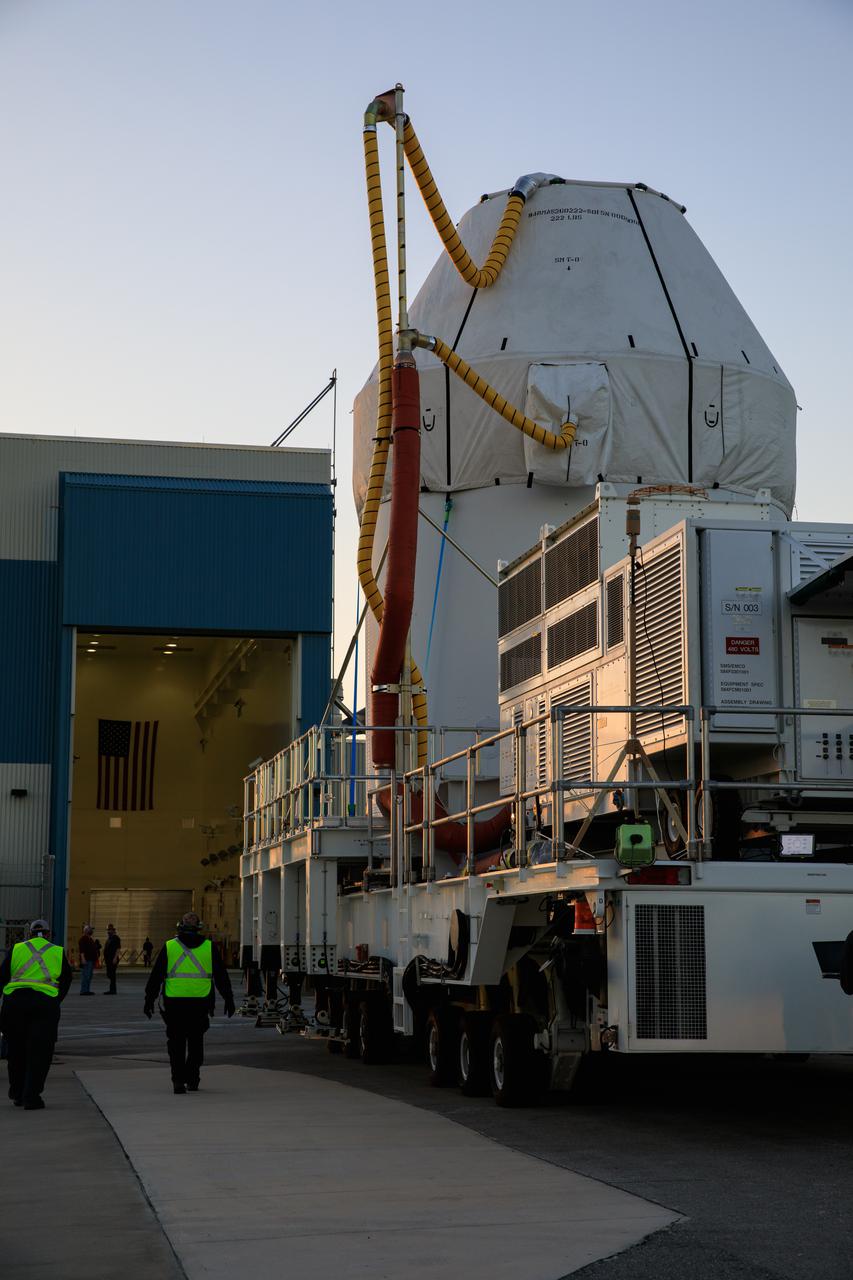
Orion arrives at its next stop along its path to the pad ahead of the Artemis I launch on Jan. 16, 2021, at Kennedy Space Center’s Multi-Payload Processing Facility, where the Exploration Ground Systems and Jacobs teams will take over ground processing. Here, the spacecraft will be “”gassed up” and fueled with commodities as part of preparations ahead of the mission.
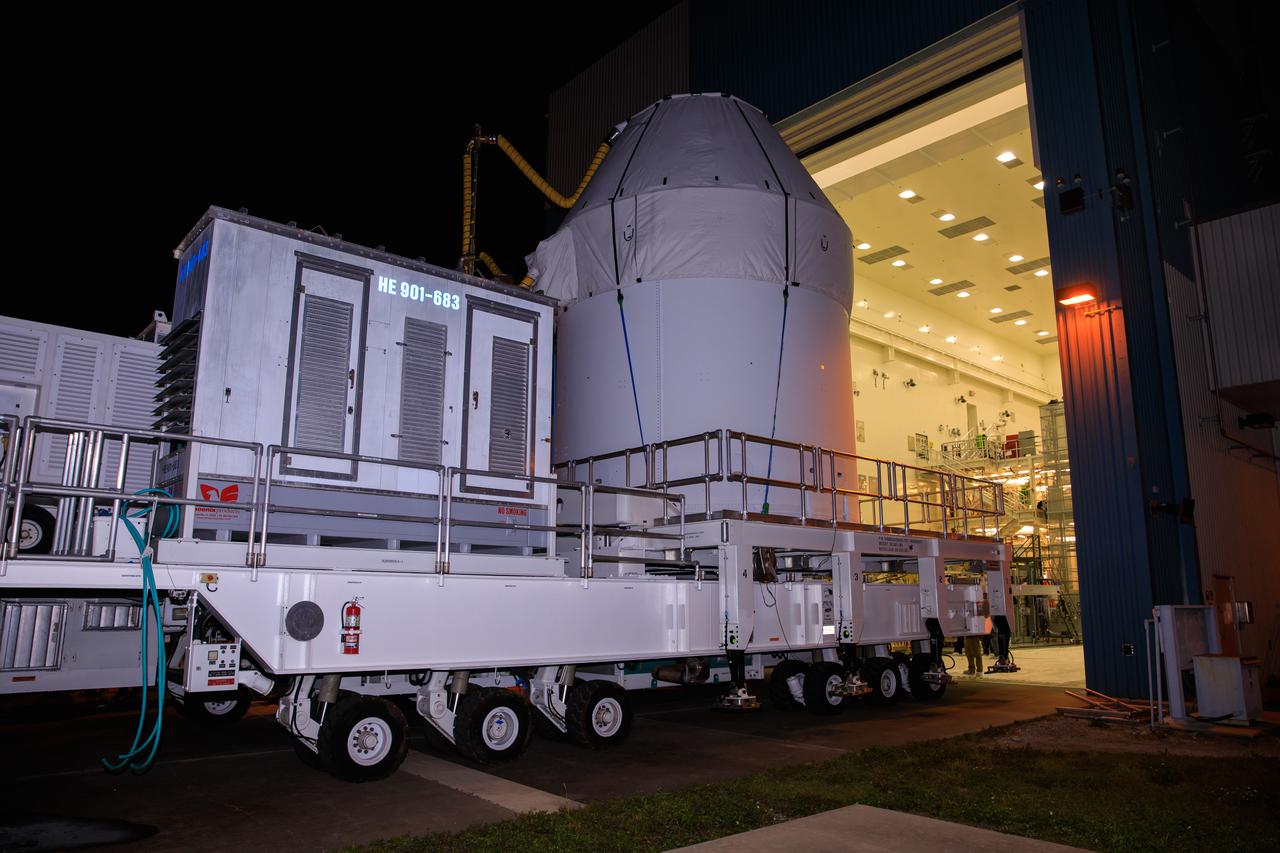
Orion arrives at its next stop along its path to the pad ahead of the Artemis I launch on Jan. 16, 2021, at Kennedy Space Center’s Multi-Payload Processing Facility, where the Exploration Ground Systems and Jacobs teams will take over ground processing. Here, the spacecraft will be “”gassed up” and fueled with commodities as part of preparations ahead of the mission.
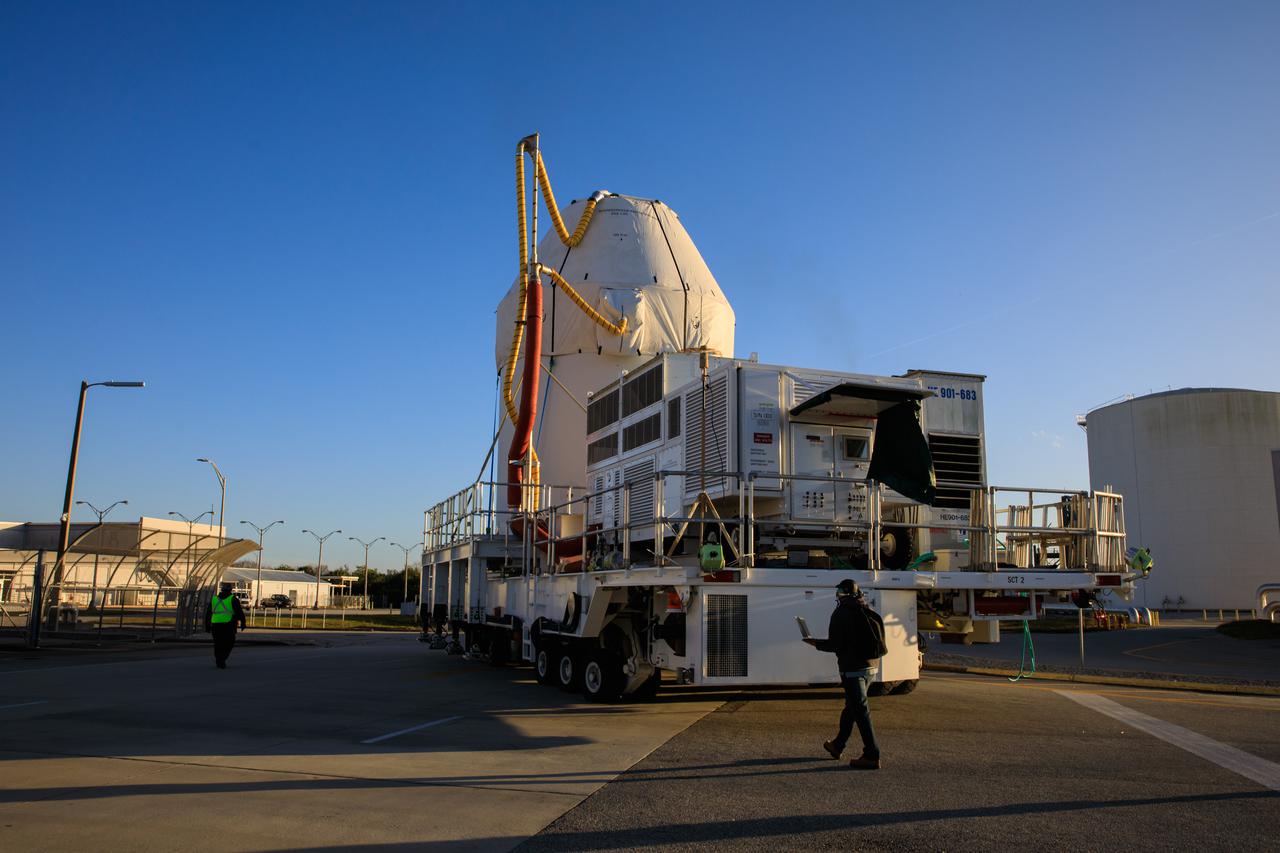
Orion sits atop a transport vehicle as it departs from its home at the Neil Armstrong Operations and Checkout Building at NASA’s Kennedy Space Center in Florida on Jan.16, 2021. Orion’s next stop will be the Multi-Payload Processing Facility where it will undergo ground processing with the Exploration Ground Systems team taking over ground processing ahead of the Artemis I launch.
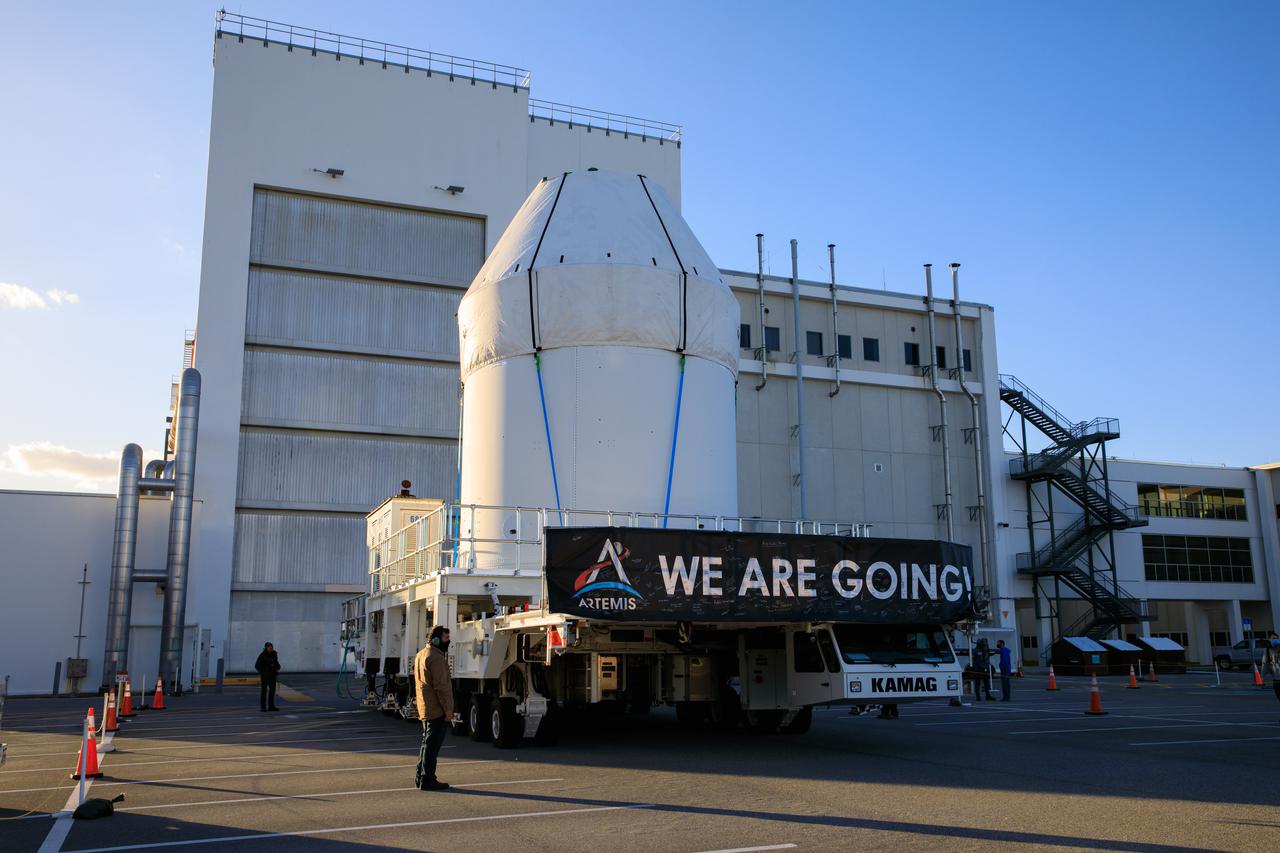
Orion sits atop a transport vehicle as it departs from its home at the Neil Armstrong Operations and Checkout Building at NASA’s Kennedy Space Center in Florida on Jan.16, 2021. Orion’s next stop will be the Multi-Payload Processing Facility where it will undergo ground processing with the Exploration Ground Systems team taking over ground processing ahead of the Artemis I launch.

Orion arrives at its next stop along its path to the pad ahead of the Artemis I launch on Jan. 16, 2021, at Kennedy Space Center’s Multi-Payload Processing Facility, where the Exploration Ground Systems and Jacobs teams will take over ground processing. Here, the spacecraft will be “”gassed up” and fueled with commodities as part of preparations ahead of the mission.
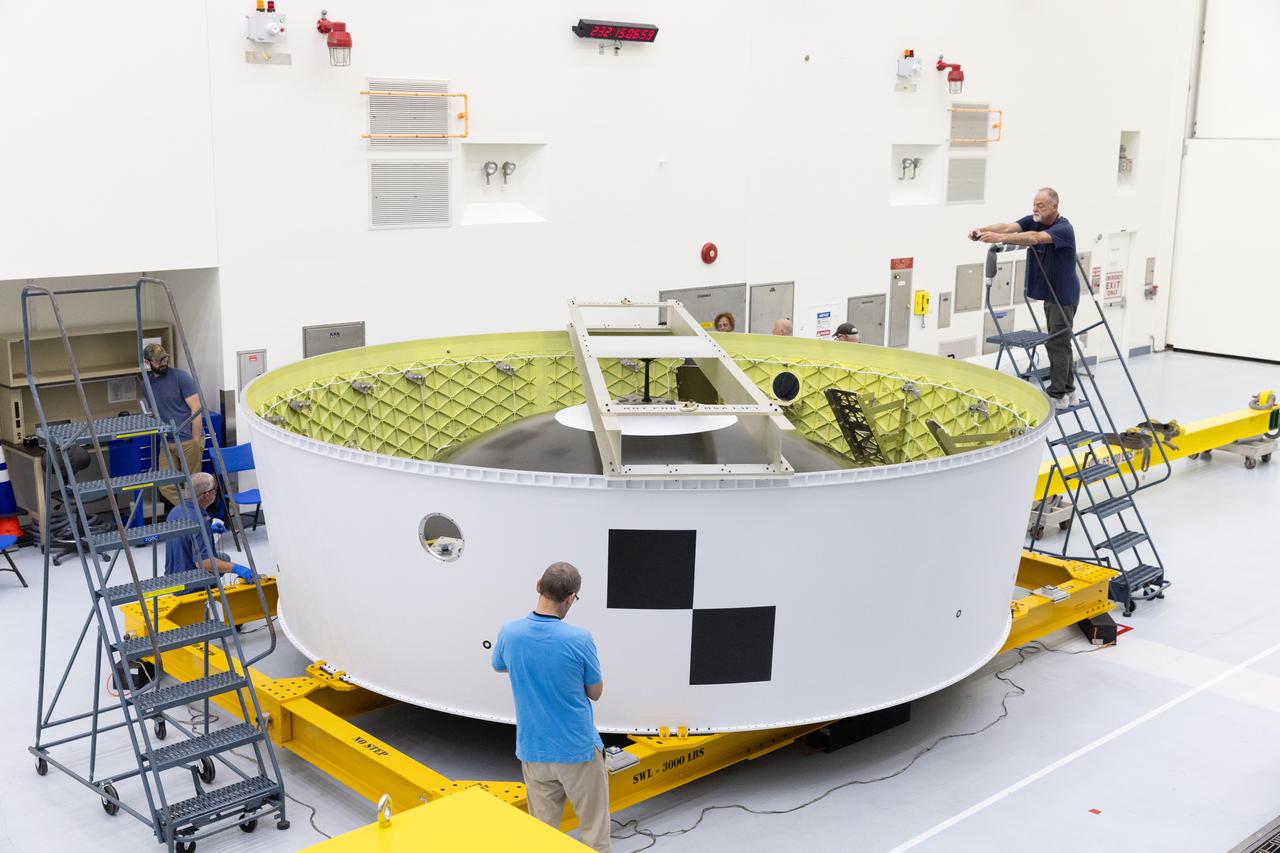
Technicians at NASA’s Kennedy Space Center in Florida complete routine inspections the Artemis II Orion stage adapter on Wednesday, Aug. 20, 2025, to the spaceport’s Multi-Payload Processing Facility to undergo CubeSat integration following its arrival from the agency’s Marshall Space Flight Center in Huntsville, Alabama. NASA Marshall built the Orion stage adapter which connects to the SLS (Space Launch System) rocket’s interim cryogenic propulsion stage to the Orion spacecraft and protects Orion from flammable gases generated during launch. The Artemis II test flight will take four astronauts around the Moon and return them back home in early 2026.
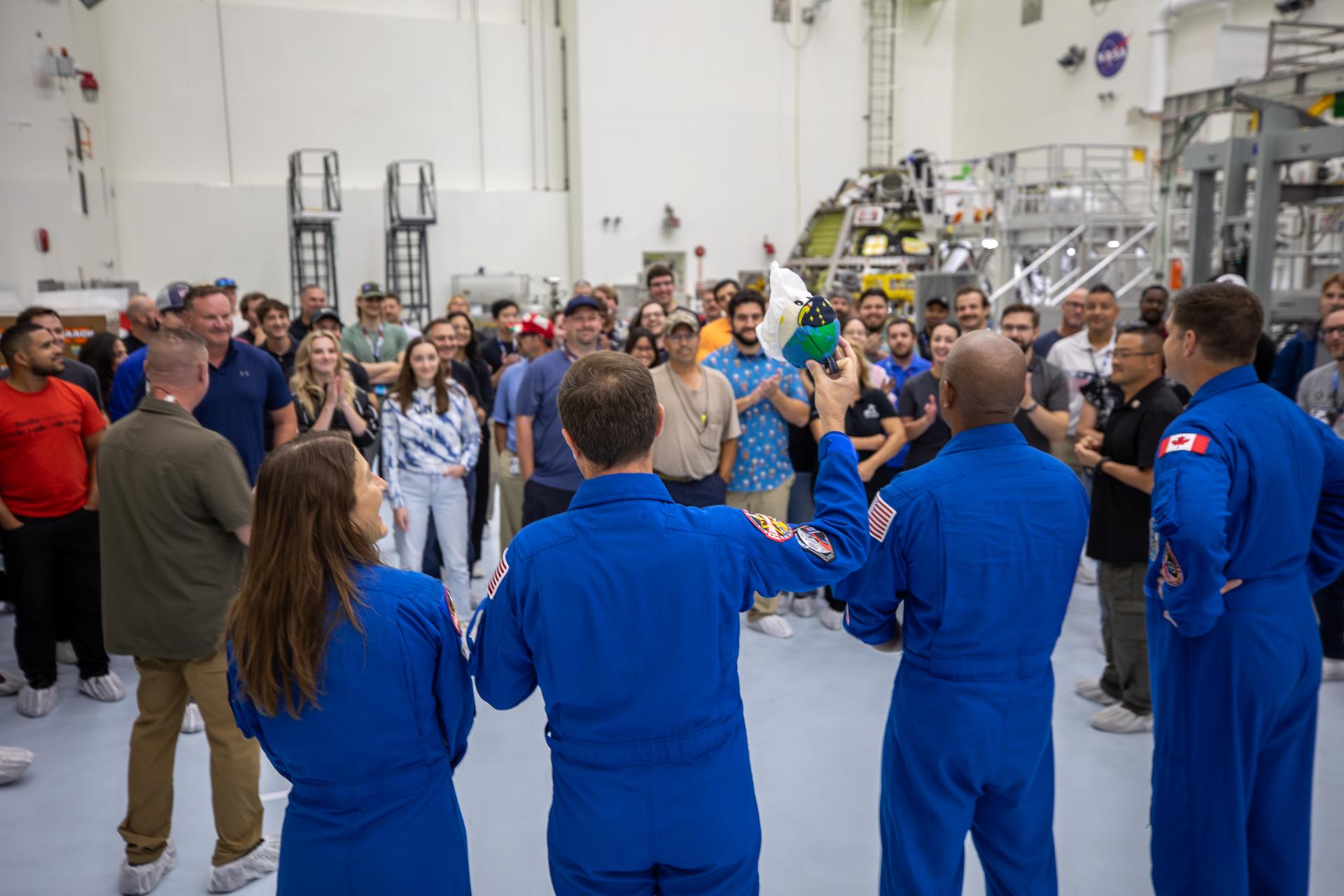
From left, Artemis II NASA astronauts Christina Koch, Reid Wiseman, Victor Glover, along with CSA (Canadian Space Agency) astronaut Jeremy Hansen speak to employees inside the Multi-Payload Processing Facility at NASA’s Kennedy Space Center in Florida on Wednesday, July 8, 2026. The crew returned to NASA Kennedy for their first official visit since launch of Artemis II on Wednesday, April 1, 2026, to visit with the center’s workforce and tour facilities to view progress on Artemis III prelaunch processing.