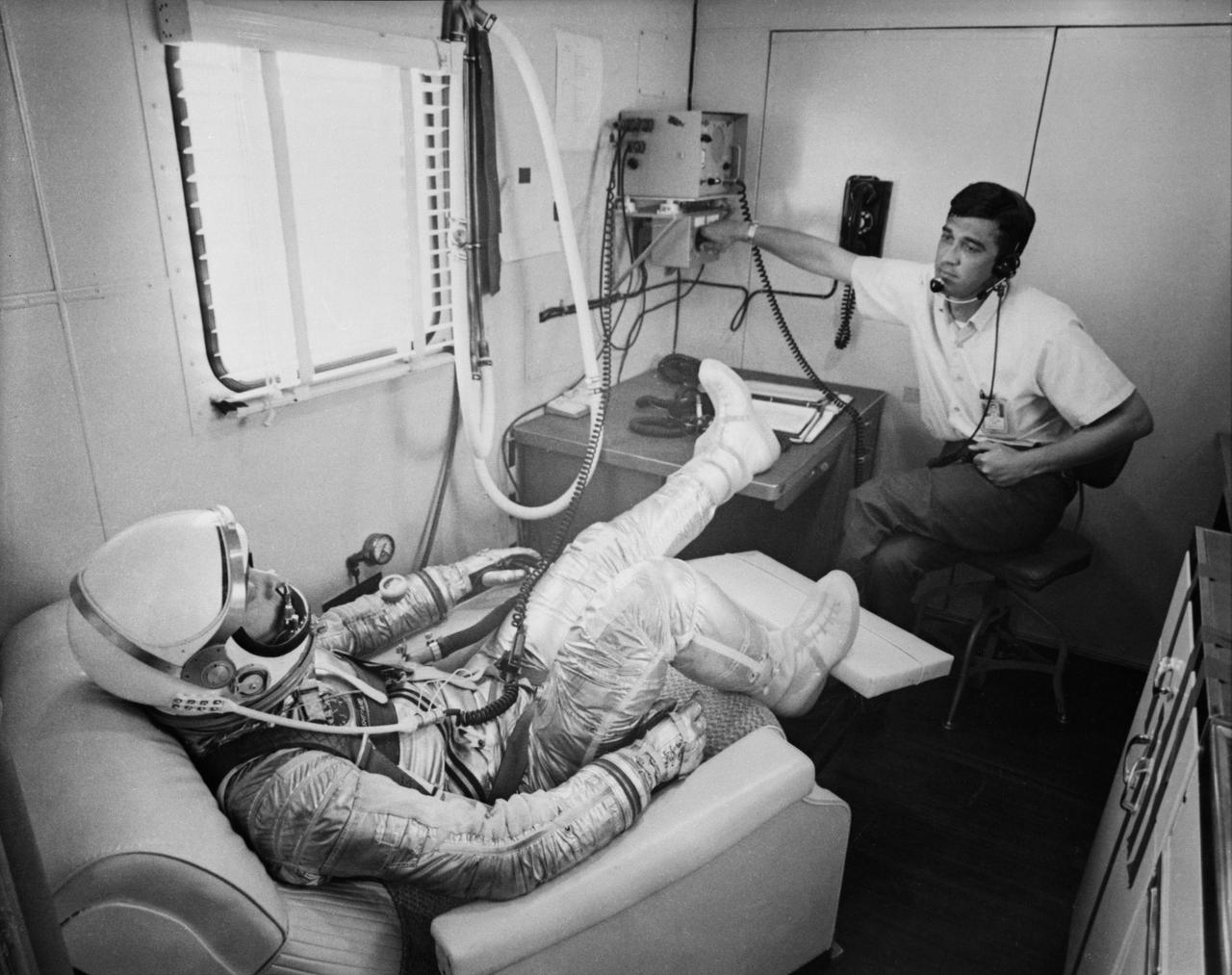
S61-02785 (5 May 1961) --- Astronaut Alan B. Shepard Jr. in his pressure suit is seated in a reclining chair while a technician checks communications equipment in his helmet. He is in the suiting trailer before the Mercury-Redstone 3 (MR-3) flight, the first American manned spaceflight. Photo credit: NASA or National Aeronautics and Space Administration
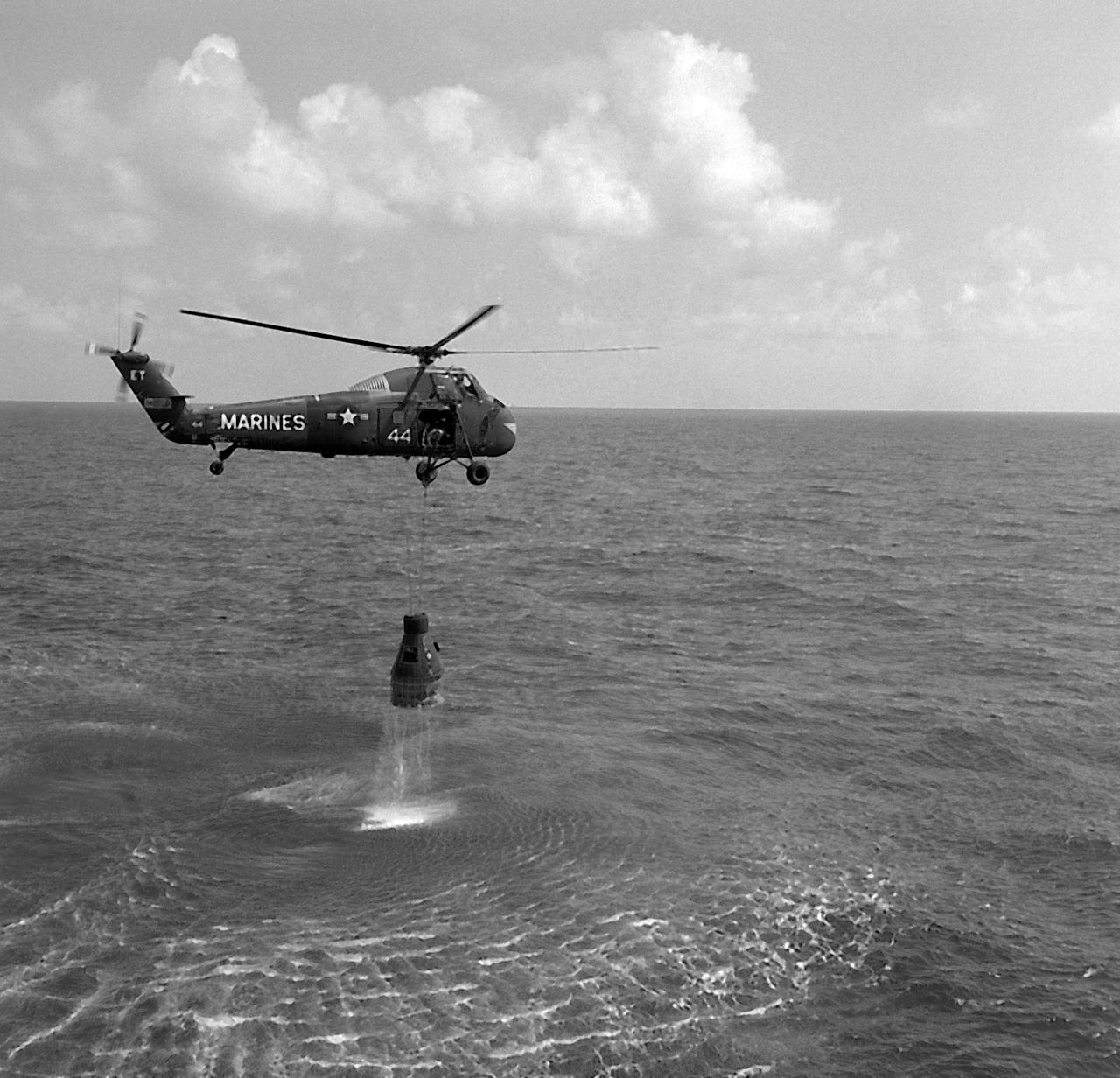
This photo depicts the recovery of the Freedom 7 (MR-3) capsule by a U.S. Marine helicopter. The MR-3 mission successfully placed the first American astronaut, Alan Shepard, in space for 15-1/2 minutes and returned safely to Earth on May 5, 1961.
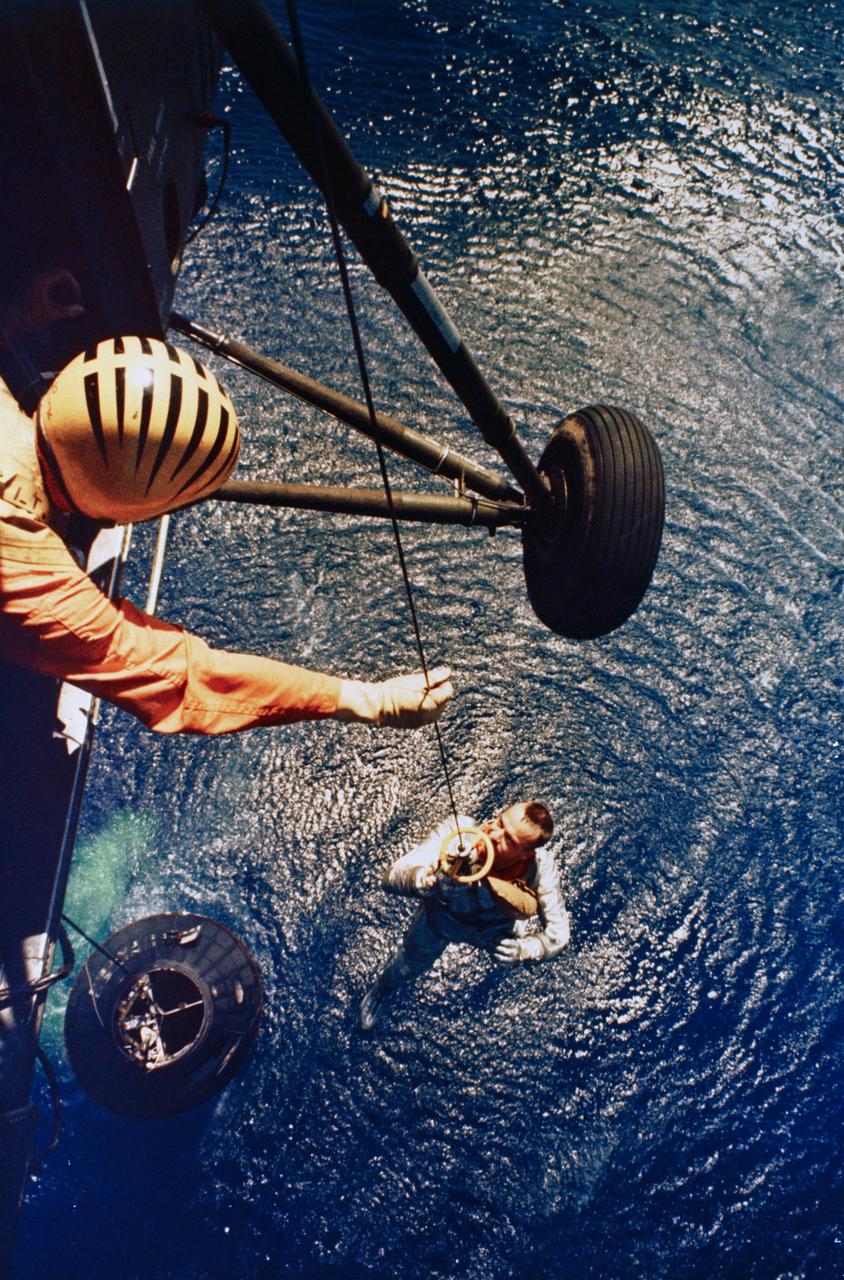
S88-31376 (5 May 1961) --- Astronaut Alan B. Shepard Jr., pilot of the Mercury-Redstone 3 (MR-3) suborbital spaceflight, is retrieved by a helicopter from the USS Lake Champlain during recovery operations in the western Atlantic Ocean. Shepard and the Mercury spacecraft designated the ?Freedom 7? (floating in water below) were flown to the deck of the recovery ship within 11 minutes of splashdown. MR-3 was the United States? first manned space mission. The spacecraft attained a maximum speed of 5,180 miles per hour, reached an altitude of 116 1/2 statute miles, and landed 302 statute miles downrange from Cape Canaveral, Florida. The suborbital mission lasted 15 minutes and 22 seconds. Photo credit: NASA or National Aeronautics and Space Administration
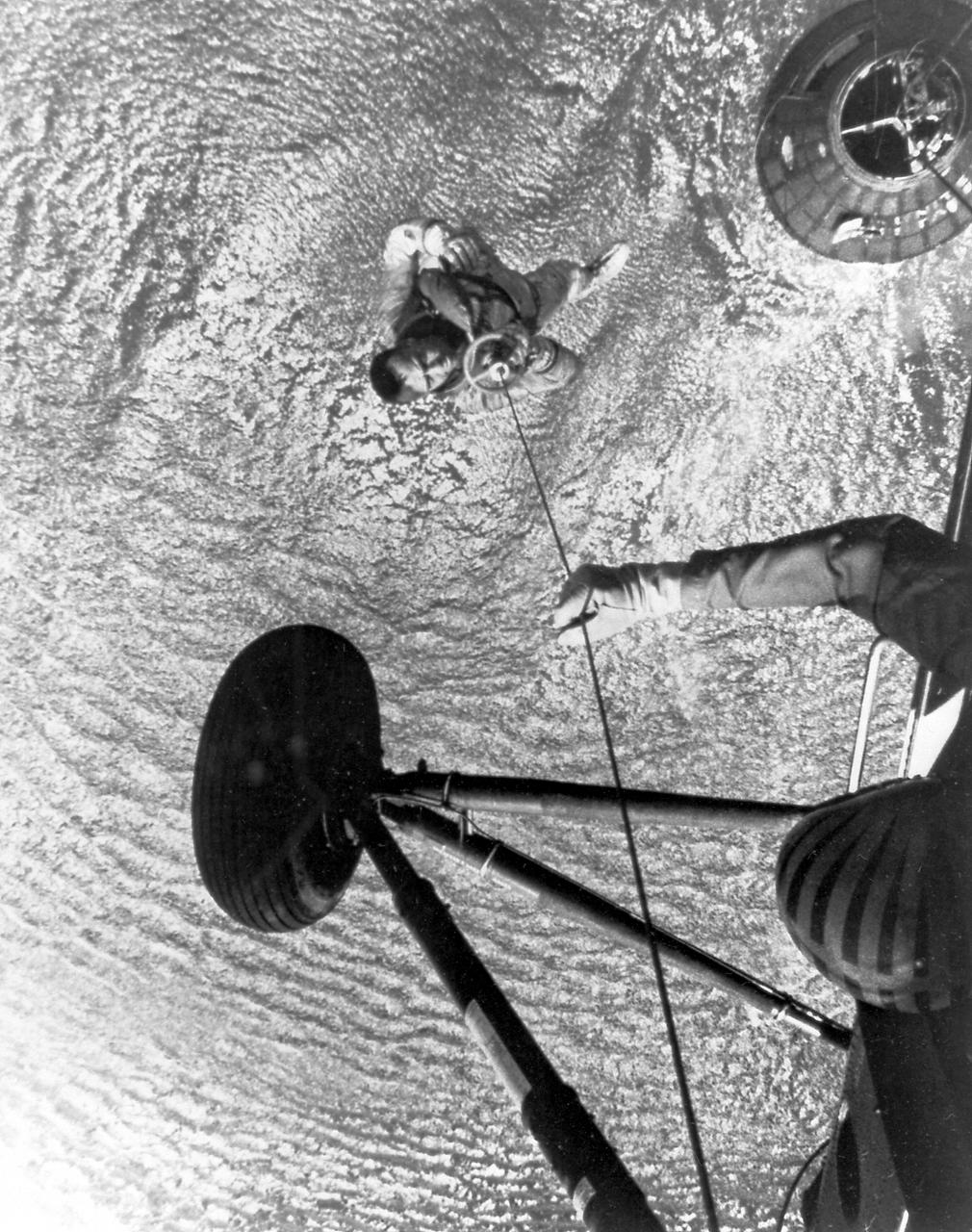
This photo depicts the recovery operations of the MR-3 mission. Astronaut Alan Shepard was picked up by a U.S. Marine helicopter after the completion of the first marned suborbital flight by MR-3 (Mercury-Redstone) with the Freedom 7 capsule.
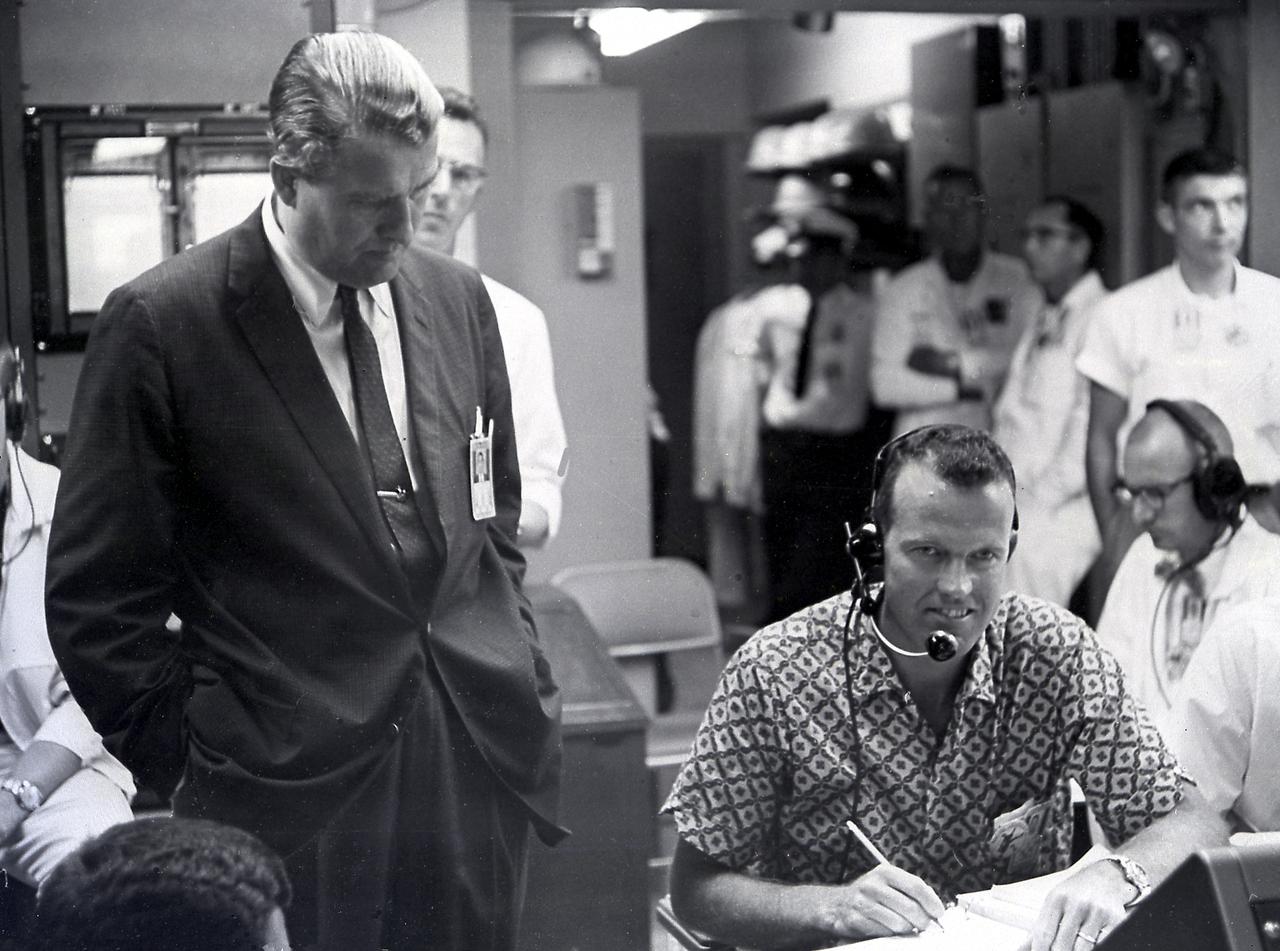
Photographed are Dr. von Braun and Astronaut L. Gordon Cooper in the blockhouse during the recovery operation of the MR-3 (Freedom 7) mission on May 5, 1961. The MR-3 mission, a 15-1/2-minute suborbital test flight, put the first American astronaut, Alan Shepard, in space.
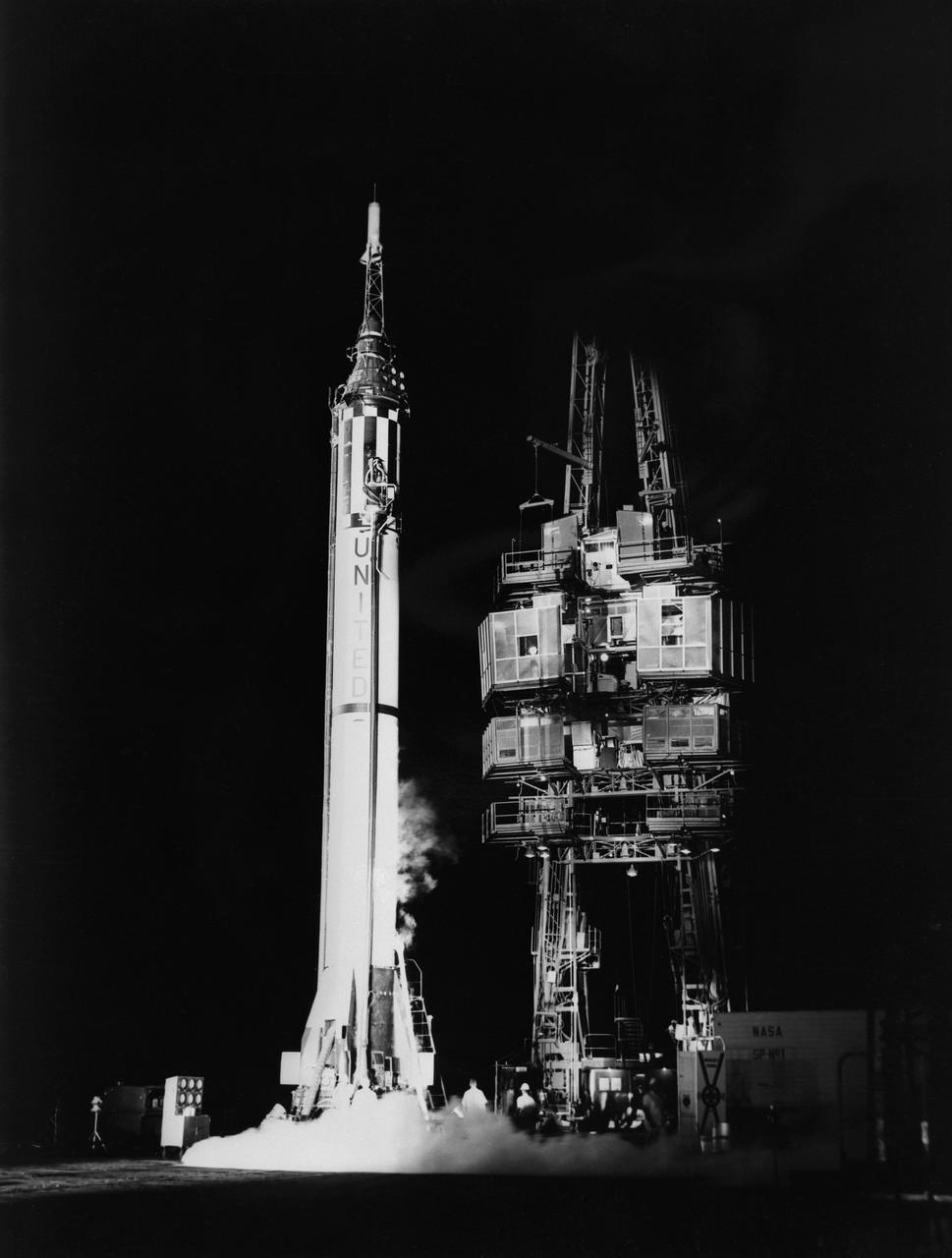
S61-03158 (1961) --- Mercury-Redstone 3 (MR-3) missile standing alone on launch pad. Photo credit: NASA or National Aeronautics and Space Administration
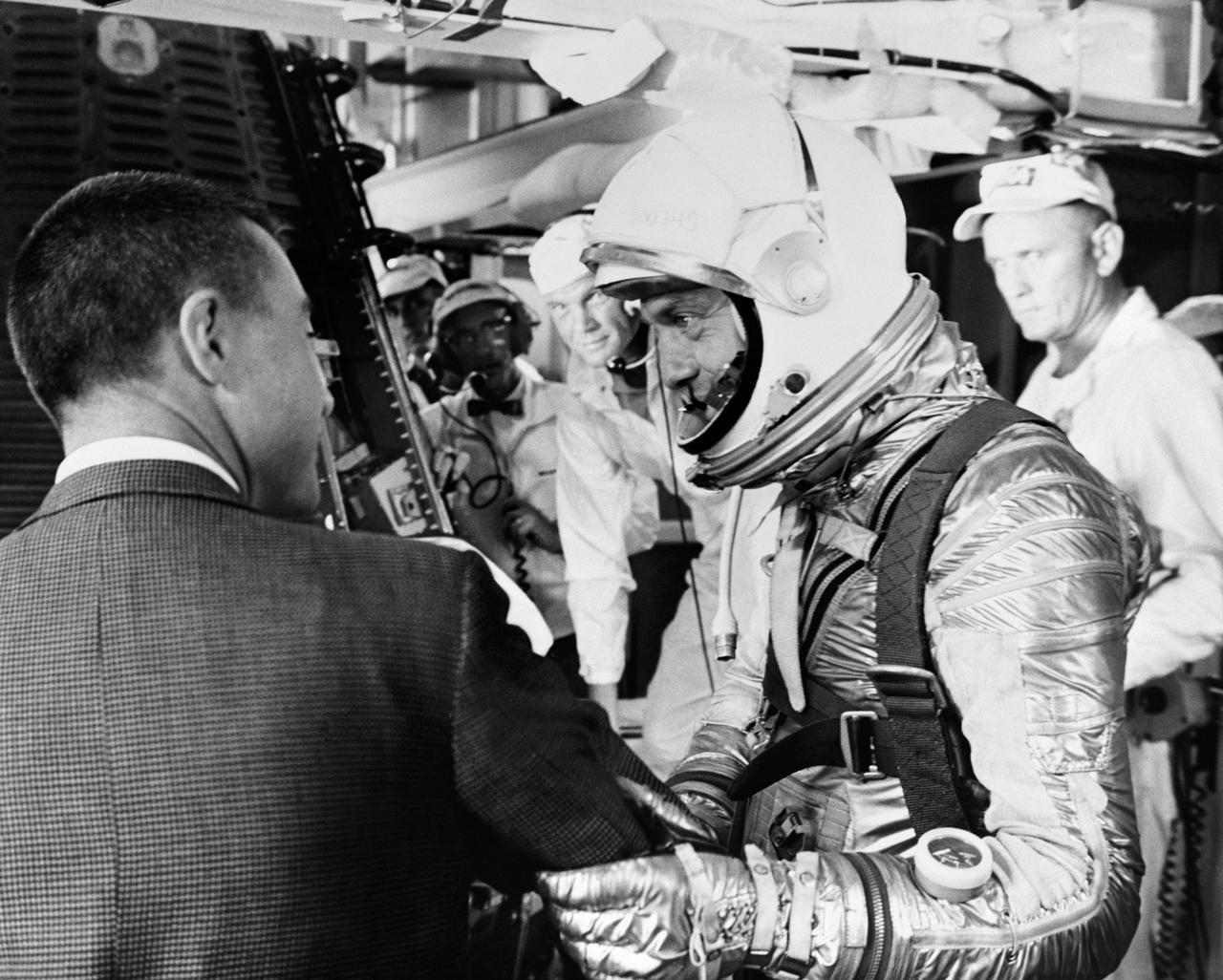
S61-02794 (5 May 1961) --- Astronaut Alan B. Shepard Jr., shakes hands with fellow astronaut Virgil I. Grissom (on left, back to camera), prior to ingressing the capsule for his Mercury-Redstone 3 (MR-3) spaceflight. Astronaut John H. Glenn Jr. (center background in white cap) looks on along with Gunter Wendt (to the left of Glenn) and two unidentified technicians. Photo credit: NASA or National Aeronautics and Space Administration
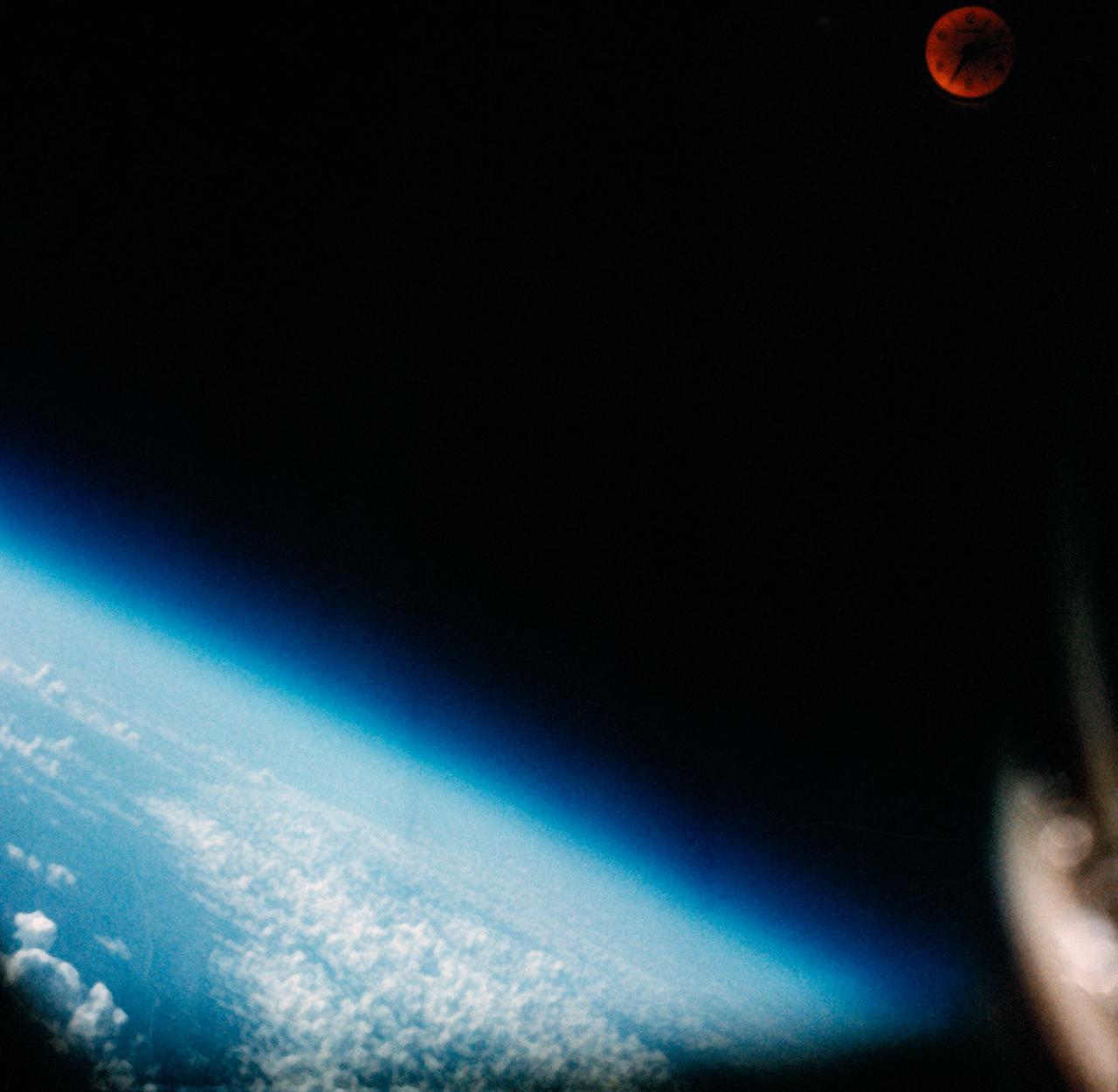
S61-01914 (5 May 1961) --- Mercury-Redstone 3 (MR-3) spaceflight Earth observations of a cloudy Earth surface. There is a gleam from the light reflected off the capsule window in the lower right side of the frame. Photo credit: NASA or National Aeronautics and Space Administration
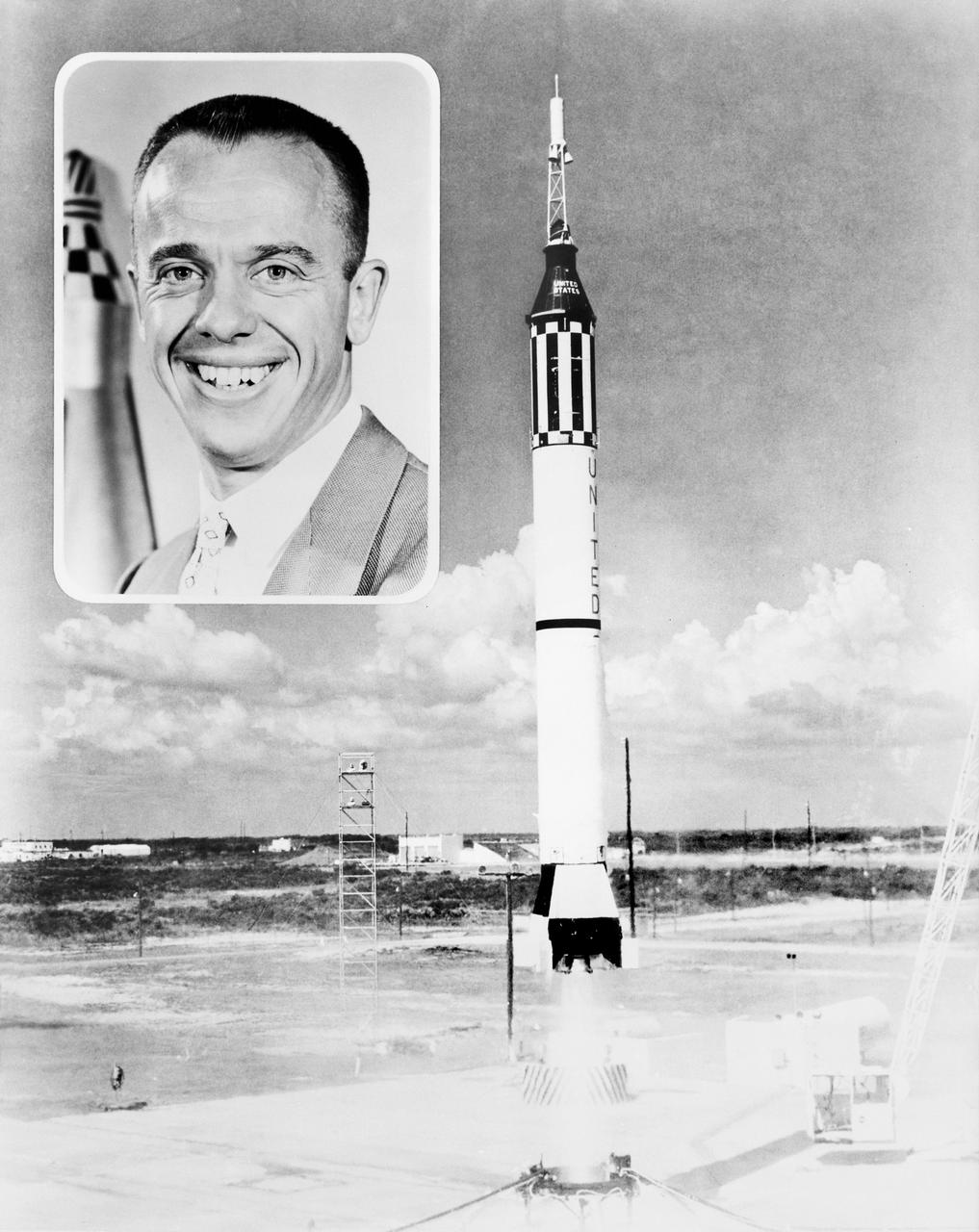
S62-01151 (5 May 1961) --- The liftoff of the Mercury-Redstone 3 (MR-3) on May 5, 1961, piloted by astronaut Alan B. Shepard, Jr., whose portrait is in inset. Shepard went on a 15-minute sub-orbital flight. The spacecraft was designated the ?Freedom? 7.
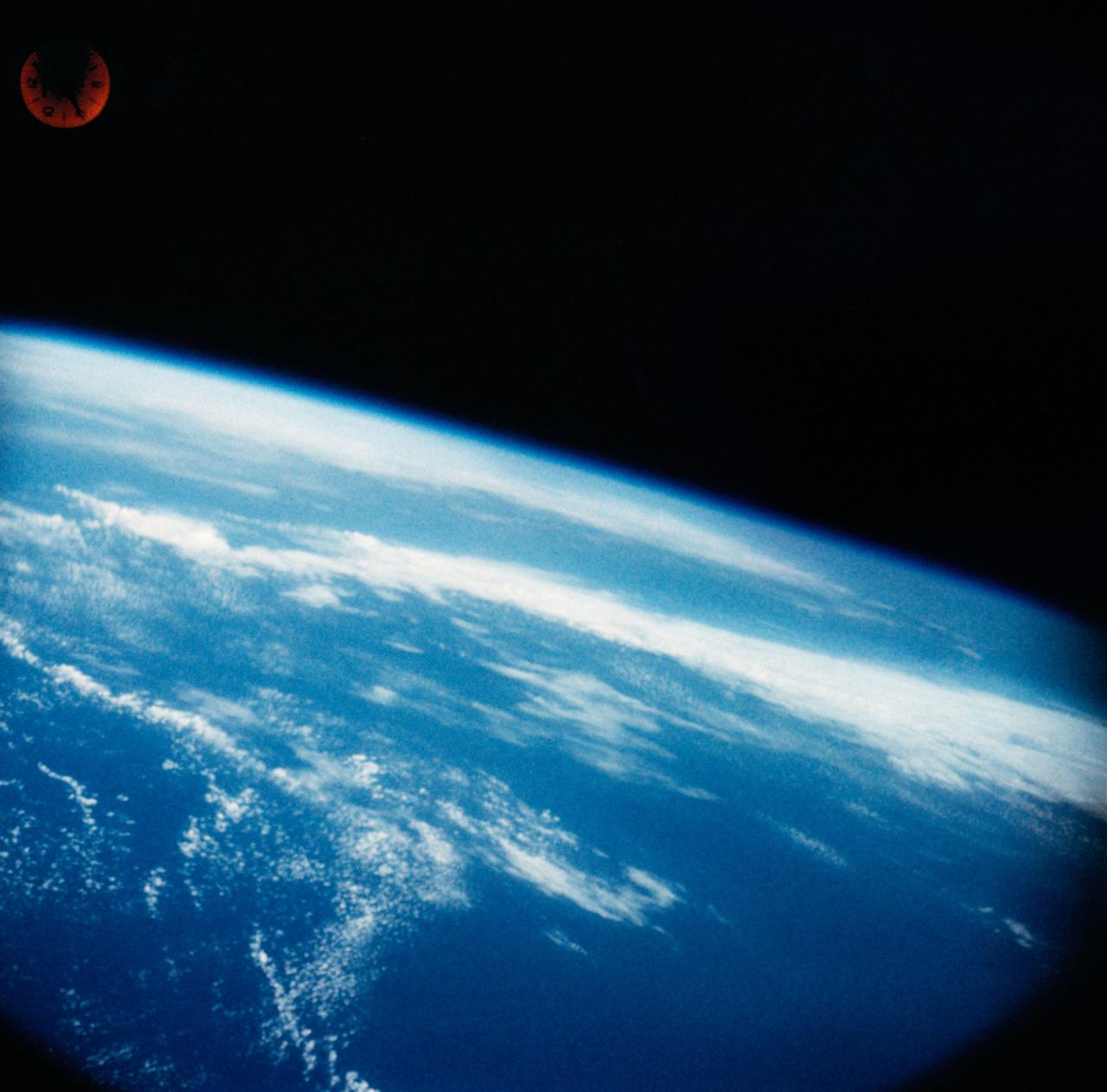
S61-01918 (5 May 1961) --- Mercury-Redstone 3 (MR-3) spaceflight Earth observations of a cloudy Earth surface. Photo credit: NASA or National Aeronautics and Space Administration

Astronaut Alan B. Shepard, one of the original seven astronauts for Mercury Project selected by NASA on April 27, 1959. The Freedom 7 spacecraft boosted by Mercury-Redstone vehicle for the MR-3 mission made the first marned suborbital flight and Astronaut Shepard became the first American in space.
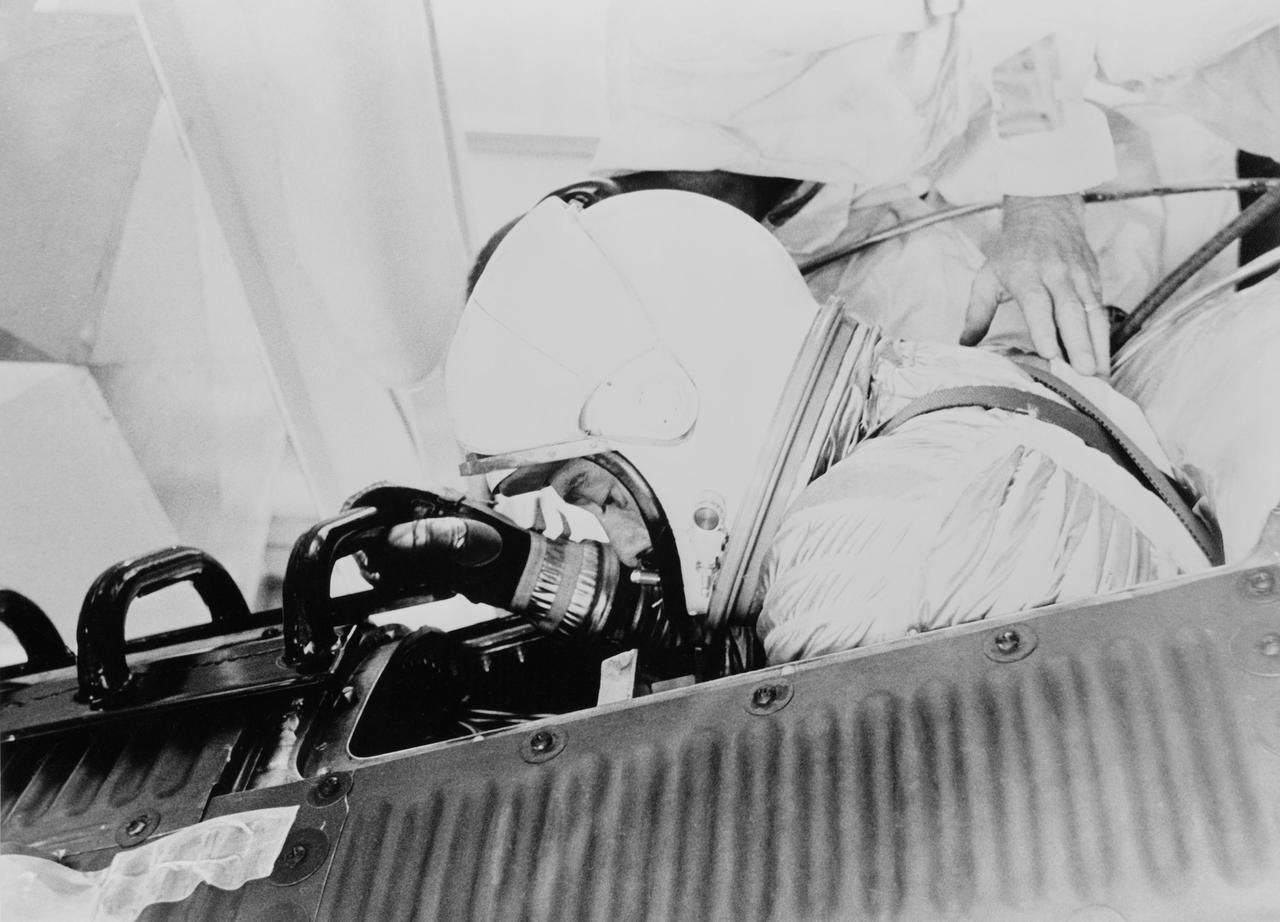
S61-03645 (5 May 1961) --- Close-up of astronaut Alan B. Shepard Jr., in his pressure suit and helmet, ingressing into the Freedom 7 capsule in preparation for the Mercury-Redstone 3 (MR-3) mission. Photo credit: NASA or National Aeronautics and Space Administration
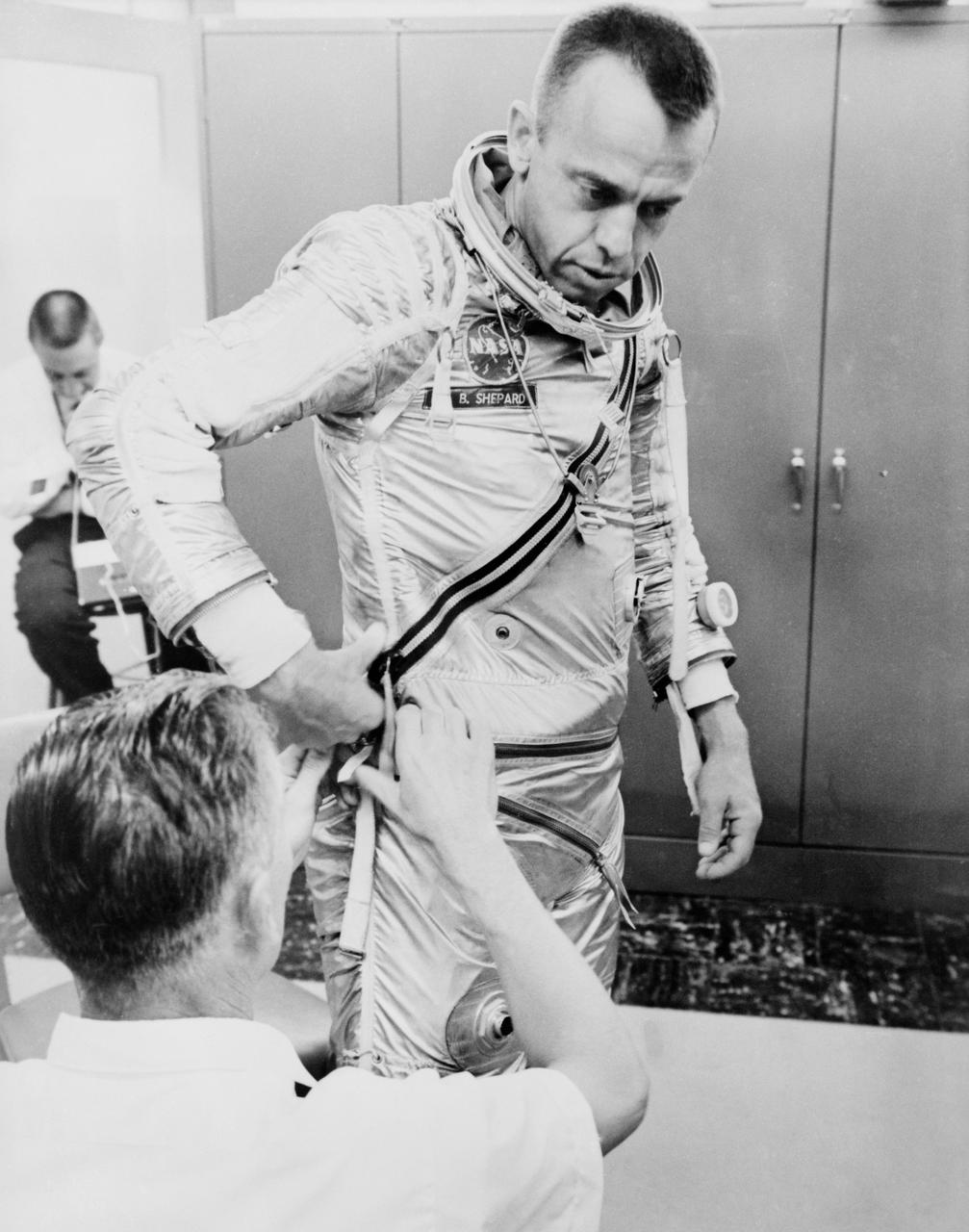
S61-02757 (5 May 1961) --- Astronaut Alan B. Shepard Jr. is being helped into his pressure suit for the Mercury-Redstone 3 (MR-3) flight, the first American manned spaceflight. Photo credit: NASA or National Aeronautics and Space Administration
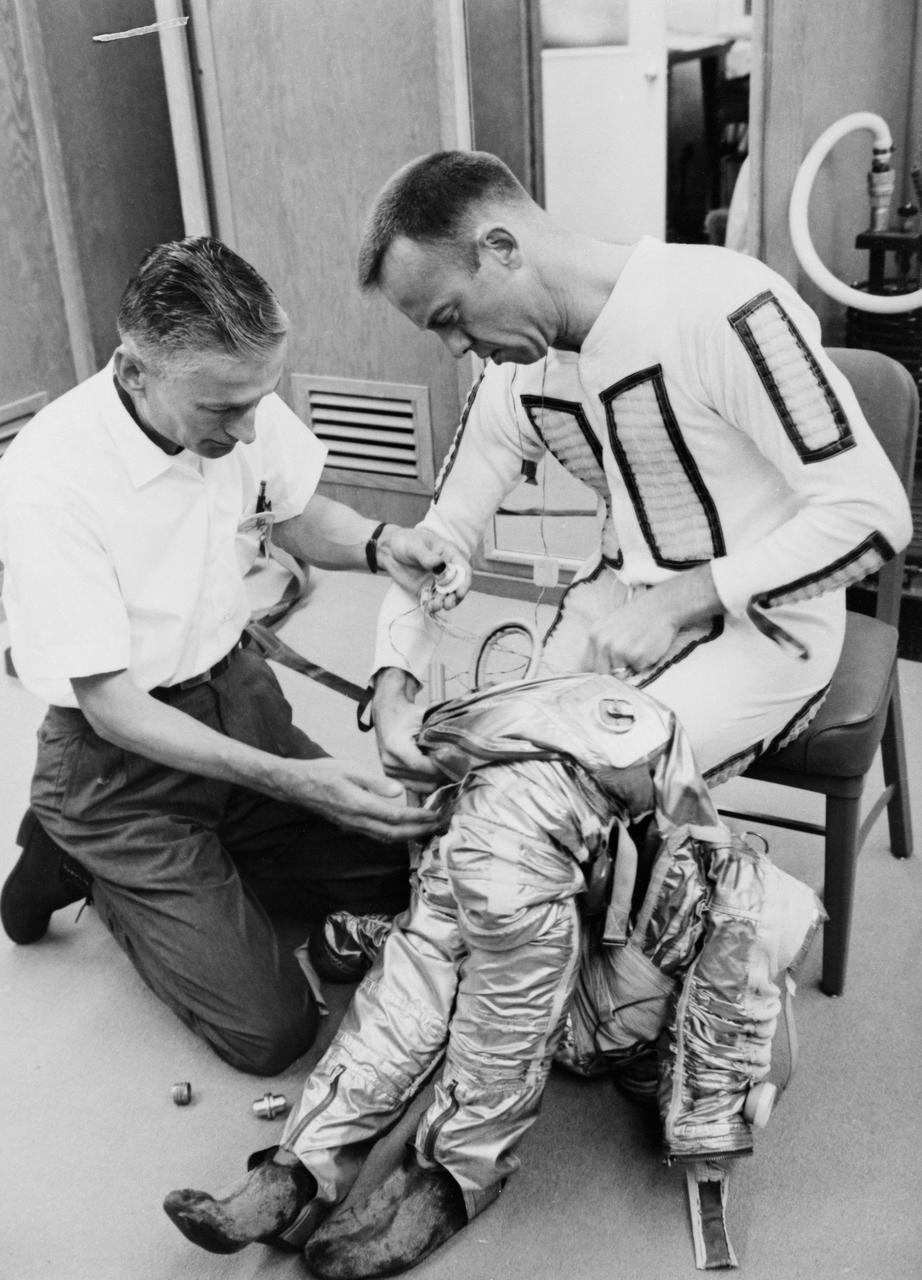
S61-02755 (5 May 1961) --- Astronaut Alan B. Shepard Jr. is being helped into the lower half of his pressure suit for the Mercury-Redstone 3 (MR-3) flight, the first American manned spaceflight. Photo credit: NASA or National Aeronautics and Space Administration
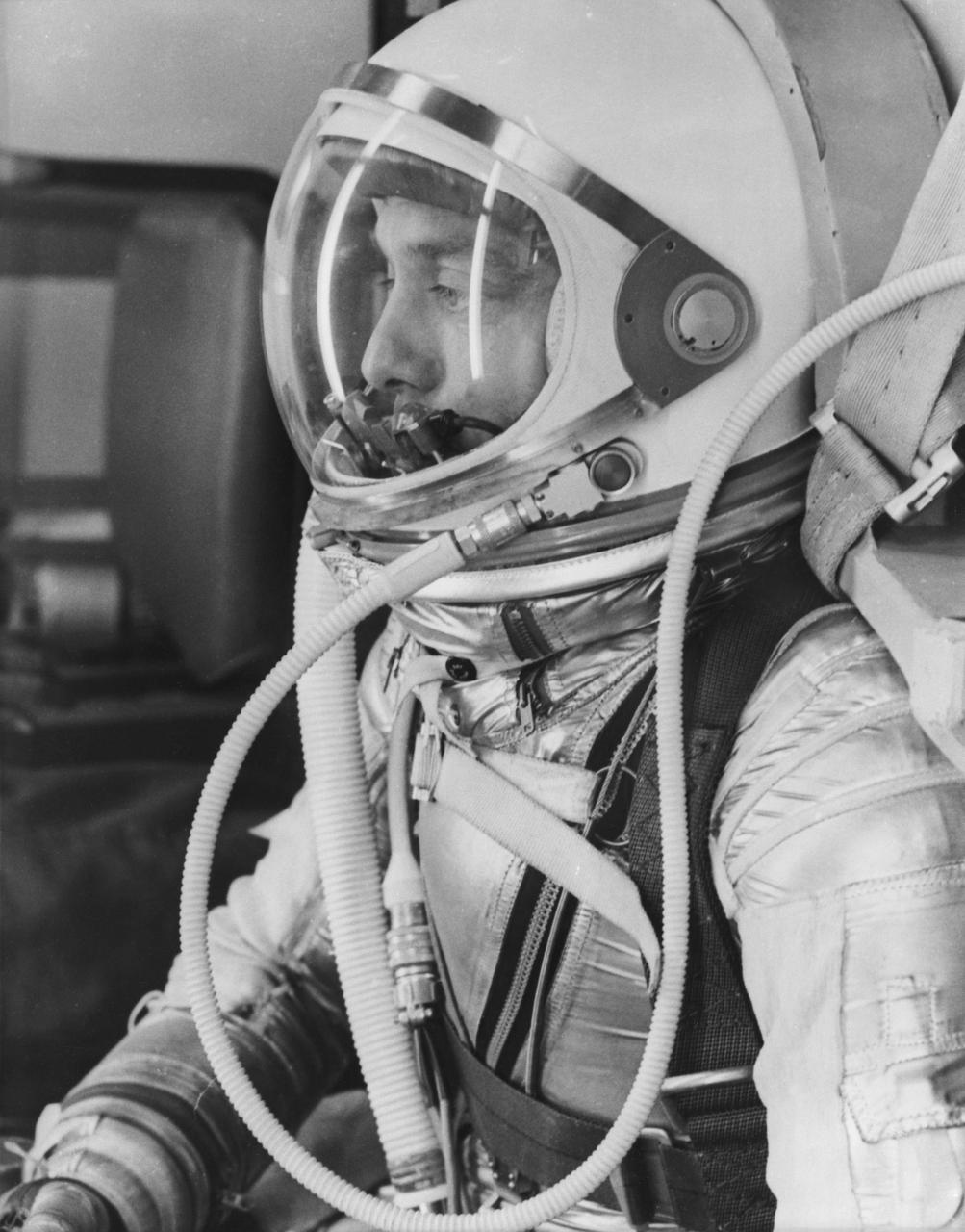
S61-02766 (5 May 1961) --- Side view of astronaut Alan B. Shepard Jr. in his pressure suit, with helmet closed, for the Mercury-Redstone 3 (MR-3) flight, the first American manned spaceflight. Photo credit: NASA or National Aeronautics and Space Administration
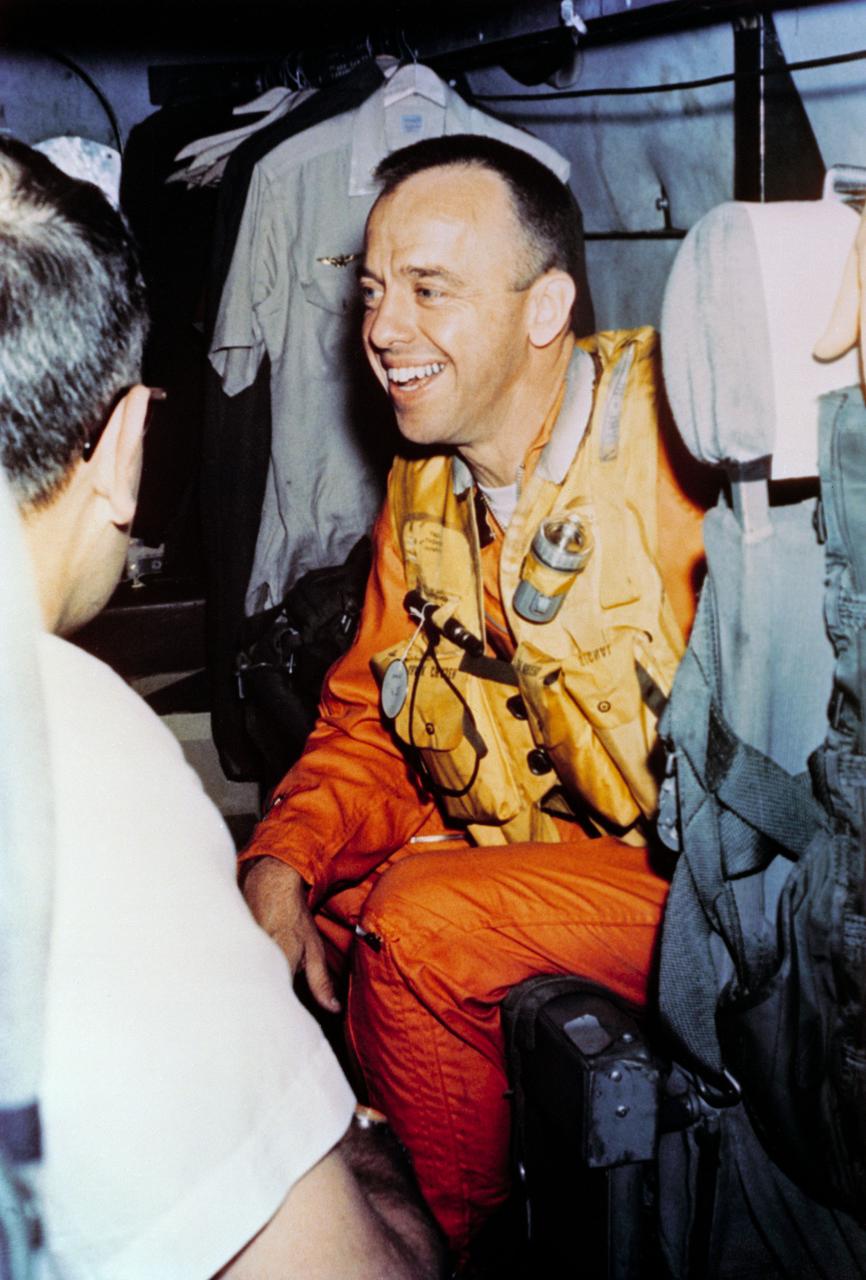
S88-31383 (5 May 1961) --- Astronaut Alan B. Shepard Jr., Mercury-Redstone 3 (MR-3) pilot, jokes with doctors while in-flight between the U.S. Navy Carrier Champlain and the Grand Bahama Islands. Shepard is the first American in space with the successful completion of the 15-minute suborbital mission. Photo credit: NASA or National Aeronautics and Space Administration
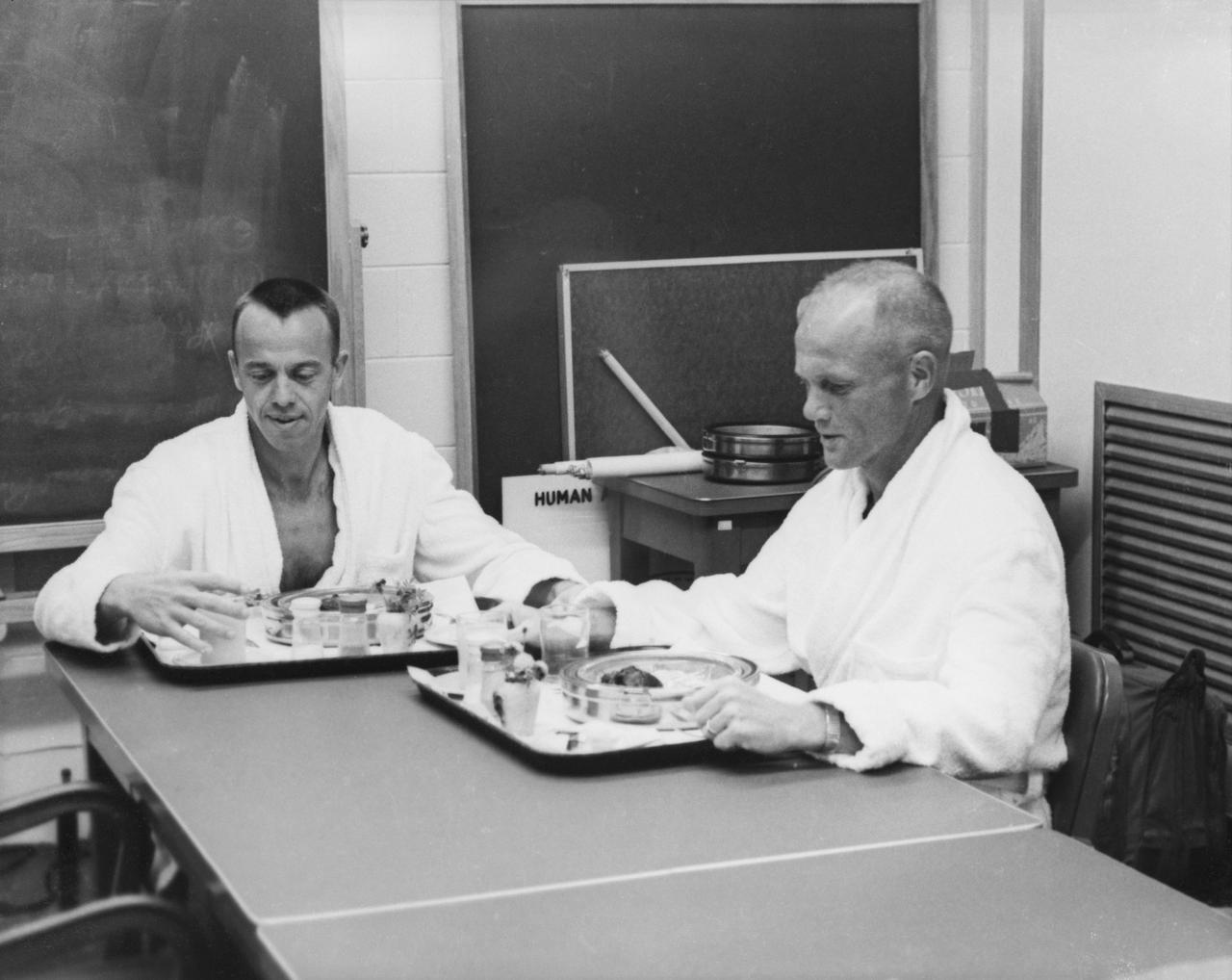
S61-02735 (5 May 1961) --- Astronauts Alan Shepard and John Glenn at breakfast before Shepard's Mercury-Redstone 3 (MR-3) spaceflight. Photo credit: NASA or National Aeronautics and Space Administration
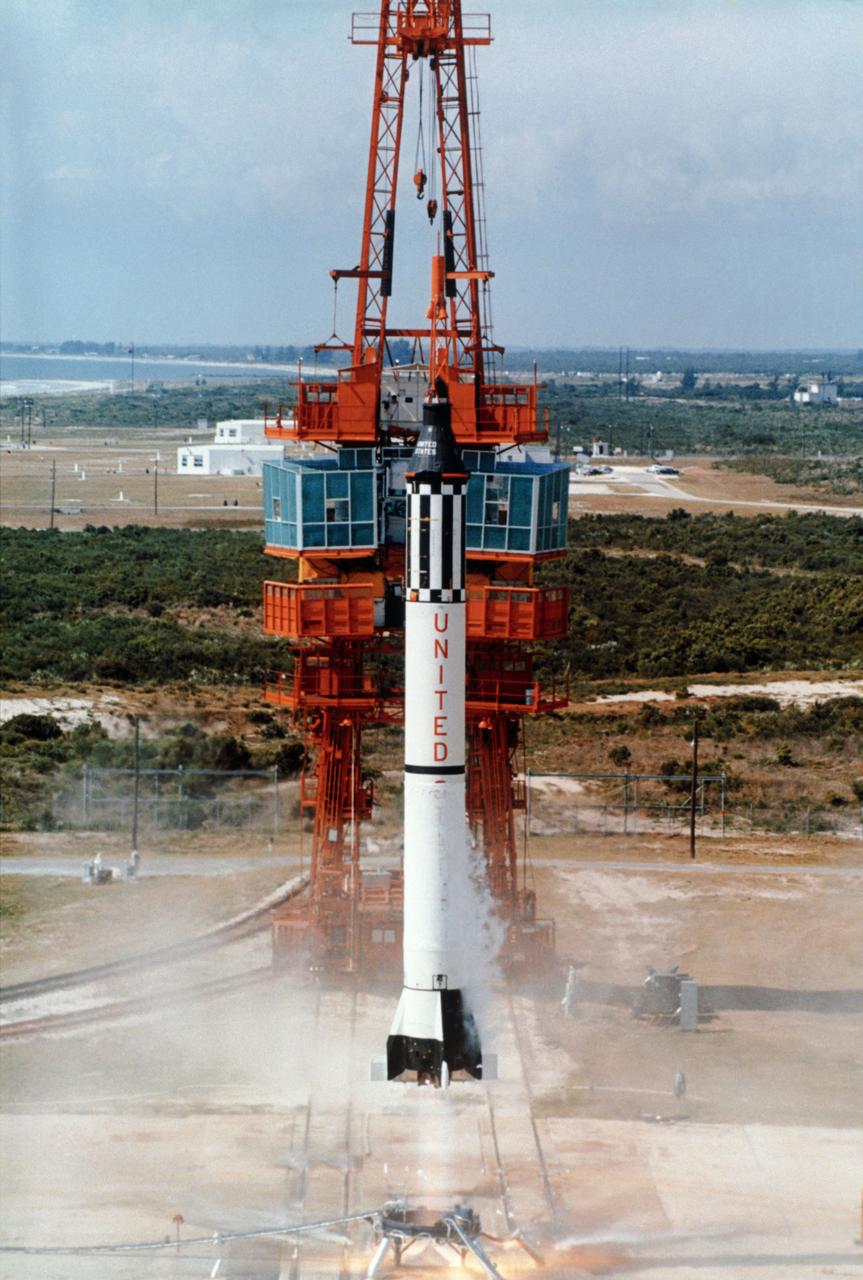
S61-01928 (5 May 1961) --- Mercury-Redstone 3 (MR-3), the United States' first manned spaceflight, is launched from Cape Canaveral on a suborbital mission. Astronaut Alan B. Shepard Jr. was the pilot of the Mercury spacecraft, designated "Freedom 7". The spacecraft attained a maximum speed of 5,180 miles per hour (mph), reached an altitude of 116 1/2 statute miles, and landed 302 statute miles downrange from Cape Canaveral, Florida. Photo credit: NASA or National Aeronautics and Space Administration
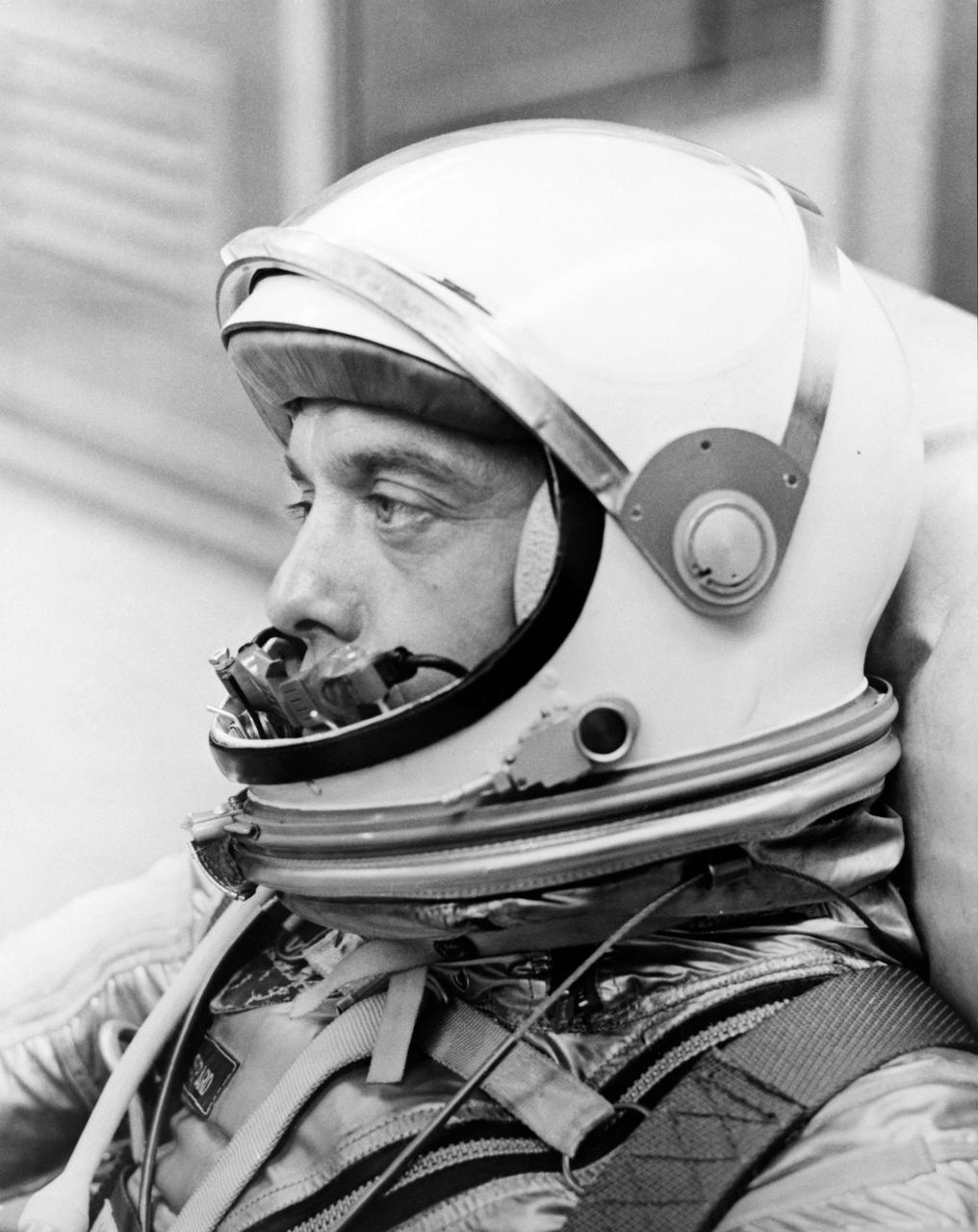
S61-02775 (5 May 1961) --- Close-up view of astronaut Alan B. Shepard Jr. in his pressure suit, with helmet opened, for the Mercury-Redstone 3 (MR-3) flight, the first American manned spaceflight. Photo credit: NASA or National Aeronautics and Space Administration
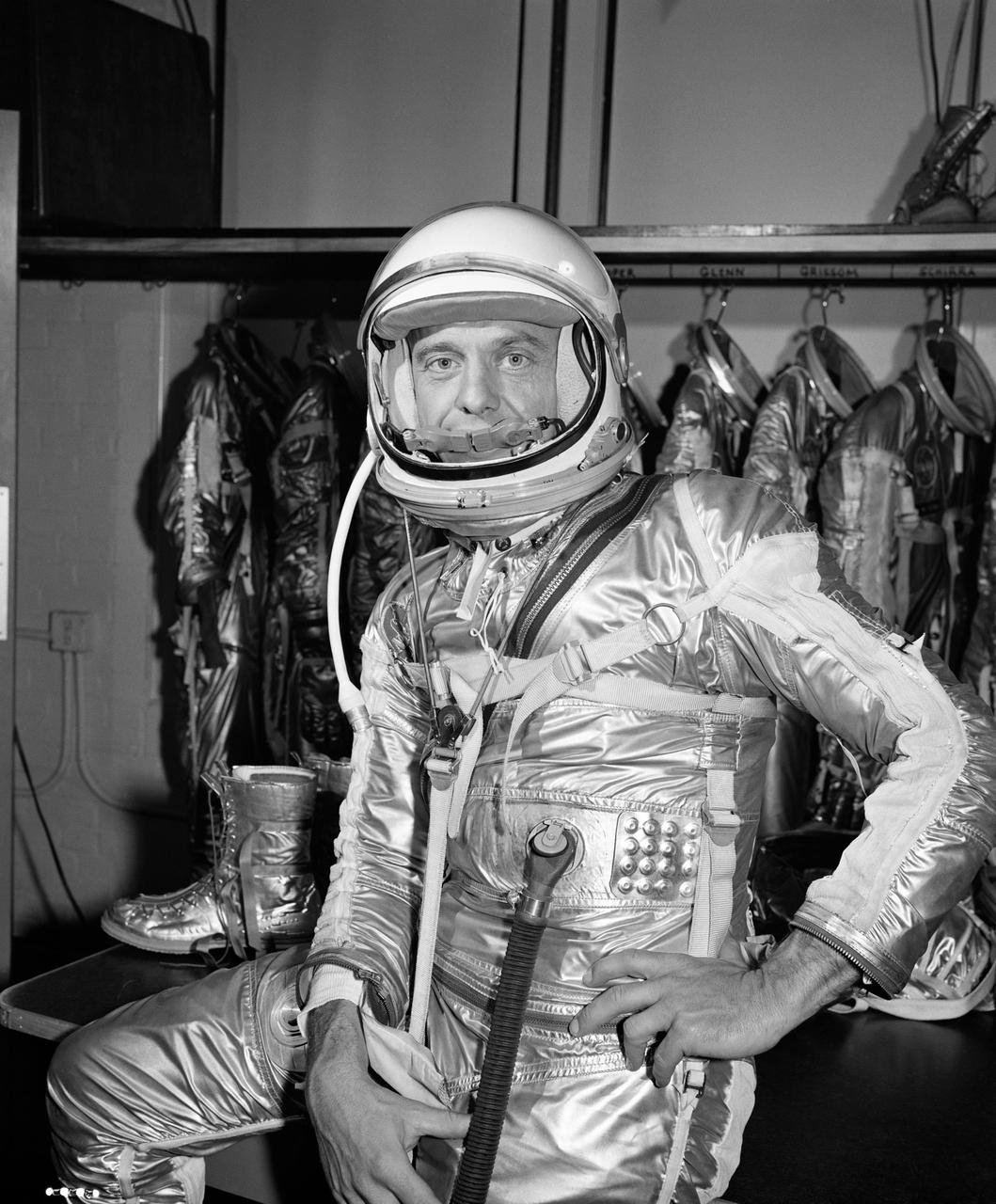
S61-00220 (20 April 1961) --- Close-up view of astronaut Alan B. Shepard Jr. in his pressure suit, with helmet opened, for the Mercury-Redstone 3 (MR-3) flight, the first American manned spaceflight. Photo credit: NASA or National Aeronautics and Space Administration
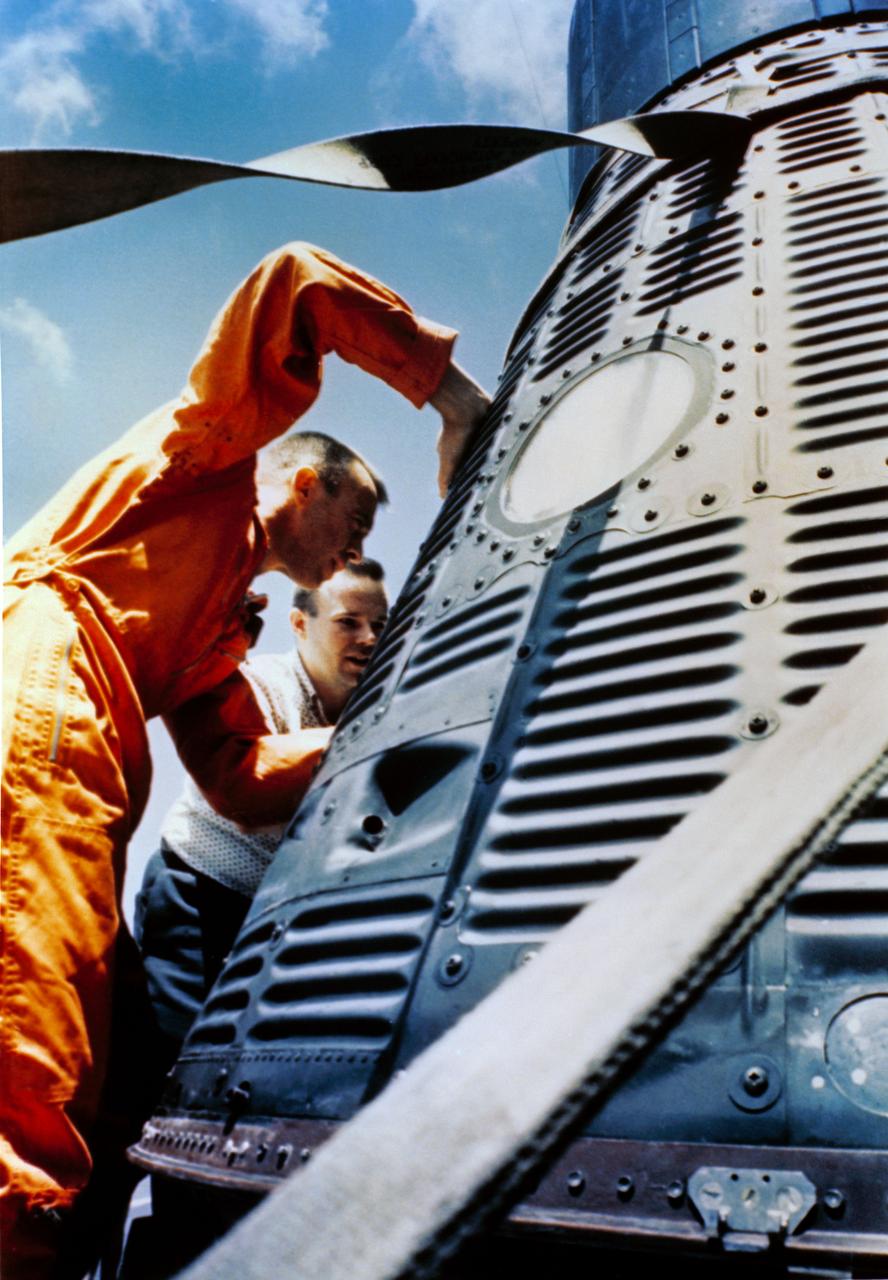
S88-31384 (5 May 1961) --- Astronaut Alan B. Shepard Jr., Mercury-Redstone 3 (MR-3) pilot, is pictured near his Freedom 7 capsule during a postflight inspection aboard the U.S. Navy Carrier Champlain after the recovery of his Mercury vehicle. Earlier Shepard had completed the historical 15-minute suborbital Mercury-Redstone 3 mission, marking the U.S. inaugural manned space mission. (NASA Hq. No. 61-MR3-107 or MR3-44) Photo credit: NASA or National Aeronautics and Space Administration
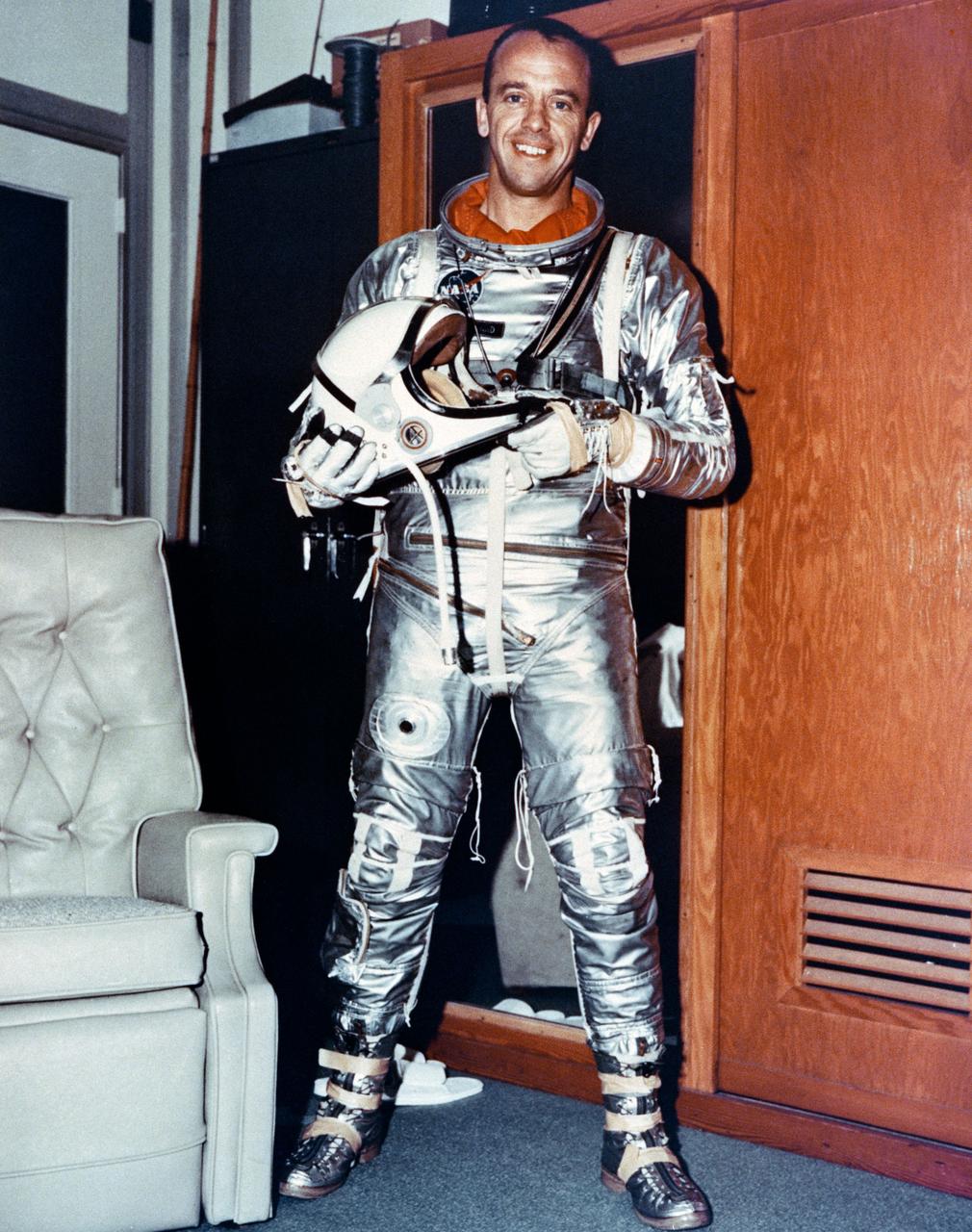
S63-02082 (5 May 1961) --- Astronaut Alan B. Shepard Jr., attired in his Mercury pressure suit, poses for a photo prior to his launch in a Mercury-Redstone 3 (MR-3) spacecraft from Cape Canaveral on a suborbital mission ? the first U.S. manned spaceflight. Photo credit: NASA or National Aeronautics and Space Administration
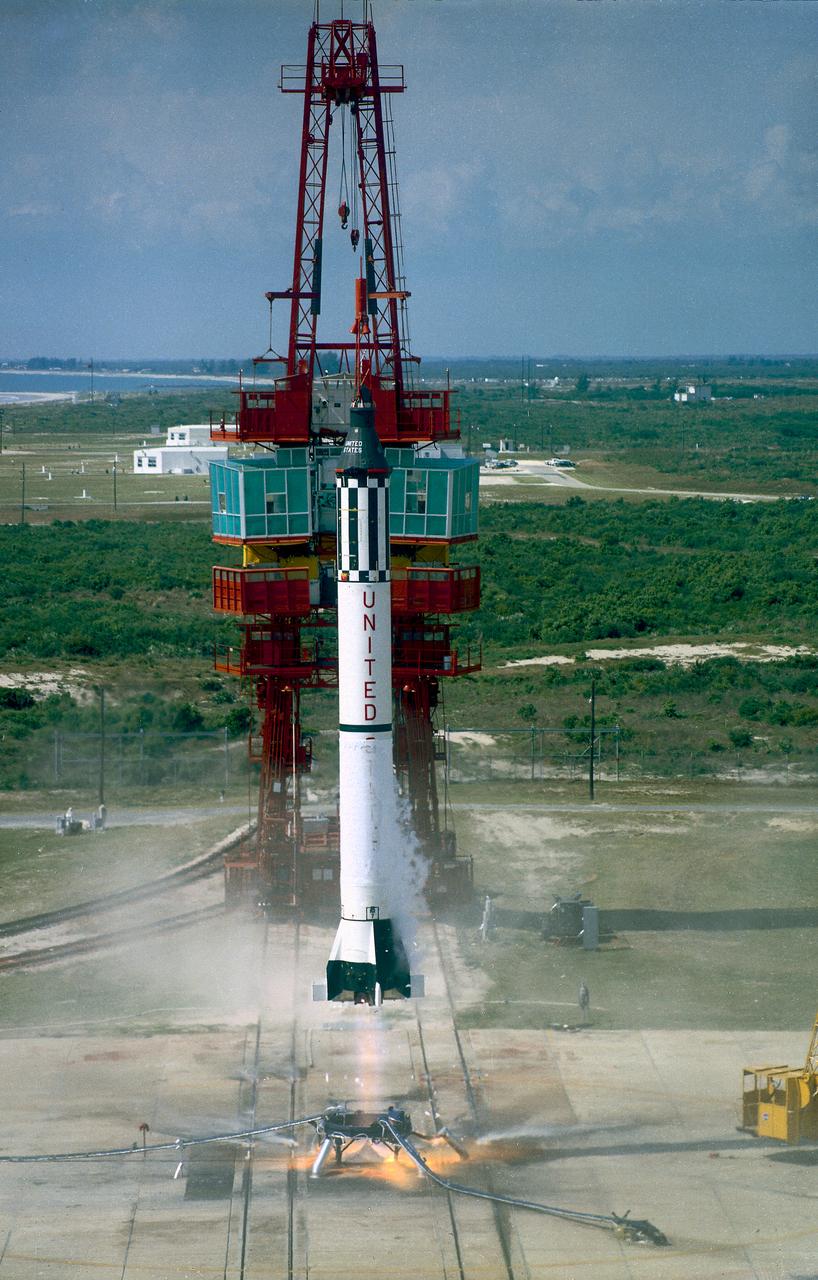
The launch of the Mercury-Redstone (MR-3), Freedom 7. MR-3 placed the first American astronaut, Alan Shepard, in suborbit on May 5, 1961.
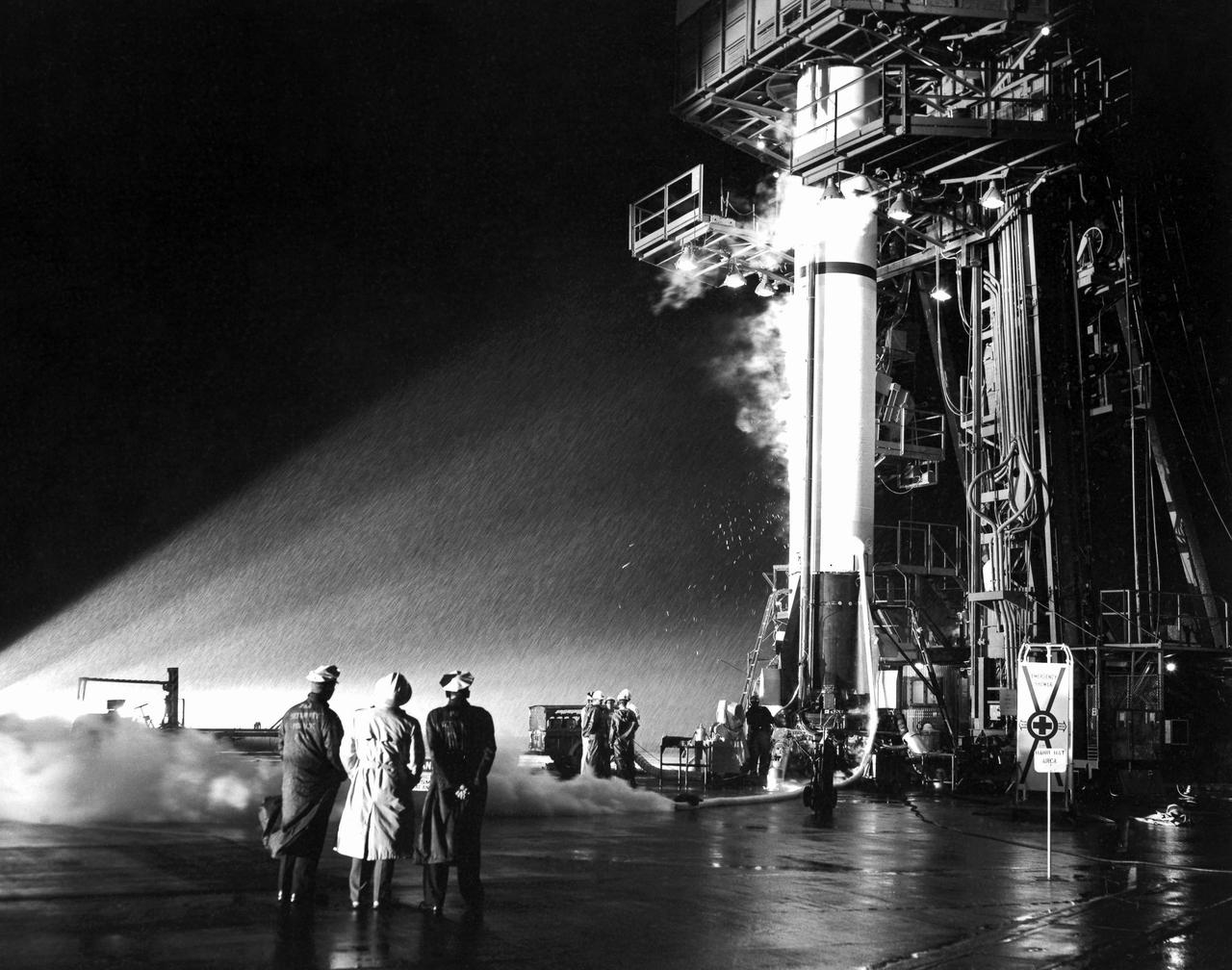
CAPE CANAVERAL, Fla. – MR-3 prelaunch alert. Photo credit: NASA/Santomassino
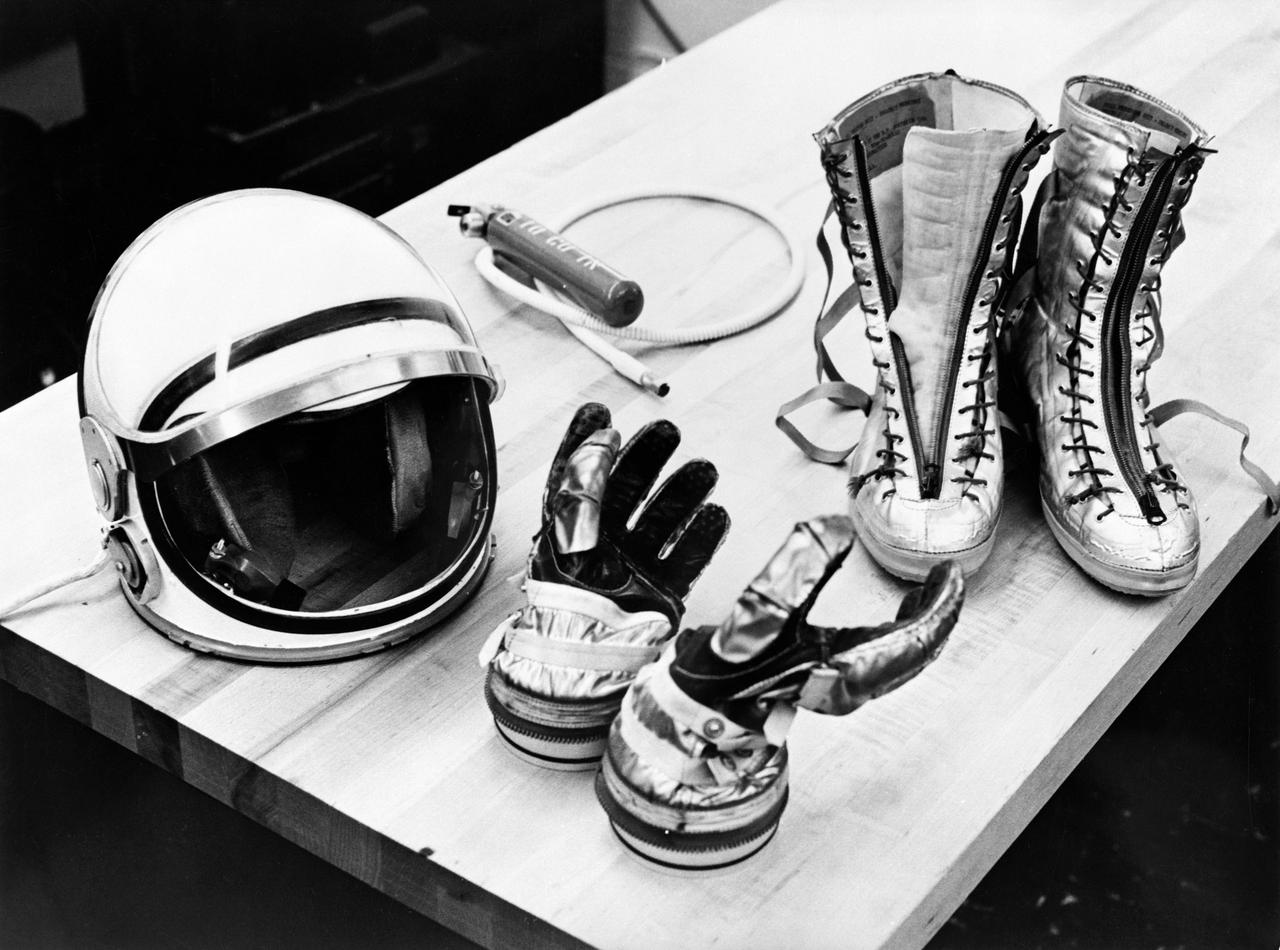
S61-02733 (28 July 1961) --- Table top view of some of the Mercury suit components including gloves, boots and helmet. Photo credit: NASA
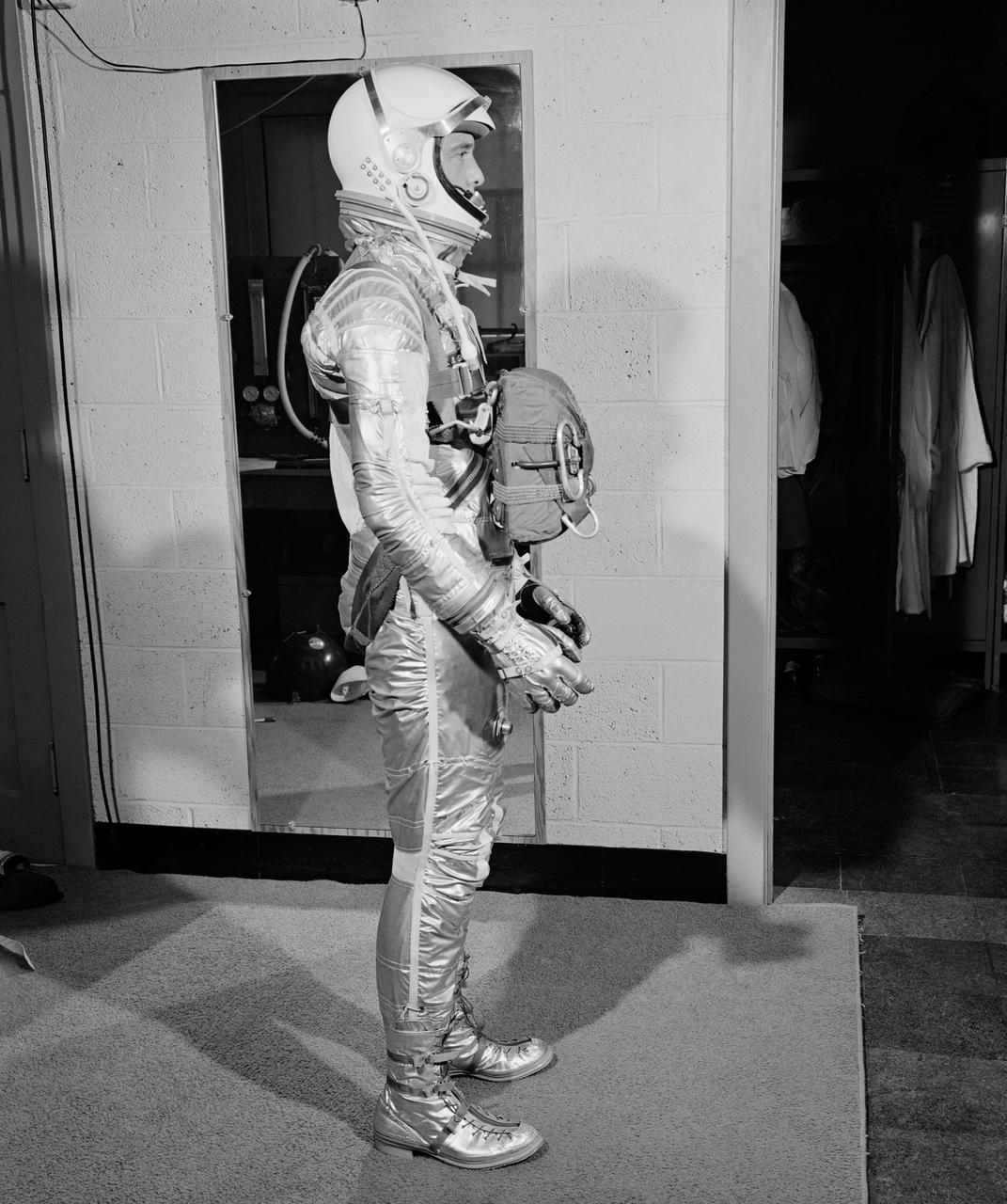
G60-02665 (1960) --- Astronaut Alan B. Shepard Jr., Mercury-Redstone 3 (MR-3) pilot, wearing pressure suit with body parachute. Photo credit: NASA or National Aeronautics and Space Administration
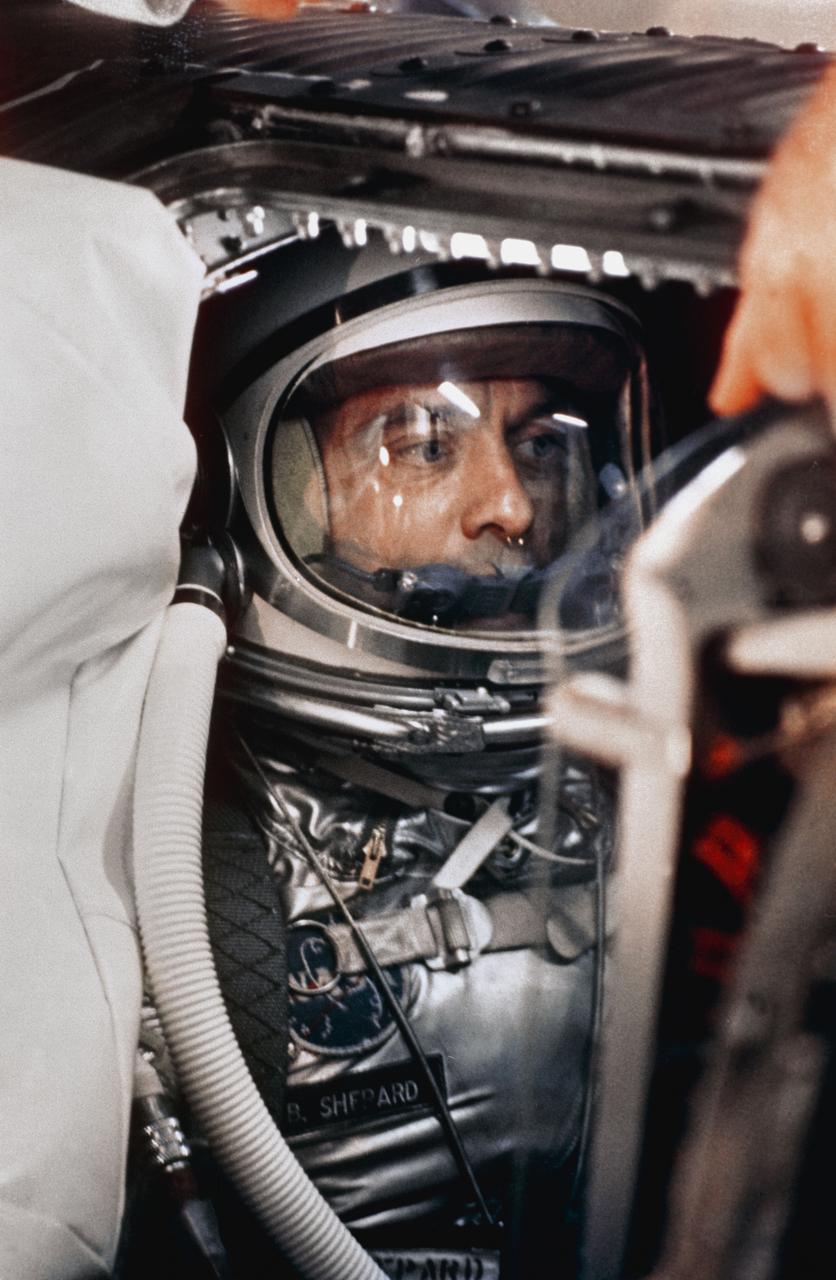
S88-31374 (29 April 1961) --- A close-up of astronaut Alan B. Shepard Jr. in his space suit with his helmet on inside the Mercury capsule. He is undergoing a flight simulation test with the capsule mated to the Redstone booster. This will be the first attempt to put a man into space by the U.S. aboard a Mercury spacecraft, launched atop a Redstone rocket. The suborbital trajectory will be down the Atlantic Missile Range. Photo credit: NASA or National Aeronautics and Space Administration
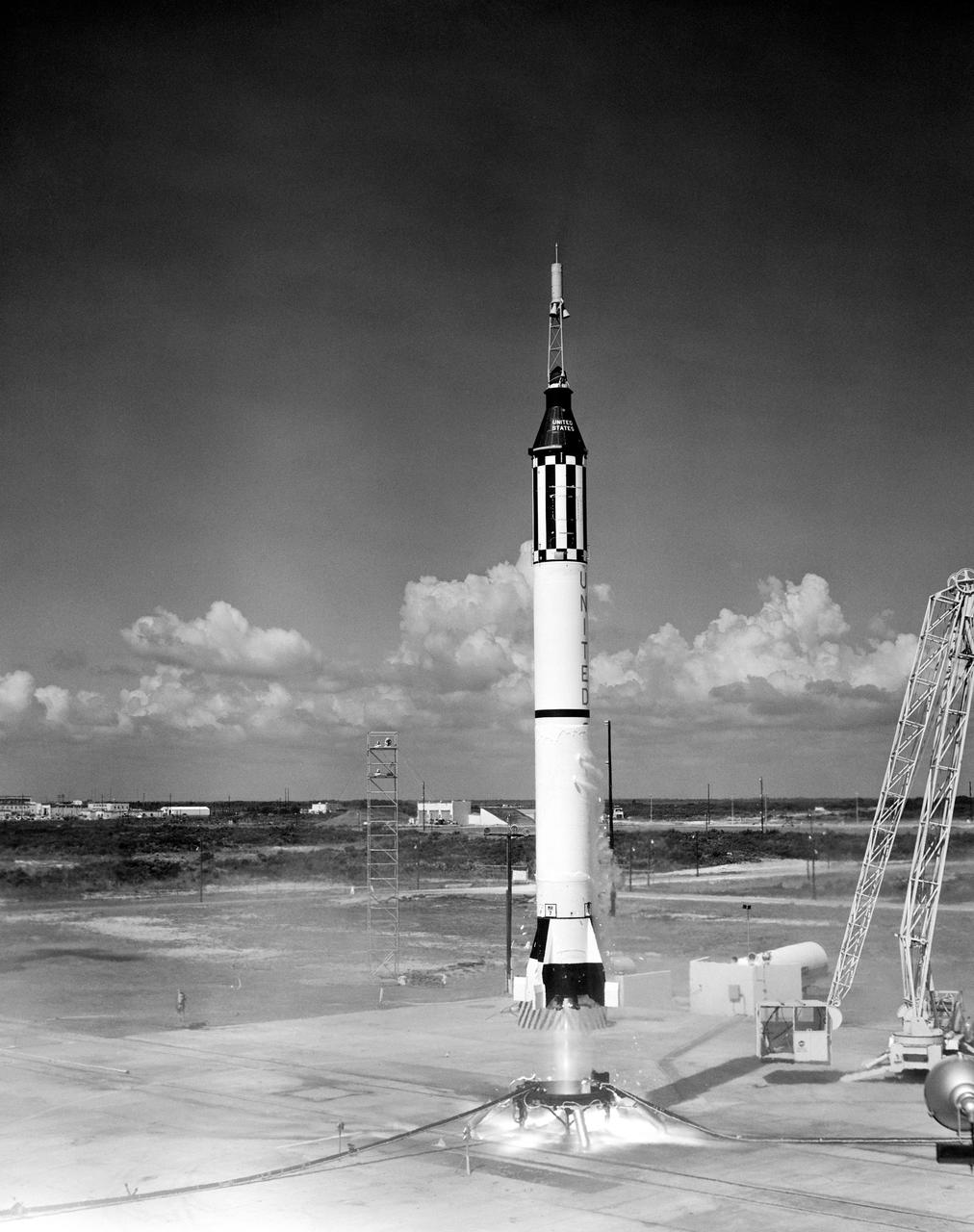
S61-02408 (5 May 1961) --- Launching of the Mercury-Redstone 3 (MR-3) rocket from Cape Canaveral on astronaut Alan B. Shepard?s suborbital mission. Photo credit: NASA or National Aeronautics and Space Administration
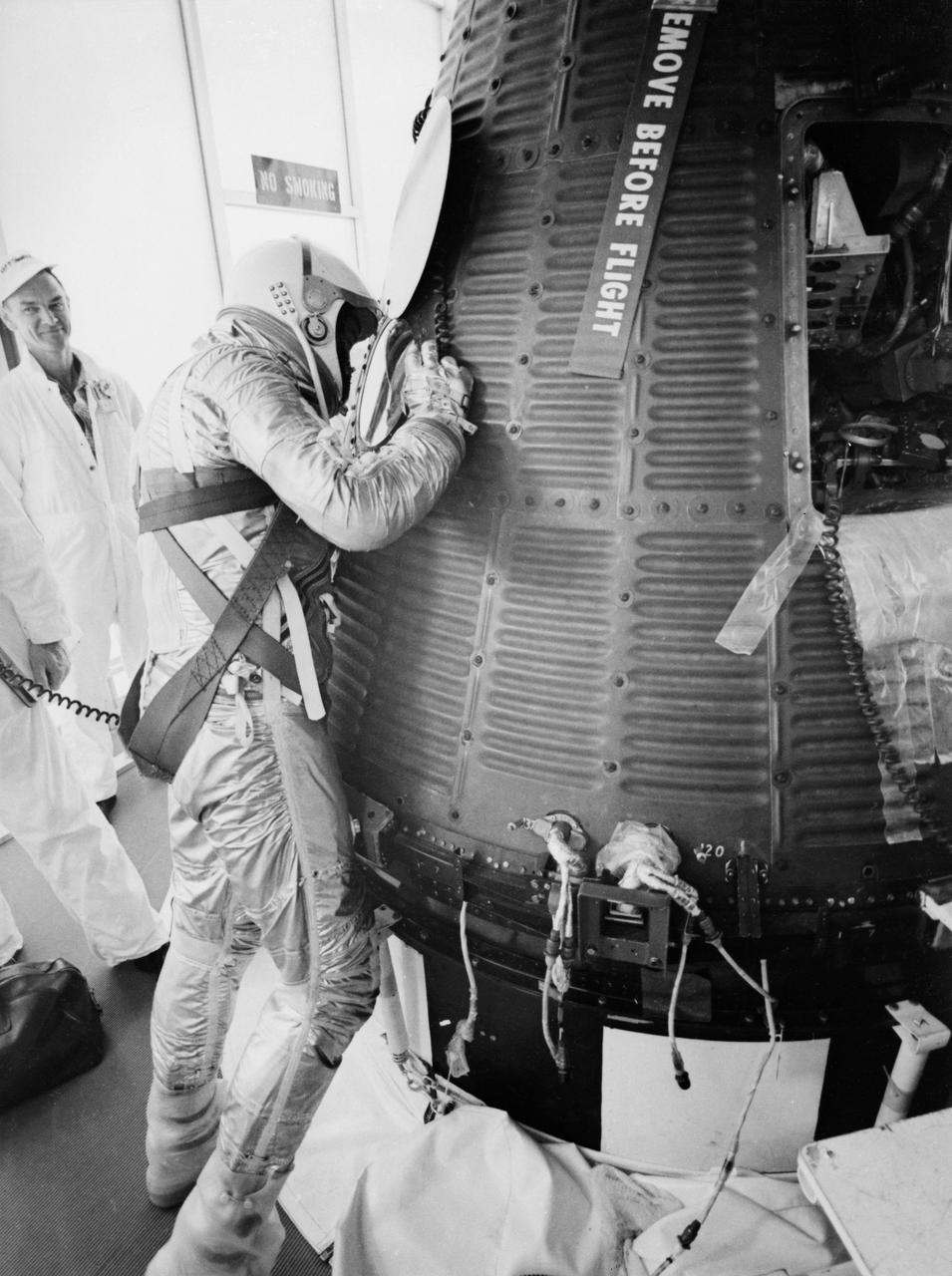
S61-02547 (5 May 1961) --- Astronaut Alan B. Shepard Jr., in his pressure suit and helmet, looks into the Freedom 7 capsule in preparation for ingress before the Mercury-Redstone 3 (MR-3) mission. Photo credit: NASA or National Aeronautics and Space Administration
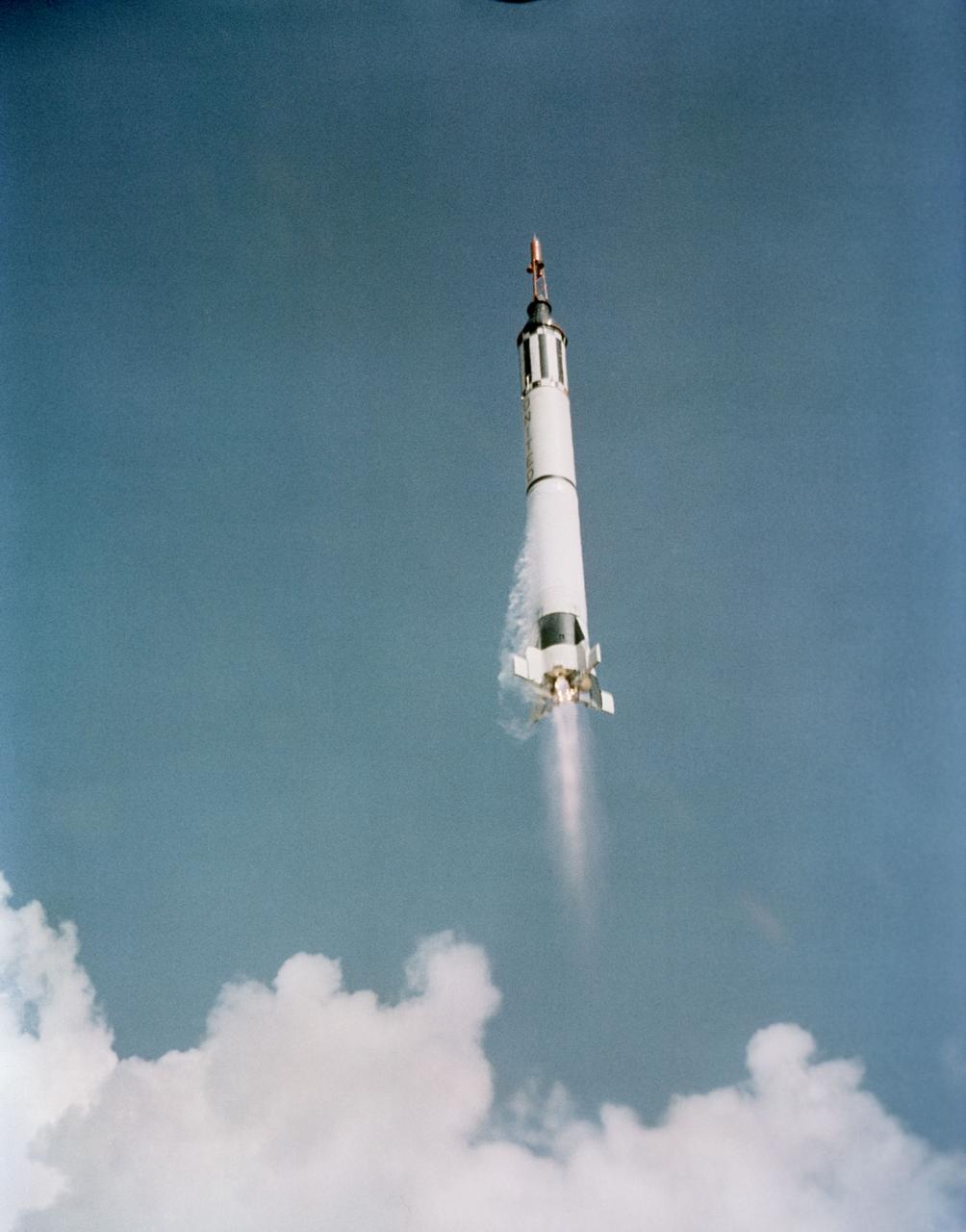
S61-01908 (5 May 1961) --- This is the launch of the Mercury-Redstone 3 (MR-3) spacecraft from Cape Canaveral on a suborbital mission -- the first U.S. manned spaceflight. The spacecraft is already headed towards its suborbital mission. Photo credit: NASA or National Aeronautics and Space Administration
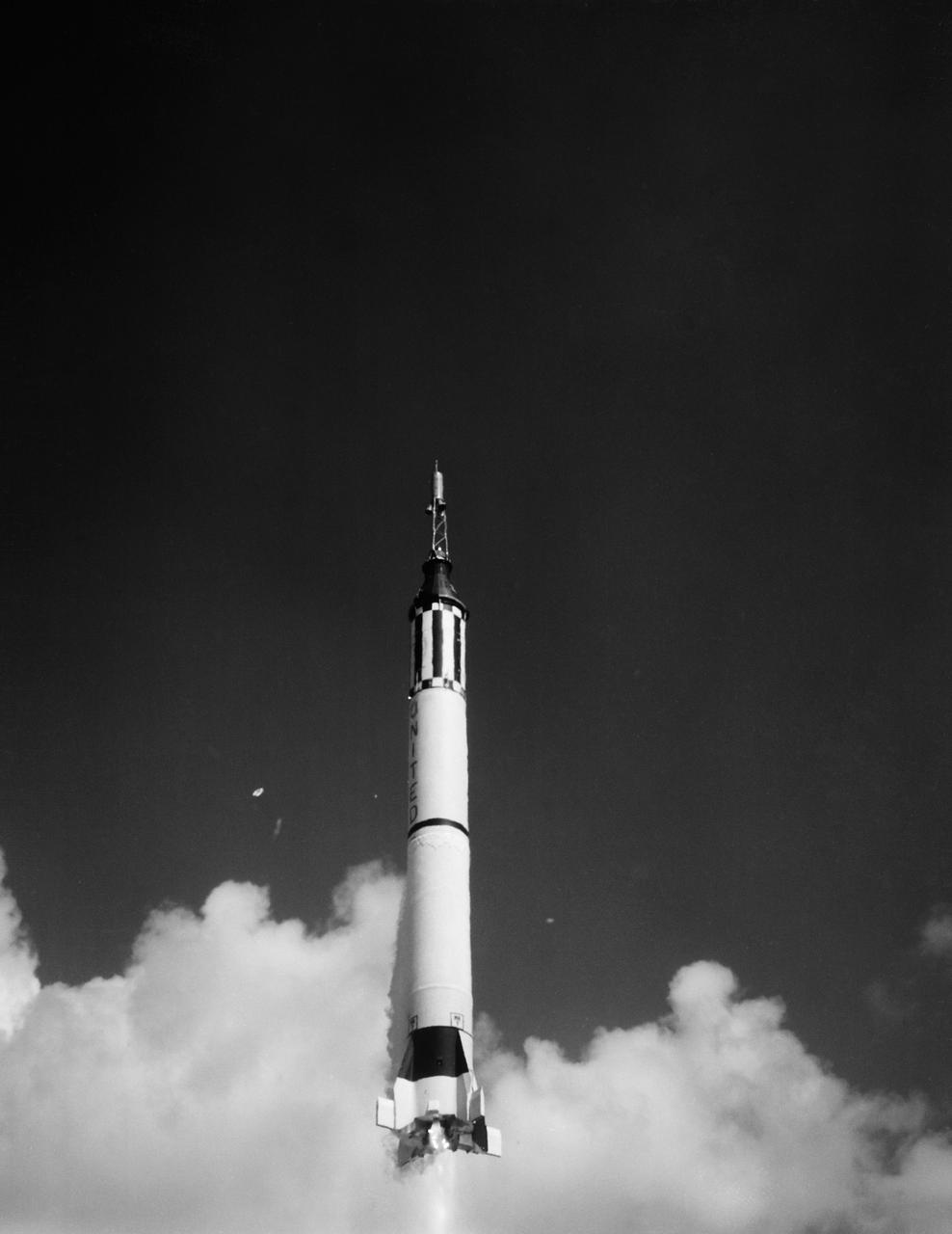
S61-02409 (5 May 1961) --- Launching of the Mercury-Redstone 3 (MR-3) rocket from Cape Canaveral on astronaut Alan B. Shepard?s suborbital mission. Photo credit: NASA or National Aeronautics and Space Administration
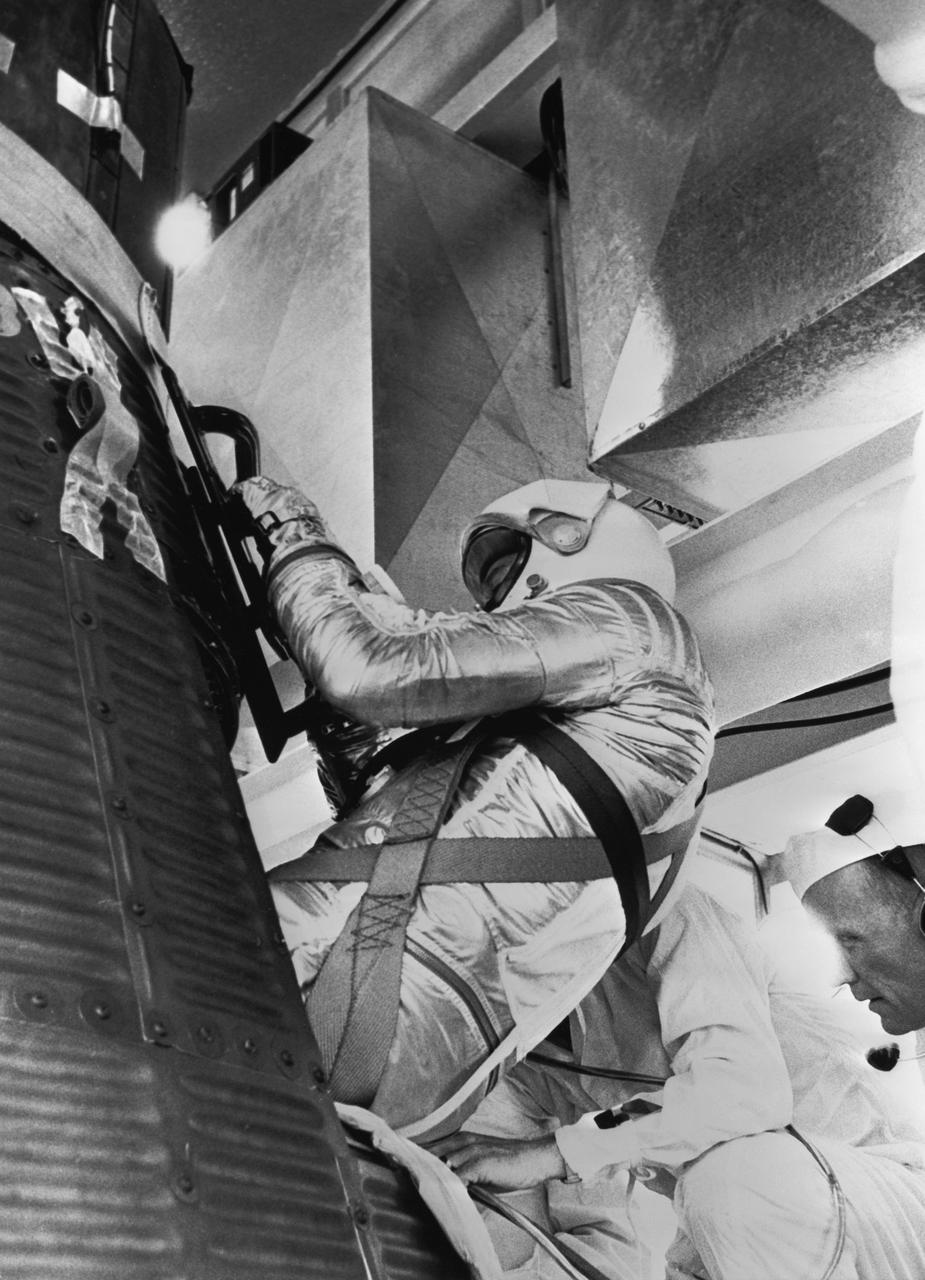
S61-03651 (5 May 1961) --- Astronaut Alan B. Shepard Jr., in his pressure suit and helmet, is being inserted into the Freedom 7 capsule in preparation for the Mercury-Redstone 3 (MR-3) mission. Photo credit: NASA or National Aeronautics and Space Administration
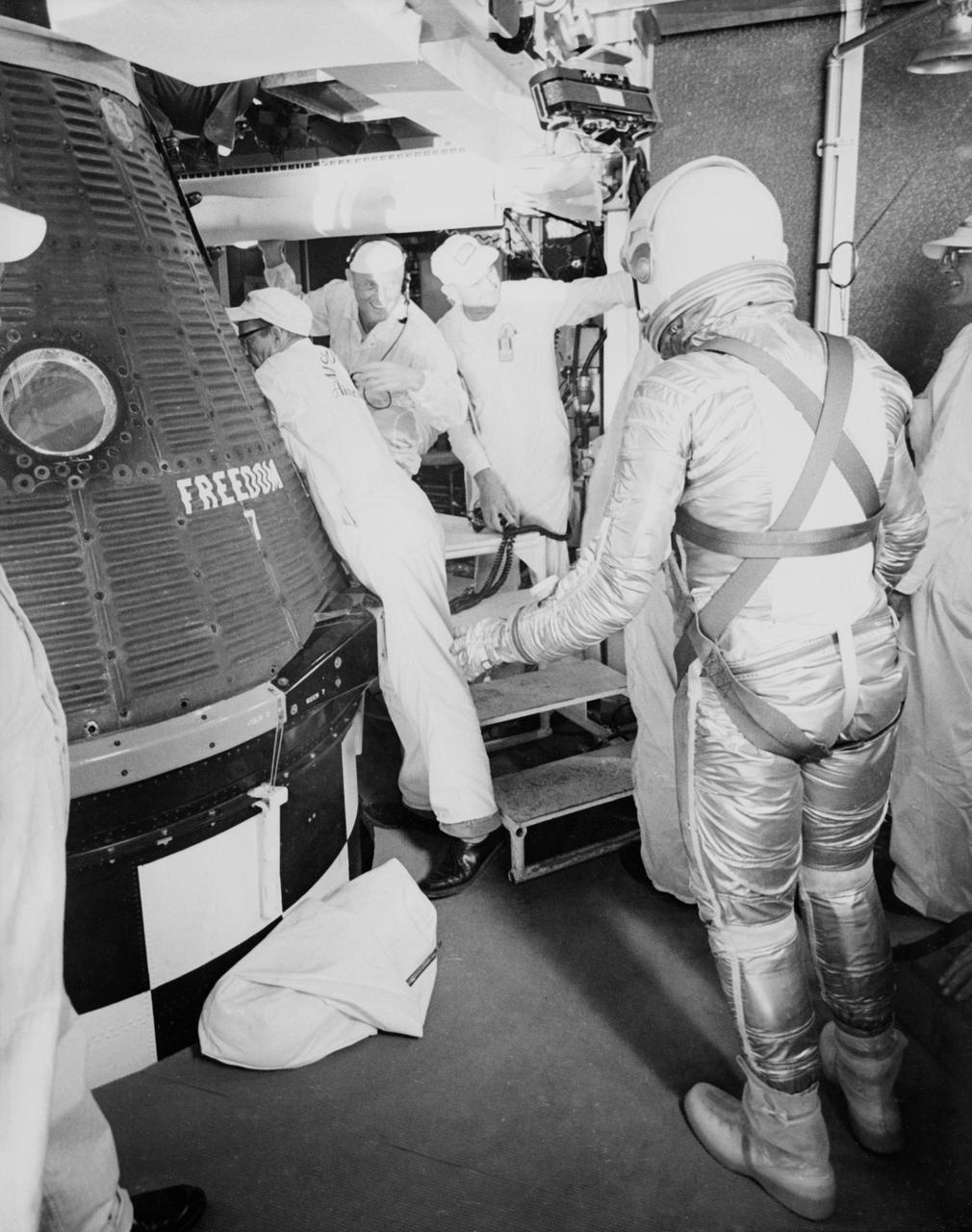
S61-02792 (5 May 1961) --- Astronaut Alan B. Shepard Jr., in his pressure suit and helmet, approaches the Freedom 7 capsule in preparation for insertion before the Mercury-Redstone 3 (MR-3) mission. Photo credit: NASA or National Aeronautics and Space Administration
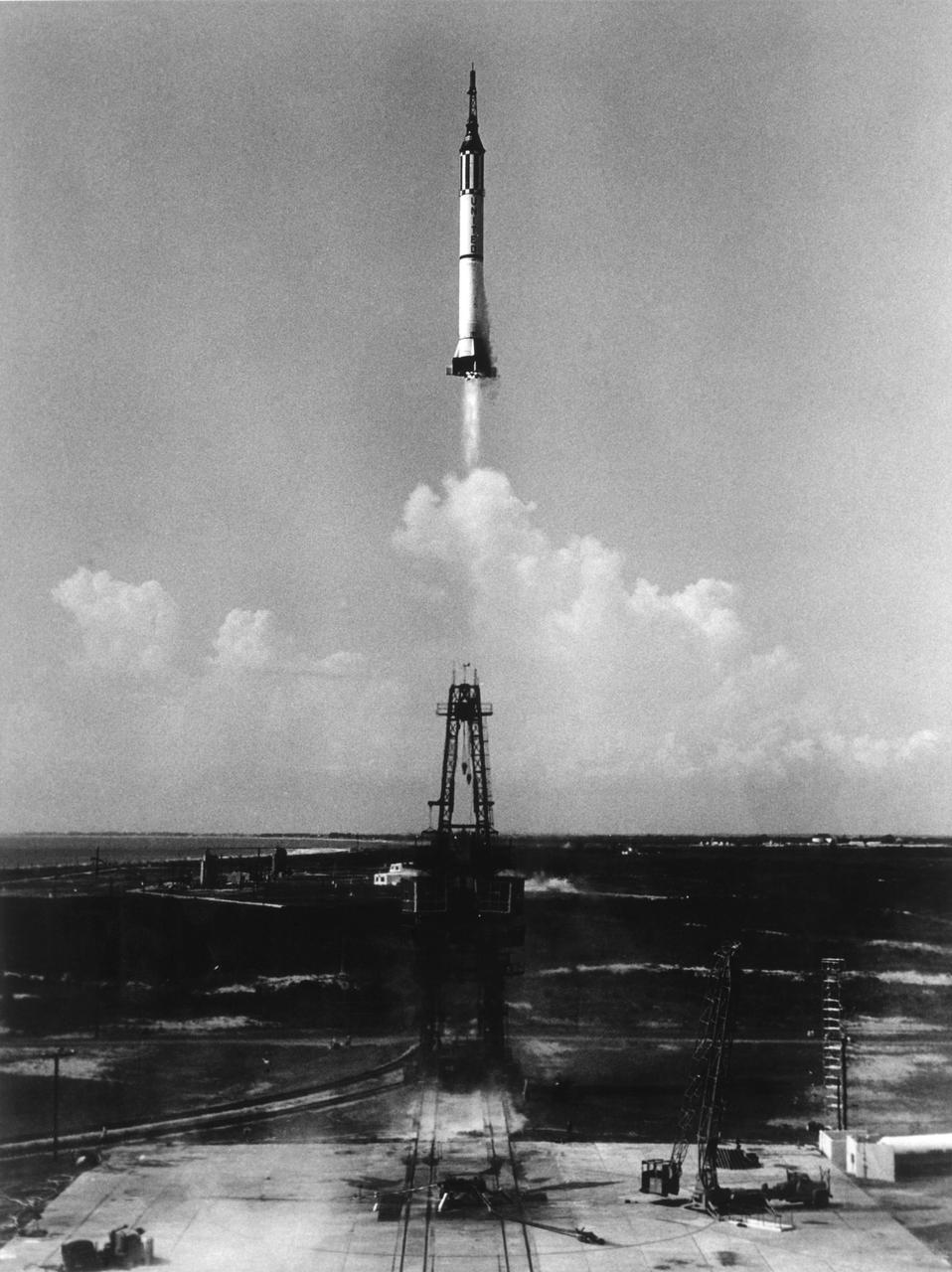
JSC2007-E-046477 (5 May 1961) --- Launching of the Mercury-Redstone 3 (MR-3) spacecraft from Cape Canaveral on a suborbital mission -- the first U.S. manned spaceflight. Original image number was 61-MR3-74. Photo credit: NASA or National Aeronautics and Space Administration
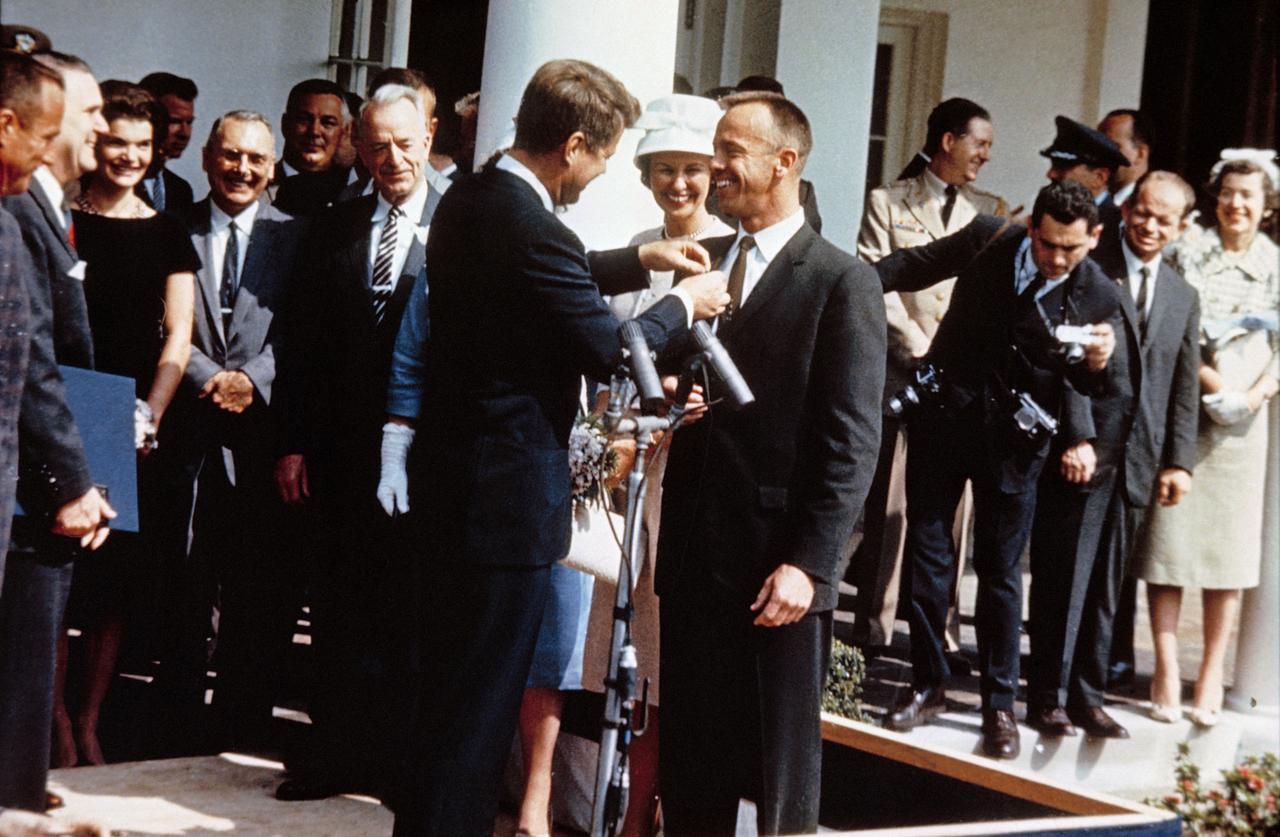
S63-06268 (8 May 1963) --- Astronaut Alan B. Shepard, Jr., receives his NASA's Distinguished Service Medal from President John F. Kennedy, after his Mercury-Redstone 3 (MR-3) flight, in a Rose Garden ceremony on May 8, 1961 at the White House.
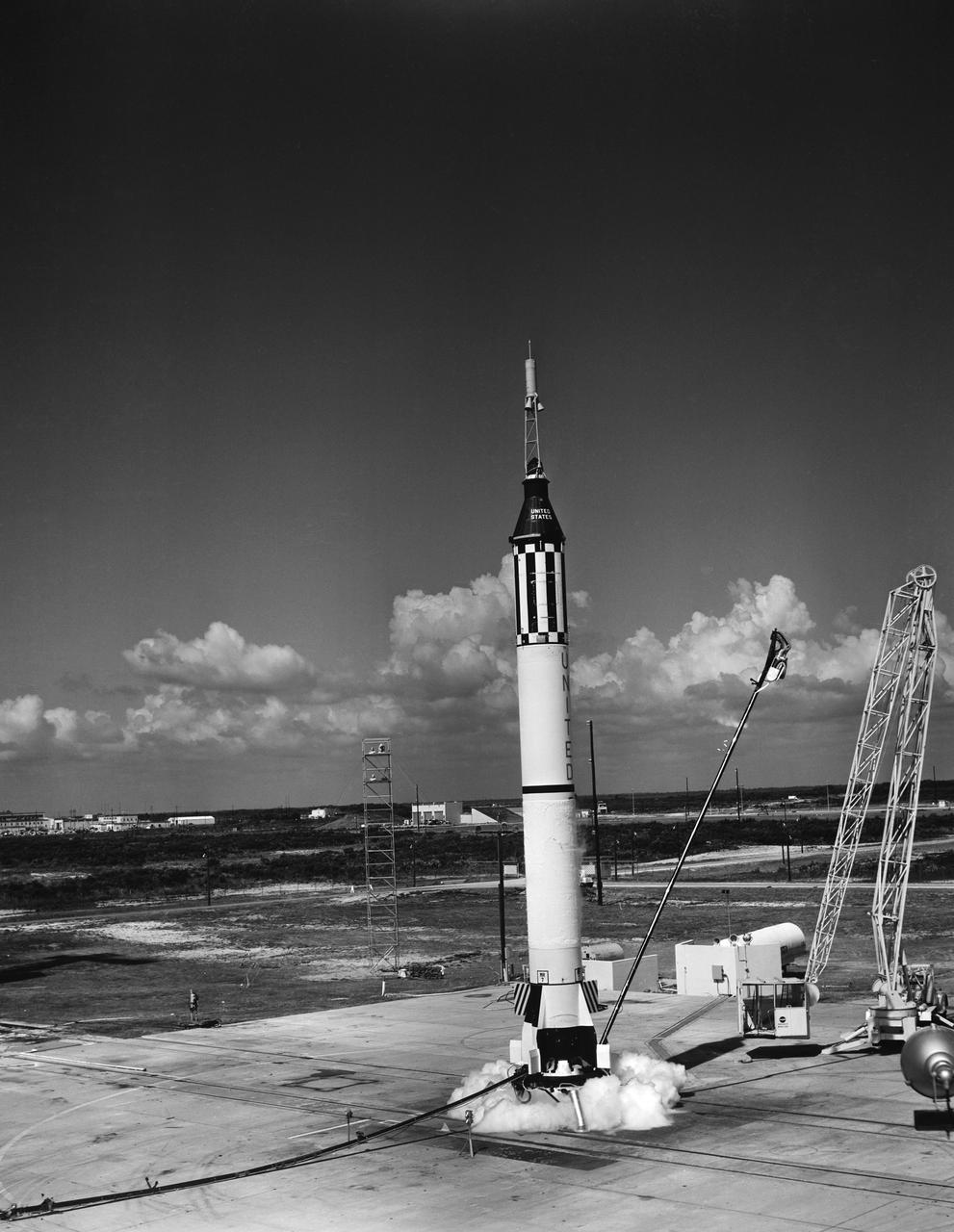
S61-02407 (5 May 1961) --- Launching of the Mercury-Redstone 3 (MR-3) rocket from Cape Canaveral on astronaut Alan B. Shepard?s suborbital mission. Photo credit: NASA or National Aeronautics and Space Administration
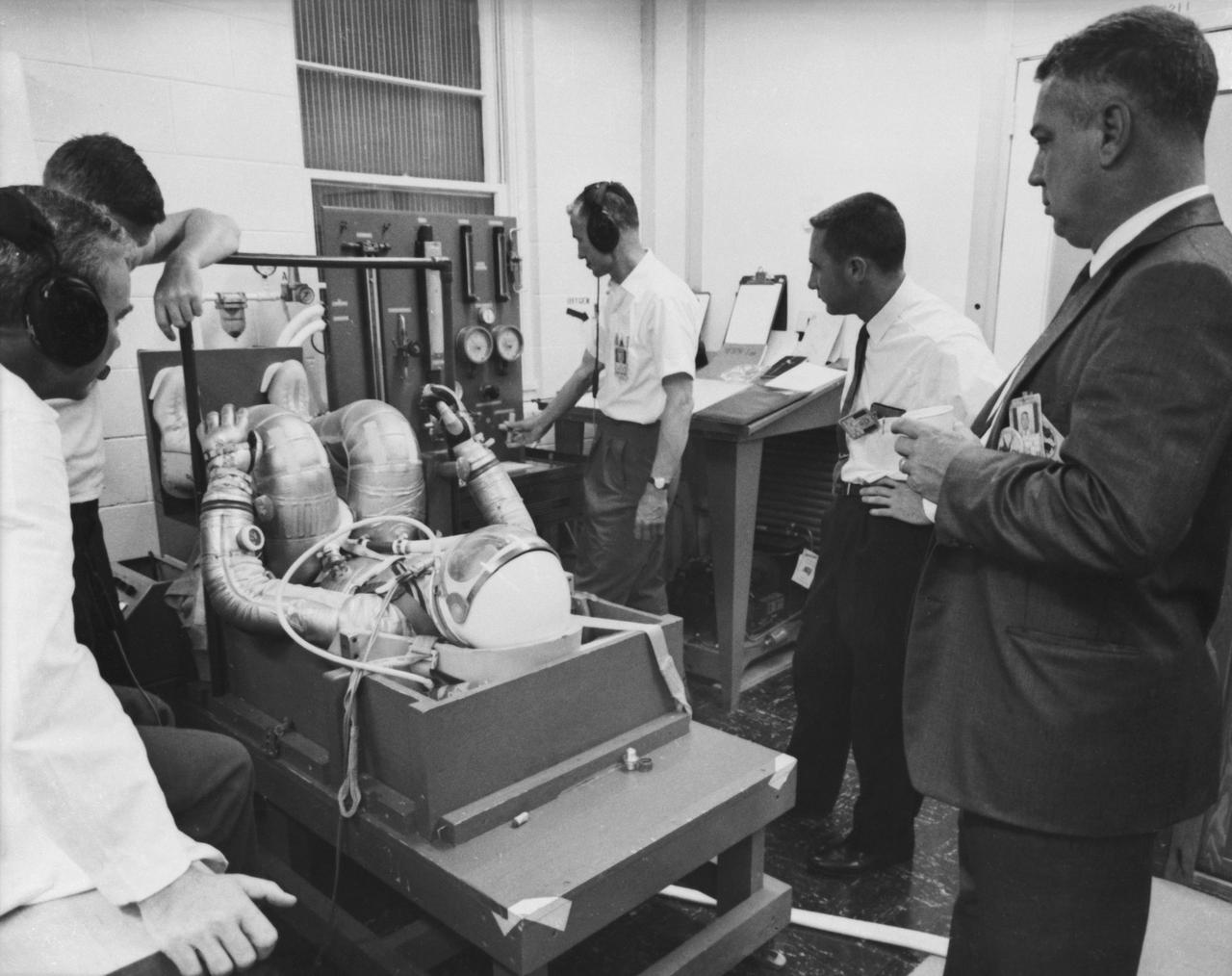
S61-02767 (5 May 1961) --- Astronaut Alan B. Shepard Jr. in flight couch for final check before insertion into capsule for his Mercury-Redstone 3 (MR-3) flight. Photo credit: NASA or National Aeronautics and Space Administration
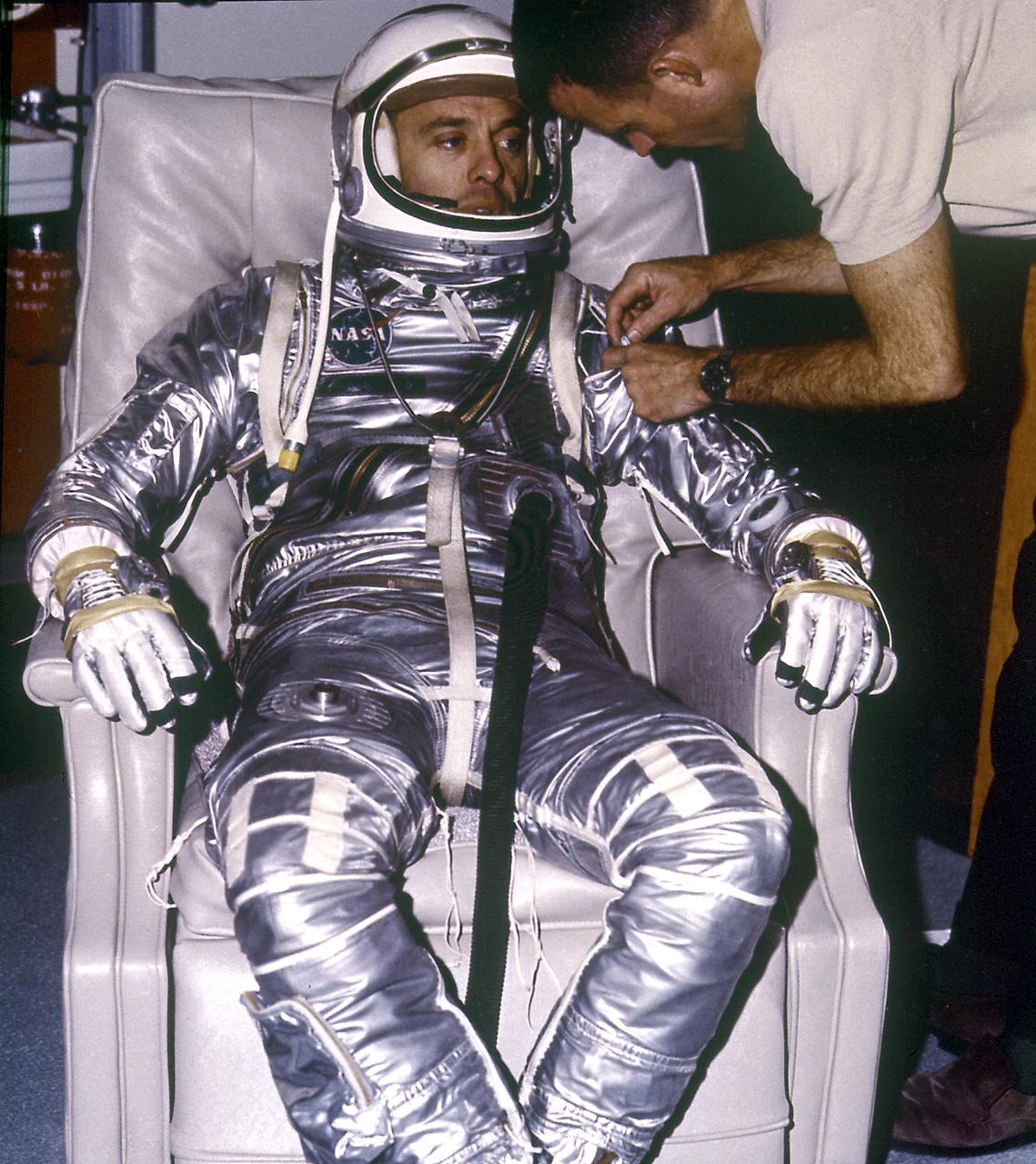
Astronaut Alan B. Shepard, Jr. during suiting for the first manned suborbital flight, MR-3 mission. The Freedom 7 spacecraft, carrying the first American, Astronaut Shepard and boosted by the Mercury-Redstone launch vehicle, lifted off on May 5, 1961.
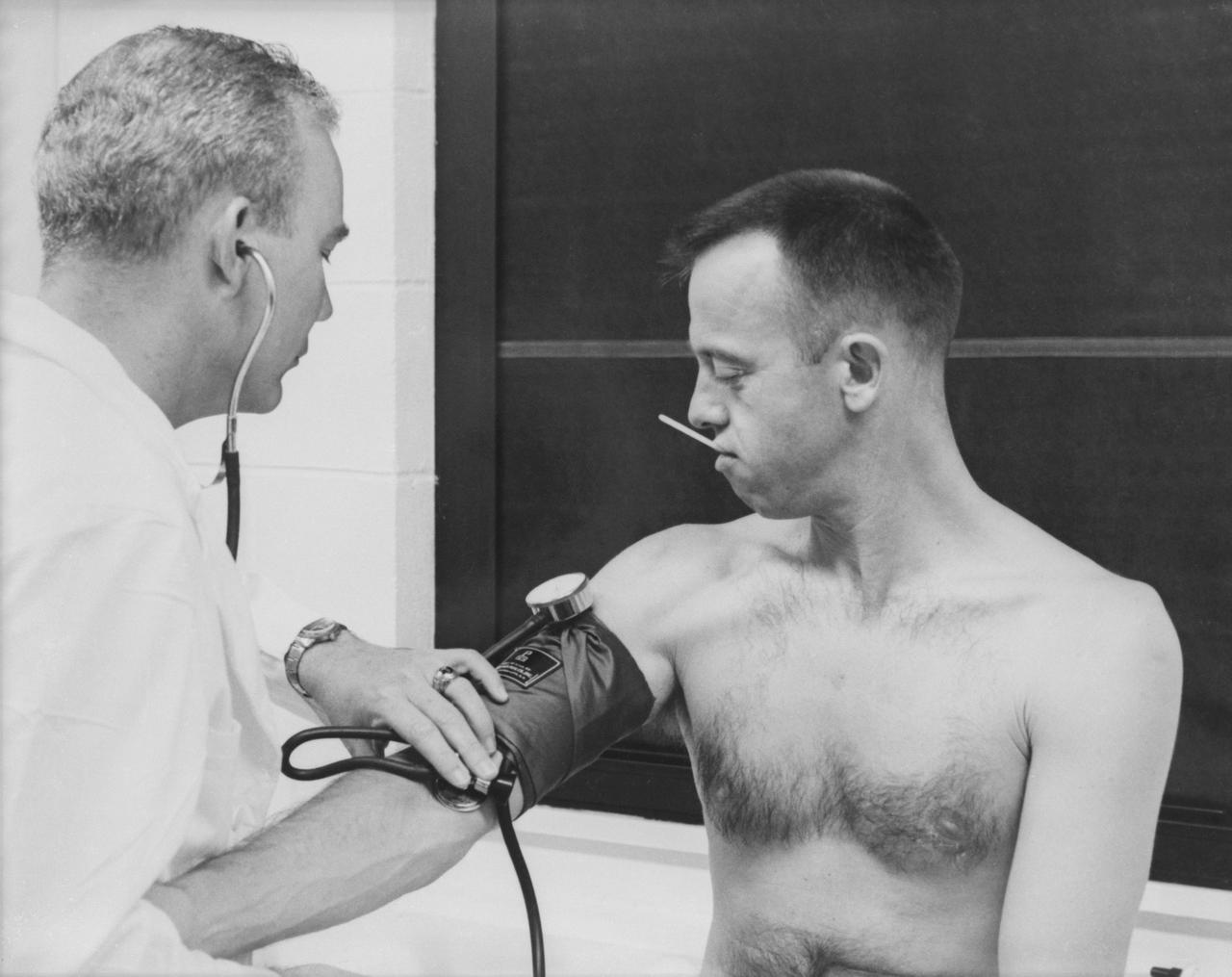
S61-02749 (5 May 1961) --- Astronaut Alan B. Shepard Jr. has his blood pressure and temperature checked prior to his Mercury-Redstone 3 (MR-3) mission, the first American manned spaceflight. The attending physician is Dr. William K. Douglas. Photo credit: NASA or National Aeronautics and Space Administration

JSC2003-E-05206 (3 February 2003) --- Former President George H.W. Bush and Mrs. Bush talk with the three-member crew aboard the International Space Station (ISS) during a visit to the Johnson Space Center's station flight control room (BFCR) on Feb. 3, 2003. Onboard the orbital outpost are astronauts Kenneth D. Bowersox, Expedition Six commander; and Donald Pettit, ISS Science Officer; along with cosmonaut Nikolai Budarin, flight engineer.
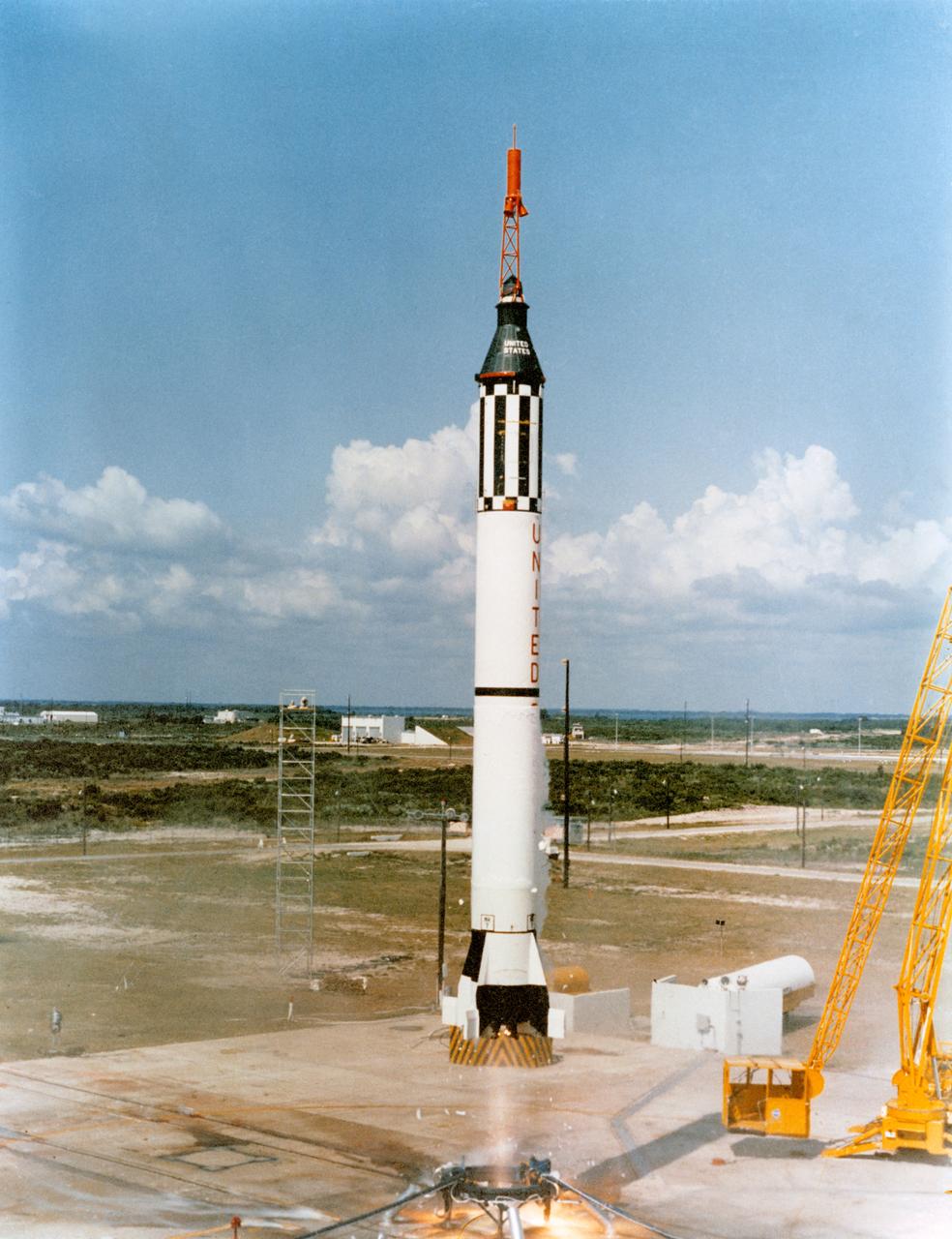
S61-01927 (5 May 1961) --- Mercury-Redstone 3 (MR-3), the United States' first manned spaceflight, is launched from Cape Canaveral on a suborbital mission. Astronaut Alan B. Shepard Jr. was the pilot of the Mercury spacecraft, designated "Freedom 7". The spacecraft attained a maximum speed of 5,180 miles per hour (mph), reached an altitude of 116 1/2 statute miles, and landed 302 statute miles downrange from Cape Canaveral, Florida. Photo credit: NASA or National Aeronautics and Space Administration
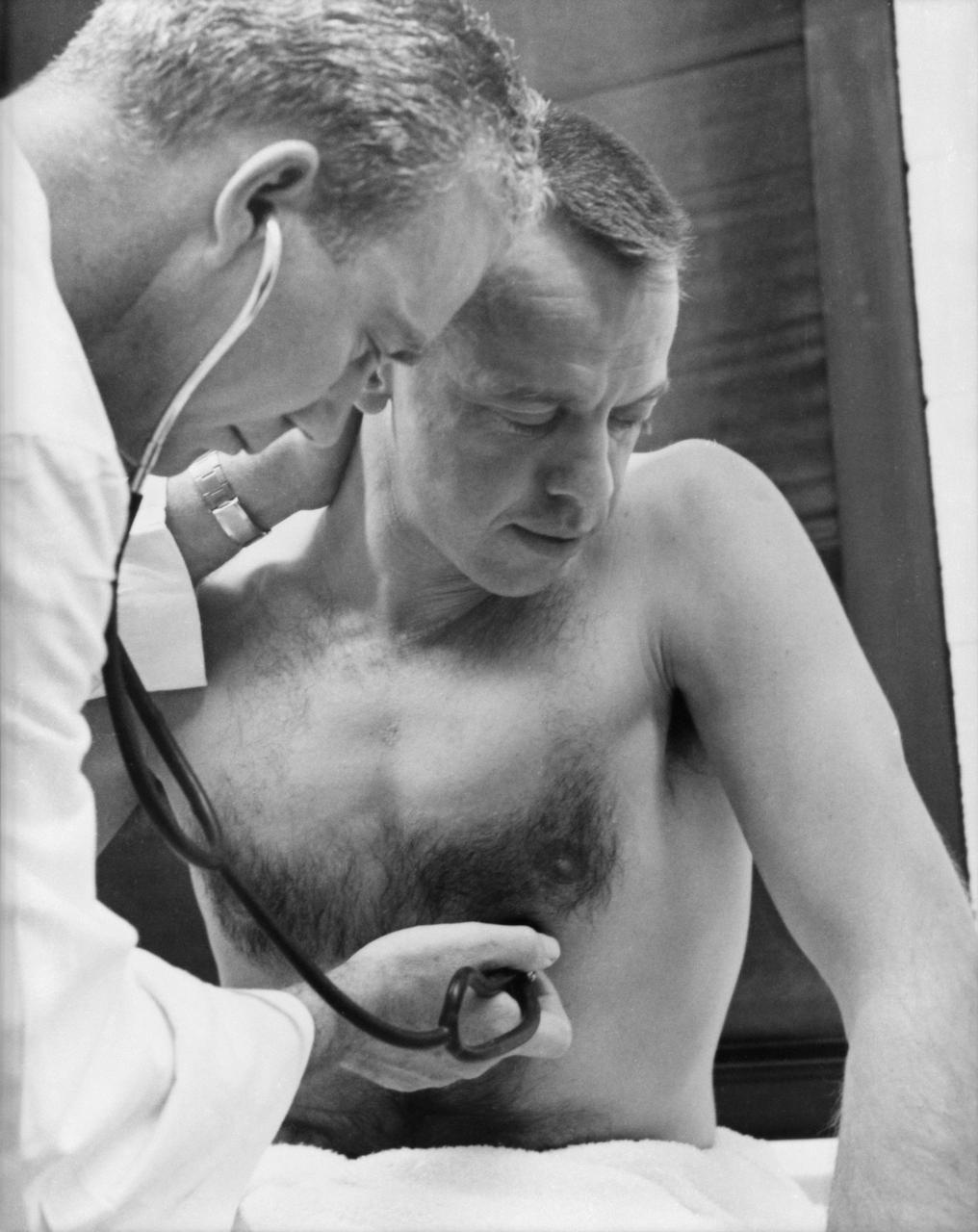
S61-02740 (5 May 1961) --- Astronaut Alan B. Shepard Jr. has his heart rate checked prior to his Mercury-Redstone 3 (MR-3) mission, the first American manned suborbital spaceflight. The attending physician is Dr. William K. Douglas. Photo credit: NASA or National Aeronautics and Space Administration
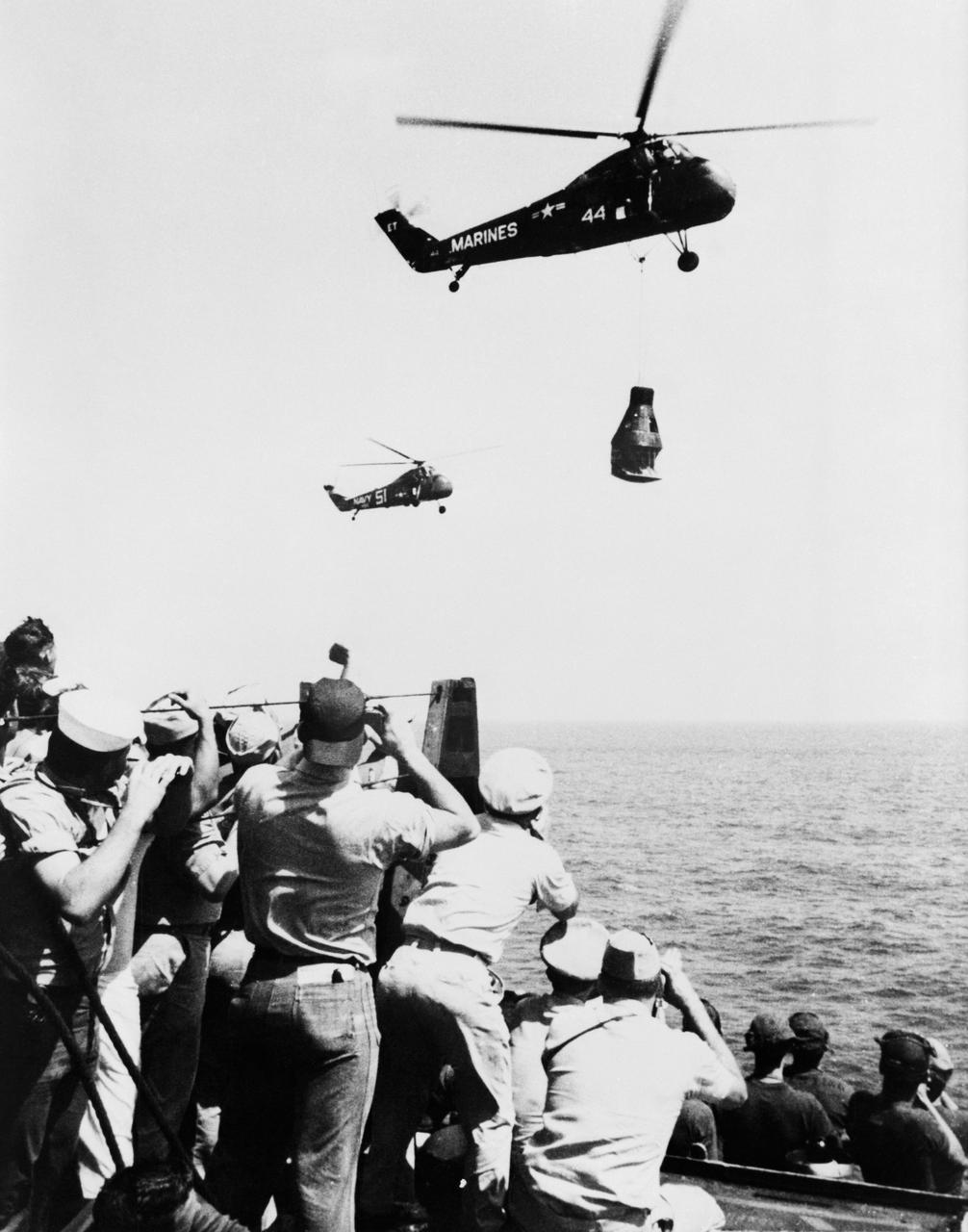
S61-02711 (5 May 1961) --- Crew members of the U.S. Navy Carrier Champlain cheer and take pictures of the arrival of the first Project Mercury pilot to fly a suborbital flight, astronaut Alan B. Shepard Jr. Two helicopters are approaching the ship, one carrying the astronaut and the other the Mercury-Redstone 3 (MR-3) capsule. Photo credit: NASA or National Aeronautics and Space Administration
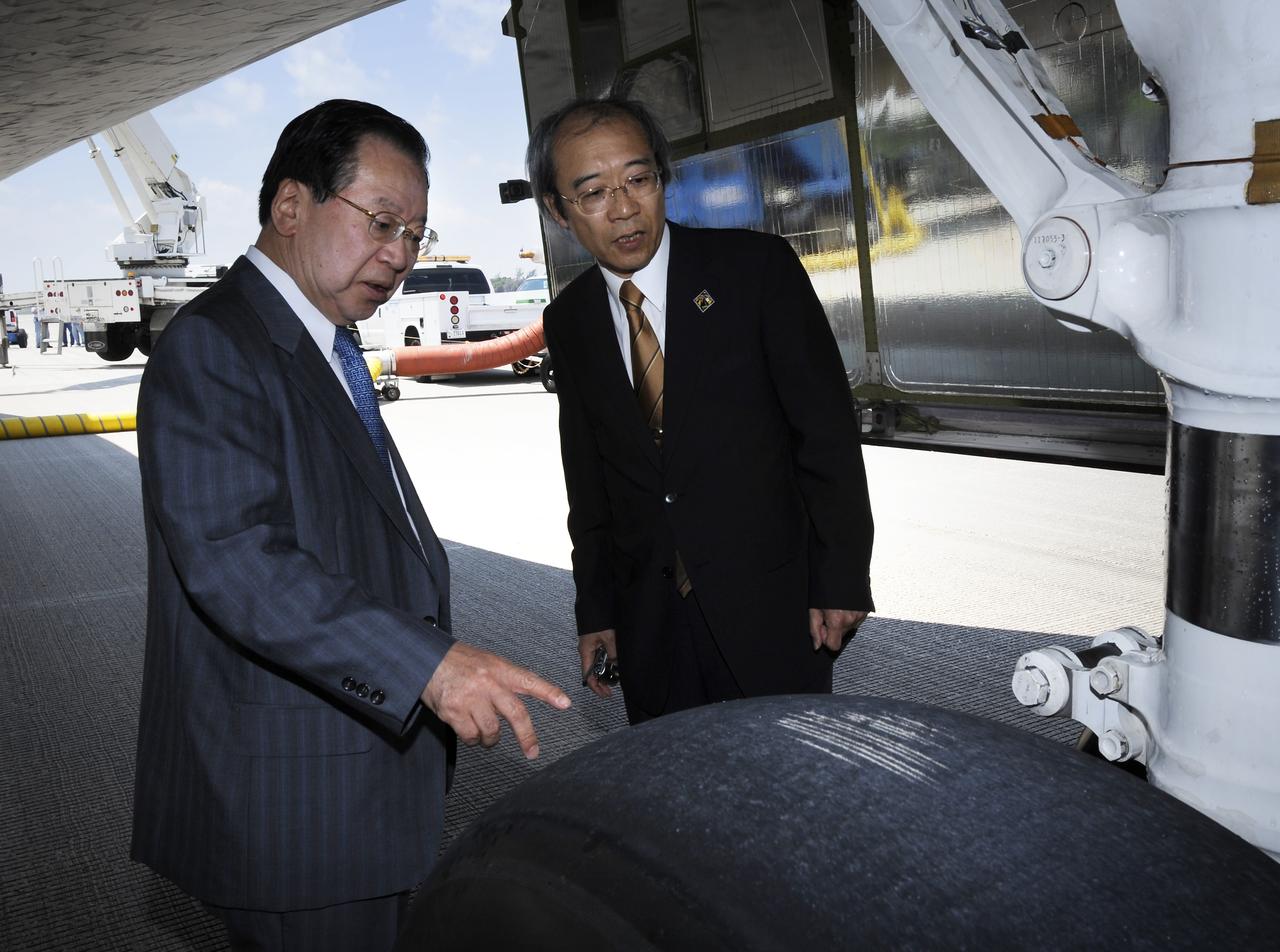
Vice President of the Japan Aerospace Exploration Agency (JAXA) Mr. Kaoru Mamiya, left, and Mr. Yuichi Yamaura of JAXA look at one of the space shuttle Discovery tires shortly after Discovery touched down at 11:15 a.m., Saturday, June 14, 2008, at the Kennedy Space Center in Cape Canaveral, Florida. During the 14-day STS-124 mission Discovery's crew installed the Japan Aerospace Exploration Agency's large Kibo laboratory and its remote manipulator system leaving a larger space station and one with increased science capabilities. Discovery also brought home NASA astronaut Garrett Reisman after his 3 month mission onboard the International Space Station. Photo Credit: (NASA/Bill Ingalls)
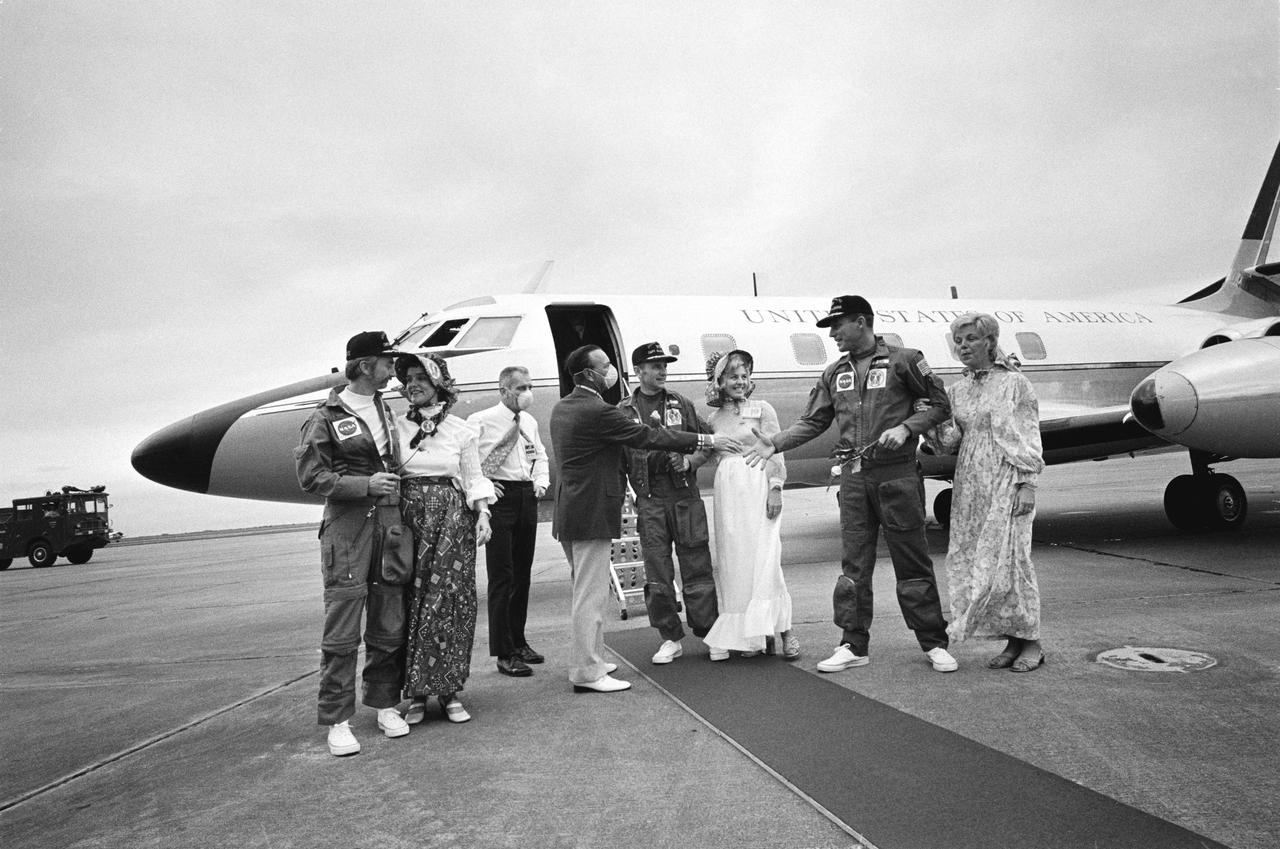
S73-34615 (27 Sept. 1973) --- Dr. Christopher C. Kraft Jr., center, shakes hands with astronaut Jack R. Lousma, Skylab 3 pilot, during welcome ceremonies following crew arrival at Ellington Air Force Base. The crewmen greet their wives after spending 59.5 days in the Skylab space station cluster in Earth orbit. From left to right are scientist-astronaut Owen K. Garriot, science pilot; Mrs. Garriott; Dr. Donald K. Slayton, Director of Flight Crew Operations at JSC; Dr. Kraft; astronaut Alan L. Bean, commander; Mrs. Bean; and the Lousmas. The group stands in front of the VC-140 (Jet Star) which flew the crewmen from San Diego to Ellington Air Force Base. Photo credit: NASA

jsc2024e016240 (3/20/2023) --- The multi-resolution scanning payload prototype housed within an Astrobee robot at NASA’s Ames Research Center (with front cover removed). The Multi-Resolution Scanning payload will be mated to the Astrobee free-flying robot, which will undertake a small flight and use the multi-resolution scanner (MRS) to create 3D maps of the interior of the International Space Station. Image courtesy of CSIRO.
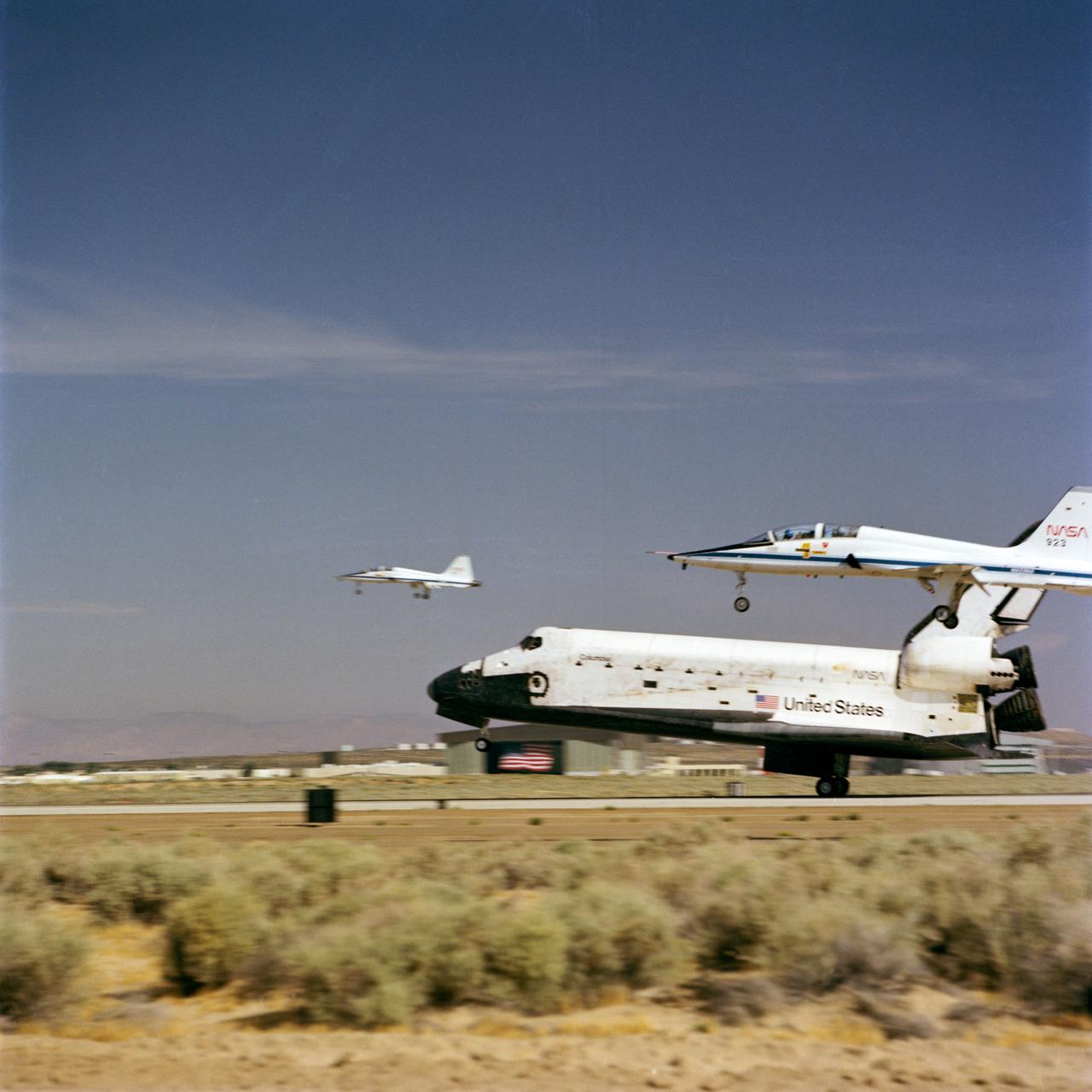
Views of the Columbia landing at EAFB ending the STS-4 Mission on 07/04/1982; of President and Mrs. Reagan greeting the crew out on the Lake bed Runway; and, the view of Roy Rogers with Astronauts Jerry Ross and Guy Gardner. 1. President Ronald Reagan & wife Nancy 2. Roy Rogers 3. Astronaut Jerry L. Ross 4. Astronaut Guy S. Gardner Edwards AFB, CA
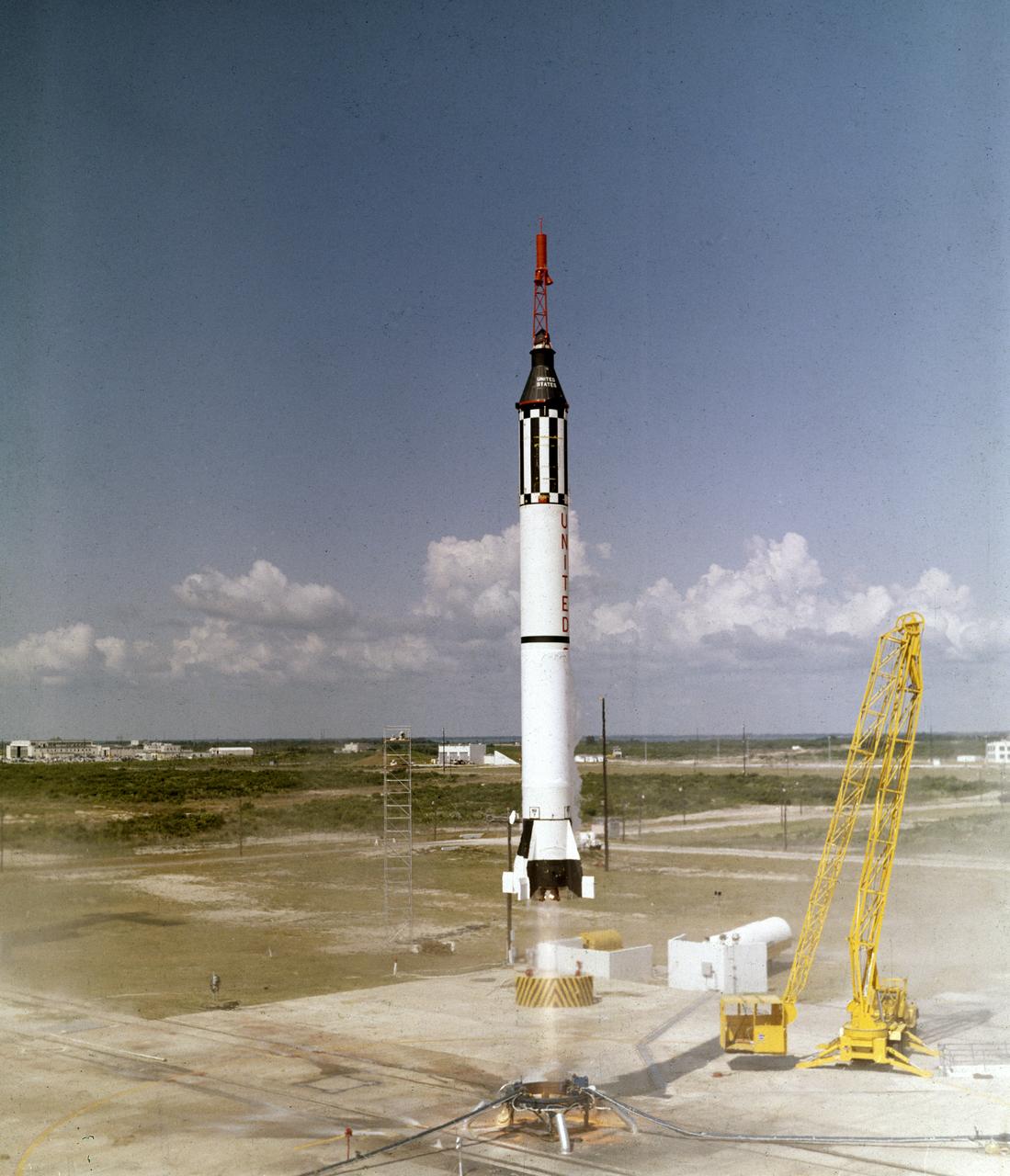
Astronaut Alan B. Shepard, Jr. lifts off in the Freedom 7 Mercury spacecraft on May 5, 1961. This third flight of the Mercury-Redstone (MR-3) vehicle, developed by Dr. Wernher von Braun and the rocket team in Huntsille, Alabama, was the first marned space mission for the United States. During the 15-minute suborbital flight, Shepard reached an altitude of 115 miles and traveled 302 miles downrange.
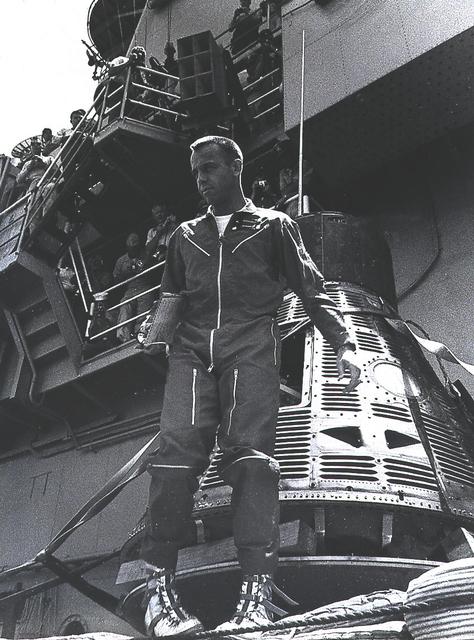
Alan B. Shepard, Jr., America's first astronaut, stands in front of the Freedom 7 spacecraft shortly after completion of the third flight of the Mercury-Redstone (MR-3) vehicle, May 5, 1961. During the 15-minute suborbital flight, the Freedom 7 Mercury spacecraft, launched atop a modified Redstone rocket developed by Dr. Wernher von Braun and the rocket team in Huntsville, Alabama, reached an altitude of 115 miles and traveled 302 miles downrange.
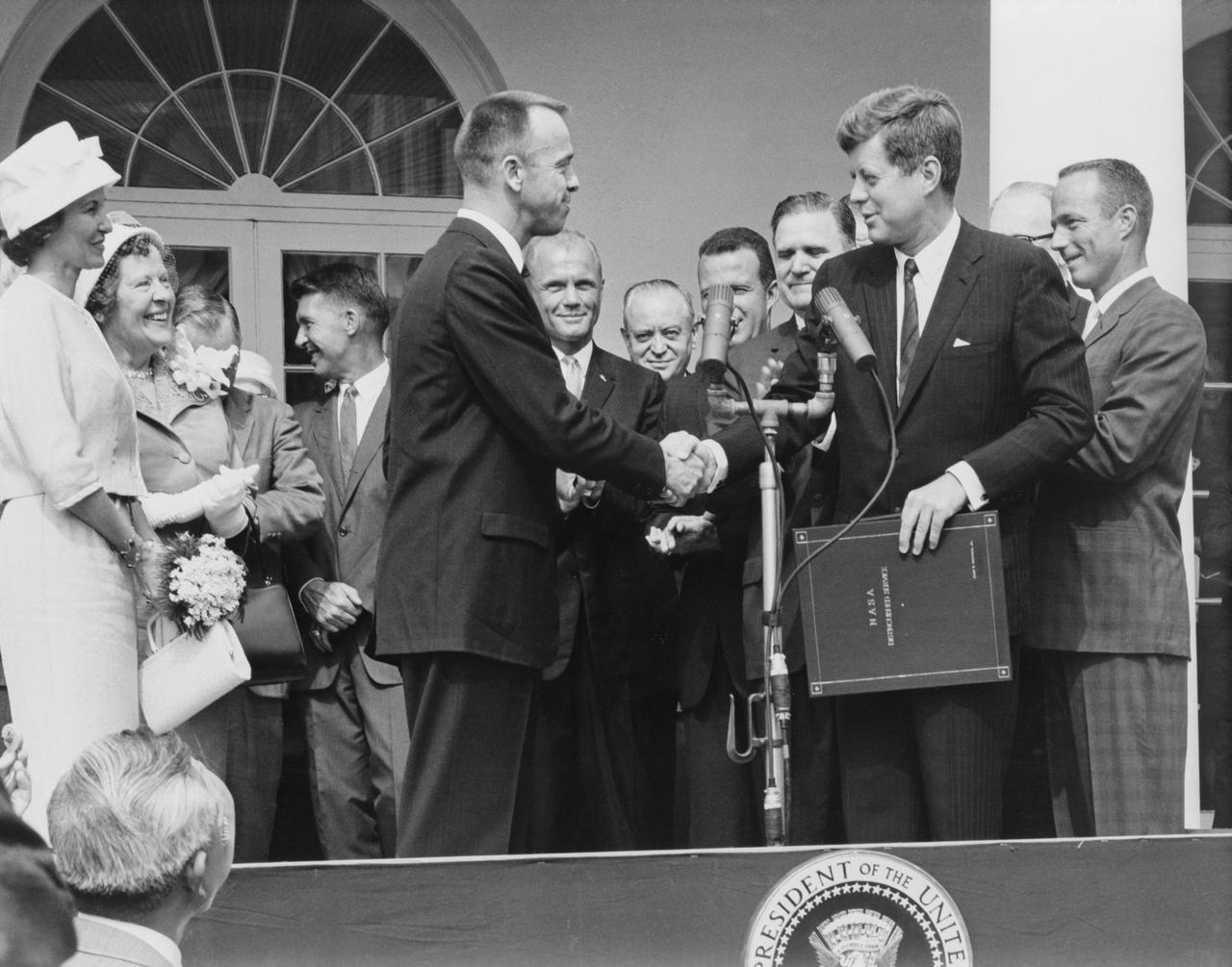
S67-19572 (8 May 1961) --- Astronaut Alan B. Shepard Jr. receives the NASA Distinguished Service Award from United States President John F. Kennedy May 8, 1961, days after his history making MR-3 flight. Shepard's wife and mother on left and the other six Mercury astronauts are in background. Photo credit: NASA or National Aeronautics and Space Administration
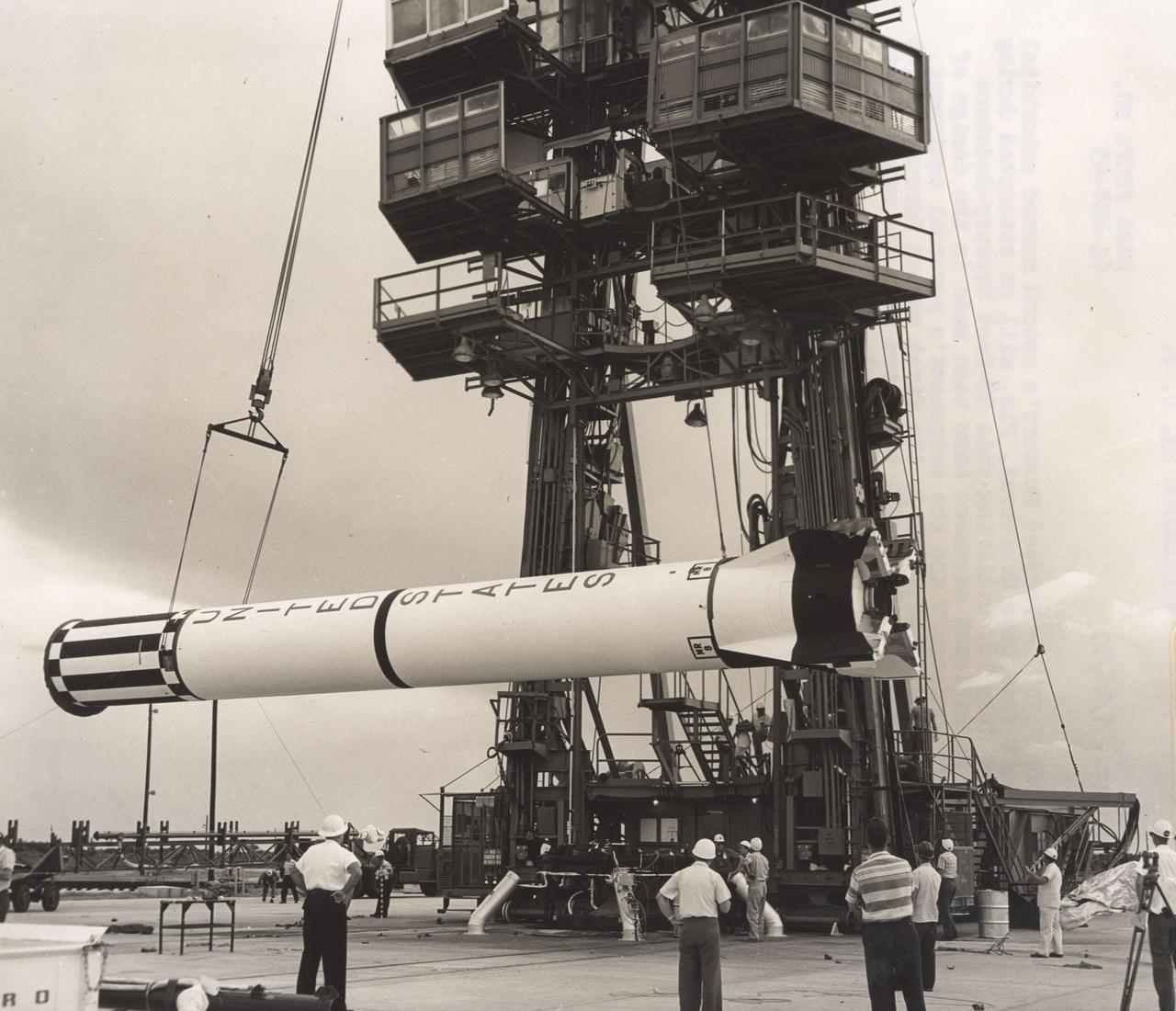
KENNEDY SPACE CENTER, FLA. -- READIED FOR FLIGHT - Project Mercury's second manned suborbital space flight, Liberty Bell 7, from Cape Canaveral, Fla., will be attempted during the week of July 16, utilizing this 58-foot Mercury-Redstone vehicle. Significant advances have been made in the design of the Mercury spacecraft and the astronaut's personal equipment. Flight will be similar to MR-3, the first manned Mercury flight May 5, 1961; however, the pilot will have more time for making Earth and celestial observations. (NASA Photo)
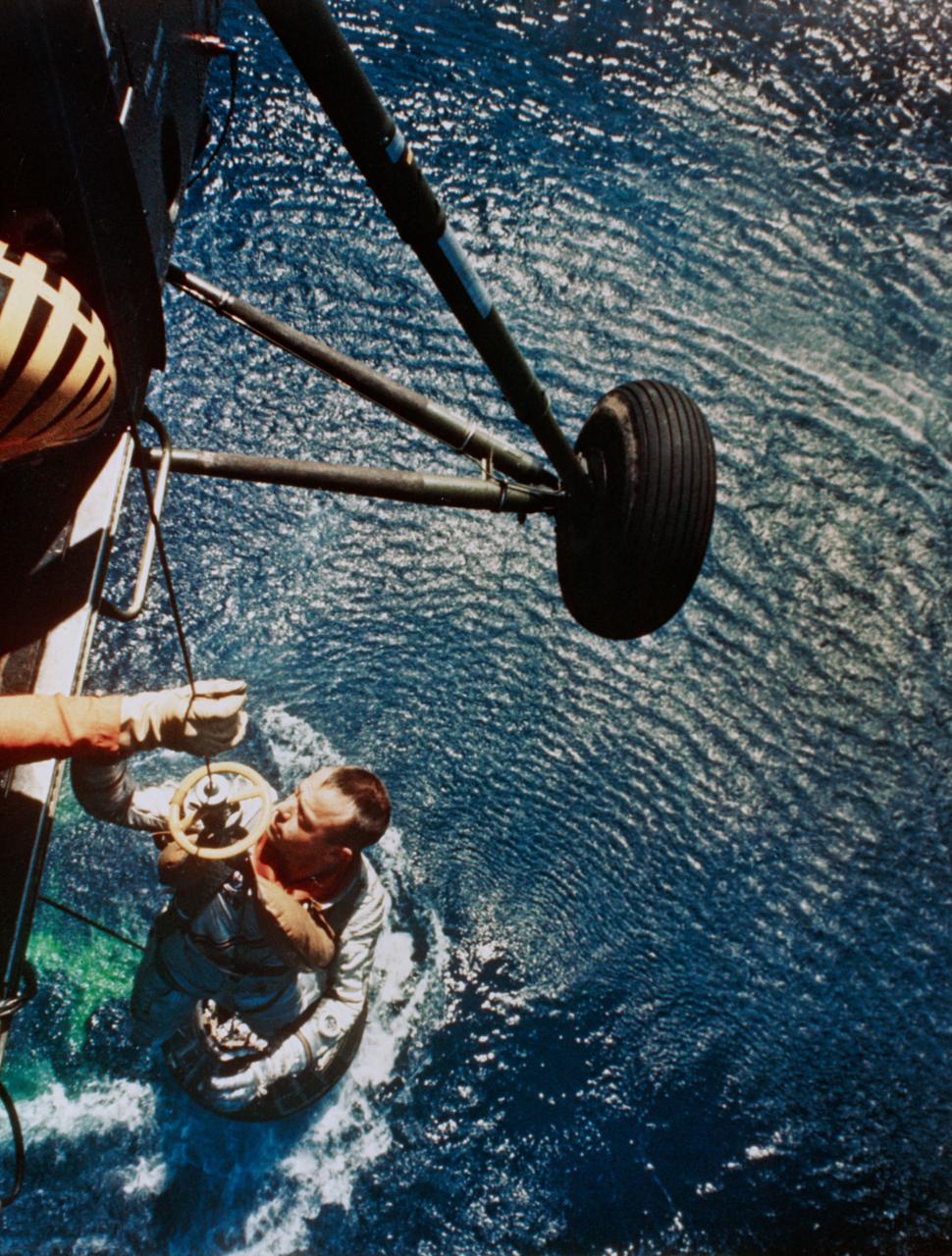
S88-31377 (5 May 1961) --- Astronaut Alan B. Shepard Jr. is rescued by a U. S. Marine helicopter at the termination of his sub-orbital flight May 5, 196l, down range from the Florida eastern coast.
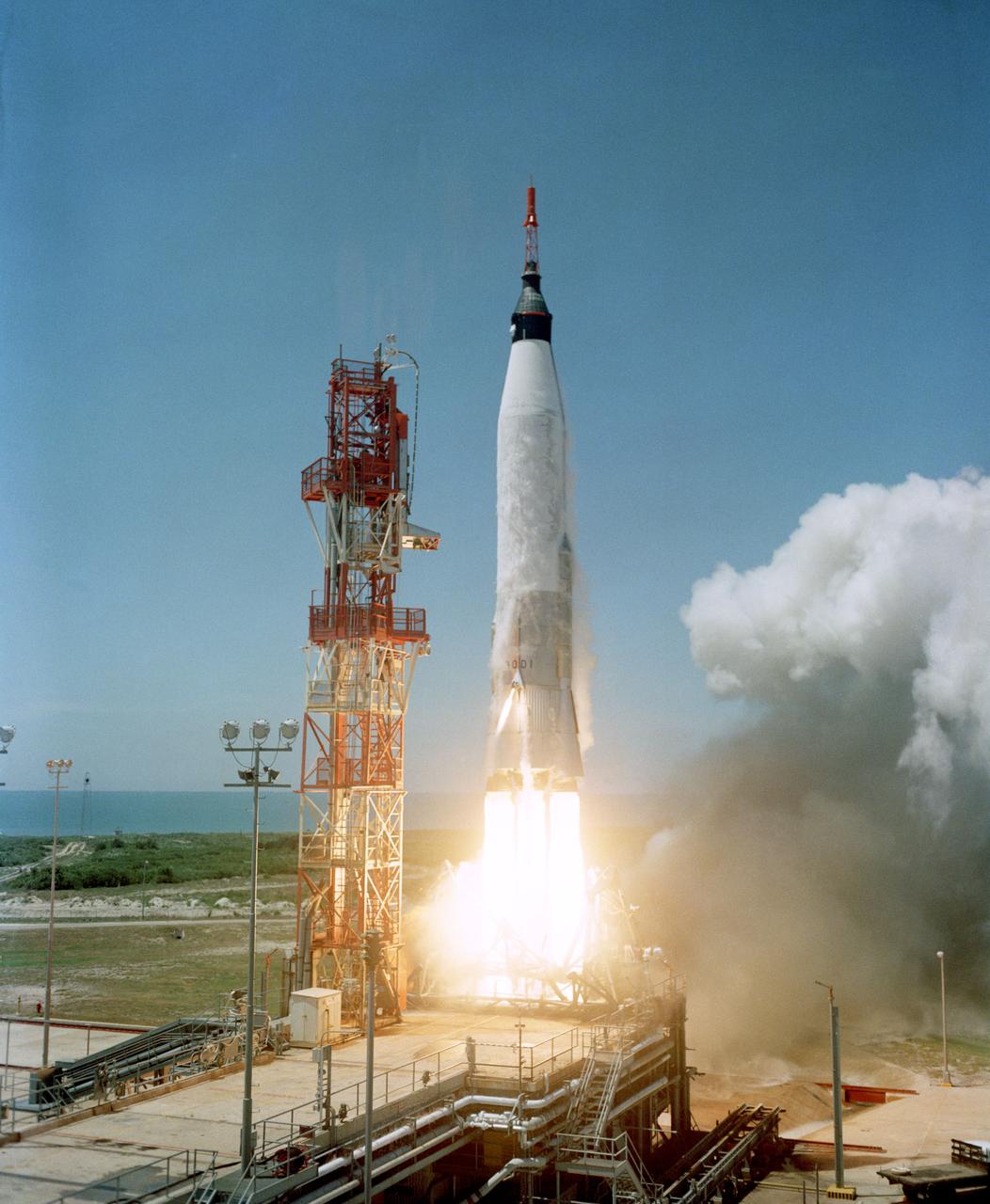
S61-01925 (25 April 1961) --- View of the Mercury-Atlas 3 (MA-3) liftoff from Cape Canaveral, Florida on April 25, 1961. The orbital test flight of the Mercury capsule did not achieve orbit and was destroyed after 40 seconds by Range Safety Officer when the inertial guidance system failed to pitch the vehicle over toward the horizon. Photo credit: NASA
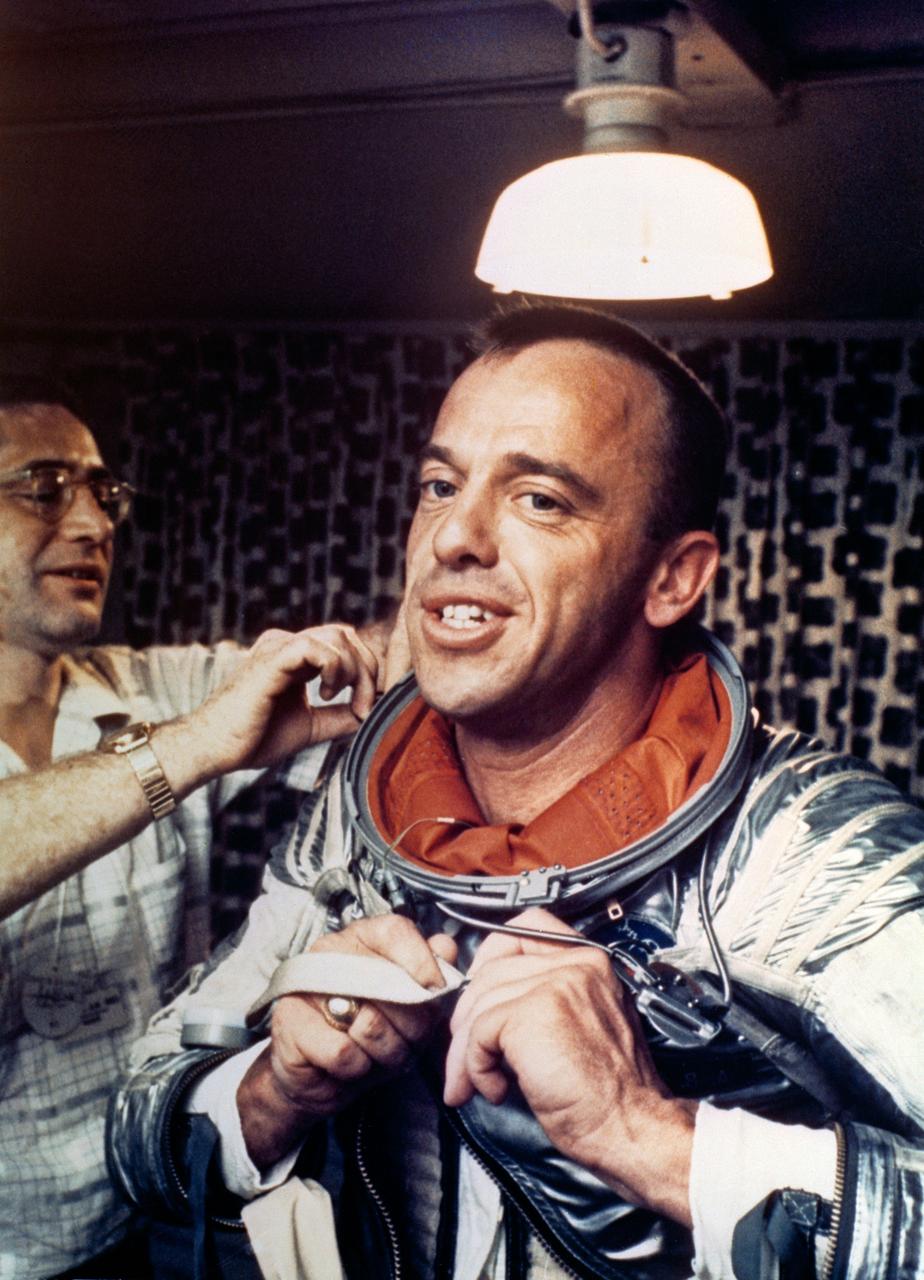
S88-31382 (5 May 1961) --- Astronaut Alan B. Shepard receives assistance in removing his spacesuit while on the U.S. Champlain after the recovery of his Mercury capsule. Photo credit: NASA or National Aeronautics and Space Administration
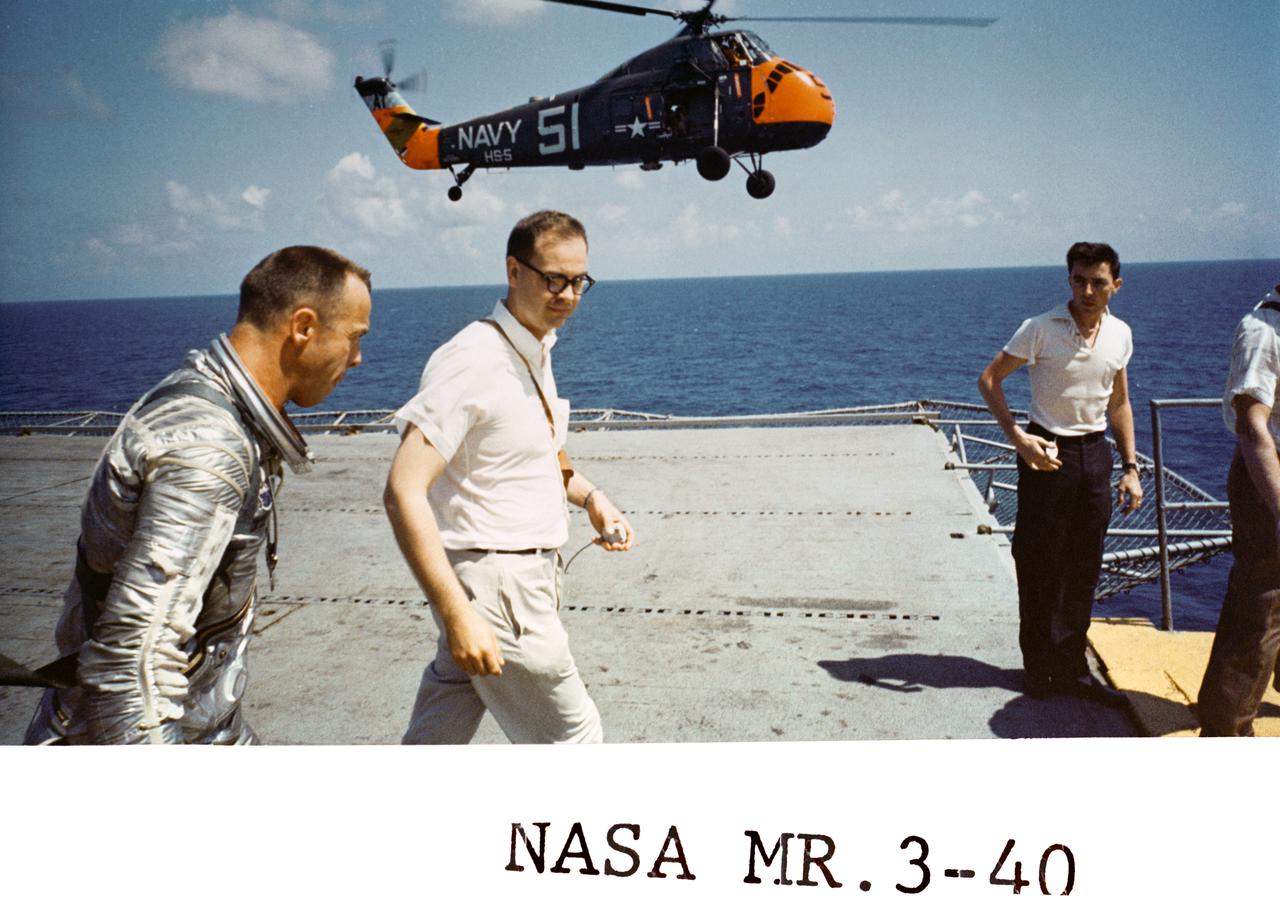
S88-31380 (5 May 1961) --- Astronaut Alan B. Shepard Jr., strides across the deck of the U.S. Navy Carrier Champlain following an inspection of his Freedom 7 capsule. Shepard had just completed the first manned U.S. space mission, a 15-minute suborbital flight. (NASA Hq. Photo No., MR3-40) Photo credit: NASA or National Aeronautics and Space Administration

S73-31104 (17 July 1973) --- The wife and children of astronaut Alan L. Bean are photographed at their home near the Johnson Space Center (JSC), where their husband and father is preparing for NASA?s second manned Skylab mission. Bean is commander of the Skylab 3 Earth-orbital mission and will be joined by scientist-astronaut Owen K. Garriott, science pilot, and astronaut Jack R. Lousma, pilot for the schedule two-month mission. With Mrs. Sue Bean are the couple?s children Clay, 17, and Amy Sue, 10; and the family?s pet dog. Photo credit: NASA
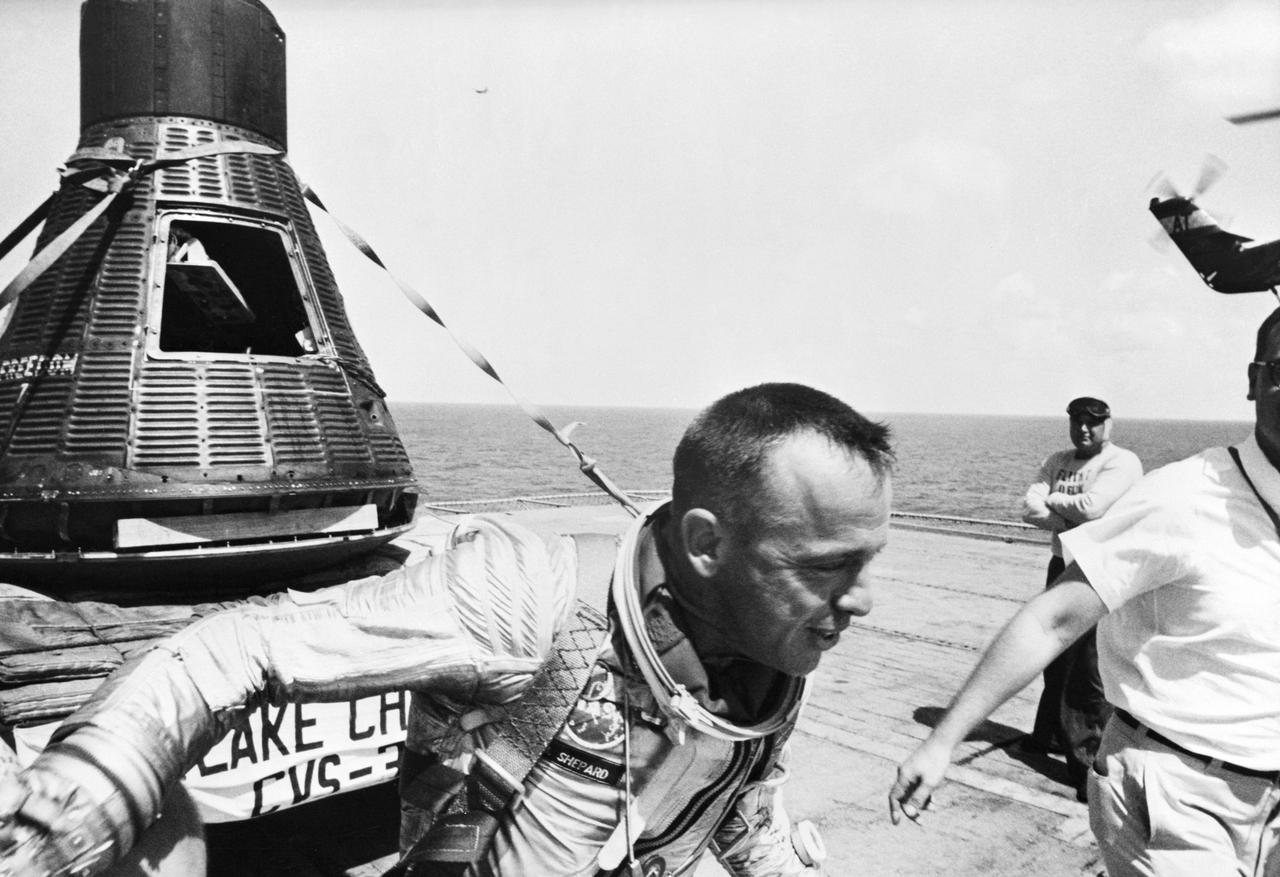
S61-02727 (5 May 1961) --- Astronaut Alan B. Shepard is seen on the deck of the USS Lake Champlain after the recovery of his Mercury capsule in the western Atlantic Ocean. Shepard and the Mercury spacecraft designated the ?Freedom 7? were flown to the deck of the recovery ship within 11 minutes of splashdown. MR-3 was the United States? first manned space mission. The spacecraft attained a maximum speed of 5,180 miles per hour, reached an altitude of 116 1/2 statute miles, and landed 302 statute miles downrange from Cape Canaveral, Florida. The suborbital mission lasted 15 minutes and 22 seconds. Photo credit: NASA or National Aeronautics and Space Administration
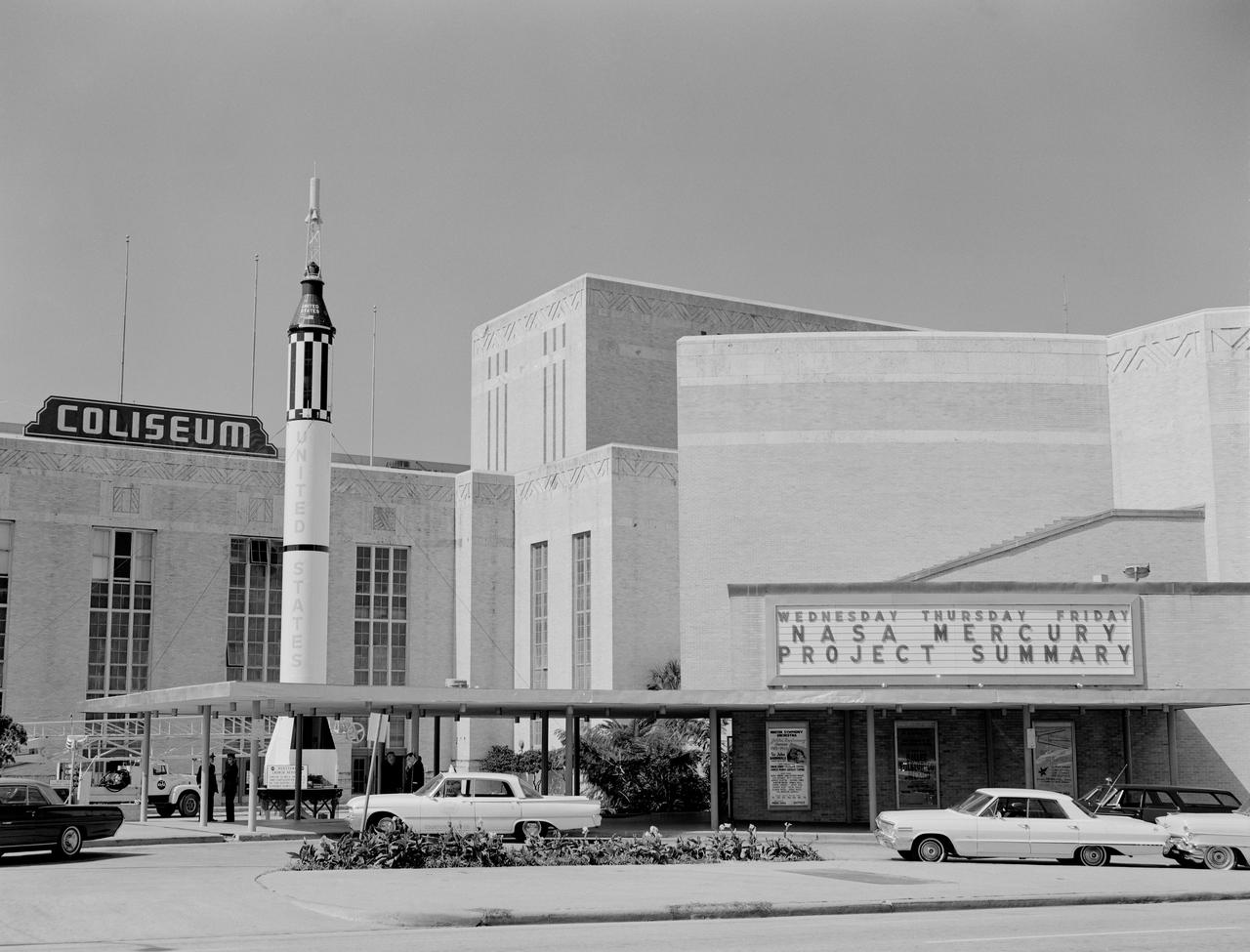
In October 1963, the Project Mercury Summary Conference was held in the Houston, TX, Coliseum. This series of 44 photos is documentation of that conference. A view of the Houston, TX, Coliseum, and parking area in front with a Mercury Redstone Rocket setup in the parking lot for display (S63-16451). A view of an Air Force Atlas Rocket, a Mercury Redstone Rocket, and a Mercury Spacecraft on a test booster on display in the front area of the Coliseum (S63-16452). A view an Air Force Atlas Rocket and a Mercury Redstone Rocket set up for display with the Houston City Hall in the background (S63- 16453). This view shows the Atlas Rocket, Mercury Redstone, and Mercury Test Rocket with the Houston, TX, Coliseum in the background (S63- 16454). A balcony view, from the audience right side, of the attendees looking at the stage (S63-16455). A view of the NASA Space Science Demonstration with equipment setup on a table, center stage and Space Science Specialist briefing the group as he pours Liquid Oxygen into a beaker (S63-16456). View of the audience from the balcony on the audience right showing the speakers lecturn on stage to the audience left (S63-16457). A view of attendees in the lobby. Bennet James, MSC Public Affairs Office is seen to the left of center (S63-16458). Another view of the attendees in the lobby (S63- 16459). In this view, Astronaut Neil Armstrong is seen writing as others look on (S63-16460). In this view of the attendees, Astronauts Buzz Aldrin and Walt Cunningham are seen in the center of the shot. The October Calendar of Events is visable in the background (S63-16461). Dr. Charles Berry is seen in this view to the right of center, seated in the audience (S63-16462). View of " Special Registration " and the five ladies working there (S63-16463). A view from behind the special registration table, of the attendees being registered (S63-16464). A view of a conference table with a panel seated. (R-L): Dr. Robert R. Gilruth, Hugh L. Dryden, Walter C. Williams, and an unidentified man (S63- 16465). A closeup of the panel at the table with Dr. Gilruth on the left (S63-16466). About the same shot as number S63-16462, Dr. Berry is seen in this shot as well (S63-16467). In this view the audio setup is seen. In the audience, (L-R): C. C. Kraft, Vernon E. (Buddy) Powell, Public Affairs Office (PAO); and, in the foreground mixing the audio is Art Tantillo; and, at the recorder is Doyle Hodges both of the audio people are contractors that work for PAO at MSC (S63-16468). In this view Maxime Faget is seen speaking at the lecturn (S63-16469). Unidentified person at the lecturn (S63-16470). In this view the motion picture cameras and personel are shown documenting the conference (S63-16471). A motion picture cameraman in the balcony is shown filming the audience during a break (S63- 16472). Family members enjoy an exhibit (S63-16473). A young person gets a boost to look in a Gemini Capsule on display (S63-16474). A young person looks at the Gemini Capsule on display (S63-16475). Dr. Robert R. Gilruth is seen at the conference table (S63-16476). Walt Williams is seen in this view at the conference table (S63-16477). Unidentified man sitting next to Walt Williams (S63-16478). (L-R): Seated at the conference table, Dr. Robert Gilruth, Hugh L. Dryden, and Walt Williams (S63- 16479). Group in lobby faces visable, (L-R): Walt Williams, unidentified person, Dr. Robert Gilruth, Congressman (S63-16480). Man in uniform at the lecturn (S63-16481). Astronaut Leroy Gordon Cooper at the lecturn (S63-16482). Astronaut Cooper at the lecturn with a picture on the screen with the title, " Astronaut Names for Spacecraft " (S63-16483). Dr. Gilruth at the lecturn (S63-16484). Walt Williams at the lecturn (S63-16485). Unidentified man at the lecturn (S63-16486). John H. Boynton addresses the Summary Conference (S63-16487). (L-R): Astronaut Leroy Gordon Cooper, Mrs. Cooper, Senator Cris Cole, and Mrs. Cole (S63- 16488). In this view in the lobby, Senator and Mrs. Cris Cole, with Astronaut Gordon Cooper standing near the heatshield, and Mrs. Cooper; next, on the right is a press photographer (S63-16489). (L-R): Astronaut L. Gordon Cooper and Mrs. Cooper, unidentified man, and Senator Walter Richter (S63-16490). (L-R): Eugene Horton, partially obscured, briefs a group on the Mercury Spacecraft, an unidentified person, Harold Ogden, a female senator, Senator Chris Cole, Mrs. Cole, an unidentified female, Senator Walter Richter, Jim Bower, and an unidentified female (S63-16491). In this view, Mrs. Jim Bates is seen in the center, and Senator Walter Richter to the right (S63- 16492). The next three (3) shots are 4X5 CN (S63-16493 - S63-16495). In this view a NASA Space Science Demonstration is seen (S63-16493). In this view a shot of the conference table is seen, and, (L-R): Dr. Robert R. Gilruth, Hugh L. Dryden, Mr. Walter Williams, and an unidentfied man (S63-16494 - S63-16495). HOUSTON, TX
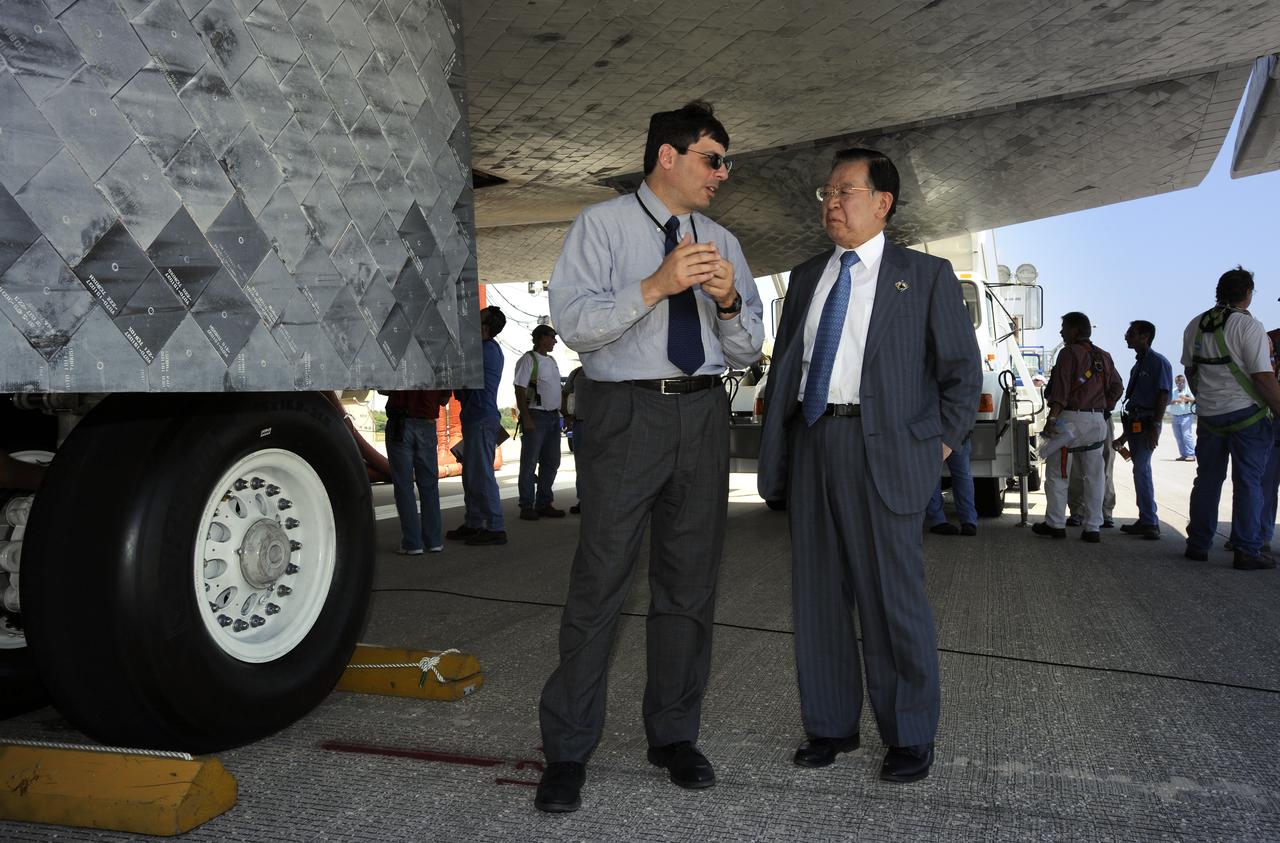
NASA Associate Administrator Chris Scolese, left and the Vice President of the Japan Aerospace Exploration Agency (JAXA) Mr. Kaoru Mamiya talk underneath the wing of the space shuttle Discovery shortly after Discovery touched down at 11:15 a.m., Saturday, June 14, 2008, at the Kennedy Space Center in Cape Canaveral, Florida. During the 14-day STS-124 mission Discovery's crew installed the Japan Aerospace Exploration Agency's large Kibo laboratory and its remote manipulator system leaving a larger space station and one with increased science capabilities. Discovery also brought home NASA astronaut Garrett Reisman after his 3 month mission onboard the International Space Station. Photo Credit: (NASA/Bill Ingalls)